
SoundOn is TikTok’s all-in one platform for music creators



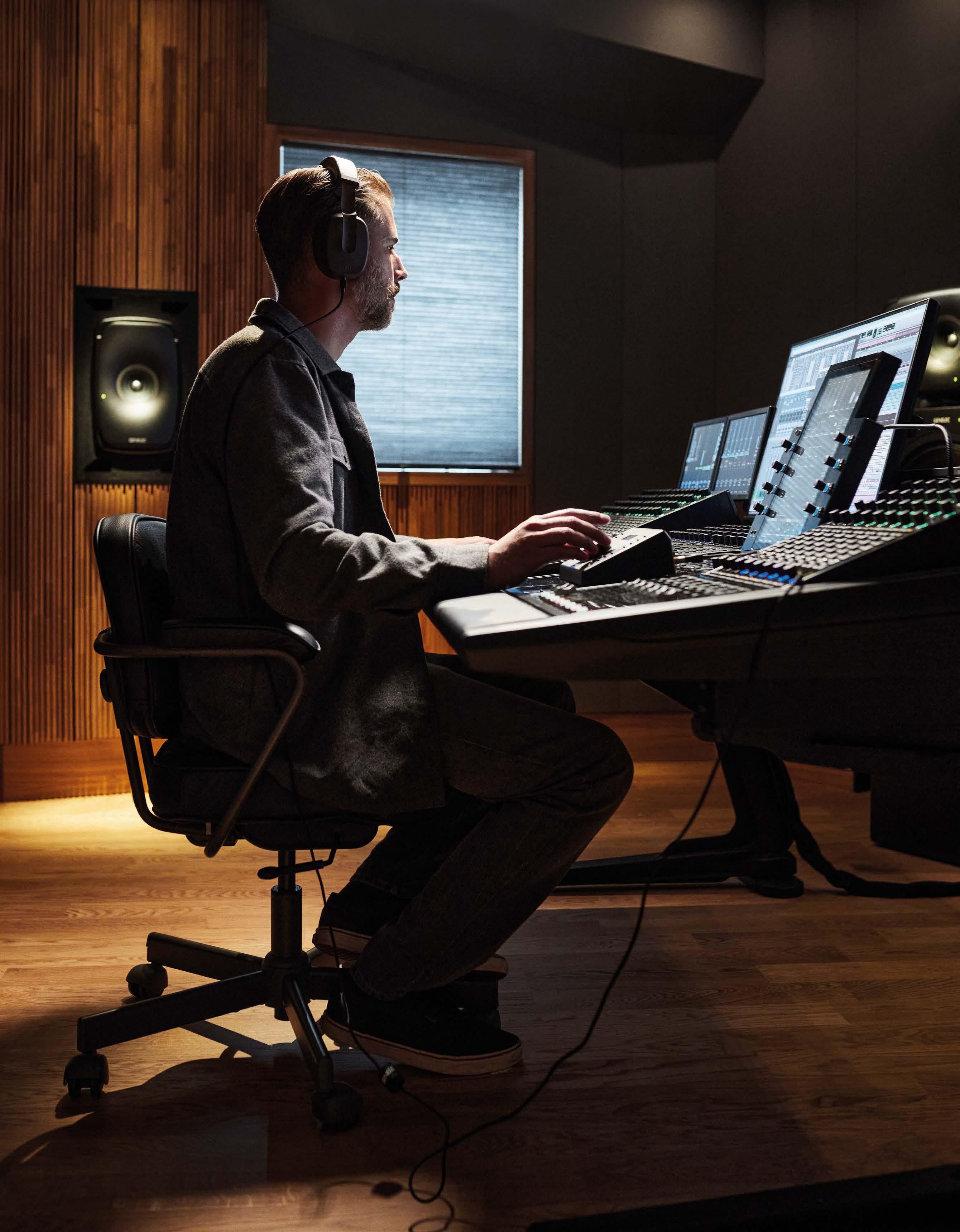
Bridging in-room and personal headphone monitoring
Our UNIO TM Ecosystem gives the ability to optimise, align and seamlessly navigate your monitoring options, for the exibility to work anywhere, anytime – from stereo to immersive.
Now, with the introduction of Personal Reference Monitoring – our pioneering new active monitoring headphone solution –UNIO offers the very highest level of headphone accuracy.
genelec.com/unio

Paul Watson CEO
Keith Watson Chairman
Rian Zoll-Kahn COO
Alice Gustafson Editor-in-Chief
Adam Protz Deputy Editor
Rick Dickerson
Reviews Editor
Marc Henshall Head of Digital
Grace Mcguigan
Artist Relations Manager
Rae Gray Head of Design
Bangaranga. If you tuned into the Eurovision song contest this month, then you know.
Headliner jetted off to Vienna in May to take a peek behind the sequined scenes of Eurovision to find out how this slick live show is put together. Stay tuned for the June issue for an in-depth piece on the technology that makes this epic production possible...
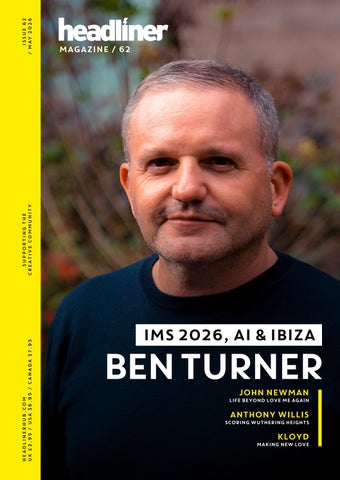
Back to the present, and this issue feels like a snapshot of electronic music at a turning point. On one hand, the culture has never been bigger: Headliner donned its shades to visit IMS 2026 and discovered that the global electronic music industry is now valued at a staggering $15.1 billion, Ibiza continues to thrive as dance music’s spiritual home, while DJs and electronic artists are dominating festival culture worldwide. On the other hand, the conversations happening behind the scenes have never felt more urgent.
We explore these topics in our cover story interview with Ben Turner, co-founder of IMS. As AI rapidly transforms music creation, production and discovery, the electronic music community finds itself on the frontline of technological change. From the explosive rise of generative AI tools to the continued dominance of TikTokfuelled discovery, IMS captured an industry simultaneously celebrating unprecedented growth while trying to define what creativity and artistic identity might look like in the years ahead.
These ideas are echoed by AFEM’s chief strategy officer Jay Ahern, who weighs in on why dance music is uniquely positioned to help build ethical frameworks for the next era of music creation, and highlights why the future of AI in music cannot built around exploitation or unchecked scraping, but around transparency, consent and compensation.
But what makes electronic music culture so compelling is that, amid all the data, it remains human at its core. This issue sees us catch up with Canadian DJ WHIPPED CREAM as she opens up about the emotional journey behind her debut album, a project shaped by reinvention and self-discovery after going from elite figure skating to global festival stages. Meanwhile, Birmingham DJ Alexandria reflects on her rapid rise through the underground scene, the importance of community, and the experiences that shaped her identity both behind the decks and beyond them.
Technology, of course, is never far away from dance music’s evolution, and nowhere was that more apparent than at Winter Music Conference 2026, where L-Acoustics DJ became one of the event’s biggest talking points.
Elsewhere in the issue, we explore artists continuing to redefine themselves. Singer, songwriter, DJ, and producer John Newman reflects on building a career that stretches far beyond the enormous success of his signature tune, Love Me Again, while composer Anthony Willis takes us inside his latest
collaboration with Emerald Fennell on one of the biggest films of 2026 so far: Wuthering Heights, balancing orchestral scoring alongside Charli XCX’s contribution to the film’s sonic identity. Rising electronic artist Kloyd discusses overcoming self-doubt and carving out space within a maledominated scene as her genreblurring sound continues to gain momentum, and over in the gaming world, composer Jesse Zuretti breaks down the metal-fuelled soundtrack behind Riot’s hugely anticipated new game, 2XKO, and his collaboration with Polyphia.
Whether it’s artists reshaping themselves creatively, technology forcing the industry into difficult but necessary conversations, or entirely new forms of musical storytelling emerging across games, film and immersive audio, this issue captures a moment where music culture feels both uncertain and exciting all at once.
Thanks for reading; here’s to the next chapter of music’s evolution.
Alice Gustafson Editor-in-Chief
By

By
Alice Gustafson
Alice Gustafson
By Alice Gustafson
60 WHIPPED CREAM
Figure skating, DJing & debut album HOME WAS ALWAYS ME
64 ALEXANDRIA
From Birmingham to globe-trotting DJ
68 L-ACOUSTICS DJ TURNS HEADS AT WINTER MUSIC CONFERENCE 2026
72 SCOTT D. SMITH
Serving up Oscar-nominated sound for The Bear
76 KRONEHIT’S STUDIO OVERHAUL MEETS DIAMOND STANDARD
78
EASTERN KENTUCKY UNIVERSITY INVESTS IN FUTURE-PROOF PRODUCTION INFRASTRUCTURE
80 ABERYSTWYTH ARTS CENTRE MAKES AUDIO UPGRADES FOR WORLD-CLASS TALENT

Credit: Steve Gullick

LET’S EAT GRANDMA SINGER’S SOLO VACATION
JENNY ON HOLIDAY
Jenny is on holiday, namely, from being one half of the acclaimed experimental pop duo Let’s Eat Grandma, with three albums and a Netflix score released so far. Jenny Hollingsworth is choosing to spend said holiday with an inspired solo venture, with a joyous and uplifting collection of alt-pop songs in her debut album Quicksand Heart. She gives Headliner the lowdown on why she is currently on leave from the band, the decision to wear her mum’s wedding dress for the album cover, creating the record, and how long she’ll be on holiday for.
Let’s Eat Grandma is completed by Rosa Walton, who Hollingsworth met at the age of four in reception class growing up in Norwich, Norfolk. They began making music together at 13, and later released their 2016 debut album I, Gemini, which received positive reviews across the UK music press. Despite being in their teens, it was an album that showed a strong willingness to experiment and use lots of strange instrumentation and sounds. Their follow-up, I’m All Ears, received widespread acclaim and won Album of the Year at the
Q Awards. They released a further excellent album, Two Ribbons, in 2022, further cementing their penchant for creating listenable pop with big dashes of quirkiness that probably take them out of Radio 1 contention. 2023 saw the duo write an original score for the Netflix series Half Bad: The Bastard Son & The Devil Himself, and thereafter, Let’s Eat Grandma reached a natural pause.
For any fans who were upset by this, the heartening news is that this void
“I HAVE MEMORIES OF GOING TO LABEL MEETINGS AND HAVING NO IDEA WHO ANY OF THE BANDS WERE THAT THEY WERE REFERENCING.”
is being filled by Quicksand Heart
While having the Let’s Eat Grandma DNA, it sees Hollingsworth lean more heavily into pop sensibilities, uplifting hooks, some big nods to ‘80s synth leads and big choruses, and a bigger use of rock instrumentation than in the duo.
There’s the huge debut single Every Ounce Of Me, sounding as if Don Henley’s Boys Of Summer was written by someone growing up in Norwich rather than Texas, with an extraordinarily infectious chorus and irresistible blend of synths and righteous guitar riffs. Good Intentions, the third single, has an orchestral intro that makes way for a drum machine beat and a wonderful ‘80s-esque bassline for Hollingsworth to sing over.
Hello, Jenny On Holiday! Where are you based these days? It seems you’re constantly between Norwich and London.
I’m kind of in between, but I might be moving soon. It’s hard to say — I’m always on the train.
Speaking of Norwich, what was it like growing up there and how did that help shape you as a musician and artist?
I would say Norwich is quite isolated from a lot of other cities, which means it does have its own isolated scene, whereas a lot of other cities are so near each other that the scenes blend into each other. But I think it’s an ideal environment for two strange teenagers to start making
music without too much pressure to be great straight away. The London music scene is quite competitive. It is a bit of a time warp and kind of its own world. We have a phrase, ‘normal for Norfolk,’ about the strangeness of Norfolk. Neither mine nor Rosa’s parents are musical. None of them play instruments. We got into it because Rosa and I used to do a lot of craft and fun projects together when we were teenagers. We made little videos on Flip cameras. Then we thought, let’s just start playing music together! It was just a fun thing to do when we were 13, and it escalated because we joined something called Community Music East in Norwich, which was for teenagers who paid three quid to go and rehearse. We started doing that and playing local shows for young people.
It’s really weird, because it’s only in retrospect that I’ve been able to register it. At the time, we were so young when we signed, only 16, that you don’t really know what was normal. I have memories of going to label meetings and having no idea who any of the bands were that they were referencing. It’s pretty amazing that all of that happened, but it’s only when you look back as an adult that you can see it clearly.
People associate you with electronic, alternative-pop, but you really went for it with band instrumentation on this album. Also, some big Kate Bush vibes. Was that intentional?
Ten years on from your debut as a duo, why did now feel like the time to go on holiday from Let’s Eat Grandma?
We put three records out. The last one was when we started doing some individual writing for the first time. The clue is in the name, Jenny on Holiday. It’s just a project to keep things fresh. Having done so many years with Let’s Eat Grandma, which we intend to continue with, I just wanted to get some fresh ideas and do something a bit different.
Is it something you pinch yourself about, the fact that such an alternative music project took off the way it did?
I did want to have more of a band sound. Because in previous records, Rosa and I played everything between us. So this time I had other people play on the record. I played keys and did vocals, Jacob [Berry] played guitar and keys, and Steph [Marziano], who produced it, played drums. Regarding the Kate Bush reference, a lot of people have mentioned her. I love her; I think she’s brilliant. I don’t know if it was intentional, but I relate to how her outlook on the world comes across in her music. She sees things in quite a fantastical way.


Every Ounce of Me is so joyous, and that synth lead feels so ‘80s. It’s the sort of track that makes you want to road trip across North America with the top down. These uplifting, even euphoric moments on the album seem to be a common thread...
I’m drawn to euphoric music. After the last record, Two Ribbons, which was an emotionally intense record about grief and Rosa and my relationship being under strain, I felt the need to write some euphoric bangers. As the world around us seems to be on the brink of collapse, it felt necessary on a personal level to write some euphoric songs about trying to live fully in the face of all that.
You worked with the photographer Steve Gullick, a legend who has shot everyone from PJ Harvey to Nirvana. How did that come about?
I’d made a mood board of photos for the cover, and my manager realised some of the shots were by Steve. I looked through his work and realised he was the most incredible photographer. We reached out, sent him the record, and he loved it. I decided to wear my mum’s wedding dress because she was the same age as I am now when she married
my dad. I thought it was interesting to reflect on different life stages and expectations about womanhood.
You also worked with producer Steph Marziano, who has some incredible engineering credits, like the recent Hayley Williams album, and Nell Mescall. How was that collaboration?
Steph and I met because Rosa and I were asked to do a remix for a Bad Omens song. Rosa was busy, so I thought, “I’ll give that a crack.” Our label said, “What about working with Steph?” and it was their way of introducing us. I love Steph; she’s absolutely brilliant and really good at drawing out the hits. She has a way of taking my convoluted ideas and making them a reality.
And how about presenting your music as a solo artist live for the first time, and playing with a full band on your recent tour? Playing the Lexington in London and the Deaf Institute in Manchester must have been special?
I really imagined this record in a live setting from the start, and that it was going to be a full-band thing. And I’ve been fronting it, which is quite fun because you don’t have to do as much setting up. I’m used to hauling
around so much equipment, whereas this is more streamlined.
And finally, how long is Jenny on holiday for?
I honestly don’t know! I anticipate Rosa and I will want to start making stuff together again when we’re both available, but right now I’m just trying to absorb the inspiration for whatever comes next.
JENNYONHOLIDAY.COM
Credit: Steve Gullick
BEN TURNER
GUSTAFSON IMS 2026: AI DISRUPTION & WHY IBIZA STILL MATTERS
As the electronic music industry continues to evolve at speed, IMS 2026 arrived at a pivotal moment for the sector. This year’s IMS Electronic Music Business Report revealed that the global electronic music industry grew by 7% in 2025, reaching a record valuation of $15.1 billion, underlining both the commercial strength and cultural influence of the genre worldwide.
Yet alongside the growth, the report also highlighted some of the biggest conversations shaping the future of electronic music. AI emerged as one of the defining themes, with revenues for generative AI and stem separation technologies rocketing by 651% between 2023 and 2025, while active users surged to 63 million. As AI tools rapidly reshape music creation, production and discovery, questions around creativity, authenticity, and the future role of artists are becoming increasingly urgent across the industry. Elsewhere, the report painted a picture of an ecosystem continuing to diversify and globalise.
TikTok has become a major force in the discovery and acceleration of electronic music culture, while DJs and electronic artists remain firmly embedded at the heart of the global festival landscape. Ibiza also
continues to thrive as the spiritual home of dance music culture, with club ticketing revenues up €10 million year-on-year.
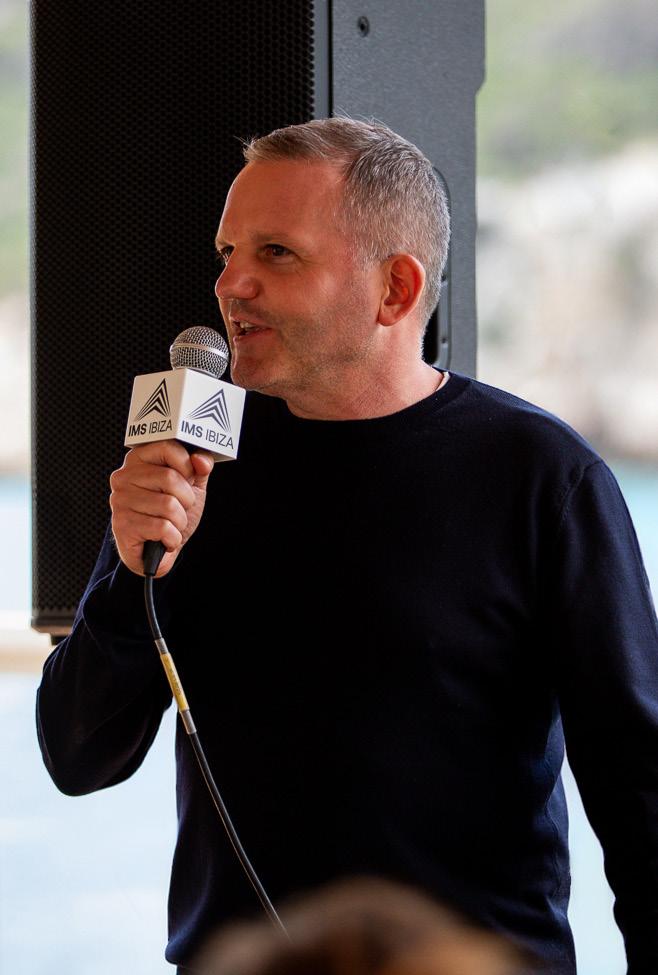
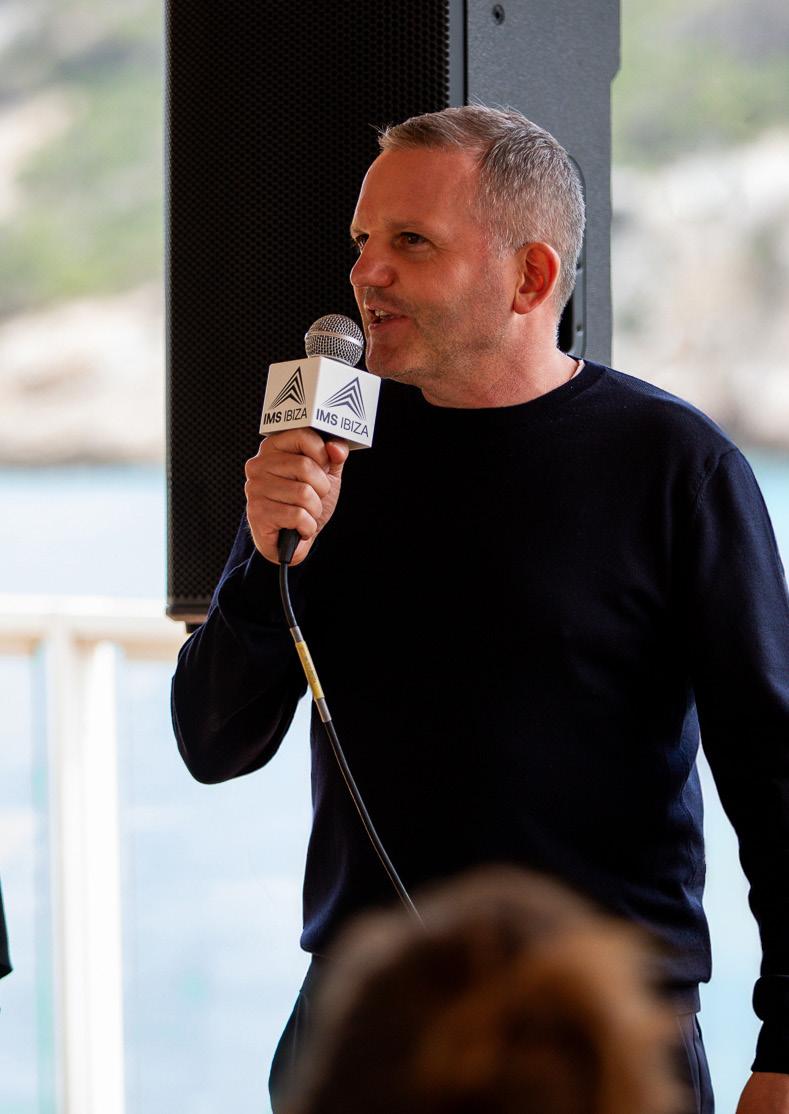
Against this backdrop, Headliner spoke with Ben Turner, co-founder of the International Music Summit, about the state of the industry, the rise of AI, the enduring importance of Ibiza, and where electronic music culture is heading.
Headliner starts by addressing the AI-shaped hole in the room. AI in music is raising some big ethical questions around how it’s built and who it ultimately serves – and the music industry is no exception. A lot of the debate comes down to consent, copyright, and what happens to the value of human creativity when machines can generate music at scale. A key red flag that crops up droW s by ALICE

time and time again is that many AI models have been built on huge amounts of copyrighted music scraped without permission or payment to the original artists, and all the while, legal frameworks are scrambling to catch up with the pace of AI development.
“AI is absolutely incredible, fascinating and terrifying all at the same time,” laughs Turner, speaking to Headliner at IMS. “I saw someone walking around IMS with an AI note-taker around their neck, literally recording their entire three days, and I was just thinking, ‘Oh my God’. That shocked me. We’re going to be living in such a different industry in two years, maybe even a year, and certainly five years –the way we do marketing plans, legal deals, everything. I hope it makes us more efficient, and we can actually get back to enjoying the music a bit more. It’s overwhelming. Technology has made us almost slaves to it in a way. It’s amazing, but we need to get back to the dancefloor, literally, and back to the music. So I’m hopeful AI can automate enough that teams can be more proactive and less reactive.”
IMS 2026 opened with introductions from Turner, Danny Whittle and Pete Tong, and co-hosts Jaguar and Katie Knight before Mark Mulligan presented the all-important IMS Electronic Music Business Report 2025/26, the definitive snapshot of
the cultural, financial and economic trends shaping electronic music worldwide. Established in 2007, the summit was created to catalyse sustainable growth within the diverse global music industry and inspire positive change from the boardroom to the dancefloor. It’s gone from strength to strength ever since –pandemic years aside.
“It takes a lot to put together,” acknowledges Turner. “It feels like a really special year for us. From the beginning, it was always built around curation, narrative, and the desire and need for the industry and the culture to move forward. We just did our little bit [towards that]. At the time, we were going to a lot of conferences and having amazing connections with people in the industry, but you didn’t necessarily come away thinking, ‘We need to go and do this’ or ‘We need to go and do that.’ It was very much micro meetings in hotel rooms. Miami became one giant party, which was incredible. We loved those years,” he says nostalgically.
Electronic music is big business. That growth – reaching a record valuation of $15.1 billion in the last year alone – underlines just how commercially and culturally significant the global clubbing ecosystem has become.
“We also wanted to prove to Ibiza and the government that this culture
they sometimes pretend doesn’t exist in their tourism marketing is actually a real industry,” Turner points out.
“It’s mature, grown-up, intelligent, visionary, and capable of bringing companies such as YouTube, TikTok, Spotify and Apple to the island, and we’ve certainly proved that.”
IS CLUBBING STILL VIABLE FOR YOUNG PEOPLE?
It’s no secret that Gen Z don’t party as hard as the previous generations, but for good reason. Rising costs of drinks, entry fees, and transport have made going out-out an expensive endeavour. Meanwhile, Ibiza clubbing in 2026 has firmly moved into premium territory, where a night out can easily run €150–€200 per person. Entry to top clubs often sits between €50–€100+, with drinks typically priced between €15–€25 for cocktails and €10–€15 for beers – making predrinking almost a survival strategy for many, which in turn sees the clubs take a loss in revenue.
Despite those high costs, the IMS report highlights that this high-value model is still effective and business is certainly booming: Ibiza’s club ticketing alone generated €160 million in 2025. However, the scene is noticeably shifting all the same.

With younger audiences drinking less and rethinking traditional clubbing, venues are being pushed to evolve beyond the old party hard image. Tuner is aware of this – and that Ibiza has lots in the way of competition these days.
“We’ve worked really hard in recent years to attract a younger creative audience, and that’s been difficult because Ibiza is expensive and is maybe not seen as cool as it once was,” he considers. “There are so many other places people could go now – Lisbon, Berlin, Kyiv, before things changed there – so Ibiza has had real competition when it comes to electronic music professionals deciding where to spend their time and money. We’ve tried to do everything we can to make it affordable, whether that’s reduced badge prices for under-27s or for people living on the island earning less money. Ibiza is still expensive, you can’t get away from that, but we’re trying. We’ve also introduced the Academy this year, which could be aimed at someone who’s 15 or someone who’s 50 but just starting in the industry. We’ve always felt our job and our duty here is to help the next generation come through, and I think you can see that in everything we do.”
Could phone-free clubs rescue the sector?
2025 was a strong year for all aspects of the music business, with labels, publishers, DSPs, and live companies alike all registering strong growth. Notably, the live sector grew at twice the rate in 2025 as it did in 2024 (10% versus 5%), reflecting the continued post-COVID momentum of the sector. Clubs may be struggling and closing down left, right and centre, but Turner spies hope on the horizon in the content-creating form of Gen Z.
“I think the ecosystem of the nightlife and electronic music industry is
“WE’VE WORKED REALLY HARD IN RECENT YEARS TO ATTRACT A YOUNGER CREATIVE AUDIENCE, AND THAT’S BEEN DIFFICULT BECAUSE IBIZA IS EXPENSIVE AND IS MAYBE NOT SEEN AS COOL AS IT ONCE WAS.”
massively damaged,” he nods. “But I do see very strong positives out there. Lost, in a disused cinema on Shaftesbury Avenue in London, has got under-23 creatives queuing around the block, not knowing who’s playing, not allowed to use their mobile phones in the club. It’s one of the hottest things in London over the last three months. I see things like that happening, and I see a change. Does that mean there’s suddenly going to be a boom in new nightclubs being built? Possibly not. But I do think there’s a reaction against the 10,000 people with phones in the air; that bubble has kind of popped, but it’s still there. There are a lot of people
searching for something deeper than that, and I think what they’re really searching for is connection.”
A generation raised on smartphones has certainly changed how live music is experienced, often shifting attention from the moment itself to capturing it on camera, but at the same time, the TikTok era is reshaping popular music culture, with the platform becoming a major force in how electronic music is discovered, shared and propelled into the mainstream.
“I think that connection has been lost,” says Turner. “Whether they know it or not, they’re digital natives;
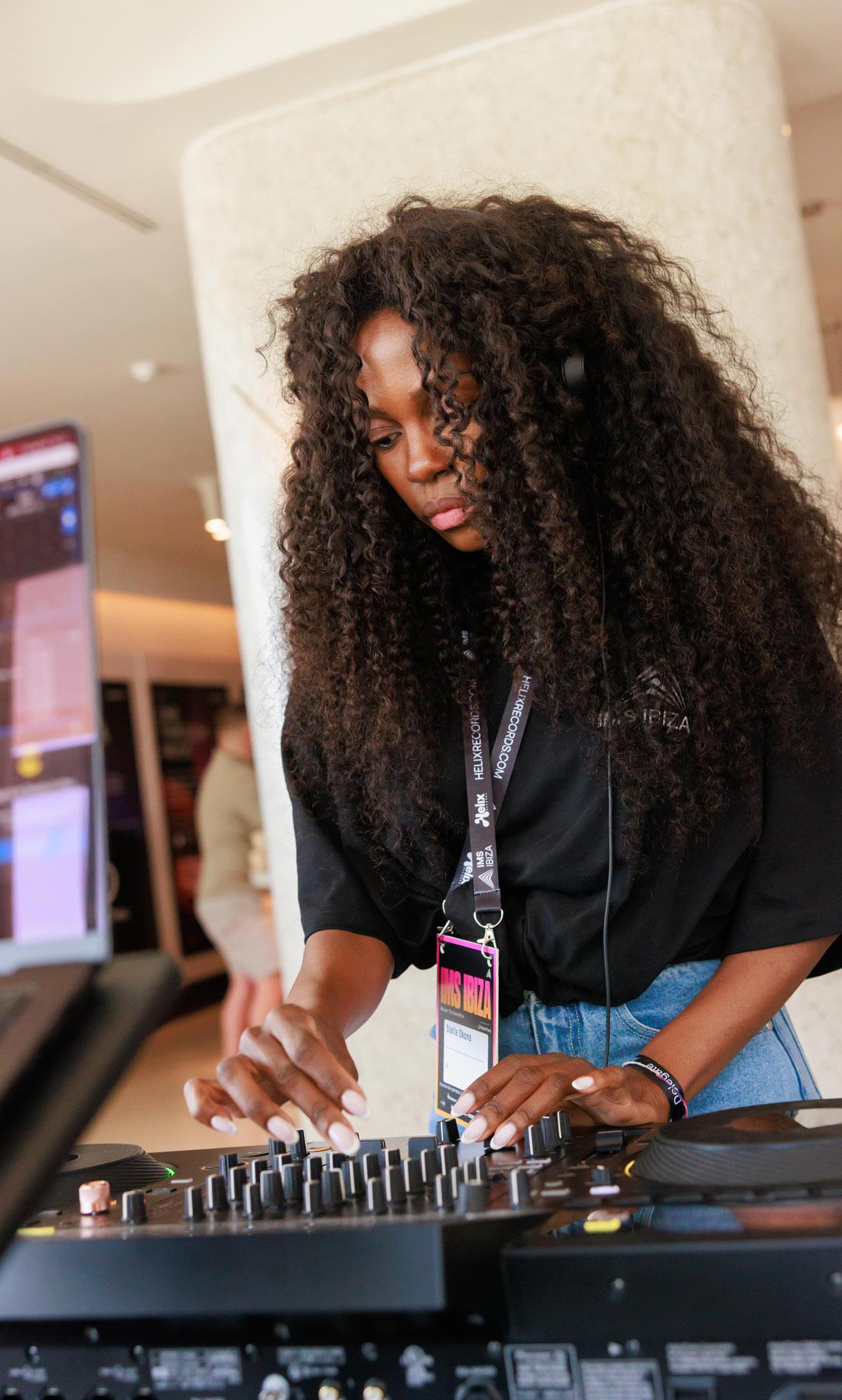
they’ve grown up with this with a phone in their hand. I think there are enough people out there right now encouraging people to try it a different way, without preaching. I also think it’s not about taking the phone away,” he points out.
“What I’m seeing is more about the stickers [placed over phone cameras for filming and photo-free events]. If you want to take your sticker off and take a picture, you might still do that, but the next person next to you is going to tap you on the shoulder and go, ‘Hey, put it away.’ And I love that. It’s happening quite naturally.”

WHAT ABOUT OTHER ELECTRONIC MUSIC SUMMITS?
Other regional events continue to play a vital role in shaping the global electronic music industry, particularly in territories that already have a strong influence on the wider market. Turner sees it all as healthy competition and a key part of keeping the electronic music conversation going across the world.
“I’ve gone to summits my whole life since getting into the music industry, from In The City in Manchester to the Miami Winter Music Conference, and
I went to those places to learn, meet people, connect, and listen to great music,” he says.
“I don’t sit here thinking every person who comes to IMS is going to come every single year, or necessarily even want to. Some people have been every year, which is incredible, but regional events are really important. You look at Brighton Music Conference, and a new one recently launched in Lisbon – they’re popping up everywhere. Some stay, some disappear, because they’re very difficult businesses. If you want to make loads of money out of electronic music, don’t start a
music conference,” he laughs. “It’s a platform. It’s there to inspire, educate and create change.”
At IMS, the value isn’t only in the IMS Report numbers or the panels on stage, it’s in the harder-tomeasure currency of the event: the conversations, introductions and relationships that actually drive the industry forward.
“Of course, you can get so much online these days, but making connections with people on a human level is so important,” he nods. “Over time, I realised IMS isn’t just about the curation. A lot of people come here for the connections, and the combination of those two things is really powerful. When I see people around IMS who I know have made millions out of this business, and they still come here every year, that says everything. They could easily just sit back, but they’re still hungry, they still want to connect, and they still want to meet new people.
“I’ve got friends who fly out to L.A. for the Pollstar Conference, and they might have £200 million in the bank,” he uses as an example, “but they’re still standing by panels wanting to shake hands with the next person they want to work with. It really is everything. I love meeting new people and making connections. I go to bed feeling great if I’ve helped make a deal happen by putting two things together or introducing people. That, to me, is the essence of what this is all about. When I look across IMS and see everyone exchanging ideas, it’s magic. Back in the old Miami days, you’d literally see people handing vinyl records to each other,” he smiles nostalgically. “That part’s gone now, but the human connection is still there, and it’s brilliant.”
THE PARTNERS BEHIND IMS
IMS Ibiza returned this year with a strong line-up of industry partners, with AlphaTheta once again taking
the headline role, also backed by names including Beatport, EarthPercent, AFEM, Helix Records and HE.SHE.THEY. A key theme this year came from AlphaTheta’s latest findings, which underline a persistent gender imbalance in the scene. Data from the IMS Electronic Music Business Report shows that in 2025, only 15% of AlphaTheta account users were female – an improvement – but one that has only crept up by around 1% annually since 2023.
In response, AlphaTheta’s Equal Beats initiative, launched at IMS 2025, has been designed to open up DJ culture to more women and nonmale creators. Beyond business and technology, IMS 2026 reinforced the growing importance of mental and physical well-being within electronic music culture and how fundamental this can be to sustaining a career.
“IMS would never have started without AlphaTheta, or Pioneer, as it was at the time,” says Turner of AlphaTheta’s role in the shape and success of the summit – both evolving and adapting with the industry along the way.
“They saw it grow from around 100 hand-picked delegates in year one – it was almost invite-only – to now, all these years later, more than 1,500 people. AlphaTheta have stayed with us through that entire journey, and there are a lot of parallels between the evolution of the company and the journey we’ve been on as a summit, and as individuals in the industry. We’ve all grown older, matured, and learned to live this business in a different way. I’ve seen Pioneer transition into AlphaTheta in a similar way to how IMS evolved.
2025 painted a picture of an electronic music ecosystem in strong health, one still growing across multiple revenue streams, but also evolving in how it defines success. While much of the wider music industry increasingly focuses on
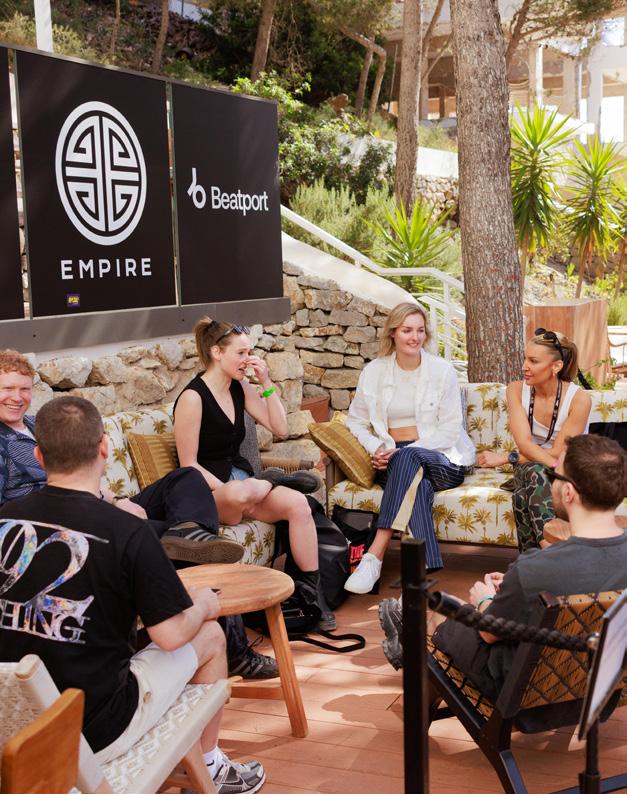
monetising fandom, electronic music continues to prioritise building it, rooted in scenes, spaces and shared experience. The conversation turns to what comes next for IMS, and how the industry continues to adapt and define its future.
“At a summit level, we’ve changed a lot over time,” says Turner. “We’ve gone from one room to five rooms, which means we’ve moved from one shared conversation to multiple, smaller discussions. I do miss that big moment where the entire delegate base is hearing one thing together,” he admits, adding that he has an idea to address that next year.
“I think we’ve lost something that we had. When you look at talks like Reclaim the Dance Floor, which was so important this year, or Capital versus Culture – those hard-hitting conversations should have been heard by 70 to 80% of the delegate base. I think we’ve ended up slightly programming against ourselves, so we need to be more thoughtful about making sure those key conversations don’t just live in the Brave Space or the educational area. There should be a few moments where everyone stops and comes together for one shared moment. That’s something I’d really like to see happen.”
A NEW HIGH IN THE LOW END
Designed and built in the UK, Ten Squared (Ten2) is a range of premium, low frequency loudspeakers. Engineered without compromise, they deliver consistently superior levels of performance in the most demanding professional sound reinforcement applications. All the time. Every time. 18, 21 and 24-inch models available. Discover Ten
celestion.com


S by Zara Dosanjh
DROW
HOPE YOU’RE WATCHING
ARDEN ALEXA
Energetic, cinematic and three years in the making, Arden Alexa’s dazzling debut record, HOPE YOU’RE WATCHING, is an ode to teenage melodrama. Alexa has garnered millions of streams on Spotify from her music about heartbreak, but don’t mistake her sound for frivolous pop. She taps into the nerve of teen angst and amps it up in theatre-kid style. Behind the theatrics, there’s real vulnerability. The singer-songwriter talks to Headliner about her artist persona, being a control freak, and capturing a snapshot of her youth in her new music.
Your family history in music is fascinating; your dad went from the opera in Syria to progressive metal in the US. How has his career path influenced your musical journey, and do you ever see yourself exploring such dramatic shifts in style?
My dad has influenced me a lot. He grew up in Syria, singing opera and singing in the church. He moved to the US when he was really young, and as he got older, he went back to music and found writing and progressive metal as his passion. Not only did he introduce me to music really young and encouraged me to write songs, but when he saw how passionate I was, he really encouraged that – both of
my parents did. It is very lucky, because I know not many people can say they have the complete and unwavering support of their parents. Would I ever make a big switch, like my dad? Maybe – music is always evolving, and as I’m sure every artist experiences, you’re always growing. I started in musical theatre when I was around two, and then gradually went into the pop world as I discovered songwriting. I found, especially with this album, I’m continuing to go back to the musical theatre roots, and that’s such a foundational part of who I am, and especially who I am as an artist. I think it will continue evolving as I get older, too.”
“L.A. IS ABSOLUTELY WHERE THE POP MUSIC SCENE IS.”
You moved to L.A. fairly quickly after graduating high school. What pushed you to make the move so young?
I didn’t go to college. So after high school, I sat my parents down, and I was like, ‘Listen, guys, I really love making music and being in the studio and performing, and I think I’m good at it, and I think I can make something happen with it.’ After the initial “What the heck?!”, they were very behind me. It took about a year of living at home and figuring everything out before I was ready to move to L.A., but I’ve been here two years, and it’s been great. L.A. is absolutely where the pop music scene is.
From running on the spot to doing press-ups while singing, your “training to be a pop-star” videos are quite popular on TikTok. What other ways do you train to perform onstage?
Obviously, you have to be able to sing well, but I think that being able to perform and entertain is kind of a different skill. That’s where I really lean on my musical theatre background to make the performance interesting, so you’re not just standing there with a microphone singing away. That’s something that I’ve practised a lot. You’ve got to build the muscle.
When you’re off stage, do you separate yourself from your artistic persona?
That’s a big part of my foundation as an artist: it’s dramatic, and it’s over the top – it has those theatrical
elements. That definitely still applies to my day-to-day life. But it’s slightly toned down, at least I hope I’m not quite as dramatic! But honestly, the other thing that I love about performing, and part of the reason I am so passionate about it, is that it’s a moment for my brain to stop thinking, and I’m really able to be present when I’m performing. I’m not thinking about anything else.
You’ve crafted a soft-vintage, glitzy aesthetic in both your music videos and sound. It’s quite different to your earlier softer indie sound. What drew you to embrace this particular style?
I started releasing music when I was 16. Your taste as you get older really does evolve. A big thing for me back when I first started, everybody said, “You have to find your voice, you have to find your style, and what makes you unique.” I was very much still learning myself, and as a young artist, I was emulating what other artists were doing that I really liked. That was part of the process for me to get to where I am now. I’ve become more confident in my taste and my decisions, and that’s also played a big part. This album is the first major realisation of that.
Thank God is a standout song from HOPE YOU’RE WATCHING . There’s something very Taylor Swift in the vocals and world-building storytelling. Do you find yourself chasing that kind of intimacy in your songwriting, the sense of pulling a listener completely into your world?
Storytelling has always been a big part of what drew me to songwriting. All of the songs on the album are about experiences that I’ve had. It’s very therapeutic for me to songwrite, and with Thank God in particular, I was so over the whole situation with the guy that it’s about. It was such a cathartic experience to write about. I’m really just writing from the heart. And in that particular situation, the whole thing was so ridiculous. So I thought, “I’m just going to write a fun song about it,” and I ended up really loving it.
How do you balance your more vulnerable songs with your exaggerated pop persona?
So often, people try to put women into boxes and say, “Oh, Taylor Swift, she only writes about breakups.”
Or, “Olivia Rodrigo is only angsty music.” A big part of what I want to do as an artist, and what I wanted to convey in this album, was that you can have many different sides, and you can have many opposing forces. I have many different aspects of myself. I used to do ballet and basketball – I would be super rough on the basketball court, and I’d go to my ballet rehearsal, in my pointe shoes and very graceful in my tutu. It’s okay to have sides of yourself that contradict each other a little bit; that’s what makes you interesting. In my songwriting and in my projects, I am very intentional about that, because that is really something that I want to convey to people, especially the young women who are my listeners and my fans.
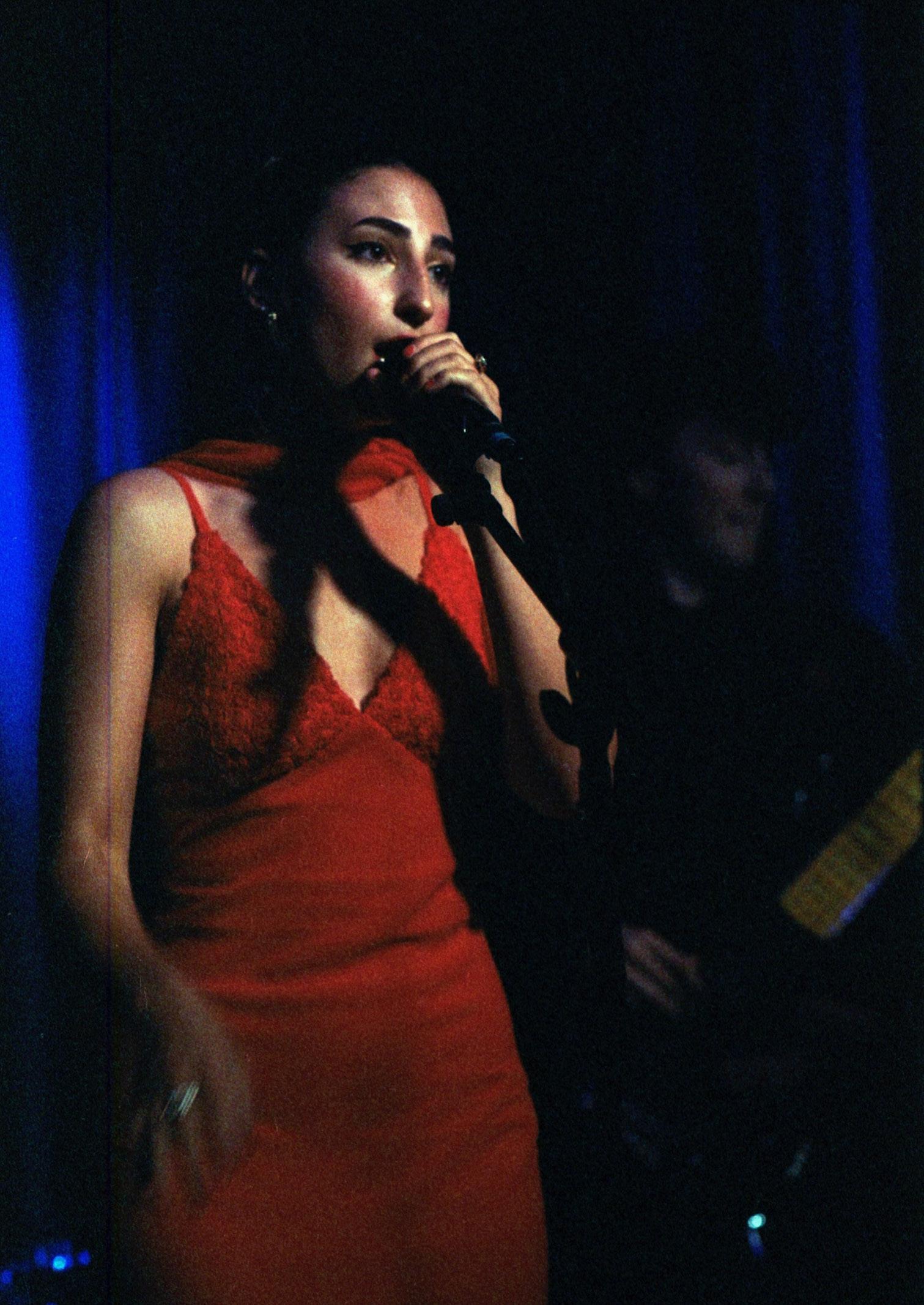
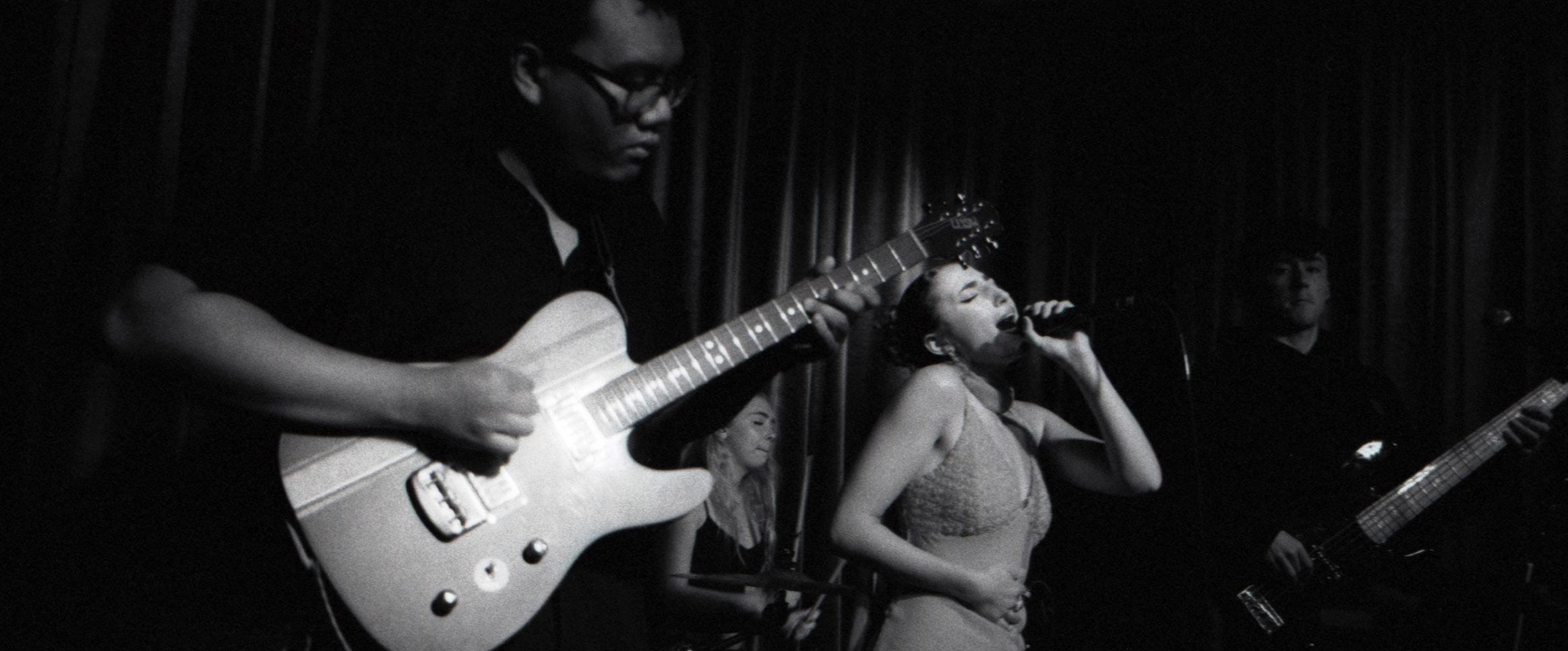
As a self-confessed ‘control freak,’ how do you hold on to your creative vision while allowing room for collaboration for the best result?
It is hard to learn to collaborate with people, and that’s something that I really had to learn since moving to L.A. I used to write by myself in my room, and because I was such a perfectionist, I would hate to play the songs to anybody, even my parents. I really hated it, but I started to learn how to share my songs even when they weren’t finished. I started doing as many sessions as I could and getting the practice of writing and being in a room with other people, knowing you can’t control the entire song, you can’t control everything. Part of the reason I think I have grown so close with the producers [Simon Jay and Luke Shrestha] is because they were so understanding and supportive of me in this process, giving me a space to share my ideas and share what I wanted each song to be, taking that and really helping me bring them to life. Getting to work with them was a great way for me to learn how to collaborate.
You’ve been working on HOPE YOU’RE WATCHING for three years, documenting your late teens to your early 20s. Looking back, is there anything on the record that already feels like a different version of yourself?
Some of the first songs that I wrote for the album, I don’t identify with very much at all. In the end, I did come to the conclusion that your early 20s and late teens are such a time of growth, and in such a time of change, it is important to include those songs that I don’t necessarily identify with as much now, because it is part of the journey. I wanted it to capture my experience, as an 18, 19, 20-year-old, so I have to include the very beginning.
HOPE YOU’RE WATCHING documents a very specific moment in your life. When you listen back to it years from now, what do you think it will tell you about yourself?
Honestly, even now, because I wrote it about a year and a half ago, I listen to some songs and think about how far I’ve come. Not just in terms of my career and my life in L.A., but also emotionally. I’ve healed a lot from the place that I was when I wrote [sadder songs on the album]. Now I’ve been able to heal and find people who really support me. I feel so grateful for all the people who have lifted me up and helped me get out of that space. I’m sure I’ll feel that even more down the line. But it’s always cool to look back on songs and remember where you were when you wrote them and that point in your life.
What’s the key message you hope listeners take away from HOPE YOU’RE WATCHING?
It’s okay to have depth and growth and have layers to yourself. You can look back on who you were two years ago and feel totally different. That’s part of life, and that’s part of growing up. It’s important to embrace who you are in the moment. Ultimately, that’s what this album is for me. Each of these songs is a snapshot of a point in my life, and it’s me fully embracing each of those moments. I hope that my listeners can take that and feel that in their own lives, and really embrace each moment.
ARDENALEXA.COM




DRUM RE-SYNTHESIZER
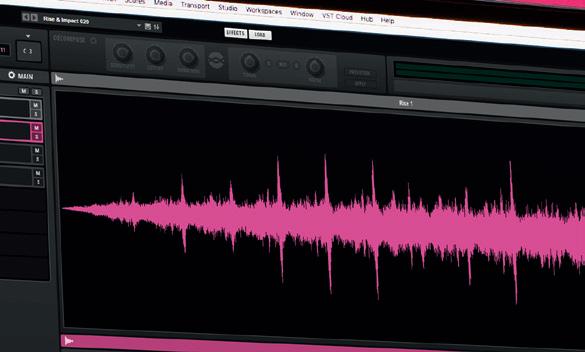
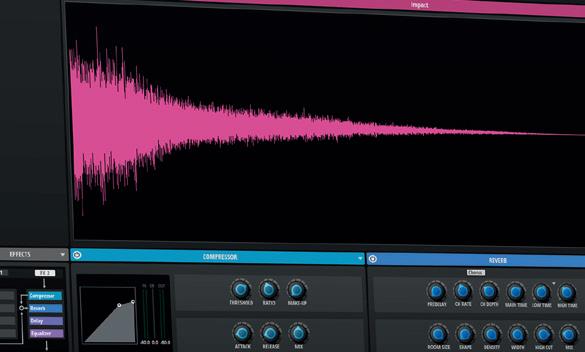
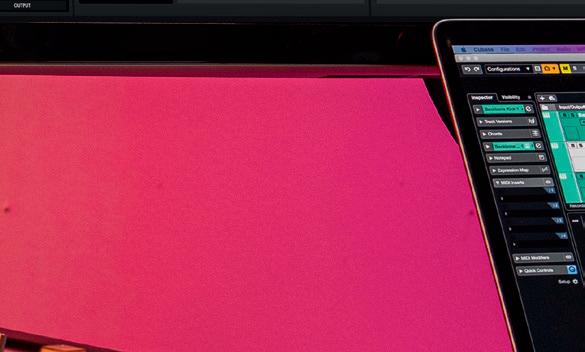



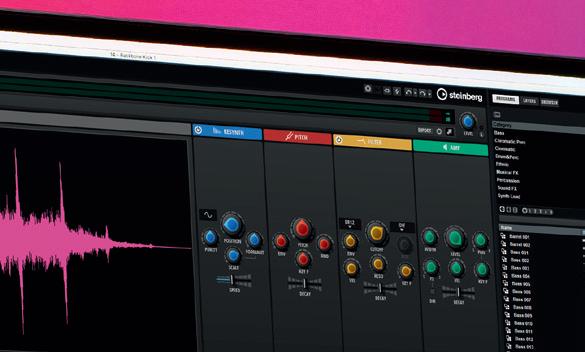
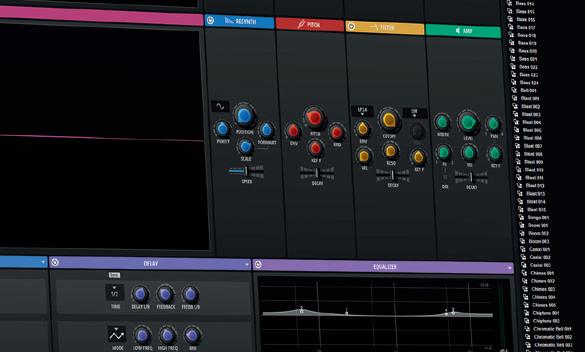
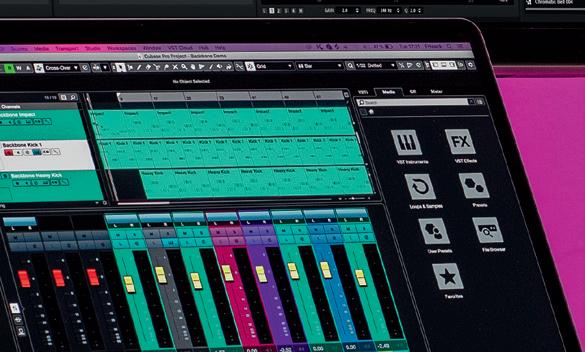
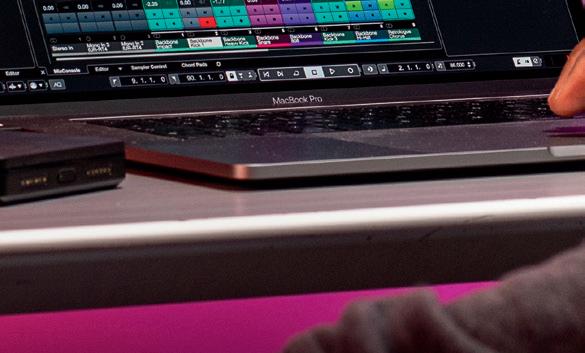


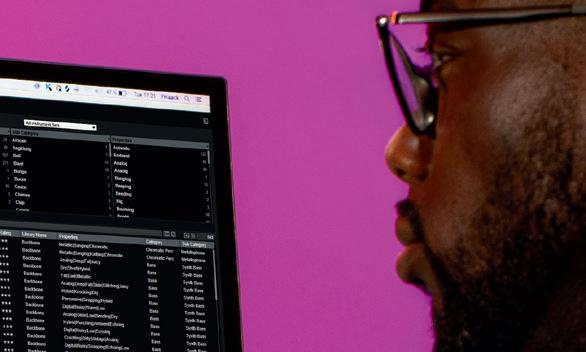






A revolutionary way to design your own drums – Backbone is your new, innovative drum designer for single kicks, snares, hi-hats, percussion, rises, hits and more. Layer up to eight samples and shape them with classic subtractive synthesis, decompose samples into tonal and noise elements and re-synthesize samples to manipulate them in unheard ways.
steinberg.net/backbone


WORDS BY ALICEGUST A F NOS
JOHN NEWMAN LIFE BEYOND LOVE ME AGAIN
You may know John Newman from his 2013 debut solo single, Love Me Again, but the singer, songwriter, DJ, and producer has spent the rest of his career building a legacy that stretches far beyond the track that first made him a global name.
“I actually get really insulted when people say, ‘Great singer’ or ‘Love you as a singer,’” he begins, speaking to Headliner from his home studio in the UK. “I’m a producer, of course, and a songwriter, but it’s about the artwork, the conceptual design, the videos and the whole package feeling like it comes from one world.”
Newman’s rise to global recognition began in 2012, when his unmistakable voice cut through on Rudimental’s UK Number One single Feel the Love. The track became an instant breakthrough moment, introducing his soulful intensity to a worldwide audience and setting in motion
a career defined by big hooks, bold emotion, and genreblurring ambition.
That momentum exploded the following year with Love Me Again, the record that would cement his place in modern pop history. Debuting at Number One on the UK Official Singles Chart, the track went on to break into the Top 10 in more than 30 countries and has since surpassed 1.6 billion streams. It remains one of the defining anthems of the era, marking Newman out as an artist capable of turning raw vocal power into globalscale impact. The song feels as though it hasn’t left the

Photo credit: Conseulo Pagaza & Prometeo Lucero
airwaves since its release, and is currently experiencing something of a revival thanks to TikTok.
“I don’t know if it went away,” he agrees. “It’s an incredible concept. I walked on stage in a club in Budapest to 2,000 people, and just to see them all standing there in such joy, singing that chorus at me was such a beautiful thing. You go through a period where you get a bit bitter about it, almost, where you’re like, ‘Can you like the other songs? What about number nine off of album two, why didn’t you like that one?’ It’s a weird thing, but I never take it as a given. I think it’s all a compliment to how good that song is. But also… It’s got to end soon, though, right? I can’t just keep reaping the benefits of this track my whole life,” he laughs, knowing he probably will.
While Love Me Again continues to take on a life of its own, Newman says he’s never felt trapped by the success of the track, instead seeing it as something that exists alongside everything else he continues to build. “I think that’s why the conversation’s okay with me,” he considers. “I’ve never had to come to that point where I’m settled with being a onehit wonder. I’m really lucky to have an amazing fanbase that’s stuck with me through all the years, and loads more hits as well. The fact that it’s my first song is a beautiful thing to me as well.”
Over the years, Love Me Again has taken on a cultural life far beyond the charts. The track became synonymous with FIFA 14, earning cult status among football gaming fans, while also resurfacing during FIFA’s # WorldCupAtHome campaign throughout the COVID-19 pandemic. Its reach extended into cinema too, with a special version appearing during the closing credits of the
Tom Cruise and Emily Blunt sci-fi blockbuster Edge of Tomorrow. He remembers being asked if they could use the track like it was yesterday:
“I got the call that they wanted to use it – they wanted something special,” he recalls. “I actually went into the film studio when they were editing, which was absolutely crazy – seeing Tom Cruise with a green screen behind him, just being Tom Cruise. Then I created a filmic version of it after seeing the film. Reality hits home when you see the glossy, colour-graded Tom Cruise and the CGI, and then the song comes on at the end. There’ve been some massive moments in my life that, if I told myself as a kid, I’d be blown away by. And being at the end of a Tom Cruise film was pretty cool.”
Alongside three BRIT Award nominations and more than 2.5 billion streams globally, Newman has continued to evolve creatively rather than remain tied to past success. In 2021, after taking time away to reset and explore new creative directions, he returned with If You Really Love Me (How Will I Know) alongside David Guetta and MistaJam – a
high-energy rework built around Whitney Houston’s iconic melody that once again placed Newman firmly back at the centre of the global dance conversation. He reflects on the inevitable ups and downs most artists will experience after a whirlwind of early success.
“Times aren’t always great, and it’s really difficult in that situation when you don’t creatively have all the strings to pull. The honest reality is there were days in my journey where I woke up and had nobody around me anymore – no team, nobody,” he discloses. “I chose to let some of them go, and with others it just naturally fell away, which led me to a place where I thought, ‘We should call this a day,’ otherwise I’m just going to sit on your shelf.”
It’s a challenge that still surfaces for him today, particularly when older associations can shape how new material is received. “Say, if I decided I wanted to go into songwriting and then it comes to pitching the songs and they’re like, ‘Oh yeah, John Newman from a few years ago,’ that’s inevitably tough. But I do believe that music wins over

Credit: Aaron Parsons

Credit: Aaron Parsons
everything, and if you continue to focus on that, and the rawness and the reality of why you do this job, you’ve got more of an opportunity than if you’re money searching or fame searching.”
Now, over 10 years after Love Me Again first became a defining anthem of the dance-pop generation, the track is returning with a new life aimed squarely at the club floor. Released as a staggered series of tracks leading into the full Love Me Again (Again) remix EP, the project sees producers from across the global dance scene rework Newman’s vocal into a fresh wave of high-energy club records. Across eight remixes, the release reimagines one of the decade’s most recognisable songs for a new generation of listeners.
“I’ve been wanting to do it for a while,” he says of the new EP. “Ideas come to me, and then I’m like a wrecking ball. I’ll go and do anything until I achieve it, and then sometimes it doesn’t work, and I hate that. There was a remix pack on the original single that did really, really well. I wanted to rebirth it slightly, freshen it up and bring it to a new, younger market. In today’s reflection of music, 80% of it is being creative in a business aspect as well. So I’m not going to sit here and say I love it just for the sake of it,” he says candidly.
“I saw a clause in my contract and thought there’s a new opportunity for a re-release here. So as a business guy, sometimes you go and do that, but it wasn’t just that,” he shrugs. “It was also an excuse to fall in love with the track again and hear it differently. I’ve seen that song played by Avicii, Calvin, and Martin Garrix, and covered across loads of different genres and cultures. It’s been really interesting to see, and I thought I’d like to challenge that myself now. It’s kind of a reincarnation, a credit to the song again.”
Newman’s latest track is new single, Merry Go, a vibrant, feel-good record built for summer and beyond, rooted in personal evolution and artistic rediscovery. “It’s hard for me to interpret what a song is because there are about 1,000 references in there,” he admits when asked what inspired the single. “There are so many dark feelings and uplifting feelings. When I was making dance music, I was on a constant search under this new era, where I just didn’t feel like I had it. I felt like I got it with the Alesso track, Call Your Name, and after that, I was like, I can’t get it. What’s going on? I can’t make my own lane. I was on this journey looking for what this perfect dance song is to me, and I landed somewhere between disaster and something beautiful.
“I’d done the Rudimental stuff, and it felt non-genre-specific dance music to me. It ended up at a place that was probably pop music in the end,” he realises.
Newman divulges that he has a new album in the works, which is a big deal to him. “In this day and age, it does feel quite difficult making an album because you’re not used to hearing that much of a body of work. I’m independent now, and I feel free enough to do whatever I want. It feels like I’m wired to make albums, because that makes the best music.
‘Making crap music and great music is all one thing. It definitely feels like a journey into the unknown for me. There’s something about chucking your backpack on and going to a country you’ve never heard of, and I feel like that’s what I’m doing musically. I’m enjoying that trip and learning new things as I go, and challenging myself constantly, which is quite painful.”
Newman says the process of building the project has become a journey in itself, with ideas and moments gradually revealing themselves as
potential singles along the way. Even now, he’s unsure when the album will truly feel finished, but that uncertainty is part of what keeps the process exciting.
“I’ve travelled to the deep, dark depths of my mind and back again, through loads of different genres,” he shares. “I feel confident now that people can hear I’ve always challenged genres throughout my career, and it’s always ended up feeling like a John Newman record at the end of it. I’ve challenged what that even feels like as well, and how far I can push it. It’s exciting, it’s daunting, and it’s a reflection of me on a mental journey of challenging myself and trying to find what the album should be. So maybe there is a fourth album where I know exactly what it is, and maybe it’ll be the worst album because I’m too confident,” he laughs.
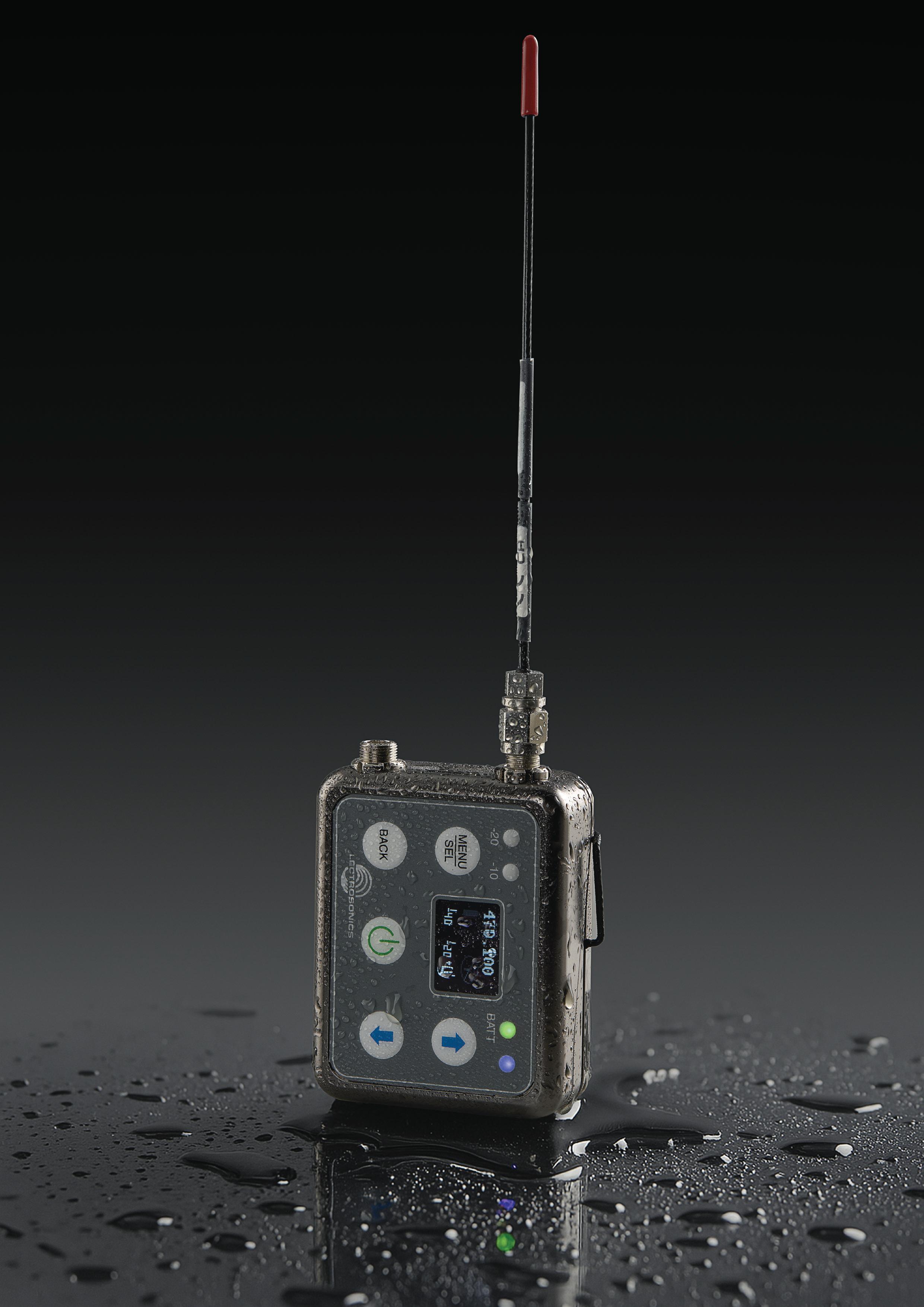
Does your micro transmitter have these features?
• IP57-rated watertight, all-metal enclosure
• Removeable LiOn rechargeable pack
• Drop-in charging with optional dock
• High-Density RF mode for 24+ ch. in 6 MHz
• Fixed audio latency of 1.4 ms
• Lav mic presets for optimum audio quality
• Full menu & control on the unit
• Selectable RF Power up to 50mW
The DSSM micro digital body pack has ALL these features and more, in one tiny package.











Credit: Ed Rode
Words bY adam pr o t z
ANTHONY WILLIS SCORING WUTHERING HEIGHTS
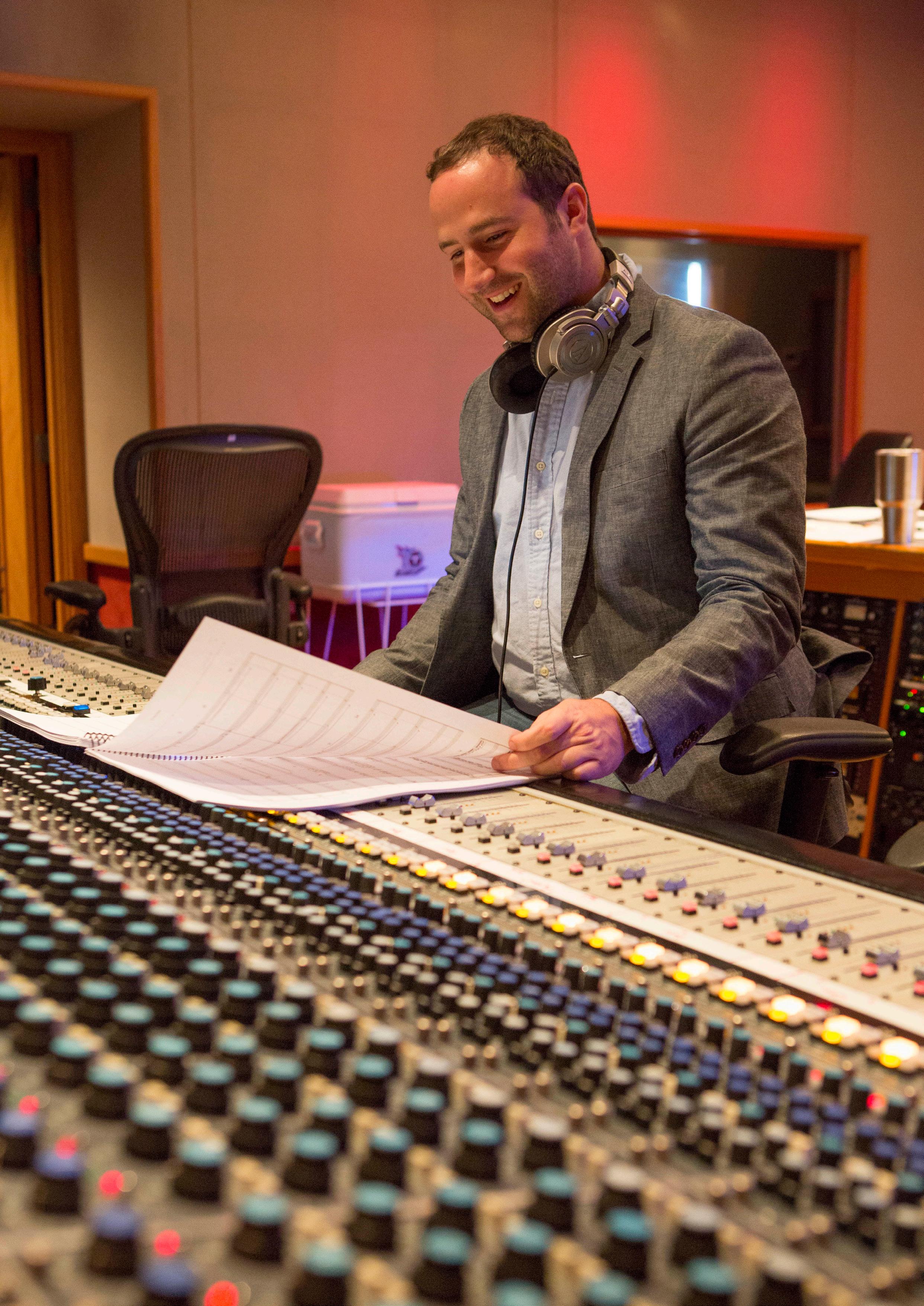
Following the huge success of Promising Young Woman and Saltburn, Oscar and BAFTA-winning director Emerald Fennell called upon British-born, L.A.-based composer Anthony Willis once again for her adaptation of Wuthering Heights starring Margot Robbie and Jacob Elordi. Willis speaks to Headliner about how he worked on the score alongside Charli XCX’s album of new songs for the film, how he and Fennell approached this new adaptation, and that viral Murder On The Dance Floor moment in Saltburn.
Besides his now long-standing creative relationship with Fennell, Willis was already becoming one of the most highly sought-after names in Hollywood and beyond. Some of his big credits include the science fiction horror M3GAN, the PlayStation game Knack II, and, while under the tutelage of composer John Powell, he assisted on major franchise movies including How to Train Your Dragon, Solo: A Star Wars Story, Jason Bourne, and Rio 2
While living in California now, Willis is originally a Londoner, and his musical
training began as a chorister at St. George’s Chapel, Windsor Castle. After studying composition at the University of Bristol, it was his graduate degree at the University of Southern California that saw him relocate to Los Angeles.
Willis’ very traditional, classical music upbringing must have offered a fairly stark contrast to life now in Venice Beach, but it’s something he remembers very fondly. “My grandfather had been a chorister at St George’s Windsor, something he really loved,” he recalls. “He’d said to
my parents, ‘If you ever have a boy who seems musical, please think about sending him to St George’s in Windsor.’ My early memories aren’t just the music being played at home, but also playing cricket in the fields. We were woken up earlier than most kids want to be, to practise our instruments.”
For any film music graduates finding themselves in L.A., the logical next step following their studies is to find an established composer who needs an assistant. After completing his master’s in film scoring at USC, Willis really landed on his feet when he found the
perfect boss and mentor, industry veteran John Powell, with a glittering career that includes the Bourne franchise, Shrek, Solo: A Star Wars Story, and most recently, Wicked and its sequel.
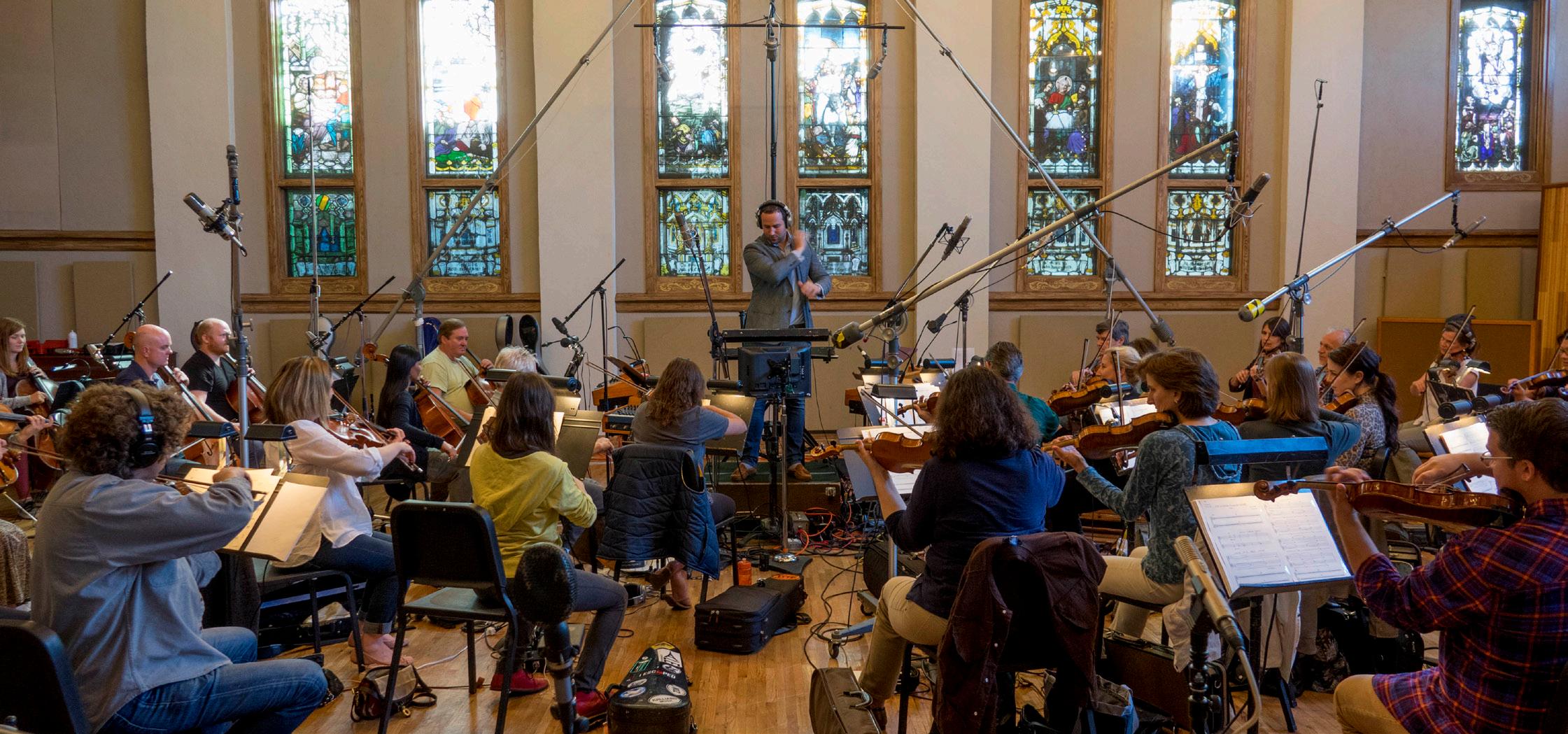
“Those relationships, when they work well, are very much mentorships. Anything I did with any of the composers I was lucky to work with, they could have done themselves. It probably just allowed them to spend a bit longer in the shower that day. Through that, especially with John Powell, it was such an ideal landing board for me. The first film I was lucky to be in his studio for was Rio 2. It was the first time I got to use a really good composing rig that had samples he’d very carefully picked over the years. Similar to working with a really good orchestra, there’s no distraction. It allows you to really focus on your part of the job: ‘How am I arranging it? What’s going to sound good?’ That was when I really started to find myself as a composer. In an ideal profession, you have somebody to look up to, somebody to compete with at your level, and then somebody to teach who is newer. Having that structure in your life allows you to keep growing. I’d describe John, Henry Jackman, and Harry Gregson-Williams as mentors.”
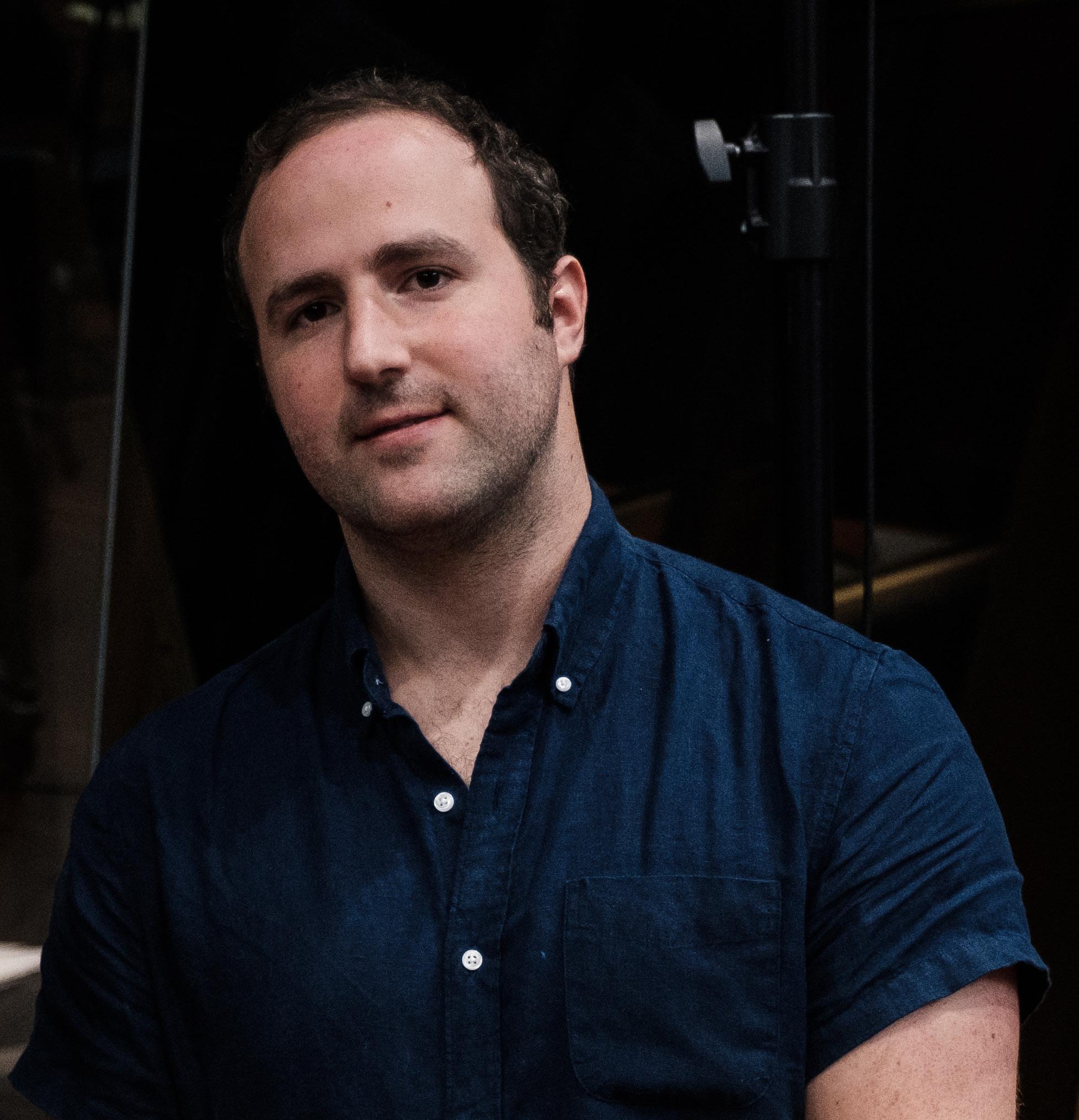
In terms of the sliding doors moments of Willis’ career, getting the assistant gig with John Powell was a big one, and then getting to work with Emerald Fennell on the 2020 black comedy Promising Young Woman
was the moment he fully stepped out as a composer in his own right. Fellow Brit, Fennell, also wrote and produced the film, starring Carey Mulligan, the titular young woman who has abandoned her pursuit of a career in medicine to seek revenge
Credit: Angus
Young
Credit: Ed Rode

for the assault and death of her best friend. It was a huge breakout success for Fennell, winning Best Original Screenplay at the 93rd Academy Awards, as well as a host of BAFTAs.
“Promising Young Woman is such an extraordinary film. Emerald is so amazing at explaining or showing how people behave and not trying to apologise for it. She just says, ‘Look, this is what people do, so let’s talk about it.’ She’s the coolest old soul I’ve ever met. She loves all kinds of music
and has such a great relationship with it. By that point, I’d done a lot of additional music for films with John, and then lots of small films, and a fairly big PlayStation game. I think she was intrigued because I’d worked on these more traditional thematic scores, and she wondered how a more traditional Hollywood composer would look at Promising Young Woman. I wrote a theme that brought Nina into the story, and I’d just done a couple of projects with the music team that oversees Focus Features. It was
a melting pot of all my experiences to that point. I’m so lucky to work with her; what she can do with a film and music is self-evident. Each film has been very different, and she always surprises me.”
For both Fennell and Willis, continuing their collaboration on her next film, Saltburn, certainly kicked things up a notch. Released in cinemas in 2023, the film became an instant hit and even more popular once it hit streaming. This was in no small part
Credit: Jaap Buitendijk, courtesy of Warner Bros Pictures
thanks to the leading roles from Barry Keoghan and Elordi. The former plays Oliver Quick, a seemingly innocent social climber from a self-described humble background. Arriving at Oxford University, he meets Elordi’s character, Felix Catton, who comes from a very wealthy family and decides to invite Quick to his country mansion, where things rapidly unravel.
“Saltburn definitely tapped into this idea of what it means to be English. Emerald wanted to make the point that it means a lot of things. On the one hand, you might know someone whose family has an enormous house that’s been passed down through many generations, and then at the same time, that family might sit in the smallest room to watch TV. There’s a mess in the corner from a party that no one’s cleaned up in a few years. Musically, there was the grandeur and timelessness of the Saltburn mansion,
and then there was the music for how you behave when people aren’t looking at you.”
Something that helped the film’s success that no one could have possibly predicted, was the use of Sophie Ellis-Bextor’s Murder On The Dancefloor, helped along by Keoghan dancing in a state of undress. The song had already enjoying big chart success 23 years earlier, and went viral on TikTok and reached no.2 on the UK singles chart a second time after a 1.5 million boost of streams on New Year’s Eve 2023.
“Sophie Ellis-Bextor was in what they called a children’s opera with my sister. I think it’s still going. She was one of the really good singers and got some of the best parts. Then, in her late teens, she broke out, and that’s how I first heard about Sophie’s music. Obviously, people in America didn’t
know her music as well. So when Emerald reinvigorated it through Saltburn, it was really cool to see. She went and did a load of touring as a result of that momentum, which was really awesome to see. It’s such an iconic sequence. I wish I could take even an ounce of credit for that choice, but that’s 100 per cent Emerald choosing that song.
The story goes that it wasn’t always going to be a dance. In the script, it was a walk through the house, and then it became this dance, and it’s just glorious. What’s really fun is that it mimics, in reverse, a scene when Felix first shows Oliver the house. It’s another one-shot where they walk through the house, and Elordi is just doing this incredible tour. It’s amazing how he captured the English public schoolboy intonation in his accent. What track could have worked better than Murder on the Dancefloor?”
“FOR CATHY AND HEATHCLIFF, THAT’S WHAT THEIR RELATIONSHIP IS: IS IT DESPERATELY SAD, OR IS IT ACTUALLY BEAUTIFUL?”
With all that said, it’s hard to imagine an easier ‘yes’ than when Willis was approached to complete a trilogy of Fennell collaborations for one of 2026’s biggest films thus far, Wuthering Heights. It sees him scoring another Elordi performance, who takes on the timeless Heathcliff character from the beloved Emily Brontë novel, with extra star power coming from Margot Robbie. Little surprise that Willis says, “I was so thrilled to come back. Emerald was gracious that she wanted to bring a lot of the team from Saltburn back.
“Margot Robbie had been a producer on Promising Young Woman and Saltburn, but this time, her coming to star in it was really exciting. I was determined to go to the Wuthering Heights set to start that creative process and get an eye for what Emerald was thinking. I went over when they were filming the downstairs scenes for Thrushcross Grange. Really, it was the sorrow and the sadness that the early conversations about the music wanted to capture. The kissing montage sequence is absolutely gorgeous; the first version was about six or seven minutes long.”
As with Saltburn, Willis went for a very elegant, classical sound in this film that also has a fragile sheen of opulence, with the true intent being on the darkness and emotional toil bubbling beneath it. One of his standout cues is Isabella’s Dollhouse, in which he uses a felted piano that sounds almost like a toy, amidst gorgeous swells of flutes, harp, and strings.
“You could almost say it’s a kind of prepared piano, because we would put different things into it to change the tone. Gavin Greenaway came and played that for us. We also use that same sound in the more emotional piano cues, almost like a folk piano, because you’re muting the typical resonances you might hear in a modern upright. It gives it some history, character, and some age. It takes out the clean part and gives it
that folk element.
“The doll’s house is how Cathy wants to be seen; all dressed up with frills and lace. But tracks like Again and Again, You’re Not Enough for Her, and Be With Me Always have that folk piano tune that represents Cathy’s true heart and her soul.”
Music formed a significant part of the film’s marketing campaign; as well as Willis writing the full orchestral score, a certain person behind the Brat Summer phenomenon also released a new album of songs for, and inspired by, the movie. Charli XCX played a key part in the hype machine, releasing the first single House featuring John Cale of the Velvet Underground, ahead of Wuthering Heights hitting cinemas. The film’s main trailer prominently used the ‘Fall in love again and again’ refrain from Everything is romantic, one of many behemoth tracks from her ultrasuccessful record Brat.
“Charli made an incredible album for this film as a companion experience. I’ve loved her music as long as I’ve known about it, and I really think this is her most interesting work. Her producer, Finn Keane, did a great job. What Finn and I both latched onto early on was the relationship of placing strings near the bridge — sul ponticello. You get this overtone that lives in a sweet spot between being dark and ethereal. It’s both enticing and a little bleak. Especially for Cathy and Heathcliff, that’s what their relationship is: is it desperately sad, or is it actually beautiful?
“That was where Emerald wanted to live for a lot of the music, and it became the bridge between the Charli album and the score.”
As he travelled between the Yorkshire Dales filming locations and back to London to work, Willis curated a minimalist set-up with the power to create a film score on the go.
“I was able to work on this film with one rig that I could take back and forth to London and have in the edit, thanks to the power of the new chips in the MacBook Pro. I use Vienna Ensemble Pro, Logic, and a lot of Cinematic Studio Strings. I also use Spitfire libraries and the Una Corda sample from Native Instruments, which was useful for the original version of the music box piano. I loved working with the LCO [London Contemporary Orchestra] in London and the incredible team at AIR Studios. While I have a lot of tools to help me write, the score itself really comes to life in the final chapter when we go into the recording sessions.
“It’s a nerve-wracking thing because you’ve been living with this samplebased music, and then you replace 98 per cent of it sonically in a single week. I get very involved with that process. Emerald and I chose the takes in the recording together. I’d play her an edit of the recording before we mix it so that she’s on board and feels it captures the way she felt during the recording session. It takes a lot of people to put these scores together; it really is a huge job.”
The twin Wuthering Heights albums from Willis and Charli XCX are out now, and Fennell’s take on the classic novel is available to stream, too. For Willis, it’s full steam ahead — he’s not allowed to say exactly what he’s working on next, but he tantalises us with: “I’ve got a project I’m really excited about coming up. The clue I can give is this: it’s with the same studio that did Saltburn, and it’s a really fun movie set in New York. That’s all I can tell you,” he grins.
INSTA: ANTHONYBWILLIS
KLOYD NEW LOVE
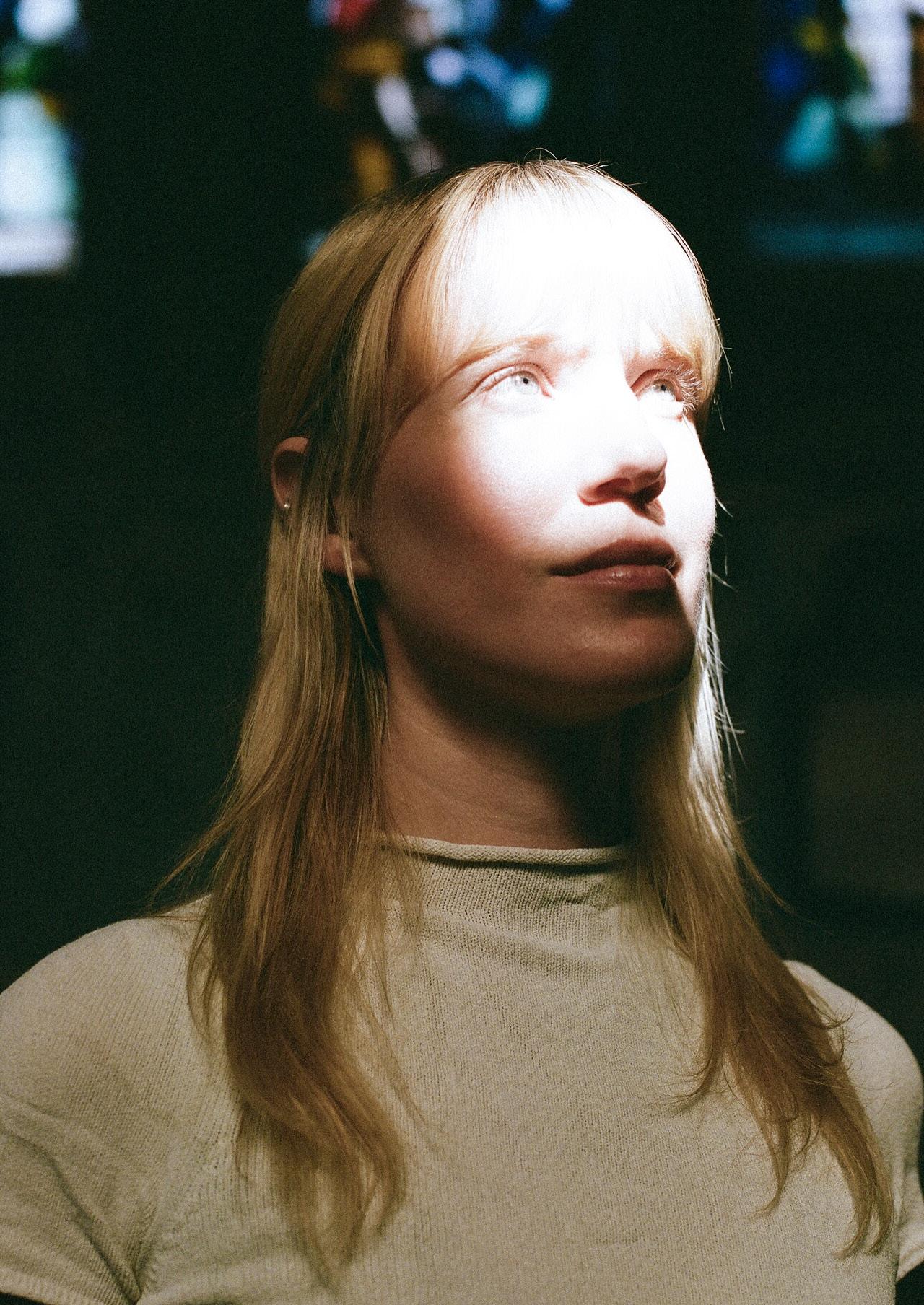
If you amalgamate the names Kate and Lloyd, plus several genres of music, the end result is Kloyd, one of the UK’s most exciting up-andcoming talents making electronic tunes in the vein of Four Tet, Bonobo, and Sofia Kourtesis. While on tour supporting Art School Girlfriend, she talks to Headliner about her upcoming mixtape, New Love, which has received backing from BBC Radio 1 and 6 Music. But, as she describes, none of this would have been possible had she not been able to overcome her crippling self-doubts, as well as discomfort around being a woman in the male-dominant electronic music scene. She teases her London mixtape release show and Green Man performances on the horizon, and talks about how she creates her unique, organic sound.
Kloyd grew up in the picturesque Yorkshire spa town of Ilkley, amongst the Yorkshire Dales countryside. She moved to Leeds to study music production and electronic music before heading south to live in London. She got a gig writing commercial music for a sync music company before releasing her first solo Kloyd track, Sweet Memory, in 2022, establishing her now trademark
combination of guitar sounds, synth, bass, and syncopated beats. Her most recent releases have seen her dubbed as one of NME’s top 100 emerging artists for 2026.
“I started playing piano when I was really young,” she answers when asked about music and growing up. “I didn’t really have any formal training on that. My sister was a grade eight
pianist, really good, and she showed me the ropes of it. Then I taught myself the piano by obsessively listening to music videos on the music channels on TV, and I’d replay as much as I could of the songs that I was hearing. I suppose at that age, somewhere between eight and 12, I didn’t realise that I was doing very substantial ear training, but it was just because I really wanted to work out how to play.”
After discovering electronic music, particularly downtempo and trip-hop acts such as Massive Attack, Morcheeba, and Bonobo’s early albums, Kloyd went to her neighbouring city of Leeds to study production at Leeds College of Music, and became enamoured with the city’s bass music scene.
Looking back, she says, “I was very involved with the dub and reggae scene that Leeds had at the West Indian Centre. It used to run a night there called Subdub, and we’d go there every month. I loved that dancehall culture; Leeds has such an immaculate scene for that. It was so cool with the Hyde Park Unity Day and all of the underground nights going on. That’s how I got to know about dubstep when I was around 17 or 18. Once I found out about it, I was more involved in wanting to learn how to make that kind of electronic and bassheavy music.”
Upon completing her degree and moving to London, Kloyd was suffering from a crisis of confidence in herself and the notion of officially releasing music. As luck would have it, a big opportunity presented itself that would allow her to get invaluable experience making music professionally while safely behind the scenes.
“One of the alumni at Leeds College of Music had found an opportunity with Universal Production Music,” she explains. “They had a call-out looking for women who make electronic music for an album for their production music library — I managed to land it out of over 500 applications.
“By this point, I still wasn’t out there as an artist because I didn’t feel I had my sound ready to launch into artistry. I felt that I was more of an allrounder in terms of being able to write cinematic stuff, but I had a deep lack of confidence.
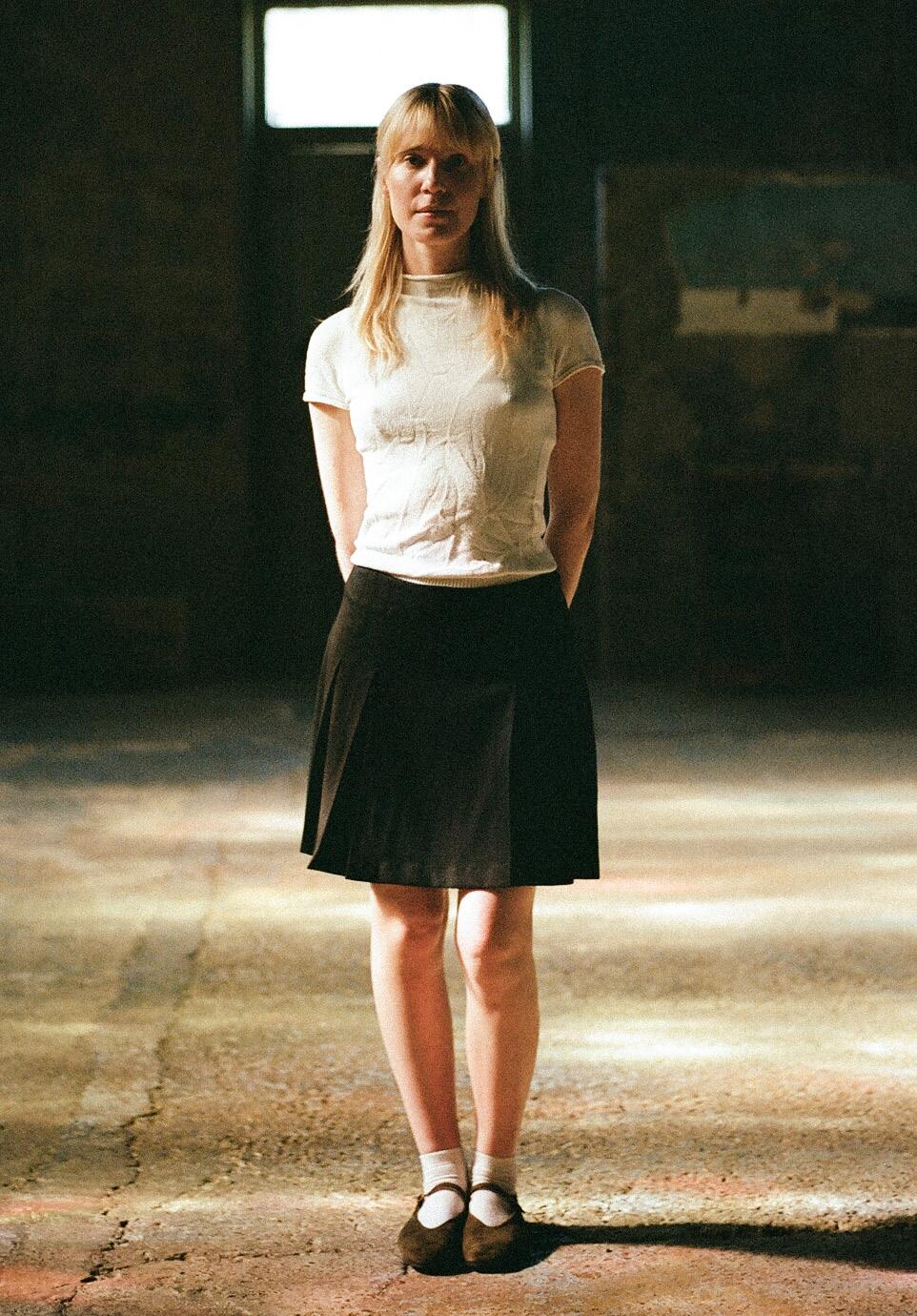
“Throughout a lot of my 20s, I was a really anxious person, very insecure, and just didn’t have the confidence to put myself out there. Being a sync composer allowed me to make music under pseudonyms, so people wouldn’t know who I was and I could hide away.”
That pivotal moment of breaking through that wall of insecurity and releasing music as Kloyd came with her debut EP, Chapters, in 2023. Both musically and from a production
standpoint, it’s a totally assured and slick release, while having that feeling of being living, breathing electronic music thanks to her use of percussion and vocal sampling.
“On reflection, it was me holding myself back for a long time due to a sheer lack of confidence and feeling I wasn’t good enough. I’d always say that to myself, that I wasn’t good enough. Once a few people around me started saying, ‘Actually, you are,’ I realised it was time. It’s been a bit
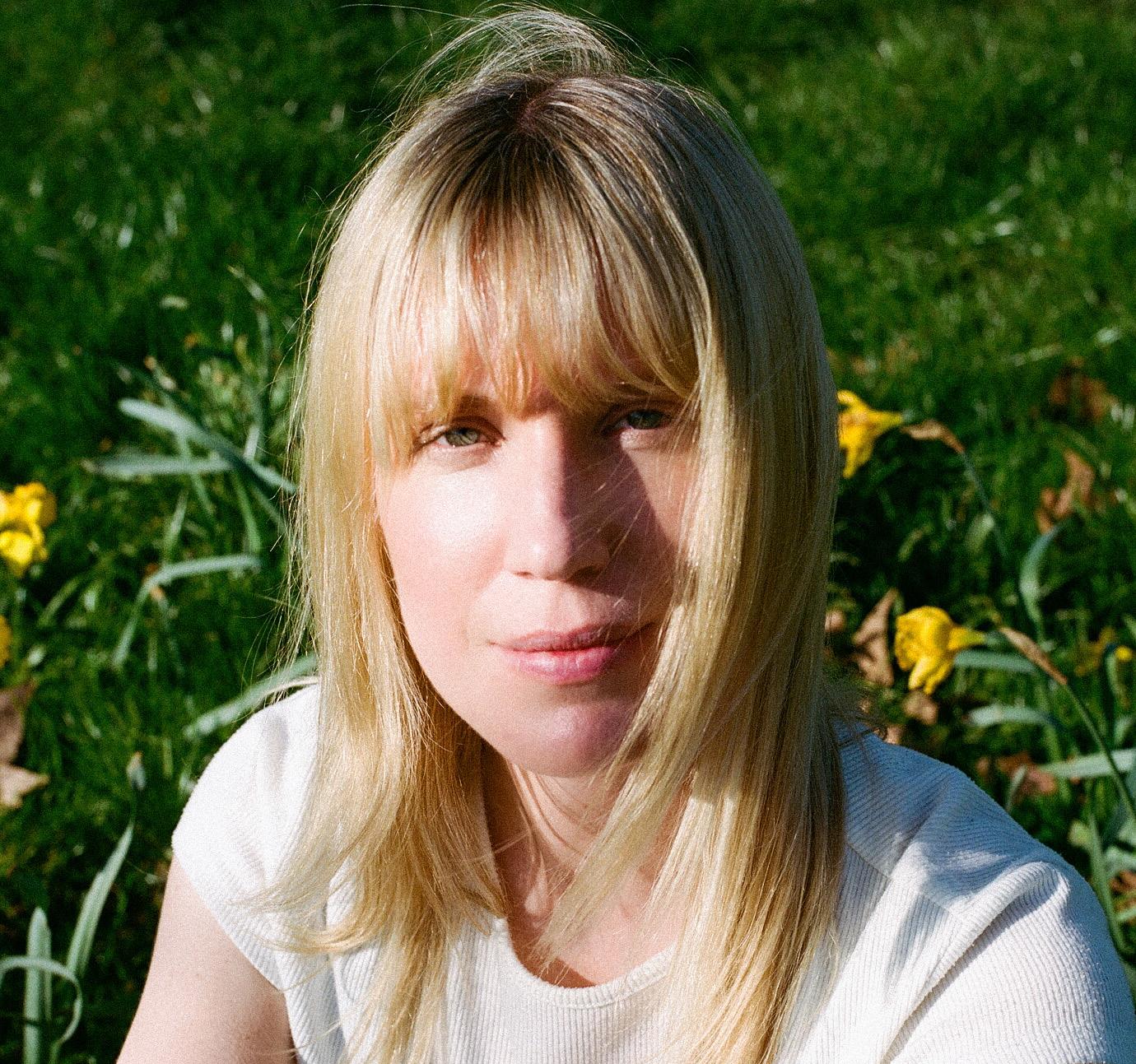
of a journey on an emotional and mental level, going from being quite introverted in your own little world –because making music is a vulnerable thing – to crossing over and putting that music out with your name attached to it.
“The turning point was Chapters That’s when I was really able to say, ‘This is what I do.’ It’s electronic, downtempo, bass, slightly dance, pulling in all of those formative influences.”
With all that said, however, this all goes beyond inner turmoil — the other huge factor has been Kloyd entering
a music scene that is heavily maledominated. While things have begun shifting gradually, the stereotype of each of the things Kloyd is trying to embody: DJ, producer, electronic music artist, will bring to mind men for many people. Thankfully, there are the likes of Sofia Kourtesis and Ela Minus that she can look to, who are trailblazing a new path.
“Growing up, and even still now, your main influences as an electronic artist are primarily men. I absolutely rate Four Tet; I love pretty much every piece of work he’s put out. I’m a massive fan of Calibre and Jon Hopkins. And most
of my lecturers when I was studying were men as well. You’ve got all of these people that you’re looking up to who aren’t quite representative of who you are, and then you feel a little bit out of place in terms of how you’re going to make that work. There is a positive shift happening over the last five to 10 years, but I still don’t think there’s enough representation for any young woman to look up to and think, ‘Wow, that’s someone that’s doing it, maybe I could do it too.’ If I at least influence one young woman to be like, ‘Hey, I could do that,’ then that is just so great. Sometimes, as women in society, we feel like we can’t use
our voices, but we need to. The more artists who identify as women come through, the stronger that will become in terms of communal confidence. I still feel like I have to work a bit harder to earn my stripes. I don’t know why that is; I’m still figuring it out. Maybe in a few years I’ll have the answers to that, but right now I’m not quite sure why.”
June 26th sees Kloyd release her debut mixtape, New Love, with Anjunadeep, a label owned by dance music legends Above & Beyond. It’s an excellent record that showcases Kloyd’s many talents as a musician, producer, sound designer, and more.
It opens with its title track, a driving piece of electronic music balanced out with many organic elements, including female vocal samples, percussive sounds, piano, and more.
On the release, she remarks, “I really poured everything of myself into that record. I went in just wanting to make a beautiful record. I see my releases as narratives and reflections of what is going on in my life at the time, both inwardly and outwardly. Up until New Love, I was quite low and heartbroken for a good five-year period. I have a tendency to lean into the melancholy anyway, but it was an amazing thing to be able to devise something where I started to feel a lot happier about my perceptions of love. For me, it’s kind of a happy record, even though it’s still melancholic in parts.”
Kloyd switched things up beautifully with the single Kate’s Theme, released for Piano Day 2026. A piano-led track that concludes New Love, it begins as a solo piano instrumental, before a trip-hop beat joins in, and the song evolves from there. As the title suggests, it’s one of her most deeply introspective songs yet.
“It channels everything that I’m about,” she reveals. “While finding new love is so beautiful, how can it be proved to be lasting? It can’t, but that’s also okay. Nothing lasts forever, and I think
“IT WAS AMAZING TO BE ABLE TO DEVISE SOMETHING WHERE I STARTED TO FEEL A LOT HAPPIER ABOUT MY PERCEPTIONS OF LOVE.”
it’s also about trying to be present. That’s what I try to channel into the record, this present feeling that we get from these great experiences, but also hardships. It was all improvisation; all of the piano that you hear on that was just one take. There are mistakes in there, I can hear them, but I kept them because it just felt honest. I was crying when I was playing it, and it felt really cathartic to get it all out.
“To get that real textural, organic sound going, I’ll create little reverses within the drums that I’ve layered up. With Kate’s Theme, I sent them to a phaser plugin, which I then automated. That was a little trick I worked out from listening to some of Four Tet’s older work on Rounds. It creates all of this movement and makes it feel real, even though it’s electronic. I’ll just pile up lots of samples, like lots of real snares, until you can’t add any more. And doing sheer improvisation without going back into the project to overly tweak is something that I’ve learned from the likes of Burial. You can hear it in the sounds — all that feeling and movement is because he’s not quantising everything. His drums are way off-grid.
“It adds to this human feel, which is so important for me. When I’m making music, I want it to sound natural, like you’re in the room with it.”
With Kloyd opening up about her production process, Headliner can’t resist asking for more details. She obliges with, “Logic is where I make all of my music. It’s completely in the box. I’ve got my Nord keyboard, which
is where I get pretty much all of my musical sounds, like the guitars and pianos. I build all of my sounds within Logic itself, spending hours layering drums. In terms of plugins and VSTs, I’ve got the Arturia suite, which is a go-to for synths, and the Prophet Bass. It’s so deep and subby; I put it all over my work. My go-to tool in my back pocket is Outer Space, a replica of the hardware echo box. It’s got all of these amazing tape delays and reverbs, and I send so much stuff through it. That helps to transport the sounds into these more dreamy soundscapes. I do it very much in the box with no fancy hardware; I just don’t feel I need it. Sometimes when you start adding stuff, you’re over-complicating it. Keeping things simple helps.”
Can Kloyd capitalise on all the hype surrounding her music and the New Love mixtape? Well, if her confidence as an artist keeps exponentially expanding, you’d be unwise to bet against her. Beyond that June 26th release date, she teases, “Green Man and End Of The Road with a full live band, and I’ll be launching the mixtape at Next Door Records Two on June 25th. And then a few DJ gigs in Berlin, the Netherlands and Albania with the Anjuna crew, which will be really fun.”
KLOYD.BANDCAMP.COM INSTA: @KLOYDMUSIC__
MYTH OR TRUTH?
The best sounding live console was originally designed for broadcast.
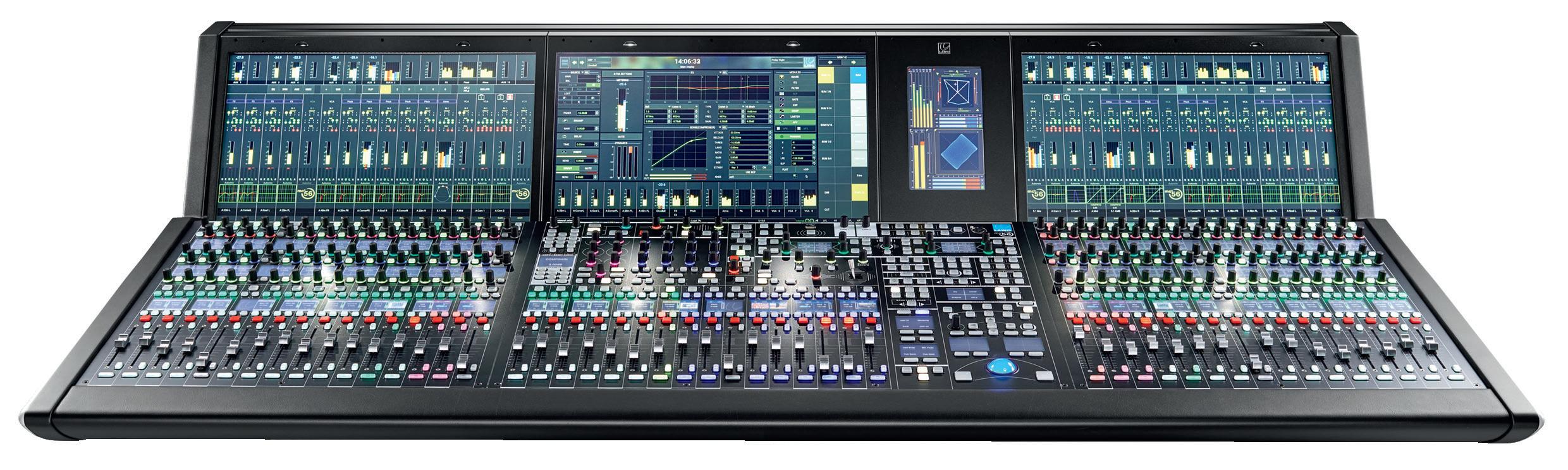

Hearing is believing – sign up and find out for yourself.

Words bY ALICEGUS T A NOSF
INSIDE THE SOUNDTRACK OF 2XKO
JESSE ZURETTI
“Polyphia + Jesse Zuretti = PURE GOLD” reads a comment under 2XKO’s Let’s Go YouTube video – the official main theme for the new game from Riot, which is set in the Runeterra universe from League of Legends. For 2XKO’s composer Jesse Zuretti, the collaboration with the prog rock band was inevitable, and laid the groundwork for the 2v2 tag-team fighting game’s metal-infused score.
“When I started writing the main theme, I had no idea we’d end up working with Polyphia,” admits Zuretti, speaking to Headliner from his home in the greater Austin, Texas area. A lifelong metalhead, the composer drew on the US band as his first reference when he set about creating the sonic world of 2XKO, which was released in January 2026.
“At that point, they were just a reference,” he points out, “so when Riot mentioned Polyphia, it almost felt like someone had pulled the idea
straight out of my head! I’d never said it out loud, but I’d thought how great it would be if they were actually involved. And that’s exactly what happened,” he laughs. “That really speaks to Riot, who genuinely care about music and the artists behind it. It’s not about bringing someone in just to boost credibility; it’s a mutual exchange. Riot respects the artists, and the artists tend to genuinely connect with Riot.”
Despite this being his first-ever game score, any concerns Zuretti may have
had about meshing the metal and game score worlds together quickly evaporated when he heard Polyphia’s take on his title track. “They elevated it completely,” he beams. “Polyphia are very guitar-centric. They’re virtuosos, writing highly technical and impressive music, but it’s also very listenable and crosses into pop, hip hop, and metal, so it made sense straight away. There was a lot of trust involved with the artist; there wasn’t a lot of sitting down and nitpicking or a long list of timestamped notes.
“THERE WAS A LOT OF TRUST INVOLVED WITH POLYPHIA, LIKE, ‘LET THEM DO THEIR THING.’ VERY BREAKING BAD – LET THEM COOK!”
“It was more like, ‘Let them do their thing.’ Very Breaking Bad – let them cook! And they did,” he grins.
Zuretti is no stranger to challenging, high-profile projects. As an independent hybrid composer, he has worked across some of the most ambitious projects in modern game and entertainment music, including a long-standing collaboration with Marvel. His work moves fluidly between dark fantasy, fever-dream horror, high-intensity action, sci-fi world-building, and emotional drama – always with a focus that music should make listeners feel, think, and want more of the story.
He first picked up the guitar and joined a band at 16, and from that point on, metal became less of a genre and more of a foundation for how he hears and builds sound. That background continues to shape Zuretti’s sound today, and he’s fiercely protective of the metal community.
“One of my goals since I started composing has been to open doors for people from the community I come from,” he shares. “I really believe in the musicians and the creative minds in the metal and heavier music world, and I think they have a lot to offer.”
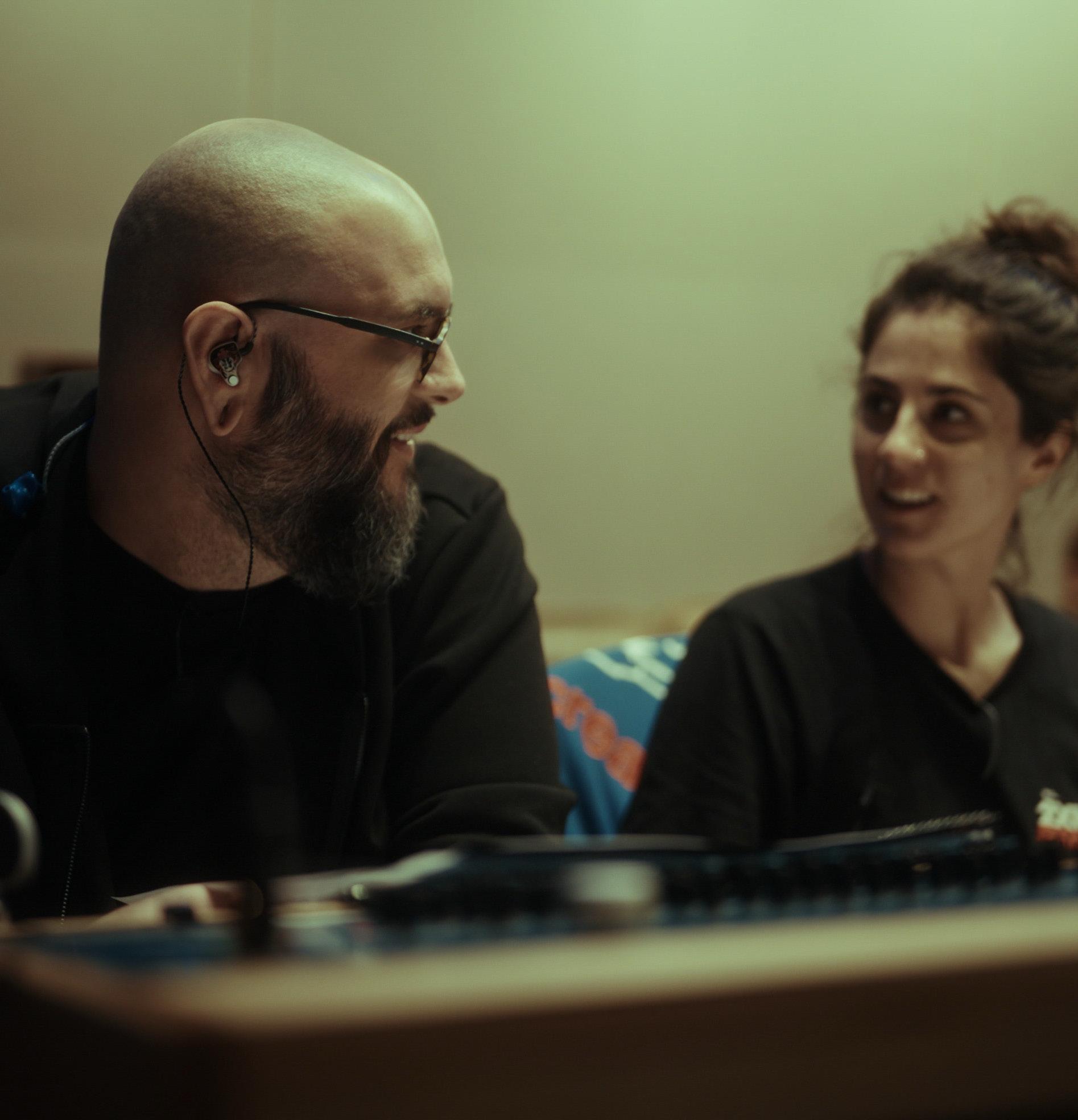
Zuretti likens the gaming community to the metal fandom, recalling that just a few decades ago, gamers were looked upon as wasting their time, while people would cross the street to avoid anyone of the heavy metal persuasion. “I don’t think anyone
was crossing the street because someone was at home playing Super Nintendo all day,” he clarifies, “but if you looked like you listened to metal in the ‘90s or early 2000s, people made assumptions about you. The way the media portrayed metal fans
wasn’t flattering, which is unfortunate, because some of the smartest, kindest, and most generous people I’ve ever met come from that world. It raised me. I see a lot of similarities between the game development community and the metal community, particularly in the support, friendships, shared perspective, and dedication to the craft. It feels very similar, and it’s the first time I’ve really felt at home since deciding to compose full-time.”
Fast forward to today, and the global
gaming industry is worth more than the film and music industries combined – projected to reach over $386 billion by 2026. Meanwhile, heavy metal bands are selling out arenas worldwide – proof that a genre once seen as niche has not only endured, but thrived.
“When I think about metal becoming as successful as it is now, and the game industry becoming more accepting of both, I feel a sense of relief,” says Zuretti. “I hope fewer kids
have to deal with bullying because of what they’re into, especially on the metal side. When people criticised the genre, it felt like they were criticising my family – my community. It’s an integral part of my life and still is today. The same goes for games. Watching the industry grow the way it has is incredible. A lot of the criticism in the ‘90s probably came from misunderstanding, and maybe some fear about how big it could become. Clearly, that growth was inevitable!”
Riot’s own history with music began in 2014 with Pentakill, a virtual heavy metal band created alongside its in-house team and featuring artists like Mötley Crüe’s Tommy Lee and Danny Lohner of Nine Inch Nails. That early commitment to genre-driven storytelling helped set the stage for projects like 2XKO, where music plays a central creative role. The main challenge was making this fighting game soundtrack feel exactly right: instinctive and tied to the action.
The score isn’t all metal, though, Zuretti insists: “We knew there would be characters that didn’t need metal, and that accounts for about half the soundtrack,” he explains. “I don’t even know what to call the overall sound; it’s almost its own thing. I’m always trying to find references that help define the palette. But it’s actually quite difficult to find anything that hits all the same
notes as what we’re doing on 2XKO, because of how many elements we’re combining,” he furthers. “Live orchestra and metal have been done before, but rarely alongside jazz fusion, anime influences, virtuoso playing, and hip hop all in one place.
“Some of the combinations sound strange on paper, but somehow they work. It’s a bit like combining ingredients that don’t seem like they should go together – something that might make you question it at first. That’s the goal: for people to hear something and think, ‘This is really cool; I’ve never heard anything like this before.’ That’s also one of our biggest challenges: bringing all these genres together in a way that feels cohesive, not disjointed – something that sounds intentional, like a single, unified piece of work.”
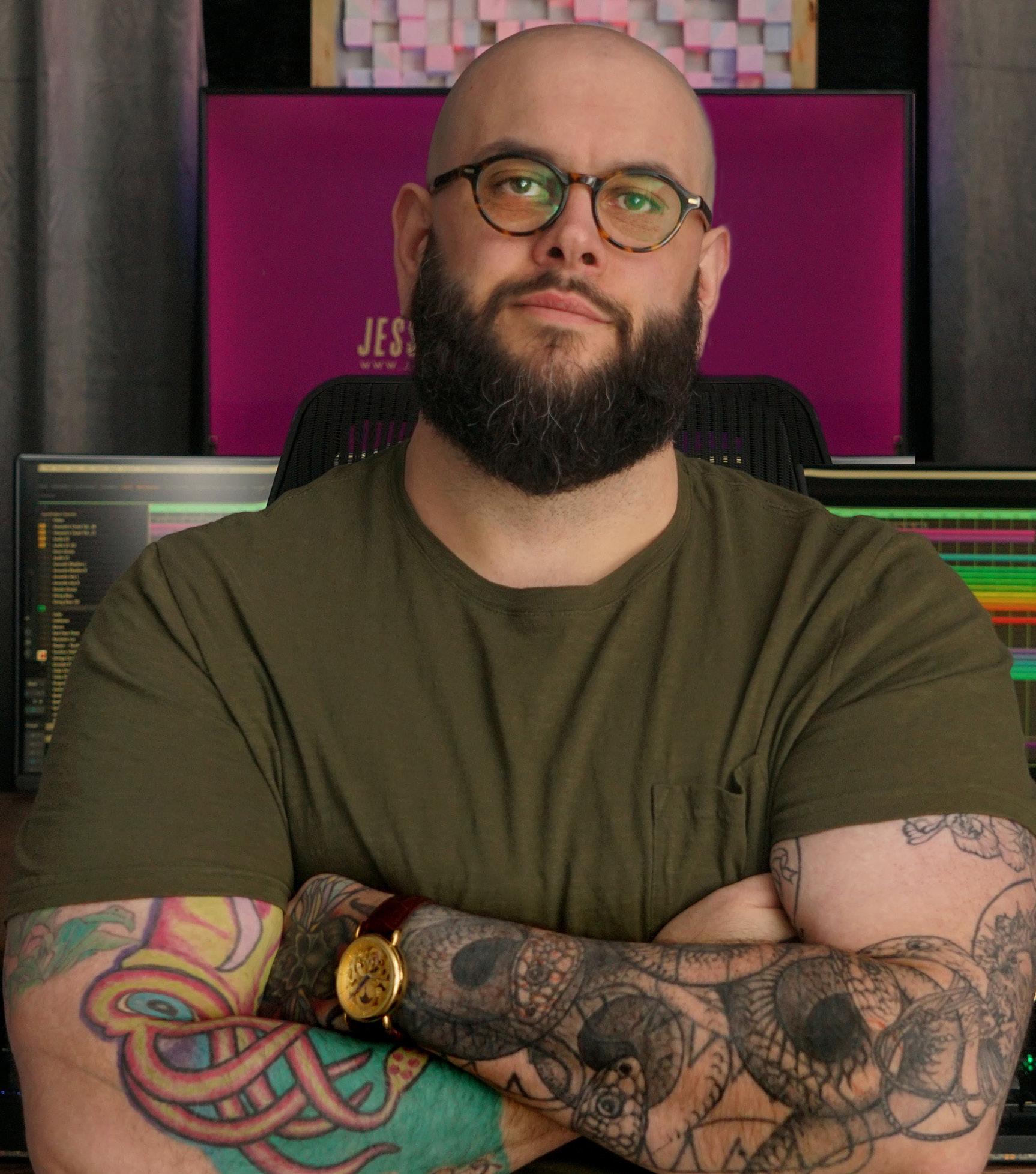
Gaming music soundtracks have evolved into a gargantuan, multibillion-dollar industry of their own, driven by passionate fans who consume game audio as a primary form of music, and it’s become the norm to expect symphonic, cinematic scores that enhance gameplay and create cultural moments. And the fighting game fandom has its own top-tier references, a common favourite being Guile’s Theme from Street Fighter, which has taken on an iconic status as one of gaming’s most recognisable and nostalgic tracks. These are facts that Zuretti was all too aware of when starting the project.
“It was incredibly intimidating, especially given the quality of soundtrack music today,” he acknowledges. “The ‘90s were more of an experimental phase – everyone was effectively a guinea pig, testing equipment and figuring out how things worked. A lot of the best game music came out of that period. That’s without even mentioning things like K/ DA – a fictional K-pop group based on League of Legends characters –with billions of streams. It’s huge. Then there’s Arcane League of Legends, which has an incredible soundtrack and massive cultural impact.
It’s all quite intimidating, and the community is very tight,” he considers. “It’s highly competitive, with a strong sense of camaraderie and passion. The fighting game community, in particular, is very protective of what it has, and rightly so. What I’ve learned is that Riot is one of the best studios in history for game music. They care about it on a level that really resonates with the music industry.”
Zuretti’s constant companion in the studio is Steinberg’s Cubase, which has been his DAW of choice for the last 10 years. He explains how it helped him move quickly between ideas, especially under the pressure of delivering for a major Riot title.
“LIVE ORCHESTRA AND METAL HAVE BEEN DONE BEFORE, BUT RARELY ALONGSIDE JAZZ FUSION, ANIME INFLUENCES, VIRTUOSO PLAYING, AND HIP HOP.”
“Cubase opened up a lot of avenues for looking at music differently, and that happened almost immediately,” he says. “In 2017, I was writing a record for my band, and it was the first time I said to myself, ‘I want to add cinematic elements to this with intention.’ Cubase made that really easy to understand, especially the rhythmic side of things. Programming drums is something it really excels at, and the way it maps everything out is very intuitive. The compositional side was also straightforward for me.”
He shares that when working for different clients, he often has to switch to other DAWs when required, but that Cubase has given him the edge. “I’ll often write in Cubase and then transfer into other systems depending on what they need,” he elaborates. “But I feel like I can work in any DAW because of Cubase. The layout makes sense in a way that feels like it understands creative flow and language. I can pick things up quickly because of how Cubase trained me to think. It’s a bit like being given an unabridged dictionary in Cubase, and then every other DAW is just a book I can read. It made everything easier.”
Zuretti is currently using Cubase 15, the most recent iteration of the software. “I installed it and was immediately like, “All these new tools are incredible.” Even in 14, I was getting comfortable and was already blown away by some of the features. They’re also
one of the DAW developers whose content is really easy to understand. They do such a good job of explaining how everything works and why the upgrades matter. It doesn’t feel like features are just being added to push people to buy new versions; it genuinely feels like, ‘No, this is actually really useful. This is worth it.’ That’s been really important for me in terms of progression as a composer. At the end of the day, our biggest focus is saving time; we need to work efficiently and effectively. Cubase makes it very easy to troubleshoot issues and keep moving forward.”
Cubase 15 features built-in AI stem separation that splits stereo files into vocals, drums, bass, and other instruments directly from the audio menu, facilitating easy remixing and sampling creation by creating a folder of separated tracks, with options to mute the source. It’s one of Zuretti’s go-to features. “Stem separation has been really useful for me,” he nods. “I use that quite a bit now. “With the type of work we do, we’re not really able to use a lot of source audio directly for things, but I do like to study it. Being able to pull things apart, especially with SpectraLayers [a visual spectral editor], and take a more forensic look at what’s going on has really helped me improve as a mixer.
“But the newer updates – especially since version 14 – have taken my understanding of mixing to another
level,” he stresses. “I’m able to deliver much more solid version-one demos because of these tools. Stem separation and SpectraLayers in particular let me look under the hood and really understand how things are built. The new plugins are great as well – the dynamic range compressor UltraShaper is incredible. I work with distortion quite a bit and often use it in unusual ways, and that’s a tool I’ve really enjoyed. Even the workflow updates feel meaningful. I see little improvements in the hub and overall flow every time it updates. It gives me this sense that I’m moving forward.”
This came in handy when deciding to change the music up. Zuretti shares that Riot is so invested in making 2XKO the best possible experience for gamers that he tweaked some of the music based on early feedback from fans. “When I was writing Ahri’s theme, Race Across Ionia, we had released an alpha version of the game for people who signed up well before launch,” he recalls. “Someone on Reddit mentioned that, in fighting games, matches are often very short, especially at a competitive level. A round can be under a minute, maybe 90 seconds, so players might never hear the full track.
“They said they loved a particular section of the music but rarely got to it, and wished it came in earlier. We listened to that feedback and moved the section because of it. That’s how seriously we take what fans say. We really want them to enjoy the music, because we know how much it matters to them. Their response helps guide what we do next and keeps us focused on delivering the best possible experience. At the end of the day, they’re the ones playing the game –it’s their experience,” he smiles.
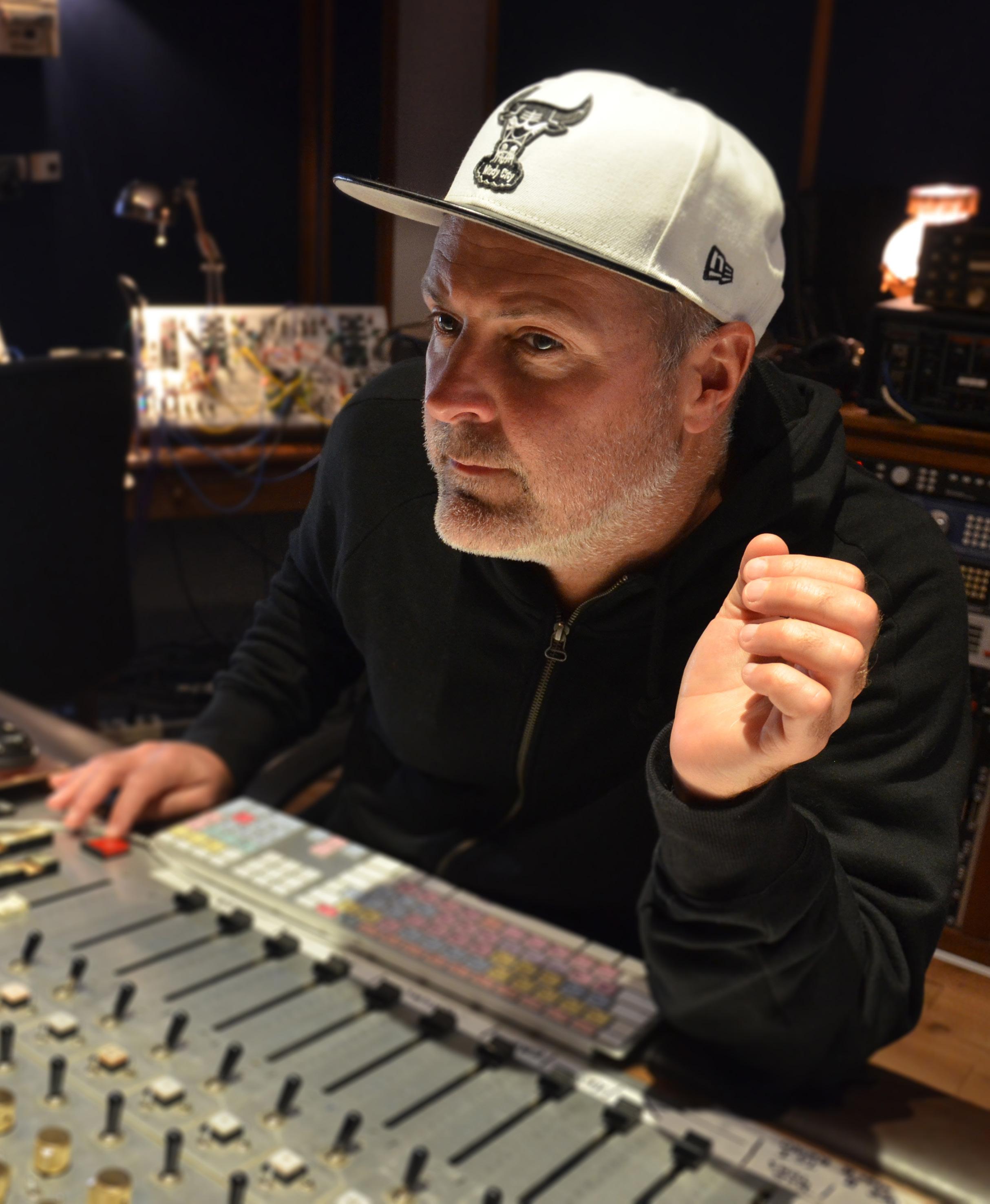
JAY AHERN THE AI MUSIC DEBATE
As generative AI continues to reshape the music industry, the electronic music world is finding itself at the centre of one of the sector’s biggest debates: how music data should be used to power the future of music creation. For Jay Ahern, chief strategy officer at the Association for Electronic Music (AFEM), any future AI framework must begin with creator consent.
Speaking ahead of AFEM’s newly announced collaboration with AIxchange at IMS 2026, Ahern lays out a vision for a more transparent and consent-driven AI ecosystem – one built around credit, compensation, and artist choice, rather than unchecked scraping and legal grey areas. At a time when AI companies face mounting criticism over the use of unlicensed training data, the new initiative provides a scalable licensing infrastructure designed to enable sound recordings, musical compositions, and related metadata to be licensed for use in generative AI systems globally.
Drawing on a career spanning Domino, PIAS, Beatport, Native Instruments and LANDR, as well
as years spent producing and performing within electronic music culture himself, Ahern sees electronic music as uniquely positioned to shape the next phase of AI music development. But as AI capabilities accelerate, he believes the industry now faces a crucial choice between exploitation and collaboration.
For Ahern, the goal is not to resist the technology, but to build systems around it that creators can actually trust. Here, he discusses creator consent, copyright confusion in the post-internet era, why electronic music has always been at the forefront of technological change, the dangers of unlicensed AI training data, and why “good data versus bad data” could define the future of music creation.

AFEM has just announced its collaboration with AIxchange. What was the reason for launching this initiative now, in the context of how things are with AI in the music industry at the moment?
About a year ago, we announced our AI principles at Sónar+D, and that was focused on AI. Google DeepMind was there, as were creator tools companies such as Ableton and AlphaTheta, who are one of our members, so it was a really good opportunity. Those principles are pretty straightforward. When you distil them down, they essentially focus on the creator. What we’re saying is there should be consent, there should be credit, there should be compensation, and there should be transparency. We had a lot of energy around that from our EU membership in particular. I’m based in Germany, although we’re a global organisation, so that was quite handy for us because we’re looking at the world through a different lens, rather than just a North American one.
From that point on, it’s all well and good for trade associations to have their principles, but what are you going to do about it in the long run? That’s something we always had in our back pocket: creating an avenue for our members to be able to do training set licensing from their content in a way that aligns with those principles. That’s where AI AIxchange enters.
Different parts of the world have different rules. Being in the EU is one thing when it comes to dataset licensing, and there are also certain things enshrined in Germany, such as moral rights, the right to credit, and also the right not to have your art used in something. So I really admired the fact that AIxchange is a German company, because I knew they were taking on a lot by entering that lane and aligning with our principles. They’re also on the hook, so to speak, to larger organisations such as GEMA here, which is our PRS.
We wanted to have principles, but we also wanted action, hence the AIxchange relationship.
AIxchange came from the electronic music community, and that resonated with me because, until there are stricter laws in place globally, all you really have is a social contract. I thought it was really cool that this came from our community and was more than just a social contract, while also respecting the fact that artists can simply say, “No, fuck off. I don’t want to license my stuff.”
With that in mind, why would an artist or producer choose to allow their music to be used for AI training under this framework? Is the assumption that if they don’t, their music will be used without consent anyway, so they might as well get paid?
I think that’s one perspective, but to me it feels a bit heavy-handed. It’s a real concern – absolutely – but it’s not necessarily the reality I’d hope for. Coming from electronic music, sampling has always been part of the culture, whether that’s samples in tracks or sample libraries. What’s interesting is that the system around those libraries was usually based on buyouts: producers would create sounds, get paid once, and then those sounds could be used in pretty much anything forever. That was simply the model the industry evolved around. That’s partly what caught my attention with music generative AI. I could imagine a different kind of model emerging from it.
As a music producer, I wouldn’t necessarily have a problem saying, “Okay, I’m open to you training on this specific dataset,” as long as there’s consent, transparency, and potentially credit attached to it, rather than it simply being another buyout situation. That’s the part I’m curious about – how that space could evolve into something more collaborative and sustainable for creators.
The global electronic music industry reached a valuation of $12.9 billion in 2024, marking a 6% increase from the previous year. Why is the electronic music community particularly important in shaping how AI develops within the wider music industry?
Electronic musicians have always been focused on pushing boundaries. There’s always that curiosity of: what can you get from it? What can you create with it? If you look at other genres, such as indie rock, they’re often more centred around song form. Electronic music has always been heavily focused on texture, composition, and emotion as much as the song itself. So when it comes to identifying the musicians who are going to be early adopters of new technology, it’s no surprise that it comes from electronic music. Electronic music and hip hop have always been at the forefront of that curve. I’ve seen it repeatedly over the years working with creator tools companies: innovations emerge through electronic music production first, they get adopted early, tested extensively, and then eventually roll out into wider genres.
A core concern is that many AI models are trained on unlicensed datasets. What risks does that pose to creators and rightsholders at the moment?
There’s a culture that’s developed, particularly in the post-internet era, where there’s a lot of confusion around copyright. People often see copyright as a pain in the arse. When I moved into electronic music, I noticed there wasn’t always the same level of understanding around rights management as there is in some other genres. That probably comes from the fluid nature of electronic music, the use of sampling, and the culture surrounding it.
I think people need to put some of the hype aside. It can be very convenient for certain companies or individuals to position copyright as the enemy,
and I hear that particularly in a North American context – this idea of protesting against copyright. From a European perspective, though, a lot of Europe was built on intellectual property, and there’s a strong recognition of its value. In the US, copyright often feels more associated with massive artists and corporations, but for most creators, this is their livelihood. This is their intellectual property. There are royalties attached to it, and those royalties sustain artists and scenes. Without that income, we don’t really have a creative ecosystem anymore. Within electronic music, we also spend a lot of time on education around these issues.
Through our membership, panels, and initiatives like CLIP – Creators Learn Intellectual Property – which we run in collaboration with WIPO [The World Intellectual Property Organisation], we try to make these systems more visible and understandable. At the end of the day, people can choose to do whatever they want. You can go fully punk rock and never register your music. But if you do register your work, there are revenue streams connected to it, and I think once people understand that, things start to click.
Credit: @hattiephotography
At a practical level, how does the AFEM–AIxchange initiative enable consent-based licensing for generative AI systems?
They can’t interact with AIxchange or the membership unless they can prove attribution and distribution. It’s fairly heavy-handed in that respect. Unless it aligns with our principles, it’s not an option. If it doesn’t, then it’s a no. AIexchange agreed to that. What’s interesting is that, alongside AIxchange signing off on those principles, so did SACEM [The Society of Authors, Composers and Publishers of Music] in France. You can see alignment across the industry – people do want to make this work in some form. But the reality is you’ve got to give bad actors the swerve.
In terms of what’s happened in the past, the Spotify API was a classic example. People were using it to train models, and Spotify eventually shut that down in its terms and conditions a few years back. There was a lot of material being used and abused in that way. For AI to be truly effective, it needs new input. And this is a way of ensuring that new input is aligned with principles like creator consent, credit, and compensation.
For AI developers and platforms, what are the advantages of adopting a licensed, consentbased model rather than relying on grey areas?
This is really about good data versus bad data. Scrape what you want, but you’re not going to have correct metadata. You’re not going to have accurate context. This gives us a chance not only to bring the best of the audio side, but also the best of the metadata side.
There are also other interesting elements in our community, like people working on revising historical metadata, and the fact that structural issues such as racism are embedded in certain datasets of live music from the past. There’s a real opportunity
also know that in the US, judges and policymakers often look at input from trade associations, experts, white papers, and articles. So it also allowed for a soft lobbying approach. here to fix things. I’m sympathetic to the tech side too – I understand it. I know how it goes: “This is our product roadmap,” and so on. But the truth is, you’re very good at building technology. So this isn’t an insurmountable problem. You’ve built something impressive; now build some bridges as well.
Speaking of historical metadata, historical agreements don’t cover AI training. Why is it important to rethink contracts specifically for AI use?
To be really clear about that, after we released it, we also learned. In a way, our membership was also being put on notice by it. What we were essentially saying was that if you were a distributor or a label, these older contracts don’t necessarily apply in the same way. So don’t be cheeky. It’s been interesting to see that echoed by other companies and associations as well. It was mainly aimed at labels, distributors, and publishers, making clear that you can’t just treat Gen AI as if it’s streaming or a new revenue format in the same sense. It isn’t. One of our members pointed out that they actually have clauses within their agreements that allow for certain forms of sync licensing.
The initiative aligns with the AFEM AI Principles. What problem are these principles designed to solve?
It was about solving two things. First, we wanted to make it very clear, from the electronic music community’s point of view, what we were actually looking for. This is the bar – this is what fair looks like. The artist has the right to say yes or no. But the other side of it was the broader goal. As a US non-profit association for electronic music, we took a step back. Kurosh Nasseri, one of our founders, who is also a music lawyer and has worked in both the EU and the US, and I were talking. We thought: what if we look at this globally? Where could we have the most impact on this issue? It was clearly from a European perspective. That was also where we wanted to engage most directly. We
Was AI a key topic at IMS this year?
Definitely. There was a lot of discussion in that space. I also took part in a panel titled AI and the Moral Dilemma, although what it really became was a deeper discussion around intent and authorship. What it really came down to was ongoing conversation, retooling, reskilling, and rethinking workflows.
Another reason we announced the collaboration with AIxchange at IMS is that the original AI principles were actually workshopped during an IMS panel that I moderated the previous year, where we had members of collection societies, lawyers, artists, catalogue holders, and others working through what a positive future could look like, as well as the ability to say no, because I think that choice is important too. After the panel at IMS last year, one guy came up to me afterwards and said, “I disagreed with everything you all had to say.” I said to him, “Okay, tell me why.” He said, “Well, I’ve just received a Guinness World Records award for the first AI album.”
He told me he didn’t care what the model had been trained on, whether it was Taylor Swift, Lady Gaga, Derrick May, whoever.
So I asked him, “Did you give your album away for free?” He said, “No.” I said, “So you’re expecting royalties from your record?” And he said, “Yeah.” And I replied, “Well, so were they.”
That’s really what it comes down to. For years, publishing has felt like a dark art, and the way collection societies operate can seem incredibly opaque. A lot of people simply don’t understand how these systems work, which means there’s still a huge amount of education that needs to happen.
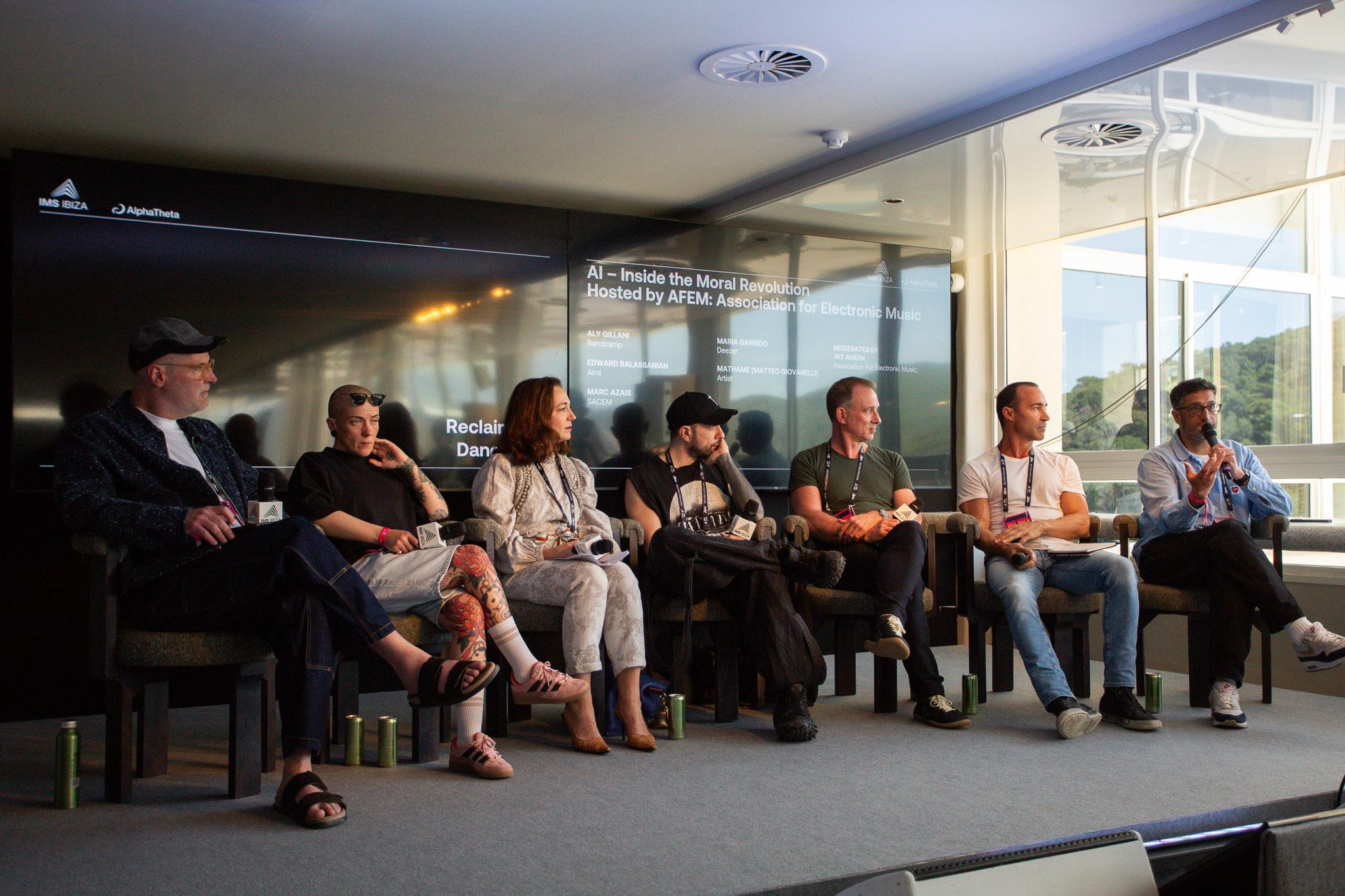
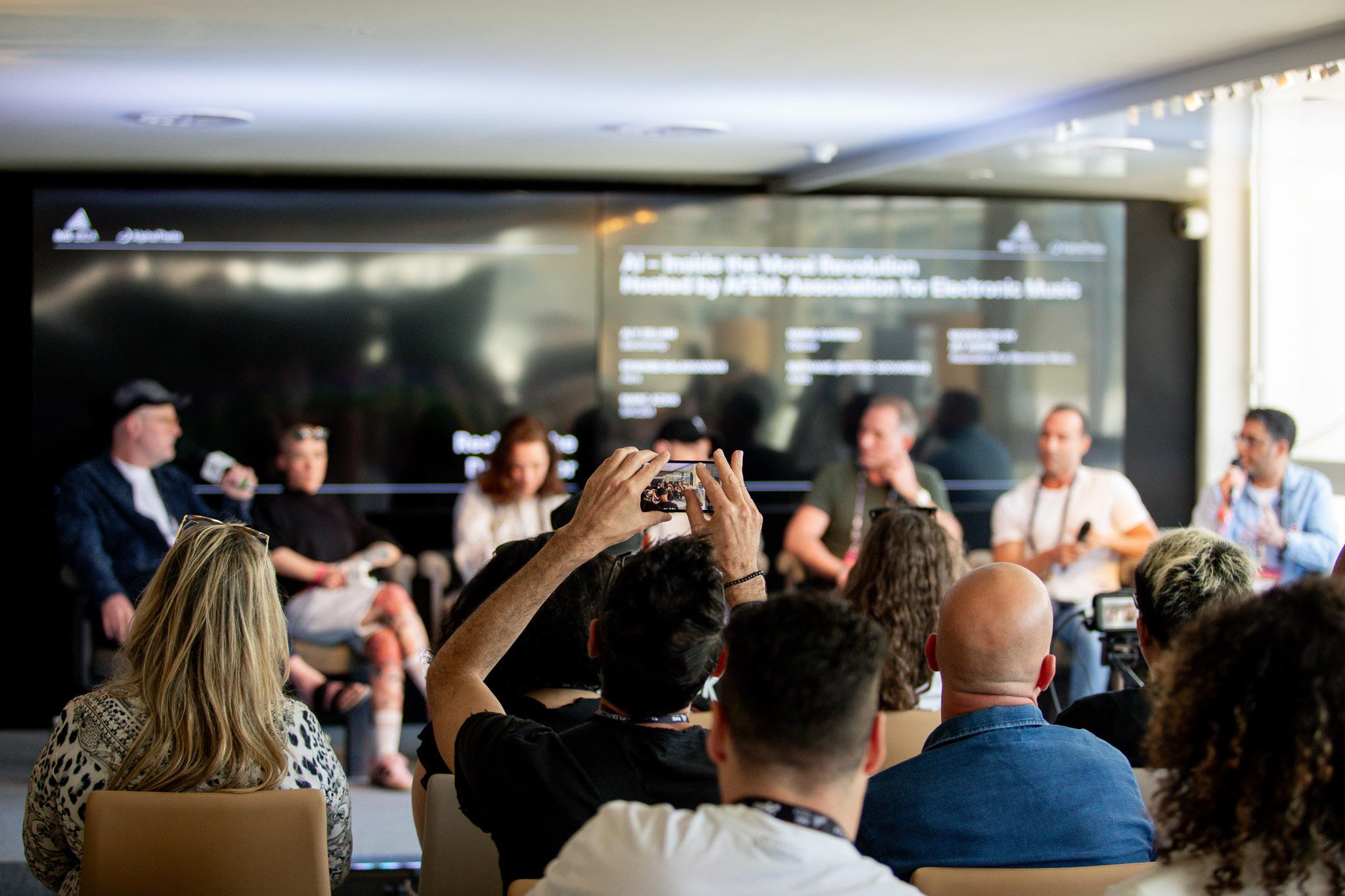
What are your goals as part of AFEM’s collaboration with AIxchange?
Turning principles into action and making sure everything is fully aligned was the real goal. It was about giving members a pathway should they choose to take it. And that’s really the point. We’re not against it; we’re fine with it. It just has to meet those conditions. We wanted to offer that to our membership and wider community in a way that didn’t require them to be part of a larger rights organisation or anything like
that. Other organisations do offer deals around training sets, but ours is a bit stricter.
AI improves with more information and human interaction. You’ve got unsupervised, supervised, and semisupervised training, and supervised is generally the best. To me, that just feels like a natural workflow – people working with the tools if they want to, and companies actually having their shit together with the correct information and correct crediting.
The better the data, the better the output. We’ve been moving towards this idea of getting away from musical semantics and being able to say, “I want a chill, low-key vibe that feels like a sunset” – and machines need proper data to actually come up with that shit.
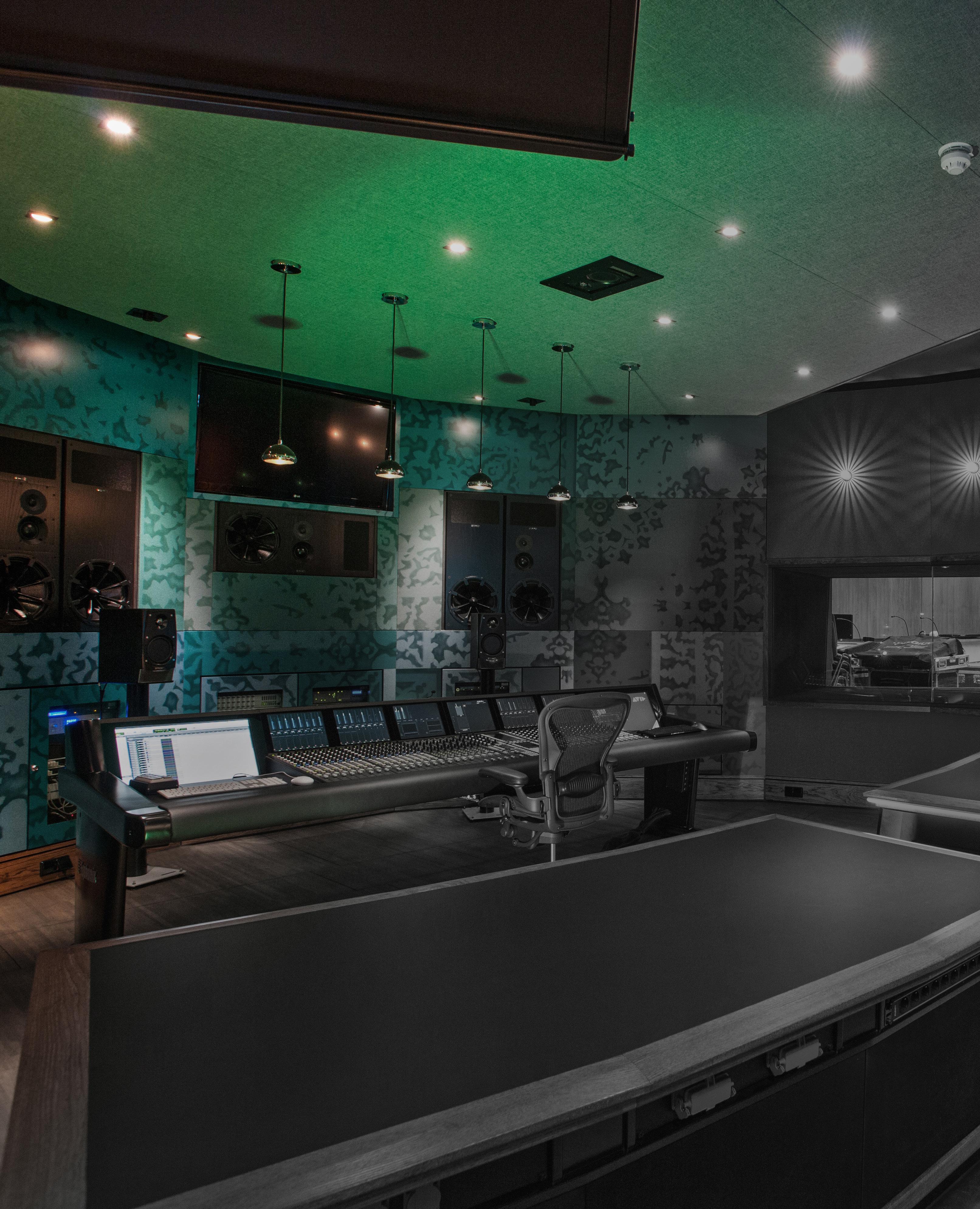



HOME WAS ALWAYS ME
WHIPPED CREAM
WHIPPED CREAM has always moved between worlds, from competitive figure skating to becoming one of electronic music’s most distinctive and emotionally driven producers, vocalists and DJs. Now, after years of shaping a sound defined by cinematic intensity, deep bass and raw vulnerability, she arrives with her long-awaited debut album HOME WAS ALWAYS ME.
Built over a decade of evolution, the 14-track project is her most personal statement yet – written, produced, engineered and performed by the Toronto-born artist herself. Drawing on the idea of the Biblical Eve, on HOME WAS ALWAYS ME, WHIPPED CREAM reclaims narratives of perception and misunderstanding, turning them into something deeply human and selfdefined. Now recognised as one of electronic music’s most compelling live performers, with standout sets at Coachella, Lollapalooza and Tomorrowland, WHIPPED CREAM steps into this new era with a fully realised vision: emotionally charged, self-produced, and unafraid to be vulnerable. Headliner catches up with Whipped Cream to talk about her journey from the ice rink to the DJ booth, the making of her debut album, writing her most personal songs, and the life lessons that shaped it all.
HOME WAS ALWAYS ME was 10 years in the making. What finally made this feel like the right moment to release your debut album?
I do feel I could have made an album much sooner, but for whatever reason, I held off. I was driving one day, listening to one of my favourite albums, and I had this thought: when I’m on road trips, I’m not necessarily listening to EPs.
Anyone who knows my music knows most of my projects have been EPs. They’re storytelling projects, obviously, but they’re not full album records. So when I was on this trip, I thought to myself, if I were a listener, I’d want to be listening to albums on road trips. I thought, I think it’s time.
You’ve said listeners should experience the album from tracks one to 14 in order. What journey were you hoping to take people on across the record, and why was it important to you to present it as a body of work?
There’s about 20% of the album that introduces a new sound for me. It’s the start of a new journey; there’s a lot of euphoric synth work and melodies, and lots of singing from me on this album. So for me, sonically, the order just felt right for my listeners. Obviously, every listener has their own preference, but this is how I heard it for them, and how I’d love them to experience it.
Creating music is my lifeline. That can be fortunate and unfortunate, but it’s everything to me. When I’m creating music, there’s always a story behind every song. For me, it’s actually easier to put music into an EP because when I’m writing, I’m in a certain time in my life, and I like to package that up and share it as a whole.
How different does this feel, compared to dropping singles as a DJ?
I think it’s actually easier to drop a dope record – especially as a DJ – that’s got an innovative sound or has a catchy hook. It’s a dancefloor song, a DJ pool record. It’s very easy because you’re not tied to anything, and you’re really just dropping one song. It can be pushed fairly far when it’s just a single. But I don’t think there’s anything wrong with people dropping singles and not having stories behind their music, especially producers and DJs, because a lot of DJs make music simply because they want people to let loose, have fun and be present in the moment. I definitely want people to feel that too with what I’m doing, but for me, it’s almost like a therapy session when I’m making music.
You wrote, produced, and engineered your own vocals across the project. You’ve said you never imagined you’d get to do that. How empowering was it to take full creative control in that way, and how did you learn to trust your instincts?

Growing up, I didn’t think I could sing. I couldn’t sing in pitch, but I wanted to be a singer. I was a figure skater, but I always sang along to the radio or to my dad’s music. I’m not afraid to say it – I naturally just wasn’t able to sing. It wasn’t until I spent so much time producing music and being in rooms with GRAMMY Award-winning writers, artists and producers that I realised even GRAMMY Award-winning singers can have an off day too.
At the time, I was with a major label, and I remember being in these fightor-flight situations quite a bit. I’d be in the studio for eight hours, and nothing was coming. When I left my label, I started humming along and writing
in my notepad one day. One of my good friends was there and said, “You actually have a really dope tone to your voice. Why don’t you just jump in the booth and try something?”
That day, I was singing my heart out, singing all these words I’d written in my notepad, and the melodies were coming to me. We recorded this song, and within a few months, it was out.
After that, I just didn’t stop. I learned how to engineer and record myself, put all these cool effects on my own vocal chain, and figure out my own sauce. Then I started recording other people’s vocals too, and it became second nature to me.
stranger has become a huge album standout, from Spotify Viral charts to SiriusXM BPM rotation. Did you have a feeling this would be the record’s hit track?
When we made it, we felt really good about it. I’m very happy with how it’s performing right now. It’s a great record to play live, too. Because I’m a DJ, it’s always a win when you can make a record that connects on streaming – people can listen to it in their car, at home, or getting ready – but I can also play it at a show. I think that’s a big win, no matter what the numbers are. When you’re making something, and you’re having that much fun, it helps it do well, too.
You’ve spoken about people projecting onto you once you start fully being yourself. Has becoming more visible in the industry changed the way you protect your creative identity?
You think you know yourself and that you’re authentically yourself. But I think the only time you truly know yourself is when you’re a little kid. You’re learning and seeing things for the first time, and you’re fully, authentically yourself. Then something happens – whenever that is – when you’re first told “no”, or “that’s stupid”, or “that’s ugly”, or “you’re not enough”, or something gets taken away, and it’s not fair. And I think most of us get stuck in that, and we end up wearing those goggles for the rest of our lives until we work through that hurt. Growing up, I was definitely a well-liked kid, and I said yes to everything. I was a figure skater from a young age. And it wasn’t until I broke my ankle and kind of lost everything, and had to figure out my own path and flow in life, that I started becoming my authentic self. I was able to start saying no and digging into those pains and hurts from my life and fix them. And when I started doing that, I became more confident in who I am. I stopped trying to fit in or stand with the “cool kids” or the crowd. I don’t have to fit in. As long as I’m a good person and kind, it’s actually a good thing to be yourself, because you inspire other people to do the same. It’s okay to be alone. It’s okay to be different. And it’s okay if people don’t like you. I started noticing that when I fully pursued my craft and those first few years of making music, I had to be alone.
Dance music production and DJing are still heavily maledominated in many spaces. What have your experiences been as a female producer and DJ navigating that world?
You learn something new every day, pretty much, and it’s constantly evolving. Do I think it’s got easier? No, I think I’ve just learned how to work smarter and not let things get to me. I think there are a lot more women producing right now, which is absolutely incredible. My main thing is trying to protect other women and be there for them. My biggest piece of advice for any woman who is a music producer is to have those horse blinders on and know that you’re meant to be here. It’s not easy.
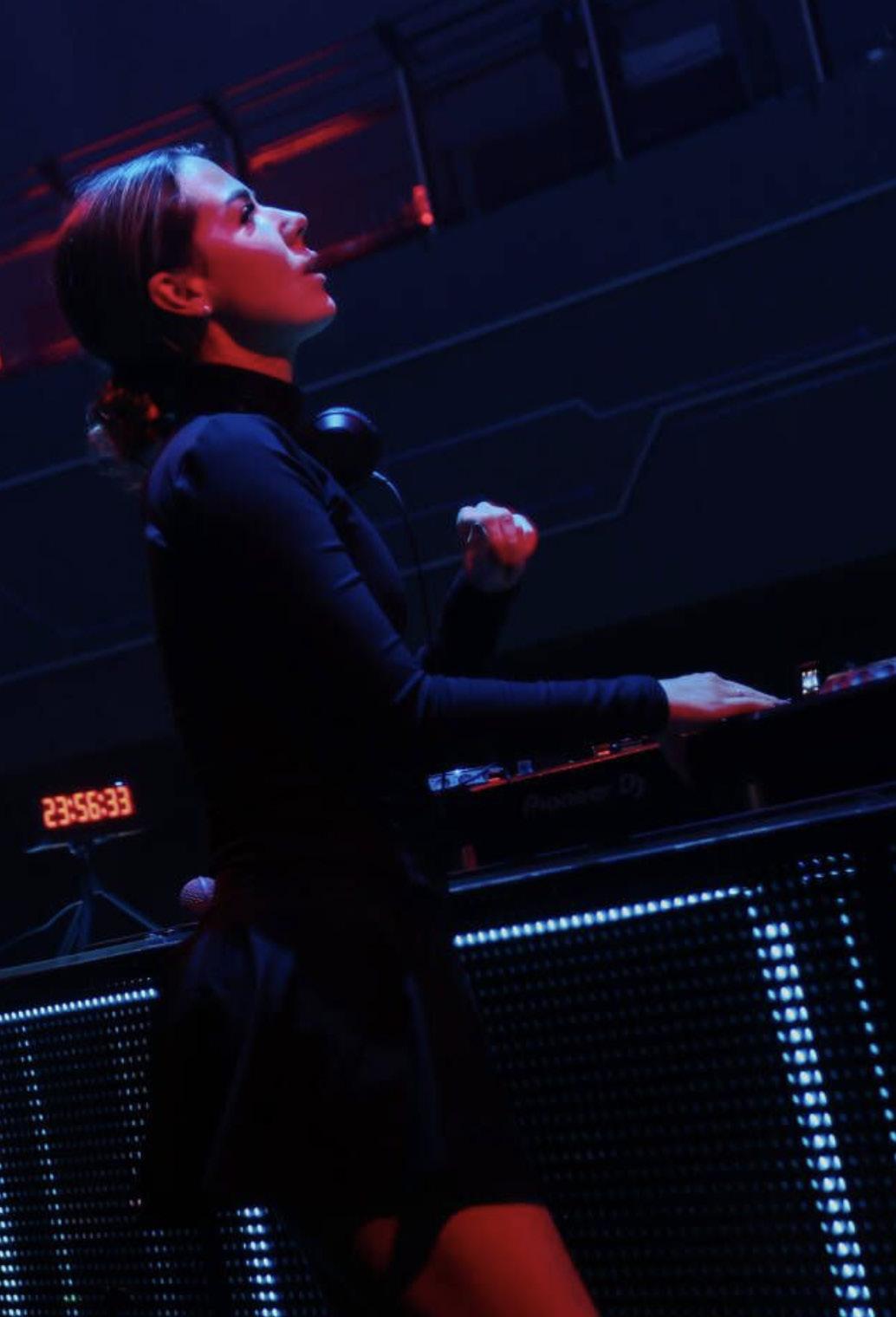
Are there any particular bits of DJ equipment, synths, plugins, or production tools you always come back to when building your sound?
For DJing, I really just use a USB drive, and I make my sets on my laptop. Most of the time when I’m playing a set, I’m vibing with the crowd – I have a playlist, and I’m just vibing off their energy. Unless it’s a festival, then I usually have a pre-planned set. But that’s really it; I just bring two USBs and go and play my music.
Playing at Rolling Stone Canada’s Winter Olympics party in Milan must have felt surreal, given your history as a competitive skater. How cool was that to be back there, but as a DJ?
It was super surreal to be there! And I got to meet some of the gold Olympians, too; they actually came to the after-party. Life is pretty funny in that way. You might dream of going somewhere and doing one thing, but you end up there in a completely different way. Sometimes the things you think you want aren’t really what you need.


FROM BIRMINGHAM TO GLOBE-TROTTING DJ
ALEXANDRIA
Rising out of Birmingham’s underground DJ scene, Alexandria has rapidly become a name to watch in the UK’s new generation of selectors. Quickly finding her feet as a regular at Lab11 in the sprawling Midlands city, she has been booked across Europe and made appearances at some of dance music’s most hallowed grounds: Amnesia, Fabric, and 93 Feet East.
As her reputation continues to precede her, some of her biggest performances to date include Chris Stussy’s Amsterdam Weekender, Ibiza’s infamous Pyramid, and multiple sets at The Warehouse Project, while Brummy venue Lab11 always pulls her back. She speaks to Headliner about her surreal rise, being an interconnected part of the Birmingham music scene, and why she takes pride in her scars.
Hello Alexandria, how’s life today?
So good, thank you! Living the dream, preparing for a busy summer ahead and building my studio.
Can you remember when DJing and electronic music first piqued your interest when you were younger?
My older brother introduced me to drum and bass since I first came out of the womb. I was watching him spin records from the likes of DJ Hazard and beyond in his bedroom growing up. Music has always made me feel crazy emotions and even moved me to tears, but a standout turning point was my first Sunwaves Festival. That was when everything changed. My sound today is inspired by both of these influences.
What’s it been like coming up and through Birmingham’s underground scene? It seems like it’s really shaped you as a person and artist.
Birmingham’s underground scene was truly in the shadows, with parties like Penda and Cloak and Dagger leading the charge, and the infamous TRMNL at Lab 11. For me, TRMNL was really where the magic happened back then. Unfortunately, I never got to experience Penda and Cloak and Dagger until after Sunwaves, when I really started to understand minimal and underground music fully. Now, you will see me regularly at these kinds of parties in and around Birmingham.
You’ve gone from being a punter at Birmingham’s Lab11 to being a regular DJ there, to now performing at some of Europe’s most iconic venues — what’s been the most surreal moment for you as a DJ so far?
I will never forget my first call-up from You&Me. When I received a DM from my now manager, Kurt, asking to play for them in London, I almost threw my phone out the window. My debut at 93 Feet East was also a moment I will never forget; it’s still my favourite set to this date.
Having said that, it feels like Lab11 is the place where you cut your teeth and honed the art of live DJing and connecting with a crowd. Does that sound right to you?
You would be absolutely right. I practically grew up in that club. It’s seen so many versions of me. I even ended up managing them as an account when I was working with Red Bull, and they watched me grow through that role. They are family; I’m grateful that I have them backing me.
When you’re playing the likes of Amnesia, Fabric, and 93 Feet East, how do you adapt your style depending on where you’re playing and what the crowd is going to be like?
Depending on the crowd and venue, as we know, they might not have even heard of minimal or understand it like I once didn’t. I love it when I get opportunities to play my darker and stripped-back side. But sometimes it’s important not to educate a crowd too much. Read the room!
You recently worked with Adidas for a promo campaign and praised them for not editing out your facial scars. In a world full of people obsessing over Instagram filters and an epidemic of cosmetic procedures, why was this authenticity important to you?
Now, I’m all for a bit of a natural enhancement. I don’t see anything wrong with that. I’m sure in 10 years’
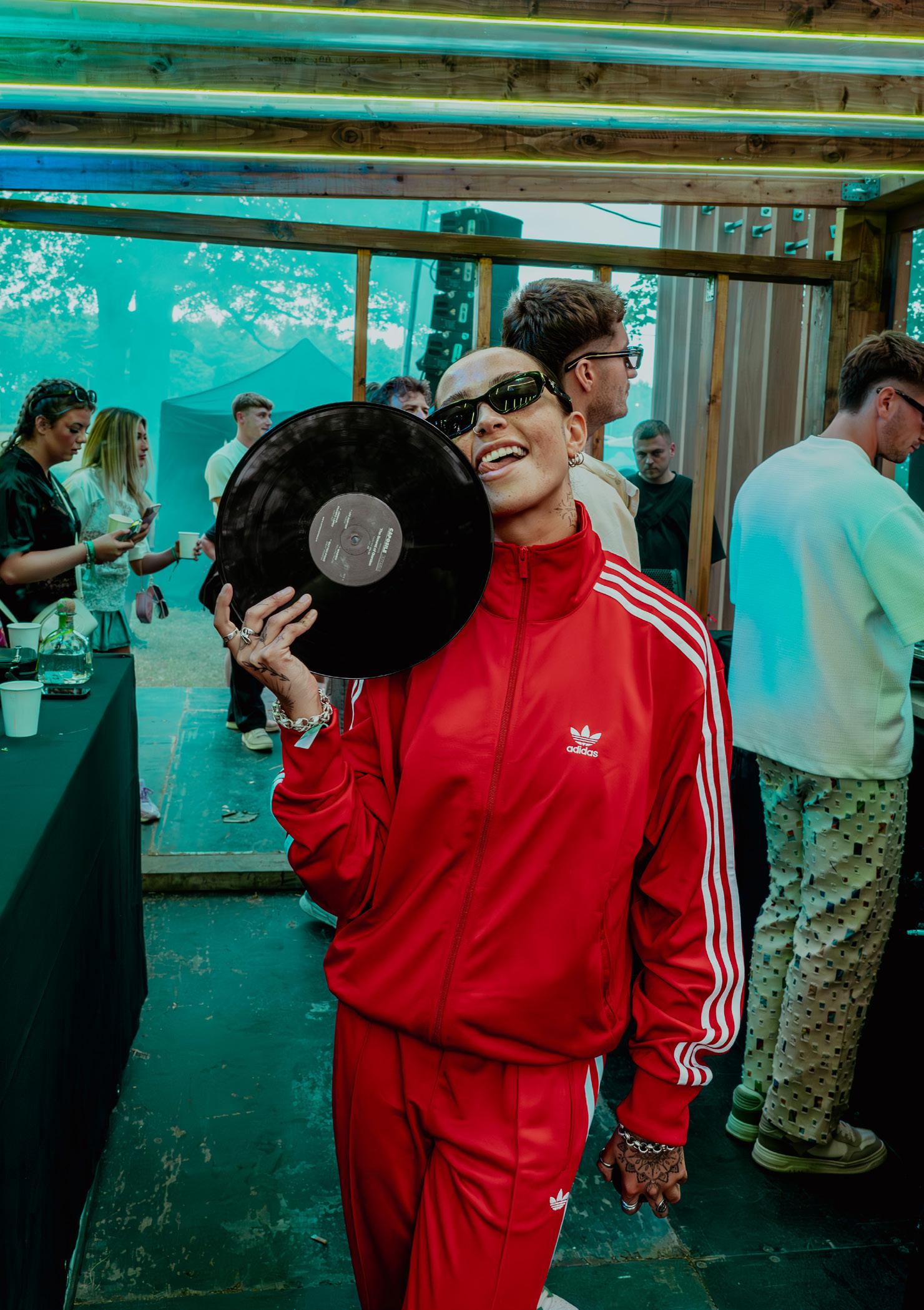
time, with all the late nights and sun damage, I’ll be clucking for some Botox. What makes me so sad is that young people feel they can’t post on Instagram without FaceApp; they have to be perfect. They edit out the acne or make their arms skinnier. Being a 10 out of 10 model is not normal. I spent so long trying to get rid of my acne and then scars, and spent so much money. Now, I fully embrace it. It’s my face, and it’s a scar; it isn’t going anywhere. It’s me. I will never edit that out for anyone.
You’re booked at the legendary Fabric in July. Considering we
almost lost Fabric at one point, what does it mean to perform there, and what can you tease about this particular date?
I was actually having this conversation the other day about what the best UK clubs are and why. Fabric came up time and time again. It holds legendary status, so to play there again means the world. I’m not going to tease anything; you’ll have to come along to find out...
As yet, there are no official Alexandria music releases. Is that something that’s in your thoughts or on the horizon?
“WHEN I RECEIVED A DM FROM MY NOW MANAGER, ASKING TO PLAY FOR YOU&ME IN LONDON, I ALMOST THREW MY PHONE OUT THE WINDOW.”
I have three releases this year, which I am so excited for. The first one is an EP on Mella Dee’s new imprint: Nothing Stays the Same. The second is coming out on Gradient, a new label in New York. I’m so excited to show my work with my good friend and vocalist, Darnell. Last but not least, I have one track coming out on a label very close to home, but I can’t say much about this one right now. I also dropped my edit of Wildfire as a free download last week.
My current music production set-up is my bedroom, and my mixing set-up is in my kitchen dining area. Very fancy, I know, but my studio is currently being built, and I’m documenting the whole thing. Could you talk us through your gear and setup?
INSTA: ALEXANDRIAUK_

“THIS IS ABSOLUTELY REVOLUTIONARY”
L-ACOUSTICS DJ
At Winter Music Conference 2026, it wasn’t just the DJs turning heads at the Beatport Live pool parties on the Kimpton EPIC Hotel rooftop –L-Acoustics DJ’s immersive spatial audio system had crowds stopping in their tracks.
For 40 years, the global disc jockey and electronic dance music community has flocked to southern Florida for Winter Music Conference (WMC), which now kicks off Miami Music Week (MMW), hoping to catch the latest on rising artists, the best labels, hottest venues, coolest trends, and most innovative tech. This year, the most buzz-worthy contender in that latter category was L-Acoustics DJ, which was seen and heard in action on the hotel’s rooftop deck overlooking Biscayne Bay.
As the first spatial audio system built specifically for DJs, the new
technology uses proprietary machine learning to separate a track’s stems and distribute them across a multispeaker array, placing individual elements around the venue in real time. The result moves the DJ mix from stereo playback into threedimensional sound design.
The loudspeaker complement for WMC’s official, three-day pool party series – a label showcase for Mood Child, Rekids, and Hot Creations x Three Six Zero Recordings – featured left and right main arrays each comprised of three L-Acoustics A15, with tight and solid low-end
reinforcement delivered by four KS28 subs.
Seven pairings of Syva colinear source systems and Syva Low subs served as surrounds, while a quartet of coaxial X12 enclosures plus a pair of SB18 subs provided monitoring for the artists, who were able to spatially mix their sets via an L-Acoustics DJ Controller and control app, all powered by an L-ISA Processor II.
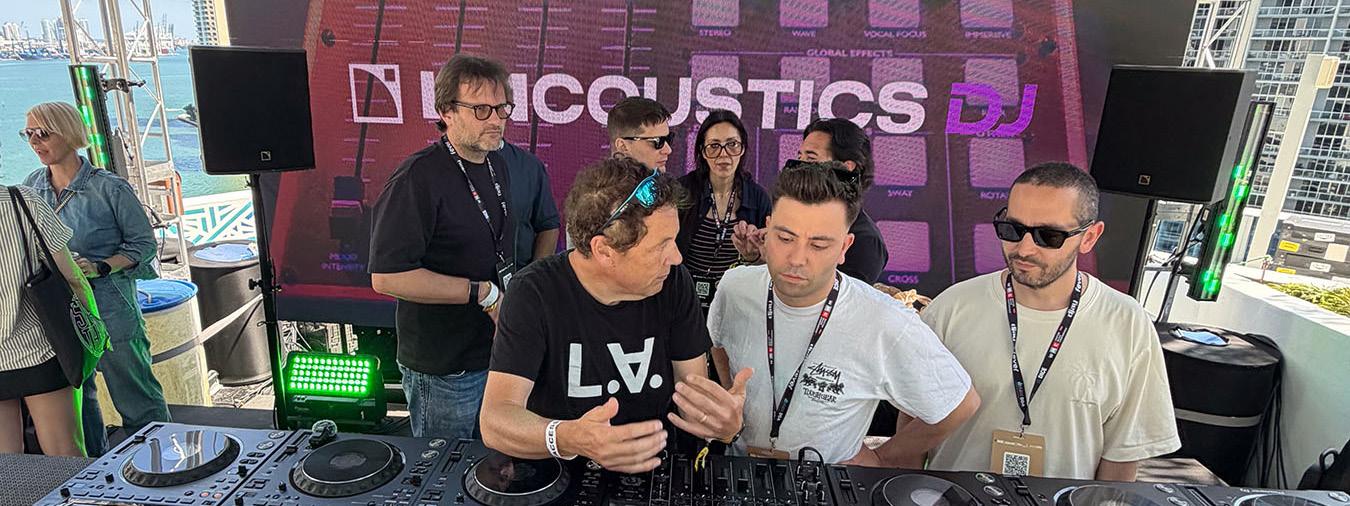
WHAT ARE DJS SAYING?
DJ and producer Joachim Garraud, one of L-Acoustics DJ’s earliest adopters, and a performer and speaker at Winter Music Conference, describes the technology as a way to “distinguish ourselves in the club scene through the integration of an immersive experience.”
“The L-Acoustics DJ system reveals the music,” enthuses Miami-based KUMO, who performed as part of a discovery experience, following a quick primer from Garraud. “There’s a clarity and spatial depth that lets every sonic layer breathe, so you start to think less about playing tracks and more about guiding energy through space in a way people can feel on the dance floor. It’s freaking awesome!”
Fellow Miami artist DJ ABEL agrees, adding that the system “adds movement, energy, and a dynamic edge” to her sets, also noting that “it’s simply fun to use.”
Grammy-nominated producer Lorne Padman adds, “Sound has only become slightly louder and clearer over the past 30 years, while video has transformed from simple screens in the ’90s to immersive worlds built entirely around the audience. Now, sound is making its own giant leap forward with L-Acoustics DJ. The
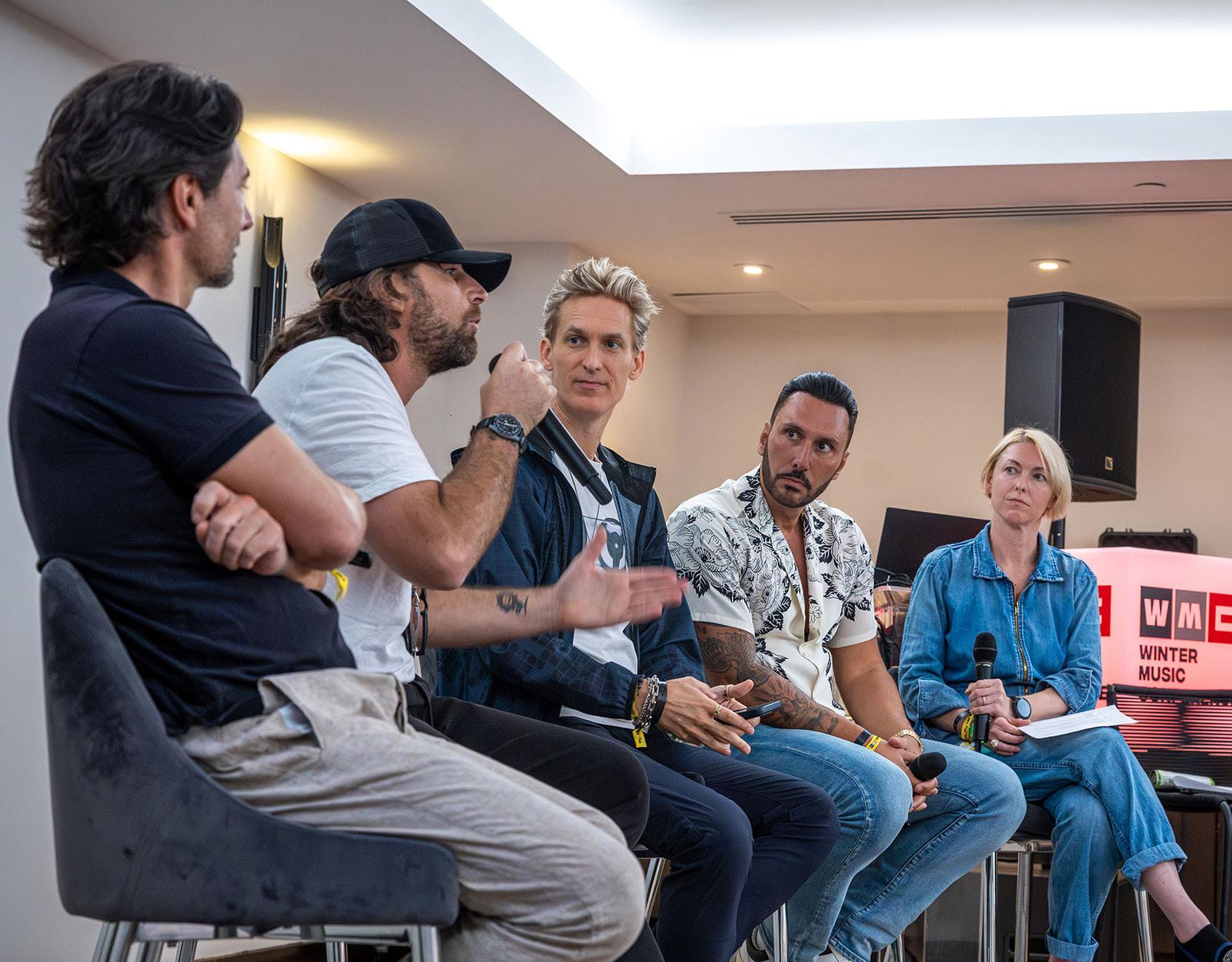
device allows any DJ mixer to be retrofitted with a real-time, stemseparating technology that distributes stereo sound across dozens of speakers throughout a venue, creating a directional audio experience much like a home theatre. This is absolutely revolutionary. It isn’t just an upgrade in sound quality, but a sea-change in what a DJ set can be and how an artist can express themselves.”
Magnetic Agency group founder David Ireland, who served as the executive director for this year’s WMC and MMW, chimed in about the success of the system and event. “Transforming the Kimpton EPIC Hotel
pool deck into a full spatial audio experience during Winter Music Conference via L-Acoustics DJ was a true team effort, and I want to give a huge thanks to Luca Sabatini, Lyly Loor Villanueva, and the Unreal Systems and L-Acoustics crew,” he enthuses.
“Allowing DJs to create spatial DJ mixes live during the Beatport Live and WMC pool party series was a big leap into the future of spatial audio mixing.”
The press was equally effusive about the new tech. In the EDM Identity article Six Standout Moments from Winter Music Conference 2026, Cameron DeFaria writes: “The L-Acoustics DJ system, the first spatial

audio rig built specifically for DJs, sounded genuinely exceptional during the showcase, using machine-learning source separation to split tracks into individual elements and place them around the venue in real time. It wasn’t a gimmick.
“The depth and dimensionality it brought to Garraud’s discovery session were audibly different from a standard stereo setup, and it pointed clearly toward where high-end club and festival sound is heading.”
And in an EDMTunes.com article titled How L-Acoustics Shaped the Sound of Miami Music Week with New
Technology, Aidan Kennedy shares: “If you attended Miami Music Week and noticed great sound, you can thank the team from L-Acoustics who were armed with new technology. Their goal with the new technology is to create an immersive audio experience; music fans and DJs have a lot to look forward to in the future with this new audio technology.”
In addition to the pool party, L-Acoustics hosted two panels at WMC, both of which were moderated by Amber Mundinger, global director of creative engagement at L-Acoustics.
These included “Reinventing the Club Experience Through Sound Design,” featuring Joachim Garraud, Cedric Gervais, and Lorne Padman, alongside L-Acoustics CEO Laurent Vaissié, and “Beyond the Booth: DJs as Spatial Composers,” which focused specifically on artistic practice, with Garraud, Laidback Luke, Padman, and Nostalgix.

SCOTT D. SMITH
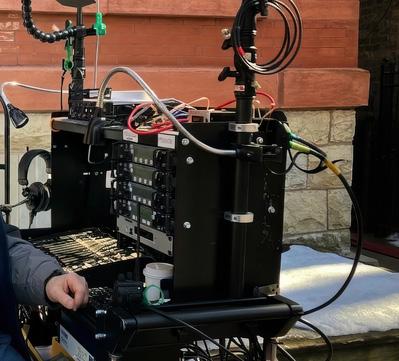
If you’ve ever suspected that production sound mixing on major television shows can be as highstakes and stressful as life is for head chef Carmy Berzatto on The Bear, you’d be right. But two-time Oscar nominee and two-time Emmy winner Scott D. Smith has built an incredible career thanks to a cool head and always using the right tools for the job.
As the production sound mixer for the fifth season of the FX hit series
The Bear, Smith turns to Lectrosonics digital and Digital Hybrid Wireless equipment to ensure pristine sound
quality in even the most challenging environments. Headliner dons an apron and heads into the kitchen to find out more. Let it rip!
Smith’s journey in audio began at the age of 12 in Detroit, where a family friend who ran an equipment rental house allowed him to experiment with professional sound gear. “I started playing around and thought, ‘This is cool. I could do something interesting with this,” he recalls. That early curiosity led him to Chicago in 1975, where he worked his way through studios before transitioning into episodic television — a career
move that would cement his reputation as one of the industry’s most respected sound mixers.
Smith’s philosophy as a production sound mixer is rooted in preparation and adaptability. “You never know what’s going to be used in postproduction, so my philosophy is capture everything we possibly can on set,” he explains. “Lectrosonics helps me do that. I like the soundscape to represent the environment that we’re in, and to add to what’s happening visually. It’s not just mics on actors; we hide mics on set all over the place.
“We mic vehicles, we mic sets, or if we need to put a mic in a light somewhere to pick up dialogue, we’ll do that. The ability to put a wireless mic in places where we can’t get a cabled mic is the difference between getting sound for a scene or not.”
To achieve this level of coverage, Smith deploys a highly scalable Lectrosonics kit that can range from a small, agile bag rig to a massive 36-channel cart. His transmitter
inventory is diverse, including SMWB Wideband Beltpacks and miniature SSM Micro transmitters for concealing on talent, as well as HMa Plug-On Transmitters for booms and plant mics.
On the receiver side, his setups span from legacy Lectrosonics products to state-of-the-art DSQD fourchannel digital receivers, which provide unparalleled connectivity in a compact form factor.
Smith’s reliance on Lectrosonics is driven by both the technical demands of his work and the practical constraints of production.
“We have one cart, for example, where all the rack spaces are halfrack spaces,” he notes. “We can’t use
larger receivers in it, so we rely on DSQD receivers because they pack so much connectivity in a space-efficient package.” He also highlights the benefits of Dante network connectivity in the DSQD receivers. “The option for a digital connection has been a big plus,” he says. “It allows us to use remote receivers easily without having to use interface boxes, and we can use the inputs we have available without jumping through hoops.”
The Bear presents unique environmental challenges, particularly this season, which involves extensive use of water on set. “This season we’re working with a lot of water — it’s on the actors, on the set, it’s all over the place,” Smith shares. “Protecting the wireless packs is crucial. Having the preformed factory transmitter

Photo: Courtesy of FX
“YOU NEVER KNOW WHAT’S GOING TO BE USED IN POST-PRODUCTION, SO MY PHILOSOPHY IS TO CAPTURE EVERYTHING WE POSSIBLY CAN ON SET.”
pouches has been a big plus, and we frequently use those along with some additional protection for the transmitter to survive those environments. I haven’t had a Lectrosonics receiver fail me yet.”
Beyond the ruggedness and flexibility of the gear, Smith’s loyalty to Lectrosonics stems from the company’s commitment to innovation and collaboration.
“Lectrosonics is constantly innovating, which is great,” he says. “I started with Lectrosonics early on, sometime in the 1980s, and I’ve been able to have a one-on-one relationship with the people at the company responsible for developing and marketing the products.
“That’s a huge advantage in our business. They listen to what we’ve said, take our suggestions, and have been proactive about incorporating them into the products.”
Smith’s decades-long partnership with Lectrosonics underscores the importance of reliability and adaptability in the fast-paced world of television production. As The Bear continues to push creative boundaries, Smith’s work ensures that audiences not only see the chaos of the kitchen but hear it in stunning clarity.
bY ADAM PR O ZT
KRONEHIT’S STUDIO OVERHAUL DIAMOND STANDARD
Austrian private broadcaster kronehit was never going to play it small for NAB 2026, and so the pivotal decision was made to work with Lawo AG and SLG Broadcast AG to overhaul and modernise its entire studio infrastructure. NAB, a glittering event in the 2026 media calendar, is one in which media, entertainment and storytelling converge. This latest collaboration was agreed during a meeting at the Lawo booth, marking another big positive moment of synergy between the three companies that share a history of working together. Headliner investigates the moves made at the NAB event.
The partnership between kronehit and SLG Broadcast dates back over a decade. In 2015, SLG Broadcast implemented the technical infrastructure for kronehit’s broadcast centre using Lawo sapphire mixing consoles, laying the foundation for continuous
Under the agreement, all kronehit studios will be equipped with Lawo diamond audio mixing consoles, while SLG Broadcast, kronehit’s longtime technical partner, will oversee system design, configuration, and project implementation. The partnership was symbolically sealed with a handshake between Marc Straehl (CEO, SLG Broadcast), Jamie Dunn (CEO, Lawo), and Martin Holovlasky (CTO, kronehit).
modernisation. Subsequent projects included equipping an OB van with a Lawo sapphire Compact, expanding studio I/O capacity, and enhancing the audio platform with Power Core-based structures. Between 2018 and 2024, multiple migration and expansion phases transitioned the infrastructure to IPbased audio production, including the integration of the Lawo A_UHD
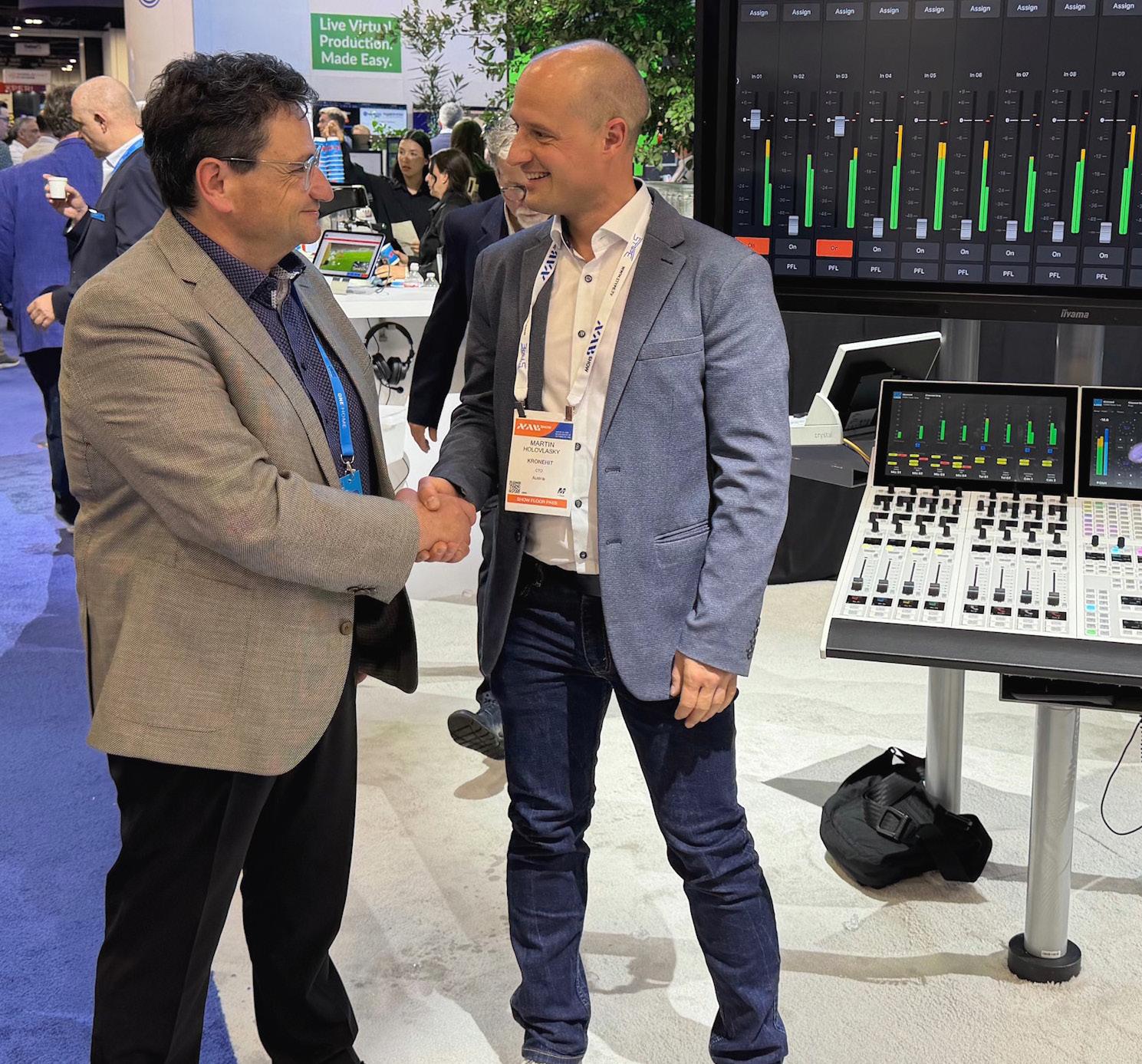
Core, deployment of a RAVENNAbased audio-over-IP network, and adaptation to evolving production and distribution needs.
The agreement represents the next step in kronehit’s modernisation journey. The broadcaster will deploy five Lawo diamond consoles, paired with five Power Core audio engines. The fully IP-native diamond platform offers ultralow latency and high processing power, optimised for modern, parallel radio production workflows. The existing Lawo A_UHD Core will be expanded into a fully redundant setup, serving as the
central backbone of the audio production environment.
Even today, kronehit operates a comprehensive Lawo ecosystem, including sapphire consoles, IPbased routing, centralised system management via VisTool, and a high-performance AoIP network architecture. The platform’s scalability enables flexible studio configurations, dynamic resource allocation, and system adjustments without disrupting live operations.
Peripheral systems, such as studio telephony, have also been fully migrated to IP-based solutions and tightly integrated into the Lawo infrastructure.
SLG Broadcast’s role extends beyond technology supply, acting as a system partner focused on workflow design, process optimisation, and long-term operational reliability. In-house tools like the SLG Broadcast Suite enhance monitoring, analysis, and transparency in daily operations. Roll on NAB 2027.
LAWO.COM
INVESTING IN FUTUREPROOF PRODUCTION INFRASTRUCTURE
EASTERN KENTUCKY UNIVERSITY
It’s an exciting time for students, lecturers, staff, and everyone involved at Eastern Kentucky University. The higher education institution has upgraded its production environment to an SMPTE ST 2110 infrastructure, designed and integrated by Bridge Digital. The university’s new system enables scalable productions, unified workflows, and a growing volume of live events. Headliner grabs a cap and gown to investigate how this is changing the game for the Richmond, Madison County-based university.
Dwayne Bolin, video systems engineer at EKU, explains that, “What we really wanted was consistency and flexibility without throwing away what we already had. By moving to a hybrid ST 2110 approach, we’ve kept our legacy gear in place while creating a unified system where everything works together. Users
can walk into any room and feel comfortable right away. It’s simplified training, reduced costs, and set us up for the future.
Having a partner like Bridge was incredibly valuable — they took a lot of the weight off our shoulders.
They had already done the heavy lifting, so they could recommend systems and products that worked together seamlessly.”
EKU’s previous production environment relied on point-to-point fibre runs and SDI signal paths. The university migrated to a campus-
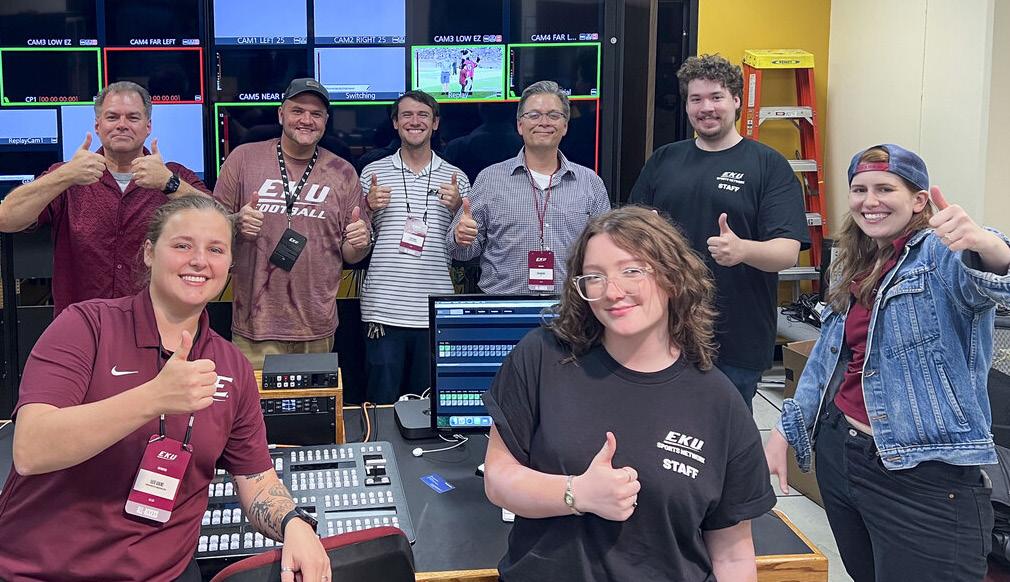
wide ST 2110 infrastructure, utilising its existing fibre backbone and COTS IP switches with Riedel MediorNet MuoN A processing SFPs.
These SFPs manage gateway conversion, frame synchronisation, and HD-SDI processing.
Production operations centre on two main hubs: Perkins and Alumni Coliseum, connected by a 100-gig network path. Football ties into Perkins, while basketball, baseball, and softball originate at AC, and soccer routes to Perkins.
All venues, including AC with its eightcamera setup, feed signals over the existing fibre network into central control rooms.
At each venue, Riedel FusioN frames provide local I/O, multiviewer feeds, and integration of legacy SDI equipment. The system’s multicast addressing structure and diagnostic tools are also in place.
“The beauty of FusioN is that it fuses the past with the present, allowing teams to bring legacy signals into a modern IP workflow,” Aubrey Shamel, systems design engineer at Bridge Digital, furthers.
“When we first walked into EKU, they had an extensive fibre backbone that wasn’t being fully utilised. By moving to an ST 2110 workflow with MediorNet FusioNs with MuoN processing at the edge, they gained the flexibility to route anything anywhere without changing the operator’s workflows — enabling the production team to shift between control rooms without remapping sources or patching cables.
Katie Adkins, EKU’s assistant director of broadcasting and video, adds, “We use Bolero for field communications and PunQtum throughout our control rooms, and the combination has been incredibly powerful.
“The clarity, flexibility, and ease of use have made a huge difference in how our crews operate, and the biggest impact has been the increase in quality of our shows. Clearer communication, less troubleshooting, and more time to train students means they’re leaving here better prepared for the industry.”
Following installation, the university produced its first football game on the new infrastructure. Adkins enthuses, “Our students are our North Star, so every investment we make is about improving their experience and preparing them for the future, and this system does exactly that.”
The Centre for the Arts is now connected to the campus-wide network, using PTZ cameras, a Dante interface, and MediorNet FusioN frames for events. Audio, video, and communications routing now share the same infrastructure across athletics and arts facilities. RIEDEL.NET
“Not having to run new fibre and being able to bring SDI sources into the network anywhere on campus also made the transition smoother, faster, and more cost-effective.”
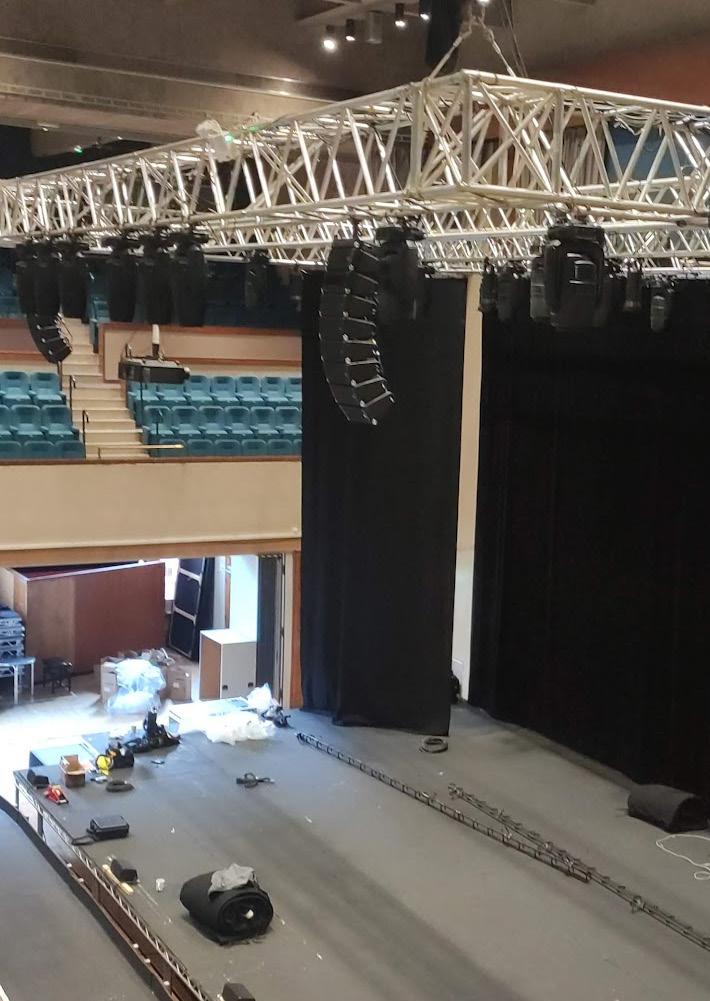
AUDIO UPGRADES FOR WORLD-CLASS TALENT
ABERYSTWYTH ARTS CENTRE
The historic and lauded University of Aberystwyth is undergoing a state-of-the-art audio upgrade, as the Aberystwyth Arts Centre installs a CODA Audio TiRAY ultra-compact line array system in its 900-seater Great Hall. Recognised as the ‘first true’ university in the nation of Wales, its Arts Centre is recognised as a national flagship for the arts, welcoming some of the world’s greatest talents across music, comedy, dance, and more. Headliner brushes up on its Welsh and heads to the coast with a studious mind to learn more.
Aberystwyth is a coastal university town in Ceredigion, Wales, with its name meaning ‘the mouth of the Ystwyth’. Last year, Aberystwyth became a UNESCO City of Literature, a first for Wales and the sixth city in the UK to receive the honour.
The historic university was originally founded in 1872 as University
College Wales, now the University of Aberystwyth. Its iconic Old College could quite easily have been used as a Hogwarts filming location. Conversely, the Arts Centre is a wonderful example of modern, brutalist architecture that pairs perfectly with its wide-ranging arts programme of drama, dance, music, visual arts, applied arts, film, new
media, and community arts.
Its Great Hall has a 900-person capacity, hosting top stand-up comedy talent and live music, as well as the university’s exams and graduation ceremonies. It sits right at the heart of the university campus, and is also host to several of Wales’ biggest film festivals throughout the
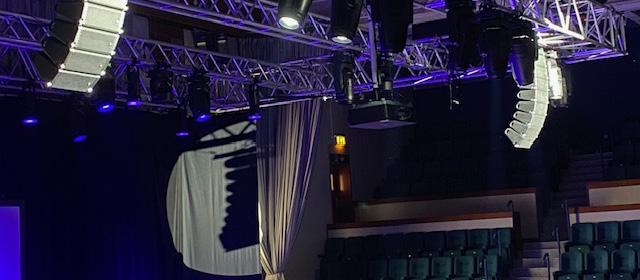
year, such as the Wales One World Film Festival and Abertoir, Wales’ International Horror Festival.
The Arts Centre team identified its Great Hall PA system as needing replacement, seeking a modern system with improved sound quality and consistent coverage. Following a competitive tender process, Adlib was selected. Adlib senior applications engineer Tim Robinson designed the CODA Audio TiRAY system for the venue.
“The previous system didn’t cover the venue sufficiently, resulting in an inconsistent listener experience which depended solely on where you happened to be sitting or standing,” begins Kevin Toms, sales manager at Adlib, who oversaw the project. “It’s also fair to say that the sound quality wasn’t of a sufficiently high standard for the size and status of the venue.
“CODA Audio’s proprietary prediction software, System Optimiser, enabled us to identify TiRAY as the perfect fit for the venue,” he furthers. “Not only could we achieve full coverage of the main seating area with two hangs, but also meet the working load limit of 100kg per hang specified in the brief - all this within the Centre’s stated budget.”
Adlib installed a main system comprising two flown hangs of eight CODA Audio TiRAY, with three CODA Audio U4 double 18” multi-purpose subwoofers at floor level.
Two CODA Audio HOPS7-Pro (dual 6.5”) compact, high-output, point source units were deployed as balcony fills, with a further four HOPS5 (dual 5”) compact, highoutput, point source, coaxial units for lipfills. The system is driven by four CODA Audio LINUS6.4 DSP 4-channel installation amplifiers.
The Great Hall accommodates varied programming, serving both the local community and the University. The system needed to support live bands, theatrical performances, solo presentations, and graduation ceremonies.
Toms is confident that the new TiRAY system meets these requirements. “I’m extremely proud of the solution that Adlib has delivered to the Great Hall at the Aberystwyth Arts Centre.
“Given the tight limitations within the setting brief, I think the CODA Audio TiRAY system delivers exceptionally well. It really is something that needs to be heard to be believed,” he enthuses. “Its weight and extremely compact form factor belie the fact that it is a seriously capable
PA system. I took great delight in watching the house technicians’ amazement at how such a big sound arrives from such a compact box!”
Peter Lochery, head of technical services at Aberystwyth Arts Centre, offers an equally upbeat review: “We very much appreciate the excellent work done by Adlib in delivering our new setup. The system installed has fulfilled expectations, and we are confident that it will provide exactly what was asked of it.”
Since its installation, the Centre’s new TiRAY system has been used for a range of shows, from solo vocal performances to symphonic rock bands.
CODAAUDIO.COM











REPLAY FOR EVERYBODY, EVERYWHERE.
RiMotion is an easy-to-install replay solution that can be implemented almost instantly in broadcast environments of any scale. It streamlines traditional and modern workflows and provides real-time performance, even when working remotely.
• Intuitive touchscreen