FORCLOSURE SALES: 0
PROBATE: 23 AUCTIONS: 5
NOTICE OF SUITS: 9 OTHER: 15 SPANISH NOTICES: 0
FORCLOSURE SALES: 0
PROBATE: 23 AUCTIONS: 5
NOTICE OF SUITS: 9 OTHER: 15 SPANISH NOTICES: 0
For most people, a college education can lead to a better life, but for one group of students at a unique institution, it can lead to saving lives.
At Texas State Technical College (TSTC), the Emergency Medical Services program has taken training students to a new level with the introduction of the first complete ambulance simulator in North America.
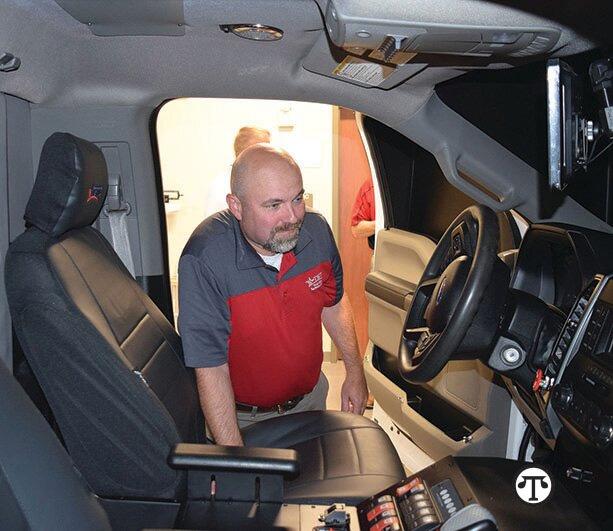
Echo Healthcare delivered to TSTC’s Abilene campus a Ford F350 ambulance that was converted from a road-operating vehicle to a full-size simulator.
Coby Meyer, Echo Healthcare’s chief operating officer, explained the reason: “When it comes to technology, TSTC is the trend leader.”

According to onetonline.org, the need for paramedics in Texas was expected to grow 19% between 2020 and 2030. The annual average salary for paramedics in Texas is $48,380.
In its Emergency Medical Services program, TSTC offers an Associate of Applied Science degree in Paramedic, as well as certificates of completion in Emergency Medical Services—EMT, Emergency Medical Services—Advanced EMT (AEMT), and Emergency Medical Services— Paramedic. The program is available at the Abilene, Brownwood and Harlingen campuses.
To turn the ambulance into a classroom, the engine was replaced with SimLeader technology and the windshield and side windows are now equipped with large video monitors that give trainees the feeling of actually traveling on various roadways.
The ambulance is used to play out different scenarios. Students begin by responding to a medical scene in TSTC’s Immersive Interactive lab. The scene, displayed on three walls and the floor in a different classroom, could range from a city park to a family home.
The trainees arrive on the scene to find a medical manikin. They assess the patient and begin the transport process from the scene to the ambulance. Once loaded into the ambulance, one student will be in the back treating the patient while the other will be driving.
Instructors will be able to see what is happening through video
monitors, letting them change road conditions through the installed computer programming. Those road conditions could include skidding on ice or hitting a pothole, which will actually give those inside the feeling that they are sliding or bouncing.
Once the students arrive at the virtual hospital, the patient will be transported back to the Immersive Interactive lab, which will be reset into a virtual emergency room.
“Cutting-edge technology in EMS education accomplishes much more than providing an efficient, safe and realistic opportunity for students to
learn,” said Ronnie Pitts, director of decision support of TSTC’s Allied Health division. “TSTC creates learning environments that inspire students to embrace innovation, adapt to technological advancements, and actively contribute to the rapidly evolving world. We are preparing them to be future leaders, problem-solvers and contributors in a technology-driven society in as lifelike a simulation as possible.”
For ambulance companies, the simulator will save time spent in training employees. “We send our EMTs to a two- to three-day course for them to learn how to drive an ambulance,” said Will Hendon, the North Texas regional director of Global Medical Response and a 2010 TSTC EMS graduate. “Imagine driving a smaller car your entire life. Getting into the driver’s seat of an ambulance will feel overwhelming. It brakes differently than a regular vehicle, and it accelerates differently. This is going to help ambulance companies in that respect the most.”
Kyle Nichols, a current Paramedic student at TSTC, sees another benefit of the simulator. “To have someone actually in the driver’s seat so we will be able to communicate time and distance from the hospital will be vital to our training,” he said. “Our entire career is built around good communication.”
Learn More. For further information, visit www.tstc.edu. -(NAPSI)
STATE OF NEW MEXICO COUNTY OF BERNALILLO
SECOND JUDICIAL DISTRICT No. D-202-DM-2023-01227
IN THE MATTER OF THE KINSHIP GUARDIANSHIP OF J.M.S., a minor child. AND CONCERNING
Marisol Gutierrez, Petitioner, and Laura Gutierrez and Brandon Spires, Respondents.
NOTICE OF PENDENCY OF ACTION
STATE OF NEW MEXICO to the above-named Respondents
Laura Gutierrez and Brandon Spires, GREETINGS:
You are hereby notified that the above-named Petitioner has filed a Petition for Kinship Guardianship of Julius Malik Spires born December 2013 in Phoenix, Arizona to Laura Gutierrez and Brandon Spires.
You are further notified that unless you file a written response to the Petition by no later than thirty days from this publication with the Court Clerk, Second Judicial District Court, Bernalillo County, New Mexico, with a copy to the Petitioner’s attorney, or appear at the hearing, the Court may enter a default judgment in your absence.
Petitioner’s attorney:
/s/ Morgan Demic Morgan Demic Pegasus Legal Services for Children
505 Marquette Ave NW Suite 1350 Albuquerque, NM 87102
505-244-1101
HCS Pub. June 30, July 7, 14, 2023
STATE OF NEW MEXICO COUNTY OF BERNALILLO
SECOND JUDICIAL DISTRICT COURT NO. D-202-DM-2022-02327
MELISSA GUTIERRES
Petitioner, v.
ASHLEIGH GOODMAN and JOE OPITZ Respondents.
NOTICE OF PENDENCY OF ACTION
STATE OF NEW MEXICO to the above-named Respondent Ashleigh Goodman, GREETINGS:
You are hereby notified that the above-named Petitioner has filed a Petition for Kinship Guardianship of Lillian Gutierres born March 2015 in Bernalillo County, New Mexico to Ashleigh Goodman and Joe Opitz.
You are further notified that unless you file a written response to the Petition by no later than thirty days from this publication with the Court Clerk, Second Judicial District Court, Bernalillo County, New Mexico, with a copy to the Petitioner’s attorney, or appear at the hearing, the Court may enter a default judgment in your absence.
Petitioner’s attorney:
/s/ Morgan Demic Morgan Demic Pegasus Legal Services for Children
505 Marquette Ave NW
Suite 1350
Albuquerque, NM 87102
505-244-1101
HCS Pub. July 7, 14, 21, 2023.
NO. D-202-DM-2023-557 IN THE MATTER OF THE KINSHIP GUARDIANSHIP OF L.A.P., minor child. AND CONCERNING
Lucy Sanchez, Petitioner, and Alea Pacheco, Respondent. NOTICE OF PENDENCY OF ACTION
STATE OF NEW MEXICO to the above-named Respondent Alea Pacheco, GREETINGS:
You are hereby notified that the above-named Petitioner has filed a Petition for Kinship Guardianship of Lily Alea Pacheco born January 2010 in Albuquerque, Bernalillo County, New Mexico to Alea Pacheco and unknown father.
You are further notified that unless you file a written response to the Petition by no later than thirty days from this publication with the Court Clerk, Second Judicial District Court, Bernalillo County, New Mexico, with a copy to the Petitioner’s attorney, or appear at the hearing, the Court may enter a default judgment in your absence.
Petitioner’s attorney:
/s/ Morgan Demic Morgan Demic Pegasus Legal Services for Children
505 Marquette Ave NW Suite 1350 Albuquerque, NM 87102 505-244-1101
HCS Pub. July 7, 14, 21, 2023
STATE OF NEW MEXICO COUNTY OF BERNALILLO
SECOND JUDICIAL DISTRICT COURT NO. D-202-DM-2023-01144
Paul Perea
Petitioner, vs. Natasha Perea
Respondent, NOTICE OF PENDENCY OF ACTION
STATE OF NEW MEXICO to the above-named Respondent(s).
Greetings:
You are hereby notified that the above-named Petitioner has filed a civil action against you in the above entitled Court and cause, the general object thereof being: Petition For dissolution of marriage
Unless you enter your appearance in said cause on or before the 14th day of August 2023, a judgment by default will be entered against you.
Name and address of Petitioner or Petitioner’s Attorney: Paul Perea 7004 Tempe Ave NW 87114
WITNESS the Honorable
AMBER CHAVEZ BAKER, District Judge of the Second Judicial District Court of the State of New Mexico, and the seal of the District Court of Bernalillo County, this day of JUN 22 2023.
CLERK OF THE DISTRICT
COURT
By: /s/ Mandy Maldonado
Deputy Clerk
HCS Pub. July 7, 14, 21, 2023
STATE OF NEW MEXICO COUNTY OF BERNALILLO SECOND JUDICIAL DISTRICT COURT NO. DM-2023-001613
LeTosha Griffin Petitioner, vs. Terrance Griffin Respondent, NOTICE OF PENDENCY OF ACTION
STATE OF NEW MEXICO to the above-named Respondent(s).
a civil action against you in the above entitled Court and cause, the general object thereof being: Petition for Dissolution of Marriage
Unless you enter your appearance in said cause on or before the 21st day of August 2023, a judgment by default will be entered against you.
Name and address of Petitioner or Petitioner’s Attorney: LeTosha Griffin 807 8th St. NW Abq, NM 87102
WITNESS the Honorable JUDGE GERARD LAVELLE, District Judge of the Second Judicial District Court of the State of New Mexico, and the seal of the District Court of Bernalillo County, this 3rd day of July 2023.
KATINA WATSON
CLERK OF THE DISTRICT COURT
By: /s/ Jordan Bauyat Deputy Clerk HCS Pub. July 7, 14, 21, 2023
STATE OF NEW MEXICO COUNTY OF BERNALILLO
SECOND JUDICIAL DISTRICT COURT
NO. D-202-DM-2023-00768
IN THE MATTER OF THE KINSHIP GUARDIANSHIP OF L.M.D., minor child. AND CONCERNING
Asia Jaramillo and Lorraine Jaramillo, Petitioners and Shannon Renee Jaramillo and Luis Manuel Dozal-Perez, Respondents.
NOTICE OF PENDENCY OF ACTION
STATE OF NEW MEXICO to the above-named Respondent Shannon Renee Jaramillo and Luis Manuel Dozal-Perez, GREETINGS:
You are hereby notified that the above-named Petitioners have filed a Petition for Kinship Guardianship of Luis Manuel Dozal-Perez Jr. born June 2016 in Bernalillo County, to Shannon Renee Jaramillo and Luis Manuel Dozal-Perez.
You are further notified that unless you file a written response to the Petition by no later than thirty days from this publication with the Court Clerk, Second Judicial District Court, Bernalillo County, New Mexico, with a copy to the Petitioner’s attorney, or appear at the hearing, the Court may enter a default judgment in your absence. Petitioner’s attorney:
/s/ Maranda Aguirre Maranda Aguirre Pegasus Legal Services for Children 505 Marquette Ave NW Suite 1350 Albuquerque, NM 87102 505-244-1101
HCS Pub. July 7, 14, 21, 2023
STATE OF NEW MEXICO COUNTY OF BERNALILLO
SECOND JUDICIAL DISTRICT
No. D-202-DM-2023-00934
IN THE MATTER OF THE KINSHIP GUARDIANSHIP OF T.G., N.G., and M.M., minor children. AND CONCERNING
Letittia McCray, Petitioner, and Melissa Begay, Rufus McCabe and Alexander Garcia, Respondents.
NOTICE OF PENDENCY OF ACTION STATE OF NEW MEXICO to the above-named Respondents Melissa Begay and Alexander Garcia, GREETINGS:
Guardianship of Martina McCabe born September 2008, to Melissa Begay and Rufus McCabe; and Nathaniel Garcia born April 2019, and Tialena Garcia born July 2020 to Melissa Begay and Alexander Garcia. You are further notified that unless you file a written response to the Petition by no later than thirty days from this publication with the Court Clerk, Second Judicial District Court, Bernalillo County, New Mexico, with a copy to the Petitioner’s attorney, or appear at the hearing, the Court may enter a default judgment in your absence. Petitioner’s attorney:
/s/ Verenice Peregrino Pompa Verenice Peregrino Pompa Pegasus Legal Services for Children 505 Marquette Ave NW Suite 1350
Albuquerque, NM 87102 505-244-1101 HCS Pub. July 14, 21, 28, 2023
STATE OF NEW MEXICO COUNTY OF BERNALILLO SECOND JUDICIAL DISTRICT No. D-202-DM-2023-00777 IN THE MATTER OF THE KINSHIP GUARDIANSHIP OF J.E.G., a minor child AND CONCERNING Monica Vidana, Petitioner, and Kimberly Yannacci, Joel Gonzalez and Terry C. Yannacci, Respondents.
NOTICE OF PENDENCY OF ACTION
STATE OF NEW MEXICO to the above-named Respondent Kimberly Yannacci
GREETINGS:
You are hereby notified that the above-named Petitioner has filed a Petition for Guardianship in the above-entitled Court and cause of guardianship of Joy Elena Gonzalez, born in August 2010, to Kimberly Yannacci and Joel Gonzalez.
You are further notified that unless you file a written response to the Petition by no later than thirty days from this publication with the Court Clerk, Second Judicial District Court, Bernalillo County, Albuquerque, New Mexico, with a copy to the Petitioner’s attorney, or appear at the hearing on September 8, 2023, the Court may enter a default judgment in your absence. Petitioner’s attorney: Maranda Aguirre Pegasus Legal Services for Children 505 Marquette Ave NW Suite 1350 Albuquerque, NM 87102 505-244-1101 HCS Pub. July 14, 21, 28, 2023
STATE OF NEW MEXICO COUNTY OF BERNALILLO SECOND JUDICIAL DISTRICT COURT NO. D-202-DM-2023-01617 IN THE MATTER OF THE KINSHIP GUARDIANSHIP OF D.A.B.M. and M.M.B.M., minor children. AND CONCERNING
Darlene Muniz and Phillip Muniz, Petitioners, and Nicole Martinez and Ronnie Baca, Respondents.
NOTICE OF PENDENCY OF ACTION
STATE OF NEW MEXICO to the above-named Respondent Nicole Martinez, GREETINGS:
Aaliyah Baca-Martinez, born November of 2007, to Nicole Martinez and Ronnie Baca
You are further notified that unless you file a written response to the Petition by no later than thirty days from this publication with the Court Clerk, Second Judicial District Court, Bernalillo County, New Mexico, with a copy to the Petitioners’ attorney, or appear at the hearing on September 22, 2023, the Court may enter a default judgment in your absence.
Petitioner’s attorney:
/s/ Morgan Demic Morgan Demic Pegasus Legal Services for Children
505 Marquette Ave NW Suite 1350
Albuquerque, NM 87102 505-244-1101
HCS Pub. July 14, 21, 28, 2023
STATE OF NEW MEXICO COUNTY OF BERNALILLO SECOND JUDICIAL DISTRICT COURT Case No.: D-202PB-2023-00464

IN THE MATTER OF THE ESTATE OF JOSEPH EMILE DONALD LOISEL, DECEASED.
NOTICE TO CREDITORS
NOTICE IS HEREBY GIVEN that Nancy Loisel has been appointed personal representative of the estate of the decedent. All persons having claims against the estate of the decedent are required to present their claims within four (4) months after the date of the first publication of any published notice to creditors or sixty (60) days after the date of mailing or other deliver of this notice, whichever is later, or the claims will be forever barred. Claims must be presented either to undersigned counsel of record at the address listed below, or filed with the Second Judicial District Court of Bernalillo, New Mexico, located at the following address: 400 Lomas Blvd NW, Albuquerque NM 87102.
Respectfully submitted,
By: /s/R. Will Jenkins
R. Will Jenkins
Aragon·Moss·George·Jenkins, LLP
2201 Menaul Blvd NE Albuquerque, NM 87107 Office: (505) 872-3022
Fax: (505) 214-5317
Email: jenkins@amgjlaw.com
HCS Pub. June 30, July 7, 14, 2023
STATE OF NEW MEXICO COUNTY OF BERNALILLO SECOND JUDICIAL DISTRICT COURT
No. D-202-PB-2023-00398
IN THE MATTER OF THE ESTATE OF DIXIE LYNN BURCH, DECEASED
NOTICE TO CREDITORS
representative at her attorney’s address as listed below; or 2) filed with the Second Judicial District Court at the following address: 400 Lomas Blvd. NW Albuquerque, New Mexico 87103.
DATED: June 21, 2023
Respectfully submitted, HURLEY TOEVS STYLES HAMBLIN & PANTER PA
By Electronically signed /s/ Thomas H. Toevs Thomas H. Toevs, Esq. Attorneys for Personal Representative PO Box 31670 Albuquerque, NM 87109 (505) 888-1188
HCS Pub. June 30, July 7, 14, 2023
STATE OF NEW MEXICO COUNTY OF BERNALILLO SECOND JUDICIAL DISTRICT COURT No. D-202-PB-2023-00351 IN THE MATTER OF THE ESTATE OF EDITH K. WALLACE, Deceased NOTICE TO CREDITORS NOTICE IS HEREBY GIVEN that JACQUI CROSS has been appointed personal representative of this estate. All persons having claims against this estate are required to present their claims within four (4) months after the date of the first publication of this notice or within sixty (60) days after mailing or other delivery of this notice, whichever is later, or the claims will be forever barred. Claims must be presented either to: 1) the undersigned personal representative at his attorney’s address as listed below; or 2) filed with the Second Judicial District Court at the following address: 400 Lomas Blvd NW , Albuquerque, NM 87102.
DATED: June 22, 2023
Respectfully submitted, HURLEY TOEVS STYLES HAMBLIN & PANTER PA
By Electronically signed /s/ Mandeep S. Talwar Mandeep S. Talwar, Esq. Attorneys for Personal Representative PO Box 31670 Albuquerque, NM 87109 talwar@hurleyfirm.com (505) 888-1188
HCS Pub. June 30, July 7, 14, 2023
STATE OF NEW MEXICO COUNTY OF BERNALILLO SECOND JUDICIAL DISTRICT COURT No. D-202-PB-2023-00413 IN THE MATTER OF THE ESTATE OF BARBARA JOAN VERPLANK, DECEASED
NOTICE TO CREDITORS
STATE OF NEW MEXICO
COUNTY OF BERNALILLO
SECOND JUDICIAL DISTRICT COURT
Greetings:
You are hereby notified that the above-named Petitioner has filed
You are hereby notified that the above-named Petitioner has filed a Petition for Kinship
You are hereby notified that the above-named Petitioners have filed a Petition for Kinship Guardianship of Mariah Marie Baca-Martinez, born in October of 2012, to Nicole Martinez; and of Destinee
NOTICE IS HEREBY GIVEN that Kelli K. Cooper has been appointed personal representative of this estate. All persons having claims against this estate are required to present their claims within four (4) months after the date of the first publication of this notice or within sixty (60) days after mailing or other delivery of this notice, whichever is later, or the claims will be forever barred.
Claims must be presented either to: 1) the undersigned personal
NOTICE IS HEREBY GIVEN that the undersigned has been appointed Personal Representative of this estate. All persons having claims against this estate are required to present their claims within four months after the date of the first publication of this Notice or the claims will be forever barred. Claims must be presented either to David A. Finlayson, attorney for the estate of Barbara Joan Verplank, at FINLAYSON LAW FIRM, PC, 7301 Jefferson Street NE, Suite F, Albuquerque, NM 87109, or filed with the Second Judicial District Court, Bernalillo County Courthouse, 400 Lomas Blvd NW, Albuquerque, NM 87102.
Dated: 5/24, 2023
/s/ Sydney Mckinistry
SYDNEY MCKINISTRY (fka SYDNEY SIMONE WADE),
Personal Representative
FINLAYSON LAW FIRM, PC
By: /s/ David A. Finlayson David A. FinlaysonAttorney for the Personal Representative of the Estate of Barbara Joan Verplank, Deceased
7301 Jefferson Street NE, Suite F Albuquerque, NM 87109
(505) 373-3500
HCS Pub. June 30, July 7, 14, 2023
STATE OF NEW MEXICO COUNTY OF BERNALILLO
SECOND JUDICIAL DISTRICT COURT
No. D-202-PB-2023-00086
IN THE MATTER OF THE ESTATE OF THOMAS LEE HEWITT, Deceased.
NOTICE TO CREDITORS
NOTICE IS HEREBY GIVEN that James Rogers has been appointed as Personal Representative of the Estate of the Decedent Thomas Lee Hewitt. All personals having claims against the Estate of the Decedent are required to present their claims within four (4) months after the date of the first publication of any published Notice to Creditors or sixty (60) days after the date of mailing or other delivery of this Notice, whichever is later, or the claims will be forever barred. Claims must be presented either to the undersigned counsel of record for the Personal Representative at the address below or filed with the Second Judicial District Court in Bernalillo County, New Mexico, located at 400 Lomas Boulevard NW, Albuquerque, NM 87102.
Respectfully Submitted,
/s/ Kat Fox
Kat Fox
NM Financial & Family Law, P.C. 320 Gold Avenue SW, Suite 1401 Albuquerque, NM 87102 Phone: 505-503-1637
Email: kaf@nmfinanciallaw.com
HCS Pub. June 30, July 7, 14, 2023
STATE OF NEW MEXICO
COUNTY OF BERNALILLO
SECOND JUDICIAL DISTRICT COURT
No. D-202-PB-2023-00443
IN THE MATTER OF THE ESTATE OF JAMES DOUGLAS ADAMS, DECEASED
NOTICE TO CREDITORS
NOTICE IS HEREBY GIVEN that the undersigned has been appointed Personal Representative of this estate. All persons having claims against this estate are required to present their claims within four months after the date of the first publication of this Notice or the claims will be forever barred. Claims must be presented either to David A. Finlayson, attorney for the estate of James Douglas Adams, at FINLAYSON LAW FIRM, PC, 7301 Jefferson Street NE, Suite F, Albuquerque, NM 87109, or filed with the Second Judicial District Court, Bernalillo County Courthouse, 400 Lomas Blvd NW, Albuquerque, NM 87102.
Dated: June 13th, 2023
/s/ Cynthia Ann Skasik
CYNTHIA ANN SKASIK, Personal Representative FINLAYSON LAW FIRM, PC
By: /s/ David A. Finlayson David A. Finlayson Attorney for the Personal Representative of the Estate of James Douglas Adams, Deceased7301 Jefferson Street NE, Suite F Albuquerque, NM 87109
(505) 373-3500
HCS Pub. June 30, July 7, 14, 2023
STATE OF NEW MEXICO COUNTY OF BERNALILLO
SECOND JUDICIAL DISTRICT COURT
Case No: D-202PB-2023-00463
NOTICE TO CREDITORS
NOTICE IS HEREBY GIVEN that Leslie Dobbins has been appointed personal representative of the estate of the decedent. All persons having claims against the estate of the decedent are required to present their claims within four (4) months after the date of the first publication of any published notice to creditors or sixty (60) days after the date of mailing or other deliver of this notice, whichever is later, or the claims will be forever barred. Claims must be presented either to undersigned counsel of record at the address listed below, or filed with the Second Judicial District Court of Bernalillo County, New Mexico, located at the following address: 400 Lomas Blvd. NW, Albuquerque, New Mexico 87102.
Respectfully submitted,
By: /s/R. Will Jenkins
R. Will Jenkins Aragon·Moss·George·Jenkins, LLP
2201 Menaul Blvd NE Albuquerque, NM 87107
Office: (505) 872-3022
Fax: (505) 214-5317
Email: jenkins@amgjlaw.com
HCS Pub. June 30, July 7, 14, 2023
IN THE PROBATE COURT COUNTY OF BERNALILLO STATE OF NEW MEXICO
Probate No. 20230518
IN THE MATTER OF THE ESTATE OF CHARLIE W. CHAVEZ, Deceased.
NOTICE TO CREDITORS
NOTICE IS HEREBY GIVEN that the undersigned has been appointed Personal Representative of this Estate. All persons having claims against this Estate are required to present their claims within four months after the date of the first publication of this Notice or the claims will be forever barred.
Claims must be presented either to the undersigned Personal Representative at 43 Gonzales Rd., Tijeras, NM 87059 or filed with the Probate Court, One Civic Plaza NW 415 Silver Ave., Albuquerque, NM 87102.
DATED: June 26, 2023
/s/ Stephen Randall Chavez Stephen Randall, Personal Representative of the Estate of Charlie W. Chavez, Deceased. 505.281-1008
HCS Pub. June 30, July 7, 14, 2023
NOTICE IS HEREBY GIVEN that the undersigned has been appointed personal representative of the estate of the decedent. All persons having claims against the estate of the decedent are required to present their claims within four (4) months after the date of the first publication of any published notice to creditors or sixty (60) days after the date of mailing or other delivery of this notice, whichever is later, or the claims will be forever barred. Claims must be presented either to the undersigned personal representative at the address listed below, or filed with the Second Judicial District Court, Bernalillo County, New Mexico, located at the following address: Jennifer PortilloPalmer, 7212 Coors Blvd. SE, Albuquerque, NM 87121. Respectfully submitted, THE THREET LAW FIRM
By: /s/ Joseph L. Romero Joseph L. RomeroAttorney for Personal Representative Jennifer Portillo Palmer 6605 Uptown Boulevard, Ste. 300 Albuquerque, NM 87110-4230 (505) 881-5155 joseph.romero@threetlaw.com HCS Pub. June 30, July 7, 14, 2023
STATE OF NEW MEXICO
IN THE PROBATE COURT
BERNALILLO COUNTY No. 2023-0634
IN THE MATTER OF THE ESTATE OF Carmelita Anne Marquez, DECEASED.
NOTICE TO CREDITORS
NOTICE IS HEREBY GIVEN that the undersigned has been appointed personal representative of the estate of the decedent. All persons having claims against the estate of the decedent are required to present their claims within four (4) months after the date of the first publication of any published notice to creditors or sixty (60) days after the date of mailing or other delivery of this notice, whichever is later, or the claims will be forever barred. Claims must be presented either to the undersigned personal representative at the address listed below, or filed with the Probate Court of Bernalillo County, New Mexico, located at the following address: 415 Silver Ave. SW, Albuquerque, NM, 87102. Dated: 6/27/2023
/s/ Juan C. Marquez
Juan C. Marquez 5309 Don Miguel SW Albuquerque, NM 87105 505-681-8252 PourjsSmarquez@aol.com
HCS Pub. June 30, July 7, 14, 2023
STATE OF NEW MEXICO
COUNTY OF BERNALILLO
SECOND JUDICIAL DISTRICT COURT NO. D-202-PB-2023-00390
IN THE MATTER OF THE ESTATE OF EARL F. DOUGLASS, JR.,
Deceased NOTICE TO CREDITORS
NOTICE IS HEREBY GIVEN that the undersigned has been appointed personal representative of this estate. All persons having claims against this estate are required to present their claims within four months after the date of the first publication of this Notice or the claims will be forever barred.
Claims must be presented either to the Personal Representative at the address shown below, or filed with the District Court of Bernalillo County, New Mexico. Moses, Dunn, Farmer & Tuthill, P.C.
Attn: Estate of EARL F. DOUGLASS, JR
c/o Kathleen T. Ahghar
P.O. Box 27047
Albuquerque, NM 87125-7047
Dated: June 28, 2023
/s/ Lindsay E. Mata
Lindsay E. Mata Personal Representative MOSES, DUNN, FARMER, & TUTHILL, P.C.
By /s/ Kathleen T. Ahghar
Kathleen T. Ahghar
Attorneys for Personal
Representative P.O. Box 27047
Albuquerque, NM 87125-7047 Telephone (505) 843-9440 Kathleen@moseslaw.com HCS Pub. July 7, 14, 21, 2023.
STATE OF NEW MEXICO COUNTY OF BERNALILLO SECOND JUDICIAL DISTRICT COURT
No. D-202-PB-2023-00360 IN THE MATTER OF THE ESTATE OF PARRY ALAN LARSEN, DECEASED
AMENDED NOTICE TO CREDITORS NOTICE IS HEREBY GIVEN that the undersigned has been appointed personal representative of the estate of the decedent. AII persons having claims against the estate of the decedent are required to present their claims within four (4) months after the date of the first publication of the notice or the claims, will be forever barred. Claim must be presented either to the attorney for the personal representative or filed with the Second Judicial District Court in Bernalillo County, New Mexico, located at the following address: Second Judicial District Court, Bernalillo County 400 Lomas Blvd. NW Albuquerque, NM 87102
/s/ Skyler Wildenstein Skyler Wildenstein, Trust Officer
Submitted By: LIGHTHOUSE LAW LLC
By /s/ L. Curtis Vernon Larry Curtis Vernon Attorney for Applicant 6605 Uptown Blvd. NE, Ste. 230 Albuquerque, New Mexico 87110 Telephone: (505) 401-2366 HCS Pub. July 7, 14, 21, 2023
STATE OF NEW MEXICO COUNTY OF BERNALILLO SECOND JUDICIAL DISTRICT COURT No. D-202-PB-2023-00395 IN THE MATTER OF THE ESTATE OF JOANNE G. JELSO, Deceased.
NOTICE TO CREDITORS
John E. Jelso has been appointed Personal Representative of the Estate of Joanne G. Jelso, Deceased. All persons having claims against the Estate are required to present their claims within two (2) months after the date of the first publication of this notice, or the claims will be forever barred. Claims must be presented either to the Personal Representative, c/o Ryan P. Danoff and Brett J. Danoff, Danoff Law Firm, 1225 Rio Grande Blvd. NW, Albuquerque, New Mexico, 87104, or filed with the Probate Division of Bernalillo County, Albuquerque, New Mexico, addressed to P.O. Box 488, Albuquerque,
New Mexico 87103.
DATED: 5-25-23
/s/ John E. Jelso
John E. Jelso 424 Kinley Avenue NE
Albuquerque, NM 87102
Telephone: (505) 362-0283
DANOFF LAW FIRM
/s/ Ryan P Danoff
Ryan P. Danoff
Brett J, Danoff
Attorneys for Petitioner
1225 Rio Grande Blvd. NW
Albuquerque, NM 87104
Telephone: (505) 262-2383
Fax: (505) 266-4330
Email: rdanoff@danofflaw.com
Email: bdanoff@danofflaw.com
HCS Pub. July 7, 14, 21, 2023
STATE OF NEW MEXICO
COUNTY OF BERNALILLO SECOND JUDICIAL DISTRICT No. D-202-PB-2023-00458
IN THE MATTER OF THE ESTATE OF CAROL D. HENDERSON, DECEASED.
NOTICE TO CREDITORS NOTICE IS HEREBY GIVEN that VAL WILSON, in her capacity as Executive Director of ANIMAL HUMANE ASSOCIATION OF NEW MEXICO, INC., has been appointed personal representative of the estate of the decedent. All persons having claims against the estate of the decedent are required to present their claims within four (4) months after the date of the first publication of any published notice to creditors or sixty (60) days after the date of mailing or other delivery of this notice, whichever is later, or the claims will be forever barred. Claims must be presented either to counsel for the personal representative, Thomas Smidt III, Smidt, Reist & Keleher, P.C., 4811-A Hardware Drive NE, Suite 4, Albuquerque, New Mexico 87109, or filed with the Second Judicial District Court for Bernalillo County, New Mexico, located at the following address: 400 Lomas Blvd W, Albuquerque, NM 87102. Dated: June 30, 2023.
SMIDT, REIST & KELEHER, P.C.
By: /s/ Thomas Smidt III
Thomas Smidt III Attorney for Personal Representative
4811-A Hardware Drive NE, Suite 4 Albuquerque, NM 87109 (505) 830-2200 tsmidt3@srklawnm.com HCS Pub. July 7, 14, 21, 2023
STATE OF NEW MEXICO CUONTY OF BERNALILLO SECOND JUDICIAL DISTRICT COURT NO. d-202-pb-2023-00382
IN THE MATTER OF THE ESTATE OF ROSEMARY MAGURE, DECEASED.
NOTICE TO CREDITORS
NOTICE IS HEREBY GIVEN that the undersigned has been appointed Personal Representative of this estate. All persons having claims against this estate are required to present their claims within two months after the date of the first publication of this Notice or the claims will be forever barred. Claims must be presented either to the undersigned personal representative at 1656 North El Camino, Tempe, AZ 85288 or filed with the District Court, Post Office Box 488, Albuquerque, New Mexico, 87103.
DATED: 05/16/2023, 2023.
/s/ Dominic Johnson DOMINIC JOHNSON
1656 North El Camino Tempe, AZ 85288
BY: /S/ Cynthia Sikelianos
JOHANNA A. PICKEL, LLC
Cynthia Sikeliianos Attorney for Applicant
4801 Lang Avenue NE, Suite 110 Albuquerque, New Mexico 87109 (505) 798-2515
HCS Pub. July 7, 14, 21, 28, 2023
STATE OF NEW MEXICO COUNTY OF BERNALILLO SECOND JUDICIAL DISTRICT NO. D-202-PB-2023-00420 IN THE MATTER OF THE ESTATE OF ANNE PORTER BROWNE, DECEASED.
NOTICE TO CREDITORS
NOTICE IS HEREBY GIVEN that Sandra Porter Browne and Jay D. Rosenblum have been appointed Co-Personal Representatives of the estate of the Decedent. All persons having claims against the estate of the decedent are required to present their claims within four (4) months after the date of the first publication of any published notice to creditors or sixty (60) days after the date of mailing or other delivery of this notice, whichever is later, or the claims will be forever barred. Claims must be presented by delivering or mailing a written statement of the claim to the Personal Representative, c/o Sutin, Thayer & Browne, PO Box 1945, Albuquerque New Mexico 87103, or filed with the District Court. DATED this 28th day of June, 2023.
Respectfully submitted, SUTIN, THAYER & BROWNE A Professional Corporation
By /s/ Mariposa Padilla Sivage Mariposa Padilla Sivage
Suzanne Wood Bruckner
Attorneys for Applicants Post Office Box 1945 Albuquerque, New Mexico 87103-1945
Telephone: (505) 883-2500
HCS Pub. July 14, 21, 28, 2023
STATE OF NEW MEXICO COUNTY OF DONA ANA THIRD JUDICIAL DISTRICT COURT No D-307-PB-2023-00125 Judge Manuel I. Arrieta IN THE MATTER OF THE ) ESTATE OF ) NICOLE E. GURLEY, a/k/a ) NICOLE GURLEY, a/k/a ) NICOLE ELIZABETH GURLEY, Deceased. )
NOTICE TO CREDITORS
NOTICE IS HEREBY GIVEN that the undersigned TIM NESBITT has been appointed Personal Representative of this estate. All persons having claims against this estate are required to present their claims within four (4) months after the date of the first publication of this Notice or the claims will be forever barred. Claims must be presented either to the Personal Representative c/o The Law Offices of Dana M. Kyle, P.O. Box 2277, Las Cruces, New Mexico 88004, or filed with the Third Judicial District Court of Dona Ana County, 201 W. Picacho, Suite A, Las Cruces, New Mexico 88005. Dated this 7th day of July, 2023.
/s/ Tim Nesbitt
TIM NESBITT, Personal Representative of the Estate of NICOLE E. GURLEY, a/k/a NICOLE GURLEY, a/k/a NICOLE ELIZABETH GURLEY deceased.
Prepared by:
The Law Offices of Dana M. Kyle, P.A.
/s/ Dana M. Kyle
Dana M. Kyle
P.O. Box 2277
Las Cruces, New Mexico 880042277
(575) 525-0020
(575) 525-0017 fax
Attorney for Personal
Representative
New Mexico Bar No. 8285
HCS Pub. July 14, 21, 28, 2023
STATE OF NEW MEXICO
PROBATE COURT
SANDOVAL COUNTY
No. SCPB 2023 173
IN THE MATTER OF THE ESTATE OF WILLIAM PLEASANT ALLRED, Deceased.
NOTICE TO CREDITORS
KATHLEEN MARIE ALLRED, has been appointed Personal Representative of the Estate of WILLIAM PLEASANT ALLRED, deceased. All persons having claims against this Estate are required to present their claims within four (4) months after the date of the first publication of any published notice to creditors or sixty (60) days after the date of mailing or other delivery of this notice, whichever is later, or the claims will be forever barred. Claims must be presented to
KATHLEEN MARIE ALLRED at 2004 Chihuahua Rd. NE, Rio Rancho, NM 87144, or to Walk-
In Wills Carlisle, P.C. (Chelsea E. Allen, Esq.) at 2000 Carlisle Blvd NE, Suite G, Albuquerque, NM 87110, and may be filed with the Probate Court of Bernalillo County, New Mexico.
Dated: July 10, 2023
/s/ Kathleen Marie Allred
KATHLEEN MARIE ALLRED, Personal Representative
Walk-In Wills Carlisle, P.C.
By /s/ Chelsea E. Allen
Chelsea E. Allen, Esq. 2000 Carlisle Blvd NE, Suite G Albuquerque, New Mexico 87110
(505) 903-7000
Attorneys for Personal Representative
HCS Pub. July 14, 21, 28, 2023
STATE OF NEW MEXICO COUNTY OF BERNALILLO
SECOND JUDICIAL DISTRICT COURT
No. D-202-PB-2023-00419
IN THE MATTER OF THE ESTATE OF DHARMESH DESAI, DECEASED
NOTICE TO CREDITORS
NOTICE IS HEREBY GIVEN that the undersigned has been appointed personal representative of the estate of the decedent. All persons having claims against the estate of the decedent are required to present their claims within four (4) months after the date of the first publication of this notice, or the claims will be forever barred. Claims must be presented either to the attorney for the personal representative, or filed with the Second Judicial District Court in Bernalillo County, New Mexico, located at the following address:
Second Judicial District Court, Bernalillo County
400 Lomas Blvd. NW Albuquerque, NM 87102
/s/ Nikolas Desai
Nikolas Desai
Submitted By: LIGHTHOUSE LAW LLC
By /s/ L. Curtis
87110
Telephone: (505) 401-2366
HCS Pub. July 14, 21, 28, 2023
STATE OF NEW MEXICO COUNTY OF BERNALILLO
SECOND JUDICIAL DISTRICT COURT
No. D-202-PB-2023-00447
In the Matter of the Estate of ARTHUR THOMAS COPPAGE, Deceased
NOTICE TO CREDITORS
NOTICE IS HEREBY GIVEN that the undersigned has been appointed Personal Representative of this estate. All persons having claims against this estate are required to present their claims within four months after the date of the first publication of this Notice or the claims will be forever barred. Claims must be presented either to David A. Finlayson, attorney for the estate of ARTHUR THOMAS COPPAGE, at FINLAYSON LAW FIRM, PC, 7301 Jefferson Street NE, Suite F, Albuquerque, NM 87109, or filed with the Second Judicial District Court, Bernalillo County Courthouse, 400 Lomas Blvd NW, Albuquerque, NM 87102.
Dated: July 7, 2023
/s/ Tammy Fricke TAMMY FRICKE, Personal Representative FINLAYSON LAW FIRM, PC
By: /s/ David A. Finlayson David A. Finlayson Attorney for the Personal Representative of the Estate of ARTHUR THOMAS COPPAGE, Deceased 7301 Jefferson Street NE, Suite F Albuquerque, NM 87109 (505) 373-3500
HCS Pub. July 14, 21, 28, 2023
STATE OF NEW MEXICO IN THE PROBATE COURT SANDOVAL COUNTY
No. SCPB 2023 163
IN THE MATTER OF THE ESTATE OF ROBERT JAYE MYRTLE, DECEASED.
NOTICE TO CREDITORS
NOTICE IS HEREBY GIVEN that the undersigned has been appointed personal representative of the estate of the decedent. All persons having claims against the estate of the decedent are required to present their claims within four (4) months after the date of the first publication of any published notice to creditors or sixty (60) days after the date of mailing or other delivery of this notice, whichever is later, or the claims will be forever barred. Claims must be presented either to the undersigned personal representative at the address listed below, or filed with the Probate Court of Bernalillo County, New Mexico, located at the following address: One Civic Plaza NW, 6th Floor, Albuquerque, NM 87102.
Date 6/12/23
Signature /s/ Anthony Myrtle 7416 Montreal Way Rio Rancho, NM 87144 Ph: 505-373-8822 HCS Pub. July 14, 21, 28, 2023
Deceased.
NOTICE TO CREDITORS
NOTICE IS HEREBY GIVEN that the undersigned has been appointed Personal Representatives of this estate. All persons having claims against this estate are required to present their claims within two months after the date of the first publication of this Notice or the claims will be forever barred. Claims must be presented either to the undersigned Personal Representative at: 1331 Park Ave SW., Suite 908, Albuquerque, New Mexico 87102, or filed with the Second Judicial District Court, 400 Lomas Blvd. N.W., Albuquerque, New Mexico 87102.
/s/ James G. Schneider James G. Schneider Personal Representative of the Estate of Shirley J. Tomas J. Tomas, Deceased 9333 Pan American Fwy. Edgewood, New Mexico 87107
/s/ David N. Hernandez David N. Hernandez Attorney for Personal Representative
13311 Park Ave. S.W., Unit 908 Albuquerque, New Mexico 87102
Tel: (505) 228-5912
HCS Pub. July 14, 21, 28, 2023
STATE OF NEW MEXICO COUNTY OF BERNALILLO SECOND JUDICIAL DISTRICT COURT
No. D-202-PB-2023-00488
IN THE MATTER OF THE ESTATE OF ALICE CLAIRE CONWELL, Deceased.
NOTICE TO CREDITORS
REESE GATELEY has been appointed Personal Representative of the estate of ALICE CLAIRE CONWELL, deceased. All persons having claims against this estate are required to present their claims within four (4) months after the date of the first publication of this notice, or the claims will be forever barred. Claims must be presented either to the Personal Representative, in care of Wayne G. Chew, P.O. Box X, Albuquerque, New Mexico 87125, or filed with the Second District Court of Bernalillo County, New Mexico.
/s/Wayne G. Chew WAYNE G. CHEW, P.C. Attorney for the Personal Representative
20 First Plaza, NW, Suite 303 Post Office Box X Albuquerque, NM 87125
Telephone: (505) 842-6363
Email: wgchew@wgchewlaw.
com
HCS Pub. July 14, 21, 28, 2023
OTHER
NOTICE of an Unregistered Claim by: Debra-Mae Strickland [Carter]: a private living woman, sovereign by the grace of God, created in His image, the beneficiary in original jurisdiction now coming with NOTICE of Unregistered Claim, and priority equitable right, title, and interest as Executor in the DEBRA MAE STRICKLAND [CARTER]
stamped envelope to: DEBRA MAE STRICKLAND [CARTER] Estate. Executor Office. Nation Texas. General-Post Office. Granbury. STRICKLAND [CARTER] Province. USMOI. Near. [76049-9998]. HCS Pub. June 30, July 7, 14, 21, 2023
STATE OF NEW MEXICO COUNTY OF BERNALILLO SECOND JUDICIAL DISTRICT COURT
D-202-DM-2022-03091 JACOB MUNOZ, Petitioner, vs. NADIA THOMPSON, Respondent.
ORDER FOR SERVICE OF PROCESS BY PUBLICATION IN A NEWSPAPER Petitioner filed a motion requesting that the Court approve service of process on Nadia Thompson by publication in a newspaper of general circulation. The Court FINDS that Petitioner has made diligent efforts to make personal service, but has not been able to complete service of process. The lase known address ofNadia Thompson is 1422 3rd Street SW, Albuquerque, New Mexico, 87102. The Court further FINDS that the newspaper of general circulation in this county is Health City Sun, and that [X] this newspaper is most likely to give Respondent notice of the pendency of the action. [X] in the County of Bernalillo, State of New Mexico, a newspaper most likely to give notice of the pendency of this proceeding to the person to be served is Health City Sun.
THEREFORE, IT IS HEREBY ORDERED that Petitioner serve process on Nadia Thompson by publication once a week for three (3) consecutive weeks in the Health City Sun. [ ] and once a week for (3) consecutive weeks in the Health City Sun in Bernalillo County, New Mexico. Petitioner shall file proof of service with a copy of the affidavit of publication when service has been completed.
Dated this 23 day of May, 2023.
/s/ Jane C. Levy
Jane C. Levy District Court Judge DC
Submitted by:
/s/ Rachel Walker Al-Yasi
Rachel Walker Al-Yasi 503 Slate Ave NW Albuquerque, New Mexico 87102
(505) 247-2972
(505) 842-6945
HCS Pub. June 30, July 7, 14, 2023
NAME CHANGE
STATE OF NEW MEXICO COUNTY OF BERNALILLO
SECOND JUDICIAL DISTRICT COURT
No. D-202-CV 2023 04310
IN THE MATTER OF THE PETITION OF Mvhayv Kay Whitehair FOR CHANGE OF NAME
Court, Bernalillo County, New Mexico, wherein he/she seeks to change his/her name as follows:
Current Name
Mvhayv Kay Whitehair
Proposed Name
Mvhayv Kay Lowe
This Petition will be heard before the Honorable ERIN B. O’CONNELL, District Judge, on the 31 day of July 2023, at the hour of 10:45 am, Hearing will be held telephonically. See attachment.
Respectfully submitted,
/s/ Mvhayv Whitehair
Mvhayv Kay Whitehair HCS Pub. July 7, 14, 2023
STATE OF NEW MEXICO
COUNTY OF BERNALILLO
SECOND JUDICIAL DISTRICT COURT
No. D-202-CV 2023 04526
IN THE MATTER OF THE PETITION OF Chelsea Nicole Rodriguez FOR CHANGE OF NAME
NOTICE OF PETITION TO CHANGE NAME (ADULT)
NOTICE IS HEREBY
GIVEN that Chelsea Nicole Rodriguez, Resident of the City of Albuquerque, County of Bernalillo, State of New Mexico has filed a Petition to Change Name in the Second Judicial District Court, Bernalillo County, New Mexico, wherein he/she seeks to change his/her name as follows:
Current Name
Chelsea Nicole Rodriguez
Proposed Name
Chelsea Nicole Booker
This Petition will be heard before the Honorable BEATRICE BRICKHOUSE, District Judge, on the 20th day of July 2023, at the hour of 1:30 pm, Via zoom
Respectfully submitted, /s/ Chelsea Rodriguez Chelsea Nicole Rodriguez HCS Pub. July 7, 14, 2023
STATE OF NEW MEXICO
COUNTY OF BERNALILLO
SECOND JUDICIAL DISTRICT COURT No. D-202-CV-2023-04805
IN THE MATTER OF THE PETITION OF MELISSA ARIEL SHERMAN
FOR CHANGE OF NAME
NOTICE OF PETITION TO CHANGE NAME
NOTICE IS HEREBY GIVEN by Taylor Law. LLC (Tina Sherrell Taylor) that Petitioner, Melissa Ariel Sherman, a resident of Albuquerque, Bernalillo County, New Mexico, has filed a Petition to Change Name in the Second Judicial District Court, Bernalillo County, New Mexico, wherein the Petitioner seeks to change her name as follows:
Current Name
Melissa Ariel Sherman
Proposed Name
Melissa Ariel Romero
This Petition will be heard before the Honorable, Victor S. Lopez, District Judge, on the 20th day of July 2023, at the hour of 11:15 am, at the 400 Lomas Blvd NW, Albuquerque, NM 87102, Courtroom 516. Hearing will be held telephonically.
STATE OF NEW MEXICO COUNTY OF BERNALILLO
SECOND JUDICIAL DISTRICT COURT No. CV 2023 04577
IN THE MATTER OF THE PETITION OF Evelia Robles FOR CHANGE OF NAME NOTICE OF PETITION TO CHANGE NAME (ADULT)
NOTICE IS HEREBY GIVEN that Evelia Robles, Resident of the City of Albuquerque, County of Bernalillo, State of New Mexico has filed a Petition to Change Name in the Second Judicial District Court, Bernalillo County, New Mexico, wherein he/she seeks to change his/her name as follows:
Current Name
Evelia Robles
Proposed Name
Evelia Robles Rodriguez
This Petition will be heard before the Honorable BEATRICE BRICKHOUSE, District Judge, on the 20th day of July 2023, at the hour of 1:30 pm, Via zoom
Respectfully submitted, /s/ Evelia Robles
Evelia Robles HCS Pub. July 7, 14, 2023
STATE OF NEW MEXICO COUNTY OF TORRANCE SEVENTH JUDICIAL DISTRICT COURT No. D-722-CV-2023-53
IN RE: The Petition for Change of Name Of Marylynn Samuelman Doporto NOTICE
TAKE NOTICE that in accordance with the provisions of §40-8-1 through §40-8-3, NMSA 1978, will apply to the Honorable Roscoe A. Woods, District Judge for the 7th District of the State of New Mexico, at: Neil Mertz Judicial Complex 903 N. 5th Street Estancia, Torrance County New Mexico, 87016 Google meet – The google Meet video link and teleconference number for the hearing are as follows:
Video: meet.google.com/mkewxqm-omd
Telephonic: 510-766-2141 PIN: 170 287 884# on the 19th day of July, 2023, at 9:00 am, during a regular term of the Court, or as soon thereafter as the matter may be heard, the matter of The Petition for Change of Name for Marylynn Samuelman Doporto, a person over the age of 14, from Marylynn Samuelman Doporto to Marylynn Doporto Samuelman. Susan Rossignol Clerk of Court
By: /s/ Riley Moore
Deputy Court Clerk
Submitted by:
/s/ Marylynn Samuelman
Doporto
Petitioner pro se
HCS Pub. July 7, 14, 2023
Vernon Larry Curtis VernonAttorney for Personal
Representative
6605 Uptown Blvd. NE, Ste. 230 Albuquerque, New Mexico
SECOND JUDICIAL DISTRICT COURT COUNTY OF BERNALILLO STATE OF NEW MEXICO No.D-202-PB-2023-00403
IN THE MATTER OF THE ESTATE OF SHIRLEY J. TOMAS,
Estate, New Mexico state file number 1959-00XXXX, cusip number 316069XXX including all assets, attributes, derivatives, and transmutations thereof.
:Debra-Mae :Strickland [Carter] is no longer recognized as a minor according to the U.S. Court of Law as of February 4, 1980 (21). To respond to this notice, send a self-addressed
NOTICE OF PETITION TO CHANGE NAME (ADULT)
NOTICE IS HEREBY GIVEN that Mvhayv Kay Whitehair, Resident of the City of Albuquerque, County of Bernalillo, State of New Mexico has filed a Petition to Change Name in the Second Judicial District
Respectfully submitted, TAYLOR LAW, LLC
/s/ Tina Taylor
Tina Sherrell Taylor, Esq. 500 Marquette Ave. NW, Suite 1200 Albuquerque. NM 87102 attorneyttaylor@gmail.com
(505) 695 0335
(505) 212 6133 Fax
HCS Pub. July 7, 14, 2023
THIRTEENTH DISTRICT COURT COUNTY OF SANDOVAL STATE OF NEW MEXICO NO. D-1329-CV-2023-00996 IN THE MATTER OF THE PETITION FOR NAME CHANGE OF ISAAC SHAWN FRANKLIN LYLE, NOTICE OF HEARING ON PETITION TO CHANGE NAME/ IN-PERSON NOTICE IS HEREBY GIVEN that Isaac Shawn Franklin Lyle, a resident of County of Sandoval,
State of New Mexico, and over fourteen (14) years of age, has filed a Petition to Change Name in the Thirteenth Judicial District Court, Sandoval County Court, New Mexico, wherein she seeks to change his name as follows:
Current Name
Isaac Shawn Franklin Lyle
Proposed Name
Isaac Shawn Sotelo
This Petition will be heard before the Honorable James A. Noel, District Judge, on the 26th day of July 2023, at the hour of 8:30 am, at the Sandoval County Courthouse, 1500 Idalia Road, Building A, Bernalillo, NM 87004.
HONORABLE JAMES A. NOEL
By: /s/ Johanna Tarango
Prepared by:
/s/ Rosalie Fragoso
Rosalie Fragoso
Attorney for Petitioner
1107 Kent Ave. NW Albuquerque, NM 87102
(505) 266-0125
HCS Pub. July 14, 21, 2023
Third JUDICIAL DISTRICT COURT COUNTY OF Dona Ana STATE OF NEW MEXICO No. D-307-CV 2023-1127
IN THE MATTER OF THE PETITION OF Ashley Hoogenboom
FOR CHANGE OF NAME
NOTICE OF PETITION TO CHANGE NAME (ADULT)
NOTICE IS HEREBY GIVEN
that Ashley Felice Hoogenboom, Resident of the City of Las Cruces, County of Dona Ana, State of New Mexico has filed a Petition to Change Name in the Third Judicial District Court, Dona Ana County, New Mexico, wherein he/she seeks to change his/her name as follows:
Current Name
Ashley Felice Hoogenboom
Proposed Name
Jordan Victoria Grey
This Petition will be heard before the Honorable Manuel I. Arrieta, District Judge, on the 27th day of July 2023, at the hour of 10:30 am, at the Dona Ana County Courthouse.
Respectfully submitted, /s/ Ashley Felice Hoogenboom
Ashley Felice Hoogenboom
HCS Pub. July 14, 21, 2023
ACCESS CODE 4340781 AT THE TIME OF THE HEARING**
Respectfully submitted, /s/ Michele Bourque Michele Bourque HCS Pub. July 14, 21, 2023
STATE OF NEW MEXICO COUNTY OF BERNALILLO SECOND JUDICIAL DISTRICT COURT No. D-202-CV 2023 04609 IN THE MATTER OF THE PETITION OF Shelby Autumn White
FOR CHANGE OF NAME NOTICE OF PETITION TO CHANGE NAME - Telephonic (ADULT)
NOTICE IS HEREBY GIVEN that Shelby Autumn White, Resident of the City of Albuquerque, County of Bernalillo, State of New Mexico has filed a Petition to Change Name in the Second Judicial District Court, Bernalillo County, New Mexico, wherein he/she seeks to change his/her name as follows:
Current Name
Shelby Autumn White
Proposed Name
Shawn Hancock Maddox
This Petition will be heard before the Honorable DENISE BARELA SHEPHERD, District Judge, on the 1st day of August 2023, at the hour of 1:20 pm, TELEPHONIC: 1-800-747-5150
Access Code 3482751
Respectfully submitted, /s/ Shelby Autumn White Shelby Autumn White HCS Pub. July 14, 21, 2023
the City of Albuquerque, County of Bernalillo, State of New Mexico has filed a Petition for Change Name of her child in the Second Judicial District Court, Bernalillo County, New Mexico, wherein she seeks to change her child’s name as follows:
Current Name
Kai Anthony Vigil
Proposed Name
Kai Anthony Schaefer
Date of Birth
10/03/2020
This Petition will be heard before the Honorable Erin B. O’Connell, Second Judicial District Court Judge, on the 2ND day of August 2023, at the hour of 3:20 p.m., at the Bernalillo County Courthouse, 400 Lomas, NW Albuquerque, New Mexico. This hearing will be held by telephone. All participants shall call 800-747-5150 and use Access Code 9254116#.
Respectfully Submitted:
KOHLER LAW PC
/s/ Hannah Kohler Hannah Kohler 12231 Academy Rd NE Suite 301 #210 Albuquerque, NM 87111 505-750-8084
Attorney for Petitioner
HCS Pub. July 14, 21, 2023
of Albuquerque, County of Bernalillo, State of New Mexico has filed a Petition to Change Name in the Second Judicial District Court, Bernalillo County, New Mexico, wherein he/she seeks to change his/her name as follows:
Current Name
Charlotte Nicole Sisk-Scott
Proposed Name Charlotte Nicole Sisk
This Petition will be heard before the Honorable NANCY J. FRANCHINI, District Judge, on the day of August 11, 2023, at the hour of 1:45 pm ***To attend the hearing please call 1-800-747-5150 and use access code 4001301.***
Respectfully submitted, /s/ Charlotte Nicole Sisk-Scott Charlotte Nicole Sisk-Scott HCS Pub. July 14, 21, 2023
NOTICE OF PUBLIC SALE
wall art, clothing, speakers, furniture, electronics
Unit 502
MELINDA SALAS
12899 Central Ave NE #348
Albuquerque NM 87123
Unit items consist of: Toys, furniture, boxes, mattresses HCS Pub. July 14, 21, 2023
NOTICE OF PUBLIC SALE
TO WHOM IT MAY CONCERN: NOTICE IS HEREBY GIVEN
PURSUANT TO NEW MEXICO STATUTES SECTION 48-111 TO 9 N.M.S.A., 1978, THAT THE FOLLOWING GOODS WILL BE SOLD AT TIJERAS SELF STORAGE ON TUESDAY
JULY 25, 2023 AT 9:00 AM LOCATED AT 201 DORADO SE, ALBUQUERQUE, NM, 87123, TO SATISFY LIENS
CLAIMED BY TIJERAS SELF STORAGE TOGETHER WITH ALL COSTS OF THE SALE:
LOT #1 – JOHN BRANNON
A010 PO BOX 53512
ALBUQUERQUE, NM 87153
CONTENTS: HOUSEHOLD GOODS, MISC. BOXES
LOT #2 – JOHN BRANNON A016 PO BOX 53512
LOT #14 – MONIQUE
GALLEGOS L309
300 DORADO PL SE APT C8
ALBUQUERQUE, NM 87123
CONTENTS: HOUSEHOLD GOODS, MISC. BOXES
LOT #15 – NATHANIEL SWIECH M360
3425 GIBSON SE
ALBUQUERQUE, NM 87106
CONTENTS: HOUSEHOLD GOODS, MISC. BOXES
LOT #16 – WILLIAM BOWEN M378
75 HOTEL CIRCLE NE APT 122
ALBUQUERQUE, NM 87123
CONTENTS: HOUSEHOLD GOODS, MISC. BOXES LOT #17 – OTIS JORDAN 0426
220 DORADO PL SE APT 13
ALBUQUERQUE, NM 87123
CONTENTS: HOUSEHOLD GOODS, MISC. BOXES
TERMS OF SALE: CASH. ANY
LOT MAY BE WITHDRAWN FROM SALE WITHOUT NOTICE. HCS Pub. July 14, 21, 2023
STATE OF NEW MEXICO COUNTY OF BERNALILLO
SECOND JUDICIAL DISTRICT COURT No. CV 2023 03786 IN THE MATTER OF THE PETITION OF Michele Sorge Bourque
FOR CHANGE OF NAME
NOTICE OF PETITION TO CHANGE NAME (ADULT)
NOTICE IS HEREBY GIVEN that Michele Sorge Bourque, Resident of the City of Alb, County of Bernalillo, State of New Mexico has filed a Petition to Change Name in the Second Judicial District Court, Bernalillo County, New Mexico, wherein he/she seeks to change his/her name as follows:
Current Name
Michele Sorge Bourque
Proposed Name
Michele Sorge Mahan
This Petition will be heard before the Honorable DANIEL E. RAMCZYK, District Judge, on the 27th day of July 2023, at the hour of 8:55 am, at the Bernalillo County Courthouse, 400 Lomas NW, Albuquerque, New Mexico.
**TELEPHONIC-PARTIES
ARE DIRECTED TO CALL
1-800-747-5150 AND ENTER
STATE OF NEW MEXICO COUNTY OF BERNALILLO SECOND JUDICIAL DISTRICT COURT No. D-202-CV 2023 04708 IN THE MATTER OF THE PETITION OF David Rivera FOR CHANGE OF NAME NOTICE OF PETITION TO CHANGE NAME (ADULT)
NOTICE IS HEREBY GIVEN that David Rivera, Resident of the City of Albuquerque, County of Bernalillo, State of New Mexico has filed a Petition to Change Name in the Second Judicial District Court, Bernalillo County, New Mexico, wherein he/she seeks to change his/her name as follows:
Current Name
David Rivera
Proposed Name
David Rivera Traub
This Petition will be heard before the Honorable LISA CHAVEZ ORTEGA, District Judge, on the 2nd day of August 2023, at the hour of 1:50 pm, BY TELEPHONE
CALL: 1-800-747-5150
CODE: 8460123#
Respectfully submitted, /s/ David Rivera
David Rivera HCS Pub. July 14, 21, 2023
STATE OF NEW MEXICO COUNTY OF BERNALILLO
SECOND JUDICIAL DISTRICT COURT
No. D-202-CV 2023 05218
IN THE MATTER OF THE PETITION OF Lassel Orstave-McKay
Caraballo FOR CHANGE OF NAME
NOTICE OF PETITION TO CHANGE NAME (ADULT)
NOTICE IS HEREBY GIVEN that Lassel Orstave-McKay Caraballo, Resident of the City of Albuquerque, County of Bernalillo, State of New Mexico has filed a Petition to Change Name in the Second Judicial District Court, Bernalillo County, New Mexico, wherein he/she seeks to change his/her name as follows:
Current Name
Lassel Orstave-McKay
Caraballo
Proposed Name
Lassel Orstave McKayCaraballo
This Petition will be heard before the Honorable DANIEL E. RAMCZYK, District Judge, on the 27th day of July 2023, at the hour of 8:40 am, at the Bernalillo County Courthouse, 400 Lomas NW, Albuquerque, New Mexico.
**TELEPHONIC-PARTIES ARE DIRECTED TO CALL
1-800-747-5150 AND ENTER ACCESS CODE 4340781 AT THE TIME OF THE HEARING** Respectfully submitted, /s/ Lassel Orstave-McKay
Caraballo
Lassel Orstave-McKay
Caraballo
HCS Pub. July 14, 21, 2023
Notice is hereby given that the following property shall be sold at public auction or otherwise disposed, of in satisfaction of lien, in accordance with the New Mexico Self Storage Lien Act. To be held over the internet at: storagetreasures.com
By DISCOUNT SELFSTORAGE
2499 El Camino Real
Las Cruces, NM 88007
575 382-0000
BEGINNING ON TUESDAY
JULY 25, 2023 AT 10 A.M. AND ENDING ON FRIDAY
JULY 28th, 2023 AT 10 A.M.
THE ENTIRE CONTENTS OF STORAGE UNITS: 13, 265 & 538 (Tenant address is “last known”)
UNIT 013
AMBER BROCKMAN
825 W. TAYLOR RD
LAS CRUCES, NM 88007
Unit items consist of: Couch, Guitar, totes, playhouse furniture, misc. items
UNIT 265
MARK LECHUGA
1850 SEXTON ST. APT #7
LAS CRUCES, NM 88001
Unit items consist of: Luggage, bags, boxes, misc. items.
UNIT 538
NORMA HERNANDEZ
215 S. MARTINEZ ST.
LAS CRUCES, NM 88001
Unit items consist of: Mattress, boxes, xmas décor, misc. items
HCS Pub. July 7, 14, 2023
ALBUQUERQUE, NM 87153
CONTENTS: HOUSEHOLD GOODS, MISC. BOXES
LOT #3 – JACOB MARQUEZ
D075
1701 PAISANO NE APT D
ALBUQUERQUE, NM 87112
CONTENTS: HOUSEHOLD
GOODS, MISC. BOXES
LOT #4 – ALEXIS BAROS
G117
13000 CLOUDVIEW AVE NE
ALBUQUERQUE, NM 87123
CONTENTS: HOUSEHOLD GOODS, MISC. BOXES
LOT #5 – TIM RUHLIG
G120
301 CONCHAS ST NE
ALBUQUERQUE, NM 87123
CONTENTS: HOUSEHOLD
GOODS, MISC. BOXES
LOT #6 – SANDRA MATHERS
H136
3 PARADISE RD
EDGEWOOD, NM 87015
CONTENTS: HOUSEHOLD
GOODS, MISC. BOXES
LOT #7 – AMANDA COURTNEY
I168
1009 ALCAZAR NE
ALBUQUERQUE, NM 87110
CONTENTS: HOUSEHOLD
GOODS, MISC. BOXES
LOT #8– AMANDA COURTNEY
I177
1009 ALCAZAR NE
ALBUQUERQUE, NM 87110
CONTENTS: HOUSEHOLD
GOODS, MISC. BOXES
LOT #9 – MARCO IBARRA
I182
PO BOX 8854
ALBUQUERQUE, NM 87198
CONTENTS: HOUSEHOLD
Notice is hereby given that Alameda Storage of NE Albuquerque, in accordance with New Mexico Self Storage Lien Act 48-11-1to 48-11-9, offers the following units for online bid auction. Alameda Storage of NE Albuquerque does not guarantee or offer any warranty for items purchased. All units sold “as is” and without any warranty of contents, quality, or value. The property stored in these spaces will be sold or disposed of on or after the following date, time, and place. Date August 3, 2023. Time all sales will conclude at 8:00 A.M. online at www. storagetreasures.com Units can viewed and bid on for at least 10 days prior to auction start time at the website listed. Any paid-up units will be pulled from the sale list. E10, Leo Padilla, 6719 Glenlochy Way, NE Albuquerque, NM 87113 folding tables, folding tables new in plastic, large cooler, car jack, sports equipment, art supplies, bins, dolls, karaoke machine, unopened furniture and lighting fixtures, holiday items, furniture, metal racks, school supplies. C36, Jahvaughn Lawrence, 8141 Shannon St. NE Albuquerque, NM 87109, printers, new unused boxes, pull out couch, kitchen wares, computer, mattresses, chairs, holiday décor, boxes, entertainment center. HCS Pub. July 14, 21, 2023
NOTICE OF PUBLIC SALE
Notice is hereby given that the following property shall be sold at public auction or otherwise disposed of, in satisfaction of lien, in accordance with the New Mexico Self Storage Lien Act. To be held over the internet at storagetreasures.com
By DISCOUNT SELF
STORAGE
5395 Bataan Memorial W
STATE OF NEW MEXICO
COUNTY OF BERNALILLO
LAS CRUCES, NM 88012
575 541-5760
STATE OF NEW MEXICO COUNTY OF BERNALILLO
SECOND JUDICIAL DISTRICT No. D-202-CV-2023-05134
IN THE MATTER OF THE PETITION OF SAVANNAH SCHAEFER
SECOND JUDICIAL DISTRICT COURT
No. D-202-CV 2023 04319
IN THE MATTER OF THE PETITION OF Charlotte Nicole Sisk-Scott FOR CHANGE OF NAME
NOTICE OF PETITION TO CHANGE NAME (ADULT)
NOTICE IS HEREBY GIVEN
that Charlotte Nicole SiskScott, Resident of the City
BEGINNING ON TUESDAY, AUGUST 1ST, 2023 AT 10 A.M.
AND ENDING ON FRIDAY, AUGUST 4TH, 2023 AT 10 A.M.
THE ENTIRE CONTENTS OF STORAGE UNITS: 248 & 502
Tenant address is “last known.”
Unit 248
ASHLEY MILLER
1315 Sexton St Las Cruces NM 88001
Unit items consist of: Totes
GOODS, MISC. BOXES
LOT #10 – ARIELLE LOPEZ
J214
544 HIGHWAY 304
LA JOYA, NM 87028
CONTENTS: HOUSEHOLD
GOODS, MISC. BOXES
LOT #11 – DAVID CHINO
K265
12901 CENTRAL AVE NE
APT 151
ALBUQUERQUE, NM 87123
CONTENTS: HOUSEHOLD
GOODS, MISC. BOXES
LOT #12 – GABRIEL MORRIS
K266
12806 DORADO PL SE APT 1
ALBUQUERQUE, NM 87123
CONTENTS: HOUSEHOLD
GOODS, MISC. BOXES
LOT #13 – ASHLEY TANNY
L302
1205 MADEIRA NE APT 214
ALBUQUERQUE, NM 87108
CONTENTS: HOUSEHOLD
GOODS, MISC. BOXES
Notice of Public Sale
On September 12, 2023 at 10:00 o’clock in the morning and every 10 minuets thereafter until all cars are sold the undersigned will offer to sell or clear title to the lien holder on the following described motor vehicle(s) in order to satisfy labor and storage charges incurred against said vehicle(s).
1987 GMC Coachworks MH, VIN# 1GDKP37W6J3500224, total amount of charges incurred, $ 4,978.05
At Knittle’s Towing Inc, 2412 Jefferson ST NE, Albuquerque, New Mexico 87110. Knittle’s Towing, Inc reserves the right to refuse any and all bids on said motor vehicle(s). Knittle’s Towing, Inc. also has the right to bid on any and all said vehicle(s). HCS Pub. July 7, 14, 2023
Screen time among children is reaching alarming levels, leaving parents searching for creative ways to get their kids off the couch and engaged in physical activities. Studies show that 95% of kids spend 5-7 hours a day gaming or using social media, raising concerns about sedentary lifestyles and their impact on overall well-being.

Amidst this trend, Playfinity has emerged as a pioneer in active gaming by offering a revolutionary solution that combines the excitement of virtual play with the benefits of physical activity and engagement in sport. Through smart, digitized sporting equipment like the Gaming Baseball, a regulation size and weight baseball connected to a free app packed with interactive games, Playfinity provides an immersive experience that motivates children to be active, healthy and happy while offering parents and caregivers alternative ways to empower their kids.
“Seventy percent of kids drop out of sports by the age of 13 because it’s ‘no longer fun’, leaving many of them to sit in front of screens for hours each day, living a sedentary, unhealthy lifestyle,” says Pippa Boothman, CEO of Playfinity. “As a company originally founded by five dads with the urgency to keep their kids active, we are taking strides to make sports fun again, give kids a reason to get outside, and motivate them to make physical activity a priority. We speak to kids in a language they understand, and quite frankly, expect: leaderboards, avatars, rewards, communities, and more.”
How Playfinity is fostering a more active future for kids:
Skill-building through repetition: We all know that practice helps improve

your skills, whether it’s in school, sports or even backyard play. Playfinity’s Gaming Baseball encourages kids to establish a routine that helps them build a physically healthy foundation and improves their mental well-being as well. Connected devices and gamification makes it easy for kids to watch their progress in real-time and will make them want to keep getting better with practice, which was evident in May of 2023, when more than 1.5 million throws and jumps were logged on the Playfinity app across the world.
Fitness for life: There’s no one-size-fits-all solution to fitness, which is why Playfinity has a diversified lineup of active gaming products to ensure all kids can find a game that interests them and keeps them engaged. For example, JumpGames is an activity tracker that loops onto a child’s ankle and turns any trampoline into an exciting gaming destination. With every leap, twist and twirl logged, kids can quite literally jump into endless fun and play with other jumpers all around the world.
Smart engagement without burnout: In today’s day and age, it’s just not possible to completely remove technology from our lives. Playfinity embraces technology and uses it for good: to inspire positive and healthy behavior. Their game-packed app tracks scores, offers creative outlets for players to create their own games and global challenges, and even provides real-time coaching. Kids enjoy digital engagement through a fun mobile app while being encouraged to go outside and fulfill their daily play and exercise requirements.
If you’re interested in learning more about Playfinity’s active-gaming products and mission, visit playfinity.com. -(NewsUSA)
Cash flow is the lifeblood of any business, no matter the industry or company size. However, as economic headwinds and supply chain woes challenge the bottom line for both Main Street and Wall Street businesses alike, owners are facing significant financial frictions hindering business growth. Unfortunately, small and mid-sized businesses (SMBs) are especially constrained financially, as many SMBs in America remain underbanked or unbanked while inflationary pressures continue to mount and impede profitability.
In fact, 25% of owners report inflation is their single most important problem in operating their business, according to a study by the National Federation of Independent Business (NFIB). Further challenging SMBs cash flow, the NFIB also notes, in the last six months, 57% of owners reported capital outlays such as purchasing new equipment and vehicles, updating fixtures and furniture, and expanding facilities, among other expenditures. In turn, SMBs are increasingly relying on price hikes to improve company financial performance, with 62% of retail and 54% of wholesale operators reporting higher rates.
Strategic pricing is only a piece of the puzzle, though, when it comes to enhancing profitability, according to Carmit Glik, CEO and founding member of Ship4wd, a leading global digital freight forwarding solution platform. Glik encourages SMBs to consider looking across the supply chain for opportunities to improve cash flow.
“While some issues continue to linger, global supply chains have experienced a significant shift toward the positive, particularly for businesses who proactively deploy measures to capitalize on the current climate,” said Glik. “The combination of stabilized freight rates, emerging technologies, new financing solutions, diversified supplier options, and investments by companies working collaboratively to create a more resilient and sustainable supply chain, creates a robust opportunity for small and midsized businesses to strengthen their cash flow management—a challenge often considered the glass ceiling for growth to many SMBs.”
Glik shares three practical tips SMBs can implement to improve cash flow, take advantage of supply chains, and empower them to scale in today’s marketplace.

SMBs should proactively explore technology and various financing options to meet their capital needs. Credit lines, bank loans, or digital payments can be complemented with digitized services and alternative financing methods such as crowdfunding. Leveraging financial technology solutions can provide faster access to capital and streamline the financing process. Evaluating the costs, terms, and suitability of different financing options can help SMBs make informed decisions that align with their business objectives.
Optimizing inventory management is essential for improving cash flow. SMBs should analyze demand patterns, implement just-in-time inventory practices, and negotiate favorable terms with suppliers, such as extended payment periods or bulk purchase discounts. Strengthening supplier relationships can lead to more flexible payment arrangements, ensuring a steady supply of goods without compromising cash flow. Adopting inventory management systems can enhance visibility, reduce carrying
costs, and prevent overstocking or stockouts, further improving financial efficiency and efficacy.
Diversifying shipping partners and revenue streams by exploring new markets, expanding product or service offerings, or partnering with complementary businesses can mitigate the risk of over-reliance on a single income source. Diversification creates opportunities for increased sales and revenue, improving cash flow stability and resilience. Fostering strong customer relationships is key to enhancing cash flow. SMBs can focus on providing exceptional customer service, personalized experiences, and loyalty programs to cultivate customer loyalty and encourage repeat business.
To help small and mid-sized businesses improve cash flow, Ship4wd launched a first-of-its-kind offering including instant $10,000 credit lines (subject to eligibility) that afford SMBs greater opportunity to compete and thrive; ‘Buy Now, Pay Later’ 90-day post-delivery payment terms that turn the tide on an antiquated prepayment model; and fully digitized online payment options for its customers to access the majority of banks across the U.S. and Canada and leverage all major credit cards to complete their transactions.
“We recognized the industry and our customers needed a change as SMBs continue to navigate financial burdens that can limit their long-term sustainability and growth,” said Glik. “Ship4wd’s mission is to ease the burden of global shipping so business owners can focus on growing their businesses. Our new financing solutions enable them to do just that, and whether financial or operationally, the tide is turning in favor of business owners when it comes to international shipping.”
The effective management of cash flow and financing is crucial for the success of SMBs. SMBs can optimize their financial operations, ensuring a healthy cash flow and access to necessary capital that will secure a solid foundation for success.

Oneof the greatest joys—but potentially biggest challenges—for many grandparents is time spent with the grandkids. Whether yours are toddlers or teens, keeping them entertained requires a level of fitness that might include everything from lifting a child to chasing them at the playground to competing in a round of golf. For grandparents seeking an enriching and active experience with their grandkids, it’s important to engage in everyday fitness routines that can help:
• maintain muscle mass,
• preserve cardiovascular health,
• fortify flexibility, and
• bolster balance.


Functional fitness training can help with these goals.
What is Functional Fitness?
“Functional fitness uses multiple muscle groups and movements to help train muscles, joints, limbs, and nerves to all work better together for everyday tasks, like lifting groceries from the car, or outmaneuvering the grandkids,” says Jaynie Bjornaraa PhD, MPH, PT, who is vice president of rehabilitation services and fitness solutions at American Specialty Health Fitness.
Examples of functional fitness exercises include lunges, squats, and planks. “Lunges help improve balance and make the legs stronger,” says Dr. Bjornaraa. “Squats help strengthen the muscles used in sitting, standing, or lifting heavy objects safely. Core training, like planks, helps strengthen the lower back, hips, and abdominal muscles. A strong core provides a stable base when lifting, standing, or performing the chores of everyday life.”
There are many ways to incorporate functional fitness into an everyday
fitness routine. For example, online workout classes such as Pilates, yoga, or strength training can provide easy access to beginner, intermediate, or advanced exercise routines. Gyms offer in-person classes plus access to most any kind of fitness equipment you may need to practice functional fitness, from mats and free weights to fitness balls and exercise bands.
If cost is a factor in joining a gym or fitness classes, programs such as the Silver&Fit® Healthy Aging and Exercise Program, which is available through certain Medicare Advantage plans, offer no-cost or subsidized low-cost access to thousands of standard name-brand gyms and YMCAs, in addition to premium boutique studios around the country. These programs may also include online access to fitness video classes such as dance, cardio, tai chi, Pilates, strength training, yoga, and others that teach proper form and technique. Nearly five million participants use the Silver&Fit program to help them stay fit.
“Functional fitness offers terrific health benefits for everyone, no matter your age or fitness level,” added Dr. Bjornaraa. “I encourage my friends, family, and clients to engage in some kind of functional fitness exercise every day to maximize the benefits.”
If you’re ready to try some functional fitness exercises but aren’t sure where to begin, you may care to check out a functional fitness exercise video called “3 Functional Exercises Using Only Body Weight.”
Learn More
For information about the Silver&Fit program, visit www.silverandfit.com. -(NAPSI)