Understanding Sickle Cell Disease
100,000 people in the U.S. are affected with sickle cell disease— maybe even someone you know—yet there’s very little general awareness of the disease in part because it’s mostly not visible. In addition, it affects each individual differently—symptoms and complications of the disease range from tolerable to severe.
Nearly
One Family’s Story
David Dandridge, Jr., was born with sickle cell disease but was not diagnosed until the age of two after suffering a pain crisis. The most common genetic blood disorder in the U.S., sickle cell disease can cause severe pain, tissue and organ damage, and even strokes. For patients battling the disease, regular blood transfusions are critical to managing extreme pain and life-threatening complications.
“Whenever I have received a blood transfusion, it was because it was a matter of life or death,” said Dandridge. “That is very scary to think about.”
When he was 18, the painful disease disrupted his dreams of joining the military and becoming a law enforcement officer, but he persevered past his pain and successfully completed college at Morgan State University and later University of Phoenix. He also became a proud member of Phi Beta Sigma Fraternity, Inc., married his high school sweetheart and became a father.
Over the years, Dandridge received countless blood transfusions to treat pain, complications and multiple transient ischemic attacks (TIA), or mini strokes. Frequent transfusions can make finding compatible blood types more difficult when patients develop an immune response against blood from donors that is not closely matched to the blood of the recipient. Yet, 1 in 3 African American blood donors are a match for people with sickle cell disease—making the need for blood donors who are Black critical to the ongoing care of sickle cell warriors such as Dandridge.
“[When] my body rejects blood from the transfusions, [it] caus[es] the need for more blood,” said Dandridge, who has type B positive blood. “Thank God, I have never been in a situation where I needed blood and it was not available. However, I have heard of occasions when blood transfusions were [postponed] due to a lack of blood donations.”
In addition to his own need for compatible blood units, Dandridge also has to consider the transfusion needs of his family. In 2007, while pregnant with their first child, his wife Omowunmi discovered she was a sickle cell trait
carrier through prenatal testing. Though sickle cell trait carriers do not typically experience signs of sickle cell disease, they can pass the sickle cell gene on to their children. Due to the couple each having an abnormal hemoglobin S gene, their children would have a 50% chance of inheriting either sickle cell disease or sickle cell trait. For the Dandridge family, all three of their children—Skylar, David III and Donovan—were born with sickle cell disease.
Today, the Dandridge family know first-hand the importance of having access to a strong and diverse blood supply when they need it.
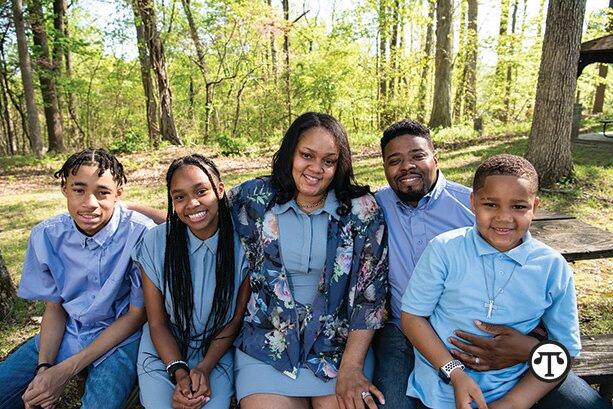
“My mind is always in overdrive [about the availability of blood] because sickle cell disease can impact the body of patients differently and at any time,” he said.
What You Can Do
Dandridge often encourages those who are eligible to schedule an appointment to donate blood and for those on the fence, he believes a picture is worth a thousand words.
“I would show them pictures of my children as well as a picture of myself following the strokes and let them know that if it weren’t for [blood] donations, I and others like myself would possibly die. Anyone who can give, please consider doing so. You never know whose life you may be saving.”
How to Help
To schedule an appointment to give blood, visit RedCrossBlood.org/ OurBlood or call 1-800-RED-CROSS (1-800-733-2767). As part of its Sickle Cell Initiative, the Red Cross is providing sickle cell trait screening on all blood donations from self-identified African American donors.
-(NAPSI)
SUITS
STATE OF NEW MEXICO COUNTY OF BERNALILLO
SECOND JUDICIAL DISTRICT COURT
NO. D-202-DM-2022-02402
Steven Fonseca Petitioner, vs. Shannan Boggs Fonseca Respondent, NOTICE OF PENDENCY OF ACTION
STATE OF NEW MEXICO to the above-named Respondent(s).
Greetings:
You are hereby notified that the above-named Petitioner has filed a civil action against you in the above entitled Court and cause, the general object thereof being: Petition of Dissolution of Marraige (without Children)
Unless you enter your appearance in said cause on or before the 10th day of July, 2023, a judgment by default will be entered against you.
Name and address of Petitioner or Petitioner’s Attorney:
Steven Fonseca
6128 McLeod Rd NE #19
Albuquerque, NM 87109
WITNESS the Honorable
AMBER CHAVEZ BAKER, District Judge of the Second Judicial District Court of the State of New Mexico, and the seal of the District Court of Bernalillo County, this 22nd day of May 2023.
KATINA WATSON CLERK OF THE DISTRICT COURT
By: /s/ Jonah Bourqus
Deputy Clerk
HCS Pub. May 26, June 2, 9, 2023
STATE OF NEW MEXICO COUNTY OF Santa Fe FIRST JUDICIAL DISTRICT COURT Case No. D-101DM-2023-00157
Gregory Saunders Petitioner(s), -vsKrimson Saunders Respondent(s), NOTICE OF PENDENCY OF SUIT STATE OF NEW MEXICO to Krimson Saunders Respondent(s).
GREETINGS: YOU ARE
HEREBY NOTIFIED that the above-named Petitioner(s) has (have) filed a civil action against you in the above entitled Court and cause number, the general object thereof being: Kinship Guardianship
If you do not file a response or a responsive pleading in said cause within thirty (30) days after the last publication of this Notice, a default judgment against you may be entered.
Gregory Saunders #11 Entrada De Estevan Santa Fe, NM 87506
(505) 920-3074
Witness the Honorable Broderick Bulman, Shannon, District Court Judge of the First Judicial District Court of the State of New Mexico, and the seal of the District Court of Santa Fe County, this 9 day of May, 2023.
KATHLEEN VIGIL
CLERK OF THE DISTRICT COURT
By: /s/ Edith Suarez-Munoz
Deputy Clerk HCS Pub. June 9, 16, 23, 2023
NO. D-202-CV-2022-06961
KIRTLAND CREDIT UNION, Plaintiff, v.
LEDARIUS BY RIQUE TILLMAN and JOHN DOE, Defendants. NOTICE OF PENDENCY OF ACTION
THE STATE OF NEW MEXICO TO THE FOLLOWING
NAMED OR DESIGNATED
DEFENDANT:
Ledarius By Rique Tillman
GREETINGS DEFENDANT(S):
You are hereby notified that Kirtland Credit Union, as Plaintiff, has filed an action in the Second Judicial District Court of Bernalillo County, New Mexico, and wherein the said Plaintiff seeks to obtain constructive service of process upon you.
The general object of said action is: Civil Complaint for Debt Due and Replevin
You are further notified that unless you serve a pleading or motion in response to the complaint in said cause on or before thirty (30) days after the last publication date, judgment will be entered against you.
The name and post office address of the Attorneys for the Plaintiff is as follows: Aldridge, Hammar & Wexler, P.A., 1212 Pennsylvania, NE, Albuquerque, New Mexico 87110.
WITNESS the Honorable Victor S. Lopez, District Judge of the Second Judicial District Court of the State of New Mexico, and the seal of the District Court of Bernalillo County on 6/6/2023, 2023.
Katina Watson
SECOND JUDICIAL DISTRICT
COURT CLERK OF THE COURT
By: /s/ Patricia Serna
Deputy Clerk HCS Pub. June 9, 16, 23, 2023
ADOPTION
SECOND JUDICIAL DISTRICT COURT
COUNTY OF BERNALILLO
STATE OF NEW MEXICO
CHILDREN’S COURT DIVISION Cause No. SA 2023-06 IN THE MATTER OF THE ADOPTION
PETITION OF Michelle Roybal
NOTICE OF PETITION FOR ADOPTION
TO David Roybal
A Petition for Adoption has been filed in the above-captioned and numbered cause in the Second Judicial District Court, Children’s Court Division, 5100 Second St. NW; Albuquerque, NM 87107.
The minor child who is subject of said petition is Santana Roybal, born 10-19-2015 in Albuquerque, NM to Angel Roybal.
If you intend to contest the adoption shall respond to the Petition within twenty (20) days from the date of service.
FAILURE TO RESPOND SHALL BE TREATED AS A DEFAULT AND YOUR CONSENT TO THE ADOPTION SHALL NOT BE REQUIRED.
KATINA WATSON
Clerk of the District Court
By: /s/ Michele B.
WynnDeputy HCS Pub. June 9, 16, 23, 2023
PROBATE
IN THE MATTER OF THE ESTATE OF JOANNE M. MILLIGAN, Deceased.
NOTICE TO CREDITORS
NOTICE IS HEREBY GIVEN the undersigned has been appointed Personal Representative of the Estate of Joanne M. Milligan, Deceased. All persons having claims against this Estate are required to present their claims within four (4) months after the date of the first publication of this Notice or the claims will be forever barred. Claims must either be presented to the Personal Representative, Pregenzer Baysinger Wideman & Sale, PC, 2424 Louisiana Boulevard NE, Suite 200, Albuquerque, New Mexico 87110, or filed with the Second Judicial District Court, Bernalillo County, 400 Lomas Blvd NW, Albuquerque, New Mexico 87102.
Dated: May 15, 2023.
/s/ Elizabeth Medina Elizabeth Medina, Zia Trust, Inc. 6301 Indian School Rd NE Suite 800 Albuquerque, NM 87110 (505) 881-3338 emedina@ziatrust.com
Personal Representative PREGENZER BAYSINGER WIDEMAN & SALE, PC
By: /s/ Sara R. Traub Sara R. Traub 2424 Louisiana Blvd NE, Suite 200 Albuquerque, NM 87110
Phone: 505-872-0505
Fax: 505-872-1009 straub@pbwslaw.com
Attorneys for Personal Representative

HCS Pub. May 26, June 2, 9, 2023
STATE OF NEW MEXICO
COUNTY OF BERNALILLO
SECOND JUDICIAL DISTRICT COURT
NO. D-202-PB-2023-00230
IN THE MATTER OF THE ESTATE OF ELIZABETH ANNE JOSEY, DECEASED
NOTICE TO CREDITORS
NOTICE IS HEREBY GIVEN that the undersigned has been appointed Personal Representative of this Estate. All persons having claims against this Estate are required to present their claims within four months after the date of the first publication of this Notice or the claims will be forever barred. Claims must be presented either to Samantha R. Finlayson, Attorney for the Personal Representative of the Estate of ELIZABETH ANNE JOSEY, at SWAIM CARLOW & AMES, P.C., 4830 Juan Tabo, N.E., Suite F, Albuquerque, NM 87111, or filed with the SECOND Judicial District Court, Bernalillo County Courthouse, Post Office Box 488, Albuquerque, New Mexico 87103.
Dated: May 17, 2023
/s/ Kathleen Green
KATHLEEN GREEN
Personal Representative
SWAIM CARLOW & AMES, P.C.
By: /s/ Samantha R. Finlayson
Samantha R. Finlayson Attorneys for the Personal Representative of the Estate of ELIZABETH
ANNE JOSEY, Deceased 4830 Juan Tabo, N.E., Suite F Albuquerque, NM 87111 (505) 237-0064
HCS Pub. May 26, June 2, 9, 2023
COURT No. D-202-PB-2023-00285 IN THE MATTER OF THE ESTATE OF DELFINIO GREGORIO TRUJILLO deceased.
NOTICE TO CREDITORS NOTICE IS HEREBY GIVEN the undersigned has been appointed Personal Representative of the Estate of DELFINIO GREGORIO TRUJILLO, deceased. All persons having claims against this estate are required to present their claims within four (4) months after the date of the first publication of this Notice or the claims will be forever barred. Claims must either be presented to the Personal Representative, c/o Lovato Law, PC, 661 Quantum Rd. NE, Suite 10, Rio Rancho, NM 87124, or filed with the Second Judicial District Court located at 400 Lomas Blvd NW, Albuquerque, NM 87102.
Dated: 5/15, 2022
/s/ Santiago T. Trujillo Santiago Toby Trujillo 1828 Henry Circle SW Albuquerque, NM 87105
Submitted by:
LOVATO LAW, P.C.
By: /s/ Edward W. Lovato Edward W. Lovato 661 Quantum Rd. E Suite 10 Rio Rancho, NM 87124 Tel: (505) 738-3777 Edward@lovatolawnm.com
Attorney for Personal
Representative HCS Pub. May 26, June 2, 9, 2023
STATE OF NEW MEXICO COUNTY OF BERNALILLO SECOND JUDICIAL DISTRICT COURT Case No. D-202PB-2023-00347 IN THE MATTER OF THE ESTATE OF DOLORES C. ROMERO, Deceased.
NOTICE TO CREDITORS
NOTICE IS HEREBY GIVEN that the undersigned has been appointed as Personal Representative of this Estate. All persons having claims against this Estate are required to present their claims within four (4) months after the date of the last publication of this Notice or their claims will be forever barred. Claims must be presented either to Erlinda T. Reyes Alicea, Personal Representative, c/o the Law Office of Benjamin Hancock, One Towne Centre, 6121 Indian School Road NE, Suite 206, Albuquerque, NM 87110, or filed with the Second Judicial District Court of Bernalillo County, New Mexico.
DATED: May 18, 2023
/s/ Erlinda T Reyes-Alicea
Personal Representative
Prepared by: LAW OFFICE OF BENJAMIN HANCOCK, P.C. /s/ Benjamin Hancock 6121 Indian School Road NE, Suite 206 Albuquerque, NM 87110 505-508-4343 ben@benhancocklaw.com
Attorney for Applicant Erlinda T Reyes-Alicea HCS Pub. May 26, June 2, 9, 2023
NOTICE IS HEREBY GIVEN that the undersigned has been appointed as Personal Representative of this Estate. All persons having claims against this Estate are required to present their claims within four (4) months after the date of the last publication of this Notice or their claims will be forever barred. Claims must be presented either to the Personal Representative Benjamin Hancock, Esq., Law Office of Benjamin Hancock, One Towne Centre, 6121 Indian School Road NE, Suite 206, Albuquerque, NM 87110, or filed with the Second Judicial District Court of Bernalillo County, New Mexico.
DATED: May 4, 2023
/s/ Benjamin Hancock Personal Representative Prepared by : LAW OFFICE OF BENJAMIN HANCOCK, P.C.
/s/ Benjamin Hancock 6121 Indian School Road NE, Suite 206 Albuquerque, NM 87110 505-508-4343 ben@benhancocklaw.corn
Personal Representative HCS Pub. May 26, June 2, 9, 2023
SECOND JUDICIAL DISTRICT COURT STATE OF NEW MEXICO COUNTY OF BERNALILLO Case No. D-202PB-2022-00864
IN THE MATTER OF THE ESTATE OF JERROLD A. GOFFE, a/k/a JERRY GOFFE, Deceased.
NOTICE TO CREDITORS NOTICE IS HEREBY GIVEN the undersigned has been appointed Personal Representative of the Estate of Jerrold a. Goffe, a/k/a
Jerry Goffe, Deceased. All persons having claims against this Estate are required to present their claims within four (4) months after the date of the first publication of this Notice or the claims will be forever barred. Claims must either be presented to the Personal Representative, c/o Cristy J. Carbón-Gaul, 10515 4th Street N.W., Albuquerque, New Mexico 87114, or filed with the Second Judicial District Court, Bernalillo County, 400 Lomas Blvd NW, Albuquerque, New Mexico 87102.
Dated: November 9, 2022.
/s/ Rachel Solis
RACHEL SOLIS 445 Elm Street Middleton, ID 83644 (208) 703-4051 rsolis1313@gmail.com
Personal Representative THE LAW OFFICE OF CRISTY J.CARBÓN-GAUL
By: /s/ Cristy J. Carbón-Gaul Cristy J. Carbón-Gaul 10515 4th Street NW Albuquerque, New Mexico 87114 (505) 899-5696
Attorney for Petitioner HCS Pub. May 26, June 2, 9, 2023
file their claims within four months after the date of the first publication of this notice or their claims may be barred. Claims may be filed with the personal representatives or may be filed with the clerk, and a copy of the claim mailed to the personal representatives. HCS Pub. May 26, June 2, 9, 2023
SECOND JUDICIAL DISTRICT COURT
COUNTY OF BERNALILLO STATE OF NEW MEXICO
Cause No.: D-202PB-2023-00188 IN THE MATTER OF THE ESTATE OF GEORGIA LEE CUNICO, Deceased.
NOTICE TO CREDITORS
NOTICE IS HEREBY GIVEN that the undersigned has been appointed Personal Representative of this estate. All persons having claims against this estate are required to present their claims within four months after the date of the first publication of this Notice or the claims will be forever barred. Claims must be presented either to the undersigned Personal Representative, c/o AHR LAW OFFICES, P.C., 6707 Academy Road NE - Suite A, Albuquerque, New Mexico 87109, or filed with the Bernalillo County District Court Clerk, PO Box 488, Bernalillo County Courthouse, Albuquerque, New Mexico 87003. DATED this 22nd day of May, 2023.
/s/ Dean A. Cunico DEAN ALLEN CUNICO Personal Representative of the Estate of GEORGIA LEE CUNICO, Deceased
SUBMITTED BY: AHR LAW OFFICES, P.C.
By: /s/ Lewis J. Terr Lewis J. Terr Attorney for the Estate of GEORGIA LEE CUNICO
6707 Academy Road NESuite A Albuquerque, NM 87109
Phone: (505) 821-5122
Fax: (505) 821-6868
HCS Pub. May 26, June 2, 9, 2023
STATE OF NEW MEXICO COUNTY OF BERNALILLO IN THE SECOND JUDICIAL DISTRICT COURT CAUSE NO. D-202PB-2023-00361 IN THE MATTER OF THE ESTATE OF BERNICE L. HAYES, Deceased.
STATE
STATE OF NEW MEXICO
STATE OF NEW MEXICO COUNTY OF BERNALILLO SECOND JUDICIAL DISTRICT COURT Case No. D-202PB-2023-00297 IN THE MATTER OF THE ESTATE OF SCOTT A. BAXTER, Deceased.
State of New Mexico County of Bernalillo NO. 2023-0459
Estate of Lewis K. Renfro
Deceased
NOTICE TO CREDITORS
Notice is given that on April 4, 2023, Lewis K. Renfro, passed away. Therefore Kristy Renfro and Sabrina Johns-Traylor, are appointed as personal representatives of the estate of Lewis K. Renfro, mailing address is 1408 Walter St. SE, Albuquerque NM 87102. All creditors of decedent must
NOTICE TO KNOWN CREDITORS NOTICE IS HEREBY GIVEN that the undersigned has been appointed Personal Representative of this Estate. All persons having claims against this Estate are required to present their claims within four (4) months after the date of the first publication of any published Notice to Creditors or the date of mailing or the delivery of this Notice, whichever is later, or the claims will be forever barred. Claims must be presented either to the undersigned Personal Representative at the address listed below, or filed with the Second Judicial District Court, Bernalillo County Courthouse, Albuquerque, New Mexico with a copy to the undersigned.
Dated: May 18, 2023
/s/ Ryan Toovey RYAN P. TOOVEY
Personal Representative
/s/ William J. Lock
WILLIAM J. LOCK
Attorney for Applicant
5732 Osuna Road NE
Albuquerque, NM 87109
(505) 880-1200 Voice
(505) 881-2444 Fax
HCS Pub. May 26, June 2, 9, 2023
STATE OF NEW MEXICO COUNTY OF BERNALILLO IN THE SECOND JUDICIAL DISTRICT COURT CAUSE NO. D-202PB-2023-00313 IN THE MATTER OF THE ESTATE OF George R. Robertson II, Deceased.
NOTICE TO KNOWN CREDITORS
NOTICE IS HEREBY GIVEN that the undersigned has been appointed Personal Representative of this Estate. All persons having claims against this Estate are required to present their claims within four (4) months after the date of the first publication of any published notice to creditors or the date of mailing or the delivery of this notice, whichever is later, or the claims will be forever barred. Claims must be presented either to the undersigned Personal Representative at the address listed below, or filed with the Second Judicial District Court, Bernalillo County Courthouse, Albuquerque, New Mexico.
Dated: May 12, 2023
/s/ Lucy Kim Robertson
Lucy Kim Robertson
Personal Representative
/s/ William J. Lock
WILLIAM J. LOCK
Attorney for Personal Representative
5732 Osuna Road NE Albuquerque, NM 87109
(505) 880-1200 Voice
(505) 881-2444 Fax
HCS Pub. May 26, June 2, 9, 2023
STATE OF NEW MEXICO COUNTY OF DONA ANA
THIRD JUDICIAL DISTRICT COURT
No. D-307-PB-2023-00124
Judge: Martin, James T. IN THE MATTER OF THE ) ESTATE ) OF JIMMY JOE LYTLE, )
Deceased. )
NOTICE TO CREDITORS
NOTICE IS HEREBY GIVEN that the undersigned JOSEPHINE LYTLE has been appointed Personal Representative of this estate. All persons having claims against this estate are required to present their claims within four (4) months after the date of the first publication of this Notice or the claims will be forever barred. Claims must be presented either to the Personal Representative
c/o The Law Offices of Dana
M. Kyle, P.O. Box 2277, Las Cruces, New Mexico 88004, or filed with the Third Judicial District Court of Dona Ana County, 201 W. Picacho, Suite A, Las Cruces, New Mexico 88005. Dated this 23 day of May, 2023.
/s/ Josephine Lytle
JOSEPHINE LYTLE, Personal Representative of the Estate of JIMMY JOE LYTLE, deceased.
Prepared by:
The Law Offices of Dana M. Kyle, P.A.
/s/ Dana M. Kyle Dana M. Kyle
P.O. Box 2277
Las Cruces, New Mexico 88004-
2277
(575) 525-0020
(575) 525-0017 fax
Attorney for Personal
Representative New Mexico Bar No. 8285
HCS Pub. June 2, 9, 16, 2023
STATE OF NEW MEXICO COUNTY OF BERNALILLO IN THE SECOND JUDICIAL DISTRICT COURT CAUSE NO. D-202·PB-2022-00761 IN THE MATTER OF THE ESTATE OF SONDRA R. MEIZLESH, Deceased. AMENDED NOTICE OF HEARING ON PETITION FOR FORMAL ADMINISTRATION OF ESTATE, DETERMINATION OF HEIRS, AND APPOINTMENT OF PERSONAL REPRESENTATIVE
TO: Glenn E. Meizlesh, and all unknown heirs devisees and all persons whose addresses are unknown who have any interest in the matters being litigated, NOTICE IS HEREBY GIVEN, that the undersigned has filed with the above-named Court, a Petition for Formal Administration of Estate, Determination of Heirs, and Appointment of Personal Representative.
The hearing has been set to consider such Petition on Monday, July 10, 2023, at the hour of 10:00 a.m., at the Bernalillo County Courthouse, Albuquerque, New Mexico, before the Honorable Daniel E. Ramczyk, District Court Judge.
/s/ William J. Lock
WILLIAM J. LOCK
Attorney for Petitioner 5732 Osuna Road NE Albuquerque, NM 87109
(505) 880-1200 Voice
(505) 881-2444 Fax
**TELEPHONIC- PARTIES ARE DIRECTED TO CALL
1-800-747-5150 AND ENTER ACCESS CODE 4340781 AT THE TIME OF THE HEARING** HCS Pub. June 2, 9, 16, 2023
STATE OF NEW MEXICO COUNTY OF BERNALILLO
SECOND JUDICIAL DISTRICT COURT
No. D-202-PB-2023-00318
IN THE MATTER OF THE ESTATE OF RICHARD L. CHAVEZ, Deceased.
NOTICE TO CREDITORS
NOTICE IS HEREBY GIVEN that Iliana Carrillo and Sophia DerrickChavez have been appointed co-personal representatives of this estate. All persons having claims against this estate are required to present their claims within four (4) months after the date of the first publication of this notice or within sixty (60) days after mailing or other delivery of this notice, whichever is later, or the claims will be forever barred. Claims must be presented either to: 1) the undersigned personal representative at their attorney’s address as listed below; or 2) filed with the Second Judicial District Court at the following address: 400 Lomas Blvd NW, Albuquerque, New Mexico 87102.
DATED: May 25, 2023
Respectfully submitted, HURLEY TOEVS STYLES
HAMBLIN & PANTER PA
By Electronically signed /s/ Mandeep S. Talwar Mandeep S. Talwar, Esq. PO Box 31670 Albuquerque, NM 87109 (505) 888-1188
Attorneys for Co-Personal Representative
Iliana Carrillo
HCS Pub. June 2, 9, 16, 2023
SECOND JUDICIAL DISTRICT COURT
COUNTY OF BERNALILLO STATE OF NEW MEXICO NO. D-202-PB-2023-00228
IN THE MATTER OF THE ESTATE OF ELIZABETH ROSEANN HOULIHAN, Deceased.
NOTICE TO CREDITORS
No. D-1329-PB-2023-00084 IN THE MATTER OF THE ESTATE OF FRANCES GAIL GAEDE, DECEASED
NOTICE TO CREDITORS NOTICE IS HEREBY GIVEN that Wayne A. Gaede has been appointed personal representative of this estate. All persons having claims against this estate are required to present their claims within four (4) months after the date of the first publication of this notice or within sixty (60) days after mailing or other delivery of this notice, whichever is later, or the claims will be forever barred. Claims must be presented either to: 1) the undersigned personal representative at his attorney’s address as listed below; or 2) filed with the Thirteenth Judicial District Court at the following address: 1500 Idalia Rd. Bldg. A. Bernalillo, New Mexico 87004.
DATED: May 23, 2023
Respectfully submitted, HURLEY TOEVS STYLES HAMBLIN & PANTER PA
By Electronically signed /s/ Thomas H. Toevs Thomas H. Toevs, Esq. Attorneys for Personal Representative PO Box 31670 Albuquerque, NM 87109 (505) 888-1188 HCS Pub. June 2, 9, 16, 2023
STATE OF NEW MEXICO COUNTY OF BERNALILLO SECOND JUDICIAL DISTRICT COURT
Probate No.
D-202- PB-2022- 00930
IN THE MATTER OF THE ESTATE OF JUAN M. ALVARADO JR., DECEASED
NOTICE TO CREDITORS
NOTICE IS HEREBY GIVEN that the undersigned has been appointed personal representative of this estate. All persons having claims against this estate are required to present their claims within four (4) months after the date of the first publication of this notice, or the claims will be forever bared. Claims must be presented either to the undersigned personal representative in care of her attorney, Stewart C. Butler at the addresses listed below, or filed with the Second Judicial District Court, County of Bernalillo, State of New Mexico, located at the following address: 400 Lomas NW, Albuquerque, NM 87102.
Dated: 04-10-23
/s/ Stewart C. Butler Stewart C. Butler Attorney for Personal Representative 5732 Osuna Rd NE Albuquerque, NM 87109 Phone (505) 266-5056
Email: sbutler@sblnm.com
/s/ Martin Brian Pecorella Martin Brian Pecorella, Personal Representative of the Estate of MICHELE SUZANNE PECORELLA HCS Pub. June 2, 9, 16, 2023
STATE OF NEW MEXICO IN THE PROBATE COURT BERNALILLO COUNTY No. 2023-0482 IN THE MATTER OF THE ESTATE OF THOMAS FRANCIS. GROWNEY a/k/a THOMAS F. GROWNEY, DECEASED.
to present their claims within four (4) months after the date of the first publication of any published notice to creditors or sixty (60) days after the date of mailing or other delivery of this notice, whichever is later, or the claims will be forever barred. Claims must be presented either to counsel for the personal representative, Thomas Smidt III, Smidt, Reist & Keleher, P.C., 4811-A Hardware Drive NE, Suite 4, Albuquerque, New Mexico 87109, or filed with the Bernalillo County Probate Court, located at the following address: 415 Silver Ave SW, 2nd Floor, Albuquerque, NM 87102. Dated: May 22, 2023.
SMIDT, REIST & KELEHER, P.C.
By: /s/ Thomas Smidt III
Thomas Smidt III
Attorney for Personal Representative 4811-A Hardware Drive NE, Suite 4 Albuquerque, NM 87109 (505) 830-2200 tsmidt3@srklawnm.com HCS Pub. June 2, 9, 16, 2023
STATE OF NEW MEXICO COUNTY OF BERNALILLO SECOND JUDICIAL DISTRICT COURT
Probate No. D-202- PB-2023,-00366 IN THE MATTER OF THE ESTATE OF ROBERT G. MILLER, DECEASED
NOTICE TO CREDITORS
STATE OF NEW MEXICO COUNTY OF BERNALILLO SECOND JUDICIAL DISTRICT COURT No. D-202- PB-2023-000264 IN THE MATTER OF THE ESTATE OF DAVID BRUCE SIEBERS, DECEASED.
NOTICE TO CREDITORS
NOTICE IS HEREBY GIVEN that Melissa Siebers, Carolyn A. Siebers, and Bernard H. Siebers, Jr., have been appointed Personal Representative of the Estate of Decedent. All persons having claims against the Estate of Decedent are required to present their claims within four (4) months after the date of the first publication of any published notice to creditors, or the claims will be forever barred. Claims must be either be presented to Personal Representative, c/o The Law Offices of Erika
E. Anderson, 105 Bryn Mawr Drive SE Albuquerque, New Mexico 87106, or filed with the Second Judicial District Court located at 400 Lomas Blvd. NW, Albuquerque, New Mexico 87102.
PREPARED BY:
LAW OFFICES OF ERIKA E.
ANDERSON
By: /s/ Erika E. Anderson Erika E. Anderson, Esq.Mitchel J. Olson,
Esq.105 Byrn Mawr Dr. SE Albuquerque, NM 87106
Telephone: (505) 944-9039
erika@eandersonlaw.com
mitchel@enadersonlaw.com
Attorneys for Personal
NOTICE IS HEREBY GIVEN that ZIA TRUST, INC. has been appointed as Personal Representative of this estate. Any person having a claim against this estate is required to present his/her claim within four (4) months after the date of the first publication of this Notice or his/her claim will be forever barred. Claims must be either (a) presented by mail or in person to the Personal Representative at the offices of the attorneys for the estate (Wilcox & Myers, P.C., Post Office Box 70238, Albuquerque, New Mexico 87197, or 320 Osuna Road NE, Suite C-2, Albuquerque, New Mexico 87107, Attn: Jeffrey D. Myers, Esq.), or (b) filed with the Second Judicial District Court, Bernalillo County, Post Office Box 488, Albuquerque, New Mexico 87103, or 400 Lomas, N.W., Albuquerque, New Mexico 87102.
DATED: April 13, 2023
ZIA TRUST, INC.
/s/ Mary Ann Cuneo
MARY ANN CUNEO, VP and Senior Trust Officer WILCOX & MYERS, P.C.
Attorneys for the Estate
/s/ Jeffrey D. Meyers
JEFFREY D. MYERS, M.S.,
J.D. Post Office Box 70238 Albuquerque, New Mexico 87197
(505) 554-1115
HCS Pub. June 2, 9, 16, 2023
STATE OF NEW MEXICO COUNTY OF SANDOVAL
NOTICE IS HEREBY GIVEN that the undersigned has been appointed Personal Representative of this Estate. All persons having claims against this Estate are required to present their claims within four months after the date of the first publication of this Notice or the claims will be forever barred. Claims must be presented either to Kathleen Carlow, Esq., attorney for the Personal Representative of the Estate of JUAN M. ALVARADO JR., at SWAIM DANNER & CARLOW, 4830 Juan Tabo, N.E., Suite F, Albuquerque, NM 87111, or filed with the Second Judicial District Court, Bernalillo County Courthouse, Post Office Box 488, Albuquerque, New Mexico 87103.
Dated: 11/07, 2022 /s/ Angelina Alvarado
Angelina Alvarado Personal Representative SWAIM, CARLOW & AMES, P.C.
By: /s/ Kathleen Carlow
Kathleen Carlow, Esq. Attorneys for the Personal Representative of the Estate of JUAN M. ALVARADO JR., Deceased 4830 Juan Tabo, N.E., Suite F Albuquerque, NM 87111 (505) 237-0064 HCS Pub. June 2, 9, 16, 2023
STATE OF NEW MEXICO COUNTY OF BERNALILLO SECOND JUDICIAL DISTRICT COURT Case No. D-202PB-2023-00287 IN THE MATTER OF THE ESTATE OF MICHELE SUZANNE PECORELLA, DECEASED.
TO CREDITORS
NOTICE TO CREDITORS NOTICE IS HEREBY GIVEN that THOMAS D. GROWNEY has been appointed personal representative of the estate of the decedent. All persons having claims against the estate of the decedent are required to present their claims within four (4) months after the date of the first publication of any published notice to creditors or sixty (60) days after the date of mailing or other delivery of this notice, whichever is later, or the claims will be forever barred. Claims must be presented either to counsel for the personal representative, Thomas Smidt III, Smidt, Reist & Keleher, P.C., 4811-A Hardware Drive NE, Suite 4, Albuquerque, New Mexico 87109, or filed with the Bernalillo County Probate Court, located at the following address: 415 Silver Ave SW, 2nd Floor, Albuquerque, NM 87102. Dated: May 10, 2023.
SMIDT, REIST & KELEHER,, P.C.
By: /s/ Thomas Smidt III
Thomas Smidt III
Attorney for Personal Representative 4811-A Hardware Drive NE, Suite 4 Albuquerque, NM 87109 (505) 830-2200
tsmidt3@srklawnm.com
HCS Pub. June 2, 9, 16, 2023
STATE OF NEW MEXICO IN THE PROBATE COURT
BERNALILLO COUNTY No. 20230530
IN THE MATTER OF THE ESTATE OF JOHN C. KEOHANE A/K/A JACK KEOHANE, DECEASED.
NOTICE TO CREDITORS NOTICE IS HEREBY GIVEN that CHRISTA J. STONE has been appointed personal representative of the estate of the decedent. All persons having claims against the estate of the decedent are required
NOTICE IS HEREBY GIVEN that the undersigned has been appointed Personal Representative of his Estate. All persons having claims against his Estate are required to present their claims within four months after the date of the first publication of his Notice or the claims will be forever barred. Claims must be presented either to Joel P. Ames, Attorney for the Personal Representative of the Estate of ROBERT G. MILLER, at SWAIM, CARLOW & AMES, P.C., 4830 Juan Tabo, NE, Suite F, Albuquerque, NM 87111, or filed with the Second Judicial District Court, Bernalillo County Courthouse, Post Office Box 488, Albuquerque, New Mexico 87103.
Dated: May 26, 2023
/s/ Todd M. Miller
TODD M. MILLER Personal Representative SWAIM, CARLOW & AMES, P.C.
/s/ Joel P. Ames
Joel P. Ames
Attorneys for the Personal Representative of the Estate of ROBERT G. MILLER, Deceased 4830 Juan Tabo, N.E., Suite F Albuquerque, NM 87111 (505) 237-0064
HCS Pub. June 2, 9, 16, 2023
STATE OF NEW MEXICO COUNTY OF BERNALILLO SECOND JUDICIAL DISTRICT COURT
PROBATE NO. D-202PB-2023-00357
IN THE MATTER OF THE ESTATE OF LOURDES BERNADITA GUTIERREZ, DECEASED
NOTICE TO CREDITORS
Betty Jean Villa, has been appointed Personal Representative of the Estate of Lourdes Bernadita Gutierrez. All persons having claims against this Estate are required to present their claims within four months after the date of the first publication of this
Notice or the claims will be forever barred. Claims must be presented either to the Personal Representative c/o Richmond
L. Neely, Esq., P.O. Box 25685, Albuquerque, NM 87125, or filed with the Second Judicial District Court, 400 Lomas NW, Albuquerque, NM 87120.
/s/ Richmond L. Neely
RICHMOND L. NEELY
Attorney for Estate of Lourdes
Bernadita Gutierrez
P. O. Box 25685 Albuquerque, NM 87125
(505) 243-3727
HCS Pub. June 2, 9, 16, 2023
STATE OF NEW MEXICO
IN THE PROBATE COURT
BERNALILLO COUNTY No. 2023 0544
IN THE MATTER OF THE ESTATE OF THEODORE CARL SCHREIN, Deceased.
NOTICE TO CREDITORS
SUZANNA L. SCHREIN, has been appointed Personal Representative of the Estate of THEODORE CARL SCHREIN, deceased. All persons having claims against this Estate are required to present their claims within four (4) months after the date of the first publication of any published notice to creditors or sixty (60) days after the date of mailing or other delivery of this notice, whichever is later, or the claims will be forever barred. Claims must be presented to
SUZANNA L. SCHREIN 698 Plata Dr. SE, Rio Rancho, NM 87124, or to Walk-In Wills Carlisle, P.C. (Chelsea E. Allen, Esq.) at 2000 Carlisle Blvd NE, Suite G, Albuquerque, NM 87110, and may be filed with the Probate Court of Bernalillo County, New Mexico.
Dated: MAY 22 2023
/s/ Suzanna L Schrein
SUZANNA L. SCHREIN
Personal Representative
Walk-In Wills Carlisle, P.C.
By /s/ Chelsea E. Allen Chelsea E. Allen, Esq. 2000 Carlisle Blvd NE, Suite G Albuquerque, New Mexico 87110
(505) 903-7000
Attorneys for Personal Representative HCS Pub. June 2, 9, 16, 2023
STATE OF NEW MEXICO
CUONTY OF BERNALILLO
SECOND JUDICIAL DISTRICT COURT NO. d-202-pb-2023-00382 IN THE MATTER OF THE ESTATE OF ROSEMARY MAGURE, DECEASED.
NOTICE TO CREDITORS
NOTICE IS HEREBY GIVEN that the undersigned has been appointed Personal Representative of this estate. All persons having claims against this estate are required to present their claims within two months after the date of the first publication of this Notice or the claims will be forever barred. Claims must be presented either to the undersigned personal representative at 1656 North El Camino, Tempe, AZ 85288 or filed with the District Court, Post Office Box 488, Albuquerque, New Mexico, 87103.
DATED: 05/15/2023
/s/ Dominic Johnson
DOMINIC JOHNSON
1656 North El Camino
Tempe, AZ 85288
BY: /S/ Cynthia Sikelianos
JOHANNA A. PICKEL, LLC
Cynthia Sikeliianos
Attorney for Applicant
4801 Lang Avenue NE,
Suite 110 Albuquerque, New Mexico 87109
(505) 798-2515
HCS Pub. June 2, 9, 16, 23, 2023
IN THE PROBATE COURT COUNTY OF BERNALILLO STATE OF NEW MEXICO Probate No. 20230522 IN THE MATTER OF THE ESTATE OF BRENDA JOYCE USSERY, Deceased.
NOTICE TO CREDITORS
NOTICE IS HEREBY GIVEN that the undersigned has been appointed Personal Representative of this Estate. All persons having claims against this Estate are required to present their claims within four months after the date of the first publication of this Notice or the claims will be forever barred. Claims must be presented to the undersigned Personal Representative at 2214 Sun Ranch Loop, Los Lunas, NM 87031 or filed with the BERNALILLO County Probate Court, 415 Silver Ave SW, Albuquerque, NM 87102.
DATED: May 31, 2023
/s/: Paul W. Ussery PAUL W. USSERY Personal Representative of the Estate of BRENDA JOYCE USSERY, Deceased.
/s/: Gregory Baca Gregory Baca BACA LAW OFFICES 2214 Sun Ranch Loop Los Lunas, NM 87031 (505) 659-1133
HCS Pub. June 9, 16, 23, 2023
STATE OF NEW MEXICO COUNTY OF BERNALILLO IN THE SECOND JUDICIAL DISTRICT COURT CAUSE NO. D-202PB-2023-00341 IN THE MATTER OF THE ESTATE OF E. Lorraine Frank, deceased.
NOTICE TO KNOWN CREDITORS
NOTICE IS HEREBY GIVEN that the undersigned has been appointed Personal Representative of this Estate. All persons having claims against this Estate are required to present their claims within four (4) months after the date of the first publication of any published notice to creditors or the date of mailing or the delivery of this notice, whichever is later, or the claims will be forever barred. Claims must be presented either to the undersigned Personal Representative at the address listed below, or filed with the Second Judicial District Court, Bernalillo County Courthouse, Albuquerque, New Mexico.
Dated: May 31, 2023
/s/ Martha Virginia Rose
MARTHA VIRGINIA ROSE
/s/ William J. Lock
WILLIAM J. LOCK
Attorney for Applicant
5732 Osuna Road NE Albuquerque, NM 87109 (505) 880-1200 Voice
(505) 881-2444 Fax
HCS Pub. June 9, 16, 23, 2023
NOTICE IS HEREBY GIVEN
that the undersigned has been appointed personal representative of this estate. All persons having claims against this estate are required to present their claims within four months after the date of the first publication of this Notice or the claims will be forever barred. Claims must be presented either to the Personal Representative at the address shown below, or filed with the District Court of Bernalillo County, New Mexico. Moses, Dunn, Farmer & Tuthill, P.C.
Attn: Estate of Erma Felix c/o Kathleen T. Ahghar
P.O. Box 27047
Albuquerque, NM 87125-7047
Dated: May 31, 2023
/s/ Brenda Ann Tye
BRENDA ANN TYE
Personal Representative
MOSES, DUNN, FARMER, & TUTHILL, P.C.
By /s/ Kathleen T. Ahghar_ Kathleen T. Ahghar
Attorneys for Personal Representative
P.O. Box 27047 Albuquerque, NM 87125-7047 Telephone (505) 843-9440
HCS Pub. June 9, 16, 23, 2023
STATE OF NEW MEXICO COUNTY OF DONA ANA THIRD JUDICIAL DISTRICT COURT
No. D-307-PB-2023-00131 Judge Fitch, Casey B. IN THE MATTER OF THE ) ESTATE OF ) RICHARD TRUJILLO, a/k/a ) RICHARD J. TRUJILLO, ) Deceased. )
NOTICE TO CREDITORS
NOTICE IS HEREBY GIVEN that the undersigned JULIE A. TRUJILLO has been appointed Personal Representative of this estate. All persons having claims against this estate are required to present their claims within four (4) months after the date of the first publication of this Notice or the claims will be forever barred. Claims must be presented either to the Personal Representative c/o The Law Offices of Dana M. Kyle, P.O. Box 2277, Las Cruces, New Mexico 88004, or filed with the Third Judicial District Court of Dona Ana County, 201 W. Picacho, Suite A, Las Cruces, New Mexico 88005. Dated this 25 day of May, 2023.
/s/ Julie A. Trujillo
JULIE A. TRUJILLO, Personal Representative of the Estate of RICHARD TRUJILLO, a/k/a RICHARD J. TRUJILLO, deceased.
Prepared by:
The Law Offices of Dana M. Kyle, P.A.
/s/ Dana M. Kyle Dana M. Kyle P.O. Box 2277 Las Cruces, New Mexico 880042277
(575) 525-0020
(575) 525-0017 fax
Attorney for Personal Representative New Mexico Bar No. 8285
HCS Pub. June 9, 16, 23, 2023
Representative of this estate. All persons having claims against this estate are required to present their claims within four months after the date of the first publication of this Notice or within sixty days after the mailing or other delivery of this notice, whichever is later, or the claims will be forever barred. Claims must be presented either to the Personal Representative at 8801 Horizon Blvd. NE, Suite 340, Albuquerque, New Mexico 87113, or filed with the Bernalillo County District Court.
DATED: May 30, 2023
/s/ Gary D. Eisenberg Gary D. Eisenberg BETZER, ROYBAL & EISENBERG LLC
Attorneys for Personal Representative 8801 Horizon Blvd. NE, Suite 340 Albuquerque, NM 87113 Telephone: (505) 797-0105
HCS Pub. June 9, 16, 23, 2023
STATE OF NEW MEXICO COUNTY OF BERNALILLO SECOND JUDICIAL DISTRICT COURT No. D-202-PB-2023-00371 IN THE MATTER OF THE ESTATE OF MARILYN JEAN CHRISTENSON, DECEASED NOTICE TO CREDITORS NOTICE IS HEREBY GIVEN that ANTHONY CHRISTENSON and GREGORY CHRISTENSON have been appointed copersonal representatives of this estate. All persons having claims against this estate are required to present their claims within four (4) months after the date of the first publication of this notice or within sixty (60) days after mailing or other delivery of this notice, whichever is later, or the claims will be forever barred. Claims must be presented either to: 1) the undersigned personal representative at their attorney’s address as listed below; or 2) filed with the Second Judicial District Court at the following address: 400 Lomas Blvd NW, Albuquerque, New Mexico 87102.
DATED: June 1, 2023
Respectfully submitted, HURLEY TOEVS STYLES HAMBLIN & PANTER PA
By Electronically signed /s/ Vincent M. Haslam Vincent M. Haslam, Esq. Attorneys for Personal Representative PO Box 31670 Albuquerque, NM 87109 (505) 888-1188 HCS Pub. June 9, 16, 23, 2023
STATE OF NEW MEXICO PROBATE COURT BERNALILLO COUNTY No. 2023 0565 IN THE MATTER OF THE ESTATE OF OSILA ESTER LUCERO, Deceased.
Jauregui, Esq.) at 2000 Carlisle Blvd NE, Suite G, Albuquerque, NM 87110, and may be filed with the Probate Court of Bernalillo County, New Mexico.
Dated: June 5, 2023
/s/ John E. Lucero, Jr. JOHN E. LUCERO, JR.,
Personal Representative Walk-In Wills Carlisle, P.C.
By /s/ Carlos A. Jauregui
Carlos A. Jauregui, Esq. 2000 Carlisle Blvd NE, Suite G Albuquerque, New Mexico 87110 (505) 903-7000
Attorneys for Personal Representative HCS Pub. June 9, 16, 23, 2023
STATE OF NEW MEXICO COUNTY OF DONA ANA THIRD JUDICIAL DISTRICT COURT No. D-307-PB-2023-00132
Judge Martin, James T. IN THE MATTER OF THE ) ESTATE OF ) LYNN THOMAS, a/k/a )
LYNN PIER THOMAS, a/k/a ) LYNN ESTHER THOMAS, ) Deceased. )
NOTICE TO CREDITORS
NOTICE IS HEREBY GIVEN that the undersigned ROBERT VAN NORMAN, a/k/a ROBERT W. VAN NORMAN, has been appointed Personal Representative of this estate. All persons having claims against this estate are required to present their claims within four (4) months after the date of the first publication of this Notice or the claims will be forever barred. Claims must be presented either to the Personal Representative c/o The Law Offices of Dana M. Kyle, P.O. Box 2277, Las Cruces, New Mexico 88004, or filed with the Third Judicial District Court of Dona Ana County, 201 W. Picacho, Suite A, Las Cruces, New Mexico 88005. Dated this 5 day of June, 2023. /s/ Robert W. Van Norman ROBERT VAN NORMAN, a/k/a
ROBERT W. VAN NORMAN, Personal Representative of the Estate of LYNN THOMAS, a/k/a LYNN PIER THOMAS, a/k/a LYNN ESTHER THOMAS, deceased.
Prepared by:
The Law Offices of Dana M.
Kyle, P.A. /s/ Dana M. Kyle Dana M. Kyle P.O. Box 2277 Las Cruces, New Mexico 880042277 (575) 525-0020 (575) 525-0017 fax
Attorney for Personal Representative New Mexico Bar No. 8285
HCS Pub. June 9, 16, 23, 2023
STATE OF NEW MEXICO COUNTY OF SANDOVAL THIRTEENTH JUDICIAL
DISTRICT No. D-1329-PB-2023-00086
Claims must be presented either to the undersigned Personal Representative at the address listed below, or filed with the Thirteenth Judicial District Court, Sandoval County, 1500 Idalia Road, Building A, PO Box 600, Bernalillo, NM 87004. /s/ Danny Brawner DANNY BRAWNER, III, PERSONAL REPRESENTATIVE OF THE ESTATE OF DIANNA KIM TORRES a/k/a DIANNA KIM CASTILLO, DECEASED 5901 Carlos Rey Circle SW Albuquerque, NM 87121 CAVIN & INGRAM, P.A.
By: /s/ Scott S Morgan Scott S Morgan P.O. Box 1216 Albuquerque, NM 87103 (505) 243-5400 smorgan@cilawnm.com
ATTORNEYS FOR PERSONAL REPRESENTATIVE HCS Pub. June 9, 16, 23, 2023
STATE OF NEW MEXICO COUNTY OF BERNALILLO SECOND JUDICIAL DISTRICT COURT No. D-202-PB-2023-00385
IN THE MATTER OF THE ESTATE OF NANCY L. WARNES, DECEASED
NOTICE TO CREDITORS NOTICE IS HEREBY GIVEN that Nancy J. Penaloza has been appointed personal representative of this estate. All persons having claims against this estate are required to present their claims within four (4) months after the date of the first publication of this notice or within sixty (60) days after mailing or other delivery of this notice, whichever is later, or the claims will be forever barred. Claims must be presented either to: 1) the undersigned personal representative at his attorney’s address as listed below; or 2) filed with the Second Judicial District Court at the following address: 400 Lomas Blvd. NE, Albuquerque, New Mexico 87102.
DATED: June 6, 2023
Respectfully submitted, HURLEY TOEVS STYLES HAMBLIN & PANTER PA By Electronically signed /s/ Thomas H. Toevs Thomas H. Toevs, Esq. Attorneys for Personal Representative PO Box 31670 Albuquerque, NM 87109 (505) 888-1188 HCS Pub. June 9, 16, 23, 2023
NAME CHANGE
STATE OF NEW MEXICO
STATE OF NEW MEXICO COUNTY OF BERNALILLO
SECOND JUDICIAL DISTRICT COURT NO. D-202-PB-2022-00402 IN THE MATTER OF THE
SECOND JUDICIAL DISTRICT COURT COUNTY OF BERNALILLO STATE OF NEW MEXICO
No. D-202-PB-2023-00383 IN THE MATTER OF THE ESTATE OF LAURA REBECCA MOORE, Deceased
NOTICE TO CREDITORS
NOTICE IS HEREBY GIVEN
that Seana Michelle Moran has been appointed Personal
NOTICE TO CREDITORS JOHN E. LUCERO, JR., has been appointed Personal Representative of the Estate of OSILA ESTER LUCERO, deceased. All persons having claims against this Estate are required to present their claims within four (4) months after the date of the first publication of any published notice to creditors or sixty (60) days after the date of mailing or other delivery of this notice, whichever is later, or the claims will be forever barred. Claims must be presented to JOHN E. LUCERO, JR. at 459 Desert Mist Dr. SW, Albuquerque, NM 87121, or to Walk-In Wills Carlisle, P.C. (Carlos A.
IN THE MATTER OF THE ESTATE OF DIANNA KIM TORRES a/k/a
DIANNA KIM CASTILLO, DECEASED.
NOTICE TO CREDITORS NOTICE IS HEREBY GIVEN that the undersigned has been appointed Personal Representative of this Estate. All persons having claims against this Estate are required to present their claims within four (4) months after the date of the first publication of any published notice to creditors or the date of mailing or other delivery of this notice, whichever is later, or the claims will be forever barred.
COUNTY OF BERNALILLO SECOND JUDICIAL DISTRICT COURT No. D-202-CV 2023 03992 IN THE MATTER OF THE PETITION OF Jessica E. Clawson FOR CHANGE OF NAME OF Aaron Alexander Learnard NOTICE OF PETITION TO CHANGE NAME (OF PERSON UNDER 14 YEARS OF AGE)
NOTICE IS HEREBY GIVEN that Jessica E. Clawson, Resident of the City of Albuquerque, County of Bernalillo, State of New Mexico has filed a Petition to Change Name of his/her child in the Second Judicial District Court, Bernalillo County, New Mexico, wherein he/she seeks to change the name of his/her child as follows:
Current Name Aaron Alexander Learnard
Proposed Name Trevor Alexander Learnard
This Petition will be heard before the Honorable DANIEL E. RAMCZYK, District Judge, on the 10th day of July 2023, at the hour of 8:50 am, at the Bernalillo County Courthouse, 400 Lomas NW, Albuquerque, New Mexico.
**TELEPHONIC-PARTIES
ARE DIRECTED TO CALL
1-800-747-5150 AND ENTER
ACCESS CODE 4340781 AT THE TIME OF THE HEARING**
Respectfully submitted,
/s/ Jessica E. Clawson
Jessica E. Clawson
HCS Pub. June 2, 9, 2023
SECOND JUDICIAL DISTRICT COURT
COUNTY OF BERNALILLO
STATE OF NEW MEXICO
No. CV 2023 03878 IN THE MATTER OF THE PETITION OF JEFFREY WAYNE HURLEY FOR CHANGE OF NAME
NOTICE OF PETITION TO CHANGE NAME (ADULT)
NOTICE IS HEREBY GIVEN that Jeffrey Wayne Hurley, Resident of the City of Albuquerque, County of Bernalillo, State of New Mexico, has filed a Petition to Change Name in the Second Judicial District Court, Bernalillo County, New Mexico, wherein he/she seeks to change his/her name as follows:
Current Name Jeffrey Wayne Hurley
Proposed Name
This Petition will be heard before the Honorable ERIN B. O’CONNELL, District Judge, on the 28th day of June 2023, at the hour of 11:20 am, This hearing will be held telephonically. Please call 1-800-747-5150 and enter code 9254116. Please call 5 minutes before your start time.
Respectfully submitted, /s/ Isabella Araujo
Isabella Araujo HCS Pub. June 2, 9, 2023
STATE OF NEW MEXICO
COUNTY OF BERNALILLO
SECOND JUDICIAL DISTRICT COURT
No. D-202-CV 2023 03876 IN THE MATTER OF THE PETITION OF
STATE OF NEW MEXICO COUNTY OF BERNALILLO
SECOND JUDICIAL DISTRICT COURT No. D-202-CV 2023 03891
IN THE MATTER OF THE PETITION OF
Lillyanna Lynn Hart-Simmons FOR CHANGE OF NAME Telephonic
NOTICE OF PETITION TO CHANGE NAME (ADULT)
NOTICE IS HEREBY GIVEN that Lillyanna Lynn HartSimmons, Resident of the City of Albuquerque, County of Bernalillo, State of New Mexico has filed a Petition to Change Name in the Second Judicial District Court, Bernalillo County, New Mexico, wherein he/she seeks to change his/her name as follows:
Current Name
Lillyanna Lynn Hart-Simmons
Proposed Name
Rayziah Lynn Hart
This Petition will be heard before the Honorable JOSHUA A. ALLISON, District Judge, on the 8th day of August 2023, at the hour of 9:30 am, at the Bernalillo County Courthouse, 400 Lomas NW, Albuquerque, New Mexico.
Please Call:
1-800-747-5150
Access Code:
3334679
Respectfully submitted,
/s/ Lillyanna Lynn Hart-Simmons
Lillyanna Lynn Hart-Simmons HCS Pub. June 2, 9, 2023
STATE OF NEW MEXICO COUNTY OF BERNALILLO
SECOND JUDICIAL DISTRICT COURT No. D-202-CV 2023 02238
IN THE MATTER OF THE PETITION OF
Ruth Ann Noblitt
FOR CHANGE OF NAME
NOTICE OF PETITION TO CHANGE NAME (ADULT)
NOTICE IS HEREBY GIVEN that Ruth Ann Noblitt, Resident of the City of Albuquerque, County of Bernalillo, State of New Mexico has filed a
Petition to Change Name in the Second Judicial District Court, Bernalillo County, New Mexico, wherein he/she seeks to change his/her name as follows:
Current Name
Ruth Ann Noblitt
Proposed Name
Elliott Lee Noblitt
This Petition will be heard before the Honorable BENJAMIN CHAVEZ, District Judge, on the 13th day of June 2023, at the hour of 1:45 pm, at the Bernalillo County Courthouse, 400 Lomas NW, Albuquerque, New Mexico.
Respectfully submitted,
/s/ Ruth Ann Noblitt
Ruth Noblitt HCS Pub. June 2, 9, 2023
Jeffrey W. Conway
This Petition will be heard before the Honorable Benjamin Chavez, District Judge, on the 6th day of July 2023, at the hour of 1:45 pm, **Please call 800/747-5150 and enter the access code 7783961**
Respectfully submitted,
/s/ Jeffrey Wayne Hurley
Jeffrey Wayne Hurley
HCS Pub. June 2, 9, 2023
STATE OF NEW MEXICO
COUNTY OF BERNALILLO
SECOND JUDICIAL DISTRICT COURT
No. D-202-CV 2023 04056 IN THE MATTER OF THE PETITION OF Beatrice Patricia Hernandez FOR CHANGE OF NAME
NOTICE OF PETITION TO CHANGE NAME - Telephonic (ADULT)
NOTICE IS HEREBY
GIVEN that Beatrice Patricia Hernandez, Resident of the City of Albuquerque, County of Bernalillo, State of New Mexico has filed a Petition to Change Name in the Second Judicial District Court, Bernalillo County, New Mexico, wherein he/she seeks to change his/her name as follows:
Current Name Beatrice Patricia Hernandez
Proposed Name Carolina Jada Hernandez
This Petition will be heard before the Honorable DENISE BARELA SHEPHERD, District Judge, on the 11 day of July 2023, at the hour of 1:20 pm, TELEPHONIC: 1-800-747-5150
Access Code 3482751
Respectfully submitted, /s/ Beatrice Hernandez Beatrice Patricia Hernandez HCS Pub. June 2, 9, 2023
STATE OF NEW MEXICO COUNTY OF BERNALILLO
SECOND JUDICIAL DISTRICT COURT No. CV 2023 03736
IN THE MATTER OF THE PETITION OF Isabella Abigail Araujo
FOR CHANGE OF NAME
NOTICE OF PETITION TO CHANGE NAME (ADULT)
NOTICE IS HEREBY GIVEN that Isabella Abigail Araujo, Resident of the City of Albuquerque, County of Bernalillo, State of New Mexico has filed a Petition to Change Name in the Second Judicial District Court, Bernalillo County, New Mexico, wherein he/she seeks to change his/her name as follows:
Current Name
Isabella Abigail Araujo
Proposed Name Isaiah Stone Araujo
Gavin Reese Mosher
FOR CHANGE OF NAME
NOTICE OF PETITION TO CHANGE NAME (ADULT)
NOTICE IS HEREBY GIVEN that Gavin Reese Mosher, Resident of the City of Albuquerque, County of Bernalillo, State of New Mexico has filed a Petition to Change Name in the Second Judicial District Court, Bernalillo County, New Mexico, wherein he/she seeks to change his/her name as follows:
Current Name
Gavin Reese Mosher
Proposed Name
Daniella Reese Mosher
This Petition will be heard before the Honorable NANCY
J. FRANCHINI, District Judge, on the day of June 20 at 9:30 am at the hour of *** To attend the hearing please call 1-800-747-5150 and use access code 4001301.***
Respectfully submitted,
/s/ Gavin Mosher
Gavin Reese Mosher HCS Pub. June 2, 9, 2023
STATE OF NEW MEXICO COUNTY OF BERNALILLO
SECOND JUDICIAL DISTRICT COURT
No. D-202-CV 2023 03921 IN THE MATTER OF THE PETITION OF Estephanita Leigh Montoya FOR CHANGE OF NAME
NOTICE OF PETITION TO CHANGE NAME (ADULT)
NOTICE IS HEREBY GIVEN that Estephanita Leigh Montoya, Resident of the City of Albuquerque, County of Bernalillo, State of New Mexico has filed a Petition to Change Name in the Second Judicial District Court, Bernalillo County, New Mexico, wherein he/she seeks to change his/her name as follows:
Current Name
Estephanita Leigh Montoya
Proposed Name
Gia Camilla Gotti
This Petition will be heard before the Honorable NANCY J. FRANCHINI, District Judge, on the day of June 20 at 9:40 am at the hour of *** To attend the hearing please call 1-800-747-5150 and use access code 4001301.***
Respectfully submitted, /s/ Estephanita Leigh Montoya
Estephanita Leigh Montoya HCS Pub. June 2, 9, 2023
IN THE MATTER OF THE CHANGE OF NAME OF ERNESTO LOPEZ, Petitioner. NOTICE OF TELEPHONIC HEARING TAKE NOTICE that in accordance with the provisions of Section 40-8-1 through 40-8-3, N.M.S.A., 1978 (1994 Repl.), ACHIELLO ERNEST LOPEZ, a resident of the City of Albuquerque, County of Bernalillo, State of New Mexico, and over the age of fourteen years, will apply to the Honorable Nancy J. Franchini, District Judge of the Second Judicial District Court, at the Bernalillo County Court at 11:00 o’clock a:m. on the 13th day of June, 2023, during a regular term of the Court, or as soon thereafter as the matter may be heard for an Order for a change of name for ERNESTO LOPEZ from ERNESTO LOPEZ to ACHIELLO ERNEST LOPEZ. TELEPHONIC HEARING: PLEASE CALL 1-800-747-5150; ACCESS CODE: 4001301# NANCY J. FRANCHINI DISTRICT COURT JUDGE
By: /s/ Thomas Wilson
Thomas Wilson TCAA
Respectfully submitted, Walk-In Wills Carlisle, P.C. By: /s/Carlos A. Jauregui. Carlos A Jauregui, Esq. 1000 Carlisle Blvd NE, Suite G Albuquerque, NM 87110 (505) 903-7000 HCS Pub. June 2, 9, 2023
SECOND JUDICIAL DISTRICT COURT
COUNTY OF BERNALILLO STATE OF NEW MEXICO No. D-202-CV-2023-03071 IN THE MATTER OF THE CHANGE OF NAME OF JEFFREY DAVID SANCHEZ Petitioner.
NOTICE
TAKE NOTICE that in accordance with the provisions of Section 40-8-1 through 40-83, N.M.S.A., 1978 (1994 Repl.), JEFF SANCHEZ, a resident of the City of Albuquerque, County of Bernalillo, State of New Mexico, and over the age of fourteen years, will apply to the Honorable Beatrice Brickhouse, District Judge of the Second Judicial District Court, at the Bernalillo County Courthouse, Albuquerque, New Mexico at 1:30 o’clock p.m. on the 29th day of June, 2023, during a regular term of the Court, or as soon thereafter as the matter may be heard for an Order for a change of name for JEFFREY DAVID SANCHEZ from JEFFREY DAVID SANCHEZ to JEFF SANCHEZ. CLERK OF THE DISTRICT COURT
By: /s/ Andrea I Gutierrez Deputy Court Clerk
Respectfully submitted, Walk-In Wills Carlisle, P.C.
By: /s/ Chelsea E. Allen
Chelsea E. Allen, Esq. 2000 Carlisle Blvd NE, Suite G Albuquerque, NM 87110 (505) 903-7000 HCS Pub. June 2, 9, 2023
STATE OF NEW MEXICO COUNTY OF BERNALILLO SECOND JUDICIAL DISTRICT COURT No. CV 2023 04180
IN THE MATTER OF THE PETITION OF Daniela Olivas FOR CHANGE OF NAME OF Gael C. Guillen
County of Bernalillo, State of New Mexico has filed a Petition to Change Name of his/her child in the Second Judicial District Court, Bernalillo County, New Mexico, wherein he/she seeks to change the name of his/her child as follows:
Current Name
Gael C. Guillen
Proposed Name
Gael C. Olivas
This Petition will be heard before the Honorable LISA CHAVEZ ORTEGA, District Judge, on the 21 day of June 2023, at the hour of 2:10 pm, BY TELEPHONE CALL: 1-800-747-5150
CODE: 8460123#
Respectfully submitted, /s/ Daniela Olivas Daniela Olivas HCS Pub. June 9, 16, 2023
STATE OF NEW MEXICO COUNTY OF BERNALILLO SECOND JUDICIAL DISTRICT COURT No. CV 2023 004082 IN THE MATTER OF THE PETITION OF MARIA GUADALUPE FAVELA
FOR CHANGE OF NAME
NOTICE OF PETITION TO CHANGE NAME (ADULT)
NOTICE IS HEREBY GIVEN that MARIA GUADALUPE FAVELA, Resident of the City of Albuquerque, County of Bernalillo, State of New Mexico has filed a Petition to Change Name in the Second Judicial District Court, Bernalillo County, New Mexico, wherein he/she seeks to change his/her name as follows:
Current Name MARIA GUADALUPE FAVELA
Proposed Name MARIA GUADALUPE VALDEZ
This Petition will be heard before the Honorable LISA CHAVEZ ORTEGA, District Judge, on the 21 day of June 2023, at the hour of 1:40 pm, BY TELEPHONE
CALL: 1-800-747-5150
CODE: 8460123#
Respectfully submitted, /s/ Maria G. Favela Maria Guadalupe Favela HCS Pub. June 9, 16, 2023
STATE OF NEW MEXICO COUNTY OF BERNALILLO SECOND JUDICIAL DISTRICT COURT No. CV 2023 04081 IN THE MATTER OF THE PETITION OF Cynthia Kaye Gamble
FOR CHANGE OF NAME
NOTICE OF PETITION TO CHANGE NAME (ADULT)
NOTICE IS HEREBY GIVEN that Cynthia Kaye Gamble, Resident of the City of Albuquerque, County of Bernalillo, State of New Mexico has filed a Petition to Change Name in the Second Judicial District Court, Bernalillo County, New Mexico, wherein he/she seeks to change his/her name as follows:
Current Name
Cynthia Kaye Gamble
Proposed Name
Cynthia Kaye Bates
This Petition will be heard before the Honorable LISA CHAVEZ ORTEGA, District Judge, on the 21 day of June 2023, at the hour of 1:50 pm, BY TELEPHONE
STATE OF NEW MEXICO COUNTY OF BERNALILLO SECOND JUDICIAL DISTRICT COURT
No. D-202-CV 2023 03875 IN THE MATTER OF THE PETITION OF Dakota Kai Roth FOR CHANGE OF NAME
NOTICE OF PETITION TO CHANGE NAME (ADULT)
NOTICE IS HEREBY GIVEN that Dakota Kai Roth, Resident of the City of Albuquerque, County of Bernalillo, State of New Mexico has filed a Petition to Change Name in the Second Judicial District Court, Bernalillo County, New Mexico, wherein he/she seeks to change his/her name as follows:
Current Name Dakota Kai Roth
Proposed Name
Celestika Kai Ainslow
This Petition will be heard before the Honorable Elaine P. Lujan, District Judge, on the 28th day of June 2023, at the hour of 1:50 pm, **Please call 800/747-5150 and enter the access code 3650816**
Respectfully submitted, /s/ Dakota Kai Roth Dakota Kai Roth
HCS Pub. June 9, 16, 2023
STATE OF NEW MEXICO COUNTY OF BERNALILLO SECOND JUDICIAL DISTRICT COURT No. D-202-CV 2023 04129
IN THE MATTER OF THE PETITION OF Monique Kristine Gonzales FOR CHANGE OF NAME
NOTICE OF PETITION TO CHANGE NAME (ADULT)
NOTICE IS HEREBY GIVEN that Monique Kristine Gonzales, Resident of the City of Albuquerque, County of Bernalillo, State of New Mexico has filed a Petition to Change Name in the Second Judicial District Court, Bernalillo County, New Mexico, wherein he/she seeks to change his/her name as follows:
Current Name Monique Kristine Gonzales
Proposed Name Izik Alexander Gonzales
This Petition will be heard before the Honorable Elaine P. Lujan, District Judge, on the 28th day of June 2023, at the hour of 2:10 pm, **Please call 800/747-5150 and enter the access code 3650816**
Respectfully submitted, /s/ Monique Gonzales Monique K. Gonzales HCS Pub. June 9, 16, 2023
STATE OF NEW MEXICO COUNTY OF BERNALILLO SECOND JUDICIAL DISTRICT COURT No. D-202-CV 2023 004053 IN THE MATTER OF THE PETITION OF Stephanie Marie Bartlett FOR CHANGE OF NAME
NOTICE OF PETITION TO CHANGE NAME (ADULT)
SECOND JUDICIAL DISTRICT COURT COUNTY OF BERNALILLO STATE OF NEW MEXICO
D-202-CV-2023-01677
NOTICE OF PETITION TO CHANGE NAME (OF PERSON UNDER 14 YEARS OF AGE)
NOTICE IS HEREBY GIVEN that Daniela Olivas, Resident of the City of Albuquerque,
CALL: 1-800-747-5150
CODE: 8460123#
Respectfully submitted, /s/ Cynthia Kaye Gamble
Cynthia Kaye Gamble HCS Pub. June 9, 16, 2023
NOTICE IS HEREBY GIVEN that Stephanie Marie Bartlett, Resident of the City of Albuquerque, County of Bernalillo, State of New Mexico has filed a Petition to Change Name in the Second Judicial District Court, Bernalillo County, New Mexico, wherein he/she seeks to change his/her name as follows:
Current Name Stephanie Marie Bartlett
Proposed Name
Persephone Anne Hanna
This Petition will be heard before the Honorable Elaine P. Lujan, District Judge, on the 28th day of June 2023, at the hour of 2:20 pm, **Please call 800/747-5150 and enter the access code
3650816**
Respectfully submitted,
/s/ Stephanie Marie Bartlett Stephanie Marie Bartlett HCS Pub. June 9, 16, 2023
STATE OF NEW MEXICO COUNTY OF BERNALILLO
SECOND JUDICIAL DISTRICT COURT
No. D-202-CV 2023 03890
IN THE MATTER OF THE PETITION OF Scott Douglas Pinney
FOR CHANGE OF NAME
NOTICE OF PETITION TO CHANGE NAME (ADULT)
NOTICE IS HEREBY GIVEN that Scott Douglas Pinney, Resident of the City of Albuquerque, County of Bernalillo, State of New Mexico has filed a Petition to Change Name in the Second Judicial District Court, Bernalillo County, New Mexico, wherein he/she seeks to change his/her name as follows:
Current Name
Scott Douglas Pinney
Proposed Name
Scot Douglas Pinney
This Petition will be heard before the Honorable ERIN B.
O’CONNELL, District Judge, on the 27th day of June 2023, at the hour of 9:10 am, This hearing will be held telephonically. Please call 800-747-5150 and enter code 9254116.
Please call 5 minutes before your start time.
Respectfully submitted,
/s/ Scott D Pinney
Scott Douglas Pinney HCS Pub. June 9, 16, 2023
STATE OF NEW MEXICO COUNTY OF BERNALILLO
SECOND JUDICIAL DISTRICT COURT
No. CV 2022 06546
IN THE MATTER OF THE PETITION OF
Mia Gabriela Abeyta
FOR CHANGE OF NAME
Second Amended
NOTICE OF PETITION TO CHANGE NAME (ADULT)
NOTICE IS HEREBY GIVEN that
Mia Gabriela Abeyta, Resident of the City of Albuquerque, County of Bernalillo, State of New Mexico has filed a Petition to Change Name in the Second Judicial District Court, Bernalillo County, New Mexico, wherein he/she seeks to change his/her name as follows:
Current Name
Mia Gabriela AbeytaProposed Name
Mia Gabriela Aguilar
This Petition will be heard before the Honorable , District Judge, on the 27th day of June 2023, at the hour of 9:20 am, This hearing will be held telephonically. Please call 800-747-5150 and enter code 9254116. Please call 5 minutes before your start time.
Respectfully submitted,
/s/ Mia G Abeyta
Mia Gabriela Abeyta
HCS Pub. June 9, 16, 2023
STATE OF NEW MEXICO COUNTY OF BERNALILLO SECOND JUDICIAL DISTRICT COURT No. CV 2023 03883
IN THE MATTER OF THE PETITION OF Brandy V. Anchondo FOR CHANGE OF NAME
NOTICE OF PETITION TO CHANGE NAME (ADULT)
NOTICE IS HEREBY GIVEN that Brandy Valentina Anchondo, Resident of the City of Albuquerque, County of Bernalillo, State of New Mexico has filed a Petition to Change Name in the Second Judicial District Court, Bernalillo County, New Mexico, wherein he/she seeks to change his/her name as follows:
Current Name
Brandy Valentina Anchondo
Proposed Name
Brandy Valentina Molina
This Petition will be heard before the Honorable BENJAMIN CHAVEZ, District Judge, on the 6th day of July 2023, at the hour of 1:50 pm, This hearing will be conducted telephonically. Please call (800)747-5150 and enter the access code 7783961 at the scheduled time.
Respectfully submitted, /s/ Brandy Anchondo
Brandy Valentina Anchondo
HCS Pub. June 9, 16, 2023
STATE OF NEW MEXICO COUNTY OF BERNALILLO SECOND JUDICIAL DISTRICT COURT No. CV 2023 04090
IN THE MATTER OF THE PETITION OF Rafael Garsia Hernandez FOR CHANGE OF NAME
NOTICE OF PETITION TO CHANGE NAME (ADULT)
NOTICE IS HEREBY
GIVEN that Rafael Garsia Hernandez, Resident of the City of Albuquerque, County of Bernalillo, State of New
Mexico has filed a Petition to Change Name in the Second Judicial District Court, Bernalillo County, New Mexico, wherein he/she seeks to change his/her name as follows:
Current Name
Rafael Garsia Hernandez
Proposed Name
Rafael Garcia Hernandez
This Petition will be heard before the Honorable BENJAMIN CHAVEZ, District Judge, on the 6th day of July 2023, at the hour of 1:55 pm, This hearing will be conducted telephonically. Please call (800)747-5150 and enter the access code 7783961 at the scheduled time.
Respectfully submitted, /s/ Rafael Garsia Hernandez Rafael Garsia Hernandez HCS Pub. June 9, 16, 2023
STATE OF NEW MEXICO COUNTY OF BERNALILLO SECOND JUDICIAL DISTRICT COURT
No. D-202-CV 2023 03681 IN THE MATTER OF THE PETITION OF Aurelia Alexandra Chavez FOR CHANGE OF NAME
NOTICE OF PETITION TO CHANGE NAME (ADULT)
NOTICE IS HEREBY GIVEN that Aurelia Alexandra Chavez, Resident of the City of Albuquerque, County of Bernalillo, State of New Mexico has filed a Petition to Change Name in the Second Judicial District Court, Bernalillo County, New Mexico, wherein he/she seeks to change his/her name as follows:
Current Name
Aurelia Alexandra Chavez
Proposed Name
Cain Bennington Caelum
This Petition will be heard before the Honorable NANCY J. FRANCHINI, District Judge, on the day of June 2023, at 9:00 am, ***To attend the hearing please call 1-800-747-5150 and use access code 4001301.***
Respectfully submitted, /s/ Aurelia Alexandra Chavez Aurelia Alexandra Chavez HCS Pub. June 9, 16, 2023
STATE OF NEW MEXICO COUNTY OF BERNALILLO SECOND JUDICIAL DISTRICT COURT No. D-202-CV 2023 03680 IN THE MATTER OF THE PETITION OF Shelby Claire Preble FOR CHANGE OF NAME
NOTICE OF PETITION TO CHANGE NAME (ADULT)
NOTICE IS HEREBY GIVEN that Shelby Claire Preble, Resident
of the City of Albuquerque, County of Bernalillo, State of New Mexico has filed a Petition to Change Name in the Second Judicial District Court, Bernalillo County, New Mexico, wherein he/she seeks to change his/her name as follows:
Current Name
Shelby Claire Preble
Proposed Name
Shelby Claire Herman-Preble
This Petition will be heard before the Honorable NANCY J. FRANCHINI, District Judge, on the day of June 20, 2023, at 9:10 am, ***To attend the hearing please call 1-800-747-5150 and use access code 4001301.***
Respectfully submitted, /s/ Shelby Claire Preble Shelby Claire Preble
HCS Pub. June 9, 16, 2023
STATE OF NEW MEXICO COUNTY OF BERNALILLO SECOND JUDICIAL DISTRICT COURT No. CV 2023 004015
IN THE MATTER OF THE PETITION OF Marco Aurelio Olmos FOR CHANGE OF NAME OF Joshua Johan Olmos Lopez
NOTICE OF PETITION TO CHANGE NAME
(OF PERSON UNDER 14 YEARS OF AGE)
NOTICE IS HEREBY GIVEN that Marco Aurelio Olmos, Resident of the City of Albuquerque, County of Bernalillo, State of New Mexico has filed a Petition to Change Name of his/her child in the Second Judicial District Court, Bernalillo County, New Mexico, wherein he/she seeks to change the name of his/her child as follows:
Current Name
Joshua Johan Olmos Lopez
Proposed Name Joshua Johan Olmos
This Petition will be heard before the Honorable VICTOR S. LOPEZ, District Judge, on the 5th day of July 2023, at the hour of 11:00 am, at the Bernalillo County Courthouse, 400 Lomas NW, Albuquerque, New Mexico. Hearing will be held telephonically Respectfully submitted, /s/ Marco Aurelio Olmos Marco Aurelio Olmos HCS Pub. June 9, 16, 2023
STORAGE AUCTIONS
PURSUANT TO the New Mexico Self-Storage Lien Act [NMSA 1978]. Twice the Space Hadley at 1712 W Hadley
Ave in Las Cruces, NM will sell the following unit contents online at ww.storagetreasures. com in a public auction to satisfy the owners lien for rent monies owed on Saturday, June 24, 2023 at 11:00 am. The auction will be open to bidding June 1 through June 24, 2023. Units for consideration:
H67: Brandi Mirabal, 2356
Aguirre Ct., Las Cruces, NM 88011; games, clothing, shoes, shelves, mirror, rolling cart, ottoman, fans, misc; H86: Irene Coomes, 1520 W Hadley Ave Trlr 21, Las Cruces, NM 88005; space heaters, curtains, vintage foot pedal for sewing machine, misc. HCS Pub. June 2, 9, 2023
NOTICE OF PUBLIC AUCTION:
Lien sale will be held for StorWise Self Storage Valley Vista, 3901 Ervien ln SW Albuquerque, New Mexico 87121 online at https://www. storagetreasures.com/ starting June 15th, 2023, at 9 A.M., ending July 4th, 2023, at 5 P.M.
AUCTION: unit #D24-Manuel
Corral-204 General Hodges St. SE, Albuquerque, New Mexico 87123: fan, kid’s toys, mattress, totes, boxes, tubs, misc.
I11-Timothy Mcdaniel-3025 Barcelona Rd. SW, Albuquerque, New Mexico 87105: music instruments, chair, bags, luggage, amps, tools, wood bench, clothes, totes, kitchen pans, misc. C5-Russell Zachery-2208 Mayflower SW, Albuquerque, New Mexico 87105: bags, BBQgrill, tools, boxes, bike parts, misc. All goods are sold as is and must be removed within 72 hours of purchase. Sale is subject to adjournment. HCS Pub. June 9, 16, 2023
NOTICE OF PUBLIC SALE
Notice is hereby given that the following property shall be sold at public auction or otherwise disposed of, in satisfaction of lien, in accordance with the New Mexico Self Storage Lien Act. To be held over the internet at storagetreasures.com
By DISCOUNTSTORAGE
Albuquerque NM 87123
Unit items consist of: Toys, furniture, boxes, mattresses HCS Pub. June 9, 16, 2023
NOTICE OF PUBLIC SALE
Notice is hereby given that the following property shall be sold at public auction or otherwise disposed, of in satisfaction of lien, in accordance with the New Mexico Self Storage Lien Act. To be held over the internet at: storagetreasures.com
By DISCOUNT SELF
STORAGE
2499 El Camino Real Las Cruces, NM 88007
575 382-0000
BEGINNING ON TUESDAY
JUNE 27, 2023 AT 10 A.M. AND ENDING ON FRIDAY
JUNE 30TH, 2023 AT 10 A.M.
THE ENTIRE CONTENTS OF STORAGE UNITS:
189, 315, 327, 450 (Tenant address is “last known”)
UNIT 189
DANIEL FLORES 1000 BANEGAS RD
LAS CRUCES, NM 88007
Unit items consist of: Boxes, Chairs, Cooler, Wall décor, Gun cases, tools, Misc. items
UNIT 315
ANTHONY E BYNUM 679 45TH AVE. SAN FRANCISCO, CA 94121
Unit items consist of: Filing cabinets, Tool box, Furniture, misc. items
UNIT 327
BRANDY LOUGHBOROUGH
1010 LUNA ST.
LAS CRUCES, NM 88001
Unit items consist of: Boxes, Totes, Luggage, Filing Cabinets, Bags, misc. items
UNIT 450
MICHAEL GALLES
1305 THIBODEAU LN. MISSOULA, MT 59802
Unit items consist of: Grill, Luggage, Furniture, Tools, Fridges, Boxes, misc. items. HCS Pub. June 9, 16, 2023
OTHER AUCTIONS
AUTO AUCTION
SELF
5395 Bataan Memorial W LAS CRUCES, NM 88012 575 541-5760
BEGINNING ON TUESDAY, JUNE27TH, 2023 AT 10 A.M. AND ENDING ON FRIDAY, JUNE 30TH, 2023 AT 10 A.M.
THE ENTIRE CONTENTS OF STORAGE UNIT: 502
Tenant address is “last known.”
Unit 502 MELINDA SALAS 12899 Central Ave NE #348
AUGUST 8, 2023@8:00 AM
RICK’S TOWING – 347 California SE Albuquerque, NM 505.304.8637
VEHICLE DESCRIPTION
VIN# AMOUNT DUE 2020 UTILITY TRAILER BLACK 58SBU1219LE016116 $1785. VEHICLE HAS BEEN ABANDONED AND IS BEING AUCTIONED AS REQUIRED IN THE NM MVD TOWING LIEN PROCEDURES. HCS Pub. June 2, 9, 2023