



The official magazine of Home Builders Association of Middle Tennessee
President Eli Routh
Vice President
Danny Clawson
Secretary/Treasurer
Sam Gray
Executive Vice President John Sheley
Editor and Designer Jim Argo
Staff
Connie Nicley
Kim Grayson
THE NAIL is published monthly by the Home Builders Association of Middle Tennessee, a non-profit trade association dedicated to promoting the American dream of homeownership to all residents of Middle Tennessee.
SUBMISSIONS: THE NAIL welcomes manuscripts and photos related to the Middle Tennessee housing industry for publication. Editor reserves the right to edit due to content and space limitations.
POSTMASTER: Please send address changes to: HBAMT, 9007 Overlook Boulevard, Brentwood, TN 37027. Phone: (615) 377-1055.

Economists speaking at the International Builders’ Show in Orlando, Fla. last month outlined a forecast for the upcoming year, detailing challenges and reasons for optimism.
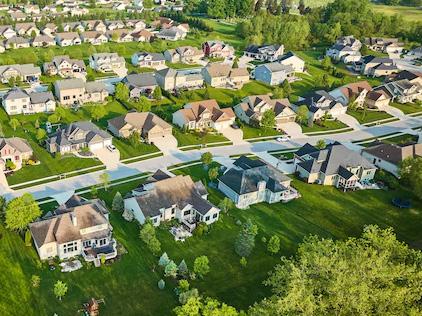
New home sales closed out 2025 on a mixed yet resilient note, pointing to steady underlying demand even as affordability pressures and limited supply continued to weigh on the market. Although sales dipped 1.7% from November to December, activity in December 2025 remained stronger than a year earlier.
Data from the U.S. Department of Housing and Urban Development and the U.S. Census Bureau show that sales of newly built single-family homes finished the year at a seasonally adjusted annual rate of 745,000 units — a 3.8% increase compared with December 2024. For the full year, an estimated 679,000 new homes were sold in 2025, a modest 1.1% decline from the 2024 total.
Survey data from NAHB indicate that 67% of builders used sales incentives in December, the highest share recorded in the post-pandemic period. On average, builders reduced home prices by 5% during the month, underscoring ongoing efforts to attract cost-conscious buyers.
Inventory on the Decline
Inventory of new single-family homes totaled 472,000 units in December, down 2.7% from November and 3.5% below December
2024 levels. At the current sales pace, this represents a 7.6-month supply, an improvement from the 8.2-month supply recorded one year earlier. (A six-month supply is typically viewed as a balanced market.)
At the same time, existing-home inventory has slipped after showing gradual improvement in prior months. Some moderation in home prices across both new and existing segments has helped sustain buyer demand despite persistent affordability challenges.
Taken together, new and existing home inventory has edged lower in recent months, falling to an overall four-month supply of total housing. This tightening largely reflects slower construction activity.
Home prices continued to show signs of softening in 2025. The median new home sales price declined 1.3% to $415,000, compared with $420,300 in 2024.
In 2025, new home sales were distributed across price tiers as follows:
- 20% were priced below $300,000
- 46% were priced between $300,000 and $500,000
- 34% were priced above $500,000. n

Total housing starts for 2025 were 1.36 million, down 0.6% from the 1.37 million total in 2024. Single-family starts in 2025 totaled 943,000, down 6.9% from the previous year. Multifamily starts ended the year up 17.4% from 2024.
“Single-family home building dipped in 2025 because of ongoing affordability challenges, fueled by high housing price-to-income ratios and elevated financing and construction costs,” said Buddy Hughes, a home builder and developer from Lexington, N.C. “NAHB expects single-family starts will move slightly higher this year, as mortgage
rates are expected to moderate.”
“Multifamily construction was down in high-density markets but up in the low-rise sector,” said Jing Fu, NAHB senior director of forecasting and analysis. “Multifamily starts are anticipated to fall 5% in 2026 to
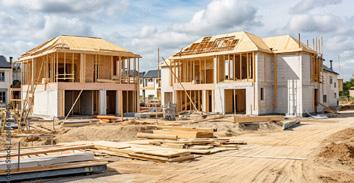
Persistent affordability challenges, including high housing price-to-income ratios and elevated land and construction costs, helped push builder confidence lower for the second straight month to start the year.
Builder confidence in the market for newly built single-family homes fell one point to 36 in February, according to the National Association of Home Builders (NAHB)/Wells Fargo Housing Market Index (HMI) released today.
“Builders reduced their expectations for future sales as buyers report affordability challenges, which is contributing to declining consumer confidence for the overall
economy,” said NAHB Chairman Buddy Hughes. “While the majority of builders continue to deploy buyer incentives, including price cuts, many prospective buyers remain on the sidelines. Although demand for new construction has weakened, remodeling demand has remained solid given a lack of household mobility.”
“Housing affordability remains an ongoing challenge at the start of 2026,” said NAHB Chief Economist Robert Dietz. “The solution for the housing market is the enactment of policies that will bend the construction cost curve and enable additional supply of attainable housing. On the positive side, easing inflation should continue to allow
an annual pace of 392,000 units and decline an additional 6% in 2027 to a 367,000 rate, leveling off near pre-pandemic levels.”
Looking at regional housing starts for 2025, combined single-family and multifamily starts were 8.7% higher in the Northeast, 7.2% higher in the Midwest, 4% lower in the South and 0.8% lower in the West.
Total permits for 2025 were 1.43 million, a 3.6% decline from the 1.48 million total from 2024. Single-family permits in 2025 totaled 909,600, down 7.4% from the previous year.
Looking at regional permit data for 2025, total permits were 7.7% lower in the Northeast, 3.0% higher in the Midwest, 5.2% lower in the South and 1.9% lower in the West. n
lower interest rates for mortgages and builder loans.”
The latest HMI survey also revealed that 36% of builders cut prices in February, down from 40% in January. While this marks the lowest incidence of price-cutting since last May (34%), the average price reduction remains at 6%. The use of sales incentives was 65% in February, unchanged from January, and marking the 11th consecutive month this share has exceeded 60%.
Derived from a monthly survey that NAHB has been conducting for more than 40 years, the NAHB/Wells Fargo HMI gauges builder perceptions of current single-family home sales and sales expectations for the next six months as “good,” “fair” or “poor.” The survey also asks builders to rate traffic of prospective buyers as “high to very high,” “average” or “low to very low.” Scores for each component are then used to calculate a seasonally adjusted index where any number over 50 indicates that more builders view conditions as good than poor.
The HMI index gauging current sales conditions held steady at 41 from January to February, the index measuring future sales fell three points to 46 and the gauge charting traffic of prospective buyers fell two points to 22.
Looking at the three-month moving averages for regional HMI scores, the Northeast fell one point to 43, the Midwest held steady at 43, the South dropped one point to 35 and the West fell two points to 33. n

The housing market will continue to face several headwinds in 2026, including economic policy uncertainty as well as a softening labor market and ongoing affordability problems. But easing financial conditions led by an anticipated modest reduction in mortgage rates should help to somewhat offset these market challenges and support production and sales, according to economists speaking at the International Builders’ Show in Orlando, Fla. last month.
“The housing outlook in 2026 is one of cautious optimism as builders contend with rising material and labor prices and policy uncertainty, while builders and buyers alike should benefit from anticipated fiscal and monetary easing that will moderate housing finance costs and mortgage rates,” said Robert Dietz, chief economist of the National Association of Home Builders (NAHB).
On the inflation front, shelter costs are running at a 3.6% annual rate and continue to outpace broader consumer prices. “With a nationwide shortage of roughly 1.2 million housing units, the best way to ease the housing affordability crisis is for policymakers to remove barriers that are hindering builders from building more homes and apartments,”
said Dietz.
Moreover, builders are facing persistent labor shortages, with the government reporting nearly 300,000 job openings in the construction industry in December. NAHB estimates that the residential construction sector will need to add roughly 740,000 workers a year just to keep pace with the industry’s growth, retirements and departures.
Meanwhile, residential building material prices continue to experience elevated growth, as price growth has been above 3% since June 2025, despite continued weakness in the new residential construction market.
One silver lining is along the interest rate front, where the rate for 30-year fixed mortgages dropped 13 basis points to 6.2% following the announcement of $200 billion in mortgage-backed securities buybacks by Fannie Mae and Freddie Mac. NAHB expects mortgage rates to remain slightly above 6% this year and unevenly trend slightly lower as the Federal Reserve is projected to make two 25 basis point rate cuts this year to reach a terminal federal funds rate of 3.25% by the end of 2026.
“A sustained sub-6% mortgage rate will likely wait until 2027,” said Dietz.
Given these market conditions, NAHB is anticipating slim single-family construction growth in the year ahead. Single-family starts are expected to increase 1.0% in 2026 to 940,000 units and move 5% higher in 2027 to a 984,000 pace. Meanwhile, townhouse construction gains continue, with market share at a multidecade high of more than 18%.
Multifamily starts are anticipated to fall 5% in 2026 to an annual pace of 392,000 units and decline an additional 6% in 2027 to a 367,000 rate. These figures follow a pandemic-era boom, when multifamily production hit 547,000 in 2022 with record-high completions. The market has slowed due to tighter financing and rising construction costs and is moving towards a more constrained development environment.
One area of the housing sector that continues to thrive is the remodeling sector, with the home improvement spending share for residential construction rising from 33% in 2007 to 45% in the third quarter of 2025. Residential remodeling activity is expected to increase 3% in 2026 and an additional 2% next year in inflation-adjusted terms.
“The surge in home equity has allowed more home owners to finance remodeling projects that meet their needs, which include growth for aging-in-place remodeling projects,” said Dietz. “NAHB expects robust long-term remodeling growth, and projects overall remodeling expenditures will be 19% higher in 2030 and 32% higher by 2035.”
The existing home inventory went from a cyclical annual low of a 2.3-months’ supply in 2021 and steadily rose to a 4.1-months’ rate in 2025, signaling that the sales climate is gradually moving away from a seller’s market.
“We expect this rate to rise to a 4.6-months’ pace in 2026, which is in line with a balanced market range of between four and six months,” said Danielle Hale, chief economist at Realtor.com.
On a year-over-year basis, Realtor. com projects that existing home inventory increased 15.2% in 2025 and will rise an additional 8.9% this year. (continued on page 11)

Twenty-two SPIKES (in bold) increased their recruitment numbers last month. What is a SPIKE? SPIKES recruit new members and help the association retain members. Here is the latest SPIKE report as of January 31, 2026. Top
Big Spikes
Mitzi
(continued from page 9) Increasing inventory is also having a moderating effect on pricing. The median listing price of an existing home was $399,900 in January 2026, down 0.1% from the previous year.
Meanwhile, the mortgage rate lock-in effect – where homeowners with low, fixed interest rates are reluctant to sell because they would have to buy another home with a significantly higher current mortgage rate –is improving but still weighs on the market.
“We have reached a mortgage rate lock-in milestone where the share of mortgages greater than 6% exceeds the share below 3%,” said Hale. “But the lock-in remains a market headwind, as roughly 80% of mortgages have a rate of 6% or lower.”
“We foresee slight gains in affordability this year,” she added, “with modest existing home sales growth expected and price appreciation lower than the overall inflation rate. These factors, along with income growth and likely lower mortgage rates, will work together to improve affordability.”
But even though 2026 began with interest rates in the low-6% range, many prospective home buyers are still uneasy.
“Consumers are dealing with a host of
issues, including policy uncertainty, home prices, job security, and rising home maintenance and insurance costs,” said Zonda Chief Economist Ali Wolf.
Delving into demographics, Wolf broke down the percentage of all first-time buyers based on their generation:
- Gen Z and younger: 35%
- Millennials: 22%
- Gen X: 19%
- Baby boomers: 20%
- Silent/Greatest Generation: 5%
Each demographic group, Wolf observed, has unique characteristics that offer opportunities and challenges:
- Gen Z and younger: Enthusiastic about homeownership but have a very low home-
ownership rate, constrained by affordability and high student loan debts.
- Millennials: While roughly 50% are homeowners, have some equity, and are looking to for a first or second moveup home, the other half are renting and weighing whether it is more cost-effective to rent vs. owning a home.
- Gen X: They are relatively wealthy consumers but many still have an attractive mortgage lower than today’s prevailing rates.
- Baby boomers: Boomers also have relative wealth but they don’t have to move and they are very discretionary shoppers.
Summarizing the conditions that will allow consumers to feel more confident about buying a home, Wolf said it all comes down to one word – stability.
“Stability from policymakers,” said Wolf. “Stability in the labor market so that people are confident that their job is safe and/ or they can find a new one easy enough. Stability that interest rates will stay steady and won’t move lower, which would keep buyers on the sidelines. And stability in home prices so that a home will be a steadily appreciating asset. These are the market conditions that will move hesitant buyers off the sidelines.” n
CHEATHAM COUNTY CHAPTER
Chapter President - Roy Miles
Cheatham County Chapter details are being planned. Next meeting: to be announced.
RSVP to: cnicley@hbamt.org
DICKSON COUNTY CHAPTER
Chapter President - Matt Spann
Dickson County Chapter meetings are typically held on the third Thursday of the month.
Next meeting: to be announced. Typically held at Colton's Steak House - 2431 Highway 46 S, Dickson 37055 Free w/RSVP to: cnicley@hbamt.org
MAURY COUNTY CHAPTER
Chapter President - Sam Gray
Maury County Chapter meetings are typically held on the first Tuesday of the month.
Next meeting: Tuesday, March 24th, 11:30 a.m. at Los Portas Taco Shop - 106A East 8th Street, Columbia TN, 38401. Topic: Special guest Jeff Hardy, Director of the Maury County Office of Emergency Management.
FREE w/RSVP thanks to Ghertner & Company; $20 w/o RSVP
PLEASE RSVP to cnicley@hbamt.org
METRO/NASHVILLE CHAPTER
Chapter President - Lisa Underwood Metro/Nashville Chapter details are typically held on the fourth Thursday of the month. Next meeting: to be announced. RSVP to: cnicley@hbamt.org
ROBERTSON COUNTY CHAPTER
Robertson County Chapter details are currently being planned. Next meeting: to be announced.
RSVP to: cnicley@hbamt.org
SUMNER COUNTY CHAPTER
Chapter President - Joe Dalton
The Sumner County Chapter typically meets on the third Tuesday of the month. Next meeting: to be announced.
RSVP to: cnicley@hbamt.org
WILLIAMSON COUNTY CHAPTER
Chapter President - Rachel Holloway
Williamson County Chapter meetings are typically held on the third Tuesday of the month. Next meeting: to be announced.
FREE w/RSVP pending sponsorship. RSVP to: cnicley@hbamt.org
WILSON COUNTY CHAPTER
Chapter President - Margaret Tolbert
Wilson County Chapter meetings are typically held on the second Thursday of the month.
Next meeting: Thursday, March 19th, 8:00 to 9:30 a.m. at Holiday Inn Express in Mt. Juliet.
Topic: "Planning and Codes Panel," a Q&A panel with Wilson County Planning and Codes Officials.
Holiday Inn Express
1688 Callis Rd, Mt. Juliet, TN 37601
FREE with RSVP pending sponsorship.
RSVP to: cnicley@hbamt.org
HBAMT REMODELERS COUNCIL
The HBAMT Remodelers Council meets at varying locations throughout the year.
Next meeting: to be announced.
RSVP to RMC meetings and events to: cnicley@hbamt.org
INFILL BUILDERS COUNCIL
Infill Builders Council meetings are typically held on the last Wednesday of the month.
Next meeting: to be announced.
PLEASE RSVP to: cnicley@hbamt.org
MIDDLE TENN SALES & MARKETING COUNCIL
Council President - Kristen Carbine
The SMC typically meets on the first Thursday of the month. Next event: Thursday, March 5th, 9 a.m. at the HBAMT.
Topic: "Comprehensive Market Analysis," with special guest Katie Morrell, founder of Morrell Property Collective.
The HBAMT - 9007 Overlook Blvd., Brentwood, TN 37027
Free for SMC Members w/RSVP thanks to CrossCountry Mortgage.
NON-SMC MEMBERS MUST RSVP and PAY: $25 with RSVP; $30 w/o RSVP
**HBAMT members must be a paid member of the Sales & Marketing Council in order to receive council rates** RSVP to: cnicley@hbamt.org
$0 enrollment fee with code: FITNESSGOALS²






Plus 9,400+ additional premium exercise studios at 20% - 70% off retail1
Bundle and save. Get $5 off each additional gym you join.3
No long-term contracts. Easily sign up, switch gyms, or cancel online with no fees or penalties.
Connect 1-on-1 with a personal well-being coach for motivation in nutrition, stress management, sleep, and more at no additional cost.
Create a free account to get instant access to 14,000+ on-demand workout videos!









1
3