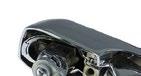
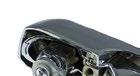
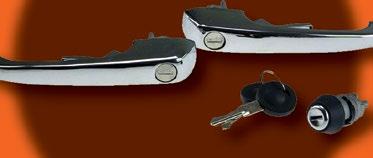
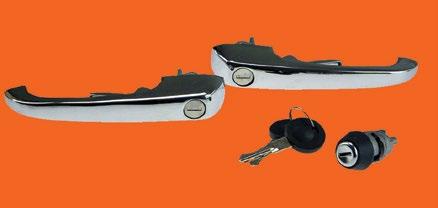
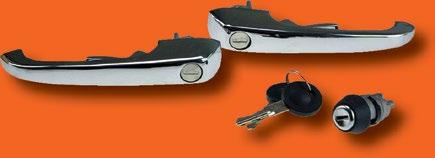
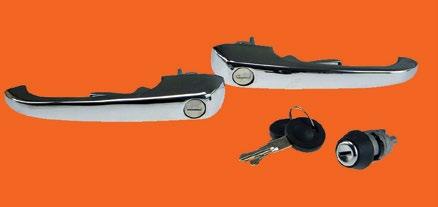
• Includes: 2 door handles, 1 ignition lock, 2 keys
• Includes: 2 door 1 ignition lock, 2
Order no. 898 211 040 Exterior Locking and Ignition Lock
• Made by WERK34
Order no. 211 837
• left or right
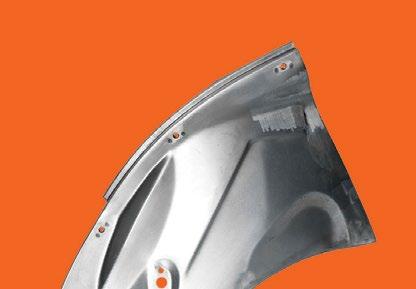
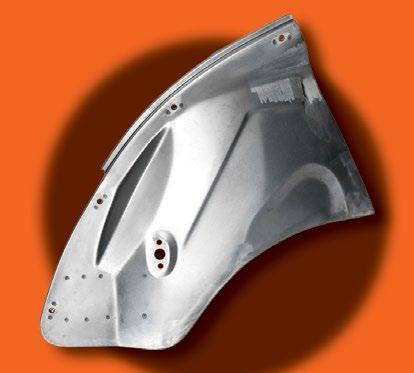
Front End Repair
• with mounting for
• High-quality reproduction
Order no. 805.11.041.R 805.11.041.CR/42.CR €
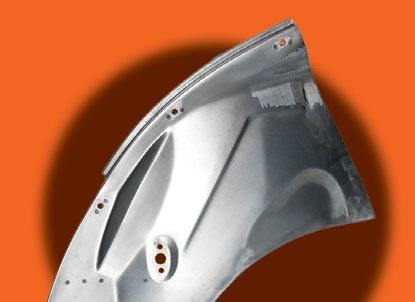
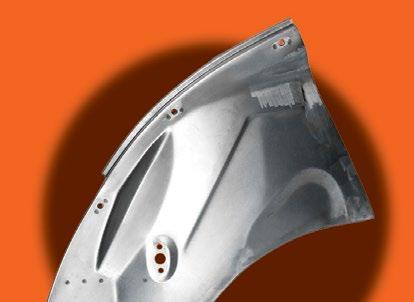
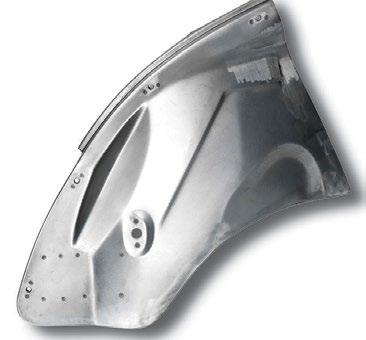
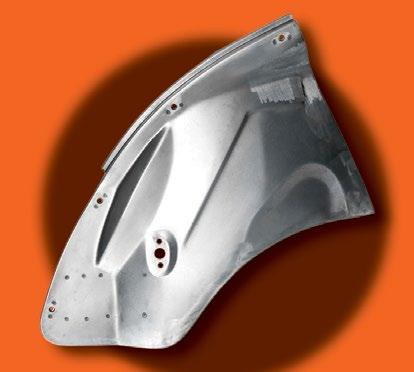
• fit for Beetle • left or right • with mounting for • High-quality reproduction Order no. 805.11.041.R
€ 39,95
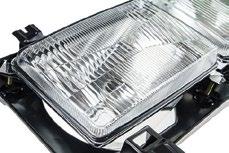
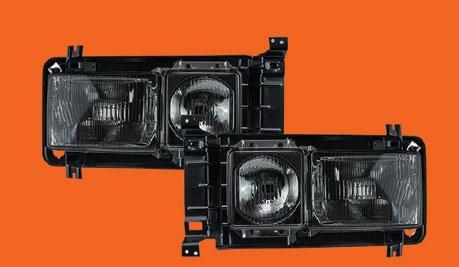
Complete Headlight units
Complete Headlight units
• fit for Bus T3 with square Headlights or for conversions to square Lights
• black or white glass
• black or white glass
• Lights are ECE-/EG Ceritficated
• Lights are ECE-/EG Ceritficated
• fit for Bus T3 with square Headlights or for conversions to square Lights
• Made by WERK34
• Made by WERK34
Order no. 941 255 045 AS 941 255 045 A
Order no. 941 255 045 AS 941 255 045 A € 329,00
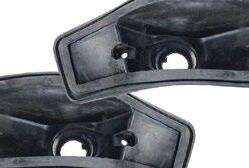
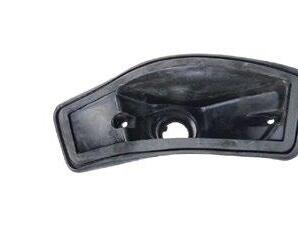
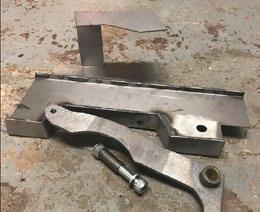
Repair Panel for bumper bracket reproduction 805.11.041.R /42.R 805.11.041.CR/42.CR
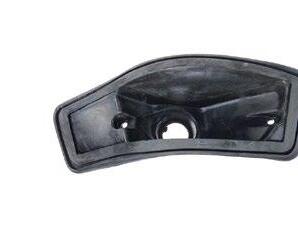
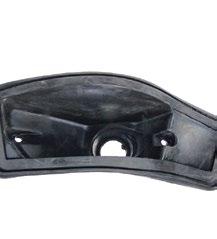
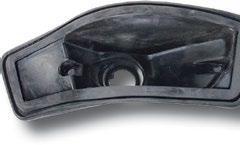
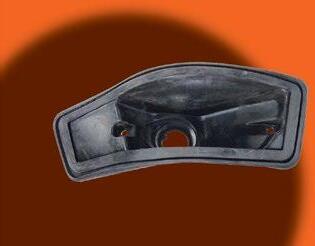
Turn signal gasket
• left or right
• Price per piece Order no. 953 141 165 C 953 141 166 C
• fits for Karman Ghia, from 08/69
555,00
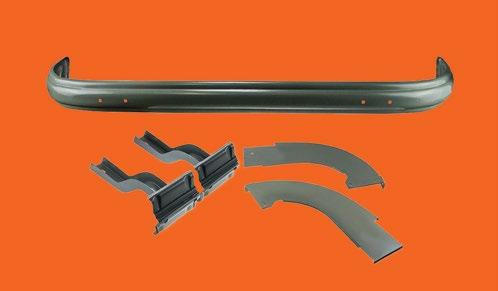
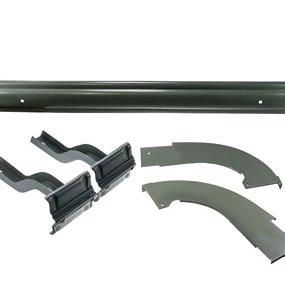
Set Ribbed bumper, rear
• fit for Bus T1 until 09/58
• fit for Bus T1 until 09/58
• up to VIN 384 999
• up to VIN 384 999
• including supports for right/left
• including supports for right/left
• including insert plates laterally
• including insert plates laterally
• Made by WERK34
€ 257,83 € 59,54
Order no. 707 211 305 MZ
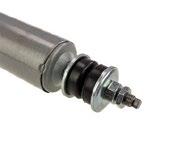
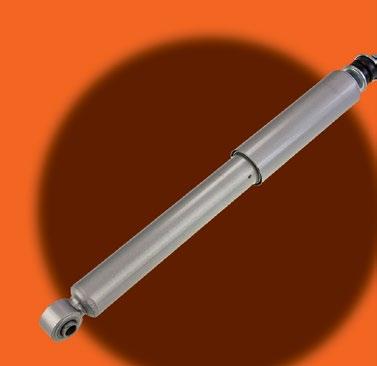
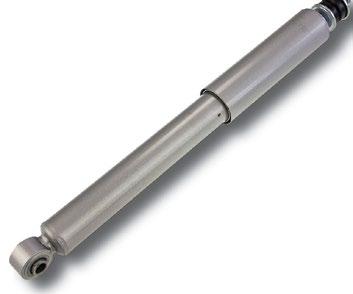
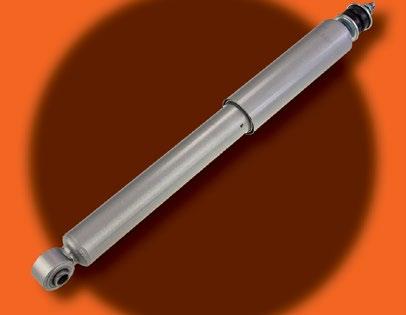
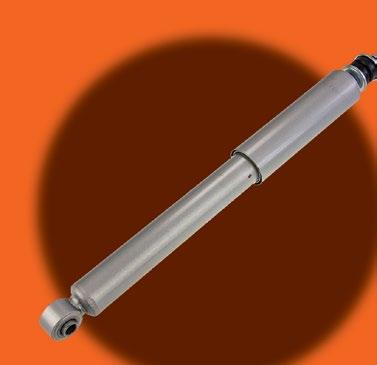
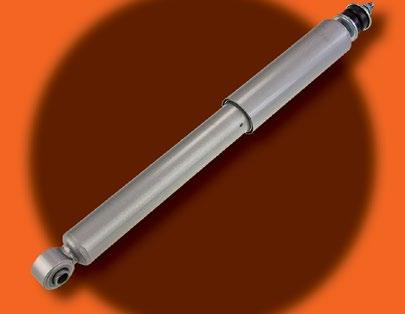
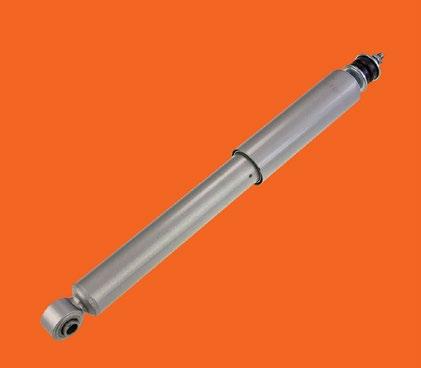
Front gas pressure shock absorbers
• Made by WERK34 Order no. 707 211 305 MZ • fit for Beetle except 1302/1303, Karmann Ghia Type 14, Fridolin Type 147, Thing 181
• fit for Beetle except 1302/1303, Karmann Ghia Type 14, Fridolin Type 147, Thing 181
Order no. 413 113 031 C
THANK THEM .
Butty’s Bits
SJ Bowles
Mad Matz
Paruzzi
FiftySixDelux
Es Autos
Aircooled Auto
Elec
Oil Can Stickers
Wonky Donkey
Emporium
MCJ
VW Aircooled
Works
Evil Bens
German Junkies
Aircooled
Accessories
OB1 Clothing
Growl & Grandeur
Rarebreed
Photography
Beetlelink
Border
Restorations
Geek Shack
Johnson
Autoworks
The VW Engine
Company
Europl8
Autowares
Garage 87
SGS Aircooled
Joe Blow
N2
Engineering
BusOK
Empi US
VW Trends
JF Bodyworks
VDub Radio
R3 Garage
Robertson
Restos
CJ Motors
Rustys Garage
Akciddento
Europl8
Sebright
Creative
Modified
Aircooled
Trim Classics
The People’s
Air-Cooled Show
Fritz Customs
Fellows
Speedshop
Longstone Tyres
Matt Gill
Resto Haus
V Dub at the Pub
Rack Shack
Pre 69 Show
Doncaster VW Show
Lowd Vans
Rooftent Utopia
Bug Jam
Electrical Bugs
JoJo Interiors
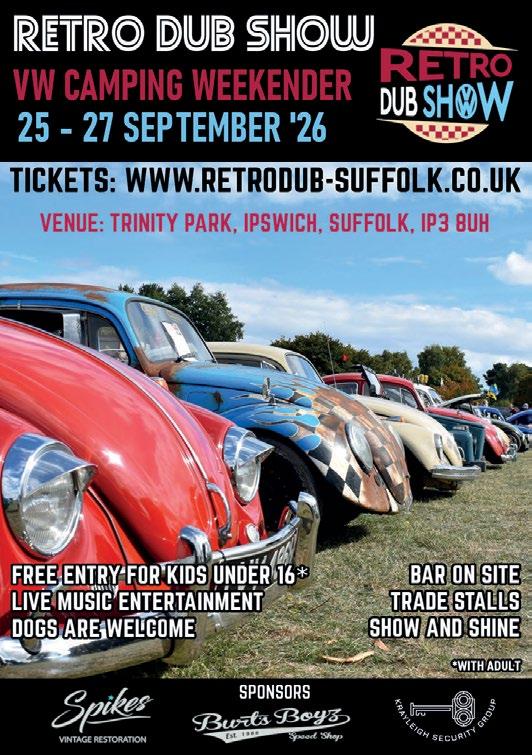
Retro Dub Suffolk
Soul Volks
Tatton Park VW Show
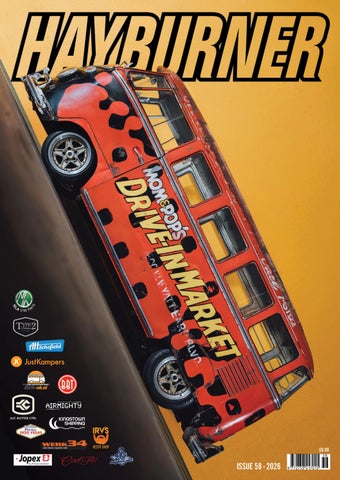
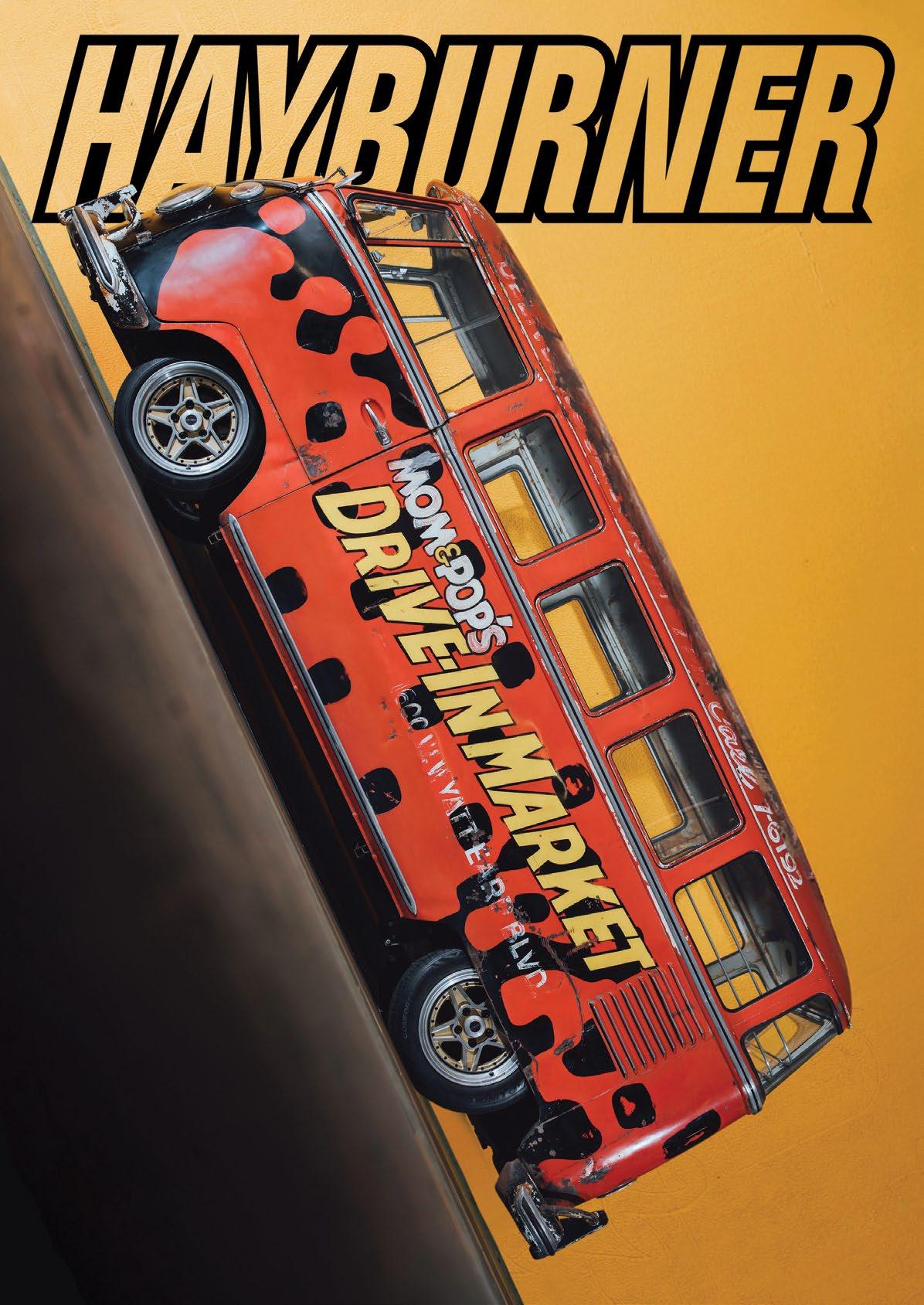
Front Cover by Simon Medlicott
With special thanks to Seb & Penny, Matty Armstrong, Will Thomas, Jack Medlicott, Phil Jarvis, Myles Yarney, Luke Theochari, Rikki James, Dan Du Cros, Barbara Faux, Neil Mabbley, Giles Marchant, all the guys at HR Autowork, James Peene, Ben & Jen Robertson, ThreeFiftySix, Kenneth Anno, Matt Balls, Raphael Meyer, Devo Chiedere Al, Pete Marshall, Indra Hernandi, Kustomfest & Rais Maulana, Robert “Rorky” O’Rourke, Chris Wilburn, Jole Coupland, Micheal Gross, Andrea Camilleri, all in RSVP, Collin Miles, Julieanne @ Tatton Park, Matt Gill, Niels Timmerman, Joshua Smith, Steve Parsons, Marrion Taggart, Paul Medhurst, Bob BBT, Terrence Jonny Marriage, Eric Deen, Tania & Russ, Naomi Wilcox, Teresa & Georgina Iwasiuk, Trint Eastwood, Rob Amos, Alex & Lou Leiserach, Mark Thurston & Wendy Clegg, Sam Lindsay, Dan Morrissey, Jen, Stevo, Brian Galpin, Bryan Moody, Lew Savage, Mim, Ben Laughton, Nick Gatt, Craig Petty, Frederic Peeters, Toby Lee, Heiko & Liv, Tish & Jack, Joni Makepeace, Bart and Alejendra @ Kombi Brazil, Rob Mullner, Brett Elesmore, PJ Gibbons, Ian and Sophie at Es Autos, Jess Medlicott, Steve Walker, Orb and Izzie, Lee Skelton, Steve Gosling, Mark Reynolds, Josh Reynolds, Trevor Sharp, Cheryl Dilley, Caroline Soons, Sally & Toby Walker, Helen & James Waller, Drummer Mat, Katy, Danny Lord, Seaside Neil & Lyn, Jo Pro, Honor Auld, Chez Williams, Alan Scott, Gary Kennedy, Techno Hippy, Mark & Odette Watts, Rich Whitlock, Jeffrey Van Duin, Angie Simmons, Claude Schaub, 10 Foot Doug & Ewan McGregor.
And to everyone who has submitted, contributed and supported us, none of this could have been done without you.
Thank you.
ISSUE 58
We don’t think you should have to pay more for insurance just because you’ve fitted cooler wheels to your VW. That’s why policies from Just Kampers Insurance include modification cover, so you can run anything from alloys to air-ride without it affecting the cost.
Getting a quote from Just Kampers Insurance is nice and easy, too, and if we can’t beat your like-for-like insurance quote we’ll send you a free £50 Just Kampers gift voucher!
It’s a win-win, you either get a great deal on insurance for your modified VW, or you get £50 to spend at JK.
ISSUE 58 OF HAYBURNER
MAGAZINE IS DEDICATED TO THE LOVING MEMORY OF
JAMES ‘JIMBO’ TWAITE
Ned got in touch and said he would like to have a paragraph about James for a tribute in this very magazine which James loved (he would get a right kick about being featured among all these old jalopies). I thought it was an excellent idea but decided to cheat slightly by seeking words from a few other people I thought you should hear from. Keeping it to a paragraph has been almost impossible, too (my apologies, Ned).
First, from Rich Morena: James came to work with us in Brentwood during work experience. He was 15, he was keen, and he quickly picked up the skills. I remember him being fascinated by how cars worked and what was possible. He recently said to me in a nice way that I was to blame for his affection towards air-cooled VWs.
His first Beetle was a ’72 that we swapped the valances and fitted early wings to go pre-’67 Cal Look. My brother painted it for him in a beautiful dark metallic red. He was looking at fitting Porsche 16 inch Fuchs in factory anodised finish. That was around 1998–2000, I can’t be sure.
He became part of our family and travelled with us to family weddings in south Italy and holidays on a few occasions. One of my best memories was how he kept up with the Italians eating at my sister’s wedding! That was a 28-course meal over six hours! He has hollow legs, and I was amazed by how well he fitted in and got on with everyone. That’s the way James was. He never had a bad word for anyone, and we never had anything but respect for his maturity beyond his years in his late teens and early twenties.
My family owes him so much gratitude and has so much respect for that kid. He stayed to work and help my brother-in-law wind down the business after my dad had been unwell. For that we are forever grateful. As I said before, that’s how James was – he cared. My dad is now in his 70s and unwell. He said to me that he will always be grateful. He truly feels we have lost one of the family.
Obviously we kept in touch through his years in Brighton and in Germany, and even in the last few years. He has his family, our family, his VW family, and all the people who are lucky enough to have met and spent time with him. We were all blessed with his company. Rest easy, kid and I’m sure we will meet again.
Ben Pascoe:
Where do I start with Jimbo? We got lucky when his last job ended and he started with us in 2004. He was an absolute fountain of knowledge on everything electrical on VWs.
In his early days at the Essex warehouse he was in charge of returns, which were mainly retrieved from Poncho, the chocolate lab puppy’s mouth. He also held the many Burger King vouchers and was solely responsible for maximum food for minimum spend. As well as sharing a birthday, we shared a flat for a few years. He was an amazing flatmate and made a great Thai green curry.
He was also one of two people I’d let use my bus. He knew the tunnel rule: windows down, drop a gear and nail it. They don’t make many like him, he will be missed.
Darol Van Duke:
After meeting James down the local pub on Christmas Eve, we immediately connected through our love of music and cars. Over the next 20 years I was privileged to share many unforgettable nights out, great times at car shows, and racing for Graham at Rawspeed. Watching the team scream with joy at the start line at Santa Pod as we ran our first 9 second quarter mile will remain with me forever. James helped many people through the VW and racing community time and time again, always willing to share his knowledge and to crawl under the car and get dirty.
We used to call him Rain Man because he could reel off VW part numbers for whatever you needed through his knowledge gained over time.
In summary:
There are so many funny stories and anecdotes coming out of the woodwork about Jimbo. (I am sure anyone that knows him has one or three.) He was such a gentle soul, who would give you the shirt off his back even if you didn’t need it. He loved being part of a team but never tried to push for the lead – just content with being useful. The boy scout in him never left. He was great with a map and handy to have around. He has left a big hole and will be dearly missed. I am sure he is up there playing with “rusty junk” and “old jalopies” and having a good laugh at us all. He would be the first one trying to encourage burnouts outside the funeral, I am sure, so rather than a moment’s silence I hope you all go rev up whatever it is you own, or go lie under it, and think of dear Jimbo.
By Alex Leiserach
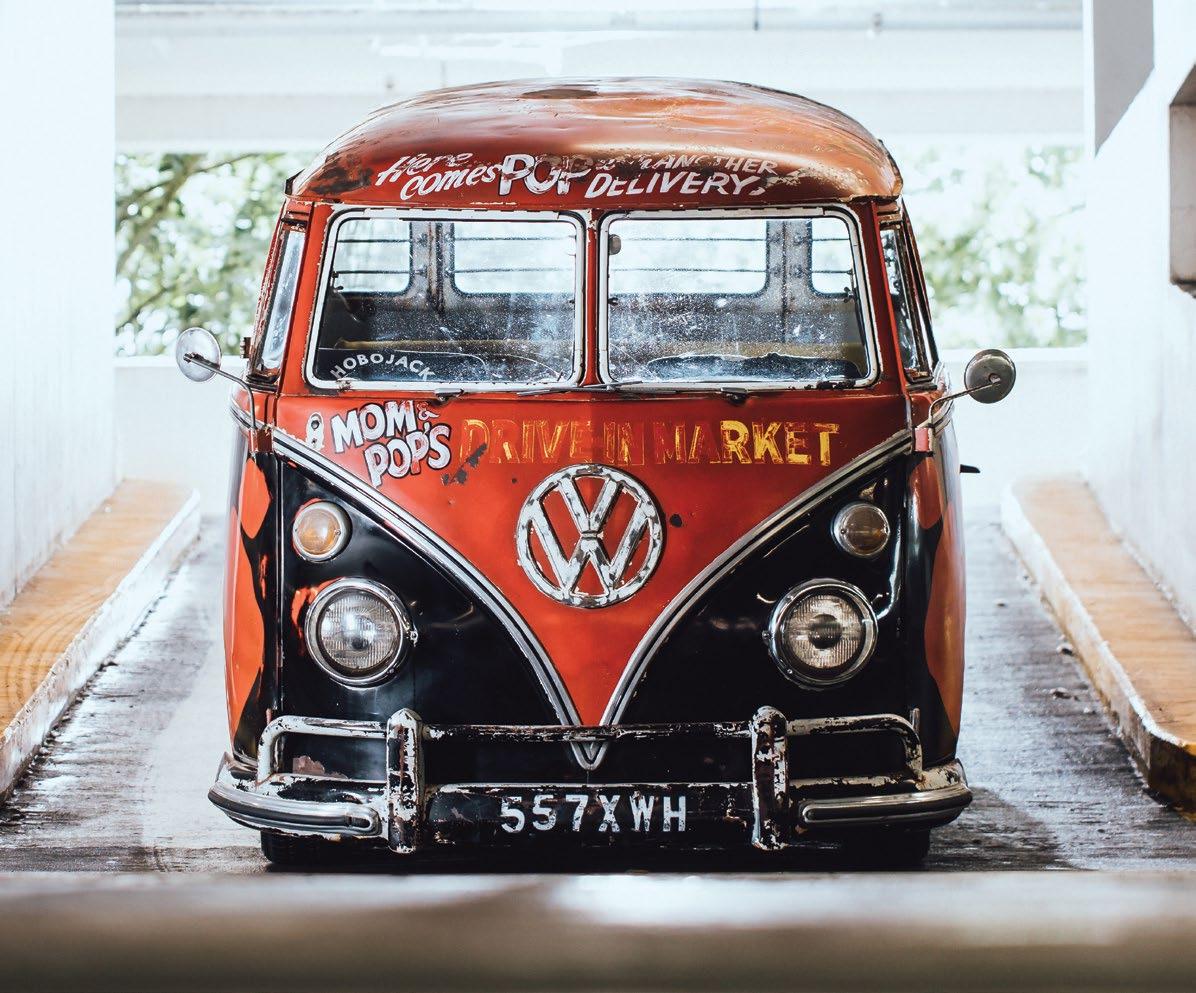
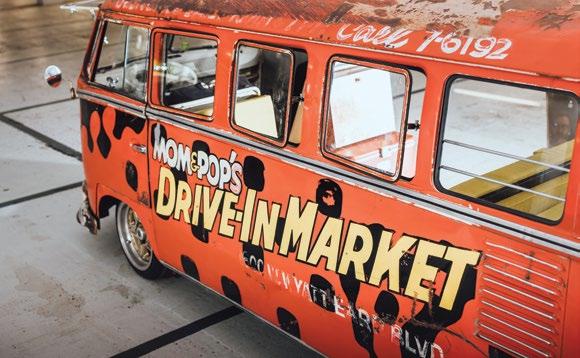
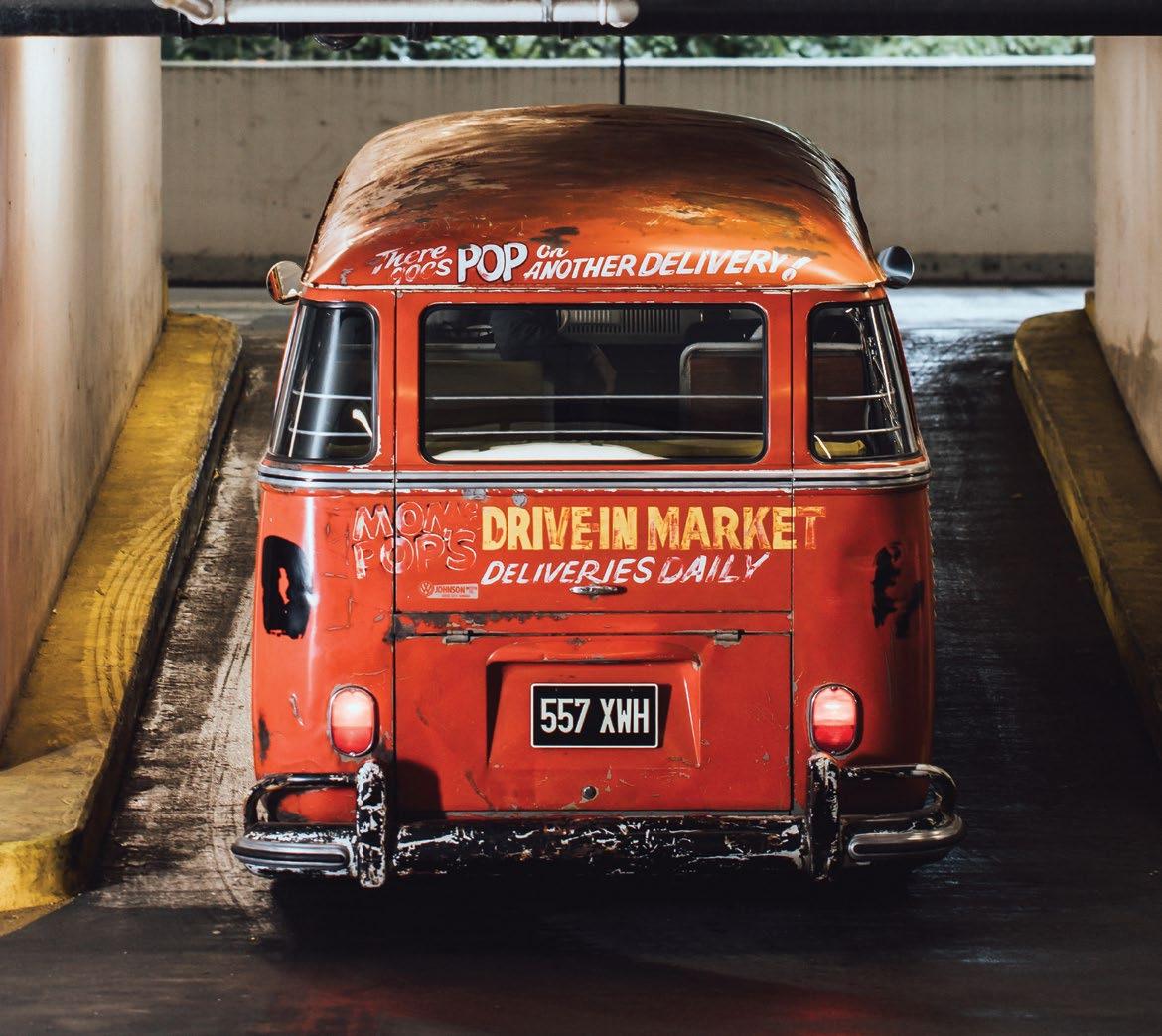
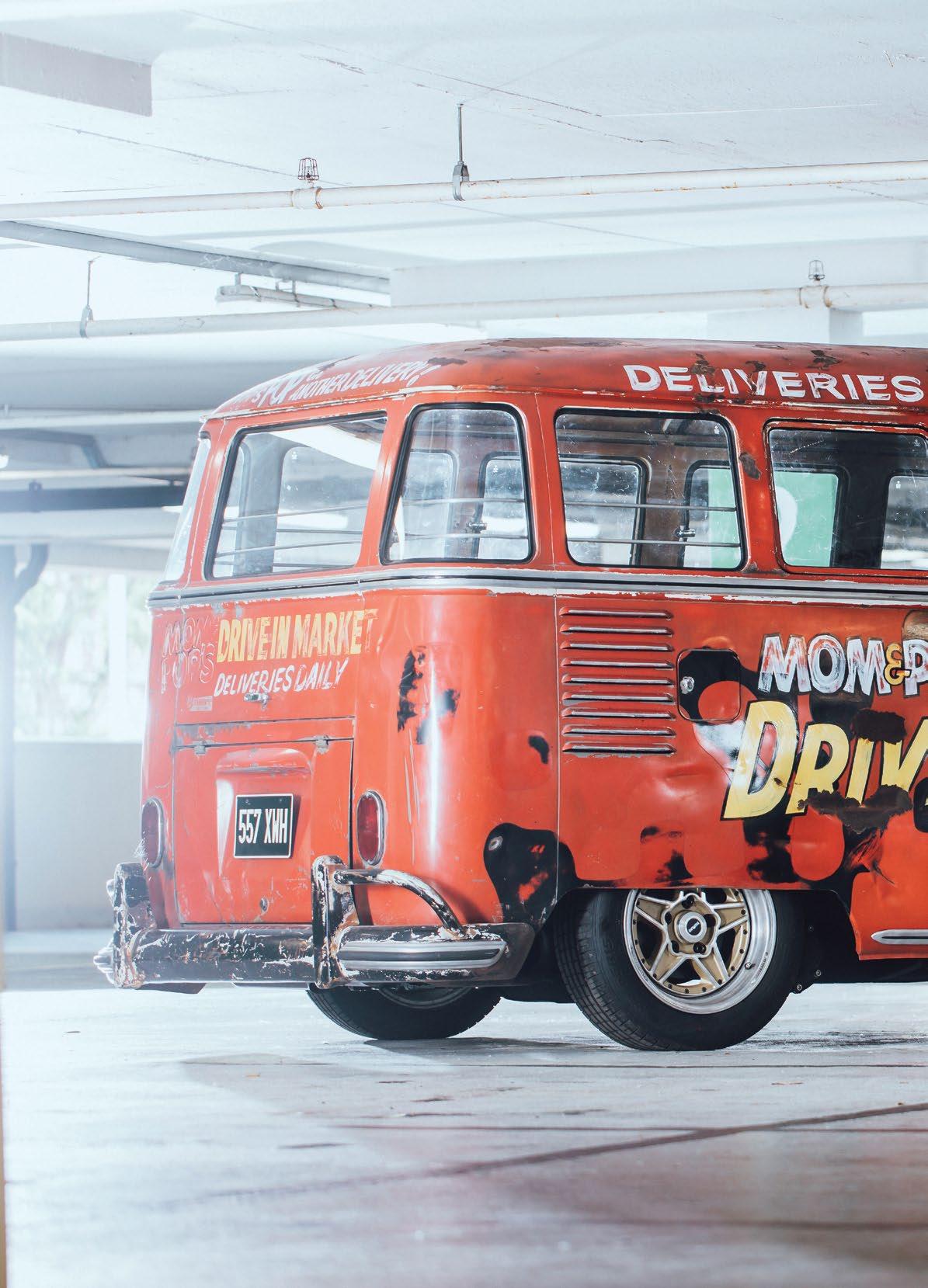
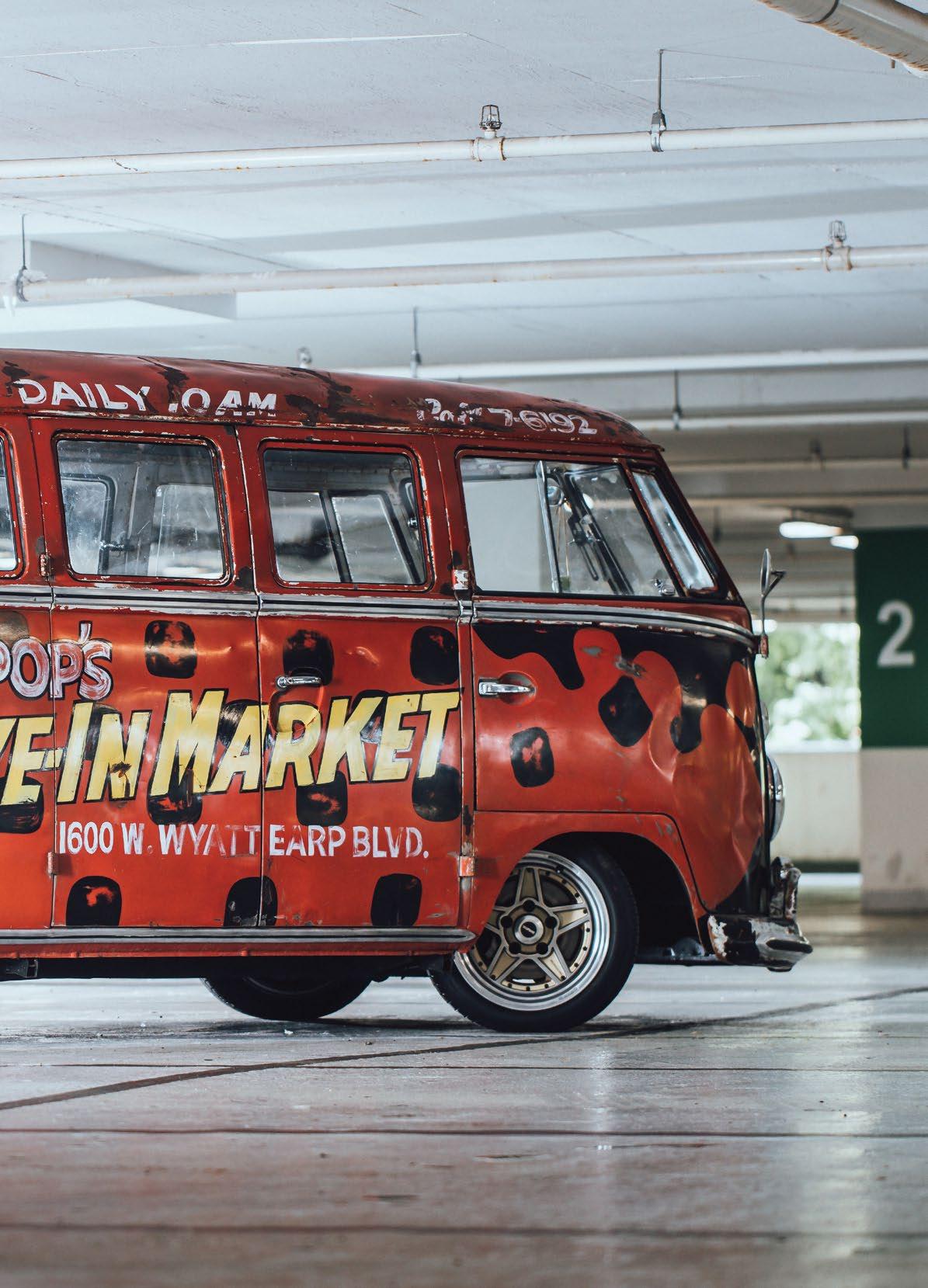
MOM & POP’S
WORDS BY TOBY WALKER
PHOTOGRAPHS BY SI MEDLICOTT
If you don’t know Lew Savage, you will definitely know some of his previous cars. He has literally built tons, and I can honestly, say hand on heart, they have all been bangers. Genuinely, Lew hasn’t built one badlooking car. In fact two of his previous builds have featured in Hayburner in the past. I get the feeling that for Lew the build is an important part of the process. He seems to find the next project quite quickly once a car is finished. He’s also definitely got a thing for Porsche Gottis … and rightly so. They look epic on every car he has run them on.
We mentioned that Lew always builds cool cars. Let’s check back on what he has built in recent years: slammed 924S, slammed Early Bay Westy on Gottis, slammed patina 60s Ghia on Gottis, slammed OG paint Late Bay, slammed patina 60s Squareback, slammed 70s Beetle on Gottis, a beautiful stock height OG paint SO 33 Westy, slammed Jurgens on BBS, slammed 50s ribbed bumper van on Gottis, slammed OG paint ’72 Ghia, slammed RHD 60s sunroof Beetle … you see a theme developing here? Yes, most of his cars are heavily modified or
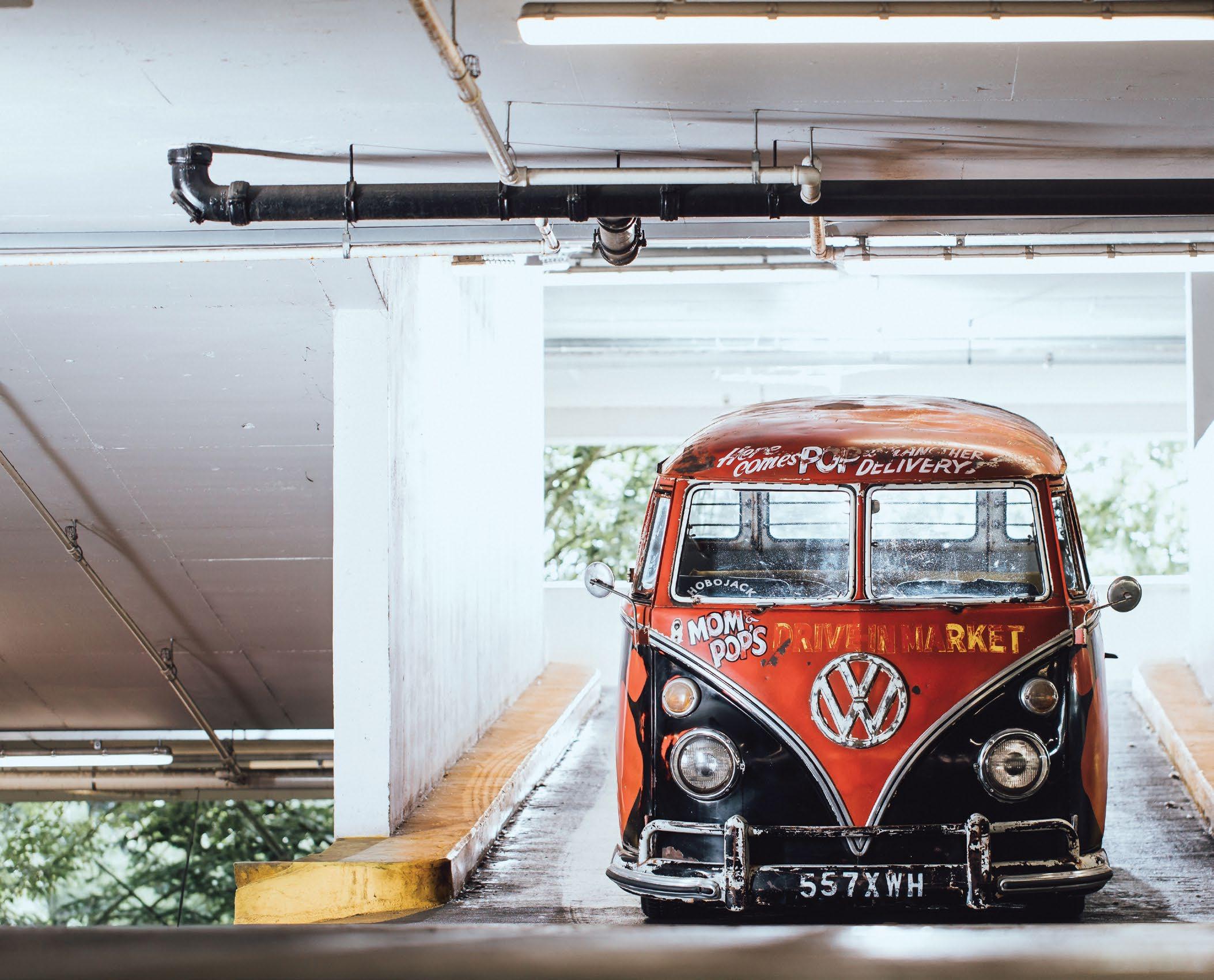
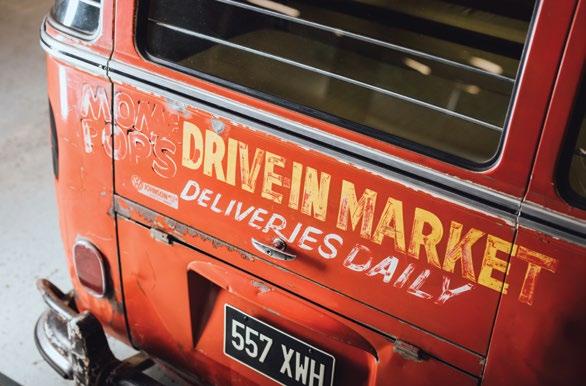
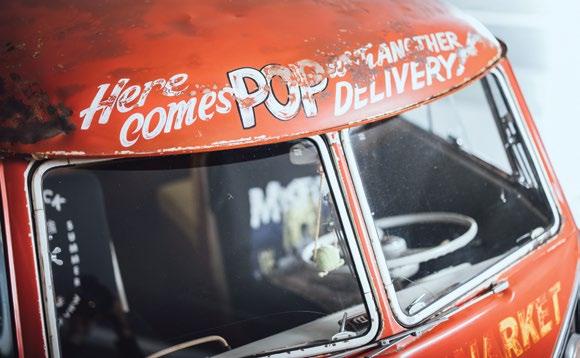
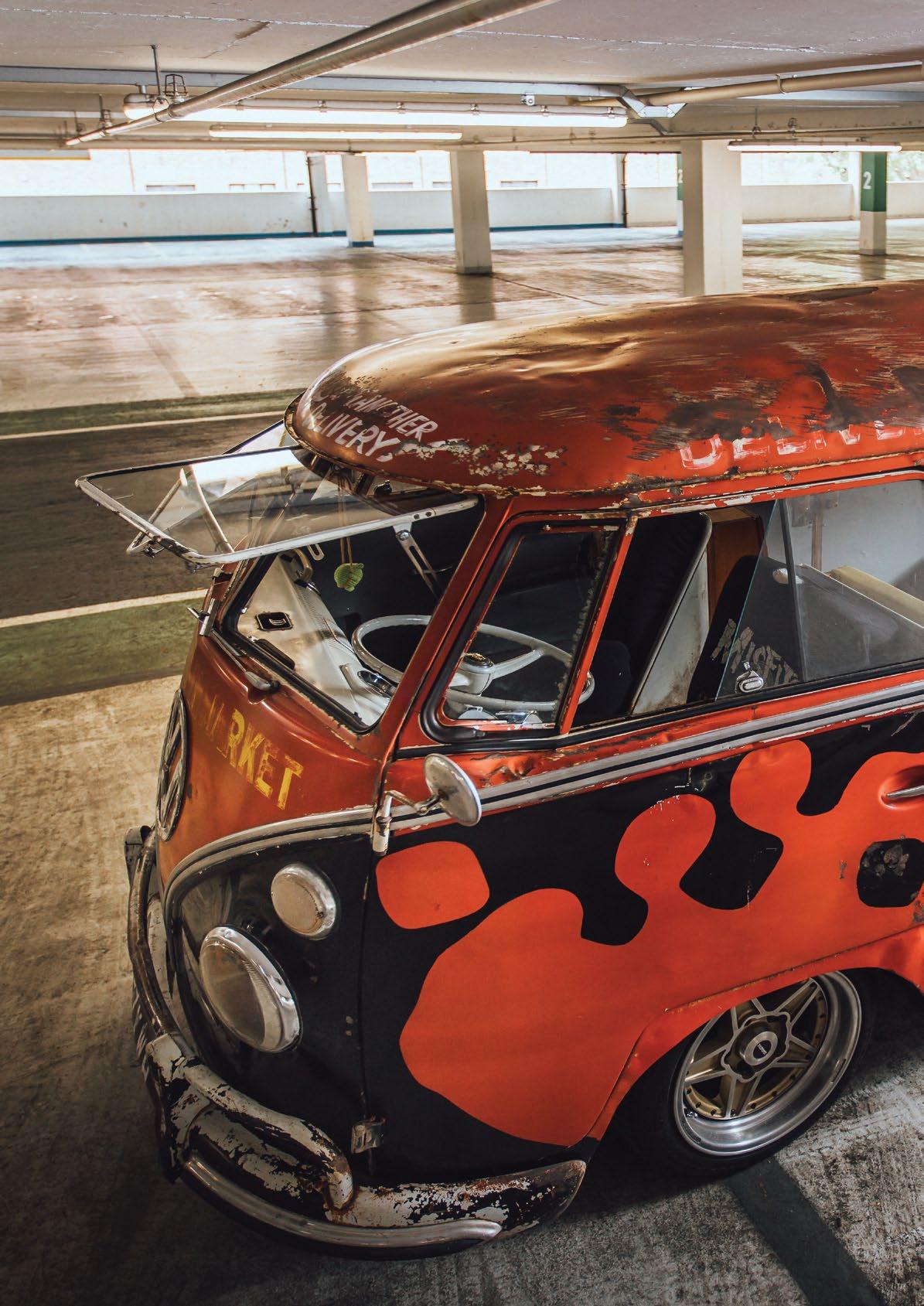
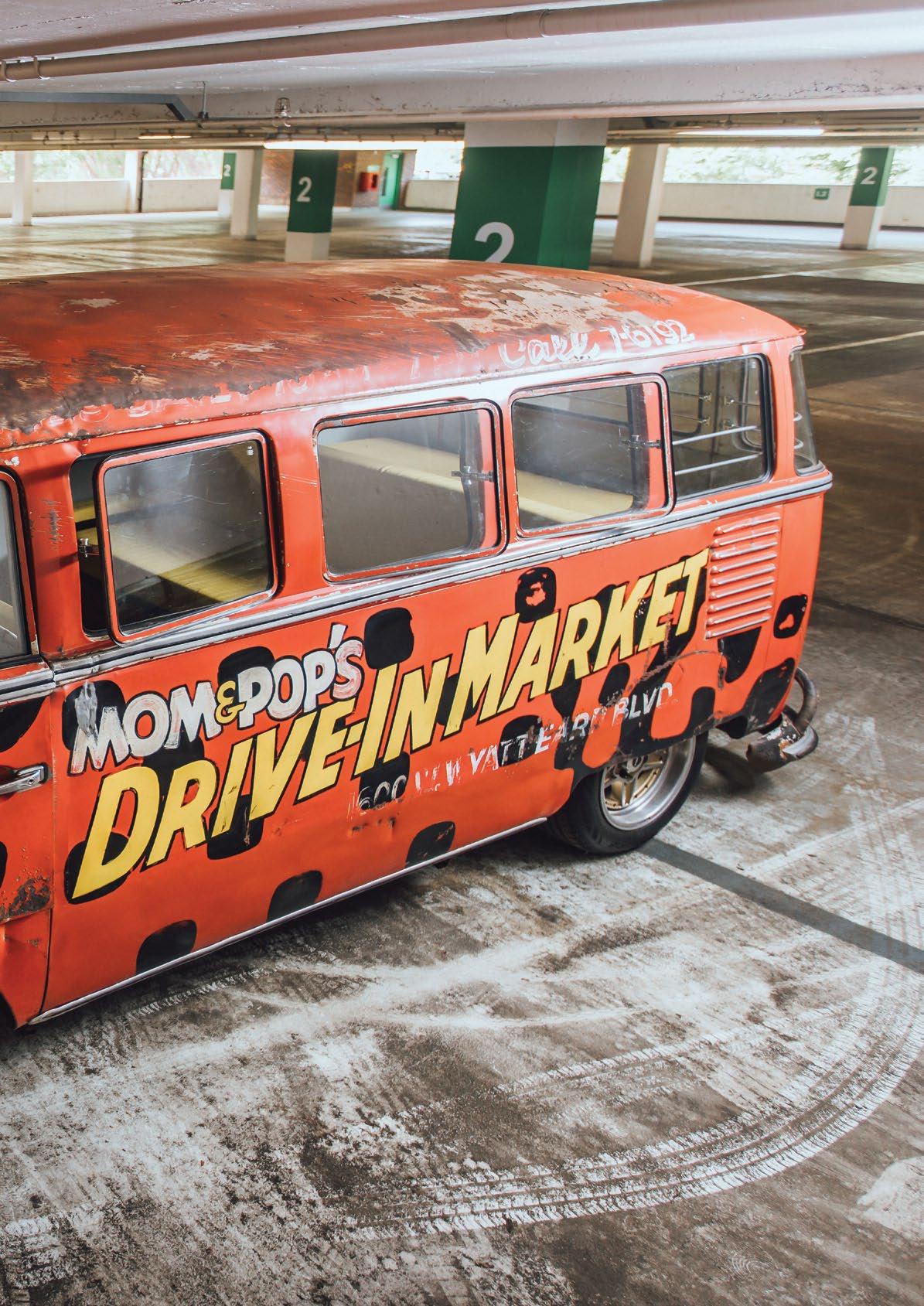
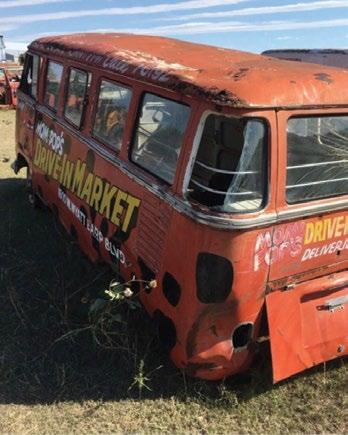
slammed, and more often than not have beautiful original paint which Lew manages to unearth to perfection. Well, Lew stuck to the format with this bus and we are glad he did as it looks absolutely amazing. Once Lew started to reveal the rest of the original signwriting and logos for Mom & Pop’s Drive In Market – slammed on split rims, obviously – he is also currently working on an Audi engine swapped Porsche 944, which is looking to be yet another amazing build. What can we say? Lew just has that magic touch and a great eye for potential
in a car. Can it get any cooler, you ask? Well, just a bit. Lew builds and modifies all his cars himself in his unit from developing custom steering, etc., to make static low cars drive better, to repairing pretty much any metalwork, and of course building split rims.
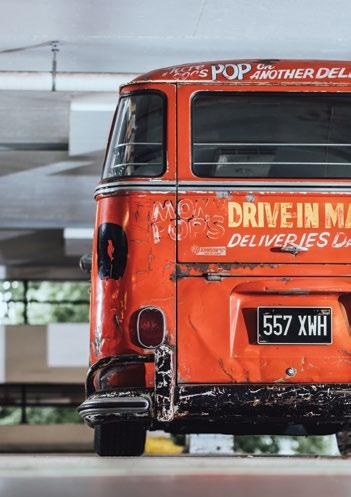
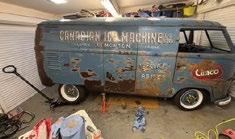
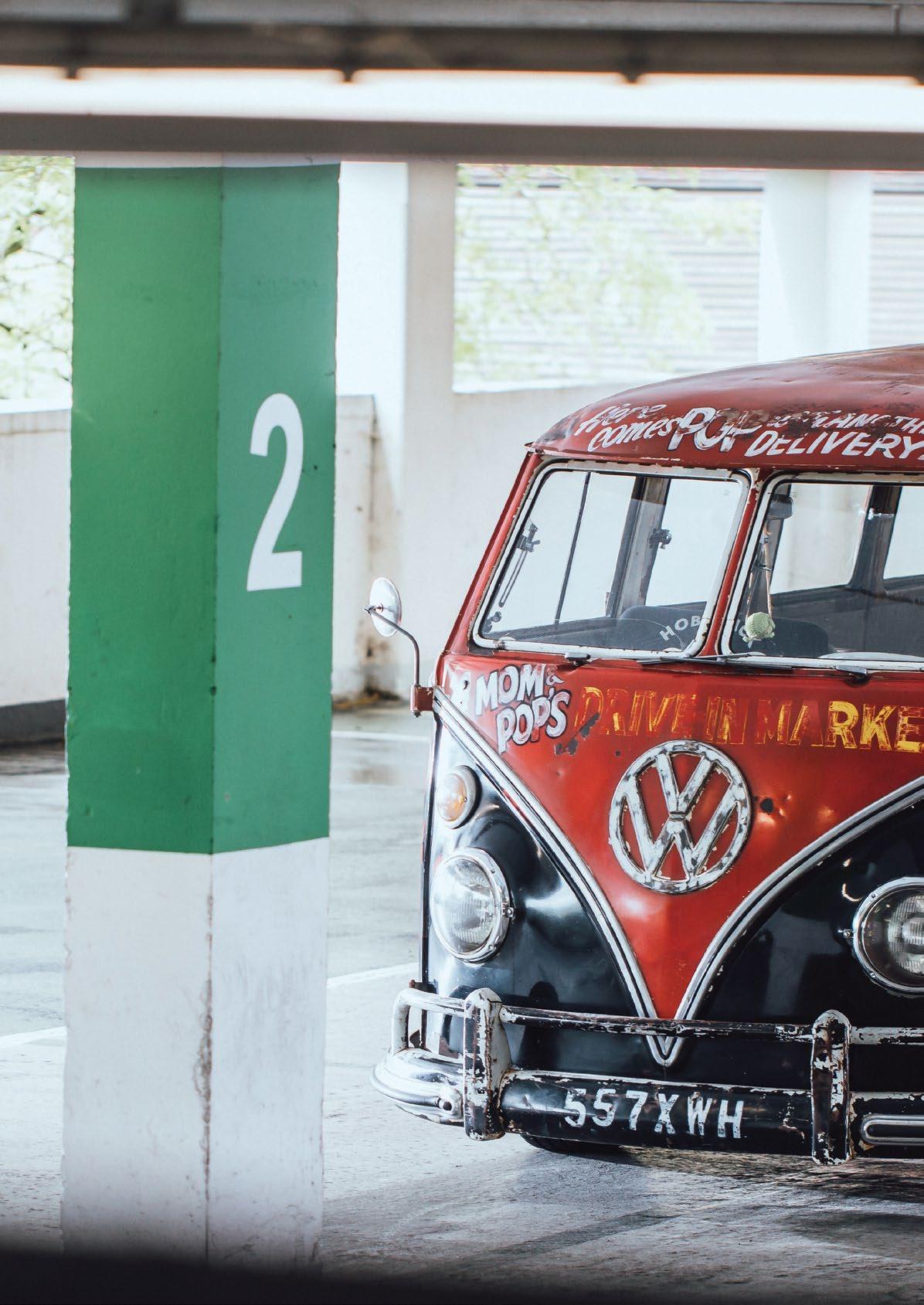
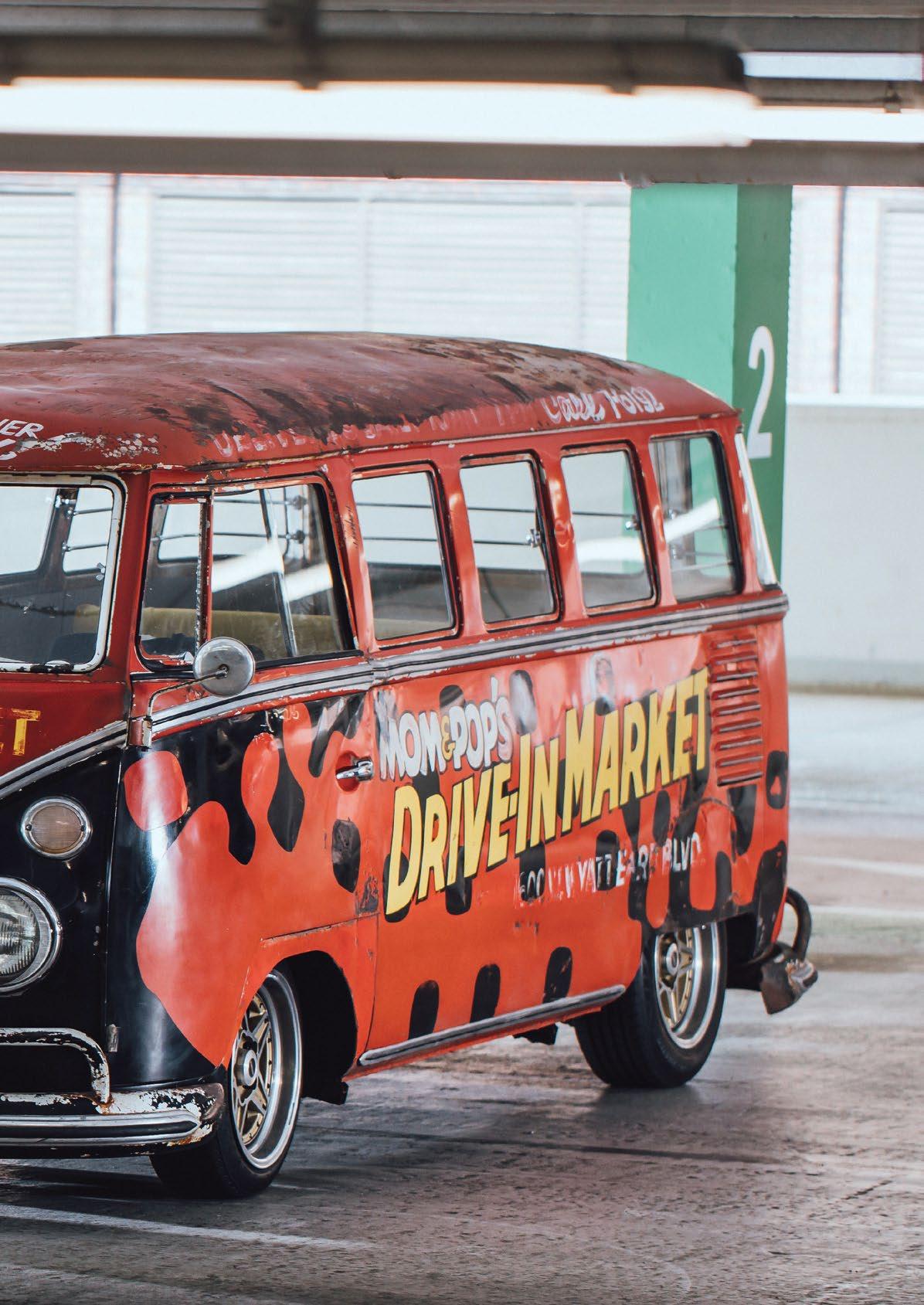
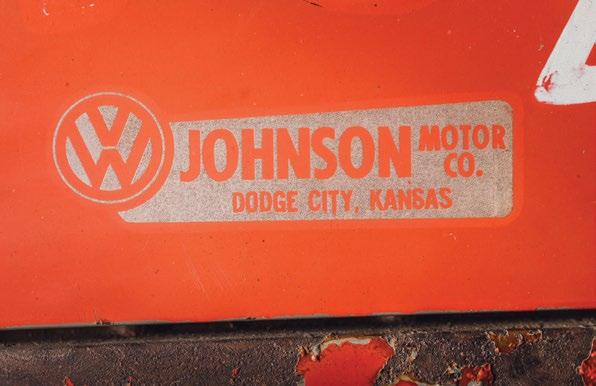
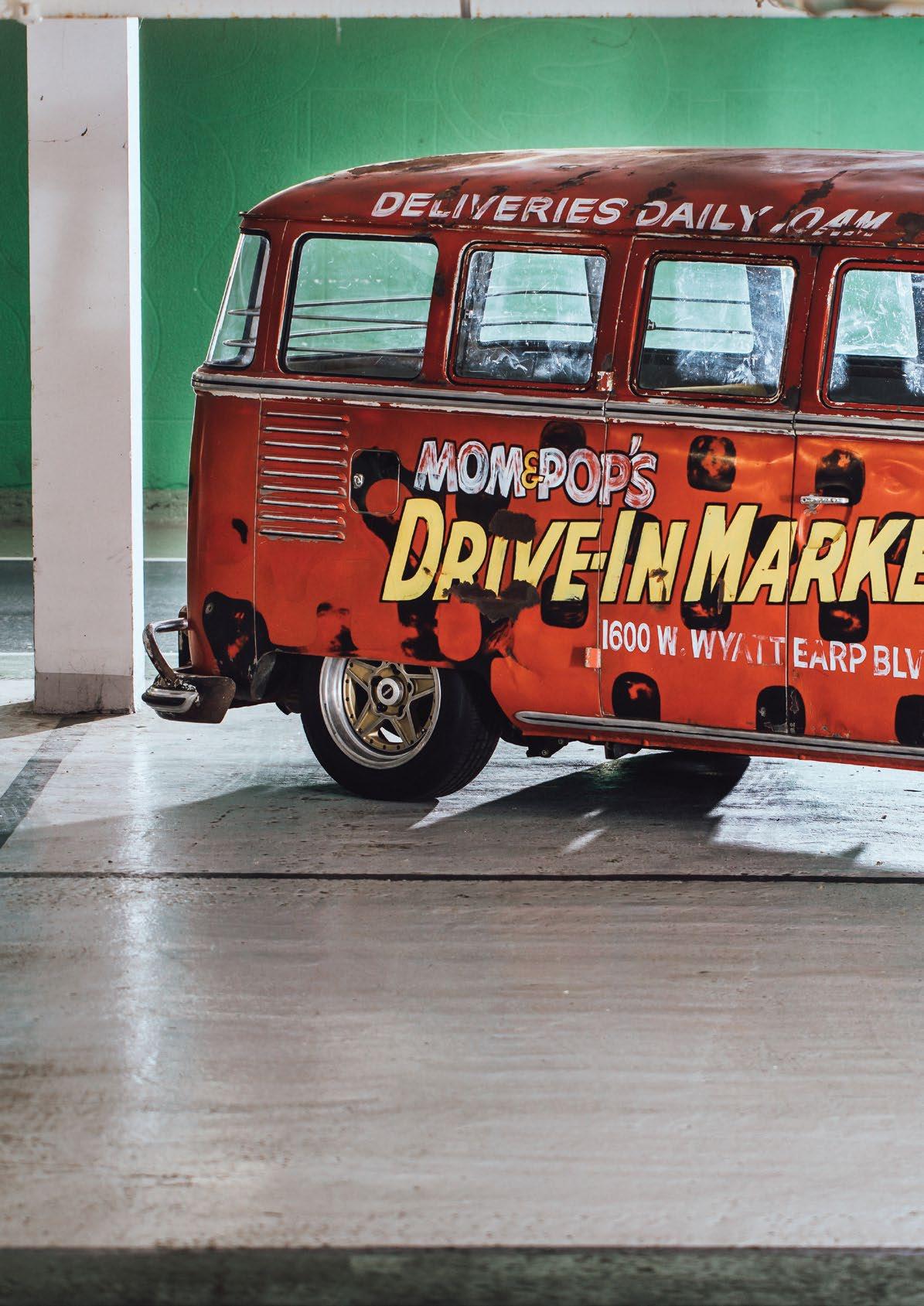
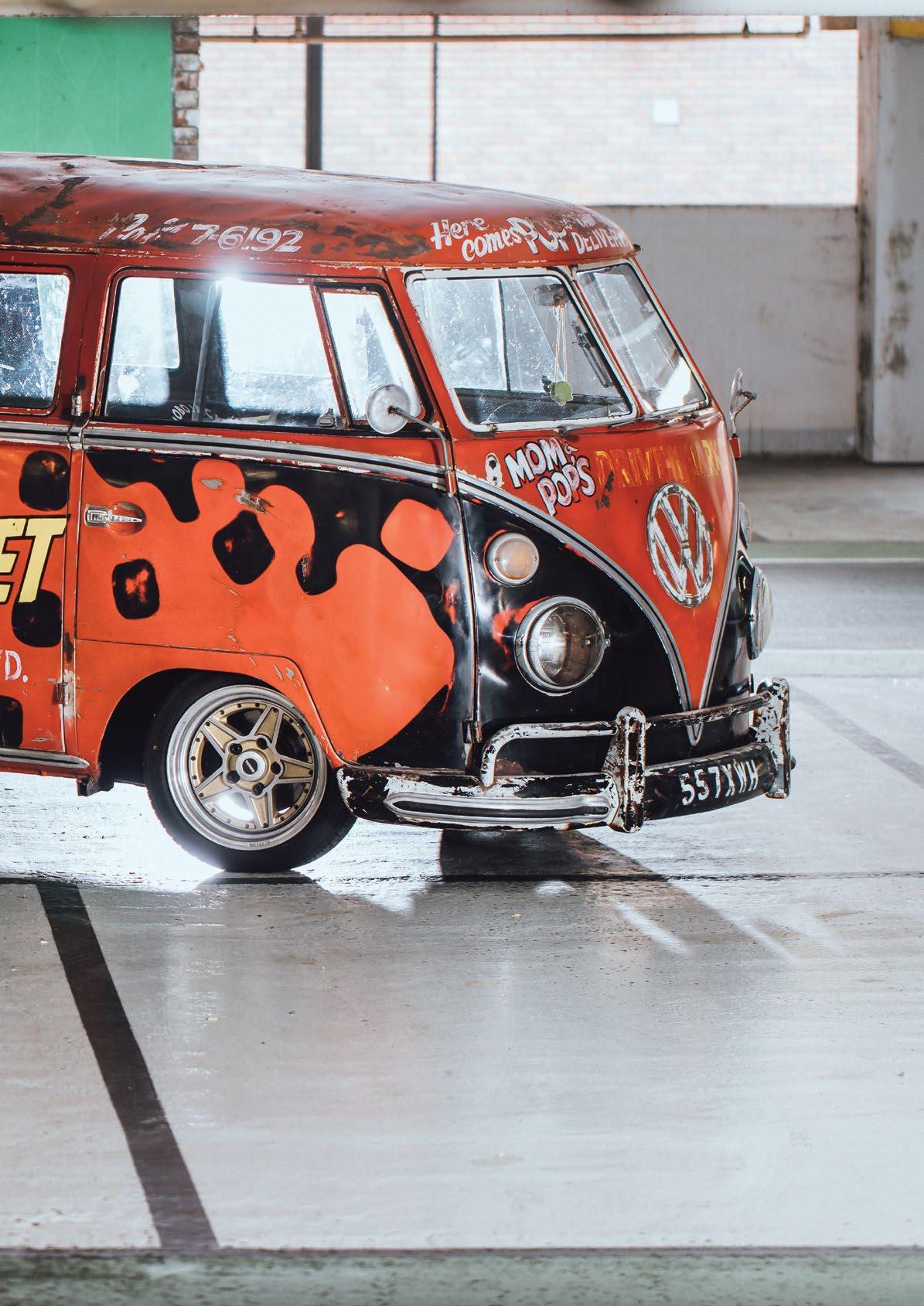
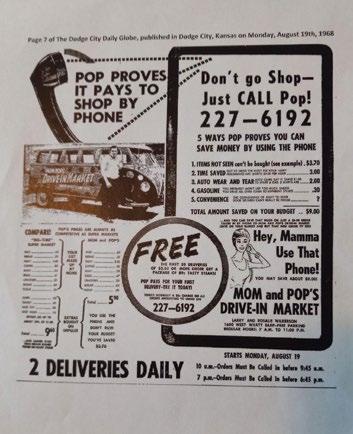
This 1962 15-window Deluxe originally started life as a Mouse Grey micro bus, but judging from the awesome adverts which were sent over to Ben from the 1968 Dodge City Daily Globe newspaper, we know it was sign-written and used as a drive-in market delivery
van since the mid-60s.
The bus was bought by Ben Laughton – someone else whose cars you will have seen gracing these pages. Ben has a penchant for Barndoors and signwritten buses.
The Mom & Pop’s story starts on Sunday 5th January 2000 when Ben eventually woke up in his
mate’s spare room sometime late in the morning. “I had a stinking hangover and a strong feeling that I’d done something a little crazy the previous night. A quick check of my phone confirmed it. Yes, I’d sent a dude in America a couple of thousand bucks and agreed to buy his project bus. Oh … as I sheepishly climbed down the stairs to the kitchen where I could hear bacon sizzling and people chatting, I prepared to let my wife Mo know about our new purchase,
the details of which were just starting to come back to me. I’d bought the bus from a guy I knew on thesamba.com, Andre Burchard. Andre and I shared a passion for early Barndoor buses, but also for anything sign-written. He’d rescued this May ’62, walkthrough, Mouse Grey, 15-window bus from a field in Kansas where it had been sat in the dirt with no wheels on for several decades. After bringing it home, cleaning it up and getting it rolling, he’d decided to
cut it loose and had posted an advert online at approximately the same time as I was supping my tenth pint of Guinness. The rest, as they say, just kinda fell into place.
“So, with Mo very much on board and the bus safely making its way across the pond, I started researching the logos. Luckily the bus still had a shop address painted on the side and it didn’t
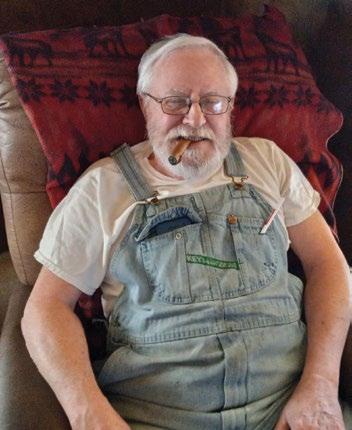
take me long to find some details of the old ‘drive in market’. Quite a lot more digging and I eventually managed to contact Jack Wilkerson, whose parents were the Mom and Pop whose names were painted all over the bus. Even better than that, Jack’s wife Kathy was super friendly and, as we exchanged emails and texts, she informed me that Pop was still alive and sent me a photo of him today. Apparently his mind was blown that I was planning to resurrect his old supermarket van.”
While in contact with Kathy, Ben asked why the bus
had been laid up in a field for years. Well, Pop aka Butch aka Larry Wilkerson was known for being a very kind boss, and one weekend he’d lent the bus to a kid who worked at the store so that he could “take some friends to a party” in the summer of 1971. This party trip ended, as you might have expected, in an accident, and the bus was rolled 360 degrees at the main intersection in town. While, thankfully, no one was hurt, the bus was a mess and got hauled to a local farm where it got dumped and forgotten about for almost 50 years.
So how did the bus end up with Lew? Ben is the first to admit that he doesn’t like to see a project go without it being complete; however, after hanging with Ned at Spa last year and talking about cutting Mom & Pops loose, Ben mentioned: “It had been the hardest year of my life and, to be honest, my little tiny brain just didn’t have the capacity to try and get people motivated to finish the project off.” By the time Ben got home, Ned had suggested a very worthy candidate who was apparently now in the market for a new project (a lot can happen on the way home from an amazing VW show), and “I’m very happy to say
that a quick and easy deal was done with my friend Lew”. Enter Mr Savage. Lew bought the project in September 2025. Lew has been into VWs ever since he learnt to drive. His first car was a 1972 Beetle. His dad had a keen interest in classic VWs so it was a natural first car, I guess.
The van needed a lot of welding, which Lew completed himself apart from a couple of little bits which he admits were out of his league, so good friend Drummer Matt stepped in for that part. Lew’s partner Mims sorted the interior and his dad
wanted to get stuck in so he built Lew an engine. Other than that, all the work was completed by Lew himself.
One of the questions we always ask is: “Did you encounter any problems when building it or since completion?” Lew’s reply was, “Yes, everything fought me during this build. Too many to list
but the main ones to mention would be the first gearbox I bought had no reverse gear, and with the engine freshly built, I made the mistake of turning it over without the distributor in place, which subsequently popped the dizzy drive out and jammed the worm gear. This five second mistake meant I had to take the engine back out, strip it
down, split the case and replace the worm gear. A mistake I will never make again!”
Lew’s deadline was Ninove 26… six months away! Yep six months and, guess what, he only went and did it.
Ben had completed a fair bit of the welding,
including new cargo and cab floors, as well as outriggers, jack points, cab door bottom repairs and dogleg repairs, a new front valance, a rear corner and new lower sills on both sides. All of this new metal then needed blending to match the crazy multi-coloured paint scheme. Lew completed the rest of the metalwork (the bottom 6”), and gave the bus a
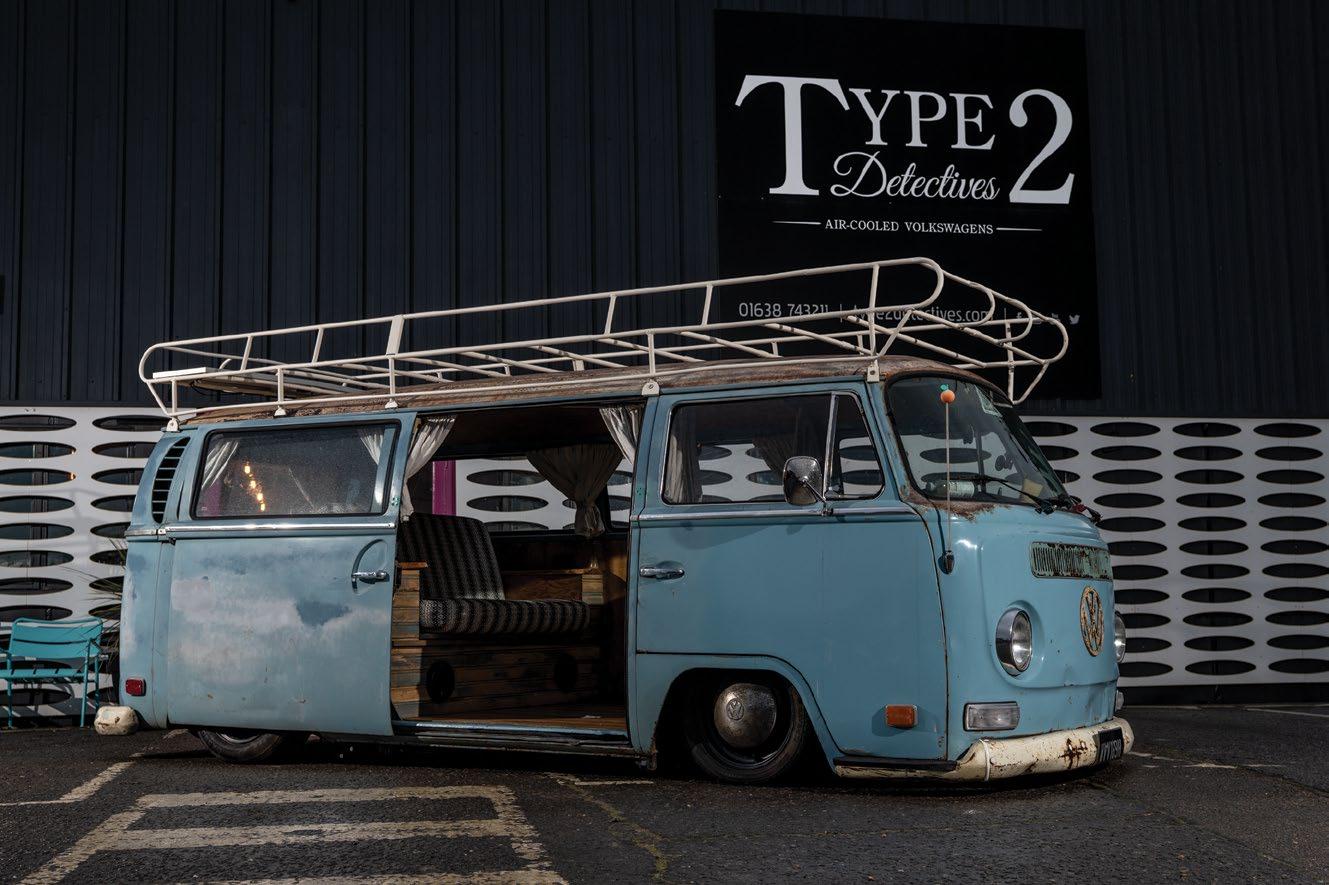
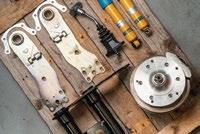
full mechanical and electrical overhaul, an EMPI front disc conversion kit machined down and redrilled to 5 x 120. This time Lew opted for a simple and not superslammed bolt on lowering job using flip spindles, a 4-inch narrow beam and swing axle conversion kit from Type 2 Detectives. Wheel-wise, Lew wanted an 80s split rim wheel, but in his own words, “I had pretty much exhausted all avenues in this field so went with
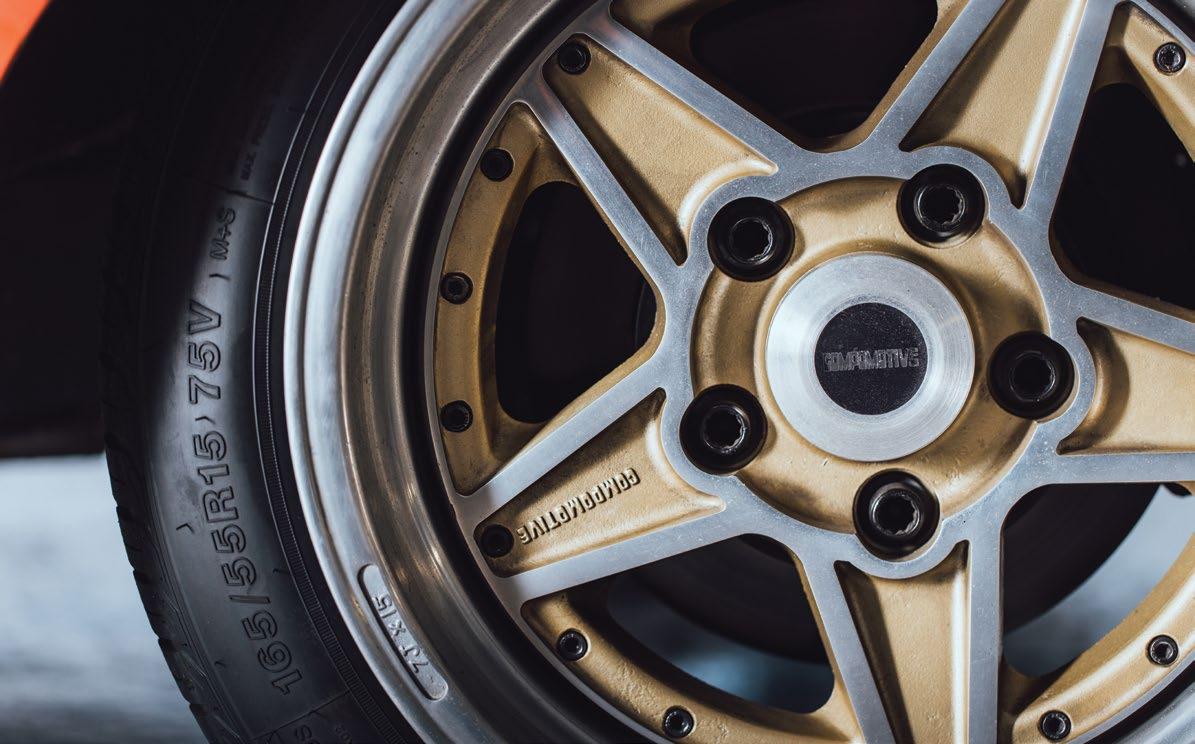
Compomotive FH500 two piece, 15” x 7J running 165/55/15 tyres on the front and 185/65/15 on the rear”, which we think work perfectly on this bus. The engine is a stock 1600 twin port which was built by his dad and, as mentioned earlier, promptly ruined in seconds by Lew and then rebuilt by Lew, finished off with a custom Volkshaus header and muffler fitted.
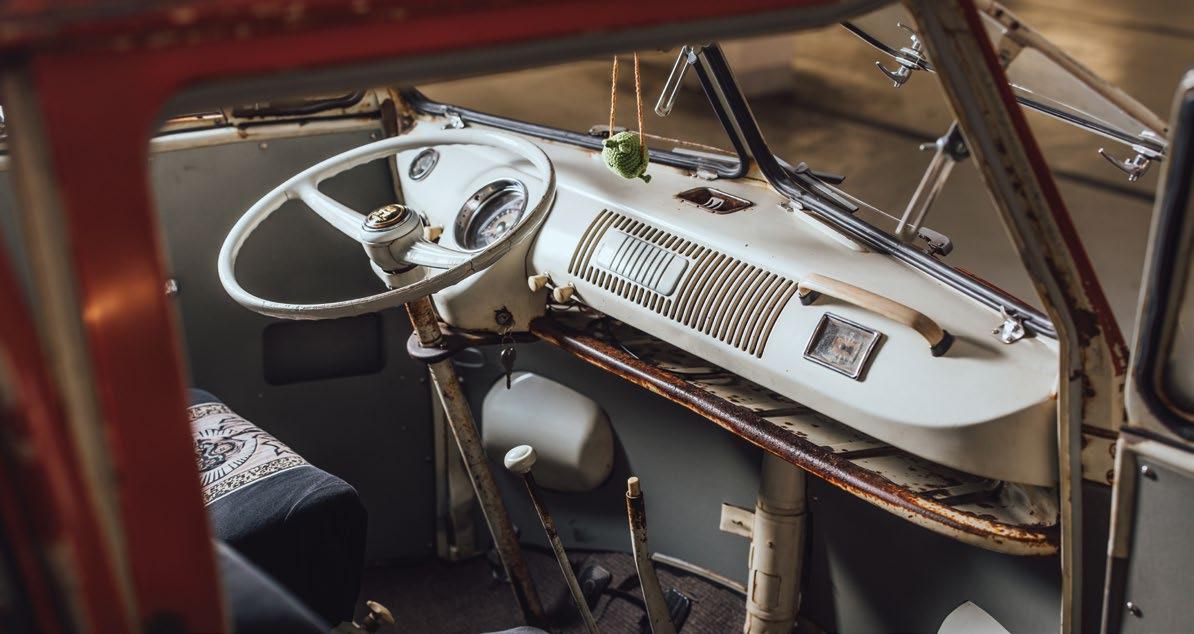
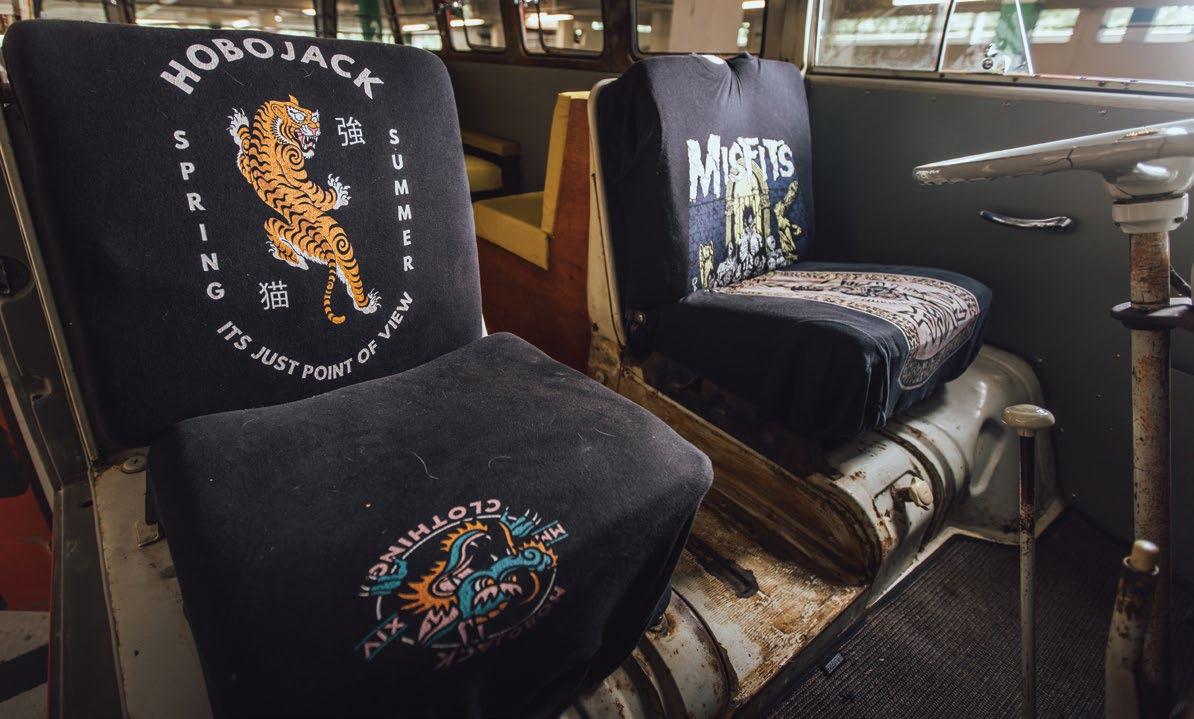
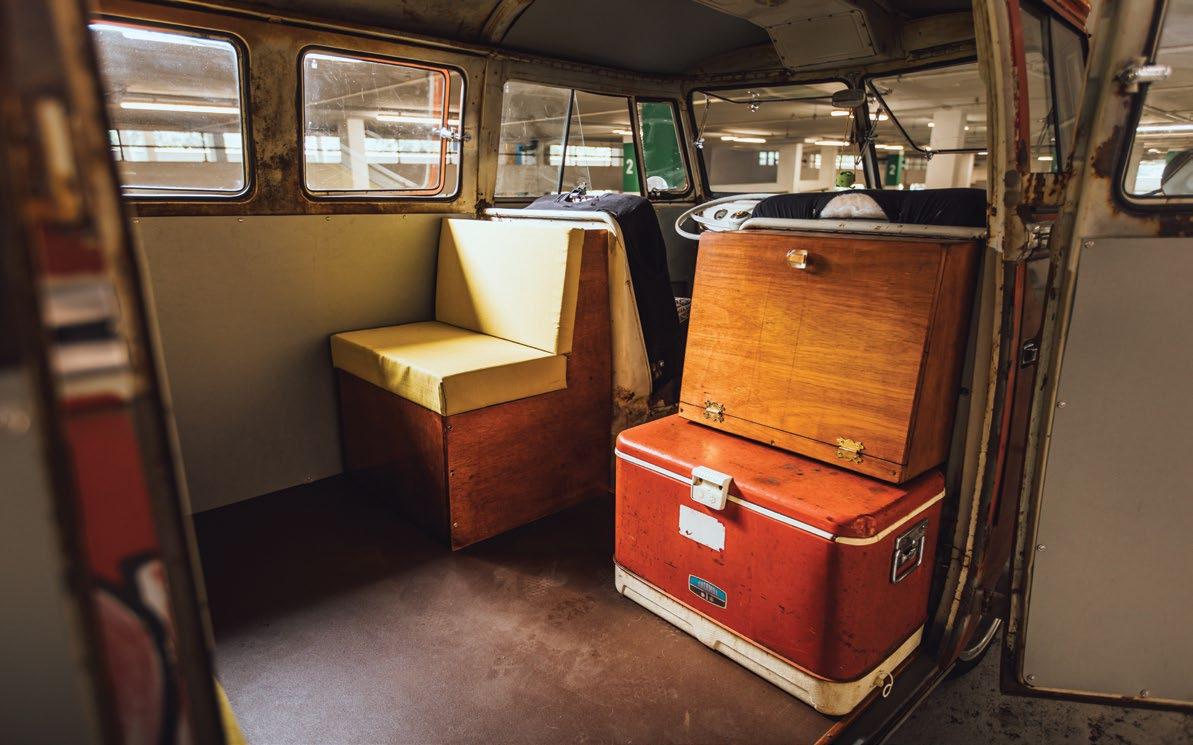
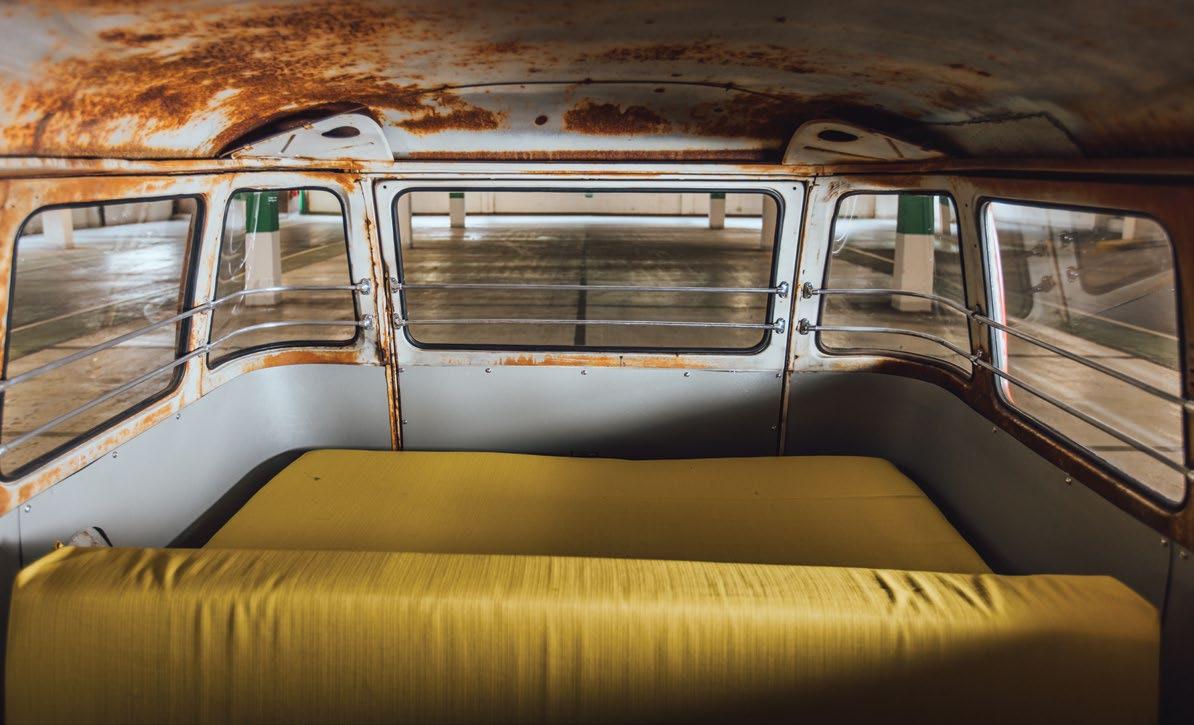
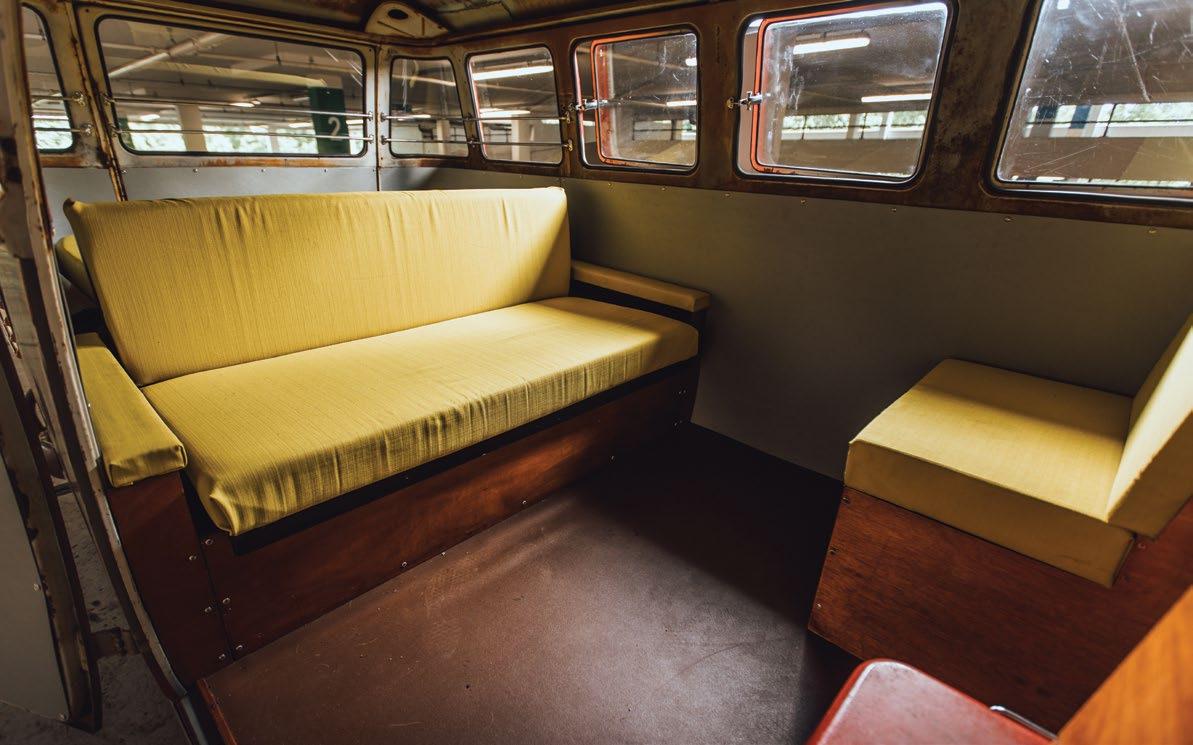
A lot of the running gear is stock other than the lowering items. The interior was retrimmed by Mims. The seats have been recovered with some fresh padding and old T-shirts. A Creative Engineering rock-n-roll bed was fitted with handmade cushions and buddy seat. Lew handcrafted a small storage cabinet to fit a cool box underneath neatly as storage is scarce in the buses. Lew blended all the repairs in
and a lovely touch is the painted on front number plate, which make perfect sense as the bumper was painted black back in the day, and so makes a perfect background. Everything was them mopped and polished to make the bus red again. After sitting in a field in Kansas for decades it had turned a bit pink, and to make the logos pop a bit better.
Here’s a cool fact about that awesome paint scheme. It turns out that the “ladybird” style of paint is actually a print type from back in the day, magnified massive. It has absolutely no relevance to a drive-in market, admittedly, but interestingly a virtually identical paint scheme features on a German bus (the Claus Klischee Panel Van) in a period 1950s VW leaflet which was used to illustrate the VW Type2’s usefulness as an advertising tool. It would appear that painters often took tips and ideas from these Volkswagen leaflets, and we have heard and seen reference to this in the past.
So Mom & Pop’s is back on the road after a 50-year-plus hiatus, and doesn’t it look amazing? Again, this is hardly surprising when you look at the previous cars Lew has turned out. If you are out and about at shows this year, be sure to take a closer look at this super-cool 15-window. We love to see these old, once utilitarian vehicles being brought back to life, and the sheer number of commercial and adapted private VW vans that have been saved and preserved. Well done on this one, Lew. You’ve done a cracking job as always.
Pop.
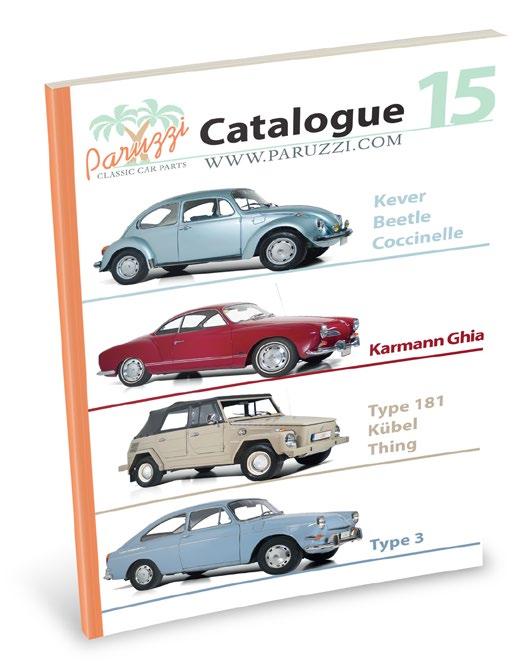
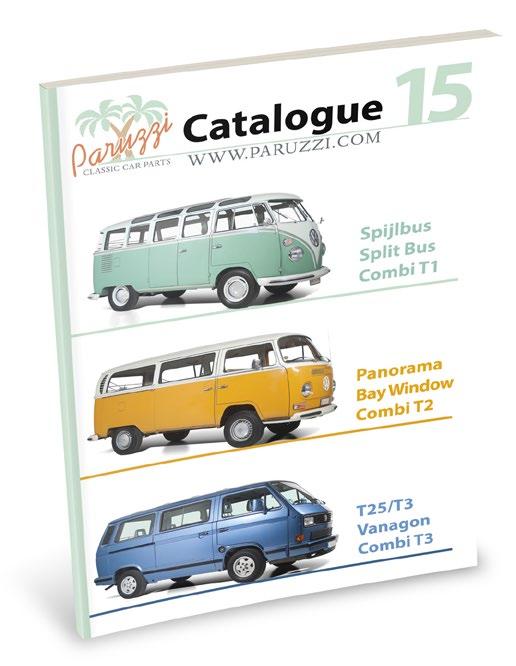
Paruzzi parts catalogues
www.paruzzi.com/en/catalogues
ready to install get your VW With MAg CASE bACk on thE roAd
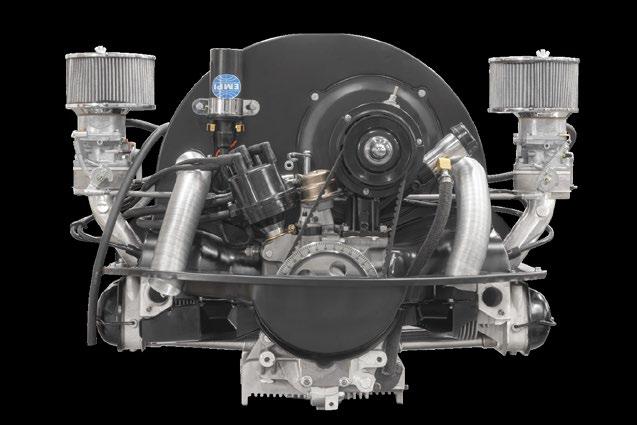
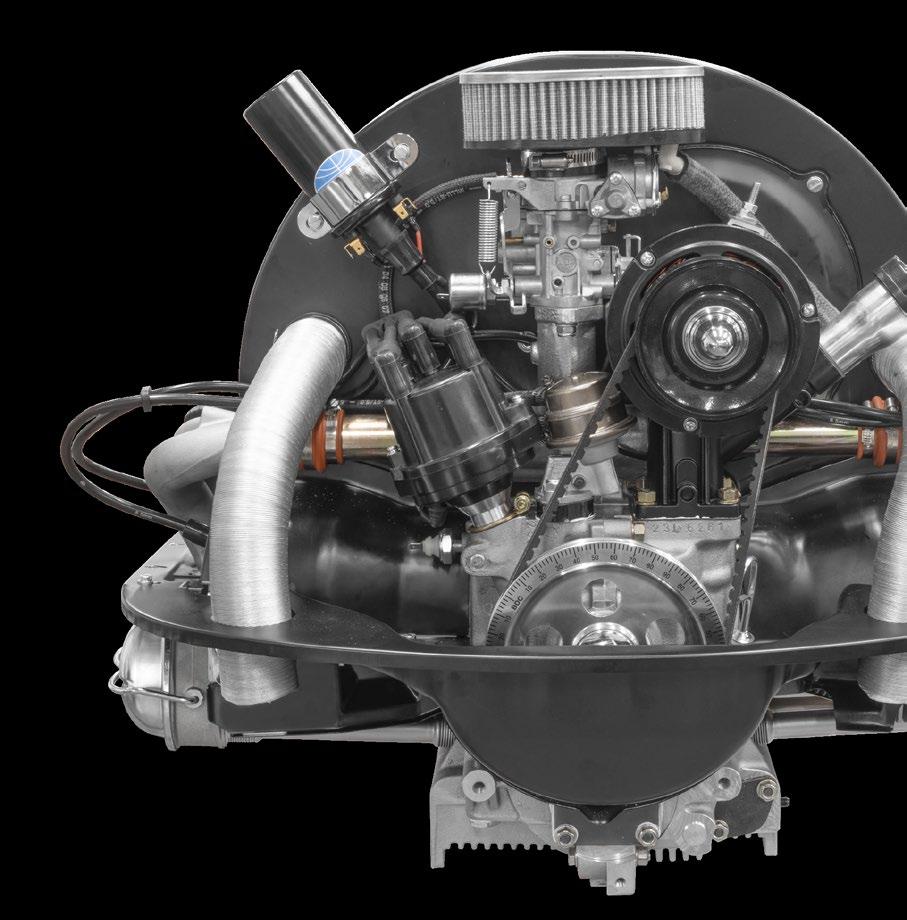
This complete Turn-Key Engine was constructed using topquality components from our extensive EMPI product lineup. Every Turn-Key Engine is dressed out, tested and tuned on the EMPI dyno ensuring that your new engine is ready to install and get your VW back on the road!
This 100% new and ready-to-install engine features AutoLinea cylinder heads upgraded with OSVAT OE style valves and a proprietary 3-angle valve job by Anthony Chicca at EMPI Anaheim.
The EMPI HEI ignition kit means you won’t ever have to worry about setting or replacing points for trouble-free operation. Just select the right exhaust and clutch for your application.
Plus every EMPI Turn-Key Engine is covered by a 12month/unlimited mileage warranty
Available Configurations:
• 1600cc
• 1776cc
• 1914cc
Every EMPI Turn-Key Engine Includes:
• New 55 Amp Alternator
• New Electronic Ignition Kit with High Output Coil
• Upgraded Dual Port Cylinder Heads with OSVAT valves CNC Machined in Anaheim CA
• 12 Volt 200mm Flywheel
• New Sheet Metal
• PennGrade 1 Oil Included
Fits most Type 1, Type 2, Ghia, Dune Buggy, Sand Rail and Kit Car applications using 12V Flywheel
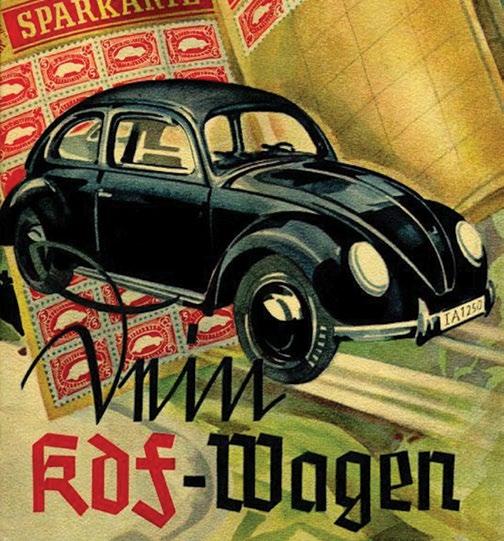
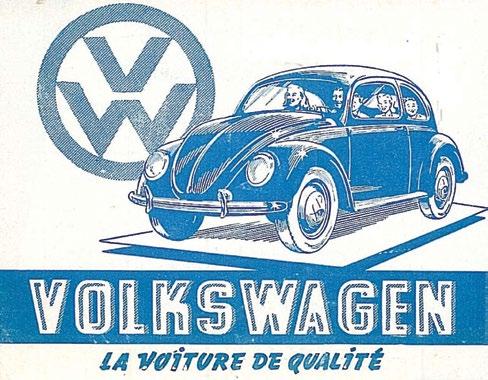
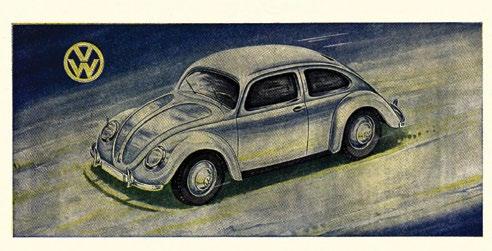
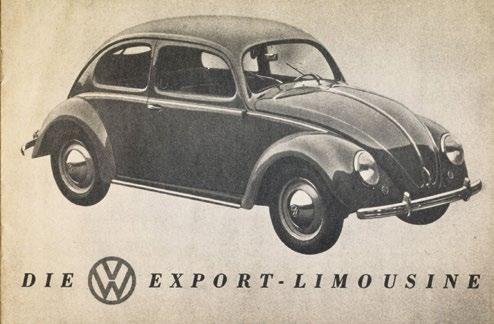
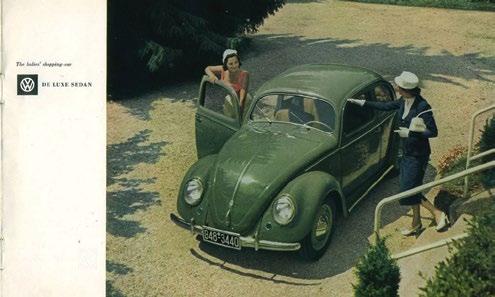
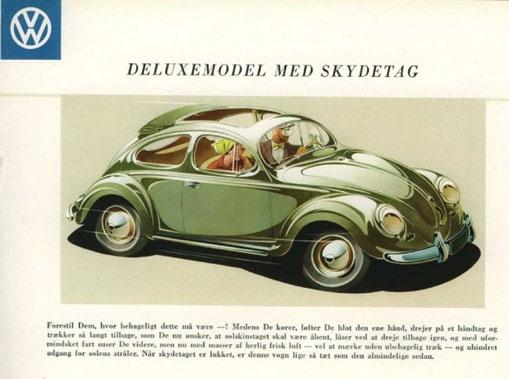
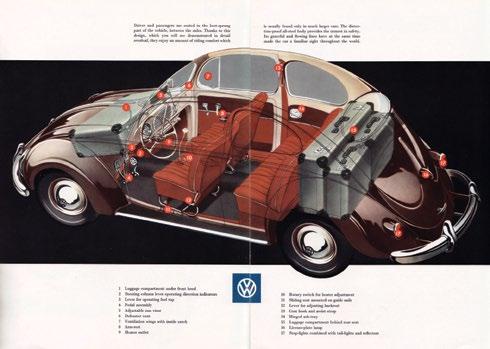
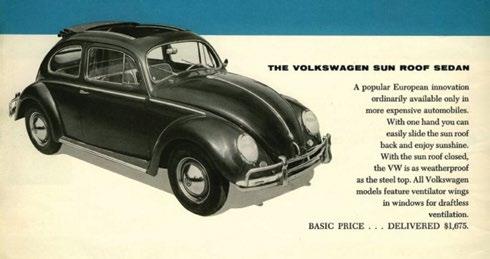
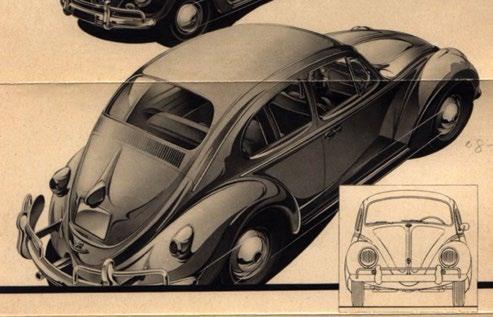
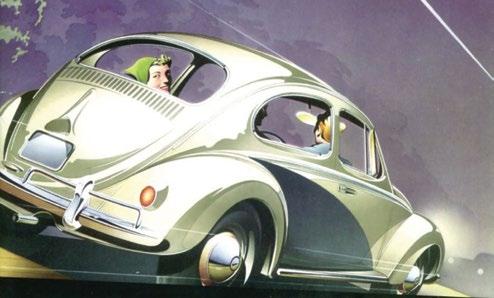
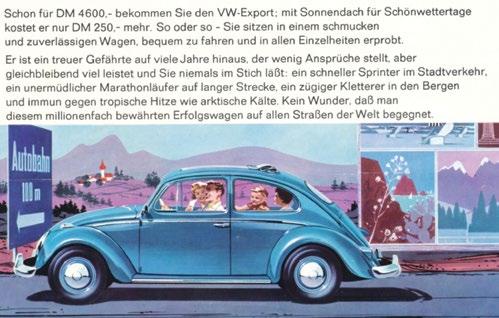
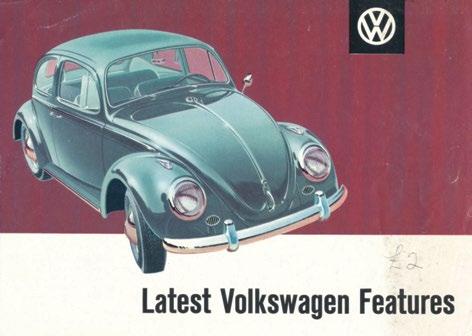
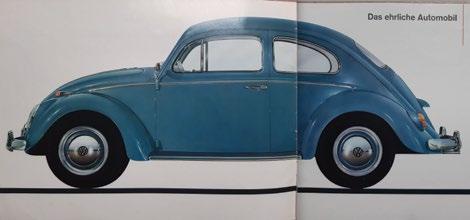
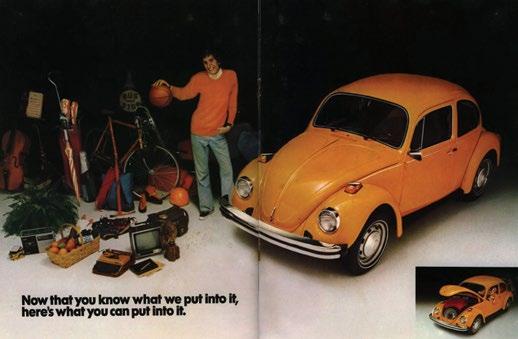
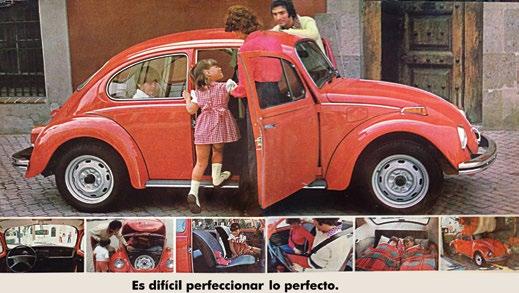
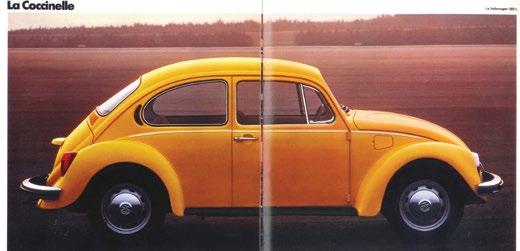
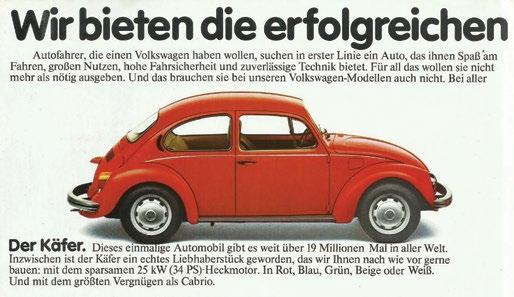
The Brochures that helped sell over 20 million Beetles.
Beginning with the end of the prototype phase and the first KDF-Wagen, these cars were never actually sold to the public but given as gifts to German aristocrats and members of the Third Reich. The small amount of literature produced was mainly to push the doomed Sparkarte saving stamps scheme. Unfortunately, nobody who paid for stamps actually received their car. You will then notice a wartime gap until the late 1940s. Production had begun and the first ever real Volkswagen advertisements were released.
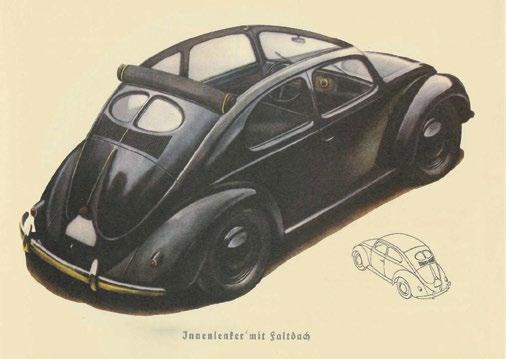
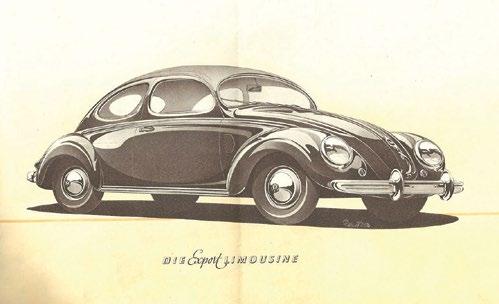
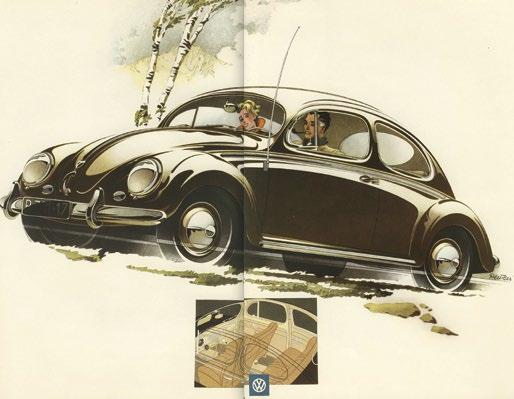
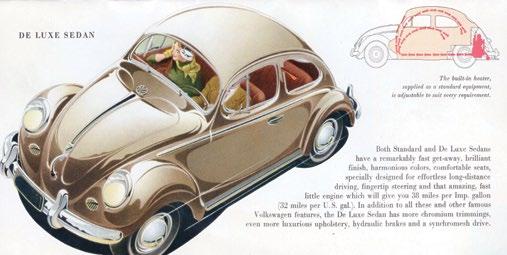
Moving into the 1950s was a very important time for Volkswagen. Their export network was up and running and business was growing faster than they could keep up with. You’ll notice that most 1950s advertising material used artists’ impressions of the Beetle instead of photographs. In fact they pretty much used the same brochure throughout the decade, only making minor aesthetic changes to the vehicles. The illustrator’s name was Bernhard Wilhelm Reuters and he was famous for his added Art Deco style streamlining to his art. Reuters’ work defined the “Golden Era” of Volkswagen’s advertising. His iconic imagery even continued to be published by VW for a couple of years after his sudden death from a heart attack in 1958.
There is no doubt that the 1960s formed VW’s heyday when it came to company growth, with Beetle sales breaking 1 million a month as they approached the middle of the decade. The trend seemed to be to move away from illustrations towards informing returning or potential customers about what they would actually receive. The brochures were simple and clean. Although the style reflected Volkswagen’s iconic advertising campaign, the literature itself wasn’t as punchy. It focused on facts and details about how with constant development the car was just getting better year by year.
Over twenty years of selling the same vehicle didn’t seem to be slowing things down at the beginning of the 1970s, with over 1 million units still selling every month. There was no shortage of advertising opportunities, with a huge colour palette and special edition models constantly popping up. Unfortunately, even with these opportunities, sales dropped dramatically towards the end of the decade due to a perfect storm of outdated technology, new safety standards, emissions regulations, export competition and finally internal replacement with the launch of the all-new MK1 Golf.
Restoring aircooled VWs since 2001
Servicing, inspections and MOT’s
Lowering and mechanical upgrades
Modification and fabrication
Auto electrics, split charge systems and 240 volt hook-ups
For all air-cooled VW’s and transporter generations
Vehicle valuations
Call for FREE friendly advice WANTTOADVERTISEHERE?PLEASEEMAILadvertising@hayburner.co.ukFORDETAILS
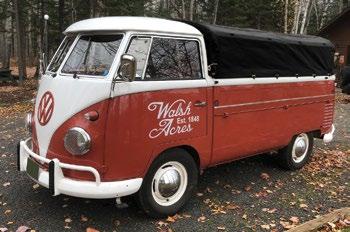
C9653 Waterproof Cotton Pick Up Canvas Cover
See online for our full range of canvas covers
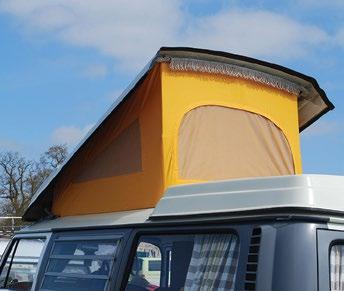
C81783Y VW T2 Early Bay Roof Canvas, 3 Windows, Yellow
Also comes in Tan (C81783B), Grey (C81783G), and Orange (C81783O) and 1 Window versions
C9656B Flush Height Pickup Canvas for Split Single Cab
See online for our full range of new black pickup canvases
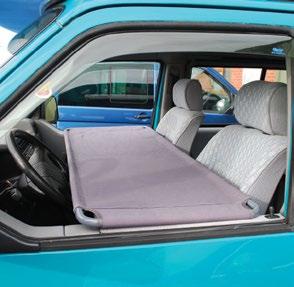
C9127 German Quality Cab Child Bunk for VW T4
Also availble for T5/6 (C9129), T2 Split (C9039), T2 Bay (C9040) & T25 (C9041)
WONKY EMPORIUM WONKY DONKEY EMPORIUM
GO YOUR OWN WAY
WORDS CHARLES HARDING PHOTGRAPHY BY PJ GIBBONS
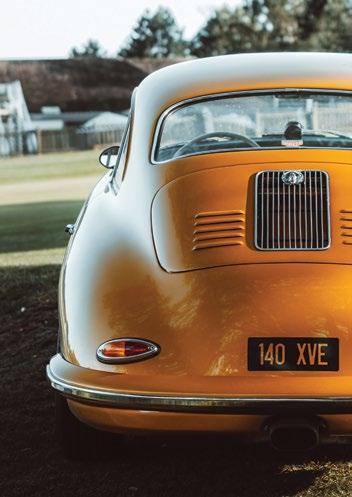
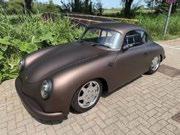
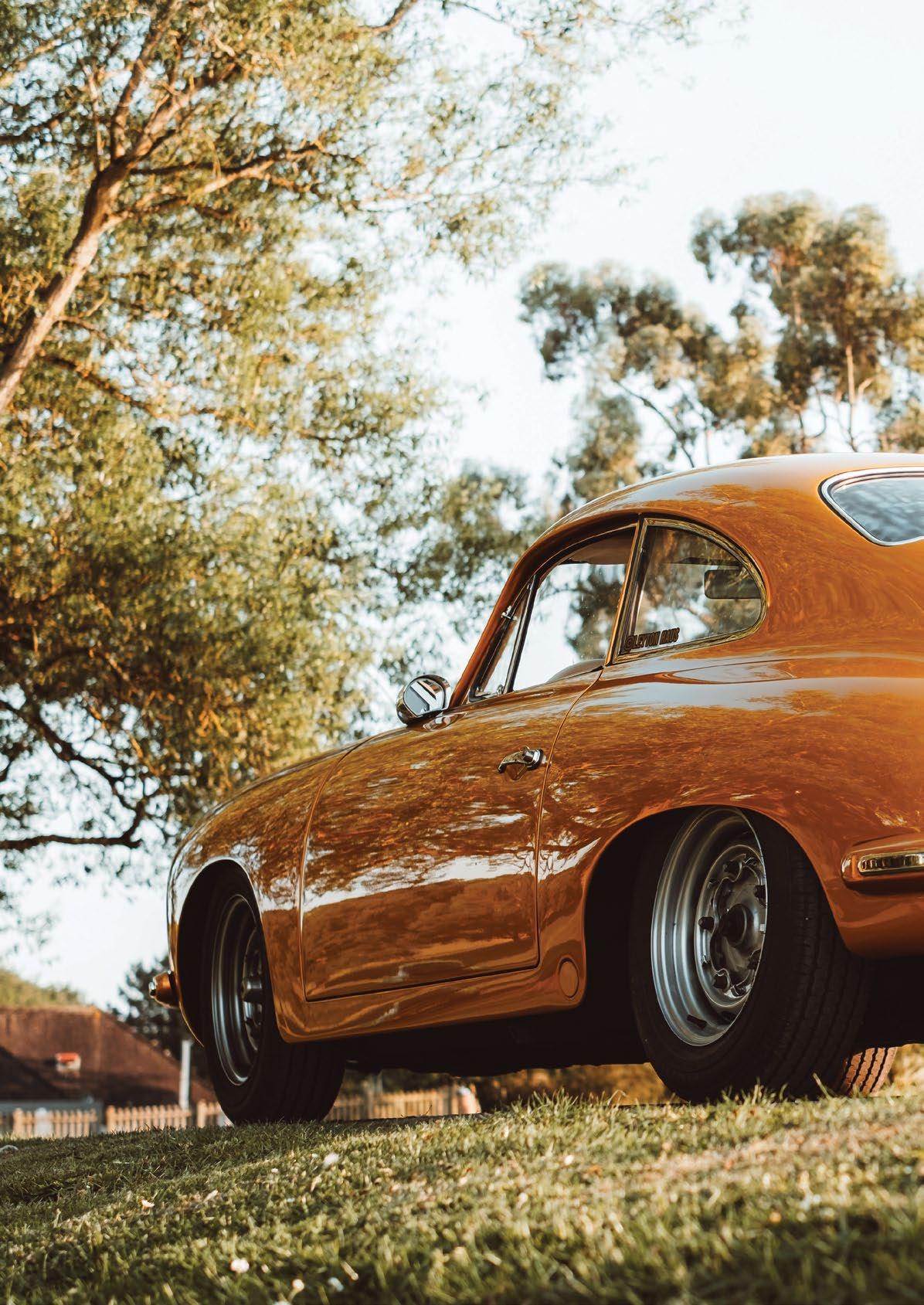
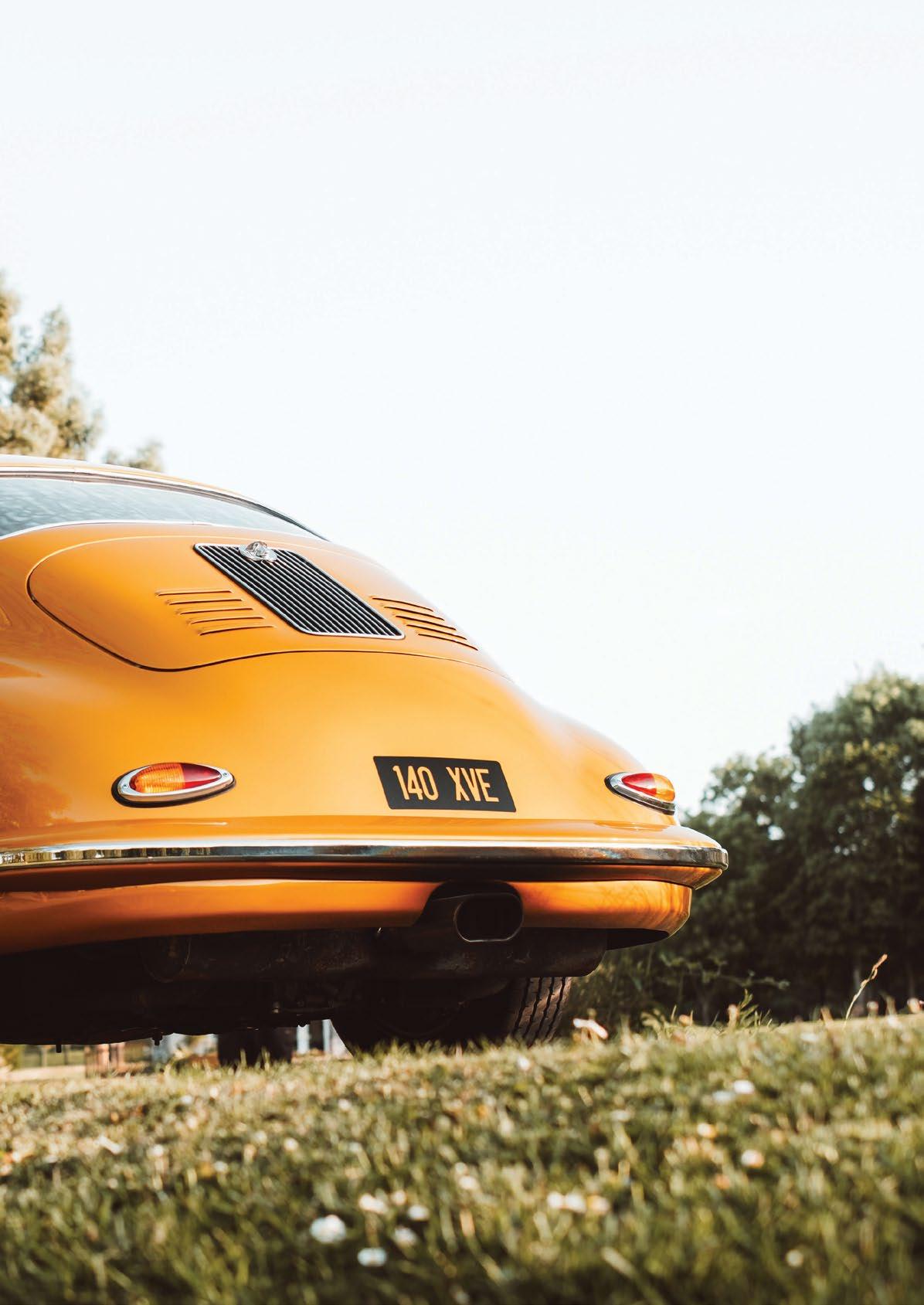
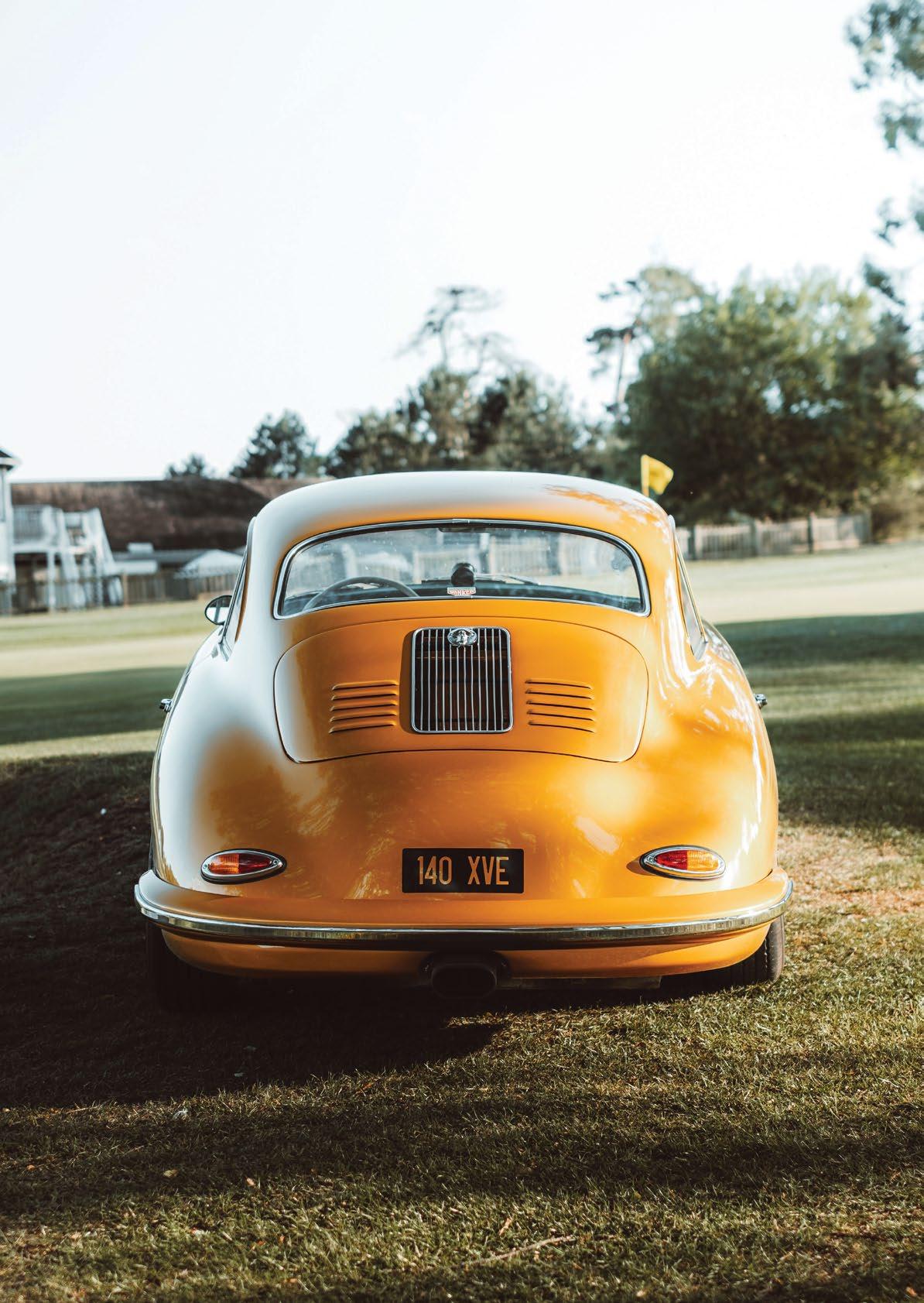
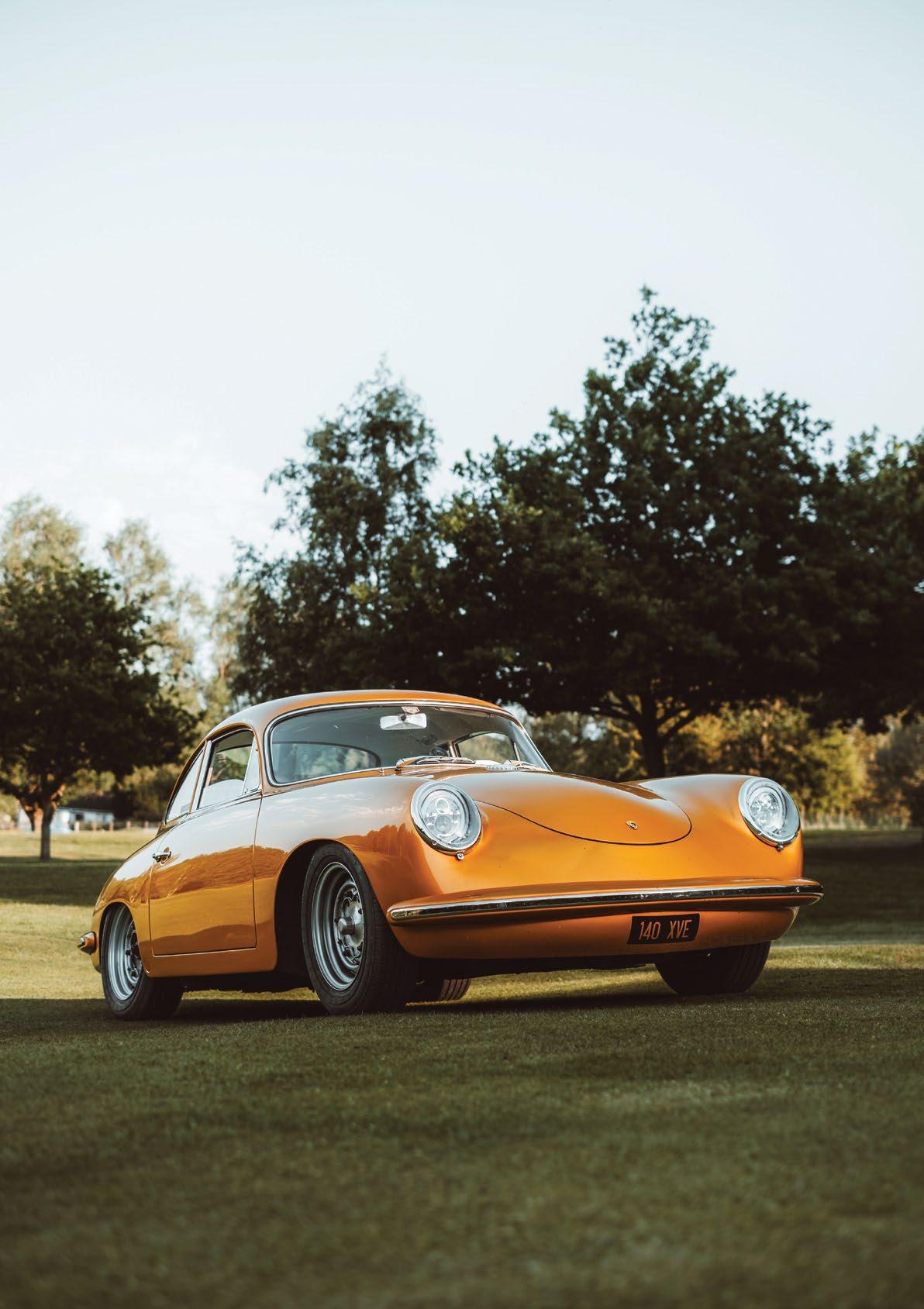
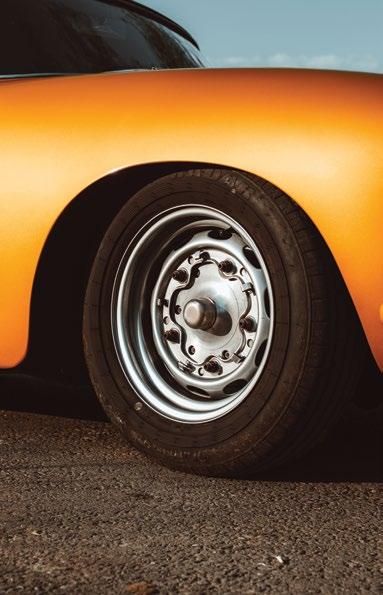
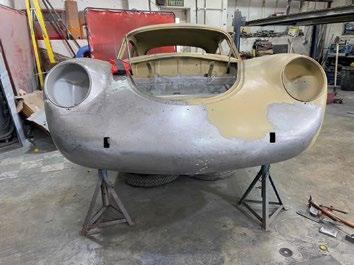
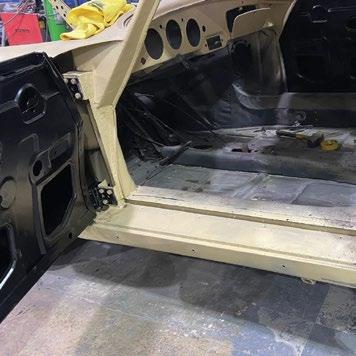
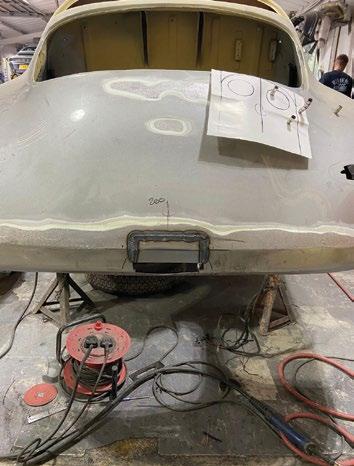
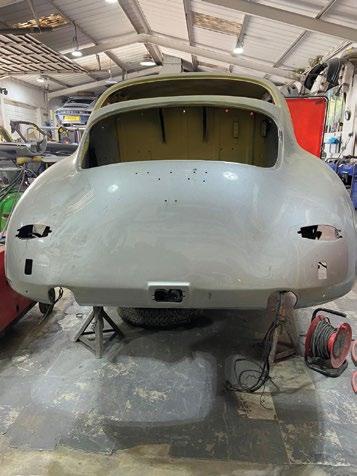
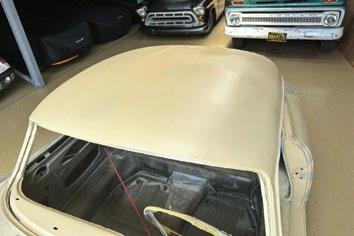
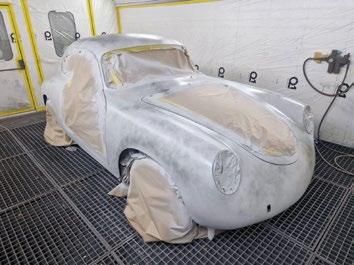
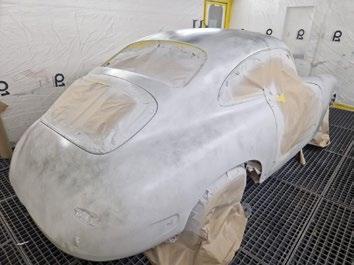
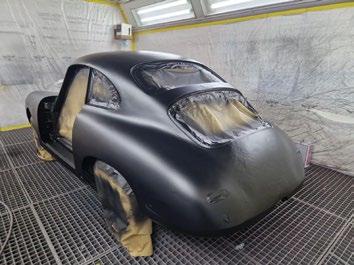
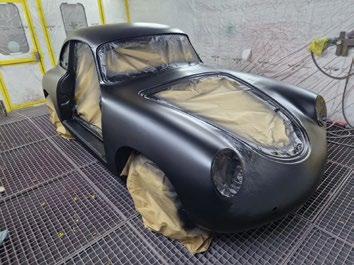
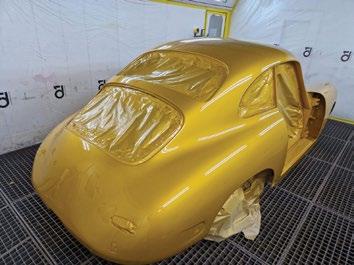
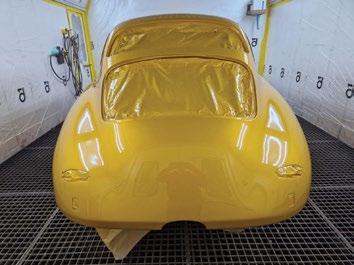
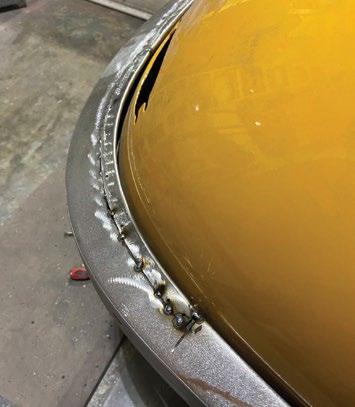
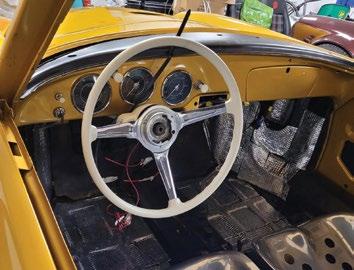
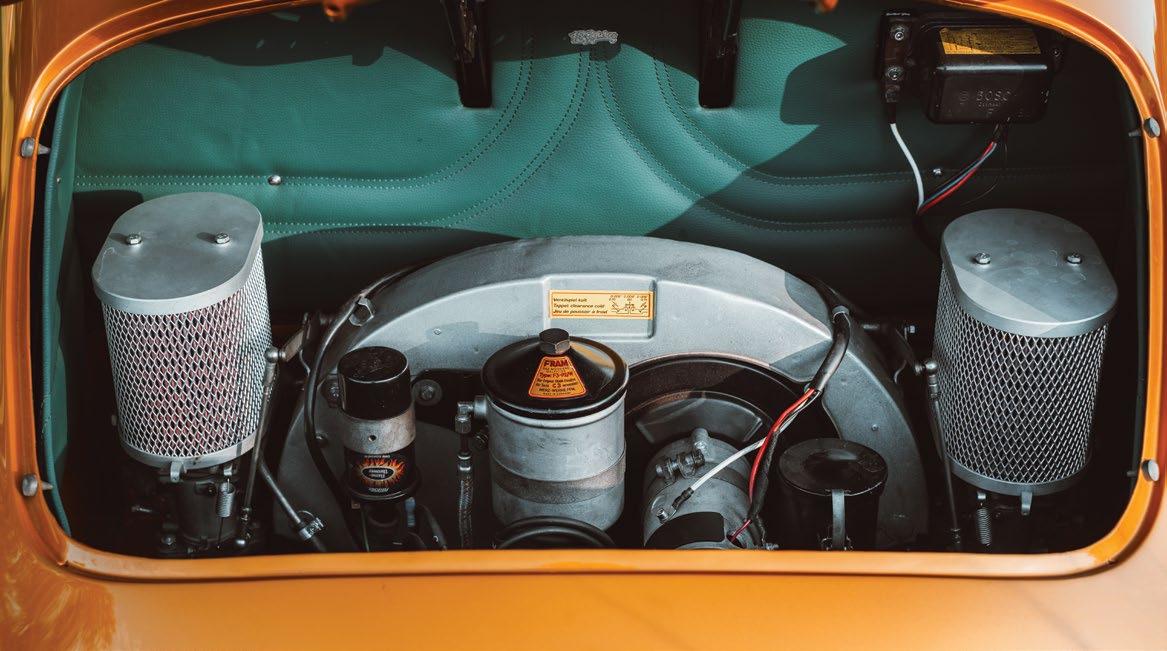
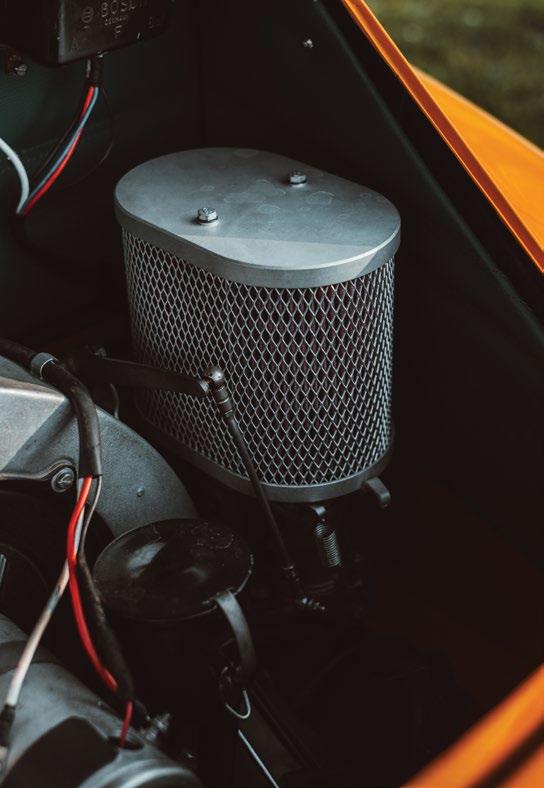
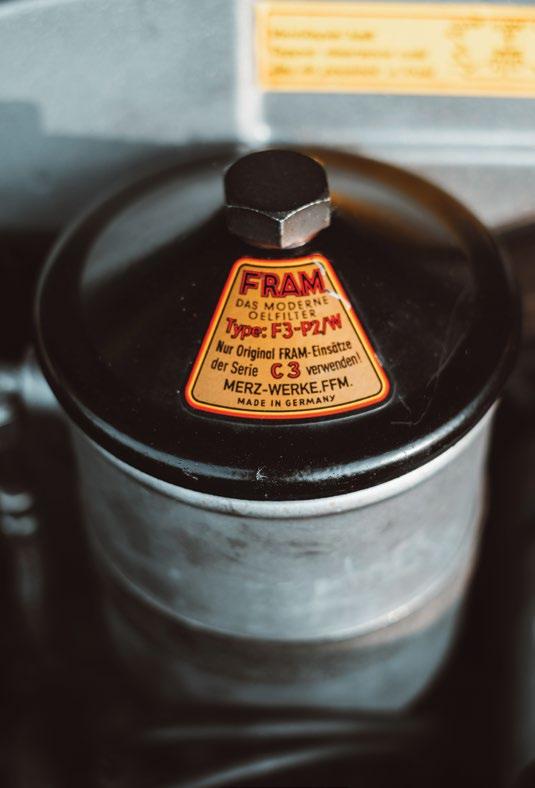
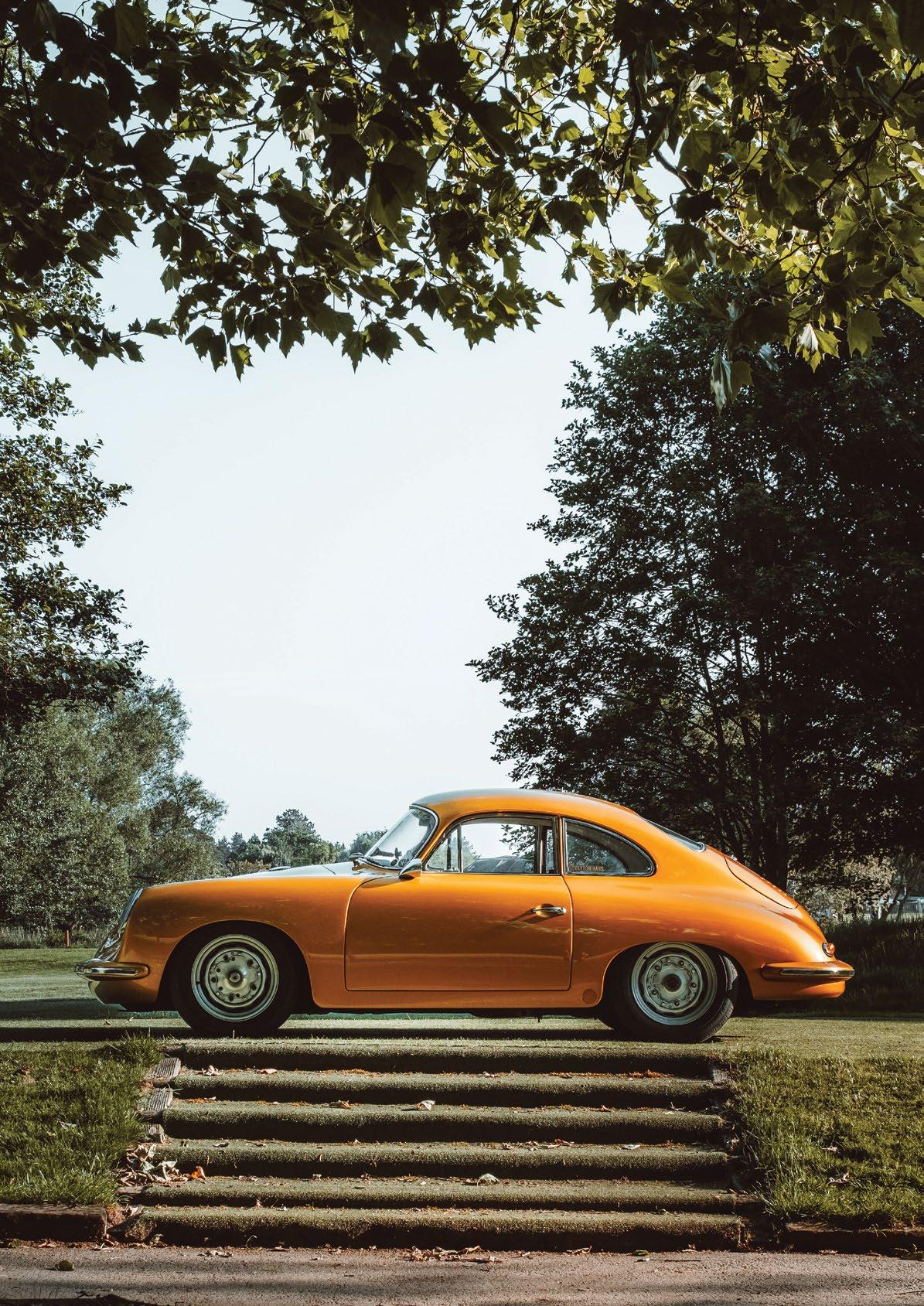
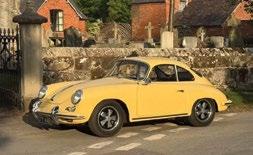
Let’s talk about how Paul Leyton transformed this burned-out Porsche 356 into the most personal build of his career. There are restorations, there are restomods, and then there are cars that show the personality of the person who built them, I think Paul Leyton’s 1959 Porsche 356B T5 belongs firmly in the latter category. Finished in a stunning shade of Mica Gold, trimmed unapologetically with a bold green interior and packed with subtle custom touches, this 356 isn’t a restoration in the traditional sense. It’s the culmination of four decades spent immersed in air-cooled culture, countless projects, endless
learning and a determination to create something entirely unique.
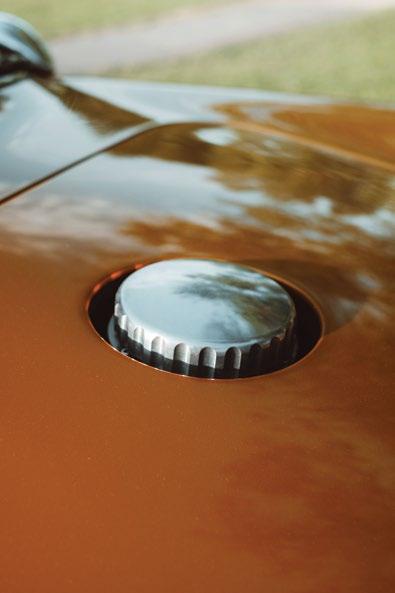
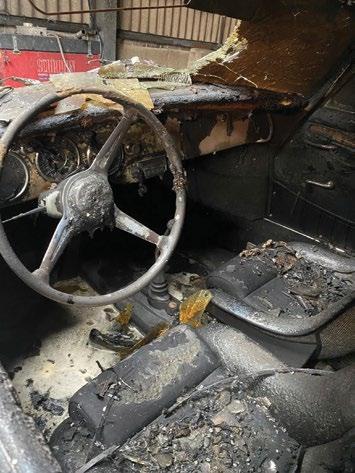
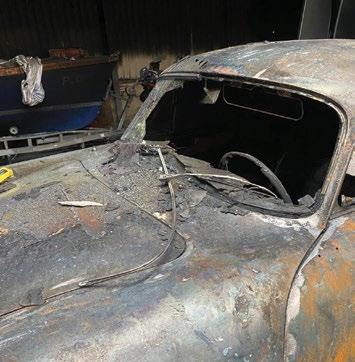
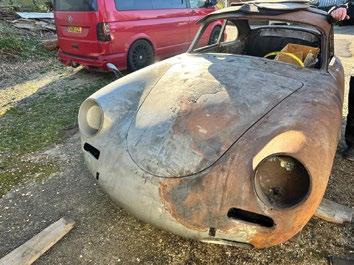
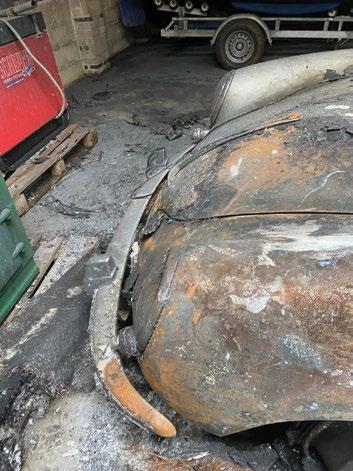
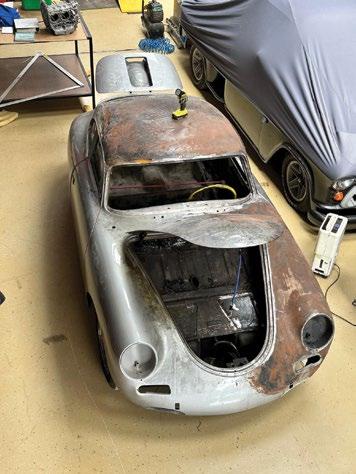
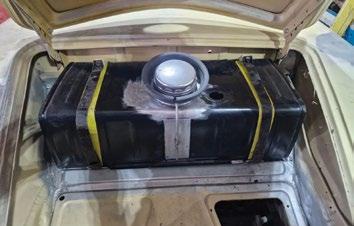
When Paul first encountered the Porsche, it was little more than a fire-damaged shell, abandoned after a storage unit blaze had destroyed much of the vehicle. The interior was toast, the glass missing, suspension components damaged, and the fuel tank distorted by intense heat. This was a vehicle the average restorer would most likely walk away from but not Paul. As he tell us, “It was a burnt-
out shell. Most people saw scrap. I saw the perfect car to build.”
Like many Porsche owners of a certain generation, Paul’s story begins with Volkswagen. Born and raised in Winchester, the 56-year-old entrepreneur bought his first Beetle at the age of sixteen. That first car sparked an obsession that has never really stopped. Today, he estimates
he has owned around 110 cars. “Only about two a year,” he laughs. His passion has taken him through countless Volkswagens, classic Porsches and everything in between. Along the way he built a successful playground installation and surfacing business, raised four children with wife Nicky and somehow found time to fill garages with ambitious projects. “My wife is definitely a car widow,” he jokes. The move from Volkswagens to Porsches was inevitable. “My first Porsche was a 1990 964 Coupe. It had Turbo Twist wheels, RS suspension and RS bumpers. The boys used to pile into the back and the smallest sat on the tunnel.” He
sold it years ago for £9500. The regret is almost audible.
Over the years an impressive collection has passed through Paul’s hands: a 911 SC. A 3.2 Carrera; a rare Zyclam Pearl 964 Cabriolet; a much-loved 993 Targa; a 968; Cayennes and Macans; multiple 356s. One standout project was a Singer-inspired 1976 911 restomod finished in Autumn Orange with a striking purple interior. But while the 911s came and went, the 356 gradually became his thing. The spark was lit during a visit to California after a tour of Rod Emory’s workshop left a lasting impression –
that and being influenced by John Willhoit. Emory didn’t know that years later, those worlds would unexpectedly collide.
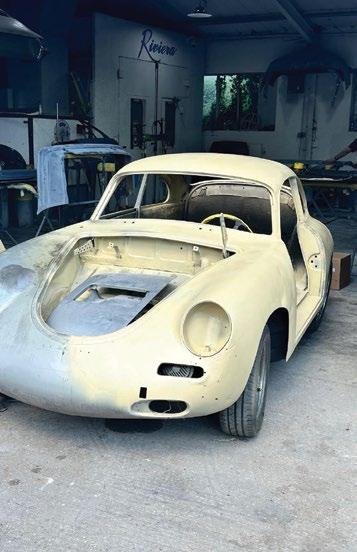
The 356 appeared almost by accident. Paul was visiting Riviera Autobody in Wallingford to discuss another Porsche project when he noticed a neglected shell sitting in the corner of the workshop. The car had survived a storageunit fire and appeared destined to remain forgotten. For eighteen months Paul repeatedly enquired about it, but eventually, on his birthday in January 2024, a deal was struck. “Not a bad birthday present.” What he bought was hardly a complete car – the front screen was gone, the side glass was missing, the seats had been burned and the front tyre and shock absorber had exploded. Yet hidden beneath the damage Paul could see an opportunity. And, more importantly, a freshly built 1720cc Andy Prill engine
had survived untouched by the blaze.
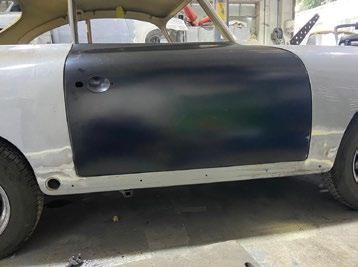
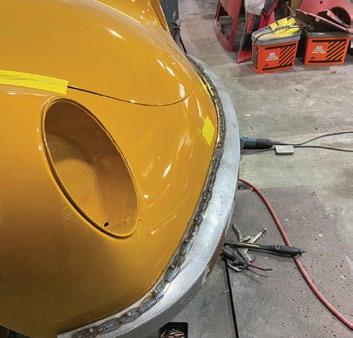
Paul’s philosophy was never about creating a concours restoration. Instead, he wanted to build the 356 he would have designed had Porsche commissioned it in that period. The metalwork, body modifications and paint were entrusted to Ty and the Riviera Autobody team but everything else happened much closer to home. The design decisions, assembly work and countless hours of problemsolving all took place in Paul’s own garage where friends became an integral part of the journey. Ian supplied hardto-find parts from his extensive collection and provided a valuable reference point with his own 356B. Stuart handled the electrical work. Trevor handcrafted brass bumper trims
and Hampshire Electroplating restored the brightwork. Like every great project it became a community effort, but the vision remained unmistakably Paul’s.
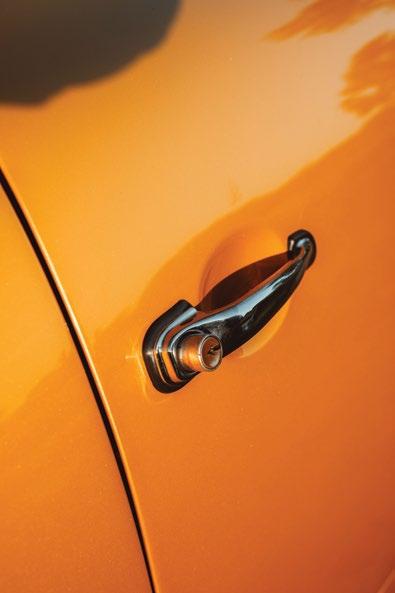
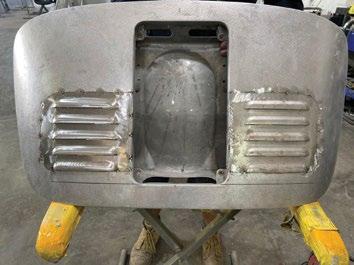
The car’s colour is one of its defining features. Mica Gold is a little-known special-order Porsche shade first seen in 1972 and bears a striking resemblance to some of Porsche’s modern Exclusive Manufaktur colours. In sunlight it glows; in shade it becomes subtle and understated. Combined with the cleaned-up bodywork, the result feels contemporary without sacrificing the character of the original design. Gone are the over-riders, gone are the front vents, gone are several visual distractions. If you look closely, you’ll notice that even the Porsche crest sits recessed into the bonnet.
If the exterior wins universal praise, the interior creates
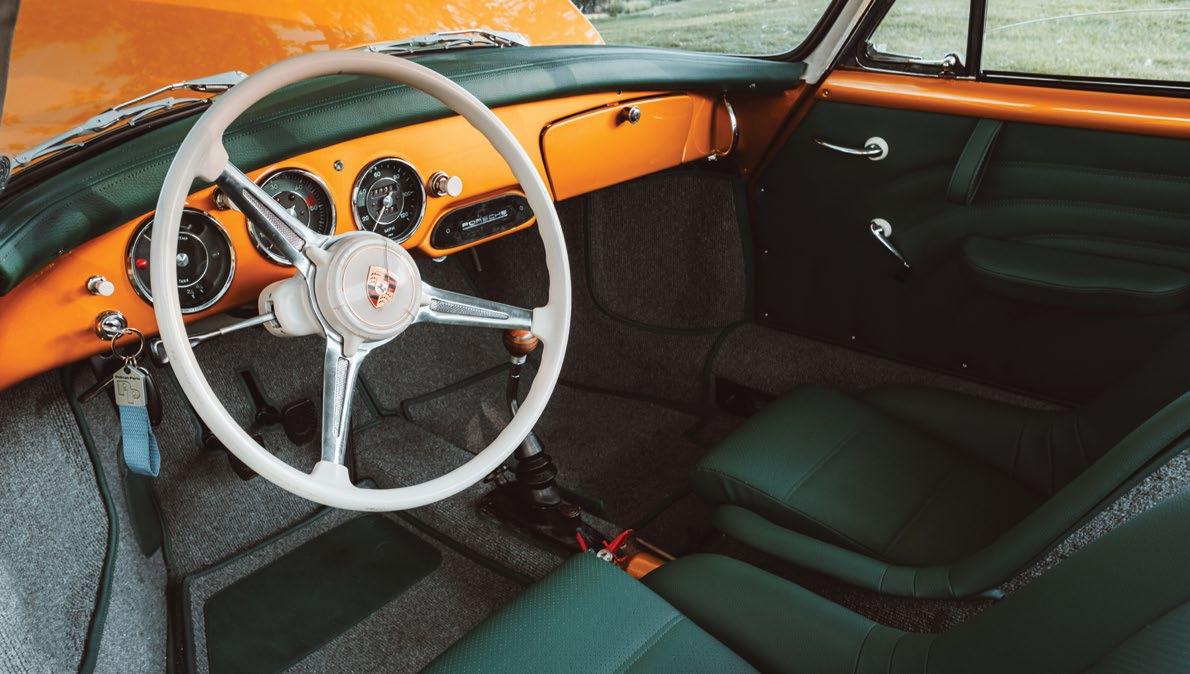
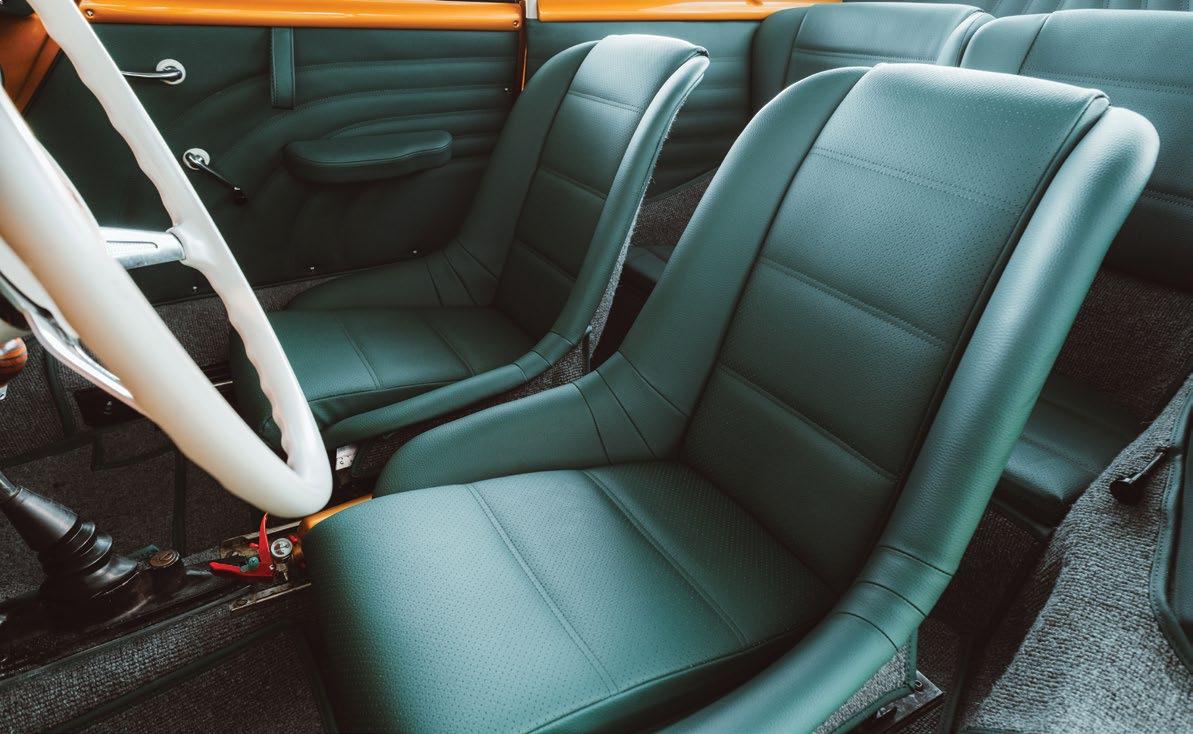
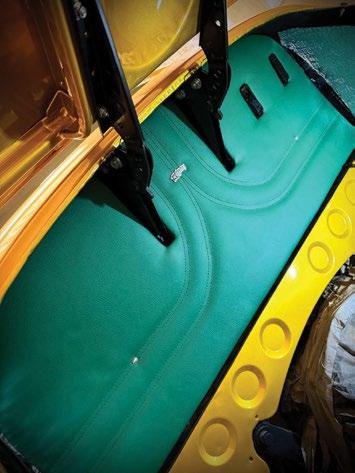
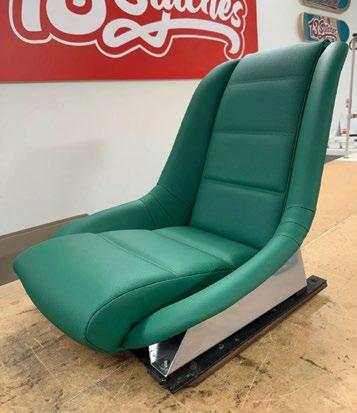
conversation. Finished in a rich green leather with matching details throughout, it challenges expectations. Photographs don’t always tell the full story. “The interior divides opinion,” says Paul. “But when people see it in person, they get it.” The stitching pattern flows through the cabin like a continuous line, starting at the doors and sweeping rearward across the interior before disappearing into the engine compartment. It’s the sort of design detail that many owners would never consider. Paul obsessed over it and the result feels more coachbuilt than restored. And for those who actually drive their classics, there are heated Speedster seats and an Alcantara headliner adding a layer of comfort often absent from period cars.
For many restorers, meeting Rod Emory would be a highlight, but for Paul it became one of the defining moments of the project. Earlier this year he showed
Emory the complete build book documenting the transformation. The Porsche customiser’s response was unforgettable. He signed it: “Love the car. Hate the interior.” Most owners might have been crushed but Paul treasures it. “I’ll take that all day long from Rod.” Emory’s philosophy has always centred around visual balance and restraint. Paul understands the criticism, even if he doesn’t entirely agree. One day, he hopes to park the car in front of Emory in person and see if the opinion changes.
So what’s next for this car? For now, the plan is simple: just drive it. During the first six months alone, the car covered around 2500 miles. London Cars & Coffee events, weekend road trips and spontaneous adventures continue to add mileage at an alarming rate. Of course, no project car is ever truly finished.
If budget allowed, Paul admits a Willhoit 2.2-litre engine would provide the perfect finishing touch. Not because the current 1720 lacks performance; it’s simply because enthusiasts are
never completely satisfied. Meanwhile, another 356 project waits in the wings, a rough Ferrari F430 occupies another corner of the workshop, a Beetle is waiting its turn, and somewhere in the back of Paul’s mind sits the dream of building a Porsche 550-inspired special.
As for the Mica Gold 356? That one might be staying. Then
again, as Paul says with a smile: “Everyone has a price.”
Big thanks to: Nicky Leyton • Ty and the Riviera Autobody team • Stephen at 13 Stitches • Ian • Stuart • Trevor • Hampshire Electroplating • Roger Bray Restoration • PRS • John Willhoit.
Picture: Wesley Crauwels
Graphic design: Creative and professional, fully custom to your needs
Brand identity: Logo design, business cards, stationery, etc. your entire corporate identity –development and/or rebranding
Paper print products: flyers, brochures, (business-) cards, catalogs, magazines, etc.
Stickers: from design to production in all sizes, single pieces, rolls, and any quantity
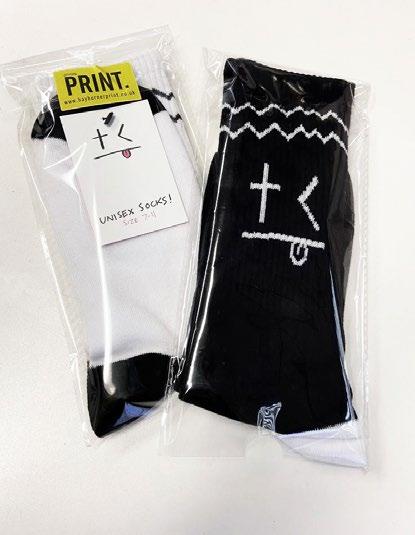
Promotional gifts and merchandise: air-fresheners, mugs, bags, socks, t-shirts, key-chains, lanyards and more… lots more!
Design & Print for everyone
While our roots lie in the air-cooled VW scene, our creative work goes far beyond it.
At AirMighty Design & Print, we welcome all types of graphic design projects! Just ask us... E-mail: niels@airmighty.com
www.AirMighty.com/design-print
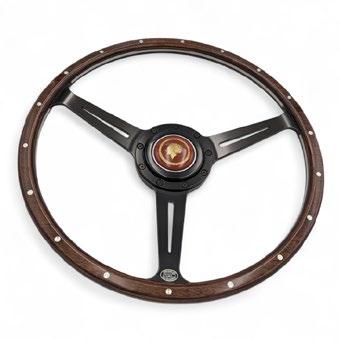
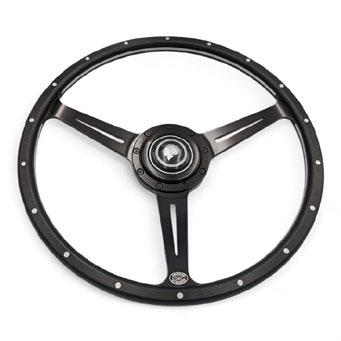
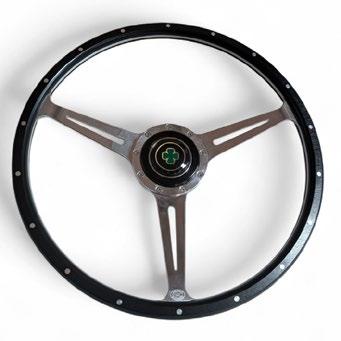
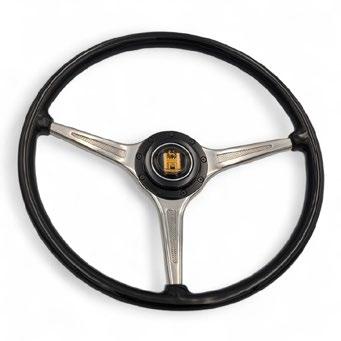
vader wheel
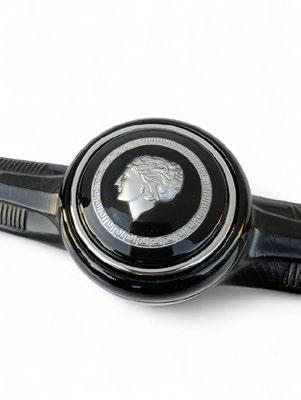
silver lady horn
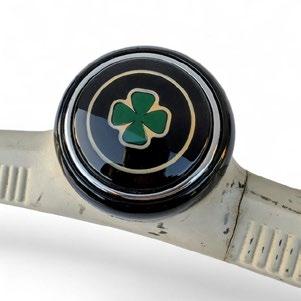
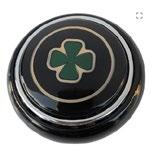
clover leaf horn
threefivesix wheel
luna wheel
wolfsburg wheel
stealth wheel
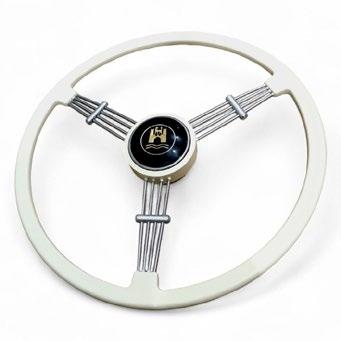
banjo wheel
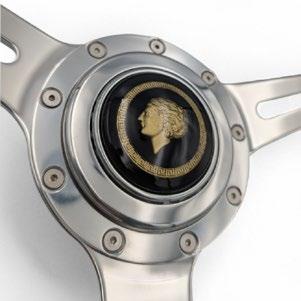
golden lady horn
BIG IN JAPAN
WORDS & PHOTOGRAPHY BY NED FAUX
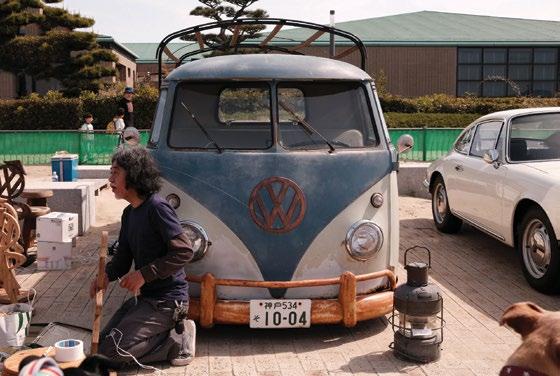
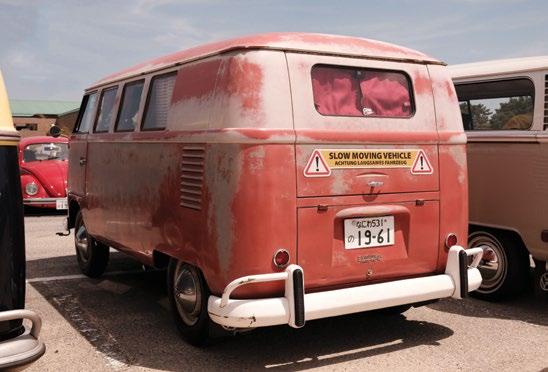
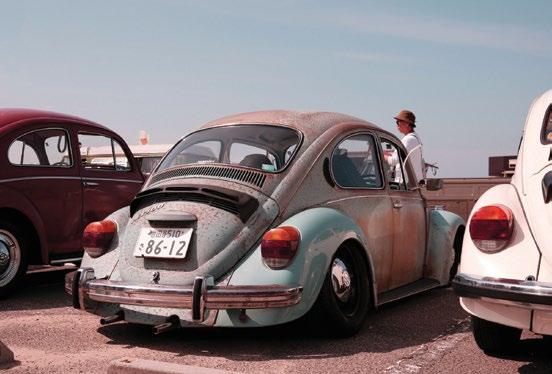
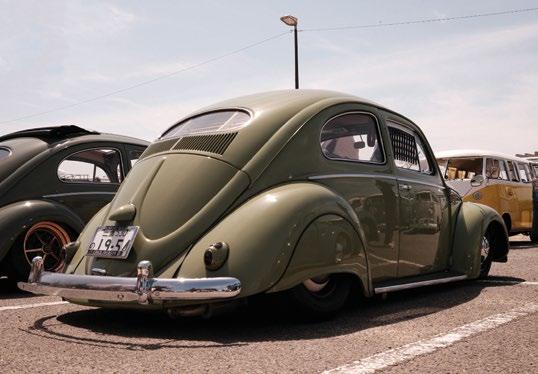
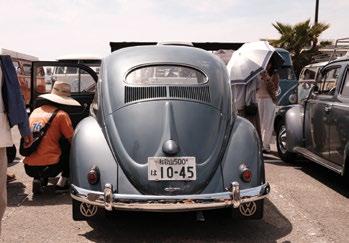
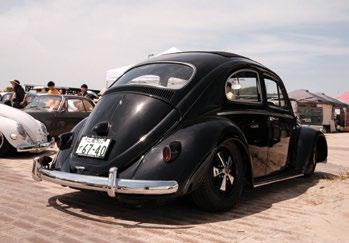
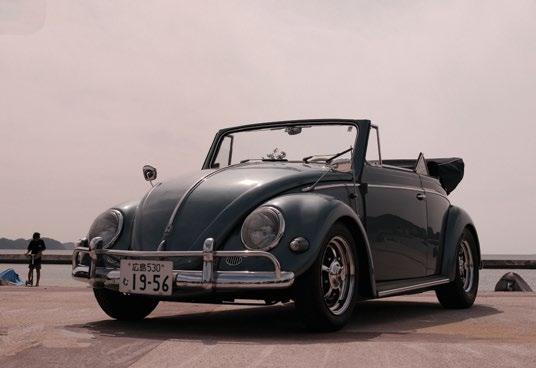
I’m going to begin by saying that I absolutely love Japan. It’s beautiful, it’s clean, the people are so polite and welcoming, and the art, fashion and food … I could go on all day. For us, trips to Japan aren’t a regular occurrence. In fact, we’d been saving for this trip since before 2020. My 40th birthday trip was cancelled because of lockdown, so we decided to wait another six years and combine my 40th with Vic’s (she turned 40 whilst we were out there). This wasn’t actually supposed to be a work trip at all, and we had both agreed to take a real break and just unwind. However, whilst Vic was out in Brazil a few years ago, she became friendly with Hot VW’s editor, Shin Watanabe (who I heard just yesterday had actually stepped down as editor, but that’s another conversation). Shin, being Japanese, was excited to hear we were visiting Japan and said he could easily arrange
VW-related activities for us every day we were there. I insisted on sticking to the original plan of culture and sightseeing but agreed to do at least one “car day”. By chance, Shin told us that on the first full day we were there, it was the Orange Bug Beachside Festival in Wakayama. He recommended it as being one of the best events in Japan, so we decided to begin our adventure there.
We arrived at Osaka Airport after a 16-hour flight with a short stopover in Shanghai. I’ve done my fair share of air miles over the years, but I can tell you there’s no jet lag quite like Japanese jet lag. The way those hours fall, if you’re a bad sleeper like myself, including the day before and attempting to stay awake until night-time when you arrive, you’ve effectively been awake for the best part of 40 hours. This is why we reluctantly turned down a generous offer to visit a private car collection on our first day there and instead just walked the quiet streets of Wakayama like zombies, desperately trying to stay awake until it was a reasonable hour to go to bed. The next morning, we woke up at the perfect time to get a taxi to the event.
I really liked Wakayama. I think it’s probably the closest we got to the “real” Japan, as it’s not really a tourist destination at all. This did, however, make it slightly tricky to work our way around and order meals – especially when you’re travelling with a strict vegan – but we managed to navigate our way
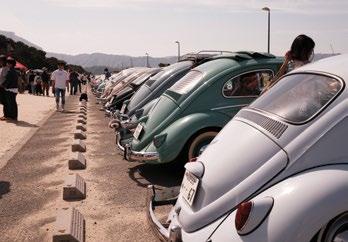
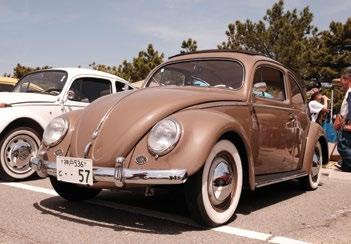
around. On our way to the show, we could already see various classic VWs making their way there. In fact, there were so many on our approach that we got stuck in the queue and decided to get out and continue on foot. The location for the show was spectacular – right on the beach with a beautiful view. I’d say it had a similar layout to the old Brighton Breeze events in the UK, with cars lined up all the way down the seafront and traders opposite. I should probably add that it was a fair bit bigger than Brighton Breeze, and we also definitely didn’t have Brighton weather. Quite the contrary, as I managed to get a very sunburnt nose and forehead.
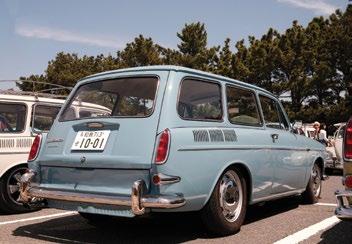
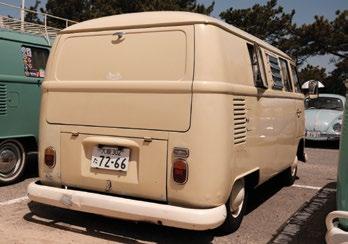
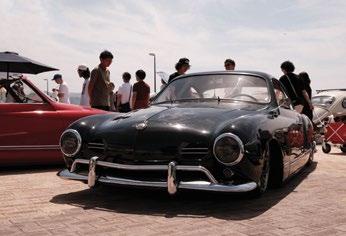
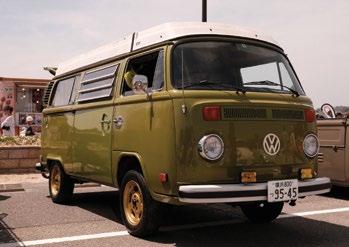
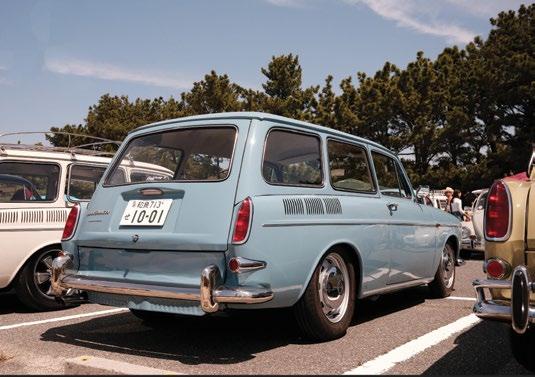
I should really take a leaf out of the locals’ book, as big sun hats and umbrellas seemed to be the norm. From what I could see, the Japanese do whatever they can to stay out of the sun. I’m still a little confused as to how the show worked. Cars seemed to be parked in order of type – Ghia, Type3, Type1, Type2, etc. – and I think you pay to display your vehicle, but people can walk in freely, again a bit like the old Brighton Breeze formula, as nobody asked us to pay entry.
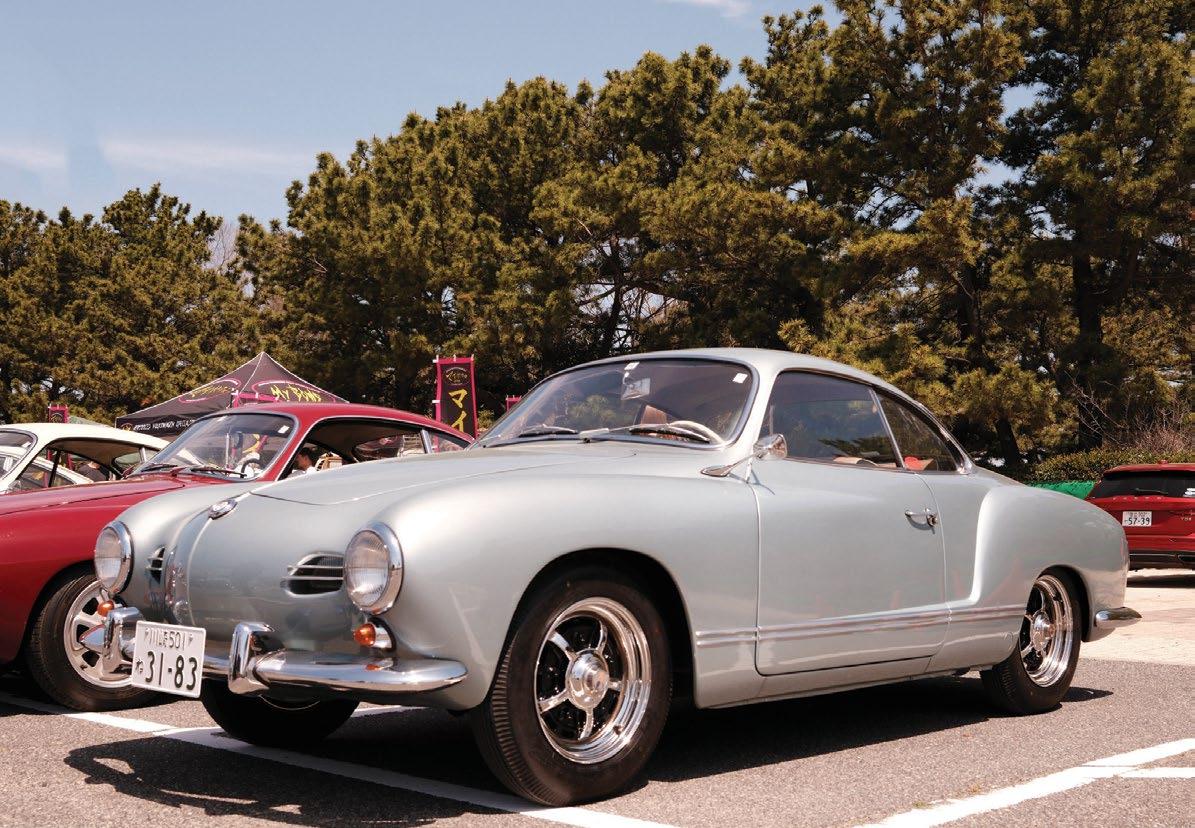
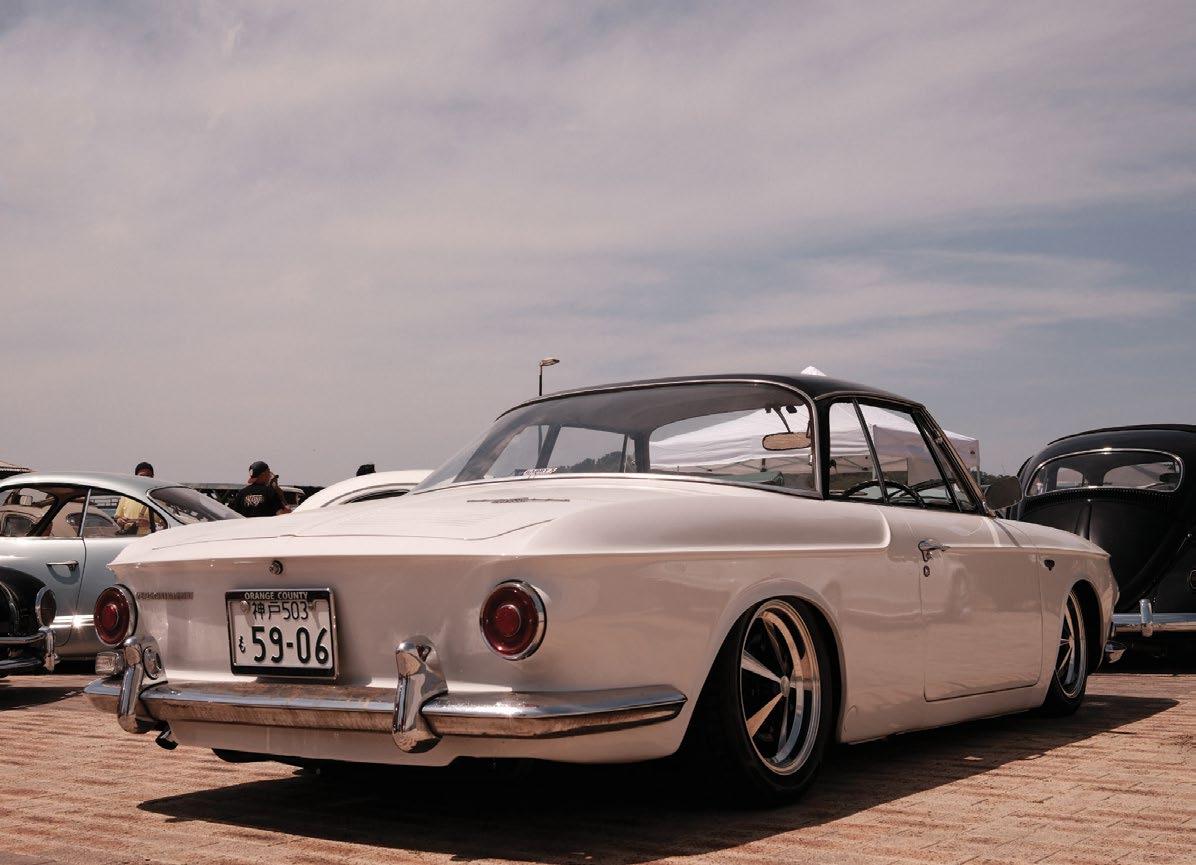
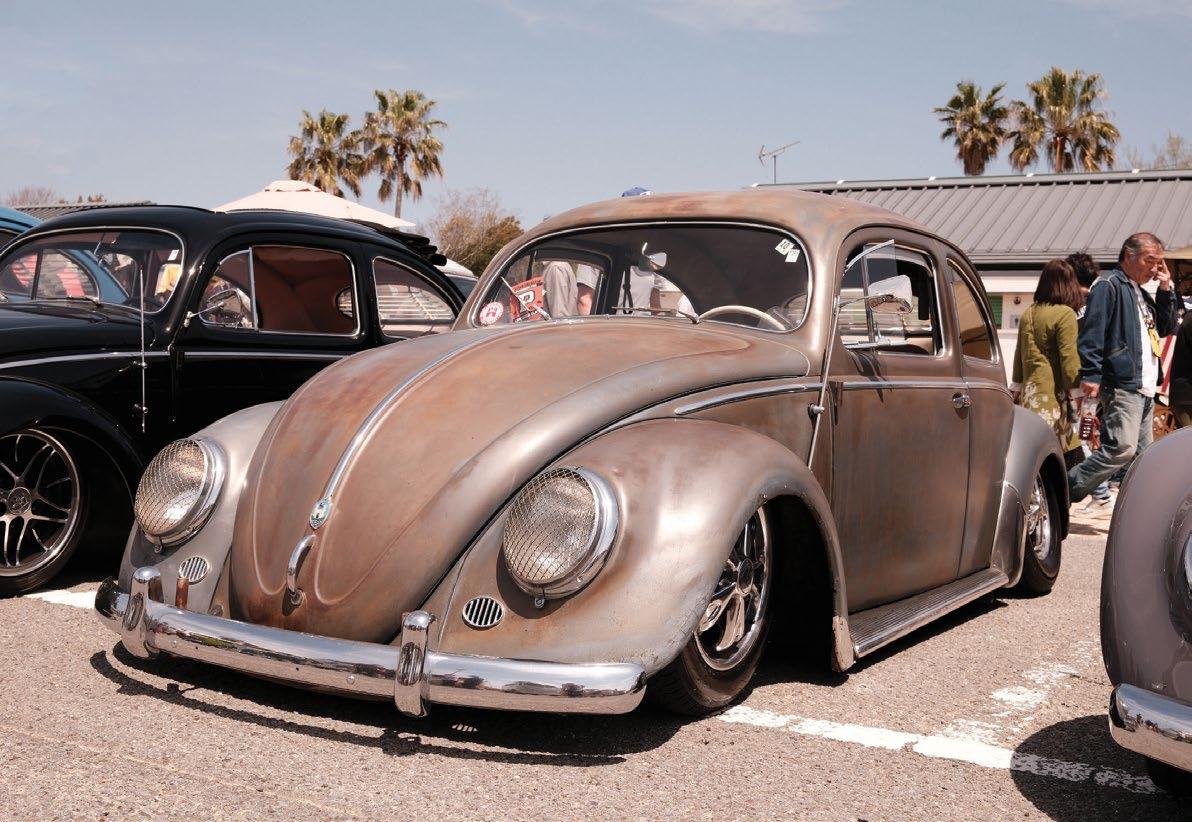
I’m very fortunate to have visited VW events all over the world, and I think this may have been my favourite. I feel the Japanese follow the same mantra whilst building their cars as they do in dayto-day life. The styling on each vehicle seemed thoughtful and well executed. There was also a great variety: Cal Look, slammed, stock, patina,
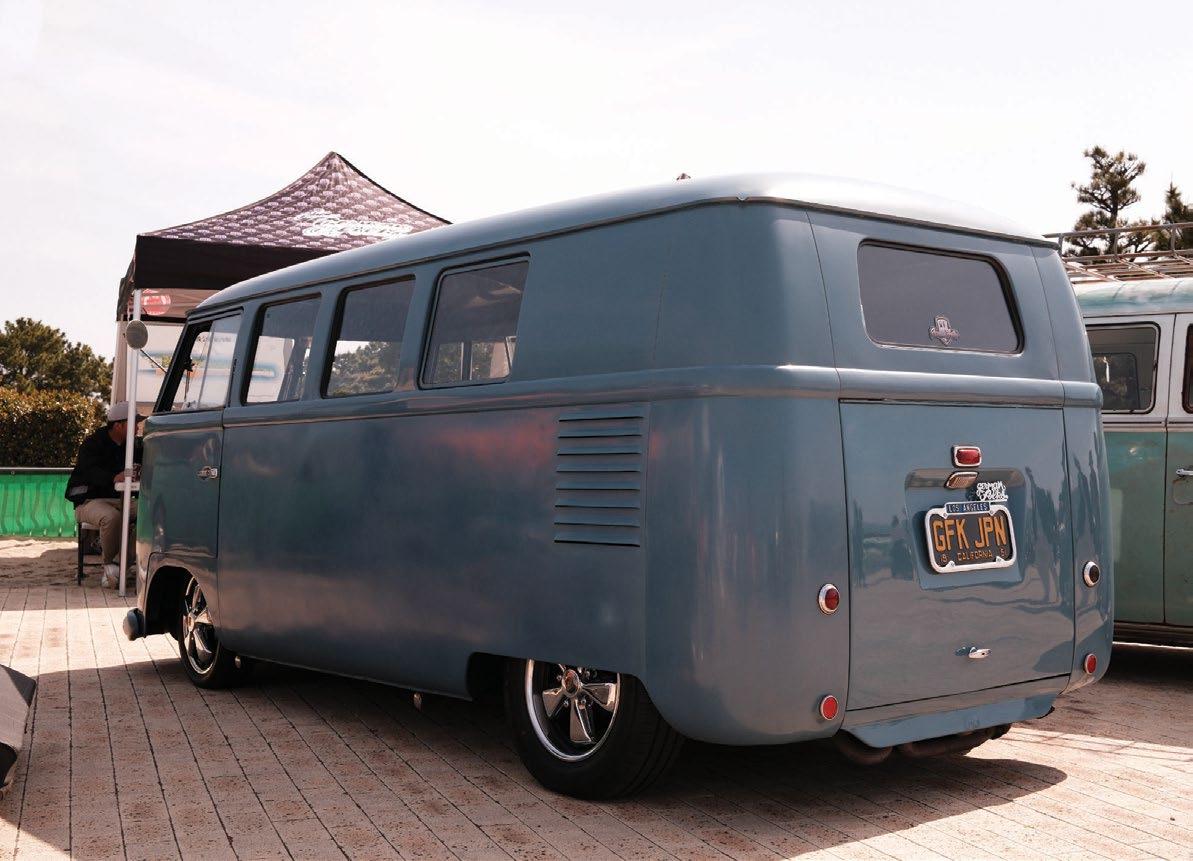
show cars, Old Speed, etc. – truly something for everyone. I got the feeling that a majority of the cars had been imported from the dry States many years ago, as some were particularly distinctive, but I didn’t recognise many of them from old theSamba classified adverts. It very much had the feeling of the shows in Southern California, especially when you walked past the GFK Japan cars. The crowd was very “California” too, right down to their fashion and vehicle styling.
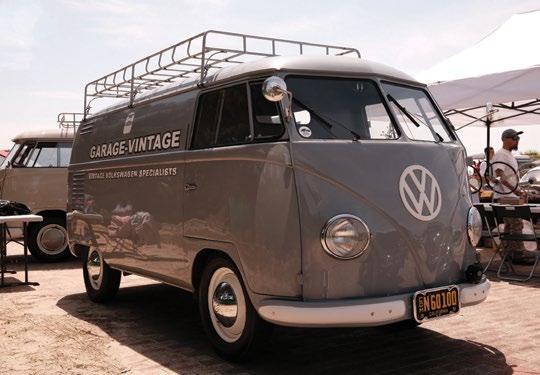
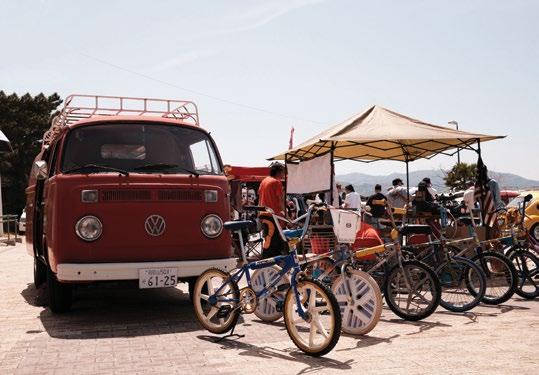
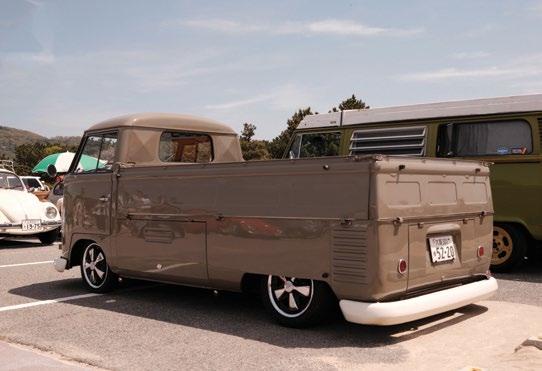
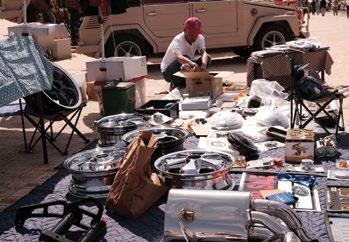
The trade area was brilliant, with a good variety of swap meet and new parts vendors. I found some interesting bits and bobs, and the pound against the yen was working well in my favour. I was impressed at how reasonable the prices were compared to Europe. A large part of the trade area was taken up with Americana stalls, so if cool boxes, Coleman lanterns, Pendleton shirts and Red Wing boots are your thing, you’d be well catered for. If I’m completely honest, I think this was my only gripe. The show was almost more American than an American show, if that makes any sense. I was hoping to see it be a bit more “Japanese”. I’ve felt this way in other parts of the world too. The Californian influence is so strong in the scene that domestic history sometimes becomes overlooked. Japanese culture is so cool, and I’d love to see and learn more about VW history in Japan.
Anyway, that’s a very small gripe, and I should
probably be concentrating on more important things, like the food area! It was behind the main car display on the beach and served probably the best food I’ve ever experienced at a VW event – or any event, for that matter. I’m a big lover of sushi, so I was in my element. It was so good to meet new people, see cars I’d only ever seen through social media, and catch up with a couple of people I’d met at European shows in the past. The organisers were so welcoming to us and even asked us to pick a vehicle for an award.
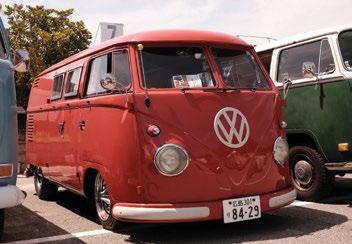
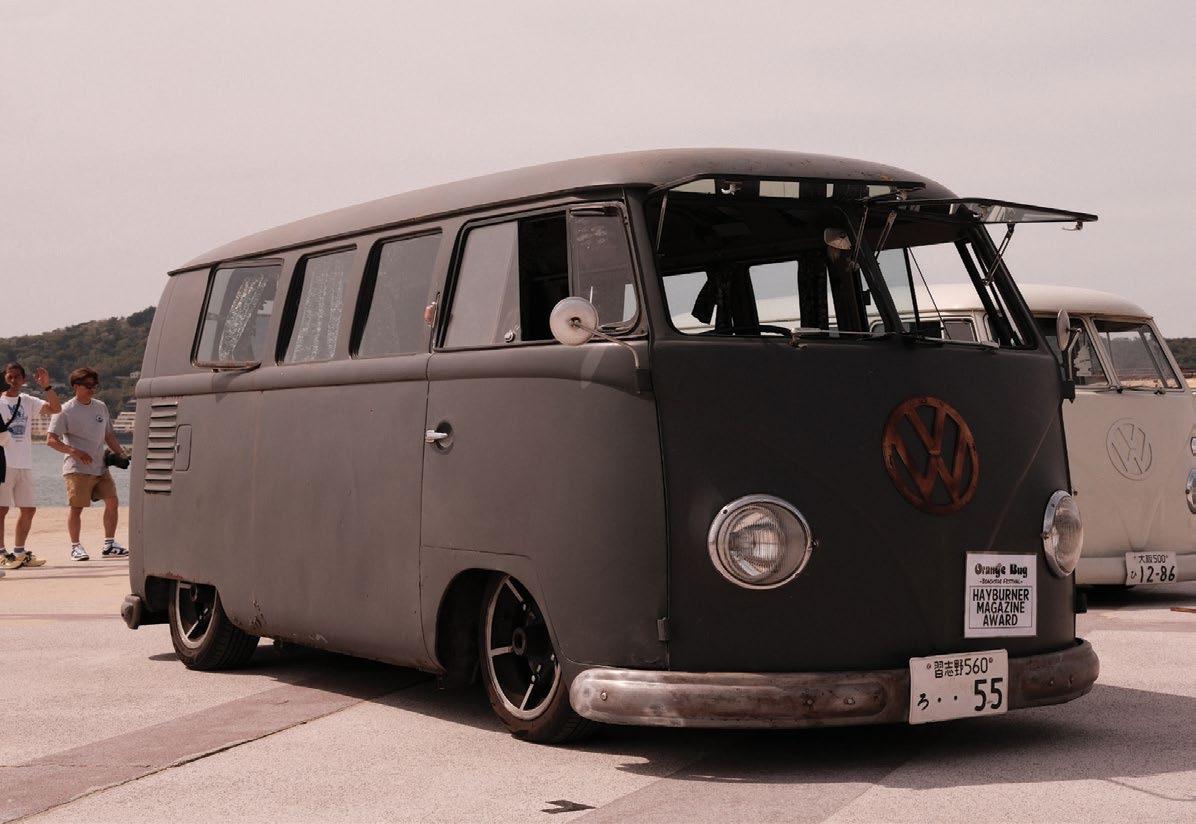
This is never an easy thing to do, and when you’re bombarded with so many amazing vehicles, making a choice takes some real thought. After walking the line over and over, we went for a patina ’55 11-window bus sitting on Titanio Venus wheels. I still couldn’t tell you exactly what it was about this bus – you know how sometimes something just works? Well, that was this bus through and through. It just worked.
I think we stayed until the show was officially over, and I could have stayed longer. I absolutely loved the Orange Bug Festival, and it’s definitely spurred me on to revisit Japan and do more “car stuff” next time. I’d like to say a huge thank you to Keigo and his team for their fantastic hospitality. Keep up the great work, guys, and we hope to see you again soon.
I like a project. I like building cars. I like helping my friends build their cars. I like talking to people I don’t know about them building their cars. All in all, I like it when people take something not so good and make it into something cool. Actually doing it is not for everyone, though, and I get that. Time and money are usually the main challenges and you can see projects at various different stages in the build process for
sale where someone along the line has lost all enthusiasm, given up and moved the project along. This is fine. Sometimes you have to accept that you just aren’t into that car any more and move on to something that you are. Sometimes that car will find its way into eager new hands and get worked on too. However, dear reader, if you are still into that car and you are simply burned out on it, I urge you to
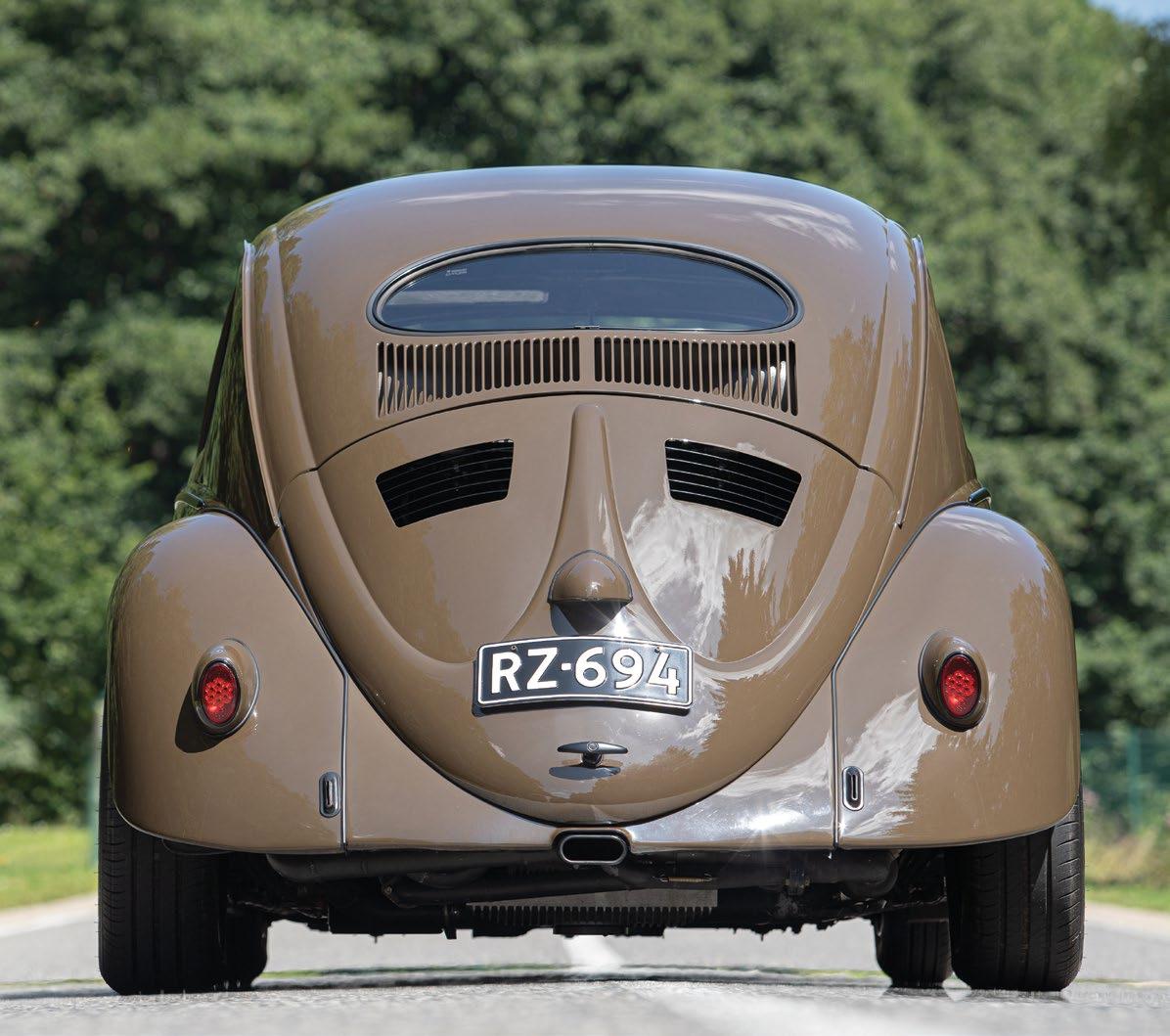
keep at it. There is a certain irony here, as I have a Squareback that I have been “building” on and (mostly) off for over a decade. But stick with it, because you absolutely will get there, no matter how long it takes and great cars can come as a result. To plead my case I give to you this car, 33 years in the making.
Thirty-three years. You did indeed read that
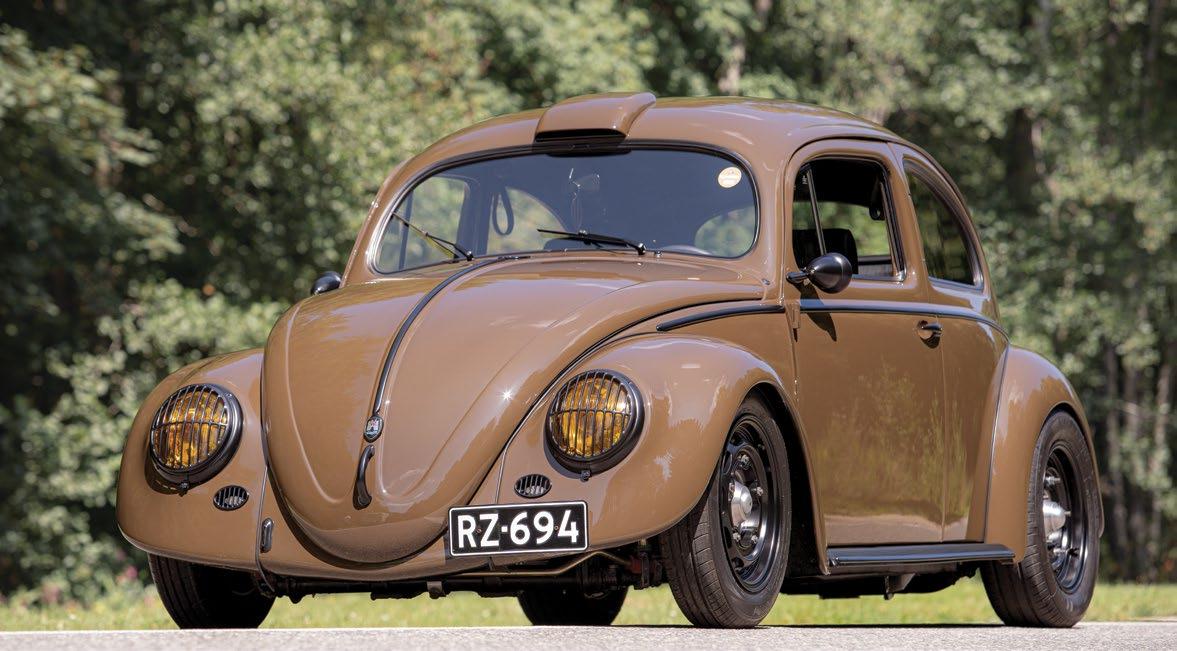
correctly. That is nearly as long as I’ve been alive: 17 Olympic Games; the invention of the smartphone; MySpace came and went; the obsolescence of the compact disc; The Great Recession; and a flu thing that was pretty big for a couple of years there. A lot of things have happened in 33 years and for Mikko Uski it was building this 1956 Oval. Mikko, a resident of Kouvola, a city around 80 miles to the northeast
of Helsinki in Finland, first crossed paths with this car in 1991. Mikko was no stranger to Beetles at the time, having been introduced to the local VW scene through his older cousin. She actually helped Mikko build his first Beetle at the tender age of 18. Mikko had always been into cars and motorsport, from American muscle cars to hotrods, drag racing to rallycross. He liked car culture in general, but it was only VWs that he fancied building.
Back to 1991 and Mikko was helping his cousin to build her new garage. She was the one who had actually found the Oval and had taken it to her place ready to put in the new garage. Mikko saw the car and immediately got fixated with the project. It was rough, it had been rolled over, it no longer ran and it was in general allround bad shape. But, it was a ’56 Oval, a pretty rare car even in those days. Mikko’s cousin made him an offer: help me build the garage and the car is
yours. Mikko of course accepted. As a joke to the bad condition the car was in, Mikko wrote on the car’s roof, “Will be completed by the year 2000”. “How wrong I was!” Mikko laughed.
Mikko did get straight on with the ’56 back in the early 1990s. He tackled everything himself, every aspect of the build. Firstly the sheet metal. The Oval had been involved in a pretty serious wreck and the whole front apron needed to be redone. In the wreck the Bug also managed to find its way upside down for a stint and eventually came
to a stop, still on its roof. So a new roof from a donor needed putting in. Mikko also did the heater channels while he was at it. But then, as happens, life got in the way. The Bug got tucked away in Mikko’s parents’ garage for just over a decade. At times he could have given up on the project. He could have sold it. He could have
fallen out of love with the Oval. The stall is real. But crucially, instead of writing an eBay advert, in 2016 – 15 years after finding it – he started working on the Oval again!
At this point Mikko decided he was going to go all out. He was not only going to restore the
Bug but build the modified street beast that you see before you. It would be full of quirky design and expertly crafted metalwork, and he didn’t care if it took him another 15 years to build it. He’d come this far.
What in my opinion make this car so special
are the many things that you might call custom or modified, but that are very understated and sometimes even unnoticeable, which I think is a real credit to Mikko’s work and talents. These were nearly all done in this period after the stall in his project. He took the pressure off himself to build to a deadline and just built what he wanted,
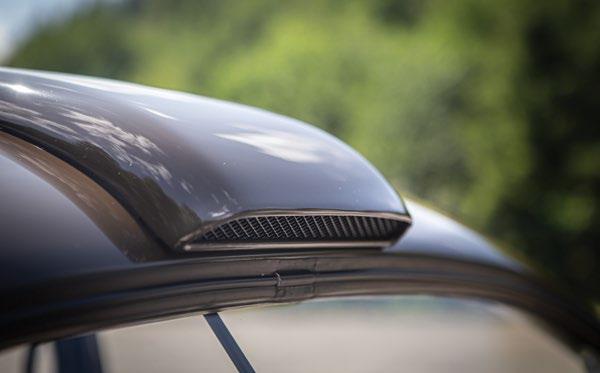
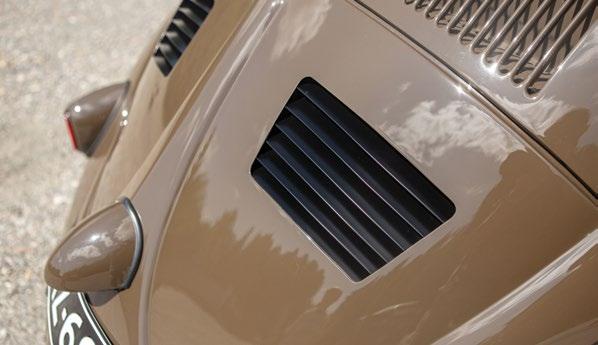
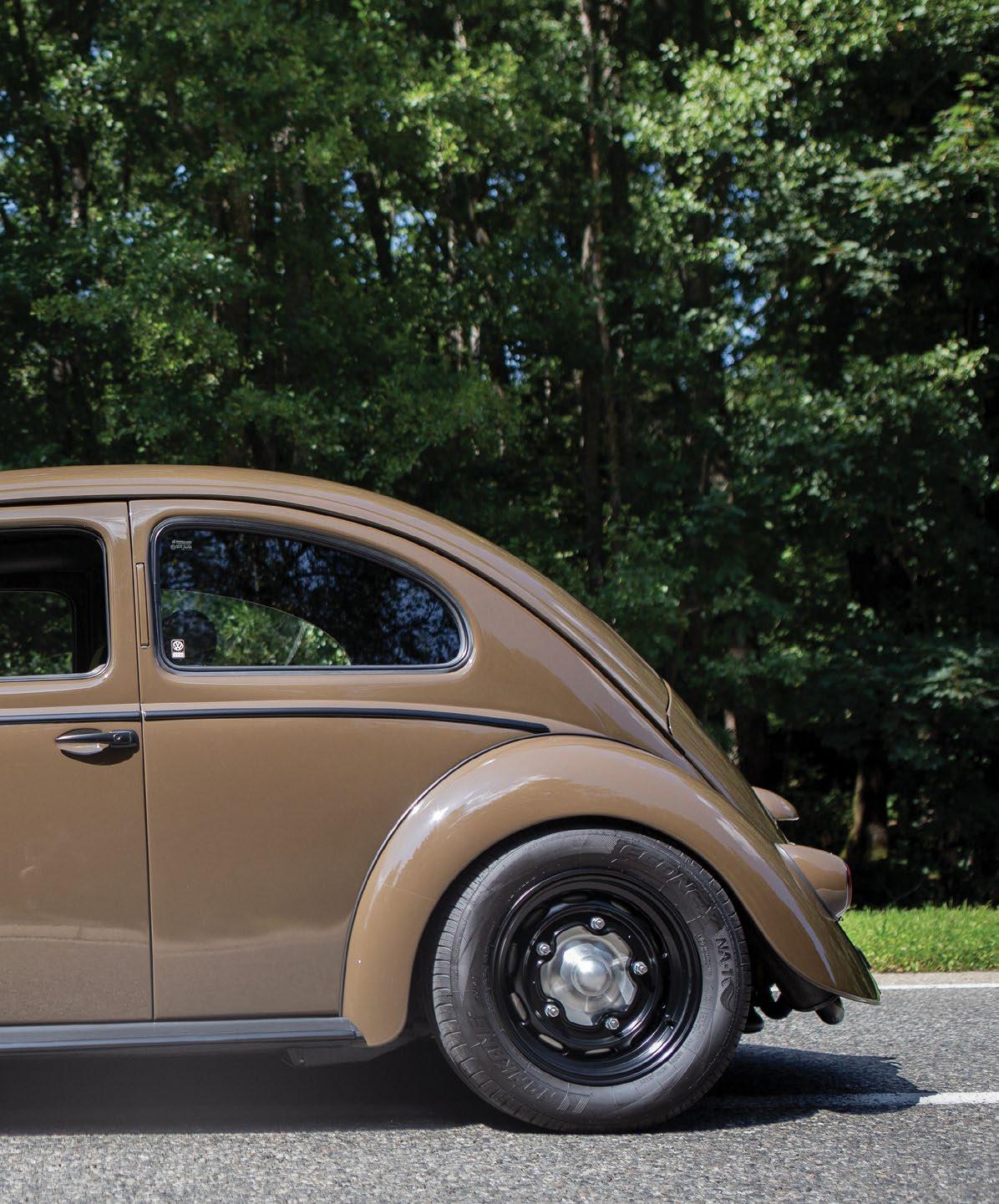
no matter how long it took. Details like the rear valance moulded around the exhaust in a very 50s Porsche kind of style. Mikko could simply have had the exhaust come out under the valance. You see that on lots of vintage speed cars and it looks great. But no, Mikko wanted it like this, so he spent countless hours making it so. The same for the roof scoop, which isn’t just for show and is completely functional, with
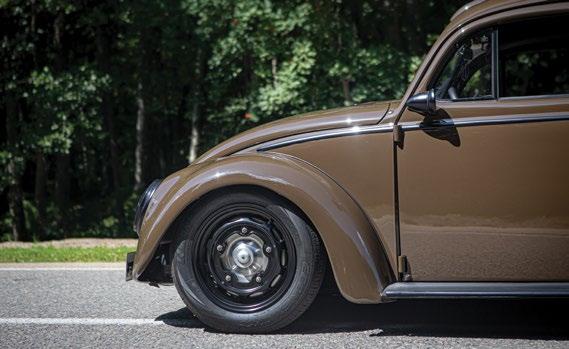
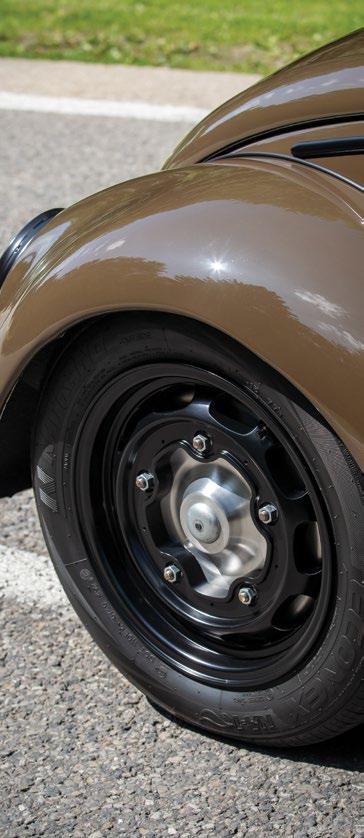
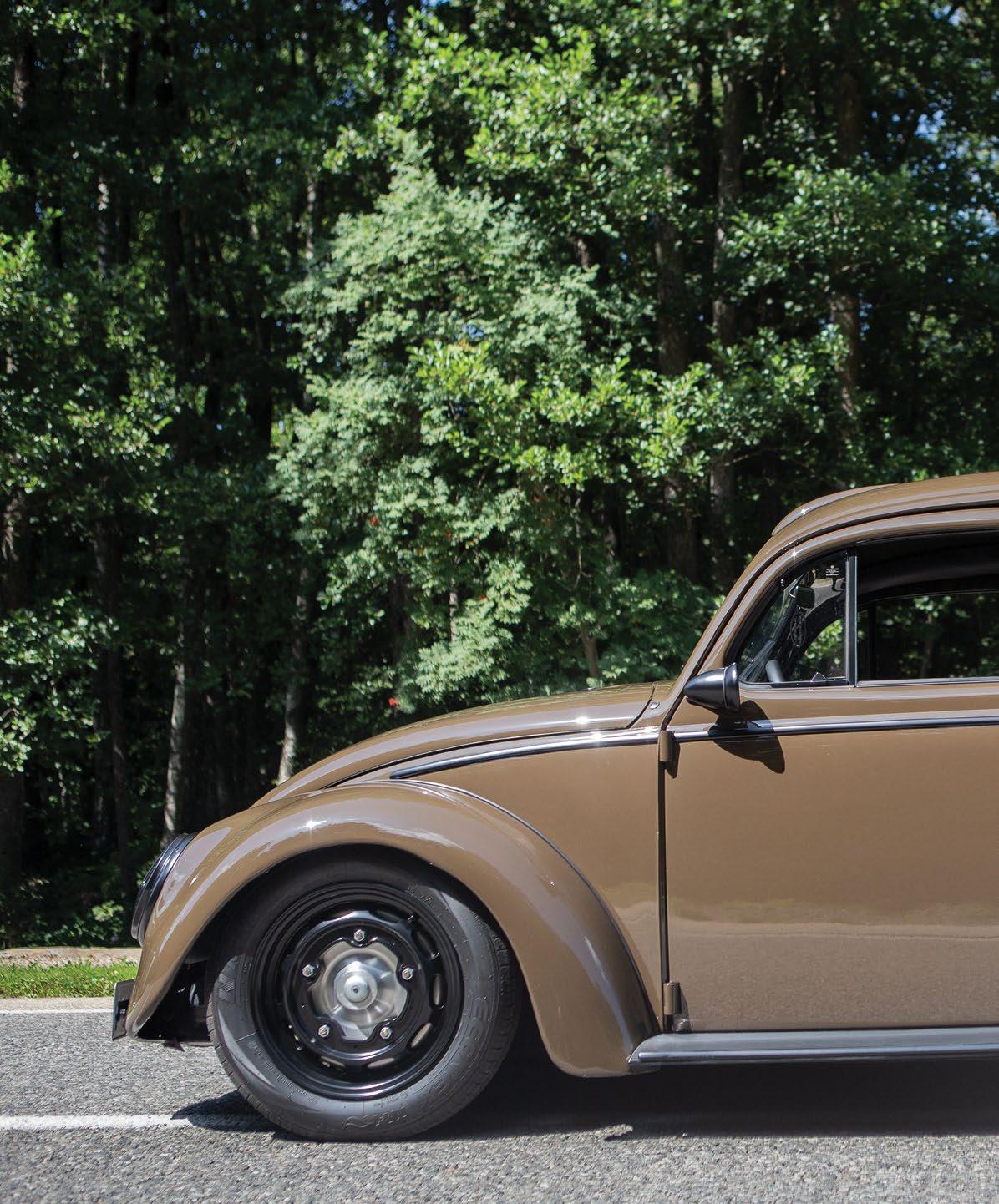
four vents no less. The pan was no exception to the level of detail. Mikko went through it with a fine-toothed comb, including doing mods like a ball joint frame head conversion so he could run a 2 inch narrowed ball joint beam, a polo steering rack conversion, disc brakes and front and rear sway bars.
The body would eventually go to be painted by
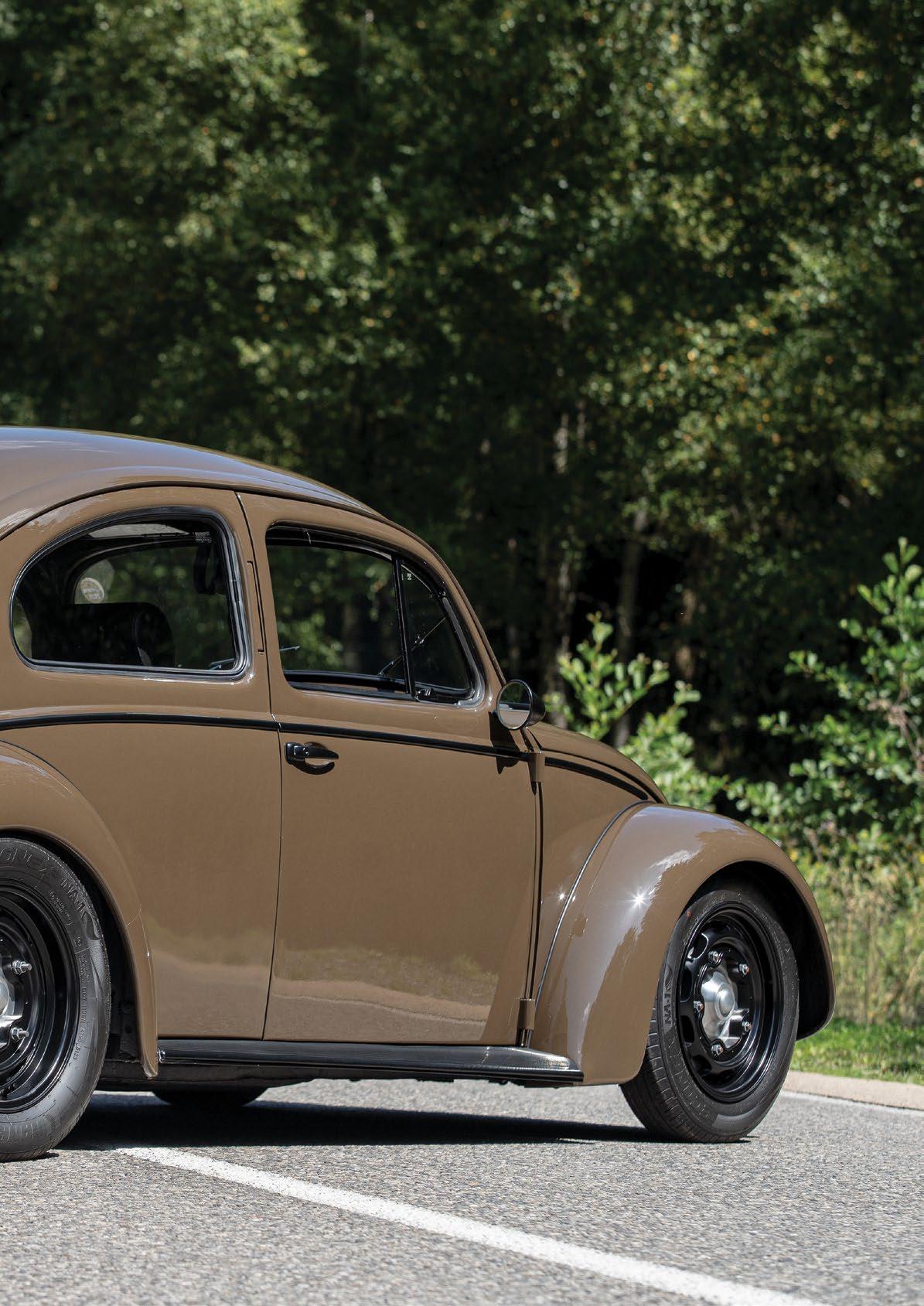
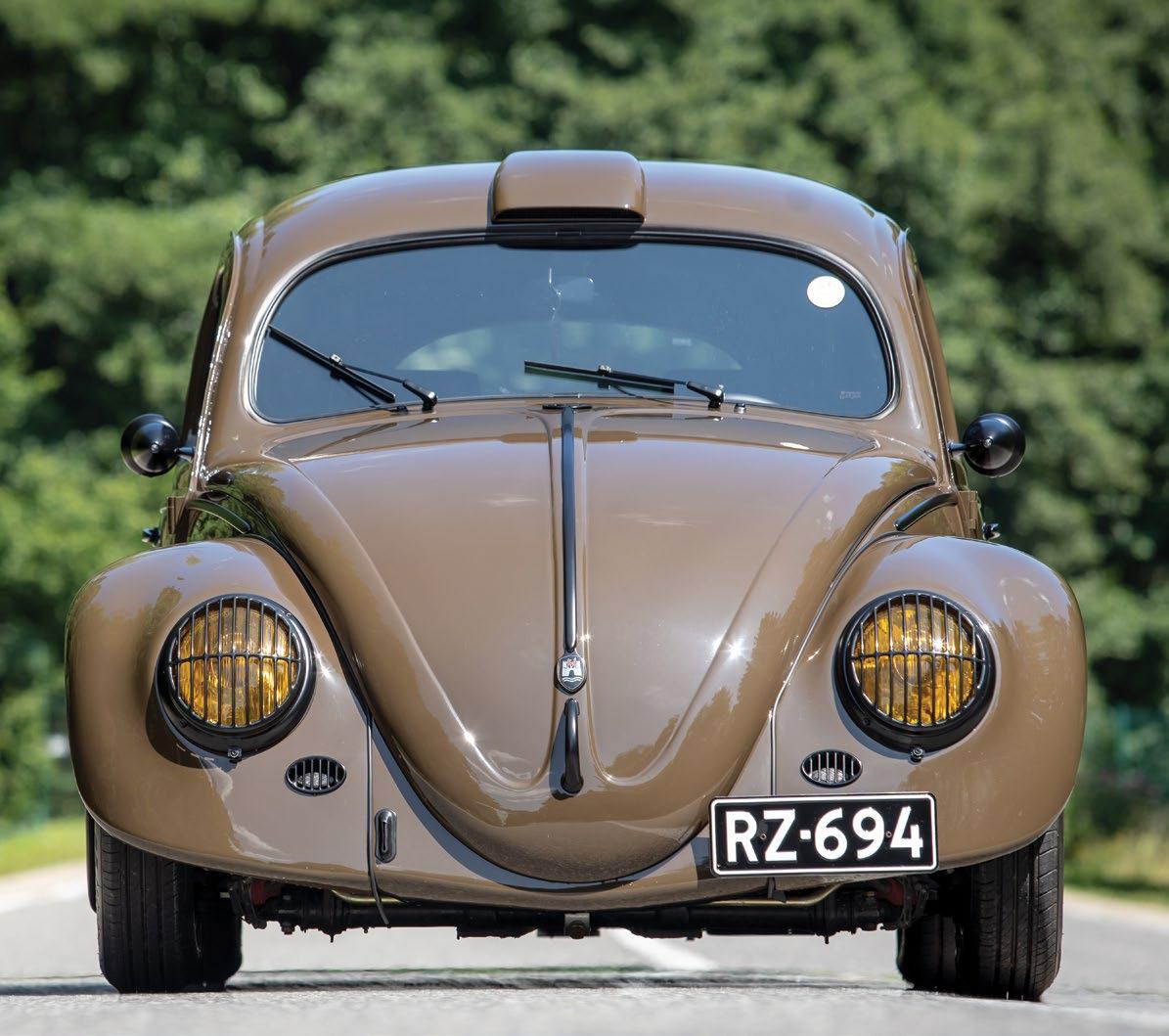
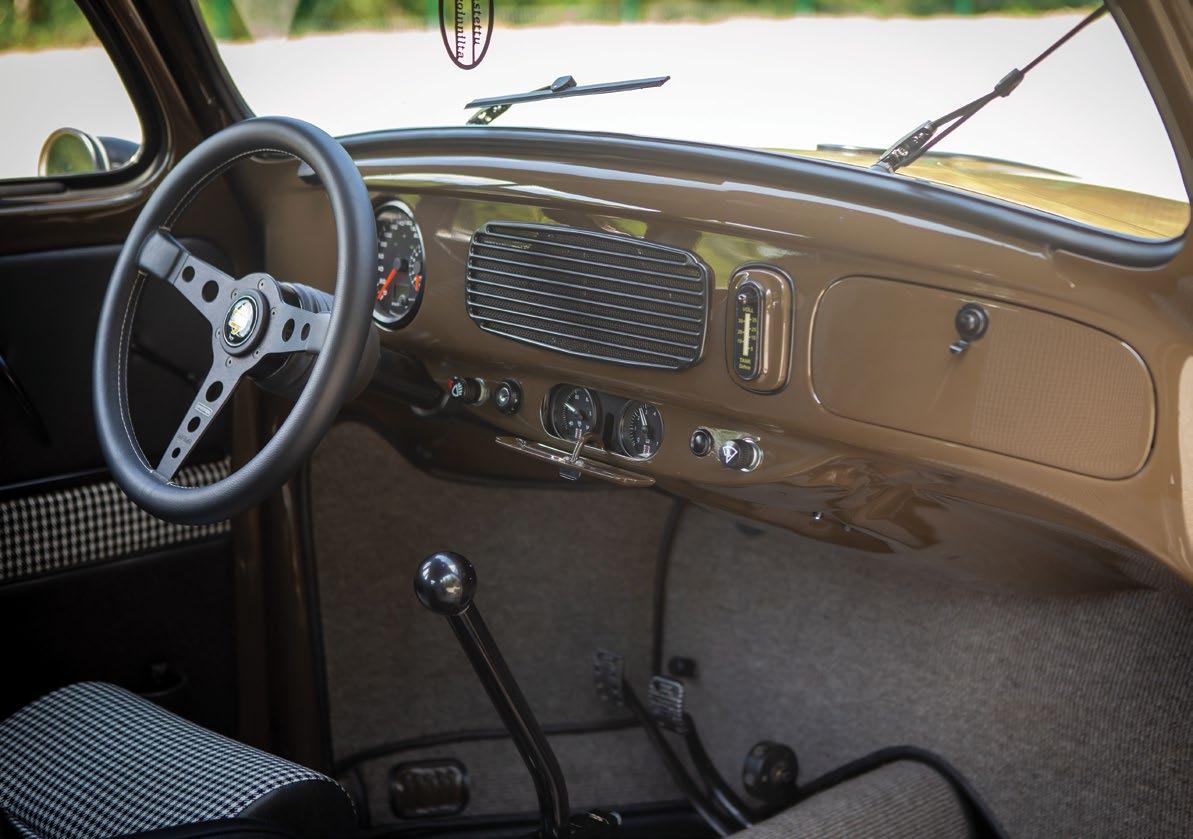
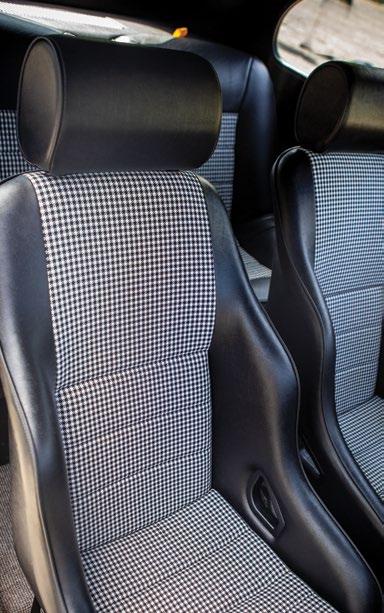
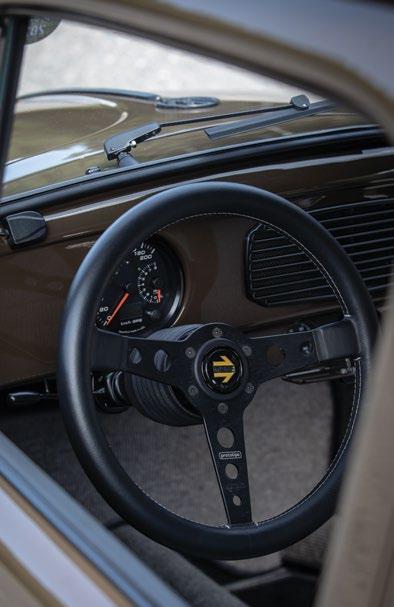
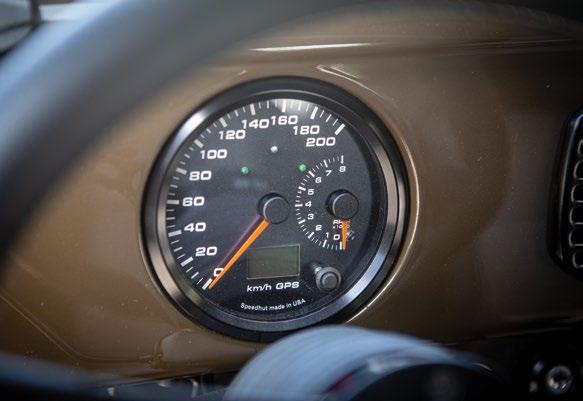
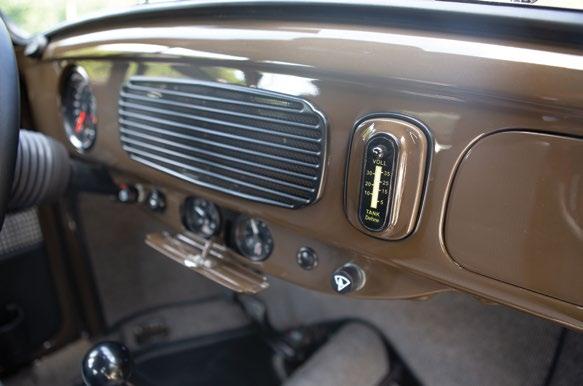
Tero Muotka at Clockhill Customs. The colour chosen was VW Texas Brown, a 54-55 Beetle colour. The little details didn’t stop when the painted body met the pan again. Mikko knew he wanted a big motor, but we’ll get to that in a minute. It was time for the interior. Mikko mounted BF Torino bucket seats in the front and a modified 1980s BMW E24 back seat, all retrimmed in black vinyl with a houndstooth fabric, on custom mounts made by Mikko. He has also made his gauges hidden behind a flip down radio blank, just another cool detail that may go unnoticed at first glance. A black Bug-Tech shifter and a matching carpet and door cards set by Heikki Kuulusa complete the interior.
Now for the engine. Mikko wanted a fast street engine and he wanted to build it himself. As you’ve probably guessed by now, he’s not someone to take the easy route. Mikko started with a 1600 CT case, a late air-cooled case from the Type 25. One of the benefits of this case is the oil passages and filter type. One of the disadvantages is, well, everything else. Mikko converted it from hydraulic lifters to solid lifters like a Type1, had it all machined and line bored, had the case opened up to take larger barrels, and clearanced for a 78mm CB performance stroker crank. Add in the 5.4” I beam conrods on 90.5mm stroker barrels and pistons and an Engle FK-43 camshaft and you get yourself a 2007cc short block. Add on 40x36mm Panchito heads that have 56mm ported and polished chambers, 1.4 to 1 CB performance ratio rockers and you’ve got a long block. Sprinkle in a VW Speedshop 48mm twin throttle body setup with custommade air boxes and KnN air filters, an MS ECU and an electric fuel pump, Bosch coils and you’ve got yourself a pretty hot 130 bhp running at a 9:1 compression.
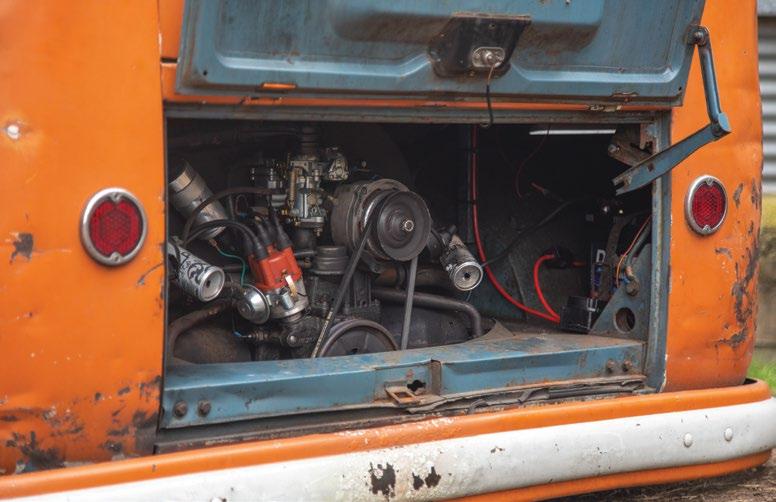
It is finished off with a completely hand fabricated exhaust built by Mikko. But even with all that the little details didn’t end, nor did the custom work. That’s a Type1 fan shroud on the Type25 case. Oh, I didn’t know they bolted on, you may think. They don’t. Mikko
wanted to run the larger Type25 oil cooler, which of course doesn’t fit either. Even the fuel tank looks just like a stock fuel tank, right? Nope. Internally it has a 2 litre surge tank and an internal electric fuel pump.
Then you have to get that power to the road.
The motor got a stage 1 Kennedy Clutch mounted to a 5.5kg chromoly flywheel, mated to a Type1 swing axle box which was modified to have a 4.12 Ring and Pinion, and a longer 4th gear from a bus, short axles and a super diff with, again, custom-made mounts by Mikko.
It may have taken Mikko longer to build this car than the Berlin Wall stood for. But he built one hell of a car, absolutely packed with amazing little details. So next time you want to start a project but are worried about time, or you are thinking about selling a project because you are never going to get it done, I want you to think about this story. It’s never too late to get going in the garage, or the driveway, or even the street if
that’s all you have. Even half an hour here and there will mount up and you may just have a lot of fun while you’re at it. Girls and boys, get stuck in. Do it. Building cars is great fun, crap at times, infuriating when it’s not going right. It might take your money and the skin off your knuckles, but isn’t the end result pretty cool?
Spa Le Bug Show
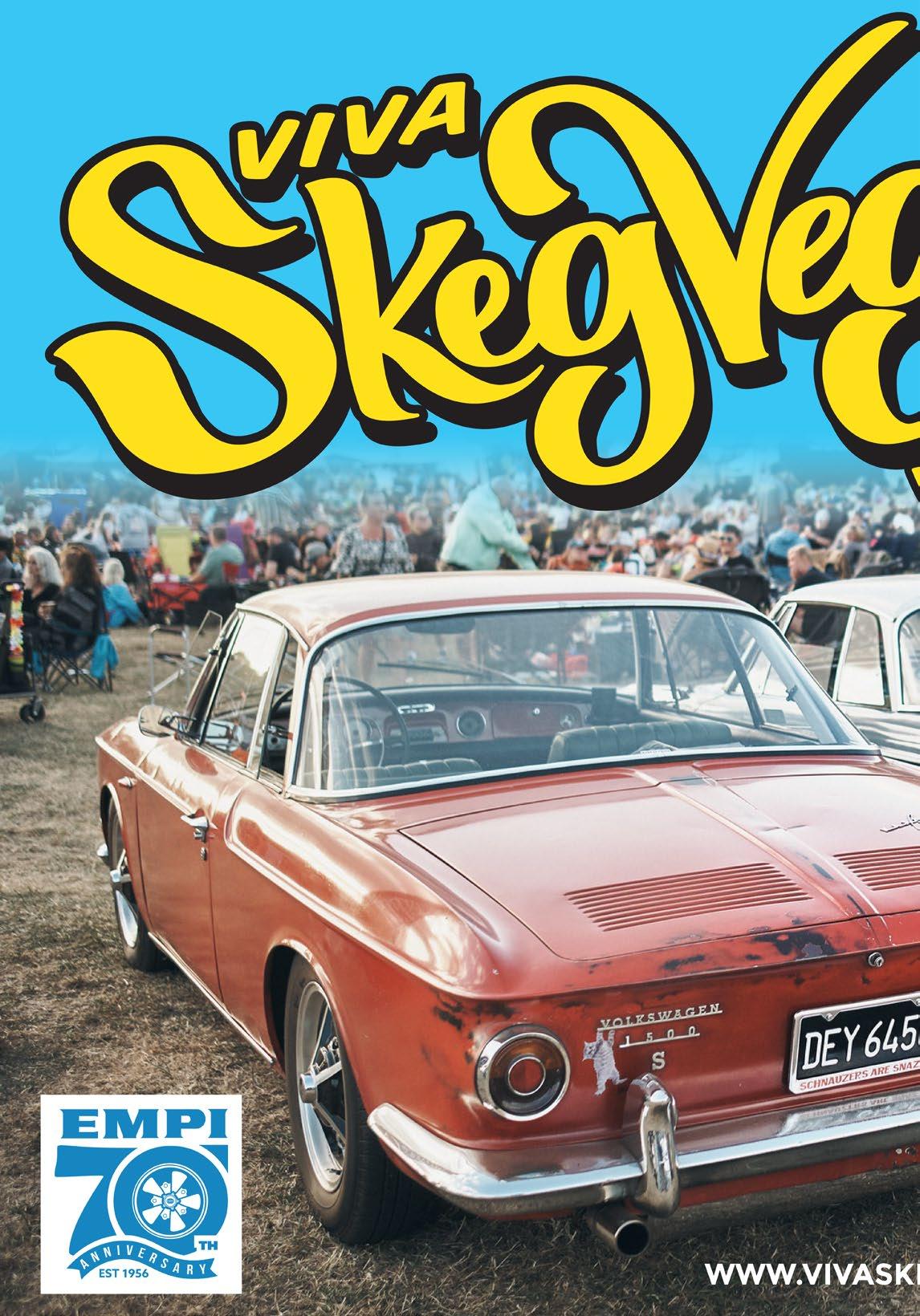
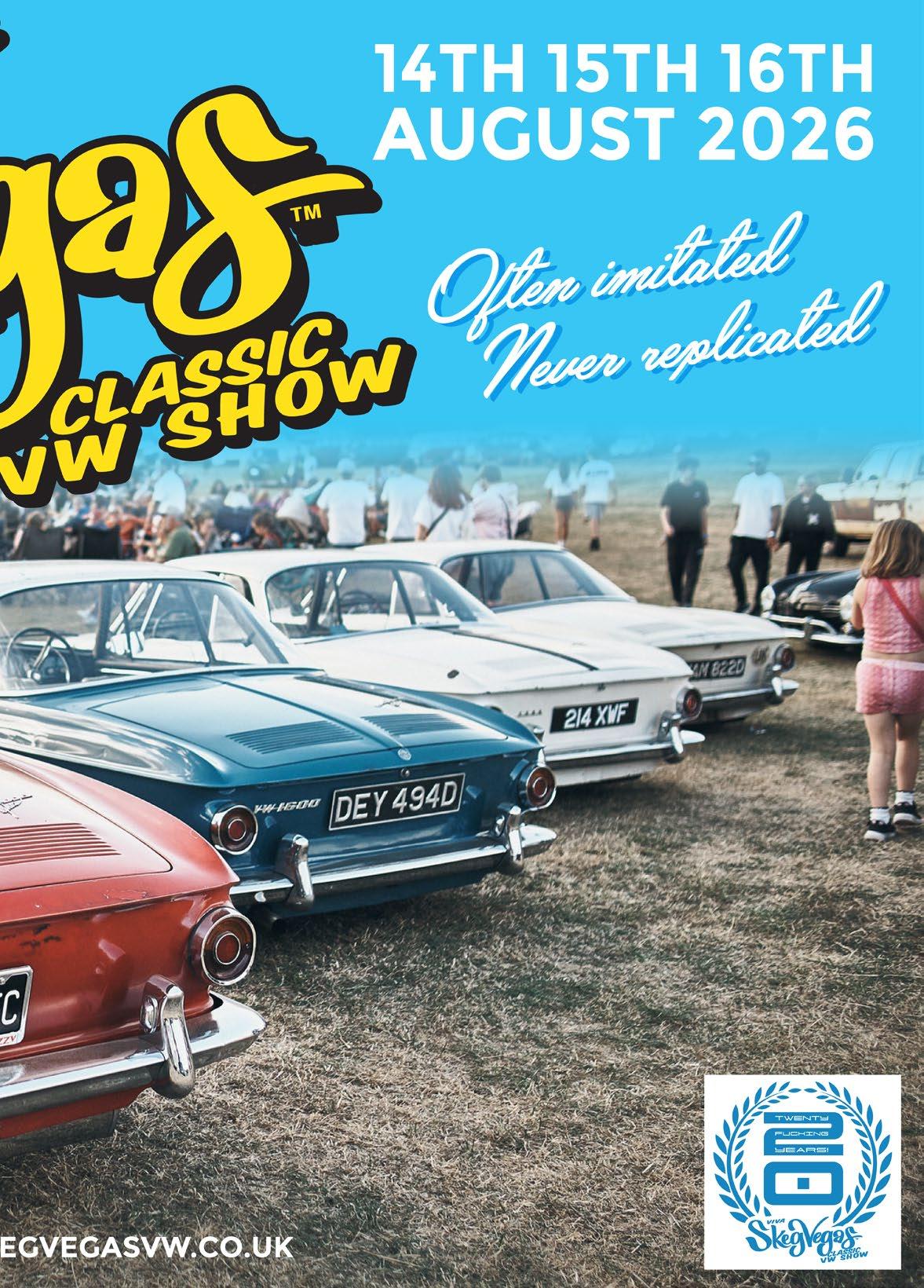
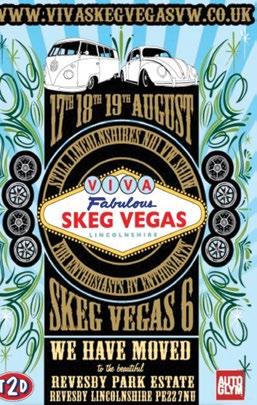
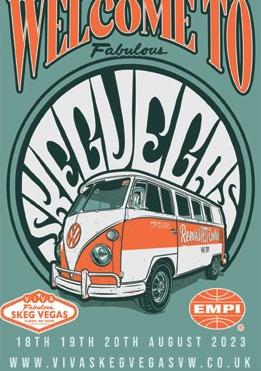
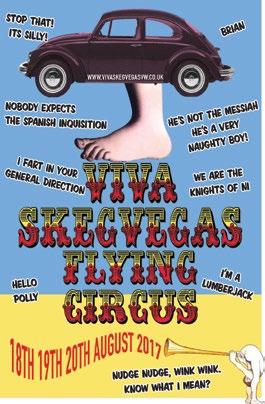
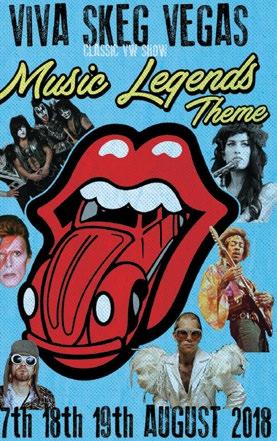
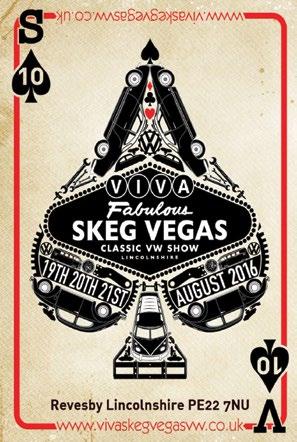
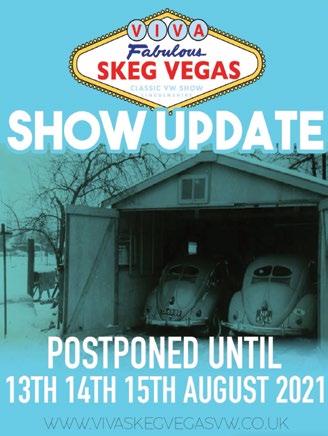
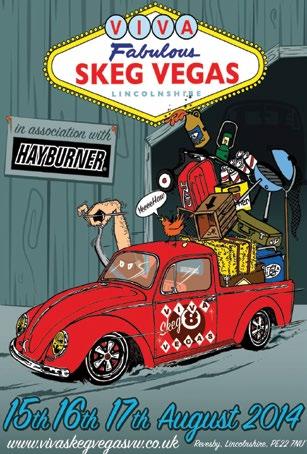
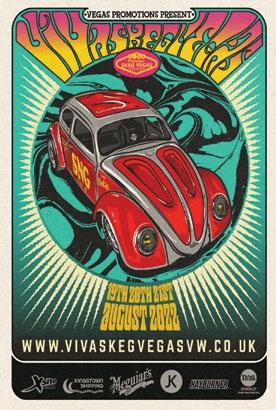
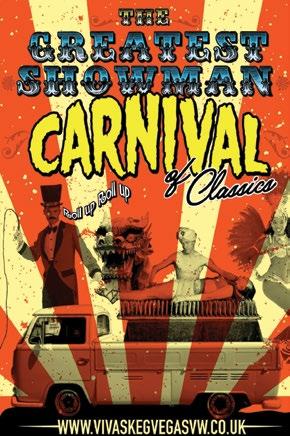
Viva Skeg Vegas Classics
THE ROAD NOT TAKEN
WORDS BY NED FAUX
It was the early 1950s and two vehicle manufacturers stood at opposite ends of the automotive spectrum. One was an aging American industrial pioneer struggling to survive against Detroit’s car giants; the other was a reborn German manufacturer riding the wave of post-war confidence with a compact rearengined car that much of America initially dismissed as a gimmick. However, even with their differences
there was a moment in history when Studebaker and Volkswagen came dangerously close to getting into bed with one another. This story is not merely one of missed business opportunities. It’s more of how one company’s decline unintentionally helped lay the foundations for another company’s rise – including the future success of Porsche itself.
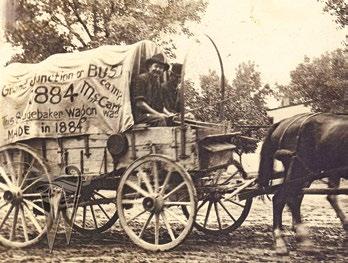
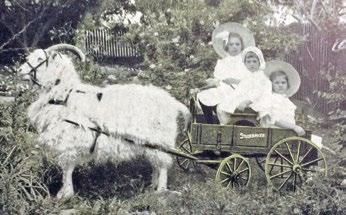
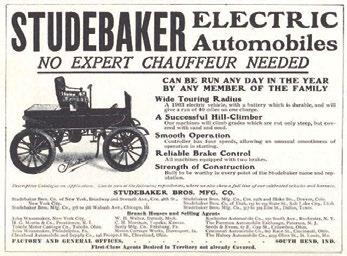
Long before Ford perfected the moving assembly line, Studebaker was already an American industrial giant. Founded in 1852 by brothers Henry and Clement Studebaker in South Bend, Indiana, the company began as a blacksmith and wagon-building operation serving farmers, settlers and eventually the US military. During the American Civil War, Studebaker wagons became symbols of durability and reliability. By the end of the 19th century, the company was the largest producer of horse-drawn vehicles in the world. Unlike most traditional carriage builders that vanished with the arrival of the motor car, Studebaker adapted very early. By 1902 the company was already experimenting with electric vehicles before moving into petrol-powered automobiles only two years later. During the first half of the 20th century, Studebaker earned a reputation for building practical, dependable, “middle-class” cars.
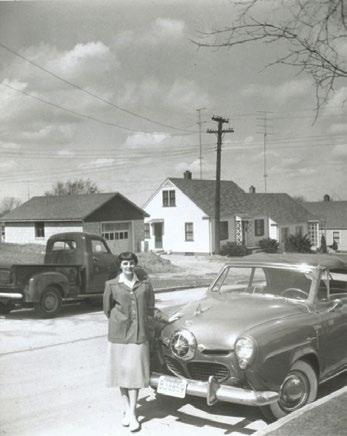
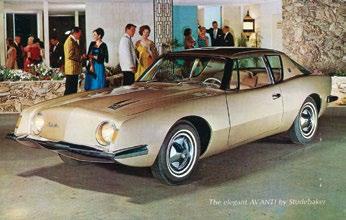
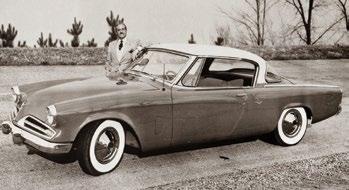
After World War II, Studebaker became one of the most stylistically adventurous American manufacturers. The sleek 1947 models shocked the industry with their modern lines. In 1953, the company introduced what many historians still regard as one of the most beautiful American coupes ever produced – the Starliner. But beneath the stunning styling lay growing problems. Studebaker’s manufacturing costs were significantly higher than those of General Motors, Ford and Chrysler. The company’s aging
factories, labour agreements and smaller production volumes made it almost impossible to compete profitably in Detroit’s brutal price wars. A merger with Packard in 1954 was described by critics as “two drunks trying to hold each other up”. Although Studebaker engineers and designers continued producing imaginative cars such as the Hawk, the Lark, the Champion and the Avanti, the company was steadily running out of time.
While Studebaker fought for survival in America, Volkswagen was undergoing one of the most remarkable industrial recoveries in modern history. The war had nearly destroyed both the Wolfsburg factory and the company itself. Yet after 1945, British Army Major Ivan Hirst had recognised the potential of the surviving factory and restarted production. By the early 1950s
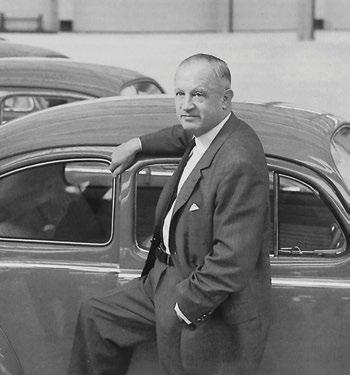
the plant was under the command of business mastermind Heinrich Nordhoff, and Volkswagen was rapidly becoming an export powerhouse. The little Volkswagen was economical, reliable, easy to repair and well suited to rough roads in developing markets. Germany’s federal government also actively supported export growth through trade agreements. Volkswagen invested heavily in service infrastructure and dealer training. Unlike many competitors that focused only on sales, Volkswagen understood that long-term success depended on customer support and parts availability. The company demanded high standards from dealers and created tightly organised service networks across Europe, Africa, North America and South America.
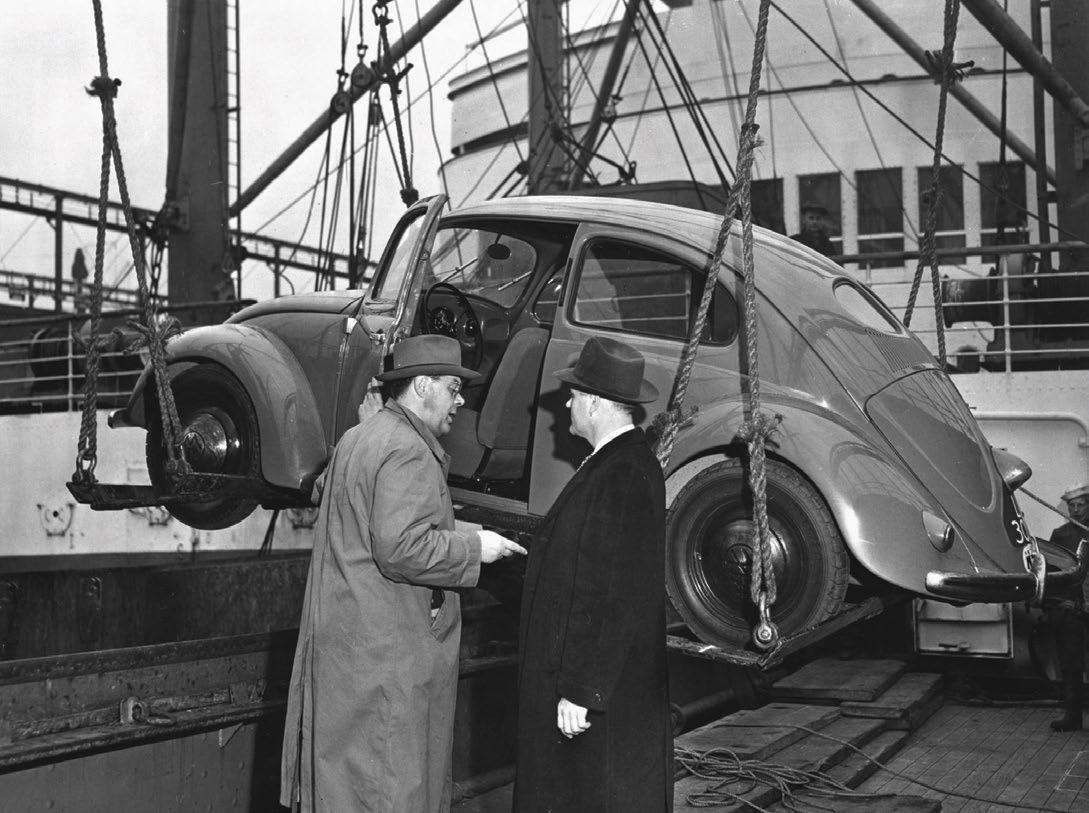
Among the most farsighted Studebaker executives in South Bend was Richard A. Hutchinson. Shortly after WWII, Hutchinson arranged for one of the earliest Volkswagens to be shipped to Studebaker for evaluation. At a time when most American executives dismissed small European cars as irrelevant, Hutchinson saw a looming shift in consumer demand. He believed Studebaker should become Volkswagen’s exclusive American distributor. At the time this proposal was radical. The American industry still believed bigger was always better. Detroit was focused on annual styling changes, increasingly powerful V8 engines and ever-larger vehicles. Yet Hutchinson understood that an economy-car market was emerging – one that Detroit was ignoring. However, Studebaker’s president Harold S. Vance disagreed.
Heinrich Nordhoff
Whether it was through corporate pride, scepticism about European imports, or fear of damaging Studebaker’s own sales, the company declined this opportunity. That decision would become one of the great “what if” moments in automotive history. Had Studebaker secured exclusive Volkswagen distribution rights in the United States during the late 1940s or early 1950s, the company might have gained a profitable new revenue stream precisely when it needed financial stability the most. Instead, Volkswagen eventually built its own American sales network – and transformed itself into one of the most successful foreign automakers in US history.
By the mid-1950s, Volkswagen had very successfully entered the American market. The Beetle’s strange shape and modest power initially seemed incompatible with American automotive culture, which favoured chrome, horsepower and size. Yet American buyers increasingly appreciated the Beetle’s simplicity, fuel economy and reliability.
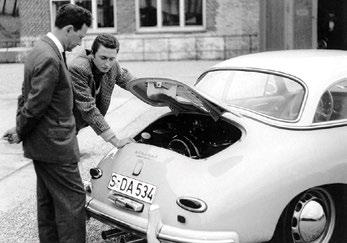
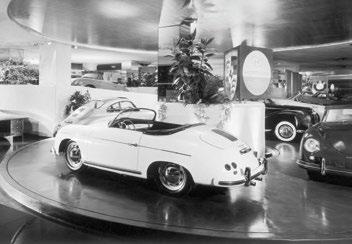
However the story didn’t end there but became even more fascinating through the involvement of Porsche. In December 1951, Ferry Porsche – only months after his father (Ferdinand’s) death – visited the United States to discuss military consulting work and distribution arrangements with famed importer Max Hoffman. Hoffman, one of the most influential European car importers in America, believed that Porsche as a company could profit by consulting for American automakers. Hoffman had recently spoken with Richard Hutchinson about the future
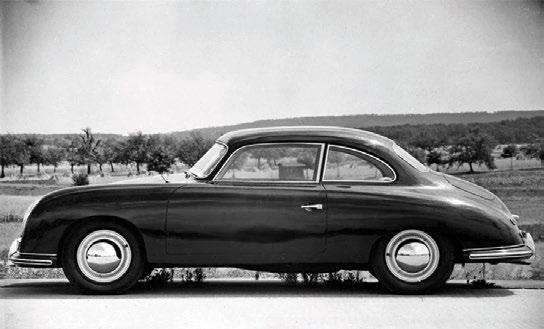
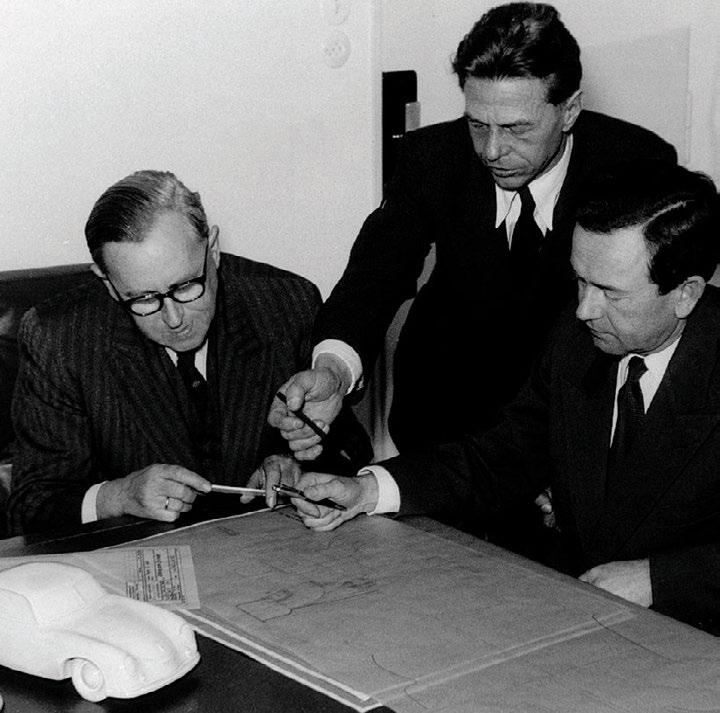
of the American market. Hutchinson argued that Studebaker needed a genuine compact economy car instead of competing directly against the “Big Three” (GM, Chrysler and Ford). Hoffman immediately saw an opportunity. Who better to design an “American Volkswagen” than the company that had originally engineered the Volkswagen itself? In May 1952, a Porsche delegation travelled to South Bend. Big names in the history of the Beetle including Karl Rabe, Leopold Schmidt and designer Erwin Komenda arrived, bringing ambitious ideas for Studebaker’s future. Initially, Porsche proposed a compact rearengined concept derived from the Porsche Typ 530 – a long wheelbase concert 356 with a full fourseat cockpit, effectively a four-seat evolution of the Porsche 356. Studebaker executives, however, believed American buyers still preferred larger frontengined vehicles, so Porsche adapted.
The first Beetle imported to America 1949
Porsche Type 530
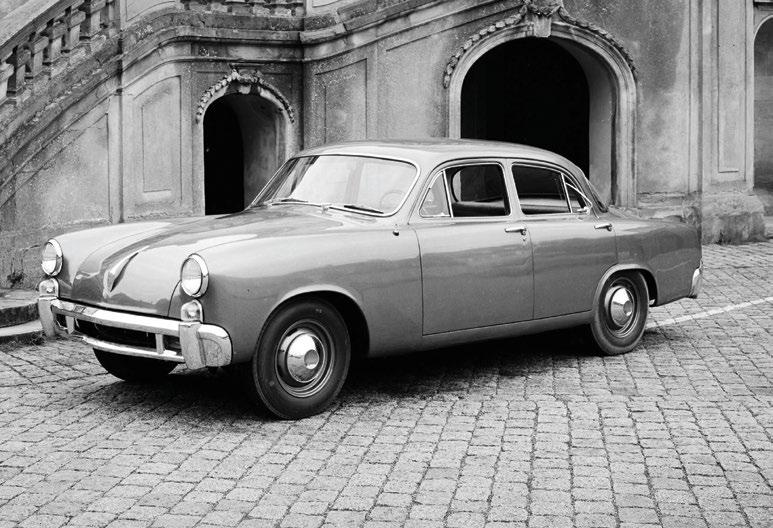
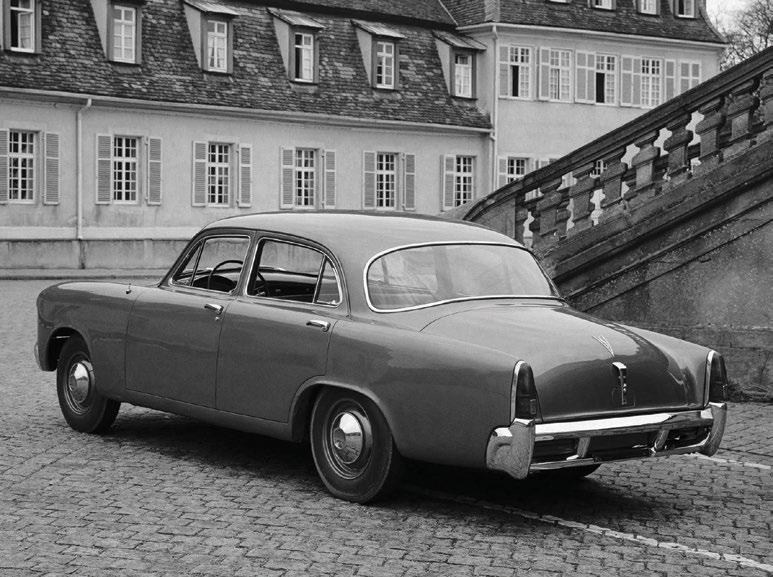
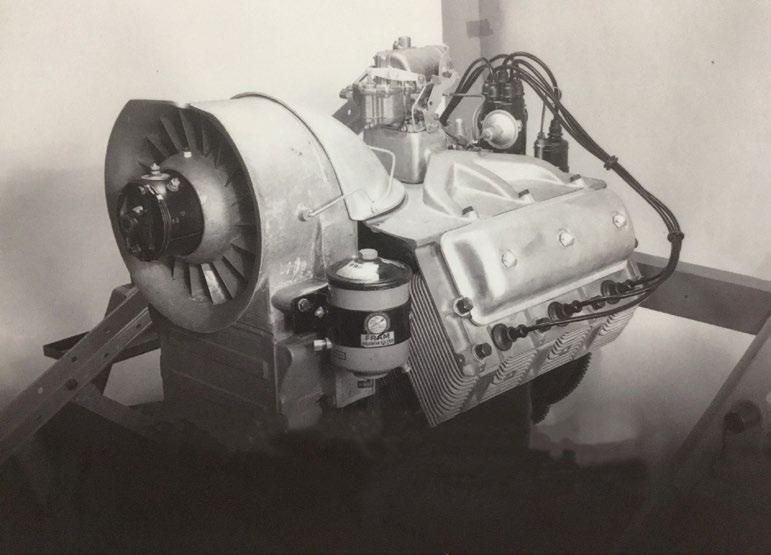
The resulting project became known internally as the Typ 542 – or Z87 within Studebaker. The Typ 542 was unlike any Studebaker ever built, a sophisticated monocoque sedan powered by an advanced V6 engine available in both aircooled and water-cooled forms. The engine displaced roughly three litres and used an unusual 120-degree cylinder-bank angle – a remarkably advanced concept for the early 1950s. The water-cooled version developed 98 bhp, the air-cooled version slightly more – 106 bhp. The complex mix-cooled variant was abandoned early on but considered for further development. Porsche also incorporated independent rear suspension to improve ride quality and reduce driveshaft tunnel height. Yet even at this stage, cultural differences emerged. Porsche preferred lightweight aluminium engine construction, but Studebaker insisted on cast-iron blocks because the company lacked experience with large-scale aluminium production.
The finished prototype was secretly shown to Studebaker executives in Geneva in March 1954. Although impressed, management was increasingly distracted by financial disaster back home. The stunning 1953 Loewy-designed Studebakers had suffered from serious quality problems and production difficulties. Meanwhile, the rest of the Big Three launched aggressive sales campaigns that devastated independent automakers. Sadly, by 1954, Studebaker’s sales had completely collapsed.
Still, the Typ 542 underwent extensive testing in both Europe and America and evaluations were generally positive. The car demonstrated strong engineering sophistication and promising performance. But there were concerns that the American public just weren’t ready for the car. Critics considered the ride too firm, the handling too sensitive in crosswinds, and the overall package somewhat too small and European for American tastes. More importantly, the project required money Studebaker simply no longer possessed. So as the company spiralled deeper into crisis, enthusiasm for the Porschedeveloped sedan faded.
Ironically this turned out to be the Car America Said It Didn’t Want, Until It Did. Not long after
Studebaker 542
the project collapsed, Porsche conducted market research into what Americans actually wanted from an economy car and the results were startling. Consumers overwhelmingly preferred a light, simple, easy-to-service, rear-engined, air-cooled vehicle. In essence, they described a Volkswagen Beetle. Ferry Porsche recognised the significance and proposed yet another concept: the Typ 633, a smaller rear-engined notchback sedan powered by an air-cooled flat-four engine. But by then the window had closed. Detroit still believed Americans would never embrace small imported-style cars in significant numbers, and Studebaker lacked the capital, the confidence and perhaps the corporate flexibility to pursue such a revolutionary direction. Within a few years the Beetle would prove otherwise, eventually selling over 5 million to the American market.
The relationship between Studebaker and Volkswagen did not just end with abandoned prototypes. In 1955, StudebakerPackard sold its entire assembly plant in New Brunswick, New Jersey, to Volkswagen of America. Volkswagen initially hoped to produce vehicles there for the
American market. Domestic assembly seemed attractive because it could reduce shipping costs and potentially improve competitiveness. However, Volkswagen ultimately concluded that American wage levels would make local Beetle production too expensive and the plan was abandoned.
Although the Studebaker projects never reached production, they had enormous consequences for Porsche. In the early postwar years, Porsche operated from modest converted buildings in Stuttgart-Zuffenhausen. Demand for Porsche sports cars was growing rapidly, but the company lacked the capital needed for a modern factory. Banks were hesitant to lend money to the young German firm. The Studebaker consulting contract changed everything. The project reportedly earned Porsche approximately two million Deutschmarks, a huge sum for the small company at the time. Before the end of 1952, Porsche cars were emerging from a new, modern production facility. In a strange twist of industrial history we have to ask the question, without Studebaker would we have had the 356?
Looking back, the missed alliance between Studebaker and Volkswagen appears almost unbelievable. Studebaker had early access to Volkswagen. It collaborated with Porsche years before Porsche became globally famous. Its executives recognised the potential of compacts and conducted market research that accurately predicted America’s future acceptance of rear-engined cars before the rest of Detroit. Yet each opportunity slipped away.
Today, the surviving links between Studebaker and Volkswagen are scattered across museums, archives and the knowledge of enthusiasts. Only a handful of photographs and engineering drawings remain from the Porsche-developed Typ 542 project. The prototype itself is believed to have been destroyed during Studebaker’s final years. Collectors still debate what might have happened had the car reached production. Some historians believe it would have been too advanced and expensive for Studebaker to build profitably. Others argue that the company’s only real chance of survival lay precisely in such radical thinking. I guess we will never know.
VW Aircooled Mechanical Services
THE
Steering Boxes - All types refurbished, inc split screen shortening.
Spindles - Built, rebuilt and/or flipped
Built, rebuilt & upgraded Straight Axle Kits100 % complete end to end. Early Bay CalipersRebuilt IRS KitsBolt on or weld on, 100% complete
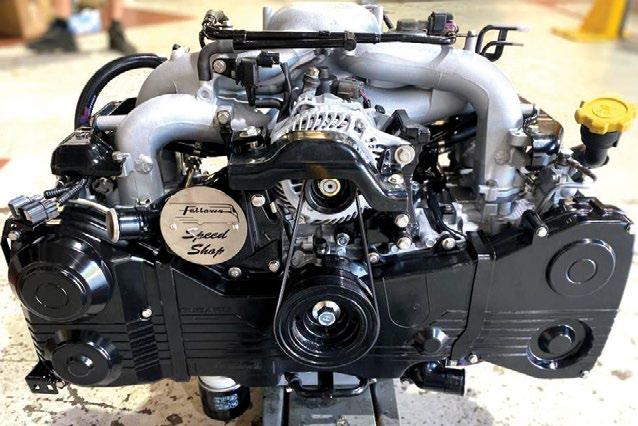
Replacing air-cooled engines for a modern flat 4 water-cooled Subaru engine offers more reliability, better fuel economy, the option of a front and rear heater, and a lot more power. No longer will you have to take a run up for hills!
Order online or get in touch to find out more...
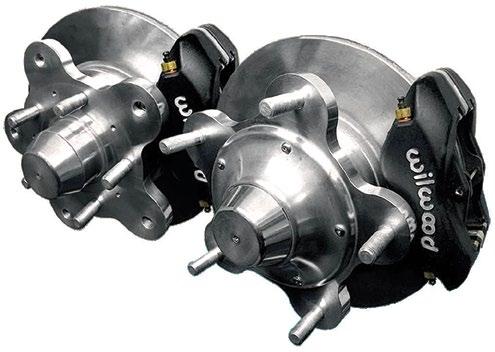
Subaru Engine Conversion Specialists, Full Re-wires for Splitscreen & Bays, Wilwood Disc Brakes, Suspension & Handling Set-up, Upgrades, Air-cooled Servicing, MOT, Paint & much more...
Will fit early & late spindles, splitscreen & bay window
Dual wide 5 5x205 PCD & Porsche 5x130 PCD from one hub
Late bay dual 5x112 & Porsche 5x130 PCD from one hub
Q: I think this is the first time we’ve done a father/son interview. Let’s start with who you both are. How old are you and where do you come from?
A: My name is Jak (without a C). I’m 32 and from Eckington, Sheffield. My dad is Paul, 59, and also from Eckington.
Q: What are your day jobs and do you have any other hobbies?
A: I am an electrician and have plenty of hobbies, although I am not particularly loyal to any of them and tend to flit between them. Alongside these vehicles I also have a T6 camper van and have enjoyed camping all of my life. My two little girls, Erin and Ada, have also got the camping bug. In with the theme of the vehicles, I particularly enjoy vintage bikes and other retro memorabilia. I also have a Honda C70.
My dad was originally a coal miner, working as a mechanic on the coal face. He has very similar hobbies, also having an Early Bay campervan which took us on family holidays. He also has a number of motorbikes in various stages of repair including a 70s Lambretta.
Q: What is your ultimate VW/Porsche?
A: In line with most other enthusiasts, I would love a Porsche 356 Speedster, although I also think the Karmann Ghia is one of the best-looking cars and an itch I’d like to scratch some day.
Q: Favourite VW events, at home and overseas? What makes that event special for you?
A: I have never done an overseas event although I’m hoping to get to EBI this year. I really enjoy SkegVegas. It always draws a good crowd of my friends and the number of high-quality air-cooled vehicles is unbelievable. My dad’s favourite is probably BusFest, having attended pretty much every year since the early 2000s. It has a particularly familiar feel.
Q: What got you into Volkswagens in the first place? How many do you think you’ve both had over the years?
A: Dad’s first air-cooled VW was a 1977 Bay Window with a full Devon interior. This purchase was inspired by a family holiday in a rented motorhome to Cornwall in 2001 where he saw on the campsite some young couples enjoying
their camper vans. On returning home he sought out and bought the Bay. This was the start of us really catching the bug and ultimately took us to the south of France the year after. As I reached 17 years old I was looking to start driving. My first car was a Mk2 Polo and have since had Mk1 Golfs, New Beetles and Transporters, but more recently a ’66 Beetle and now this Split bus.
Q: Can you list them?
A: More or less as above. We currently still have the 1969 RHD Early Bay, these two Panel Vans and the ’66 Beetle. We’ve had three other Late Bays, with the ’77 being the first. This needed minimal repair work. It would have been under 25 years old when bought in the early 2000s. We bought a project ’79 Bay in around 2008 which came with a donor buy. Dad and I restored this over a couple of years. The proceeds of selling the completed van were what funded the purchase of the orange Split.
Q: Who, or what, would you say is your biggest influence in the worldwide VW community?
A: The biggest influence is probably the community itself.
We enjoy attending weekend shows, both for the vehicles and for the people.
Q: Best moments during classic VW/Porsche ownership?
A: Dad and I took the orange Panel Van to Scotland and back in 2023 with very few test runs following the straight axle conversion and with a completely unknown engine. The van performed almost faultlessly and we had a great time.
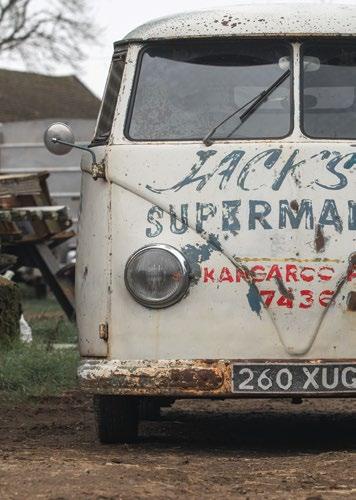
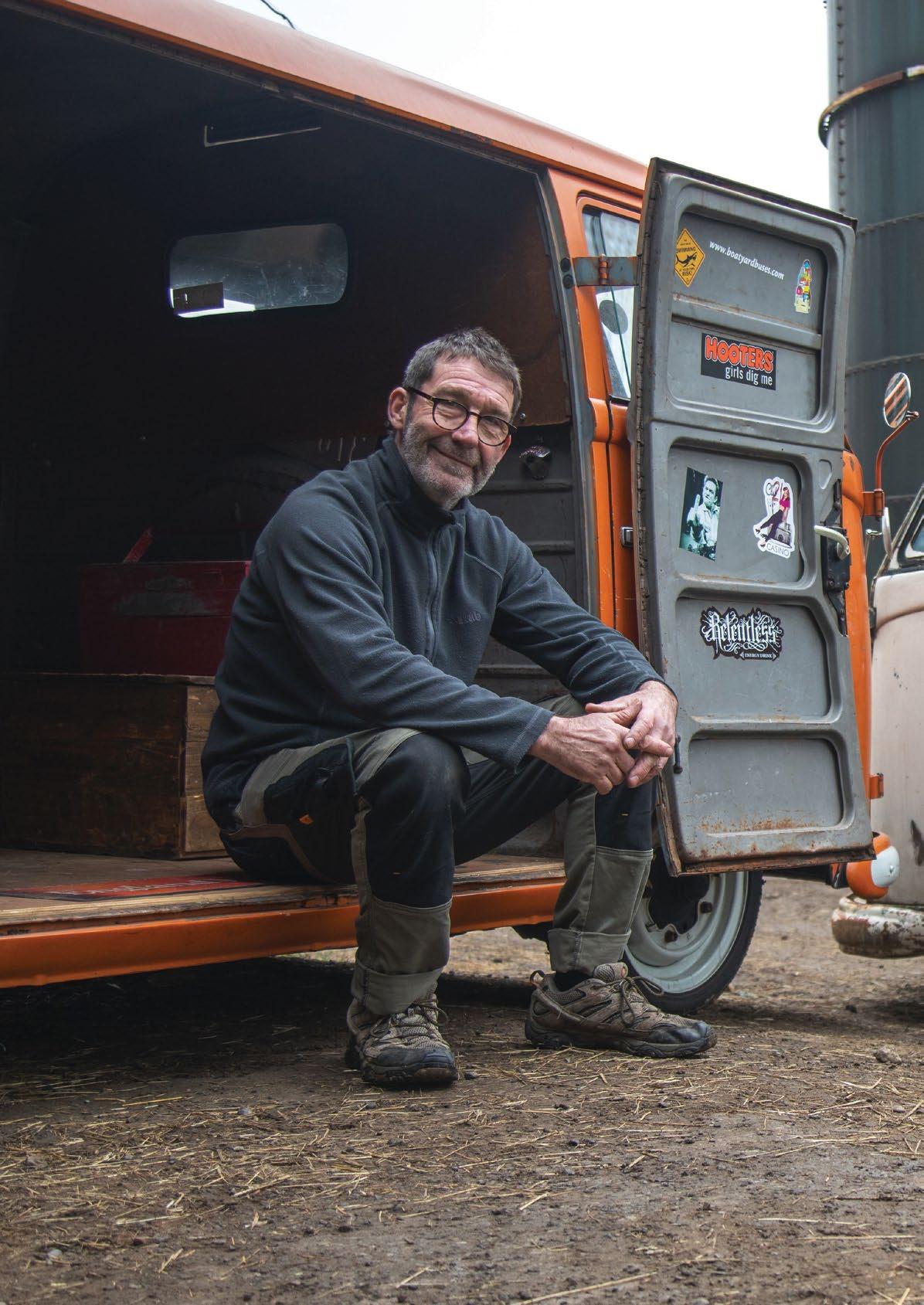
Also the day we fetched the Jack’s Supermarket bus was particularly memorable. After wanting it for so long, finally being in a position to buy it felt like a significant moment for me.
I went to my school prom in a convoy of three with ten of my friends which is also a memory that we all share.
Q: Worst moments during classic VW/Porsche ownership?
A: As with most classic VW owners, we seem to have had our fair share of hard shoulder visits, some in more unpleasant places than others. More recently, the embarrassment of learning to drive a vehicle without a fuel gauge. One would have expected to have learned by the
third time of running out.
Q: So, onto the two buses. What do we have here (year, spec and model)?
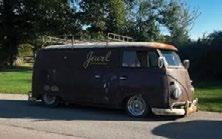
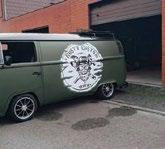
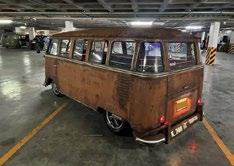
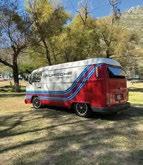
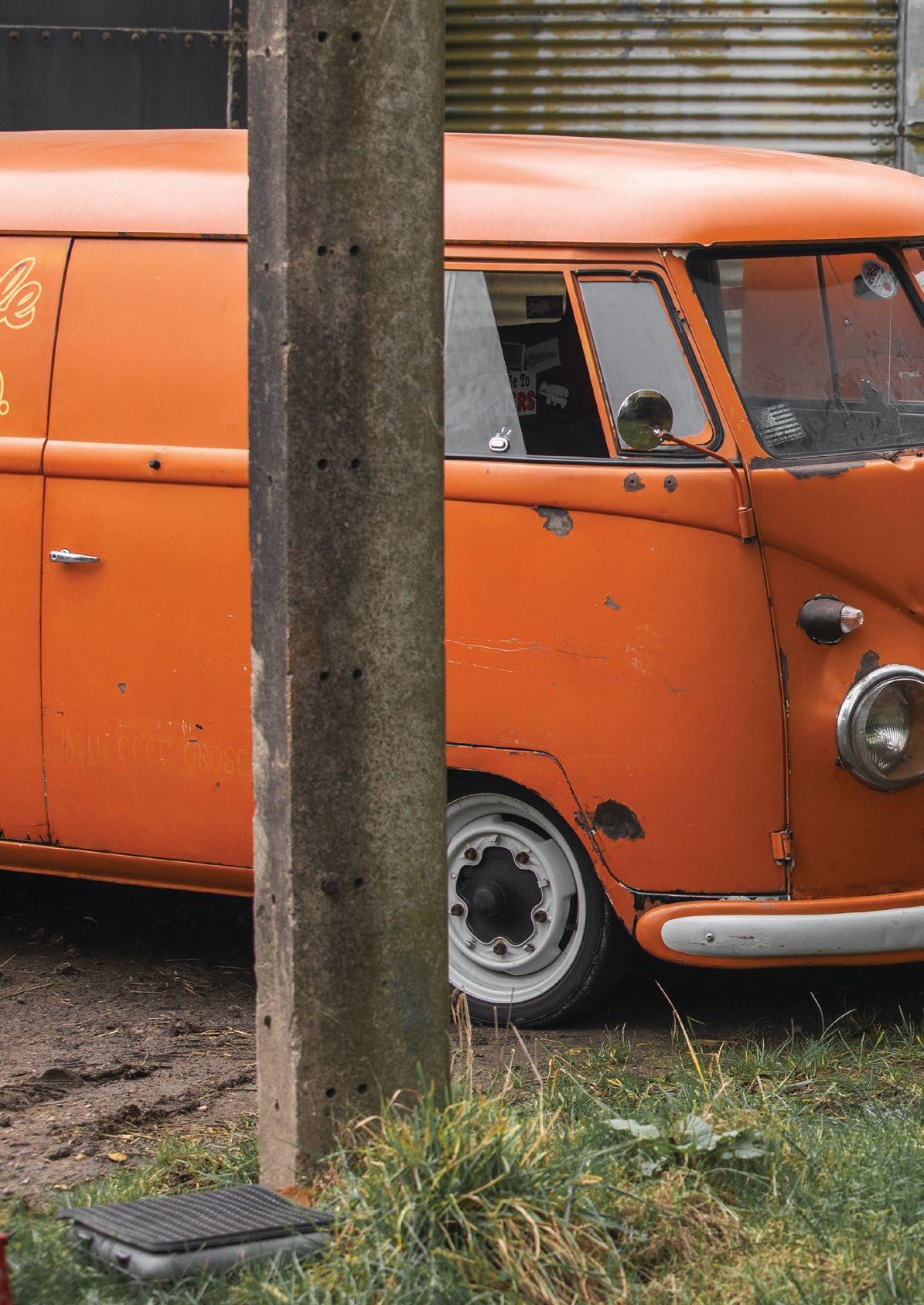
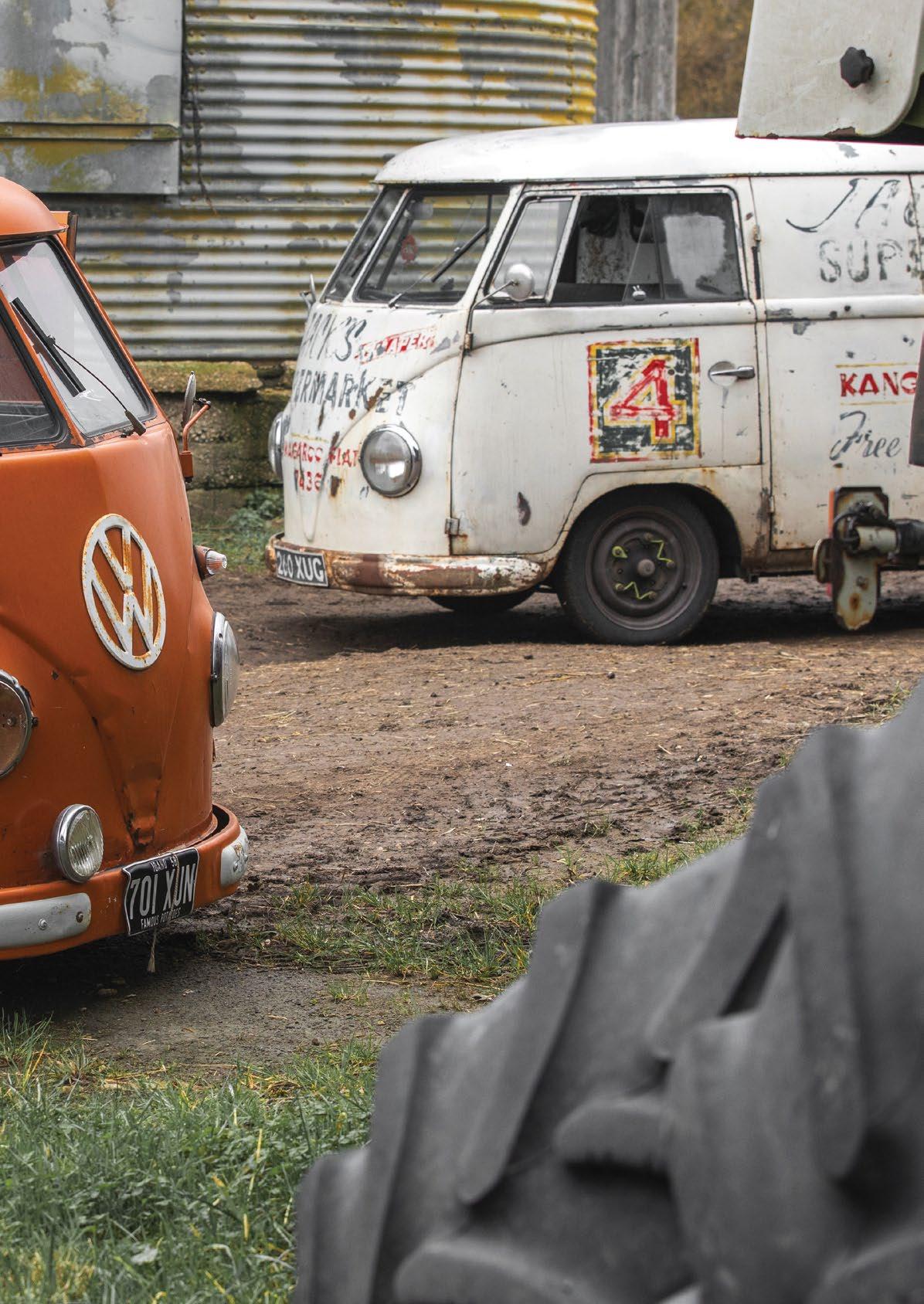
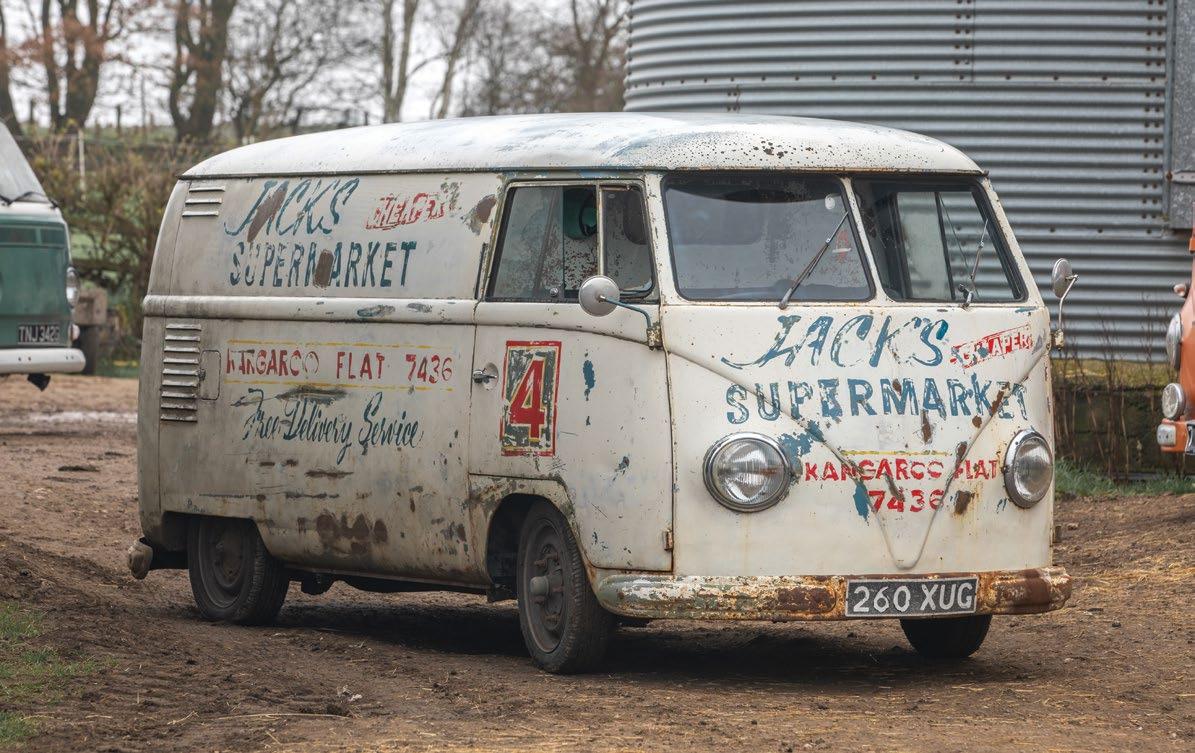
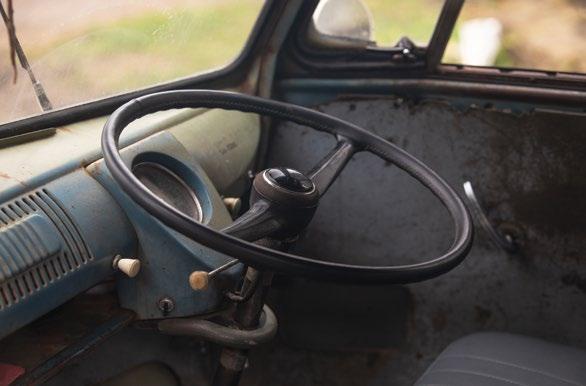
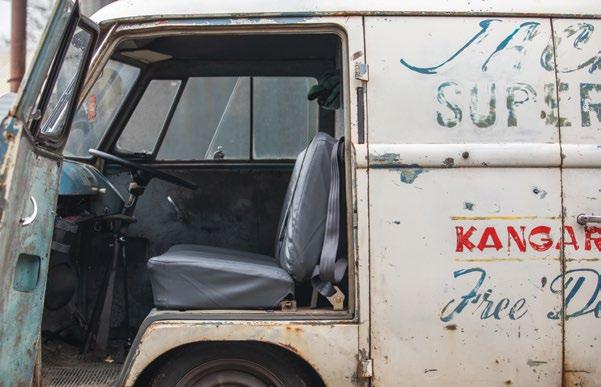
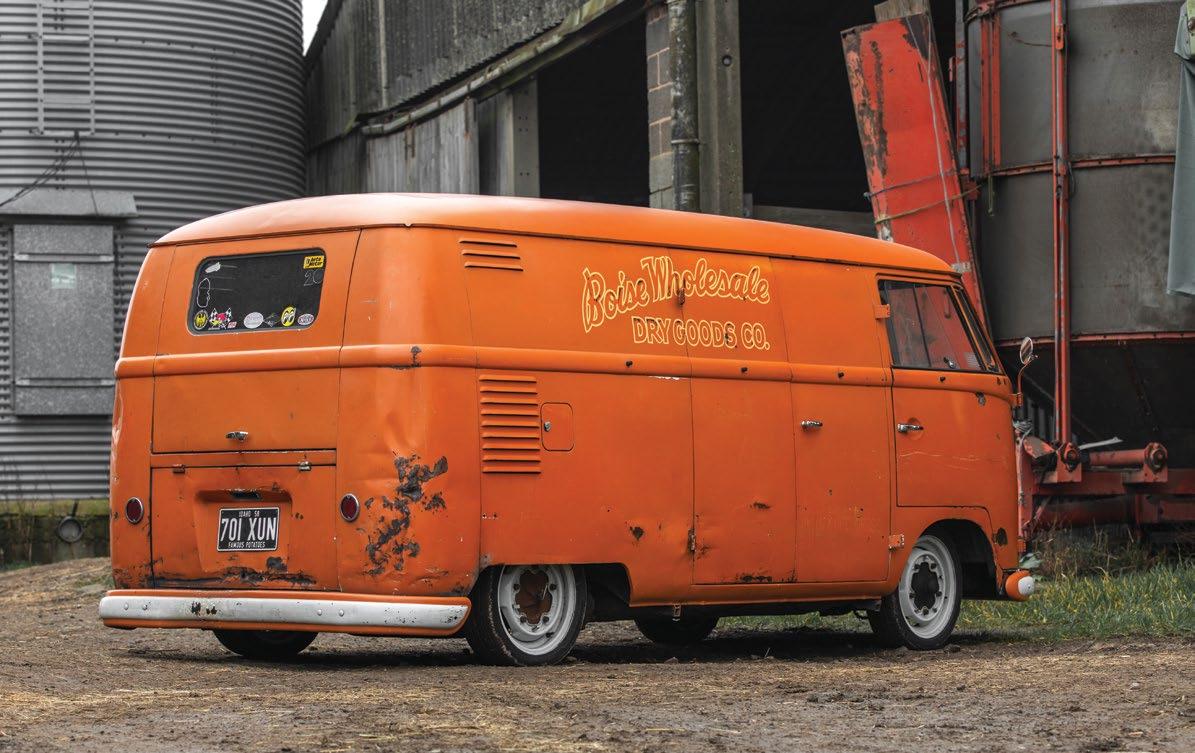
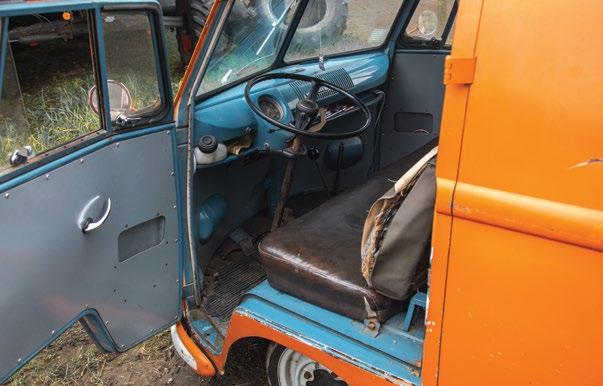
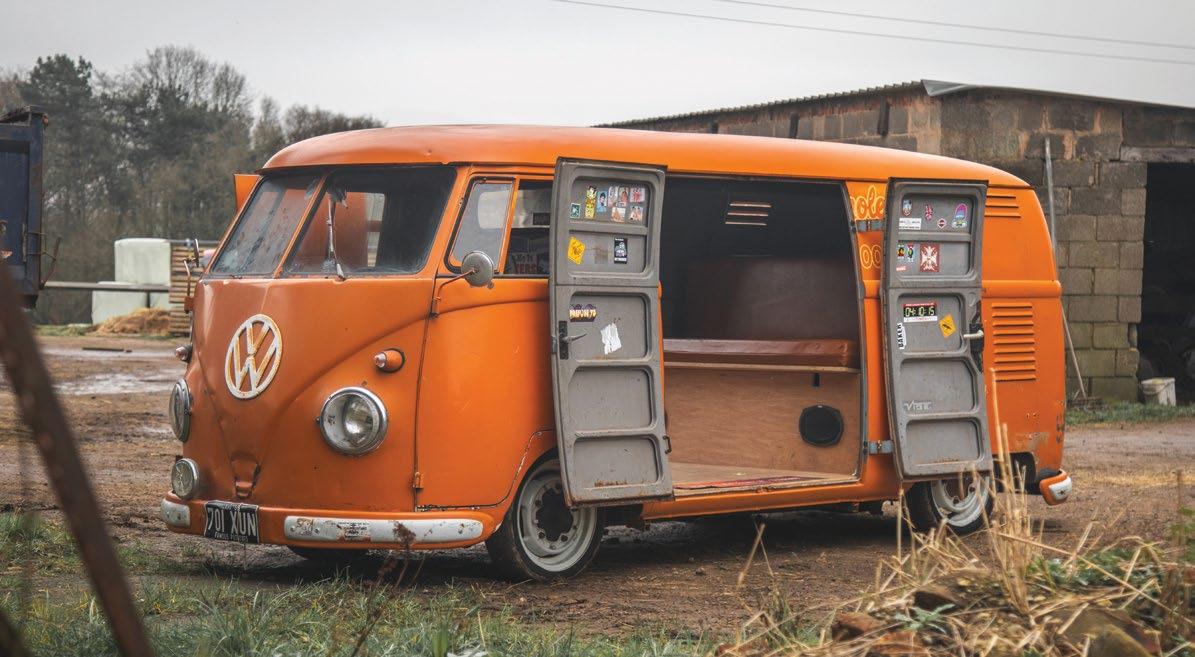
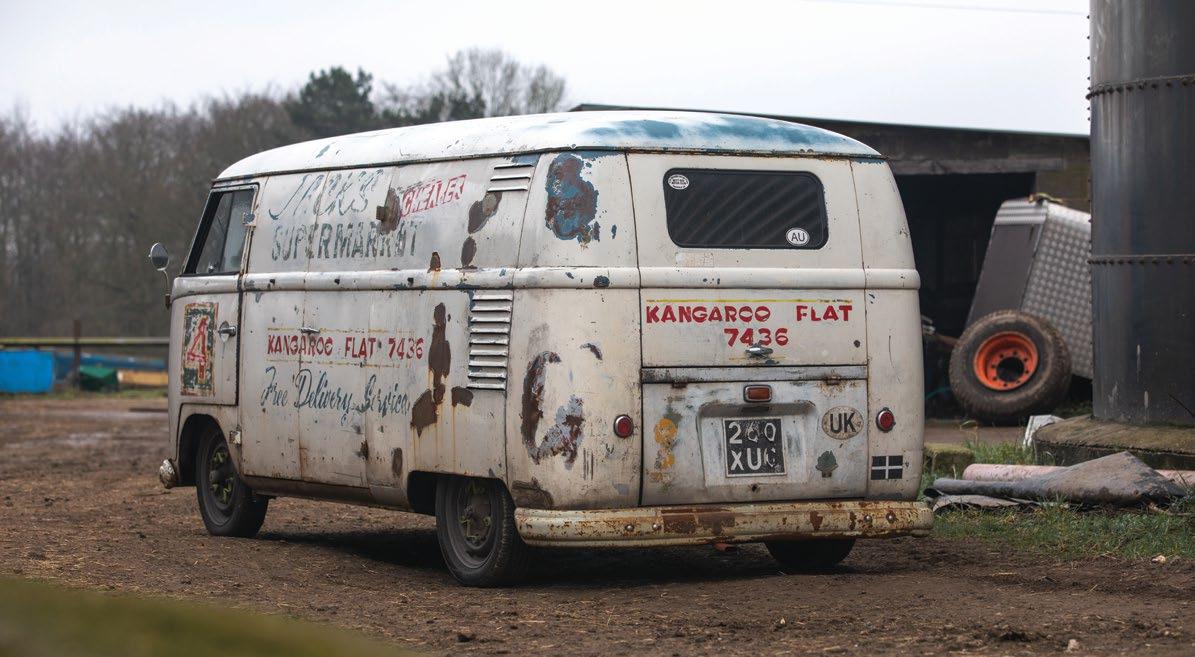
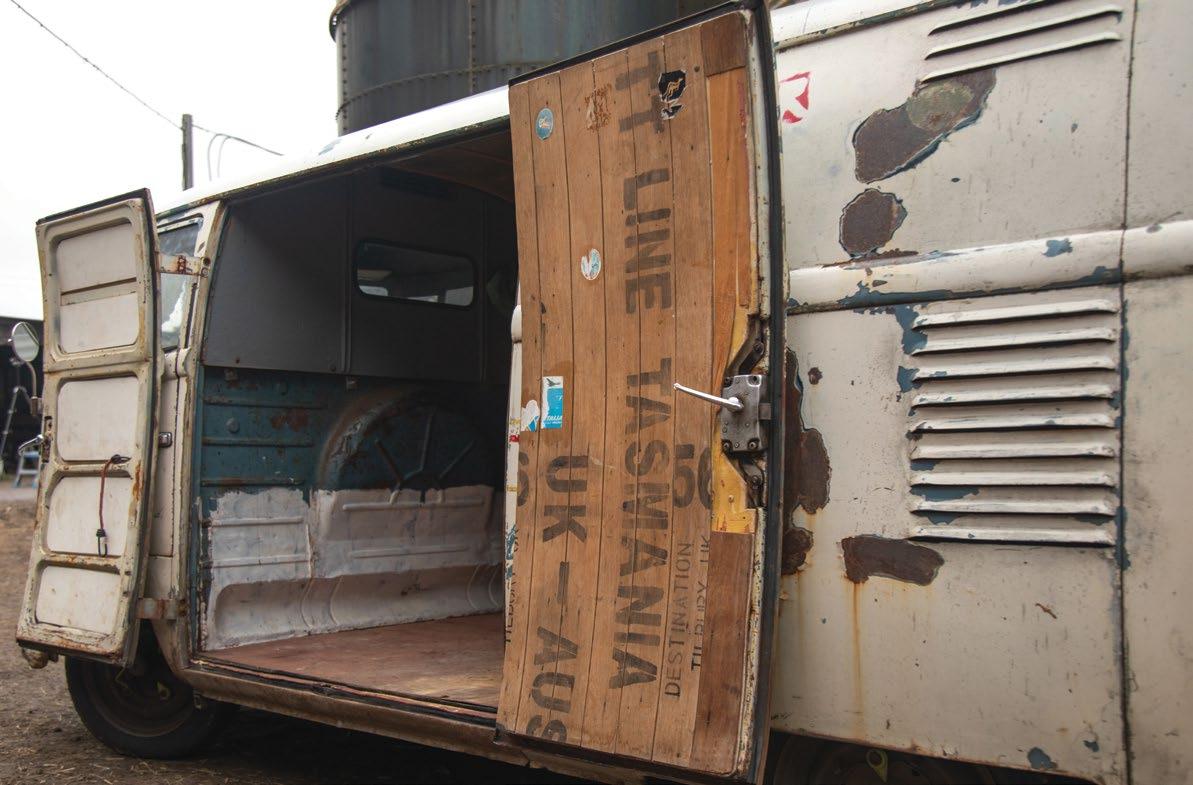
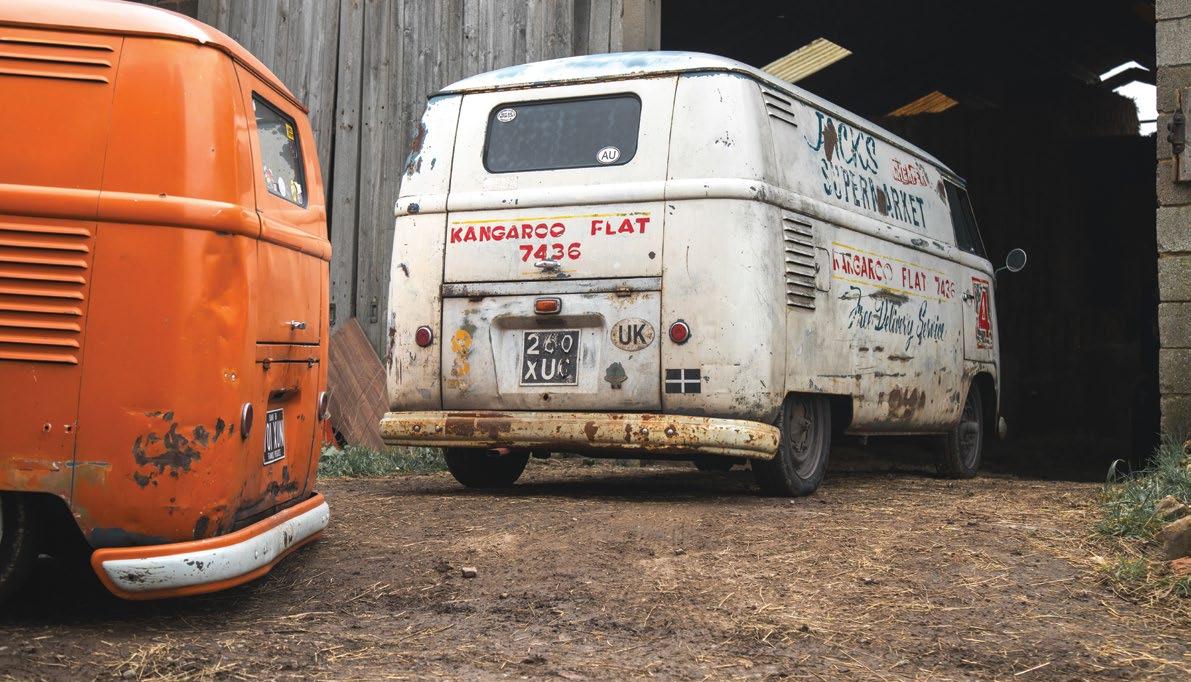
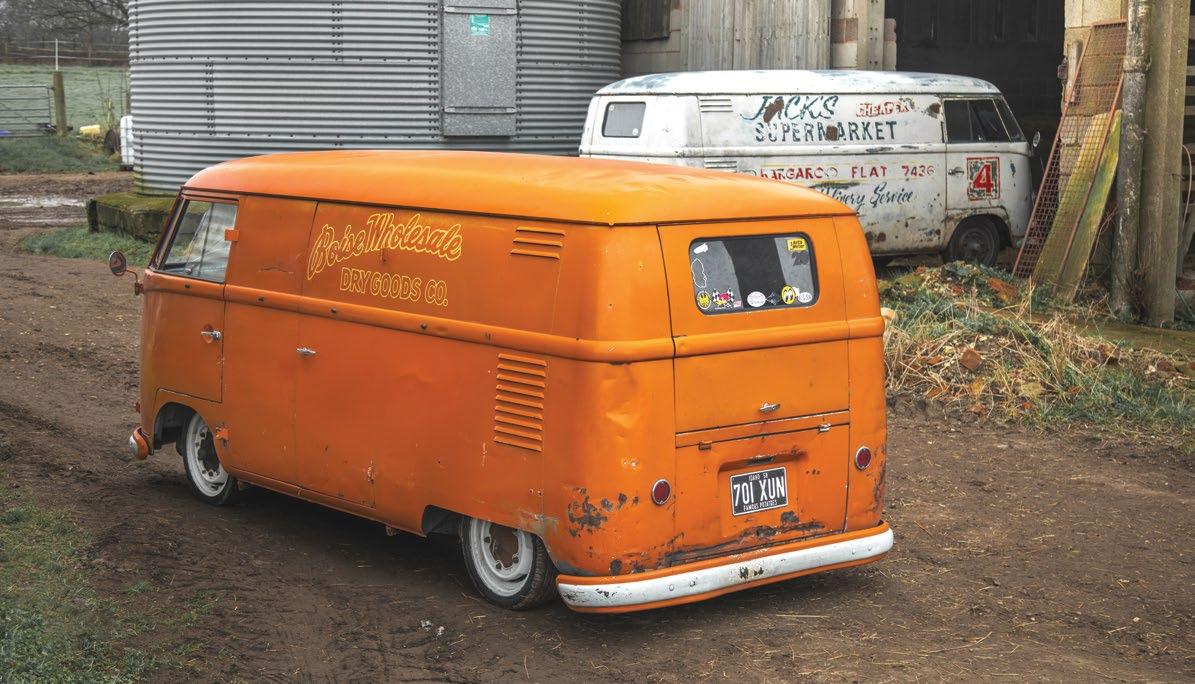
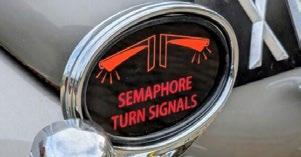
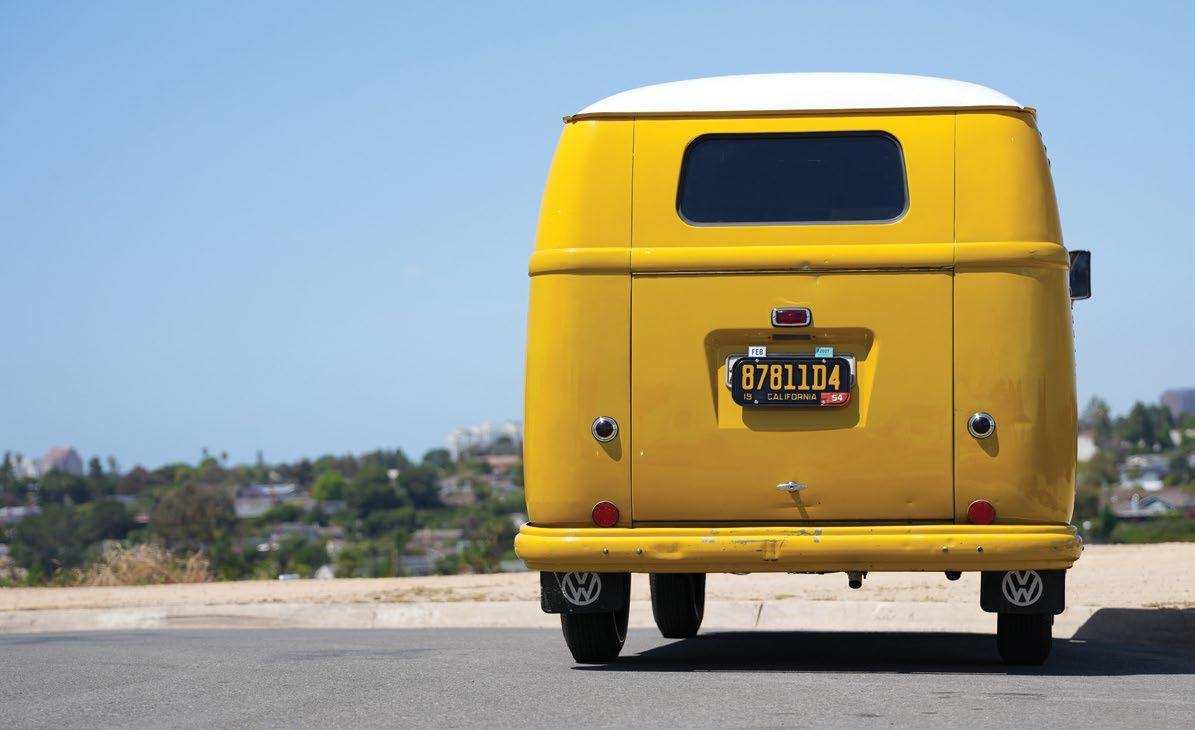
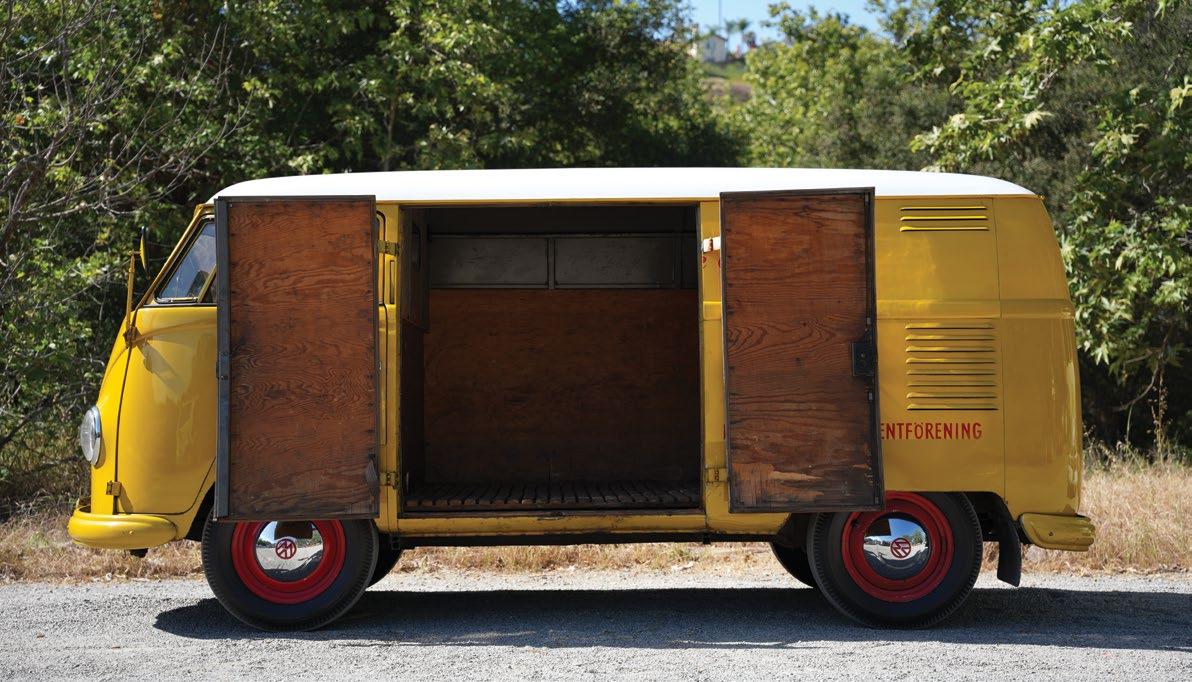
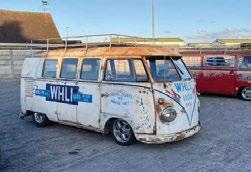
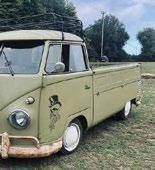
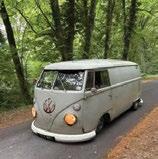
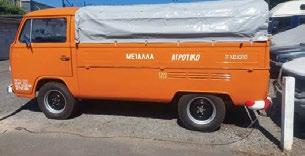
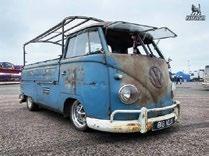
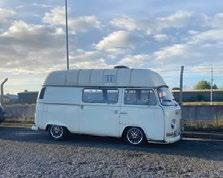
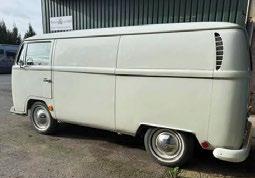
A: Jack’s Supermarket Panel Van: 1956, Australian import, right-hand drive, semaphore bus with original sign writing. Boise Wholesale Panel Van: 1958, US import, left-hand drive, double door, also with original sign writing.
Q: How did you come by them?
A: I first saw Jack’s Supermarket about 17 years ago, somewhere in the Midlands on a show field. Dad and I had wanted a Panel Van for some time and particularly liked the thought of a right-hand drive. Upon seeing this van, it ticked all our boxes and also had my name on it. It became my favourite van across the scene. But it took 17 years before we got it.
In that time we saw the Boise Wholesale Panel Van for
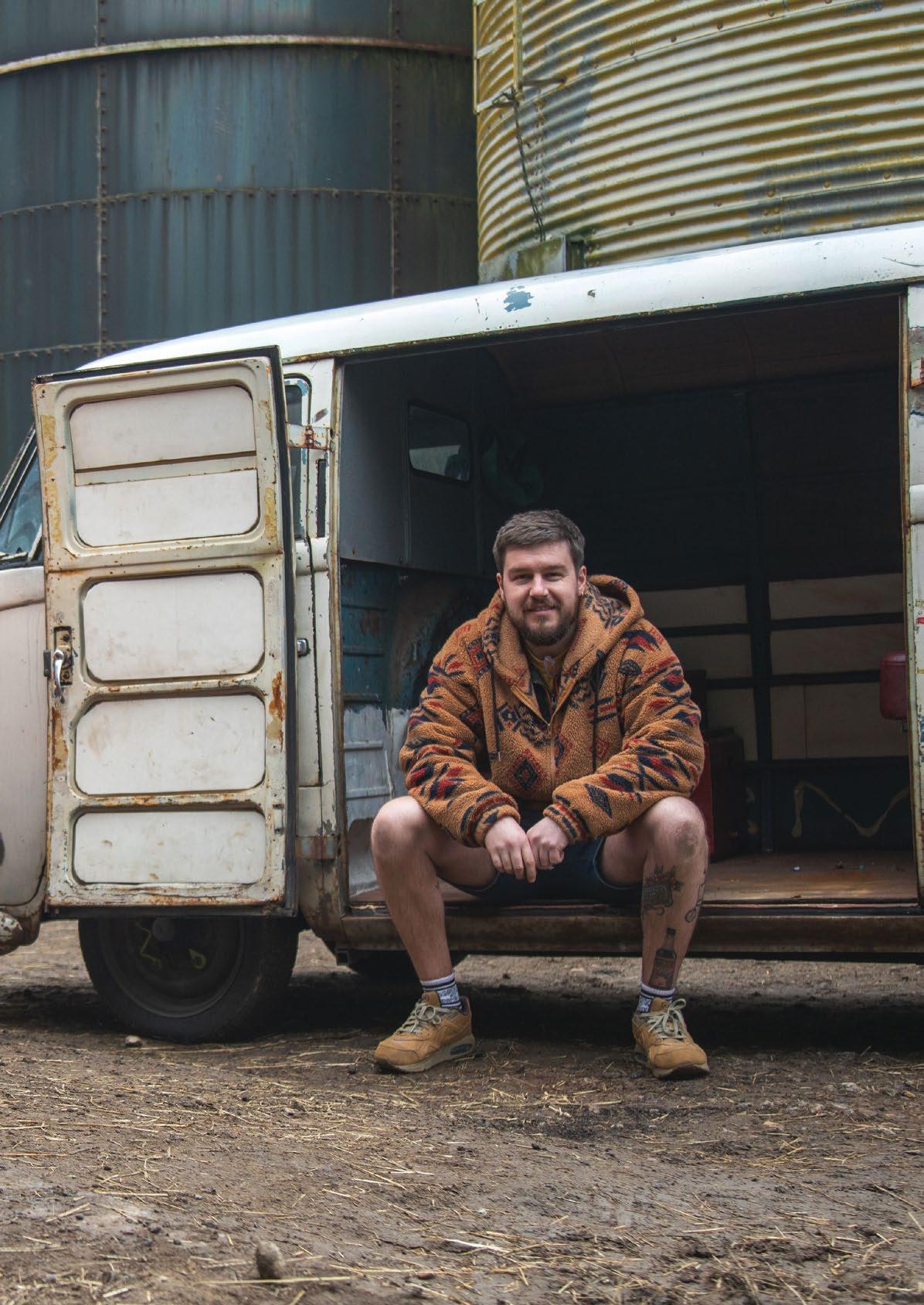
sale, in 2010, at a local show run by the Sheffield VW owners’ club. Its then owner Mark and my dad made a deal, and the van became ours. We’d just finished restoring a ’79 Bay Window which was sold to raise the necessary funds. I had seen Jack’s Supermarket for sale a couple of times over the years, but I had never been in a position to afford it. However, following divorce and house sale, etc., in 2025 I decided it was time to track it down and see if I could buy it. I typed it into Instagram, and through the power of the internet
I found that VWJim (Jim Merrin) was the last owner. I sent him a message to see if he knew its whereabouts. He said he still had it and was open to parting with it, so we made the deal.
Q: Do you know much of the history of the vans?
A: Jack’s Supermarket has been in the country for around 20 years, I believe. It was owned by VWJim before me. I think he had it for about seven years.
Boise Wholesale was found in a field in around 2006 amongst other classic VWs and imported by Seaside Neil. Pictures of it as found can be seen on TheSamba. There are also some pictures of a list of vehicles it was sold with, which makes for an interesting search.
Q: Tell us about the condition of the buses when you first got them home?
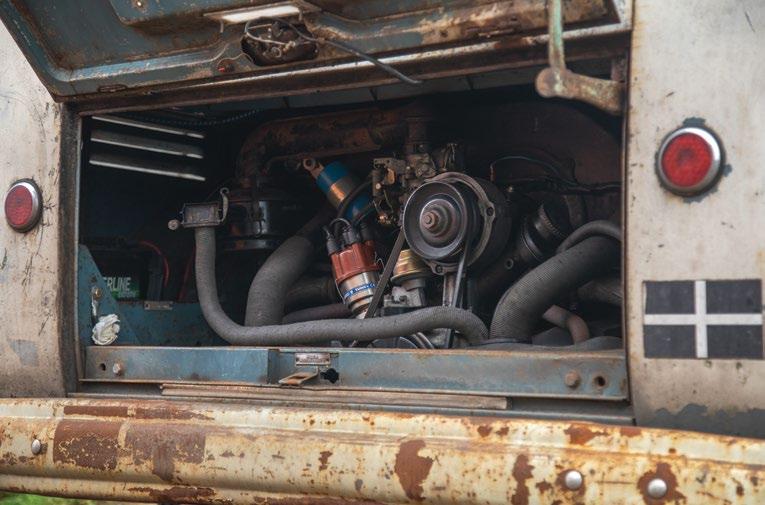
A: The Boise Wholesale Panel Van was pretty much standard other than being heavily lowered on a narrowed adjustable front beam. It retained its original 1200 engine, reduction boxes and brakes all round. Jack’s Supermarket came with all the upgrades listed in the next question. Both vehicles feature their early
liveries and are generally solid all round.
Q: Run us through the restoration/ recommissions. Who did the work?
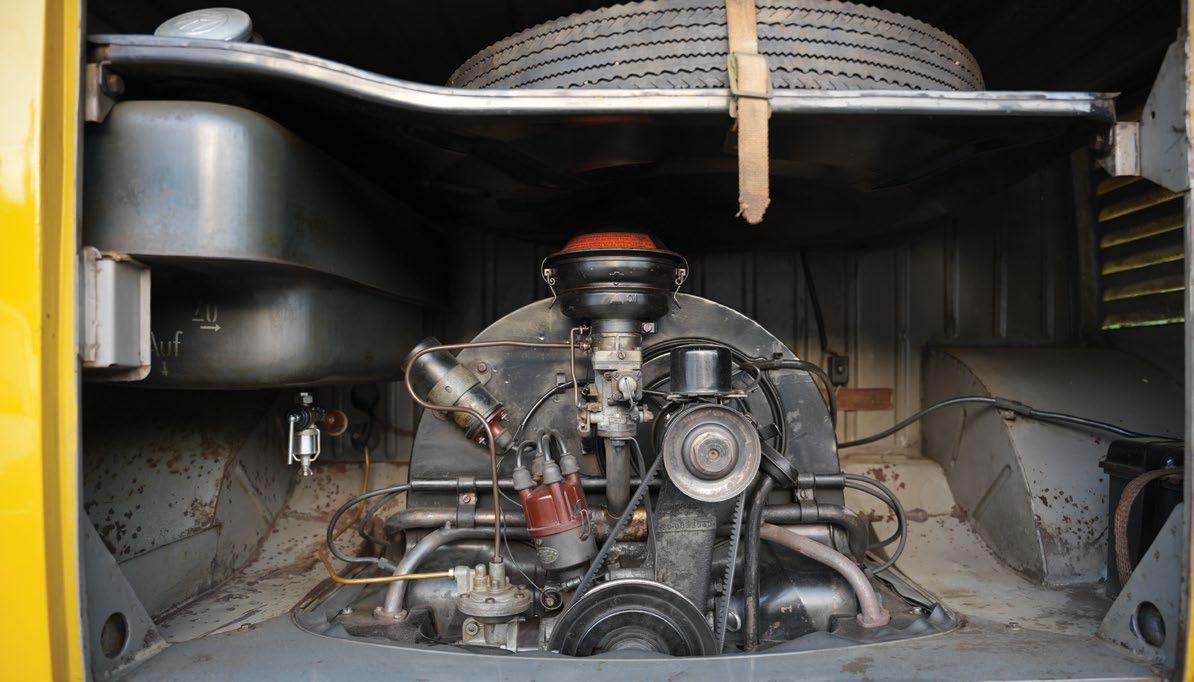
A: Jack’s Supermarket came to me with the following done by the previous owner, VWJim: IRS conversion, 1600 engine, stock front beam with anti-roll bar, front disc conversion, servo conversion. Boise Wholesale came pretty much as standard. We have since done a straight axle conversion and installed a 1600 engine we had lying around. This has since turned out to be a reasonably reliable motor, other than the teething problems expected with an engine that has been left outside for many years.
Q: Paint colours (and codes if you know them)?
A: Both vehicles were originally blue with their respective sign-written liveries added in the 1950s. Jack’s Supermarket has been covered in green at some point. This was removed by previous owners. The orange van has had a quite a lot of sympathetic touch ups, mainly the roof.
Q: Suspension set-ups?
A: Jack’s Supermarket: stock front beam, IRS rear.
Boise Wholesale: narrowed adjustable front beam, T2D straight axle rear.
Q: Wheel and tyre type and sizes?
A: Among the sale negotiations between VWJim and me, Jack’s Supermarket came without any wheels. I had little time to sort this out but I knew I wanted it running some form of wide five steel. Searching eBay I found a set for under £100 that I convinced my local electrical supplier to collect from London with their normal deliveries. These were shod with budget tyres with the intention of thinking about it later. That said, I really like the stance and look of it as it is so maybe that will stick.
Boise Wholesale is on cream powdercoated crows’ feet. The tyres are low profile all round. We are looking to increase the profile of the rear to give a slightly better stance and also improve the ratio.
Q: Engine and gearboxes?
A: Jack’s Supermarket has a 1600 twin port engine mounted to an IRS gearbox out of one of VWJim’s previous Beetles.
Boise Wholesale has a 1600 engine and a straight axle conversion. The gearbox was sourced via Facebook Marketplace and was untested. We paid a mere £100 for it. It had previously been used to bench test engines. It was probably a silly test run, but the 600-mile round trip to the Isle of Arran, off Scotland, put it through its paces. It probably requires a bit of attention at some point, but for now it gets the van to the few shows it needs to. The straight axle kit is from Type 2 Detectives.
Q: Have you replaced the electrical systems?
A: Jack’s Supermarket has been partially rewired with working semaphores and also flashing indicators/hazards. Both vehicles are now running 12V. The main bulk of the wiring is original. Both vans have a simple split charger to a leisure battery and I have added an MPPT to both to allow the connection to remote solar panels to keep the beer fridge running on weekend events.
Q: Have you got a stereo fitted and, if so, what are you currently listening to (either in the car or during those late nights in the workshop/garage)?
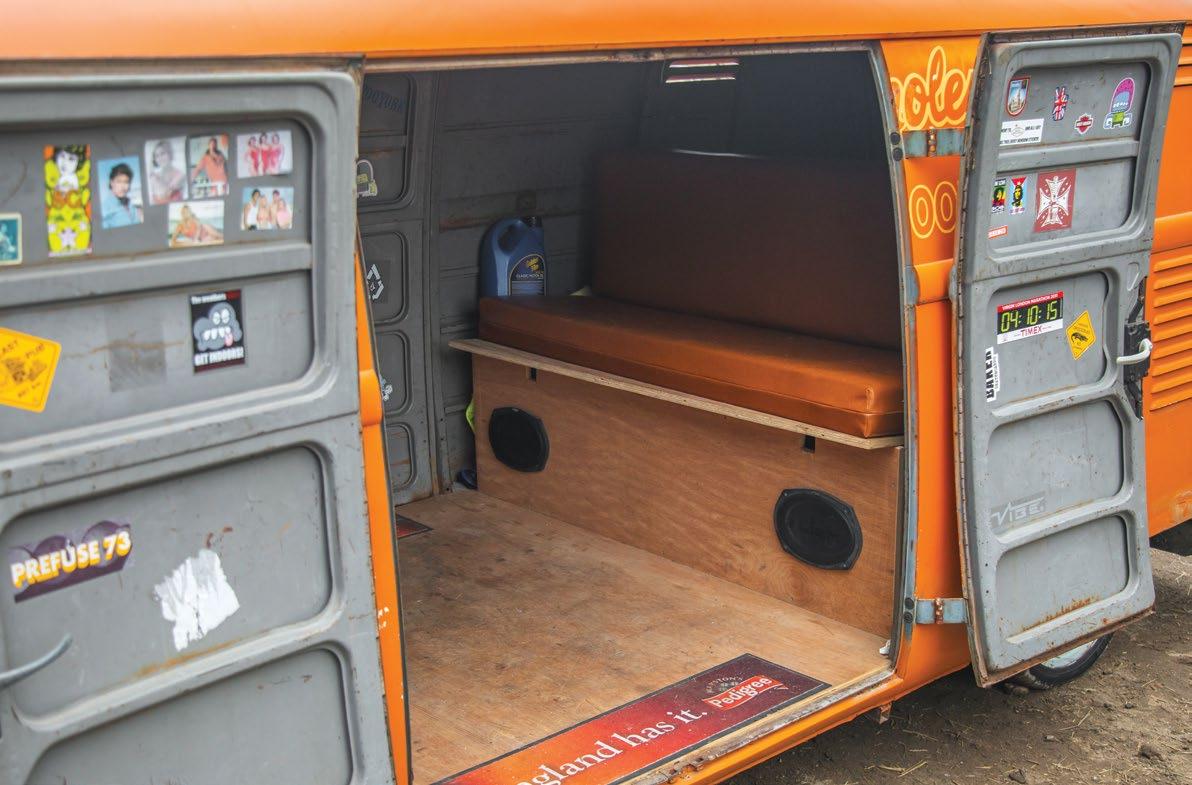
A: In the orange van we have a simple CD player and 6x9s that have
been in for about 10 years. Jack’s SupermarketcurrentlyhasaBluetooth speaker resting on the bench seat, but I intend to put a full system in, with a couple of amps/subwoofers sneaked under the rock and roll bed.
Q: Were there any parts that you found it hard to get hold of?
A: Both vans are pretty much intact in terms of the rare parts required and we have fallen lucky with the few second-hand bits we’ve needed. The hardest part is working out which bits are compatible with what, as both have different rear running gear.
Q: What is your go-to VW parts shop?
A: The internet pretty much covers everything now for us.
Q: Run us through the interiors.
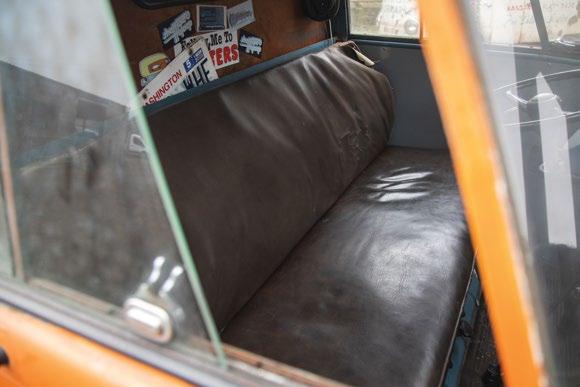
A: Both vans currently have a rock and roll bed and are relatively bare other than that. The seat is covered in oxblood red in Jack’s Supermarket and in a period-style orange in the Boise. I intend to plyline the Jack’s Supermarket van, adding a bit of insulation as we will use it for winter camping.
Q: What’s your favourite thing about them (e.g. wheels, paint, detail, trip it’s been on, memory with it, etc.)?
A: With both vans it is a full package that makes them what they are, without any particular thing that stands out. Both get plenty of attention when driven, whether locally or on motorway drives. They always
bring a good conversation with strangers.
Q: If you had to change one thing, what would it be and why?
A: The orange van being left-hand drive is what makes it used less, with the limited visibility of a Panel Van. This was really shown up when we got Jack’s.
Q: What’s next for you and the buses? Any plans?
A: The main plan is to try and use them more, to make memories with the girls. We’ve got a few shows booked this year, and also some local camping weekends.
Q: How often do you use them?
A: Since buying Jack’s Supermarket in October 2025 I have used it almost daily, putting nearly 5000 miles on it over the winter. I plan to be away in
it at least once a month over the coming summer. Boise Wholesale tends to make one or two shows a year since we got it back on the road in 2023.
Q: What is your next project going to be?
A: I spent most of summer 2025 building a man cave for my friend Alex, in return for him replacing the floor pan and heater channels in my Beetle. Work has just started with this. I intend to get it back on the road as soon as
possible and enjoy using it alongside the Panel.
Q: Who would you like to thank?
A: Thanks to my pal Alex at The Driver’s Collection for arranging this feature. Thanks to John for having a great day with us taking photos. Also thanks to VWJim for making the deal so straightforward.
www.jpgroup.dk
Manufacturing in Denmark since 1975 brings 50 years of experience in producing and sourcing high quality spare parts for
TWENTY OFYEARS SKEG VEGAS
WORDS BY VICTORIA FAUX
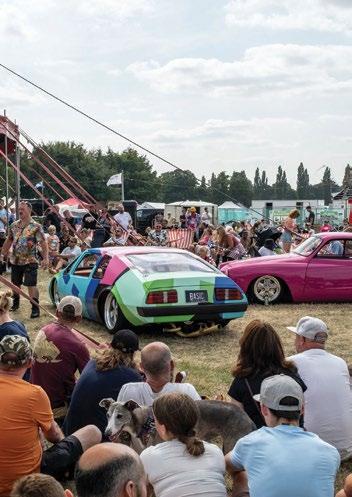
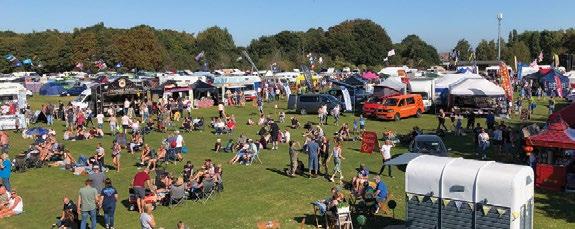
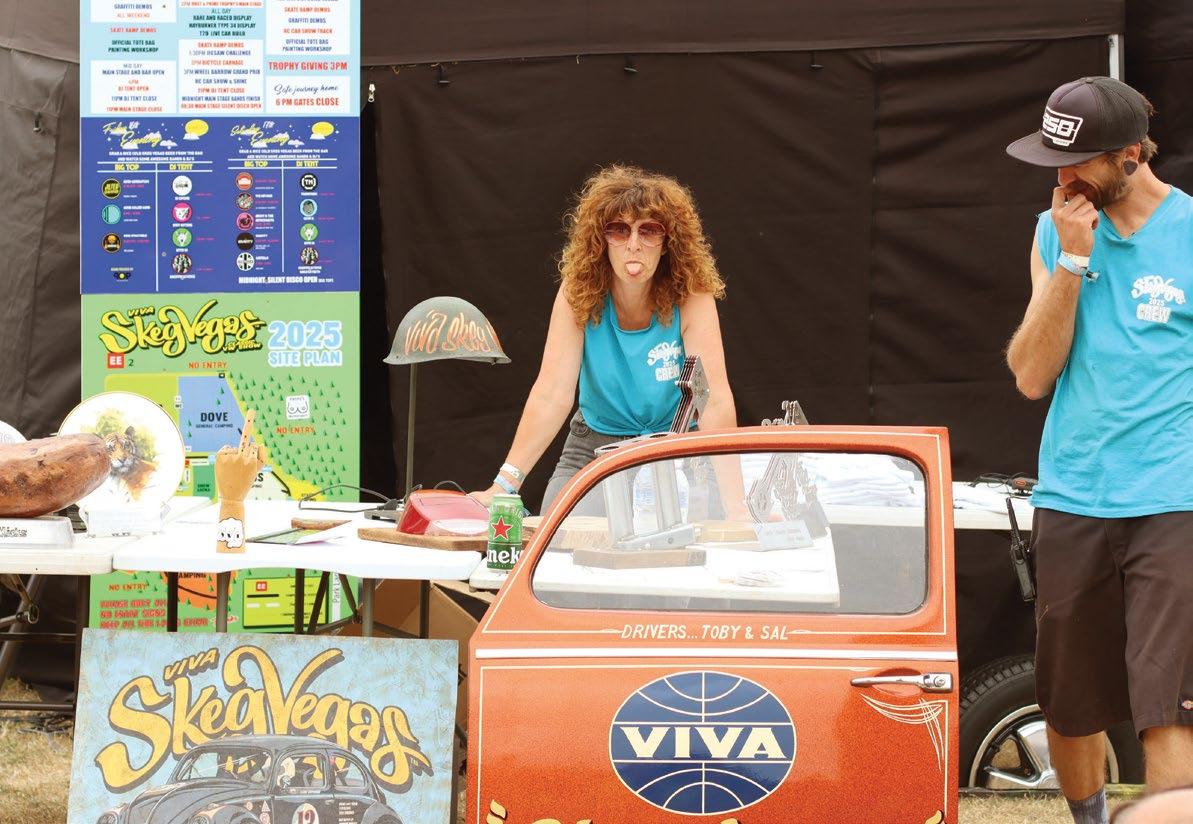
Viva Skeg Vegas VW Show is amazingly (but not surprisingly) celebrating its 20th year in 2026 and I can’t believe how quickly the time has flown! Let’s rewind a little to a younger and less grey-haired me in back in 2010, not long out of university, in the middle of that awful recession. The only “opportunities” in Publication Design were unpaid internships and that just wasn’t happening. So, in true Vic style, when an all-inclusive bouncy castle business came up for sale, I thought “What’s the worst that could happen?” … so I went for it. Bear with me here, I am getting somewhere with this story. They were not just any old bouncy
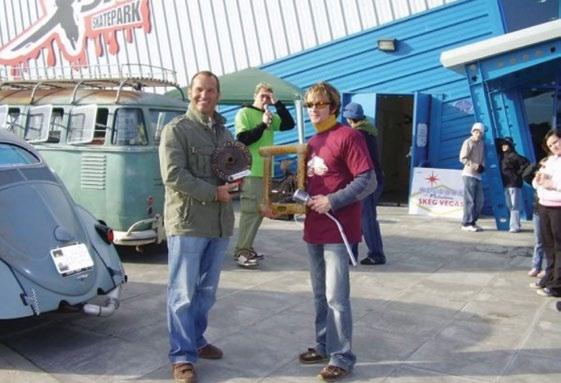
castles, they were in the shape of VWs (there was one Split and one Bay to start with). Inclusive of the business deal was a list of shows that the previous owners had secured for that year. This is where I met Sal and Toby Walker, the wonderful people behind Viva Skeg Vegas VW Show. Ned had gone to the previous year’s one-day event and we were excited about going together and being able to trade there. If my memory is right, it was quite a nice, sunny day and not windy – which is weird for Skeg, with the show being held at their initial venue, Xsite Skatepark, straight on the seafront The skatepark was a National Lottery funded project completed in 2006, but there was no money left in the pot for a publicity budget. So Sal and Toby decided to create a small VW gathering in the car park to raise awareness for the skatepark; this was supposed to be a one-off event. However, as people were leaving they all said, “See you
next year”. After a call on the VZI forum for them to do another show, it snowballed from there. It was clear from my first sight that this was an enthusiasts’ show where it was all about the cars. It had an organic “car meet” feel to it which was right up our street. From the mix of cars on display, everything from stock to heavily modified builds right through to battered daily drivers, it was clear that it represented exactly what the scene was all about at the time. Even the infamous “anyone-can-make-a-trophy” idea added to the unique creative approach we see at today’s shows. It was all the brainchild of Sal and Toby, who were genuinely welcoming to us from day one. As newbies to the VW trade crowd we loved it even more.
That was the only show I went to at the skatepark venue. Due to the car park/show site being absolute chocka, Viva
Skeg Vegas 5 in 2011 faced a complete shuffle when it was relocated to Pine Trees Caravan site and it was finally the whole weekend! I am probably the worst person to be writing this article as my memory is so rubbish, but what little I do remember of this show was that it was clear how much people wanted a weekender, the vehicle turnout was better than expected, and do I mention the weather? … let’s just say we have attended hundreds of VW events over the last 16 years and this by far was the coldest weekend’s camping we have ever done! It was plain to see from the quality of the cars, and their loyal following and friendships they’d built around the show at the skatepark, that an event run by enthusiasts for enthusiasts was exactly what everyone wanted then, and clearly still do.
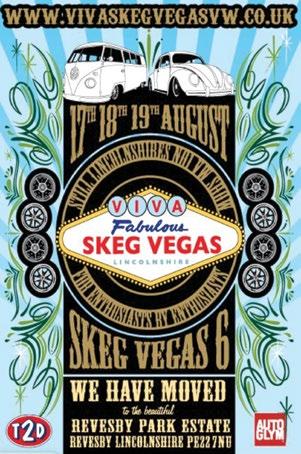
After filling up Pine Trees and selling out camping on the Friday in Day Visitor parking, Viva Skeg Vegas 6 had to relocate. This is where it found its forever home, the stunning Revesby Estate. And what a great choice, with
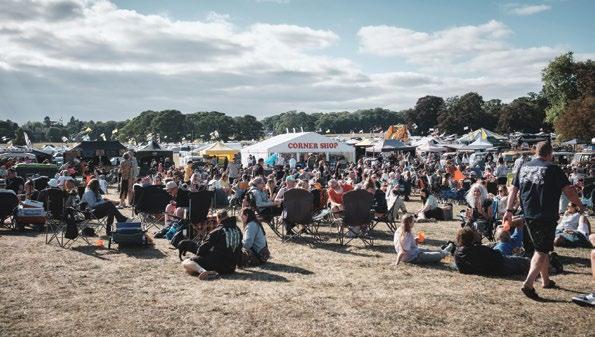
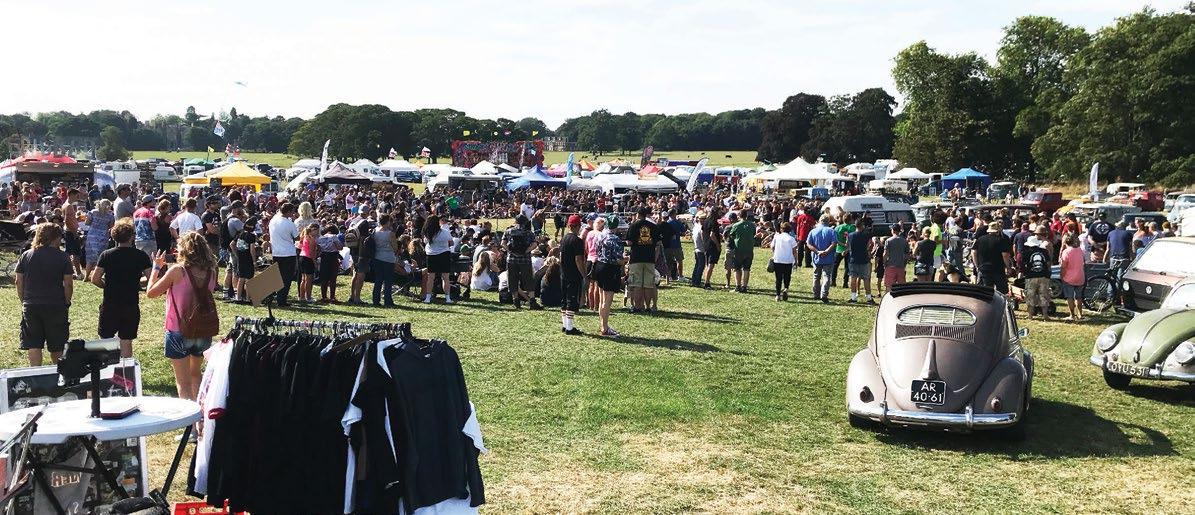
its idyllic surroundings and gorgeous grounds. It was a fantastic turnout that stayed true to its core focus on the quality of cars, while also creating a fun and welcoming community atmosphere that appealed to younger enthusiasts, families, groups of like-minded friends and, of course, the clubs themselves. Even today, it’s always a pleasure to walk around the club field, see what others are passionate about, and discover the different tastes and styles represented from around the country.
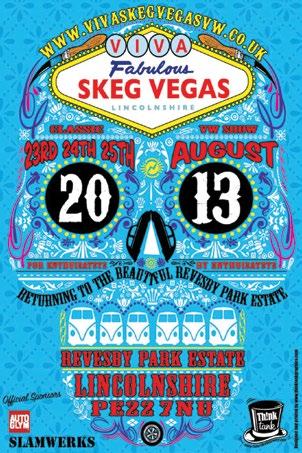
For 2013, Viva Skeg Vegas 7 marked the first year we saw a playful, creative theme. This is something the show has since become well known for, thanks to its imaginative artwork (courtesy of Toby himself at Think Tank Graphics) and strong sense of fun and frolics by the organisers. That year, we celebrated the Day of the Dead with sugar skulls, with all the colour and character that comes with it. As always, the weekend delivered plenty of fun alongside some of the highest quality cars in the country. Alongside
this, the lucky show goers were presented with further entertainment with the attendance of Bill Pollard’s Bomber Drome, Magical Camping options and even a hot tub … fancy! This was also the birth of Hayburner’s very first merchandise stall, where we had two t-shirts, two hats and two stickers to choose from … how times change, eh!?
Highlights of the earlier Revesby shows included the Saturday show & shine (known back then as Rust & Prime) and the renowned air-cooled-only display that still boasts around 250 cars each year, which is truly amazing in itself. This schedule of events has remained similar over the years, with Saturday’s show & shine now being called Daily Drivers and ending the weekend with their infamous air-cooledonly show & shine. The weekends are always rounded off perfectly with the presentation of the homemade trophies and VSV’s Best in Show awards. The awards ceremony itself is always a highlight; no-one quite knows who is giving what to whom, or for what reason. The mix of clubs and
companies involved brings a real variety of tastes, which keeps things fresh and unpredictable each year. What I especially enjoy is how the custom trophies seem to get better and better (there was even one event where there was a trophy for the best trophy!), which not only sets the show apart but also pushes the standard of cars higher and higher. Not only do show-goers have the privilege of being considered for one of these unique awards, but there are also the organisers’ own (Best Paint, Staff Choice, and Best of Show). It’s these thoughtful touches that help make Viva Skeg Vegas one of the standout VW shows in the world, inspiring people to build new and exciting cars and encouraging them to get them out as often as possible. And you never know, they might be one of the lucky ones to receive a one-of-a-kind trophy to top the amazing weekend off.
For me, I think Skeg Vegas 8, 2014, was one of my favourites, with the theme being “Rednecks & Hill Billy”.
What an absolute blast that was; there was even pie eating. I have never laughed so much! It was also the first year of the infamous DTA Limbo! I can remember there being such a long queue for it and everyone piling up on each car. There was so much going on, cars everywhere. It was just crazy – fun for the punters but not so much for Toby … we know he loved putting this on for us all but the stress was immense. In later years we have seen a variety of
other amazing displays at the show. In 2015 we saw the introduction of the line-up for “Stock vs Lowered”. At the time, lowered cars were hugely popular. I mean they still are, of course, but it was very much an era where people were chasing extreme lows, sometimes at the expense of drivability. It sparked plenty of debate and friendly rivalry, and was billed perfectly as the “Rumble in the Jungle.” We have also seen other line up displays including the
incredible original Logo Line Up, Year of the Ghia, Type 34, Freaks and Unique, Commercials and Pre-53.
Over the years, we’ve seen some brilliantly creative themes, including Sci-Fi, Casino (which even featured a real casino on site!), Monty Python, Music Legends, Radical 80s and Carnival. What really sets Skeg Vegas apart, though, are all the extra touches that make it so much more than just
a show. From the charity food bank and dog show to incredible DJs and live music throughout the day, there’s always something happening. Add in the high quality and variety of trade stands, BMX and bike displays, the annual popular T2D live builds, the remote-controlled car Show & Shine, Show & Recline, and countless other attractions, and it’s easy to see why it stands out from the crowd. And I can’t forget the food! The variety on offer is fantastic. It’s
one of the few shows where I never bother bringing my own food because I know there will be something for everyone, with plenty of unique and different options to enjoy.
Skeg Vegas, for me, is far more than just a show field by the seaside. In truth, it could easily rival a concours event or even a prestigious indoor show. What Sal and Toby have created is something very special – an event that people genuinely look forward to attending year after year.
Thank you both for everything you’ve done to build and grow this incredible community and event. Here’s to all the memories, the hard work, and the countless smiles along
the way.
Happy fucking 20 years, Viva Skeg Vegas. You absolutely deserve it and we are not surprised one bit you are going stronger than ever. Thank you, Vic & Ned x
A little word from Toby that he wanted to add: “I would like to thank Sally for being my rock. I truly mean this when I say if it wasn’t for Sal there would be no show. She is the driving force. If I couldn’t share the stress I would have thrown in the towel years ago.”
The Hayburner Webshop. Thanks for your support.
An ever-changing collection of classic and pre-loved Volkswagens — all for sale.
Resto-Haus is home to an ever-changing selection of carefully sourced vehicles — from early icons to modern classics.
Every one with a story. Every one available for sale.
It’s also a place to slow down. Our in-house cafe, Bo Jangles, serves coffee and fresh food, while our weekly Drive-In Social evening 'See You Next Tuesday' brings together a relaxed mix of vehicles, people and conversation.
Come and join the journey with us!
Resto Haus, Unit 4, Brannams Retail Park, Oakwood Close, Roundswell, Barnstaple, Devon, EX31 3NJ
FIND UPCOMING VOLKSWAGEN SHOWS EUROPE–WIDE.
If you would like us to promote your Volkswagen event, please enter for free on www.bUGbUs.nEt’s show calendar. Also on bUGbUs.nEt you will find the latest show entries from around Europe.
14TH – 15TH | LUFTGEKÜHLT AM SEE Ebersdorf | www.vw-kaeferclub.com
14TH – 16TH | BULLITREFFEN ZÜRCHERUNTERLAND
Rorbas | www.bullitreffen-zh.ch
AUGUST
14TH – 16TH | 50 YEARS KÄFER TEAM GÖPPINGEN
Lenglingen | www.vw-kaefer-team.de
14TH – 16TH | VIVA SKEG VEGAS
Lincolnshire | www.vivaskegvegasvw.co.uk
21ST – 23RD | VDUB AT THE PUB
Dorset (UK) | www.vdubatthepub.com
21ST - 23RD | KESÄKAUDEN PÄÄTTÄJÄISET
Seskarö | www.fvwa.fi/tapahtumat2
21ST – 23RD | IONIAN VOLKSFEST KEFALONIA
Sami | see bUGbUs.nEt
21ST – 23RD | THE PEOPLE‘S AIR-COOLED SHOW
Gaydon | www.britishmotormuseum.co.uk/whats-on
22ND – 23RD | MURTEN VINTAGE VW MEETING
Murten (CH) | www-vw-vintage.ch
27TH – 30TH | SPÄTSOMMER VW BUS TREFFEN
Niederbipp | www.vwbusclubbern.ch
28TH – 30TH – BEETLES ON 4 RIVERA
Karlovac | See bUGbUs.nEt
28TH – 30TH | VW AU CHÂTEAU DE ROLLE
Rolle | facebook.com/MeetingVwdeRolle
29TH | PORSCHE-MEET AT ACE CAFE LUZERN
Rothenburg | www.acecafeluzern.ch
29TH – 30TH | 17 VAG MEETING
Holderbank (CH) | See bUGbUs.nEt
SCAN FOR ALL SHOWS AT A GLANCE ON BUGBUS.NET
WE WANT YOUR SHOW
If you would like us to promote your Volkswagen event, please enter for free on www.bUGbUs.nEt’s show calendar.
EXHAUSTS.
JOPEX / EMPI / CSP
VINTAGE SPEED
SCREEN COVERS. FOR BARNDOOR, SPLIT, BAY AND T25
ACCESS HATCHES. NEW & IMPROVED FOR LATE BAYS
PRESSED PLATES. AMERICAN, GERMAN, AND FULL CUSTOM
ALLOY WHEELS. WIDE 5 / 4 LUG/ PORSCHE / 5x112
AUTOGLYM. COLOUR TRANSFORM TECHNOLOGY
BUG TECH SHIFTERS RACE, BUS, BIG JOHN & DAILY.
CUSTOM CAB AND CARGO MATS SETS.
IT MAY BE A BUTBEET, IT’S STILL SWEET
WORDS & PHOTOGRAPHY BY TEN FOOT DOUG
Some vehicles are restored. Others are preserved. And then there are the rare few that seem to have survived untouched by time, carrying their stories with them in every dent and mile travelled. This remarkable ’54 Volkswagen Type2 “Barndoor” – better known today as the Swedish Honeybee Bus – is one of those vehicles. It belongs to extra-tall, San Diegodwelling, surfing VW enthusiast TenFoot Doug. This a guy who needs no real introduction from us. In fact the best way to become acquainted with him would be to subscribe to the YouTube channel RAD TV, where he and his pal Randy get up to all sorts of VWbased shenanigans in Southern California. Doug has
been a supporter of this publication for many years and we feel honoured to get the lowdown on this very special bus.
Doug’s journey with the bus began long before it ever arrived in the States. The first time he heard about the Honeybee Bus was in 2021 when his good friend Leon Vogelaar, owner of Keverland in the Netherlands, sent him a link to an auction listing on Bilweb Auctions in Sweden. Leon thought it was something special and immediately encouraged him to buy it. Looking back, he was absolutely right. Unfortunately, at the time, the finances simply
weren’t there, and he had to watch as someone else became the lucky new owner. Doug assumed the story had ended then and there, but as many enthusiasts know, these vehicles often have a way of finding their way back into your life.
Fast forward to the summer of 2022. Doug was visiting Europe to attend the legendary Hessisch Oldendorf Volkswagen gathering in Germany – an event widely regarded as one of the most important
vintage Volkswagen meetings in the world (happening this summer!). Before heading to Germany, he stopped by Leon’s workshop to admire the endless collection of rare parts and fascinating vintage VWs that occupy every corner of his shop. While he was there, Leon received a phone call. Coincidentally, it was from the very person who had purchased the Honeybee Bus from the Swedish auction. Leon had actually handled the import of the bus from Sweden into the Netherlands for the new owner.
During their conversation, the owner casually asked if he would be interested in driving a Barndoor bus to Hessisch Oldendorf. His answer was, of course – absolutely!
The owner generously agreed to bring the bus to the famous BBT gathering in Belgium, where Doug could join a caravan of vintage Volkswagens heading to Germany. When he first saw the Honeybee Bus in person, he was
thrilled. It was every bit as charming and original as he had ever imagined. Yet when the moment came to take the wheel for the trip, he hesitated. Whether it was the responsibility of driving such a rare vehicle, concerns about the journey or simply nerves, he ultimately decided not to take it. Looking back, he still wonders what that drive would have been like. The bus, however, had already left a
lasting impression.
Over the following year, Doug stayed in contact with both Leon and the owner. Eventually, conversations turned toward the possibility of a sale. After lengthy discussions and negotiations he finally reached an agreement. The Honeybee Bus was coming home with Doug! Once again, Leon stepped in to help, this time
coordinating the shipment from the Netherlands all the way to sunny Southern California. Without his friendship and assistance, this incredible bus might never have crossed the Atlantic.
The story of the Honeybee Bus began on 10th August 1954, when it rolled off the assembly line at Volkswagen’s Wolfsburg Factory in Germany. After
spending ten days at the factory, it was delivered on 20th August to Scania-Vabis, Volkswagen’s distributor in Södertälje, Sweden. The first owner was Stiller-Werner, a company known for manufacturing surgical instruments. They registered the bus on 3rd September 1954, and used it for several years before selling it in 1958. Its next owner would define the vehicle’s identity forever. In 1958 the Swedish Beekeepers Producers Association purchased the bus and transformed it into a rolling ambassador for Swedish beekeeping. The association repainted the bus in a cheerful yellow colour and adorned it
with hand-painted graphics and lettering celebrating honey production and the country’s beekeeping industry. Remarkably, those original logos remain on the bus today.
The Honeybee Bus is far from an ordinary Barndoor. Built specifically for the Swedish market, it is a Type 213 model featuring a particularly unusual configuration: left-hand drive combined with leftside cargo doors. This uncommon arrangement was unique to certain export markets and makes the bus instantly interesting to knowledgeable enthusiasts.
Adding to its uniqueness, the bus was ordered with M-Code 030, a factory paint-delete option. Instead of receiving standard paint at Wolfsburg, it left the factory wearing only grey primer. Even today, much of that original factory primer remains visible inside the vehicle, including throughout the cargo area and
engine compartment. The bus also carries M-Code 043, believed to indicate compliance with Swiss government regulations, another unusual detail that continues to intrigue Volkswagen historians.
What makes the vehicle truly exceptional, however,
is its level of originality. In all the years of collecting and owning vintage automobiles, Doug says this is the most original vehicle he has ever owned or driven. According to the Volkswagen birth certificate, the bus still retains its original engine. The odometer shows just 29,000 kilometres (approximately 18,000 miles), and everything about the vehicle supports the belief that the mileage is genuine. The engine compartment is like a time capsule. Original components appear to be present throughout, including the generator, voltage regulator, carburetor, air cleaner, ignition coil,
distributor, pulleys, and even what appear to be the original spark plug wires.
Inside the cab, the preservation continues. The original seat upholstery remains intact, along with the factory rubber floor mats, steering wheel and speedometer. An optional cab divider separates the driver from the cargo compartment – an especially practical feature when transporting bees. Another rare feature is the Stewart-Warner gasoline heater mounted beneath the seat, providing warmth
during Sweden’s long, cold winters. Even the original Swedish licence plates from the 1950s are still with the bus.
One of the greatest joys of owning an exceptionally original vehicle is knowing when not to restore it. The Honeybee Bus has never needed a cosmetic restoration. Instead, the focus has been on careful mechanical preservation – maintaining its originality while ensuring it remains safe and enjoyable to drive. Since acquiring the bus, Doug has completed
a comprehensive servicing programme that included replacing the front wheel bearings, installing a new ATE master cylinder, fitting new brake lines, rebuilding the original 22 mm and 19 mm wheel cylinders, replacing axle seals and performing a complete engine tune-up. Valve adjustments, ignition timing, carburetor tuning and points service have all helped the original drivetrain perform exactly as Volkswagen intended more than 70 years ago. The bus also appears to retain its original non-synchronized first-gear box. After fresh gear oil was added, the box proved to be
exceptionally smooth and surprisingly quiet, further supporting the belief that the vehicle’s low mileage is authentic.
The original wheels and brake drums remain in place, now fitted with vintage-style Firestone bias-ply tyres that perfectly complement the bus’s period-correct appearance. Perhaps most impressive of all, every electrical component continues to function on the
original 6-volt system. The lights are bright, the windshield wipers work flawlessly, and even the semaphores deploy exactly as they did in the 1950s.
Today, the Honeybee Bus enjoys a second life thousands of miles from its homeland. Since arriving in Southern California, it has become a regular attraction at Volkswagen events and classic car shows. Enthusiasts are naturally
drawn to its unique history, distinctive graphics and extraordinary originality. It has already earned several awards, but trophies are not what make the bus special. What truly sets it apart is the driving experience. The bus drives exactly as a lowmileage, carefully preserved Volkswagen should. It feels tight, responsive and remarkably refined for a commercial vehicle built in 1954.
Doug’s favourite moments with the Honeybee Bus
aren’t at the shows. They are the quiet evenings spent cruising along the Southern California coastline, watching the sun set over the Pacific while driving a piece of Swedish Volkswagen history. In those moments, it’s easy to appreciate just how remarkable this little yellow bus truly is. More than 70 years after leaving Wolfsburg, the Honeybee Bus continues to bring smiles wherever it goes.
‘49 TIME
PHOTOGRAPHY AND WORDS BY NED FAUX
So last time we were here, we were about to leave for Freddy Files, Ninove, Belgium, which was an absolutely brilliant event. However, after a full gearbox rebuild (plus a lot more), my 15-Window broke down half an hour into the journey, and we
decided to call it a day, turn back, and pick up a modern vehicle to get the trade stand to the show. To quote myself: “I’ve not attended Ninove in an air-cooled vehicle for over 10 years!” Yeah, make that 11 years. …
I was pretty disappointed as it was the first real trip out in the bus, but it didn’t really put a damper on the weekend. I’ve finally got the bus back together now, and it drives like a dream. In fact, I think it’s possibly the best aircooled car I’ve ever owned. I’m glad I just typed that because, as many of you know, it’s so easy to fall out with a car when it’s being temperamental.
Quickly, on a more personal level, I’ve moved from the Airbnb temporarily to a “live, laugh, love” new-build house whilst the burntout wreckage of our cottage gets painfully slowly put back together. That’s all I’m going to say about that because it’s depressing, and I’m here to talk about positives, like the fact I’ve driven the ’49. Yep, that’s right, actually driven it on the road!
In my last instalment, we had the interior installed and I was just about to put the motor in for the first time. My goal was to drive the car to Stanford Hall on 3rd May (only around 40 minutes from my office) and then tackle the 1000+ mile round trip to Hessisch at the end of June (two weeks’ time). My good friend Toby Walker (Skeg Vegas) kindly loaned me a turnkey 25hp engine for the time being because I can neither afford
nor find the time to build the ’49 engine case I have sitting under the bench. It’s a tired old unit with very little end-float that came out of his Split Bug, but it was spare because he’s just had a spicy little Vintage Speed engine built. I gave it a full service, treated it to some expensive oil, torqued the heads, set the valve clearances, and did all those little jobs you do to give a relatively unknown motor the best
chance. Once I’d collected a few parts to get it up and running, it slotted straight into the car with no fighting. I often find engines either fall straight in or you end up fighting them for no real reason.
Once it was home, and before we hooked everything up, we did a little test to see if we actually had gears. I’m not sure if you remember my uncertainty about the gearbox? Dan and I built the box from scratch using a variety of used parts. This was the first time either of us had done the job, and since then I’ve learned a little more about the art of gearbox building. I’d been sceptical as to whether this one was going to work at all. The test was crude – pretty much just find a gear and roll the car back and forth to see if it engaged. After a bit of messing around, we did manage to find all the gears. I was delighted, so we
hooked everything up and started the car.
It started up without a big fight, and then it was time to attempt the first drive. I went to stick it in first and got nothing but a crunch. After what seemed like 100 clutch cable adjustments, I managed to get it into first. Luckily, Hayburner HQ is on an industrial estate, which is quite convenient for slow test drives. The first drive was pretty successful, although I kept forgetting to double-declutch and the motor cut out every time I lifted off the throttle. Still, just little teething issues. I also discovered I had very little in the way of brakes, and strange noises were coming from everywhere. As I pulled back into the workshop and stood back from the car, I discovered a huge puddle of engine oil.
The oil leak annoyingly turned out to be the flywheel
seal, which became a saga in itself. Without boring the shit out of you, I fitted two seals, one of which failed within the first couple of miles. Now, I’m not sure whether it was down to parts quality or fitter error, but what a pain in the arse. Finally, I got the seal sorted, the brakes to somewhere I felt confident with, and it was time for a proper road test. So I decided to drive it to my neighbouring town, to MadMatz, to see Mark, who was making me a headlining. I have to say, it was the worst drive of my life. A horrible grinding noise from the front wheel, the oil light on, and by the time I was approaching town I was stuck in third gear. When I arrived at Mark’s, I could have kissed the floor. We pushed the car into his yard and actually had a nice afternoon fitting the headliner, which looks fantastic. I adjusted all the things that needed adjusting and drove back to the office. It was a very slightly better
drive, but I’d still call it awful.
I should probably mention that when all this was going on, it was Friday, and Stanford Hall – which was supposed to be my maiden voyage – was on Sunday. So I’m a bit embarrassed to say that I was actually relieved when I saw the bloody flywheel seal had gone again! I called it a day and my good friend Drummer Mat trailered it to the show for me. I was a little sad that I didn’t drive it, but at the same time I knew it was the sensible decision. I felt like such an imposter at the show that I didn’t even put the car in the main circle and just left it on the Hayburner trade stand. I couldn’t bear the thought of it being scrutinised after all the years of hard work. This is a hang-up I’m going to have to deal with, I know. …
Since the show, I’ve had a barrage of issues with the car over numerous test drives: spindle problems, bearing problems, engine problems. I had a thrust bearing fail and smash my friction plate to bits. I had a front hub come loose. The list goes on and on. I think I’ve had the motor in and out five times now.
However, I think I’m nearly there. I’ve been daily driving the car a couple of miles a day, and it’s very slowly becoming more tame. Don’t get me wrong – it’s a 77-year-old car on cross-ply tyres, with a crash gearbox, cable-operated brakes and a 25hp motor. It’s painfully slow, noisy and basic, but the driving experience has a strange charm that I just can’t put into words.
Once this issue goes off to print, I have a couple of weeks to build confidence in the car before the trip to Germany, and I intend to do everything I can to make that happen. I’ll let you know how I get on.
I just want to say thank you to everyone. I find it astonishing that after 58 issues the magazine is still growing, and we owe it all to you guys. As always, I want to say a huge thank you to everyone who has ever subscribed, advertised, supported, contributed, put a sticker on their car, or represented us with a T-shirt.
Standard or Stand Out…
Part Number (l-r) J40819, J40807, J61476, J39266
Wheel rims, various
All classic air-cooled models
There’s an ever-growing range of parts and accessories at Just Kampers, including a great selection of wheels. In fact, we’ve probably added more parts since the last time you looked!
Investing in a set of alloys can be much more affordable when you shop at Just Kampers, too. Our price match promise means we’ll equal the cost of any like-for-like parts if you find them cheaper elsewhere, and you’ll get a 10% discount when you insure with Just Kampers Insurance.
Whatever you’re looking for, we’ve got great parts at great prices here at JK.
It’s a win-win, you either get a great deal on insurance for your modified VW, or you get £50 to spend at JK. …we’ve
We don’t think you should have to pay more for insurance just because you’ve fitted cooler wheels to your VW. That’s why policies from Just Kampers Insurance include modification cover, so you can run anything from alloys to air-ride without it affecting the cost.
Getting a quote from Just Kampers Insurance is nice and easy, too, and if we can’t beat your like-for-like insurance quote we’ll send you a free £50 Just Kampers gift voucher!