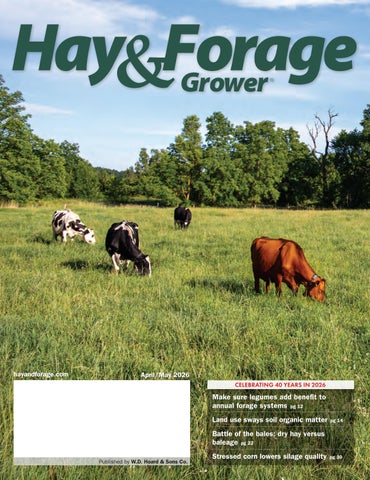
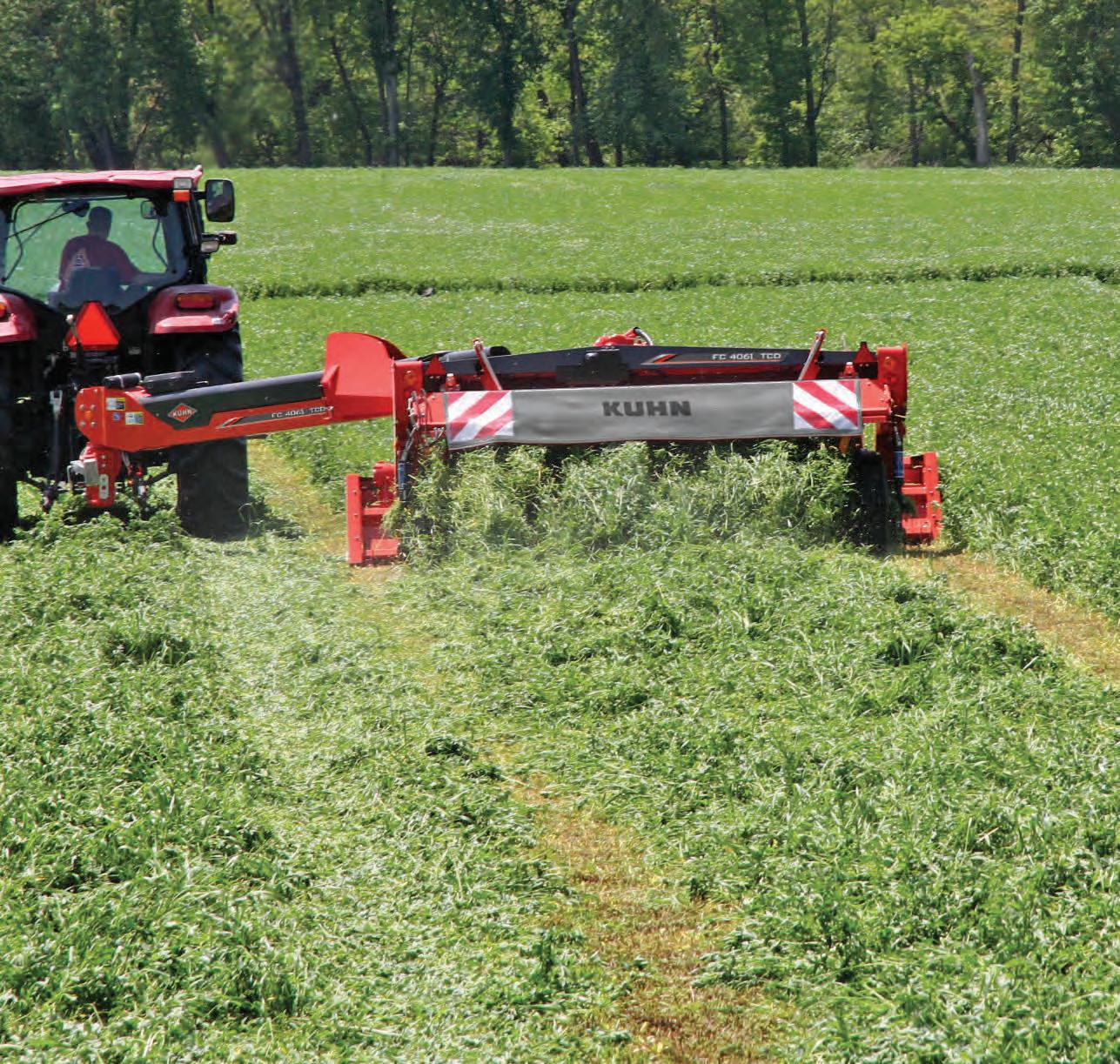
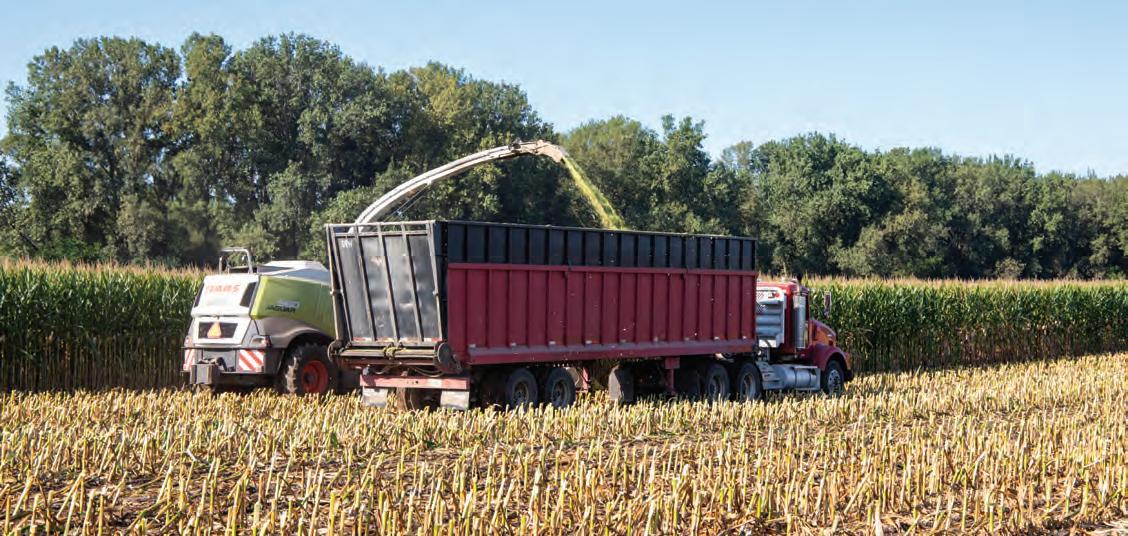
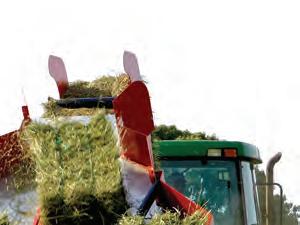
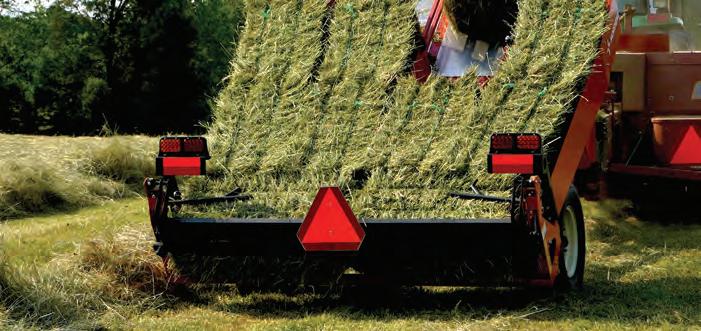
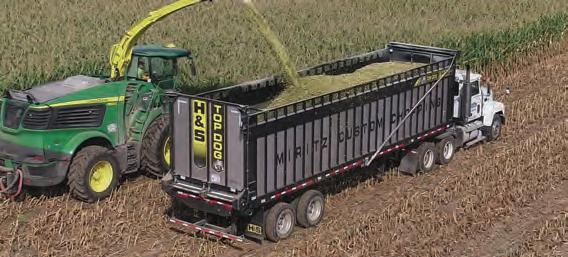
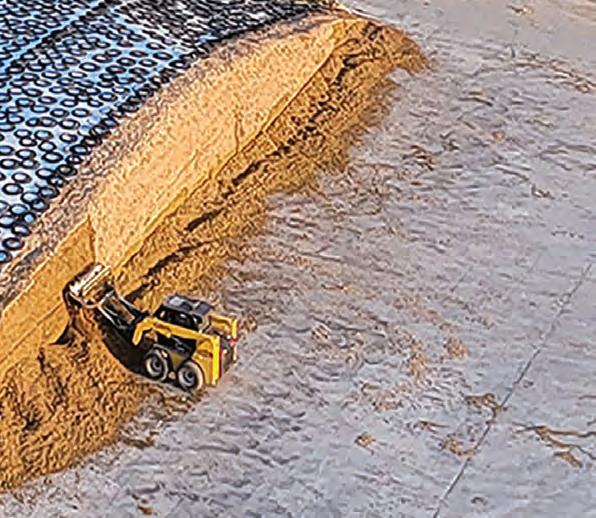
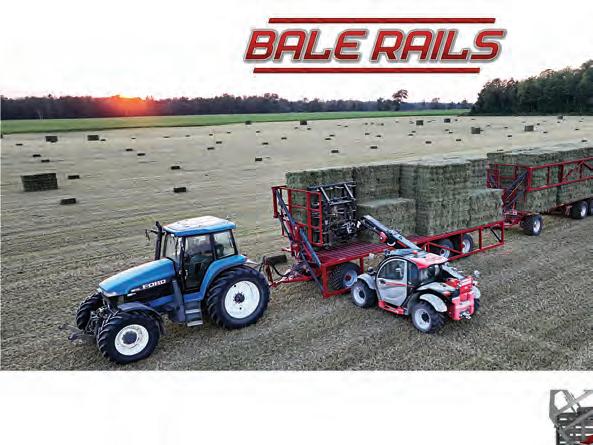
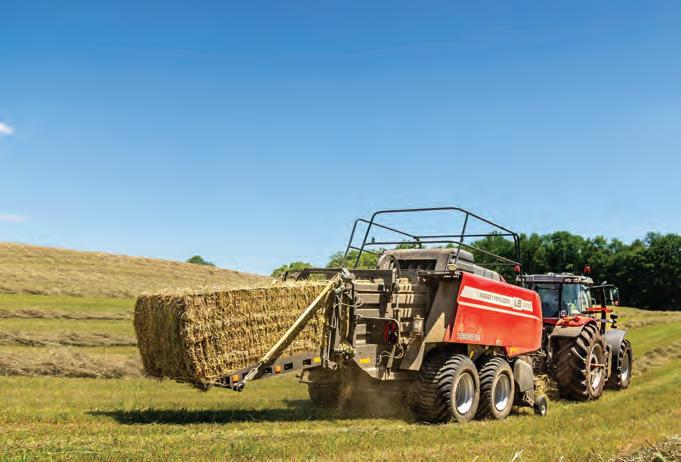
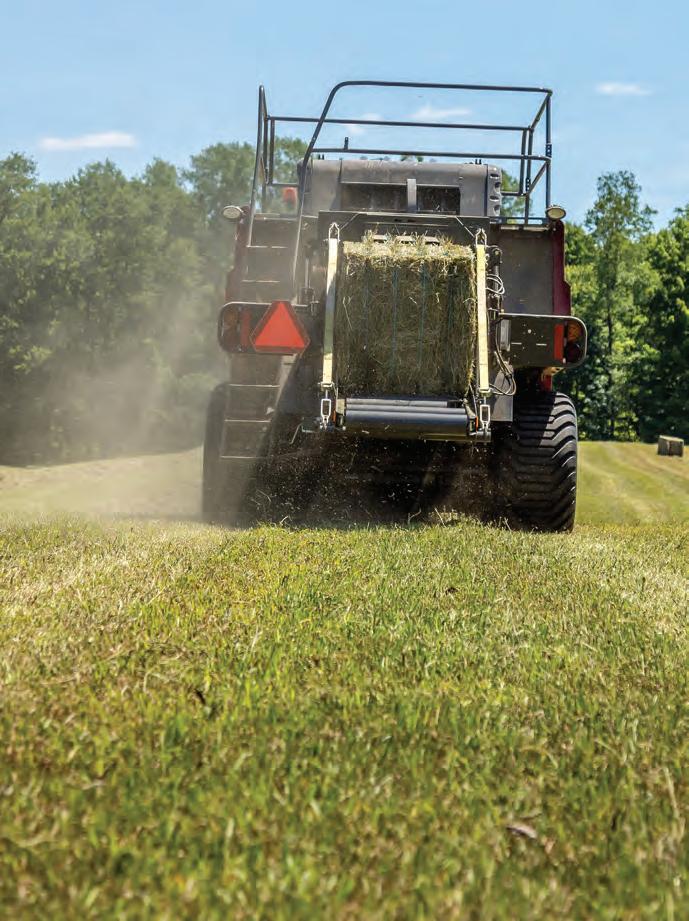
Two brothers began their foray into the custom harvesting business about 10 years ago. These days, they serve customers in three different states offering a multitude of feed-harvesting services.
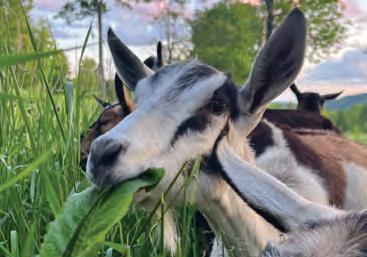
This Vermont commercial goat farm has found
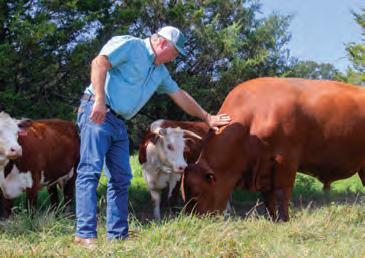
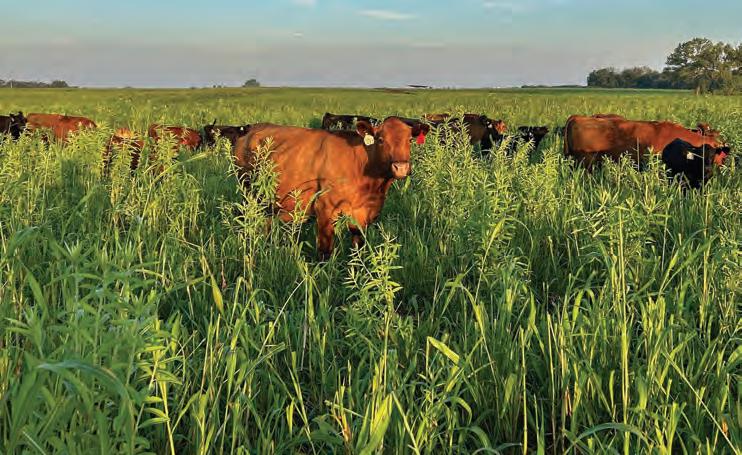
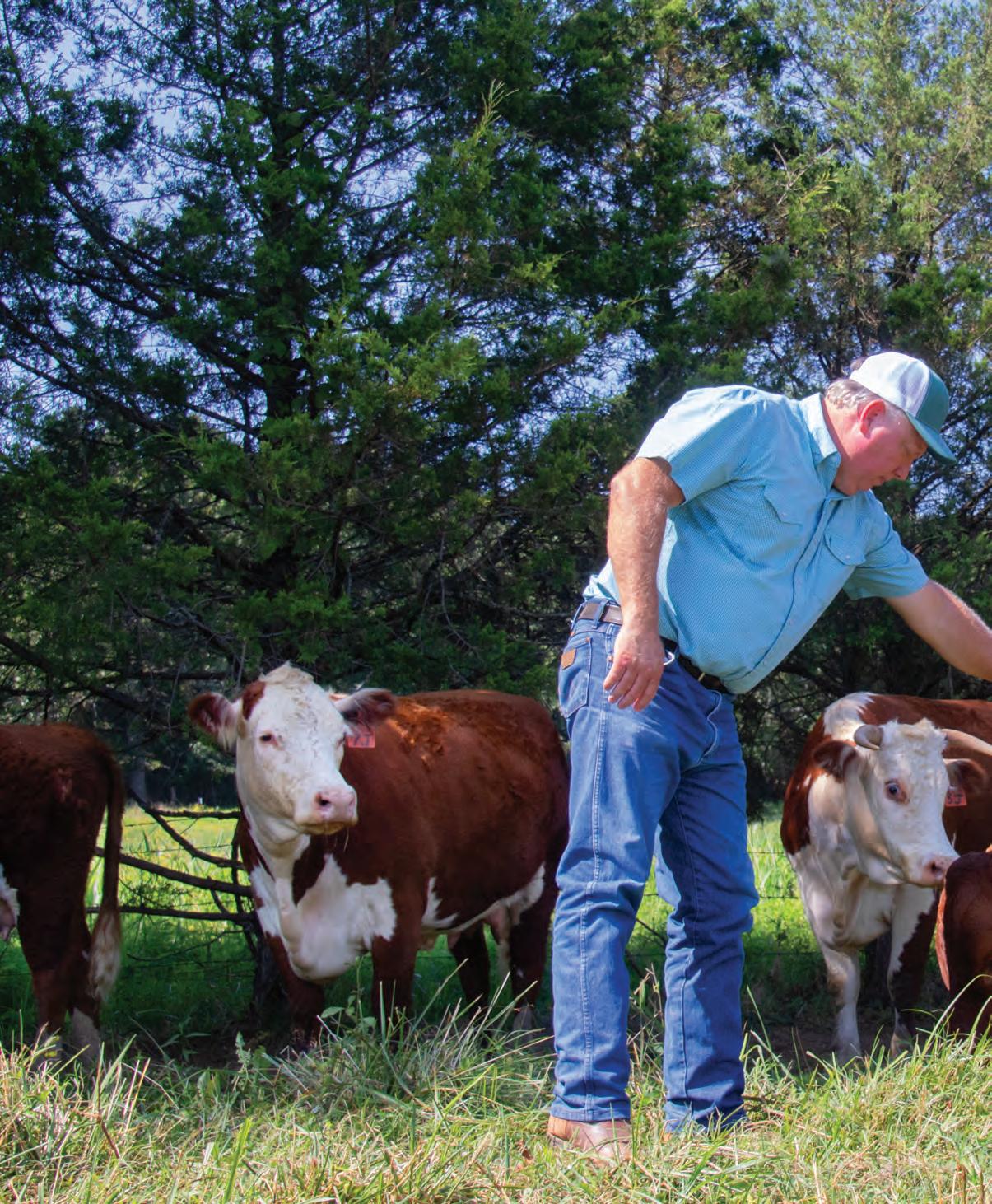
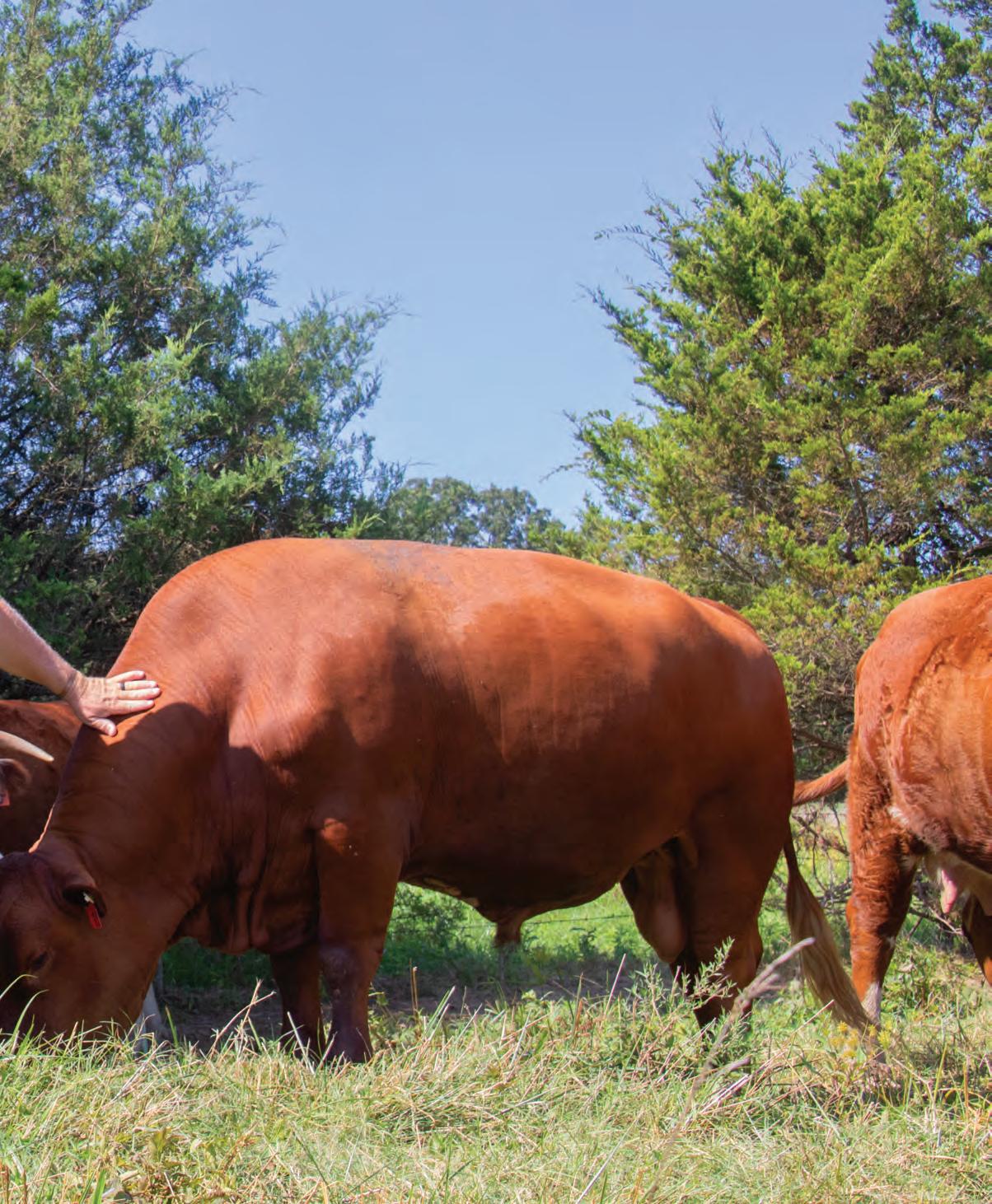
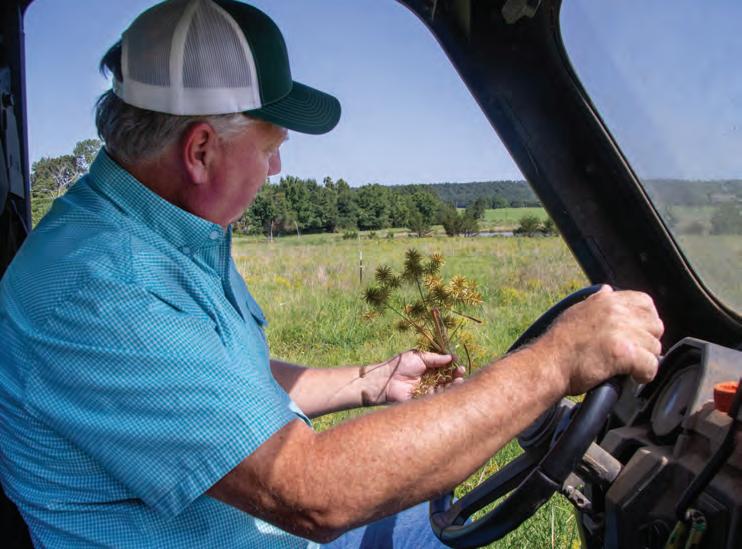
Arkansas grazier Paul Bush has transformed his farm into a naturally raised, direct-to-consumer beef operation.
Published by W.D. Hoard & Sons Co.
SENIOR EDITOR Michael C. Rankin
ART DIRECTOR Todd Garrett
EDITORIAL COORDINATOR Jennifer L. Yurs
DIRECTOR OF MARKETING John R. Mansavage
DIGITAL MARKETING
Sam Rasmussen
Sidney Hebbe
ADVERTISING SALES
Kim E. Zilverberg kzilverberg@hayandforage.com
Jenna Zilverberg jzilverberg@hayandforage.com
ADVERTISING COORDINATOR
Patti J. Kressin pkressin@hayandforage.com
W.D. HOARD & SONS
PRESIDENT Brian V. Knox
EDITORIAL OFFICE
28 Milwaukee Ave., West, Fort Atkinson, WI, 53538
WEBSITE www.hayandforage.com
EMAIL info@hayandforage.com
PHONE 920-563-5551
DEPARTMENTS
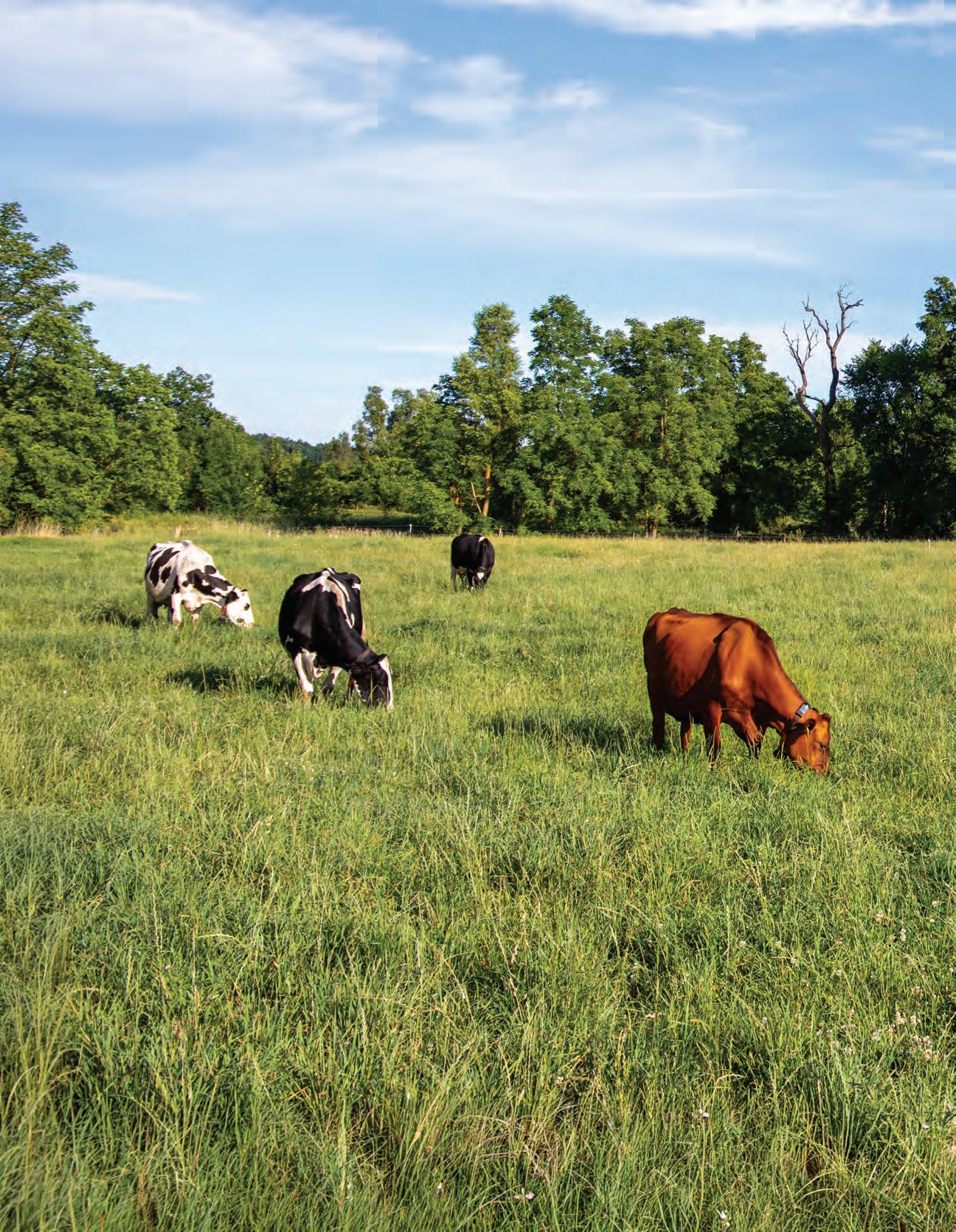
A few of the cows at Annie G’s Dairy graze on a sunny, spring day. Dave and Kat Mageean own and operate the 85-cow grazing operation that features milking robots, a milk processing facility, and a self-serve milk vending machine. The Michigan farm was highlighted in the March 2025 issue of Hay & Forage Grower Photo by Mike Rankin
Mike Rankin Senior Editor
Strait talk
FROM the days of Adam and Eve, there has been a synergistic relationship between plants and humans, even when the forage is funneled through livestock to produce meat and milk.
Plants also provide other human services. Using solar energy, carbon dioxide, and water, plants produce energy-rich sugars and expel oxygen into the atmosphere. That’s convenient for us humans given that any day without oxygen is going to be a bad one.
As with humans, plants must also meet their basic needs. For many grasses, one of those essentials is nitrogen. Purchasing commercial nitrogen fertilizer always results in a drain on the checking account, but some years are worse than others. Unfortunately, 2026 is shaping up to be one of those worse years as farmers get stuck in the crossfire of a Middle East conflict that involves multiple energy-producing countries.
In this same column from February 2022, I wrote: “Last year began with urea nitrogen costing less than 40 cents per unit. With each passing month in 2021, nitrogen costs soared. We blew by 70 cents per unit like a Corvette passing a 1963 Rambler station wagon on blocks. The price now sits at somewhere near $1 per pound of nitrogen, and once again we check in at the fertilizer Heartbreak Hotel.”
It looks like we’ll be getting more hotel rewards points in 2026.
The current rise in nitrogen prices came much faster than in 2021 when a progressive shortage of natural gas occurred. Commodity and hay prices were also much higher than they are now, which helped to soften the blow. The current situation is largely due to the near shutdown of the Strait of Hormuz, which typically has about 30% of the world’s urea and 25% of the global demand for crude oil shipped through its narrow waters. As I currently pen this column, we’re in the throngs of a “fragile” two-week timeout as the teams draw up new plays. Regardless of what happens moving forward, don’t look for urea prices to subside as quickly as they went up. The strait situation is far from stable.
As I write this in mid-April, urea nitrogen is averaging 90 cents per pound nationwide. That’s nearly double the typical cost and up about $260 per ton from the beginning of the year.
Whenever a nitrogen cost explosion occurs, I like to remind forage and livestock produc-
ers that they are at least better positioned to weather the storm than their row-crop counterparts who are currently determining how many acres of corn they can drop. Most in our industry have forage legumes and/or manure in the toolbox to help numb some of the nitrogen cost pain.
For long-term grazing operations, there’s a third nitrogen bullet — organic matter. Managed grazing systems build soil organic matter with enhanced soil biological activity at a brisker rate than most farmed acres. The release of nitrogen from these systems sometimes negates the need for purchased fertilizer, even for pastures that are mostly grass.
When fertilizer prices double, so does the value of manure. Thankfully, the manure revolution of the past 25 years has enhanced its status on most farms from peasant to royalty. When manure is handled as a valued resource, farmers can often just visit their fertilizer dealer for the free coffee. One of the keys to getting the most out of manure is to incorporate or inject it into the soil. Often, 30% or more of the nitrogen contained in manure is lost to the atmosphere when it’s left on the surface.
For grazing operations, manure needs to be intentionally spread across pastures by the livestock. Fortunately, grazing systems implemented to maximize grass utilization are also optimal for manure distribution.
Legumes are the not-so-secret nitrogen weapon for any forage-livestock system. In the early 1900s, when the German chemists Haber and Bosch perfected the process for converting atmospheric nitrogen to ammonia, they had nothing on legumes, which accomplish the same end without needing natural gas for heat. Alfalfa, for example, can often provide all the nitrogen needed for a subsequent corn crop and a significant amount for the next one. A 30% to 40% stand of legumes in a pasture will result in only looking at a fertilizer spreader as it passes by your driveway.
Manure, legumes, and soil organic matter have the capability of shrinking a fertilizer invoice, but that only happens with purposeful decision-making. Let’s hope the situation at the strait gets straightened out soon. Happy foraging. •
by Mike Rankin, Senior Editor
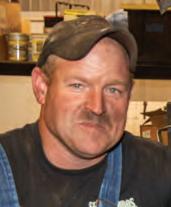
THE large forage chopper roared to life. Viewing through the cab window, I watched as the machine gobbled standing corn like a Great Dane eating its first meal after two days of fasting. Sitting next to me and manning the controls with precision was Charlie Schultz, the co-owner of Schultz Brothers Forage Service LLC.
On this fall day, we were traversing cornfields on a dairy farm so close to Chicago that you could almost smell the deep-dish pizza. Schultz and his younger brother Dave started their custom harvesting business a little over 10 years ago. Even though they grew up working on both grandparents’ farms, there was metaphorically no room at the inn when they graduated high school. Dave eventually began hauling livestock across the
country while Charlie, after graduating from Iowa State University with a degree in agricultural education,
managed river terminals for a large grain exporter.
“The time eventually came when we both wanted to get back into something closer to farming and be near family,” Schultz explained over the clamor of the chopper. “In the fall of 2014 while still working those other jobs, we started doing some custom chopping with a used harvester we had purchased. That went well, and we saw a need and had the opportunity
All photos: Mike Rankin
to move full time into custom farming in 2015.”
That fortuitous opportunity arose when an existing custom business desired to downsize, and the owner wanted to focus more on his own farm. The Schultzes bought some of the equipment, including two more choppers, and began harvesting for the former business’s customer base. Initially, the brothers worked out of a small shop at Dave’s house. As that facility started to bulge at the seams, they began planning for the construction of a new facility. Once again, Lady Luck came calling when an existing set of buildings came up for sale that fit their needs. Although the brothers both lived at two different locations in far northern Illinois, their new base of operation for the business was moved to a location about a mile and a half north of the state line and just south of Juda, Wis.
A full-service provider
Schultz Brothers Forage Service stays equipped to provide any services related to feed. The business
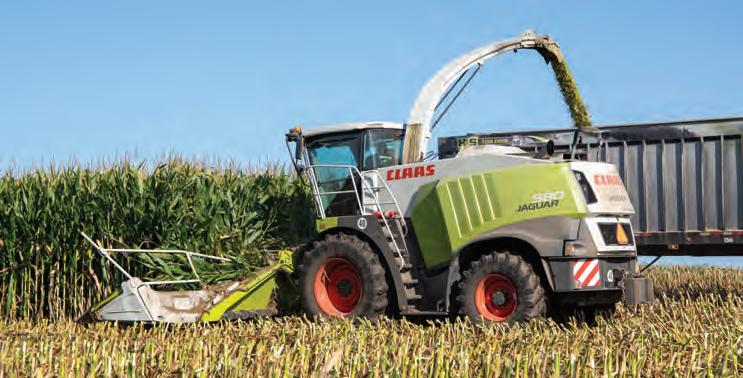
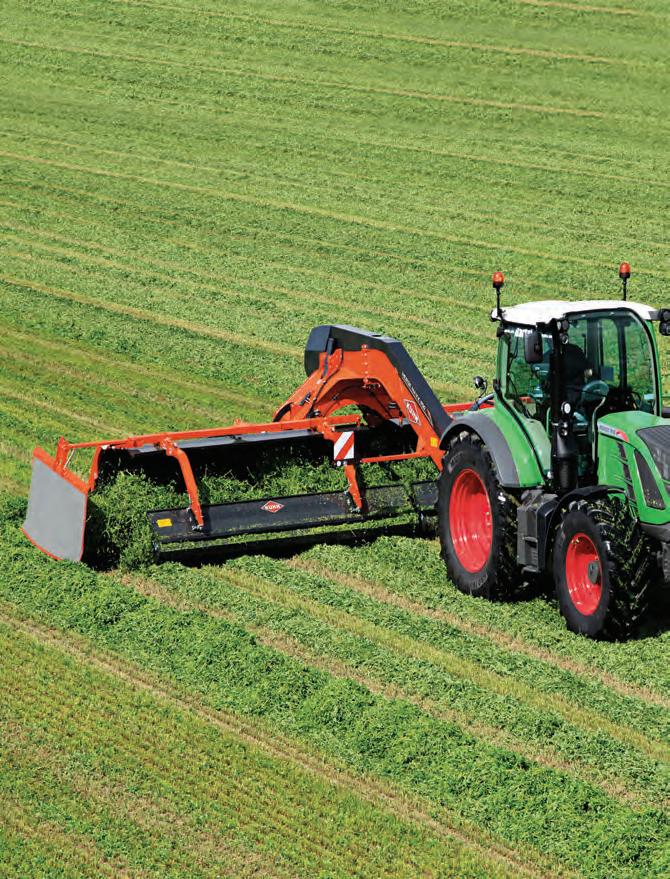
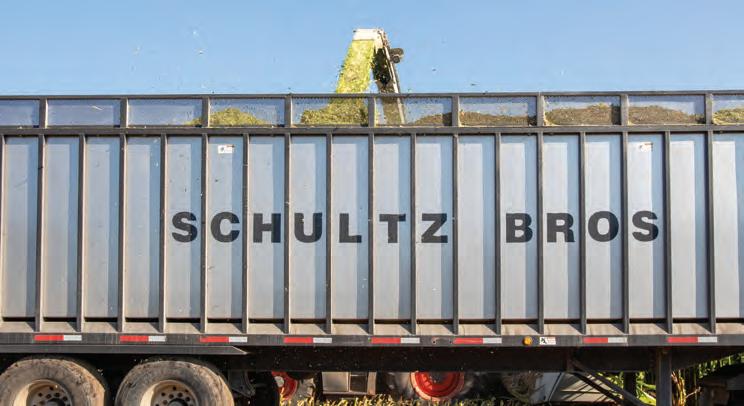
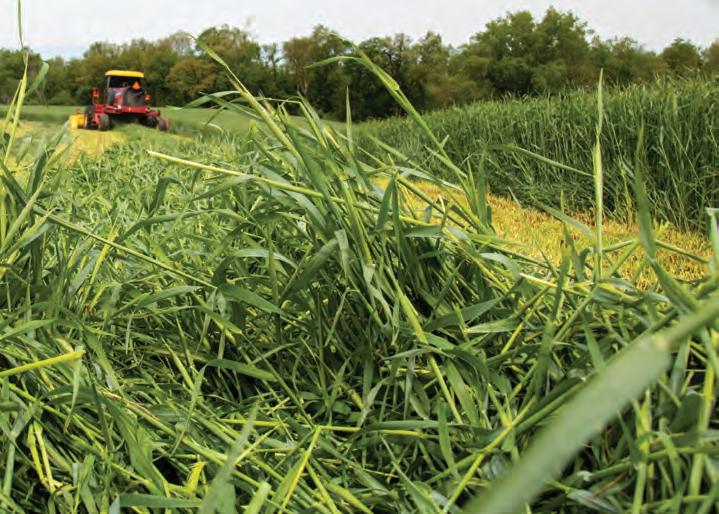
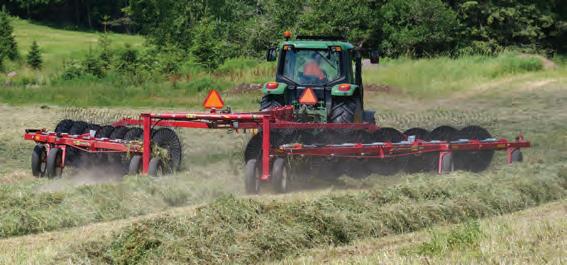
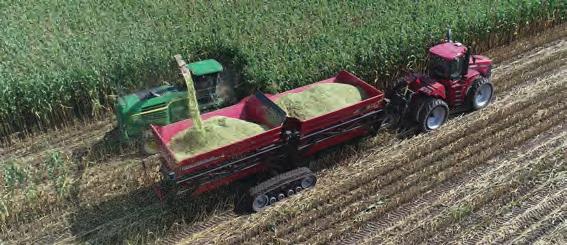
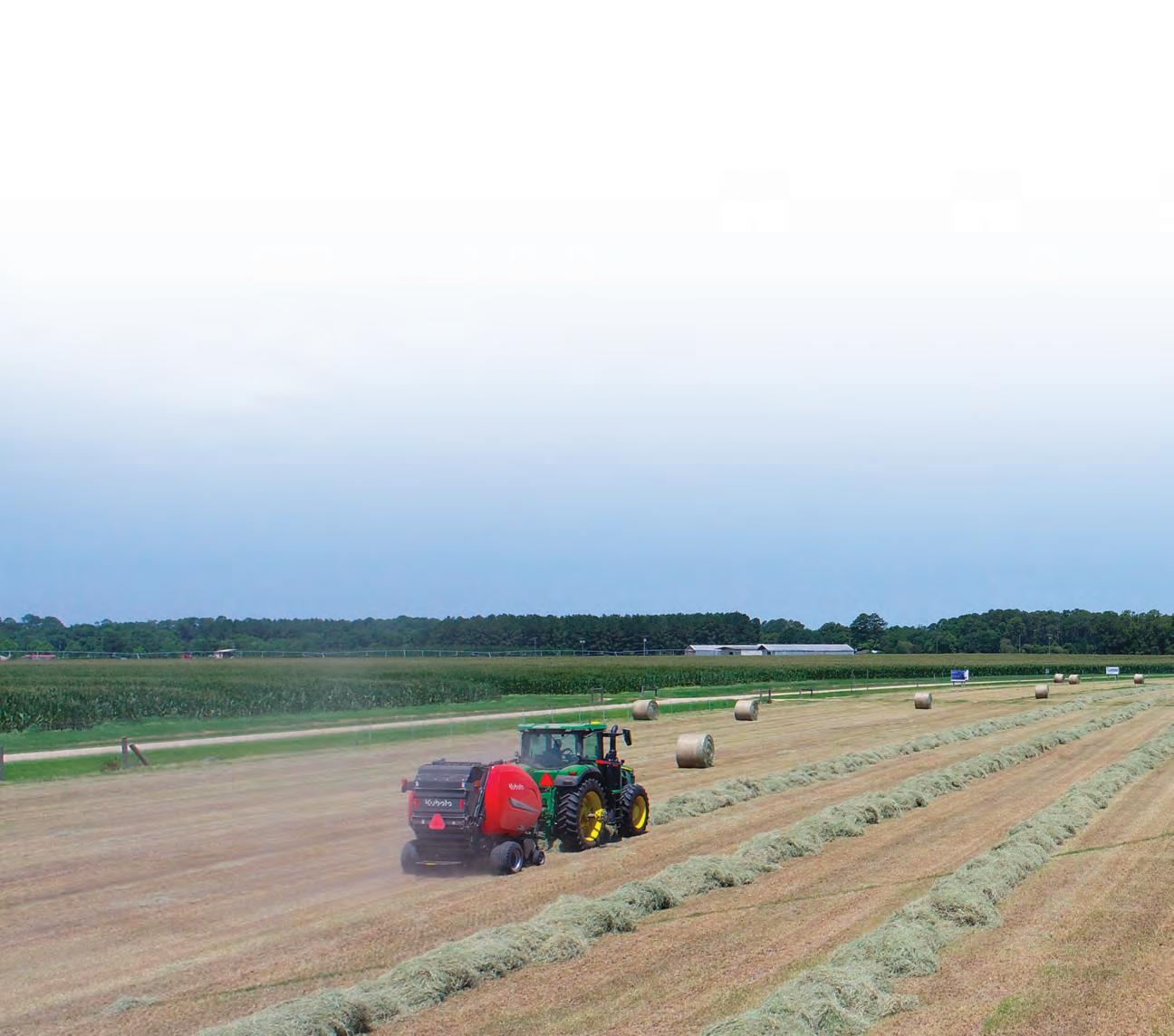
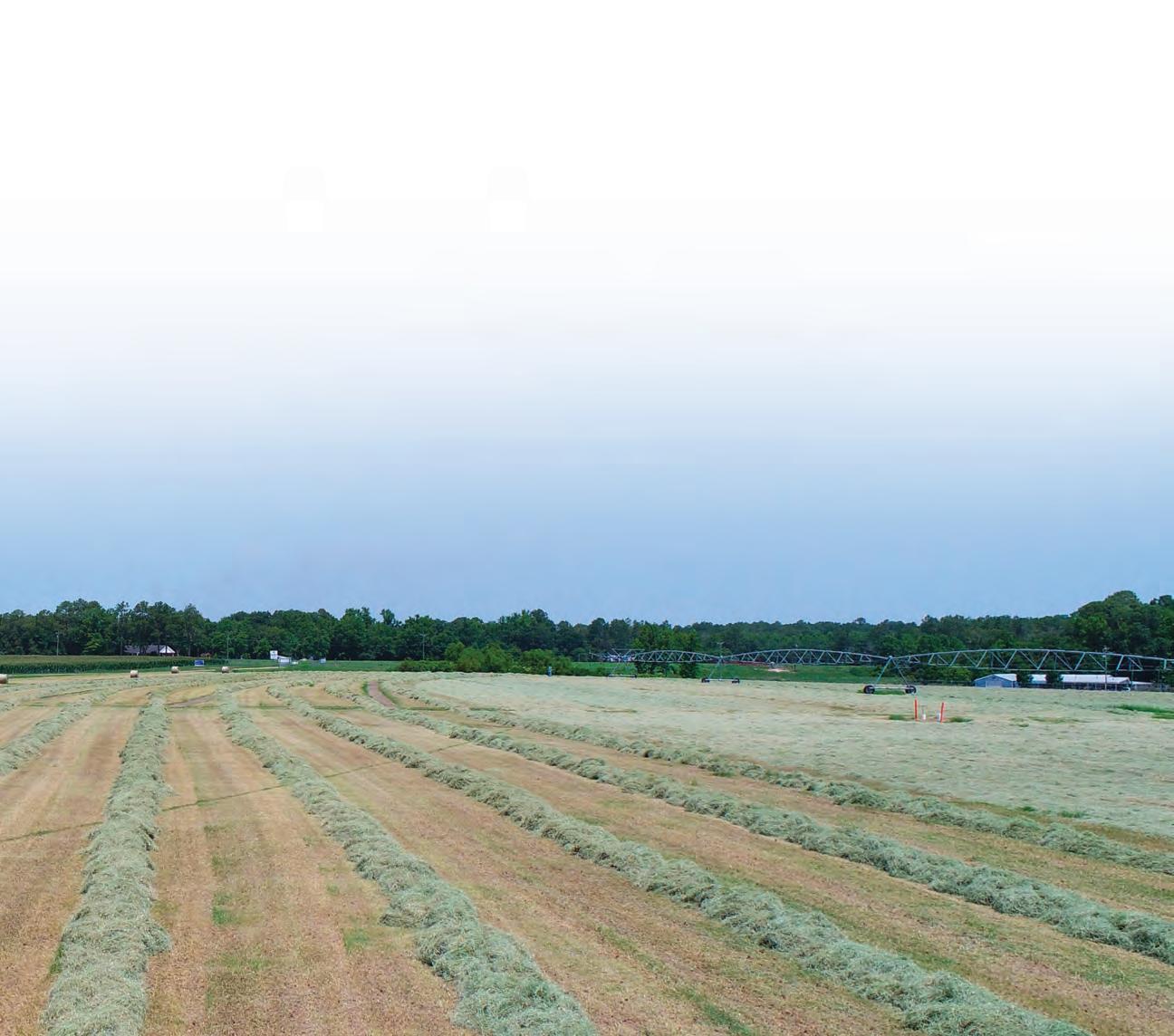
Schultz Brothers Forage Service LLC offers a variety of feed-harvesting operations, including corn and hay chopping, silage packing, trucking, hay mowing, swath merging, and baling.
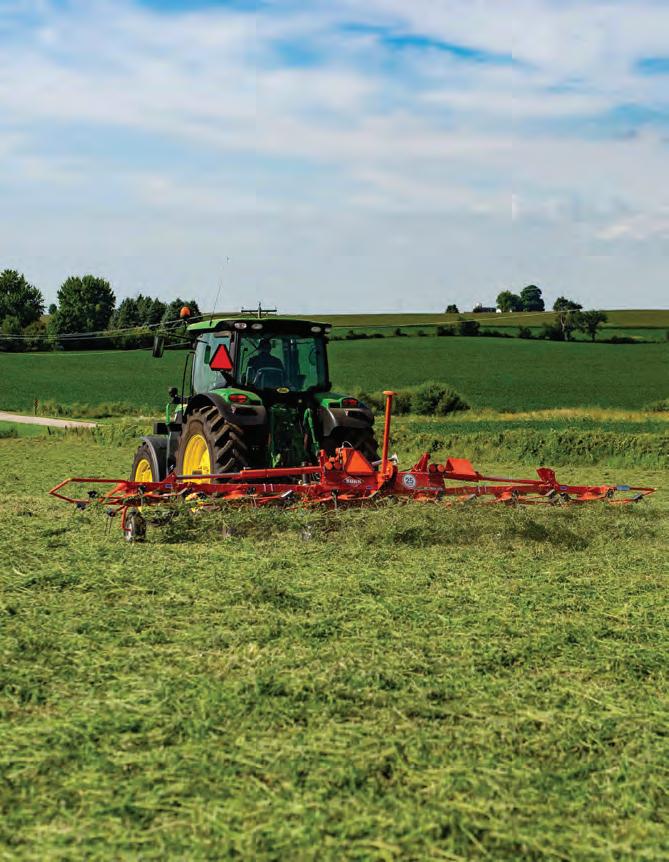
currently chops corn and hay crops and does mowing, tedding, merging, large-square baling, and round baling. “When we started out, baling was a much bigger part of our business, but now it’s a lot more chopping,” Schultz noted. “In addition to forage harvesting, we also do some custom tillage, planting, and combining, but those activities are done on a smaller scale than the feed services.”
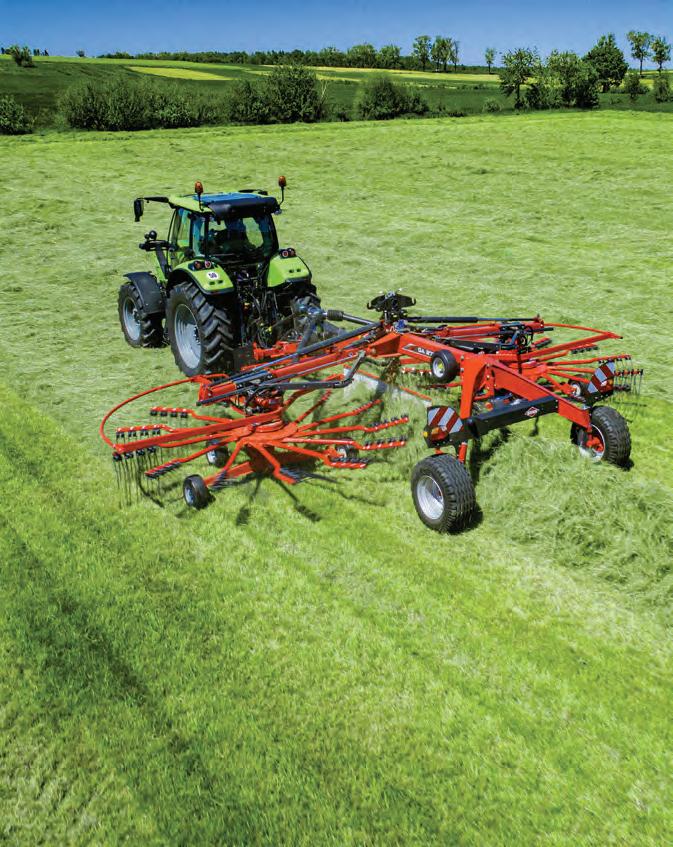
The Schultz’s run three Pottinger triple mowers (one with conditioners), three mergers (two Oxbo and a Kuhn), and have one to two balers of each type, depending on the current demand and the ages of machines. The business also provides packing tractors that are used as needed. Although they don’t own a silage bagger, the brothers work closely with someone who has a custom bagging service.
Three Claas 980 choppers and one 970 model, which were all purchased used, comprise the forage harvester inventory. One typically serves as a backup machine. “We used to buy choppers in the 1,000- to 2,000-hour range and found that they were a
good value,” Schultz recounted. “Now, it seems like the industry is changing and those types of machines are more difficult to find. People are running their choppers longer before trading them in. We’d like to update a few of our current machines, but we’re still discussing how we want to deal with that. Our current fleet of choppers are within an age range where parts are interchangeable, so if we buy something new, that’s going to result in the need for an expanded parts inventory.”
The custom business also uses about 20 of their own trucks, which include both straight trucks and semitractor-trailers. “We’re kind of unique for this region in that we travel a long way between jobs, so we’ve had to stick with road-ready tires on the trucks and trailers rather than go to the agricultural flotation tires,” Schultz said. “We work about a 150-mile radius from our shop, which includes farms in Illinois, Wisconsin, and Iowa. It would be nice if farms in a certain area were ready at the same time,
continued on following page >>>
Along with a team of dedicated employees, Charlie and Dave Schultz harvest a combined 20,000 acres of hay and corn silage each year.
but that historically hasn’t happened. Other than the silage trucks, we often need to haul all our equipment to get it on location,” he added.
It’s a business
Each year, the brothers chop or bale about 10,000 acres of hay and do a similar amount of corn silage and earlage, with the latter mostly harvested for beef operations. During the busy corn silage harvest, they will run three different crews on separate farms. “We don’t harvest for many operations with storage systems that can handle feed from more than one chopper,” Schultz explained. “Our customer base remains mostly stable, and over time, we have been able to focus on clients that best fit our system and resources. We eventually figured out that it was okay to say ‘no’ to wishful clients.”
The two brothers can’t cover the number of acres and miles required to serve customers by themselves. To make that happen, they’ve built a deep and dependable workforce. “We’ve been fortunate to have a good core team of employees,” Schultz said emphatically. “We typically have two to four fulltime employees along with a group of about 50 part-time or seasonal workers. The part-time employees come from a variety of backgrounds, including other local farmers, people with other seasonal jobs, retired farmers, and those that just find silage harvest to be a lot of fun.” A few family members also help
the brothers along with individuals who annually take vacation from their primary jobs to help harvest for a week. Schultz noted that they don’t get as many retirees as they used to.
Unlike most corporations, the CEO and CFO of a custom harvesting business are the same individuals who turn the wrenches and unplug the
The best you can do is stay honest with clients and keep them informed of your situation.
choppers. For Schultz Brothers Forage Services LLC, Charlie takes care of payroll, client billing, and the financials. “When I worked at the grain terminal, I got a lot of experience with employee and payroll management,” he said. “That was a big benefit when my brother and I started this business.”
Dave oversees and organizes the maintenance and repair scheduling for the equipment. All the big decisions are made jointly.
The custom business charges their clients based on the running machine hour, but a few field operations such as merging are charged by the acre. Schultz said he’s sharpened his business acumen over the past 10 years. Although he had been used to employee
management in his previous job, he underestimated the amount of time needed for collecting payments, especially at the beginning. “Over time, some of that has sorted itself out, and now we have a customer base that is good about making payments or at least letting us know what their intentions for making payments are.”
Finding adequate and affordable insurance coverage has long been a concern for custom harvester businesses because most provider companies don’t have agents who are familiar with the industry or know its needs. “I think we’ve had better luck than some finding reasonable insurance coverage, but it’s still a challenge,” Schultz asserted. “It’s important to find an agent who has some understanding of what we do.”
Relationships breed success
Trust and honesty are virtues that stand at the forefront of any successful custom forage harvesting business. When the equipment is working and the weather is good, everyone’s happy. It’s when those things don’t occur that the strength of a relationship is tested. If the weather turns unfavorable for harvesting, Schultz said the best you can do is just stay honest with clients and keep everyone informed of your situation. “Sometimes it just comes down to first call, first served.”
Nutritionists also play a key role in helping the brothers prioritize farms since some of them are servicing sev-
eral of their clients. “We pride ourselves on doing the best quality job that we can and value our relationships with a farm’s nutritionist,” the elder brother said. “If you can please the nutritionist, they are more likely to recommend you to other good farms. Nutritionists have come to appreciate the consistent results we provide to their clients. That level of confidence has taken time to develop, but trust is critical in this business. At a minimum, I check the silage pile every morning and night and then make sure someone is monitoring the silage during the day,” he added.
The Schultzes also value their time spent building relationships with others in the custom harvesting industry. They have been active members of the Wisconsin Custom Operators organization since their business began. Charlie currently serves on its board of directors. “It’s been a valuable networking opportunity,” he said of the organization’s annual symposium that they attend every year in Wisconsin Dells.
Schultz acknowledged that being in the custom harvesting business isn’t always easy on the families at home, but theirs have always been supportive. He and his wife, Jen, have two children while Dave and his wife, Amy, are the parents of three children.
When asked about what the future might look like for the business, Schultz said they are willing to grow but not actively looking to do so. “I still like the variety of work associated with custom harvesting. I appreciate working with our clients and employees and strengthening the relationships we’ve developed
Charlie (left) and Dave (right) Schultz prefer the model of having numerous clients rather than just a few large-acreage customers. “If one of our clients retires or no longer needs our services, we know we will still be in business,” Charlie explained.
with other custom harvesters.”
Schultz noted that they’ve had some clients retire, so that’s allowed them to add a few new ones. He prefers the diverse clientele that they serve. “Some custom operators basically service only a few large dairies, but we’re not comfortable putting all of our eggs in one basket, so to speak,” he explained. “If one of our clients retires or someone calls and says they don’t need us anymore, I know we’ll still be in business. I like the relationships we’ve built with some of our smaller clients, and they really appreciate we’re willing to come in and harvest for them. It makes you feel satisfied.”
On this day of chopping, as Schultz hoped to finish the suburban Chicago land farm and be home before midnight, his brother was back in the Wisconsin shop prepping machinery for his next day’s job in Waukon, Iowa. The goal: Keep the choppers fed. There’s no time for fasting. •
The Schultz brothers pride themselves on doing a quality job at every farm they service. A part of that goal entails developing a good relationship with the farm’s nutritionist. “If you can please the nutritionist, they are more likely to recommend you to other good farms,” Charlie said.
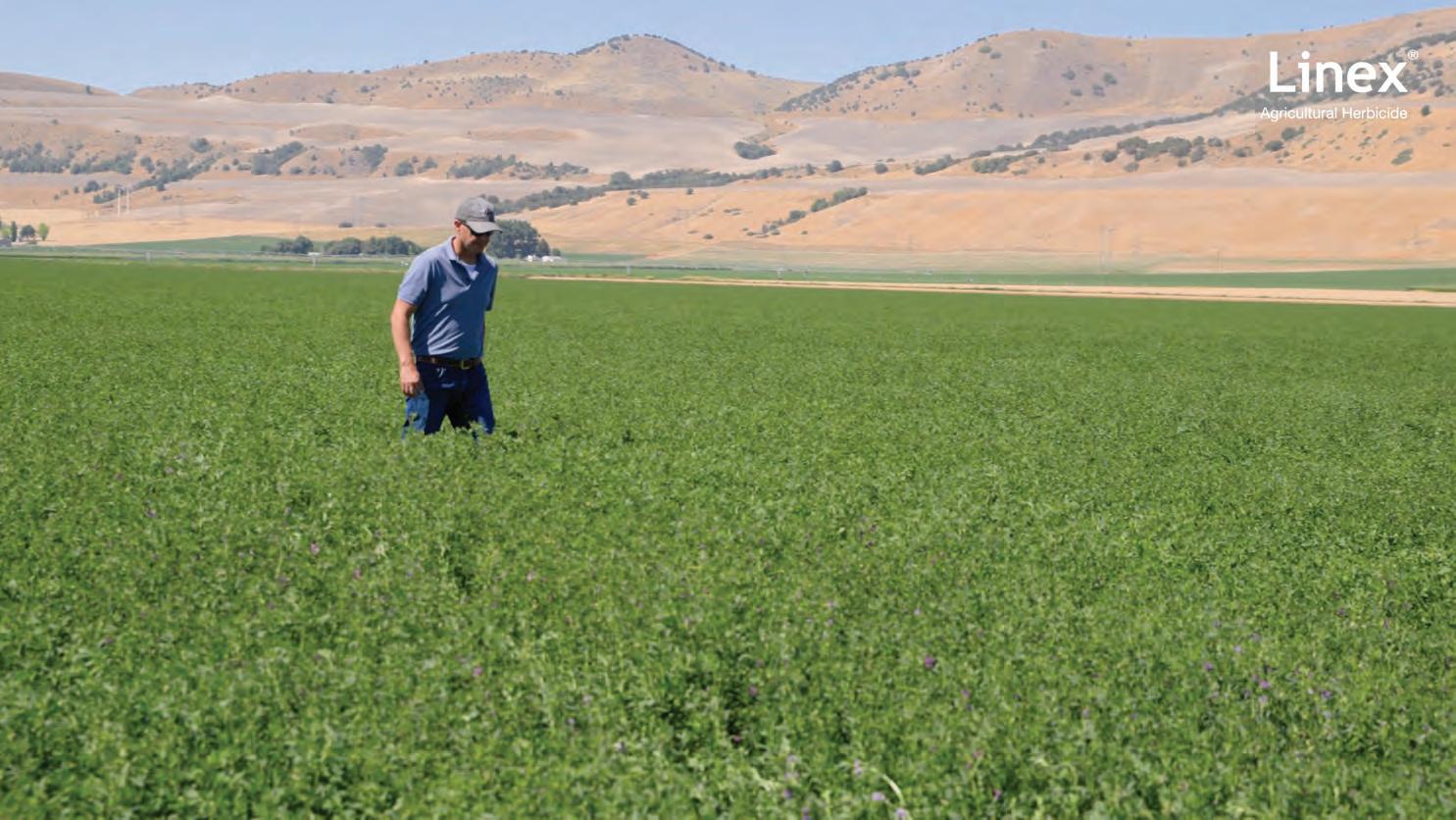
Alfalfa growers see it time and time again: the stand is shaking off the winter frost while early spring weed species and winter annuals are growing fast. Alfalfa may be one of the most valuable forage crops globally, but weed competition can significantly reduce yield, forage quality, and stand longevity.
There is a shrinking list of herbicide tools to aid growers as weed resistance and tightening herbicide programs continue to challenge production. Growers are searching for reliable alternatives that offer control without compromising crop safety.
With these challenges intensifying, the arrival of Linex®4L - a new herbicide for alfalfa, brings welcome relief. Long-trusted on crops such as potatoes, sorghum, soybeans, and wheat, Linex now gives alfalfa growers a reliable new tool to incorporate into their weed management strategies.
Why use Linex?
A new set of benefits for alfalfa growers:
1.A new mode of action for better resistance management
Linex (linuron) is a Group 5 herbicide that binds at the C2 group site, differentiating it from common herbicides like metribuzin and hexazinone (C1 group binding site). This differentiation establishes a more powerful resistance-management program.
2.Effective early-season weed control
Linex provides effective control over a range of hard-to-control weeds including many annual broadleaf weeds and grasses.
another tool
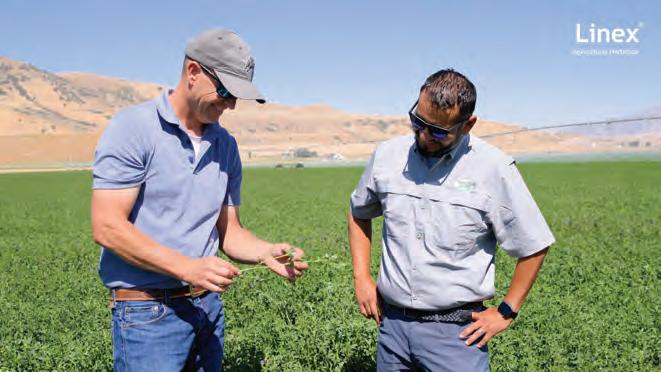
Dr. Earl Creech, owner of Creech Farms.
3. Reliable residual activity with flexibility
3.Reliable residual activity with flexibility
Growers gain residual soil activity with a shorter rotation interval, leading to more flexible field planning and operational efficiency.
Growers gain residual soil activity with a shorter rotation interval, leading to more flexible field planning and operational efficiency.
4.Fit for modern systems
4.Fit for modern systems
As a suitable tank-mix partner for enhanced efficacy treatments and compatible with foliar application equipment, Linex fits seamlessly into existing weed-management programs.
As a suitable tank-mix partner for enhanced efficacy treatments and compatible with foliar application equipment, Linex fits seamlessly into existing weed-management programs.
How Linex works:
How Linex works:
Linex belongs to the substituted urea herbicide class (Group 5, C2 binding site) and acts as a photosystem II inhibitor, disrupting electron transport in plant photosynthesis. No matter if weeds absorb it through roots or foliage, energy production will be blocked, ultimately shutting down weed growth. Due to its dual-uptake system, Linex can provide consistent control during dormancy and in between cuttings.
Linex belongs to the substituted urea herbicide class (Group 5, C2 binding site) and acts as a photosystem II inhibitor, disrupting electron transport in plant photosynthesis. No matter if weeds absorb it through roots or foliage, energy production will be blocked, ultimately shutting down weed growth. Due to its dual-uptake system, Linex can provide consistent control during dormancy and in between cuttings.
Where Linex Fits in the Field
Where Linex Fits in the Field
Dormancy Application
Dormancy Application
When applied at dormancy, Linex can control important weeds such as:
When applied at dormancy, Linex can control important weeds such as:
• Shepherd’s purse
•Shepherd’s purse
• Mustards
•Mustards
•Other annual winter broadleaf weeds
In-between Cuttings
When applied in-season between cuttings, Linex is a great tool to manage:
• Lambsquarters
•Pigweed
• Prickly lettuce
• Foxtail
•Barnyardgrass
Linex controls weeds through contact and residual effects. Applications might result in temporary yellowing (chlorosis), but the alfalfa crop will recover in a few weeks without reduced yield.
Part of a Complete Herbicide Portfolio
Part of a Complete Herbicide Portfolio
Linex joins a long-standing alfalfa herbicide portfolio offered by Tessenderlo Kerley Crop Protection. Velpar® formulations have been an established grower standard, in particular, Velpar AlfaMax and Velpar AlfaMax Gold formulations, which offer the effective combination of hexazinone (Group 5) and diuron (Group 7) in two different ratios, enhancing herbicidal activity. This additional herbicide and expanded portfolio offers alfalfa producers more choice, additional rotation options, and greater resistance-management power.
Linex joins a long-standing alfalfa herbicide portfolio offered by Tessenderlo Kerley Crop Protection. Velpar® formulations have been an established grower standard, in particular, Velpar AlfaMax and Velpar AlfaMax Gold formulations, which offer the effective combination of hexazinone (Group 5) and diuron (Group 7) in two different ratios, enhancing herbicidal activity. This additional herbicide and expanded portfolio offers alfalfa producers more choice, additional rotation options, and greater resistance-management power.
Future Outlook
Future Outlook
As the range of available weed-control tools continues to narrow, linuron-based herbicides such as Linex will play an increasingly important role in early and in-season alfalfa weed-management programs. With its unique mode of action, residual activity, and broad spectrum control, Linex offers a promising new option for alfalfa growers seeking to get ahead of weeds before weeds get ahead of their crop.
As the range of available weed-control tools continues to narrow, linuron-based herbicides such as Linex will play an increasingly important role in early and in-season alfalfa weed-management programs. With its unique mode of action, residual activity, and broad spectrum control, Linex offers a promising new option for alfalfa growers seeking to get ahead of weeds before weeds get ahead of their crop.
Scan to hear a farmer’s perspective on Linex.
by Mary Drewnoski
Make sure legumes add benefit to annual forage systems
DDING legumes to annual forage systems is often encouraged to enhance diversity and improve sustainability. While those benefits can be real, they do not always translate into improved forage production or animal performance. In annual forage systems, whether legumes add value or just cost depends on how they are used.
If the goal is simply more tons per acre, legumes are unlikely to help and may even hurt. Across both cool-season and warm-season systems, annual grasses are the primary driver of yield. When legumes are added at higher inclusion rates, they often reduce total forage production.
In oat-pea mixtures, forage yield was similar to oats alone when peas made up 25% to 50% of the mix, but peas in monoculture yielded less than oats. In a warm-season grazing system, adding sunn hemp to sudangrass (50:50 seed mixture) did not improve forage production or grazing capacity.
From a practical standpoint, pushing legume inclusion beyond 50% of the mixture can result in a yield drag. Grasses produce the bulk of the tonnage, and dilution with legumes reduces total output.
Is more protein needed?
Legumes are often included to boost crude protein concentrations, and they can do that. The more important question is whether that additional protein improves animal performance.
In many grazing systems, the answer is “no.” When grasses are kept in a vegetative state, crude protein levels are already sufficient and often exceed animal requirements. As grasses mature, protein declines, and this is where legumes can provide some benefit; however, maturity is largely a management decision. Maintaining vegetative growth through timely grazing can often achieve the same protein outcome at a lower cost.
Legumes tend to have more value for
Legumes are best used in annual forage mixtures when the crop will be allowed to mature before grazing or harvesting. Keep legumes at moderate inclusion rates, generally in the 25% to 50% range.
their crude protein contribution in hay systems, where forage is harvested at a more advanced stage of maturity. In those situations, added legumes can help maintain sufficient protein levels. The benefit is also more likely in higher rainfall environments where rapid growth can dilute forage quality. In drier environments, protein responses to legumes are often limited.
Too slow, too late
Legumes fix nitrogen. This is one of the most common reasons producers consider adding them to a mixture and one of the most misunderstood. In annual forage systems, legumes rarely provide adequate nitrogen — fast enough — to meet the needs of high-producing grasses. When nitrogen fertilizer is applied to support grass growth, it reduces the amount of nitrogen fixed by the legume. In other words, the more you fertilize for the grass, the less the legume contributes. This creates a trade-off. Reducing nitrogen fertilizer can promote fixation, but it also limits grass growth
and reduces yield. Applying nitrogen improves yield but suppresses legume activity and minimizes its contribution. In addition, most of the nitrogen fixed by legumes is not immediately available to the grass. It is only released later through decomposition or when recycled in urine and manure by grazing animals, limiting its value within a single growing season.
Annual grasses have a high nitrogen demand early in the growing season. In contrast, nitrogen fixation from legumes ramps up more slowly and is often out of sync with peak grass demand. In mixed stands, legumes also tend to make up a relatively small portion of the total biomass. Grasses are highly competitive and suppress legume growth.
Even when legumes are present, nitrogen fertilizer remains the primary driver of yield. Research consistently shows that forage production in summer annual systems improves with applied nitrogen — even in mixtures containing legumes. When nitrogen fertilizer is reduced, yield declines, and
Mary Drewnoski
the presence of a legume typically does not offset that loss.
Where’s the fit?
If the goal is to fully capture the nitrogen-fixing ability of legumes, that is most effectively done in a legume monoculture system. Without competition from grasses and without added nitrogen fertilizer, legumes are forced to fix nitrogen and can contribute meaningful amounts to the system. However, this approach comes with trade-offs. Although legume monocultures can be high quality, they typically produce less total forage than grassbased systems. In addition, they can present management challenges.
Grazing pure legume stands raise the risk of bloat and may require more careful management, while harvesting can be more difficult due to uneven dry down of leaves and stems for hay and challenges with fermentation when ensiling. As a result, while legume monocultures can be effective for building nitrogen, they are often less practical when the primary goal is to maximize forage production or simplify management.
Legumes can still play a role in annual forage systems, but they need to be used strategically. Adding a legume into the mix makes the most sense when forage will be harvested at more mature stages, such as with hay or stockpiled forage; when protein is limiting animal performance, such as with growing cattle grazing warm-season grasses; or when there is a desire to add diversity for soil health or other ecosystem services. Even in these situations, moderate inclusion rates, typically 25% to 50% of the seed mix, tend to provide the best balance between maintaining yield and improving quality.
Legumes are not a silver bullet in annual forage systems. They often do not enhance yield, they rarely replace nitrogen fertilizer when added in a mix, and their value in improving forage quality depends heavily on management and environment. Legumes can add value in the right situations, but they should be included with a clear purpose. •
GREENWAY’S GRAZING CORN
GREENWAY’S GRAZING CORN
28 Ton Silage Pasco, WA
Graze Yearlings1500 on a 130 Acre Pivot for 30 Days
3.5 lbs. of Gain Per Day (69% TDN) 5-7 wt. Cattle*
* Jesse Norcutt, Currant, NV
3.5 lbs. of Gain Per Day (69% TDN) 5-7 wt. Cattle*
Greenway Seeds Grazing Corn (GX80) is the No. 1 grazing corn in the nation because it is 5-6 days earlier than the competition. This allows the rancher to plant 5-6 days later and still reach peak sugar content (pre tassel) before the frost shuts you down!
OVERSEED ALFALFA with
Grazing Corn
Plant with a grain drill following second cutting on an older field alfalfa. Ready to graze in early September.
OVERSEED ALFALFA with Grazing Corn
Greenway Seeds Grazing Corn (GX80) is the No. 1 grazing corn in the nation because it is 5-6 days earlier than the competition. This allows the rancher to plant 5-6 days later and still reach peak sugar content (pre tassel) before the frost shuts you down!
“We planted GX80 following second cut alfalfa. If we had to do that over we would follow third cut. We grazed 400 head for two weeks on 20 acres” Cory Veterre - Greenriver, Utah
OVERSEED ALFALFA
HERE’S WHAT RANCHERS ARE SAYING
Casey Calvin - Monte Vista, CO
with Grazing Corn
HERE’S WHAT RANCHERS ARE SAYING
We grazed lambs on GX80. They ate it all the way to the ground. Unbelievable! (See website for photos)
Plant with a grain drill following second cutting on an older field alfalfa. Ready to graze in early September.
Crawford Cattle - Winnemucca, NV
Casey Calvin - Monte Vista, CO
Planted mid July, it was way over our heads. We were surprised as to how long we were able to graze. We also baled some of it. We’re buying again.
Plant with a grain drill following second cutting on an older field alfalfa. Ready to graze in early September. “We planted GX80 following second cut alfalfa. If we had to do that over we would follow third cut. We grazed 400 head for two weeks on 20 acres,” Cory Veterre - Greenriver, Utah
We grazed lambs on GX80. They ate it all the way to the ground. Unbelievable! (See website for photos)
Cory Miller - Grass Valley Farm, Missoula, MT
Crawford Cattle - Winnemucca, NV
We planted our GX80 under wheel lines and watered heavily. This was key as the corn grew 7ft tall!
HERE’S WHAT RANCHERS ARE SAYING
“We planted GX80 following second cut alfalfa. If we had to do that over we would follow third cut. We grazed 400 head for two weeks on 20 acres” Cory Veterre - Greenriver, Utah
Casey Calvin - Monte Vista, CO
Tom Kerns for Mike Becker Ranch - Baker, OR
We were able to carry 14 A.U.M.’s per acre with our late season grazing of GX80.
We grazed lambs on GX80. They ate it all the way to the ground. Unbelievable! (See website for photos)
Planted mid-July. It was way over our heads. We were surprised as to how long we were able to graze. We also baled some of it. We’re buying again.
Jesse Norcutt - Currant, NV
Crawford Cattle - Winnemucca, NV
Cory Miller - Grass Valley Farm, Missoula, MT
We cut and baled the GX80 at pre-tussel. It was fed to 5-7 wt. cattle, and they gained 31/2 lbs/day
Planted mid July, it was way over our heads. We were surprised as to how long we were able to graze. We also baled some of it. We’re buying again.
We planted our GX80 under wheel lines and watered heavily. This was key as the corn grew 7 ft. tall!
Cory Miller - Grass Valley Farm, Missoula, MT
Tom Kerns for Mike Becker Ranch - Baker, OR
Alan Greenway
We planted our GX80 under wheel lines and watered heavily. This was key as the corn grew 7ft tall!
We were able to carry 14 A.U.M.’s per acre with our late season grazing of GX80.
“Modern Forages Sold Nationwide And Canada”
Tom Kerns for Mike Becker Ranch - Baker, OR
Jesse Norcutt - Currant, NV
Seedsman Over 50 Years Experience
We were able to carry 14 A.U.M.’s per acre with our late season grazing of GX80.
Jesse Norcutt - Currant, NV
We cut and baled the GX80 at pre-tussel. It was fed to 5-7 wt. cattle, and they gained 31/2 lbs/day * Jesse Norcutt, Currant, NV 28 Ton Silage Pasco, WA
We cut and baled the GX80 at pre-tussel. It was fed to 5–7 wt. cattle, and they gained 3 1/2 lbs/day.
Greenway Seeds Caldwell, ID
Alan Greenway 208-250-0159 (cell) 208-454-8342 (message)
Warehouses in Caldwell, ID and Deerfield, WI FREE SWEET CORN SEED WITH ORDERS!
GREENWAY SEEDS www.greenwayseed.com
Mike Rankin
When grasses are kept vegetative, crude protein is often more than sufficient to meet livestock needs.
MARY DREWNOSKI
The author is a beef systems extension specialist with the University of NebraskaLincoln.
by Alan Franzluebbers
Land use sways soil organic matter
SOIL is comprised of minerals, organic matter, water, air, and a variety of organisms. The mineral matter is typically thought of as sand-, silt-, and clay-sized particles that provide physical stability. The mass of organic matter is usually only a small portion of the mineral mass, perhaps 1% to 10%. The mass of organisms is only a small portion of the organic matter. In ideal soils, minerals would occupy about 42% of soil volume, organic matter about 8%, and pores about 50%. Those pores would ideally be filled half with water and half with air.
The relative balance of water and air will fluctuate daily to weekly with precipitation and drying events. The relative balance of minerals and organic matter might fluctuate over decades and centuries. How soil organic matter content and soil organisms change over time with management are key questions being asked by soil scientists around the world.
There are many variations in mineral types and land uses in different locations — among regions within a continent, landforms within a county, and specific parcels on a farm. The Soil Survey Division of USDA’s Natural Resources Conservation Service (NRCS)
has differentiated over 20,000 soil series in the United States. Can it be expected that all soils behave the same? Will specific management lead to the same change in organic matter on all soils?
Are woodlands superior in storing soil organic matter? Finding patterns and attributing the influence of external factors on soil processes are challenges in the art and science of soil investigations.
Mostly carbon
Soil organic matter content is a key feature of almost any soil health determination. The primary constituents of organic matter are carbon, hydrogen, oxygen, and nitrogen. Soil
organic matter is comprised of about 58% carbon, so carbon is the element often measured to indicate changes in organic matter. Soil organic carbon stores energy that is released by the activity of soil microorganisms. It also attracts cations to enhance soil fertility, such as calcium, magnesium, and potassium. Soil organic carbon binds soil particles into water-stable aggregates through the action of microbial and faunal activity. Total soil nitrogen represents a reservoir of organically bound nitrogen that can be made available for plant uptake once it is mineralized by soil microorganisms.
Key differences
Could usable patterns emerge from sampling soil under a diversity of grasslands throughout a state? This was a question I had a few years ago when I embarked on a mission to characterize soil health conditions under forage and grazing lands in North Carolina. The state has three primary physiographic regions: the high-elevation Blue Ridge in the west, the medium-elevation Piedmont in the central part of the state, and the low-elevation Coastal Plain in the east. Slopes of land could be characterized as steep, moderate, and flat in
Average soil properties as affected by land use and physiographic region in North Carolina
Grasslands have been shown to have greater soil nitrogen and soil-test biological activity than woodlands.
these three regions, but this varies on the specific parcel of land.
A total of 338 fields were sampled throughout North Carolina (see QR code). The figure shows that soil organic carbon, total soil nitrogen, soil-test biological activity, and potential nitrogen mineralization were affected by land use, either grassland or woodland. The data also illustrate that physiographic region played a role in the absolute value of these soil properties, which was thought to be most likely due to differences in soil texture. There were no significant interactions between land use and physiographic region, meaning that land use caused a similar change in soil properties in all physiographic regions. In this case, the pattern of land use was consistent.
A key difference in results was that soil organic carbon was lower under grassland than under woodland in all regions, while total soil nitrogen and soil-test biological activity were greater
under grassland in all regions. This may have been a result of differences in plant litter quality between grassland and woodland. Nitrogen fertility of grasslands would, therefore, be considered greater than that of woodlands. Tighter control on nitrogen appears to be occurring in woodlands than grasslands. This may result in potentially greater nitrogen conservation in woodlands, albeit with periodic deficiency that would not be desirable in forage and grazing lands. Similar results have been observed on private farms in Virginia and on research stations across North Carolina.
Most important factor
Each region had variations in soil texture. Knowing how much sand was in soil led to more precise estimates of soil properties as a function of land use. Therefore, it’s actually not the particular region that was most important, but rather the soil texture in a particular field. With sandy soils,
all soil organic and biological properties were lower in concentration. At the surface of this dig into soil organic matter variation under forage and grazing lands of North Carolina, soil texture was found to be the most important factor. Land use was important as well, but perhaps not as anticipated. Future columns will dig deeper into other factors that control soil health under forage and grazing lands. •
The QR code provides a detailed look into the research summarized here.
SINCE 1971 LEGENDARY
ROZOL GROUND SQUIRREL BAIT
Build your legacy with the legendary Rozol® Ground Squirrel Bait. Brought to you by Liphatech Ag, your Most Valuable Partner for effective rodent control.
ALAN FRANZLUEBBERS
The author is a soil scientist with the USDA Agricultural Research Service in Raleigh, N.C., and past president of the American Forage and Grassland Council.
Virtual fence transformed this Vermont goat farm
by Sarah Flack
DOES’ Leap Dairy, located in northern Vermont, has been making cheese with milk from their certified organic goat herd since 1997. They use horses for much of the farm work, herding dogs to move the goat herd around the farm, and in recent years, they have added virtual fence to replace electric net fencing. This combination of modern technology and animal power has helped them create an efficient and innovative management system.
Owners George van Vlaanderen and Kristan Doolan have always used pasture as a significant part of the herd’s feed during the grazing season. The goats get grain when they are in the parlor for twice-a-day milking along with either hay during the nongrazing season or pasture with some hay during the grazing season. The herd gets moved to a fresh paddock twice daily. Since goats are natural browsing animals, pastures include some areas of intentionally managed browse species and forbs. Forbs are flowering plants other than grasses, and in the context of pastures, we usually use the term to refer to the desirable plants other than legumes and grasses.
Just browsing
Ten years ago when I was writing about this farm as part of my book “The Art and Science of Grazing,” the farm had two different types of pastures. Some were typical Vermont pastures with cool-season grasses, legumes, and some forbs such as dandelion and plantain. But they also had intentionally-managed, brushy “browse” pastures, which had small trees, shrubs, and brambles that the goats clearly enjoyed eating and thrived on. Goats are naturally good at browsing, and their mouth and lips are flexible and strong, allowing them to selectively eat leaves of bushes, trees, and other browse plants while avoiding thorns. Because most woody browse species are not well adapted to frequent or severe defoliation, many of the brushy pastures on the farm naturally converted from browse to more typical cool-season grass/legume pastures over time. While this may be the goal
for pastures used for dairy cows, van Vlaanderen and Doolan wanted to maintain browse and forbs in the pastures since the goats thrived when grazing those plants.
Grazing browse and taller growing forbs encourages goats to graze plant parts that are well above ground level, and thus they are less likely to become infected with internal parasites. Some species also contain secondary plant metabolites that can offer help with the management of internal parasites. In previous years, van Vlaanderen and Doolan were able to maintain browse species by using larger paddock sizes to lower the stocking density so that non-
grazing-adapted plants retained more foliage and some plants were only lightly grazed each time. Longer regrowth periods were also used to give adapted browse and forb species time to regrow.
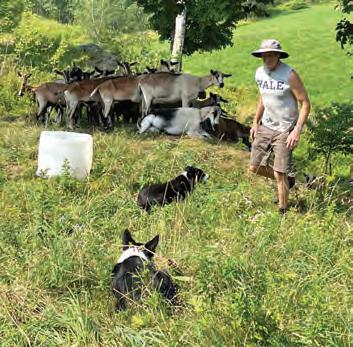
Goats were brought to a new pasture twice a day using well-trained border collies, and they were then fenced into their paddock using portable electric net fence. Moving net fence takes time, and if you’ve ever tried to take down or set up net in an area with brush or brambles, you know it can be challenging and frustrating.
A virtual solution
Van Vlaanderen and Doolan have always been innovative farmers. They research new ideas and consider management changes when it will improve the farm’s financial viability and their quality of life. In 2024, they set up virtual fence for the goat herd to see if they could reduce their labor needs and make it easier to graze the forb and browse areas of the farm. Setting up two or more new paddocks daily with portable electric net fence was replaced with collars on the goats and an app on their cellphones.
Van Vlaanderen and Doolan draw out the next paddock’s boundaries on their phones, use the herding dogs to move the goats to a new area, and once there, the system sends a signal to the collars. The collar beeps when the goats get too close to virtual fence lines. Goats are notoriously good at escaping from fences, so it was impressive that the goats learned the new system in less than a week. Overall, the virtual fence is working better than even a wellcharged electric net fence.
The system they chose was marketed by Nofence, and although it has worked well, there have been challenges due to poor cell service in areas of the farm. This was especially true during the first year of use when they had to set up paddock boundaries the evening before so they had time to load the new information into the collars. During their second season of use (2025), the system had improved to
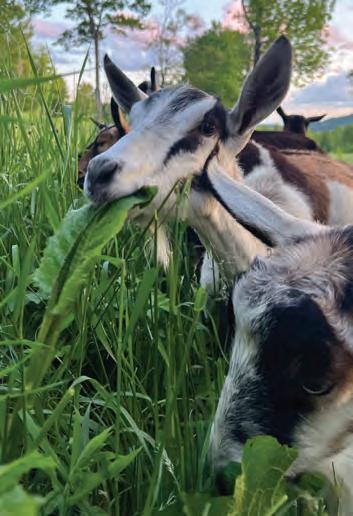
Goats prefer shade, forbs, and browse species. To maintain them, some form of rotational grazing must be used.
where they could load paddock boundaries within 15 minutes.
The flexibility of setting up paddock boundaries with the virtual fence has allowed them to graze in more of the forested or brushy browse pastures. This has been a bonus in hot summer months when cool-season grass/legume pastures are not growing as well, and the goats
prefer shade, forbs, and browse. In addition to being able to graze new areas of the farm, they have also introduced more forb species such as forage chicory and cup plant. These species are so highly palatable to the goats that they will selectively graze them too often and too short, which can damage or kill those plants if access isn’t limited. However, with the virtual fence, those new forb plantings can be carefully protected with easily set up boundaries that prevent overgrazing damage.
All these advantages come with less time spent moving fences, so there is more time to focus on planting new forbs, improving soil health, making cheese, keeping the on-farm store stocked, and enjoying nonfarm activities.
The goats are thriving with this new combination of fence and pasture species. Van Vlaanderen and Doolan reported that since they installed the virtual fencing, milk production rose an average of 13%, which translates into a $5,500 increase in gross income compared to managing goats with net fence.
In addition, they save 230 hours yearly from not having to move net fencing. At a labor rate of $20 per hour, this is an additional cost savings of $4,600.
With this latest labor-saving efficiency, they are able to expand the time they spend on other interests. This includes doing some farm consulting, and van Vlaanderen enjoys mentoring other farmers as they train their herding dogs. •
You can read more about Does’ Leap Farm and find videos of the operation on their website and social media sites:
Website: doesleap.com
Instagram and Facebook: @doesleapfarm
YouTube: youtube.com/@doesleapfarm
Need Photo
SARAH FLACK
The author is a writer, consultant, and speaker who specializes in grass-based livestock farming systems.
George Vlaanderen has found success using virtual fence.
With over seven decades of farming experience, W. Beverly Fletcher remains actively involved in producing quality hay in Virginia. Over the years, his operation has included grain, string beans, potatoes, cattle and for the past 30 years, hay.
One of the first to purchase an accumulator from Kuhns Manufacturing, Beverly later upgraded to a newer Norden model that he still uses today with zero issues.
W. BEVERLY FLETCHER, VIRGINIA
Make maintenance a priority
IT’S that time of year when we head to the fields. Hopefully, the maintenance has been done that will have your equipment ready to go. There are many resources available that discuss what maintenance needs to be done, but there are few that outline how to manage the maintenance, ensure it is done on time, and how to maintain good records of the maintenance as it is completed.
Everyone is busy these days, while trying to do more with less each year; it’s how we stay afloat. With all the demands on our time, it gets harder to maintain equipment, especially for farmers who maintain their own. There are only so many hours in a day, and maintenance isn’t always the first priority.
There are some simple solutions available that can help you with maintenance management. Apps can now be installed on your phone that will remind you of a maintenance need, track when it gets done, and give you a future task list to work on. There’s also the opportunity, with the advent of artificial intelligence (AI), to be able to create your own apps to work with, but that’s a conversation for another time.
Choices abound
All major manufacturers have their native apps for tracking maintenance, service, and much more. Many farmers struggle with these apps due to having multiple brands of equipment in their fleet, and most solutions come with a price. If these solutions suit you, take advantage and use them. However, if you have multiple brands of equipment and maybe don’t have all the infrastructure in your operation to track maintenance, consider some of the low-cost resources that can make this easier. Let’s look at some examples. Farm Service Manager is an app that can track your maintenance, repairs, and make it easier to relay that information when you sell or trade the machine. It’s based in Australia, but services farmers around the world for a few dollars per user per month. Another example is TractorPal. This is a simple resource, also for a few dollars per month, that can keep track of everything in a simple format. If you
currently just write things down on a notepad as you do them, this is probably a good app to start with, and it leaves plenty of room to grow.
If you want something tailored to you and your operation, consider using your favorite AI tool to compare solutions based on your needs. Tell the AI model about your operation, what you want, what you don’t want, and have it compare all the available solutions. If you haven’t used an AI tool like this before, I’d recommend starting at Grok.com, as it is about the simplest way to try it out, and it seems to understand this industry better than some other models.
When you’re adding apps or systems to manage your maintenance, always keep in mind that they should free up time rather than consume more time. Be aware of anything that costs you too much money or time to manage. Don’t be afraid to pivot.
Make the time
No matter which app you use, it’s still difficult to manage your time and be able to complete routine equipment maintenance. Maintenance is not worthy of compromise. An hour spent on maintenance may save days during the season. If you work with forages, it may save your crop, as most producers have a 24- to 72-hour window to complete their harvest before changing moisture reduces its value.
It’s always hard to commit time to maintenance, especially for farmer-operators, but we all know how important it is. The easiest way to set aside time for maintenance is by linking it to some-
thing solid, such as days of the month or weather events in the offseason when you are unable to do other work.
In addition to maintenance, inspect your equipment regularly. This simple task is lacking on many operations and involves much more than just a check of the dipstick, pulling the trigger on an electric grease gun, or putting more fuel in the tank. Inspecting a machine and generating preventative maintenance tasks can pay dividends later. Also, keeping a running list of maintenance tasks that need completing can provide the nudge needed on the predetermined maintenance days to get started on shortening that list. You can also work on smaller tasks from the list when you find yourself with a few minutes to spare in between other work. Without a list, it can seem overwhelming to get started and makes it easy to fall behind.
Making maintenance a priority means better crops in storage, more time with your family, or doing things that make you happy. Well-maintained equipment also saves stress and can contribute to stronger mental health while putting more money in your pocket at trade-in. Managing maintenance properly is what makes it all sustainable and involves much more than just topping off fluids and hitting the field. •
RANDY CLARK
The author is a mechanical engineer and the owner of RCI Engineering and Ag-Bag in Mayville, Wis.
Mike Rankin
Burdened by acidic soils
by Mike Rankin, Senior Editor
THERE are a lot of farmers who probably wish their ancestors had kept the Conestoga wagon moving before dropping anchor on a plot of land that would challenge generations to come on the family farm. There are also many reasons why this is so.
Challenging crop-growing soils come in many flavors, including rocks, clay, steep slopes, saline or sodic conditions, sand, inherent low fertility, and acidity. Each of these soil conditions limit the production of crops — some to the point where they can’t be grown at all, or at least not without significant additional expense.
Perhaps there is no better poster child to cite as an example than trying to grow alfalfa on acid soils. Either you invest heavily in lime, accept a significant yield hit, or find another crop to pay the bills.
The acidity of soils across the U.S. varies. Some of the largest pockets of acid soils are found in the Northeastern and Southeastern states, although acid soils exist to some degree in nearly every state.
Deborah Samac, a USDA-ARS scientist based at the University of Minnesota, and Ali Missaoui, a forage plant breeder with the University of Georgia, recently reviewed the progress being made to develop alfalfa varieties with tolerance to acid soils in a recent issue of the Midwest Forage Association’s Forage Focus magazine.
If your family’s Conestoga stopped on an acid soil, it’s likely the parent materials that formed those soils were naturally low in basic chemical ions such as calcium, magnesium, potassium, and sodium. It could also be that those ions have leached from the soil because of rainfall or irrigation. The authors also explain that some soils have become acid over the years because of frequently used ammonium fertilizers.
Where soil pH is acidic, aluminum and manganese become soluble and are taken up by plant roots. This results in poor root proliferation and inhibits nitrogen fixation. With root growth compromised, nutrient and water uptake is reduced, which makes plants more vulnerable to drought stress.
Finding aluminum tolerance
Although liming soils will raise soil pH, it can be cost prohibitive. For this reason, alfalfa is not considered a viable crop alternative in many areas. However, if alfalfa varieties could be developed that have aluminum tolerance, this could drastically impact the number of acres where alfalfa is grown as a rotation crop.
Samac and Missaoui explain that research work is ongoing to develop or identify alfalfa germplasms with tolerance to acid soils. Scientists have shown that some naturally aluminum-tolerant crops secrete organic acids around the root zone, which binds the aluminum.
A few studies have shown that overexpressing organic acids in an alfalfa plant can significantly enhance aluminum tolerance. However, to achieve this result requires the transfer of genes, which complicates the process and cost of making such varieties commercially available.
A more conventional approach to developing alfalfa with acid soil tolerance is also underway. Recently, scientists at the University of Georgia tested 1,200 plants from areas around the world with low pH soils. They were evaluated for four years on a low-pH, high-aluminum soil, and the best 200 were selected for further testing in four different states (Georgia, South Carolina, Alabama, and Minnesota). These will be evaluated for yield, plant and root architecture, winterhardiness, and fall dormancy over two production years.
The top performers from this group will be used to identify DNA markers associated with acid soil tolerance. Ultimately, resources will be developed to allow alfalfa breeders to incorporate low pH and aluminum tolerance into already adapted varieties.
Let’s hope this research yields positive outcomes so that alfalfa can be an alternative crop without routine cost-prohibitive lime applications. For now, both lime and gypsum can be used to amend soils. Gypsum, which is calcium sulfate, won’t raise the soil pH, but the high volume of calcium will displace the aluminum on subsoil particles and allow it to be leached below the rooting depths when enough moisture is available.
Alfalfa’s carbon advantage
Hay & Forage Grower features results of farmer-funded research projects through the Alfalfa Checkoff, officially named the U.S. Alfalfa Farmer Initiative, and administered by National Alfalfa & Forage Alliance (NAFA).
LITTLE information exists about greenhouse gas (GHG) emissions from irrigated alfalfa production, even though these systems represent nearly half of U.S. alfalfa acreage. Cameron Pittelkow, associate professor in the Department of Plant Sciences at the University of California–Davis, set out to better understand the climate footprint of alfalfa production and how management practices influence emissions.
As a perennial legume crop, alfalfa has characteristics that offer climate advantages compared with many annual crops. Its deep root system contributes to soil carbon storage, and its ability to fix atmospheric nitrogen can reduce fertilizer needs for crops following alfalfa in rotation.
“Alfalfa likely provides unique climate benefits that are not currently valued in the marketplace,” Pittelkow noted. Understanding those benefits could become increasingly important as agriculture explores ecosystem service markets and carbon accounting.
The study examined three major alfalfa production regions in Califor -
nia: the Intermountain region in the north, the Central Valley, and the Low Desert in the south. These areas represent unique production systems. Intermountain fields typically produce three to four harvests annually, while Central Valley and desert production systems may generate eight to 12 cuttings per year.
Researchers used a life cycle analysis to estimate greenhouse gas emissions associated with typical alfalfa management practices in each region. The analysis included emissions from fuel used in field operations, energy required for irrigation, fertilizer inputs, and soil nitrous oxide emissions.
The study also accounted for potential system-level benefits. These included soil carbon storage and reduced nitrogen fertilizer requirements for crops planted after alfalfa in rotation.
Differences emerged
Estimated emissions varied widely among regions, ranging from 919 to 2,114 pounds of carbon dioxide equivalents per acre per year.
The primary sources of emissions also differed by location. The Intermountain region had the lowest greenhouse gas emissions per unit of alfalfa produced, even though yields were lower than in
other regions. Researchers attributed this to reduced irrigation energy requirements and fewer field passes during the growing season.
In contrast, the Central Valley and Low Desert systems produced higher yields but required more energy inputs. As a result, emissions intensity in those regions was more than 50% higher than the Intermountain region.
Despite regional differences, the study identified several opportunities to reduce the greenhouse gas footprint of alfalfa production. The greatest mitigation potential came from soil carbon storage and reduced fertilizer needs for crops grown after alfalfa. When these benefits were included in the analysis, the estimated offset ranged from 593 to 1,030 pounds of carbon dioxide equivalents per acre per year — roughly 50% to 65% of annual emissions.
“These system-level benefits are important to consider,” Pittelkow said. “It has long been known that alfalfa can contribute to soil carbon gains and reduce fertilizer requirements in crop rotations, reducing the overall carbon footprint.”
Consider rotation benefits
The findings highlight how production practices influence both produc -
Figure 2. GHG emissions per unit of yield.
Figure 1. GHG emissions in three California production regions.
tivity and environmental performance in alfalfa systems. Irrigation methods, harvest frequency, fertilizer use, and field operations all affect the crop’s emissions footprint.
The research also emphasizes the importance of evaluating alfalfa within a broader cropping system. Because alfalfa can build soil carbon and supply nitrogen to subsequent crops, its overall climate impact may be more favorable when viewed within a full rotation
SUPPORT THE ALFALFA CHECKOFF!
Buy your seed from these participating marketers:
PROJECT RESULTS
• Greenhouse gas emissions varied across three California production regions.
• Irrigation energy use, harvest fuel consumption, and fertilizer inputs were the largest drivers of GHG emissions.
• Soil carbon storage and reduced nitrogen fertilizer use in crop rotations could offset a large portion of annual emissions.
Alforex Seeds by DLF
America’s Alfalfa CROPLAN
Forage First by DLF
Innvictis Seed Solutions
rather than as a single crop.
“Developing reliable models of soil carbon dynamics and greenhouse gas emissions across different alfalfa production systems will require additional long-term data and regional research,” Pittelkow said.
A full copy of the report can be found at the National Alfalfa & Forage Alliance’s website. Visit alfalfa.org for more information on this and other Alfalfa Checkoff research projects. •
Latham Hi-Tech Seeds
NEXGROW
W-L Alfalfas
Zinma Seeds
DON’T SEE YOUR FAVORITE BRAND ON THE LIST?
Contact NAFA for information on becoming a participating brand.
The alfalfa checkoff benefits you and the entire industry. Scan the QR code to learn more.
BATTLE OF THE BALES: dry hay versus baleage
by Lisa Baxter, William Fleming, and Jennifer Tucker
BALED silage, or baleage, has gained popularity across the southeastern United States, especially in seasons with frequent rainfall events. Baleage is stored forage that is baled between 40% and 60% moisture, wrapped in plastic to create an oxygen-free environment, and allowed to ferment before feeding. It can be an efficient method for storing excess forage, but there are advantages and disadvantages compared to traditional dry hay production. Hence, the battle of the bales.
Recognizing the trade-offs of both practices, the following is a summary of what producers must consider before implementing baleage production on their farm.
Round one: inputs
Dry hay only requires standard forage harvesting equipment. These tools will vary by region but should generally include a mower, tedder, rake, and baler. Ideally, a mower with a conditioner will be used to speed the drying process. Flail, impeller, or tine type conditioners work best for fine-stemmed grasses like bermudagrass or ryegrass. Mowers with roller or crimper-type conditioners are preferred for thick-stemmed grasses like sorghums or millet and legumes like alfalfa. The benefit of using a mower conditioner and a tedder is synergistic, meaning that the reduction of drying time achieved when operating both implements exceeds that of each individual implement. This is especially
important in the humid Eastern states. Baleage production, on the other hand, requires equipment beyond what is considered standard for a forage operation. There are several bale wrappers available. An individual bale wrapper allows for single bales to be wrapped. Typically, a well-trained operator can only wrap approximately 20 bales per hour, but individually wrapped bales allow for easier feeding.
An in-line wrapper allows for an entire row of bales to be wrapped with plastic. Operators can in-line wrap at least 40 bales per hour, but once the tube of baleage is opened, it must be fed at a rate of one bale per day. An integrated baler-wrapper simultaneously bales and wraps the bales in plastic. This is the most expensive option; however, it requires less labor than the other two. Since the bales are wrapped immediately, baleage must be moved using a bale squeeze to prevent puncturing the plastic.
Regardless of the wrapper chosen, the baler should be built to handle the additional weight of the baleage bale. You will often see these marketed as “silage balers.” These balers have modifications such as scrapers on the belts and rollers to prevent buildup of material, and they have heavy-duty bearings to help handle the greater bale weight. Some balers may have a chopping mechanism that can boost bale density and reduce particle size for ease in mixing rations. These balers also require tractors with more horsepower to operate and move the heavier bales. For reference, baleage bales typically weigh about 40% more than a comparably sized dry hay bale because of the extra moisture.
Availability of skilled labor is a growing concern on many forage operations. One person can harvest hay on their own if needed, whereas two or more people are generally required for successful baleage production.
Round one winner: Dry hay requires fewer equipment and labor inputs.
Round two: harvest flexibility
Baleage allows for more harvest flexibility compared to dry hay. Depending on weather conditions, baleage can often be completed within 24 hours, whereas dry hay may require 72 hours or longer to reach the target moisture level. Factors impacting this dry down
or wilting period include air and soil temperature, wind speed and direction, relative humidity, and sunlight. The warmer, windier, drier, and sunnier it is, the faster the drying process. But periods of frequent rains or cooler temperatures would certainly shift the advantage to baleage.
Tedding is considered essential by many producers to speed the hay drying process. Tedding forage may cause significant leaf loss if the implement is not properly adjusted or if it is used on forage that is below 50% moisture or without
dew. Furthermore, hay is raked at a much lower moisture level than baleage, potentially jeopardizing leaf retention.
Baleage does not typically require tedding, and raking generally occurs at 10% to 15% above the target baling moisture level. Therefore, baleage can be raked at a much higher moisture level than dry hay. Raking and baling at a higher moisture level improves leaf retention, protecting more of the nutritive value in the forage, if managed correctly.
Round two winner: Baleage provides more harvest flexibility for the producer than is offered with dry-hay
systems and may retain more forage nutritive value.
Round three: loss and risk
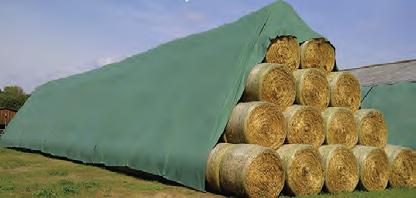
Dry hay is more prone to harvest and storage losses when it is stored outside. Hay can lose more than 25% of its nutrients if stored improperly. Ideally, all hay should be stored under cover, such as in a barn. Although infrastructure is expensive, hay barns are a good investment on your farm. Otherwise, storage losses will continue to accumulate, amplifying the need for supplemental nutrition for livestock. These expenses can accrue over time to the point that you are paying for a hay barn you never built.
If hay must be stored outside, place round bales in rows with the flat sides pushed tightly against each other. Leave at least 4 to 5 feet between the rows to allow air flow between bales and for vegetation control. Store bales on a well-drained site and elevate them off the soil surface to further minimize storage losses.
Baleage can reduce storage losses when wrapped and maintained correctly. However, there is a potential risk of molds and/or botulism developing in the baleage if it is not harvested and handled appropriately.
White mold is most common in baleage and can develop on the surface of bales, usually on the flat ends and around small pinhole damage to the plastic. These molds are typically harmless, and the animal will eat around them, but use caution if you see red, blue, or green molds. While mold color is not a definitive way to identify toxic organisms, the presence of colorful molds indicate poor fermentation or that oxygen has penetrated the bale. These bales should
not be fed to livestock, and you may need to test for mycotoxins depending on the number of impacted bales. Consult your county extension agent for more information on mycotoxin testing.
Good harvest management can inhibit the growth of Clostridium botulinum bacteria and minimize the risk of botulism. Botulism risk can be kept to a minimum by baling between 40% to 60% moisture, using at least four layers of plastic, and preventing damage to plastic during the storage phase. Baleage that has undergone clostridial fermentation will often be more than 70% moisture, have more than 15% of total nitrogen (N) content as ammonia, have more than 1% butyric acid, and have more than 11% ash content from soil contamination.
Round three winner: It’s a draw! Both harvest strategies have associated production and storage risks. Decide which risks are acceptable.
Overall winner
Ultimately, there is not one clear winner for stored forage on a given farm. Producers must consider the differences in inputs, labor availability, forage needs, storage capacity, and transportation options before settling on which option — dry hay or baleage — is best •
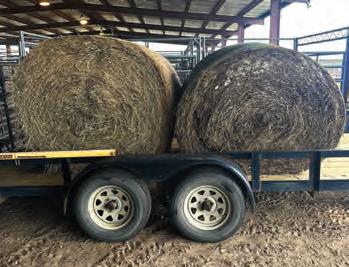
Dry hay (left) and baleage (right) both have risks and rewards.
The author wishes to acknowledge William Fleming, a graduate research assistant, and Jennifer Tucker, an extension beef specialist, both at the University of Georgia, for contributions to this article.
LISA BAXTER
The author is an extension forage specialist with the University of Georgia.
by Mike Brouk
Water may drive the fed forage
WATER is a precious commodity, and the availability of irrigation water may determine the forage choices for dairy and beef operations located in areas with limited water resources. With the expansion of the dairy industry in the High Plains and declining water availability, forage choices are being impacted.
Corn silage has long been the primary forage utilized in lactating dairy cow diets. It is palatable and provides the starch, digestible fiber, and indigestible fiber necessary for optimal rumen function, which results in high levels of milk production. However, it requires adequate water for normal growth. When considering the total water needed for a dairy operation, 90% is associated with the water necessary to grow the feedstuffs utilized in diets. When irrigation water becomes a limiting factor, producers need to consider other forage choices. This will result in rethinking forage production systems and diet formulations.
Not as thirsty
The good news is that there have been many changes to the genetics and harvest practices of sorghum silage. Sorghum generally requires about 30% less water than corn silage. The issue with replacing corn silage in lactating cow diets has been animal performance. While sorghum silage works well in heifer and dry cow diets, it has resulted in lower milk production when compared to corn silage for lactating dairy cows.
Forage producers who are dependent on irrigation continue to strive for greater water-use efficiency. The influx of dairy cattle to the High Plains region has further heightened the discussion. Recent improvements in forage sorghum genetics may provide another choice for dairy producers and forage growers.
Male-sterile sorghum does not produce seed; it contains lower amounts of starch and much higher amounts of water-soluble carbohydrates. A recent study at Texas A&M showed that replacing 25% of corn silage with brown midrib, male-sterile forage sorghum resulted in a 10% bump in energy-corrected milk
production when other feed ingredients were adjusted. Replacing 50% of the corn silage resulted in an 8% boost in energy-corrected milk production. While many of the older studies involved the total replacement of corn silage in a lactating dairy diet, this study suggests that a partial replacement of corn silage with brown midrib, male-sterile sorghum silage can improve energy-corrected milk production.
Although total replacement of corn silage may not be desirable, partial replacement could represent an option for dairy producers and dairy nutritionists.
Processing problem
A major issue with conventional forage sorghum has been starch availability. The sorghum berry is much smaller than a kernel of corn; therefore, it is difficult to process. Normal kernel processing rolls utilized for corn silage are not effective for processing sorghum berries. The result is a lower availability of starch in the rumen as compared to corn silage. This has resulted in lower levels of milk production when corn silage has been replaced with sorghum silage for lactating dairy cattle. While the sorghum silage contains high
levels of starch, it is simply not fermented in the rumen due to protection provided by the intact seed coat.
Researchers at Kansas State University and Texas A&M have developed a berry processing score to evaluate starch availability in sorghum silage. New berry processing technology has recently provided an answer for improved starch availability in sorghum silage. The DurraCut processor developed by Scherer Inc. has been shown to improve the starch availability of sorghum silage. A study at Texas A&M showed an increase in in-situ starch availability from 25.8% at seven days of ensiling to 65.9% after 90 days of ensiling. Starch availability in unprocessed samples did not improve with the longer ensiling time.
Other advantages
Compared to corn, sorghum is better suited to withstand extended periods of drought. During drought conditions, sorghum is more likely to revive and produce in response to late growing season moisture. This is another advantage of sorghum where drought frequently occurs.
In addition to a reduction in irrigation water needs, input costs for seed, fertilizer, and herbicides are generally lower than for corn silage. In many cases, the dry matter yield of the two crops will be similar, resulting in a lower cost per ton for the sorghum.
If you’re looking for a way to reduce irrigation water usage for forage production, sorghum may provide an answer. Recent changes in sorghum genetics and harvesting equipment make it a more attractive alternative for partial replacement of corn silage in lactating dairy cow diets, but it will require some changes in silage management and the design of rations. •
Mike Rankin
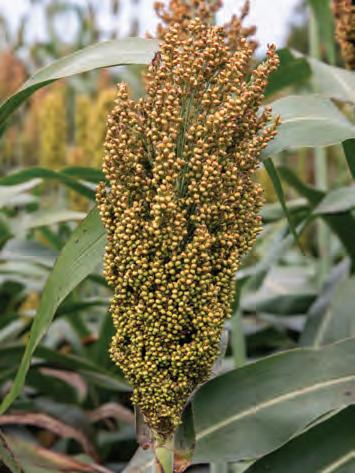
Sorghum may be a good choice to replace some corn silage if water is limiting.
MIKE BROUK
The author is a professor and extension dairy specialist with Kansas State University.
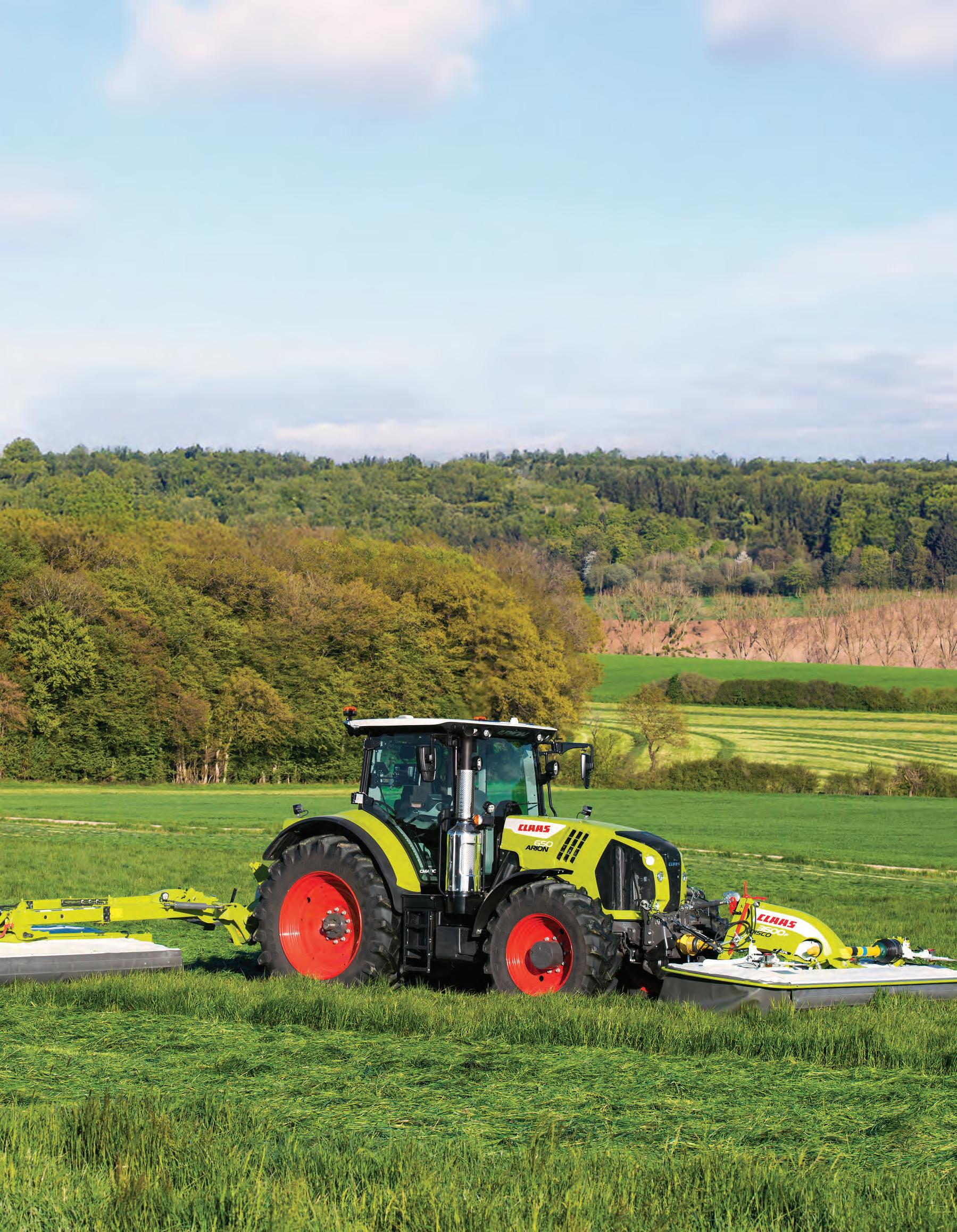
ARION Tractors + DISCO Mowers
Time for a tractor upgrade.
With refined comfort, smooth ride and serious versatility, the ARION tractor is the machine every farm needs. Put it to work on your farm with the CLAAS Power Upgrade now through June 30, 2026. It’s your chance to take advantage of excellent offers on ARION tractors, DISCO mowers and more from the full CLAAS implement lineup.
Ready for an upgrade?
See your dealer to learn more about competitive offers from CLAAS.
GRAZING FOR THE FUN OF IT
All photos: Amber Friedrichsen
by Amber Friedrichsen, Former Hay & Forage Grower Editor
SOME farm stories feature the individuals in charge of large-scale crop or livestock operations who call the shots and drive business growth. Other farm stories feature teams of family members and employees who manage multiple enterprises under a larger farm umbrella. This isn’t one of those stories.
Paul Bush is a hobby farmer from Greenwood, Arkansas. He spent some time visiting a relative’s farm as a kid growing up in Indiana, but agriculture didn’t extend to his branch of the family tree. As an adult, he got started in insurance, which has comprised the lion’s share of his professional career. However, for more than two decades, Bush has grazed livestock and stewarded backyard pastures as a way to
relieve stress, be active, and breathe some fresh air. His goals have never been to make grass-fed beef production a full-time gig — he simply enjoys farming part time.
“I’m just out here having a little fun,” Bush said. That may be true, but he has come to realize that even small-scale grazing systems require careful management to optimize forage production.
Not long into his insurance career, Bush
got the itch to break away from the suburbs and move to a farm outside of Little Rock. “I was a complete city boy, but I wanted to get out in the country and be able to do things with my hands, bring the kids up with farm chores,” Bush said. “We sold a beautiful, 2,600-square-foot home on 5 acres and moved into a double-wide on 40 acres.”
That open space allowed Bush’s vision for farm chores and manual labor to become a reality, with chickens, goats, and a few cows and calves to take care of on the homestead. When the Bush family moved from Little Rock to Greenwood several years later, he swore he wouldn’t raise cattle again. But the continued demand for freezer beef from friends and neighbors roped him back in.
Small for a reason
Bush’s herd size has fluctuated over the years, but when he was introduced to regenerative agriculture and rotational grazing, he hit the reset button. Downsizing to just 14 cows was his solution to resting chronically overgrazed forages and creating some wiggle room to renovate pastures.
“I’ve cut way back because my grass was so poor,” Bush said, hopeful to begin rebuilding his herd soon. “Now, with proper management, I will probably be able to have more cows with less inputs on the same amount of land.”
Early on, Bush developed friendships with row-crop farmers, and without baling equipment of his own, he formed relationships with commercial haymakers in order to feed his cattle through the winter. As he began his regenerative journey, he was often met with skepticism. For example, when he broached the topic of The University of Arkansas’s 300 Days Grazing program, he was largely dismissed.
“The spray-and-cut-hay guys said that’s just theoretical; it’s not practical,” Bush said. “It was always kind of in the back of my mind, but it didn’t have much support.”
A few months later, Bush met a former county extension agent who expressed a similar interest in regenerative agriculture despite a decades-long career spent with the spray-and-cut hay guys. “He said I needed to go home and look up Gabe Brown,” Bush said, reaffirmed in his ideas. “I did, and it
all resonated with me: cover crops, multiculture, rotational grazing. It just floored me.”
Bush decided he would renovate his bermudagrass monoculture that spring. He seeded pastures to a 12-species forage mix — but it never established. Bad weather and poor growing conditions thwarted any potential for a viable stand. Nevertheless, Bush persevered and tried again the following year — this time, it was a success. Before grazing it, he let the forage grow to maturity to choke out weeds.
“After the cows ate it, I had no more buttercup the following year. I had no more broomsedge, and woolly croton was way down,” Bush said. “All I did was plant grass, and it didn’t cost me anything because all the money I spent on seed, the cows ate.”
Good company
Around this same time, Bush was approached by the Noble Research Institute to participate in a grazing survey. His candid responses about his newcomer status opened doors to classes, workshops, and trainings, which led to connections with grazing experts and educators.
“Noble talks about limiting factors, and mine are time and labor,” Bush
said. “I just can’t move my cows as much as I’d like to, but I’m doing my best.” For example, his paddock size and grazing patterns often revolve around his work schedule. Although he would ideally like to move cattle to new grass every day, sometimes work trips and extended travel require him to give animals bigger parcels of land. He’s developed an eye to gauge grass growth and forage quality that assists in rotational grazing decisions. Even so, sufficient ground cover is his number-one priority for drought resistance.
“While I’m no scientist, I like the idea of keeping a good cover on the soil in anticipation of no rain,” Bush said.
“I probably leave half of the forage to protect the soil from heat and for water retention. I don’t see stress on my plants at all because I’ve always got a really good cover.”
Bush routinely overseeds pastures with multiple forage species in an effort to reinforce stand density, but without his own planting equipment, he relies on his cattle to do the work of a seed drill.
“A day or two before you move them, throw your seed out among the cows, and they will drill it in. Then, move your cows,” Bush explained. “I’m always
Paul Bush is trying to take advantage of the growing market for naturally raised, direct-to-consumer beef. He doesn’t use chemical fertilizers or herbicides on his pastures, preferring a dense canopy of desirable plants to help choke out weeds. Pastures are routinely overseeded with multiple forage species that enhance stand density.
throwing in seeds here or there: sorghum, turnips, clovers, radishes — everything.”
All for johnsongrass
In addition to seeding everything, Bush grazes everything, including johnsongrass. Most graziers settle in one of two camps when it comes to johnsongrass: those who love it, and those who hate it. Bush is a self-proclaimed johnsongrass lover, especially as he has learned to manage it with strategic grazing.
“I will shape my paddocks around the johnsongrass and literally chase it,” Bush said. “The cows go right to it.”
Even though johnsongrass is a poster child for prussic acid poisoning under drought conditions, Bush regularly tests the forage and routinely receives clean results. He believes dense, continuous ground cover regulates surface temperatures and preserves enough soil moisture to mitigate heat and drought stress in plants.
Bush is conscious of heat stress in his cattle, too. He recently introduced South Poll genetics into his mostly Hereford herd to take advantage of the former breed’s heat tolerance and its ability to marble well on grass. Bush said the average South Poll size and stature is also better suited for grazing. Ideally, steers are ready for market at roughly 1,000 pounds. While he still supplements his finishing herd with some grain the goal is to soon be grain free.
Transparency is key
Bush doesn’t use chemical fertilizers or herbicides in his pastures, but his operation isn’t 100% input free like some regenerative philosophy suggests. For instance, he diligently treats sick cattle. With a herd of his size, one sick animal represents a large percentage of the total calf crop.
“If you don’t treat, you won’t have any animals,” Bush said. “Not all chemicals are bad, but unnecessary or improperly used chemicals are what I’m trying to get away from.”
Bush knows that transparency builds trust among his customers and encourages repeat business. The growing desire of consumers to know where their food comes from is a plus for small-scale direct beef marketers like himself.
“I think there is a market for more naturally raised, directto-consumer beef, and I can kind of pay for my hobby by utilizing that,” Bush said. “I have several families that buy a lot of their meat from me. I could make more money if I sold them at the cattle barn today with prices where they are, but I don’t want to do that. I have customers who depend on it.”
Bush depends on his cattle, too, but from more of a holistic perspective. “I deal with emails and cell phones all day, so going out and visiting with the cows is pleasant,” he affirmed. Being part of a network of like-minded graziers through the Noble Research Institute and constantly learning about the interconnectedness of forage, livestock, and soil keeps life interesting, too.
What all started as a way to unwind after the workday has become a labor of love and a source of joy for Bush. Next on his docket is to develop a “flerd,” combining sheep with cattle in the same pasture. Just as multiple forage species create a synergistic growing environment, Bush believes the complementary grazing behaviors of sheep and cattle will offer greater benefits to the overall system.
“I’m a Mother Earth kind of person — it’s all about the grass,” Bush said. “I think grass needs cows as much as cows — and sheep — need grass.” •
Because A Pretty Face Matters
A smooth silage face isn’t about looks—it’s about performance. The Fritsch Forage Facer delivers the cleanest, most precise cuts, reducing air penetration, limiting spoilage, and helping maintain consistent feed quality.
Stressed corn lowers silage quality
WITH nearly 20 years of practice as a nutritionist, I continue to learn from bright and experienced minds around me. A couple forward-thinking dairy and crop managers and I were explaining different avenues of high-quality corn silage production during a breakout session. The learning opportunity came into view as we discussed stressed corn plants. In this case study, a producer on the panel described how corn plants responded to straight-line winds by growing additional brace roots after being blown over. In fact, he described how the plants grew four additional sets of brace roots, and he’d never seen anything like it before. This was the first I’d learned about corn plants responding this way, but the stress-induced plant morphology shift seemed logical.
Multiple stressors
While the brace roots were needed for corn plant survival, this stress response also corresponded to greater lignification, and fiber digestibility suffered notably relative to corn from
other fields that didn’t experience straight-line winds. Following strong winds, corn will either blow over and gooseneck back up or snap off and die. Goosenecked corn might respond as described here; however, green-snapped corn will not come back and needs to be salvaged as forage if possible.
Beyond wind, there are numerous other stressors that can alter corn plant growth and development. Having learned from the brace roots case study, let’s build on this producer’s experience by discussing several other stressors and possible outcomes. Hopefully, it will give you some ideas to aid your in-season management decisions. Drought. Drought stress is relatively well understood to negatively impact yield but positively impact fiber digestibility. While starch levels may be depressed, the feed value of drought-stressed corn silage tends to be better than expected due to the severe reduction in lignin and improved intake potential. Drought stress that occurs earlier in the season, tends to equate to this positive fiber digestibility response. Late-season drought may negatively
affect grain fill, but doesn’t tend to improve fiber digestibility.
Wet seasons. Assuming germination has been successful, excessive rain early in the season can cause corn plants to develop shallow root systems. This unique morphology can relate to less sturdy corn and standability issues but has also been correlated to substandard fiber quality. The physiological mechanism behind this response is not clearly understood; however, the phenomena may be related to greater lignification in the plant due to shallower roots or some other internal plant water transport changes.
Wetter seasons also tend to be challenging for soil fertility, with nitrogen (N) being mobile and moving with water down in the soil or away from the root zone. Couple N movement with shallower roots, and cornfields are more likely to be short of N during wetter seasons, creating challenges for grain yield and corn plant maturation. Harvest windows for silage can shorten if corn plants run out of nutrients and lose moisture rapidly relative to healthy stands.
Flooding. Classified differently from a wet season, flooding events can injure corn by disrupting gas exchange in the soil. Depending on the severity of the flood, soil type, and drainage potential, flooding can harm corn and lead to various negative outcomes. One concern is that standing corn becomes coated with soil and ash. When corn is harvested for silage, this situation leads to a challenging fermentation and often higher yeast and mold or bacterial counts. Flooded corn should be kept separate from better corn, if possible, and managed intensively for optimal fermentation. Consult with your agronomist in these situations to determine a game plan.
Insect damage. Insects cause physical damage to corn plants, which often equates to more necrotic tissue and lignification in response, contributing to suboptimal fiber digestibility. The insect-damaged plants are also more susceptible to fungal and bacterial diseases, and the resulting silage can be a feed hygiene risk. Pest-damaged corn also needs to be managed intensively for optimal fermentation to keep mold and yeast at bay during ensiling and feed out. Disease. This section could be the subject of its own column as there are a wide variety of plant diseases that will affect corn. The impacts on yield and quality are wide ranging, with some diseases relating to feed hygiene concerns and others relating to yield and fiber quality losses not caused by mycotoxins. In general, diseased corn will have less fiber digestibility due to a higher proportion of dead and necrotic tissue and a shortened harvest window. Later in the season, diseased corn moisture often drops rapidly relative to healthy corn moisture, creating a shorter harvest window and quality issues.
The corn plant’s goal is to reproduce and create seed for next year. Different stressors during the season induce different responses, but these responses are often intended to keep the plant alive and bear seed. Think about the stressors and responses discussed here as we head into the growing season to optimize your in-season management. •
JOHN GOESER
The author is a dairy nutrition and management consultant with Progressive Dairy Solutions Inc., and an adjunct professor at the University of Wisconsin-Madison.
BALE CARRIAGE HAY-HANDLING PERFORMANCE
• Models for skid steers, tractor front loaders and select telehandlers.
• Pick-up two 4’ x 4’ x 8’ or three 3’ x 3’ x 8’ rectangular bales.
• Features four bolt-in spears with useable length of 40.5” and two upper balance spears.
Kentucky Spring Fencing School
April 28 –Maysville; April 30 – Elkton
Details: forages.mgcafe.uky.edu
Appalachian Grazing Conf.
April 30, Wardensville, WV
May 1, Lewisburg, WV
May 2, Point Pleasant, WV
Details: bit.ly/HFG-AGC
Virginia Basic Grazing School
May 12 and 13, Madison, Va.
Details: vaforages.org
Four-State Dairy Nutrition Conference
June 3 and 4, La Crosse, Wis.
Details: fourstatedairy.org
Silage for Beef Cattle Conference
June 18, Ithaca, Neb.
Details: bit.ly/HFG-SfBC
Wisconsin Farm Technology Days
July 14 to 16, Stratford, Wis.
Details: wifarmtechdays.org
Heart of America Grazing Conference
July 15 and 16, Effingham, Ill.
Details: bit.ly/HFG-HAGC
Farm Progress Show
September 1 to 3, Boone, Iowa
Details: farmprogressshow.com
Husker Harvest Days
Sept. 15 to 17, Grand Island, Neb.
Details: huskerharvestdays.com
National Hay Assn. Convention
September 16 to 19, Pasco, Wash.
Details: nationalhay.org
Intermediate Grazing School
September 23 and 24, Princeton, Ky.
Details: forages.mgcafe.uky.edu
World Dairy Expo
World Forage Analysis Superbowl
Sept. 30 to Oct. 3, Madison, Wis.
Corn silage entries due July 9
Hay crop entries due Aug. 20
Details: bit.ly/HFG-WFAS
HAY MARKET UPDATE
It’s a new season
As most fields are headed toward their initial harvest, hope springs eternal for a better hay year than the previous one. The early projection from USDA is for slightly more harvested hay acres this year compared to the last, but it is too early to put much credence in any projected number at this point. For the last several months, hay prices have held a stagnant pattern, though some regions are reporting slightly higher new crop offers than a year ago. The prices below are primarily from USDA hay market reports as of mid-April. Prices are FOB barn/stack unless otherwise noted. •
Forage growers across the country are invited to participate in the 2026 World Forage Analysis Superbowl. Award-winning samples will be displayed during Trade Show hours in the Trade Center at World Dairy Expo in Madison, Wisconsin, September 29 - October 2. Winners will be announced during the Forage Superbowl Reception on Wednesday, September 30.
Contest rules and entry forms are available at foragesuperbowl.org, by calling Dairyland Laboratories at (920) 336-4521 or by contacting the sponsors listed below.
PUT YOUR FORAGES TO THE TEST
Crop/plant/sample specifications
August 202026
Dairy Hay >75% legume; grown by active dairy producers
August 202026 Commercial Hay >75% legume; commercially grown and sold in large lots off the farm
August 202026 Grass Hay >75% grass
August 202026 Baleage Any mixture of grass/legumes
August 202026 Alfalfa Haylage ≥75% legume
August 202026 Mix/Grass Hlg <75% legume
August 202026 Cereal ForageEnsiled 100% cereal, No legume mixes (e g. alfalfa new seeding, peas, etc.)
July 92025 Standard Corn Silage (non-BMR) Must be whole plant, recommended chopping height 6”-8”. Must contain >75% standard variety.
July 92025 BMR Corn Silage Must be whole plant, recommended chopping height 6”-8”. Must contain >75% BMR variety.
All hay samples: Must be from a bale, any type or size; use of a preservative or desiccant is allowed.
Baleage: Must be processed and wrapped as baleage and show signs of fermentation.
All silage samples: Must be ensiled in a normal preservation process and show signs of fermentation. Use of a preservative is allowed. Additives affecting fiber content or any other adulteration will disqualify the sample.
Cereal Forage-Ensiled consists of the following crops: oats, cereal rye, wheat, triticale, and barley. No exceptions.
Samples analyzed for (expressed on a dry matter basis):
Hesston by Massey Ferguson ® LB.2200 Series Large Square Balers
When the crop is ready, every minute counts. The Hesston LB.2200 Series helps you cover ground quickly while producing dense, uniform bales that stack, transport and store efficiently. Efficient crop flow, precision knotter systems and heavy-duty construction keep productivity high and interruptions low, so you can keep moving when the window is open. And with TIM functionality, the baler can automatically control tractor functions like speed and stopping — helping maintain consistent performance while reducing operator input and fatigue. Built on Hesston by Massey Ferguson hay heritage, the Hesston LB.2200 Series is designed to deliver dependable performance, season after season.