
FRANK GEHRY WAS born in Toronto,Canada, in 1929 At the age of 17, he moved with his family to Los Angeles, California and studied architecture at the University of Southern California.Lat er, he studied city Planning at Harvard University.He established his own firm in 1962 in Los Angeles.


Architectural Style: Much of Gehry’s work falls within the style of Deconstructivism , which is often re ferred to as Post- structuralist in nature for its ability to go beyond current modalities of structural defini tion. This can be seen in Gehry’s house in Santa Monica. Gehry’s style at times seems unfinished or even crude, but his work is consistent Gehry has been called “the apostle of chain-link fencing and corrugated metal siding” Gehry’s signature style couples his interest in materiality with expressive form. These buildings are usually composed of discrete volumes, shaped with freely flowing curvilinear roofs. Metal panels are often used as cladding, either stainless steel or titanium
THE WINTON HOUSE 01056097 ARCHITECTURE OF INTERIORS DESIGN STUDIO Politecnico di Milano School of Architecture Built Environment Interiors Academic Year 2021 Professors: Emanuele De Giorgi Franzino Simona Tutors: Joseph Rigo
In addition to architecture, Gehry has made a line of furniture, jewelry, various household items, and sculptures, His first line of furniture, produced from 1969–1973, was called “Easy Edges”, constructed out of cardboard. Anoth er line of furniture released in the spring of 1992 is “Bentwood Furniture”. Each piece is named after a different hock ey term. He was first introduced to making furniture in 1954 while serving in the U.S. Army, where he designed furni ture for the enlisted soldiers. The architect Frank Gehry is known for his use of unusual materials. With his furniture series ‘Easy Edges’, he succeeded in bringing a new aesthetic dimension to such an everyday material as cardboard.


Gehry is famous for his gesture uninterrupted single line sketches. Gehry reinvents the tension between graph ic composition and the translation of spatial relations into built form. Gehry’s architectural thinking through his ditinc tive drawings function to transmit ideas and let him experiment architectural thinking and representation in his unique way. Sketching incessantly helps Gehry free his imagination. An aspect of his drawing strategy is the alteration of the rhythm of his hand movement, which results in different qualities of ‘lineamenta’. Moving his pen in circles and spi rals, Gehry transforms his thinking hand into a tool allowing him to experiment with the very conditions of architecture and spatial perception.


IDEOLOGIES & PROJECTS
“EASY EDGE” COLLECTION, 1969- 1973, COLLECTION OF CARDBOARD DESIGNS WIGGLE SIDE CHAIR, WIGGLE STOOL, 1972 SIRMAI PETERSON HOUSE, California, United States 1984-86 SMITH HOUSE, physical Model, United StatesGEHRY RESIDENCE, Santa Monica, Calif., United States, 1991 DISNEY CONCERT HALL, Los Angeles, Calif., United States 1991 GUGGENHEIM BILBAO, Spain, 1997 WINTON HOUSE, 1983, Unique First Proposal Physical Model picture
Project:961639963493
Haya Arafa Sara Agour The Winton House by Frank Gehry


BY: FRANK GEHRY

“EASY EDGES WIGGLE CHAIR” SKETCH FOR BUBBLES LOUNGE CHAIR, 1987

SITE ROOFHOUSEPLANPHOTOPLANMORANDI’S PAINTING ANALYSIS ORIGINAL WINTON HOUSE ORIGINAL WINTON HOUSE PHYSICAL MODEL MORANDI’S PAINTING ANALYSIS ORIGINAL WINTON HOUSE PHYSICAL MODEL PHYSICAL MODEL PHYSICAL MODEL, MOMA 02056097 ARCHITECTURE OF INTERIORS DESIGN STUDIO Politecnico di Milano School of Architecture Built Environment Interiors Academic Year 2021 Professors: Emanuele De Giorgi Franzino Simona Tutors: Joseph Rigo Haya Arafa Sara Agour Project:961639963493 The Winton House by Frank Gehry


FIRE PLACE

The house is an example of style “deconstructivism”.The house project is a set of boxes disjointed geometric shapes arranged around one pyramid which is the living room. Outside the composition looks like an outdoor sculpture. The boxes have heterogeneous shapes and materials: each room is a different volume from the others. Gehry drew inspiration from the compositions of objects by Giorgio Morandi: a long series of essential and minimal paintings, full of suspended and silent atmospheres, rendered by combining together simple mobile objects, under certain conditions of natural light.The pieces are placed together in a tight complex, like a still life Composition.


BY: FRANK GEHRY


didnt want to mess around with uncle philip’s baby. I’m sure he was horrified when he heard was do ing it. So decided to go on the other side of the hedge where we could create a seperate zone.

“ “
BEDROOMLIVINGROOMGARAGE,KITCHEN & BASEMENT BASEMENT Basement Room connected to the kitchen & garage through the stairs BEDROOM Unique Curve Roof - Lime stone FIREPLACE Red Bricks LIVING ROOM Living Space that Connects all the rooms together - Black Painted Metal BEDROOM Using Metal Sheet asCladdingexterior LOFT Small room connected to the kitchen - Metal Sheet Stairs Location - Con necting Loft & Base ment - Black Metal Sheet GARAGE & KITCHEN THE WINTON HOUSE ABOUT THE “WINTON HOUSE”


BY: FRANK GEHRY
THE WINTON HOUSE GROUND FLOOR LAYOUT 1_50 MASTER PLAN 1_100 260 Square meters 12-KitchenGarage - Stairs 6-Bathroom5-Fireplace4-Bedroom3-Livingroom 03056097 ARCHITECTURE OF INTERIORS DESIGN STUDIO Politecnico di Milano School of Architecture Built Environment Interiors Academic Year 2021 Professors: Emanuele De Giorgi Franzino Simona Tutors: Joseph Rigo Haya Arafa Sara Agour Project:961639963493 The Winton House by Frank Gehry AS BUILT - ORIGINAL DESIGN


THE WINTON HOUSE ORIGINAL DESIGN - EXTERIOR ELEVATION EAST ELEVATION B-B’ 1_50 04056097 ARCHITECTURE OF INTERIORS DESIGN STUDIO Politecnico di Milano School of Architecture Built Environment Interiors Academic Year 2021 Professors: Emanuele De Giorgi Franzino Simona Tutors: Joseph Rigo Haya Arafa Sara Agour Project:961639963493 The Winton House by Frank Gehry B B BY: FRANK GEHRY

ORIGINAL DESIGN - EXTERIOR ELEVATION

THE WINTON HOUSE NORTH ELEVATION C-C’ 1_50 05056097 ARCHITECTURE OF INTERIORS DESIGN STUDIO Politecnico di Milano School of Architecture Built Environment Interiors Academic Year 2021 Professors: Emanuele De Giorgi Franzino Simona Tutors: Joseph Rigo Haya Arafa Sara Agour Project:961639963493 The Winton House by Frank Gehry CC
BY: FRANK GEHRY
THE WINTON HOUSE SECTION A-A’ 1_50 06056097 ARCHITECTURE OF INTERIORS DESIGN STUDIO Politecnico di Milano School of Architecture Built Environment Interiors Academic Year 2021 Professors: Emanuele De Giorgi Franzino Simona Tutors: Joseph Rigo Haya Arafa Sara Agour Project:961639963493 The Winton House by Frank Gehry AA BY: FRANK GEHRY ORIGINAL DESIGN - INTERIOR ELEVATION

PROPOSED DESIGN LAYOUT 94 106 176 90 96 200 221 80 152 144 102 94 80174 132 200 46 90 68 220 90 55 50 187 442 50 60 90 90 80 50 57 55 171 120 50 180 ±0 -43 392 154 120 50 90 90 90 100 46 80 50 169 80 60 256 180 80 130 90 30 194 60 60 371
BY: FRANK GEHRY
PLAN 1_50 THE WINTON HOUSE 07056097 ARCHITECTURE OF INTERIORS DESIGN STUDIO Politecnico di Milano School of Architecture Built Environment Interiors Academic Year 2021 Professors: Emanuele De Giorgi Franzino Simona Tutors: Joseph Rigo Haya Arafa Sara Agour Project:961639963493 The Winton House by Frank Gehry
08056097 ARCHITECTURE OF INTERIORS DESIGN STUDIO Politecnico di Milano School of Architecture Built Environment Interiors Academic Year 2021 Professors: Emanuele De Giorgi Franzino Simona Tutors: Joseph Rigo Haya Arafa Sara Agour Project:961639963493 The Winton House by Frank Gehry THE WINTON HOUSE ORIGINAL PLAN 1_100 PROPOSED PLAN 1_100 BY: FRANK GEHRY ORIGINAL VS PROPOSED ±0,00±0,00 -0,43 ±0,00±0,00 -0,43

±0,00±0,00 -0,43 THE WINTON HOUSE 09056097 ARCHITECTURE OF INTERIORS DESIGN STUDIO Politecnico di Milano School of Architecture Built Environment Interiors Academic Year 2021 Professors: Emanuele De Giorgi Franzino Simona Tutors: Joseph Rigo Haya Arafa Sara Agour Project:961639963493 The Winton House by Frank Gehry ELEVATION B-B’SECTION A-A’ BY: FRANK GEHRY PROPOSED DESIGN INTERIOR ELEVATIONS ±0,00±0,00 -0,43 ±0,00±0,00 -0,43 A B C A B SECTION C-C’ C

-Common Name: Black Olive- Shady Lady tree


STORAGE KITCHEN


-General Height: 3 meters Upto 10 meters

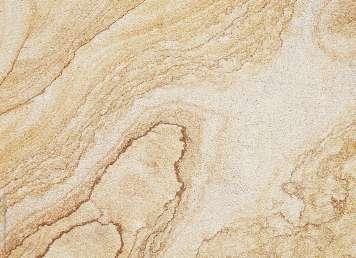
SANDSTONE WOOD LOUVERS OAK WOOD


MATERIALS & SHOTS
THE WINTON HOUSE
-Origin: Florida, West Indies, Mexico to Panama
BlackClimateolive
BY: FRANK GEHRY
MATERIAL BOARD
VIEW 1 VIEW 2
OUTDOORSTONEVIEW KITCHEN SKETCHBIRD EYE
-Advantages: SteadyConvenient for Minnesota Weatherer as it needs Cold
BUCIDA BUCERAS ‘OLIVE TREE’ ROUGH VIEW


The climate of Minnesota is typical of a continental climate with cold, often frigid win ters and hot, humid summers. Minnesota is well known for it’s wood industry due to the for est resources. Oak is a tremendously important cover type and species in a large portion of Min nesota. Some high quality saw¬log and veneer red oak is grown on good sites in Minnesota. Based on the analysis. We have decided to use the resourc es we have on site in terms of materiality. Like the sandstone, oak and veneer wood.
grows slowly and should be planted in full sun or partial shade on well-drained, moist soils
10056097 ARCHITECTURE OF INTERIORS DESIGN STUDIO Politecnico di Milano School of Architecture Built Environment Interiors Academic Year 2021 Professors: Emanuele De Giorgi Franzino Simona Tutors: Joseph Rigo Haya Arafa Sara Agour Project:961639963493 The Winton House by Frank Gehry


3D VIEW
MATERIAL: CORRUGATED CARDBOARD COLOUR: NATURAL WIGGLE SUDE CHAIR FRANK GEHRY , 1972/2005
DINING TABLE 3D VIEW BENCH 3D VIEW

AREA DETAIL SECTION 1_10
84 57 40 415 3 56 46 60 18 5 36 100 2636 10 66975 95° top panel seat cover front panel head rest panel
SECTION 1:10 GSEducationalVersion 84 57 415 3 56 46 60 18 5 36 100 2636 10 66975 95° top panel seat cover front panel head res panel
SIDE ELEVATIONS
DINING
MATERIAL: CORRUGATED CARDBOARD COLOUR: NATURAL WIGGLE SUDE CHAIR FRANK GEHRY , 1972/2005
MATERIAL: CORRUGATED CARDBOARD COLOUR: NATURAL WIGGLE SUDE CHAIR FRANK GEHRY , 1972/2005

SECTION 1:10 11056097 ARCHITECTURE OF INTERIORS DESIGN STUDIO Politecnico di Milano School of Architecture Built Environment Interiors Academic Year 2021 Professors: Emanuele De Giorgi Franzino Simona Tutors: Joseph Rigo Project: The Winton House by Frank Gehry Sara Agour 961639 THE WINTON HOUSE BY: FRANK GEHRY
SEATING
SIDE ELEVATIONS 1:10
SIDE ELEVATION 1_10


90 90 90 50 ±0,00 ±0,00 -0,43 90 90 46 80 80 130 90 30 THE WINTON HOUSE SECTION A-A’ 1_10 FRONT ELEVATION B-B’ 1_10 Upholstery Fabric Over High Density Foam PLAN 1_20 22 cm Height Stairs Stone Finish 22 cm Stairs Height Stone Finish Back AngleSeating110° 2 cm stone Flooring tyHighFabricUpholsteryOverDensiFoam15cm FlooringFinishportStonewidthSupSameas 12056097 ARCHITECTURE OF INTERIORS DESIGN STUDIO Politecnico di Milano School of Architecture Built Environment Interiors Academic Year 2021 Professors: Emanuele De Giorgi Franzino Simona Tutors: Joseph Rigo Haya Arafa Project:963493 The Winton House by Frank Gehry A A B BY: FRANK GEHRY SUNKEN SEATING DETAIL DESIGN B SKETCH


TECHNICAL DRWAINGS SHELVES

DETAILS 1:20 FLOOR-CEILING BOOKCASE WITHSTORAGE UNITS


GSEducationalVersion 6464 305 42 64 64 30 3735384239393937 5 16 5 16 5 1 64 30ELEVATION 1:20 LIBRERY COMPOSITION FIXED ON THE WALL WALLINSTALLMENT1:20 DETAILS 1:5 TECHNICAL DRWAINGS SHELVES DETAILS 1:20 13056097 ARCHITECTURE OF INTERIORS DESIGN STUDIO Politecnico di Milano School of Architecture Built Environment Interiors Academic Year 2021 Professors: Emanuele De Giorgi Franzino Simona Tutors: Joseph Rigo Project:The Winton House by Frank Gehry Sara Agour 961639 THE WINTON HOUSE LIBRARY DETAIL BY: FRANK GEHRY SECTION 1_20 GSEducationalVersion 415 3 56 1846 5 36 100 26 10 66975 95° top panel seat cover frontpanel head rest panel MATERIAL: CORRUGATEDCARDBOARD COLOUR: NATURAL FIXED LIBRARY COMPOSITION ON THE WALL 1_20 FRONT VIEW TOP VIEW 1_20 SIDE VIEW 3D- VIEW WOOD FINISH CANALETTO WLANUT “Rigatino” WALL INSTALLMENT DETAILS 1:5 6464100646464 35 305 40 42 305 428 64 64 64 100 64 64 30 3735384239393937 5 16 5 16 5 1 64 30ELEVATION 1:20 LIBRERY COMPOSITION FIXED ON THEWALL WALLINSTALLMENT1:20 DETAILS 1:5

