SPRING 2026
Tracking Ghosts
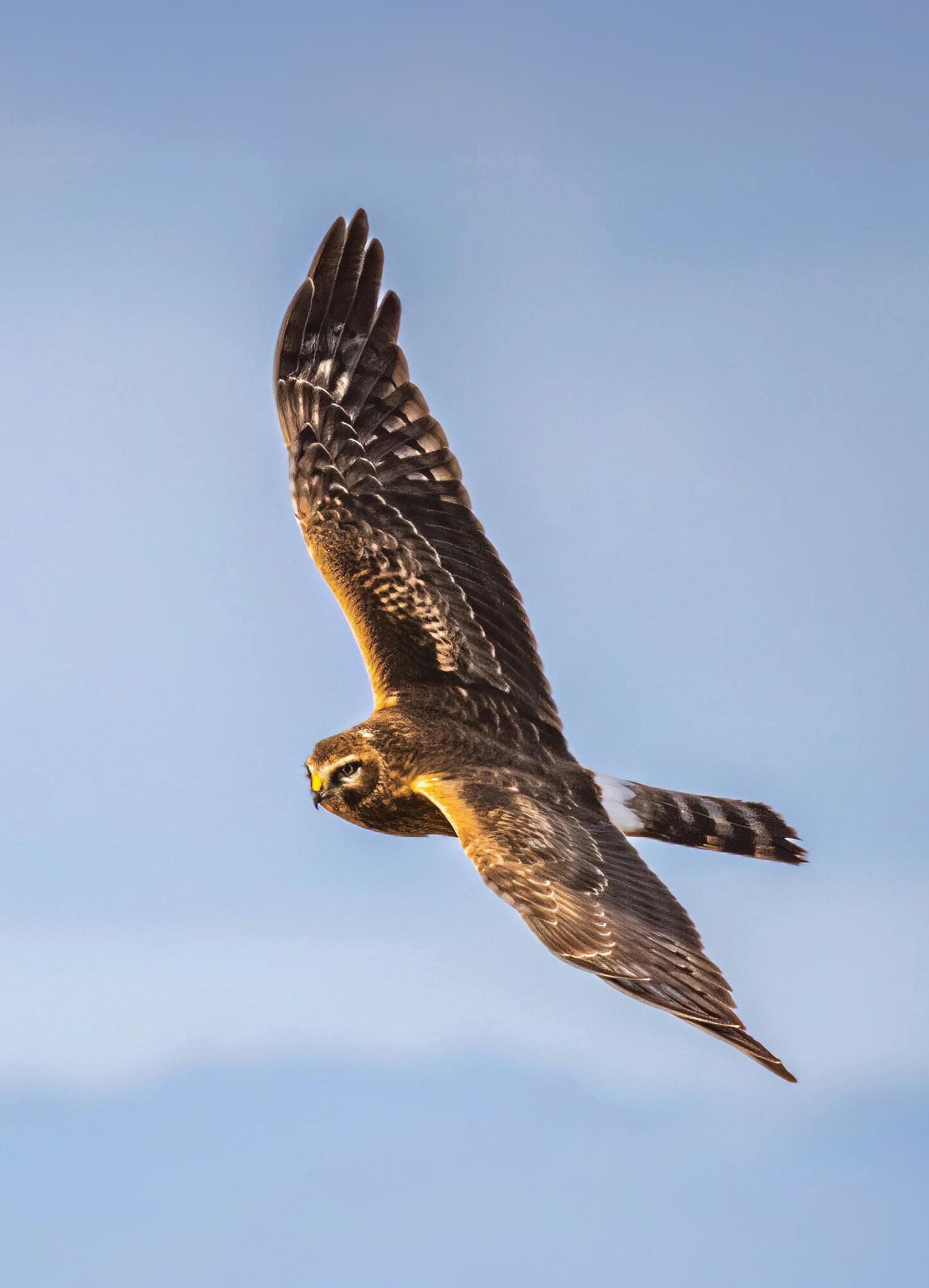
The mission of Hawk Mountain Sanctuary Association is to conserve birds of prey worldwide by providing leadership in raptor conservation science and education, and by maintaining Hawk Mountain Sanctuary as a model observation, research, and education facility.
by
Photo
Andrew Price
COVER PHOTO by Robert K So
Photo by Joshua Galicki
LEGACY IN FLIGHT: BUILDING A FUTURE FOR BIRDS OF PREY
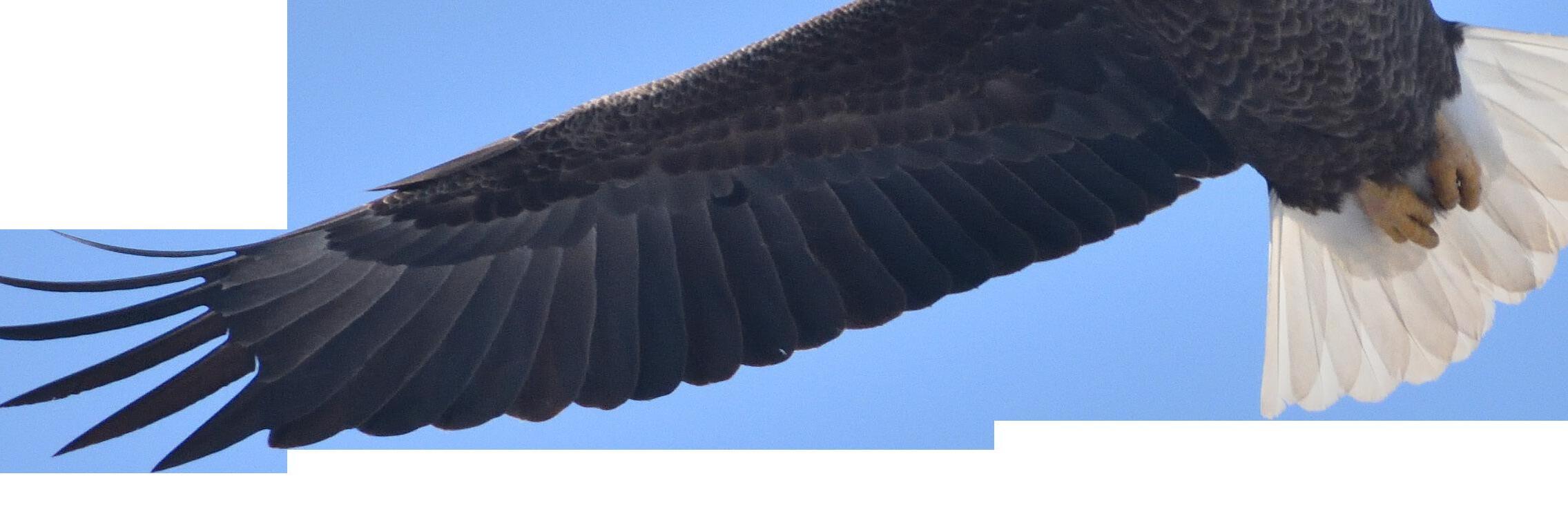
Hawk Mountain was founded as the world’s first sanctuary for birds of prey—a bold effort to stop the senseless slaughter of hawks, eagles, and falcons along the Kittatinny Ridge. Over time, that original call to action expanded to include scientific research, conservation education, and stewardship of the Sanctuary itself. Our community responded then, and it continues to respond today.
Together we are conserving birds of prey worldwide through science-based research, education, and the protection of this remarkable landscape. This work has increased awareness of raptors and their critical role in healthy ecosystems, contributing to their protection.
I cannot imagine a world without raptors. For many of us, the sight of a hawk or eagle soaring overhead represents something deeply powerful—wildness, freedom, and awe. It is one of the reasons so many visitors make the pilgrimage to North Lookout each spring and fall. Hawk Mountain’s long-term data even played a role in Rachel Carson’s landmark book Silent Spring, which documented the devastating effects of DDT
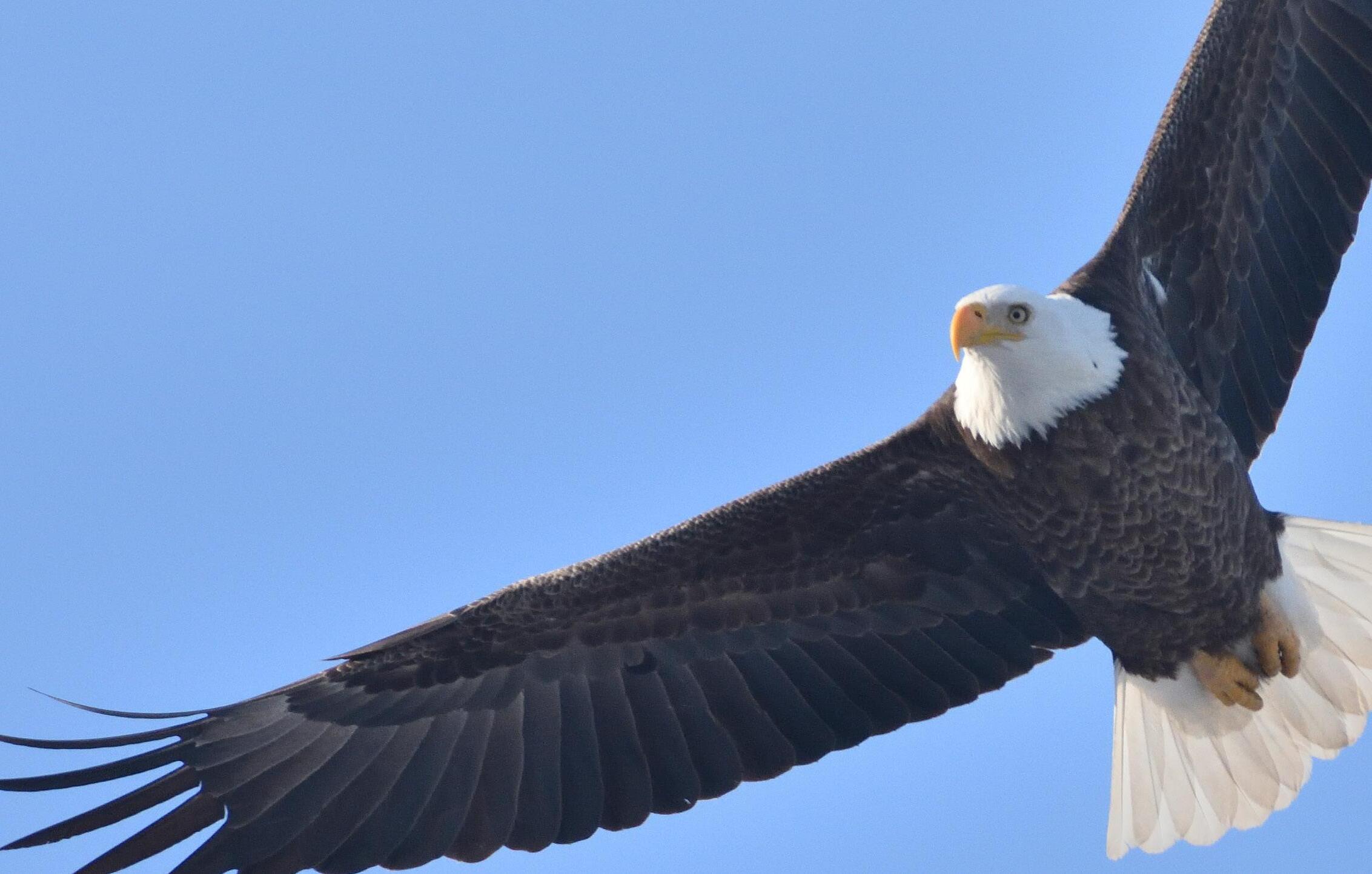
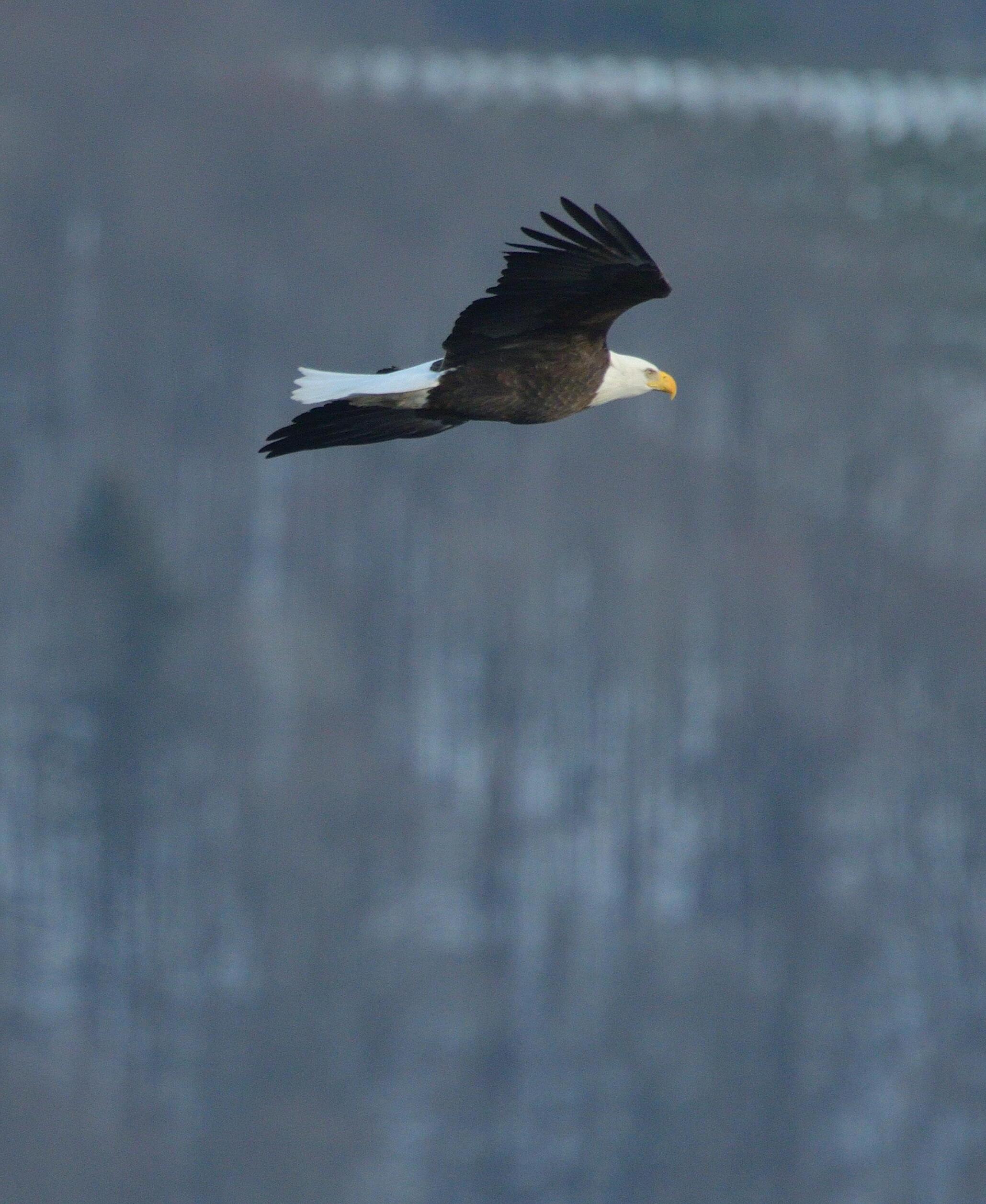
on bald eagles and other birds of prey and helped launch the modern environmental movement. Today, the recovery of these species is one of conservation’s great success stories. Last year we counted a record 761 bald eagles during migration, each one a powerful symbol of what is possible when people take action.
While our Visitor Center has served us well for decades, the building no longer reflects the scope of Hawk Mountain’s work. The exhibits are outdated, critical systems are past their life expectancy, and the facility lacks full accessibility. In response, our staff and Board have begun work on a once-in-ageneration project: a new Visitor Center for Global Raptor Conservation.
Despite our small size, Hawk Mountain’s impact is extraordinary. Our research helped establish the surrounding region as an Important Bird Area and Conservation Landscape. Our migration count is the longest running in the world and has inspired more than 200 raptor count sites across North America. Our international traineeship program has welcomed over 532 conservation leaders from 76 countries,
Photo by Bill Moses

leading to global partnerships and hundreds of scientific publications. This year we are also helping lead the 3rd Pennsylvania Bird Atlas, a fiveyear effort to document bird populations across the state.
Thanks to generous supporters like you, we have already raised 74% of our Visitor Center campaign goal
The new center will create welcoming indoor and outdoor learning spaces, expanded offices for our growing team, and dynamic exhibits that inspire the next generation of conservation leaders.
Thank you for being part of Hawk Mountain’s story. I hope you will consider joining us in this once-in-a-lifetime opportunity to shape its future. If you would like to learn more or join us in this legacy project, please contact me today to learn more.
Yours in Conservation,

Sean Grace
PRESIDENT
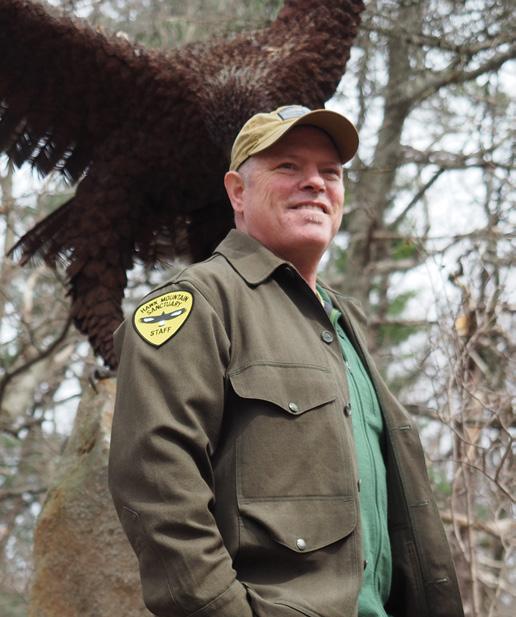
STAFF
PRESIDENT
Sean Grace
SARKIS ACOPIAN DIRECTOR OF CONSERVATION SCIENCE
Laurie Goodrich, Ph.D.
SENIOR SCIENTIST AND GRADUATE STUDY DIRECTOR
Jean-François
Therrien, Ph.D.
SENIOR RESEARCH BIOLOGIST
David Barber
RESEARCH BIOLOGIST
Rebecca McCabe, Ph.D.
BIOLOGIST-NATURALIST
Bracken Brown
PA BIRD ATLAS COORDINATOR
Amber Wiewel
ACOPIAN CENTER
OPERATIONS COORDINATOR
Wendy Nicodemus
DIRECTOR OF EDUCATION
Megan Roselli
EDUCATOR & RAPTOR CARE SPECIALISTS
Jessica Gary Dan Jenkins
DIRECTOR OF SANCTUARY STEWARDSHIP Todd Bauman
SANCTUARY STEWARDS
Noah Rauch
Stephen Wade
DIRECTOR OF DEVELOPMENT
Mary Linkevich
MEMBERSHIP & VOLUNTEER MANAGER
Tammy Jandrasitz-Bodey
COMMUNICATIONS SPECIALIST Gigi Romano
DEVELOPMENT AND COMMUNICATIONS
OUTREACH COORDINATOR
Laura Berry
DEVELOPMENT ASSISTANT Annie Trexler
BUSINESS MANAGER
Shelley Davenport
BOOKSTORE MANAGER
Mary Therese Grob
BOARD
CHAIRMAN
Beth Hucker
VICE CHAIRMAN
David Bonenberger
Jeff Weil
TREASURER
Edwin Baldrige
SECRETARY
Wendy McLean, Esq.
EXECUTIVE COMMITTEE
Jacquelyn Bonomo
Lorin Basden
Arnold, Ph.D.
Peter Bennett
Jacquelyn Bonomo
Ana Maria Castaño
George Cauffman
Deborah Edge, M.D.
Jeff Goldenberg
Richard W. Holt
Diane Husic, Ph.D.
Ernesto Ruelas
Inzunza, Ph.D.
Nasreen Kara
Jim Lefik
Holly Merker
David Middleton
Sara Nicholas
Sally O’Byrne
Dan Rubenstein, Ph.D.
Scott Weidensaul
Minturn Wright, III, Emeritus Member
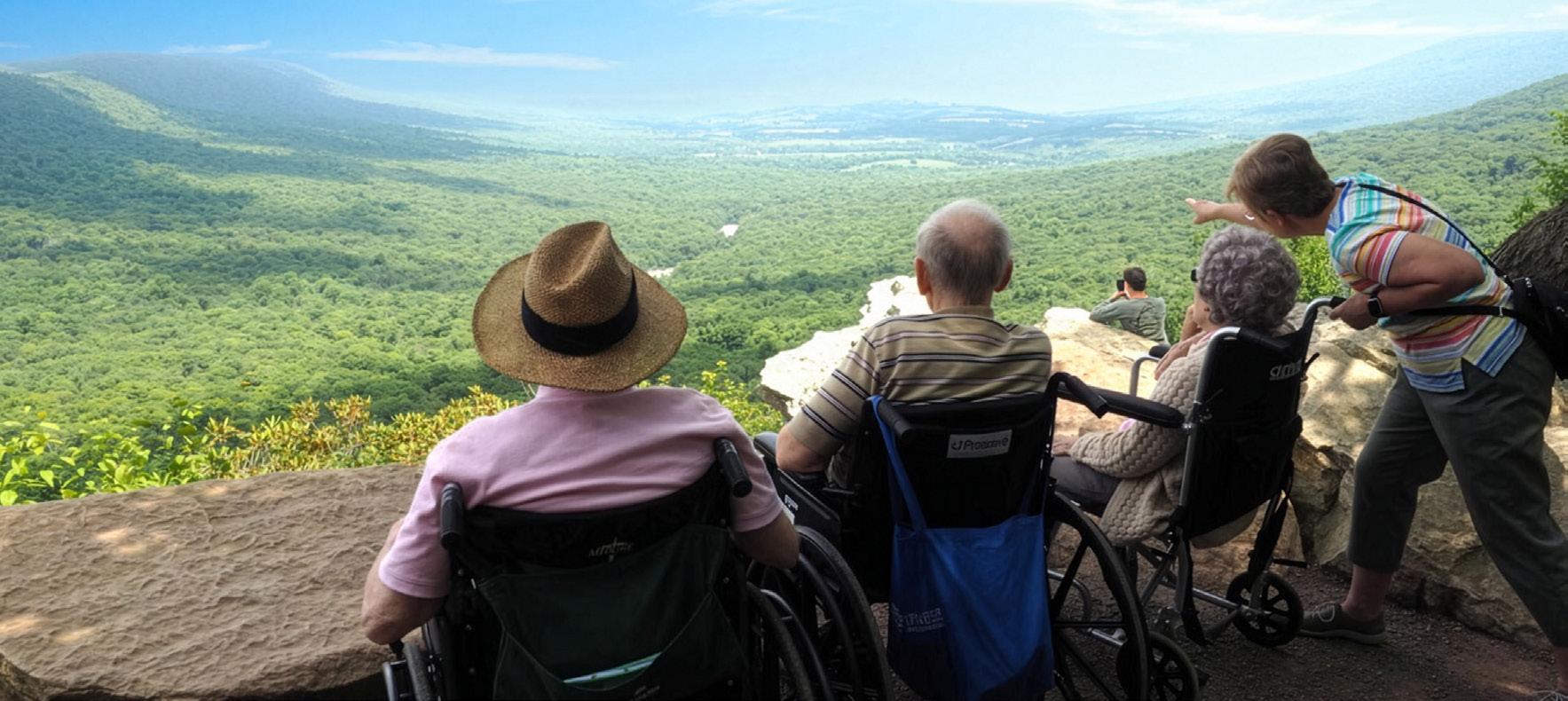
Last October, Hawk Mountain Sanctuary hosted a Birdability Day event in partnership with Experience Reading & Berks County, celebrating inclusive access to birding and the outdoors. Part of the national Birdability movement, held each fall to promote accessibility in outdoor recreation, the event welcomed visitors of all ages, abilities, and experience levels. Guests enjoyed a variety of inclusive programs and experiences, with ASL interpreters available during select presentations. Timed with peak fall migration, the day highlighted Hawk Mountain’s ongoing commitment to ensuring that birding and enjoying nature are truly for everybody.
BIRDABILITY DAY BOARD UPDATES
Elizabeth “Beth” Hucker of Berwyn, PA, has been elected chair of the board of directors. A trusted advisor to educational and environmental organizations, Beth has deep, lifelong ties to Hawk Mountain and its global raptor conservation mission. She brings extensive nonprofit governance and financial management experience, having served in numerous leadership roles and as president of Superior Family Office, Inc.
The board also welcomed Dr. Lorin Basden Arnold of Kutztown, PA, and the return of Scott Weidensaul. Dr. Arnold contributes more than two decades of academic leadership experience, with a career dedicated to strategic growth, student success, and academic innovation. Weidensaul, an acclaimed author of more than 30 books and internationally respected migration researcher, returns to the board after several years away, bringing decades of ornithological expertise and conservation leadership.
NEW PUBLICATION
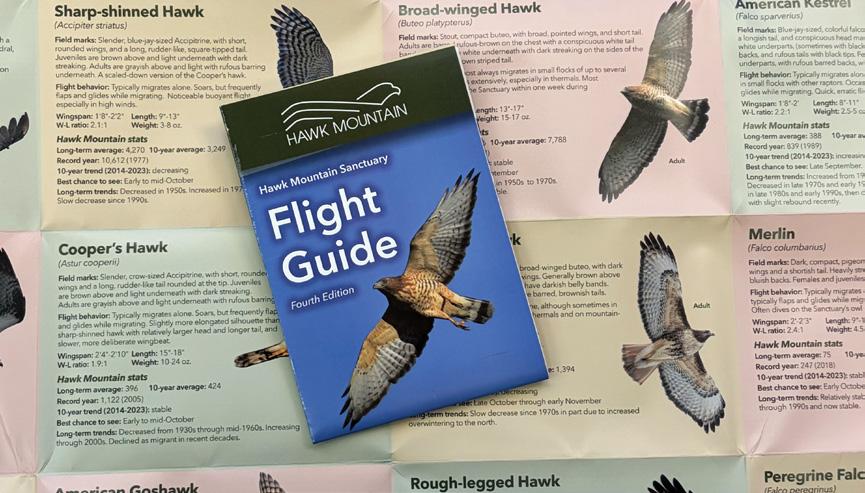
The newly updated Flight Guide from Hawk Mountain Sanctuary is your go-to resource for identifying and understanding migrating raptors on the Kittatinny Ridge. This Fourth Edition features updated species profiles, migration timing charts, long-term count trends, and clear explanations of hawkwatching basics. Whether you’re new to the lookout or a seasoned birder, the Flight Guide helps you make sense of every silhouette overhead.
GLOBAL IMPACT
Hawk Mountain is now partnering on a new Conservation Network for Island Raptors, one of the most threatened groups of birds on the planet. This important partnership with collaborator Dr. Munir Virani and Mohammad Bin Zayed, Raptor Conservation Fund, will start with a training workshop in the Philippines in 2026 that will equip a new generation of conservation leaders with the technical and leadership skills needed to conserve raptors. The workshop is one of a series of international training workshops Hawk Mountain hopes to hold to train young ornithologists globally to better address critical research and conservation priorities such as reducing electrocution threats.
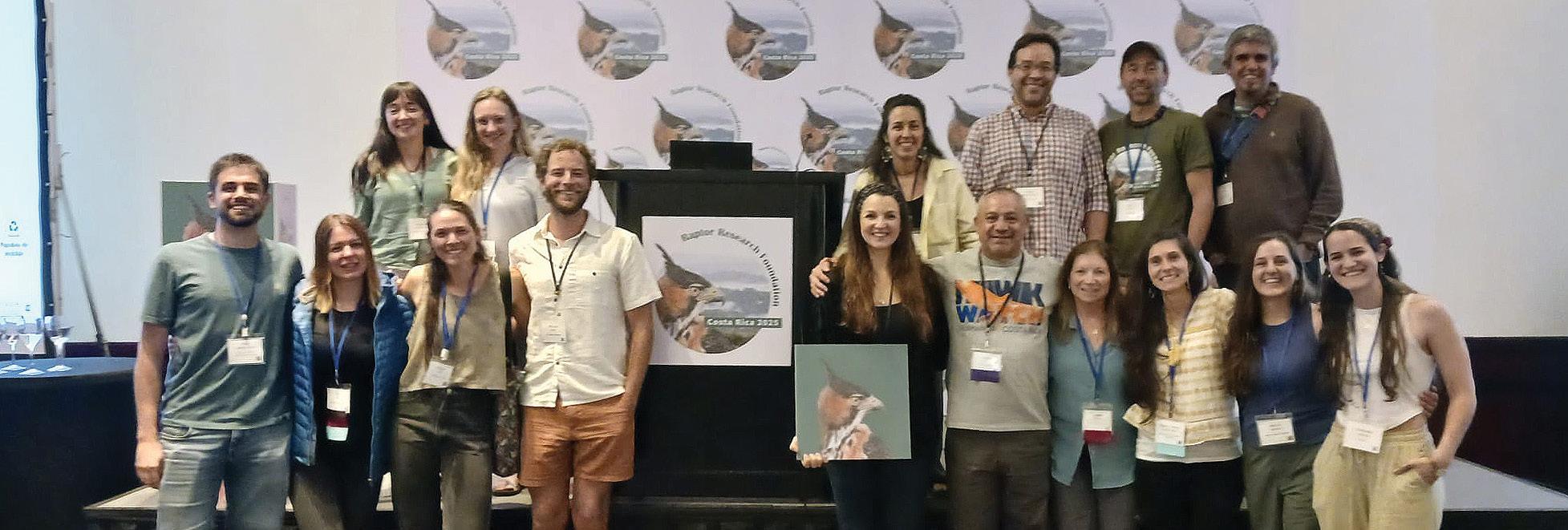
Former Hawk Mountain trainees and staff reunited at the 2025 Raptor Research Foundation Conference in San José, Costa Rica this past October. Many presented on their current research including taxonomy on short-eared owls, habitat selection of wintering Swainson’s hawks, breeding ecology of American kestrels, spring and summer movements of snowy owls, the post-fledging dependence period of chaco eagles, and conserving raptors in the Neotropics, to name a few. A key organizer of the conference was Talamanca Hawkwatch, which is codirected by HMS trainee alumnus Pablo Porras. Hawk Mountain was a lead partner of the event, and several trainees and staff helped facilitate this inspiring global gathering of raptor conservationists.
Raptor Research Foundation Conference
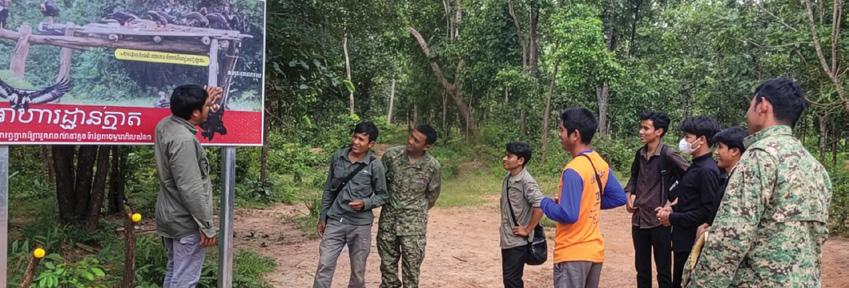
Sothea explaining red-headed vulture feeding behavior
When mass poisonings devastated populations of the critically endangered hooded vulture, three of our former trainees who work for The Gambia’s Wildlife Department reached out for assistance. Within days, Hawk Mountain’s Project SOAR grants program provided emergency funds for outreach and surveys, and they were connected with vulture experts in South Africa. The result: leading vulture biologists will soon travel to The Gambia to train 37 Gambian officials in rapid-response techniques to prevent future poisonings.
Last fall, Sothea Bun of Cambodia visited Hawk Mountain Sanctuary through the Young Southeast Asian Leaders Initiative and received funding for his project, Fostering Community Engagement in Vulture Conservation through Volunteering in Cambodia’s Eastern Plains Landscape (EPL). As part of the effort, he partnered with WWF-Cambodia and Hawk Mountain to host a youth-focused vulture conservation event on September 8–9, 2025, in Koh Nhaek District. Hosted by WWF-Cambodia in collaboration with Hawk Mountain, the program engaged 32 participants, including students, rangers, and staff, and featured a talk by Hawk Mountain’s David Barber on raptor migration, historical threats, and vulture tracking. WWF-Cambodia also highlighted the work of the Cambodia Vulture Working Group (CVWG), focusing on population census and key threats such as poisoning in EPL, and the event concluded with a visit to a vulture restaurant.
CELEBRATING 30 YEARS OF
CONSERVATION LEADERSHIP:
Director of Stewardship
Todd Bauman Honored with Rosalie Edge Conservation Award

Hawk Mountain is proud to announce that Director of Stewardship Todd Bauman received the Rosalie Edge Conservation Award at the Delaware Valley Ornithological Club’s annual banquet on November 14, 2025. The award honors non-members of the Club who have made a significant contribution to conservation of the environment, reflecting the bold conservation legacy of Rosalie Edge, founder of Hawk Mountain Sanctuary.
In 1934, Edge purchased Hawk Mountain to stop the shooting of migrating raptors along the Kittatinny Ridge, establishing the world’s first refuge for birds of prey and launching a global movement in raptor conservation.
Bauman, who joined Hawk Mountain in 1995, has spent three decades advancing that legacy. Over three decades, he has led transformative efforts in land management, habitat restoration, education, and conservation research. His work includes establishing a native tree nursery, leading invasive plant control initiatives, and constructing large deer exclosures that have revitalized native forest understory habitat. He has also overseen improvements to visitor access and learning spaces, including the development of ADA-accessible trails and the creation of a new outdoor classroom and amphitheater to enhance environmental education.
Deeply committed to mentoring the next generation of conservationists, Bauman leads the Hawk Mountain Conservation Corps and advises Conservation Science Trainees from around the world, many of
whom have gone on to establish migration monitoring sites in their home countries. His research contributions span projects on northern saw-whet owls, timber rattlesnakes, and cerulean warblers, while he continues to support university partnerships, conservationist training, and field-based learning opportunities. In addition, he serves as a longtime Search and Rescue Emergency Responder on Sanctuary property, further demonstrating his dedication to visitor safety and stewardship.
Through his leadership and service, Bauman has strengthened habitat protection, enriched public engagement, and helped ensure that Hawk Mountain remains at the forefront of global raptor and habitat conservation.
“Todd embodies everything Rosalie Edge stood for,” said Holly Merker, Hawk Mountain Board Member who nominated Bauman for the award.
...In everything Bauman does both on and off the mountain, he carries the torch forward...
“In everything Bauman does both on and off the mountain, he carries the torch forward, illuminating what it is to be a conservationist through land management, stewardship, education, and science. There is simply no one more deserving of this honor.”
NEW RESEARCH TARGETS SURVIVAL OF YOUNG AMERICAN KESTRELS
By Laura Berry
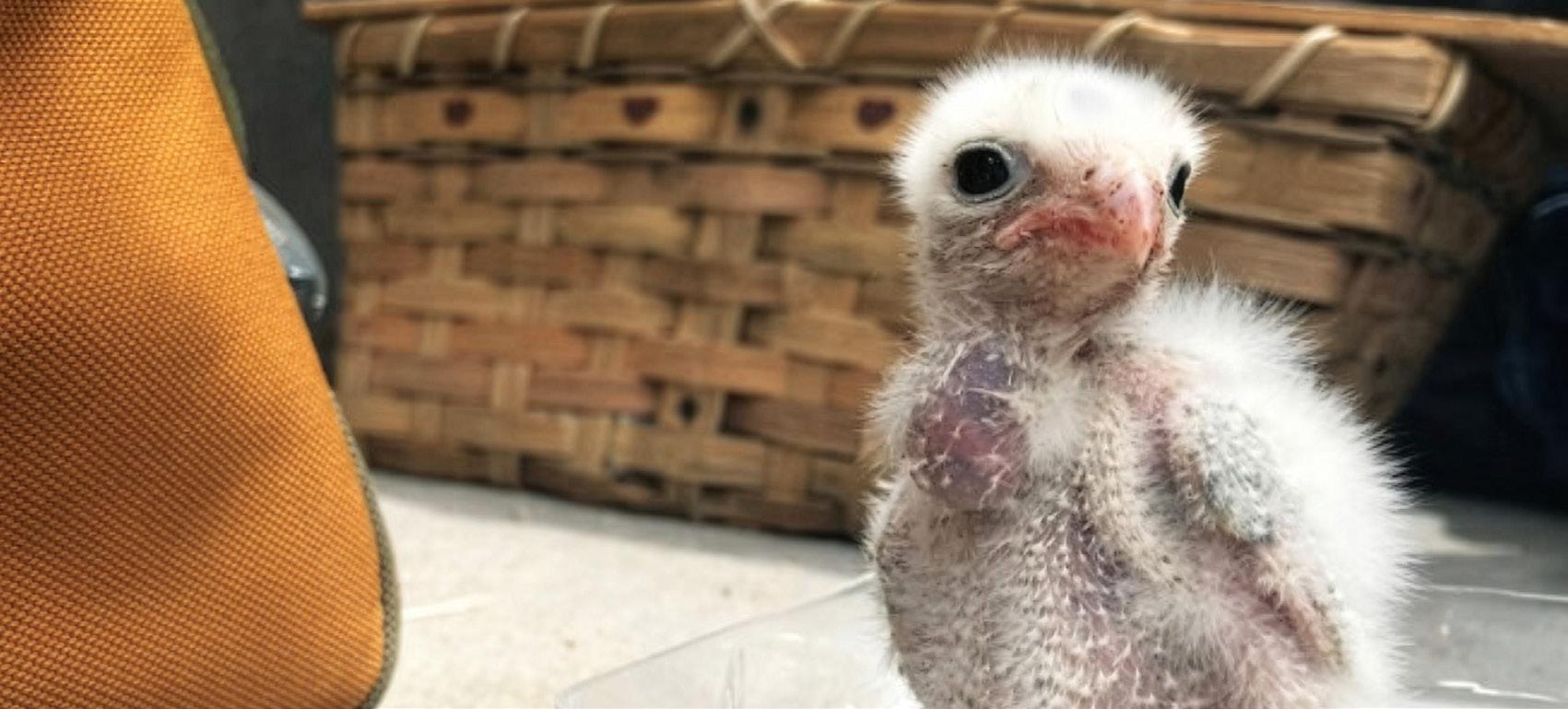
The American kestrel, a small falcon which is relatively common across North America, has been in decline for over three decades now. Numerous studies have tried to assess potential reasons for the declining population, but so far researchers have been unable to identify one single direct cause.
In a recent collaborative study, researchers from all over North America (including the U.S. Fish and Wildlife Service, U.S. Geological Survey, Cornell Lab of Ornithology, The Peregrine Fund, Hawk Mountain Sanctuary, and at least four universities, among others) used pre-existing bird banding data across breeding, migration, and wintering seasons to create a continent-wide population model.
This model was then used to look at how breeding productivity and survival rates change over time, focusing on a seasonal basis as opposed to year-round survival rates. This more targeted strategy allowed researchers to pinpoint at what times of year survival seems to be declining the most, while also looking at the influence of survival by age and sex.
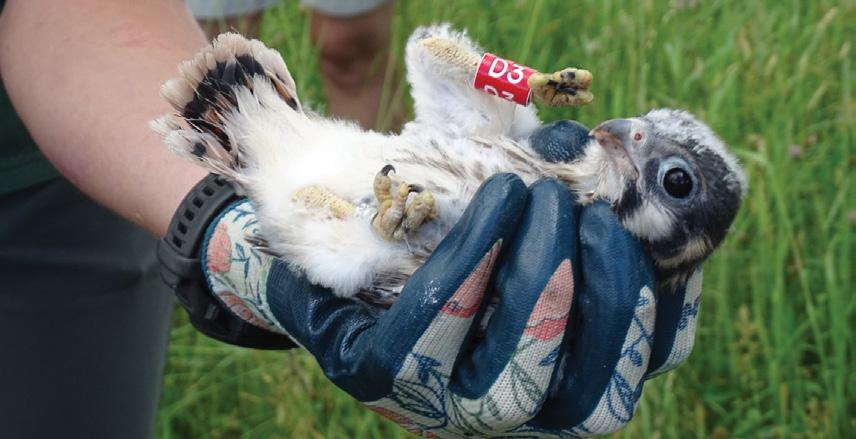
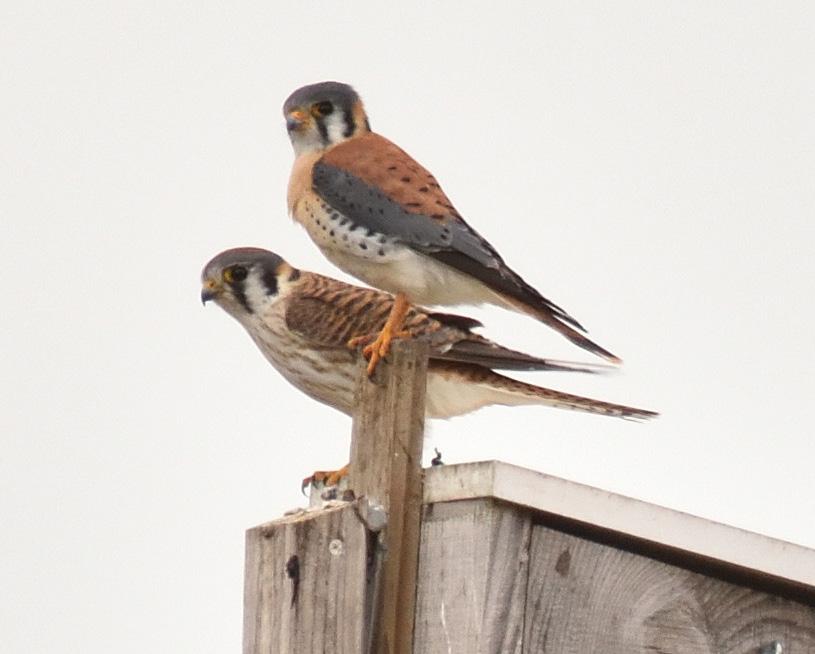
The results were significant. Researchers found that while most reproductive and survival indexes seem to be stable over time, survival is declining for young birds, both male and female, between the time they leave the nestbox to the time they would begin their first migration. This decline also mimics what can be observed in the overall population trend, which has been 2% annually for over three decades.
This is now allowing researchers to focus on assessing what is causing mortality in these young birds during this critical period in their development, in hopes of identifying and preventing further overall population decline in the future. Hawk Mountain Sanctuary is already developing projects that will allow a closer look at diet of fledglings as well as predation on fledglings, which are set to launch in the upcoming summer months.
For more information, the full paper can be accessed by visiting the Publications page on our website or scanning the QR code.
Banded chick
Kestrel pair on nestbox
Photo by Bill Moses
GHOSTED GRASSLANDS: HAWK MOUNTAIN’S NEW NORTHERN HARRIER RESEARCH
By Gigi Romano
by
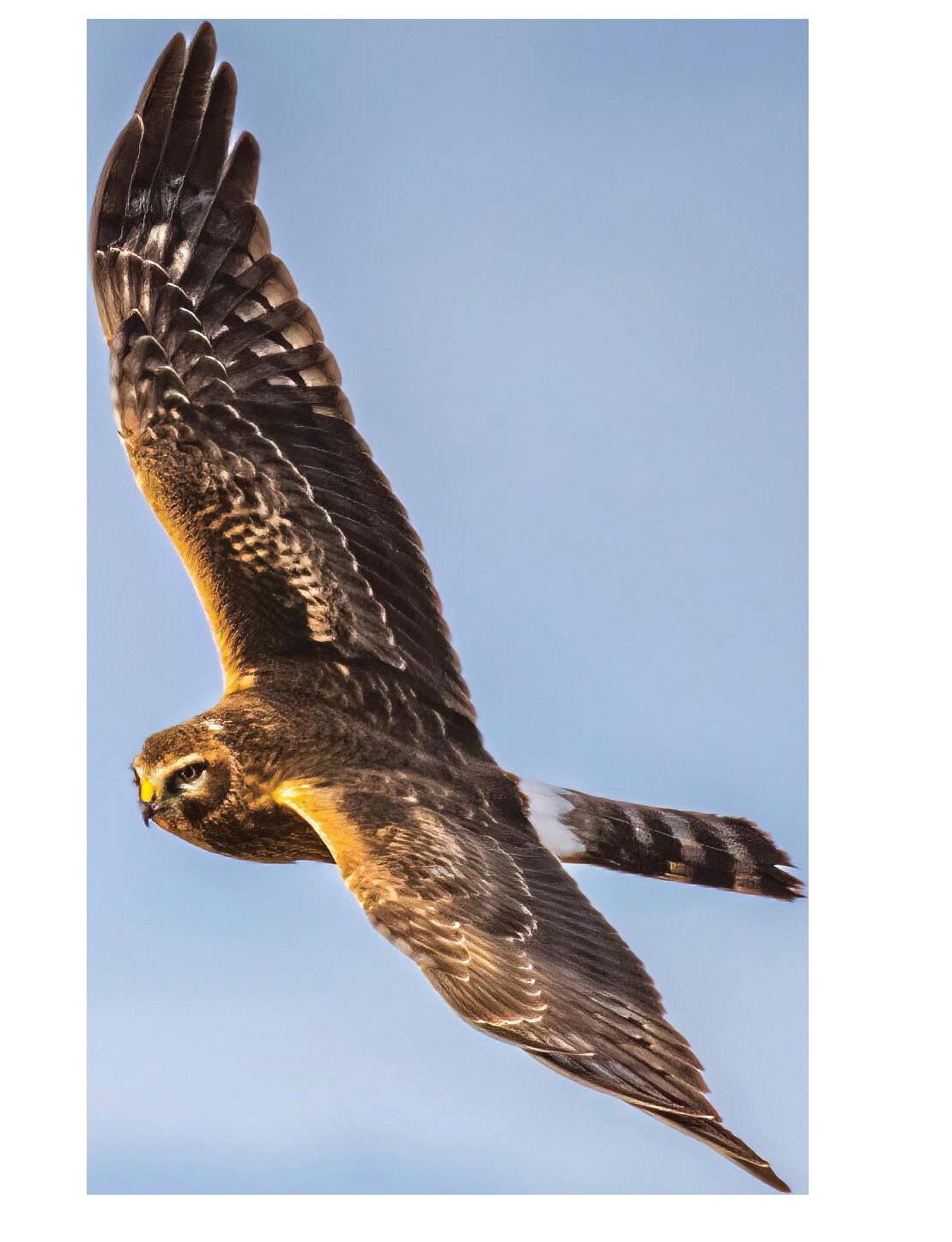
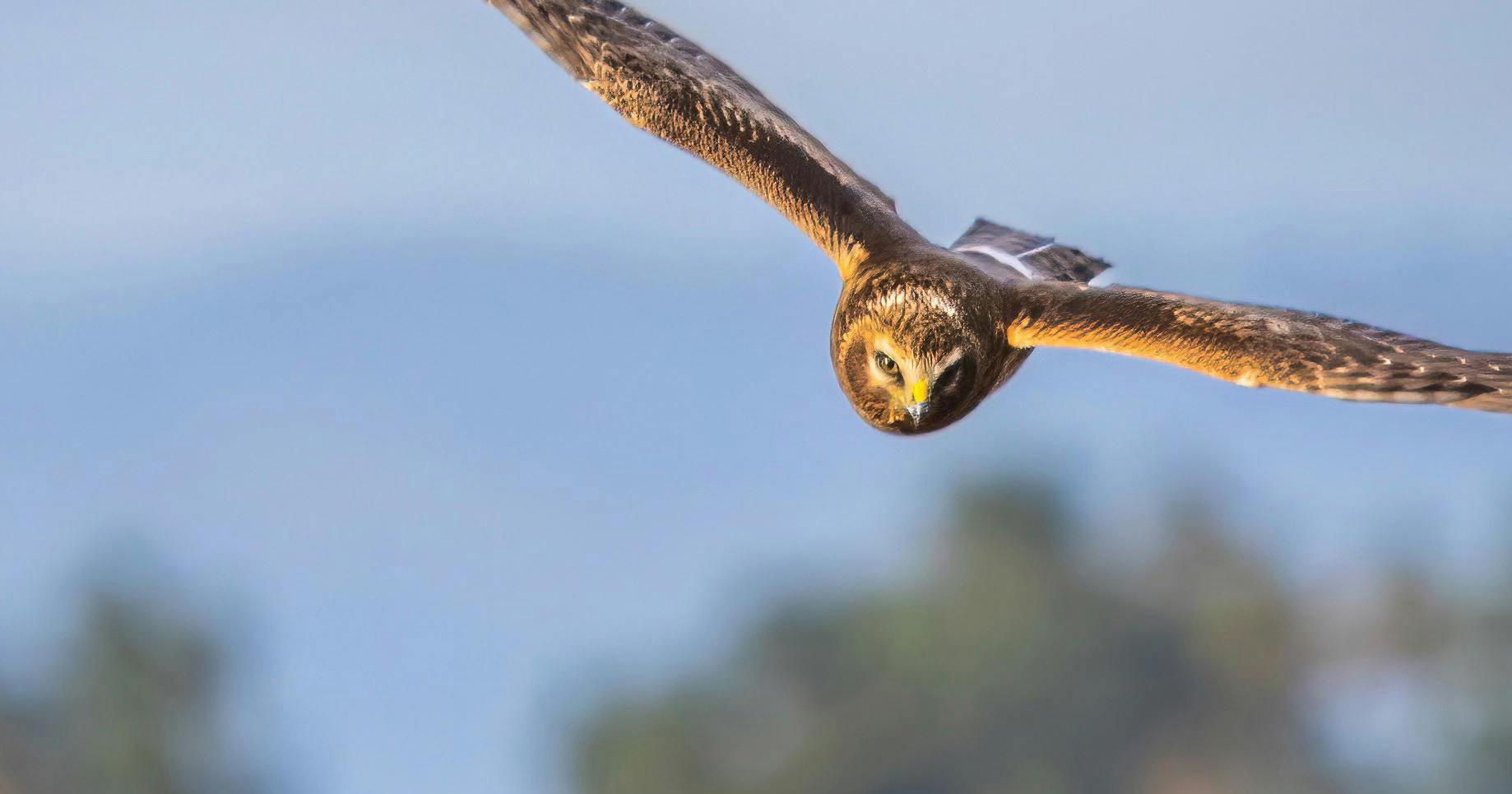
In collaboration with the Pennsylvania Game Commission, Hawk Mountain has launched a new research initiative to better understand and protect one of Pennsylvania’s most vulnerable raptors: the northern harrier. Once widespread across the state’s open landscapes, this grassland and marsh-dependent hawk has experienced steep declines in recent decades. Now listed as a state-threatened species, the northern harrier faces mounting pressure from habitat loss, fragmentation, and changing land use. Through this multi-year effort, Hawk Mountain aims to uncover the life history, habitat needs, and movement patterns of Pennsylvania’s remaining breeding harriers, and to engage landowners as essential conservation partners in this effort.
From the 1980s to 2010, Pennsylvania Bird Atlas data documented a dramatic decline in nesting distribution, with some estimates showing losses of 43%. Across eastern North America, declines have surpassed 30%. Today, nesting populations are largely concentrated in northern counties, particularly in reclaimed mine lands and rural farmland. Despite the species’ threatened status, no comprehensive, in-depth study has yet examined the causes of decline or identified targeted conservation solutions within Pennsylvania. That gap is what this project seeks to fill.
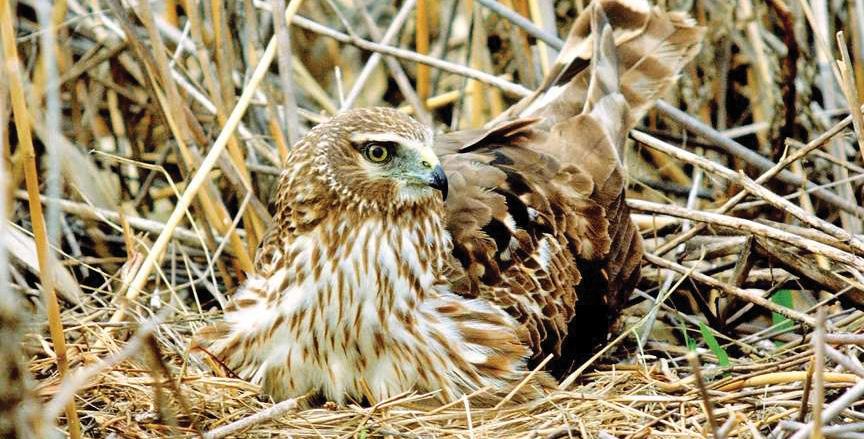
Northern harriers are adapted to life in open country. They nest directly on the ground, concealing their nests in tall grasses or marsh vegetation. Secretive during nesting season, males perform dramatic, undulating “sky dances” to court females. Because they require expansive grasslands—sometimes more than 150 acres of quality habitat to successfully raise young—their presence serves as a powerful indicator of healthy grassland ecosystems that also support species such as bobolinks, dickcissels, and short-eared owls.
Yet grasslands and wetlands are among the fastest-declining habitats in the state. Agricultural intensification, increased pesticide use, expanding row crops, and development pressures have reduced both the quantity and quality of suitable habitat. In recent years, industrial-scale
Female northern harrier in ground nest
Photo
Robert K So
solar development and gas extraction have added new layers of fragmentation in some of the state’s remaining open landscapes. Understanding how much disturbance harriers can tolerate, and what size and configuration of habitat patches they require, is critical for informing future land management decisions.
Beginning in 2026 and continuing through 2029, Hawk Mountain researchers will conduct a two-part study. First, a statewide geographic analysis will use verified sightings from eBird, the Pennsylvania Bird Atlas, and Hawk Mountain’s longrunning Farmland Raptor Project database to examine land cover around harrier nesting, migration, and wintering sites. Using GIS tools and national land cover datasets, researchers will assess habitat composition within one- and five-kilometer buffers around sightings to measure field size, road density, fragmentation, and development patterns. Historical nest sites will also be compared with present-day land cover to determine why some areas have retained breeding birds while others have lost them.
Second, researchers will capture and tag adult or juvenile harriers using lightweight GSM transmitters, which will allow scientists to map home range size, identify core foraging areas, and track migration routes and wintering grounds. The tracking study will reveal how far Pennsylvania harriers travel, where they stop during migration, and what types of habitats they depend on throughout the year. By combining detailed movement data with landscape analysis, the team will quantify how fragmentation and development influence nesting success and survival.
This research is made possible through grants from the DCNR Wild Resources Conservation Program and the Pennsylvania Game Commission, along with private support for transmitters. The project also builds on Hawk Mountain’s strong partnerships with Bird Atlas volunteers, farmland owners, conservation agencies, and birding organizations across the state.
HOW CAN YOU HELP?
Community participation will be essential to the project’s success. Because northern harriers are secretive nesters and widely dispersed, locating breeding territories requires many eyes on the landscape. Hawk Mountain is actively seeking landowners with extensive grassland or marsh habitat to report harrier sightings between May 15 and July 31, 2026. Observations of low-flying birds over fields, repeated activity in one area, or evidence of prey deliveries can all help researchers identify potential nest sites.
By contributing sightings, granting access for surveys, or simply sharing information about historic harrier use on their property, community members can help ensure that this iconic grassland raptor remains part of Pennsylvania’s natural heritage. Reports of harrier activity or inquiries about supporting the effort can be directed to Bracken Brown at Hawk Mountain Sanctuary, or scan the QR code for more information.
At its core, this project is about more than one species. By understanding and protecting the landscapes northern harriers need to thrive, Hawk Mountain hopes to strengthen conservation strategies for Pennsylvania’s entire grassland bird community. With science-driven guidance and community collaboration, hopefully the sweeping, low flight of the northern harrier may once again become a common sight over the state’s open fields.
For more information or to report a sighting, please scan the QR code.
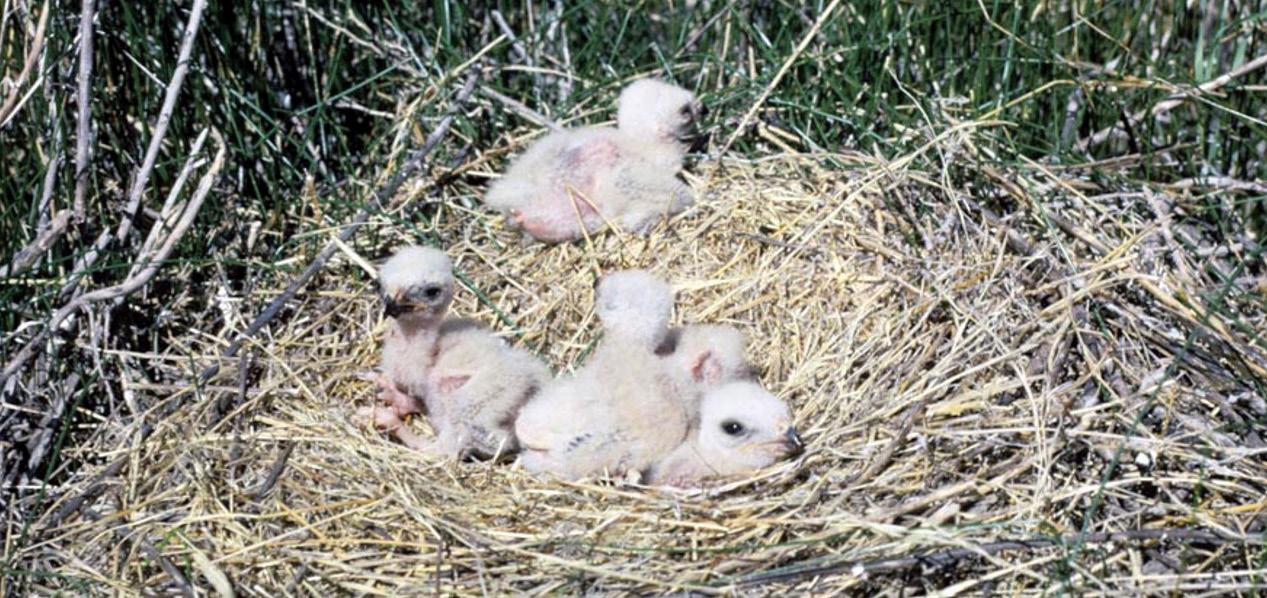
Northern harrier nestlings

Penn’sWoods PLANTS FROM
By
Christopher F. Sacchi
Photo by Gigi Romano
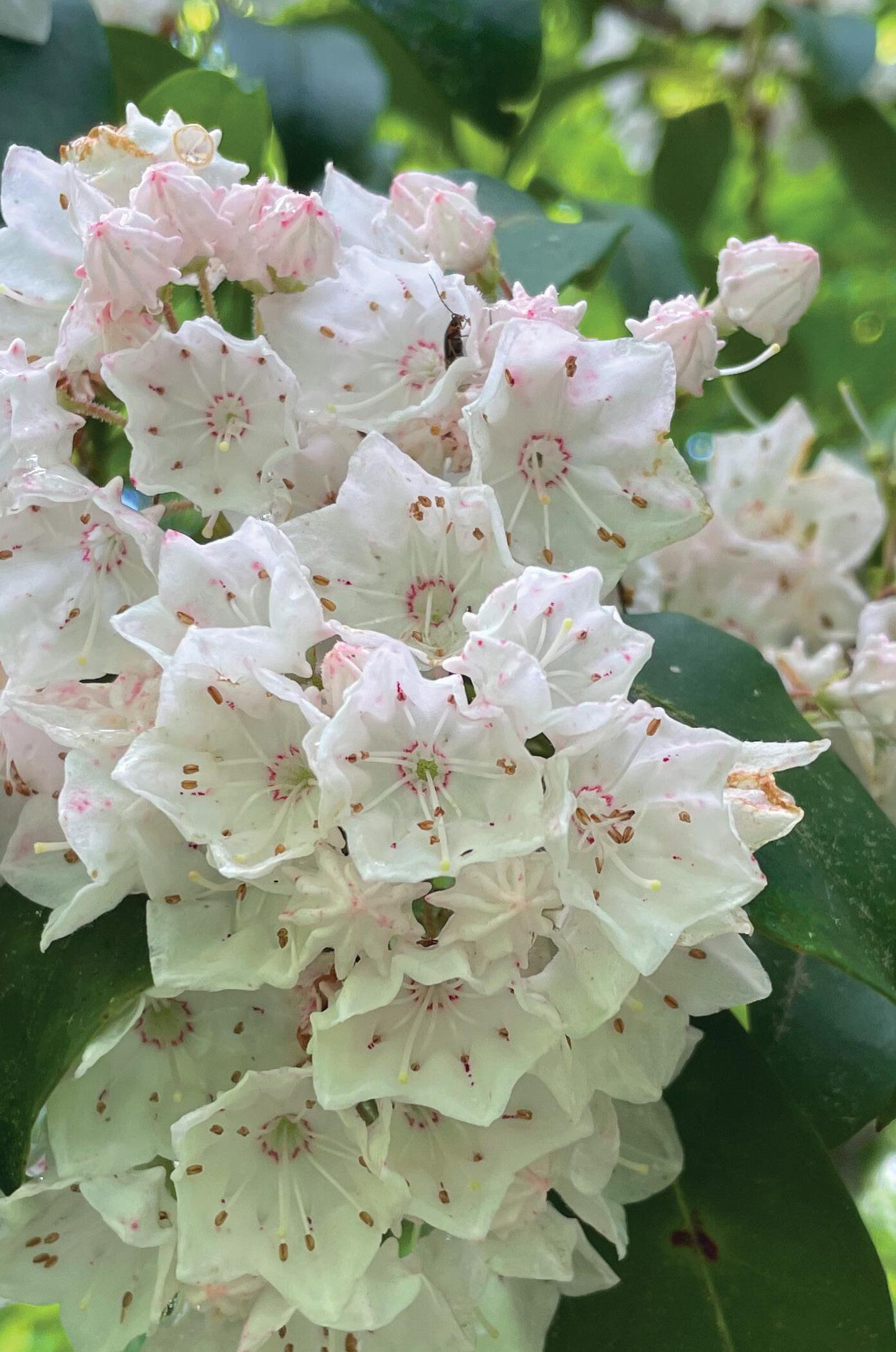
The abundance and diversity of spring flowering plants throughout eastern forests, including those of the Appalachian Mountains, are highly anticipated by hikers, amateur naturalists, and plant enthusiasts. The floral show produced by individuals of one plant species in particular, mountain laurel, is among the most beautiful and most appreciated of all flowering plants during the spring.
Mountain laurel grows generally as a multi-trunked evergreen shrub that measures from 5 to 10 feet in height with a similar width. In southern parts of its geographic range, it may grow to be a small tree from 20 to 35 feet. The trunk is described as gnarled, with thin, ruddy brown to sometimes reddish bark that has narrow ridges flaking into scales. Branches are stout and contorted. Plants produce a fibrous root system.
The shiny, leathery leaves measure 2-5 inches in length and 1-1.5 inches wide. They are dark green in color and elliptical in shape, being pointed at both the apex and the base, with a smooth, not toothed, texture along the margins. Leaves often grow crowded toward the tip of the branches with these tip-most leaves appearing to be whorled, while leaves lower on a branch appear to have alternate leaf attachment. The evergreen nature of the plant makes it readily identifiable even during the winter season.
The scientific name for mountain laurel, Kalmia latifolia, was ascribed to the species by Linnaeus, father of the binomial (two word) genus and species scientific naming system, with the genus named in recognition of Peter Kalm, a student of Linnaeus and an early plant explorer in eastern North America. Kalm was sent to North America by Sweden to search for seeds of plants of agricultural or industrial significance, with Linnaeus noting that Kalm was responsible for collecting specimens
of at least 60 new species. The specific epithet, or species name, latifolia means broad-leaved. Mountain laurel is classified in the family Ericaceae, called the heath family. Other familiar plants in this family include the smaller, related sheep laurel, Kalmia angustifolia, rosebay Rhododendron, blueberries and huckleberries, and teaberry, all of which commonly grow at Hawk Mountain Sanctuary.

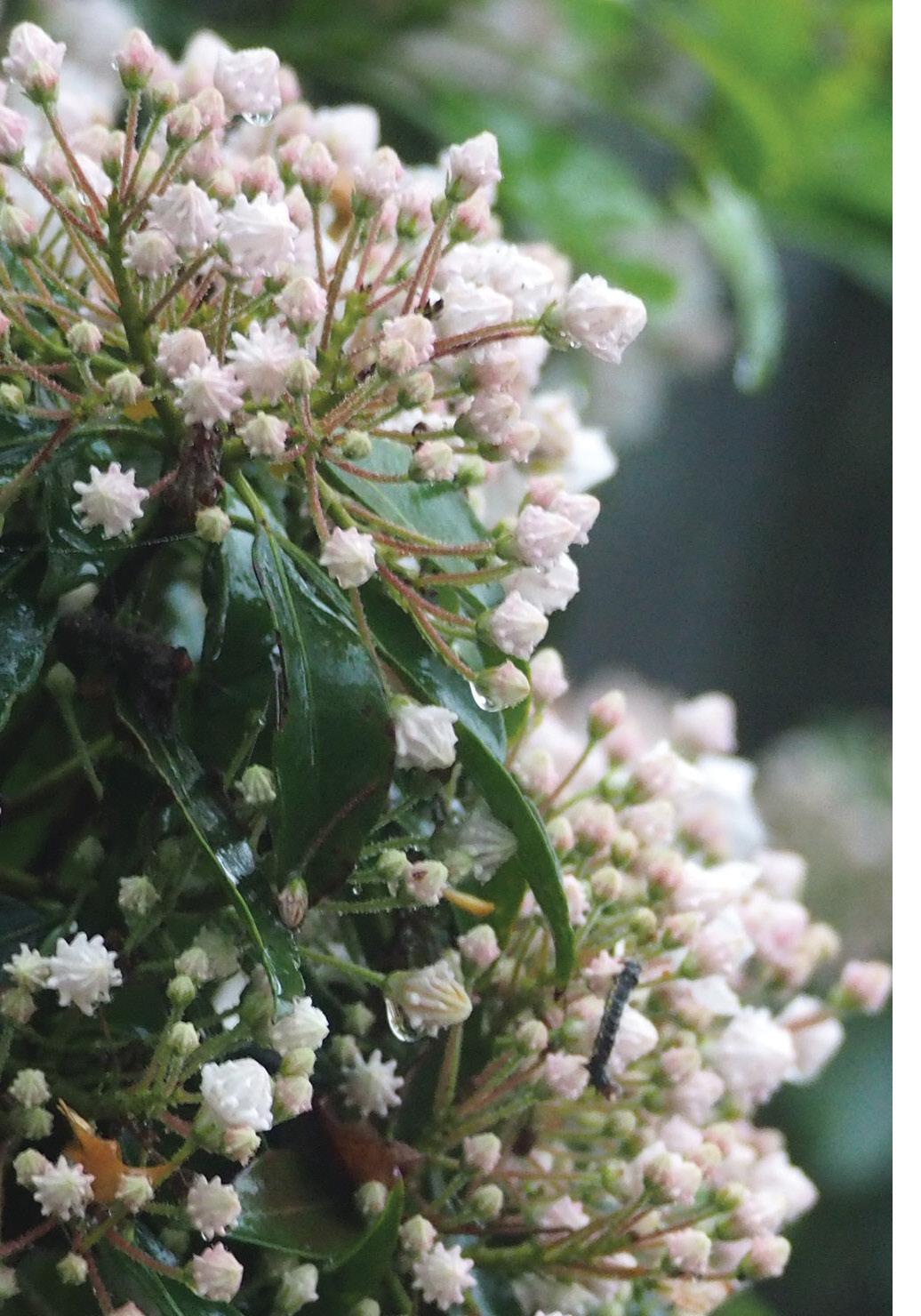
Flower Cluster
Twig
Elliptical shaped leaves
Dome-shape buds
Pedicel
Mountain laurel has an extensive geographic distribution growing from New Brunswick to Louisiana in a range of habitats, preferring to grow in acidic soils including cool bogs in northern lowlands, to sandy soils in the New Jersey Pine Barrens, to dry upland soils in Pennsylvania, to 4000 feet in the south. In the Appalachians, mountain laurel grows well in the shade of the eastern deciduous forest or can also be found on rich exposed rocky slopes in the southern Allegheny range.
The beauty of the flowers and floral display in May to June have earned mountain laurel designation as the state flower of both Pennsylvania and Connecticut. The flowers appear in large dome-shaped clusters of 10 - 30 flowers measuring approximately 3-5.5 inches across. Individual flowers are 0.75-1 inch across, and the white to deep pink flowers are marked on the inside by purple or rose-pink lines. Each flower
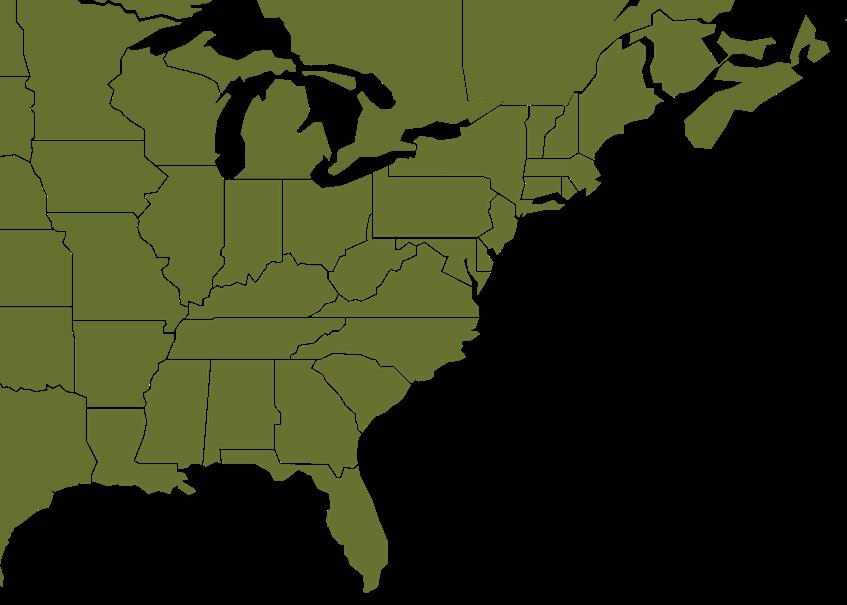
Georaphic range of mountain laurel
five petals fused together. The reproductive structures within the flowers include ten pollen-bearing stamens and one pistil that carries many multi-celled ovules, which each include an egg cell. The stamens are reflexed and arched, with each being embedded in a groove in the petals and being “spring” loaded. The flower stalk, or pedicel, has a coating of an exudate that presumably deters small insects, like ants, which would be ineffective in cross-pollination from entering the flower.
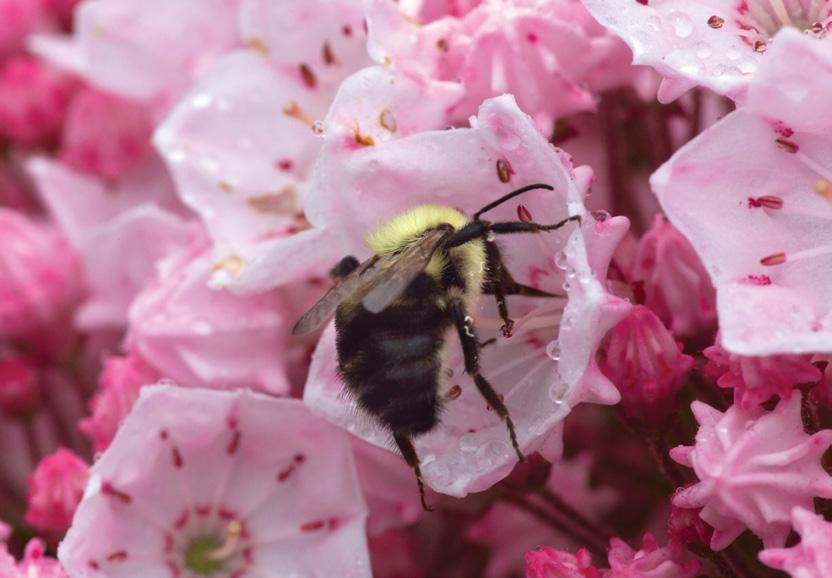
Pollination of the flowers effected by insects is particularly interesting, considering their shape and structure. When insects, particularly bumblebees but also butterflies and moths, visit the flowers they trigger release of the spring-loaded anther that ejects pollen onto the body of the visiting insect. The pollen of mountain laurel is aggregated in large clusters by a sticky viscous material, into viscin threads. These aggregations of pollen from one flower are carried to a receptive pistil of another flower, presumably resulting in cross pollination through delivery of many pollen grains from one individual flower to another. When observing mountain laurel flowers, interested observers can use a pencil, pen, or small twig to release a stamen from its groove within the flower and witness the ejection of a mass of pollen that is ‘thrown’ across the center of the flower. Fruits produced after successful pollination are dry, fivepart globe-shaped capsules that are green during summer, and split
to release many tiny seeds during fall. The dried brown fruits are retained by the plants throughout the winter.
Leaves of mountain laurel and related species, like those of the native diminutive sheep laurel, are poisonous and toxic to livestock including cows, sheep and goats and are generally avoided by native deer. Only when preferred food is limited will deer feed on mountain laurel. The nectar in flowers also includes low concentrations of the poison; there are reports that the honey produced by honeybees gathering nectar and pollen from mountain laurel produce a toxic honey that causes what is called “mad honey” disease in people who consume quantities of the honey produced from either mountain laurel and related Kalmia species as well as from Rhododendron
In addition to mountain laurel, other common names for this species include mountain ivy, laurel, calico bush, calfkill, and sheep-kill, the last two related to the toxic properties of the leaves. One common name, spoonwood, originated from reports by Europeans that native Americans used mountain laurel’s hard, dense wood to make spoons or other useful implements. Other uses cited for the wood in older sources include tool handles, turned articles, and fuel.
Mountain laurel is known to form dense thickets in places, providing suitable cover and nesting sites for ruffed grouse and wild turkey. These thickets formed by mountain laurel and by evergreen Rhododendron were called “devil’s thickets” due to their impenetrable and confusing nature for early settlers.
ABOUT THE AUTHOR
Mountain laurel is recommended as a beautiful native ornamental plant for shrub borders and in naturalized gardens. There are many named cultivated varieties of the mountain laurel, but one caution is that the plant is finicky due to its particular soil requirements and may be most successful where soils are moist, cool, and well-drained and toward the acidic side. Mulching soils around plants can help to retain moisture. There are a number of plant diseases, such as leaf spot and herbivorous insects like scale or lacebug, that affect the plant both in nature and in cultivation.
Consider a springtime visit to Hawk Mountain Sanctuary, where your approach to the Sanctuary along Hawk Mountain Road is flanked by many large individuals of mountain laurel that can be resplendent in their abundance of blooms. While at the Sanctuary, walk along the trail to the South and North Lookouts where you will be able to observe more closely mountain laurel plants and their intriguing flowers.
Christopher F. Sacchi is a plant ecologist who studies plants and plant-animal interactions and is a Professor Emeritus in Biology from Kutztown University. Information in this article was compiled from a variety of sources and personal experience.
Bee visiting mountain laurel
WINGS ON THE ROAD:
SIX MONTHS OF ET AL BLOG
By M. Emilia Rebollo, Hawk Mountain collaborator and wife of Fernando G. López, Spring 2018 Conservation Science Trainee

As the wife of a former conservation science trainee, I can say that Fer’s formative experience at Hawk Mountain Sanctuary has become a living expedition for both of us. In 2018, Fer left the Sanctuary with a strong sense of how rigorous science and community go hand in hand, an impression later shared with me in our life together. And that impression has been key in inspiring our next adventure.
A Different Way
Travel was always something we loved, but a life traveling was something we started to think more deeply about during the pandemic. By the end of our postdoctoral chapters as academic ornithologists in the USA, I at Virginia Tech and Fer at the Smithsonian Institution, we realized we were standing at a decision point. Another position abroad? A return to Argentina? Instead of choosing immediately, we chose something less conventional: to step sideways from the academic track and rediscover the questions that first drew us to science.
That shift in perspective gave rise to et al blog. We purchased a motorhome
and welcomed our cat, Batman, aboard. Rather than anchoring ourselves to a single institution, we committed to the road, crossing the Americas to enjoy birds, collaborate with other ornithologists and conservation practitioners, and engage local communities. We also set out to carry forward an ambitious goal: conducting the world’s longest vulture survey on the road.
For more than five years, night after night, we watched videos of people living and traveling on the road. And now, somehow, we’ve become one of them. We turned the key in our motorhome’s ignition in Washington, D.C., on August 25, 2025, and began our dream journey. This time, it was real. Fortunately, Hawk Mountain Sanctuary stood behind us as the lead sponsor of et al blog, supporting a different way of doing science: mobile collaboration.
First Flight
Our departure from the USA happened quickly. Because of our visa situation, we had only a month to leave the country, but still managed to visit incredible places. Fer finally got to see Virginia Tech and
we explored new places, like the Luray Caverns and the city of New Orleans.
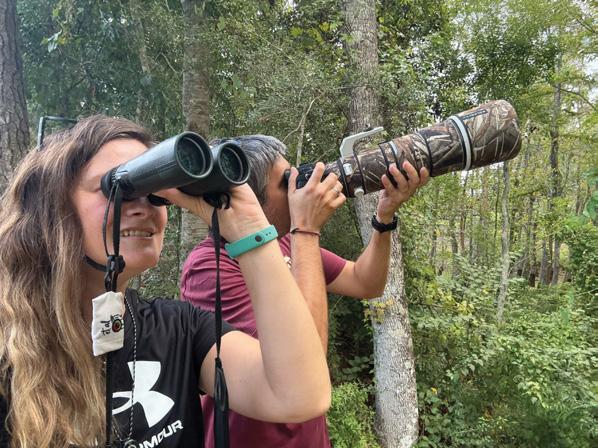
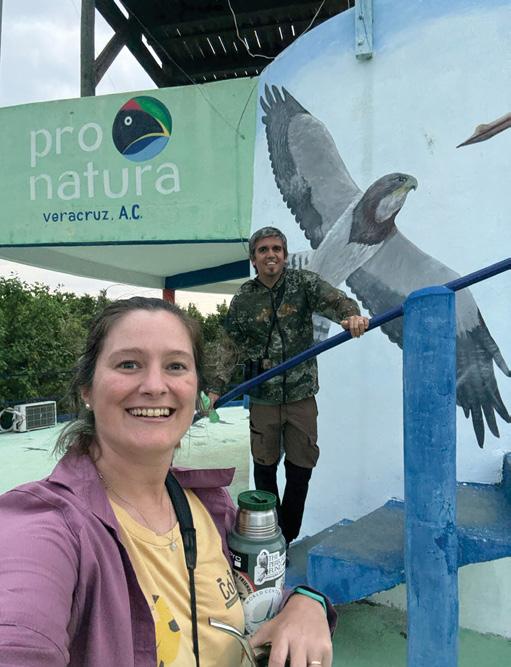
Less than three weeks later, we crossed into Mexico. Since then, this country has become both our field site and our temporary home. During our time here, we have also had the chance to meet eight Hawk Mountain former trainees, sharing experiences and a common passion for raptors.

One of the most memorable highlights came in late October at the Dr. Mario A. Ramos Migratory Bird Observatory, where we appreciated the Veracruz River of Raptors and watched large numbers of turkey vultures drifting south. Seeing their migration unfold reminded us why we chose this path: to follow birds across borders and share their story with as many people as possible.
The Journey on Board
Almost half a year into the journey and the numbers tell part of the story: 6,622 kilometers traveled, 42 stopping points, and 2,222 vultures surveyed, up until this point. Beyond the metrics, there are early mornings on dusty roads and long hours scanning skies.
Our motorhome has become more than transportation: it is a moving observatory, office, and home. Batman supervises from the bed. We plan routes around birding spots, migration timing, and local partnerships.
Throughout these months, Hawk Mountain’s philosophy has traveled with us. Their support has allowed us to dedicate time to data collection, outreach activities, and multimedia content that connects people with science. When we share our vulture counts online or collaborate with regional ornithologists, we are building bridges that mirror the flyways above us.
Travel With Us
Over the next few months, we will continue traveling north through Baja California, planning to enter the USA along the West Coast. From there, we’ll keep moving up the Pacific Coast into Canada and hopefully reach Alaska by mid-year. After that, we will cross back into Canada and return to the U.S. on the East Coast, where we hope to make a special stop at Hawk Mountain. From there, we will continue the journey south through the Americas until we finally reach Ushuaia, Argentina.
We would love for you to travel with us! Follow our updates at www.etalblog.com/en/, share our work, collaborate, and help expand this adventure. Migration is never a solitary act, it depends on thermals, landscapes, and safe places to land. In the same way, this project grows through the community we create along the way.
Madhya Pradesh Hawk Mountain: FROM A Journey Across Continents TO
By Aishwarya Laghate, Spring 2025 Conservation Science Trainee
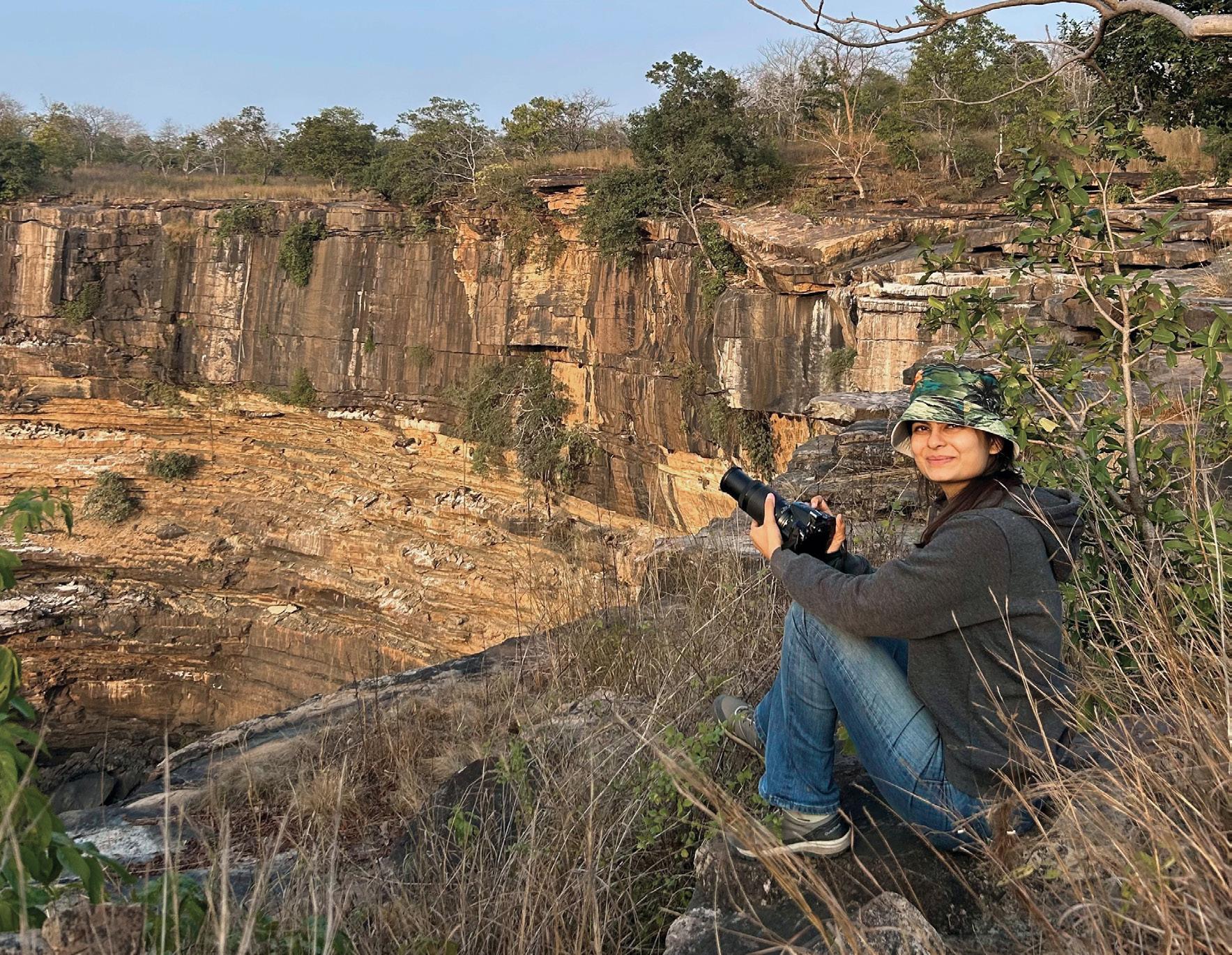
I grew up in the central Indian state of Madhya Pradesh, often called the heart of India. Surrounded by forests and a rich diversity of wildlife, I did not realize as a child how fortunate I was to be born in such a landscape. But one family trip changed everything for me.
I was only eight years old when my parents took me to Satpura Tiger Reserve. I still remember the tall teak (Tectona grandis) trees, patches of bamboo, and the golden light filtering through the forest. During the safari, a moment occurred that shaped my life… we saw a tigress with her cubs nearby. It was magical. I did not fully understand conservation or ecology at that age, but I understood wonder. I understood that this feeling was special.
While returning home, eight-year-old me had a simple yet powerful thought: “Agar yahi kisi ki job hoti toh kitna maza aata.”
Translated, it means, “If this were someone’s job, that person would have enjoyed life so much.” I had no idea what wildlife biologists did or how one even became a conservationist. I just knew that if spending time in forests and seeing animals could be a career, that would be the happiest life.
Years passed, and that childhood thought quietly stayed with me. In high school, I chose biology without hesitation. I enrolled in a bachelor’s degree in environmental science, where my interest slowly transformed into a commitment. I began volunteering with conservation organizations, participating in awareness programs, and spending more time outdoors. Wildlife was no longer just a fascination; it was becoming a purpose.
Somewhere along the way, I found myself drawn deeply toward birds. I think one of the reasons was that they were everywhere.
Unlike large mammals that required safaris to observe, birds were accessible. They perched on electric wires, nested in trees near my home, and called out from wetlands and grasslands. I could observe them daily. I could learn their behavior. I could even try to mimic their calls. There was something empowering about identifying a bird by its silhouette or its sound. Slowly, birds became my window into understanding ecosystems.
I went on to pursue my master’s in wildlife conservation action. But my specific love for vultures began in an unexpected waythrough a book. During that time, I won a quiz competition and received a book titled Vanishing Vultures of India. Before that, I had not thought much about vultures. But that book opened my eyes.
As I delved deeper into understanding the species, the reasons for their catastrophic decline, and their importance in the ecosystem, I was shocked. The dramatic population crash caused primarily by the veterinary drug Diclofenac had pushed several species of Gyps vultures to the brink of extinction. These birds, once abundant across India, had declined by more than 95% in just a few decades. The consequences were not just ecological but also social —
increases in feral dog populations, higher risks of rabies transmission, and serious public health implications.
While studying further, I came across a fact that filled me with both pride and responsibility: I had been born in what is often referred to as the “Vulture State of India,” Madhya Pradesh. The state holds the highest population of Gyps vultures in the country. The very landscapes I grew up around were strongholds for these critically endangered scavengers. Since that day, I knew I wanted to dedicate myself to their conservation.
Soon after completing my master’s, I joined WWF-India’s Raptor Conservation Programme. Working on the ground, monitoring nesting colonies of critically endangered vultures, was a privilege in itself. Climbing rocky cliffs to observe nests, documenting breeding success, and ensuring minimal disturbance taught me patience and precision.
Beyond fieldwork, connecting with local communities became one of the most meaningful aspects of my work. Many people misunderstand vultures because they are associated with death, yet they are among the most efficient natural sanitation workers. Explaining their ecological role— how they prevent the spread of disease by consuming carcasses quickly—felt like a moral duty. Every awareness session, every conversation with livestock owners about safe veterinary practices, reinforced my belief that conservation is as much about people as it is about wildlife.
After working for three years with WWFIndia, I realized that I wanted to contribute even more to vulture research in my state. I decided to pursue a PhD, hoping to
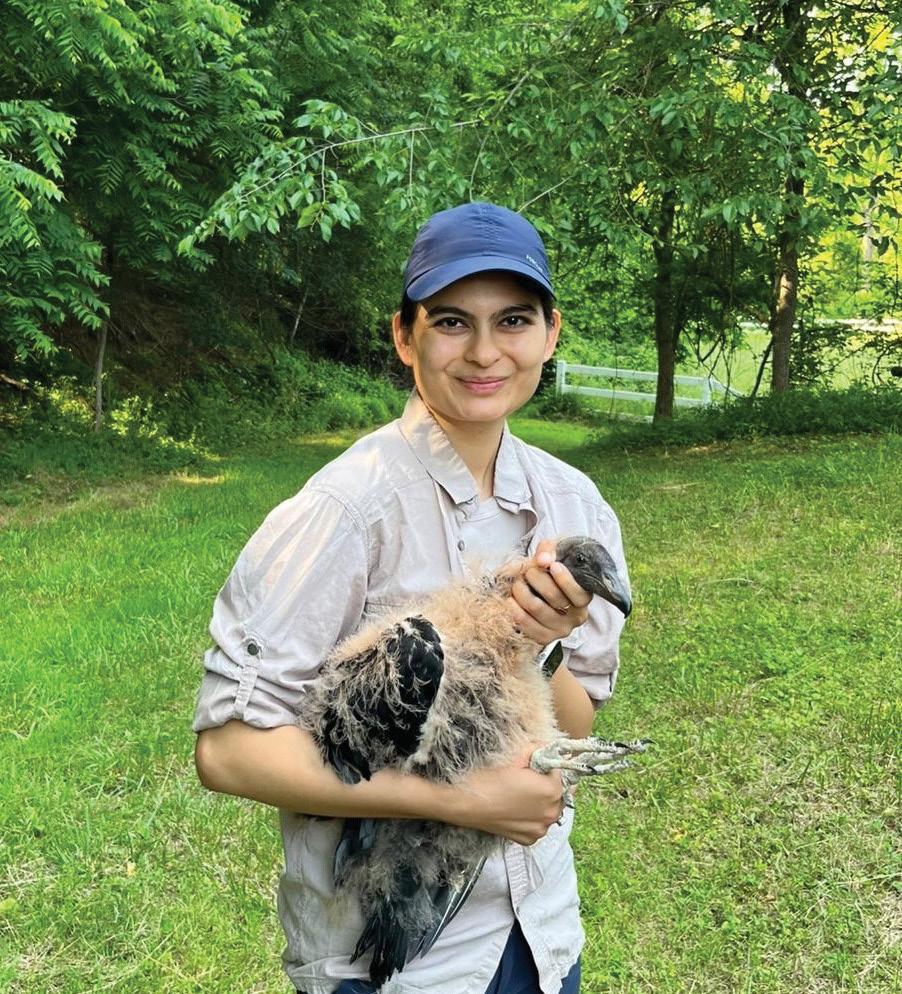
Aishwarya with young vulture
generate scientific knowledge that could strengthen conservation strategies in Madhya Pradesh.
For me, vultures are more than just birds. They are guardians of public health and protectors of ecological balance. They silently clean our environment by consuming carcasses that could otherwise become breeding grounds for pathogens. Their survival is deeply tied to both ecosystem health and community well-being. In a country like India, where livestock plays a central role in rural livelihoods, vultures provide an irreplaceable service.
I also feel connected to this cause because of the cultural context I come from. In India, compassion toward living beings is deeply rooted in many traditions. Animals hold symbolic and spiritual significance. Yet vultures, despite their importance, are often overlooked or misunderstood. Working for their conservation feels like restoring respect to a species that has served humanity quietly for centuries.
My research allows me to combine my love for wildlife, my concern for public
Aishwarya with fellow trainee during the migration count
health, and my commitment to science into one meaningful pursuit. Protecting vultures, for me, is both a scientific mission and a moral responsibility.
Soon after starting my PhD, I learned about the traineeship programme at Hawk Mountain Sanctuary. It felt as though all the stars had aligned. Hawk Mountain is globally recognized for its pioneering work in raptor conservation and long-term migration monitoring. For someone deeply involved in raptor conservation in India, this was more than just a training opportunity— it was a dream come true.
Arriving at Hawk Mountain was both exciting and humbling. The rocky trails, the vast forested landscape, and the history of raptor monitoring created an atmosphere of dedication and purpose. One of my most emotional memories from the Conservation Science Traineeship remains my first hike to the North Lookout.
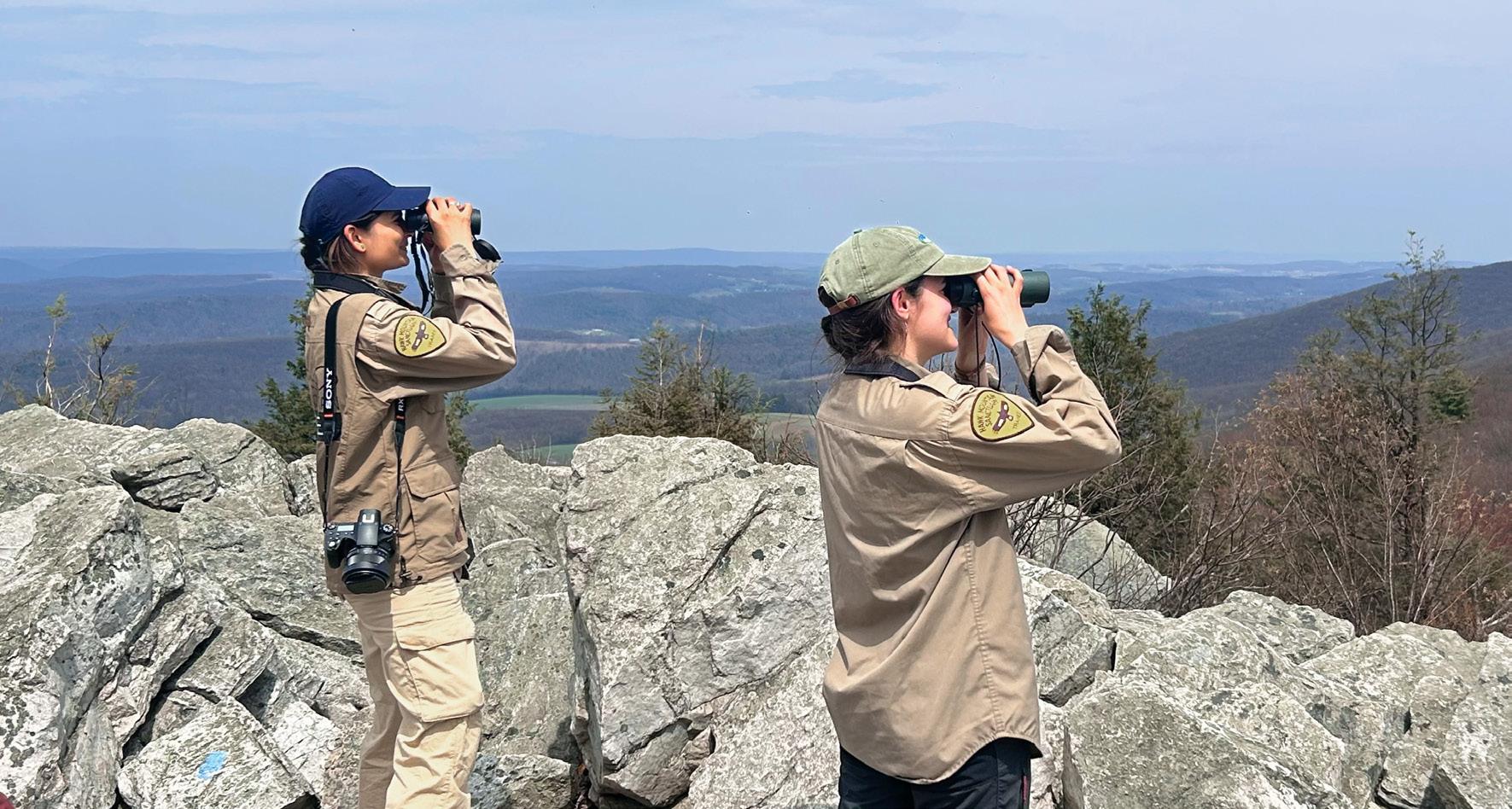
It was my first day on migration count duty. We climbed up early, carrying binoculars and datasheets, scanning the skies with anticipation. The air was crisp, and every distant speck in the sky demanded attention. I remember feeling both nervous and thrilled.
And then, suddenly, a turkey vulture soared above us.
It was the perfect moment. Although I had spent years studying Old World vultures, this was the first time I was seeing a New World vulture in the wild. The graceful dihedral wing posture, the effortless soaring on thermals, it felt familiar yet entirely new. In that instant, continents seemed to connect. Vultures in India and vultures in North America may belong to different evolutionary lineages, but they share the same ecological role and the same misunderstood reputation.
That moment is etched in my memory. It felt symbolic and served as a reminder that conservation is global, and that my work is part of a larger story.
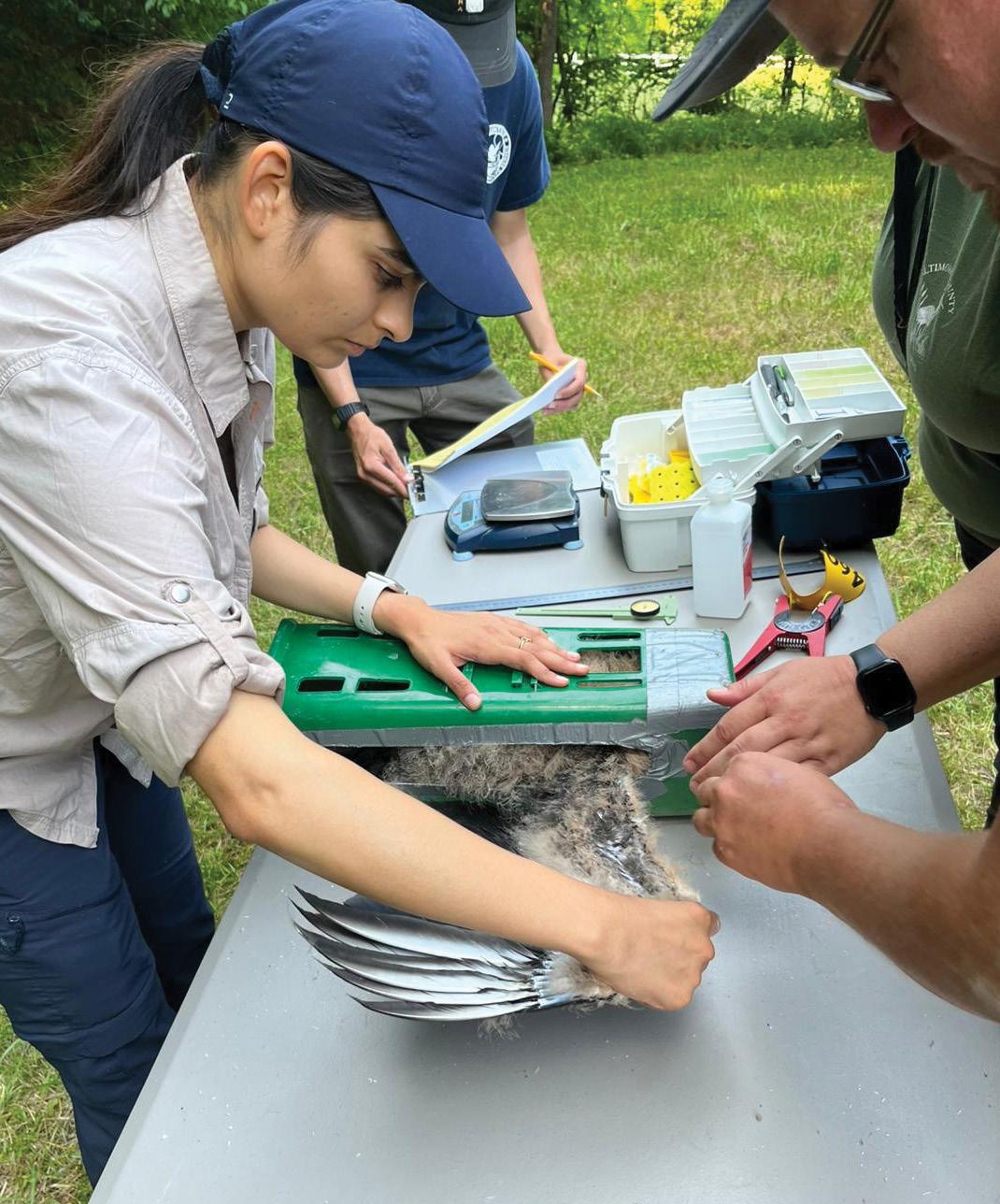
What made the traineeship even more meaningful were the mentors and colleagues I worked with. Their dedication to long-term monitoring, standardized data collection, and public outreach inspired me immensely. I learned not only technical skills—such as migration count protocols and morphometric methods—but also the importance of science communication and community engagement.
Visitors from all walks of life came to the lookout points, curious about the birds overhead. Watching experienced educators explain migration ecology in simple yet impactful ways made me reflect on how we can strengthen outreach back home. I wish to replicate similar approaches in India, building stronger public awareness of vultures and raptors, encouraging citizen science, and fostering a culture of pride in these species.
Standing at Hawk Mountain, I often thought about Madhya Pradesh; about nesting colonies and flocks of vultures at carcass dumping sites. The landscapes are different, but the sky connects them. The thermals that carry vultures upward in Pennsylvania are not so different from those above the plains of central India.
When I think back to that eight-year-old child returning from Satpura, I smile. She did not know the path ahead, but she knew what joy felt like. Today, as a researcher working on vulture conservation and as a trainee at Hawk Mountain, I feel that same joy—only now it is supported by knowledge, responsibility, and purpose.
My journey from the forests of Madhya Pradesh to the ridges of Hawk Mountain has been guided by curiosity, persistence, and an unwavering passion for wildlife. I am deeply grateful for the opportunity to learn, grow, and contribute. And as I continue my PhD and future conservation work, I carry with me the lessons, inspiration, and memories from Hawk Mountain, hoping to translate them into meaningful impact for vultures back home.
My story has always been about looking up, and finding purpose in what flies above
Aishwarya helps HMS scientists measure and collect data on a young vulture
SUMMER AT THE SANCTUARY
Learn more and register at hawkmountain.org/events
SONGBIRD MIGRATION STATION
Sat, May 9 | 8 – 10 AM
$20, $15 for Members
Get an up-close look at the research techniques used to study migratory songbirds by spending your morning learning about songbird banding, participating in bird walks, trying your hand at research methods, and learning about the science of migration.
THE SECRET WORLD OF BATS
Sat, May 16 | 7 – 8:30 PM
$15, 10 for Members
Learn the natural history of bats, their environmental impacts, and how you can help local species. Also get to meet live education bats and experience a release of rehabilitated bats into the Sanctuary.
SPRING NATIVE PLANT SALE
Sat, May 16 | 10 AM - 3 PM
Sun May 17 | 10 AM - 2 PM
Choose from a wide variety of PA native plants perfect for your home landscape and learn about the importance of native plants from our expert volunteers.
INVASIVE SPECIES AT HAWK MOUNTAIN
Sun, May 17 | 12 – 2 PM
$15, 10 for Members
Join Sanctuary Steward Noah Rauch on a walk around the Hawk Mountain grounds and learn ways to identify and manage common invasive plant species in the northeast.
HAWK MOUNTAIN ARTS TOUR
Sat, June 6 | 9 AM - 5 PM • FREE
This self-guided driving tour leads you to a broad mix of artists at home and host studios within a 25-mile radius of the Sanctuary in scenic Albany Township. Visit hawkmountain.org/artstour to see the list of participating artists and the artist map.
FAMILY FOREST FUN
Sat, July 25 | 10 AM – 2 PM
Trail fee applies for Non-Members
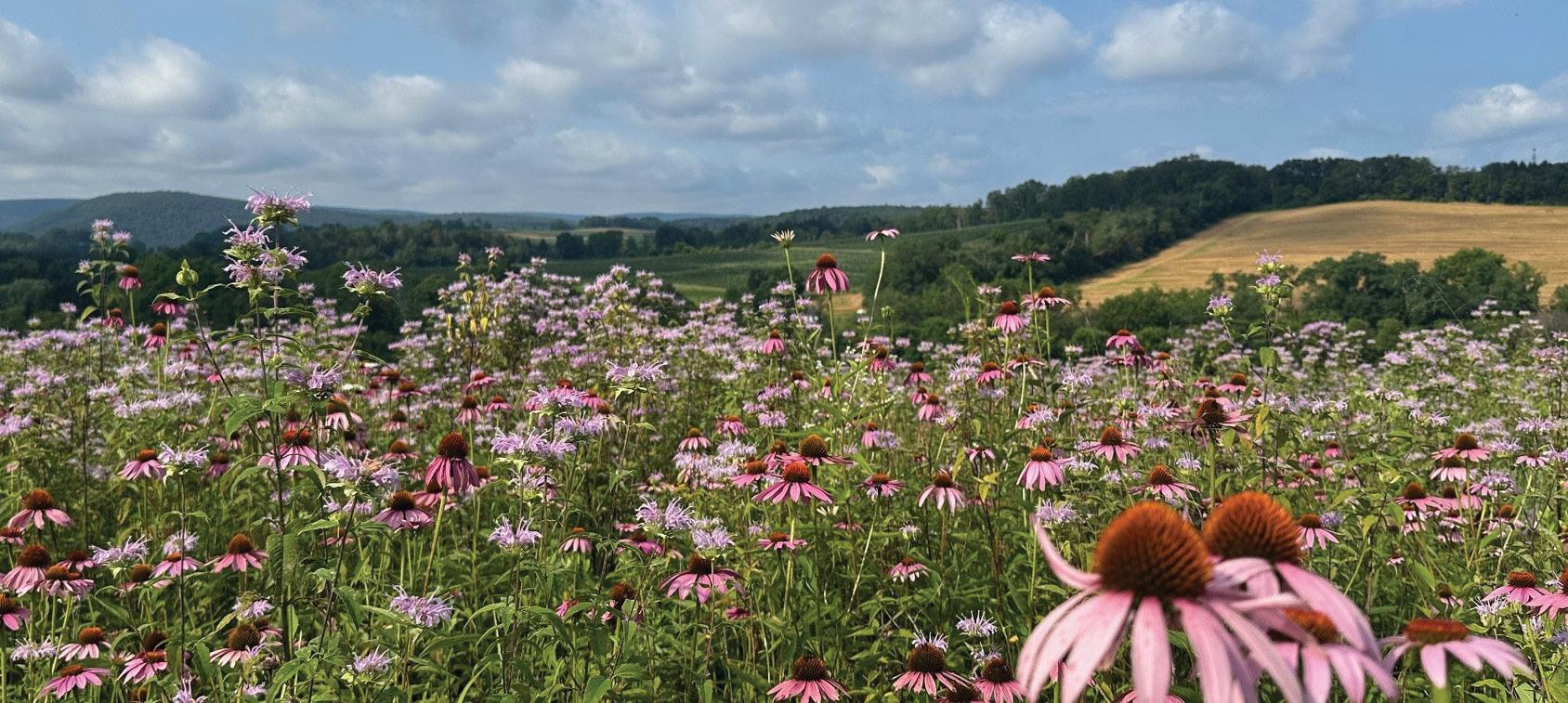
Learn about Appalachian flora, fauna, and more at a variety of fun and interactive stations in and around the Visitor Center.
Music on the Mountain
Come visit the Mountain and be surrounded by the beauty of nature and live musical performances of local ensembles. Performances take place in the Hawk Mountain Amphitheater and are followed by light refreshments and a live raptor meet-and-greet. Admission is $25, $20 for Mountain Members.
Find details and registration at hawkmountain.org/events.
Berks Sinfonietta
Saturday, June 13 | 2-4 PM
Gabriel Chamber Ensemble Sunday, September 13 | 2-3:30 PM
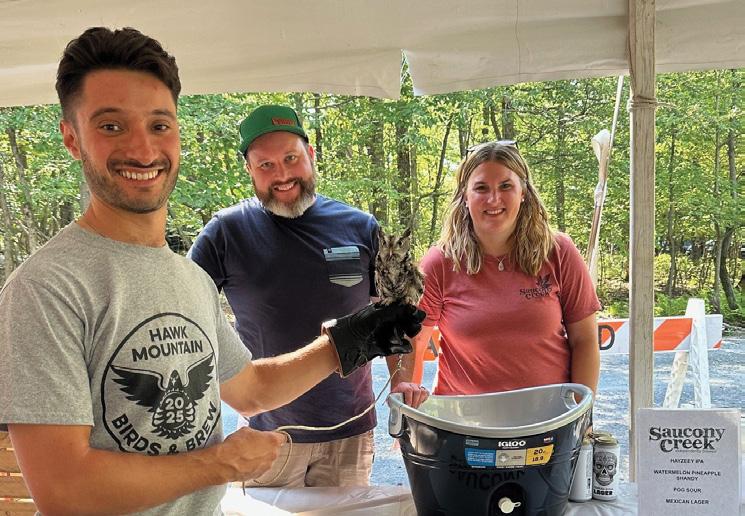
Birds & Brew
Sat, August 8 | 5 - 8 PM
$65, $35 for those not tasting
Come spend a late summer evening in support of Hawk Mountain and to celebrate the beginning of another autumn migration season! Enjoy unlimited tastings of beers, ciders, seltzers, wines, and more, along with live music, meet-and-greets with live raptors, and a delicious buffet dinner. Admission is $65, $35 for those not participating the tastings.
Tickets sell fast, and raise in price after July 31! Get yours at hawkmountain.org/birdsandbrew.
Upcoming Member Exclusive Events
Register now at hawmountain.org/events
SPRING BIRDING WITH THE PRESIDENT
Thu, May 7 | 9 AM – 1 PM | $20
Depart on a leisurely guided hike to North Lookout with President Sean Grace, then scan the skies for northbound raptors and other migrating birds.
VULTURE ENCOUNTER
Fri, June 12 | 10 AM – 12 PM | $20
Meet a live black vulture, enjoy light snacks, then head to the seminar room for a personal update on findings in the field from our scientists.
CONSERVATION CELEBRATION: MAURICE BROUN
Sat, Aug 29 | 10 AM – 1 PM • FREE
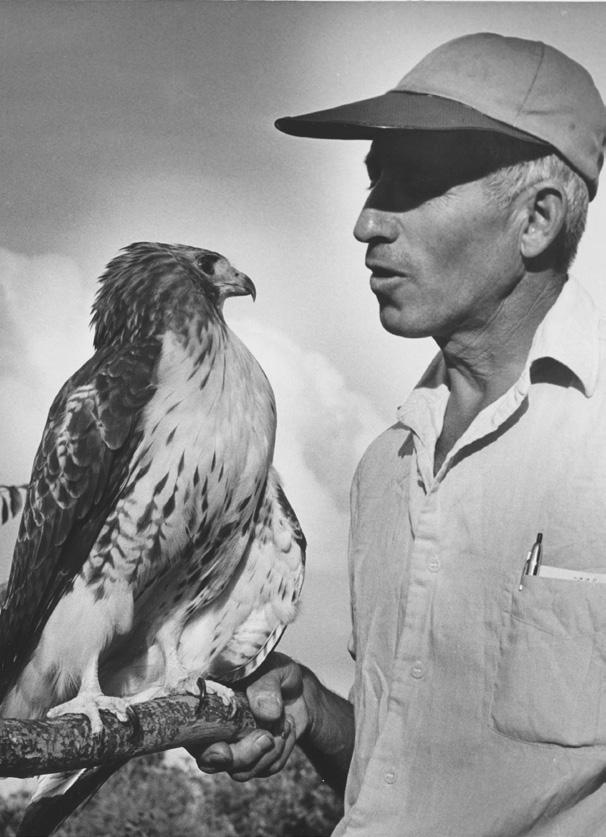
Join Hawk Mountain in celebrating the 120th birthday of the Sanctuary’s first curator! Learn about his contributions to raptor conservation and more. Browse historical artifacts on display, visit the backyard of Schaumboch’s Tavern, the original headquarters and first outdoor classroom, and learn about this remarkable man from HMS staff and volunteers.
Record Eagles, BUT WHERE HAVE ALL THE SHARPIES GONE?
By David Barber, Senior Research Biologist
Every year there are sightings during the migration that leave a lasting memory: 1,000 broad-winged hawks streaming over the Lookout or a golden eagle gliding past the Lookout below eye level, the sun dancing off its golden nape. But sometimes it’s not the close encounters or big numbers that leave a lasting memory, but the lack thereof. Such was the case this year. Sharp-shinned hawks are the second most abundant raptor migrant that we count at Hawk Mountain and when
AUGUST 2025
the northwest winds howl in mid-October we can usually count on a day or two of a sharpie “parade,” when you break out the clickers to tally them as they zip by at the rate of one per minute. This year conditions set up perfectly, with gusty northwest winds during the peak sharp-shinned hawk migration, and each day I thought “this is going to be the big day,” but the big day never happened. Where have all the sharpies gone?
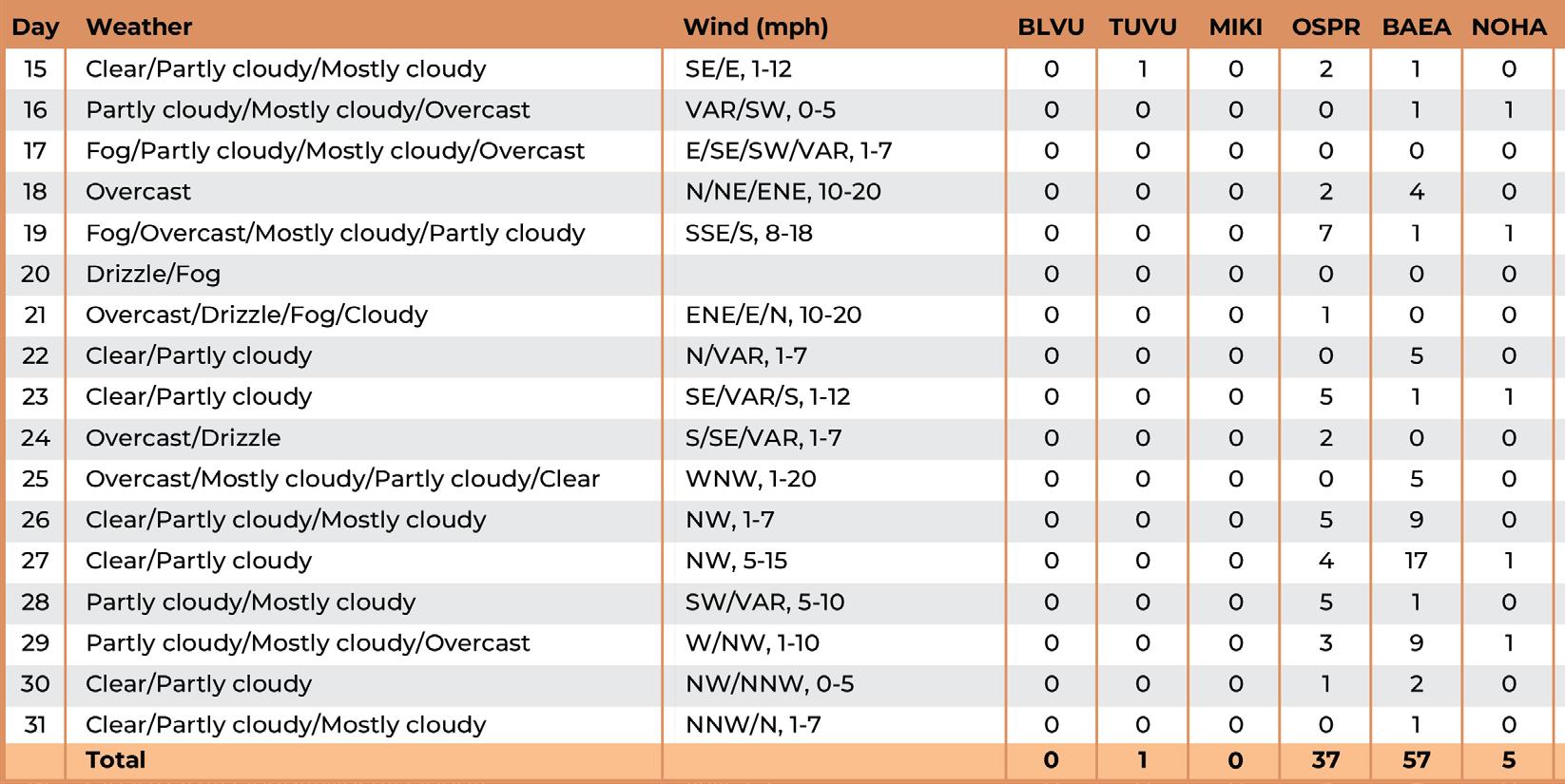
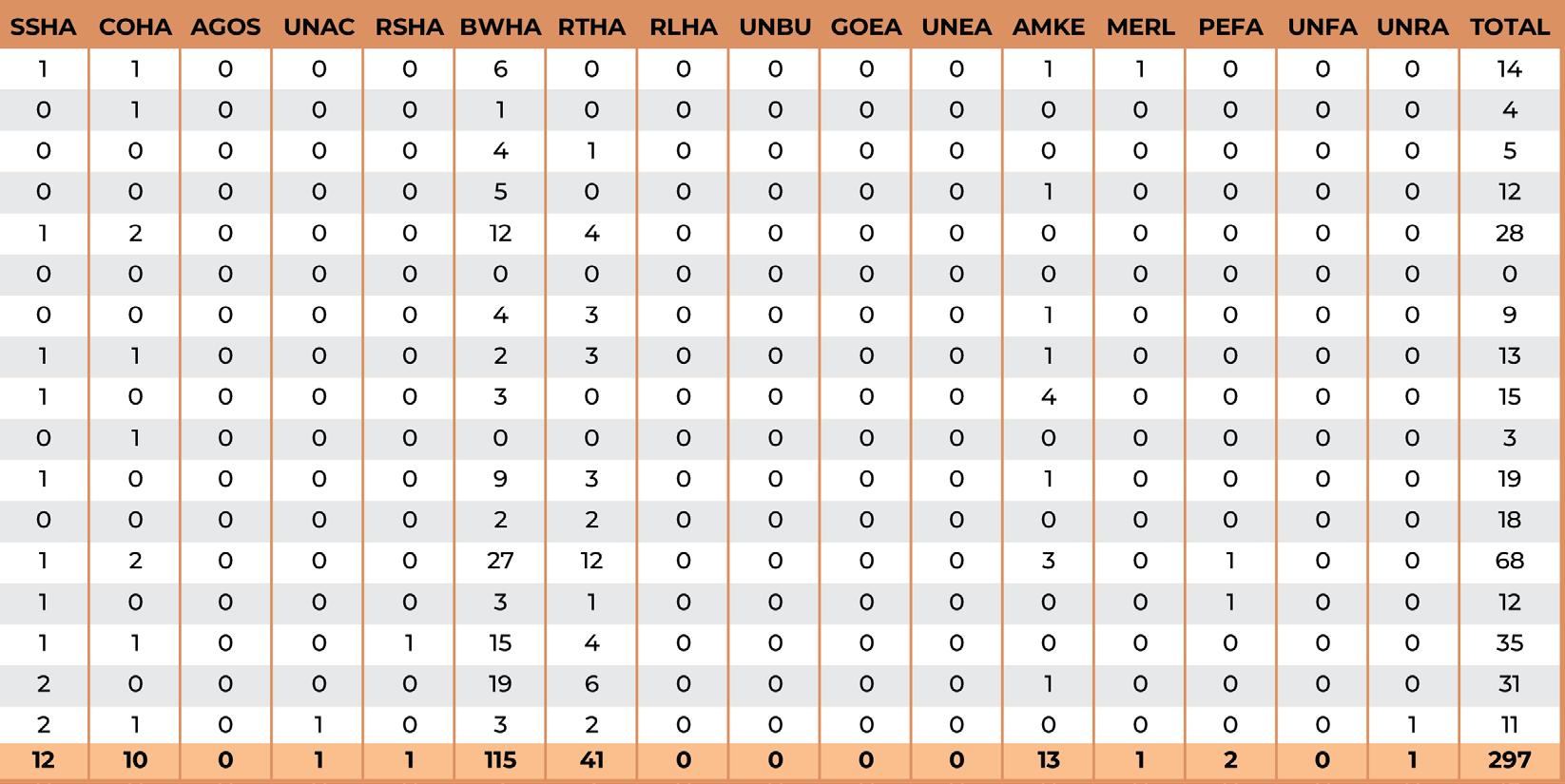
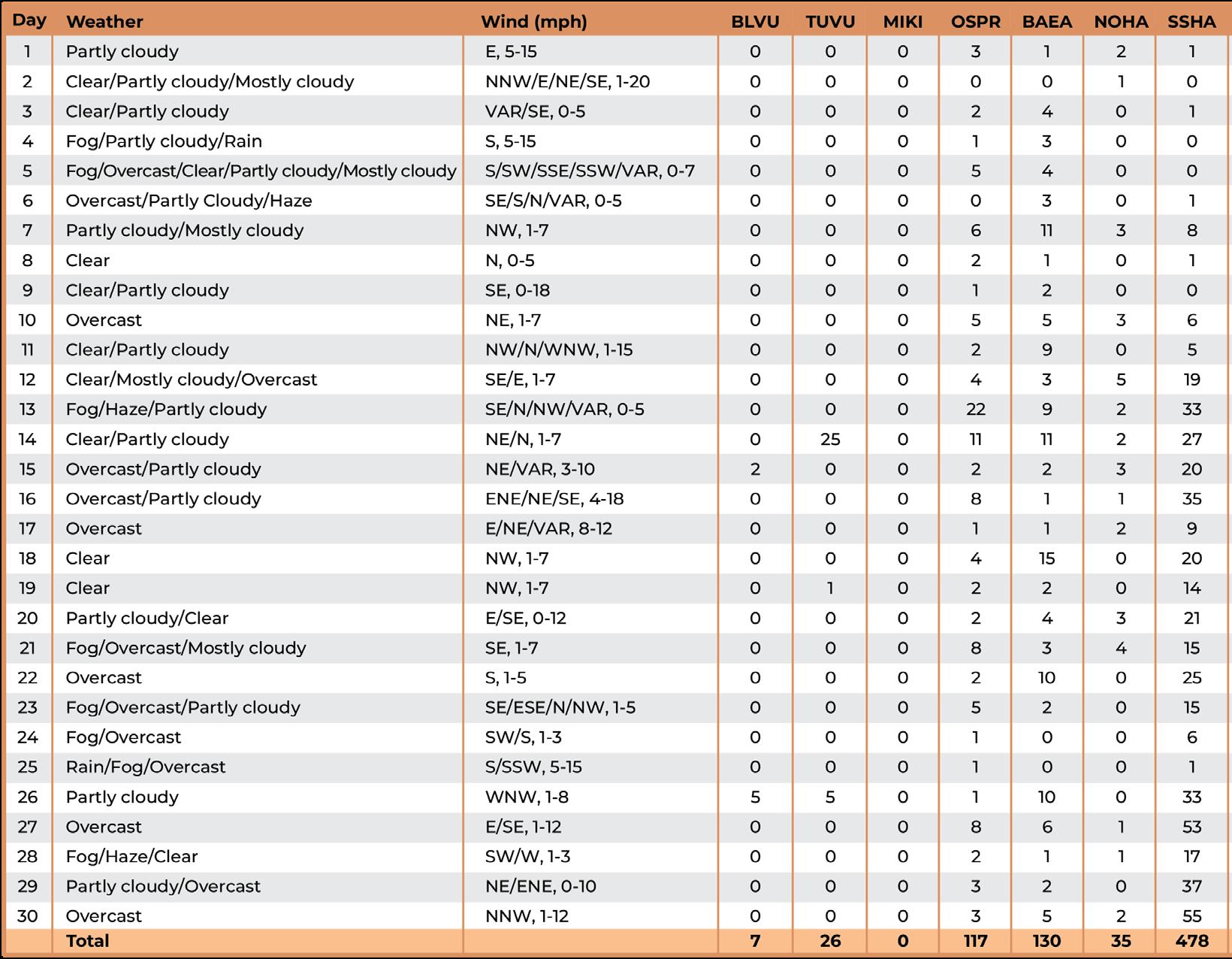
BLVU Black Vulture
TUVU Turkey Vulture
OSPR Osprey
BAEA Bald Eagle
NOHA Northern Harrier
SSHA Sharp-shinned Hawk
COHA Cooper’s Hawk
NOGO Northern Goshawk
UNAC Unidentified Accipiter
RSHA Red-shouldered Hawk
BWHA Broad-winged Hawk
RTHA Red-tailed Hawk
RLHA Rough-legged Hawk
UNBU Unidentified Buteo
GOEA Golden Eagle
AMKE American Kestrel
MERL Merlin
PEFA Peregrine Falcon
UNFA Unidentified Falcon
UNRA Unidentified Raptor
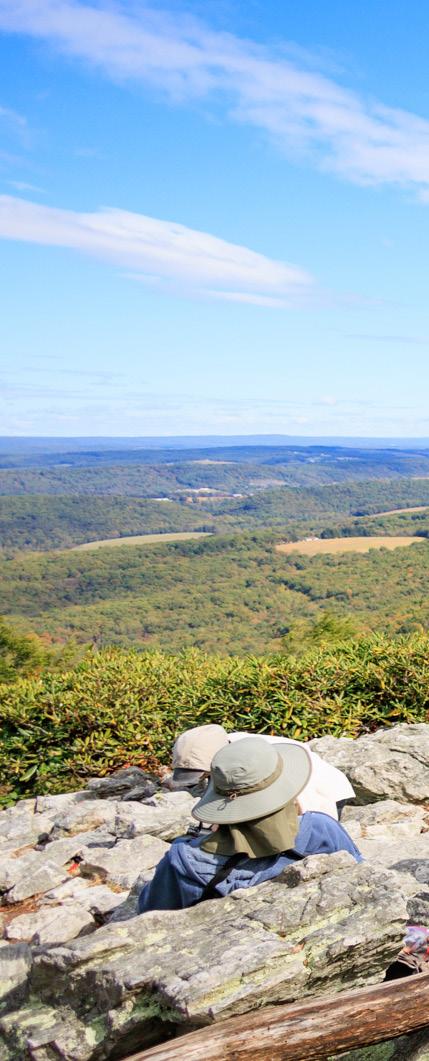
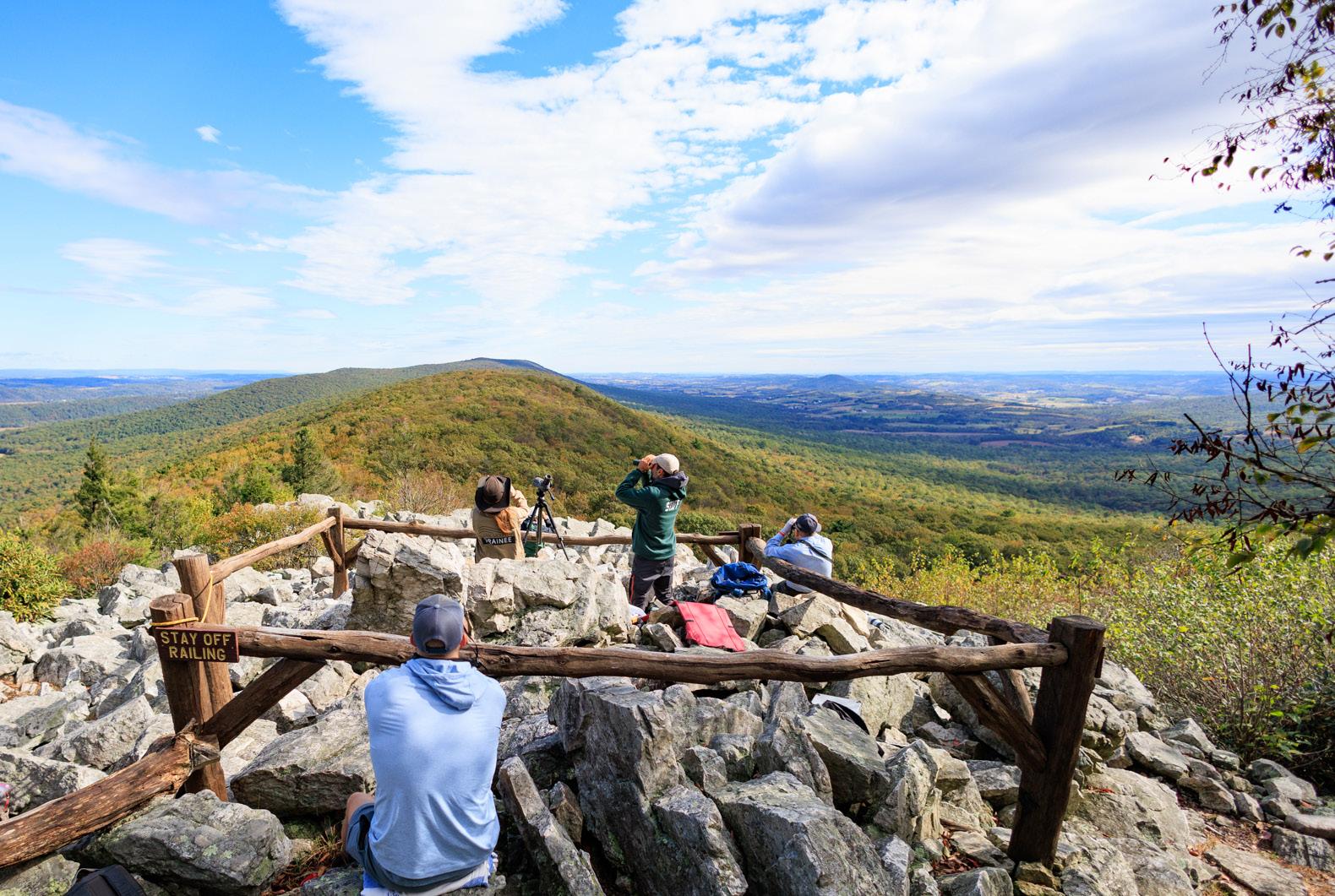
AUGUST • Counting on August 15th, the first official day of the migration count, is always exciting with the anticipation of the first migrant, but it can also be taxing—think of sitting on the rocks for 10-plus hours in mid-August. This year was no exception: conditions were hazy, hot and humid with poor visibility, but at 9:13 am a sharpshinned hawk flapped past the Lookout, the first bird of the count. By days end, 10 species of raptors were spotted, and 14 individuals of 8 species were tallied migrating past the Lookout, an auspicious beginning for the count.
Migration remained light the next week and a half due to light winds and overcast skies on most days, but clearing skies on the 25th spurred the migration with 5 bald eagles counted along with 25 ruby-throated hummingbirds. Five ospreys and 9 bald
eagles were counted the next day along with six species of flycatchers, including two olive-sided flycatchers.
Light northwest winds and clear skies on the 27th produced the first decent count of the season with 68 raptors tallied. Senior Scientist JF Therrien counted 17 bald eagles, 27 broad-winged hawks, and 12 red-tailed hawks, all high counts for August, along with the first peregrine falcon of the season.
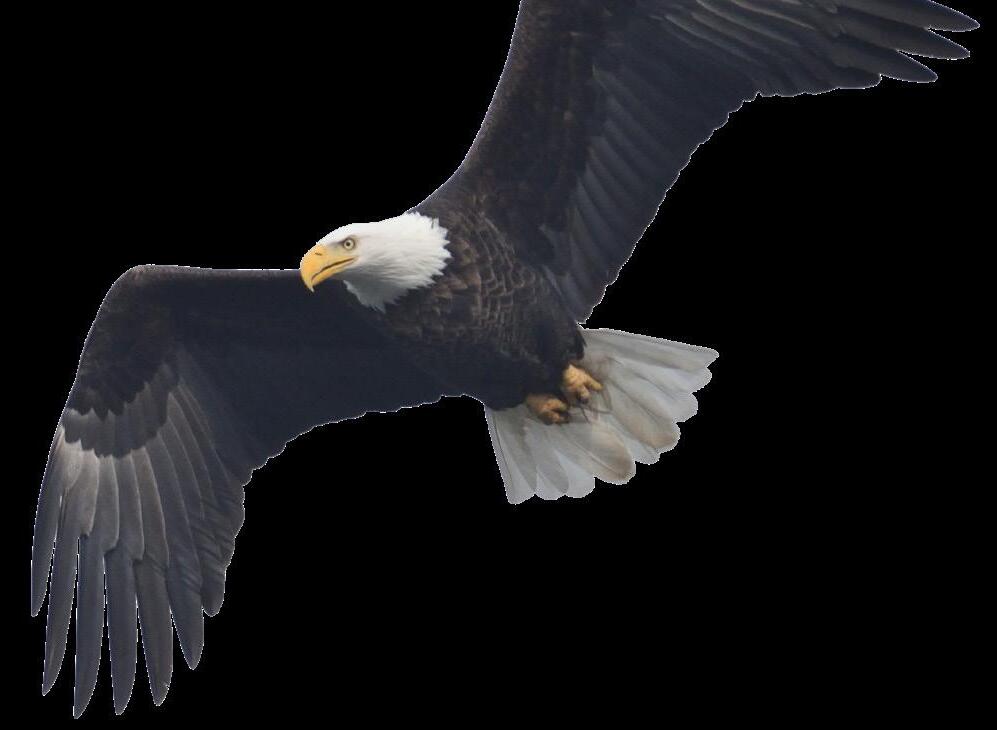
Bald Eagle by Bill Moses
SEPTEMBER • Flights were light for the first week of the month due to weather dominated by light winds, overcast skies, and a few rain showers. The weather pattern broke on the 7th when a cold front moved through, producing light northwest winds and a steady flight of 61 raptors, including 6 ospreys, 11 bald eagles, 3 northern harriers, 22 broad-winged hawks, 6 American kestrels, and a merlin. The broad-winged hawk flights were stuck in double digits until the 12th, when 842 broadwings soared over the Lookout, including a late day push of 400 that were barely visible with the naked eye. Strong thermals the following morning allowed broadwings to gain altitude early, with over 1,000 recorded between 10 am and noon, and some streams only visible with binoculars. The broad-winged hawks continued to pass high over the Lookout throughout the day,
SEPTEMBER 2025
and by day’s end, volunteer counters Beth Sassaman and Andy Wlaskniewski counted a season high 2,211 broadwings, along with a season high 22 ospreys. Broad-winged hawks continued to push through for the next eight days, with peaks of 1,459 on the 16th and 1,736 on the 21st.
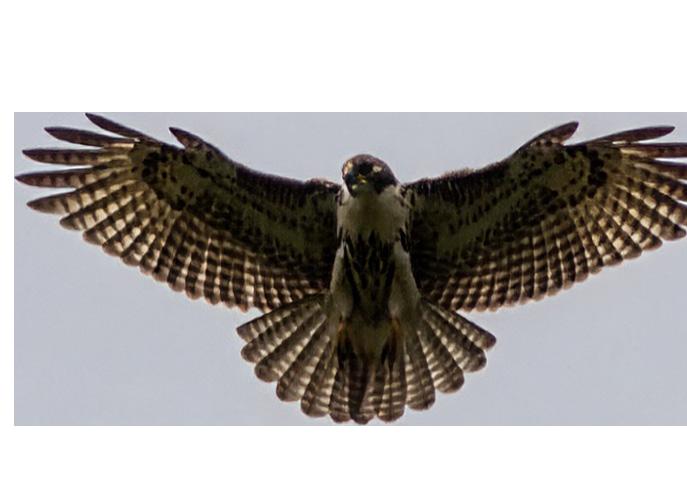
On the 16th, visitors were wowed by a juvenile red-tailed hawk as it hovered above the Lookout and stooped on a chipmunk right next to the counters pit! It was unsuccessful with the catch but flew a short distance and perched in a nearby tree.
Early morning warbler flights were steady, but not spectacular for the first half of the month. Northerly winds overnight brought a pulse of migrants on the morning of the
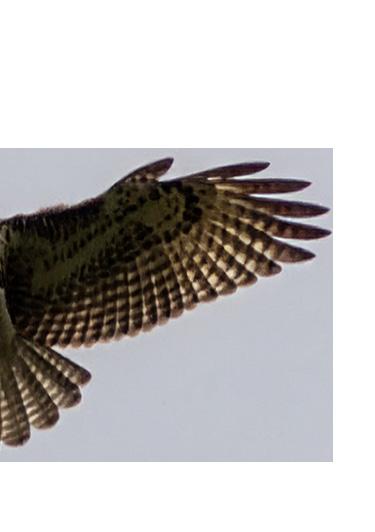
Hovering juvenile red-tailed hawk
19th, and fourteen species of warblers were observed, including season highs of 11 northern parulas, 23 Cape May warblers, 58 black-throated green warblers, and 6 blackpoll warblers. A week later, on the 26th, volunteer counter Jason Deeter recorded 14 species of warblers including a yellow-throated warbler, only the second record for North Lookout.
Numbers of sharp-shinned hawks increased slowly over the last half of the month. On the 27th, volunteer counters Dave Kruel and Matt Wlasniewski counted 53 sharp-shinned hawks, along with the last pulse of broadwinged hawks (190) and the first falcon trifecta of the season: four American kestrels, five merlins, and one immature peregrine falcon flying past the Lookout at eye level giving visitors a spectacular look.
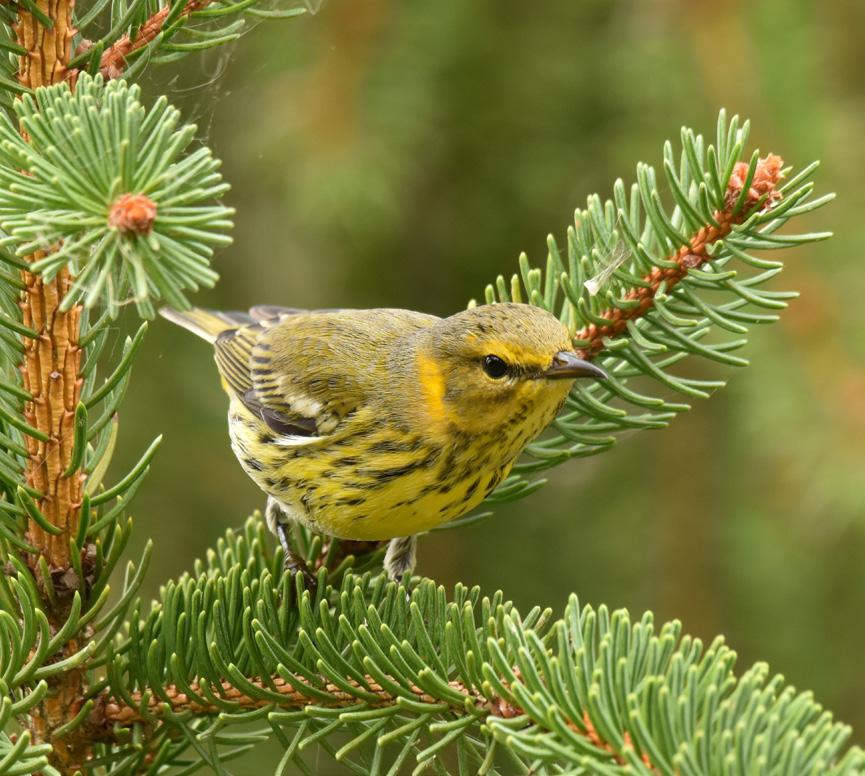

Cape May warbler by Bill Moses
OCTOBER • An immature golden eagle gliding past the Lookout late in the day on October 1 was the first of the season.
Tree swallows dominated the sky on the 2nd, filling our field of view when scanning with binoculars. Director of Conservation Science Laurie Goodrich conservatively estimated the number of migrating swallows to be 10,000, shattering the old record of 3,500 set in 2007. A dickcissel was heard giving its flatulent flight call as it passed over the Lookout on the 11th, one of five dickcissels counted for the year: a new season-long record.
Mid-October is usually peak for sharpshinned hawk migration, and this year was
OCTOBER 2025
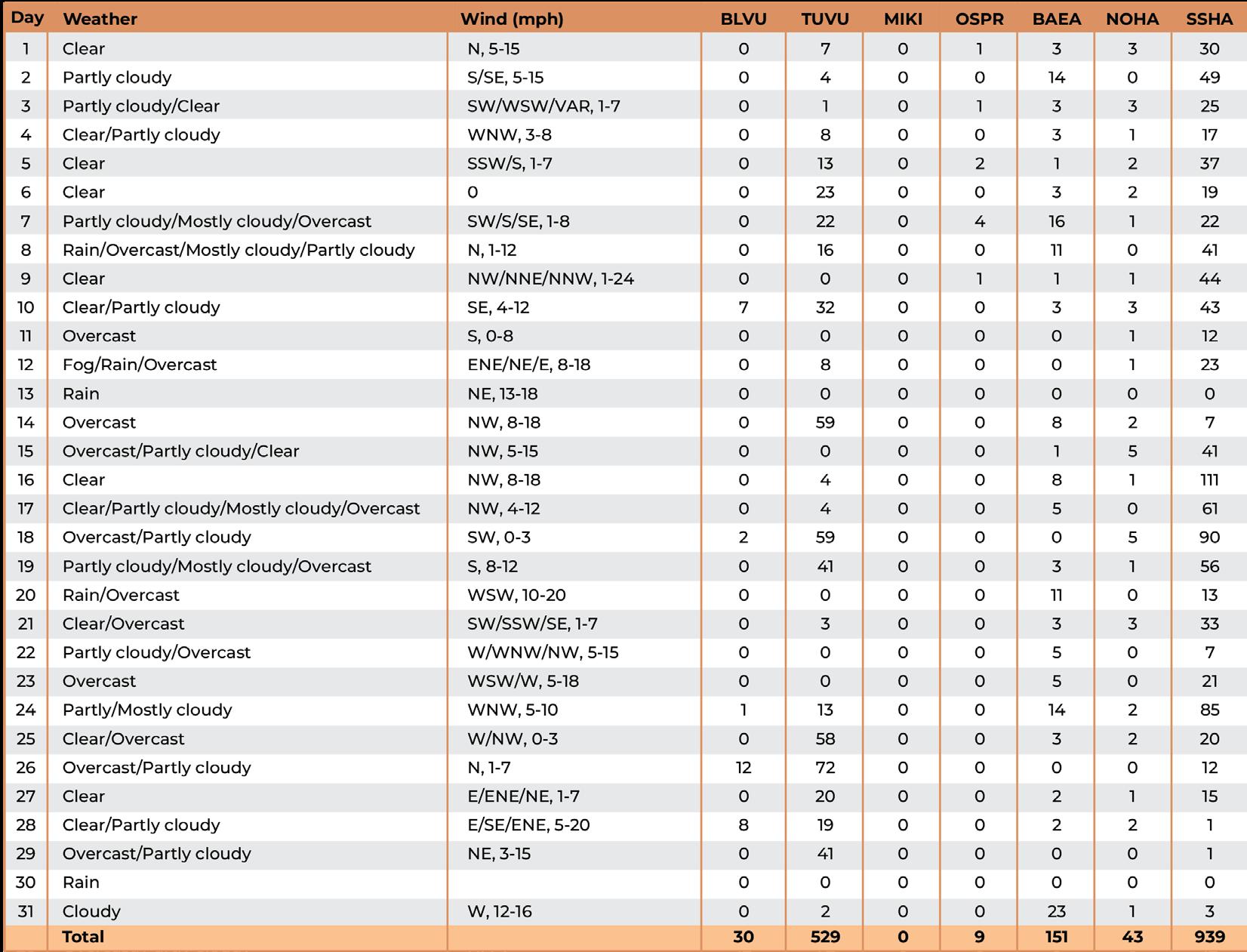
no different. However, despite seemingly perfect conditions between the 14th and 17th, numbers peaked to only 111 sharpshinned hawks on the 16th, a surprisingly low number for our second most numerous raptor migrant. Cooper’s hawks also peaked on the 16th with 25, about half of what the peak count has been the last 10 years. Two days later an additional 90 sharpshinned hawks were recorded, along with an immature American goshawk, the only goshawk seen this year.
Flocks of kinglets were seen flitting through the rhododendron around the Lookout in the last half of the month, with numbers peaking on the 24th with 20
golden-crowned and 33 ruby-crowned kinglets counted.
Sightings of red-shouldered hawks increased in the last week of the month, with 10 counted on the 28th, six of which were adults. The month ended on a high note: a strong cold front on the 31st produced gusty west winds which brought a parade of 23 bald eagles past the Lookout, along with 3 red-shouldered hawks, 9 redtailed hawks, and 4 golden eagles.
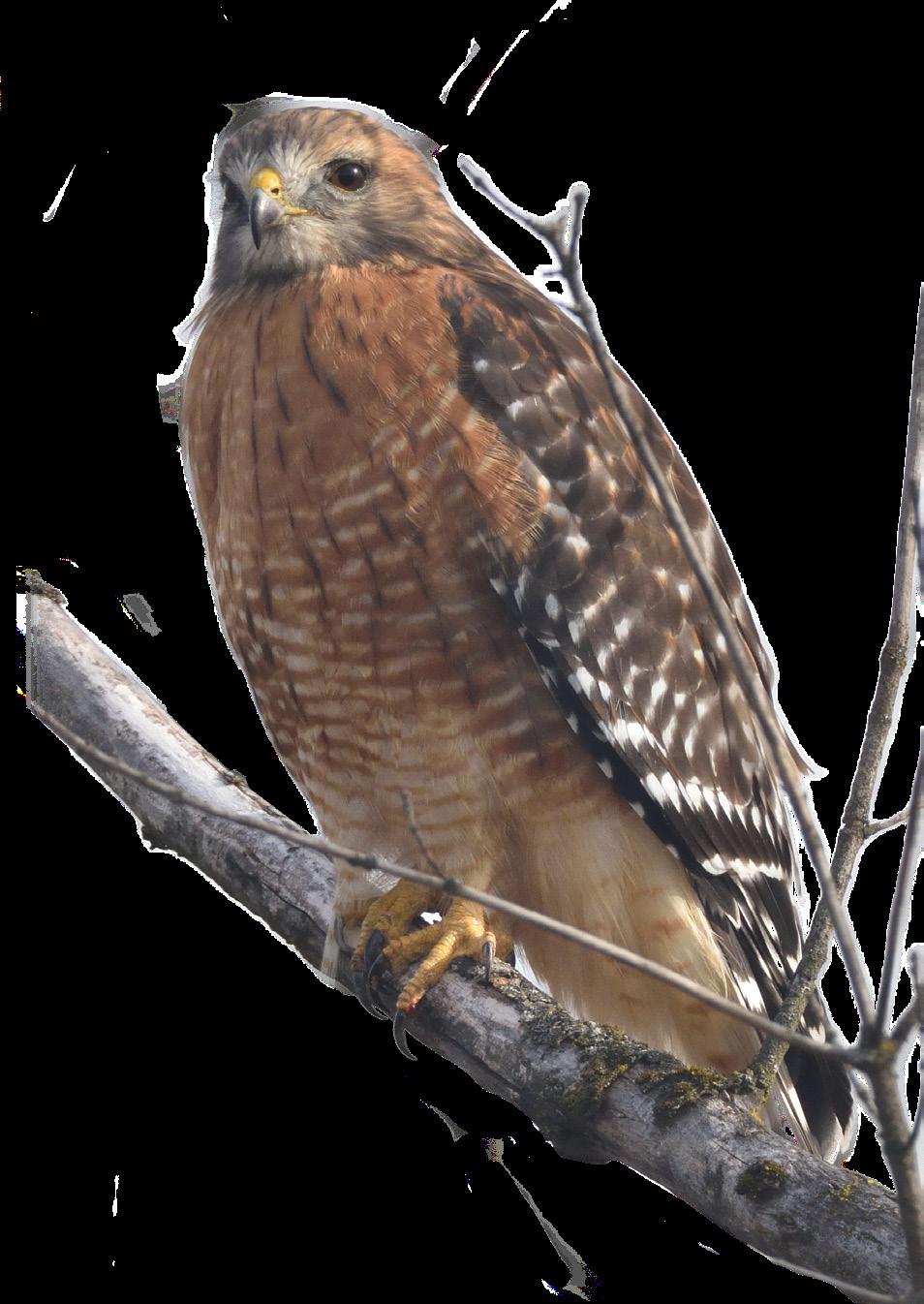

Red-shouldered hawk by Bill Moses
NOVEMBER • November started the way October ended, with lots of bald eagles. A total of 115 raptors were counted on the 1st, including 23 bald eagles, 2 northern harriers, 12 sharp-shinned hawks, 2 Cooper’s hawks, 5 red-shouldered hawks, 62 red-tailed hawks, 4 golden eagles, and an American kestrel. Also seen on the 1st was a very late monarch butterfly.
A season high 74 turkey vultures were recorded on the 5th, with black vultures peaking three days later on the 8th with 27
tallied. Gusty west-northwest winds and cold temperatures provided optimal conditions for an eagle parade on the 13th; season highs were recorded for both bald eagles (40) and golden eagles (13). The 40 bald eagles counted were the third highest single-day total recorded at North Lookout. The eagle parade continued on the 14th, with an additional 15 bald and 10 golden eagles.
Red-tailed hawks migrated past the Lookout in double digits almost daily for the first half of the month. On the 17th,
NOVEMBER 2025
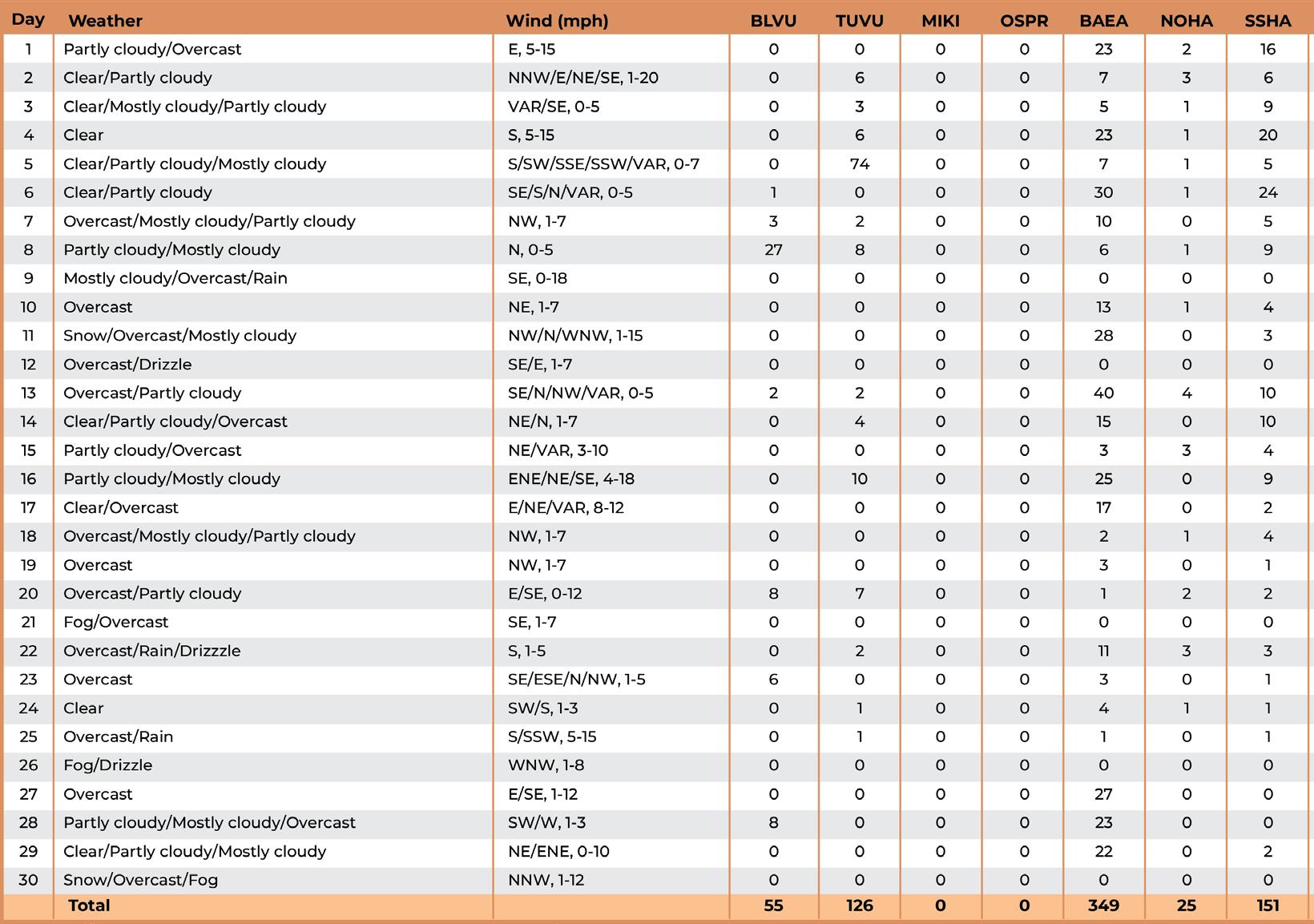
redtails took advantage of the strong ridge lift produced by the west-northwest winds, posting a season high count of 124 with most of the birds passing by at eye level. Eagles also took advantage of the optimal conditions with 17 bald and 10 golden eagles migrating past the Lookout.
On the morning of the 27th, multiple murders of American crows were recorded crossing the ridge and migrating south. There was a lull midday, but the movements continued in the afternoon
and by day’s end 7,483 crows were tallied, a new single-day record.
Counters had much to be thankful for at the end of the month, when 72 bald eagles passed the Lookout over Thanksgiving weekend.
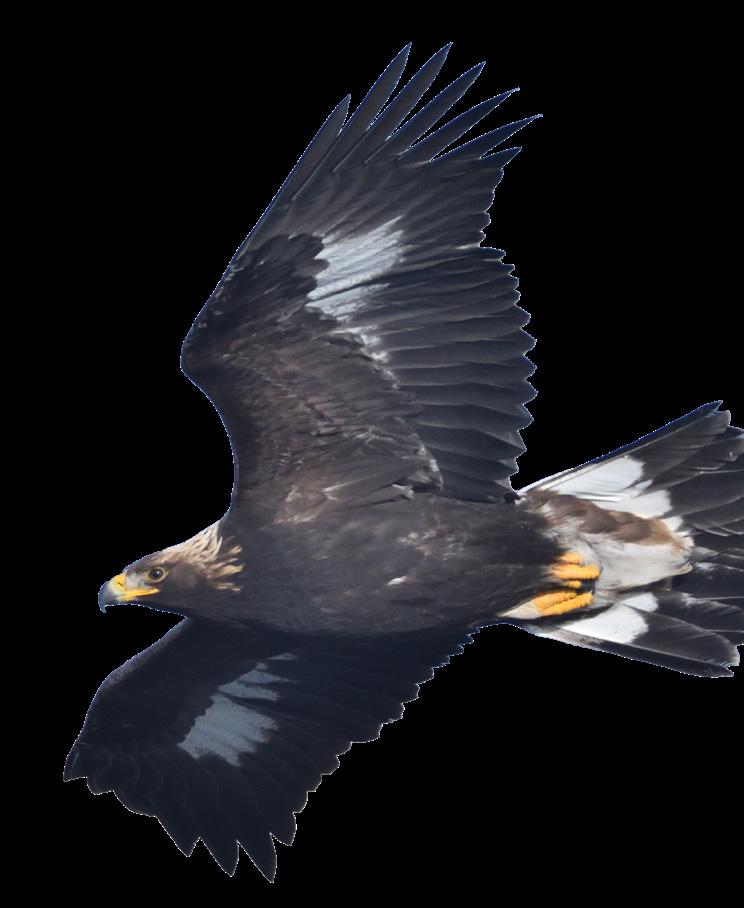

Golden eagle over north lookout by Bill Moses
North Lookout by Laurie Goodrich
DECEMBER 2025
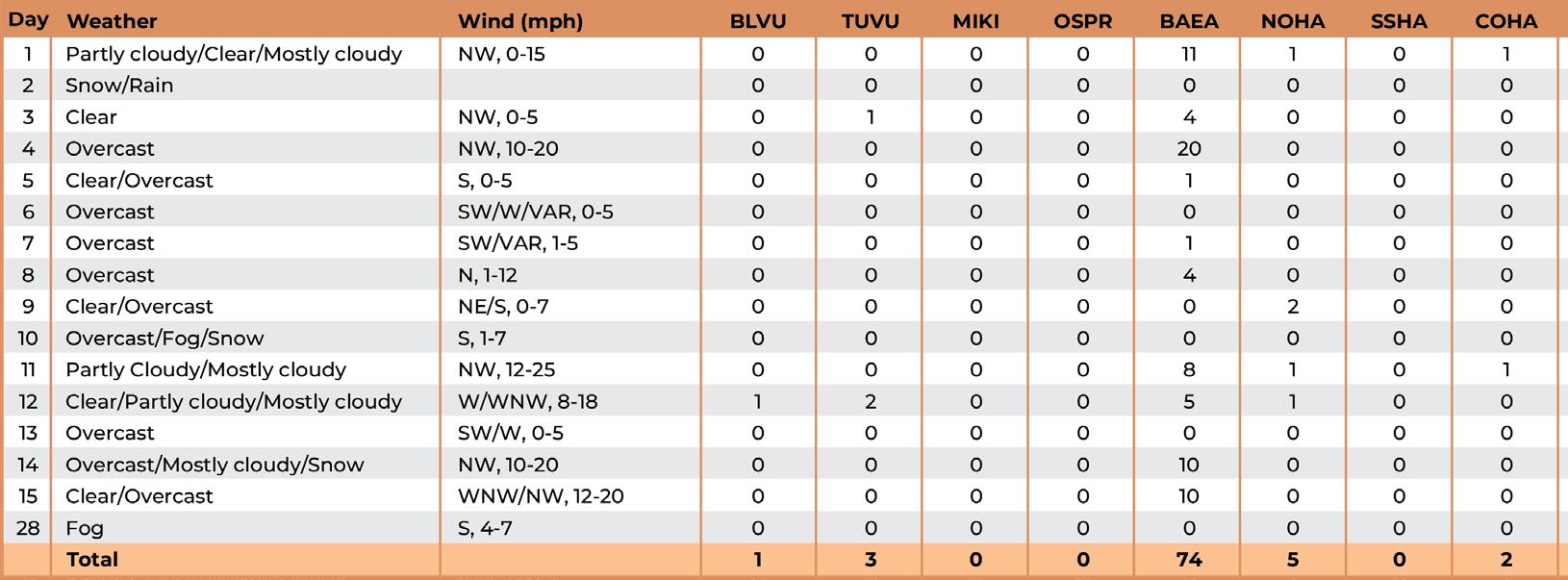
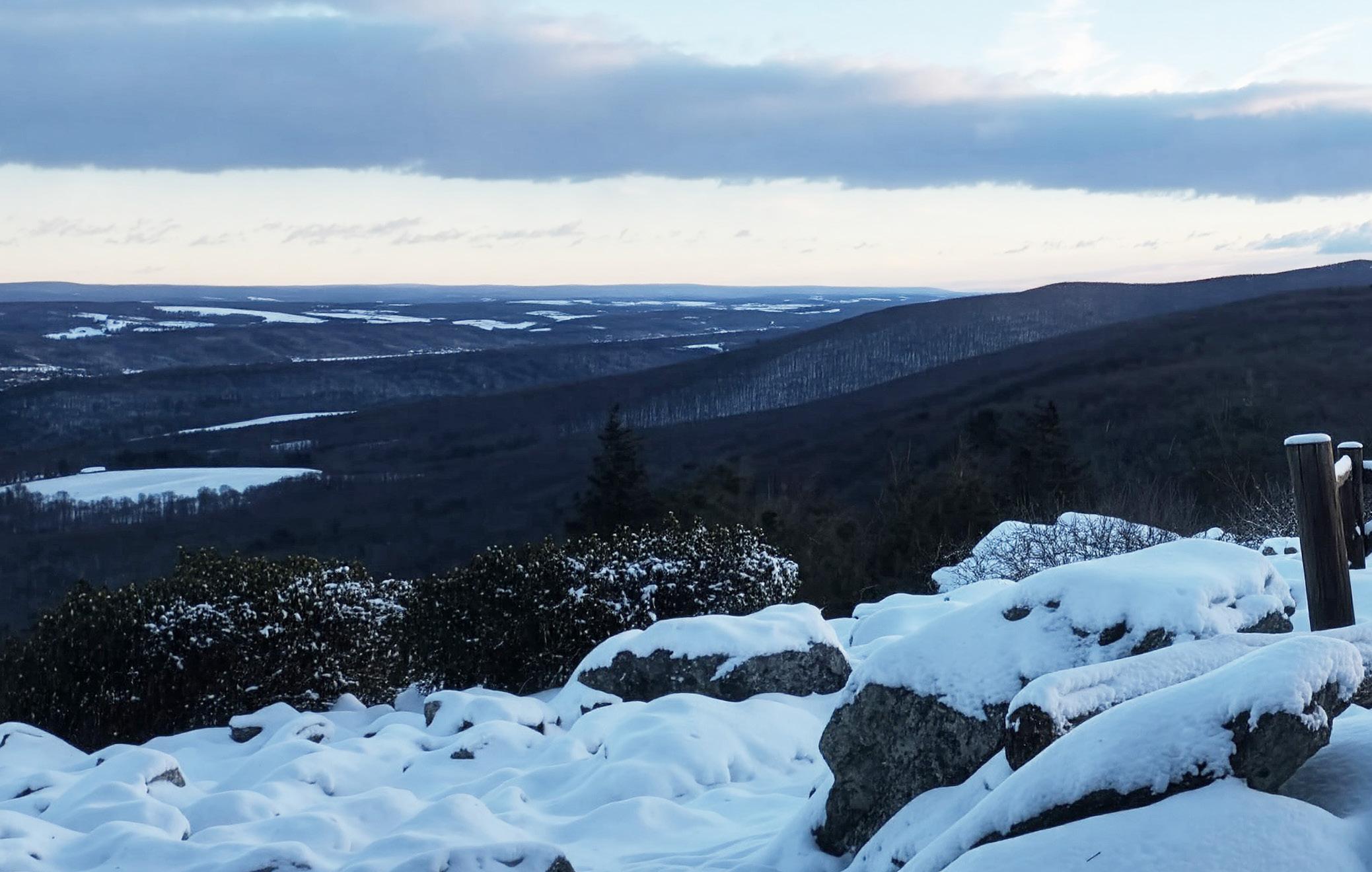
DECEMBER • A series of cold fronts produced cold temperatures and gusty northwest winds, ideal for late season flights. Thirty-one raptors were tallied on the 1st, including 11 bald eagles, 3 redshouldered hawks, 13 red-tailed hawks, and 2 golden eagles, but the most numerous migrants were Canada geese. Skeins of geese were spotted flying south over the ridge in the afternoon, with a conservative estimate of 14,000 counted between 12 pm and 4 pm. Five red-shouldered hawks were counted on the 8th, an unusually high count this late in the season. Red crossbills were seen multiple times the last week of the count dining on hemlock cones in the front of the Lookout; a high of 18 were counted on the 13th.

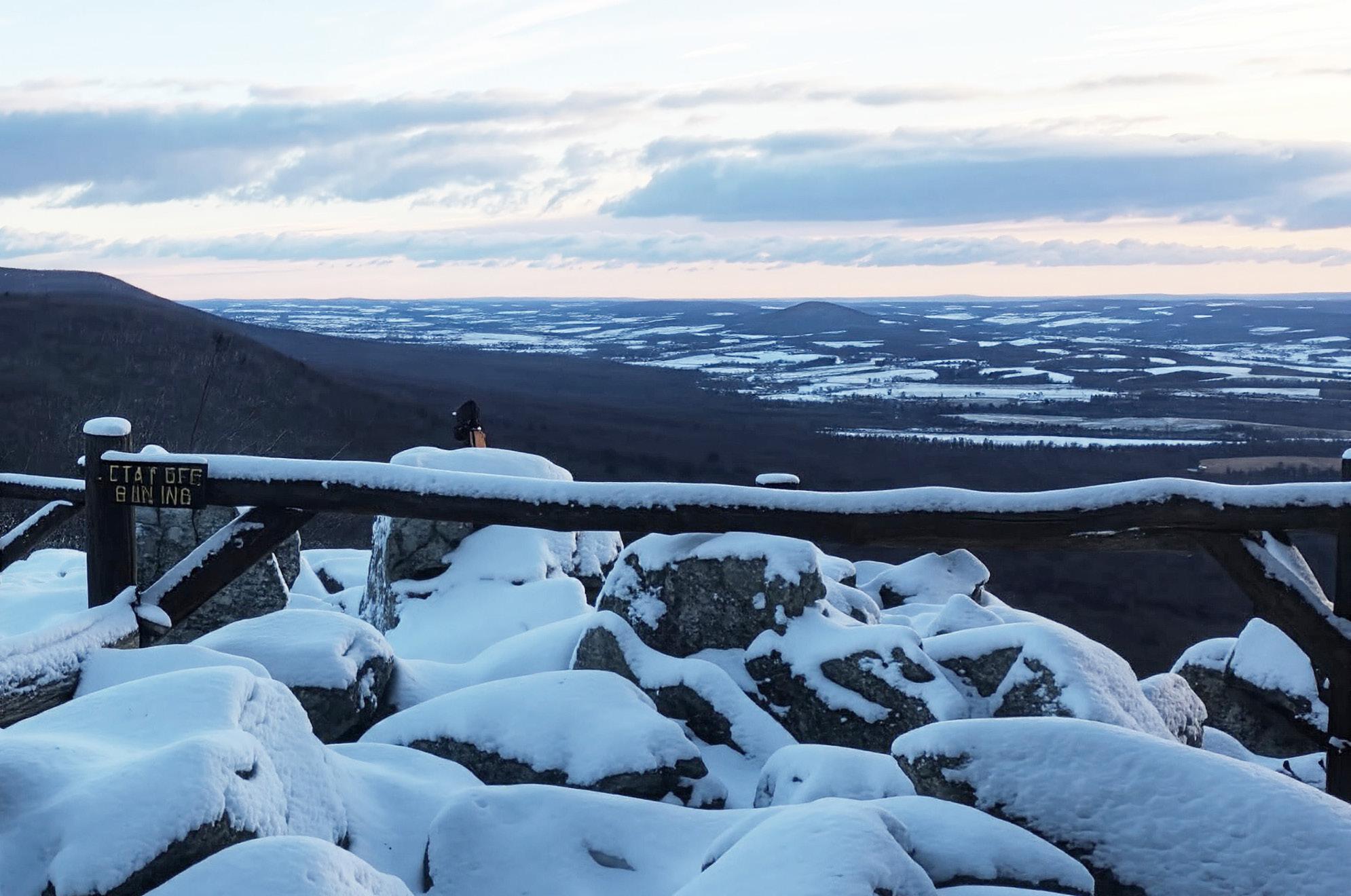
Six inches of snow blanketed the mountain on the 14th, but this didn’t deter the migration with 10 bald eagles, 11 red-tailed hawks, and 2 golden eagles counted. On the 15th, volunteer counter Matt Wlasniewski scanned up ridge one last time before packing up at the end of the day. He saw two adult bald eagles migrating down ridge, eventually passing the Lookout at 4:05 pm, the last birds of the season, setting a new season-long record of 761 bald eagles!
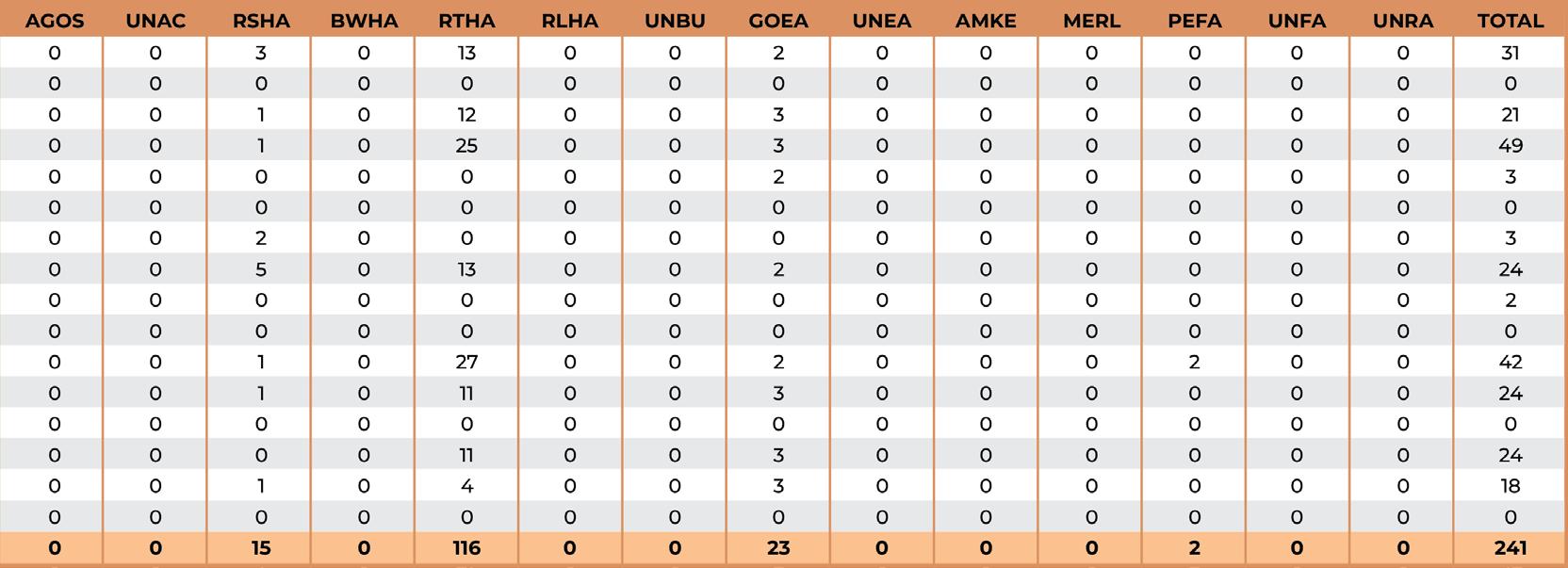
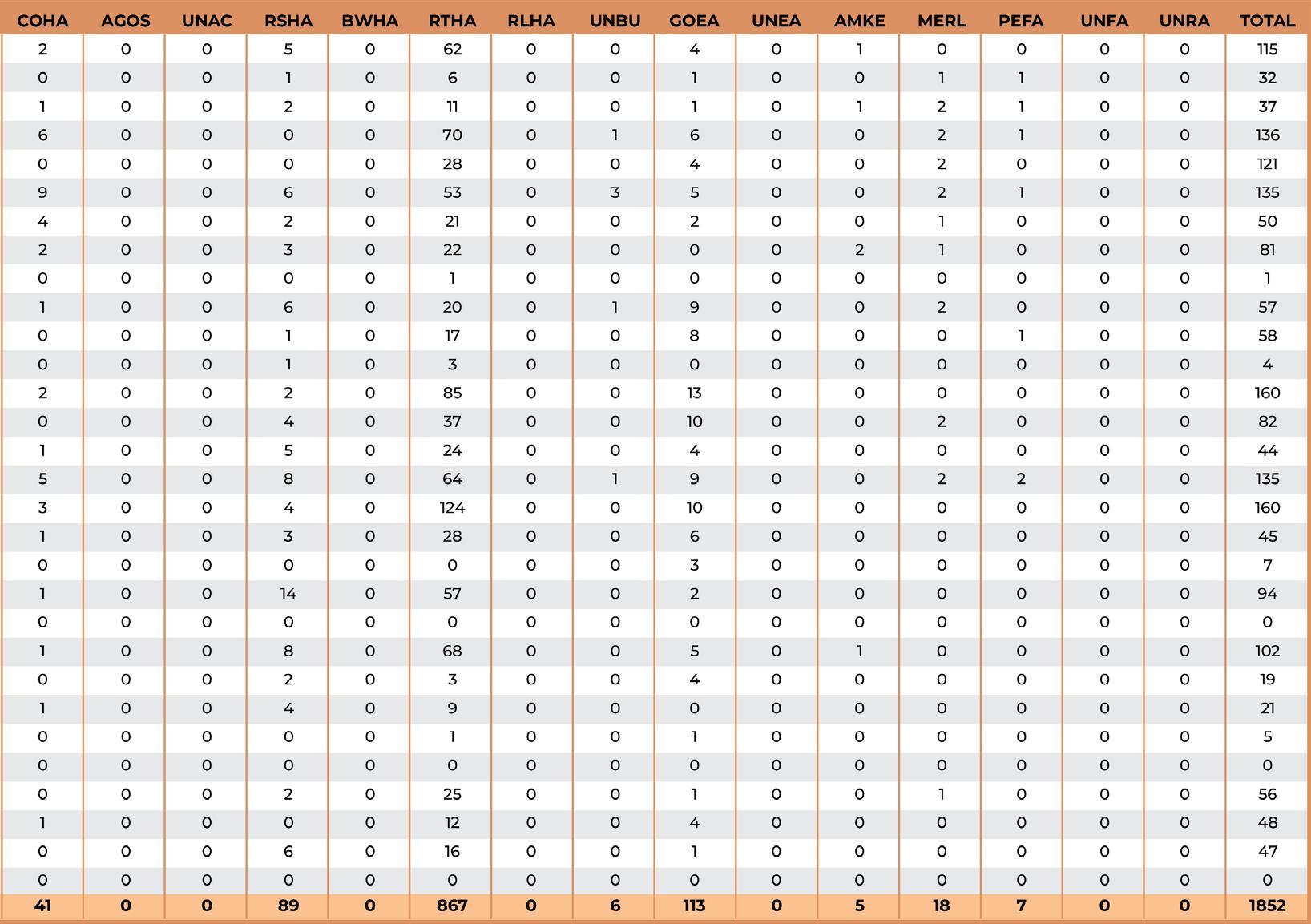
MIGRATION SUMMARY • This was the 89th year of counting migrating raptors in autumn at North Lookout. Bald eagles had another record year with 761, smashing last year’s record count of 668. Golden eagles also had a good year; the 164 goldens counted was the third highest count recorded at Hawk Mountain. Kettles of broad-winged hawk were concentrated along the Kittatinny Ridge, giving us our best count in the last three years. Northern harriers and red-shouldered hawks had average counts this fall but given the declines in numbers counted at North Lookout over the last 20 years, I count it as a highlight.
However, the overall count of 14,706 was still below average, and 11 of 16 species had below average counts. Most notable were osprey, 39% below average, sharpshinned hawk, 51% below average, and American kestrel, 26% below average. The sharp-shinned hawk count in particular was surprising. Sharpies are the second most abundant raptor counted at Hawk Mountain and the number of sharpies we count each fall has been declining at a rate of 1.7% per year over the last 20 years. Although this is just one year’s worth of data and there is always some variation in the number of birds counted each year, it was both the size and the geographic scope of the decline. Hawk Mountain wasn’t the only raptor migration watch site that saw a decline in sharp-shinned hawks: sharpie counts at all consistently-operated watch sites in Pennsylvania declined from 11 to 51 percent. Even Cape May Point, which averages over 11,000 sharpies each fall—the highest count in the eastern U.S.—had a decline of nearly 24% this year. Moreover, analysis of hawkwatch count data showed that in the last 10 years, sharp-shinned
hawks had declining counts at 46% of North American count sites (Raptor Population Index Project: rpi-project.org).
What could be the cause of both this year’s drop in numbers as well as the long-term declines? Several potential causes have been postulated. It’s been estimated that nearly 3 billion birds have been lost over the last 50 years, with forest birds accounting for one third of that loss, and as birdeating specialists, sharp-shinned hawks could certainly be affected by the decline of potential food. Sharpies also require large tracts of forest for both nesting and resting during migration, so habitat loss or change in those forests could also impact their numbers. Environmental contaminants, such as organophosphate and neonicotinoid insecticides, may also play a role in declines of sharp-shinned hawks since as an avian predator they are susceptible to biomagnification of contaminants. However, the role of contaminants in the decline of sharpshinned hawks has not been fully explored. While changes in migratory patterns, such as short stopping, has been suggested, declining numbers of sharpies found on Christmas Bird Counts in Canada and New England suggest that this is not the case. Disease too has been suggested as a causal mechanism. We know that raptors in general, and sharp-shinned hawks in particular, are susceptible to West Nile virus and highly pathogenic avian influenza, but the extent to which these diseases have caused population decline is unknown. More recently, in 2016, banders at Braddock Bay Raptor Research in New York found birds with oral capillariasis, a nematode infection which causes lesions on the tongue and oral cavity of the bird. Data from other banding stations across the U.S.

2025 Autumn Migration Summary
have found that infection rates can be as high as 30-50% and is found at higher rates in females. Does this infection affect the survival of the birds? At this point it’s not clear, but researchers from Braddock Bay and Cedar Grove Ornithological Research Station in Wisconsin are fitting sharpies with tracking devices that will allow them to assess survival of birds with and without capillariasis infections.
It’s clear that species such as sharp-shinned hawks have multiple stressors that could be impacting their numbers. Although raptor migration watchsites cannot address these stressors, through continuous monitoring of migrating raptors these sites can act as early warning systems to determine when a species may be in trouble and when we need to take conservation action.
While our focus is counting migrating raptors, standing at North Lookout provides a great opportunity to count other migrating species. In fact, we count far more non-raptors than raptors. This autumn counters recorded 84,896 nonraptors, including 829 butterflies and 337 dragonflies of 128 species. The most abundant non-raptor was Canada goose with 22,971, followed by tree swallow (16,669), American crow (11,643), cedar waxwing (5,948), and red-winged blackbird (3,056). The first couple of hours after sunrise in late August and early September can provide great looks at migrating songbirds, and this year was no different: we recorded 20 species of warblers, including uncommon warblers for North Lookout, like blue-winged and yellow-throated warblers, and we observed six species of vireos, including eight Philadelphia vireos. Redheaded woodpeckers had another great flight year with 42 counted, and flights of
purple finches were exceptional (1,211) and the highest since 2007. Other highlights this past fall include the sighting of a least sandpiper, only the second record for North Lookout, a ruffed grouse on the Lookout, and a belted kingfisher flyby. Unfortunately, there were also some lowlights; with the exception of the record flight of tree swallows, most of the other swallows had below average years. The 419 barn swallows tallied was the lowest count since 2000. Only 337 dragonflies were counted, well below average and the lowest since 2019. And only 16 Baltimore orioles were recorded this fall, the lowest in 10 years.
Thank You TO OUR COUNTERS
STAFF:
David Barber, Brandon Brogle, Bracken Brown, Laurie Goodrich, Rebecca McCabe, Jean-Franҫois Therrien
VOLUNTEERS:
Jason Deeter, Rob Feldman, Greg George, Dave Kruel, Holly Merker, Scott Morrison, Andy Price, Chris Pugliese, Beth Sassaman, Jeremy Scheivert, Andy Wlasniewski, Matt Wlasniewski
COUNT ASSISTANTS AND DATA VOLUNTEERS:
Chris Arndt, Sophia Cunningham, Catherine Elwell, Brian Ferrence, Sean Grace, John Hilbish, Paul Hiller, Bill Moses, Rich Rieger, Aaron Shirk, and 2025 Conservation Science and Education Trainees.

Education Takes Flight: Hawk Mountain Expands Its Program Outreach
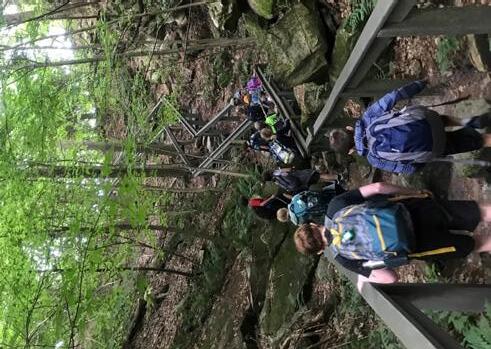
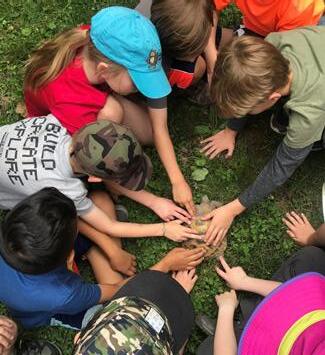
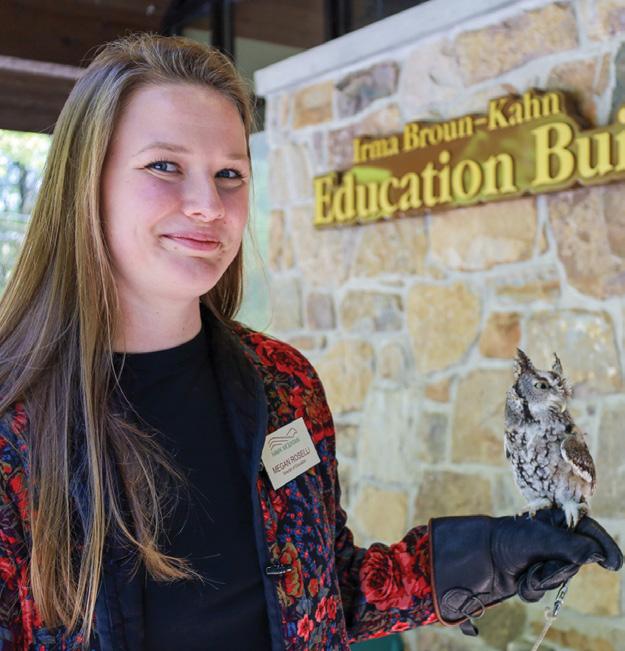
At Hawk Mountain, education has always been at the heart of the mission, but this year, that commitment has grown in exciting new ways. With expanded on-site and off-site programming, a wider range of curriculum options, and new offerings designed to increase accessibility, including ADAfocused experiences and badge-aligned programs for Scout groups, the Sanctuary is reaching more learners than ever before. From mountaintop classrooms to community spaces across the region, Hawk Mountain is creating meaningful connections to raptor conservation, migration science, and the natural world for audiences of all ages and abilities.
Field trips and off-site programs jumped dramatically in 2025 with a 40% increase in school visits and an 88% increase in community outreach programs, and for this year, the team is already booking well into the fall. In addition, scout programs were successfully relaunched, aligning badge activities with the Hawk Mountain mission and including the option for an overnight learning adventure. Other new programs included No School Nature Days, Night Hikes, and Trick-or-Treat Trails. Visit hawkmountain.org/education to learn more.
CONSERVATION FIELD COURSES
Appalachian Ecology Institute
These one- or two-day field-oriented workshops are designed for the amateur or professional naturalist who is interested in learning more about the natural history and ecology of the central Appalachians. Certificates of completion will be provided to all attendees, and no experience is required, other than ability and gear for hiking rocky terrain on Hawk Mountain trails.
Visit hawkmountain.org/AppFieldInstitute for details and registration. Prices vary.
May 23 – Birdwatching for Beginners
June 14 – Appalachian Forest Ecology and Tree Identification
Aug 1 – Dragonfly and Damselfly Identification and Natural History for Beginners
Sept 12-13 – Migration Magic: Enjoying Neotropical Migrant Birds on the Move
Professional Land Stewardship Series
This three-part Professional Land Stewardship Series offers hands-on training in essential land management skills, drawing on Hawk Mountain Sanctuary’s decades of real-world conservation experience. Designed for aspiring conservation professionals and landowners alike, each course can be taken individually or as a complete skill-building series.
Visit hawkmountain.org/ LandStewardshipSeries for details and registration. $50 per course, or $130 for all three.
June 6 – Use of Rigging and Mechanical Advantage in Conservation
July 11 – Invasive Plant Management
Sept 12 – Trail and Forest Road Maintenance as Forest Management
SUMMER NATURE CAMPS
$325, $275 for Members, per week (unless stated otherwise) 8:30 AM – 3:30 PM, daily
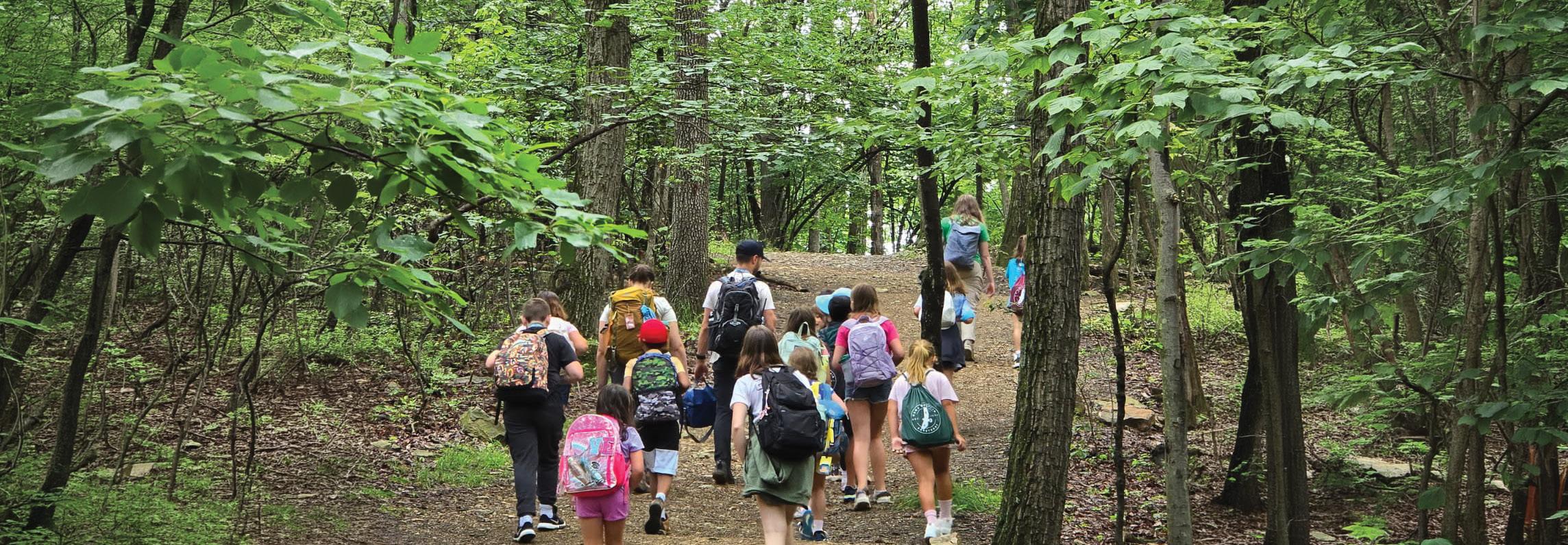
Designed for youth entering grades 1 – 5, these week-long day camps get kids outdoors, developing a deeper connection with the natural world through fun and educational activities. Campers can choose one week or join us for the entire summer!
Visit hawkmountain.org/summercamps for details.
Creative Creatures
June 15 – 19
Uncover the natural world through art, music, and movement. Slow down to enjoy the process of creating and learn how to use the scraps for projects! Meet live animals to inspire your imagination, and make art and new friends under the shade of Hawk Mountain this summer.
All About Animals
June 22 – 26
Everyone loves animals, right? Join us for the All About Animals camp at Hawk Mountain Sanctuary to take a deep dive into every group of animals, big and small. We will hike through the forest, play games, make crafts, meet live animals, and even travel to an offsite location to explore!
Eco Engineers
June 29 – July 2
$260, $220 for Members
Welcome to the camp where we ask why and how! This week campers will investigate the wonders of the natural world through experiments and hands-on activities. Live animals and special guests’ presentations are sure to be a blast.
Junior Veterinarian
July 6 – 10
Dreaming of a career as a veterinarian? Your journey starts here! Dive into the world of veterinary science as we learn the ins and outs of animal care, welcome in special guests and put your own skills to the test.
Wild Survivors: Maps, Traps, and Shelters
July 13 – 17
Challenge yourself in the great outdoors! Learn survival skills through hands-on experiences while building new friendships. Discover how humans, plants, and animals survive in the wild, and learn to build a shelter, use a compass, and then put your skills to the test.
Wild Survivors: Earth, Wind, and Fire
July 20 – 24
Do you have what it takes to survive in the wild? Unleash your wild side in this hands-on, interactive camp! Learn how to start a fire, understand the blowing wind, and discover how it all ties together on planet earth.
Animal Adventures
July 27 – 31
Calling all creatures great and small: mammals, birds, fish, insects, reptiles, and amphibians! Hands-on activities, games, and crafts will help us discover the animal kingdom. Get to travel to an offsite location for even more animal discovery and fun.
Streams to Skies
Aug 3 – 7
Step into the best classroom—the great outdoors! Uncover the life of the wild from the cold-water streams and rivers to the vast blue sky. Get to travel to an offsite location to explore it all. Adventure awaits!
Autumn 2025 Conservation Science & Leadership Trainees

CHAROLETTE (ROSIE) BERKIN
WINCHESTER, UNITED KINGDOM
Rosie earned her master’s degree in zoology from the University of Exeter in 2021. She currently works as an Assistant Ecologist with Bioscan UK Ltd., where she conducts ecological surveys for protected UK species and botanical assessments. Rosie previously worked as a falconry intern with Fox Falcons and participated in crow management with the Northumberland Crow Falcon Group. She also volunteered with the Hawk Conservancy Trust as part of the bird team, supporting public bird displays, assisting in the bird of prey hospital, and engaging with visitors. Following her traineeship, Rosie aims to continue working in raptor monitoring and conservation, with the long-term goal of joining the Vulture Conservation Foundation or a similar organization. She also plans to pursue a Ph.D. in this field.
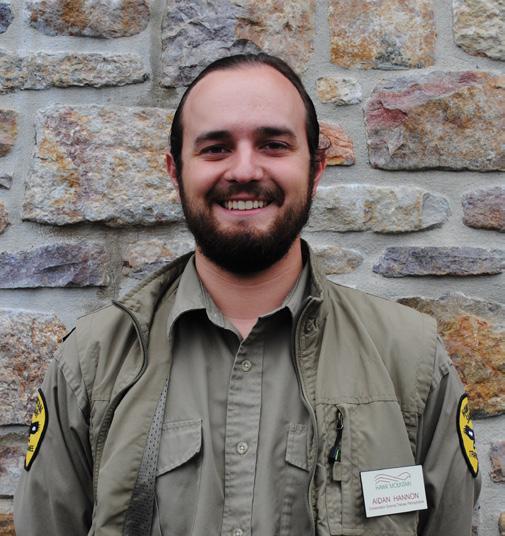
AIDAN HANNON
OLD FORGE, PENNSYLVANIA
Aidan is a 2025 graduate of Wilkes University, where he earned a bachelor’s degree in biology. During his time at Wilkes, Aidan served as a student researcher investigating the effects of prescribed burns on tick populations, contributing to critical research on habitat management and vector ecology. He also worked as a field and lab technician in a food web ecology project, conducting extensive field sampling of insects, small mammals, birds, and plants to study trophic interactions. Aidan has been actively involved with the Animal and Environmental Welfare Club at Wilkes University, helping to organize and lead a variety of community outreach initiatives. Following his traineeship, he hopes to build a career in wildlife ecology and conservation in Pennsylvania and plans to pursue a master’s degree in wildlife biology.

KYLIE MAGNUS
FITCHBURG, WISCONSIN
Kylie graduated in 2025 from the University of Wisconsin–Madison with a bachelor’s degree in conservation biology. She gained field research experience with the Ceiba Foundation for Tropical Conservation in Belize, where she studied patterns of seagrass herbivory in relation to epiphyte cover and proximity to coral patch reefs. As an undergraduate, Kylie also worked with the Perry Wildlife Ecology and Conservation Lab, where she used specialized software to manually vet acoustic data for California spotted owls and barred owls. Following her traineeship, Kylie plans to pursue a master’s degree and is eager to explore conservation opportunities across the United States and globally. Her goal is to conduct research that contributes to the protection of wildlife and the preservation of natural habitats.
ANIKET ANKUSH PAWAR
THANE, INDIA
Aniket earned his master’s degree in environmental science in 2022 from Ramniranjan Jhunjhunwala College and a bachelor’s degree in zoology in 2000 from K.J. Somaiya College of Science and Commerce. He currently works as a Conservation Biologist at the Bombay Natural History Society, where he leads vulture release and reintroduction programs in Assam. His work involves advocacy, public awareness, pharmacy surveys, and wild vulture nest monitoring. Previously, Aniket served as a research intern at the Salim Ali Centre for Ornithology and Natural History, contributing to the project titled “Landscape-Level Patterns of Mammalian Assemblages in Bellary, Karnataka,” which involved camera trapping and data analysis. Following his traineeship, Aniket plans to pursue a Ph.D. in raptor ecology, with a focus on telemetry and advanced spatial analysis.

ELIZABETH WEED ALLENTOWN, PENNSYLVANIA

Elizabeth is a 2025 graduate of Delaware Valley University, where she earned a bachelor’s degree in wildlife conservation with a minor in media and communication. She has experience in avian fieldwork and wildlife husbandry and a strong interest in ecology research. Elizabeth has worked as an Avian Research Technician with the University of Nebraska–Lincoln, where she collected and analyzed avian point count data in treated habitats. As a student researcher at Delaware Valley University, she conducted playback studies focusing on common Nearctic passerine species in mixed species foraging flocks. She has also volunteered at The Wildlands Conservancy, caring for over fifty ambassador animals, including training to handle native birds of prey. Elizabeth plans to continue working in wildlife research as a technician and later pursue graduate studies in ecology.
DIEGO GALLEGO GARCÍA
LA PAMPA, ARGENTINA
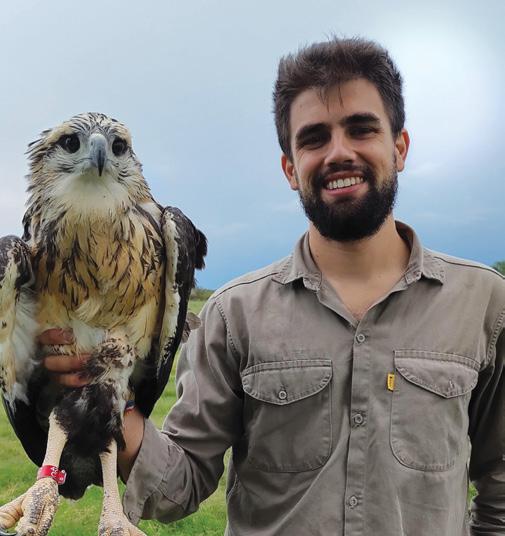
Diego recently completed a Ph.D. at the National University of Comahue, focusing on the movement ecology of Crowned Solitary Eagles in the semiarid environments of central Argentina. He holds a master’s degree from the Complutense University of Madrid and a bachelor’s degree from the University of the Basque Country in Spain. Diego was a 2022 Hawk Mountain Spring Trainee, during which he assisted with broad-winged hawk research and analyzed movement data to compare breeding home range size by sex and ecoregion. As a Leadership Trainee this past autumn, Diego worked with Sanctuary scientists on analyzing snowy owl summer movements.
Stephen Link LEAVE A LEGACY
It took Stephen Link 40 years to discover Hawk Mountain.
“I’m humbled and a little embarrassed it took me that long,” he admits with a smile. Steve first visited the Sanctuary while delivering a charitable grant on behalf of his firm, Cornerstone Advisors Asset Management. What began as a professional visit quickly became something more.
“When Sean and Mary walked me to South Lookout and I took in the valley, watching birds soar while listening to Sean’s bird calls, I was completely captivated. It was love at first sight.”
That connection runs deep. Steve grew up in a family that cherished nature. His mother studied birds and practiced organic gardening long before it was common. His father, introduced to the outdoors through Depression-era scout camps, passed along a reverence for trees and open spaces—values that Steve later shared with his own daughter.
At Hawk Mountain, that lifelong appreciation found a home.
“I love photography,” he says. “Coming here in different seasons, in different light, has been such a gift.” But what moves him most is watching others experience it for the first time: the awe on their faces, the quiet joy along the trails, the shared excitement when someone spots a distant raptor and helps others lock in on it.

“This doesn’t happen by itself,” he reflects. “Nature is here, but the research, the education, the decades of migration counts… that requires commitment and resources.”
For that reason, Steve supports Hawk Mountain both annually and through his long-term plans. His thoughtful estate commitment ensures that the Sanctuary’s conservation science, education, and stewardship will continue for generations to come.
“I hope others will join me,” he says. “It makes a tremendous impact.”
Through his planned gift, Steve has become a member of the Rosalie Edge Society, helping to secure Hawk Mountain’s future while honoring the values that shaped his life: respect for nature, curiosity, and stewardship.
If you, too, would like to leave a legacy or learn more about the Rosalie Edge Society, we welcome the opportunity to speak with you.

Leadership Donors
MAKE A DIFFERENCE
While all donors ensure Hawk Mountain remains strong and secure, Sanctuary Leadership Donors embody what it means to be a hero for raptor conservation. Leadership Donors help to sustain the Hawk Mountain, inspire the next generation, and safeguard raptors globally. Entry begins at $250 or the Merlin-Club membership level and we celebrate your support by offering exclusive events and experiences that connect you with the Sanctuary you protect, and its professional scientists, educators, and forest stewards.
If distance or schedule prevents you from participating, we are happy to schedule a personal visit, mail reports and updates, or set up a phone or zoom talk. Let us know how we can best support your needs and interests.

Members of the Rosalie Edge Society have made an investment of $25,000 or more through a planned gift, a gift to an endowment, or to support the Visitor Center Capital Campaign. Their support ensures the legacy of Hawk Mountain endures for generations to come.
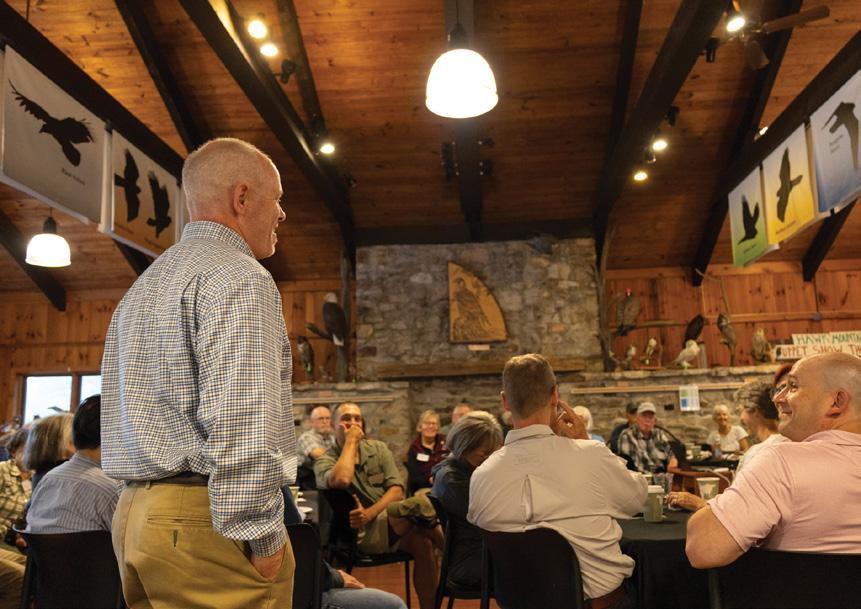
Exclusive Leadership Donors & Rosalie Edge Society Events
Spring President’s Circle
Saturday, May 23 at 11 AM Acopian Center. Invite only. Investor’s update by President Sean Grace and presentation by Colombian Leadership Trainee Esther Valejo. Complimentary brunch buffet.
Mixer at the Meadow
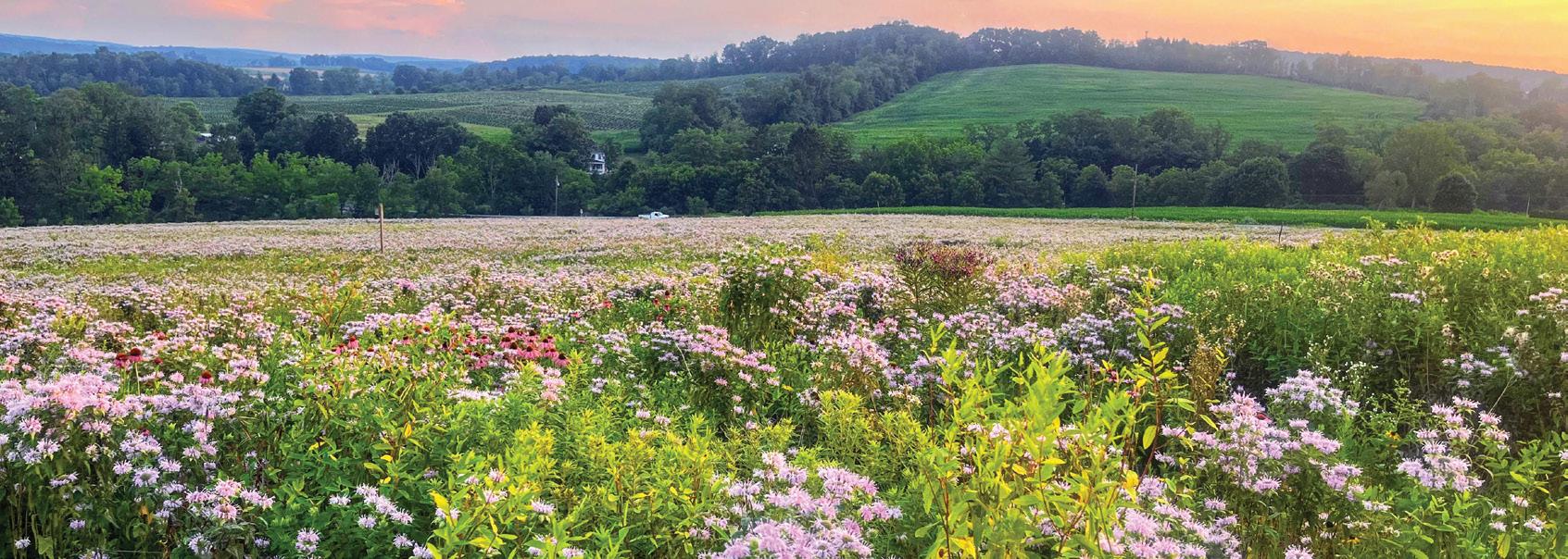
Thursday, July 23 at 6 PM Acopian Center. Invite only. Update on how we made a meadow, followed by visit to the Guers Pollinator Meadow.
Autumn President’s Circle
Sunday, September 13 at 11 AM Education Building Invite only. Investor’s update by President Sean Grace and presentation by Dr. JF Therrien. Complimentary brunch. Make it a day and purchase a ticket for the Gabriel Chamber Ensemble at 2 PM.
LOOKING TO THE SKIES Sergio Seipke
(1974–2025)
By Matías A. Juhant
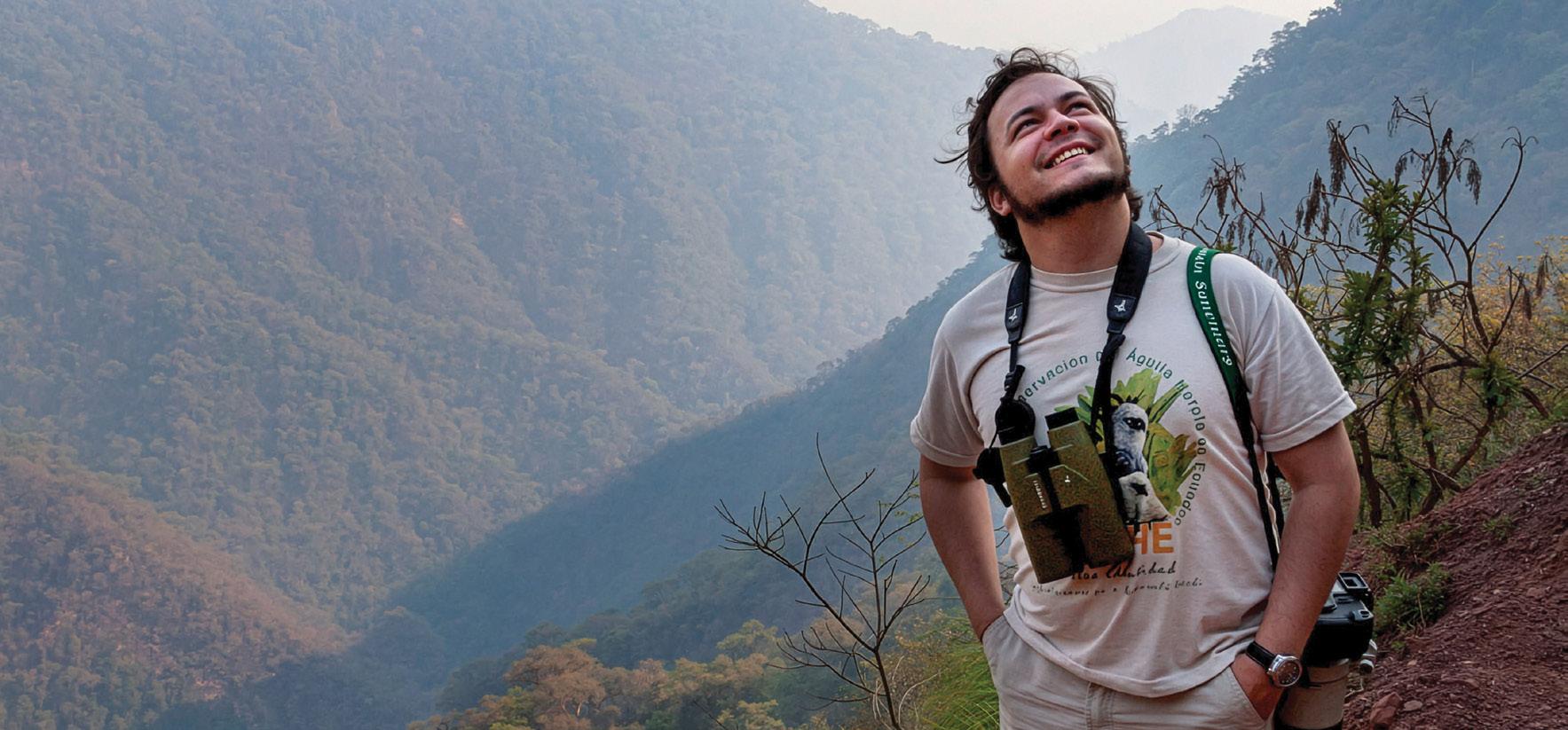
Hawk Mountain Sanctuary mourns the loss of Mountain Friend, colleague, and trainee alum, Sergio Hugo Seipke, who passed July 5, 2025 after a courageous battle with illness. Sergio was a devoted raptor biologist whose life’s work centered on observing, understanding, and sharing the wonder of birds of prey across the globe.
Born and raised in Argentina, Sergio’s passion for nature took root early in the subtropical forests of his childhood. He began studying raptors as a young adult and went on to become one of South America’s most respected experts in raptor identification, known for his ability to read age, molt, and species at a glance. By 2024, Sergio had observed 225 raptor species worldwide.
Sergio trained at Hawk Mountain in 2004 and 2005, experiences he often credited with shaping his understanding of hawkwatching as a conservation tool. With support from Dr. Keith Bildstein, he began an ambitious project to create the first-ever field guide of the raptors of South America, a goal he pursued for more than 15 years through extensive travel, photography, and
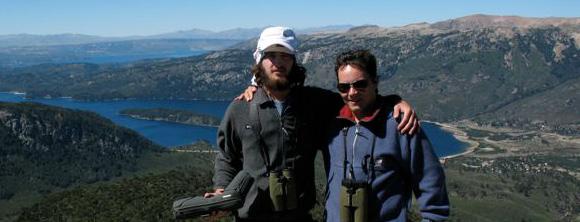
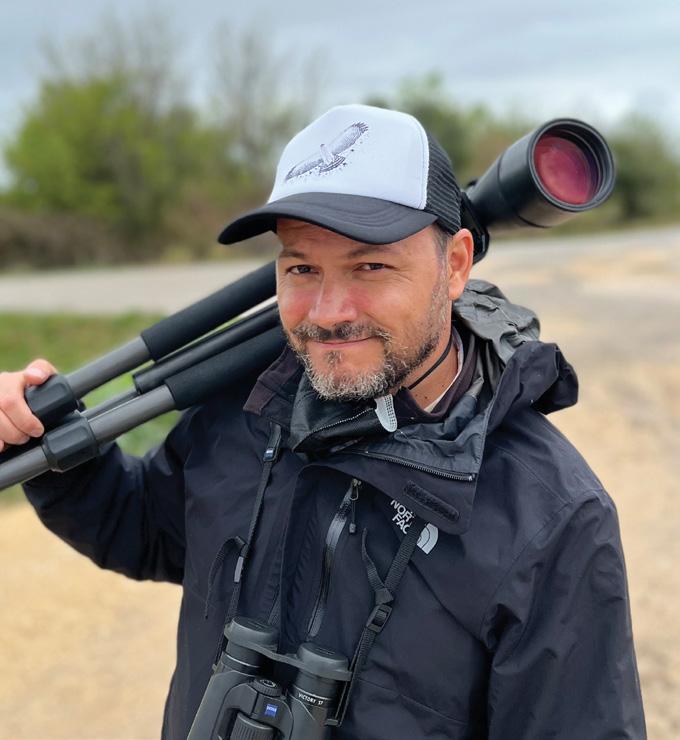
partnership. Though unfinished at the time of his passing, this work stands as a testament to his vision and dedication.
Sergio later led the ecotourism company Raptours, founded by his longtime friend Bill Clark, and frequently returned to Hawk Mountain, guiding tours and sharing his expertise with staff, trainees, and members.
Above all, Sergio was a generous mentor, a loyal friend, and a devoted father to four children. His legacy lives on in the raptors he loved, the people he inspired, and the many lives he touched. We honor him by continuing the work he cared for so deeply, looking to the skies with curiosity, humility, and hope.
Read more from Matías about Sergio’s legacy by scanning the QR code.
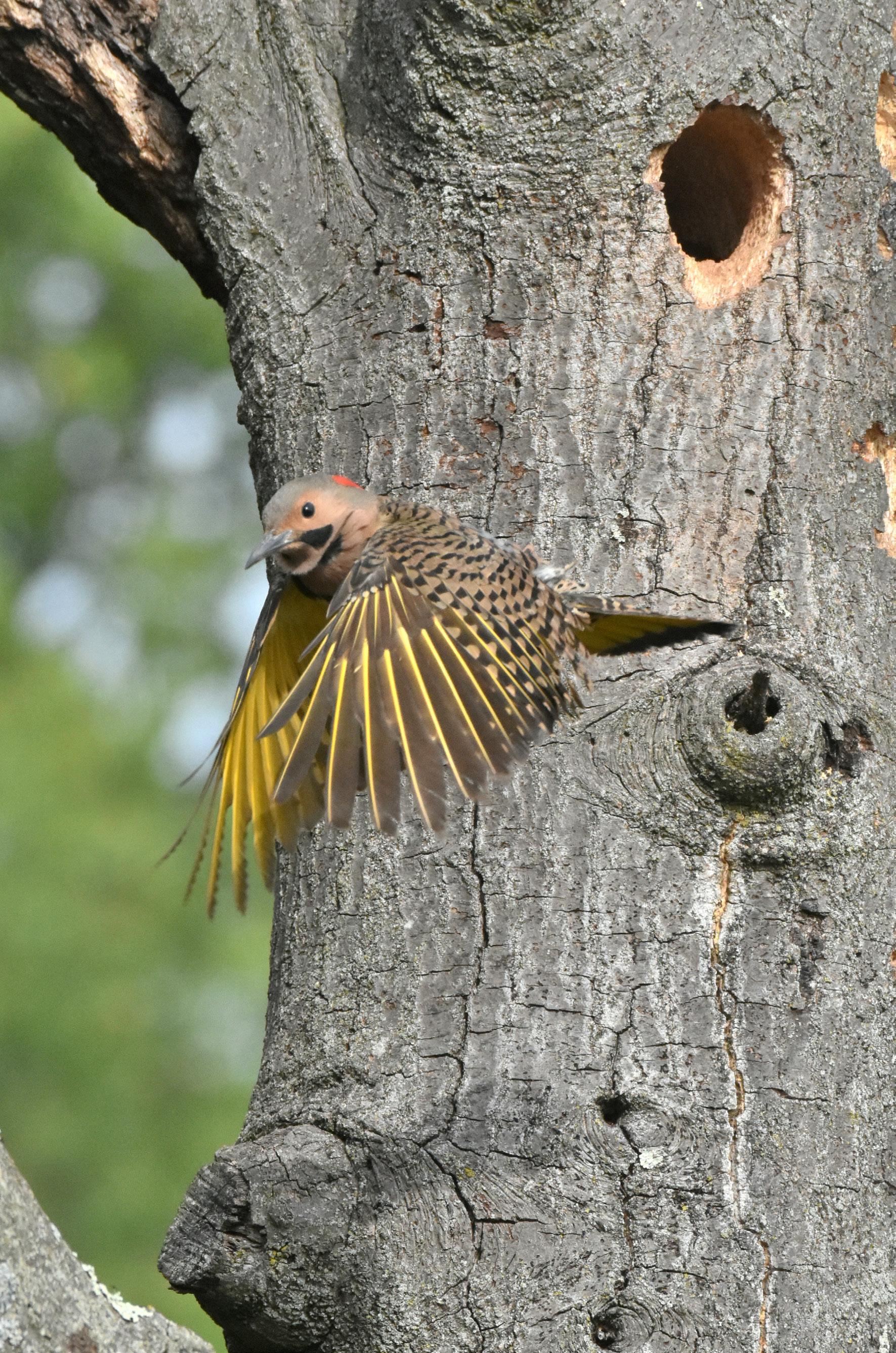
Yellow-shafted flicker in flight by Bill Moses