The mission of Hawk Mountain Sanctuary Association is to conserve birds of prey worldwide by providing leadership in raptor conservation science and education, and by maintaining Hawk Mountain Sanctuary as a model observation, research, and education facility.
by
Photo
Anthony Matz
TOP OF THE MOUNTAIN
Volunteers: Powered by Passions
NEWS & NOTES
RIDGE CURRENTS
Kittatinny Collaborations
Third PA Bird Atlas
Global Reach at Work
FIELD NOTES
Volunteerism in Bloom
APPALACHIAN TRAILS
Reintroducing the American Marten
HAWK MOUNTAIN HAPPENINGS
Autumn Lecture Series
Upcoming Events
SPRING REPORT
Spring Migration Summary Nature Notes
FROM THE NATURE NOTES
Spring 2023
COMMUNITY SPOTLIGHT
IN FLIGHT
Adelaida Pérez Cadavid
Marzia Verduci
SCHOOL IN THE CLOUDS
Spring & Summer 2023 Education Trainees
New Educator Jessica Gary
Spring & Summer 2023 Science Trainees
Janice Egeland
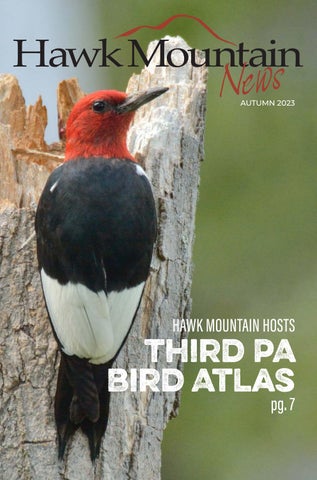
COVER PHOTO by Bill Moses
Photo by Bill Moses
VOLUNTEERS: POWERED BY PASSIONS
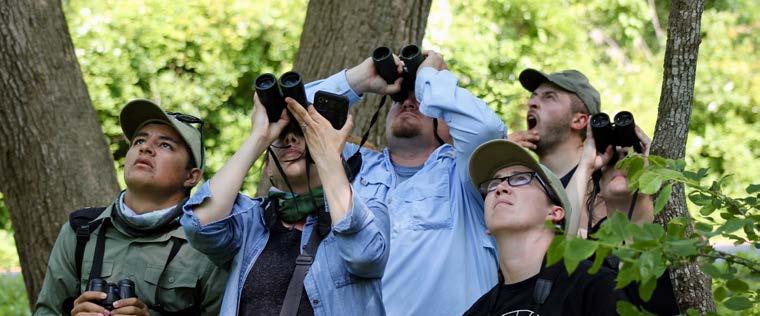
Hawk Mountain is incredibly fortunate to have an unstoppable corps of more than 200 active volunteers who put in close to 4,000 hours of service annually.
Collectively, they magnify the work that we do around raptor conservation, science, education, visitor services, and stewardship. Volunteers, like our employees and visitors, are here because they want to be, and share a love for raptors, this special Sanctuary, and the Appalachian ecosystem. Volunteers are part of our Hawk Mountain community, connected to wildlife and wild places, and are kindred spirits.
Our volunteer corps is an impressive group of talented and dedicated supporters, who are so important to our mission for global raptor conservation. Volunteers work in a broad array of positions, from serving as counters during fall migration, presenting Raptors Up Close and other programs,
providing visitor services in the bookstore, trailhead gate, or parking lot, spending time stewarding our trail system and forest, providing smooth operations at special events, organizing two native plant sales each year (see page 10), proofreading data, stuffing mailers, and so much more. Volunteer service dates all the way back to the origins of Hawk Mountain and some have gone on to become employees while others are former employees and/or trainees who wanted to stay connected and continued to serve.
On my first official day as president, I was able to meet many volunteers during a potluck luncheon in our Education Building. As I thanked them for their service, I remember asking folks to raise their hand if they had been a volunteer for more than five years. I increased that in increments of five years until I reached 50, and there were still hands in the air. I think that kind of high retention rate says a lot about the passion people have for Hawk Mountain Sanctuary and our mission when they choose to stay connected and serve for so long.
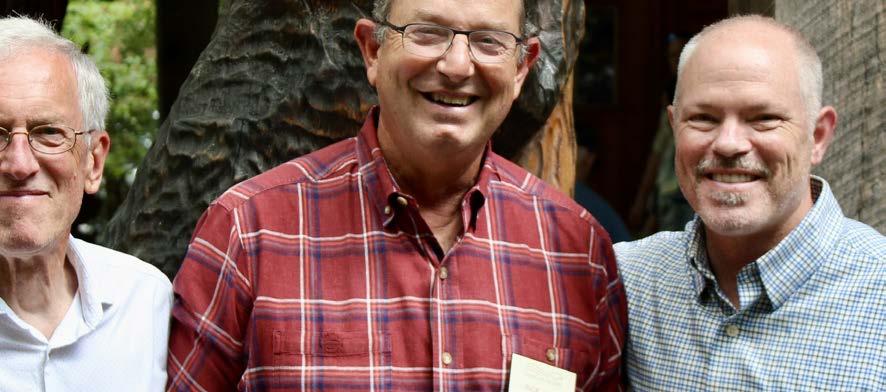
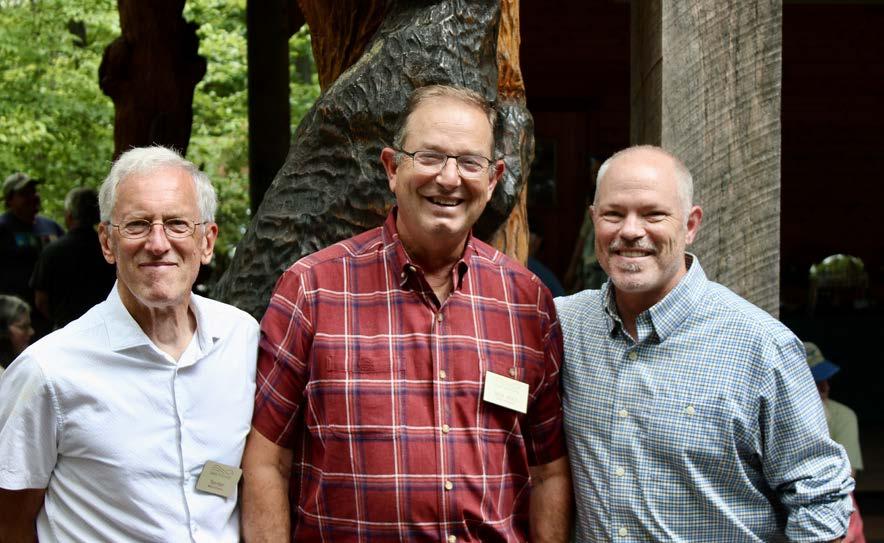
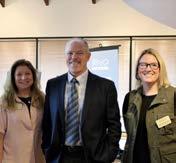
Sean with board members Tom Kerr and Rick Holt
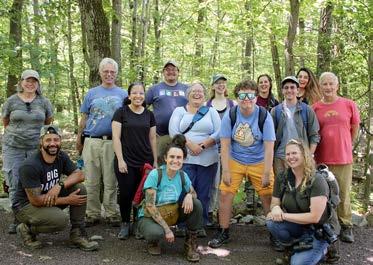
2023 Volunteer Appreciation Picnic
For both me and the staff, it is incredibly important to say thank you and in turn do our best to guide the organization, along with the board, to be the first but also the best raptor conservation organization in the world. I am happy that we were able host a volunteer picnic this summer, and I thank the volunteer corps that is such an important part of our community.
Yours in Conservation,
Sean Grace PRESIDENT
STAFF
PRESIDENT
Sean Grace
SARKIS ACOPIAN DIRECTOR OF CONSERVATION SCIENCE
Laurie Goodrich, Ph.D.
SENIOR SCIENTIST AND GRADUATE STUDY DIRECTOR
Jean-François
Therrien, Ph.D.
SENIOR RESEARCH BIOLOGIST
David Barber
BIOLOGIST-NATURALIST
Bracken Brown
RESEARCH BIOLOGIST
Rebecca McCabe, Ph.D.
ACOPIAN CENTER OPERATIONS COORDINATOR
Wendy Nicodemus
DIRECTOR OF EDUCATION
Jamie Dawson
EDUCATORS
Aaron Prince
Jessica Gary
DIRECTOR OF SANCTUARY STEWARDSHIP
Todd Bauman
SANCTUARY STEWARDS
Stephen Wade
Noah Rauch
DIRECTOR OF DEVELOPMENT
Mary Linkevich
MEMBERSHIP & VOLUNTEER MANAGER
Tammy Jandrasitz
COMMUNICATIONS SPECIALIST
Gigi Romano
COMMUNICATION ASSISTANT
Laura Berry
DEVELOPMENT ASSISTANT
Annie Trexler
BUSINESS MANAGER
Shelley Davenport
BOOKSTORE MANAGER
Mary Therese Grob
BOARD
CHAIRMAN
Tom Kerr
VICE CHAIRMAN
David Bonenberger
TREASURER
Edwin Baldrige
SECRETARY
Wendy McLean, Esq.
Jacquelyn Bonomo
Ana Maria Castaño
George Cauffman
Deborah Edge, M.D.
Stephen Edge, M.D.
Peter Fontaine
Jeff Goldenberg
Ken Hawkinson, Ph.D.
Richard W. Holt
Diane Husic, Ph.D.
Ernesto Ruelas
Inzunza, Ph.D.
Nasreen Kara
Jim Lefik
Holly Merker
David Middleton
Sara Nicholas
Sally O’Byrne
Dan Rubenstein, Ph.D.
Jeff Weil
Minturn Wright, III, Emeritus Member
NEW TRAIL MAPS
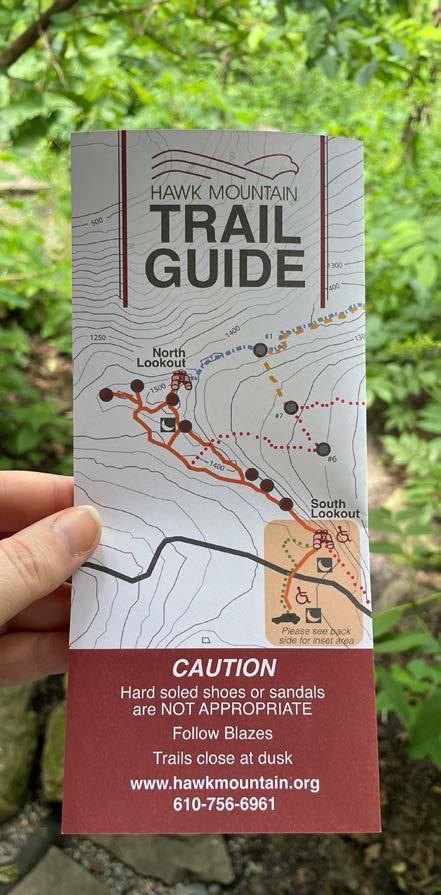
Thanks to designer Jim Scott, who is an instructor in Graphic Communications at Lehigh Career & Technical Institute LCTI, Hawk Mountain has a new and improved trail map! A longtime member, Jim knew the Sanctuary’s needs intimately and worked with students to design a new map with terrain lines to better show the trails’ elevation. The new design also better highlights the suggested hiking routes and safety precautions for visitor preparedness.
CONSERVATION COLLABORATIONS
Hawk Mountain headlined at the international Wilson Society for Ornithology Conference hosted at Muhlenburg College by former board member Dr. Dan Klem, and including the Society’s journal editor and current HMS Board Member, Ernesto Ruelas. The conference included a Hawk Mountain Symposium, featuring presentations from several Sanctuary staff, before a field trip to the Sanctuary. Dr. Laurie Goodrich highlighted 90 years of global raptor conservation and featured our history, research, traineeship and graduate student programs; research colleague Dr. Bob Curry reported on his long-term chickadee study; Bracken Brown presented on vulture monitoring across the Americas; Dr. JF Therrien shared insights on the American kestrel research and conservation; and David Barber covered long-term monitoring of songbirds on the Sanctuary.
In April Hawk Mountain hosted a virtual professional development opportunity for the Conserve the Corridor collaborators, which was also available the general public. The Raptor Migration by the Millions webinar was coordinated by Dr. Laurie Goodrich and hosted by the education and science teams, and it served as a tool to teach people standardized methods to estimate large migrating flocks and ways to practice. This program was well attended by people throughout the corridor, as well as all over the nation and beyond.
Bracken Brown presenting at Wilson Orni Society, photo by Emily Griffith
ACADEMIC INTERN
This summer, the Communications Department welcomed Isabella Di Donato from West Chester University as a communication design intern. Isabella assisted with both print and online promotional materials for events, merchandise, and more.
In July the board of directors welcomed new member Jim Lefik of Natrona Heights, PA, who currently serves as an engineer in FirstEnergy Corporation’s Environmental Department. He is also a member of FirstEnergy’s Avian Protection Program team and has volunteered at PA State Parks with the Environmental Education Program and native plant landscaping.
COSTA RICA ECO TOUR
March 17-26, 2024, join us on an unforgettable birding tour in Costa Rica! Explore the vibrant wildlife and landscapes of this beautiful country with tour leaders Dr. JF Therrien, Hawk Mountain Senior Scientist, Pablo Porras, Biologist and Director of the Kèköldi Raptor Migration Count Site, and José Castillo, a skilled birding guide for the region. Costa Rica’s abundant biodiversity makes it a prime destination for birding enthusiasts, with millions of raptors passing through during migration and breathtaking species like quetzals in the dense rainforest. Beyond nature, Costa Rican culture also shines with its diversity, warm hospitality, and culinary melting pot. With this birding tour, we aim to provide one of the best opportunities to experience it all.
Secure your spot by registering and submitting a $500 deposit by Dec. 31, 2023, with the remaining balance due by Jan. 31, 2024. For inquiries and reservations, contact Dr. JF Therrien at therrien@hawkmountain.org.
PHOTO CONTEST
The Sanctuary’s Fall Photo Contest is open once again for submissions. Professionals and amateurs alike can submit any photos taken of the flora, fauna, and landscapes at Hawk Mountain. Photos must be taken on Sanctuary grounds and be free of heavy editing, filtering, or other manipulation. See details and rules at hawkmountain.org/photocontest. Submissions close Monday, December 18.
Kittatinny Collaborations
Kittatinny Hawkwatches
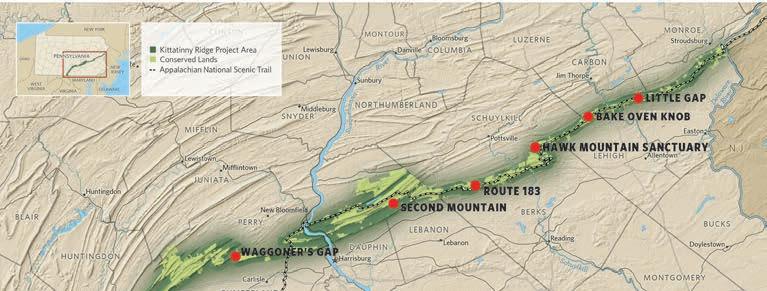
Earlier this year, Hawk Mountain received a grant to coordinate official hawkwatches at five sites along the Kittatinny Ridge, as well as create display and educational materials for each site. Sanctuary scientists will train seasonal and volunteer workers who will cover the sites from September 1 through November 30 and will educate visitors on raptor identification and the importance of the Kittatinny migration corridor. Sanctuary staff will then synthesize collected migration and visitor data.
This project was funded in part by a grant from the Community Conservation Partnerships Program, Environmental Stewardship Fund, under the administration of the Pennsylvania Department of Conservation and Natural Resources, Bureau of Recreation and Conservation, as well as a grant from the PA Game Commission and funding from the Berks Community Foundation.
Kittatinny Kiosk
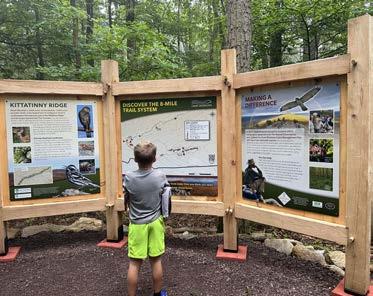
In partnership with the Appalachian Trail Conservancy, Hawk Mountain developed a kiosk highlighting the importance of the Kittatinny Conservation Landscape and the Sanctuary’s forest stewardship efforts, a concept that Hawk Mountain has spent 90 years promoting. Hawk Mountain’s award-winning stewardship team salvaged and milled on-site chestnut oak lumber and used it to construct the timber frame kiosk, which features three eye-catching panels.
The Kittatinny Landscape is important for climate resiliency and recognized as a state, national, and globally Important Bird Area for migratory birds and other wildlife. The project was a collaborative effort between multiple departments and the ATC, supported in part by a grant from the Department of Conservation and Natural Resources. Look for the new educational panels, which includes an updated and oversized trail map to promote hiking safety, at the trailhead entrance.
Hawk Mountain Hires Third PA Bird Atlas Coordinator
Hawk Mountain is honored to partner with birdwatchers and ornithologists across the state to launch the third Pennsylvania Bird Atlas. This five-year project is funded by the Pennsylvania Game Commission and will be headquartered at the Sanctuary’s Acopian Center for Conservation Learning. This atlas will be the first of its kind, as a top goal is to include the first surveys of wintering birds in addition to breeding birds.
“The Atlas aims to provide a snapshot of the population status and distribution of birds in Pennsylvania. No other bird surveys are as comprehensive, and for that reason, the results are critical to the establishment of conservation priorities for Pennsylvania birds,” says PGC State Ornithologist Sean Murphy.
The first step was to hire Amber Weiwel, the selected Bird Atlas Project Coordinator who will work closely with the Steering Committee. Hawk Mountain will provide oversight for Amber who will partner with birdwatchers and ornithologists in every county across the state to survey bird species’ status and distribution from 2024 through 2028. Amber’s first order of business will be to develop survey protocols and outreach materials for the public and birding communities, identify regional coordinators, and then to promote the Atlas via social media and recruit volunteers. Surveying is set to begin in 2024.
The Atlas will be open to all volunteer birders, regardless of skill level, primarily by using the popular eBird online database to record observations. It also will be the first time a Pennsylvania Bird Atlas will incorporate winter surveys in addition to breeding season surveys, which will help refine the understanding of the year-round distribution and relative abundance of Pennsylvania’s bird populations.
Learn more at hawkmountain.org/3rdpabirdatlas
Global Reach at Work
By Mary Linkevich
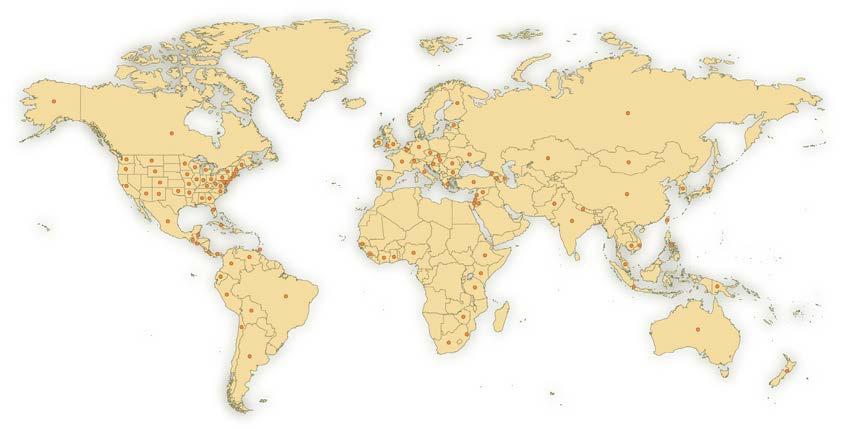
Hawk Mountain works to inspire, train, and empower future leaders in conservation, and since 1976 has hosted 506 young scientists from 78 countries on six continents and 37 states.
As we quickly approach the Sanctuary’s 90th Anniversary, we intend to quantify and publish results on precisely how much this far-reaching program has influenced professional networking and career pathways, explore how to improve synergy across the network to bolster raptor conservation, and promote the importance of diversity and international partnership to ensure successful conservation, especially for migratory species.
A thorough survey is now underway, and the 90th anniversary will serve as a launching pad to build awareness and excitement around our most acclaimed program, culminating in a trainee reunion and presentations during an anniversary celebration on May 10-12, 2024.
The program has been successful on several levels, including training a new generation of raptor conservationists and raising the profile of the Sanctuary’s conservation efforts globally. Thanks to the Trainee Endowment, supplemented by other generous gifts, every graduate receives a full scholarship.
COUNTRIES
SERVED :
ARGENTINA
ARMENIA
AUSTRALIA
AZERBAIJAN
BELGIUM
BELIZE
BOLIVIA
BRAZIL
BULGARIA
CAMBODIA
CANADA
CHILE
CHINA
COLOMBIA
COSTA RICA
CÔTE D’IVOIRE
CROATIA
CUBA
CZECH REPUBLIC
ECUADOR
EL SALVADOR
ESTONIA
ETHIOPIA
FINLAND
FRANCE
GAMBIA
GEORGIA
GERMANY
GHANA
GREECE
GUATEMALA
HUNGARY
INDIA
INDONESIA
IRELAND
ISRAEL
ITALY
JAPAN
JORDAN
KAZAKHSTAN
KENYA
KOREA
LEBANON
MALAYSIA
MEXICO
MONGOLIA
NEPAL
NEW ZEALAND
NIGERIA
PAKISTAN
PALESTINE
PANAMA
PAPUA NEW
GUINEA
PERU
PHILIPPINES
PORTUGAL
ROMANIA
RUSSIA
SIERRA LEONE
SLOVENIA
SOUTH AFRICA
SPAIN
SWAZILAND
SWITZERLAND
SYRIA
TAIWAN
TANZANIA
TRINIDAD AND TOBAGO
TURKEY
UKRAINE
UNITED KINGDOM
UNITED STATES
VENEZUELA
VIETNAM
WALES
ZIMBABWE
Trainee class at the Acopian Center
About the Program
With the increased capacity and worldclass resources at the Acopian Center for Conservation Learning, and an outstanding, staff in education and science, Hawk Mountain has effectively doubled its annual enrollment and expanded the types of training available. Conservation science and leadership trainees, graduate students, and academic interns have access to datasets and one of the largest collections of raptor literature in the world, and environmental education trainees work along with science trainees in public programs and work with staff to connect adults and children with raptors and the natural world. Trainees interact and learn from visiting professionals and attend weekly seminars in raptor biology and build multicultural awareness and international partnerships... all in the inspirational setting of the Sanctuary.
The endowment set up by Board of Directors allows Hawk Mountain to fund up to 15 trainees per year to work for three to four months alongside staff in education and science. For some trainees this training cannot be found in their own country and can provide an important steppingstone to other career opportunities.
“One aspect staff are particularly proud of is the migration sites our trainees or interns have set up around the world, which together now monitor over 13 million raptors annually,” says Director of Conservation Science Dr. Laurie Goodrich, who oversees the program.
Support the 90th Anniversary Trainee Reunion
Friday to Sunday, May 10-12, 2024
If you would like to sponsor the Trainee Reunion or international travel for an individual, please contact Mary Linkevich at linkevich@hawkmountain.org or 610-756-6000 x212.
ROSALIE’S RAMBLE IN NYC
Friday, April 26, 2024
$90 per person
Celebrate Hawk Mountain’s 90th anniversary on a birding excursion to New York City’s beautiful Central Park! Join HMS staff and volunteer naturalists for a guided birding experience in the Ramble, one of Hawk Mountain founder Rosalie Edge’s favorite birding spots. Stay tuned for more info!
Fidel Atuo received his doctorate is now a post doc at the University of Wisconsin-Madison
IN BLOOM Volunteerism
By Laura Berry
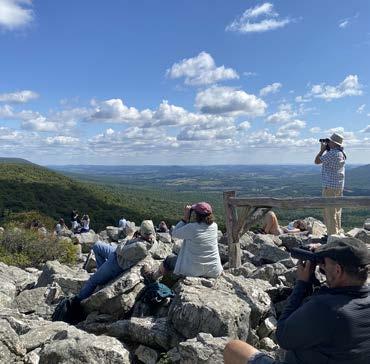
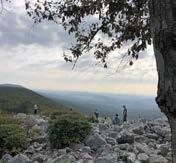
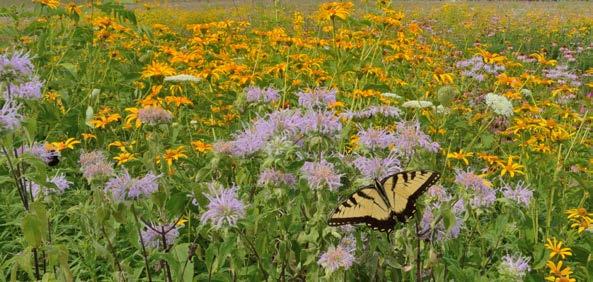
Since 1934 Hawk Mountain has connected thousands of people with our amazing migration and Appalachian ecosystem, but in the early days, there was one unspoken condition: you had to hike to enjoy it. While the famed North Lookout provides stunning views overlooking the Kempton Valley and beyond, the trek can be a challenge given the 300-foot elevation rise and rocky terrain.
That changed in the early 1980s, when then Curator Jim Brett hatched the plan for “Habitat at Hawk Mountain—A Design for Nature,” an idea to transform an unused and overgrown corner of the parking lot into “a model for backyard habitat,” recalls Sue Wolfe. With help from more than 200 volunteers and Sue’s leadership as then Director of Volunteers, they did just that. The project broke ground in 1987 and opened the following year as the headliner for the Members Day Celebration.
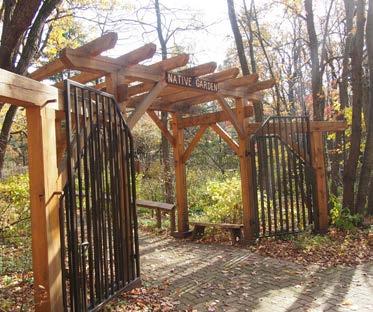
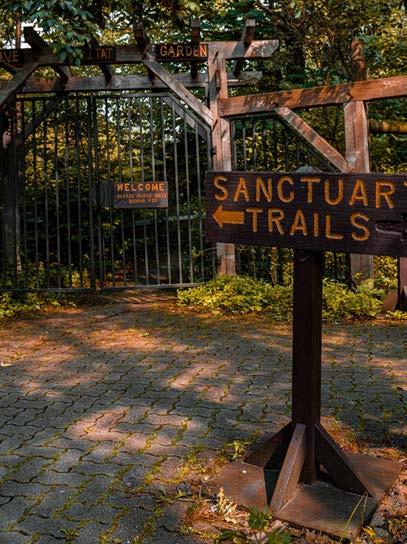
“The empty lot had been completely transformed into a haven for native plants, wildlife, and nature lovers,” volunteer Joanne Kintner recalls. The original garden has the same footprint we enjoy today, with a wheelchair-accessible brick walkway looped in a figure-8 through mixed habitats featuring native species, all expertly labeled by the volunteers who planted them. Two ponds and a waterfall provide water sources for wildlife, and multiple benches and a
charming wooden gazebo encourage areas to sit and reflect. Future upgrades would include a permanent deer fence in 1998 that was later updated again, and the impressive 14-foot-high welded golden eagle sculpture, “Spirit of the Heart,” by Mary Taylor.
“The concept of native gardening was unfamiliar to most people at the time the Habitat Garden was being constructed, so we were trend setters, way ahead of our time,” reminisces Sue Wolfe. “Nobody was talking native back in the 80s when we started. With the Garden, Hawk Mountain revolutionized the way people looked at plants.”
The Native Habitat Garden is a beautiful and peaceful space that promotes the Sanctuary’s mission and brings the wonder of nature closer to everyone, including those
with limited mobility. It also demonstrates the dedication and passion of hardworking individuals who have shaped the culture of volunteerism at Hawk Mountain.
Dedicating Time and Talent
“Today’s volunteer corps is just as essential to ensuring smooth Sanctuary function as it was in the 1980s,” says President Sean Grace, who explains that volunteers donate on average 4,000 hours per year.
Volunteers are involved in every aspect of the day-to-day operations at Hawk Mountain, including but not limited to property and forestry management, hawk counting, event planning and coordination, conducting scientific research, visitor services, and providing office support.
“Hawk Mountain’s long and rich history of volunteerism has created a culture that ensures there is a place for every talent and ability within our volunteer corps,” Grace adds.
Hawk Mountain’s garden volunteers are a social group with green thumbs, and they collectively and effectively maintain and improve the Native Habitat Garden year-round. The group meets weekly for a majority of the year and is responsible for the area’s seasonal upkeep, as well as educating visitors about the benefits of using native species. Naturalists are often on hand in the Garden during busy
weekends or special events to answer questions and informally educate visitors about the role of native flora in the ecosystem and how to identify native species. Science and education staff also use the Garden for workshops and events, as it doubles as an important outdoor classroom for children and adult learners alike.
Why Native?
“Habitat at Hawk Mountain” was planted to intentionally model native, region-specific habitat and low-maintenance plants that attract and benefit wildlife. Volunteers researched native plants at length, attending conferences and reading the latest books that existed on the subject. Together, they became self-taught experts in native plant gardening, a subject they took as seriously as the plants they allowed in the Garden. Plants whose origins could be traced overseas were turned away, because introduced species could wreak havoc on an otherwise well-balanced ecosystem.
Sue explains that introduced plants provide no food or shelter for native wildlife and typically outcompete native plants for space and resources. Native plants are essential to native wildlife as sources of food or as habitat necessary to complete their life cycle, and those most negatively impacted are often the ones that have coevolved with these plants. Plants and wildlife that have coexisted for thousands
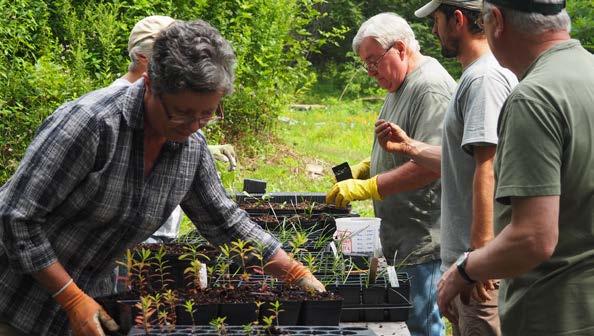
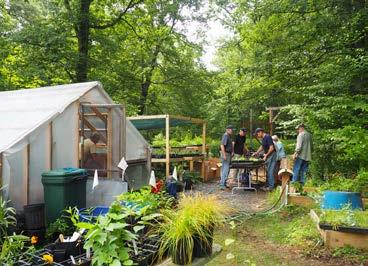
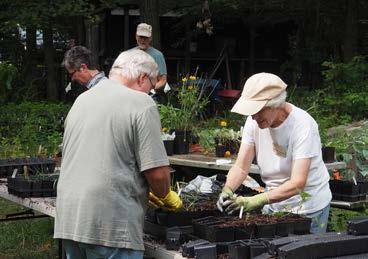
Volunteers at the Native Plant Garden.
of years share evolutionary history. For instance, monarch caterpillars feed exclusively on milkweed, making it the host plant. Without milkweed, monarch larvae would not be able to complete their lifecycle and the species would likely go extinct. This is just one example, but there are many species that are negatively impacted by nonnative plants outcompeting native species.
Today, our volunteers benefit from more resources, such as Doug Tallamy’s Bringing Nature Home, a guidebook to explaining how planting native species benefits native wildlife, improves biodiversity, and increases survival in these species. This book has been an important reference to many native plant volunteers who helped construct and create the original garden, including Joanne Kintner.
Native Plant Sale
“The concept of invasive species was unknown in the 1980s, but with the Garden, Hawk Mountain revolutionized the way people look at plants. Even today, plants and seeds sold at big box garden stores are often non-native, even those marked wildflowers,” she says.
Recognizing the need for more education, the group in 2005 set out to plan, promote, and host what has turned into an exceptionally popular and financially lucrative spring and autumn Native Plant Sale. The sales offer a platform to promote the importance of native species for wildlife, provide easy access to a wide variety, and encourage the public to “Go Native.” The group sells native flowers, shrubs, vines, trees, and ground covers, and the volunteers also propagate much of the selection, thus reducing expense and capitalizing on revenue, all of which they donate back to the Sanctuary.
“Nearly 300 people attended our first sale in 2005, and we advertised a native plant garden as a low-cost, low-maintenance, pesticide-free home landscape that benefits wildlife,” Joanne says. In that first year alone, volunteers sold hundreds of plants and sales have only increased.
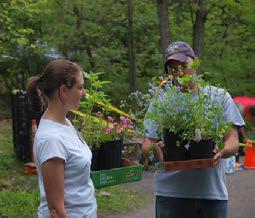
Volunteers prepare for the Native Plant Sale.
Walkway in the Native Plant Garden.
After 18 years the Native Plant Sale is still entirely volunteer run, with all profit going directly back into the Sanctuary. Native Plant Sale volunteers meet at the Sanctuary every Friday from early March until October to discuss and plan both the Fall and Spring Sales. Plants are sourced from local nurseries, grown by volunteers at their own homes and at Hawk Mountain, and even shipped from native plant growers across state lines. Each volunteer is tasked with a specific job, such as sourcing the shrubs and trees, creating labels, or growing seedlings. Untouched by staff, this event is a labor of love that has been cultivated through many years of volunteer effort.
Volunteers on a Mission
“To say Hawk Mountain appreciates the effort and dedication of its volunteers is a vast understatement. The passion of our volunteers allows Hawk Mountain to bring in thousands of dollars every year that fund local-to-global research, supporting and training up-and-coming conservationists from around the world, educating and spreading awareness to the community, and most importantly, protecting the raptors we love,” says President Sean Grace.
This year’s spring sale alone sold more than 2,000 plants, and with a raffle and accompanying native plant and pollinator book sale, raised just over $20,000 for the Sanctuary.
“We can’t thank this group enough for the work they do to inspire visitors and members of our conservation community
We can’t thank this group enough for the work they do to inspire visitors and members of our conservation community to take a stand for our ecosystem.
to take a stand for our ecosystem. The information they share is critically important and the work they accomplish is recognized and appreciated,” says Grace.
Join the Native Garden Team Today
If you, too, want to work in a group environment, care and share for our Native Habitat Garden, or even just help with a plant sale, contact Tammy Jandrasitz today at 610-756-6961 or jandrasitz@hawkmountain.org.
Garden entrance and trails sign by Anthony Matz, Berks County Views
Reintroducing the
AMERICAN MARTEN
By Laura Berry
The American marten, formerly the pine marten, has been absent from Pennsylvania for over 120 years.
Deforestation, along with humancaused habitat loss and overharvest, led to extirpation, or localized extinction, of marten from the state. Between 1865 and 1921, beavers, elk, mountain lions, gray wolves, and fishers also disappeared from the state, and white-tailed deer and river otter populations were reduced to mere fragments. But with loss comes opportunity, and the Pennsylvania Game Commission (PGC) now proudly boasts successful reintroductions of white-tailed deer, elk, beavers, fishers, and river otters. The PGC hopes to add one more species to the mix, but is Pennsylvania ready to become reacquainted with the American marten?
Reintroduction of any species has its challenges, but reestablishing a predator is always met with strong opinions. Public surveys conclude that 92% of Pennsylvanians sampled are in favor of marten reintroduction, a statistic that doesn’t always reflect in comments on social media. Tom Keller, the PGC’s
Furbearer Biologist, has taken on the responsibility of making the reintroduction process as transparent as possible. He has hosted several presentations across the state for the community to learn more about martens, the project, and to ask questions—often with a similar undertone: what is a marten?
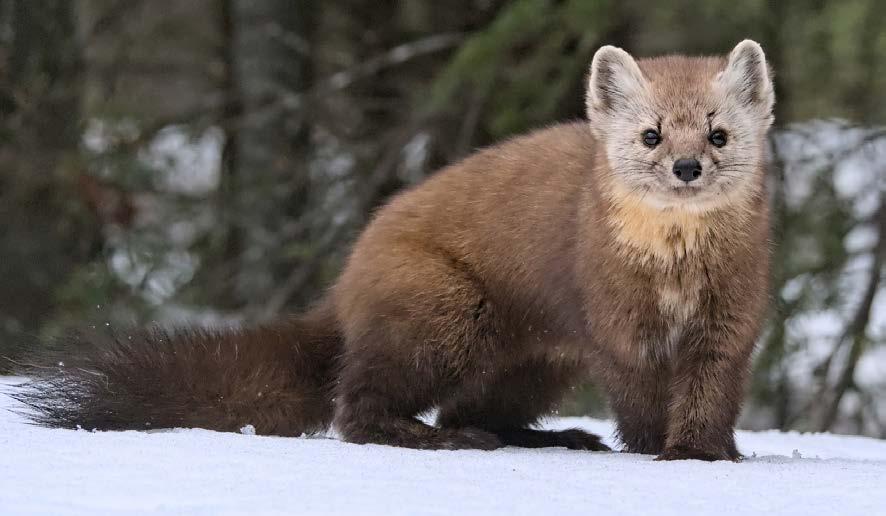
American martens weigh approximately two pounds, about the same as a fox squirrel, and are members of the weasel family, Mustelidae. Closely related to mink and fishers, martens are highly specialized predators that target small mammals such as mice, shrews, and voles, but are also known to consume plants, reptiles, amphibians, and some birds. They are exceptional climbers and scale trees with ease thanks to their semi-retractable claws. Martens rarely enter human development as they can only survive in structurally complex, continuous forest.
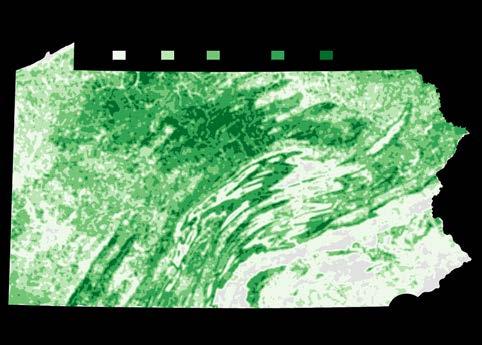
Concerns over how introduced martens will acclimate to a new landscape have been addressed with the results of feasibility assessments, which show Pennsylvania has suitable habitat in quantity, quality, and connectivity. Another concern voiced by many outdoorsmen is if wild grouse
American marten on snow by Kent Ross
and turkey populations that are already subject to fluctuation would be greatly impacted by the introduction of another predator. Extensive diet research from out-of-state marten populations has shown rare predation on grouse and no evidence of turkey predation whatsoever. Martens would also pose little threat to domestic poultry such as chickens or ducks, so farmers can breathe easy. In fact, their primary diet is rodents, which would make them a vital asset in rodent population control.
The benefits of American marten reintroduction outweigh the concerns. The ecological restoration necessary to bring back martens would improve overall forest health, and reintroduction would increase biodiversity and expand ecological processes such as seed dispersal and rodent management. The marten is also culturally important to Indigenous peoples and to the history of early Pennsylvania settlements. And with any wildlife reintroduction comes economic growth within the outdoor recreation industry in the form of hunting, trapping, and ecotourism.
The decision to rewild is still being deliberated. The process is long and carefully thought out, the first step being a reintroduction and management plan, which was presented to the Board of Commissioners in July. The Board is now considering releasing these plans for a
60-day public review and comment period, after which they can be finalized and brought back to the Board for approval. If everything is passed, the plan can begin, but don’t expect to see wild martens in Pennsylvania for another two years at least. The PGC’s experience with previous wildlife reintroductions lends to their careful consideration of how best to proceed.
With Pennsylvania’s history comes our legacy of wildlife. We Pennsylvanians take pride in sharing a home state with some of North America’s most iconic animals, serving as standout leaders in rewilding because of the strong value that we place on our wildlife resource.
“Pennsylvanians have a legacy of restoration over the past 100 years,” Tom Keller states. “Our grandparents’ generation reintroduced deer and turkey for our parents. Our parents’ generation reintroduced otter and peregrines for us. And we are reintroducing bobwhite quail for our children. The marten presents another opportunity to better the ecological community for the next generation.”
With loss comes opportunity, and the reintroduction of American marten presents the opportunity to build back what once was, for a healthier ecosystem and for our children to enjoy.
To learn more about the reintroduction of the American marten in Pennsylvania, visit https:// american-marten-pagame.hub. arcgis.com or scan the QR code.
HAWK MOUNTAIN HAPPENINGS
All lectures are attend and take place at 5 PM in the Visitor Center Gallery unless stated otherwise.
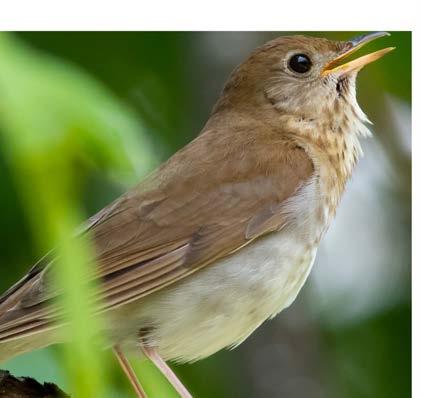
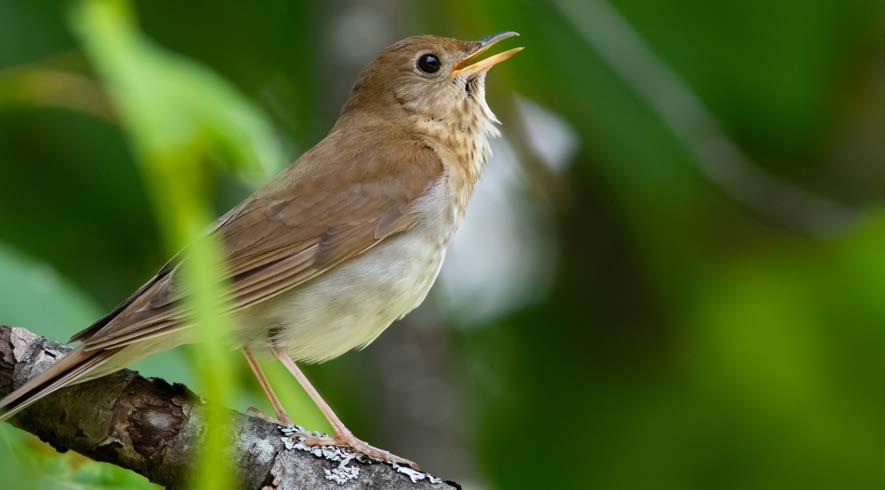
Veery by Frode
Jacobsen
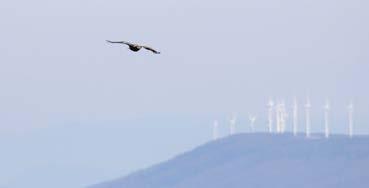
Golden Eagles and Wind Energy: Challenges and Opportunities
Saturday, October 7
David Brandes will discuss his research and collaborative projects on understanding, modeling, and predicting movement patterns of golden eagles and other raptors in efforts to reduce the risk of eagle collisions with wind turbines.
The Battles of Midway: Restoring Paradise
Saturday, October 14
Dave Grant will recount his summer working with Island Conservation on the largest island restoration effort ever attempted on Midway Atoll, the center of Papahānaumokuākea Marine National Monument, to protect native species, including the world’s largest colony of albatrosses.
Protecting the Country of Birds: Colombia
Saturday, November 4
Colombia has more species of birds than any other country in the world. Join HMS Board Member and former trainee Ana Maria Castaño to hear about the outstanding diversity of birds and the effort made by Colombian citizens to protect them in the Country of Birds.
AUTUMN Lecture Series
Migration Patterns and Overwintering Locations of Veeries in South America
Saturday, October 21
Todd Underwood and Christopher Heckscher will discuss patterns of veery migration and describe their overwintering locations and movements in South America, data which has been collected using the latest tracking technology.
The Past and Present of the Lenape in Pennsylvania
Saturday, November 18 at 1 PM
Adam Waterbear DePaul, Chief of Education and Tribal Storykeeper of the Lenape Nation of Pennsylvania, will discuss the past and present of the Lenape people, as well as current initiatives to revitalize Lenape culture.
Golden eagle migrating in the West Virginia highlands, wind turbines in the background
Upcoming Events
Art Gone Wild: Exhibit by David Hughes
Open daily through September 30
Come enjoy original pieces by long-time counter, volunteer, and wildlife artist Dave Hughes, a protégé of the late great Assistant Curator and artist Fred Wetzel. The display features stunning oil paintings of raptors and other wildlife.
Meet the Fall Forest
Saturday, September 30 • 1 – 2:30 PM
Join local ecologist Dr. Chris Sacchi for a casual walk and learn to identify common trees and fall flowering plants at Hawk Mountain as fall arrives. Registration required.
Changing
Seasons on the Mountain
Saturday, October 14 • 10 – 11 AM
Join Master Naturalist Gordon Bosler for a guided walk through the woods at Hawk Mountain to look for fall flowers, mushrooms, and other signs of the changing seasons. Registration required.
Hike, Hawkwatching, and Lunch with the President – MEMBER EXCLUSIVE!
Monday, October 16 • 9 AM – 1 PM
Depart on a leisurely hike to North Lookout with President Sean Grace to scan the skies for migrating raptors, followed by a complimentary lunch in the Visitor Center. Registration required.
Owloween
Sunday, October 29 • 1 – 3 PM
Celebrate on the Mountain with creepy, crawly, cold-blooded creatures! Learn all about owls and get to meet one up close. Enter our Costume Contest and take home creepy crafts, treats, and more. Registration required.
Nature Stories: Using Field Sketchbooks
Sunday, November 5 • 10 AM – 12:30 PM
Join artist and author Lisa Kahn Schnell to learn how to set up a field sketchbook to explore and document your observations about science and nature through art and writing. Registration required.
BIRDABILITY EVENTS
Promoting awareness of accessibility in the outdoors. Learn more at birdability.org.
Accessible Hawk Watch at South Lookout
Saturday, October 21 • 1 – 3 PM
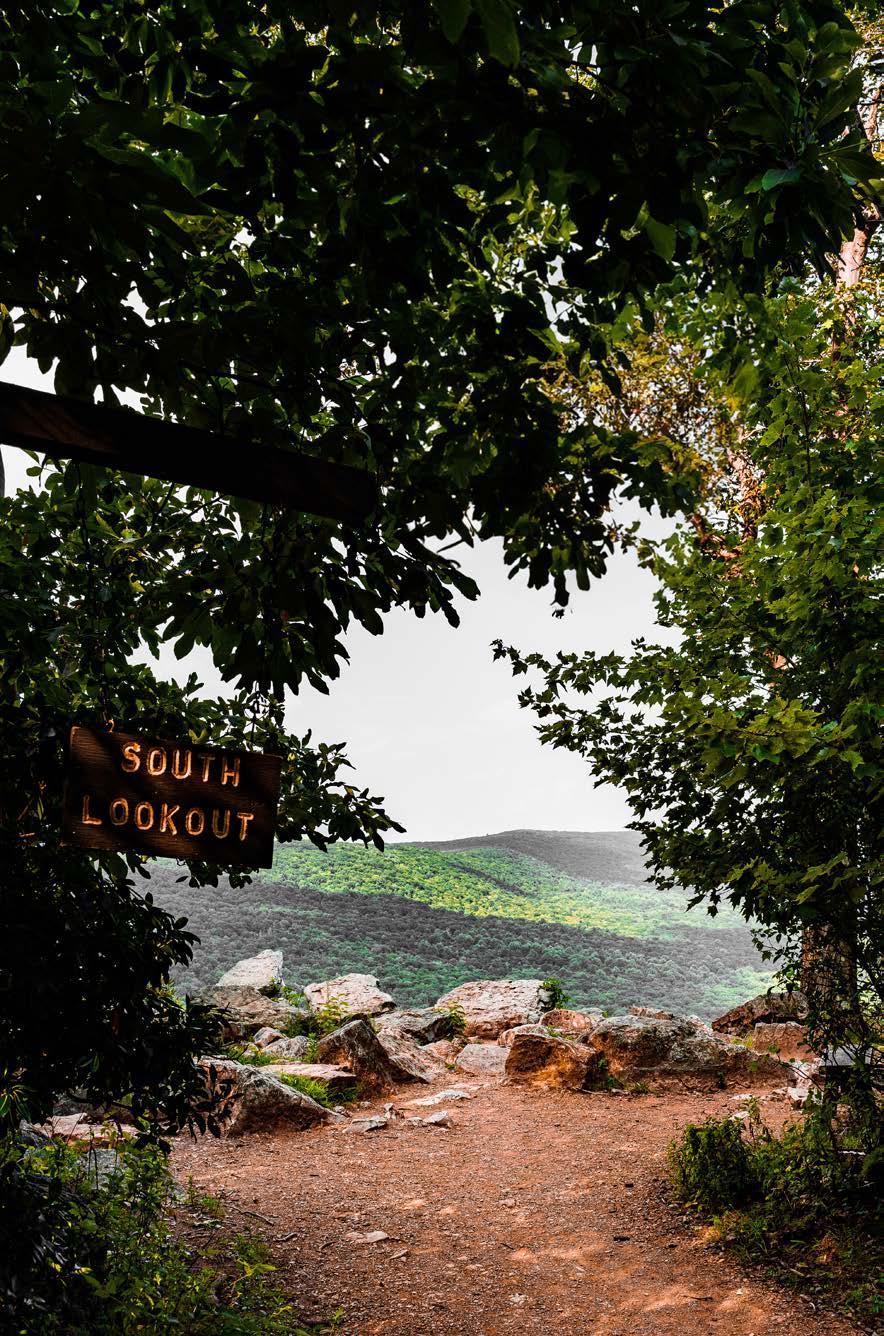
Join us on our award-winning ADA Accessible Silhouette Trail that leads up to our scenic South Lookout, learn about raptor identification, and observe the 2023 fall migration. Registration required.
Native Habitat Garden Birding Challenge
Sunday, October 22 • 9 AM – 3 PM
Help our naturalists identify as many species as possible from within the ADA accessible Native Habitat Garden. This is stationary birding at its best! Stay as long or as little as you like.
Check out more accessible programs at hawkmountain.org/events.
Opt Outside Hike
Friday, November 24 • 9:30 AM – 3 PM
Instead of battling the craze of Black Friday, opt outside and join us along with the Appalachian Trail Conservancy for a guided hike of our River of Rocks trail to connect with nature and learn about the importance of the surrounding Kittatinny Ridge. Registration required.
2023 Spring Migration Summary
By David Barber, Senior Research Biologist
Low clouds shrouded the ridge on the first official day of the count. As visibility cleared late morning, the counters spotted a sharp-shinned hawk flapping north at 11:47 am, the first migrant of the official count. Overall, counters tallied 1,189 migrating raptors of 14 species in 267 hours over 44 days from March 20 to May 15.
Turkey vultures dominated the early flights with a season high 67 counted on March 20, and 17 recorded on April 1. The first broadwinged hawk was observed soaring over the lookout on April 7 along with 25 turkey vultures, five bald eagles, one northern harrier, four sharp-shinned hawks, three red-tailed hawks, and an American kestrel. The first big count of the season occurred on April 17 with 178 raptors, including a season high 12 bald eagles and 10 red-tailed hawks, as well as 133 broad-winged hawks. The broad-winged hawk flight peaked four days later on the 21st, when 215 broadwings soared past the lookout with 183 passing between 12 and 1 pm.
Migration slowed at the end of April into May as a low-pressure system stalled over the area, bringing four days of unsettled weather. The only golden eagle of the spring was observed on May 2. Migration continued through mid-May although in low numbers. Eleven raptors were counted on the 7th, including one osprey, one sharpshinned hawk, seven red-tailed hawks, and two broad-winged hawks. The season came to an end on May 15 with two adult redtailed hawks soaring high over the lookout and streaming to the north late morning.
Overall, the count total was 29% above the 10-year average. Turkey vultures, bald eagles, broad-winged hawks, red-tailed hawks, and American kestrels all had above average counts. The turkey vulture total
WE THANK THIS SEASON’S COUNTERS:
Conservation Science Trainees: Charles Khumalo, Adelaida Perez, Gizo Seskuria, Sarah Way, Elizabeth Zink | Education Trainees: Diego Rodriguez, Joel Moore, David Tristan | Staff: David Barber, Bracken Brown, Laurie Goodrich, Rebecca McCabe, Jean-Franҫois Therrien | Volunteers: Caroline Fegley, Rob Feldman, Holly Merker, Andy Price, Matt Wlasniewski
of 173 was the highest total recorded in the spring, and the bald eagle count of 63 was the second highest spring total. Osprey and red-shouldered hawks were 21% and 69% below average, respectively, and the only species with below average counts. The osprey count of 46 was the lowest count in Hawk Mountain’s 25-year spring count history. Hawk Mountain wasn’t an outlier though, as all watchsites in Pennsylvania had below average osprey flights. For long-term trends of our spring hawk count, visit the Raptor Population Index (rpi-project.org).
NORTH LOOKOUT – SPRING 2023
Raptor Migration Count March 20 to May 15
Species
Black Vulture
Turkey Vulture
Osprey
Bald Eagle
Unidentified Accipiter
Red-shouldered Hawk
Broad-winged Hawk
Red-tailed Hawk
Rough-legged Hawk
Unidentified Buteo
Golden Eagle
Unidentified Eagle
American Kestrel
Merlin
Peregrine Falcon Unidentified Falcon
Unidentified Raptor
TOTAL RAPTORS
After a relatively mild winter, save for a few chilling days around New Years, a chorus of wood frogs rang in the first days of spring here at the Sanctuary. An estimated 300 frogs could be heard calling from the main pond in the Native Plant Garden to kick off the start of the breeding season. Mid-March brought sightings of American woodcock, spotted salamanders, and wild turkeys before spring migration began in April.
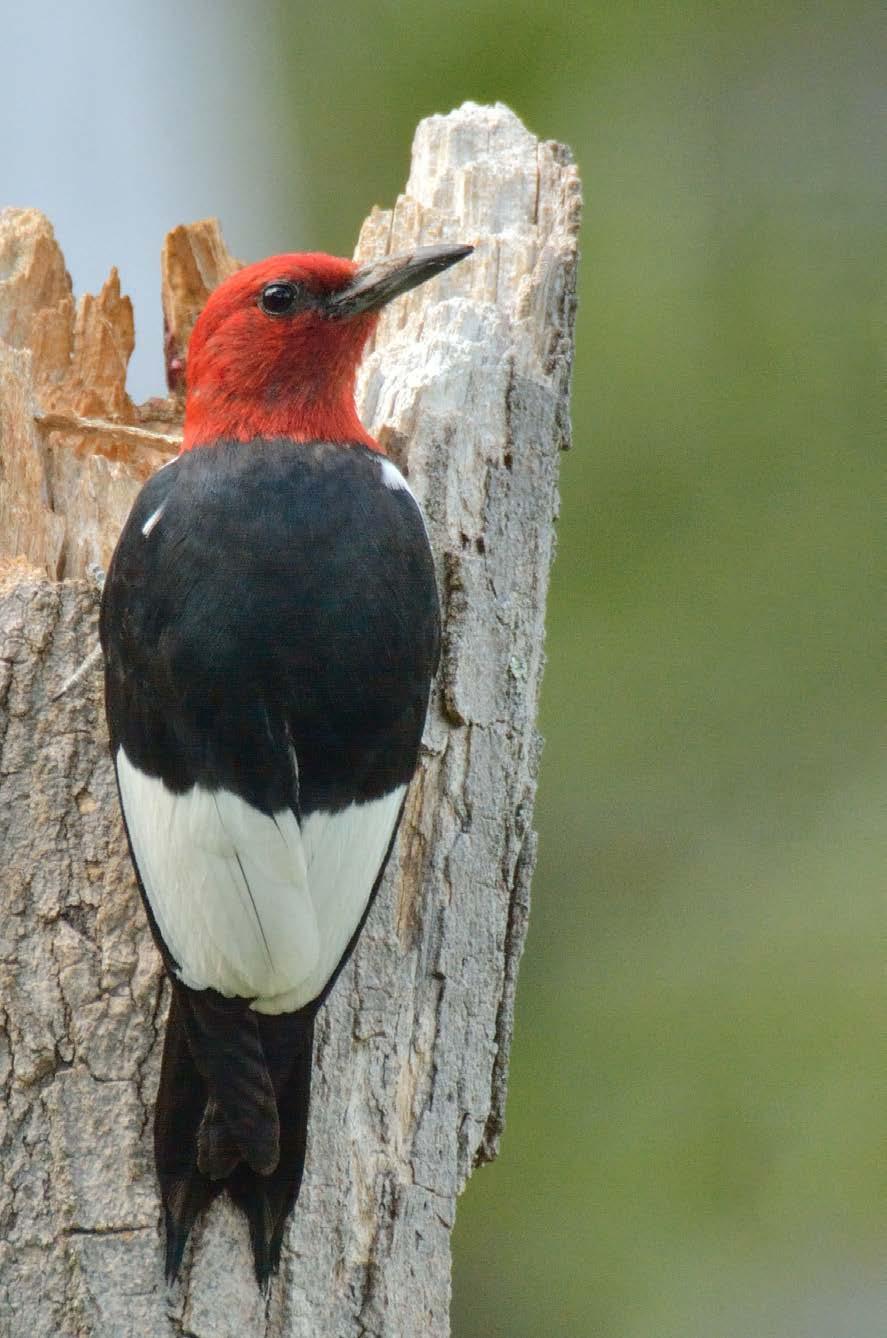
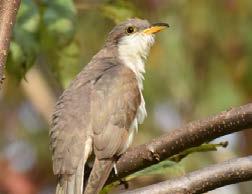
Early-mornings at North Lookout resulted in encounters with golden-crowned kinglets and migrating warblers, including pine, black-throated green, and blackpoll. Those who stuck around for the breeding season included black-and-white warblers and ovenbirds, along with yellow-billed cuckoos and great-crested flycatchers. Perhaps the most exciting spring sighting for staff this year was an adult red-headed woodpecker that visited the suet feeder at the Visitor Center on May 2.
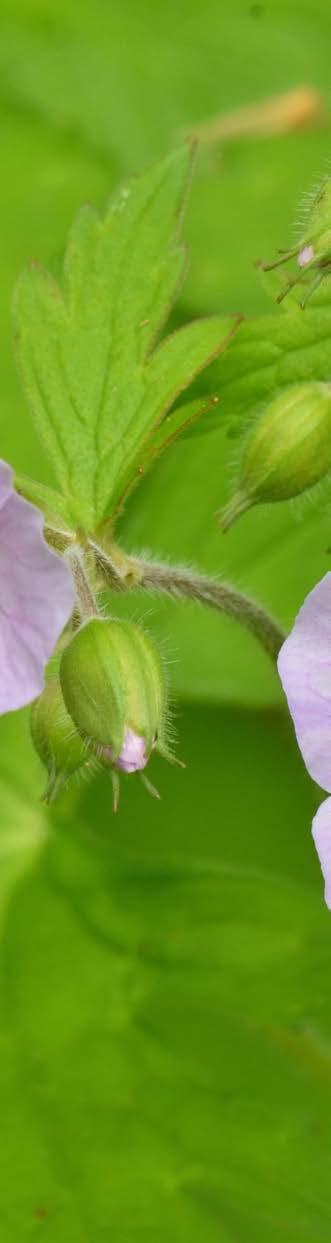
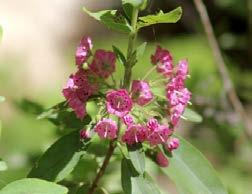
Red maples were the first trees to begin flowering in early April as trees and shrubs began to slowly bounce back from dormancy. The Mountain remained gray and dreary until a seemingly overnight explosion of plant growth in the middle of April. Wild geranium, sessile bellwort, jack-in-the-pulpit, and foamflower were among the first to bloom, much to the delight of native bees and butterflies, including spring azures and mourning cloaks. June brought blooming sheep laurel, Canada anemone, partridgeberry, and whorled loosestrife to the already colorful forest canvas.
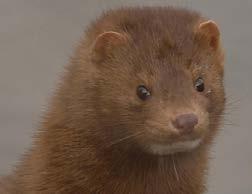
Relatively clear conditions throughout most of the spring season were interrupted by smoke, first from controlled state game land burns and later from the Canadian wildfires. Between periods of haze, five-lined skinks and garter snakes took up basking on sunny rocks around South Lookout. Mammalian sightings picked up as we transitioned from spring to summer, with a fisher sighted at River of Rocks and a mink along the banks of the Little Schuylkill River.
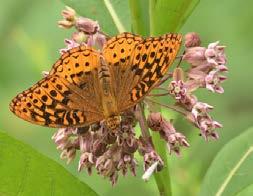
After a drought in June, frequent rain in July brought out amphibians like red efts, American toads, and eastern red-backed salamanders. High humidity also proved to be good for fungi, with an impressive variety of mushroom species observed, including orange pinwheel mushrooms, crown-tipped coral fungi, and old-man-of-the-woods. The annual butterfly count on July 1 tallied 971 butterflies of 34 species; highlights included 43 Baltimore checkerspots, 103 great spangled fritillaries, 1 hobomok skipper, and 1 sleepy orange.
By Laura Berry
Mink,
Photo by Bill Moses
Great spangled fritillary,
Photo by Bill Moses
Yellow-billed cuckoo,
Photo by Bill Moses
Sheep laurel,
Photo by Laura Berry
Community
Spotlight
GUIDING Graduates
Through training, collaboration, and mentorship, Hawk Mountain has helped many graduate and postdoctoral students to complete research projects on raptors both locally and around the world. These two recent graduate students have tackled wide-ranging topics, working with data from multiple raptor species to further our understanding of the bigger picture they are a part of.
Adelaida Pérez Cadavid
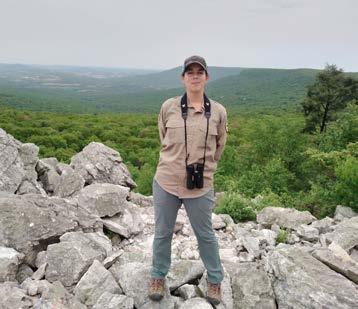
My research project focuses on studying the spatio-temporal patterns of stopover use across the Americas in different species of migratory raptors: the broad-winged hawk, Swainson’s hawk, turkey vulture, and osprey. The aim is to describe how these patterns are linked to habitat characteristics and environmental variables. Except for the osprey, these species are exclusive to the American continent and have populations that migrate long distances, with some of them reaching the southernmost part of the continent.
Raptors, in general, have been monitored for years at several hawk watch sites along the flyway and have received more extensive study at breeding grounds. However, many questions remain unanswered regarding their requirements during migration, which is considered the most vulnerable stage of their annual cycle. Stopover sites provide crucial refuge and resources, including water and food, that allow birds, in general, to continue
their migrations and replenish their energy before or after facing significant ecological barriers. For some species, the quality of resources at these sites can significantly impact their survival and reproductive success in subsequent stages of their annual cycle. Additionally, due to the wide geographic range covered during their migrations, raptors face several unpredictable threats, including hunting, collisions with different types of infrastructure, and the potential adverse
effects of habitat change and loss. Satellite telemetry has been a valuable tool used for years to study raptors. The use of this technology provides information on raptor movements and enables comparisons among different populations,
ages, sexes, and species. Acquiring satellite telemetry technology for new research is expensive, which makes the utilization of pre-existing data a practical and useful approach to continue exploring novel ecological questions.
In my project, I am using and analyzing datasets from multiple years and different populations of my focal species. Therefore, the need to establish links with raptor researchers or data owners is essential for this research, and this study can only be possible with their collaboration.
My interest in this topic emerged in 2017 when I conducted bird monitoring in wind farms situated along the migration route of many species of raptors in central and northern Mexico. In this region, the risk of collision with these infrastructures is everpresent, and effective strategies to mitigate the impacts are constantly needed.
Subsequently, in 2019, I had the opportunity to participate in the Veracruz River of Raptors project. During this time, I not only marveled at this extraordinary migration but also contemplated several questions, particularly regarding the negative effects of the evident habitat loss and change observed in the area and, in general, in the surroundings of the Gulf Coast of Veracruz.
I wondered how these changes could impact raptors when they return to breeding sites in the northern part of the continent.
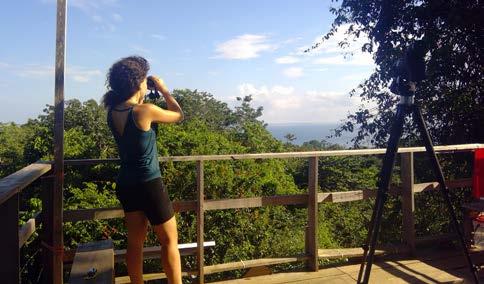
In the spring of 2023, I had the opportunity to participate as a science conservation trainee at Hawk Mountain Sanctuary. During this time, I not only witnessed raptor migration and connected with people from other cultures who were interested in raptor conservation, but I also learned a lot about the ecology and conservation of raptors from all the amazing researchers and staff. Moreover, this experience provided me with the opportunity to establish connections with new collaborators.
I am currently halfway through my Ph.D. program at the Universidad Veracruzana in Mexico, under the supervision of Dr. Ernesto Ruelas Inzunza, also a former HMS trainee and current board member. The experience at Hawk Mountain has equipped me with additional tools and has further motivated and inspired me to pursue this research. My goal is to generate and share information that contributes positively to a better understanding of the requirements of raptors at stopover sites and emphasizes the importance of studying and acting for their conservation throughout the entire annual cycle.
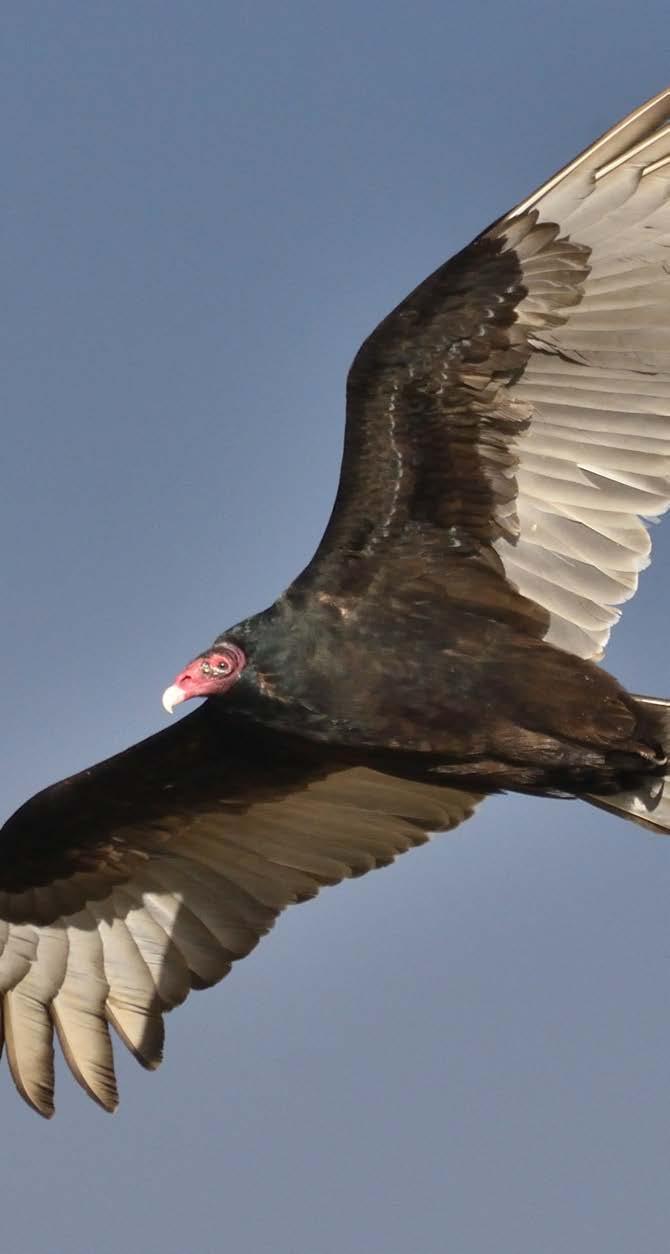
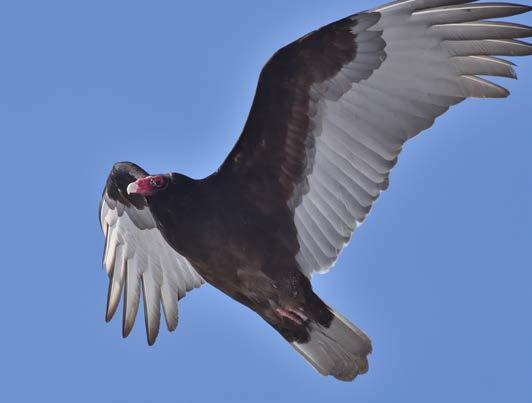
Turkey vulture by Bill Moses
Marzia Verduci
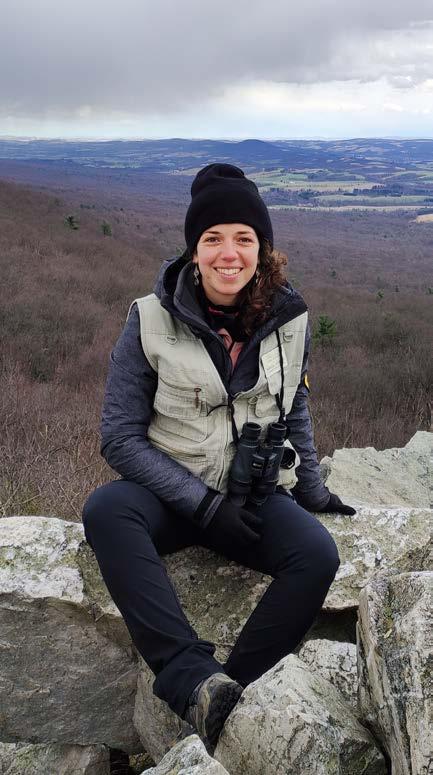
For my Ph.D. project, I’m collaborating with Hawk Mountain and the University of Veracruz to study migratory raptors under a climate change scenario. Climate change is affecting species and ecosystems worldwide, and its consequences on raptors during their migration across the American corridor are still poorly understood. I am measuring changes in the timing of migration for raptors and their prey across the Americas, and how these changes can affect population trends. Studying species at the top of the food web, such as birds of prey, is important because they are telling us about the health of the entire ecosystem.
Specifically, the project has two main objectives. The first one aims to correlate the phenological (timing) adjustment of migratory raptors and their prey and to assess a potential mismatch between them. A failure of synchronizing their travel time with the travel time of their prey (i.e., songbirds, insects) might lead to negative consequences for the population and, thus, for the entire ecosystem. The second objective is to assess population trends in 16 raptors species breeding in North America and correlate these trends with their phenological adjustments. This will provide crucial information on the potential impact of global change on the population dynamics of top predators across a continental range.
Thanks to an amazing collaboration between several raptor migration count sites located across Central and North America (many of which established in connection with Hawk Mountain), we are evaluating potential changes over time, under changing environmental conditions.
For as long as I can remember, I have always been fascinated by raptor migration. This passion originated from when I was
little, where I grew up in southern Italy, which is another crucially important corridor for migratory raptors commuting between Africa and Europe. I have long been involved with raptor migration monitoring projects, and I have realized the importance of conducting such studies and their importance to raptor conservation.
I am so grateful for the opportunity to be a conservation science trainee and a leadership trainee at Hawk Mountain Sanctuary in 2022. This traineeship gave me the right tools to pursue state-of-theart raptor research. Hawk Mountain staff’s passion and efforts related to raptors conservation have been an inspiration for me, and I tried to make the most of my time spent in the Sanctuary. I developed
This traineeship gave me the right tools to pursue
this project with the precious help of Drs. JF Therrien and Laurie Goodrich, who will collaborate on this project with me and Dr. Ernesto RuelasInzunza, another former trainee and now professor of biology at University Veracruzana. As part of my project, I analyze data related to the feeding behavior of raptors during migration, data which has been collected through visual observations of migrating raptors that showed distended crop as evidence of recent feeding, at Hawk Mountain’s North Lookout. Being involved in this study is very rewarding, as I do my part in understanding the fascinating phenomenon of raptor migration with the ultimate goal of protecting them.
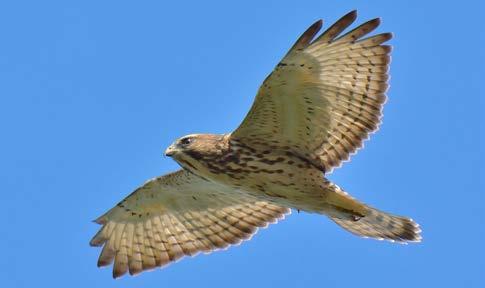
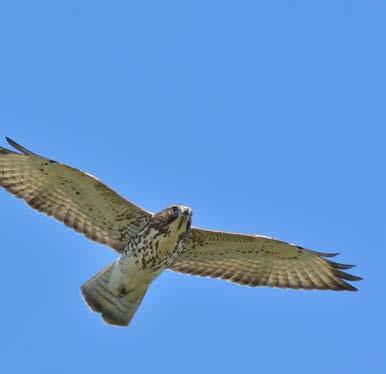
Broad winged hawk by Bill Moses
Broad winged hawk
by Bill Moses
Spring & Summer 2023 Education Trainees
Our spring and summer education trainees work throughout the summer to train with our educators and raptors to host dozens of programs and events for visitors of all ages, including weekly weekend programs and the eight-week long summer day camp.
MOLLY LAURY
Molly graduated from Muhlenberg College with a bachelor’s degree in environmental science, and she studied abroad in both Panama and Costa Rica, with a focus on biodiversity research and community sustainability. She also completed an animal care internship at the Lehigh Valley Zoo.
SAMANTHA CLAY
Samantha graduated from Delaware Valley University with a bachelor’s degree ln conservation and wildlife management. She has completed an education internship at the Lehigh Valley Zoo and comes to Hawk Mountain with camp counselor and daycare staff experience.
MEAGHAN DRENNAN
Meaghan is entering her junior year at Keystone College where she is studying wildlife biology and environmental science and also plays lacrosse. Meaghan has prior experience as a camp counselor and excellent leadership skills, especially from serving as captain of her high school lacrosse team.
DIEGO RODRÍGUEZ
Diego is a Costa Rican bird watcher, and he currently works as a bird bander who is passionate for the world of how birds molt. He has collaborated in different bird projects in Costa Rica, including being one of the official counters at Kekoldi HawkWatch.
Hawk Mountain Welcomes New Educator
Jessica Gary, our new full-time Educator and Raptor Care Specialist, joined our team mid-March. Jessica comes to Hawk Mountain with ample experience working with live raptor ambassadors, curriculum development, and environmental education. She has taken on the vital job of coordinating and expanding the Sanctuary’s popular summer nature camp programs. She also works closely with the avian educators, offering programs and up-close raptor encounters at various events.
Jennifer Malloy Combs Senior Education Internship
Thanks to support from the Further Forward Foundation, Hawk Mountain piloted a ninemonth-long residential Senior Education Internship for fully vetted individuals with an environmental education background and raptor handling experience. Joining the staff in March allowed for a longer orientation process during a slow time of the year, followed by the chance to model professional educators throughout spring. Summer brings the opportunity to practice skills over eight weeks of summer nature day camp, and by fall, interns will be more than comfortable working independently with school groups, offsite programs, and wildlife interpretation for the public during busy visitation.
Our first senior education interns, David Tristan and Joel Moore, developed many teaching and group management skills, as well as competencies in captive raptor husbandry and handling throughout the spring and then served in leadership roles for summer camp.
DAVID TRISTAN
David graduated from Delaware Valley University where he earned a bachelor’s degree in biology with a specialization in zoology. He has volunteered at the Raven Ridge Wildlife Center in Lancaster, PA, where he aided in the rehabilitation of injured and abandoned wildlife and helped present Raven Ridge’s ambassador animals in programs to raise support for the center and educate the public about our local wildlife.
ROBERT JOEL MOORE
Joel graduated from the University of Pittsburgh in 2022 with a bachelor’s degree in biological sciences with a minor in chemistry and a certificate in GIS. He also has volunteered at Wildlife Works, a wildlife rehabilitation center, caring for the residential animals and working with them in educational programming.
Captive Raptor Management Course
Sat, Dec 2 – Sun, Dec 3 | 8 AM – 4:30 PM | $325, $300 for
Members
Join us at Hawk Mountain Sanctuary to learn about the methods and techniques that we, as global leaders in the raptor world, utilize to manage our captive raptor collection. During this two-day workshop, there will be interactive demonstrations of raptor beak and nail trimming, presentation and restraint handling, raptor equipment creation and management, and general raptor husbandry. Also, learn how falconers train raptors and experience the thrill of holding a falconer’s raptor and having it fly from your arm. No experience necessary!
Learn more and register at hawkmountain.org/events/captive-raptor-management-workshop
Spring 2023 Conservation Science Trainees
ADELAIDA PÉREZ CADAVID
Xalapa, Mexico
Adelaida is currently a Ph.D. Student at the Instituto de Ecología y Biotecnología aplicada (INBIOTECA) Universidad Veracruzana, where she is researching the use of stopover sites by four raptor species and an assessment of their migratory connectivity. Adelaida has a master’s degree in biological science and a bachelor’s degree in biology. Adelaida has been a counting assistant at the Conservación de Rapaces Migratorias Colombia, Trópicos Colombia, and the Veracruz River of Raptors. She was also a field technician at Bio-Agrovía A.C. Puebla, where she conducted wildlife monitoring in urban reforestation programs. After her traineeship, Adelaida would like to get more involved with organizations who are interested in conservation of birds and their habitats.
GIZO SESKURIA
Poti, Georgia
Gizo earned his master’s degree from Ilia State University in 2022 in natural sciences and engineering along with his bachelor’s degree in 2018. Gizo currently works for Fauna and Flora International (FFI) in Tbilisi, Georgia, where he is a project assistant working with the FFI’s conservation on the FFI’s sturgeon project. Gizo has also worked as a counter at the Batumi Raptor Count in Batumi, Georgia. After his traineeship at Hawk Mountain, Gizo would like to establish a Green Enthusiasts Club that will create opportunities for motivated youth to be actively involved in eco-educational and conservation projects.
ELIZABETH ZINK
Mechanicsburg, Pennsylvania
Elizabeth is a 2022 graduate of Dickenson College where she earned a bachelor’s degree in earth science. Elizabeth has participated in the Northern Saw-Whet Owl Banding Research in Kings Gap, PA, where she learned how to process and band owls and gained experience in handling and releasing them. She has also been a Raptor Intern at Acadia National Park in Bar Harbor, ME, where she conducted interpretive programs on peregrine falcons to visitors, counted migratory raptors, and helped in raptor identification. She was also a lab assistant at Dickinson’s College where she studied the petrology of an Icelandic volcano and learned how to identify and compare rock samples. After her traineeship, Elizabeth plans to attend graduate school and conduct research on aerial insectivores and how the increasing use of insecticide is affecting their populations.
MTHABISI BAFANA CHARLES KHUMALO
Bulawayo, Zimbabwe
Charles received his bachelor’s degree from the National University of Science and Technology in Zimbabwe, where he focused on the influence of diet and land use on the breeding success of black eagles. Currently Charles works at the Natural Resources Management Technical Field Office for the Organization of Rural Associations for Progress, Zimbabwe, where he spearheads the Natural Resources Component of the Amalima Loko program and promotes the implementation of proven natural resources-based interventions. Charles was also named the 2023 Jim Brett Global Conservation Trainee . After his traineeship, Charles would like to apply his knowledge gained at Hawk Mountain to projects at Matebeleland Sustainability and Development and Trust and help to formulate better policies and research concepts for their Birdlife Youth Club.
SARAH WAY
Lancaster, Pennsylvania
Sarah is a 2016 graduate from Millersville University where she earned a bachelor’s degree in environmental biology. Currently Sara works at the Lancaster Dairy Herd Improvement Association as a Microbiology Lab Lead Analyst, where she tests dairy products for consumer safety and producer payment. She is certified by the PA Department of Agriculture in numerous lab procedures to test pasteurized products, raw milk samples, and dairy waters. Sarah has also participated in an internship with the State of Hawaii DLNR Division of Forestry and Wildlife as Hunting Program Intern. While interning she managed the collection of harvest data from branch biologists for analysis, and managed a variety of hunter outreach efforts, and contributed to field research for both game and nongame species and distributing data to answer public questions. After her traineeship, Sarah would like to pursue a career in wildlife conservation and outreach where she wants to be involved in efforts to build community around respect for nature and wildlife.
Janice Egeland, Ph.D. LEAVE A LEGACY
Acclaimed for her ground-breaking and long-term research on the genetics of mental illness through studies of the Amish community, Janice Egeland was a brilliant scientist far ahead of her time.
It was in 1967 that Janice was appointed Assistant Professor of Behavioral Science at the Milton S. Hershey Medical Center in Hershey, PA, making her the first and only woman on the original staff of founding doctors at the newly opened facility. During her residency, she became associated with the University of Miami so that she could work in the field with the Amish. Ultimately, she devoted the rest of her life to advancing her research to better learn indicators of, and therefore treatment for, bipolar disorder.
Over the years, her famous “Amish Study” created a nationwide research network that involved six laboratories and 15 different schools of medicine. Egeland held two visiting professorships: one at the University of Pennsylvania and the other at the University of Massachusetts.
Her residency at Hershey, however, positioned her geographically to put her data aside and spend autumn weekends
atop the North Lookout, scanning the skies with her “Hawk Mountain friends,” including first curator Maurice Broun. Two years ago, she reached out to share her many Sanctuary stories, including her intent to make a legacy gift to support the place that meant so much to her, and to do so during her lifetime.
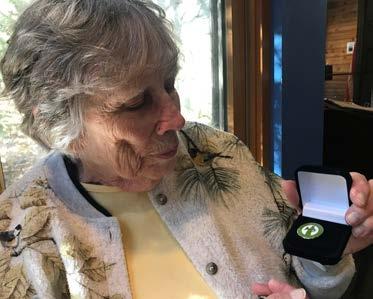
“I should have done this a long time ago,” she said during her 2021 visit, “but I’m glad I can do it now and to see this beautiful view again.” Sadly, Janice passed away just two years later on July 4, 2023, but her spirit remains at Hawk Mountain, and her gift qualified her as a member of the Rosalie Edge Society where her name always lives among the ranks.
If you, too, intend to make a legacy gift, or want to make a lasting gift during your lifetime, please reach out to share your story. Learn More or Share Your Story Today: Mary Linkevich, Director of Development 610-756-6000 x212 linkevich@hawkmountain.org
Hawk Mountain Sanctuary received a clean opinion from the auditing firm Baker Tilly Virchow Krause, LLP. Of particular interest is that 82 cents of every dollar received goes directly to support Sanctuary research and education programs.
Kelsey Schwenk
By Gigi Romano
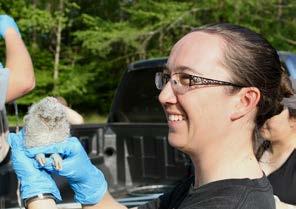
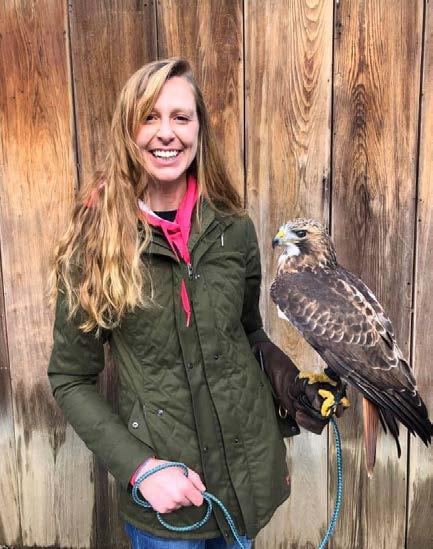
After attending school and pursuing a career in natural resources, raptor care and education volunteer Kelsey Schwenk found her way back to the Sanctuary to do what she loved: working directly with wildlife.
Kelsey grew up close to Hawk Mountain and would visit often as a teenager, mostly enjoying the hiking trails with her friends. At the time, she was unaware of the far-reaching work of the Sanctuary, but once she returned home from her graduate studies to begin her full-time career, she was looking for an opportunity to work with wildlife and be involved with conservation efforts.
In 2018, Kelsey began volunteering by helping with weekend raptor care duties, including feeding the education birds and keeping their outdoor enclosures clean. Then in 2019, education staff along
with fellow volunteer and mentor Cheryl Faust began to train Kelsey in raptor handling and eventually giving Raptors Up Close programs. Now she can be seen presenting these widely loved raptor programs most weekends throughout the spring and fall migration seasons.
“The opportunity to establish relationships with the captive raptors and develop a deeper understanding of their behaviors and individual personalities is one of my favorite parts about volunteering at the Sanctuary,” Kelsey says. “I’ve grown a profound appreciation for raptors and the role they play in a healthy ecosystem, and an equally rewarding aspect of my volunteer work is seeing kids excited about raptors and knowing one day these same kids may be passionate ornithologists or habitat managers who will influence raptor conservation in the future.”
Kelsey has found a way to personally fulfill a passion in her life, working with these incredible raptors and helping to bring awareness to their conservation. Her dedication and understanding of the importance of this work surely makes a difference, and you can help these efforts as well.
We rely on volunteers to assist in the day-to-day happenings of the Sanctuary and would love to find a space for you on our team. If interested, contact Tammy Jandrasitz at jandrasitz@hawkmountain.org.
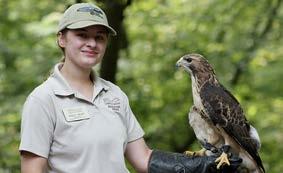
Hawk Mountain Resident Red-tailed Hawk, photo by Laura Berry