Ma Ke Kula
HAWAI‘I PREPARATORY ACADEMY MAGAZINE : SUMMER 2026
MORNING, AMERICA! BECKY WORLEY ’88
QUIET KIND
TEACHING: UNCLE SHORTY BERTELMANN
KE KULA SUMMER 2026
From Maui to Good Morning America, Becky Worley ’88 reflects on reporting and HPA
Kumu Pualani Lincoln Maielua ’01 honors the legacy of Uncle Shorty Bertelmann
Class of 2026 highlights n Four Questions with Sefa Tufaga ’13 n Middle School filmmakers honored n Upper School robotics n and more
Diver Holden Lahey ’26 heads to NYU n Lehia Akau ’26 will play collegiate flag football
Alumni News n Class Notes n Giving Back
• Reunion class highlights
• Ashley Wilken ’06
Ma Ke Kula is produced twice per year by the HPA advancement office. Principal photographers: Patrick O’Leary and Mellon Monello. Other credits as noted.
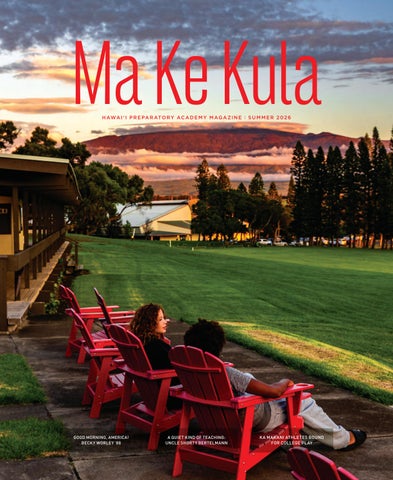
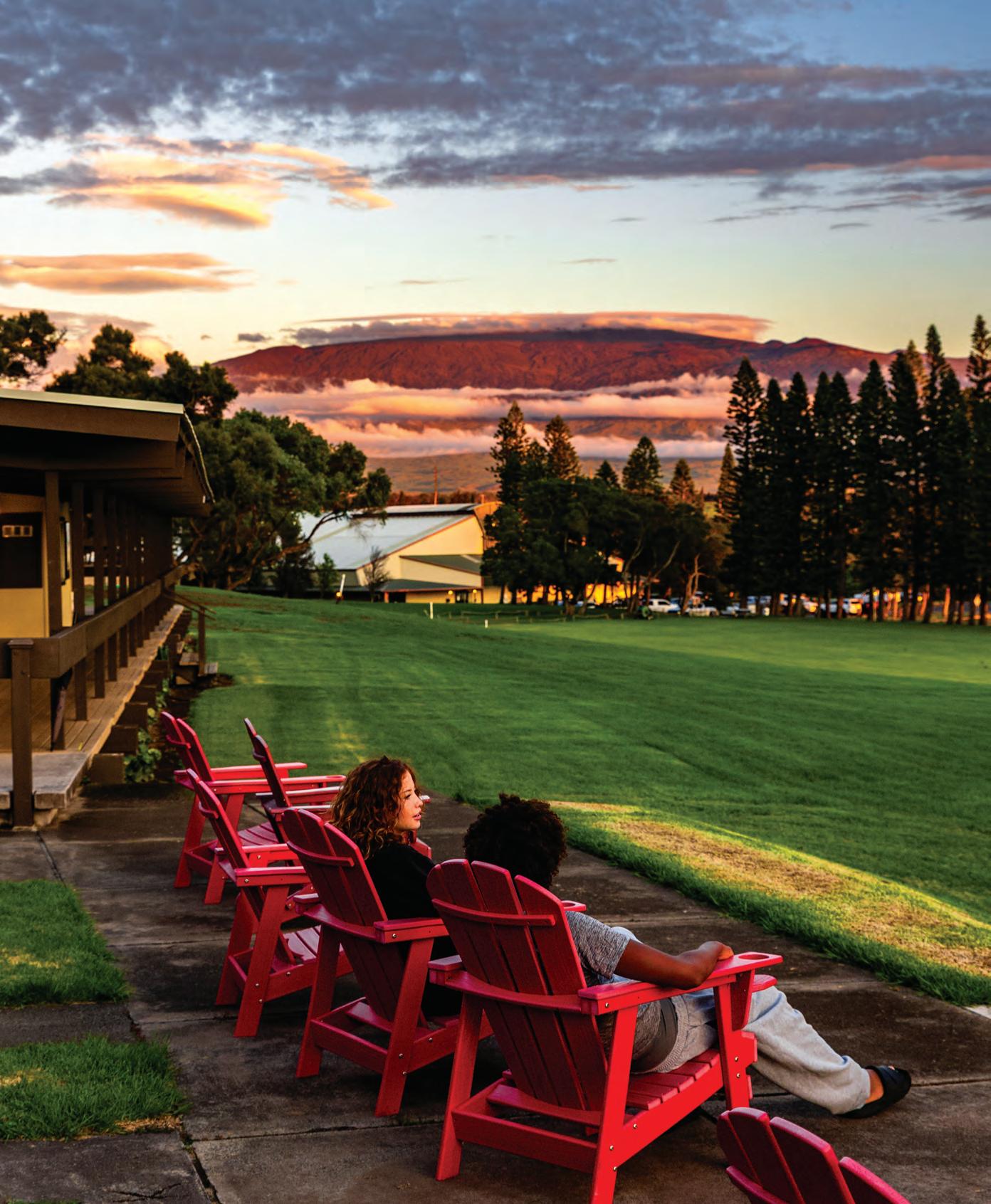
Cover: Sunset, Upper Campus
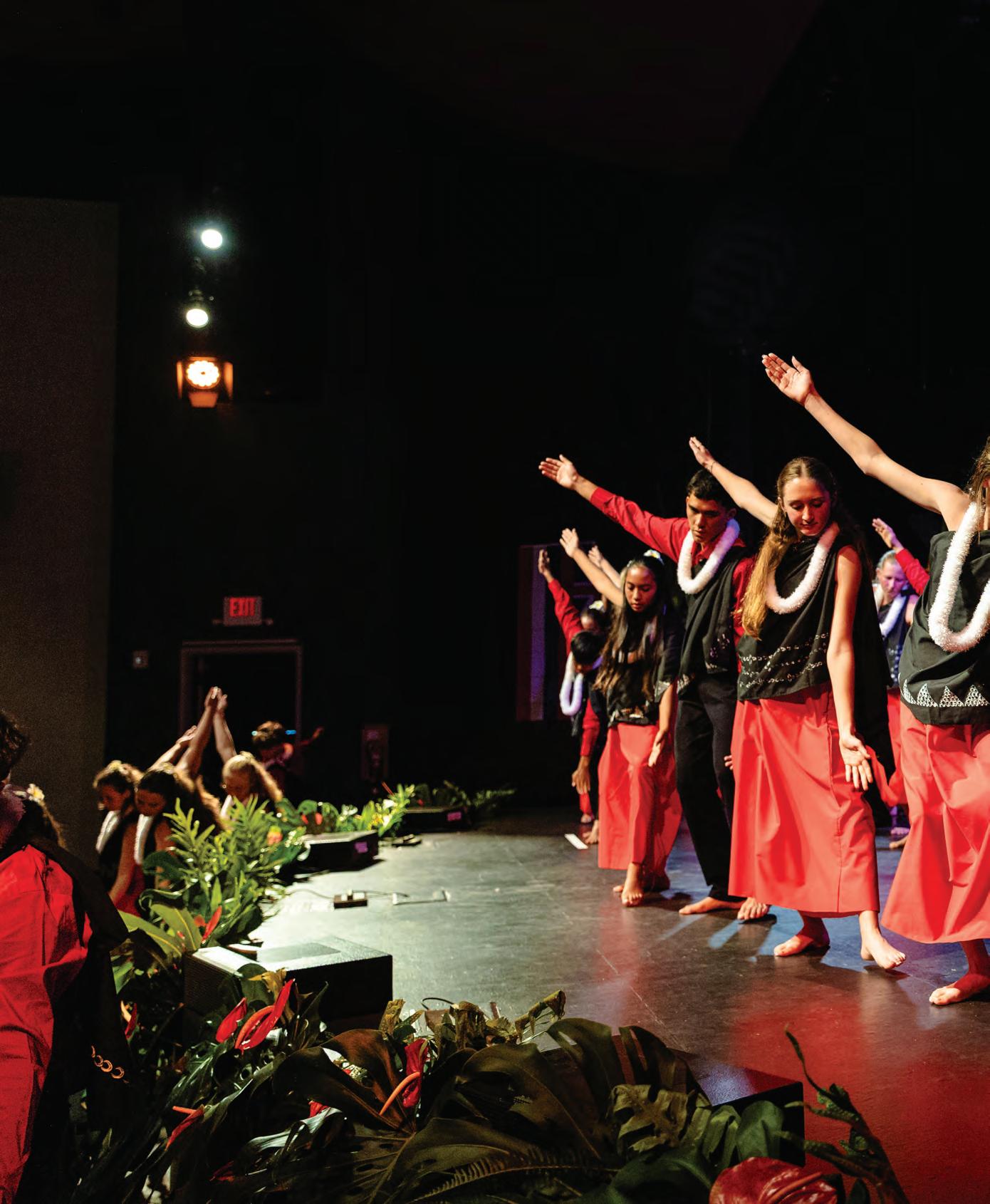
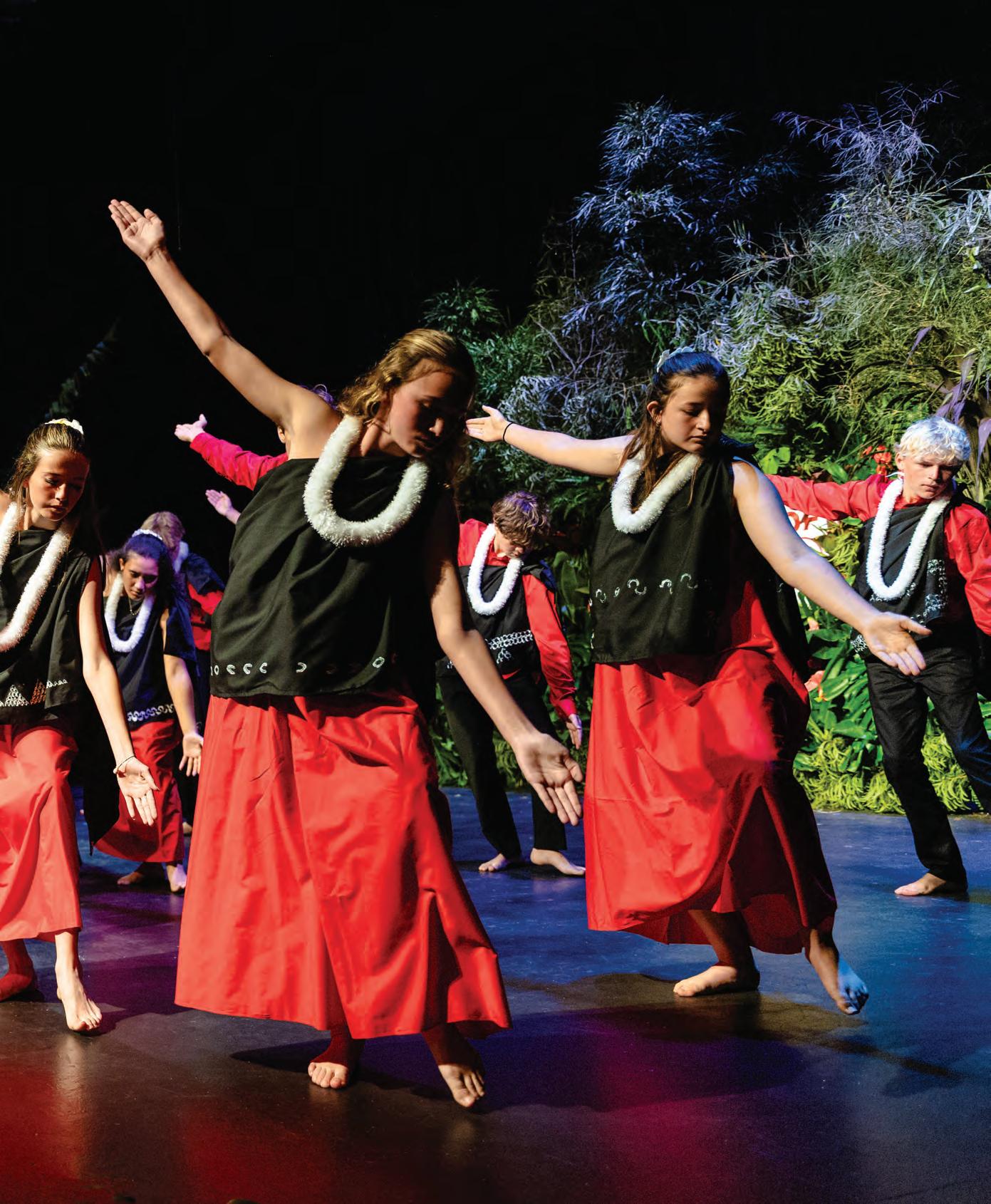
This page: Middle School Transition Ceremony, May 2026
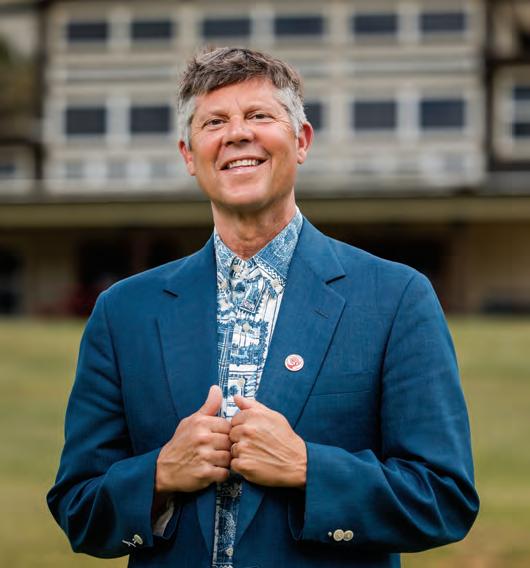
FRED WAWNER / HEAD OF SCHOOL
Restoring Our Roots
Aloha, Ka Makani! I hope wherever you are in the world, you have been enjoying a season of renewal. Here at HPA, we are launching another school year with fresh energy and inspired plans.
Over this summer, between school and family activities, I kept reflecting on an event during Alumni Reunion in May. I want to share this with you because it was both beautiful and deeply emblematic of where we are as a school today.
In our recently-approved Campus Master Plan, HPA has committed to restore our 100 acres above the campus to cloud forest. Looking ahead, we will plant roughly 25,000 to 35,000 native trees, such as koaia and ʻōhiʻa. Our neighbors, including Parker Ranch and Anna Ranch, are doing the same. I feel so hopeful about how our shared effort will eventually harness lost water within the ecosystem and enable a regrowth of indigenous species. Our acreage will also include continued grazing pastures for HPA’s school horses and a trail system in the lower acres for student exploration.
At Reunion Weekend, we kicked off this work with 40 alumni planting trees together on the slopes of La‘e La‘e, their hands back in Hawai‘i Island soil. Throughout the planting, stories were shared about old friends and
teachers, the gratitude for waking up every day in this place. We refreshed its influence on us as Ka Makani.
Collective tree planting will become a reunion tradition next year and beyond. This long-term restoration effort is a crucial piece of HPA’s much larger commitment to place-based learning and to honoring the land, its ecosystems, and Indigenous knowledge systems. In our current Strategic Plan development, place is a fundamental thread — for student growth and learning, community connection, and HPA’s role in the regenerative needs of Hawai'i and the world.
At your next reunion, I hope to see many of you back on campus, feeding your roots again, literally and figuratively. Until then, we gather here, in the pages of Ma Ke Kula. My warmest aloha to each of you.
HPA Board of Trustees 2026-27
Laurie T. Ainslie P’12, ’15, treasurer
Robert R. Budway ’76, chair
Adam Bauer
Kirk Caldwell ’71
Darrell Cavens P’24, ’26
Warren Doi P’22
Michael Hoover P ’27, ’30
Hans L’Orange ’73
Samuel Pratt ’84, secretary
William D. Pratt ’86, vice-chair
Michael S. Spalding ’66
Teerapat (Tee) Suntharo ’04
Max Unger ’04
Bonnie Bogue Wedemeyer ’86
Taffi Wise P ’12, ’15, ’17
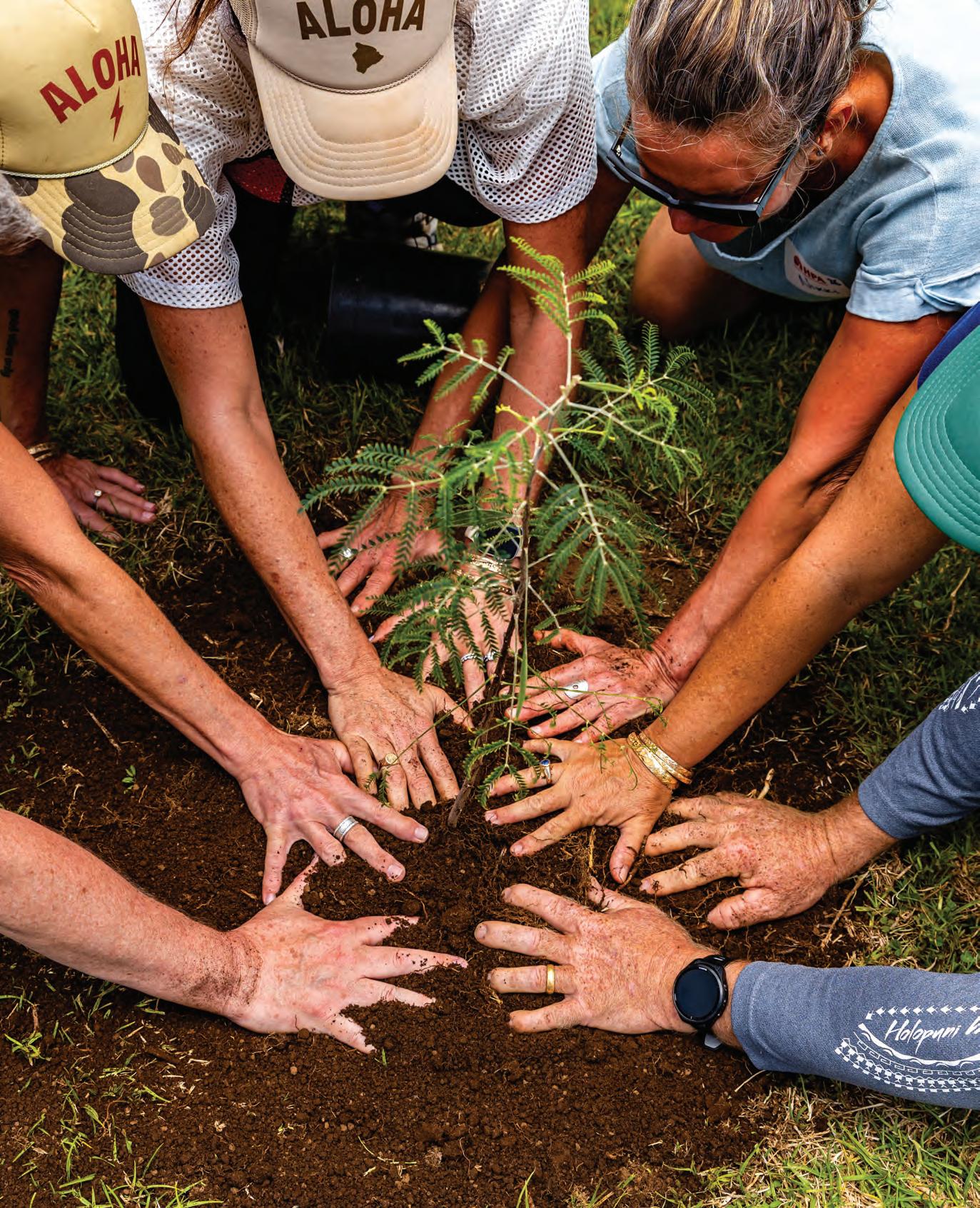
Members of the class of 1986 join hands in the first year of HPA’s reforestation efforts, planting a koa tree in memory of their classmates who have passed on. (See Fred Wawner’s message, opposite.)
Commencement 2026
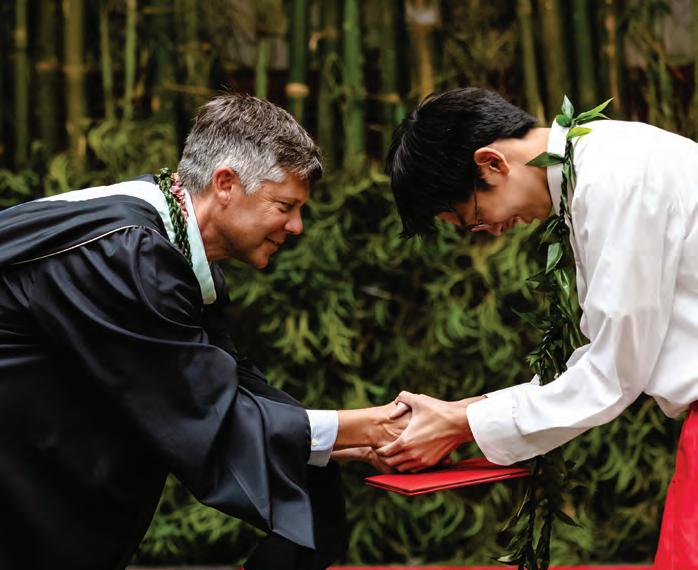
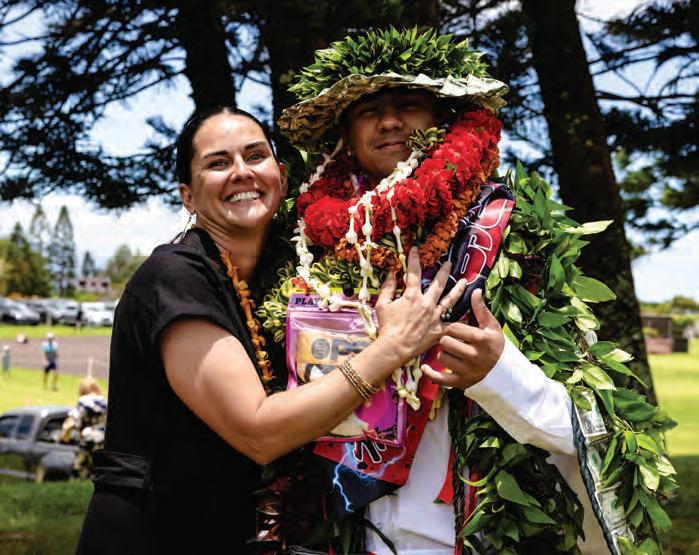
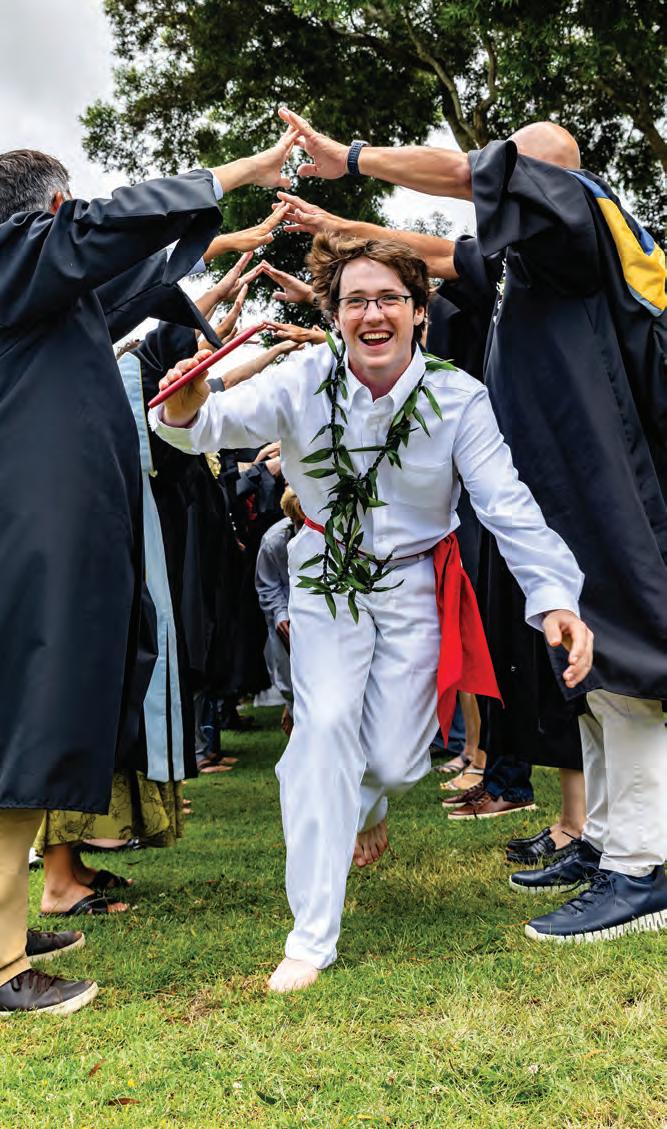
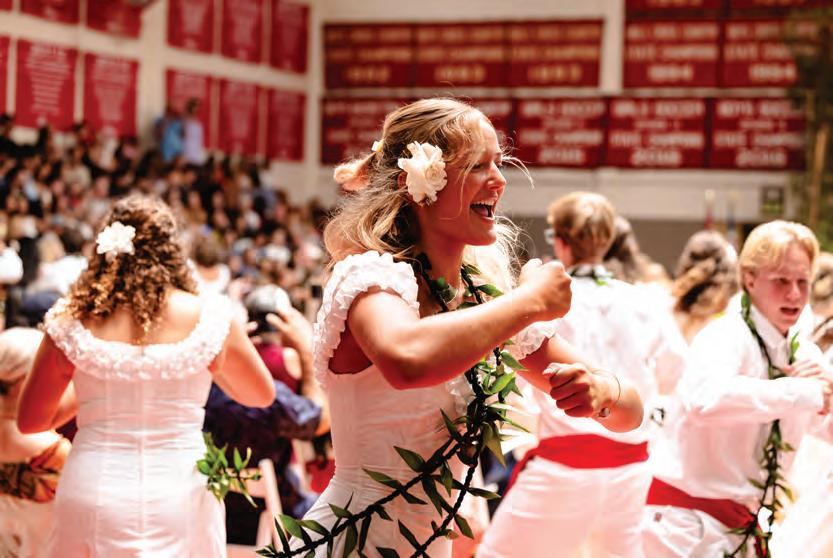
On May 22, HPA celebrated its newest alumni. As Head of School Fred Wawner said that morning, “With compassionate hearts, sharp minds, and strong values, our HPA graduates are poised to make this world a better place.” Reflecting on four years together, Student Body President Carlyle Collinson observed, “If you looked at every member of this class … you would see people becoming themselves in real time. … I know we won’t see each other every day anymore, but I truly cannot wait to see the masterpieces your lives become.” Congratulations, class of 2026!
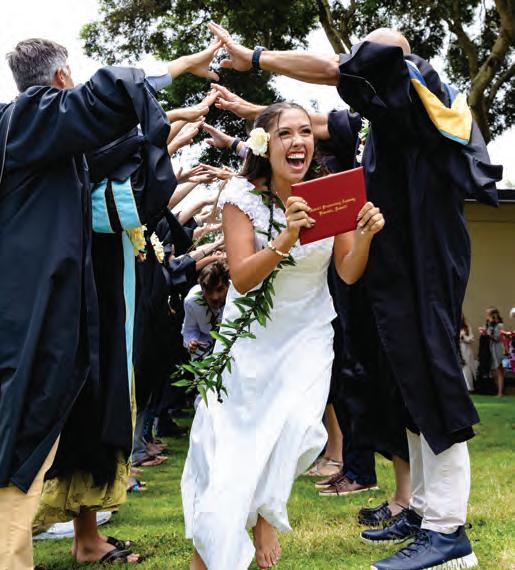
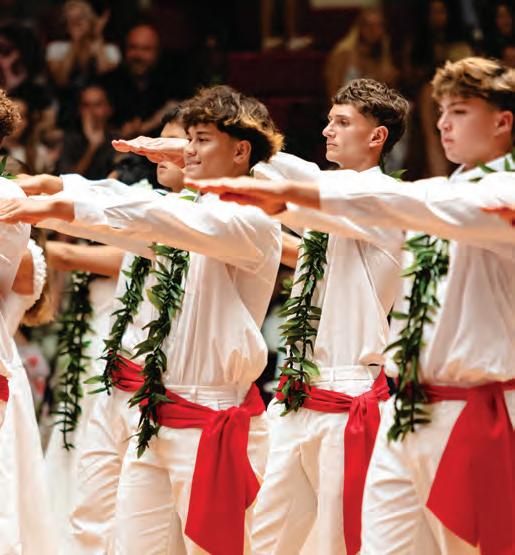
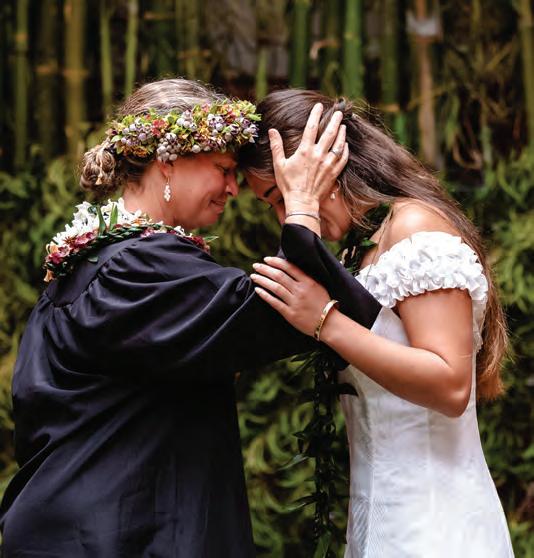
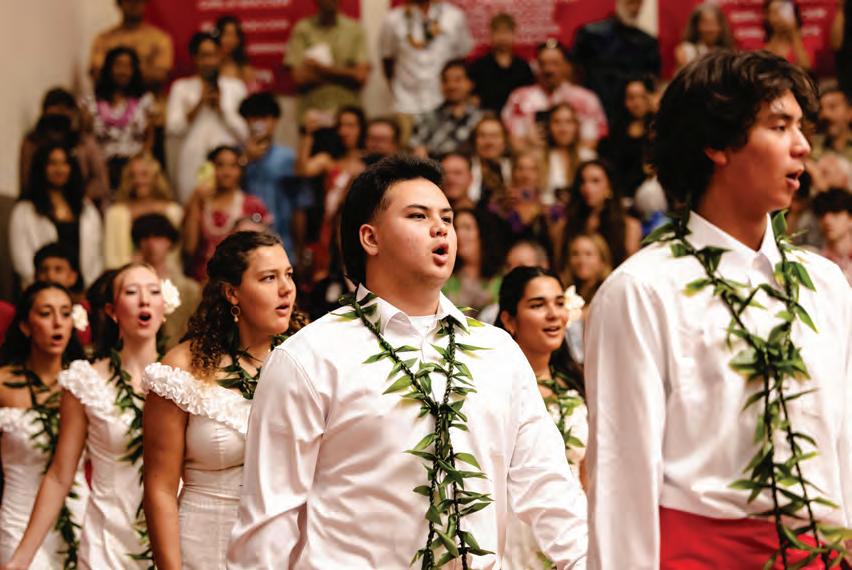
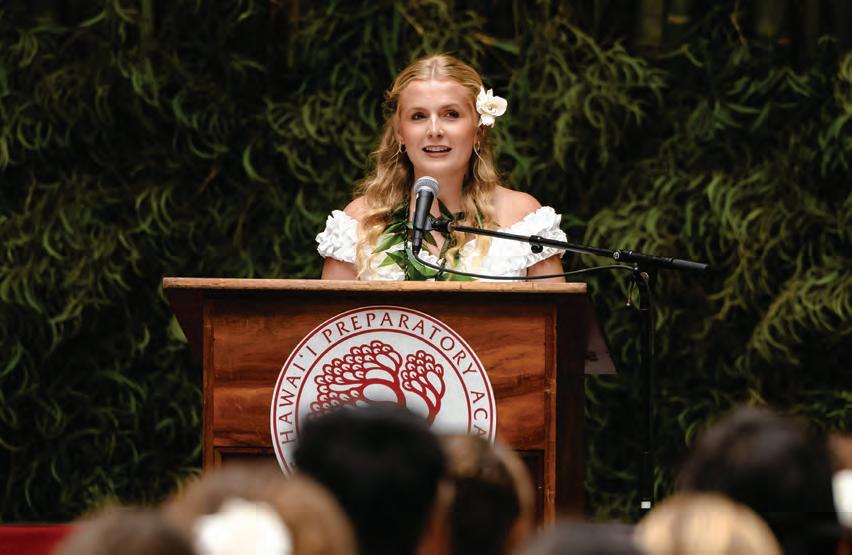
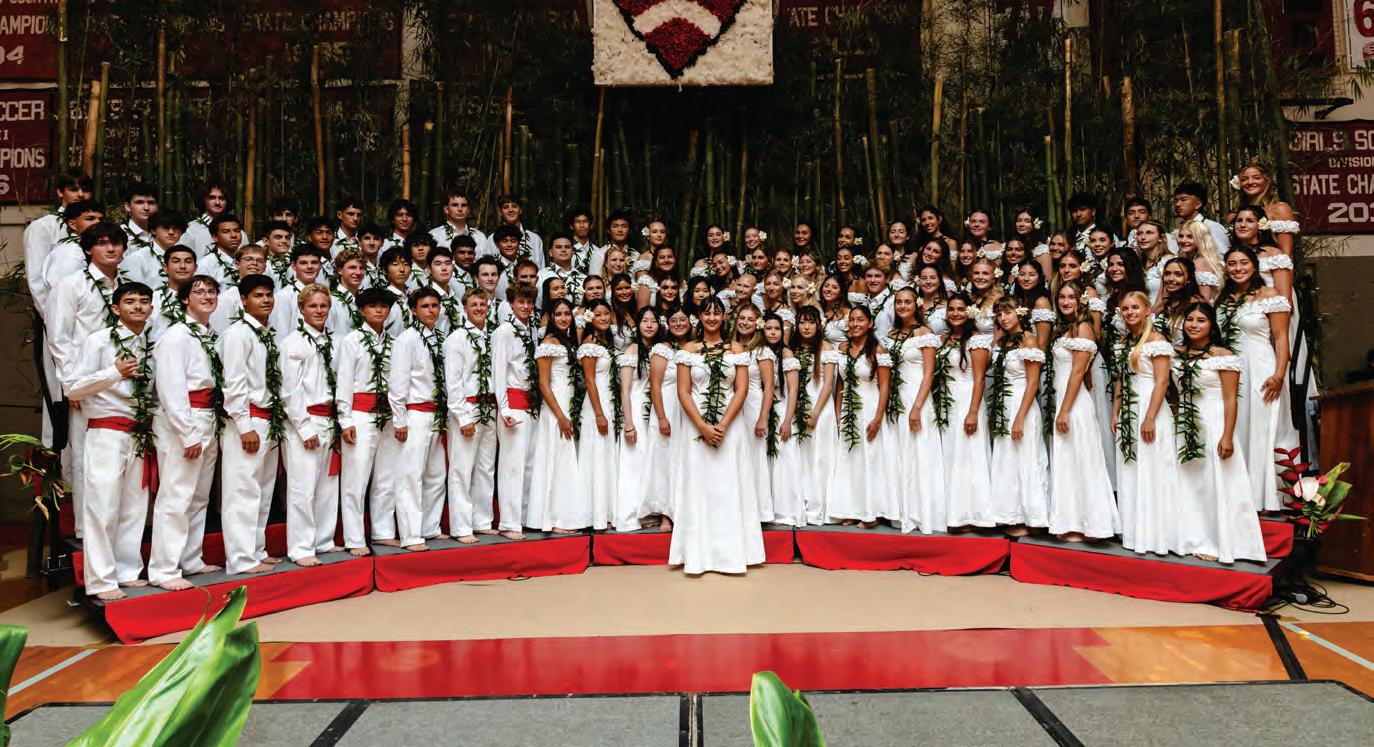
The next chapter begins for the class of 2026
Our newest Ka Makani are attending a wide range of highly selective institutions. This recognition reflects a consistent pattern at HPA: students who engage deeply, think independently, and pursue their work with purpose. A partial list of matriculation follows, reflecting the range of directions HPA graduates take and the steady work of our college counseling team in guiding each student toward a best-fit college.
• Amherst College
• Boston University
• California Poly, San Luis Obispo (2)
• Colby College
• Colgate University
• Columbia University (2)
• Dartmouth College
• Duke University
• Emory University
• Georgetown University
• IE University-Madrid (2)
• Institut Francais de la Mode-Paris
• New York University
• Northeastern University (2)
• Parsons School of Design
• Stanford University (2)
Seniors earn presidential honors
• US Air Force Academy
• University of Chicago
• University of Hawaii-Mānoa (6)
• University of Oregon
• University of St Andrews-Scotland
For a full college list and more 2026 profiles, scan the QR code
Six HPA seniors were named as candidates in the 2026 U.S. Presidential Scholars Program, placing the school first on Hawai‘i Island and among the top private schools in the state. Conor Cavens, Chloe Jung, Jeannik Littlefield, Henry Maling, Tiffany Ravaglia, and Nehali Singh – all class of 2026 – were selected based on outstanding SAT or ACT scores, ranking them with the highest performers in Hawai‘i and across the country. The program is one of the nation’s prime academic honors, drawing from nearly 3.6 million graduating seniors each year, making this level of representation notable for a school of HPA’s size. Henry Maling subsequently earned the distinction of semifinalist, one of only six from the state of Hawai‘i.
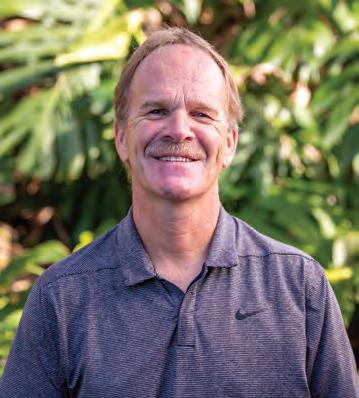
Passing the torch in girls soccer
After more than 40 years on the sideline, girls soccer coach Stephen Perry is passing the torch to former HPA soccer standout
Gabbie Ewing ’15. Perry came to HPA from Boston in 1983 to teach math, and went on to build one of the most successful programs in the state. During his tenure, the team captured seven consecutive state championships and established itself as a perennial powerhouse in Hawai‘i high school soccer.
Ewing returned to HPA last year as HPA’s marketing and communications manager. After graduating from HPA, she attended Concordia University in Portland,
where she studied kinesiology and preathletic training. She went on to play soccer professionally for Skövde KIK in Sweden, becoming the first Ka Makani girls soccer alum to sign a professional contract, before her career was cut short by injury.
The transition marks the close of a remarkable coaching chapter for Perry, whose 43 years on the sidelines helped establish HPA as one of the top teams in the state. He will remain in his role as athletic director, while Ewing takes over leadership of the team as it enters its next era.
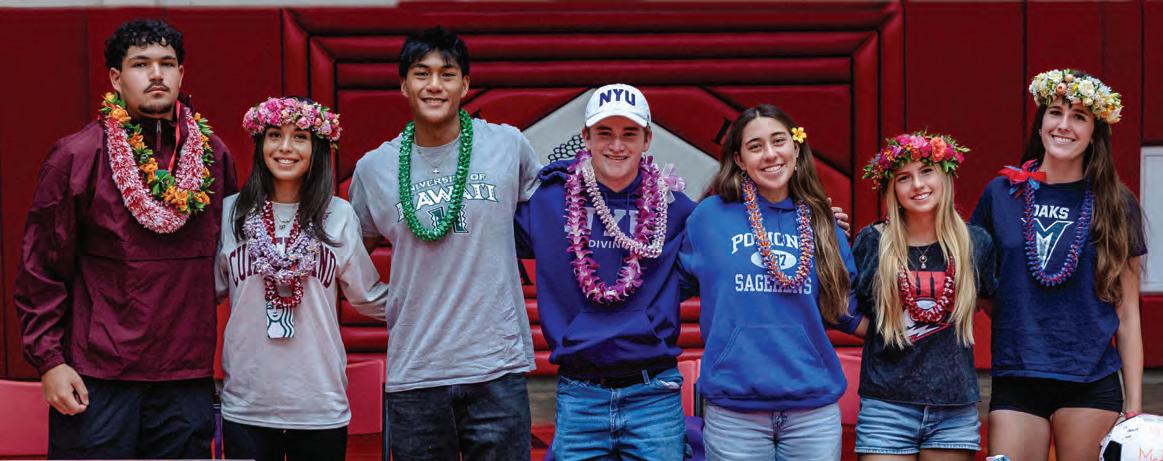
SENIOR ATHLETES SET FOR COLLEGE PLAY
This year marks one of the largest and most diverse signing classes in recent HPA history, with Ka Makani studentathletes advancing to collegiate programs across the country. Spanning multiple sports and competitive levels — from Division III to Division I — the group reflects the depth and momentum of HPA athletics. (See pages 28 and 30 for two in-depth profiles.)
Lehia Akau
Cumberland University, flag football
Maddie Buczyna
Southern Utah University, soccer
Tae Detwiler
Menlo College, soccer
Holden Lahey
New York University, diving
Pemma Norbu
Pomona College, swimming
Coleson Pouoa
University of Hawai‘i at Mānoa, swimming
Hayden Kalama
University of Puget Sound, football
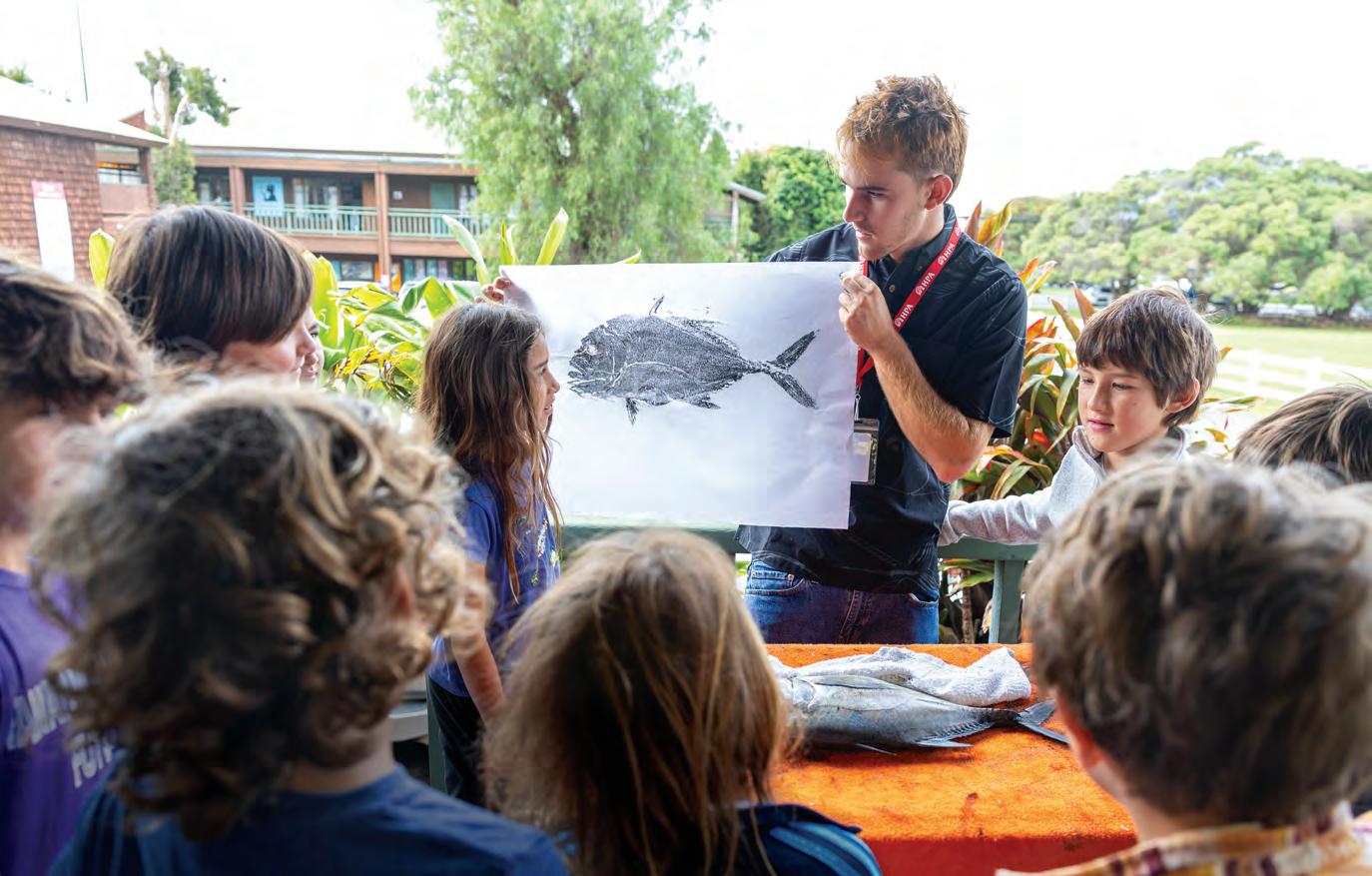
Recording the Catch
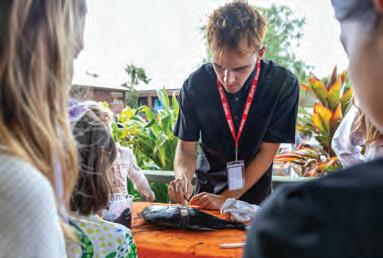
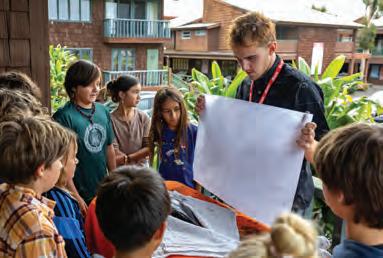
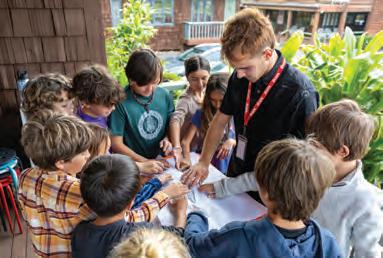
Senior Dylan Vincent ’26 used his capstone project to carefully record something most people let slip away. This year, he has been practicing gyotaku, a traditional Japanese method in which ink or paint is applied to a fish and pressed onto paper to create a detailed imprint.
Gyotaku began as a practical solution. Fishermen needed a way to document their catch before photography was common, so they made direct prints. As an art form, the choices made by a fisherman-artist all matter: how much ink to use, what kind of paper, how and where to apply pressure, whether to add hand-painted details afterward. No two prints are identical, even from the same fish.
Vincent was introduced to the practice by local artist
Naoki Hayashi, who attended HPA. HPA English teacher Julie Camarillo connected the two after Vincent caught a ten-pound omilu. Hayashi, who has been making gyotaku prints since he was a child, only works with fish he plans to eat, emphasizing respect for the catch and avoiding waste. “He taught me that it’s not about how big the fish is or how nice the print is,” Vincent says. “It’s about the story of that fish that brings the print to life.”
Vincent, who is the son of Nicole Bates ’90 and grandson of Michael Bates ’50, will attend the Cal Poly Maritime Academy this fall. He plans to study marine transportation, continuing his connection to the ocean and all the life within it. •
Dylan Vincent ’26 demonstrates the gyotaku technique to students at the Village Campus
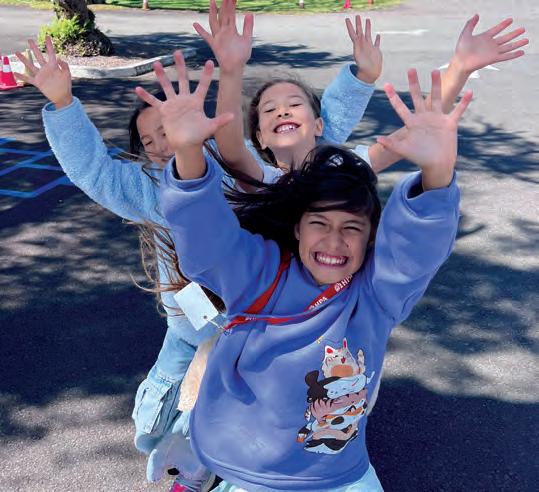
Pre-K comes to HPA!
This is the inaugural year of preschool at HPA, an exciting new chapter in the history of the school that has been under consideration for many years. The demand for preschool services in Waimea continues to outpace existing opportunities by as much as two to one. Early childhood education plays a vital role in laying the foundation for lifelong learning, and access to high-quality programs benefits not only individual families, but our community as a whole.
Rooted in our core values and the spirit of mālama kaiāulu, this program deepens HPA’s commitment to the youngest learners on our island. Guided by lead teacher Monica Hurley, students experience a blend of Montessoriinspired learning and traditional early childhood education, with an emphasis on hands-on exploration, independence, and collaboration. “You’ll hear a lot of ‘ōlelo Hawai ‘i in our classroom,” Hurley says. “You’ll see keiki engaged in different activities, helping each other, working through challenges, and trying again. We’re there to support them and give them the tools they need to be successful.” E komo mai to our youngest Ka Makani!
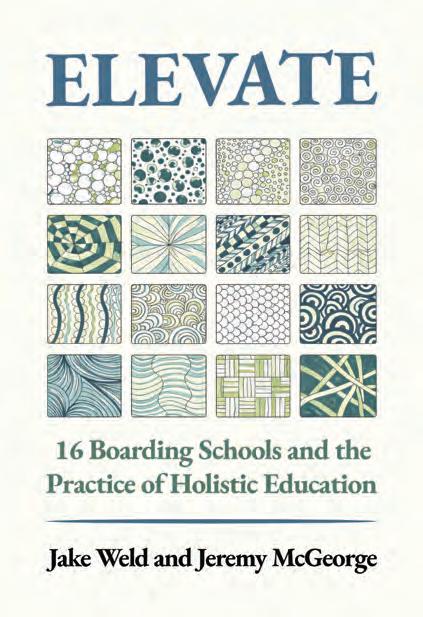
HPA is honored to be featured in Elevate: 16 Boarding Schools and the Practice of Holistic Education. Each chapter is authored by one of sixteen independent boarding schools, with HPA’s chapter reflecting on the Academy’s distinctive character:
“Hawai‘i Preparatory Academy stands as a testament to what education can be when it is rooted in place, guided by purpose, and open to change. From its earliest days, HPA has embodied the dualities of its setting — between mountain and sea, rain and sun, history and innovation.”
To read the full chapter on HPA, scan the QR code.
The volume is now available publicly where books are sold and at elevateschools.org.

Read the HPA chapter
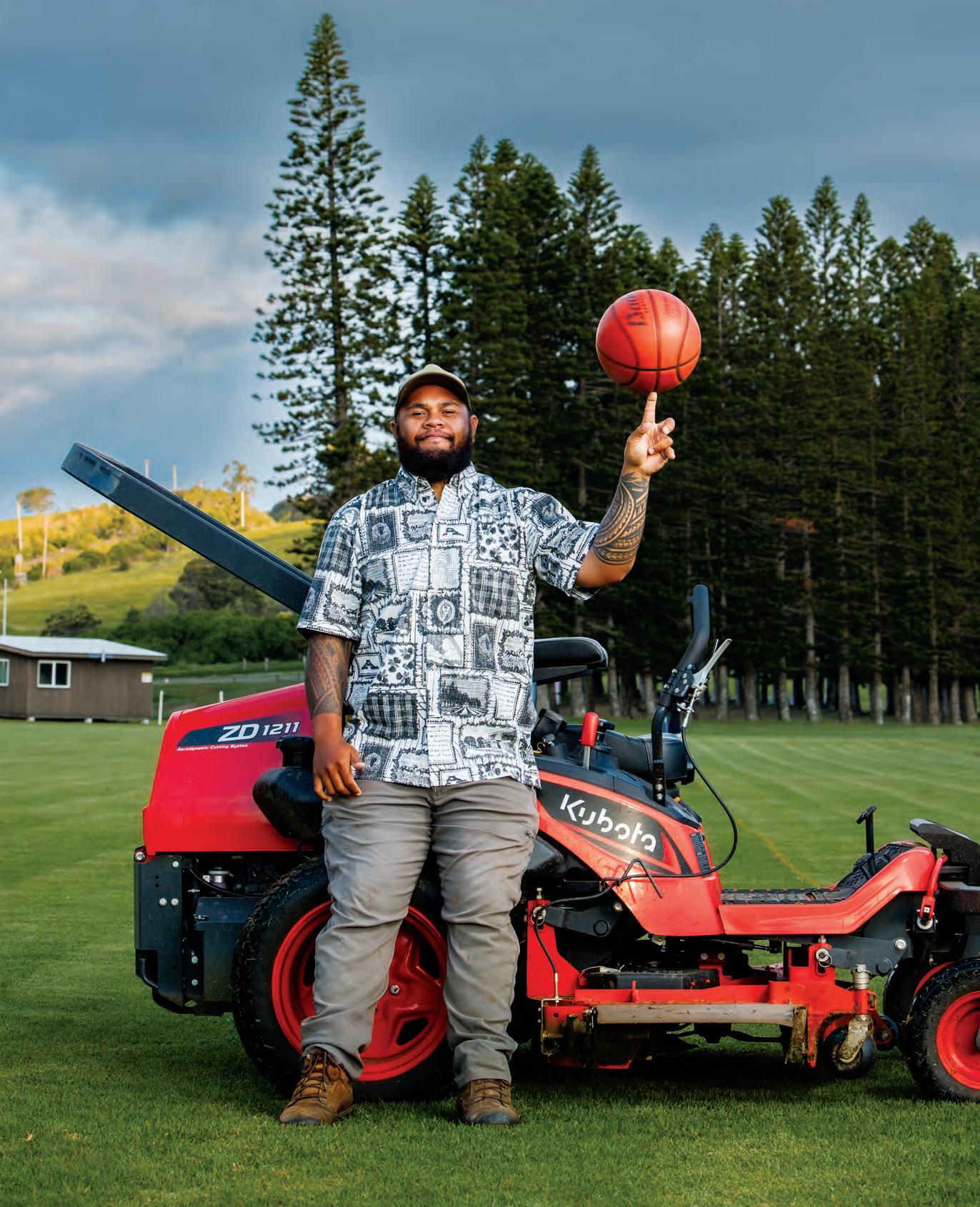
Four Questions with Sefa Tufaga ’13
Sefa Tufaga ’13 comes from a family with deep ties to HPA. His grandmother, Joanne Rocha, was legendary for her wit and aloha. She worked at the school for nearly 40 years before her passing in 2024. Tufaga’s mother, Jade, graduated from HPA in 1987, and his two brothers, Lome ’16 and Sua ’20 are also alums. Tufaga attended HPA for 13 years – from kindergarten all the way through. After he graduated, he attended Chaminade University on O‘ahu and graduated in 2017 with a bachelor’s degree in environmental studies. That summer, he came back home to Waimea and worked with HPA’s maintenance department. He stayed on and has been here ever since, coaching basketball and caring for the campus that helped raise him.
What are your work days like at HPA? Do you have a specialty, or do you need to know how to do everything? (Or both!)
I wouldn’t say we have a specialty. We’re split into two groups that focus on certain things. One side is buildings and the other is grounds. We do help each other out when needed. I’m part of the grounds crew. We focus more on the outdoor parts of campus.
Do you have any early memories of HPA?
Yes. One in particular was helping my grandma clean the Village Campus classrooms at night. She would work mornings as a bartender at Mauna Kea then nights as a housekeeper at the VC. Another early memory was Grandparents’ Day. I don’t think my grandma missed one. I don’t remember exactly what we did, but we would always go to Hawaiian Style Cafe afterwards.
Were there any classes or teachers or moments at HPA that had a particularly strong influence on you?
I had Mr. Emmons as an advisor. We would look forward to advisory meetings because his wife, [dorm parent Tisa Emmons], would make the best chocolate cake. Kimo Higgins ’86 was also a favorite. Always had a Starbucks or Mountain Dew ready to go.
I played my freshman year on the JV basketball team and varsity the rest of high school. I played for Coach Fred (Head of School Fred Wawner) and now coach alongside him. I definitely have learned a lot over these past couple of years.
Probably the biggest moment of high school was junior year winning the first BIIF basketball championship in school history. We’ve had some pretty good teams in the past, but could never make it. I played varsity volleyball that year as well. That same year our volleyball team won the school's first boys’ championship.
I wasn’t the most athletic or fastest, but I always enjoyed the x’s and o’s of the game. I guess that’s what made me want to get into coaching.
What do you enjoy most about coaching basketball?
I’ve been a coach since 2017. For the last two years I’ve been the head JV coach while still part of the varsity staff. Coaching has its challenges, but I think what makes HPA unique is the diverse group of kids we get. There are kids from all over the world who have to learn to play together in under two months. So for me I enjoy seeing the overall progress individually and as a team. •
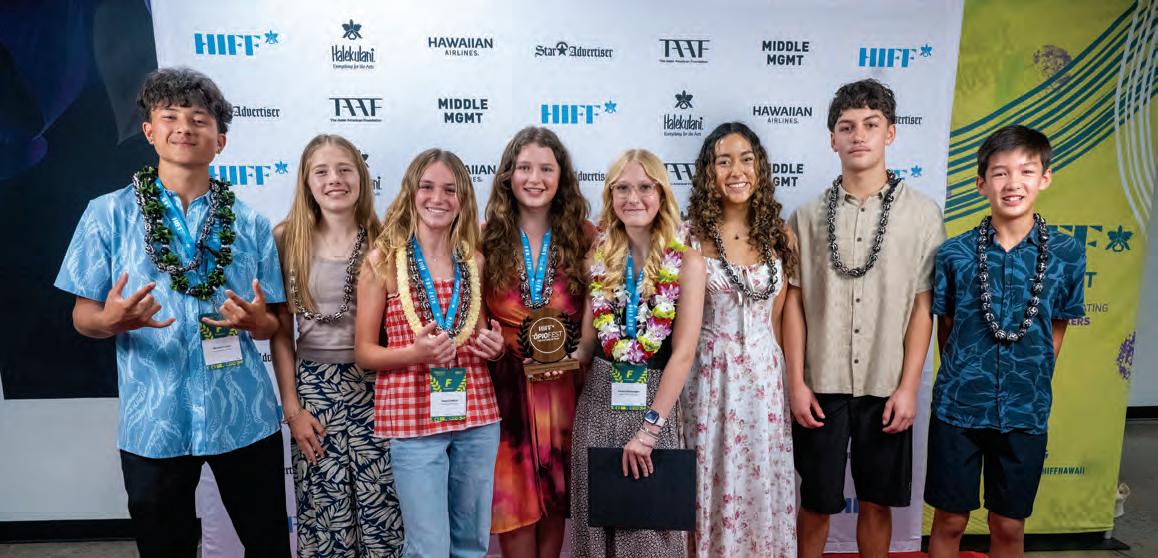
Middle School filmmakers honored at ‘Ōpio Fest
Each spring, the Hawai‘i International Film Festival produces ‘Ōpio Fest, a signature event showcasing Hawai’i’s young creatives, film industry guests, workshops for all ages, and the best of new international cinema. In 2026, for the second year in a row, HPA students brought home the top honor for best documentary at the ‘Ōpio Junior Awards.
“The Legacy of a Paniolo, the Story of Gordon Kalaniopio” was brought to life by a team of students (all class of 2030) led by Anuhea Kalaniopio, whose roles included interviewer, narrator, co-director, and
editor; Nanea Brattin, scriptwriting; and Cy Gillette, codirector, cameraperson, and editor (among other roles).
HPA was fortunate to have a second student film accepted to ‘Ōpio Fest as well. “Mauloa: The Canoe That Awakened Our Way” was the work of Kahakupo‘olani Dalton ’29, Cy Gillette ’30, Aaron Keenan ’30, Chadd Manase Larrua ’30, Finnegan Leduc ’30, Natalie McDowell ’30, and Sofia Tribuiano ’29. Congratulations to all of HPA’s talented young filmmakers!
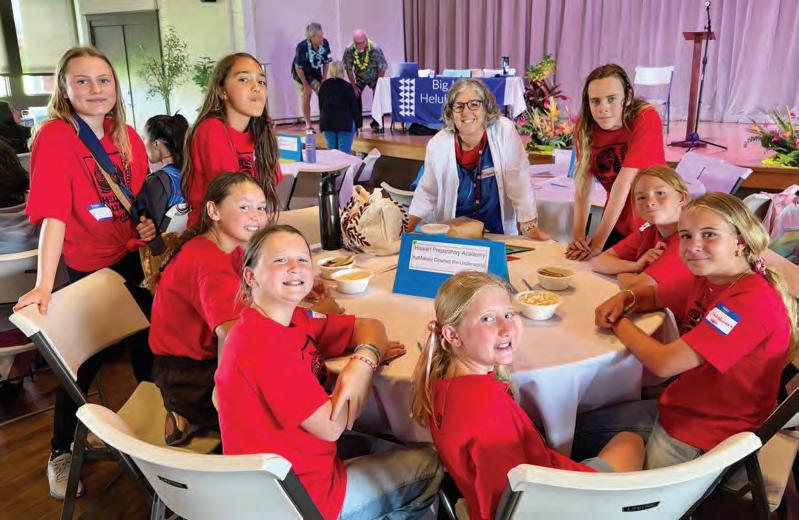
Ka Makani take first place in Heluhelu Quiz Bowl
Each year, the Heluhelu Quiz Bowl challenges Hawai‘i Island readers in fourth through seventh grade to read 30 acclaimed children’s books, including winners of Hawai‘i’s Nēnē Award and the Newberry Medal. Congratulations to our Middle School team, which won the 2026 Bowl in May, and to our Lower School team for another fabulous reading adventure!
FIFTH GRADERS
SHINE
AT LOWER SCHOOL CAPSTONE EXPO
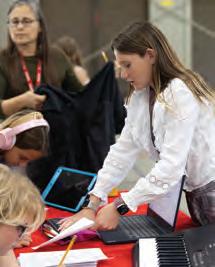
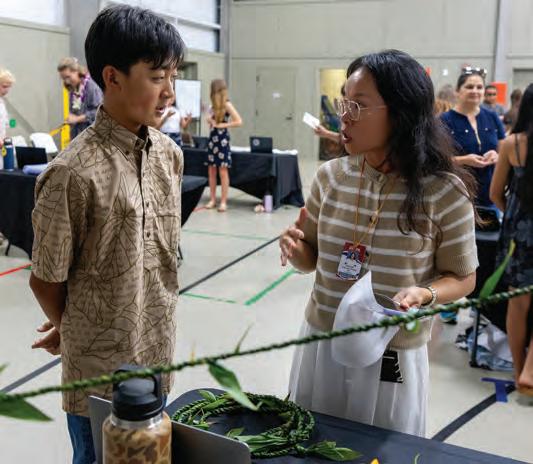
The class of 2034 put on a wonderful show in March as they shared their capstone journeys with parents, friends, and the entire Village Campus community. They spoke about hopes that sparked their first ideas, challenges they faced along the way, and, ultimately, the skills and understanding they hold now that the journey is done. Walking through the doors of Hale ‘Īnana, expo visitors were greeted by a bounty of topics, including horse anatomy, animation, an original ‘ulu poke recipe, the natural history of ‘ōhi‘a lehua, and much more.
Music Sends Messages
Sophie Phillips Kent Kent chose to write and produce an original song that connects her passion for the performing arts and the very real need for young people to feel belonging in their communities. She also led her classmates in a submission to The Ho’olōkahi Lyrics Writing Challenge, working alongside music teacher Mallory Di Bartolo to guide the writing and performance process. The class was honored with recognition for best ensemble performance!
Mālama Kīholo Lehua Olson
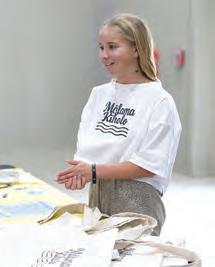
Olson’s capstone was a heartfelt advocacy effort for the care of Kīholo Bay. She channeled her love of sewing and crafts into a stunning textile art representation of Kīholo, and handcrafted tote bags, clothing, and accessories — even designing her own logo, which she heat-pressed onto her work. Every single element was made by hand.
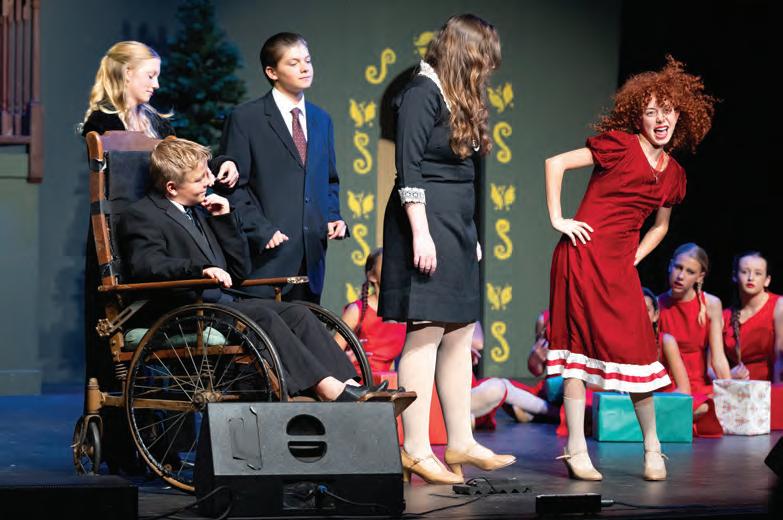
Middle School shines in “Annie Jr.”
In May, this 60-minute adaptation of the Broadway musical “Annie” brought down the house at Gates Performing Arts Center. With memorable performances by Annie (Ilihia Silva ’32), President Franklin D. Roosevelt (Jasper Watkins ’33), and the entire cast, this effervescent production was made possible by the dedication of MS performing arts teacher Kelly Wadlegger and music teacher Mallory Di Bartolo.
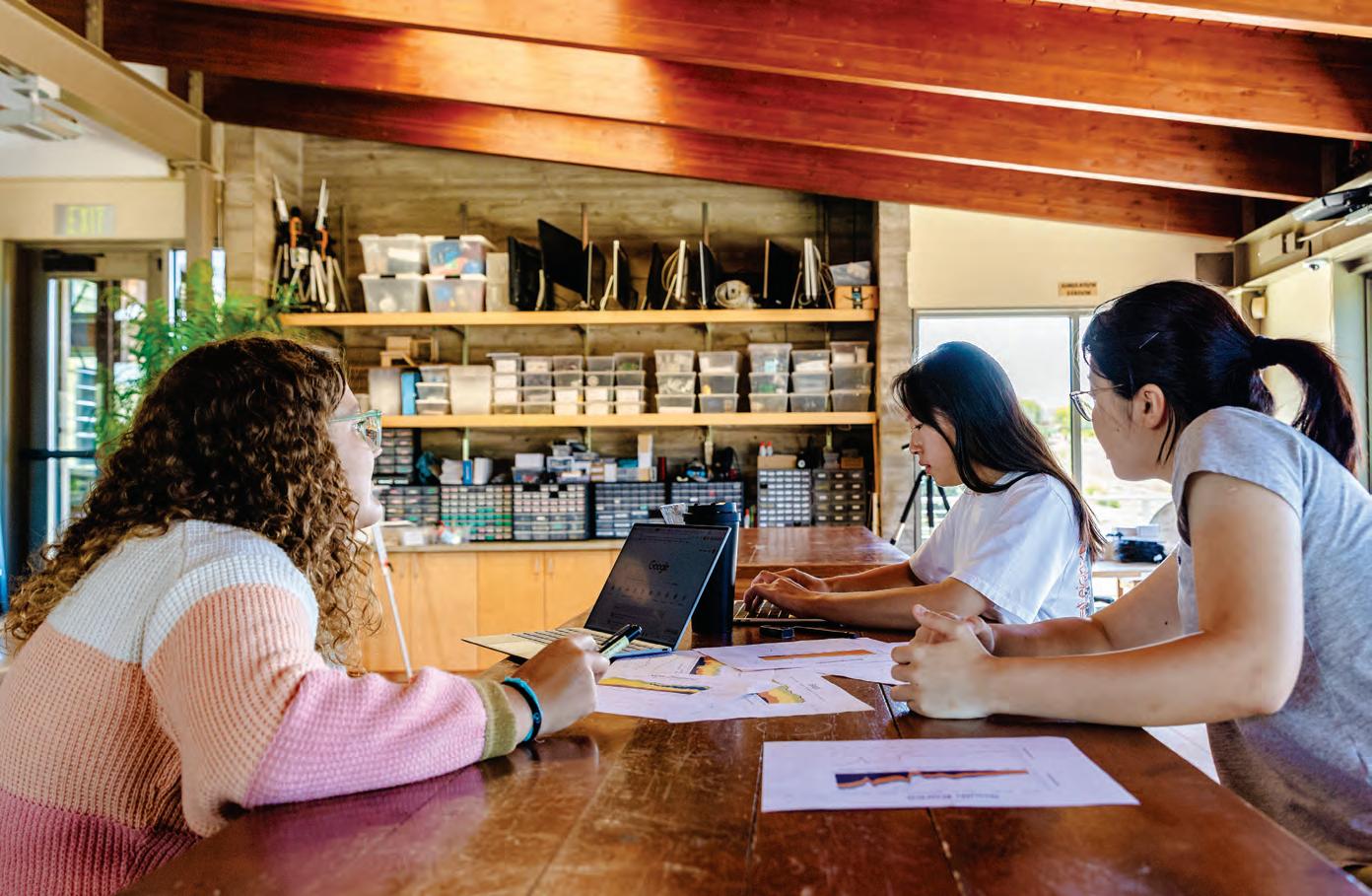
UPPER SCHOOL ROBOTICS RETURNS TO THE WORLD STAGE

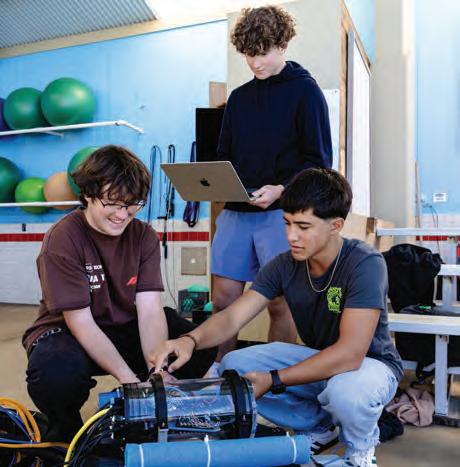
In the summer of 2025, a group of HPA students flew to Michigan with a robot they had built themselves and a long list of things that might go wrong.
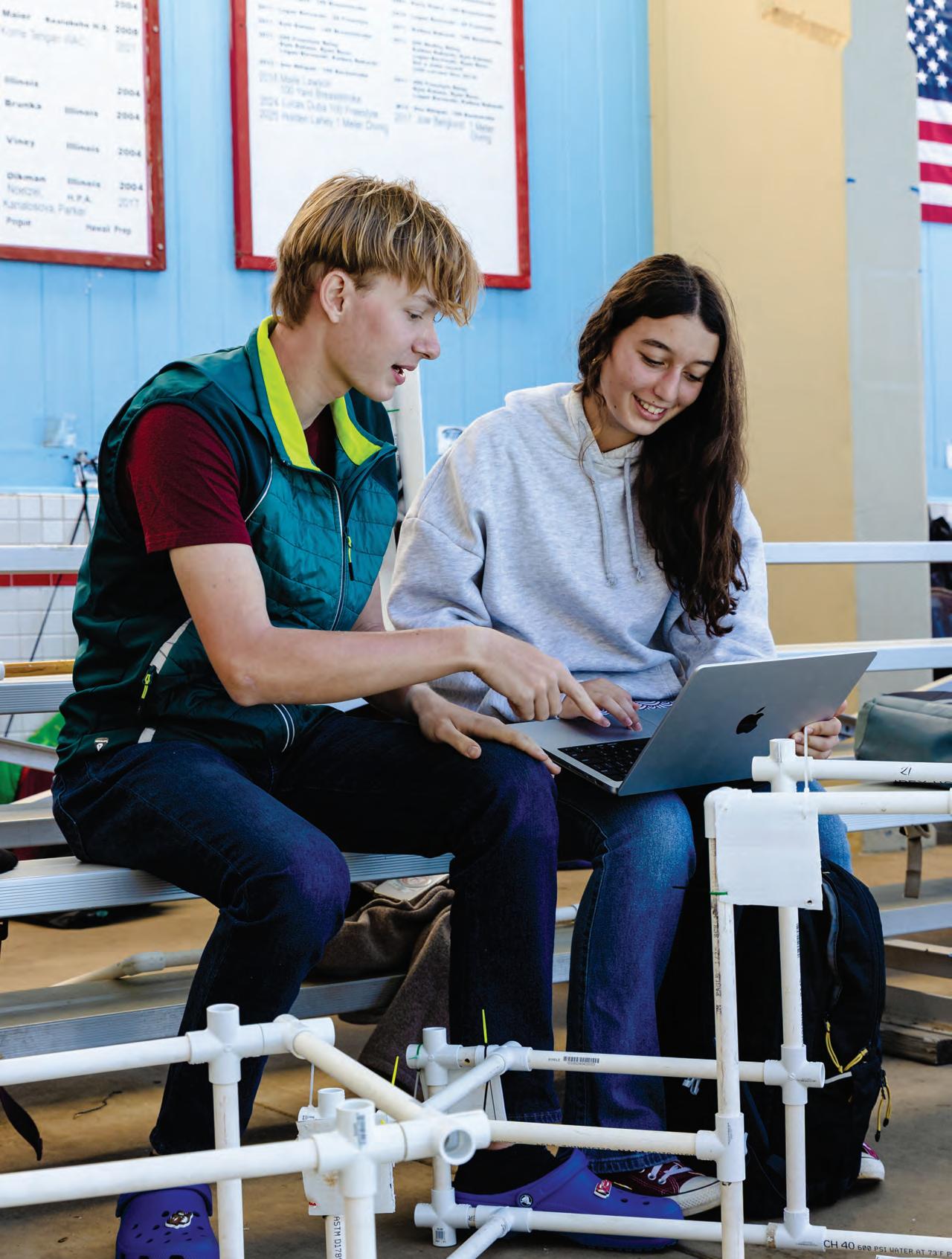
The competition was MATE ROV, an international event that requires students to design underwater robots to complete a series of complex tasks. The robots must work in conditions that are, by design, unforgiving. Limited visibility. Tight tolerances. Water that doesn’t care if your wiring is clean or your code almost works.
That summer was HPA’s first appearance at MATE ROV. The group named themselves Mana Robotics and their ROV, Ulua. The ROV was built from a mix of off-the-shelf Blue Robotics parts and custom pieces they designed and fabricated themselves, including a 3D-printed manipulator claw. The build, however, was just one part of the experience. The team tracked expenses, wrote technical documentation, analyzed safety, and came back with a clearer sense of what the work actually requires.
In June 2026, Mana Robotics headed back out, this time to the MATE ROV World Championship in Newfoundland. At press time, the team passed safety inspections on
the first round with bonus points awarded — go Ka Makani!
HPA has been doing this kind of handson engineering for a long time, in different forms. Solar Decathlon teams in the 1970s. Robotics programs that have grown and shifted over the years. Students arrive, learn how things are made, and leave something behind for the next group to build on. In Newfoundland, Mana Robotics and Ulua will carry on that vibrant tradition. •

Ready to take a chance
From Maui to Good Morning America, Becky Worley ’88 reflects on reporting and HPA
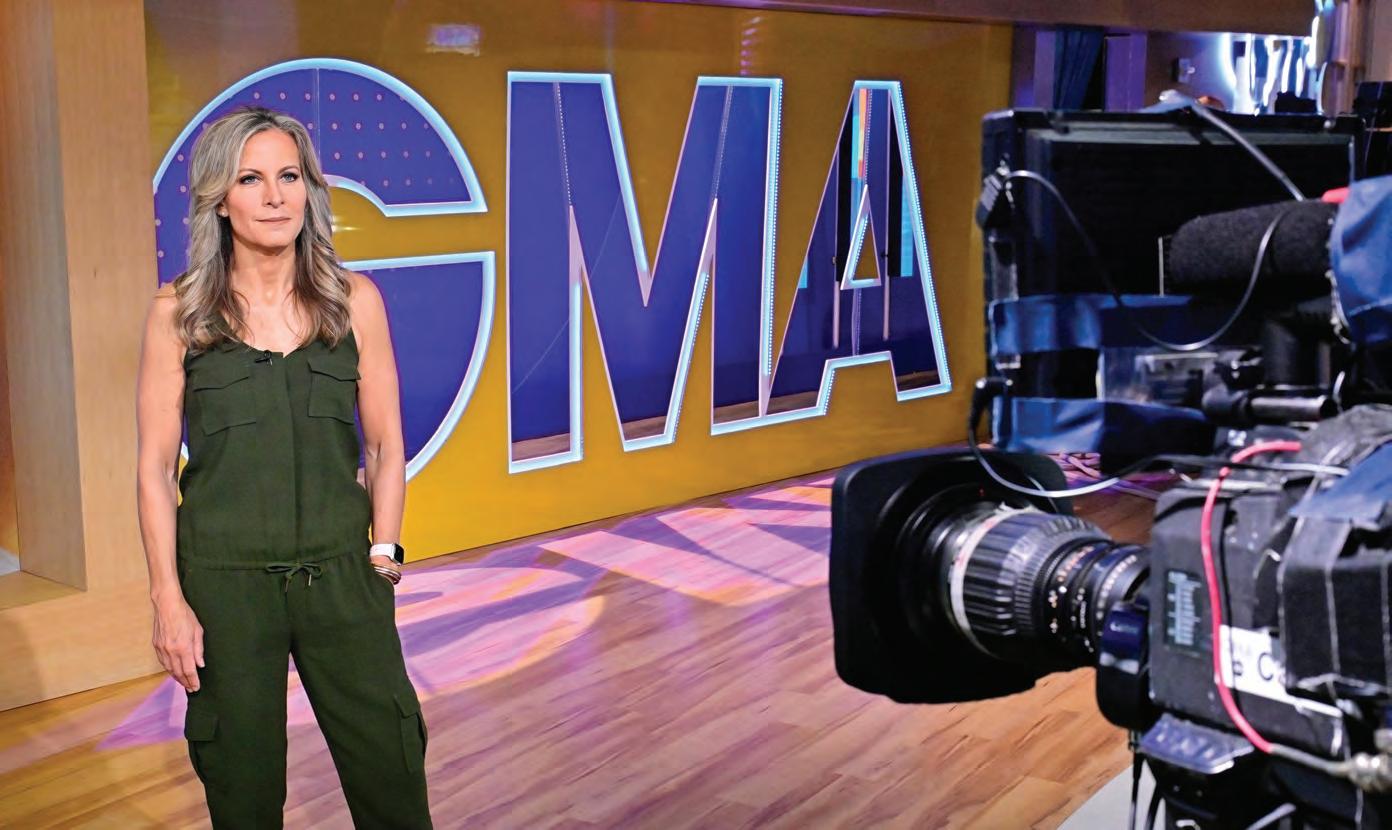
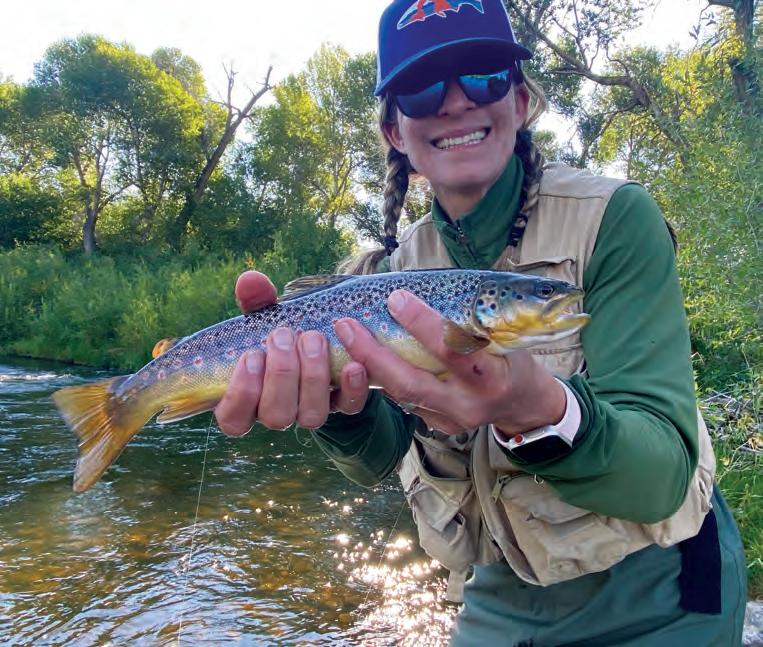
Facing the prospect of her eighteen year-old twins heading off to college this fall, Becky Worley ’88 expresses the typical empty nest feelings, but she also sees what some might consider an unusual upside: “I’ll have time to fish now. That’s amazing!”
For Worley, who has worked at Good Morning America since 2005 and is currently the technology and consumer correspondent for the show, this reaction makes sense. Fishing, in fact, is what first brought her to HPA from Seabury Hall on Maui, which she attended from seventh to 10th grade. “In the summer after 10th, I went on a fishing trip to Christmas Island with a group of families,” she recalls. “Three of the families had kids at HPA. I got home from that trip and said to my parents, ‘I want to switch schools.’”
Worley started at HPA as a junior. “It was full immersion,” she says now. “I played volleyball that fall, and my teammates, the kids in my dorm, and my roommates were all so nice.” Decades later, she notes, “My Ka Makani Wahine crew is a pillar of this phase of my life. The girls I played sports with, borrowed clothes from in the dorms, and cruised Kona from McDonald’s to Old A’s are now the women who I swap parenting advice with, who keep me up to date on our community, and who I raise a little hell with during our somewhat erratic girls trips.”
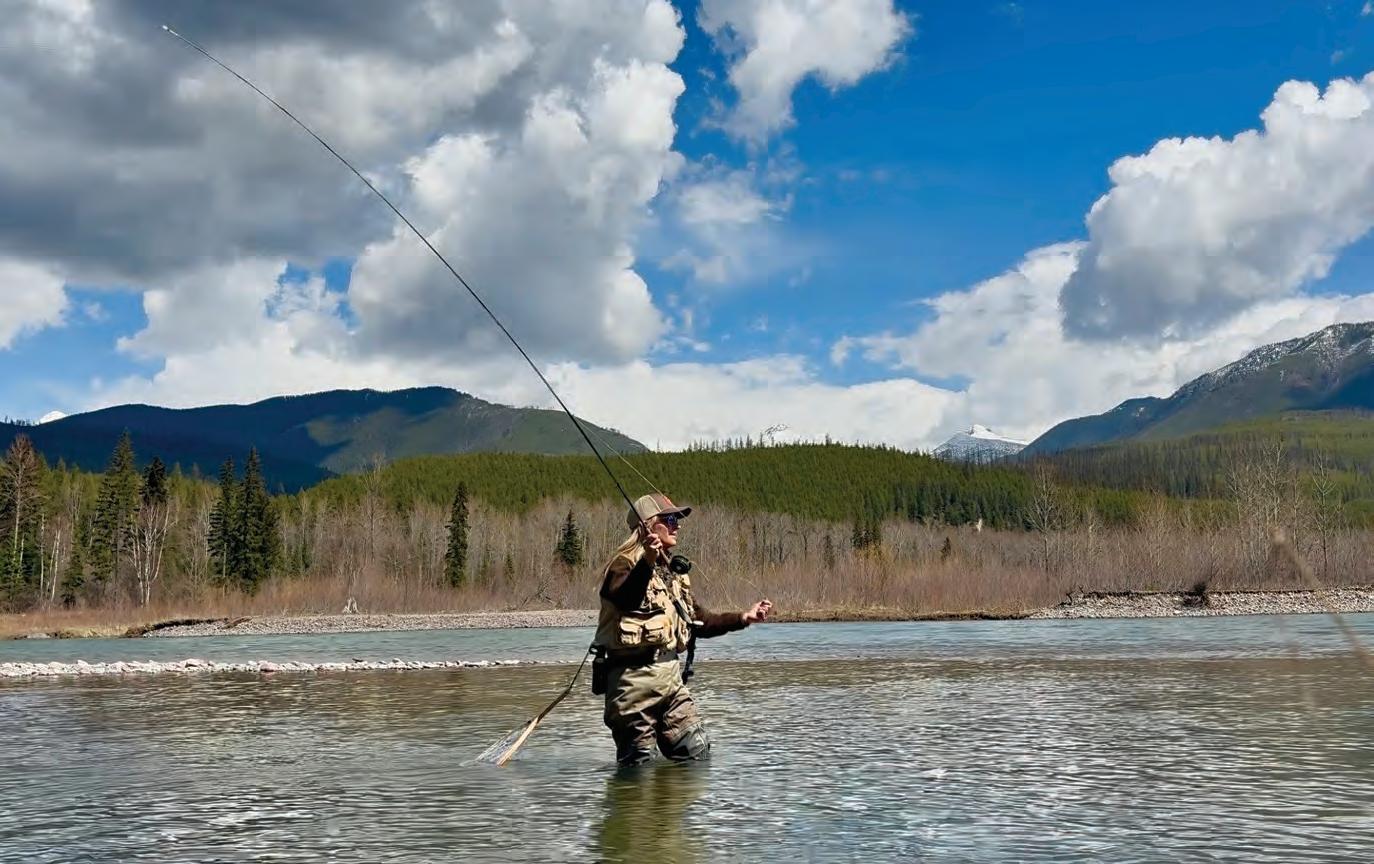
HPA and the roots of her reportings
Sports proved fundamental to Worley’s time at HPA. In addition to volleyball, she played soccer, basketball, and ran track at HPA, which she connects directly to her success as a reporter and producer. “There are things you learn as an athlete like composure and how to sit in an uncomfortable place and do your best,” she explains. “HPA’s coaches were so supportive and constructively critical, and it’s where I learned a lot of those skills.”
HPA’s focus on project-based learning also provided incredible training for a future reporter. “That philosophy was so important for me to understand who I was as a learner and a worker,” she says. “We had marine biology labs when we went scuba diving. In Hawaiian history classes, we etched the petroglyphs at Puako. Turtle tagging at Kīholo was incredible because we were collecting real information and sharing it with NOAA. The realization that ‘doing’ teaches you more than talking or reading a book was really empowering. That’s 100 percent what TV reporting is — especially the type of consumer reporting I do, where I actually try a lot of things on screen.”
Worley’s experiences beyond the HPA classroom reinforced similar lessons. Her former math teacher Jim Rizzuto, a regular columnist for the Hawai’i Fishing News and a legend in the fishing community and Kona, “would take students on monthly trips
for big fish like marlin, tuna, and mahi mahi,” she recalls, “teaching us the whole thing, including about the squid lures and how to clean the fish.”
Even Worley’s less happy fish experiences left her with enduring knowledge. She recalls with laughter her marine biology classmates’ disastrous attempts to recreate a fish skeleton. They tried boiling a fish in chemistry lab; they tried burying a second, hoping ants would eat the meat. In the end, they wrote about their failures and how the assignment was much harder than expected. She and her classmates barely passed, but along the way, it taught them, as Worley explains, “anything that happens informs your sense of the thing, even if it seems and feels like a
failure. Project-based learning makes you more comfortable taking chances.”
A big chance pays offs
When senior year arrived, Worley’s college counselor thought she’d be a better fit for the small, rural New England colleges than some of the more obvious big west coast choices. “He explained to me that they were more outdoorsy and active, and he thought I’d like the value structure of these schools more,” she says. “That’s advice I don’t think I would have received anyplace else. It gave me the confidence to give it a shot and apply.”
Boarding at HPA added to her sense that she could handle the distance. She ended up at Middlebury, where she
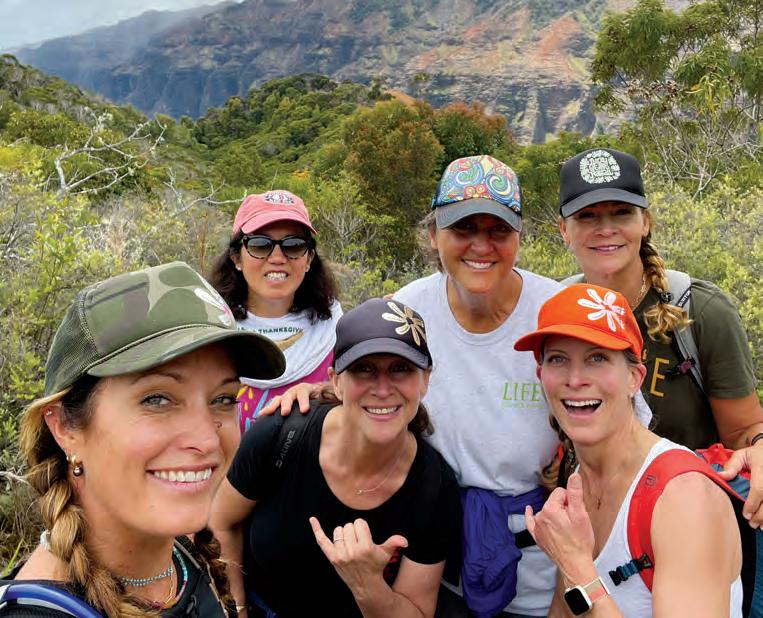
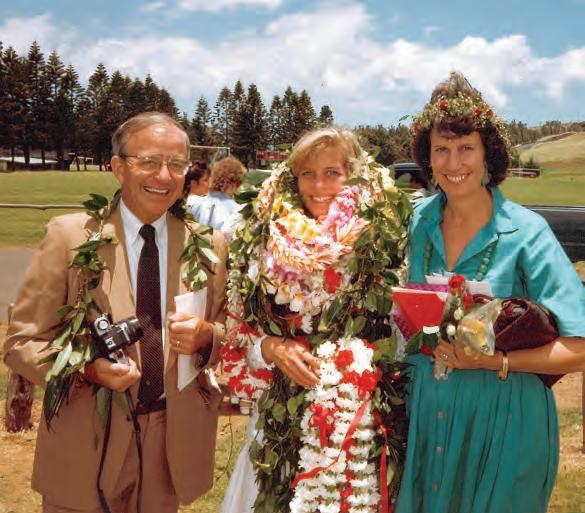
played soccer and rugby, majored in American literature, and thrived. (Yes, she also fished.)
The New England climate, however, was not for her. “That weather was … oh, baby,” the long-time Oakland, CA resident says now. She wasn’t ready to return to Hawai’i but was still very interested in fishing and how to make a career of it.
“Thanks to Pat Fisher ’86, Kevin Nakamaru ’86, Harry Kojima, and Jim Rizzuto, I was pretty sure I was destined to have my own fishing show on TV,” she says. “I knew how to fish, so I decided I needed to learn how to make TV.” She headed to Seattle where a connection through Middlebury’s alumni office led to a volunteer position at a local ABC affiliate news station. There, her willingness to take a chance set the first step of her career in motion.
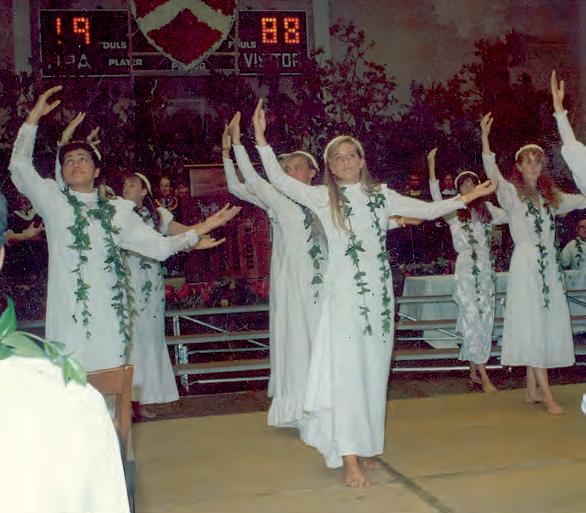
After noticing a college classmate on a live video stream of a Seattle political conference, Worley realized he was Bill Clinton’s personal valet. She managed
“ There are things you learn as an athlete like composure and how to sit in an uncomfortable place and do your best... HPA’s coaches were so supportive and constructively critical, and it’s where I learned a lot of those skills.”
to get his cell number through the White House switchboard (these were different times) and told him she’d bring her news crew to wherever Clinton was if he could get her an interview. No promises were made, but a location
was divulged. “I met with Clinton on the tarmac at Boeing Field,” she says. “I begged him for an interview. He said no. I was crushed. I went back to the news director and said, ‘I’m so sorry, I tried’. And he said, ‘You’re hired.’”
Before long she was managing the station’s technology accounts. The internet was on the rise, which led to a stint at a nascent tech channel in San Francisco owned by Microsoft cofounder Paul Allen, first as a producer and then as the host of a call-in computer help show. The station had a tuition program, so Worley went back to school at Stanford, where she got a master’s in learning, design, and technology through a joint program in the computer science and education departments. As for that fishing show, she did a pilot along the way and quickly abandoned the idea. “It was the most
stressful television I’ve ever done. It’s very difficult to produce the fish and make them actually get caught.”
When Tech TV went under –“because, shocker, people didn’t want to watch 24 hours about tech support” – she followed a producer from the show to Good Morning America as a regular guest, becoming a contributor in 2005. She took her tech experience on air. “I came in as the gadget girl at GMA,” she recalls. “It was really the time when personal technology was exploding. Personal computers, DVRs, Blackberries, the first Bluetooth headphones and iPhone,” she recalls.
“The kind of TV that I do is really teaching people. That’s why my degree is in education and computer science. At first, it was how to use these devices; later it became the difficulties around things like social media and kids and screens and all of those issues that have evolved over time.”
Branching out beyond tech
After a decade or so, Worley’s reporting field expanded again. “Technology and consumer reporting became very enmeshed because everything had a piece of technology in it,” she explains. “Over time, health came into that. I
have a series called ‘The Science of You,’ which is about what’s new in the health space from longevity trends to GLP1 drugs.” From there, she broadened out further to be a general consumer reporter covering what she calls “a little bit of everything.” Recently she’s been in Nevada and Oregon for a series profiling all fifty states.
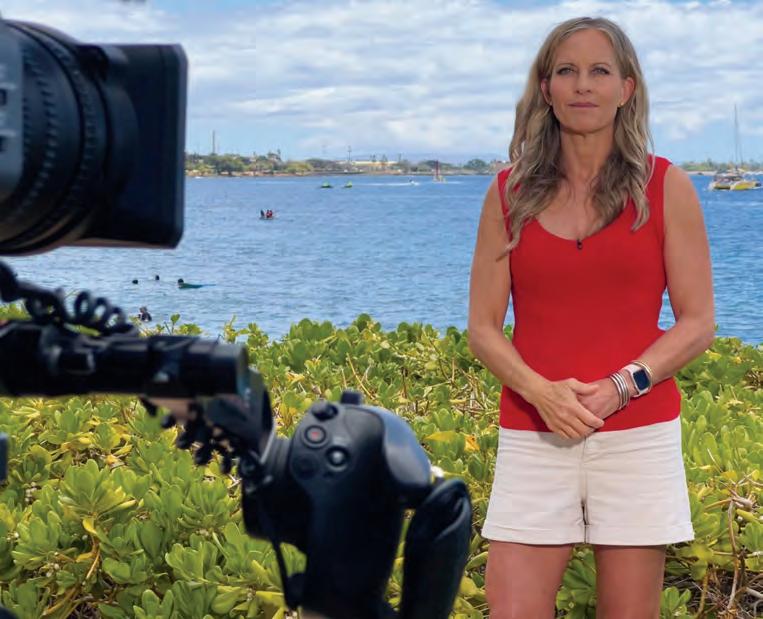
Her wide range also meant she was the ideal person to cover the 2023 wildfires in Lahaina. “Because Maui is my hometown, it was a no-brainer that you’d want someone who knows the terrain, the area, and the impact to go report on that,” she says. Once on the
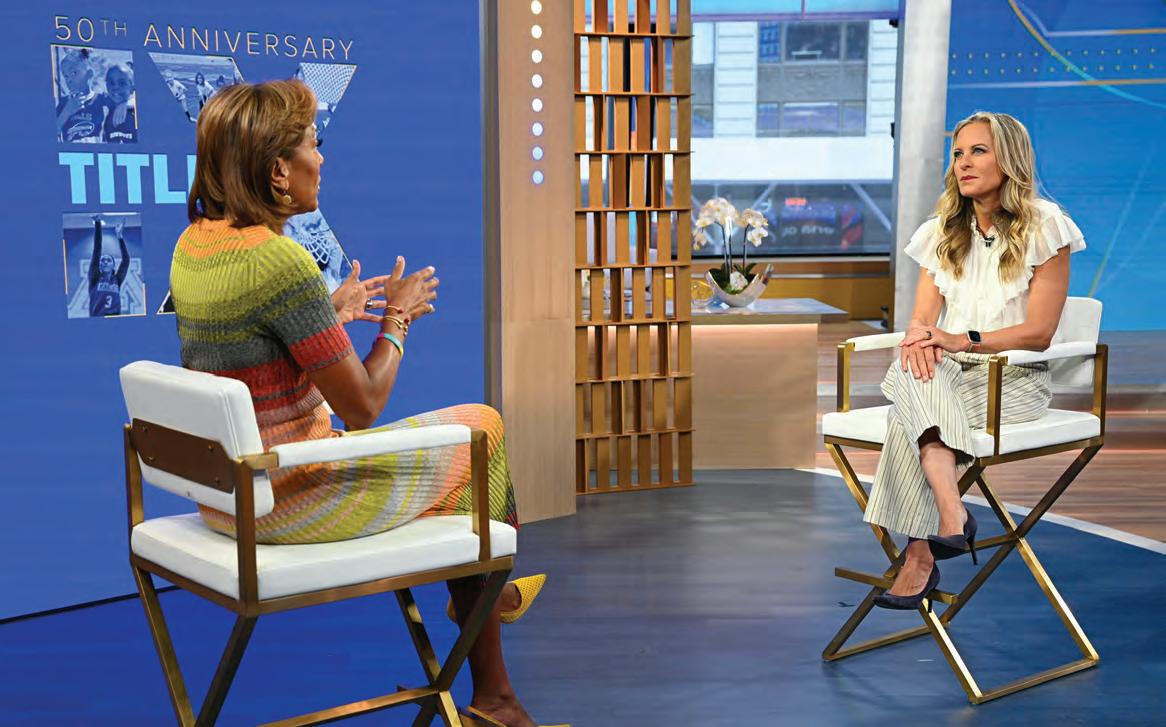
ground, she drew on her HPA contacts and community to help her get the story right. “When I landed in Kahului and Lahaina was blocked off, I saw the smoke rising in Kula and headed upcountry,” she remembers. “Todd Perkins ’85 was my photographer and Morag Rice ’86 was one of the people I interviewed about the community efforts to fight the fires.”
Whether she’s covering “local” news like this, the latest in tech or health, or some other aspect of life, Worley has deep appreciation for the variety in her job. “Morning television is the nuttiest television,” she says. “It has such a range. There are times when I’m reporting on really hard subjects and then a few days later, I’m on something where the stakes are low. It has every single type of story you could imagine in it.”
In the end, the variety is a big piece that keeps her going. “I’m always trying to be useful to the viewer,” she says. “How can I share information cohesively? How can I save them time or money, give them something useful, bring some light to their day?” She still credits HPA with that wide-ranging curiosity. “Teachers like Gordon Bryson, the Links, Jay Wilder, and Anne Oldford; the coaches like Greg Mooers, John Colson, Steve Perry, Keali’i Freitas; and extraordinary individuals like Stan Shutes and Auntie June — and so many others I haven’t named — they just poured their investment into us. I am so grateful.” •
Lessons from the Canoe
Kumu Pualani Lincoln Maielua ’01 honors the legacy of Uncle Shorty Bertelmann
In May 1976, Milton “Shorty” Bertelmann was one of the first Hawaiians in more than 600 years to sail across the open ocean using ancient navigational methods. It was the maiden voyage of Hōkūle‘a, and after 32 days and more than 2,000 miles, Bertelmann and his fellow crew-members were welcomed by thousands upon thousands of well-wishers when they arrived in Tahiti; National Geographic memorialized the voyage in print and in a feature-length film; and a cultural revolution was born. Bertelmann, or Uncle Shorty to those who knew him, was a quiet hero. But his significance as a Pwo Navigator and kumu is difficult to over-state.
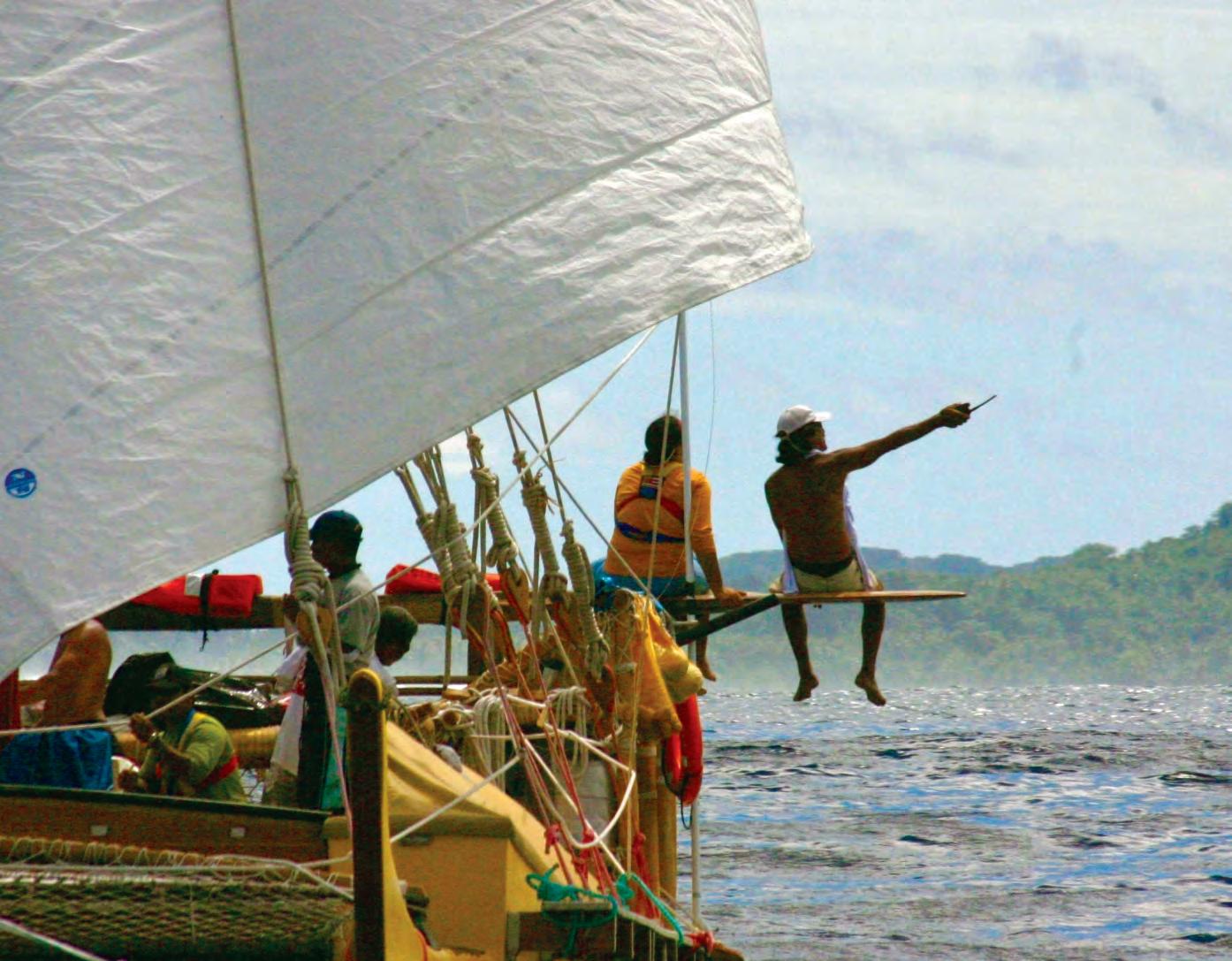
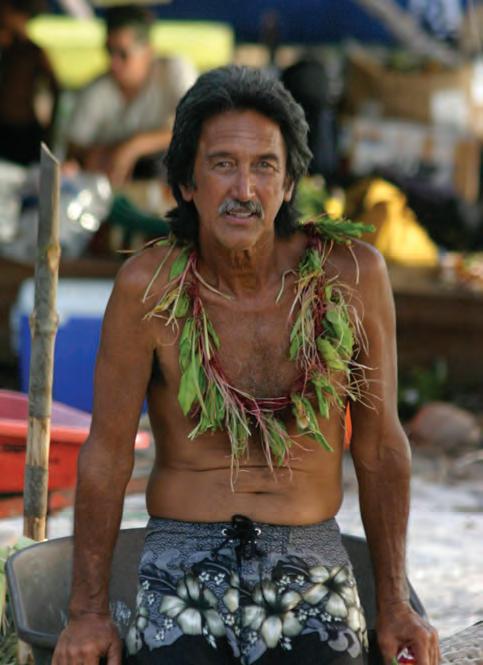
Uncle Shorty taught the art of wayfinding to Pualani Lincoln Maielua ’01, who first sailed with him to Satawal in 2007. Pualani, who is HPA’s Upper School capstone coordinator and Hawaiian studies teacher, was part of the navigational team on Hōkūle‘a’s final leg of the Worldwide Voyage (Mālama Honua) from Tahiti to Hawai‘i in 2017 and navigated Makali‘i to Nihoa and Mokumanamana in 2019. When Pualani designed a class to introduce HPA seniors to wayfinding and the lessons of the wa‘a, Uncle Shorty was there on the canoe, year after year, to meet and teach every student.
Uncle Shorty transitioned to the next life in November 2025, and his student, Kumu Pua, and her students, now HPA alums, remember him with great love.
The Cowboy Crew
“There are so many beautiful chapters to Uncle’s life,” Pualani reflects, “but I think probably one of the most epic ones is the building of Alingano Maisu, preparing to gift her to Satawal, to Papa Mau.”
Papa Mau is master navigator Pius Mau Piailug, and his legacy is intertwined with the Polynesian Voyaging Society. Established in 1973, the Society formed because, in its own words, “we were facing cultural extinction. There was no navigator from our culture left.” So they looked beyond Polynesia until they found Mau, a traditional navigator from Satawal, in Micronesia. “Mau was the only traditional navigator who was willing and able to reach beyond his culture to ours,” the Society describes. Papa Mau’s first Hawaiian student was Uncle Shorty, and his education began on the maiden voyage of Hōkūle‘a.
When Uncle Shorty came home to Waimea after that first voyage, his family put forth a massive commitment to support him and his endeavors.
Shorty’s brother, Clay Bertelmann, became involved with Hōkūle‘a, eventually working his way up to captain. “These two brothers, captain and navigator, they’re spearheading some major legs for Hōkūle‘a in the early ’80s,” Pualani explains. “We refer to them as the Cowboy Crew because these two Waimea boys bring in all of their friends to become the crew for Hōkūle‘a. And they’re untouchable in the sense that no other crew can match their intensity, but more so their connection to each other and their connection to place.”
Over time, Clay Bertelmann and the Cowboy Crew realized that Hawai‘i Island needed her own canoe, “because Hōkūle‘a was busy serving other communities on O‘ahu,” says Pualani, “and because they were so grounded and rooted here.”
First, they built Mauloa, a traditional canoe from a single koa tree that entered the water in 1993. Then, over the course of nine months, in a quonset hut on Parker Ranch lands in Wai‘emi, Waimea, they built Makali‘i, which is the canoe that still serves Hawai‘i Island today.
After Makali‘i, the Cowboy Crew, who by then had become Nā Kālai Wa‘a (canoe builders) along with ‘Ohana Wa‘a, made the double-hulled voyaging
Uncle Shorty Bertelmann on Satawal, 2007. Photo: Naʻālehu Anthony
Uncle Shorty Bertelmann and Pualani Lincoln Maielua ’01 sailing from Chuuk to Satawal, 2007.
Photo: Naʻālehu Anthony
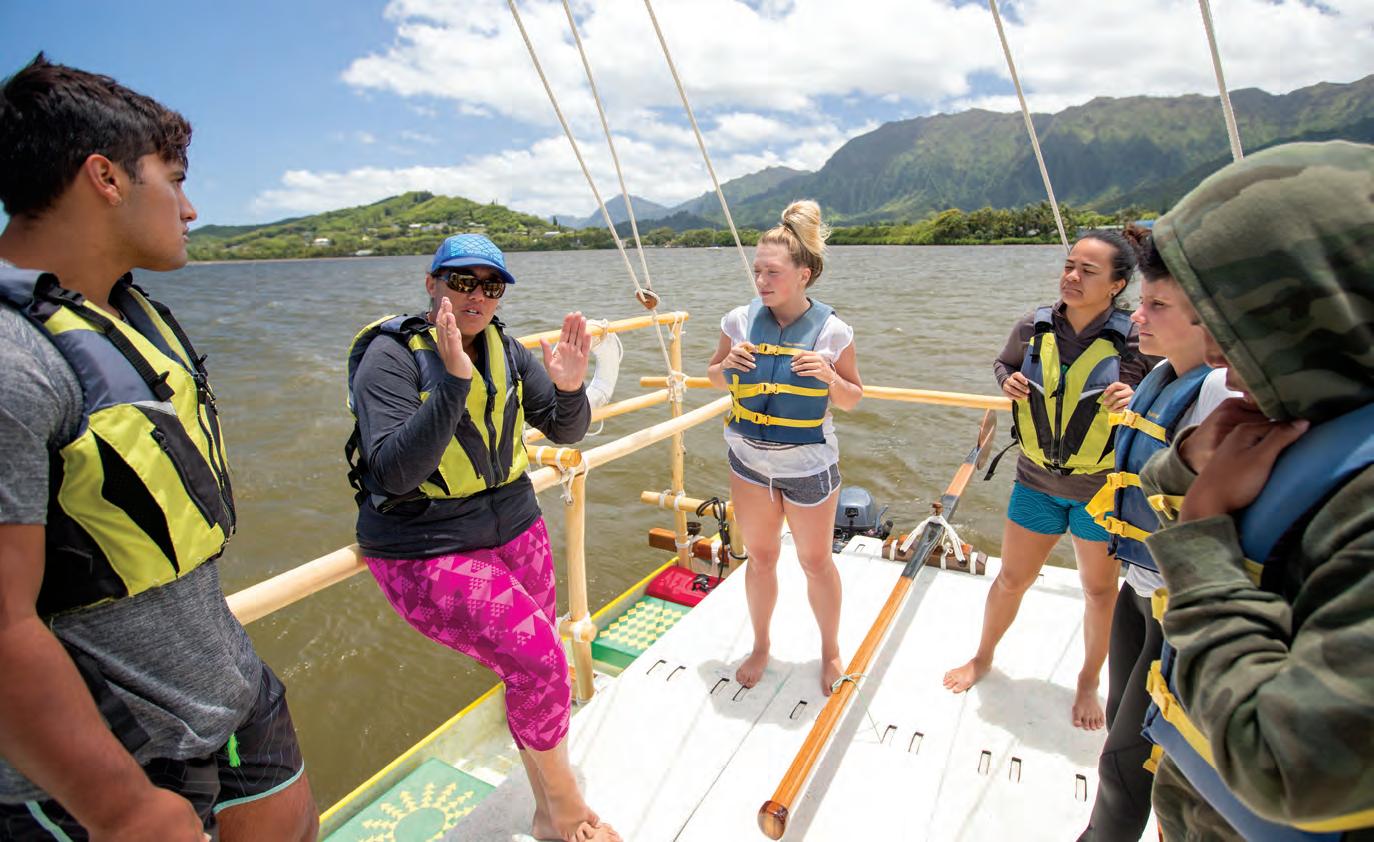
Pualani Lincoln Maielua ʻ01 prepares students to sail Kānehūnāmoku in Kawahaokamanō (Kāneʻohe Bay, Oʻahu), 2019
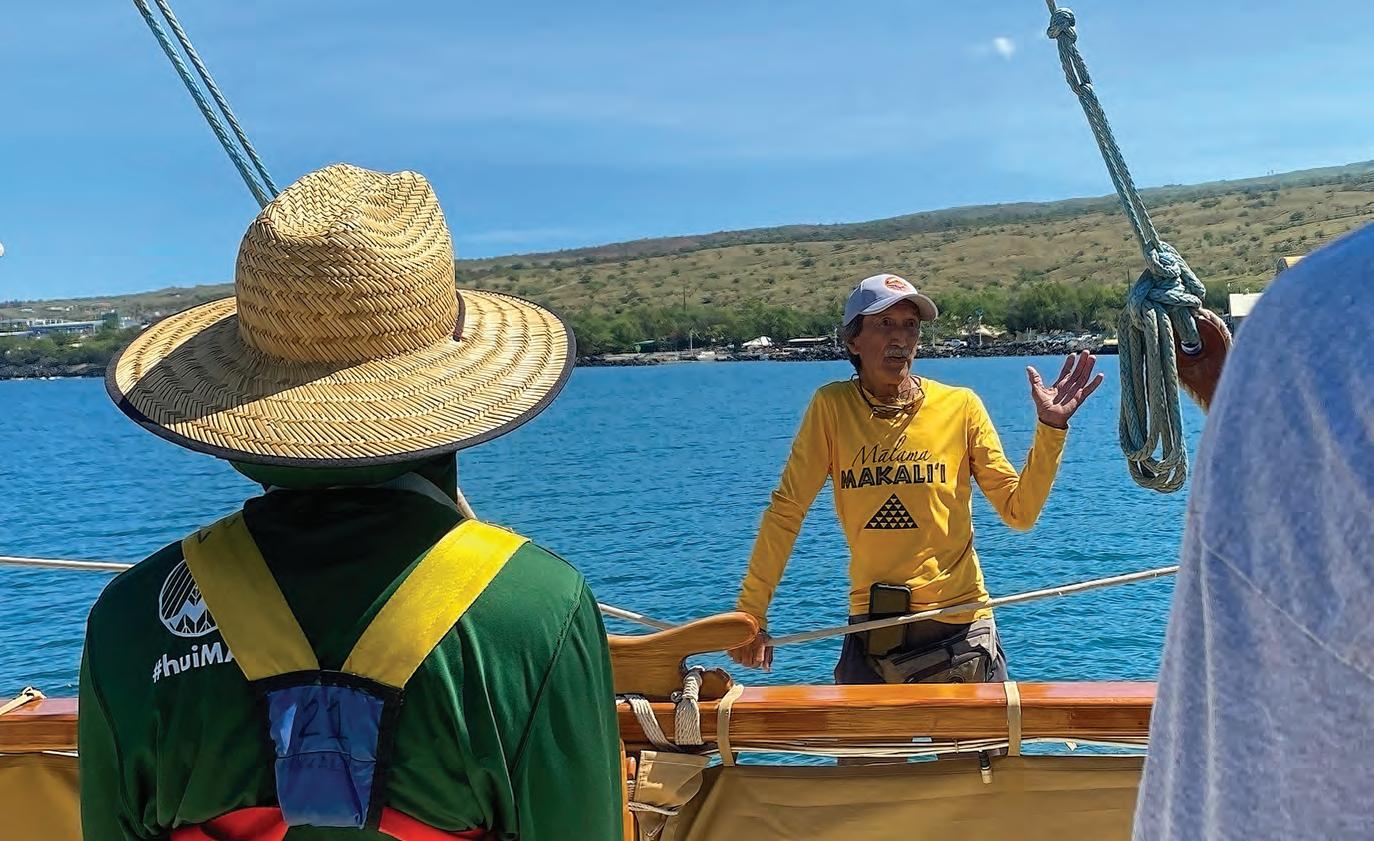
Uncle Shorty Bertelmann shares about the unique weather systems of Kawaihae with the Migrations of Moananuiākea class, 2023. Photo: Pualani Lincoln Maielua ’01
canoe that Pualani would sail with Uncle Shorty to Satawal: Alingano Maisu, the gift for Papa Mau.
Alingano Maisu left Kawaihae harbor on January 18, 2007. “I was super green,” Pualani says, “but Uncle Shorty pulled me into navigational training immediately. I asked a question about something with the sunset. And that was it.” Pualani was 23 then, and she recognized the importance of what she was learning and the responsibility she held to that knowledge. She wrote in her journal every day, and when she returned, her journal became the basis for her master’s thesis.
Ancient learning
Pualani says that though her voyaging time on the water with Uncle Shorty was not long, it was intense. “It’s the foundation of my kuleana forever,” she says.
For her, learning the art of wayfinding was “the most ancient way of learning. It was not a matter of, ‘OK, we’re going to start with the North Sky, and then tomorrow, we’ll do this, and make sure you memorize that.’” Uncle Shorty was not only a master navigator, but a master teacher, too. “When you have the ability as a teacher to instill in somebody that their knowledge is actually what they make of it, and not what you can feed them, that’s the ultimate teaching model,” says Pualani.
In 2017, Pualani was asked to sail Hōkūle‘a on the final leg home. “It was a real surprise to me because it literally had been 10 years since I had voyaged. I sailed plenty, but not deep sea kine.”
By then, she had three young children, and she hesitated to go on the trip because her teacher, Uncle Shorty, was not a part of the voyage. Other members of the navigational team had learned a different style. “It’s a lot of math,” she laughs. “A lot of arithmetic that is not my thing… that was not the way I learned from Uncle. I doubted my place on that crew. But when I talked to Uncle about it, he told me that he doesn’t have to physically be in my space for me to access him. I heard it, and I felt it, but I didn’t know how that was going to happen. And so, I prepared as much as I could.
“There was a moment on the voyage when the wind shifted drastically and we were forced to adjust Hōkūle‘a’s course. There was nothing above us and no celestial indicators to help us reset. I was the only one on deck from the navigational team, and I needed to dig deep into what Uncle had taught me to keep track of the canoe's movement,” Pualani says. “In that moment, I felt him with me. And I realized that if I continue to practice, and activate the many lessons he has shared with me, he will always be there.”
The floating classroom
“When Makali‘i was built,” Chelsey Dickson explains, “the vision was that she would be a floating classroom.”
Chelsey, who is part of HPA’s advancement team, is the daughter of Ma‘ulili Dickson, who was one of the Cowboy Crew that built Makali‘i and sailed Hōkūle‘a with the Bertelmann brothers. He was the canoe’s cook and quartermaster, a kuleana that he passed on to his daughter.
In 2019, Chelsey sailed with Pualani on Makali‘i from Hawai‘i to Mokumanamana, growing, preparing, and storing all of the food the crew would need for the voyage. Quartermasters like the Dicksons have one of the most important jobs on the canoe: “they know exactly how much everything weighs and where everything is placed,” Pualani explains. “They balance the canoe.”
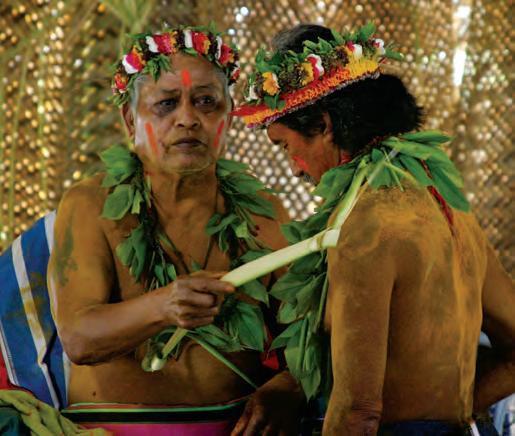
Papa Pius "Mau" Piailug conducts the Pwo Ceremony for Uncle Shorty Bertelmann on Satawal, 2007. Photo: Naʻālehu Anthony
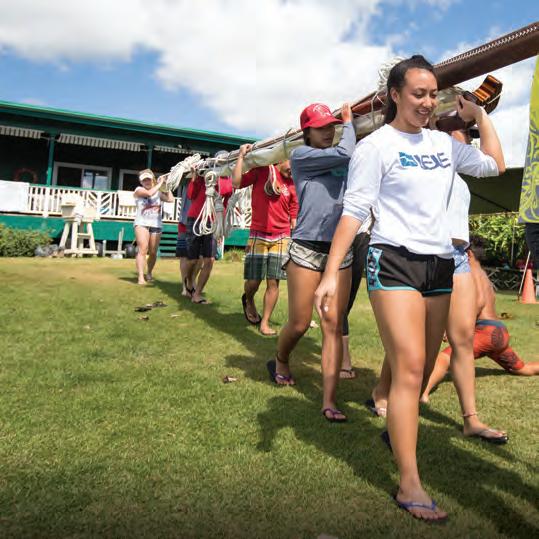
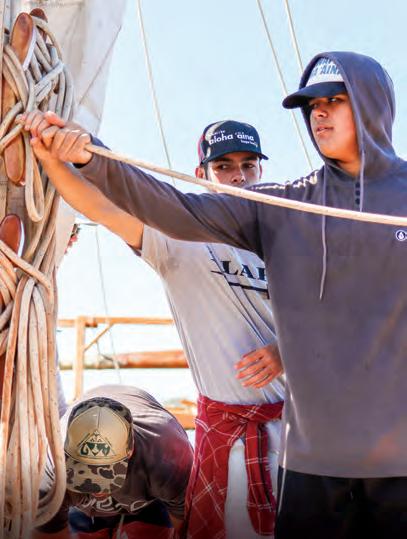
In addition to the quartermaster, navigator, and captain, there are many important roles to fill on a deep sea canoe. “Often, you need someone who can fish, someone who can fix everything, and we always want somebody who can entertain us and keep us laughing and happy,” Pualani says. Beyond the immediate roles and the precise knowledge required to fill them, care must be given to succession planning – making sure the next generation is able to carry the knowledge forward.
It is in that spirit that Pualani became a teacher. “The opportunity for a teacher who is passionate about something to execute that passion in their classroom does not exist at every school,” she reflects, “so I am grateful for that space at HPA.”
Today, Pualani guides HPA’s senior capstone requirement, managing a team of nine teachers across subjects that include arts, culture, sustainability, entrepreneurship, and athleticism. She also teaches every freshman student in Ke Aloha ‘Āina, an introductory course to Hawaiian studies.
The HPA upperclassmen in Pualani’s Migration of Moananuiākea’s course, which ran from 2019 to 2024, were a diverse group from Waimea and around the world who trained on campus and aboard the Makali‘i. Every HPA student who
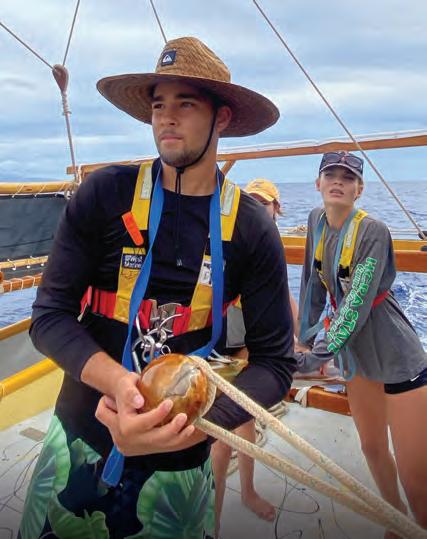
participated in that class met Uncle Shorty and sailed with him. Their final exam, their ho‘ike, was on the ocean.
“There’s no expectation that any one of them become a captain or a navigator or even a crew member,” says Pualani. “Their responsibility is to understand their kuleana to a community, and to their community especially.”
In this way, the lessons of the canoe transcend that specific vessel. The canoe itself is not what is most important – a reality modeled in Uncle Shorty’s own life.
“When I think back about his commitment,” Pualani says, “even though to me, he lived and breathed the art of navigation, it didn’t consume his life.” He worked full-time in construction, he was fully committed to his ‘ohana, and he ensured the canoe continued to serve our community even if he couldn’t be on it. He had a full life, and “everything connected back to the responsibility of what Papa Mau taught to him.”
“The hope is that all of our students have that,” Pualani says. “A deep connection to a place or to their ‘ohana or to their skills. The hope is that they can stay true to that source of learning throughout their lives.” •
Megan Chong ’19. Kukila Lincoln ’20. Photo: Maia Mills ’20 Nick Sebastian ’23. Photo: Pualani Lincoln Maielua ’01

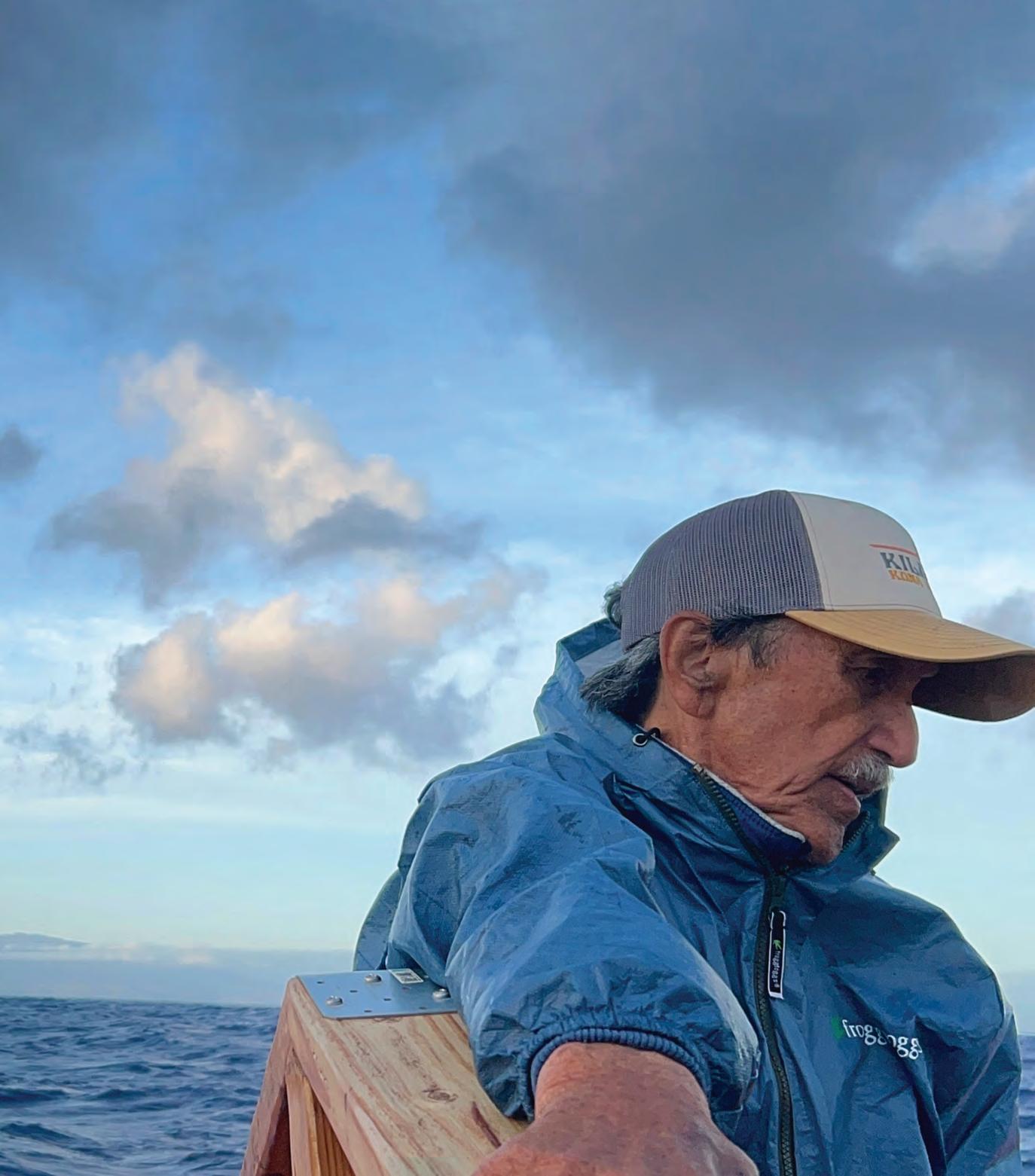
A Quiet Kind of Teaching
“Uncle Shorty was a quiet guy around us, but he honestly didn’t need to say anything for his presence to be known or felt. Knowing Uncle Shorty and all he had done with his life, it’s truly special to be able to look back on sharing space with him and getting the chance to learn from him. I’m very grateful to have known such a pillar within the community and I’m grateful that Aunty Pua created that pilina for us.” – Megan Chong ’19
“We had all heard stories about him – hearing how, on voyages, he had gone days on end without being seen taking a sip from the wa‘a’s water supply, how the ‘iwa birds would come to perch on him as the wa‘a approached land. These stories seemed almost mythical, yet here he was – not as a legend, but a teacher.” – Nick Sebastian ’23
“There was a quiet power in his presence. It offered a different kind of lesson. …For me, that lesson was to be calm, observant, and intentional — to respect the spaces we enter and the people we are with, and to truly be present. …Mahalo, Kumu Pua, for giving us these opportunities and for creating the space to learn, grow, and connect. And a big mahalo to Uncle Shorty for creating moments of quiet strength and presence. Mahalo, mahalo, mahalo.” – Mikaela Chong ’19
“When we were out on the ocean, you could see how much joy and happiness it brought to him, like he belonged there. You could see how important it was to him that he was able to teach us (the next generation) what he knew. …. Now every time I am able to look at the Makali‘i during my paddling practice, I can proudly say I have a connection deeper than most. It was an honor to be able to meet and learn what we did from Uncle Shorty.” – Iki Lincoln ’24
“Watching him on the canoe and receiving his mana‘o was a gift I took with me and will always treasure. I still fish and spend time paddling on the ocean. I am blessed to see the Makali‘i regularly, and when I do I always go back to the time spent working, learning, sitting, listening, singing, and laughing with Uncle Shorty. As time goes on I gain more love and respect for who I am and what my culture means to me. Uncle Shorty definitely helped to pass this all down to me.” – Kukila Lincoln ’20
Uncle Shorty Bertelmann crossing ʻAlenuihāhā, 2024. Photo: Pualani Lincoln Maielua '01
Taking the Dive
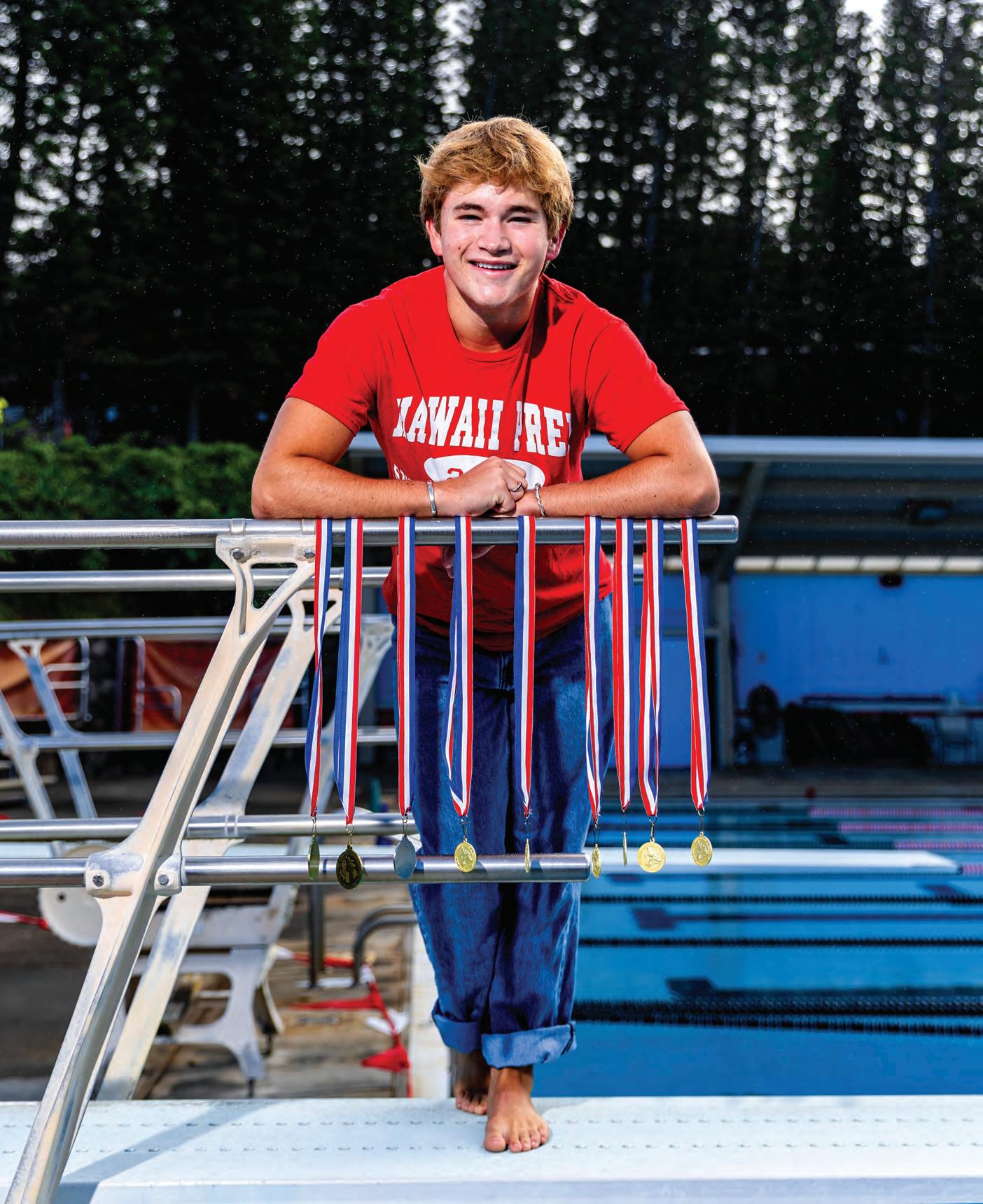
DECORATED HPA DIVER HOLDEN LAHEY ’26 HEADS TO NYU
In the pool, Holden Lahey ’26 has perfected the quiet precision of diving, where the best performances leave almost no trace. But his impact during his time at HPA has been anything but subtle.
Lahey leaves with a decorated résumé that includes three Big Island Interscholastic Federation (BIIF) titles and two state championships. The Colorado native and recent Ka Makani graduate will continue his journey this fall at New York University, where he’ll compete on the diving team, becoming the first HPA athlete to advance to the collegiate level in the sport.
It has been a remarkable ascent for someone who only discovered diving upon arriving in Waimea.
“I did gymnastics for 13 years when I was in Aspen,” Lahey says. “When I came to HPA, there wasn’t really a place for me to continue that consistently. Diving felt like the natural transition.”
In his first year, Lahey placed second at the HHSAA State Meet, a result that clarified both his potential and path. “When I got second at states, I saw the opportunity right away,” he says. “It felt like something I could really build toward.”
It wasn’t just Lahey who recognized the opportunity. His coach, Lindsey Paulekas, saw it too.
“It is rare to meet an athlete so fiercely driven to pursue excellence. Coaching Holden has been the highlight of my decade-long career,” says Paulekas, who is also the outdoor program coordinator at HPA. “It’s been a privilege to watch him grow these
past few years, not only into a champion athlete but an incredible human. When he is passionate about something, there is no stopping him.”
Lahey’s academic ambitions evolved in parallel, guided by a curiosity sparked early in his coursework.
“When I took Chemistry Honors with Dr. Anton my sophomore year, it was a turning point,” he says. “That’s when I realized chemistry and biology were something I wanted to pursue long-term.”
At NYU, he plans to major in chemistry on a pre-med track. When it came to looking at his college options, Lahey's approach was that academics would lead and athletics would follow.
“I wanted to put academics first,” Lahey says. “I wanted to find a school that would challenge me and set me up with a great degree. And then, if I could continue diving at a high level, that would be an added benefit.”
Away from the pool, Lahey was hard to miss. As a boarding student and executive dorm representative, he brought a steady, positive presence to the residential community. Around campus, he also became a familiar face as Ka Makani sports reporter on social media, helping to continue a legacy capstone project that’s now in its third year. The common thread, he says, is the culture that shaped him.
“Athletics at HPA is about the pursuit of excellence — always pushing to be better,” Lahey says. “The coaching, the support, and the environment all prepared me for the next level.”
That next level now awaits in Manhattan, where the diving margins are thinner and the standards higher.
“I’m excited to compete at that level,” Lahey says. “It will give me a real gauge of where I am and push me to keep improving, just a little bit more every day.” •
PLANTING THE FLAG
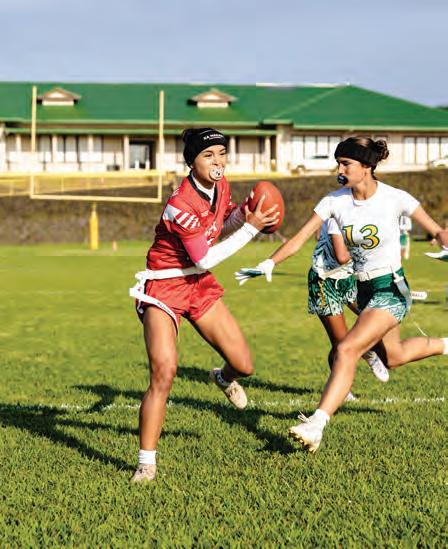
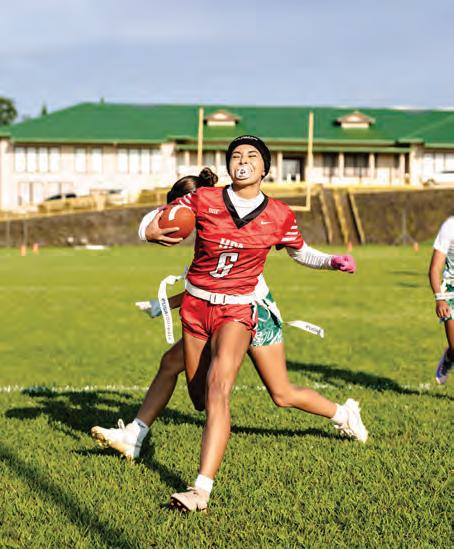
Lehia Akau ‘26 becomes HPA’s first to sign in flag football
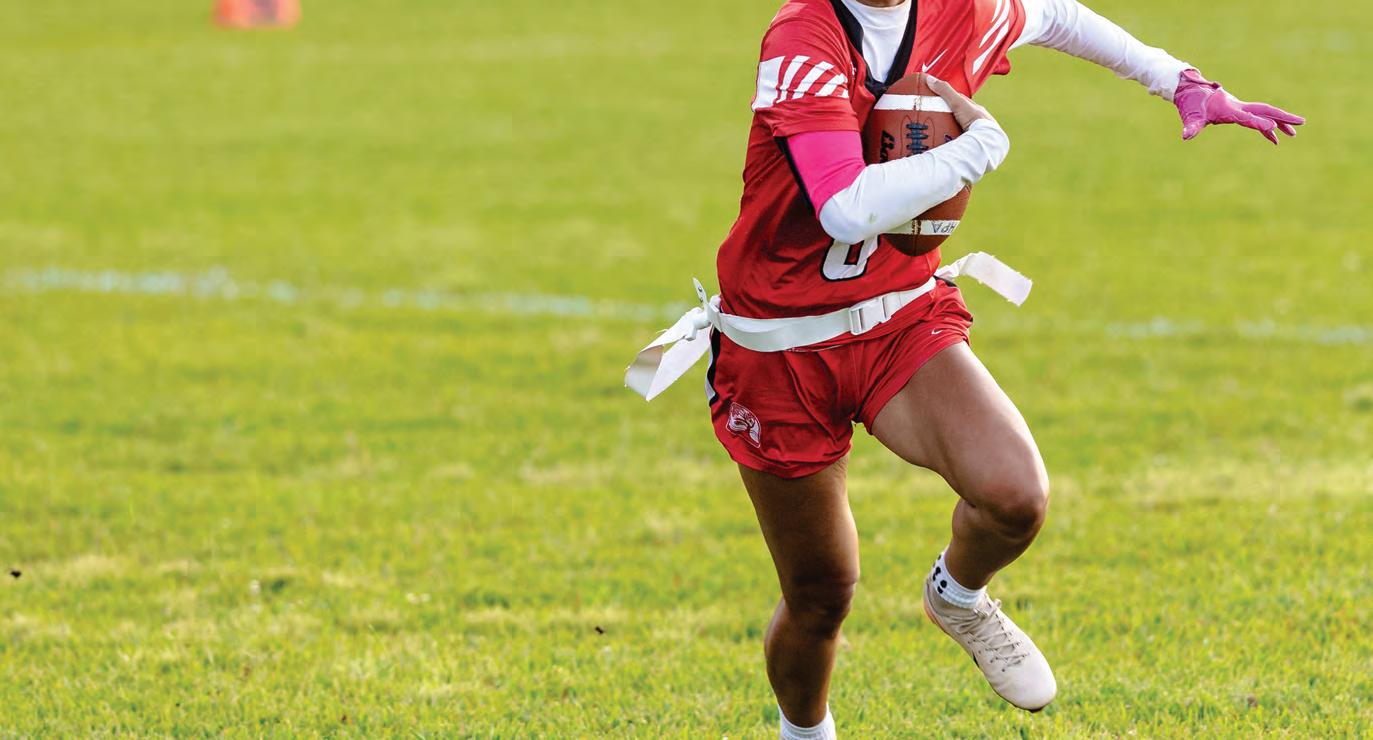
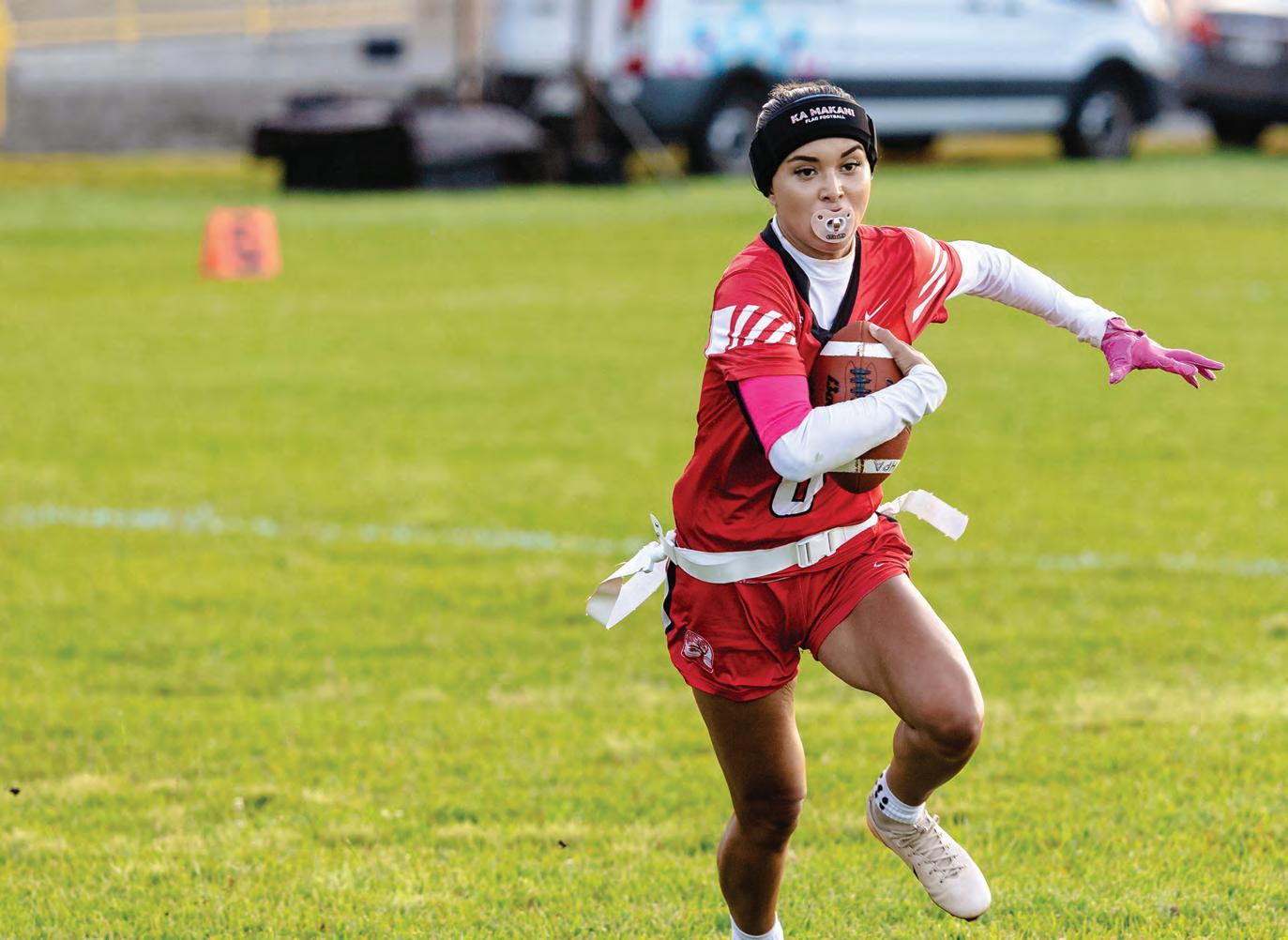
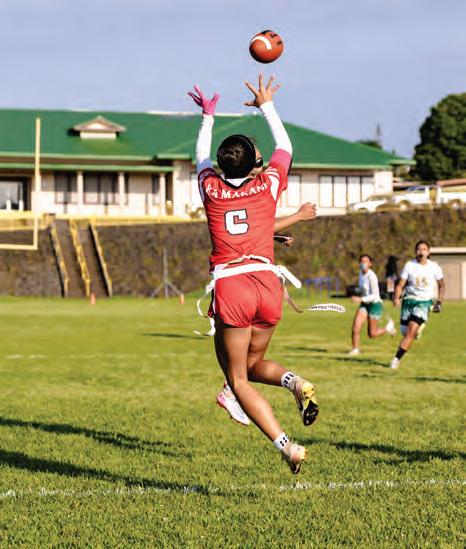
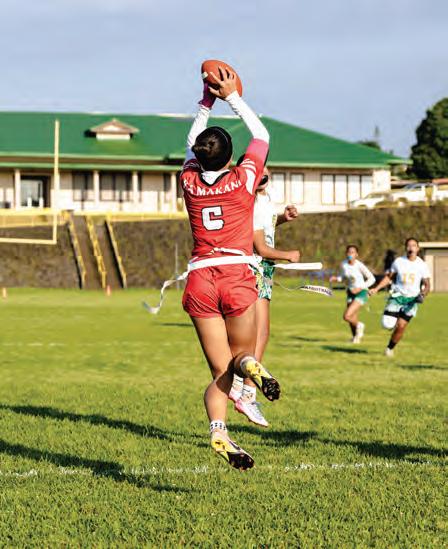
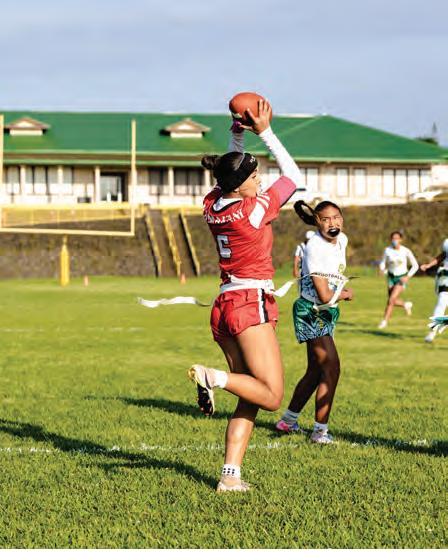
Lehia Akau ’26 didn’t set out to make history. When flag football made its debut as a BIIF sport during her junior year, she wasn’t even sure she’d try out.
“When flag football was first introduced at HPA, I had no intent of trying out,” she says. “I was kind of intimidated because it was a new sport.”
That hesitation didn’t last. What started as a step outside her comfort zone quickly became something more. Akau — a three-sport athlete — found a sense of belonging she hadn’t expected on the gridiron.
“Being part of that sisterhood and on a team with such amazing coaches really helped me,” she says. “Not only in the sport, but just as a person. I fell in love with it.”
Now Akau is taking that experience to the next level. She’s heading to Lebanon, Tennessee, where she has committed to Cumberland University to study nursing and compete in collegiate flag football, becoming the first HPA student-athlete to sign to play the sport at the college level.
“I’m proud of being able to show that even though we live in Hawai‘i and it’s harder to get recognition, it’s still possible,” she says. “If you put your heart into it, you can achieve it.”
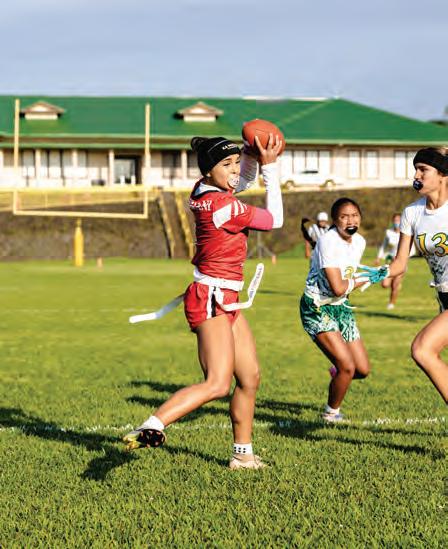
“ Being part of that sisterhood and on a team with such amazing coaches really helped me. ”
– ALEX “MOUSE” SMITH ’62
Her path reflects a broader shift in the game. Women’s collegiate flag football is gaining momentum across the country, with more programs being introduced and more opportunities opening for female athletes. The sport’s trajectory is only accelerating, with flag football set to make its Olympic debut at the 2028 Summer Olympics.
Cumberland added women’s flag football during the 2025-26 academic year. Much like the program at HPA, the Phoenix are still building. Her decision to commit to Cumberland came down to something simple.
“It all came down to the environment,” she says. “The feel of the team, the feel of the school — it just felt right.”
Akau didn’t plan on being first. But by stepping forward, she leaves the door open for others to walk through. •
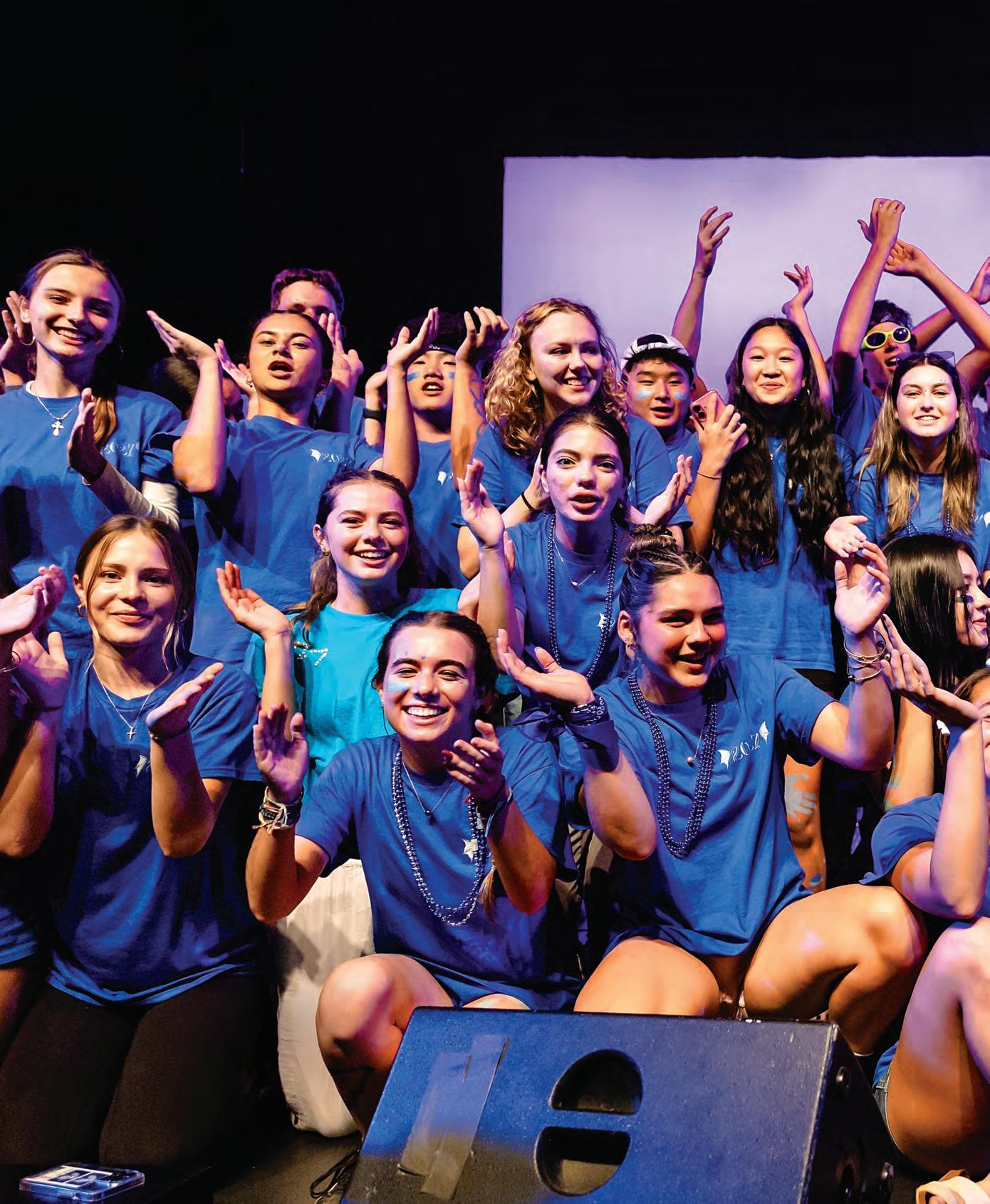
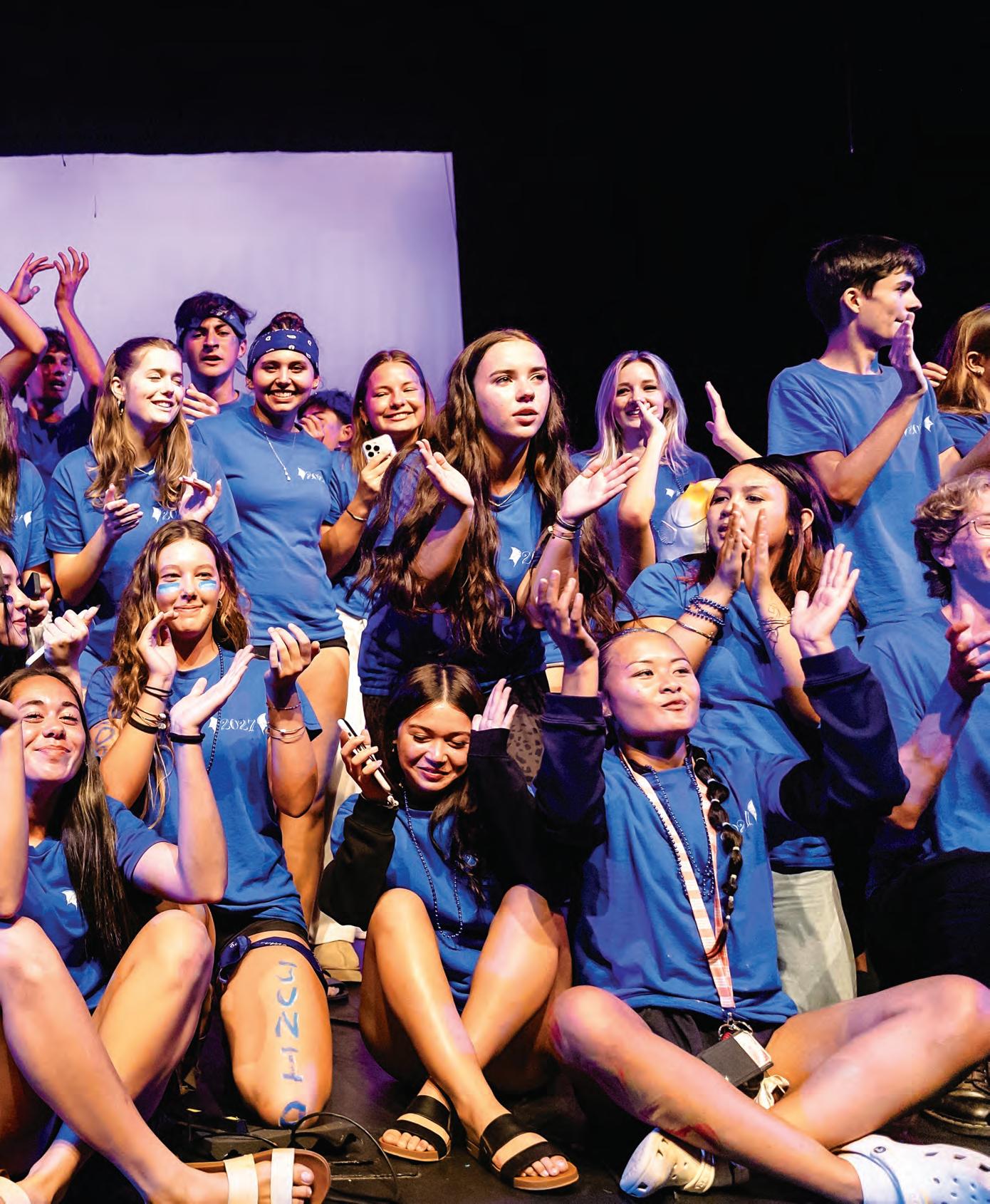
The class of 2027 celebrates another victory at the HPA Olympics!
FOREVER KA MAKANI:
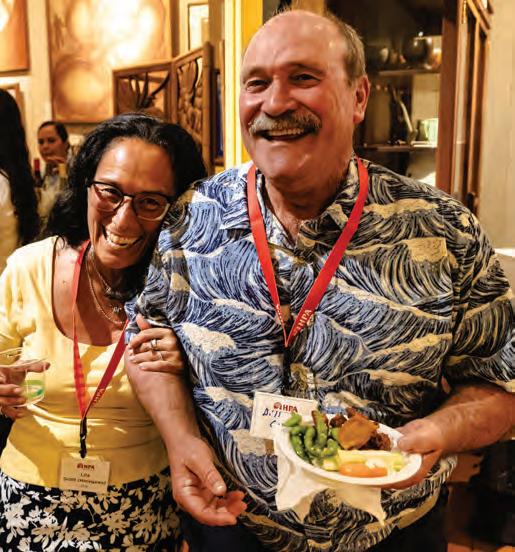
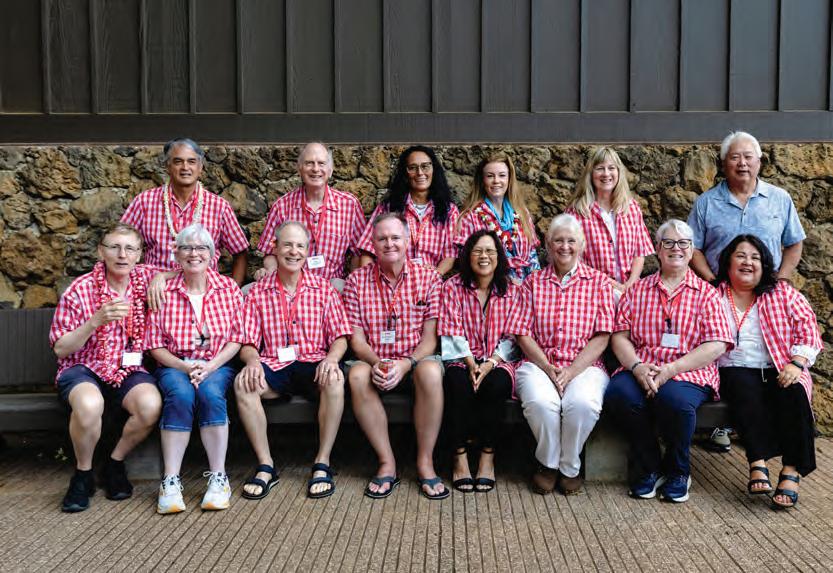
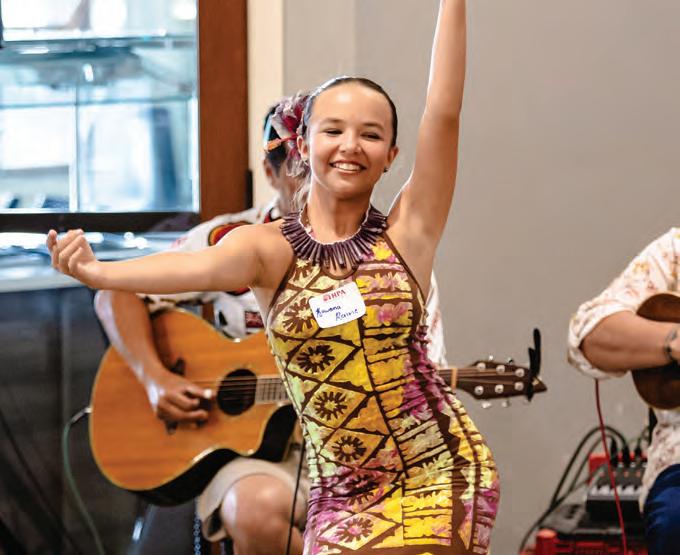
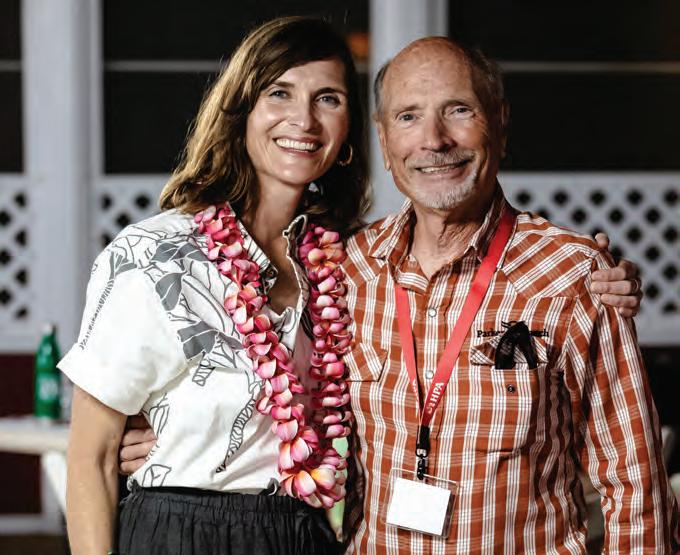
REUNION 2026
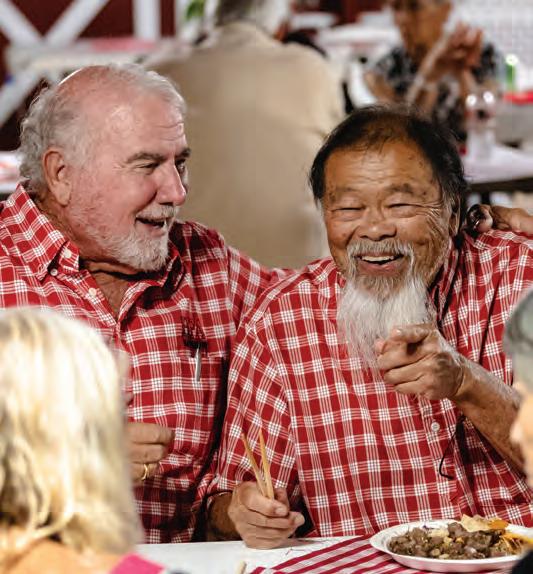
A. Marau (Knight) Beck ’86 and Zeke Chong ’13
B. Class of 1976 celebrates 50 years!
C. Bill Jardine ’63 and Mel Pobre ’64
D. HPA’s horse program lives on!
E. Carrie (Burkhalter) Reid ’86, Zoe (Jurgensen) Sing ’86, and Eric Heneghan ’86
F. Beautiful hula at lūʻau
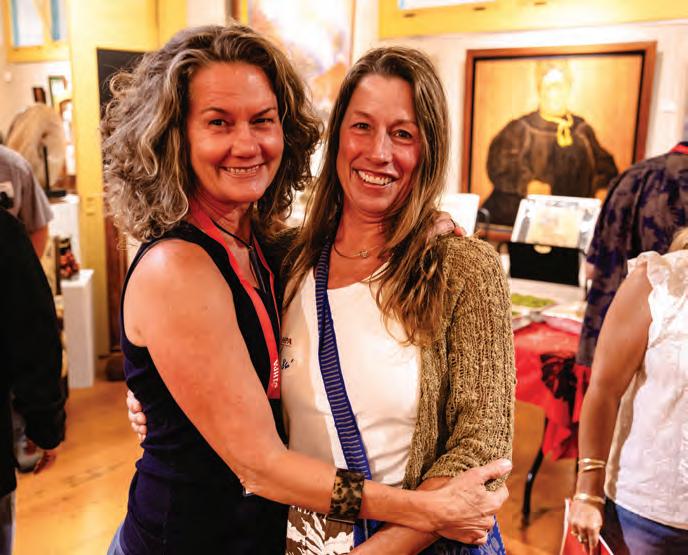
G. Nikki Dunnage ’86 and Kathy Sheldon ’86
H. Sarah (Clark) Bemus ’96, Jenny (Lee) Bishop ’96, Jennifer Hickman ’96, Helene Honda ’96, and Summer (Duncan) Korst ’96
I. Lila (Hasegawa) Scott ’76 and Bill Case ’76
J. Hannah Hind Candelario ’01 and Robby Hind ’66
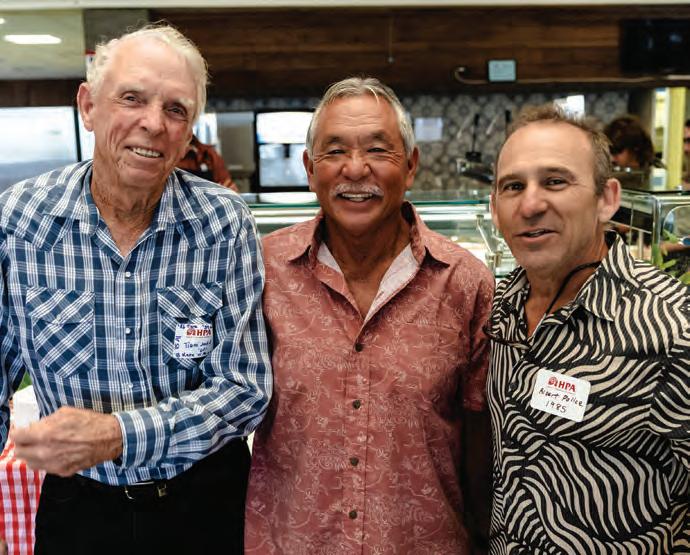
K. Tioni Judd ’62, Mike Hanano, and Al Police ’85
See more photos on page 42
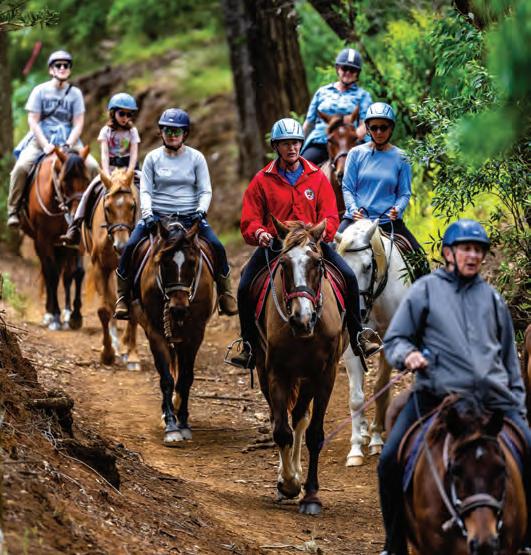
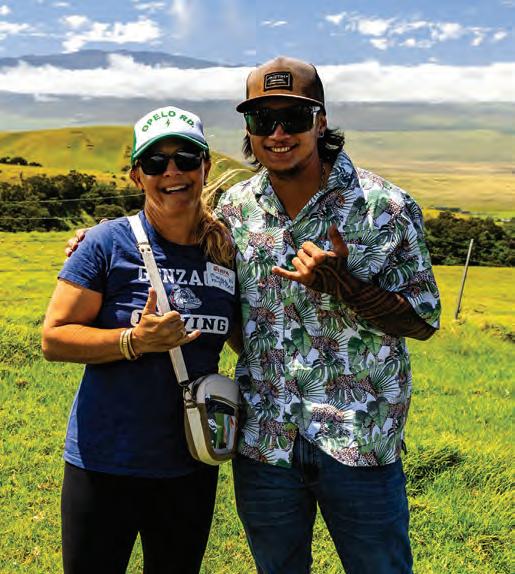
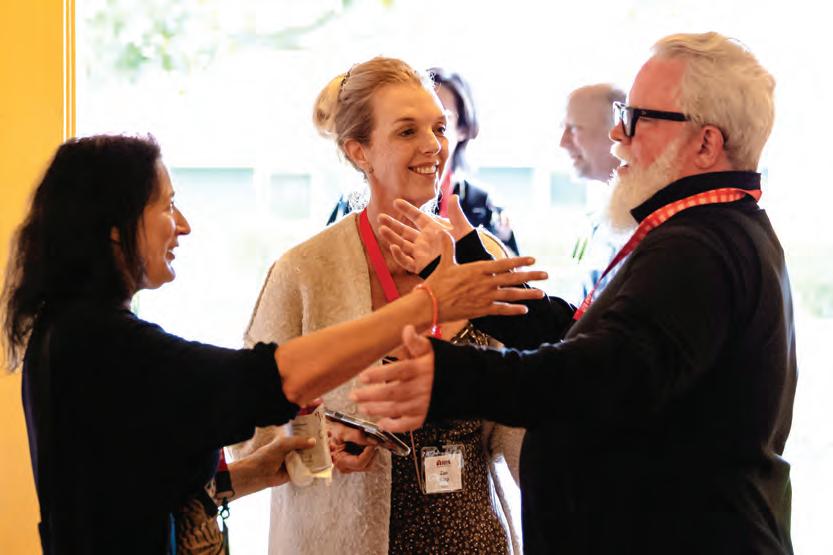
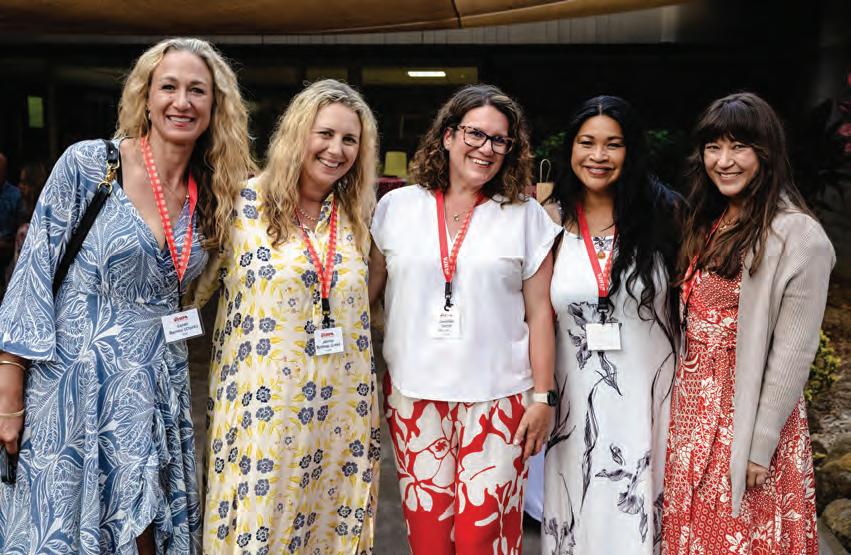
B C
Class Notes
60s:
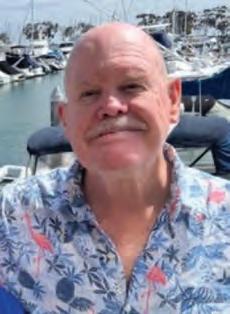
Jim Dahlberg ’65 writes that he “really enjoyed ‘talking story’ with those of you that did attend our 60th class reunion lū‘au. Alvin and I are starting to plan our 65th, so that we can catch up with those that could not attend and again those that did!!! I never thought that after my children Shea ’97 and Peter ’95 graduated that I would be attending this year’s graduation of my daughter Helen Elizabeth Kawohimanuki‘ailani ’26. My HPA ‘ride’ and pride has been exceptional, malama pono and a hui hou…”
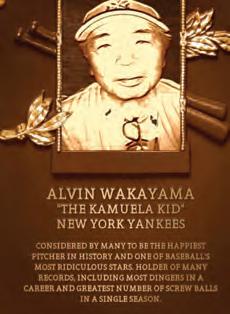
Alvin Wakayama ’65 finally made it to the Baseball Hall of Fame in Cooperstown, New York last summer.
Brook Collins ’66 says that he plans to attend the reunion, while Peter Burkland ’67 visited campus again with friends – “very fun, very different layout and traditional HPA welcome.”
70s:
Lew Ross ’69 wanted to let the Class of 1970 know that Mike Longmire ’70 passed away recently. He lived in McCall, Idaho, with his wife, Deborah, for many years. “Prior to that,” Lew writes, “he lived in San Diego and was married to my younger sister, Lisa, with whom he had two daughters, Malia and Heidi, who are married and each have one son. Heidi and Malia and their families live in Sacramento and San Diego, respectively. Despite the divorce from my sister, Mike was a great friend all these years, well-loved in McCall (as is his wife, Deborah), and as all you remember a consummate athlete, water man, and artist/home builder.”
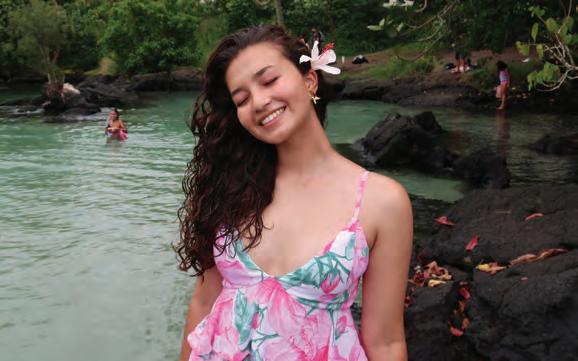
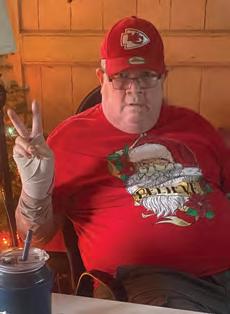
Ripper Bartholomew ’72 also wrote to share the news of a beloved classmate’s passing: “Dear HPA Class of ’72 Classmates, Have some sad news to share with you. Mick Mathewson ’72 recently passed away - from
complications of cancer, diabetes and lung issues. He was living in the Palm Springs area. Over the years he kept in touch with many of us - he was a great guy - loved to talk about his HPA High School days! Mick was an avid flyer back in the day - and still talked about those flying days and secret missions with joy. He was passionate about his flying. His sister - Maryalice (Mathewson) Woody ’75 - described him as a very adventurous guy who probably visited nearly every country imaginable! Mick always had a positive attitude - right till the end. May he rest in peace.”
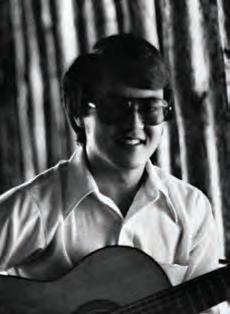
We learned from his wife, Phyllis, that Alan Fujimoto ’74 passed away in January after a brief battle with pancreatic cancer. Alan was a longtime supporter of HPA and held a deep affection for the school community. He established an endowed chemistry award that is presented annually in his name, a lasting expression of his belief in students and in the importance of curiosity and care in the sciences. A former dentist, Alan later pursued his interest in the culinary arts as a student, reflecting the same quiet dedication to learning that he brought to so many parts of his life. His senior yearbook inscription reads: “I have in my memory now, an experience — an experience that I have enjoyed and valued being a part of. How such a small segment of my life can leave such a deep impression, I’ll never know. Perhaps it’s the people, the dorm, or the hills. No… maybe it’s the chapel or the Waimea sunsets. Whatever it is, it has become a precious memory that will remain with me to treasure for the rest of my life.” Alan will be remembered with gratitude and affection by all who knew him at HPA. Our thoughts are with Phyllis and the Fujimoto ‘ohana. Mark Mercer ’75 says he downsized to a new place about a year ago. Kathye (Patterson) Barbosa ’76 writes: “ Becky Nagakura Azama ’76 and I still see each other weekly. Jorge and I will be celebrating our 47th anniversary in August. Our four children and seven grandchildren live on the mainland.”
David Spies ’76 can’t believe that it has been 50 years, and James Venable ’76 says that he had triple bypass surgery in 2022.
80s:
Janene McMahan ’86 has her tickets to fly to Hawai‘i for the 40th reunion! Sheena Rice ’87 just moved to Carlsbad, California.
90s:
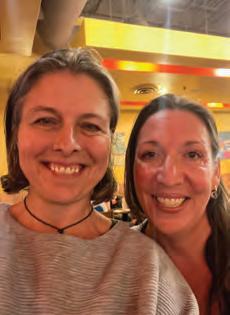
Theana (Hancock) Snyder ’95 recently had a couple of chance Ka Makani encounters in her hometown of Austin, crossing paths with Sarah Foust ’95 at a local Indian restaurant and Keawe Liu ’89 at a neighborhood pizza spot. A small world, indeed.
00s:
Trenton McManus ’01 is living in California with his wife and three-year-old daughter, and Ken Musashi ’01 is a Japanese language qualified flight attendant of nine years with Hawaiian Airlines.
Ginger (Roberts) Kretschner ’02 says that she lives “in Sisters, Oregon with my family: Ina (9) and Oskar (5)... future Ka Makanis. :) HPA was some of the best years of my life.” Oat Wichiencharoen ’02 shares: “My family and I moved to Yokohama, Japan two years ago. I’m learning Japanese! Should have paid more attention at HPA.” Kelly Davis ’03 wrote in to call our attention to the success of his classmate Jamie Twigg-Smith ’03, and his brother George Twigg-Smith ’11. Jamie is Director of Agriculture Operations at Pacific Biodiesel (the nation’s longest operating biodiesel producer) and George is Operations Manager. “Non-GMO canola was added to our regenerative crop rotation in 2026 with the anticipation of producing canola oil along with high protein canola meal for our local animal feed market,” Jamie explains. “Canola is well adapted to colder climates of Northern Latitudes, therefore its performance in our tropical location was unknown. Our 85-acre crop has performed exceptionally well... Harvest (continued on page 40)
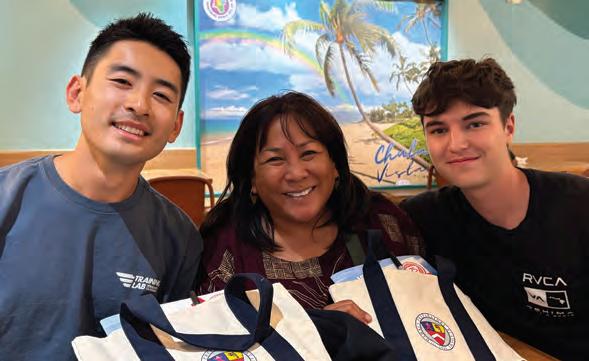
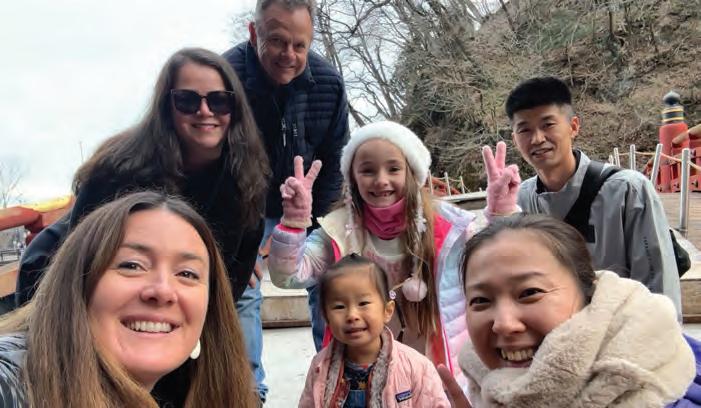
1: Kacen Hamada ’22, HPA English teacher Julie Camarillo, and Nick Pigotti ‘25 in San Diego recently.
2: Jim Dahlberg ’65 is proud of his daughter Helen Elizabeth Kawohimanuki‘ailani ’26, a brand new Ka Makani alum!
3: Alvin Wakayama ’65 finally made it to the Baseball Hall of Fame in Cooperstown, New York last summer.
4: Mick Mathewson ’72 recently passed away. He was living in the Palm Springs area and is remembered for his adventurous spirit.
7: James Venable ’76 had triple bypass surgery in 2022.
5: HPA was saddened to learn of the passing of Alan Fujimoto ’74 , a kind and good-hearted friend who will be deeply missed.
6: Theana (Hancock) Snyder ’95 and Sarah Foust ’95 ran into each other at an Indian restaurant in Austin, TX.
8: Michelle Mazzetti ’05 and Ryoko Matsumoto ’05 reunited in Nikko, Japan with their daughters Sofia Shamel ’37 and Keila Matsumoto.
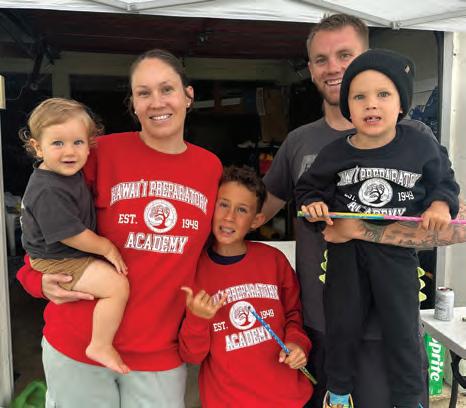
9: HPA’s Assistant Director of Admission, Tayler Wang ’10 and her ‘ohana are full of Ka Makani spirit!
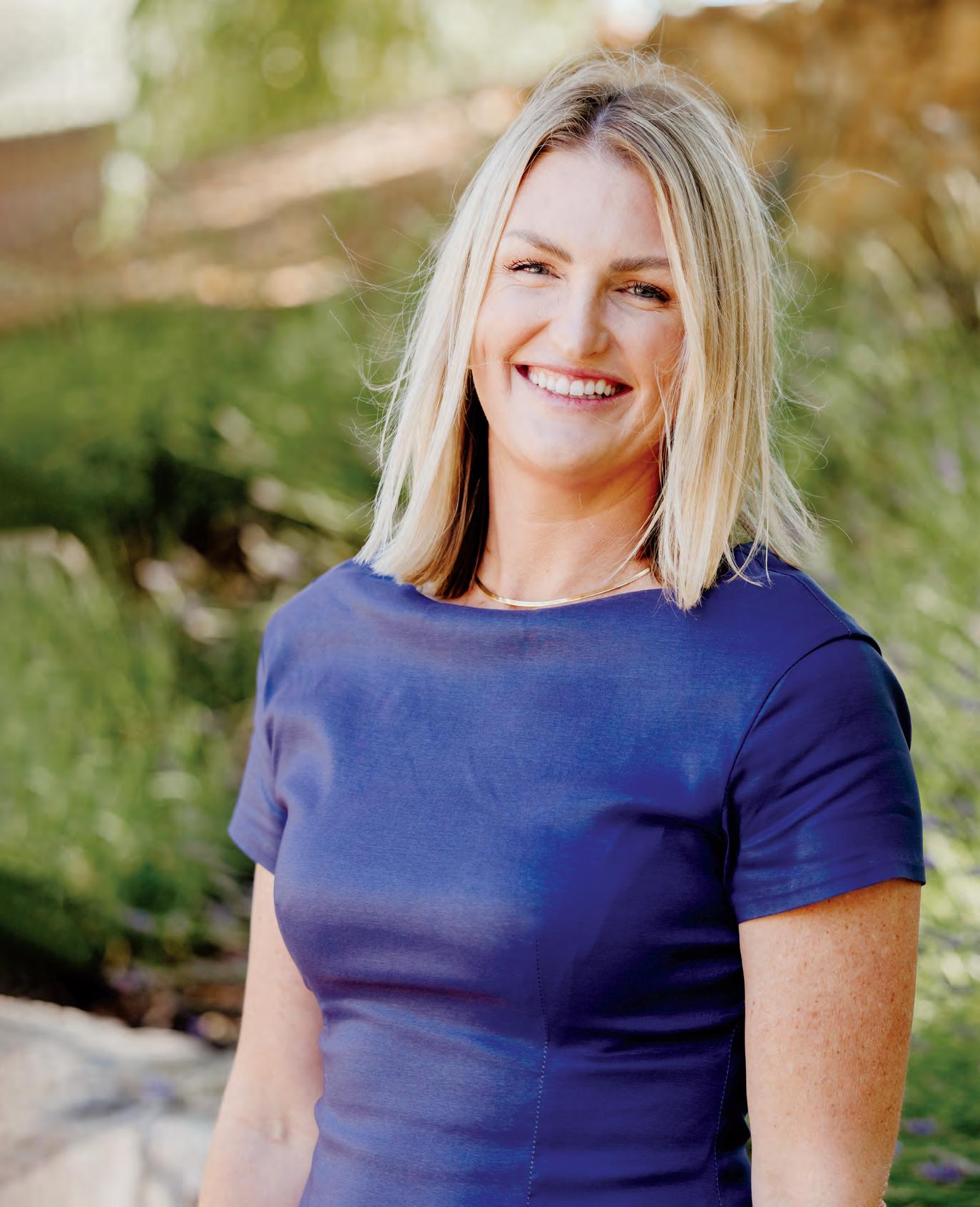
TheLong Game
Ashley Wilken ’06 on wealth, generosity, and what it means to plan for the people and causes you love
Born and raised in Waimea, Ashley Wilken ’06 grew up surrounded by ranching, agriculture, and the strong sense of community that defines Hawai‘i Island. Today, she is a partner, senior wealth manager, and portfolio manager at The Rice Partnership, where she works with multigenerational families, entrepreneurs, and business owners to help them plan for the future.
We caught up with Ashley to learn more about her journey from HPA to California, the work she finds most meaningful, and the values that continue to guide her today.
Tell us a little about your path after HPA.
I grew up very close to HPA’s Upper Campus, and agriculture was always a big part of my life. My family has a cattle ranch on Maui, my grandfather raised cattle on Hawai‘i Island, and my mom grew up ranching as well. I knew early on that I wanted to study agribusiness.
After HPA, I pursued that goal at Cal Poly, where I also competed on the rodeo team. I later earned my MBA there, which conveniently gave me another year of rodeo eligibility. After college, I worked as an agricultural lender and later moved into commercial and real estate lending. Eventually, I realized I wanted something more entrepreneurial. My mother, Bonnie Rice ’79, had founded The Rice Partnership, and together we developed a plan to expand the firm into California.
Today, I lead our offices in San Luis Obispo and Paso Robles. What’s especially fun is that three HPA alumni are now partners in the firm. My mother, Bonnie, Sarah Bredhoff ’92, who leads our Maui office, and me, overseeing California operations.
What do you enjoy most about the work you do?
The relationships. We often work with families across three or even four generations. That gives us the opportunity to see how values, goals, and traditions are passed down over time. It’s rewarding to help create a plan that reflects what matters most to them.
What is a common misconception about estate planning?
A lot of people assume legacy planning is only for extremely wealthy families, but that’s not true. Anyone who owns a home or has minor children should have an estate plan. For most people, it’s simply about being thoughtful. It’s about deciding what impact you want to have, whether that's about business succession, supporting your children and grandchildren, helping a community organization, or all of the above. I love helping clients think through those questions and seeing those plans come to life over time.
Do you find that people are sometimes surprised by the different ways they can support charitable causes?
Absolutely. Many people think charitable giving begins and ends with writing a check. Every family’s situation is different, but there are many tools available that people may not realize exist. I’m a huge fan of charitable remainder trusts as a powerful but often overlooked tool. They can be complex, but for the right client, it can be a win-win situation. What I encourage people to do is start the conversation. The earlier you begin thinking about your goals and values, the more options you'll have.
Looking back, what stands out about your time at HPA?
The biggest thing is probably the emphasis on balancing academics with athletics. I swam, played water polo, ran track and field, and also competed in rodeo.
I learned how to stay organized when life gets busy. Those are skills I still rely on every day. I also had some wonderful teachers and coaches. Coach Noetzel was especially influential during my years on the swim team, and Mrs. Hustace brought the whole entire world to us in a little tiny classroom, in a little tiny town, on a little tiny island through Art History. Looking back, HPA challenged me in ways that prepared me well for college, my career, and life in general.
Do you still make it back to Hawai‘i?
As often as I can. Our firm has many clients across Hawai‘i, and I regularly travel back to visit family. No matter where life has taken me, Hawai‘i will always feel like home.
LEGACY GIVING AT HPA
Many important HPA programs and facilities were built through the generosity of previous generations. Today, nearly 90 endowed funds generate approximately $1 million annually for scholarships, faculty excellence, our campus, and more. The Nona Fund for Financial Aid, established through a bequest by beloved trustee and alum Nona Hasegawa ’78, is one example.
Other enduring legacies include the Parker Ranch Foundation Trust, established by Richard Smart in 1992, and the Waimea Village Inn given by former trustee Woodson K. Woods, which became HPA's Village Campus.
These gifts remind us that philanthropy is not only about meeting today's needs — it is about creating opportunities that endure for generations.
Scan the QR code to learn about legacy giving at HPA.
(continued from page 36) is expected to occur in late May with an anticipated yield of 3,000 Ib per acre of seed, equating to between 125 and 140 gallons of oil per acre and nearly 2000 pounds of high protein canola meal per acre.”
Ryoko Matsumoto ’05 invited Michelle Mazzetti ’05 and her daughter Sofia Shamel ’37 to visit Ryoko’s home city of Nikko, Japan. They toured The Shrines and Temples of Nikko, a UNESCO World Heritage Site renowned for its lavish architecture, intense artistic detail, and deep integration with the surrounding natural mountainous landscape. The group included Ryoko’s two year old daughter Keila Matsumoto who “hopes to attend the HPA Summer Program when she is older.”
Ashley Ogden Wilken ’06 says: “I am enjoying living on California’s Central Coast with my husband and two toddlers and managing the California offices for The Rice Partnership Wealth Management. (For more about Ashely, see our feature story on page 38.)
Hans Fellhauer ’08 is enjoying life in Japan! Christian Largo ’09 is working at the Radio station for National Institute Science of Technology. The station broadcasts time and frequency signals, which are vital for navigation, communication, and scientific applications. Christian is “happily married and a father… my son’s name is Ripley! Another boy on the way in June! My free time consists of building our family’s new home on Kaua‘i.”
10s:
James Higginson ’10 and his wife, Megan, welcomed their son, Jack, in October 2025. The Higginsons are loving life in San Diego with their new addition. Tayler Wang ’10 shares: “I am currently working as the Assistant Director of Admission at HPA! I have a third grader at HPA, a
3.5 year old and a 1.5 year old! All 3 boys! Returning to HPA as an employee, alumni and now parent has been so inspiring. I love watching Peighton get to have this amazing experience and being so close and get to experience it all with him. I’m grateful to HPA for this journey we are on.”
Keisuke Ohtaka ’13 shared a cheerful update from Tokyo: “Aloha HPA community! I’ve just come back to Japan from a 3 day trip on the Big Island. During my trip, I was able to visit HPA. The students were on Spring Break so the campus was quiet, but I was greeted by familiar faces with big smiles and warmth, instantly bringing back so many good memories. Such an amazing community to be a part of - I will cherish it for the rest of my life! After graduating from HPA in 2013, I attended UH Mānoa, then came back to Japan to begin my career. I’ve been in the Headhunting business, introducing bilingual (Japanese+English) talents to companies in Tokyo. The early exposure at HPA to students from diverse backgrounds has shaped my ability to build relationships and trust with most people - something that has been invaluable both professionally and personally. To this day, many of the closest friends I have in Tokyo are from HPA. Hoping to plan a trip to Big Island with them soon so that we can visit the campus and reminisce about some of the best years of our lives!”
Ada Benson ’18 has been “working as a Labor and Delivery RN for the past three years, but I’m getting ready to take a six month break to hike the Pacific Crest Trail!!” Ava is walking the length of the continental US, from Mexico to Canada! She’ll be recording her adventures on thetrek.co, where you can subscribe to follow her posts. You can also trace her progress via Instagram: adahikes. Happy trails, Ada!
20s:
Congratulations to Umikoa Kealoha ’20 for being a 2025 recipient of the Native Hawaiian Health Scholarship Program (NHHSP). The NHHSP is a merit-based scholarship that covers tuition, books, and fees for Native Hawaiian students in health professions. Umikoa is a 2nd year PsyD student in Clinical Psychology at Chaminade University of Honolulu. As shared in a press release by Papa Ola Lōkahi: “Umikoa’s passion for mental health is deeply personal, shaped by the loss of loved ones to suicide - all Native Hawaiian kane. In an effort to address this clear health disparity, upon graduation he aims to help provide accessible, affordable, and destigmatized mental health care on his home island of Hawai‘i. When he’s not studying, he enjoys fishing, surfing, and cooking local food.”
Ka‘iulani Bento ’22 is graduating May 15th, 2026 with her Bachelors in Business Administration and a minor in Legal Studies. She is currently a volunteer with the USC Prison Education Project (PEP) where she helps incarcerated writers with their grammar, writing, and overall syntax.
HPA English teacher Julie Camarillo saw Kacen Hamada ’22 and Nick Pigotti ’25 in San Diego while she was visiting her daughter, Janie Cootey ’23, who works at Ululani‘s Shave Ice in Chula Vista.
Lily Hodges ’25’s senior capstone film, End the Cycle, was screened at the TCL Chinese Theaters on Hollywood Boulevard and also was chosen as a semi-finalist in the Austin International Film Festival. Congratulations, Lily! Lily was also selected to participate in USC’s Global Leadership Program, an invitation-only year-long Freshman Leadership Seminar with opportunities for social activities, networking, advising, and a trip to Thailand. Tenzin Tsering ’25 is hard at work in Engineering at U of T.
Class notes are edited for length and clarity, including adding diacritical markings and other minor adjustments, in accordance with HPA’s style guidelines.
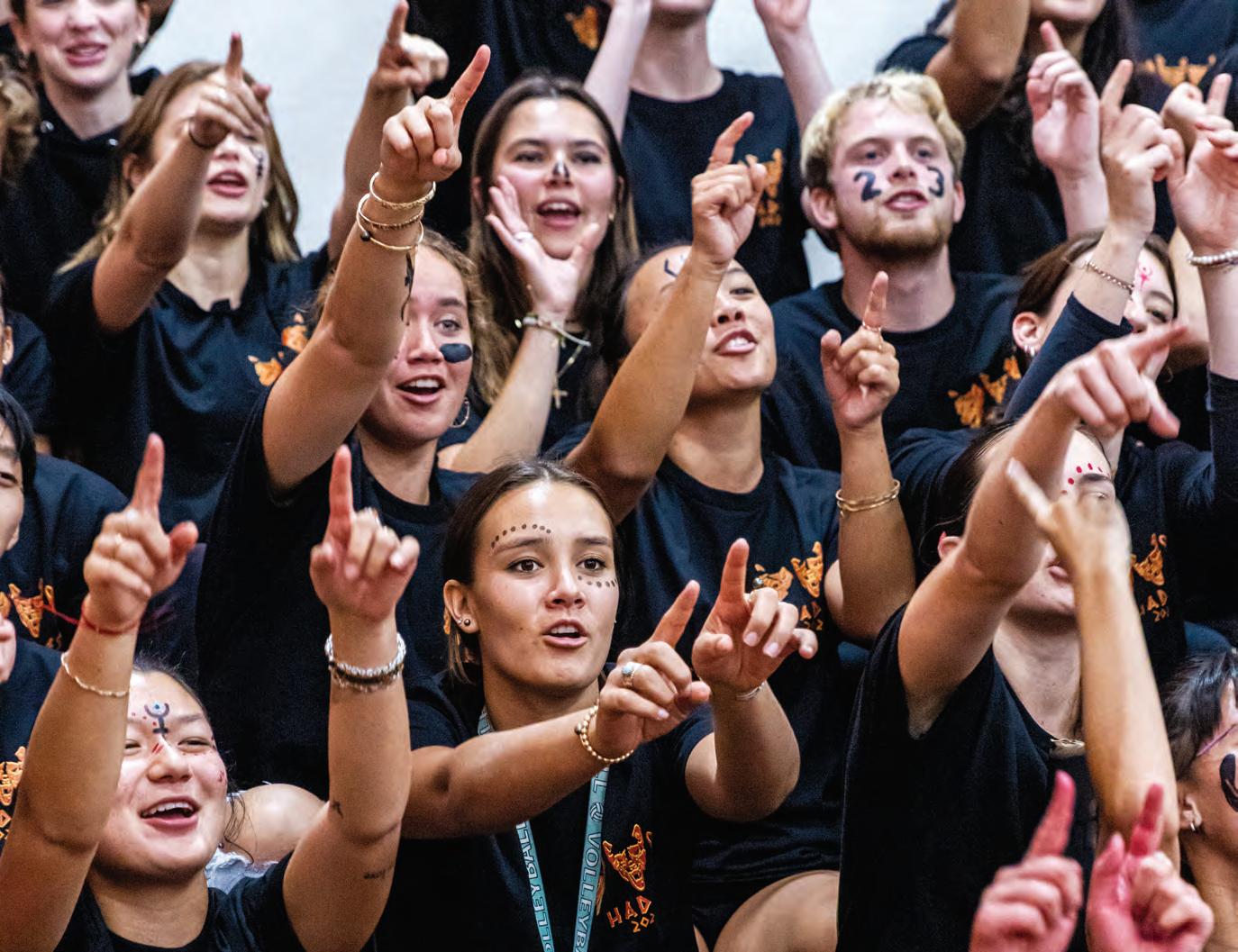
TO ALL OUR KA MAKANI ALUMNI
Class Notes are one of the simplest, most human parts of Ma Ke Kula. They are also one of the hardest to fill. So this is a direct ask. We need you. More than that… we are proud of you!
If you have ever flipped to the back of the magazine to see what classmates are up to, to spot a familiar name, to learn that someone moved across the world or started something new or welcomed a child or returned home, then you already understand why this section matters. It is the living thread of the HPA community. It is how a school scattered across time zones and decades still feels, somehow, like itself. Please send us an update. Share something from your life. It could be a shift, a milestone, a project, a place, a return, a surprise. A few sentences that reach someone you may not even know you are reaching. A reminder that the story did not end at graduation. It just kept unfolding. Send your updates, or a nomination, to alumni@hpa.edu or via the QR code.
LOOKING FOR MORE WAYS TO STAY CONNECTED?
We are delighted to invite you to join Ka Makani Connect, the new networking platform designed for HPA’s alumni ʻohana.
Ka Makani Connect brings our community together by providing you with networking and mentorship opportunities; job postings; groups specific to your class year, industry, or location; event invitations; and much more!
You can sign up today in less than two minutes at kamakaniconnect.com. Join us!
FOREVER KA MAKANI:
REUNION 2026
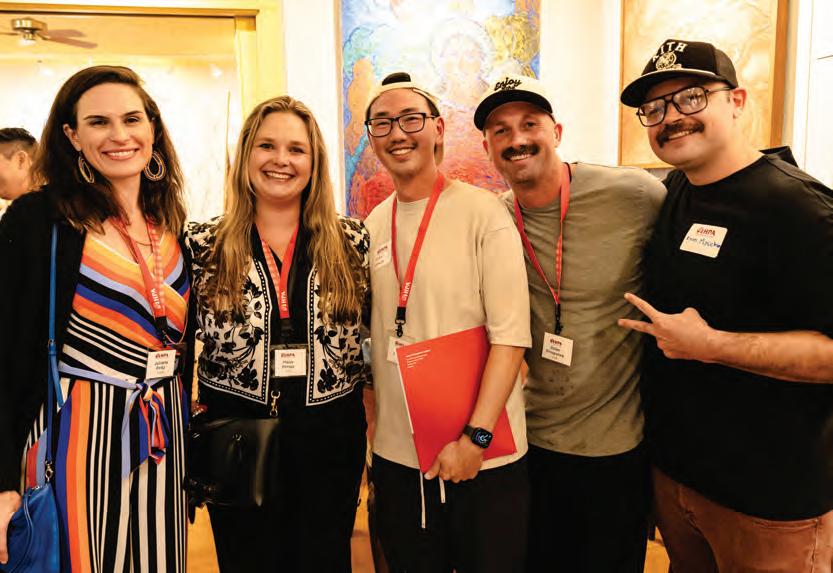

L. Juliana Fritz ’06, Maija Perala ’06, Tyler Nisnida ’06, Dylan Shropshire ’06, and Ryan Moseman ’06
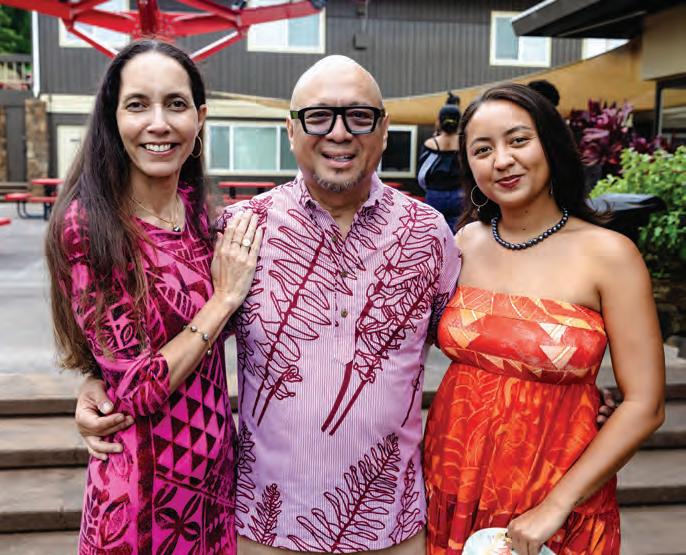
M. Katie (Robertson) Benioni ’86, Terangi Benioni, and Jessica Benioni ’13
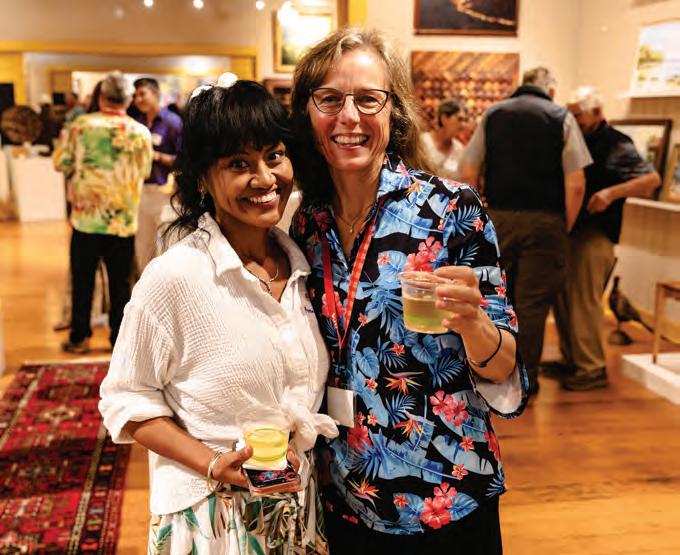
N. Isaacs Art Center reception
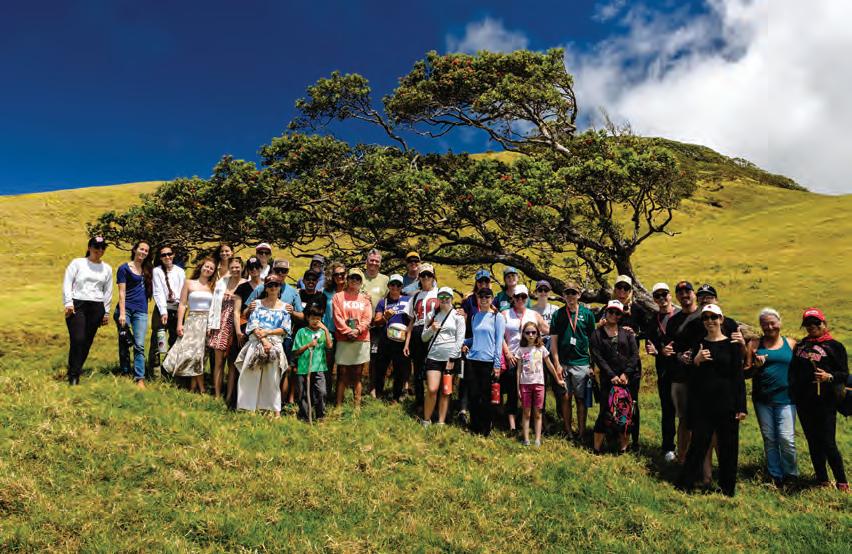
O. La‘e La‘e hike to the tree
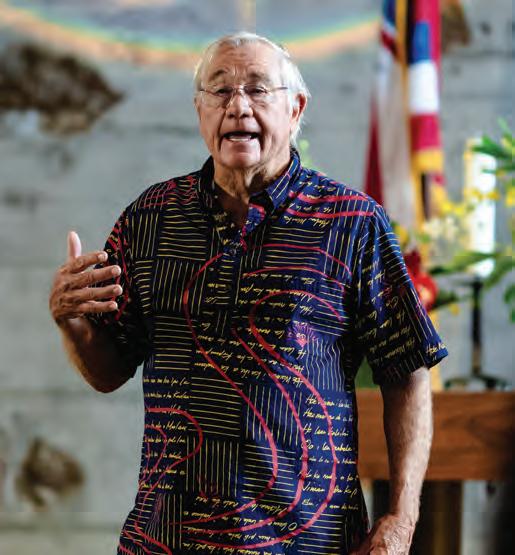
P. Randy Brown ’66
We
As HPA begins a new school year, we are grateful for the success of last spring’s May Day Challenge and the extraordinary opportunities made possible to all students via the HPA Fund.
The uniquely powerful experience of HPA cannot be delivered through tuition alone. United by the HPA Fund, we help create this rare and special education — together.
Make your gift for the 2026-27 school year today. Scan the QR code or visit www.hpa.edu/give
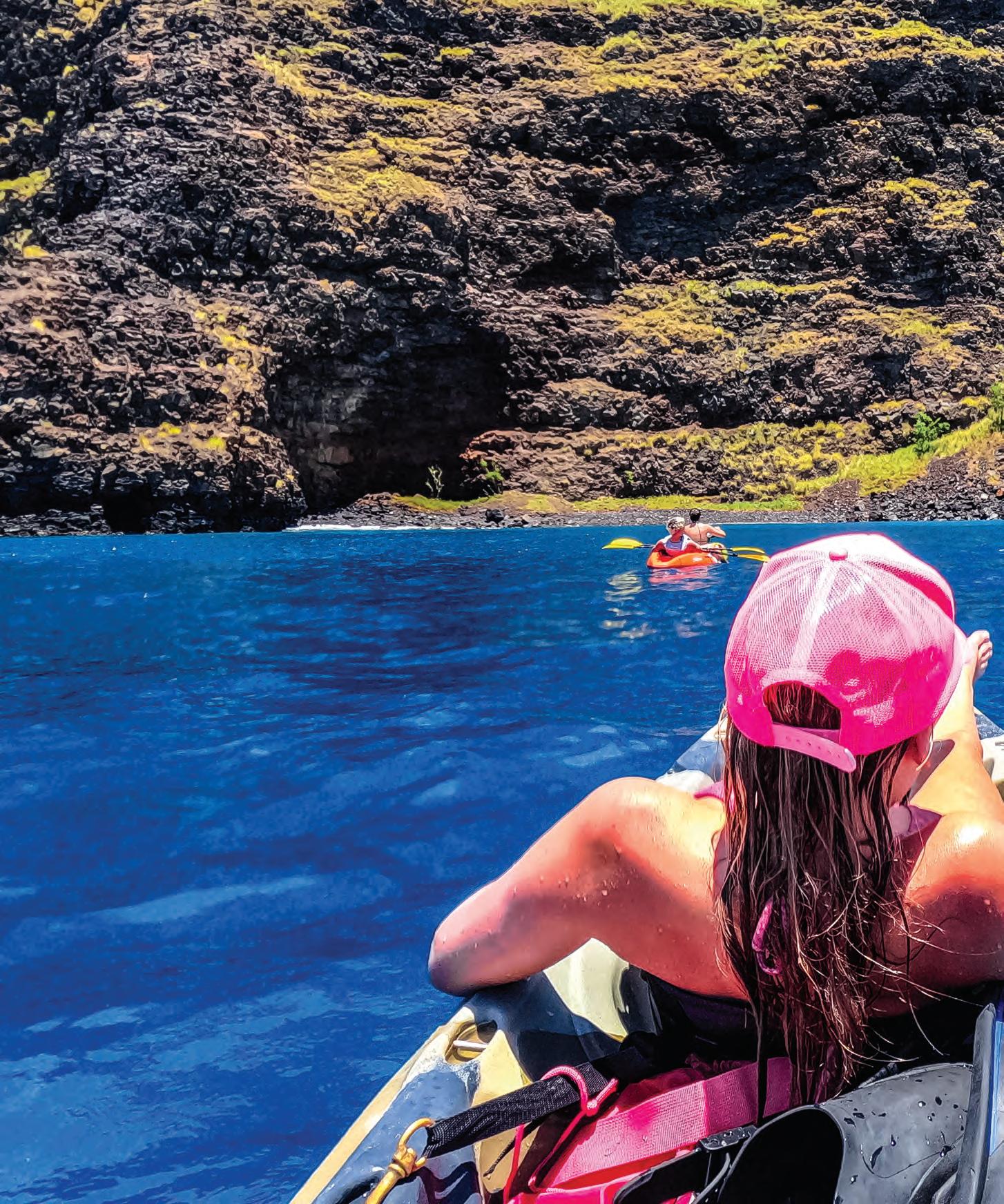
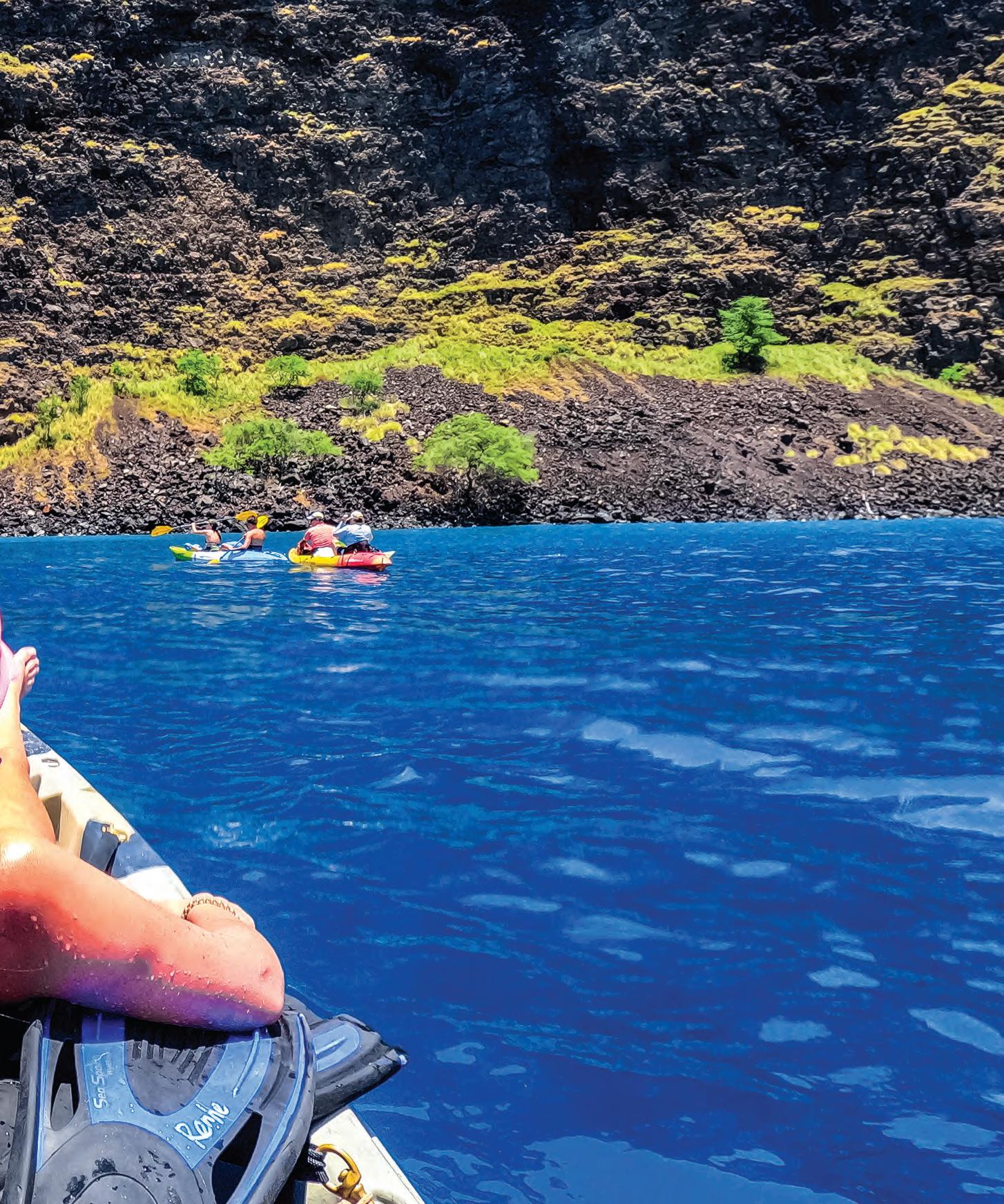
Students in HPA’s Outdoor Program kayak across Kealakekua Bay.
65-1692 Kohala Mountain Road
Kamuela, Hawai‘i 96743
www.hpa.edu
Want more info on HPA?
Application inquiries: admissions@hpa.edu
All other questions: connect@hpa.edu
STEVE PERRY PASSES THE GIRLS SOCCER TORCH – P. 5
ASHLEY WILKEN ’06 ON CREATING A LEGACY – P. 38
DISCOVER THE NETWORK OF KA MAKANI CONNECT – P. 41