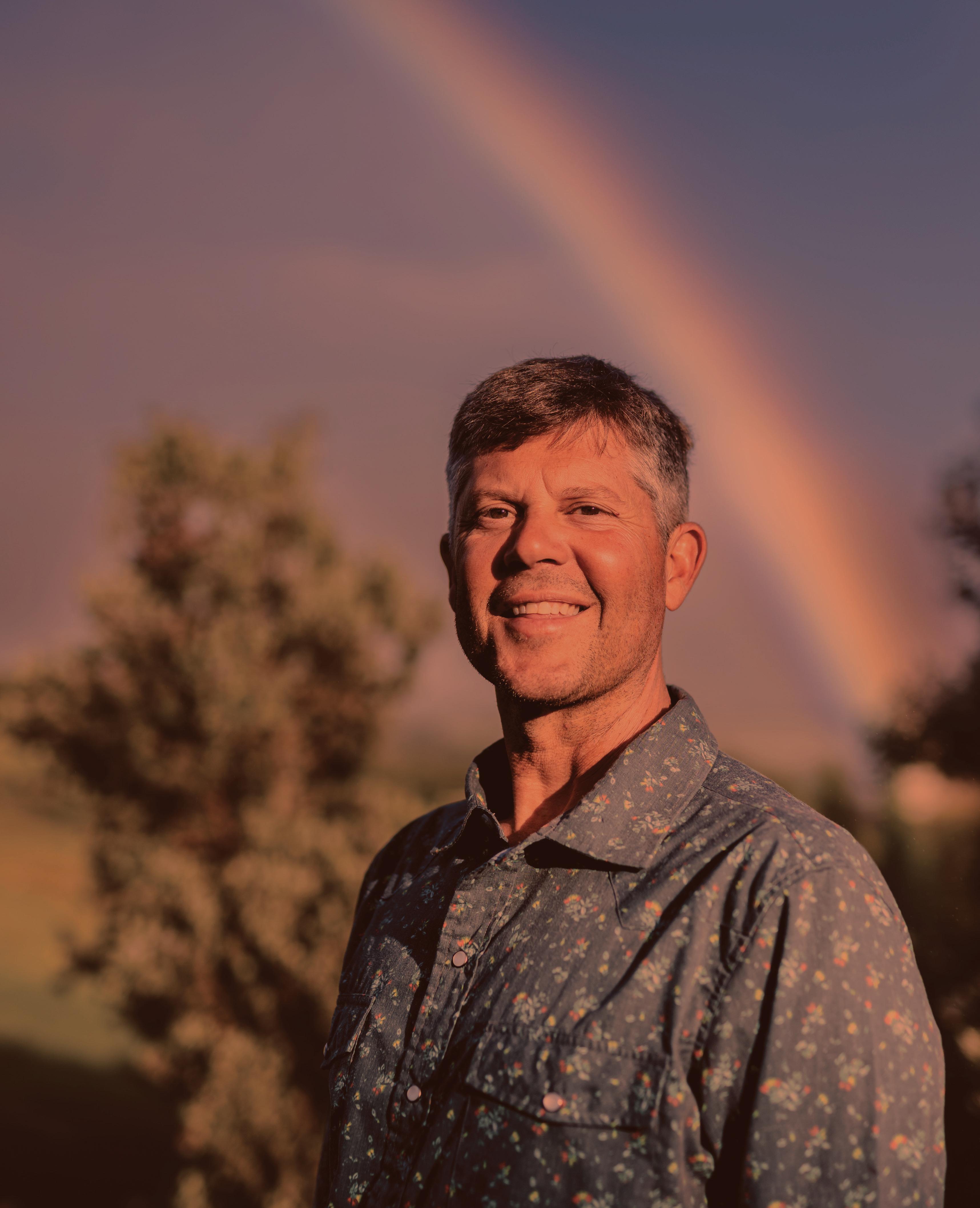
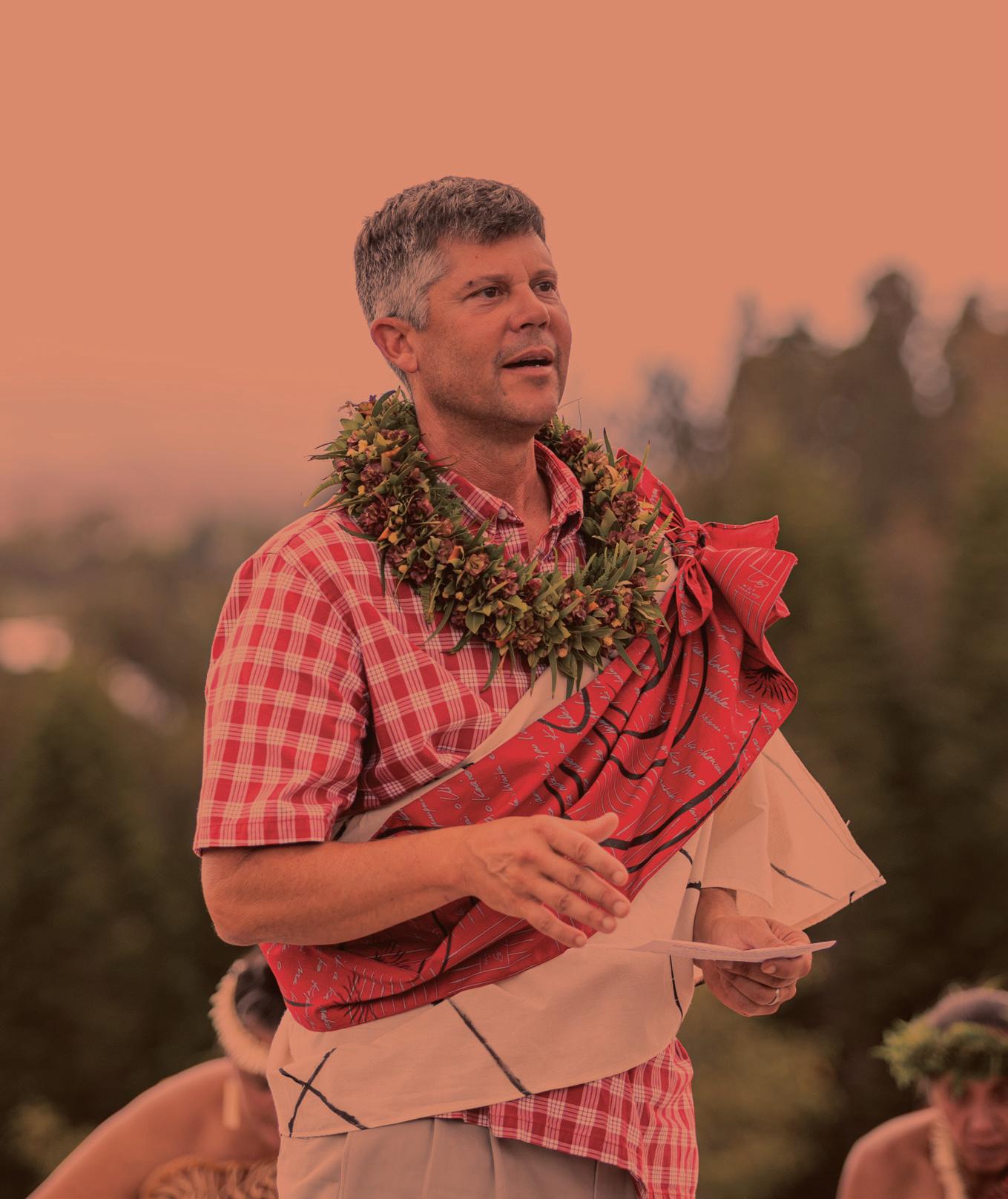
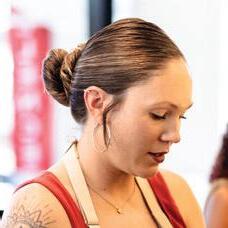
BRIDGET JUDD ’10 AND THE WAIKŌLOA DRY FOREST INITIATIVE
POST 75TH ANNIVERSARY, HEAD OF SCHOOL FRED WAWNER LOOKS AHEAD
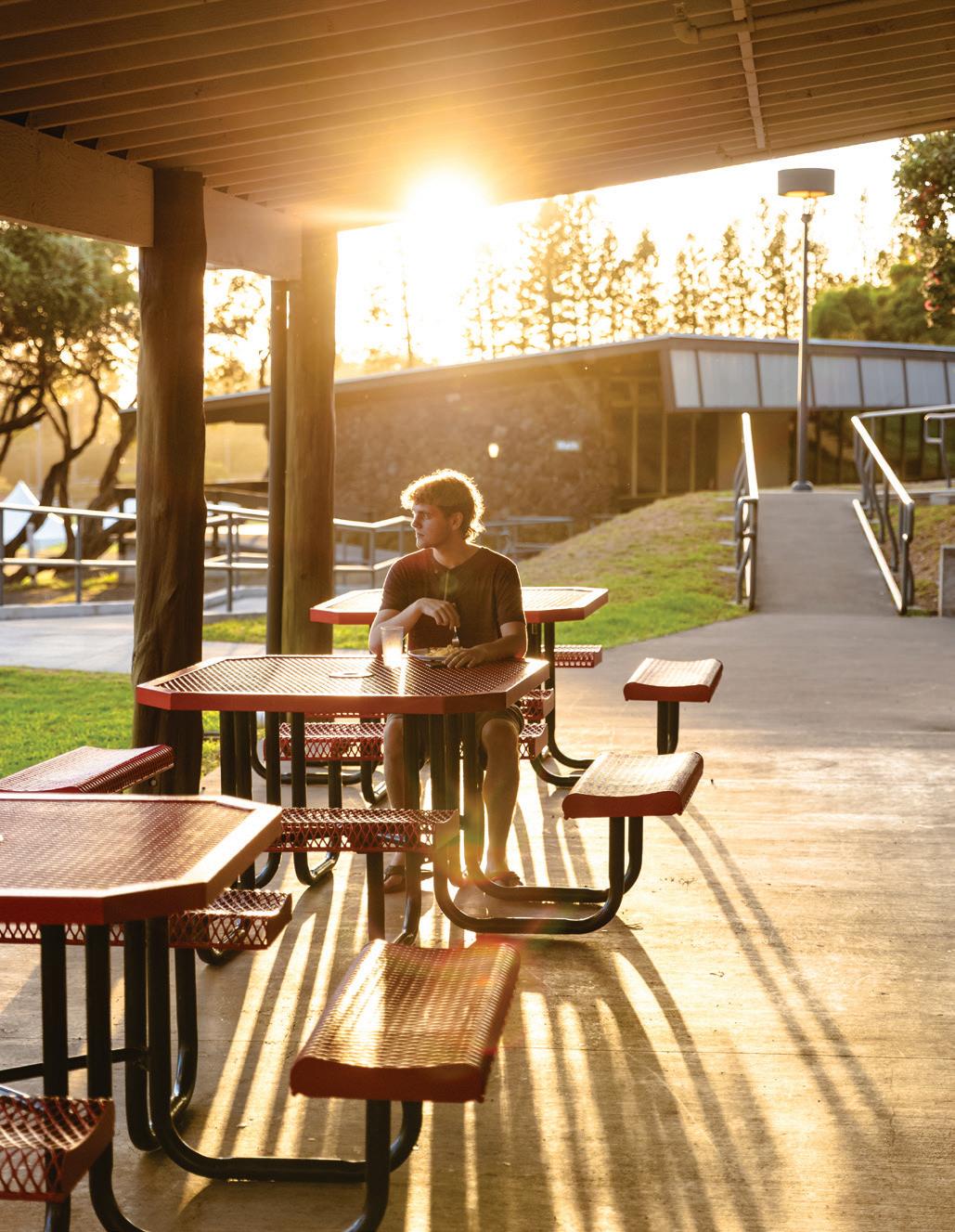
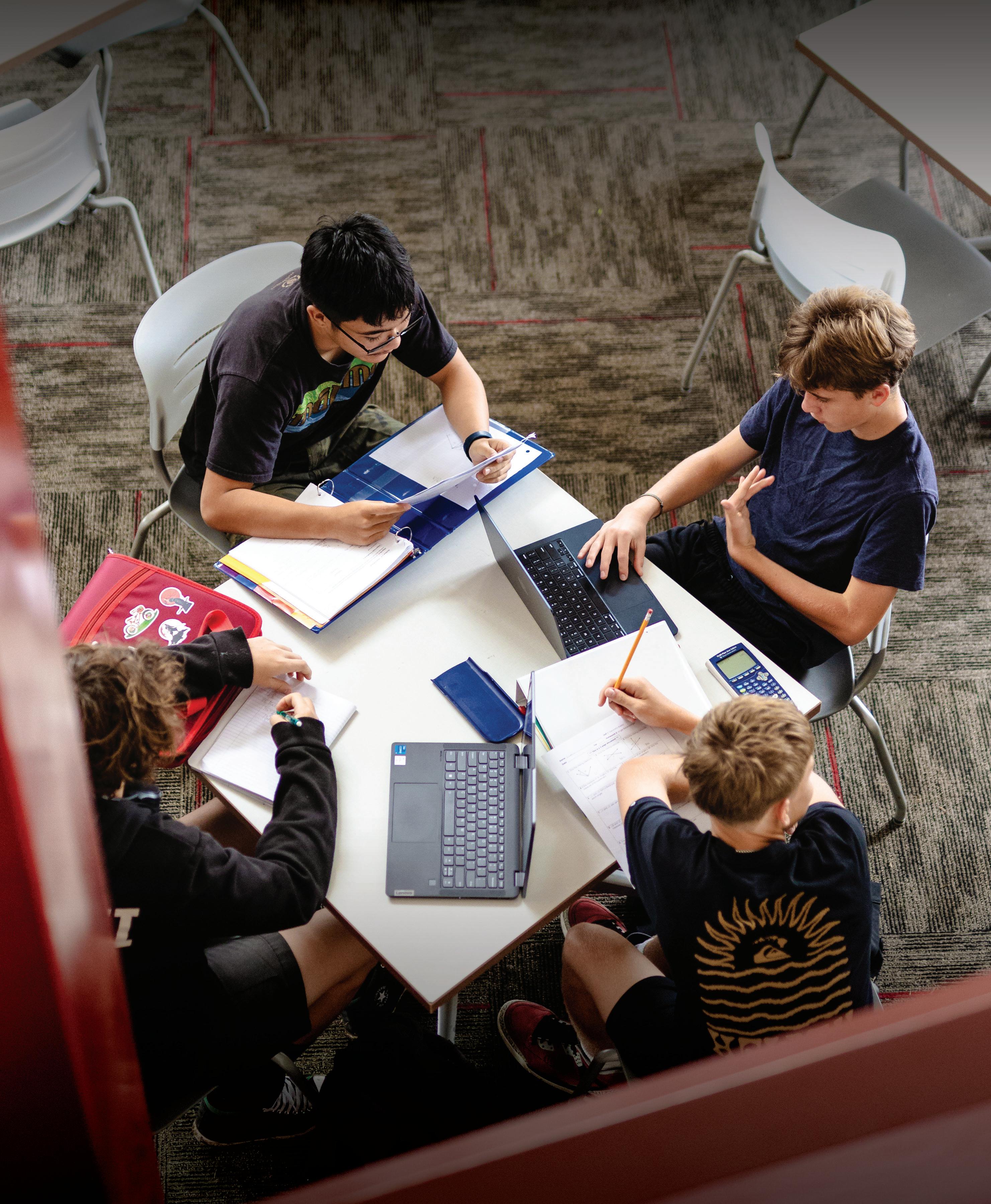
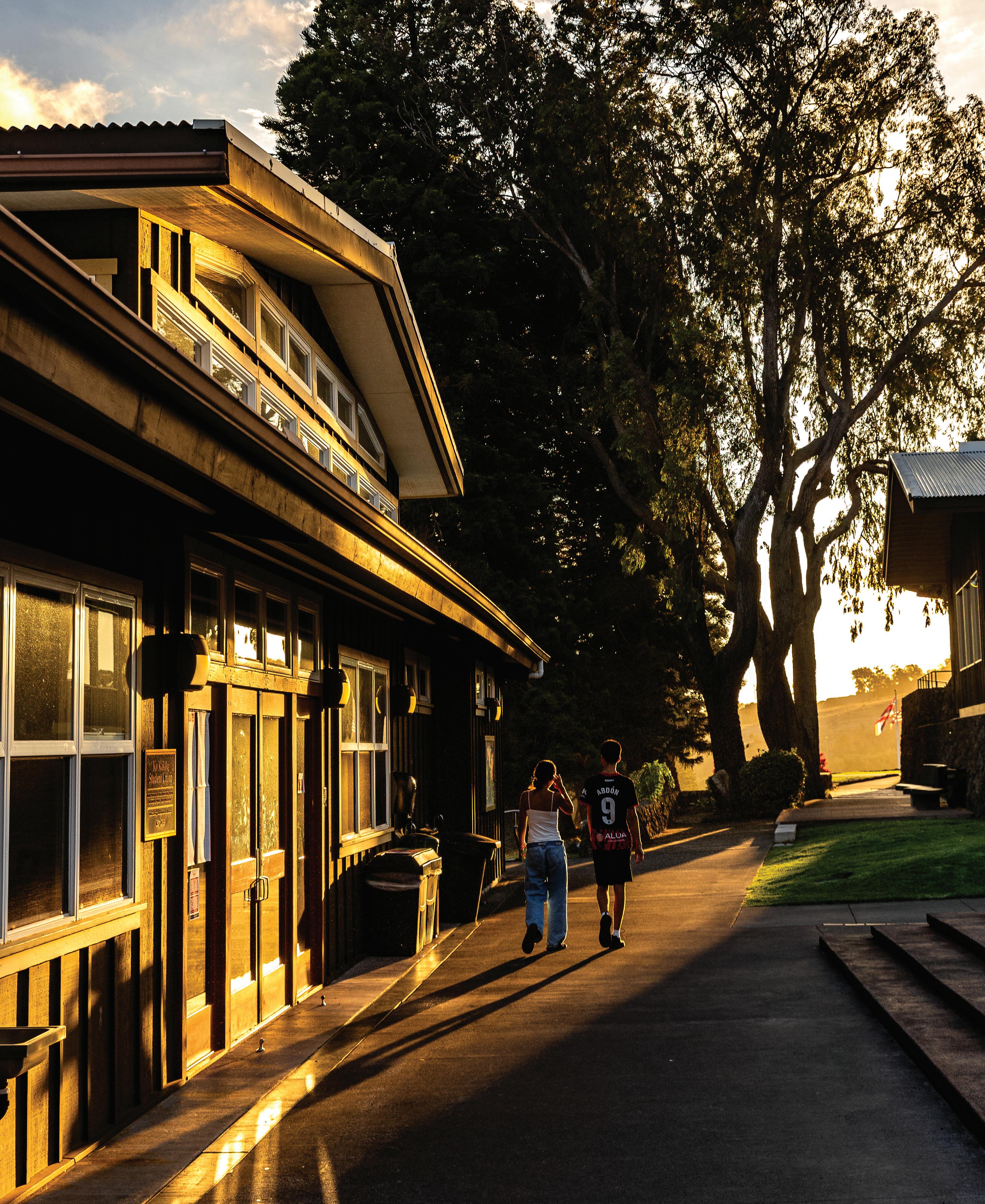
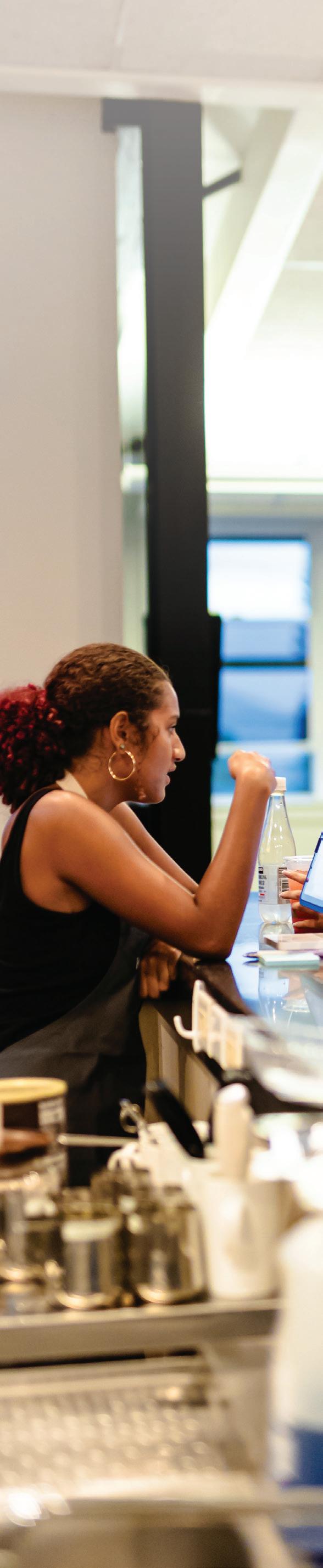
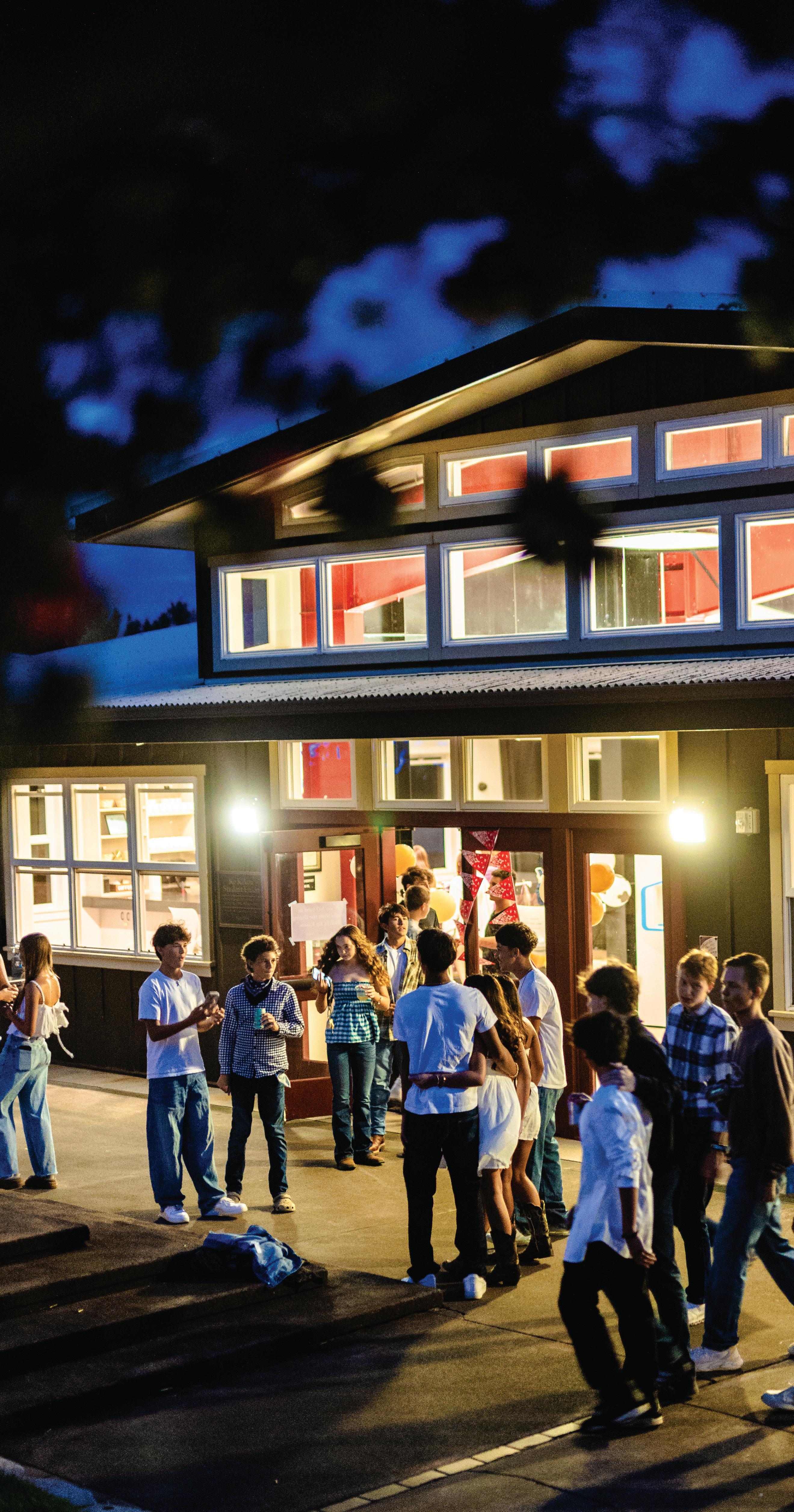
STUDENT-CENTERED: THE VIBRANT LIFE OF KO KĀKOU STUDENT UNION
HAWAI‘I
Head of School Fred Wawner on the next chapter for HPA
The evolution of Ko Kākou Student Union
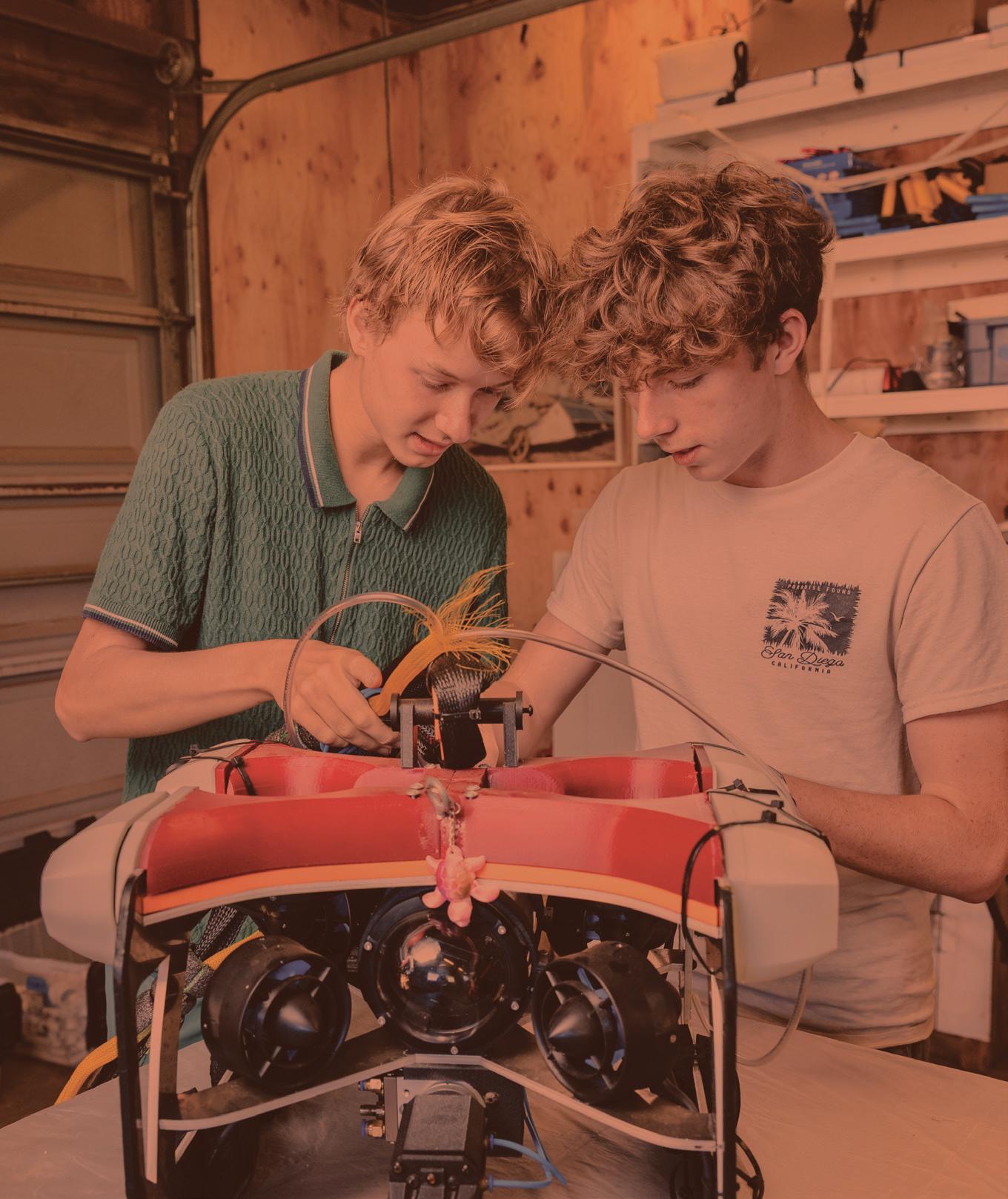
Robotics Win n Ranching Research n Student Photographers
Growing ‘Awa n Bridget Judd ’10 n and more
The heartbeat of HPA cheerleading n Pickleball builds community at HPA
Alumni News n Class Notes n Giving Back
• Alu Mai Celebration
• Dirk von Guenthner ’65
Ma Ke Kula is produced twice per year by the HPA advancement office.
Principal photographers: Patrick O’Leary and Mellon Monello.
Other credits as noted.
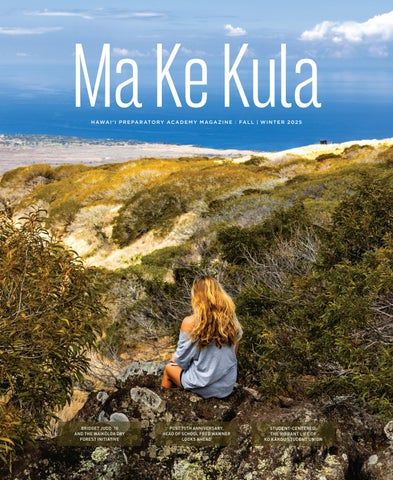
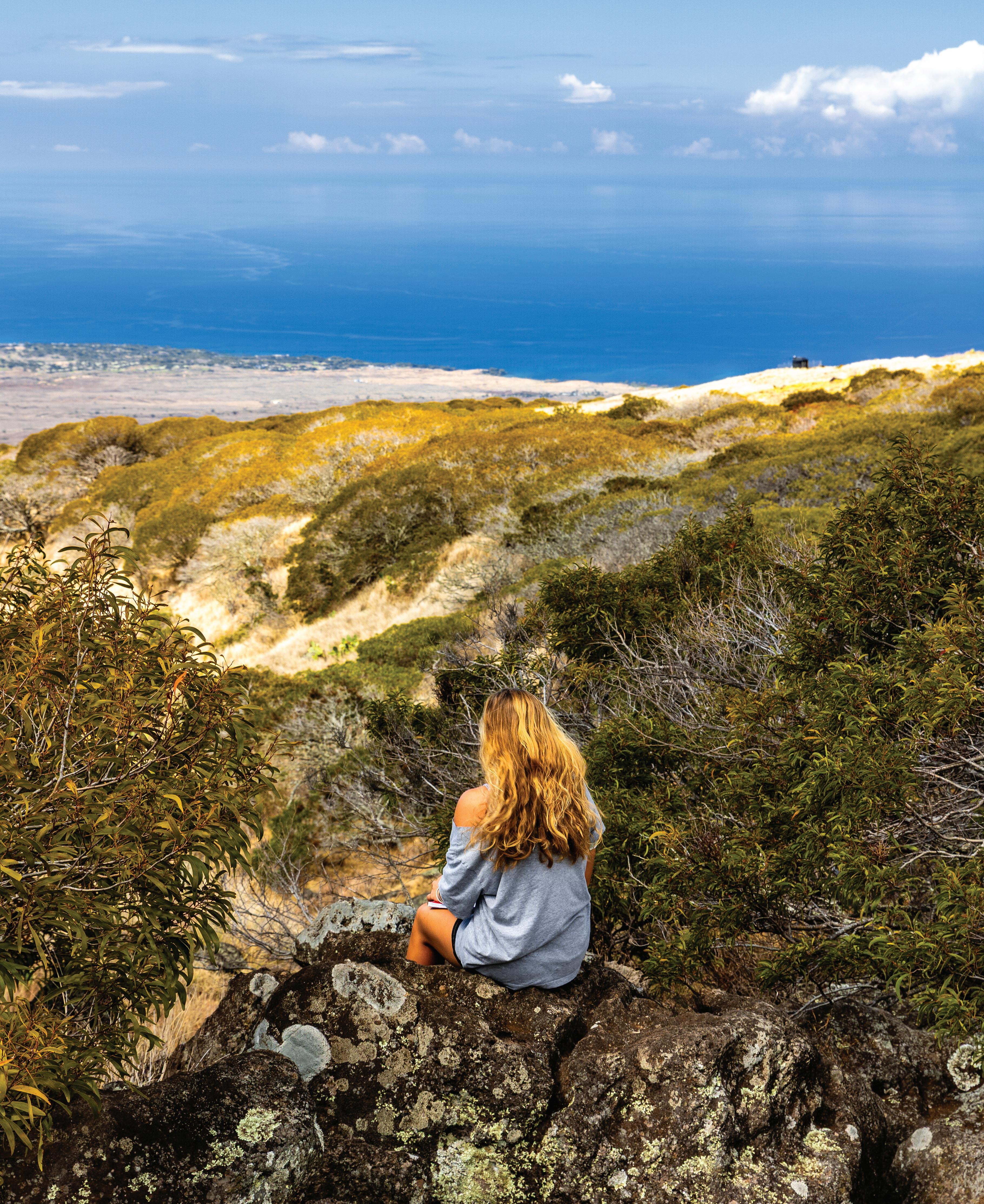
Cover: English class at Koai‘a Tree Sanctuary
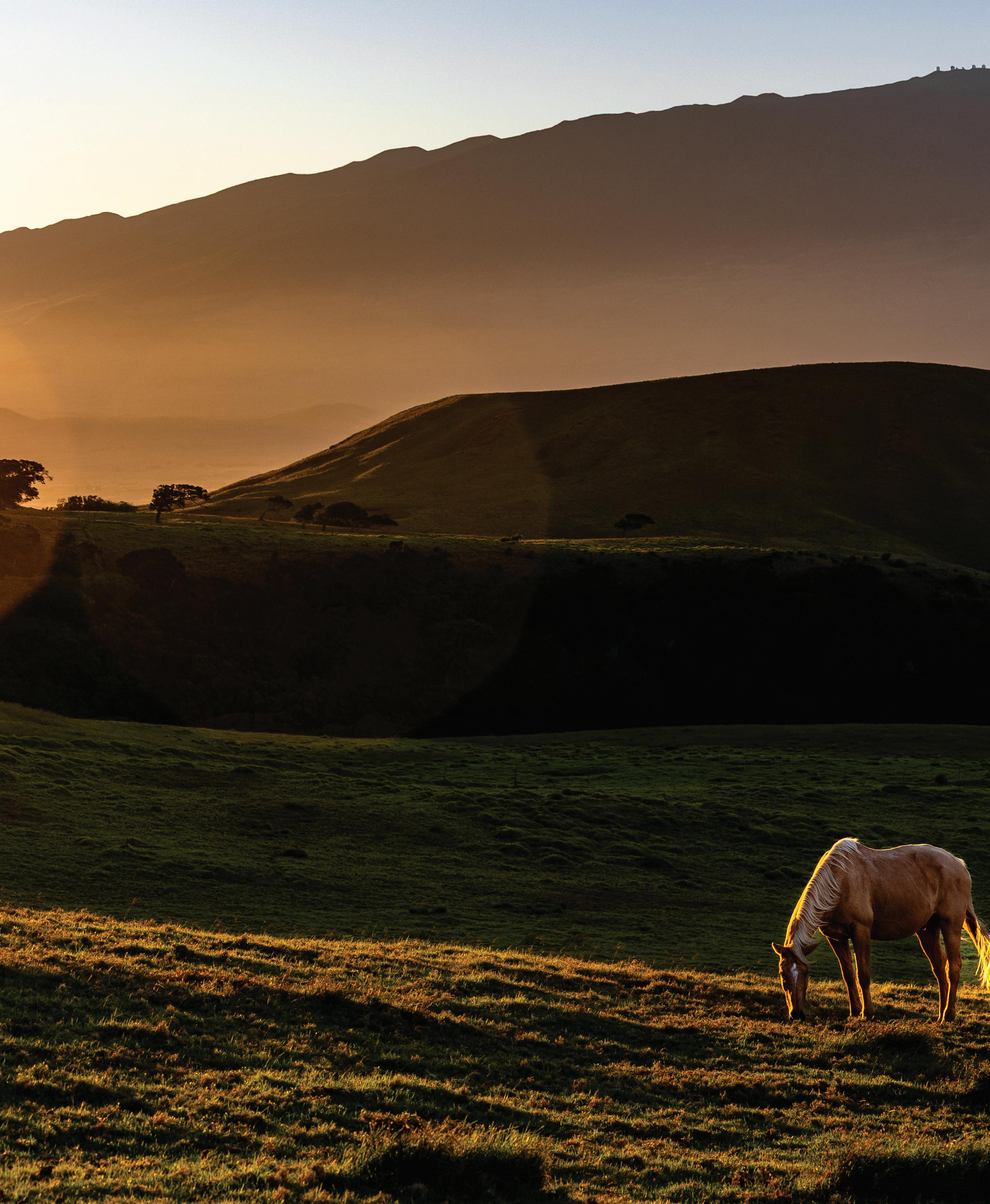
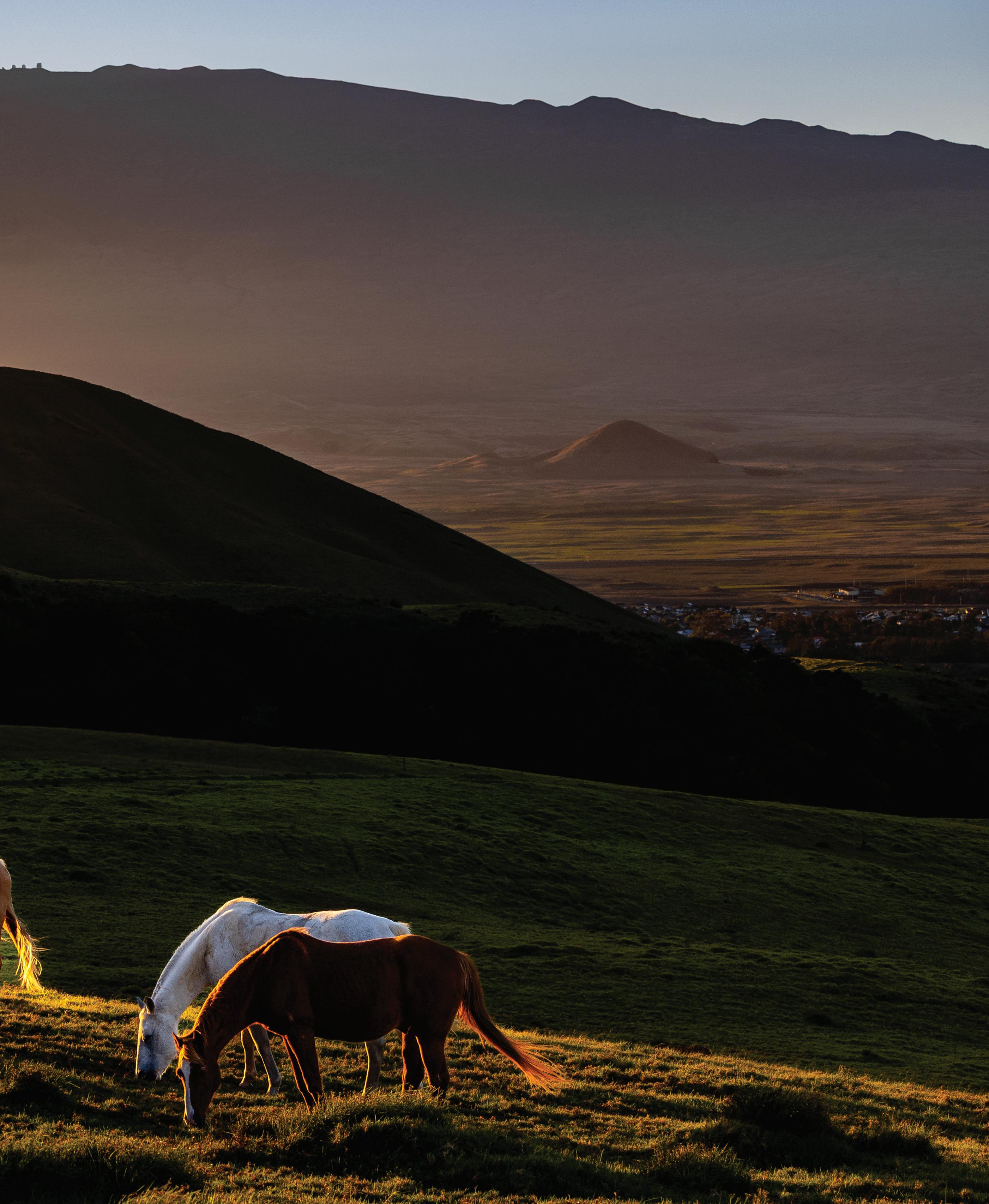
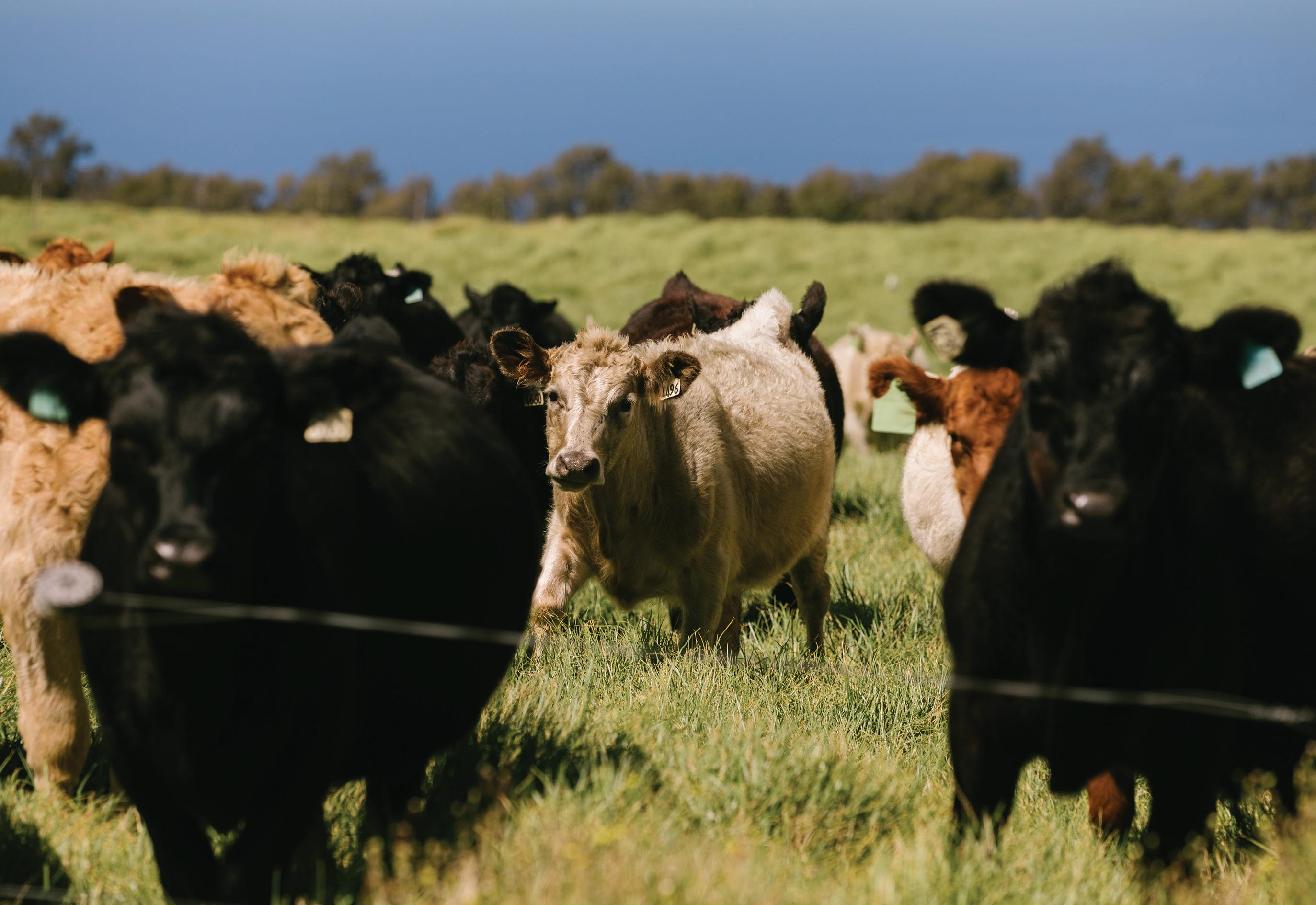
This page: From left to right, Ichabod, Herbie, and Cash from HPA's herd in the morning light
From Reflection to Action
Hello, all! I hope this finds you well as the season turns and we look ahead to a new year. For this issue of Ma Ke Kula, I’m stepping in for Head of School Fred Wawner to welcome you. This is our first issue since HPA concluded its 75th anniversary year, and it marks a clear transition from reflection to action.
Inside these pages, you’ll find an extended conversation with Fred as he considers where HPA stands today and what the next 75 years call us to do (page 18). Fred and I have worked in close partnership for many years, and together we are focused on translating enduring values into clear direction. Our leadership team is aligned. Our next Strategic Plan is coming into focus. The work ahead is ambitious, disciplined, and grounded in the spirit that has shaped HPA since its earliest days.
My own relationship with HPA spans my entire K-12 education. Family and friends through multiple generations tie me here. I know this school as a place formed by ka makani, by the currents and eddies that move over and through Kohala, connecting us to this place and to one another. That continuity matters. It informs how I think about stewardship, leadership, and
the responsibility we carry as an institution preparing young people for the world.
This issue reflects that spirit. You’ll encounter students and alumni who are actively shaping HPA today, from high-school photographers whose work captures daily life on campus (page 10), to graduates whose paths continue to be guided by the habits of mind and sense of purpose they developed here.
Ma Ke Kula is produced by the advancement office, and we see it as part of our responsibility to the school. It is a record of where we are, a reflection of who we are becoming, and a way of honoring the relationships that sustain this community over time.
HPA is entering its next chapter with confidence and clarity. I’m glad to share this moment with you.
HPA Board of Trustees 2025-26
Laurie T. Ainslie P’12, ’15, treasurer
Robert R. Budway ’76, chair
Adam Bauer
Kirk Caldwell ’71
Darrell Cavens P’24, ’26
Michael J. Chun
Warren Doi P’22
Michael Hoover P ’27, ’30
Hans L’Orange ’73
Samuel Pratt ’84, secretary
William D. Pratt ’86, vice-chair
Michael S. Spalding ’66
Max Unger ’04
Bonnie Bogue Wedemeyer ’86
Taffi Wise P ’12, ’15, ’17
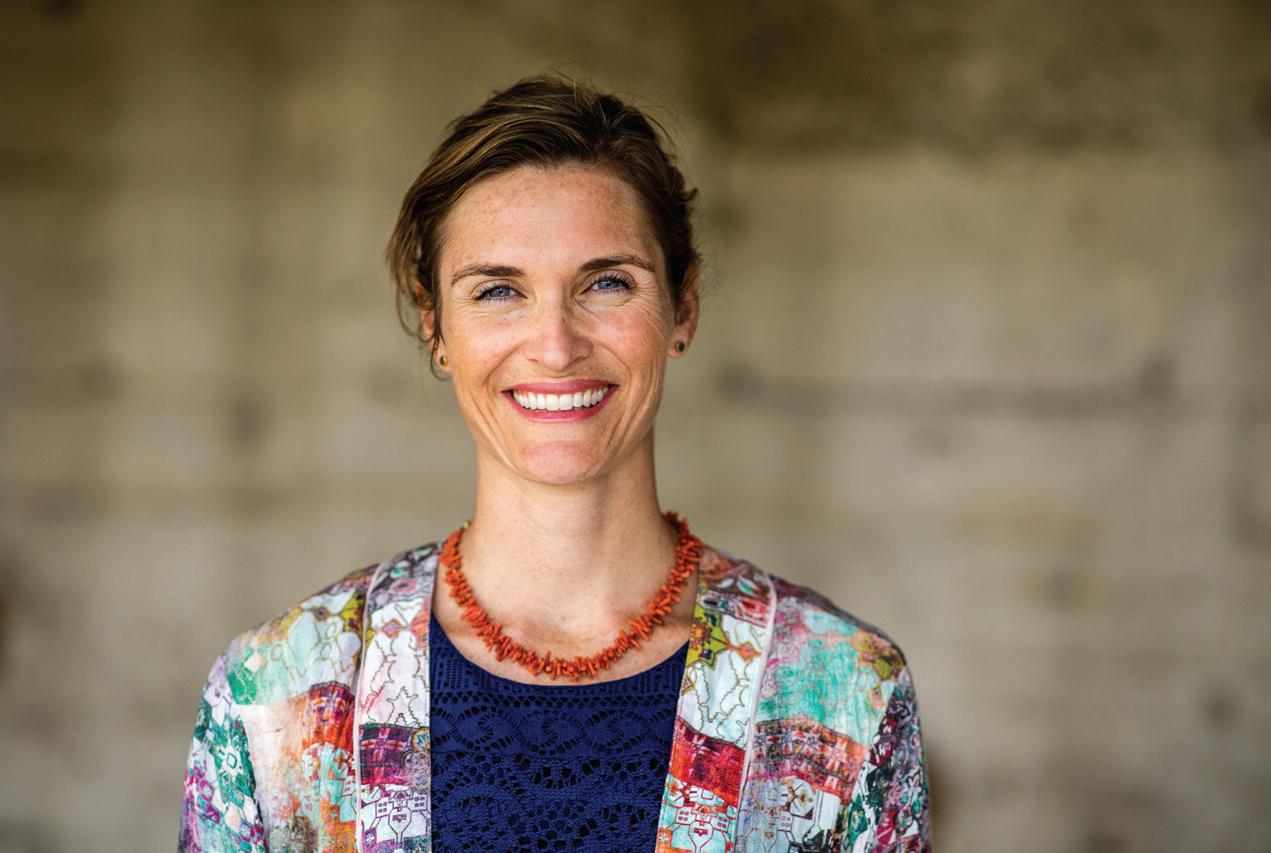
HANNAH HIND CANDELARIO ’01 ASSISTANT HEAD OF SCHOOL FOR ADVANCEMENT
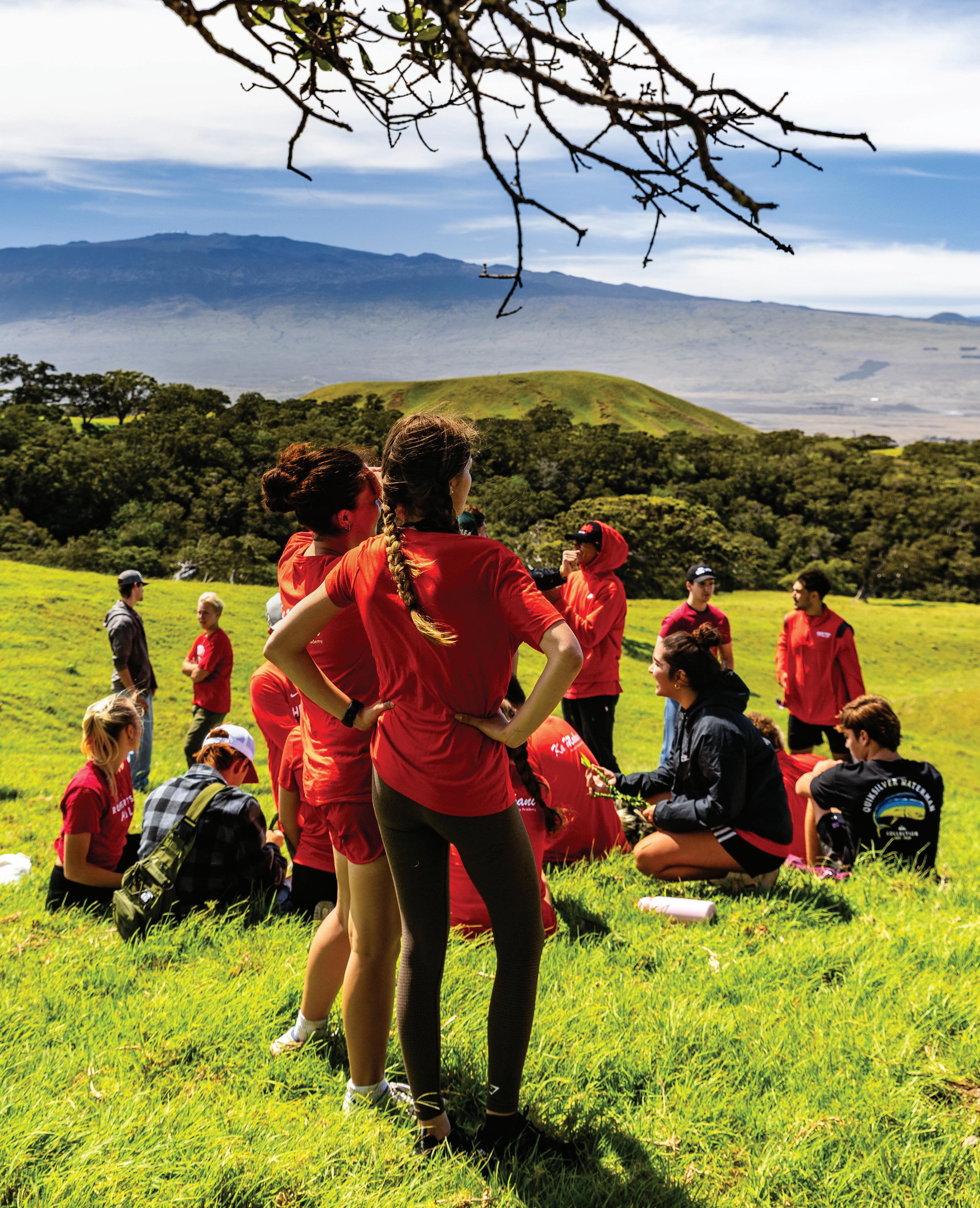
From high on Pu‘u La‘e La‘e, the class of 2026 gathers under HPA’s emblematic ‘ōhi‘a lehua tree, celebrating the milestone of Senior Retreat, and looking out across the horizon.
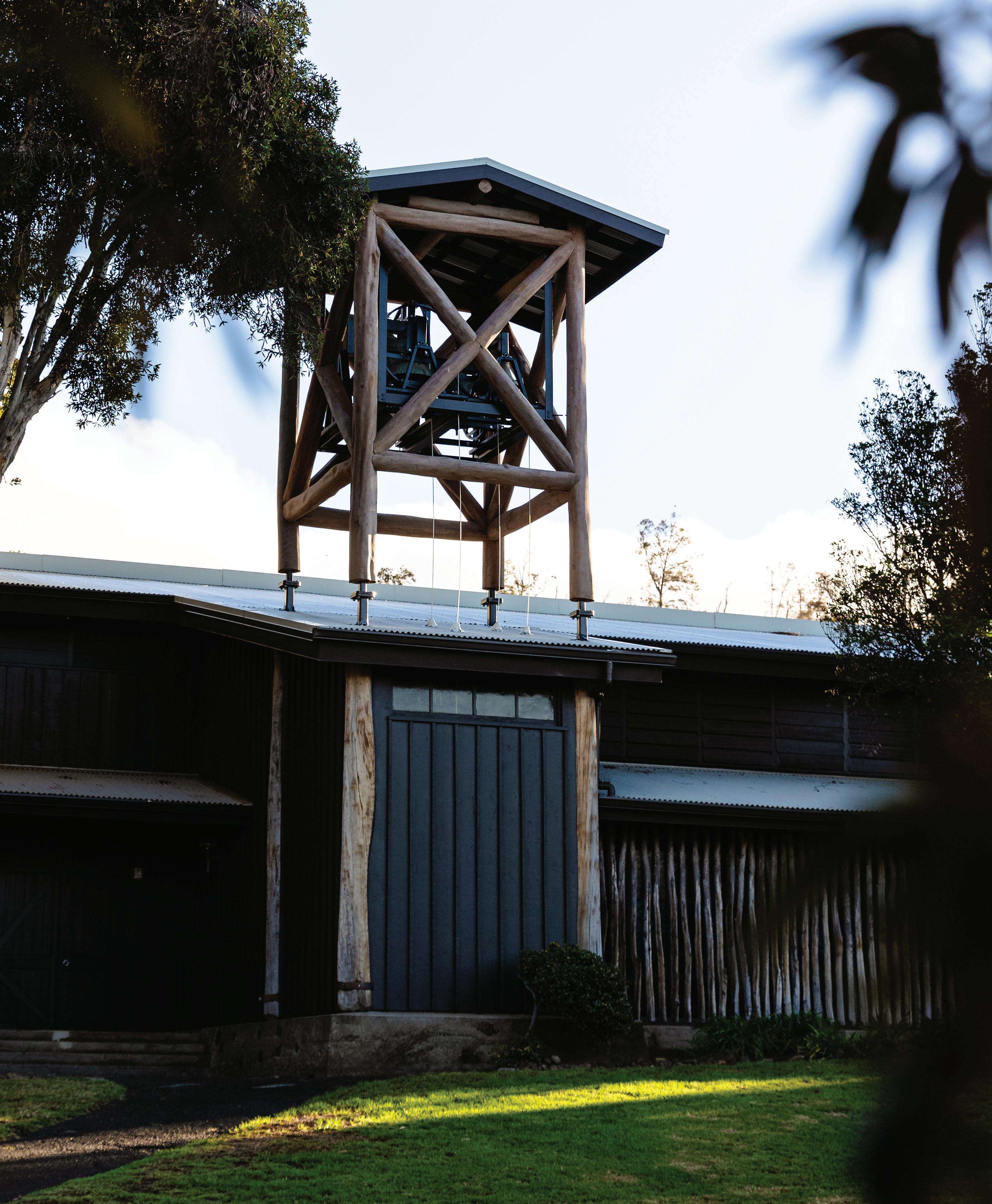
In 2021, HPA launched its campaign to restore Davies Memorial Chapel and re-install the ‘ōhi‘a wood bell tower, along with the four bells dedicated to founding board member Marjorie Robertson. After many generous gifts, years of meticulous architectural planning, and (for the bells) an epic journey across the Pacific Ocean and multiple U.S. states to reach an Ohio foundry, Davies Memorial Chapel now shines at the heart of HPA’s campus once again.
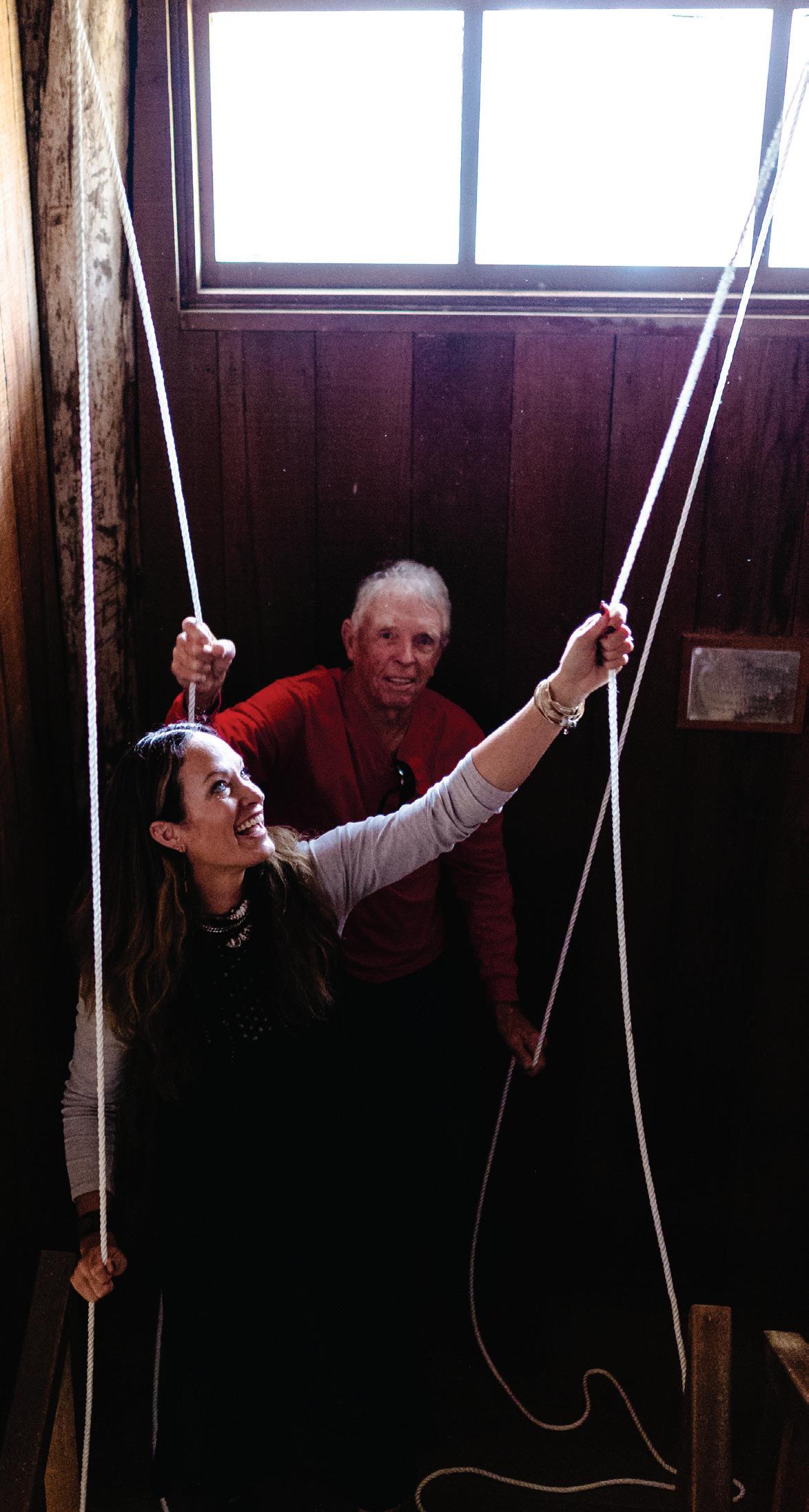
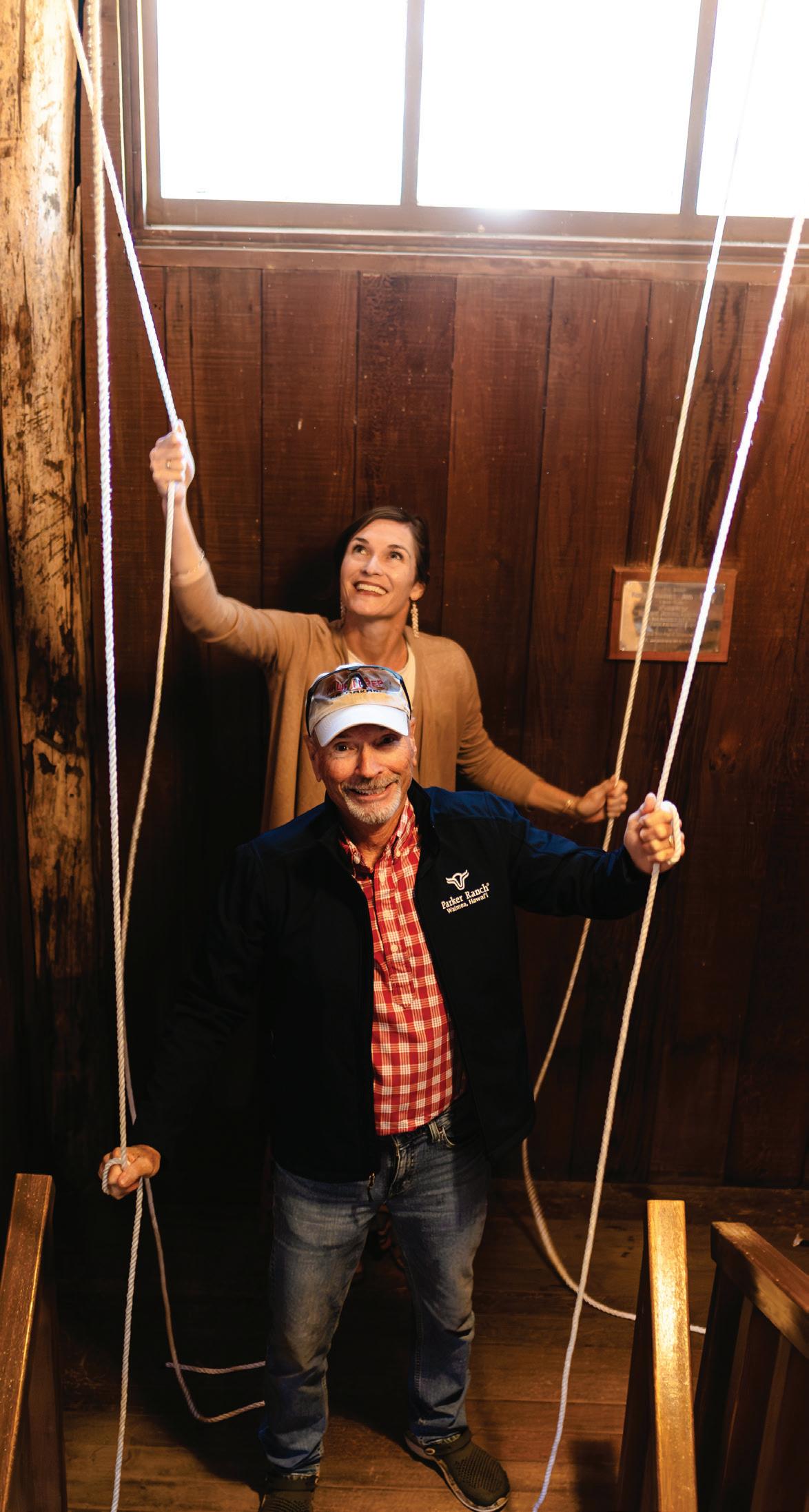
The refurbished chapel bells rang for the first time during Reunion Weekend last June. As of this fall, a new campus tradition was adopted — every Monday at 8:15 a.m., the bells now ring to mark the beginning of a new academic week.
All members of the HPA ‘ohana are invited to lead this tradition, including alumni, parents, and family members. Recent Monday bell-ringers have included Tioni Judd ’62 and Tiare Judd Police ’86; Robby Hind '66 and Hannah Hind Candelario '01; retired English teacher Gordon Bryson; Morgan Monahan ’14 and Kaui Taylor ’16; and many others.
If you’d like to ring the bell and help usher in a brand new week of learning on HPA’s Upper School campus, contact Patrick O’Leary at poleary@hpa.edu. •
Robotics
Robotics
HPA TEAMS ADVANCE TO HAWAI‘I FLL STATE CHAMPIONSHIP
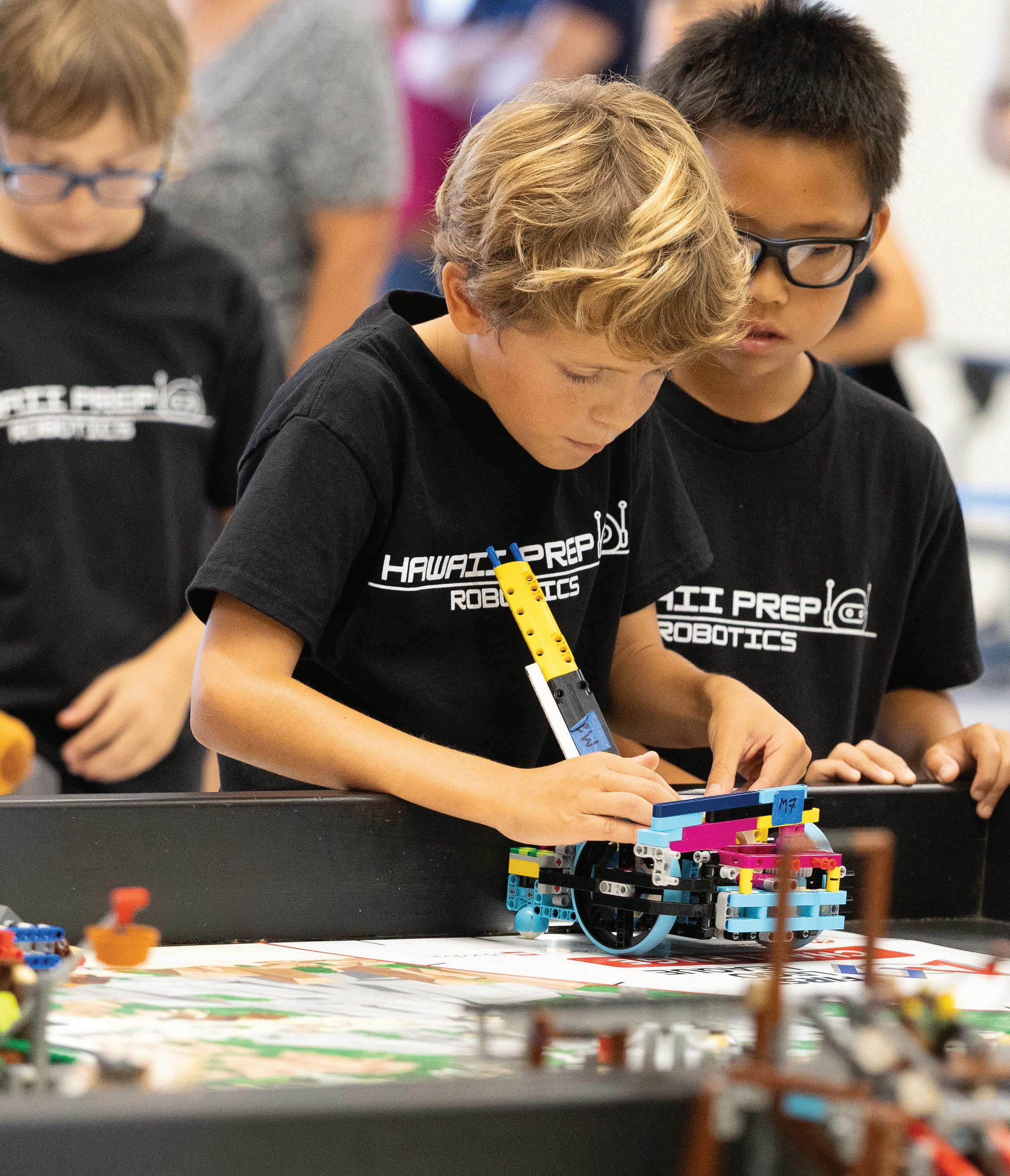
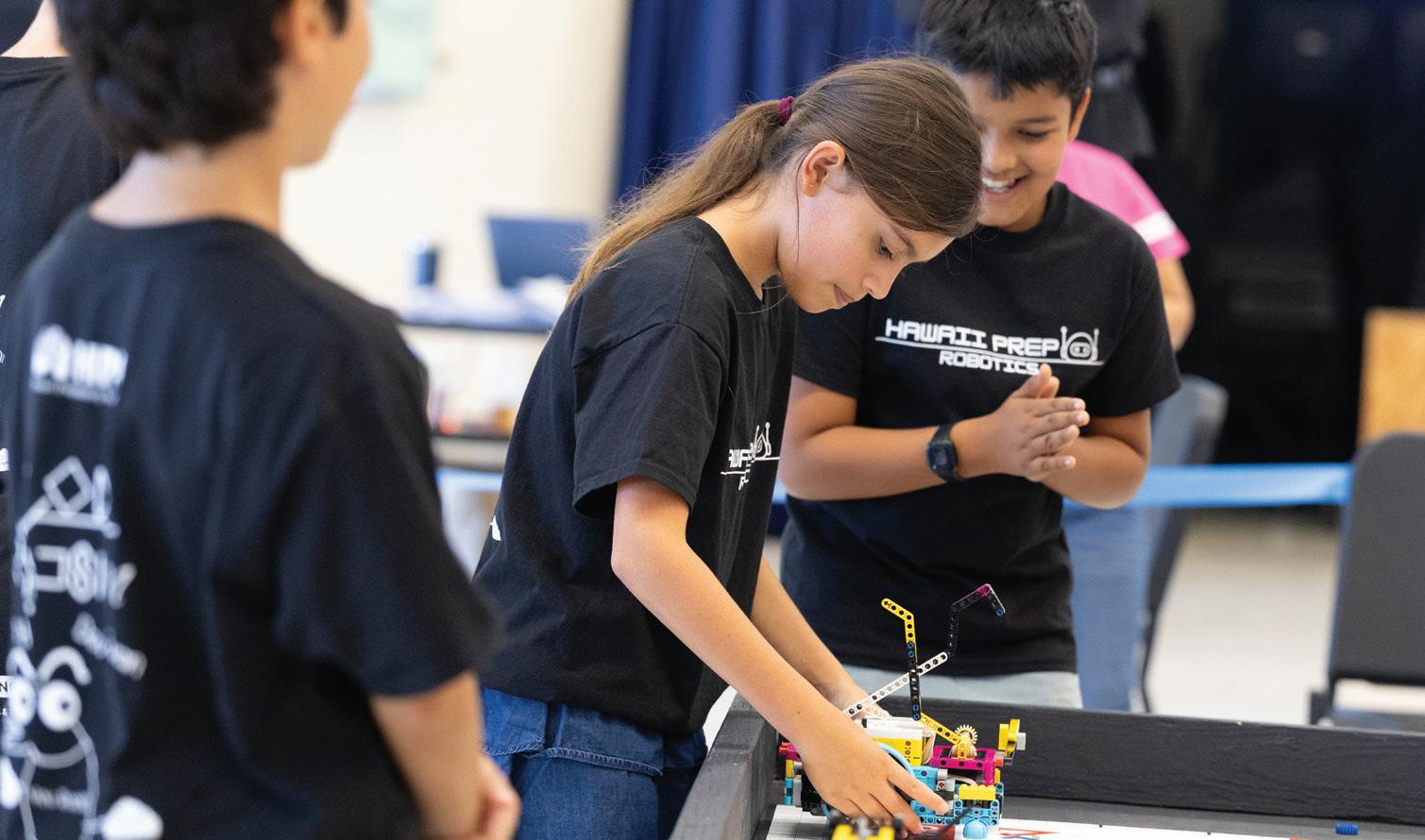
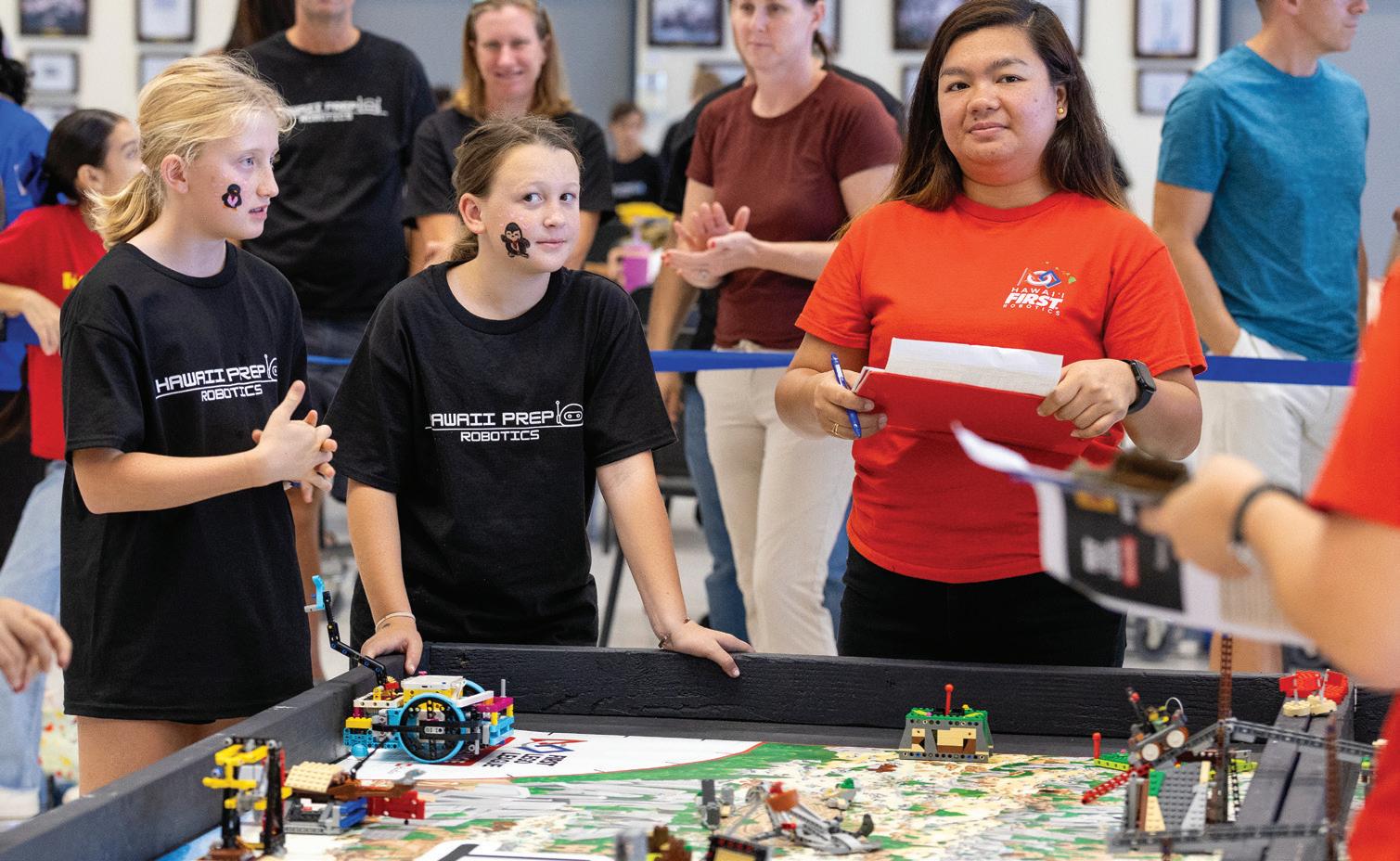
Four robotics teams from the Village Campus qualified for the Hawai‘i FIRST Lego League (FLL) State Championship held in Honolulu in February. At the November qualifying tournament, HPA teams showcased months of creativity and hard work developed through the Village Campus’ after school robotics program.
This year’s Hawai‘i FLL theme is #Unearthed, challenging every team to “identify a problem faced by archaeologists and propose a solution that can help.” Representing the Middle School, Team “Code Erosion” was recognized with a special Innovation Award for their augmented reality game that brings ancient Hawaiian sites to life.
Worldwide, more than 600,000 students from over 100 countries participate in FIRST Lego League competitions each year. Congratulations to all the Village Campus robotics teams, program leader Mellon Monello, and all the parent volunteers and mentors who support HPA’s young engineers! •
News Notebook
Trustee Welcome
The HPA trustees welcome three new board members this year. Adam Bauer, president and COO at HPM Building Supply, is currently the chair of the audit committee. He earned his bachelor’s and master’s degrees in accounting at Northern Illinois University.
Kirk Caldwell ’71, former managing partner at Ashford and Wriston, served as mayor of the City and County of Honolulu from 2013 to 2021. He attended Tufts University and Richardson School of Law (UH) and is currently serving on the assets and audit committees.
Darrell Cavens P’24, ’26, attended the University of Victoria and is former president, CEO and co-founder of Zulily Inc. He currently serves on HPA's assets committee. HPA is grateful for their service and looks forward to the experience and insight they bring to the board!
Coach Noetzel joins Hall of Fame
Congratulations to Mark Noetzel, who was inducted into the Hawai‘i Swimming Hall of Fame in October. Noetzel has been at the helm of the Hawai‘i Preparatory Academy swim program since 1990, where he has guided Ka Makani to two state championships and multiple BIIF titles. During his tenure as head coach for Punahou, his teams achieved four state championships. Noetzel is also a former world record holder and a Hawaiian Masters record holder with numerous top-10 national finishes.
Toward sustainable ranching
For several years, HPA students have partnered with Symbrosia, a Kona-based company growing limu kohu — an algae that, when added to cattle feed, can reduce their methane emissions by up to 90 percent. This astonishing homegrown innovation is a major breakthrough in sustainable ranching with real potential to impact global warming.
What began as a capstone collaboration has grown into a dynamic network connecting students, alumni, teachers, and local industry. Last winter, Symbrosia invited recent HPA alumni to apply for a mini-internship, and Greyson Shin ’25, currently at Pomona College, was selected. During his internship, Shin worked closely with HPA to support Symbrosia’s research.
Award-winning senior capstone work sparked by the Symbrosia partnership includes a documentary on sustainable ranching by Lia Craven ’23; study of the holobiont (host organism and all of its associated symbiotic microorganisms) of limu kohu by Ben Wyatt
’24; and Andrew Sebastian ’25 and Sophia Jordan ’25, who analyzed the microbiomes of limu kohu and cattle. Sebastian’s project earned recognition at district and state science fairs, as well as an HPA capstone award.
Dr. Johanna Anton, who has guided many of these projects, sees the partnership as a model for growth: students gain hands-on research experience, alumni continue building professional skills, and teachers expand their own expertise. “Each project builds on the last,” she notes, “creating opportunities for future students while supporting a local business committed to sustainability.” •
HPA STUDENTS WORK WITH SYMBROSIA ON METHANE EMISSIONS
Photo: Nani Welch Keli‘iho‘omalu ’14
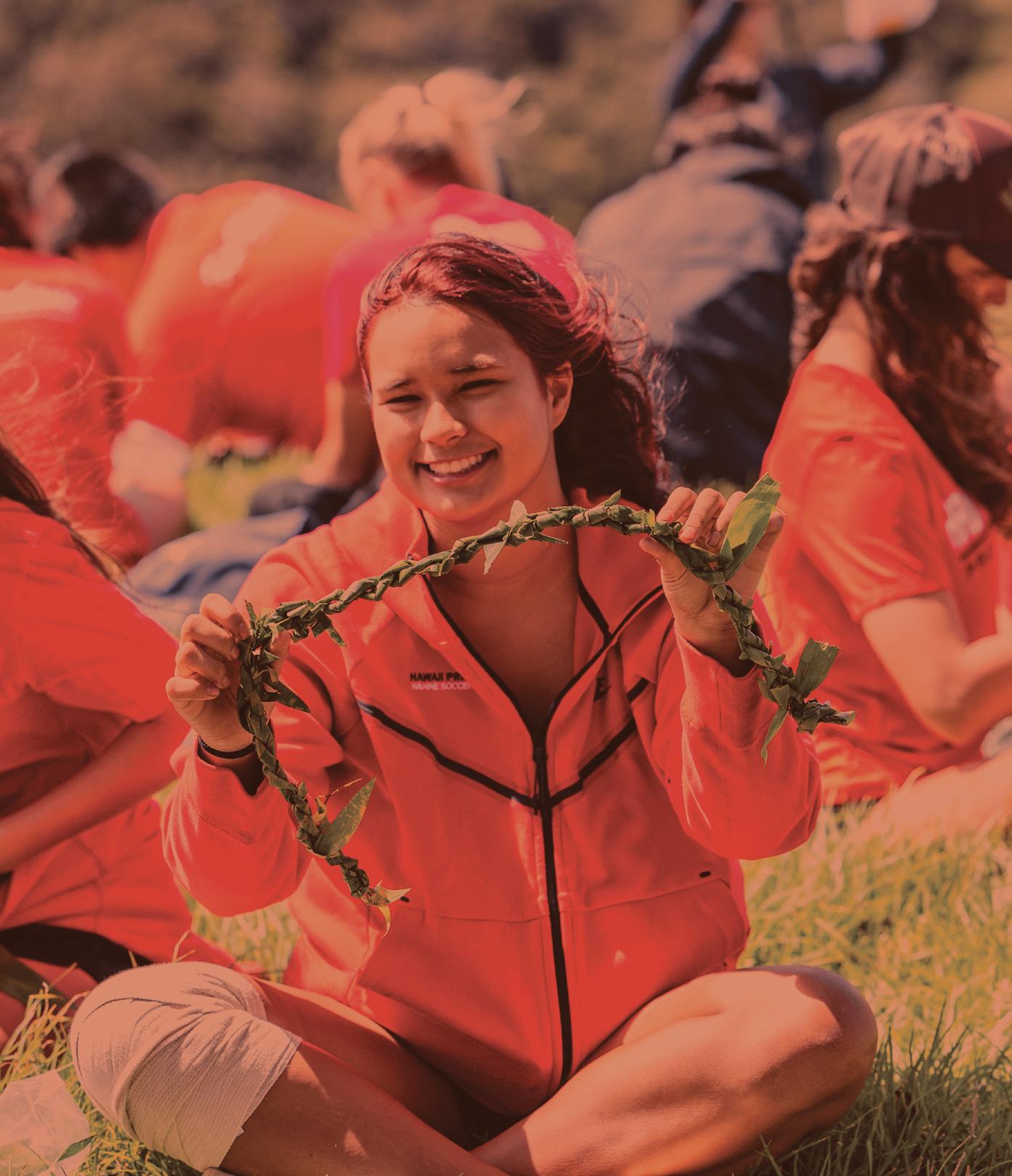
Lei club blossoms at HPA
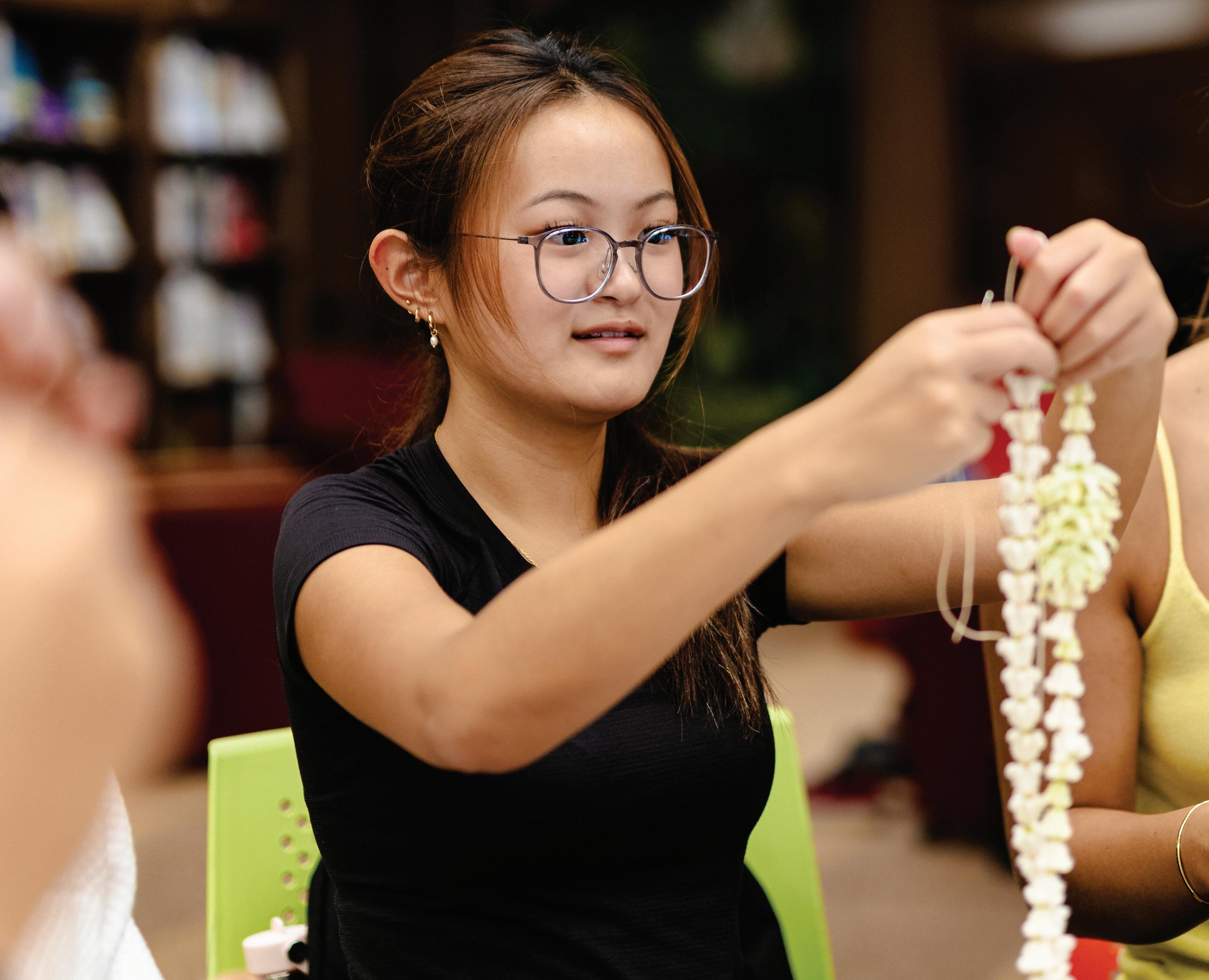
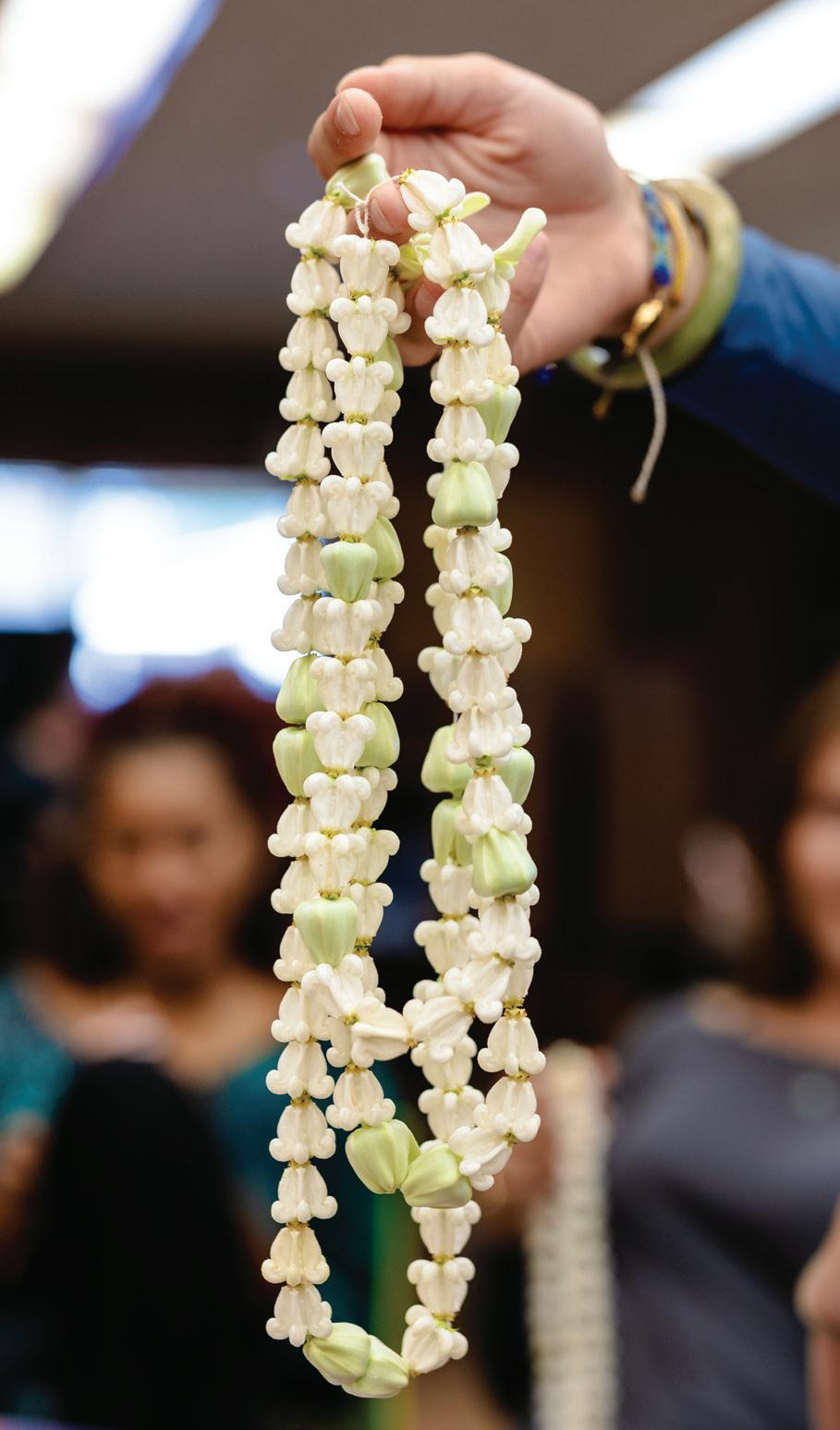
This year at HPA, a new club, the Lei Club, has become a welcoming space where students gather to slow down, create lei, and share culture. Initiated by Pemma Norbu '26, the club has roughly 20 members.
“Making lei has been a way for me to connect with my culture and 'āina ,” Norbu says. The practice begins with the plants themselves. Members have discovered an abundance on campus. Bougainvillea, pua melia (plumeria), ti leaves, and song of India are some of their favorites. The club also holds itself to a standard of care. “The key part is to not overtake and to leave the plant in good condition,” t hey share. Some plants respond well to frequent picking, while others, like ti, are used by many people across campus and require more restraint. Harvesting, they explained, is not simply collecting. It is a relationship of reciprocity. Ultimately, generosity is at the heart of the club. “The best part of making lei is giving to others,” Norbu says. “It is always a good way to brighten someone's day!” •
5 QUESTIONS
WITH HPA’S STUDENT PHOTOGRAPHERS
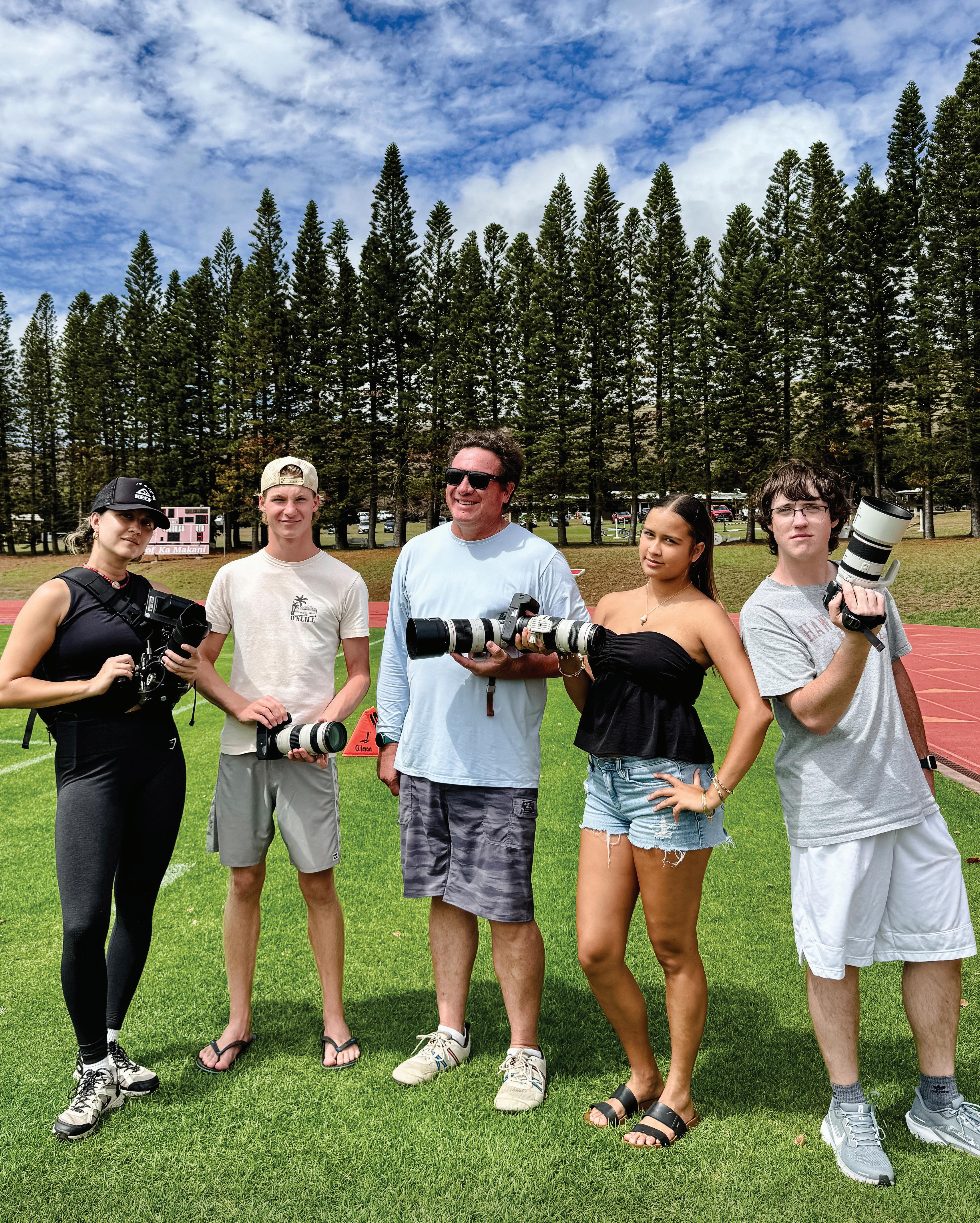
Student photographers Kelan Kennedy ’26, Makana Strahle Lewitsky ’28, and Conor Cavens ’26 (far right) are guided by Patrick O’Leary (center) and Gabbie Ewing ’15 (far left).
Photo: Aya Ichikawa
The work of three HPA student photographers has become an essential part of how HPA sees itself these days. Conor Cavens ’26, Kelan Kennedy ’26, and Makana Strahle Lewitsky ’28 are documenting everyday moments for the All-School Bulletin, capturing big community events like the Parker Ranch Labor Day Rodeo, and exploring their own creative projects, each with a distinct eye and a steady commitment to the craft. Guided by HPA’s principal photographer, Patrick O'Leary, and deeply involved in campus life, they have become trusted storytellers for the school. Here, they reflect on what draws them to photography, how they approach their work, and the moments that matter most from behind the lens.
college, I really want to work on a newspaper there for both journalism and photography.
How do you see photography fitting into your life in the future?
Makana: I want to go to college and do professional photography, like NFL photography when I'm older.
Kelan: I can't foresee myself pursuing photography as a career … but throughout my life as a whole, I think it will be an art form that I appreciate.
How did you first become interested in photography?
Kelan: I'd say probably during the pandemic. We were all locked down at home, and I had nothing better to do. So I pulled out my mom's camera stuff, and it was like, it was just natural.
Conor: I got into more advanced photography when my family went to Japan for my sister's graduation. Because the yen was so weak at the time, the only reasonable thing to do was to shop around, and that's where I found my R10, my mirrorless camera, which I have loved and adored ever since, and I think it really pushed me to become a much better photographer.
Makana: I've been interested in photography most of my life, doing photo shoots when I was younger. In eighth grade, I really started to like it more because for my capstone project I was trying to raise awareness about how trash affects marine life, and I enjoyed using photography.
How has being a student photographer at HPA changed the way you see the school and the people here?
Makana: For me, I don't do a lot of sports, so I don't have a lot of time to connect with other people. Photography is my way of seeing everybody do what they love, and my way of doing what I love.
Conor: I think that one of the most important aspects of being a student photographer is having the ability to go up to someone without knowing them, and just meet new people. I think it's really helped me with public speaking and having the ability to ask questions.
Kelan: I think it's taught me to slow myself down and to appreciate the things that are happening around me, and to kind of look for more special moments, not only when I'm taking photos behind the camera, but also when I put the camera down and pack it away in my bag. I appreciate that.
Are there any photographers or artists whose work is particularly inspiring to you?
Kelan: I appreciate and look forward to all the work of younger generations of photographers. I like the evolving styles people have, or different technical aspects of what's new and what's coming out, and what all these new minds are bringing to the field. And then I also look up to my mom, because she was the one who taught me everything, and she's been doing this longer than I have.
Conor: I've always admired photojournalists like James Nachtwey. I think he's been an idol of mine for a long time, and using photography for change is really inspiring. It's one of the reasons why wherever I go to
Conor: I’ll always want to be a photographer. I think it's something that grounds me to the places I've been, and it's a way to remember my past. I hope I will be able to continue my photography adventure in college, wherever I go. It's a really integral part of my life.
What advice would you give to a younger student who wants to do what you do?
Makana: Being a student photographer takes a lot of passion. So if you like photography, just stay motivated and talk to people. I didn’t know I would be able to be a student photographer until I talked to Mr. O’Leary, and it changed my whole perspective on the school.
Kelan: I would say don't rush yourself on choosing the type of photographer you want to be. Make sure you set time for yourself to not only develop your skills, but also reflect on what photography has brought you. Jump on specific opportunities, but then, you know, don't feel inclined or obligated to do everything at once or insert yourself in seven different areas at once. I think you need to find a kind of niche that works for you.
Conor: Just grab a camera and go out there. There's so many amazing stories to tell and photography is a beautiful way to share that. •
Scan to see some favorite captures by Conor, Kelan, and Makana
Cultivating ‘Awa at HPA
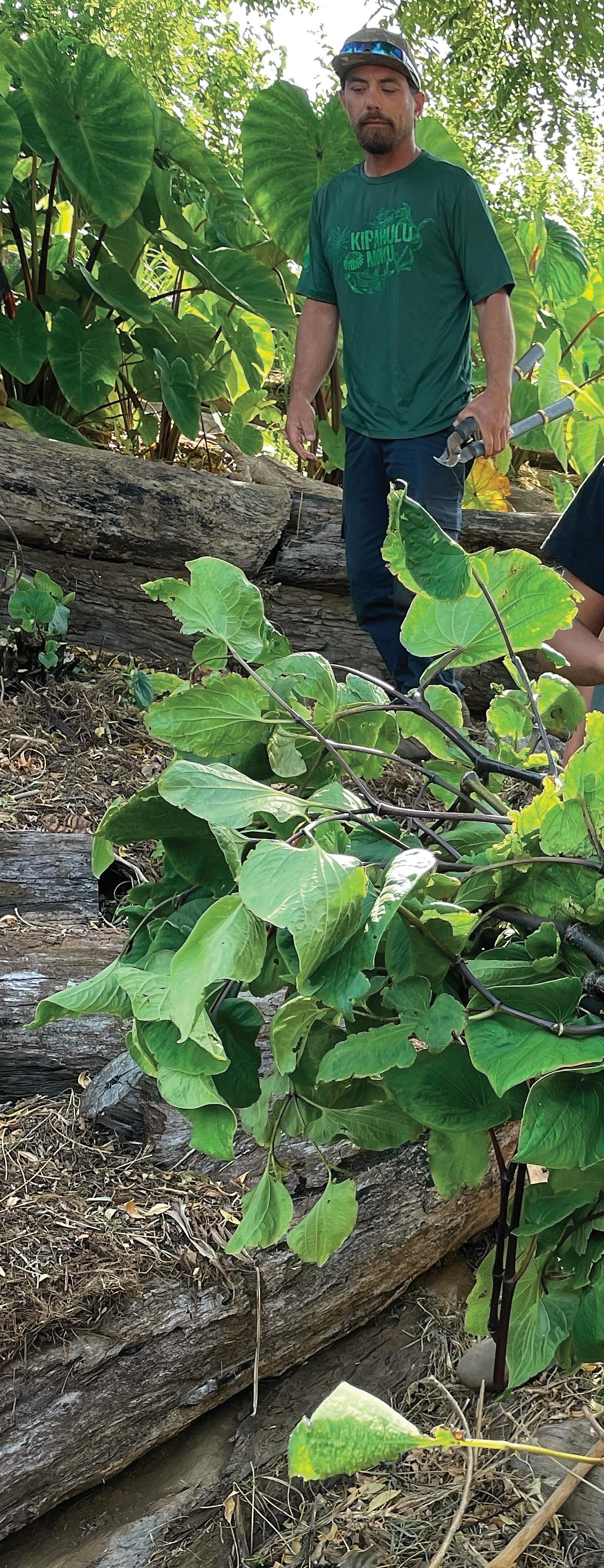
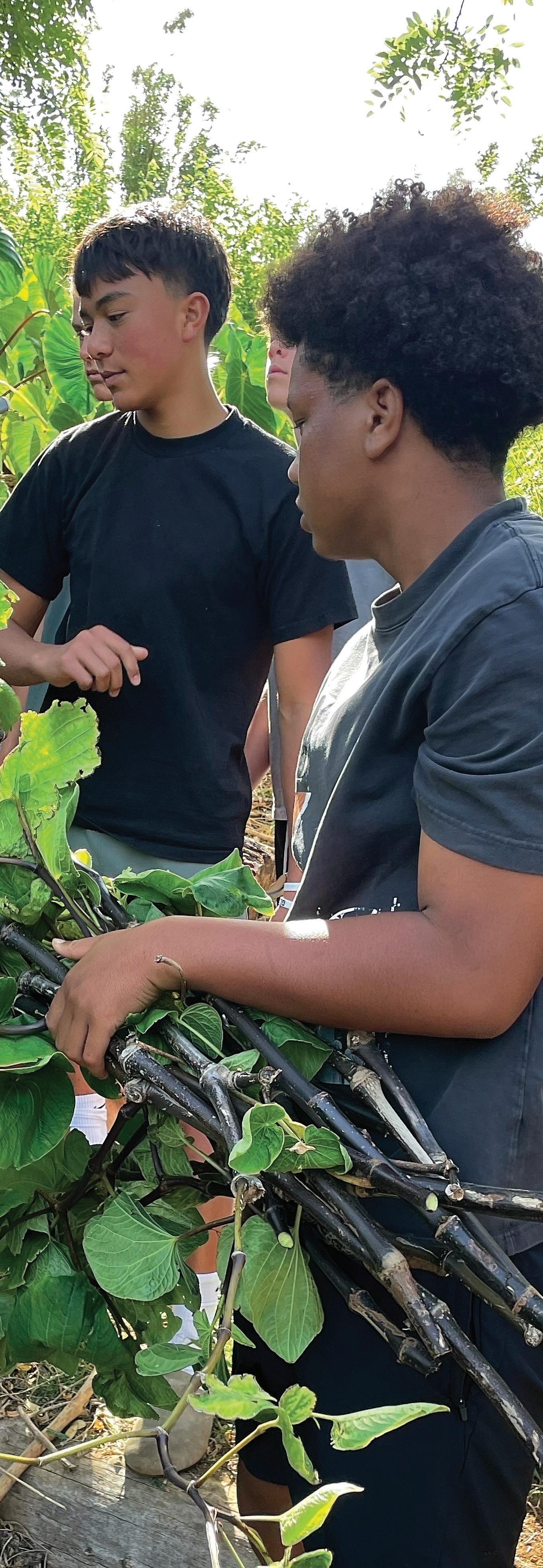
This year, HPA students, faculty, and garden interns explored the cultural and agricultural depth of a revered crop: ‘awa (kava). The journey began with a huaka‘i to the Kohala Center’s demonstration farm, where participants didn’t just observe — they dug in, planting, tending, and harvesting the plants themselves. ‘Awa is not easy to grow. It takes three years to reach harvest, and success depends on precise knowledge of its care, along with an understanding of its spiritual and communal significance.
Why is ‘awa so important? Beyond its role in ceremony, the plant has powerful effects when prepared as a drink: it calms, relaxes, and fosters a reflective state. Sharing ‘awa is a practice that encourages mindfulness, strengthens connections, and honors relationships. For generations, it has been a central part of Hawaiian and Pacific Island cultural life.
At HPA, the plant takes on a deeply personal role in the senior transition ceremony. Students are guided through preparing and offering ‘awa, experiencing firsthand the connection between cultivation, ceremony, and community. Through the Workshop Days program, participants traced the plant’s journey from farm to cup, linking the work of their hands to the larger cultural story it carries.
Back on campus, an on-site ‘awa processing session built on the huaka‘i experience. Students witnessed the transformation of plant to ceremonial offering and practiced techniques under the guidance of cultural partners. This hands-on learning reinforced that growing ‘awa isn’t just agriculture — it is an exercise in patience, care, and respect for tradition.
HPA’s garden program operates on a scale far beyond a typical high school farm. Complex agricultural practices, cultural mentorship, and long-term crop planning converge here, allowing students to engage deeply with both the land and the traditions it sustains. Cultivating ‘awa on campus ensures that each year’s senior ceremony is not only meaningful but rooted in the students’ own labor and understanding, connecting them to the land, the plant, and the generations who have tended it before. •
Photo: Chelsey K. Dickson
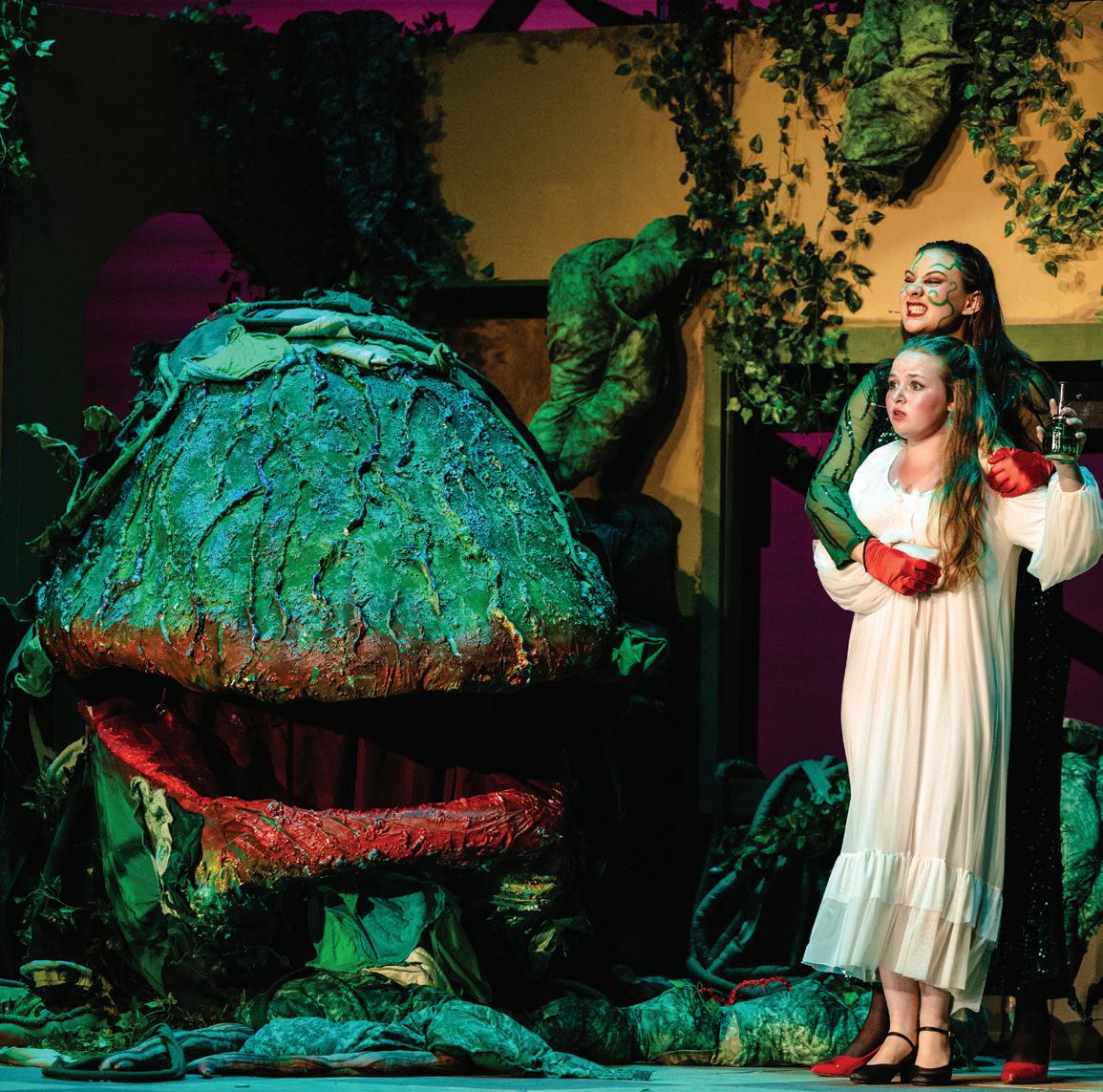
“This makes me very happy. I graduated HPA ... before it had its own theatre space. We put on “Give My Regards to Broadway” at the theatre in Waimea. When we were deciding which show to perform, I suggested “Little Shop of Horrors” and was told it would be impossible. But now, here you are doing it. And it looks fantastic.”
—Al Douglas ’88
Shared Wonder
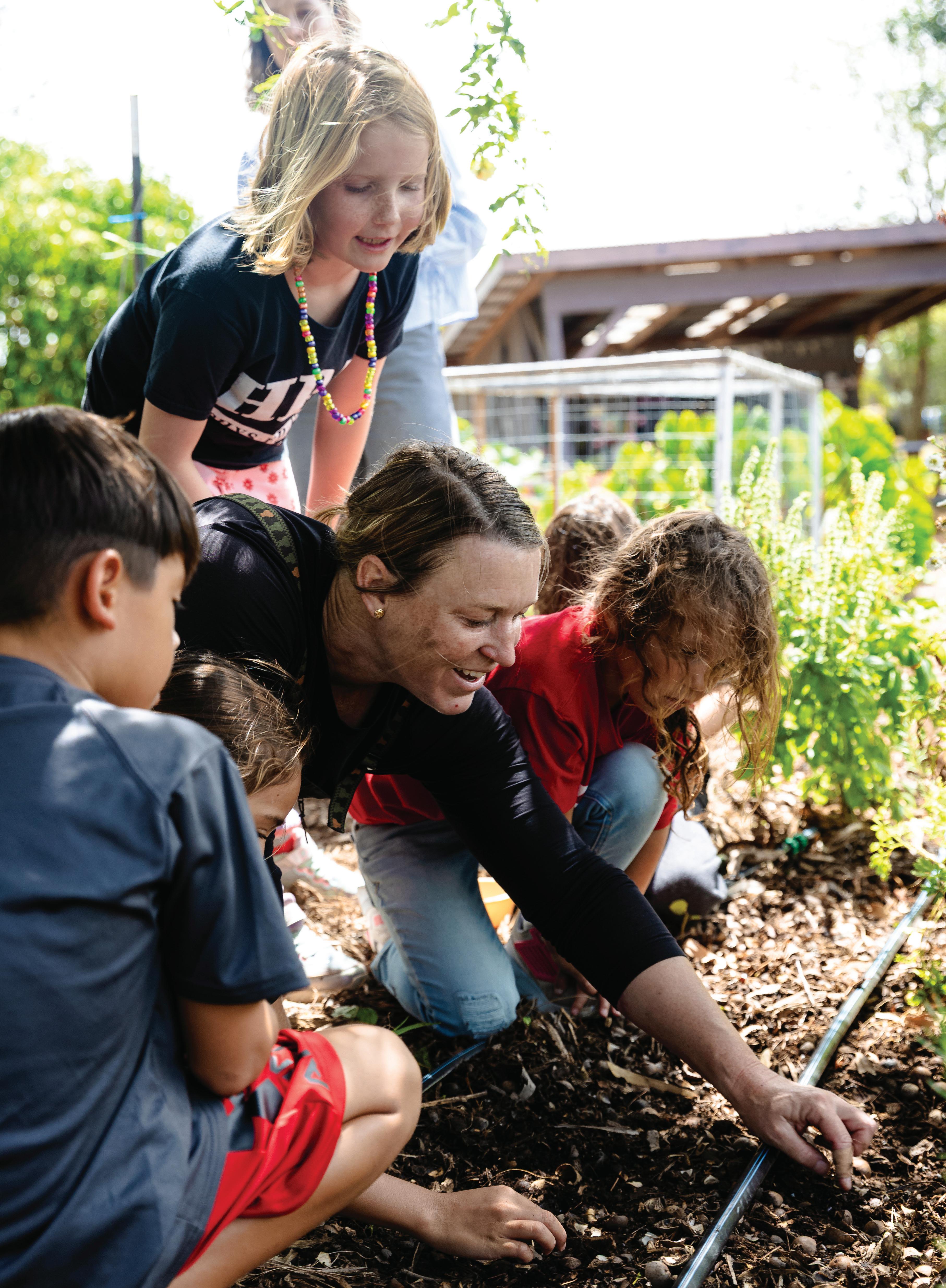
Last semester, Patrick O’Leary, HPA’s principal photographer, caught this candid moment with Lauren Prutow McKenna P’33, ’36, and her students in the Village Campus garden. “It was a typical day at the Lower School,” he says, “where the curiosity of the teacher matched the curiosity of the kids.”
Power to the Pond
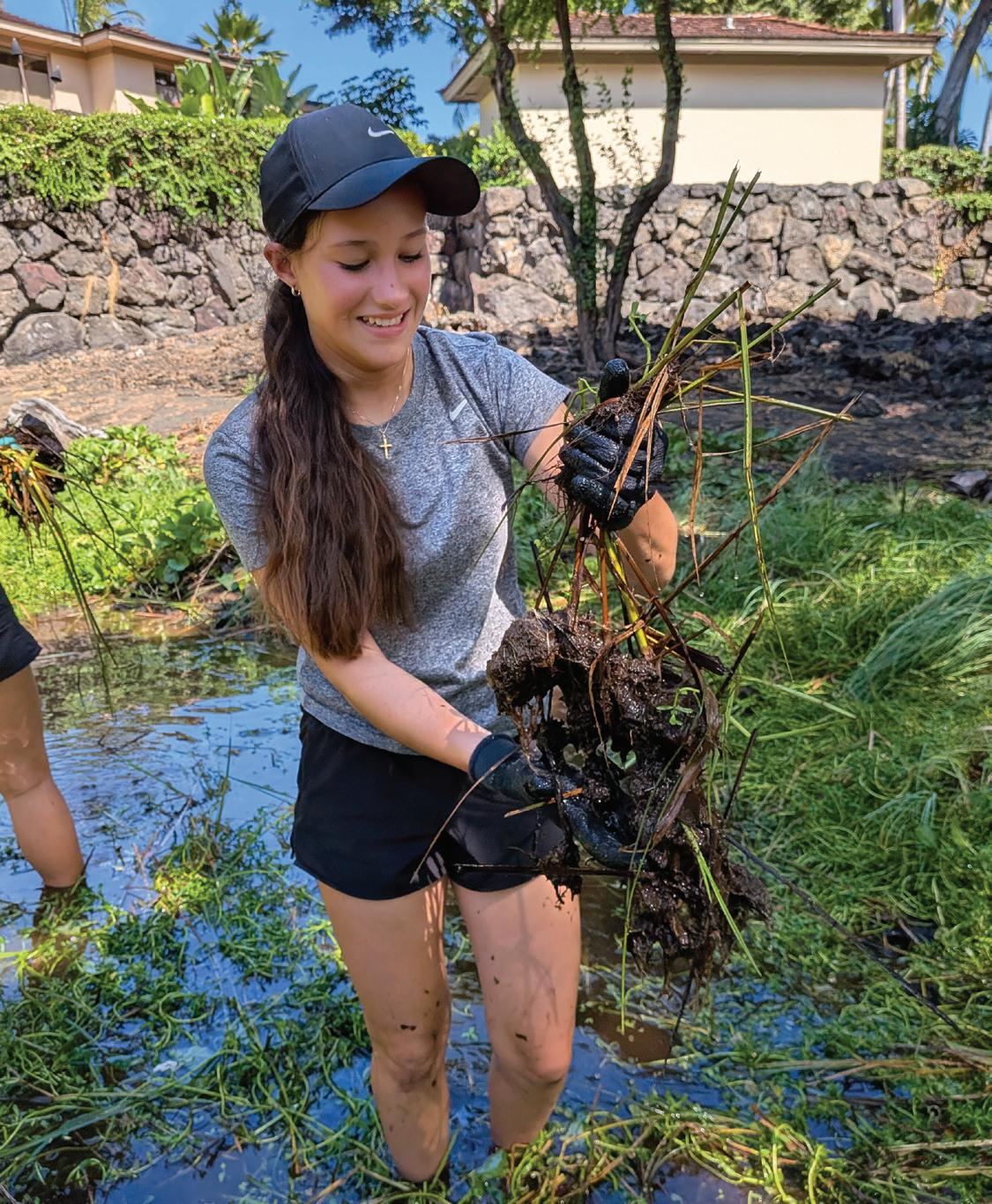
In November, eighth-grade scientists visited the anchialine ponds at the Four Season Resort Hualālai, where they glimpsed real life as marine scientists — getting a little muddy and wet while exploring a vital ecosystem.
More than half of the world’s known anchialine ponds are found in the Hawaiian Islands. These typically small pools form in limestone or volcanic rock, with subterranean connections to the ocean. They are populated by tiny and often rare species of crustaceans, fish, and eels, but in recent years, invasive fish and algae species have upset their natural balance. HPA students are among the hundreds of Hawai‘i Island volunteers who are helping to restore and study these treasured places. •
AIA TOUR SHOWCASES HPA’S CAMPUS DESIGN
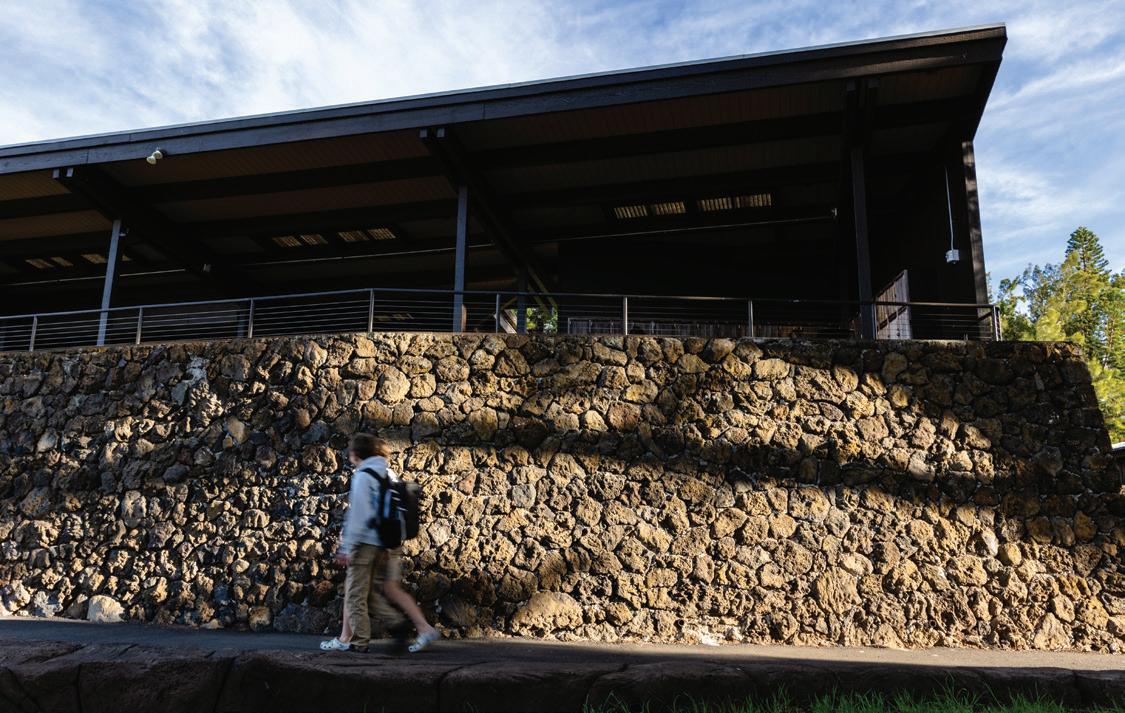
This fall, the American Institute of Architects (AIA), Honolulu Chapter, hosted its annual Architectural Walking Tour — this year at HPA, drawing visitors to the Upper Campus to explore its celebrated design legacy.
Guided by architects and planners, attendees learned how HPA’s buildings reflect the interplay of landscape, climate, and education. The campus, originally designed by Vladimir Ossipoff, still reflects the clarity and restraint of his mid-century vision. Today, HPA holds the largest single collection of his work, a distinction that continues to draw interest from design professionals across the state.
The tour also highlighted the school’s continued evolution. The Michael and Jeannette Saalfeld P’14, ’17 Energy Lab marked a significant leap forward as the first K–12 school building in the world to achieve full Living Building Challenge certification, one of the most rigorous sustainability standards. It later earned an AIA Hawai‘i Award of Excellence in 2010, while the campus
as a whole received an AIA Hawai‘i Honor Award in 1970.
The event offered a rare chance to see the campus through a designer’s perspective and to appreciate both its architectural roots and its ongoing innovation. •
Restored by Community
Bridget Judd ’10 and The Waikōloa Dry Forest Initiative
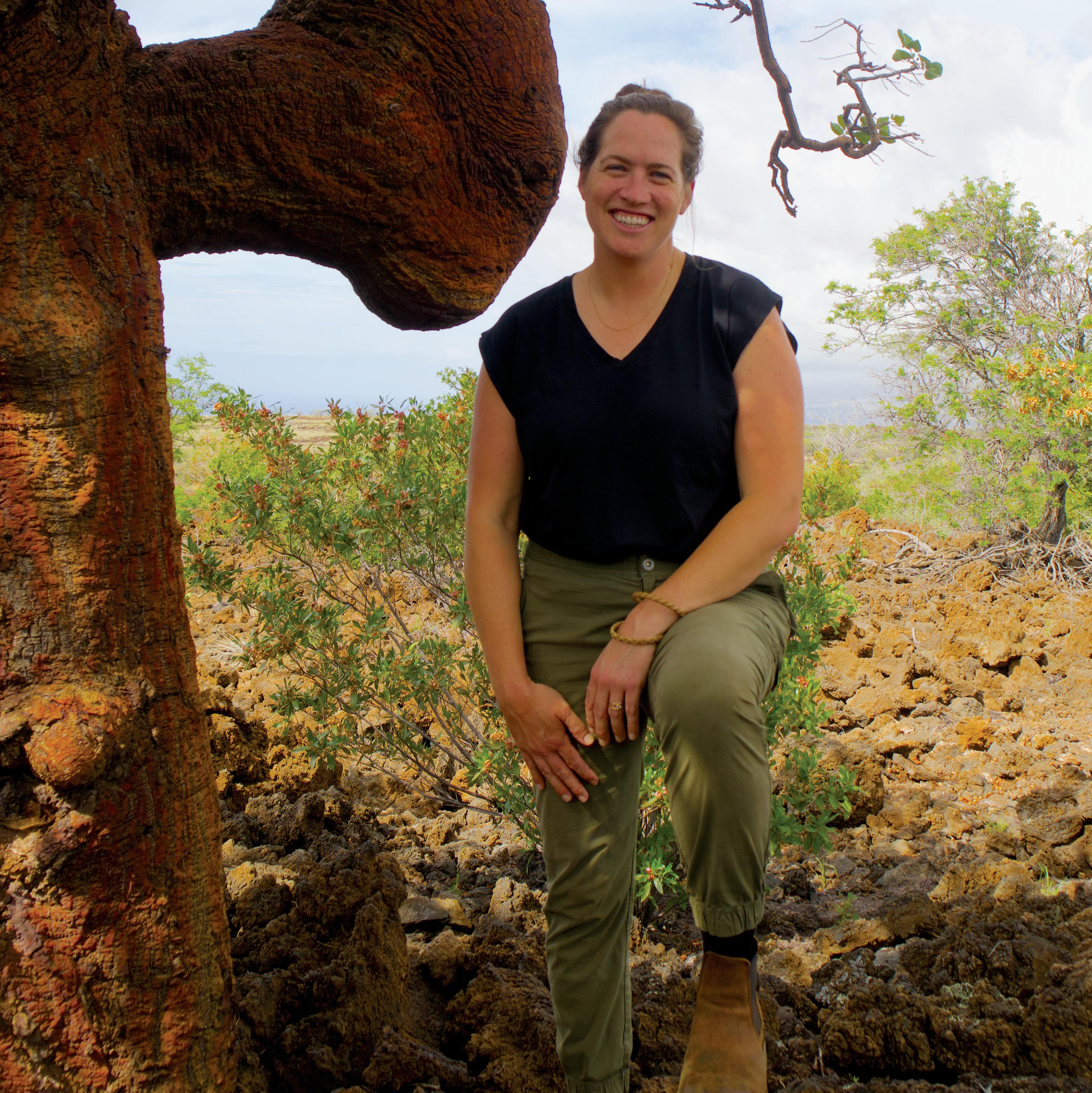
Native dryland forests are the most endangered ecosystems in Hawai‘i, and Bridget Judd ’10 is among their champions. As program coordinator for The Waikōloa Dry Forest Initiative, she is part of a Hawai‘i Island conservation effort that runs deep.
“The Initiative was grassroots from the start,” Judd explains. “Community members saw the loss of forest happening in Waikōloa, specifically with a species called the wiliwili, which is a stunning tree. We care for some really old wiliwili trees that are estimated to be 200 to 500 years old.”
Hawai‘i's dryland forests are incredibly rare, and marvelously diverse: while it is reported that less than five percent of Hawai‘i’s original dry forests remain today, they are home to nearly 40 percent of the state’s native land-based plants and animals — including the wiliwili. When we lose these places, we lose important biocultural resources that are irreplaceable.
Native dryland forests are also critical for protecting the watershed and promoting healthy soils. Dryland forest plants have many adaptations specific to their environments that allow them to thrive in dry and, in Waikōloa, often windy conditions. Roots from the plants help anchor the soil, others create abundant leaf litter to create more soil, and when it does rain, their canopies slow the rainfall so that it can seep underground rather than rush downslope. When these forests disappear, invasive grasses take over, erosion accelerates, and fire risk rises sharply — pushing the landscape into a cycle that’s hotter, drier, and far less resilient.
Founded in 2011 on a 275-acre preserve, The Waikōloa Dry Forest Initiative was created to protect, promote, and restore this landscape.
As program coordinator, Judd plays many roles in the organization. She recently helped coordinate the Nāhelehele Dryland Forest Symposium, which gathered fellow dryland forest stewards to share updates and ideas about ongoing restoration work from around the state. “I also get to do some field work, which is really fun,” she says. “Building trails, transect monitoring to see how our work is progressing, and I’ll help with the
field trips when school groups visit. I love the variety, and it's easier to fundraise if you have a broader concept of what we're working on, so I love it.”
When asked what brought her to this work, Judd explains, “Growing up here, living in this place, you can’t help but feel some obligation to try and make it better.” After HPA, she studied business and conservation biology at Colorado State University, and during one of her summer breaks, she worked for Kupu ʻĀina Corps, an AmeriCorps program and conservation feeder in Hawai‘i.
“It was a six-week summer program,” she says, “where we went to six different host sites to camp and work. The Waikōloa Dry Forest is one of the places I visited. As soon as I graduated, I moved back home. I missed it.”
Judd explains that one of her favorite things is walking the preserve and seeing the contributions of community members continue to thrive. “A third-grade class came and helped us plant all these trees right here,” she remembers, “and someone named a tree ‘Chicken Wing.’ And you're watching this landscape transform from fountain grass, an invasive dominant, to beautiful native species that we're able to protect. I feel really grateful that I get to work in this place, and I love the people that I get to work with.”
As Judd reflects on the future of this work, she says, “It’s so important to have the next generation inspired and caring about what’s happening here. Our team intentionally creates different programs that engage as much of the community as possible, including an afterschool program and summer camps, which are free to attend. We have something for everybody. Our crew is small, so it’s a forest nurtured by community. Engaging people to this place is powerful, and I think that plays out really well.” •
Full Heart, Open Horizon
Head of School Fred Wawner on the next chapter for HPA
When the Zoom meeting for this interview blinks to life, Head of School Fred Wawner appears on the screen wearing a very adorable hand-crocheted bear beanie given to him from a lower school family, ears and all. It’s “Wacky Wednesday” at HPA, and he’s fully committed. The hat stays on for the entire interview, even as he speaks in earnest about his leadership philosophy and why he believes wholeheartedly in HPA. The moment fits the man: this is a head of school who respects the value of play, who knows how to meet students where they are, and who leads with warmth and purpose in equal measure.
If you know anything about Wawner’s background, the combination makes sense. His grandfather, Gene Corrigan, was one of the most respected athletic administrators of his era — athletic director at Notre Dame and commissioner of the ACC (Atlantic Coast Conference) — remembered not for his titles but for his decency and steady leadership. Wawner grew up in a college town surrounded by educators, athletes, and campus life. It’s a through-line that now shapes his tenure at Hawai‘i Preparatory Academy, where he has lived, worked, coached, and raised his own children for nearly twenty years.
“HPA is the best place in the world to do this work,” he says, smiling under the bear beanie. “There’s something about being here in Waimea — the place, the people, even the line of the horizon — that inspires both reflection and innovation… that keeps us moving forward.”
Now in his fifth year as head of school, Wawner is thinking about what comes next on the heels of HPA’s 75th anniversary.
WHAT ARE YOU FOCUSED ON RIGHT NOW? WHAT’S GUIDING YOUR THINKING ABOUT WHERE HPA SHOULD GO FROM HERE?
I think we’re at a place now where everyone can see themselves in the mālama kaiāulu framework — a schoolwide commitment to caring for our people, this place, and the future. It’s become a shared language for what it means to live HPA’s values day to day. Whether you’re a Ka Makani third grader or you work in operations here, I think you can point to what you do every day and see how it fits into that bigger picture. I think we can also see how HPA fits in Waimea, in Hawai‘i, and in the world.
Now we’re at this really great moment as a school. We’ve got a refreshed strategic plan coming together, a leadership team that’s finding its rhythm, and the start of a campus master plan that’s helping us imagine what the next 75 years could look like here.
For me, the excitement around the master plan isn’t just about new buildings and upgrades. It’s about the opportunity to bring everything that is us and everything we already do well and aspire to achieve into alignment.
That’s the work ahead: aligning our systems, our spaces, and our culture so they all tell the same story about what HPA stands for. And that feels like a pretty inspiring place to be.
WE’VE HEARD YOU SAY THAT FINANCIAL AID IS ONE OF YOUR TOP PRIORITIES MOVING
FORWARD. WHY?
Because I believe in what an HPA education does for kids. I’ve seen it over and over. My goal, really from day one, has been to make sure that anyone who can benefit from this experience can have access to it. And that's a big statement, but it's because I believe in what they get from HPA.
Right now, we invest about five million dollars a year in financial aid on a thirty-million-dollar budget. The margins are tight. It's a big part of what we do and who we are and it's a balancing act — honestly, it remains a real stretch for us as a school, but HPA has always, always believed in serving our entire community to the best of our ability. Every classroom is stronger when it’s made up of different kinds of students — different stories, different resources. That’s what makes the learning real.
A lot of families really stretch to make HPA work. You’ll see grandparents, cousins, aunties all pitching in for one
kid to be here. That matters. So I’ll talk to anyone about financial aid. It’s in my heart and I'm passionate about it, and I find that I'm not alone in this!
I just feel like HPA is an airport that can fly you anywhere once you get here. And so I want students to have access to these incredible opportunities, and certainly I want people to know about us and what we’re doing here.
WHEN
YOU THINK ABOUT TEACHING AND LEARNING, WHAT SETS HPA APART?
I think first of how we care for kids. My background at schools has included leading student and residential life programming, and I think HPA is second to none in making sure kids feel safe and known, which is the core foundation of learning. With that investment of care as a baseline, they have a real shot at reaching all of their potential.
Beyond that, HPA leverages our extraordinary setting. And our faculty is amazing. All of our teachers bring Hawai‘i into the classroom — ocean, volcano, forest, skies — and students are actively learning in the world around them. It’s experiential, it’s memorable, and it
“ HPA SITS RIGHT AT THIS INTERSECTION OF TRADITION AND INNOVATION, HAWAI‘I AND THE WORLD. IF OUR STUDENTS CAN CARRY BOTH OF THOSE WITH THEM, THEN I THINK WE’RE DOING EXACTLY WHAT WE’RE SUPPOSED TO DO.”
drives real understanding. And at the same time, we maintain robust academic offerings — APs, capstones, independent research. We’re a small school, but we deliver big opportunities.
HPA HAS A REPUTATION FOR BEING BOTH RUSTIC AND INNOVATIVE. HOW DO THOSE TWO FIT TOGETHER?
I think they actually feed each other. This is a beautiful place, but it’s not an easy one. We walk uphill every day. The wind blows. Packages don’t show up overnight here. That rhythm teaches patience and gratitude. And it leaves space for innovation. That’s always been part of HPA’s DNA — way before the Energy Lab. It’s not about tech for tech’s sake… it’s curiosity. Our students might be harvesting sweet potatoes in the morning and flying drones in the afternoon. Both are real learning. Both connect you to the world around you, as well as to the kind of personal and intellectual growth that helps you realize your promise.
YOU’VE BEEN HERE A LONG TIME—WHAT’S KEPT YOU?
When I first came, I believed in the head of school who hired me. Pretty quickly, I started believing in the place,
too. I lived in the dorms for eleven years, raising my kids right alongside the students. So you see everything up close — the good, the messy, the in-between.
HPA isn’t perfect. No school is. Like every school, we’ve had our share of mistakes. But it’s a place where you can build things, where you can follow an idea and see it take shape. I think part of the beauty, too, of being all-in is working hard to find solutions that make the place better. And then seeing student after student leave here ready — really ready — for what’s next, that’s what feels so rewarding to me. Our graduates are really good people at their core.
LOOKING AHEAD, WHAT DO YOU HOPE DEFINES THE NEXT 75 YEARS?
I hope we keep our adventurous streak. That’s been true from the start — people willing to try something new, to trust the place and the process.
HPA sits right at this intersection of tradition and innovation, Hawai‘i and the world. If our students can carry both of those with them, then I think we’re doing exactly what we’re supposed to do. •
Ka Loli ‘Ana
THE EVOLUTION OF KO KĀKOU STUDENT UNION
By Tayler Wang ’10, P’35
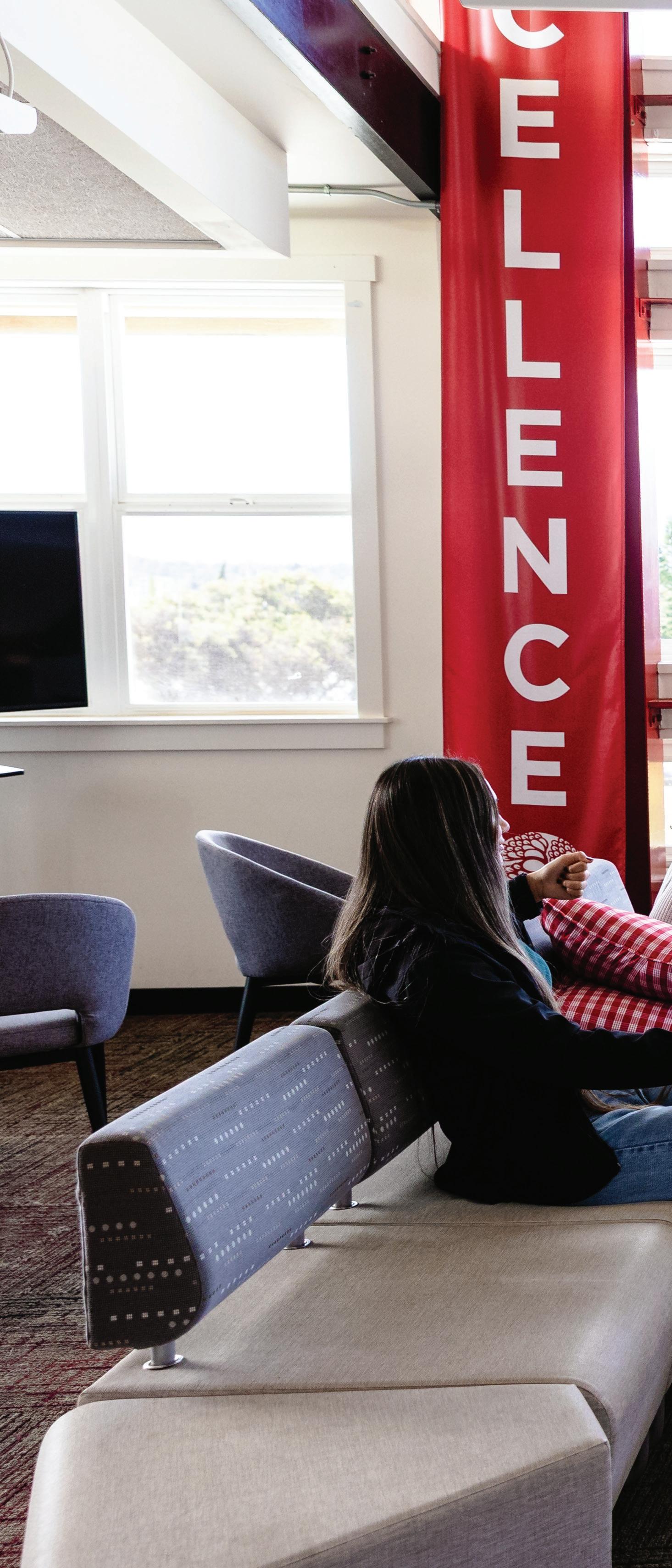
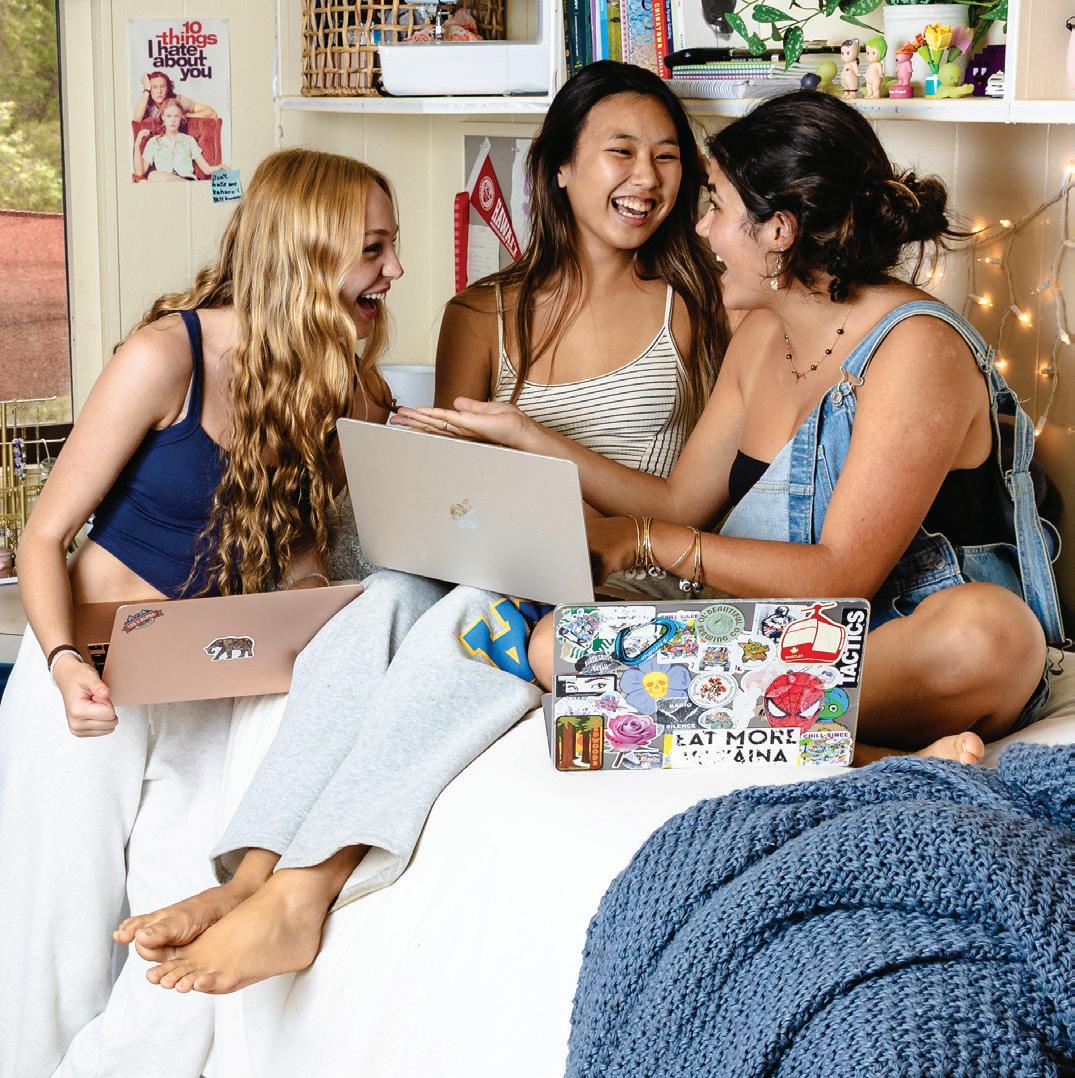
I still remember the first time I stepped into Ko Kākou Student Union. As a student, to me the building felt like something entirely new—a space created just for us, where we could gather, study, laugh, and simply be together. Its doors opened to a promise that student life mattered, that our voices and our community deserved a home.
Looking back now as an alum, I see how Ko Kākou Student Union has changed—growing with each generation of Ka Makani, adapting to new needs while still holding the same spirit of belonging. This evolution, or ka loli ‘ana, is more than just the story of a building; it is the story of our school, our values, and our shared future.
Entering a student space
The moments leading up to the grand opening of Ko Kākou Student Union in 2004 were filled with wonder and excitement. “It was an interesting experience as a student to see a building come up from what was once just a hillside,” says Hamilton Ford ’05, who is now HPA’s director of residential life. “I think getting to sort of watch as the pieces were assembled helped build excitement for what it would be like inside.”
By the time I reached high school at HPA in 2006, Ko Kākou Student Union had become a central space for students. I remember enjoying the pool tables downstairs with my friends and attending Upper School dances filled with strobe lights and disco balls upstairs. I remember the Student Union being a place where we could relax and get away from the stresses of school and extracurriculars. It was a place where we could socialize, enjoy a moment with friends, or catch up on schoolwork.
Each year that passed, a new generation of students filled the building, yet the feeling of belonging remained the same. “Ko Kākou Student Union felt like our space,” says Marketing and Communications Manager Gabbie Ewing ’15. “Unlike a classroom or the library, where you’re entering a teacher’s space or a structured environment, Ko Kākou Student Union belonged to the students. That made it special.”
LeBurta Atherton’s vision
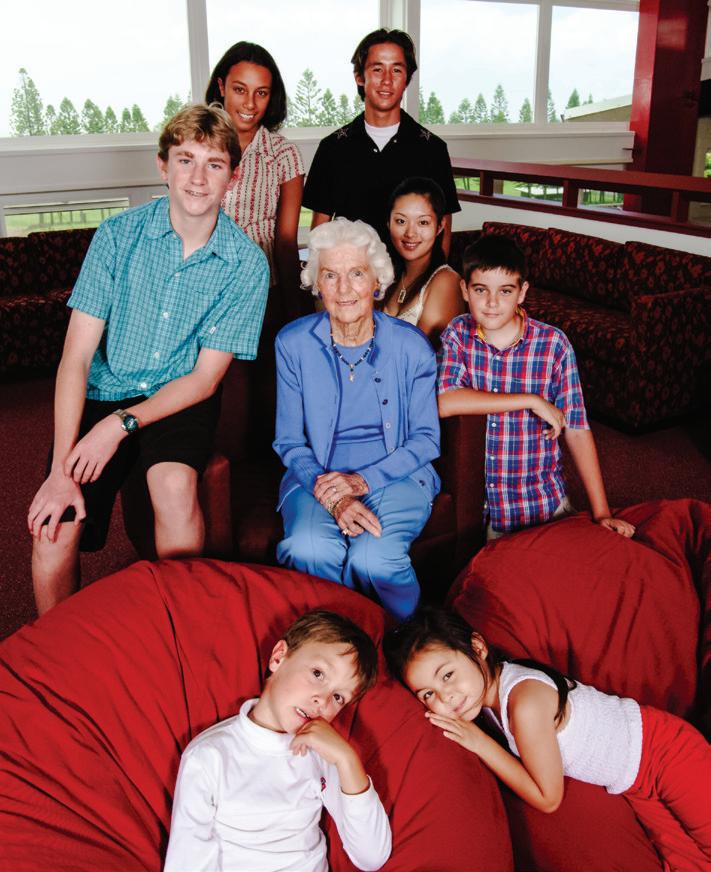
LeBurta Gates Atherton envisioned a building dedicated to all students of HPA — yesterday, today, and tomorrow. With generosity and amazing foresight, Mrs. Atherton created an endowment that supported the facility not only in 2004, the year Ko Kākou opened, but also today and into the future. As each year passes, the building has evolved with each generation.
“I always dreamt about the old ice cream soda fountain idea,” LeBurta Atherton said at the dedication, “to have a place where students could get ice cream or sodas, sit down, relax, chat, and plan things for evenings.” Her vision was
Unlike a classroom or the library, where you’re entering a teacher’s space or a structured environment, Ko Kākou Student Union belonged to the students. That made it special.
– Gabbie Ewing ’15
”
With the support of HPA leadership, Radey-Morgan ’25 brought to life
Mrs. Atherton’s “soda fountain idea” through Ka Makani Café — a vibrant space imagined, designed, and operated by students, for students.
fully realized in 2024, when Wynter Radey-Morgan ’25 pitched an idea for her senior capstone to the leaders of the school for a student-run café.
At HPA, senior capstones provide an exciting period of exploration as our students uncover new talents and possibilities. Capstones help them become self-driven learners who can conceive, develop, problem-solve, and communicate their ideas effectively to the public. Above all, the capstone experience allows our students to put their learning into action around a question, idea, or social need that excites them. “By having a project that you are genuinely passionate about, you know it’s going to be great,” explains Radey-Morgan ‘25. “You have the drive to work on it the entire year.”
The idea for a student-run café first came to Radey-Morgan ’25 while giving a campus tour. “I noticed that boarders struggled to find jobs due to limited hours and the challenge of traveling off campus. Then one day, while touring the Student Union, I saw an unused espresso machine and kitchen area,” she recalls.
With the support of HPA leadership, RadeyMorgan ’25 brought to life Mrs. Atherton’s longenvisioned “soda fountain idea” through Ka Makani Café—a vibrant space imagined, designed, and operated by students, for students. “The plan was a good starting place to realize the vision of the unfinished upper floor café,” says Assistant Head of School for Business Operations Brian Pearson. “It was ambitious in more ways than we fully understood at the time. But like many great projects, the perseverance and hard work of key team members brought the dream to life.”
Student store transformation
Shortly after Ka Makani Café officially opened, I was hired as the student store and café manager to oversee the daily operations. I returned to HPA with the goal of pouring back into a school that had given so much to me and my success over the years. The Café had brought life and a new exciting social space to the upstairs of Ko Kākou Student Union, but in my pursuit of excellence, I had a vision to evolve our student store to create a more inviting place for students.
With the creativity of our maintenance team— and thanks to the extraordinary endowment gift from Mrs. Atherton decades ago—we transformed the space into a new and improved student store. It became a lively hub filled with school spirit gear, logo wear, and quick snacks and drinks to support students through their busy days.
“I think the evolution has seen good change,” reflects HPA Director of Facilities TJ Kalaniopio ’94. “It has remained true to its donors' desire as a gathering place for students. The renovations have come out well and serve the student population as designed.”
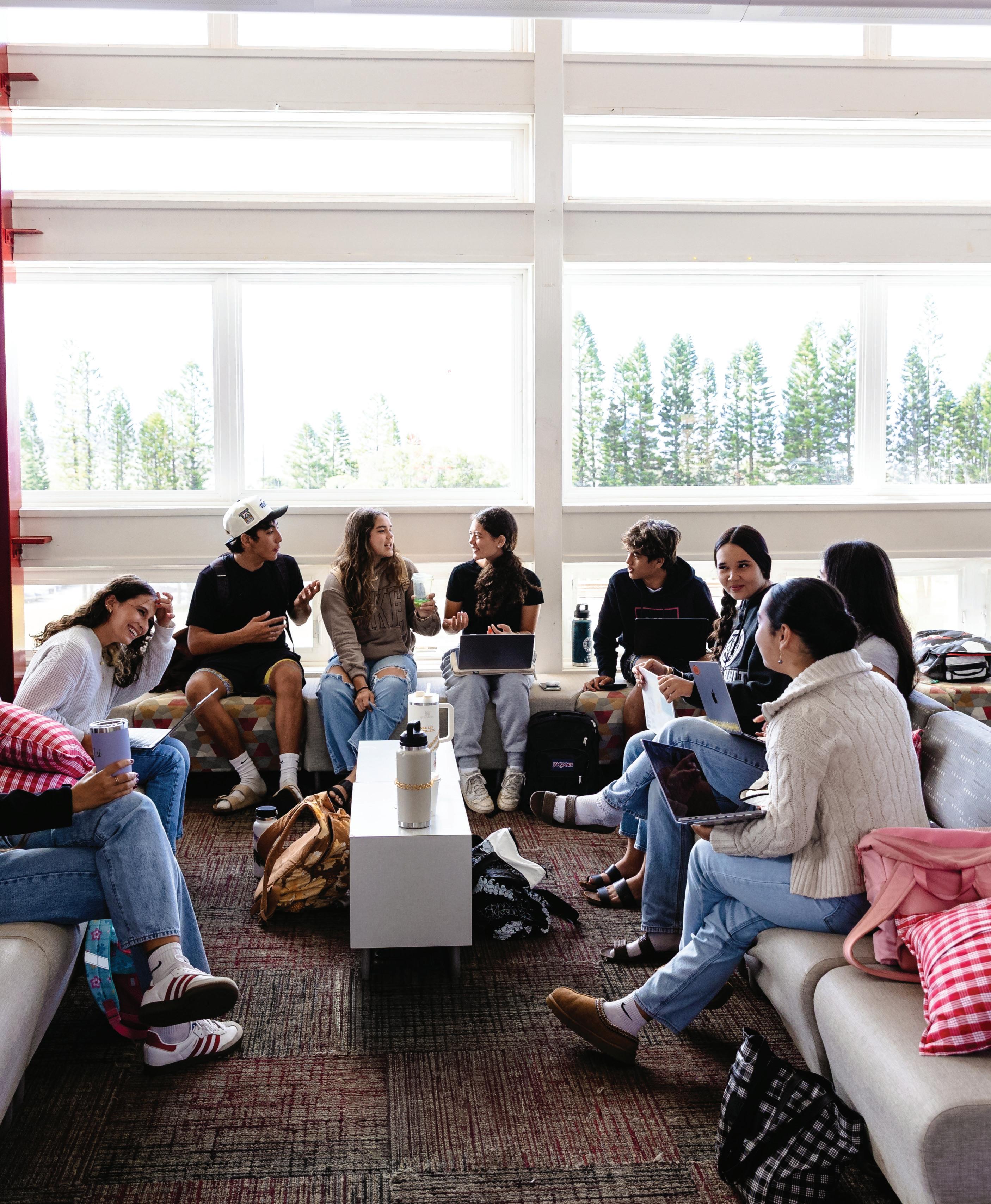
Twenty-one years later, I believe Mrs. Atherton would be thrilled to see the evolution of Ko Kākou Student Union and the positive impact it has had on our students’ time here at HPA. “Ko Kākou Student Union feels like a space designed for connection,” says Maggie Lu ’26. “Other places on campus are often centered around academics, but this space gives us the chance to relax and spend time with one another.”
A central social hub
As new generations of students are welcomed to HPA, the building will continue to foster connection and community. “It feels different because it's one of the only spaces that is truly meant for students to come together and hang out,” says Declan Heaps Estrin ’28. For Mia Harman ’28, Ko Kākou Student Union “supports my social life by always having a friend to talk to, but it also boosts my academic life because my classmates are around to help me with my schoolwork if I need it.”
The building now serves as a central social hub for students. Most recently, Ka Makani Café hosted its first ever Lava Lounge, a rousing student talent show/open-mic. The event was spearheaded by current Ka Makani Café Student Manager, Kate Schwarting ‘26. “I think it would be really awesome to see more student-led events happen in the Student Union,” says Schwarting ‘26. “It’s already a student-oriented building, and that same spirit could carry into gatherings outside of the regular school day.”
– Tayler Wang ’10 “ ”
Ka loli ‘ana is not only about the transformation of Ko Kākou Student Union; it is about the growth of HPA itself, and the way each generation of Ka Makani carries our values forward.
Meanwhile, the space also continues to honor HPA’s past by welcoming alumni back to campus. In addition to hosting Alumni Reunion, Ka Makani Café now holds an Alumni Coffee Hour every third Tuesday of the month—a time for alumni to reconnect, share stories, and enjoy the atmosphere that once shaped their own student experience.
A sense of possibility
In addition to supporting HPA students, Ko Kākou Student Union directly supports HPA’s core goal of honoring the land in both operations and curriculum, with energy efficient buildings and teaching tools that model sustainability and innovation. Rooted in the value of mālama, HPA’s vision for regenerative sustainability, mālama kaiāulu, calls us to care for all members and elements of our community—people, place, and planet.
“As part of the Kennedy Square redesign in 2015, two solar trees were installed to provide power to the building and provide shade in the square,” says HPA Director of Sustainable Operations Greg McKenna. “A small battery system was installed along with the trees to test a possible campus solution for energy storage and efficiency. This system allowed Ko Kākou Student Union to store energy during the day and operate off-grid into the
evening after the sun had set. In 2023, we upgraded this battery system to allow for true off-grid operation of the building. With this new system, the school has increased its renewable energy production and reduced its need to purchase electricity by over 1200 kWh per month!”
Reflecting on Ko Kākou Student Union today, I see more than just a building. I see the generosity of the Atherton family, the laughter of classmates from years ago, the energy of students who now call it their own, and the vision of a sustainable future we are building together. Its walls (and ceilings) hold stories—past, present, and those yet to come—and remind us that true community is always evolving.
Ka loli ‘ana is not only about the transformation of Ko Kākou Student Union; it is about the growth of Hawai‘i Preparatory Academy itself, and the way each generation of Ka Makani carries our values forward. Just as I once walked into the Student Union for the first time with a sense of possibility, I know that future students will do the same, adding their voices to the living story of this place we all call home.
•
A TRADITION OF PHILANTHROPY
For more than half a century, the Atherton family has helped shape HPA, reflecting the vision and generosity of LeBurta “Burta” Gates Atherton.
A longtime HPA parent, trustee, and community leader, Burta believed in the power of education to strengthen Hawai‘i’s future. She helped lead HPA’s 50th Anniversary Campaign, setting a standard for philanthropy and inspiring others.
The Atherton legacy is evident across campus: Ko Kākou Student Union anchors student life; the Gates Performing Arts Center houses creativity and was recently renewed and endowed through Atherton philanthropy; Atherton House provides a place of welcome as the Head of School’s residence; and the J. Ballard Atherton Science Building reflects the family’s enduring support for academic discovery.
The Atherton name at HPA is a living commitment to young people, community, and what education makes possible.
Tayler Wang ’10 returned to HPA in 2024 as the student store and cafe manager. She recently accepted a new role as an assistant director of admission.
Lifting Each Other Up
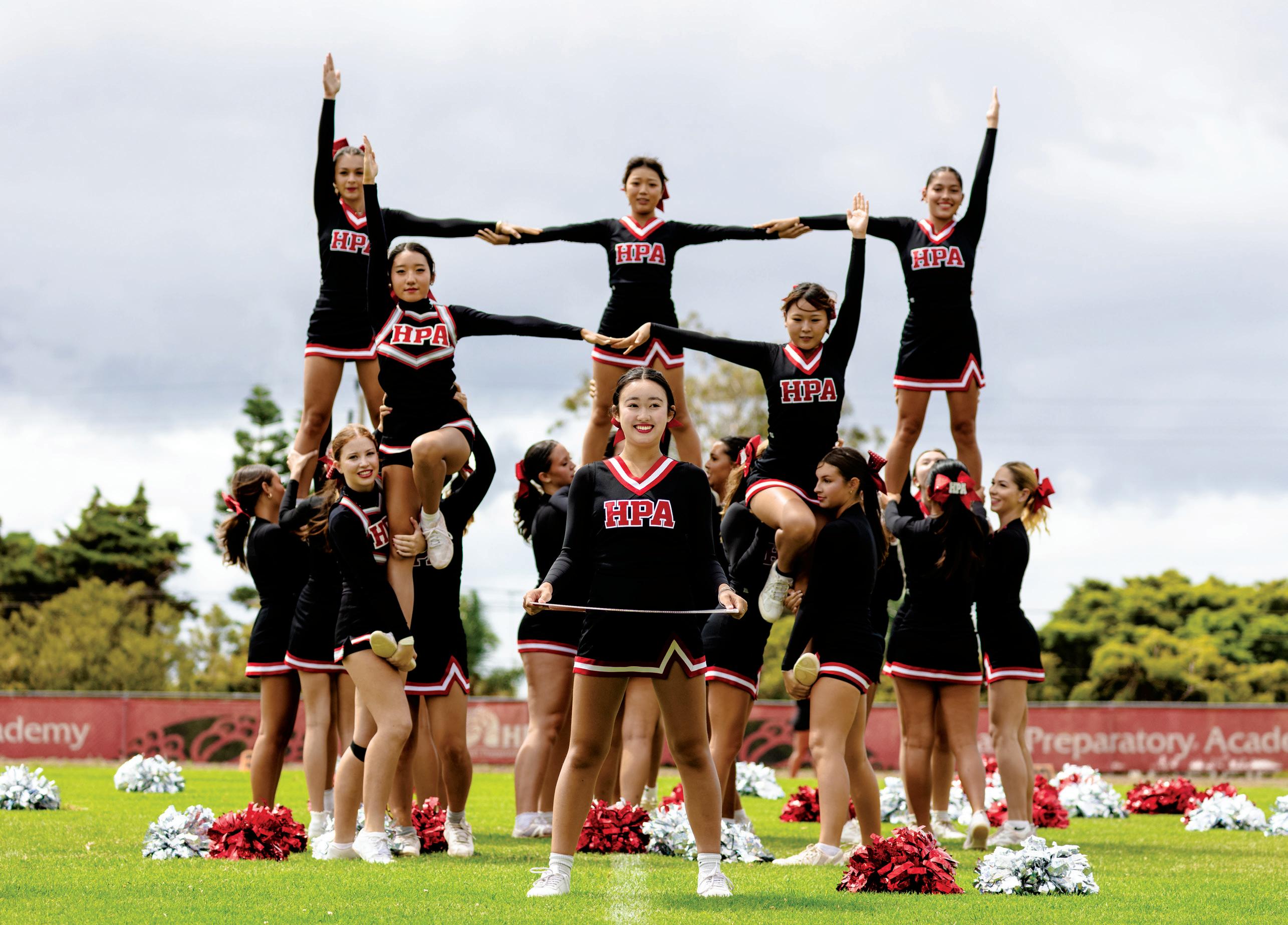
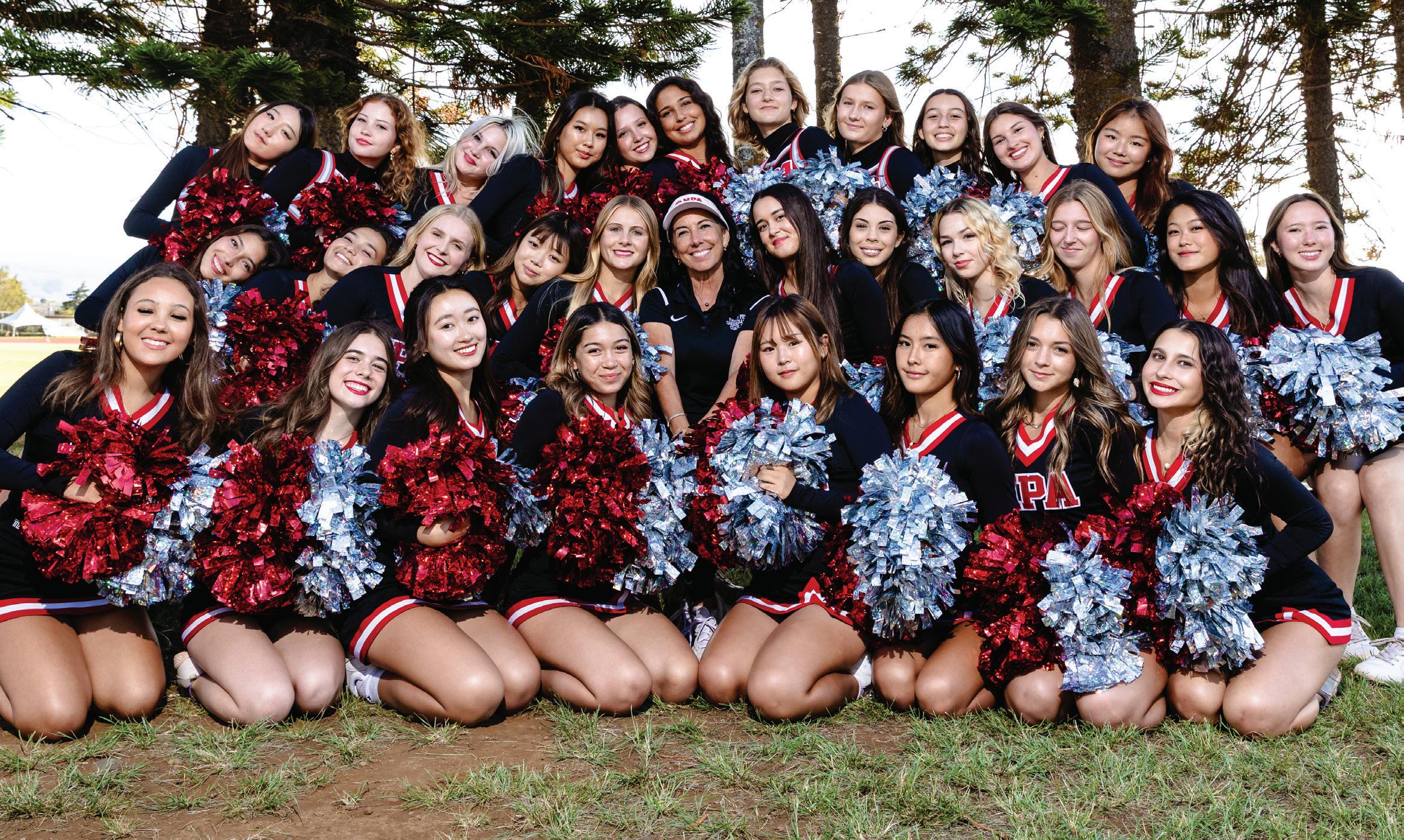
THE HEARTBEAT OF HPA CHEERLEADING
Coach Tori Schneider P’17, ’19 has spent the last decadeplus building a cheerleading culture rooted in teamwork, resilience, and genuine school spirit. The result: a thriving program that’s once again become a defining voice of Ka Makani pride.
Cheerleading at HPA has always been about more than game-day energy. It’s a program steeped in tradition and woven into the school’s history. Under Schneider’s leadership, what began as a handful of students with a
shared love of movement has grown into one of the school’s most popular and spirited teams. For the first time in recent memory, the program had to make cuts for the fall varsity season.
“It was wild,” Schneider says. “We’ve never had to make cuts before. But with over 40 students trying out, we simply couldn’t fit everyone. It’s a good problem to have.”
That enthusiasm reflects just how far the program has come. Once a small, scrappy squad, HPA cheerleading now embodies the diversity and vibrancy of the school itself, bringing together day and boarding students from around the world. Thanks to the dedication of Schneider and fellow HPA parent MJ Allison P’29, ’31, the program has even expanded to the Village Campus, where younger students are discovering the joy of movement and school spirit early on, planting the roots for future Ka Makani cheerleaders.
A lifelong dancer who began performing at age three, Schneider grew up surrounded by choreography and rhythm. She went on to dance at Louisiana State University and later taught dance and cheer. Nearly 20 years ago, when
she and her family moved to Hawai‘i, Schneider became an active HPA parent. Her sons, Austin ’17 and Jake ’19, both graduated from the school.
“I realized at some point that it was time to do what I wanted to do again,” says Schneider. “My kids were grown, and I missed that feeling of being part of a team.”
Practices at the Upper Campus begin with a lap around the field to clear the mind and transition from school to sport. Phones go into a box. There are no screens, no distractions — just teamwork. “The person who walks in at 3:30 and the one who leaves at 5:30 are different people,” Schneider says. “They’re happier. They’ve worked hard, they’ve laughed, they’ve connected. That’s the magic of it.”
For senior cheer captains Cameron Goodwin, Kekai Lansdale, and Ayaka Sumimoto, cheerleading has been a defining part of their HPA experience. “I feel like it’s a really positive environment,” Goodwin explains. “The whole group of girls is close. Even though there are a lot of us, everyone’s friendly. Everyone lifts each other up.”
Lansdale laughs. “Yeah, literally — we lift people up in the air! But also emotionally. When someone’s down, everyone’s there for them. It’s like having an extra family.”
Senior Ayaka Sumimoto, who came to HPA from Japan, says cheer was the perfect activity to try in a new place. “It’s such a fun way to meet people right away,”
she says. “A lot of international students think, ‘I want to try American cheer!’ and it really helps us start the year feeling connected and part of the community from the beginning.”
Cheer demands far more than most people realize. “In cheer, you’re learning words to rhythm and motion,” Schneider explains. “It builds confidence, and you start to see them open up not just as athletes, but as people.”
As a varsity fall sport, the team rallies at both home and away football games while also showing up at other athletic events and community gatherings. Many cheerleaders continue through additional seasons with cheer as a co-curricular, offering spirit and support year-round. Balancing classes, practices, and late-night games takes dedication, time management, and a deep commitment to their team and school.
“Time management is the hardest part,” Lansdale says. “We get stressed about making sure our routines are perfect, but once we’re out there performing, it’s totally worth it.”
Goodwin agrees: “Even when I’m tired or stressed, I know practice will help me reset. You leave feeling better.”
That philosophy is exactly what Schneider hopes her athletes carry forward.
“High school is where you build resilience,” she says. “You learn to push through the hard days, support each other, and find joy in the work.” •
A Real Big Dill
PICKLEBALL BUILDS COMMUNITY AT HPA
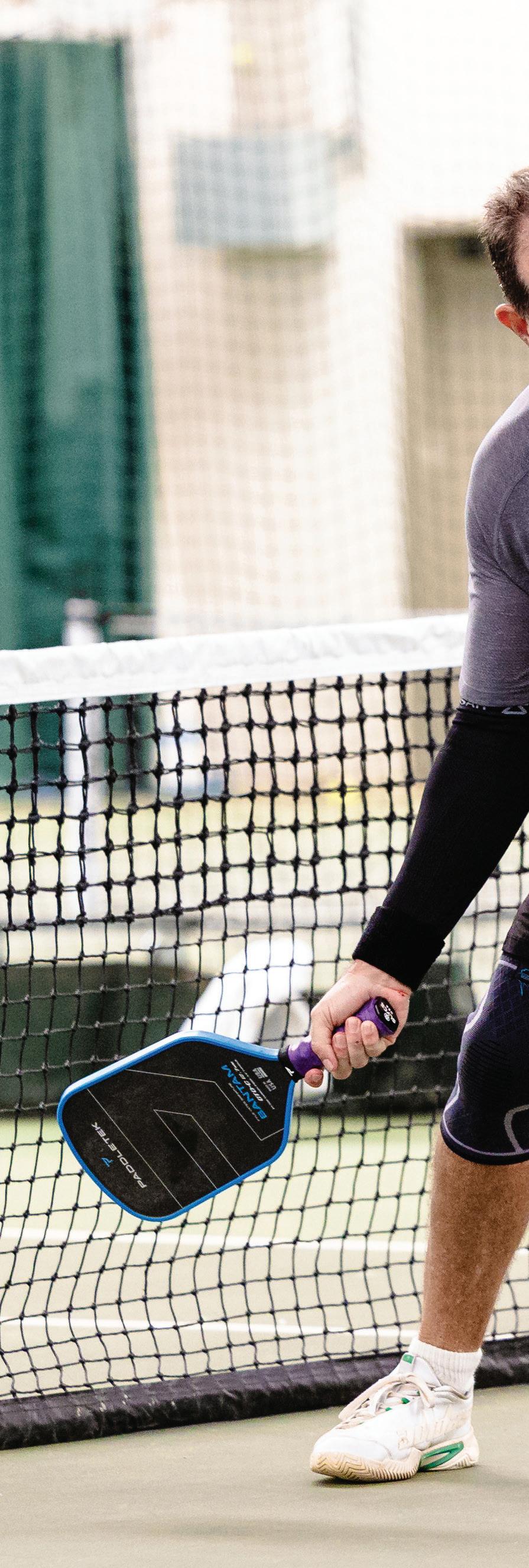
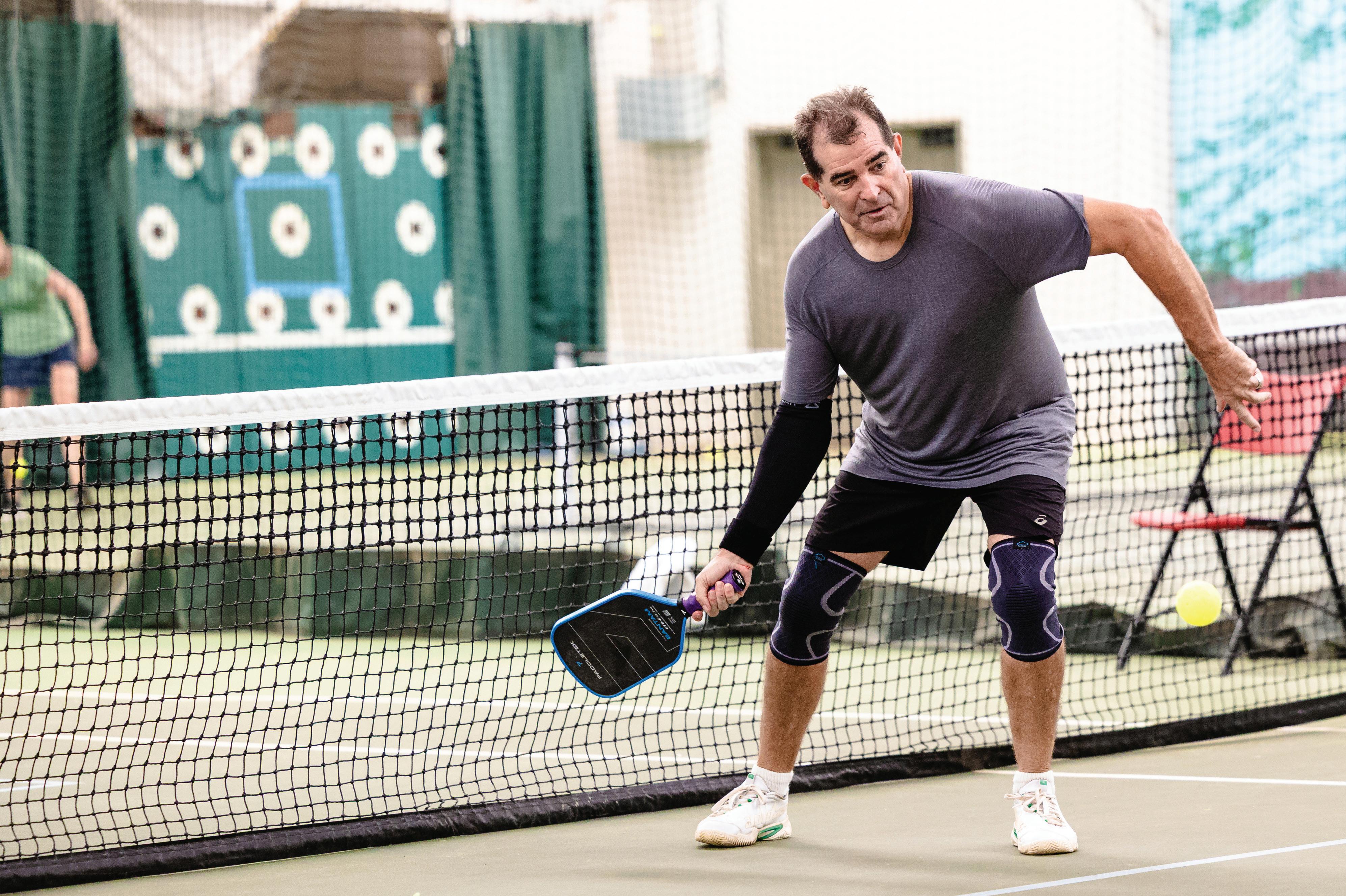
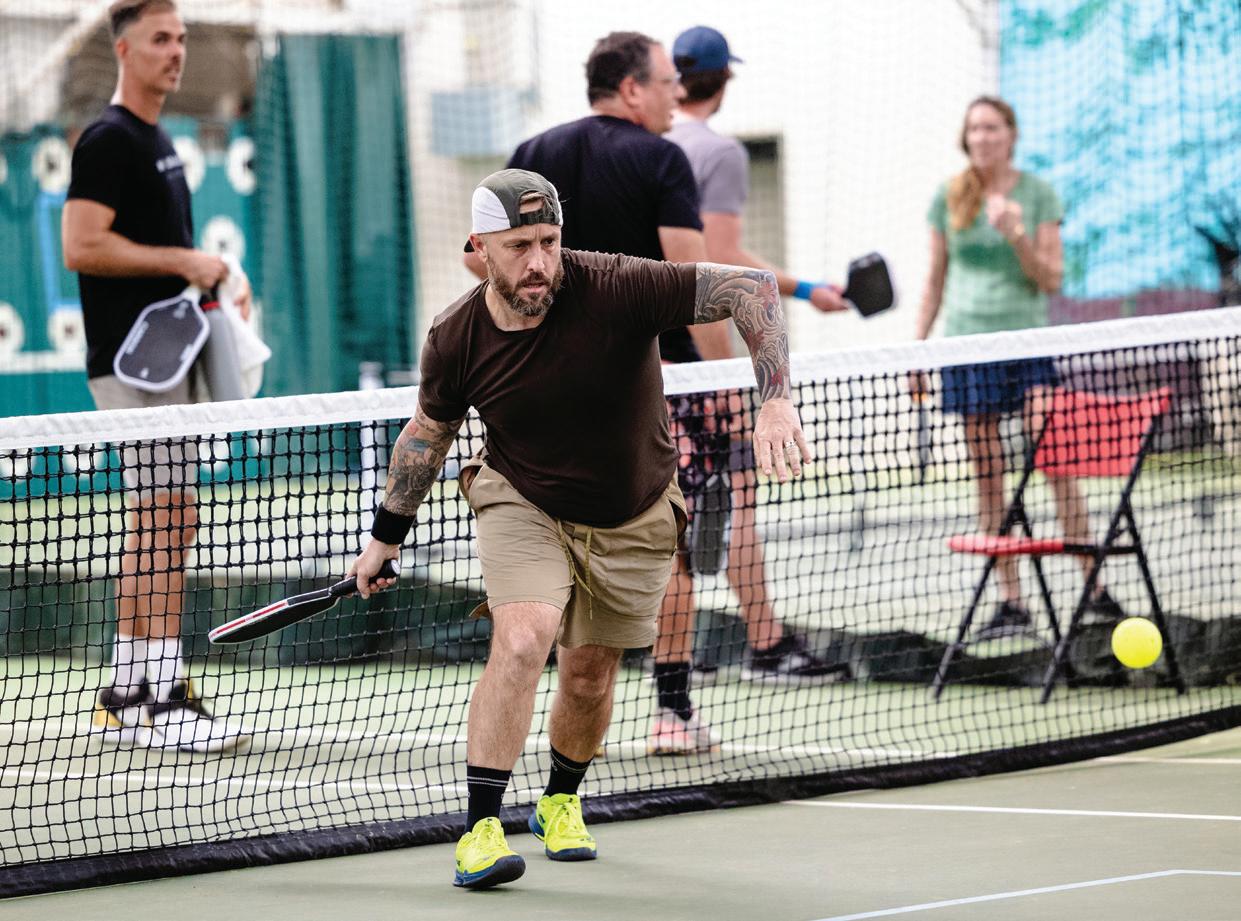
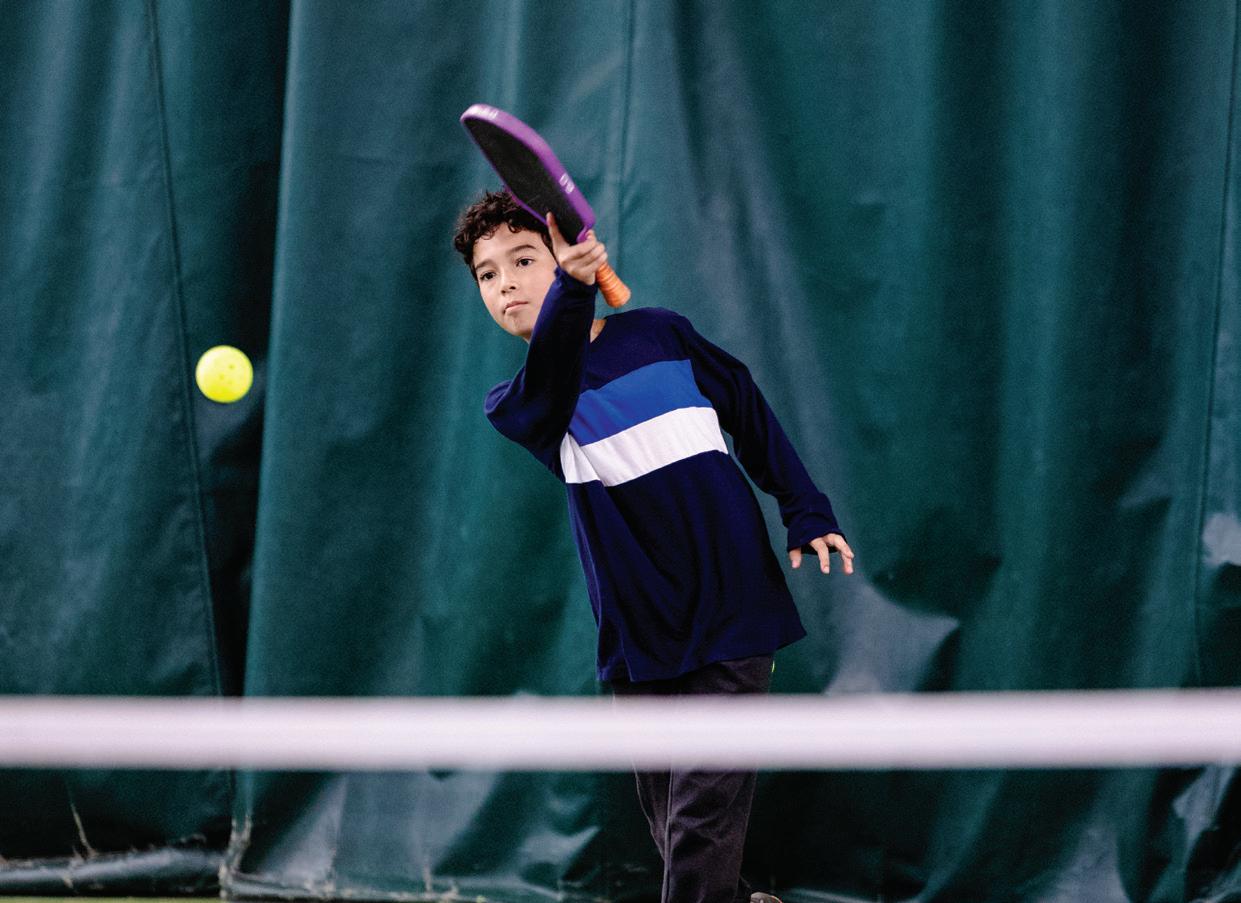
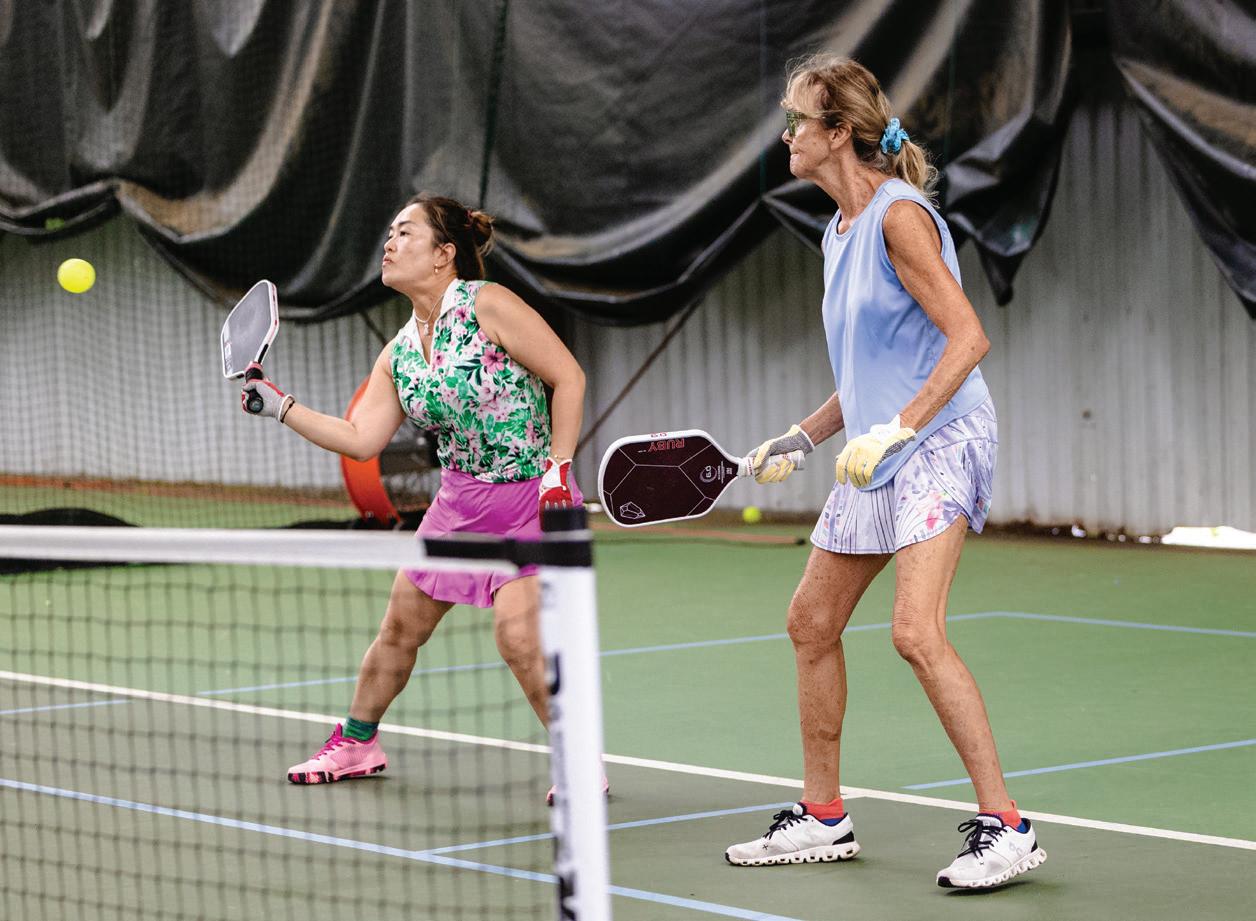
Ahandful of players looking for court time has turned into one of HPA’s most vibrant communities. Nearly every day, the Rutgers Tennis Center pulses with the pop of paddles and the sound of laughter as players of all ages rally, compete, and connect through pickleball.
For Steve Hunt, parent of alumni Conor Hunt ’20 and Mason Hunt ’22, pickleball offered a way to rediscover his love for sport and competition. A former competitive tennis player at the University of Washington, Hunt says pickleball became a natural next step after injuries slowed down his tennis career.
“With tennis, the serve puts a lot of stress on your arm,” he says. “I tore my UCL and couldn’t serve anymore. But pickleball uses an underhand motion, which gave me a way to keep playing competitively without pain.
In the early days, pickleball lines at Rutgers were made from blue painter’s tape — peeled up, scuffed off, and replaced every few days. Today, the majority of those makeshift markers have been replaced with crisp, permanent lines — a subtle visual reminder of how deeply the sport has taken root at HPA.
“We’ve got play happening almost every day — mornings, evenings, weekends,” says Hunt. “You’ll see HPA teachers, alumni, staff, even students’ families coming out. The facility is perfect with covered courts, no wind, no rain, lights for night play. It’s really become a community hub.”
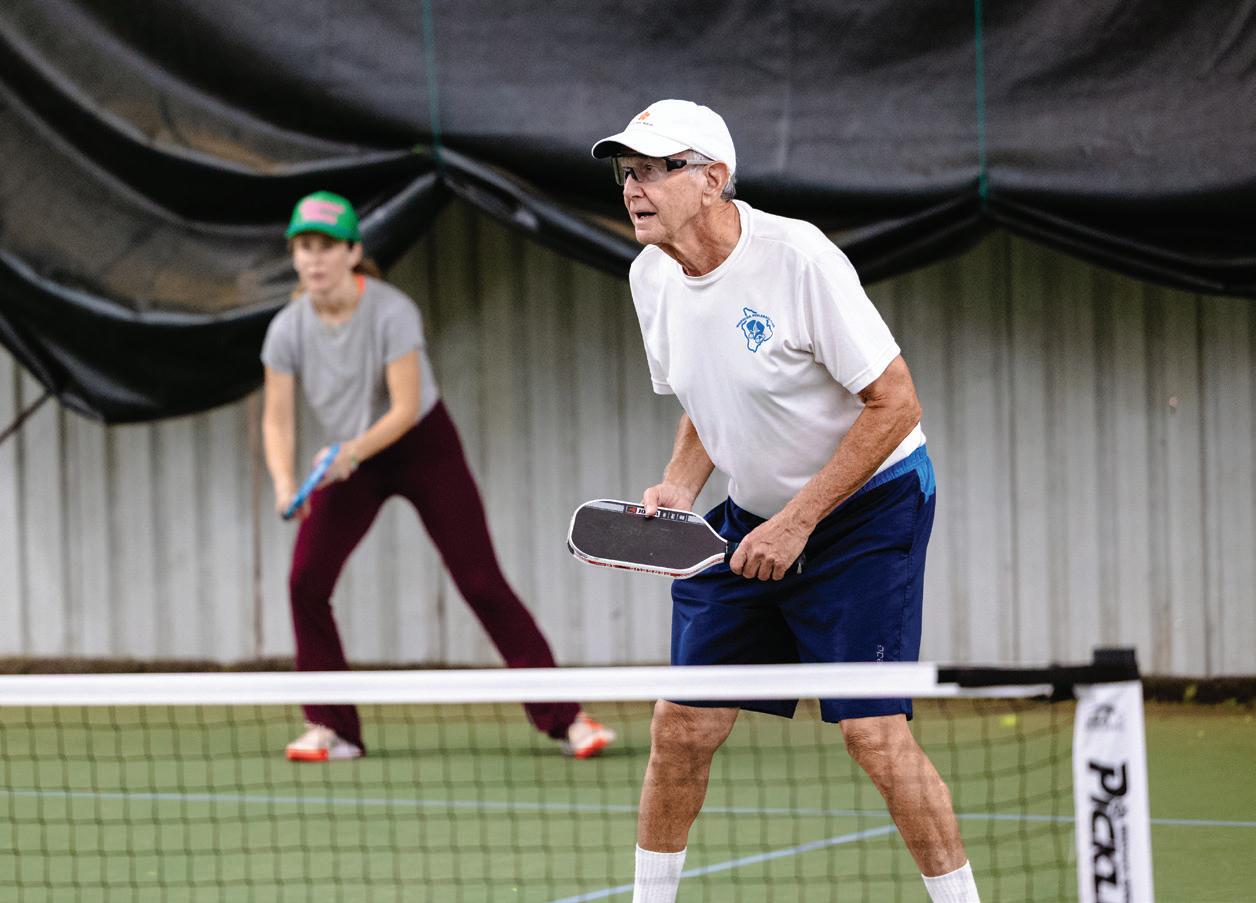
Players range from young beginners to retirees, united by a love of the game. It’s part of the reason pickleball has been dubbed the fastest-growing sport in America. It bridges generations and skill levels with relative ease.
“Our oldest player is 96,” Hunt says with a laugh. “It’s multigenerational, and everyone finds their place. The more experienced players mix in with the newer ones to help them get better. It’s competitive but welcoming.”
That sense of welcome is echoed by Waikōloa resident Gary Zipkin, another longtime player and one of the key figures in bringing pickleball to HPA. Zipkin began playing nearly a decade ago while living in Alaska.
“I got addicted right away,” he said. “It’s fun, easy to learn, and it brings people together. Men and women can compete on the same level, which makes it great for families. It’s social, it’s exercise, it’s friendly — that’s the word I’d use most.”
Beyond tournaments and regular play, the group has grown into a true social network. Birthdays, potlucks and casual gatherings happen almost as often as matches.
Steve Hunt P’20, ’22
“You make so many friends here,” Zipkin says. “We see each other on the courts, and then we’re meeting for lunch, helping each other out. It’s a real community.”
That sense of camaraderie is exactly what HPA hoped to inspire when it welcomed pickleball players into the Rutgers Tennis Center — creating a space where two beloved sports could thrive side by side. What began with a few taped lines and borrowed nets has evolved into a vibrant example of how shared spaces and shared passions can unite a community.
“The improvements we’ve made to the facility have really elevated the experience for both tennis and pickleball players,” says Brian Pearson, HPA’s assistant head of school for business operations, a frequent pickleball player himself. “It’s more inviting, safer, and a win for all racket-sport enthusiasts.” •
THE RUTGERS LEGACY
HPA’s Rutgers Tennis Center opened in 1999 thanks to the generosity of longtime HPA trustee, parent, and grandparent Nicholas G. Rutgers, IV (a descendant of the namesake of Rutgers, The State University of New Jersey) and his wife Nancy Rutgers. Nick was a strong believer in the value of a “life sport.” Upon opening, the center earned national recognition, receiving a United States Tennis Association award as one of the top tennis facilities in the country.
Though both Nick and Nancy have since passed, their Ka Makani legacy spans generations: all four of their children are HPA alumni, as are four of their grandchildren and two great-grandchildren. Today, members of the Rutgers ‘ohana continue to take an active interest in HPA athletics and its central role in campus life.
Gary Zipkin
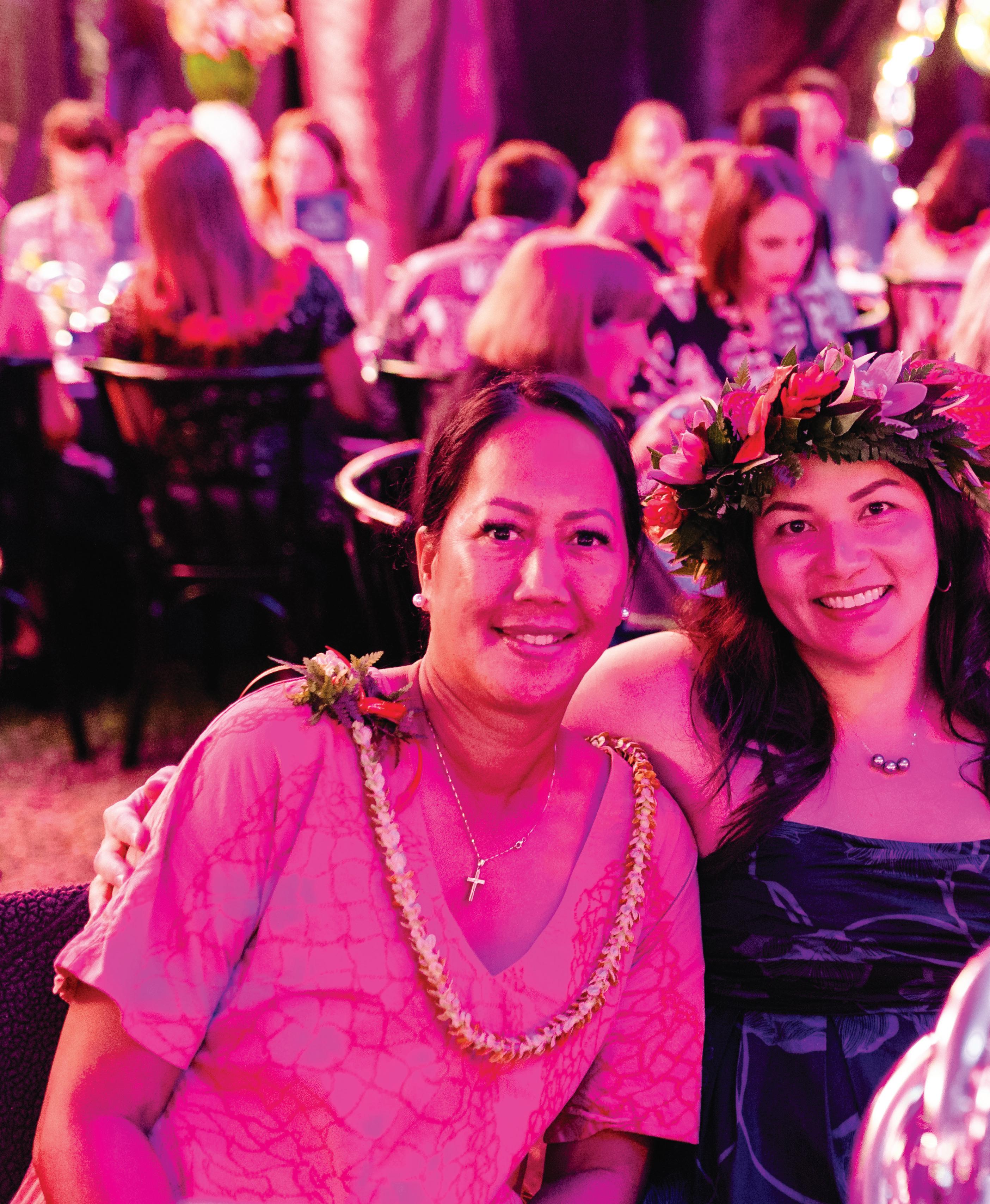
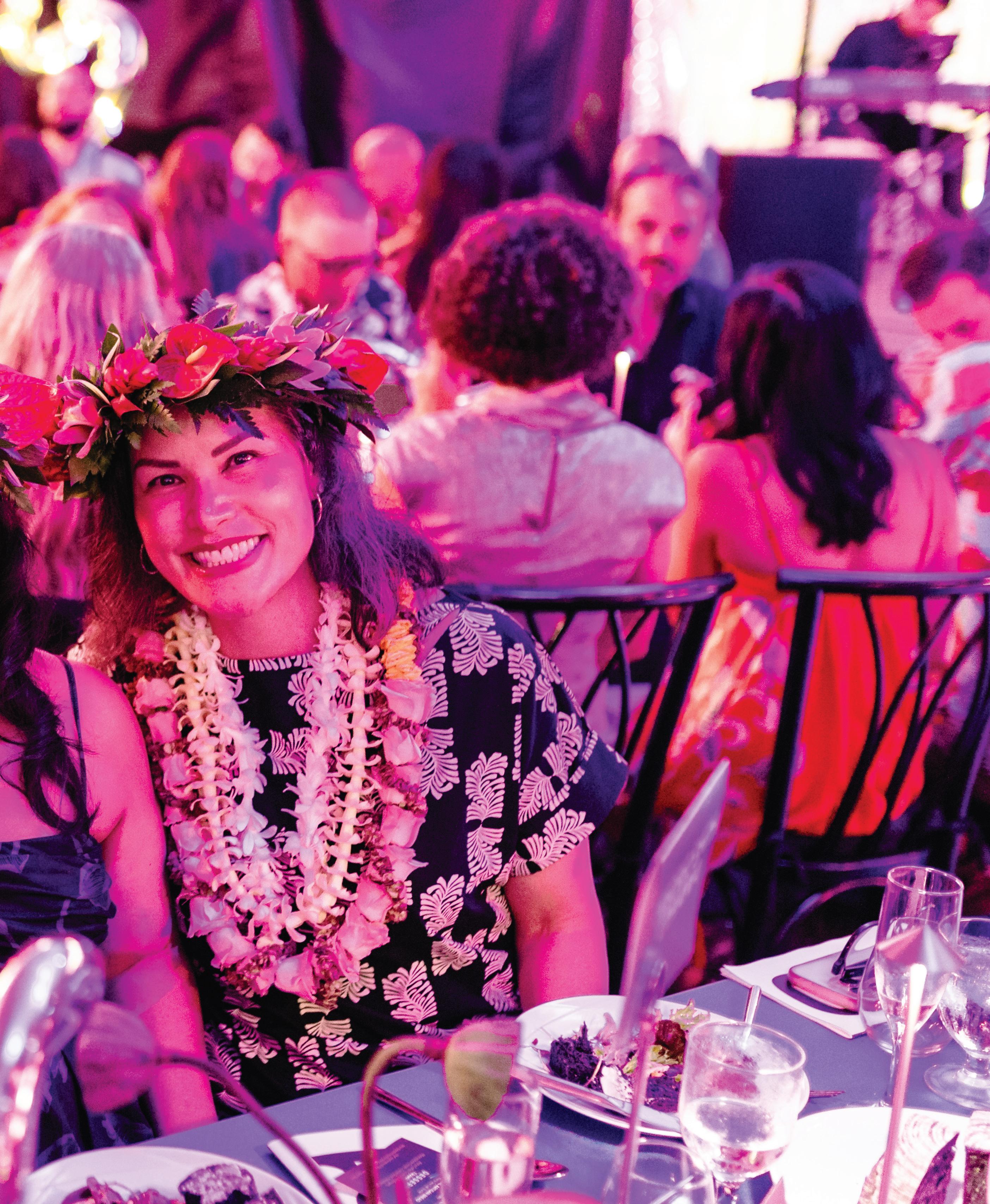
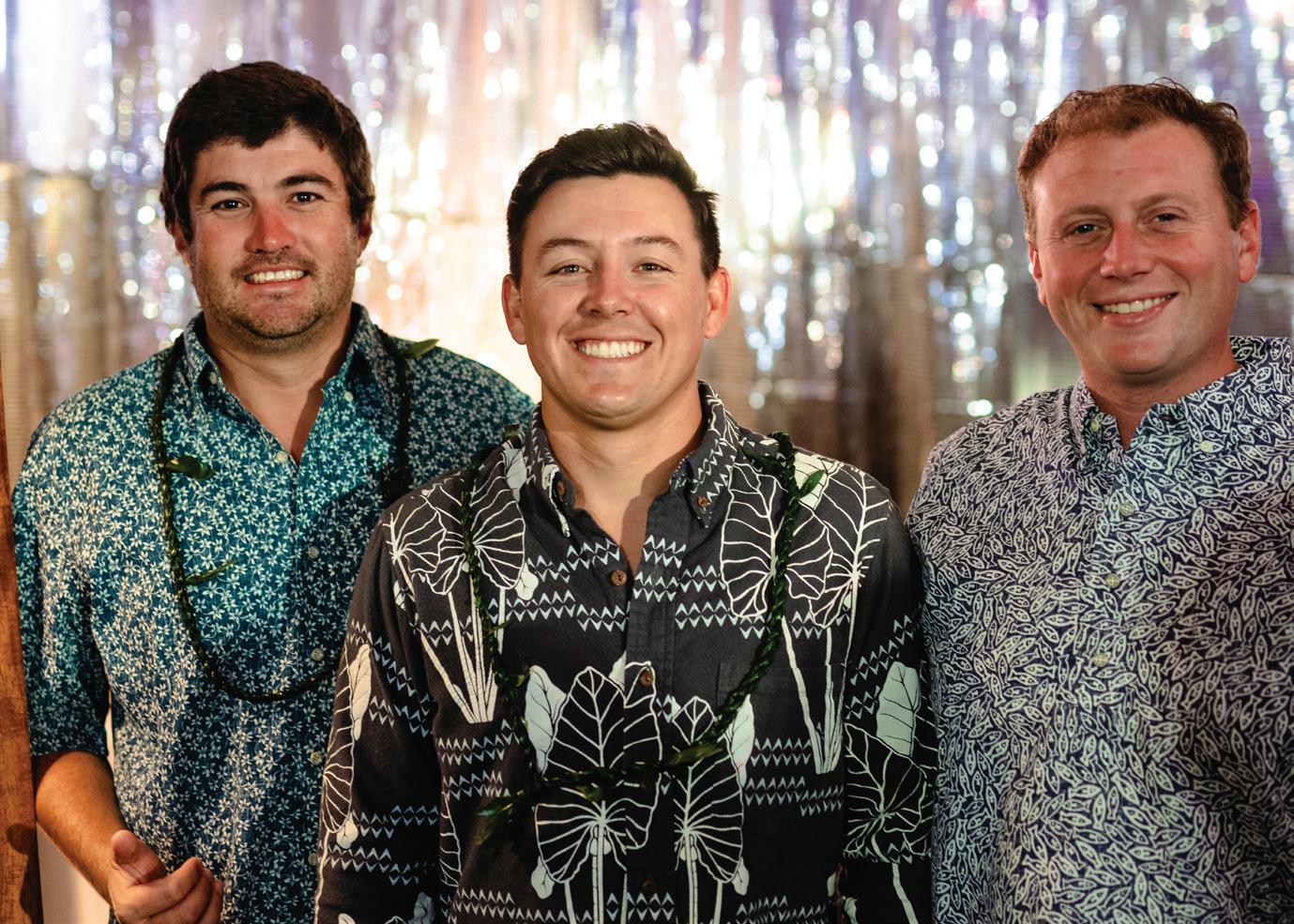
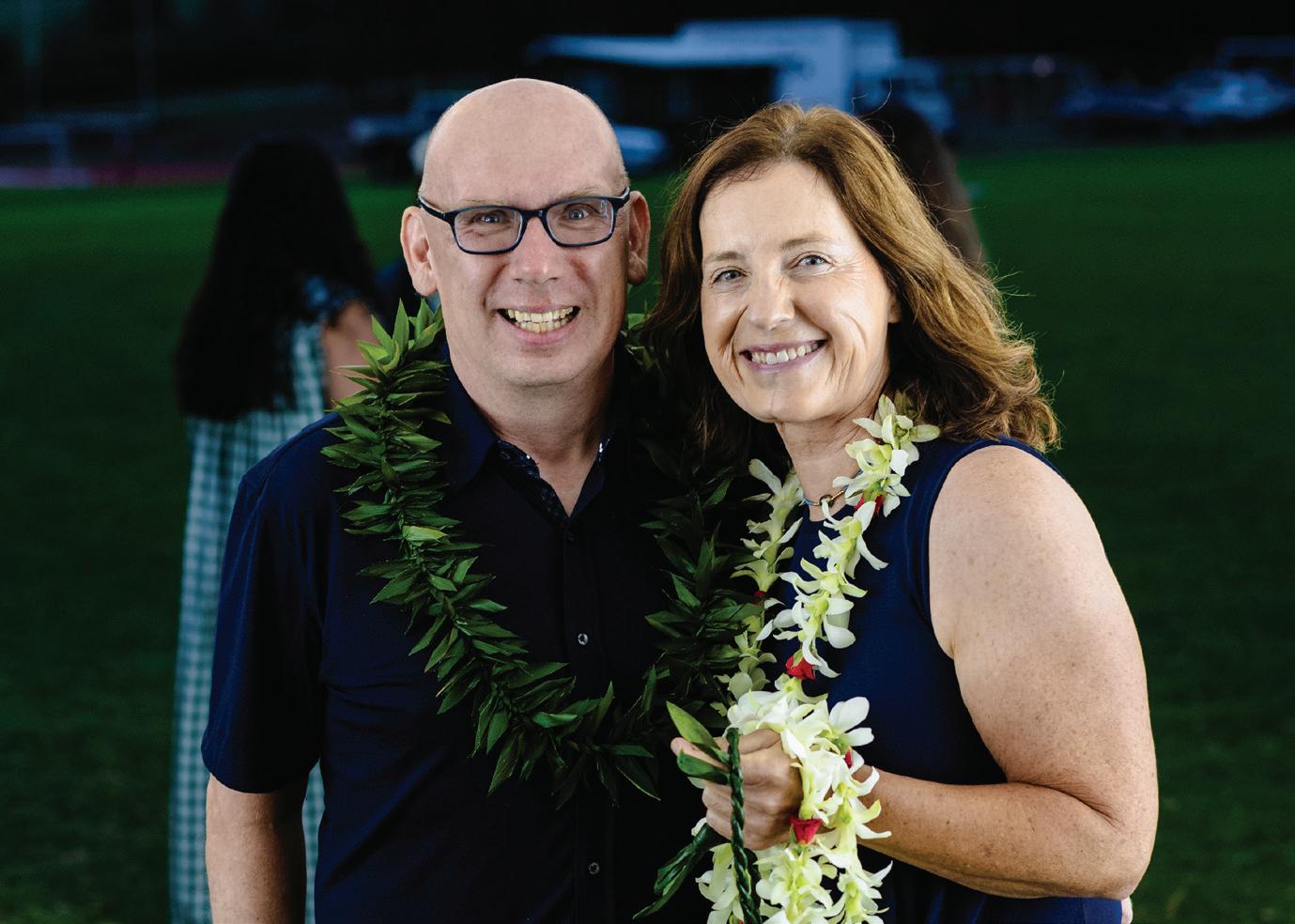
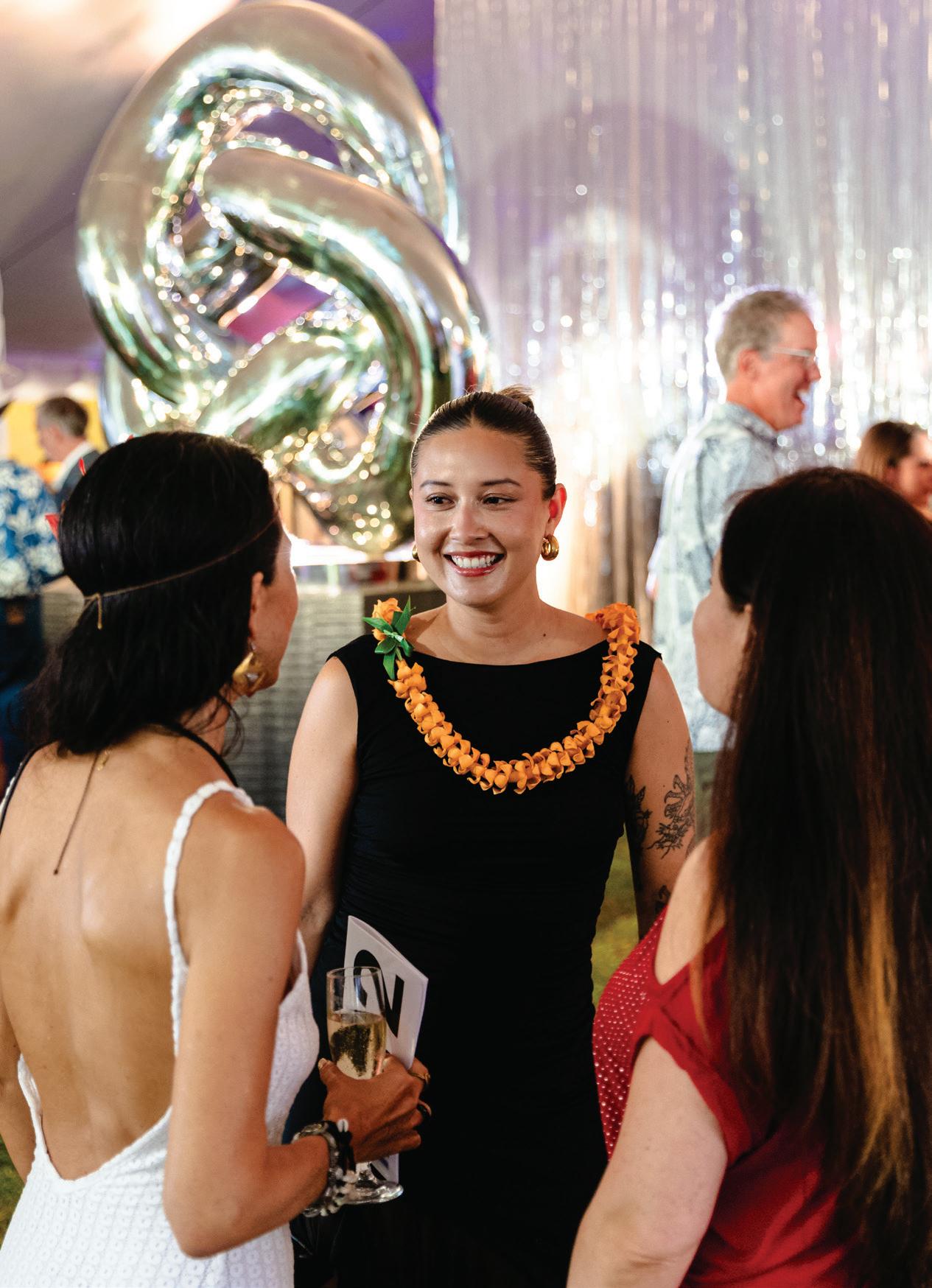
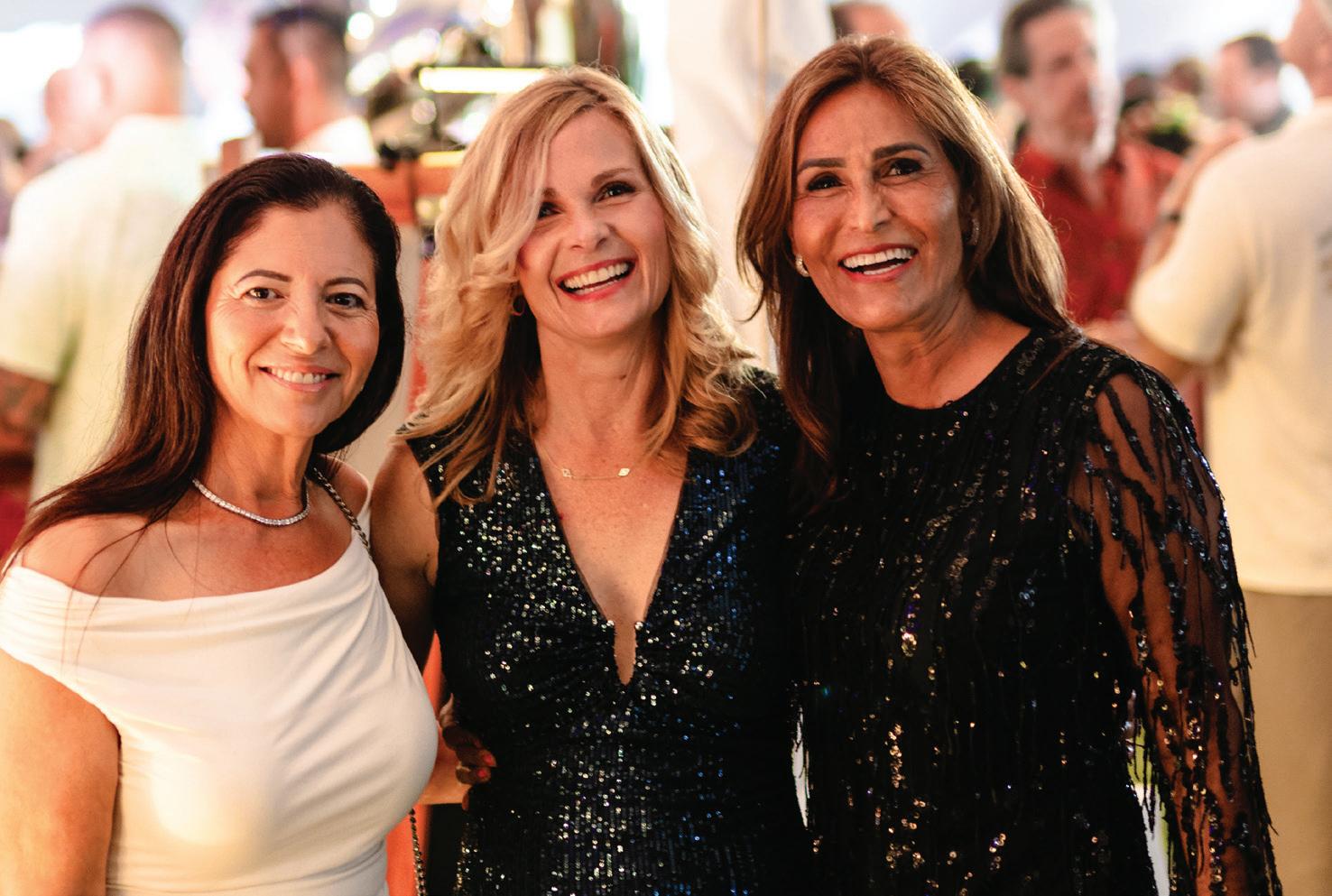
Alu Mai 2025 once again brought the HPA ’ohana together in support of financial aid. See photo spread inside.
Inside Alu Mai 2025
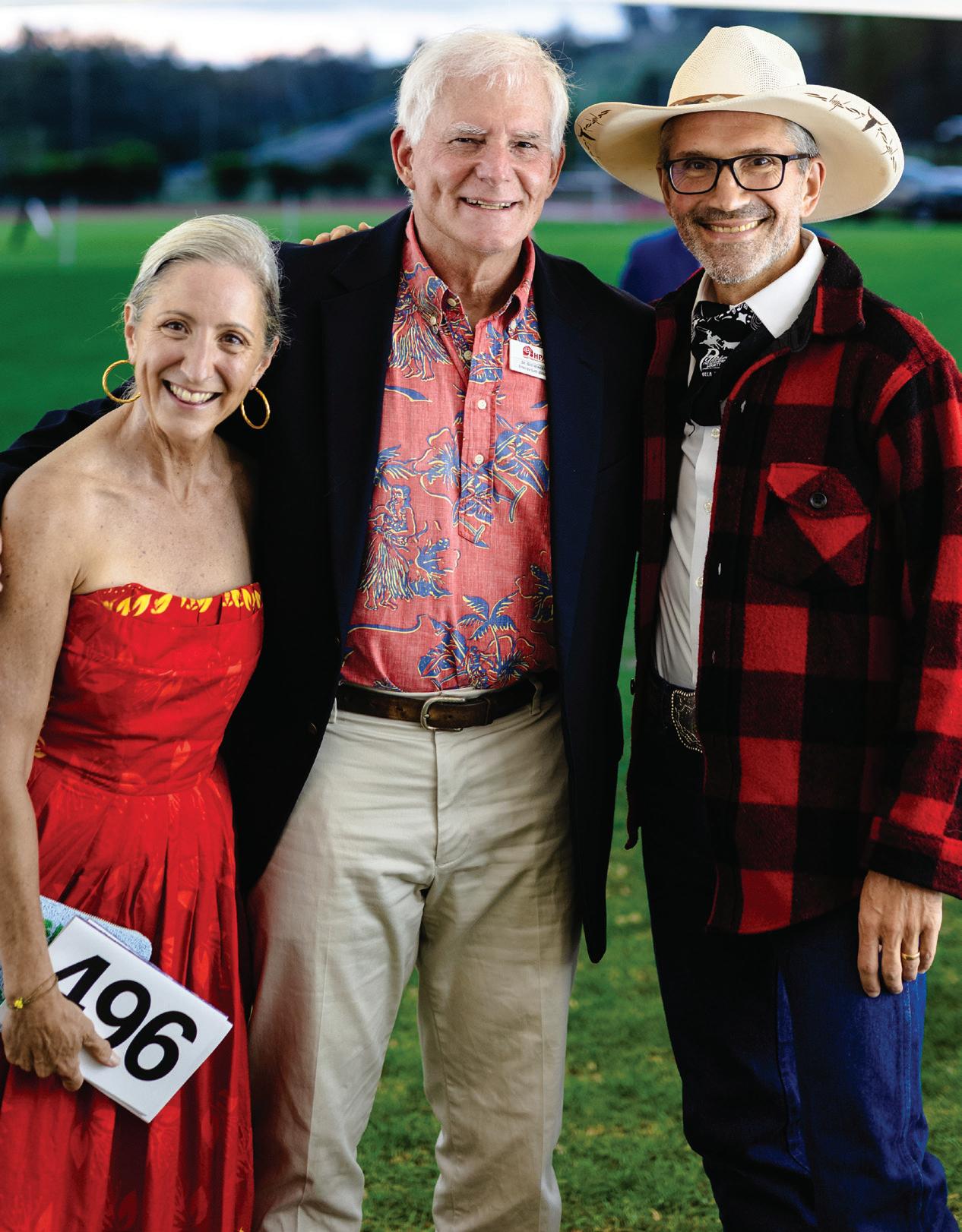
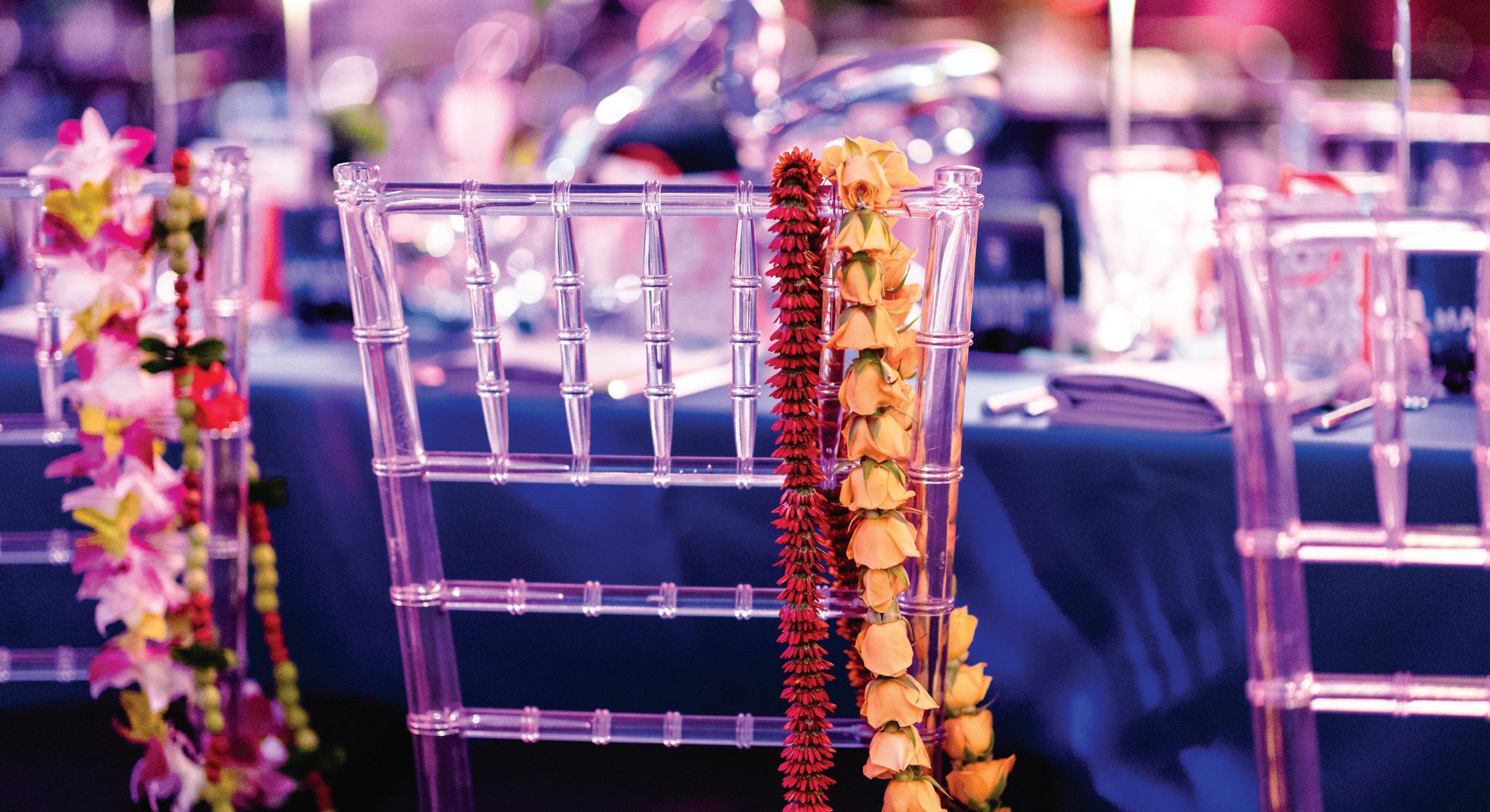
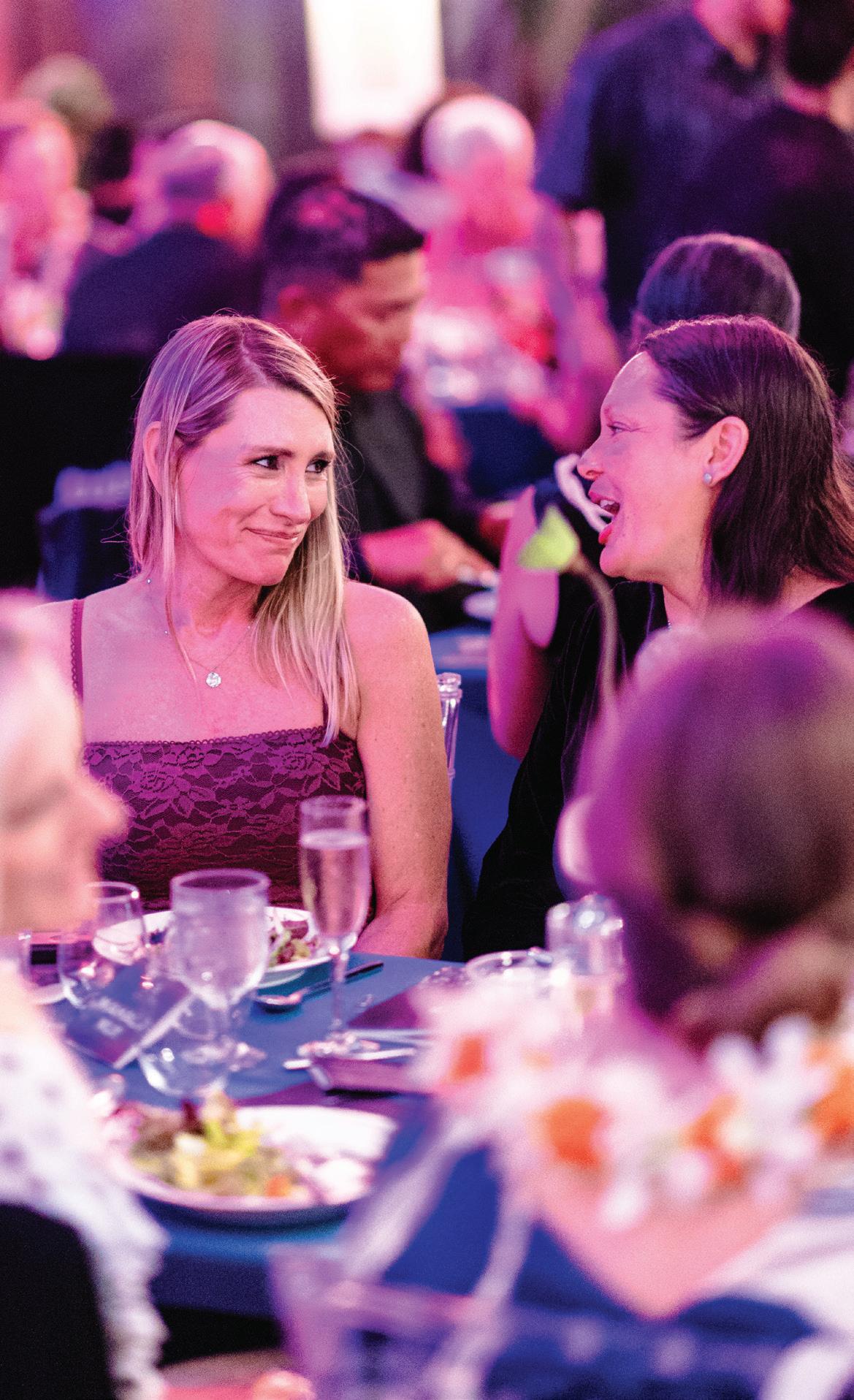
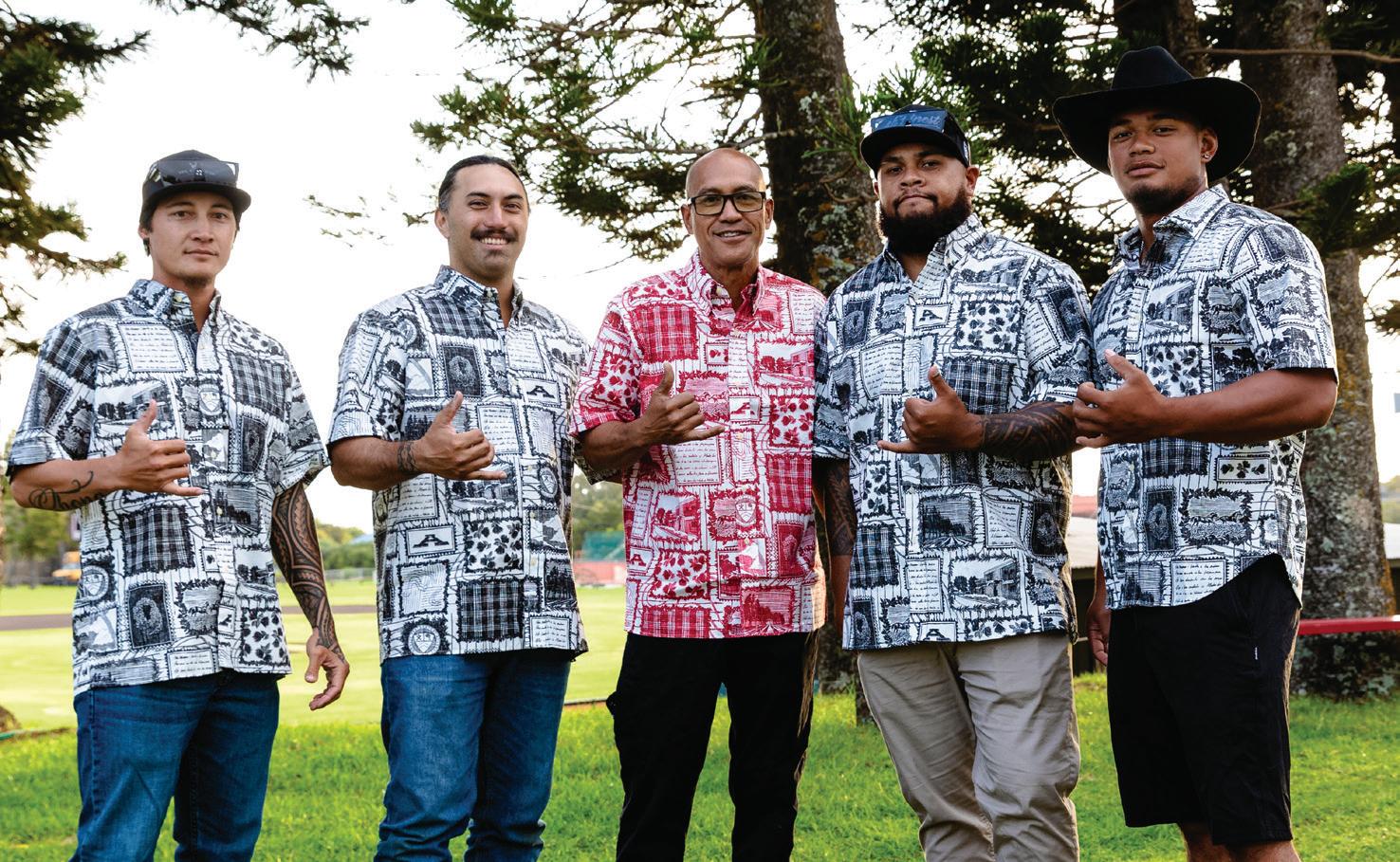
Guided by this year’s theme of cosmic connections, Alu Mai 2025 illuminated the many hands, hearts, and generous spirits that converge to make financial aid possible at HPA. With more than $600,000 raised, the night extended its reach well beyond the room, directly shaping student opportunity in the year ahead. The images on these pages capture not just the celebration, but the essence of what made it meaningful — people coming together, linking effort to purpose, and adding their light to the whole. A single evening, held together by the connections that continue long after the last dance.
Class Notes
60s:
William (Bill) Troy ’60 has spent 55 years in transportation operation, management, and ownership in Alaska, Saudi Arabia, and the Pacific Northwest, working with trucking, tug boats and barges, and railroad special equipment. Richard Lippman ’62 shares that he is currently writing a book. Bruce Briten ’64 recently returned from spending six weeks in Norway and is planning on moving there before the end of next year. Mel Pobre ’64 wrote in to share that Eugene Hamamoto ’64 was struggling with some health issues, to which he succumbed on February 1, 2025. “He had a good life and we will all remember him dearly.”
Randy Brown ’66 writes that he had “a very successful crossing of the three channels from Maui this Easter. The first was the Pailolo Channel, whose name means ‘slapped silly’ or ‘crazy water’ due to the challenging winds and waves. Next came the Kolohe Channel, meaning ‘rascal,’ which lived up to its name as we were blown westward right from the start. Finally, the ‘Au‘au Channel, while earning its name, was the smoothest and easiest crossing.” The three channels took approximately five and a half hours to traverse. “I slept really well due to exhaustion, but also the rocking of the boat is like being in a baby's crib. Saturday night we went up to Mike Spalding ’66’s to sleep there, and Jill provided us with a wonderful dinner. She has an extensive garden so the salad was extraordinary but so was the pork roast and the mashed potatoes with a delicious mushroom gravy that I helped to make. It was Mike’s grandson, Haena’s
(means strong) 26th birthday so we had a great celebration with fudge chocolate cake. We averaged over 70 years of age and set the record for consecutive swimming of all three channels.”
Dave Thomen ’67 reports that his family welcomed a new grandson in October, followed two months later by the college graduation of his oldest granddaughter. He notes that his four grandchildren now span an entire generation.
Dick O’Donnell ’69 serves as Assistant Governor for Rotary District 7690 and will return as club president in 2025–26. Tom Sofos ’69 shares the sad news that the class lost Joan “Fluffy” Greenwell Anderson ’69 this year. “She was a good friend to all of the class of 1969,” he writes. “She was a stunning beauty back then. It was like going to classes with Marilyn Monroe… She will be missed.”
(continued on page 42)
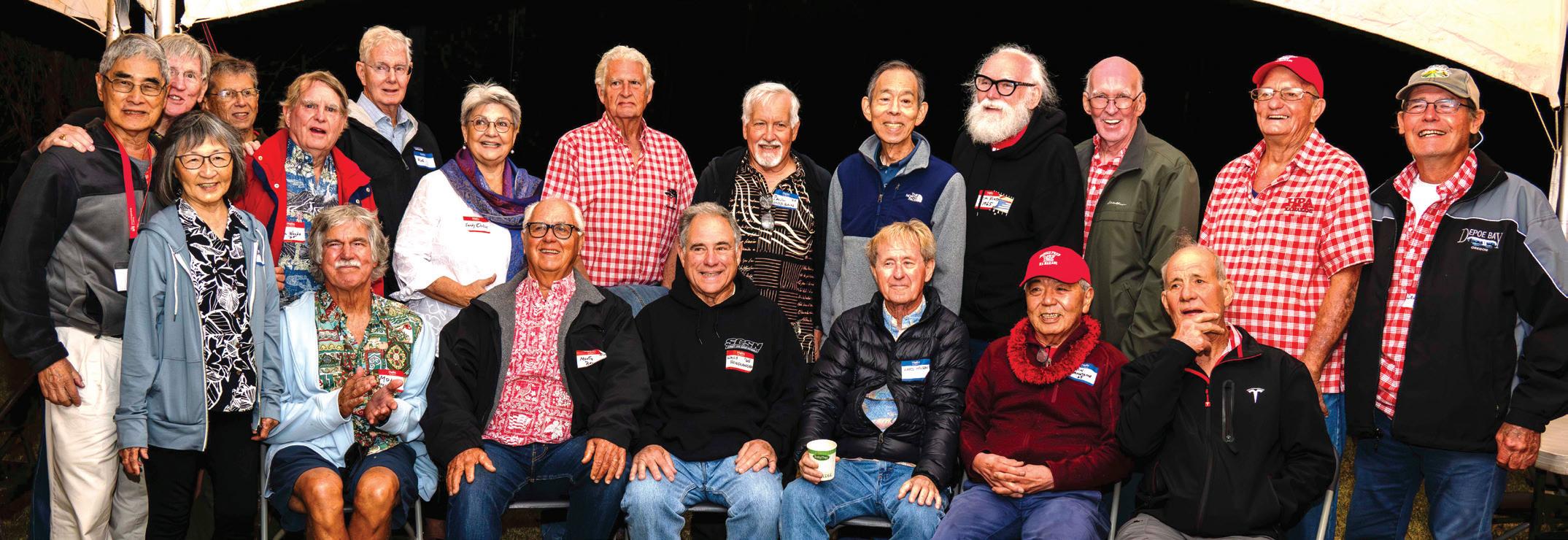
Members of the Class of 1965 gathered in August to celebrate their 60th reunion. “We celebrated with two days of imu preparation, catching up, and a seven course luau,” Jim Dahlberg ’65 writes. Those in attendance included HPA teachers, staff, and spouses; Mr. Tooman, Mr. Colson, and Mr. Wawner; Coach Gus Damon, Business Manager Mr. Hancock , Mr. & Mrs. Hall, many members from the classes of ’63, ’64, ’66; “and our guest of Honor Aunty June who as usual shared her kolohe humor. Over 250 people attended the splendid setting behind Alvin Wakayama ’65’s Kamuela Liquor Store who supplied the libations. A BIG MAHALO to HPA's head of maintenance TJ Kalaniopio ’94, his staff, and Headmaster of Parker School, Mr. Dunn and Chris Wong for supplying the tents, tables, chairs and generators.”
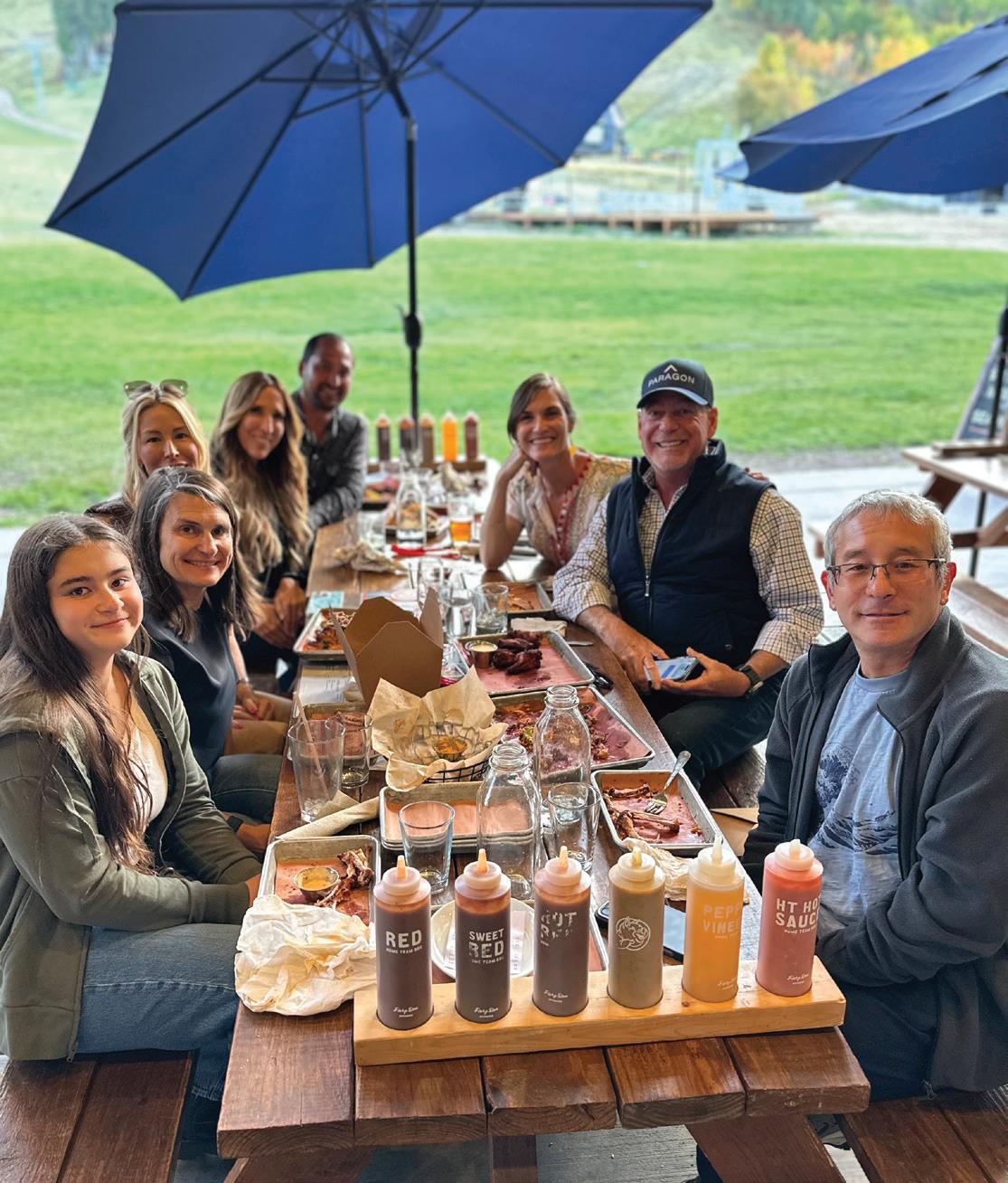
1. HPA alumni, parents, and friends gathered in Aspen, CO this September to celebrate their Ka Makani connections and catch up with fellow members of the HPA ‘ohana.
2. Mebane Atwood-Boyd and Alan Boyd taught at HPA in the 80s and 90s with current Athletic Director Steve Perry. They stopped by recently to catch up on old times.
3. Long-time faculty member Jay Wilder passed away in August. Read more from his brother, Hugh, on page 44.
4. Sheila Crosby Powell ’77 and her husband Matt took the trip of a lifetime to Australia this summer.
5. Mrs. Donoho and Mrs. Sebastian were delighted by a surprise visit from Jane Lee ’10, who dropped by campus to reconnect.
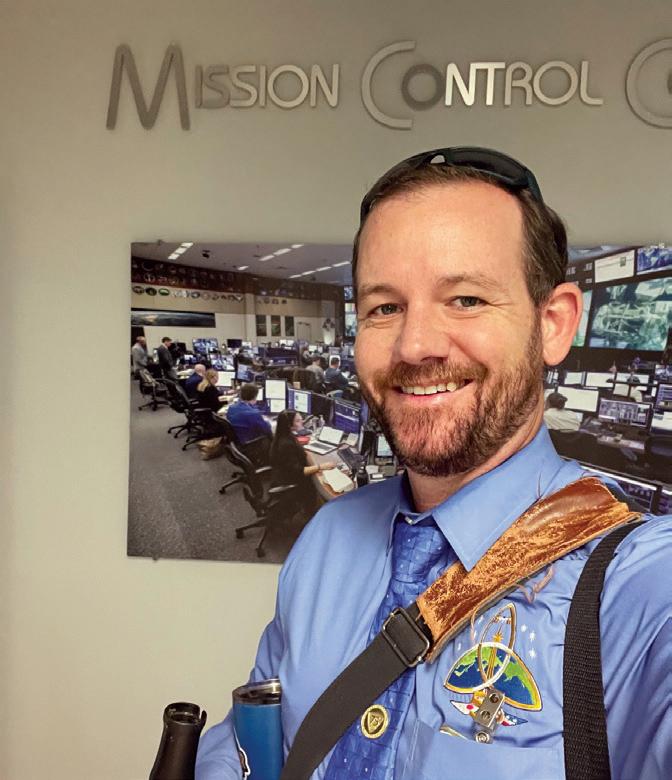
6. We spy the HPA 75th Anniversary pin on Ben Honey ’05 at NASA’s Mission Control Center.
7. Lisa Haserot Scannell ’81 published a memoir and biography about and in tribute to her daughter, Tiare Richards. The book is listed on Amazon as a paperback and eBook.
Dirk von Guenthner ’65
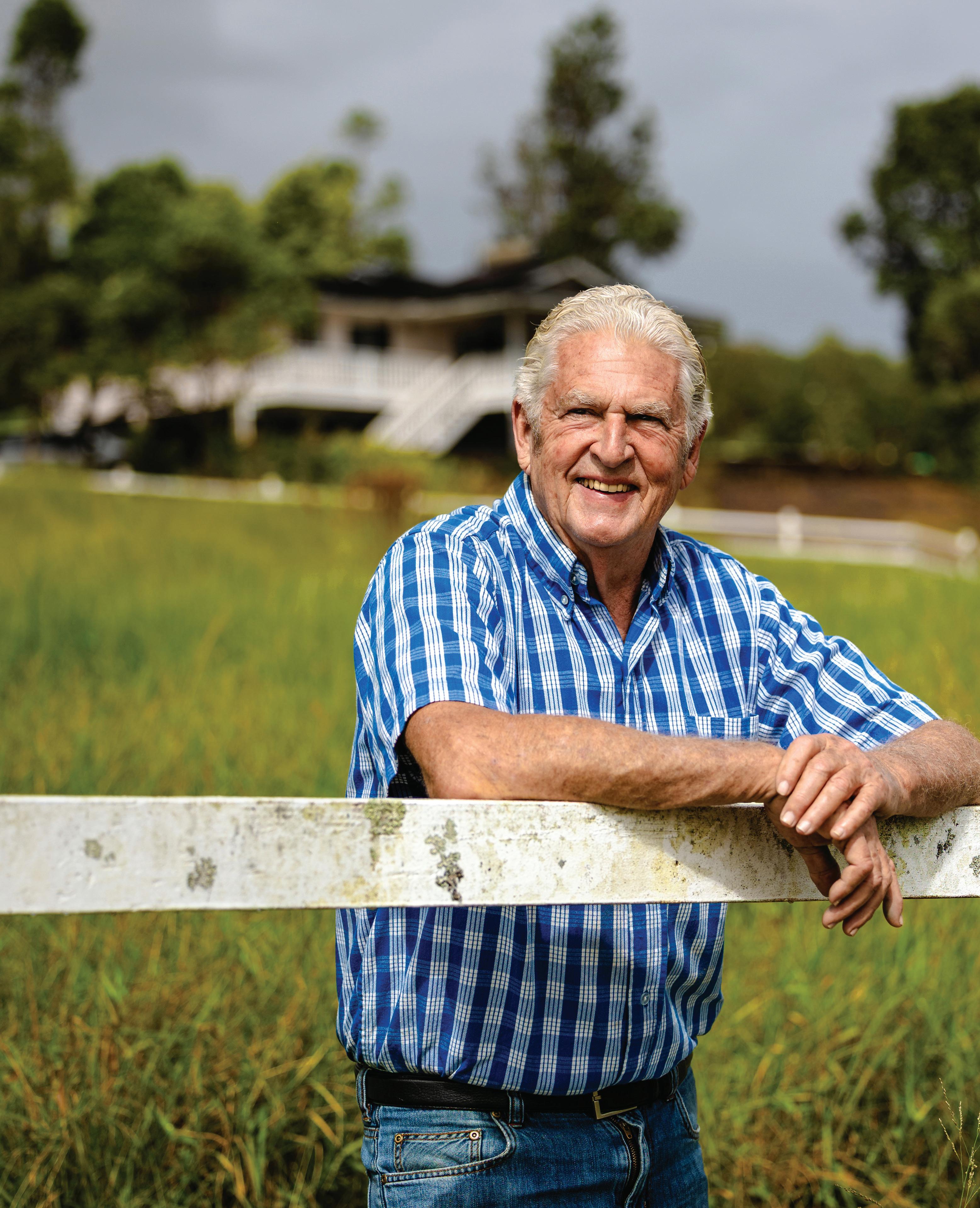
A Renaissance Man on trust, wonder, and believing in yourself
When Dirk von Guenthner ’65 talks about his work, he doesn’t sound like a man who’s spent decades in courtrooms and conference rooms unraveling financial disputes and carefully organizing paper trails. He sounds like someone describing a craft (which is something else he knows a thing or two about).
first Campaign Treasurer’s Manual, and he literally wrote the book on campaign spending for Hawai‘i. (“Getting politicians to keep their books my way was a kick for me.”)
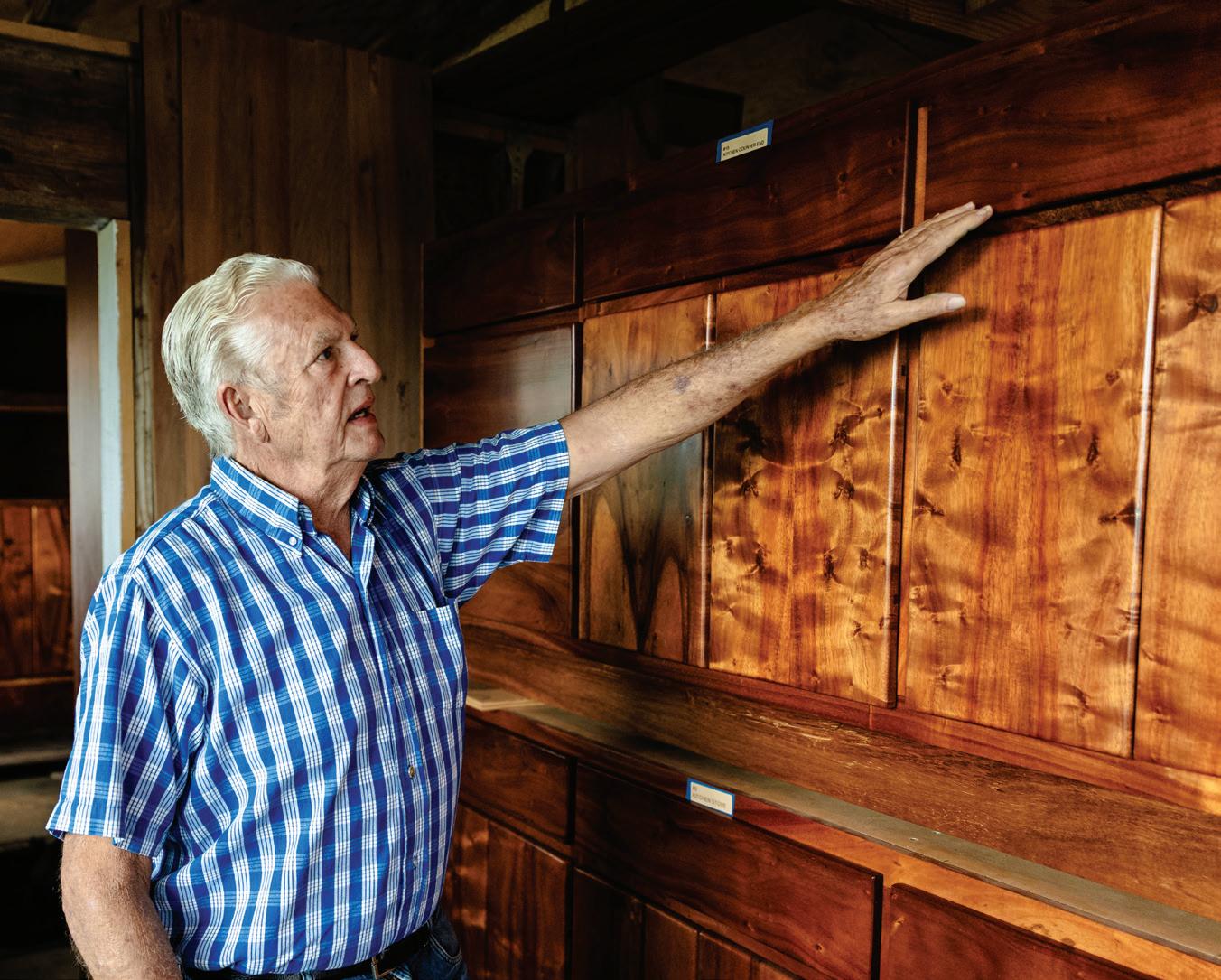
Von Guenthner’s well-honed knack for seeing patterns, resistance, turns umeke bowls, and handcrafts furniture out of Koa wood harvested, slabbed, kiln-dried, and planed by him on his land. “There’s a creative side in everything I do,” he says. “My mind is one of the busiest places on earth.”
Von Guenthner grew up in Kona and was a student at HPA for six years, from 1959 to 1965. “I was near the bottom of my class,” he says. He excelled in cross country and on the track where he still holds the school 800 meter run record, and despite von Guenthner’s academic showing at HPA, his subsequent career demonstrated a keen mind and rocksolid reliability.
Describing himself as “meticulous to a fault,” this quality guided von Guenthner’s long career in forensic accounting. Forensic accountants analyze data to identify irregularities, trace funds, and provide findings that may be used in legal or regulatory proceedings. At one time working with one of the largest CPA firms in the world, von Guenthner still
There’s not much difference between doing a forensic accounting case and handcrafting Koa cabinets. Both take time, planning, patience, and the incentive to do it right.
prepares for every case with precision, knowing that his testimony is often challenged by experts with advanced degrees and every incentive to prove him wrong. “I have to be so prepared,” he says, “that when I testify, the judge or jury will think, he’s right; let’s trust what he has to say.” That commitment to accuracy and reliability, he adds, began at HPA, where he first learned the value of being worthy of others’ trust.
“I remember Mr. Taylor, who was an awesome human being, teaching us about integrity,” von Guenthner recalls. “And I really tried to follow that. I like to think that if someone needs to pick an honest person in the room — someone to be relied on — it would be me. I got that from HPA, and I'm grateful for that.”
After graduating from HPA, von Guenthner served as a medic in the Hawai‘i National Guard — a potentially dangerous post during the Vietnam War era. But when he was activated in the Army, he was initially assigned to a warehouse filled with thousands of disorganized medical files. “And everyone was scratching their heads about what to do,” von Guenthner recalls. “I walked up to the colonel, and I said, ‘You know, I think I can help you get this resolved.’ And so, I did.” The colonel reassigned von Guenthner from
medic to medical records specialist — a position that kept him in the office rather than on the battlefield.
After his service, von Guenthner completed college (on the Dean’s List). He continued to seek out new challenges, though of a different kind. “I did crew on a boat from Honolulu to San Diego one time,” he says. “It was a 50-foot trawler, and I was second mate, which meant I had watch from midnight until four, and noon until four. And every night I was up at the helm, I thought, what would it be like if I fell off the boat?” To survive, he decided he would have to have incentive.
In 2004, von Guenthner’s mystery novel, Incentive, was published. Inspired in part by his experience on the trawler, and by his life more broadly, readers interested in the book can email him at dirk@dirkvg.com, and he’ll gladly send a copy. “You must know the pleasure I get when someone spends the time to read my book!”
Von Guenthner is proud of what he has accomplished in life, particularly given the struggles of his youth. He came away from his years at HPA not only with an inclination toward integrity and trustworthiness, but with a strong sense of wonder, too. “I’m still fascinated with astronomy and plate tectonics and all kinds of things we continue to learn about,” he says. “We are so little compared to the massiveness of this Earth. To find a little time, like now, just to celebrate this life of ours… I’m truly grateful.”
That sense of gratitude, wonder, and perseverance shapes the advice he offers to today’s students: “My words to a student who may be at the bottom of the class are to have incentive and to believe in yourself.” •
(continued from page 38)
70s:
We owe a debt of gratitude to Ed Case ’70, for sharing a masterful compilation of notes for the class of 1970. He sets a high bar for any other would-be Ka Makani class scribes! As Ed writes:
“The great Class of ’70 was cheated out of our 50th by COVID and rebounded with a strong showing for our 55th, with twelve classmates making an appearance along with some really great spouses (in fact, it was remarkable how strong and stable and emotionally intelligent all of the spouses are compared to the class; are we just much better at choosing partners than being ourselves, or was there just something in the water?) Harry (“Il Capo“, and I have a picture to prove it) Wishard kicked it off by hosting us for a fantastic Friday night class dinner at his Waimea restaurant, Dom De Luca’s (aside from continuing as a beautiful artist, that is, his art is beautiful). The food and libations and talk flowed, all centered on Harry’s special guest, a tasty pua‘a pupu from his personal backyard collection. Huge mahalo, Harry! The all-class luau Saturday only confirmed that we were the best class in attendance, and after that I’m not sure what happened in the Lower Dorm since I left. Snippets on the attendees, some of whom were back to HPA for their first time since graduation (like Terry Razor, with us 7th-9th grade, retired from the Air Force and Boeing, living in Auburn, WA and roadtripping on his Harley; and Ted Blockley and wife Cheryl, living in Morro Bay, CA. Ted retired after four decades as an architect in Bakersfield, CA). Others: Doug (Paine) Behrens, still doing graphic arts and running Koa Ridge Ranch on O‘ahu; Charlie Schuster and wife Laurel, living in
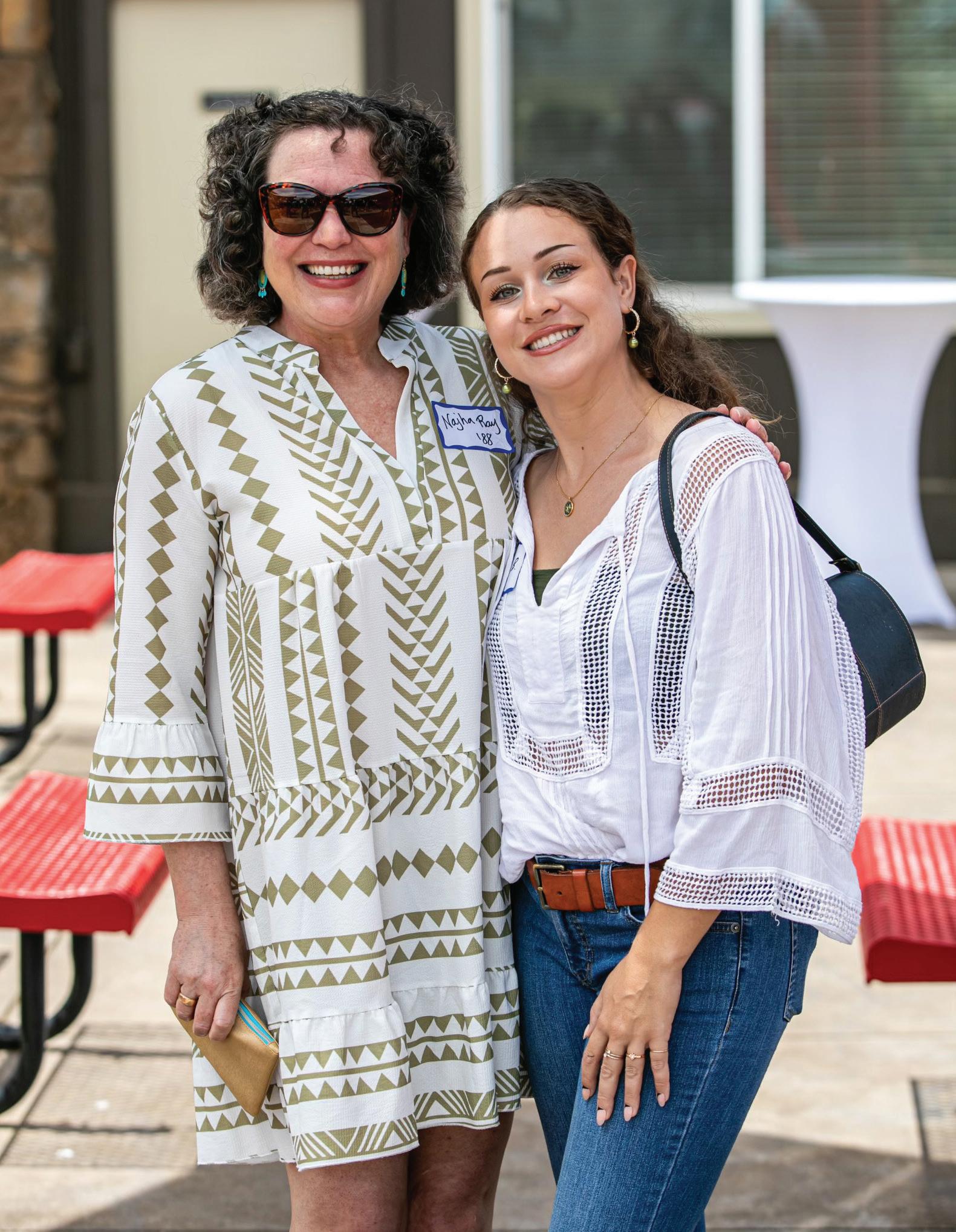
We are saddened to share that Najha Ray ’88 passed away in September 2024. “She cherished her years and friends at HPA and would want people to know she is gone,” her daughter, Madison Bartlett ’13 wrote. Madison and Najha attended HPA’s reunion weekend in 2023. “It was my 10-year reunion and her 35-year class anniversary.” We honor Najha’s memory and her enduring ties to the HPA ‘ohana.
Honolulu and Charlie a structural engineer retired from Group 70; Knut Peacock of Honolulu, retired former owner of Peacock Termite and Pest Control but still teaching and now a grandmaster of Escrima/ Filipino martial arts; Nick Bleecker [’69] of Honolulu, who still can’t figure out
what class he’s in but for these purposes proudly ’70, sculptor extraordinaire and retired professor of sculpture at UH; Gary Moniz and wife Kathleen of Kailua, O‘ahu, Gary “semi-retired” (meaning retired but available) from Honolulu Zoo and the State of Hawai‘i Civil Defense and
Departments of Transportation and Land and Natural Resources; Walter Vorfeld of Makawao, Maui, retired as a self-employed structural engineer; Bill Wakefield and wife Brooks of Kona, still running their mango farm but no more commercial fishing for Bill; Lex Morriss of Kamuela, still running the Waimea General Store. Some other class info drifted in on the reunion prep winds: Alexander Budge, living in Kula, Maui and trying to remember the names of all his kids and what was it like twelve grandchildren/he was in Spain on a family reunion; Debbie Chang, still living in mauka Pa‘auilo/ she was in Japan holoholo; Audrey (Nakamura) Case, retired from 40 years as a flight attendant and raising grandchildren when not tolerating husband; Bill Boyum, still on Maui; Peter Young, splitting time between Colorado and Volcano; Ricky Cassiday, living in Koloa, Kauai and wine drinking buddies with Louie Abrams’ wife Charlee; Allen Jones, living in Wagener, South Carolina; Norman Nash, still in Reno, NV; Jim Moore, retired but still involved in primate research/ conservation in Africa, reporting from his deck in Bayside, Northern Cali; Tom Short, enjoying his lake house in Tennessee; Jim Anderson, splitting between NY and Hawai‘i; and Guy Moncrief, deceased 2017. Great time with friends for life. Hang on for our 60th if not before!
Henri Minette ’70 is “failing miserably at this retirement thing. Still working as in-house counsel for a national medical imaging company in Minneapolis. They seem to be happy to have me and I’m still vaguely entertained by it all. Oh, and they pay me. My wife is also still working,
although she has reduced her clinic hours to three days a week. Perhaps one of these days we will get our act together and arrange to check out of the working world. Until then, we will just have to settle for our annual winter visit to the BI.”
Camp Campbell ’71 writes that he had the personal luck to run into and meet Charlie Van Riper, who passed away this year. “He was our teacher for science and ornithology and coach of our football team. From motivational halftime speeches about being a warrior in life to honing my skills in scientific methodology, he taught me, in every way, to see more and be more in my life and to approach the world in the same way. He was an explorer. We hiked miles in the middle of nowhere throughout the rainforest to get glimpses of birds that only a few had seen in the history of Hawai‘i. The frontier was where the fun was. He taught us how data was important and how to apply it to scientific principles. He developed a skill set that serves many of us today. We were the rough drafts, many of us knew it and laugh about it today. Many of us want to see more and be more in our lives, but, more often than not, it takes a mentor to help find your way. Charlie was that person for me. He saw more in me, we saw more in each other. It’s a friendship of a lifetime.”
Denice Mugg Sheffer’72 is “living the retirement life! Big fun! Marty and I have been RV'ing to Bluegrass Festivals and other nefarious locations in the Pacific Northwest. We also started a Handyman business. LeftCoast MishMash... No Job Too Small! Would love to hear from you if you are circling about in the area around
Portland, Oregon. See you in 2027!”
Robbin Harvey Jepson ’77 is performing in San Francisco. J.D. Morgan ’77 fondly recalls “Sherwood Forest, Talking waters, The Place, Upper and lower dams, Maile Island, and all the little surprises along the way. Try to get up there often as I can. Brings back some great memories of events and friends.” Sheila Crosby Powell ’77 and her husband Matt “took a unique trip to Australia this summer, which included a small ship cruise with good friends from Melbourne of The Kimberly Region (Broome to Darwin), where we had twice daily zodiac excursions to see the horizontal falls, Montgomery Reef, Aboriginal Cave Art and more! Then we did an overnight stay on a pontoon platform on the Great Barrier Reef which was a magical experience. Definitely a trip of a lifetime!”
80s:
Lisa Haserot Scannell ’81 published a memoir and biography “about and in tribute to my daughter, Tiare Richards, who we lost in a car accident 20 years ago. Her father, Michael Richards also attended HPA, class of ’82. The book, Her life through my eyes, A Tribute to Tiare is listed on Amazon as a paperback and eBook.
Alissa Bushnell ’84 writes that she was able to spend some time with classmate Julie Ventura McGannon, “which is always great! After our reunion last year, I've been better at keeping in touch. There’s also been some chatter about celebrating all of our 60th birthdays together on the Big Island over 4th of July 2026. Let me know if (continued on page 44)
We want to hear from you! Please submit your notes and photos to www.hpa.edu/giving/update by February 15, 2026 for the next issue of Ma Ke Kula.
(continued from page 43)
you are interested in participating. I would love to see all your smiling faces, class of ’84! As for me, my daughter graduates high school June 26, we are building a house in Occidental, and I am working doing strategic communications for a boutique agency based in Denver while working remotely from Northern California.”
Stacy Sandberg Gill, who attended HPA for summer school in 1985, has twin boys going on 11-years-old who are baseball players. She works at their elementary school and has met a fellow HPA student where she lives in Temecula, CA. “Wondering how my classmates are doing since our summer together! Aloha!”
Valda Janene McMahan ’86 is “trying to navigate retirement and a 12-year-old! No, I am not officially retired… However, I am really leaning toward it. I love Aedan! Being a soccer mom at 57 can be tiring and exhilarating. I saw my first pro soccer game in the Pasadena Rose Bowl (Paris Saint-Germain v Atlético Madrid) this summer. There were more people in the stands than live in Fairbanks, Alaska. Eric Waterhouse ’86 and I chat on the phone most Sunday mornings.”
Holly Scarlett Baker ’87 writes: “Aloha, current students and fellow alums! Attending HPA put me on a track of lifelong learning that has manifested in a career full of marine tourism, endangered salmon recovery, sustainable stormwater management, and hydropower relicensing!”
Cameron Gallaway ’89 just moved back to the island. “I have two girls—one just graduated from Vanderbilt and is now attending law school and my youngest is going on semester at sea.”
Mebane Atwood-Boyd and Alan Boyd (faculty in the 1980s–90s) stopped by
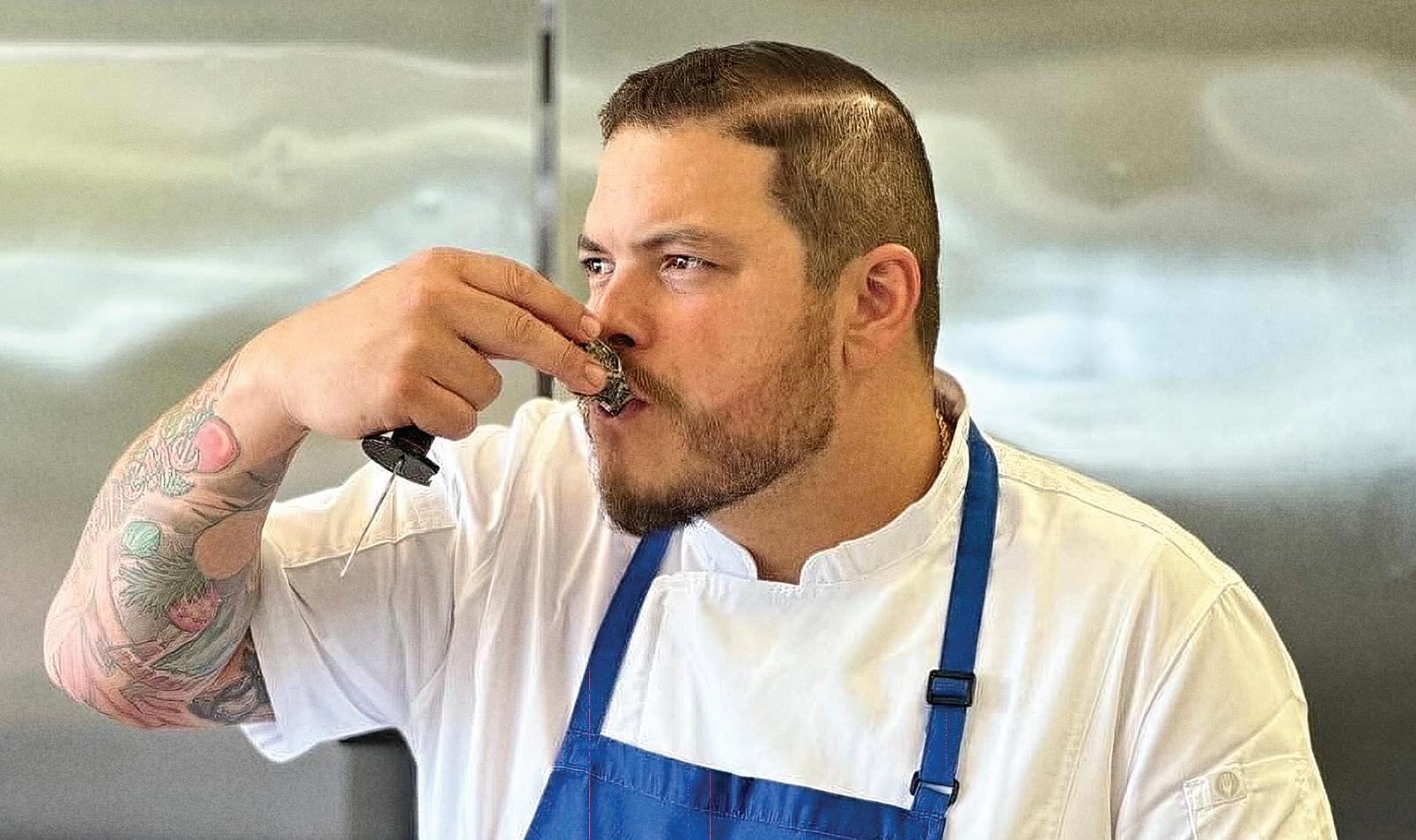
Chef Ippy Aiona ’06 continues to make waves in Hawai‘i’s culinary world. His latest project, Eating Our Roots, is a vibrant exploration of local food culture directed by current HPA parent Kolby Moser. The series celebrates the stories, flavors, and communities that shape Hawai‘i’s diverse table, and is now filming its second season after earning an Emmy Award earlier this year. Congratulations, Ippy and Kolby!! Ippy is also putting the finishing touches on his next cookbook, Growing Up Hapa, which he describes as “a love letter to Waimea and to growing up in the restaurant industry here at home.” He adds, “I miss my HPA ‘ohana!”
campus to reminisce with Athletic Director Steve Perry. Mebane taught Japanese, lived in Anna’s, and started field hockey. Alan taught art, served as vice principal, and oversaw the middle school boarding program. They now live in Wilmington, Delaware, with two children and a granddaughter on the way.
Speaking of former faculty, Gordon Bryson wrote a detailed tribute to Pete Provencal, describing his decades of service at HPA as a teacher, coach, and mentor, which reads, in part: “‘Uncle’ Pete Provencal came to HPA as a successful teacher and coach ‘from back East.’ (Like me, Pete will be identified as a Yankee until the day he dies.) Pete did pretty much every job that a faculty member could be asked to do. He pulled dormitory duty frequently
over his career. He coached several sports, and typical of Pete, he did not coach the sport he had been most successful in on the mainland (basketball) but he never complained. …He could take the most unpromising girl or boy and turn them into discus throwers, shot-putters, or anything else the team needed. He came early and left late. As a teacher, Pete followed the same pattern. He taught every class that the math department offered. He tried his best every time he taught, coached, or ran kids from Tokyo through the rules of flag football or cards. It was the breadth of Pete’s work that made him a hero in my eyes. He did his job because it was what he had committed to do.” Pete and his wife Marcia still live in Oregon.
In addition, Hugh Wilder, brother of
longtime faculty member Jay Wilder, wrote in to share Jay’s obituary with the HPA ‘ohana: “Jay Hitchcock Wilder died peacefully on August 6, 2025 at Medford Leas Retirement Community in Medford, NJ. Jay was at once private, quirky and endearing. He lived a rich life, decorating his apartment (and indeed his hallway at Medford Leas) with memorabilia and news clippings, travel stories (especially about Great Britain, his favorite destination), and stories about history and politics (many related to his heroes in the 1950s and ‘60s civil rights movement). Jay graduated from Hiram College in 1967 and earned an MA in History at the University of Wisconsin. Drafted into the US Army, he served at Tripler Hospital in Honolulu and as a swim coach for Army dependents on the base, at the height of the Viet Nam conflict. Jay stayed on in Hawai‘i, teaching history and coaching swimming at Hawai‘i Preparatory Academy on the Big Island. He retired to Medford Leas, where his parents (Dave and Olga Mary Wilder) and aunt (Cynthia Mott) had spent their last years. Jay thrived there, making friends and leading both its Diversity Committee and the group preparing and delivering peanut butter sandwiches to the Cathedral Kitchen in Camden, NJ. With a strong social conscience, Jay was happiest when he was helping others. Until his hips needed a respite, Jay was an athlete and traveler. He loved fell running in the Yorkshire Dales and swimming in the Aegean Sea (and of course at Hapuna Beach, his local on the Big Island). He biked (most of the way) across the US. He hiked the Adirondacks with his father, mother, brother and sister-in-law and passed on his love of the outdoors to his nephews. Jay is survived by his brother Hugh (Pana), his cousins Cristy Hitchcock and Chris Mott (Susan), his
nephews Nick (Megan) and Jason (Ari), and his grand-niece Margot and grandnephew Henry.”
00s:
Jessica Hanohano Merschdorf ’00 lives on O‘ahu with her husband, Zeke, and four kids. Jeff Mori ’04 is “loving life on O‘ahu with the family. We recently celebrated Leo’s 1-year-old birthday at our ‘new’ 1931 Hawai‘i house in Makiki. We look forward to celebrating Bella's 4th birthday in Japan, soon. We also are very proud of Caroline for moving on up to Department Head of PE at Punahou. Don’t worry, she still loves HPA, too! We all do. I still work remotely for a tech company. Lots of early mornings!” Monique Walls Kaetsu ’07 is mom of an almost-9-year-old with three bonus children. She’s a banana/cacao farm owner, beekeeper, and just celebrated her first year wedding anniversary!
In October, Honu Lafitaga ’09 raced in the Moloka‘i Hoe Canoe Race, the world championships of outrigger canoe racing.
10s:
Jane Lee ’10 showed up on campus out of the blue and caught up with her adviser (Mrs. Donoho) and enthusiastically saw as many teachers from that era as possible! Jane works for Rolex in Seoul as their communications director. Her brother, Sun-Ho Lee ’13 got married at Hualālai in September. Bridget Walker Judd ’10 says she is “lucky to be living in Waimea with my husband Zach and working for Waikōloa Dry Forest Initiative where I get to spend my time protecting and restoring native dryland forest.” (See story on page 16.)
Teddy Lederer Quinn ’10 shares: “I just finished up my political appointment with the Biden-Harris Administration working (continued on page 46)
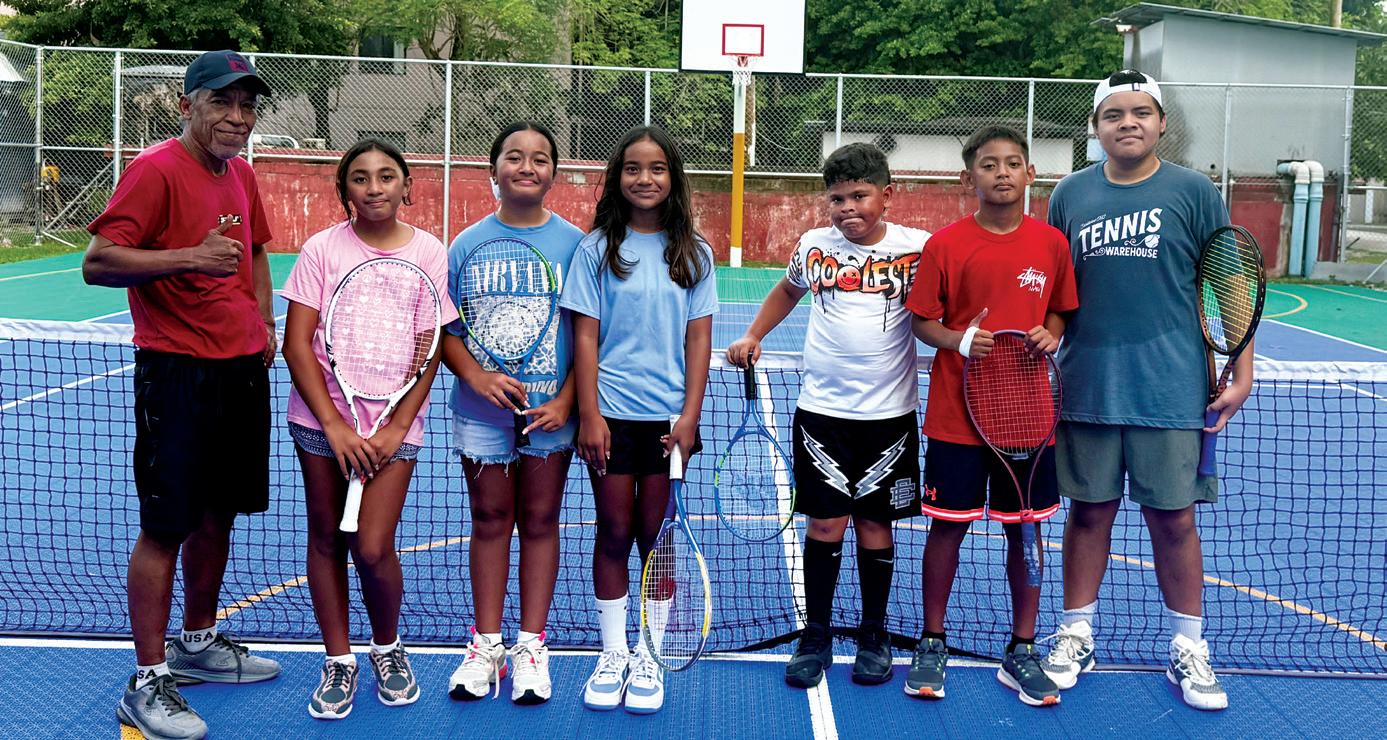
Eli Heine ’25 spent his summer in Majuro helping the Marshall Islands Tennis Federation run youth tennis clinics and promote the sport’s benefits for young players. He later traveled with a delegation from the federation to New York City to attend the 2025 U.S. Open, where the group was invited to the presidential suite at Arthur Ashe Stadium. Eli is now studying at the University of Hawai‘i at Mānoa and has been selected to represent the Marshall Islands in tennis at the upcoming Micronesian Games and Pacific Mini Games.
(continued from page 45) in the Office of Congressional and Public Affairs at the National Labor Relation Board. My wife and I recently bought a house in the DC-area where we have been joyously gardening and taking care of our two cats. I’m excited for what's next in my career and personal life! Still keeping in touch with many Ka Makani throughout the world and am so grateful for those lifelong connections. Aloha!”
Yuki Ainge ’12 is working as an Embedded Software Engineer at a medical device company in San Diego. Connor
Peterson ’14 writes that “Kohala Burger and Taco has gone NATIONAL. I opened our California concept called ‘Tiki Burger’ in September 2024 and we just made it through our first year. We are in Temecula, CA (Southern California’s Wine Country) and working hard every day to grow our brand. Our key focus remain the same. We pride ourselves on offering the best service, accuracy and value to our fans.” David
Welch Keliihoomalu ’19 is currently living in Seattle, hanging with college friends, getting into snowboarding, and “working towards getting a degree job.”
20s:
Fred Collins ’25 was in Michigan this summer to compete in MATE ROV world championship with the HPA robotics team. Sophia Jordan ’25 is attending UC Berkeley to study Microbial Biology on a pre-health track with hopes of becoming a pathologist. Hayden Nate Rowland ’25 was spearfishing and eating fish all summer, while Javier Santana ’25 was traveling all over Spain, and Tata (Taina) Seward ’25 spent time this summer “training little kids at the tennis camp!! At HPA with coach Bryan and my tennis squad!”
Class notes are edited for length and clarity, including adding diacritical markings and other minor adjustments, in accordance with HPA’s style guidelines.
In Memoriam:
In the past year, we were saddened to learn of the deaths of the following members of the HPA ‘ohana. If you would like more information, please contact us at alumni@hpa.edu. We may be able to put you in touch with the friends of family of the departed.
• Joan “Fluffy” Anderson ’69
• Glenn Bertelmann
• Elizabeth Bryson
• Sefton “Bee” Clark ’68
• Mark Conley ’75
• Phillip Conley
• Alison Friedman
• Lawrence Green
• Geoffrey Haines ’71
• Eugene Hamamoto ’64
• Elaine Honma
• Michael “Mickey” Kerr
• Jason Macy
• Richard Merschdorf
• Michael Nelson ’65
• Jai Oakland ’21
• Noreen Ogomori ’72
• Lane Pogue ’88
• Najha Ray ’88
• Earl Spence
• George Van Der Heyden
• Charles Van Riper
• Jay Wilder
Every day at HPA, students encounter the ideas, people, landscapes, and opportunities that help them reach their fullest potential. As a donor to the HPA Fund, you create experiences that would not be possible through tuition alone. You deliver an extraordinary HPA education.
Seize the moment. Make your gift today. On behalf of every student, thank you.
To give, scan the QR code or visit www.hpa.edu/give
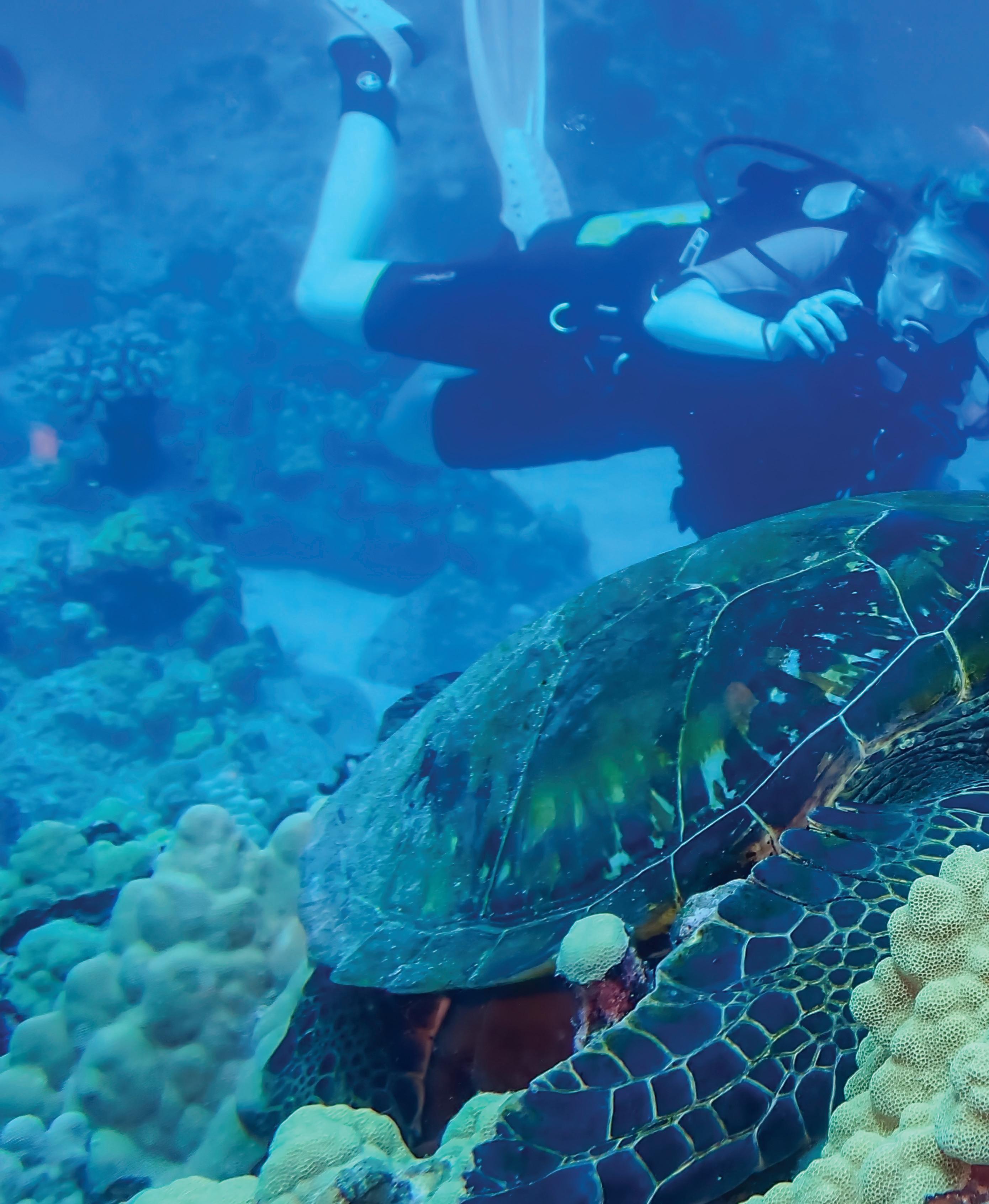
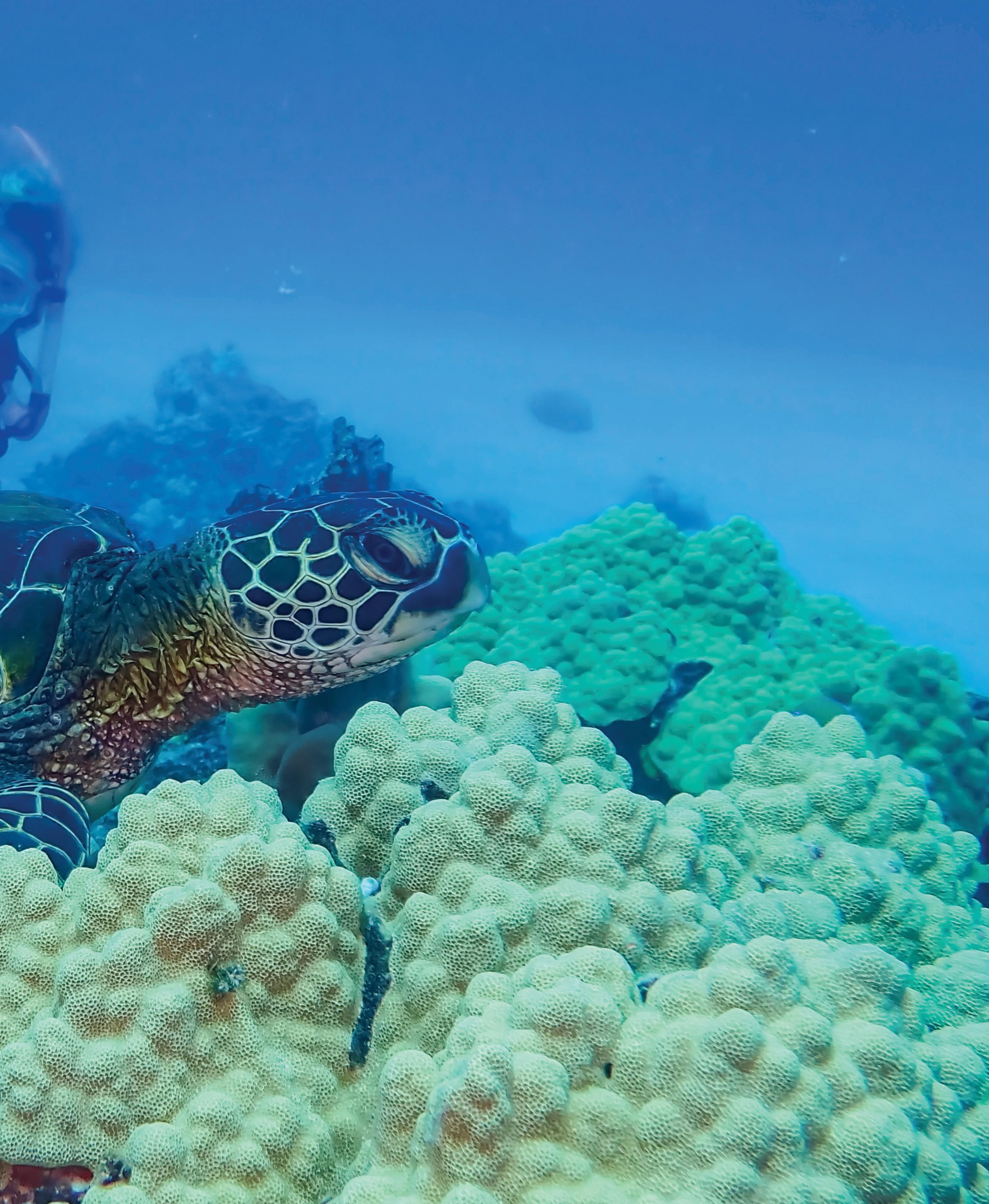
Greta Schumacher ’26 encounters a resting green sea turtle while on an HPA dive off Paniau Beach.
65-1692 Kohala Mountain Road
Kamuela, Hawaiʻi 96743
www.hpa.edu
Want more info on HPA?
Application inquiries: admissions@hpa.edu
All other questions: connect@hpa.edu
KA MAKANI EMBRACE THE CHALLENGE (AND SIGNIFICANCE) OF GROWING ‘AWA AT HPA – P. 12
COMMUNITY OF CHEER: HPA SPIRIT SQUAD RALLIES FOR TEAMS AND EACH OTHER – P. 30
DICK VON GUENTHNER ’65, FORENSIC ACCOUNTANT AND RENAISSANCE MAN – P. 40