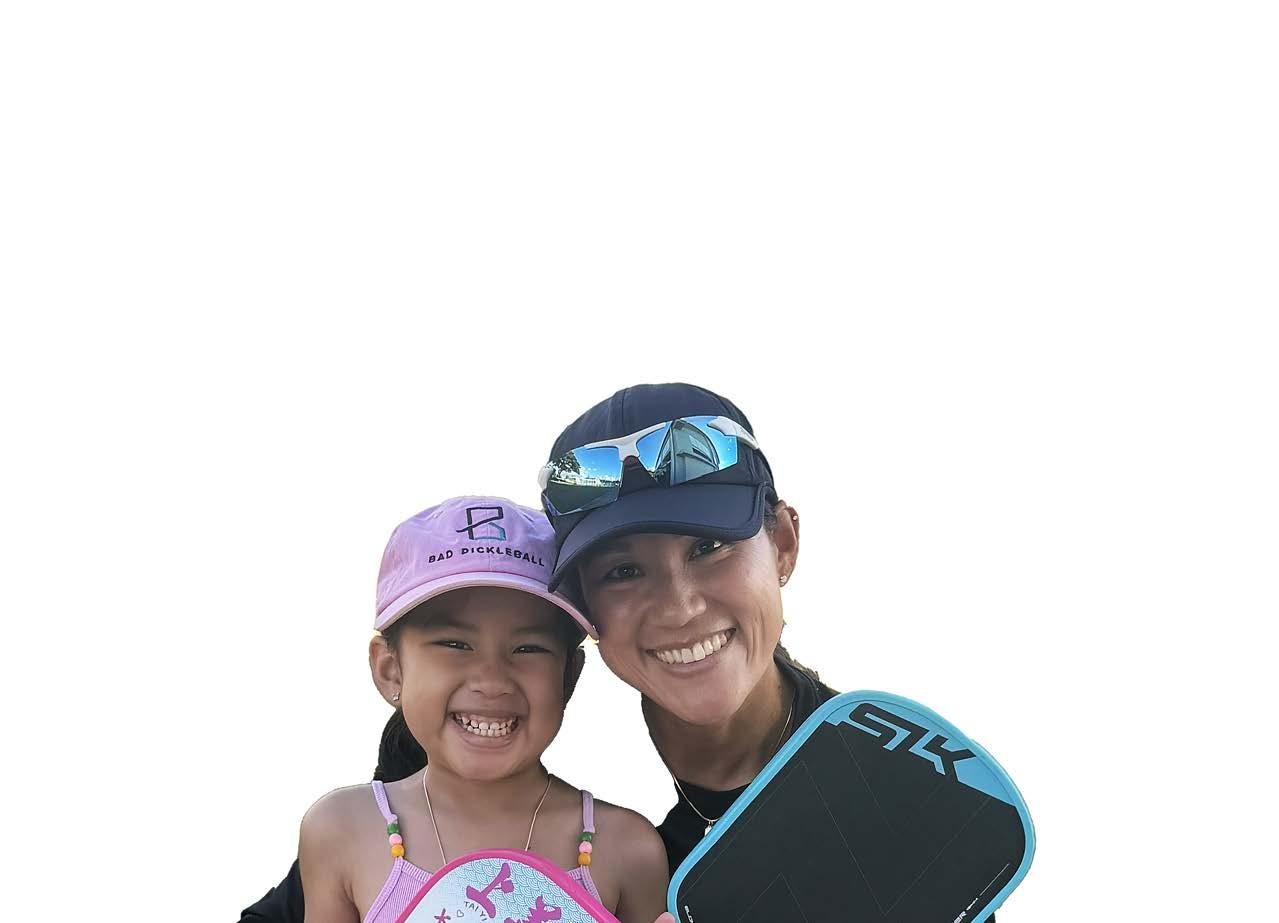
IN THIS TOGETHER
ASAKO PASTRANA ON MOTHERHOOD, AMBITION, AND CHOOSING TO KEEP GOING

Aloha!
Every issue of Hawaii Pickleball Magazine begins with the same question: What’s connecting us right now?
In this issue, connection is shaped by culture and the ties between Japan and Hawai‘i. Japan feels both distinct and familiar at the same time, and that duality runs through these pages, alongside the lived culture of motherhood and the choices made while carrying responsibility.
In the pages that follow, you’ll see how Asako Pastrana navigates her way through a deeply personal choice. Her story suggests that there is no clean formula for balancing motherhood and competition—only the willingness to move through uncertainty and keep going. It offers something rarely stated out loud: permission to want more, to pursue something demanding, and to define that balance on your own terms.
Across the rest of the issue, you’ll see how connection plays out on different courts and in different contexts. Across skill levels, languages, and customs, we’re guided by the same intentions—to work toward something meaningful, to show up, and to engage fully in the process.
These are stories of our community, and we’re grateful to share them with you, and even more grateful that you’re part of what connects them.
Jen Wilson Editor, Hawaii Pickleball Magazine HPM

ALOHA PLAYS HERE. ALL LOCAL. ALWAYS.
PROUDLY PUBLISHED BY HAWAII PICKLEBALL MEDIA GROUP
Monthly Contributors
• Kyle Paredes and Kylena Paredes — Our resident coach, sharing clear and practical tips, alongside his daughter
• Tracey Bennett — Our resident referee, offering thoughtful guidance on the rules that keep the game fair and fun
• Christine Lynders –Our trusted physical therapist, for helping keep our community strong and playing pain-free.
Guest Contributors
• Toshiko Jager — HPM Ambassador who generously brought this issue to life with photos, interviews, and stories from her native Japan
• Frankie Sharpe — Long time journalist and gifted writer who contributed Love at First Dink

Community Voices
• Mark and Nancy Beach
• Bruce Fujimoto
• Sandy Kobayashi
• Rick Komori
• Karen Lee
• Eileen Odama
• Annie Yonashiro
For sharing their perspectives and photos with our community.
MAHALO TO EVERYONE WHO HELPED BRING THIS EDITION TO LIFE!
Beginner Advanced Beginner
Just like the classic local plate lunch, this feature is a blend of flavors, stories, and the people who make this community feel like home.
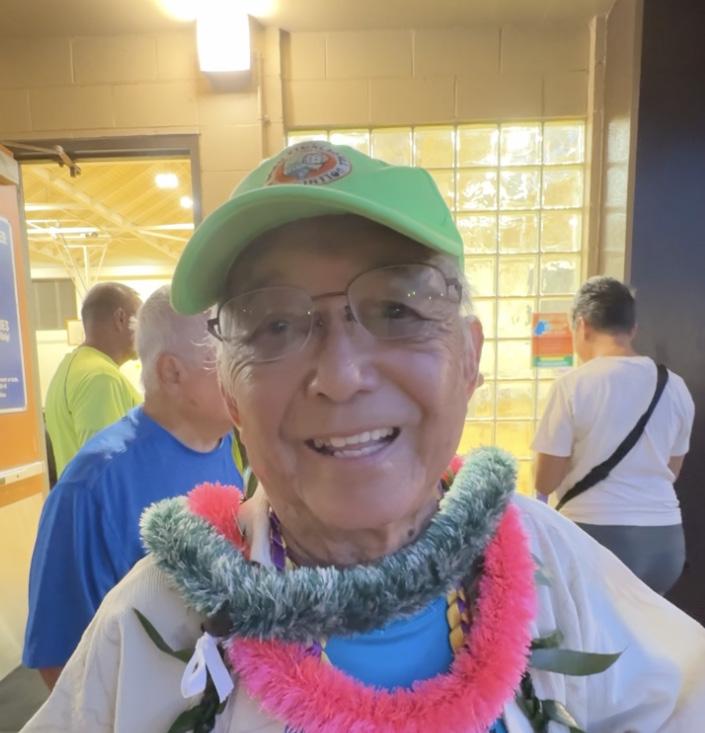
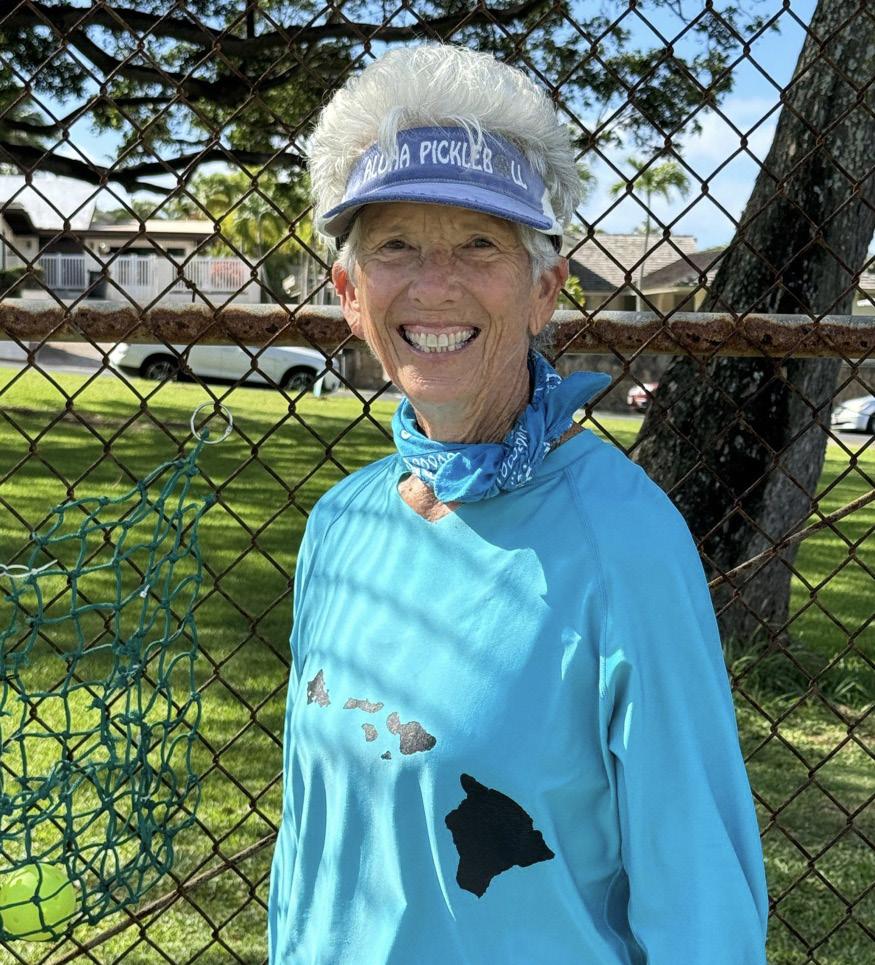
1: Bernard Yuen: Ninety-nine years young, proving the joy of the game never ages.
2: Some court companions just make the day better – Donna Kaneshiro and her sidekick Shadow.
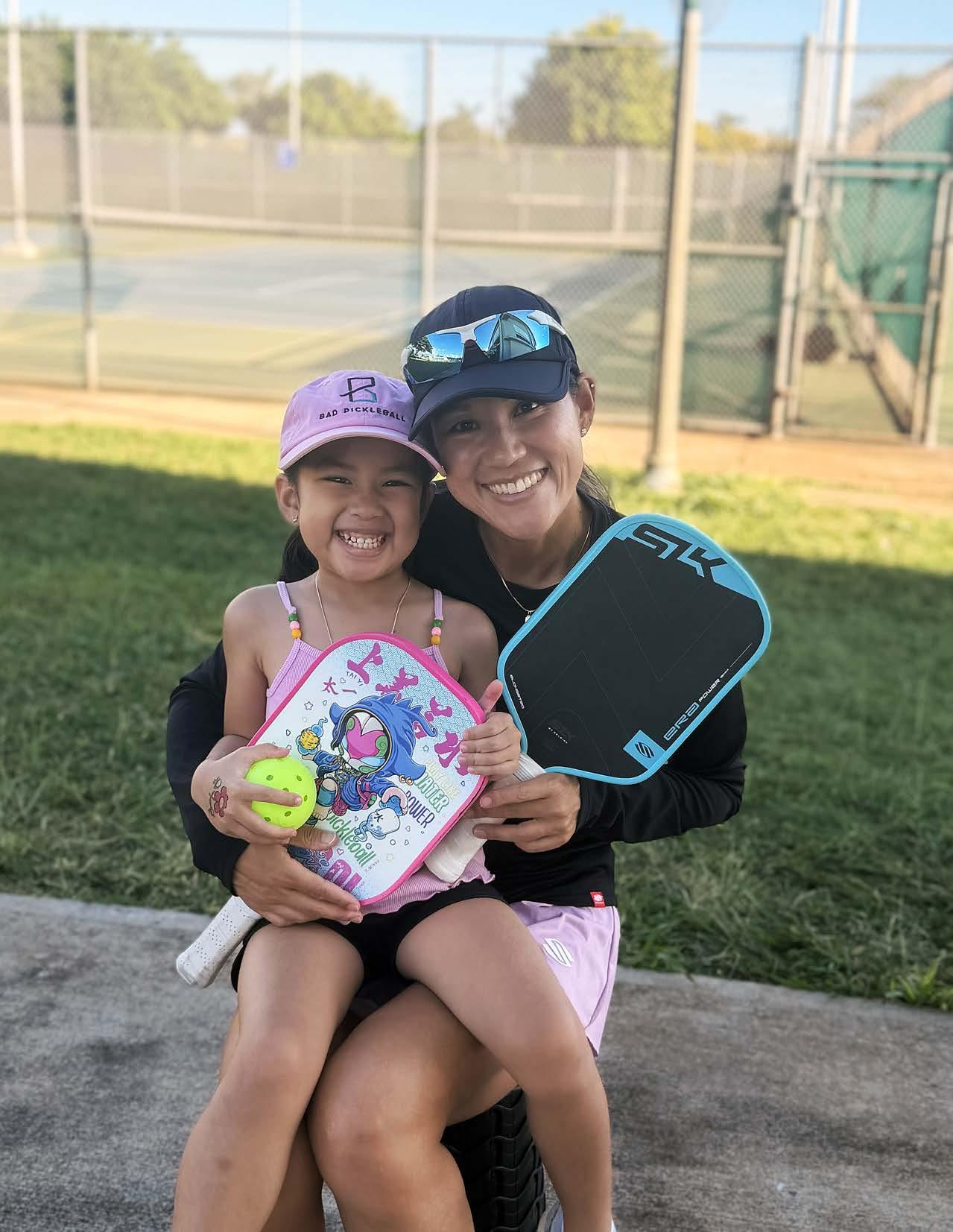
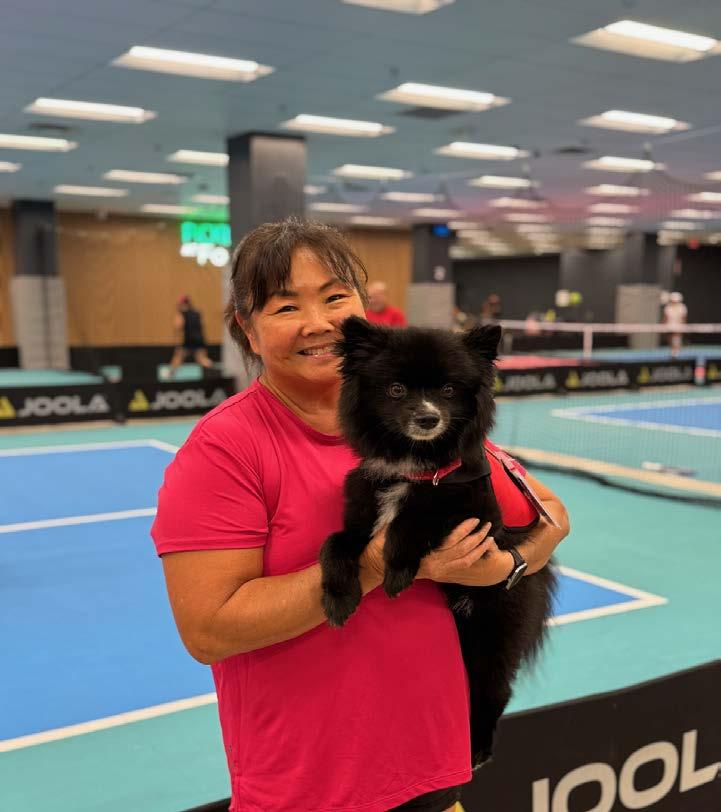
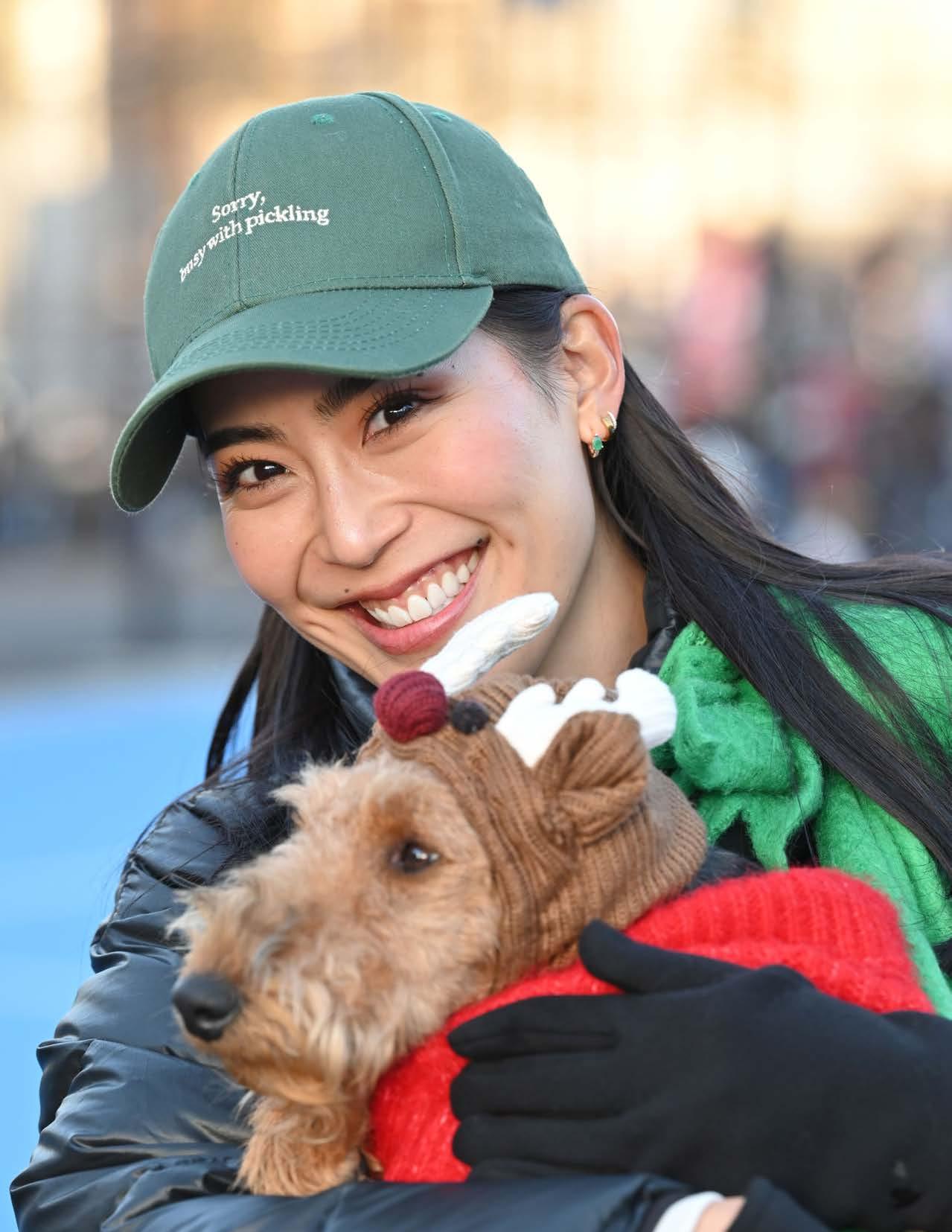
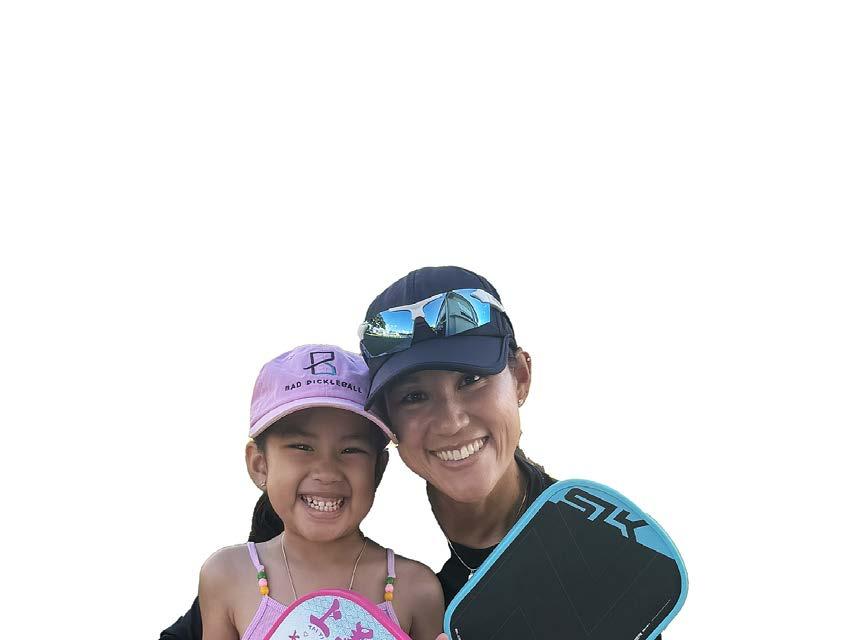
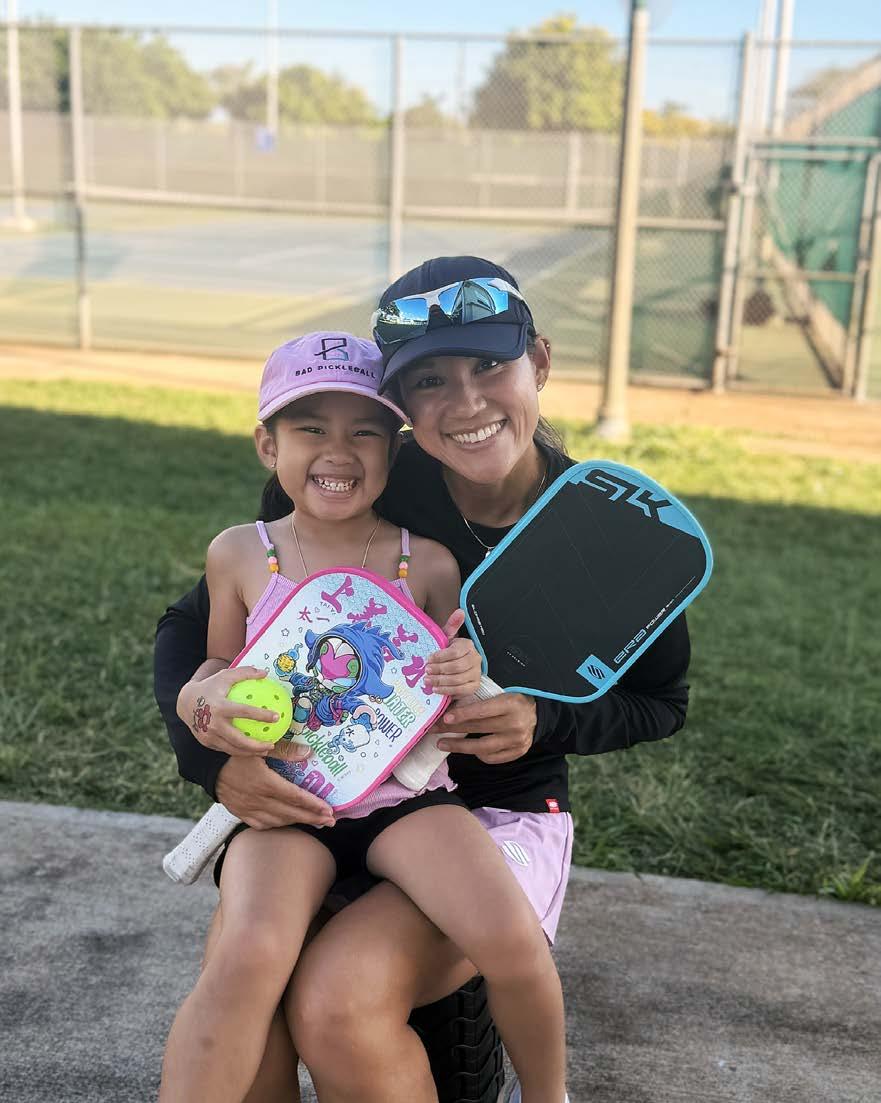
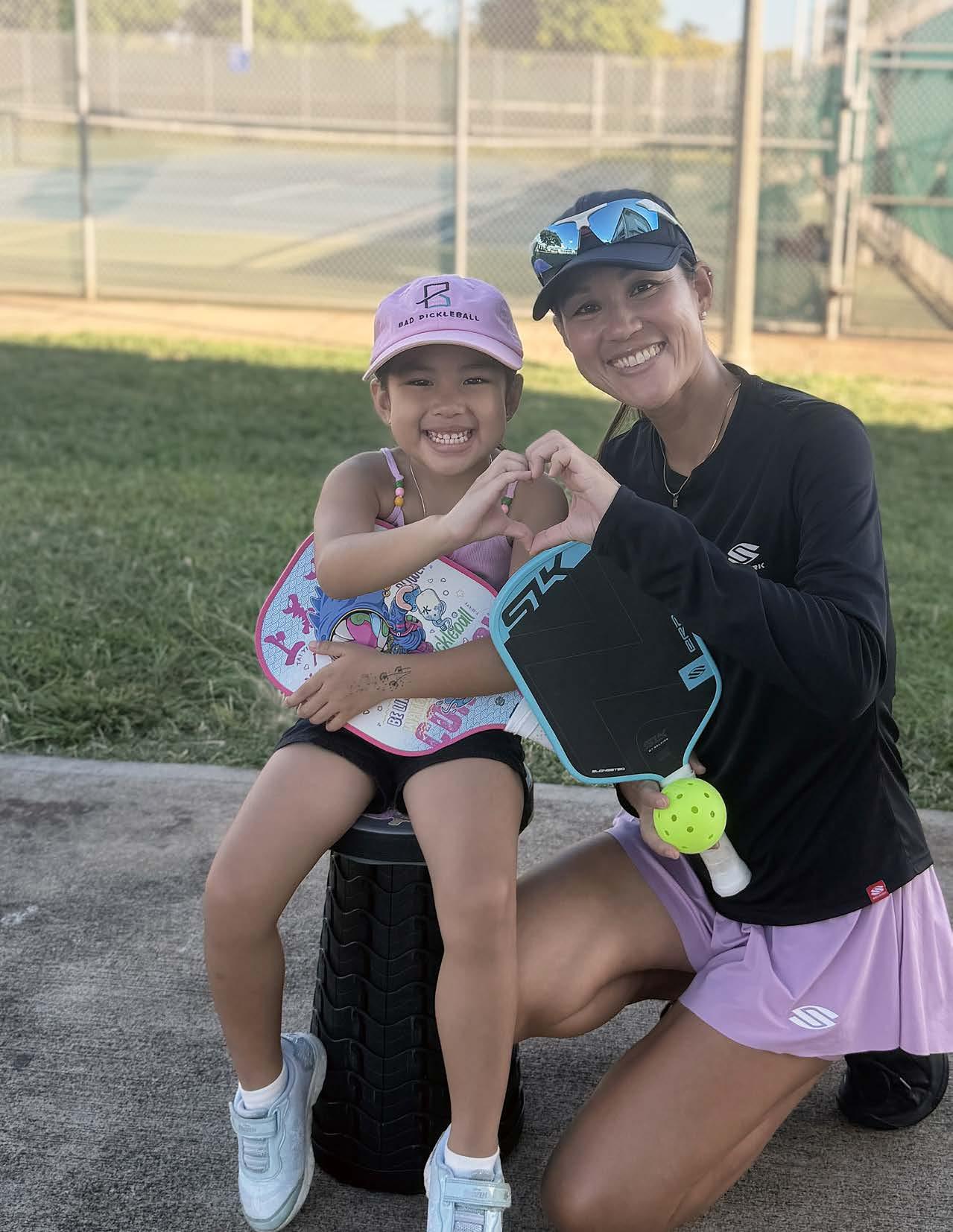
3: Asako and her daughter – an unplanned moment from our cover shoot that says everything.
I reffed the Hawaii Senior Games in 2018. (Four days with too little sleep. Bleary. Ugh.)
Got my L1 badge in 2022. By mid-2023 I'd reffed 400 games in rec play and tournaments from Mililani to Kailua. Earned my L2 ranking in September 2023.
Check out Tracey’s spotlight feature HERE.
Q: In rec play my opponent, nicknamed Knucklehead, volley-serves sideways with his paddle head way above his wrist. It’s illegal for sure. What can I do about it?
A: Strangely, this is a complicated question.
Is it possible that this guy doesn’t realize that his serve is illegal? Have you talked to him about it? I’m guessing that the answer is yes, but he refuses to change, and that’s why you call him Knucklehead.
Rulebook 9.B.4 No Enforcement of Other Faults. If a player believes an opponent has committed any type of fault other than a non-volley zone fault or a service foot fault, they may mention the specific fault to the opponent upon completion of the rally, but they have no authority to enforce the fault. The final decision on fault resolution belongs to the player that allegedly committed the fault.
Sad but true, there’s nothing you can do but appeal after the rally to his sense of fairness and possibility. (It’s possible that my serve was illegal”).
Page 2 of the Players Rulebook says, "Pickleball is a game that requires cooperation and courtesy.”
1. Quit playing against him.
2. Bring in a ref or video person who’ll nail him for his illegal serve. Some folks need to hear the rules from an "authority” before they shape up. Many players have thanked me for pointing out that their serve is illegal, though it often takes practice to unlearn bad habits.
3. Ask yourself, “Does he gain any advantage from his illegal serves? Am I returning them? Could I learn to return more effectively? It’s one hit out of an entire rally, so how much does it really matter?” In other words, surrender, but not in anger or frustration. Make peace with the situation.
Best of luck with Knucklehead. And with your own peace of mind.
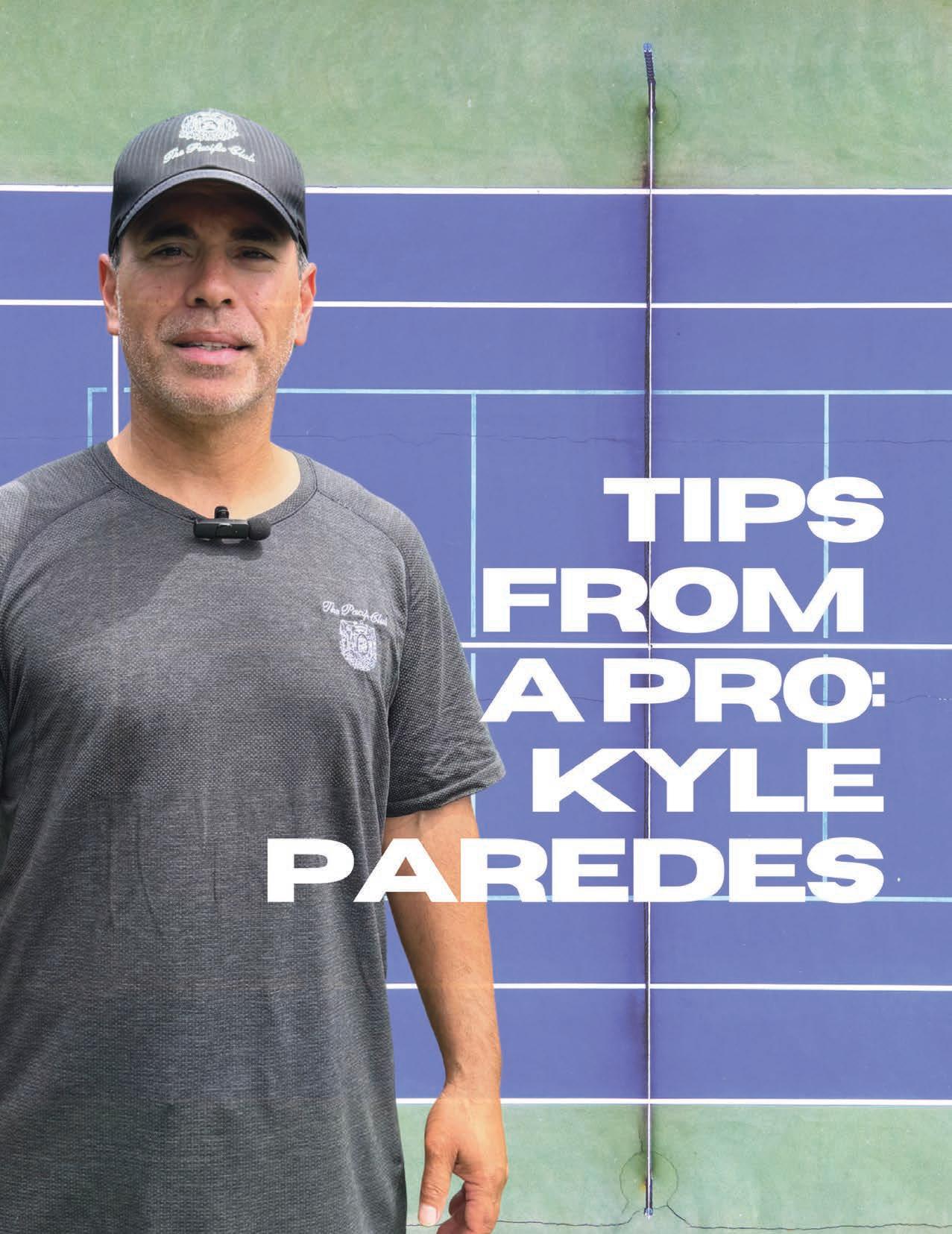
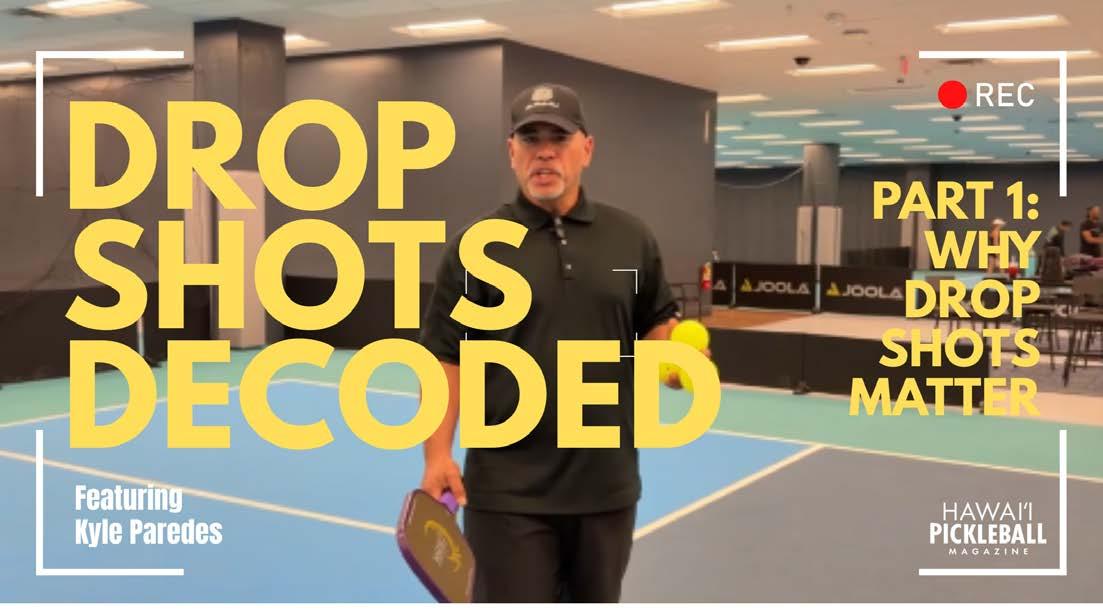
In HPM’s signature Tips with a Pro series, Coach Kyle Paredes teams up with his daughter, Kylena, to break down why drop shots matter — and how they help you slow the game down and get to the kitchen with confidence. HPM
Want more tips like this?
Subscribe to our channel and join the Hawaii Pickleball Magazine community for weekly stories, player spotlights, and pro-level insights.
Get the newsletter: Sign up for free (link below) to get exclusive videos, gear guides, and local pickleball news delivered straight to your inbox.
https://view.flodesk.com/pages/64bed9e4625f255f0de6fb84
Follow us on social:
Instagram: https://www.instagram.com/ hawaiipickleballmagazine/
Facebook: https://www.facebook.com/ HawaiiPickleballMagazine/
Website: https://www.hawaiipickleballmagazine.com/latestissues #pickleball #pickleballtips #hawaiipickleball #pickleballtraining
Do you tend to jump out of your car, say hello to your friends, grab your paddle and get straight into playing? Is there a regular warm-up that you do? Today, I want to share something that will not only prevent pain and injury but will elevate your performance on the court.
Doing the right warm-up gets your body ready to get low, react fast and perform better. It gets your joints and muscles primed for play with pickleball-specific motions so you’re ready for those quick movements and winning shots. A warm-up also prevents you from straining muscles or getting sidelined with injury. The best part--it only takes a few minutes!
Your 5-Minute Pickleball Dynamic Warm-Up
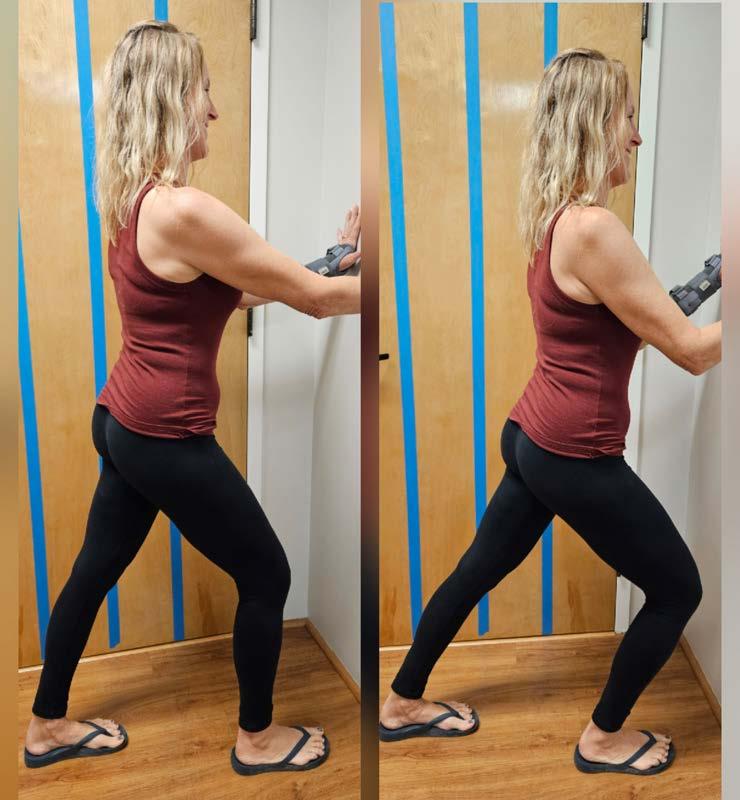
Why: Prepares your calves, Achilles, and feet for quick push-offs, sudden stops and direction changes. How: Stand facing a wall or fence.Step one foot forward. Gently bend and straighten your front knee while keeping your back leg’s heel down. Repeat 15-20 times. Then switch sides. Christine’s Tip: Think slow oscillations back and forth. You’re waking the muscles up, not forcing a stretch.
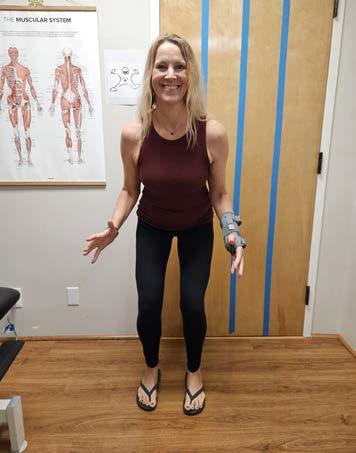
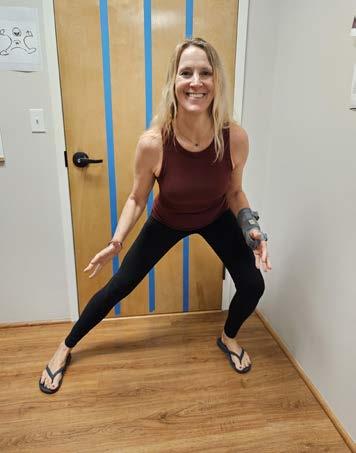
Why: Activates your hips, glutes, and thighs — your main power source for stability and movement.
How: Start with a comfortable squat like you’re in ready position.Shift your weight into a side lunge, then return to the start position. Repeat 5 times to the right, then 5 times to the left.
Christine’s Tip: Keep your knees tracking over your ankles while you hinge at your hips, not your low back — there should be no pain.
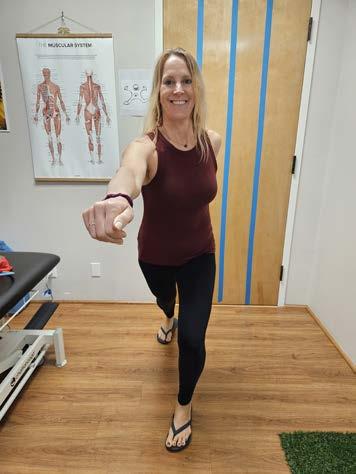
Why: This warms up your legs, spine and arms. It prepares your body for optimal movement in Pickleball.
How: Step one foot forward. As you lunge and bend the front knee, rotate your torso toward the front leg as you reach your arm out straight. You can hold your paddle to get your mindset game ready too. Perform 10 rotations each. Alternate each leg to challenge yourself.
Christine’s Tip: Don’t feel like you need to bend your knee too far. Let your body warm up gradually.
A smart warm-up prepares your body to move efficiently. When you warm up dynamically, studies show you perform better and reduce your risk of injury — so you can focus on playing your best game. Even your joints will feel better. Afterall, motion is lotion!! Let’s get you game ready and injury-proof!
CHRISTINE LYNDERS, PT, OCS, CAFS, PCES
Your Pickleball Body Tune-Up Coach YourVirtualPhysicalTherapist.com
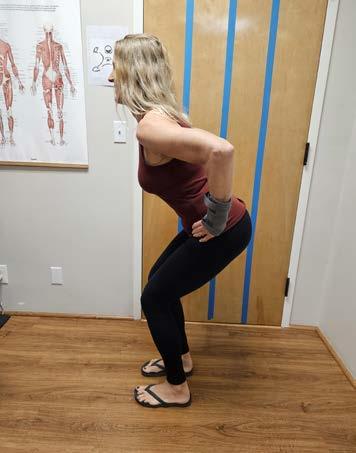
Why: Trains getting low for your game, so your back stays protected during low shots.
How: Stand with feet hip-width apart. Push your hips back slightly while keeping your chest lifted. Return to standing and repeat 10 times.
Christine’s Tip: Think “chest up, butt back” — this loads your hips instead of your knees or low back.
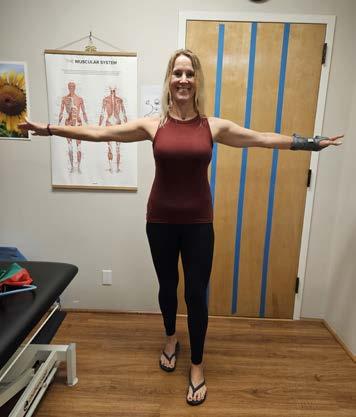
Why: Prepares your shoulders and rotator cuff for quick arm motions and winning shots.
How: Reach arms out to the side and make slow circles, starting small then increasing the size.
Perform 10 reps in each direction. Christine’s Tip: Smooth and controlled circles are best.

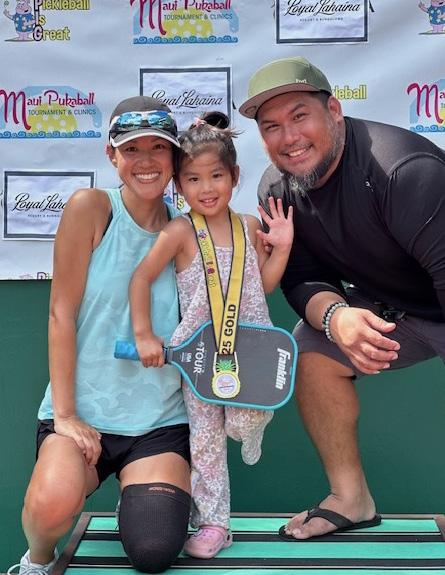
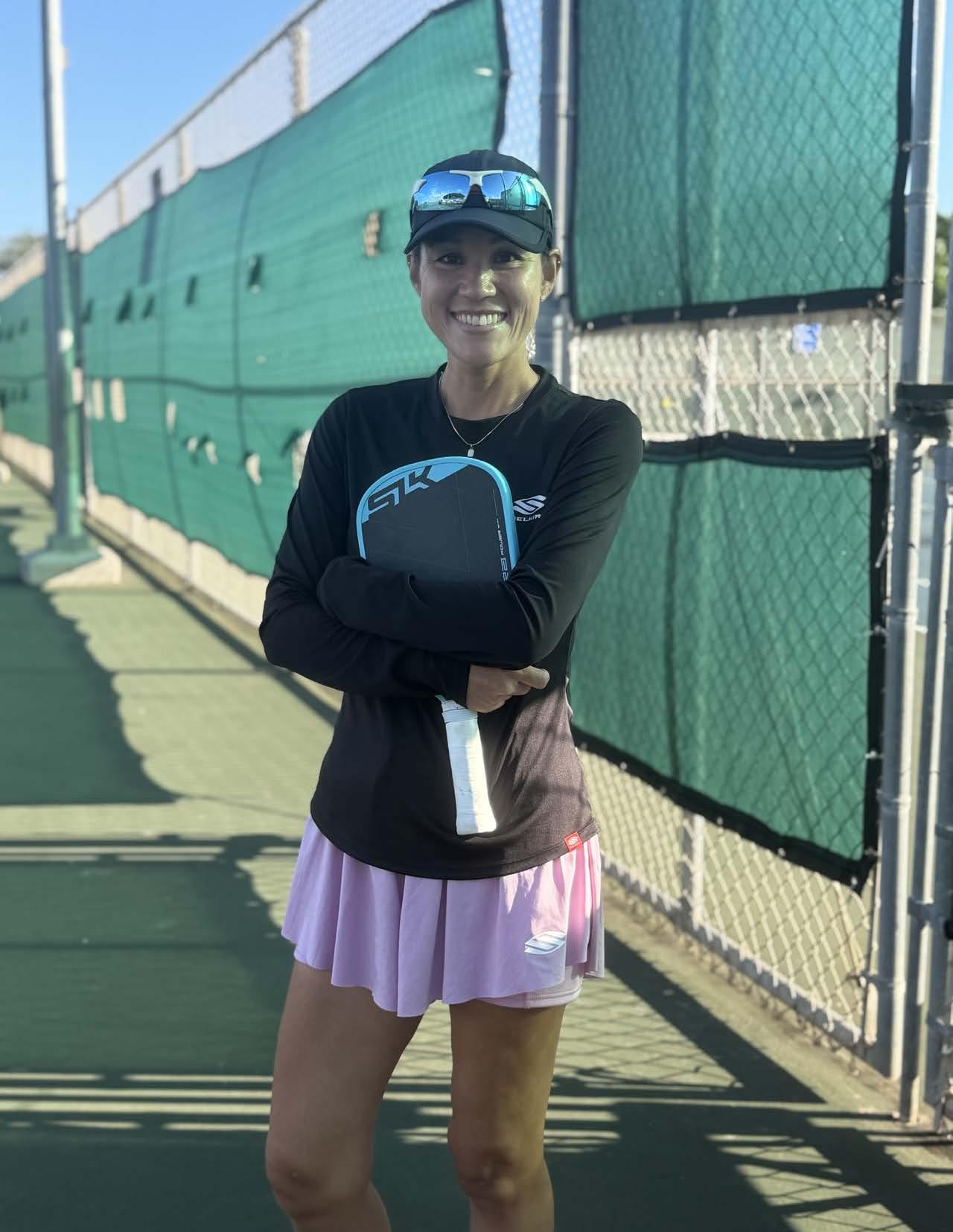
At 41, Asako Pastrana found herself feeling unsettled. From the outside, her life looked full. She was raising three children. She had built a career in real estate after years working in hospitality. She lived in Hawai‘i, a place she had once dreamed about from thousands of miles away. Her days were a flurry of school, kids’ activities, chauffeur duties, work appointments, and the constant recalibration that comes with motherhood.
Pickleball had entered her life quietly, then slowly began taking up more space. She was training, competing, and traveling.
But she noticed that she was often the oldest player on the court.
The questions in her head began to echo. Was it responsible to want this now — with three kids, one still in preschool, and a life already full?
What am I thinking?
Long before pickleball, and long before Hawai‘i and motherhood, Asako Nishikawa learned how to find her footing on unfamiliar ground—without a comfort zone to fall back on.
She grew up in Chiba City, Japan, where tennis was part of her everyday life. Her mother was a tennis coach, and at 15, she’d already earned a tennis scholarship to a high school in Florida.
She packed her bags and moved across the world, trading everything familiar for a country and a life she didn’t know, leaving home years earlier than most do. While many teenagers are anchored by family, friends, language, and routine, Asako had left all of that behind, with tennis the only familiar thing she could hold onto.
The move to Florida led her next to Canada, as she continued her studies and tennis development.
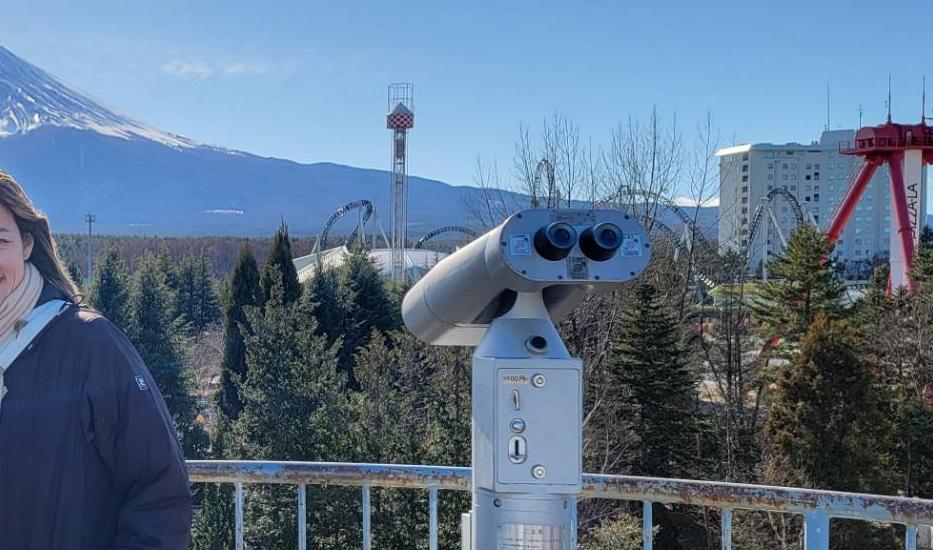
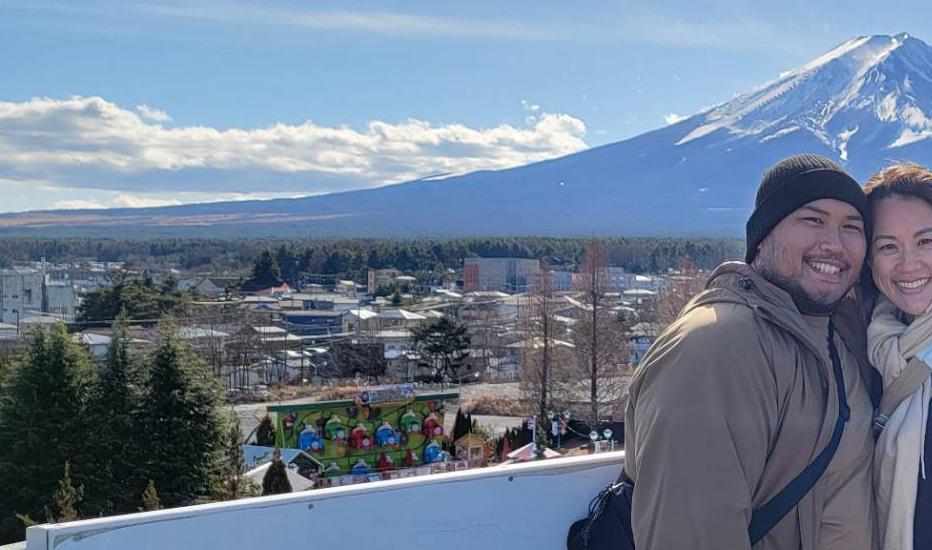
In the years after that, life didn’t unfold in straight lines. By then, tennis had faded out of daily view. Injuries made sustained competition difficult, and adulthood filled the space where tennis once lived. She built a career in hospitality, then later moved into real estate, seeking the flexibility she needed as a single mom raising three children.
For a long stretch, her focus was survival and stability. She was raising her kids, juggling work and school schedules, and spending most of her time shuttling them to practices and games. Her oldest son, now 17, had been playing soccer since he was four. Her middle son played baseball.
“My regular routine (at this point) is really trying to basically survive in this expensive place,” she said. Tennis barely existed during those years.
“I very, rarely, honestly, played tennis in the last 10 years,” she said. “I would hit with the ball machine maybe once a month.”
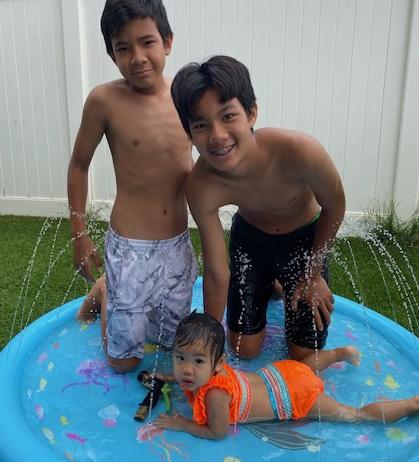
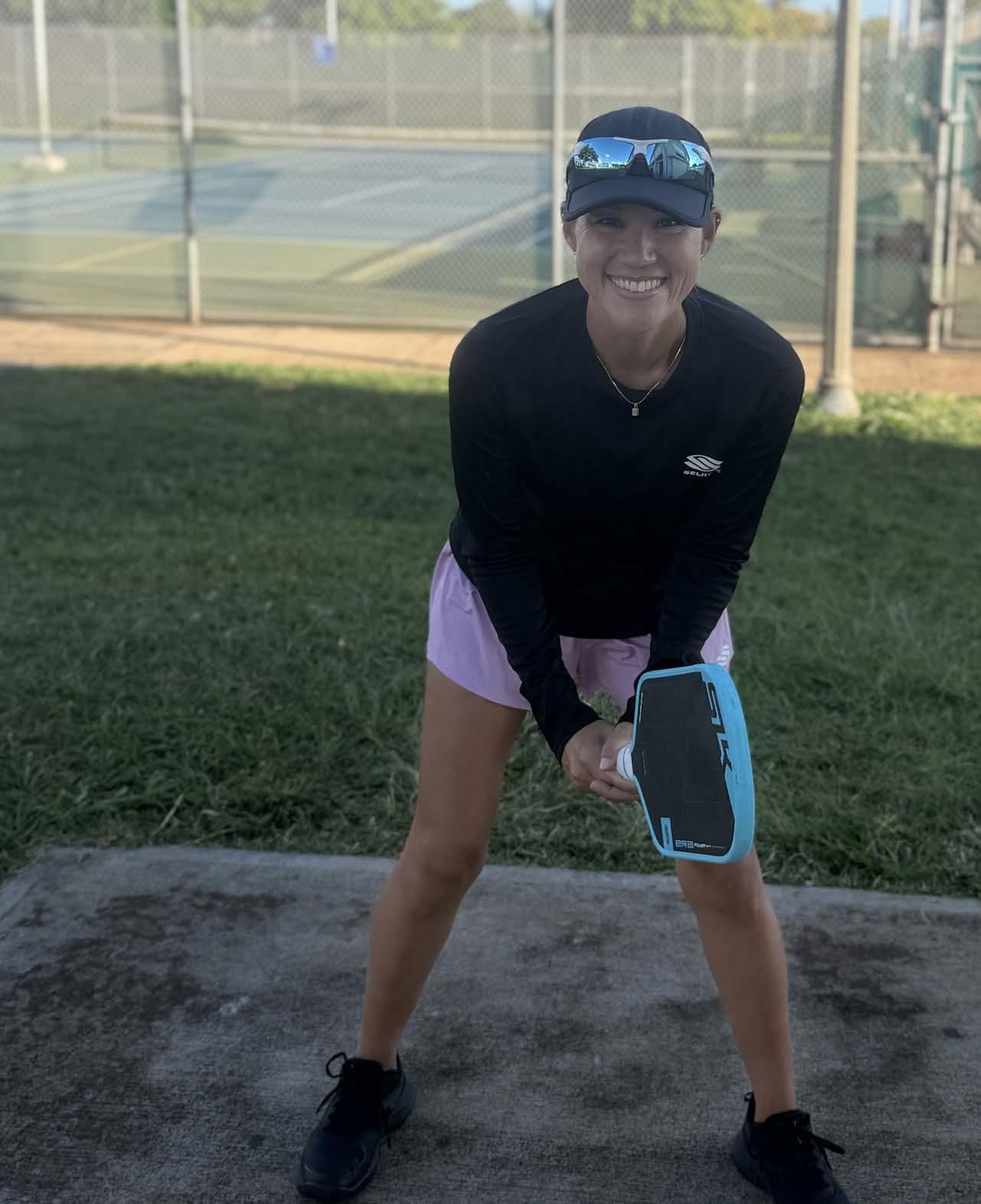
Morning or night person?
Morning, and night, actually. I barely sleep. I sleep maybe 5 to 6 hours.
Singles or doubles? Used to be singles, but now doubles.
Favorite morning beverage? Starbucks Caramel Macchiato.
One thing you always have in your pickleball bag? Sunscreen.
One thing Japan does better than anywhere else? Prizes. They give free T-shirts so we actually have something that we can wear.
One thing Hawaii gives you that Japan can't? Great weather.
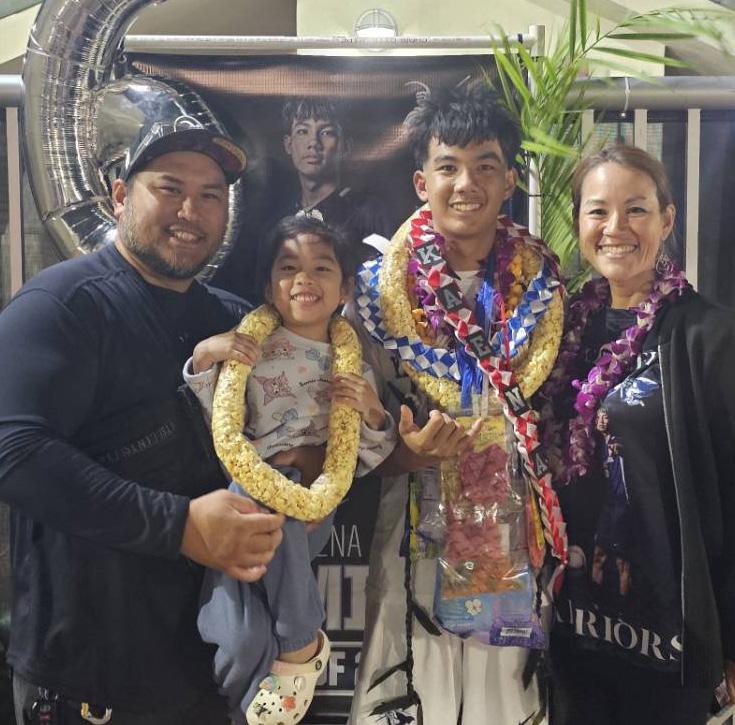
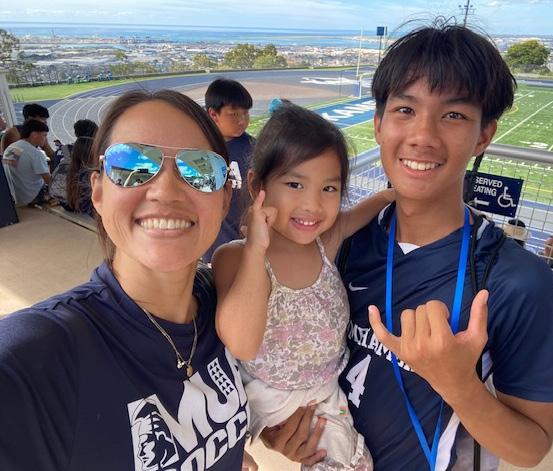
A year ago, things shifted. Her daughter, Laila, had just started preschool, and for the first time in a long while, her days had opened up. The window was small, but it was hers.
She claimed that window of opportunity and decided to get healthy for herself and her family.
One morning, after dropping her daughter off at school, Asako walked into the Kroc Center, the community center she’d joined for the gym and pool. A sign caught her attention: Play Pickleball. She didn’t know what pickleball was. The receptionist explained there was open play several mornings a week, exactly during the hours her daughter was in school.
She went to Walmart and bought a $20 paddle.
The first time she stepped onto the court, she loved it right away. It felt familiar, but different. Similar to tennis, but easier on her body. It was indoors, and welcoming. At first, she played mostly with seniors. There were no expectations and no pressure, unlike with tennis.
About a month in, players began telling her about open play at Ewa Mahiko. She went, met more players, and expanded her circle, getting pulled into more competitive games. Within four months, she was playing regularly with higher-level groups.
In January of 2025, after only a few months, she was asked to play in the Maui Pukaball Tournament. She said yes, even though she didn’t yet know what she didn’t know.
She entered Women’s 4.5, which was combined with the 5.0 division. They didn’t place. She also played 4.5+ Open in mixed doubles and finished third.
She said, “I did horrible, because I didn’t know anything about the slow game or anything like that. I was just playing like a tennis player. I got to be known as a banger tennis player.”
Asako reflected on the Maui tournament, “I just did not like losing, period. I wanted to place first. No matter how bad I was, no matter how much I didn’t know anything about pickleball, I just hate losing. That’s just how I am.”
After Maui, she got serious.
Players she had met at the 4.5 level had provided their feedback—they could see the tennis in her game, and suggested she learn pickleball on its own terms.
They said to start with YouTube.
“So I started watching YouTube heavily almost every day, every night, for hours.”
From there, she slowed things down and began working on the parts of the game she hadn’t needed to think about before.
Her husband bought her a Titan ball machine and a portable net, which they set up in the garage. That space became her training ground to work on dinking and fast hands.
At Ewa Mahiko, she found a group of 4.5+ players who agreed to help her get better. Instead of rotating through games, they drilled—four or five mornings a week and sometimes more often.
She found herself at the courts a minimum of six days, a few hours every morning. Her training happened in between work, before kids’ activities and home responsibilities took over.
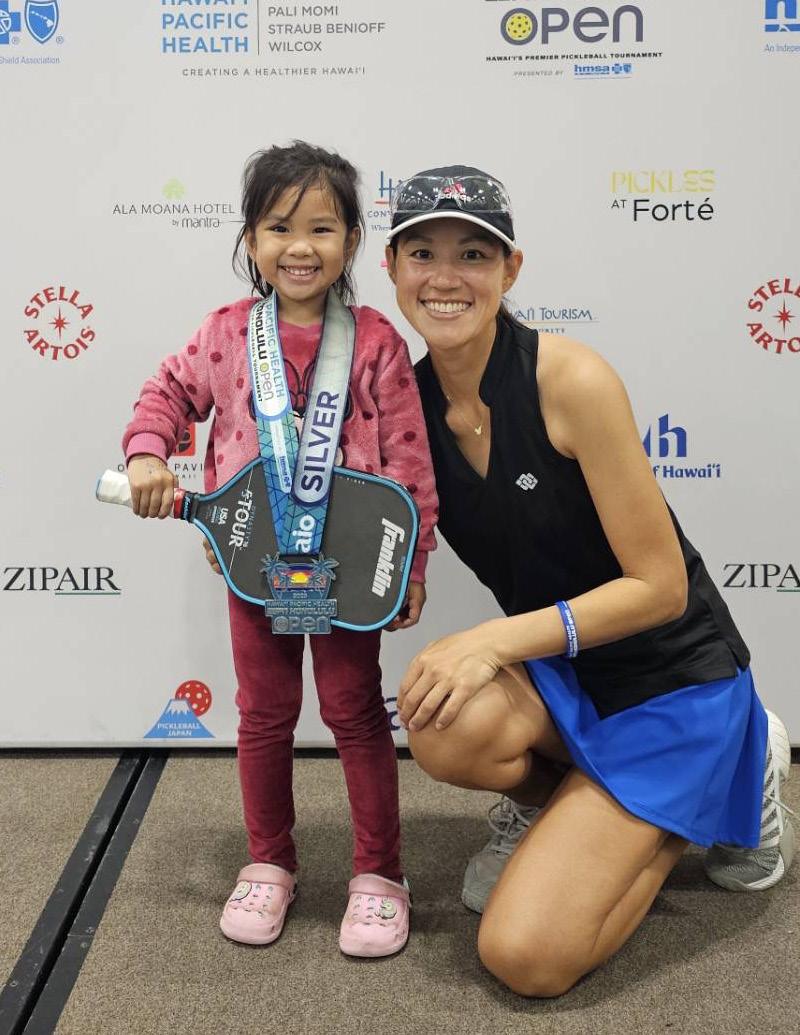
The next test came at the ESPN Honolulu Open in April 2025. She entered the 5.0 division and went out in the second round. In 4.5 mixed doubles, though, she placed second. It wasn’t a breakthrough, but it was confirmation that the work was translating.
Somewhere in that stretch—between Maui and ESPN, her thinking changed. Competition no longer felt like something she was dabbling in. It felt possible, something she could build toward, even at this stage of her life.
And once that door opened, the questions changed— not about whether she could do this, but whether she should.
The questions became harder to ignore.
“I’m 41 years old. What am I thinking?” she said. She questioned the travel. The time. The impact on her family.
“For me, at this age, I thought I should just be a mom,” she said. “I should just work, and make money, and not even worry about chasing my dream.”
She continued, “I have the most supportive husband in the world that’s telling me, go for it, you can do it. But my body is not responding, and you know, my realtor career and my kids what am I doing?”
She found herself at a crossroads—pulled between responsibility and a dream.
It was around that time that she came across an interview featuring Jamie Haas. She didn’t know Jamie then, but she watched the episode anyway—all 1.5 hours of it.
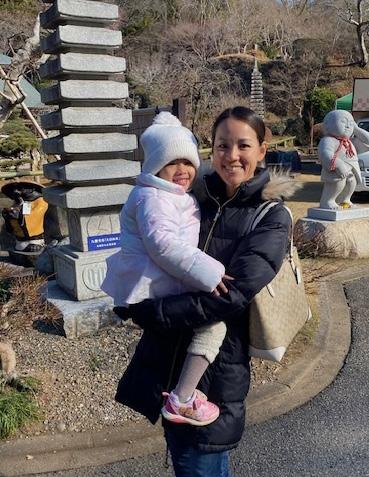
6:00 - 8:00 a.m: Work
8:30 a.m: Drop off Laila
9:00 a.m. - 12:00 p.m: Practice at Pickles at Forté
12:30 p.m: Pick up Laila
2:00 p.m. - 5:00 p.m: Practice at Pickles at Forte (Laila likes to come with me)
6:00 p.m. - 8:00 p.m: Family time 9:00 p.m. - Midnight: Work
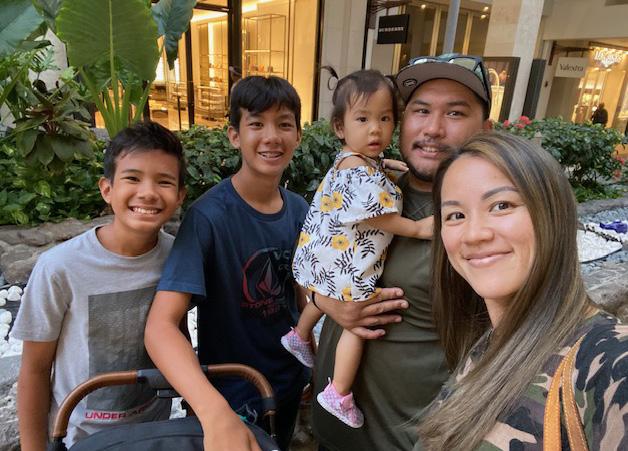
Jamie was talking about things Asako recognized immediately: raising three children, living in Hawai‘i, trying to make a living, and pursuing pickleball with the full support of her husband.
“She was talking about exactly what I was struggling with,” Asako said.
A week later, the two happened to meet in person.
“I told her, ‘Oh my god, Jamie, I just watched your podcast last week,’” she said. “I was literally in tears when I watched it.”
She told Jamie, “You gave me the inspiration back.”
Seeing someone already doing it, not perfectly, not without constraints, but honestly—shifted something.
“If Jamie’s doing it,” she said, “I can do it too.”
The doubt didn’t disappear.
But it stopped being the loudest voice in the room.
What made the path forward feel possible wasn’t confidence alone. It was support.
Her husband understood her background—the years she’d spent as a single mother, her tennis career that never moved past college because of injury, the long stretch when sport disappeared altogether.
He doesn’t compete, but he’s been part of the process from the start.
“He helps me drill in the garage,” she said. “He invested in the Titan ball machine.”
He travels with her to tournaments—Maui, the Big Island, Japan, and Vegas, often bringing their daughter along. He’s there to watch, to support, and to make space for her goals.
“He is the biggest fan of me,” she said. “He sacrificed everything so that I can enjoy pickleball.”
Their schedule is intentional. She trains in the mornings, while her daughter is in preschool and her older kids are in school. After that, the day shifts.
“After that, I become a full-time mom slash real estate agent,” she said. “Work has to come first. Pickleball is not making me any money right now.”
She’s clear about the trade-offs. Pickleball isn’t a career, at least not yet—but it gives her something else.
“It’s more of me being happy,” she said. “So it’s a good balance that I have.”
Her children see it too. Her two sons want to play pickleball with her, and a few months ago, her oldest son said something that stayed with her.
“He told me, ‘Mom, for your age, you play really good,’” she said. “That made me proud. Part of me wants to be good at pickleball because I want my kids to know…I can still be something. I can still be a cool mom.”
She paused, then added, “As a mom, it’s okay to be happy for yourself. It’s okay to do something that makes you happy.”
She is present for her family. She honors her work. And in the space she’s carved out—carefully and deliberately, she keeps going.
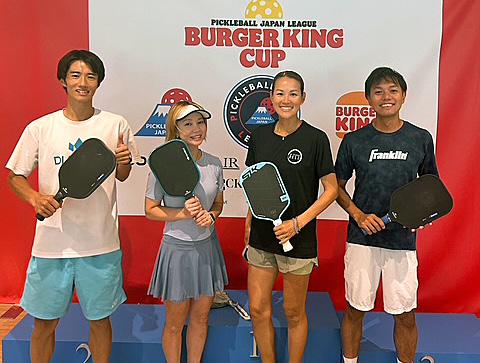
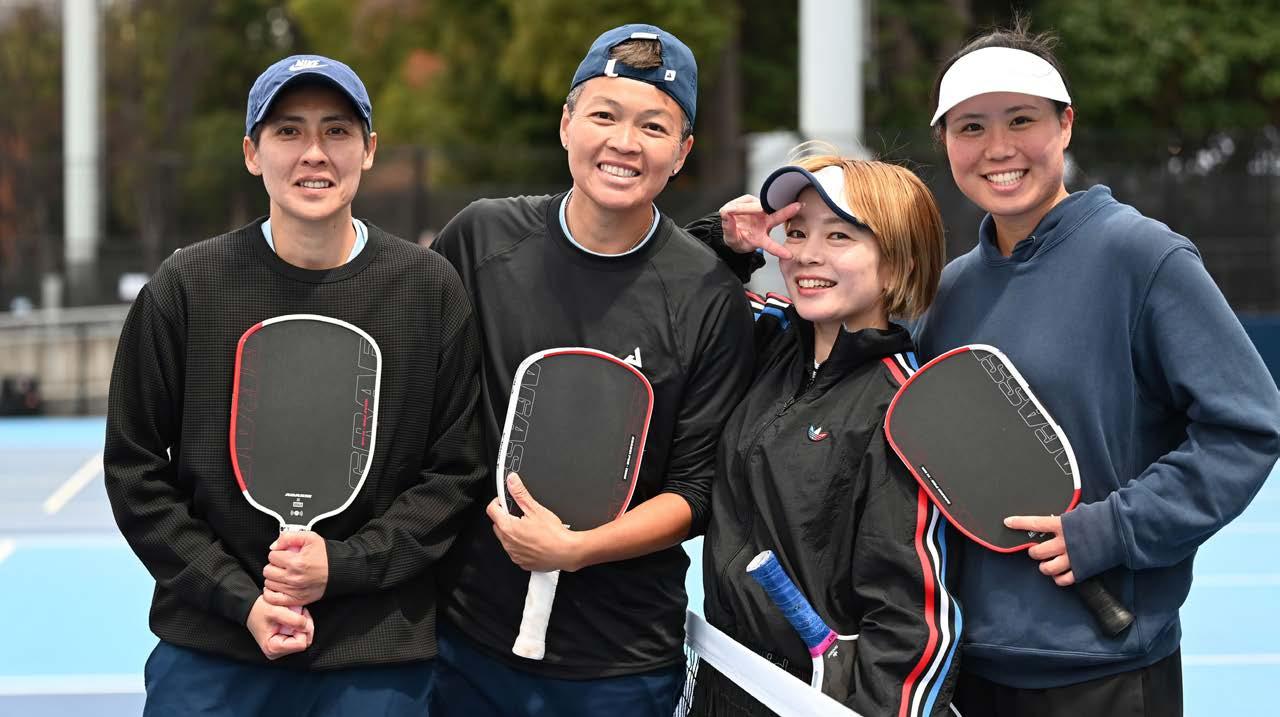
In July of 2025, Asako applied for the PJF Burger King tournament in Japan, a team-based, MLP-style event with just 30 roster spots available worldwide. Players were drafted onto teams of four; two men and two women. When the selections were announced, she was chosen.
Her family still lives in Japan, and Chiba City, where she grew up, is about a 45-minute drive from Ariake in Tokyo, where the tournament was held. This time, they were able to come watch her play.
On the court, the differences were apparent almost immediately.
“I felt like I was the oldest on the court,” she said. Most of the players were in their 20s and 30s, many coming from tennis, badminton, table tennis, or baseball backgrounds. The pace was fast, the style of play aggressive, with far less emphasis on the slow game.
“Their play style was very clean,” she said, “and their play style is very fast.”
Her doubles partner had once been ranked number one in the world in crossminton, and the level of athleticism around her was impossible to miss. While pickleball was still developing in Japan, the foundational skill level was high, and the speed of play demanded constant adjustment.
And then there was the attention to detail.
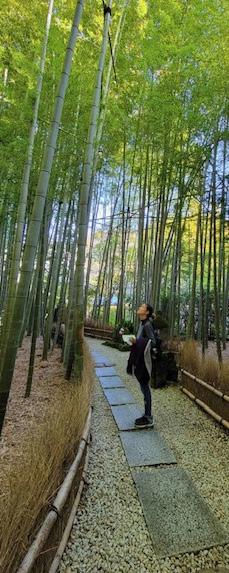
“What I learned the most about Japan is that they perfect everything,” she said. “No matter if it’s food, service, or sports.”
That mindset showed up in how the tournament was run—structured briefings before play, minimal waiting between matches, and a sense that everything had been carefully considered and executed.
Some of the differences were cultural rather than competitive. At the end of matches, there were no paddle taps.
“They shake hands and they bow,” she said. Playing in Japan wasn’t only about results. It was about representing the country she grew up in—competing in front of family and moving within a culture where preparation, process, and precision had shaped her long before pickleball ever entered her life.
“It’s something that I cherish to the fullest,” she said. “It was an honor to be there.”
The questions are still there, and so is the reality. She’s open about where she is. Recent tournaments haven’t gone the way she hoped. Her DUPR has dipped, a reminder that progress isn’t linear and that growth often requires recalibration. For now, her focus has narrowed—her goal is to establish herself solidly at the 5.0 level.
When she thinks about her kids watching her train, travel, and compete, she’s conscious of what they might take from it. This is about chasing a dream, but not the glossy version that skips over the work. It’s about pursuing something meaningful even when you’re not sure you’re allowed to.
“I want my kids to know that anything can come true if you put your heart and effort into it,” she said. “Growing up, I watched my mother coaching tennis, doing what she loved. That was the most inspiring thing for me.”
What she hopes they notice isn’t just the tournaments or the results. It’s the discipline behind them. The work that happens quietly, when no one is watching.
“Nothing is more important than doing the hard work behind the scenes,” she said. “That’s what sets you apart.”
This season of her life isn’t simple, and she doesn’t pretend it is. She’s a mother of three. She works. She trains. She’s learning how to hold competing responsibilities at the same time; not perfectly, but intentionally.
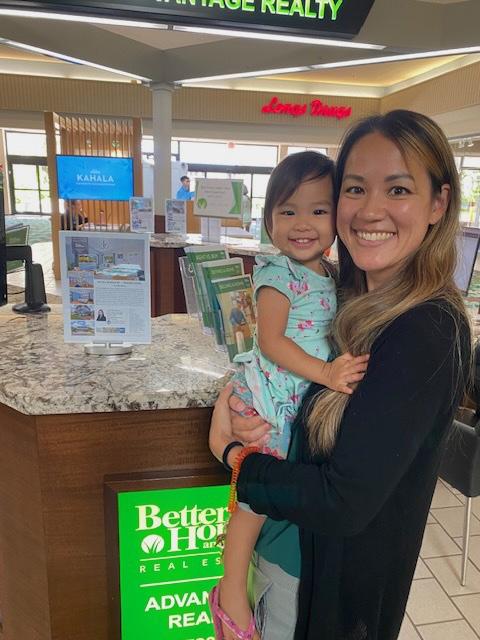
When asked what she would tell another mom with young kids about how she makes this work, she hesitated.
“Honestly,” she said after a moment, “the truth is— being married to the most supportive husband in the world.”
She knows this doesn’t work without help, and she’s equally aware that not everyone has the same kind of support system.
Support, she believes, isn’t about dependence. It’s about reciprocity.
“Have the support from your family as much as you support them,” she said. “I try to balance between my career, pickleball life, and my family life—being there for my kids and my husband just as much as they are there for me.”
And when asked what she wants people to understand about this season—about her age, her choices, and the questions that still come up, she doesn’t hesitate.
“Age doesn’t matter,” she said. “Whether you’re 14, 30, or 41. If you dream of something, you work for it. Yes, I’m a mother of three. Yes, I’m a wife. But nothing should stop you because of that.”
She’s learned that permission doesn’t always come from the outside. Sometimes, it’s an inside job.
At 41, Asako Pastrana isn’t claiming certainty or arrival. On the contrary…she’s still becoming. HPM
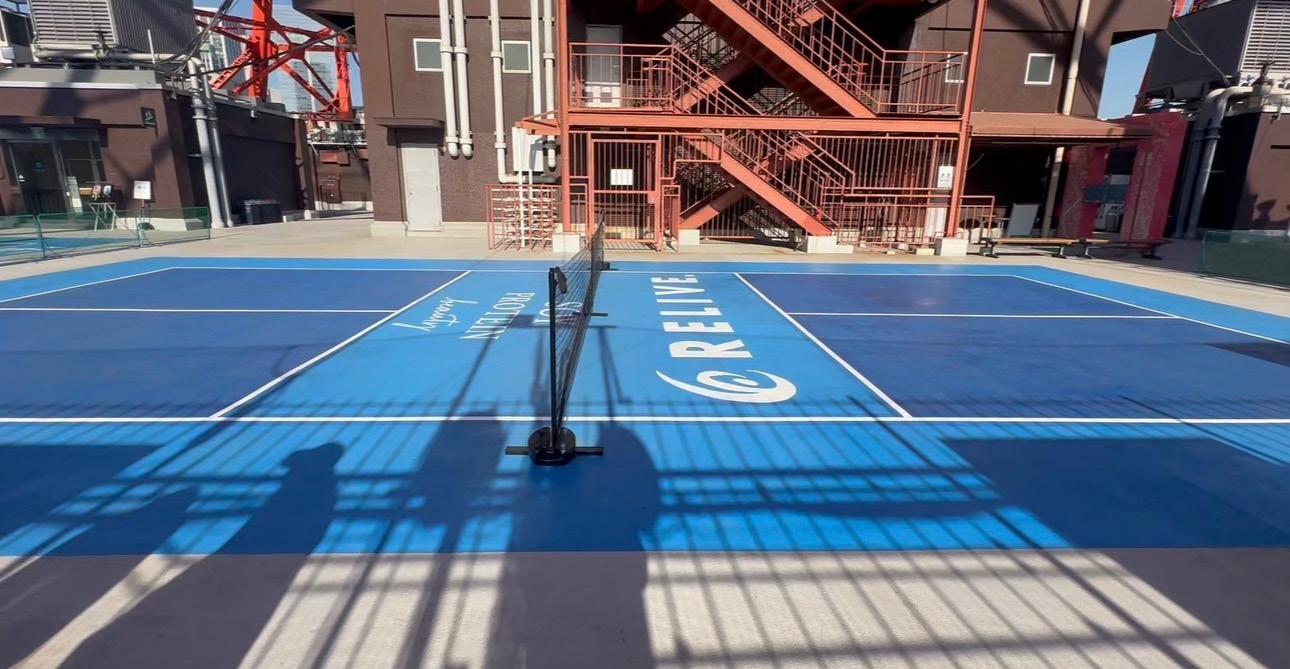
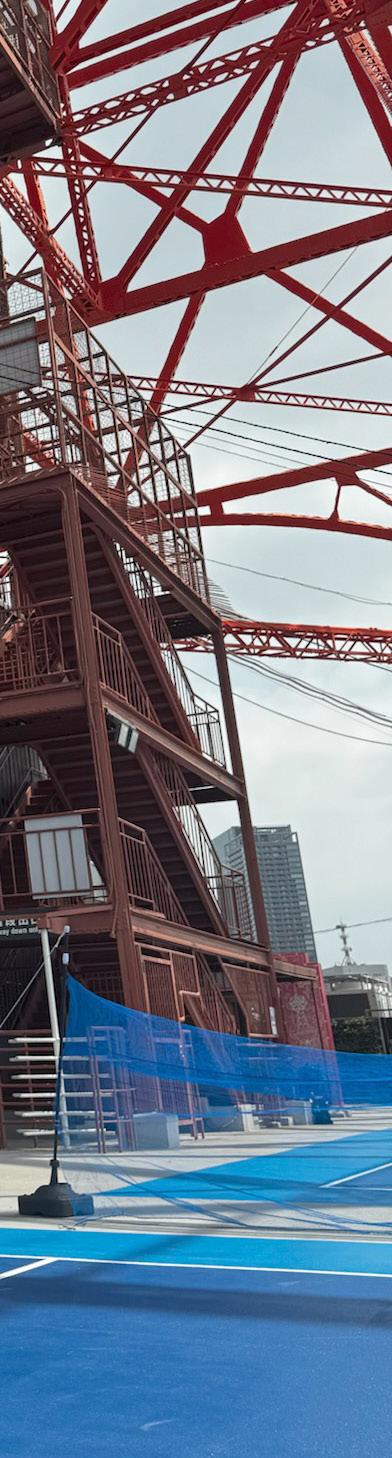
There are memorable pickleball courts… and then there are pinch-me pickleball courts. High above the city, with Tokyo stretching out in every direction, the courts at Tokyo Tower place the game in a setting that feels as iconic as the skyline itself.
For travelers who plan their trips around court time, playing at the Tokyo Tower is likely to be one of the most memorable stops of the trip.
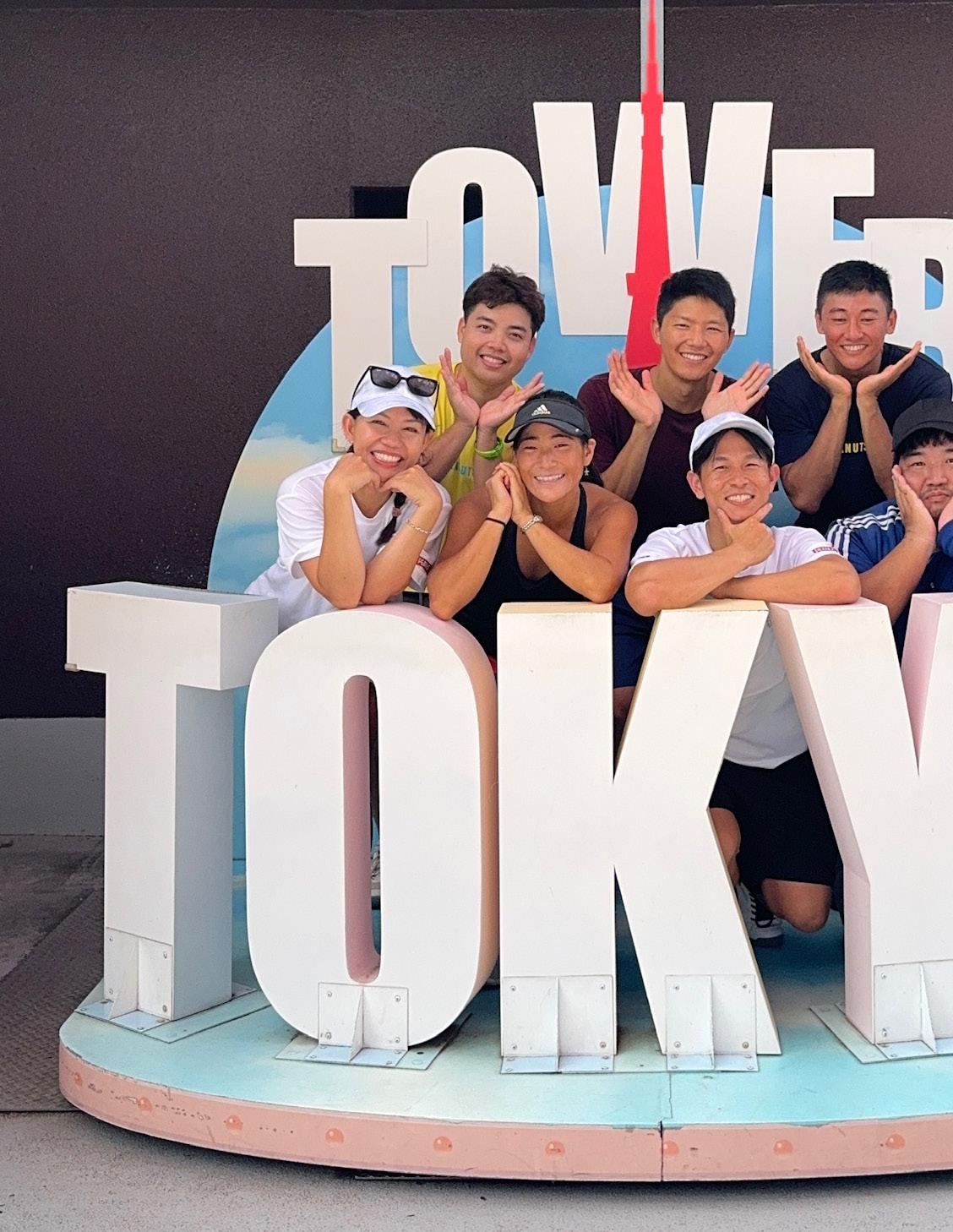

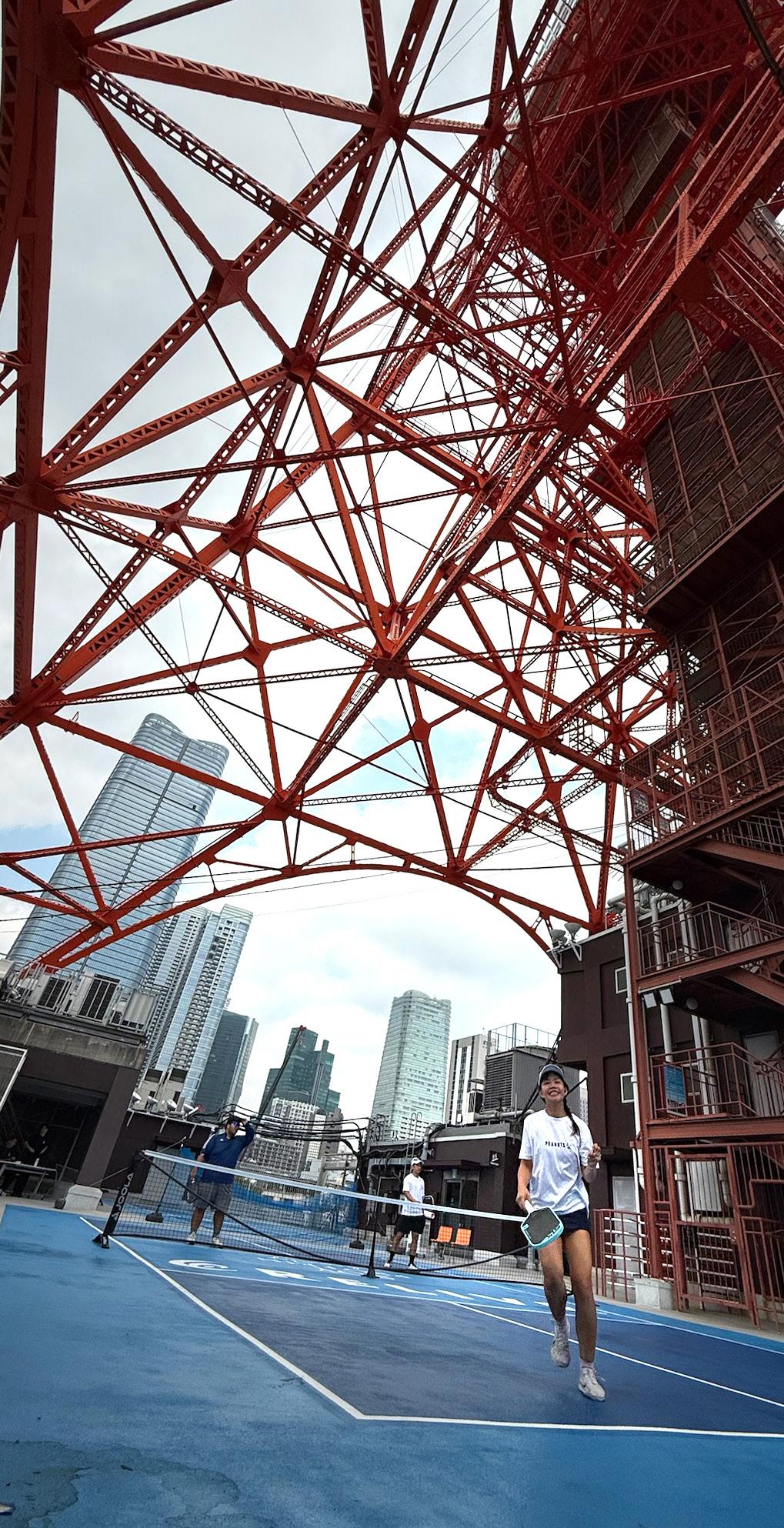
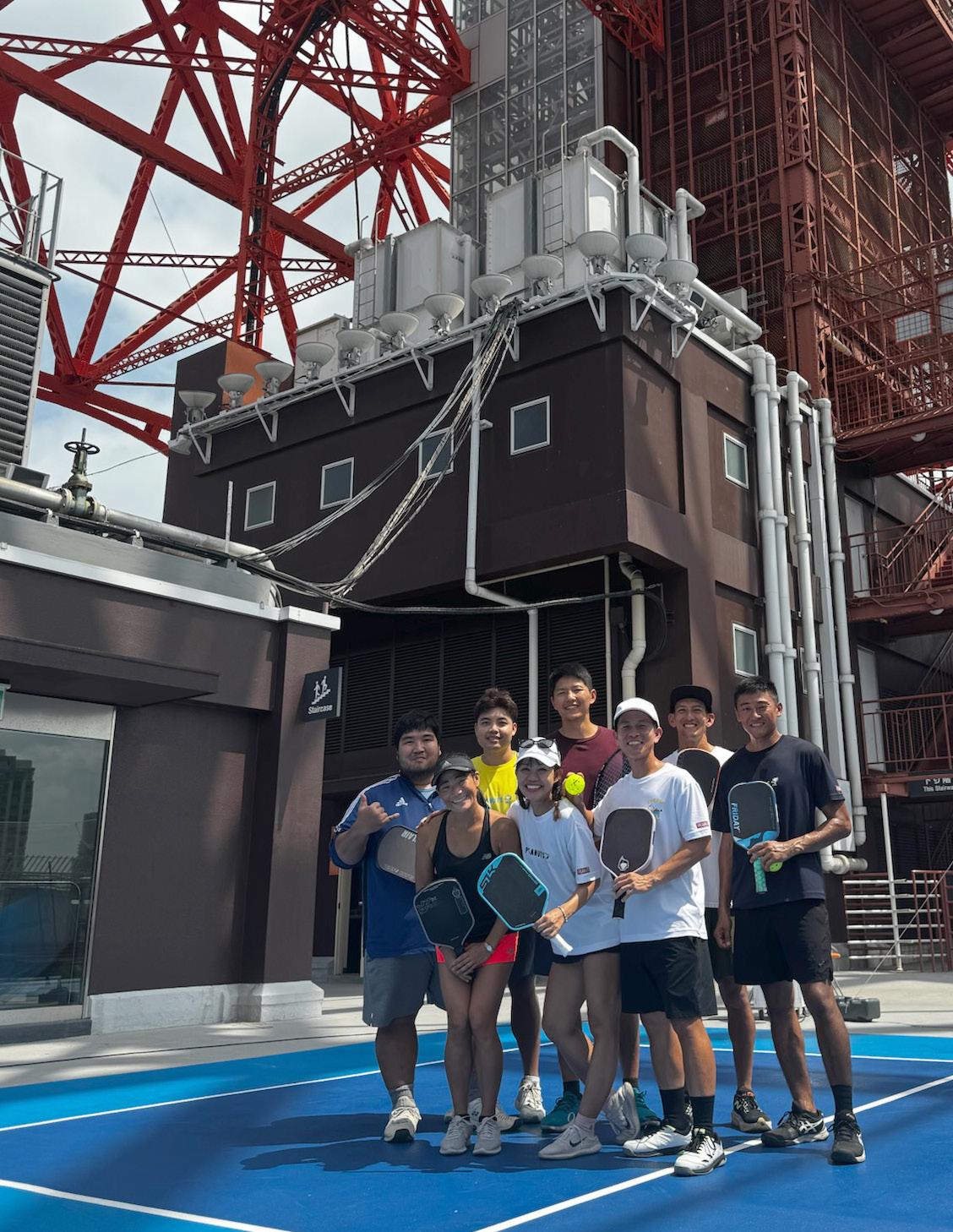
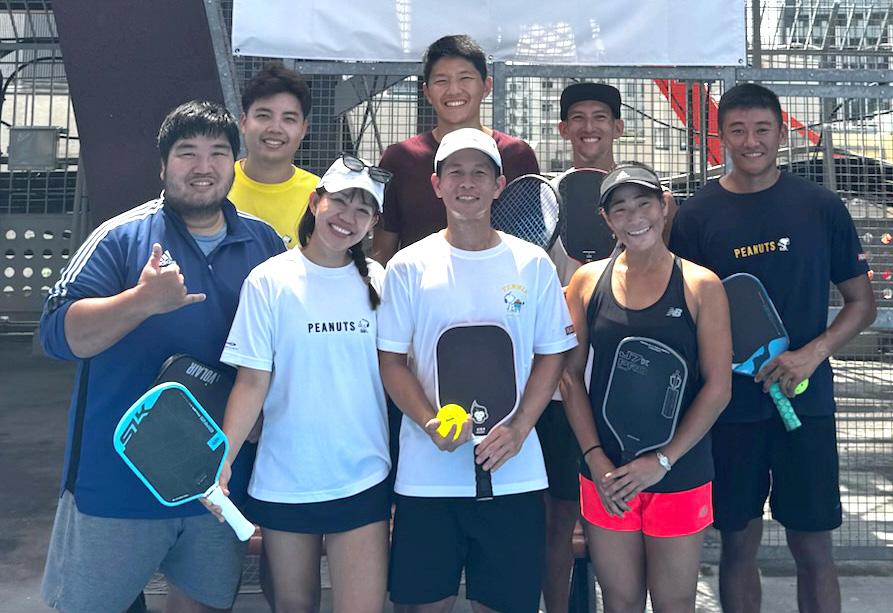
• “It was definitely a surreal experience, mixing the two things we love the most, pickleball and traveling. Time went by so fast, but it was worth the $40/hr court time.
• “At the end, we tried to see who could lob the highest since we were already so high up Tokyo Tower! (No balls were lost in the process)”
• “We tried booking another court time during the weekend, but it gets really busy. If you have time and traveling with a group, I definitely recommend!”
Court Fees (1 hour / 1 court):
• Weekdays (10:00–17:59): ¥8,000
• Weekdays (18:00–20:59): ¥10,000
• Weekends & Holidays (10:00–20:59): ¥12,000
• Evening and weekend slots fill quickly
• Sunset and night sessions deliver the most dramatic views
Because court availability and hours can change, it’s best to check Tokyo Tower’s official listings or booking platform close to your travel dates. Logistics aside, this isn’t everyday pickleball, and it’s not trying to be.
It’s Tokyo.
It’s iconic.
PJF PICKLEBALL CHAMPIONSHIPS 2025: ARIAKE, TOKYO
Ariake, Tokyo | December 10-13, 2025


PJF PICKLEBALL CHAMPIONSHIPS 2025: ARIAKE, TOKYO
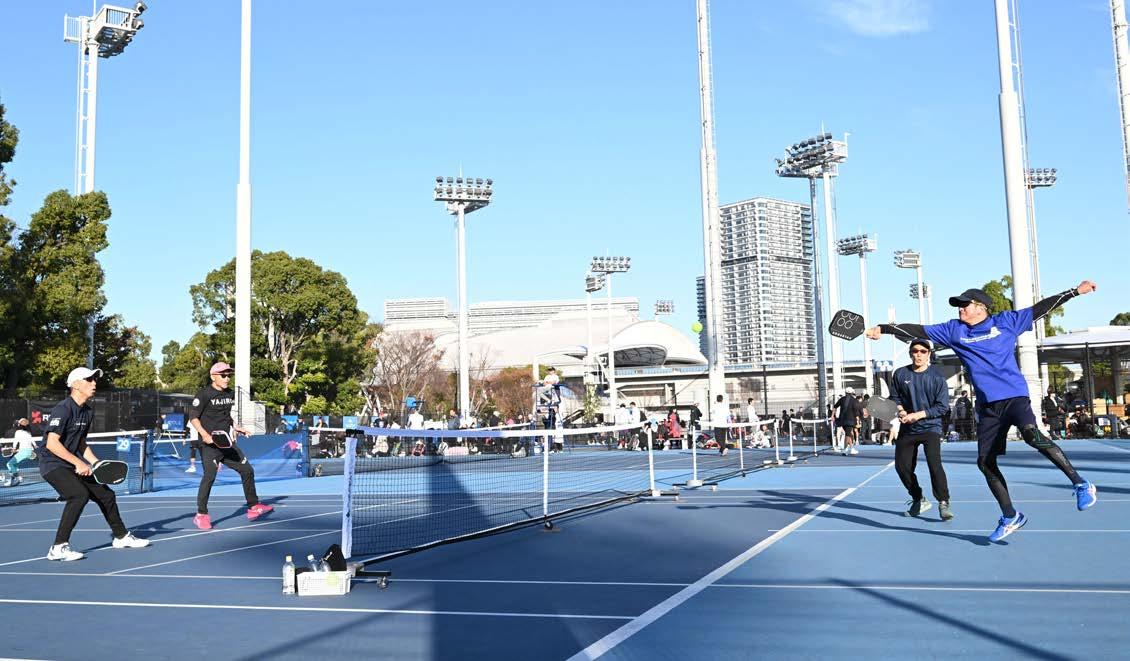
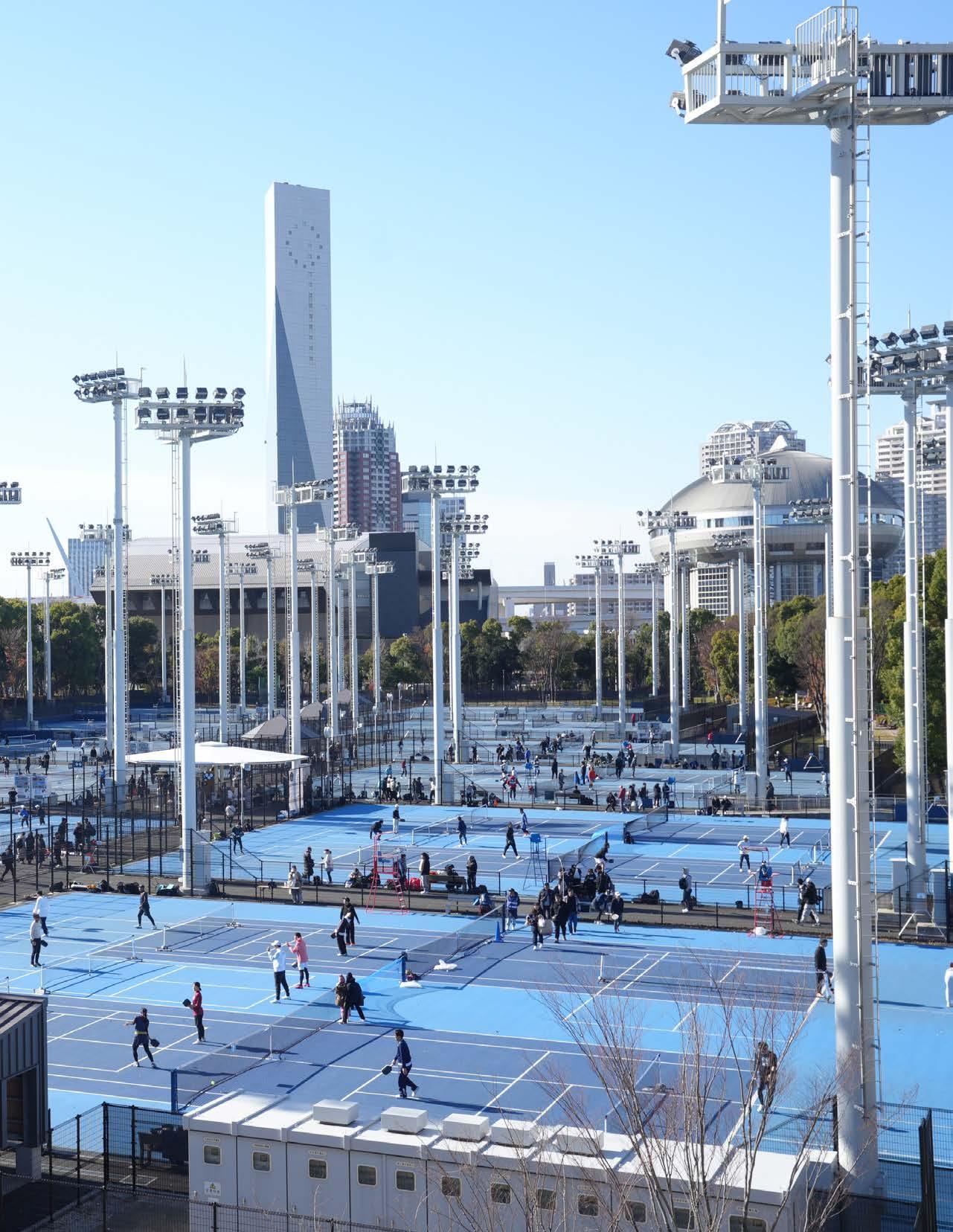
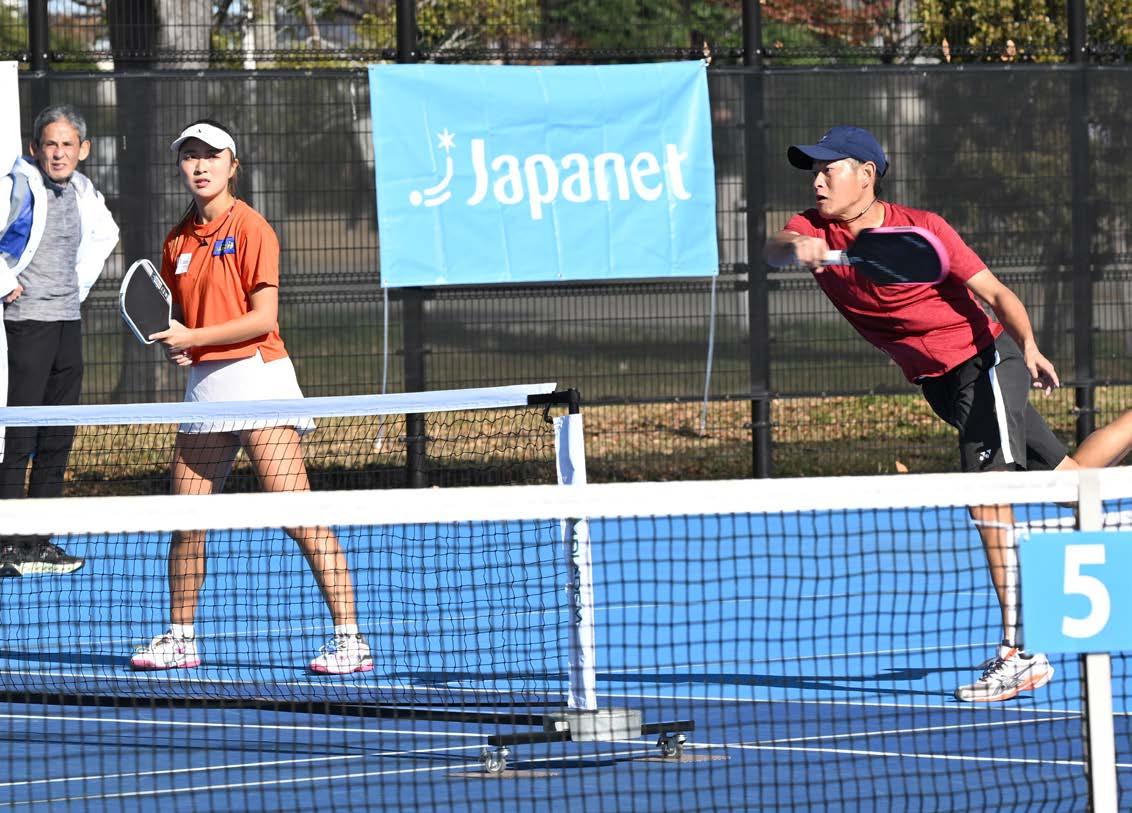
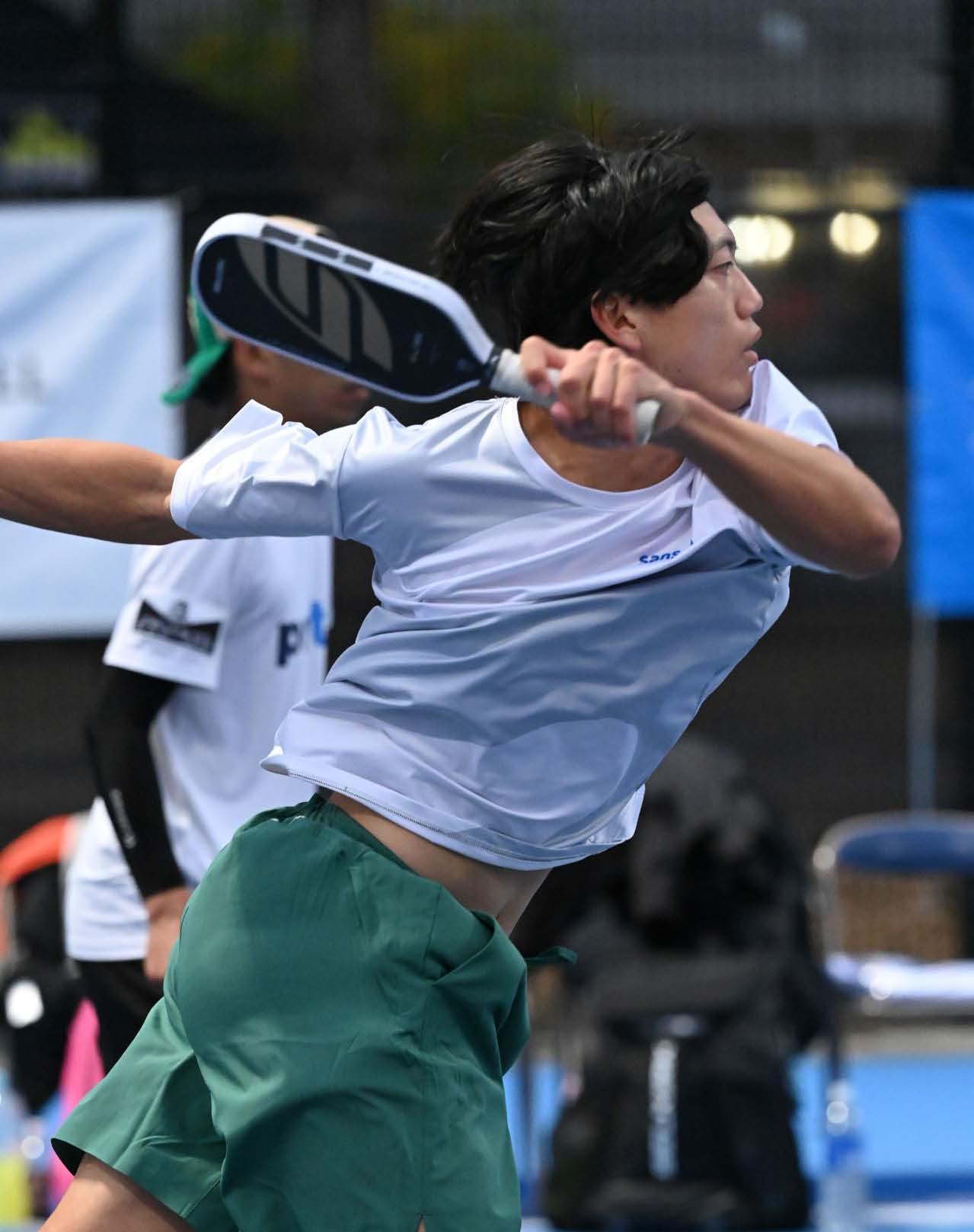
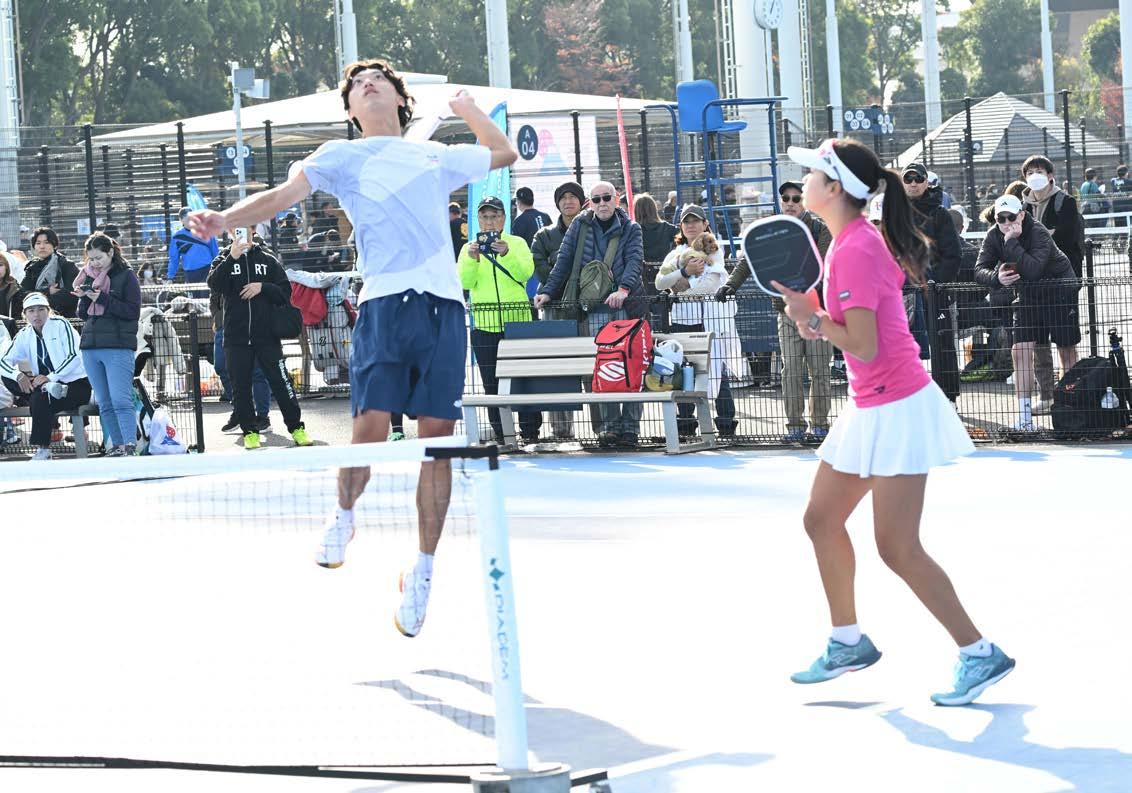
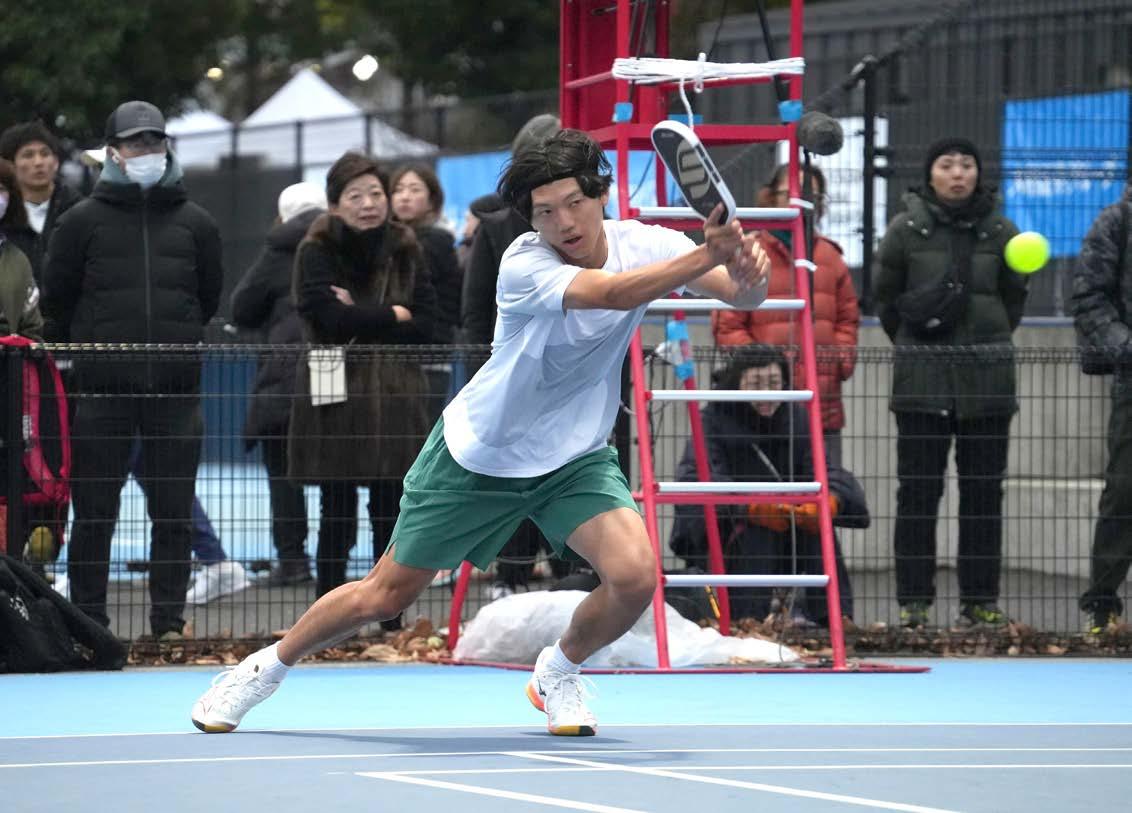
Held at Ariake Tennis Forest in Tokyo, the PJF Pickleball Championships 2025 marked a major milestone for pickleball in Japan.
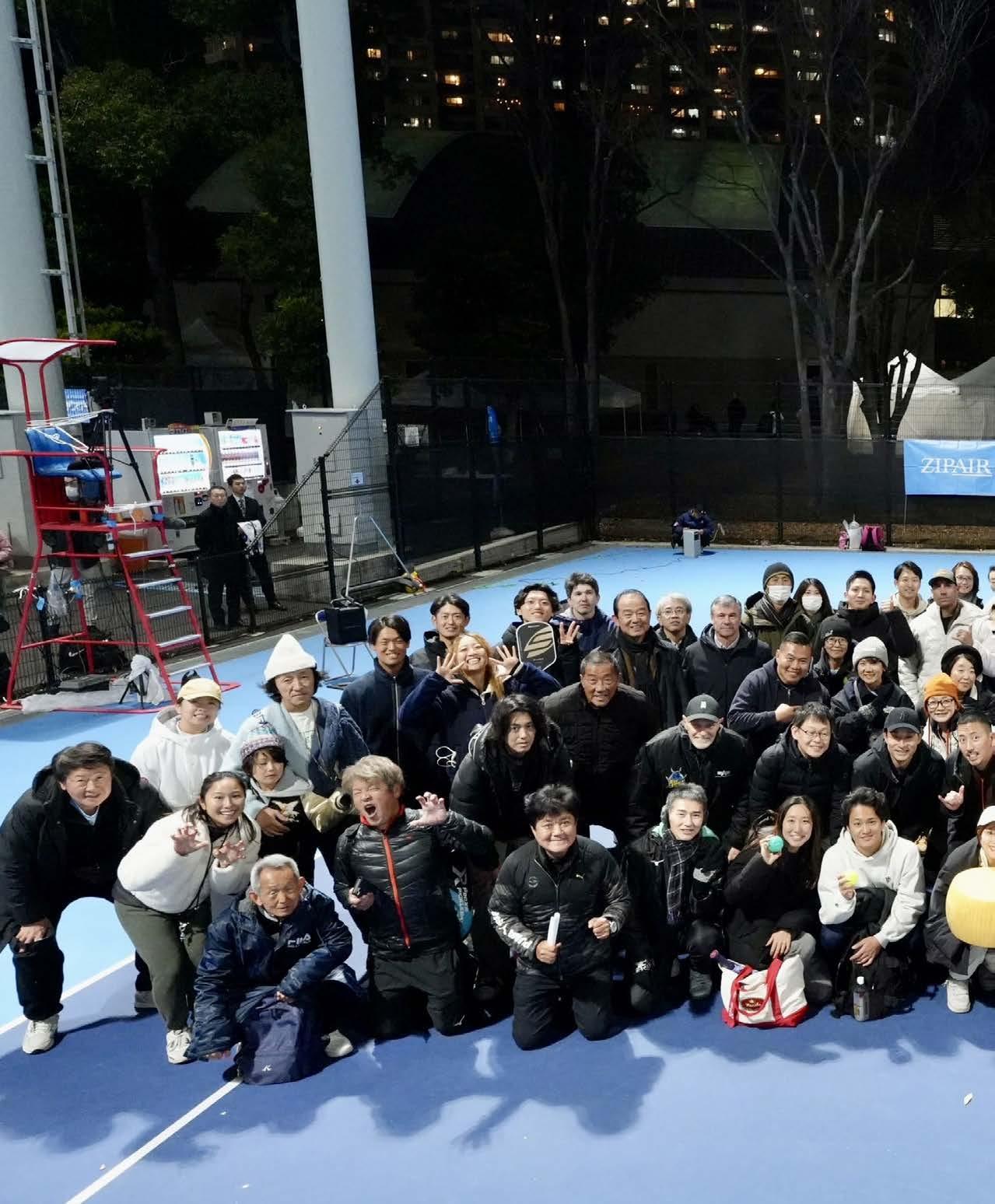
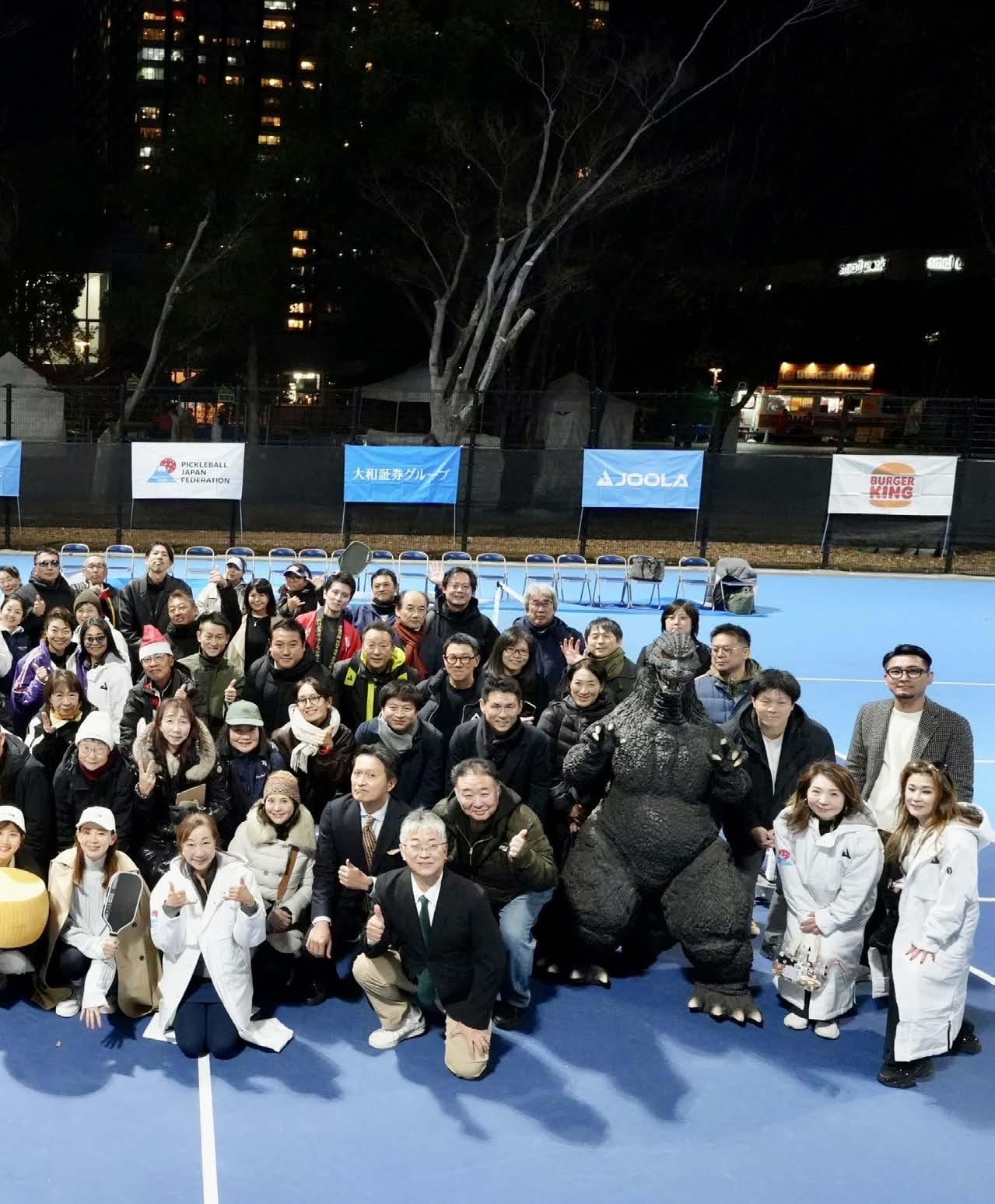
Over four days, 1,090 competitors from 18 countries and regions played 2,278 matches across 53 courts, making the event the largest international pickleball tournament ever held in Japan. Hawaiʻi was well represented, with 35 players traveling to Japan to compete at Ariake, highlighting the strong connection between the two pickleball communities.
Along with international clinics, coaching programs, and referee certification courses, the event drew total attendance to about 1,300 participants. The scale of the event made it clear just how fast pickleball is growing, in Japan and around the world.
Players: 1,090 competitors
Total Participants: ~1,300 (including official programs)
Countries Represented: 18
Matches Played: 2,278
Courts in Use: 53 (4 show courts)
Prize Money: ¥5,000,000
Age Range: 9 to 80
Gender Split: 43.4% women / 56.6% men
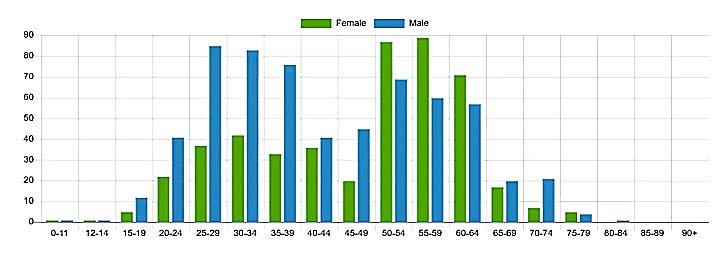
GRAPH: AGE AND GENDER: One of the most striking takeaways from Ariake was the age ranges on the court. The presence of junior players alongside senior competitors, including an 80-year-old gold medalist, highlighted the sport’s multi-generational appeal.
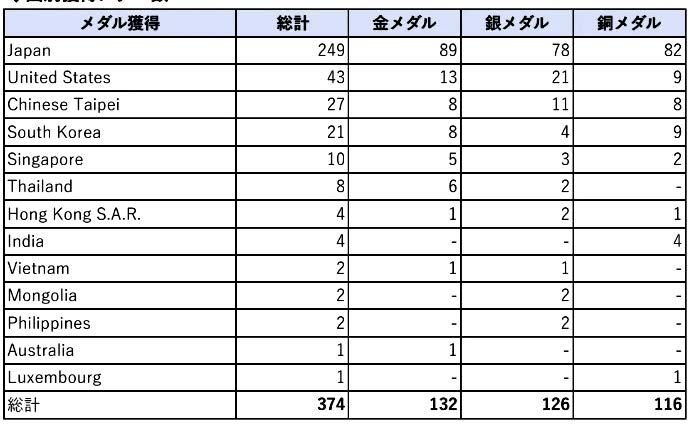
TABLE: MEDAL COUNT BY COUNTRY: The medal table reflected the event’s international depth. Japan led all countries with 249 total medals, followed by the United States (43) and Chinese Taipei (27). South Korea, Singapore, Thailand, and several other nations also reached the podium.
CHAMPIONSHIPS 2025: ARIAKE, TOKYO
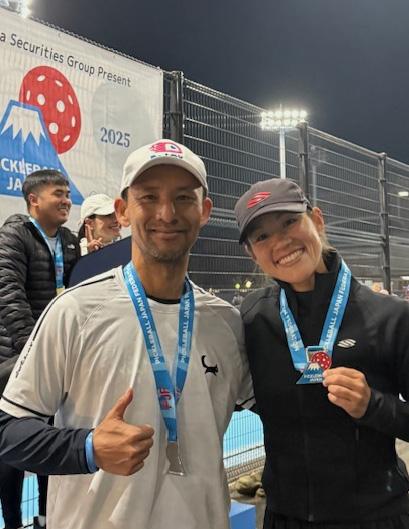
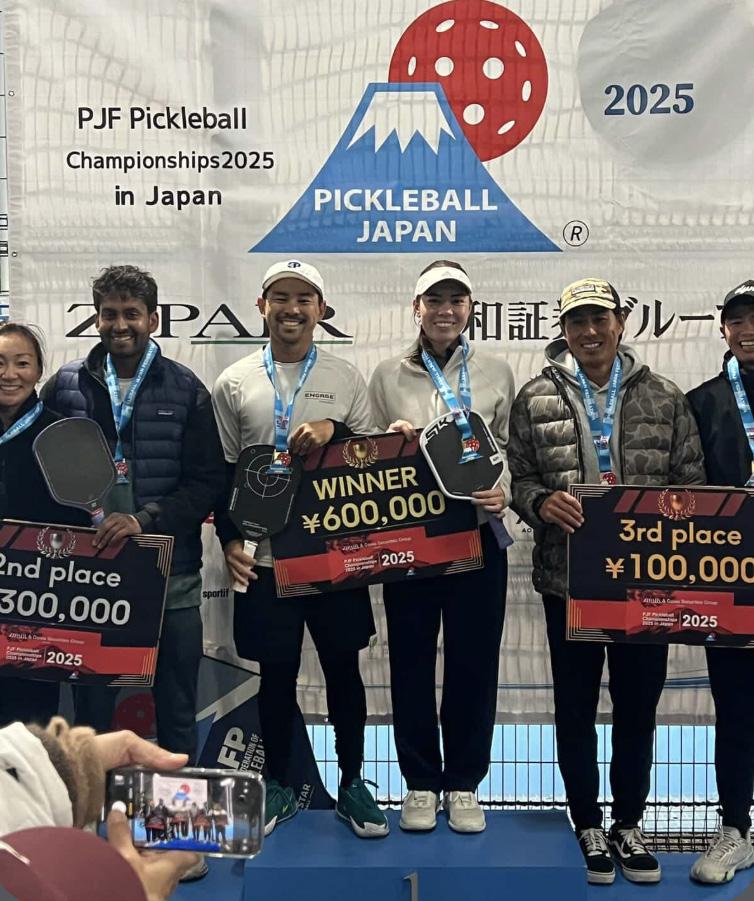
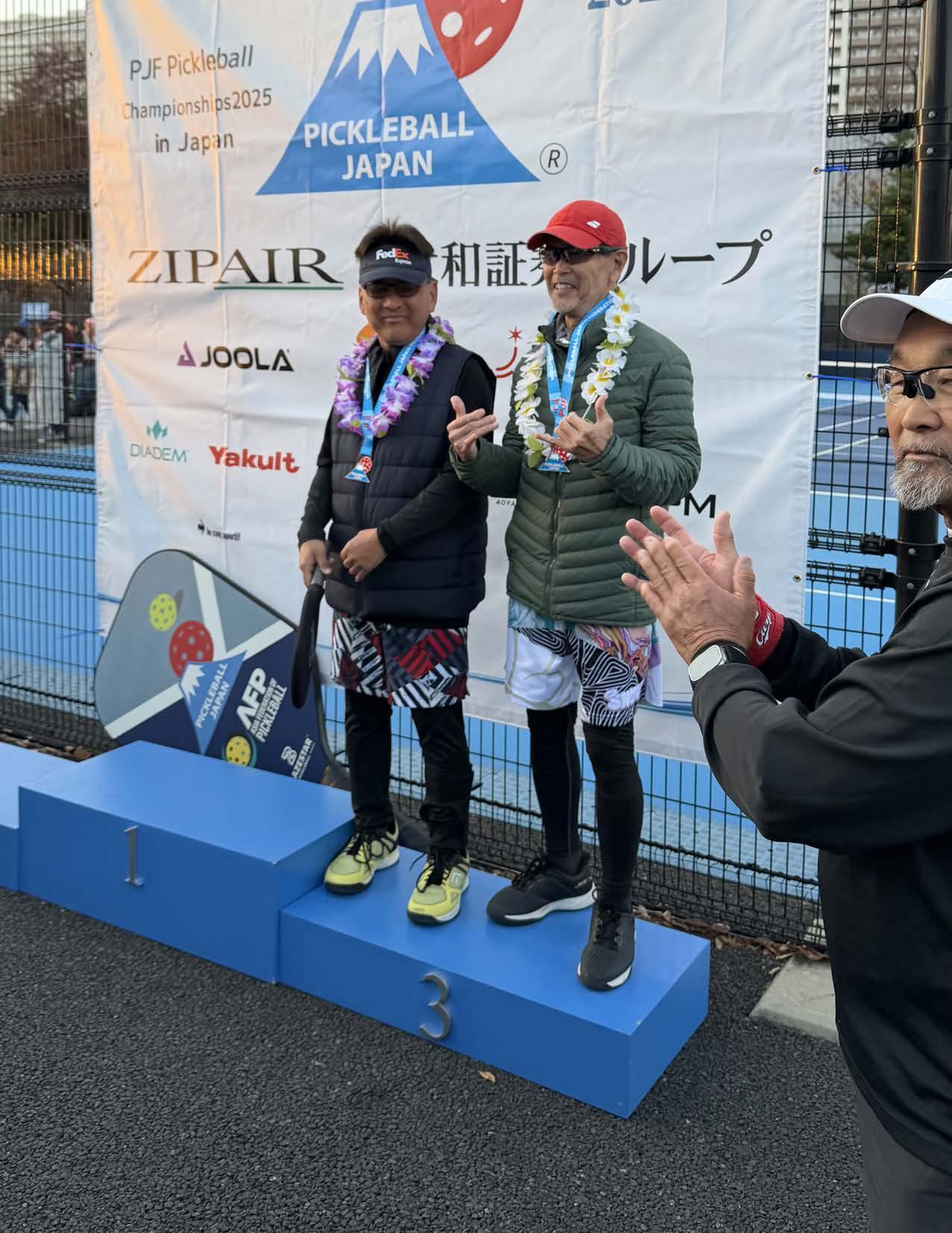
PJF Pickleball Championships medalists with Hawai‘i connections a snapshot of local ties making an impact on the international stage
1st Place: Xiao Yi Wang-Beckvall (USA) / Keven Wong (USA)
2nd Place: Jamie Haas (USA) / Santhosh Narayanan (USA)
・3rd Place: Pei-Chuan Kao (Taiwan)/Kento Tamaki (Japan)
・4th Place: Ting Wen Wang (Taiwan) / Prycen Haas (USA)
1st Place: Kento Tamaki (Japan) / Ramon Estareja (USA)
2nd Place: Santhosh Narayanan (USA) / Prycen Haas (USA)
・3rd Place: Tajas Mahajan (India) / Vanshik Kapadia (India)
・4th Place: Han Hyuck Chu (Korea) / Park Seong Yong (Korea)
*Due to rain, the competition ended after the semi-finals. The four teams that advanced to the semi-finals were tied, and the prize money was divided equally between the four teams.
Xiao Yi Wang-Beckvall (USA) / Yufei Long (China)
Kai Fen Yi(Taiwan)/Ting Wen Wang(Taiwan)
Jamie Haas (USA) / Mayu Ito (Japan)
Yu-Chieh Hsieh (Taiwan)/Pei-Chuan Kao (Taiwan)
SENIOR Mixed Doubles Skill: (3.5) Age: (60 To 69)
1st Place: Rika Riordan / Quinn Riordan
SENIOR Men’s Doubles Skill: (3.5) Age: (70 And Above)
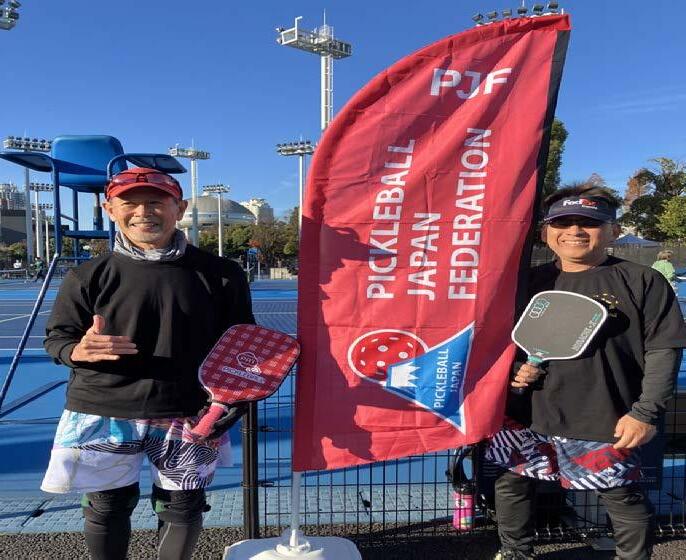
3rd Place: Bruce Fujimoto / Gary Fujimoto (side note: Bruce and Gary are cousins)
Mixed Doubles Skill: (5.0) Age: (35 And Above)
2nd Place: Asako Pastrana (with MXD partner Minh Le)
SENIOR Men’s Doubles Skill: (3.0) Age: (50 To 59)
1st Place: Tomo Ohi (with MD partner So Horie)
Mixed Doubles Skill: (4.5) Age: (35+)
2nd Place: Ayumi Shoemaker (with MXD partner Daisuke Horii)
Women’s Doubles Skill: (3.0) Age: (60+70+)
2nd Place: Marie Imanaka / Denise Wheeler
SENIOR Women’s Doubles Skill: (4.0) Age: (60+)
2nd Place: Rika Riordan / Aiko Sakuma
Men’s Doubles Skill: (5.0+) Age: (19 To 34)
3rd Place: Joe Kasahara (with MD partner Yuki Sugiyama)
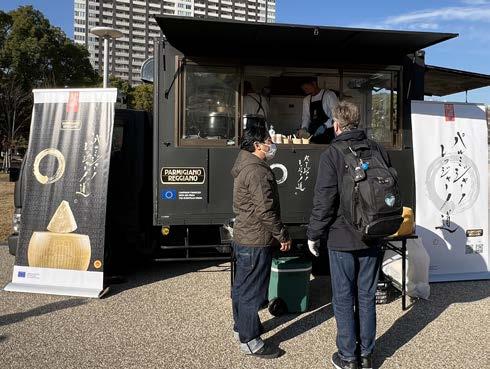
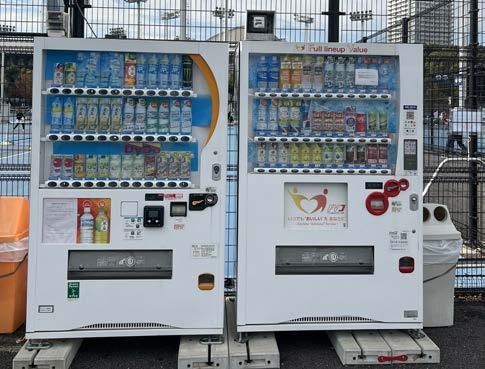
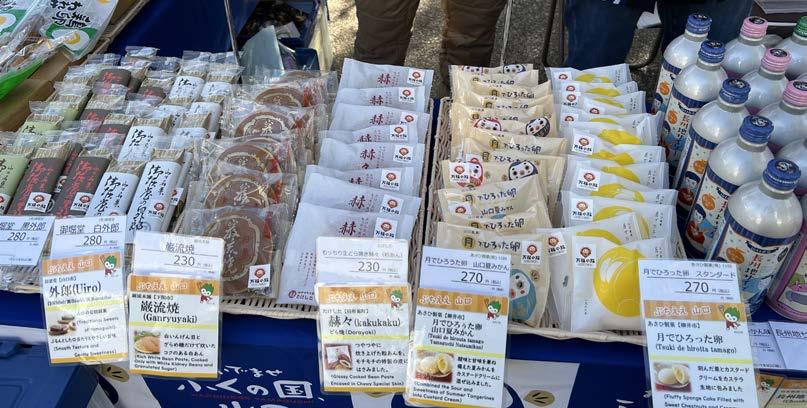
Food at the tournament ranged from familiar favorites to uniquely Japanese finds, making it easy to grab something between matches. From food trucks to specialty pop-ups, and, of course, vending machines---there was no shortage of quick, crowd-pleasing options.
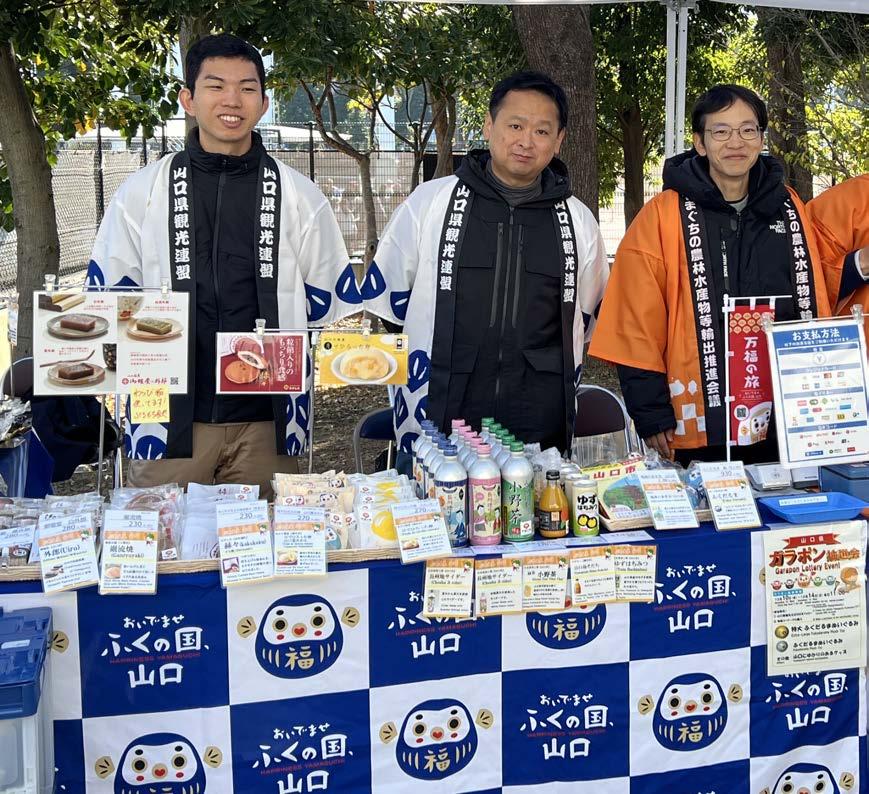
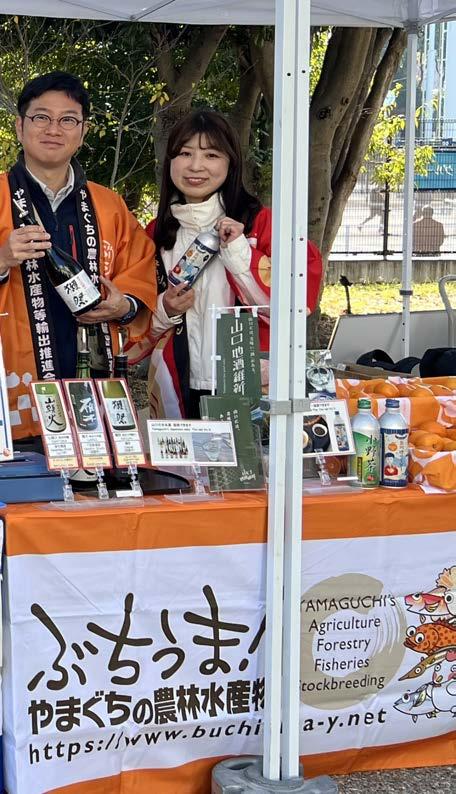
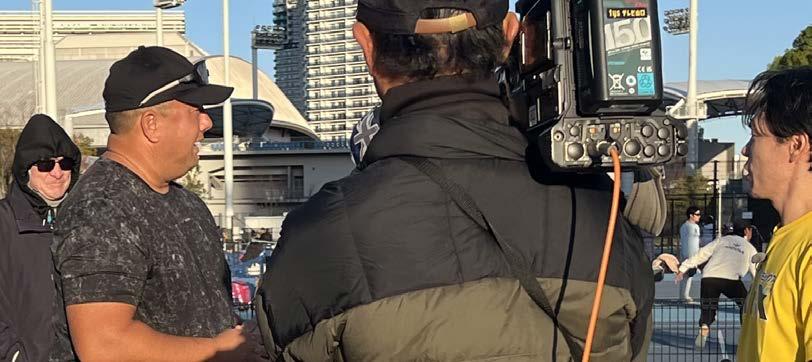
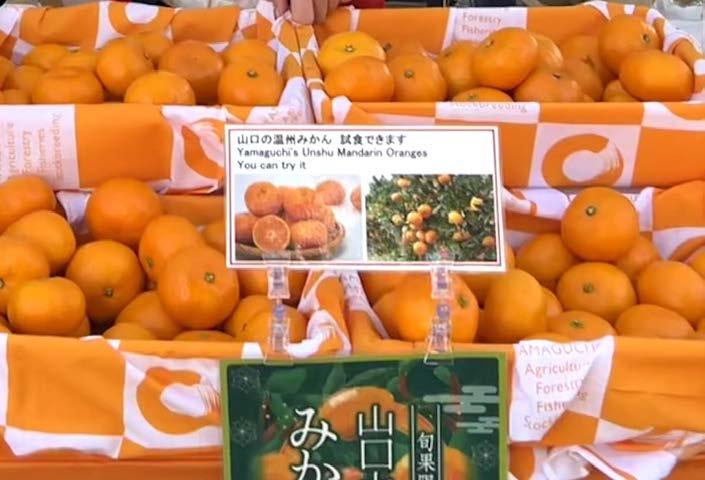
Representatives from Yamaguchi Prefecture were on site throughout the tournament, offering a preview of an upcoming sister-city pickleball event planned for June. With Honolulu as Yamaguchi’s sister city, their presence added a natural Hawai‘i connection to the week. Food samples, player conversations, and an interview with Hawai‘i player Sean Kimura turned their presence into more than a booth... it was a reminder of how pickleball continues to connect communities around the world.
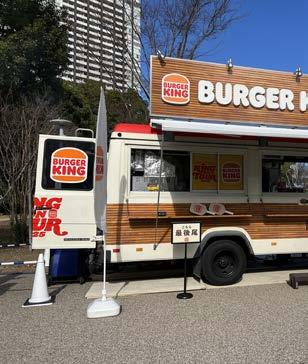
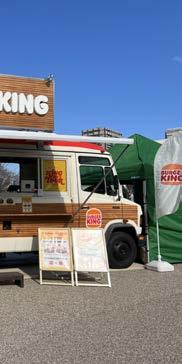
around ¥1,000, burgers and a drink.

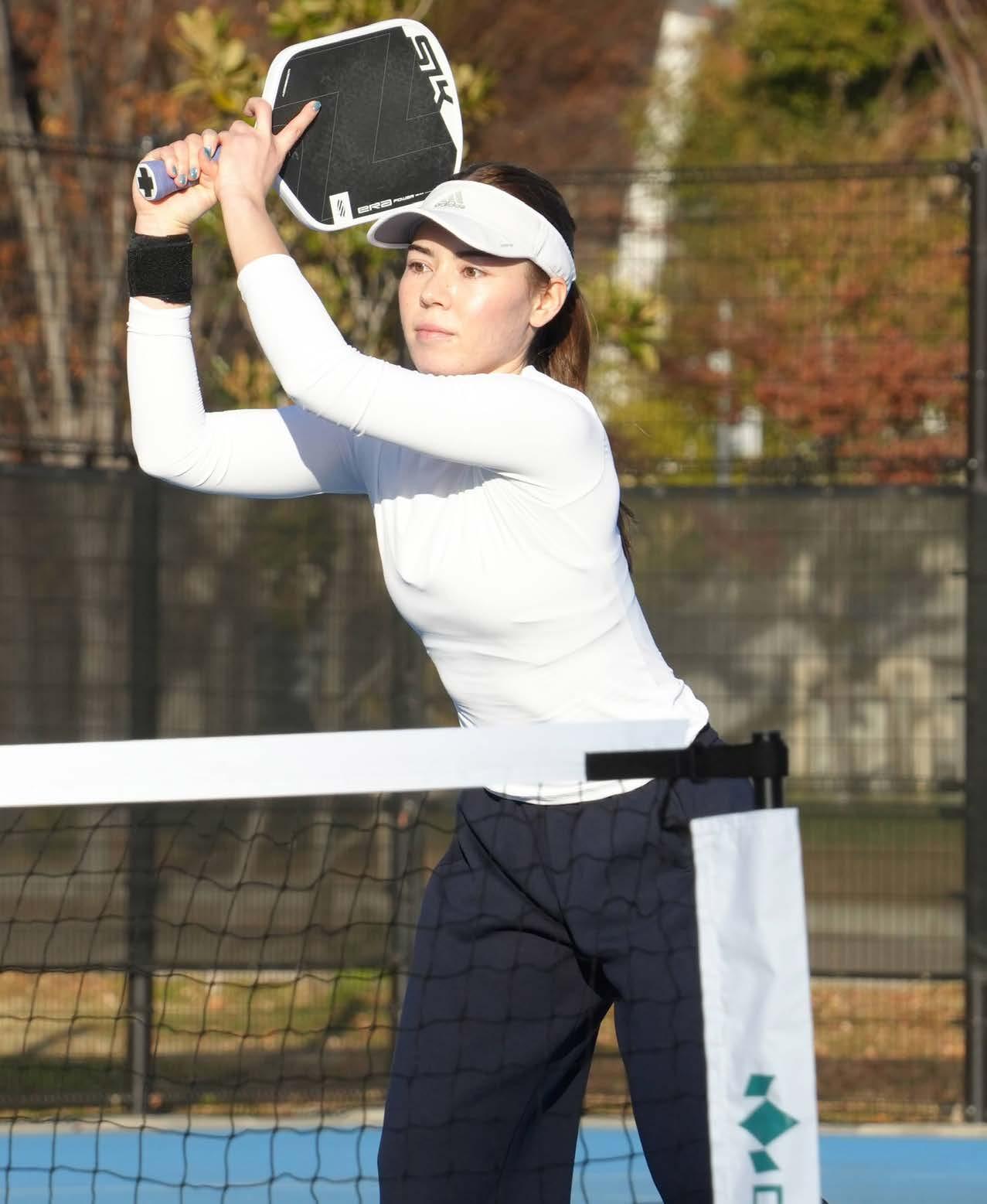
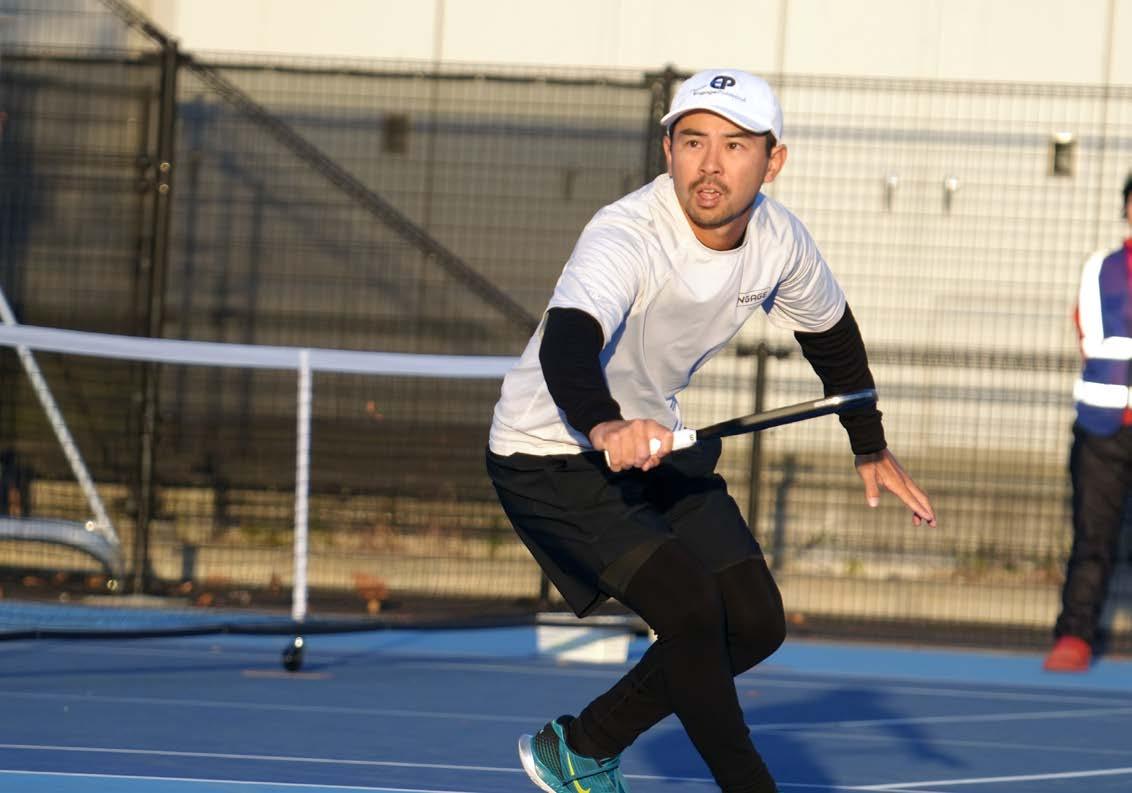
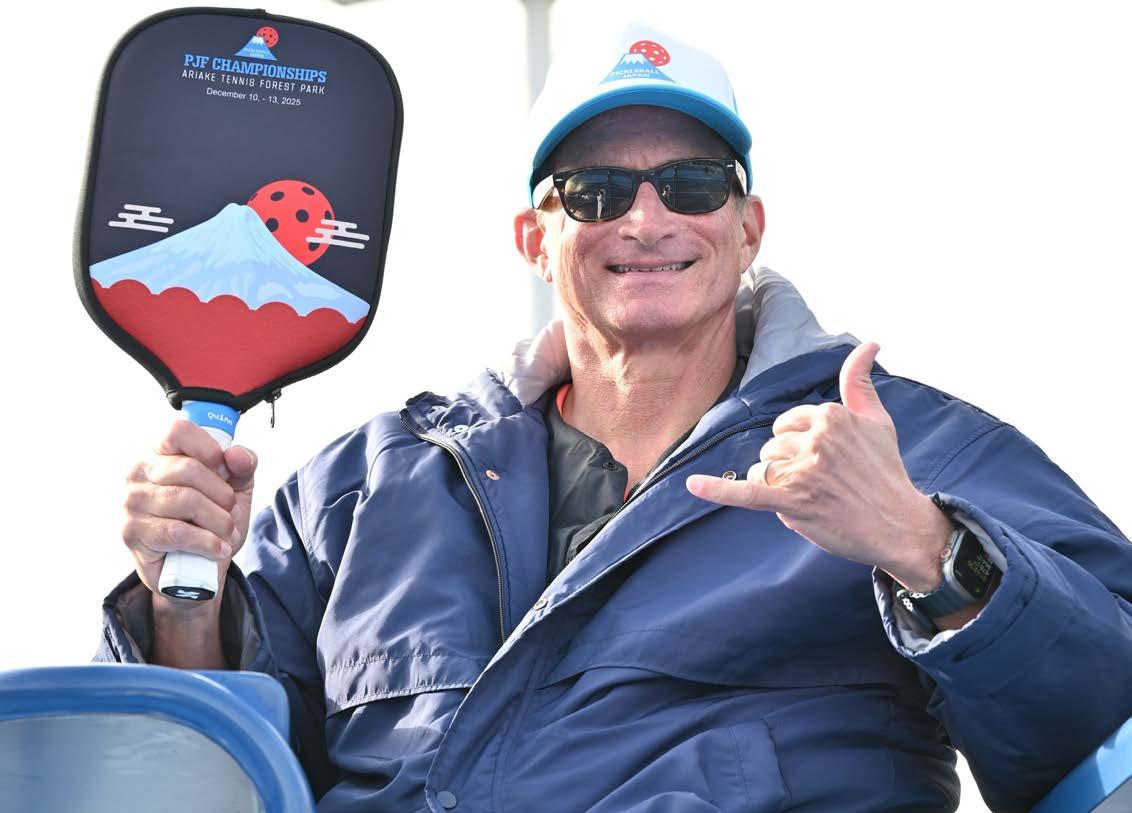
TOKYO, JAPAN: Some stories can only be told by someone who knows the place, the people, and the rhythm of everyday life—and that’s exactly what HPM Ambassador Toshiko Jager brings to these pages.
A Japan native who has called the U.S. home for four decades, Toshiko returned to Japan this past December not just to visit, but to immerse herself fully: wandering courts, talking story with players, and noticing the little details that outsiders might miss.
From player conversations to gear peeks, she covered it all with curiosity and heart. This kind of on-the-ground perspective is pure gold, and we’re endlessly grateful for the way Toshiko helps us see pickleball in Japan not as a headline, but as a lived experience.
In these quick-hit chats, Toshiko caught up with local players to ask just three simple questions: how they play, what they love, and what they’re eating when their paddles are down. The result reminds us that no matter where you play, community and good food are always part of the game.
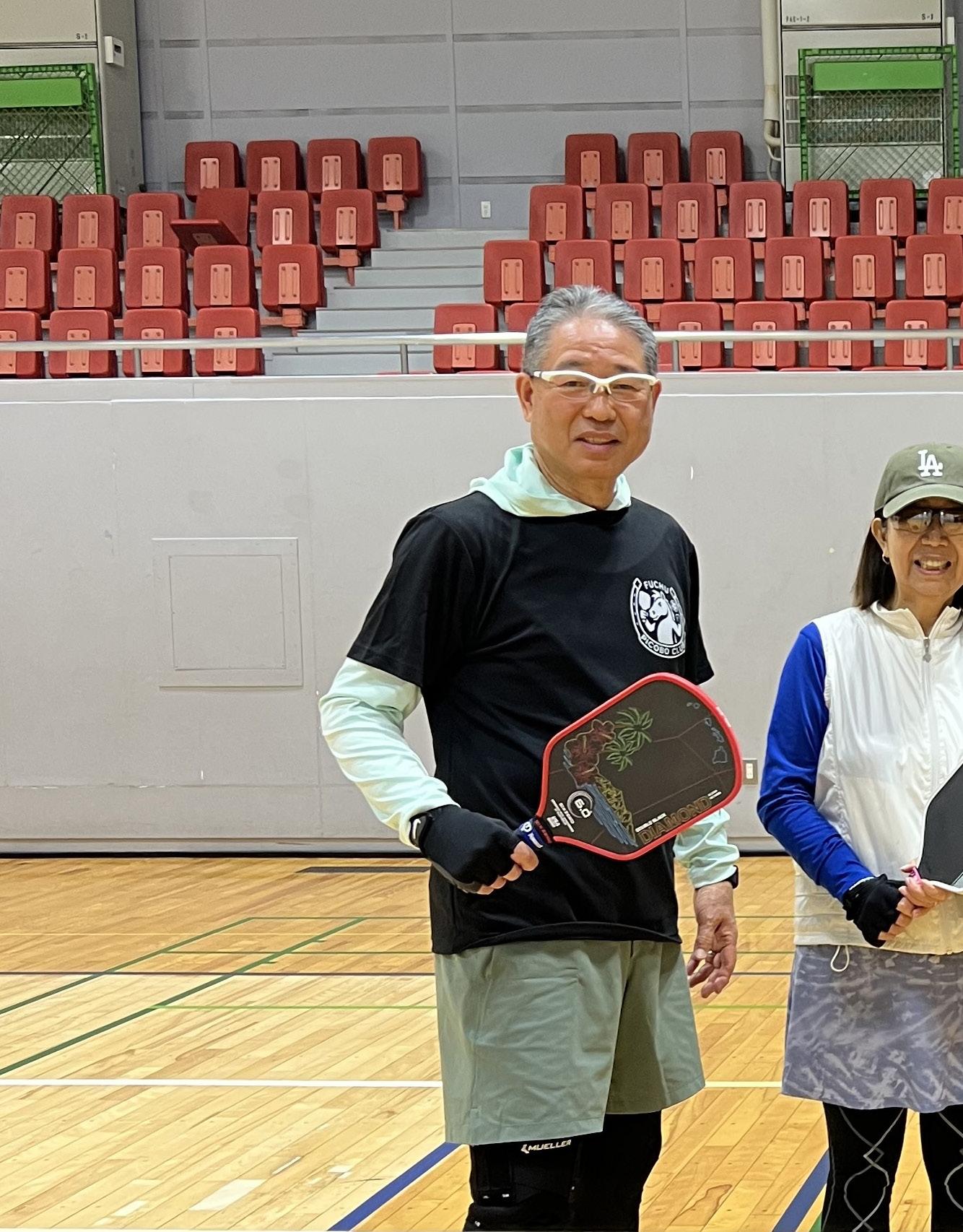
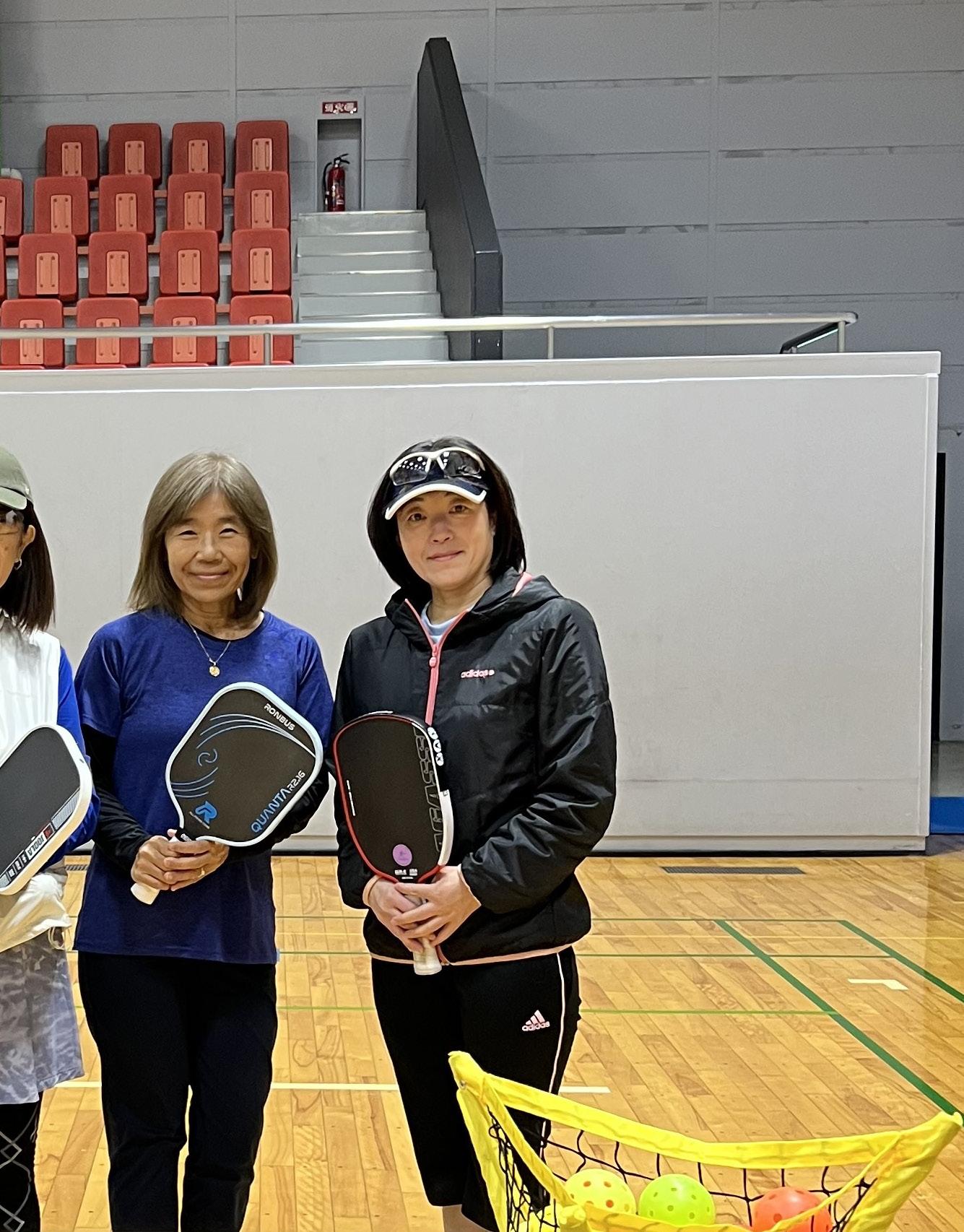
Yasunori Hiraoka
Tama-ku, Kawasaki City 川崎市多摩区在住
Favorite pickleball shot: Backhand slice バックハンドスライス
One snack you always keep in your bag for a boost of energy: Hachiouji candies 八王子キャンディー — a local treat you can only buy in Hachiouji
After playing pickleball, where do you go for a good bite to eat?
Kaiten sushi 回転寿司
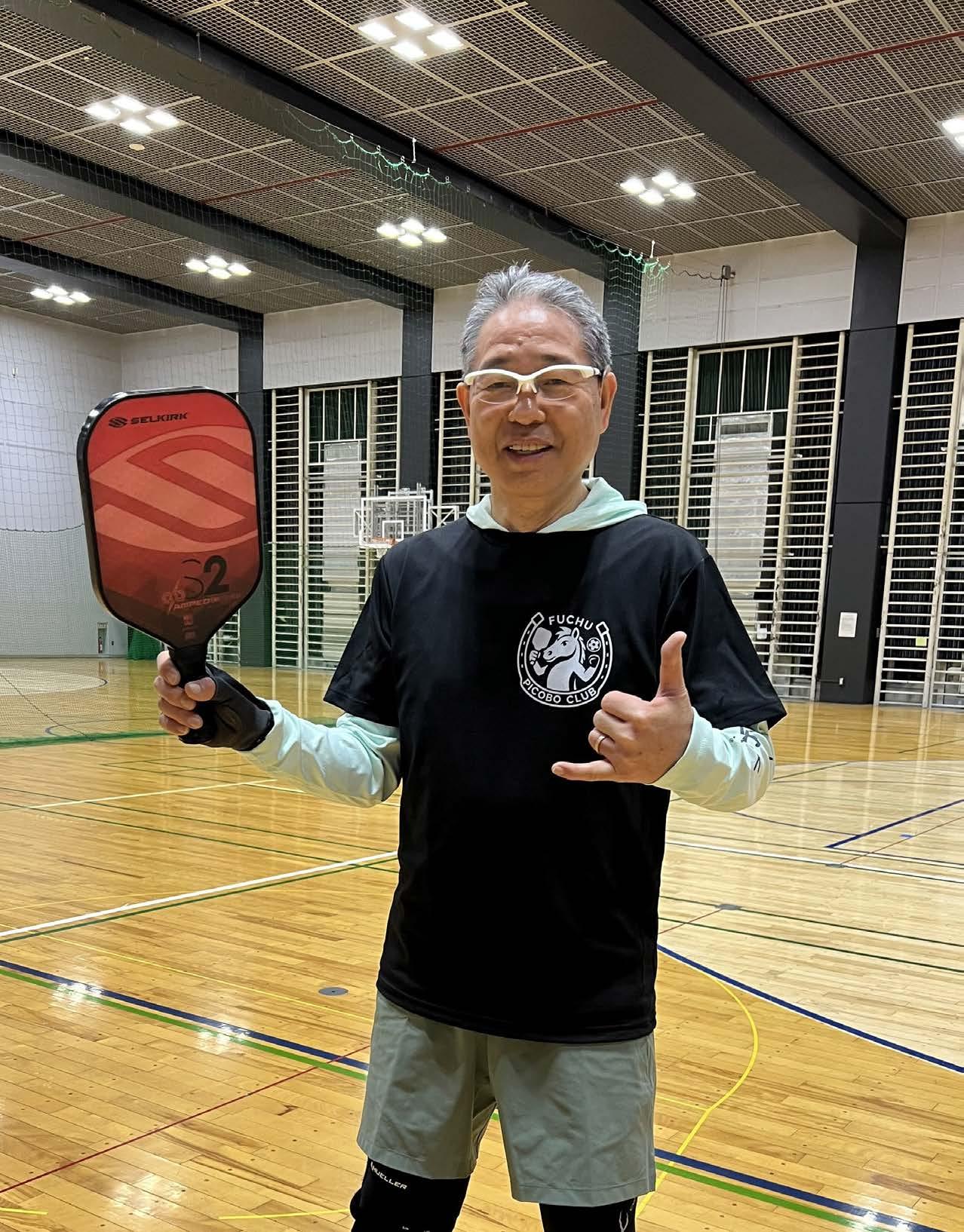
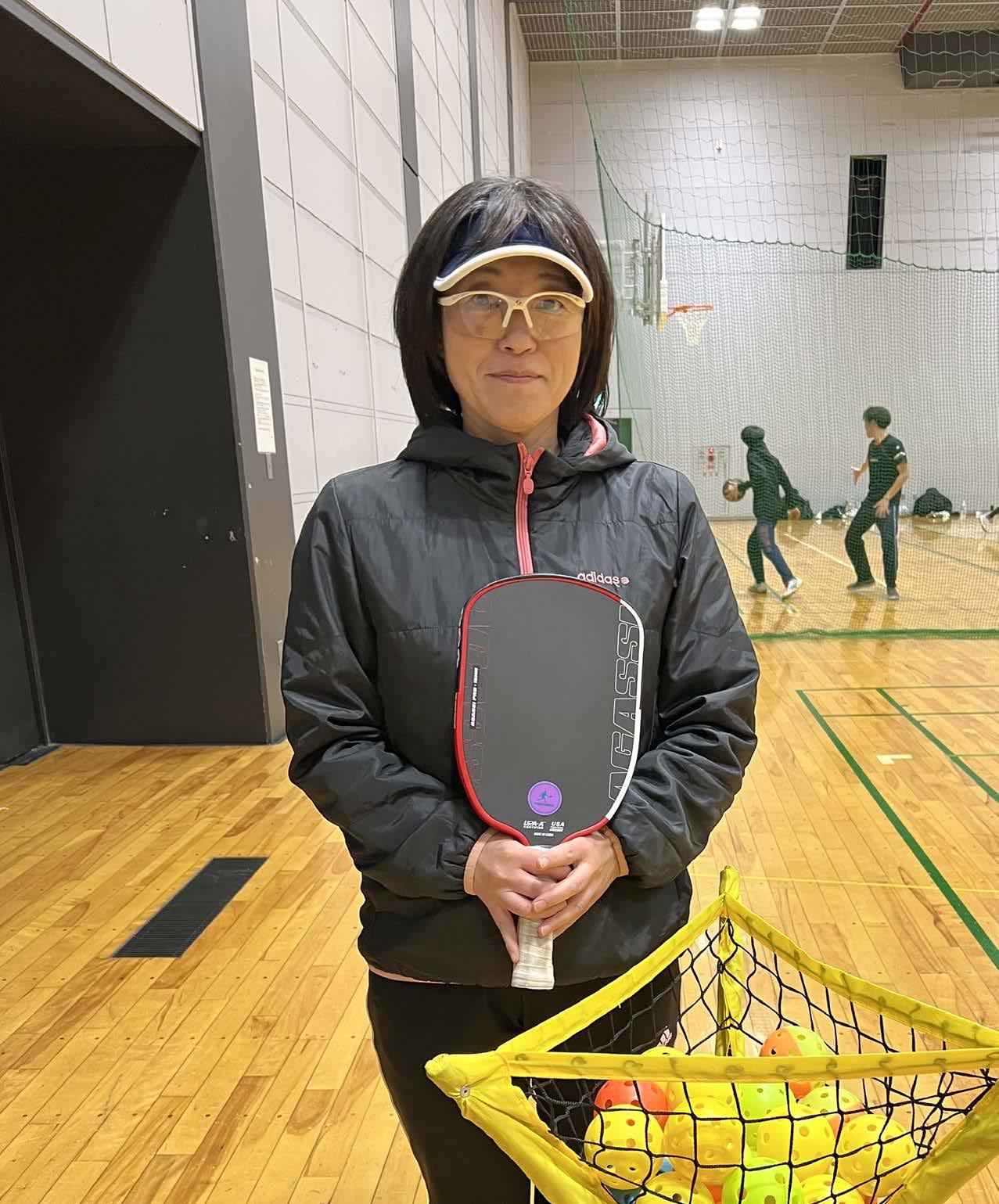
Minae Itai
Tama-ku, Kawasaki City 川崎市多摩区在住
Favorite pickleball shot: Backhand drive バックハンドドライブ
One snack you always keep in your bag for a boost of energy: Ramune candies ラムネキャンディー
After playing pickleball, where do you go for a good bite to eat?
Yakitori restaurant 焼き鳥屋
あなたのバッグの中には何が入っていますか?
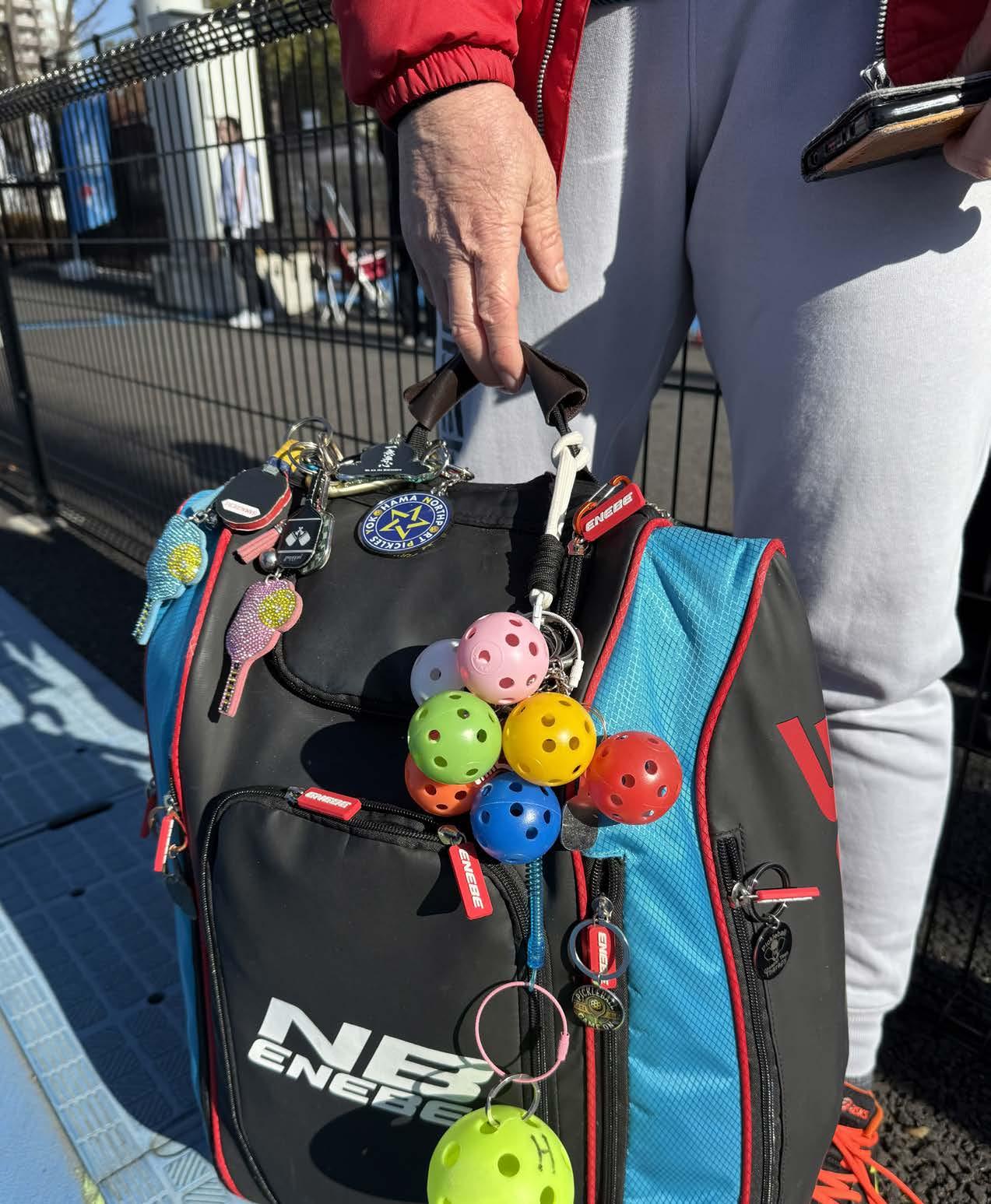
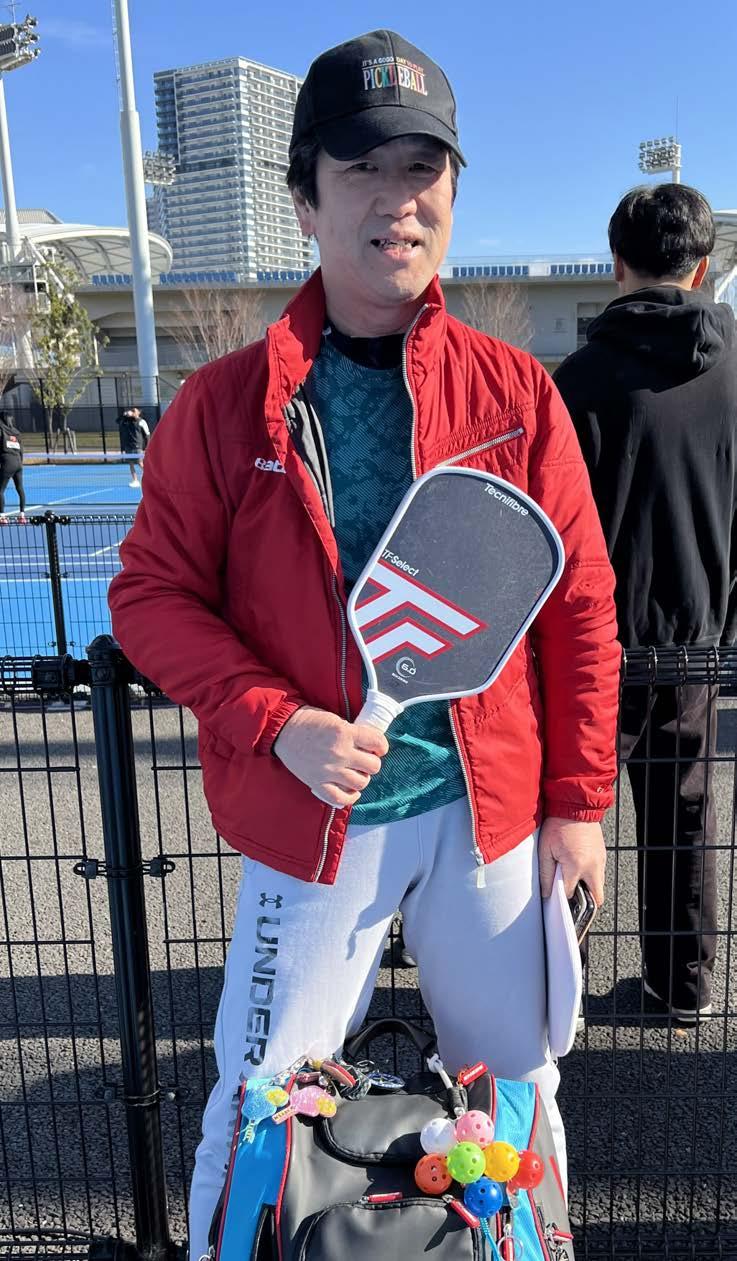
What paddle are you using and why did you choose it?
シックス・ゼロの Tecnifibre TF-Selectで す。15mm厚の良いパドル です。
I use a new Six Zero Tecnifibre TF-Select. It’s a great 15mm paddle.
Any unique items (lucky charms, etc) in your bag?
御覧の通り、色々なキーホ ルダーを外に付けています!
As you can see, I have a variety of key holders on the outside of my bag!
Is there one item you never play without?
あまりこれがないとできな いとかは気にしないです。
I can’t think of any specific item I have to have.
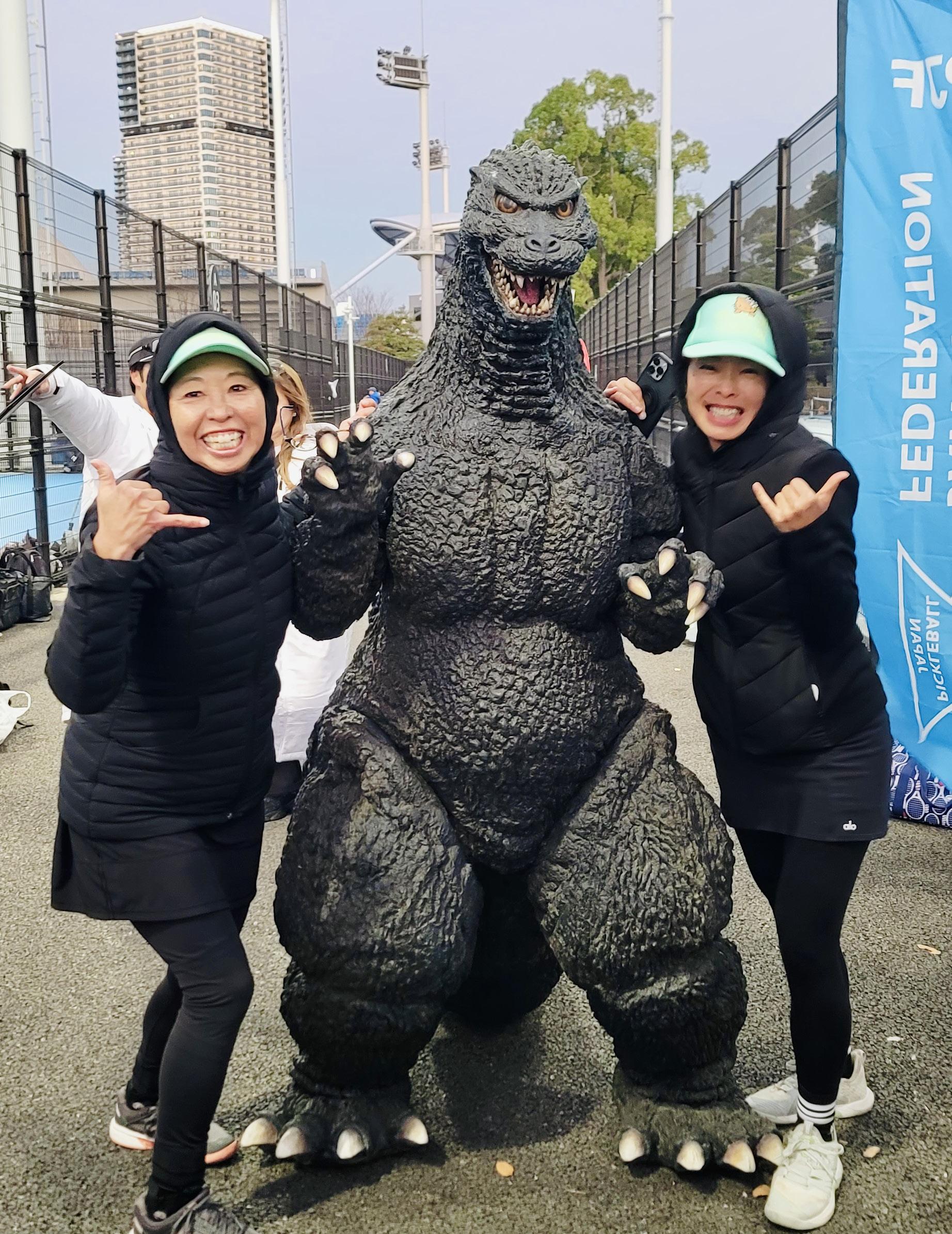
We asked a few players who played in the PJF Pickleball Championships to reflect on small differences they noticed, something meaningful they appreciated or learned, and a detail that stayed with them from their time playing pickleball in Japan.
Even though this was our second year attending the tournament, the pickleball scene in Japan still feels incredibly new and fresh.
One detail that stood out was a reporter who was actually playing in the tournament; he interviewed all of his opponents right after their matches— so cute.
I truly appreciated the players’ enthusiasm and their deep respect for the game. Everyone seemed genuinely excited and happy to be on the court.
A memorable exchange: We were talking to our server about the tournament one evening at dinner. While she wasn’t familiar with pickleball herself, she had recently seen a segment about it on the news and seemed very interested. It gave me the feeling that Pickleball would grow a lot more in Japan.
One small thing you noticed that felt different about playing pickleball in Japan: The “ganbatte” spirit/pride exhibited by the Japanese players. The Japanese players (especially the younger ones) play with great enthusiasm, joy, and energy! They’re competitive yet very respectful!
Something you appreciated, learned, or found meaningful:
Playing with my cousin for the first time in an official type tournament and hanging out and talking story about growing up on Molokai and our time in the Boys Boarding Program at Lahainaluna High School.
A moment or detail that stayed with you: I really enjoyed watching Sandy’s games and the games of the other Hawaii players. Everyone displayed great effort and fellowship!
One small thing you noticed that felt different about playing pickleball in Japan:
Before starting a game of pickleball in Japan, the Japanese players always say to each other and the other team “ Yoroshiku onegaishimasu” or just “onegaishimasu”. I feel it shows a respect for the game, your teammate, and the opponent. I used AI to translate and this is what it said it means. Yoroshiku onegaishimasu is a polite Japanese phrase that conveys a request for goodwill or cooperation.
It can be translated as “please treat me well,” “thank you in advance,” or “I look forward to working with you.” This expression is commonly used in various contexts, such as when introducing oneself, asking for a favor, or expressing hope for a positive relationship moving forward”.
Something you appreciated, learned, or found meaningful:
I remember being amazed that even though you may not speak the same language, you can enjoy the game of pickleball with people from all over the world. Bonds are formed, friendships are made and good comradery is built without words being spoken.
A moment or detail that stayed with you:
This was my second time playing at Ariake and the team committed to putting on the tournament was just AMAZING!! In super cold and windy weather the volunteers were there early every morning, late every night, setting up, checking in players, directing players when needed, dealing with issues that arose, and so much more behind the scenes that we will never know. AND the detail that stayed with me is that they did it all with BIG smiles on their faces for the entire tournament.
One small thing you noticed that felt different about playing pickleball in Japan:
THE WEATHER! I typically play in the mornings in Hawaii Kai where it is HOT HOT HOT. Poor wimpy me... I struggled playing in 40-degree temperatures and blame ALL my missed shots on the freezing cold weather!
Something you appreciated, learned, or found meaningful:
We practiced with several local Japanese groups before the tournament, and I was struck by how disciplined the players are. From thorough stretching and dedicated on-court warm-ups to their intentional shot selection, it was a major contrast to the quick (30 second!) warm-ups I’m used to. It’s definitely an area where I can improve!
This was the largest tournament I have ever participated in. Being surrounded by so many diverse people who are truly passionate about pickleball was absolutely thrilling.
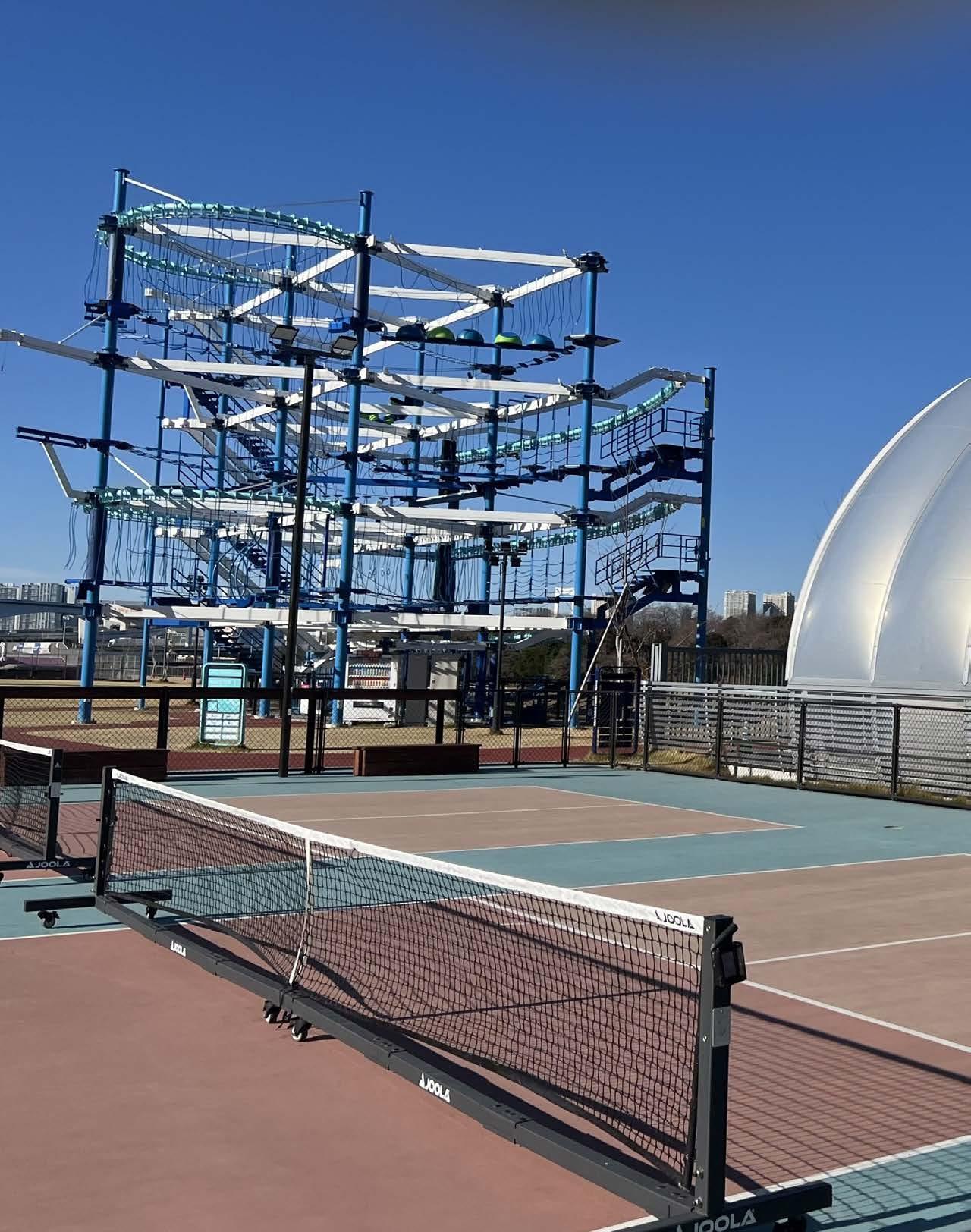
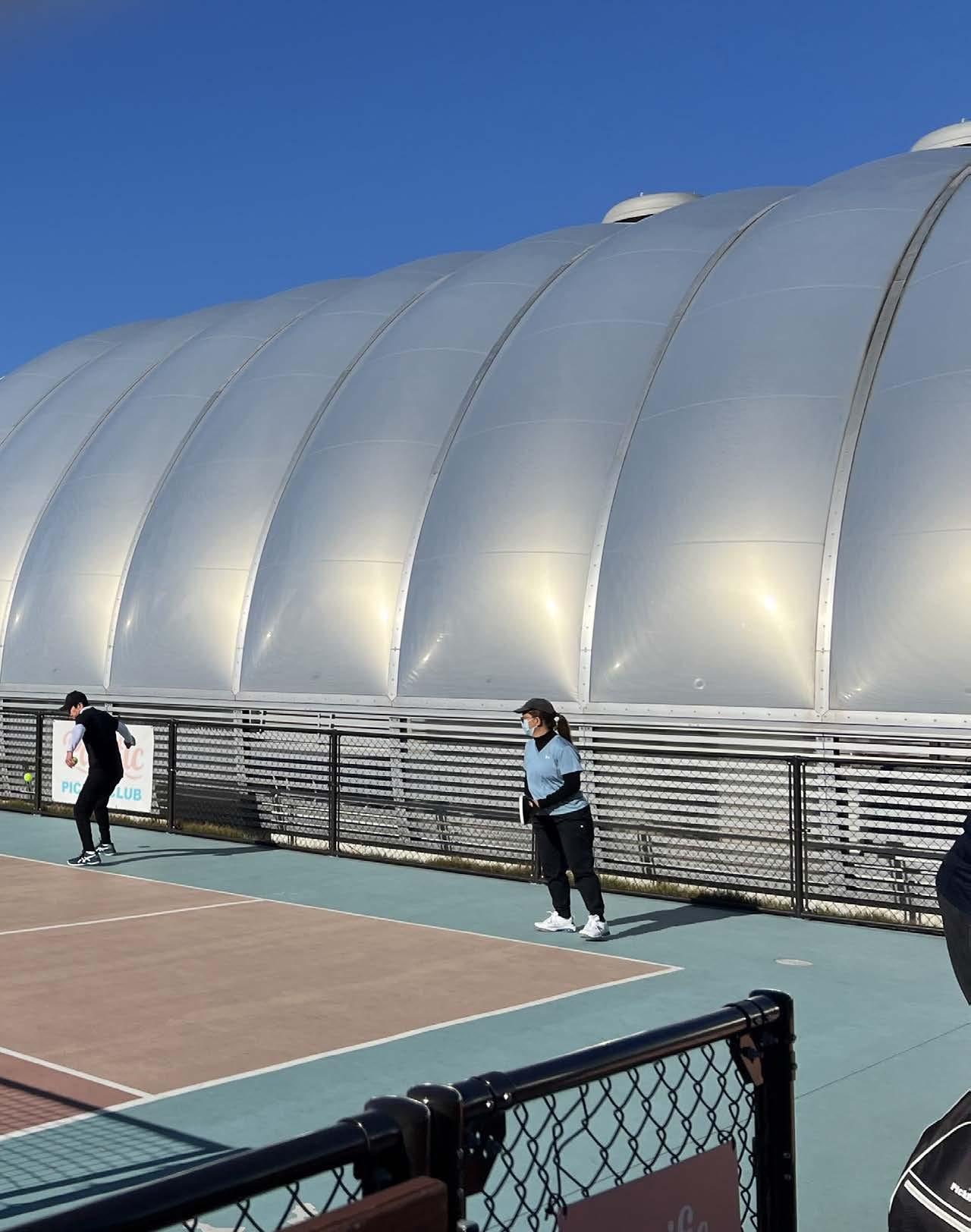
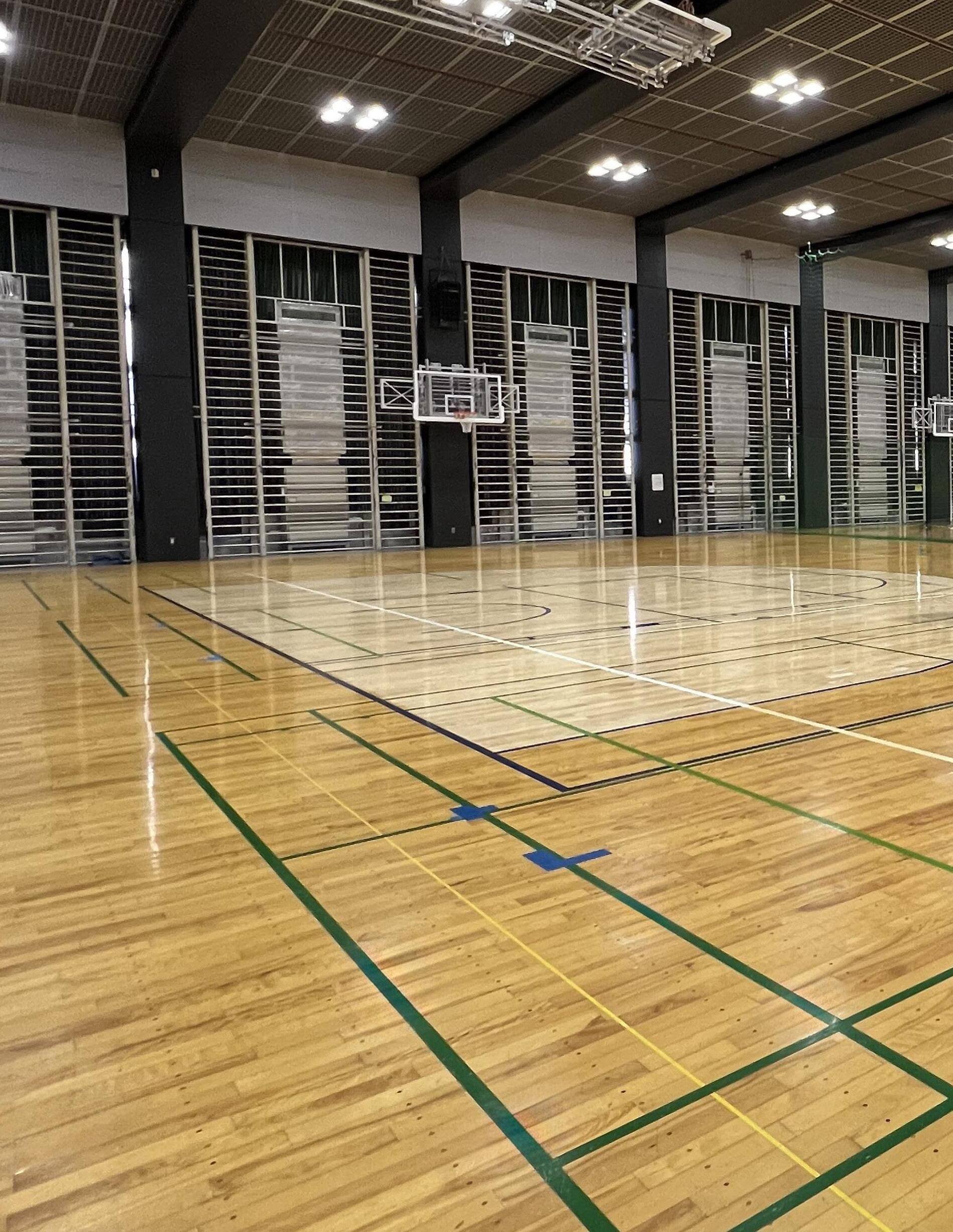
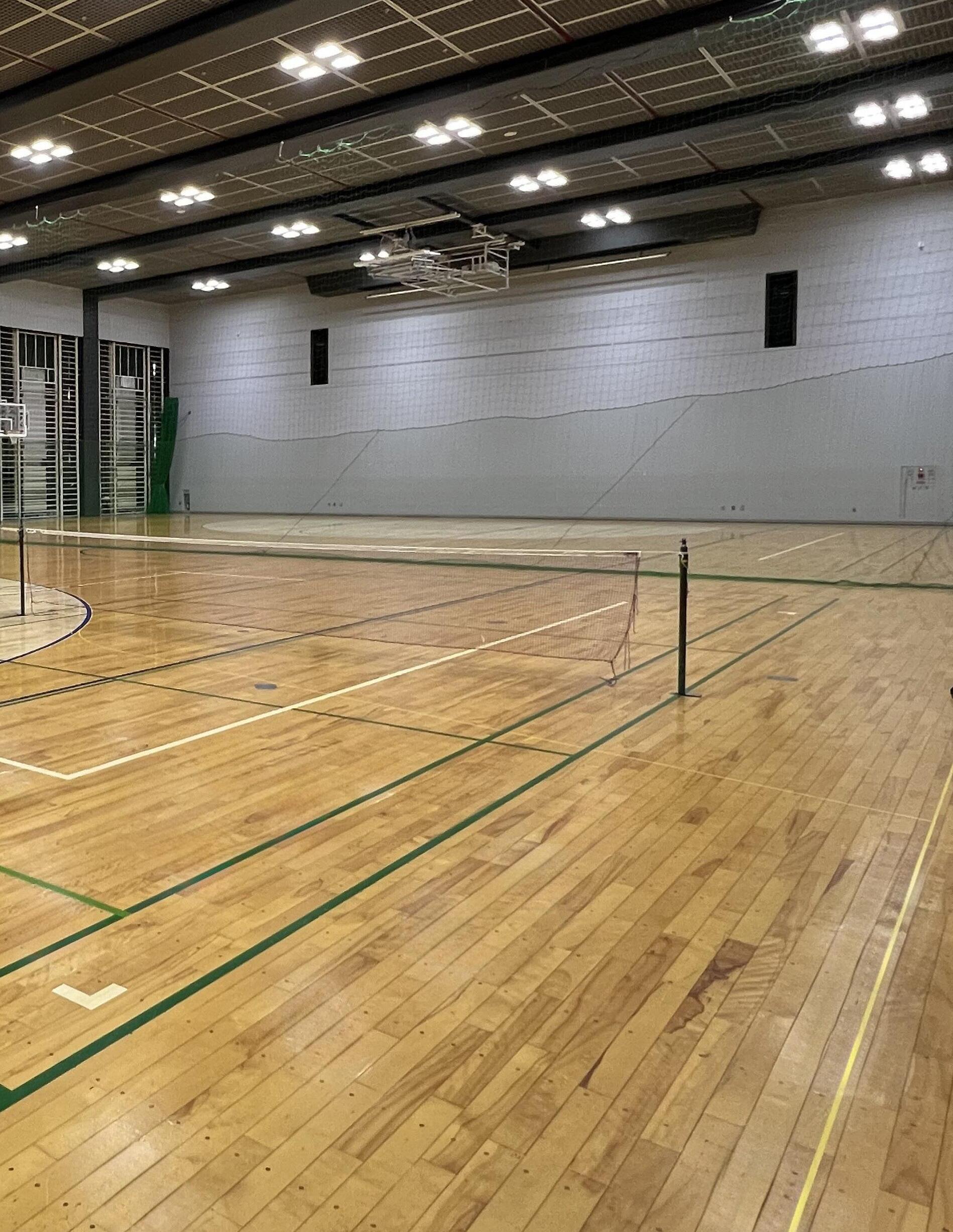
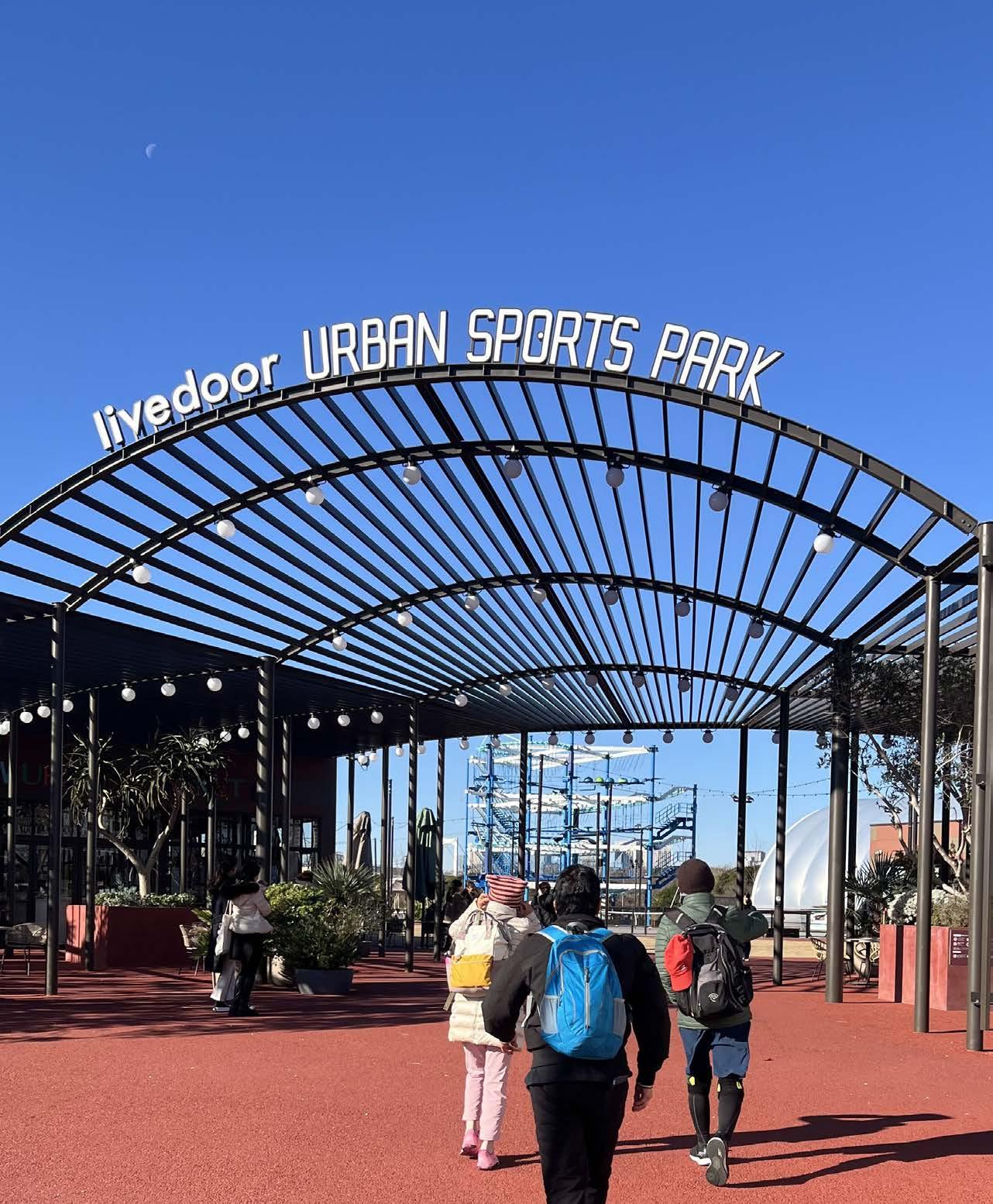
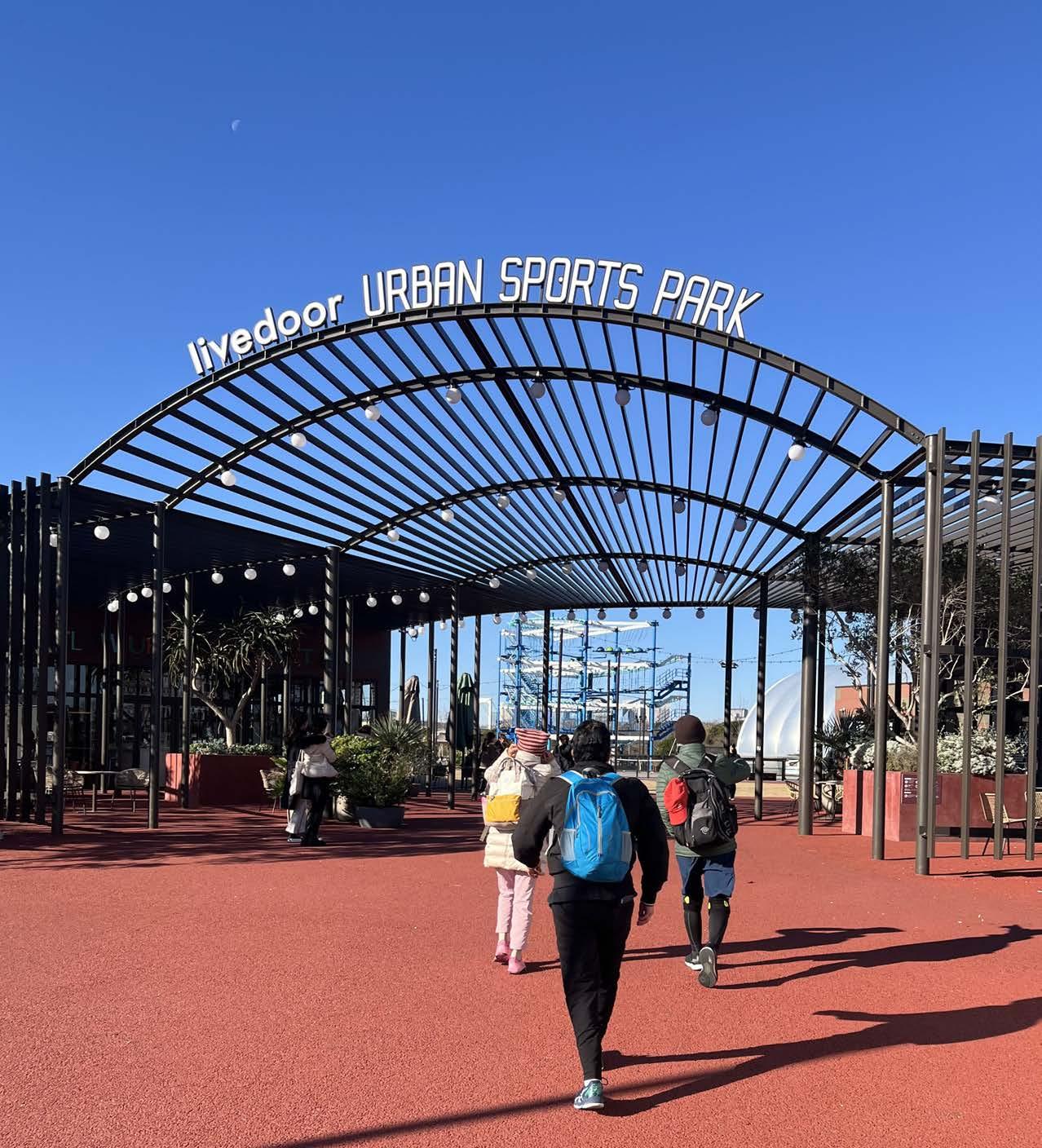
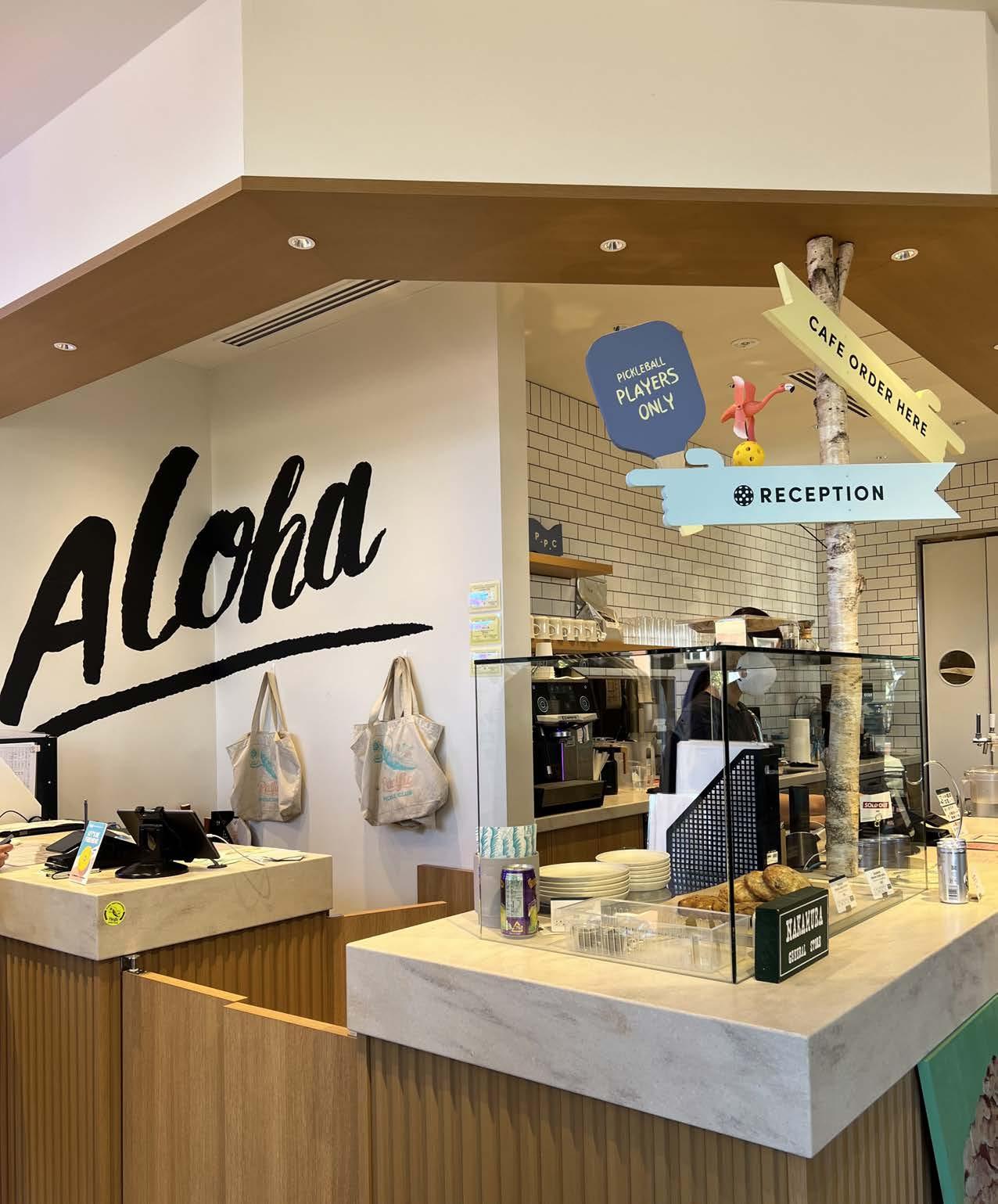
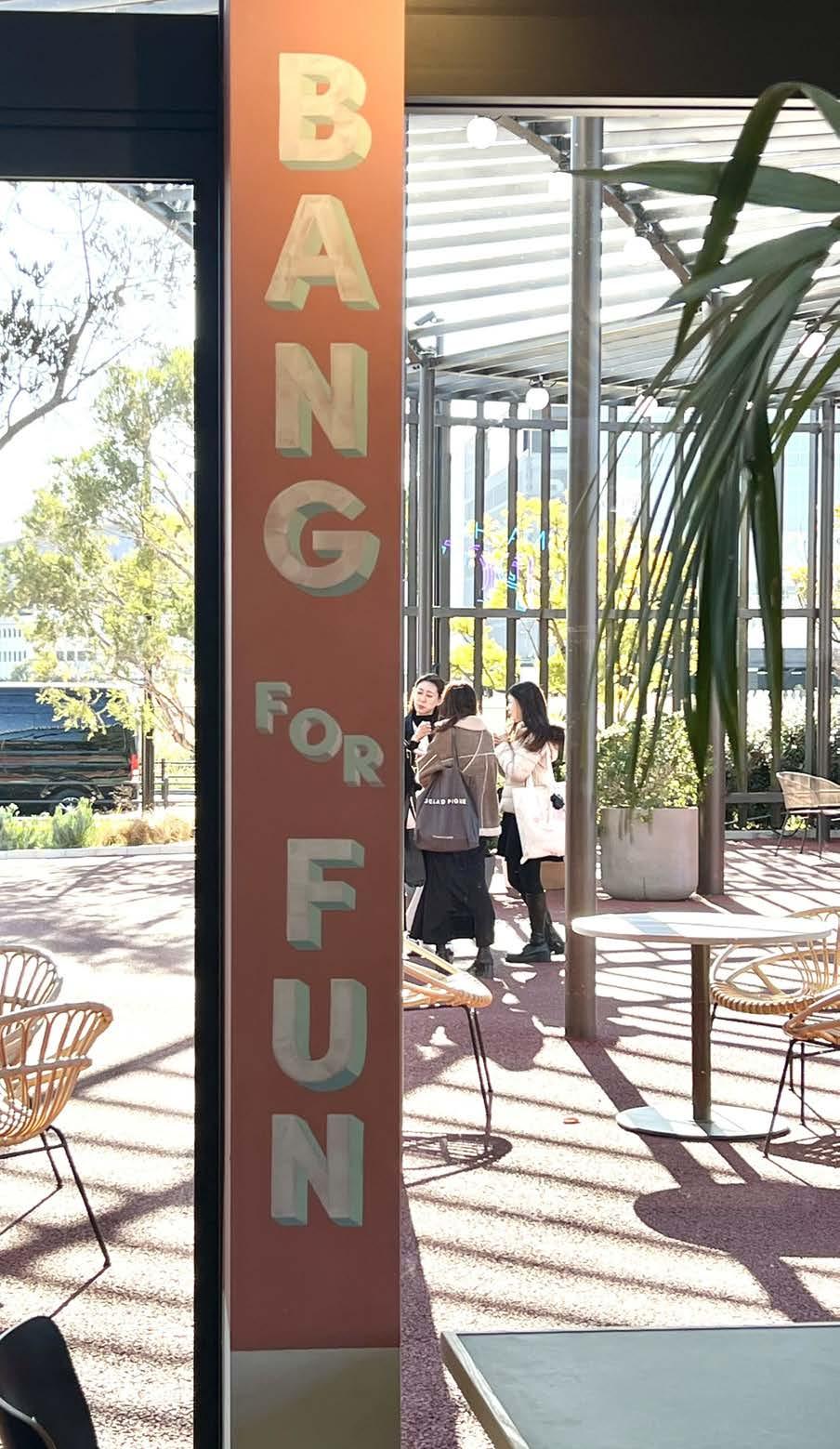
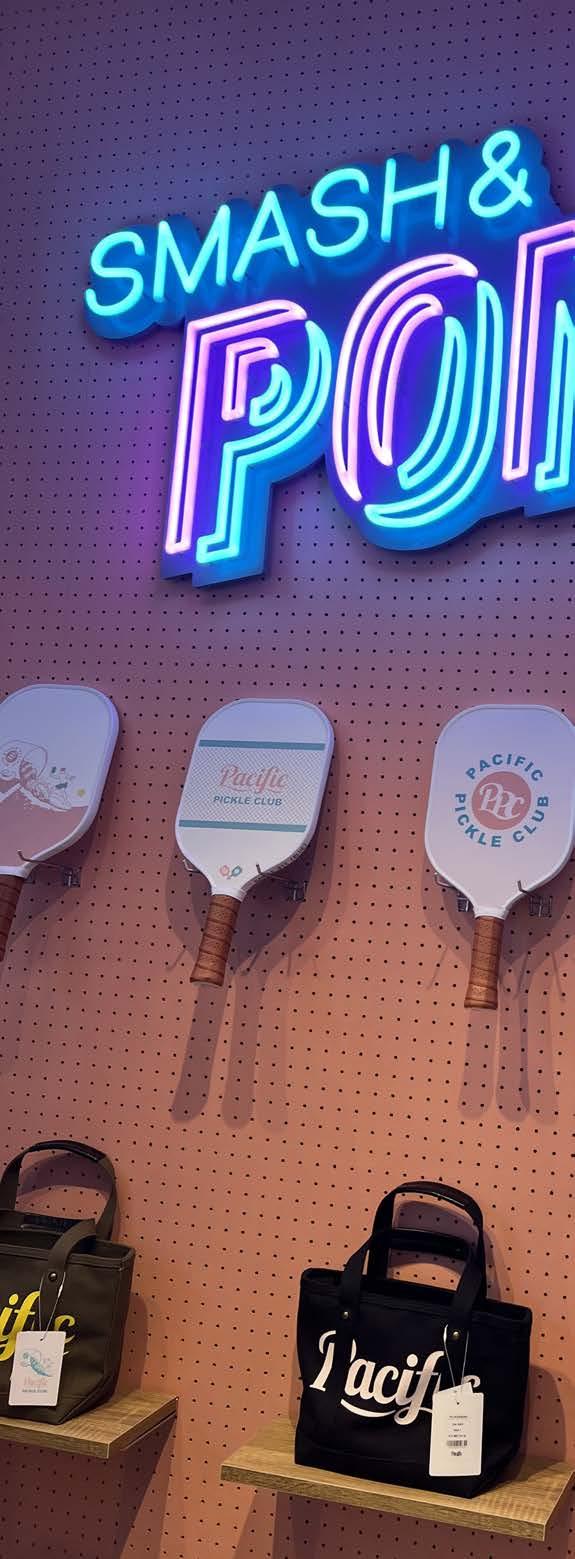
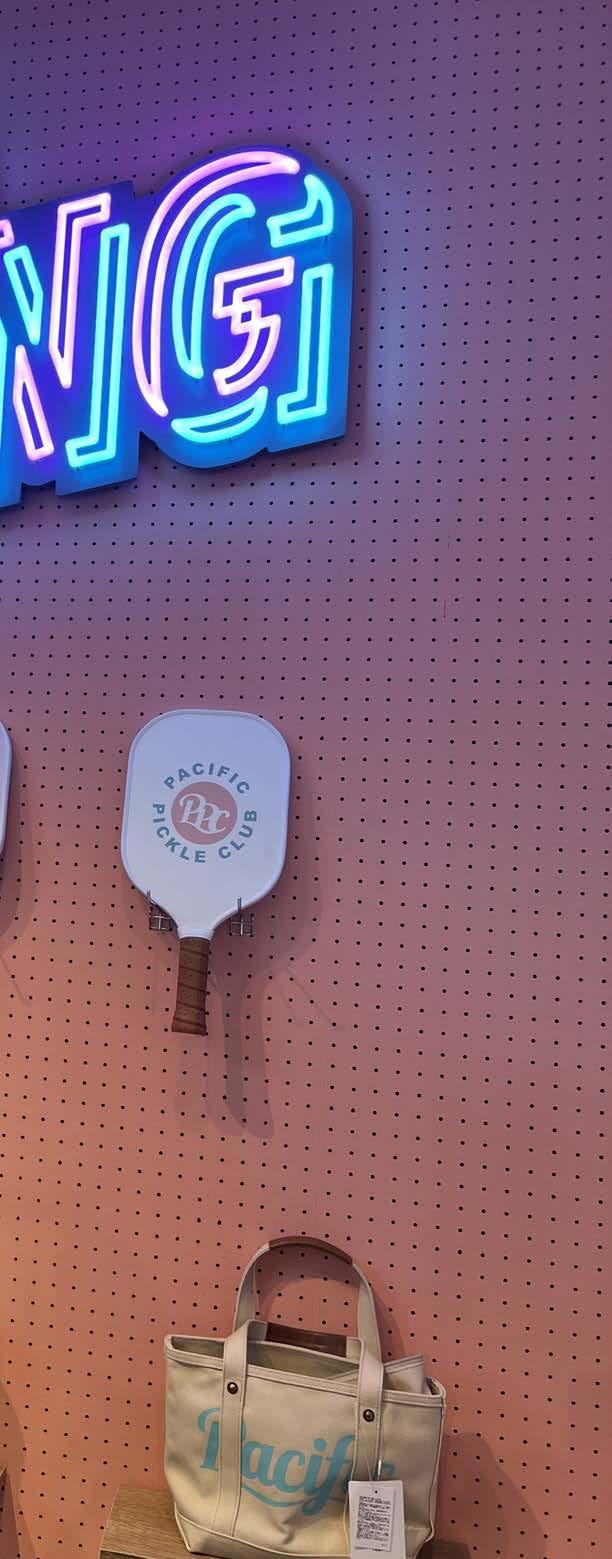
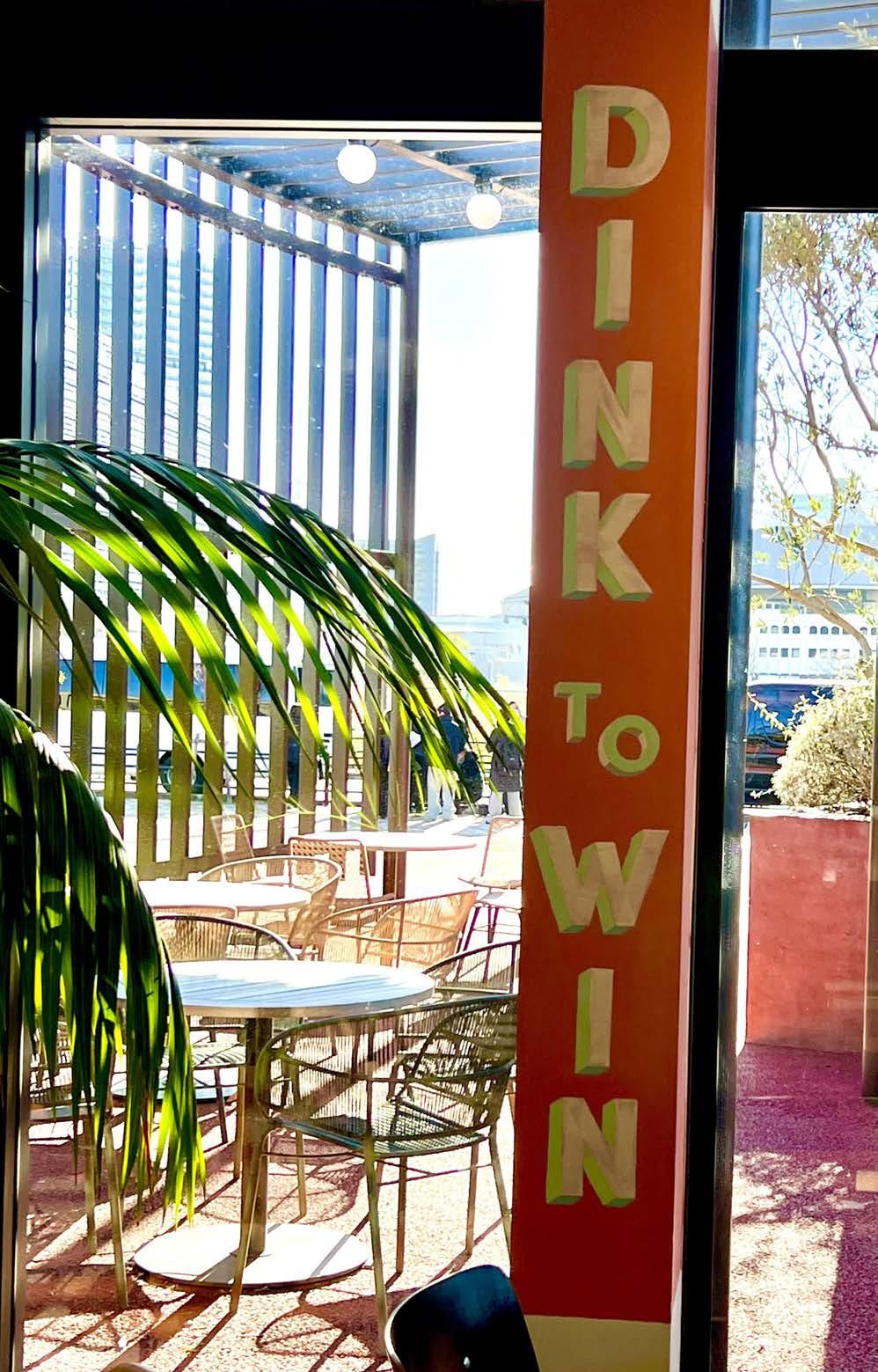
While in Tokyo for the December tournament, Toshiko had the opportunity to visit Pacific Pickle Club in Ariake, where they squeezed in practice games on two outdoor courts despite cold, blustery winter conditions. That day, the “feels like” temperature was 27 °F. Brrr!!! The facility leans intentionally into an “aloha” vibe, with English signage throughout and design details that are familiar to players from Hawaiʻi. (Notice the Hawaiian Sun can…)
For players looking to experience the courts themselves, availability varies, with hourly court rental rates typically ranging from ¥3,000 to ¥8,000 depending on the day, time, and whether instruction is included. Check out the photos to see how the Pacific Pickleball Club provides a welcoming environment for Hawai‘i players in the heart of Tokyo.
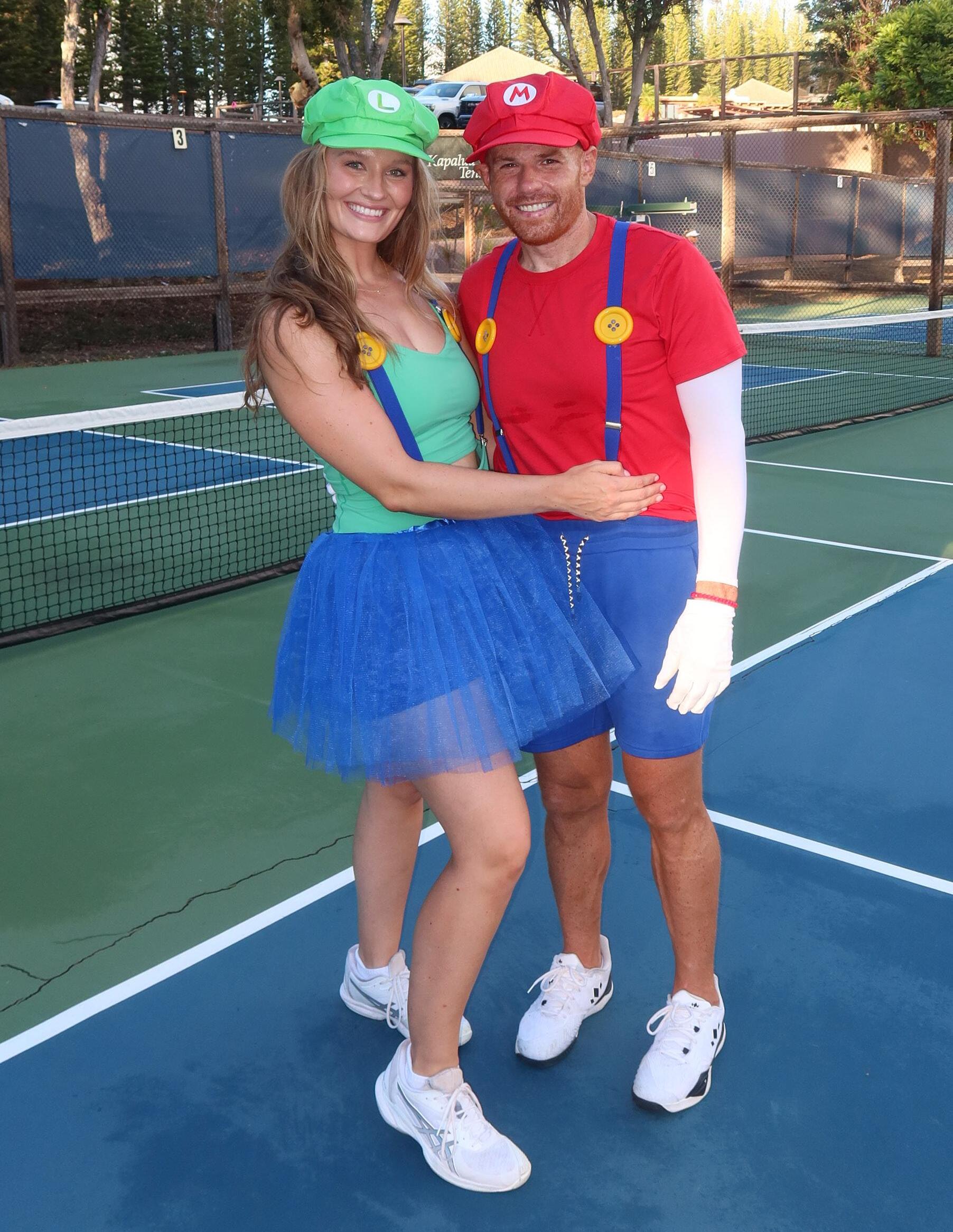
BY FRANKIE SHARPE
Last summer, Lizzy Newman, a 20-something nurse who was living in Arizona at the time, came to visit her parents who now live in Kapalua, Maui. Almost everyone in the Newman family plays pickleball, but her dad, Todd, is what you might call a pickleball addict. He convinced Lizzy, a former basketball player, to venture down to the courts with him for a pick-up game. She picked up a Selkirk Luxx paddle and instantly fell in love with the game. But that wasn’t all.
On another court, Mario Coluccio, a 30-something executive in the seafood industry with long-time Maui ties, a mega-watt smile, and a killer soft game, spied the tall, athletic “new girl” at the courts in Kapalua. He grabbed his Joola Ben Johns Perseus 3S paddle, made a beeline to partner up with her, and it was literally “love at first dink.”
What began as a lighthearted game teaming up to challenge their dads quickly became the start of something unforgettable.
They may have lost their first match together, but they won something far greater. On the final point, Mario’s dad, Rodger, unintentionally body bagged Lizzy, who
just laughed it off, declaring that anyone who hit her owed her roses. The very next day, Mario surprised her with two dozen roses and a blissful spa day at the Montage.
Their courtship on and off the pickleball courts flew faster than a Ben Johns backhand roll. Their long-distance romance blossomed, and after less than two months, Lizzy made the bold decision to quit her job, load up her belongings, and ship them nearly 3,000 miles across the Pacific. Mario welcomed her with open arms and an open heart.
The Kapalua pickleball community also embraced her, including her in friendly scrambles, pickle & potlucks, Halloween costume parties, and other events.
The go-getter wasted no time finding a nursing job on Maui. And she quickly settled into a new routine that centered on lots of court time while being courted by Mario.
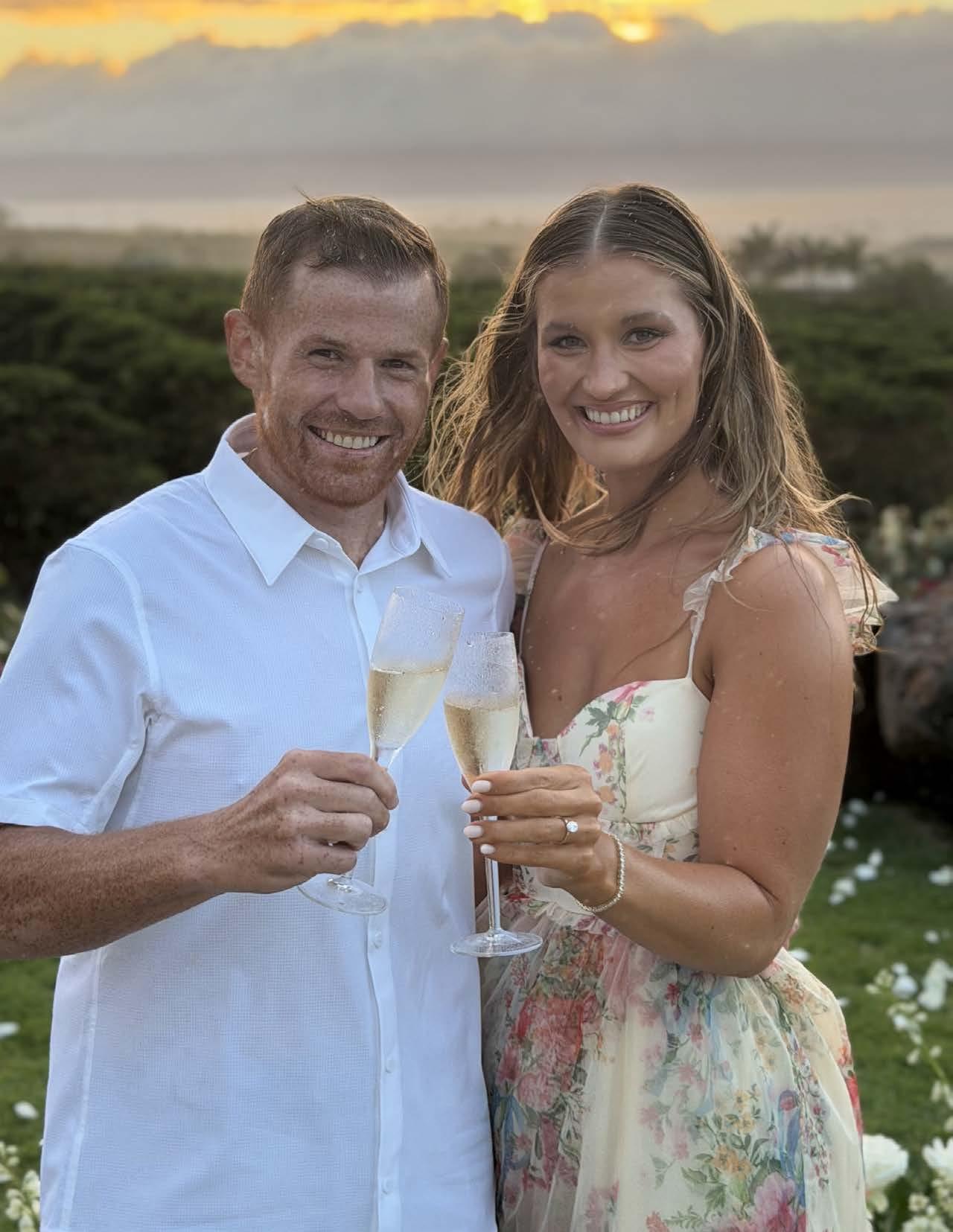
In less than six months after their first meeting, Mario was ready to pop the question.
“I wanted to make it extra special for her,” he said.
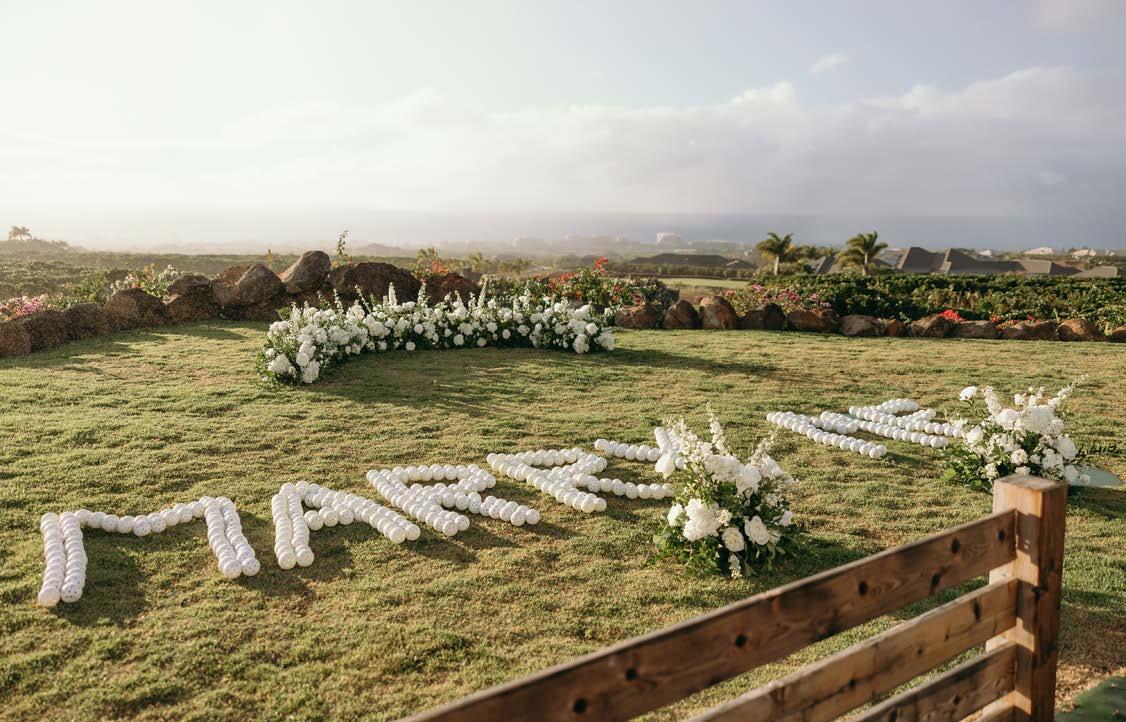
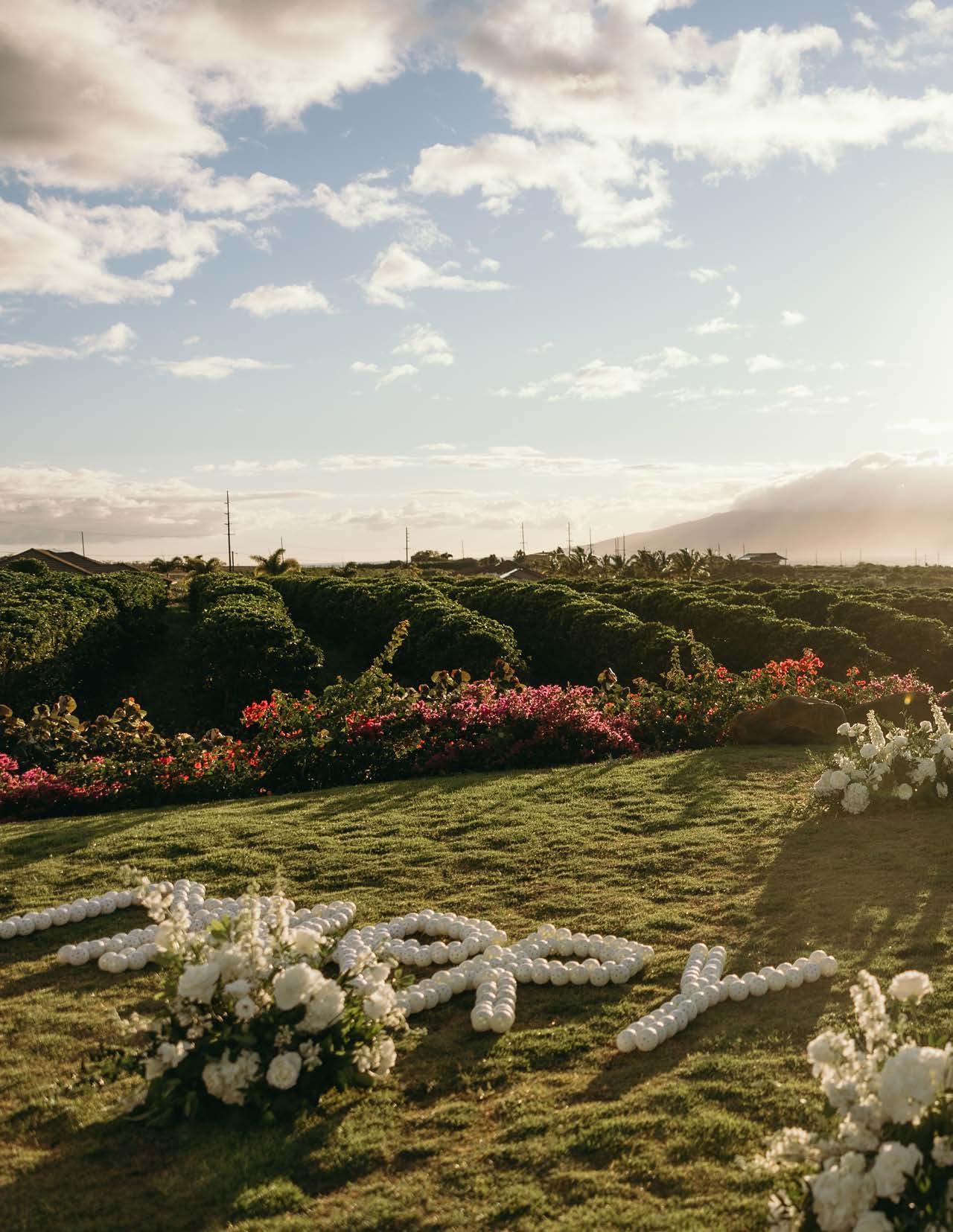
Mario enlisted the help of his future brother-inlaw to make it happen. On a private pickleball court overlooking the ocean, they arranged about 600 pickleballs to spell out “MARRY ME.”
It took several hours to get everything in place, and a few rain delays interfered with his plans, but he eventually pulled it off. As a bonus, he got a stellar rainbow as a backdrop.
Lizzy had no clue where they were going that evening, but when they arrived at their friend’s pickleball court in the Coffee Farms in Kaanapali, her heart burst with joy. “My heart was pounding a mile a minute,” she said.
In front of their families, who were tossing rose petals at them, Mario led her across the
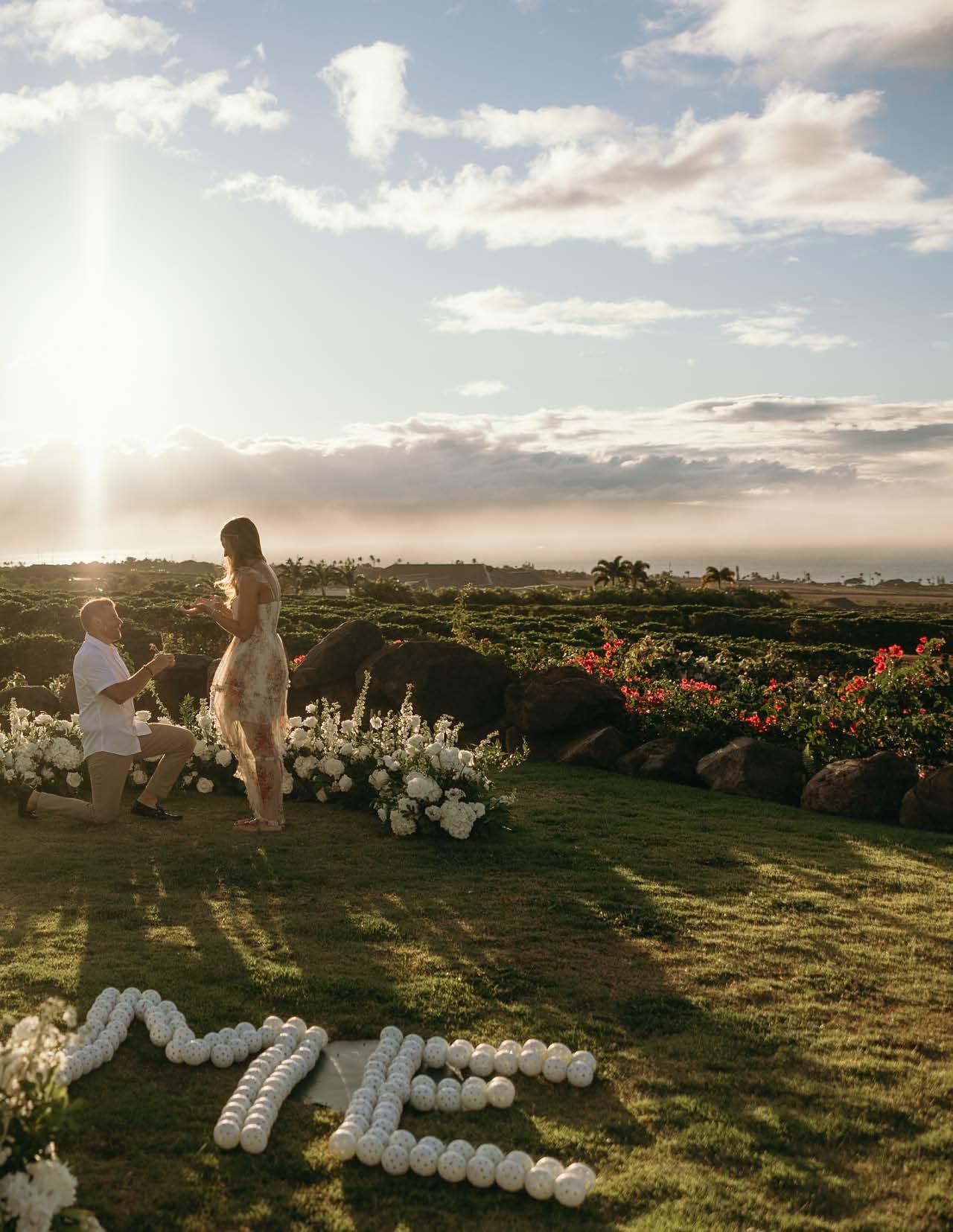

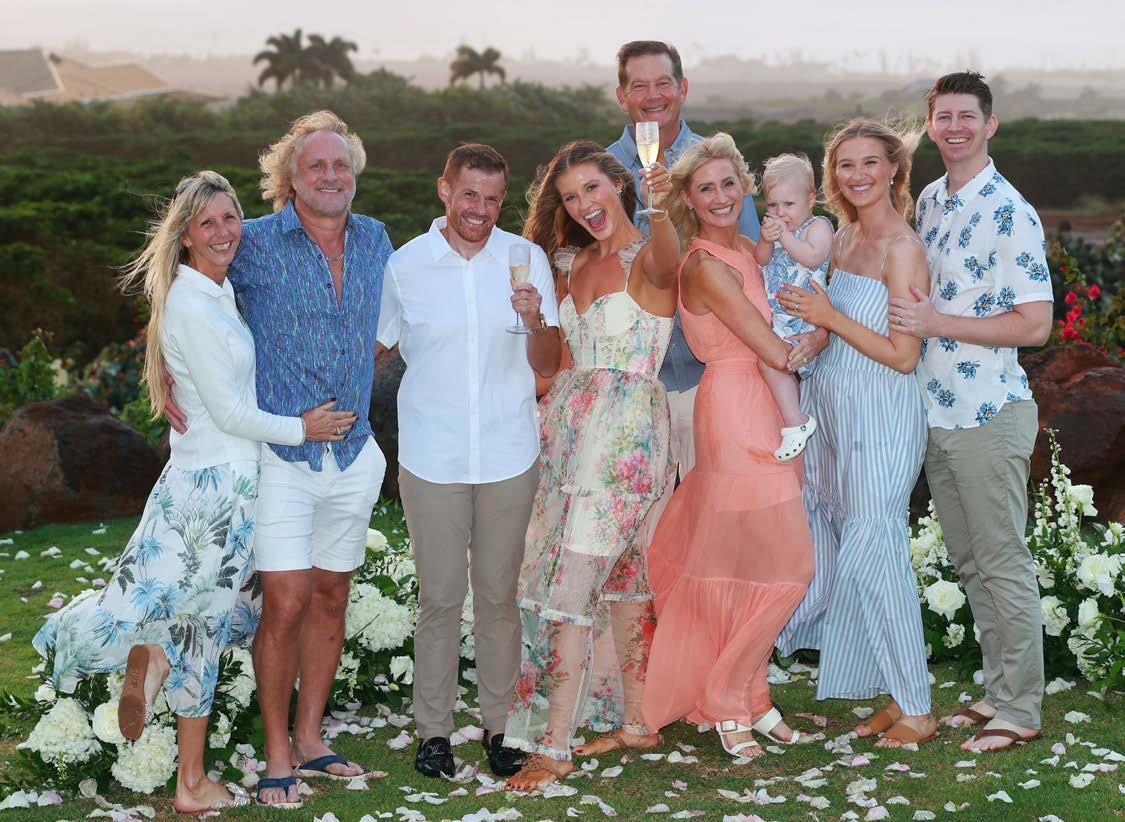
pickleball court where they had played many times together, dropped down to one knee and asked, “Will you marry me?” Of course, Lizzy said, “Yes!”
“It might seem like things happened really quickly, but it just felt so natural,” Lizzy said. “We’re so excited to start our life together.”
Their new life on Maui involves playing pickleball as often as possible with their friends and family. They still like challenging their dads to games, and Lizzy is proud to say she’s gotten revenge on her future father-in-law, Rodger, with a few body bags of her own.
They’re planning a wedding for May of this year, and you can bet pickleball will be a part of it! A friendly tournament will be on the schedule, and they’re also hosting a special after-wedding party for some of their closest pickleball pals.
Who knew that this game we all love so much could also serve up true love!

About Frankie Sharpe:
Frankie Sharpe is a writer focused on brain health and mental wellness as well as being a pickleball fanatic. One of her first games ever back in 2021 was with Mario and his dad, Rodger, sparking a friendship that’s been going strong ever since. She’s beyond thrilled that Lizzy and Mario found each other on the courts. And she’s convinced that if pickleball can improve your brain, your mental health, and your love life… it’s basically a miracle sport.
RECENT WINS, TRAVEL, AND REFLECTIONS FROM FAMILIAR FACES IN THE PAGES OF OUR MAGAZINE
From Keven: “Japan-awesome tournament. I was happy to be back for the 2nd year. Wow, the tournament doubled in players from ~600 to ~1200. Thankful to have won gold with Xiao Yi. Unfortunately my men’s partner got sick and couldn’t play.
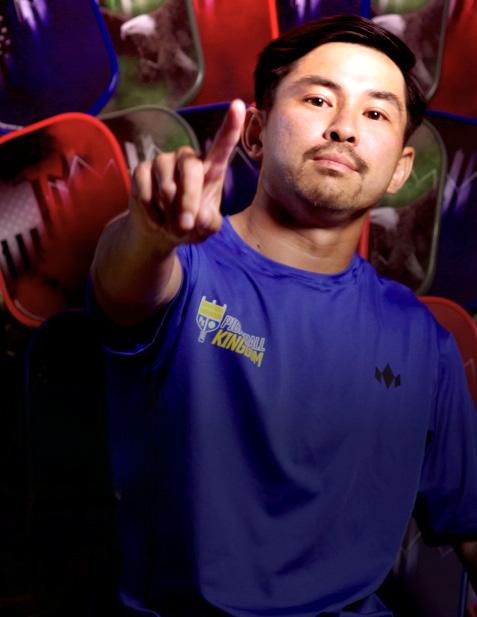
Paddle Battle: new episode premiers every Wednesday at 3pm HST. Please vote for me every week! 5 votes per email. Thank you for the support and let’s bring Pickleball Kingdom to Hawaii!!”
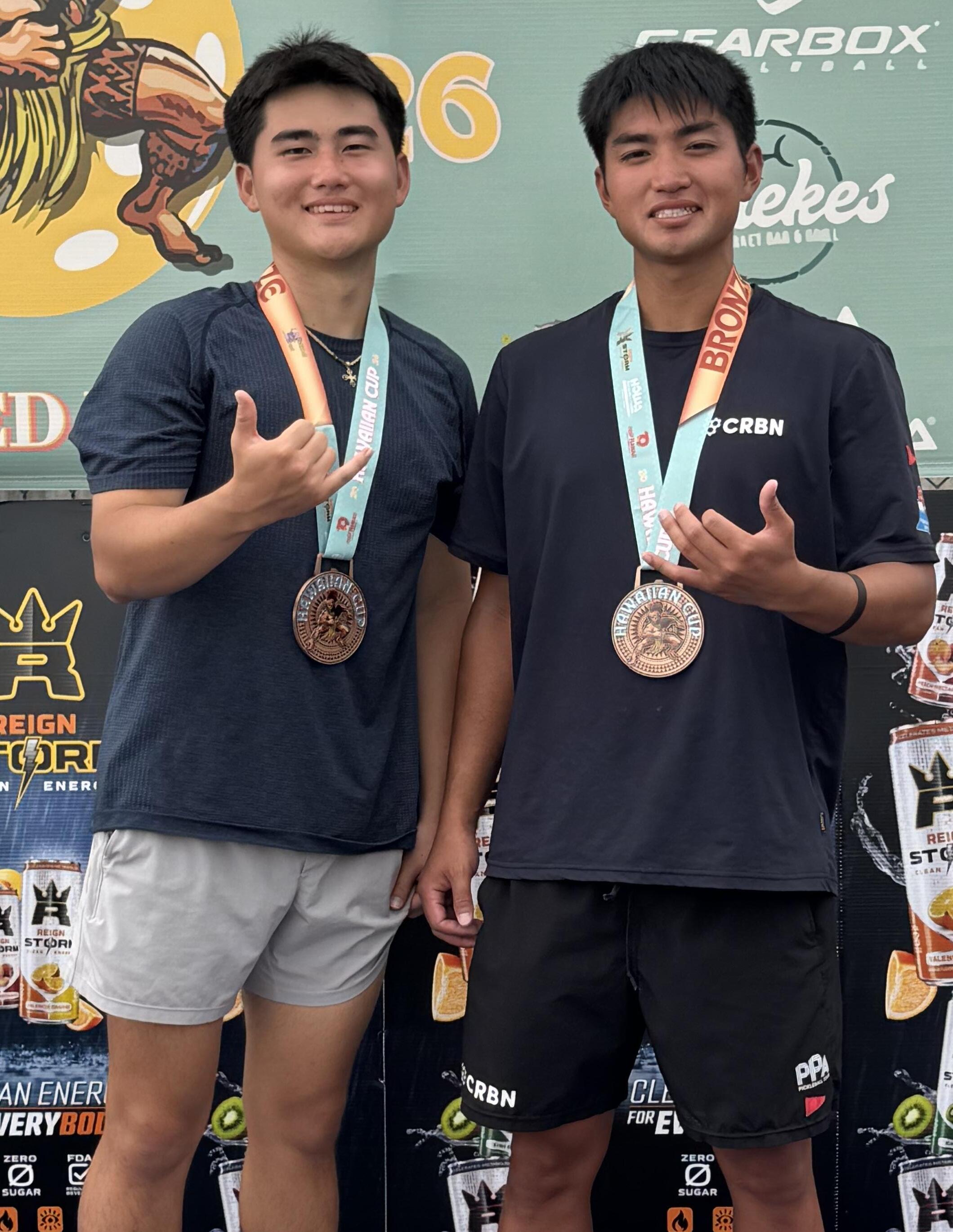
From Conner: “It was a fun tournament and I had a great time competing with everyone. This was the first time my partner and I ever played together.”
ABOVE: Bronze Medal with Joe Kasahara, Hawaiian Cup 2026
NOTE: As president of the University of Hawaiʻi Pickleball Club, Conner heads to Silicon Valley March 7–8 for the Collegiate Pickleball Tour CA Super Regional, where the club will compete against top collegiate programs.
Kimmie’s team ▼
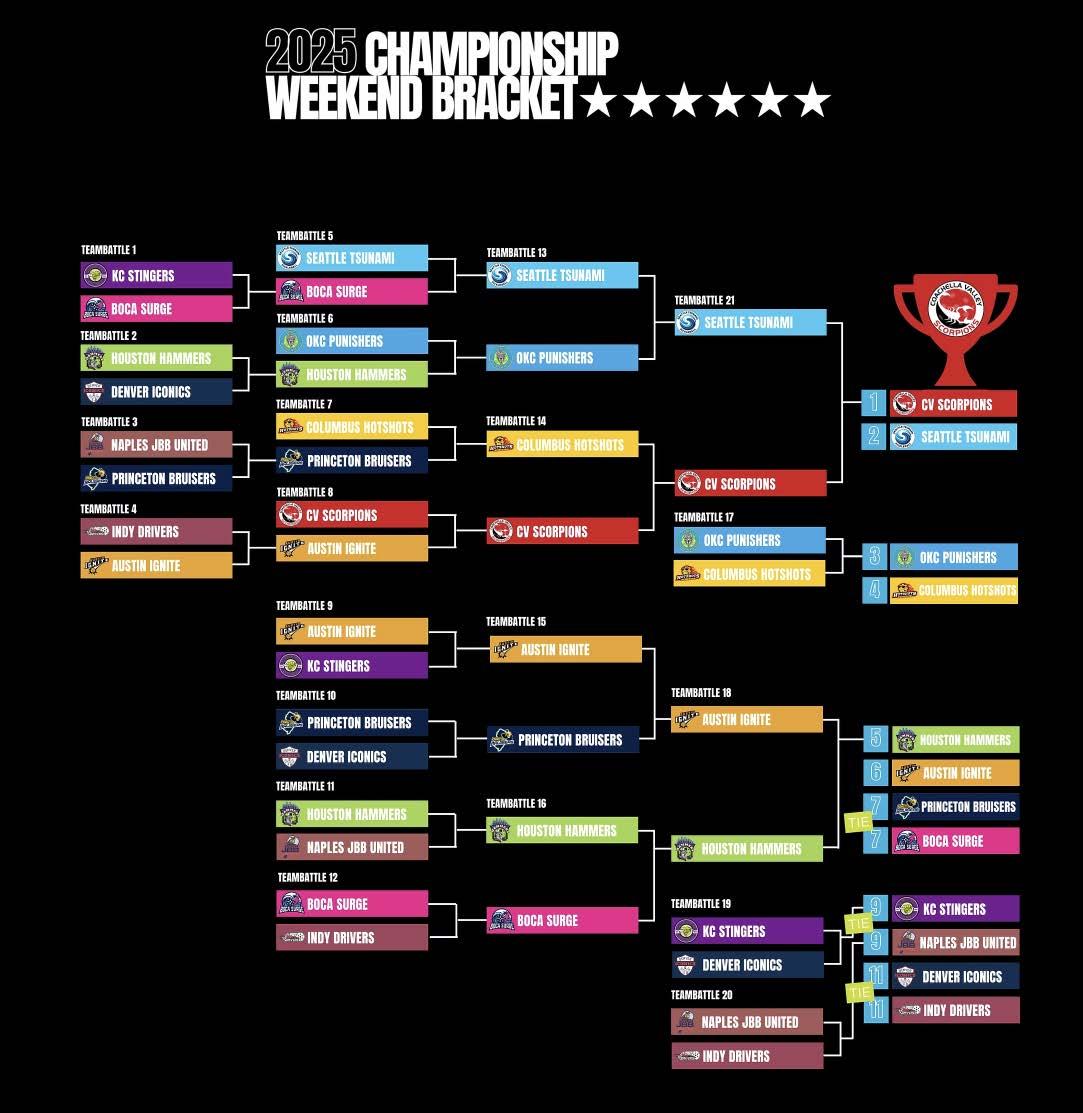
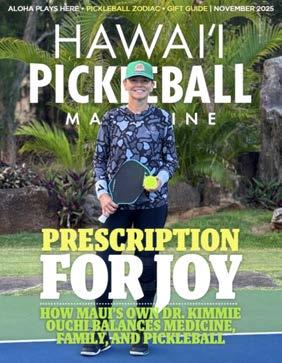
Kimmie and the Houston Hammers ended the 2025 season in 5th place.
From Kimmie: “It was a fun season and grateful for the opportunity Houston gave me to be a part of their team and family. Made lots of wonderful friends who share a passion and love for pickleball. Appreciate the NPL as well!”
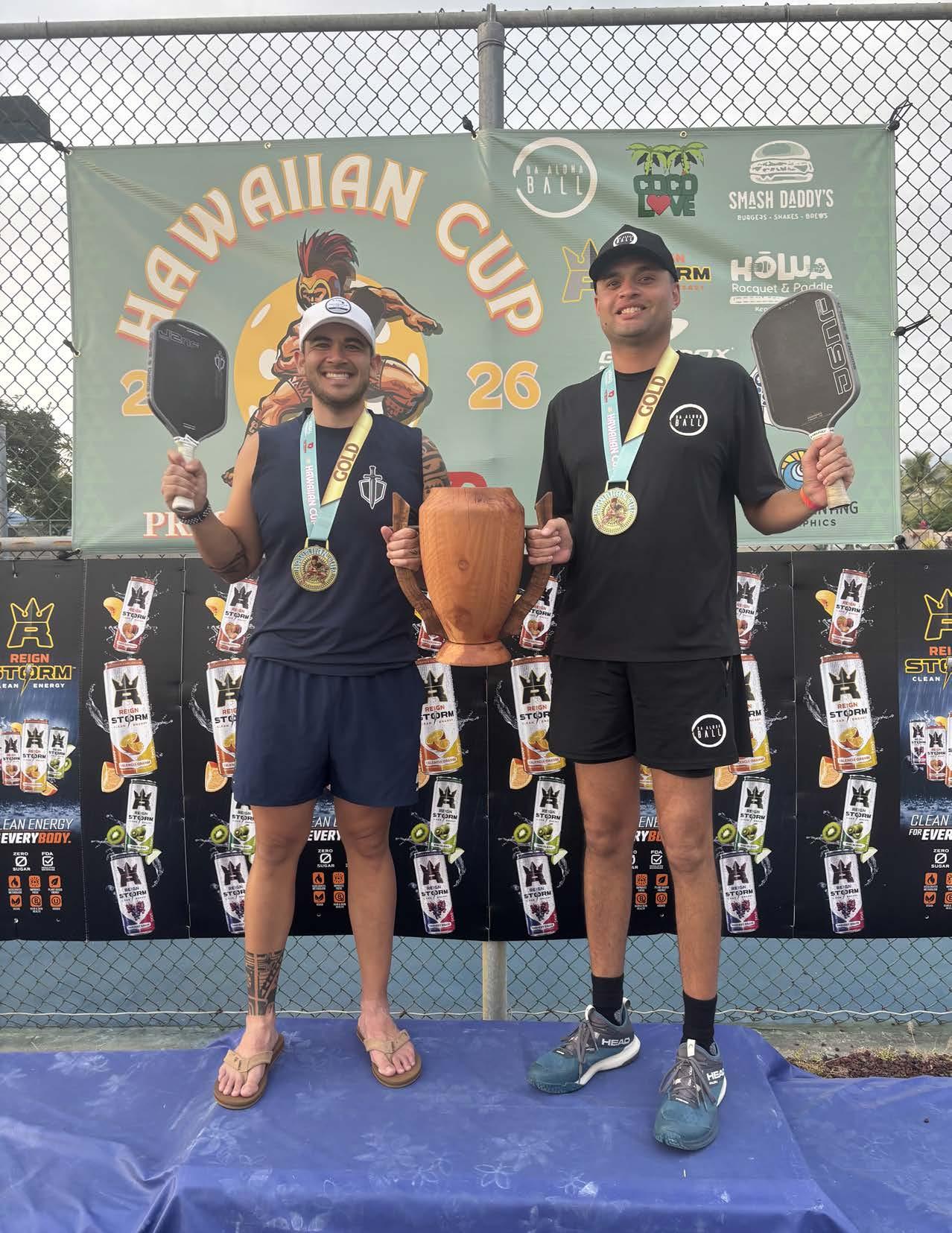
From Ikona: “My family from the Big Island comes to watch and play, so it makes it even more special. I was stoked to win with my friend and coming from the back draw to win twice. Even did pretty good in Mixed. Overall, it was good vibes this weekend. I can’t wait until next year!”
ABOVE: Gold with Prycen Haas, Hawaiian Cup 2026
Tama Shimabukuro
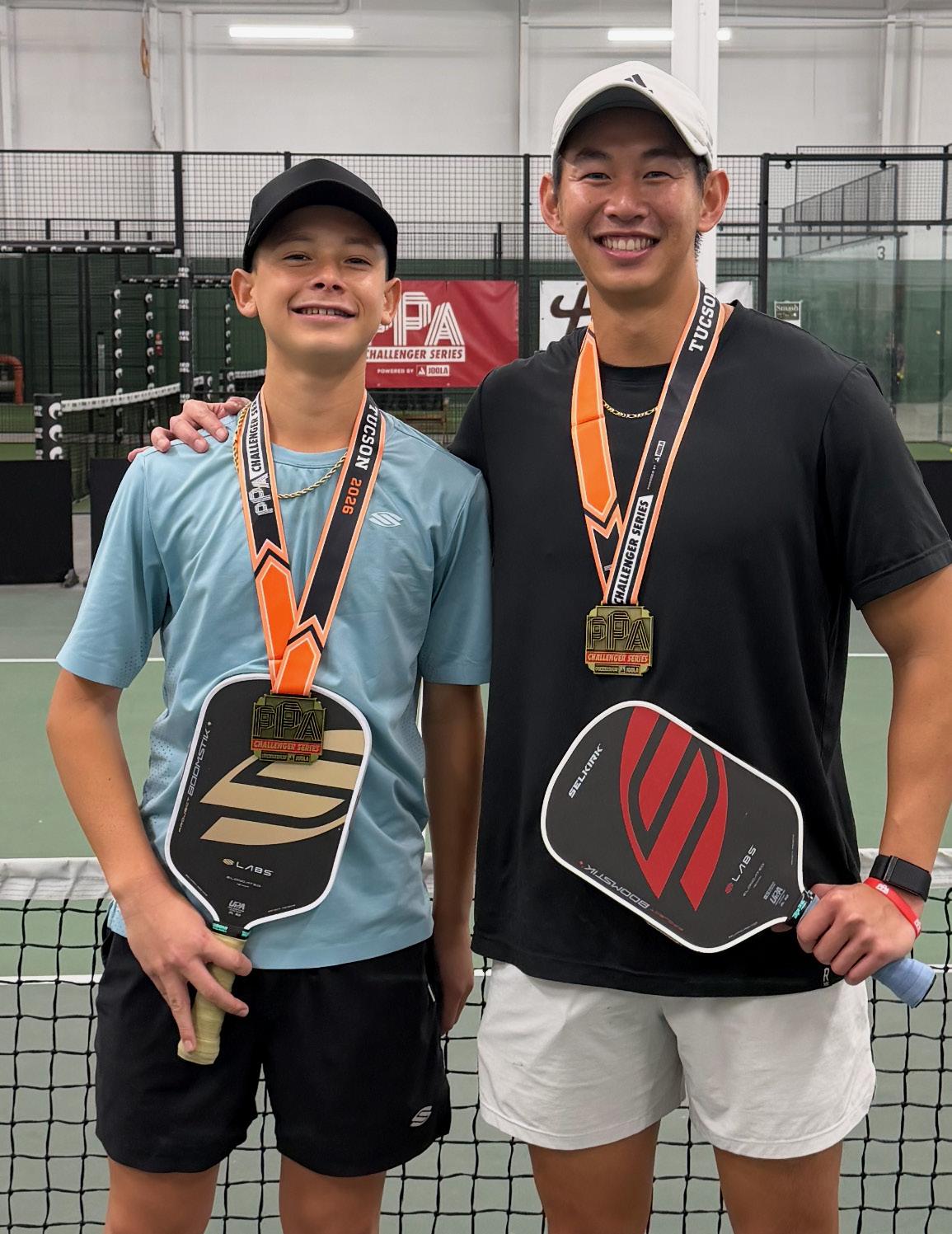
What a difference a year makes. When we last spoke with Tama a year ago, he was just getting started. In September, he secured a three-year contract with the PPA Tour, becoming one of the youngest players ever (at just 14 years old) to enter the pro ranks. Last month (January 2026), he and fellow local standout Riley Inn (pictured above) captured the Men’s Doubles title at the PPA Challenger Series Tucson. He’s been on the road traveling, training, and attending all PPA stops, with hopes of sneaking home for a week at the end of the month. Tama turned 15 on January 13th.

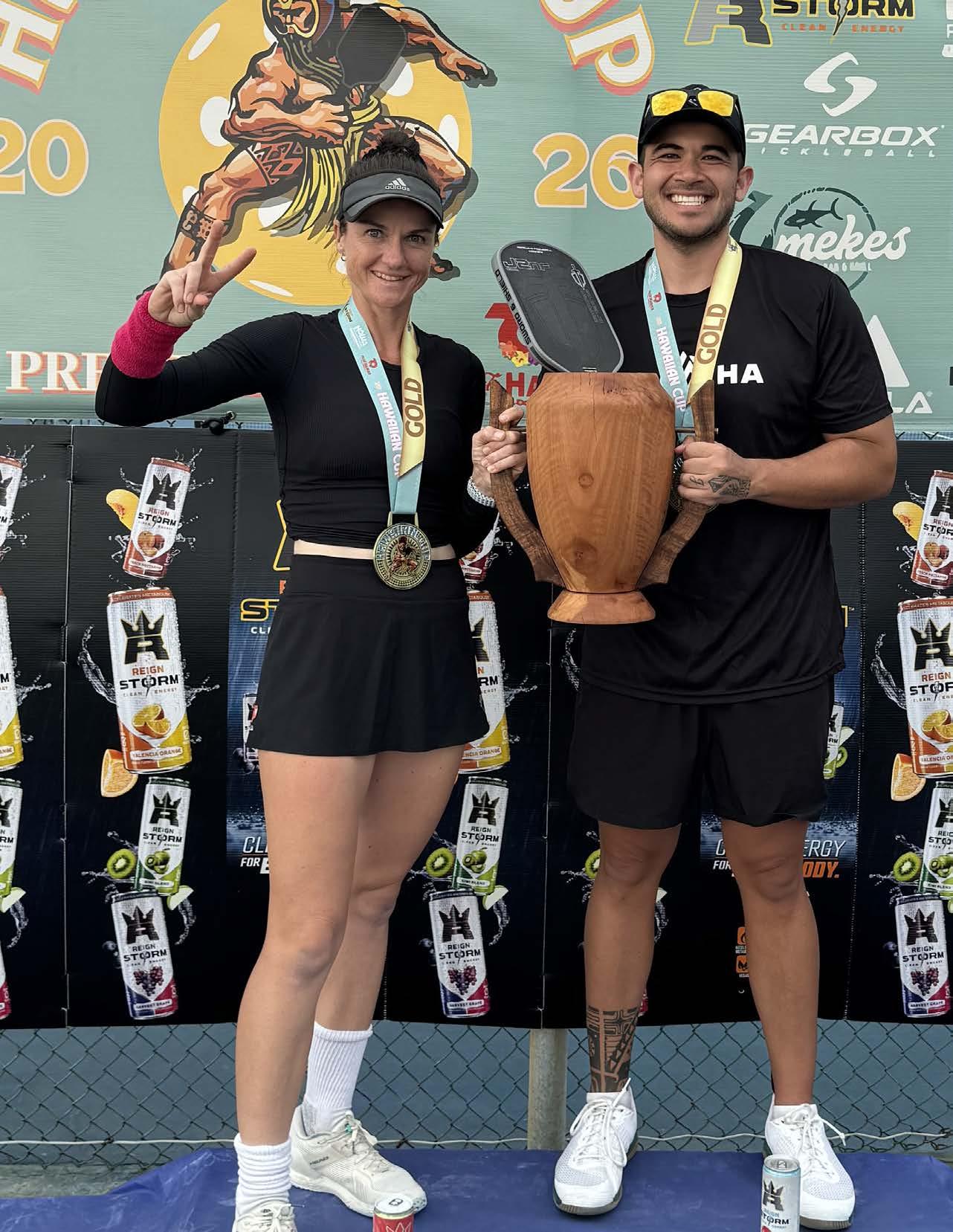
Ekaterina Biakina (“What’s In Your Bag” feature, August 2025)
ABOVE: Gold with Prycen Haas, Hawaiian Cup 2026

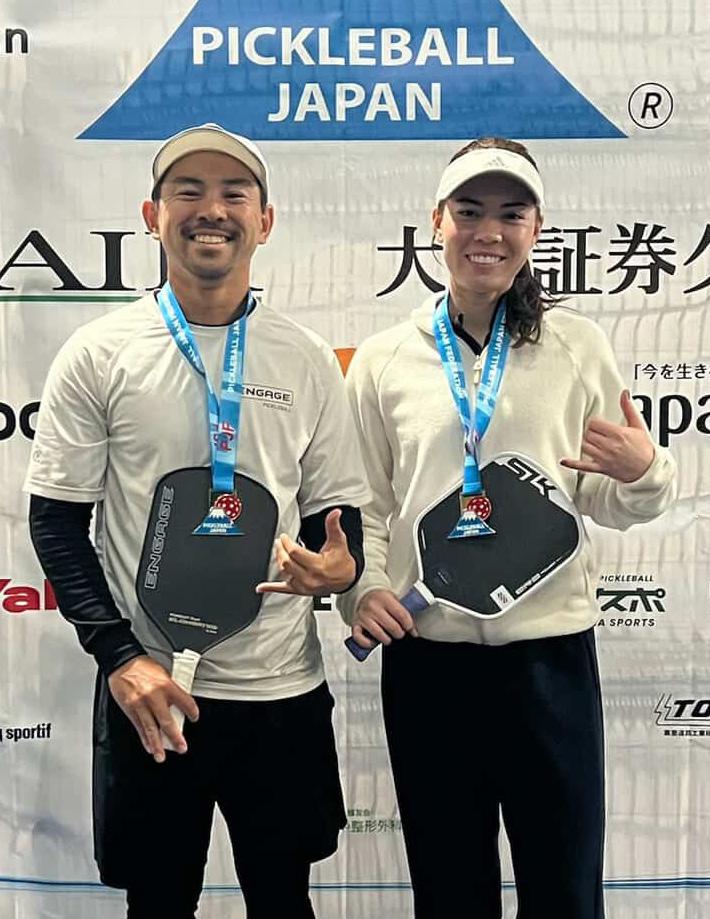
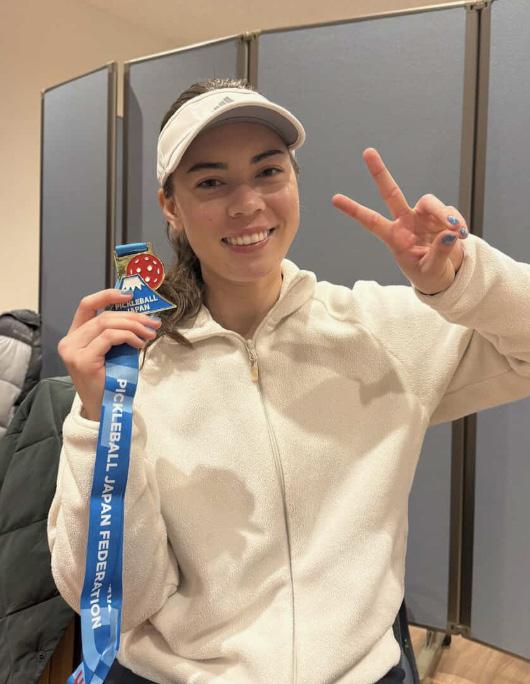
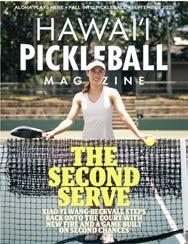
From Xiao Yi: “I love to see how quickly pickleball in Japan is growing! Had a fabulous time there as always and stayed for a couple days longer after the tournament. It was not quite as cold and windy as last year’s tournament, but it was close. I will say that one positive that comes out of playing in tough conditions is that it prepares you for anything. And of course, it was great to cap off the 2025 season with Gold playing with Keven (Wong).”
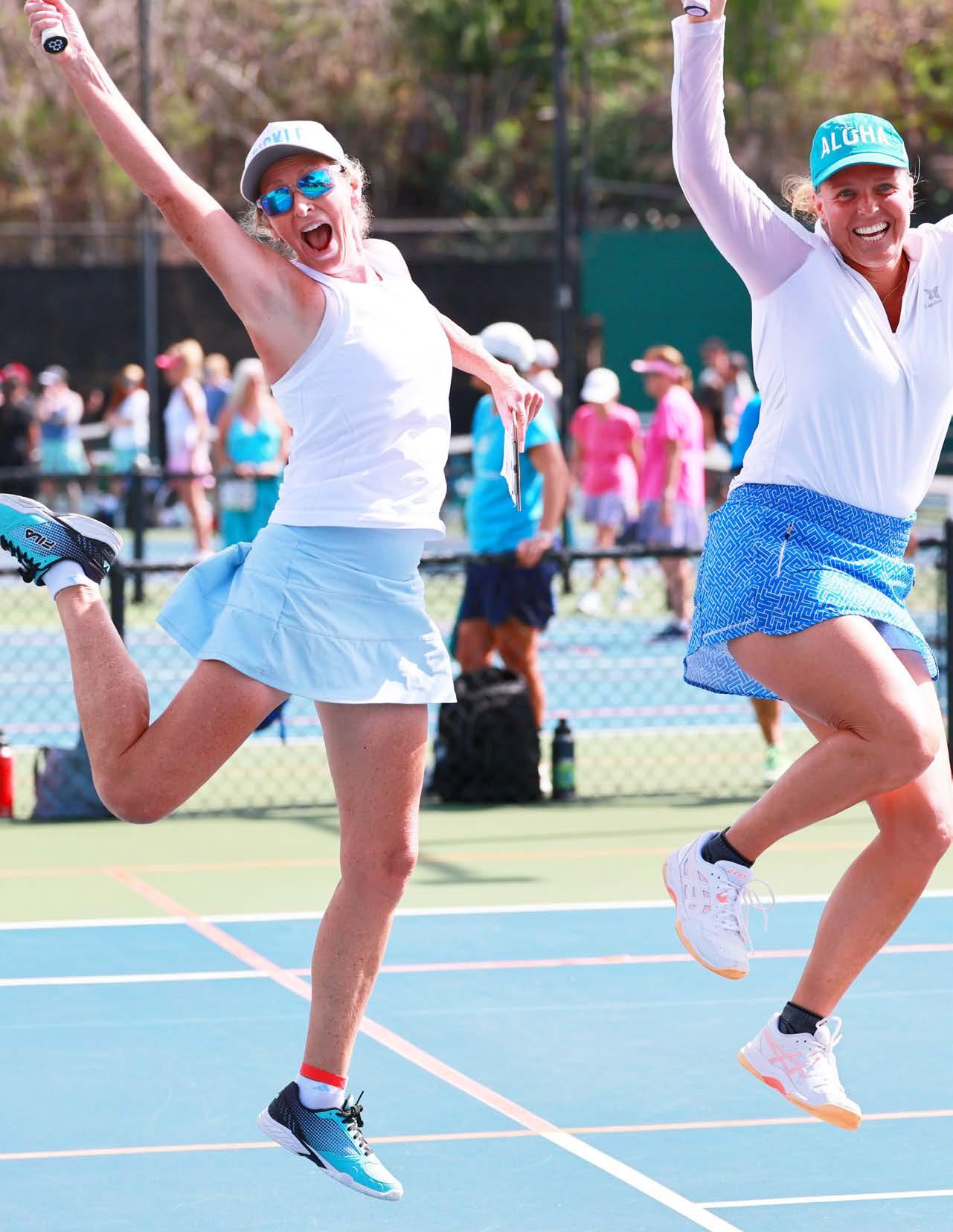
Frankie Sharpe and Kimberly Drechsel after a come back win to make it to the Gold Medal Match
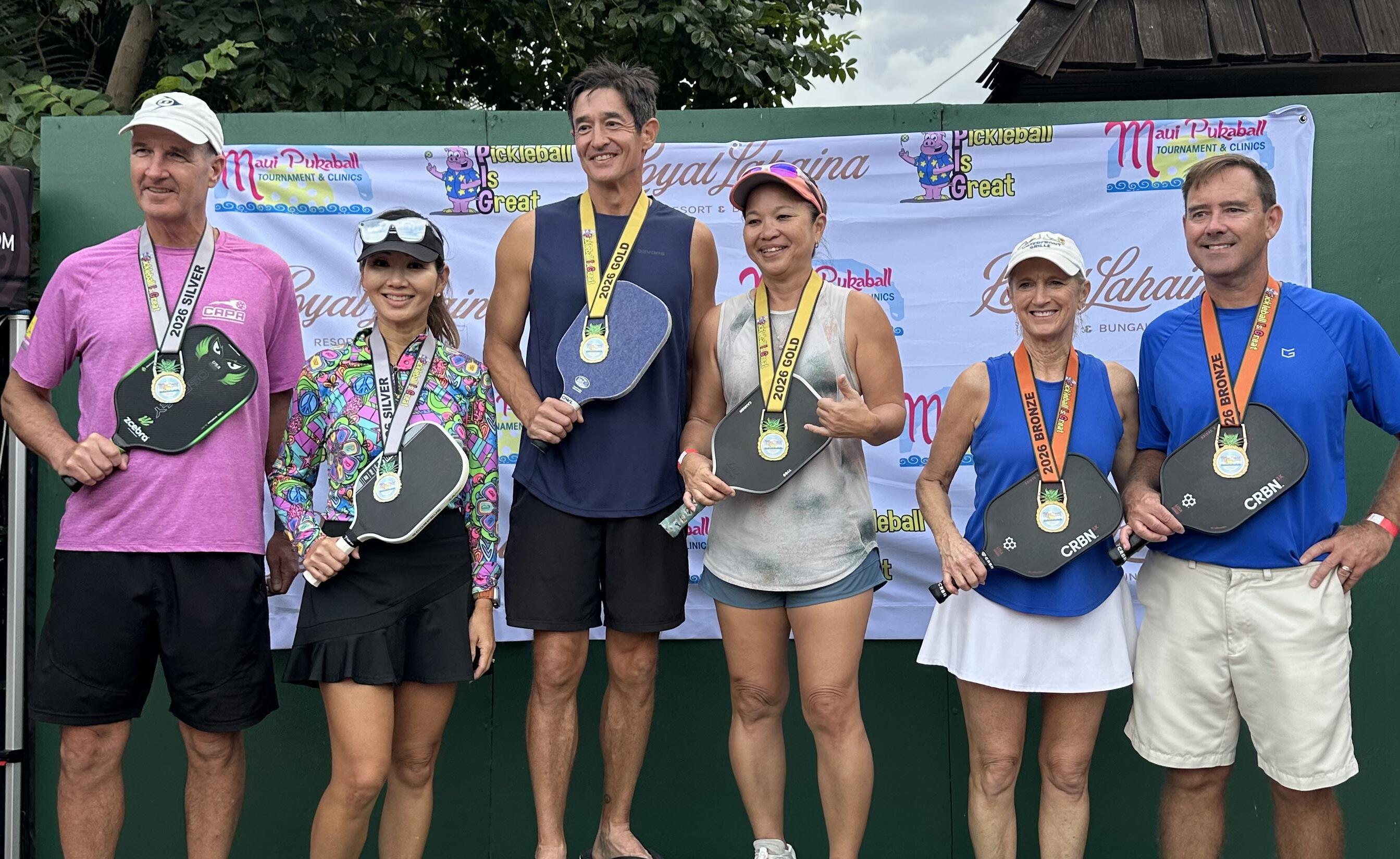
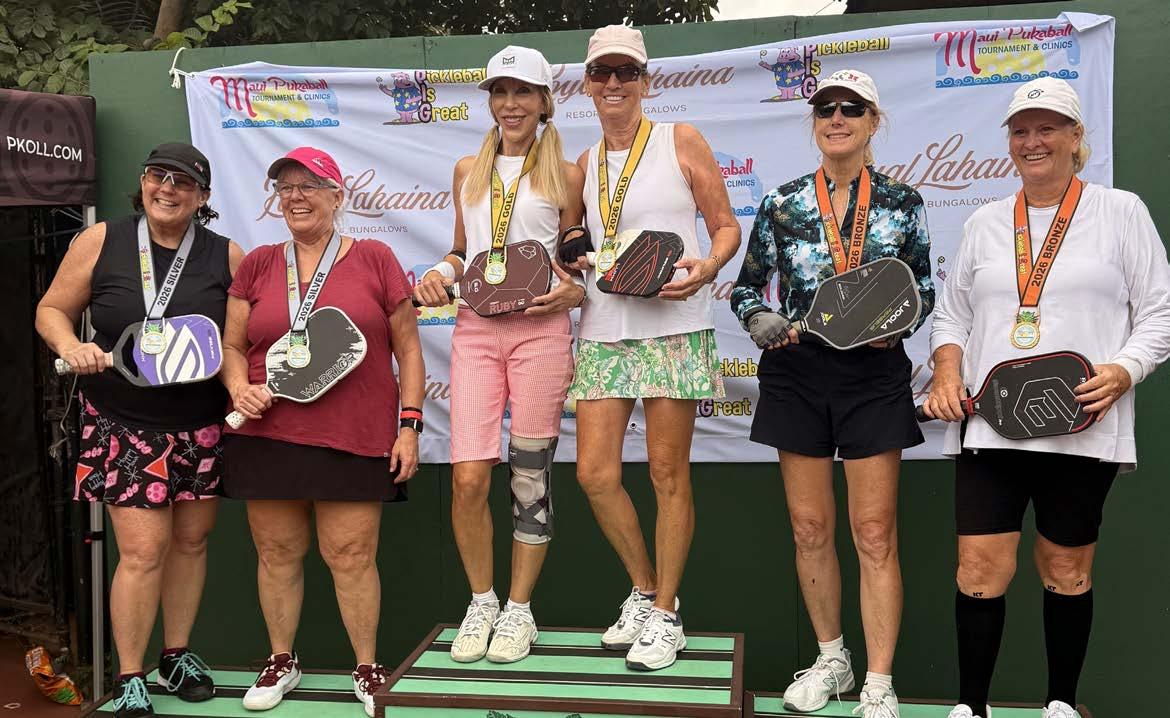
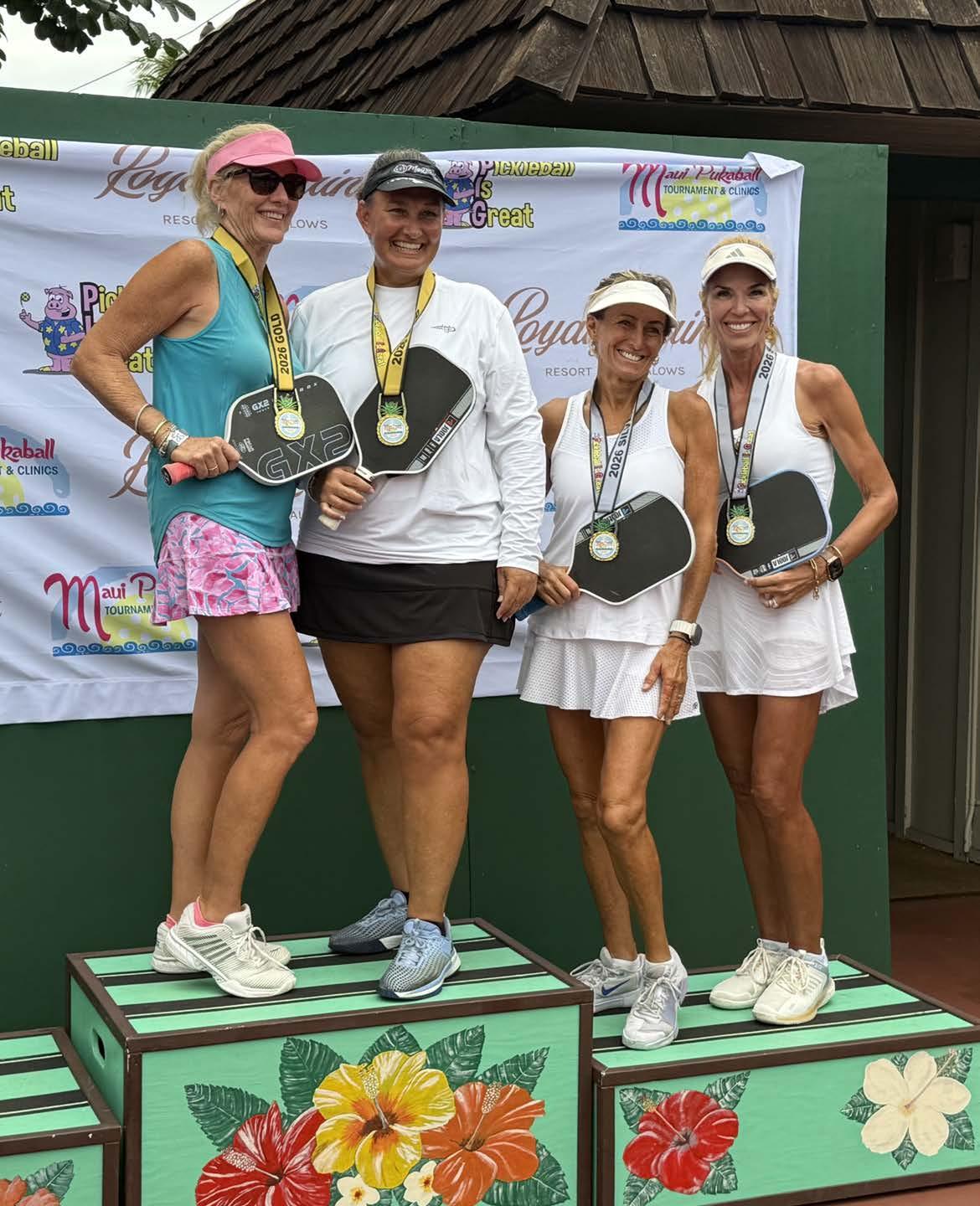
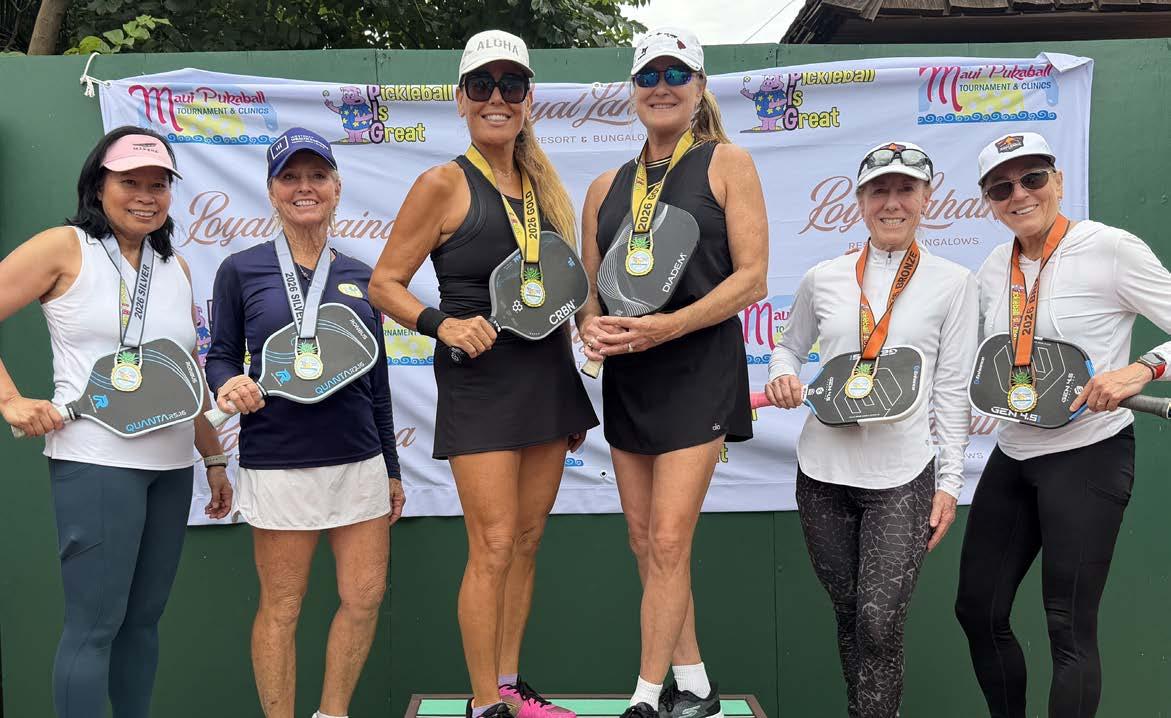
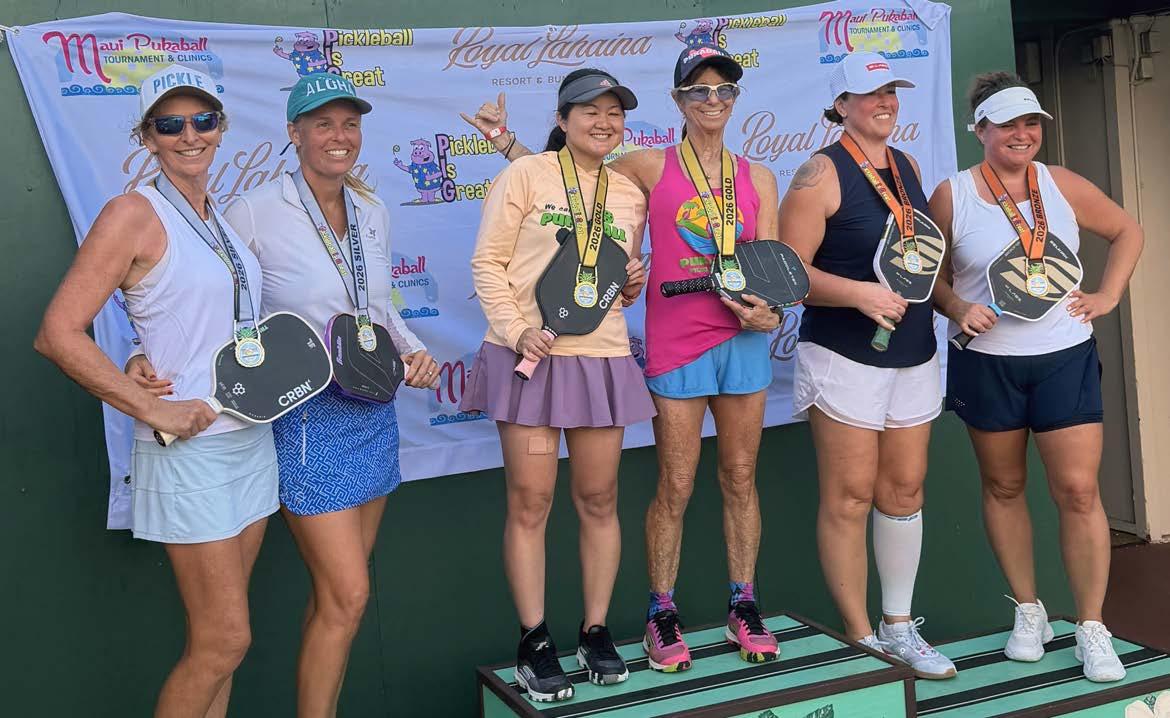
The 2026 Maui Pukaball Tournament, held January 21–25 at the Royal Lahaina Tennis Ranch in Kā’anapali, brought together 530 players for one of Hawaii’s largest pickleball events of the year.
Participants traveled from 31 different locations, with just over half of the field—269 players (51%), coming from Hawai‘i. The mainland was led by California (138 players, 26%), followed by Washington (29), Oregon (14), Arizona (13), and Texas (12).
International players also took part, including competitors from Canada, Switzerland, Israel, and Tonga.
The gender split was nearly even, with 271 female players (51.1%) and 259 male players (48.9%). Division data shows the strongest participation in the 3.0–3.5 skill levels, with solid depth across both genders and formats. Women’s doubles had particularly strong representation at the 3.0 level, while mixed doubles showed consistent participation through the 4.0 divisions.
Below are the medalists from each division and a photo gallery capturing some highlights from the week in Kā’anapali.
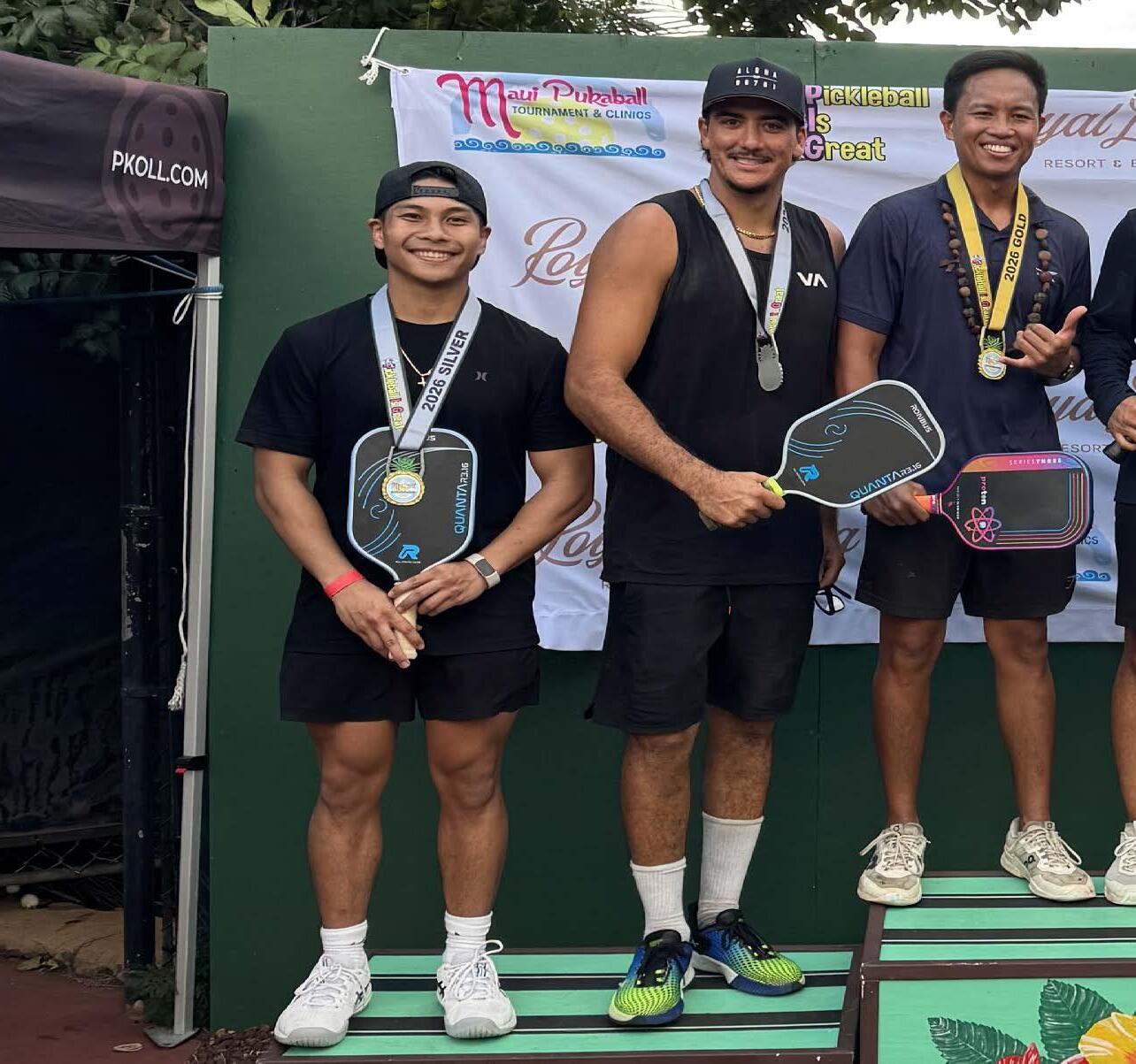
Check out the results and a full gallery of photos!
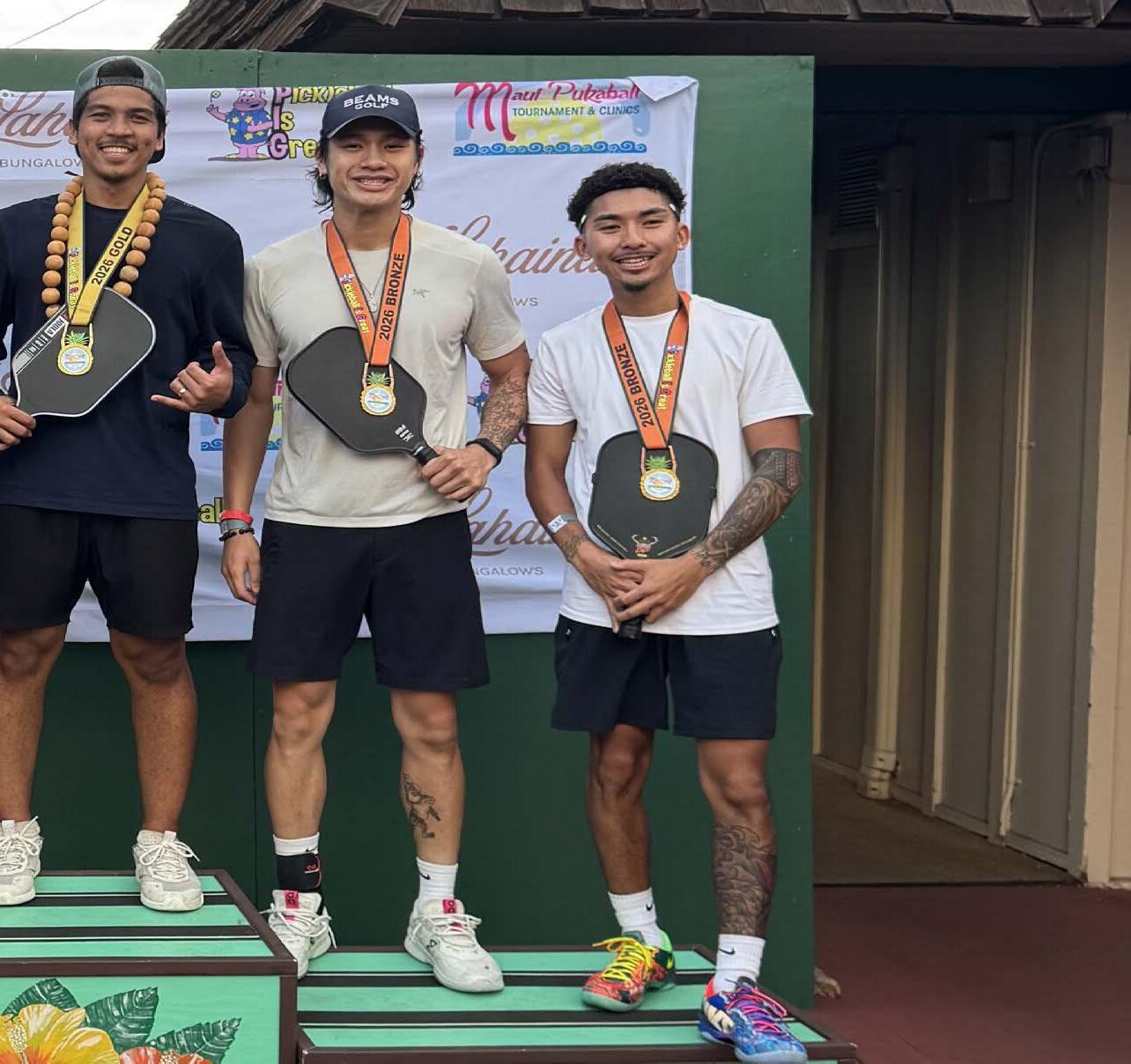
MENS DOUBLES
Men’s Doubles Skill: (3.5) Age: (48 and under)
GOLD - Ezra Mahaulu, Fidel Mseti
SILVER - Paul Basubas, Keneth Basubas
Bronze – Ryan Omara, Art Ortiz
Men’s Doubles Skill: (3.5) Age: (49+)
GOLD - Michael Fisicaro, Gene Gutierrez
SILVER - Dan Shupack, Armando Servin
Bronze - Tony Lazaro, Joe Helberg
Men’s Doubles Skill: (4.0) Age: (26 and under)
GOLD - Rocky Balala, Jyrah Lalim
SILVER - Dustin Desalvio, Coby Ravida
Bronze - Jordan Wong, j wong
Men’s Doubles Skill: (4.0) Age: (27 To 37)
GOLD - Kailer Kolish, Ryan Wert
SILVER - Brock Lutes, Kenneth Kepler
Bronze - Sui Ah-Hing, Justin Melgar
Men’s Doubles Skill: (4.0) Age: (38 To 48)
GOLD - Marc Coralle, Dave James
SILVER - Thor Lundquist, Cory Thompson
Bronze - Andrew Shoemaker, Kawika Nunes
Men’s Doubles Skill: (4.0) Age: (49+)
GOLD - Paul Machle, David Sipes
SILVER - Olivier Dutel, Johnny Sendejo
Bronze - Kevin Bunce, Brian Luce
Men’s Doubles Skill: (4.5+) Age: (39 and under)
GOLD - James Thorp, Luke Lorenz
SILVER - Alfonso Plata, Gabriel Figueroa
Bronze - Rockie Chong, Codie Chong
Men’s Doubles Skill: (4.5+) Age: (40+)
GOLD - Gregg Takata, Mikael Maatta
SILVER - Troy Buckland, Michael Akiu
Bronze - Sean Snyder, Michael DeGrazier
WOMEN’ S DOUBLES
Women’s Doubles Skill: (3.5) Age: (49 And Above)
GOLD - Kandee Almond, Cindy Fujiwara
SILVER - Mona Matabuena, Maria Geronimo
Bronze - Manuela Iselin, Nicole Iselin Mackenzie
Women’s Doubles Skill: (4.0) Age: (All)
GOLD - Laurie Loney, Rina Rousek
SILVER - Frances Sharpe, Kimberly Drechsel
Bronze - Lynette Luce, Deanna Wilson
Women’s Doubles Skill: (3.5) Age: (24 To 48)
GOLD - Ashley Deane, Evan Shaw
SILVER - Keala Hopps, Katie Wells
Bronze - Amara Pang, Kandace Mosher
Women’s Doubles Skill: (3.0) Age: (All)
GOLD - Stacy Owings, Trisha Collinsworth
SILVER - Jill Blanca, Perly Queen Maon
Bronze - Jadeen Richardson, Ana Anzore
Women’s Doubles Skill: (4.5+) Age: (All)
GOLD - Lindsey Shin, Tama Fukuyama
SILVER - Shayla Molnar, Melissa Ching
Bronze - Colby Makahilahila, Erin Katayama
WOMEN’ S SINGLES
GOLD - Jessalyn Lopez
SILVER - Carly Shagrin
Bronze - Kandace Mosher
MIXED DOUBLES
Mixed Doubles Skill: (3.0) Age: (ALL)
GOLD - Jill Blanca, Keneth Basubas
SILVER - Sheri Pon, Joey Ponco
Bronze - Sara Shisler Goff, Alberto Jesus
Mixed Doubles Skill: (3.5) Age: (35 To 42)
GOLD - Amara Pang, Michael Pang
SILVER - Marcy Perreira, Aaron Mark
Bronze – AmberLee Teisina, Taliai Teisina
Mixed Doubles Skill: (3.5) Age: (43 To 47)
GOLD - Lauren Lessner, Blake Rudolph
SILVER - Jennifer Sembler, Tony Dail
Bronze - Jennifer Links, Johnny Sendejo
Mixed Doubles Skill: (3.5) Age: (48 And Above)
GOLD - Katy Mendoza, Nick Mendoza
SILVER - Laurel Johnson, David Sipes
Bronze - Angela McQuatters, John McQuatters
Mixed Doubles Skill: (3.5) Age: (5 To 34)
GOLD - Erica Pon, Justin Melgar
SILVER - Brandi Williams, Chad Williams
Bronze - Kandace Mosher, Tanner Mosher
Mixed Doubles Skill: (4.0) Age: (27 To 43)
GOLD - Leila Neishi, J Wong
SILVER - Emily Collins, Jonah Poepoe
Bronze - Kimberly Drechsel, Joel Shultz
Mixed Doubles Skill: (4.0) Age: (44 To 49)
GOLD - Karla Wagner, Thor Lundquist
SILVER - Samantha Carbajal, Matthew Rousek
Bronze – Claire Liu, Randy Liu
Mixed Doubles Skill: (4.0) Age: (5 To 26)
GOLD - Nanna Brown, Craig Rawson
SILVER - Sydney Walker, Siaosi Ngalu Jr.
Bronze - Maria Geronimo, Jordan Wong
Mixed Doubles Skill: (4.0) Age: (50 And Above)
GOLD - Sandra Woo, Paul Machle
SILVER - Lynette Luce, Kevin Bunce
Bronze - Cecilia Domingo, Daryl Look
Mixed Doubles Skill: (4.5+) Age: (35 And Above)
GOLD - Rachel Gatewood, Gregg Takata
SILVER - Lindsey Peterson, Michael DeGrazier
Bronze - Karen Haselden, James Rakela
Mixed Doubles Skill: (4.5+) Age: (5 To 34)
GOLD - Erin Katayama, James Thorp
SILVER - Madison Wolfe, Conner Edlebeck
Bronze - Birlinda Akinaka, Kelson Lau
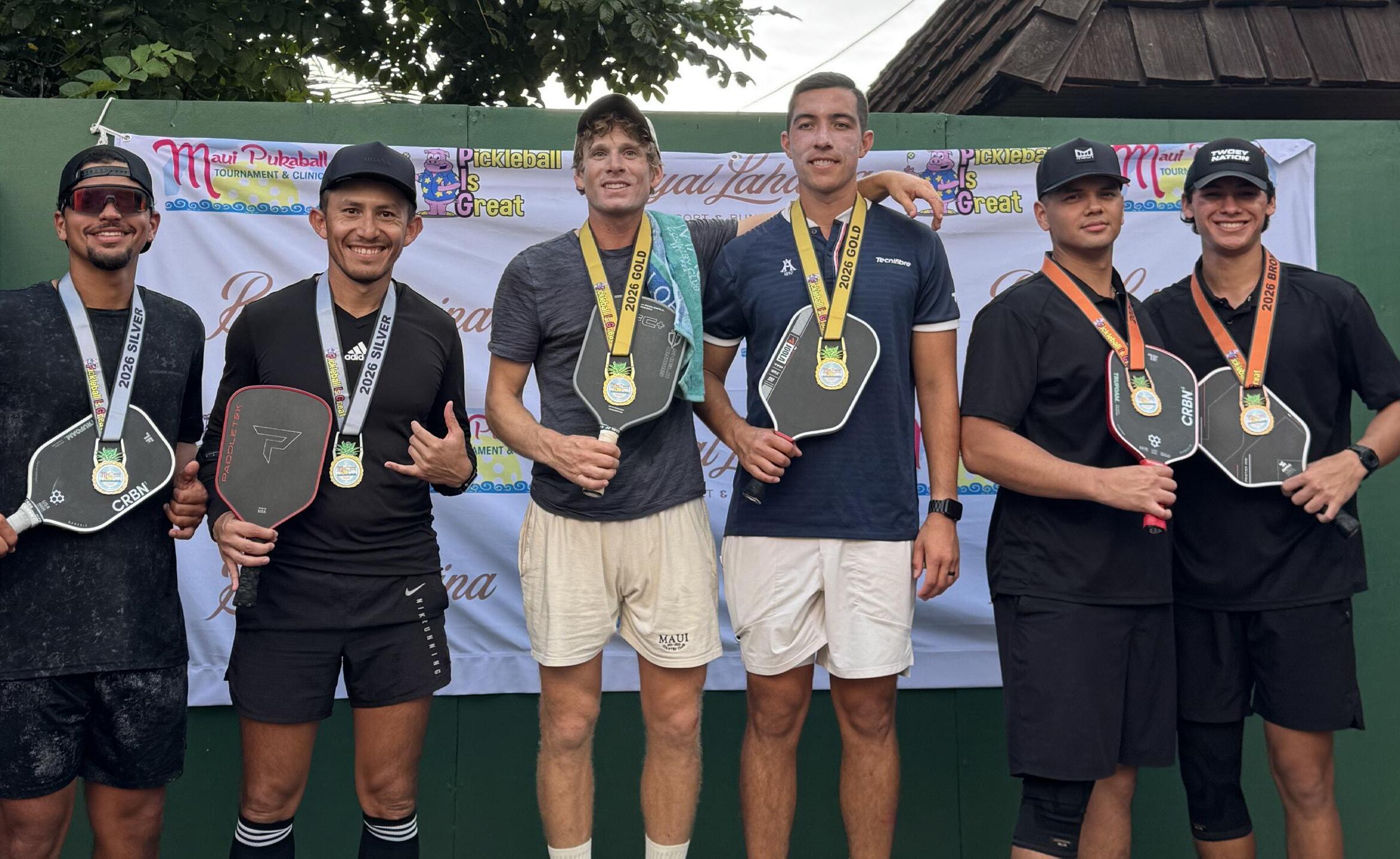
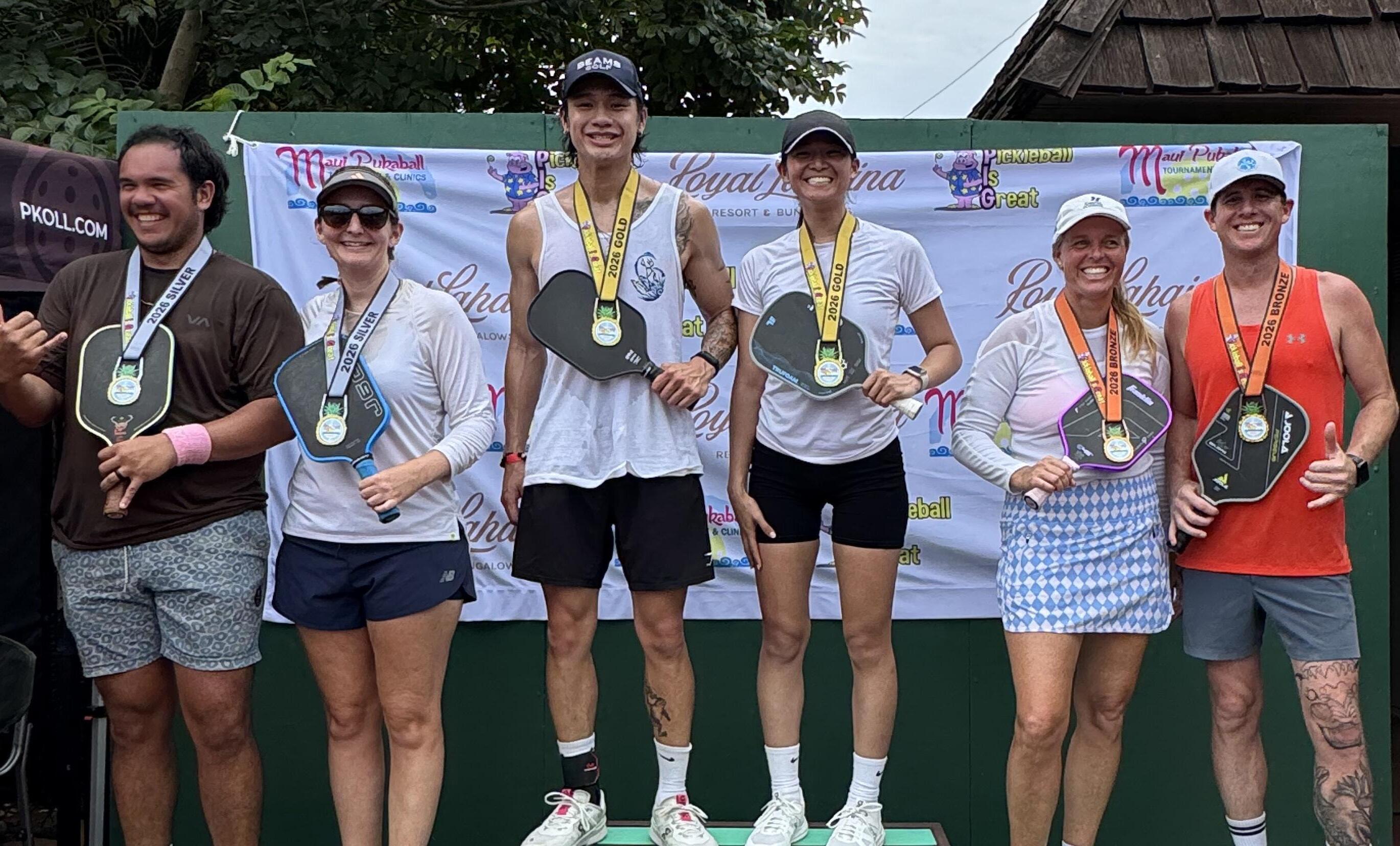
PKOLL Zero winner take all $500 - Sudden deathSingle Elimination
GOLD - Rick Kepler
SILVER - Joseph Baldwin
Bronze – N/A
MENS DOUBLES
SR Men’s Doubles Age: (50 To 54) Skill: (4.0/4.5)
GOLD - Elias Akinaka, Viliami Lavaka
SILVER - Thomas Dalessandro, Ben Holz
Bronze – Brett Lickle, Rick Kepler
SR Men’s Doubles Age: (55 To 59) Skill: (All)
GOLD - Randy Liu, Alex Berganio
SILVER - Dennis Cain, Jeff Lancaster
Bronze - Sam Watson, Kevin Ranken
SR Men’s Doubles Age: (60 To 64) Skill: (3.0)
GOLD - Carlo Ponco, Joey Ponco
SILVER - John Wiegel, Bill Gunning
Bronze - Royale Komomua, Jimmy Kawaihalau
SR Men’s Doubles Age: (60 To 64) Skill: (3.5)
GOLD - Fil Melgar, Jeffrey Matabuena
SILVER - Tony Lazaro, Jeffrey Copans
Bronze - Alan Kosansky, Robert Figgs
SR Men’s Doubles Age: (60 To 64) Skill: (4.0/4.5+)
GOLD - James Rakela, Dennis Poppe
SILVER - Michael Fisher, Brian Johnson
Bronze - Italo Barone, Bob Bauerle
SR Men’s Doubles Age: (65 To 69) Skill: (3.5/3.0)
GOLD - Rafael Alvarez, Anthony Goo
SILVER - Malcolm Davis, Johnny Sendejo
Bronze - Steven Smolinski, Tod Aeby
SR Men’s Doubles Age: (65 To 69) Skill: (4.0/4.5)
GOLD - Daryl Look, Les Wong
SILVER - Douglas Hassan, Richard Skevington
Bronze - Mark Beach, Kaleo Perez
SR Men’s Doubles Age: (70+75+80+) Skill: (3.5/3.0)
GOLD - Charles Wassman, Romeo Monces
SILVER - Thomas Harrison, Tito Lehecka
Bronze – Dan Schnaars, Al Apo
SR Men’s Doubles Age: (70+75+80+) Skill: (4.0/4.5)
GOLD - Rich Ferrari, Pavel Bosin
SILVER - Richard Morrissey, Philip Baclayon
Bronze - Carlo Del Giudice, David Ardisson
MENS SINGLES
Men’s Singles Senior Age: (50+55+) Skill (all)
GOLD - Alex Berganio
SILVER - Jeff Drechsel
Bronze - David Jr Kamalani
Men’s Singles Senior Age: (60 To 64) Skill: (all)
GOLD - Mitchell Langeler
SILVER - Mark Resnick
Bronze - Doug Gresenz
Men’s Singles Senior Age: (65 To 69) Skill: (all)
GOLD - Daryl Look
SILVER - Lloyd Kishi
Bronze - Allan Holmes
Men’s Singles Senior Age: (70+75+80+) All
GOLD - Pavel Bosin
SILVER - Dennis Poppe
Bronze – Bruce Thompson
Mens Singles Skill: (3.0/3.5) Age: (19 To 49)
GOLD - Niv Gur
SILVER - Keneth Basubas
Bronze - David Spiegelman
Mens Singles Skill: (4.0) Age: (19 To 49)
GOLD - Codie Chong
SILVER - Dustin Desalvio
Bronze - Jyrah Lalim
Mens Singles Skill: (4.5 And Above) Age: (19 To 49)
GOLD - Alfonso Plata
SILVER - Lynath Liou
Bronze - Rick Kepler
WOMENS DOUBLES
SR Women’s Doubles Age: (50 To 54) Skill: (3.5)
GOLD - Julia Klein, Monica Harrison
SILVER - Ali Hayton, Susan Sundsten
Bronze - Kandee Almond, Cindy Fujiwara
SR Women’s Doubles Age: (50+55+) Skill: (3.0)
GOLD - Stacy Owings, Trisha Collinsworth
SILVER - Supapan Warfel, Noriko Hoge
Bronze - Lisa Ide, Jonie Anderson
SR Women’s Doubles Age: (50+55+) Skill: (4.0/4.5)
GOLD - Karen Haselden, Brooke Gannon
SILVER - Lisa Poulsen, Etienne Brasher
Bronze – Darlene Logan, Lisa McIntosh
SR Women’s Doubles Age: (55 To 59) Skill: (3.5)
GOLD - Maria Geronimo, Christina Truong
SILVER - Nicole Iselin Mackenzie, Victoria Taraska
Bronze - Martha Mcgrath, Amy Russell
SR Women’s Doubles Age: (60 To 64) Skill: (3.0)
GOLD - Ponolani Tuinei, Connie Zepeda
SILVER - Roberta Brynestad, Betsy Skevington
Bronze - Nell Davis, Andrea Tarantino
SR Women’s Doubles Age: (60 To 64) Skill: (3.5)
GOLD - Laura Gainey, Sharon Basnett
SILVER - Shari Wiegel, Nancy Hynes
Bronze - Susan Braber, Karen Wilson
SR Women’s Doubles Age: (60 To 64) Skill: (4.0/4.5)
GOLD - Wendy Botelho, Glenna Maple
SILVER - Michelle Pero Igo, Dana Whitlock
Bronze - Gail Kenney, Cecilia Domingo
SR Women’s Doubles Age: (65 To 69) Skill: (3.0/3.5)
GOLD - Lisa Isoda, Krista Kip
SILVER - Dominga Abe, Karen Sullivan-
Bronze - Chantal Ratte, Marsha Sarver
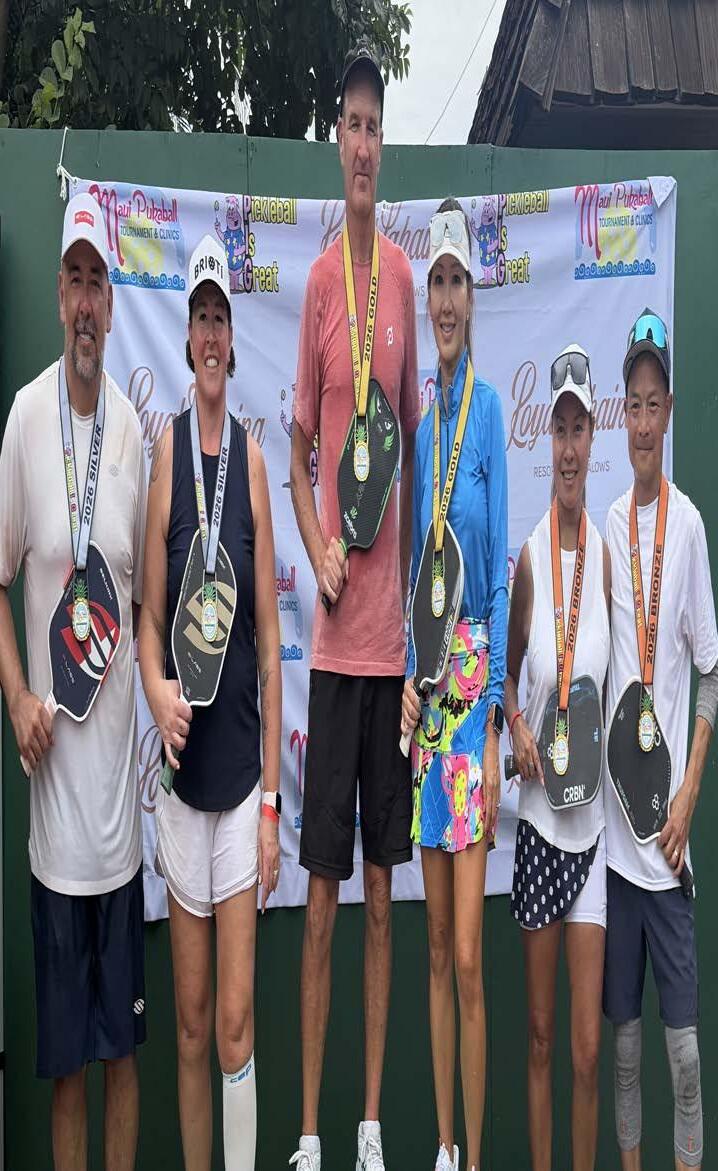
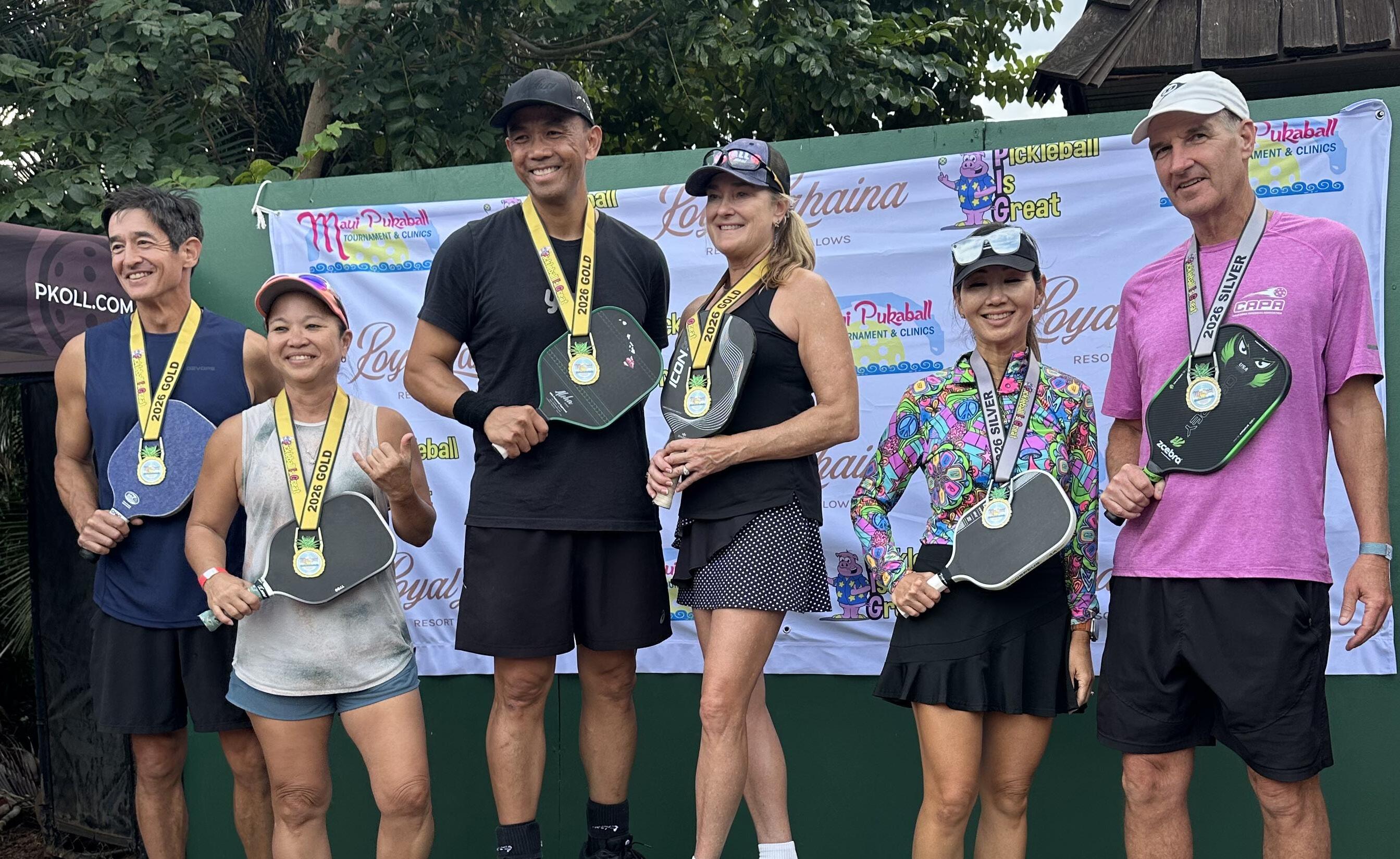
SR Women’s Doubles Age: (65 To 69) Skill: (4.0/4.5+)
GOLD - Ponolani Tuinei, Connie Zepeda
SILVER - Roberta Brynestad, Betsy Skevington
Bronze - Nell Davis, Andrea Tarantino
SR Women’s Doubles Age: (70+75+80+) Skill: (3.0/3.5)
GOLD - Pom Luxton, Darlene Ige
SILVER - Elina Durchman, Diane Euting
Bronze – Kimberly Bisnar, Kelly Meldrum
SR Women’s Doubles Age: (70+75+80+) Skill: (4.0/4.5+)
GOLD - Diane Baumgartner, Cathy Holley
SILVER - Judy Honda, Pilahi Gregg
Bronze - Carol Wallack, Renee Zaima
WOMENS SINGLES
Sunday Women’s Singles Age: (70+75+80+) Skill: (Any)
GOLD - Jean McAbee
SILVER - Susan Frieder
Bronze - Kathy Morrissey
Women’s Singles Age: (50+55+60+) all
GOLD - Mary Wingett
SILVER - Katy Mendoza
Bronze - Laura Coyne
Women’s Singles Age: (65 To 69) Skill: (all)
GOLD - Susan Kalpakoff
SILVER - Dana Whitlock
Bronze - Diane Schneider
MIXED DOUBLES
SR Mixed Doubles Age: (50 To 54) Skill: (3.0/3.5)
GOLD - Lena Servin, Armando Servin
SILVER - Kandee Almond, Alan Kosansky
Bronze – Tara Shupack, Dan Shupack
SR Mixed Doubles Age: (50 To 54) Skill: (4.0/4.5+)
GOLD - Brooke Gannon, Ben Holz
SILVER - Gail Shriner, Thomas Dalessandro
Bronze - Gina Gardner, Rick Markham
SR Mixed Doubles Age: (55 To 59) Skill: (3.0/3.5)
GOLD - Beth McMahon, Fil Melgar
SILVER - Cindy Fujiwara, Robert Figgs
Bronze - Laurel Johnson, Tony Lazaro
SR Mixed Doubles Age: (55 To 59) Skill: (4.0/4.5+)
GOLD - Krista Kip, Alex Berganio
SILVER - Jody Oshiro, Sam Watson
Bronze - Sandra Woo, Paul Machle
SR Mixed Doubles Age: (60 To 64) Skill: (3.0)
GOLD - Nancy Hynes, Bill Gunning
SILVER - Erlinda Cruz, Jonar Cruz
Bronze - Sheri Pon, Carlo Ponco
SR Mixed Doubles Age: (60 To 64) Skill: (3.5)
GOLD - Renee Komomua, David Sumabat
SILVER - Martha Mcgrath, Robert Drapiza
Bronze - Heidi Poley, Steven Smolinski
SR Mixed Doubles Age: (60 To 64) Skill: (4.0/4.5)
GOLD - Karen Haselden, James Rakela
SILVER - Mary Witthans, Michael Fisher
Bronze – Laurie Loney, Italo Barone
SR Mixed Doubles Age: (65 To 69) Skill: (3.0)
GOLD - Ponolani Tuinei, Royale Komomua
SILVER - Lydia Tom, Kenneth Tan
Bronze - Kathy Pon, Andy Pon
SR Mixed Doubles Age: (65 To 69) Skill: (3.5)
GOLD - Terri Murai, Les Wong
SILVER - Duffy Okimoto, Darren Okimoto
Bronze - Elina Durchman, Harris Fujita
SR Mixed Doubles Age: (65 To 69) Skill: (4.0/4.5+)
GOLD - Karen Tomczak, John Ivanusich
SILVER - Renee Zaima, Koji Kato
Bronze - Diane Euting, Philip Baclayon
SR Mixed Doubles Age: (70+75+80+) Skill: (3.0/3.5)
GOLD - Kathryn Farley, Charles Wassman
SILVER - Sharon Kuchenbecker, David Kuchenbecker
Bronze - Nell Davis, Malcolm Davis
SR Mixed Doubles Age: (70+75+80+) Skill: (4.0/4.5+)
GOLD - Pat Bauerle, Bob Bauerle
SILVER - Cathy Holley, Dennis Poppe
Bronze - Kathy Morrissey, Richard Morrissey
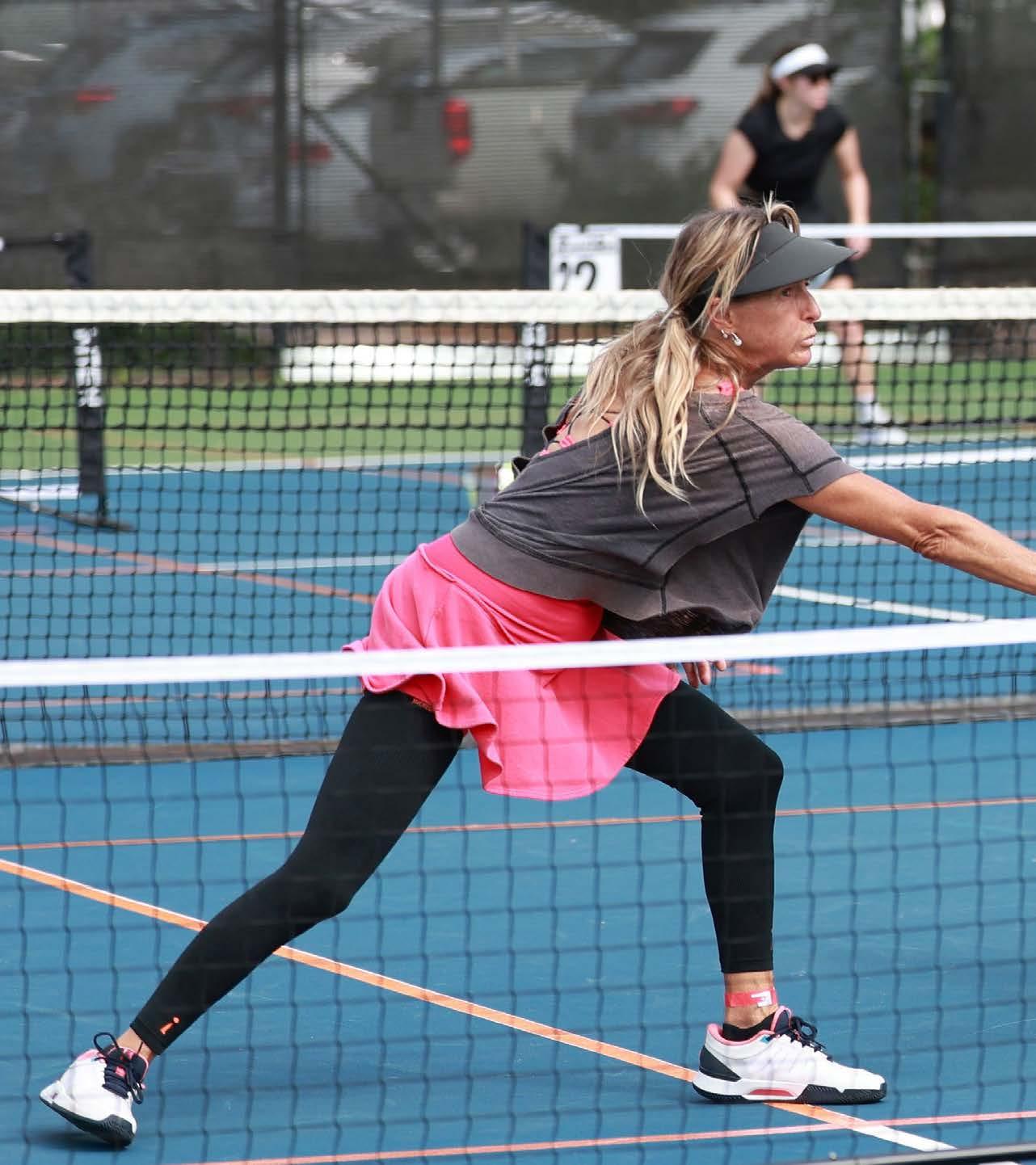
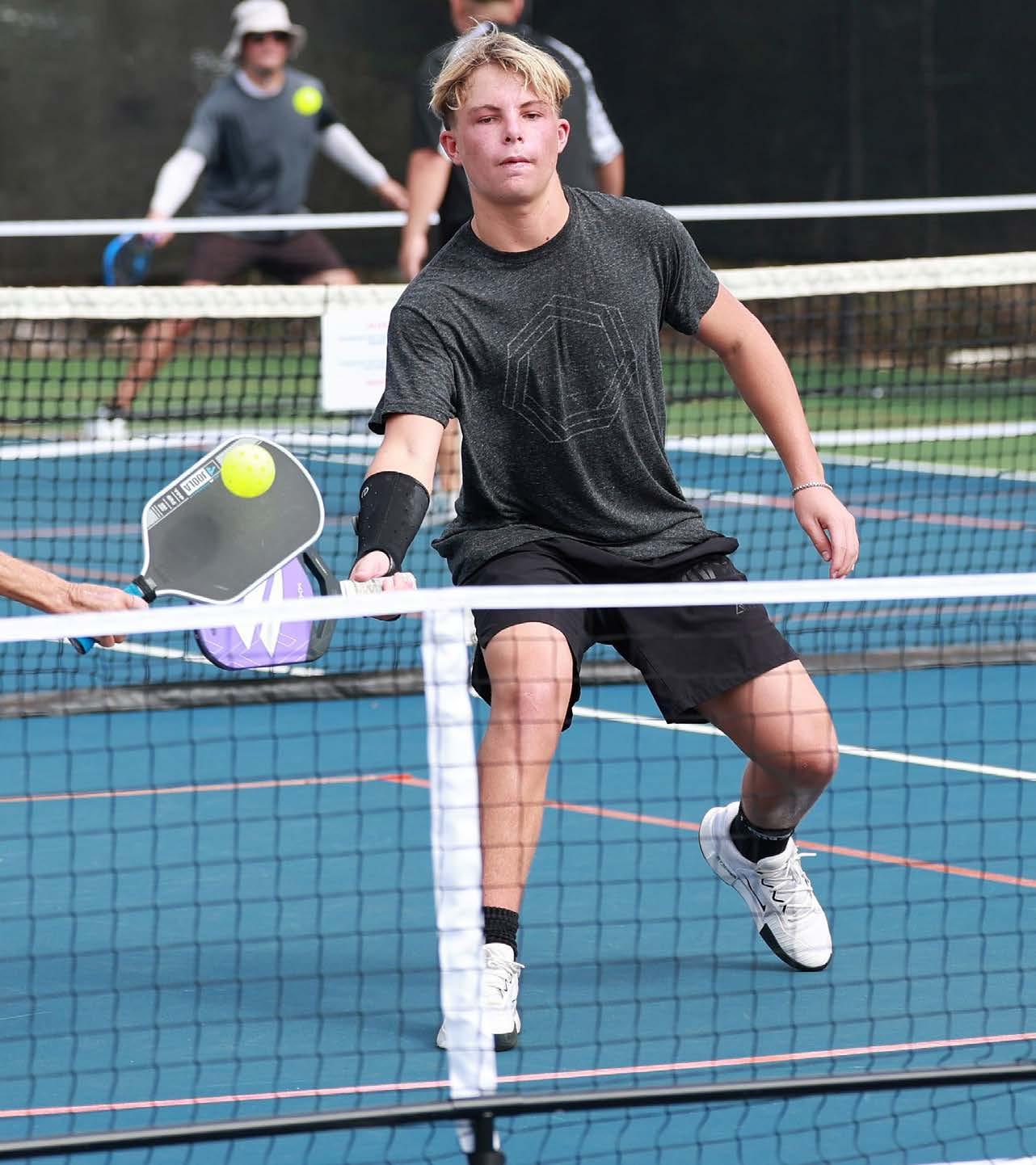

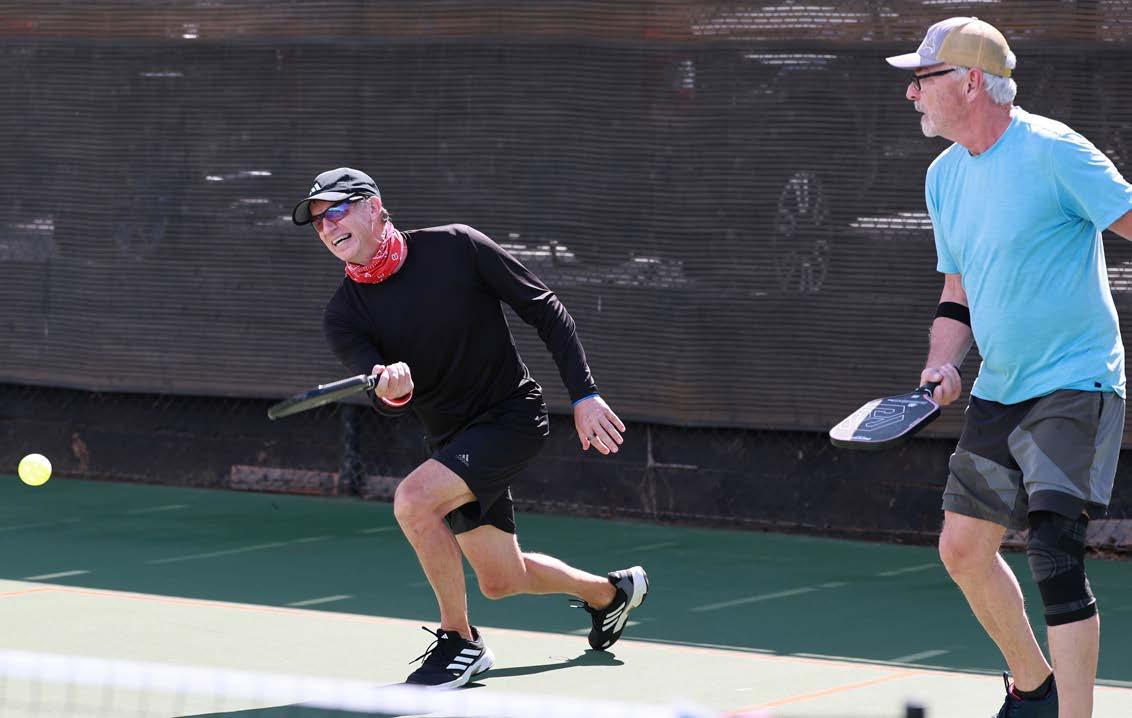
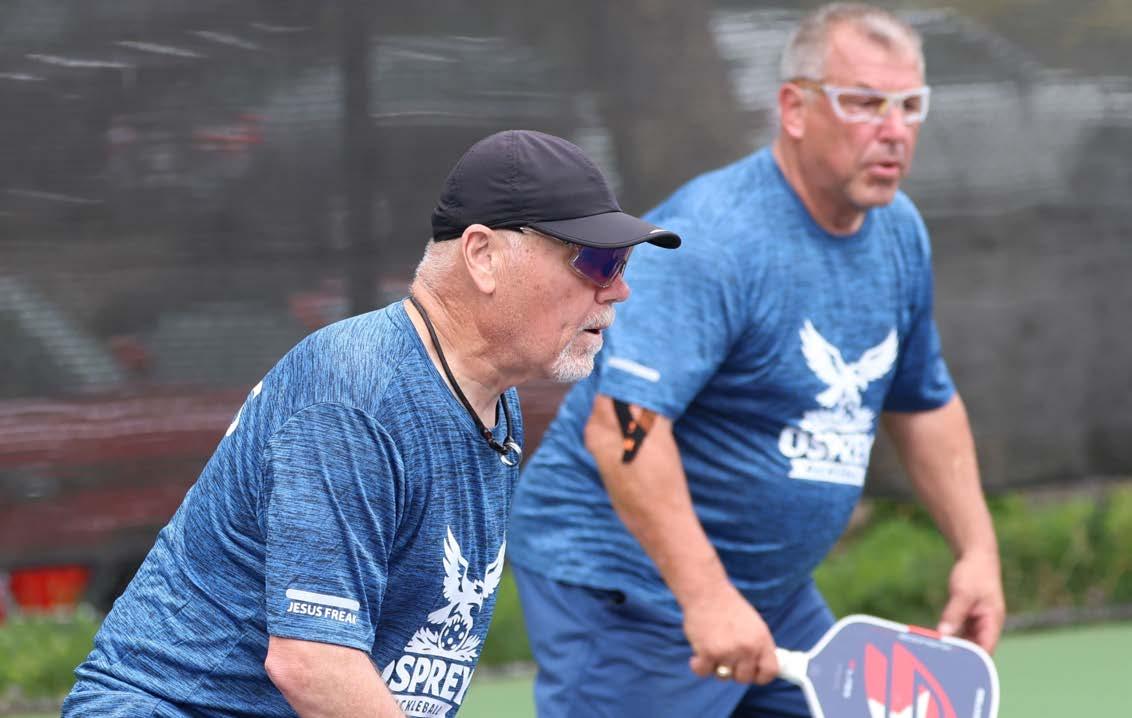
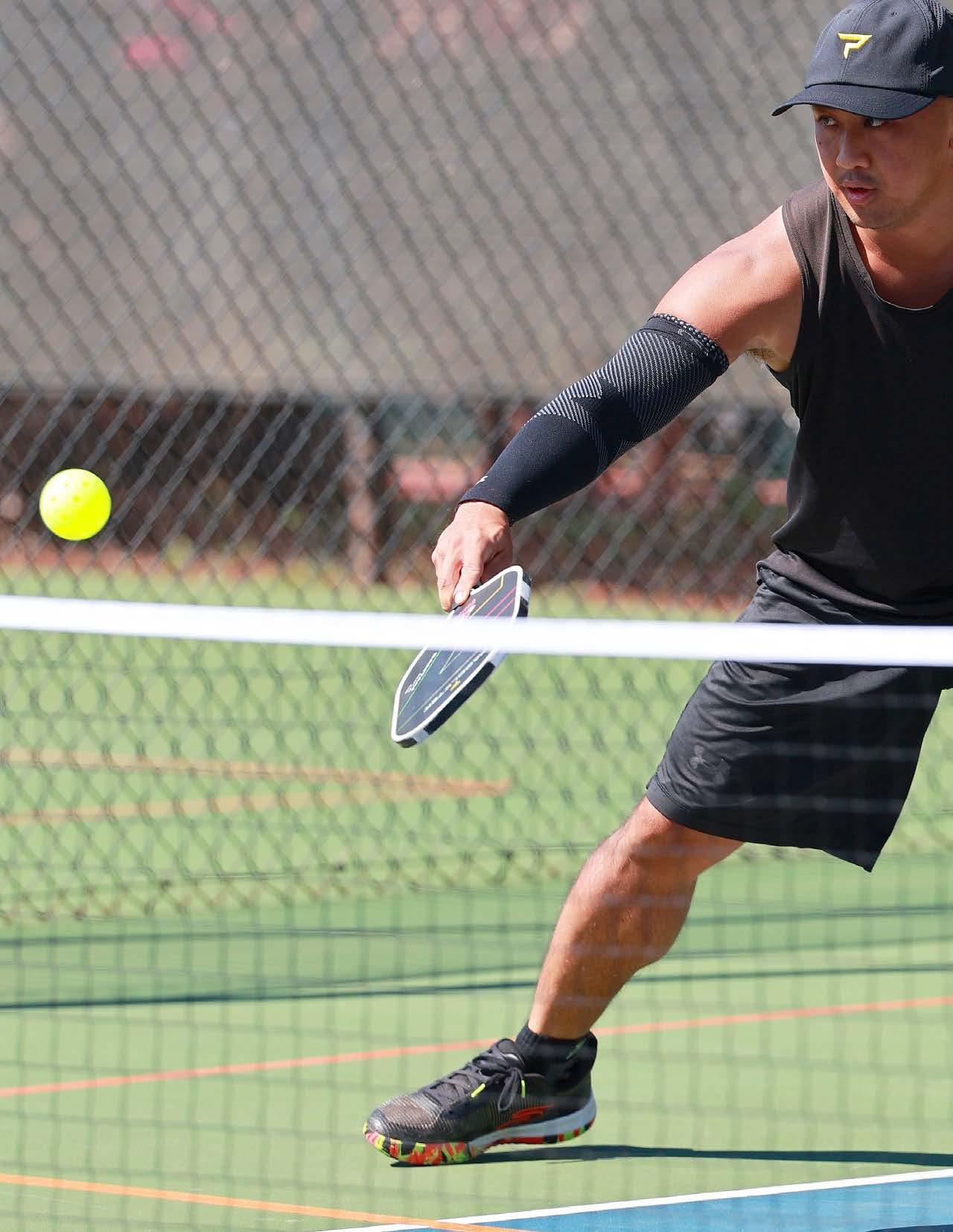
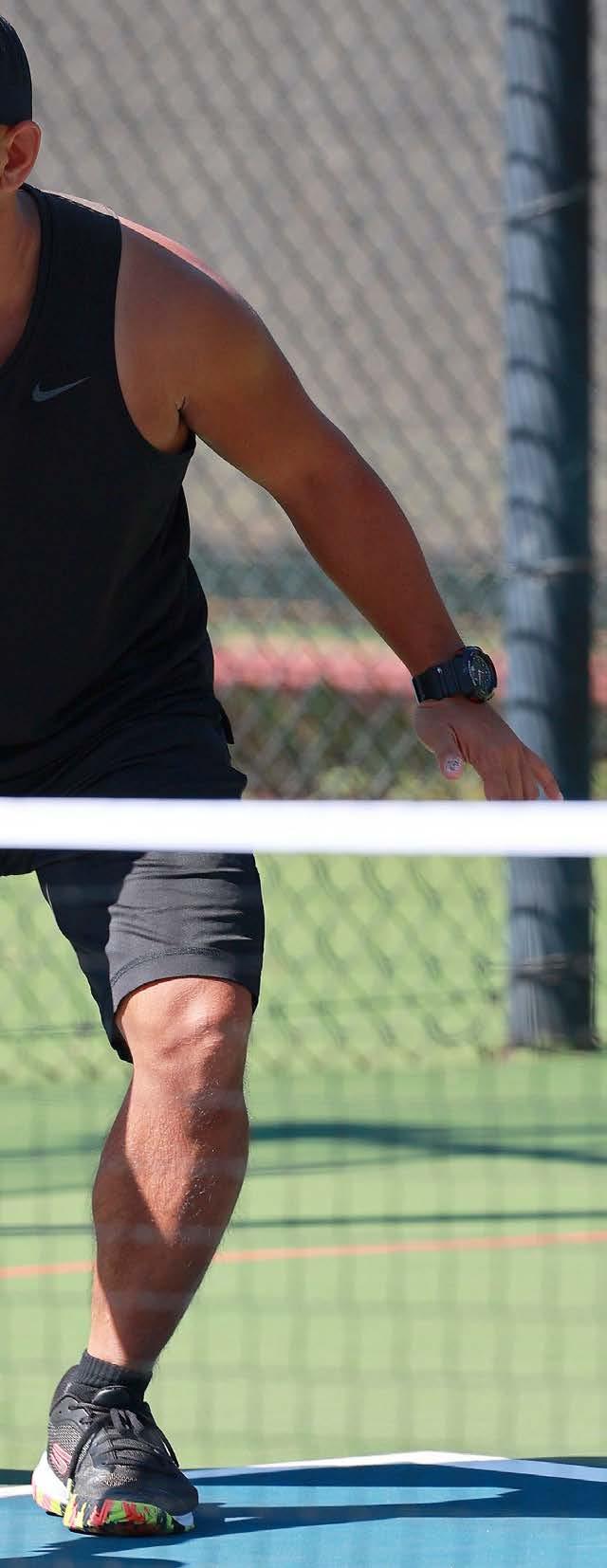
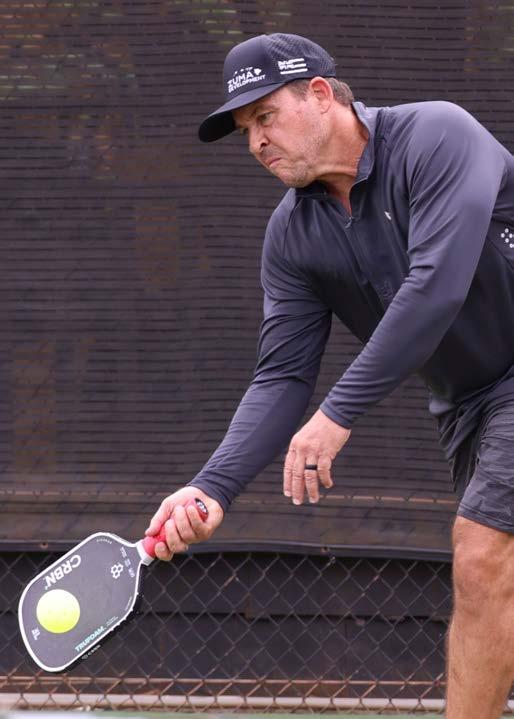
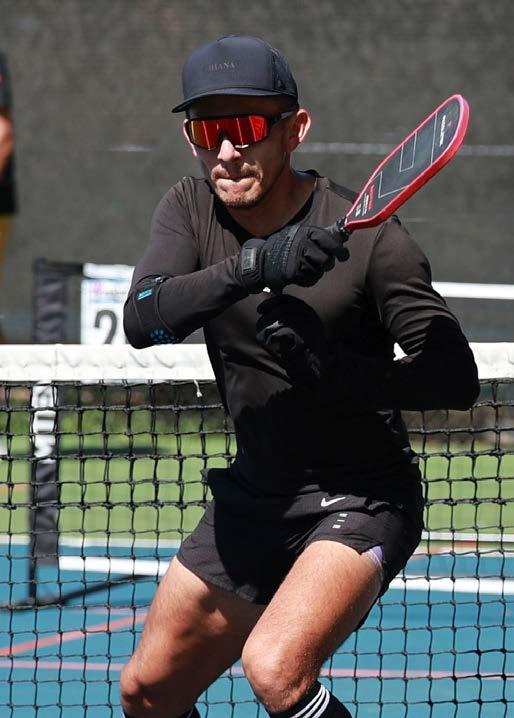
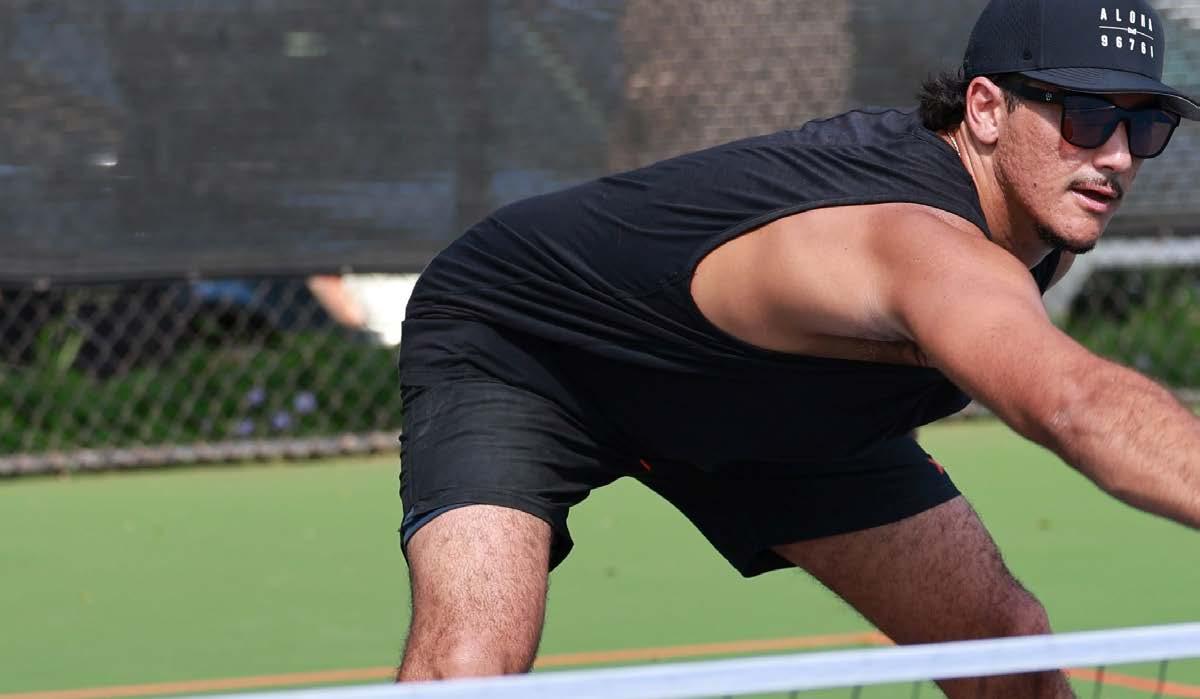
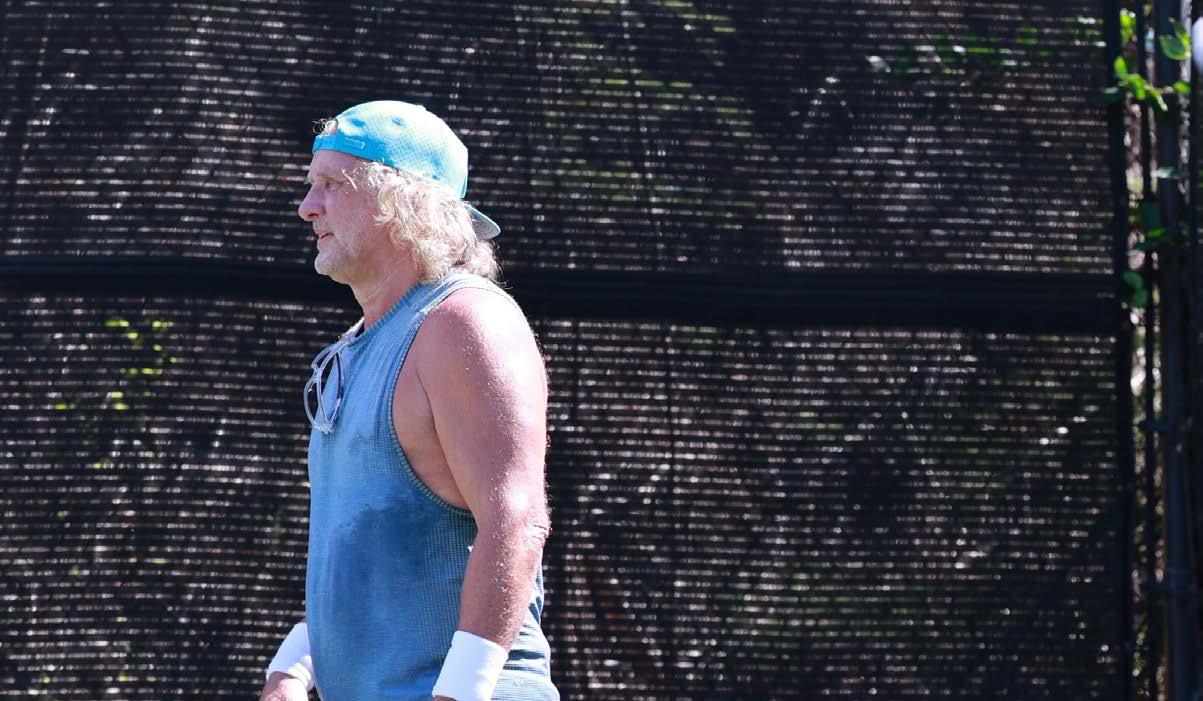
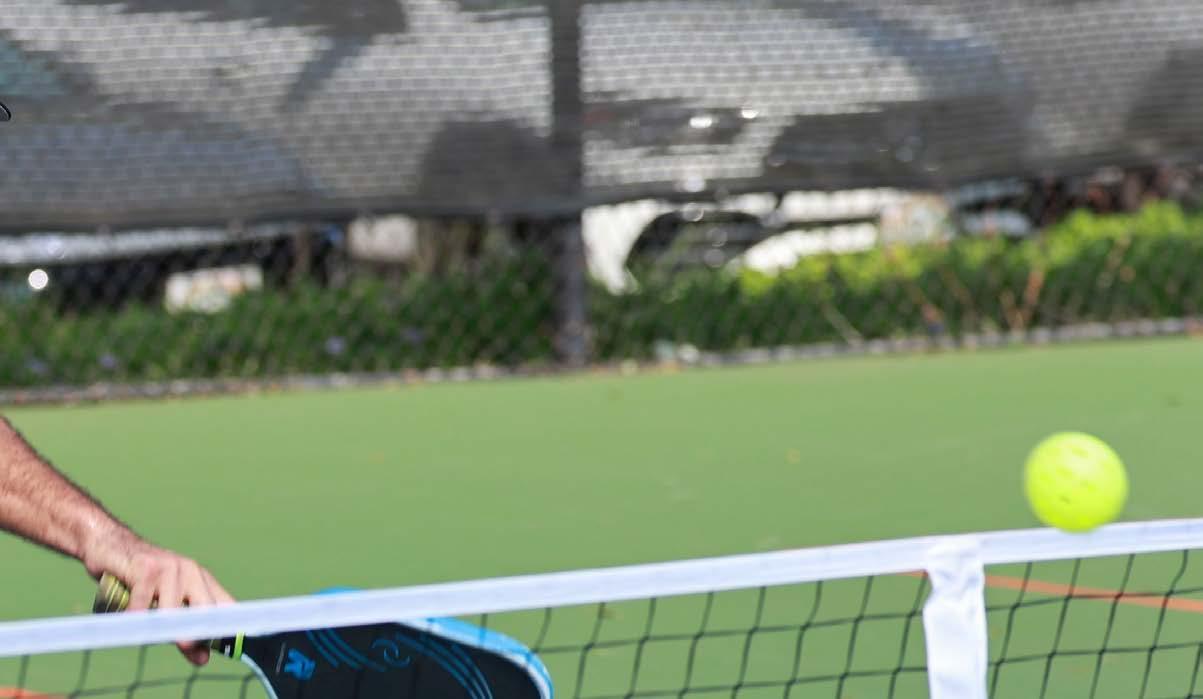
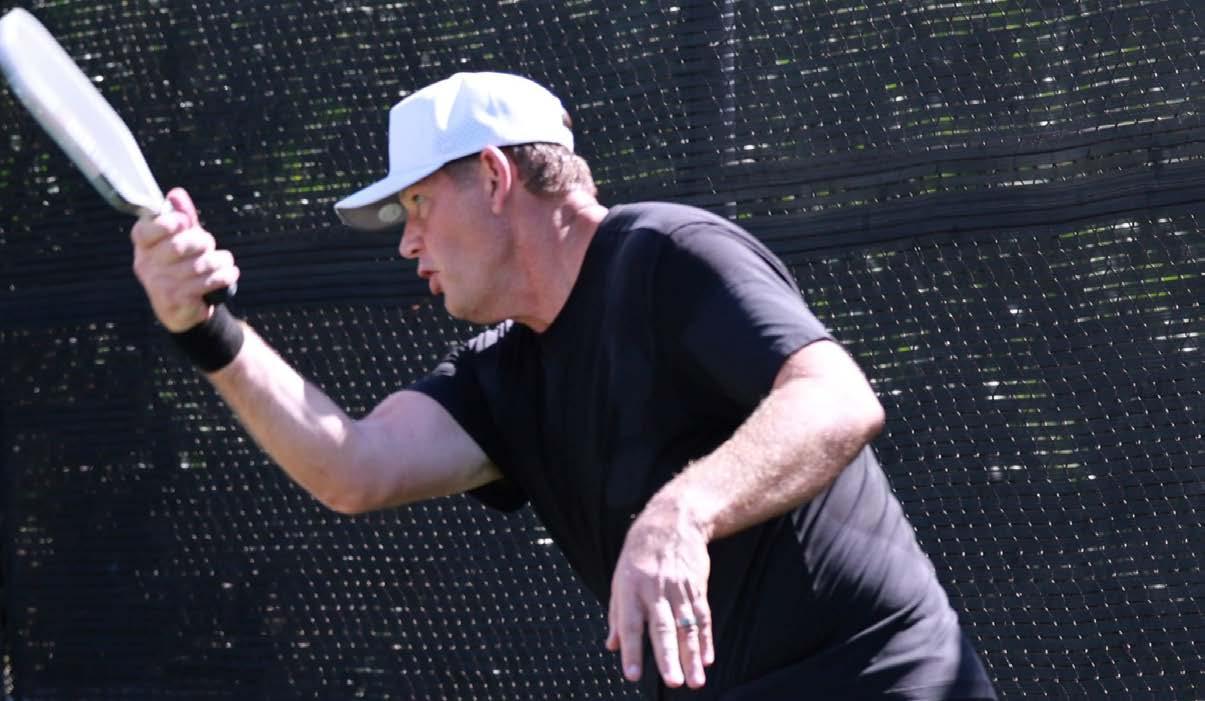
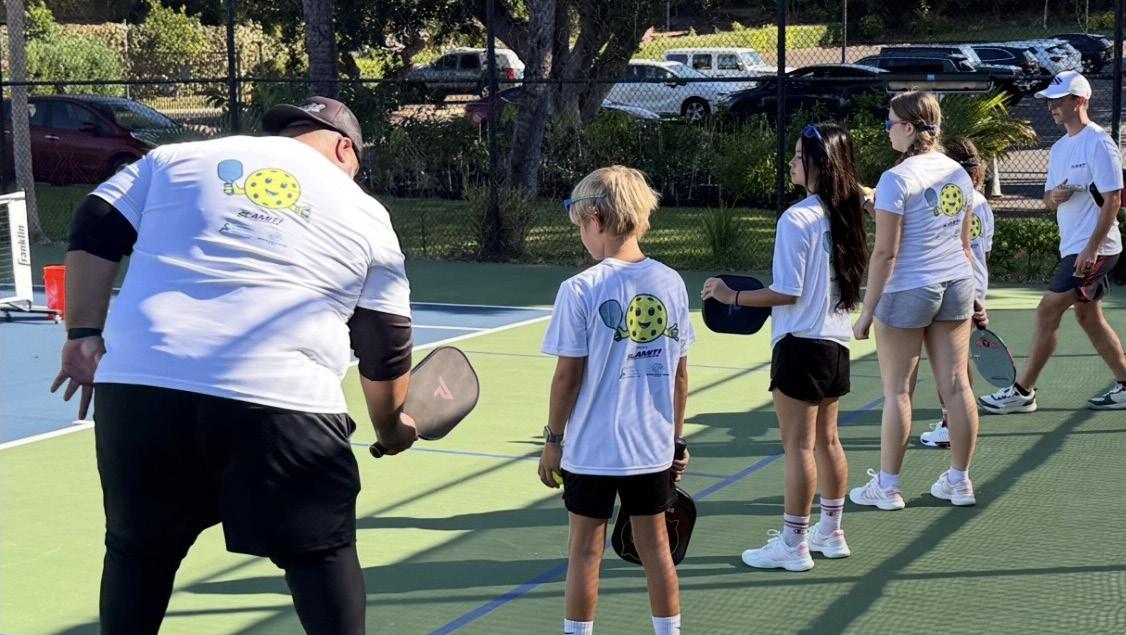
On Saturday, December 6, 2025, Paddle Forward Pickleball, a newly formed 501(c)(3) nonprofit organization, held its first youth pickleball camp in Lahaina. Paddle Forward Pickleball was conceived by Nancy and Mark Beach, founders of Aloha Pickleball. Nancy Beach and Kim Abrahamson serve as chair and vice chair of the nonprofit.
With the support of a dedicated board and community donors, Paddle Forward Pickleball was created with a vision of a community where every child—regardless of background— has the opportunity to learn, play, and grow through the game of pickleball. The nonprofit’s mission is to empower and inspire youth by providing accessible instruction, equipment, inclusive programming, and safe spaces to play. Its programs will focus on after-school initiatives, seasonal camps, and year-round opportunities that promote physical activity, teamwork, confidence, and lifelong healthy habits.
The inaugural camp welcomed 14 keiki from Lahaina for a day of instruction and play. Coaches and volunteers worked with participants to introduce the fundamentals of pickleball. Each participant was provided with paddles, shoes, shirts, balls, protective eyewear, lunch, and hydration support to help remove barriers to participation and encourage continued involvement in the sport.
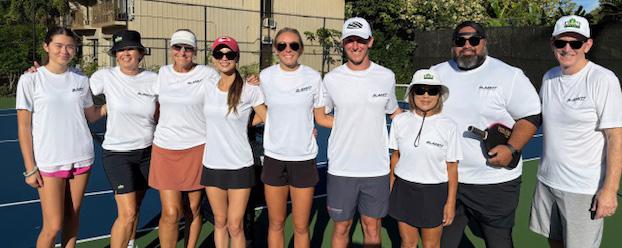
The camp was made possible through the collective efforts of volunteers, partners, and supporters, including SLAMIT, which served as the event’s title sponsor, along with ten volunteer coaches, the Boys and Girls Club, which assisted with identifying participants and transportation, Aloha Pickleball, and the Royal Lahaina Tennis Ranch, which generously provided court access.
Those interested in supporting Paddle Forward Pickleball’s mission may consider making a tax-deductible donation. For more information, contact Nancy Beach at nancy@ paddleforwardpickleball.org.
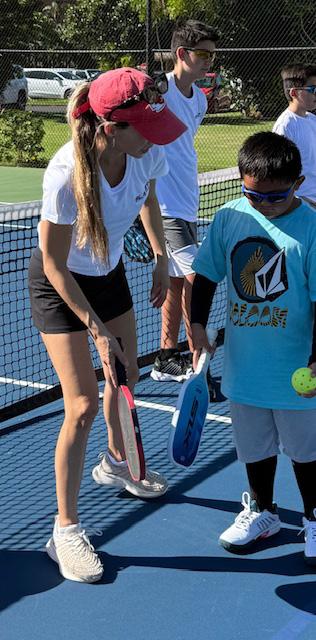



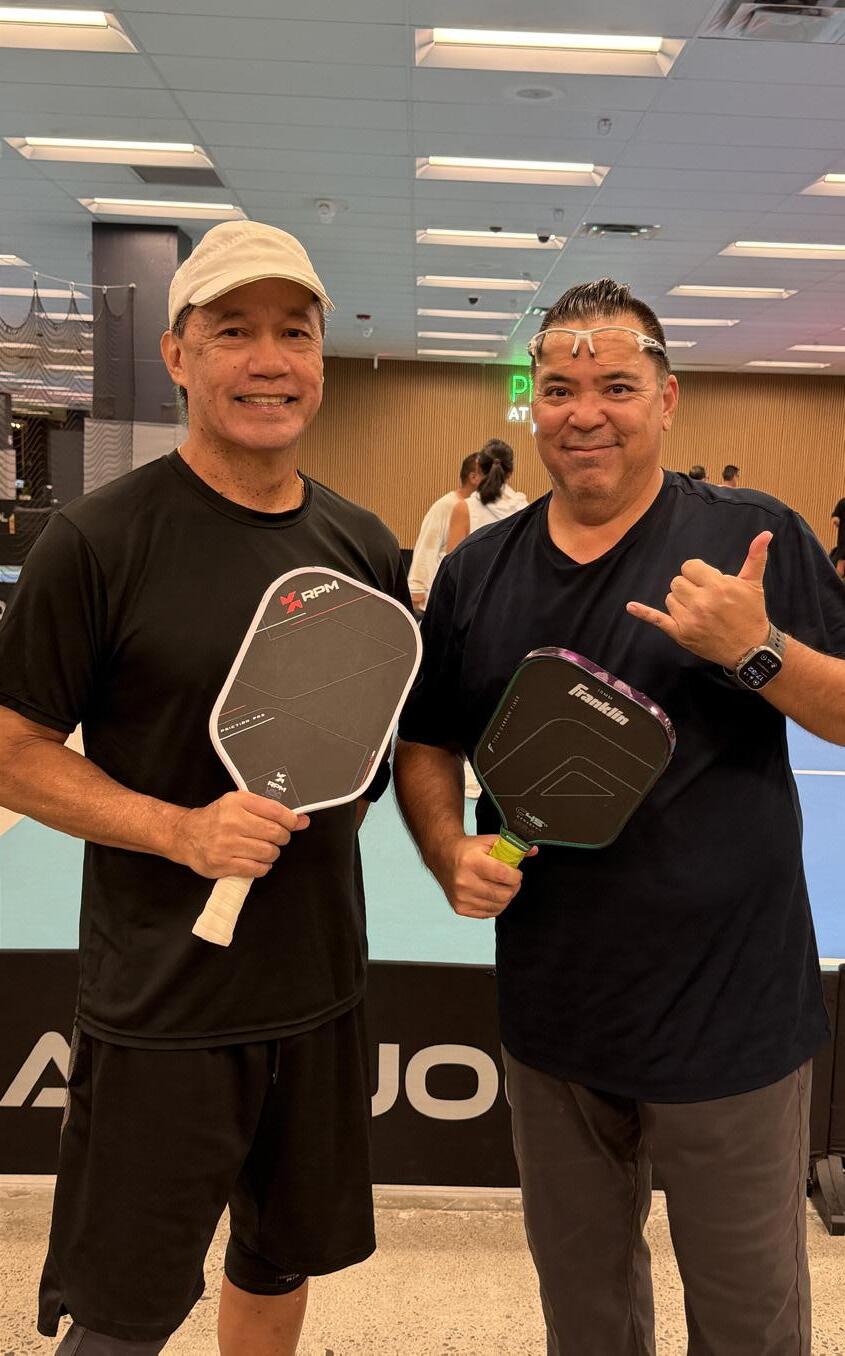
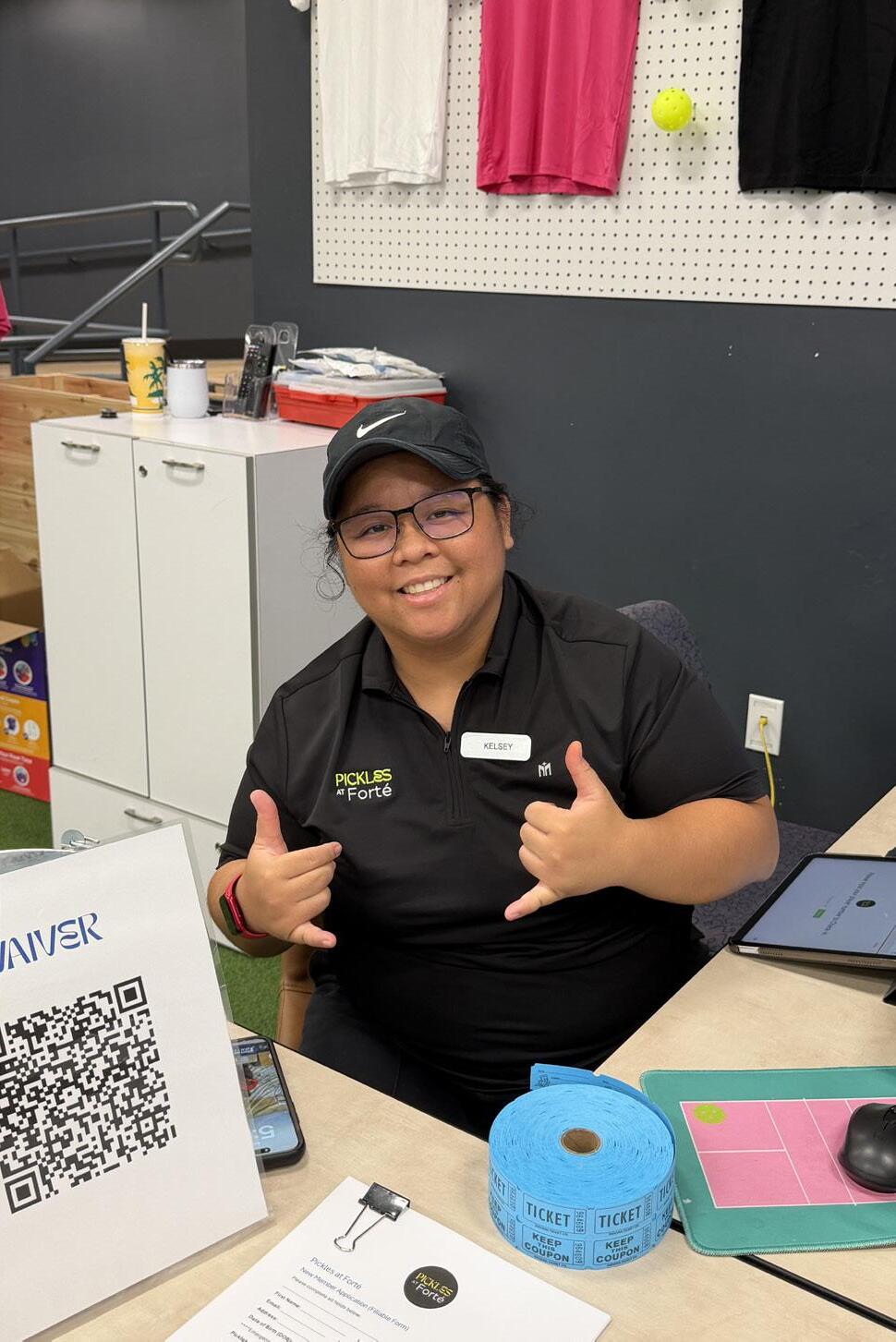
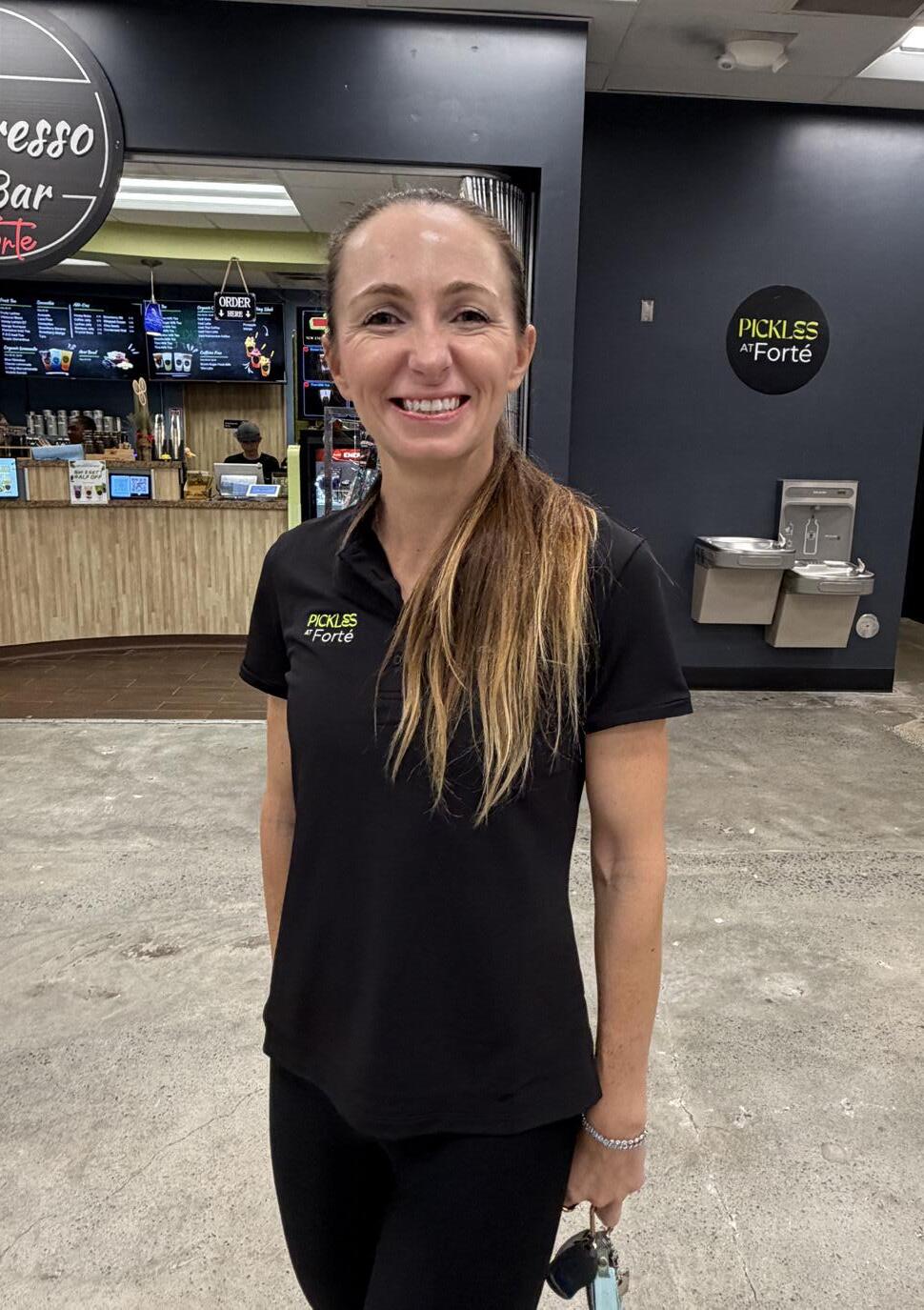
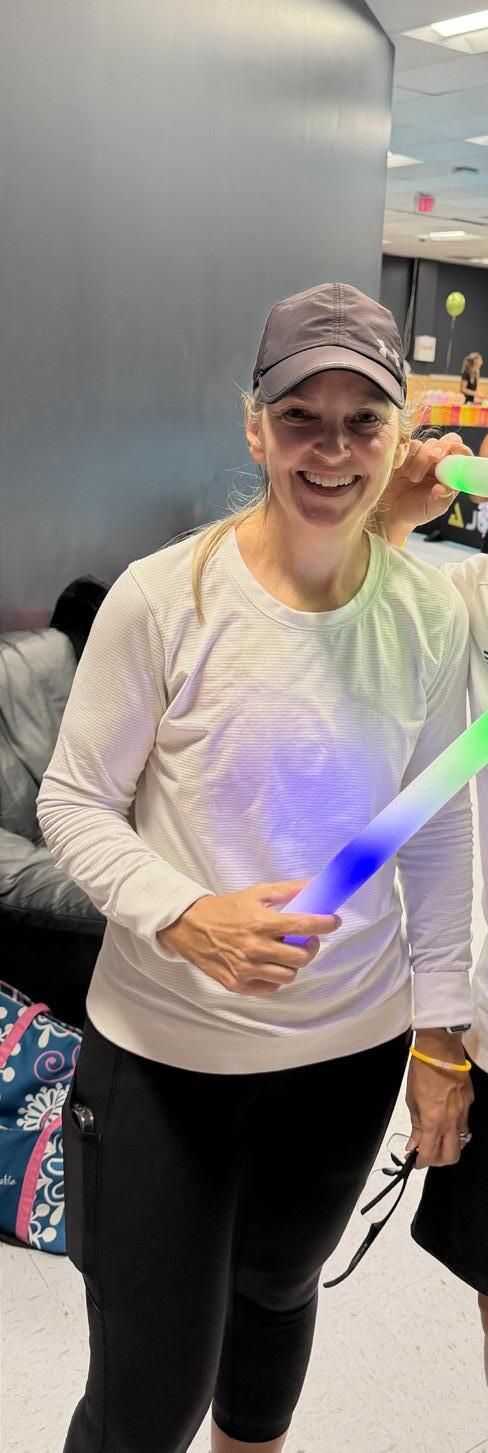
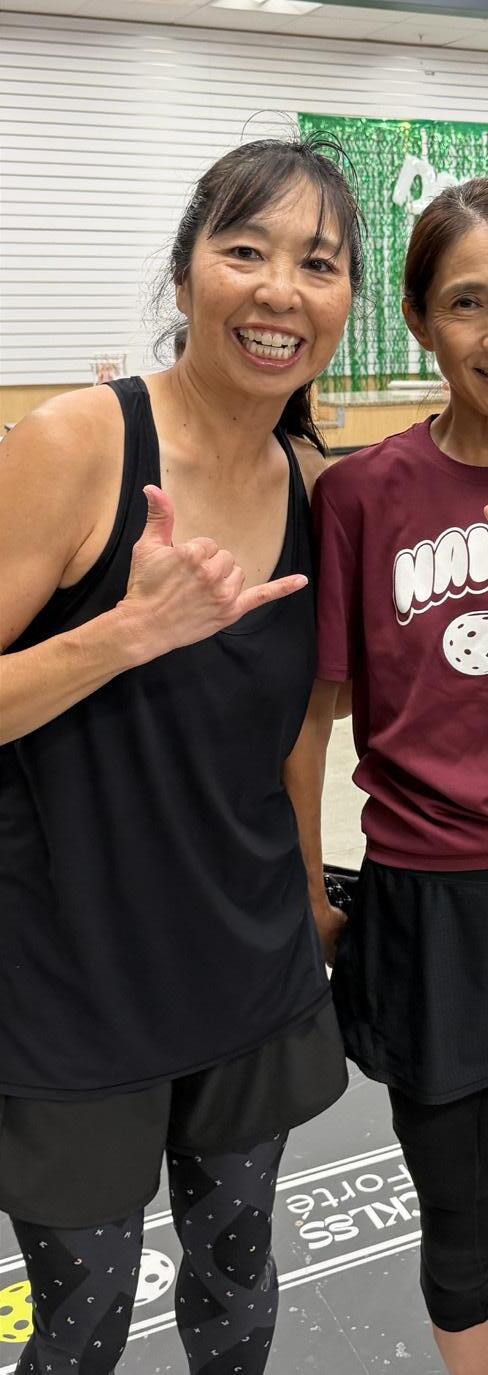
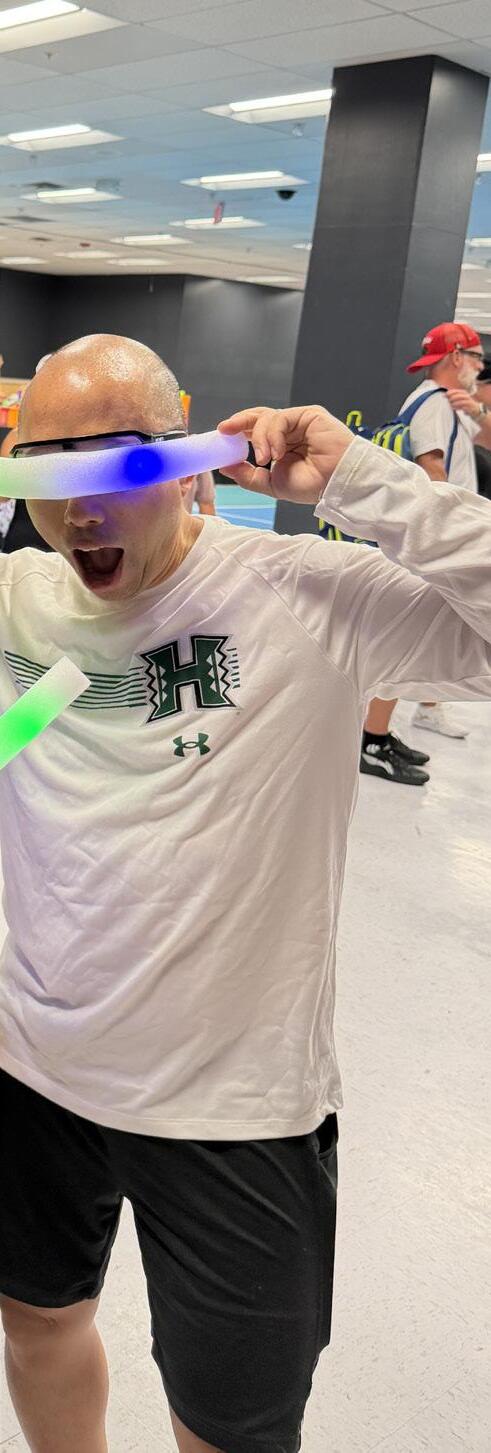
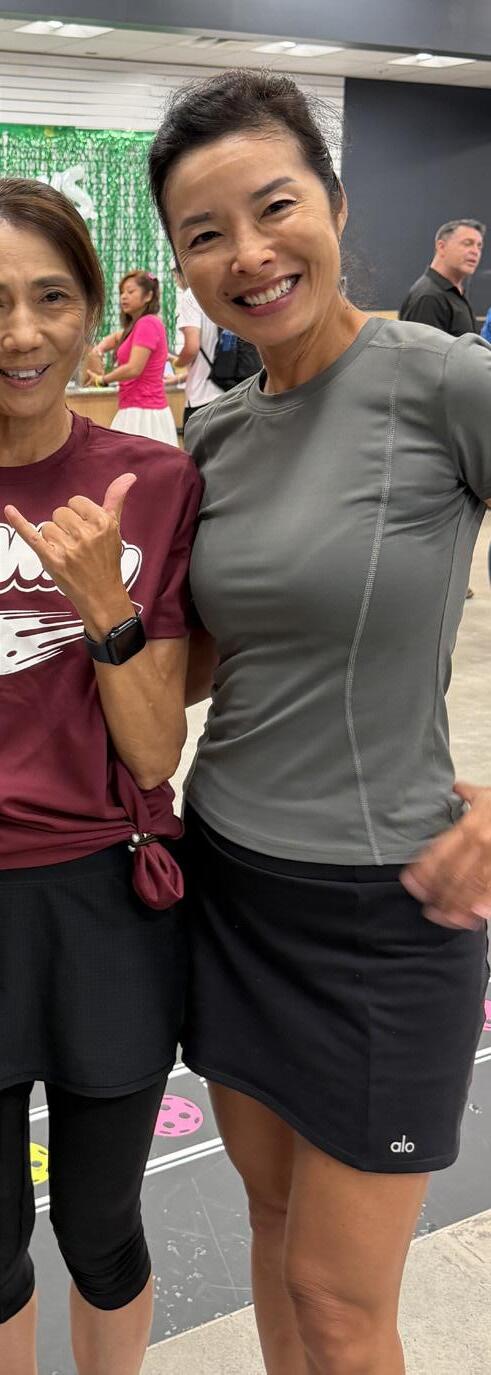
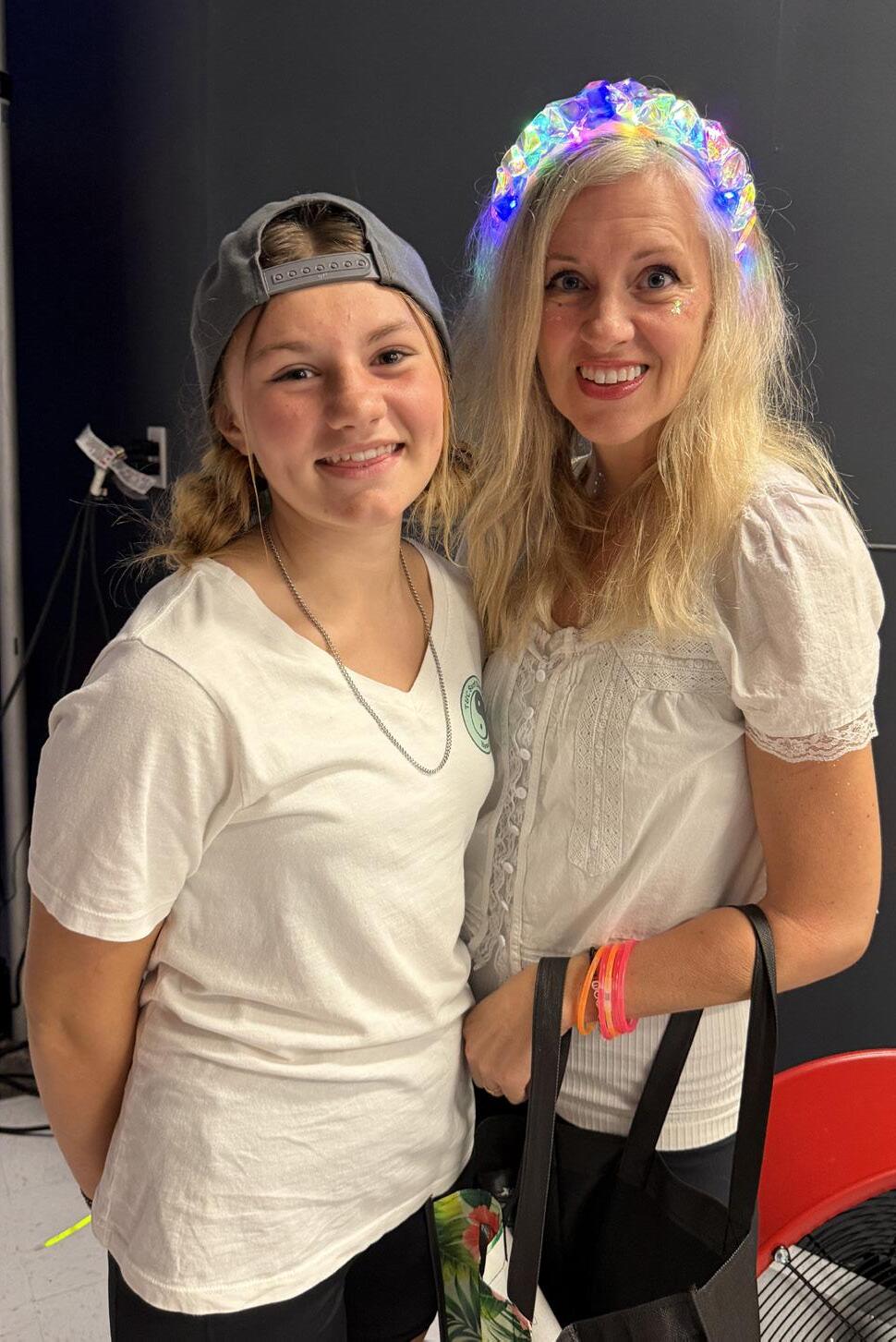
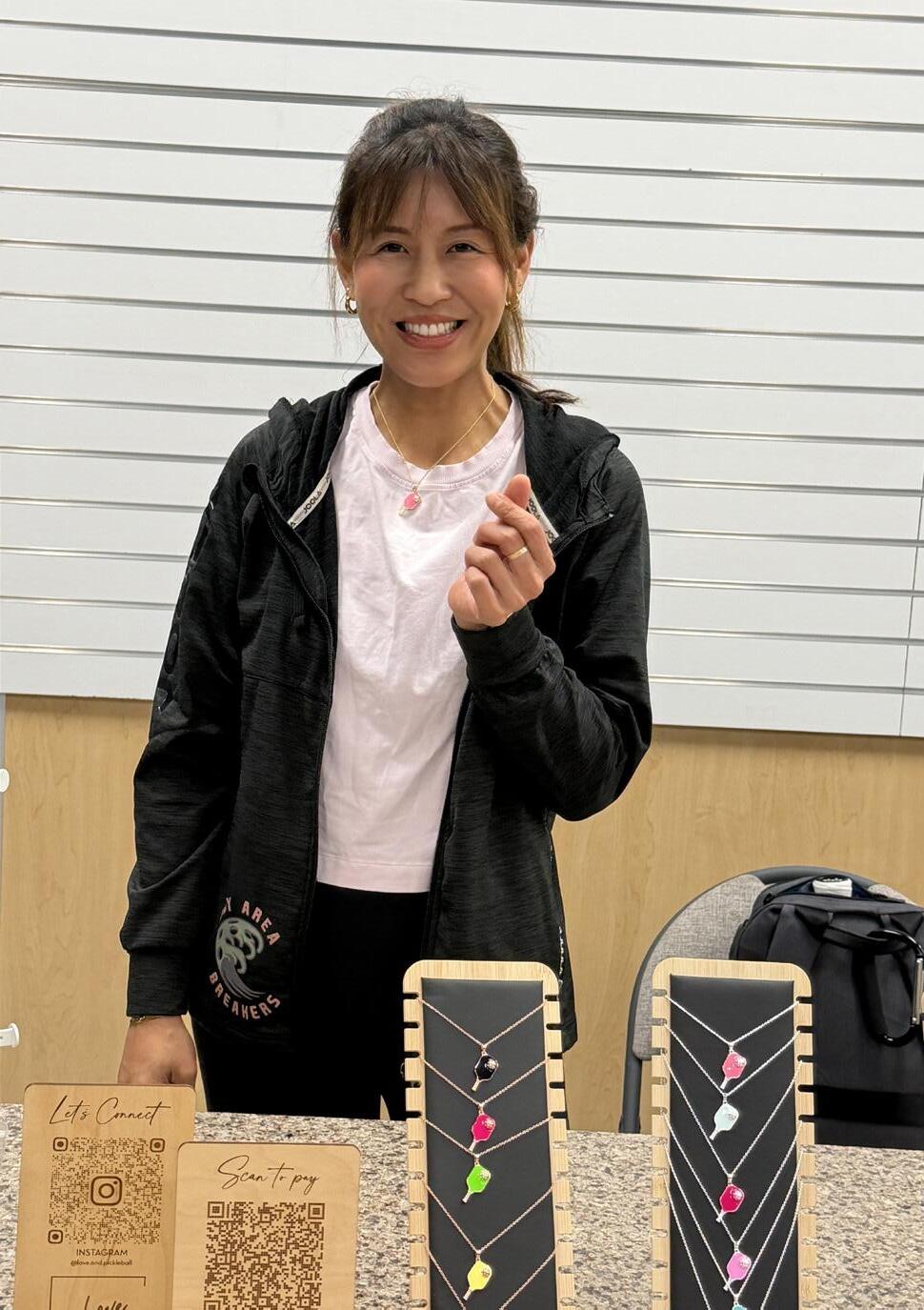
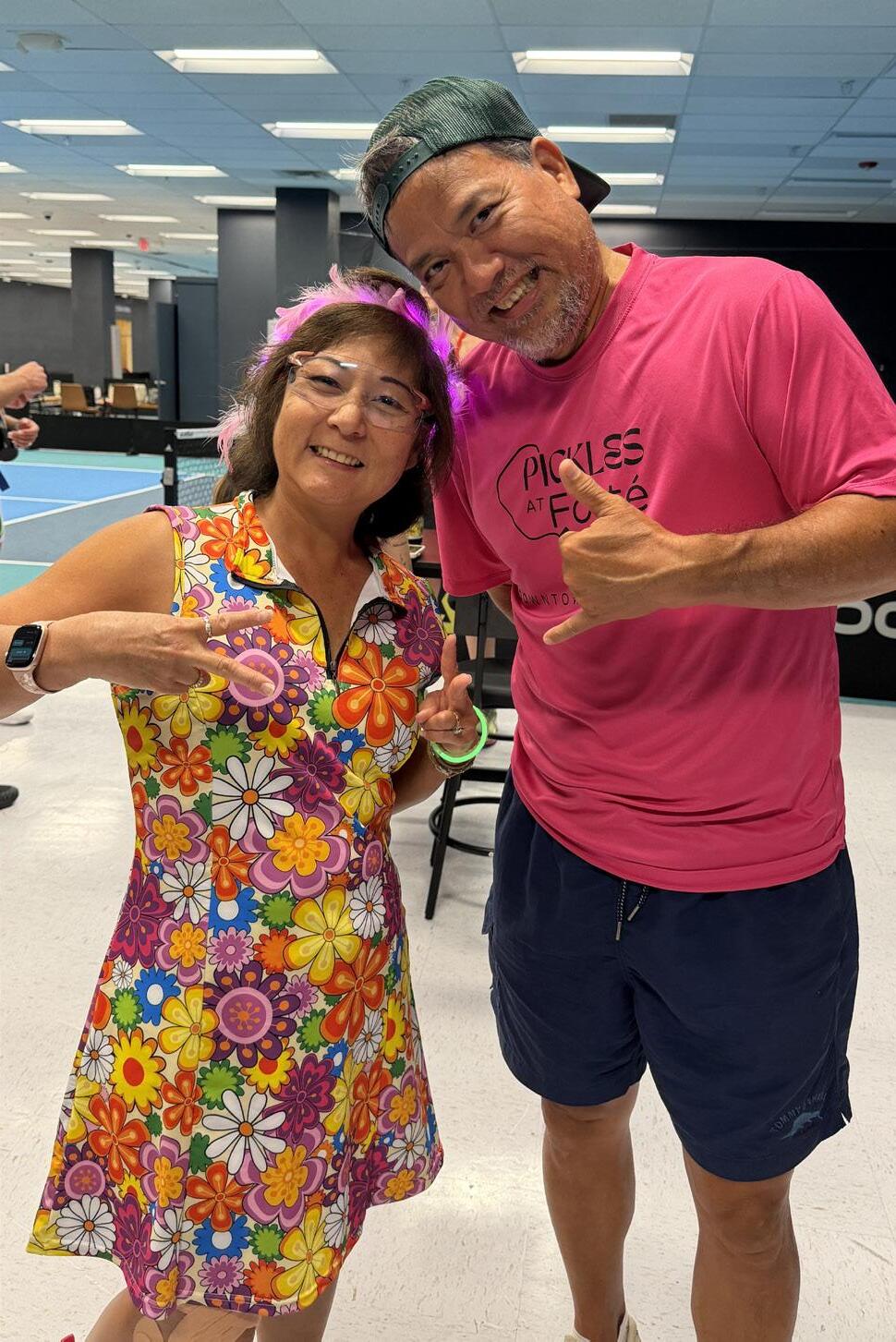
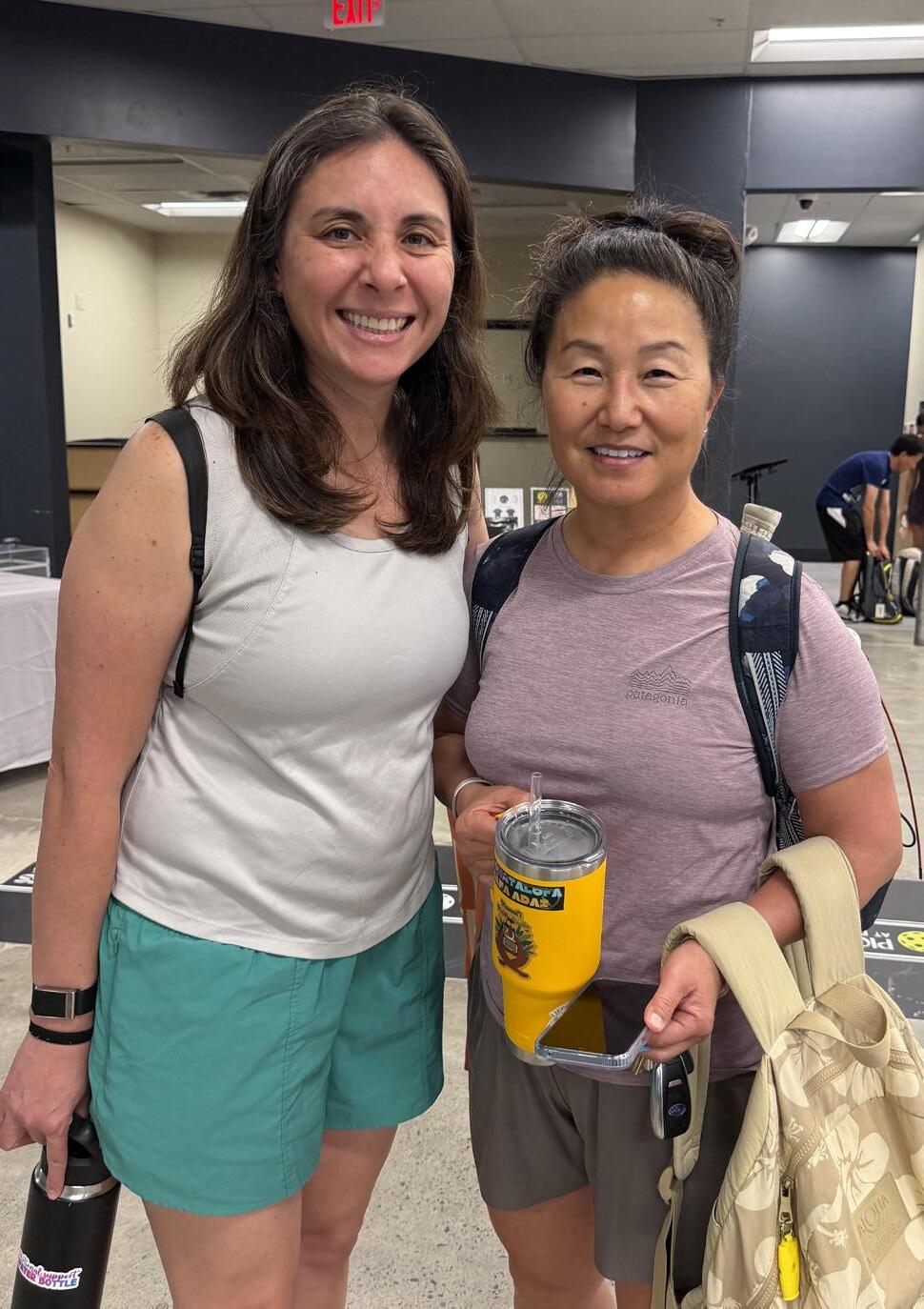
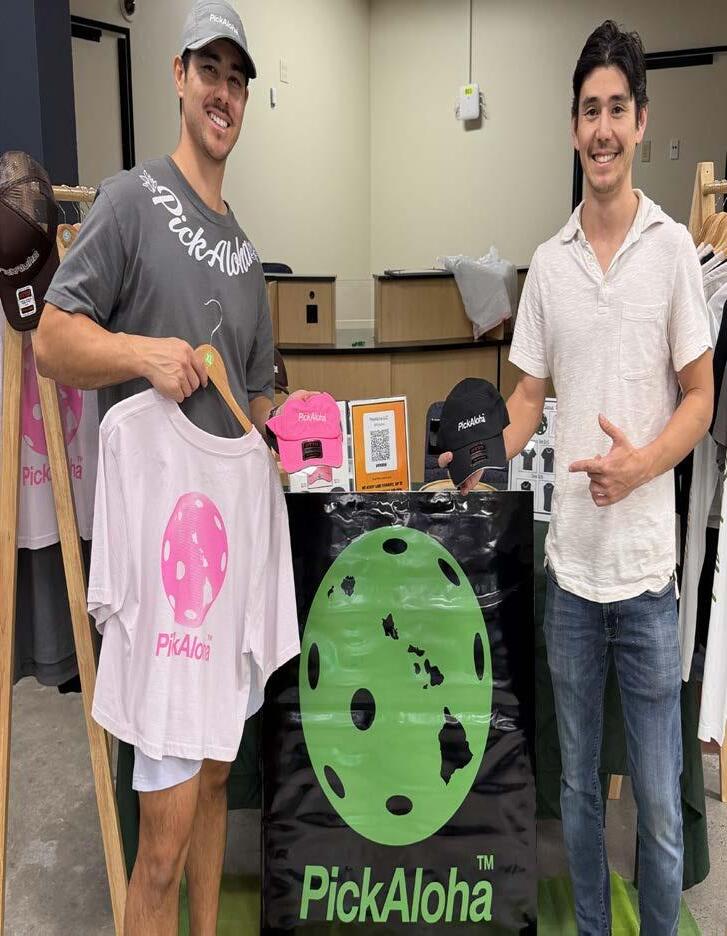
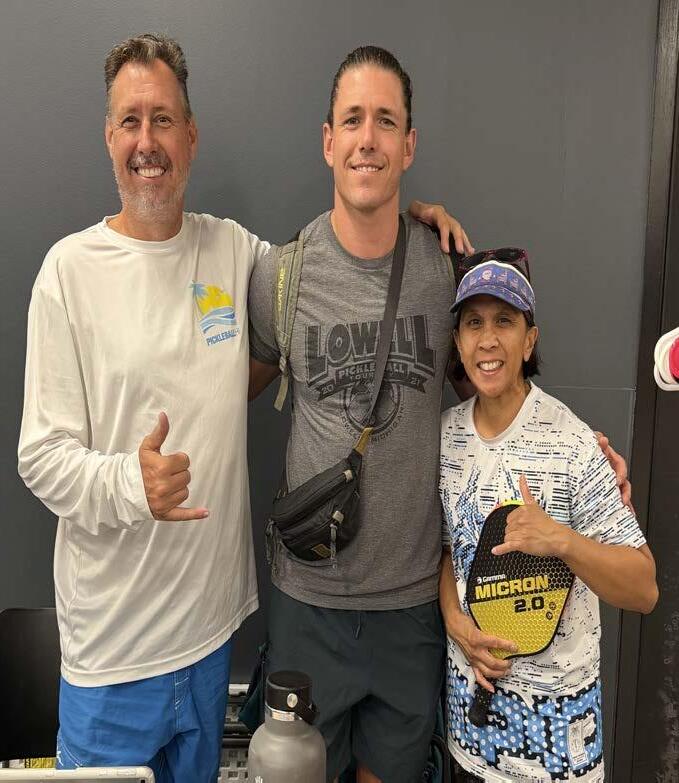
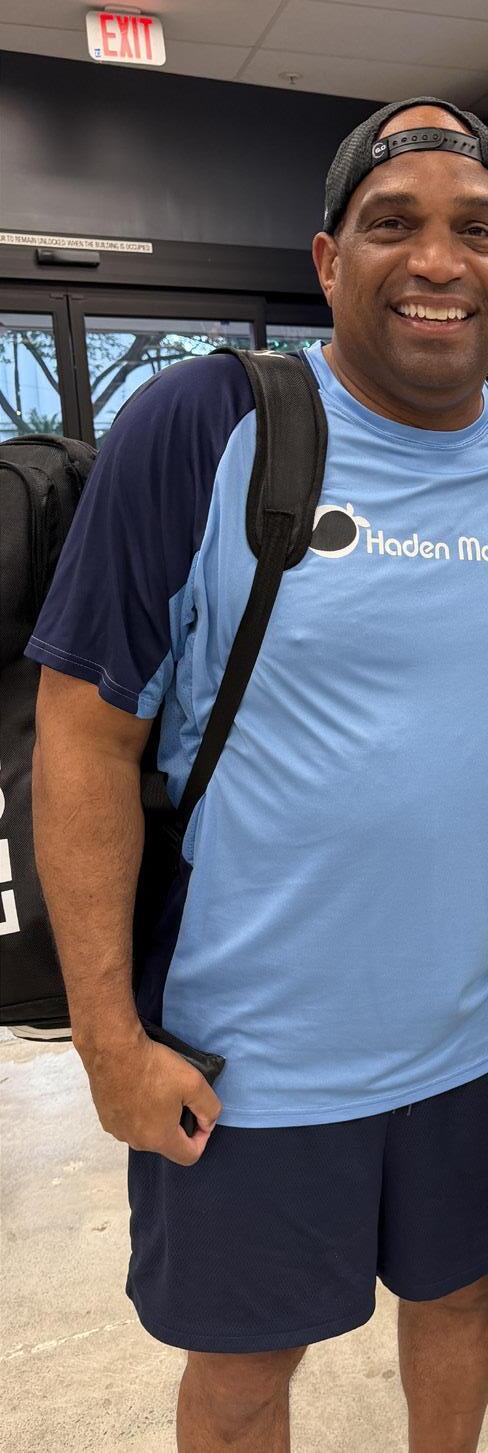
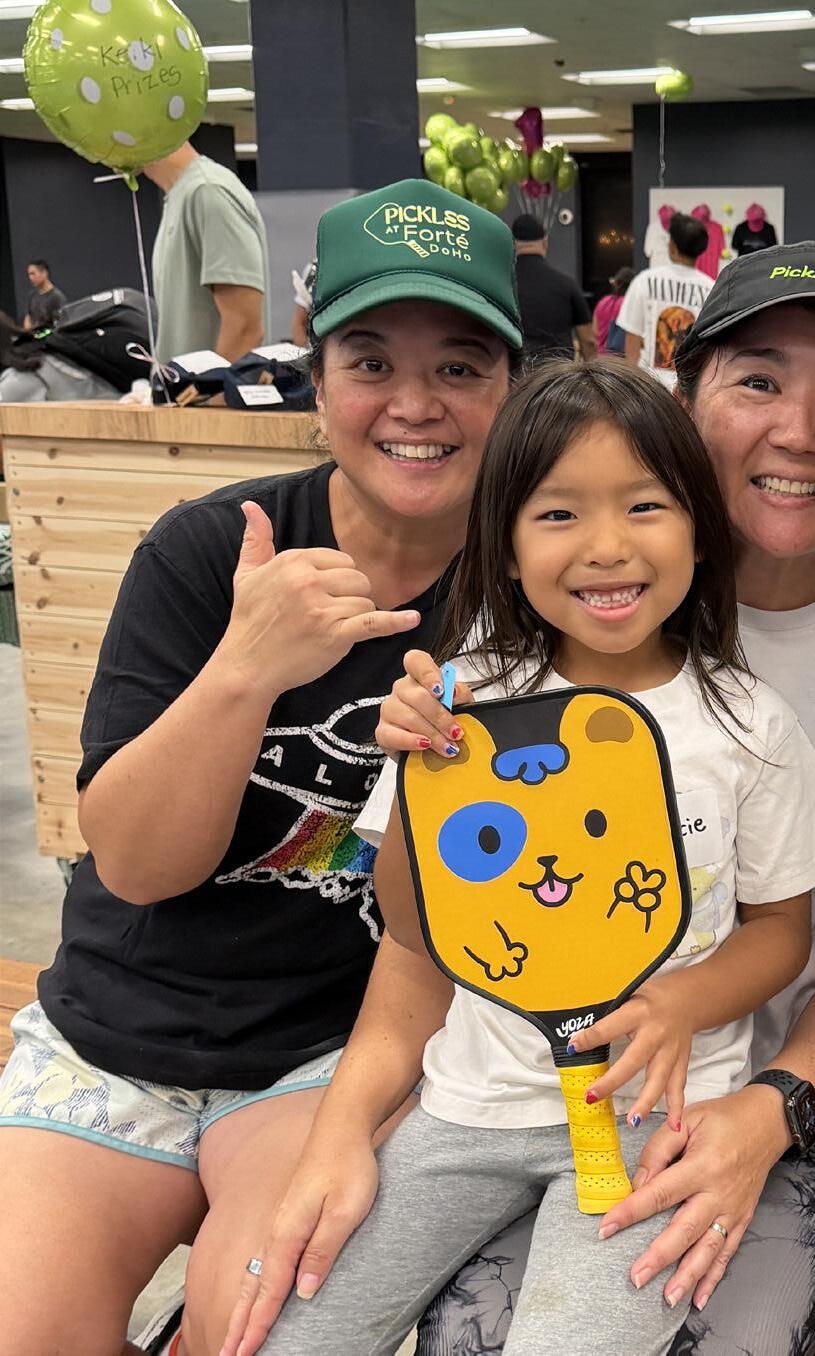
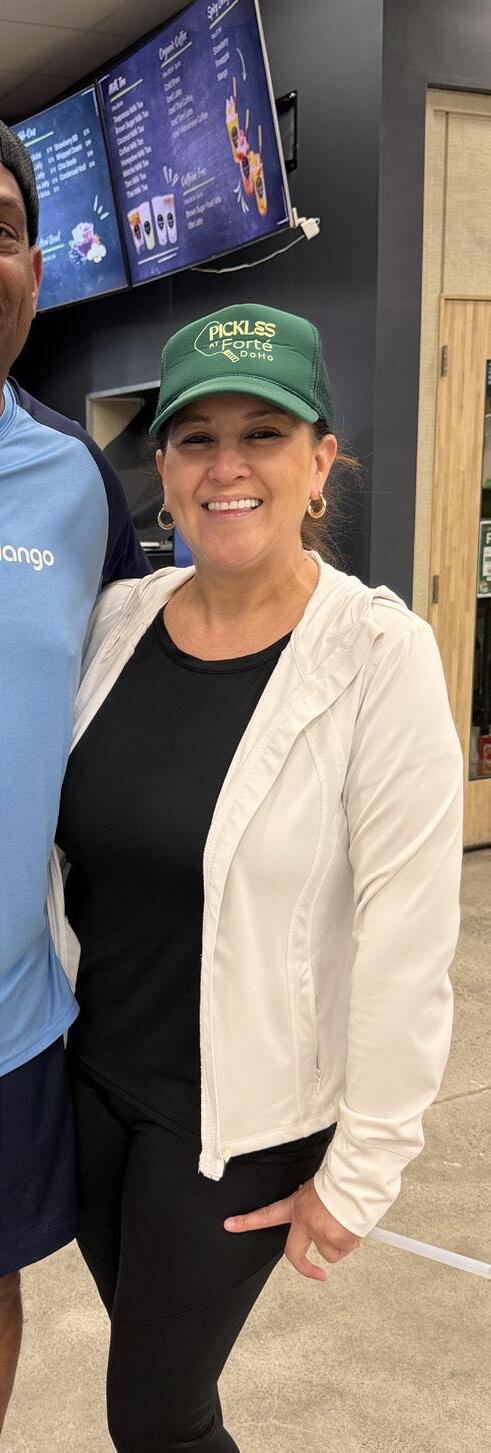
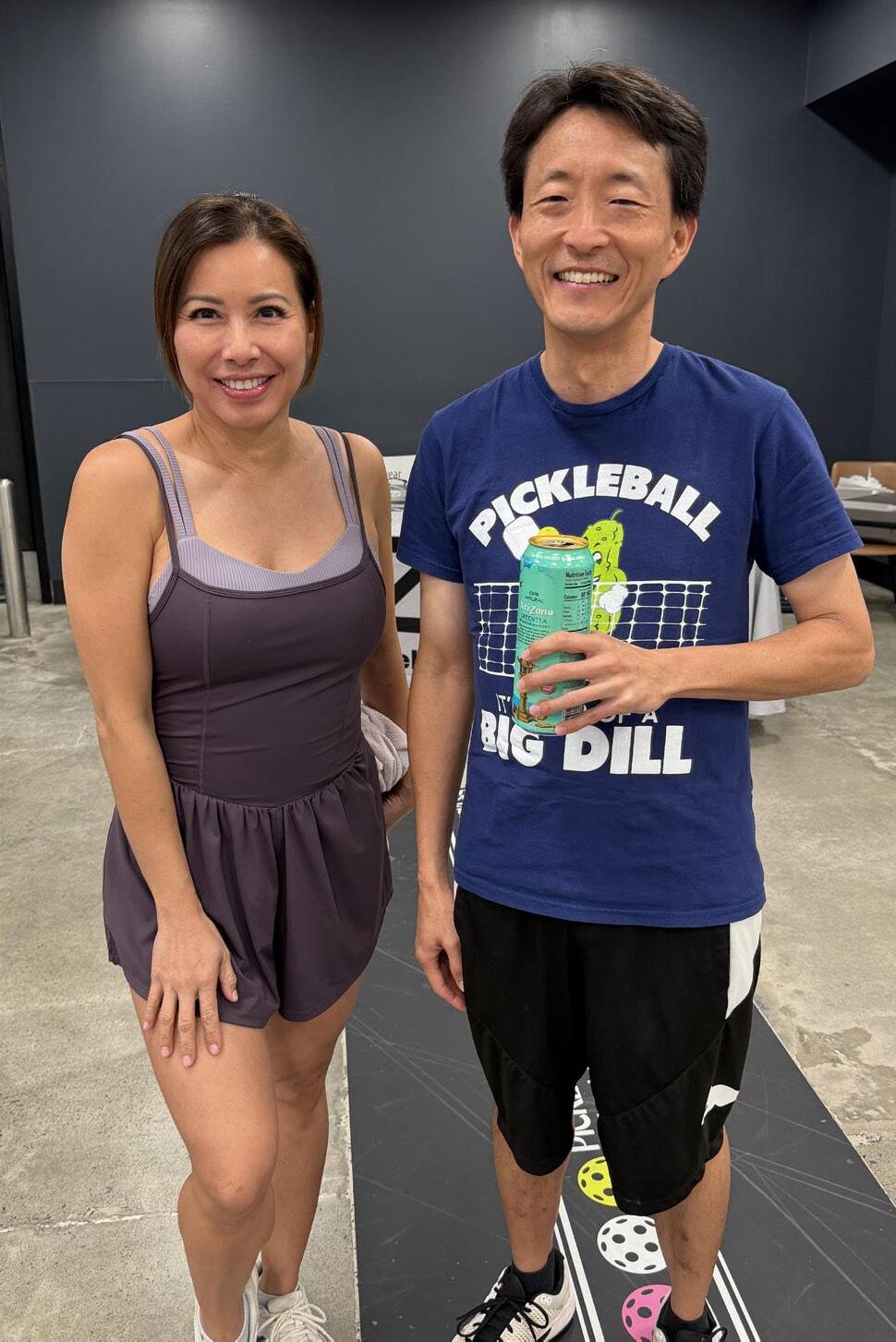
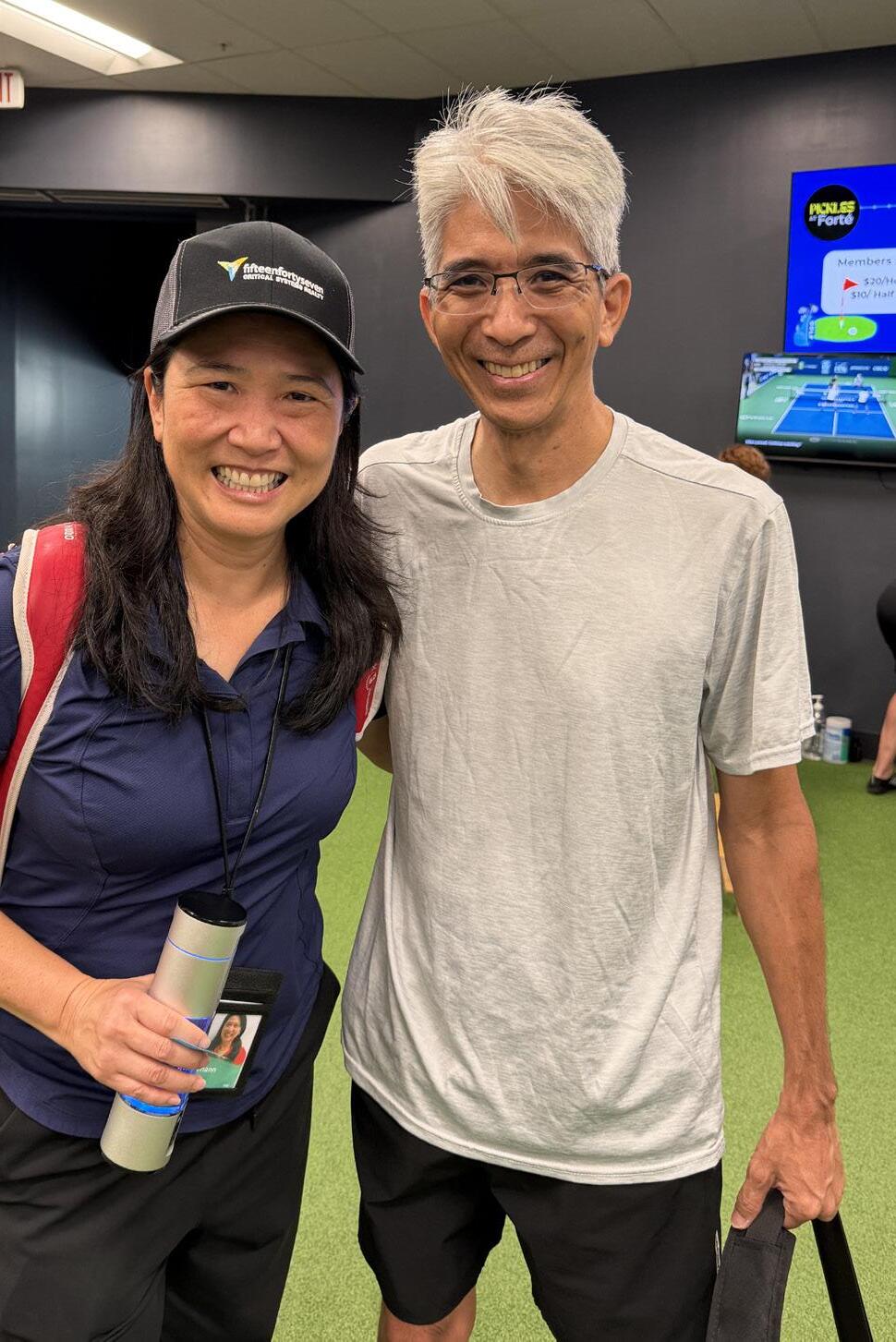
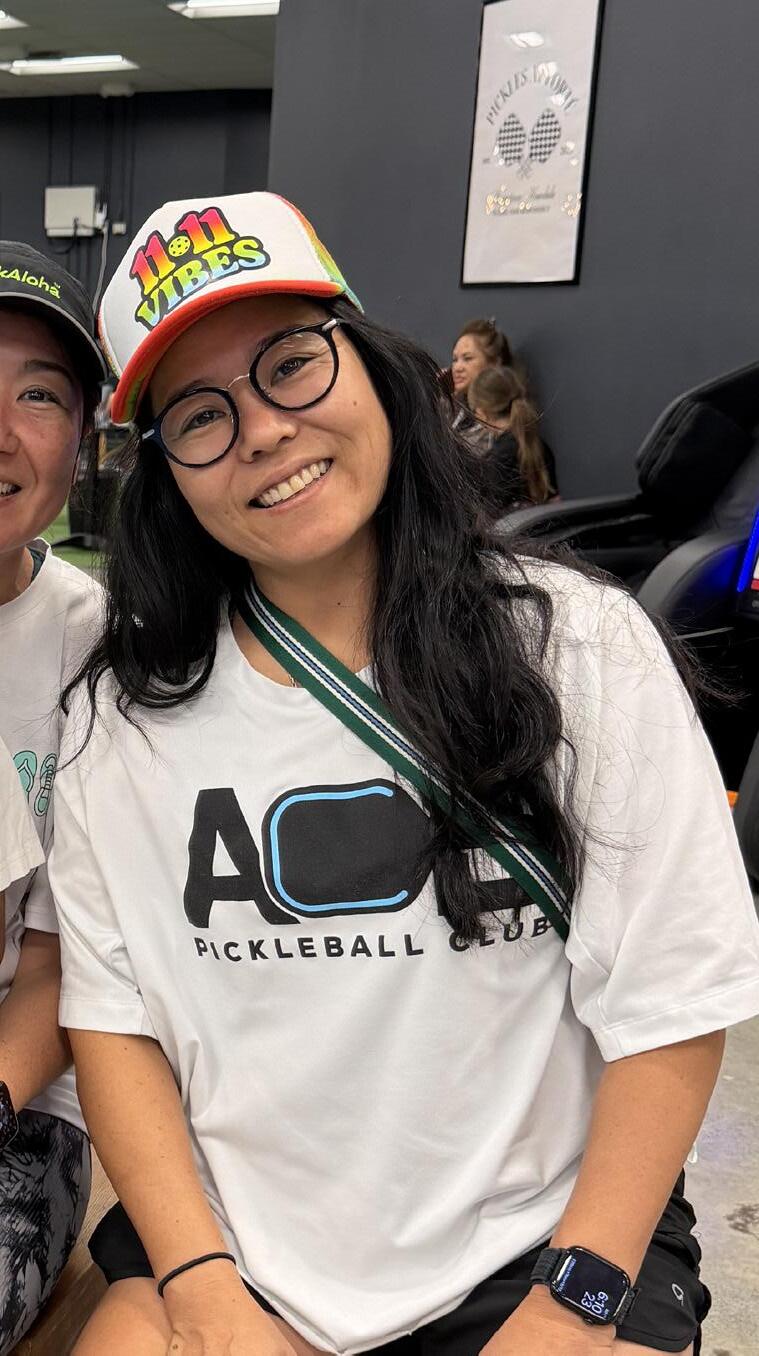
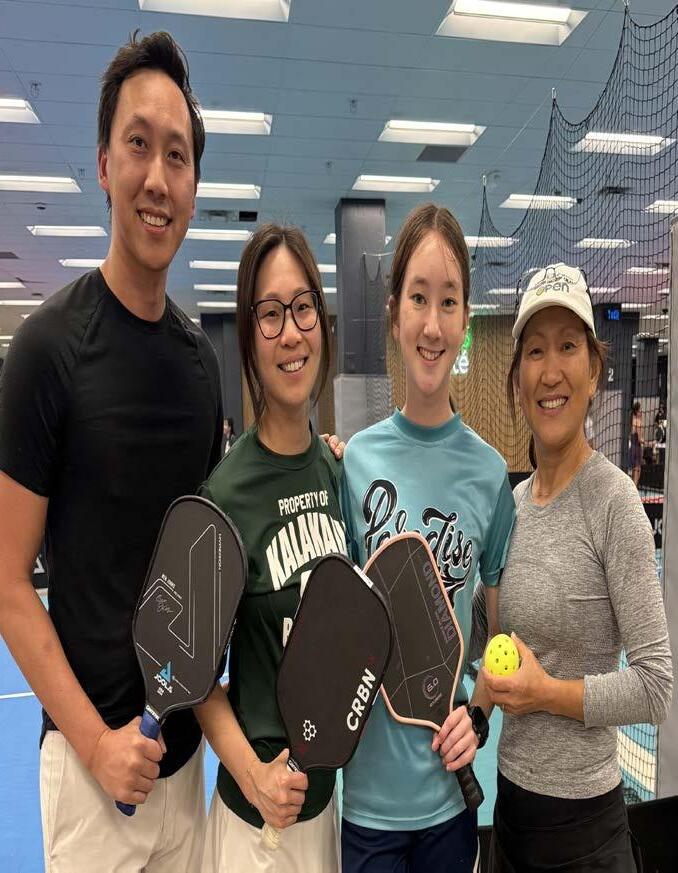
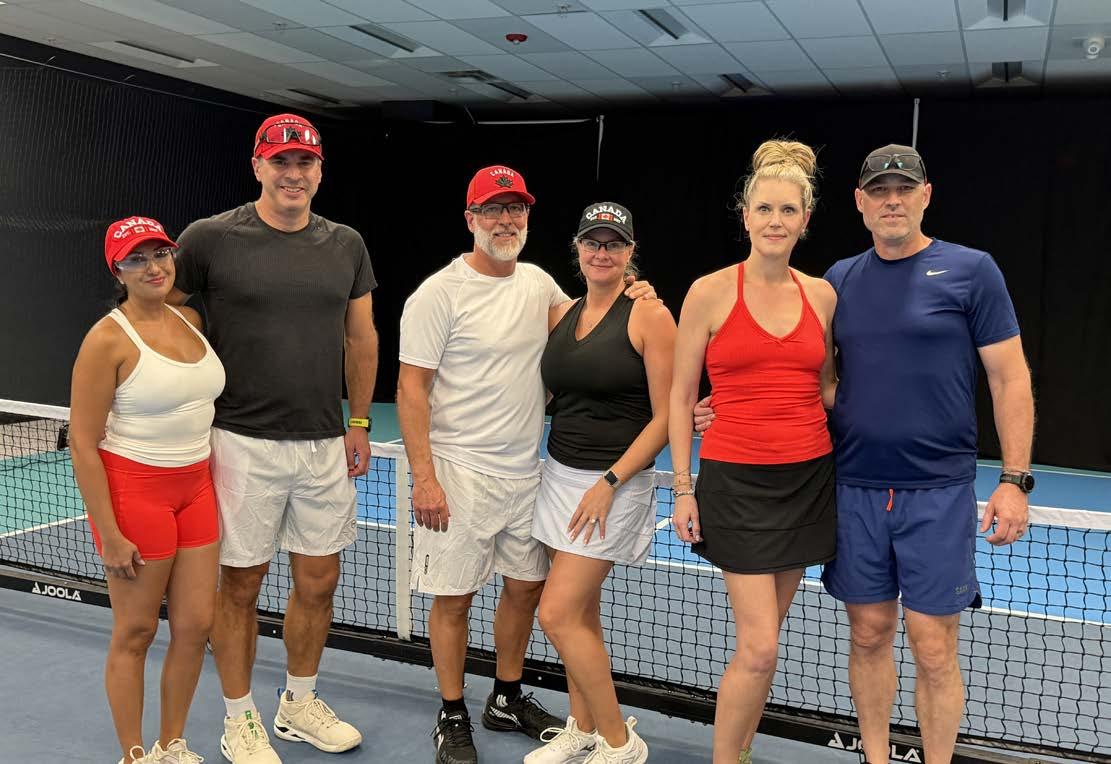
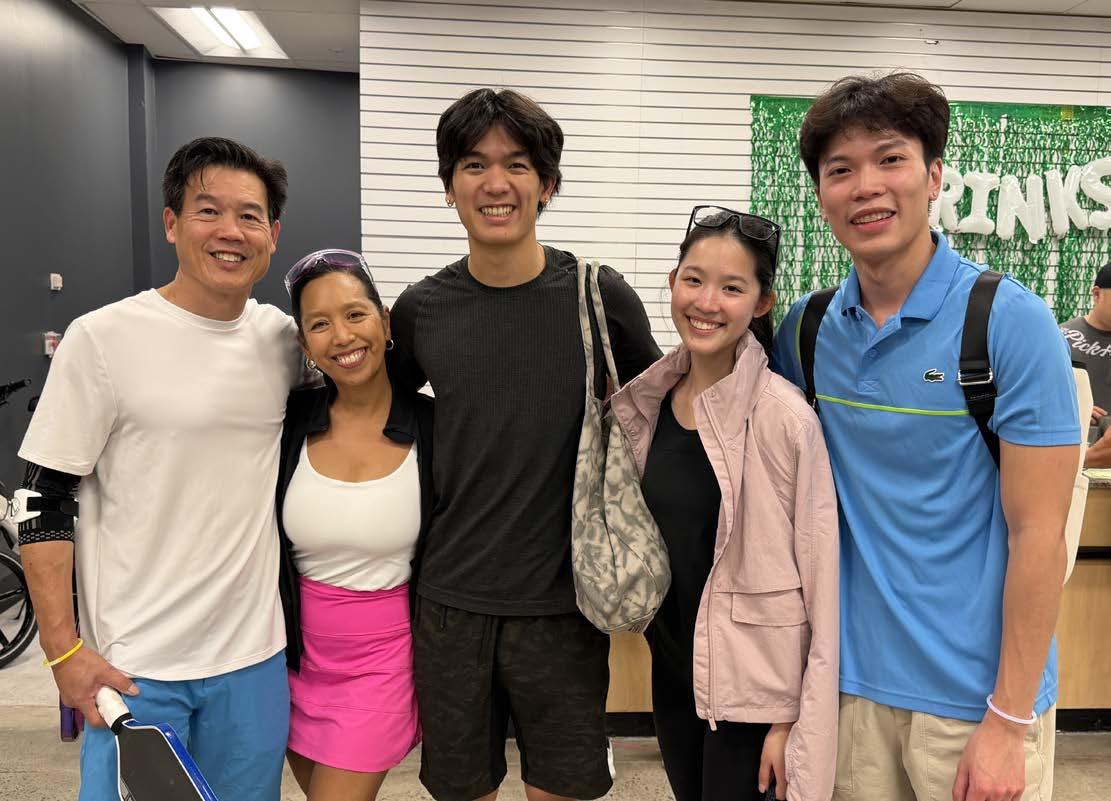
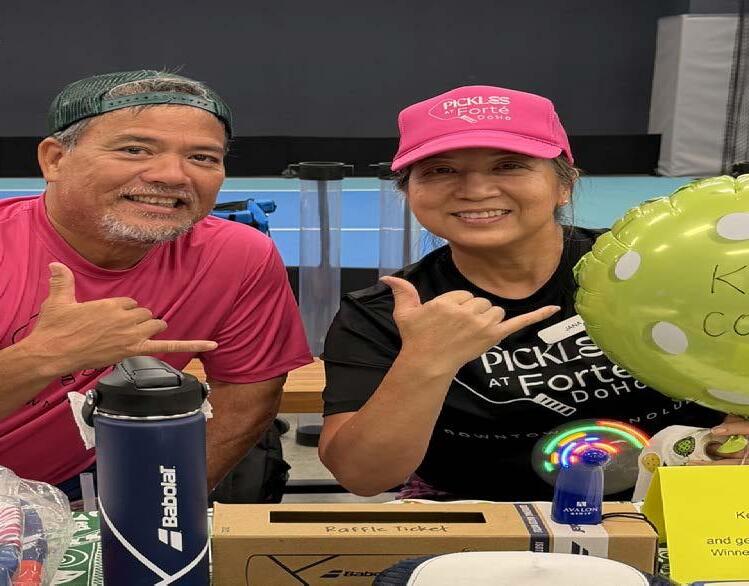
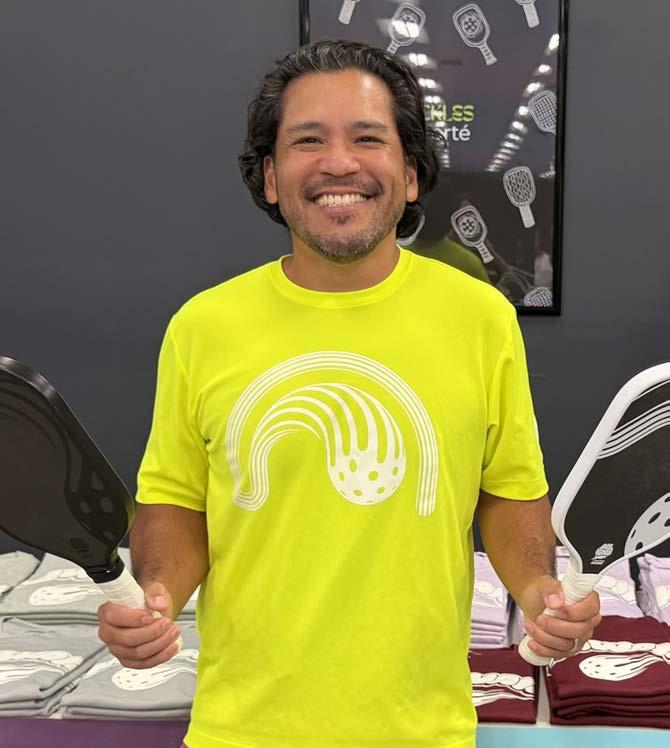
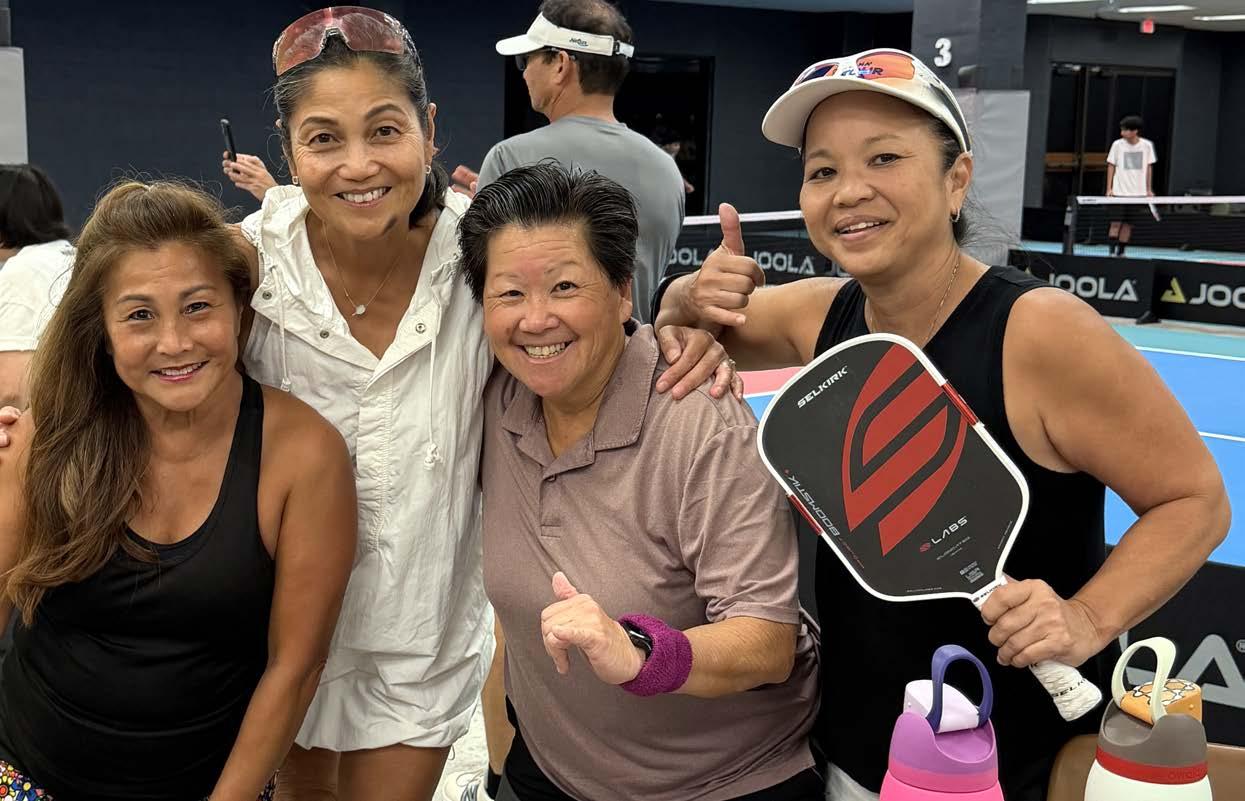
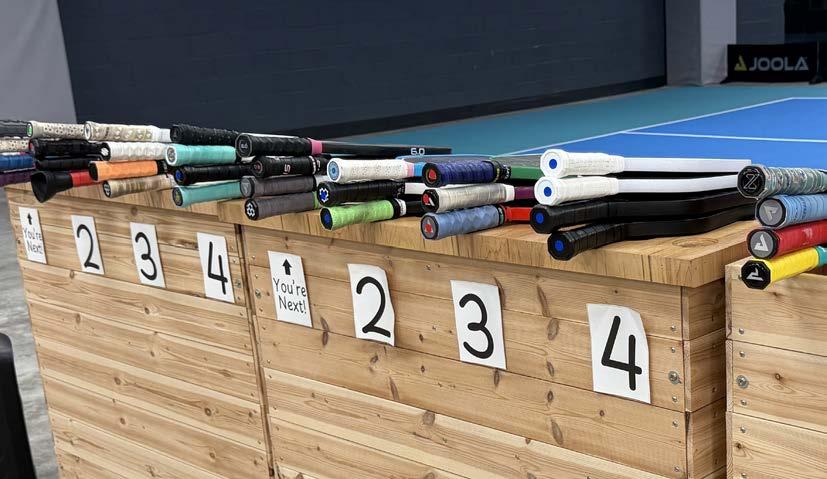
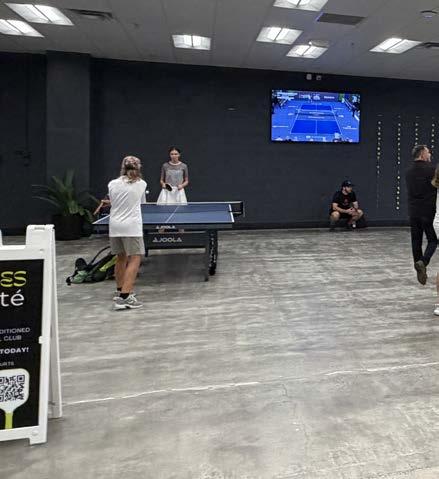
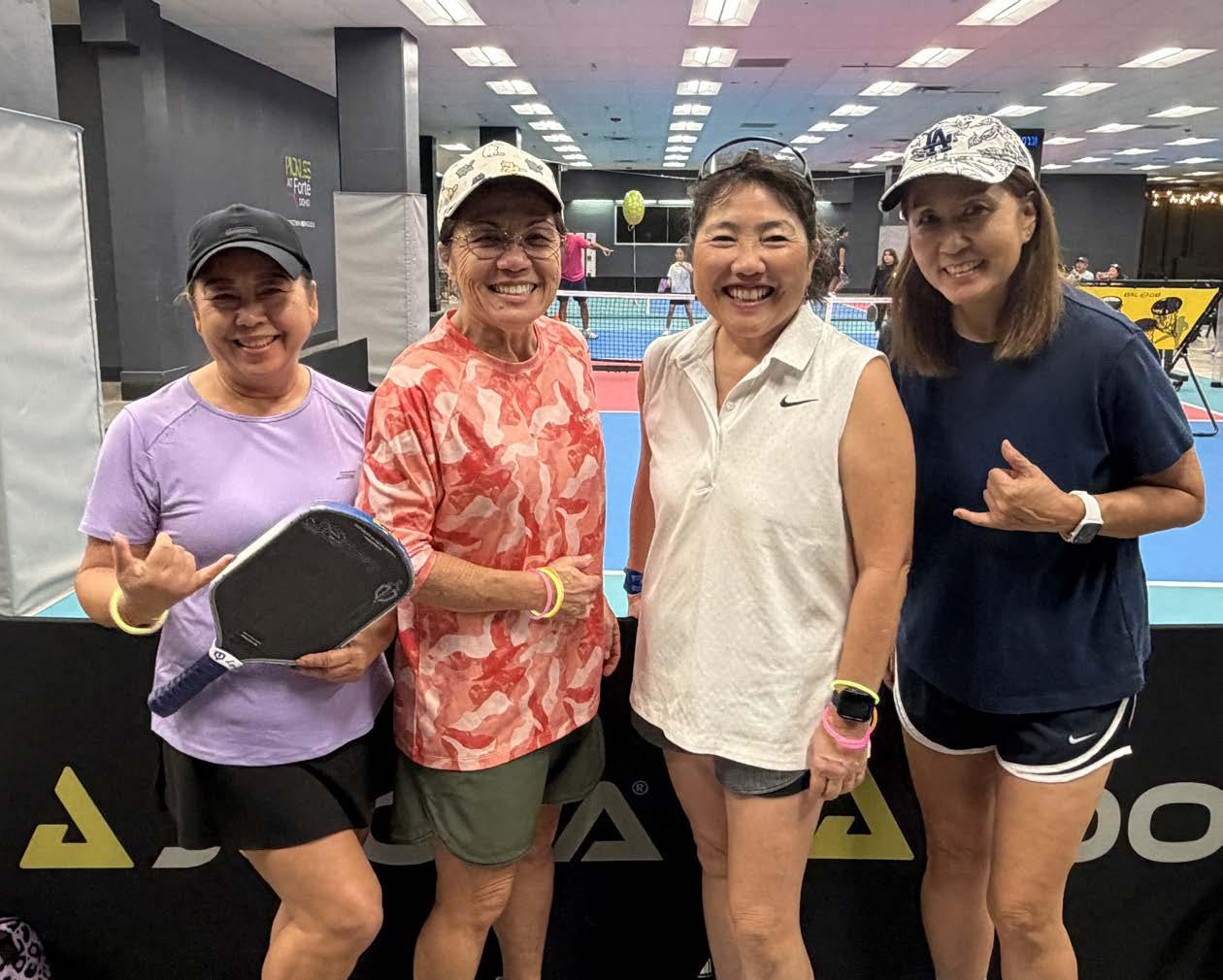
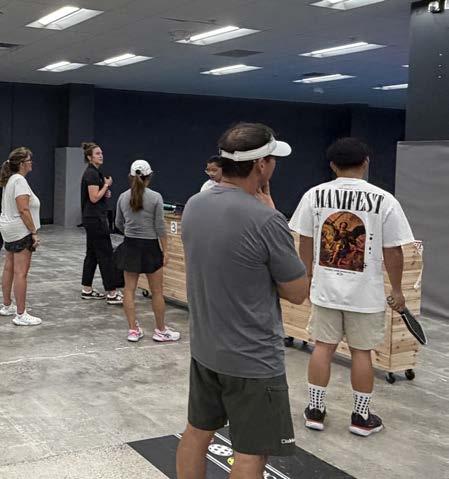
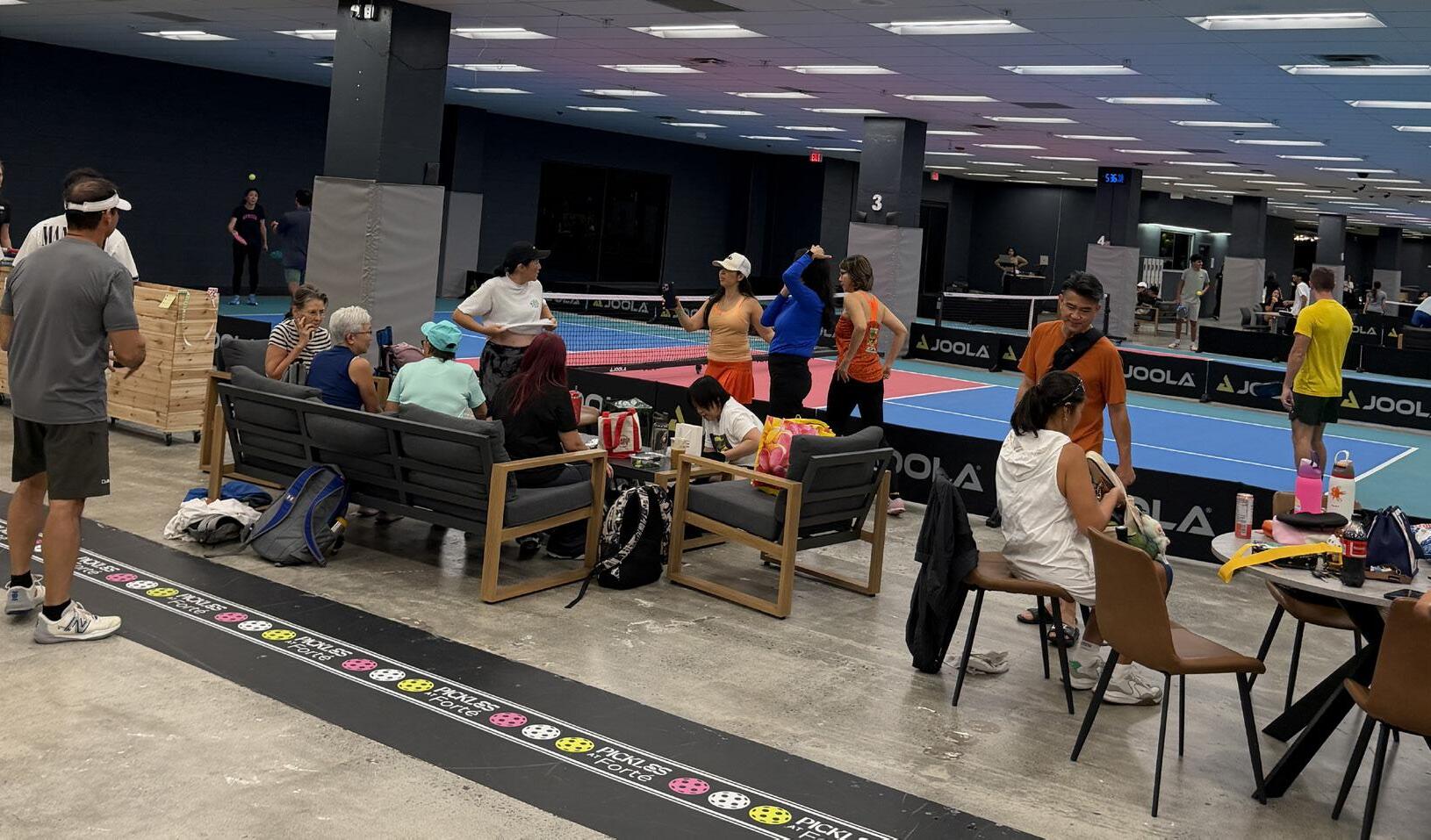
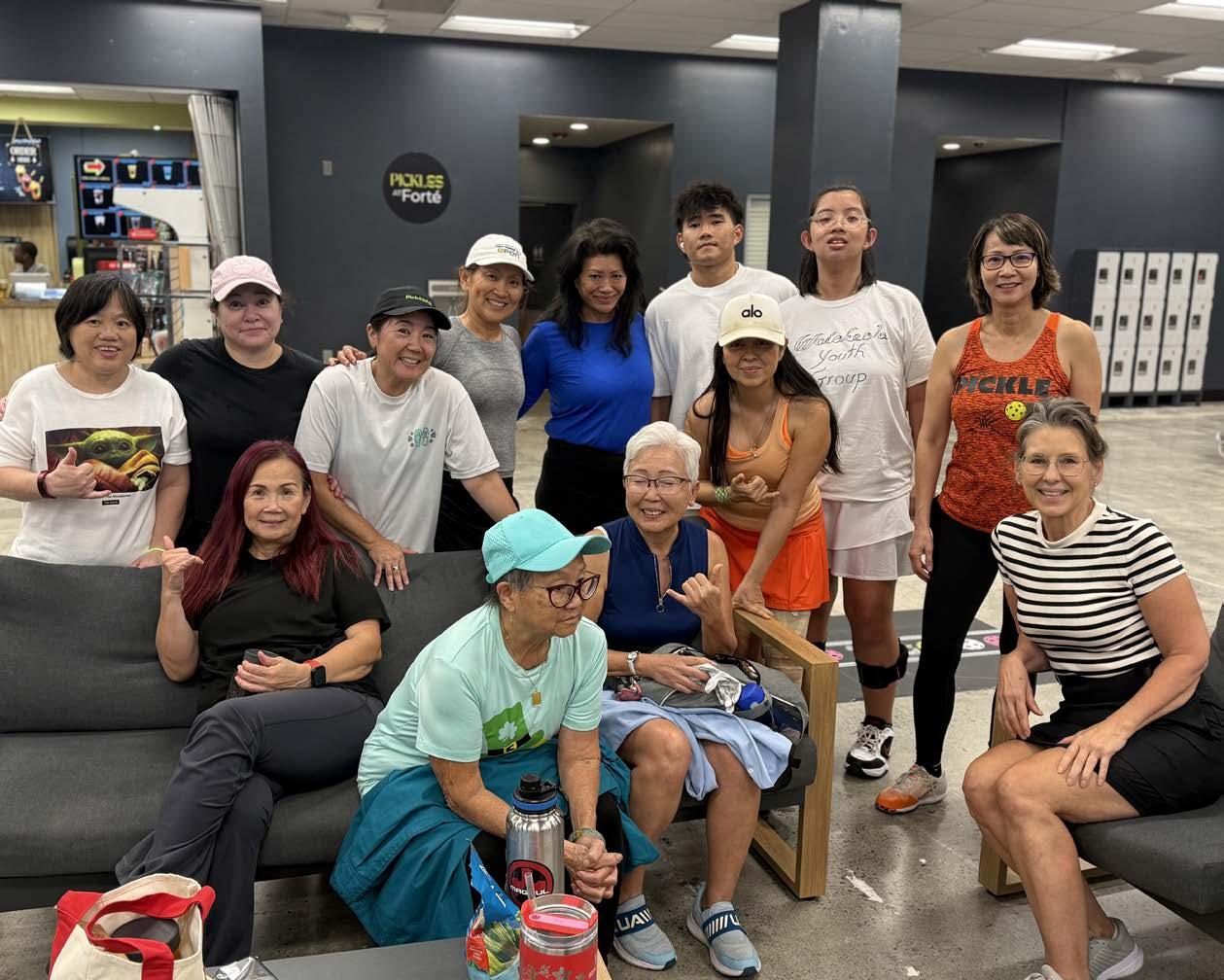
One year in, on January 23, 2026, Pickles at Forté marked the milestone by opening their doors and inviting the community in. The free, open-to-the-public celebration featured open play throughout the facility, three courts dedicated to glow-in-thedark pickleball, a DJ setting the vibe, local vendor booths, and a pop-up bar. HPM was there to capture the energy of the evening...check out the photo gallery on the following pages.



IN THIS TOGETHER
ASAKO PASTRANA ON MOTHERHOOD, AMBITION, AND CHOOSING TO KEEP GOING

* If the event is unlinked, registration may be closed.
May 17: Oahu: Hookuku Pickleball Tournament, Schofield Barracks
O‘AHU: February 21-22, 2026: Roosevelt High School Project Grad Pickleball Fundraiser
May 24: Oahu: King Intermediate Pickleball Fundraiser, Kaneohe
O‘AHU: February 21, 2026: Lung Force Honolulu Pickleball Tournament 2026
May 31: Oahu: Maui Wildfire Disaster Relief Pickleball Fundraiser, Honolulu
May 17: Oahu: Hookuku Pickleball Tournament, Schofield Barracks
O‘AHU: February 28, 2026: 1st Annual Honolulu Mayor’s Cup
May 24: Oahu: King Intermediate Pickleball Fundraiser, Kaneohe
May 31: Oahu: Maui Wildfire Disaster Relief Pickleball Fundraiser, Honolulu
The complete list of all upcoming tournaments and events in
The complete list of all upcoming tournaments and events in
* If the event is unlinked, registration may be closed.
May 17: Oahu: Hookuku Pickleball Tournament, Schofield Barracks
O‘AHU: March 14, 2026: Kalaheo High School Project Grad Pickleball Tournament FUNraiser
May 24: Oahu: King Intermediate Pickleball Fundraiser, Kaneohe
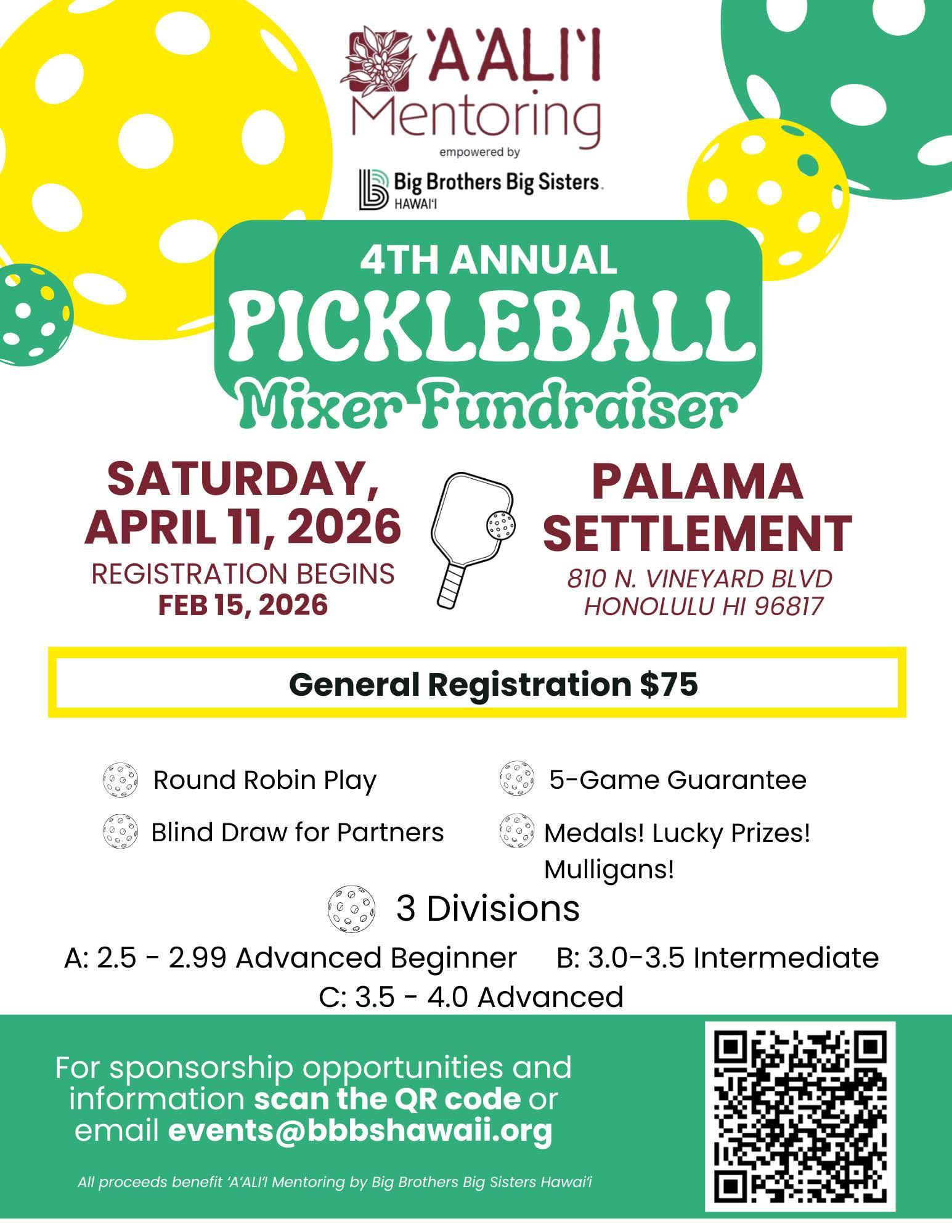
O‘AHU: April 11, 2026: A‘ali‘i Mentoring/Big Brothers BIg Sisters 4th Annual Pickleball Mixer Fundraiser
May 31: Oahu: Maui Wildfire Disaster Relief Pickleball Fundraiser, Honolulu
May 17: Oahu: Hookuku Pickleball Tournament, Schofield Barracks
May 24: Oahu: King Intermediate Pickleball Fundraiser, Kaneohe
May 31: Oahu: Maui Wildfire Disaster Relief Pickleball Fundraiser, Honolulu
The complete list of
• Played a sunrise match this week •
• Cheered for your opponent’s point •
• Tried a new court •
• Forgot your water bottle •
• Made a new friend on the courts •
• Read this magazine cover to cover •
• Subscribed to our newsletter (right?) •
• Told a friend to do the same •
• Got a story or a player we should feature? Let us know! •
• Know someone who’d love to connect with this community?
We’d love to hear from them!
Want to get involved? Become an ambassador or contributor— we’re always looking forpeople who love the game and our Hawaii PB community.
Not getting our emails? Check your spam, promotions, or updates folder— and move us to your Primary inbox so you never miss a beat.
© 2025 Hawaii Pickleball Magazine. All rights reserved. We love sharing our community’s stories — please don’t reuse without permission.

ALWAYS FREE:
Never miss an issue!
Subscribe to get Hawaii
Pickleball Magazine delivered straight to your inbox every month.
LET’S GROW TOGETHER:
We welcome aligned partners who share our love for pickleball and community. Want to get your brand in front of our readers? Let’s connect!