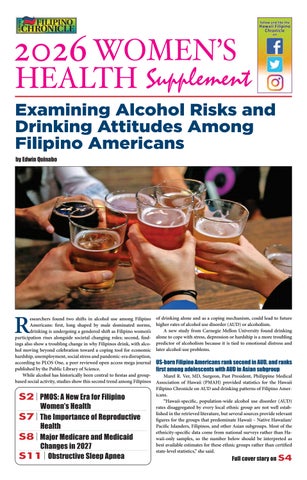
Examining Alcohol Risks and Drinking Attitudes Among Filipino Americans by Edwin Quinabo
R
esearchers found two shifts in alcohol use among Filipino Americans: first, long shaped by male dominated norms, drinking is undergoing a gendered shift as Filipino women’s participation rises alongside societal changing roles; second, findings also show a troubling change in why Filipinos drink, with alcohol moving beyond celebration toward a coping tool for economic hardship, unemployment, social stress and pandemic-era disruption, according to PLOS One, a peer reviewed open access mega journal published by the Public Library of Science. While alcohol has historically been central to fiestas and groupbased social activity, studies show this second trend among Filipinos
S2 | PMOS: A New Era for Filipino
Women’s Health S7 | The Importance of Reproductive Health S8 | Major Medicare and Medicaid Changes in 2027 S11 | Obstructive Sleep Apnea
of drinking alone and as a coping mechanism, could lead to future higher rates of alcohol use disorder (AUD) or alcoholism. A new study from Carnegie Mellon University found drinking alone to cope with stress, depression or hardship is a more troubling predictor of alcoholism because it is tied to emotional distress and later alcohol-use problems.
US-born Filipino Americans rank second in AUD, and ranks first among adolescents with AUD in Asian subgroup
Marel R. Ver, MD, Surgeon, Past President, Philippine Medical Association of Hawaii (PMAH) provided statistics for the Hawaii Filipino Chronicle on AUD and drinking patterns of Filipino Americans. “Hawaii-specific, population-wide alcohol use disorder (AUD) rates disaggregated by every local ethnic group are not well established in the retrieved literature, but several sources provide relevant figures for the groups that predominate Hawaii – Native Hawaiian/ Pacific Islanders, Filipinos, and other Asian subgroups. Most of the ethnicity-specific data come from national surveys rather than Hawaii-only samples, so the number below should be interpreted as best available estimates for these ethnic groups rather than certified state-level statistics,” she said.
Full cover story on S4
S2 HAWAII FILIPINO CHRONICLESUPPLEMENT
WOMEN’S HEALTH FEATURE
2026 WOMEN’S HEALTH SUPPLEMENT
PCOS Has a New Name: What “PMOS” Means for Filipino Women in Hawai’i by Rainier Dennis D. Bautista, MD
I
f you or someone in your family has been told they have PCOS — Polycystic Ovary Syndrome — you may have heard that the name is changing. In May 2026, an international group of clinicians, researchers, professional organizations, and people living with the condition formally renamed it Polyendocrine Metabolic Ovarian Syndrome, or PMOS. It’s a mouthful. But the reasoning behind the change matters, especially for our community.
Why change the name at all? For decades, the name PCOS placed a lot of attention on the ovaries and, specifically, on so-called “cysts.” But the characteristic ovarian appearance associated with this condition involves numerous small follicles, not the abnormal ovarian cysts that the word “polycystic” may lead people to imagine. In fact, women with the condition do not appear to have an increased prevalence of abnormal ovarian cysts. The old name also did not capture how much more there is to the condition than the ovaries. What we now call PMOS is a complex hormonal and metabolic condition that can affect many aspects of health, including: ● Menstrual cycles and fertility ● Skin and hair, including acne, excess hair growth, and scalp hair thinning ● The way the body regulates blood sugar ● Cholesterol and blood pressure ● Mental health, including depression and anxiety Insulin resistance is an important feature of PMOS, although it is not present or measurable in the same way in every person. More importantly for routine care, women with PMOS have an increased risk of impaired glucose regulation and type 2 diabetes regardless of their weight. PMOS is also associated with cardiovascular risk factors, which is why blood pressure, cholesterol, and other metabolic risks deserve attention along with reproductive health. The new name is intended to reflect this broader picture. “Polyendocrine” emphasizes the involvement of multiple hormonal systems. “Metabolic” recognizes the important metabolic features of the condition. “Ovarian” remains because ovarian function is still part of the syndrome — just not the whole picture.
hair, scalp hair thinning, or difficulty becoming pregnant can all be features of PMOS. Recognizing that pattern can lead to a more complete evaluation.
What’s actually changing right now — and what isn’t The most important point is that the condition itself has not changed. The name has. If you were previously diagnosed with PCOS, you do not suddenly have a different disease. PMOS is the new name for the condition previously called PCOS. The terminology will not change everywhere at once. Medical records, insurance and billing systems, research publications, and patient education materials may continue to use “PCOS” during the transition. A three-year transition period is underway, during which both PCOS and PMOS may be used, with the new terminology planned for integration into the 2028 International Guideline update. The name change also does not mean that attention to metabolic health is a new recommendation. International guidelines already recommend evaluating women with the condition for metabolic and cardiovascular risk factors. Current guidelines recommend assessing blood sugar at diagnosis and repeating that assessment every one to three years based on individual diabetes risk. A lipid profile is recommended at diagnosis, with subsequent testing based on the results and other cardiovascular risk factors. Blood pressure should generally be measured at least annually. Although insulin resistance is an important part of PMOS, routine insulin testing is not recommended because currently available insulin measurements have limited usefulness in routine clinical care. The rename therefore does not create an entirely new approach to treatment. Instead, it gives the condition a name that better reflects what clinicians and researchers have come to understand about it. What you can do If you have irregular or infrequent periods, persistent acne, excess facial or body hair, scalp hair thinning, or difficulty becoming pregnant, it may be worth asking whether PMOS could be part of the picture. These symptoms can have many causes, so PMOS should be evaluated rather than assumed. If you have already been diagnosed with PCOS or PMOS, care should consider more than menstrual cycles and fertility. Blood sugar, cholesterol, blood pressure, and other individual risk factors are also important parts of long-term health. And importantly, body weight alone does not determine metabolic risk. Women with PMOS can have abnormalities in glucose regulation even without obesity. The new name is ultimately more than a change in terminology. It is an effort to describe the condition more accurately: not simply as a problem involving ovarian “cysts,” but as a hormonal and metabolic syndrome that can affect health across different stages of a woman’s life. For Filipino women in Hawaiʻi, that broader understanding is particularly relevant because diabetes already represents an important health concern in the Filipino-American community. Recognizing PMOS provides an opportunity not only to address periods, fertility, skin, or hair concerns, but also to identify metabolic risk factors early and manage those that can be changed.
How common is it — and why it matters for our community PMOS is estimated to affect about 1 in 8 women, making it one of the most common endocrine disorders affecting women of reproductive age. For Filipino women in Hawaiʻi, the metabolic side of the condition deserves particular attention. Studies of Filipino Americans, including research involving participants in Hawaiʻi, have found a high burden of type 2 diabetes. Research also suggests that Filipino Americans, like several other Asian populations, can develop type 2 diabetes at lower body mass indexes than might traditionally be associated with diabetes risk. That does not mean every Filipino woman with PMOS will develop diabetes, nor does Filipino ancestry determine an individual’s risk. But it reinforces an important point: a normal or relatively low body weight should not be used to assume that someone with PMOS has little metabolic risk. PMOS itself is associated with an increased risk of abnormal glucose regulation and type 2 diabetes regardless of BMI. Symptoms can also be considered separately when they may actu- RAINIER DENNIS D. BAUTISTA, MD, DABFM, FAAFP, is a board-certified ally be related. Irregular periods, persistent acne, excess facial or body family physician practicing in Hawaiʻi.
SUPPLEMENT HAWAII FILIPINO CHRONICLE S3
(continue on S4)
S4 HAWAII FILIPINO CHRONICLESUPPLEMENT
COVER STORY
2026 WOMEN’S HEALTH SUPPLEMENT
Examining Alcohol Risks and Drinking Attitudes Among Filipino Americans by Edwin Quinabo
R
esearchers found two shifts in alcohol use among Filipino Americans: first, long shaped by male dominated norms, drinking is undergoing a gendered shift as Filipino women’s participation rises alongside societal changing roles; second, findings also show a troubling change in why Filipinos drink, with alcohol moving beyond celebration toward a coping tool for economic hardship, unemployment, social stress and pandemic-era disruption, according to PLOS One, a peer reviewed open access mega journal published by the Public Library of Science. While alcohol has historically been central to fiestas and group-based social activity, studies show this second trend among Filipinos of drinking alone and as a coping mechanism, could lead to future higher rates of alcohol use disorder (AUD) or alcoholism. A new study from Carnegie Mellon University found drinking alone to cope with stress, depression or hardship is a more troubling predictor of alcoholism because it is tied to emotional distress and later alcohol-use problems.
US-born Filipino Americans rank second in AUD, and ranks first among adolescents with AUD in Asian subgroup Marel R. Ver, MD, Surgeon, Past President, Philippine Medical Association of Hawaii (PMAH) provided statistics for the Hawaii Filipino Chronicle on AUD and drinking patterns of Filipino Americans. “Hawaii-specific, population-wide alcohol use disorder (AUD) rates disaggregated by every local ethnic group are not well established in the retrieved literature, but several sources provide relevant figures for the groups that predominate Hawaii – Native Hawaiian/Pacific Islanders, Filipinos, and other Asian subgroups. Most of the ethnicity-specific data come from national surveys rather than Hawaii-only samples, so the numMale bravado, family modeling, and western acculturation all contributes to sustaining heavy drinking patterns among US-born Filipinos Studies in PLOS One show social expectations play a powerful role in Filipino American drinking patterns. Refusing alcohol can carry social consequences, from being ignored to feeling excluded, while drinking signals belonging and, for young men, displays of toughness or bravado. PLOS One research also points to strong parental, and grandparents’ drinking habits are closely mirrored by their children, creating early exposure and passing alcohol use behaviors from one generation to the next. Both pressures help reinforce heavy drinking norms. NSDUH data reveals a clear acculturation pattern. U.S.-born Filipino Americans drink at significantly higher rates than those born abroad, suggesting that assimilation into American drinking culture increases risk beyond levels typically seen in the Philippines.
Pakikisama and Hiya, cultural traditions that discourage AUD
Apollo Tamayo, Training Coordinator, Kapolei, believes Filipinos have lower alcohol consumption and binge drinking rates relative to other eth-
ber below should be interpreted as best available estimates for these ethnic groups rather than certified state-level statistics,” she said. Dr. Ver shared two findings from the National Survey on Drug Use and Health (2015-2018). “Filipino Americans repeatedly rank among the highest-risk Asian American subgroups: US-born Filipino Americans have among the highest rates of binge drinking (25.9%) and AUD (6.9%) among Asian American, comparable to groups traditionally considered high-risk. Among Asian American adolescents, Filipino youth have the highest prevalence of lifetime (29.3%) and past-month (10.3% alcohol use) and the highest AUD prevalence (3.5%),” she said. Earlier pooled NSDUH data from 2002–2008 tell a similar story: Filipino Americans had a past month binge drinking rate of 14.5%, second only to Korean Americans, and Filipino American adolescents showed the highest alcohol use disorder prevalence 3.5% — of all Asian youth groups studied. Dr. Ver said, “Several cultural and social factors appear to contribute to elevated alcohol use among Filipinos, though the available literature is more descriptive than casual, and much of the strongest ethnic-specific data comes from Filipino Americans rather than the Philippines itself.” She reiterated the NSDUH findings and added, “This [data] challenges the stereotype of Asian Americans as a uniformly low-risk group.” nicities based on social gatherings he has attended. He explains that two Filipino cultural traditions discourage AUD. Pakikisama is the importance of maintaining smooth interpersonal relationships. Hiya is shame. “Traditional Filipino culture emphasizes pakikisama which frequently manifest during social gatherings, fiestas and family celebrations where alcohol is used as a bonding tool,” Tamayo said. “While sharing drinks is a major element of communal hospitality, cultural structures also strongly emphasize family reputation and hiya (shame), which can serve as an informal deterrent against visible excess. However, acculturative stress, generational shifts and changing social environments can sometimes weaken these protective communal checks, particularly among younger generations,” he added. While Tamayo doubts the high prevalence of alcohol use, he said “I have witnessed the impacts of alcoholism on family members and friends but have also seen several of them recover. Eventually, alcoholism affects their health and well-being. “I have seen how alcohol can damage relationships. Hopefully, alcoholics will one day realize how drinking affects their lives and cut back or completely eliminate alcohol. I’ve seen the deteriorating health effects (continue on S5)
SUPPLEMENT HAWAII FILIPINO CHRONICLE S5
COVER STORY (from page S4)
on those unable to overcome this addiction. Overall, I’ve noticed that the younger generation doesn’t consume that much alcohol as compared to the older generation.”
2026 WOMEN’S HEALTH SUPPLEMENT “Filipino Americans repeatedly rank among the highest-risk Asian American subgroups: US-born Filipino Americans have among the highest rates of binge drinking (25.9%) and AUD (6.9%) among Asian American, comparable to groups traditionally considered high-risk. Among Asian American adolescents, Filipino youth have the highest prevalence of lifetime (29.3%) and past-month (10.3% alcohol use) and the highest AUD prevalence (3.5%). This challenges the stereotype of Asian Americans as a uniformly low-risk group.”
Drinking starts out innocently then progresses, affects entire family Melanie Basuel, Teacher’s Aide, Pearl Harbor, said “I have seen the impacts of alcohol. Sometimes it starts out very innocently — having a few drinks socially, on weekends, or at family gatherings. But over time, drinking begins to become something more. It starts affecting relationships, responsibilities, finances, work, health, and interaction with others. Alcoholism affects entire families and results in worry, frustration, disap-- Marel R. Ver, MD pointment, and sometimes feelings of helplessness.” Surgeon, Past President, Philippine Medical Association She said sometimes the social environment can make it easier for of Hawaii (PMAH) a person to drink more than they normally would, especially if everyone around them is drinking. “But whether that develops into an alcohol my kids were younger in their teens and knew that their dad was drunk, problem involves much more than culture. Every person and family is they’d be very upset and scared to get in the car. Now, they’re older and different,” Basuel said. have their own cars. Today, if my husband knows he will drink at a party, at least sometimes we take an uber to and from that party or concert. I Weekend binge drinking happens, but work and religiosity disthank God that we survived those days,” Liz said. suade alcohol abuse, Pulutan-drinking tradition “I think there are a lot of functional weekend alcoholics and if the Hermie Gaspar, nurse, said some reasons why Filipinos avoid alcohol bills are paid and there is stability in the household, the drinking problem abuse are for religious reasons and work. “Filipinos work so hard, often gets overlooked, unfortunately. But there is also the health factor that is have double jobs. Filipinos have lesser consumption of alcohol because not as forgiving. My husband has had several health problems related to they are busy working to support their families.” his drinking,” Liz added. However, she admits that Filipinos tend to do binge drinking on weekends, celebrations or social gatherings or after work. She describes Five Signs of Alcoholism what happens at some of the gatherings she’s attended, “what I see at soFor those self-identifying as functional weekend binge drinkers or are cial functions at residences. Some will bring alcohol -- beer or liquor -- as flat-out in self-denial, here are five widely recognized signs of alcoholism gifts to drink at a party. A host might have a cooler of assorted beers for according to Alcoholawareness.org. the men. I always see a separate table setup for pulutan (food) paired with • Increasing tolerance and physical dependence — needing more albeer or other alcohol drinks. Pulutan can lead to excessive drinking. Most cohol to feel the same effects, experiencing tremors, sweating, or men do these socializations [drinking and eating pulutan] to show a sense insomnia when not drinking. of brotherhood especially if they have not seen each other for a while.” • Loss of control over drinking — repeatedly drinking more than inAsian flush, wine associated with Roman Catholicism Linda Jocson, retired, Waipahu, believes rates of AUD is lower among Asians than other ethnicities because of “Asian flush,” a physiological response to drinking alcohol that includes facial flushing, nausea, headaches and a faster heart rate. Studies show this intolerance to alcohol is common among East and Southeast Asians. “Also, a lot of Filipinos are Roman Catholics with strong virtues and values. In Mass, wine is represented and turned to the blood of Christ. I grew up with the respect and knowledge of wine being special. So, abusing alcohol was not something I even thought of. Most of my family realized that and have not become alcoholics,” Jocson said. Alcoholic family members Fidel Hufana, retired Drug Consultant, Waipahu, believes drinking in the Philippines is more culturally-accepted. “Filipino brands like Tanduay, San Miguel, Red Horse, etc are as common as Pepsi and Coca-Cola. He recalls alcohol use disorder in two of his family members, an uncle and cousin. “I had an uncle in the Philippines who was an alcoholic. At breakfast, he would have a bottle of Tanduay next to his Coca-Cola. It was only 8 a.m. but his eyes were already bloodshot. My aunt constantly asked him to quit drinking, but he wouldn’t listen. One day, he fell while on a walk in the neighborhood, hit his head and never recovered. I also have a cousin who works as a merchant mariner for an international cargo ship. He drinks heavily while not on duty because he says there’s nothing else to do. He is in his 50s and still drinking,” Hufana said. Husband is alcoholic Liz, who wanted to be anonymous, former Hawaii resident now living in Seattle, said her husband has been a functional alcoholic since they met in their twenties. They’re now in their fifties. “My husband has a high-paying, high-responsibility career. But almost every weekend he drinks. I don’t like to drive. When we go to social functions I always worry about my husband driving back home while intoxicated. He puts our lives at risk. I get stressed and worry if we’re going to make it home. We’ve had many fights over this and talked about getting a divorce. When
tended or being unable to cut back despite trying.
(continue on S6)
S6 HAWAII FILIPINO CHRONICLESUPPLEMENT
COVER STORY (from page S5)
• • •
Social and behavioral problems — neglecting responsibilities, strained relationships, irritability, or acting unlike oneself. Health decline — bloodshot eyes, unexplained injuries, weight changes, or other physical deterioration linked to heavy drinking. Risk taking or disruptive behavior — drunk driving, missing work, asking others for money to support drinking, or other harmful actions.
Dr. Nestor Herana, internist, told the Hawaii Filipino Chronicle the transition from social or moderate drinking to Alcohol Use Disorder (AUD) is defined not simply by the amount of alcohol consumed, but by patterns of drinking, impaired control, and the consequences of alcohol use. “AUD is characterized by multiple symptoms, including impaired control over drinking. This may be manifested by drinking larger amounts or for a longer period than intended, having a persistent desire or making unsuccessful efforts to cut down or control alcohol use, spending a great deal of time obtaining, using, or recovering from alcohol, and experiencing cravings or a strong desire or urge to drink. AUD may also present as social impairment. AUD is primarily defined by drinking behavior and its consequences rather than by quantity alone. Therefore, a person may consume relatively large amounts of alcohol without meeting criteria for AUD, while another person may meet diagnostic criteria despite consuming smaller amounts.”
Seeking help and treatment While alcoholism is a problem, Hawaii data shows rates are not on the rise. Still, the State Epidemiological Profile 2024 shows that alcohol remains one of Hawaii’s most widely used substances across all ethnic groups. There are many alcoholic treatment and rehabilitation centers for Hawaii residents. Experts say the first step is to talk to your personal physician for advice. 90.8% of adults with alcohol use disorder did not receive treatment, indicating a major care gap.
2026 WOMEN’S HEALTH SUPPLEMENT Dr. Seiji Yamada shares medications for alcohol use disorder are underused, and many primary care providers are not familiar with their use. There are three Food and Drug Administration (FDA)-approved medications for AUD: naltrexone, acamprosate, and disulfiram. A fourth medication, topiramate, is not FDA-approved, but is recommended by the Veterans Administration. He explains, “Naltrexone is the usual first-line medication chosen. It acts by blocking the pleasure receptors in the brain that are stimulated by alcohol consumption. There are few reasons not to use naltrexone, but these include being treated with medications for opioid use disorder. Acamprosate also works on the brain by stabilizing neurotransmitters which have become out of balance because of regular alcohol consumption. It cannot be used in those with significant kidney problems. In general, both naltrexone and acamprosate can be used in the setting of liver disease, including early stages of cirrhosis.” As for the third medication, he explains “Disulfiram is an old medication that has been around since the 1950s. Disulfiram works by causing a severe hangover-like reaction (nausea, vomiting, headache, dizziness) if the person taking it then drinks alcohol. It is only meant for the person who intends to stop drinking alcohol completely.” He said, Topiramate, the last drug, was originally an anti-seizure medication. One problem with topiramate is that it has to be started at a very low dose, then titrated up slowly. Another problem is that patients often feel ‘brain fog’ with topiramate. Basuel said, “Recovery is very personal. What works for one person may not work for another. Some need professional treatment or counseling, while others find strength through support groups, family, faith, or changing the people and situations around them. One necessary step is admitting your problem and being willing to accept help. We need to be careful about judging people who struggle with alcohol. There can be a lot of shame surrounding alcoholism, which can sometimes prevent people from getting help.”
SUPPLEMENT HAWAII FILIPINO CHRONICLE S7
HEALTH PERSPECTIVES
2026 WOMEN’S HEALTH SUPPLEMENT
The Importance of Reproductive Health by Christa Lei
W
hen I first got my period, I didn’t know it wasn’t normal to have debilitating cramps and pre-menstrual symptoms. Friends and loved ones reported a certain degree of pain but nothing that wasn’t out of the ordinary, so to speak. So I waited it out for decades. I wrote about my experiences in Autostraddle and elsewhere, but given that it took me two decades of crazy menstrual symptoms to get diagnosed with adenomyosis, I wanted to emphasize how crucial it is to bring these stories to light. Dismissal of our embodiment is the norm for menstruating people. The word ‘sexual’ can be off-putting to some; what was formerly known as “women’s health” has expanded to a larger umbrella of care. As a writer and social worker, I believe sexual and reproductive health should be accessible to all bodies—not just the skinny, white, and privileged! Every September, the World Health Organization shines a spotlight on Sexual and Reproductive Health and Rights (SRHR) by dedicating an entire month to the field. Additionally, on September 4th, the World Association for Sexual Health celebrates World Sexual Health Day, and their theme this year is “Every Body.” This means people shouldn’t restrict bodily autonomy for any body whatsoever—especially if that person is able to reproduce. Gender identity is vast, and so is the range of bodies that menstruate—which means SRHR applies to all bodies that are able to reproduce, regardless of how a person identifies. Unfortunately, not all bodies move through the world on equal terms. Mine didn’t, and neither do the bodies of menstruating people in my motherland. Abortion is still illegal in the Philippines with no written exceptions—not for rape, incest, or even to save a life. This prohibition is located in the country’s Revised Penal Code, which was written during Spanish colonial rule. Therefore, the country has been following guidelines that were meant
to suppress and eliminate native Filipinos. But some citizens have been fighting these archaic laws anyway. The Responsible Parenthood and Reproductive Health Act, passed in 2012 after years of organizing, guarantees free contraception at government health centers, finally brings reproductive health education to public schools, and names post-abortion care as a right. Though providers can still deny care on religious grounds outside of emergencies, organizations like PINSAN and EnGendeRights are pushing for decriminalization. The Philippine Commission on Human Rights once called abortion immoral—and some of you might agree with that—but limiting access to abortions only means limiting access to safe abortions. Thankfully, they are now recommending decriminalization. In the spirit of resistance, Filipina-American pop star Olivia Rodrigo held the first Daisy Chain Fields on August 29 in Irvine, California. Aiming to emulate feminist events like the Lilith Fair, Rodrigo brought together feminist icons to support sexual and reproductive health and rights. The event sold out in the first 30 minutes on sale. Every artist volunteered their time and performed unpaid, and the festival raised $10 million on sales alone, doubling the amount from a donation by Melinda French Gates, and splitting the profits among ten different organizations, including the Center for Reproductive Rights and Planned Parenthood. When we talk about sexual and reproductive health and rights being for every body, it means the crowd in Irvine and even in Quezon City. I was denied a lot of that access through ignorance, and I got a name for my chronic pain eventually. But a lot of people don’t. CHRISTA is a writer, editor, educator, and social worker based in NYC. They are a Blackburn 71’ Fellow in Fiction at Randolph’s MFA whose work has appeared in Autostraddle, the Seventh Wave and Vast Chasm, and others. Their work has been supported by the Peter Bullough Foundation, Studio Luce Guatemala, and the PowerHOUSE residency.
S8 HAWAII FILIPINO CHRONICLESUPPLEMENT
HEALTH INSURANCE UPDATE
2026 WOMEN’S HEALTH SUPPLEMENT
Hawai’i Families Need to Prepare for Major Medicare and Medicaid Changes in 2027 by Rhea Bautista, MD
B
eginning in late 2026 and 2027, thousands of Hawaiʻi residents will face new rules for keeping government health coverage. The biggest changes involve Med-QUEST. Some working-age adults will face more frequent eligibility checks and new requirements involving work, volunteering, school or training. Immigration status will also matter more for Medicaid and Medicare eligibility. At the same time, Medicare prescription-drug rules are changing. The key is knowing which rule applies to you.
Med-QUEST will require more frequent proof of eligibility
Applying for Medicaid quickly will matter more
Another change will shorten how far back Medicaid can pay eligible medical bills before a person applies. Beginning in 2027, retroactive coverage for many Medicaid expansion adults will generally be limited to one month. Other Medicaid and CHIP groups will generally receive two months. That means waiting to apply could leave more medical bills uncovered. If you believe you qualify for Med-QUEST, apply promptly.
Medicare prescription coverage is not ending
There has also been confusion about Medicare prescription-drug changes. Medicare Part D is not ending in January 2027. What is ending after December 31, 2026, is a temporary federal program that helped stabilize premiums for certain standalone Medicare Part D prescription-drug plans. Its expiration could give some plans more room to increase premiums, but the final 2027 Hawaiʻi plan offerings and premiums have not yet been released. Medicare beneficiaries should carefully review their 2027 Annual Notice of Change and compare plans during open enrollment. Check the premium, deductible, pharmacy network and whether your medications remain covered. The standard Part D deductible is scheduled to increase from $615 in 2026 to $700 in 2027, while the annual out-of-pocket threshold will rise from $2,100 to $2,400. Qualifying activities may include regular employment, internAt the same time, negotiated prices for another group of high-cost ships, job-training programs, school and documented volunteer work. Medicare drugs will take effect in 2027. So the Medicare story is not Not everyone will be subject to these requirements. Exemptions simply that drug costs are going up. Some costs may rise while some include certain older adults, people with disabilities or serious medical medications may become less expensive. conditions, pregnant women, some caregivers and Medicare beneficiaries. What Hawai’i families should do now The practical issue will be documentation. Med-QUEST memFor Med-QUEST members: bers should keep pay stubs, school records, training documentation Keep your documentation. Keep your contact information current. and verification of volunteer hours. They should also make sure Med- Open every renewal notice. QUEST has their current address and phone number. For immigrant families: If Med-QUEST cannot verify eligibility electronically, it may reConfirm eligibility based on your specific immigration status rathquest additional information. er than relying on general information. Beginning January 1, 2027, many adults ages 19 to 64 enrolled in Hawaiʻi Med-QUEST will have eligibility reviewed every six months instead of once a year. Some will also need to meet a new community-engagement requirement. Under current Hawaiʻi guidance, a person may qualify by meeting at least one of the following standards in a qualifying month before renewal: • Work or volunteer at least 80 hours • Earn at least $580 in household income • Attend school or another educational program at least half-time • Complete a combination of qualifying work, volunteer, training or education activities
Immigration status will matter more
For Medicare beneficiaries: Review your 2027 plan instead of automatically renewing your current coverage. These changes are especially important in Hawaiʻi, where more than one in five residents is age 65 or older, nearly one in five is foreign-born, and about one-quarter of residents speak a language other than English at home. Different members of the same household may face completely different healthcare rules. Understanding those rules early may be the difference between keeping coverage and discovering too late that something has changed. For the latest information, Med-QUEST members can visit Hawaiʻi’s “Stay Well, Stay Covered” website: https://medquest.hawaii. gov/content/medquest/en/members-applicants/already-covered/Stay_ Well_Stay_Covered_Toolkit.html. Or call Med-QUEST at 1-800-316-8005. Medicare beneficiaries can visit Medicare.gov or call 1-800-MEDICARE.
Beginning October 1, 2026, federal Medicaid funding will generally be limited to specific immigration categories, including U.S. citizens and nationals, lawful permanent residents, certain Cuban and Haitian entrants, and people covered by the Compacts of Free Association. Some people with other lawful humanitarian immigration statuses may face narrower eligibility for federally funded full Medicaid coverage. Hawaiʻi officials have estimated that roughly 1,200 to 2,400 current Med-QUEST members could lose full coverage because of these federal changes. That does not mean every immigrant is affected in the same way. A green-card holder, refugee, asylee, COFA resident and undocumented resident can all face different eligibility rules. This distinction is especially important in Hawaiʻi. COFA residents from the Federated States of Micronesia, the Marshall Islands and Palau remain specifically recognized under federal eligibility rules. RHEA BAUTISTA, MD, MBA, is a healthcare strategist, physician executive, Families should verify their own eligibility rather than assume that and entrepreneur serving as Director of Business Strategy and Growth at MDX Hawai‘i. She is also co-founder of SB Solutions and advises the Primary Care a rule affecting one immigrant group applies to another. Clinic of Hawai‘i. Her work focuses on healthcare transformation, physician engagement, and strengthening access to care across Hawai‘i.
SUPPLEMENT HAWAII FILIPINO CHRONICLE S9
HEALTH NEWS FEATURE
2026 WOMEN’S HEALTH SUPPLEMENT
Every Step Counts!
showing up consistently. You don’t need to become a runner or finish a marathon to see real benefits. It’s the small, steady steps over days and weeks that add up.
For someone who already walks regularly, the next step might be to increase pace, add gentle hills, extend time, or include short intervals. For example, walk briskly for one minute, then walk at a comfortable pace for two minutes. The best walking plan is one that fits a person’s health status, schedule, environment, and goals. If you’re dealing with chest pains, real shortness of breath, dizziness, a chronic condition that’s not well-controlled, or a new injury, please speak with your doctor before starting or ramping up any exercise routine.
The FITT Prescription I follow the FITT principle to help my patients build an exercise plan that is realistic, individualized, and safe. FITT stands for Frequency, Intensity, Time, and Type. I think it is a straightforward way to turn the general advice to “exercise more” into an actual routine. Most adults should aim for at least 150 minutes of moderate aerobic activity a week. In practice, that’s roughly 30 minutes a day (Time), five days a week (Frequency), plus strength training two or more days a week. Brisk walking counts as moderate intensity (Intensity). A good way to check your pace is the talk test: you should be able to talk in short sentences but not sing comfortably. Singing easily? Pick up the pace. Too breathless to talk? Slow down. Walking outside, at the mall, on a treadmill, or with a group all count (Type). For someone starting from little activity, I prescribe walking for 10 minutes after dinner three times per week. After one or two weeks, increase to 15 minutes, then add another day. Small increases are safer Here’s the thing about and more sustainable than walking: it’s not about trying to do too much all at being perfect. It’s about once.
Movement as Prevention Walking isn’t a substitute for medical care, medication, or screenings when you need them. But it’s a genuinely powerful tool for prevention. It can complement treatment for high blood pressure, diabetes, high cholesterol, depression, arthritis, and plenty more. But walking should not be framed as a matter of individual willpower alone. Not everyone has a safe sidewalk, time away from multiple jobs, reliable transportation to a park, or freedom from pain, disability, caregiving demands, and financial stress. Public health must address these realities. That is why community events such as the Hawaiʻi Walk for Health are meaningful. They create a welcoming and accessible space for people of different ages and abilities to move together. This year’s event featured a mostly flat walking course and brought people together not only for exercise, but also for community booths, music (and dancing!), conversation, advocacy, and shared purpose. The Walk was supported by organizations working at the intersections of health, youth empowerment, immigrant rights,
By Arcelita Imasa, MD
O
n August 29, community members gathered at Neal S. Blaisdell Park in ʻAiea for the third annual Hawaiʻi Walk for Health. This year’s theme, “Today’s Steps for Tomorrow’s Strength,” brought out walkers of all ages for a morning full of movement, connection, and good old-fashioned community care. This wasn’t just a walk around a park. It was a reminder that health doesn’t only happen in gyms, clinics, and hospitals; instead, it grows in our neighborhoods, workplaces, families, parks, and the relationships that hold us together. When people have safe places to move, people who support them, access to preventive care, and their basic needs met, living a healthier, fuller life stops being a far-off idea and starts feeling possible. For Filipino families and many immigrant communities here in Hawaiʻi, walking is nothing new. familiar. For me, I grew up on a farm in the Philippines, where tricycles and jeepneys were hard to come by, and carabaos, not cars, carried our goods to market. Walking to school, walking across the barrio… that was just how the day went. So when I walked at this event, it carried a different weight for me. It brought back the poverty and the lack of access I grew up with, and it reminded me why I keep trying to “walk further” with my patients and their families, toward abundance, toward getting their needs truly met. I walked for a better future. I’m sure others found their own reason to walk that day too.
Why Walking Matters Walking is one of those rare things you can do at almost any age, for little or no money, solo or with people you love. No gym member-
ship, no fancy gear, no athletic background required. A decent pair of shoes, a safe route, some water, and the willingness to just start– these are usually enough. It’s also one of the most flexible ways to move your body. A slow, easy walk is a great starting point if you’ve been inactive, while picking up the pace can get your heart pumping if you’re after more of a challenge. Regular physical activity has both immediate and long-term benefits. Even one walk can help you sleep better, ease anxiety, and lower your blood pressure. Keep it up over time, and you’re cutting your risk of heart disease, stroke, type 2 diabetes, depression, falls, and even some cancers. Here’s how walking helps, in plain terms: • Brisk walking strengthens your heart and blood flow, lowering cardiovascular and stroke risk. • Regular movement helps your body use sugar more efficiently and supports a healthy weight, both key for preventing or managing type 2 diabetes. • Walking outdoors, especially with company, can relieve stress, lift your mood, and give you a breather from work, caregiving, or whatever else is weighing on you. • As a weight-bearing activity, walking (paired with strength and balance work) helps protect bone health and lowers fall risk as we get older. • Group walks fight isolation and turn exercise into fellowship. Chatting with a neighbor or friend along the way makes it easier to stick with.
workers’ rights, cultural connection, and social justice. Its message was clear: health equity requires more than advice to make better choices. It requires communities and systems that make healthy choices possible.
A Successful 2026 Walk The 2026 Hawaiʻi Walk for Health succeeded because of the many people who made it possible: the walkers who showed up, volunteers who gave their time, donors and sponsors who contributed resources, partner organizations that shared the invitation, performers and tablers who brought energy, and organizers who worked behind the scenes. Every participant helped demonstrate that collective care can be joyful and worthwhile. People came for different reasons: to improve their own health, support a friend or family member, honor a loved one, meet neighbors, advocate for justice, or simply enjoy a morning outdoors. Together, we affirmed that our individual health is connected to the health of our communities. So what’s next? Keep that momentum going. Invite a family member for an evening walk. Start a walking group at work. Take a short walk on your lunch break. Check in on an elderly neighbor who might welcome the company and the movement. Today’s steps really can build tomorrow’s strength—not only in our hearts, muscles, and minds, but in the bonds we form with one another. The 2026 Hawaiʻi Walk for Health showed what becomes possible when a community chooses to move together. ARCELITA IMASA , MD, is a practicing family physician and the secretary of the Hawaii Workers Center’s Executive Committee of the Board. She grew up in the Philippines before migrating to Hawaii with her family more than a decade ago.
S10 HAWAII FILIPINO CHRONICLESUPPLEMENT
ASK A DOCTOR
2026 WOMEN’S HEALTH SUPPLEMENT
Osteoporosis: A Silent but Preventable and Treatable Disease By Anna Melissa S. Lo, MD
M
aintaining strong, healthy bones is an important yet often undertreated aspect of health. In our practice, we unfortunately see these cases quite often. Most commonly, an elderly patient returns for follow-up of other medical concerns but now presents with a new and serious problem following a traumatic fall or injury. What may initially seem like a simple fall can result in a debilitating fracture, often requiring surgical intervention and significantly impacting the patient’s independence and quality of life. Osteoporosis is a silent, serious, and potentially life-threatening disease. Most people with osteoporosis experience no symptoms and may not realize they have it until a fracture occurs. According to the International Osteoporosis Foundation, approximately 1 in 3 women, and 1 in 5 men, over the age of 50 will suffer an osteoporotic fracture. As a systemic skeletal disease, any bones can be affected, but the most affected sites, which are the spine and hips, unfortunately also cause the most morbidity and mortality. Vertebral or spinal fractures are the most common fractures, with approximately 75% of the cases going undetected due to a lack of or subtle changes in symptoms, such as loss of height or assuming a more stooped or “hunchbacked” posture. Some patients with chronic back pain may be due to underdiagnosed and untreated vertebral fractures. Patients with hip fractures often carry more serious consequences and cause the most morbidity. Similarly to spinal fractures, hip fractures are associated with chronic pain, disability, and immobility. Around 40% of patients are unable to walk independently 1 year after a hip fracture; 10-20% require long term care; and even more shockingly, a 20-24% mortality within the first year for these patients. Osteoporosis is a progressive disease that causes bones to lose their density and strength, making them more fragile and more likely to break. As the disease progresses, even everyday activities or minor stresses, such as bending, lifting, or even sneezing, can sometimes lead to a fracture. I often describe osteoporosis like a house that has been slowly damaged by termites. From the outside, the house may appear normal, but inside, the materials that give it strength have been gradually weakened and thinned out. As the structure becomes more fragile, it takes much less force to cause it to collapse. In much the same way, bones affected by osteoporosis may look normal on the outside, but their internal structure has become weaker, leaving them much more vulnerable to fractures. Most osteoporotic cases occur in postmenopausal women. This is due to the abrupt cessation of estrogen production during this time. Estrogen is an important hormone in the bone-building process, and without it, bone becomes weaker. However, osteoporosis does not only exclusively occur in postmenopausal women. Some men and premenopausal women can develop osteoporosis if they have certain risk factors, such as strong family history of osteoporosis, smoking, heavy alcohol drinking (usually 3 or more per day), low intake of calcium and vitamin D, sedentary lifestyle, eating disorders, low body mass index, long-term use of steroids and certain medications, or having concomitant medical illness, such as diabetes, rheumatoid arthritis, inflammatory bowel disease, kidney or liver diseases to name a few.
When should one suspect Osteoporosis as it is a silent disease? If you are over the age of fifty and suffer from a broken bone and fracture, then you are at twice the risk of having another one in the future. If this has happened, your health care provider may order several tests to check for underlying bone disease. Most commonly, a dual x-ray absorptiometry or DEXA scan can easily measure a person’s bone density. It is a quick, easy, and painless procedure that uses very minimal radiation to examine the spine, hip, and/or wrist. For those who have not suffered any fractures, the U.S. Preventive Services Task Force (USPSTF) recommends to screen for all women over the age of 65 with a bone density scan. Those below the age of 65 with high risk factors should discuss with their health care providers if they qualify for an earlier screening test. For Osteoporosis, prevention is always the best action plan. Once a fracture happens, the damage is already done. Depending on the extent of damage, patients may often require aggressive measures such as hip surgeries. Prevention is key. Early on, we can adopt certain lifestyles that can build and protect our bones: 1. Stay physically active. Weight-bearing, resistance, muscle-strengthening and balance exercises like walking, squats, heel raises, tai chi, can help make the bones stronger. 2. Getting adequate calcium and vitamin D intake. Calcium of 1,000-1,200 mg/day and Vit D of 600-800 IU/day. 3. Avoid smoking and limit alcohol intake. 4. Practice fall prevention at home, ensuring adequate lighting, removing trip hazards, vision checks, and having balance training. 5. Working with your health care provider in addressing and treating underlying medical conditions that can potentially worsen bone health. Patients with confirmed osteoporosis may also benefit from certain medications that can help treat osteoporosis and prevent risk of fractures from it. There are several anti-osteoporotic medications that can slow down bone loss and/or help with the bone building process. Talking to a healthcare provider helps in deciding which medication may be the right fit for a patient with osteoporosis. Osteoporosis is both preventable and treatable. While we cannot stop the natural aging process, we can take important steps to protect our bones and reduce the risk of fractures by staying physically active, getting adequate calcium and vitamin D, avoiding smoking and excessive alcohol, preventing falls, and addressing medical conditions that may affect bone health. Most importantly, don’t wait for a fracture to be your first warning sign. If you are over 50, have experienced a fracture, have risk factors for osteoporosis, or are approaching the recommended age for screening, talk with your healthcare provider about whether a bone density test or further evaluation is appropriate for you. Osteoporosis may be a silent disease, but acting early can help preserve bone strength, prevent fractures, maintain independence, and protect your quality of life for years to come. ANNA MELISSA LO, MD is board-certified through the American Board of Internal Medicine, both in Internal Medicine and Endocrinology, Diabetes, and Metabolism. She is currently practicing at the Primary Specialty Clinic of Hawaii across different islands, including Oahu, Lihue, and Hilo.
SUPPLEMENT HAWAII FILIPINO CHRONICLE S11
ASK A DOCTOR
2026 WOMEN’S HEALTH SUPPLEMENT
While You Were Sleeping - Obstructive Sleep Apnea By Jon Avery Go , MD
Y
ou may think the person sleeping next to you is simply a loud snorer. But what sounds like ordinary snoring may actually be a sign of a condition in which breathing repeatedly stops and starts throughout the night. Obstructive sleep apnea can raise blood pressure, disrupt heart rhythms, and impair daytime alertness. Obstructive sleep apnea (OSA) is one of the most common sleep-related breathing disorders. It occurs when the upper airway repeatedly collapses during sleep, resulting in obstructive apneas, hypopneas and brief arousals from sleep. The condition is remarkably common. Depending on how it is defined, approximately 15% to 30% of men and 10% to 15% of women in North America have OSA. Worldwide estimates suggest that hundreds of millions of adults between ages 30 and 69 have at least mild sleep apnea. OSA becomes more common with age and is more common in men, although the difference between men and women becomes much smaller after menopause. Craniofacial anatomy, upper-airway abnormalities, nasal obstruction and family history can also contribute. Some people with OSA are overweight, while others have a normal body weight. That is one reason the condition can go unrecognized. Common symptoms are loud snoring, witnessed pauses in breathing, and gasping or choking during sleep. This may lead to fatigue, poor concentration, low energy, insomnia, or waking up without feeling refreshed. Morning headaches occur in approximately 10% to 30% of patients with untreated OSA. OSA is a cardiovascular concern because repeated obstruction during sleep can place considerable physiological stress on the body. Patients with OSA, particularly moderate and severe untreated disease, have increased rates of hypertension, coronary artery disease, cardiac arrhythmias, heart failure and stroke. The association with high blood pressure is particularly important. OSA is common among people with hypertension, especially those whose blood pressure remains difficult to control. The relationship between OSA and atrial fibrillation, or AFib, is also noteworthy. Studies have found substantially higher rates of AFib among patients with sleep apnea, and OSA appears to be associated with an increased risk of recurrent AFib following treatment such as catheter ablation. This has practical implications. A patient who develops AFib, particularly when other symptoms of sleep apnea are present, may warrant evaluation for an underlying sleep disorder. Repeated sleep disruption due to OSA can interfere with attention, memory and executive function. Patients may describe themselves as tired rather than sleepy, making the problem easy to overlook. Patients may fall asleep while watching television, reading or sitting quietly can be an important warning sign. More concerning is falling asleep while driving. Motor vehicle crashes are reported to be two to three times more common in patients with OSA than in those without it. For people whose occupations involve driving, operating machinery, or other safety-critical responsibilities, recognizing excessive sleepiness is particularly important. OSA also intersects with metabolic health, particularly diabetes. People with OSA have higher rates of insulin resistance and type 2 diabetes. Although obesity is a major shared risk factor, studies have reported associations between OSA severity and metabolic abnormalities even after accounting for obesity. In patients with metabolic syndrome, OSA has also been associated with abnormalities involving glucose, triglycerides, inflammation, arterial stiffness, and atherosclerosis. This suggests that sleep apnea may be part of a broader cardiometabolic problem rather than an isolated nighttime disorder. A questionnaire can help identify people who are at increased risk, but it is important to understand that sleep apnea cannot be diagnosed by symptoms or a questionnaire alone. Objective sleep testing is required.
An overnight laboratory polysomnogram remains the gold-standard diagnostic test. However, for appropriately selected patients with a high likelihood of uncomplicated moderate-to-severe OSA, a home sleep apnea test can be an appropriate alternative. Home testing is convenient and may shorten the time between diagnosis and treatment. But it isn’t appropriate for everyone. Patients with certain significant medical conditions, suspected complex sleep disorders, or persistent symptoms after a negative or inconclusive home test may require an in-laboratory study. When clinical suspicion remains high despite a negative home study, further evaluation should be considered. The apnea-hypopnea index, or AHI, is found in the sleep study and is commonly used to describe the frequency of breathing events during sleep. Traditionally, 5–14 events per hour is mild OSA, 15–30 events per hour is moderate OSA, and more than 30 events per hour is severe OSA. Severity, however, should not be judged by the AHI alone. Symptoms and other medical conditions are also important. Severe OSA is associated with increased cardiovascular comorbidity, including hypertension, coronary artery disease and arrhythmias. Continuous positive airway pressure, commonly known as CPAP, is one of the principal treatments for OSA. It keeps the upper airway open during sleep and can dramatically reduce obstructive breathing events. CPAP can also improve daytime symptoms and lower blood pressure. But there is an important distinction between treating sleep apnea effectively and proving that treatment prevents cardiovascular events. Randomized clinical trials have not consistently demonstrated that PAP therapy reduces major cardiovascular events or cardiovascular mortality in every patient with OSA. A 2023 analysis of more than 4,000 participants, however, found a lower rate of cardiovascular and cerebrovascular events among patients who demonstrated good adherence to PAP therapy—defined as at least four hours per night—although researchers noted that the finding could partly reflect differences between patients who adhere well to treatment and those who do not. In practical terms, CPAP remains an important treatment, but it should be considered part of comprehensive health care rather than a replacement for controlling other cardiovascular risk factors. It is recommended to talk to your doctor about sleep apnea if you or your partner notice loud, habitual snoring, pauses in breathing during sleep, gasping or choking at night, excessive daytime sleepiness, and more. Other common symptoms include morning headaches, poor concentration or unexplained fatigue, repeated nighttime awakenings, high blood pressure that is difficult to control, and atrial fibrillation or other nighttime palpitations. The presence of these symptoms does not prove that someone has OSA. But they are reasons to discuss whether a sleep evaluation is appropriate. One of the challenges with obstructive sleep apnea is that people often get used to the warning signs. Loud snoring can be brushed off as nothing more than an annoyance. Feeling tired during the day may be blamed on a busy schedule, stress or simply getting older. Even falling asleep while watching TV might not seem like a cause for concern. But repeatedly stopping and starting breathing during sleep is not normal. People with OSA can have hundreds of episodes of narrowed or blocked airways during the night. These interruptions can prevent the body from getting the deep, restful sleep it needs and can lead to problems with daytime alertness and concentration. Over time, untreated OSA is also linked to conditions such as high blood pressure, heart disease and diabetes. DR. JON AVERY GO is a board-certified Internal Medicine physician. He practices as a primary care doctor at Primary Care Clinic of Hawaii.
S12 HAWAII FILIPINO CHRONICLE SUPPLEMENT
MENTAL HEALTH FEATURE
2026 WOMEN’S HEALTH SUPPLEMENT
What is Postpartum Depression? By Dr. Jay D. Valdez
P
ostpartum depression (PDD) affects approximately 13% of women and is one of the most common problems after childbirth. Common signs of PDD include feeling sad, hopeless and empty, having crying spells, loss of interest in pleasurable activities, difficulty developing a secure bond with the baby, changes in appetite, problems with sleep not related to normal patterns of raising a newborn, low energy, feelings of guilt, failure and worthlessness as a mother, poor concentration/focus, and thoughts of hurting oneself or the baby. Normally, the birth of a newborn child is an exciting and deeply joyful and emotional experience. The mother’s maternal instinct is to immediately bond and love her child. Sometimes the mother feels the “baby blues” but it only lasts for a few days up to 2 weeks and disappears. However, PDD can last months to years and negatively affects the mother’s mental and emotional health, personal hygiene, daily functioning, relationships with family, and bond with her baby. PDD is a serious problem that requires a visit to a medical or mental health professional. Treatment may involve medications and/ or psychotherapy but research suggests a combination of both produces the best result. Medication controls the amount of serotonin in the brain. Psychotherapy focuses on changing the mother’s negative thought process. Changing her negative thoughts to healthier thinking leads to healthy behaviors toward her newborn.
The mother also learns useful coping skills to deal with negative thoughts, feelings, and behaviors. The causes of PDD are not completely understood but are thought to be related to an imbalance of hormones and neurochemicals in the brain. Other factors might include caring for a child with chronic health issues, personal or family history of depression, PDD or other mental disorder, antagonistic relationships with spouse and family, emotional, physical, and sexual abuse, drug abuse, and financial difficulties. Another condition worth mentioning is postpartum psychosis. Postpartum psychosis is a rare but dangerous condition. A mother may hallucinate, hear voices, and see things and it usually indicates she has lost touch with reality placing her baby and herself in danger. How to respond to someone with PDD. Start a conversation and gently ask questions about their feelings. Do not judge but rather validate their experience. Encourage them to seek help from their ob/gyn, family physician, mental health professional, a pastor or priest. Seek help immediately if they talk about hurting themselves or the baby and/or seem disconnected from reality, is confused or paranoid, and is hearing or seeing things that are not there. If this is the case, do not leave them alone, call 911 or a crisis line immediately, and ensure the baby is in a safe environment. JAY D. VALDEZ is a psychologist who practices in Waipahu. He works with adults suffering from anxiety, depression, relationship problems, and trauma; he also does marital counseling.