NEWS FEATURE a nation hELd hostagE: FLoods, Corruption, and dynasty
CANDID PERSPECTIVES
JunE is For FiLipino FathErs
AS I SEE IT no FiLam has EvEr won thE puLitzEr in thE samE CatEgory as pabLo torrE’s audio rEporting award bEForE him
FEATURE EmpowEring LEadErs thE FiLipino way
Filipinos Deserve a Real
“Choice” to Be an OFW or to Stay Home for Work
he pain of migration, of families being pushed apart in search of economic opportunities to somewhere else, is a reality not just in countries like the Philippines, but also in our own state of Hawaii. For Overseas Filipino Workers (OFWs) -- or any other worker relocating -- what matters is the degree of choice. Are OFWs relocating more out of choice for “greener pastures” and opportunities or simply as a survival strategy? Choice is freedom. Choice is personal wealth. Choice is certainly a major factor to be included in the discussion of OFWs.
TToo often the framework of OFWs is one of mobility and heroism -- not to diminish that OFWs are in fact heroic in their care and support for their families, and by extension their communities in the Philippines, and their nation itself.
But how much of a choice do OFWs have when it comes to building a decent or prosperous life in their home country when wages at home are too low, jobs too scarce, and opportunities too unevenly distributed?
Kudos
to OFWs
OFWs have shown extraordinary sacrifice, resilience, and professionalism, and their remittances have long helped sustain families and stabilize the Philippine economy. OFWs deserve, as they do, recognition and even parades and adulation back home for their contributions. Not talked about much, besides OFWs massive remittances back home, OFWs also contribute to the Philippines’ “soft power” globally, exporting Filipino culture around the world and making known that its people are hardworking, dependable and smart.
Opportunities back home
But the national conversation on OFWs must always include beyond celebrating OFWs endurance and sacrifice -- the lack of real and comparable (to other industrialized countries) opportunities that the Philippines government has yet to make more possible for more of its citizens.
Certainly, incremental gains and progress have been achieved. But not to the degree that OFWs still remain in the millions and when looked at per population the Philippines is among the top globally.
When you look at China and India, two other countries also with massive export workers, their economies have made remarkable gains. For some decades now, Chinese and Indian graduate students in engineering and science studying in the U.S. often have jobs waiting for them back in their countries upon graduation. Many want to go back home after their advanced studies because there are real opportunities there.
Can we say this is the same for top Filipino students studying in the U.S.? Do they want to go back home or try to stay in the U.S.?
Working abroad will always be empowering at some level
Migration for work and experience is empowering. Even if the Philippines morphed into another Japan or another economic titan like S. Korea – to be an OFW
(continue on page 3)
IPublisher & Executive Editor
n Hawaii, many Filipinos can trace their roots to their ancestors who came to the islands for work. Some of them decided to stay to make Hawaii home while others returned to the Philippines. Today, this tradition of Overseas Filipino Workers (OFWs) continues. In fact, it’s a system – workers export – that benefits the Philippine government immensely (about 8% of GDP) and gives OFWs financial opportunities abroad. For our cover story this issue, associate editor Edwin Quinbo provides the latest data on OFWs and reports on an increasing shift from simple labor to professional hires, for example OFW teachers. Four OFW-teachers working in Hawaii share their migration story, their assimilation, challenges, benefits and relationships back home with their families.
Speaking of families, this month we celebrate Father’s Day. We have several articles about the role fathers play in our lives. Among them is HFC columnist Emil Guillermo’s “June Is for Filipino Fathers,” which is an interesting scenario as Emil and his dad were 50 years apart. “Before I was out of middle school, my father was an aging senior, and I was going to father-son events alone. He wasn’t the father. He was a grandfather. By the time I was twelve years old, I was an ageist.”
As most of you know, the Pulitzer Prize is widely considered the pinnacle of journalism excellence in the United States. HFC columnist Elpidio Estioko reports on Pulitzer winner Filipino American Pablo Torre. According to Estioko, no Fil-Am has ever won the Pulitzer in the same category as Torre’s Audio Reporting Award. In the article, find out what Torre reported on that garnered him this prestigious award.
On awards, Henry Scott won the National (Philippines) Book Award for History and the Gintong Aklat for Social Science, among other recognitions in 1994 — the year his book “William Henry Scott Barangay” was first published. HFC columnist Rose Cruz Churma submits a Book Review on it this issue. Scott is a distinguished scholar and historian on the Cordilleras and pre-Hispanic Philippines.
We have two articles on the Philippines. First HFC contributor Federico V. Magdalena, Ph.D. submits “A Nation Held Hostage: Floods, Corruption, and Dynasty.” He writes, “recently, the Philippines has endured a triple crisis: devastating floods, entrenched corruption, and dynastic politics. Each reinforces the other in a cycle that has reduced governance to chaos and dysfunction.”
Second, our HFC columnist based in the Philippines Seneca Moraleda-Puguan contributes “The Decline of Statesmanship,” a critical article on Philippine governance. “It is heartbreaking to confront the realities of poverty and witness people being served by such incompetent leaders. My heart bleeds for our fellow kababayans who deserve better: the farmers who are continuously short changed, the marginalized communities who need decent housing, the families displaced by floods, and countless others struggling every day. They deserve leaders who will truly fight for them and serve them,” Moraleda-Puguan comments.
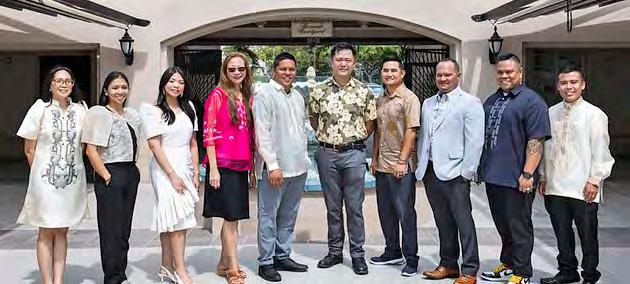
Lastly, HFC contributor Linda Dela Cruz submits “Empowering Leaders the Filipino Way,” an article on the FCCH Fellows program for leadership and some of the recipients. Dela Cruz was honored to be selected for the FCCH Fellows Program Class of 2026. Congratulations, Linda.
We hope you enjoy these articles as well as our other columns and news. Have a great time celebrating Father’s Day. Thank you to all our fathers for your support, guidance and protection.
Mahalo for supporting the HFC. Visit our website thefilipinochronicle.com to get your free e-copy of each issue. For your advertising needs, email us at filipinochronicle@ gmail.com.Until the next issue, Aloha and Mabuhay!
Charlie Y. Sonido, M.D.
Publisher & Managing Editor
Chona A. Montesines-Sonido
Associate Editors
Edwin QuinaboDennis Galolo
Contributing
Editor
Belinda Aquino, Ph.D.
Design
Junggoi Peralta
Photography
Tim Llena
Administrative Assistant
Lilia Capalad
Editorial & Production Assistant
Jim Bea Sampaga
Columnists
Carlota Hufana Ader
Rose Cruz Churma
Elpidio R. Estioko
Willie Espero
Emil Guillermo
Gary Hooser
Arcelita Imasa, M.D.
Seneca Moraleda-Puguan
J.P. Orias
Charlie Sonido, M.D.
Emmanuel S. Tipon, Esq.
Contributing Writers
Clement Bautista
Edna Bautista, Ed.D.
Teresita Bernales, Ed.D.
Sheryll Bonilla, Esq.
Dr. Dylan Bothamley
Serafin Colmenares Jr., Ph.D.
Linda Dela Cruz
Carolyn Weygan-Hildebrand
Amelia Jacang, M.D.
Caroline Julian
Max Levin
Raymond Ll. Liongson, Ph.D.
Federico Magdalena, Ph.D.
Matthew Mettias
Maita Millalos
Paul Melvin Palalay, M.D.
Renelaine Bontol-Pfister
Seneca Moraleda-Puguan
Jay Valdez, Psy.D.
Amado Yoro
Philippine Correspondent:
Greg Garcia
Neighbor Island Correspondents:
Big Island (Hilo and Kona)
Grace LarsonDitas Udani
Kauai
Millicent Wellington
Maui
Christine Sabado
Big Island Distributors
Grace LarsonDitas Udani
Kauai Distributors
Amylou Aguinaldo
Nestor Aguinaldo
Maui Distributors
Cecille PirosRey Piros
Molokai Distributor
Maria Watanabe
Oahu Distributors
Yoshimasa Kaneko
Shalimar / Jonathan Pagulayan
Advertising / Marketing Director
Chona A. Montesines-Sonido
Account Executives
Carlota Hufana Ader
JP Orias
Mahalo to Our Hawaii Lawmakers for Preserving the Income Tax Relief
Kudos to Gov Green and Hawaii’s lawmakers for preserving much of the 2024 income tax relief that was promised to working and middle-income families. Senate Bill 3125 passed this Legislature. In it, tax cuts remain in place for most residents, including joint filers earning under $350,000, heads of household under $262,500, and single filers under $175,000.
It also does not include a proposed 1% increase on the top three income tax brackets, which some believe could help to protect many local small business owners who file as individuals and support Hawaii’s ‘broader economy.
SB 3125 tax-savings matters in a state where the cost of housing, food, utilities, and transportation continues to strain household budgets. It’s estimated that roughly 90% of local families could benefit from this bill.
Senate Ways and Means Committee Chair Donovan M. Dela Cruz said of the importance of preserving the full tax relief package, “Affordability for local families remains a top priority for the Senate. Despite federal funding cuts affecting our budget, we are standing by our commitment to the people by preserving and continuing the promised tax relief.”
According to the Institute on Taxation and Economic Policy,
(Filipinos ....from page 2) as a choice is always an encouraging option when truly given a free choice versus a survival option. To be in another country with another culture and language can be exciting and enhance personal growth.
Global economists and banks are optimistic about the Philippines’ future and forecast the nation to be among the biggest in terms of GDP, top 20 even, in a few decades.
In part, this would be partly attributed to the OFWs, particularly those in highly skilled professions, bringing back what they’ve learned abroad back home to the Philippines.
May 2026, tax savings could be as follows:
• Lowest 20%
(under $27,900) -$37
• Second 20%
($27,900-$57,000) - $413
• Middle 20%
($57,000-$98,400) -$850
• Fourth 20%
($98,400-$152,000) -$1,274
• Next 15%
($152,000-$345,000) -$1,773
• Next 4%
($345,000-$783,000) -$2,789
• Top 1% ($782,300 and up) No tax cut.
Taxing higher-income earners vs taxes on big corporations
But while lawmakers protected most of those tax cuts, a broader debate that should concern Hawaii residents is the belief that budget pressures can be solved by taxing high-income earners more. That approach may sound politically easy, but it is economically shortsighted.
When states send the message that success will be penalized with ever-higher taxes, they risk driving away the very people who invest, build small-medium
In a way, the OFW experience abroad is a sort of working lab from which skills carry over to the Philippines.
Future less known for OFWs
In the coming years with the AI revolution, the need for foreign workers will undoubtedly change. Analysts are already warning that both remittances and service exports may face headwinds as AI spreads.
The general consensus with AI is that traditional overseas jobs may shrink, particularly those in the service-sector workforce and customer support. Many OFWs fall into this category. At
sized companies, create jobs, and expand opportunities. When the highest income earners are exorbitantly taxed, it could mean investments, payrolls and jobs leave our state.
Perhaps, instead, taxes to support critical infrastructure and the integrity of much needed social programs in the state should be sought after from big corporations. Many people believe large profitable companies should contribute more, especially if households and small businesses are also being asked to pay taxes. It’s only fair.
Corporate taxes can help fund schools, roads, healthcare, public safety, and other services that businesses and residents rely on. Big corporations use public infrastructure, courts, transportation systems, and workforce training pipelines. Taxes can help cover those shared costs.
Most importantly, revenue from large corporations can lessen the need for states to rely as heavily on income taxes, sales taxes, or property taxes on residents.
the same time, human-service oriented work like nursing and elderly care will be safe when the AI work environment is in full bloom. Many OFWs also fall into this category.
Besides the human-service oriented work (focused on health and care), Filipinos hoping to become an OFW in the future must move from labor involving routine work to developing talent that’s specialized. Digital and AI literacy are necessary base skills.
What this means is that the Philippines must also move in that same direction that other advanced countries are moving
Sound planning
As federal funding becomes more uncertain and limited, lawmakers must pursue smarter budgeting, greater efficiency, reducing waste, and creating conditions that lower the cost of living and encourage private-sector growth.
Cannot ignore public needs supported by state programs
It’s also a reasonable argument some are making that continuing broad tax cuts could reduce state revenue at a time when Hawaii still faces major public needs, including housing, infrastructure, education and healthcare. Furthermore, even if most families benefit, some residents may question whether the tax relief is sufficiently targeted toward those with the greatest financial need.
In other words, does the few hundreds of dollars in tax relief benefit more to lower-incomed segments in society than the state programs they benefit from which could be compromised due to budget cuts. It most likely doesn’t.
Still, Hawaii families and individuals keeping more of what they earn at a time when the state’s cost of living remains among the highest in the nation is much welcomed. The income tax relief can give families more breathing room for everyday expenses, savings and emergencies. When residents have more disposable income, they are more likely to spend money which benefits the state’s overall economy.
with AI. Their workforce and schools will need to reskill their own workers domestically in order for them to also be valued as potential OFWs.
`In a future where AI will leave huge unemployment globally, the OFW as a human export market is precarious. Local economies around the world will be faced with reskilling their own populations for the fewer jobs available. Could it be that the Philippines will finally be forced to be less dependent on their OFW sector and work harder to build a stronger economy after all? It’s a no-brainer that the Philippines should be preparing.
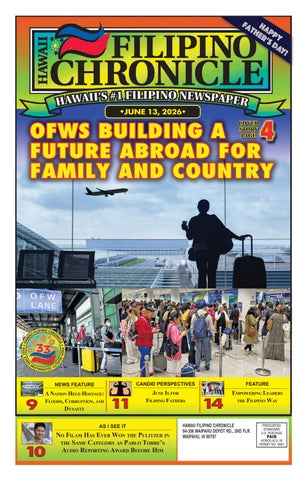
Across Oceans, Overseas Filipino Workers Build a Future for Their Families and Country
By Edwin Quinabo
For some foreign Filipino teachers in Hawaii, the journey to the classroom often begins with sacrifice at home. Kristine Cueto, who moved from Pangasinan, Philippines to Waipahu in 2021, and Raymart Jayson M. Fundal, who left Las Piñas City, Philippines for Kailua, came through the J-1 Exchange Teacher Program carrying the same goal: to support their families while building new careers abroad. Their stories reflect both the promise and the cost of migration. In Hawaii, both educators faced dislocation and the challenge of adapting to a new school system and new life.
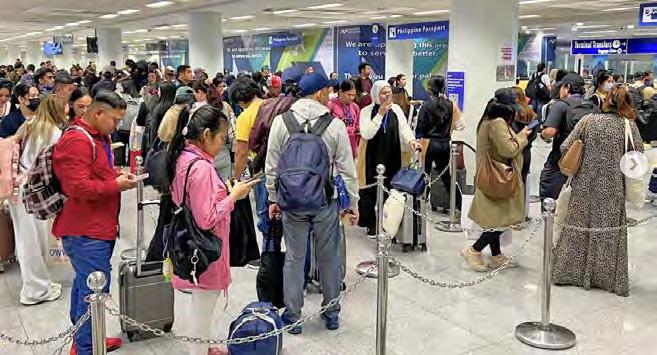
Cueto and Fundal are a part of what the Philippines refer to as Overseas Filipino Workers (OFWs) who are hailed in their country as modern-day heroes for their work supporting their families and massive contributions to the Philippines economy.
Recent shifting trends of OFWs
As teachers, they also represent a shift of OFWs in recent years. Consul General Arman R. Talbo of the Philippine Consulate General in Honolulu, explains “The Overseas Filipino story has widened and deepened. The world now needs Filipino nurses, IT workers, engineers, and teachers, and they are going to more countries than the old Gulf-and Asia routes.”
He adds, “women have gone beyond caregiving and service sector work abroad; many now lead in professional and technical fields. We are now seen as great builders and contributors in foreign countries and communities we work in. Technology and AI will definitely change the way migration works, and we need to be aware of its impacts and be prepared for them.”
Consul Talbo sees another big shift in how the Philippines sees its people abroad, “not as workers to be counted, but as partners, investors, donors, advocates, and a bridge to a wider world. Our government’s goal is to make working abroad an option, and to provide returning Filipinos the opportunity to work productively in the Philippines.”
He adds, “The other contributions of OFWs include the skills they bring back and the ties they build abroad, not just the amount they wire home each month.”
Dollars pumped into the Philippines economy
OFWs have been a major economic force in the Philippines for decades. In 2025, cash remittances from Filipinos working abroad reached a record US$35.63
billion, according to the Bangko Sentral ng Pilipinas (BSP), underscoring the crucial role migrant workers play in keeping the economy buoyant and supporting household spending.
Total remittances are equal to about 7.3% of Philippine GDP. The record US$35.63 billion in 2025, was 3.3% higher than the US$34.49 billion recorded in 2024, BSP figures show.
Estimate of OFWs, demographic, and types of work
The latest official count from the Philippine Statistics Authority (PSA) has 2.19 million OFWs in 2024, with women making up the majority at 57.2%. The largest age group was 45 years old and over (25.8%), followed by those aged 30–34 (21.3%) and 35–39 (19.2%).
The PSA says 43.6% of OFWs in 2024 worked in elementary occupations, followed by plant and machine operators and assemblers (15.4%) and service and sales workers (12.7%). While there are gains being made in higher quality jobs, a large concentration of Filipinos still holds difficult, lower-paid, and often precarious jobs abroad, statistics show.
The
social and personal costs of OFWs
Behind those billions in remittances are millions of stories of sacrifice and resilience. For decades, labor migration has served as both an economic strategy and a social reality for the Philippines. While remittances are celebrated, they often come with social and personal costs like separation from families.
Consul Talbo said, “both remittances and the social costs of labor migration are real and can be said in the same breath. Remittances lift families and the nation. They also come at a price; children raised by one parent or by grandparents, marriages strained by distance, years lost to working overseas. We must use available resources and technology to mitigate the negative impacts. The aim should not be to send more
COVER STORY
money. It should be to make leaving a choice, not the only option, which means building decent jobs at home and protecting Filipinos who work abroad. These two are core priorities of the Philippine government.”
Secretary Hans Leo Cacdac, Department of Migrant Workers, said “Your [OFWs] remarkable contributions and sacrifices are the very essence of our nation’s strength and progress.”
President Ferdinand R. Marcos Jr. said while speaking to the Filipino community in Osaka, Japan, “I recognize the weight of your [OFWs] sacrifice, and the strength it takes to provide for your families from afar. That is why we will never tire of honoring you and finding ways to improve your lives. You are at the heart of our government’s efforts, and you deserve not only our gratitude, but you deserve our full support.” An estimated 350,000 Filipinos live and work in Japan, including OFWs like nurses and laborers.
Where are OFWs going to for work
Top OFW destination countries from the latest official PSA include Saudi Arabia at 21.95% and United Arab Emirates, 12.4%. The PSA also confirms that most OFWs in 2024 were working in Asia (74.5%), followed by Europe (10.6%), North and South America (9.2%), Australia (4.4%), and Africa (1.3%).
While there are no official statistics on the number of OFWs in the U.S., remittances sent to the Phil-
Motivation for leaving the Philippines and initial adjustments and realities: Fundal and Cueto
FUNDAL. Fundal came to Oahu carrying the weight of family responsibility and the hope that his work abroad could bring stability to the people waiting for him at home. “My motivation has always been my family. My parents are growing older, my mother is a brave leukemia survivor, and my younger sister has special needs. I wanted to give them the best life possible and return the love they gave me growing up.”
But this journey has also been about professional and community growth. “Beyond providing financial peace of mind for my family, I am here to serve the children of Hawaii,” Fundal said.
He’s had nine years of teaching special education and is currently based at Kainalu Elementary School. Before moving, he had already spent six years teaching in the Philippines. Fun-
dal said he arrived with fears of isolation, unsure how he would adjust to life in a new country. “Before I left, I was terrified. I imagined I would struggle alone with no one to help me transition,” he said.
Fundal describes that he is not alone and gave a heartfelt example. “In reality, I was enveloped by the Aloha spirit. When my batch of J-1 teachers went without a salary for the first two months in 2023, local neighbors and the Filipino community stepped in with food and groceries. Professionally, adjusting to a new school curriculum and writing complex American IEPs (Individualized Education Programs) was hard, and the language barrier with mainland teachers was challenging.”
Beyond the classroom, Fundal has tried to root himself in the community that welcomed him. He volunteers by teaching Tagalog classes at the Filipino Community Center in Waipahu, helping local Filipinos strengthen their connection to language and heritage.
“I imagined it would be a happy life. Most people dream of America, the opportunity, the comfort, the promise of something better. I was no different. But when I arrived, I quickly learned that America has a way of humbling you. The early days were hard in ways I had not expected. I had no car. I waited for buses, walked miles carrying heavy bags of groceries, and got lost more times than I can count. The comfort and familiarity I had in the Philippines simply were not there. I was surviving on my own, because everyone else had their own life to manage. Friends helped wherever they could, and those small kindnesses kept me going. Coming as a J1 SPED teacher also meant starting over professionally. I felt like a blank sponge, knowing I had experience, but needing to learn everything anew in a different system, a different context, a different world. I told myself every single day that I could not fail my administrators, and I could not fail my family. Most of all, I could not fail my daughter.”
– Kristine Cueto
OFW, Special Education teacher at August Ahrens Elementary School in Waipahu, Hawaii
ippines from the U.S. accounts for about $12.8 billion, the largest single source of remittances globally to the Philippines, according to the BSP. Behind the U.S. are Singapore and Saudi Arabia.
At school, he credits his principal, Resha Ramolete, along with his special education team, co-teachers and others in his support circle for helping him grow into the role. Through those relationships, Hawaii has become not just a workplace, but a community in which he has found both purpose and belonging. “I am deeply grateful to my principal for believing in me and helping me become the best version of myself. I am also thankful to my special education team, my co-teachers, my landlords (Keoki Fraser in Waimanalo and my Ilocano family in Kailua), and my kind neighbor who drove me to school every single day.”
CUETO. Cueto is a Special Education teacher at August Ahrens Elementary School in Waipahu, Hawaii, one of the largest elementary schools in the state. She also serves as SPED Department Chairperson. She was among the first five Filipino J1 teachers hired in Hawaii and helped open the door for others to follow.
Like Fundal, Cueto’s motivation for coming to the U.S. for work is rooted in family, determined to build a better future for her daughter and support her parents. She described her decision to leave the Philippines. “I decided to work abroad in 2019. The plan was set, my heart was ready and then the pandemic hit, and I had to wait until the embassy reopened in 2021. Those two years of waiting tested my patience, but they never changed my mind. I was a single mother, and that was reason enough. I wanted to give my daughter the life she deserved. I wanted to repay my parents for everything they had given me. And I wanted to be someone who could help others in need. Those hopes were what carried me through every uncertain moment.”
Many OFWs talk about the difference between their expectations of moving to the U.S. and the realties when arriving. Cueto said, “I imagined it would be a happy life. Most people dream of America, the opportunity,
the comfort, the promise of something better. I was no different. But when I arrived, I quickly learned that America has a way of humbling you. The early days were hard in ways I had not expected. I had no car. I waited for buses, walked miles carrying heavy bags of groceries, and got lost more times than I can count. The comfort and familiarity I had in the Philippines simply were not there. I was surviving on my own, because everyone else had their own life to manage.
“Friends helped wherever they could, and those small kindnesses kept me going. Coming as a J1 SPED teacher also meant starting over professionally. I felt like a blank sponge, knowing I had experience, but needing to learn everything anew in a different system, a different context, a different world. I told myself every single day that I could not fail my administrators, and I could not fail my family. Most of all, I could not fail my daughter,” Cueto said.
What You Should Know About Deeds
By Martina Agonoy
% Won’t Avoid Probate
1% is so tiny, do we really have to go through probate for a tiny 1%? Yes, you do. A fraction ownership is still ownership and the amount of probate work is still the same.
Some people use the 1% to ensure that one co-owner continues to have the right to live in the house until he or she dies. The small 1% percent doesn’t avoid probate as the owners intend.
After the 1% owner passes, the surviving owners might want to refinance the home loan or even sell the property. It’s then that they find they have to open a probate case to transfer the ownership to the heir of the 1% owner so they can take action with the home.
If you’re in a situation where you might be a co-owner and the idea of using 1% ownership comes up, there are alternatives. Using a “1% ownership” won’t avoid probate. Talk with the lawyer who prepares the deed about options to avoid probate.
- With a Joint Tenancy, when one owner dies, the property passes to the owners who are still alive, but the last owner takes the whole property.
- In a Tenants in Common ownership, each owner has a separate share that passes to her heirs or beneficiaries, not to the other owners. To avoid probate, that owner could use a Transfer on Death Deed to give her share to her beneficiaries at her death.
- A Life Estate gives an owner the right to live in the house until she dies. At her death the ownership passes to the “remaindermen”.
“I Got the House in the Divorce”
If the divorce decree has your spouse giving her or his share of the house to you, try to spend the money to prepare a deed so that you and your spouse sign the deed along with the decree.
It’s easiest to get cooperation to sign the deed when it’s signed along with the decree. If the deed is signed after the decree, some spouses refuse and that delay causes headaches because continuing joint ownership prevents finalizing the separation between the spouses.
If your ex-spouse won’t cooperate in signing the deed conveying the house to you, you need the court to sign the deed in place of the non-cooperating spouse.
If you used a pro se divorce decree, that court template states that you file a motion for the court to order that
(COVER STORY: Across ....from page 5)
Gains of working abroad
Many OFWs earn significantly more than they could in similar jobs at home, allowing them to provide for their families’ daily needs, pay for education, cover medical expenses, and invest in housing or small businesses. In many households, remittances from abroad have become the foundation of financial survival and upward mobility.
FUNDAL. Fundal said the income he earns abroad has helped secure the care his family needs, easing the burden on relatives who had long been carrying the load. His parents can afford maintenance medicines, and his mother’s treatment has continued. Most meaningful to
the clerk sign in place of the non-cooperating spouse.
If your decree was drafted by a private attorney, usually the decree has a paragraph that authorizes the court clerk to sign in place of the non-cooperating spouse without a court motion having to be filed. This is much faster than the pro se provision.
Another consideration is which system your property is registered in at the Bureau of Conveyance. This makes a difference in the procedure you have to follow if a deed is signed after the decree is issued by the court.
The marital status of the parties to the deed has to be stated on the deed. The registration system makes a difference in the procedure you have to follow if a deed is signed after the court issues the decree because your marital status has changed.
Look at the Bureau of Conveyance stamp on the top of the first page of your deed. If the stamp is on the right side, the house is registered in the Regular System. To note the divorce and the change in marital status, you submit an affidavit to the Bureau of Conveyances along with the deed.
If the stamp is on the left side, the house is registered in the Land Court
him, he said, is the progress of his younger sister. He explained, “being away has allowed me to secure their health and survival. They can finally afford their maintenance medicines. Most beautifully, it has transformed my sister’s life. With the resources I send, she now receives private, home-based life skills tutoring. Because of this, her seizures have stopped, and she is learning to become independent. She is the very reason I became a Special Education teacher in the first place. Seeing her progress, even from afar, makes every single sacrifice worth it.”
Fundal said, “Leaving home brought smiles back to
System. You need to file a petition with the Land Court to note the divorce. This takes several weeks to a few months to be reviewed and finalized with the Land Court. You need the Land Court Order noting the divorce before the Bureau of Conveyances will accept the deed.
You can avoid all these procedural extras and time makes it worthwhile to spend a little more to have the deed prepared so that it can be signed concurrently with the decree.
Transfer on Death Deed
If you’re the beneficiary designated on the Transfer on Death Deed, you need to take one more step to have the house turned over to you. If the house is registered in the Regular System, you need to submit an affidavit to the Bureau of Conveyances that the Transferor has passed. If the house is registered in the Land Court System, you need to file a petition that the Transferor has passed and obtain a court order. Then you’ll file the order with the Bureau of Conveyances.
How Much Does It Cost?
Documents filed in the Regular System in the Bureau of Conveyance cost $41 each. That includes deeds, short form trusts, and
affidavits. Documents filed in the Land Court System cost $36, and if the document changes the ownership, you have to pay an additional $50 for the issuance of a new certificate of title. So for a deed, you’d pay $36 for the deed and the new certificate of title. But if you were recording a transfer on death deed, there’s no new certificate of title issued because the ownership doesn’t change until after you pass and you’d pay just $36.
What’s the P64B?
Don’t be intimidated by all the lines on the P64B that you’ll clip to the deed. The lawyer who drafted your deed will prepare this for you including checking the appropriate box. Usually you will simply sign on the bottom of the backside, above your email and phone number.
The P64B is a notice to the Tax Department that the ownership has changed. This document is required to accompany the deed so make sure you bring it with you when you record the deed. You won’t need a P64B if you are recording a Transfer on Death Deed because ownership won’t change with that deed, and the P64B will be turned in to the Bureau after you pass (see above).
We hope this answers some questions you may have about deeds.
my parents’ faces. My parents are aging and require high-maintenance medical care, my grandmother is 99 years old, and my sister experiences seizures due to her disability. My working abroad also lifted a heavy burden off my Aunt, Tita Susan Abiog in New Jersey, who had been supporting us alone for years. Together, we have secured my family’s health. Without this opportunity as an OFW, I honestly do not know if my mother would have survived her battle with leukemia. Today, they are taken care of.”
family in ways that are real and concrete. I was able to pay off all my loans and debts, a weight I had carried for years, finally lifted. I was able to send my family on trips they had never been able to take before, buy things we could only look at from a distance, and eat at restaurants that once felt out of reach. Most importantly, I was able to secure my daughter’s education and give her a foundation I never had at her age. Every sacrifice had a return, and watching my family’s life improve made it all worth it.”
Sacrifices
Life overseas can also bring challenges in the
workplace and the wider community. Every remittance sent home tells a story of distance: a parent missing birthdays, a child growing up through video calls and promises of a better future. Some OFWs must adapt to unfamiliar languages, cultures, and labor systems, while others face difficult working conditions, job insecurity, or the risk of exploitation. OFWs frequently spend years away from their spouses, children, and parents, missing important family events and even times of crisis. Separation can create loneliness and homesickness. Loved ones they leave behind commonly feel iso-
CUETO. Cueto said on the benefits of working abroad, “leaving home changed everything for my (continue on page 8)
A Message from Dad, Pop Pop, Uncle Gary
By Gary Hooser
As a father, grandfather, and uncle - I’d like to have a word with you all.
“You ALL” means family, friends, hanai ohana, and all who are kindred spirits in this journey of life. While I certainly don’t know everything, I have learned a few things over the years that I’d like to share.
My goal is to help make your path forward a little smoother, your journey up the mountain a little swifter, and the joy and fulfillment of it all perhaps a bit brighter.
First however, you must do something for me.
Please take a few minutes, read the lyrics and listen to the music of Bob Dylan’s “Forever Young”. Can you do this now
please? I’ve posted a link to make it easy at garyhooser. blog - I’ll wait. Thank you.
As brother Bob says in his opening refrain:
May God bless and keep you always / May your wishes all come true / May you always do for others / And let others do for you / May you build a ladder to the stars / And climb on every rung / May you stay forever young
So, how can I add to this? What wisdom or basic advice does Dad, Pop Pop, and Uncle have for you that can top the words of Bob Dylan?
You are a unique individual with unlimited potential to achieve whatever goal you set your sites on. Of this I have no doubt whatsoever.
You must set out your goals on paper, develop a plan to get there, stay laser focused, adapt the plan as needed, enroll others to help,
and work very, very hard.
Some basic truths of success: Let go of your fears of doing the wrong thing or making mistakes.
Be your authentic self. Follow your na’au. Always being truthful in your communications is essential.
When you say you’re going to do something, come through on it. Your reputation as an honest, truthful, dependable human being - is everything.
Get rid of negative friends, with bad habits. Drugs and alcohol get in the way.
Surround yourself with those who share your core values.
Asking for help is an essential component for success. It goes without saying we can accomplish much more when we work with others.
Never hesitate to ask. If your cause is worthy, if you have a plan to get there,
and willing to do the workthen ask others to join and help you.
If your goal requires money, then ASK. You will be asking adults. Let them make the decision to tell you yes or no, but if you believe in your mission then ASK.
Remember when you come against a roadblock, there are ALWAYS “workarounds”.
When faced with a seemingly insurmountable challenge preventing you from reaching your objective, NEVER GIVE UP, but instead seek out other ways to accomplish the same goal.
Thank profusely those who help, and forgive gently those who fall short. There is no shame in losing.
So to my friends, family, and extended ohana sorting through the thicket of life (as I am still), remember always:
1. Your potential is limitless.
2. Set your goals, plan your work, work your plan.
3. Ask for help. Help others.
4. Surround yourself with good people.
5. Work hard. Always know there’s a path to victory.
6. Always, Always, Always - speak the truth.
7. When you fall, get up, get back into the ring.
8. Let go of the fear. Be your authentic self. Follow your na’au.
9. Celebrate the wins, reward the work, learn from the mistakes.
10. Drink water, eat right, go out and walk - every single day. And if you ever need help from Dad, Pop Pop, or Uncle - just call.
GARY HOOSER is a former Hawaiʻi State Senator and Majority Leader.
By Will Espero
June is the month for grads and dads. It’s also the beginning of summer and countless vacations. Be safe and be smart when visiting unfamiliar locales, and follow all signage and rules. Make memories and don’t be a statistic.
Congratulations to all high school students who graduated in Hawaii this year. Your future looks bright; however, you must look at further education to improve yourself.
This does not automatically mean one must go to college, however. Enrollment in a community college in Hawaii is a great deal and an opportunity that is not as expensive as a four-year university.
lation and strains in family relationships.
FUNDAL. Fundal said the hardest part of life overseas is the distance from his family. He cannot be there for every illness or emergency, a reality he described as agonizing. Yet he returns again and again to the same conviction: that his purpose is to serve both the children in his classroom and the family whose future depends on him. For Fundal, the journey to Hawaii has become more than a job abroad. It is a story of duty, faith and the quiet persistence required to build a life across an ocean.
He said, “It is agonizing to be oceans away from an aging family and a sister with special needs. I want to be right by their side when they are sick. Because I cannot be there physically, I pray harder every day and surrender their safety to God.”
CUETO. Cueto said the gains were concrete, but never simple. The hardest cost, she said, was the five years she spent away from her daughter. “Every day I went to work and poured myself
Graduation, Opportunities, and Fathers
A four-year college is also a route many will take, and this moment in the life of young adults should be a time of being open-minded, absorbing all knowledge available, and learning from those one values or appreciates.
Another option is a trade school, apprenticeships, or a union-affiliated opportunity to grow and learn. Some people like to work with their hands and create or build, and this route can be inexpensive or more within some individuals’ budgets.
There are many choices available such as construction-related, culinary, transportation jobs, health industry, technology, and retail to name a few. Take the time to research and see what interests are available.
The military is another place many young adults consider, and this could be a landing spot if one is
into teaching and caring for other people’s children, knowing I could not do the same for my own. I missed her school events, her milestones, the ordinary everyday moments that a mother is supposed to be present for. Five years. I missed five years of being by her side. That is something no amount of money or career achievement can fully make up for, and I carry it with me always,” she said.
Cueto sees both hardship and transformation. What began as a journey driven by necessity became, over time, a story of endurance, leadership and a mother’s determination to become someone her daughter could be proud of.
Highlighting some of her moments in Hawaii, she said “I initiated building a sensory room, started a student coffee cart in partnership with Waipahu McDonald’s, organized our school team to join special Olympics, initiated parent training programs, and mentored teachers and staff across our department. I also found love, a husband who
still unsure what he or she wants to do in life.
The military has many career paths where one can learn and excel, and the cost is more or less free. Discipline and commitment are needed to do well, but the benefits are endless, especially if one stays at least 20 years and earns a pension. Shorter stints are possible to assist someone in finding his or her path in life.
The popular GI Bill is offered to service members and veterans who may want to go to college
loves me, my daughter, and my family unconditionally. I have now completed my five years of J1 service, and I look back with a full heart.
“I am grateful for the hardships that shaped me, for the people who believed in me, especially my mentor/ vice principal Mr. Ronie Martinez and Ms. Kelly Pila and for every moment that reminded me why I came here in the first place. I left home with nothing but love and a dream. I crossed oceans not to find myself, but to build a life worthy of the people who were waiting for me back home. America humbled me. It broke me open. And in that breaking, I discovered what I was truly made of. My students and my workmates were not just a work, they were my reason to show up, my reason to keep going, my reason to be better. When you love what you do, it stops feeling like a job. And for five years, it never did. I did not just survive the distance; I let it grow into someone my daughter can be proud of. Hawaii, you will always have a piece of my heart.”
or other training programs after serving our country. I have family members and friends who have benefited from the GI Bill, and this continues to be one of our government’s major success stories.
Entering the immediate workforce is an option for some, and for young adults, don’t be rushed or pressured to choose your final career path. There are so many opportunities available, and one may need some time to see what is out there.
It’s important to see where a business or organization is going in terms of growth, what its goals or objectives are, how one can grow and advance, and if there is long-term stability.
Working for the county, state, or federal government is a viable option, and if one is able to get a civil service job, this path can turn into a long-term
Communication, maintaining close relationships: Guia and Medrano
Despite the distance, OFWs say modern tools of communication like video chats and social media help them share daily updates, celebrate special moments and maintain close relationships.
Ryan G. de Guia, a Computer Science teacher at Fern Elementary School, is from Capas, Tarlac, Philippines.
“Conversation with my family was limited because of the time difference. Trying to parent, comfort, and guide them through a screen makes me feel the distance every single day is also a challenge. But I always make sure they know every single day that all the sacrifices I am making here are entirely for their future,” he said.
Erick Medrano, a Cultural Exchange teacher specializing in science education at Highlands Intermediate School in Pearl City, recently relocated to Hawaii from Banna, Ilocos Norte, Philippines. He signed up to be an OFW to grow both personally and professionally. “Moving here was a big
opportunity.
A civil service test is required, but if one is selected, the benefits can be very attractive, especially in Hawaii. Appointed government positions may not have the protections of a civil service job, but they can help get one’s foot in the door and build one’s resume.
Our state and nation have labor shortages in many areas and industries so it’s okay to be picky and cautious. If one wants to wait, travel, or search for opportunities, go ahead as long as one is not a burden to friends or family.
Volunteering is one way to meet people, engage in the community, stay involved, and be productive. Volunteering is a way of giving back or lending a hand, and it can sometimes also lead to employment or job offers. Organizations like
(continue on page 10)
deal, but it’s given me a lot of chances to help my family back home. Now, I can make sure they have what they need every day. What makes me really proud, though, is that I can help pay for my niece and nephew to go to school. It was hard to leave home but seeing how my job here is helping my family and paying for their education makes it all feel worth it. My family is doing okay now, and that’s all because of my job in Hawaii. It’s a great feeling to know that I’m making a difference in their lives,” he said.
On communication and maintaining a close relationship with family, Medrano said, “We talk all the time using things like FaceTime and social media, so it feels like we’re not missing out on anything. My family has always been good at understanding each other, and that’s what makes it easy for us to stay connected and support each other, even when I’m working in a different country. We just make it work, and it feels like nothing has changed.”
(COVER STORY: Across ....from page 6)
NEWS FEATURE
A Nation Held Hostage: Floods, Corruption, and Dynasty
By Federico V. Magdalena, Ph.D.
Recently, the Philippines has endured a triple crisis: devastating floods, entrenched corruption, and dynastic politics. Each reinforces the other in a cycle that has reduced governance to chaos and dysfunction.
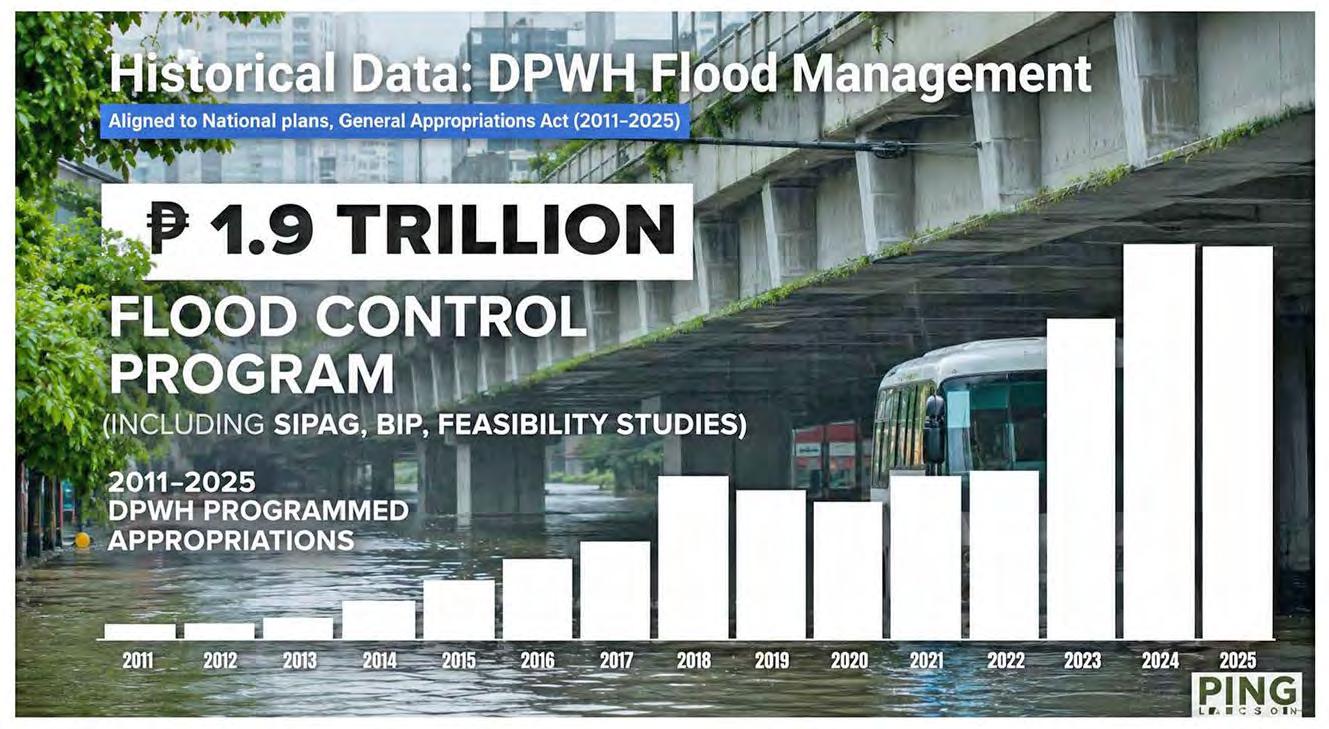
Flood-control corruption alone costs billions annually, driven by collusion among Department of Public Works and Highways (DPWH) engineers, contractors, and politicians for personal gain. From 2023 to 2025, Senator Panfilo Lacson revealed the flood control budget had ballooned to ₱1.9 trillion, exceeding the total allocation of the previous twelve years combined. Obscured by widespread infrastructure collapse during the 2025 typhoons, this massive budget increase triggered investigations that implicated contractors, DPWH officials, and legislators alike.
Pork Barrel Anomaly
The last three bars reflect sharp budget increases driven by congressional insertions into the National Expenditure Program (NEP). The first accounts for roughly half the total, as traced in the analysis by VERA Files columnist Tita C. Valderama. Politicians have profited most from this amendment method, historically using it to extract kickbacks from favored contractors and funnel public funds privately through insider collusion. The anomaly was exposed in 2025. Another anomaly exposed was the “allocables,” a type of pork bar-
rel. Though this practice was outlawed in 2013 (PDAF) and 2014 (DAP) by the Supreme Court, this new pork barrel, says Guinevere Latoza of PCIJ, has cleverly mutated into a more insidious form hidden in the DPWH budget. These sources of corruption are described as follows:
• Congressional “Insertions”: Flood Control Projects or funding added/modified during congressional committee deliberations. This refers to the practice of powerful politicians secretly altering the NEP’s budget to benefit their districts or constituents.
• Direct “Allocables”: pork barrel-like allocations to lawmaker districts that are already integrated into the NEP, determined by Undersecretary Catalina Cabral’s formula. These are budgetary distributions usually made to favored legislators.
To be fair, insertions and allocables are not inherently evil. In
many instances, these funds yield tangible results: roads and bridges are constructed, dikes and water pumps are installed, and multipurpose halls rise at the barangay level. Yet, some corrupt officials dip their fingers into the process, from awarding rigged contracts to demanding a fixed percentage of the project costs.
The tragic effects of this systemic plunder are substandard, overpriced infrastructure. Worse are “ghost projects”— anomalies in which nothing was built, yet the budget was fully spent.
Dynastic Warfare
Dynastic infighting paralyzes critical public functions like flood control, driving systemic failures that cripple the country’s economic standing and foreign investment. Highlighting this decline, Transparency International’s 2025 Corruption Perceptions Index ranks the Philippines as the third most corrupt nation in Southeast Asia.
Entrenched corruption and dynastic politics
impede political progress. Although many dynasties are criticized for nepotism and conflicts of interest, some have demonstrated effective local governance. Philippine politics is visibly dominated by political dynasties, exemplified by the country’s rulers: the Marcoses and the Dutertes. Though explicitly prohibited by the 1987 Constitution, the practice persists as if political dynasties were normal. Consider this landscape, partly painted by Sheila Coronel of Columbia University:
• The Senate: Thirteen or over half (four pairs are siblings) of the 24 Senators belong to family dynasties. Meaning, they have close, currently elected relatives (up to 3rd degree).
• The House: Eight out of every ten legislators are members of political dynasties.
• Local Government: Seventy-one out of 82 provincial governors are from these families.
Rival dynasties rou-
tinely attempt to eliminate one another to monopolize power. Some keep the economic spoils within their immediate bloodlines. While Congress now attempts to pass an enabling law to limit family dominance, the political system seems not ready for the change.
The Impeachment Spectacle
Nowhere is this dynastic warfare more vivid than in the current move to impeach Vice President Sara Duterte. To the objective analyst, the proceedings read less like a genuine pursuit of constitutional accountability and more like a high-stakes clan war. Analysts warn that amid this power struggle, ordinary Filipinos remain the ultimate losers, governed by self-serving dynasties regardless of which family flag prevails.
Supporters of the Vice President argue that the impeachment’s ulterior motive is political. That is, to permanently bar her from running for president in 2028, where
(continue on page 11)
AS I SEE IT
By Elpidio R. Estioko
Filipino Americans are earning recognition by winning international awards every now and then, but the case of Pulitzer winner Pablo Torre was a unique one.
According to Inquirer. net USA+1, there is no record of a Filipino-American journalist winning a Pulitzer Prize before Pablo Torre. His 2026 Pulitzer Prize in Audio Reporting for Pablo Torre Finds Out marks the first time a Filipino-American has received this honor.
As I See It, this is an awesome achievement, a rare but prestigious display of commitment and expertise in the field of journalism.
Pablo Torre is a Harvard-educated former Sports Illustrated and ESPN writer. He was recognized for his investigative podcast series that explored the Los Angeles Clippers’ alleged use of a $28 million endorsement deal with Aspiration, a California-based environmental firm, to circumvent the NBA’s salary cap.
No Filam Has Ever Won the Pulitzer in the Same Category as Pablo Torre’s Audio Reporting Award Before Him
He is known for his investigative sports media work hosting the Pablo Torre Finds Out podcast, which won the 2026 Pulitzer Prize for Audio Reporting.
The Pulitzer Prizes acknowledged that his award was the first Pulitzer in Audio Reporting awarded to someone of his background.
While Filipino journalists and media professionals have won other prestigious awards, including the Pulitzer Prize for Public Service and the Pulitzer Prize for International Reporting, “no Filipino-American has ever won the Pulitzer in the same category as Torre’s Audio Reporting award before him.”
With that, the FilAm community should be proud of his achievement which will somehow serve as a model for excellence to the community to emulate.
The podcast won the award for four episodes in September that probed the financial relationship between Clippers All-Star Kawhi Leonard and As-
piration, a now-defunct third-party company that Clippers owner Steve Ballmer had invested in.
For the readers to know, the findings of the PTFO investigation, Aspiration signed Leonard to a $28 million no-show marketing deal, with the implication that this money was instead funneled to Leonard from Ballmer in violation of the NBA’s salary cap.
Also in 2026, the show investigated how convicted pedophile Jeffrey Epstein used the biggest brand in academia to launder his reputation. The investigation uncovered a $25,000 Jeffrey E.
Epstein Fund for Women’s Athletics at Harvard that was not disclosed in the university’s own 2020 self-investigation.
According to Glenn White’s story that described Torre as a first-generation Filipino-American, The Pulitzer Prizes, Torre received the award “for a pioneering and entertaining form of live podcast journalism that investigated how the Los Angeles Clippers seemingly evaded the NBA’s salary cap rules by funneling money to a star player through an environmental startup.”
Torre is well-known for combining deep investigation with a witty, sometimes absurd, approach to speaking truth to power. His style of reporting, which he does well, is the one that separates him from the rest of the journalists.
In a Tom Jones article contained in The Poynter Report, he described the category where Torre won the award as a relatively new category introduced in 2020: “For a distinguished example of audio journal-
(LINGERING THOUGHTS: Graduation ....from page 8)
the Jaycees, Lions Club, Chamber of Commerce, Rotary, and countless others are another avenue to develop, network, and grow.
Living in Hawaii is not cheap or inexpensive, and earning a decent wage should be a goal for many. Learning about financial management and personal budgeting should also be on one’s list of things to do.
Always be willing to talk to people, ask questions, seek advice, and learn from others’ experiences. Information is available in many formats.
June is also the month to celebrate fathers, living and deceased. My father passed away in 2024, and I miss him every day.
Victoriano Dungca Espero was a humble man with great dreams, and I owe everything in my life to him. His journey to leave the Philippines and join the US Navy was a life-changing decision for him, but it was a wise choice that our family is forever grateful for.
The pressure of being a dad and breadwinner is not to be taken lightly, and I know I speak for many when I say THANK YOU,
ism that serves the public interest, characterized by revelatory reporting and illuminating storytelling.”
The Pulitzer Prize is a prestigious annual award recognizing excellence in journalism, literature, drama, and music, administered by Columbia University in New York.
Most awards are earned over the years and sometimes require a bold sacrifice in pursuit of a goal, just as Torre did. He left a well-paying job at ESPN and took the risk of something new by starting his own podcast, Pablo Torre Finds Out.
It paid off by winning a Pulitzer, which he should be proud of, a risk he took with pride, which brought him honor and fame in the field of journalism.
Congratulations, Pablo Torre, for a job well done! May your tribe increase!
ELPIDIO R. ESTIOKO was a veteran journalist in the Philippines and a multi-awarded journalist here in the US. For feedbacks, comments… please email the author at estiokoelpidio@gmail.com
Dad, for all you have done to make our lives better and easier. We acknowledge your sacrifices and honor you this month and all months of the year.
Happy Father’s Day to all dads and father-figures! You are loved and cherished.
WILL ESPERO is retired from the Hawaii legislature after serving 19 years in the state House of Representatives and state Senate. He is currently a novelist, poet, and supporter of the arts. Lingering Thoughts provides a glimpse of his perspective on current events and issues.
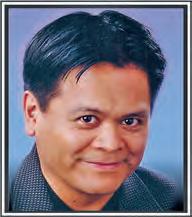
Pablo Torre
By Emil Guillermo
une is always special. It’s a time for Father’s Day, which is always the third Sunday, but that could be early or late, anywhere from the 14th to the 21st.
But for me, the feelings of the actual day spill over the entire month.
June 14, 1978, was not quite “the day”, but it was “our day.” The day my Dad and I had our best moment ever: We took in a day game at Candlestick, and the Giants won!
My dad had an immigrant’s passion for baseball. He loved the game and all it stood for. And he loved the Giants. His name was Willie, appropriately. Weren’t all the heroes in San Francisco named Willie in those days?
Born in the Philippines, my dad spoke English, but I spoke it better. It made our relationship a relatively quiet one. The only time we really connected was while watching baseball.
My dad was many innings older than me–50 years worth. I remember when he taught me how to play ball. We’d go to Golden Gate Park’s Panhandle–where else would a fry cook teach his son to play catch? We both had gloves that looked like the big ones out in left field at AT&T. My dad wasn’t all that athletic. But he knew the difference between a basket of fries and a basket catch. And when he couldn’t do it just right, he’d bring us to Candlestick to watch the other guys named Willie (Mays and McCovey) do everything masterfully.
Baseball always gave us a context. “What’s the score?” one of us would always ask. The other would always know. We followed the score.
But of course, there were seasons when not even baseball could save us. Before I was out of middle school, my father was an aging senior, and I was going to father-son events alone. He wasn’t the father. He was a grandfather. By the time I was twelve years old, I was an ageist. We kept drifting apart, our lives patterned like a baseball diamond. He was the first base line, I was the third base line, a field apart, connected only at home.
But then I went to college on the
CANDID PERSPECTIVES
June Is for Filipino Fathers
East Coast, where I learned a little about the hardship and racism endured by Filipino immigrants in the 1920s. Deep in the stacks at Harvard’s libraries, I learned about the anti-miscegenation laws that dictated his life story. Men from the Philippines immigrated in droves, mostly as laborers. Colonized Nationals, neither citizens nor aliens. But as if owned. Like slaves. By the country. By comparison, few Filipino women were allowed to come to America.
I never fully understood why my father, after coming to America in 1927, lived a bachelor’s life until the 1950s. I thought it was by choice or a lack of social skills. I never saw it as a function of the kind of wastefulness that comes from racism. History taught me that, and through it, I found a clear path to my father. Perhaps a little late, but it set up our ninth inning perfectly.
On the Wednesday before Fa-
(NEWS FEATURE: A Nation ....from page 8)
polls consistently position her as the strongest contender.
The Elusive Big Fish
The corruption scandal reaches the very top. Eighteen former soldiers have corroborated testimony that maleta-maleta (suitcases holding ₱40+ million each) were delivered to residences linked to contractor Zaldy Co, House Speaker Martin Romualdez, and President Ferdinand Marcos Jr. Co himself alleged on video that ₱56 billion in kickbacks flowed directly to the nation’s highest leaders, with the President purportedly receiving a cut from ₱100 billion in illicit budget insertions.
Whether these allegations reflect truth or “politicking” is for an impartial and independent
ther’s Day, 1978, we did a day game, my treat. We were a striking pair. I was wearing a jacket and a tie so we could get a businessman’s discount. He was in a Giants cap and running shoes, and acting like a rascal–cutting in line, running about, me in tow. Seats cost a buck-fifty to sit in left field back then. But the little guy wanted to sit closer. So we sneaked down past security and wound up in prime third-base territory.
During the game, we enjoyed our passion quietly. Fancying myself a broadcaster, I did play-byplay in my head. Every now and then, I would turn to Dad for a little color. He was involved with the drama himself, in between bites of his homemade adobo sandwich–vinegary pork bits on white bread, tastier than a ballpark frank.
The Giants celebrated our outing with a fine performance. They fought back to take the lead from the visiting Phillies. And then it was up to Vida Blue to mow them down in the bottom of the ninth. Blue, no longer in his prime and written off as an old man in his 30s, had relief help, but the Giants got both Greg Luzinski and Mike Schmidt, the heart of the order, to strike out and end the game.
We stood and cheered together in wild appreciation, which led to our only real conversation of the day. Would the Giants get through June and go all the way? My dad was willing to take a psychic flyer
investigation to determine. The Senate Blue Ribbon Committee, chaired by Senator Lacson, adopted a restrained approach. When Speaker Romualdez ignored invitations to testify, Lacson invoked “inter-parliamentary courtesy” rather than compel his appearance.
Eight months later, Lacson released a partial committee report that fell just two senatorial signatures short of endorsement. Senator Rodante Marcoleta dismissed Senator Panfilo Lacson’s committee report as incomplete, arguing that it failed to present the full picture and that it should be “impartial.”
Senate Rigodon
The Senate’s balance of power shifted on May 11. Sen-
on that one. “They will go all the way now,” he said.
As it was, the Giants didn’t. And neither did my dad. Two hours later, back home, after seeing the game highlights on the local news, my father died on June 14th, before Father’s Day.
Hardening of the arteries, the doctor said. But deep in my heart, I knew it was Pennant Fever.
The origins of this essay date back to 1990, when I first read a version of it on the radio on NPR’s “All Things Considered.” Every year, I reprise some of it as my personal Father’s Day salute. And then I go to the ballpark and hope the Giants win. This year, I will go to see the struggling Giants, the only team I know where the parts seem greater than the whole. In other words, they don’t add up as a team. Some days they seem great. Other times, hapless. My dad would still watch with that Bahala Na sense of hope. And he’d watch baseball. He wouldn’t be watching the cage fight at the White House. Not his sport. Not his game. Not on June 14th.
Yes, the day my dad died also happens to be the birthday of the current president. Quite a coincidence. And a stunning contrast.
That guy could never match up to my Filipino dad.
EMIL GUILLERMO is a journalist and commentator. His talk show is on www.amok.com.
ator Ronald “Bato” dela Rosa, under ICC scrutiny, backed Senator Alan Peter Cayetano. With this support, Cayetano unseated Senate President Vicente Sotto III and formed a fragile 13-member majority.
The leadership change had major consequences. Control of the powerful Blue Ribbon Committee went to Cayetano’s group. They focused on alleged irregularities in flood-control programs and prepared for Vice President Sara Duterte’s impeachment trial. The committee’s renewed focus on accountability raised political tensions.
On June 3, Cayetano’s Senate majority faced a big challenge. Three events weakened his coalition: Senator dela Rosa (continue on page 13)
BARANGAY—16th Century Philippine Culture and Society
By Rose Cruz Churma
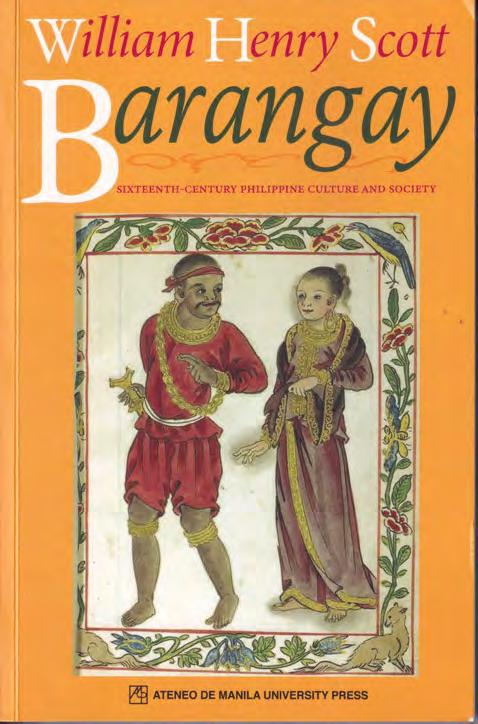
This book, written by William Henry Scott, was first published by Ateneo de Manila University Press in 1994. It was reissued in 2025, the 13th publication of this classic.
William Henry Scott (1921-1993) was the leading historian on the Cordilleras and pre-Hispanic Philippines, such that in 1994, the Ateneo de Manila posthumously conferred on him the Tanglaw ng Lahi Award for his lifetime work.
This book that Scott authored also won the National Book Award for History and the Gintong Aklat for Social Science in 1994—the year it was first published.
In his foreword to the book, Jose M. Cruz S.J. notes that this ethnography of 16th-century Philippine communities answers the question—“What did the Spaniards actually say about the Filipino people when they first met them?”
The book includes an exhaustive bibliographic list of sources and is primarily from historical documents, most of which are from collections published by the Spanish government. Other sources are travel accounts, navigational logs, letters, sermon books, catechisms, and dictionaries.
Dictionaries actually contributed considerably to this book. The Spanish missionaries decided to communicate in the local languages (more efficient than teaching Spanish to the entire population), which resulted in the creation of instructional tools to aid the missionaries in learning the local languages.
These dictionaries opened windows that
show how things were perceived in local settings. In essence, these tools “…conserved the native languaging of the native world.”
In his introduction, the author explains his choice of title for this book—the term barangay Barangay or balangay was one of the first words the Spaniards learned upon “discovering” the Philippines. The term is used to describe a boat as well as used to refer to the smallest political unit, which was first observed by the colonizers in Luzon’s Tagalog society.
such things as decorative dentistry, skull moulding, penis pins, circumcision, ear piercing, hair adornments, jewelry, and tattooing.
The two meanings of barangay refer to the two important characteristics of 16th-century Filipinos— the dependence on boats and a highly localized government. With certain exceptions, most 16th-century Filipinos lived along the coast or the banks of navigable lakes and streams. There was little evidence of wheeled vehicles or draft animals. Communities were connected, not separated by water.
There were more surviving documents on Visayan culture than the rest of the archipelago since the Spanish colonizers were in the Visayas 50 years before they reached Luzon. The author notes in his introduction that the Visayan culture and language are the most dispersed, with Leyte and Samar as the furthest removed from “direct Asian contact.”
He concludes that civilizations portrayed in these locations reflect “basic Philippine society and culture.” The eight chapters on the Visayan islands are the most substantive and include a degree of detail on
In the 16th century, the basic male garment was the G-string (called bahag or balabal) while the women wore two rectangular wrap-around skirts called the tapis an ankle-length white one and a shorter colored piece worn over it. Both genders wore a shortsleeved collarless shirt or jacket called baro
One practice is the planting of rice, a communal labor where a line of men punches holes on the ground with a stick and a line of women following to drop the seeds in. This practice can still be observed with the Kalingas, the Itnegs in the Apayao sub-province, and the Bagobos in the mountains of Davao.
Due to this uneven distribution of data, Visayan culture is described in eight chapters in Part 1, while Part 2 describes the rest of the archipelago, covering south to north— from Mindanao to the regions of Bikol, Tagalog, Pampanga, Pangasinan, Zambales, the Cordilleras, and Cagayan. Although Scott had notes on the Ilocos, he was unable to complete this chapter prior to his passing.
Tagalog ethnography is described in two chapters. The most obvious physical feature that distinguishes the Tagalogs from the Visayans (also called Pintados) is their lack of tattoos. The Tagalogs also did not reshape their infants’ skulls through head bindings nor wear penis pins like the Visayans.
However, both filed and colored their teeth, reddened their lips by chewing betel nuts, and distended their earlobes with heavy gold earrings. Both practiced circumcision, and a form of “female circumcision” which apparently survived into the 18th century in Pampanga.
A salampay (scarf) or a talukbong (shawl) was worn over the baro, one of the more basic clothing terms. Other clothing pieces were also worn, which suggests a more involved clothing consciousness and is used as a symbol of social status.
Both Visayans and Tagalogs had three social levels—the ruling class called maginoo, their supporters called timawa or maharlika, and the slaves called alipin. There were two types of slaves; the alipin sa namamahay and the alipin sa gigilid
Aside from the main parts of the book (an introduction and 14 chapters consisting of Part 1 (on the Visayas) and Part 2 (on Mindanao and Luzon), the book also includes an Afterword, Notes, a Bibliographic Essay, a Bibliography, and an index.
In the Afterword, Scott notes that changes that are representative of Filipino culture today did not reach the interior hinterlands, and many 16th-century customs have survived among Filipinos whose ancestors were never assimilated by Western ways.
In the Afterword, he described instances where features described in the 16th-century ethnography survived and are still practiced in certain minority cultures.
William Henry Scott (1921-1993) is a distinguished scholar and historian on the Cordilleras and pre-Hispanic Philippines. He received his bachelor’s degree from Yale and an MA in Church History from Columbia. He received his doctorate in history from the University of Santo Tomas (UST) in Manila.
His other publications include The Discovery of the Igorots: Spanish Contacts with the Pagans of Northern Luzon (1974); Cracks in the Parchment Curtain and Other Essays in Philippine History (1982); and Ilokano Responses to American Aggression, 1900-1901 (1986).
Scott was given the Tanglaw ng Lahi Award by the Ateneo de Manila University in 1994 for a whole life “spent in teaching not only in the classroom but the outside world… through his hundreds of published scholarly articles and inspirational works which continue to disseminate and teach honest Philippine history to succeeding generations of Filipinos.”
ROSE CRUZ CHURMA established Kalamansi Books & Things three decades ago. It has evolved from a mail-order bookstore into an online advocacy with the intent of helping global Pinoys discover their heritage by promoting books of value from the Philippines and those written by Filipinos in the Diaspora. We can be reached at kalamansibooks@gmail.com.
PERSONAL REFLECTIONS
The Decline of Statesmanship
By Seneca Moraleda-Puguan
ust recently, my husband and I paused our Korean drama binge to watch another kind of drama, one that evokes both anger and incredulous laughter: the ongoing drama in the Senate of the Philippines.
JAccording to Google, the word Senate comes from the ancient Roman Senatus, meaning “highest council.”
It stems from the Latin word senex, which means “elder” or “old man,” historically referring to a council composed of society’s oldest and wisest figures.
In other words, they are statesmen (and stateswomen) and respected political leaders who are guided by wisdom, integrity, and a long-term vision for the good of the nation and not just personal gain or survival. Even my fourth-grade homeschooler knows this from her lessons on Rome. Having lived overseas
for many years in firstworld countries where citizens experience good governance and genuinely see the fruits of their taxes, I cannot help but feel frustrated being back in my own country.
It is heartbreaking to confront the realities of poverty and witness people being served by such incompetent leaders.
My heart bleeds for our fellow kababayans who deserve better: the farmers who are continuously shortchanged, the marginalized communities who need decent housing, the families displaced by floods, and countless others struggling every day.
They deserve leaders who will truly fight for them and serve them.
Yet watching the hullabaloo and spectacle unfolding in the Senate these past few weeks has been both disheartening and infuriating.
As much as possible, I try to remain apolitical in
(NEWS FEATURE: A Nation ....from page 11)
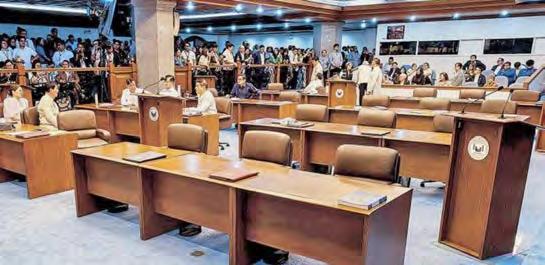
went into hiding; Senator Jinggoy Estrada was arrested on plunder charges; and Senator Chiz Escudero defected to Sotto’s bloc. When the Cayetano majority was absent for two days, the 12 minority members, led by Sherwin Gatchalian, staged a coup, electing him Senate President Pro Tempore. They also installed a new Sergeantat-Arms and Senate Secretary. Gatchalian’s group declared itself the new majority, citing the 1949 Avelino vs. Cuenco case (G.R. No. L-2821).
Is the “power grab” valid? Several questions surround the new majority’s legitimacy. While Cayetano remains Senate President, Gatchalian allegedly began acting as Senate President, issu-
my articles because I know some readers may hold different political views. But please allow me this moment to express my deep disappointment with the current Senate of the Philippines, especially under the new leadership.
Never have I felt more insulted as a Filipino than I have in recent days. Why does it seem like our leaders think we are foolish enough to blindly accept the narratives they want us to consume?
What angers me most is the way Filipinos are being treated- with so little respect for our intelligence and discernment.
From the coup that changed the Senate leadership, to the protective custody granted to a sena-
ing instructions to Senate staff and exercising those powers. His group claimed majority status with just 12 members, arguing this constituted a majority. However, the 1987 Constitution and Senate rules both require 13 senators for a majority of ALL 24 members (24 ÷ 2 + 1 = 13). Critics argue that the 12-member majority claim conflicts with these requirements. The election of the Senate officers is also covered by such a ruling.
The 12-member quorum argument also has some issues. It makes reference to the 1935 Constitution, which has been superseded by the 1987 Constitution. The Supreme Court nonetheless upheld the proceedings conducted by the 12
senators, treating them as a continuation of the morning session with 20 members present rather than an entirely new session. Full ruling: https:// lawphil.net/judjuris/ juri1949/mar1949/gr_l2821_1949.html.
Wrapping Up
In sum, the Senate’s own house remains in disorder: a fragile leadership threatened Cayetano through a counter-coup by 12 senators who installed Gatchalian as Acting Senate President. But stakes extend far beyond Senate politics. Every peso lost to corruption diminishes the nation’s capacity to shield communities from recurring floods. Until budget loopholes are closed, dynastic power is checked,
be opened and that we will be moved to elect deserving, competent, righteous, and just leaders in 2028.
tor with a warrant of arrest who was eventually released and is now nowhere to be found; from the alleged staged attack within the Senate premises, to the fake news being peddled left and right; and now the move to allow senators to attend sessions and vote via teleconference—really?
I have never seen the Senate at such a low point, where legislators openly violate laws, bend rules in plain sight, and pursue selfish political agendas over public service.
Walter Lippman said, “The statesman differs from the politician in that the statesman places the next generation first, and the politician places the next election first.”
I pray that our eyes will
and accountability is enforced, millions of Filipinos will continue to remain hostage to both natural calamities and systemic political failure.
I miss the days when the Senate was filled with wise, eloquent, and learned statesmen Flavier, Roco, Arroyo (not the one who became President), Santiago, and many others who carried themselves with dignity and intellect.
I hope that we will raise the next generation of leaders to be men and women of character, conviction, and integrity.
I look forward to the day when we will once again have leaders who pursue the interests of the Filipino people above political loyalties and personal ambitions.
But for now, I will continue to pray for them and trust that God remains sovereign over the Philippines. He still rules and reigns. He loves the Filipino people. He is able to change hearts and minds. He hears our cries. And as we humble ourselves, He will heal our land.
There is hope. Always.
DR. FEDERICO V. MAGDALENA is an Associate Specialist and the Assistant Director of the Center for Philippine Studies, University of Hawaiʻi at Mānoa. He is a Contributing Writer to Hawaiʻi Filipino Chronicle.
Almost half of the senators were absent in the Senate of the Philippines three days before it adjourns sine die
FEATURE
Empowering Leaders the Filipino Way
By Linda Dela Cruz
While scrolling on LinkedIn in July last year, a Filipino Chamber of Commerce of Hawaiʻi post caught my attention.
I saw my former KHON2 colleague Calvin Bagaoisan in a group photo that promoted the upcoming FCCH Fellows program for leadership. I texted him to congratulate him and learn more about it.
At lunch, he shared how the program empowered him in 2024 and encouraged me to apply. I shared about my visit to Balagtas, Bulacan, in the Philippines when I visited for a month as a youngster.
I know a few Tagalog words, including masarap (delicious) and maraming salamat (thank you very much). I performed Filipino folk dances in my teen years. I enjoyed Filipino parties where I learned to love the buffet table. I love pancit bihon, dinuguan, lumpia, and Filipino fruit salad.
Like food, leadership has a deeper story. As a multimedia storyteller, I applied to learn powerful skills to inspire action.
I was honored to be selected for the FCCH Fellows Program Class of 2026.
We had 10 fellows in our Evolve cohort: Jaynnel Agrade, Matthew Aqui, Addison Bulosan, Ryan Corpuz, Linette Medina, Melissa Pineda, Dean Ramos, Judy Relosimon Ng, Doug Williams, and me.
The FCCH Fellows Program empowers emerging leaders to serve in business, nonprofits, and government, focusing on those committed to uplifting the Filipino community.
The application includes written responses, two letters of support, and an interview. Fellows contribute $1,500 toward a $10,000 program covering
mentorship, site visits, travel, and meals.
It was established in 2020 under FCCH President Jeoffrey Cudiamat with support from the Albano Family.
The program has graduated 40 fellows across five cohorts—Alpha, Bravo, Chaos, Destiny, and Evolve—each with six to ten members. Applications for the 2026–2027 cohort open this summer.
Jeff Orig of Orig Media, a member of the inaugural Alpha cohort, has seen the program grow.
“I love watching the content evolve into powerful training, tools, and networks that uplift both community and leadership,” Orig says.
Su Lazo, a graduate of Bravo Class, has led the program committee for the past three years with the assistance of other alumni.
She explains, “I was motivated to make sure the next class after me (Chaos) had the opportunity to explore their identities as FilAm leaders.”
Lazo, a workforce development program manager for the Office of Economic Development for the City and County of Honolulu, integrated Filipino culture into the program to show its influence on leadership.
My Evolve classmate Melissa Pineda, who is a project engineer with Amethyst Builders LLC., says that was one of the best aspects.
“It helped me put the things I had observed growing up into words and context and provided a clearer understanding of those cultural experiences,” Pineda adds.
“Joining the program challenged me in ways that encouraged personal growth and helped me become more open to new experiences.”
We met once or twice
Relosimon Ng (Director of Brand Marketing, Servco Pacific
trative Assistant, Amethyst Builders, LLC.), Linda Dela
K Productions), Addison Bulosan (Councilmember, Kaua’i
Consultant, Dean’s Solutions), Matthew Aqui (Brand
Servco
Doug Williams (Disposal Branch Chief, City and County of Honolulu Department of Environmental Services), Ryan Corpuz (Food and Beverage Manager, Westin
(Director of Nursing,
a month from September to March, both online and in person, culminating in a group presentation of a project in April.
We learned from executive mentors. We had discussions about the past, present, and future with community leaders that incorporated visits to the Hawaiʻi Plantation Village, FilCom Center, Hawaiʻi Leadership Forum, and Y. Hata & Co.
Fellows describe the experience as “transformative,” “grounding,” and “a bridge to the community.”
Joyce Kilgore, who works with The Queen’s Health Systems, completed her Fellows program last year with the Destiny Class.
“There’s something special about watching a new cohort go through the same journey— knowing what’s ahead for them, even when they don’t yet,“ Kilgore notes.
“It reminded me that leadership isn’t just about your own class or your own moment.”
The program was like an all-you-can-eat buffet of insights from experts. One lesson that stood out—from AJ Halagao, Vince Baldemore, and Ryan Mandado—was to stay positive and lift others as you rise.
They emphasized taking the high road and responding with kindness, even when others try to sabotage you.
We were encouraged to attend events such as Sakada Day, FCCH’s Legislative Breakfast, and the Flores de Mayo & Filipino Fiesta.
I attended the 2025 QUAD Chamber Roundtable and Heritage Cup at YWCA Laniākea, where leaders from the Chinese Chamber of Commerce of Hawaii, Honolulu Japanese Chamber of Commerce, Hawaii Korean Chamber of Commerce, and Filipino Chamber of Commerce connected.
QUAD Chamber Committee Chair and FCCH Vice President Constancio Paranal III, says the event showcases the Filipino Chamber’s investment in developing talent in our community by introducing them to others.
“That exposure is critical, not just for their growth as Filipino American leaders, but as future leaders of Hawaiʻi as a whole,” emphasizes Paranal, who is from the Chaos Class.
Program leaders and the Fellows are thankful to all those who sponsored the Evolve class: Servco Pacific, Southwest Airlines, Hawaiʻi Leadership Forum, and Y. Hata & Co.
“We believe in investing in local leaders who shape their communities from the inside out, and for the long run,” says Lillian Santos-Stables, Regional Community Outreach Man-
ager at Southwest Airlines.
“It’s one of several ways we’ve been deepening our connection to the Filipino community, including a new partnership with Philippine Airlines.”
I’m grateful for the all support I’ve received throughout my life’s journey as I celebrate my 30th anniversary in Hawaii from New York City this year.
Mahalo, Do Jeah, and Maraming Salamat to my Fellows sponsors Bulacan Circle and Associates of Hawaii president Angie Santiago, Tiny Bubblies owner Cynthia Duong, Ninang Siony Placiente, FCCH President Elvi Sutherland, and Hawaii Filipino Chronicle Publisher Chona Montesines-Sonido.
Thank you to everyone who has walked alongside me during my time in the FCCH Fellows program. To my love and my rock, Jerrette, thank you from the bottom of my heart.
In the spirit of bayanihan (community and solidarity), let’s get together for a meal— sharing rice, pancit bihon, and lumpia.
I’ve saved you a seat at the executive table so we can carry our ancestors’ tradition of building a better world together. Let’s eat— gutom ako (I’m hungry)!
Discover more about the Fellows Program at https://filipinochamber.org/ fellows or email fellows@ filipinochamber.org.
FCCH Fellows 2025-2026 Evolve Class at the FilCom Center in Waipahu on Saturday, April 11, 2026 from left to right: Melissa Pineda (Project Engineer, Amethyst Builders, LLC), Judy
Inc.), Linette Medina (Adminis-
Cruz (Multimedia Storyteller, Jerrette
County), Dean Ramos (Principal
Manager,
Pacific Inc.),
Nanea), and Jaynnel Agrade
Caring Manoa). Photo courtesy of Mark Salondaka.
HINAMI NCLEX-RN REVIEW CLASS | Filipino Community Center, HiNAMi (Nursing Advocates & Mentors, Inc.) | Third Flr, Suite 302, FilCom Center, 94-428 Mokuola St, Waipahu, Hawaii 96797 | July 8 to November 18, Every Wednesday at 5pm to 8pm | Ms. Beatrice Ramos-Razon, a registered nurse, leads this licensure exam review class. For more information, email programs@filcom.org and bramosrazon@aol.com.
COMMUNITY CALENDAR
32ND ANNUAL MADE IN HAWAII FESTIVAL | Hawaiian Airlines | Hawaii Convention Center, 1801 Kalakaua Ave, Honolulu, Hawaii 96815 | August 20 to 21, 6:30am to 10pm and August 22 to 23, 8am to 10pm | Buy Hawaii. For Hawaii. Shop hundreds of local vendor foods featuring local artisans, crafters, and makers. Enjoy live musical performances and more.
DOCTORS-ON-STAGE: “AGAINST ALL ODDS” | Bayanihan Clinic Without Walls, Doctors-On-Stage | Salvation Army Kroc Center, 91-3257 Kualakai Parkway, Ewa Beach, Hawaii 96706 | September 26 at 5:30pm | This musical production by Doctors-On-Stage and Bayanihan Clinic Without Walls aims to raise money for a good cause. For more information about “Against All Odds,” call 808-518-8929 or email bcww@gmail.com.
The Unfathered Father
By Tiffany Rose Del Rosario
Fatherhood is often learned through example. A son watches his father, absorbs his values, and one day passes them on to his own children. But what happens when a father grows up without a father?
Wilfredo “Weng” Del Rosario grew up in a broken home. His mother became pregnant with his older brother at just fifteen years old. Less than two years later, Weng was born. While he was still young, his parents separated. Both eventually worked overseas, leaving Weng and his older brother in the care of their paternal grandparents.
Weng and his brother were then raised by their grandmother, along with various aunts and uncles. Growing up, Weng had very few memories of his father caring for him. What he remembered instead were the toys, clothes, chocolates, and other gifts that arrived from afar. The absence of a father’s presence left a void that material things could never fill.
Without strong parental guidance, Weng spent much of his youth with friends who became his primary influence. At an early age, he was introduced to smoking, drinking, womanizing, and drugs. Like many young men searching for belonging, he looked for direction in all the wrong places.
Fast forward to age twenty-six. Just ten months into our relationship, I became pregnant. Weng was
unemployed and completely unprepared to start a family. Overwhelmed by fear, he even planned to leave me and our son after the baby was born. The responsibilities of being both a husband and a father felt impossible. How could he become something he had never seen modeled before?
But God had other plans. While I was pregnant, Weng and I began attending a Christian church. There, for the first time, Weng encountered the unconditional love of God the Father. He discovered that although he lacked an earthly example of fatherhood, he had a perfect Heavenly Father who could teach him what it meant to love, lead, and care for a family. This realization changed everything. The years that followed were not easy. Raising four children while serving as a campus missionary and later as a youth leader demanded tremendous sacrifice. There were seasons when ministry responsibilities competed with family time. There were mistakes, failures, and lessons learned the hard way. Yet God faithfully provided mentors who walked alongside him and modeled biblical fatherhood. Through their guidance and God’s grace, Weng gradually became the father he never had. Today, he enjoys a healthy and loving relationship with each of our four children. Watching him interact with them is a testimony that a person’s past does not have
to dictate their future.
As Weng and I continue our parenting journey, I often think of my own father. Like Weng, my dad also grew up in a dysfunctional family. For much of his childhood, he believed that his grandfather was his father, while his biological mother was introduced to him as his older sister. He, too, grew up without experiencing the security and affection of a father’s love.
As a result, my siblings and I were raised by a father who provided well but struggled to express affection. He was present, yet quality time was rare. He brought us to church, but I cannot recall as of any conversations about faith. He worked hard to give us good opportunities, yet rarely spoke words that inspired us to pursue our dreams.
It was only after I started my own family that I began to recognize the depth of my father’s love. Maturity allowed me to see what I could not see as a child: he was giving us everything he knew how to give. That realization led me to a profound truth. Both my father and my husband struggled to become fathers because neither of them had been fathered themselves. And yet, both became good fathers. Not perfect fathers. Not flawless fathers. But fathers who chose to love their children despite the gaps in their own upbringing. Fathers who worked hard to provide, protect, and care. Fathers who refused to let
their wounds define the next generation.
I praise God for placing us in a Christian community where fatherhood is modeled after the love of God. As Psalm 27:10 declares, “Though my father and mother forsake me, the Lord will receive me.” Although Weng never experienced an extraordinary earthly father who could teach him how to become one, he found an extraordinary Heavenly Father who showed him the way. Today, the love he gives our children is genuine, sacrificial, and life-giving. The love my own father gave my siblings and me, though imperfectly expressed, was enough to make us feel secure and blessed.
This Father’s Day, I honor both my dad and my husband. They were men who grew up deprived of
a father’s love, yet chose to become loving fathers themselves. Their lives remind me that our past does not have to determine our future, and that God can redeem even the deepest generational wounds. Indeed, it is only through the transforming power of our Heavenly Father that the unfathered can become the fathers God designed them to be.
TIFFANY ROSE DEL ROSARIO is the Executive Director of Gabay sa Landas (GALA) Foundation Inc., a temporary shelter for impoverished, abandoned, and neglected children. Her husband, Weng Del Rosario, heads Elevate Movement Inc., leading the #NotAlone Program and Tama Youth Organization, which help equip young people to navigate life’s challenges and become responsible citizens. Together, they serve as volunteer ministry workers at CCF East Ortigas.
Weng & Tiff with their children Matthew, Naomi, Nayelie and Zacharee.