



FEATURE ClArksoN, hArper ANd A hisToriC NbA FiNAls For FilipiNo bAskeTbAll HAWAII-FILIPINO

CANDID PERSPECTIVES
The NexT 250? how AbouT we JusT GeT To The MidTerMs
FEATURE ClArksoN, hArper ANd A hisToriC NbA FiNAls For FilipiNo bAskeTbAll HAWAII-FILIPINO
CANDID PERSPECTIVES
The NexT 250? how AbouT we JusT GeT To The MidTerMs
It’s no surprise that affordability is the defining issue for many Filipino families in Hawaii this 2026 election cycle. The message coming from Filipino voters across Hawaii is not complicated. They want candidates who will work hard to find innovative and practical ways to lower the cost of groceries, housing, utilities, gas, healthcare, and wages to go up.
In our interviews for this cover story, affordability was a concern echoed repeatedly among Filipinos of all political stripes: Democrat, Independent, Republican and those not self-identified to any party. There has been frustration expressed that it’s not enough for leaders to acknowledge financial hardship – that all of them do -- but that these leaders must act with urgency and creativity.
Filipinos are known for their close family ties, which makes it especially painful when families are separated because loved ones can no longer afford to live in Hawaii. Parents worry that their children and grandchildren may not have the choice to stay in the place they call home.
For generations, multi-generational living has been a source of cultural tradition, strength and support in Hawaii’s Filipino community. But today, extended family living is increasingly less about tradition and more about economic survival.
With each passing generation, Filipino families — like many others across the state — feel their choices narrowing. Too often, the options are reduced to leaving Hawaii or living in crowded, multi-generational households because there is no affordable alternative. It shouldn’t be an either-or option. Politicians should keep in mind that the cost of living is not just an economic issue; it is a family issue.
Filipinos also were asked for this issue’s cover story if they preferred change or more of the same in government leadership. It’s not surprising that most Filipinos interviewed wanted change. But what was surprising is there were some who had complaints about the high cost of living but either did not answer this question or wanted the status quo. Perhaps this is where partisan reality set in: locally Democrats favored the status quo, and nationally Republicans favored more of the same – no matter that their needs are not adequately being met.
To change or not to change in Hawaii’s governance might not be as urgent as other communities across the U.S. where establishment Democrats and Republicans are being challenged by grassroots populist movements. There are strong, aggressive People Power movements growing in both political parties. There’s already been major upsets in states on the mainland that have held their primary election.
Change is the better option
Ultimately, change is mostly a better option

WPublisher & Executive Editor
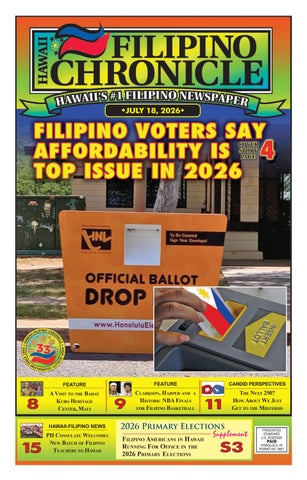
e are pleased to present the Hawaii Filipino Chronicle Primary Election issue and supplement. We begin with a cover story written by associate editor and political analyst Edwin Quinabo on the portrait and pulse of Hawaii’s Filipino electorate in 2026. Due to migration changes, lack of organized bloc leadership as compared to the past and absence of hard data, it’s not very clear what today’s Filipino electorate is. However, we can glean from surveys as to what issues Filipinos in our community hold as high in importance going into this election. Affordability and cost of living is number one, based off Filipino respondents from all walks of life, age, and political party affiliation interviewed for the cover story. Find out what the other issues Hawaii’s Filipinos want our local politicians to know that they need to work on improving. They also share why they believe it’s paramount for our Filipino community to vote.
Also in our regular issue, HFC contributor Sheryll Bonilla and Adrian Kresnak contribute an Opinion piece “Voting is Important.” Ultimately, it boils down to this, “Voting is your chance to elect officials who share your values and priorities,” they write.
HFC columnist Emil Guillermo writes “The Next 250? How About We Just Get to the Midterms.” For our feature, Christine Sabado contributes “A Visit to the Bahay Kubo Heritage Center, Maui.” HFC columnist Rose Cruz Churma continues her Book Review from the May 13, 2026, issue, “Born of the People” Part 2.
The NBA Finals recently concluded, but we have a human-interest piece, “The Summit and the Horizon: Jordan Clarkson, Dylan Harper, and a Historic NBA Finals for Filipino Basketball,” for our Sports Corner written by HFC contributors Julian Bothamley and Dylan Bothamley.
On to our Election Supplement, starting with our cover story. HFC’s editorial and production assistant, Jim Bea Sampaga, compiles information on Filipino Americans in Hawaii running for office this primary election. Get to know these candidates’ background, qualifications, and platform. There are familiar names and newcomers. The Filipino American seeking the highest seat is Della Au Belatti, who wants to be the state’s Lieutenant Governor. She has represented her district for 20 years in the State House. The compilation is for informational use and does not necessarily mean it’s an endorsement of candidates by the Hawaii Filipino Chronicle editorial board. A big mahalo to all candidates who participated in this HFC Supplement cover story and cared enough to reach out to our Filipino community.
Also in our Supplement, we have 1) a Voting Guide with important deadline dates, 2) a commentary “Rocking the House” by former state senator Gary Hooser, 3) “What Are the Benefits of Voting for the Republican Party?” by Melba Amaral, and 4) “The Benefits of Voting for the Democratic Party by Martina Agonoy.
The mail-in ballot arrives 18 days before Primary Election Day on August 8. Starting July 21, you can expect the ballot to arrive in your mail. Please take the time to register to vote, mail in your ballots, or show up at the polling sites on Primary Election Day, Saturday, August 8, 2026. For more information, visit elections.hawaii.gov. Please vote and let your voice be heard.
We hope you enjoy these and our other articles. Thank you for supporting the Hawaii Filipino Chronicle. Visit our website thefilipinochronicle.com to get your free e-copy of each issue. For your advertising needs, email us at filipinochronicle@gmail.com. Until the next issue, Aloha and Mabuhay!

Charlie Y. Sonido, M.D.
Publisher & Managing Editor
Chona A. Montesines-Sonido
Associate Editors
Edwin QuinaboDennis Galolo
Contributing
Editor
Belinda Aquino, Ph.D.
Design
Junggoi Peralta
Photography
Tim Llena
Administrative Assistant
Lilia Capalad
Editorial & Production Assistant
Jim Bea Sampaga
Columnists
Carlota Hufana Ader
Rose Cruz Churma
Elpidio R. Estioko
Willie Espero
Emil Guillermo
Gary Hooser
Arcelita Imasa, M.D.
Seneca Moraleda-Puguan
J.P. Orias
Charlie Sonido, M.D.
Emmanuel S. Tipon, Esq.
Contributing Writers
Clement Bautista
Edna Bautista, Ed.D.
Teresita Bernales, Ed.D.
Sheryll Bonilla, Esq.
Dr. Dylan Bothamley
Serafin Colmenares Jr., Ph.D.
Linda Dela Cruz
Carolyn Weygan-Hildebrand
Amelia Jacang, M.D.
Caroline Julian
Max Levin
Raymond Ll. Liongson, Ph.D.
Federico Magdalena, Ph.D.
Matthew Mettias
Maita Millalos
Paul Melvin Palalay, M.D.
Renelaine Bontol-Pfister
Seneca Moraleda-Puguan
Jay Valdez, Psy.D.
Amado Yoro
Philippine Correspondent:
Greg Garcia
Neighbor Island Correspondents:
Big Island (Hilo and Kona)
Grace LarsonDitas Udani
Kauai
Millicent Wellington
Maui
Christine Sabado
Big Island Distributors
Grace LarsonDitas Udani
Kauai Distributors
Amylou Aguinaldo
Nestor Aguinaldo
Maui Distributor
Christine Sabado
Molokai Distributor
Maria Watanabe
Oahu Distributors
Yoshimasa Kaneko
Shalimar / Jonathan Pagulayan
Advertising / Marketing Director
Chona A. Montesines-Sonido
Account Executives
Carlota Hufana Ader
JP Orias

The long-standing process that allows eligible immigrants already inside the United States to apply for lawful permanent residence without leaving the country has recently changed. The May 2026 USCIS adjustment-of-status policy shift could force hundreds of thousands of applicants to complete green card processing abroad instead of from inside the U.S.
Under the recent May 21, 2026, USCIS policy memo, adjustment of status is framed as an “extraordinary” discretionary benefit rather than a routine alternative to consular processing. USCIS officers are directed to consider whether the worker should instead complete the immigrant visa process at a U.S. consulate abroad.
This adjustment shift in processing appears like a small procedural change, but immigrant advocates say the impact may be alarming and have significant life-changing consequences. According to the Migration Policy Institute, half of all green cards go to people here in the U.S. who applied for a green card through ‘adjustment of status.’ This means at least half of all green card applicants will need to deal with this policy shift.
For example, if a new legal
(Filipino Voters....from page 2) because there is always room for improvement. It doesn’t mean another party must take over or that an incumbent who is working for real change but is unsuccessful must be removed from office. Change can come in policy and direction from the same party and same leaders in power with the right amount of pressure.
If voters want meaningful political change, it may need to begin with the kind of candidates they choose to send into office. At every level of government, Americans often focus on experience, resume and political background, but less at -
immigrant -- a spouse or family member -- is in the U.S. waiting for the processing of a green card, that family member could potentially be forced to leave and return to the country of origin, then file for a green card, wait there until that green card is approved. Meanwhile, families are unnecessarily separated and could be kept apart for months to years, experts say. Consular processing already faces delays and backlog. Furthermore, there’s no clear guarantee that the legal immigrant could return.
Or in the case of a legal foreign worker on an H-1B visa. Under the usual process, they file for what’s called “adjudgment of status” so they can become a lawful permanent resident without leaving the U.S. But now, it’s conceivable the worker may need to pursue consular outside the U.S., meaning they could be forced to leave the U.S. attend an immigrant visa interview overseas, and wait for visa issuance before returning as a permanent resident. Meanwhile, that worker most likely would have to quit his job and have his career suspended. The financial cost could be drastic.
This new change is a major development which could harm our Filipino community. According to
tention is given to a trait that may matter just as much: “moral fortitude.” In an era when wealthy donors and powerful interest groups can exert enormous influence, voters may need to look more closely for candidates who have the character to resist that pressure. Put another way, the public should demand leaders who are honest about why they seek office — not for personal ambition, glamour, money or power, but to serve the people as their highest responsibility.
Moral fortitude and honesty are not always treated as top qualifications by voters, who often prize experience, connections and policy knowledge. Yet history offers too many examp -
Philippine Ambassador Joe Manuel “Babe” Romualdez as reported in May 2026, about 100,000 to 200,000 Filipinos could be impacted.
Why the change? Daniel Kanstroom, a professor at Boston College Law School and founder of the university’s Immigration and Asylum Clinic, said that the main purpose of this memo is likely to reduce the number of green cards that are approved.
“This Administration is trying to make it as difficult as possible for as many people as possible to attain permanent resident status,” he said.
“We’re focusing now on the group of people who potentially have the strongest reasons to stay in this country legitimately,” he said, referring to the spouses and family members of U.S. citizens or legal residents.
In other words, this policy shift is politically driven by the Trump administration as just one part of his anti-immigration agenda.
David Bier, director of immigration studies at the libertarian think-tank Cato Institute, called the move an expansion of the Trump Administration’s “quiet quitting” on legal immigration, pointing to how the Department
les of leaders with impressive credentials who failed to provide principled leadership.
At the federal level, the need for integrity is especially urgent, as both legal and illegal forms of corruption have become deeply embedded in the political system. In that environment, electing honest public servants could be the catalyst for ending widespread corruption.
Just as most Filipinos said the high cost of living was their top issue, Filipinos across party lines also agreed that voting is crucial as stakeholders of Hawaii’s future.
Most in the Filipino com -
of Homeland Security (DHS) has slashed green card approvals in half over the last year, according to USCIS data.
Furthermore, immigrant advocates say the memo is also unclear how the agency will determine who can apply for a green card while in the country and who can apply while outside the country.
According to the USCIS, the justification for the change is to reduce the need to find and remove those who decide to slip into the shadows and remain in the U.S. illegally after being denied residency, said” Zach Kahler, a spokesman for USCIS.
The USCIS memo change is unfair and frankly disrespectful for families who relied on existing rules and have already gone through the legal channels toward permanent legal residency. If the goal is lawful immigration, then punishing people who are already trying to complete the legal process from inside the United States is not reform but cruelty.
USCIS should clarify who is affected, protect pending applicants, preserve adjustment of status for family-based and employment-based cases that Congress has long permitted, and avoid forcing people abroad unless there is a specific legal reason to do so.
munity already know that they are represented in almost all facets of the community from healthcare, hospitality, construction, government, entrepreneurship, and so on. They are also aware of the huge population they comprise in the state. But representation in diverse sectors and high population do not equal political influence. It takes turning out to vote. When the community does not vote, it becomes easier for decision-makers to overlook what Filipinos value and their struggles. Filipinos must not let this happen. We encourage our readers and community to make time to vote in this primary election.
By Edwin Quinabo
In decades past, the Filipino community in Hawaii made no secret of its political allegiances. From rallying behind Frank Fasi to throwing their support to Jeremy Harris, Ben Cayetano, or Neil Abercrombie – Filipino community leaders and organizations spoke with clarity and conviction. The Filipino electorate then was as easy to read as the candidates they handwaved signs for along King or Waipahu streets.
Those were the prime years that Filipino American Baby Boomers expressed empowerment to wake a sleeping giant – unabashedly political transparency, which for many immigrants, was a carryover from the motherland.
Filipino electorate, less clear
In stark contrast to earlier decades, 2026 finds Hawaii’s Filipino electorate once-slumbering, a political giant fully awake. That’s already been the case for multiple election cycles. Generation X, Millennials, and Gen Z Filipinos remain engaged in public affairs, but compared to their Baby Boomer grandparents and parents, their individual activism has largely merged into the machinery of mainstream political parties and organizations.
Today’s Filipino electorate is harder to define— ambiguous, even—its loyalties and motivations less transparent than in the past. Years of political acrimony in national politics have driven many Filipino voters to keep their political views private, preferring quiet reservation over public confrontation.
Hawaii’s political observers and members of the Filipino community are asking: Who exactly makes up today’s Filipino electorate? Are voters holding on to their traditional Democratic and Independent leanings, or are they shifting, at least incrementally, toward Republican preferences?
Some analysts are also pointing to the impact of large-scale Filipino migration to the mainland, raising questions about how the departure of thousands has reshaped the political voice of those who remain in the state.
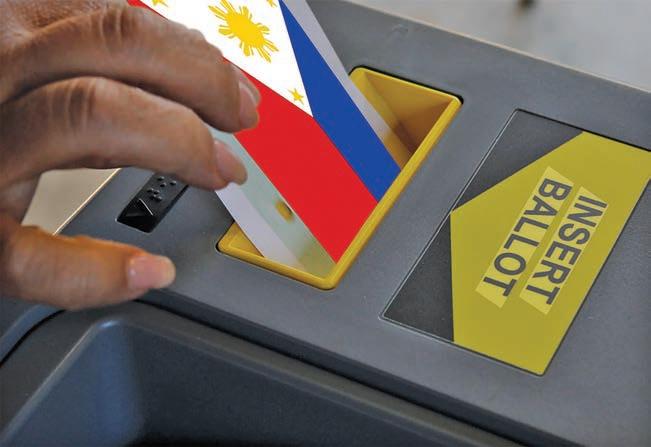
If Filipinos left Hawaii at the same rate as their share of the population, they would represent roughly one-fourth of out-migrants. Using UHERO’s estimate of about 58,000 total out-migrants in 2023, that would imply around 14,000 to 15,000 Filipino out-migrants. However, this is only a proportional estimate, not an official figure, because available migration data does not publish Filipino-specific out-migration counts.
Aside from the uncertainties, what’s more certain is hard data – although dated from 2022 – suggesting that Filipino voter turnout remains below the state average. According to official Hawaii Office of Elections turnout resources, turnout is reported by district and precinct rather than by ethnicity or informal neighborhood. For the 2022 primary, turnout in Filipino-heavy communities on Oahu was generally low: lower Kalihi fell below 30%, while parts of Kalihi, Waipahu, Ewa, and Kunia were generally in the 35%–40% range. Compared to Ballotpedia’s reports that Hawaii’s turnout among eligible voters was 50.3% in the 2024 presidential general election.
The takeaway is that Filipino Americans in Hawaii are a large and potentially influential voting bloc, but turnout appears to lag in some Filipino-heavy communities.
While turnout may be slightly lower, AAPI Data Hawaii voter demographics brief reports
(continue on page 5)
that AAPI residents make up a very large share of Hawaii’s electorate, with about 706,422 eligible AAPI voters and an AAPI share of the state’s electorate at 66.98%. With Hawaii’s Filipino population ranking second in the state, their voter-eligibility is among the highest, and make up a considerable share of that AAPI 66.98%.
While comprehensive surveys — such as past polls by the Hawaii Filipino Chronicle — are lacking, individual interviews offer glimpses into voter priorities, though they stop short of painting a full picture.
Filipinos from various walks of life were asked for this 2026 Primary Election cover story: 1) What are your top two issues of concern this election? 2) From your talks with family, friends and members of the Filipino community in Hawaii, do you hear that they want: a) more of the same, they are content with governance in Hawaii and/ or nationally, or b) change, they are discontent and want to see more change in general? 3) Why is it important for our Filipino community to vote? Do most of the Filipinos you know (who are eligible) vote regularly?
Their answers do not necessarily reflect a majority of Hawaii’s Filipino community due to limited sampling but there are common answers to infer generalizations like the most common issue
Top issue of concern among Filipinos: Affordability/Cost of Living
Affordability has become the top concern for many voters in the 2026 election year because it is the issue most directly tied to daily life: groceries, rent, health care, energy, gas and borrowing costs. Polling across multiple national surveys shows voters are responding to the cumulative strain of several high inflationary years — a reality that has reshaped the political landscape heading into the midterms. A Reuters/ Ipsos poll found that 40% of Americans said candidates’ positions on the cost of living would be the single biggest factor in their 2026 vote.
Voters may disagree on the causes or the solutions, but they share a common experience: wages and household income are not keeping pace with the prices they face
week after week.
Venos Delos Santos, Ewa Beach, Office Manager, a registered voter, said her top issue right now is affordability and the cost of living. “A working Filipino family in Hawaii may have steady employment — often holding one or even multiple jobs — yet still struggle under the weight of the state’s high cost of living. Even with consistent income, a significant portion of their earnings can go toward rent alone, especially in urban areas like Honolulu where housing costs are among the highest in the nation,” she said. “As a result, many families adapt by sharing housing with extended relatives, leading to multi-generational or crowded living arrangements simply to make ends meet. At the same time, they are often forced to make difficult tradeoffs: deciding whether to pri-
“Based on conversations across the community, the sentiment leans strongly toward a desire for meaningful change, driven by a feeling that current systems are static or stagnant while everyday pressures are accelerating. While there is immense pride in our local heritage and deep gratitude for the stability we possess, the consensus among family and peers is that the current approach to governance is falling short on systemic challenges. People feel that policy implementations are moving too slowly to address structural economic burdens. There is a widespread desire for fresh leadership and proactive policies that go beyond ‘more of the same.’ The community wants to see decisive action on economic diversification, infrastructural updates that lower utility pressures, and concrete initiatives to support local small businesses – many of which are the lifeblood of Filipino families in Hawaii.”
– Michael Berueda Foster Village, Engineering, IT, Healthcare, Registered Voter
of concern at this time is affordability and that Filipinos should vote as stakeholders in Hawaii’s future. Some respondents did not answer all of these questions or changed the subject to make another point, and one requested anonymity which was included in the article to give additional sampling and a general pulse of the Filipino community this election year. Respondents’ answers were edited for space and clarity.
oritize groceries over utility bills, delay medical or dental care due to cost, or limit transportation expenses even when commuting is necessary for work.”
Delos Santos elaborates “these challenges are not a reflection of a lack of work ethic—in fact, they highlight the reality that many hardworking families are doing everything right yet still face financial strain. For Filipino families in particular, who are strongly rooted in supporting extended family both locally and abroad, these financial pressures can be even more pronounced. Ultimately, this reality underscores why issues like affordable housing, fair wages, and access to essential services remain so critical — they directly affect the ability of families to achieve stability, security, and a better future here in Hawaii.”
Michael Berueda, Democrat, Foster Village, Engineering, IT, Healthcare, a registered voter, also listed affordability and the rising cost of living as his top concern. “Hawaii has always carried a premium for paradise, but recent inflation has pushed many families to a breaking point. When basic necessities like groceries and utilities spike significantly, it isn’t just an inconvenience – it directly threatens the stability of the households. It forces families to work multiple jobs or make compromises on nutrition, education and long-term savings.”
A member of the Knights of Rizal and active member of Hawaii’s Filipino community, Berueda adds, “The budget required to host traditional family milestones or community events has gone up. Families who used to comfortably contribute to
community initiatives are now tightly managing their finances to keep up with monthly and grocery runs.”
Another active Filipino community member, Carlota Ader, said “My top concern for Hawaii is the high cost of living. Despite the COVID pandemic ending several years ago, prices have not yet dropped to levels that are more affordable. Groceries, gas and other items are still very high.”
Marline Martin, 65, retired accounting clerk, Kapolei, a registered voter, joined the chorus of affordability as the top issue for the 2026 election. “Everything is high,” she said, pointing to the rising cost of mortgages, utility bills, gas, and food. She said her extended household has helped make those costs more manageable, but without that support, life
(Hawaii’s Filipino ....from page 5)
would be far more difficult. Renting, she added, would be even harder given how expensive housing has become.
“I see the same pressures affecting many Filipino families in Hawaii. Families are shopping carefully, stretching meals, sharing expenses with relatives, and putting off certain needs because basic costs have become so high. While multigenerational living is common in Hawaii and rooted in culture, it has also become a financial necessity. That family support is a blessing, but it also shows how difficult it has become for younger people, seniors, and working parents to live independently or feel financially secure,” Martin said.
Marilyn Villar, President of Annak Ti Badoc Ti Hawaii, a registered voter, said the rising cost of living has become one of the most serious challenges facing Americans today. Across nearly every part of daily life — from rent, groceries, and gas to insurance, utilities, and childcare — prices have gone up while incomes have not kept pace. As a result, many families are struggling to afford even their basic needs. Villar said this economic pressure raises an important question for voters in 2026: How will elected leaders help address the financial struggles that so many people are going through?
The most recent available data shows that Filipino Americans in Hawaii have a median family income of about $102,324 per year, according to the U.S. Census Bureau’s 2019 estimates Hawaii Business Magazine. This places them second among Hawaii’s major ethnic groups in median family income, behind Japanese Americans at $114,825.
Other issues high on the minds of Filipino voters for 2026: 1) affordable housing, 2) affordable healthcare access, 3) overall economy and the high cost to run a small business, 4) fear that voters will elect politicians who will keep the status quo, 5) fear of socialism growing across the nation, 6) Homelessness
Roland Tagalicud, 32, Banking, Honolulu, registered voter, said affordable housing was his top concern because it affects whether local families can stay in Hawaii at all. “Many Filipino Americans have deep roots here, and many immigrant families came to Hawaii with the hope of building a stable life. But today, younger generations often wonder if they will be able to buy a home, rent a decent place, or raise their children here. I have heard people talk about moving to the mainland because housing costs are simply too high. That is painful because Hawaii is home, and when families are priced out, we lose not only workers, but also culture, community, and the local values that make Hawaii special.”
Berueda shares Roland’s concern. “The housing crisis in Hawaii is intimately tied to the preservation of community culture. Without accessible entry-level home ownership or stable, fair rental options, we face a continuous ‘brain drain’. Our youth, professionals and young families are increasingly priced out, forced to relocate to the mainland to build their future. It’s heartbreaking to watch multi-generational households fragment because the younger generation cannot find an affordable place to establish their own roots here.”
Homeownership: about 64.1% of Filipino Americans in Hawaii live in owner-occupied units, which can contribute to long-term wealth accumulation.
Delos Santos said affordable healthcare access remains a serious concern for many Filipino families in Hawaii because access is not only about whether services exist. It is also about whether families can afford care, find the time to seek it, and overcome the everyday barriers that often stand in the way.
She said even hardworking families with steady employment may delay doctor visits, prescriptions, or follow-up care because rent, food, utilities, and other basic expenses must come first. “When household budgets are stretched thin, medical
needs are often postponed until conditions become more serious. Work demands add another layer of difficulty. Long hours, multiple jobs, and limited flexibility can make it hard for families to schedule appointments or maintain consistent care. Cultural values around resilience, privacy, and not wanting to burden others can also make it harder to seek help early, especially for mental health concerns. To me, the issue is clear: if people cannot realistically use the healthcare system when they need it, then access remains unequal. True healthcare access means making care not only available, but also affordable, reachable, and responsive to the realities families face every day,” Delos Santos said.
Phil Sabado, entrepreneur, Maui, Democrat, a registered voter, said the economy was his top concern. “As business owners on Maui, we are seeing firsthand how rising costs are affecting the local economy. Higher fuel prices contribute to more expensive airfare, fewer tourists, and emptier flights. When travel becomes too costly, visitors stay away — and the impact is visible,” Sabado said. He gives a striking example of a rough economy. “Corned beef, a common grocery item, is now being locked up at Foodland because of theft,” he said.
Ader said her top concern for the nation is the rise of socialism and “especially those individuals who are actively working to destroy our great country and society as we know it. They not only hate America but want our country to fail and constantly spew rhetoric to eliminate our freedoms and force citizens to accept their radical agendas that ultimately take away our rights as citizens.”
Anonymous, Honolulu registered voter, “My concern is that those elected will continue with the status quo and not think of innovative solutions to bringing down the cost of living in Hawaii - taxes, food, groceries, energy. People are being priced out of the affordability of homes and middle-income families are being squeezed
out of living here. Adding to that, the number of people - families, children, adults, kupuna are homeless.”
Filipinos want change or the status quo?
Across several responses from Filipino community members in Hawaii, the strongest theme is a desire for change rather than satisfaction with the status quo. Comments suggest that many Filipino families are looking less for sweeping ideological shifts than for practical solutions that improve daily life.
Berueda said, “based on conversations across the community, the sentiment leans strongly toward a desire for meaningful change, driven by a feeling that current systems are static or stagnant while everyday pressures are accelerating. While there is immense pride in our local heritage and deep gratitude for the stability we possess, the consensus among family and peers is that the current approach to governance is falling short on systemic challenges. People feel that policy implementations are moving too slowly to address structural economic burdens. There is a widespread desire for fresh leadership and proactive policies that go beyond ‘more of the same.’ The community wants to see decisive action on economic diversification, infrastructural updates that lower utility pressures, and concrete initiatives to support local small businesses – many of which are the lifeblood of Filipino families in Hawaii.”
Gloria Salvador, retired, Moanalua, a registered voter, said “I do hear more people wanting change. There’s a common feeling that life has become too expensive and that government needs to do more to address the everyday struggles of working families. In the Filipino community, there is also a strong desire for practical solutions rather than just political promises. Many people are not necessarily looking for extreme change, but they want meaningful change that can be felt in daily life.”
Grace Manipol-Larson, East Hawaii Republican
Party District 2 Chair, Hilo, Hawaii, a registered voter, said some people in the Filipino community with conservative ideas are asking for a change, especially the way our local government officials operate. They want accountability for taxpayers’ money. “People want change of power. They want to elect people that are willing to really serve the interests of the people. They want DOGE to audit Hawaii, and establish DOGE Hawaii to monitor each politician’s projects, breakdown of expenses and audit its [the state] budget,” Manipol-Larson said.
All respondents said one of the clearest ways for Filipino Americans to make their concerns visible to elected leader — is to vote. Several respondents said voting honors the sacrifices of immigrant families and gives the community a stronger voice in decisions that affect daily life.
Views differed on how often eligible Filipinos vote. Some respondents said most Filipinos they know regularly cast ballots, while others described widespread disengagement, with many eligible voters failing to register or participate. Reasons cited included long work hours, family responsibilities, unfamiliarity with the election process, frustration with politics and the belief that one vote will not make a difference.
Despite those barriers, the responses reflected a shared message: the Filipino community cannot afford to sit on the sidelines. Participants said voting is both a right and a responsibility. Manipol-Larson said, “it is important for every registered Filipino voter to cast their vote. Every vote counts especially we have Filipino candidates all over Hawaii running.”
Delos Santos said, “voting is about power and visibility. Simply put, when the community votes, it is harder to ignore. And when it doesn’t, it risks being left out of decisions that directly impact its future.”

By Christine Sabado
Bahay Kubo is an icon of Philippine culture. It represents the Filipino value of “Bayanihan.” This term refers to a spirit of communal unity with an effort to achieve a particular objective.
It is hard to believe, but I wrote about our Maui Bahay Kubo in 2016, ten years ago! We have a lot to catch up on.
The Maui Bahay Kubo Foundation has continued with meetings, fundraising, and diligent hard work by our board members and volunteers every year.
Ten years ago, I wrote about the spiritual valley of Kapaniwai on Maui with the towering pali and the rushing waters. In the valley, the river still flows, and the vista is pristine. The picnic tables where local families come every week to enjoy the soft breezes remain.
When you turn into the park, you can see to your immediate right the renovated and refurbished Bahay Kubo.
With dedication and a commitment to our community, our Maui Bahay Kubo has weathered many storms.
Recently, we experienced the heaviest rain and storms on record in a hundred years. The wind and rain displaced the river and some pathways. The Maui Parks just reopened the park for us this July. So we again regroup and begin anew.
The traditional Bahay Kubo is raised up on hardwood (Narra) stilts, which serve as the main posts of the house. Manong Leo Agcolicol planted the first Narra tree, which is the national tree of the Philippines and is in the gardens.
The original Narra tree
in Maui was hand-carried and carefully planted in the valley as a two-foot sapling; you can see it now as a full-grown post that supports our structure. Additional Narra wood was imported from the Philippines and used for the structure’s base and foundation.
Narra wood is one of the hardest woods in the world and will literally “bend nails.” Once sanded, this wood yields a golden color.
For the flooring, solid Philippine mahogany was imported. In 2026, this will have a good sanding and polishing for the ongoing renovation.
The Sampagita that was planted and ti leaves are taller and still thriving around the perimeter.
In 1966, Nipa woven leaves were used to create the roofing to complete the authenticity. Now, the renewal is in full force.
Over 1,000 Nipa leaves will arrive from Batangas, already woven and plaited, ready to install. They will arrive in Maui this month to complete the slated roofing. Over this will be aluminum roofing for added protection from the elements.
Within the interior, as you look to the ceiling, you will see these nipa leaves and appreciate the authentic quality they provide to the ambiance.
Life is all about time and condition, and now is the time to act. Here in Maui’s Bahay Kubo, it is July of 2026 and a bright Saturday. The sounds of a hammer pounding and a leaf blower interrupt the serene setting.
Men and women in Maui’s Filipino community are working diligently, planting and sweeping, to complete the task of ongoing restoration.
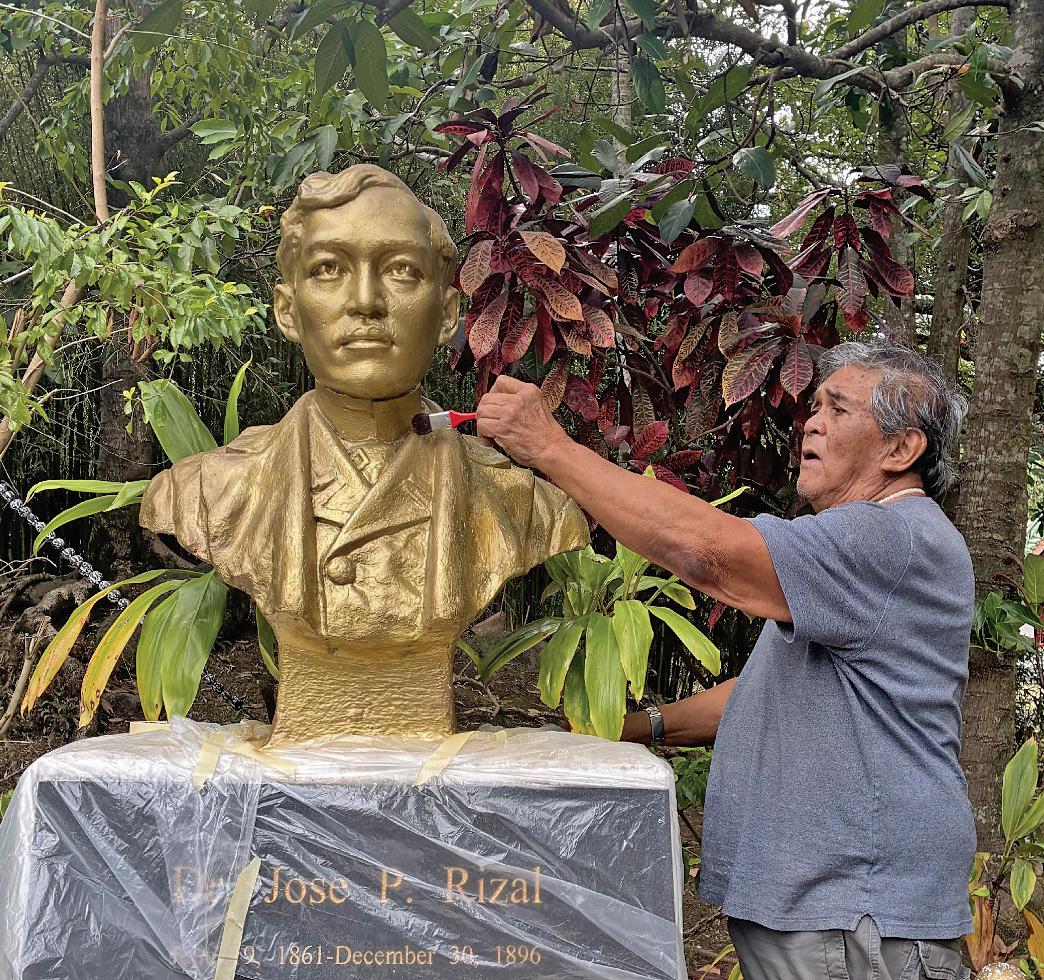
ning stream, a golden bust of Jose Rizal greets all visitors. This tribute to Rizal is refreshed and hand-painted every year in golden bronze. Permits have been obtained through tedious attention to detail.
There are strict rules in our Maui parks to ensure our safety. Higher guard rails and a new cement path were poured. The pond has been cleaned and refreshed as well.
Two exceptional volunteers are the “oil and gas” that power our team. Tante Urban rallies us and keeps us on track. Tata Bart Santiago was another volunteer who had a smile that warmed every room he entered. Sadly, he passed this past month.
He was an exceptional asset to our team. He was at our Bahay Kubo every week, working in some capacity: clearing rubbish, cleaning the pond, and sharing with visitors his love of his homeland.
Their spirits are high, and the fun they are having is contagious, a true reflection of the Maui Filipino Community. The goal is to pass the banner through the arts and education to our youth. This area can be a gathering place for locals and visitors alike.
Here is what’s new!
As you enter the Bahay Kubo, look up to see twelve murals placed in the eaves of the thatched roofing. The roofing was installed recently and is of a thatched design, close to the authentic in the Philippines. Our murals were installed so that visitors and locals alike can appreciate the treasures of Filipino life. From picking rice to caring for a carabao, the murals represent our lifestyle.
As you enter via a path that is along a run-
He always wanted to add another mural that showed a map, so he could point out his province, Alaminos, Pangasinan, with the Hundred Islands. “Heaven on earth,” he would tell me. This mural in his honor will be installed this year.
Zalde and Nita Ugalino, Paulo Sabado, Elmer Tolintio, Adrian Pasqual, the Sabados, Benny Feig, Jonathon Taroma, and Jorge Tirona round out our team.
On your next visit to Maui, please ride up from the airport to ʻIao Valley. It is about ten minutes past the old Wailuku town.
Kapaniwai Park is on your left as you turn in; you cannot miss our Bahay Kubo. It sits high on the rise as you enter.
Please enjoy the fruits of our community’s labor. We are spreading our culture daily with each visitor! Salamat po!
By Julian Bothamley and Dylan Bothamley
The 2026 NBA Finals did more than end a 53-year wait for the New York Knicks.
New York’s title-clinching win over the San Antonio Spurs gave Jordan Clarkson his first NBA championship, a feather in the cap of an impressive career, and the first such championship for a player of Filipino descent.
Clarkson’s maternal grandmother, Marcelina Tullao Kingsolver, hails from Bacolor in Pampanga, and Clarkson’s identity has long been tied to Filipino fans.
From his early days in the NBA, Clarkson outperformed expectations as a late second-round draft pick, earning NBA All-Rookie First Team hon-
ors in his first year in the league. He continuously improved, establishing himself as an effective role player, even earning the NBA’s Sixth Man of the Year award in 2021.
When he played for the Philippines men’s national basketball team in the 2018 Asian Games and again at the 2023 FIBA World Cup, he gave Filipino fans a rare sight: an established NBA scorer wearing the national colors.
In his debut for Gilas Pilipinas at the 2018 Asian Games, he didn’t disappoint, scoring 28 points with eight rebounds and four assists in a narrow loss to China. His 2023 World Cup run was astonishing, averaging 26.0 points, 4.6 rebounds, and 5.2 as-

sists per game over five World Cup appearances with Gilas when the games were co-hosted in Japan, Indonesia, and the Philippines.
His defining performance
came against China in Manila, when he erupted for 34 points, including a third-quarter scoring binge that powered the Philippines to its first win of the tournament.
on page 14)

By Elpidio R. Estioko
Have you ever thought of food as a medium that generates unity and strength, especially among immigrants?
The organizing committee of the Asian American Stories Video Contest thought it was a potent tool for this year’s theme.
After several surveys and various feedback, the organizers of the Asian American Stories Video Contest are one in saying that food tells stories that words alone often cannot.
So, they have chosen “Our Food, Our Stories: Legacy, Resilience, and the American Table” as the theme for the 2027 Asian American Stories Video Contest.
As one of 10 judges of the contest, I agree!
In fact, I also concur with the idea that a family recipe can carry the memory of a homeland, and a neighborhood restaurant can become a community’s gathering place.
Even a lunchbox packed with unfamiliar aromas can reveal both the pain of exclusion and the pride of belonging, something we Asian Americans are fond of doing, not only in potluck gatherings but also at work.
It is also common knowledge that across generations, food preserves traditions, fuels dreams, and creates opportunities for connection in community groupings.
“Our Food, Our Stories: Legacy, Resilience, and the American Table” is not simply about cooking or cuisine.


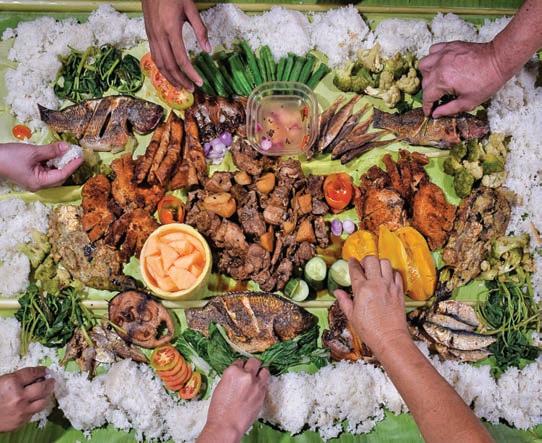
It is about the journeys behind every dish— the sacrifices of immigrants, the resilience of families, the dignity of work, the creativity of new generations, and the countless ways Asian Americans have enriched the cultural fabric of the United States.
My circle of friends says food is both deeply meaningful and profoundly joyful, and it is comfort and brings celebration, memory, and innovation. It invites curiosity, sparks conversation, and brings strangers together around a shared table.
Through documentary, narrative, animation, or experimental storytelling, filmmakers are challenged to answer such an enduring question:
How have the flavors carried across oceans transformed not only what America eats, but how America understands itself?
Joel Wong, chair of the board of judges, mentioned that participants are encouraged to build their stories around one or more of the following pillars.
Pillar I: Heritage, Memory, and the Transmission of Culture, which suggests Food as a Living Archive.
Recipes often survive
Food possesses a unique power to break down barriers and create common ground.
From margins to mainstream, many Asian Americans remember being teased for bringing unfamiliar foods to school and work. Today, dishes once considered “foreign” have become beloved parts of American life.
where written histories do not. A grandmother’s dumplings, a father’s curry, or an auntie’s adobo can become vessels of identity passed from one generation to the next.
Also, entries may explore the Language of Care. In many Asian cultures, love is expressed not through grand declarations, but through a simple question: Have you eaten yet?
Pillar I1 is in Economic Launchpads and Community Anchors, showcasing Food as Opportunity and Resilience.
Wong said, “Behind every bustling dining room and neighborhood market lies a story of sacrifice and perseverance.”
For generations of Asian Americans, food businesses became pathways toward economic stability and upward mobility.
Wong believes that the dignity of labor celebrates the resilience, discipline, and pride of those whose long hours transformed modest beginnings into lasting legacies.
For Pillar III, it talks about innovation, cultural exchange, and the shared table as a bridge between communities. The organizers maintain that cuisine evolves; it travels, adapts, and inspires.
That transformation reveals the changing attitudes toward identity and belonging. It is a creative reinvention that highlights chefs, entrepreneurs, home cooks, and creators who reinterpret tradition.
Wong said submissions will be evaluated using the following criteria: Culture & Historial Depth, Narrative Resonance & Engagement, Alignment with Theme, and Technical Execution & Creativity.
For the 2027 Asian American Stories Video Contest, we invite participants to tell stories that are intimate yet universal, deeply rooted yet forward-looking. The organizers said:
“Tell us how the foods carried across oceans helped shape the American story—one dish, one family, and one shared table at a time. Our Food, Our Stories: Legacy, Resilience, and the American Table. Because every meal has a history. Every recipe carries a journey. And every story deserves a place at the table.”
There you go! Looking forward to the launch of the 2027 Asian American Stories Video Contest!
ELPIDIO R. ESTIOKO was a veteran journalist in the Philippines and a multi-awarded journalist here in the US. For feedbacks, comments… please email the author at estiokoelpidio@gmail.com
By Emil Guillermo
t was typical Trump-style. The president’s July Fourth speech was a “flood the zone” mess. Veterans and patriotic sentiment, mixed in with red-baiting, followed up with loud, monotonous fireworks that made D.C. seem like a battlefield.
After the uniformed military singers joined in for the Ariel Pineda parts of Journey’s most famous song, I was ready for a cease-fire. But we were force-fed a bombastic 40 minutes.
And that’s still not the most memorable weekend highlight.
For that, we turn to something that should come as a warning to all Asian Americans. It was on the eve of July 4th, the 3rd, at Mt. Rushmore.
Standing beneath the towering stone likenesses of George Washington, Thomas Jefferson, Theodore Roosevelt and Abraham Lincoln— the worst president in American history looked even smaller than normal, as he made an assessment of where we are as a country.
“We see our American identity under a renewed attack,” Trump said. “There is now a resurgence of the communist menace in our land, including from newcomers to our country, who embrace ideas totally opposed to our way of life and our great success.”
Was he talking about the Democratic Socialists winning in New York? If he was, it was a lie. The Mamdani-backed Democrats are not communists. They are Americans upset with the direction of our country’s economy and way of life. Not communists.
With Trump using the word “newcomers,” he made his target clear. It’s all about the immigrants, and he instantly made them all deportable.
And that’s the lasting subtext of Trump’s 250th birthday gift to America. The president took the occasion to formally declare the New Red Menace.
Figures. Trump was, after all, mentored by Roy Cohn, the hateful lawyer of Sen. Joe McCarthy who spearheaded the paranoid drive against the civil and political rights of Americans in the 1940s and 50s by accusing them of being communists
When you’re down in the polls and you’re losing face in the world, what else do you do but launch the

“New Red Menace” and heat up the rhetoric, saying “communism is a mortal threat to our American liberty, the greatest threat to our country.”
I was surprised Trump excluded himself, the evolving autocrat, who, considering his illegal and unconstitutional actions, would make him the greatest threat.
A missed opportunity.
In doing so, we now know the “middle game” of his second term. Relive the blacklist era between 1947 and 1959 and the reign of the House Un-American Activities Committee, where hateful Republicans hurled allegations against innocents that destroyed lives.
Hang on to your hats. Trump’s response to Progressive Democrats is to go full-on regressive and back to a mean and nasty time in America.
Don’t let the Fox-ites fool you by playing things down as if all Trump’s anti-Communist talk is just “standard rhetoric.”
It’s not. It’s the only strategy that can revive Trump and the GOP from a mid-term catastrophe.
Trump got a few anti-communist jabs in that late July Fourth speech, but masked with veterans and a bit of optimism, Fox commentators chose to simply dismiss it.
But we shouldn’t.
Ask all the innocent Asian scientists dragged through the mud when their loyalty to the U.S. was questioned. Ask the former NOAA scientist Sherry Chen, who won her case against the U.S.
Asian Americans in the academic research and scientific communities have only recently understood what all this Trump red- baiting means. And how it can destroy people’s lives.
And let’s hope our general population hasn’t forgotten the damage of red-baiting. It is the ultimate in weaponizing the government against political opponents.
Damn commies? Damn McCarthyites.
Trump is reviving the feeling. 250 years after the Declaration of
Independence, we’ll all need cover from what looks like a full-fledged onslaught against anyone who dares to challenge the administration on affordability and cost-of-living issues, advocating for economic fairness and justice.
How can that be? Well, you can’t side with those “commies,” can you?
In fact, you must. Because they’re not commies. They’re just fellow Americans who aren’t blessed with billions. They’re regular folk who want to live the promise of America.
There were no Filipinos in the room when the Declaration of Independence was signed on July 4th 1776.
They probably had no idea we would be coming. So when you talk about the Founding Fathers, I hope you thought about your own. Or your father’s father. Whoever was first. Think about that guy today.
And truthfully, let’s not forget the gals, too. We need not adopt the sexism or racism inherent in the Declaration to be inclusive. Our mothers
and grandmothers who immigrated to America are no less noteworthy.
The courage it took to get on a boat, or later, a plane, from whatever island or foreign land. Or to drive across a border (all legally, of course). Whenever it was done on our individual timelines, the freedom was worth all the good feelings you can squeeze out of the weekend.
I hope you were inspired to read at least some of the Declaration of Independence. The beginning of the second graph is the killer.
”We hold these truths to be self-evident, that all men are created equal,” it says. Feeling equal today? Or just sweet and low?
” That they are endowed by their Creator with certain unalienable Rights, that among these are Life, Liberty, and the pursuit of Happiness.”
Oh yeah, “LLPH.” Are you getting your share of that?
The high court’s recent birthright citizenship ruling affirmed that, yes, we belonged. And yes, we are entitled.
But it comes at the same time
(continue on page 12)

(Continuation of
By Rose Cruz Churma
In May 1974, Taruc visited the United States and one of his stops was Detroit, Michigan. At Detroit’s Filipino Center, Taruc who was by then National Chairman of the Filipino Agrarian Reform Movement was hosted by several Filipino organizations.
The invitation to the dinner event included a quote from Taruc that said, “I am cooperating with President Ferdinand Marcos in his program of agrarian reform in the interest of stability that will end martial law.”
By the time Taruc died in May 2005, martial law had ended—but it wasn’t due to the stability brought about by agrarian reform. In fact the implementation of agrarian reform had been extended to 2014. However, despite these efforts for
when the ICE quotas for arrests are resulting in thousands of people being rounded up, law-abiding immigrants among them.
The overall message? You don’t belong. We don’t want you.
reform, inequities in land ownership persists, even to this day.
For those with op posite political views this book “exaggerates, misinterprets and twists facts to suit his convenience…and that this book was written primarily for foreign consumption.”
One of the conservative reviewers also noted that: “the author’s condemnation of the landowning class is too sweeping, his criticism of the government machinery and processes of justice too narrow, his story of the Huk’s part in the liberation of the Philippines too fantastic, his tale of American imperialism dripping with the Moscow brand of prejudice.”
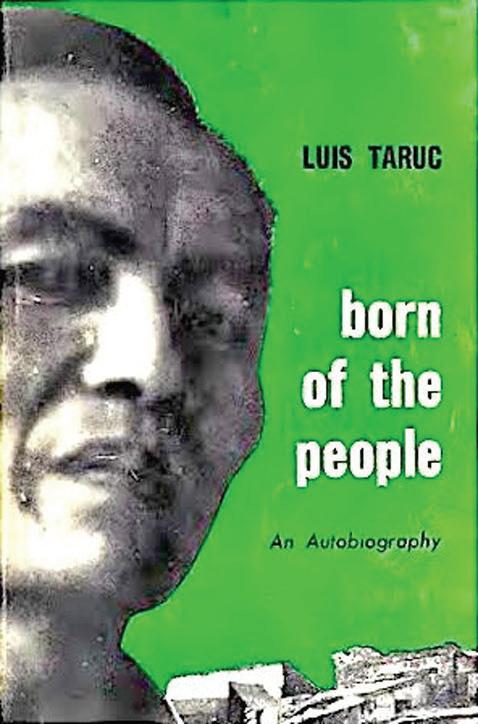
grandparents house, for example, there were three doorways and an unwritten rule of who enters which door, or which table to eat from.
I recall the imperious directives of my sweet grandmother to her tenants to allow their sons or daughters to serve as household help for my mother’s household in Baguio.
I remember also the discussions on how the harvest would be divided between tenant and landlord—which changed from the traditional 50:50 to 70:30.
al” Taruc chronicles the brutality received by the farm workers in Central Luzon.
He writes that the orgy of killing, torture, burning and looting that was let loose in Central Luzon exceeded the violence of the Spanish execution squads, or the butcheries carried out by the American army, or the terrors from the Japanese invaders. This was done by Filipinos to their own. Then he lists all the barrios and towns impacted by this violence.
This book was published in 1953, more than seven decades ago. Every reader has the right to his
We’ve been told that before as Filipinos. My father was told that in California in the 1920s.
Some are always trying to rig the equation so that some people are less equal than others.

or her opinion on whether the book is “the greatest of all things I have read about colonial struggles for liberation” as described by Howard Fast (an American novelist and television writer) or one filled with hyperbole as criticized by some Filipino reviewers. From one who grew up in a land-owning household, I lived through the distinctions of the social hierarchies. In my
That was why the founders declared independence in the first place, citing the “Right of the People to alter or to abolish” any form of government that “seems most likely to effect their Safety and Happiness.”
It’s the reason they stood up against an absolute despot, against a King.
Today, we all can declare independence simply with the power of our vote. And that’s why this administration is doing all it can to restrict and prevent people from voting. Or coming here.
Here’s another example of how ugly the midterm elections will be.
House Speaker Mike Johnson told Fox the day after the Fourth that Congress would look to stop birthright citizenship, which he says has become birthright tourism.
Enough to upend more than a century of legal prec-
Or the admonitions to keep close to home and not stray from typical routes lest one be captured by the Huks, where the implications were that these were “bad” people.
I’m glad I read the book, even if it was seven decades late. What shocked me though was the part on “The Struggle for National Liberation” of the years soon after the end of WWII. In Chapter 24, “The Fight for Surviv-
edent dating back to Wong Kim Ark?
Here’s the easy fix for so-called “birthright tourism” abused by many countries, but especially by Chinese and Russian nationals. The fix? Don’t give visas to pregnant women. Sorry. Simply abort their citizenship plans. Restrict visas to pregnant foreigners.
And leave the 14th Amendment alone. I jest?
Not.
But already you see how the closer to the midterms, politics will only get more xenophobic, ugly, and anti-immigrant.
The president lit the wick on the eve of the Fourth at Mt. Rushmore, when the giant presidents of our history made Trump seem so small as he invoked the new red scare.
Funny coming from a guy who loves Russia’s communist leader Vladimir Putin so much, he had
The book provided not just food for thought, but a new set of lenses to view the past. Thank you, Susan, for sharing this book. It will be treasured.
ROSE CRUZ CHURMA established Kalamansi Books & Things three decades ago. It has evolved from a mail-order bookstore into an online advocacy with the intent of helping global Pinoys discover their heritage by promoting books of value from the Philippines and those written by Filipinos in the Diaspora. We can be reached at kalamansibooks@gmail.com.
the U.S. join Russia against Ukraine at the UN.
Not to mention the recent sycophantic summit with President Xi, the leader of the Chinese Communist Party, when Trump called Xi not just a friend, but “a smart and great leader.”
What a guy, that Trump.
He’s the American president who aspires to be Xi and Putin, not Lincoln nor JFK. (I guess that’s why the MAGA hat is red?)
These are the themes that will reverberate throughout the midterm campaign. Trump will say it’s the only way to save America. No, it’s the only way he knows to save himself.
The ugliness of division is always the go-to when you’re limping desperately into the midterms.
EMIL GUILLERMO is a journalist and commentator. His talk show is on www.amok. com.
By Seneca Moraleda-Puguan
ng kabataan ang pagasa ng bayan.” (The youth are the hope of the nation.)
Growing up, this quote from our national hero, Jose Rizal, was deeply ingrained in my mind. But the events of the past month have threatened the very people we call the hope of our future.
On June 8, two players from the Ateneo Blue Eagles basketball team tragically drowned. Divine Adili and Rene Baterbonia lost their lives in what appears to have been a preventable tragedy during a training activity in Dipaculao, Aurora.
Their deaths were not only a heartbreaking loss for their families but also for our country, which lost two young athletes with the potential to bring pride to the nation.
As a mother, my heart was utterly broken. I could only imagine the pain their parents felt, and continue to endure.
Still trying to recover from the heartbreak and anxiety brought by this tragedy, we were confront-
ed with more devastating news: schoolchildren being attacked by none other than their own classmates.
On June 16, seven Grade 5 pupils were stabbed by a Grade 8 student. In the days that followed, more reports surfaced of students being stabbed by other minors.
What shocked me most was the shooting incident in Tacloban, where three students were killed, and twenty others were injured. The two suspects were reportedly just 14 and 15 years old. School shootings have become tragically common in the United States, but in the Philippines, such incidents have long been considered unimaginable.
What is happening to the next generation? What has become of the future hope of our nation?
We are losing them- to the unhealthy influences of social media, to excessive gaming, and to the darkness of this world.
As their stewards, we must fight for them. And that fight begins at home.
By Keli’i Akina
Free speech is one of our country’s founding principles. But that doesn’t mean it is safe from attack.
Back in May, the Hawaiʻi Legislature passed a bill — which the governor promptly signed into law — that will directly infringe on our First Amendment rights when it goes into effect in July 2027.
That new law, known as Act 11, will prohibit groups you might normally think of as representing you — nonprofits, unions, corporations, community associations and more — from saying anything about candidates for public office, ballot measures or political parties.
In response, the Grassroot Institute of Hawaii filed a lawsuit last month to strike it down.
If Act 11 is allowed to stand, not only Grassroot but all groups, regardless of their points of view, will no longer be able to speak

In light of these tragedies, my husband and I have become even more vigilant and intentional in praying for our two children, Callie and Yohan, and for the generation they represent and the generations they will one day influence. We are purposeful in how we raise them and careful about the influences we allow into their lives. We strive to plant seeds of conviction, discernment, and wisdom in their hearts so they may know right
from wrong and truth from falsehood, preparing them to face the world when the time comes to let them go.
Yet as much as we want to shield them, we know the world that awaits them can be dangerous. Ultimately, we trust that God is sovereign over their lives. That He is their protector, their refuge, and their defense.
So I have a plea. To parents at home, to teachers in our schools, and to the leaders of our nation: let us protect our children from the evils of this world.
The future leaders of our society need our guidance, our support, and our care. May their welfare always be our priority. May the policies our leaders enact be for their good. May we champion them, fight for them, and pray for them. May we make this world a safer and better place where they can grow, flourish, and succeed.
Lord, have mercy on the next generation. We entrust them to Your hands. Please save our children.
“Ang kabataan ang pag-asa ng bayan… sila’y dapat ingatan at pangalagaan.” (The youth are the hope of the nation… they must be protected and cared for.)
publicly about issues that could directly affect the lives of the individuals they represent. Even the groups that supported this law will no longer be able to speak out on such matters.
As an organization representing many thousands of voices in Hawaii, we could not ignore such an obvious effort to take away this vitally important freedom enshrined in our country’s Constitution.
Great men and women have fought and died for us to have this freedom. It is one of our key shields against tyranny, and we must guard against any attempt to take it away from us.
I trust that the courts will agree with us and act quickly to quash this audacious bid to suppress our right to speak out on matters concerning the future of Hawaii.

By Will Espero
The primary election is on August 8th, and it’s important to cast your vote once again. Ballots should be received in the mail this month, and if one needs more information about voting, visit www.honoluluelections.us.
Despite Donald Trump’s threats against mail-in voting, there should be no problem voting by mail in Hawaii. Trump’s arguments against mail-in voting have no merit, and there is no evidence anywhere in the United States of widespread voter fraud or abuse by mail.
Donald Trump has a reputation for lying and twisting the truth, and his comments about mail-in voting are not substantiated or proven. Mail-in voting is the easiest way to vote from home, and voters should take advantage of this service
to avoid going to a polling place and standing in line. At home, voters will have time to research candidates, analyze their positions, and see where candidates stand on the issues.
This year, with Sylvia Luke not running for re-election for Lieutenant Governor (LG), a new LG will be on the ballot with Governor Green for the Democrats. This is probably the most interesting race in the primary, and Kauai Mayor Derek Kawakami and State Representative Della Bellati are two names most Democratic voters will recognize.
I served with both of them in the Hawaii State Legislature, and I believe both are capable of replacing Luke. They have the experience and knowledge to serve, and in my opinion, either one would do a commendable job.
There are other Democratic candidates on the ballot if Bellati or Kawakami don’t excite you.
(SPORTS CORNER: The Summit ....from page 9)
With an NBA championship in the books, Clarkson has cemented an impressive legacy and expanded the footprint of the Philippines’ basketball tradition on the biggest stage.

Congressman Ed Case is being challenged in another primary race by Hawaii State Senator Jarret Keohokalole for the first congressional seat, and this race has received some national attention in the media. Case is a well-known moderate lawmaker compared to Keohokalole, who is a young, articulate senator who is not afraid to address tough issues.
Case has more name recognition than Keohokalole and has decided not to publicly debate Keohokalole.
If one wants to get more involved in the elections this year, consider volunteering to help a candidate or two if time permits. As one who has been in many campaigns, I can tell you that candidates are very appreciative of those who help and assist.
Walking door to door or holding signs is one way to get outdoors and be engaged. Preparing mailers, calling voters, sending emails, creating
brochures, and having a coffee hour are ways to help if one wants to stay indoors.
If none of these options seem viable or possible, contributing with a campaign donation is always valued and beneficial to the candidate. Individual donations help to get the candidate’s message out as paid advertising and postage costs are huge expenses in most campaign efforts.
Be advised that traditional polling places from the past will not be available as they were before. Mail-in voting is ideal, simple, and easy and should be utilized.
If one must go to a polling place, Honolulu
Hale and Kapolei Hale will be open and available on Oahu. Check the election website for other possible locations.
Voting is a privilege all U.S. citizens must take seriously. Every vote counts; your vote is important.
As Filipino- Americans, we must participate in the electoral process and select the candidates who we believe are best for our state, our families, and our future.
To not vote is to let other people decide your fate and the fate of your community. Don’t just stand on the sidelines and complain. Be proactive and actively engage in the freedoms and rights our nation is known for.
Your vote is your voice. Be loud, be involved, and make a difference.
WILL ESPERO retired from the Hawaii legislature after serving 19 years in the state House of Representatives and State Senate. He is currently a novelist, poet, and supporter of the arts. Lingering Thoughts provides a glimpse of his perspective on current events and issues
Clarkson’s triumph was a story of persistence and of a player outperforming expectations at every stage of his career, reaching the summit through perseverance and relentless hard work. And it’s fascinating that his first NBA championship came against an opposing team featuring one of the rising stars of the Filipino diaspora.
Although the San Antonio Spurs came up short this year, they reached the Finals in large part due to the precocious play of Dylan Harper, who carries Filipino heritage through his mother, Ma-
ria Pizarro, who was born in Bataan, Philippines, and immigrated to the United States as a child, later playing college basketball for the University of New Orleans.
Harper’s father, Ron Harper Sr., played 15 seasons in the NBA and won five NBA championships. Dylan Harper has legitimate NBA star potential as the No. 2 overall pick in the 2025 NBA Draft and has already made the NBA Finals in his rookie season.
San Antonio reached the Finals ahead of schedule, in large part due to Harper entering the NBA far better prepared than most rookies. Harper rep-

resents a future that could be unusually rich for the Filipino diaspora in the NBA.
That is what makes these Finals feel less like a single milestone than the opening of a larger chapter. Clarkson claimed the first championship, giving Filipino basketball a historic figure at the NBA summit. Harper, meanwhile, may
be chasing the next one for years.
On a Spurs franchise positioned for sustained playoff relevance, further postseason runs feel close to inevitable, and future Finals appearances are firmly within view.
The first NBA champion of Filipino descent has arrived. The next may already have shared the same Finals floor.
HINAMI NCLEX-RN REVIEW CLASS | Filipino Community Center, HiNAMi (Nursing Advocates & Mentors, Inc.) | Third Flr, Suite 302, FilCom Center, 94-428 Mokuola St, Waipahu, Hawaii 96797 | July 8 to November 18, Every Wednesday at 5pm to 8pm | Ms. Beatrice Ramos-Razon, a registered nurse, leads this licensure exam review class. For more information, email programs@filcom.org and bramosrazon@aol.com.
32ND ANNUAL MADE IN HAWAII
FESTIVAL | Hawaiian Airlines | Hawaii Convention Center, 1801 Kalakaua Ave, Honolulu, Hawaii 96815 | August 20 to 21, 6:30am to 10pm and August 22 to 23, 8am to 10pm | Buy Hawaii. For Hawaii. Shop hundreds of local vendor foods featuring local artisans, crafters, and makers. Enjoy live musical performances and more.
DOCTORS-ON-STAGE: “AGAINST ALL ODDS” | Bayanihan Clinic Without Walls, Doctors-On-Stage | Salvation Army Kroc Center, 91-3257 Kualakai Parkway, Ewa Beach, Hawaii 96706 | September 26 at 5:30pm | This musical production by Doctors-On-Stage and Bayanihan Clinic Without Walls aims to raise money for a good cause. For more information about “Against All Odds,” call 808-518-8929 or email bcww@gmail.com.
The Philippine Consulate General in Honolulu welcomed the newest batch of Filipino educators under the J-1 Exchange Visitor Program, recognizing their important role in shaping young minds while showcasing the professionalism, dedication, and excellence of Filipino teachers.
A welcome reception in early July warmly welcomed 57 teachers from the Philippines, Kenya, and Ghana as they began their teaching assignments in Hawaii’s public schools. More teachers are expected to arrive in the coming weeks.
The welcome reception, organized by the Ha-
waii Department of Education (HIDOE), brought together education officials, visa sponsor representatives, Filipino American organizations, and community members to welcome the teachers.
According to HIDOE, this year will see a total of 237 international teachers, including up to 175 from the Philippines, joining the approximately 365 current J-1 teachers serving in
classrooms across the state this year.
Speaking on behalf of the Consulate, Deputy Consul General Pamela Durian-Bailon welcomed and congratulated the teachers as they embarked on this new chapter in their professional journey and thanked them for serving not only as educators but also as ambassadors of Filipino excellence, values, and culture.
Consulate personnel also engaged in talk stories with the new teachers, answered their questions, and distributed the Consulate’s contact information flyers.
The Philippine Consulate General wishes the Filipino educators a meaningful and rewarding teaching experience as they contribute to Hawaii’s classrooms while continuing the long tradition of excellence for which Filipino teachers are widely respected.
By Conrad B. Enriquez
Igrew up in a Christian home where Sundays were sacred. We woke early, dressed our best, and went to church— rain or shine. My mother, a schoolteacher, made sure faith was part of our rhythm. I attended Sunday school, sang in the choir, and even became a youth leader. Yet beneath all that activity, my understanding of God remained shallow.
Then came college.
As a student-athlete, weekends were consumed by games. Performance replaced worship, and slowly, almost unnoticed, I drifted away from my relationship with Jesus.
After graduation, I became a teacher and coach. My routine shifted—Friday nights were for drinking, Saturdays for games, and Sundays for myself. Church became a habit without impact. I attended, listened, and left unchanged.
At the same time, I immersed myself in hobbies—racing, biking, trail
riding. These gave me recognition and identity, but they also became idols. I did not see that I was being shaped more by the world than by God.
When I eventually married and had children, I failed to lead my family well. Though physically present, I was emotionally absent. Anger, frustration, and bitterness took root in my heart. I claimed to be a Christian, yet my words and actions told a different story.
I became verbally and emotionally abusive toward my wife. My children grew afraid of me—they would panic at the sound of my motorbike approaching home. Our house was filled with tension, especially on weekends. I was slowly destroying the very family entrusted to me. Still, I looked for answers in the wrong places. I even thought that separation and personal freedom might bring peace. I was mistaken.
One Saturday, instead of riding, I attended a par-
ent talk at my son’s school. I came ready to criticize— but instead, I broke down in tears. For the first time, I saw clearly the man I had become.
That day, I prayed a simple prayer: “Lord, send someone to help me understand You.”
Not long after, in January 2023, my wife and I were invited to a couples’ retreat. I went reluctantly, even joking about it. But during one session, God met me in a way I could not ignore. The weight of my sin, pride, and failure overwhelmed me.
Then I realized something unexpected—the
same speaker from the parent talk was also my facilitator at the retreat. God had answered my prayer.
Through that encounter, I was challenged to pursue God daily. I began a simple practice of spending time with Him—praying, reading Scripture, and reflecting. What started as a discipline became a relationship.
Over time, God changed me. Harsh words were replaced with words that build. Fear in our home gave way to peace. We began having family devotions. My faith became real, not routine. Today, by God’s grace,
my life has new direction. I start my mornings in prayer. I look for opportunities to share Christ, even with my students. My wife and I now serve together, helping others grow in faith.
God did not remove my passions—He redeemed them. What once centered on self now points to Him.
I am still a work in progress, but I am no longer the man I used to be.
As Scripture says, “For this son of mine was dead and is alive again; he was lost and is found” (Luke 15:24).
I am Conrad Enriquez—a husband, a father, and a sinner saved by grace.
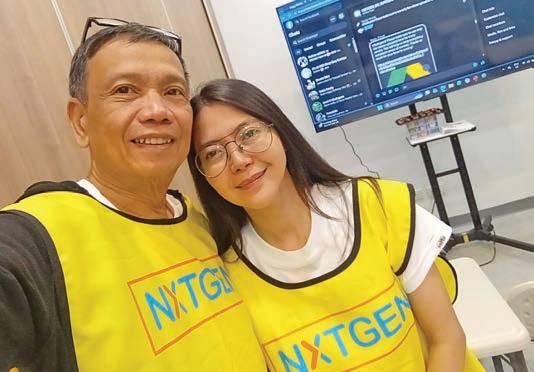
CONRAD ENRIQUEZ is a Physical Education teacher and a SportsCoordinator at MANGGAHAN HIGH SCHOOL, Department of Education in Pasig City. Together with wife Melai, they serve as volunteer workers at the CCF NXTGEN Children’s Ministry to disciple kids from toddlers to pre-teens by creating a fun, safe and Christ-centered environment where they can discover God’s purpose to their lives.