Introduction from the Leader of Havering Council Cllr
Ray Morgon
Dear Resident,
Every year we produce this booklet to explain how your Council Tax is spent, the financial challenges we face, and how we continue to deliver the services that matter most to Havering residents.
Once again, we have had to set a legally balanced budget against a backdrop of sustained and severe financial pressure. Demand for services continues to rise sharply – particularly in adult social care, children’s services and housing, including homelessness and temporary accommodation – while costs continue to increase faster than the funding we receive from Government.
Despite making more than £160 million in savings over the past decade, and continuing to look for efficiencies wherever possible, Havering is now at the point where further reductions are increasingly difficult without impacting frontline services. As a low-cost council, there are no easy options left.
For 2026–27, the total cost of running Council services is £356.5 million. The biggest pressures on that budget continue to be Adults’ Social Care (£125.8m), Children’s Social Care (£82.1m) and Housing demand, including homelessness and temporary accommodation (£18.1m).
These are statutory services that we are legally required to provide, and they account for the majority of our spending.
To meet these costs, £174.4 million is funded through
Council Tax, alongside £105.1 million in Government funding grants and £77 million in Exceptional Financial Support loans. While this support has helped us to set a balanced budget, relying on borrowing is not a sustainable long term solution – particularly when those loans come with interest costs that place further pressure on future budgets.
This year’s Government settlement, while improved, still does not reflect Havering’s rapidly changing population or the true cost of delivering services in the borough. That is why we continue to lobby for a fairer funding formula and for urgent reform of how councils like Havering are funded.
As part of setting this year’s budget, the Council has approved a Council Tax increase of 4.99%, made up of 2.99% for general services and 2% for the Adult Social Care precept.
When adding the London Mayor’s precept (his share of the bill) which has risen by 4.1%, the total increase for the average Band D property is £2.14 per week.
We know that any increase is unwelcome at a time when many residents continue to face cost of living pressures, but we have been left with little alternative if we are to protect vital services and avoid issuing a Section 114 notice, which would severely restrict what the Council could deliver.
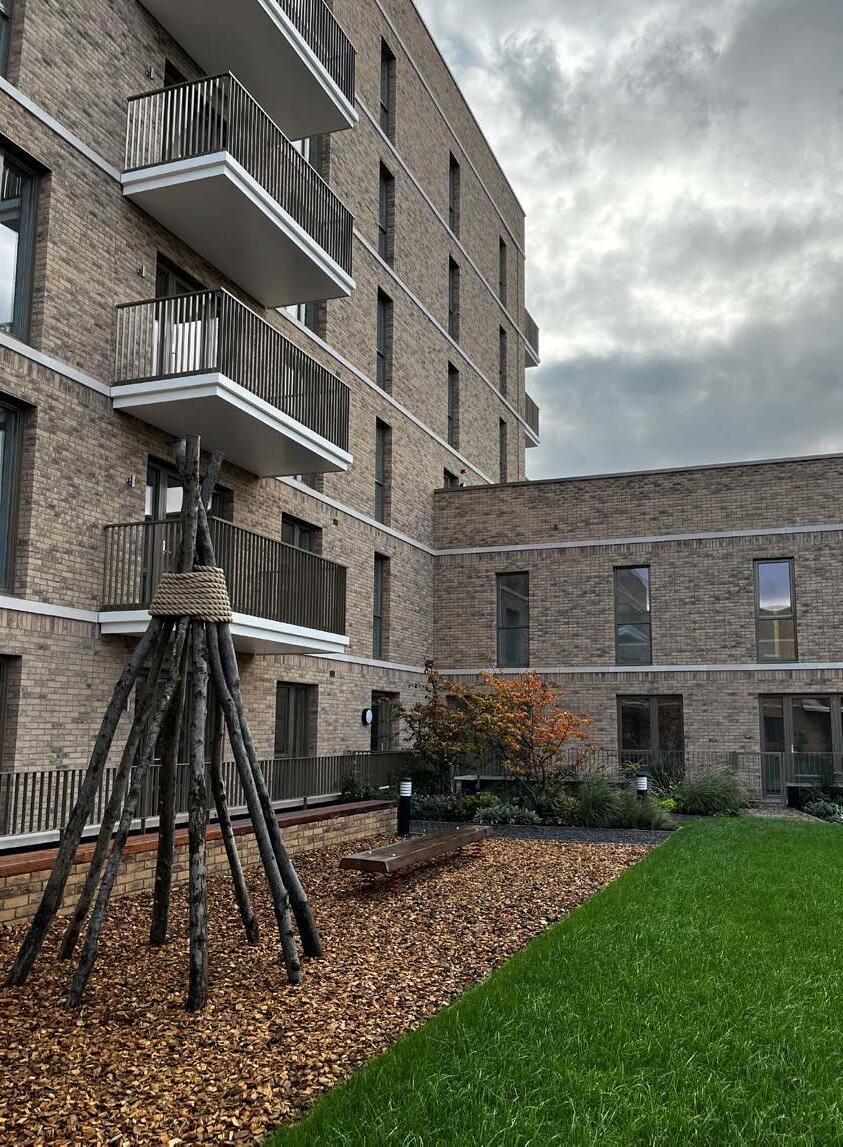
Even in these challenging circumstances, Havering Council continues to deliver for residents. We are investing in community safety through continued funding for S92 police officers and upgraded CCTV, keeping the borough cleaner and greener, maintaining our parks and green spaces, and continuing to build new homes for local people.
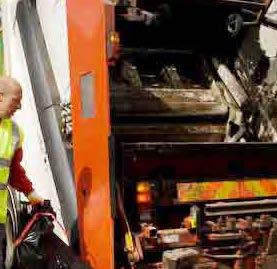
Weekly rubbish and recycling collections will continue, streets will be kept clean, and we will keep investing in our roads and pavements. We will also continue to support residents through cost of living support and targeted help for those who need it most.
Despite the extreme pressures on council finances nationally, this budget allows us to maintain key frontline services while continuing to stand up for Havering and fight for the fair deal our borough deserves.
Together, I hope we can continue to make Havering the borough you want to be part of.
Councillor Ray Morgon, Leader of Havering Council
The Havering you want to be part of
How the Council Tax is spent
The following outlines how the Council is set to spend money for the financial year April 2026 to March 2027.
Over the next year we will collect £221 million from the residents in Council Tax. From this, we will pay £47 million to the Greater London Authority to help fund the police, fire service and Transport for London.
The remaining £174 million is added to our grant from central Government, giving us £357 million to spend in Havering over the coming financial year. The average Band Council Tax charge in Havering is £2,424.66 per year, of which £510.51 goes to the Greater London Authority and £1,914.15 comes to the Council to fund your services.
Adults Social Services
In the budget consultation you told us that looking after vulnerable residents in our community was important so we will be spending £13.11 per household, per week to fund social care services for the adults, as well as helping people to regain their independence, after an accident or stay in hospital.
Rubbish, Waste Collection & Street Cleaning
£1.88 per household, per week will be spent to collect rubbish and recycling from more than 100,000 households as well as keeping streets clean across the whole of Havering all year round.
Needs of Young People in Havering including Social Care
£10.14 per household, per week will support the needs of young people in Havering including Social Care. The day-to-day running costs for schools comes from a separate, dedicated Government grant for schools, not from the Council Tax.
Culture and Leisure
Net nil per household, per week to run our parks, libraries, leisure centres, sports development, arts services and the Havering Music Service as well as a wide-ranging programme of activities for young people. This also includes a contribution towards The Queen’s Theatre, as well as preserving our heritage buildings.
£0.65 per household per week will be spent to protect consumers (including enforcing fair trading, health and safety, food safety and private rented housing standards), improve air quality, tackle land contamination and noise issues, licensing and regulation advice.
Homelessness
£1.49 per household, per week will be spent on preventing homelessness and supporting people and families who find themselves homeless.
Other services
£7.43 per household per week to run a range of other services including support services (e.g. finance, human resources, IT, insurance and legal services), registrars (births, deaths and marriages), community safety and road safety.
Levies
£2.11 per household per week is paid to a range of organisations that provide services including waste disposal to a number of boroughs including Havering. This is set out in more detail elsewhere in this leaflet.
Your Council Tax bill for 2026/27 will show an increase of 5% for the London Borough of Havering element. The actual increase is 4.99%. This percentage has been rounded as legally, the bill can only show the percentage to one decimal place.
Information about Council Services
Many services are now online including:
Council information
The Council produces email bulletins on different topics with subscribers receiving information from these bulletins each month.
Sign up at www.havering.gov.uk/Havering-Updates
Social care
Information and advice on social care services for people of all ages can be found on www.havering.gov.uk/socialcare
Reduce, reuse, recycle
In Havering we produce more than 95,000 tonnes of waste each year. Information about reducing, reusing and recycling is at www.havering.gov.uk/recycling
Libraries
You can renew or reserve a library book online. Online courses, ebooks, audio books and lots more are all available at www.havering.gov.uk/libraries
You can also download our libraries app for smartphones. www.havering.gov.uk/libraries
Parks and open spaces
Havering has over 108 parks and open spaces, 13 with greenflag status. Information about our parks and what they offer is at www.havering.gov.uk/parks
Business
Information, advice and support for businesses is in one place on the Council website at www.havering.gov.uk/business
Housing
Information and advice on Council housing, housing support, and private rented options is at www.havering.gov.uk/housing
Marriages & ceremonies
Information about the Georgian Grade II listed wedding venue, Langtons House and details about getting married or holding a ceremony in Havering is at www.havering.gov.uk/langtons
Birth and death registrations
Everything you need to know about registering births and deaths is at www.havering.gov.uk/registrations
This leaflet, including detailed financial information, is available at www.havering.gov.uk/counciltax
Council Tax: Do more online
All of the following Council Tax services are now available when you set up your My Havering account
Change of address/moving home
You can tell us about your move without a My Havering account at: www.havering.gov.uk/counciltax
Copy bill request
To request a copy bill, visit www.havering.gov.uk/copybill
ebilling request
Over 27,000 residents in Havering receive their Council Tax bill by e-billing. Help the environment and receive your bills online when you sign up for My Havering Account.
Payment arrangement request
To make an arrangement for the current year
Single person discount request
To request or cancel a 25 per cent single person discount
You can also access the following services on the Council’s website: Student discount request www.havering.gov.uk/studentdiscount
Housing Benefit and Council Tax Support
Reporting a change of circumstances: www.havering.gov.uk/hbchange
General enquiries
Use this form for any Council Tax enquiries not listed above: www.havering.gov.uk/counciltaxenquiry
Council Tax Support
If you cannot afford to pay Council Tax because your income is low, you can apply for help at www.havering.gov.uk/counciltaxsupport
Council Tax Information 2026-2027
Almost all domestic properties are subject to and pay Council Tax. Properties are allocated a band according to their market value in 1991.
The table above tells you the band a property will fall into and the Council Tax to be paid based on property values at 1 April 1991.
Visit www.havering.gov.uk/counciltax
To find out more about Council Tax Support visit www.havering.gov.uk/counciltaxsupport
Havering Council urges residents to be aware of Council Tax scams
Council Tax scams continue to do the rounds in Havering so extra vigilance is always required.
The scammer asks for a £65 ‘release fee’ in order to release the money that is owed which is usually a higher amount.
Residents should always double-check details if someone calls them out of the blue to offer a sum of money as it is likely to be a scam. The Council does not charge a release fee to reduce your Council Tax or to refund overpaid Council Tax to you.
Residents can get advice from the Citizens Advice consumer helpline by calling 03454 040506.
You can also contact the Council Tax Service for advice at www.havering.gov.uk/counciltaxenquiry
More information about Scams Awareness Month and scams in general is available at www.citizensadvice.org.uk
Scams should be reported to Action Fraud at www.actionfraud.police.uk
Pay promptly to get a lump sum discount
You could save up to £72.74 by paying all your Council Tax early. More than 3,500 Havering residents pay their Council Tax in full before 1 April each year and get 1.5 per cent off their Council Tax bill.
The Council Tax Lump Sum Discount table shows the amount you will save if you pay all of your Council Tax before 1 April 2026. You can make a payment at www.havering.gov.uk/counciltaxpayment
Appeals
Appeals to amend your property band can only be made if:
• the value has altered due to a physical change to the property
Council Tax Lump Sum Discount
• the property has started to be used or stopped being used for business purposes
• a house has been converted into flats or vice versa
• you have become the tax payer of the property within the past six months.
If you wish to appeal or request a change to your valuation band and would like more information, please contact The Valuation Office Agency (free of charge) at: www.voa.gov.uk email ctsouth@voa.gsi.gov.uk or call 03000 501501
They are located at 1 Ruskin Square, Dingwall Road, Croydon CR10 2WF. This is a free service and while any appeal is in progress, you still need to pay your Council Tax as shown on your bill. If successful, your bill will be amended and you can request a refund of any overpayment.
Payment by Direct Debit
Direct Debit is an easy way to pay and you can choose an instalment date of either the first, fifteenth or twenty first of each month. Once set up, payments are made automatically so you don’t have to worry and we will give you notice of any changes to the payments you make.
It’s easy to start paying by Direct Debit, no need to fill out any forms, just set up a My Havering account by going to www.havering.gov.uk/myhavering You will then be able to set up your Direct Debit online and you can also report a change of address, apply for or cancel a single resident discount, request a copy bill and much more. Alternatively you can set up payments by Direct Debit without registering for MyHavering account by visiting www.havering.gov.uk/ctaxdirectdebit
Council Tax payers finding it hard to Pay
Residents on a low income who are struggling to pay their Council Tax may be entitled to Council Tax Support.
You can make a claim at www.havering.gov.uk/counciltaxsupport
To help with the cost of living, visit www.havering.gov.uk/costofliving. There are lots of useful ideas for people of all income groups to help make your finances go further.
Other ways to pay your Council Tax
Visit www.havering.gov.uk/counciltax to pay by Debit Card.
For telephone payments call 0300 456 0630 (open 24 hours a day), internet banking or bank transfer visit www.havering.gov.uk/counciltax, you will need the following:
- Payee Name: London Borough of Havering
- Sort Code: 62-00-44 and Account Number: 14871734.
- Your Council Tax account number
Your Council Tax instalments are due on the first of every month, unless you pay by Direct Debit. You must ensure your payments reach us by the due dates and we may help remind you by sending an SMS message. We will only send you one reminder letter for late payment and legal action will be taken against those who do not pay or continually pay late which will involve costs.
How is Council Tax spent?
Havering Council uses Council Tax money to fund local services you use such as Planning & Economic Development, Highways & Car Parking, Education, Refuse Collection & Waste Disposal, Environmental Health, Housing (General Fund only), Leisure & Recreation, Social Services and other services.
Some of the money is used regionally for funding the police, the fire brigade and Transport for London.
We also contribute to the following levy bodies: East London Waste Authority, the Environment Agency (Thames and Anglian Eastern Region), Lee Valley Regional Park Authority, and the London Pensions Fund Authority; For more information on levying bodies, see pages 14 – 21.
For a full breakdown of how we spend Council Tax go to www.havering.gov.uk/counciltax
Help for people in financial difficulty
If you are having problems paying your Council Tax please contact us straightaway to avoid costs being added. Council Tax is usually paid over 10 monthly instalments from April to January but you can request to pay over 12 months from April to March. This will reduce the amount of your monthly payments but it means that you will not have a break before the start of the following financial year. Please note that instalments will still be due on the first of the month unless you are paying by Direct Debit. You can apply online by completing the Payment Arrangement request form www.havering.gov.uk/ctarrange. You must set up your My Havering account first to access the payment arrangement form.
Help for people with disabilities
If you, or anyone who lives with you, is disabled and needs a specially adapted room (not a bathroom, kitchen or lavatory), an extra bathroom or kitchen, or a wheelchair is used in the home by the disabled person then you may be entitled to a reduction in your Council Tax. If any special features have been added to your home for a disabled resident which increases the property’s value, the valuation band should not reflect that increase.
If you think you meet the criteria for a reduction you can apply online at www.havering.gov.uk/ctdr
If you feel that the band on your bill is incorrect, please contact the Valuation Office Agency at www.voa.gov.uk or call 03000 501501
Discounts and exemptions
Discounts
The full Council Tax bill assumes that at least two adults are living in a property. If there is only one adult residing in the home, the bill is reduced by 25 per cent. Some people are not included when counting the number of adult residents. These include people who are under 18, full-time students, student nurses, apprentices, youth training trainees, nonBritish spouses/ dependents of students (who are not allowed to work or claim benefit), those for whom child benefit is paid, school leavers, certain care workers who live in the property, severely mentally impaired, long-term hospital patients, nursing home patients, members (and their dependents) of visiting armed forces, members (and their dependents) of international headquarters or defence organisations, members of religious communities, care workers, people caring for someone with a disability who is in receipt of certain benefits but is not their partner or under 18, prisoners, residents of hostels for the homeless and foreign diplomats.
Please note that this is only a summary of the discounts that are available; for full details or
to apply, please go to www.havering.gov.uk/counciltax
Any existing discount entitlement is shown on your bill. But please tell the Council within 21 days about any changes of circumstances that may affect your discount or you may be subject to a fine.
Note: We will monitor discounts and exemptions and conduct reviews to make sure the reduction still applies. This may involve external organizations.
Annexes
An annexe is a building, or part of a building, which has been constructed or adapted for use as separate living accommodation.
An annexe can qualify for a 50 per cent Council Tax discount where: it is being used by the resident of the other part of the property as part of their sole or main residence and is otherwise unoccupied, or it is occupied by a relative of the person liable to pay Council Tax in the other part of the property.
Annexes will continue to be exempt where they are empty but cannot be let separately from the rest of the property or where they are occupied by elderly or disabled relatives (see Exempt Properties below).
For further details or to apply, please go to www.havering.gov.uk/counciltax
Empty Properties Surcharge
From 1 April 2019, properties will be charged 200 per cent of the Council Tax where they have been unoccupied and unfurnished for more than two years (Long Term Empty Homes). From 1 April 2024, properties will be charged 300 per cent of the Council Tax where they have been unoccupied and unfurnished for more than five years but less than ten years.
Properties will be charged 400 per cent of the Council Tax where they have been unoccupied and unfurnished for more than ten years. This is unless:
• The owner who would occupy the property is living in armed forces accommodation that is job-related or
• The property is an annexe used by the resident of the main property.
Since April 2013, there have been no reductions for empty properties unless specific criteria are satisfied (see Exempt Properties below).
Further, from 1 April 2025, unoccupied furnished properties will be charged 200% of the Council Tax. This starts immediately, so properties empty and furnished from 1 April 2025 will incur the premium from the day they become empty.
The following exceptions to both categories of premiums are available:
E – Armed forces accommodation (no
Class F – Annexes used as part of main dwelling (no time limit) Class F – Annexes used as part of main dwelling (no time limit)
Class G – Actively marketed for sale (12 months limit starting from date first marketed)
*Ends after 12 months or when property sold or let for at least 6 months
Class G – Actively marketed for sale (12 months limit starting from date first marketed)
*Ends after 12 months or when property sold or let for at least 6 months
Long-Term Empty Homes (Empty & Unfurnished) Second Homes (Empty and Furnished)
Class H – Actively marketed for let (12 months limit starting from date first marketed)
*Ends after 12 months or when property sold or let for at least 6 months
Class I – Probate granted (12 months from grant and runs concurrently with 6-month probate exemption)
Class M – Major repairs or structural alterations (12 months limit)
Class J – (Not applicable)
Class K – (Not applicable)
Exempt properties
Class H – Actively marketed for let (12 months limit starting from date first marketed)
*Ends after 12 months or when property sold or let for at least 6 months
Class I – Probate granted (12 months from grant and runs concurrently with 6-month probate exemption)
Class M – (Not applicable)
Class J – Job-related dwellings
Class K – Caravan pitches and boat moorings
Some properties are exempt from Council Tax. These include properties that are unoccupied and:
• owned and last used by a registered charity and last lived in less than six months ago
• were lived in by people now in prison or otherwise legally detained
• were lived in by people now permanently in a hospital or care home
• have remained unoccupied since the death of the sole owner (the exemption does not apply where there is another existing occupier) and less than 6 months have passed since the grant of probate or letters of administration
• the law prevents anyone living there
• held vacant for a Minister of Religion
• were lived in by people now receiving personal care in a place other than a hospital or care home
• were lived in by people now living elsewhere to provide personal care
• were lived in by students who also own the property
• have been repossessed
• have been left by someone who has become bankrupt
• are vacant caravan pitches or boat moorings
• are annexes that cannot be let separately from the main house.
Also exempt are occupied properties that are:
• student halls of residence
• only lived in by students
• Ministry of Defence barracks and married quarters
• visiting forces accommodation
• only lived in by people under the age of 18
• lived in only by people who are severely mentally impaired and they are liable to pay the Council Tax
• lived in by foreign diplomats
• annexes occupied only by elderly or disabled relatives of those living in the rest of the property
For full details or to apply please visit www.havering.gov.uk/counciltax
If your property is no longer exempt, you must tell us within 21 days of the change or you may incur a fine.
If you think you should not pay Council Tax because:
• your property should be exempt
• you are not the resident or the owner
• you should receive a discount
• a mistake has been made in your bill
You can contact us by completing our online council tax general enquiry form which can be found at www.havering.gov.uk/counciltaxenquiry
If you disagree with our decision you can appeal to the Council. If, after receiving the Council’s decision, you remain dissatisfied, you have a further right of appeal to the Valuation Tribunal
Second Floor 120 Leman Street, London E1 8EU www.valuationtribunal.gov.uk/
Any appeal must be made in writing within two months of the Council’s decision.
Fraud prevention
The Council has a duty to protect the public funds it administers and may use information that you have provided for the prevention and detection of fraud. It may also share this information with other organisations responsible for auditing or administering public funds for these purposes. For further information see www.havering.gov.uk/fairprocessing
Benefits advice
We want to ensure that residents get all the benefits they are entitled to. Go to www.havering.gov.uk/benefits and complete the online benefits application form. Housing Benefit and Universal Credit can help you pay your rent, and Council Tax Support could help pay some of your Council Tax bill.
The amount you could receive depends on your income, circumstances and how much Council Tax you pay.
Second adult rebate
for pension age residents only
You may be entitled to a second adult rebate if you are of pension age and
• you do not have a partner or your partner is not counted for Council Tax purposes (see Discounts on page 11)
• you do not qualify for Council Tax Support or your support is less than 25 per cent of your Council Tax bill
• you have other adults who are on a low income living in your property
To find out more and see if you are eligible, visit www.havering.gov.uk/benefits
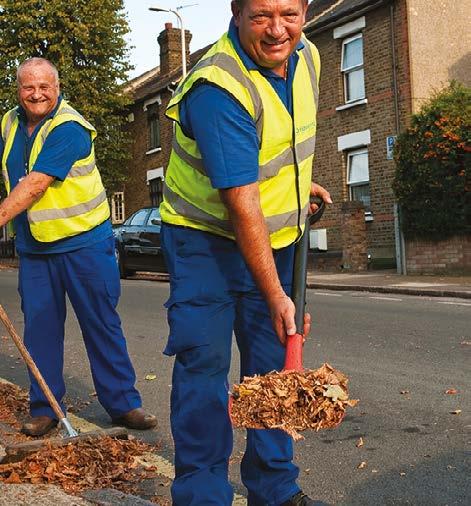
Council worker clearing up leaves
How the Council Tax is made up
Details of the 2026 – 2027 budget
Harrow Lodge
Leisure Centre
The Council Tax for band D properties has been set at £2,424.66. The make up of this change is shown below. (The table shows what we will spend the money on with a comparison to figures for 2025-2026)
Why did our spending change?
Following consultation with the residents of the borough, Havering’s spending will total £356.5m.
Change In Council’s Budget
How your money is spent
The table below shows how we planned to spend your money in 2025/26, how we plan to spend it in 2026/27 and how much the resulting Council Tax is.
Starting Well
Living Well
Ageing Well
TOTAL PEOPLE BUDGET
Environment
Planning and Public Protection
Housing and Property
TOTAL PLACE BUDGET
TOTAL RESOURCES BUDGET
Concessionary Fares
Treasury Management Levies
Contingency
Grants (excluding FFA)
Corporate Budgets
Worst Case EFS Contingency
Contribution to Pension Fund
Levying bodies
The Council Tax you pay includes money that the Council has to collect for other organisations that provide services London- wide. The organisations that make a levy on the Council are shown in this section.
East London Waste Authority (ELWA)
ELWA has the statutory responsibility for the disposal of household and commercial waste collected by the London Boroughs of Barking & Dagenham, Havering, Newham and Redbridge, and for the provision of Reuse and Recycling Centres in its area.
Waste disposal is carried out under a 25-year Integrated Waste Management Services Contract by Biffa (formerly Renewi plc). ELWA receives funding support via the government’s Private Finance Initiative.
Budget 2026/2027
ELWA’s total levy requirement is £80,985,000 (2025/26: £76,844,000). The 2026/27 budget includes an inflationary increase in contract and operational costs as well as provision for increases in waste tonnages. There has also been a reduction in the level of the packaging extended producer responsibility funding (relative to the 2025/26 budget). This is partially offset by the release of the prior year and 2025/26 forecast budget surpluses. Further information can be found at https://eastlondonwaste.gov.uk/. The increase for the London Borough of Havering is 5.51%.
The major part of the ELWA Levy is apportioned on the basis of relative amounts of household waste delivered to ELWA by each of the four constituent London Boroughs, with the remainder apportioned according to their Council Tax Bases.
The Levy on the London Borough of Havering for 2026/27 is £19,293,000 (2025/26: £18,286,000).
Lee Valley Regional Park (LVRA)
Lee Valley Regional Park is a unique leisure, sports and environmental destination for all residents of London, Essex and Hertfordshire. The 26 mile long, 10,000 acre Park, much of it formerly derelict land, is partly funded by a levy on the council tax. This year there has been a 2.25% increase in this levy. Find out more about hundreds of great days out, world class sports venues and award winning parklands at www.visitleevalley.org.uk
Havering’s share of the levy is calculated in proportion to the Council Tax Base and is £240,174 for 2026/27 (2025/26: £235,027)
Further details on how this budget is spent and the amount each council contributes can be found at www.leevalleypark.org.uk
The Environment Agency
The Environment Agency is a levying body for its Flood and Coastal Erosion Risk Management Functions under the Flood and Water Management Act 2010 and the Environment Agency (Levies) (England and Wales) Regulations 2011.
The Environment Agency (Anglian Eastern Region)
The Anglian Eastern Region of the Environment Agency has powers in respect of flood and coastal erosion risk management for 2,993 kilometres of main river and along tidal and sea defences in the area of Anglian Eastern Regional Flood and Coastal Committee. Money is spent on the construction of new flood defence schemes, the maintenance of the river system and existing flood defences together with the operation of a flood warning system and management of the risk of coastal erosion.
The financial details are:
Anglian Eastern Regional Flood and Coastal Committee
The total Local Levy raised has increased from £3,660,811 in 2025/2026 to £3,734,027 for 2026/2027.
The Environment Agency (Thames Region)
The Thames Region of the Environment Agency has powers in respect of flood and coastal erosion risk management for 5,200 kilometres of main river and along tidal and sea defences in the area of Thames Regional Flood and Coastal Committee.
Money is spent on the construction of new flood defence schemes, the maintenance of the river system and existing flood defences together with the operation of a flood warning system and management of the risk of coastal erosion.
The financial details are:
Thames Regional Flood Defence Committee
The total Local Levy raised has increased from £13,029,850 in 2025/2026 to £13,289,144 for 2026/2027.
The majority of funding for flood defence comes directly from the Department for Environment, Food and Rural Affairs (Defra). However, under the new Partnership Funding rule not all schemes will attract full central funding. To provide local funding for local priorities and contributions
for partnership funding the Regional Flood and Coastal Committee recommend through the Environmental Agency a local levy.
A change in the gross budgeted expenditure between years reflects the programme of works for both capital and revenue needed by the Regional Flood and Coastal Committee to which you contribute. The total Local Levy raised by this committee has increased by 1.99 percent for the Thames Region and 1.0 per cent for the Anglian Eastern Region.
The London Pensions Fund Authority (LPFA)
The London Pensions Fund Authority (LPFA) raises a levy each year to meet expenditure on premature retirement compensation and outstanding personnel matters for which LPFA is responsible and cannot charge to the pension fund. These payments relate to former employees of the Greater London Council (GLC), the Inner London Education Authority (ILEA) and the London Residuary Body (LRB).
For 2026/27, the income to be raised by levies is set out below. The Greater London levy is payable in all boroughs, the Inner London levy only in Inner London Boroughs (including the City of London). The figures show the total to be raised.
From 2022 onwards, a portion of the amount previously raised as levies is being paid into the LPFA Pension Fund to address a funding deficit in respect of former GLC, ILEA, and LRB employees.
Greater London Authority
Introduction
The Mayor of London’s Budget for 2026-27 sets out how he will fund his plans to continue building a fairer, safer, greener and more prosperous London for everyone. It ensures investment to tackle crime, build more affordable homes, reduce street homelessness, improve London’s transport network, provide free school meals to all state primary school children, and keep London as a world-leader in tackling air pollution and the climate crisis. The thread that runs throughout the budget is the Mayor’s desire to provide a helping hand to Londoners to ensure everyone has the chance to reach their potential.
In particular, the Mayor’s budget for 2026-27 prioritises resources to tackle crime and the causes of crime, with a record-breaking £1.26bn investment from City Hall in policing and crime prevention measures.
Increasing council tax to fund the Metropolitan Police and the London Fire Brigade
The GLA’s share of council tax for a typical Band D property has been increased by £20.13 – the equivalent of £1.68 a month. The additional income from this increase will help to fund the Metropolitan Police Service (MPS) - whose work is overseen by the Mayor’s Office of Policing and Crime (MOPAC) - and the London Fire Brigade (LFB).
The Mayor has taken the decision to increase the policing precept part of council tax to support the MPS in conducting a major crack down on phone theft, with targeted action to dismantle phone theft gangs on London’s streets. The additional funding will also be used to ensure London can build on the important progress being made to reduce homicides, knife crime, gun crime, burglary and other key crimes.
Investing to build a safer, fairer and greener London for everyone
• Record investment to tackle crime – The Mayor’s top priority is keeping Londoners safe and investment from City Hall has helped to deliver significant progress in reducing key crimes across London over recent years. However, there is still much more to do. That’s why the Mayor is investing a record-breaking £1.26bn from City Hall in policing and crime prevention measures in his 2026-27 budget. This is nearly £100m more than last year’s budget. The funding includes: £4.5m to continue to crack down on and dismantle phone theft gangs on the streets of the capital; a new £2.4m package of support for victims and survivors of Child Sexual Exploitation; an additional £50m to invest in further support for young people, which will help to keep vulnerable young Londoners away from gangs and crime; and an additional £29m to continue tackling violence against women and girls in London.
• Improving London’s transport network – The Mayor is focused on increasing and improving transport services to make London’s transport network better, greener, more accessible and as affordable as possible. The Mayor’s budget for 2026-27 includes
investment that will help to: maintain existing concessionary travel and assisted doorto-door transport schemes; roll out new trains on the Piccadilly line; continue to improve accessibility across TfL’s network, increasing the availability of step-free access and toilets; improve the bus network; move forward with plans to deliver key transport projects, including the DLR extension to Thamesmead; and deliver schemes designed to make walking, cycling and public transport safer, cleaner and more appealing.
• Supporting Londoners through the cost-of-living crisis – The Mayor has responded to the cost-of-living challenges facing families in London by providing funding to continue his universal free school meals programme for London’s state primary school children. By July 2026, it is estimated that this programme will have saved London families up to £1,500 per child since its introduction in September 2023.
• Investing in social and affordable homes – Before the pandemic, the Mayor completed more homes in London than at any time since the 1930s and he has taken council housebuilding to its highest level since the 1970s. But there is still a long way to go to fix the housing crisis, with housebuilding currently facing an extremely challenging time in the capital. This is due to a combination of the impact of Brexit, the pandemic, high interest rates and delays caused by the Building Safety Regulator. The Mayor will continue to do everything he can, using his budget for 2026-27 to build more of the safe, decent and affordable homes Londoners need.
• Tackling rough sleeping – The Mayor has made addressing London’s rough sleeping crisis a top priority. Since 2016, he has increased City Hall’s rough sleeping budget more than fivefold and helped more than 20,000 people off London’s streets. The Mayor’s budget for 2026-27 includes an additional £8m to invest in further action to tackle rough sleeping in the capital.
• Supporting Londoners through the AI revolution – The Mayor’s budget for 2026-27 includes a new £20m pot of funding to take forward recommendations from his Artificial Intelligence (AI) and Future of Work Taskforce to embed AI skills in our workforce and equip Londoners with the tools they will need to succeed in a fast-changing environment.
• The Mayor’s budget for 2026-27 will also invest in: supporting Londoners to secure better paid jobs; tackling inequality; supporting renters; helping businesses, both large and small; and keeping London as a world-leader in reducing air pollution, cleaning up our rivers and tackling the climate crisis.
The following tables compare the GLA Group’s planned spending for 2026-27 with last year and sets out why it has changed.
The GLA’s planned gross expenditure is higher this year. This reflects the additional resources the Mayor is investing in policing, the London Fire Brigade and transport services. Overall, the council tax requirement has also increased for this reason. There has been a 1.2 per cent increase in London’s residential property taxbase. Find out more about our budget at: www.london.gov.uk/budget.
Havering Council key contacts
Benefits – information www.havering.gov.uk/benefits
Business Rates – information www.havering.gov.uk/businessrates
Building control advice/ inspection requests www.havering.gov.uk/buildingcontrol
SCHOOLS
www.havering.gov.uk/schools
Schools Admissions www.havering.gov.uk/admissions
Schools Appeals www.havering.gov.uk/appeals
School Dinners (Catering Services) www.havering.gov.uk/schoolcatering
Free School Meals www.havering.gov.uk/freeschoolmeals
School Transport & Home to School Transport (SEN) www.havering.gov.uk/schooltransport
Special Needs www.havering.gov.uk/sen
SOCIAL SERVICES
Adults www.havering.gov.uk/adults
Children and families www.havering.gov.uk/children
TRADING STANDARDS
www.havering.gov.uk/tradingstandards
Consumer advice from Consumer Direct www.havering.gov.uk/consumeradvice
If you would like this document in another format such as large print, braille or audio tape or if your first language is not English and you need help with it, please contact us on 01708 433997