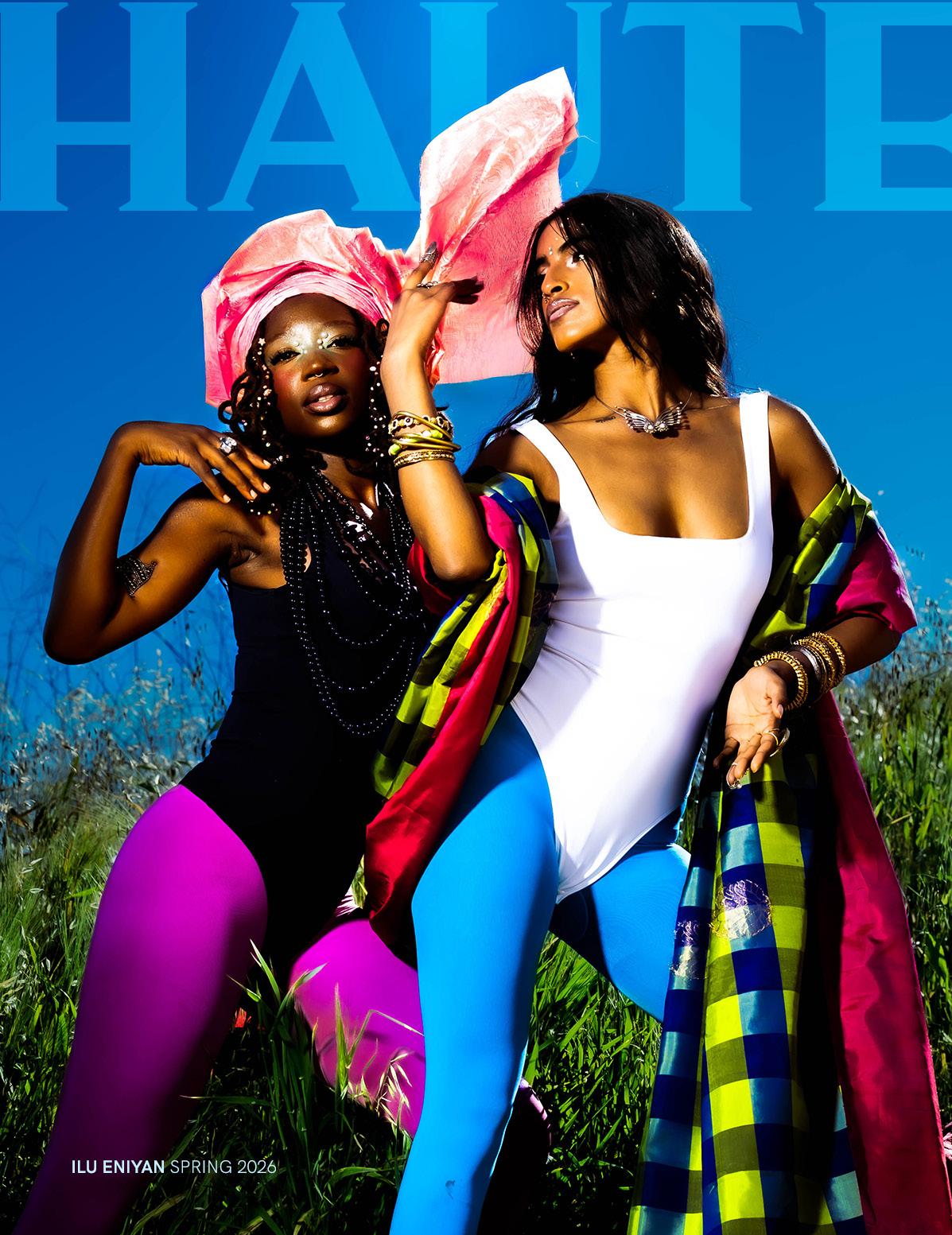
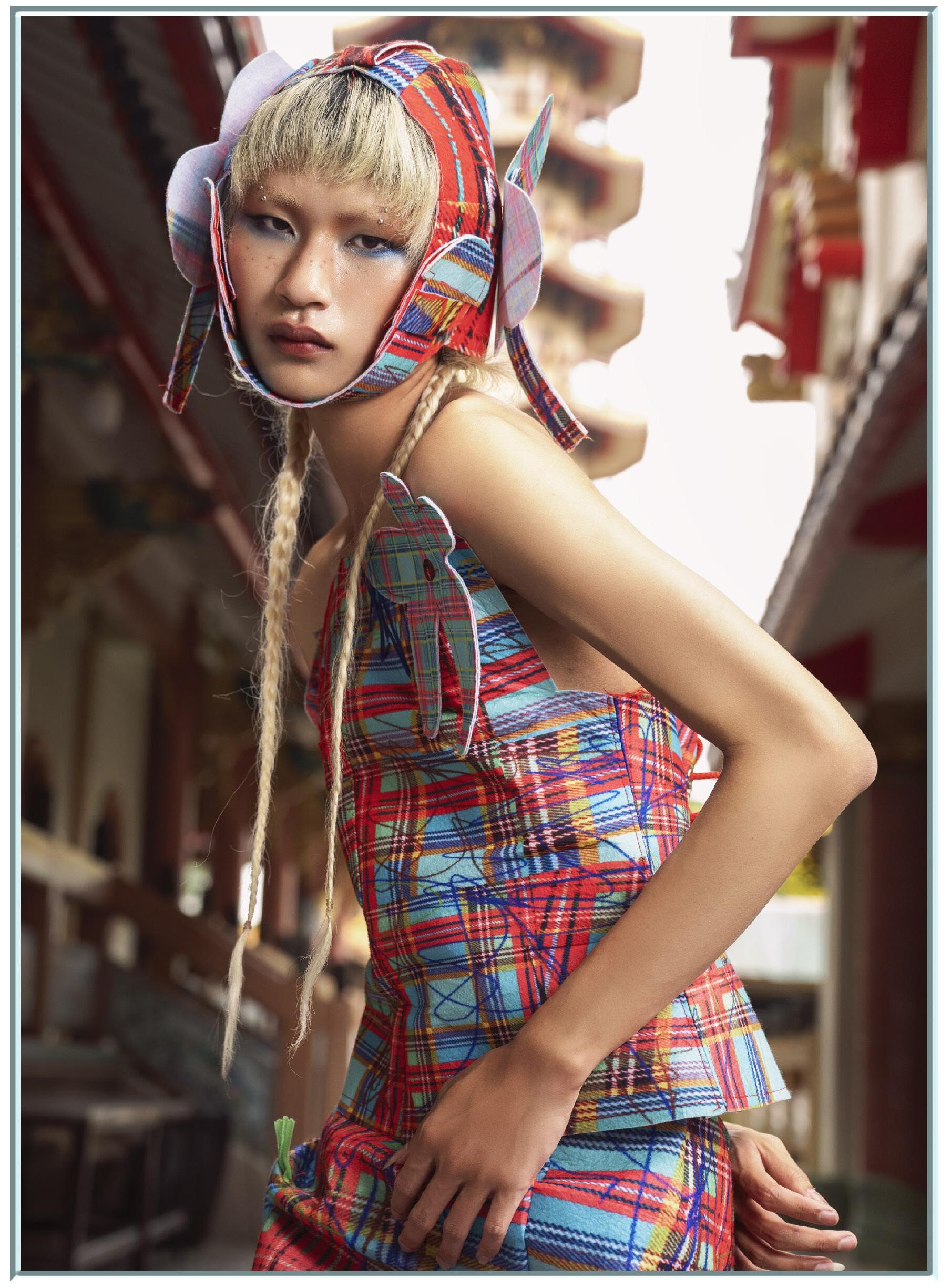
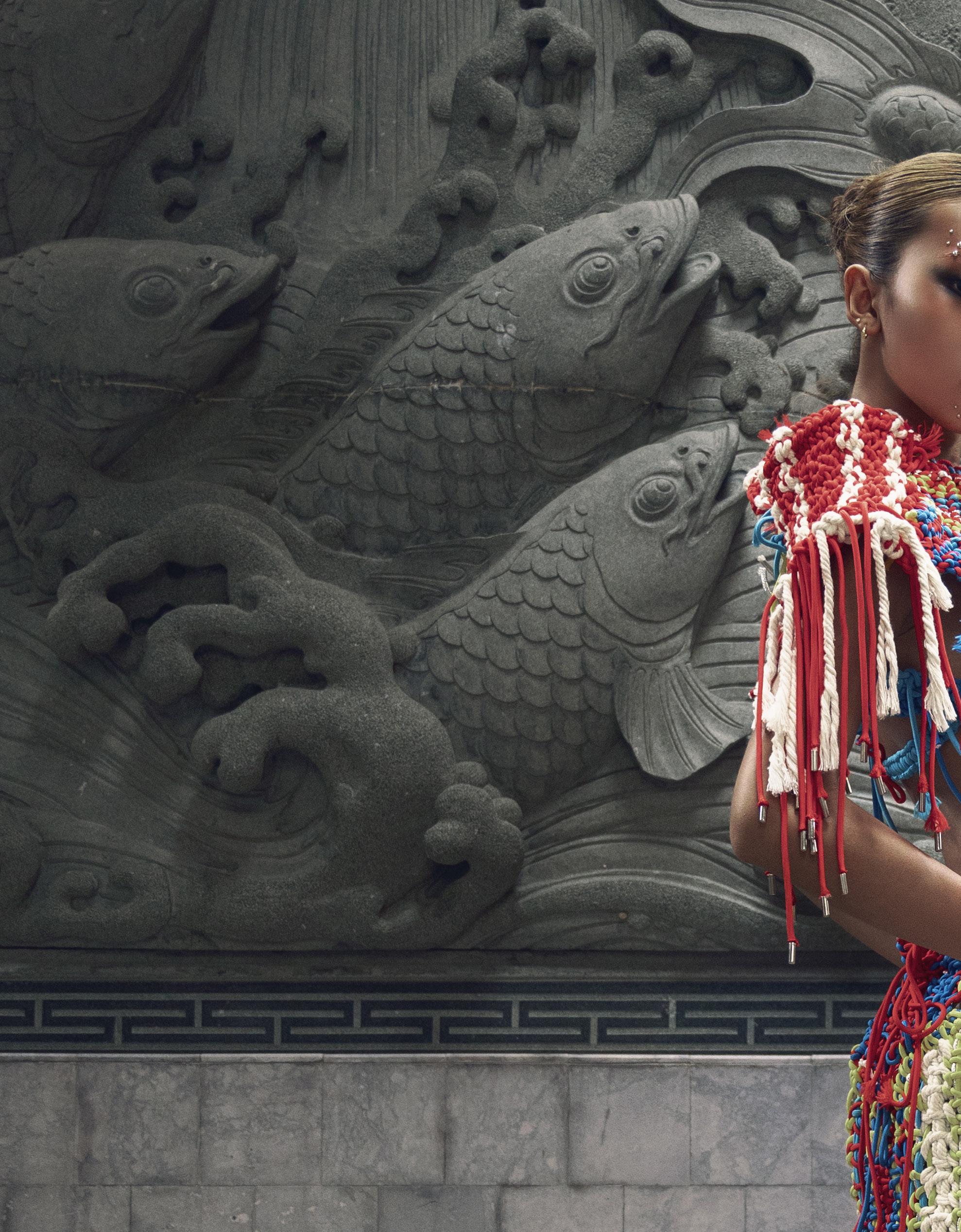
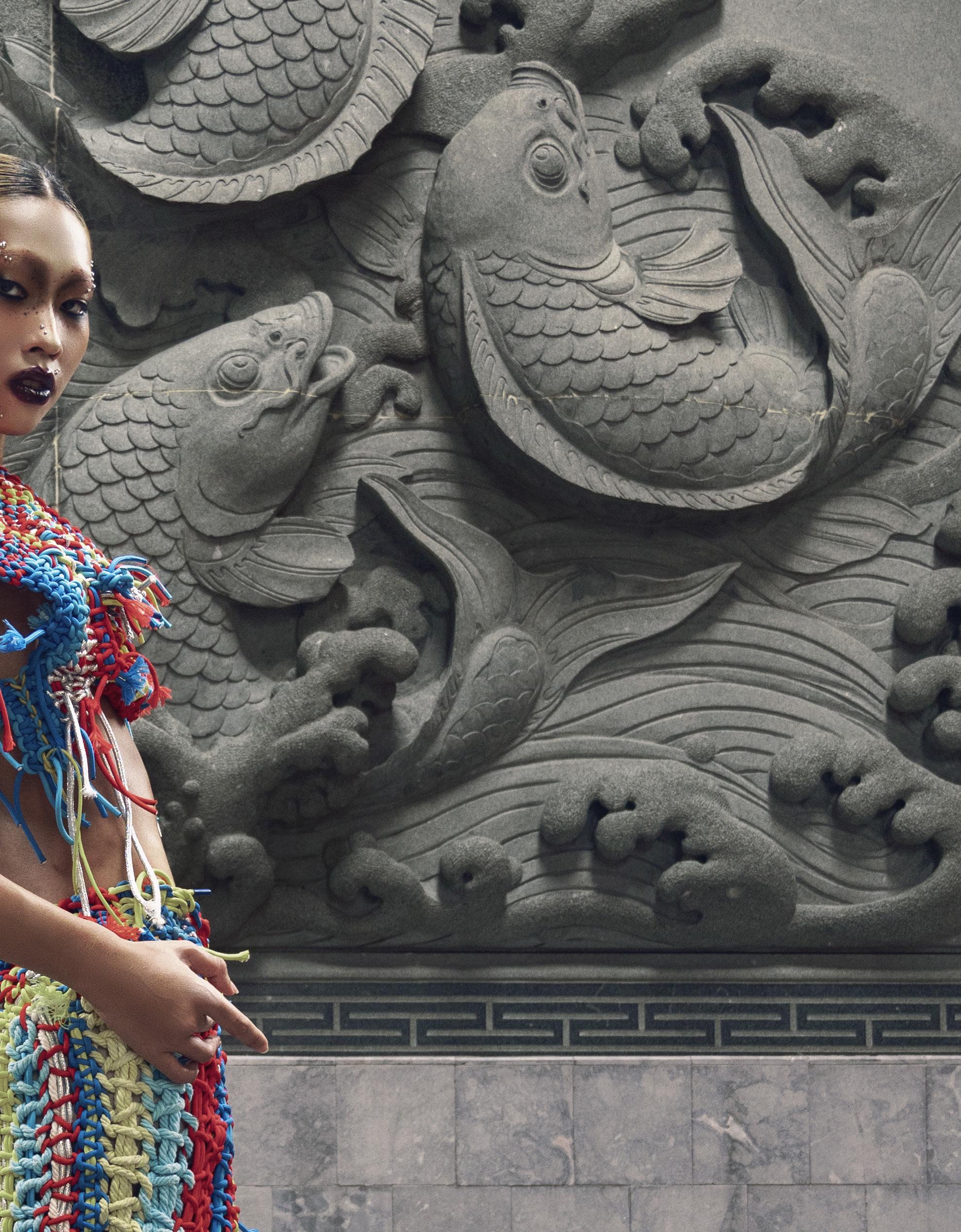
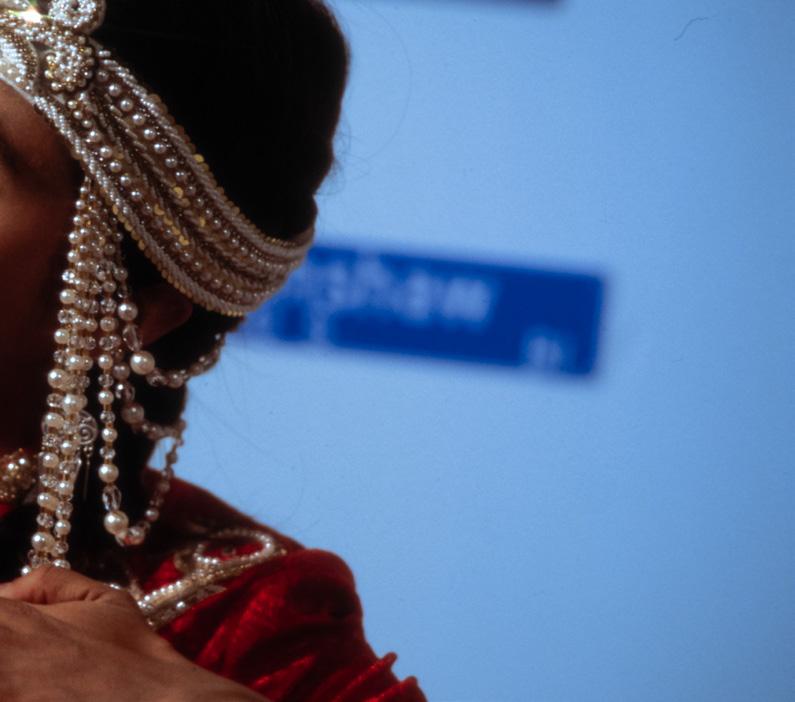
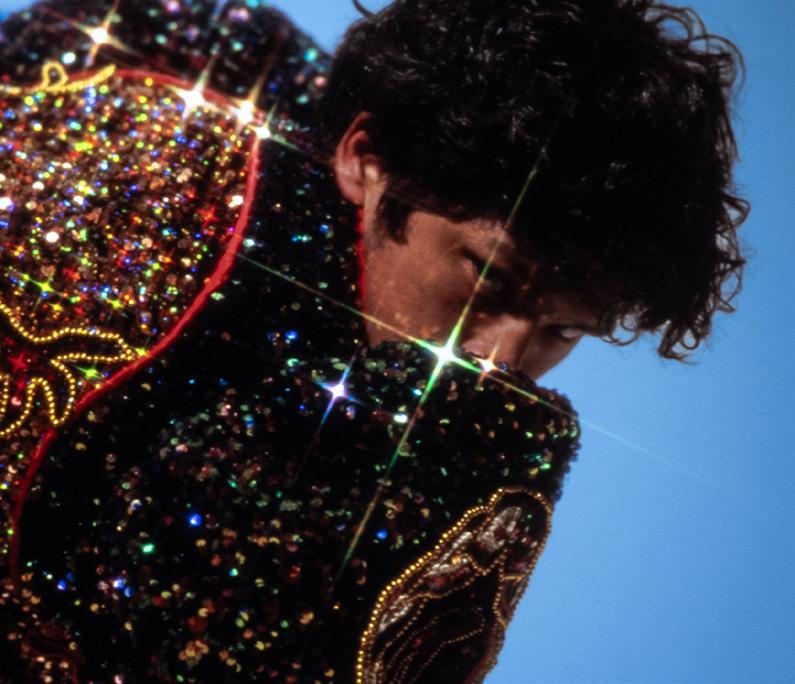
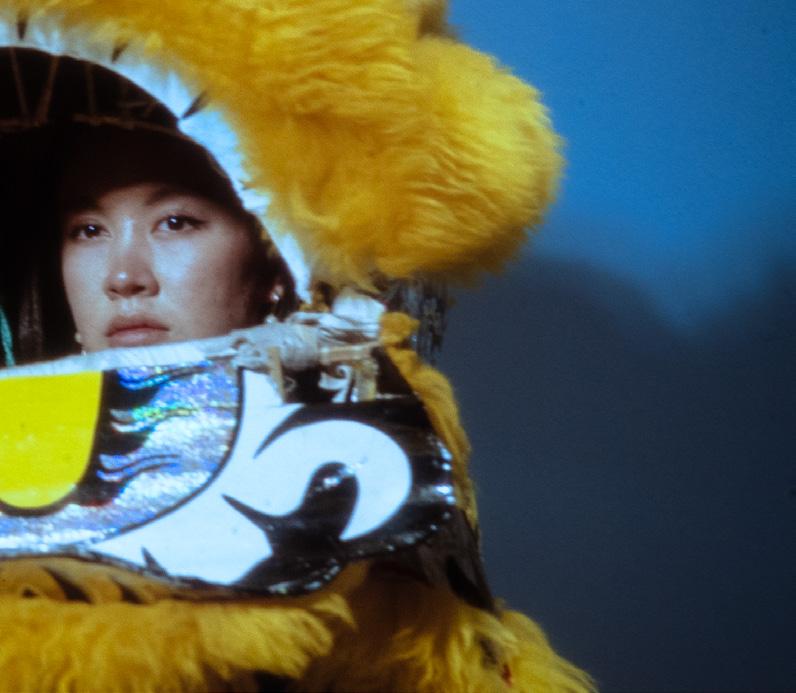
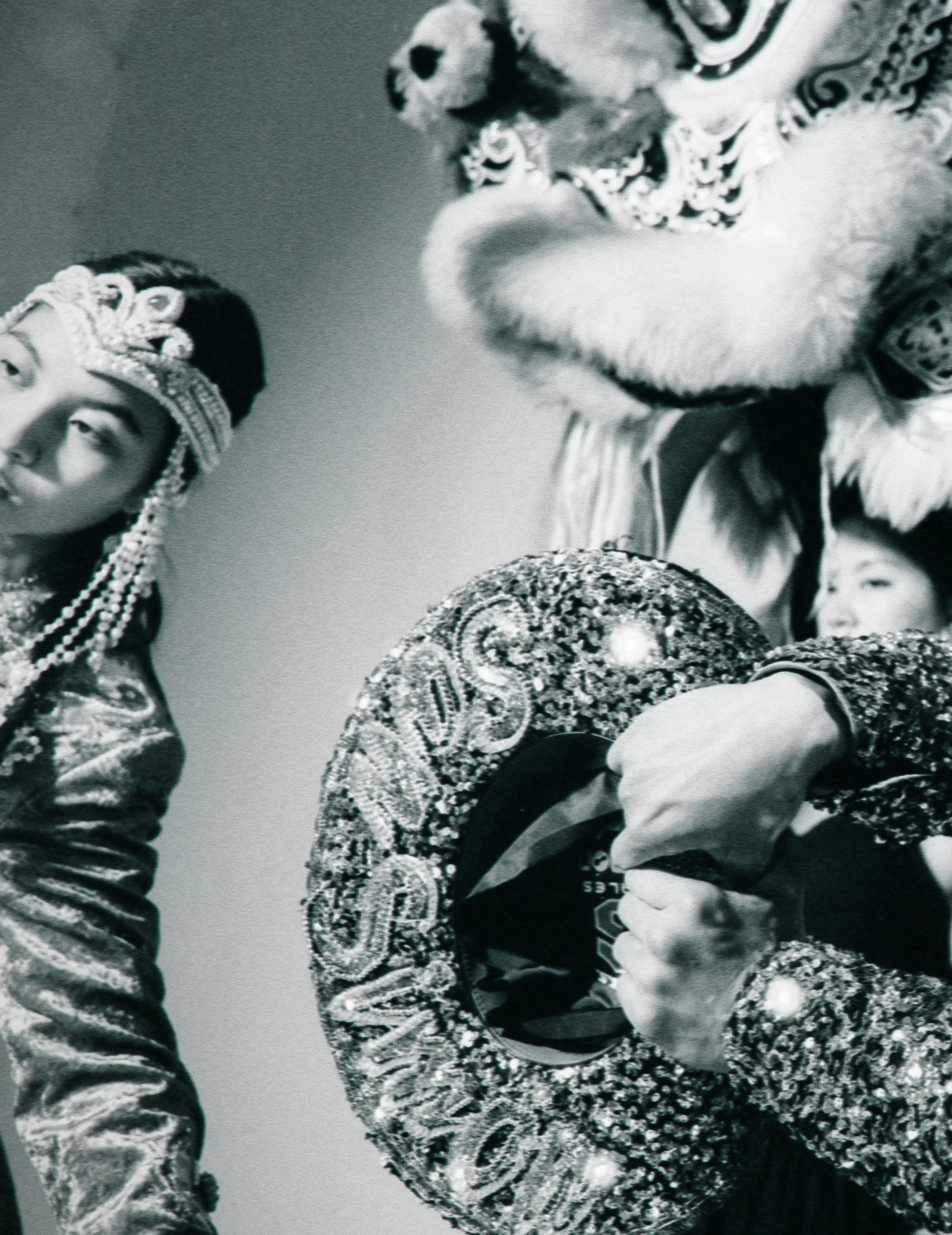
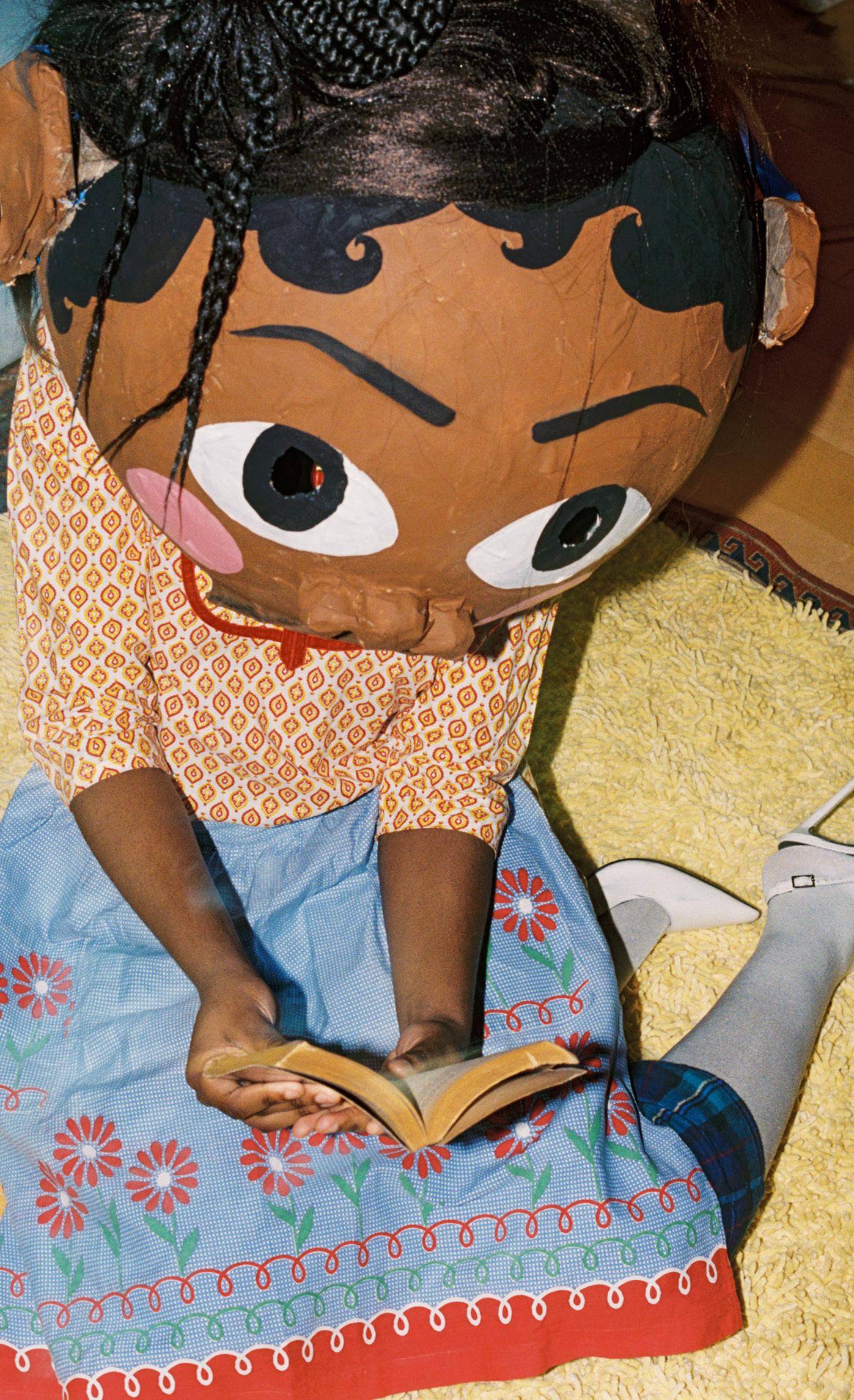
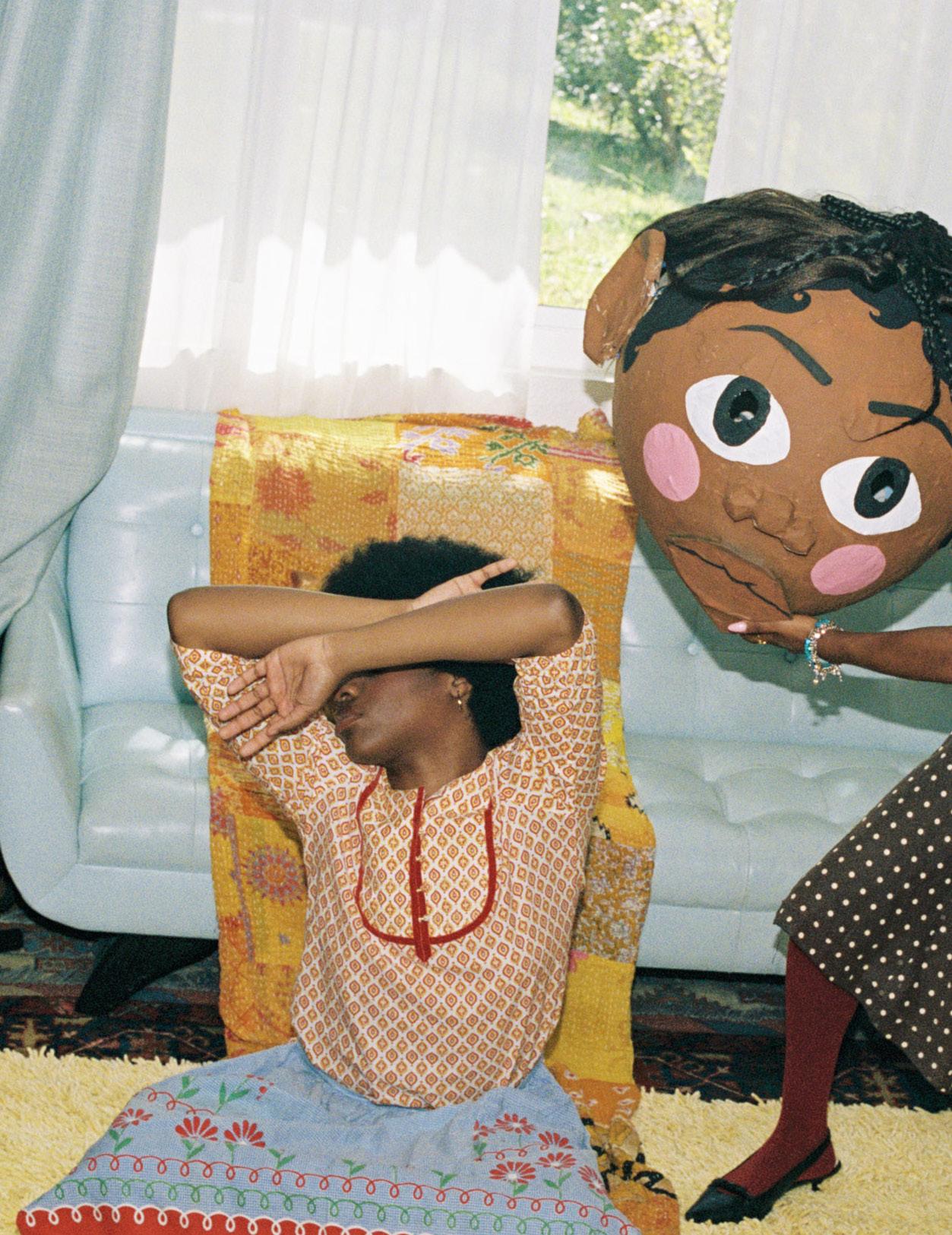
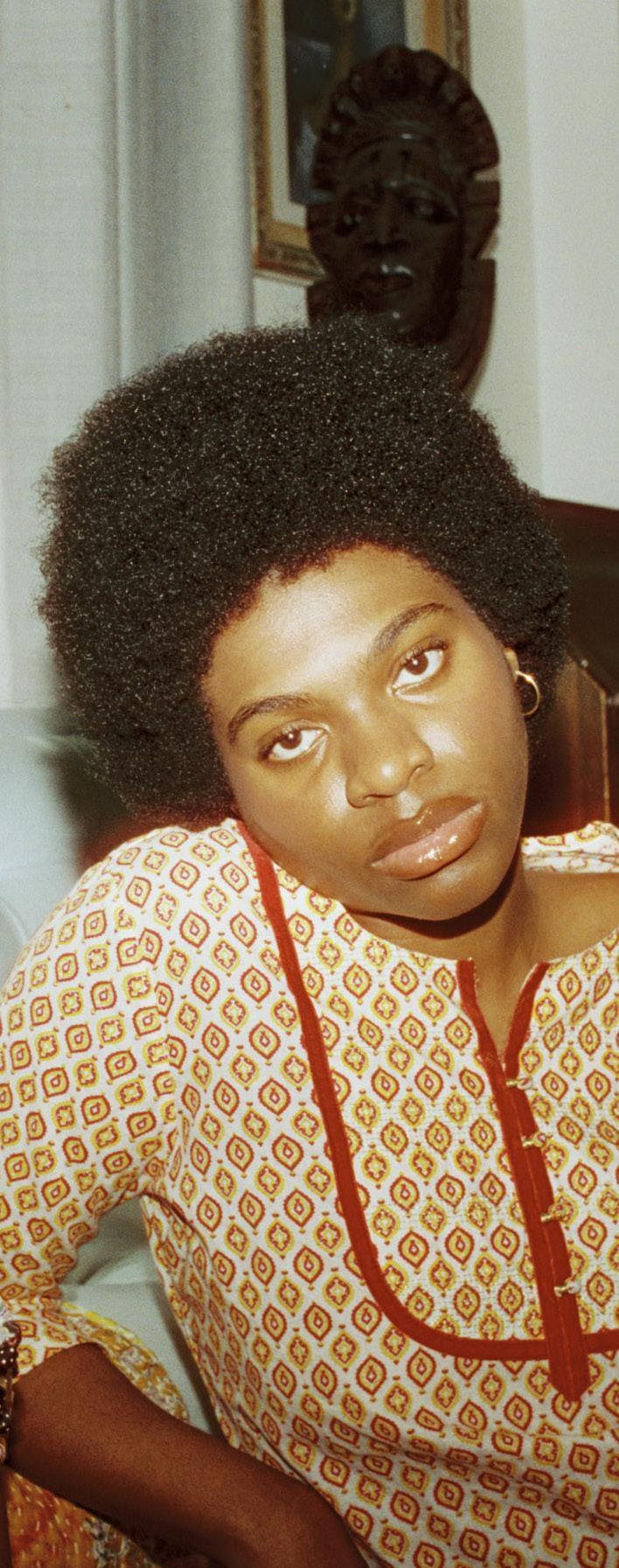
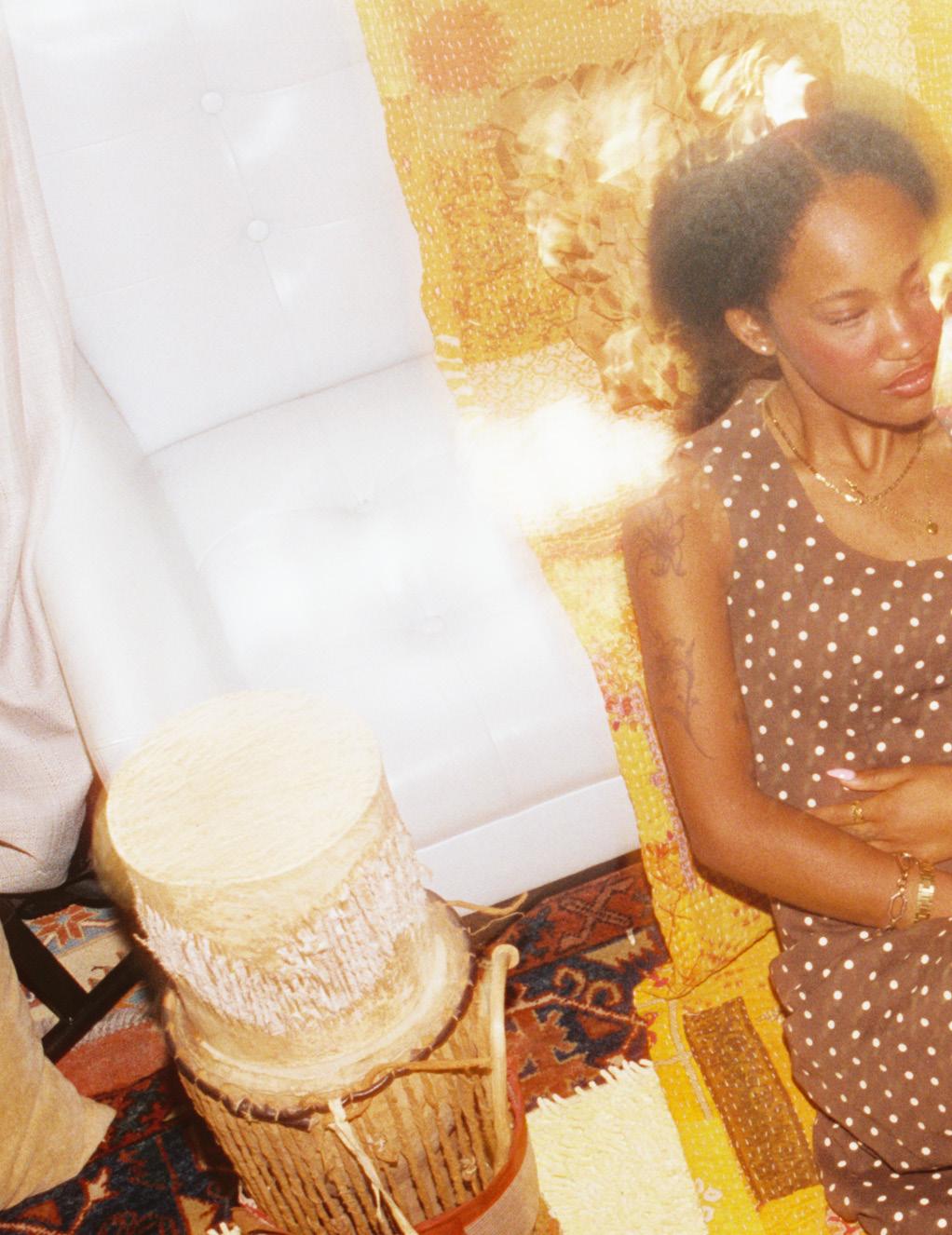
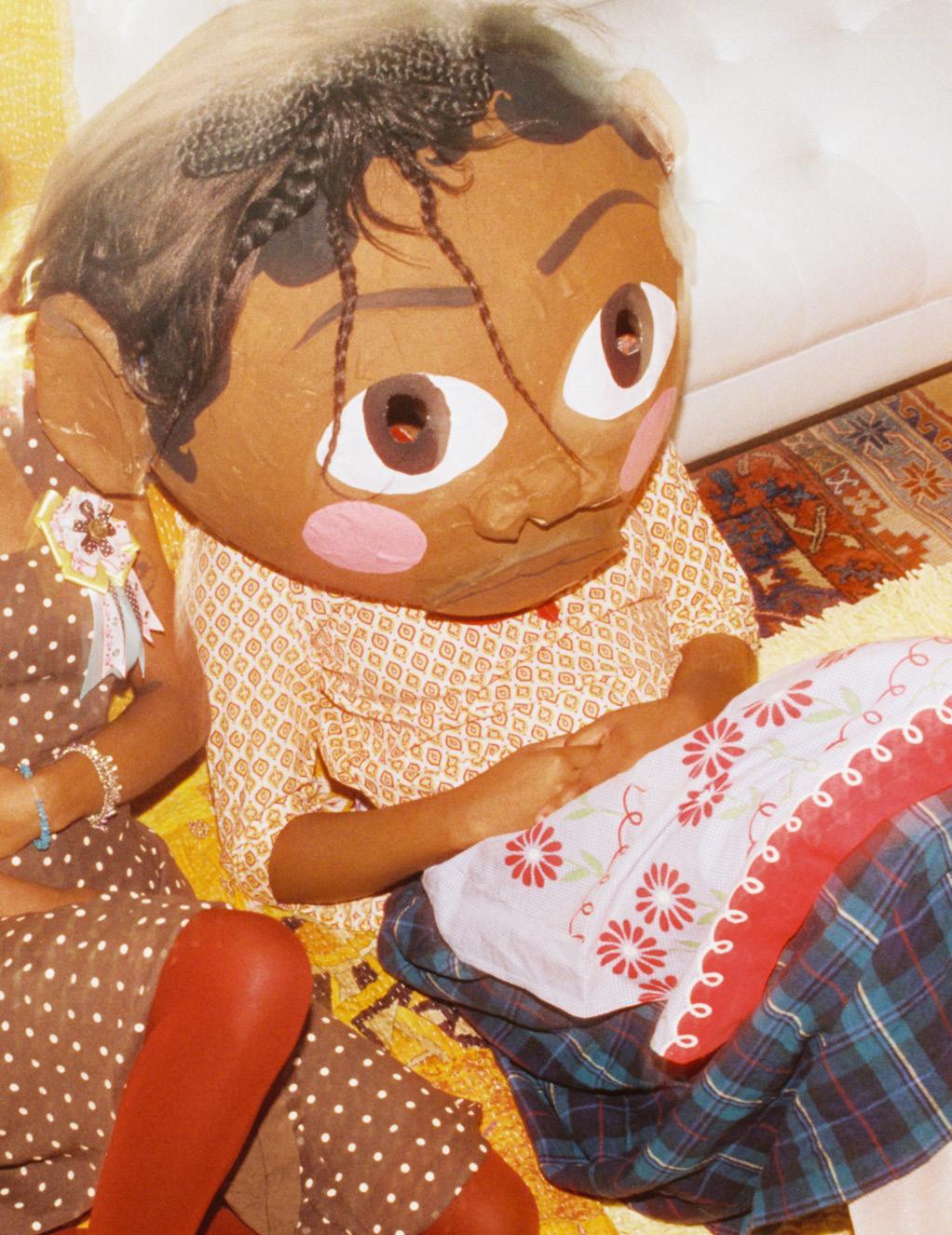
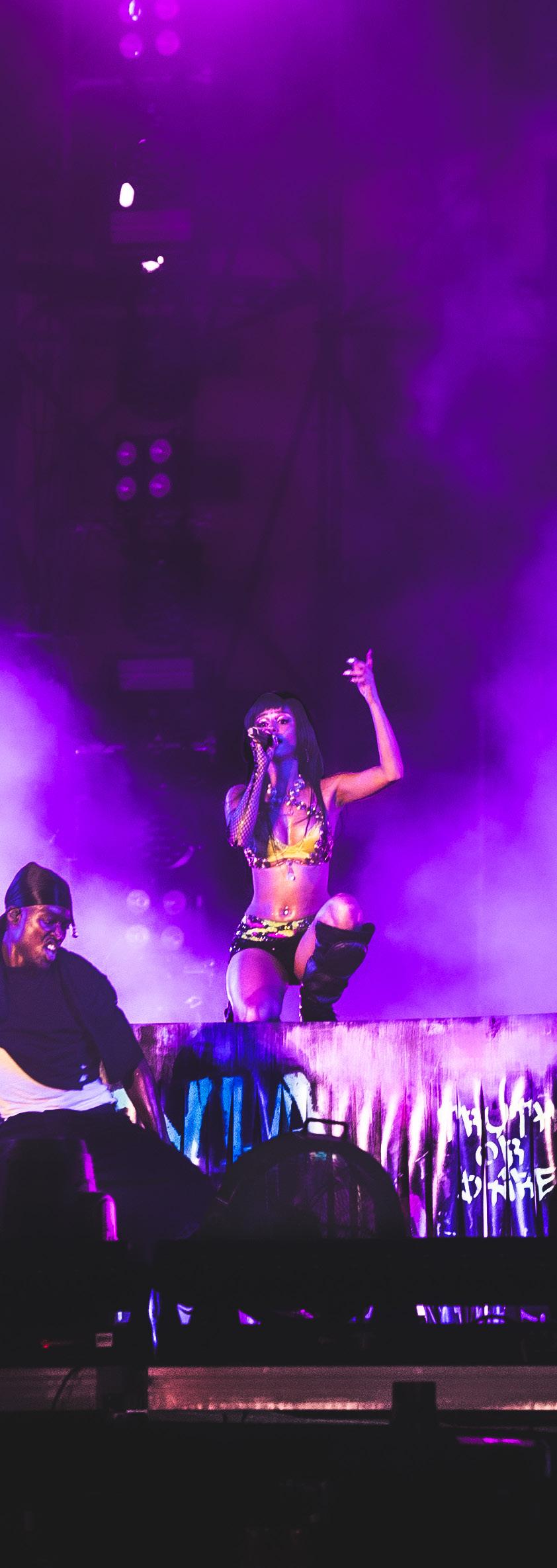
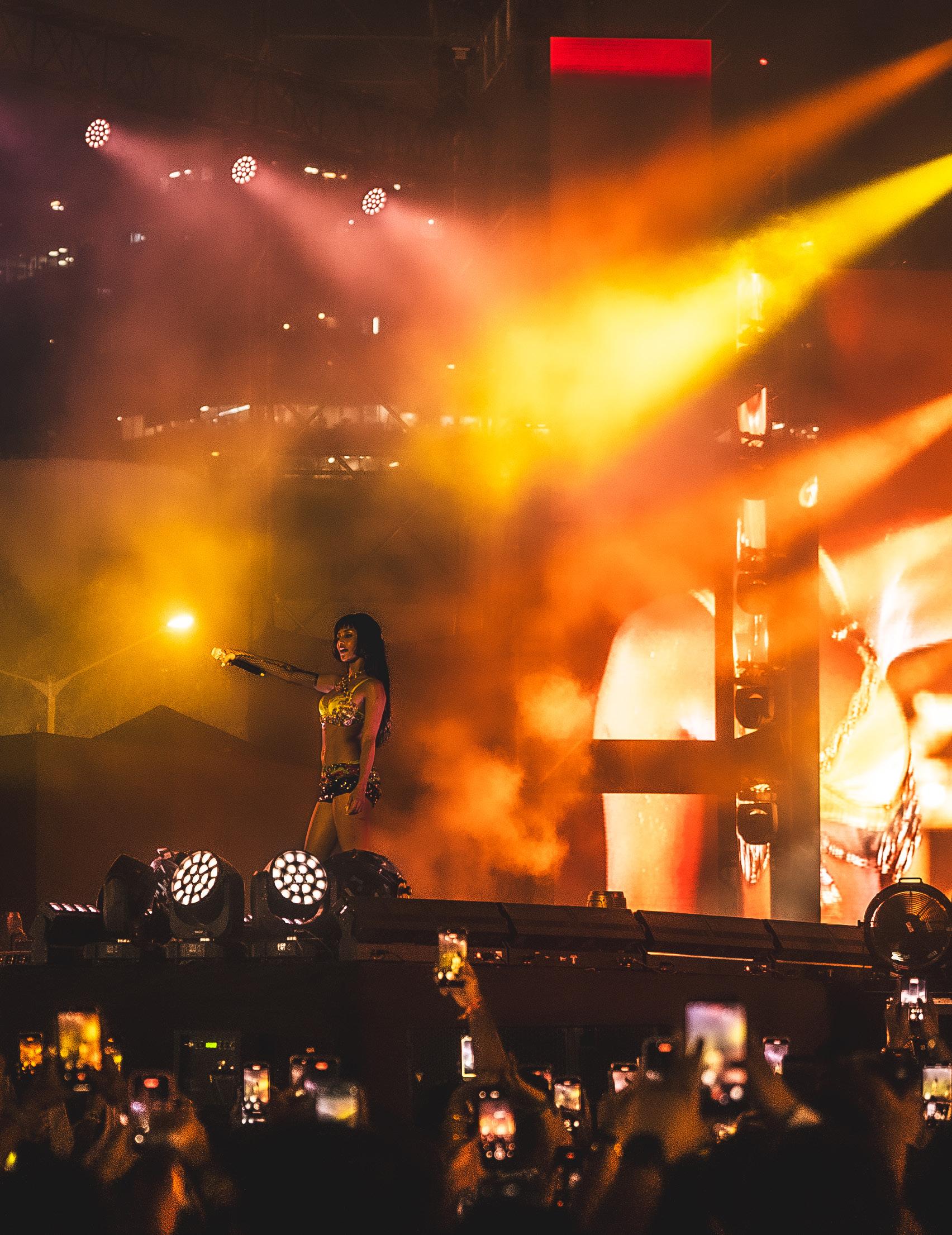
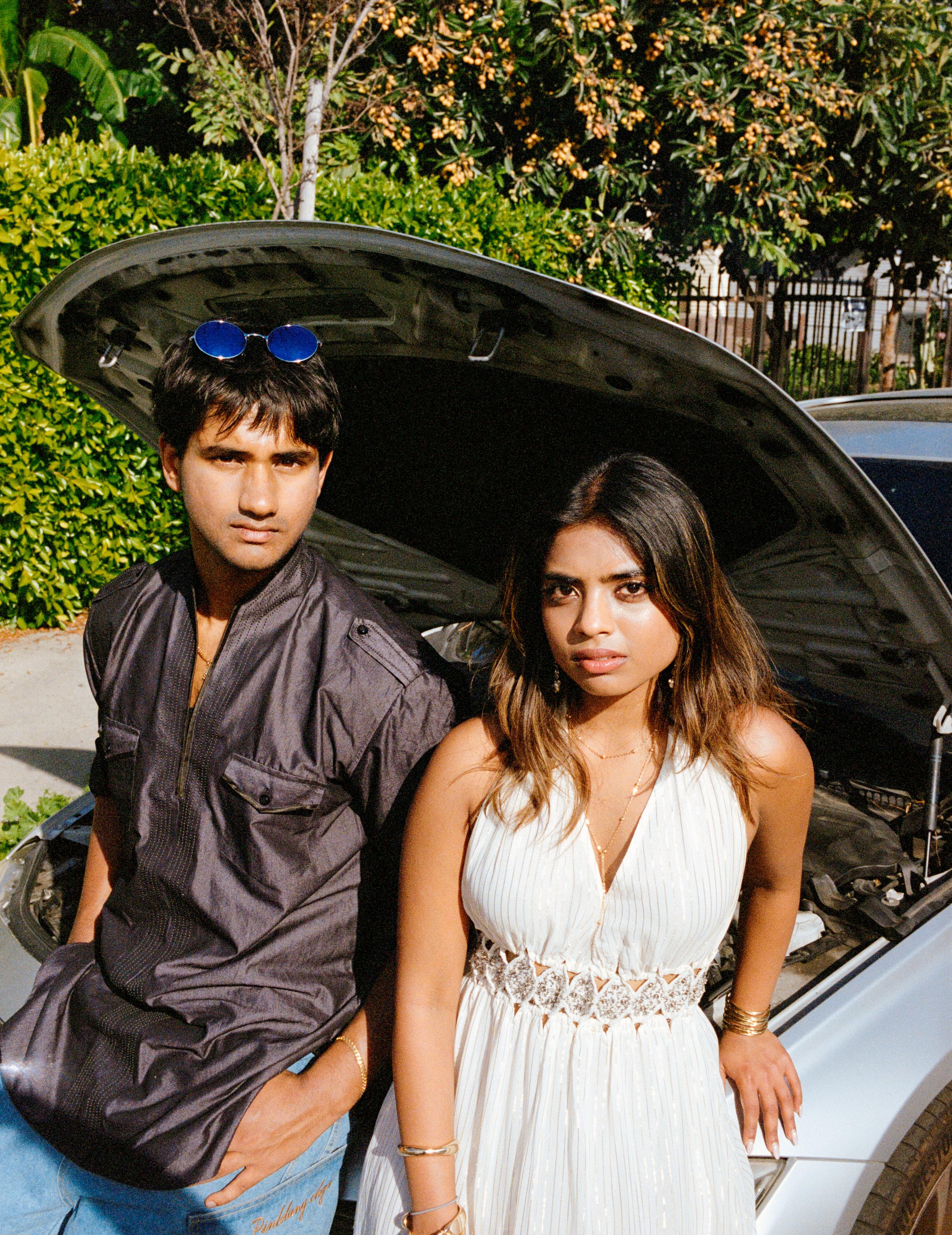
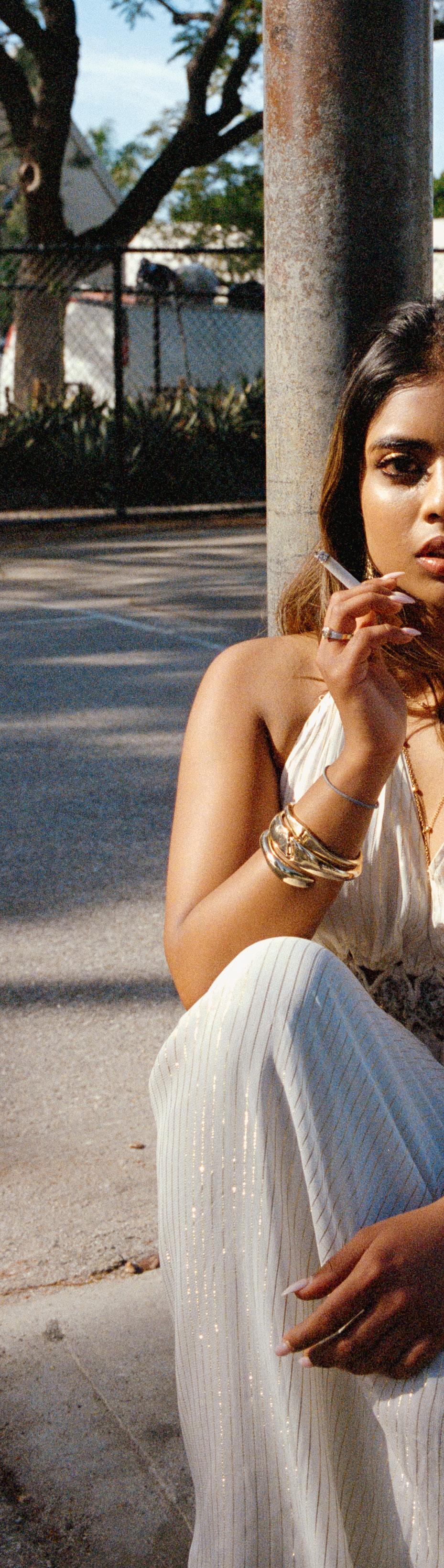
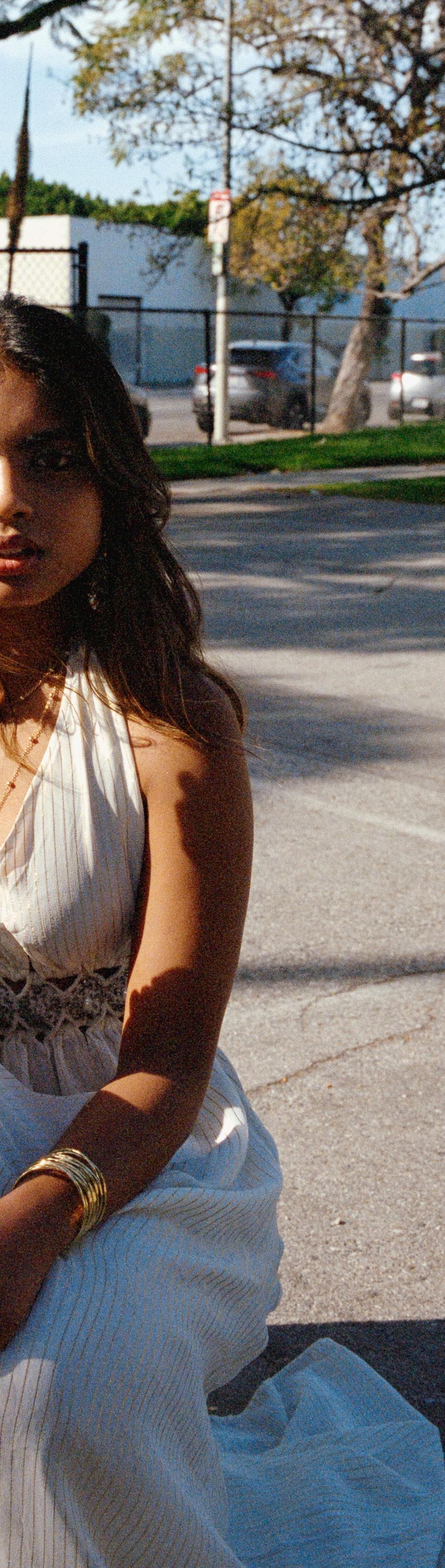
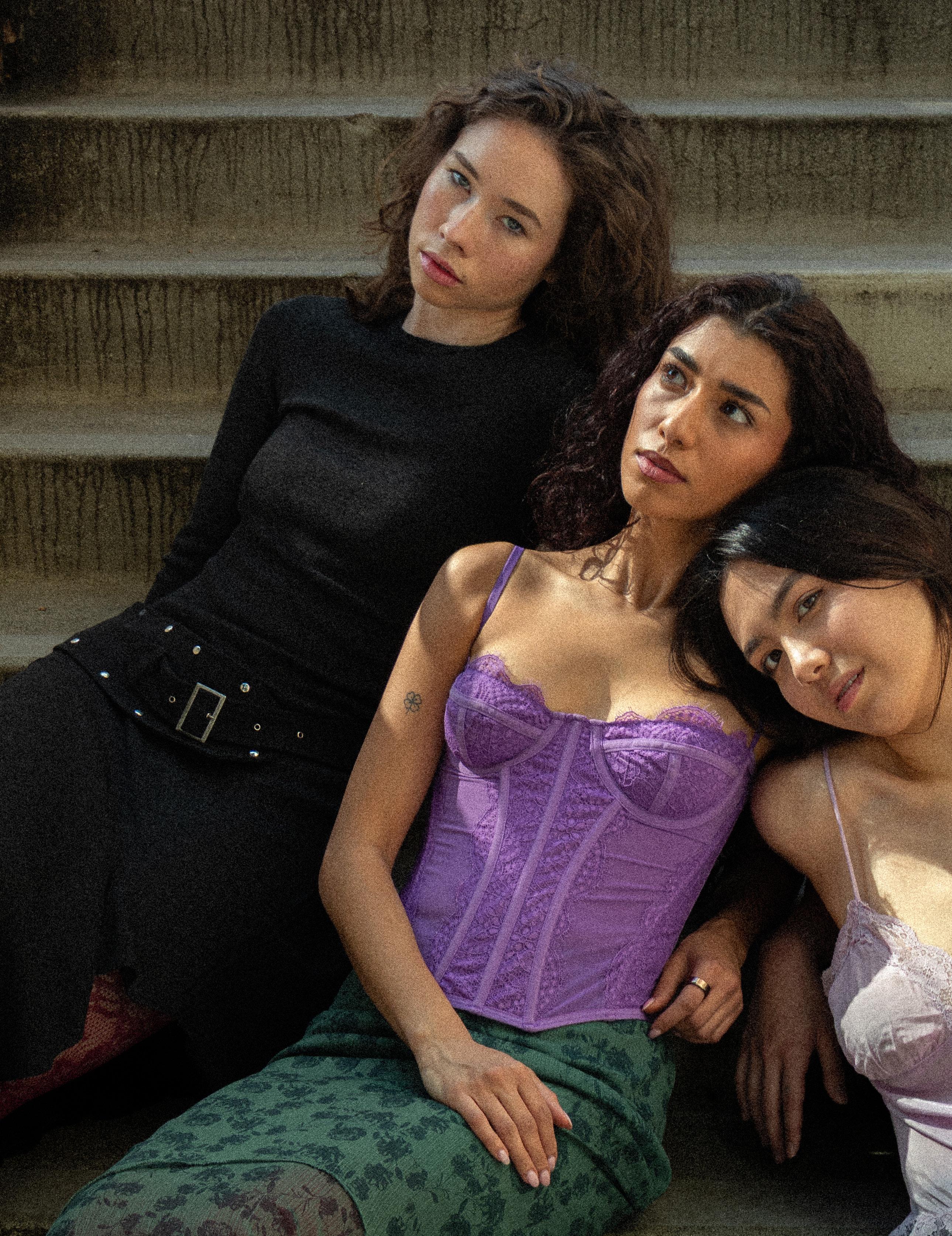
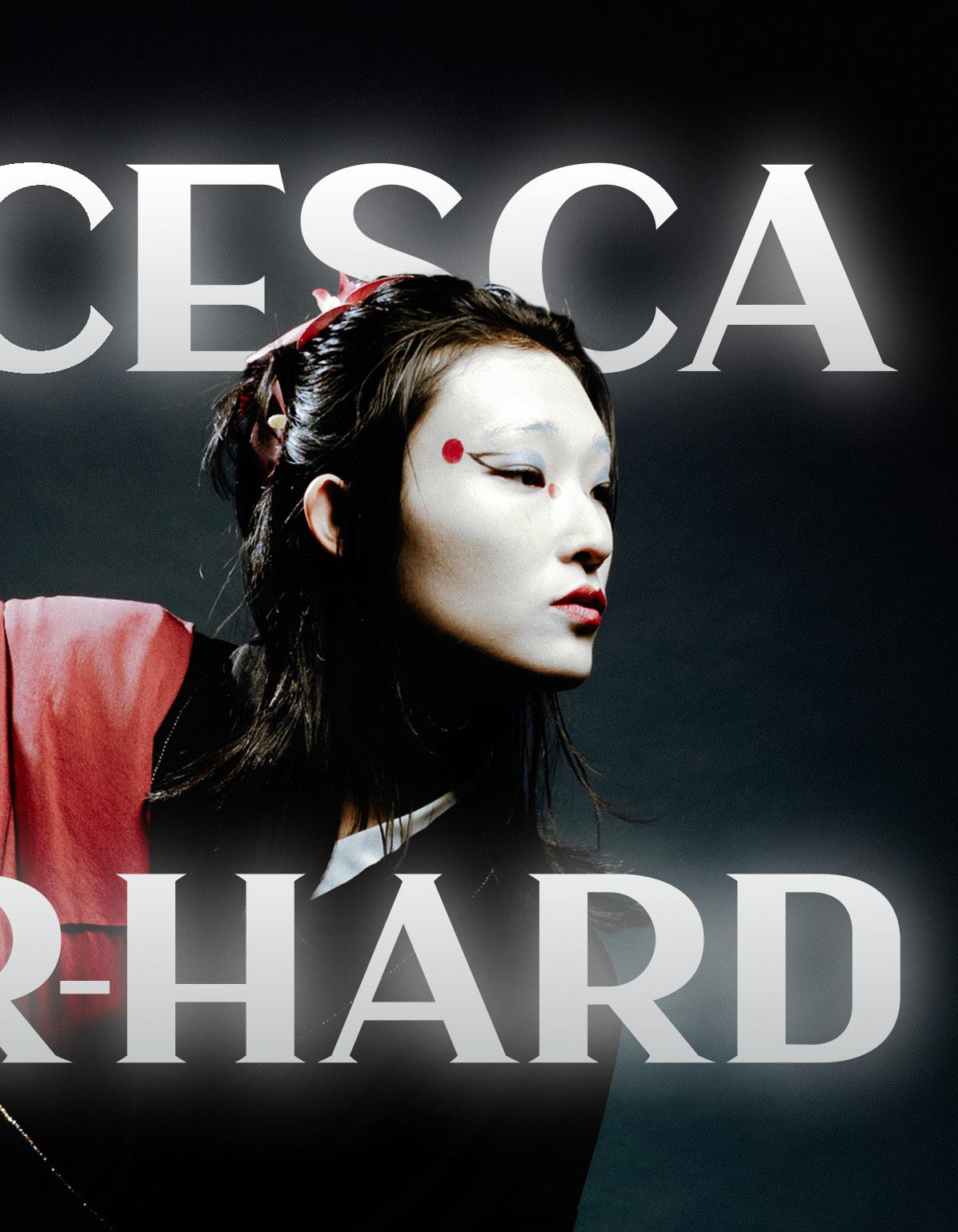
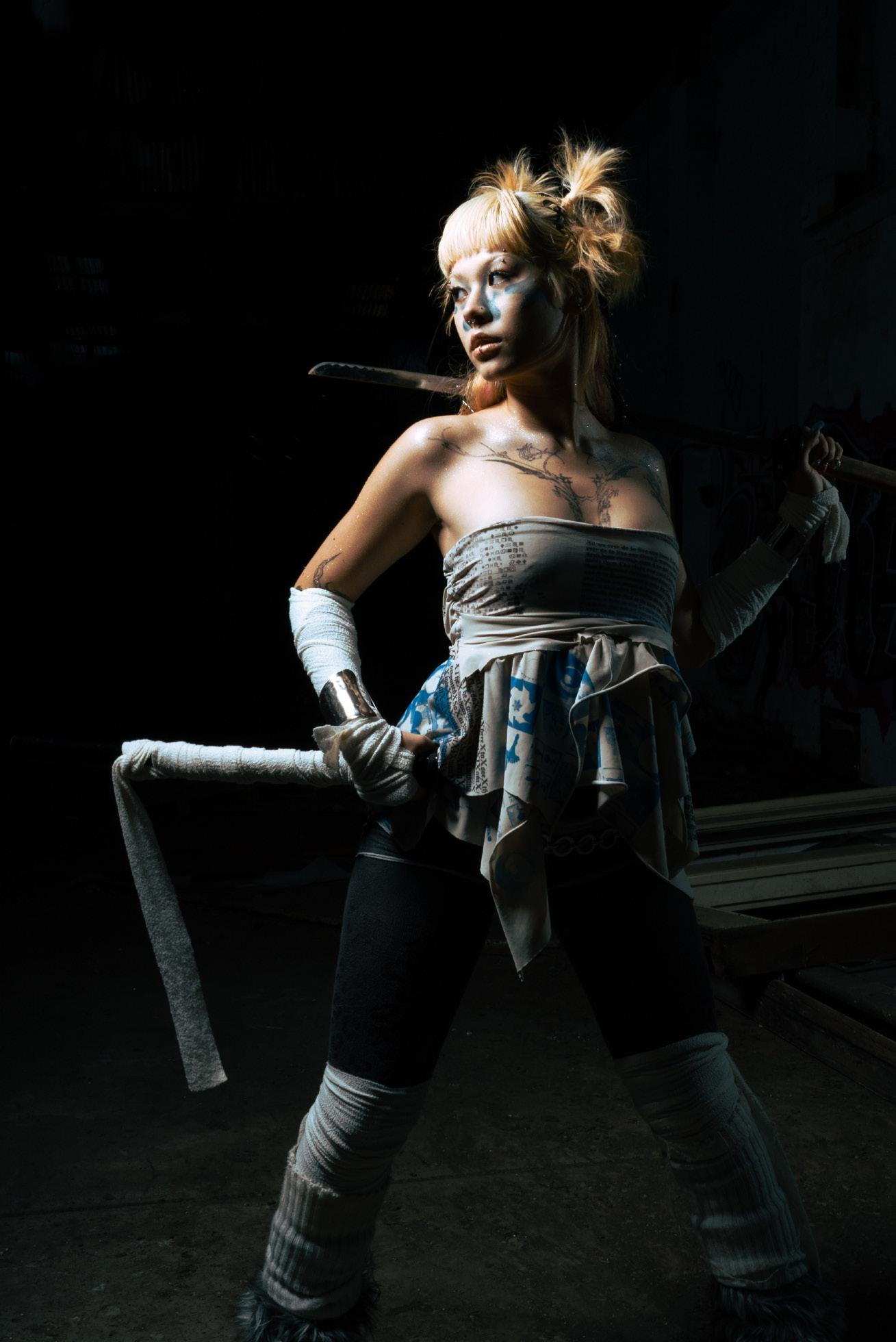
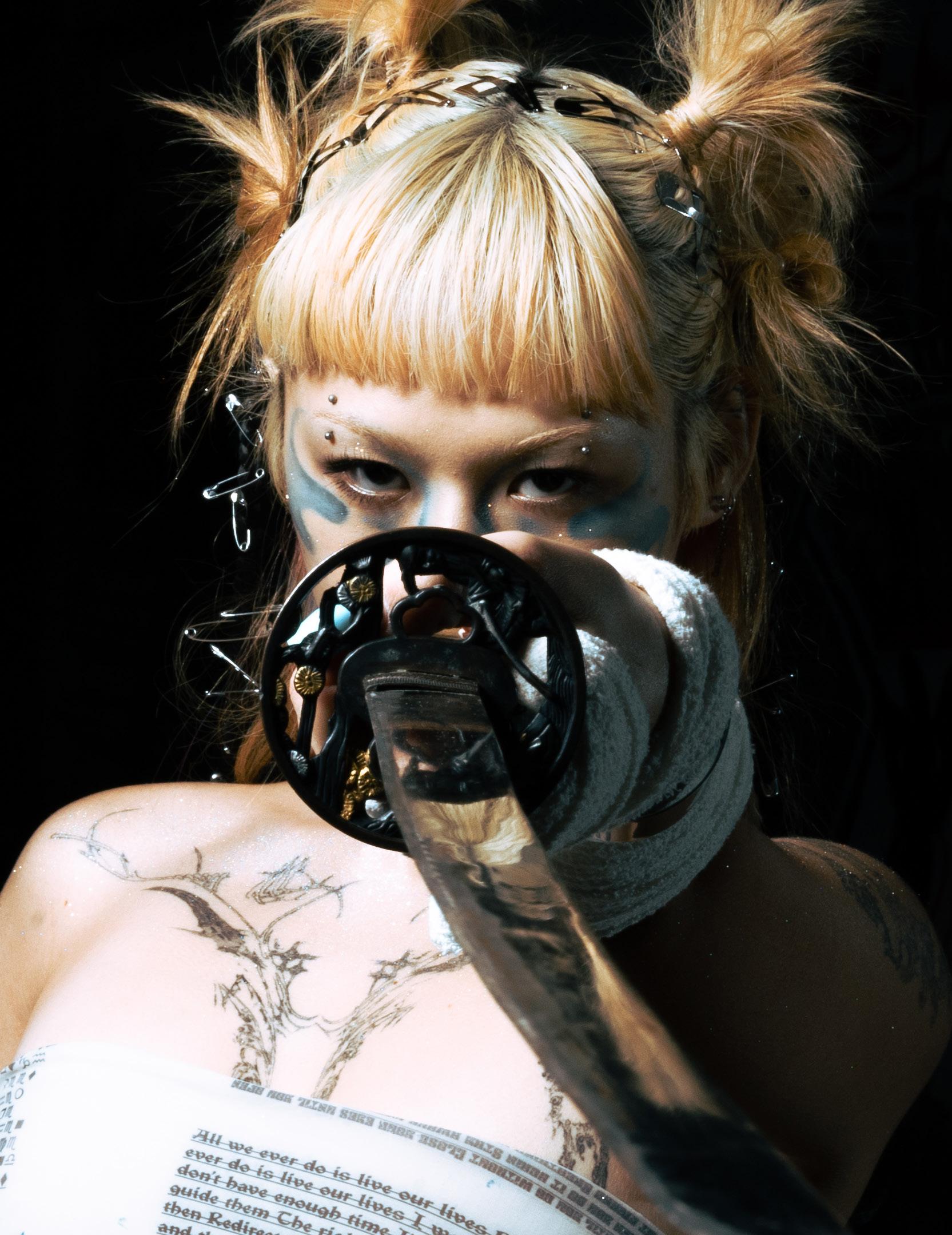
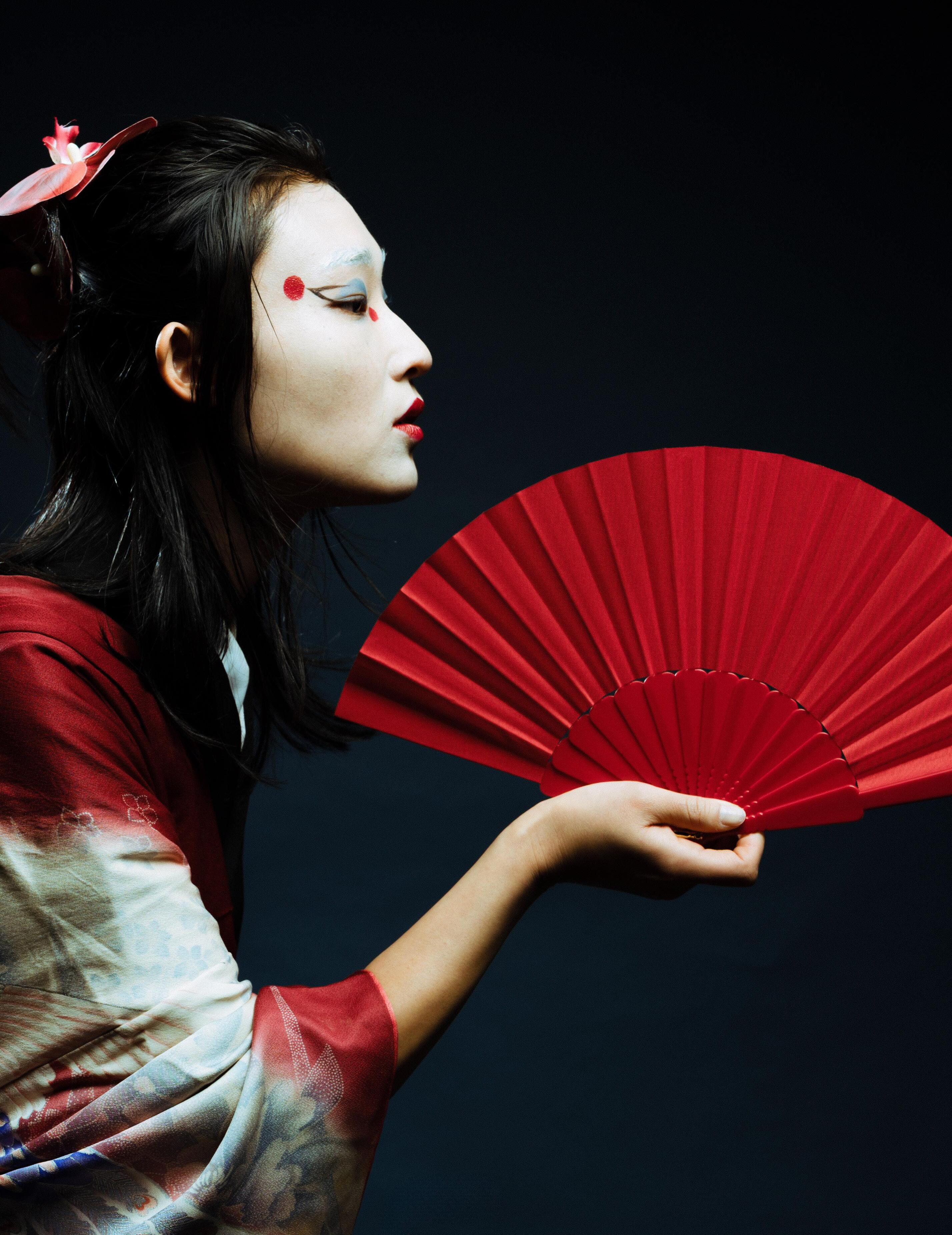
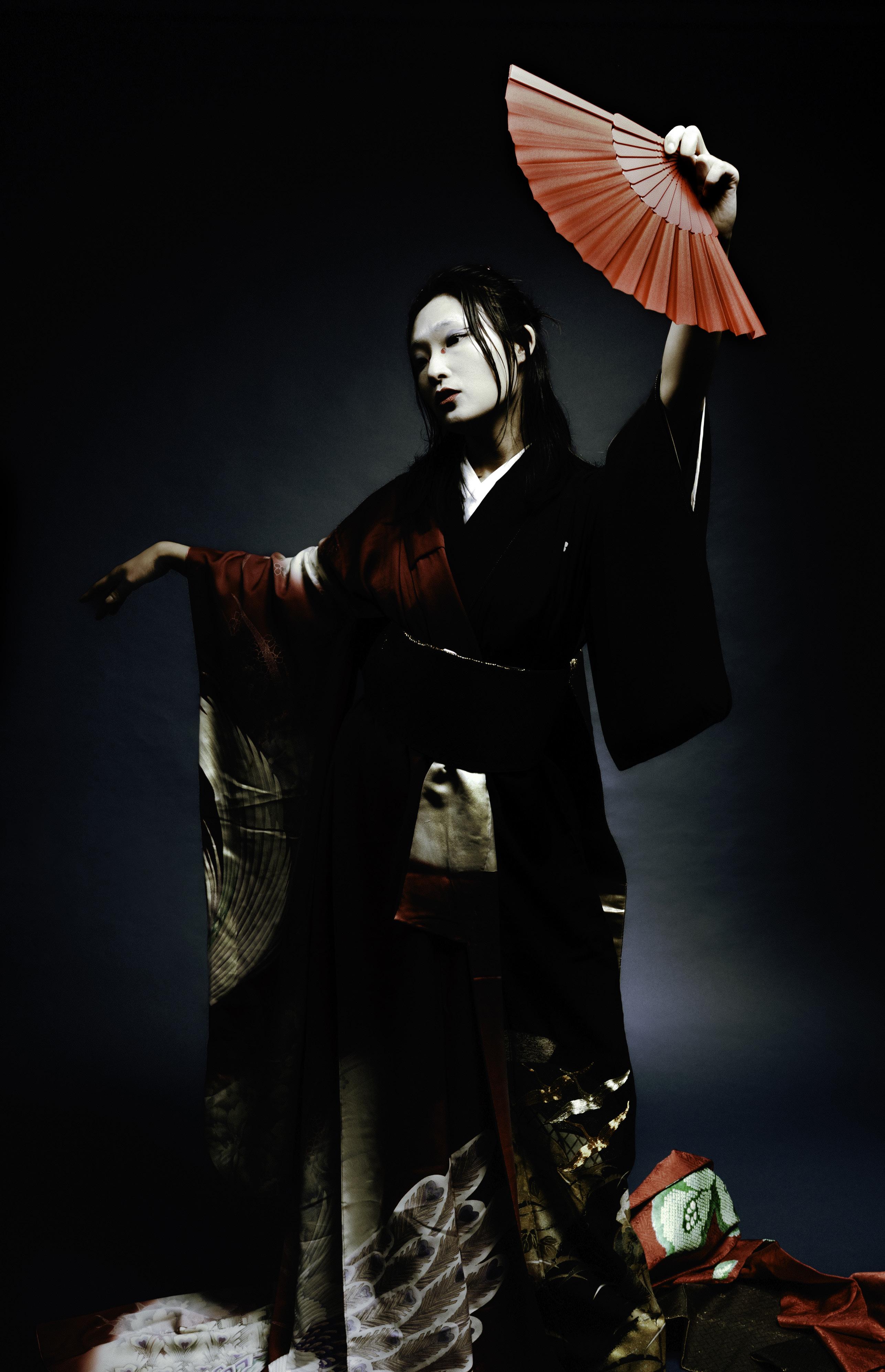
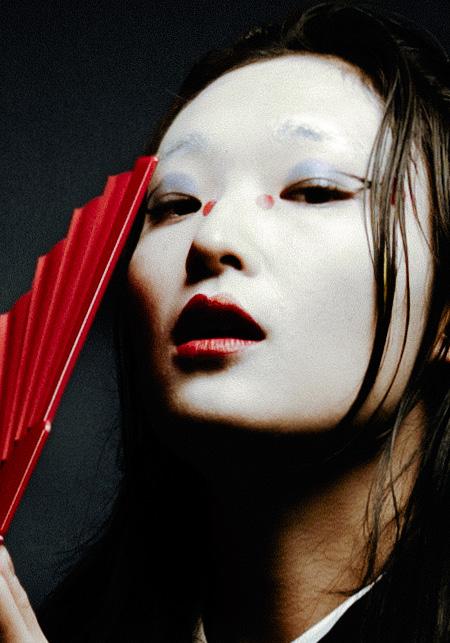
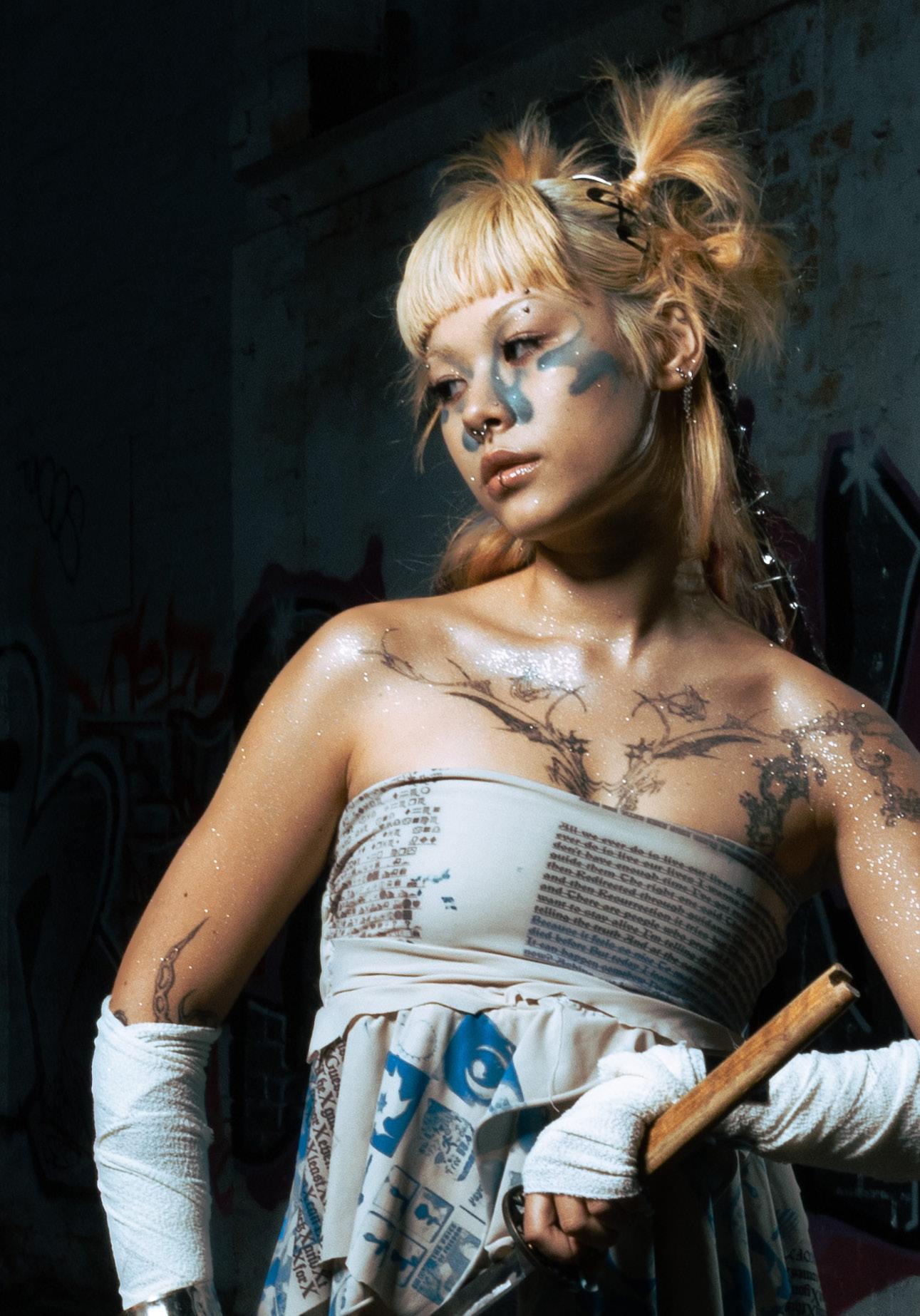
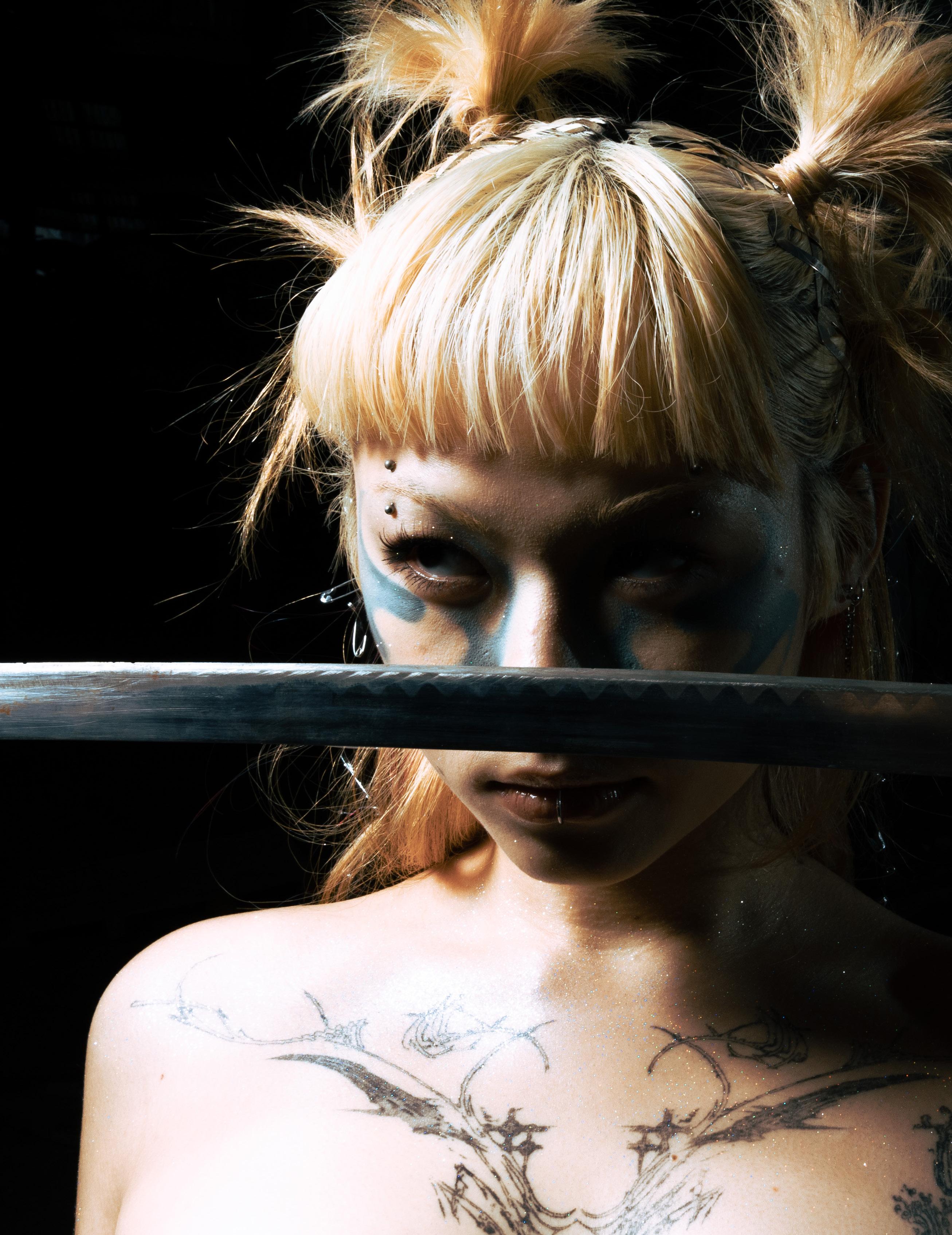
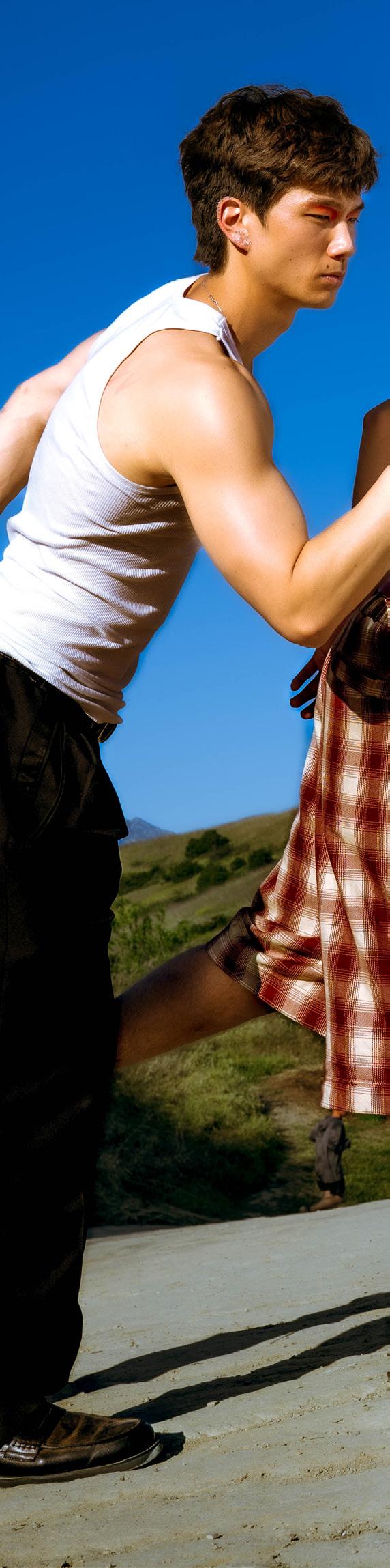
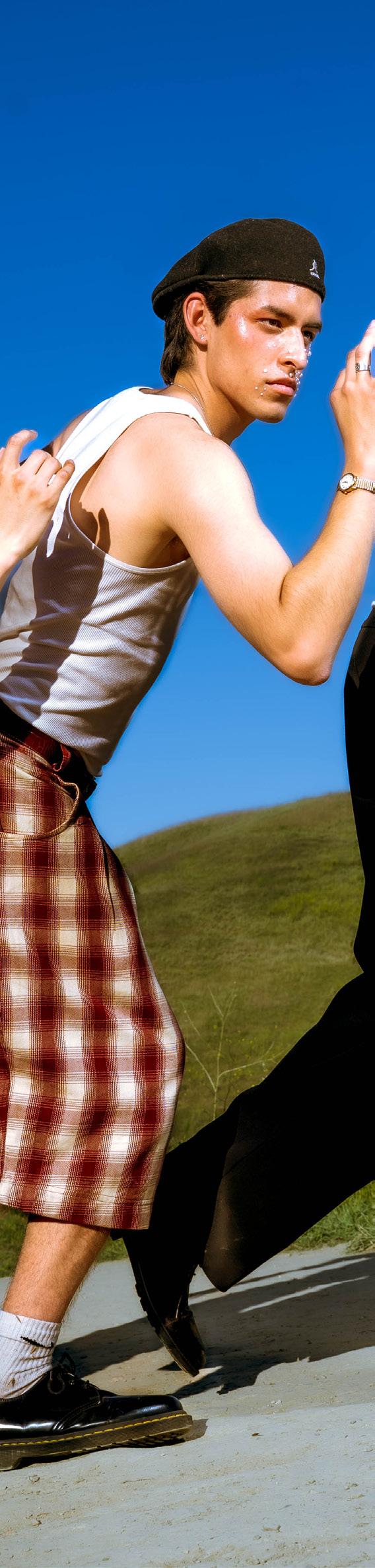
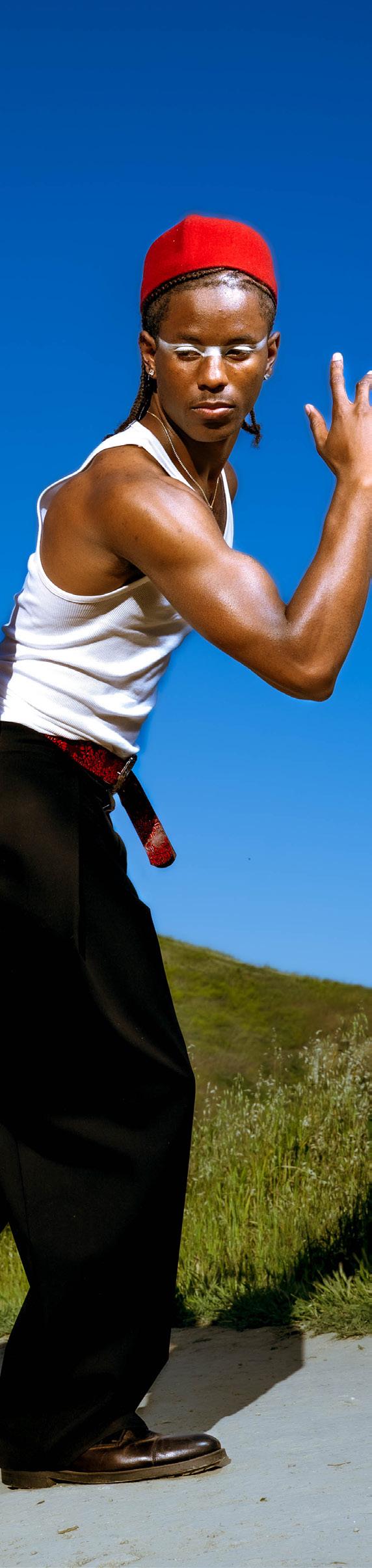
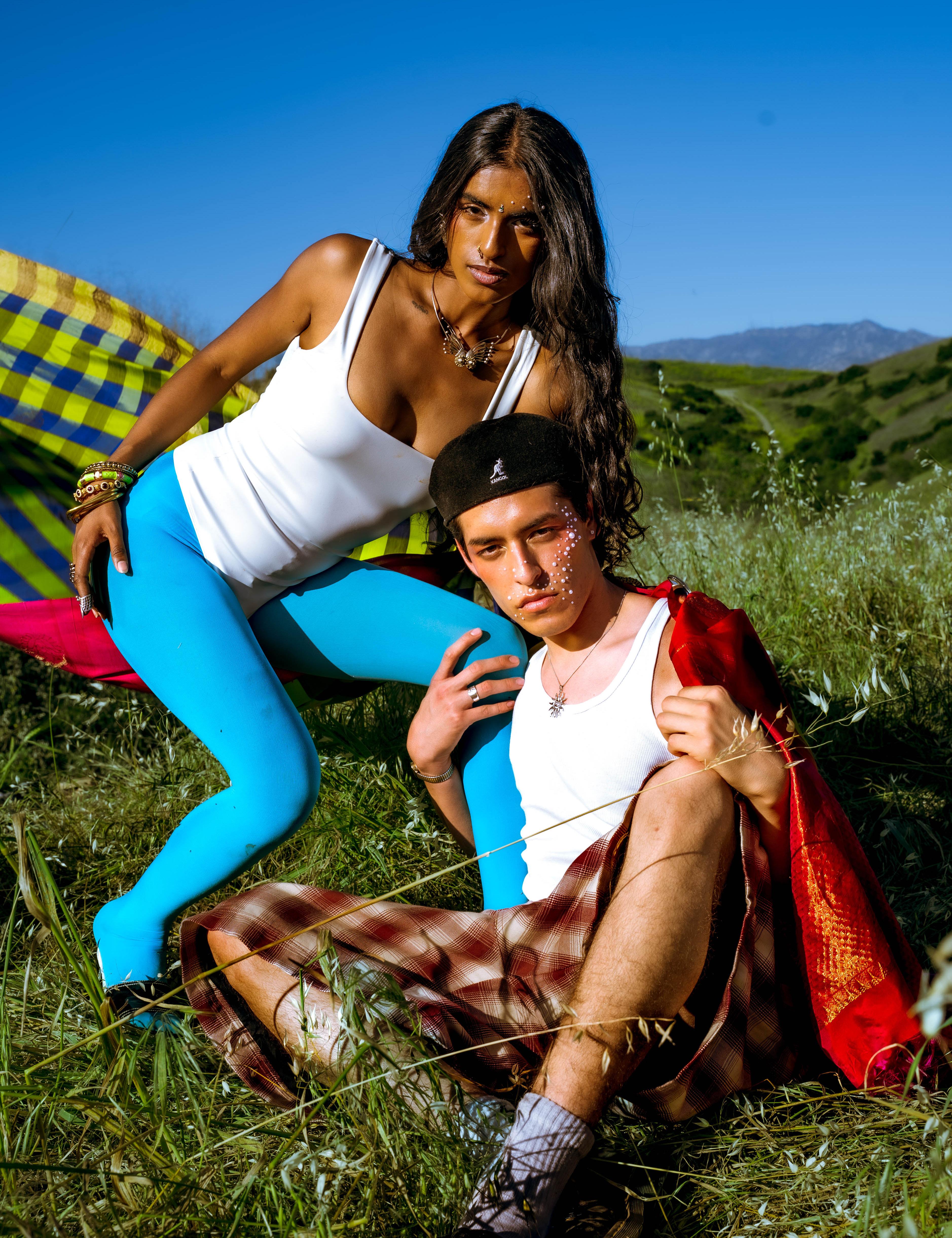
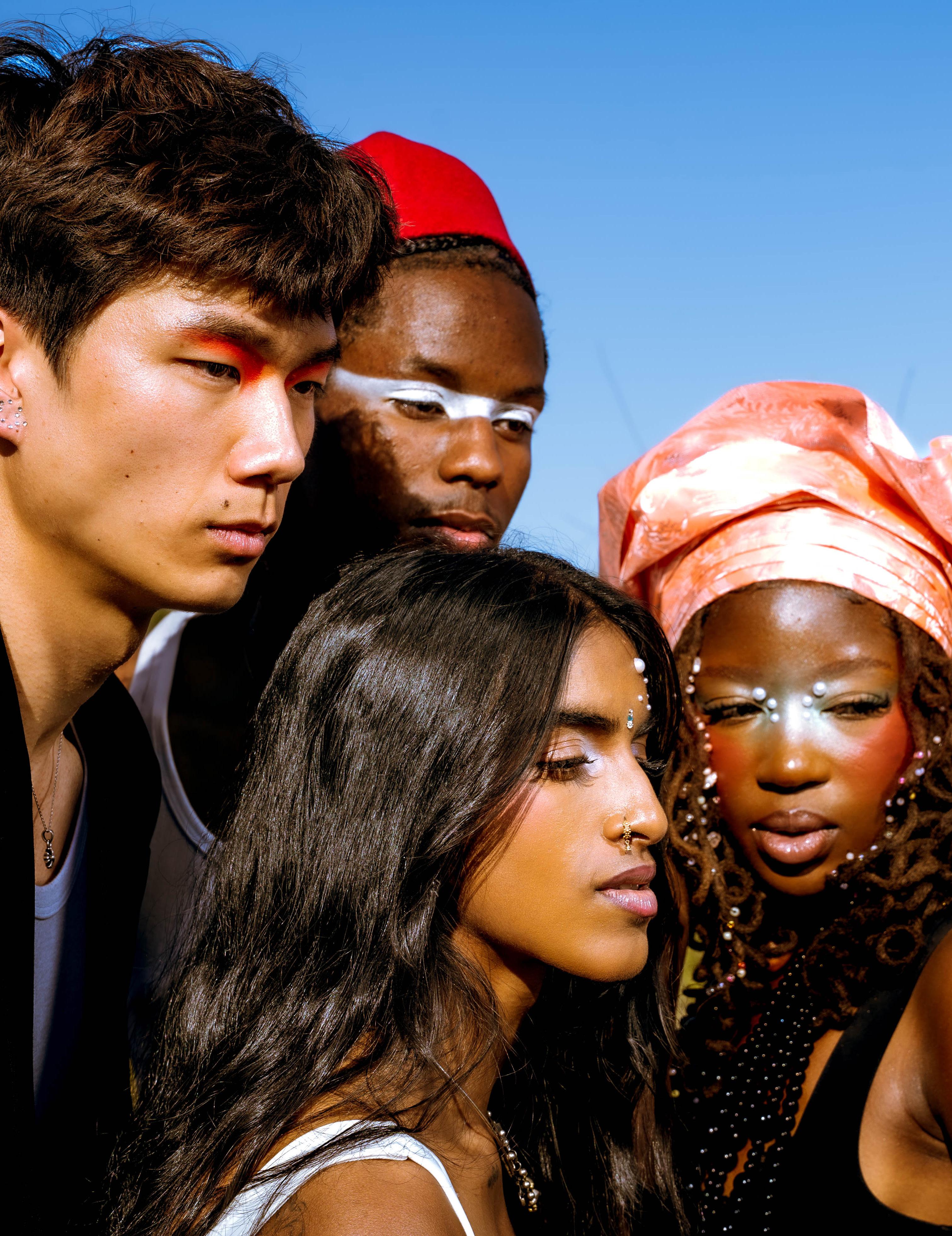
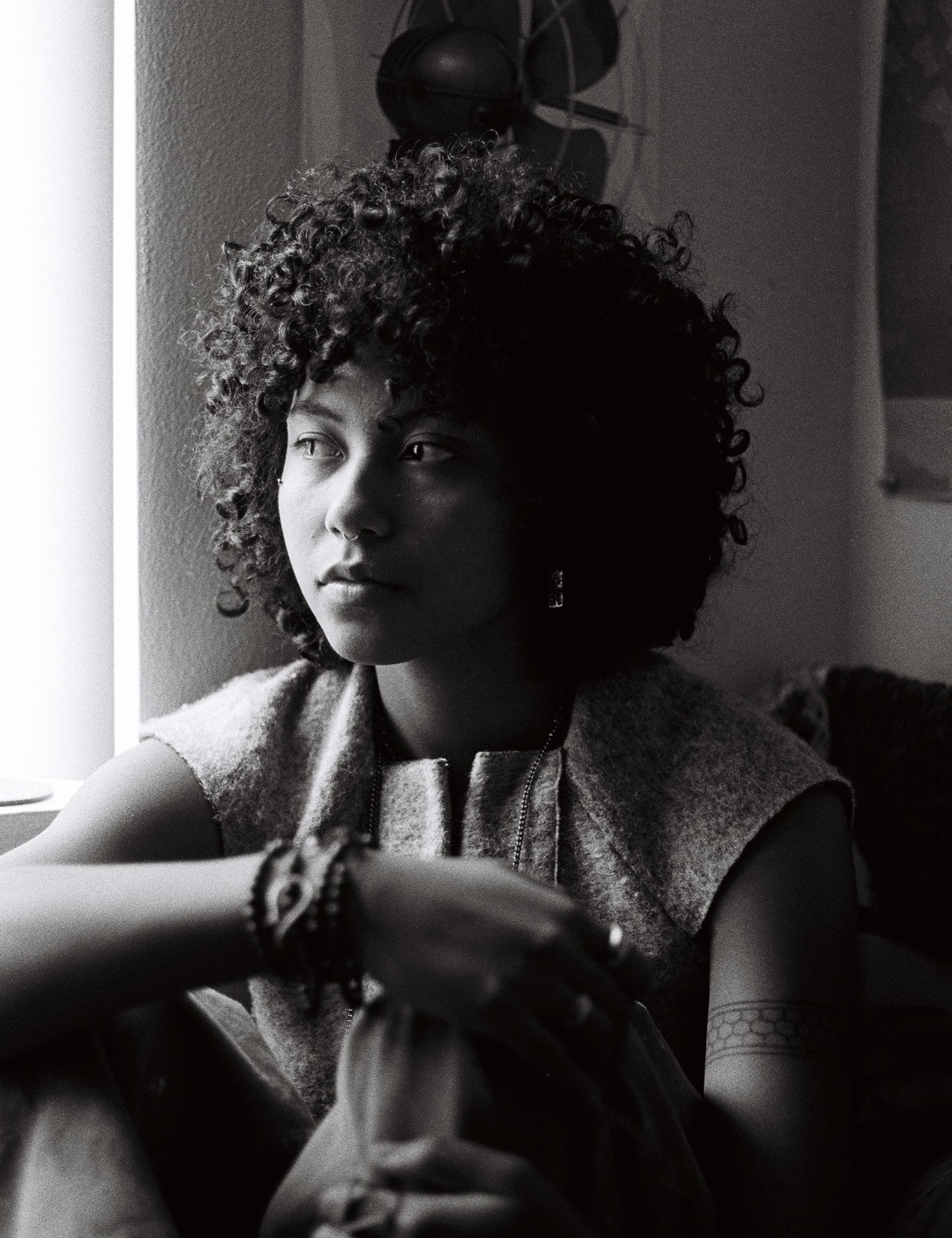
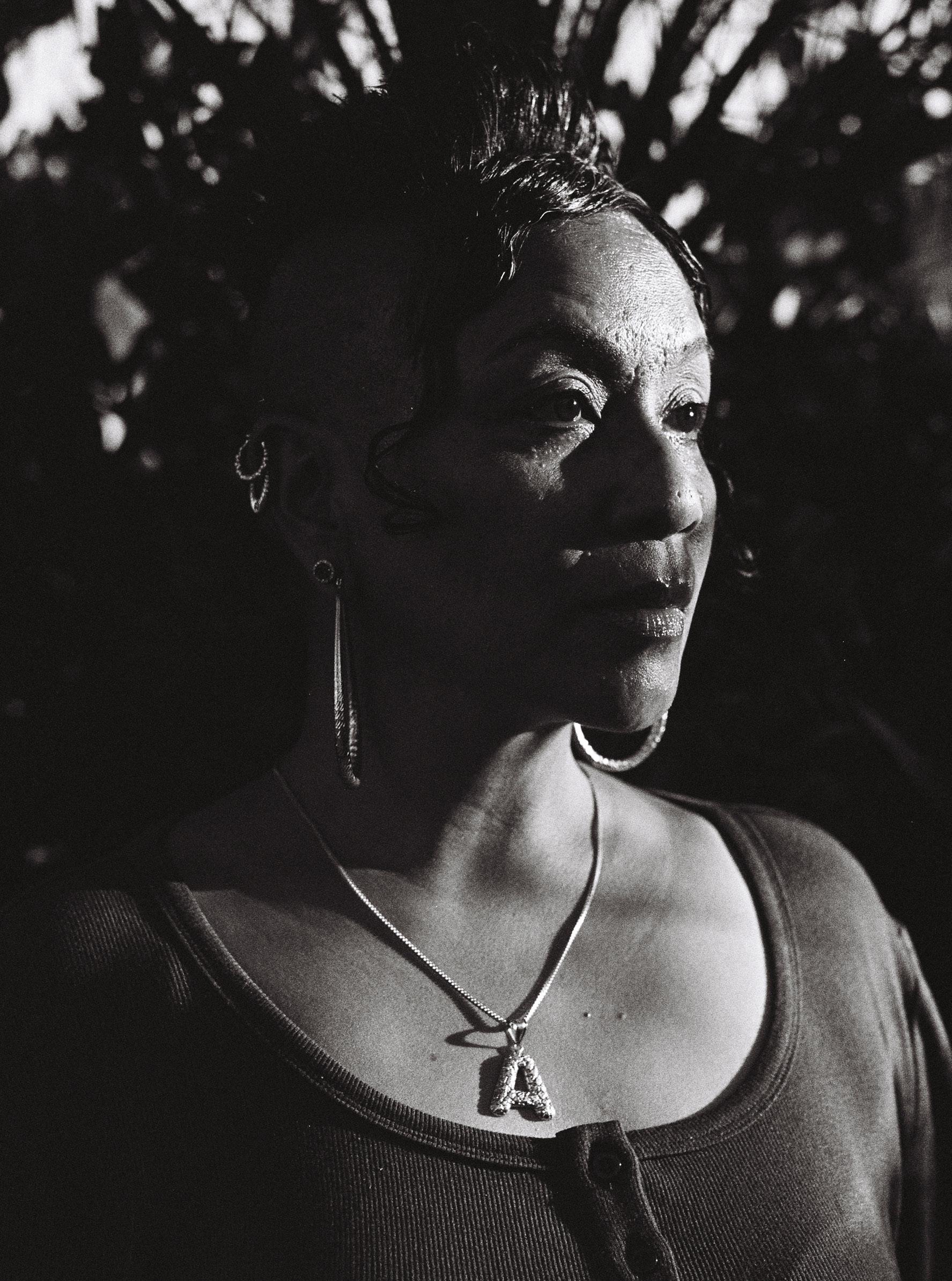
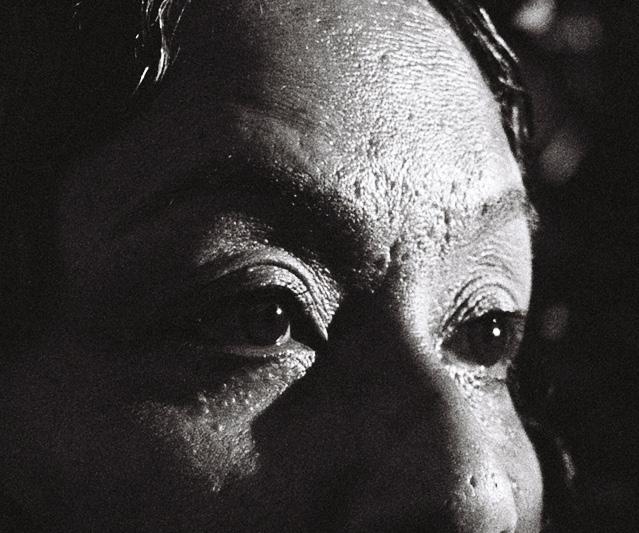
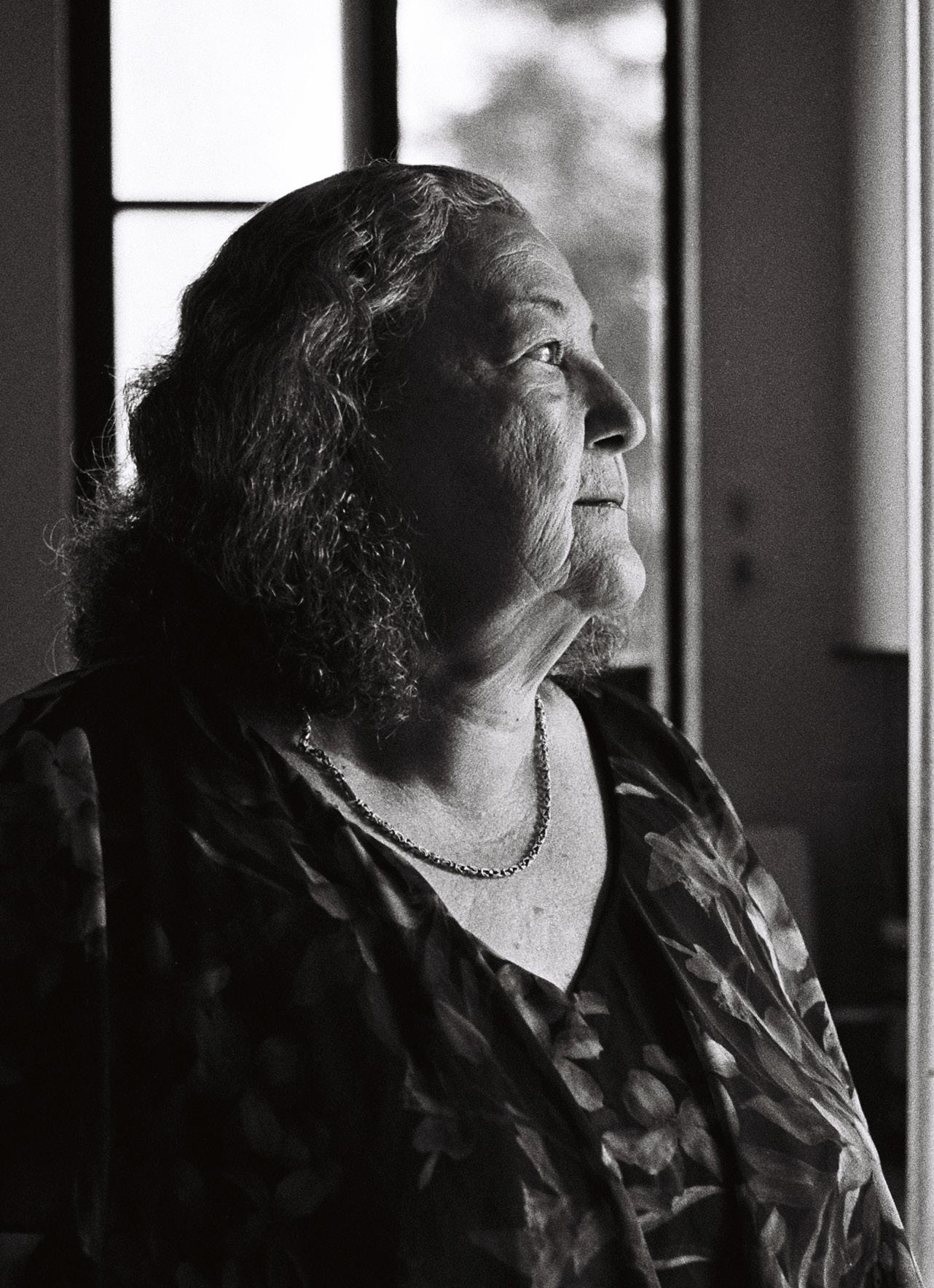
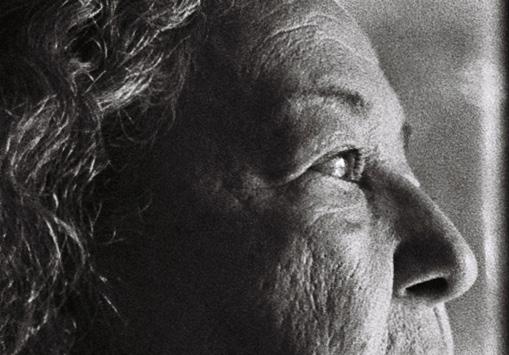
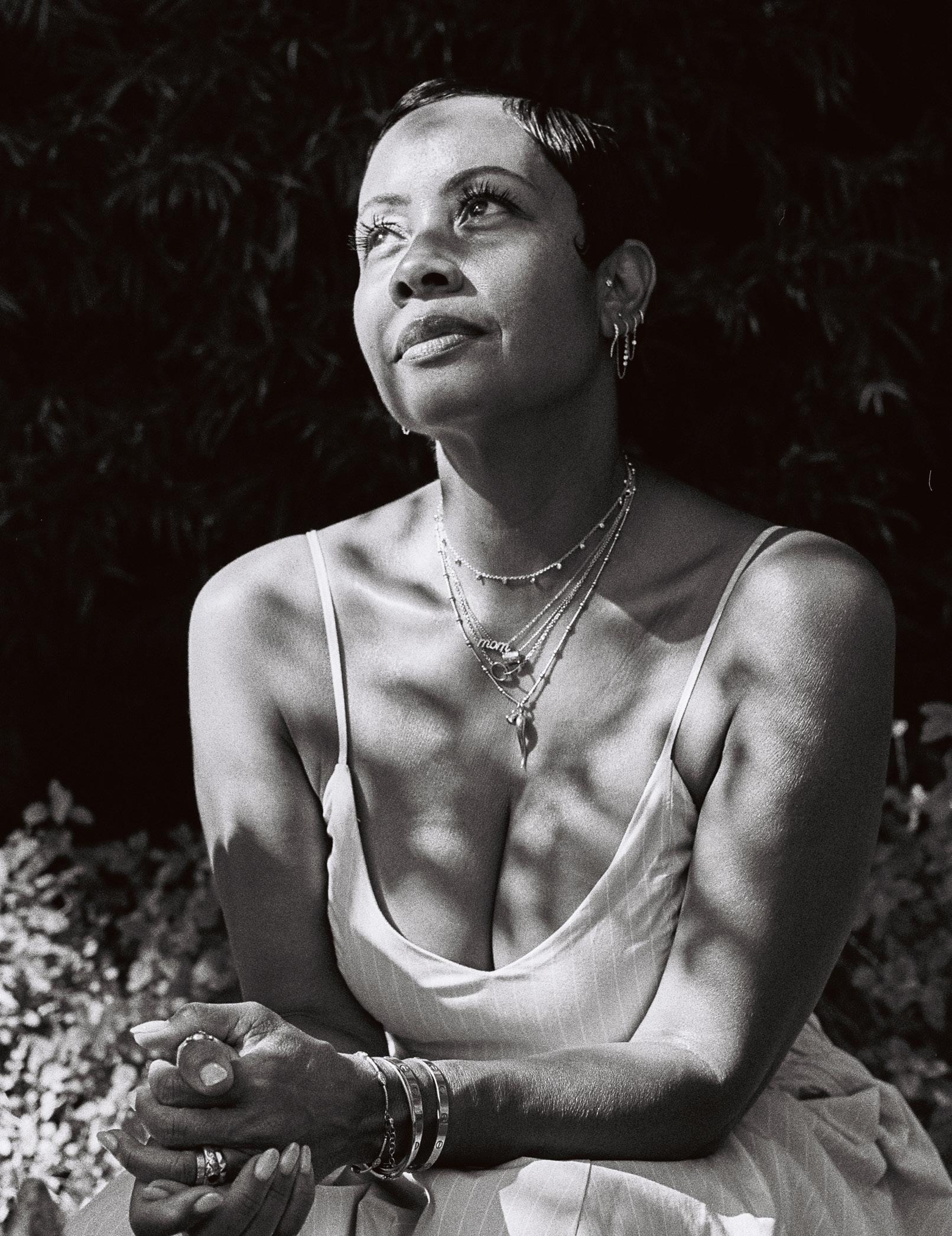
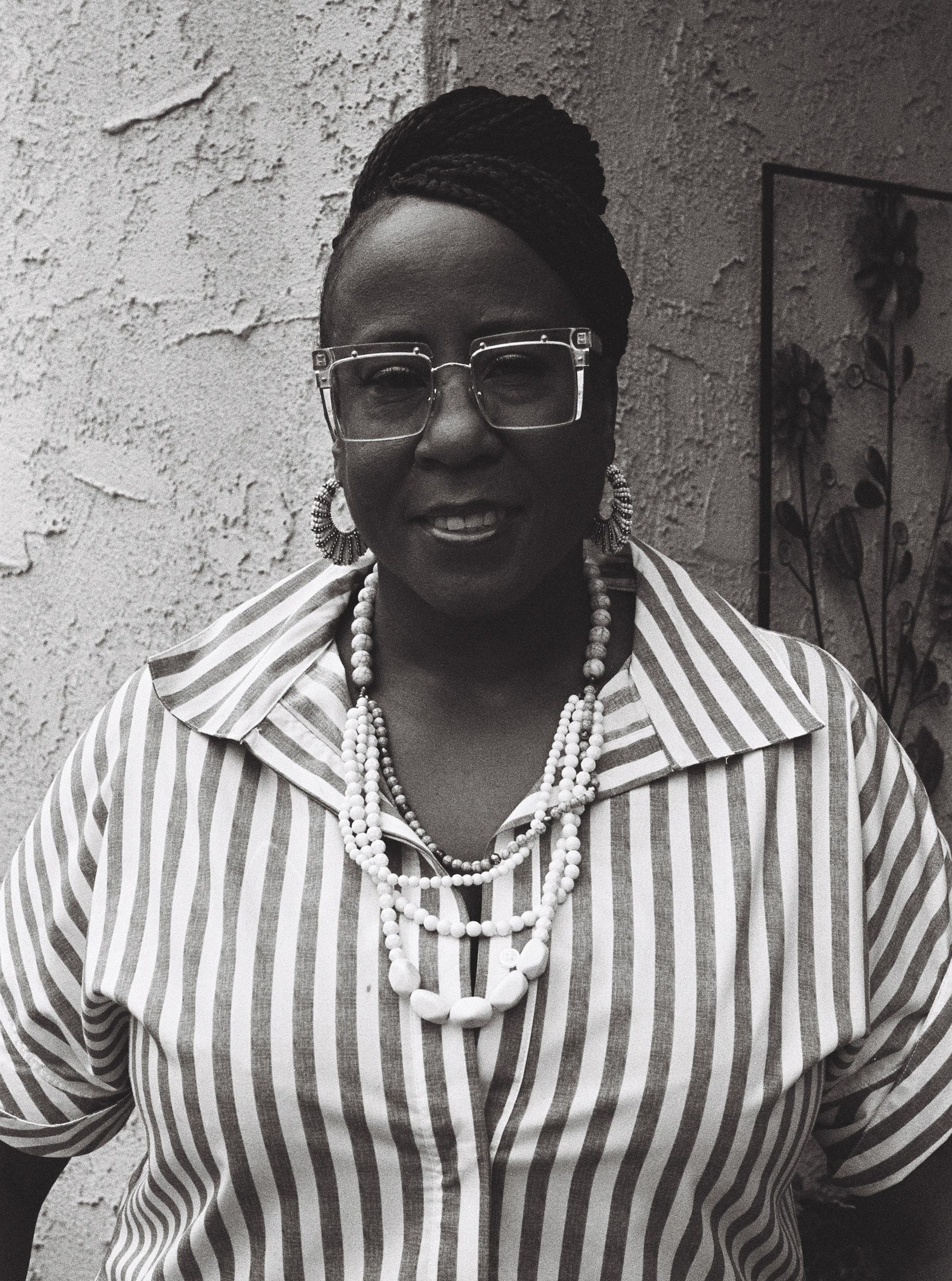
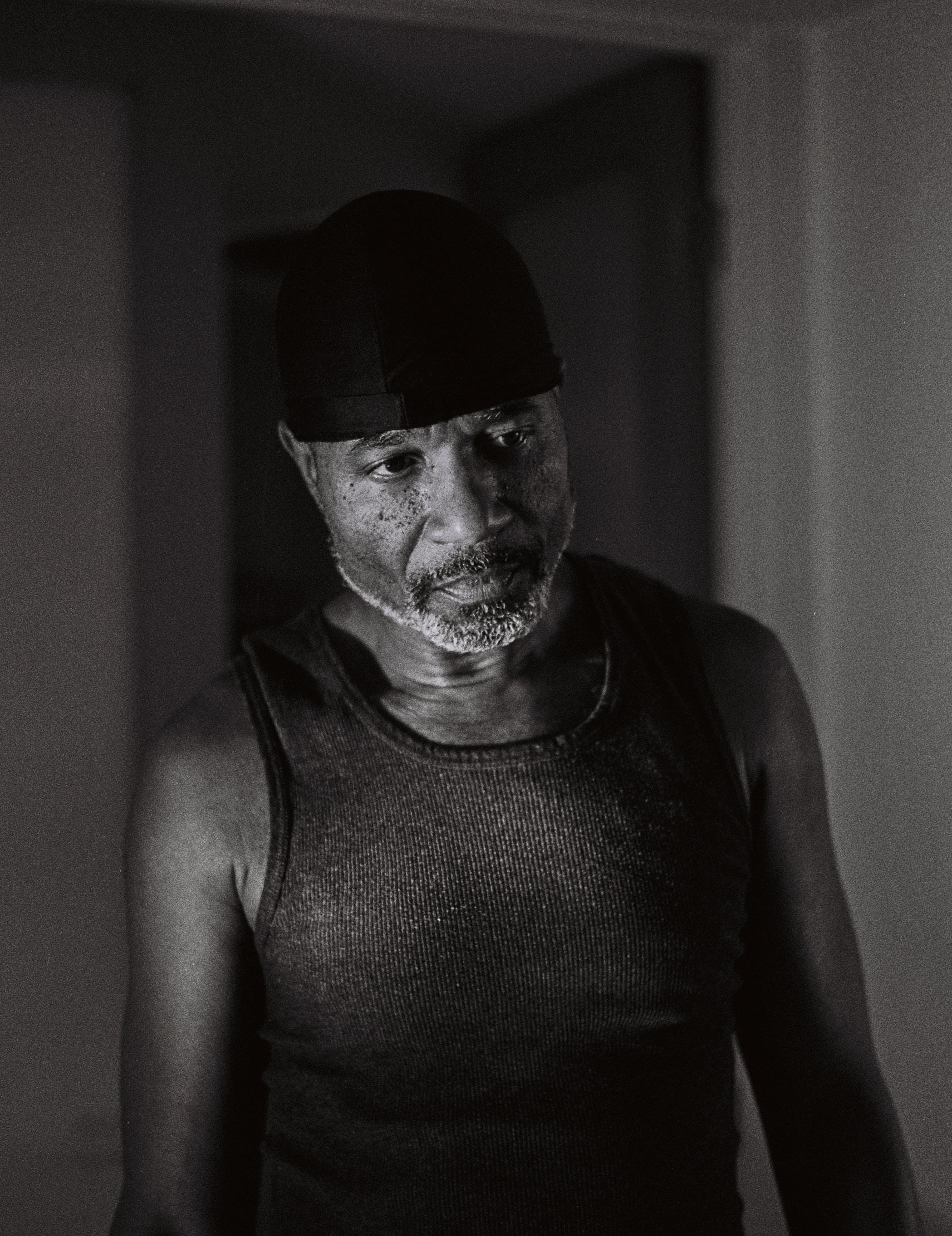
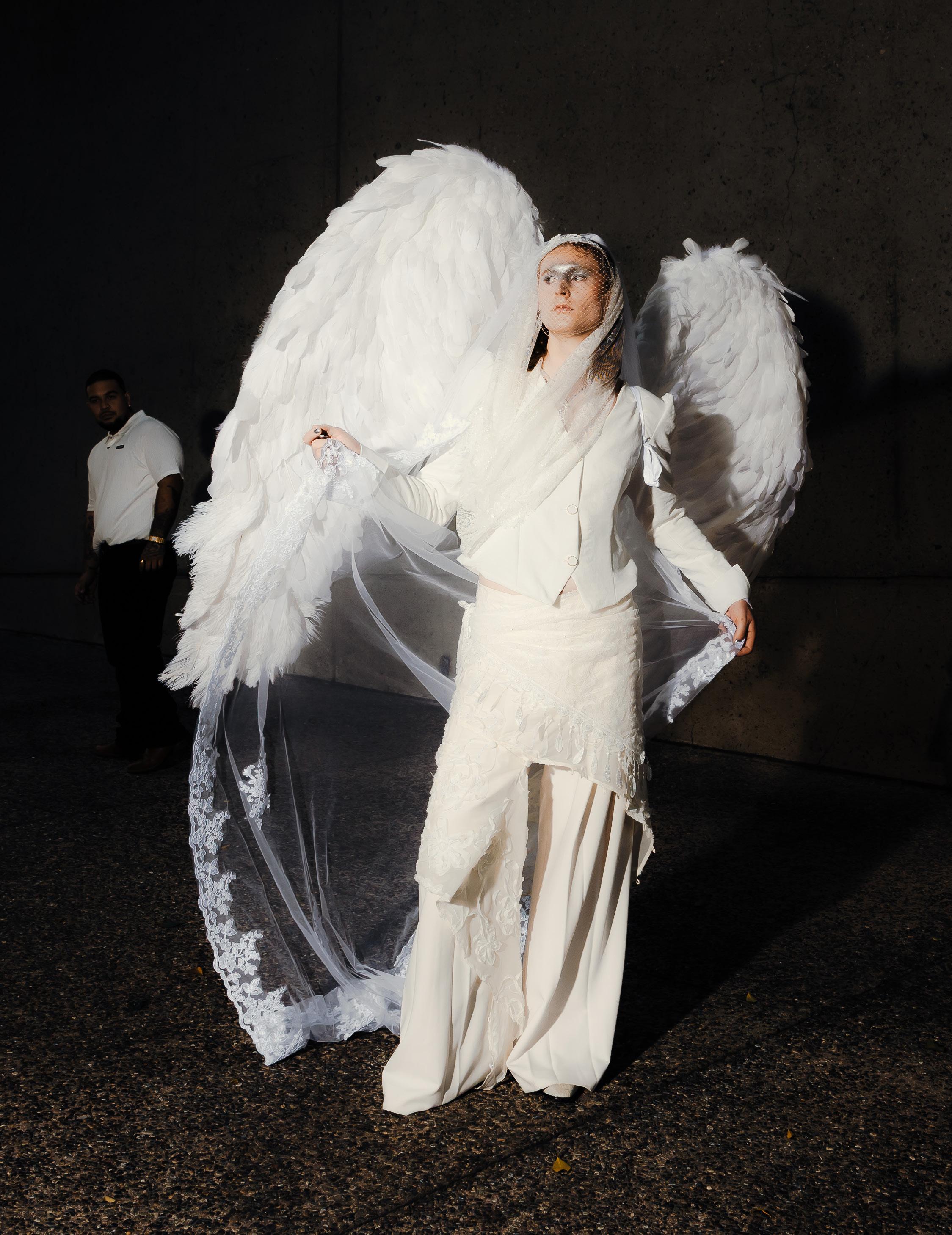
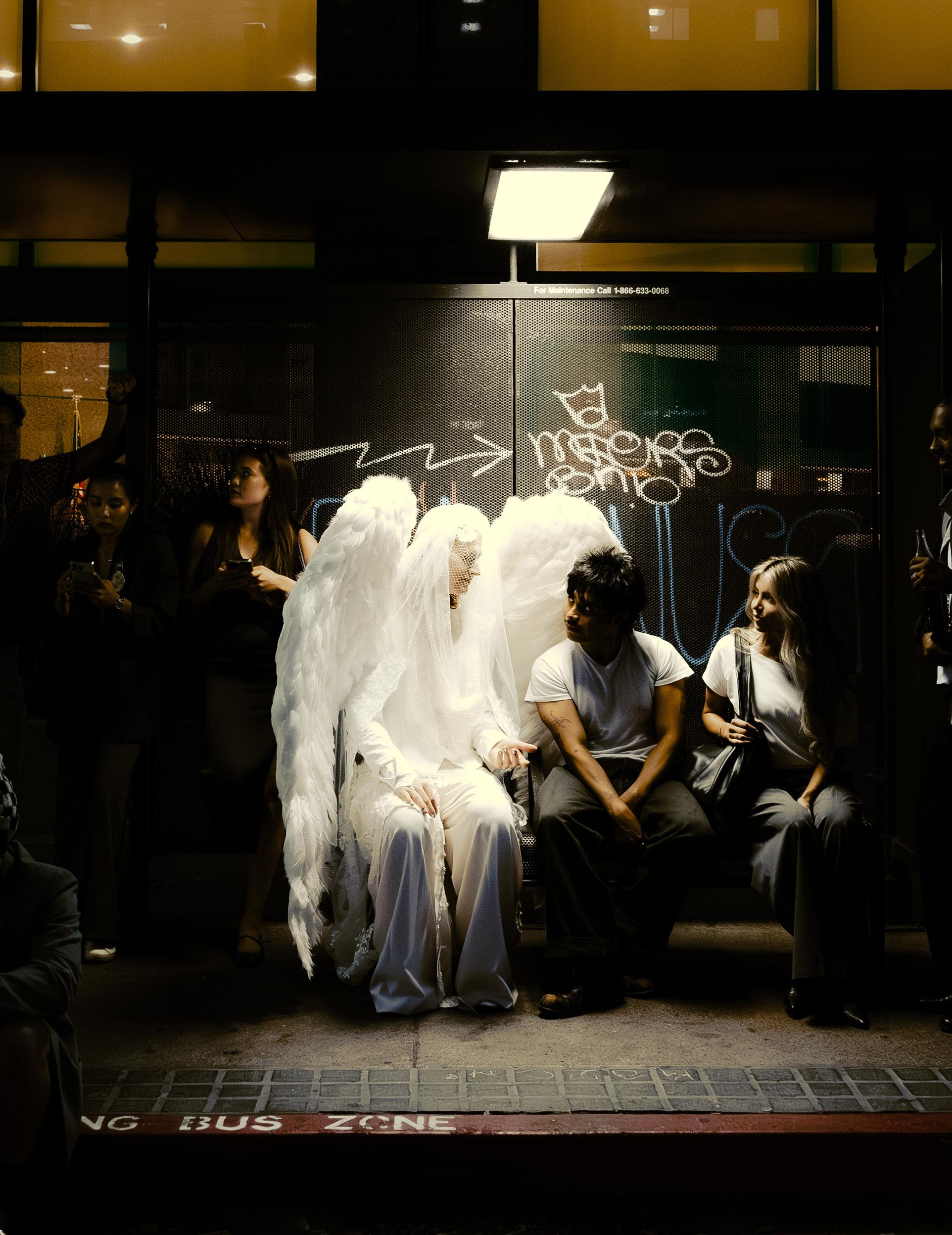
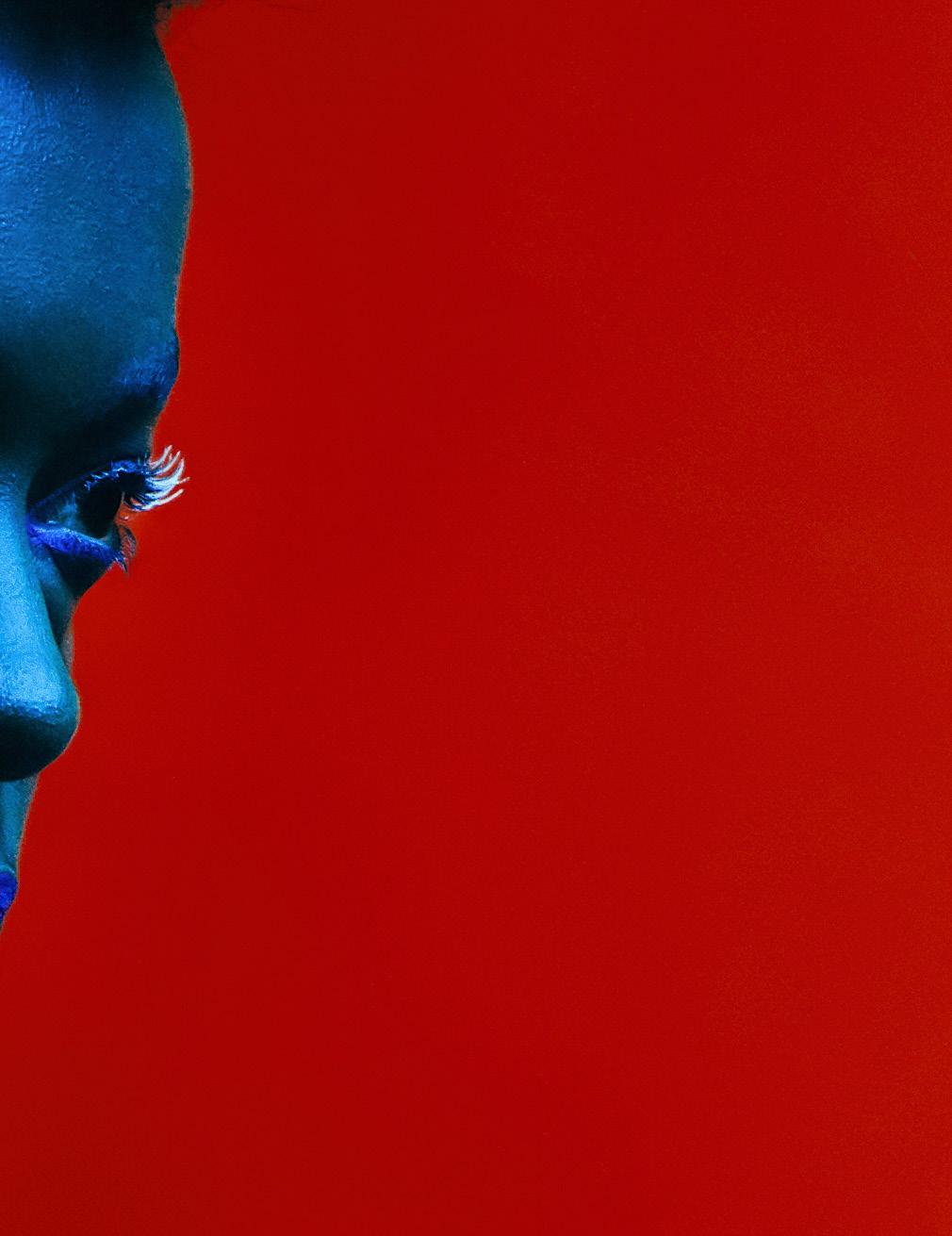
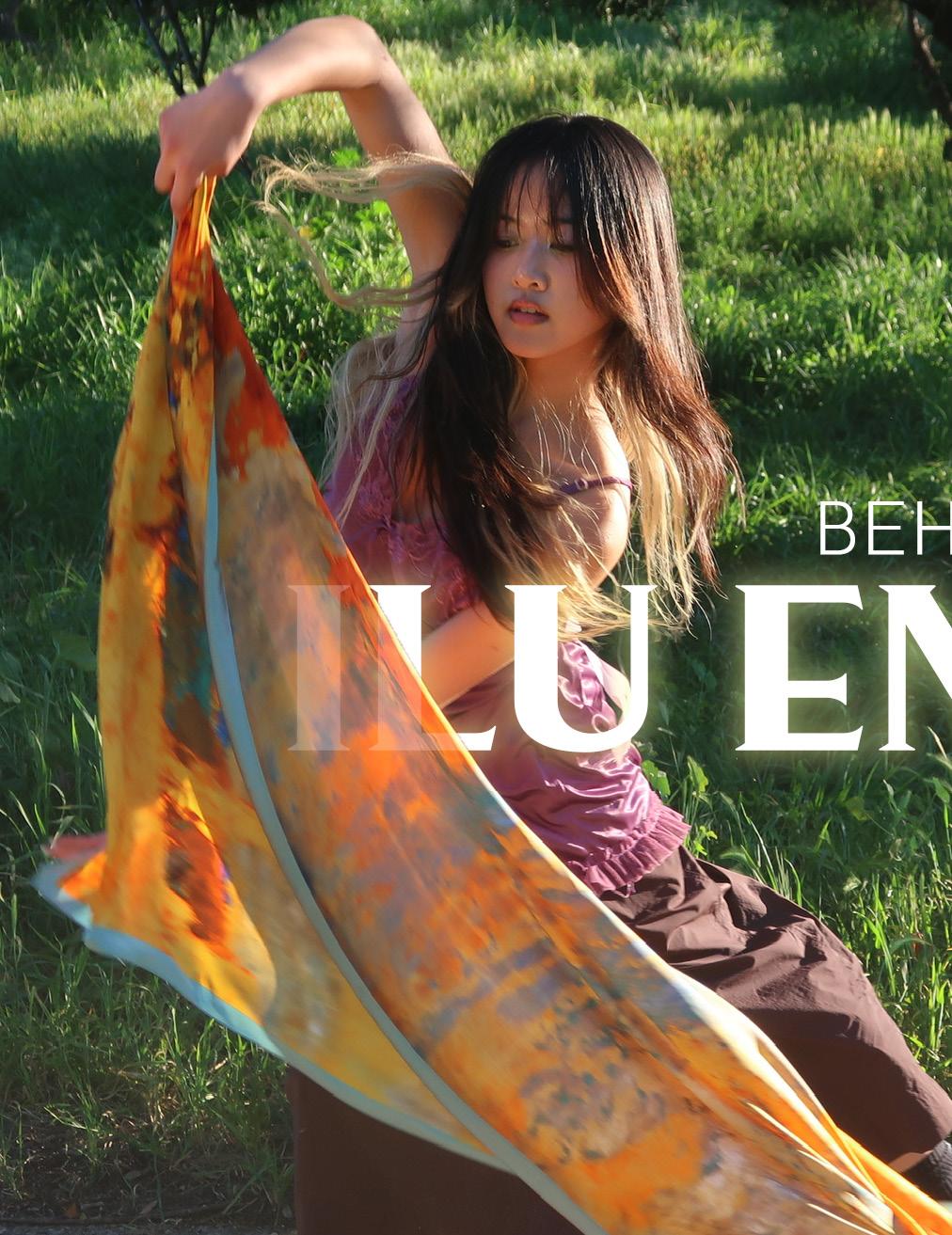
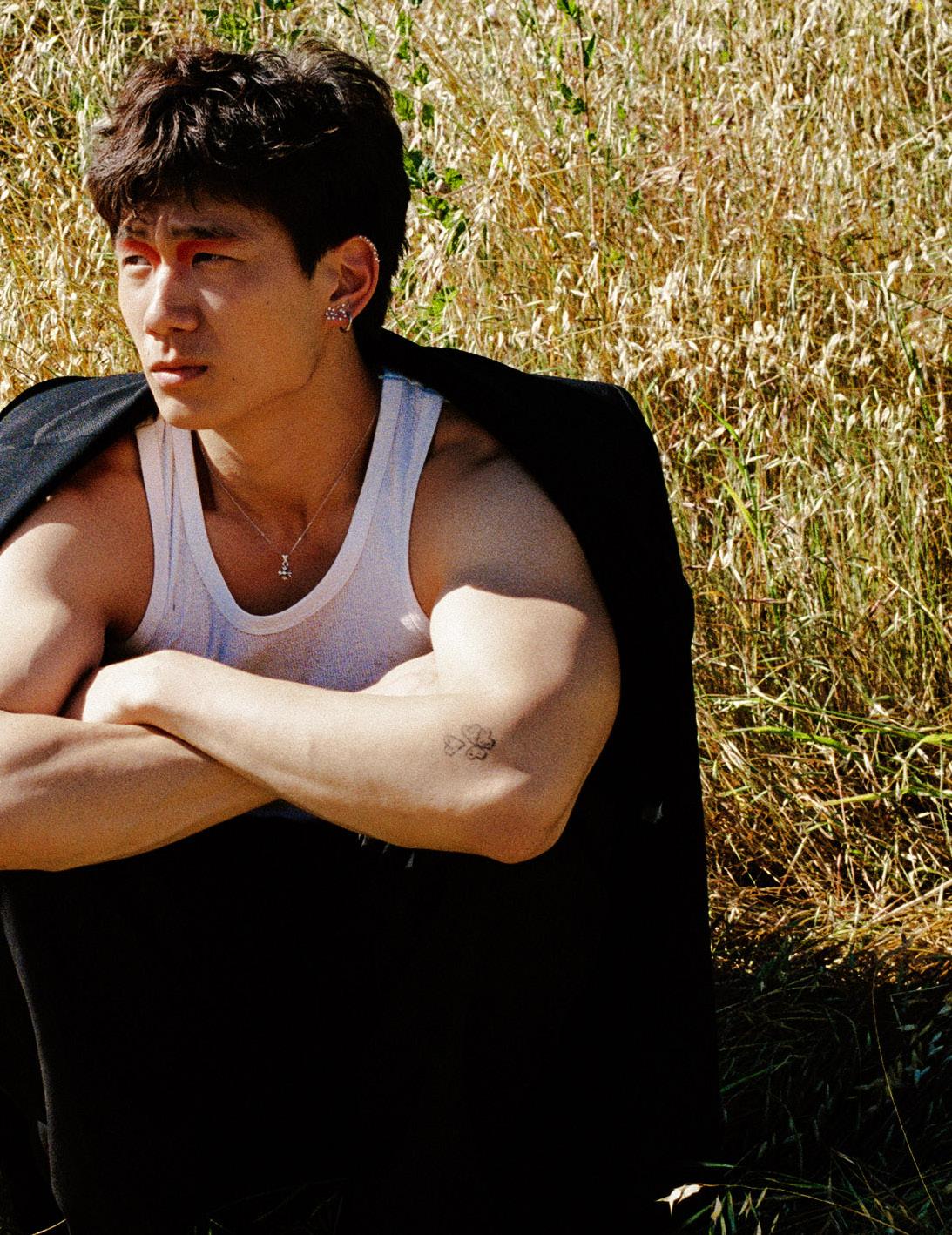
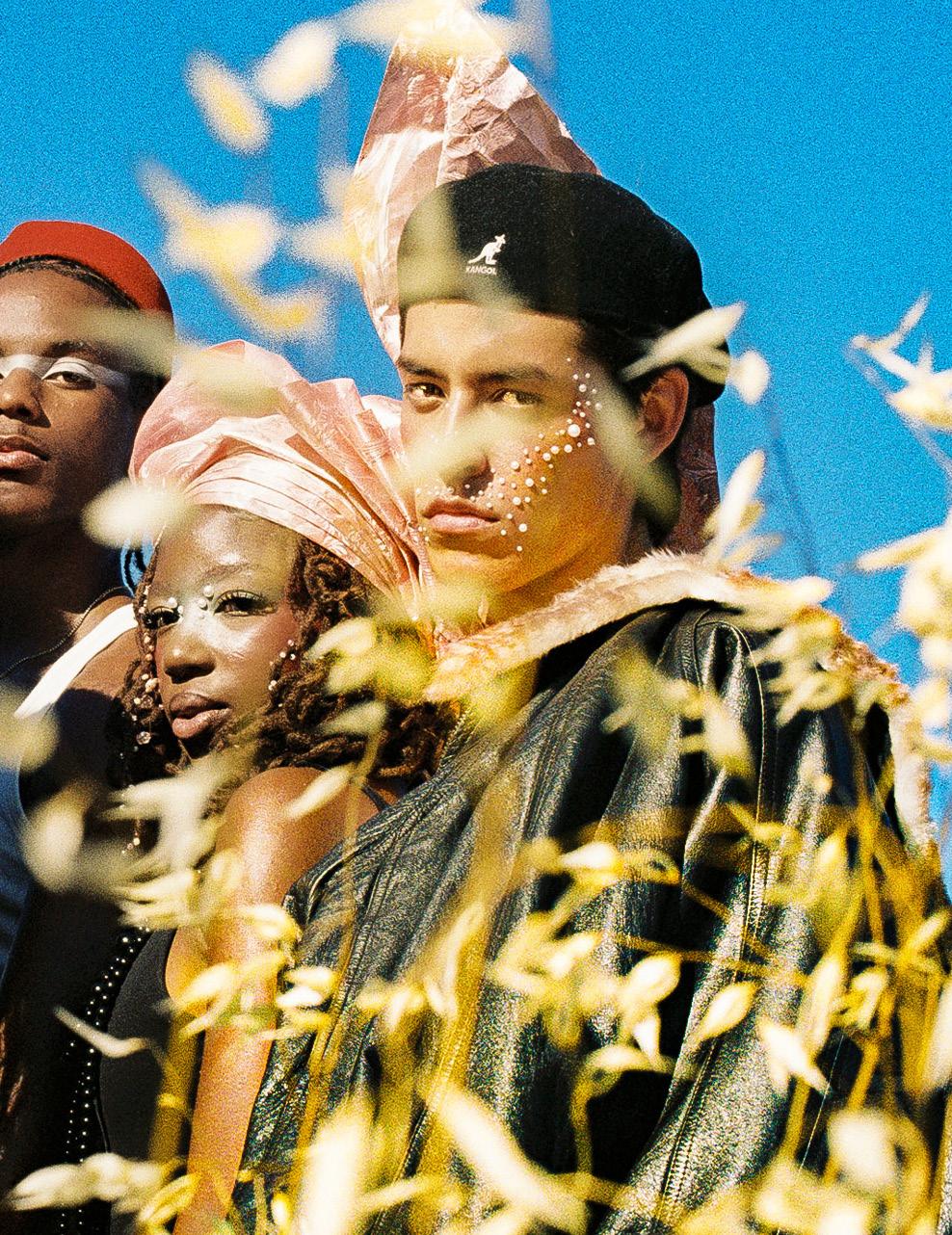
In our current political climate, it is more important now than ever to uplift people, and I believe that is what Ilu Eniyan is all about—celebrating the people we are now, the people that have come before us, and the people that will follow. As much as the “powers that be” try to stamp us out, our collective drumbeat will ripple on.
I am immensely proud of the work in this issue marking my final semester as Editorin-Chief. I have learned so many things about myself in this process—an especially important lesson being about trust: trust in other talented creatives, trust in myself, and trust in Haute as a collective, to execute an important vision. To my fellow presidents,
IN
-
CHIEF
and to our E-Board, thank you for everything. I know the future of Haute is in good hands, and I am so grateful for all it has brought me.
Finally, I would like to dedicate this letter to my grandfather—my Gong Gong—who passed away a little more than a year ago now, and my grandmother—my Mama— who continues to inspire me even through her grief. Gong Gong, 我想你, Mama, 我爱你。
From my heart, Sage Murthy 陳明子
LETTER FROM THE
CHIEF OPERATING OFFICER
It is with immense pleasure that I introduce Ilu Eniyan —a moment of cultural exchange, long-overdue representation, and unapologetic expression. As you read this issue, I hope you feel proud not only of the beautiful blend of cultures and communities that make our world, but also in the ones that have shaped your own identity and experiences.
Being Indian—specifically Telugu—is one of the greatest joys I will ever know. It is the resilience, kindness, energy, and beauty of my people that drives my passion to loudly celebrate and represent our stories everywhere. Nothing compares to the pride I feel in being a koduku, an anna, and a thammudu. I carry the love, strength, and
sacrifices of my family with me, always.
To the creatives, directors, and copresidents—thank you for always bringing your absolute excellence. Amma, Nanna, Sonu, Choti, Chinnana, Ammamma, Tatayya, Nannamma, na family mottaniki— naa prema antha meeku. My time at Haute has been such a fulfilling experience, and I look forward to seeing it continue to grow and thrive.
Sending all my love, Rohan Srinivas Baru
LETTERS FROM THE CREATIVE DIRECTORS
This issue marks the very last one I will be working on for Haute. Letting go of this publication is not easy – it has given me more than a platform, but a true community of creatives who have continuously inspired me and pushed my growth as a photographer and artist. For that, I will always be deeply grateful.
This issue is especially meaningful to me because of its theme. Every story in this magazine reflects that shared energy; how we create not in isolation, but in conversation with one another. It is a reminder that art is not just individual expression, but something that connects us and carries our stories forward.
It is with unrelenting joy and gratitude that I finally present Ilu Eniyan, my culminating issue with Haute Magazine.
From the moment I joined the Visual Design team in Spring 2024, I fell in love with Haute’s diverse creative community that founded every corner of this organization from the ground up. Ilu Eniyan is a homage to the people as a collective of diverse cultures, stories, and identities, and thus, to the heart of Haute. Growing up Chinese-American, it means the world to be part of such a transcendent work of art that authentically spotlights all cultures in a world that continues to silence them.
To my co-presidents, while our time together came with its challenges, I am proud of everything we accomplished. In just one year, we created two incredibly strong issues, and more importantly, built something that will continue beyond us.
Thank you to everyone who has been part of Haute – whether as a contributor, reader, or supporter. This community is what makes the work meaningful.
Best,
Juri Kim
Serving as Creative Director for Haute has been the greatest honor — I will forever cherish the people, lessons, and experiences that I found in my time here. As I step away from such a defining experience in my collegiate career, I look towards the future of Haute with immeasurable hope, optimistic for what comes next. To every copresident, director, and general member at Haute: thank you for building something so unforgettable that is so intensely bittersweet to let go of.
Signing out,
Nicole Leihe 何静
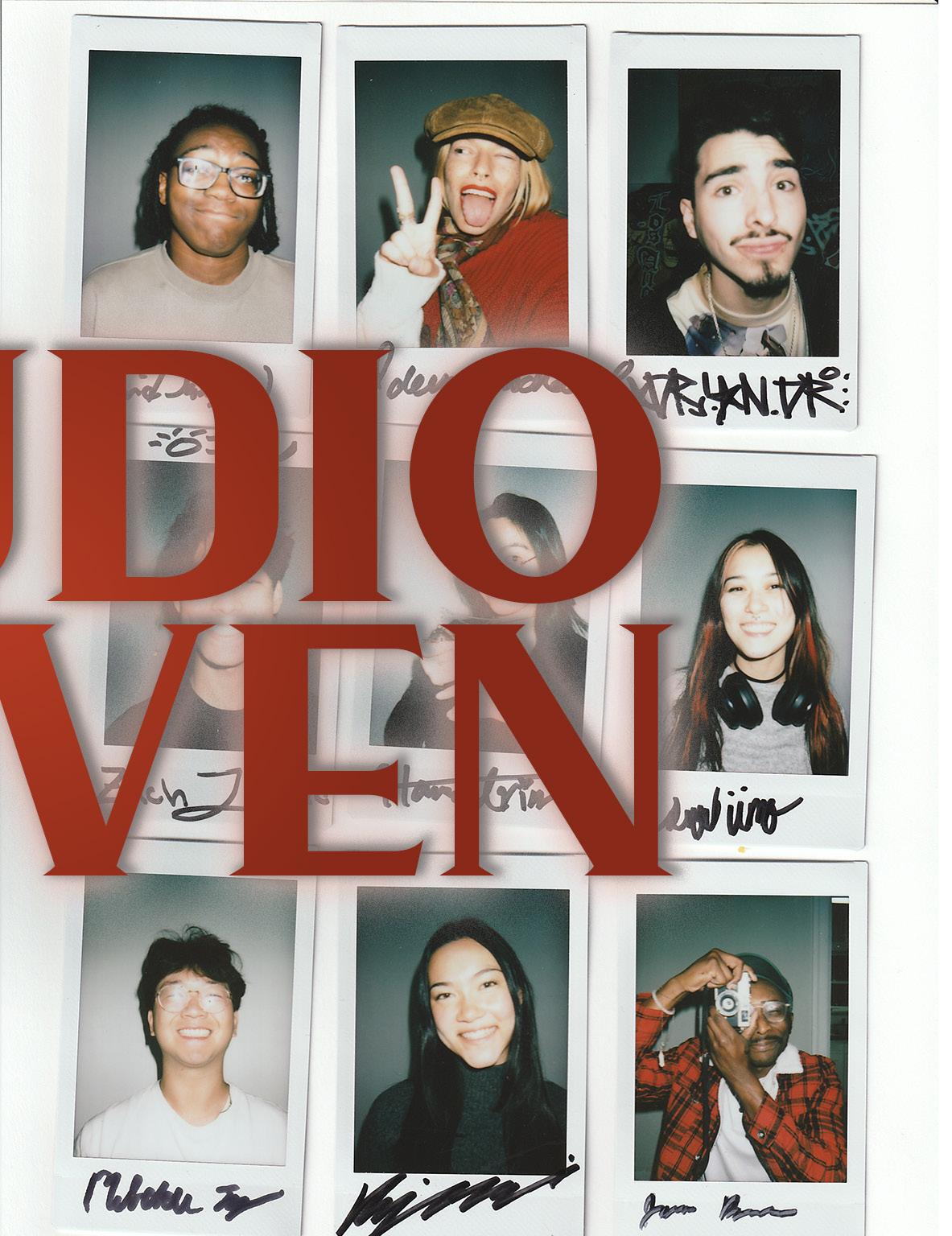
Editor-in-Chief Sage Murthy
Creative Directors Juri Kim + Nicole Leihe
Chief Operating Officer Rohan Baru
Directors of Writing Natalia Rocha + Ava Zinna
Directors of Photography Kobimdi Nwabuzor + Tai Lyn Sandhu
Assistant Director of Photography Pauline Forstall
Directors of Visual Design Lucy Chen + Laila LaDuke
Directors of Multimedia Elise Anderson + Claire Renschler
Director of Events Kensington Ono
Director of Finance Sohana Sahu
Director of Operations Sachi Moore
Assistant Director of Finance Badria Kazim
Director of Marketing Yana Pinto
Director of Content Andrew Huang
Writing Team
Gia Carillo
Kasey Day
Ben Graham
Charlotte Hass
Jeesoo Kim
Ella Kopper
Leilani Mate
Amelie Melsness
Zora Nelson
Raphael Rivera
Alexa Rubinstein
Aumrita Savdharia
Elena Stevens
Lauren Sun
Emma Yan
Multimedia Team
Claire Ernandes
Ziyu Gao
Erica Gong
Colin Kerekes
Miriam Law
Isabelle Lee
Zachary Leonard
Molly Nugent
Veronica de Osma
Shriya Sharma
Alyssa Trideman
Cheyenne Wang
Xiaojing Yang
Jiayun Zhang
Elle Zhou
Photography Team
Sundiata Enuke
Sarah Hyun
Cecilia Li
Alice Liu
Kiyomi Miura
Ayan Patel
Brianna Sheu
Thanawarun Suvannacheep
Andrew Woo
Olivia Yun
Ellina Zhou
Finance and Events Team
Sarah Batt
Will Bundon
Nia Blumenfield
Aanya Chopra
Taina Landuren
Addison Lee
Dhaatri Maviti
Emma Ngai Kei HUI
Zoe Nguyen
Isabel Ramos-Assam
Markus Rosendorfer
Aadya Tomar
Austin Walt
Isabelle Wang
Visual Design Team
Arootin Asatourkazarian
Cici Fang
Tanisha Goel
Annie Gu Miyu Ikeda
Katie Lee
Yeonsoo Lee
Michelle Li
Jaeyong Moon
Ava Rathenberg
Brandon Taliaferro
Dhrithi Vishwa
Gladys Yu
Kaitlyn Zhang
Content Team
Harley Chen
BJ Hardy
Marcus Heatherly
Dillon Johnson
Nicole Scimeca
Isabella Smart
Kiki Sobkowiak
Brendan Tan Brendan Tan + Brandon Taliaferro
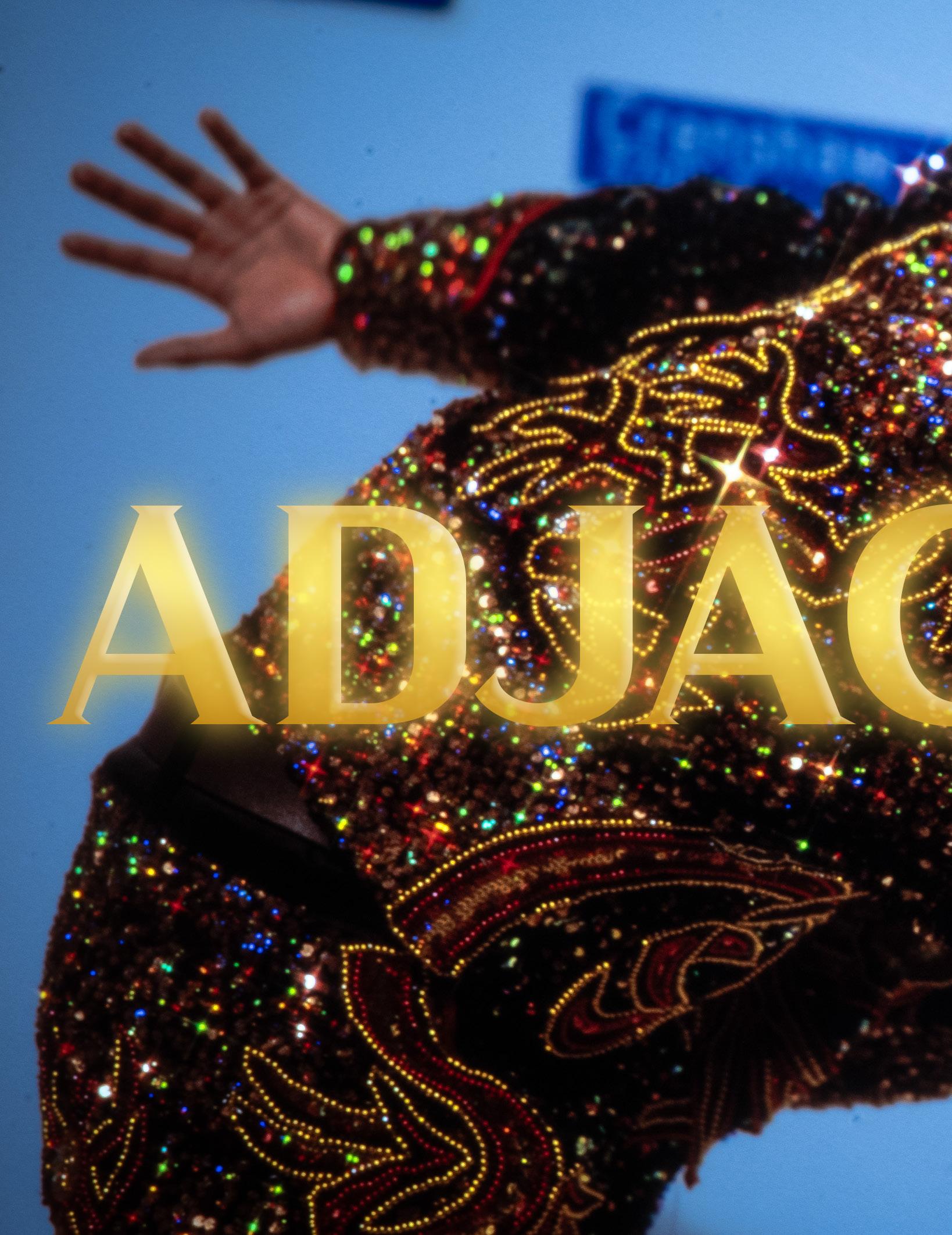
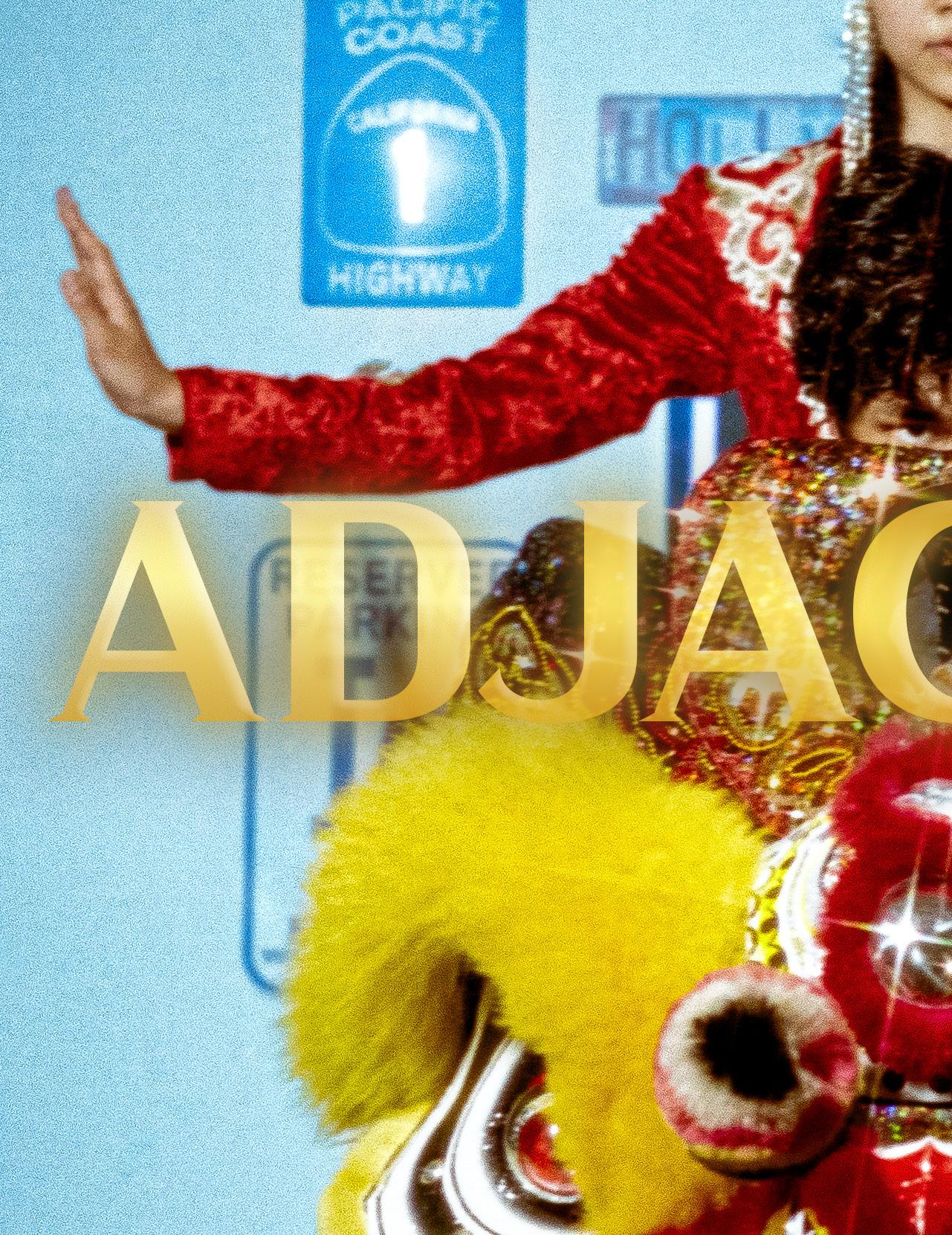
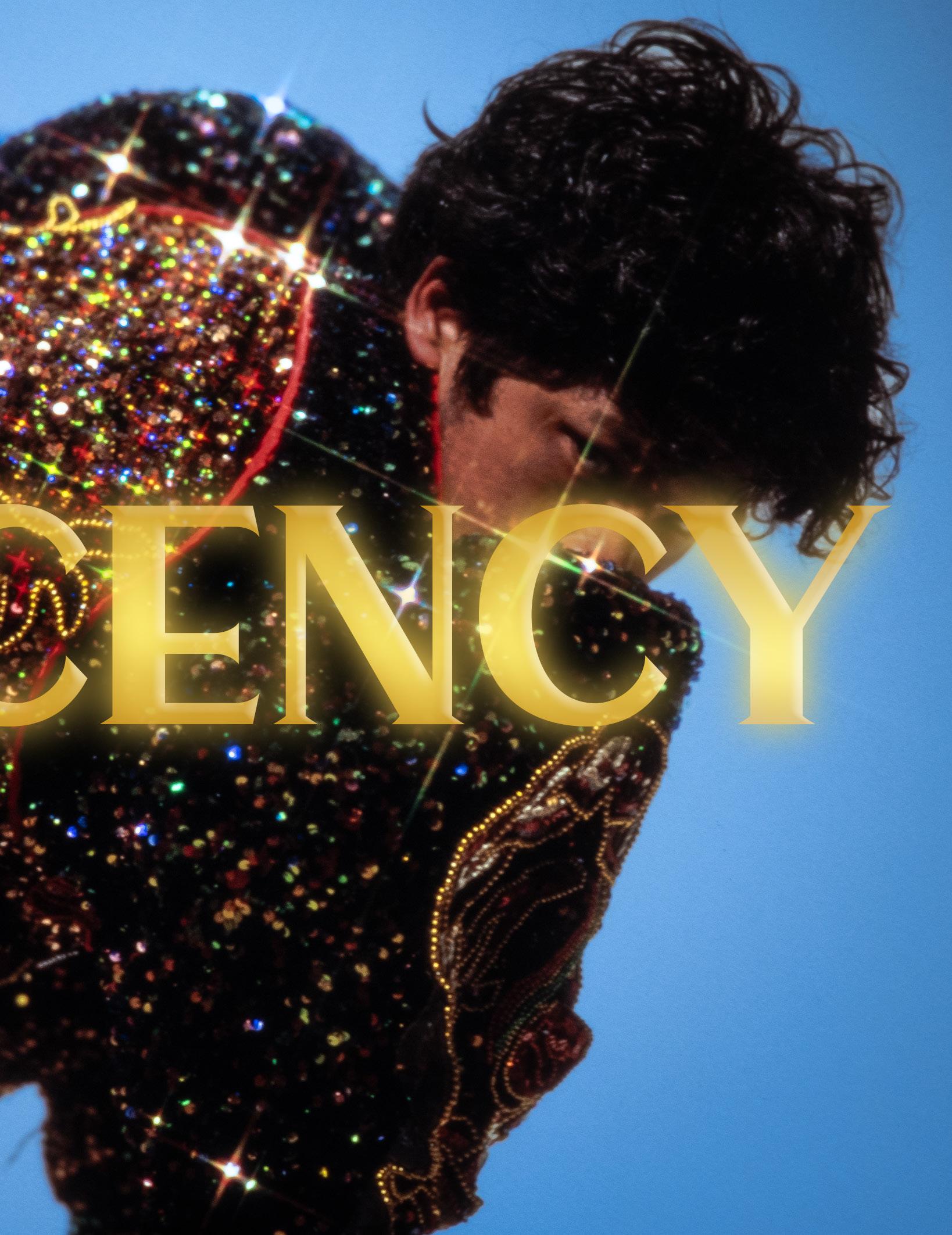
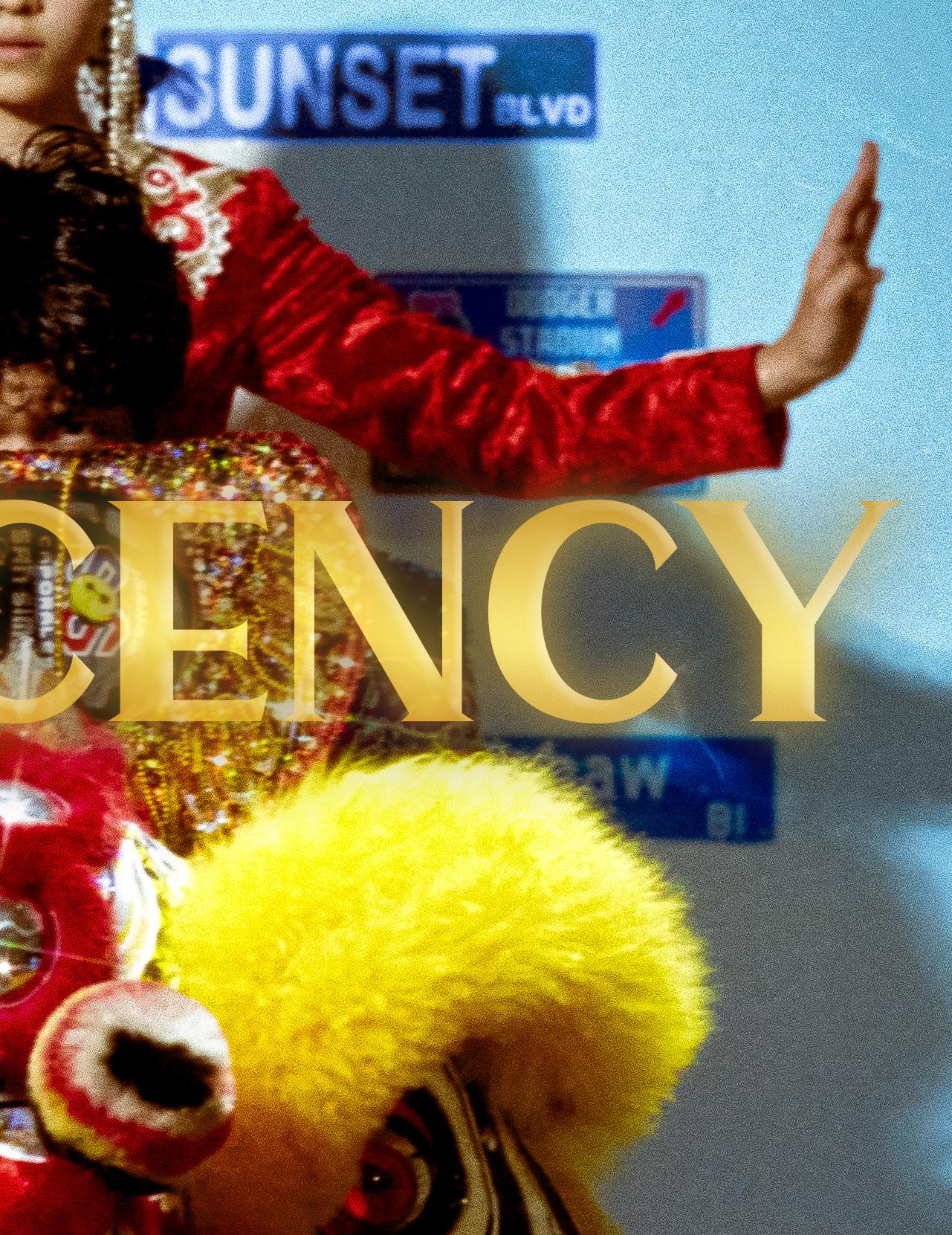
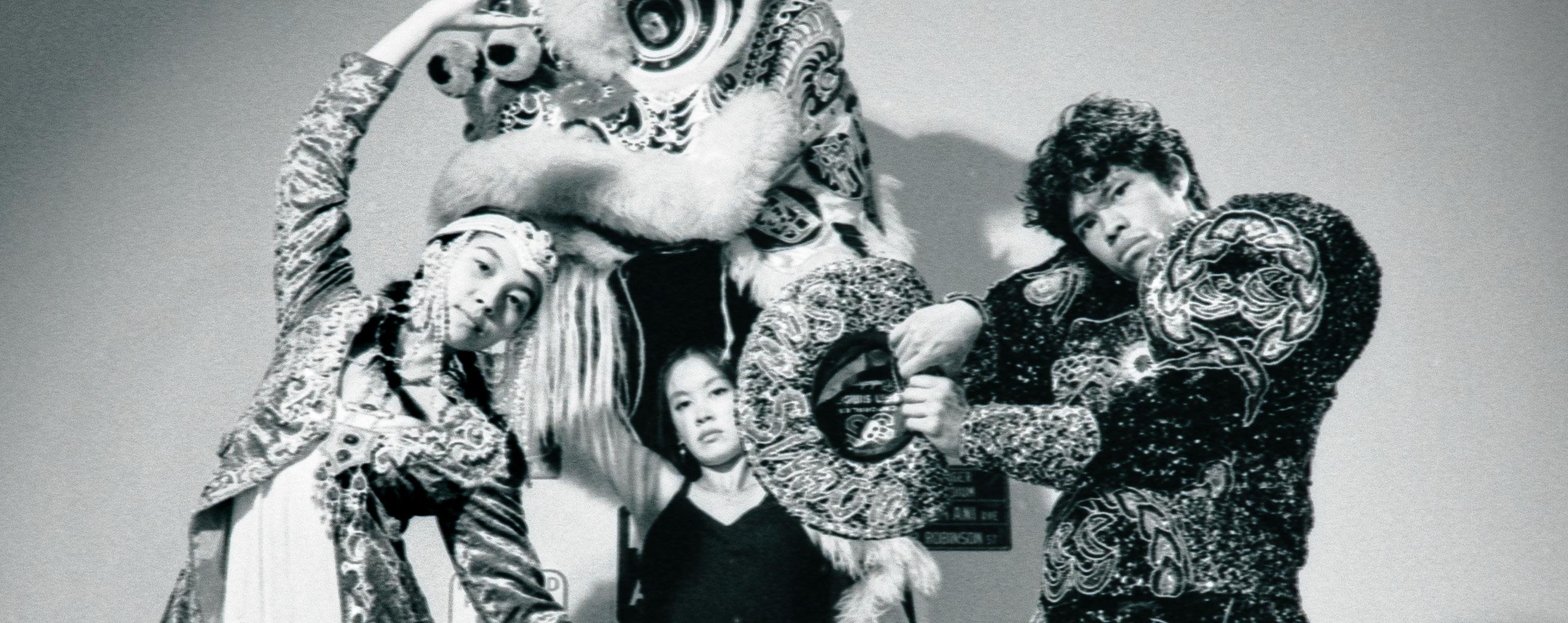
Adjacency Ben Graham + Andrew Woo + Miyu Ikeda
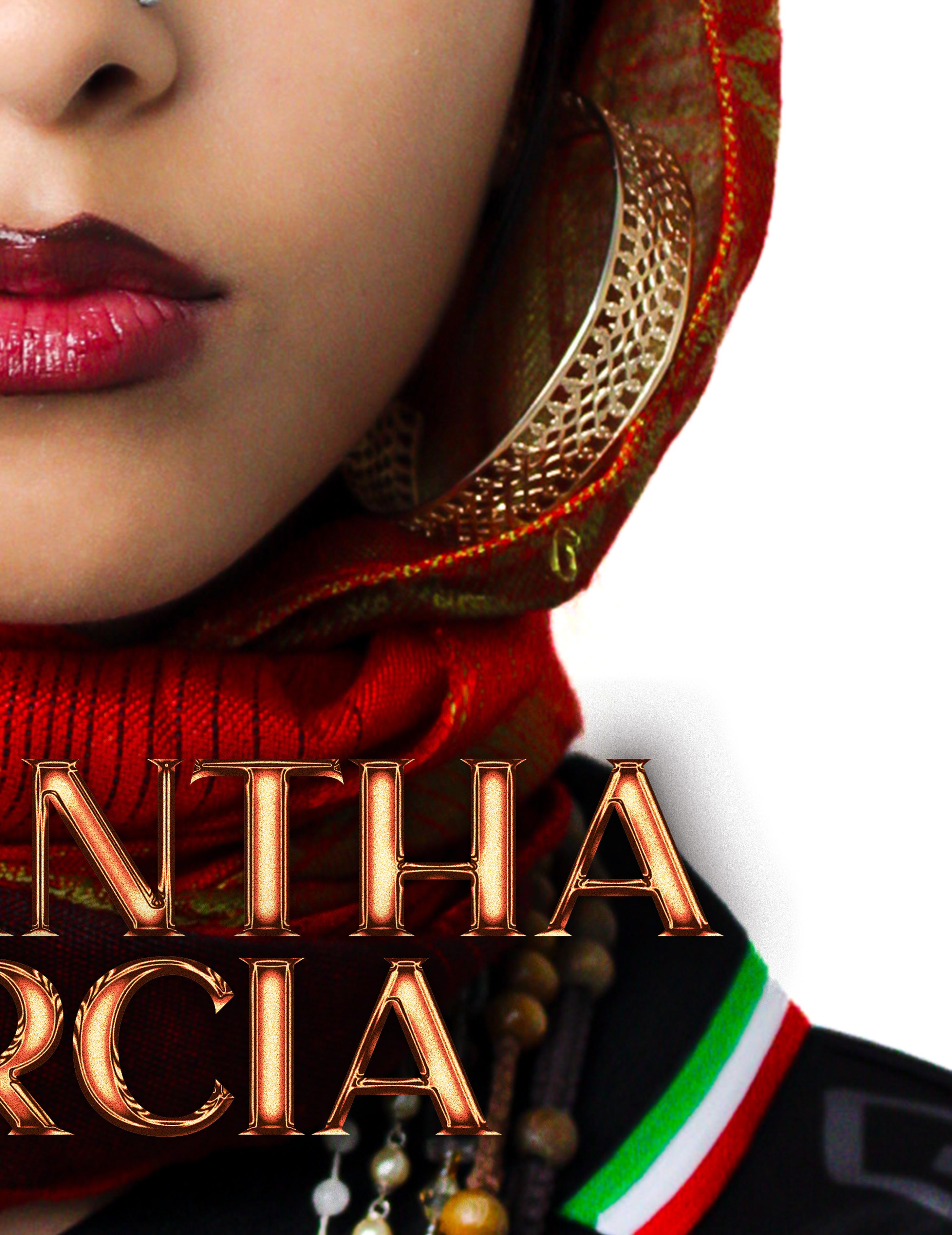
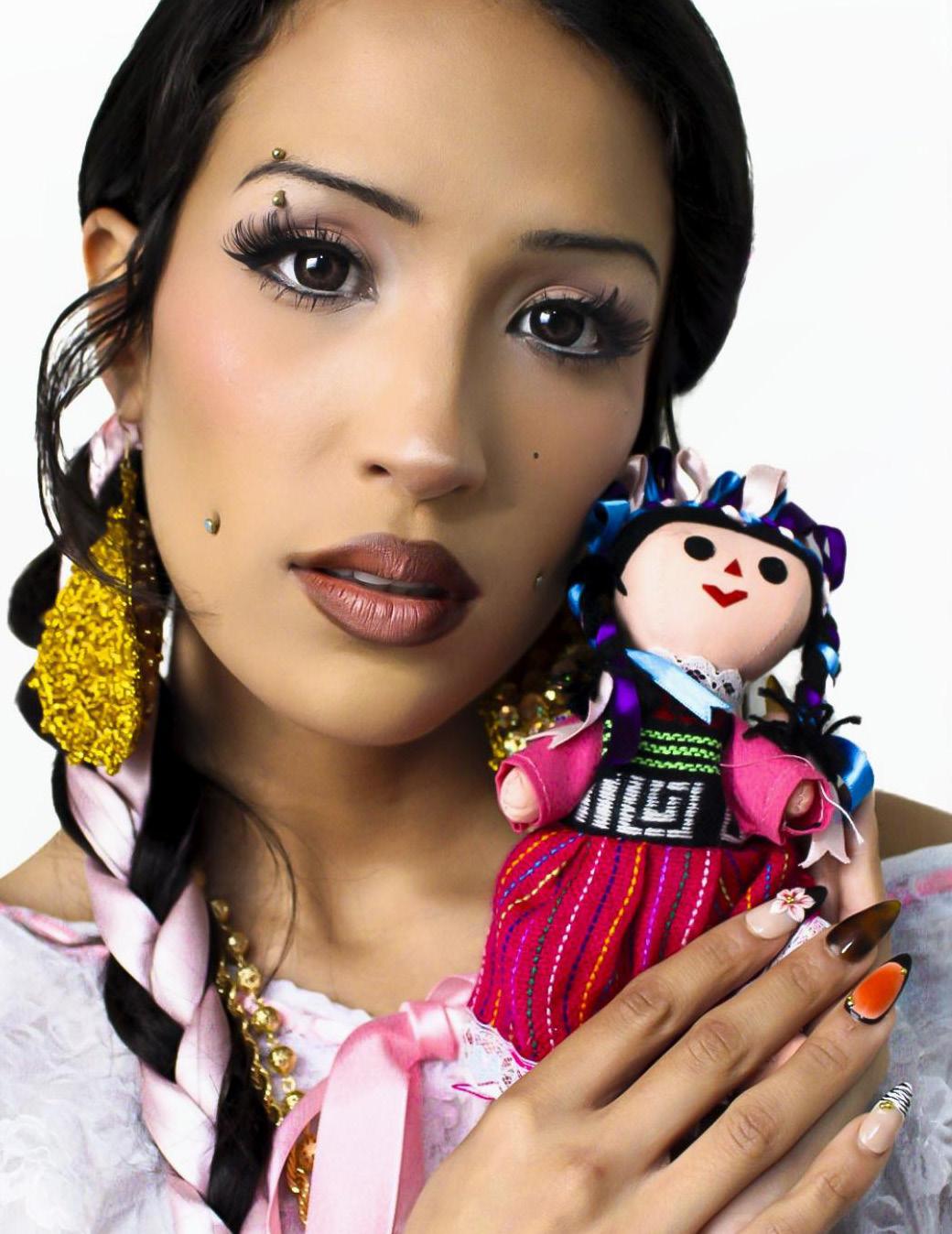
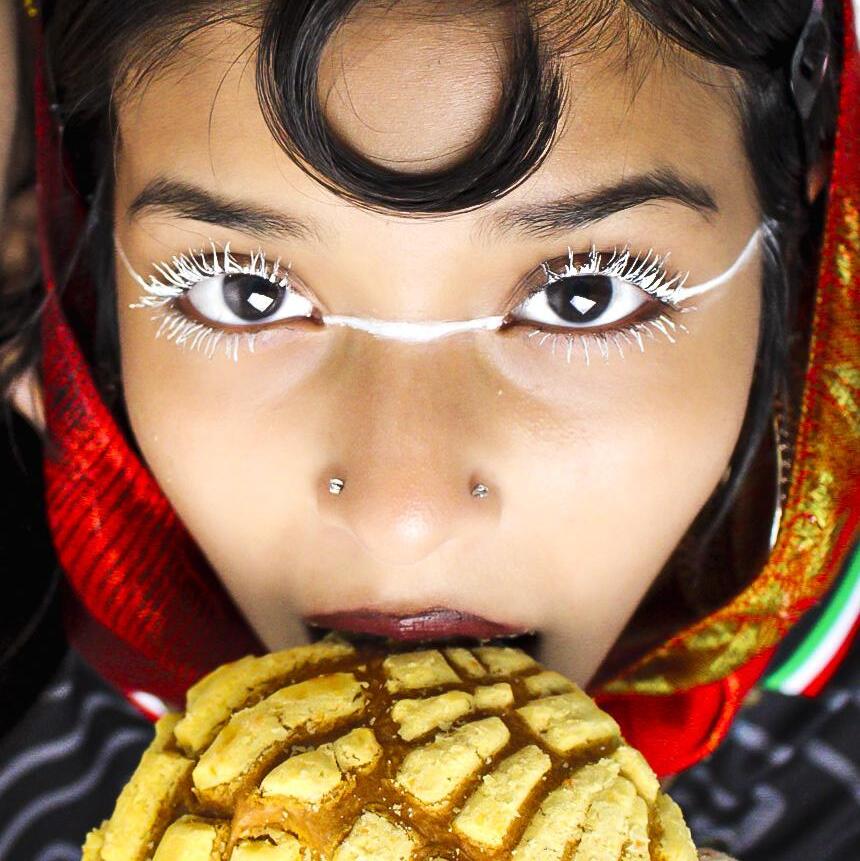
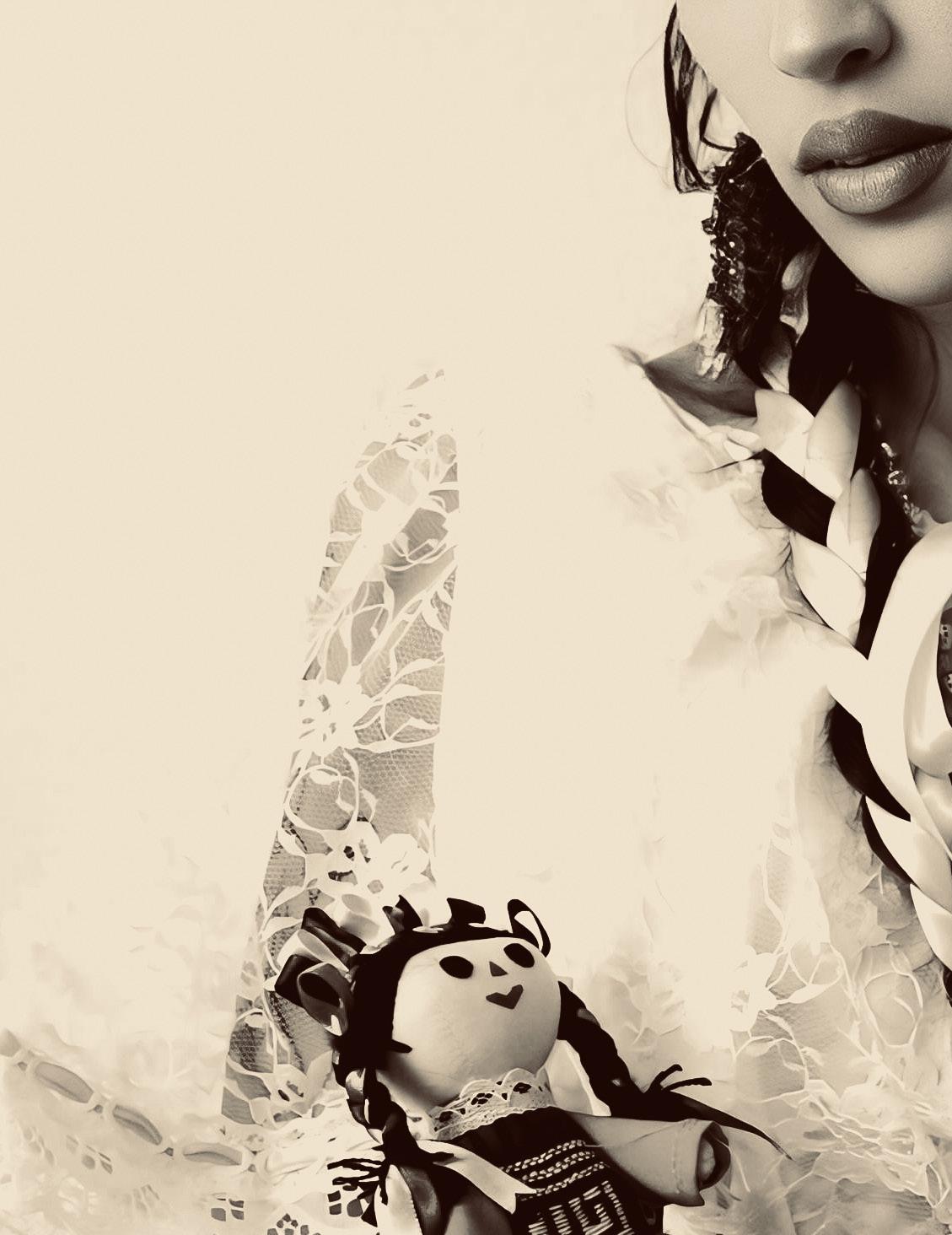
Samantha Garcia Samantha Garcia + Ava Rathenberg
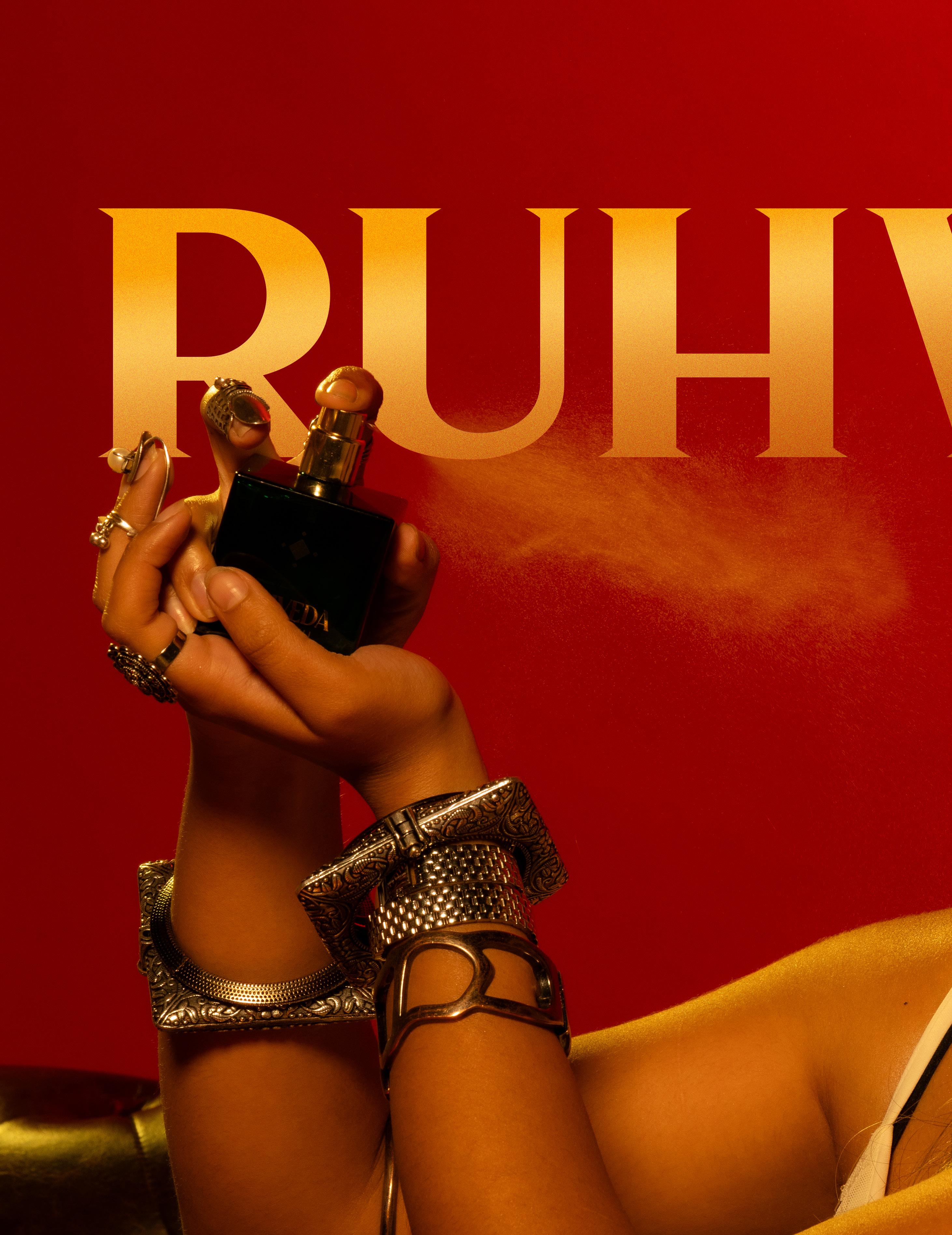
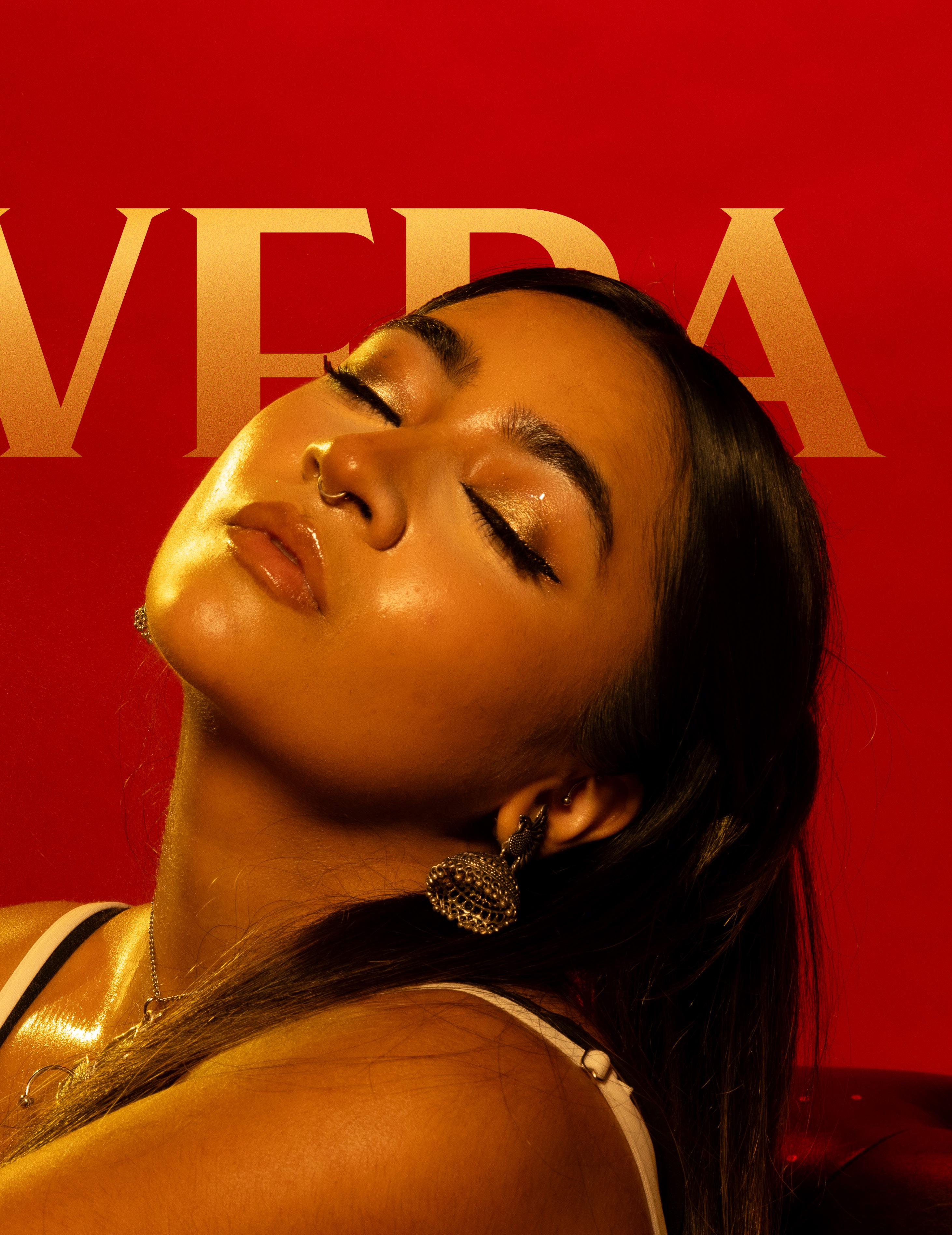
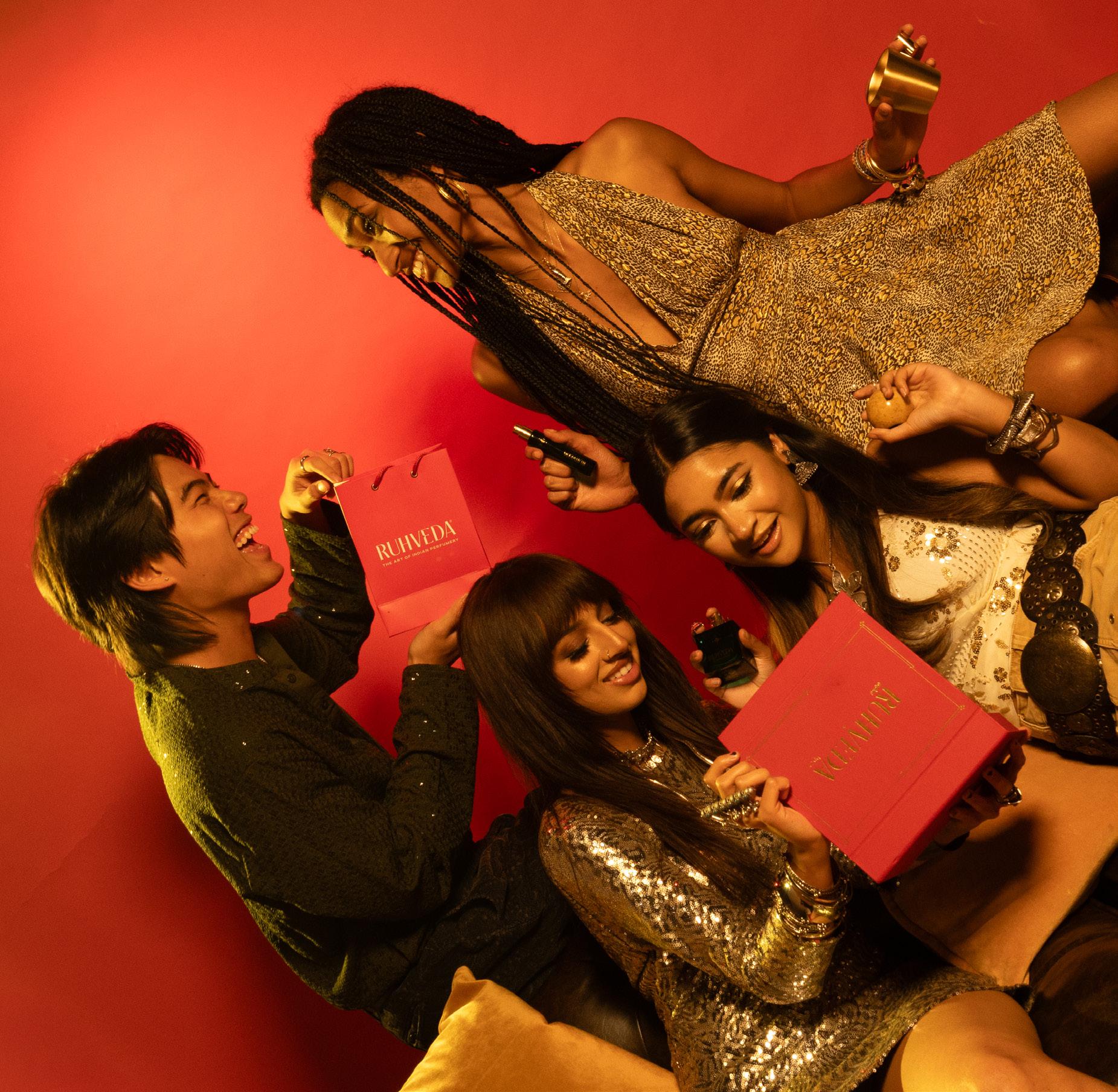
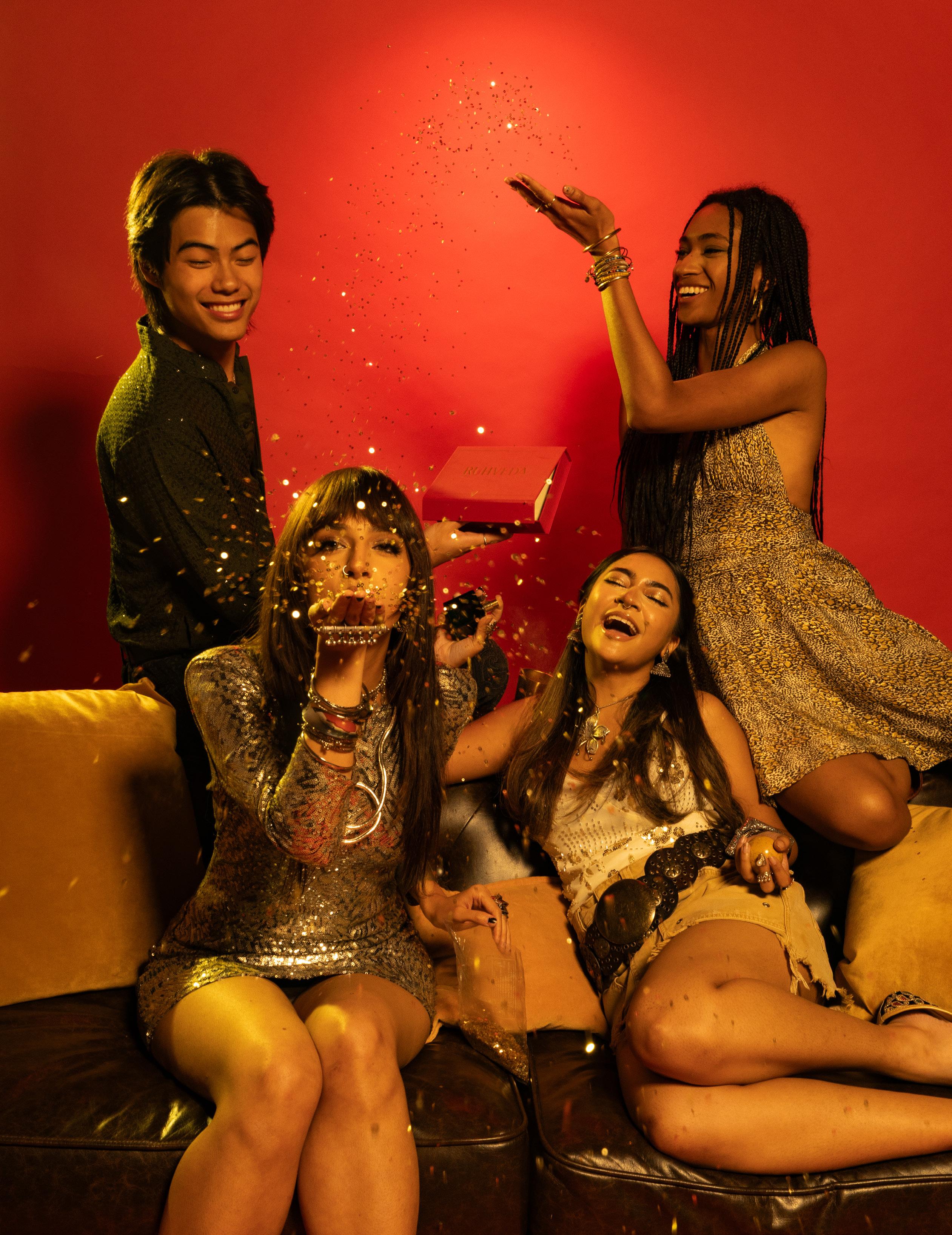
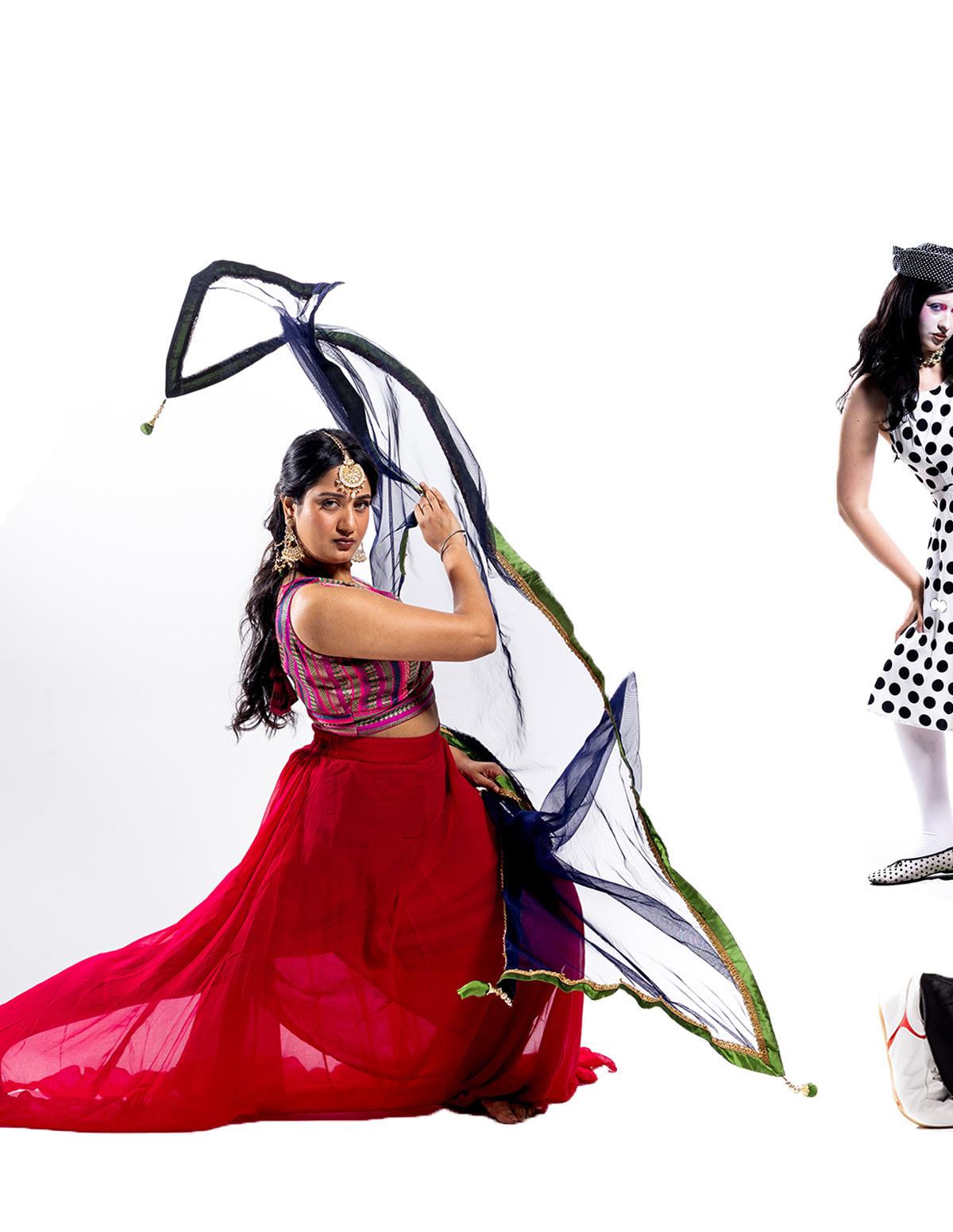
RUHVEDA Pauline Forstall + Rohan Baru + Nicole Leihe
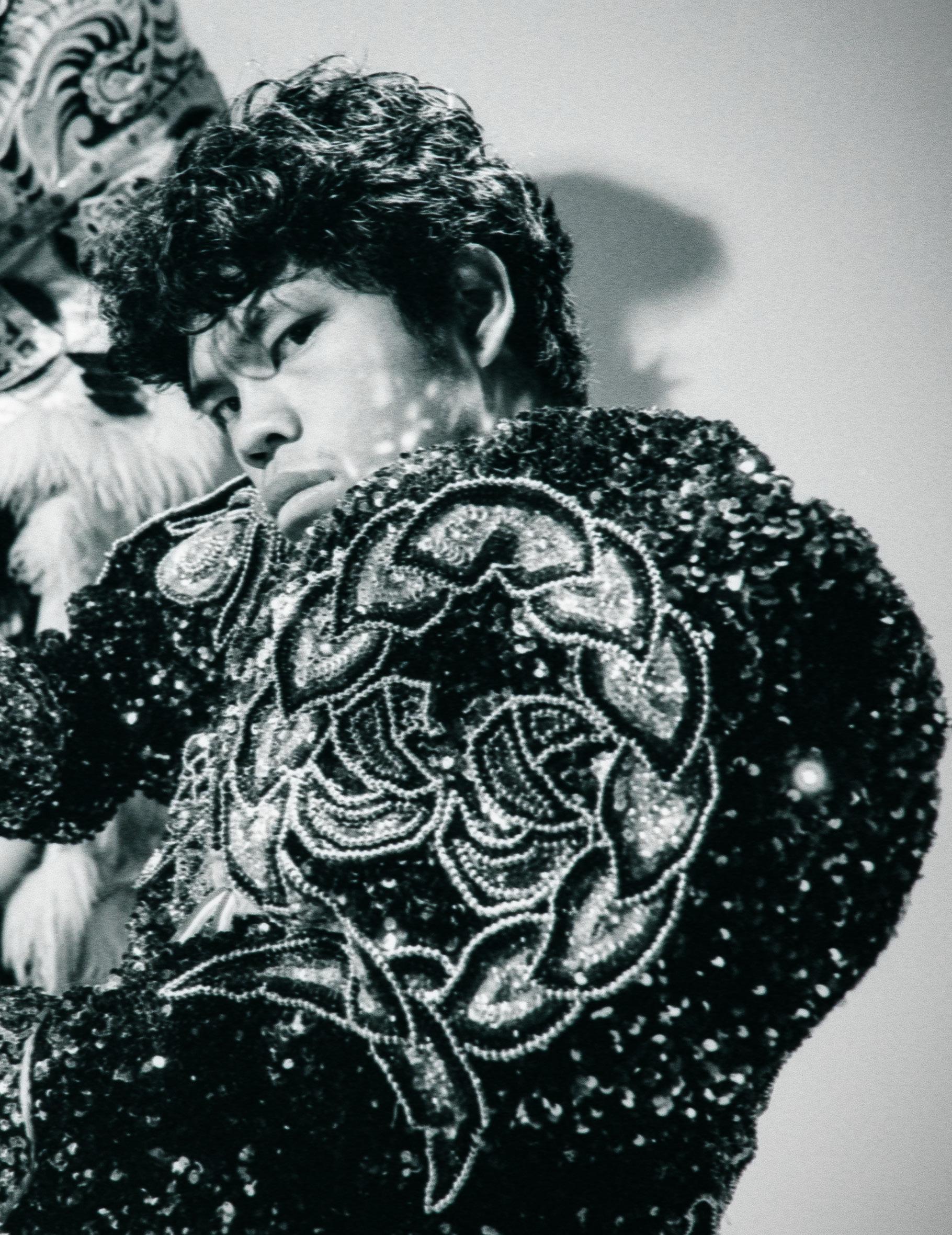
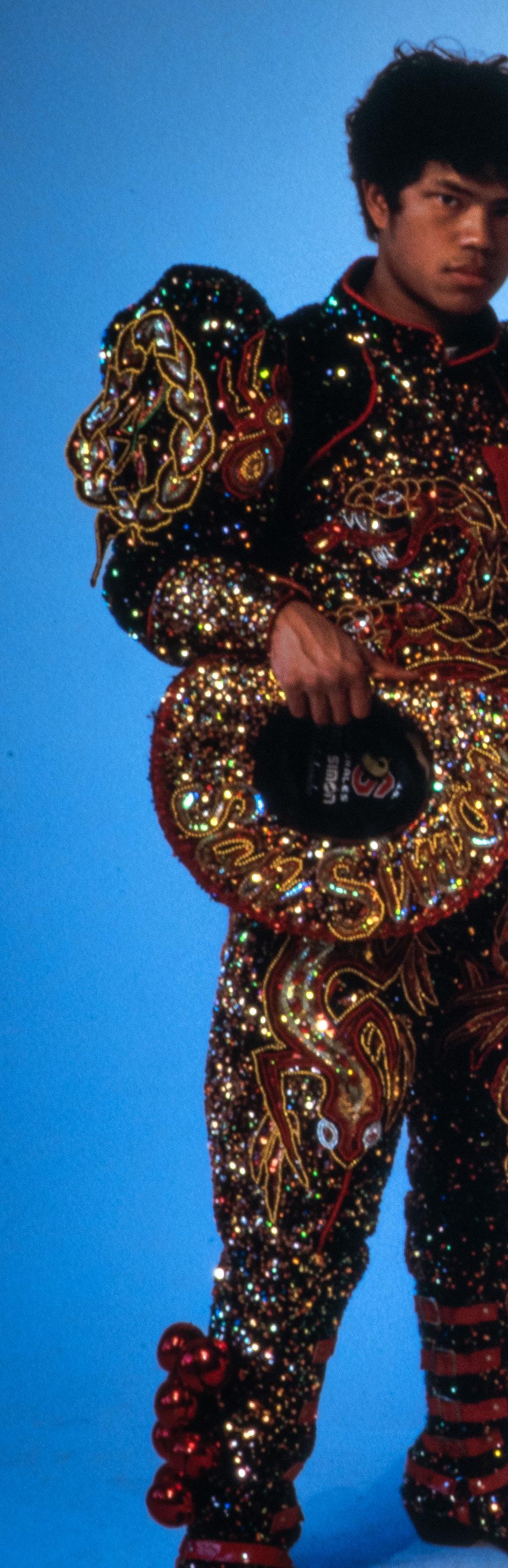
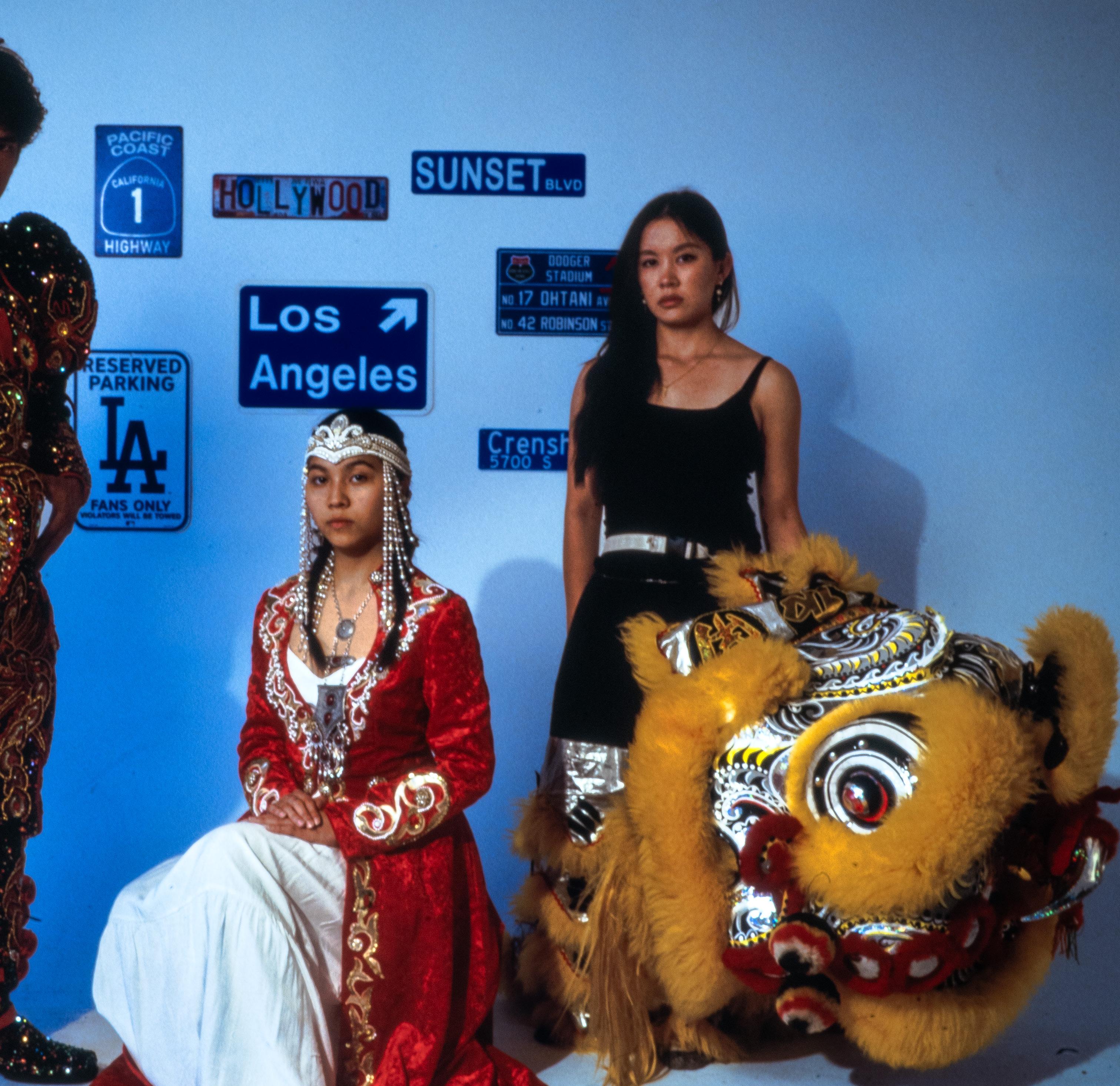
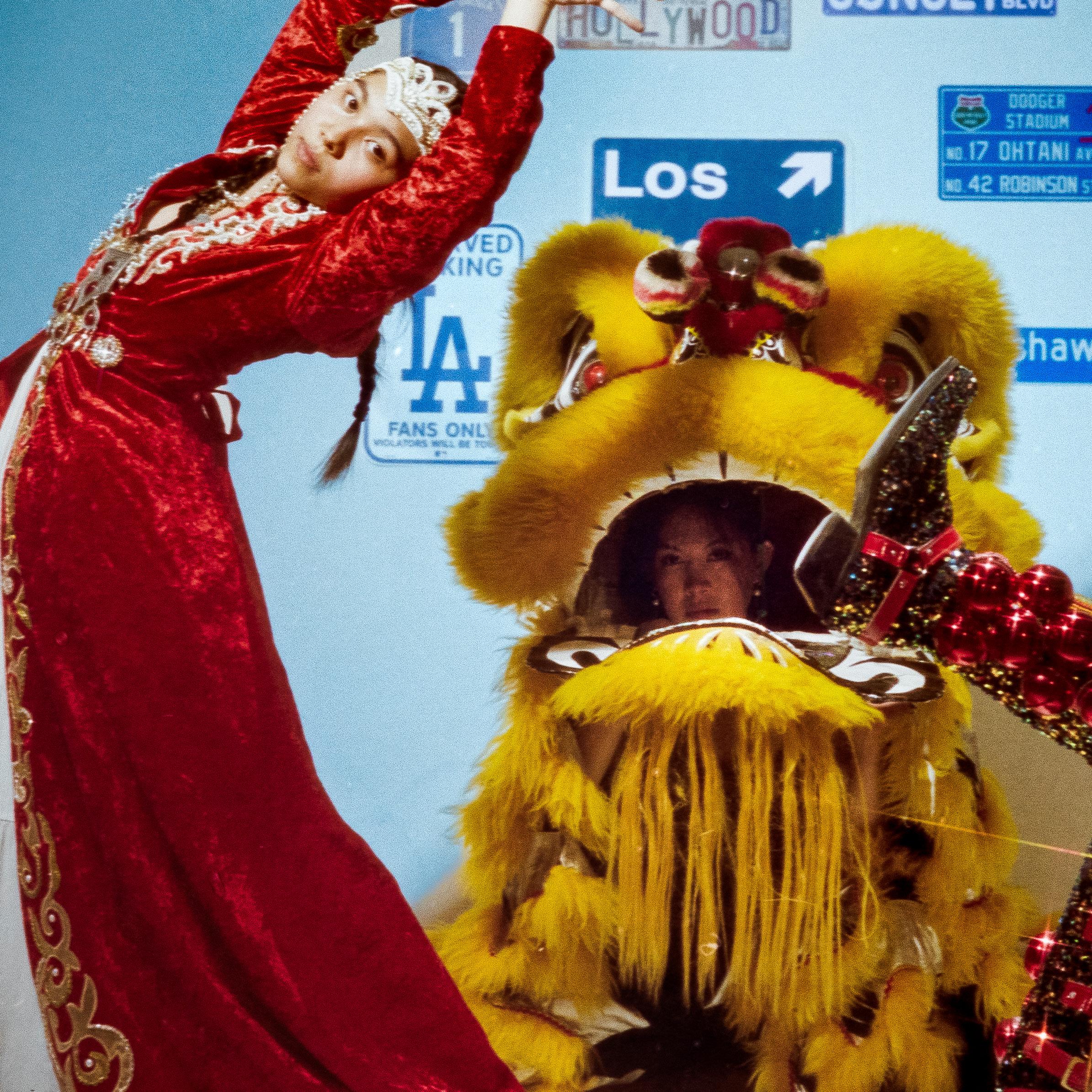
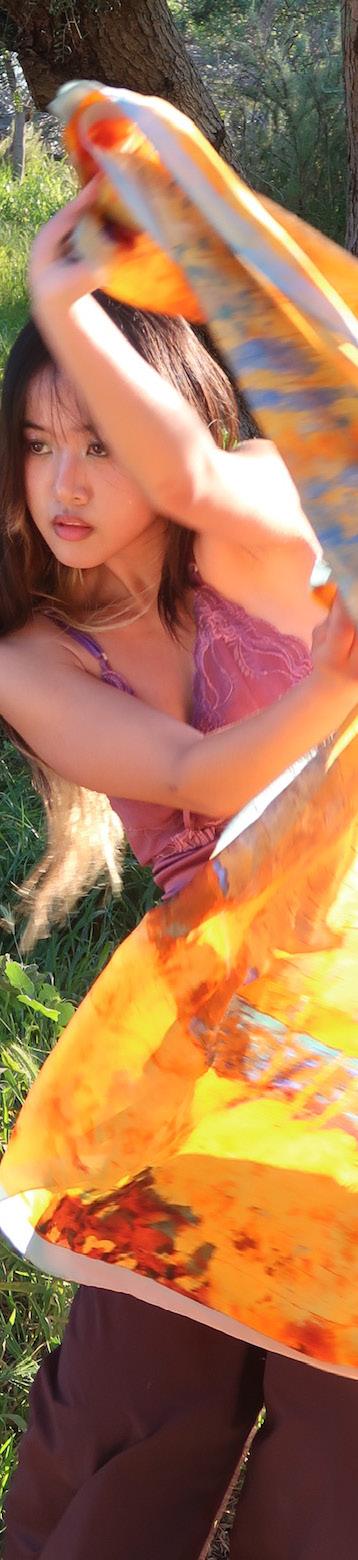
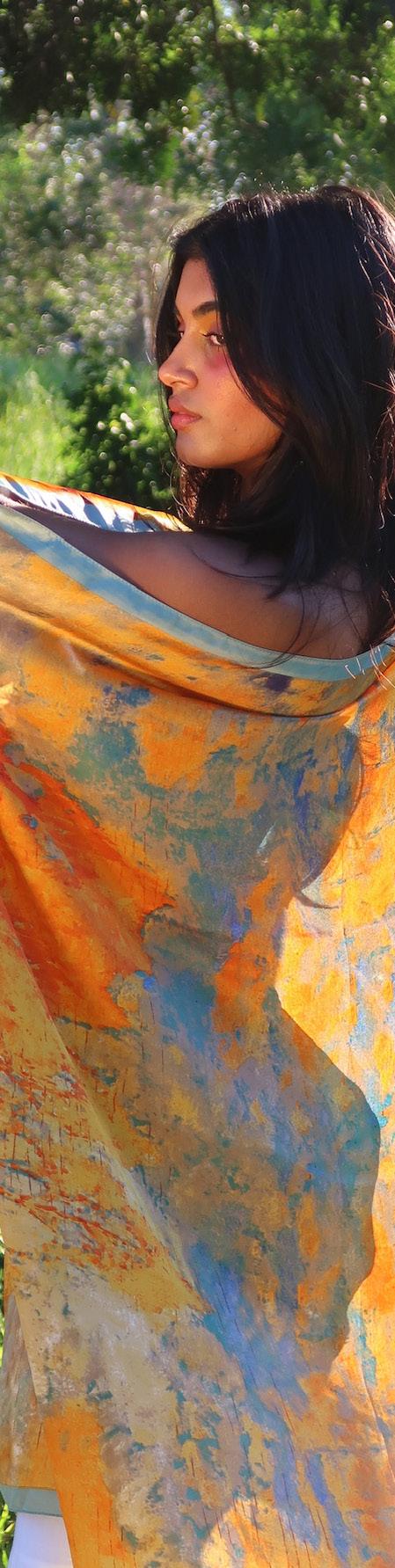
The World is Dancing a Masquerade Leilani Mate + Sundiata Enuke + Dhrithi Vishwa
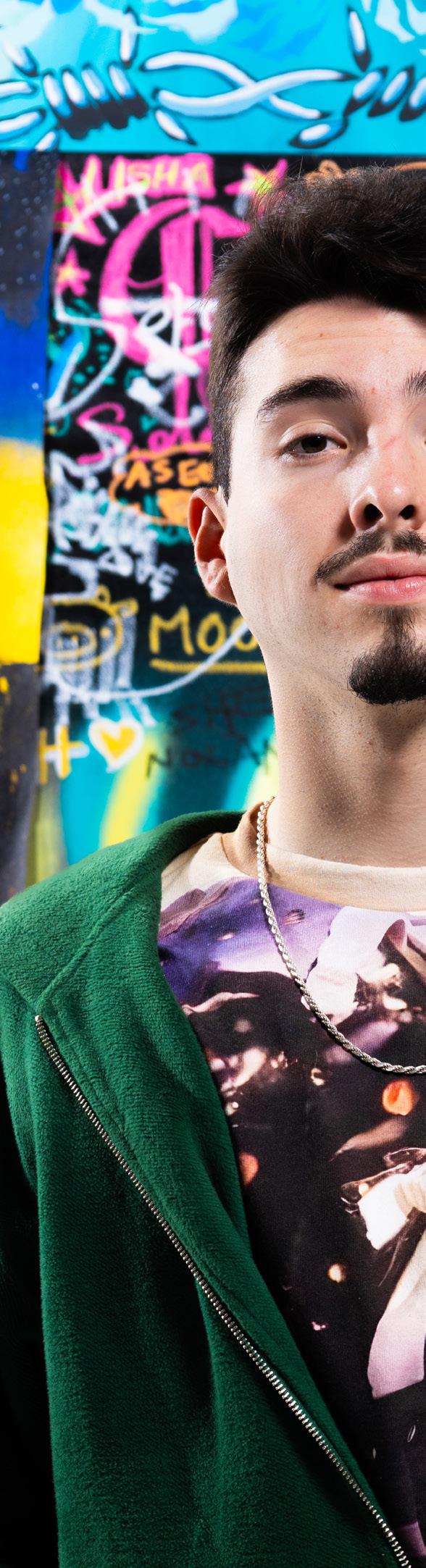
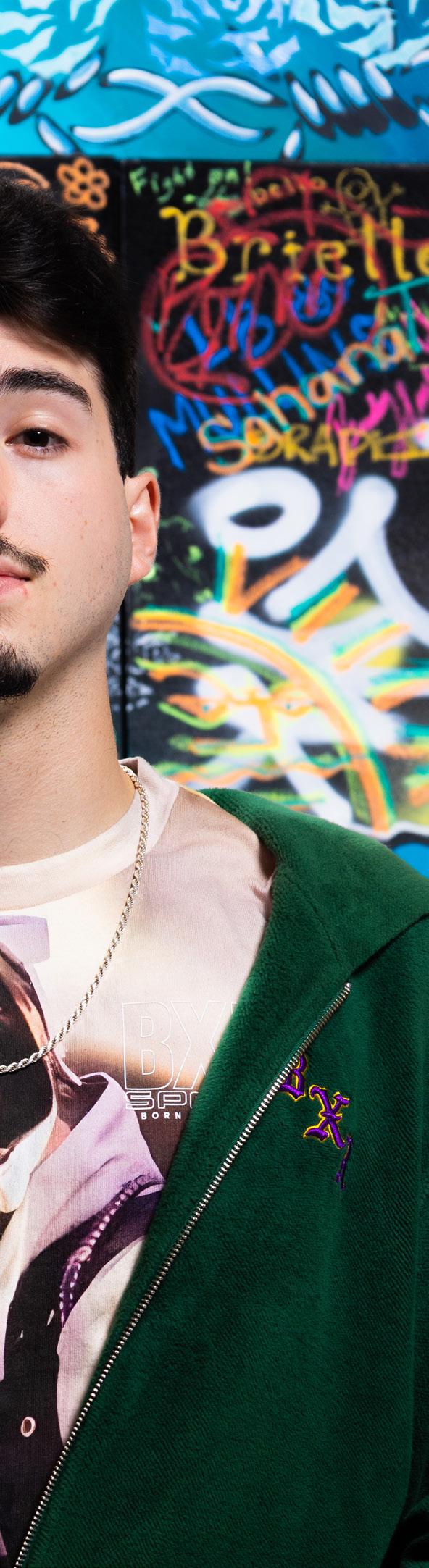
Yash Mishra Yash Mishra + Brandon Taliaferro
Pleated Mei Kobayashi + Miyu Ikeda
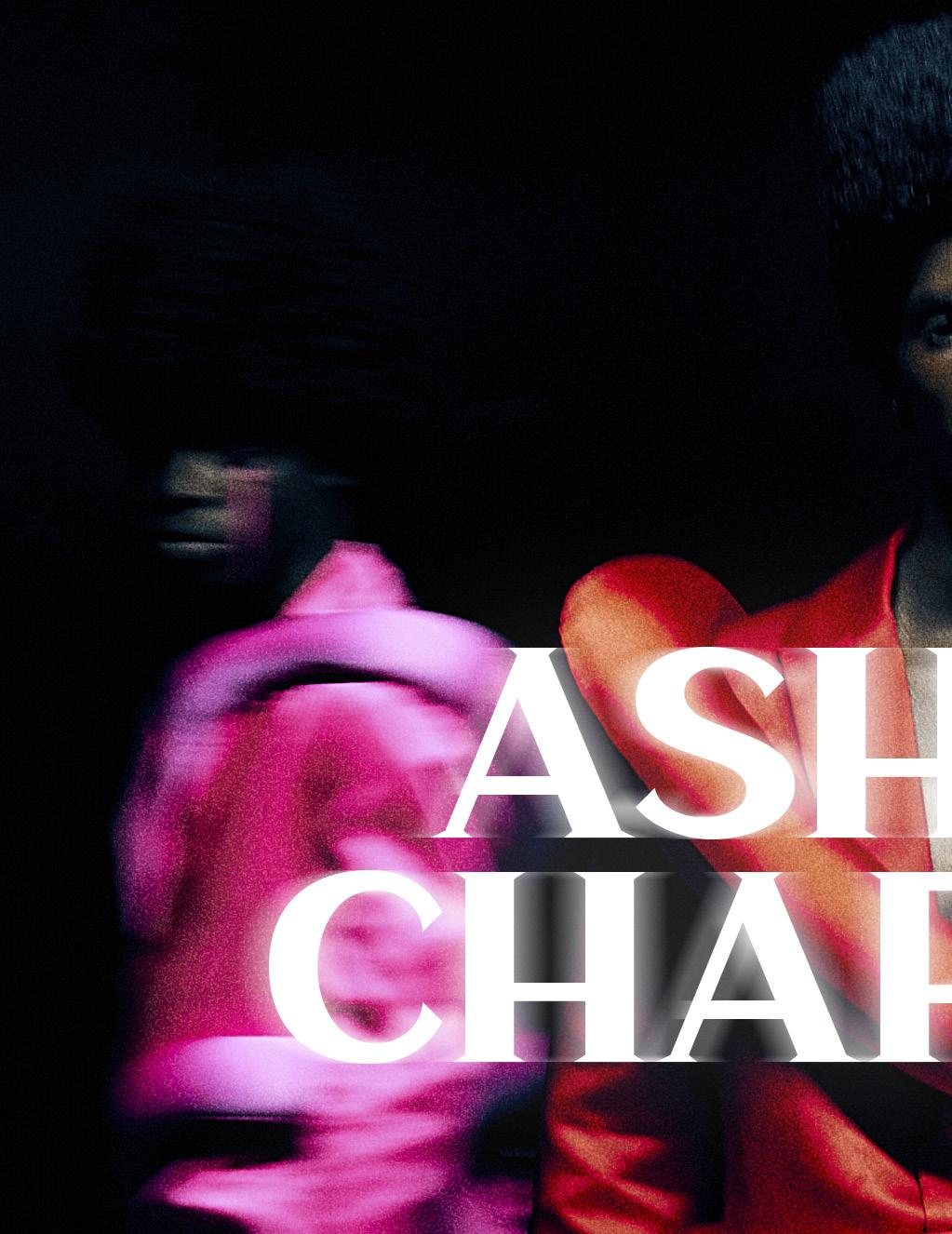
Ashley Chappell Ashley Chappell + Laila LaDuke
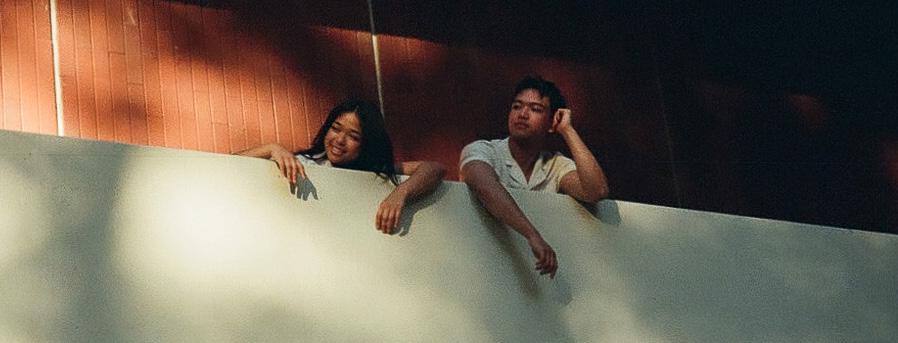
I will have dreamt of Manila by midnight Raphael Rivera + Olivia Yun + Michelle Li
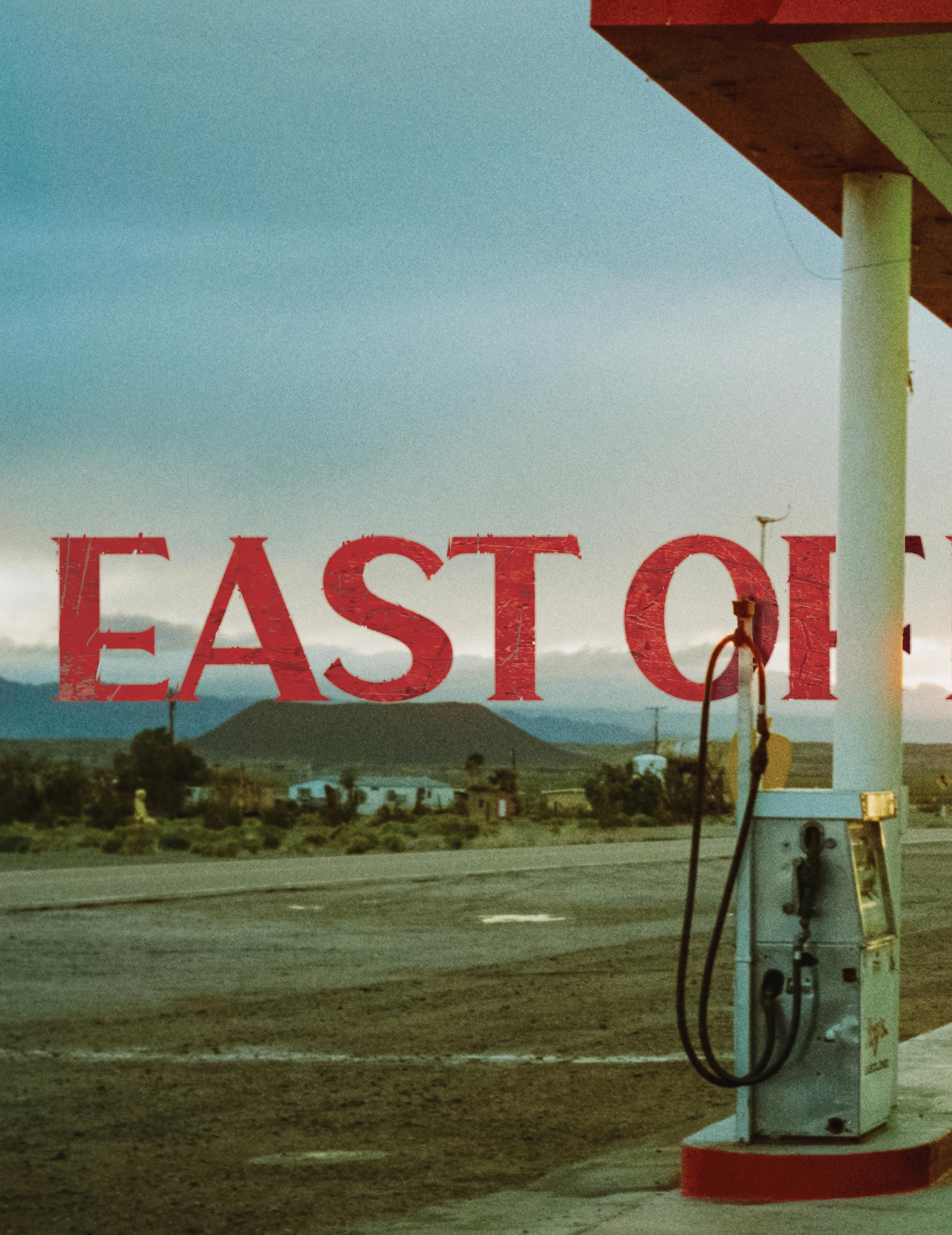
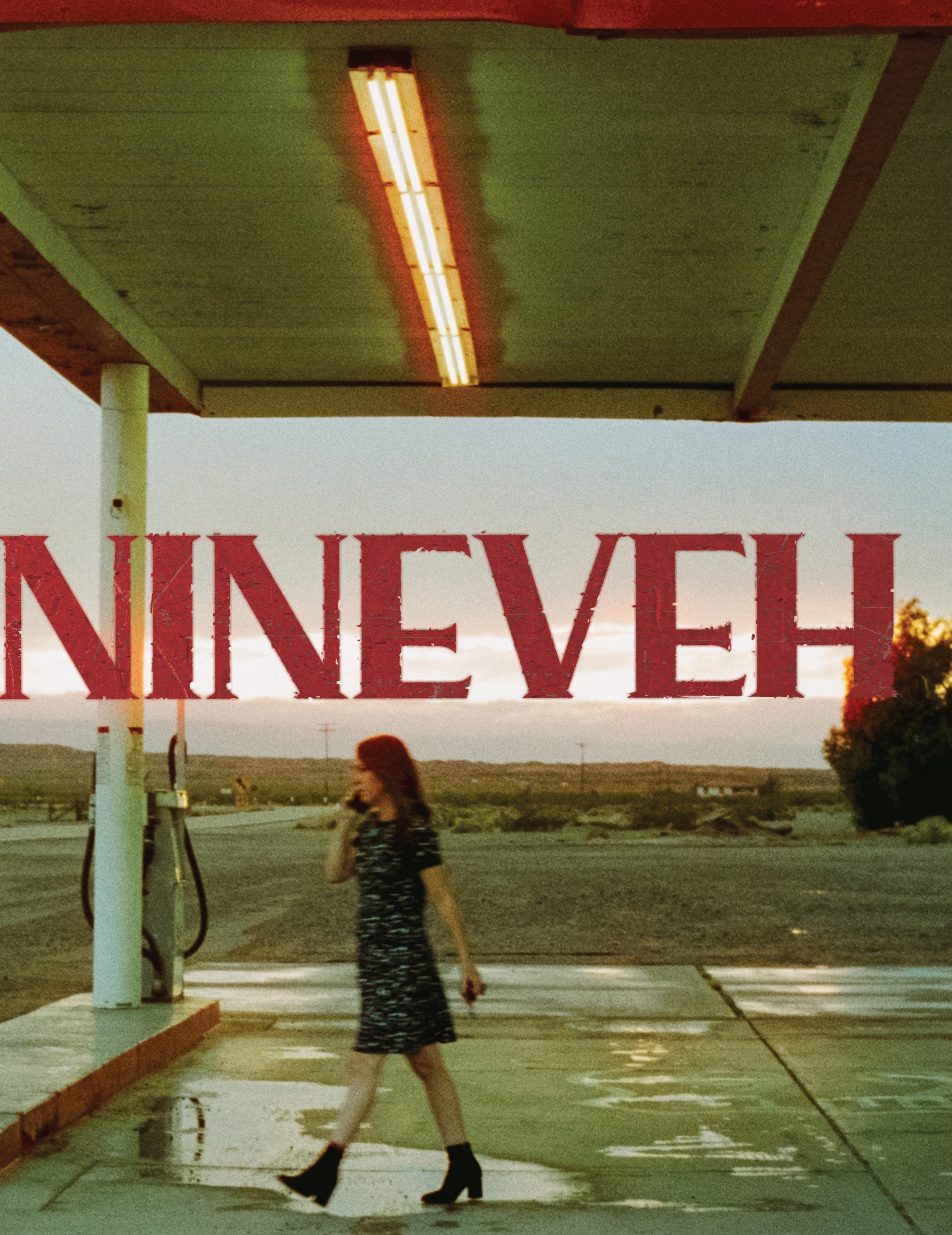
East of Nineveh Ella Kopper + Merton Wu + Jaeyong Moon
LO REAL MARAVILLOSO Antonio Coelho + Laila LaDuke
Soles Amelie Melsness + Aleksandr Babarikin + Ava Rathenberg
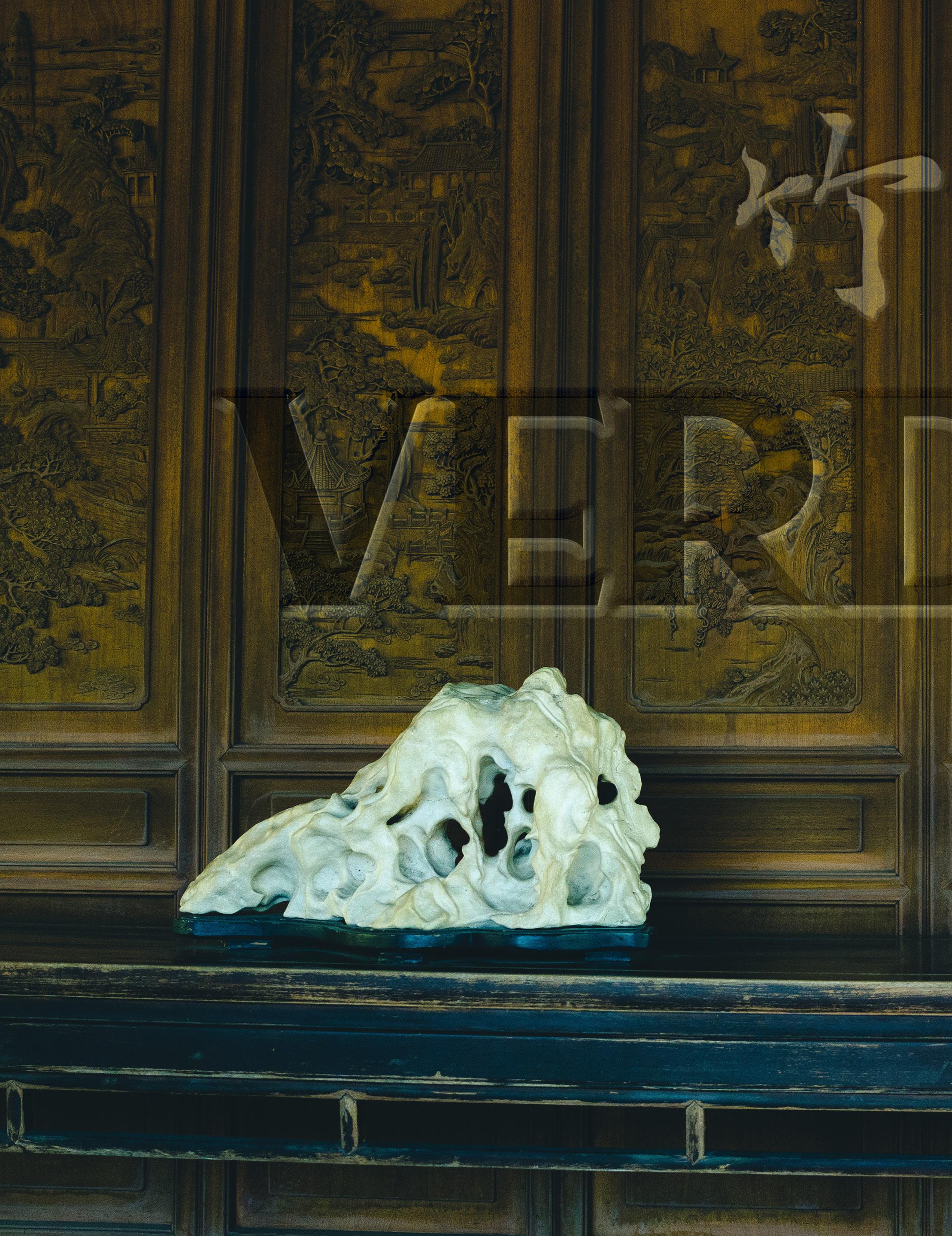
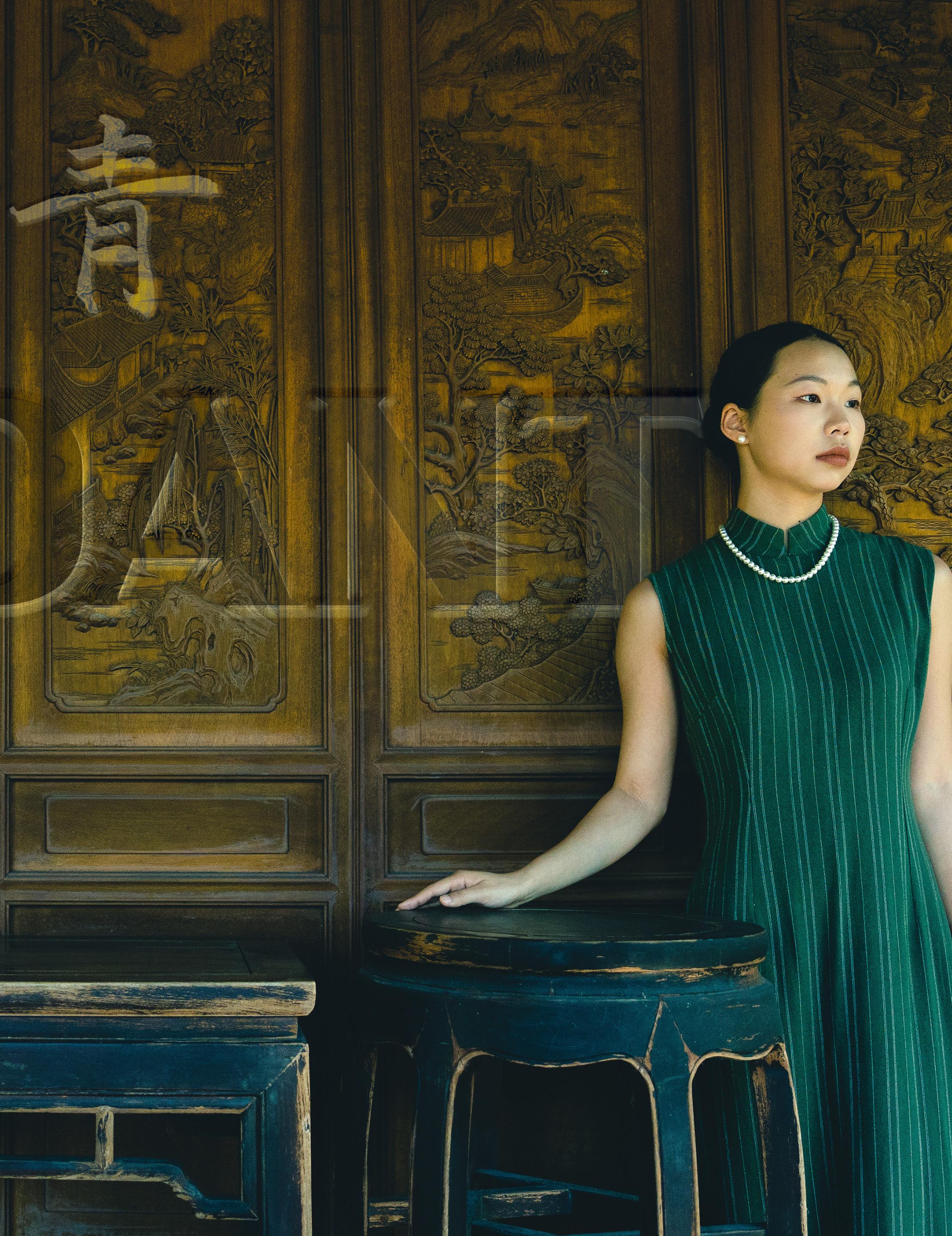
竹青Verdant Alice Liu + Cici Fang
PARTYOF2 Rohan Baru + Lucy Chen
Rae Chimara Rae Chimara + Gladys Yu
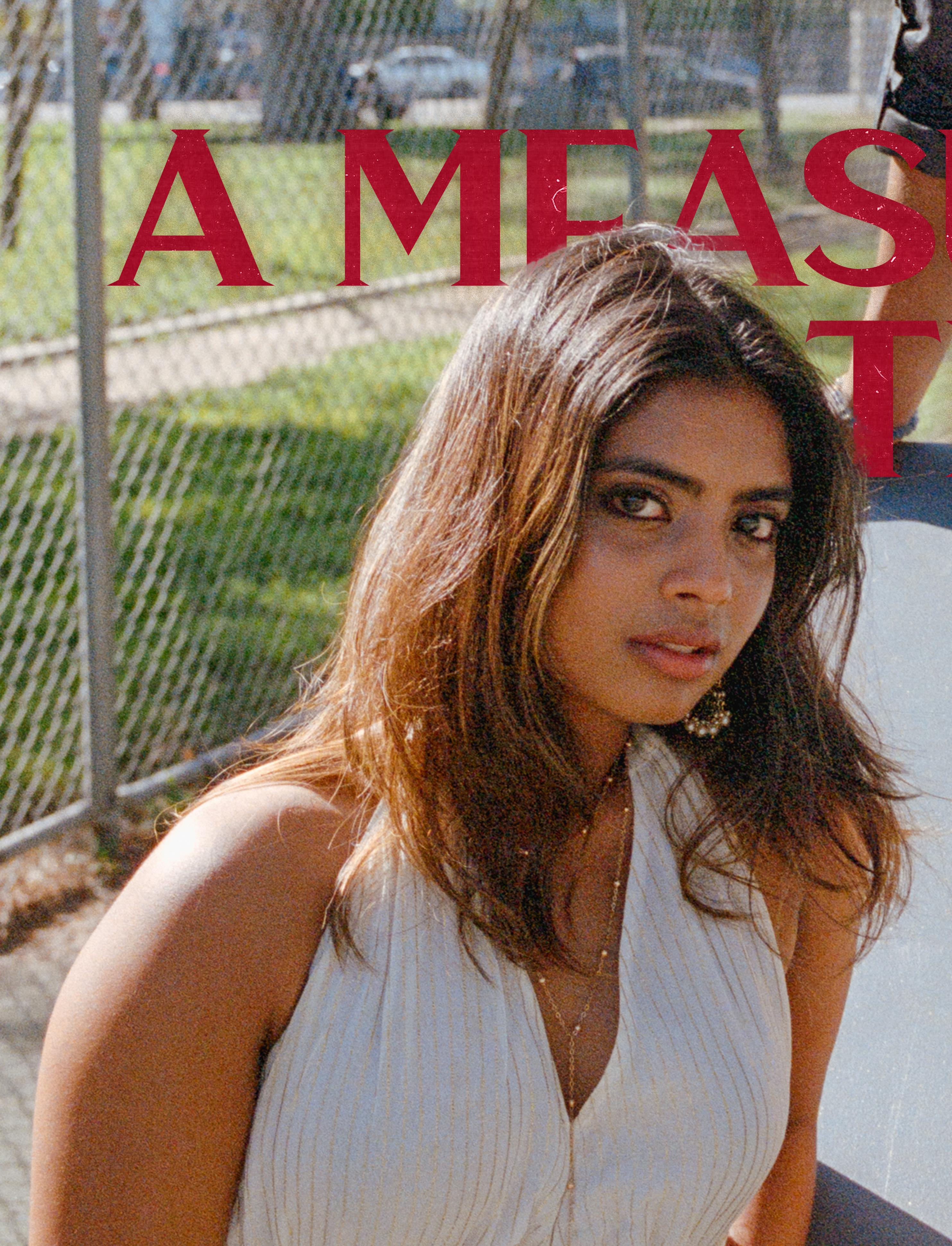
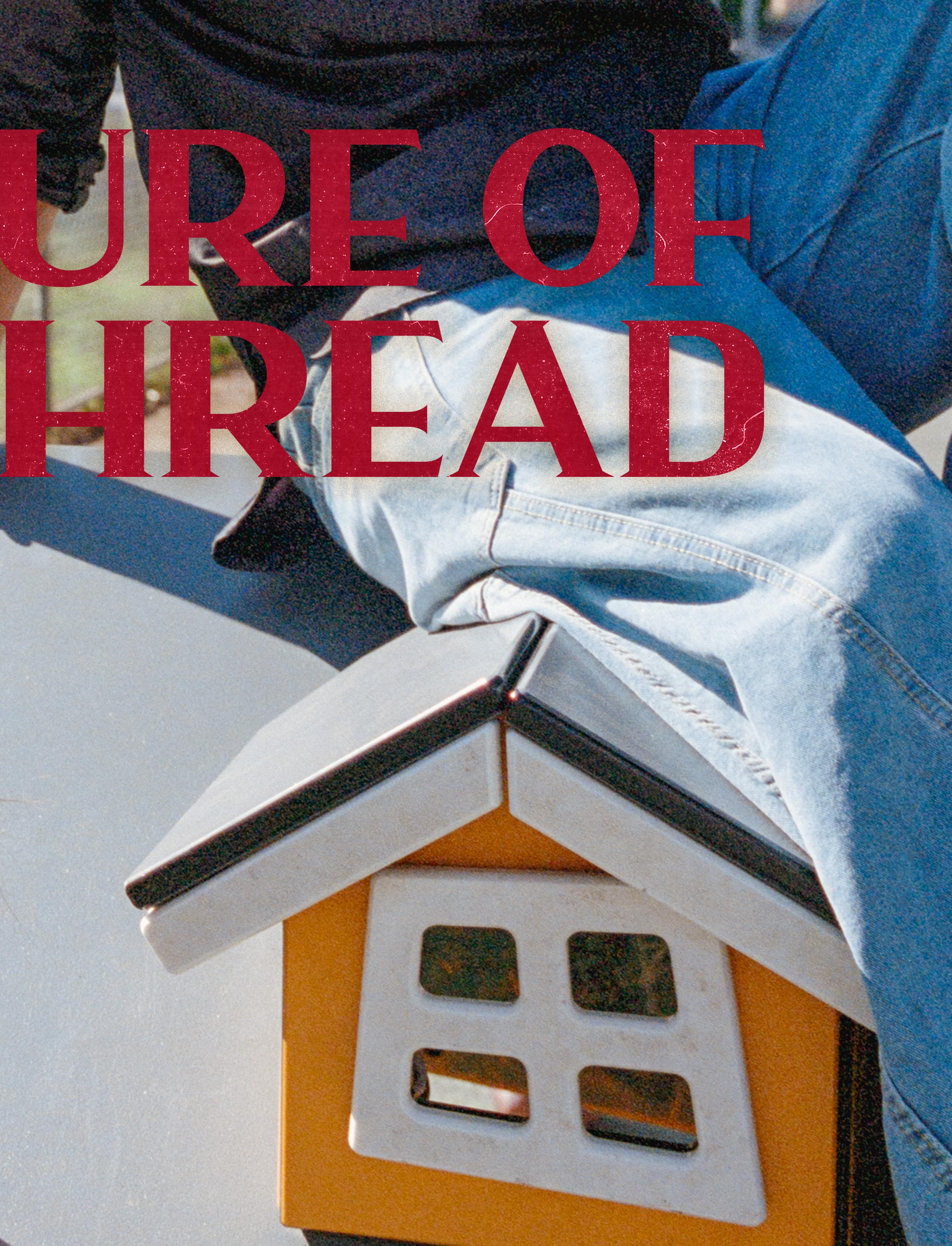
A Measure of Thread Aumrita Savdharia + Ayan Patel + Ava Rathenberg
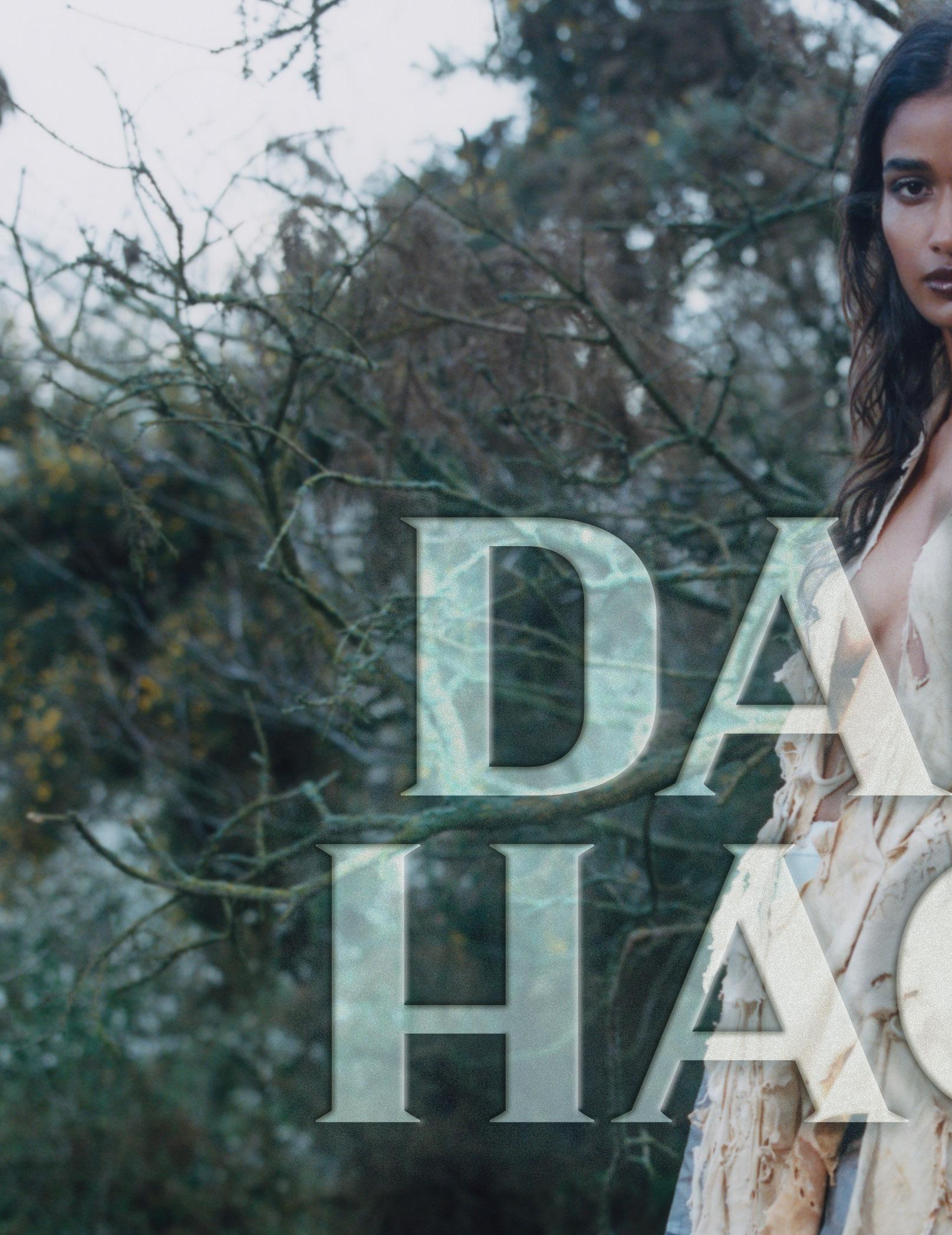
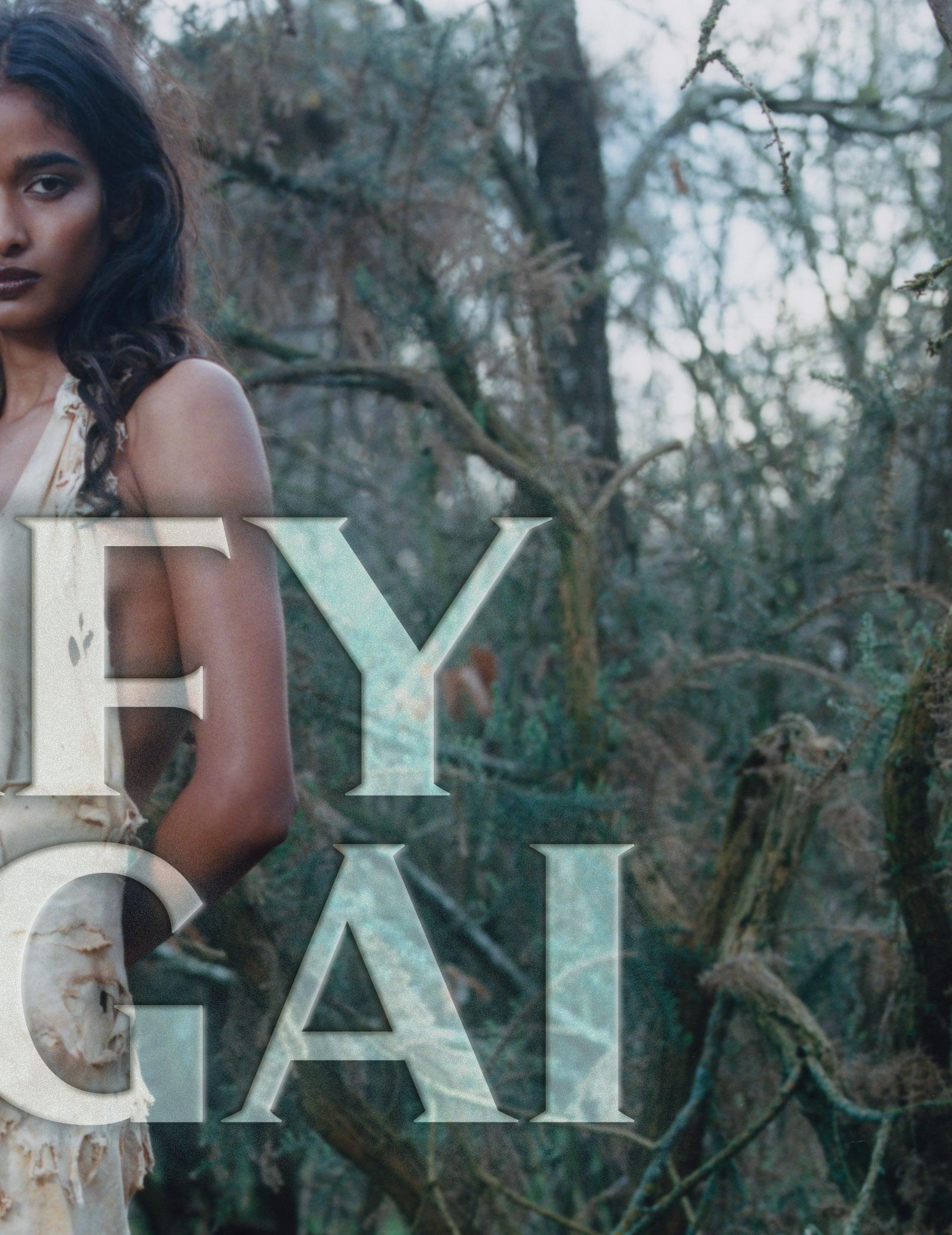
Dafy Hagai Dafy Hagai + Lucy Chen
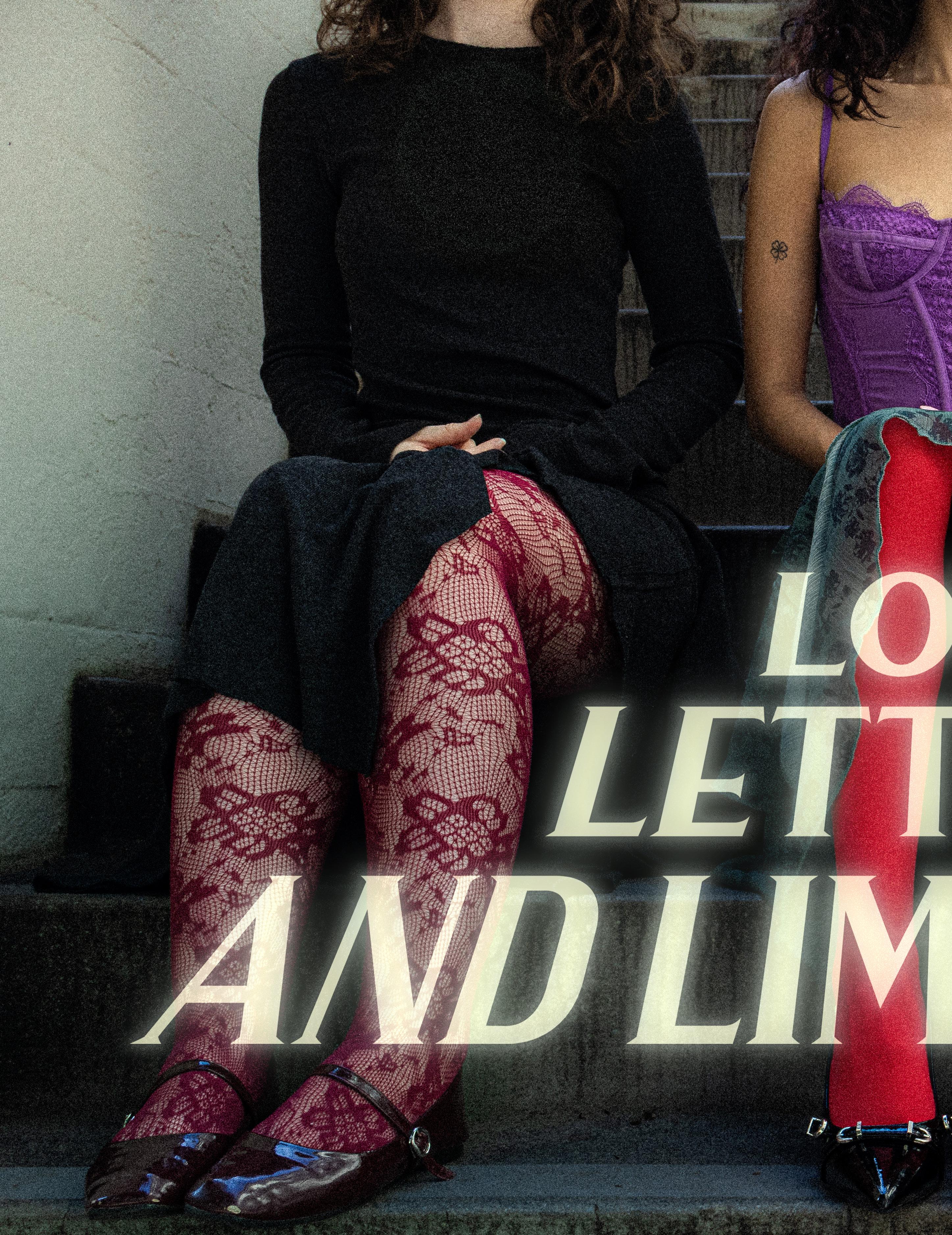
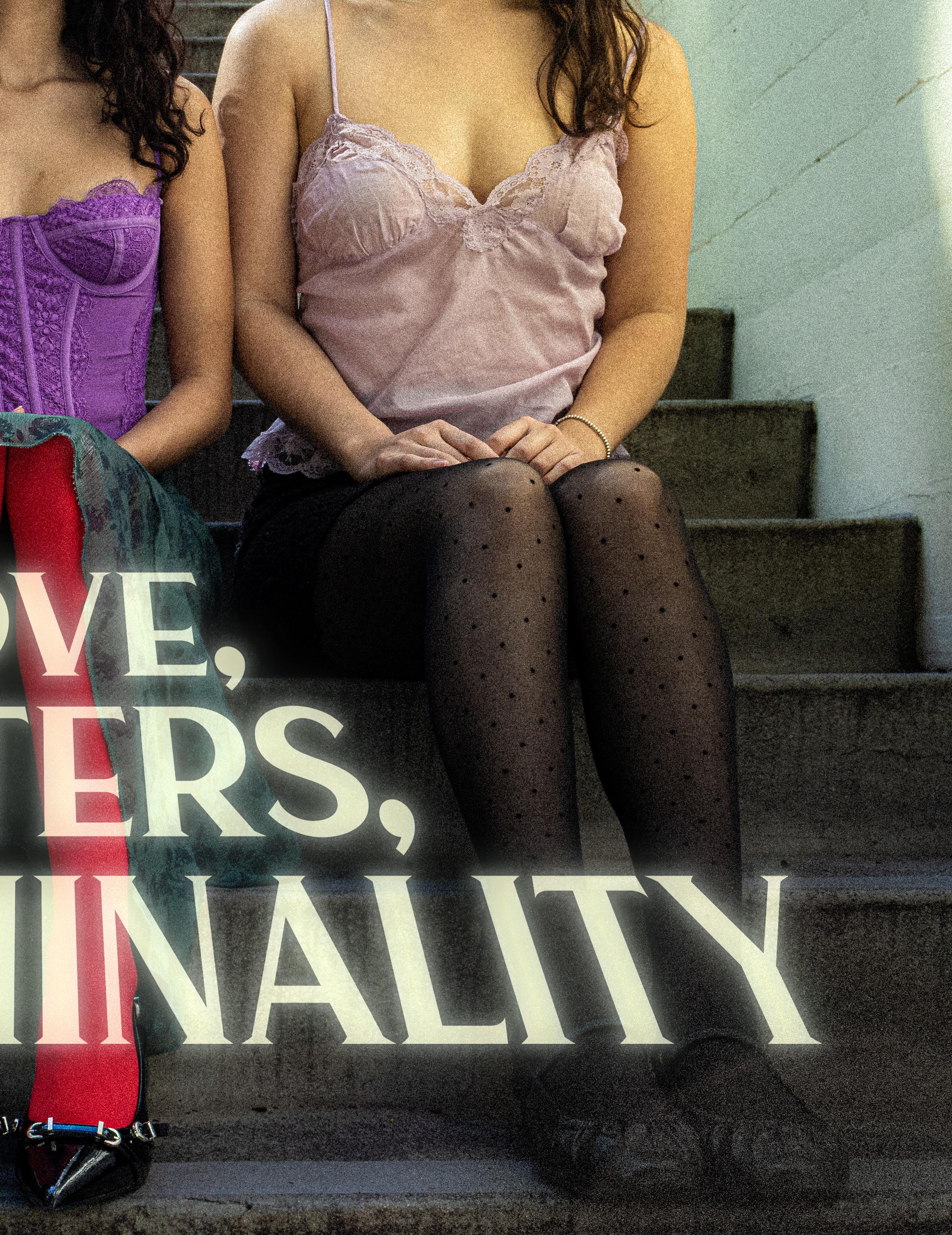
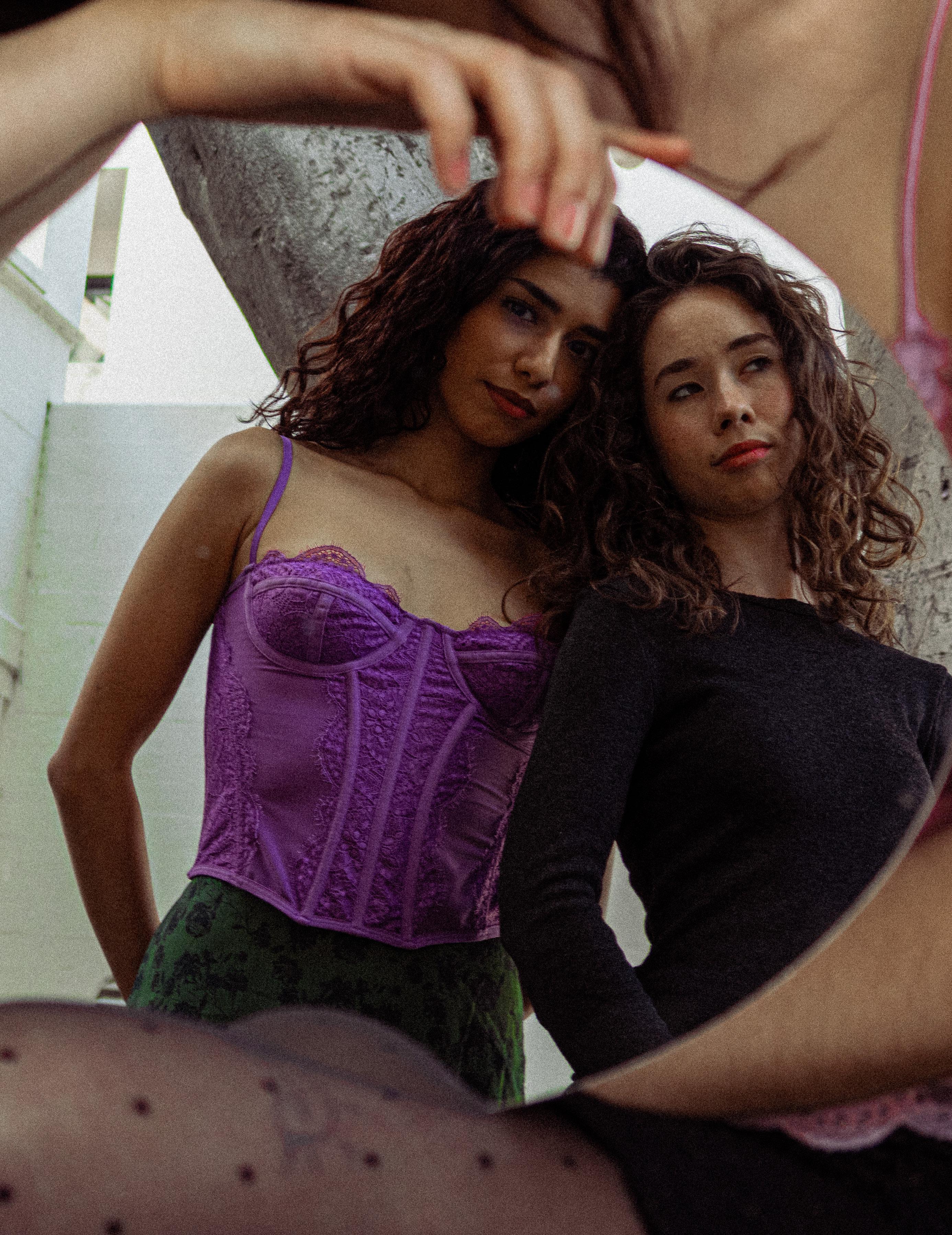
Love, Letters, and Liminality Jeesoo Kim + Kiyomi Miura + Tanisha Goel
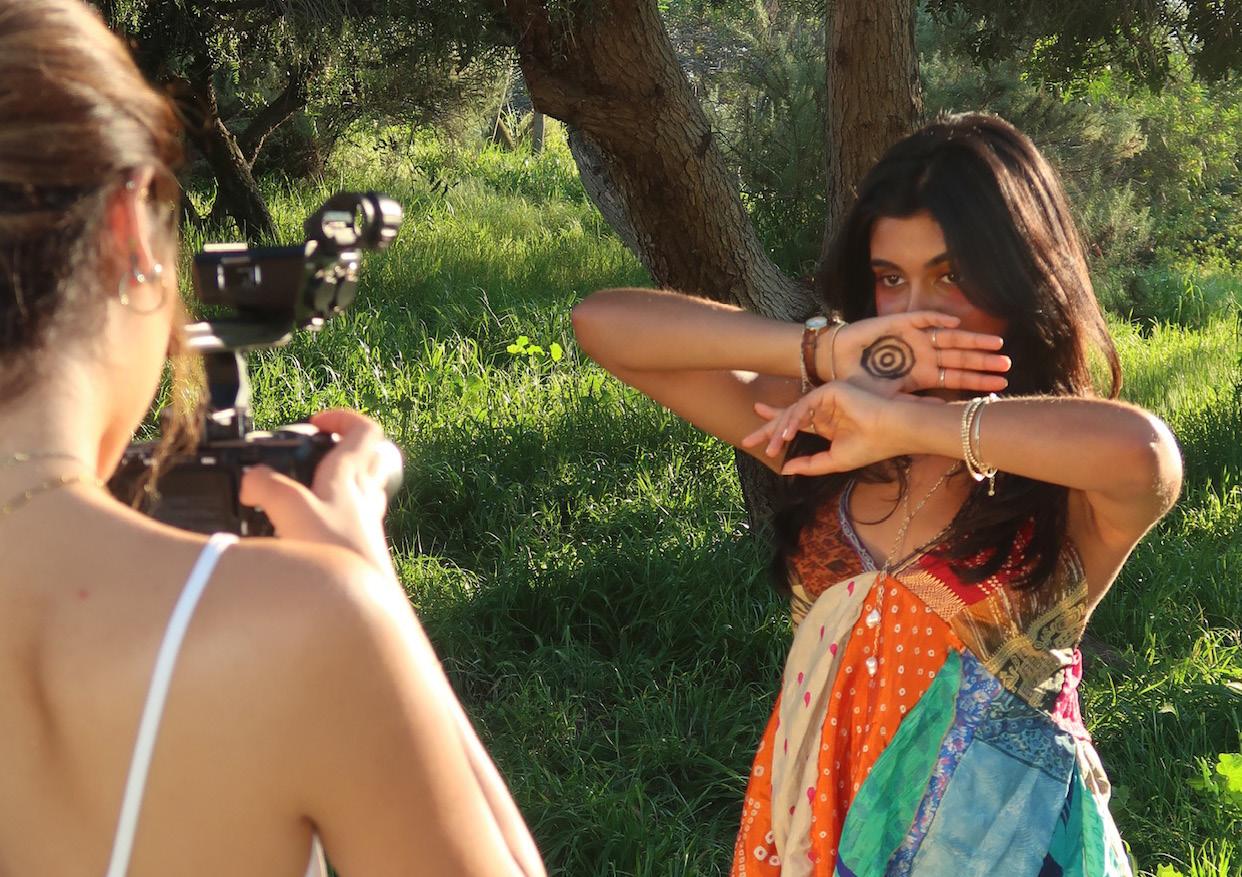
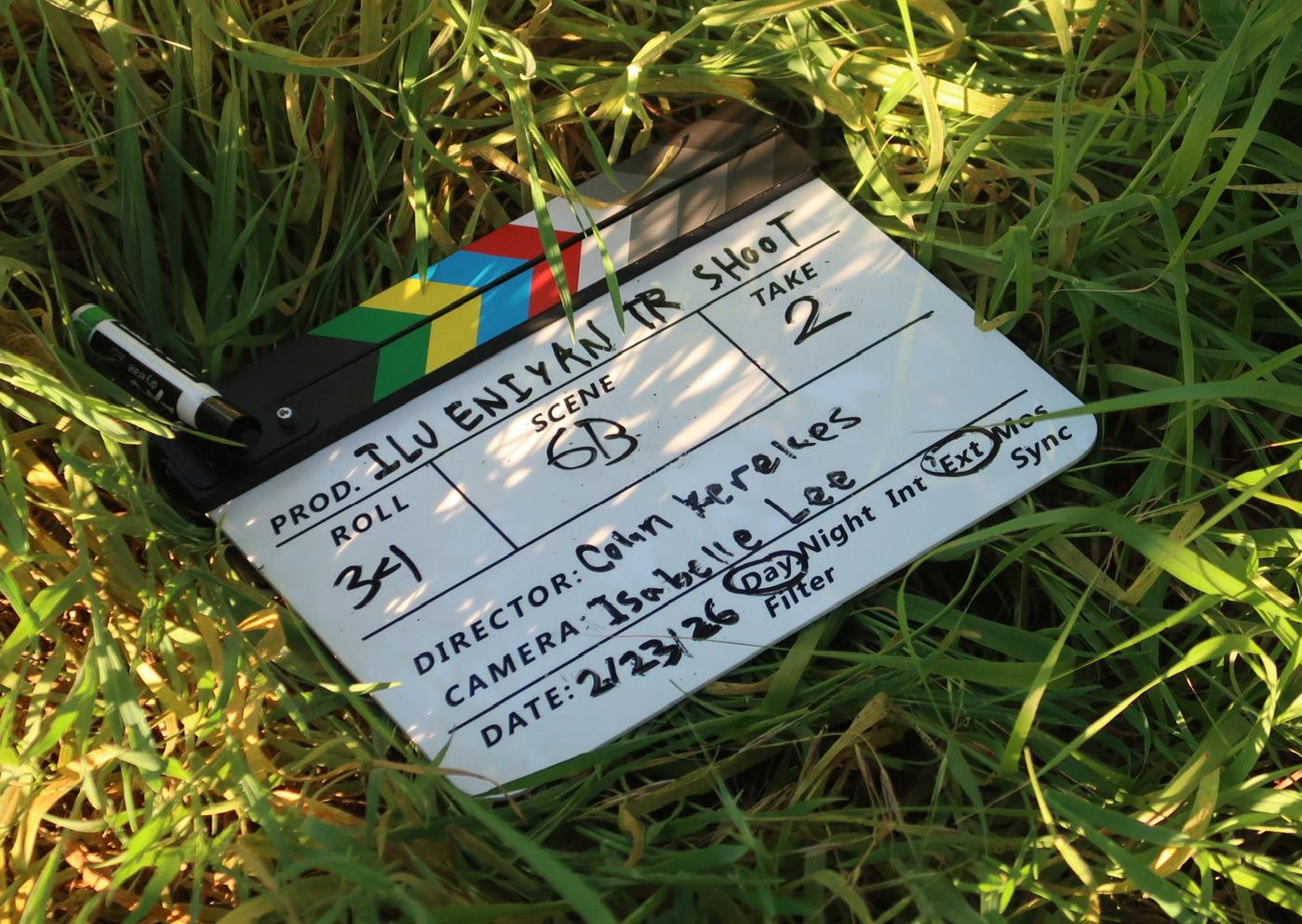
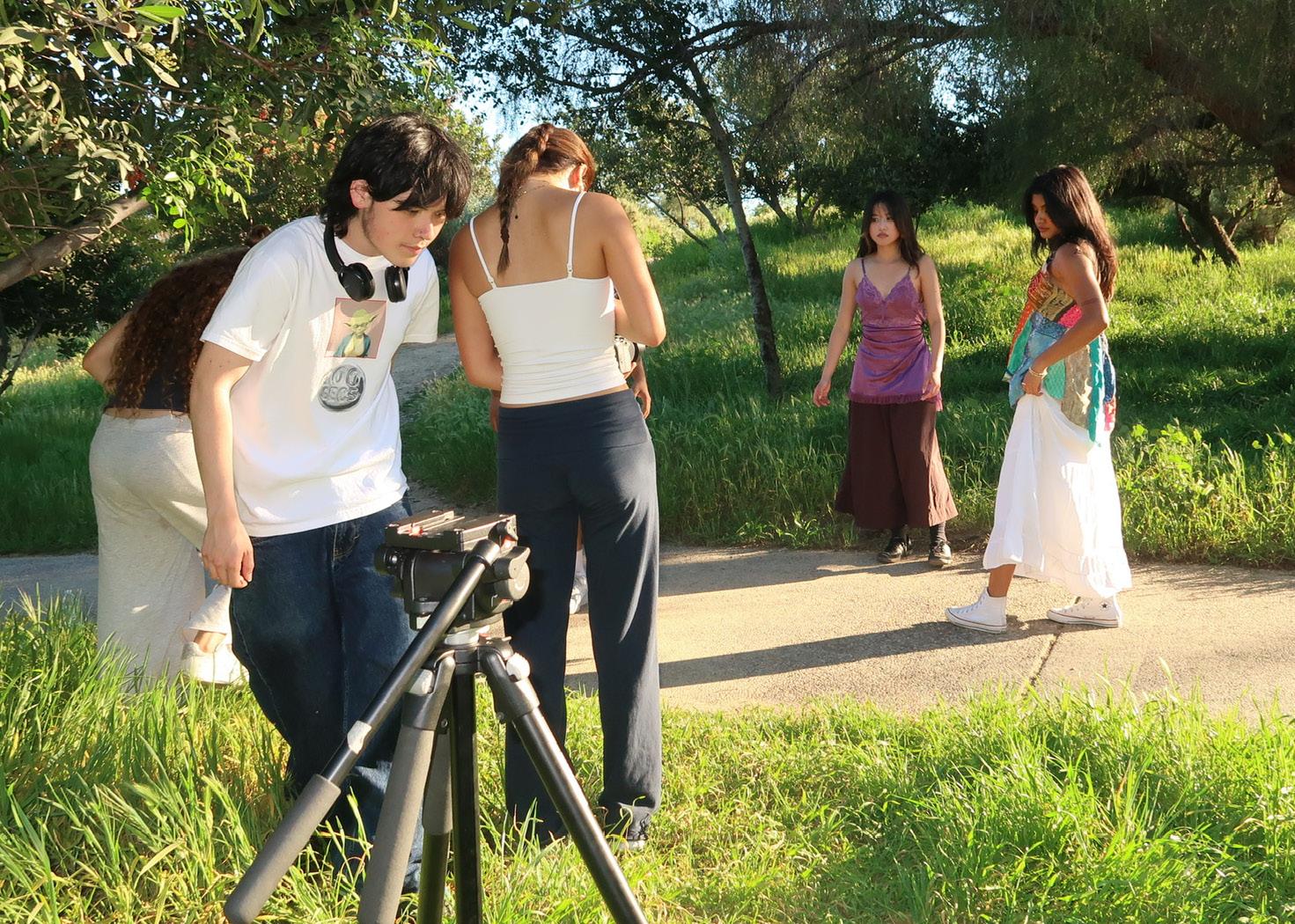
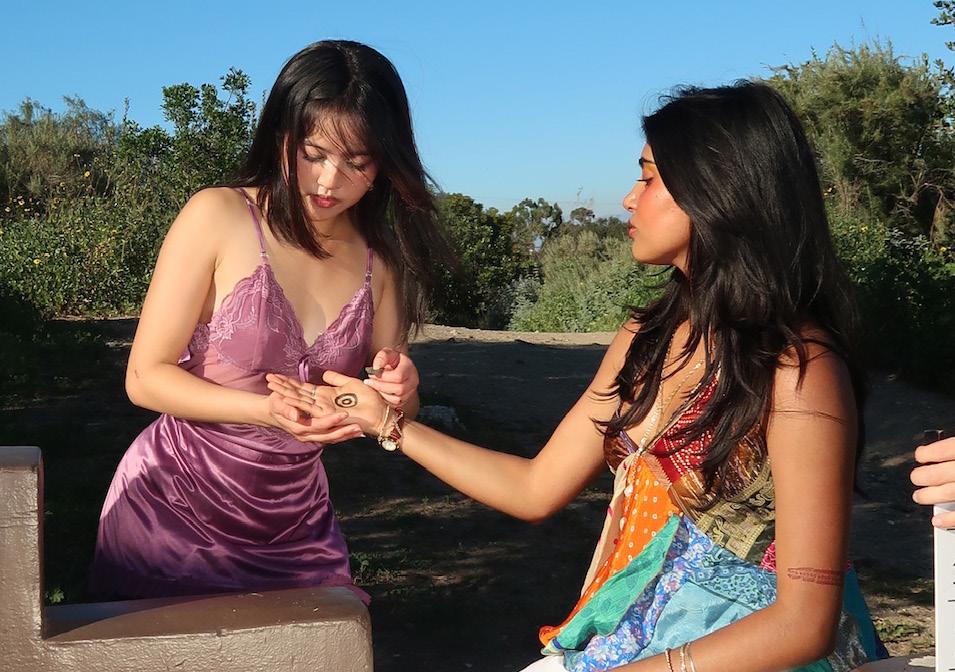
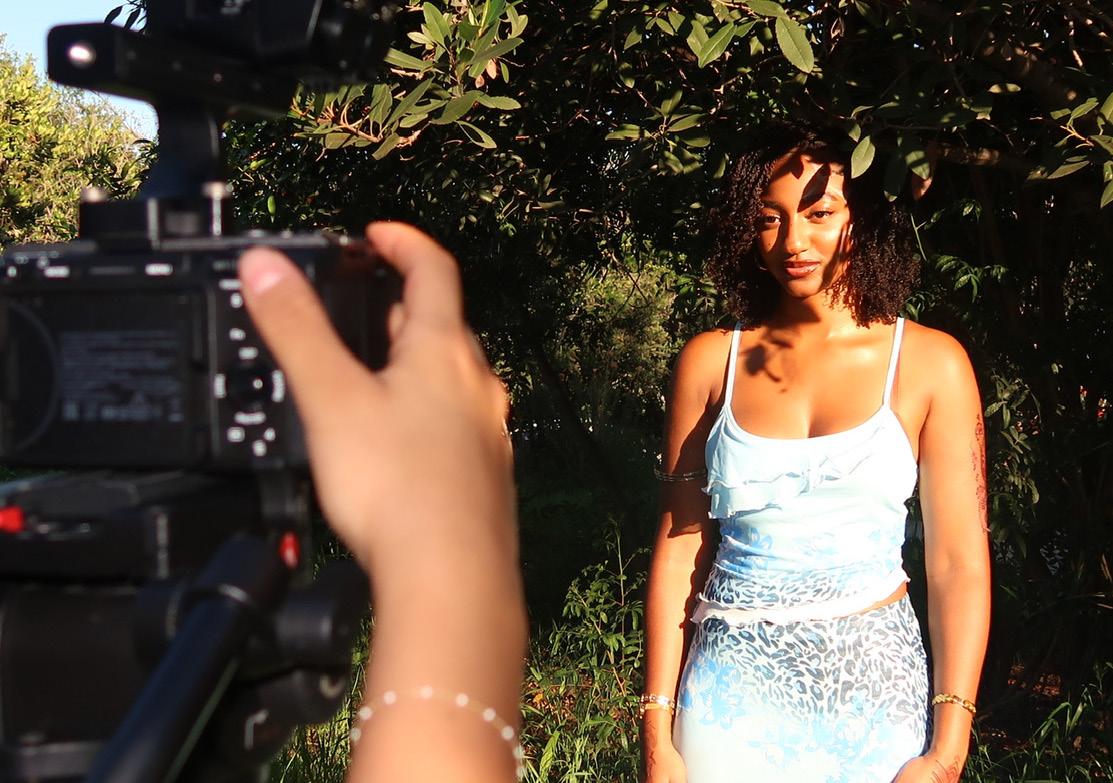
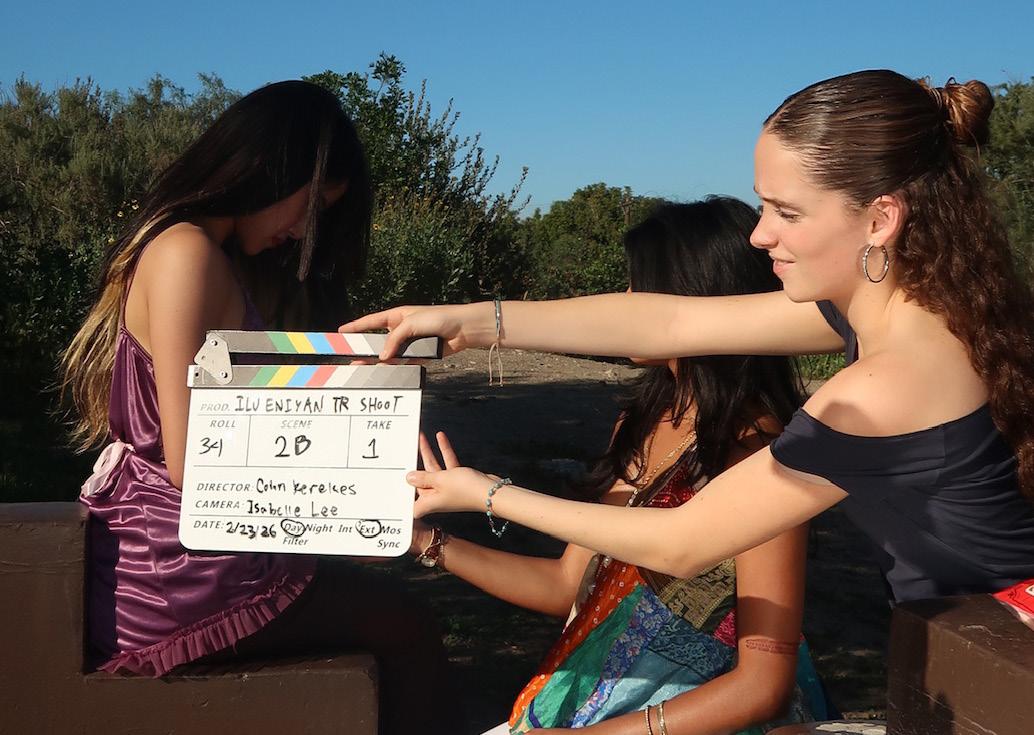
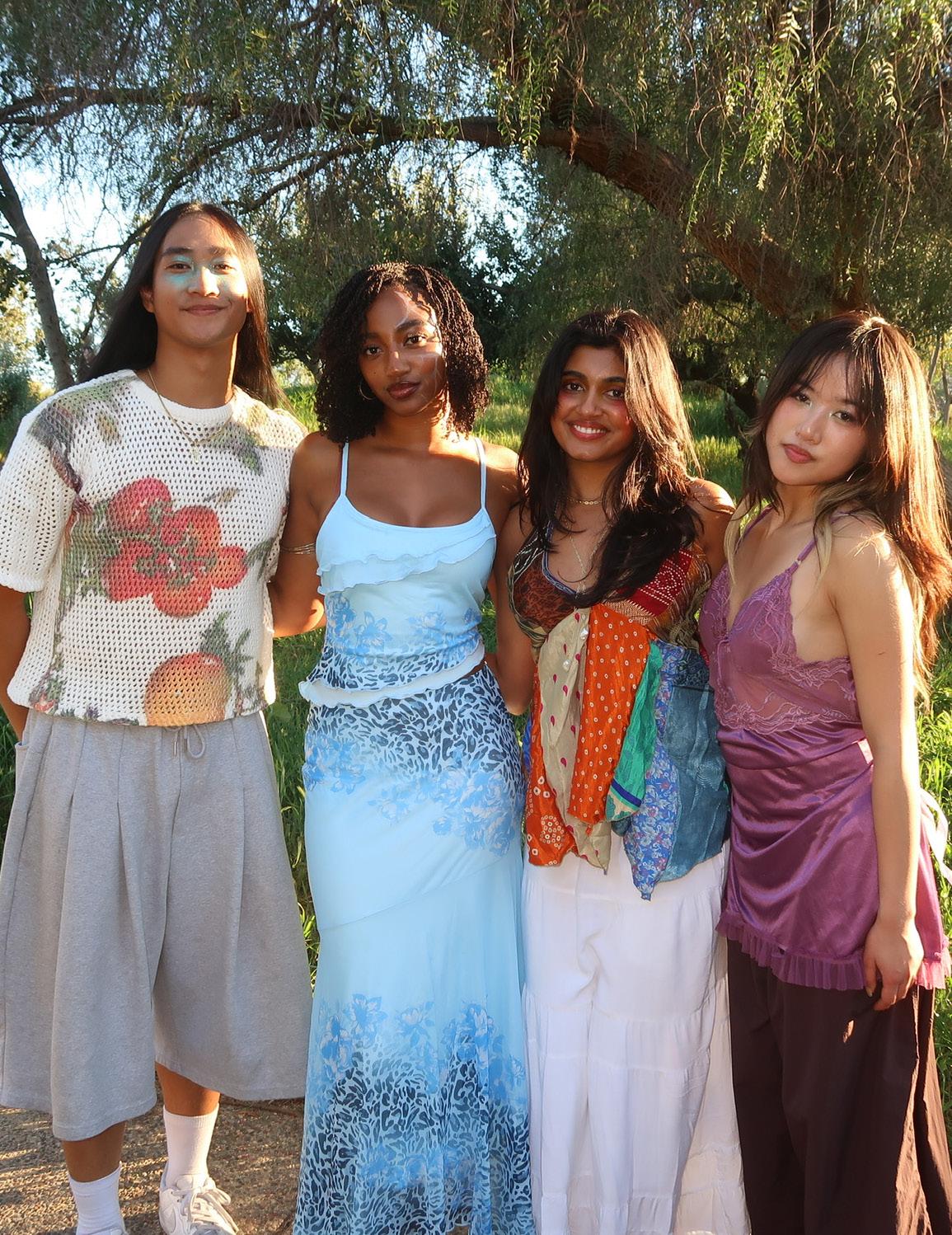
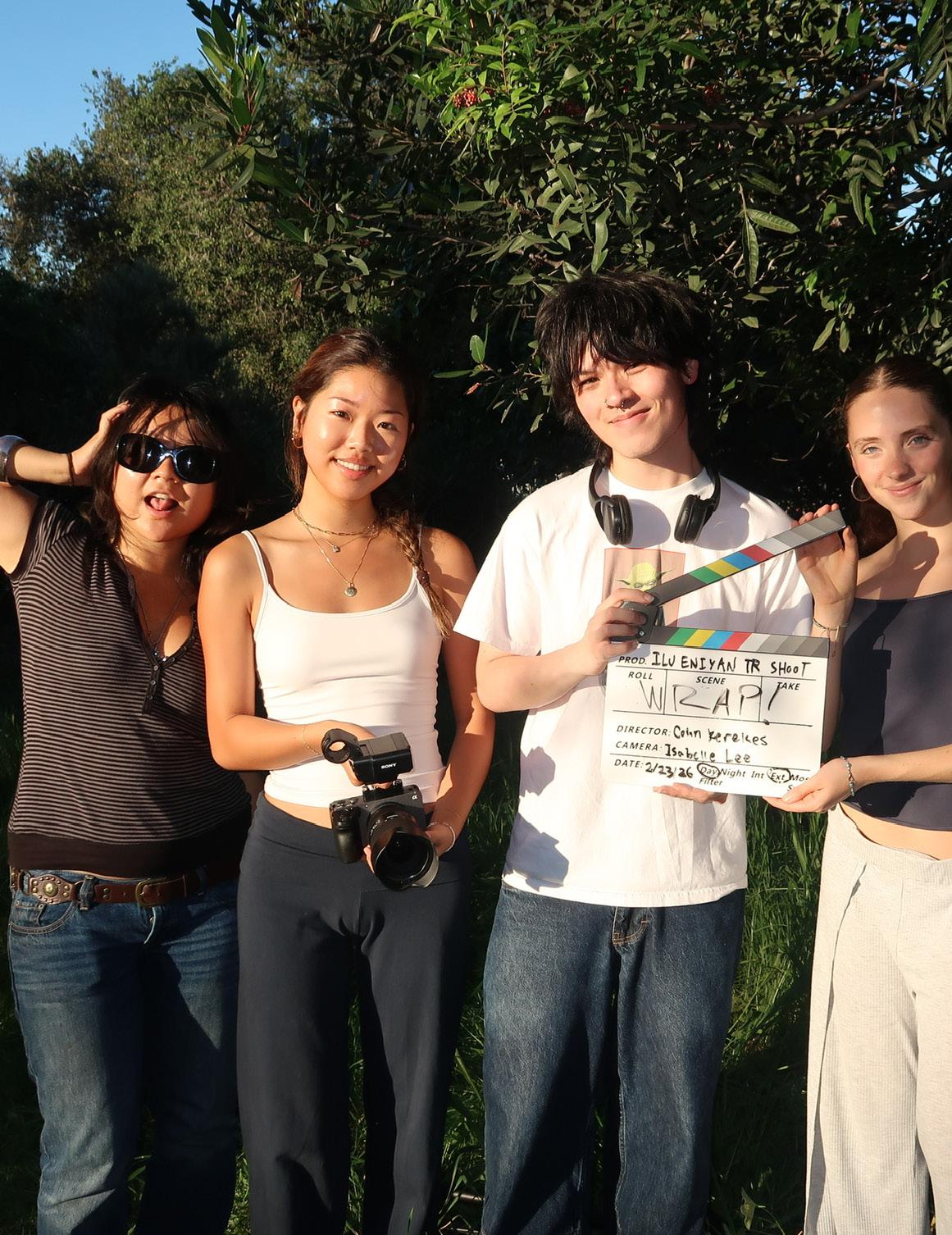
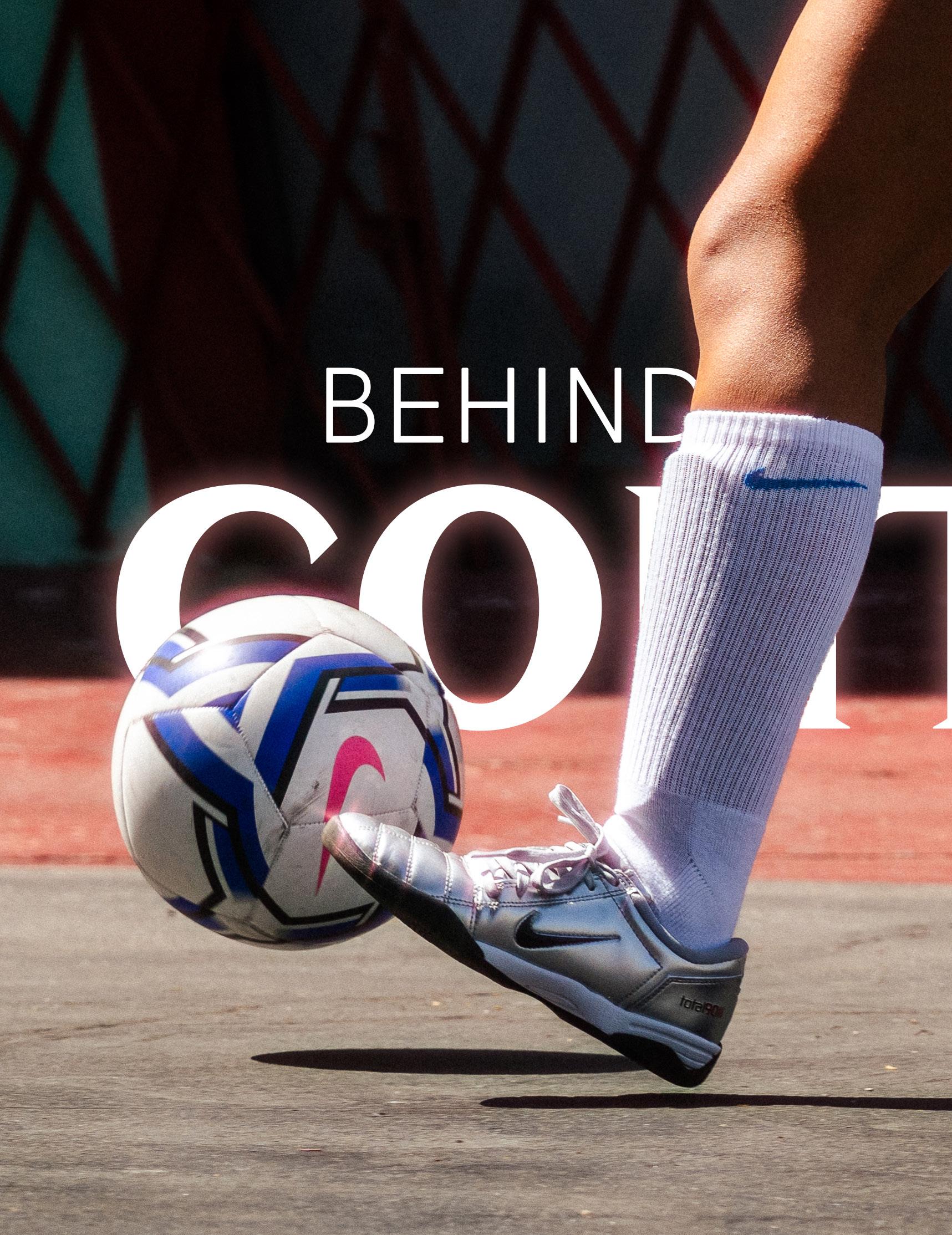
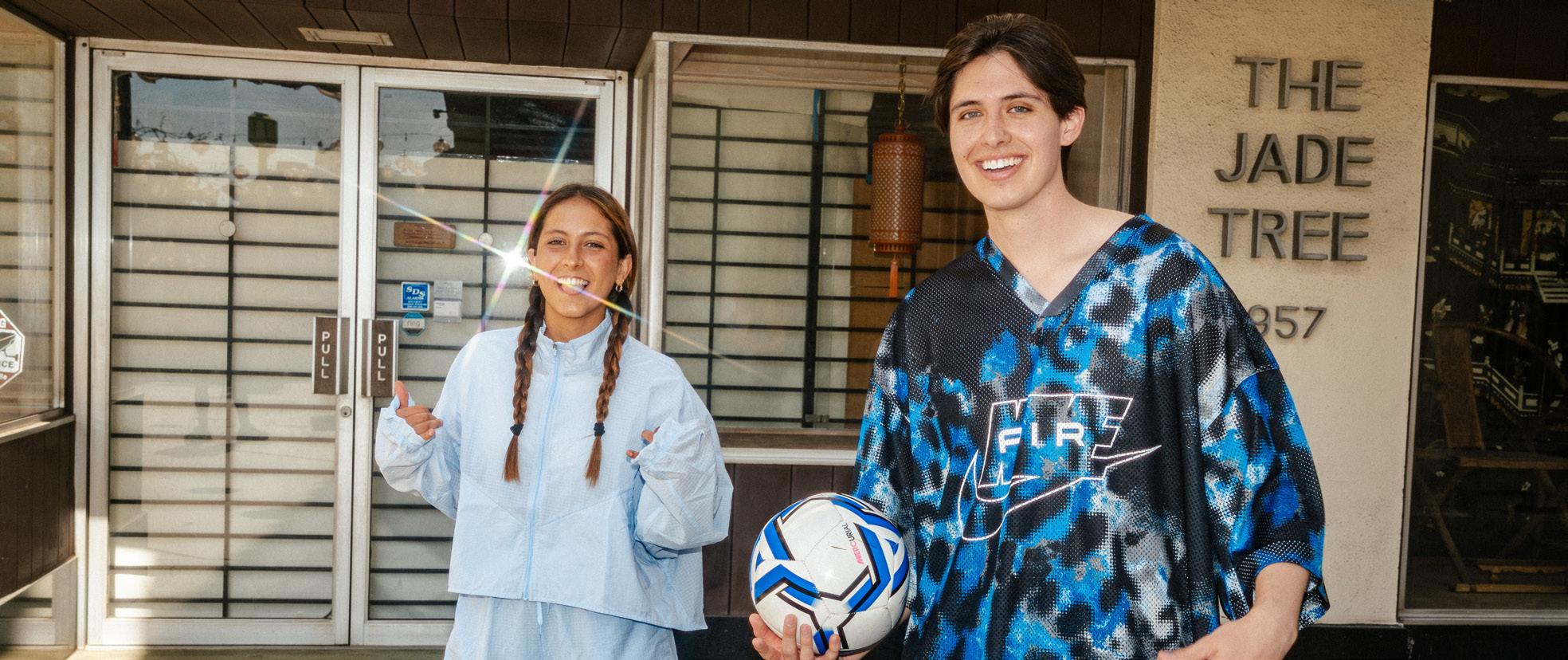
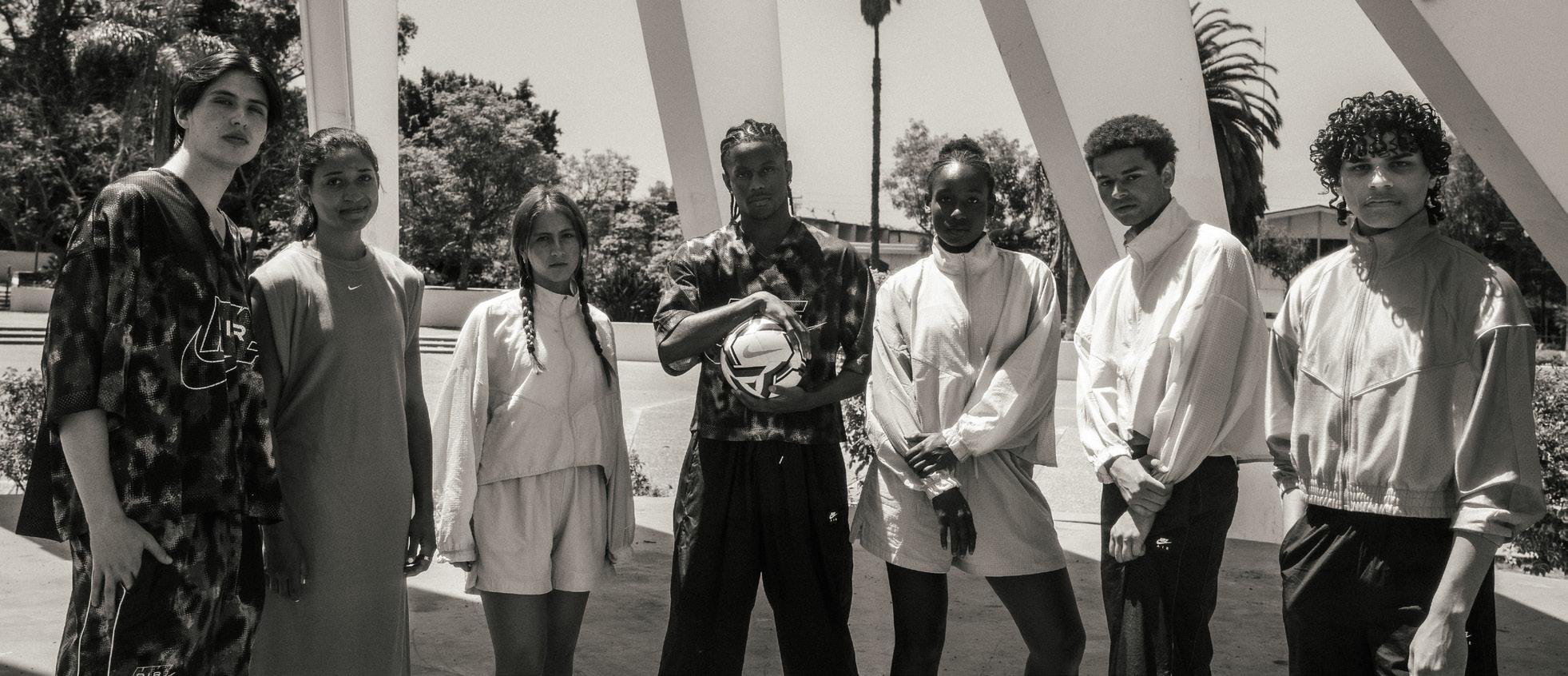
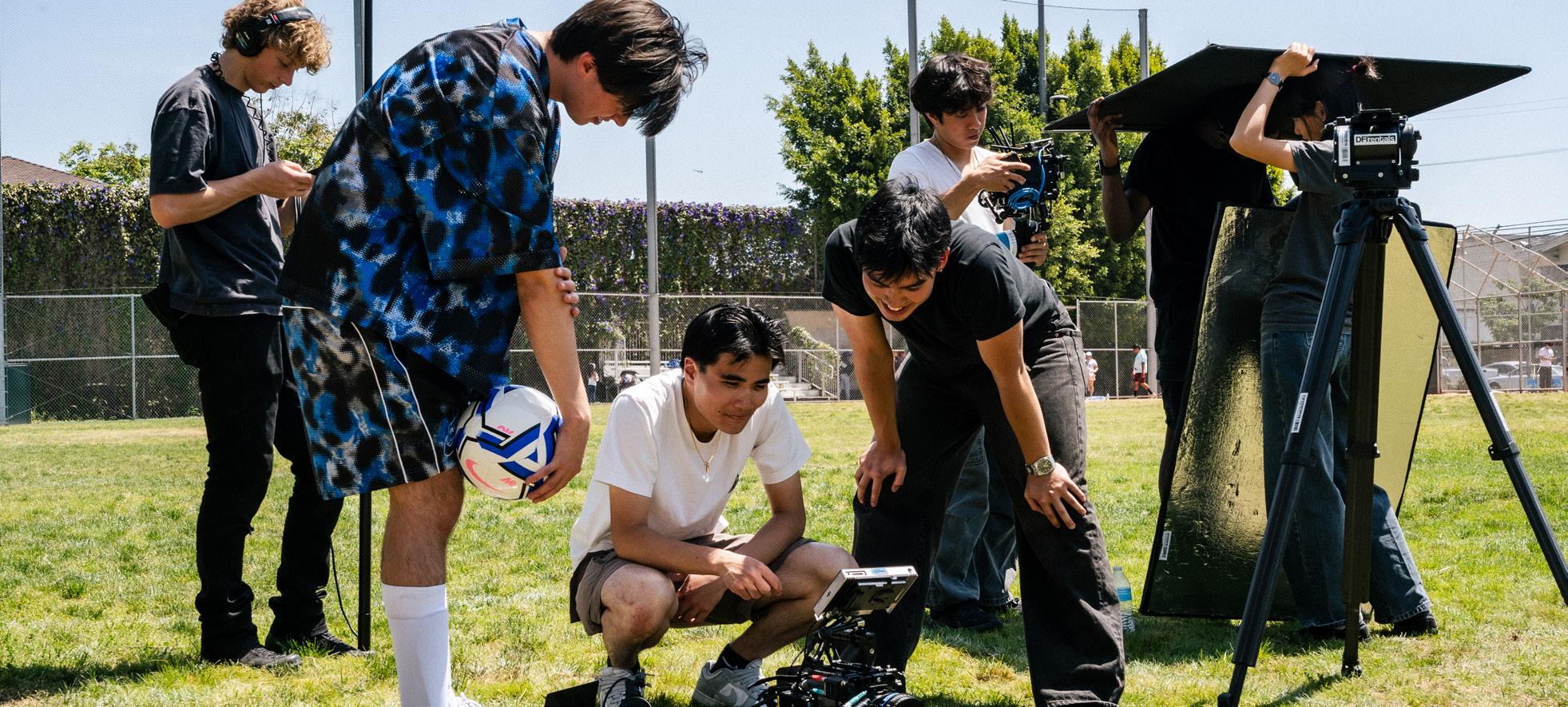
Behind Ilu Eniyan Haute Multimedia Team + Nicole Leihe Behind Content Haute Content Team + Nicole Leihe
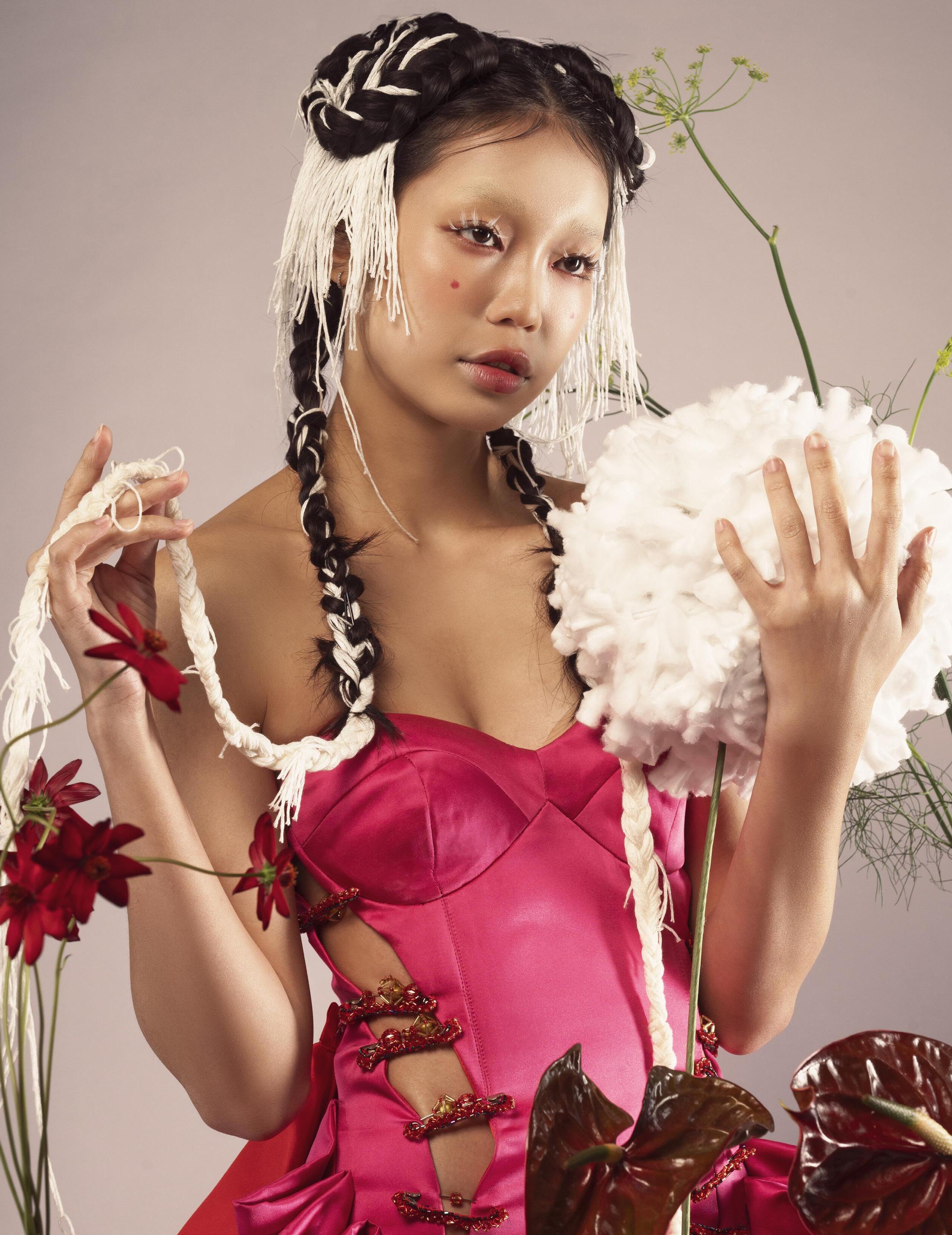
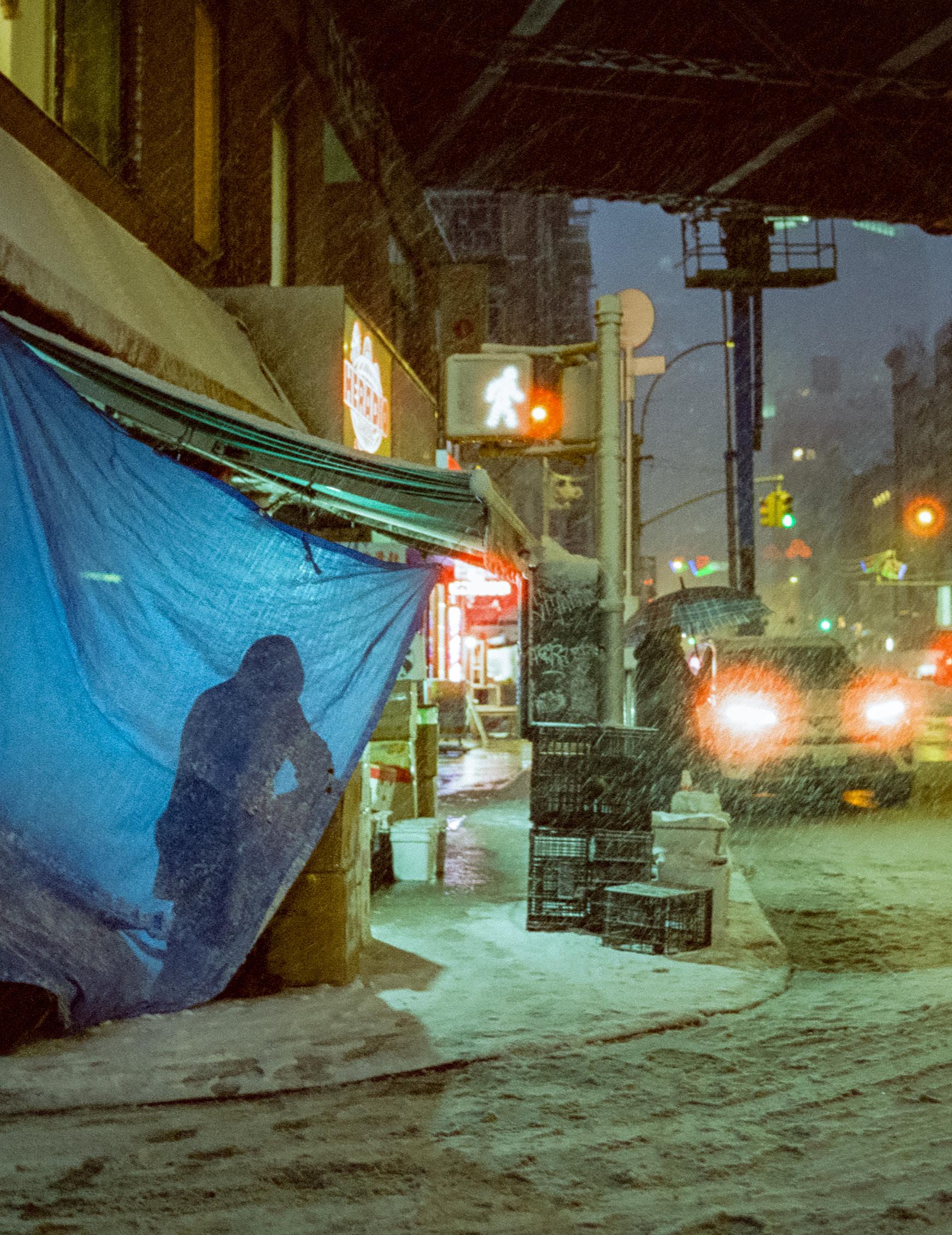
Brendan Tan is a Singapore-based photographer and creative director exploring the intersection of fashion, culture, and visual storytelling. His work blends high-fashion sensibilities with grounded, local narratives, often transforming everyday environments into cinematic frames. He focuses on texture, colour, and atmosphere to create images that feel both stylised and livedin. His projects span editorial fashion, conceptual campaigns, and culturally rooted visual explorations.
Brandon Taliaferro is a Portland and Los Angeles-based artist and graphic designer. Brandon creates vibrant, colorful works across multiple media and currently studies Design at the Roski School of Art and Design, University of Southern California.
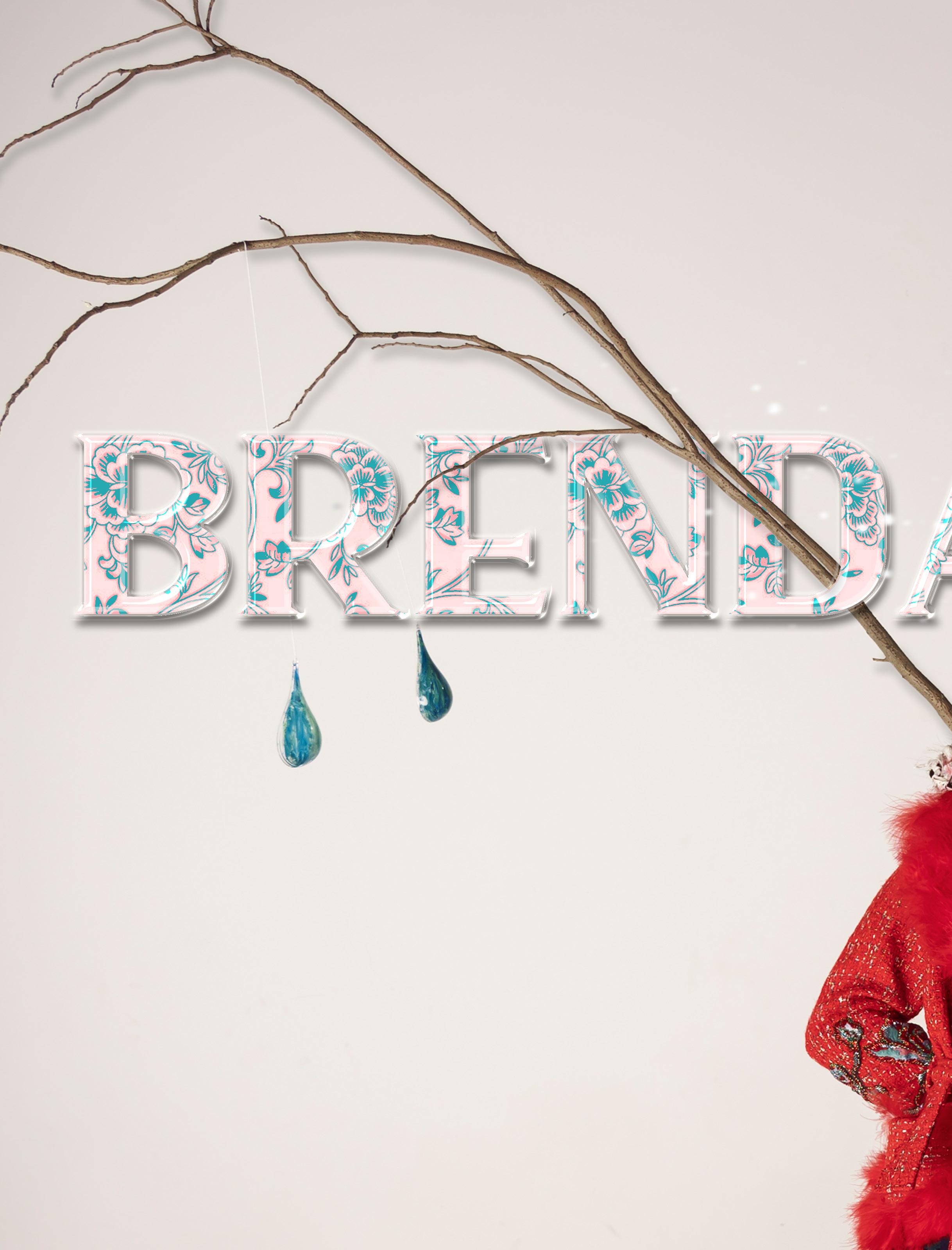
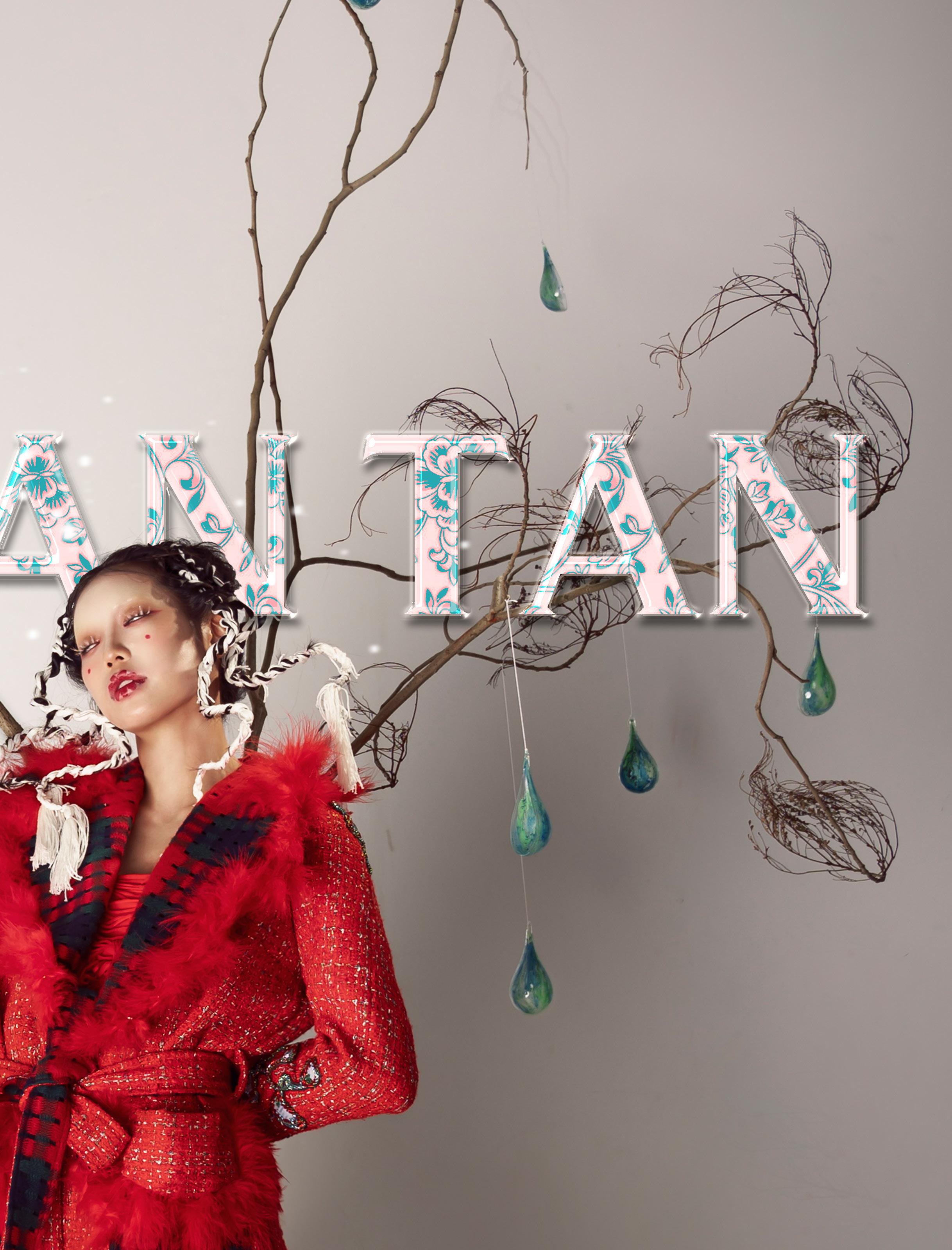
BRENDAN TAN
The dancer in the community center studio—Mei, though her mother still calls her Méilì, which means beautiful and feels like an accusation—has been practicing the same ribbon sequence for six weeks. Chinese New Year is in nine days. She is seventeen. Her body knows the movements before her mind does: wrist turn, arc, spiral, the silk ribbon drawing shapes in the air that are supposed to represent joy, celebration, tradition. What they actually represent: her mother’s ambitions, her mother’s immigration story, her mother’s idea of what it means to stay Chinese in a place that keeps asking you to be less so. Mei is thinking about the college applications she submitted in secret, the ones to schools in New York, in Chicago, anywhere that is not here, not Chinatown, not this studio where the walls are covered in photographs of girls who came before her, girls who also left or didn’t leave.
Paloma is walking out of CorePower Yoga in Westwood, touching her four-hundreddollar bleached hair, worried that the heat damaged it. Her skin is flushed from ninety minutes of breathing out all her suffering and breathing in the good of the world—a phrase the instructor repeated like wisdom. Paloma doesn’t know this is backwards. She doesn’t know what tradition it comes from—Buddhist, Hindu, something vaguely Eastern that sounds right after sweating in a thirty-eight-dollar room. She is in greek life and tells people it’s ironic, though she goes to the mixers and puts the letters on her Instagram. At a bus stop on Beverly, she sees a woman across the street struggling with a stroller and three grocery bags and a toddler who has gone boneless. Paloma watches the way the woman’s jaw sets, the particular physics of carrying too much. The woman is Mexican, Paloma thinks, or Salvadoran, and Paloma—whose Spanish is UCLA-learned—feels the old pull, the old fraudulence. She wants to help. She doesn’t move. The bus comes. The moment closes.
The woman with the stroller—Beatriz, who is Guatemalan, who has been in Los Angeles eleven years, who cleans houses in Los Feliz and Hancock Park—does not see the girl watching. She sees only what is necessary: curb, crosswalk, the 217 steps to her apartment where her mother is waiting, where the groceries will become dinner will become tomorrow. She is thinking in numbers. Hours until her next shift. Dollars in her account. She is not thinking about the house she cleaned this morning, the one with the Diptyque candles and meditation cushions and books about white fragility that the owner—Jennifer, who works in film development—leaves casually visible, like set dressing for a self she’s constructing. Beatriz has cleaned around those books for two years. She knows what they say.
Raymond—sixty-eight—is watching the street the way he has for forty years. Carefully. Cataloging. Reading the signs others don’t know are signs. He is in Compton, on the block where he raised three sons, buried one, lost another to Pelican Bay, watched the third move to Atlanta. He has seen the crack epidemic, the gang injunctions, the police helicopters that circled so often they became weather. He has watched White people discover the word “systemic” and use it in sentences that never include solutions. He is past anger. What he feels is the exhaustion of having been right for so long that being right stopped mattering. A kid rides by on a bike. Raymond watches him disappear around the corner. He knows which corner. He knows what happens there. Knowledge is not the same as power.
The man pushing the fruiteria cart—he has a name but it doesn’t matter here—is on his ninth hour on
the street. He arrived at five this morning, picked up from a house in the Inland Empire where twelve men sleep on mattresses, driven in a van with no windows to this corner where the cart was waiting. He was told he would work until five. He was told he would be paid forty dollars. He was told not to leave. He speaks Mixtec, some Spanish, no English. He has not eaten. He was not given water. This is not his cart. This is not his city. He is twenty-three but looks older. He is thinking about his daughter, who is four, who lives in Oaxaca, who he has not seen in two years. He is always thinking about the money. ICE is always there, always threatening, the way smog is always there, the way helicopters are overhead, the way certain kinds of danger become atmosphere. A woman walks by, talking on her phone about a yoga class. She doesn’t look at him. He is part of the landscape now, part of the street, part of the fruit itself: consumable, unremarkable, there.
Mei finishes practice at seven. Her mother picks her up in silence, the kind that contains all the conversations they are not having about college, about duty, about what it means to honor your family by leaving it. They drive through Chinatown, past herb shops and bakeries, past restaurants where tourists go and restaurants where Chinese families go. Mei looks out at the red lanterns, the decorations going up for New Year, and feels the vertigo of living in two times at once. Her mother says something in Mandarin about perfection, about not embarrassing the family. Mei says yes. She is always saying yes. In nine days she will perform. In four months she will know about college.
Paloma is at a party in Echo Park, drinking beer and talking to a boy about gentrification, and neither of them are listening because the real conversation is about whether or not they will leave together. Paloma is thinking about her father, about how he lives in a 4.2-million-dollar house and calls himself a Democrat, about how she hates his money and his guilt in equal measure, about how she will Uber home to an apartment he pays for. She’s thinking about the woman with the stroller. She’s thinking about how she didn’t help.
Beatriz is on the bus going to her night job, an office building in Century City where she vacuums floors no one sees her vacuum. She is listening to a voice note from her sister in Guatemala. Her sister is talking about their mother’s birthday, about money, about the weather. Beatriz will send money. She always sends money.
The city continues. Lights on hillsides. Helicopters overhead. The low hum of the 10, the 101, the 110, the 5. People who will never meet but whose lives arrange themselves in relation to one another like a composition no one is composing. Mei will practice tomorrow. Paloma will go to another yoga class. Raymond will watch another kid ride by. The frutero will stand on another corner, or will be replaced by someone else who looks like him, who is him, who is any number of men whose names don’t matter to the city they’re feeding. Beatriz will clean around Jennifer’s good intentions. And somewhere, in the accumulated friction of all this adjacency, something like a city continues to exist, not despite the distance between people but because of it, held together by all the things they don’t say, don’t see, don’t share, the vast infrastructure of not-quite-touching that makes touching mean something when it happens, if it happens, which it might not, which is fine, which is Los Angeles, which is this.
But here is what also happens: Paloma will help a different woman with a stroller next month, wordlessly. Jennifer will speak to Beatriz— actually speak—and it will be awkward, too late, insufficient. Mei will leave for college, will dance on Chinese New Year in a different city, will learn that you can honor something by transforming it. Raymond will watch another generation of boys ride by. The frutero will send money home, will not see his daughter grow up, will be part of the city’s circulatory system: necessary, invisible, moving through channels that would collapse without it but which refuse to acknowledge it. And the city will not track the small transfusions of gesture and attention that pass between people like blood between bodies, the way influence actually works—not as inheritance or instruction but as the barely perceptible alteration of gravity when another person passes close enough to shift your orbit without ever knowing they have.
Los Angeles as a place where people live in the aftermath of one another, where the self is always a draft in circulation, edited by strangers, revised by proximity, becoming something neither chosen nor refused but simply, slowly, irreversibly altered by the fact of other people existing at the same time, in the same place, breathing the same air made visible only at certain hours, when the city tilts just so—the golden conspiracy of everyone who ever stood where you are standing, hoping what you cannot articulate, which is probably just this: to matter, even infinitesimally, even by accident, even to no one who will ever know your name.
Ben Graham is a Los Angeles and San Franciscobased writer. He specializes in personal essays and analytical writing. Ben studies Philosophy, Politics and Law at the Dornsife College of Letters, Arts and Sciences, and Social Work and Juvenile Justice at the Suzanne Dworak-Peck School of Social Work, University of Southern California.
Andrew Woo is a San Francisco Bay Area and Los Angeles-based photographer. He specializes in street photography, and uses 35mm and 120 film as his main formats to capture the textures and color that pop out in this world. Andrew studies Cinema and Media Studies at the School of Cinematic Arts, University of Southern California.
Miyu Ikeda is a Tokyo, Singapore, Bay Area and Los Angeles-based designer and artist. With a passion to integrate design and immersive reality, she explores how movement and perception can be translated across mediums. Miyu studies Design at the Roski School of Art and Design, and Extended Reality Design and Development at the Jimmy Iovine and Andre Young Academy, University of Southern California.
Models
Thanos Rodrigo Pereira
Jasmine Mai
Laliya Zulpykhar
Lighting
Brandon Woo
Wardrobe
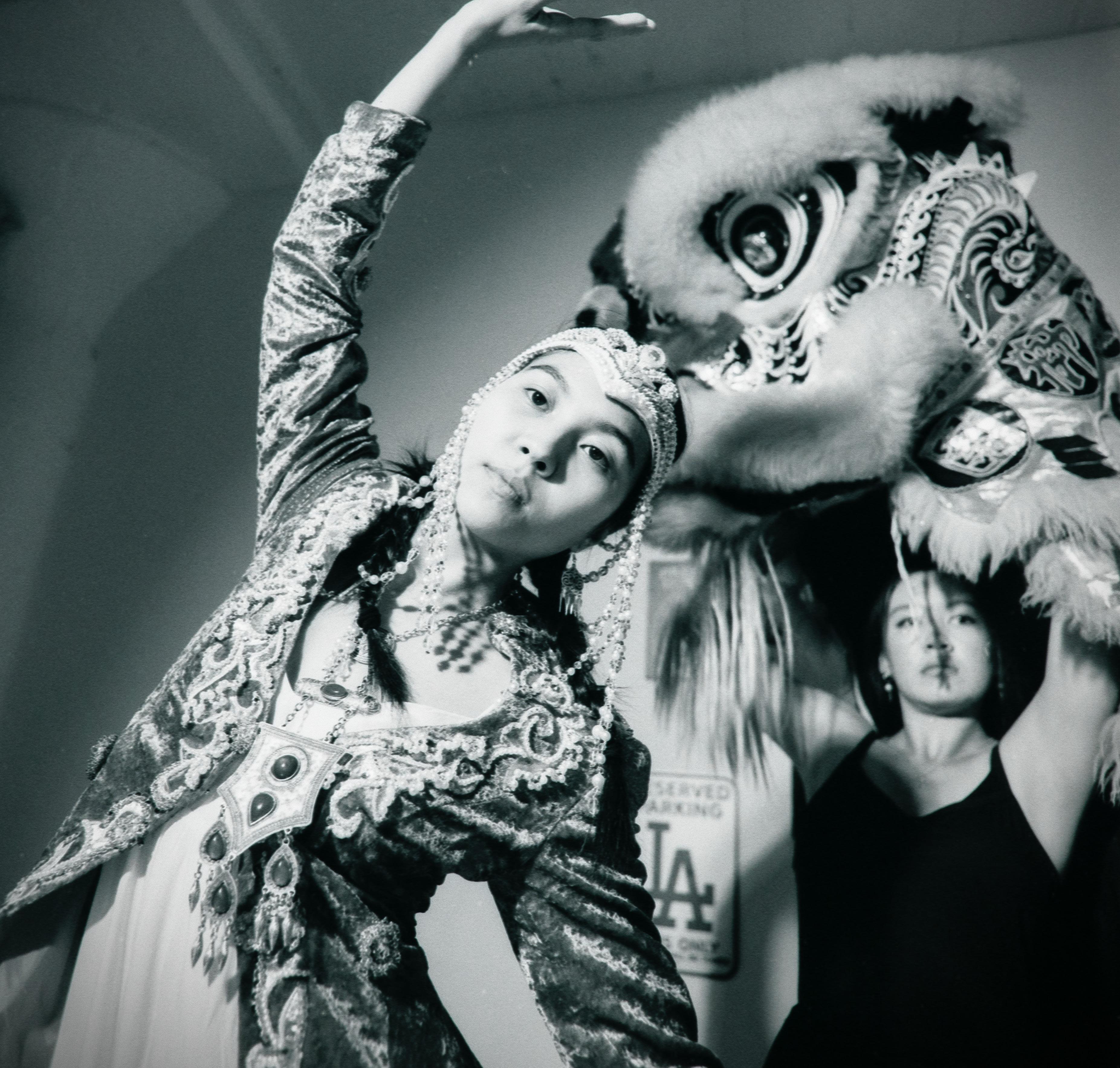
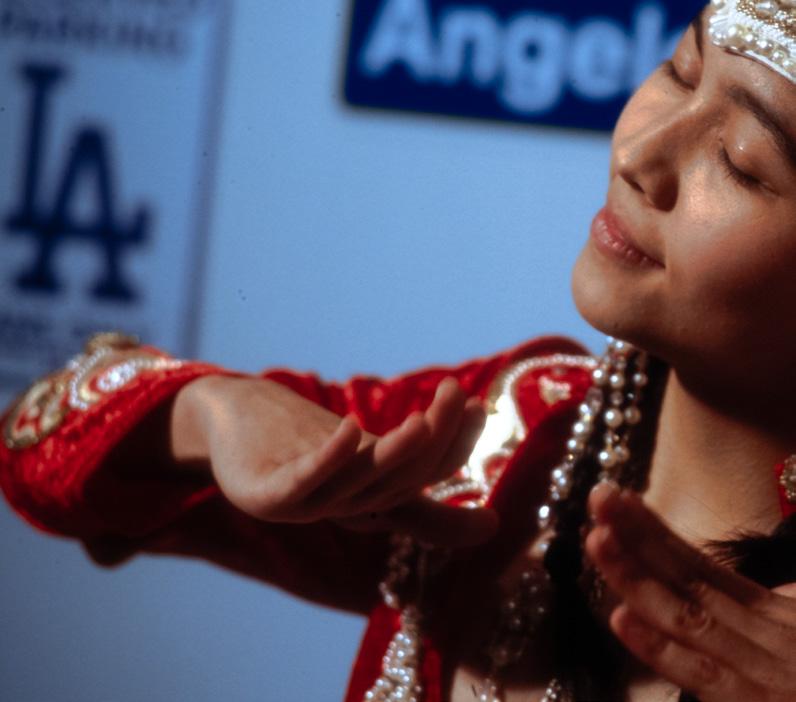
Immortals Lion Dance
SAN Simon Cochabamba Bolivia
SAMANTHA GARCIA
Samantha Garcia is a San Antonio, Texas-based photographer and the first-generation of her family, born in 2004. Raised in a Mexican household, Samantha has always had a profound appreciation for Mexican culture, despite being born in the United States. Her community, family, and cultural traditions are primary sources of inspiration for her artistic work. Through her art practices, she explores themes of selfidentity, pride, and admiration toward the Mexican community.
Ava Rathenberg is a Bay Area and Los Angeles-based designer and creative working at the intersection of technology and design. Her work explores how emerging tools like AI and embedded systems can be shaped into experiences and fine art. Ava studies Arts, Technology, and Business at the Jimmy Iovine and Andre Young Academy, University of Southern California.
SAMANTHA GARCIA
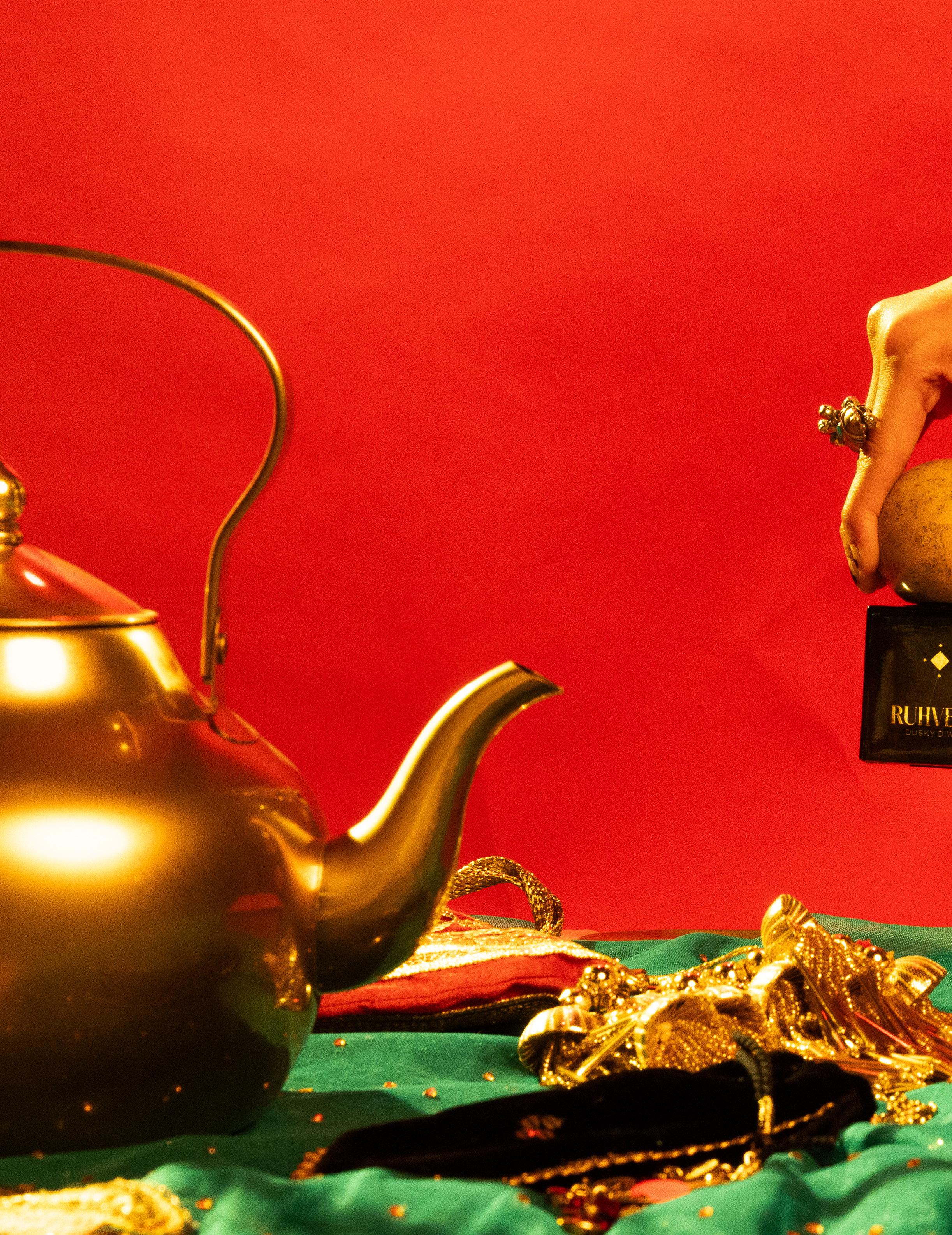
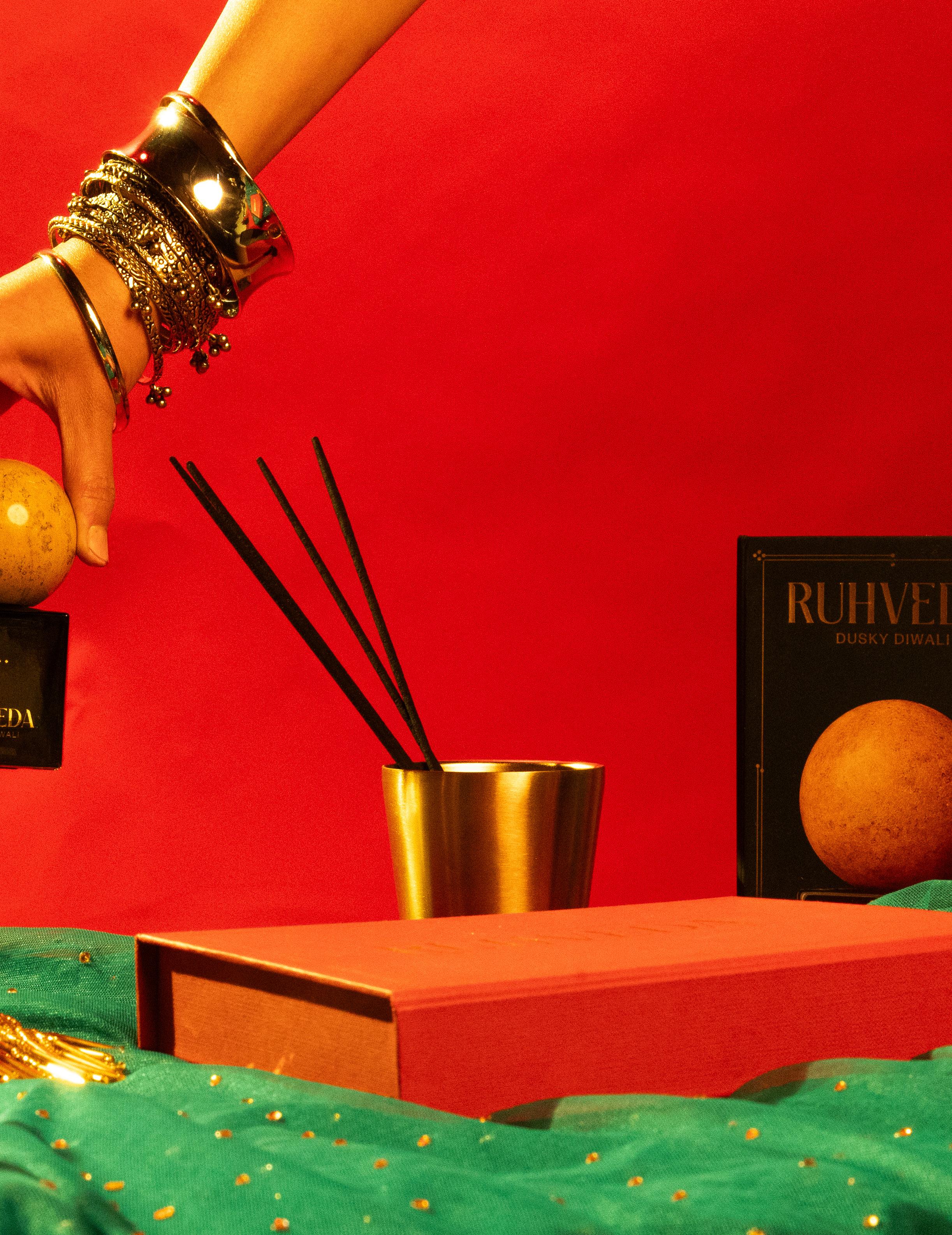
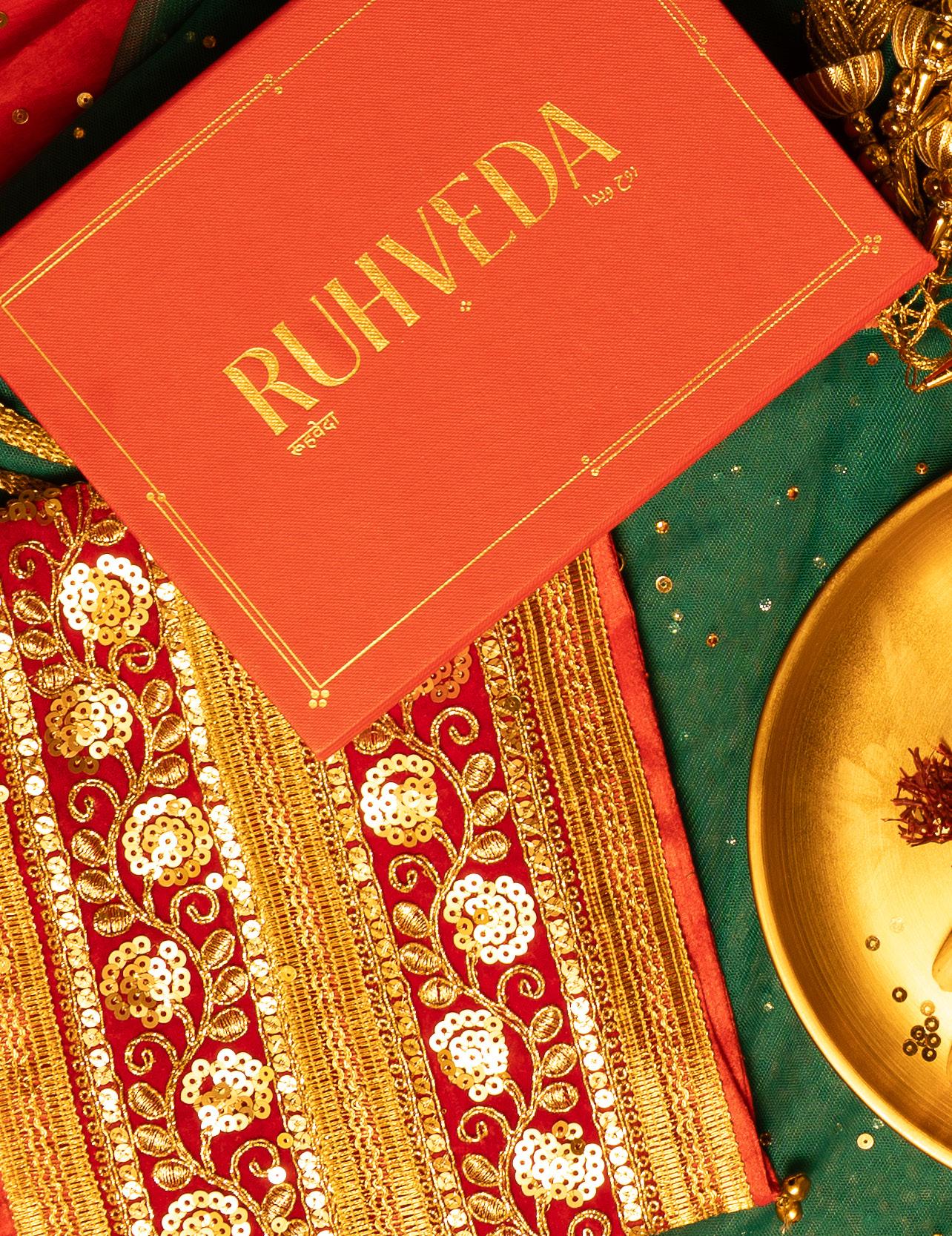
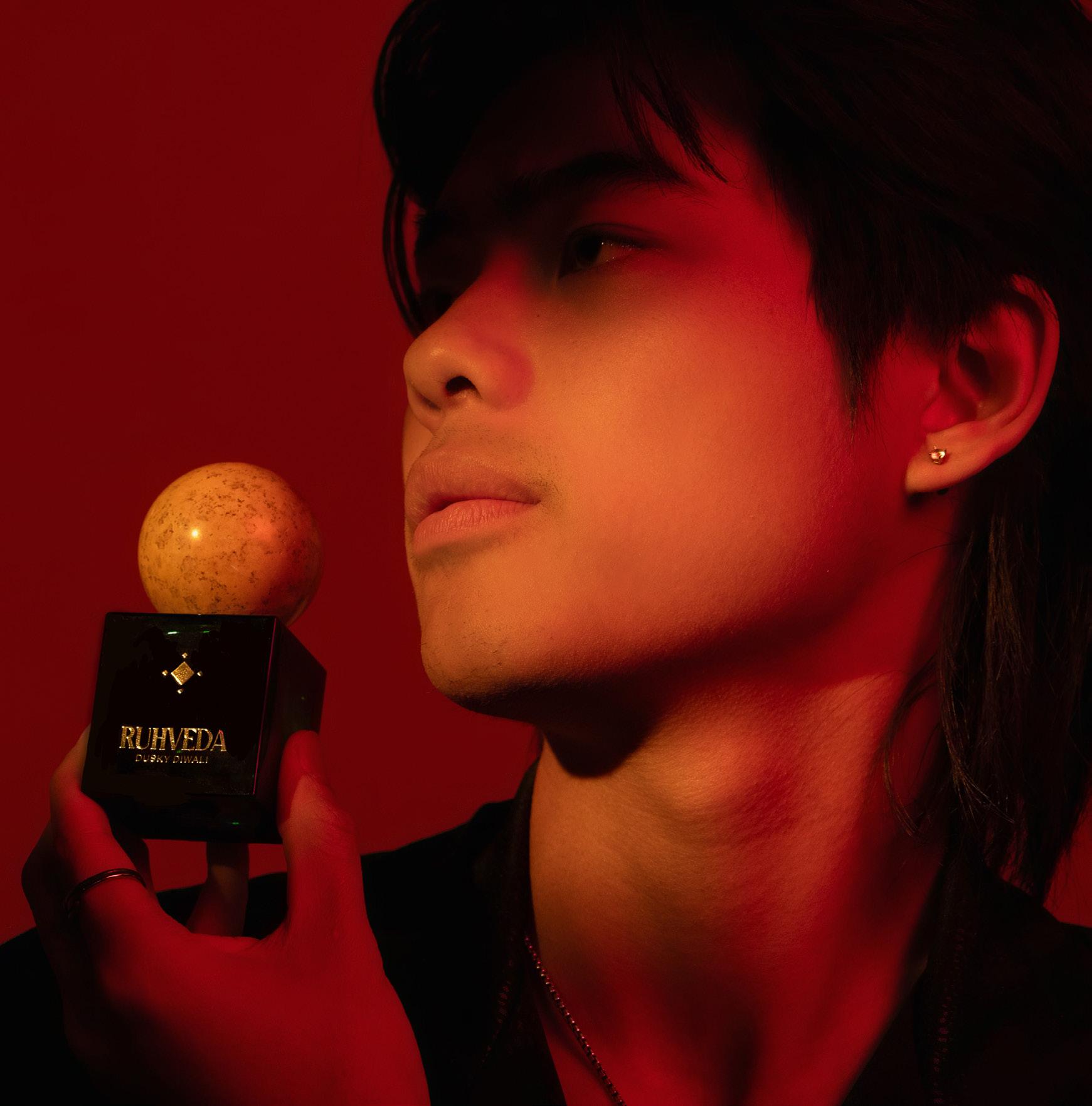
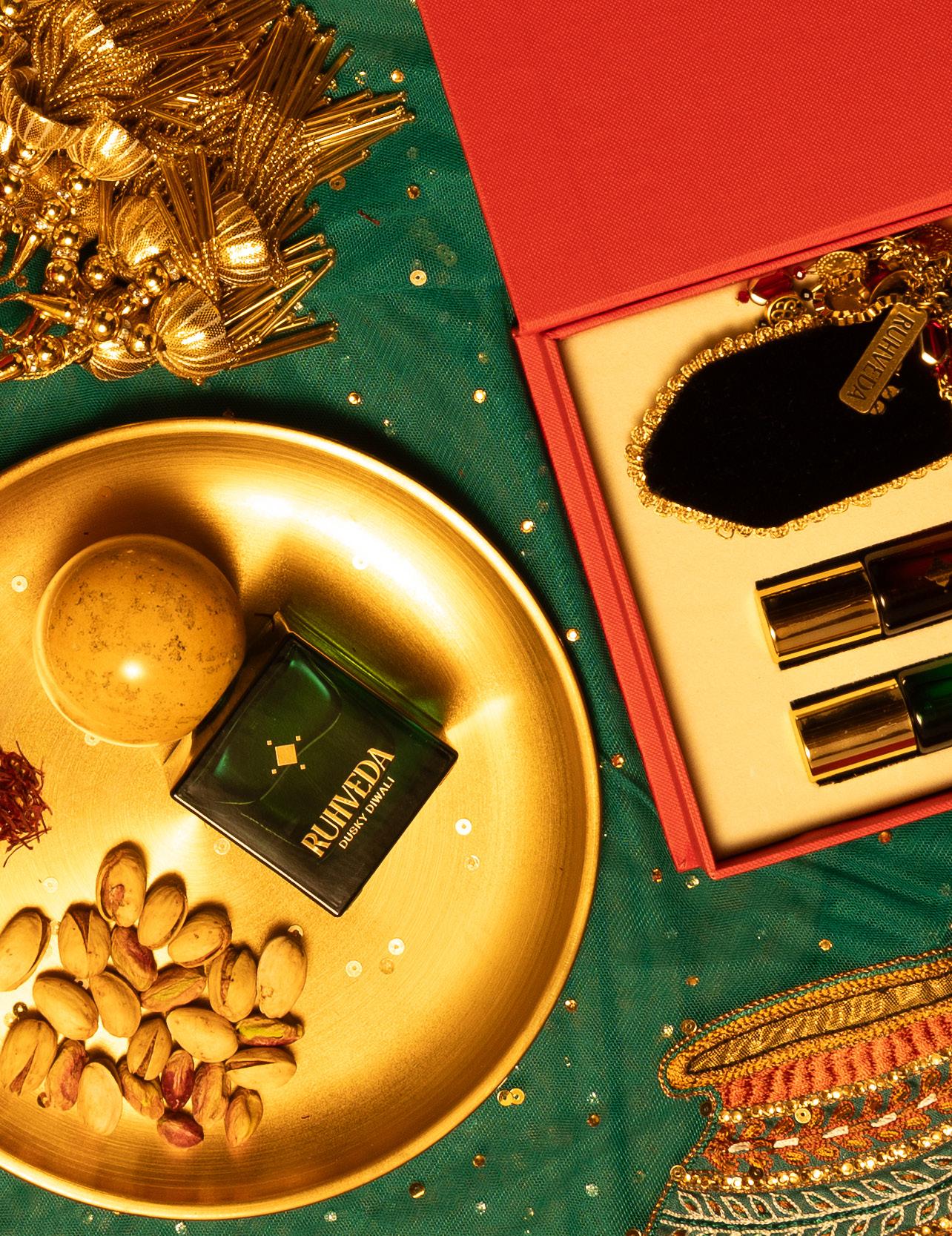
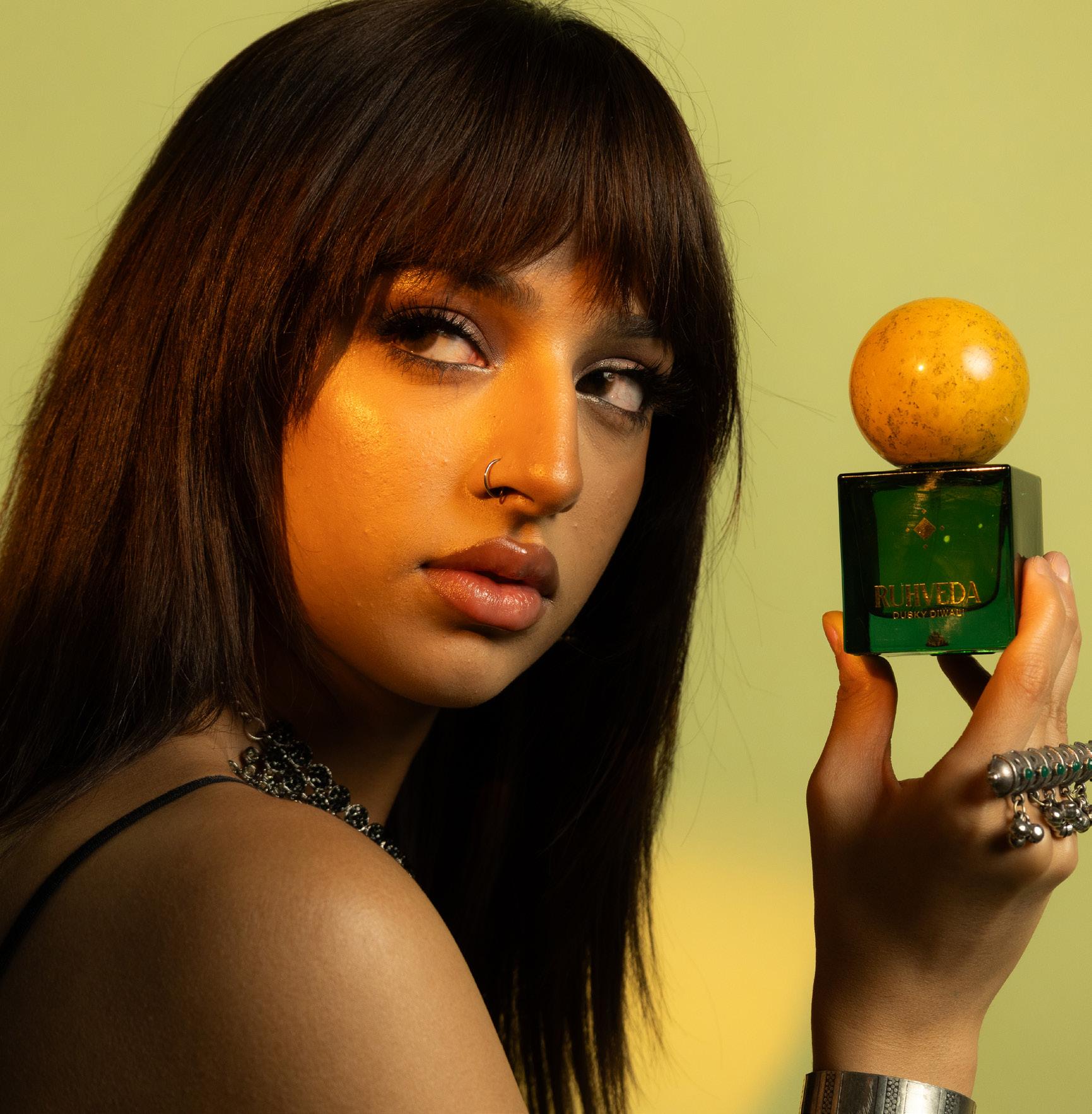
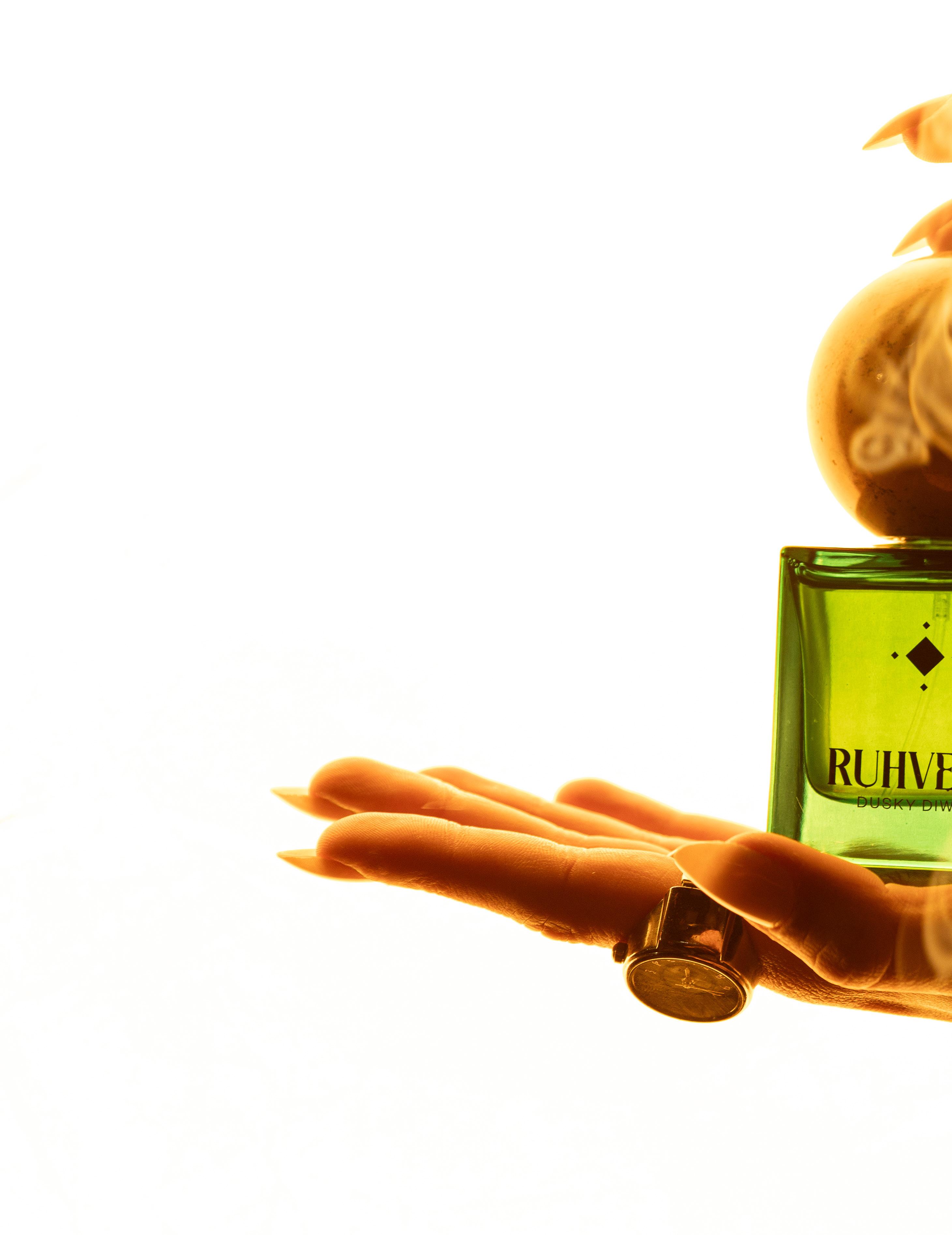
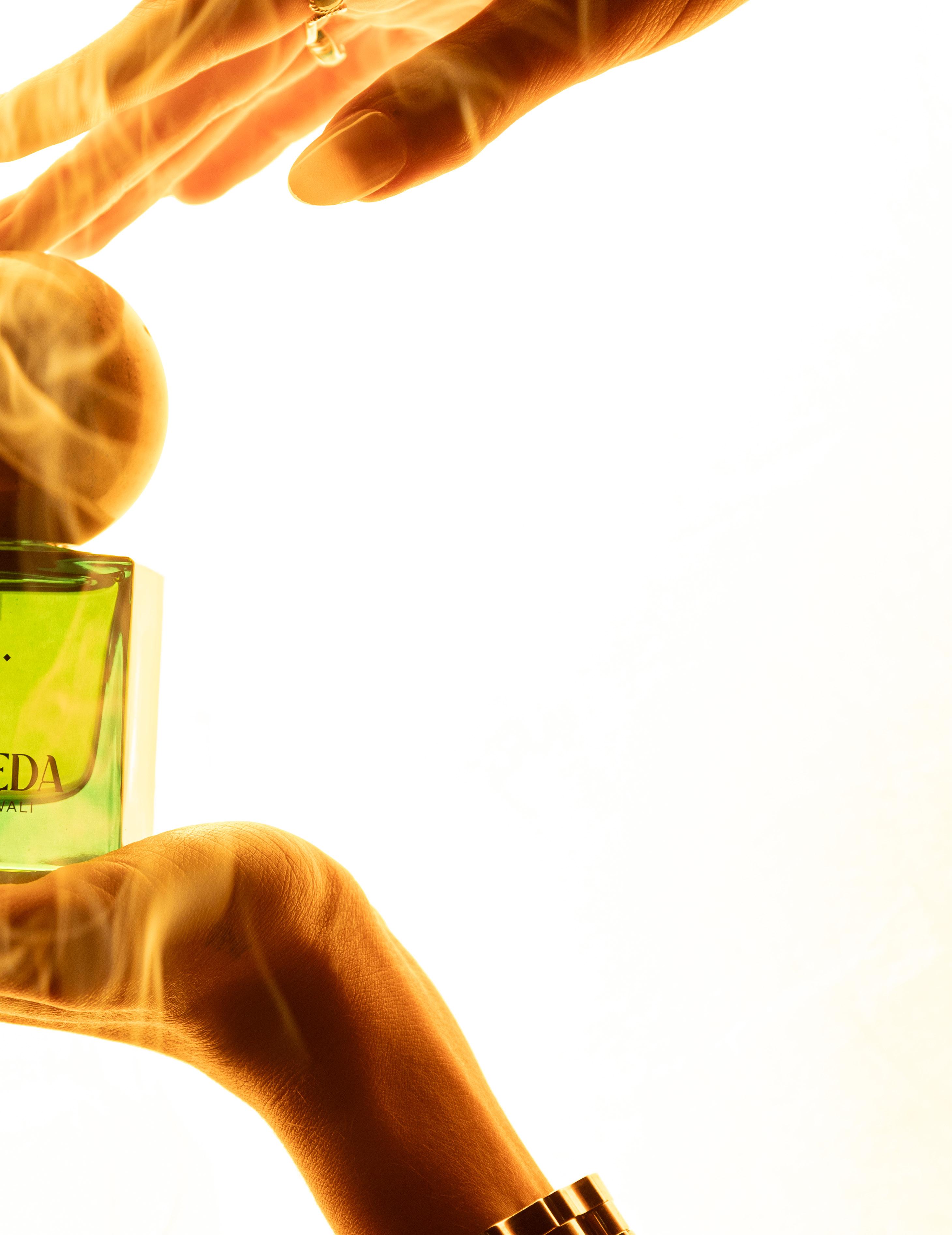
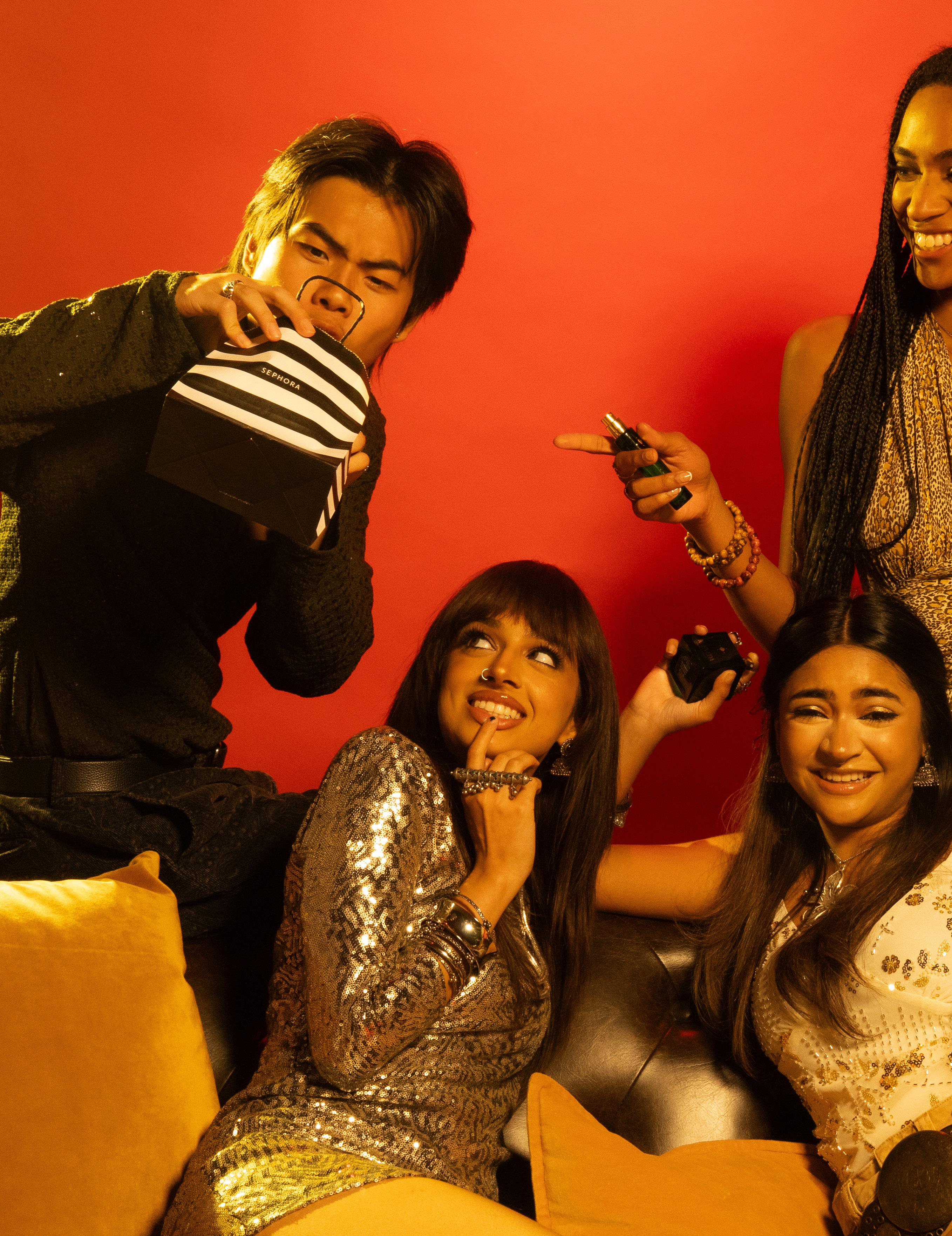
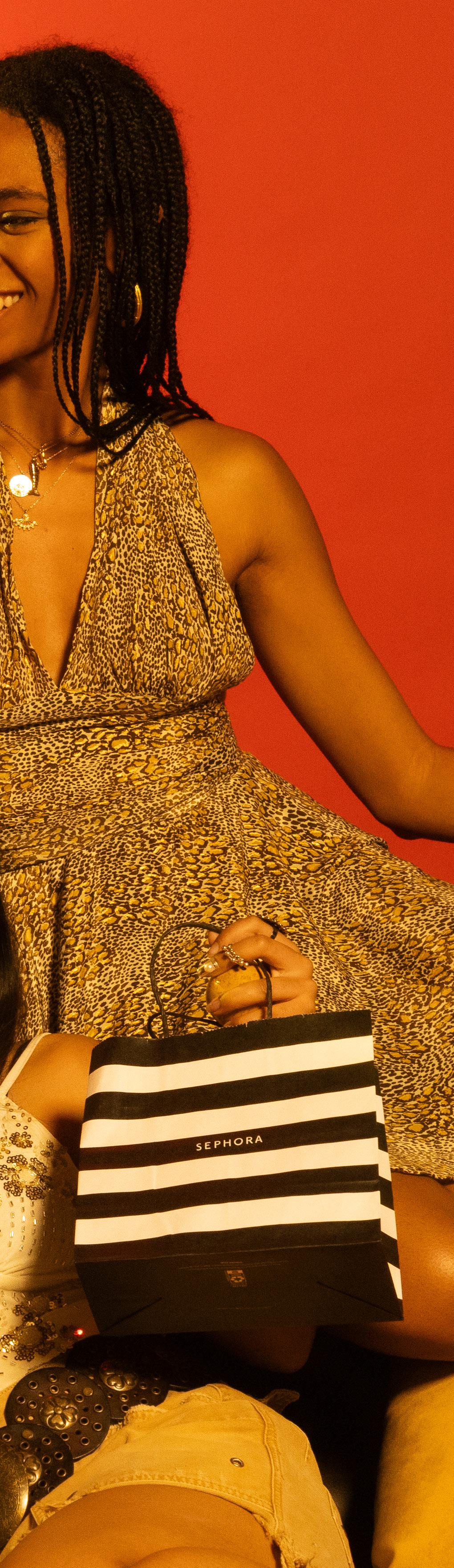
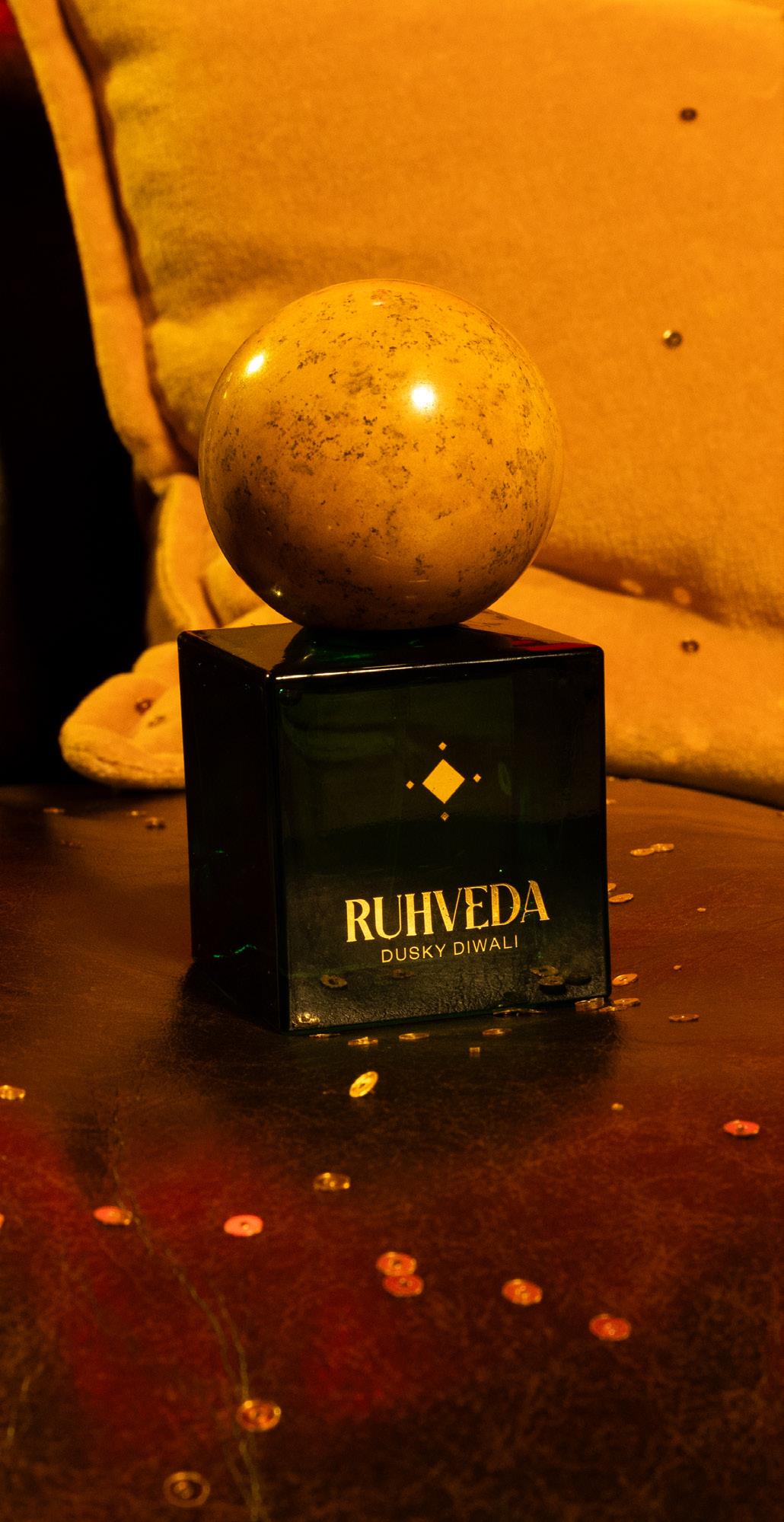
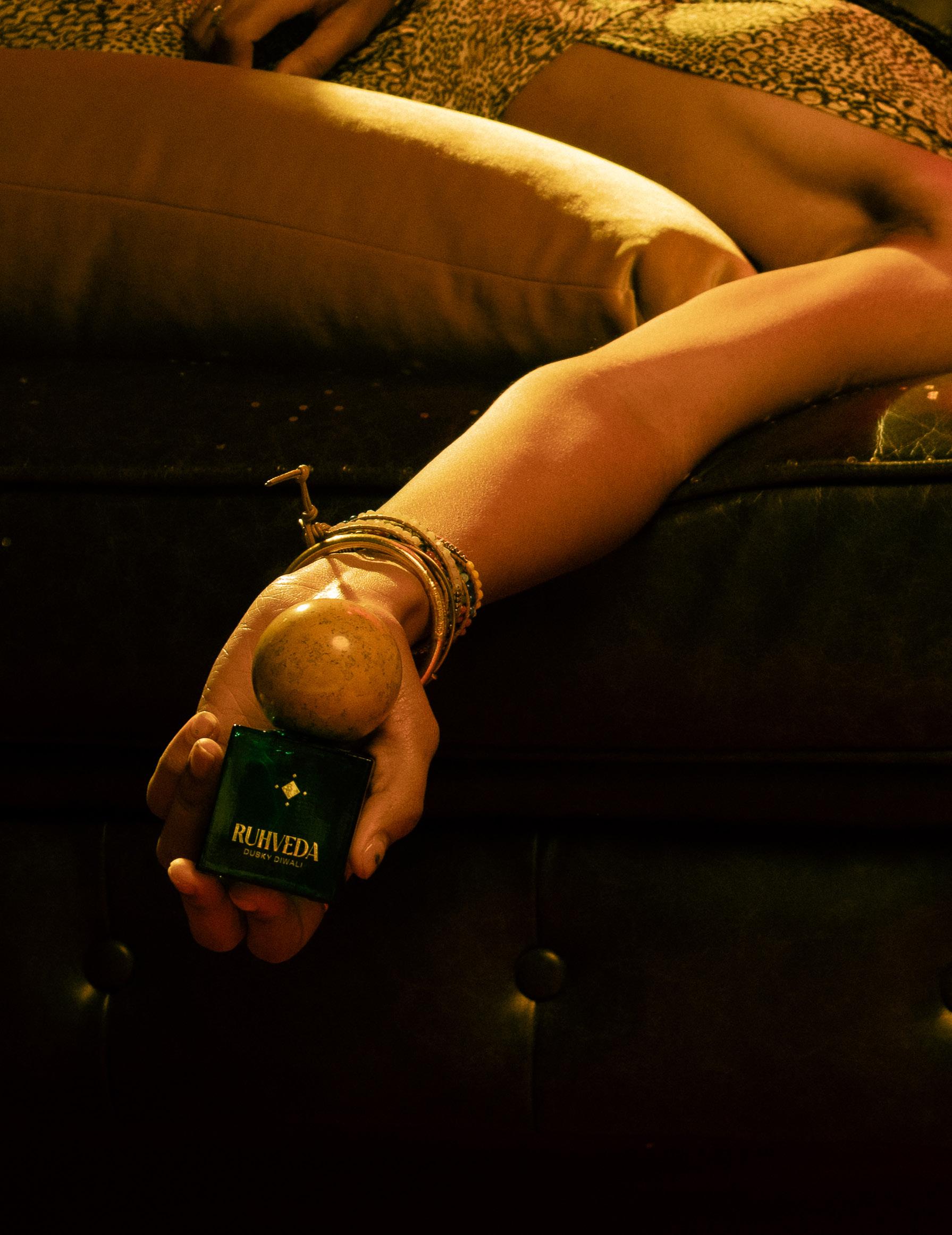
RUHVEDA is an Indian fragrance house reinterpreting centuries of perfumery heritage for the modern world. Founded by Navneet Kaur, RUHVEDA is the first Indian perfume brand launching in Sephora through the Accelerate Program. Each scent begins with a cultural story, crafted in collaboration with generational perfumers from Kannauj, India’s historic perfume capital. From Dusky Diwali to Mughal Majesty, every fragrance is an invitation to experience Indian perfumery as it has always deserved to be: with depth, intention, and beauty.
RUHVEDA
PA Sage Murthy
BTS Videography
BJ Hardy
BTS Photography
Dillon Johnson
Ebiere Penawou
Models
Sia Kumar
Justin Zheng
Virginia Egere
Nash Rahman
CD Assist
Yana Pinto
Hair & Makeup
Harley Chen
Lighting Director / Digitech
Mitchell Jung
Assistant Lighting Director
Kiara Ou
Best Boy Electric
Charlotte Bonn
Key Grip
Samantha Busse
Pauline Forstall is a Los Angeles, New York, and Aix-en-Provence, France-based photographer and filmmaker. She creates images that explore connection, tension and the poetic choreography of human life through high contrast imagery with her signature pallet of deep blues and greens against stark black and white. Pauline studies Film and Television Production at the School of Cinematic Arts, University of Southern California. Pauline also serves as the Assistant Director of Photography for Haute Magazine.
Rohan Baru is a Los Angeles-based creative from Milwaukee. With a foundation in media/entertainment production and business administration, he strives to imbue his artistic voice within creative direction and marketing strategy across numerous mediums. Rohan studies Business of Cinematic Arts at the Marshall School of Business and the School of Cinematic Arts, University of Southern California. He also serves as the Chief Operating Officer for Haute Magazine.
Nicole Leihe is a Bay Area and Los Angeles-based designer and 3D artist. With a love for storytelling, she aims to convey meaningful narratives through her work. Nicole studies Game Art at the School of Cinematic Arts and Economics and Data Science at the Dornsife College of Letters, Arts, and Sciences, University of Southern California. She also serves as the Creative Director for Haute Magazine.
In our world, to see is to die, and only in death are we to be seen.
My mother died three nights ago, and today, as we lay her body in the land, it is customary that we first remove the large, magnificent mask from her head.
We all wear a mask. It is how we live.
As time ran cruel and history grew wasteful, ruin ravaged our faces. They became awful, senseless things, twisted by inheritance and abundance. A child is now born with the face of a million battles—clashes of wealth, of severance, of theft—and that is too much for one face to bear.
Our mothers mask us at birth. They cannot stand to look upon their creations and see, alive, everything and nothing at once; unknowable, incomprehensible, ruinous. No one can stand it. Only in death are we to be seen.
I tie my dress and lace my slippers. They are black and solemn, fit for a girl and a burial. My mask sits heavily on my face. My painted eyes are a chemical blue, my lips a tasteful violet.
“Tala,” my father says. “It’s time.”
We stand in the middle, in front of the other mourners, gathered in a rounded crowd. The ground beneath us is soiled, made of dirt and trash and melted things like
telephones and gold. It is where we all are buried, where our bodies join the mass. Our wasteland. My mother’s body now lies beneath, her limbs covered in waste, everything except her masked skull. I see her wonderful orange eyes, the painted ones, open wide and bright.
My father kneels to her as I look away. He is the first to see. His hands shudder as he lifts the mask from her head. Later, it will find its place on the wall, next to her parents and the rest of our deceased. One day, next to me. For now, my father holds the mask like he is holding a child, and can barely bring himself to look at her dead, uncovered face.
I’m next. For the first time, I see my mother’s skin. It is still, incredibly still, and the sight is dizzying. I see its disturbing marks and folds, tattered and strained. Histories melt through her pores. She looks impossible and dead.
For a moment, I wonder how her eyes might’ve looked alive, how her cheeks might have bled and her tongue might have pulsed. They are haunted, forbidden thoughts, and I suddenly feel sick with stillness and consequence.
I run, away from my mother’s corpse and deeper into the wasteland. My father’s cries grow distant as I stumble over scraps. My feet lose track of place. I collide with a body and a mask, a boy’s, and the hard sensation brings me back to my mind.
“Sorry,” I say as I look at him. His painted eyes are golden and narrow. He appears to be my age, though a bit
taller, and his molded lips sit in a half-smiling impasse.
“Who are you?” I ask quietly. It is a thoughtless question, almost foolish in a world like ours.
“My name is Sipho.” His voice is steady, unyielding. His masked figure anchors me through space.
“I’m Tala.”
“Where are you going?”
“Nowhere,” I answer.
“Nowhere is not this way, I’m afraid.” Our surroundings crowd with noise. The land beneath us rumbles, heaving with arrhythmia.
“What is?” My voice drowns under surging waves of song. A recital pulls my ears, a nauseating, demanding cacophony.
“The masquerade,” he says, drawing me forward.
We are far from my mother’s burial now. Sipho and I step further into a surge of masked figures, feverish with activity. Their bodies pound with heat and loudness. They are dancing, I realize. There is sound everywhere, muddled songs of old and new, created and destroyed with every moment. It shakes me, and I am struck with a burning compulsion.
I remove the mask from my face. Sipho pauses, then does the same.
Before we can look, we dance.
We twirl and stomp our feet to the earth, to the wasteland. His unmasked face is a blur, floating in movement. I catch glimpses of it—flutterings of skin, lips and tongue. They are dreadfully dark and bizarre, but they are never still. We dance and we do not stop. This is how to see, I think. I understand it now.
To be still is to die. To dance is to see. To see is to know. To know is to love, and we must love if we are to live in ruin.
Our two masks are left on the ground, staring at each other with painted eyes. And the two of us, Sipho and Tala, stand to see our tattered, porous faces, in motion and alive.
The sound is endless. Instruments pull and release their waves, crashing and spilling into our ears, which hear everything and nothing at once. The only drum is our heartbeats, booming through our feet to the land, where our ancestors rest. We will dance until we die.
Who will remember us in death?
My mask will live in stillness on the wall, for precious viewing in the morning and observance at supper. For my father and sisters and all their descendants, it will be what I have left behind, and they will mourn it, hold it like a child in their shaking hands. The mask is how they will remember me, like I remember my mother.
But my face will have been known by one, the one who saw me dance in waste.
In our world, it is what we must do. We move.
Leilani Mate is a Seattle and Los Angeles-based writer with roots in Vancouver and Austin. Her work explores emotional truth and human experience through precise, lyrical prose. Leilani studies Creative Writing at the Dornsife College of Letters, Arts, and Sciences, and Communications at the Annenberg School for Communication and Journalism, University of Southern California.
Sundiata Enuke is a Los Angeles-based filmmaker and photographer. Her character-centered photographic works root themselves in the space between family lineage and living memory, exploring ancient folklore in a contemporary context. As a YoungArts winner and alum of Ghetto Film school’s fellowship program, Enuke currently studies Film & Television Production at the School of Cinematic Arts, University of Southern California.
Dhrithi Vishwa is a Bay Area and Los Angeles-based designer who loves combining tangible and digital media in her work. Dhrithi studies Media Arts + Practice at the School of Cinematic Arts and Cognitive Science at the Dornsife College of Letters, Arts, and Sciences, University of Southern California.
Models
Niko Vest Walton
Alyson Okorogu
Yash Mishra is a Mumbai-based DOP and photographer. Starting his journey as a celebrity photographer, he has shot for 70+ Indian artists and for 100+ brands over the past 5 years. His photography and cinematography depicts a strong control of emotion and the core story of a frame. Yash mainly focuses on high energy and message delivery output, citing his inclination towards Bollywood and elements of Indian cinema as inspiration points.
Brandon Taliaferro is a Portland and Los Angeles-based artist and graphic designer. Brandon creates vibrant, colorful works across multiple medias and currently studies Design at the Roski School of Art and Design, University of Southern California.
Mei Kobayashi is a Los Angeles-based photographer. She often travels between New York and LA, allowing her to be bicoastal. Born to two immigrant Japanese parents, she carries her rich Japanese culture very close to her heart, serving as a source of inspiration for her photographic works. Mei also incorporates fashion into her work, weaving the beauty of Japanese culture into fashion photography to create her own artistic style which she calls “messy pretty”. As a photographer, Mei loves to explore textures through lighting and find unique angles to capture her subjects. She has graduated from ArtCenter College of Design with a degree in Bachelors of Fine Arts in Photography and Imaging.
Miyu Ikeda is a Tokyo, Singapore, Bay Area, and Los Angelesbased designer and artist. With a passion to integrate design and immersive reality, she explores how movement and perception can be translated across mediums. Miyu studies Design at Roski School of Art and Design and Extended Reality Design and Development at Iovine Young Academy, University of Southern California.
Assist Daniel Ra
Model Angela Mai
Set Design & CD
Kuan Ya Wu
Ashley Chappell is an artist who makes photographs to understand what can’t be easily spoken. Her work moves between fashion and fine art, using portraiture, color, and abstraction to explore Black identity, emotional memory, and diasporic imagination. She is less interested in documenting reality and more interested in shifting it, creating images that feel like memories, like dreams, like something just outside of language. After retiring from nursing due to lupus, photography became a way for her to process stillness, loss, and grief. Color, especially, became a lifeline. She uses it as an emotional language, something that holds feelings when words fall short. The images are often staged, but they come from a very real place. They’re about interior life, about what we carry, and what we’re still trying to understand. Ultimately, she is building images that function as both reflection and refuge spaces where memory, grief, and imagination can exist together without needing to be resolved.
Laila LaDuke is a Los Angeles-based creative exploring the intersection of human-centered design and creative storytelling. Laila is pursuing a degree in Arts, Technology, and the Business of Innovation at the Iovine and Young Academy, University of Southern California. She also serves as the Director of Visual Design for Haute Magazine.
RAPHAEL RIVERA + OLIVIA YUN
I have 45 minutes.
I don’t remember the smothering warm kisses, red smacks of lipstick carrying hives from shelled peanuts and shells, an apartment haunted with the smell of the Kare Kare that reached under her floral bed sheets. That’s how they knew, the bumps rising in my skin and throat that came with love. Because California is much too dry. Scratching my throat the summers she visited. Too much Kare Kare.
This room was everything but warm, but why would I need a jacket anyways; it was the wet season. This room is a desert. It exhales. Three rooms first: white with the board, red with the cross, gray with the camera, watching. I moved my hands to the right numbers, back to the red room now with the big cross. Headless angels. I thought: there must’ve been some other clue. In their kindness they left me a whiteboard so I can sketch it out. I could be freewriting. Just me.
Now, 42. The outside: hot, humid, sticky, regardless of sun. It could be raining, but you couldn’t hear from inside: cool, fanned, air-conditioned. What was the lesson?
Scattered locks, text surfaces, clues I was forgetting; where was I? not the red room, look to the TV screen don’t you see? Little box where the answers are? In a swirling circle of mass… No that wasn’t the problem, the problem was in the box, that was the room, that was the space. I am trying to leave. Lola said what— no it could not have been a word it must’ve been su-. The story was something grotesque, a time traveler in Manila? I don’t remember now, why I was in the room in the first place, what I was trying to solve, what would turn the locks. But why not walk out? That was always a solution, to leave the place behind. Why don’t you remember? I pressed myself. Maybe my pride, to know I had it, possessed, wielded, it made it mine, and hopefully mine alone. clack
I had never heard of a room you had to do alone. My family was out in BGC today. They could be talking about the new airport, the sinking mass that drove the fish away,
RAPHAEL RIVERA + OLIVIA YUN
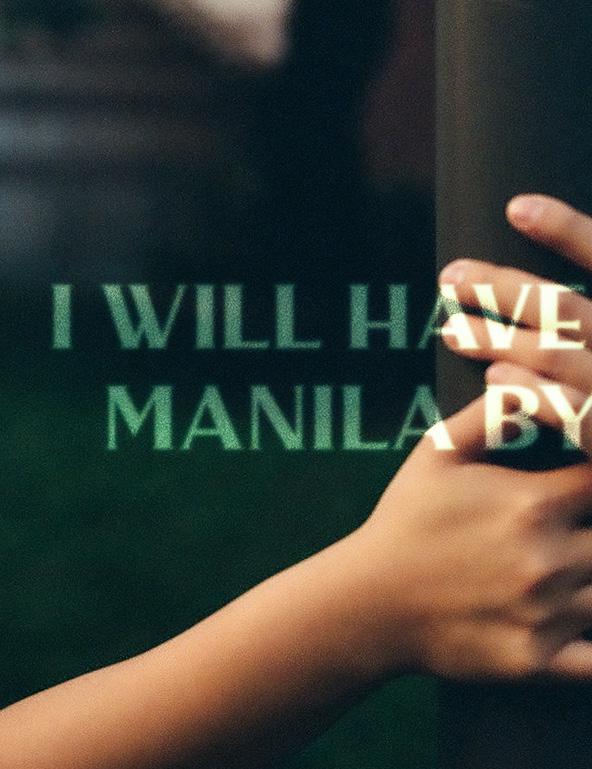
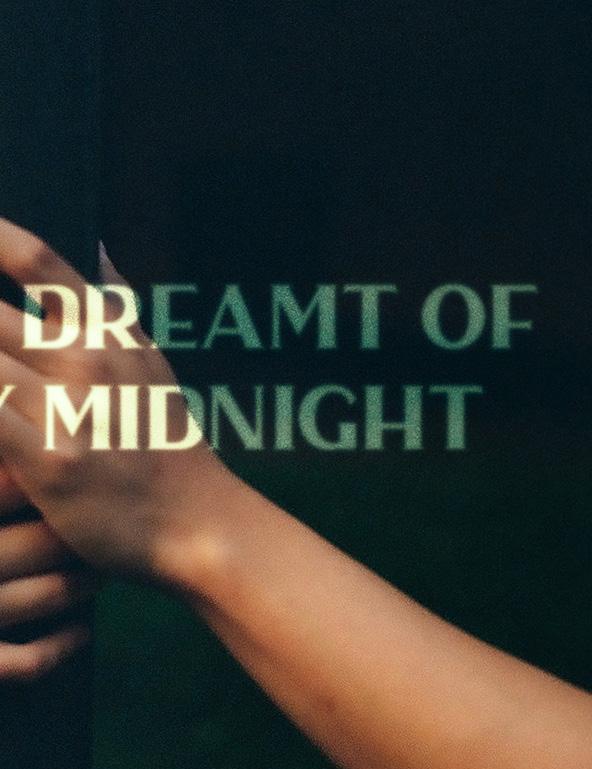
I WILL HAVE DREAMT OF MANILA BY MIDNIGHT
turning stomachs out to other countries. Money sent back here. I didn’t really care about the story, I just hated the idea of not being able to leave the room. I was told to work backwards. A new room, lock answering to 1-0-8-1. They were being historical. But maybe too obvious, surface level, cheap. This new room: 3 wall: backseat of a jeepney to the left, a TV in front of me, and a blank wall to the right. In my head there were fleets of them flooding the streets of Manila. All colorful, taking them from place to place. I would never take one in the morning. They are slipping out of the aperture. I sink back into the camera room again. There will be a point where I cannot ask my cousin anymore about: how they fly in the night, glide in the morning, through the rain, art that seems to smile, the bodies clumped together, because they are cleaning up the junkyard, the roamers with it (they will be made foreign and servants), and there will be no more colors in the night slipping from my view. They are fleeing to a grave. I have maybe 37 minutes now. Here are the dimensions I have now, four rooms: whiteboard, cross, camera, and now one with the three walls. I paced back to the room before, there are pictures here that I should know. I could date this one: Edsa 1986. My bearings for recollection are nothing, a number could never be as slippery as something like memory. Nor warm and elusive like ambrosia, but taken in like liquor, poison is just beyond the red solo cup— mom would be horrified. Numbers are nothing like:
hand in hand—light that sticks to the concrete of a garage, like walls, like flies, rendering plastic tables—or spoon and fork, laughter flying from the banana leaves back into the hallway, letting the dog know not to run into the night of suburbia. I have lost too much of the many because…
The code is either 54191 or 1986. Esda, the flat image: all I see is hot skin and revolution— victory that is fiction, resolve that is real.
Clack
I hear the strange sound. It’s nausea, the play between the concrete and white light, which wants to exterminate from the top down, decree from heaven, sublimating the hands that labor. A new fallen. It cannot be a clue. The red room has no body. Except when I enter it, except when I pray. Then I am still in this other dimension. Abstraction. I am sure of the eternal song, that is, angels singing. That is but all notes. Descend into these rings, fall out of the screen. The grey room does not watch me, the wire’s been cut. But stay watching them. But stay looking back. But stay at the distance. But stay in their eyes. But stay from the base. But stay from the radio. But stay from the bay. And the sea does call to me. And some forest, and some mountain, in this ugly reversal —26 minutes. At times I enjoyed the flickering parol beside the altar, where we would sing or float the incense, before dressing up as shepherds on Christmas Day. The faulty star hung over us, with a promise-no-promise, I led our congregation into a charge I didn’t believe, with a song I couldn’t carry. Our Simbangabi. After, we’d raffle small LED TVs, in the hall with turquoise tiling, in the barongs that veil our bodies. I do not want to think about it, the flesh underneath that’s ugly. That I made disappear, in the scattered infinite of images, so that we may stand on that same plane. We did not all think of man/woman/man/wo/man. That was not part of our storytelling. I pace around. This song is destroying me, foridonotknowknowitanditturnsaroundagain in dance…
Clack Clack Clack
Back to the whiteboard. These material pieces, can you solve them? Could you draw it out for me? The meals outside upset me. Not the sores in my mouth, but the familiar not familiar warmwarmwarm that drums and is
silenced. Grandma is grandma, and not lola: it’s not something beat into you, but a way you forget— a pain by design.
I know the clock is somewhere, so too is the calendar, the separation of ages. I had to applaud the rooms for their blankness, it’s nothing like: The fireworks that were neither flat or round when we watched from the tower through glass after racing through the streets and fields dodging the feces left by the dogs and taking a hard left until we could smell the smoke from the fireworks as we ran harder running the race out of breath because the sound of the cannons of light faded as my little heart pumped louder because my little body was out of shape as we rushed up the spiraling stars in the castle-like building in the center of the neighborhood the roaring red and blue signaling the end of an age looking for the light that is livinglivingliving— this not what I asked for, the last time in the Philippines.
In the red room, there’s prayer books in a script I don’t know. And language is a body; where does that leave me? but dispossessed. Now haunting. Because, if I had my hands I would be seeing the gods, but they took my mothers name and made my father’s. I want that dream too.
Bombs down south—but the names— are invoked again in my speaking, in my writing— inescapable prayer. This room then could be another mission, another crucifix, another way of rendering the landscape for the invisible, the immaterial-material, the body taken in one’s mouth and then out of nothing. one cannot hold the weight of one. I heard someone say something like that. That’s the Kare Kare that creeps under sheets. I keep reaching for the next few years: I know 1081 the declaration, 1981 the revolution and then what, foreign policy— three presidents. All these faces in the crowd are what I want. I don’t want to cry at the metal sheets, it’s not my stomach; it’s my money raining bombs in Mindoro. You cannot forget this. And elsewhere too…
Clack Clack Clack
Out of this mouth is recapture to i. They cannot call it hope, being in television. I’d like to ask who watches when we’re granted the stage
I WILL HAVE DREAMT OF MANILA BY MIDNIGHT
and who owns it. You are not an object they will be mourning. That was when I knew more saints than songs on the radio. Where did I move from the invisible? If I were not in this room then I would disappear with 20 minutes left.
Clack Clack Clack Clack Clack Clack Clack Clack
I wondered if they were watching me pacing. There’s a camcorder in Los Angeles with my name on it. In 720p, I’m 7 years old and swimming amongst fishes and the water is its perfect turquoise and my body continues to float because of the ugly yellow life-jacket and my feet swing away from the fear of the mouths below and the salt fills my eyes until… pornographic, almost. Because this is the paradise where I am in the cool water where I’m supposed to be, the paradise where I am in the water, where I was not hurled into the void that was heaven, where I am not crawling like Achilles 400 years into the past. Here’s to wondering if they are looking at me like that. I was cut before the camera.
At 7 minutes, I tell myself I’m not afraid, because I could leave the room if I want. But it is this song outside the room that is haunting. I feel it in my throat, in its partiality, it resonates back as if restoring the whole body, with sickness, to cure me of apparition. But not— and wail. just out of reaching if I were to trace the floor the room would draw out like a telescope were I to trace the floor it would reveal an awful geometry: a triangle of perspectives the jeepney does not look at me I look at the half jeepney torn into the wall turning back time take me there maybe the next room is ube ice cream and a guitar —final insult the song below me a still beating heart I cannot match to the body I could try to pry off the floorboards but there are none. I stay scraping the floor —but if I could just walk out and see the people—because one carries one.
Raphael Rivera is a Los Angeles-based writer. He likes to write short stories, fiction pieces, and poetry. Raphael studies Comparative Literature at the Dornsife College of Letters, Arts and Sciences, University of Southern California.
Olivia Yun is an Orange County and Los Angeles-based photographer. She largely specializes in film photography, exploring the themes of nostalgia and human interaction by capturing the quiet intimacies of collective experiences. Olivia studies Fine Art at the Roski School of Art and Design, University of Southern California.
Michelle Li is a Los Angeles and Shenzhenbased designer and artist. Her work combines graphic design, fine art, and product design to investigate themes of culture and identity. Michelle studies Design at the Roski School of Art and Design, University of Southern California.
Models
Rocco Padua Monique Marie Espiritu Rivera
RAPHAEL RIVERA + OLIVIA YUN
I WILL HAVE DREAMT OF MANILA BY MIDNIGHT
Caldwell Heights is a town that rides on the coattails of the past. I start in the city – glass framed high-rises, short-lived couture, the most recent ribbon-cutting. I drive on a six lane interstate that narrows to three, and then just two lanes. Clock hands begin to move with leisure, tracing the contours of yesterday as I advance. The sprawlings of suburbia are hushed. Bugs hit my windshield. And when I drive at night this is the point when I realize I am far from where I started, only able to see the asphalt immediately in front of me and the pulse of light from the radio tower vaguely down the road.
Ambiguity cloaks Caldwell Heights. The street sign for Vine Street, though maybe actually named Wine Street, had seemed to acquiesce to years of weather, its sunbleached letters and green patina giving a fluidity between the ‘W’ and ‘V’. I see the same conventions that surround the ruins of Petra or the Acropolis at work within Vine Street. Every other building is an archive – a tangle of vacancy and plywood, the lucky ones occupied by shops selling bootleg cannabis. The past merely whispers through them. Romance is lost in the burnt out neon signs and empty newspaper stands.
I think of a time when Frank Sinatra is still alive. The timbres of doo-wop and checkered floors permeate from the Northside Diner. A waitress, named Mabel or Margaret or anything else that looks good in the cursive on her apron, tends to empty coffee cups. I imagine it must have been an odd hour of the morning, some patrons from the night before dwell over barstools. Others enjoy a quiet prelude to the morning train and a long day of work.
Employment exists within a triad. First, just two train stops away from Vine Street is the factory, which used to exist not just here, but also in Texas, North Carolina, and one factory overseas until they closed in nineteen ninety something. At a time, it was the premier supplier of copper circuits used to make rotary telephones. The factory still stands today, though now only making novelty retro goods for hipsters.
Under the second category falls those Mabels and Margarets that work within the confines of Caldwell Heights – school teachers, butchers, public servants, and CPAs. Within this category, there is no shortage of women with Bachelor’s Degrees that now devote their time to knowing the proper table etiquette. She knows to put the salad fork on the far left, the soup spoon opposite that, and has an eye for when the table should be dressed with doilies and crystal. Domesticity breathes and thrives.
Lastly, Caldwell Heights exports labor to the Steel Mills further to the East and the tenured positions with shiny offices in the West. These people recognize the narrowness of the town. Perhaps the promotion, or the raise that would make real the dreams of a two-story bungalow, a college fund for the new baby, or a vacation to Key West laid beyond Caldwell Heights, just a few dozen miles away. These thoughts weren’t entertained any further- leaving such a perfect little town beyond the hours of nine and five still seems unfathomable.
At this point, Chicago, or New York may as well be Nineveh- cityscapes dulled by a layer of filth perhaps from the exhaust of passing trains, or maybe soiled by some inherent wickedness left behind in absence of God. The city, they thought, must be doomed, by its greed, then by its coquette-ish tendencies. In that sense, the commuters were almost like prophets, sent from a place more modest and good.
Dogmas are deeply anchored into Caldwell Heights, a place with one church for every thirty-eight people. Services follow a strict cadence that start by dressing in Sunday best – putting on cuff links and slicking hair into a comb-over or pinning on a coordinating brooch and slipping into lettuce-hemmed socks. Driving to the chapel, listening to the reverend give a sermon- “Do unto others…”, taking the eucharist, it’s all very formulaic. Congregations delight in the special event of a wedding or baptism, convening after to indulge in cake with a thick buttercream cross on it or watching the newlyweds trail down the road, “Just Married” painted on the back glass.
When Vine Street ends, in a sharp motion, I turn off the freeway and onto Mineral Springs Road. It’s freckled with Presbyterian, Baptist, Episcopal, and Adventist churches that breathe a combination of stucco and stained glass into a landscape that is oppressively gray. Saint Mark’s Catholic is nearly swallowed by ivy and I can’t help but wonder how many Easters have passed since the pews were filled. Trinity Church is only memorialized by the stone pathway that once led to the chapel, the sanctuary existing now as an amalgamation of concrete and brick rubble. Down the road is more confrontation by the barbed wire that guards empty lots and piles of what once was and signs that point to the casino, to the interstate, to anywhere away from here.
The surface beneath me turns to gravel and I feel the tires vibrate on the uneven surface. The road’s end is met with the lake’s beginning. I meditate on the waves that erase footprints. The swell drags sea glass to the shore, a once jagged shard relaxed by years of weathering. There was a time when this shard was a bottle or a window, just as there was a time when Trinity Church hosted Sunday service, and coffee brewed at the Northside Diner. I am standing on a threshold of a past that doesn’t exist anymore and a future that does not yet exist, between everything that has been left behind and everything that will be.
Ella Kopper is a San Francisco and Los Angeles-based writer. Through themes of memory, antiquity, and a focus on location, her work seeks to uncover the quiet truths surrounding our relationships and sense of self. Ella studies Philosophy, Politics, and Economics at the Dornsife College of Letters, Arts and Sciences, University of Southern California.
Merton Wu is a New Jersey-based photographer. In his work, he hopes to communicate a sense of love, hope, warmth, longing, contemplation and nostalgia - the kind of feeling one would experience when having a meal with your family and friends, going to church to say a prayer, and reading your favorite book on a Sunday afternoon. Merton wishes viewers to be transported through his images into their own sense of beauty, where everyday life is captured through the compositions and colors of the subject matter. His work invites you to pause and appreciate the extraordinary in the ordinary.
Jaeyong Moon is a Los Angeles-based fine artist and designer. Intersecting traditional and modern media, his craft ventures to convey thorough yet entertaining creative visions. Jae studies Fine Arts at the Roski School of Art and Design, University of Southern California.
EAST OF NINEVEH
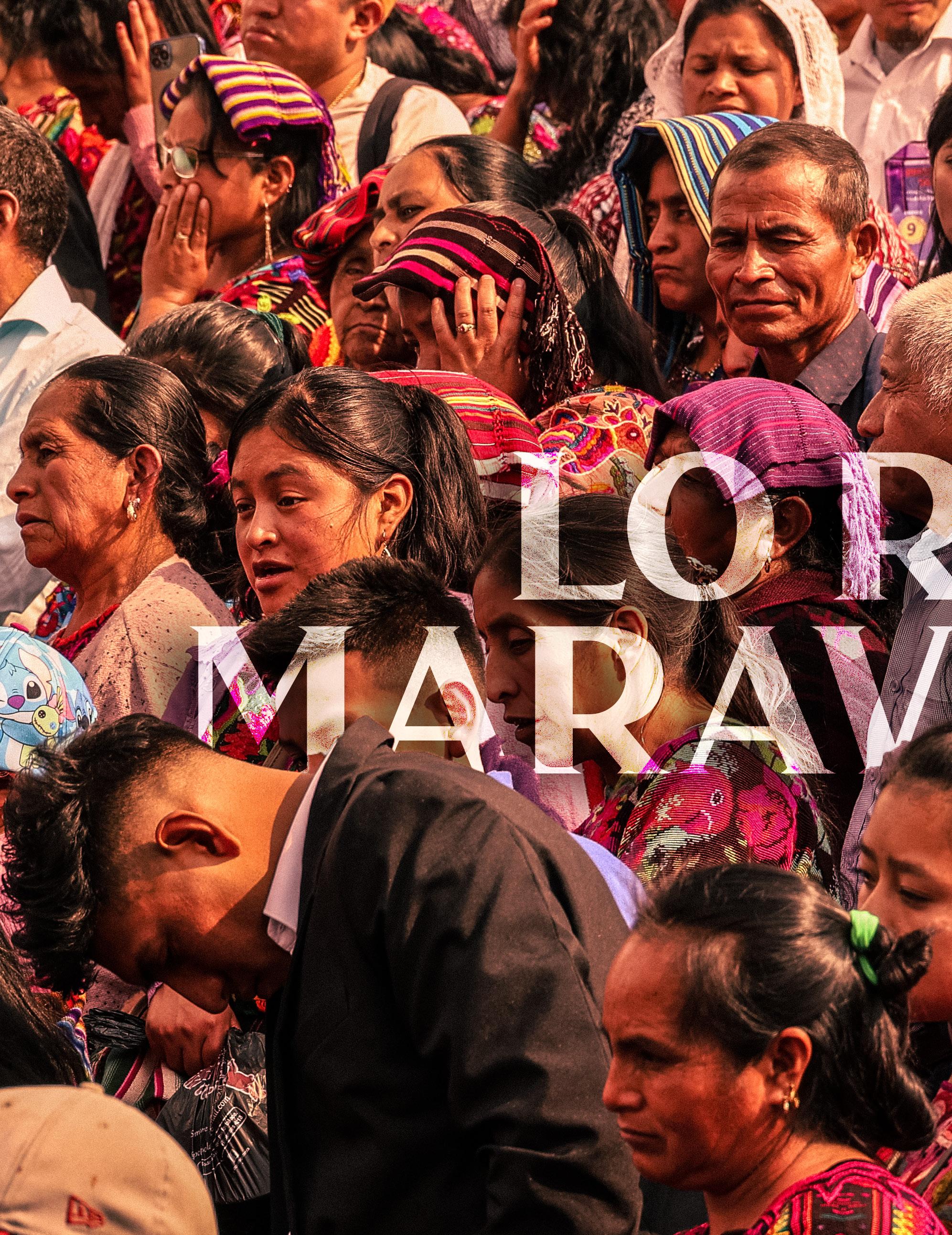
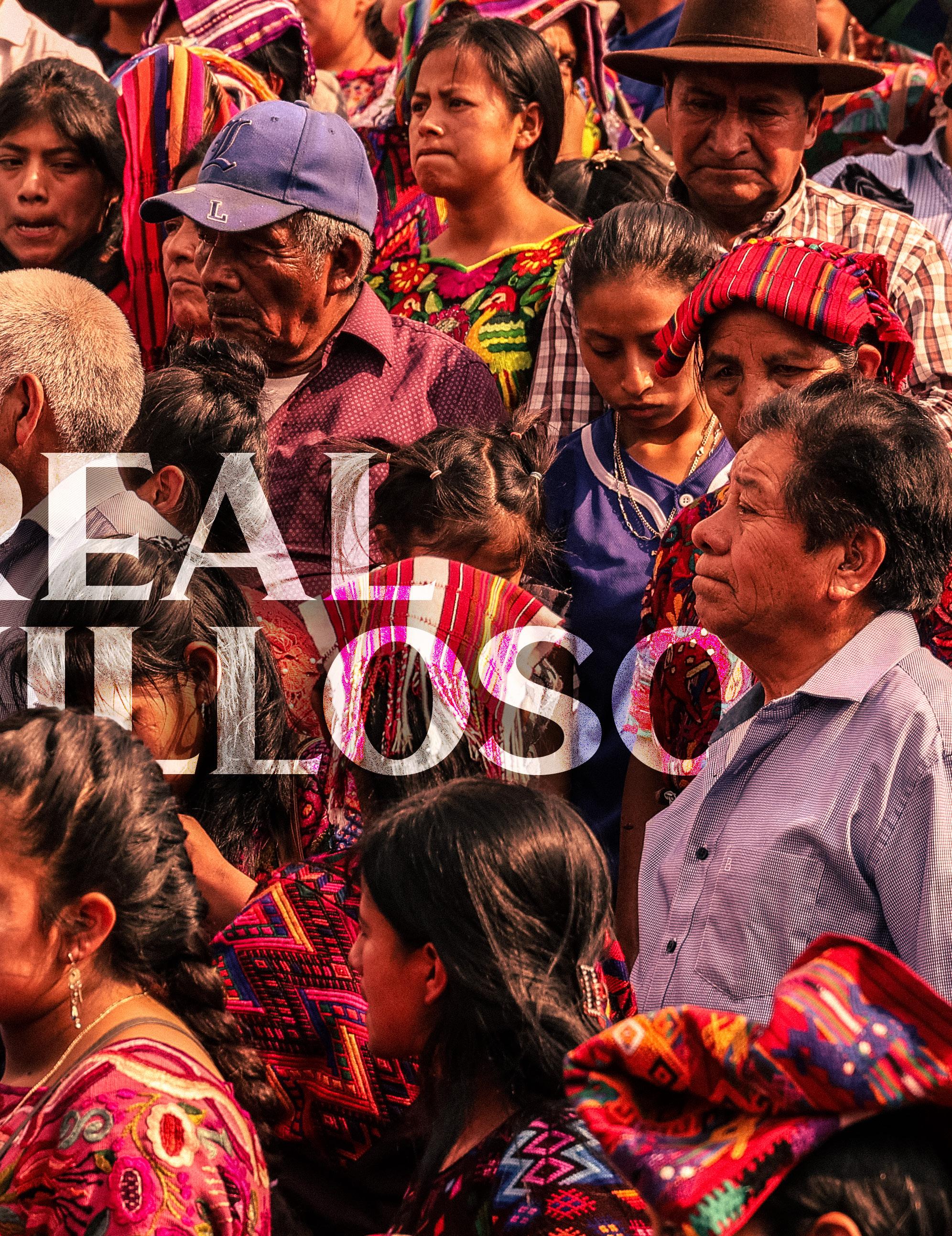
The concept “lo real maravilloso” was created and developed by Cuban novelist Alejo Carpentier in his 1949 novel “The Kingdom of This World” to describe the surreal aura that surrounds Latin America. Inherent to its bodies, it emerges from the processes of transculturation, religious syncretism, ethnic mixtures and coexistence of Native Americans, Africans and Europeans in the neotropics.
Mackandal and Mayans metamorphosing into snakes and jaguars in Haiti and Guatemala, hallucinations in the Andes and Amazonia, Candomblé trances in Brazil and Maradona’s “La Mano de Dios” goal for Argentina in Aztec Stadium — the marvelous real lies in the interstitiality of the real and the extraordinary.
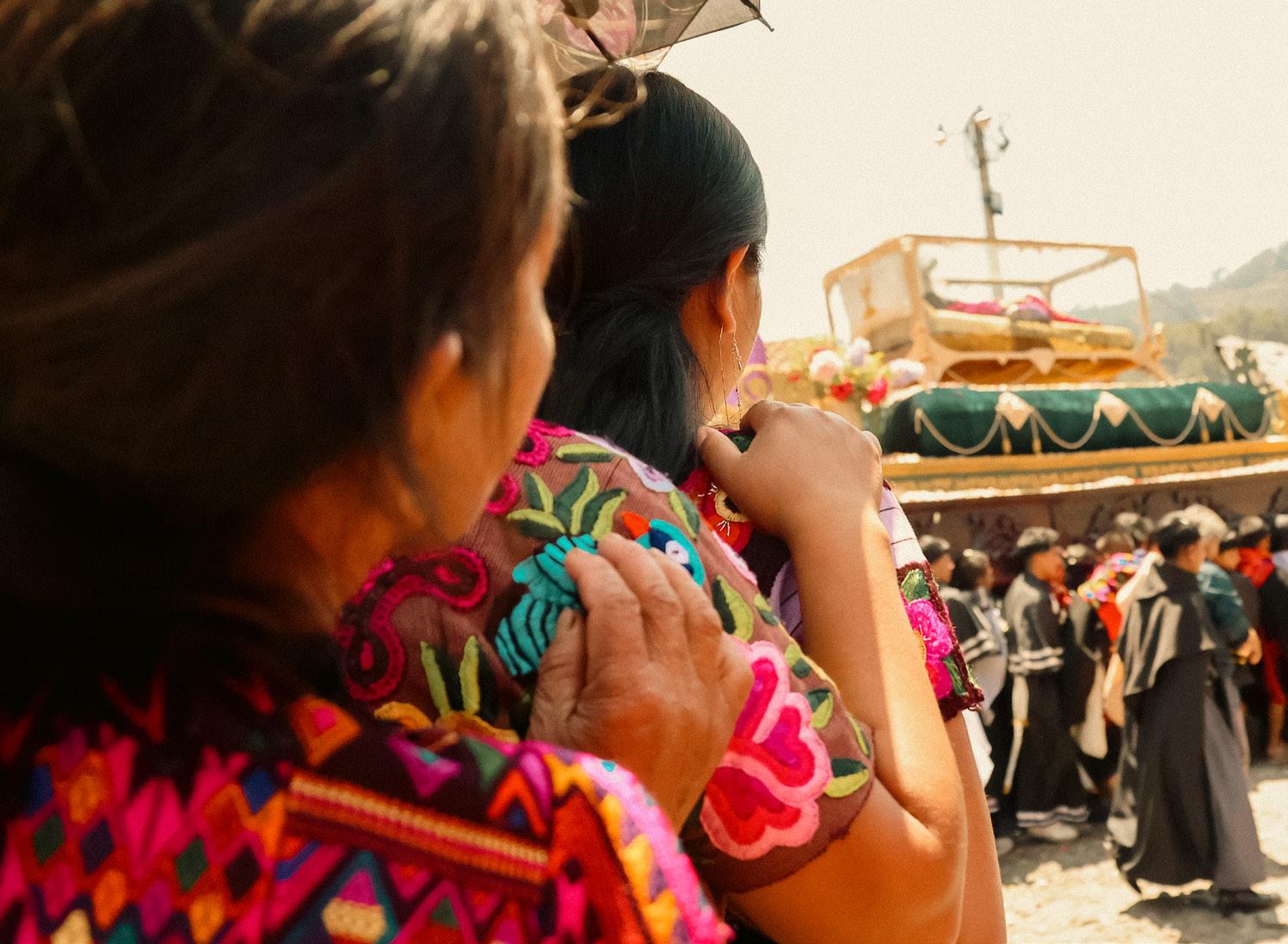
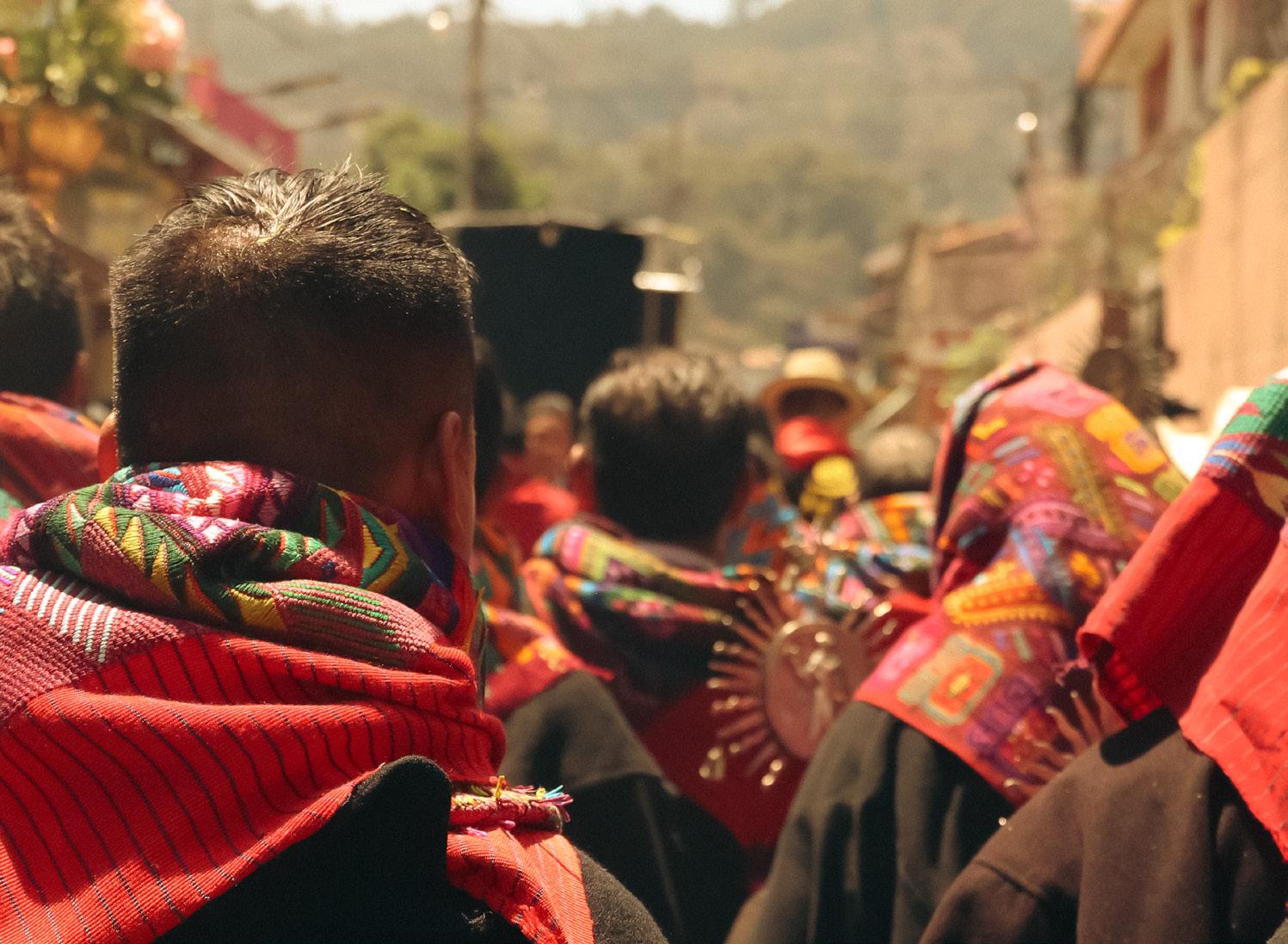
Chichicastenango, Guatemala.
Señor Sepultado del Calvario is a Ki’che’ Maya and Catholic syncretic procession that occurs on the second Friday of Lent. Mayan textiles and flutes mix with black cloaks and Baroque funeral marches, in the city where the Maya sacred creation story Popol Vuh was uncovered.
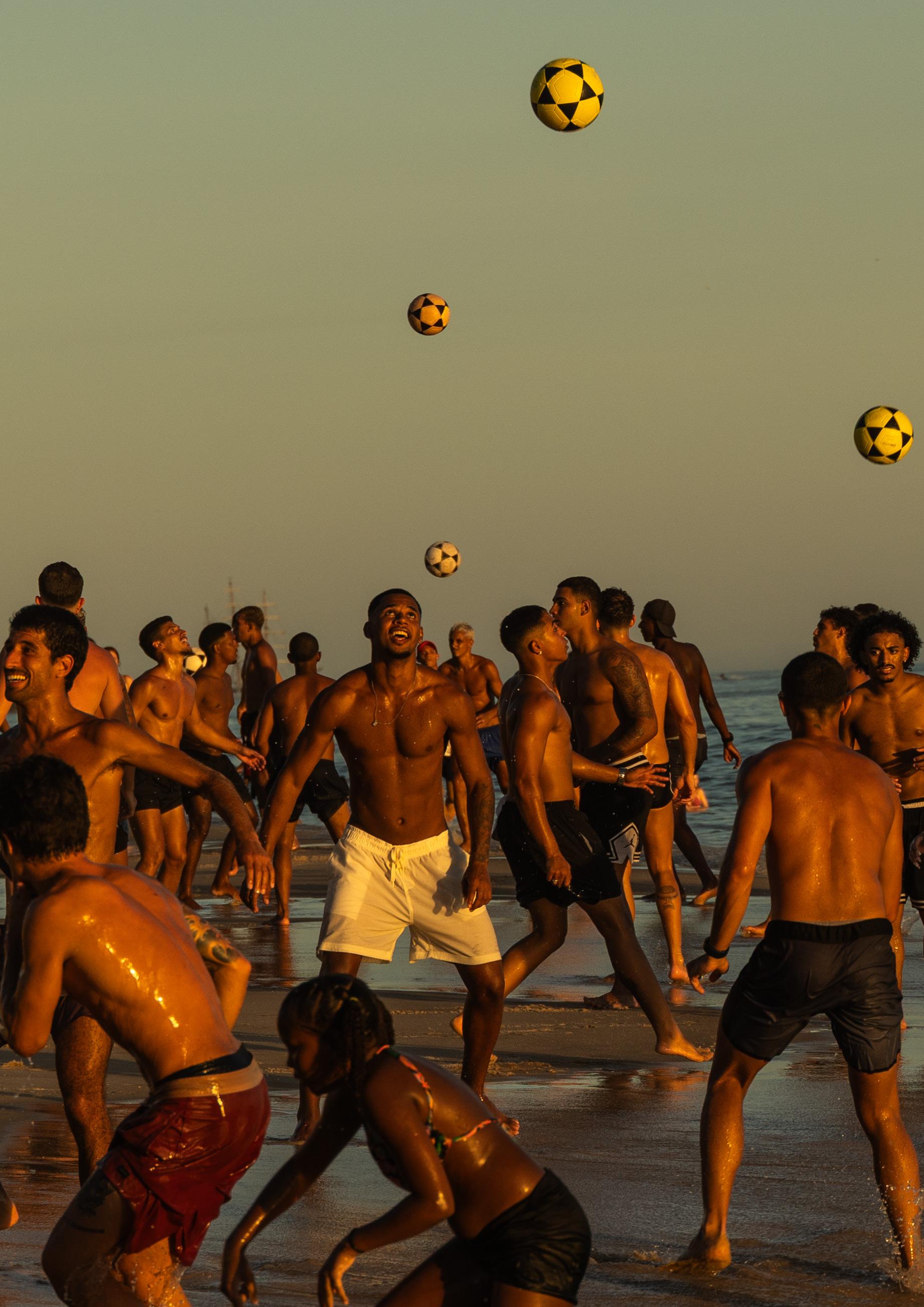
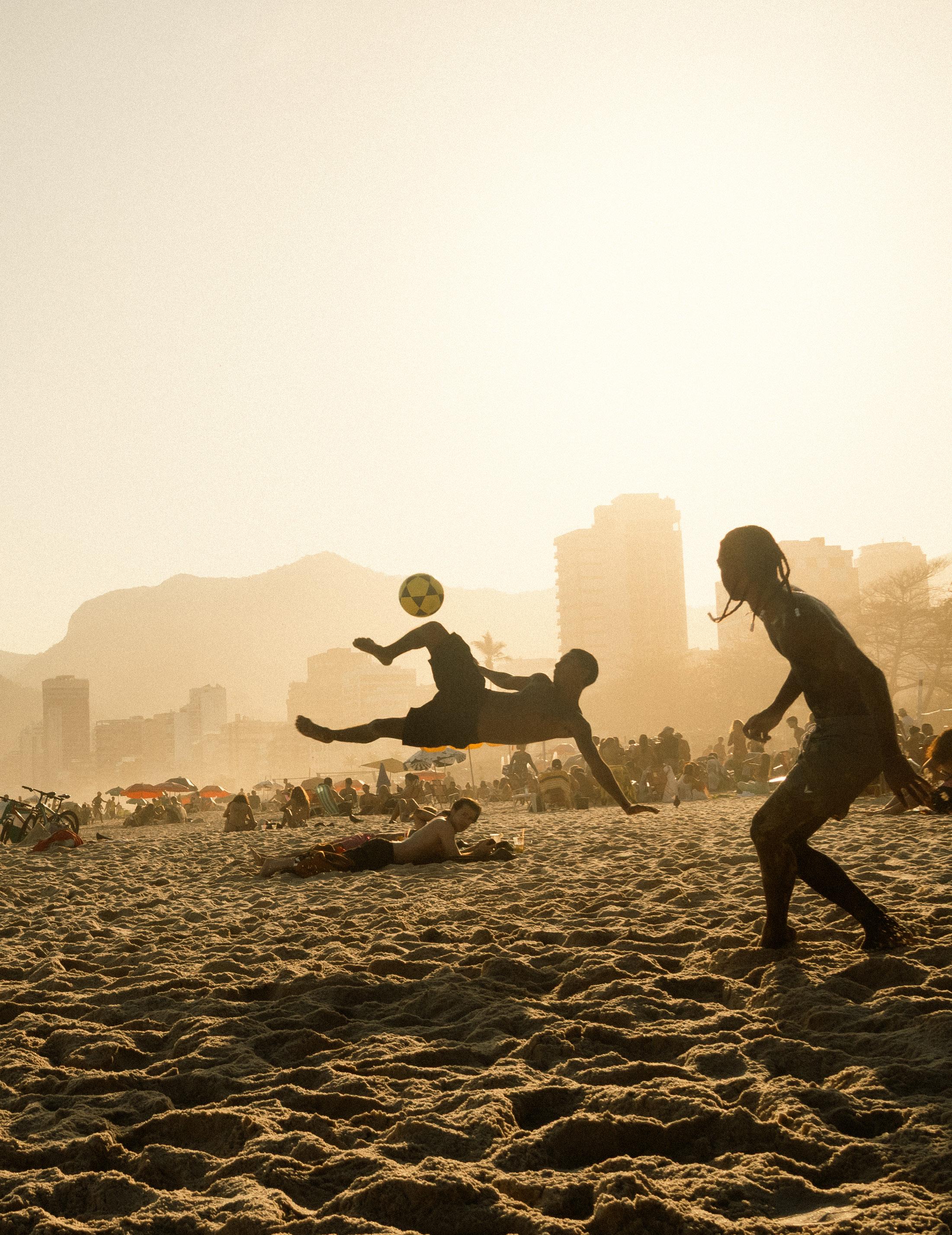
Much like Capoeira, Altinha is a synchronized dance between barefooted bodies, though guided by a ball rather than a berimbau.
Oba, Lá Vem Ela. Rio de Janeiro, Brazil.
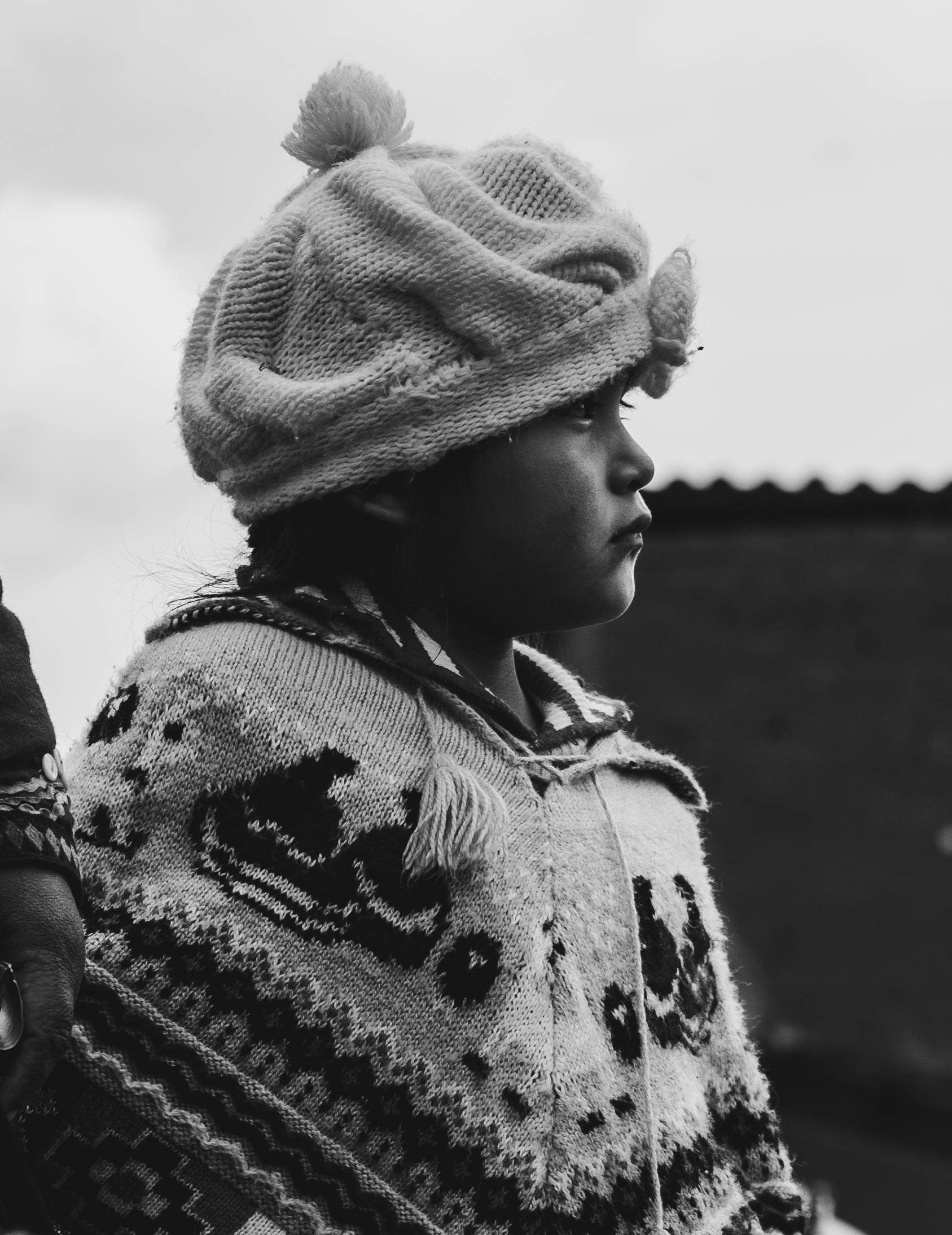
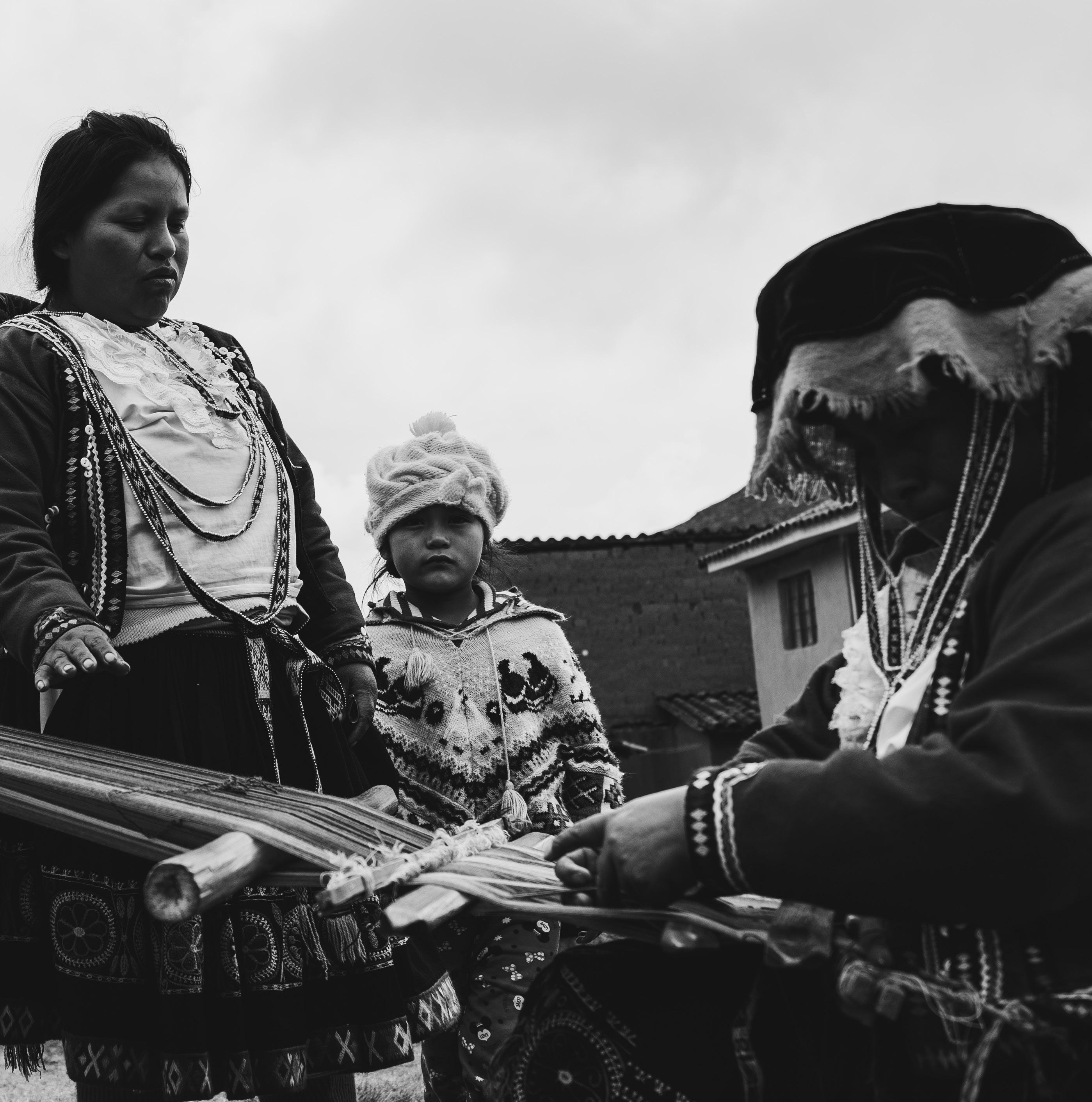
In the Andes, children’s urine is used to make a blue dye out of indigo to color textiles. The shade of plant-based dyes is also subject to the moon’s phase at time of harvest.
Telar de Cintura. Chahuaytire, Peru.
Antonio Coelho is a filmmaker and musician native to Rio de Janeiro, Brazil. Enchanted by Latin America, he seeks to channel its neotropical surrealism from the land to the people. Antonio studies Anthropology and Flamenco guitar at the University of Southern California.
Laila LaDuke is a Los Angeles-based creative exploring the intersection of human-centered design and creative storytelling. Laila is pursuing a degree in Arts, Technology, and the Business of Innovation at the Iovine and Young Academy, University of Southern California. She also serves as the Director of Visual Design for Haute Magazine.
ANTONIO COELHO
Landlocked
Quinha wore Congas. They were iconic, affordable, popular, Brasileiro, and went with everything since they were white—well, not hers. She wore them so well, so mischievously, that the canvas ripped and darkened in the blink of an eye. Quinha left her unique mark on every replica as they piled up. The rate only slowed when she started working at 13.
She mostly wrecked them by wreaking havoc on the neighbors with her primos. Their mangoes weren’t safe, and neither were their houses from the glass jars they would throw at them, and neither were the perforated bricks. The gang would pull the latter out of exteriors and throw them against the cement beneath to shatter them, sediment multiplying in firework formation to reveal lizard eggs hiding in its itty bitty holes. The poor, reptilian mães! These kids were demônios!
Quinha lived with her cousins and her grandma and her aunts and her uncles in a gargantuan metropolis packed with people, people stuffed onto sidewalks and into towering buildings and underground and into trains. Her grandma had really long hair. She was her favorite person. Ever.
Horizoned
Moniquinha walked from sand to sidewalk in the bright midday sun, her feet flip-flopping in Havaianas, her midnight curls glinting gold, her skin toasting to a bronze cinnamon. She’d gotten her reliable rubber sandals at the supermarket in town after the move from Venice.
“Havaianas, always.”
Venice had been a subversion of everything she had ever known. Hopping continents to get her interior design certificate, she came to learn Italian and frequent festivals with her peers before deciding to return to her country, but not the concrete demands of her immediate family in São Paulo. But not before she ate pizza with a fork and knife—like you do in Brasil—under incendiary Venician glares and ma che vuoi’s.
Moniquinha put her Havaianas to work; she visited the beaches of Florianopolis every Wednesday, Saturday, and Sunday from around 8 a.m. to 11 a.m. Ela foi pra praia sozinha, mas não se sentia solitária.
She flipped and flopped right to the doors of a Igreja Matriz de Armação De Pêra, localizado no town square. The church’s eggshell infrastructure had been funded by the local community for the wayward sailors that would come to pass, opening its doors for the first time in 1960. It was only natural, then, that it was dedicated to Nossa Senhora dos Navegantes. Moniquinha had seen it before in passing, but this was the first time she was pulled to prayer. For no particular reason, really.
Turquoise wooden beams crossed a rounded pointed ceiling. Sand stained aquatic to let light in. Nossa Senhora peered over the altar and empty wooden rows in midnight blue and gold.
Moniquinha walked in, knelt, and put her hands together. But then, the echo of o padre’s footsteps left a long wavelength in its wake and forged a path toward her to inform her that the sunset two-piece she’d gotten from the nearby surfing town Praia da Joaquinha, even paired with her denim shorts, was inappropriate.
Moniquinha protested. This was a church that was purposefully built by the beach. Did he really expect her to walk the whole way home, change into her Sunday best, then walk all the way back? Was he really going to interrupt her conversation with God for this grating minutia? The answer was yes. This guy ran a tight ship.
So she left, diving into the heat and brightness yet again. Era uma maneira de libertar a mente dela para ser claro como o oceano tranquilo. Era um ritual que ela amava.
LandLocked
Ratinha liked to play in the park barefoot. Her feet would braise as they hit the pavement; she ran across pits of lava on her tiptoes to reach islands of mulch. It would poke her feet; she ran across wooden spikes to reach islands of plastic and grass.
She’d climb this tree. No one knew you could eat its fruit until Mami told her and her closest friends you could but to not tell anyone else, but then they told their friends and those friends told their friends and now even the white, blonde Americans were climbing and eating them and what was yellow-orange and juicy and yummy was now green and hard and yucky. She wished she had gatekept, although she didn’t even know what gatekeeping meant at the time. (She was like 7.)
Ratinha was too mean before she was too nice. She’d hit her friends, so her mom told her to stop touching them, so she pitched rocks at them from a distance. Even then, she had a knack for creative solutions. Mami would try not to laugh.
The air was muggy. The sun was nosy and abrasive and insufferable. The highways dipped up and down even though the land was flat, and their deceptively watery horizons would make your eyes water in turn. Houston was a mosquito-swarmed swamp before it was paved over and marketed as the perfect place to settle down.
Horizoned
The black waves are lined with a glimmering turquoise that dissipates with every crash. Memé’s cowboy boots sink with every step. Every step carries her to stronger ground until she finds the sturdiness of dampened sand, lapped perpetually by bubbly, luminary sheen. As sedimented glass starts to sink once more, water envelops leather, flooding every niche and nook of cracking skin already damaged by the element.
Memé actually has a habit of walking into the ocean with Mom’s mid2000s Ebay find and leaving her Havaianas at home. She knows she shouldn’t. Although Mom got them for one hell of a deal, she realized they were most likely originally around a thousand bucks after taking a gander at Lucchese’s website, a dumbfounding price neither of them can even fathom to purchase shoes for in the face of paying tuition— or, as Memé likes to call it, “feeding the monster.” But she adores the cool catharsis of her practice too much to let it go. Memé lowers to a squat and stands, saltwater traveling from cheek to sea and giddy laughter meeting white noise. Every knelt and upright iteration that was and will come to be blows through her calcite shell to make music.
The palm trees pillar up an infinite ceiling painted with a sparse spattering of light, only disrupted by Venice’s neon ploy to attract tourists. At one time, she was just another moth drawn to the tinsel. Now, she knows the depth of cracked sidewalks, the vibrancy of graffiti, the conversations with strangers on the Metro during rush hour. LA is a vast, concrete expanse that reminds her of her preschool El Cerrito days and growing up in Houston simultaneously. As an adult, she has found home.
Once a ploy to pull settlers to an “exotic” city, the iconic foreign pillars were about to crumble. But her sky is stubborn, determined. Her sky is what she stands on to reach the beyond.
Aleksandr Babarikin is a New York - based photographer originally from Belarus.
Amelie Melsness is a Los Angeles-based writer, creative marketer and actress who is interested in creating and reflecting culture-defining moments and narratives. She studies Public Relations and Advertising at the Annenberg School for Communication and Journalism, and Cinematic Arts at the School for Cinematic Arts, University of Southern California.
Ava Rathenberg is a Bay Area and Los Angeles-based designer and creative working at the intersection of technology and design. Her work explores how emerging tools like AI and embedded systems can be shaped into experiences and fine art. Ava studies Arts, Technology, and Business at the Jimmy Iovine and Andre Young Academy, University of Southern California.
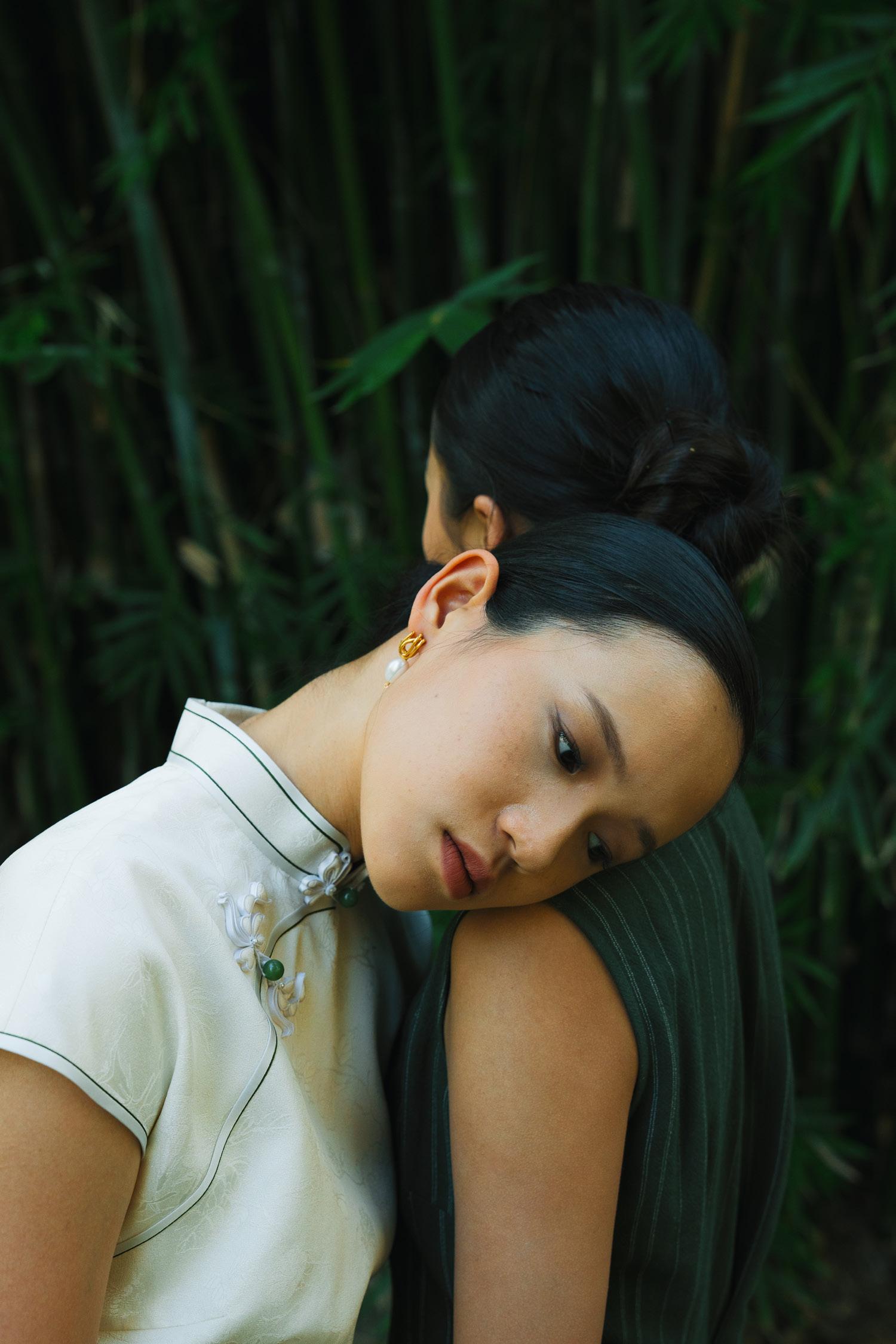
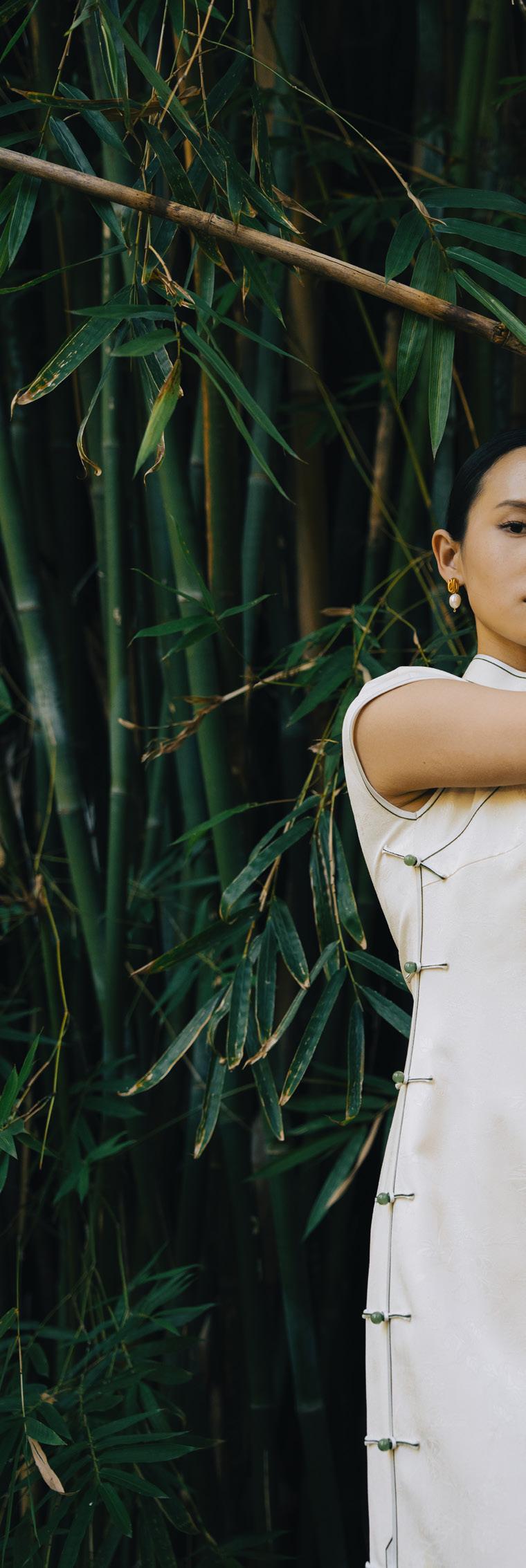
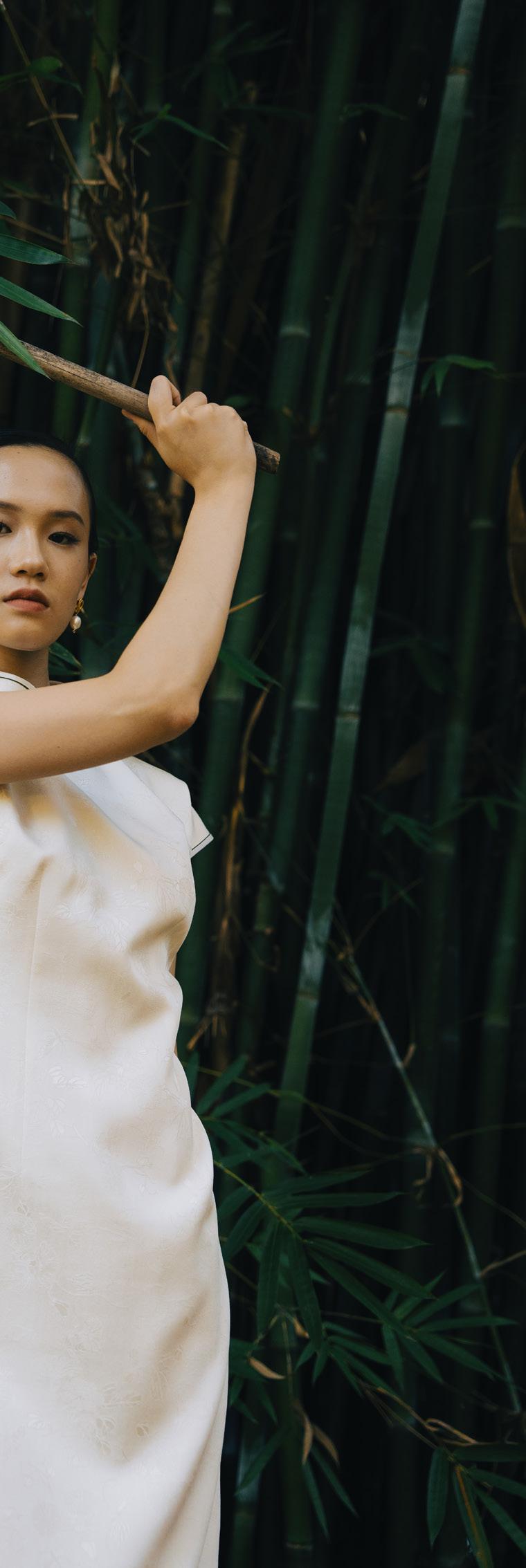
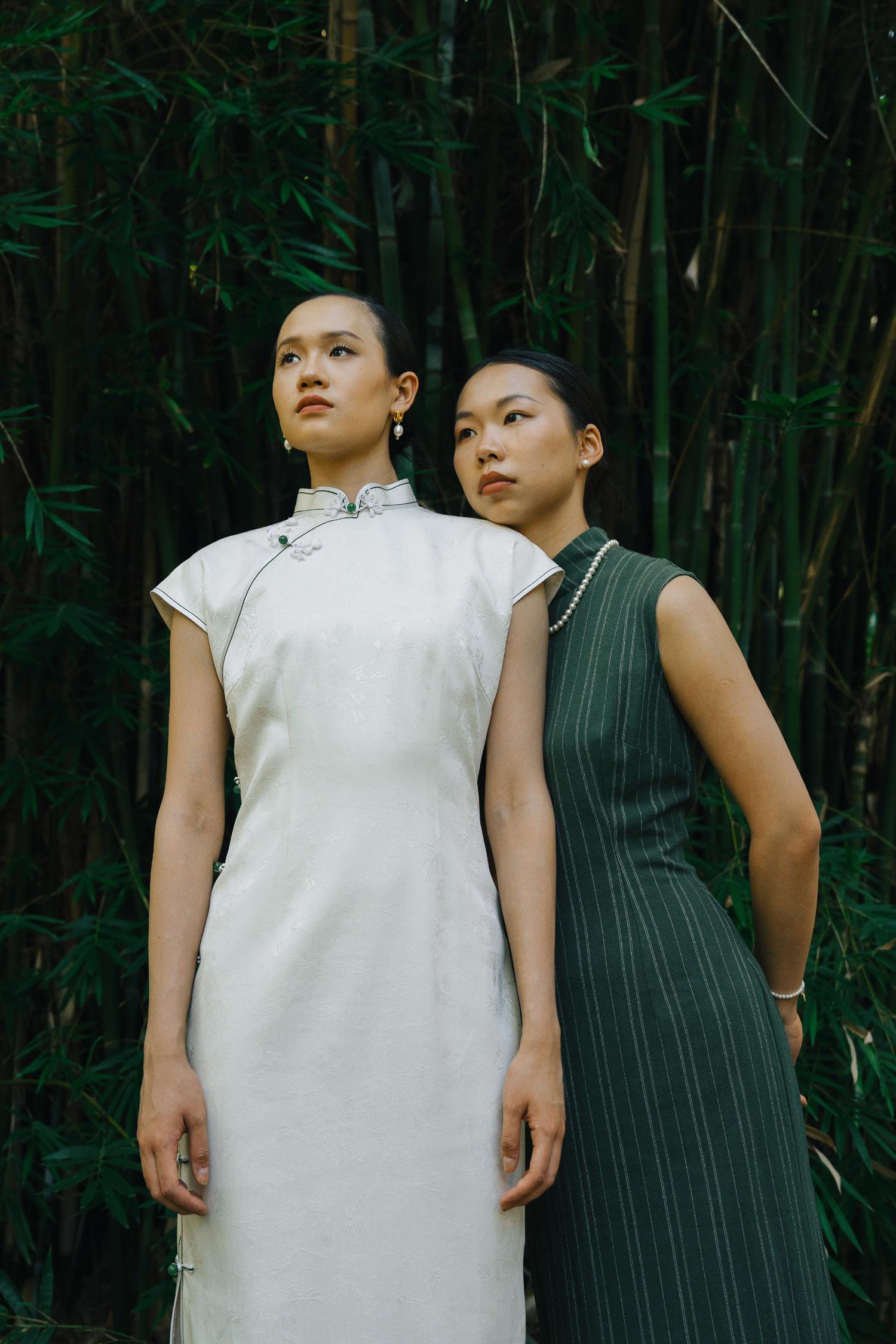
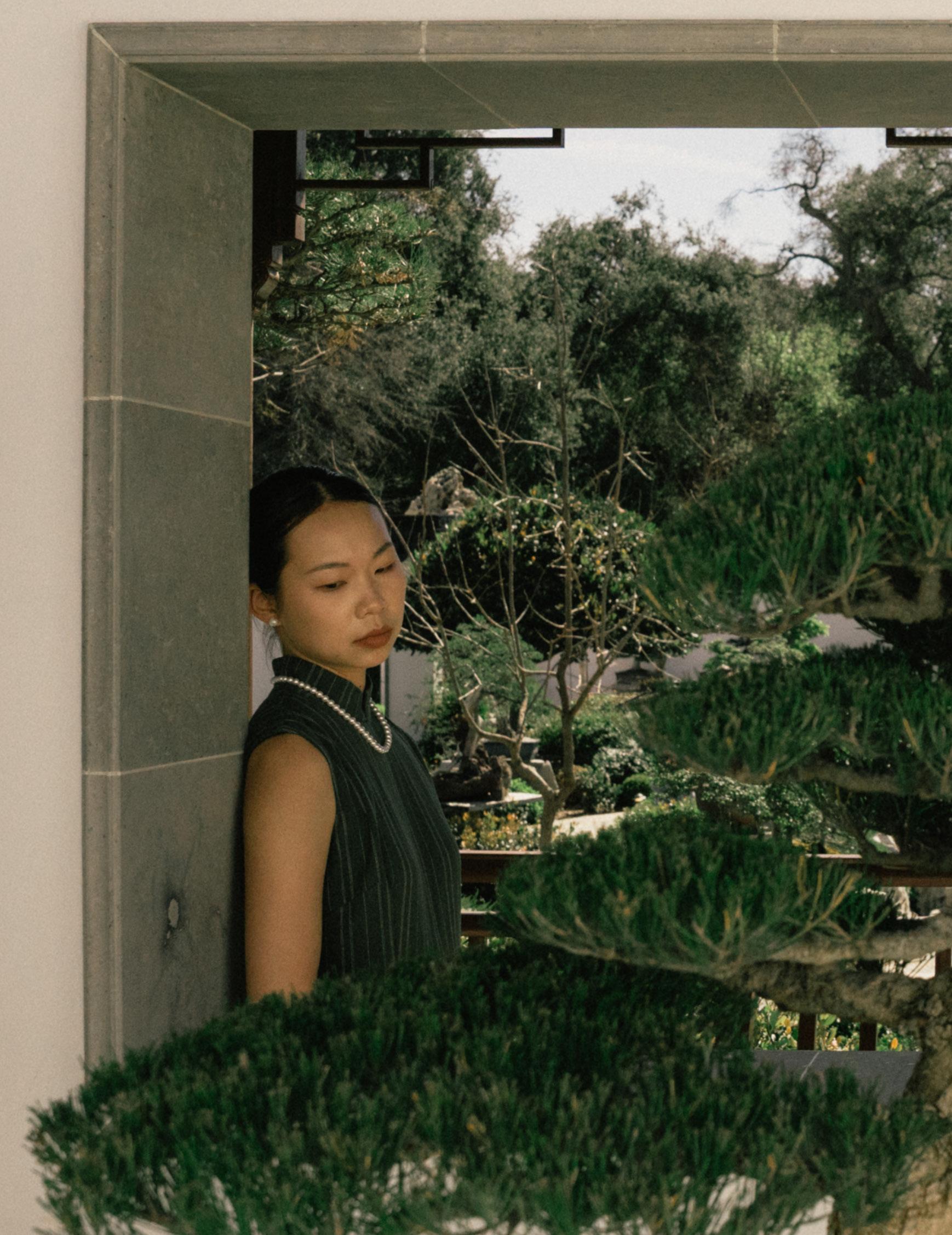
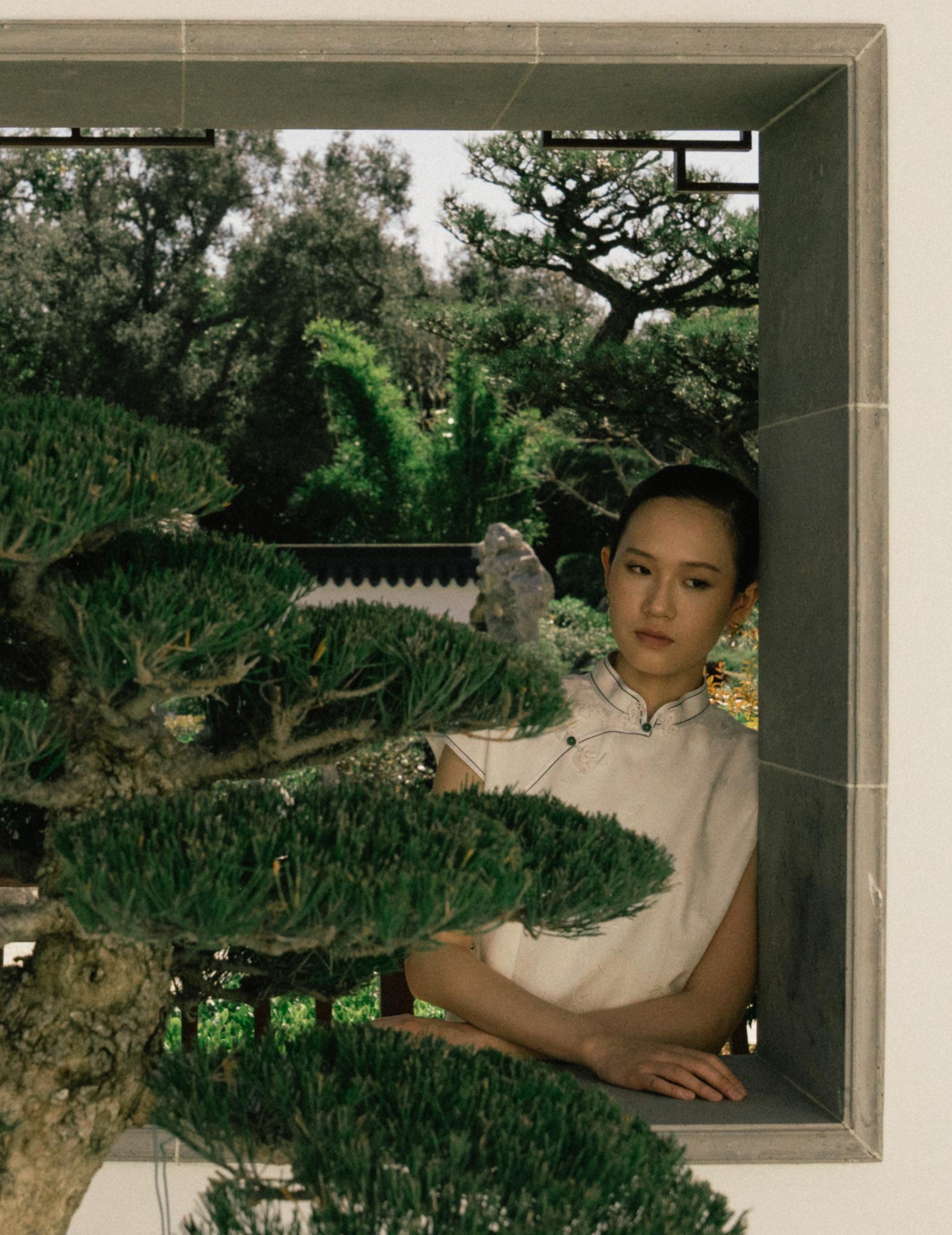
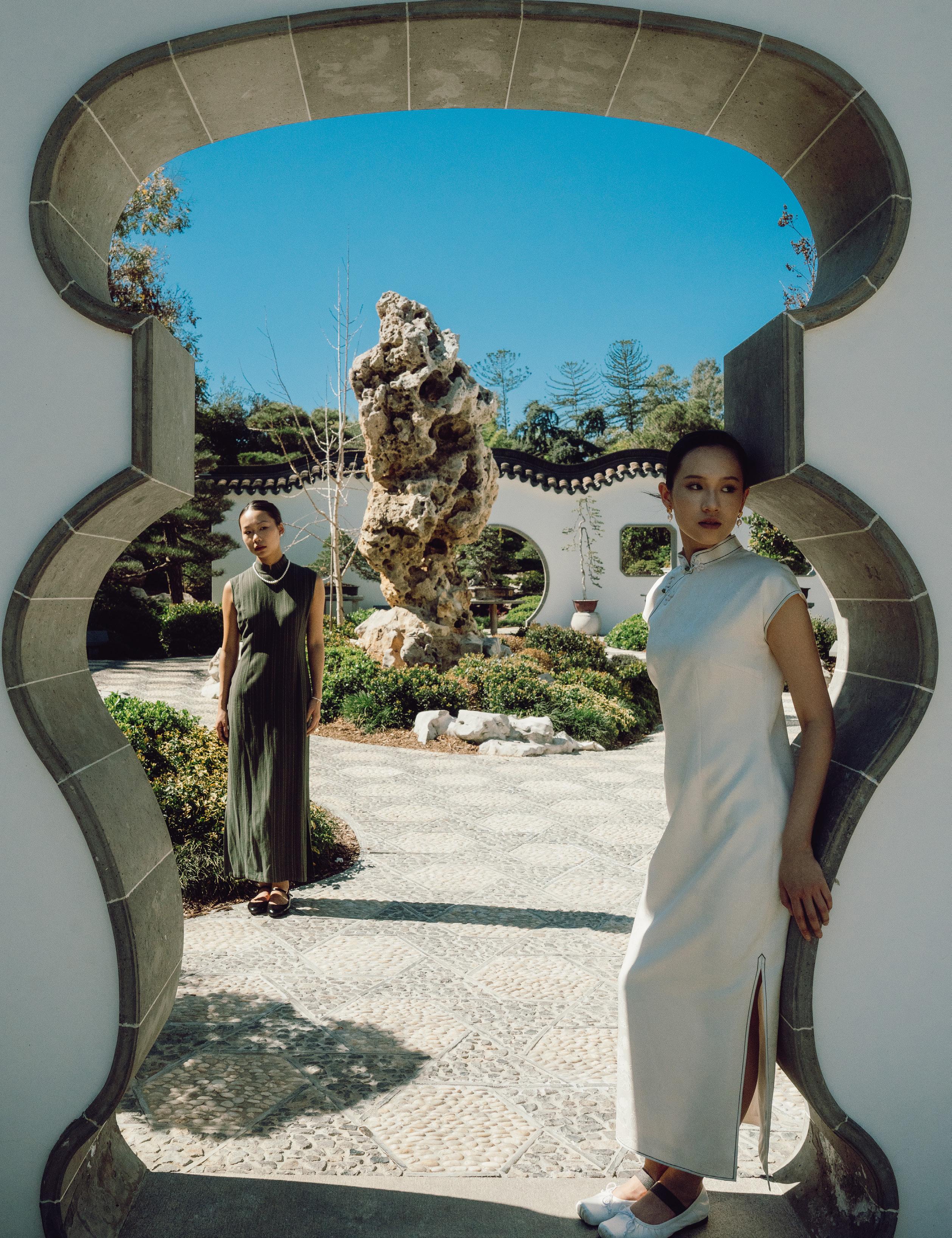
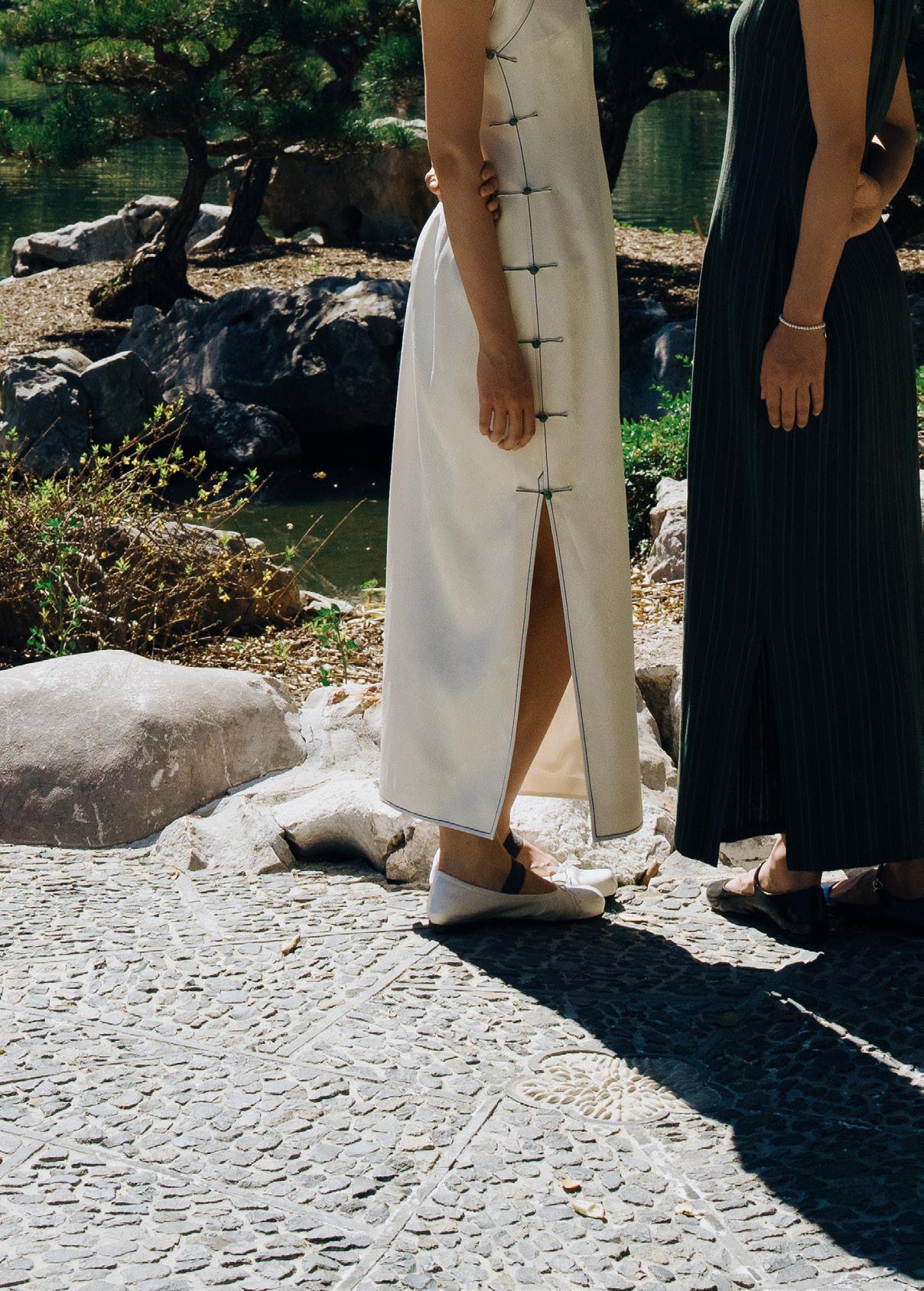
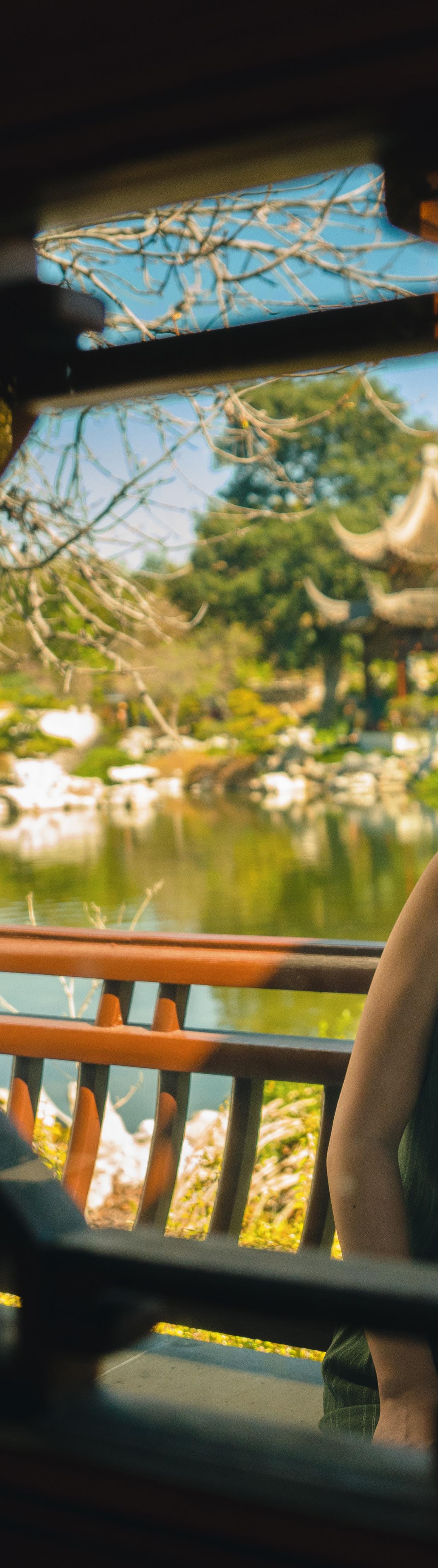
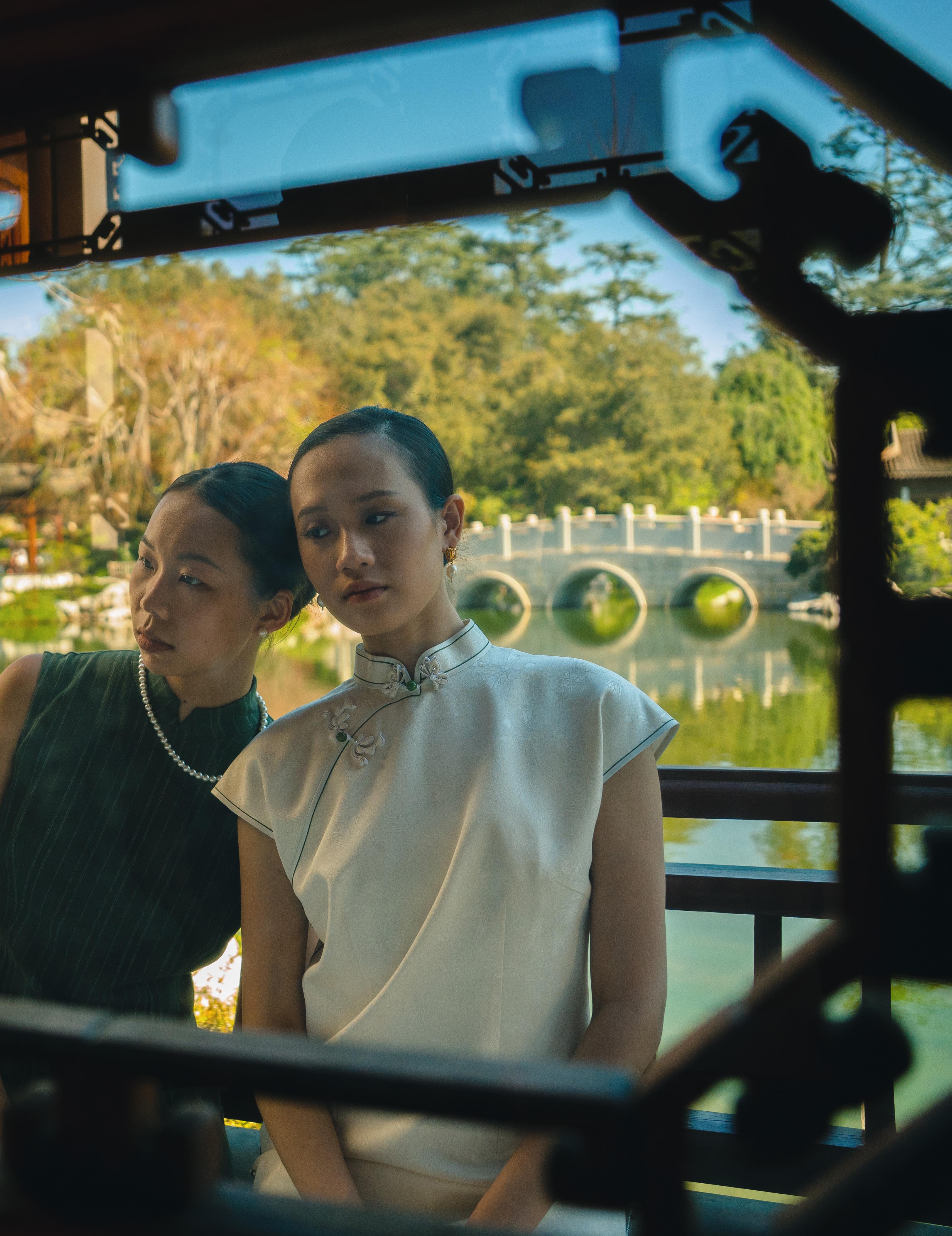
This series is inspired by The Legend of the White Snake (白蛇传), a story that moved Alice deeply growing up. She was drawn to the resilience and sisterhood between the two women. Through these images, she explores femininity as a force, healing yet enduring, like nature, bending, absorbing, and continuing with its strength.
Yumeng (Alice) Liu is a Qingdao, China, and Los Angeles-based photographer. Her images explore emotion and humanity, focusing on the mood and narrative contained within a frame. Yumeng studies Film & Television Production at the School of Cinematic Arts, and Advertising at the Annenberg School for Communication and Journalism, University of Southern California.
Cici Fang is a Shanghai and Los Angeles–based designer working at the intersection of environment, technology, and storytelling. She crafts immersive, experiential spaces that translate complex ideas into shared moments of reflection and community. Cici studies Global Geodesign at the Dornsife College of Letters, Arts, and Sciences, Media Arts + Practice at the School of Cinematic Arts, and Extended Reality at the Jimmy Iovine and Andre Young Academy, University of Southern California.
Models
Irena Yin
Wanyi Chen
Assistant Bennett Zeng
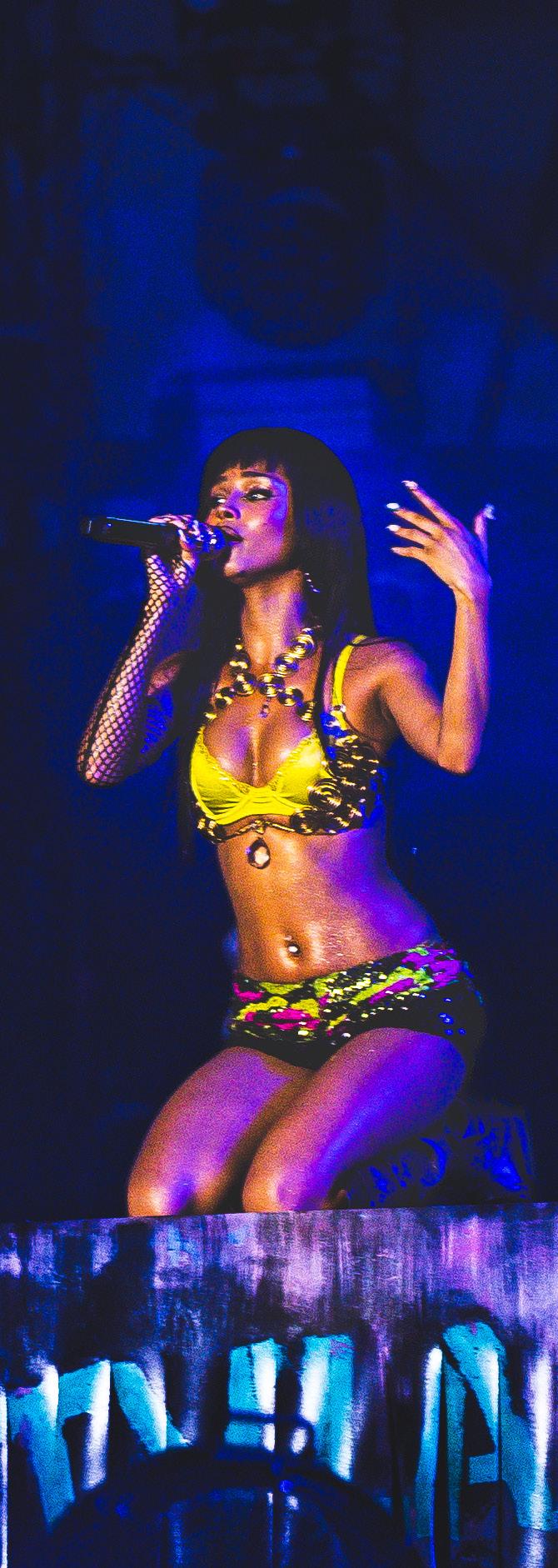
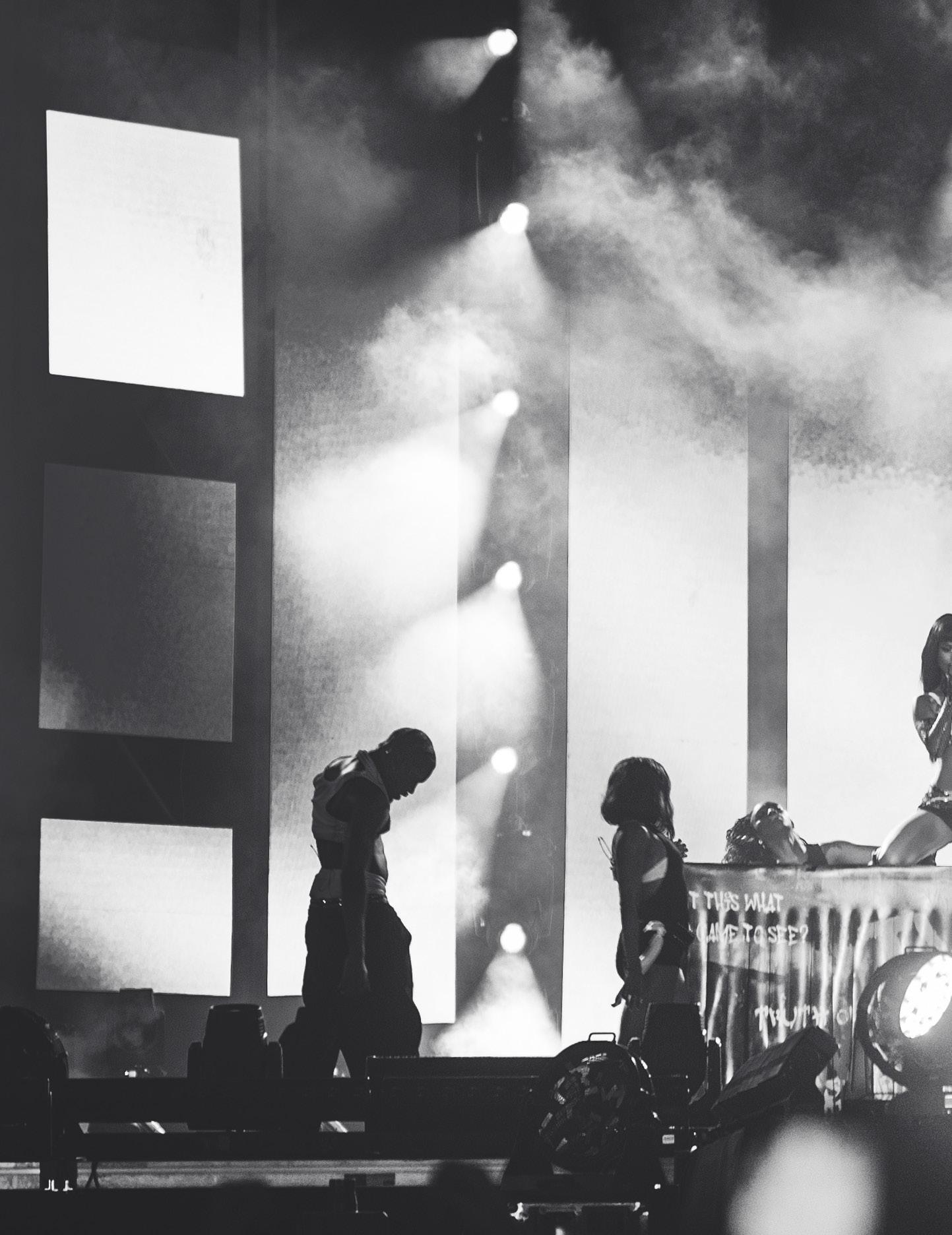
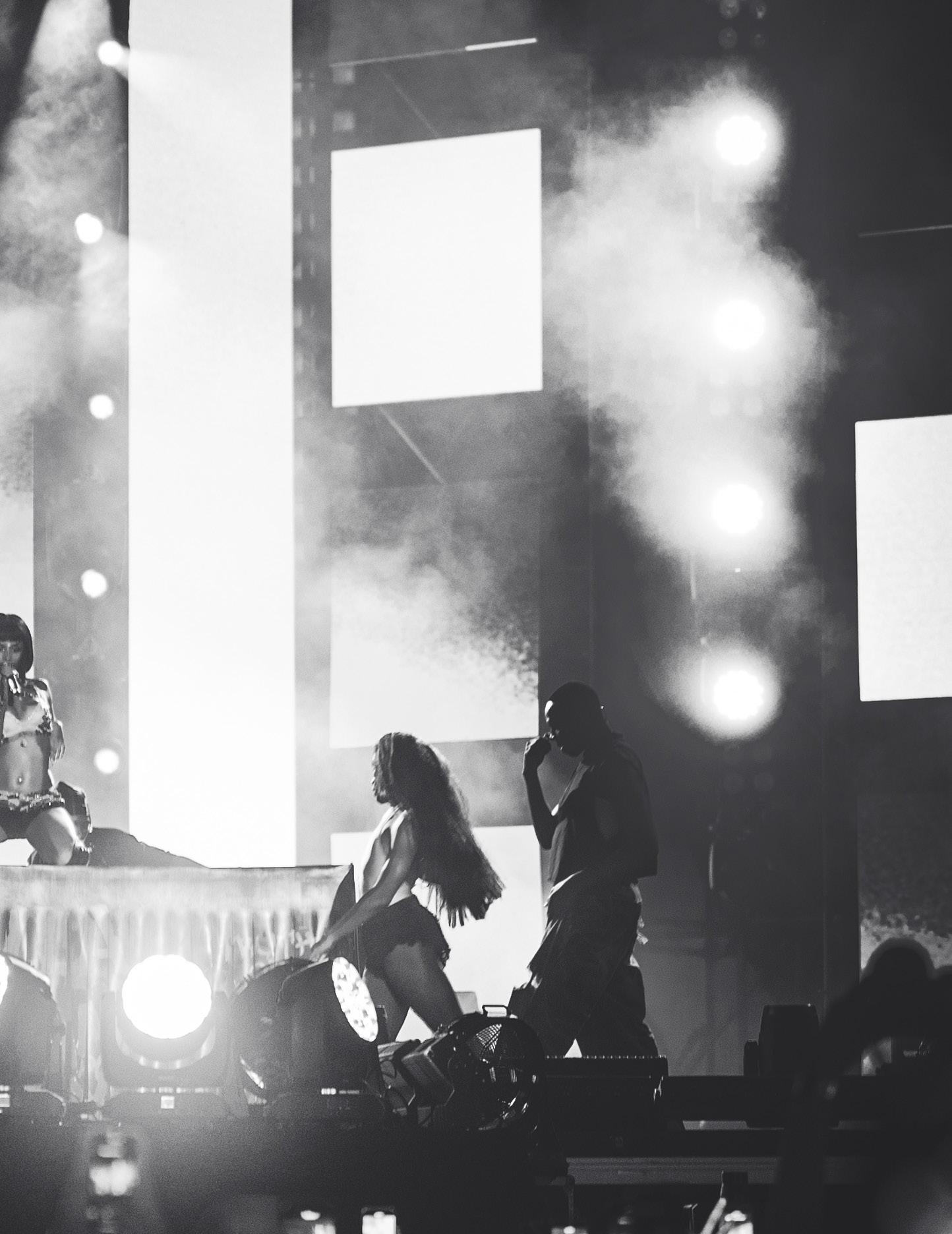
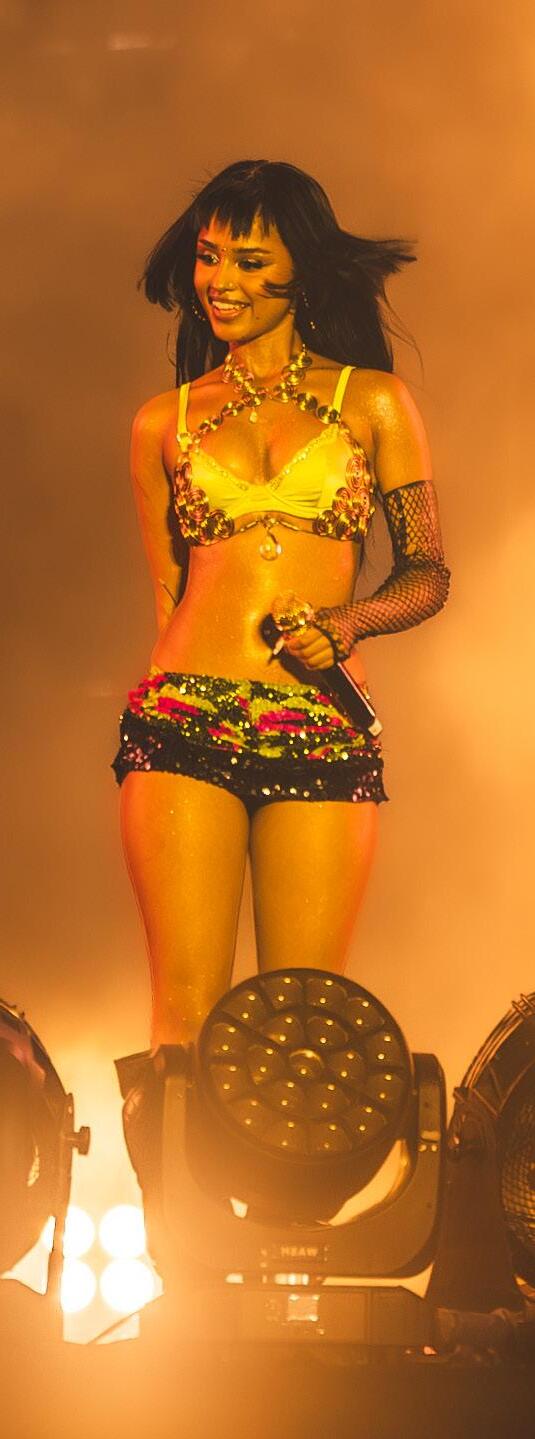
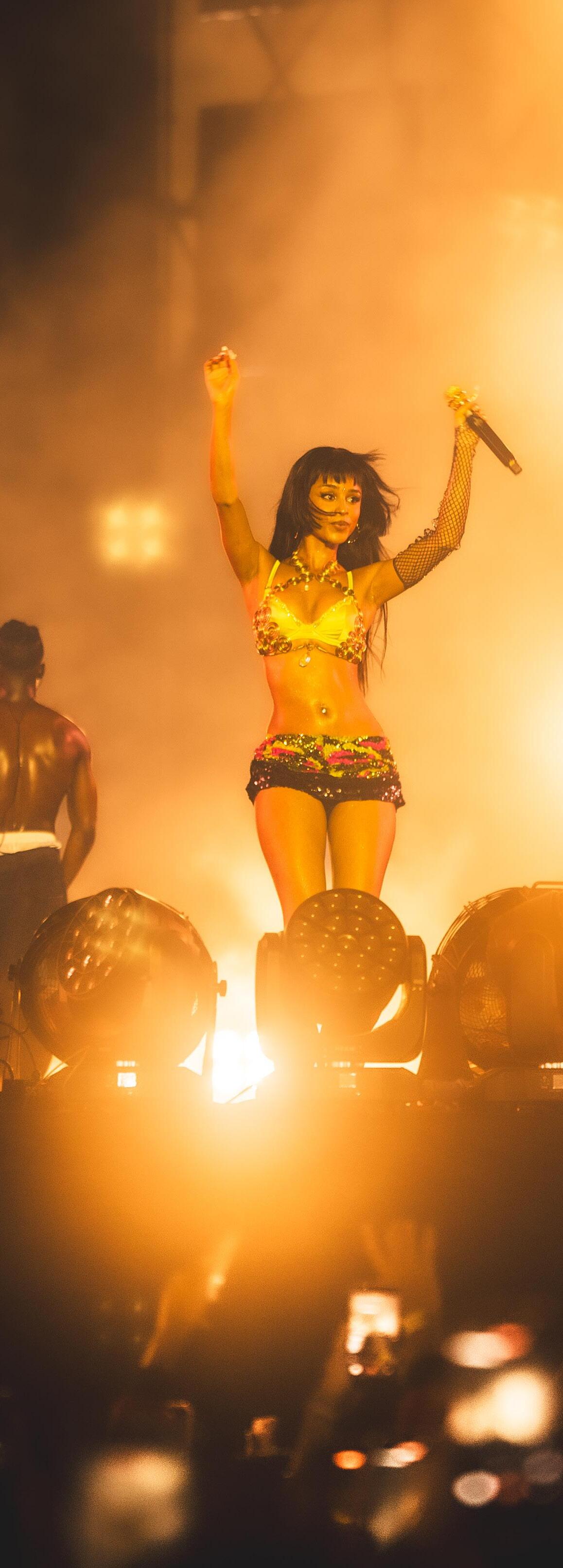
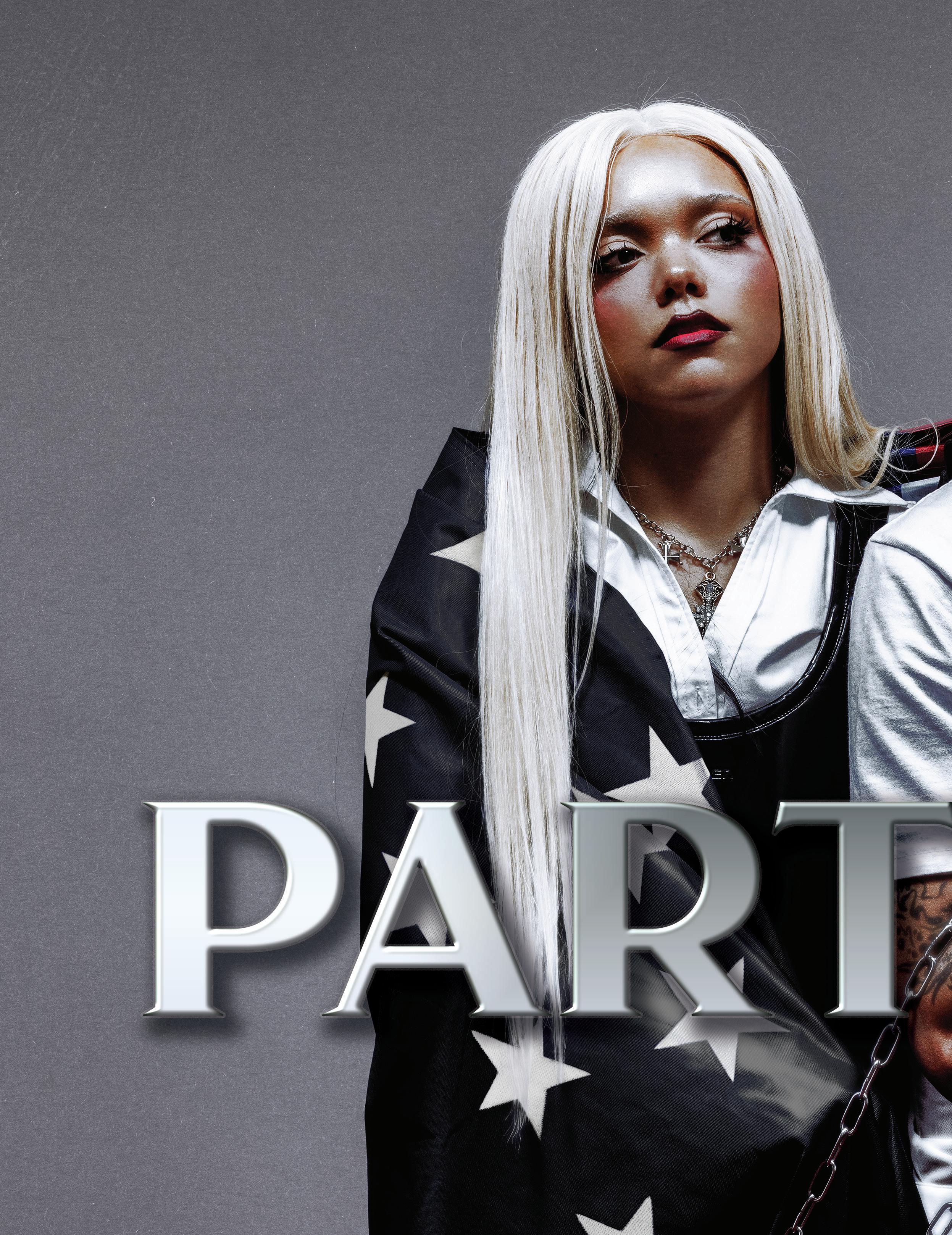
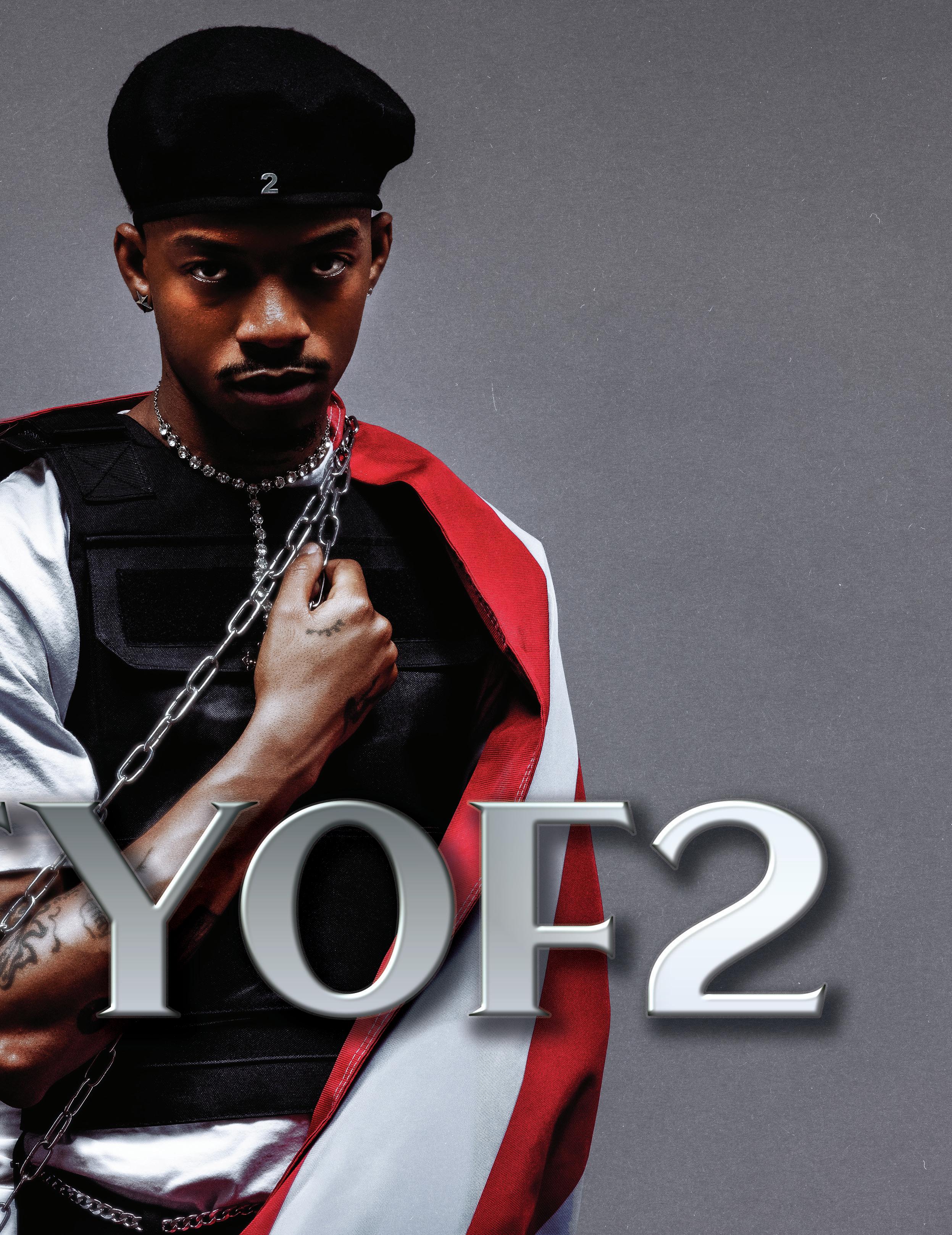
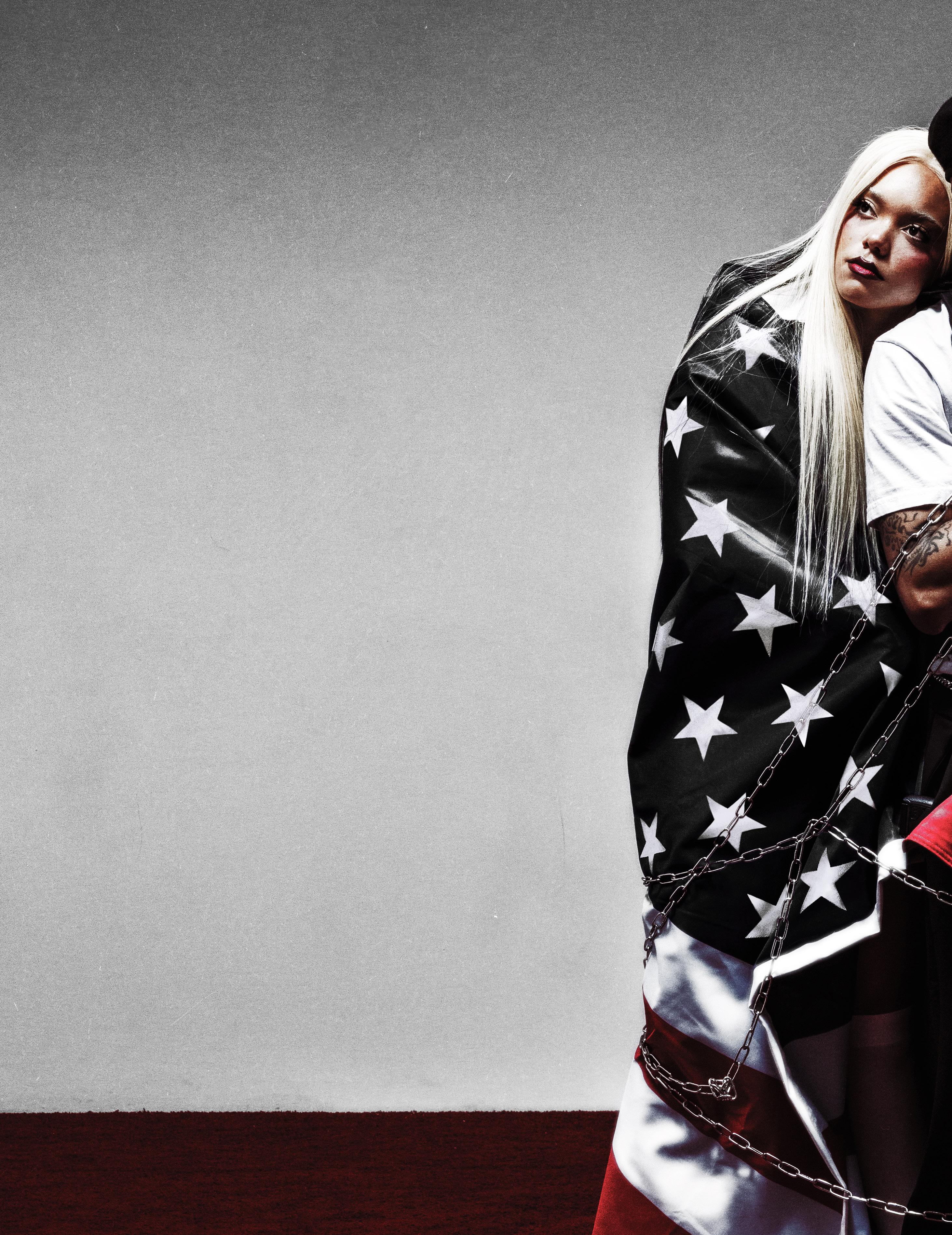
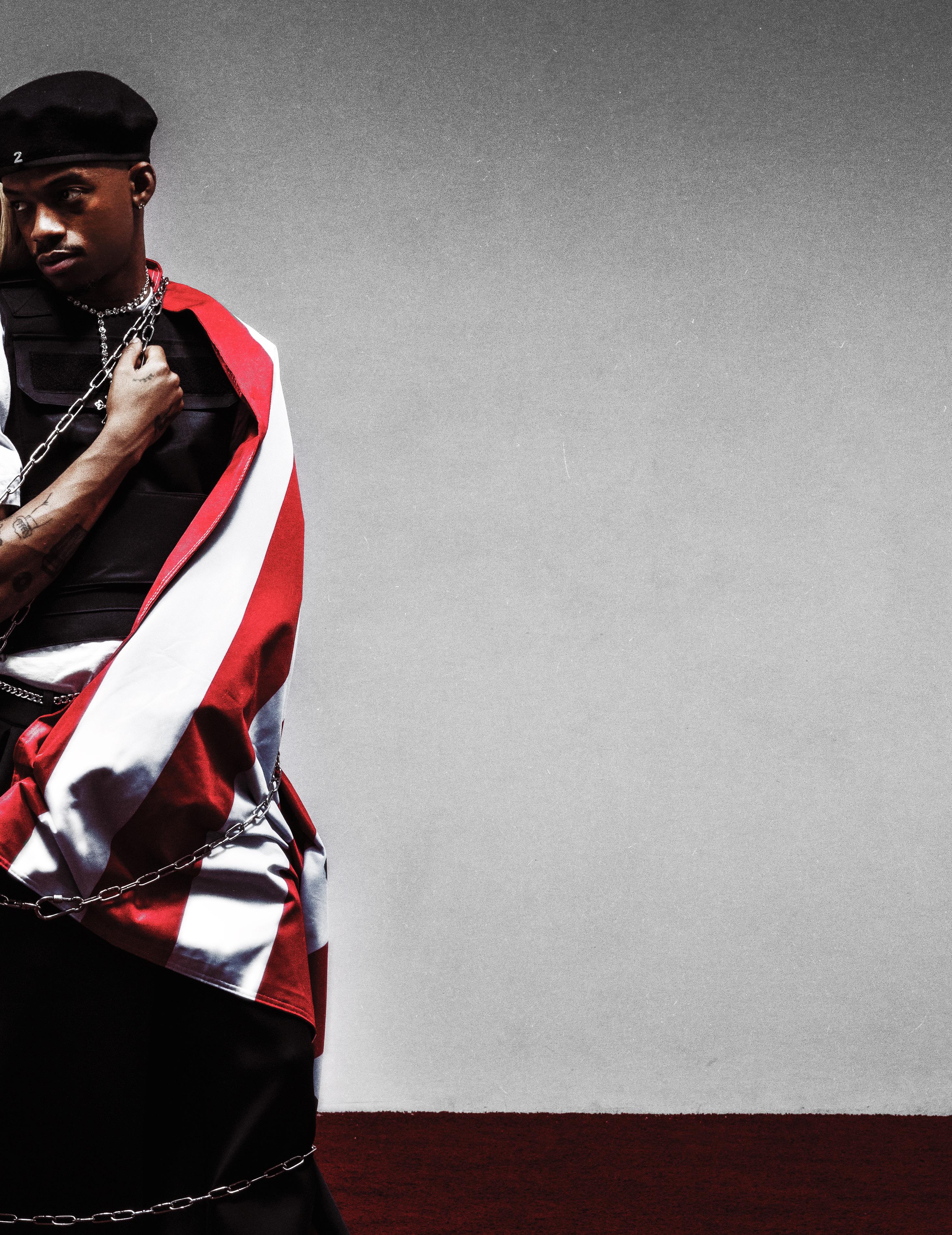
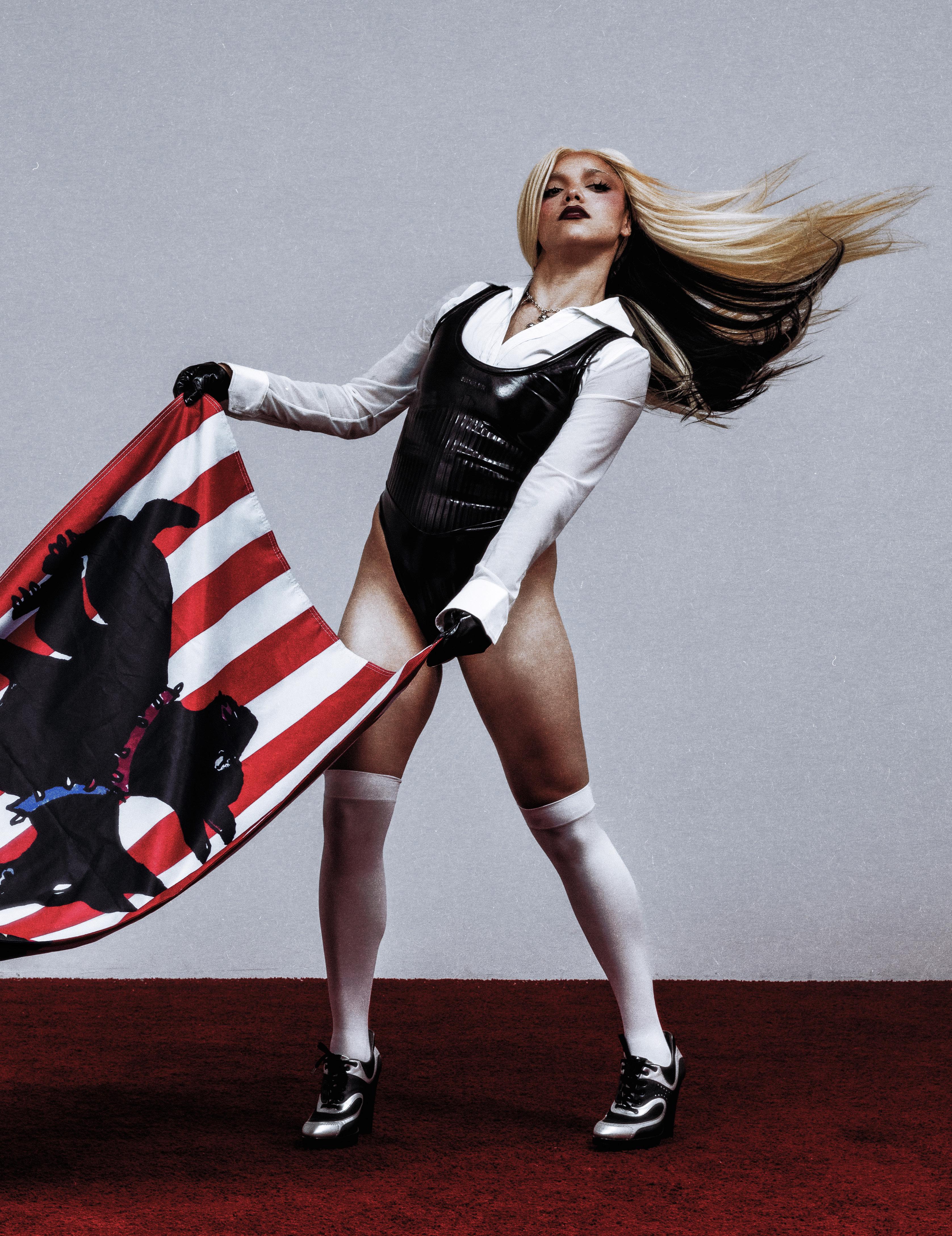
PARTYOF2 are emerging as one of the most exciting duos in music today. Amassing nearly 60 million streams across their catalog, the pair have built a reputation for creating transformative music that reinterprets their diverse influences while championing themes of love and unity. Beginning as Grouptherapy in 2019, the duo—comprised of SWIM and Jadagrace—have solidified their rebranded status with a clear artistic vision and impact. This new chapter was fully realized by the release of their debut album, AMERIKA’S NEXT TOP PARTY!, followed by a sold-out U.S. headline tour and a standout performance at Camp Flog Gnaw. The album has earned large critical acclaim upon release, lauded by Billboard, NPR, Rolling Stone, Complex, and more. The album also spawned breakout hit “POSER,” with continued momentum driven by striking, expansive visuals and cosigns from Tyler, The Creator, Missy Elliott, Doechii, and more. With a European tour and major festival appearances ahead, PARTYOF2 are eager to continue crafting authentic art that reflects the times and sparks conversation.
Your debut album is a significant milestone, showcasing the essence of your artistry and the journey leading up to it. What were some of the key intentions you had in mind when creating this project? What message or impact did you hope it would have?
J: We had just gone from Grouptherapy to PARTYOF2, and it was really important for us to show the new sound and the new dynamic between the two of us. Since it was a rebrand, we didn’t want to put any expectations on it because we were ready to build from the ground-up. Everything we did sort-of overperformed and surpassed our expectations, which really surprised us. Overall, that was our main goal going into it, creatively.
S: I don’t think we had any vision for the way it would be received because we were so focused on the rebrand, that, before we knew it, the album was out. I think that’s why the reception surprised us so much—because we honestly didn’t even think about it.
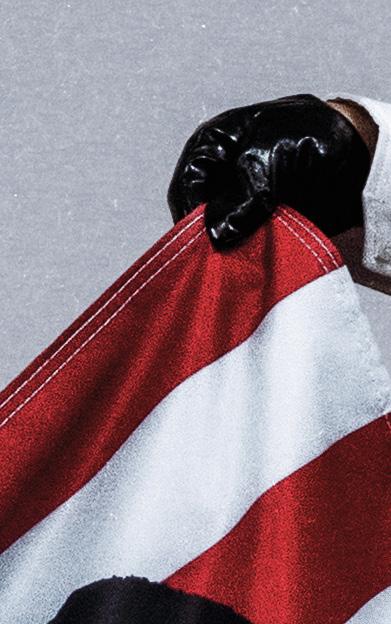
The Americana imagery and aesthetics, sprinkled with political undertones, shine through on this album. Why did these specific creative choices feel true to you both as a rebranded duo and to the storytelling for this specific album?
S: For me, it feels like such a weird time as an artist, especially as an artist of color, in America. There was obviously some play into it with PARTYOF2 and the political party theme, which felt like a cool area to explore.
We acknowledge that music really is a timestamp, and we like to think beyond what’s gonna go viral on TikTok today or even in a year. We like to think about how we can make art that reflects a current time and make it feel authentic, even when people listen to and receive it in a 100 years when we’re no longer here. That’s why we went with the title and followed those undertones for the album. It was tricky because we didn’t want to make it feel like an overly political album, but we also wanted to somewhat reflect how we felt like the country and the world feels right now.
The dissolution of Grouptherapy marks the end of a past creative workflow that felt true to the previous trio lineup. Describe that process of adjusting to creating as a duo—how did you find that synergy?
J: That process was really interesting. We realized that we’re more locked in than we expected. We have a very natural musical chemistry as a duo, but we didn’t have time to explore that a lot when we previously had other members in the group. That process was somewhat scary, but exciting at the same time, as we could start from scratch. The opportunity to rebrand allowed us to think about what we wanted to create and what we wanted to say. We didn’t have a lot of time to overthink it because we were focused on keeping our foot on the gas, making great music, and letting the brand and everything follow—not putting too much pressure on anything. It was a fun process because we locked ourselves in the studio and wanted to outdo ourselves, get better, and sharpen our pen. Every decision—the clothing, the style, the music, the visuals—became more intentional as we had time to think everything through.
How do you both approach expressing your individuality while prioritizing a group identity?
S: It became easier as we became a duo since we realized that the music was about the creative contrast between the two of us—that is what makes PARTYOF2. We saw an opportunity to explore ourselves more, and empower each other to do the same. With that process, our tastes, interests, and personalities were able to shine through more because it’s easier to understand both of us, individually, more as a duo, as opposed to a bigger group. Being a duo gave us the space to say the type of artists and people we are through this music, and we want to continue to do that. We both represent two different styles, allowing a lot of people to relate to us either individually or as a duo. It’s nice to represent the masculine and the feminine, the soft, beautiful and the grungy, industrial feels. That contrast and blend is something we’ve really learned to lean into.
What I love about your songs, and this project specifically, is how dynamic they are. Whether it’s beat or flow switches, vocals vs verses, etc—you feel like you’re on a ride or an experience rather than just merely listening to a song. With such unconventional structures, how did you both approach making these songs and deciding when to make those switches and twists?
S: It’s a mess. It’s the best mess ever. It’s very easy to listen to our music and think every choice was made in order, with intention, and predetermined. We might unknowingly make the end of a song first and work our way backwards from there, or we might make two separate songs and decide to put them together. There’s a million different ways that we do it, but all of it is very intentional. It’s really about finding the one thing—whether it’s the drums, a verse, a melody—and trusting those ideas even if they don’t turn into a huge hit record. It’s about taking those ideas and putting them together in a collage-style way.
J: We go through so many different versions of a song because sometimes we’ll make a whole song, spend hours on it, and change the direction based on what we love and want to change the next day. That’s why we decided to just do 11 tracks as opposed to 17-20—we wanted to make sure every second was up to our standards.
With so much genre-bending and exploration, how do you ensure the artistic identity is still clear? What, to you both, makes a PARTYOF2 track?
J: I believe genre-bending works as long as it’s true to your character and your tastes. There’s stuff that, as a listener, could be off-putting or maybe hard to understand. I think for us, it’s all about exploring our taste, our influences, and getting to know what we like. We both have all these off-the-wall-type tastes. I want our fans to feel the freedom to be who they are and like what they like. For us, it’s about that authenticity of caring about the genre, doing our research, and really tapping all the way in— that’s the move. You can feel when it’s inauthentic, when people are tapping into a song that’s like, oh this is trendy right now, but I actually don’t know anything about that culture or that world. For us, it’s extremely important to do the research and to pay homage. I think those are really the keys.
ROHAN
J: A PARTYOF2 track is a song that nobody else could make—in terms of the way we make it. Sometimes we’ll take references from different time periods and study the greats, but sometimes we’ll make a song that sounds like a tight beat version of something else and wonder how we can put a spin on it and really make it us. I think sometimes it’s us going back and forth, just doing something that you haven’t heard before over that type of song.
S: I think the best artists are extremely good at hiding their influences. For any artist out there who might read this interview, it’s okay to have influences and references of things that you love. I think the key is learning how to infuse yourself in it enough to where it doesn’t feel like you’re copying someone, but you’re taking inspiration. That’s what we always try to remind ourselves.
What shines about this album is how it’s able to balance a lighthearted and fun nature alongside discussion of heavier topics. How did you approach creating that balance—do you feel it’s reflective of your artistic direction?
S: There is a certain responsibility of an artist, and I always want to hold myself to that duty, but at the same time, allow myself to be human and experience those emotions. For a record like “JUST DANCE,” it’s a great example of us infusing the music with a certain level of commentary, while still allowing the song to be enjoyable and something you want to listen to let go and feel free. All the best music that I grew up listening to did one of two things: They either triggered some sort of emotion for me, or they educated me. For me, those are the two things that I feel like are our responsibility as artists.
J: I agree. I feel like the greats that we study, like a Kendrick Lamar or a Beyoncé, are always reflecting the times, even if it’s not really on the nose. You can listen to one of their albums, and it takes you to that specific time. I think that’s really important, and something that you just can’t ignore these days with the way our country is. We want to comment on everything that’s happening and show how we feel, but also provide a space for people to sometimes forget it and not have to focus on it too much. If you’re really listening to some of the things that we say, you’ll still see where we stand, as well.
When making those vulnerable tracks, how do you approach taking your real life experiences and feelings and pouring them into the music? Do you find it to be a healthy release, of sorts, where you can find closure?
J: Yes—it’s literal therapy. It’s such a unique feeling as an artist that wants to share those deep, vulnerable moments and experiences in your life. We just made a track similar to “SAVE YOURSELF,” and it constantly reminds me that it’s so important to open up and say the things sometimes that you’re scared to say. It’s so healing to talk about the things that sometimes you don’t want to think about, and turn it into a song.
S: Jada and I come from two different backgrounds, and we both met young in the industry. As a kid, people were writing songs for Jada because she was a child, so she wasn’t really able to express herself artistically in that way—meanwhile, that’s all music was for me. That’s where our relationship started. Before making music together, it was an outlet to connect as friends and allow ourselves to be who we really are—a theme that’s still extremely common in our music now. We were just having this conversation of reminding ourselves to entertain and make fun stuff, even though that’s most of what we’ve released. We have many deeply vulnerable records, and while not every single one is meant to be released, they are extremely healing as an artist. It’s ultimately the main reason why both of us got into making music together—to discover ourselves, both positive and negative aspects, and let it flow through the music.
This era has also been defined by the captivating videos you have released—I would love to know more about your creative process behind planning out visuals. What does that process look like from storyboarding to final edit? Did you want the visuals to have some level of through-line too?
S: We learned a lot during this process because we are so big on the visual aspect. This is also our first time being with a major label, so when that’s the case, you don’t necessarily have as much wiggle room or freedom to make decisions on-the-fly or change things last minute—which was common for us when we were independent. So in this space, we wondered how we can create a world where we don’t necessarily have as much control over timing and scheduling, but where we can control a visual theme. The big thing for us was our uniform, and having the political undertones live in subtle spaces across every visual, even if everything didn’t necessarily look the same. Most of the time, before a song is done, the video concept is done.
J: Just making the small things matter, and thinking about the overall aesthetic of what we wanted to do, was important. Some videos kind of fell together, but we just kept the aesthetic, styling, lenses, and colors on the top of mind, and that really was the through-line for the album. Visuals are probably our favorite thing to do—it’s very natural for us as well. We love being very hands-on with the creative, whether it’s making our decks, pulling our references, or coming up with shots. It’s a really fun process for us, and I feel like we learned with “POSER,” that we know what we’re doing when it comes to the visuals. We didn’t even really think about that one, so it gave us a lot of confidence in our creative decisions.
S: I think a lot of times, for artists like us, who do a lot and direct our videos, it’s easy for us to get all the credit for this, but we have an incredible team of people behind us who trust our vision enough to execute our vision. That is super crucial, and I think building a community of people who you trust and who trust you is so important. As easy as we might make it seem, it takes a village of really dedicated creatives.
Let’s talk about the video for “VANESSA WILLIAMS.” The track and the overall reference is so interesting with the deeper message behind it. How did you decide on Vanessa Williams’ story as the vessel to communicate this message? What was the process behind this video like?
J: When we decided that the album was gonna be called AMERIKA’S NEXT TOP PARTY!, we were doing research on songs that we could potentially interpolate. We saved a sample—a soul hook where they were singing “Will the real Miss America stand up?” We saved that quote thinking it could be fire, and one day, we were chanting it in the back while one of our producers was working on the beat. We thought it could be sick, so we laid that down and sat with it.
S: At first, I think we were trying to personify America, and talk about the state of the country as if she’s a woman. I’ve always been a huge fan of Vanessa Williams, mainly as an actress, so I had known about her story. After a while, we felt like we should talk about her, in a way, because it was such a powerful story to shed light on, especially today as it fit really well with the theme. Coincidentally, Jada is really good friends with her daughter, so she ended up being in the video. We sent Vanessa the song and the video, and she loved it—it was really cool. To be honest, that is the important song on that album because it directly reflects what this album is about. It’s also a great timestamp regarding the Vanessa situation that happened in the past, with messages that are still very relevant today.
S: For the visual, we felt that if we just change the race of my character in this story, it gives it a whole new perspective on the same song. That was something we were really excited about and found special. It’s the exact same song, but if you change my skin color, it sounds like it’s a completely different record—I thought that was really interesting.
You embarked on your US headline tour, titled the AMERIKA’S NEXT TOP PARTY! Tour, this last fall and winter. Can you take us into that experience of touring the project and finally performing it live? What does it feel like stepping onto the stage, connecting with both longtime fans and new listeners in real time?
J: It was an out-of-body experience. It was our first headline tour, as well, even with our time as Grouptherapy included. This has been building up for a long time, and it was incredible just to see the impact we’ve had all the way across the country. We have some really amazing, heartwarming fans. I love the community we have created with our music. When I step on stage, I just see a bunch of smiles, and it makes my day. If I can make anybody smile or just feel something, I’ve done my job. I always get emotional on stage because I can’t believe that this is my life and that this is how I make a living. It’s a blessing.
ROHAN BARU
You’re heading to the big stages this summer, starting with your European tour dates in May and performing at major festivals like Lollapalooza and Osheaga—how are you preparing for these shows? Have the past US headline dates taught you anything for future performances and how you want to approach them?
S: I have two words: gym and juice. After learning how exhausting it can be from our last tour, we are taking care of our bodies like we never have before. We’re working out at least 3-4 times a week, eating exceptionally healthy, sleeping well, and taking care of our bodies to prepare.
J: It’s impossible not to get some type of sick. You have to have a good immune system to be able to push through. It’s different being on stage, jumping, singing and rapping live for 75 minutes. We take a lot of pride in not using a lot of backing vocals and doing our verses just with our mics and our vocals. It takes a lot of energy.
S: We really try to leave it all on the stage. We do a lot of rehearsals and create new show mixes with our live band to give it a new kind-of edge. We’re so excited—we love being on the road and meeting fans. I think the tour is pretty much sold out, which is amazing. You only get these ‘firsts’—first tour, first major festival, etc.—once, so we’re very excited to soak it up and enjoy the fruits of all the work that we put into this project.
What can the audiences expect from a PARTYOF2 set/show?
S + J: Sweat…definitely will be sweating. Your hands will be up 50% of the time. We really love to bring the music to life. In our music, we infuse moments in the songs that already resonate live. We don’t have to do much work outside of putting the song on and turning up. Expect the unexpected. We’re always gonna put on a show.
Rohan Baru is a Los Angeles-based creative from Milwaukee. With a foundation in media/entertainment production and business administration, he strives to imbue his artistic voice within creative direction and marketing strategy across numerous mediums. Rohan studies Business of Cinematic Arts at the Marshall School of Business and the School of Cinematic Arts, University of Southern California. He also serves as the Chief Operating Officer for Haute Magazine.
Lucy Chen is a Shanghai and Los Angeles-based multidisciplinary designer working at the intersection of printmaking, digital media, and 3D design. Rooted in a fine arts background, her practice explores how form, texture, and narrative interact across mediums. She studies Media Arts and Practice at the School of Cinematic Arts, University of Southern California. Lucy also serves as the Director of Visual Design for Haute Magazine.
Photography EVERS
Rae Chimara is a Nigerian-American filmmaker, photographer, and creative director. She approaches images like a painter approaches a canvas, using contrast, texture, and unexpected juxtapositions to create work that feels honest and visually striking. This body of work was photographed in Lagos, Nigeria, blending fashion with storytelling.
Gladys Yu is a Los Angeles-based creative whose work centers on visual art, design, and innovation. Her practice explores how thoughtful design can shape meaningful experiences across physical and digital spaces. Gladys studies Arts, Technology, and the Business of Innovation at the Jimmy Iovine and Andre Young Academy, University of Southern California.
RAE CHIMARA
By the side of the chief’s house, the only brick building in the village, women gathered, watching. Only Leela was allowed to enter. Inside, her eyes were pulled to the walls, darting from frame to frame. Trying to keep pace with the velocity at which the colors of each vibrant bharat moved. Yes, each bharat hung perfectly, just like each thread intended it to. Different women, different fates: some are damp with tears and others are soaked with blood. Threadbare, worn, and still pristine all at once. The small hexagonal mirrors stitched into each one catch light in fragments—a mouth, a doorway, Leela’s own eye looking back at her.
Leela has gone still at the leftmost wall. Her eyes are fixed on a frame that should have a bharat as colorful as the others, but instead it held a cloth of pure white. It was so perfectly white that it seemed to extend far beyond its wooden border. The only tell that it was the same material as the others was the curl of one corner, twisted slightly inward. Here, a loose thread dangled but had never been knotted. Only a tug and the whole thing could unravel in an instant.
She imagined what could have been sewn onto that blank cloth and images of abstract colorful shapes danced across her eyes.
She wondered why it was only white.
As though she had read Leela’s mind, Baa—the village chief’s mother—shouts from the next room, “If you have a question, you should ask me.”
Leela could not bring herself to turn. The ground beneath her was tugging at her body and the walls seemed to shrug. It was impossible to move.
Still calling from the next room, Baa continued: “Do you want to hear a story? Yes, I am talking about that story. The reason why you linger in the leftmost corner of the room, surrounded by color, yet only able to look at the white. The story that has been whispered into the blank fabric so only a few can hear.”
Leela remained silent.
“Very well, I shall tell you. But gather the other women and bring them here. It is time for all to hear.”
Within a few moments, the women flooded into the main room of the chief’s home. Each of their hands were worn, rough to the touch from a lifetime of labor. Part of that labor is creating those very same bharats that hang on the walls of the room— the process can take months, sometimes even years. Equally as intricate were their saris. The hems were flecked with soil and flour but the carefully crafted patterns and stitching spoke louder than any grime. As they all entered, a faint smell of starch and sandalwood possessed the room, offsetting the undertone of dust that settled daily on the window ledge. It was unclear to the group why they had been called in, but the promise of a story—any story—was enough. They sat cross-legged on the floor, obediently shifting their gaze towards Baa. That peculiar sensation of impatiently waiting to hear a story was one that had not visited many of these women since they were young children sitting at their own mothers’ feet.
“For hundreds of years, the women of our village have been making textiles like the ones you see on the wall. My mother taught me and her mother taught her and it goes on. She taught me to be true to the needle. It was not my own thought that would create such a pattern: I was only guided by the needle. I have learned to stay true to the story in the fabric—it is not mine to make, only to share.”
She went on, “We make these bharats because we need them. Not just for decoration, but because they have provided our village with warmth and comfort. As you all know, we weave for years before marriage to be prepared for the day our husband comes to take us home. It is a part of the dowry.”
That word, “dowry,” breathed a weight into the room with sudden strength. What could Leela possibly owe someone to whom she did not yet belong?
As if reading her mind, Baa continued “Oh, do not blush at the mention of that word. This tradition has followed us through time and it is here to stay, in one form or another. Some years ago, there was a girl who did not wish to marry. So, instead of following tradition, she began this project of making the white bharat. It was laborious and time intensive—she had to take raw cotton and turn it into thread. She wove it for years and years into one of the most elaborate pieces this village has ever seen.”
From the back, a voice interjected, “Though you would not know it by looking.”
Baa continued, “At first, the young woman said her husband-to-be had a camel which needed a cover. So she made the cloth wide, wider than her wingspan. Then she extended it for her future children. And her mother, whom she would take with her. She added length for bedding and covers and imagined guests. Each time her father asked when she would be finished, she would measure the cloth against the long courtyard wall and said, ‘Not yet.’ Ten years passed.”
At this, some of the women dropped their gaze. Others looked about the room wondering who would wish to defer the dream of marriage. A dream of brass pots and someone else’s courtyard.
“In those ten years,” Baa elaborated, “the proposals stopped coming. The prevailing consensus was that the girl had lost her mind and become far too engrossed in this project. Eventually, they said nothing at all. Her parents grew tired after her brothers married. She and the white bharat had just become part of the fabric of our village.”
Baa’s eyes did not leave the white cloth. It almost seemed as though she was looking to it for guidance on the story flowing out of it, coursing like a river with mystery and hardship.
“One fateful year, both the woman’s mother and father passed. Suddenly, she decided that she was done with the bharat.”
Bangles clicked softly against the floor. Anklets shimmered against the harshness of Baa’s story.
“For a long time, I kept it folded in a trunk. I thought it could not measure up to the beauty and intricacy of those we see around the village. I thought perhaps she would even return and ask for it back. She did not. I am told she has a room with two windows and lives with a cousin somewhere out west.”
Baa reached for the frame and adjusted it slightly, though it was perfectly aligned before.
“In those years, other women began to measure their cloth against hers, perpetually adding more length and time. A wedding delayed by a season. Then another. The story was all too familiar by that point. Fathers and mothers grew anxious, wondering if their own traditions had betrayed them. Has the needle become too faithful to the desire of its maker, not its user? Even now I find it more and more difficult to stay true to the story in the fabric. When it has betrayed our way of life so greatly, delayed so many marriages, prevented the growth of our clan, and trapped our stories and fates in a single cloth, I find it impossible to feign loyalty.”
A bangle cracked softly under the pressure of a clenched fist. A child outside wailed in the distance. Not a single woman moved to go hush him. The mirrors in the bharats reflected the sullen faces of the women in the room, knowing that their beauty would never be captured again.
“So we will finish what is in our hands. But we will not begin new ones. The girls will not sit for years with raw cotton in their laps, delaying the promise of life beyond their own home. In the town, there are mills where cloth is spun so quickly that not ten women could work with such haste. It keeps the same warmth and will continue our traditions for years to come.”
No one protested, and yet, they each wondered what this would mean for their stories. Where would that sacred knowledge go now?
The mirrors in the colored bharats caught the afternoon light and held it briefly before letting it go. The white cloth did not reflect anything at all.
Aumrita Savdharia is a Los Angeles-based writer. She particularly enjoys writing about the texture of memory and its fictions. Aumrita studies Comparative Literature at the Dornsife College of Letters, Arts and Sciences, University of Southern California.
Ayan Patel is a San Francisco Bay, Paris, and Los Angelesbased photographer. He specializes in capturing people through portraiture, street, and documentary-style photography in both film and digital mediums. Ayan studies Global Health at the Keck School of Medicine, University of Southern California.
Ava Rathenberg is a Bay Area and Los Angeles-based designer and creative working at the intersection of technology and design. Her work explores how emerging tools like AI and embedded systems can be shaped into experiences and fine art. Ava studies Arts, Technology, and Business at the Jimmy Iovine and Andre Young Academy, University of Southern California.
Models
Aaditya Jain
Prisha Agarwal
A MEASURE OF THREAD
DAFY HAGAI
DAFY HAGAI
DAFY HAGAI
DAFY HAGAI
DAFY HAGAI
Dafy Hagai is a London-based photographer and visual artist. Her work transforms the ordinary into the extraordinary through a feminine, intuitive gaze, reimagining beauty and desire in everyday life. Through blending restraint and play, she creates images that feel both tender and bold, balancing fantasy with a sharp sense of contemporary culture. Her work is held in the permanent book collection of The Metropolitan Museum of Art, New York.Pushing the boundaries of different platforms with her work, Dafy continues to build a visual world where femininity, fantasy, and reality coexist - inviting new ways of seeing and feeling.
Lucy Chen is a Shanghai and Los Angeles-based multidisciplinary designer working at the intersection of printmaking, digital media, and 3D design. Rooted in a fine arts background, her practice explores how form, texture, and narrative interact across mediums. She studies Media Arts and Practice at the School of Cinematic Arts, University of Southern California. Lucy also serves as the Director of Visual Design for Haute Magazine.
JEESOO KIM + KIYOMI MIURA
There is a certain sense of liminality that comes with crying on your bedroom floor. An experience suspended between feeling simultaneously grounded and upended by emotion, it is an inherent part of the culture of being a teenage girl in America. In particular, there is one specific day each year that I find myself in this position: my birthday. No, it’s not because I fear getting older, nor am I one to mourn my youth. I cry because, on this particular day each year, I feel like the most loved girl in the world.
This, to me, is the best part of my birthday. I set the mood, turning on my warmlit lamp and queuing some of my favorite cry songs as I get comfortable on the floor, laying out all the birthday cards I received that year. It’s not that I am trying to cry; rather, the emotions I feel while reading these letters are so overwhelmingly strong that there is simply nothing left to do but cry. And while Lara Jean stows away letters she writes for her crushes in a big blue box, never to be sent, I like to store these letters of mine in my own hot pink box, a testament to the chosen family I have found for myself.
My girlhood box came to be during one of my bi-annual deep cleanings of my room, a grand, four-hour spectacle that consisted of grabbing Clorox wipes by the fistful and plucking a seemingly infinite number of Kleenex wipes. Stacking piles of worn textbooks and trashing torn journals, it was as if Mr. Clean had taken hold of my body, transforming me into an unstoppable whirlwind of disinfectant spray and paper towels.
I continued to haul trash bags over my shoulder, coming to a stop at the final portion of my room that remained untouched: the bookshelf. I had subconsciously left this corner of my room for last—it was by far the most cluttered, each shelf overflowing with files and miscellaneous artifacts that had been buried away for at least several months. Art projects from my elementary years were now chipped, wallets so worn that coins spilled out, candy from past Halloweens had collected dust. I swept all the clutter into my trash bag, mechanically scooping up these outdated objects. My eyes scanned across each shelf, quickly distinguishing between “keep” and “trash” for each item that crossed my path.
My mindless sweeping and scooping came to a halt when I came across a familiar mini shopping bag. I momentarily hesitated, slowly lowering my cleaning supplies as I reached for the little bag, stuffed to the brim. Birthday cards, printed photos, smelly stickers—all the memorabilia I had collected up until then were gathered together in this beat-up Zara bag, envelopes of all sorts sticking out every which way. I had forgotten about this little assortment, a Pandora’s box full of treasures just waiting to be opened. I sat down and pried the envelopes out of the bag, intrigued by this find. Quickly, what began as a short game trail off the road became a journey back in time, each letter a portal hurling me into an alternate universe that transcended the linear passage of time. I picked up a short card my friend had written for my 11th birthday and began to read, immediately being transported back to my surprise party. The confetti cake with buttercream frosting, the Taylor Swift blasting from the corner, the giddiness I felt when my crush handed me his gift—all these details emerged, every word on her card unlocking a sensation I hadn’t realized I’d stored.
JEESOO KIM + KIYOMI MIURA
I came across my card from my high school best friend, a post-graduation gift. Opening it up, I smiled at the familiar phrases scattered across the page, warmed by a sense of nostalgia for her distinctly microscopic handwriting. There’s something unimaginably special about collecting multiple cards over the years from one person—you get to recount the impact you have had on their life. The thank yous for always being there, for never failing to make her laugh, for reminding her that life is worth living— this card from her was the last I had received, a culmination of the old and the new. Reading her card sent me spiraling back to our first few moments together, a time machine set to when we had first become friends. I remembered building a fort at our first sleepover and ambushing my dad with stuffed animals, screaming when we realized that our fort was not invincible and that he was, in fact, capable of throwing our weaponry back at us. I remembered fighting with her in the third grade, telling her to never talk to me again and her telling me we were done being friends. Clearly, neither of us stuck to our word. I remembered biking around the neighborhood, her reteaching me how to because I had forgotten that you had to pedal to move forward, and I remembered being kicked off the courts for playing past closing hours, claiming that this rally was “really the last” when, in reality, we were both too stubborn to end on anything short of perfect.
Just like her, others had also written multiple times in the past couple of years, each leaving their own trace of gratitude for me behind in their letters. Non-judgmental, attentive, platonic soulmate— each of these traits was mentioned by these specific people multiple times, characteristics they seemed to appreciate over the course of multiple years. The parallels were uncanny; it was bewildering to imagine the little girl this card was addressed to in 2018 having the same impact on these people at 18, almost a decade later.
Every paragraph, every sentence, every word—each letter was a reminder of the love I had received from all these people thus far, an indication of the timeless nature of these relationships I had established thus far. Indelible festivities, distinct conversations, unforgettable moments. Every instant that has been detailed in these letters comprises a dimension of my identity, a single face of the greater model I embody. I am a reflection of all these people, a manifestation of the shards that—whole and broken alike—together create the stained glass that is me.
There is a rhythm underlying my identity, each person a beat. These letters portray the consistency with which these people ebb and flow throughout my life, creating a rhythm that plays and exists throughout my existence. These people, dispersed throughout my lifetime, come together in my girlhood box, the nexus of my culture and identity. It’s more than just a reminder of the love I’ve received—it’s a rendition of the core experiences I’ve had in this life. Every joke made, every secret shared, every tear shed. The sound of the fireplace crackling at retreat, the smell of burnt cake wafting as we doubled over in laughter—each item within my box unlocks countless memories, each with its own vivid nature and tangible sensations that I can experience over and over again, whenever I feel compelled.
There is something so intimate about crying on your bedroom floor, hung between feelings of immense gratitude for the love you’ve received in the past and revitalization toward facing the upcoming year. This tradition—reading through every card, pouring out every ounce of emotion that surfaces—is one I intend to continue. And every year, after I’ve read through all of them, I will continue ending my time by carefully sealing each letter back up, neatly packing them away into my box. The music will come off, the lights will switch on, the box will be closed. As I rise from the floor, the temporary world I created for myself will cease, signifying my entry into the next year. I move forward, equipped with the rhythm of my identity thus far. and I will continue to march to this beat, adding to my box as I meet those of my found family that I have yet to cross paths with. Who knows—I soon may be due for a bigger box.
JEESOO KIM + KIYOMI MIURA
LOVE, LETTERS, AND LIMINALITY
Jeesoo Kim is a Los Angeles-based writer. She specializes in creative nonfiction and seeks to encapsulate and explore everyday emotions, unpacking these experiences to their very core. Jeesoo studies Psychology and Forensics and Criminality at the Dornsife College of Letters, Arts and Sciences, University of Southern California.
Kiyomi Miura is a Tokyo and Los Angeles-based photographer. With a specialization in street photography, her work aims to emphasize beauty in everyday occurrences, capturing the candid interactions in crowded cities or the hidden details of urban architecture. Kiyomi studies Philosophy, Politics, and Economics at the Dornsife College of Letters, Arts, and Sciences, Artificial Intelligence Applications at the Viterbi School of Engineering, and Law and Technology at the Gould School of Law, University of Southern California.
Tanisha Goel is a Bay Area and Los Angeles-based designer. She focuses on capturing the world around her with special attention to texture and vibrancy. Tanisha studies Design at the Roski School of Art and Design, University of Southern California.
Models
Lauren Lucas
Leyna Weber
Ann Sadek
FRANCESCA MILLER
FRANCESCA
FRANCESCA MILLER-HARD
Francesca Miller-Hard (b. 2003, New Zealand) is a Melbourne-based photographer whose work constructs a world shaped by music, style, and the subconscious. Often inspired by her vivid dreams, her practice moves fluidly blending fine art influences with an exploration of personal experiences and narratives.
Laila LaDuke is a Los Angeles-based creative exploring the intersection of human-centered design and creative storytelling. Laila is pursuing a degree in Arts, Technology, and the Business of Innovation at the Iovine and Young Academy, University of Southern California. She also serves as the Director of Visual Design for Haute Magazine.
When I was young, I knew hymns from the bible before I knew who God even was—the tap-taptap rhythm of my grandfather creating a makeshift metronome using his hand and his knee. Some of these songs were not even in English, in fact many of them were in Mandarin, and I would never hear them outside of the first twenty minutes of our Chinese-Christian congregation’s Sunday service.
Ilu Eniyan—a Yoruba phrase meaning the drum of the people—conjures images of people from centuries past making their voices heard through the intricacies of ritual and tradition. Some things that we cannot even trace the origin of even if we wanted to—like swaddling your baby in an old Malaysian sarong and singing the song that your mother’s mother’s mother’s mother sang as naturally as breathing. Tradition is not always something flashy and obvious, sometimes it shows itself in subtler ways, like the quiet jingling of an anklet as an Indian woman walks by.
ILU ENIYAN: THE DRUM OF THE PEOPLE
Things that were once created to be expressions of culture end up acting as lifelines to generations past—the rumble and pant of Inuit throat singing, the strum of the guitar while playing the blues, the triumphant trumpet during a Mariachi performance, the reverberation of hymns on the church walls. In Native American powwows, the beating of the drum is meant to represent the heartbeat of Mother Earth. In that way, music acts as a connector to the past and a grounding force in the present.
However, as a student of history and ethnic studies, I feel compelled to also highlight that many of the percussive beats of human history have been born out of suffering and a yearning to be heard—to be understood—to be remembered. When I think about music and culture, particularly in America, it is impossible to imagine it without enslavement, discrimination, and struggle. Some of America’s most culturally defining genres such as blues, rock and roll, jazz, and hip-hop, were created by Black Americans to express themselves in a system that was built against them. Many songs that are still sung in school choirs today, such as “Wade in the Water” and have roots in enslavement. Music was a way for people who were forcibly illiterate to tell stories for generations to pass down. Oral storytelling has traditionally been a way that marginalized groups are able to keep their tradition and stories alive—not only for Black Americans, but largely also for Native Americans as well.
ILU ENIYAN: THE DRUM OF THE PEOPLE
I find it beautiful that humans can lean on music as a form of rebellion, as music is a medium that is accessible to anyone with a voice and body—whether in composition, in lyricism, or even in a protest crowd chanting “no justice, no peace” so loudly that the individual voices combine into a much louder collective one.
This is part of the power that people hold. The current administration in America is afraid of this collective power to continue to “beat the drums” of our peoples. However, we are in control of what is shared and continued as our generation ages. Let us imagine a future in which the differences and similarities we carry from our cultures, ancestors, and traditions bring us closer instead of further apart.
After all, music is often the sound of resistance—and the people united will never be defeated.
Sage Murthy is a Los Angeles-based writer. She specializes in personal essays and reflective writing. Sage studies American Studies of Race and Ethnicity at the Dornsife College of Letters, Arts and Sciences, University of Southern California—which deeply informs her writing and worldview. She also serves as the Editor-in-Chief for Haute Magazine.
Kobimdi (Koko) Nwabuzor is a Los Angeles-based photographer, creative director, and stylist whose work explores the intersection of culture, fashion, and identity. Her practice centers on visual storytelling that captures the evolving language of self-expression and the ways identity is shaped through movement, presence, and lived experience. Koko studies Arts, Technology, and the Business of Innovation at the Iovine and Young Academy, University of Southern California. She also serves as the Director of Photography for Haute Magazine.
Tai Lyn Sandhu is a Los Angeles and New York City-based filmmaker and photographer. Her work explores themes of girlhood, identity, and rebellion, often blending gritty realism with stylized, emotionally driven visuals. She studies Film & Television Production at the School of Cinematic Arts, University of Southern California. She also serves as the Director of Photography for Haute Magazine.
Nicole Leihe is a Bay Area and Los Angeles-based designer and 3D artist. With a love for storytelling, she aims to convey meaningful narratives through her work. Nicole studies Game Art at the School of Cinematic Arts and Economics and Data Science at the Dornsife College of Letters, Arts, and Sciences, University of Southern California. She also serves as the Creative Director for Haute Magazine.
Models
Eric Duran
Aaron Woo
Ebube Nwabuzor
Hershy Karthikeyan
Toluwa Sholola
Stylist
Adizen
MUAs
Emma Olivas
Gabrielle Desdune
Hair/Draping
Nifemi Akinwande
Gaffers
Maria Bautista-Vivas Leila Keftaro
Assistant Photography
Sundiata Enuke
Assistant Creative Director
Rae Chimara
ILU ENIYAN: THE DRUM OF THE PEOPLE
The salt shaker is lighter than it was last week. Crystallized grains roll around with room to spare, rattling against the sides of green, worn plastic. I sigh and swipe the hair out of my face as I return it to its rightful place on the top shelf. Salt is my enemy now. So are potassium, and sugar, and lawnmowers, and time.
Lolo sits at the kitchen table in the corner, staring off into space and the comfortable silence we share. This is our dance. Our routine of grandfather and granddaughter. He looks amazing for his age. Wrinkles on his face are hydrated from years of Filipino humidity, though there aren’t many because his face rarely changes. Humorless eyes, and lips are frozen in a line like tepid water. As a father, he was the disciplinarian and nothing else. Childhood and immigrating to the States hardened him, leaving very little room for affection with his children. Yet the man he was with his family seemed to disappear when I was born. Nobody has discovered an explanation for his transformation, but the only one I have is that I must have either been very lucky or a very charismatic grandchild.
He pretends to not see me or the look of disapproval on my face. Hoping that if he sits still enough, I won’t see him, and forget to nag him about sodium. While his presence used to terrify my mother and uncles, I find him adorable; he looks like a turtle. Even though we aren’t going out today, he still dresses spiffy. Red leather shoes that match his 3/4-inch-wide belt holding up blue jeans, which tuck in a long-sleeved undershirt layered beneath a t-shirt that reads “World’s Greatest Lolo.” I’ve bought him many shirts over the years—different colors, collegiate logos, patterns—but this is the only one he wears.
“I think you have a rat, Lolo.”
He blinks up, alarmed, “Rat?”
“Yes, a rat.”
“Why?”
“Because for some reason every time I come over the salt shaker is magically moved to the seasoning rack. I don’t know why that is.”
Silence. His eyes return to the empty fireplace. “Lolo.”
Still quiet.
I can’t help the laugh bubbling through, “You’re such a brat sometimes, you know that?” He’s trying not to smile now, raising his wrinkly hand to cover his cheek and the side of his mouth. “Lolo, you have congenital heart disease and kidney disease. Salt and potassium are a nono. Which means no tomatoes, or potatoes, or the McDonald’s french fries I know you had last Wednesday, because I saw the red container when I took the trash out!”
His shoulders begin to shake, but he tries his serious business voice, “Neng, I am 90 years old -” “- going on 100 if I can help it!”
I hear his uneven grumble through the laughter as I open the rice cooker. Steam rises hot onto my face, billowing in the kitchen, and the white fluff scoops easily on the paddle. Now my turn begins. Right hand taps rice onto the ceramic plate. The left holds it steady. Right foot dances toward the stove as the left hand lifts the plate over the hot pan. The right scoops tilapia with a metal spoon. Left foot moves toward Lolo’s place at the table. Hands switch. The right opens the third drawer for utensils without looking, then shoves it closed. Utensils slip into the last three fingers of my left hand while the right presses two minutes on the microwave twothirds of the way to the table. Both feet land in front of Lolo. The left hand sets the steaming plate down; utensils clatter onto the table in rhythm. Lips kiss the top of Lolo’s head. The right hand smooths his hair.
The feet dance away again. The sequence repeats with another plate. The rice cooker closes; the stove shuts off. The oven opens; green vegetables wait inside. Left grabs the bowl, right closes the door, and turns the oven off. Plate in left hand, bowl tucked in my arm, skin lightly burning, I move toward the fridge and grab the striped glass along the way. My right hand presses it to the water dispenser.
IPINAGMAMALAKI
KITA, NENG (I’M PROUD OF YOU, NENG)
1… 2… 3… 4… The glass fills.
Microwave beeps.
5… 6… 7… 8…
The second plate lands on the table beside utensils and water. Beep beep beep. I step to the microwave, open it with my left hand, and grab napkins with the right. A napkin slides under the hot mug of tea from breakfast. The door closes. Finally, my left foot hooks the chair across from Lolo and pulls it out. I plié into the seat. The mug settles in front of him, napkins flutter beside our plates, and I bow.
This routine has been perfected after three years of breakfasts (rice, eggs, and oatmeal), lunches (rice, fish, and vegetables), and dinners (rice and leftovers). Now, Lolo does his turn. He reaches his dark, wrinkly hand across the table, taps mine twice, “Thank you, Mija,” he says. Then silently digs into his food with his fingers, packing the rice together, picking the fish meat off the bones, bringing it to his mouth.
Only then do I start. I pour soy sauce on my rice and quickly place it out of reach before Lolo can ask for some. At this point in the dance, we freestyle. Some days we simply eat in our comfortable silence, listening to birds chirp in the backyard through the screen door. Or I read while eating, and Lolo watches me read. On other days, he asks me how my mom is, or how “Brooks” is (Brooke, my best friend since kindergarten). Or I interrogate him about his health, which quickly makes him cranky. He’ll gruff, “Don’t worry about me, Neng. I take care of myself,” and I’ll puff, “I’ll always worry about you, because I love you.” Most days, he asks me about school, telling me to focus on my studies. At which point I might mention the extent of my classes, explain the gravity of homework, and the number of hours I work a week. To which he replies, “Don’t complain, it’s unflattering. You’re lucky to have a job.” And when he is interested in my specific classwork assignments, I tell him about the stories I am writing and what books I’ve enjoyed reading for class. Only for him to always answer with, “You should have been a doctor.”
And I always say, “I can’t wait to write about this, you, one day.” He laughs.
YEONSOO LEE
When he finishes eating, and after I force him to eat more vegetables, I get him something sweet. Blueberries are in season. While he snacks, I clear the table and begin washing the dishes. This is also part of our dance.
“Neng, leave those there, I’ll clean them later.”
“It’s okay Lolo, I don’t mind.”
“Leave it, don’t worry about it.”
“Mhmm,” I continue cleaning. He stops arguing.
He knows I always clean the dishes afterward. I know he’ll let me. But we like the verbal tussle, and we like that he shows the effort. It reminds us that he is still strong at 90 years old. Dishes clank, and I ask my favorite loaded question, “Remember when we used to hate each other?”
I found Lolo boring. Mama couldn’t take care of me; she was at work. He never talked to me or played games with me, and he would only put on grown-up TV that was boring and serious like him. The expression on his face didn’t change when I danced for him, or when I told him stories, so I eventually would just lie around and ask how much longer until Mom got home.
IPINAGMAMALAKI KITA, NENG (I’M PROUD OF YOU, NENG)
Each visit, I did something “disrespectful.”
In fact, I began to think that everything was disrespectful; I was just a disrespectful girl. I asked too many questions; I shouldn’t question my elders. I sat unladylike and didn’t apologize for it. I was too honest and shouldn’t have told Lolo that his face looks like an old bulldog. Once, I heard him tell Mama exactly that, and she, tired, replied, “I don’t know what you want me to do, Dad. She’s a kid; she doesn’t know better yet. If you want to discipline her, then go ahead. But don’t wait for me to get home to pout about it.”
So he pouted, and I pouted for hours until Mama came home. I don’t know when that changed, or how we suddenly became as close as we are now. But the point is, we made it.
He’s laughing when I say, “Okay, it’s time for me to go now.”
“Mija, make sure to check the tires on your car!”
“Yes, Lolo, I rotated them last week.”
“Good, but check again.”
“Yes, Lolo.”
We walk to the door together. I give him another kiss on his head and feel his frail hands on my back. He stands on the porch and watches me climb into my car. I always reverse out of the driveway slower than necessary, trying to memorize every color, line, pattern, and shape of this picture. When it is finally time to drive off, we wave, I honk twice, and feel the ache of bittersweetness sink in, along with the knowledge that I will now have to dance alone.
Gia Carillo is a Los Angeles-based writer. She specializes in fiction and nonfiction writing, hoping to capture the grit of life into words that are hopefully funny. Gia studies Creative Writing at the Dornsife College of Letters, Arts, and Sciences, Music Production at the Thornton School of Music, and is a Master’s student in the Literary Editing and Publishing program at the the Dornsife College of Letters, Arts, and Sciences, University of Southern California.
Pauline Forstall is a Los Angeles, New York, and Aix-enProvence, France-based photographer and filmmaker. She creates images that explore connection, tension and the poetic choreography of human life through high contrast imagery with her signature pallet of deep blues and greens against stark black and white. Pauline studies Film and Television Production at the School of Cinematic Arts, University of Southern California. Pauline also serves as the Assistant Director of Photography for Haute Magazine.
Yeonsoo Lee is a Vancouver and Los Angeles-based multidisciplinary artist. Her work is centered around highly satirical and abstract pieces that explore random scenarios. Yeonsoo studies Public Relations and Advertising at the Annenberg School of Communication and Journalism, and Economics at the Dornsife College of Letters, Arts, and Sciences, University of Southern California.
Models
Olga Carillo
Richard Forstall
Assistant
Gia Carillo
IPINAGMAMALAKI KITA, NENG (I’M PROUD OF YOU, NENG)
Dylan Tabirara (b. 2001) is a Los Angelesbased Filipino-American photographer. His work reflects a quiet meditation on the human condition, rooted in themes of intimacy, identity, and connection. Working primarily in fashion and editorial photography, Tabirara approaches each image as a narrative space, merging personal perspective with visual storytelling. His practice is defined by a sensitivity to emotion and form, bringing a distinct, contemplative voice to contemporary image-making. His debut photobook and first exhibition, Forever, Intertwined, mark an early milestone in his evolving body of work.
Jaeyong Moon is a Los Angeles-based fine artist and designer. Intersecting traditional and modern media, his craft ventures to convey thorough yet entertaining creative visions. Jae studies Fine Arts at the Roski School of Art and Design, University of Southern California.
1st AD
Kaylynn Yamanashi
Digitech
Jer Aquino
Production Assistants
Eric Hurtado
Malik Campbell
Lighting
Joshua E.J. Perez
Photo Assistant
Koa Higa
MUA
Jye Chiu
Talent
Dillan Donaire
Deepica Mutyala, the trailblazing South Asian entrepreneur and CEO, is steadfast in her mission to redefine beauty through the celebration of identity, community, and inclusivity. After her viral 2015 video— where she color-corrected dark undereye circles with red lipstick—resonated with millions online, Deepica discovered a larger community of consumers who felt misrepresented by the beauty space. She transformed this revelation into the foundation for building the now Ulta Beauty-backed brand, Live Tinted, serving as both an innovative cosmetics line and a digital community that champions all complexions and backgrounds. Beyond beauty products, Live Tinted advocates for meaningful social change and open discussion around colorism, heritage, and self-confidence—powered by its loyal community known as the “Tint Fam”. Through intentionally-crafted, multi-use products and deeply compelling brand storytelling, Mutyala has positioned Live Tinted as a platform for representation— insisting that beauty is a universal language that connects all audiences.
Upon the success of your viral ‘red lipstick’ video, you immediately made the decision to leave your job in pursuit of something bigger—starting Live Tinted. What have been the greatest lessons in transforming a viral moment into an established brand? What were the major startup struggles you faced & how did you navigate them?
I could go down a list. The right team, the right investors, the right retail partner, knowing which products to launch. I think I knew fundraising would be really difficult, but I didn’t realize just how difficult it would be. Given the fact that 2% of women, where under 0.1% are women of color, get venture capital funding, I’m proud that I’m a part of
the group of people who have received it. I always had an insane level of self-belief and self-assurance, which I think got me through these crazy chapters of ‘faking it until I made it’ to make decisions, but it was really hard. Although I feel lucky to have made more founder friends over the years, I think the hardest part was that it’s a really lonely journey. I can’t even contextualize it. Nobody—even your friends or family—is really doing this so they don’t understand what you’re going through. You have to create a new community of people that you can go on this ride with.
As an entrepreneur, you started the brand working directly across all departments, on both the high-level and the day-today. Given that your brand is your ‘baby’ and something you have devoted so much time, effort, and creativity to, how did you navigate staying connected with each piece of the puzzle as more roles were allocated and the company expanded in scale?
The plot twist is that I still am—it’s just in a different way. I hear this from founders who have scaled to 10x what I currently have—it doesn’t mean that you’re in the day-to-day, but you’re still in every detail. Everytime I’ve hired someone, I think in my brain that I will completely remove myself from this just to realize that part of the magic is my POV onto certain details.
Am I in the exact day-to-day of executing every piece? No. However, is it set by me where a team then executes it? That’s more of what it is, but I still feel the pressure of it until the task is fully done. I have more employees and a team of people to execute the vision, but it doesn’t take away the mental pressure I place on myself to be great.
The ambition to create a brand that aims to change the beauty narrative & celebrate all tints stems from your experience in an industry that, at the time, wasn’t nearly inclusive or representative enough. As you sought funding for your brand and vision, how did you convince investors of the power of an inclusive and multicultural market when it wasn’t understood?
That was part of the biggest challenge because I think it’s hard to convince someone that something can work when they haven’t seen it work. When something hasn’t been done before and you’re creating a path and vision that hasn’t existed, people can’t see it—but that’s the whole point. You have to show people.
I think I was able to get people to believe in me and whatever I was going to produce, rather than my exact idea. I think people were under the impression that I would learn, take turns, and make decisions that will go up and down, ultimately following the rollercoasterlike journey of being an entrepreneur. For the investors I ended up getting on board, it was more of a belief in me than the exact idea I presented to them.
How were you intentional with who reached out for investments?
I was very doe-eyed and excited to be like, “I’m gonna have an all-female or women of color board and investor group” and all the things. Then you realize there’s not enough of them to actually make that the case. Unfortunately, a lot of the ones I pitched actually said no, and I realized I had to play the system to break the system.
I went in and did what I felt like I had to do to
get the funding, which is to go to a lot of white men. I do think I have more women and women of color on my table than most companies, and I am proud of that. Just by the sheer volume of how many women are involved in venture capital, I realized I had to go wide. I always say one of my dreams would be to have my own fund and invest in other people to make it easier because my journey was so hard.
You have spoken candidly about your journey of learning to find the beauty within yourself as a brown-skinned, Indian woman in environments where that beauty wasn’t represented or actively celebrated. What sparked the shift in confidence for you—the moment or mindset change that allowed you to truly feel beautiful and self-assured—and how has that transformation shaped the way you inspire other women to embrace their own confidence?
I had this delusional level of confidence in myself where I just went into every room and pretended like I was meant to be there. I always thought of my younger self, who didn’t have that hero or person to look to and say, “Oh, well, she did it, so I can do it too.” It was the whole ‘be-your-own-hero’ thing, so I can make it that there’s a new generation of young girls and boys who feel like they can walk into a room and be unapologetically themselves.
I get this insane level of self-belief from my mom—I do believe that so much of my success comes from it. I do recognize that in my 20s versus now, the stakes just feel higher. It’s not that I’m not confident in things now, but it feels like there’s more risk involved. In my 20s after college, it was the time to take all the risk in the world, and now there’s these new layers, like all these employees involved where people’s jobs are on the line.
In the early days of my career, I vlogged all the things that I was really embarrassed of and wasn’t proud of. From doing that and seeing the responses of what performed the best, it showed me that there’s a whole generation and group of people who related to that. It’s the whole ‘why be somebody else when they already exist’ thing. The more we are us, the more we are able to make an impact on the world.
The brand vision originating upon the popularity and visibility from that video brings up an interesting point on being both a beauty creator and a beauty entrepreneur/CEO. How did your creator background shape the way you built your products and the overall Live Tinted brand?
A. It gave me an audience to be able to showcase my products. B. It gave me an understanding of how to market in a way that could potentially differ from what other beauty brands do. C. It made me realize the importance of involving the community in the decision-making that we have in front of us. D. It helped me learn and test how to sell products because I had data to clarify what content worked and what didn’t.
It’s changed a lot, though. When I was solely doing that, I was a master at it. Now, I’m also running a company, and the systems have changed so drastically where I need to hire people who are better at it than me. It’s just a different chapter. When I started, editors and magazines were so coveted, and then more editor friends of mine would leave magazines to become content creators themselves—so you start to realize the power of the creator.
I’m particularly proud that Live Tinted has always searched for voices that haven’t been seen or represented by a lot of other brands. When BLM happened in 2020, all of a sudden, it became ‘cool’ and ‘trendy’
to be inclusive. Now, we’re kind of on the other side of that, where it’s leveled out, and it’s still a thing but not everybody cares—we’ve stayed strong to it. What you are also seeing from Live Tinted is us taking the base that we have and expanding it, especially with our partnership with Ulta. That was always important to me, as I always wanted to be a brand that was for everybody, not just for one demographic.
Active product development and innovation are clearly core values for the brand, but the pacing and rollout of new releases feels intentional. As you expand in new line and category extensions, what does that development process look like? Where do you find inspiration from?
It’s evolved. In the beginning, we wanted to be the owners of a very specific category that felt authentic to our community upon launch, which was hyperpigmentation and dark circles. So we created a makeup SKU, a skincare SKU, and an SPF SKU—all around hyperpigmentation. It was the HUESTICK, the HUEGUARD, and then the SUPERHUE Serum Stick. We could be a brand that was across all three categories because we weren’t in a retailer, and when you’re D2C, you can kind of just pick what you want.
Once you go into a retailer, things do change, and you somewhat have to be known for a category and what the brand is. We leaned into makeup because that is what I’ve always wanted the brand to be. The way I thought about it was, “What do I wish I had growing up?” We then started to consider that a lot of people just wanted a full face from us, so we started to launch other products to make it so the consumer could complete the face.
Going forward, you’re going to see extremely curated, intentional launches from Live
Tinted. We grew with this retailer and had the space to give the consumer every product they need for their face, but what we’re realizing now is how critical, in today’s beauty industry, it is to focus and be intentionally known for a hero product. It always has been critical, but especially now more than ever given all the saturation. We’re gonna be leaning into this more and ensuring more people discover some of the amazing products we already have, so there can be fewer, yet very intentional, launches.
In early 2025, the brand released its first-ever commercial, “It Feels Good To Be Seen.” As such a pivotal milestone for Live Tinted, what was the creative process behind bringing it to life? What core message were you determined to convey, and how did you ultimately land on the specific story and execution that made it to screen?
I wanted a story that was true to my own, but resonated with others as well, as the key thesis. I have employees from different backgrounds who all said that hearing my story actually resonated with them, despite such differences. I thought this was a really great opportunity to carry on the Live Tinted mission with the same core values, but expand our audience to new demographics that maybe didn’t know about us. That’s what you see—that story is yours and mine. It’s exciting to think, hopefully one day, when I have a daughter, she will exist in a world that Live Tinted exists in. She won’t have that same feeling that the mom in the commercial and I had.
That’s really what this campaign was about—showing people they’re seen, not just saying it. When I think about the word ‘inclusive’ in this space, I find it to be such a buzzword. I honestly want us to stop saying it and just show it. It’s more by the visuals and what we put into the universe where we’ll see it. For us, that is more the goal going forward.
I’ve always found your brand to be a celebration of the diverse definitions and expressions of beauty seen globally, specifically inspired by the Indian beauty you grew up seeing and embodying yourself. Describe that feeling of seeing South Asian women champion your brand and rally around you—seeing them express their beauty through your products?
It’s the dream. It was the whole purpose and the ‘why’ of creating this brand. It reminds me that I’ve already achieved the dream, rather than continuously trying to chase the next one. I’ve been very reflective on
what the definition of success looks like at this stage in my life. I’m in a new personal chapter where I want to stop feeling like I’m chasing another win because it never ends. It definitely hits a little deeper when it’s a South Asian person telling me. I went to this South Asian Oscars brunch where we did makeup touch-ups, and everyone there already was using the products. It was so cool. Whenever I see DMs, run into people, or see somebody pulling my products out of their bag, it’s the best reminder that I’ve already made it.
As we’ve grown, I’m always really paranoid that the core audience, who started this brand with me, consistently knows that I’m still with them. The audience has changed in the campaigns as you’ll see more ethnicities involved, which is important for us. Regardless, I’m always thinking about, and you can see it in the increase of our chocolate brown packaging, that little brown person seeing themselves.
With the introduction of inclusive skin tint products, like HUEGUARD Skin Tint and HUESTICK Complexion Stick, the brand has taken much deeper steps to ensure customers of all skin tones, especially those more melanin-rich, can enjoy the same seamless, skin-first protection and tone-evening coverage without compromise or white cast. What has the creation of these products and building a multicultural community taught you about being an advocate for communities outside your own?
That beauty is a universal language that can connect people from all different backgrounds, which was always the thesis since we started with the HUESTICK itself. It was proof that hyperpigmentation and dark circles can unite people from all different backgrounds and from all over the world because it’s a universal problem that people have. That’s what I’ve always wanted with anything we launch: how can we use beauty as a language and a vehicle to connect people?
I know it’s makeup that I want to be fun, but I’m not delusional to think that, in even some small way, I can make it so more people feel seen. That’s why our slogan is “It feels good to be seen.” I feel like it makes us more than just a beauty brand, and that feels really good to me.
What truly shines about Live Tinted is the passionate and loyal community of supporters, customers, and beauty lovers we know as the ‘Tint Fam’. Eight years since the beginning of Live Tinted, what is it that makes the Tint Fam so special and enduring?
On a personal note, it’s how much they’re rooting for us as a brand. I feel like they see our wins as their wins, and I think that’s special. It’s selfless. It’s altruistic. I feel so lucky that I have that, and I think it’s particularly meaningful because it’s incredibly diverse. It is a community of people with all different tints coming together through a shared experience of beauty, and that’s really special.
Anyone who has followed your journey understands how deeply your family— and your experience as the child of Indian immigrants—has shaped both you and the brand. Watching your parents build a life in a new country, what values, sacrifices, or mindsets did you absorb from them that continue to influence the way you lead, take risks, and build Live Tinted today?
I definitely got my dad’s work ethic. He works his butt off for his family. He would make sure that we got anything we wanted no matter what, whether that meant overnight shifts or working 7 days a week—he always did. My mom is really great at networking and very businesssavvy, so I’m really grateful that I got my business acumen from her.
As immigrant kids, you feel like you owe your parents and want to make them proud. There’s also intergenerational traumas that you hope to change and make better for the next generation. The thing that I hope that I’m creating for my future kids, that maybe I didn’t necessarily receive, is moving away from the mindset of scarcity.
With the survival mode of being an immigrant coming to this country, my parents’ version of the American Dream was to follow the path, get educated, and build something that you can provide for your family. Meanwhile, my American
dream is to think big, dream big, and do something that hasn’t been done before to show people they can, too. I hope that I take the values and the fundamentals that they’ve taught me, and kind of…make it better. That’s the whole point, right?
Rapid Fire - Telugu Edition
Favorite Snack or Dish? Dosa with my mom’s Peanut Chutney. I also love Hyderabadi Biryani. Idlis too— all the typical South Indian breakfasts are my favorite.
Favorite Saying? “Bagunnara?” (“How are you?”), “Ninnu Premisthunnanu” (“I love you”). Every guy I’ve ever dated, I’ve always taught him how to say “I love you” in Telugu.
Favorite Movie/Actor? Chanti (1992)—I always loved Venkatesh. I’m so proud of Tollywood films. I just think it’s so cool that we’re so on the map. I really do feel like Telugu people—we’re having our moment. We’re CEOs, we’re actors—it’s a vibe.
A memory from an India trip growing up? I will never forget going to my mom’s home where she grew up in Rajahmundry. We knocked on the door, and they let us go in—just seeing her face and her genuine nostalgia and joy, like “My mom built this shelving!” It was so cool to see the beds that they slept in and the small home they lived in, especially compared to where they are today and everything they’ve built. It reminds you why they lived in scarcity and why they were so nervous for their kids.
Also, there’s this school in Kakinada that my dad and his brothers built in honor of their father. Around 200+ girls go to this school and it’s fully funded by them—it’s so cool to see. Talk about impact.
Rohan Baru is a Los Angeles-based creative from Milwaukee. With a foundation in media/entertainment production and business administration, he strives to imbue his artistic voice within creative direction and marketing strategy across numerous mediums. Rohan studies Business of Cinematic Arts at the Marshall School of Business and the School of Cinematic Arts, University of Southern California. He also serves as the Chief Operating Officer for Haute Magazine.
Laila LaDuke is a Los Angeles-based creative exploring the intersection of human-centered design and creative storytelling. Laila is pursuing a degree in Arts, Technology, and the Business of Innovation at the Iovine and Young Academy, University of Southern California. She also serves as the Director of Visual Design for Haute Magazine.
ROHAN
Photographed by Elizabeth Weinberg
LAILA LADUKE DEEPICA
Studio Eleven is a photographic series that explores the generative space created when artists come together— not just to share work, but to build new worlds through collaboration. Rooted in my fascination with how creatives find one another and expand each other’s practices, the project brings together eleven artists across disciplines and cultural identities into an evolving studio space.
Juri Kim is a Los Angeles-based photographer. She is currently studying Fine Arts at the Roski School of Art and Design, and Cinematic Arts at the School of Cinematic Arts, University of Southern California. Juri also serves as the Creative Director for Haute Magazine.
Yeonsoo Lee is a Vancouver and Los Angeles-based multidisciplinary artist. Her work is centered around highly satirical and abstract pieces that explore random scenarios. Yeonsoo studies Public Relations and Advertising at the Annenberg School of Communication and Journalism, and Economics at the Dornsife College of Letters, Arts, and Sciences, University of Southern California.
Producer/Lighting Director
Mitchell Jung
Wardrobe Stylist
Hanna Arin Samson
Still Life Photographer
Kiyomi Miura
Production Designer/Still Life Stylist
David James
Set Lighting Technician
Jordan Biagomala
BTS DP
Zachary Leonard
Talent
Madeline Estelle
Anna Lin
Kyla Kim
Derrick Unlimited
Emma Olivas
Dovely King
Terrie Cha
Adrian Della Rossa
Payal Parida
Kai Tano
Leo Leonard
I’ve started this piece a thousand times in an attempt to find the right words.
Twenty years in, and I feel I know nothing of love.
And yet, I’ve long known the preludes of love. The easing of two bodies into conversation, the reveal, the way the core peels back and gives way to seeds.
I’ve long known the rhythm of love. The way it pierces and bruises and bloodies your fists. The way it can cradle you like you’re in your mother’s arms.
Inevitably, as anyone that’s known love, I’ve long known the fallout of love. The perseverance of it long after it is wanted. Long after it has waned. The moment you realize you’ll love someone for longer than you knew them.
Love, after all, remains and remains and remains.
And thus, this remains as well: a love letter to the people and things I no longer speak to.
I. The Ramune Bottle from the Sushi Restaurant on 8th
Multi-colored, neon-esque bottles lit from behind. I chose the clear bottle, the original, the best. Push to crack open. I was so small I had to stand to put enough pressure on the plunger that it’d crack open the seal.
The first sip was the best, the fizz jumping between my teeth, the sugar rushing straight to my blood. But taste was not why I begged my father to buy me Ramune bottles.
I begged him to buy them for what lay in between.
In between the opening and the body of the bottle, a glassy translucent marble sat in a divot, out of reach, in limbo.
Desperate for that marble, every time I went to the sushi restaurant on 8th, I’d chug down the Ramune bottle in a
matter of minutes, spending the rest of the time at the restaurant sticking my finger into the opening of the drink, feeling the coolness of the marble against my fingertip.
With every piece of sushi that I chewed, with every gulp of miso soup that I swallowed, I wanted that marble.
Even as we left the restaurant, the Connecticut winter air slamming me full force, I cradled the bottle to my chest.
After all, I have always loved things that I cannot have.
In the car, I tried everything. I stuck a chopstick in the bottle; I twisted at the cap with all my strength; I slammed the bottle against the car door, willing the marble to fall out— all to no avail.
When I retell this story, my family often asks me why I did what I did next. It’s not that I was angry I couldn’t have the marble; I simply didn’t know that giving up was an option.
I would have that marble. I would be loved. I could force love upon myself if I willed it.
I slammed the bottle against an electric pole outside of my house.
I could force love upon myself if I willed it.
And I did.
With a large CLINK, the marble fell to the concrete and my blood with it.
It drip, drip, dripped onto the concrete, the glass of the bottle lodged in my finger.
I picked up the marble. It was mine.
I could force love upon myself if I willed it.
II. Teeth & Girls & Such
The power of the bite is often understated.
ANALOGY OF THE
COOKIES.
People are, as a way of easing the mind, often referred to as having “more bark than bite.” A bark is preferred both because it conveys anger and because it practices a restraint of sorts.
In contrast, to bite suggests violence. To bite suggests losing control.
I learned to bite when I was young. Literally: far after everyone else had stopped biting, at 7 or 8 years old, you could still find me and my brother tussling on the ground, digging our teeth into each other’s skin, trying to find a way to make the other feel our pain. We didn’t know when to stop. We didn’t know stopping was an option.
I learned to bite when I was young. Figuratively: My mother used to buy me packets of cookies and refuse to let me have the whole packet. She said I did things so intensely, bit in without thinking twice, that I’d inhale the entire packet of cookies. She was right.
Whenever I made a choice, whenever I committed to something, I threw myself into it so wholly, I wouldn’t realize I was bleeding long after I’d stopped biting.
The first thing that I bit into?
Love.
I fell in love for the first time but not the last in September of 2024. It was the summer college began, the summer I moved across the country; the summer the humidity was so high, my shorts stuck to my bottom; it wasn’t the summer I first heard cicadas but the summer I first listened to them. The summer I first thought about what made them sing.
I met her in an elevator and didn’t look back.
We were together six months and, yet, it felt like a lifetime. She was beautiful and kind, and she had a penchant for small things. Collectibles and critters
A LOVE LETTER TO THE PEOPLE AND THINGS I NO LONGER SPEAK TO
and the sound of the waves crashing on the beach and, for reasons beyond my own understanding, me.
I learned I didn’t like being bitten.
I loved easily—people were beautiful and unique and vulnerable— there was so much to love about them, such flesh and tenderness and abundance of salvation.
And yet, if someone were to attempt to love me, I pushed them away — I was, after all, ugly in all the ways that could not be immediately seen. I felt that my flesh was rotting, decomposing, flies gathering to a corpse. I felt that to taste my flesh meant to leave me.
After all, I’d forced love upon myself for so long that I no longer believed I was worthy of love at all.
And so, she fell in love with me.
So, I ran.
III. On Falling
—So quickly that I fell and met myself.
I am three. I am crawling across the wooden floorboards, stained with sweat and juice and remnants of Chinese medicine. I bite my brother. He grabs my hair.
I am eight. I am bolting up the stairs, terrified. My father scrambles after me, screaming and yelling curses.
I am twelve. I learn what it is to feel grief so heavy a breath is as a brick is to water—dense, sinking.
I am fourteen. I try to take my life for the first time.
I am eighteen. I fall in love.
I am twenty.
I run so quickly that I fall and meet not the pavement, but myself.
There are other ways to phrase it. To write is to frame, after all.
I am three. I am dancing with my younger brother around the house. My mother tells us to go to bed, but she is laughing, and we are, and she has a beautiful smile.
I am eight. The sun is shining, and I am climbing an apple tree at the orchard thirty minutes from my house. I fall, and my father catches me.
I am twelve. I learn what it is for love to persevere.
I am fourteen. I find life again.
I am eighteen. I fall in love.
I am twenty.
I run so quickly that I fall and meet myself.
The power of the bite is often understated.
People are, as a compliment, often referred to as having “more bark than bite.”
A bark is preferred, but I bite.
To bite suggests fierceness. To bite suggests a bravery most lack.
I’ve learned to love my bite.
Last week, I went to a Japanese restaurant with my father and younger brother.
Multi-colored, neon-esque bottles lit from behind sat in a mini fridge. I chose the clear bottle, the original, the best.
I drank the bottle in small sips, savoring the pop, the fizz, the sweetness of it all— the drink, my brother, my father, the moments we have.
I leave the bottle in the restaurant as we exit.
I don’t think about the marble.
I think about writing a love letter.
Emma Yan is a Los Angeles and New Haven-based writer and filmmaker. With a foundation in screenwriting and film production, Emma specializes in writing alternative, experimental pieces that explore her AAPI culture and queer identity. She oftentimes working at the intersection of culture, genre, language, and media. Emma studies Writing for Screen and Television at the School of Cinematic Arts, University of Southern California.
Cecilia Luoyi Li is a Los Angeles-based photographer. Growing up in a small town in Beijing and later studying in Boston, MA, her past experiences shape and reshape her arts constantly. Cecilia is driven by visuals and fueled by self-discovery, dedicating her time in pursuit of ideas ranging from scripts to screen. She creates with the intention to find connection, inspiration, and representation. Cecilia studies Film and Television Production and Screenwriting at the School of Cinematic Arts, University of Southern California.
Kaitlyn Zhang is a Los Angeles-based designer and storyteller. She strives to craft delightful digital experiences with care and leave things better than she found them. Kaitlyn studies Art, Technology, and the Business of Innovation at the Jimmy Iovine and Andre Young Academy, University of Southern California.
Models
Francesca Bateman
Zach Lee
Assistant
Emma Yan
MOMMY
AUNTIE ALMA
INESITA
NINANG LISA
No Matter the House is a portrait series of the people who raised Renée, including herself. Working primarily with a 35mm camera gifted to her by her father, she treats photography as a form of gratitude for slowness and care. By photographing each person within their own space, she honors what is individual about them, offering recognition to the subtle and lasting ways they shaped her becoming.
Renée Story is a Los Angeles-based filmmaker and photographer whose art functions as a vessel to preserve the present moment. Often incorporating themes of intimacy, connection and community, her practice documents the relationships and environments that have shaped her sense of self.
Arootin Asatourkazarian is a Los Angeles and San Fernando Valleybased designer. With an interest in spatial design and storytelling, he aims to explore the intersection of form, function, and culture. Arootin studies Architecture at the School of Architecture, University of Southern California.
My grandmother’s house has a long front yard outlining the neighborhood’s cul de sac. This front yard was our kingdom.
My cousins and I would climb on top of the play houses on the basketball court, thinking we were so mature. We’d balance on the waterfall of rocks and play make-believe.
The hill led down to a leaf-guarded gutter filled with basketballs, baseballs, and other lost treasures. We’d search the ground on our way over for anything interesting. One day my cousin found a rock with holes. We thought it to be a moon rock in our own front yard. My cousin said moon rocks meant bad luck.
Naturally, we took it back inside to play with all the old dolls and stuffed dogs.
The inside of my grandmother’s house is perfect. A paisley couch, old tape players, family photos, and the smell of fresh cookies greet you as you walk in. My grandmother has spent a lot of time remodeling her kitchen and her living room, but the bedrooms for my mom and my aunt stay the same.
My mom’s room is filled with archives from my great grandfather. His photography book when traveling out to California from Illinois is filled with shirtless boys in a van and girls in bikinis by the beach. The drunk letter he wrote to my great grandmother’s parents, asking them to marry her is also there. His handwriting is horrible and his grammar makes no sense.
But she married him anyway.
My aunt’s bedroom is mostly pink. The shelves are covered with her old dolls and my great grandmother’s jewelry. The closet is filled with board games, yearbooks, and best of all, the most incredible costumes. My aunt’s old first communion dress, prom dresses, wedding dresses, and dance clothes fill the boxes in the closet. We’d dress up and put on a show for the family after dinner.
If the show went well and my cousin was allowed to sleep over, we would wake up bright and early to make smoothies. Of course, this was not knowing where my grandmother’s blender was or what could possibly be in a smoothie. So, we added berries and ice cream and watermelon and anything that looked smoothie-like.
And no matter how late my grandmother was up cleaning the night before, she’d always come down to help us out. This meant getting us a recipe and making the smoothies herself.
MY GRANDMOTHER, MY MOTHER, AND ME
My grandmother has ten first grandchildren and so much love to give. She makes sure I have gifts for every holiday and will give me lipstick she doesn’t care for when I visit. My mother is her favorite child, even though we live two hours south.
I understand my grandmother’s favoritism to my mother. I don’t love anyone more than my mother.
My mother loves watermelon, mangoes, and strawberries. She loves chocolate even more. She loves her phone games and her television shows. Eventually, she learned to love our dogs.
When my mother was engaged to my father, they saw my great great aunt at the end of her life with arthritis. Twisted wrists, curled into a wheel chair. My mother has had arthritis since she was seven. So, she asked my father if he would still love her when she looked like that. Of course, he said yes.
I heard that story from my uncle who said that’s when she knew my father was the one she was going to marry. My mother was never one for emotional anecdotes. I learn about her through other people.
When I told my mother I didn’t want to go to church when I was sixteen, she wouldn’t talk to me. My father told me I was breaking her soul. When I told my father that I was dating my partner, he told me my mother knew, that she was just ignoring it.
I’ve been working on talking to my mother more. We called every day last semester and discussed our lives, our plans, and our drama. Beyond the surface level conversations, I told her I was a lesbian last summer. She was more upset that I was lying to her for two years. I understand that.
When I was younger I was the worst liar. I’d steal candy and hide the wrappers deep under my dresser or my bed. I’d lie and say I didn’t know what they were doing there. It must have been my sister. When I was older and started getting acne, I’d steal my mother’s makeup and say I wasn’t wearing any.
Her shade is two shades darker than mine. It was obvious.
I thought I had stopped lying to my mother until I met my partner. I was terrified she was going to be disappointed in me. That she’d have to tell my grandmother and she would be disappointed in me too. After all the work I did helping out with dinner or decorating or cleaning her sewing room, that my grandmother wouldn’t love me anymore.
The only thing I can think of to redeem my queerness to my grandmother would be having her first grandchild. Of course, this is unattainable because she is old and I am not having a child any time soon. I’m not sure why I think I’m unworthy of her love without this. Maybe because I feel like I’m lying to her.
Luckily, I have learned my maternal bond is unbreakable. At least with my mother and me.
MY GRANDMOTHER, MY MOTHER, AND ME
Although I hate to cry in front of my mother, to have her think I am struggling or failing, there was no one I wanted to talk to the night of my break up except for her. That night she was out with her friends at a hotel, instead of at her normal perch on the couch. I know my mom has very few friends. I could not ask her to come home early, but I still cried to her on the phone.
She brought home chocolate covered strawberries and held me on the couch.
She keeps holding me on the couch.
Kasey Day is a San Diego based writer and filmmaker who specializes in relationship-centered coming-of-age pieces that extend into her filmmaking pursuits. She studies Writing for Screen and Television at the School of Cinematic Arts, University of Southern California.
Anya Jiménez is a New York-based photographer, filmmaker, writer, performer, and ecologist. Her work has been recognized nationally by YoungArts, Scholastic, OceanX, Blank Theatre, Lucille Lortel Theater, Eugene O’Neill Theater, and more. Anya studies Screenwriting at the School of Cinematic Arts and Environmental Studies at the Dornsife College of Letters, Arts, and Sciences, University of Southern California.
Cici Fang is a Shanghai and Los Angeles–based designer working at the intersection of environment, technology, and storytelling. She crafts immersive, experiential spaces that translate complex ideas into shared moments of reflection and community. Cici studies Global Geodesign at the Dornsife College of Letters, Arts, and Sciences, Media Arts + Practice at the School of Cinematic Arts, and Extended Reality at the Jimmy Iovine and Andre Young Academy, University of Southern California.
MY GRANDMOTHER, MY MOTHER, AND ME
ALEXA RUBINSTEIN + SARAH HYUN
One of my oldest memories is captured in a video of me in my brown cheetah print carseat. In a lifeguard tank top, capris, and a jean jacket, I thumped my feet to the rhythm of “Mamma Mia” by Abba, totally butchering the lyrics. I look back at this video, embarrassed, laughing at how corny this version of my younger self was. My parents poke fun at me for it now, yet as much as I hate to admit it, it captures much of what is true: music shaped many of my pivotal memories throughout my upbringing.
My dad fostered much of my musical taste. Transitioning from a move of his own from Chile to the United States in 11th grade, he shared with me some of his own tunes, which got him through that time of uncertainty: tunes of Frank Sinatra, Billy Joel, and Electric Light Orchestra, to name a few. He used music to understand his new surroundings, the same way in which I use music to understand myself. He had a similar relationship to music with his own father, Ricardo. Ricardo was more traditional, listening to classical tunes at a low volume as he drove on the highway. However, the two of them found some middle ground with Frank Sinatra, and – of course – “New York, New York.” Music has bridged an intergenerational gap in my family. As a girly daughter who did not always have the same hobbies as my dad, we would bond on the rides to my volleyball tournaments over whether or not “The Stranger” was the best Billy Joel album, and what “Vienna” was really about. Seeing The Eagles live with him this January was truly a transcendent moment as I saw the songs that he and I both loved performed live while we were together.
In elementary school, most of what I listened to was borrowed from those around me. My caretaker, Jean, was much of that very influence. She loved R&B; she loved soul music: The Temptations, Marvin Gaye, and The Supremes, to name a few. She even called me her sugar pie honey bunch, referencing “I Can’t Help Myself” by Four Tops. Music gave me an early sense of affection. Being told I embodied the lyrics of a song helped me understand my identity. This also showed me that we don’t quite choose our music taste: we inhibit it from those around us.
ALEXA RUBINSTEIN + SARAH HYUN
In middle school, I was introduced to the powerhouse which was social media. With my first phone in hand (and the autonomy that came with this) my music taste evolved further. From Cardi B to Khalid, Shawn Mendes to – admittedly – the Glee Cast, I was no different from most other tweens. I loved the sense of connectivity and relatability that I was given through music. As a New York City kid, these tunes bumped through my string headphones as I braved my commute on the MTA bus; these buds were my protection and my interdependence. Music took me to the sunny Venice beaches during harsh New York winters; music lifted my mood up when I got my first poor test grade; music helped me toggle with identity in an inevitably harsh middle school environment, too.
In tenth grade, my music taste took another sharp turn, this time by virtue of an unexpected move. During this transition, when just about everything felt unfamiliar, music kept me grounded. “New York State of Mind,” a classic New York favorite, anchored me when I lost my sense of place. “The Good Part,” by AJR, characterized my teenage impatience, highlighting the way I felt about wanting to fast-forward on some parts of my life. In times when I would sit on my new lawn chairs outside, alone, music served as my companion and a way to fill the silent void.
In college, music helped me gain independence as I traveled across the country, playing classic L.A. songs like “L.A. is my Lady” and “To Live and Die in L.A.”. As I toggled with independence, “Suddenly I See” and “Don’t stop” (the song on my USC application), put some pep in my step during my walk through the Village, to get to class. USC has a huge music culture; everyone I see bounces to the rhythm with their earbuds hanging out of their pocket. One of the many things I love about this school.
The drum that my heart beats to is not physical. But that doesn’t make it any less real. It is uniquely mine, but was built beat-by-beat by the sound of those around me. My drum is an evolving music taste, which recently has incorporated a broad range of music, like country and electronic. My drum is borrowing snippets of the cultures of those around me, for example, from some of my companions at USC. My drum is emotional survival, leaning on music when I need a lending hand and a companion. Most of all, my drum is the music of family memory. When I lost my grandpa this fall, playing his favorite tunes on the six-hour plane ride was one of the only ways that I could peacefully reflect on this flight. The beat that raised me is not solely a literal rhythm: it is the legacy, adaptation, and my sense of self in action. Music is the drum that keeps my heart beating.
ALEXA RUBINSTEIN + SARAH HYUN
Alexa Rubinstein is a Florida and Los Angeles-based writer. She focuses on longer form journalism and personal essays, seeking to characterize the lived experiences of others and herself. Alexa studies Communications at the Annenberg School for Communication and Journalism, and Organizational Leadership and Management at the Marshall School of Business, University of Southern California.
Sarah Hyun is a Los Angeles and New York City-based photographer. She specializes in concert photography, editorial work, and 35mm film, coupling vibrant colors with high energy. Sarah studies Music Industry and Communication at the Thornton School of Music and Annenberg School of Communication & Journalism, University of Southern California.
Lucy Chen is a Shanghai and Los Angeles-based multidisciplinary designer working at the intersection of printmaking, digital media, and 3D design. Rooted in a fine arts background, her practice explores how form, texture, and narrative interact across mediums. She studies Media Arts and Practice at the School of Cinematic Arts, University of Southern California. Lucy also serves as the Director of Visual Design for Haute Magazine.
Model
Allison Grace Waddell
ZORA NELSON + ELLINA ZHOU
CAPE CHARLES. SEPTEMBER 1973. LIMBO.
close your eyes. remember you’ve been holding your breath.
The air was mortal in Cape Charles. The blues.
Silhouettes of our shadows echoed in the waters at the dock’s edge beneath us. We were seashells of sentience in this town with no proof of life. Yet sometimes we played mind games to test our existence.
The only thing to hold on to besides our fabricated pulse— all five senses.
He sounded like a siren’s call. Looked like juniper. Felt like cabernet sauvignon. Smelled like nicotine. Tasted like tangerine.
Gratifying, with hints of a relentless tang–risky, unforgivable.
I only knew consciousness through the mirror of him.
We embraced our destined lives of mutual invisibility head first. Moved throughout this world as figments of what once was, of what perhaps never will be. Here in our prison of paradise, we were two reflections of the Bay’s unassuming waters. Sometimes feeling as if it was slowly closing in on us.
And we would just sit, in parallel.
Words were far and few in between yet both we knew the ones unsaid. Never daring to touch yet always breathing life into one another. When lucky, the fibers of his hairs would ever so cautiously dance upon my atoms, my nervous system electrified.
In a place where our intimacy could only live in quietness, in requiem, sometimes I questioned if that was enough.
I asked him how he knows he’s alive, if he believed in resurrection—
name three things that could kill you: He was terrified.
I think I briefly hated him for not coming with me, to transcend our perpetual purgatory, leave the shells of our bodies behind, to reject our dual fate that teetered on the edge of mortality, indefinitely.
Maybe escapism is what separates the dead from the living.
I only knew consciousness through the mirror of him, but the crater he left tainted in my psyche is how I found out I truly was alive.
Maybe there can not be love without resurrection. almosts. pawns on a chessboard. untruth.
MIDTOWN MANHATTAN, NEW YORK CITY. JUNE 1978. AFTERLIFE.
The air was undying in New York. The buzz.
Stilettos surround me feverishly, clicking at one hundred and ten beats per minute. A shimmering veil illuminates the moonlight on West Fifty-Fourth Street, where a cascade of ignited souls reach for the stairway to heaven. A gust of heat pulls me into the old theater, something biblical.
I hear my heartbeat for the first time through the pulsation of synthesizers and the command of Donna Summers.
My vision, a saturated haze of velvet and adrenaline. Sweat fuels me like mercury, my entire being to surrender in all totality. Bodies melt in sync, like silk, by force of June’s swelter. They refract onto each other like a kaleidoscope of diamonds, where they live in sex, technicolor, and stardust. hiss tap moan sizzle whisper
The air was rebellious in New York. Disco.
The girls will be with the girls and the boys will be with the boys because you can be anybody you want on the loveseat in the balcony, or the portal in the foyer, or the wishing well on the dancefloor. In this place the spirits of once wandering nomads can live in harmonious nirvana. Here we’re far away from where it is static. Here we spend the remainder of eternity making love holding onto a lightning bolt.
love to love the magic of it all, the taboo, chaos of it all, the euphoria, pleasure protest of it all
Kissing as anarchy, politicized. Queer not execution but omnipresence. Discothèque as weapon, as perfect vigilante.
Insatiable thirst spills and surrounds me like lava. Nerves activate through the fingertips, thrusts, sways, and ecstasy that move in and out of the scene.
There was a man in paisley and nobody at work knew his name in his past life but you could always count on him to say yes.
He liked his coffee submissive and predictable double espresso no sugar but the way he would step and spin and snap as his feet made pyramids, there was the kind of twinkle in his irises that defied routine and suggested otherwise.
A girl with glittering things freckled and smudged on her cheek, her lips, too old to be told when to pull her parachute too young to know what she wanted. She was on her second pack of the night because she likes the deep end and she’s chain-smoking it.
A duo, lovers, who won’t stop meeting each other over and over again ‘cause they don’t know any better except the way their eyes lock a bit differently every alternate reality and on this floor all of their timelines exist simultaneously.
A woman floats under the beam of light that crowns the sanctuary.
She sounded like Venus. Looked like the warmest yellow. Felt like disco. Smelled like deliverance.
all five senses
I taste tangerine.
close your eyes. you can finally breathe.
I once only knew consciousness through the mirror of him.
Tell them that here the revolution will be poeticized, visible, rewritten. unsynthesized.
three things that will kill you— almosts. pawns on a chessboard. untruth.
The air danced in the Afterlife. Studio 54.
THE AIR DANCES IN THE AFTERLIFE
342 ZORA NELSON + ELLINA ZHOU
THE AIR DANCES IN THE AFTERLIFE
Zora Nelson is a Los Angeles-based multidisciplinary creative who uses her passion for storytelling as a means of resistance and vehicle for liberation. Zora is a first-year Master’s student studying Communication Management at the Annenberg School for Communication and Journalism, University of Southern California.
Ellina Zhou is a Los Angeles-based photographer. Her portfolio spans across sports, concerts and fashion photography, living in the intersection of motion, style and self expression. Ellina studies Communication Management at the Annenberg School for Communication and Journalism, University of Southern California.
Katie Lee is a Los Angeles–based designer specializing in multimedia. Her work explores the intersection of 3D form such as architecture and fashion with visual storytelling, focusing on how design can shape emotional and cultural experiences. Katie studies Architecture at the School of Architecture, University of Southern California.
Models
Julia Scher
Elinam Kudiabor
Sira-Marie Mahoi
Eric Duran
Jaiya Chetram
Creative Direction/Styling
Zora Nelson
Clementine looked in the mirror and saw her grandmother.
She had been seeing her for a while now, fleeting glimpses of gray that would be followed by a prickling sensation down her spine and the feeling of a soft breath against her ear. No one believed her—why should they? It was too easy to discard her claims of the supernatural as desperate, and futile, grabs for attention. Clementine had enjoyed being in the company of her grandmother, but they simply never had much to say to each other. They had a weird sort of relationship: conversation certainly wasn’t painful, but it wasn’t seamless either—a disconnect attributed to her grandmother’s limited English and her granddaughter’s even more limited Vietnamese—and most visits to her grandparent’s house meant sitting cross-legged on the yellowish, worn couch, sipping tea in between moments of silence. They drank a lot of tea.
So they weren’t exactly close, at least not to the point of Clementine feeling the sense of gaping, visceral emptiness she observed in the dramas her mom so loved to watch and cry over, and definitely not close enough that anyone would believe that her grandmother had returned to the physical world after passing on with the sole intent of visiting her somewhat estranged granddaughter. Her story sounded silly even to her ears. Knowing this, she’d stopped bringing it up early on.
Ms. Brown’s class had learned about the scientific method earlier in school that week. Observe, hypothesize, experiment, and analyze. Clementine was stuck on the first step: there was simply nothing substantial there for her to hold on to.
Clementine wasn’t a stupid child, and she didn’t believe in ghosts. But her grandmother began in wisps. And somehow, without touch, sound or rationality, she’d never been more certain of anything in her life.
In a funny sort of cliché, it began with the tea. Clementine stared down into her dark cup, wrapping her palms around the rounded, warm exterior. She liked her chrysanthemum tea with heaps of honey, was the only one in her family who liked it that way. She was thinking about this minor irregularity, eyes following a stray petal spinning lazily at the top of the cup, and then something told her to keep looking up, but slowly, without urgency.
She did look up slowly then, and only saw her own face staring back at her in the window, a slightly puzzled look that mirrored the confusion that followed a moment later—the realization that she had been somehow expecting to see something other than herself. Clementine let out a soft sigh, looked back down at the twirling petal, and raised her eyes again.
A bob of silver-gray hair with lighter streaks, smile playing on her lips, dark eyes lit up. Edges faded into the smudged, dirty, sticker-covered sliding glass door. Her grin lacked the devilish, trickster quality Clementine had always imagined a spirit to possess, and Clementine discovered in a startling instant that she wasn’t afraid at all. Recognition hummed softly in Clementine’s ears; she had a sense of inexplicable surety that filled her body with a sense of lightness, almost a relief.
Tendrils of steam from her tea warmed the bottom of her chin, a soft, tickling sensation that conjured in her mind images of an outstretched hand beckoning her. She pushed her chair back and stood up, moving towards her without hesitation: her grandmother wouldn’t scare easily.
Directly into the window, now. Her head tilted to the side, and so did her grandmother’s, and Clementine never once considered she was imagining things. This was something awakened. Her fingers grazed the surface of the window, but where she expected to feel cold, hard glass she felt softness and leather. Warmth. Slowly, the point of contact expanded to their palms: Clementine felt every line etched into her palm, felt the slight rise and fall of their hands as they breathed in unison, and everything was at once inexplicably right. Details arose, a growing awareness that expanded beyond visual sense.
They stayed like that for a long time, conducting hypotheses in that small kitchen that suddenly felt as if it took up infinite space, testing the boundaries of whatever separated them. This was not deadness; it couldn’t be. A wrist turned, an eyebrow traced, a breath drawn in and let go together, so synchronized that she struggled to tell which lungs had begun the inhale. She—they—moved in unison each time. She’d always prided herself on her attention to detail, but it was obvious that there were so many things that she had managed to overlook, things so clear and shining in their openness— nearly shouting their presence into the universe—that she felt almost embarrassed to have been blind to them before.
Whether or not it was a strange force of nature or simply time acting, Clementine would later be unable to recall who initiated the movements. There was no clear moment of origin, no logical conclusion. Unexpectedly, she was okay with this.
Some part of Clementine knew her grandmother was there before her mind did. She was sitting, enjoying the stillness of the room and the weakness of the sun: it was late enough in the day that there was no harshness, only warmth, spilling through the shutters. This was where—in her words—she liked to stop thinking. She sat somewhere between sleep and wakefulness, an intentional drifting between worlds.
She was a good kind of tired, and maybe it was this drowsiness that made her break her own rules about this sacred afternoon, no-thinking ritual. She was thinking about the predictable six-o’clock bark of the neighborhood’s german shepherd when its owner pulled into the driveway, the lecturing of the tutor from the next room over, the warmth of the sun on her face, and she found herself deeply, quietly satisfied with it all.
In this moment of stillness, her body knew she was there before she did. A faint pressure against her chest like someone had placed their palm ever so gently against it. Without any clear moment when absence turned to presence and her grandmother materialized in front of her eyes, she was looking directly into the window and seeing her own contentment reflected back. Outside, the world continued its small and ordinary motions. Outside, there was frustration and motion and restlessness but here was peace. Here, her grandmother moved and Clementine followed.
It wasn’t an exact language they’d developed, but it was close to one— close enough that Clementine knew to press her palm against her grandmother’s only a split second after; close enough that she didn’t have to hope that her grandmother would feel her gratitude hanging in the breath between them and folded into every movement.
Clementine pressed her own wrinkled hand against her grandmother's and felt only familiarity.
Lauren Sun is a Seattle and Los Angeles-based writer who loves to write flash fiction and creative nonfiction. Her work draws inspiration from nostalgia, the ordinary, and the role of art in self-understanding. Lauren currently studies Mechanical Engineering at the Viterbi School of Engineering, University of Southern California.
Brianna Sheu is a Los Angeles-based photographer and multimedia creative. She specializes in photography and videography for sports, music, and journalism, primarily capturing events and individuals in action. Brianna studies Business of Cinematic Arts at the Marshall School of Business and the School of Cinematic Arts, University of Southern California.
Annie Gu is a Los Angeles and China-based multimedia artist who specializes in visual storytelling and interactive media. Her work explores the intersection of technology, culture, and identity, blending graphic design, motion graphics, and emerging digital tools. Annie studies Media Arts + Practice at the School of Cinematic Arts, University of Southern California.
Models
Christine Nguyen
Katherina Phuong Nguyen
Lighting
eJenn Huang
The day Hallie made her father disappear, she played pretend in the field behind his well-kept stables, galloping high-kneed with her toy horse between her legs. Only, to Hallie, the horse was a short-horned pegasus she’d enchanted by the grace of her magic wand—a jagged stick rife with elbows, nubby knees. There’d been a deluge last night, attracting many frogs to transform into princes. She imagined the spell took shape come lunchtime, with the spring of her metal lunchbox.
That morning, Hallie thought in pictures. She did this most of the time, barring spelling tests and independent reading, her difficult subjects. The words usually rhymed, at least; if she could learn one, she could learn them all. T-H-O-R-N and B-O-R-N and harder ones like S-WO-R-N. In anticipation of her upcoming exam, Hallie spelled under her breath.
“B,” and she rounded the corner of the barn, “O” and she flew past her mother’s dying garden, “R,” and she wondered how much prettier everything would look come springtime, “N,” and she galloped into the kitchen, but her mother was absent, the coffee pot sparse, the table bare except for yesterday’s newspaper.
The bus would arrive soon. She shoved her things into her backpack, wound the straps tight around her shoulders, and skipped out the front door. Of course, not before leaving her parents a sticky note, in her very best scrawl: “I am at school. I love u! Hallie.”
Hallie hadn’t practiced magic since that morning, mostly because she’d gotten in big trouble for it. She’d stayed home from school for days, and her mommy had stripped her of color and made her dress
in black.
She’d watched the A-L-T-A-R, where, blown wide, there sat a framed photo of her daddy, smiling in his very best button-down, and she thought that if he were here, she’d nuzzle into his warm belly and he’d kiss her head.
She would have asked her mommy where he was, but she wasn’t supposed to talk in church.
Later, Hallie’s mommy told her that she was really sorry, but her daddy wasn’t coming back, and would she like to get some vanilla ice cream?
When she returned to school, Hallie’s classmates circled her like sharks. This was weird; Hallie played with her best friend Grace, and that was all. They liked weaving Rainbow Loom bracelets and sharpening colored pencils until they snapped.
But today, Grace had trouble pushing through the crowd. Classmates shouted atop each other: “where did you go?” and “how come you got to skip school?” Hallie worried they’d find her answer intimidating. Still, she’d never had this many friends. Peter and Logan who played soccer at recess, and Darla, the tallest girl in class; Mackenzie, the smartest, even Benny and Oliver, the quietest.
“I think… it was my magic,” said Hallie.
“What do you mean, magic?” asked Darla.
“It was obviously not magic,” Mackenzie huffed, being the smart one.
“I was playing outside before school, and I cast a spell,” said Hallie bravely. “And I went inside, and my daddy wasn’t there. But he’s always at the table with coffee. Every morning.”
“Has that ever happened before?” asked Mackenzie, still unsure. Hallie shook her head.
The next day, Hallie and Grace sat inside with Miss Tilly during recess and made a spellbook out of construction paper and purple glue sticks. Grace’s handwriting was like a font, so she wrote, and Hallie taught her the rules.
“It has to be an ugly stick. The straight ones don’t do anything.”
So Grace wrote down, No straight wands
“And it’s not about the words. It’s better to have a picture in your head.”
So Grace wrote down, picture the spell and the words don’t matter
But then, they started to worry about clarity, about what might go wrong if there was no system at all. Like in Cinderella, the Fairy Godmother had a bunch of spells, but she always used the same magic words. Hallie needed her own bippity boppity boo. So Grace asked her what she’d said the morning her daddy disappeared, and Hallie told her about the spelling test.
Grace wrote down ‘thorn, born, sworn,’ and then Hallie figured she’d been muttering a bit, and sometimes she’d said the words out of order, so they mixed up the words and crushed them all together, and it became thorsworborn.
T-H-O-R-S-W-O-R-B-O-R-N.
Grace copied the word until it sang on the page, white pencil on a black sheet, and they put it in the book.
Once Hallie started teaching Grace at recess, all of Miss Tilly’s class wanted to learn magic. They oohed at the spellbook,
GOD IS A SEVEN-YEAR-OLD GIRL
chunky and glittery and titled, aptly, “Hallie’s Spells”; they ahhed at Hallie’s first demonstration, which she’d improvised just a bit, but Grace was a good friend, and she oohed and ahhed the loudest so everyone else would, too.
“Who wants to have a spell cast on them?” Hallie asked. Tiny hands raised to the heavens. Hallie chose Logan—he’d raised his hands the highest—and asked him what he needed help with.
He told her, “I’m going to fail the spelling test.”
So Hallie shut her eyes, imagined a bright red A on Logan’s test, and pointed her ugly wand at him. “Thorsworborn!”
Of course, nothing happened, because Hallie’s spells were not like the ones in Cinderella.
“She’s lying,” said Mackenzie, ever the charmer. That’s what her daddy said when someone really irked him. Hallie thought it was quite a nice thing to say about someone you disliked. “My mom went to her dad’s funeral. She says—” “What’s a funeral?” asked Darla. Hallie was grateful someone had interrupted her lies.
Hallie shook her head. “It’s for when your grandparents get really old and go to heaven. You stand outside and everyone cries. My daddy’s picture was on the altar, a big one, like posters when people go away.”
“Go away?” asked Peter.
Hallie clarified. “Disappear.” Miss Tilly blew the recess whistle. It was time for their test. “It’ll work. You’ll see.”
Logan swallowed, thanked her, and ran over to the fence.
Later that day, he marched around Miss Tilly’s classroom, and then over to his friends in Mrs. Underwood’s, flashing a bright blue “10/10.”
They called themselves “Hallians.”
Each day at recess, they stood before Hallie and honed their magic, their sticks outstretched, their eyes squeezed shut. Sometimes, Mrs. Underwood got nervous and asked them to put the sticks down. That was when they talked about magic.
“I’m gonna make myself grow taller,” said Benny, each word enunciate. “I’m going to be the tallest boy in class.”
“I got to eat dessert, even though I didn’t finish my soup!” said Iris.
“My mom made me clean my room, but I think that’s ‘cause I didn’t try hard enough,” said Logan.
If you were a Hallian, you wore purple to school, and you were kind to everyone—even non-Hallians—and you spent most of your time creating mind-pictures.
Miss Tilly asked her class about it on Wednesday, and Peter told her, “We’re magic, Miss Tilly!” And she smiled very wide and said, “Yes, you are.”
One day, Miss Tilly and Mrs. Underwood gave their classes an extra recess, a treat for good behavior, and all the kids formed a large circle around the playground. By now, Mrs. Underwood’s class had caught wind of Hallie’s abilities, and of Hallie’s great plan.
She was going to make Peter fly.
He stood at the tippy-top of the tunnel side. Grace handed Hallie her good stick, and Hallie shut her eyes, conjuring images of Peter soaring high above the treeline, his arms outstretched like wings.
But even as she said the magic word, she knew it wouldn’t work. She was thinking too much of her father.
Peter tumbled to the gravel, wailed, clutched his ankle. Everyone gasped, stared, muttered. Mrs. Underwood carried him away.
Miss Tilly got this hard look on her face Hallie had never seen.
“Guys, what happened?”
One by one, as if shedding their devotion, the Hallians pointed upward. Miss Tilly helped Hallie down from the playground and over to the fence.
“Did you dare Peter to jump?”
Hallie shook her head. “I thought I could make him fly.”
Miss Tilly’s eyebrow quirked upward. She got quiet. Hallie decided to show her the book.
The next day, magic was banned from Miss Tilly’s class. Not that anyone believed in Hallie anymore.
“It’s not magic!” Mackenzie snarled. “Hallie is deluded!”
Hallie didn’t know where Mackenzie had learned such a big word, but it sounded mean. Miss Tilly left the assistant teacher with her class and took Hallie to the nurse for a lollipop.
“I really did do magic on Logan,” Hallie told Miss Tilly, wiping her cheeks. “He never gets A’s on his spelling tests.”
Miss Tilly handed her a bright cherry sucker. “Hallie, Logan had to retake that test. I caught him with a cheat sheet.”
On the way home from school, Hallie tossed her book of spells in the garbage can.
Hallie went back to playing with just Grace, and that was alright. Only, it made Grace sad that Hallie wouldn’t do magic anymore.
“It doesn’t work!” Hallie cried out, flopping onto her bed.
Grace flopped down beside her. “Yes, it does! It worked on your daddy.”
But what good was disappearing if you couldn’t talk about where you’d been?
“I don’t think,” Hallie took a shuddering breath, “that was me. I think Mackenzie is right.”
When Hallie’s face grew red and hot, Grace ran off to find Hallie’s mommy, who thanked Grace and sat with Hallie on the bed. Hallie curled into her lap; her mommy stroked her hair.
“What’s the matter, lovebug?”
And Hallie couldn’t come up with quite the right words, so she just said, “I thought I was magic.”
Charlotte Hass is a Denver and Los-Angelesbased novelist and screenwriter who gravitates towards dramedies about belief systems and morally bankrupt women. Her work has been recognized by Scholastic, The Adroit Journal, and USC’s Palaver Arts magazine. Charlotte studies Writing for Screen and Television at the School of Cinematic Arts, University of Southern California.
Masha Sapego is a Minsk, Belarus-based photographer. She photographs and notices the simplest things, striving to see beauty in everyday things that she regularly encounters in the hustle and bustle of life. Masha is unlimited by her imagination, and can bring her ideas to life thanks her beloved children and family.
Michelle Li is a Los Angeles and Shenzhen-based designer and artist. Her work combines graphic design, fine art, and product design to investigate themes of culture and identity. Michelle studies Design at the Roski School of Art and Design, University of Southern California.
JOSHUA EDWARD JAMES PEREZ
IF THERE IS HEAVEN, THERE IS LA
JOSHUA EDWARD JAMES PEREZ
IF THERE IS HEAVEN, THERE IS LA
Joshua Edward James Perez is a Southern California-based photographer specializing in conceptual portraiture, fashion, and music. He delivers a unique perspective through his artistry while establishing a tone or theme that evokes self-expression and human thought. He is able to capture the true essence of his talent and connect it with his audience. Joshua takes pleasure in building interpersonal relationships and engaging with other inspiring creatives. He emphasizes a willingness to create together, building a community where art and relationships can flourish beyond himself and pour into the hearts of those around him.
Michelle Li is a Los Angeles and Shenzhen-based designer and artist. Her work combines graphic design, fine art, and product design to investigate themes of culture and identity. Michelle studies Design at the Roski School of Art and Design, University of Southern California.
Stylist Lead, Off-site
Lizzie Palma
Stylist Assistant, On-site
Angelina Ke’alohilani Araki
Production Wings Design
Roland Manurung
Maya Triwibowo
HMU Artist
Clara Green
Lighting Directors
Vin Stratton
Jeremy Aquino
Camera Assistant
Dylan Tabirara
Photo, Video Documentation
Alex Bronowicki
PA
Christina Joy Apostle
Lead Talent
Eve Harding
Supporting Talent
Christian Cosmo Darrett
Drake Hopton
Kai Carrillo
Katalina Connoy
Blair Chapman
Jye Shin Chiu
Saria Serrano
Giselle Alvarez
Zoe Yee
Wini Nguyen
Raina Abigail
Gabe Nava
Levi Jacobs
Vanessa Howard
Jayson Chakra Joshi
Ricardo Garcia
Darren de Ocampo
Toro Lopez
ELENA STEVENS + THANAWARUN SUVANNACHEEP
I’ll never forget you, Daddy, Lauren whispered as she cupped her father’s cracking hands, still faintly stained with the paint from his final canvas. Letting the tears flow freely, it seemed almost as if they were healing each bruise and spot that littered his wrinkled skin. I’ll tell everyone about you, always. He had been gone for 11 minutes now, the light in his bright blue eyes dimming as he slipped away almost imperceptibly, from peacefully resting to peacefully dying.
An hour passed. Shadows danced on the edge of her vision, murmuring condolences in her ear, squeezing her shoulders with sympathy. Lauren remained glued to the edge of her father’s bed, unable to unclasp her hand from his, the Wall Street Journal he constantly combed through now crumpled and damp from use as a tissue.
Soon she found herself racing down a busy thoroughfare, blaring with honks and engine revs. Inside the car, the air was still. The radio softly crackled: Have you ever seen the rain… coming down… on a sunny day. Lauren turned, halfexpecting to see her father’s crinkled eyes and chipped teeth belting along. Instead, a younger man was in his place. Her husband. He reached to hold her hand. All Lauren could think was how smooth and soft his hands were, and how she would give anything to hold the calloused, weathered hands of her father just one more time.
At home, her husband unlocked the door to sounds of chairs scraping, feet pitter-pattering on the floor. From around the corner, her son and daughter came tearing down the hallway, arms extended long before they collapsed into her embrace. Crouching, she held them in her arms, breathing in their scent. Her daughter wrapped her arms around Lauren’s neck.
ELENA STEVENS + THANAWARUN SUVANNACHEEP
Why are you crying, Mama?
Lauren reached a hand up to her eyes, surprised to find them leaking. I miss Grandpa, she replied softly, kissing her on the forehead.
Go see him! her daughter giggled.
She can’t. He’s dead, said her son, in a rather matter-of-fact tone. Turning to look him in the eye, she was met with a solemn expression, a sense of grave understanding from the young boy. He’s not coming back, he shrugged.
Oh, honey. He may not come back, but he’ll always be with us. Right here. She touched his head. And here. She touched his heart. You’ll just need to take him with you, remember all the games you two play, all the funny things he says, and the songs he likes to sing.
Lauren felt a cold wave of panic wash over her, a slippery feeling that caught her off balance. She grabbed his arm, rather desperately. You’ll remember, right?
The boy pulled away, yanking free from her grasp and running to his father’s side. Her daughter shrank back as well, sensing a shift in her mother.
I think that’s enough for now, her husband said. Why don’t you go get some rest?
Lauren was fighting a losing battle– an army of hysteria, grief, and anger was stabbing at her limbs, and she was close to surrender. She fought her way to her room and slumped down on the bed.
Her daughter was seven. Her son was twelve. Life had continued, as it always somehow managed to. For a while, there had been a dark abyss, a cause for random breakdowns and puddles of tears, offers of aid and flowers and home-cooked meals. But little by little, the sympathetic words and kind gestures ceased, and an expectation for Lauren to return to “normal” gradually emerged.
So she did. She made the kids’ lunch for school every morning, the new Wall Street Journal propped open as she cut the crusts off their sandwiches. She redid the living room, hanging a beautifully painted canvas just above the fireplace, for all to see. And every night, as she sang her daughter to sleep, the song went something like… someone told me long ago…there’s a calm before the storm…
Her daughter was fifteen. Her son was nineteen. Her daughter was ransacking the attic, every few minutes marked by a CRASH and BOOM as boxes were flung around the room.
I need inspiration for my next project, she had yelled over her shoulder. Two hours later, as quiet settled over the house, Lauren found her daughter tangled in a web of scissors, paper, cardboard, and canvas. But it wasn’t any blank canvas it was– What are you doing? What the fuck are you doing?
Huh? Oh I found this super cool canvas so I thought I’d repurpose it into–
Do you know what that is?
No, I–
That is one of your grandfather’s projects. One of his last projects. And you’re just cutting it up like–do you even know–do you remember–like it’s not important? Like you don’t even know that–he worked so hard for–you’re just–I can’t–
She felt dizzy and sick and nauseous and sad and sick and dizzy and… she just missed her dad.
A few hours later, her daughter came looking for her.
I’m really sorry. I didn’t know. And I’m sorry that I didn’t know. It’s really cool stuff.
Lauren smiled sadly. No, it’s my fault. I knew you would like it and selfishly, I never showed you. Just made me too sad. She grabbed her daughter’s hand. I know he wanted to just paint and create with you, more than anything else. He would have absolutely loved your work.
***
Her daughter was twenty-five. Her son was thirty. It had been twenty-one years since her father had died, and it showed. Lauren’s skin had grown loose and wrinkled, aged by rays of sun and blessedly, frequent bouts of laughter. Her hair was coarse and graying, often slung over her shoulder in a low ponytail as she stooped to snatch weeds from infringing upon her beautiful garden. She and her husband had been lucky, and she knew it. They were in good health, surrounded by friends with their children close by. What more could she ask for? After all… they were in good health, surrounded by friends with their children… her daughter had moved, hadn’t she? Oh, yes, that’s right. She lived on the East Coast now. But her son was still close by.
***
Her daughter was twenty-seven. Her son was thirty-two. He had married and welcomed a son earlier that year, little Noah. That boy brought so much joy into Lauren’s life, she couldn’t even begin to form the words. His laugh made the sun shine and his squeals made the birds sing. Speaking of birds, she must check on the garden at once– but of course, outside, there was no garden, just a long hallway lined with ugly red carpet. It’s a good community, Mom, her son had explained. Can’t leave you two alone in that big old house.
Her daughter was twenty-five? Six? Her son was thirty-something. She didn’t know anymore; she was just tired. Her only energy was spent on little Noah, who was coming to visit with his father today. Later, cradling the little boy as he colored on her lap, Lauren turned to the old man on her right. He’s got your artist streak, Dad, she laughed. The man smiled and nodded in agreement.
Lauren leaned heavily on her walker, pausing every few moments to gather her bearings.
They’re right in here, ma’am, her nurse said.
She hobbled into the room to an eruption of noise, warm and inviting. Almost familiar. She smiled weakly, uncomfortable with the sudden attention. Spotting a young boy darting about the room, she called to him.
Hey, little boy! What’s your name? As he turned, his face broke into a smile. But it wasn’t his smile, it was his sparkling blue eyes. They took her breath away.
Oh my darling, you are a lucky one. You have my father’s eyes.
Elena Stevens is a Los Angeles-based writer. She specializes in personal essays and fictional short stories, seeking to depict detail and emotion through her writing. Elena studies Communications at the Annenberg School for Communication and Journalism, University of Southern California.
Thanawarun (Tul) Suvannacheep is a Thai, Los Angeles-based filmmaker and photographer whose work explores social observation, urban space, folklore, and identity through cinematic and documentary-style imagery. His practice blends street photography and film language to examine how spaces shape human experience. Tul studies Cinema and Media Studies at the School of Cinematic Arts, University of Southern California.
Jaeyong Moon is a Los Angeles-based fine artist and designer. Intersecting traditional and modern media, his craft ventures to convey thorough yet entertaining creative visions. Jae studies Fine Arts at the Roski School of Art and Design, University of Southern California.
Models
Jringjai Tangburanakij
Penny Uampornvanich
UNAVAILABLE PHOTOGRAPHER
Unavailable Photographer is an African visual artist documenting the act of becoming. Working between reality and construction, his images are shaped by internal tension, discipline, and a deep attention to presence. Through people, place, and movement, he explores how identity is carried, inherited, and performed, creating work that feels both personal and collective, like memory unfolding in real time.
Lucy Chen is a Shanghai and Los Angeles-based multidisciplinary designer working at the intersection of printmaking, digital media, and 3D design. Rooted in a fine arts background, her practice explores how form, texture, and narrative interact across mediums. She currently studies Media Arts and Practice at the School of Cinematic Arts, University of Southern. Lucy also serves as the Director of Visual Design for Haute Magazine.
Accra’s MOLIY, known for her unique blend of West African rhythms, energetic melodies, and cross-cultural influences, is dedicated to showcasing Ghanaian music on the global stage. She first gained international visibility as a featured artist alongside Kali Uchis on Amaarae’s 2022 hit single, “Sad Girlz Luv Money”—marking her status as a rising star and affirming the universal appeal of Afro-Fusion music. She maintained her steady rise to global acclaim with 2025’s “Shake It To The Max (Fly) (Remix)” featuring Shenseea and Skillibeng, peaking at No. 1 on the Billboard U.S. Afrobeats Songs chart and No. 44 on the Billboard Hot 100. The song has garnered million of impressions online, accumulating over 600 million streams and reaching the #1 most Shazamed song spot in 20 countries. Continuing this momentum with singles like “PARTYGYAL”, “Body Go” with Tyla, and “Backie”, MOLIY is gearing for the release of her new EP—centering an uplifting and danceable sound for ‘baddies’ everywhere. Through her music, MOLIY aims to link cultures and push the boundaries of Afro-Fusion music, with a focus on empowering women, instilling confidence, and encouraging self-expression.
The viral success of “Shake It To The Max (Fly)” marks a moment for Ghanaian artistry and music to be celebrated on the global stage. How does it feel to be representing your country on a mainstream platform?
This song really started from home—the marketing, my creative process, and just sharing the dance. It actually means the world to me that it’s gotten so much attention and achieved such accomplishments because this was really just me being home, enjoying myself, and enjoying music that I made from me and my culture. To have it be received the way that it was—there couldn’t be a better way to be received and supported by the world. It’s super hard to put into words, but it’s honestly a dream come true. I prayed for this moment, and I can only hope that I can continue to make music that transcends borders, and continues to represent me—who I am and where I’m from. It’s a huge honor that I don’t take lightly at all.
How do you approach the responsibility of showcasing your culture to a global audience?
I do represent where I’m from, of course, but I also represent women everywhere in the world. My personal experiences are what I put forward. Before I’m a citizen of a country, I’m a young girl navigating the world, wanting to be heard, and wanting my experiences to resonate with everyone all over the globe. The fact that I come from Ghana, and that I come from a Ghanaian woman, and I’m able to do the things that I do—it helps me to stay grounded. As much as I feel like I’m a world artist, and I want to express myself in that way, I also acknowledge my personal background, such as being raised in a Christian home and having older siblings. I have young girls from Ghana who look at me and love me, and I want to inspire them in a way that’s positive and that’s inspiring. That’s something I hold myself by to a certain standard.
When listening to your music, it’s clear that you have crafted your own sound that layers soulful yet energetic vocals onto Ghanaian rhythmic influences. Amid external pressures early in your career, what was the process of creating your unique sound and spin on Afro-Fusion music like?
For my music, I always lean on my own feelings and emotions. I stay true to the melody I want to create because I have a lot of faith in the melodies that I bring. When I started doing what I do, naturally, it was somewhat ignored. At that time, Afrobeats was at a huge climax level—you could hear what’s on the radio, what people are buying into, and what’s selling concerts. For me, creating something that was more of a fusion versus what was being considered mainstream Afrobeats at the time, it almost felt like I wasn’t going to be successful if I continued. However, I also felt like that it can’t just be the end. I understood that this is what’s popping right now, but I also felt something else creeping out that I could be a part of. That’s what kept me going—the belief that there’s also more artists like me that are marinating right now and will soon have their moment.
Who + where do you cite your vocal inspirations come from?
It’s definitely from artists that I love and admire, and music that I obsess over. There’s a huge list of different artists that I’ve been listening to all my life that kind of tie into what influences me now. There’s a Nigerian artist, Simi, and I remember when I first heard her song, “Joromi”—I loved her voice. At the time, I was listening to artists like Amaarae, and I loved what she was doing with her voice—it just made me want to experiment. I love to listen to Drake because I admire the way he storytells in his writing—it’s just so real. I also love how Rihanna is so multi-dimensional, raw, and how she plays around with her vocals. I just pull from different artists that I really love, mix it all together, and feed myself into it to make it its own thing. I can’t say I am what I am, and it’s all me. I love music and I love artists. I’m highly influenced by beautiful music and that’s what makes me me.
As I attributed the Indian music of my upbringing to my love for MOLIY’s signature blend of soft vocals and energetic rhythms, she pointed to a possible thread of inspiration tied to Indian culture.
No, listen, I get it. I used to watch Bollywood movies like crazy growing up. I was obsessed. There was one movie called Hum Tum—that soundtrack is legendary for me and my household. I can see how some of those sounds and creative movies that I love influence me in a way—it’s really cool. I would love to come to India and work with Indian artists and producers, or even do creative things with dancers there. I just see it happening, and I see it being a beautiful moment when it does happen. I can see the connection here, and why you like the sound.
Let’s talk about the single, “PARTYGYAL” with bees & honey. What was the process of creating this song like? What do you want audiences to take away from it? How is it an extension of who you are, as an artist?
When I got into that session with bees & honey, I wanted to be in Europe—Ibiza, specifically. I wanted to go to Tomorrowland, where all the stages look mystical, magical, and cartoon-like, so let’s make something that’s gonna take you there. Since bees & honey are in the EDM-Dance-Afro-House space, I knew the combination of my Afro-Dancehall writing with their worldly AfroDance sound could achieve something like that. That was the intention.
I felt like this Dancehall thing I’m doing is amazing, but I want to find ways to still create a fusion with it. You’re not just gonna hear me on a dancehall beat, but you can hear me on an EDM beat and still feel the essence of my AfroFusion/Dancehall flow.
With recent releases like “PARTYGYAL”, “Backie”, and “Body Go”, what direction are you aiming to create with this new era + EP? What can audiences expect from you moving forward?
When I started this whole thing, even before I dropped “Shake It to the Max (Fly)”, I started this series on TikTok because there wasn’t much motion happening as an independent artist living in Ghana. I wanted to create a space where I’m able to express who I am, visually. I thought to myself, what am I going to do to give people an essence of what my vibe is? The series was called Baddie on a Budget, where you’ll see me doing things like fixing my press-on nails in an Uber or buying street food that I really love in Accra. It was all about showing how to live like a baddie on a budget if you’re in my city. I thought it was a fun way to show me.
It was a really cool callback to now, where I got into the studio and implemented the word baddie in there. It is one of the biggest highlights of “Shake It To The Max (Fly)”—I found that so crazy. I love the fact that I’m a baddie, and I love the fact that other baddies resonate with this, so now I want to create a universe for baddies to thrive and feel their best.
Working with Tyla was amazing because is she not one of the number one baddies in the universe right now? I was obsessed with the fact that she even agreed to do the feature, and she was so lovely to me when we met—it was just amazing. There are definitely going to be more baddies on the EP.
I want the entire sound and feel of this project to be uplifting—every song is
going to be a groove, and is going to make you want to dance. “PARTYGYAL”, “Body Go”—you can see there’s a flow here that’s telling you that you want to party to this. You want to get lit to this. You want to be outside to this. That’s what I want the entire project to do. When you play this project, you’re playing it because you’re about to have a good time, or you’re in the mood to have a good time.
Something that has shined throughout your career is how you have linked Ghanaian music to the global stage by collaborating with artists from all across the globe—Ciara, Tyga, Kali Uchis, Shenseea, and Skillibeng, to name a few. How has this cultural exchange allowed you to develop your craft and expand your sound?
When it comes to collaboration, it’s super rare for me to want to send a song, but with how busy and on-the-road I’ve been, I’ve had to do stuff like that, and it’s luckily worked out. My ideal situation for collaboration is being in a session with someone, and to check-in and be like, “Hey, how are you feeling? How are you?” I would try to get to know them a little bit, feel out their vibe, and meet somewhere in the middle. It’s a very real process for me—it’s not just surface level.
I love to meet them where they are in their universe, as well, and that’s been the intention with everything I’ve been doing. With that, it’s also me learning from them and learning what life’s like in their
world—it’s a real connection for me, and a lot of love goes into it. Also, a lot of appreciation because for most of the artists that I work with, I genuinely am a fan. I genuinely respect their craft. Collaborations are actually the best part of being an artist for me because it’s all about getting to work with other artists that I love.
How have these collaborations allowed you to connect with different audiences globally?
From the beginning of my journey and how collaborations have panned out, especially when working with Kali Uchis, I instantly started noticing that the USA is at the top of this—the USA is listening to me. Being a girl from Ghana, I found it somewhat insane that the number one country that loves my music and is consistently engaging is the USA. That was a huge revelation for me—I started asking, “Where more can this go? Where can I reach? Where can this transcend to?” Then, when “Shake It To The Max (Fly)” happens, I am in awe that countries like Kenya love this and that Jamaica is obsessed with this. Later, I physically go to Jamaica, and I meet the people and feel the love directly from them—I can’t even say how beautiful and amazing it was because they’re such wonderful people. It feels like I’m building a global community, and that’s something that I don’t take for granted. I’m going to places I’ve never been to in my life, just through creating music. It’s honestly a dream come true.
Did the popularity of “Sad Girlz Luv Money” inform or shape how you captured the viral momentum of “Shake It To The Max (Fly)”?
Absolutely. The first time, I wasn’t the artist behind the sound—I was a featured artist. Whatever was gravitating towards the sound wasn’t coming directly to me, which was an observation that I made. At the same time, I was also wondering what I should do with the popularity, and how I can make the most of it because I still felt like it was a huge thing that I, despite not being the artist behind the sound, could take advantage of. I feel like that’s what “Shake It To The Max (Fly)” taught me—being at the front of it in any way with your presence. Show up on social media—talk about it, do things with it.
Being in a state of consistently creating content when it happened was huge for me because it made me realize that, maybe if I had this energy when “Sad Girlz Luv Money” happened, it might have been a different situation. At the same time, I just take every moment of my journey and experience as a learning process. The best thing did happen with “Sad Girlz Luv Money”, and now an even better thing happened with “Shake It To The Max (Fly)”—I hope it just keeps going that way. I want to keep growing and making the most of the blessing and the talent I’ve been given.
This issue’s theme, ILU ENIYAN, centers the strength of the collective. You have spoken to the power of camaraderie between African artists. Why do you think this sense of community is so important to maintain as African music continues to emerge and have virality?
I think community is important because it shows and does something to the audience and everyone watching. I think usually there’s always some narrative of two people not clicking, or everyone being independent and doing their own thing—I don’t know if that sends the right message. When you have two pop stars, from the same or even different regions, connecting, they’re not just connecting themselves, but also connecting their audiences. You’re building a community between your audiences, and I think bringing people together in the midst of joy and melodious sounds is really beautiful. That may be why I love collaborating so much.
I’ve never been to Jamaica, but Ghanaians love Reggae and Dancehall music. Growing up, you go to the beach and you have live bands. What are they playing? Reggae. There’s such a huge community there that loves Caribbean music, and I felt like “Shake It To The Max (Fly)” was the first of its kind in my generation. Now, my fans ask me to bring Shenseea and Skillibeng to Ghana, and that kind of conversation wouldn’t even exist if a song like this didn’t happen. It’s really connecting the dots, and once that connection is made, it only grows more. More Ghanaian artists are going to want to work with more Jamaican artists because they see what it does.
Being a younger act in the greater Afro-Fusion umbrella genre, what unique contributions do you hope to bring to the space?
For my career, I want it to be a thing where people see that there is no limitation. To be a young girl from Ghana, and to be able to accomplish and be received by the world the way that I have been, I hope other young artists in Ghana are going to see the possibilities—because that’s what happened to me. I saw Afrobeats picking up in Nigeria, and I saw Nigerian artists reaching a certain level of success. I thought, yeah, we’re cousins—you can do it, I can do it, too. That’s the main thing with me. I see how everything that I do could reflect positively and open people’s minds to what’s possible and what can be accomplished.
Rohan Baru is a Los Angeles-based creative from Milwaukee. With a foundation in media/ entertainment production and business administration, he strives to imbue his artistic voice within creative direction and marketing strategy across numerous mediums. Rohan studies Business of Cinematic Arts at the Marshall School of Business and the School of Cinematic Arts, University of Southern California. He also serves as the Chief Operating Officer for Haute Magazine.
Nicole Leihe is a Bay Area and Los Angeles-based designer and 3D artist. With a love for storytelling, she aims to convey meaningful narratives through her work. Nicole studies Game Art at the School of Cinematic Arts and Economics and Data Science at the Dornsife College of Letters, Arts, and Sciences, University of Southern California. She also serves as the Creative Director for Haute Magazine.
Photography
Franklin Amaye
James Morris is an Australian and London-based fashion photographer specialising in editorial and campaign-driven imagery, with a focus on colour, texture, and refined visual storytelling. His work has been exhibited in Lyrical Abstraction, with RAGTRADER in collaboration with Nikon upcoming.
Dhrithi Vishwa is a Bay Area and Los Angeles-based designer who loves combining tangible and digital media in her work. Dhrithi studies Media Arts + Practice at the School of Cinematic Arts and Cognitive Science at the Dornsife College of Letters, Arts, and Sciences, University of Southern California.
Talent
Adau Matuongdit
Adak Pabek
Stylist/Producer
Jaya Prisco
Hair and Makeup
Keely Heitzmann
Lou McLaren
Pieces
ZHIVAGO
Dinosaur Designs
Studio
The Photo Studio Australia
Elise Louise Anderson is a Los Angeles–based creative and storyteller originally from Fort Worth, Texas. With a passion for film and meaningful narratives, she strives to create work that captures emotion and human connection. Elise studies Film & Television Production with a minor in Business at the School of Cinematic Arts, University of Southern California. She also serves as the Director of Multimedia for Haute Magazine.
Claire Renschler is a Seattle and Los Angeles-based filmmaker. She crafts film under the philosophy that with storytelling comes the responsibility to tell authentic stories, amplify voices, and help people feel more connected and less alone. She studies Film and TV Production at the School of Cinematic Arts with a minor in Anthropology at the Dornsife College of Letters, Arts, and Sciences, University of Southern California. She also serves as the Director of Multimedia for Haute Magazine.
Claire Ernandes is a Paris and Los Angelesbased filmmaker. Her work explores the intersectionality of art, media, and identity, seeking to challenge traditional narratives through visual storytelling. Claire studies Film & Television Production at the School for Cinematic Arts, University of Southern California.
Ziyu Gao is an award-winning actress and filmmaker whose work has appeared in international film festivals. As a director and producer, she is passionate about telling stories that explore identity, mental health, and the experiences of women of color. Ziyu studies Business of Cinematic Arts at the University of Southern California.
Erica Gong is a Los Angeles–based student with roots in Hong Kong. With a growing interest in visual anthropology, she is drawn to understanding how culture, identity, and human experiences can be expressed through images, media, and everyday visual practices.
Colin Kerekes is a Los Angeles-based director and producer. In his work, he explores the semiotics of violence through horror and satire, with attention towards the deformation of the body and mind. One day, he wants to live in a world where everything is made of cheese and humans act like animals. Colin is studying Film and Television Production at the School of Cinematic Arts, University of Southern California.
Miriam Law is a Bay Area and Los Angelesbased video editor and fashion and graphic designer. Through her art, she hopes to bridge the connection of artists of various mediums. Miriam studies Psychology with a double minor in Data Science and Cinematic Arts at the Dornsife College of Letters, Arts, and Sciences, University of Southern California.
Isabelle Lee is a New York and Los Angelesbased filmmaker, photographer, and mixed media artist. Her work is driven by experimentation and a focus on capturing people in their complexity, especially those often underrepresented in media. Isabelle studies Cinema & Media Studies at the School of Cinematic Arts, University of Southern California.
The “ILU ENIYAN” theme reveal captured multiculturalism, free expression, and exchange by juxtaposing two settings—one devoid of culture and community and another beaming with it. The film’s protagonist, Amara, isolated in a futuristic, industrial prison, sparks vivid flashbacks to a vibrant world filled with rhythm, dance, color, and cultural connection. As she immerses herself and echoes the movements of her past, the boundary between her current reality and her vibrant memory blur. The film ends with Amara, back in her reality, smiling as she reconnects—affirming that expression, identity, community, and hope cannot be constrained.
Zachary Leonard is a Los Angeles native cinematographer and colorist known online as 2fonts. He is wasian. He studies PR and Advertising at the Annenberg School of Communication and Journalism with a minor in Film Entertainment at the School of Cinematic Arts, University of Southern California.
Molly Nugent is a Los Angeles-based filmmaker. Molly studies Film and TV Production at the School of Cinematic Arts, University of Southern California.
Veronica De Osma is a Peruvian writer, visual, and media artist who transforms real-world narratives into the surreal and fantastical. Growing up immersed in books, she’s developed appreciation for how stories capture people and places’ essence—shaping her own desire to tell them. Veronica studies Narrative Studies at the Dornsife College of Letters, Arts and Sciences, University of Southern California.
Shriya Sharma is a Tampa, Florida and Los Angeles-based filmmaker. She focuses on telling stories rooted in culture and lived experiences. Shriya studies Film and TV Production with a minor in Entertainment Industry at the School of Cinematic Arts, University of Southern California.
Alyssa Tridarmawan is a Los Angeles and Jakarta-based creative working as a Production Assistant. She is interested in exploring visual storytelling and filmmaking through collaborative media projects at Haute. Alyssa studies Business Administration with a minor in Artificial Intelligence Applications at the Marshall School of Business, University of Southern California.
Cheyenne Wang is a Los Angeles, California and Austin, Texas-based director and editor. Cheyenne studies Film & Television Production at the School of Cinematic Arts, University of Southern California.
Ethy Yang is a Los Angeles and Shanghai-based multimedia designer. With a focus on storytelling, she explores narrative and emotions through her work in multimedia arts. Ethy studies Media Arts and Practices at the School of Cinematic Arts with a minor of Extended Reality and Development at the Iovine and Young Academy, University of Southern California.
Jiayun Zhang is a Vancouver and Los Angeles-based Chinese-Canadian filmmaker and screenwriter born in Shanghai. Her cross-cultural upbringing fuels her bold, authentic storytelling, bringing unconventional characters to life as they navigate AAPI identity, coming-of-age, and womanhood. Jiayun studies Writing for Screen and Television at the School of Cinematic Arts, University of Southern California.
Elle Zhou is a Shanghai and Los Angeles–based multidisciplinary designer and creative technologist. With a strong interest in experiential storytelling, she focuses on creating immersive works that bridge art, technology, and physical space. Elle studies Arts, Technology and the Business of Innovation at the Iovine and Young Academy, University of Southern California.
Cast: Raven Keiara, Rishika Bathwal, Christian Paul De Jesus, Miriam Law
Director: Colin Kerekes
Executive Producers: Claire Renschler, Elise Anderson
Producers: Ziyu Gao, Molly Nugent
Associate Producer: Claire Ernandes
Director of Photography: Isabelle Lee
Writers: Erica Gong, Veronica De Osma
1st AD: Jiayun Zhang
Assistant Camera: Miriam Law
Editor: Shriya Sharma
Assistant Editor: Cheyenne Wang
Colorist: Zach Leonard
Composer: Lorenzo Luppi
Production Designer: Elle Zhou
Production Assistants: Alyssa Tridarmawan, Ethy Yang
Nicole Leihe is a Bay Area and Los Angeles-based designer and 3D artist. With a love for storytelling, she aims to convey meaningful narratives through her work. Nicole studies Game Art at the School of Cinematic Arts and Economics and Data Science at the Dornsife College of Letters, Arts, and Sciences, University of Southern California. She also serves as the Creative Director for Haute Magazine.
This semester’s “HAUTE: POWERED BY NIKE” video explored Los Angeles’ cultural pockets through sport. The short specifically communicates how sport, specifically soccer, can be a unifying language—transcending cultural, linguistic, and socioeconomic barriers. As the two protagonists travel to notable LA cultural neighborhoods to assemble their team, they experience true cultural exchange and connection through play—telling stories of different communities in conversation with one another.
BTS NIKE Photography
Andrew Woo
Andrew Huang is a Los Angeles–based actor, director, and producer. Raised between the Bay Area, Shanghai, and Portland, he brings a global perspective to his work, exploring the beauty of connection across cultures and communities. Andrew studies the Business of Cinematic Arts at the School of Cinematic Arts and the Marshall School of Business, University of Southern California. He also serves as the Director of Content for Haute Magazine.
Yana Pinto is a Los Angeles and Dubai-based designer, innovator, and creative strategist. Guided by a philosophy of individuality and originality, her work blends visual storytelling, cultural insight, and bold creative thinking. Yana studies Arts, Technology, and the Business of Innovation at the Iovine and Young Academy, University of Southern California. She also serves as the Director of Marketing for Haute Magazine.
Marcus Heatherly is a Los Angeles and Phoenix, AZ-based filmmaker and creative. Marcus’ works center themes of identity formation, loneliness, self actualization, romantic relationships, and class divisions through a tragic and historical lens. Marcus studies Film and TV Production at the School of Cinematic Arts and Social Sciences with an Emphasis in Psychology at the Dornsife College of Letters, Arts and Sciences, University of Southern California.
BJ Hardy is a Los Angeles-based producer and director born in Lake Charles, Louisiana. With a strong passion for storytelling and fashion, he aims to merge visual style with compelling narratives across his work. BJ studies the Business of Cinematic Arts at the School of Cinematic Arts and the Marshall School of Business, University of Southern California.
The “Haute x Creamy Boys” commercial mixed lighthearted elements of highaction and dramatics where the Creamy Boys, through the power of refreshing ice cream, saved a defeated and drained Los Angeles crowd suffering from a recordbreaking heatwave. With fast-paced, colorful, superhero-style montages of the duo rolling in with their classic ice cream truck, blending rich fruit ingredients, and crafting delicious swirls, the commercial playfully depicted the sweet relief of Creamy Boys Ice Cream.
Kiki Sobkowiak is a Chicago and Los Angeles-based photographer and writer with a love of content creation. With anything she creates, she hopes to tell unique stories in a fun way! Kiki studies Cinema and Media Studies at the School of Cinematic Arts, University of Southern California.
Dillon Johnson is a Southhaven, Mississippi-based filmmaker and storyteller. His work spans directing and producing—from indie features to branded content— driven by a commitment to telling grounded, character-centered stories that explore Black identity, connection, and the desire to be seen. Dillon studies Business of Cinematic Arts with a focus on screenwriting and development at the School of Cinematic Arts and the Marshall School of Business, University of Southern California.
Isabella Smart is an Oregon-based multidisciplinary artist whose creation spans across many fields, from fashion to film. She loves designing nature-inspired works that blend a multitude of mediums to build a cohesive and unique world. Isabella studies Arts, Technology, and the Business of Innovation at the Iovine and Young Academy, University of Southern California.
Harley Chen is a Shanghai-born & Los Angeles-based creative interested in visual storytelling through film, design, and fashion. She is interested in how image and narrative come together to translate and create feelings and cultures. Harley studies Cinema and Media Studies at the School of Cinematic Arts, University of Southern California.
Nicole Scimeca is a driven creative with a passion for storytelling through video editing. Focusing on rhythm, sound design, and conceptual imagery, she works to push the limits of engaging media. Nicole studies Journalism at the Annenberg School for Communication and Journalism, University of Southern California.
Nicole Leihe is a Bay Area and Los Angeles-based designer and 3D artist. With a love for storytelling, she aims to convey meaningful narratives through her work. Nicole studies Game Art at the School of Cinematic Arts and Economics and Data Science at the Dornsife College of Letters, Arts, and Sciences, University of Southern California. She also serves as the Creative Director for Haute Magazine.