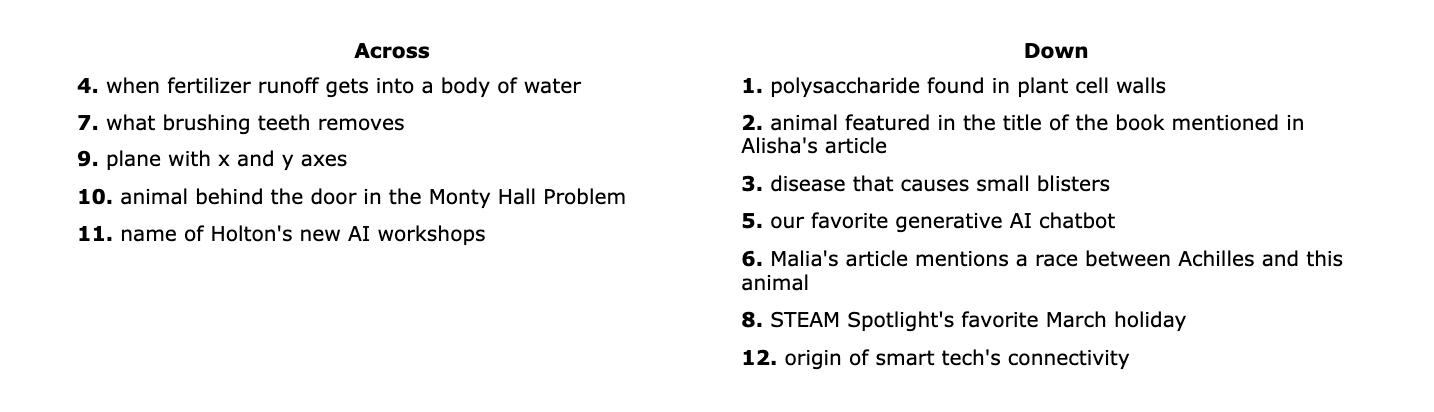
Have you ever wondered how infinity really does go on forever? Well, if you did, you would be in good company: mathematicians and philosophers have struggled with the concept of infinity for centuries.
Zeno of Achilles, one such mathematician, explained a series of paradoxes that uncovered what he believed was the inherent contradictory nature of infinity. Zeno believed that these paradoxes proved continuous motion was an illusion. One of his most famous paradoxes details a race between Achilles and a tortoise.
“In a race, the quickest runner can never overtake the slowest, since the pursuer must first reach the point whence the pursued started, so that the slower must always hold a lead.” - as recounted by Aristotle
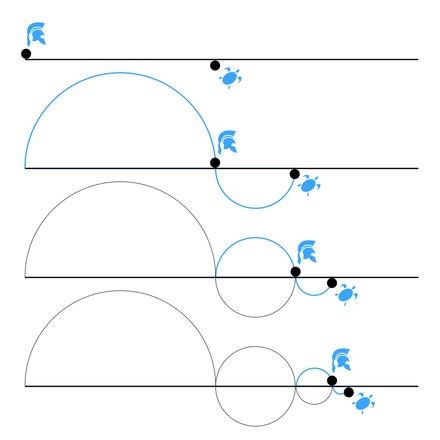
Achilles, one of the fastest runners of all time, races against a slow moving tortoise. However, the tortoise gets a head start (for argument’s sake, let’s make it one meter). On the surface it seems logical to assume that Achilles would easily surpass the tortoise given enough time. However, Zeno’s paradox demonstrates the impossibility of this conclusion.
As Achilles crosses the first gap between himself and the tortoise, the tortoise would also have moved (albeit at a slower rate), creating a second gap. As Achilles crosses the second gap, the tortoise would have made a third gap. Although these gaps may be getting smaller and smaller as Achilles gets closer and closer to the tortoise, these gaps continue to be made infinitely. According to this paradox, motion requires completing an infinite process: closing one gap, then another, then another. Therefore, Zeno concludes that motion is impossible. But we know from our own experience that motion is possible, and that closing such a gap will happen. So, what’s the solution?
Malia Humphries-Do ‘26
Well, actually, there are a couple of different approaches.
First, as science and magazine journalist Brian Palmer explains, “The paradox reveals a mismatch between the way we think about the world and the way the world actually is.” Obviously, continuous motion is possible – you’ve probably (hopefully!) done it sometime today.
So, if motion is possible, then there must be something wrong with our conception of infinity.
That’s because “there’s more than one kind of infinity”: Aristotle touches on this with his idea of “actual” vs “potential” infinities (you can read more about that HERE), but just so this article isn’t infinitely long (get it?), let's explore the idea of infinity using a concept you may already be familiar with: convergent and divergent series. In a divergent series, like 1+3+5+7+... the sum of this series would be infinity. If Achilles had to cover a distance like that (say, if the tortoise was much faster than him), he would never catch it – this distance is infinite. But, in this experiment, we’re dealing with a convergent series, like ½+⅓+⅛+... Palmer explains “Although the numbers go on forever, the series converges, and the solution is 1. As long as Achilles is making the gaps smaller at a sufficiently fast rate, so that their distances look more or less like this equation, he will complete the series in a measurable amount of time and catch the tortoise.”
While on the surface, it may still seem counterintuitive that Achilles can beat the tortoise when there are “infinitely many” gaps between them, we can use many modern day mathematical techniques, like sequences and series or basic calclus concepts, to explain them.
Zeno’s arrow paradox is another such example. Similarly to Achilles and the tortoise, Zeno’s arrow paradox also addresses the paraxoical nature of motion. As Aristotle recounted about the arrow paradox in Physics VI:9:
“If everything when it occupies an equal space is at rest at that instant of time, and if that which is in locomotion is always occupying such a space at any moment, the flying arrow is therefore motionless at that instant of time and at the next instant of time but if both instants of time are taken as the same instant or continuous instant of time then it is in motion.”
Zeno argued that at any singular “snapshot” of time, the arrow would not be moving.
However, we know this is not actually the case. For all the veteran calculus readers out there, the “solution” to this paradox just relates to a fundamental calculus concept you are very familiar with: the derivative! For those unfamiliar, the derivative refers to the instantaneous rate of change of a function at a certain point.
And, even if you have not actually calculated a derivative before, you would be right in assuming that most derivatives are not zero. This calculus based understanding of a “snapshot” in time, and its associated derivative is key to understanding the paradox.
While Zeno assumed that each point is disconnected from the other – a series of disconnected frames, calculus understands motion as a continuous process.
Although Zeno may have had different interpretations of fundamental concepts like motion than we do today, with his paradoxes, he hit on key ideas that are still so relevant today.
The Future of Food:
In our day-to-day lives, we are surrounded by “smart” objects and devices. But what does that even mean? What makes an object “smart” and how can they help us? By definition, a smart object is any object that has three essential features: connectivity, context awareness, and independent computing. Any smart object’s connectivity comes from connecting to the Internet of Things (IoT). Simply put, the IoT connects a smart device with other smart devices and people across the Internet, automatically giving that device access to a huge amount of data and means of communication with other smart objects and people. Their context awareness comes from their ability to gather and send data about their environment at any given moment, allowing them to make suggestions based on factors such as location, weather, and time. Furthermore, a smart object’s autonomous computing means that they can perform tasks independently without a user’s commands and make suggestions unassisted. This proposes the question: what objects would be the most helpful if they were “smart?” I chose to add AI to a pantry in order to convenience everyday life and face the gaping problem of food waste.
In the US, an estimated 40% of the food supply is wasted per year due to factors such as spoilage and overconsumption. At the consumer level, a large contributor is the fact that large quantities of food are discarded because they go bad. Food can go bad for a multitude of reasons, such as incorrect or irregular temperature or humidity. Not only could a smart pantry regulate these factors to prevent spoilage, they could also prevent overbuying from happening in the first place through meal-planning programs and autonomous restocking.
So what would a smart pantry look like? The most prominent functions of a smart pantry would undoubtedly be its regulation systems. They would not only help separate non-perishables, bread, and other categories of food, but regulate the conditions inside each compartment in order to make food last longer.
Furthermore, the smart pantry would be able to track each object in the pantry and notify the user of upcoming expiration dates, saving many people from accidentally consuming expired products, which can lead to sickness. Another feature of the smart pantry would be its ability to simplify meal-planning and suggest recipes for you. The struggle of finding a good recipe for a big dinner, or just for breakfast would all but disappear by using this feature. The pantry would suggest recipes via a small screen based on a few factors, such as the number of people you’re looking to feed, recipes that you have enjoyed in the past, and personal preference. You would be able to enter feedback on cookbooks you enjoy, allergies, and preferences that would allow the smart pantry to make a recommendation. It would also take into account the nearexpired products and suggest recipes that could help use them up. Additionally, once you decide on a recipe, the pantry could order food/ingredients for you through existing accounts on services such as Instacart and Doordash, or make a grocery list for you in order to prevent over-buying and alleviate stress.
Through its connection to the IoT, the smart pantry would be able to access food ordering systems, and use generative AI in order to create grocery lists and make recipe recommendations. It would also need access to the temperature and humidity controls within the pantry, and data on expiration dates that it could all access through connection to the IoT. Personal data such as family size and preferences, and account information for ordering systems would be necessary in order to best use the pantry.
Of course, any kind of device comes with limitations. In the design of a smart pantry, there are various ways it could go wrong, but overcompensation is the main risk. The pantry’s standard of what is in need of restocking could be entirely different from the user’s, resulting in over-ordering and over-spending on unnecessary items. In order to prevent this, the user would be able to manually adjust their preferences of what constitutes a restock. Exact expiration dates often overestimate, and if the pantry recommended disposing of them immediately, it could result in waste. To combat this, the pantry would have a four day buffer zone before and after the expiration date so the user would be well aware of the upcoming date. Additionally, hackers may be able to access food-ordering accounts and information attached to them through the smart pantry, providing a healthy need for sufficient data protection on the pantry and its attachments.
With the use of any sort of device comes the risk of attackers. Many AI/smart object developers use strategies such as encryption. Encryption is the scrambling of written data into a cipher. This makes it virtually impossible to read if you do not have authorization to view it, meaning it is a very effective method of defending data. Moreover, password protection would be crucial in defending one’s data from attackers. Using a strong, at least 8-character password and changing it regularly are both dependable strategies when it comes to securing data.
Although managing the ethics of AI is always going to be a concern when it comes to advancements in smart technology, AI is on track to affect every aspect of our lives, and it has a clear future in the business and everyday world. It has the capacity to automate certain jobs, streamline manufacturing, increase convenience in everyday tasks, and much more. Educating all people on how to effectively and responsibly take advantage of AI opens a door to face looming problems such as food waste. Making sure AI aligns with humanized values and remains impartial is crucial, and can be monitored by the developers of any AI software. Additionally, it is important that developers of AI continue to value privacy, fairness, and transparency in the industry to maintain trust between the developers and users of smart objects.
The recent California wildfires have destroyed tens of thousands of homes, businesses, and schools. Twenty-eight families have lost someone they loved, and the fires have burned forty-three square miles beyond repair. These wildfires are unmatched in price, magnitude, heartbreak, and destruction, with costs skyrocketing to 250 billion dollars. People are searching for a solution to prevent a disaster like this from happening again. The preexisting and apparent solutions are proving inadequate, so it is time to explore more creative options, and the little spinning spigots that keep your lawn green might just be the solution.
Sprinklers are simple yet effective mechanisms that are highly widespread. Most sprinkler systems consist of five main components. The timer/controller is the system’s brain that sends signals to valves, telling them to open or close on schedule. Next are the pipes, which are PVC tubes that send water from the source to the sprinkler valves and heads. The sprinkler valves control water flow to specific zones by opening and closing, allowing water flow to be stopped. The sprinkler heads are spigots that distribute water to the lawn. Finally, the backflow preventer stops contaminated water from entering the system and ruining the clean water supply. I can easily tweak this uncomplicated system to prevent wildfires by adding additional features, including artificial intelligence.
Firstly, I would swap out the PVC tubes with stainless steel because PVC (polyvinyl chloride) has a melting point of 220-500 degrees Fahrenheit. In comparison, wildfires can reach up to 2200 degrees Fahrenheit, and stainless steel with a melting point of 2550 degrees Fahrenheit would be able to withstand the heat. Next, I would add two tanks to the system. The first tank would be a 500-gallon reservoir that would cycle through the system but always remain full, solving the water scarcity issue and contributing to firefighting issues. The second tank would contain the chemical PhosChek LC95. Home Defense:
This substance is the red chemical that is used to put out fires. It works because when ammonium phosphate is exposed to heat, it turns into phosphoric acid and ammonia gas. The phosphoric acid breaks down further into phosphorus pentoxide, which sucks the water out of surrounding materials. It removes water from cellulose. This effect turns surrounding materials into char, which is unburnable. Its active ingredient, ammonium phosphate, is essentially just fertilizer, so it wouldn’t cause damage to surrounding plants if they don’t burn.
I would develop these on a large scale to connect entire neighborhoods of at-risk homes through a system of pipes and fiber-optic cables. This part is where the artificial intelligence component would come in. When a forest fire happens, the different controllers of the buildings can communicate with each other through the fiber-optic cables. These are compact, high-speed, and highly effective. They would not connect to the internet and only speak directly to each other, so there would be no risk of hackers. This system would analyze how much water and chemicals a system needs. It would send or receive water to or from houses with different needs through the connecting pipes. The AI itself would be housed in a small computer located in the controller of each system. These would have a component that would translate the light from the fiber-optic cables into code the computers could understand. There are few enough factors for the AI to make minimal to no mistakes in its decision-making process, and these factors don’t contain any personal information, so privacy would not be an issue. Another common issue with artificial intelligence is its environmental impact. AI producing a single microchip requires 2.1 – 2.6 gallons (8-10 liters) of water to cool machinery. I would combat this by using nuclear wastewater to cool my AI instead of wasting clean water.
This solution would help people get programming, construction, inspection, and research jobs. Additionally, it is sustainable for the future with long-lasting materials and considers the possible impacts of climate change on wildfires. It would also save hundreds of billions of dollars in damages and, more importantly, save lives.
There are two possible downsides to this solution. Firstly, there is the cost. The stainless steel pipes I would use are more than double the price of the PVC pipes that are currently being used. In addition, the fiber-optic cables I plan to use are costly.
However, these costs are justified because the damages that this solution would prevent are so much greater. The second possible downside to this is eutrophication. Eutrophication is when fertilizer runoff gets into a body of water, and Phos-Chek LC95 is a fertilizer, so it has the same effect. The fertilizer causes algae in the body of water to flourish, which blocks sunlight from getting to the plants growing at the bottom of the ocean. These plants provide oxygen to all the animals living in the surrounding water through photosynthesis. The animals suffocate if the plants can produce no oxygen, so they die. Most of the houses at risk in California are close to the water, so there is a heightened risk for the fertilizer to reach the ocean.
In these dark times, many families wonder if they can ever return to life as they know it. Even when their homes, businesses, and schools are rebuilt, there is always the risk that something like this will happen again. Hence, the only solution is to look to the future and prepare in every way possible to ensure this tragedy is never repeated.
Oral Cancer Early Detection:
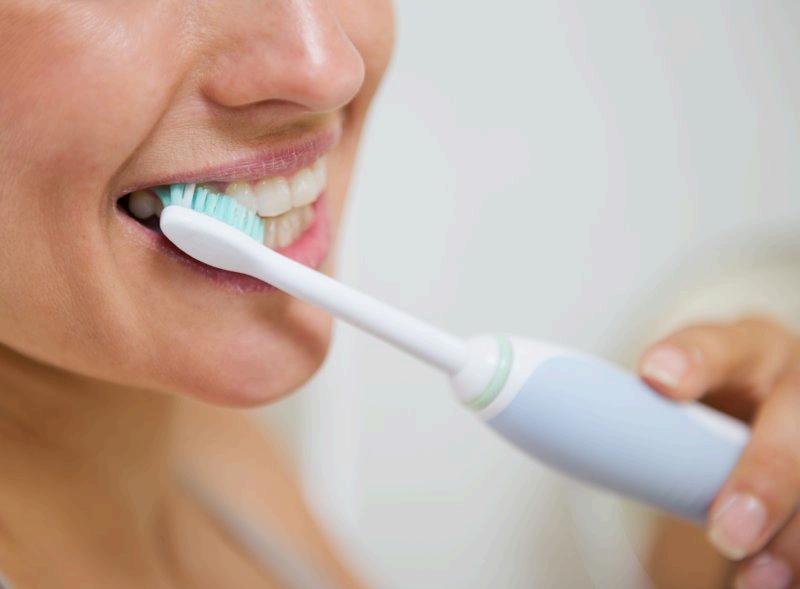
Smart toothbrushes can save lives. A toothbrush is used to maintain oral hygiene by removing bacterial plaque from teeth and gums. Using a toothbrush twice daily reduces the chance of tooth decay, gum disease, and other oral complications. However, it does not necessarily minimize the risk of oral cancer, which relies on a dentist’s assessment. Visiting a dentist two times per year as recommended may not be feasible for many people. Globally, fewer than one-third of individuals see a dentist at least once annually. Maintaining oral health may be even more difficult for lowincome patients, who are often most at risk for oral cancer. Relying on the dentist for cleanings and oral checks is not enough to stay healthy throughout the year. Currently, screening for oral cancer relies solely on a dentist’s assessment, which involves inspecting one’s mouth for red and white patches or sores and examining the throat and neck for lumps. Cancer is often greatly advanced by the time of detection. A smart toothbrush could fill the gap between dental visits by constantly evaluating changes in the mouth suggestive of oral cancers.
Oral cancer is the sixth most common cancer in the world, comprising three percent of all cancer cases diagnosed in the United States. This disease usually manifests in patients over the age of forty in roughly twice as many men as women. There are several risk factors of oral cancer: tobacco use, alcohol consumption, HPV infections, exposure to sun, a diet lacking fruits and vegetables, and genetics. In the United States, low socioeconomic status is independently associated with smoking, leading to greater incidence of oral cancer in this population. In southeast Asia, chewing betel leaves can cause oral cancer. When oral cancer is diagnosed at later stages of disease, the five-year patient survival rate dives from 83.7% to 38.5%, which is why early detection is critical. Disease treatment ranges from surgery in early stages to combinations of surgery, radiation, and systemic therapies in later metastatic disease. All therapeutic options have significant adverse events, which deeply impact patient quality of life.
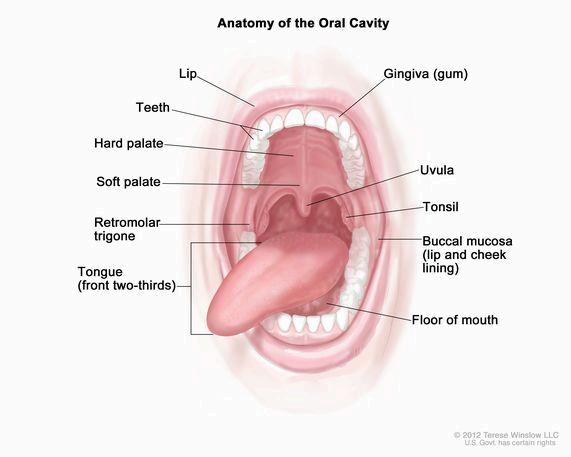
The ClearView smart toothbrush has a small camera on the top that constantly scans a user’s mouth as they brush their teeth. The device detects early signs of oral cancer by associating images of one’s mouth with images online from the newly-developed ORCHID database, an artificial intelligence (AI) - enabled collection of oral cancer images. The ClearView AI technology is trained on ORCHID to learn how to identify different signs of oral cancer. New images from a patient’s mouth are matched to noncancerous, pre-cancerous, and cancerous lesions. The AI calculates the probability of an image fitting in one of these categories. If a diagnosis is confirmed, the AI cycles the images of the oral cancer back into the ORCHID database for further learning. Additionally, the toothbrush connects to an app, ClearView Oral Check, on the patient’s phone. Within the app, there is an ongoing record that logs the date and time of brushing. If nothing suspicious is detected, then an all-clear message pops up on the app. If there are suspected signs of oral cancer, the device will upload images from the toothbrush to the app and alert the patient to these changes. The patient will see a personal diagram of teeth and the oral cavity (Figure 1) from a baseline mouth scan with suspicious lesions marked. The app will recommend a visit to the dentist and can forward the images to one’s dental office. ClearView Oral Check will also provide links to trusted websites so the user can gather more information about oral cancer.
The app requires data about the user in order to both identify the patient and to better predict the risk factors and outcomes of oral cancer. ClearView Oral Check asks for the user’s name and preferred language, to increase accessibility. The app requests information related to oral cancer risk factors: sex, age, tobacco use, family history, and more. It needs the patient's dental office information in order to send images when necessary. To provide patient support regarding oral cancers, ClearView Oral Check links to websites such as “The National Institute of Dental and Craniofacial Research.” However, online personal information can lead to general identity theft. If thieves or hackers have access to private data, they can find and utilize social security numbers and credit cards. The app does not request financial information, but there is always a chance of a security breach. If this were to happen, a patient's sensitive health data could leak, leading to a possibility of health insurance challenges. Thus, the app implements Internet of Things (IoT) “zero-trust” security methods, including strong authentication factors that are network agnostic. The app is passwordprotected with a two-factor identification process through a phone code. ClearView Oral Check does not permit repeated automatic password entries, requiring a manual log-in that changes every three months. Software updates occur frequently to protect against hackers and viruses. When oral cancer images are added to the ORCHID database, all personal information must be stripped to maintain patient anonymity.
There are many potential limitations for this technology. Typically, camera-enabled devices are expensive. For example, smartphones often cost hundreds of dollars. Yet oral cancers cost the American healthcare system $6 billion annually. According to the United States Census, there are approximately 266,000,000 adults and around 11.5 adults per 100,000 people will develop oral cancer. This statistic means that 30,590 adults live with oral cancer. If the government provides all low-income, high-risk patients with the ClearView smart toothbrush, even at a cost of $500, early detection could yield billions of dollars in savings to the healthcare system. Another limitation is the potential for bias in AI due to factors such as race or socioeconomic status. While the app will not collect financial information, race is a key component of the algorithms due to its role in cancer development. Diverse races might be underrepresented in the ORCHID database, limiting AI objectivity. Another potential challenge is in the chance for false positive results. The app and its detection system must be accurate and prompt, but also cautious to not induce panic.
Incorrect results could erode trust in the toothbrush and its technology. Patients should understand that the AI continuously grows and learns, and that they should discuss any findings with their dentist. Lastly, AI has inherent risks that need to be mitigated. ClearView Oral Check abides by a code of conduct, prohibiting it from inappropriate chatting, questions, or negative comments. Humans monitor the learning algorithms with sensitivity checks and scientific research to minimize bias and ensure accuracy.
In conclusion, the ClearView smart toothbrush and the ClearView Oral Check application comprise feasible and accessible technologies that improve early detection of oral cancers in patients at high risk. The cost is justifiable through net savings to the healthcare system. The ORCHID database already exists to assist in AI development. Future applications might include improved hygiene and detection of other oral diseases. After all, smart toothbrushes can save lives.
Innovators and Professional Development
Grace Xiao ‘26 and Angel Saravanan Babu ‘26
Over the past year, a groundbreaking student initiative at Holton that has turned the tables of traditional student-teacher roles, bringing an avant-garde approach to professional development. Through an AI Cohort driven by Mrs. Hassell-Lee (Director of Technology Integration) and Dr. Gordon (Academic Technology Coordinator), we as AI Innovators co-founders have started guiding faculty into the rapidly changing field of artificial intelligence through a series of AI Tasting workshops, showcasing AI tools such as Quizizz, Magic School, Google’s Gemini, and Brisk.
To provide more context about what the workshops looked like, each AI Tasting consisted of a brief introduction and group discussion about best practices of AI education to “break the ice” among the teachers. The teachers were then broken off into smaller groups and participated in 10-minute rotating stations focused on a specific tool. The best part? Jars of delicious sweet treats were placed at each station, bringing a new meaning to the term AI Tasting!
One of the tastings attended by Holton department heads
The first session, attended by Holton’s upper school department heads, introduced a spectrum of AI tools for increasing efficiency and supporting curriculums. This first workshop allowed teachers to gain a glimpse at AI’s potential as a tool, not a replacement in the classroom. This workshop was followed by another dedicated to the World Language department, where teachers explored AI’s potential for interactive learning and making cross-cultural connections. The final and most extensive workshop took place during a professional development day, with the entire Holton faculty engaging in hands-on demonstrations and discussions about AI in the classroom.
One of the most unique parts of these workshops is the flipped dynamic of students teaching teachers. This shift not only allowed teachers to learn something new but also empowered students to engage in leadership. “I think our presentation really got some wheels spinning on exploring AI as a helper in education. I’ve been seeing some of my teachers incorporating AI like Brisk into their classrooms, which feels really rewarding. I’m really excited for what more we can do in the future,” said Grace. Angel echoed this, adding that “this exciting initiative speaks to how both students and teachers alike can work together to improve AI literacy in the Holton community through a mutually beneficial “partnership”: students get to share their passion about AI and teachers are equipped with the skills necessary to enhance classroom practices.”
Looking ahead, AI Innovators plans to expand AI training opportunities to Landon, fostering a greater understanding of AI and its uses in the broader community. In addition, we have also been selected to present a more detailed and comprehensive version of our AI Tasting at the AIMS (Association of Independent Maryland & DC Schools) Technology & Innovation Conference 2025. Through these initiatives, we hope to continue paving the way for future work in AI literacy at Holton and beyond.
Why We Need to Integrate AI in the Classroom
Artificial intelligence (AI) has revolutionized America’s social landscape so completely that it’s difficult to imagine a life where a database of infinite knowledge isn’t just a click away, ready to tackle the problems we can’t— or don’t know how to — deal with. One of these problems, for many, is education.
It’s rare to go a day at Holton without hearing about AI. Whether it’s my classmate using Google Translate on a Spanish project, a teacher auto-grading my five-point assignment, or my friends Angel and Grace breaking barriers with their AI Innovators project (see page 14!), AI touches every aspect of my life as a student. I did some digging, and I found out that AI in education is such a hot topic that in January 2025, a bill was introduced to the General Assembly of Maryland (the state where I live) that requires the State Department of Education to evaluate the current and potential role of AI in public schools. The mere proximity of these two words— “AI” and “schools”— already sours many parents’ and teachers’ stomachs. The Internet teems with ChatGPT horror stories, and nobody knows it better than we students of the digital age who, if we aren’t using AI to cheat, are trying frantically to prove that we aren’t using AI to cheat. However, the bad reputation that artificial intelligence has accrued fails to take into account its benefits for students and educators alike, and in resisting its rising influence in the classroom, we ignore a fundamental truth about AI: it’s not going anywhere.
Integrating AI into education means more than just using it as an essay generator, though that’s what most people think of when they try to conceptualize an AIfriendly school environment. We go wrong when we try to use AI as a replacement for human intelligence rather than a complement to it. Integrating AI into education means more than just using it as an essay generator, though that’s what most people think of when they try to conceptualize an AI-friendly school environment. We go wrong when we try to use AI as a replacement for human intelligence rather than a complement to it.
Allowing AI to brainstorm with us— to provide a sounding board and sometimes even a critic for our nascent ideas— is something that some of my humanities teachers have recently incorporated into their classes, and I can honestly say that it’s made me a better writer and critical thinker. I’ve also seen it alleviate the stress on my teachers, who, overwhelmed with work and pulled in five different directions by the demands of a single school day, appreciate AI’s ability to provide detailed feedback on student assignments and even help with lesson plans. Though many schools have relentless restrictions on AI usage, loosening these guidelines and allowing more of these AI-human interactions could lighten teachers’ workloads and improve students’ learning outcomes.
As helpful as AI can be within school walls, understanding this valuable tool isn’t just an asset; it’s an investment for the future. 74% of teachers in the US say that AI literacy will be essential in the future job market. When I and the rest of my peers at Holton and beyond graduate and enter the workforce, we’re going to be navigating a world transformed by the inescapable influence of AI. It will be a learning curve for us— there’s no question about that— but our schools can prepare us for this transition by giving us the tools to use AI effectively and responsibly in our daily lives. What better time is there to expose us to AI than middle and high school, when our brains are elastic enough to adapt with ease to the digital environment blossoming around us? What better time to equip the next generation for success than the present? AI is becoming a permanent fixture of human life, and we would do well to treat it as such.
AI does pose certain problems in a school setting. It has raised concerns about privacy, personal autonomy, and bias. But though the AI-driven future we are heading towards is uncertain and full of challenges, it is a future that holds a wealth of possibilities for students, educators, and all members of the community. Holton is a very welcoming environment in terms of AI, but we should strive to integrate this open attitude toward AI into school, work, and all aspects of our lives.
The Monty Hall Alisha Agha ‘27
I was reading a book for English class in ninth grade called The Curious Incident of the Dog in the Night-Time. It was about this autistic child, and one of his hyper-fixations is math. He talks about this math problem a lot in the book, and while I never understood it, I found it very interesting. Here’s the problem:
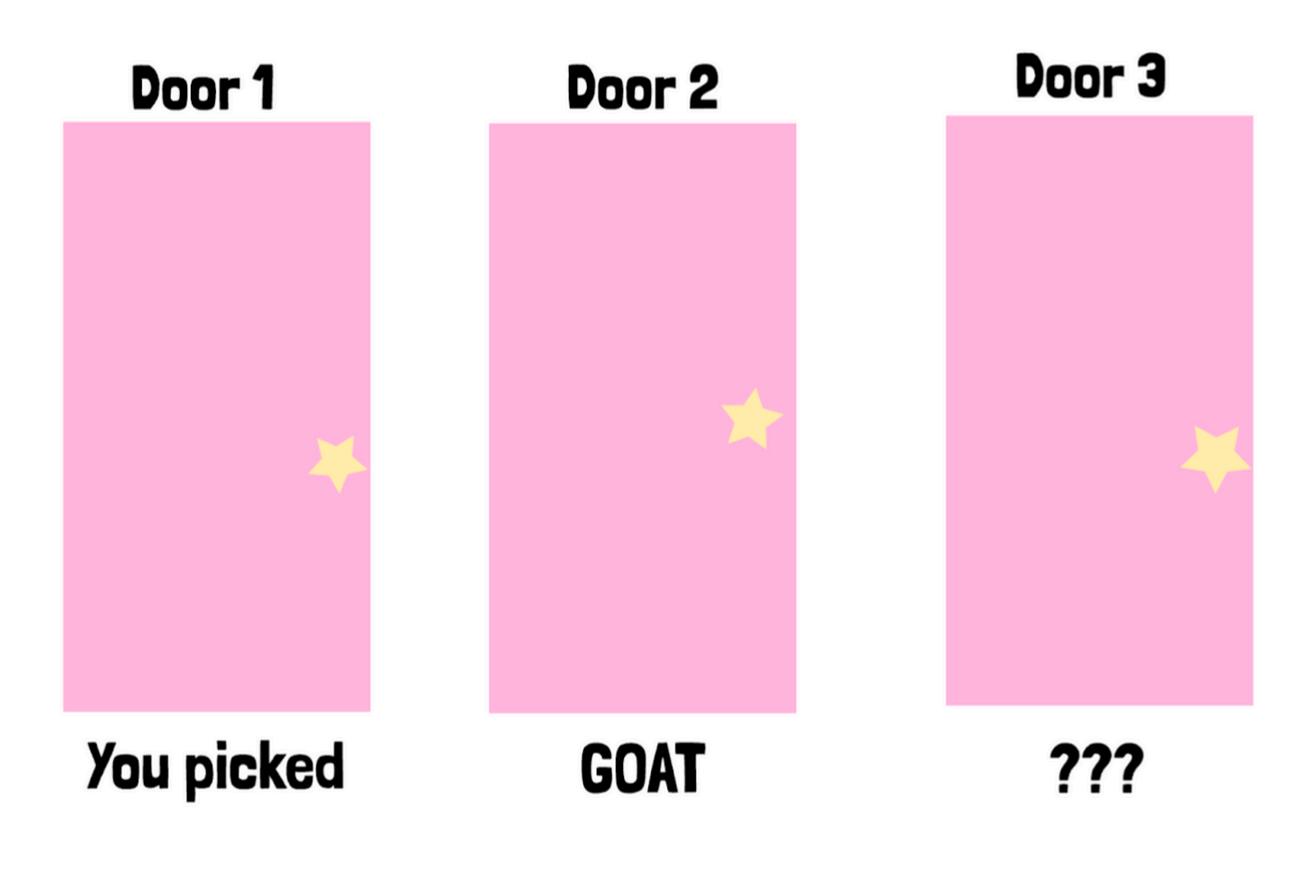
Imagine you are on a game show. There are three doors. One has a car, the other two have goats. You want to win the car.
You open the first door. After you do so, it is revealed that the second door has a goat behind it. You still do not know if there is a goat behind the first door. The game show offers you to switch to the third door.
So what should you do?
The answer seems obvious: it doesn’t matter, right? It seems like a 50% chance of getting the car between the two remaining doors.
Wrong!
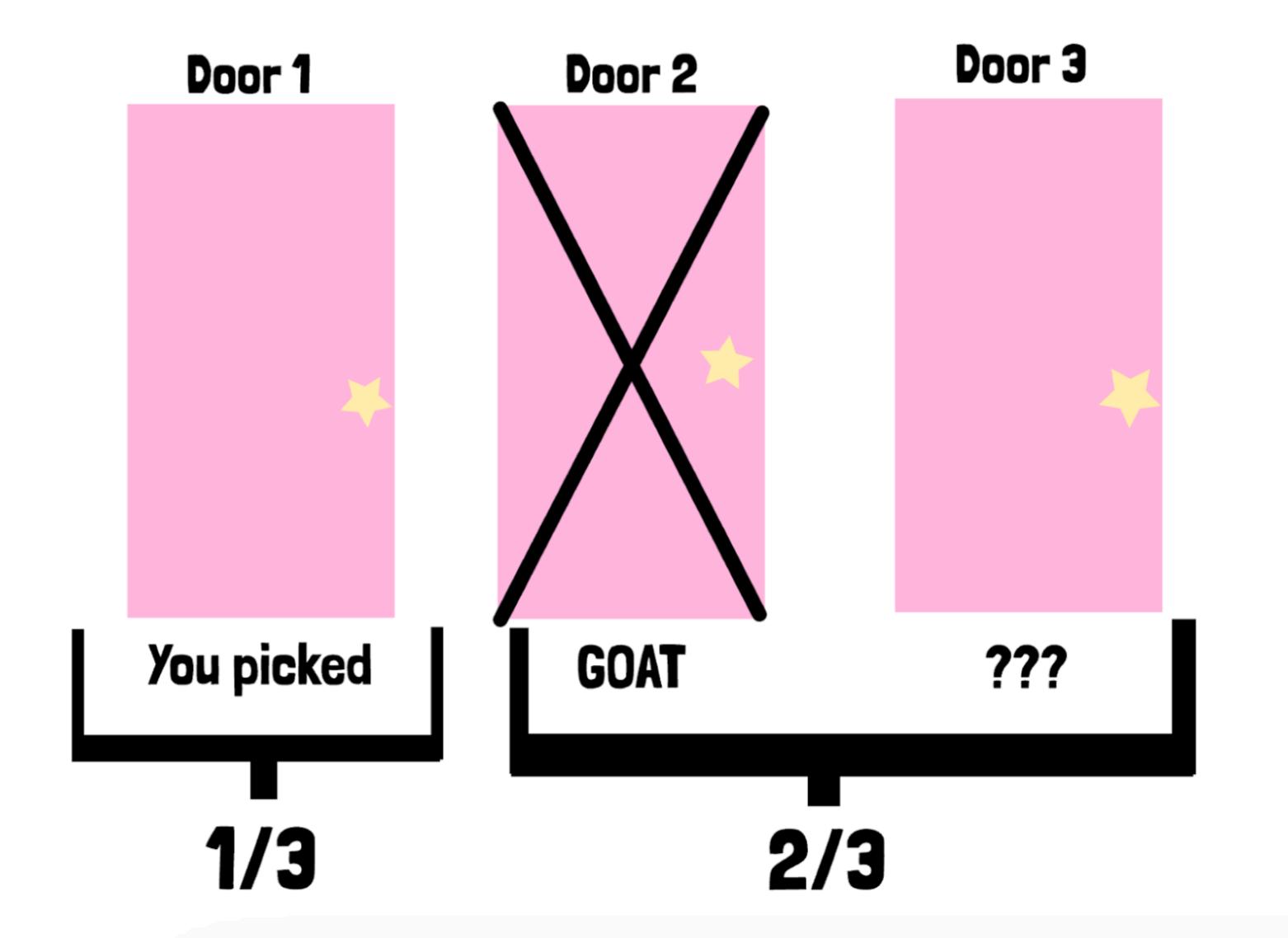
It’s not a 50/50. Let’s backtrack a bit. When you are choosing a door at the beginning, there is a ⅓ chance of being right, and the other two collectively have a ⅔ chance of being right.
And then the second door gets eliminated as the judge reveals to us that the second door contains an unwanted goat. Now the second door has a 0% chance. Between the last two doors, we can subtract the chance of the second door to get the chance for the third door. ⅔ (last two doors total) minus 0 (second door) equals ⅔ for the last door.
So that leaves the first door with ⅓ chance and the third door with a ⅔ chance. In conclusion, pick the last door!