INTERESTING NEWS
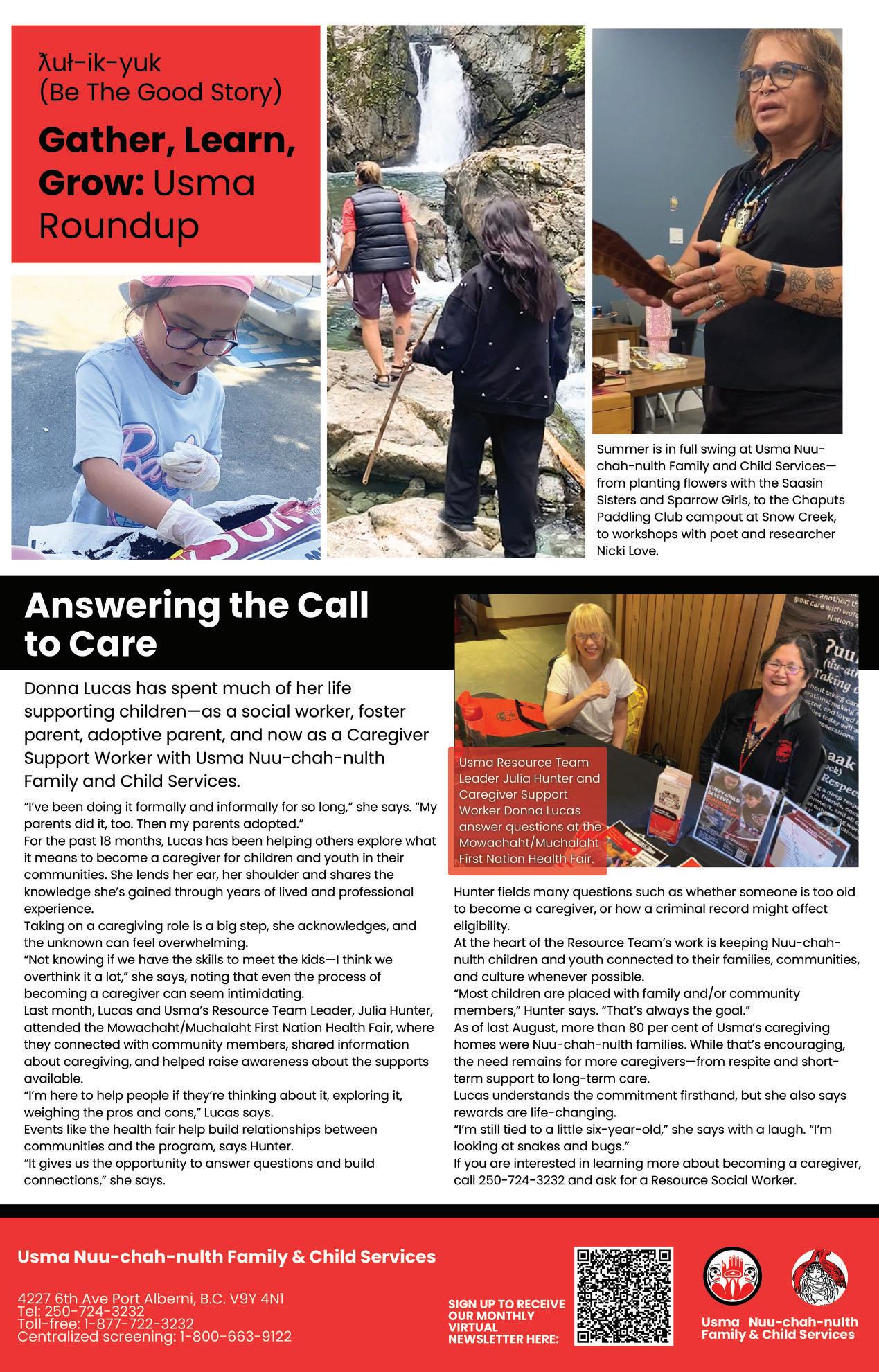
Winners crowned at 3rd Tseshaht Lightning tourney
With 75 squads competing, May 18
By Nora O’Malley Local Journalism Initiative Reporter
Port Alberni, BC – Tom Campbell’s men’s team and the Rez Coast women’s team won a third consecutive Tseshaht
Lightning Open title on May 18 under the bright lights of the Alberni Athletic Hall. Tom’s team beat the Nation Warriors from Bella Bella 60-53.
“I can always count on these guys. They watch the scoreboard and pick up their play when they have to,” said Campbell, a veteran Ahousaht First Nation coach.
Men’s MVP went to Jacob Thom, a Vancouver Island University coach and ex-player.
“He’s a great player all-around for years. It’s always fun to have him around,” said Campbell. “My grandson wanted to sit beside me. Hopefully later on in his life he will remember this team that pappa had. All these guys train all year-round. They take care of themselves.”
Rez Coast breezed to another beauty victory with a 45-29 win over the Hesquiaht Descendants.
Rez Coast player Jade MontgomeryWaardenburg travelled with her sister Jasmine from Similkameen in the Okanagan Valley to play in the open hoops tournament.
“It’s always a powerful gym. It’s very cool to play against the home team too. It’s competitive, it’s gritty, they cheer the loudest for sure. It’s a powerful energy in the gym; nothing like anywhere I’ve ever gone and I’ve been to a lot of rez tournaments,” said Montgomery- Waardenburg. Rez Coast played a tight game against the Hesquiaht Descendants earlier on in the tournament – they only won by a couple points. Last year, the ladies pickup team beat Hesquiaht in the finals as well.
Rez Coast player Harriette Mackenzie was named women’s MVP.
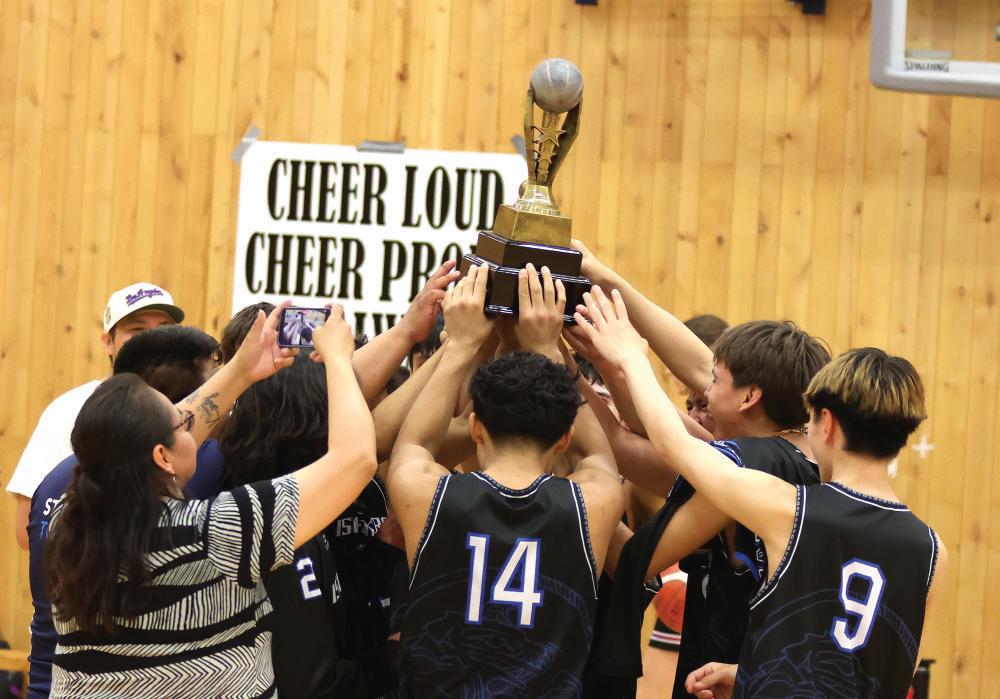
twin brothers Yoan and Noah Penashue, who travelled from Quebec and Labrador to play in the tournament.
Dad Bart Penashue said tournament organizers introduced them to four coaches, which eventually led to the boys joining the Ahousaht squad for the May long weekend.
“It was kind of slow for them to play, but the last three games they’ve been awesome playing. I guess it was a little break for them at the end,” said Bart.
“It was a great opportunity to get playing in with some really good players. It was a great experience,” said Yoan.
“I’m still riding on the high of getting to play with my friends,” said Mackenzie, a 6-foot-two former Vancouver Island University forward. “My sister joined us this time. That was really exciting. This is such a fun tournament. It’s my favourite one.”
Ahousaht Islanders and Diversity
Draft Picks win U17 titles
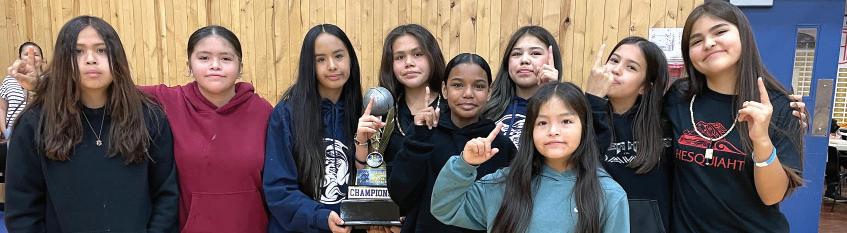
Ahousaht Islanders boys U17 team showed the fans how hard they’ve been working with a fast-paced game against Naani, a team made-up of Ucluelet Secondary School athletes.
Coached by Luke Swan Jr., the Islanders took the title 61-51 with the help of Innu
Inside this issue...
“It helped me understand how good they can be. It’s fun to know how that Indigenous players can be this good,” said Noah.
Nuxalk and Ahousaht First Nation’s Luke Robinson coached the Diversity Draft Picks (DDP) U17 girls squad to a commanding 51-24 victory over Port Alberni’s Rain.
The DDP team included players from Comox Valley, Ahousaht and Cowichan. “(Basketball) takes a commitment from parents. It takes commitment from people that have played the game before to give back. Right now, I think parents are doing the best that they can in giving their effort and time to keep the culture alive. A lot
Tla-o-qui-aht re-elects Elmer Frank...............................Page 2
Witnesses sought for Carolyn Lee murder......................Page 6
School potlatch open to all.....................................Pages 10-11
ReSurf Canada turns one..............................................Page 13 Tseshaht tourney levels up for reconciliation...............Page 19
of people don’t know that this is culture,” said Robinson.
He also hit the court as a player for Ahousaht’s Maaqtuusiis Suns men’s team, who won the master’s division in a close game against the Black Dogs, a local pick-up squad. Robinson was named MVP for the master’s men’s division.
“It was a classic battle. It’s nice to compete against friends. It was like a four-point game,” said Robinson. “I don’t know why they chose me for MVP. There were lots of players that could have won MVP.”
Nuql’stmc co-ed and Ravens girls win U13 titles
Two teams from Bella Coola battled it out in the boys U13 division final, with the Nuql’stmc co-ed team nabbing the win 28-23 over Nuxalk.
“Nuql’stmc is a small village from Nuxalk. There is a mountain called Nuql’stmc and we call it the sleeping giant,” said coach Angel Mack.
“It was a long drive. We drove down to Kamloops and then Kamloops over to Qualicum, we stayed in Qualicum for two nights. But because we played early Ed hooked me up with his Auntie Marilyn and we stayed with her for a night,” said Mack, who coached the Nuxalk girls U17
dynasty team at the Junior All Native Tournament (JANT).
Her son Mack Gottfriedson earned topscorer and MVP.
“I just focus on fundamentals first. Fundamentals and defense. For our community, man-to-man is what we focus on. Everyone plays zone, but I feel it puts kids almost at a deficit,” said Mack.
Yuułuʔiłʔatḥ (Ucluelet First Nation)
Ravens hoisted the U13 girls trophy after comfortably beating the rival team Maaqtusiis Suns from Ahousaht by double digits. Earlier this year the Ravens lost to the Suns in a heartbreaking JANT final, but took revenge at the ‘Nupps’ Charleson Memorial Tournament in April and now again over the May long weekend. Coach Tyson Touchie says they could meet for a fourth time this June at the upcoming Coastal Wave Indigenous youth basketball tournament in Victoria.
Ravens player Chenoa McCarthy-Tom was named MVP and earned an All-Star.
“I couldn’t have done it without my team. We’ve been working on team chemistry and zone defense at practice,” said McCarthy-Tom.
The annual Tseshaht Lightning Open basketball tournament has become one of Vancouver Island’s largest with 75 teams entering this year.
Nora O’Malley photo
The Ahousaht Islanders boys took the U17 title after a fast-paced game against Naani, a team made-up of Ucluelet Secondary School athletes.
Tla-o-qui-aht re-elects Elmer Frank to serve as chief
First Nation sees the highest-ever voter turnout with 307 members showing up to the polls for the May 12 vote
By Nora O’Malley Local Journalism Initiative Reporter
Tin Wis, BC – Tla-o-qui-aht First Nation members have opted to hold a steady course over the next four years.
Elmer Frank was re-elected chief councillor with 164 votes, defeating candidates Joseph David who had 93 votes and Saya Masso who had 48 votes.
A total of 307 ballots were cast on the May 12 Tla-o-qui-aht election, the highest-ever voter turnout in history, according to Frank.
“I just wanted to say to my wife and to my children, I really couldn’t do without your support, without you guiding me all the way,” said Frank during the May 13 swearing in ceremony at Tin Wis Resort. He congratulated all the new councillors and welcomed back the re-elected councillors.
Out of 34 total candidates on the ballot, 11 Tla-o-qui-aht councillors were elected to office:
• Francis Frank
• Tara-Lynn Curley
• James Frank
• Curtis Joseph
• Remi Tom (Naasiismis)
• Roberta Michelle Tom
• Thomas George Sr.
• Leo Jon Manson
• Terry Dorward
• Gisele Maria Martin
• Johnny E. Williams Sr.
“We’ve had more and more interested in people wanting to participate. It’s the first-time we’ve seen so many people who want to be part of our council,” said Frank.
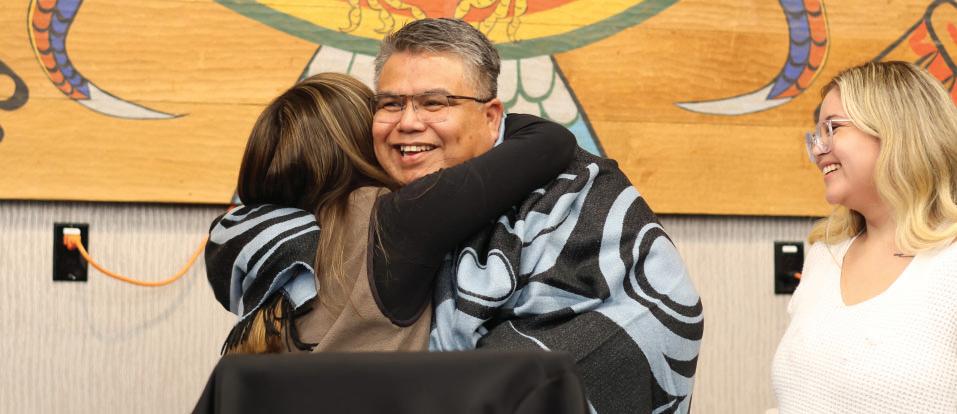
Tla-o-qui-aht’s newly re-elected chief councillor Elmer Frank is blanketed during the May 13 swearing in ceremony at Tin Wis Resort.
He encouraged community members who showed interest in being part of council to continue to move forward with them by joining a committee.
“There is room for those who ran and still want to be part of moving our nation ahead,” said Frank.
Frank said he will continue to enforce the mandatory Tla-o-qui-aht language class for half an hour before each meeting.
“I have a really strong belief in continuing our culture and our language,” said Frank.
“We are here tonight because we want to continue to make great things happen for Tla-o-qui-aht people. I want to let all the members know, all those online and all those who are listening in the crowd, that
we take our direction from you; we take our mandate from you, and I’ll make that promise to you,” said Frank.
Judge Alexander Wolf officiated the swearing in of the newly elected chief and councillors.
“I like court, but I think I like this room filled with laughter and children and celebration a little bit more,” said Wolf.
Tofino Mayor Dan Law attended the ceremony.
“It’s been a pleasure and honour working with Chief Elmer Frank over the past four years. Congratulations to Elmer and the new Council! I wish the Tla-o-qui-aht Nation even more success over the next four years,” said Law.
Tla-o-qui-aht First Nation has over 1,200 muscim (citizens) and includes
three communities: Ty-Histanis and Esowista are located about 10-minutes south of the District of Tofino on Long Beach in the Pacific Rim National Park Reserve, and the village of Opitsaht is a short boat ride across the inlet from Tofino.
Opitsaht came up several times throughout the evening, with community members stressing a need for more infrastructure.
Tla-o-qui-aht’s elected chief and council are guided by ancestral knowledge from Ha’wiih (hereditary chiefs).
“If you believe in your people, you will go a long way,” said the speaker for the Ha’wiih. “We look forward to working with you cohesively as we have for the past four years.”

Nora O’Malley photo
Supreme Court to hear case that tests UNDRIP law
Challenge from the Gitxaała and Ehattesaht to B.C.’s mineral tenure system is headed to Canada’s highest court
By Eric Plummer Ha-Shilth-Sa Editor
Canada’s highest court has agreed to hear a case that tests the legal weight of the United Nations Declaration on the Rights of Indigenous Peoples in how it applies to B.C.’s mineral tenure system.
Expected to come before the Supreme Court of Canada in spring 2027, the case was brought forward by the B.C. government, after the province lost its argument in two lower courts. First petitioned by the Gitxaała and Ehattesaht to the B.C. Supreme Court in late 2022, the First Nations challenged B.C.’s existing regime of granting mineral exploration rights. The online system granted “free miner” certificates for a $25 fee without any consent from the First Nations that occupy the area to be explored.
“Ehattesaht deals with significant mining pressure in their territory, including in an area of central importance for the exercise of Ehattesaht’s rights and adjacent to its main community,” stated the First Nation’s recent filing to the Supreme Court of Canada. “As of September 2022, shortly before Ehattesaht’s petition in this court matter was heard by the B.C. Supreme Court, there were 123 mineral claims registered in this core area of Ehattesaht territory. All were granted pursuant to the Mineral Tenure Act, without any consultation with Ehattesaht regarding impacts to their asserted rights and interests.”
The Gitxaała, who are from an area south of Prince Rupert, and the Ehattesaht, from northwestern Vancouver Island, argue that the mineral tenure system went against B.C.’s Declaration on the Rights of Indigenous Peoples Act, legislation that was unanimously passed in Victoria in 2019. DRIPA tasks the province to align its laws with the United Nations Declaration on the Rights of Indigenous Peoples, which carries the tenet of “free, prior and informed consent” to use or profit from Indigenous territory.
Two years after the B.C. Supreme Court ruled in the First Nations’ favour in 2023, the province introduced a new Mineral Claims Consultation Framework, bringing a notification and consultation period for local First Nations once an application is received by the provincial registry.
“The chief gold commissioner will determine whether the duty to consult has been met and if the claim should be registered, registered with accommodations, or denied,” stated the B.C. Ministry

of Mining and Critical Minerals in a press release from March 2025. “All decisions will be published in the MTO system, ensuring the process remains fair and transparent for all parties involved.”
But this new framework was not met favourably by some Indigenous leaders.
The First Nations Leadership Council said that the new framework “falls well short of the minimum human rights standards outlined in the UN Declaration”.
“In its current form, the MCCF will only serve to inundate First Nations with referrals to be responded to on short timelines absent the provision of adequate capacity funding,” stated Grand Chief Stewart Phillip, president of the Union of BC Indian Chiefs President, in a January 2025 FNLC press release.
“The MCCF, and the process that led to its development, only serve to illustrate the urgency of the government of B.C. undermining the good work to align the MTA with the UN Declaration in consultation and cooperation with First Na-
tions,” Chief Phillip said.
The case went to the B.C. Court of Appeal, which on Dec. 5, 2025 ruled in a split decision that B.C.’s Mineral Tenure Act was inconsistent with DRIPA by failing to adequately consult with First Nations.
Now that the matter will be heard by Canada’s highest court, the province is emphasizing what Premier David Eby has voiced in recent months: that the courts ought to stay out of reconciliation work that should otherwise be dealt with by the government and First Nations.
“[B]y inserting the court, and the adversarial process, into what should be fundamentally a collaborative approach of law reform undertaken by the government and Indigenous peoples working together, the majority approach will lead to more litigation that distracts from the difficult but vitally important work of reconciliation,” stated the province’s submission to the Supreme Court of Canada.
Although MLAs unanimously voted in favour of DRIPA less than seven years ago, how this legislation has been interpreted since has “sown uncertainty among lower courts,” argues the province.
“Clarification from this court is clearly required,” stated the recent submission.
The case first emerged amid a resurgence of mining interests in the area around Zeballos, which is the territory of the Ehattesaht First Nation on northwestern Vancouver Island. From January 2020 to April 2022 there were 32 mineral claims registered in Ehattesaht territory, where the Village of Zeballos calls itself the “Golden Gate to the West Coast”. This is in reference to the “instant” town that was built in 1938 after prospectors discovered gold reserves in the surrounding hills.
The Ehattesaht’s 2022 filing to the B.C. Supreme Court stated that for many years the First Nation has witnessed the exploitation of resources in its Ha-Hahoulthee “without Ehattesaht’s consent and without recognition of Ehattesaht’s prior use and ownership.”
“Individually and cumulatively, resource development activities negatively affect the environment and animals on which Ehattesaht rely for the exercise of their Aboriginal rights,” continues the petition. “Gold mining is closely associated with the presence of quartz. Crystals are of central cultural and spiritual significance to Ehattesaht; and, according to their cultural and legal system, Ehattesaht are the caretakers of crystals in the HaHahoulthee.”

Eric Plummer photo
In December the B.C. Court of Appeal ruled that the province’s current system of granting mineral tenures goes against the constitutional rights of First Nations. Pictured is a statue of Themis, the Goddess of Justice at the courthouse in Vancouver.
Tseshaht bans all fires on reserve and Broken Group
Hupačasath and City of Port Alberni join decision to keep campfire ban, after prohibition dropped elsewhere
By Nora O’Malley Local Journalism Initiative Reporter
Port Alberni, BC – BC Wildfire Service may have flip-flopped on a May 7 campfire ban in the Coastal Fire Centre, but Tseshaht First Nation in Port Alberni is holding the proverbial burn line. The nation is prohibiting all fires on reserve lands and the Broken Group Islands until further notice. Their decision is supported by Hupačasath First Nation and the City of Port Alberni, who are also maintaining a complete fire ban.
BC Wildfire rescinded the open fire prohibition on campfires throughout the Coastal Fire Centre within a week of announcing the ban. Citing a shift in weather conditions and “cooler temperatures”, campfires are permitted in the Coastal Fire Centre starting May 15 at noon.
“I was surprised by BC Wildfire, but that’s their decision to make. We’re going to assert our authority and jurisdiction where we need to and that’s what we’ve done. I’d much rather be proactive than reactive,” said Tseshaht Elected Chief Councillor Wahmeesh (Ken Watts).
“I don’t see the benefit of lifting it. I don’t. People are still going to camp. They can still use propane firepits. You still have a good time without a campfire,” he said.
In early May, Port Alberni hit new weather records with one of hottest days on record reaching 30 C. Wahmeesh says the soil is dry and the snowpack was low this year.
“As much as we can try to paint a picture for the whole coast, I think Port Alberni is a different beast. It’s a valley,” said Wahmeesh.
“Mount Underwood opened a lot of eyes. Mount Underwood helped us think about being more prepared and being more vigilant,” he said.
The Mount Underwood forest fire raged near China Creek Campground south of Port Alberni last August, cutting off
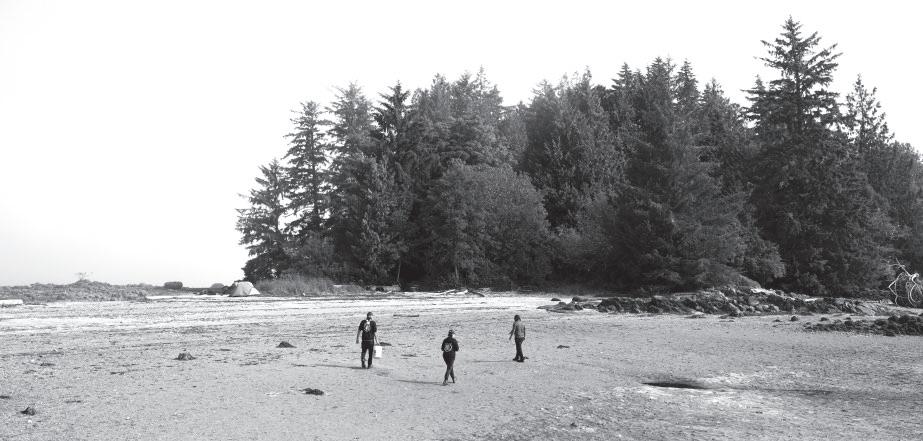
Hupačasath and the City of Port Alberni joined Tseshaht’s decision to prohibit fire while BC Wild
ban in the Coastal Fire Centre starting May 15. The Tseshaht First Nation is prohibiting all fires on reserve lands and the Broken Group Islands (pictured) until further notice.
power and direct road access to the community of Bamfield, Anacla and Nitinaht. It was one of the largest forest fires Vancouver Island has seen in recent years.
One of Tseshaht’s reserves and a neighbourhood in south Port Alberni were put on evacuation alert.
BC Wildfire says local governments (such as First Nations and municipalities) have the authority to implement additional bylaws restricting open fire use within their jurisdictional boundaries.
“Crown land is BC Wildfire jurisdiction,” said Erika Berg, fire information officer for Coastal Fire Centre. “If you’re within the boundary of Port Alberni, Tseshaht or Hupačasath then you’re under their discretion to what is prohibited.”
The Broken Group Islands within Tseshaht traditional territory are part of the Pacific Rim National Park Reserve, which is federally administered lands.
“The Broken Group is the unceded haḥuułi (territories) of our ḥawiiḥ
(Hereditary Chiefs), and we think it’s important to keep it safe there as well,” said Wahmeesh.
He said Parks Canada supported their decision to keep the fire ban in place.
“The Government of Canada is committed to building relationships with Indigenous Peoples, and this is based on the recognition of rights, respect, collaboration and partnerships,” said PRNPR First Nations program manager kweesh kweesh ahta aqsa (Tammy Dorward).
Dorward said any decision around fire restrictions is made through “cooperative management processes”.
“Parks Canada also considers provincial wildfire restrictions, local community impacts, and regional wildfire conditions when making decisions. While the BC Wildfire Service does not have jurisdiction over federal lands, its restrictions are considered to support public understanding and help reduce wildfire risk,” said Dorward.
Many other Vancouver Island municipalities including the Comox Valley Regional District (CVRD) have decided to continue with a zero tolerance for fires, regardless of the Coastal Fire Centre’s recommendations.
“The Comox Valley continues to experience dry conditions and it’s important to do our part in reducing wildfire risk. Protecting our communities is our top priority which is why we are keeping the complete fire ban in place,” said CVRD rural fire chief Bruce Green in a media release.
The Alberni-Clayoquot Regional District (ACRD) offers free Fire Smart home assessments and woody debris curbside pick-up for residents of Tseshaht, Hupacasath, Beaver Creek, Cherry Creek, Sproat Lake, Beaufort, and the City of Port Alberni.
Contact firesmart@acrd.bc.ca to learn more.
Life lessons learned through a school carving project
By Denise Titian Ha-Shilth-Sa Reporter
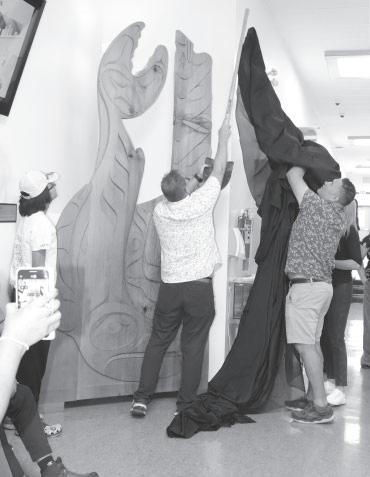
Port Alberni, BC – A new cedar carving is gracing the halls of Eighth Avenue Learning Centre in Port Alberni that will remind future generations how the students of 2026 learned about collaboration, planning and problem solving through the creation of an enduring piece of art.
The tall piece, probably about eight feet tall, is called mamuukstałin – Working Together. Funded through Island Health, the project brought together students taking Kristin Russell’s land-based learning class, who planned the piece under the guidance of three gifted artists.
According to Principal Dave Maher, the carving, initially, was intended to be a welcoming pole for Eighth Avenue Learning Center. But the class learned that the setting was not an appropriate place for a Nuu-chah-nulth-themed welcome figure.
“After consultation led by Michelle Colyn, the Pacific Rim School District manager of Indigenous Language and Culture, the concept of a welcome pole was changed to an entry plaque to better suit the protocols and culture of Tseshaht and Hupacasath First Nations,” said Maher.
Maher contacted master carver Gordon
Dick to lead the project.
“(He) immediately took an interest in sharing his teachings and carving skills with youth from EALC,” said Maher.
The project taught students not only about Nuu-chah-nulth culture, but also about planning and problem solving as they worked on the plaque design from beginning to end. They learned about the slab of cedar they had to work with, and how to modify their design to accommodate features of the wood, like knots.
Dick brought in fellow artists Ray Sim and Ike Charlie to collaborate on the project. Ove time, students from two Land-based Learning classes worked on the project, learning about carving in red cedar. Other students at the school who were not enrolled in the land-base classes were invited to carve.
Gordon Dick stated that this carving represents more than the completion of a piece of art; it reflects the strength, patience, and growth of the students from Eighth Avenue Learning Centre who dedicated many hours to the design, carving, and finishing of the project.
“Every mark in this old growth red cedar tells part of the story,” Dick explained.
“The students learned that carving is not only about creating something beautiful, but about listening, slowing down, working together, and respecting the teachings carried within the wood.”
Ike Charlie said it is important to give students the opportunity to learn their natural talents through projects like this.
“I want to encourage that,” he said.
Maher said that by working beside a master carver, students were able to learn traditional techniques, problem-solving skills, patience, teamwork, and pride in their accomplishments while building a deeper connection to community, culture, and themselves.
Artist Ray Sim said the plaque features a humpback whale and a Thunderbird, both important themes in First Nations culture.
EALC student Saoirse Sim said she was extremely proud to work alongside Gordon, Ike and her father, Ray. It allowed her entire class to learn from the great artists.
Ike Charlie said he does not like to be referred to as an artist.
“I am a communicator,” he said. “We are redistributing knowledge from the past as a gift to the future.”
The unveiling ceremony started with a barbeque lunch followed by welcoming speeches from representatives from Tseshaht and Hupacasath. School Board trustees were among the special guests.
The mamuukstałin – Working Together plaque stands in the EALC foyer across from the reception office.
Melissa Renwick photo
fire lifted the campfire
Denise Titian photo
Principal Dave Maher and carver Gord Dick unveil a sculpture at the Eighth Avenue Learning Centre on May 26.
Reflections on Mount Underwood as fire season awaits
A combination of heat, drought, warm wind and slash piles fueled the fast-growing forest fire in August 2025
By Eric Plummer Ha-Shilth-Sa Editor
Port Alberni, BC - The plume of smoke that towered over Port Alberni in August 2025 has long disappeared, but an undercurrent of anxiety remains among residents as the region braces for another wildfire season.
As of mid-May, a dry summer is predicted in the area. Environment Canada is forecasting warmer than average temperatures on Vancouver Island and the south B.C. coast for June and July, one of several factors that can lead to wildfires in the summer. Vancouver Island’s snowpack is also at just 11 per cent of what is considered a normal amount in the region’s mountains, due in part to rapid snow melt during a heat wave over the first week of May. The snowpack acts as a storage of water for streams and the surrounding forests during summer months when precipitation is usually rare, and Vancouver Island’s meagre volume this spring brings a higher risk of drought during the oncoming warmer months.
There have already been a handful of small forest fires in the Alberni Valley this spring, but these incidents were soon extinguished. What remains on many people’s minds is the Mount Underwood blaze, Vancouver Island’s fastest growing wildfire in recent memory.
The forest fire erupted Aug. 11, after days of temperatures in the Port Alberni area reached the mid 30s. The region hadn’t seen any rain for a month, with just 1.7 millimetres of precipitation in July. In combination with a warm air mass coming in from the B.C. mainland, these conditions enabled the wildfire to rapidly ascend the dry slope above the Alberni Inlet.
Brandi Burns, an officer with the B.C. Wildfire Service, reflected on the first hours of Mountain Underwood during a forest fire forum hosted by the Alberni Valley Transition Town Society on May 20.
“We were seeing very unexpected and difficult to predict fire behaviour,” said Burns. “By 7 o’clock that evening the fire was around 50 hectares, by 8 it was 100 hectares, at 9 o’clock it was 150 hectares, and by 10 p.m. that evening it was 630 hectares.”
The wildfire service has since estimated that Mount Underwood moved at 14 metres per minute in its first hours, engulfing a combination of second-growth trees
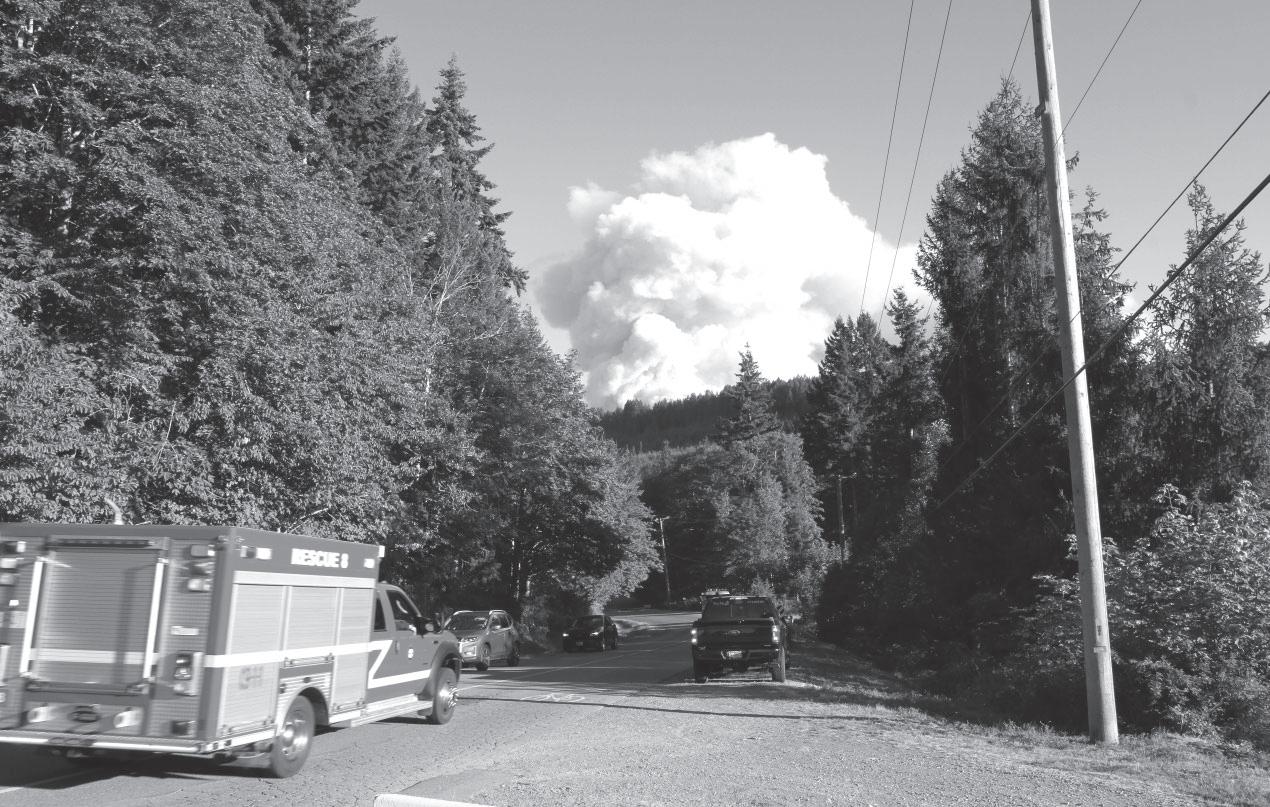
the early evening on Aug. 11, 2025 Port Alberni residents could see a towering plume of smoke emerging south of the city.
that were planted in clearcut areas and old growth. The fire spread on forest land which mainly consists of cedar, fir and hemlock trees.
“A lot of fire growth that you see on the island, in the Coastal Fire Centre, is very slope, wind-alignment driven, and we did have those conditions present that day,” said Burns, adding that even the presence of slash piles, which are left-over pieces of timber not collected from logging activity, contributed to the rapid wildfire growth. “It was a combination of extreme drought conditions, dry weather systems, steep slopes and fuel loading from the slash.”
Mushroom cloud over small city
By early evening on that day residents of Port Alberni began to notice something unusual in the sky. For those in the small Vancouver Island city, forest fires have become a regular part of the region’s dry, hot summers, and for the previous week and a half a wildfire had already been burning up the slope by Cameron Lake, on the other side of Port Alberni. But the mushroom cloud that was quickly filling the sky south of town on Aug. 11 was different.
Karen Freethy is the Protective Services manager for the Alberni-Clayoquot Regional District. Shortly after her neighbour alerted her of the growing plume Freethy got in her car and headed to work, initiating the Emergency Operations Centre. Fifty-one staff from the City of Port Alberni and the ACRD formed the EOC, which declared a state of local emergency.
“We were really looking at the wildfire threat that it was posing, and coming closer to Port Alberni,” said Freethy during the recent wildfire forum.
As Mount Underwood burned overhead, the nearby China Creek Campground and Marina were immediately evacuated. Evacuation alerts followed for other nearby areas, including the Tseshaht First Nation reserve at Polly’s Point and the Cameron Heights neighbourhood at the south end of Port Alberni, but these did not lead to any orders for people in the city to leave their homes.
“The areas that are put on alert, it’s based on where we think the fire might go to,” said Burns.
By Aug. 14 rain started to fall on the blaze, continuing through the next day and slowing it down. This enabled personnel to better access the wildfire.
Meanwhile all road access south of Port Alberni was shut off, as was power to the communities of Bamfield, the Huu-ay-aht village of Anacla and the Ditidaht First Nation reserve at Nitinaht Lake due to the fire’s destruction of 56 power poles.
“The power was out for nigh on two weeks, which doesn’t sound like a lot, until you run out of laundry,” said Huu-ay-aht Chief Councillor John Jack.
“When a disaster like this happens, it really resets the context in how we relate to one another.”
Electricity wasn’t restored to these small communities until 12 days after Mount Underwood erupted, while the road didn’t reopen until Oct. 24.
“It was now becoming quite expensive to go to a medical appointment that
normally was just a day trip,” commented Freethy.
Many in these remote communities come to Port Alberni for medical services, but until late October they were forced to drive the other way through Lake Cowichan and Nanaimo to get to the Alberni Valley.
“Most people get their medical services in Port Alberni,” said Freethy. “And now they were forced to a five-hour trip one way.”
Symptom of a larger trend
Mount Underwood eventually grew to 3,518 hectares, but despite the alarm caused it was far from being Vancouver Island’s largest forest fire. It’s just a small fraction of the Bloedel Fire that burned for a month near Sayward in July of 1938, encompassing 75,000 hectares and engulfing much of Vancouver Island in smoke.
But Mount Underwood is historically significant as a symptom of a larger trend that is changing life in British Columbia. Since the 1990s the area of B.C.’s forest affected by wildfire has grown dramatically. Even though we are only halfway through this decade, more forest has burned in the 2020s than any decade since the end of the Second World War, when the wildfire service began recording the total area burned.
Many look to the steady warming of the climate as a contributing factor, and the trend in the Alberni Valley is no exception. During the May wildfire forum
Chris Alemany of the Alberni Valley Transition Town Society presented annual temperature data stretching back to 1900 that shows an average rise of about two degrees Celsius over this period. While that might not sound like much over 126 years, this has been enough of a change to prevent snow in lower elevations over the winter.
“What we’re now seeing is that we are no longer in that range of minimum temperature to be able to produce snow on a constant basis,” said Alemeny.
This spring the Coastal Fire Centre imposed its earliest ever campfire ban with a prohibition enacted on May 7.
Although this was lifted a week later after temperatures cooled, some local governments, including the City of Port Alberni, the Tseshaht and the Hupacasath First Nations, decided to keep the prohibition in place, cautiously mitigating the risks of another wildfire in the Alberni Valley.


Eric Plummer photo
By
Ha-Shilth-Sa newspaper is published by the Nuu-chah-nulth Tribal Council for distribution to the members of the contributing First Nations, as well as other interested groups and individuals.
Information and original work contained in this newspaper is protected by copyright and may not be reproduced without written permission from:
Nuu-chah-nulth Tribal Council P.O. Box 1383, Port Alberni, B.C. V9Y 7M2.
Telephone: (250) 724-5757
Fax: (250) 723-0463
Web page: www.hashilthsa.com facebook: Hashilthsa Ntc
2026 Subscription rates:
Non-Nuu-chah-nulth, Ahousaht, Ehattesaht,Toquaht and Ucluelet members are subject to a yearly subscription fee of $40 in Canada, $50 in the US and $60 for overseas. Payable to the Nuu-chah-nulth Tribal Council
Manager/Editor/Reporter
Eric Plummer (Ext. 243) (250) 724-5757 Fax: (250) 723-0463 eric.plummer@nuuchahnulth.org
Reporter
Denise Titian (Ext. 240) (250) 724-5757 Fax: (250) 723-0463 denise.titian@nuuchahnulth.org
Reporter
Nora O’Malley (604) 353-8488 nora.omalley@nuuchahnulth.org

Audio / Video Technician
Mike Watts (Ext. 238) (250) 724-5757 Fax: (250) 723-0463 mike.watts@nuuchahnulth.org
Editorial Assistant
Holly Stocking (Ext. 302) (250) 724-5757 Fax: (250) 723-0463 holly.stocking@nuuchahnulth.org
DEADLINE:
Please note that the deadline for submissions for our next issue is June 5, 2026
After that date, material submitted and judged appropriate cannot be guaranteed placement but, if material is still relevant, will be included in the following issue.
In an ideal world, submissions would be typed rather than hand-written. Articles can be sent by e-mail to holly.stocking@nuuchahnulth.org (Windows PC).
Submitted pictures must include a brief description of subject(s) and a return address.
Pictures with no return address will remain on file. Allow two - four weeks for return.
Photocopied or faxed photographs cannot be accepted.
COVERAGE:
Although we would like to be able to cover all stories and events, we will only do so subject to:
- Sufficient advance notice addressed specifically to Ha-Shilth-Sa.
- Reporter availability at the time of the event.
- Editorial space available in the paper.
- Editorial deadlines being adhered to by contributors.
LETTERS and KLECOS
Ha-Shilth-Sa will include letters received from its readers. Letters MUST be signed by the writer and have the writer’s full name, address and phone number on them. Names can be withheld by request. Anonymous submissions will not be accepted. We reserve the right to edit submitted material for clarity, brevity, grammar and good taste. We will definitely not publish letters dealing with tribal or personal disputes or issues that are critical of Nuu-chah-nulth individuals or groups. All opinions expressed in letters to the editor are purely those of the writer and will not necessarily coincide with the views or policies of the Nuu-chah-nulth Tribal Council or its member First Nations. Ha-Shilth-Sa includes paid advertising, but this does not imply Ha-Shilth-Sa or Nuu-chah-nulth Tribal Council recommends or endorses the content of the ads.
Filmmakers seek witnesses to murder
Carolyn Lee may not have been Gurmit Dhillon’s only victim, as case is revisited
By Denise Titian Ha-Shilth-Sa Reporter
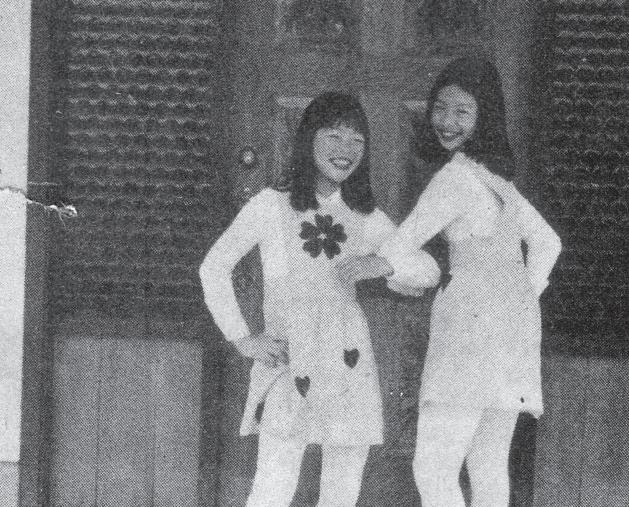
Port Alberni, BC – If you are an elder with long-time connections to Port Alberni, you probably know about the heartbreaking story of 12-year-old Carolyn Lee who disappeared on her way home from dance class. Sadly, she was found murdered on a rural property at the edge of town on April 14, 1977.
Producers from Vancouver-based Diamondhead Films are exploring the case as part of a project they call Exhibit 21: A Haunting True-Crime Series Traces a 20-Year Hunt for Justice in a small town in British Columbia.
The title, Exhibit 21, refers to a piece of evidence in the Carolyn Lee case: a preserved semen sample that, 20 years later, led to her killer, Gurmit Singh Dhillon. It was developments in DNA science that sent Dhillon to prison for first degree murder 21 years later.
But Lee may not have been Dhillon’s only victim. At least two other women with Nuu-chah-nulth ancestry reported to police that they had been assaulted near Cox Lake, and one identified Dhillon’s vehicle as the one she was attacked in.
Diamondhead Film producer Lisa Rossington has spoken to investigators who worked on the case over the years.
She noted that Dhillon’s alleged crimes showed a pattern, that he seemed to prefer vulnerable Indigenous women to victimize. She wondered aloud if he had mistaken Lee for an Indigenous woman as she walked through uptown Port Alberni on her way to her parent’s Pine Café restaurant.
On that cold, April afternoon in 1977, Lee had been at dance class just a few short and well-populated blocks from her parent’s restaurant. She was to walk from the studio to Pine Café, a Third Avenue diner that was only about a five-minute walk away. But Carolyn didn’t make it there.
Sadly, a landowner discovered her remains on his rural Cox Lake property the following morning. Lee had been sexually assaulted before her murder. There had been a light dusting of snow still on the ground and tire tracks were visible. More importantly, the killers left their DNA. Early in the investigation, a Hesquiaht woman went to the police to report a
Lee may not have been
only victim; at least two
chah-nulth women reported assaults to police. Lee was last seen leaving a dance school on Athol Street, next to the Arrowview Hotel. The hotel has since been demolished.
sexual assault that happened prior to the murder. Mildred Rose Mickey reported to police that she had been driven to the same Cox Lake property and was sexually assaulted.
Mickey gave a description of her assailant and of the vehicle. Investigators had already been driving around town looking at vehicles in search of a tire match for the impressions left at the murder scene. They drove Mildred around town in search of the vehicle she had been assaulted in. That was when she spotted the 1977 blue Chevy Blazer in Gurmeet Dhillon’s driveway.
More than a decade later, Jessie Jack of Yuułuʔiłʔatḥ First Nation reported that she, too, had been sexually assaulted by Dhillon. According to Jack, who has since died, Dhillon threatened her during the assault, saying that he had killed Carolyn Lee.
But Jack’s case against Dhillon was dismissed on the grounds that she was extremely intoxicated at the time of the assault and therefore would not make a strong witness. Mickey’s case was also dismissed. Dhillon appeared to be in the habit of selecting vulnerable females to victimize.

Ha-Shilth-Sa belongs to every Nuu-chah-nulth person including those who have passed on, and those who are not yet born. A community newspaper cannot exist without community involvement. If you have any great pictures you’ve taken, stories or poems you’ve written, or artwork you have done, please let us know so we can include it in your newspaper. E-mail holly.stocking@nuuchahnulth.org. This year is Ha-Shilth-Sa’s 52nd year of serving the Nuu-chah-nulth First Nations. We look forward to your continued input and support. Kleco! Kleco!
Producers of Diamond Head Films are researching the case and would like to speak with anyone who may have had dealings with Gurmit Singh Dhillon, “or anyone who believe they were victimized by him, or anyone who may have been too frightened to come forward to police at the time,” they said.
“The production team is particularly interested in hearing from First Nations women in the Port Alberni area, as investigators and researchers believe Dhillon knowingly targeted vulnerable Indigenous women between 1977 and 1997,” added the production company.
In addition, the production team would like to speak to anyone who remembers Carolyn Lee. If she had lived, Lee would have turned 61 in 2026.
Both Mildred Rose Mickey and Jessie Jack have passed away. The production team would be grateful if anyone could share a photo of them.
Gurmit Dhillon, convicted in 1998, remains in custody.
Diamond Head Films expects to begin filming in the fall.
If you have information to share, email info@diamondheadfilms.com
Legal Information
The advertiser agrees that the publisher shall not be liable for damages arising out of errors in advertisements beyond the amount paid for space actually occupied by the portion of the advertisement in which the error is due to the negligence of the servants or otherwise, and there shall be no liability for non-insertion of any advertisement beyond the amount paid for such advertisements
Ha-Shilth-Sa file photo
Carolyn
Gurmit Dhillon’s
Nuu-
Totem at RCMP station sets ‘accountability’ standard
Carved by Sanford Williams
By Eric Plummer Ha-Shilth-Sa Editor
Gold River, BC - A totem pole that now stands by the Nootka Sound RCMP detachment is “a visual reminder” of the trusting connection between the region’s First Nations people and the police, says the piece’s carver.
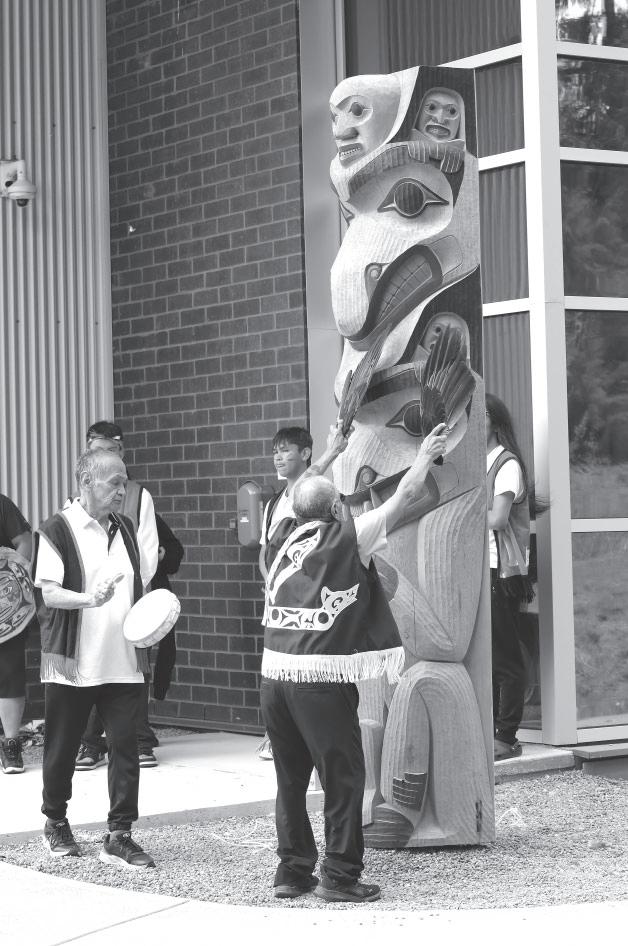
On May 13 Mowachaht/Muchalaht members pulled away a covering to unveil the totem pole, which was carved by Sanford Williams, one of the First Nation’s most renowned artists. Depicting a bear, wolf and five humans, the pole was made from a log found at Yuquot, the ancestral home of the Mowachaht where Williams spends part of the year working from a carving shed.
At the unveiling Williams’ relative John Amos read a speech from the carver, who was not able to attend the event. Within the pole the wolf symbolizes teamwork, community protection, intelligence, communication and loyalty, while the bear represents physical protection, courage and skillfulness.
“Together, the bear and wolf are housed together to give a greater sense of protection that include physical and personal strength,” explained Williams in his speech. “Showing the humans being close to each animal gives a sense of having trust and confidence while in their presence, and embracing them as part of their community.”
The need to maintain a sense of trust between the police and the region’s First Nations community was a common theme during the unveiling event, as the RCMP works to find “more inclusive approaches to policing and community safety,” said Supt. Bruce Singer, the RCMP’s Island District commander.
“I believe that reconciliation requires more than words,” he said. “It requires listening, learning, accountability, and sustained effort and action from leadership at every level of our organization.”
Sgt. Greg Young, the Nootka Sound Detachment commander, added that the presence of the totem pole “sets an expectation of how we must approach our work here: with respect, trust and accountability.”
For the Nootka Sound region that the detachment serves, this is moving beyond a historic relationship in Canada that has been marked by the overrepresentation of First Nations people in the justice system. According to 2018 numbers from the De-
of Mowachaht/Muchalaht, piece awakened by First Nation members in Gold River partment of Justice Canada, Indigenous people composed 28 per cent of those incarcerated in federal institutions, despite being just 4.1 per cent of the Canadian population. The 2017 stats regarding adolescent Indigenous youth were even higher, who made up 46 per cent of those admitted to the corrections system.
Cindy Woodhouse Nepinak, national chief of the Assembly of First Nations, touched on this while she spoke at the totem pole unveiling in Gold River.
“As we all know, the relationship between the RCMP and our people is not always easy – it’s still not easy. I know that we have a lot to work out together,” she said. “I’m so thankful when I see relationships like this, because there’s other parts of the country where things can be very hostile sometimes, as we try to find a way to build a country that should be more progressive, more forward looking and more inclusive with everybody, including First Nations people.”
Brian Lucas recalls positive connections with the local RCMP when he grew up on the Mowachaht/Muchalaht’s former onreserve settlement south of Gold River.
“I remember members of the RCMP used to come play volleyball with us, back in the early ‘80s down in the old Ahaminaquus gymnasium. It was always amazing to see them come and take part,” said the 50-year-old. “When we moved up to Tsaxana back in 1996 we used to have three officers come up every time we played hockey…It was all fun and games because we got along.”
Mowachaht/Muchalaht Ha’wiih Jerry Jack formerly served in the RCMP, and admitted that he “was thankful to the creator” every night that he safely made it home.
“It’s really monumental how much respect the RCMP is showing to our people and our territory,” said Jack as he stood before the totem pole.
“This totem is just as much for our people as it is for the RCMP,” noted Sanford Williams in his speech. “A piece of us is here and always will be. Let this be a visual reminder of our connection.”
The pole now stands before the Royal Canadian Mounted Police’s new detachment at 495 Maquinna Crescent in Gold River. It opened in October 2024, replacing the RCMP’s 50-year-old former home. The Nootka Sound RCMP serves the communities of Gold River, Tahsis, Tsaxana, Yuquot and other parts of Nootka Sound.
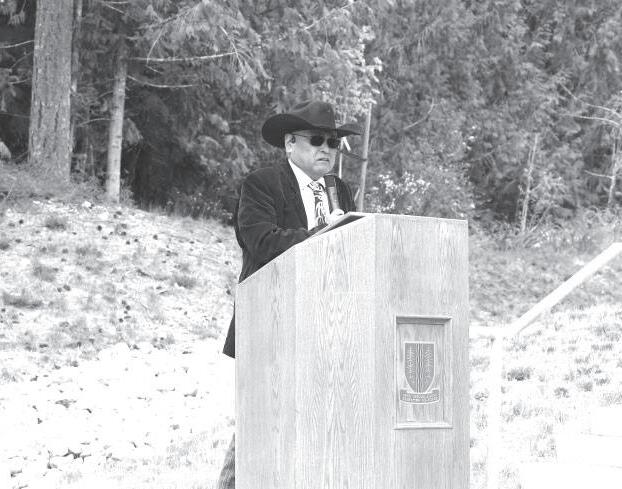
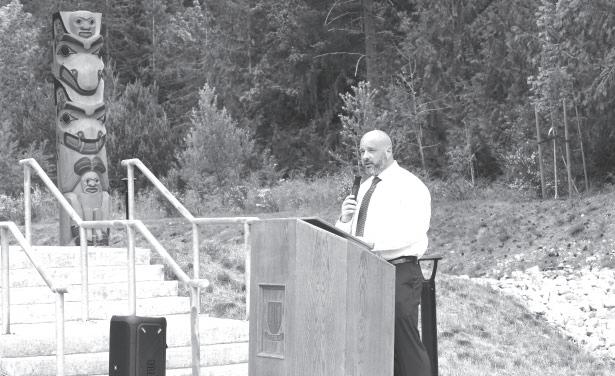
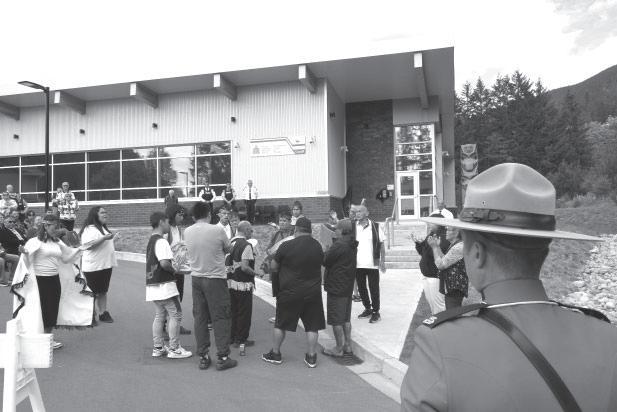
Eric Plummer photos
Members of the Mowachaht/Muchalaht First Nation awaken a totem pole at the Nootka Sound RCMP station on May 13.
Sgt. Greg Young, the Nootka Sound Detachment commander, added that the presence of the totem pole “sets an expectation of how we must approach our work here: with respect, trust and accountability.”
“It’s really monumental how much respect the RCMP is showing to our people and our territory,” said Mowachaht/Muchalaht Ha’wiih Jerry Jack, who formerly served in the RCMP.
New legal tool targets intimate partner violence
Victims can sue for financial damages under a new ‘one-stop shop’ tort after Supreme Court of Canada ruling
By Nora O’Malley Local Journalism Initiative Reporter
The Supreme Court of Canada has created a new civil legal tool that allows survivors of intimate partner violence to sue their abusers for financial damages.
Writing for the majority of the judges, Justice Nicholas Kasirer found in a decision released on May 15, in the case of Ahluwalia v. Ahluwalia, that existing torts are not enough to address the full harm caused by intimate partner violence.
A tort is a type of civil legal claim where a person asks for damages because someone else caused them harm.
The new civil legal tool called the “tort of intimate partner violence” recognizes that this sort of harm is best understood as coercive and controlling conduct.
“Intimate partner violence is centered around coercive control. While coercive control can result from discrete incidents of physical, sexual, or emotional abuse, it often also includes methods of control that are less visible, such as economic control of the victim or monitoring dayto-day movements,” wrote Justice Kasirer in his decision.
“Abusers may impede their partner’s ability to acquire, use or retain financial resources in order to undermine their security and long-term independence,” wrote Kasirer.
Laurie Hannah, the outgoing executive director of the Westcoast Community Resources Society and the incoming housing manager for Sage Haven Society, says the new legal tool represents a “cultural shift” that will contribute to ending gender-based violence.
“It sends another clear message to society; we are having to go to this next step because there is still such a huge rate of intimate partner violence mostly being perpetrated by men,” said Hannah.
“If the consequence isn’t relatable or impactful to them, how will it change behaviour? I think having this financial tort takes it to a different realm of consequence,” she said.
The landmark ruling from Canada’s highest court follows the recent release of the BC Coroners Service report on intimate partner violence-related deaths.
The coroners service found that at least 135 people in B.C. died due to intimate partner violence between 2016 and 2024, with 81 per cent of the decedents being female.
The report found that 25 per cent of the victims of intimate partner violence-related deaths identified as Indigenous, even though Aboriginal people make up just 5.9 per cent of B.C.’s population, according to Statistics Canada.
Rural, remote and northern B.C. communities experienced disproportionately higher rates of intimate partner violencerelated deaths, the coroners panel report showed.
At an April 17 press event in Vancouver, B.C.’s chief coroner, Dr. Jatinder Baidwan, said intimate partner-related deaths
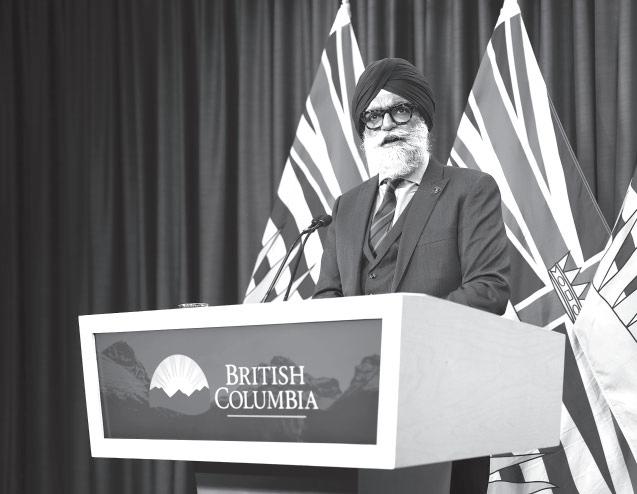
chief coroner, Dr. Jatinder
are “overwhelmingly preventable”.
are “overwhelmingly preventable”.
“It was found in the months and the years leading to their deaths, individuals had contact with health care, police, community support services and other public systems,” said Baidwan.
“The warning signs were present, yet response systems were uncoordinated, overburdened or unable to respond in meaningful ways that improved safety,” he said.
Baidwan called on “all ministries with responsibilities related to intimate partner violence to take collaborative, coordinated approach” and recommended a “coordinated provincial framework” to strengthen response to intimate partnerrelated violence and deaths.
Barriers to reporting
It has been estimated that as many as 80 per cent of Canadians who have experienced intimate partner violence do not report it to police, according to the BC Coroners Service report.
Fear of shame and stigma, ineffectiveness of police response, and lack of trust in the criminal justice system are among survivors’ most common reasons for not reporting intimate partner violence to law enforcement authorities, the report states.
Deputy Chief Andrew Chan, president of the BC Association of Chiefs of Police, stated in a news release that: “the report highlights gaps in consistency and coordination, underscoring the need for clearer expectations in decision-making and stronger alignment across agencies responsible for protecting those at risk.”
Chan re-iterated that addressing intimate partner violence requires “sustained, system-wide effort, including continued coordination across policing, justice, and social services, alongside a shared commitment to supporting victims and holding offenders accountable.”
Tofino-based artist and intuitive reader Andrea Fergusson was in an intimate
relationship marred by violence. She coaches other women who are healing from unhealthy relationships.
Five years ago, Fergusson says she left her home with her four sons, carrying a backpack each, after a “near death” incident.
She said she didn’t immediately report the incident to the police, but when she did make a report, she was rerouted, and even with photographic proof and a witness (her son), she says the police didn’t take her seriously.
She said she had to reach out to the Westcoast Community Resources Society (WCRS) to advocate for her as the police “weren’t listening”.
When it comes to reporting intimate partner violence, Fergusson says there needs to be an individual or team that specializes in this sort of abuse, and that contact point needs to have traumainformed training.
“There needs to be a clear pathway,” said Fergusson. “It got harder before it got easier and that is something that justifiably stops women from making the journey.”
“People have an idea that when you leave, that’s when it’s over, but it’s really not. A lot of times it gets more dangerous. I’ve heard a lot of stories about women
who do report and don’t get listened to. It ends up making things more dangerous for them,” she said.
Under the scope of the new tort of intimate partner violence, a person must show that the wrongful conduct happened during an intimate relationship or after it ended, that the other person intentionally engaged in abusive conduct, and that the conduct amounted to coercive control when viewed in context, wrote Justice Kasirer.
Three judges opposed the courts’ decision, arguing that the existing torts were fully capable of addressing the factual matrix in the case of Ahluwalia v. Ahluwalia and provided ample basis for the trial judge’s award of damages.
Ms. Ahluwalia and Mr. Ahluwalia were married for 16 years. Throughout the marriage, Mr. Ahluwalia abused his then-wife physically and emotionally. His conduct limited her ability to make choices in the relationship, according to court documents.
Before the Court of Appeal, Mr. Ahluwalia conceded liability under the existing torts of assault, battery, and intentional infliction of emotional distress, but urged the court to overturn the trial judge’s new tort of family violence, wrote Justice Mahmud Jamal on behalf of the dissenting judges.
Mr. Ahluwalia argued that there was no proper basis in law to recognize such a new tort and objected to how the trial judge had proceeded.
Justice Kasirer wrote that the new tort should allow simple recovery for discrete instances of intimate partner violence. He said it’s a “one-stop shop tort” that allows victims of intimate partner violence to plead and argue all instances of that harm under one tort.
“Whether an individual is subjected to coercive control, or other forms of violence causing them physical or psychological harm, it is the context of the intimate partnership which justifies distinct judicial recognition and markedly higher damages than those available under the existing torts available between strangers,” wrote Justice Kasirer.
Ms. Ahluwalia — who was self-represented at trial — was awarded $150,000 in damages for what the trial judge characterized as the novel tort of family violence, according to court documents.
Province of B.C. photo
B.C.’s
Baidwan, says intimate partner-related deaths
Survivors hosted on 5th anniversary of Kamloops
Caldwell Hall demolition delayed for at least a year, as the former residential school building remains closed
By Denise Titian Ha-Shilth-Sa Reporter
Port Alberni, BC – A cleansing light rain fell as survivors of the Alberni Indian Residential School gathered for a somber ceremony at the memorial sculpture near Maht Mahs. They were there at the invitation of Tseshaht First Nation to remember those that didn’t make it home from residential school.
The ceremony was centered around the 5th anniversary of the Tkemlúps te Secwepemc (Kamloops Indian Band) announcement of the discovery of 215 unmarked burials on the grounds of the former Kamloops Indian Residential School.
“On this day (May 25, 2026) we will join the 18 IRS (Indian Residential Schools) and three IH (Indian Hospitals) sites across B.C., serving as spiritual doorways to honour the spirits of the missing children that never returned home and to connect our ancestors and Nations,” stated the Tseshaht AIRS Memorial invitation poster.
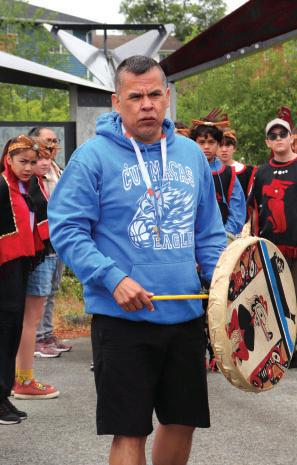
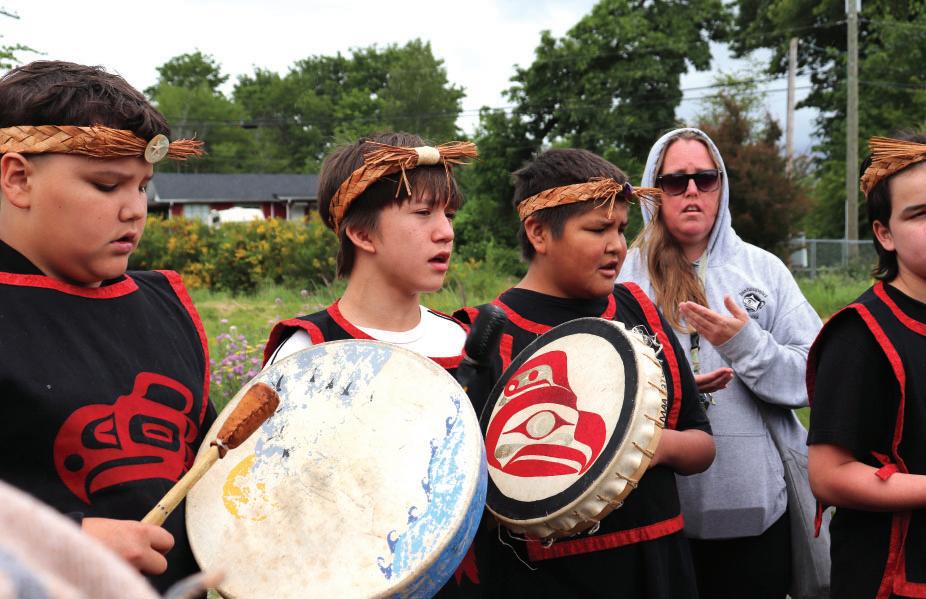
Gathered under shelters in front of the Indian residential school memorial sculpture, survivors were treated to a proud cultural performance by students of nearby Haahuupayak Elementary School who, according to cultural leader Trevor Little, credit survivors for saving the knowledge. For most of a century, a residential school stood at the site on the Tseshaht reserve, finally closing for good in 1973.
“Their strength comes from you and the generations before you,” Little told the small crowd.
But first, elected chief Wameesh, Ken Watts, took care of cultural business by offering a representative from Ahousaht, taʕałma (translates to walking stick), a handshake with cash, to show caring and support to the community as they grieve the loss of one of their Ha’wiih.
Following prayers and an uplifting cultural performance by the children, Watts made a statement about what the day was about. He said the discovery of 215 potential unmarked graves was a shock to the world, “but it was a statement of what many survivors already knew,” said Watts.
He went on to say that many know that what happened in Kamloops also happened at the Alberni Indian Residential School.
“We know that at least 67 students passed away here,” said Watts. This is why Tseshaht First Nation is
working on collecting information about the missing children, and sharing what they know with surviving family. Watts says the work is carried out with guidance from AIRS survivors.
“There are 17 potential unmarked graves (on the grounds of AIRS),” Watts shared.
He said the day was about remembering what happened and reflecting on it.
In recent years there has been a surge in denialism and racism in response to the continued news about residential schools.
Watts thanked the survivors for standing up to it, cleaning up the orange bridge when it was vandalized. By doing that, Watts said they are showing their resilience.
The First Nations Summit released a statement on May 25 saying the path forward cannot be rooted in denialism.
In what they call a targeted rise in residential school denialism and antiIndigenous racism in the province, “we stand with Tkemlúps and all First Nations in their paths toward healing and reconciliation.”
“Despite growing denialism, our communities continue to lead with dignity and an unwavering commitment to truth and healing. Reconciliation is not possible without honesty and without coming together to accept the shared responsibility and the hard work that meaningful reconciliation hinges on,” said Robert Phillips, FNS political executive member.
According to FNS, there has been “a growing disinformation movement that manipulates well-established, well-documented facts about Canada’s residential school system and the first-hand accounts from survivors, their families, and importantly, the first-hand accounts from the Crown itself.”
“Beyond accepting objective truths corroborated by the Crown’s own documentation, there is a moral imperative to stand with survivors, bear witness to their truth, and more importantly defend it. Silence and denial continue to perpetuate harm and quietly permit these attempts to minimize the legacy of residential schools,” stated Hugh Braker, FNS political executive member.
AIRS survivor and elder Wally Samuel
has been part of the group that Tseshaht First Nation consults with as they carry out their healing work. He said the memorial sculpture created by Tseshaht artist Connie Watts was designed based on advice from survivors. He said another goal is to create a building that commemorates students and survivors, to be built hopefully next year.
Watts reported that the Caldwell Hall building, one of the last remaining structures that was part of AIRS, was to be demolished this year but there’s been a delay. He is hoping that it will be demolished next year.
There are plans to build a carving shed to memorialize those that didn’t make it home, according to Watts.
Samuel thanked Tseshaht First Nation on behalf of survivors, their children and grandchildren, for helping them on their healing journey.
“People need to know the truth so that it never happens again to our grandchildren,” said Samuel.
Survivors were invited to share stories –the awful memories, the family stories of brothers or sisters that went to residential school and were never seen again…nothing left of them but the stories.
There were those that learned pain, fear and abuse both at the school, and sometimes later, at home. One woman spoke of the repressed hate and rage she had
to live with due to abuse she suffered, and how she has learned to embrace her genuine love for people.
Watts thanked them all for sharing their stories, for allowing Tseshaht to be part of their healing journeys.
They wrapped the event with uplifting cultural songs.
Denise Titian photos
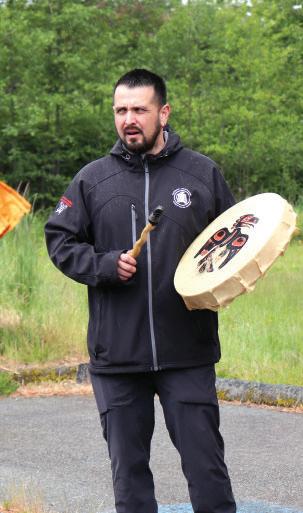
On May 25 survivors of the Alberni Indian Residential School gathered for a somber ceremony at the memorial sculpture by Maht Mahs. Survivors were treated to a proud cultural performance by students of nearby Haahuupayak Elementary School.
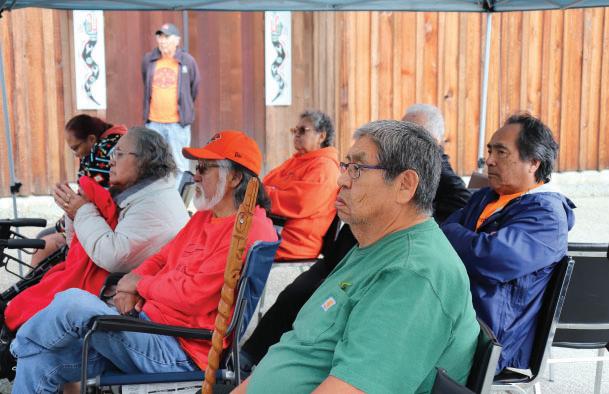
Survivors gathered under shelters in front of the Indian residential school memorial sculpture.
Ken Watts
Trevor Little
‘It’s a lifeline’: School potlatch open to all for a celebratio
The annual day-long event brings groups from Gold River, Zeballos, Tahsis, Kyuquot and Port Alberni’s Haahuupaya
By Eric Plummer Ha-Shilth-Sa Editor
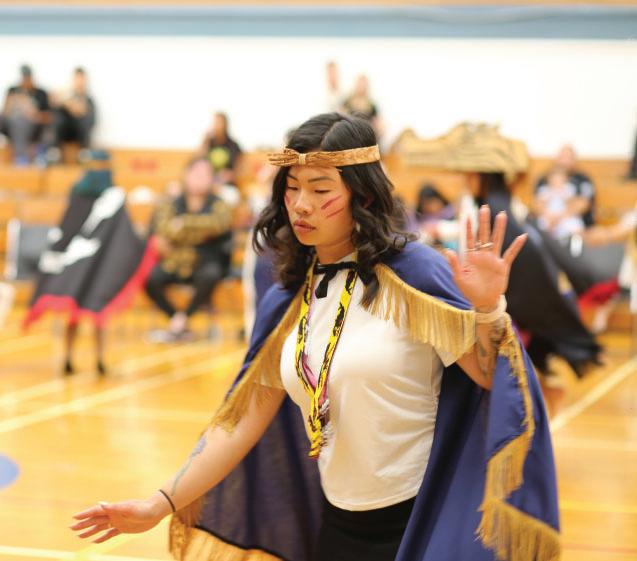
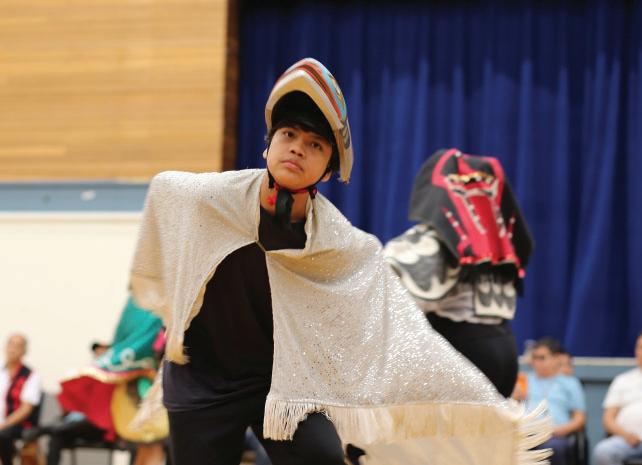
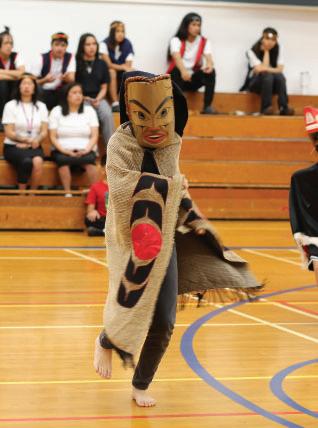
Gold River, BC - An annual tradition amongst Vancouver Island’s northwest school district continued this month with a spring potlatch at Gold River Secondary.
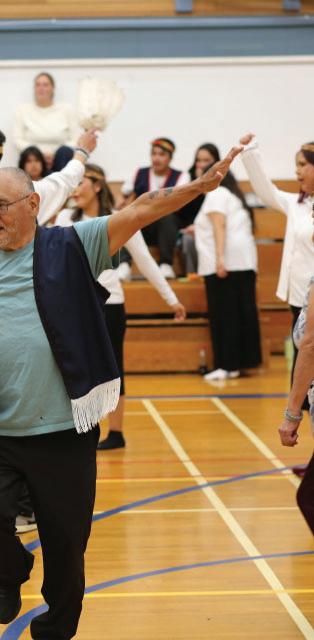
On May 12 the high school’s gymnasium was packed for a day of cultural performances in the territory of the Mowachaht/ Muchalaht First Nation. Among those in the select seats by the dance floor was Mowachaht/Muchalaht Tyee Ha’wilth Mike Maquinna, who observed a generation shift in how School District 84 has come to embrace the Indigenous heritage of the region - something he didn’t encounter during his youth.
According to the B.C. Ministry of Education, 52 of Gold River Secondary’s 88 students identify as Indigenous – a majority that is reflective of the northwestern school district. About half of the high school participated in the potlatch, including several non-Indigenous students, said principal Jeff Rockwell.
“I thought it was a beautiful day,” he reflected as the gym emptied later in the afternoon. “There was a real spirit of unity. Song and dance really catches your heart and brings people together, lifts them up in a good way. It’s nice to see kids of all tribes, native and non-native, coming together. It’s a beautiful way to engage kids, break down barriers.”
Students from Gold River’s Ray Watkins Elementary were also there to contribute to the singing and dancing, as were school groups who travelled from Kyuquot, Zeballos, Tahsis and Port Alberni’s Haahuupayak Elementary School.
“Sometimes we need to believe in things that we cannot touch or explain,” said Haahuupayak teacher Trevor Little to the audience.
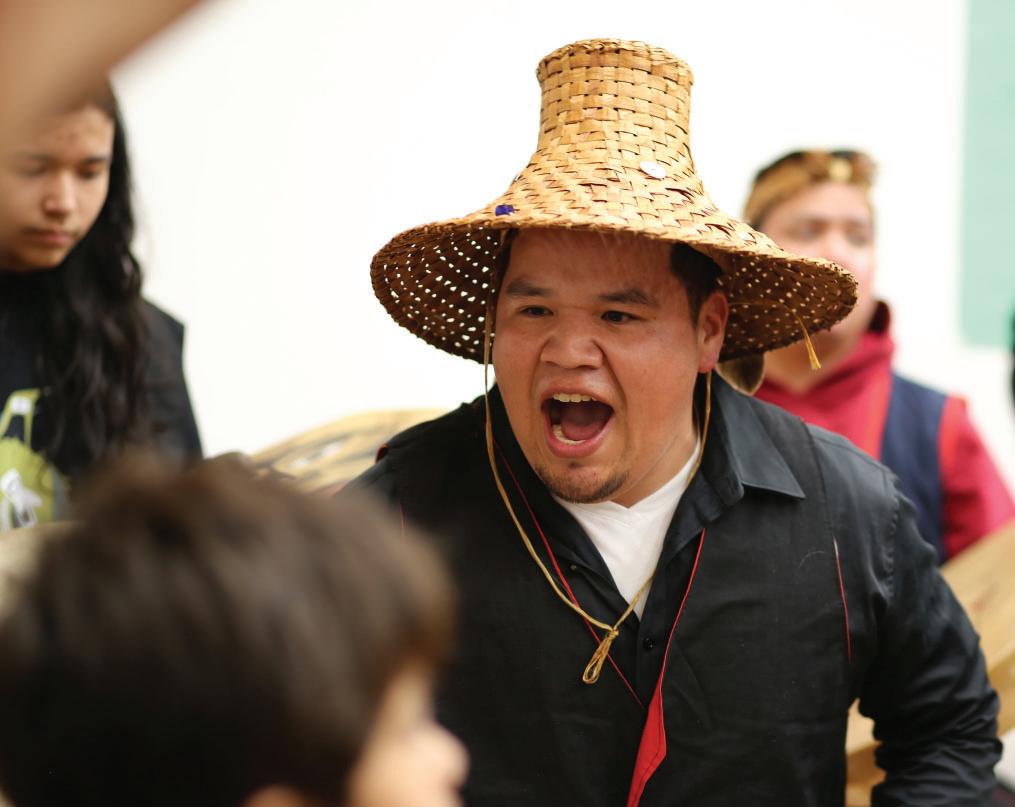
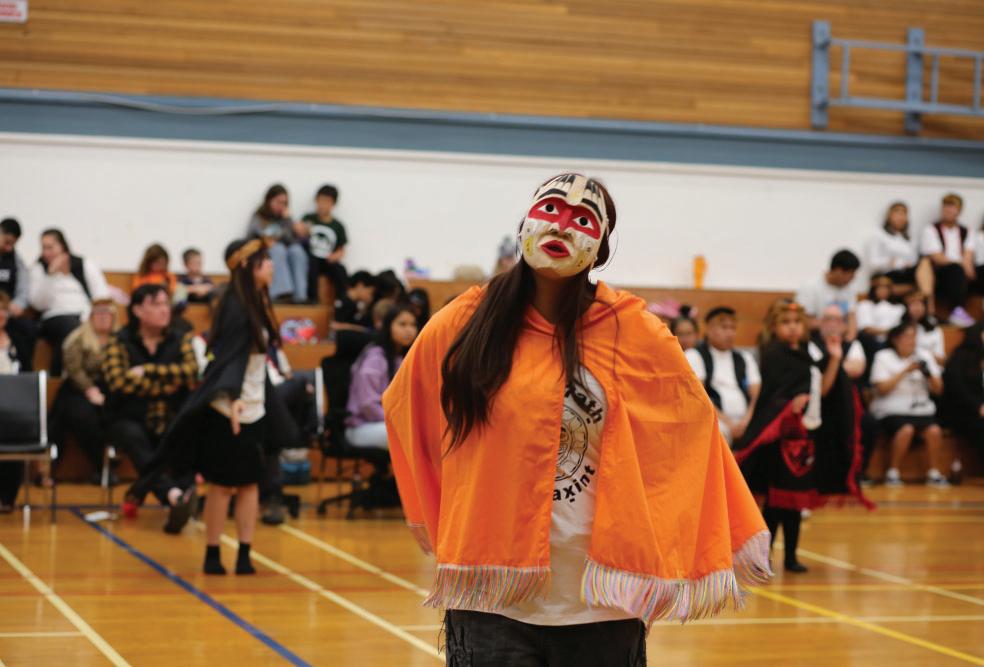
Travelling from their location on the Tseshaht First Nation reserve, the Haahuupayak students gave several performances, including some wearing masks and regalia depicting animals.
“We are part of this world, we’re not on top,” commented Little during the performance. “It’s a reminder of our responsibility as human beings.”
Rockwell admitted that it can be more of a challenge to get youngsters involved as they approach adolescence.
“As soon as they hit puberty everything becomes more about self image and people are a little bit shy,” he said. “We don’t force people. This is a sacred beautiful thing, and we open the door for anybody who wants to.”
A large group came from Kyuquot, further north on the Island’s west coast, who practice every Monday and Wednesday. The youngsters benefit from the teachings of Daisy Hansen.
“Grandma Daisy usually talks to everyone
before we start, how to be respectful and all that, and the rules for the potlatch,” said 16-year-old Brian Gibson.
Like many boys in the group, 17-year-old Blake John has been singing since the age of 3. Despite over a decade of practice, he notices the difference if a session is missed.
“If you miss practices you won’t get the drum beat right or the singing properly,” said John.
“If you miss too many you won’t be able to go on trips,” added 14-year-old Quentin Hansen, whose group ventured to perform in Prince Rupert last winter.
“I like the feeling I get when I’m singing.
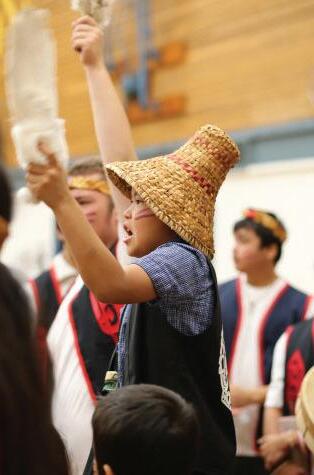
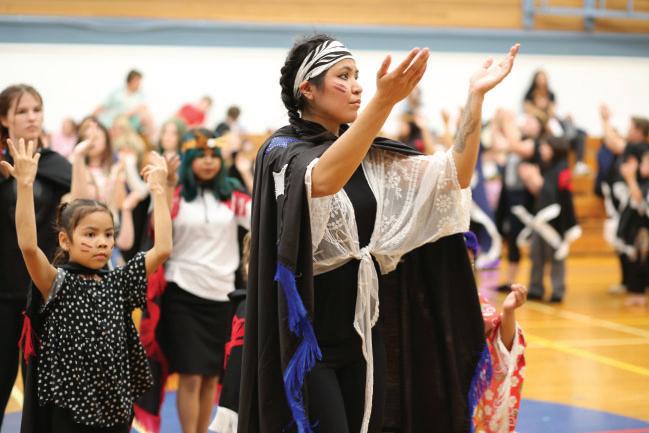
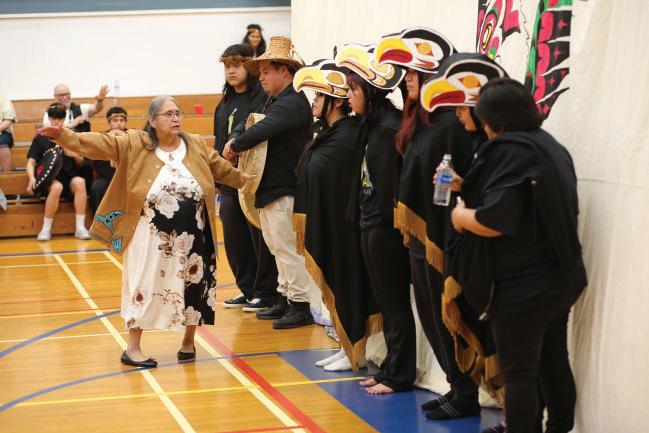
during an annual potlatch event that wa
It feels good and soothing,” said John, noting that troubling thoughts disappear when the drumming starts. “When I start singing it just goes away.”
The school potlatch is the result of months of preparation, and Rockwell has seen how becoming involved in the celebration of Nuu-chah-nulth culture lifts some teenagers out of depression and even substance use.
“For some of them, it’s a lifeline. This is really grounding for them,” said the principal. “It’s medicine for a lot of our kids. It gives them a sense of dignity and pride. You can see by the way that they
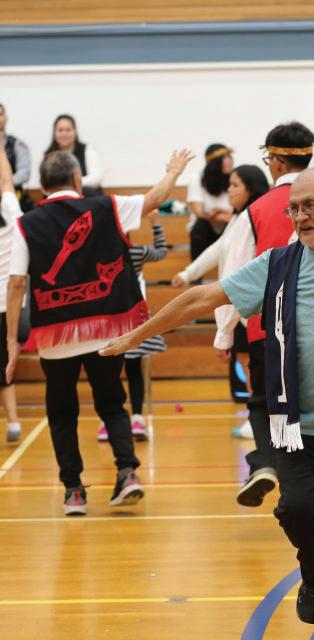
Brandon Johnson sings with others from the Ka:’yu:’k’t’h’/Che:k’tles7et’h’ First Nations
Dancers from Zeballos Elementary Secondary perform during the school potlatch, displaying carved masks.
The event was hosted on the territory of t who took to the floor later in the afternoo
on of culture
ak to Gold River Secondary

Plummer photos as hosted this year in Gold River May 12.
carry themselves.”
This year the school potlatch saw a visit from a high-profile figure in the national advocacy of First Nations interests. During her visit to Gold River Cindy Woodhouse Nepinak, national chief of the Assembly of First Nations, came to watch the performances at Gold River Secondary in the mid afternoon. She was honoured with a shawl gifted by Mowachaht/Muchalaht members.
School District 84 has hosted annual potlatches for over 15 years, rotating amongst SD84’s schools in Gold River, Tahsis,
and Zeballos.


Eric
Kyuquot
the Mowachaht/Muchalaht First Nation, on before performances wrapped up.
First Nations elder Daisy Hansen (above) explains the inspiration behind one of the group’s performances.
Vendor marketplace in the works for Clutesi Haven
Recently taken over from port authority, the city aims to give entrepreneurs opportunity at high-traffic location
By Karly Blats Ha-Shilth-Sa Contributor
Port Alberni, BC - Clutesi Haven Marina is on its way to becoming a community hub and visitor attraction through a new vendor marketplace and other enhancement projects.
“Clutesi Haven Marina provides publicly accessible, city-owned waterfront space for residents and visitors to enjoy,” said Dave Osborne, business development & property advisor with the City of Port Alberni. “Its location along the highway makes it a key gateway where travellers can stop, experience Port Alberni and support local businesses at the marina marketplace.”
The marina also links to the Quay-toQuay pathway, connecting the area to the Harbour Quay, which Osborne said supports larger goals of attracting visitors, enhancing quality of life for residents and making the community an attractive place to live.
The marina marketplace has been developed through the Community Economic Development Initiative (CEDI) in partnership with Hupačasath First Nation, Tseshaht First Nation and the city.
“The space includes five renovated sea cans and room for three food trucks arranged around a pavilion,” Osborne said.
“It functions as a business incubator, offering local entrepreneurs an opportunity to grow while activating the waterfront and contributing to a vibrant community atmosphere.’
The sea cans feature artwork by Tseshaht artist Gordon Dick and local muralist Shayne Lloyd.
Dick said the theme for the containers is land, water and sea, which is a tribute to the area. Each sea can displays a different element to the theme, like a bear, eagle, swallows and humpback whale.
Dick said the most challenging aspect of the artwork has been painting on the corrugated surface, but he hopes people will take the time to slow down and view the murals.
Pronounced ‘haa uk sooq stu tlook nish
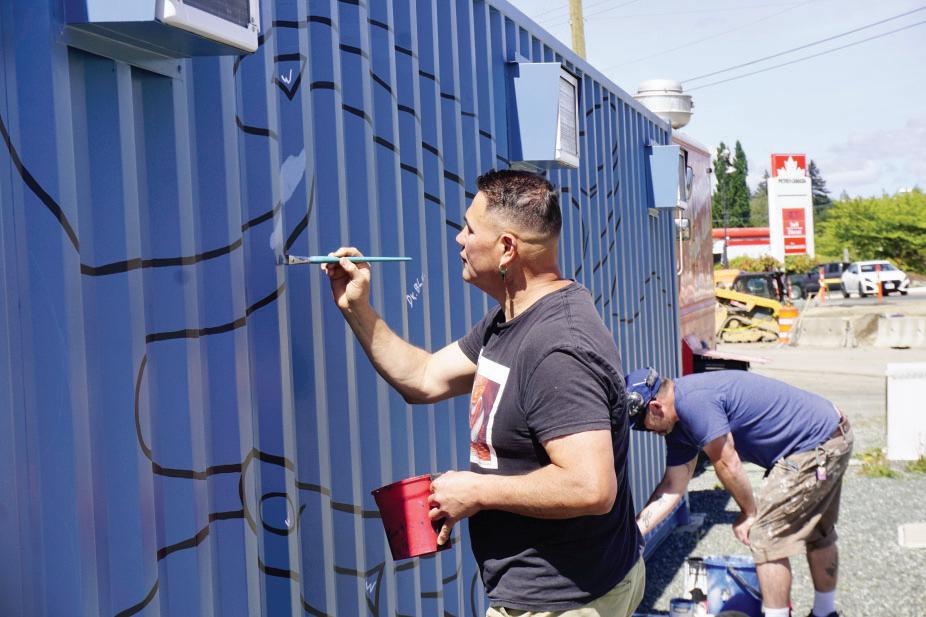
Llyod said they began with preliminary layout of the design last fall and hope to have the painting completed by mid-May.
“Our focus now is on the humpback.
The big one everyone will see from the highway,” Lloyd said.
Osborne said bringing in local vendors is currently the primary focus for the area and the current application process is nearing completion. He said tenant onboarding is expected soon.
“Over time, the goal is for this space to be a fully occupied hub featuring local businesses, markets, and small events that strengthen community connection,” Osborne said.
The City of Port Alberni took over ownership and management of the marina from the Port Alberni Port Authority
(PAPA) on March 1 of this year.
In a statement issued October 28, 2025, the City of Port Alberni said it has issued formal notice of termination for the land lease agreements with the Port Alberni Port Authority. The affected properties include Clutesi Haven Marina and Parcel C at Harbour Quay.
Osborne said, for marina users, the focus is on delivering high-quality service, including clean, safe and well-maintained facilities, along with strong communication and customer service.
“From a financial perspective, the marina offers opportunities to generate non-tax revenue through various business activities, helping reduce reliance on taxation while supporting the economy,” Osborne said. “Significant effort has gone
into developing a strong operational plan for the marina.”
Plans include exploring future opportunities for revenue generation and service improvements, such as additional lease opportunities, parking and launching enhancements and potential sponsorship initiatives. These opportunities will be communicated to the public as they are developed further, Osborne said.
“The city intends to manage the marina for the foreseeable future, with no current plans to transition to another management model,” Osborne said. “While the transition has required time and effort, the focus has been on establishing an operational approach that delivers high-quality service while remaining cost-effective and minimizing impacts on taxpayers.”
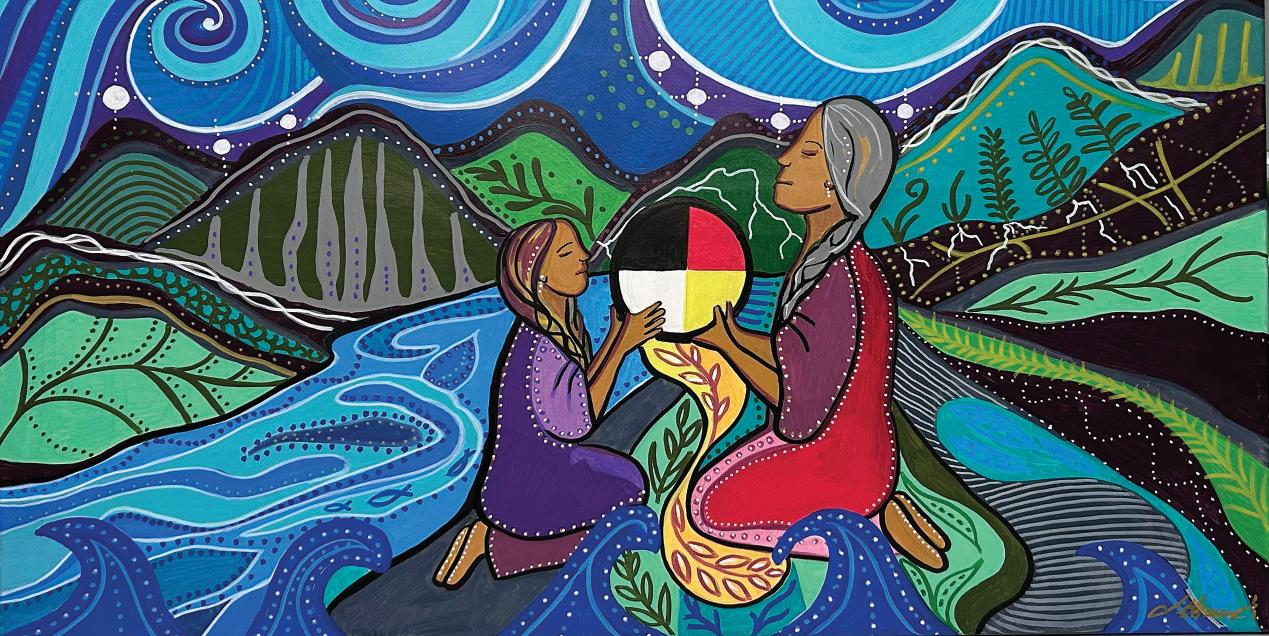
Illustration by Laura Graves
Karly Blats photo
Tseshaht artist Gordon Dick and muralist Shayne Lloyd paint part of the humpback on a sea can at Clutesi Haven Marina.
ReSurf Canada turns one, over 1,200 wetsuits diverted
Group finds uses for end-of-life wetsuits and surfboards, preventing them from filling the West Coast Landfill
By Nora O’Malley Local Journalism Initiative Reporter
Ucluelet, BC – Journey to the small town of Ucluelet on the west coast of Vancouver Island and you’ll find a hardworking group of people in the vanguard of the circular economy movement.
Products in a circular economy follow a different path than a linear economy where the landfill is the final destination.
In a circular economy, products are designed to be reused, repaired and eventually recycled into new products.
Leaning on a mountain of terminal wetsuits diverted from the West Coast Landfill (WCL), fix-it guy Adam-Edwin Dibb sets the vibe.
“Just about every weekend there is a truck that comes in that is half-full of wetsuits that were going to go to the dump and now they have a different place to take them,” said Dibb.
“By finding another use for this (wetsuit) that is not compostable, that isn’t of any use to the soil, it’s mandatory. I’ve always felt like that,” he said.
In May 2025, Surfrider Foundation Canada opened ReSurf, a 2,500-squarefoot facility dedicated to recovering, repairing, and reprocessing surf products that would otherwise end up in landfills.
The initiative was able to lift-off with $546,632 in provincial funding allocated from the CleanBC Plastics Action Fund.
The WCL is the “waste shed” for the District of Tofino, District of Ucluelet, Parks Canada, Alberni-Clayoquot Regional District (ACRD) Electoral District C - Long Beach and the First Nations communities of the Toquaht, Yuułuʔiłʔatḥ (Ucluelet First Nation), Ahousaht, Tla-oqui-aht, and Hesquiaht.
Landfill capacity for these west coast communities is dwindling. According to the WCL 2024 annual report, the landfill will reach capacity near 2062. If the target waste reduction goal of 400 kilogram per person is met, the ACRD says the landfill lifespan has “the potential to extend to 2070 or beyond”.
“Prior to the point of full closure, the ACRD would need to either identify a new landfill site, establish a transfer station to move waste off the West Coast to another landfill, or arrange for shipment elsewhere—all of which can be very costly for taxpayers,” said Brenda Sauve, ACRD solid waste coordinator.
“The most effective approach is to reduce pressure on the landfill by increasing recycling, keeping organics out, reusing and repurposing materials where
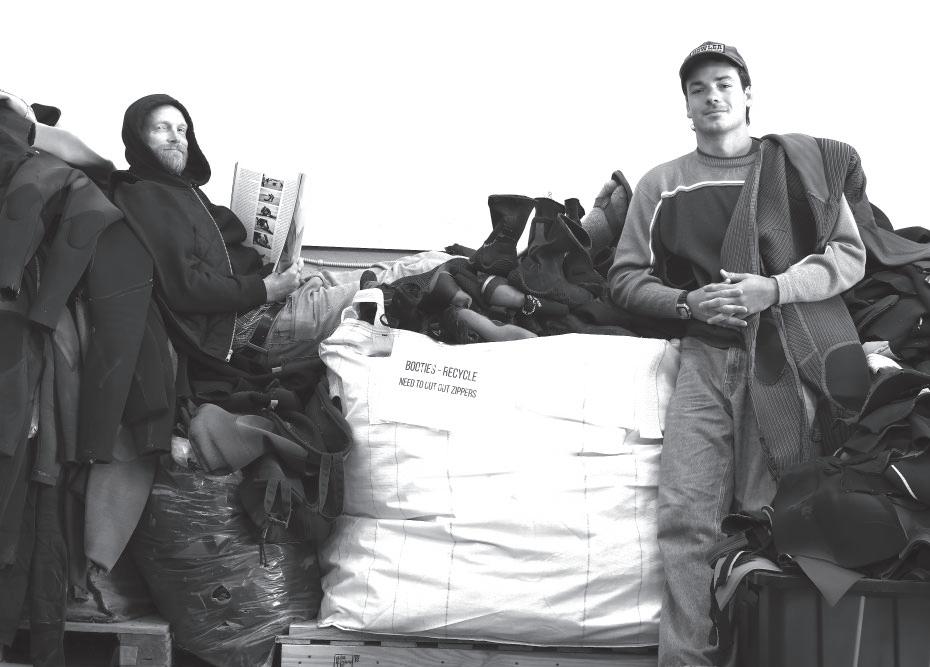
ReSurf repair technician and machine mechanic
possible, and minimizing unnecessary consumption,” she said.
With the creation of ReSurf, Sauve says the ACRD is moving forward with a proposed wetsuit ban at the WCL. Most wetsuits are generally made from neoprene material, an ultra-stretchy rubber made from melted-down petroleum chips.
Program manager Daniel Raab has been with ReSurf since day one. He says they received 1,200 end-of-life wetsuits in the last 11 months, with 35 per cent of those wetsuits being repaired.
“A lot of the rubber was able to get back in the water. It takes a couple hours of repair time, but it allows us to get that suit back in the water, and that’s the best approach,” said Raab during their first anniversary bash on May 14.
After removing the zippers and Velcro, the wetsuits that aren’t worth repairing are used for patches or shredded on-site and transported to various industry partners in Vancouver for repurposing into something new.
“It basically goes into a melter and turns all that light, fluffy neoprene into solid little pellets. There are so many things

you can do with it, like weaving threads for insulation or fabrics. It can be pelletized, which is what we are hoping for. We are trying all different sort of avenues,” said Dibb.
Raab says they’ve been shuttling roughly one supersack a month of neoprene shreddings to the mainland and are actively exploring ways to recycle the material closer to home.
Island Coastal Economic Trust (ICET) recently partnered with ReSurf in February 2026 through a $150,000 investment from the Capital and Innovation funding program, under the Innovation and Technology priority.
“ReSurf is exactly the kind of innovative venture the Trust was built to support. By turning end-of-life surf gear into jobs, skills, and new products, ReSurf shows that a circular economy can be a driver of economic diversification for coastal communities,” said Brodie Guy, CEO, Island Coastal Economic Trust, in a media release.
Raab says the ICET funding provides the opportunity to grow the repair department and purchase vital specialized equipment for recycling.
“We’re grateful that we work with large industry surf brands that are helping us find solutions and giving us advice on what machines to buy to do these repairs,” said Raab.
He said the learning curve for recycling
neoprene has been “slow”, but the progress is there.
Dibb agrees.
“I’m mowing through 25 wetsuits a week since I started. It hasn’t slowed down. It’s only picking up,” he said, adding that if folks were more enthusiastic about caring for their suits, they wouldn’t end up at ReSurf in the first place.
“When the suits aren’t taken care of, they are not worth repairing. They just hang on someone’s window, they sit on a rope in the sun for a couple weeks, you’ve forgotten about it in the back of your shed underneath a bunch of car parts; terminal,” said Dibb.
The environmental not-for-profit has partnered with 17 collection locations across B.C. and recently launched Canada’s first wetsuit collection and repair trailer, which they’re taking on the on the road this summer.
“People don’t want to mail suits, so we want to see if we can come to them,” said Raab.
Repair coordinator Lou Hamel and repair technician Erin Wai are excited to work with Nuu-chah-nulth youth from mułaa (Rising Tide Surf) on an upcycling neoprene project this summer too.
ReSurf’s Ucluelet shop at 1685 Peninsula Road is open Thursday, Friday, Saturday from 11 a.m. to 5 p.m.

Nora O’Malley photo
Adam-Edwin Dibb, left, and program manager Daniel Raab chill on a mountain of ragged wetsuits.
Study shows salmon diet changes across Salish Sea
What’s on the menu for Chinook? Definitely herring, but other food depends on what’s nearby in the ocean
By Antonella Medina Arias Ha-Shilth-Sa Contributor
Victoria, BC - A recent study of British Columbia Chinook salmon found that the species’ food chain varies by location and season.
The study, led by PhD student Wesley Greentree in partnership with the Pacific Salmon Foundation, analyzed thousands of salmon stomachs collected by recreational anglers as part of the Adult Salmon Diet Program. The findings, recently published in Fisheries Oceanography, show that salmon diets are closely linked to location and seasonal change.
“Chinook salmon are not picky eaters. What you see in their diet tends to reflect what is in the water when they are feeding,” said Greentree.
Greentree and his team found that Pacific herring remain the most important food source for adult Chinook salmon throughout the year. However, other prey species varied according to location.
Anchovies were often found in stomach samples from Howe Sound, while sand lance appeared more frequently in salmon caught around Victoria and Sidney.
Typically, researchers analyze salmon stomachs to identify prey diversity. However, when the contents were too indistinct to identify, the study team developed a catalogue of fish bones to determine the prey species.
“We can identify the fish and other prey that are in the stomachs that are not digested easily,” said Greentree. “We can pull out these specific bones that we know and get a better understanding of all these prey that otherwise we just have to say we don’t know what they are.”
The study also found that Chinook salmon consume a greater diversity of prey in winter than in summer. Crustaceans became a constant food source in winter diets in the Sooke areas, while lanternfish appeared more frequently in salmon diets in Campbell River and Victoria.
According to Greentree, the fish prey identified in the study corresponded with major oceanographic features in the Salish Sea. The team suspects freshwater inputs from the Fraser and Squamish rivers may help support anchovies in the Strait of Georgia, while tidal activity near Campbell River and Victoria pulls lanternfish within reach of salmon.
An unexpected observation during the study was multiple instances of lantern fish in the stomach contents, as they are deep-sea species that would normally be out of range for salmon to consume.
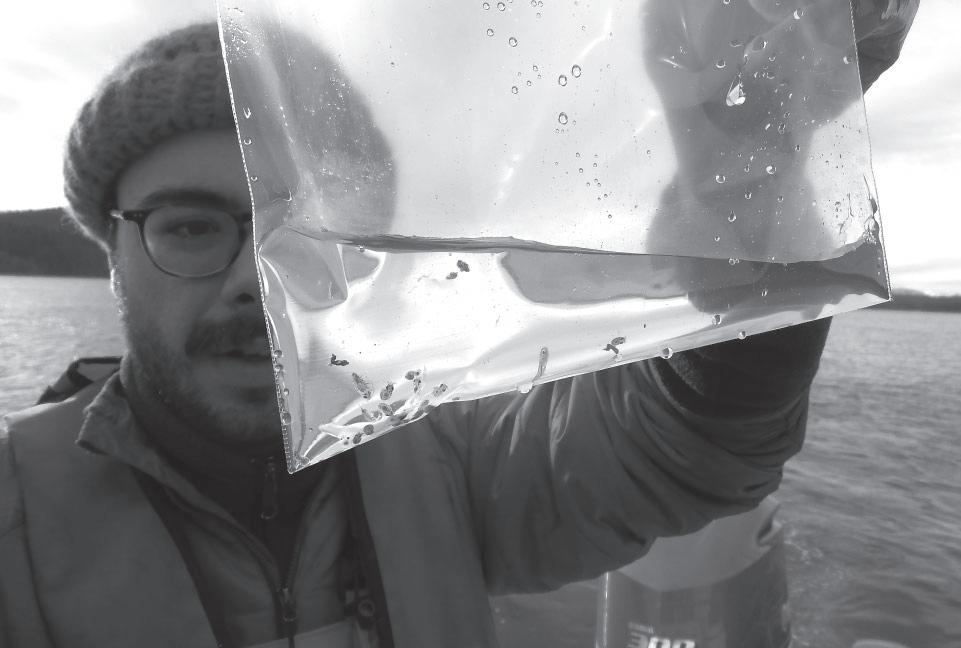
“If you look at the samples that I turn in, about 30 per cent of the Chinook have lantern fish in them, which is a far higher composition than elsewhere in the Strait of Georgia from people fishing out of Nanaimo or Victoria,” said Jeremy Maynard, a fishing guide from Campbell River and volunteer for the Adult Salmon Diet Program.
Greentree thinks the tides might have pulled deep-sea creatures like the lantern fish into a place where salmon could see and eat them during the day, explaining their sudden presence in the salmon diet.
Traditional surveys of salmon prey can be expensive and difficult to conduct at scale, but the angler-based sampling approach allowed Greentree to conduct an extensive, cost-effective study of salmon diets across different areas and seasons.
“One of the goals of our projects is to use salmon’s stomachs as an early detection system for changes in the ocean,” said Greentree. “[We intend] to keep this project going as long as we can, so if a new type of prey fish enters British Columbia from the south, we will detect it in the salmon’s stomachs.”
The Adult Salmon Diet Program, a community science initiative led by UVic

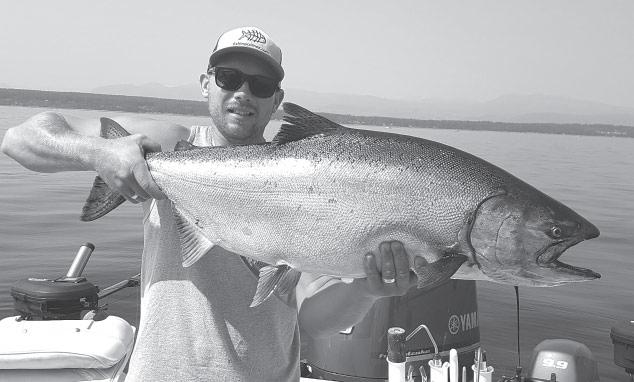
biologist and Liber Ero Chair for Fisheries Research Francis Juanes and Pacific Salmon Foundation (PSF) biologist Will Duguid, originated from the Avid Anglers Program, a group of fishers that collected DNA samples for scientific study. PSF biologist Will Duguid got the idea of asking local anglers to send the contents of salmon stomachs to researchers for analysis of diet consistency, with the goal of studying seasonal and interannual variations.
Since 2017, more than 250 recreational anglers in the Salish Sea, from eastern and southern Vancouver Island to the central coast and Haida Gwaii, have submitted the guts of their catches, with researchers analyzing up to 7,600 salmon stomachs to date.
“I’m very interested in all these things we’ve seen [with] the whole ecosystem change in the time I’ve been guiding,” said Rick Hackinen, a local fishing guide in Campbell River and a long-time volunteer to the program. “Perhaps [the study] can be used to help know some things for salmon management or for ecological decisions.”
Greentree said the research had been a baseline to answer the question of whether salmon diets will shift in the future with further studies.
Master students at UVic will continue the project by collecting more salmon stomachs for sampling, aiming to expand their collaboration and build more partnerships with others interested in understanding what salmon are eating.
“Pacheedaht anglers in Port Renfrew have collected stomachs for us and those have been really valuable, because we weren’t getting samples from [that area] and it’s really important [to know] what salmon are eating in Port Renfrew,” said Greentree.
Anglers interested in participating in the Adult Salmon Diet Program can email info@raincoasteducationsociety.org for more information.
“This type of project is only possible with a lot of support and dedication by all of the anglers, as well as other organizations,” said Greentree. “We’re really thankful for all the work that these people have put in. We’re keen to continue to work with our existing scientists and anglers, but also with new people who want to join and learn more about what salmon are eating with us.”
The Adult Salmon Diet Program is funded by the Pacific Salmon Foundation with the support of Fisheries and Oceans Canada, Project Watershed, and World Wildlife Fund Canada.
Rick Hackinen, Brightfish Charters photo
Wesley Greentree, UVic PhD student and PSF Mitacs fellow, examines stomach contents from a PSF and UVic study on juvenile salmon stomachs.
Steve Veloso, Island Pursuit Sport Fishing photo
Anglers have partnered with the Adult Salmon Diet Program and submitted stomachs from adult Chinook and coho salmon they catch to advance scientific understanding of the role that salmon play as predators in the ocean.
Forever chemicals found in B.C.’s sea otters
Researchers have identified a list of long-lasting substances from household products present in coastal otters
By Jessie Levene Ha-Shilth-Sa Contributor
Chemicals present in a long list of household products have made their way into British Columbia’s sea otters, according to recent research.
Analyzing the livers and skeletal muscles from 11 dead sea otters recovered from along the B.C. coast, a recent study found eight of the 40 samples tested detected per- and polyfluoroalkyl substances (PFAS). The research, published in the academic journal Environmental Toxicology and Chemistry, identified PFAS in B.C. sea otters for the first time.
Commonly known as ‘forever’ chemicals for the long time it takes for them to break down in the environment, PFAS are the human-made contents found in many common household products, such as lubricants, repellants, food packaging materials, drugs, medical devices, cosmetics, pesticides, textiles, vehicles, and electronics, as well as certain firefighting foams.
“The main question that prompted this research was the lack of data about these emerging forever chemicals on the BC coast,” said study author Dr. Juan José Alava, an adjunct professor at Simon Fraser University. “There have been several similar studies on marine mammals in the USA, but not in B.C.”
With limited information on the distribution of these chemicals across the Pacific northwest, this study aimed to gather baseline data to assess the potential impacts on sea otters in the region. PFAS are widely found in the natural environment worldwide, including in B.C.’s orcas. The chemicals have been linked to serious health issues in humans, and PFAS are also known to cause immunotoxicity, organ damage, endocrine disruption, and reproductive impairments in wildlife such as sea otters.
A keystone species on the B.C. coast, sea otters were almost hunted to extinction during the fur trade in the 1700s and 1800s, before which hundreds of thousands of the animals ranged from Baja, Mexico to Alaska. In the 1960s and 1970s scientists began working to build back their populations. Sea otters were re-introduced to B.C. between 1969 and 1972, with 89 sea otters released into Checleset Bay on the northwest coast of Vancouver Island.
Today, B.C.’s sea otter population is estimated to be around 4,000 individuals, found mainly on the west coast of Vancouver Island from Barkley Sound to the Island’s northern tip, and in parts of the central mainland coast. This research on the accumulated chemicals now sheds light onto the health threats faced by these recovering sea otter populations. Seven of the 11 dead sea otters studied were recovered from the coasts of Vancouver Island, including four from the Tofino and Ucluelet area, one from Nootka Island, and two from further south
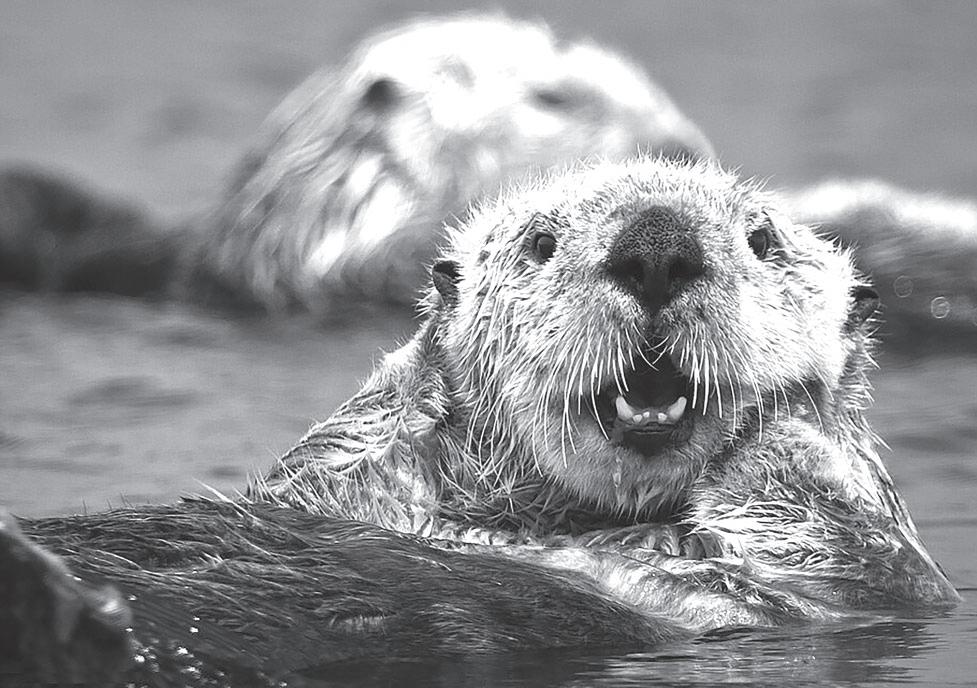
B.C.’s sea otter population is estimated to be around 4,000 individuals, found mainly on the west coast of Vancouver Island from Barkley Sound to the Island’s northern tip, and in parts of the central mainland coast.
around Cape Beale and Port Renfrew.
“In many cases, these dead sea otters were found by indigenous communities,” said Alava.
Once reported to DFO (Fisheries and Oceans Canada), the federal department worked with the coastal communities to recover the sea otters for research. After DFO had recovered the sea otters’ tissue for study, the pelts were returned to the coastal communities, said Alava.
Sea otters have a famously high-consumption diet, eating about a quarter of their body weight every day. They are also long-living, typically for 10 to 20 years in the wild, and as such, they are particularly vulnerable to bioaccumulation of toxic pollutants over time.
“Sea otters are special because they eat similar seafood to First Nations communities around Vancouver Island and central coast,” said Alava. “So, we can use the sea otters as a sentinel ‘canary in the coal mine’ to tell us whether these pollutants are contaminating the food web. The implications for food security are very important.”
The researchers discovered that concentrations of PFAS were an average of three times higher in the dead sea otters found near urban centres and shipping routes, such as Victoria and Tofino.
“There is a proximity relation to the sources in play here, whether from runoff, landfills or in the air: being nearer to the PFAS sources makes a difference,” said the study’s first author Dana Price, a masters student in the UBC Institute for the Oceans and Fisheries.

Mobile Hair Stylist
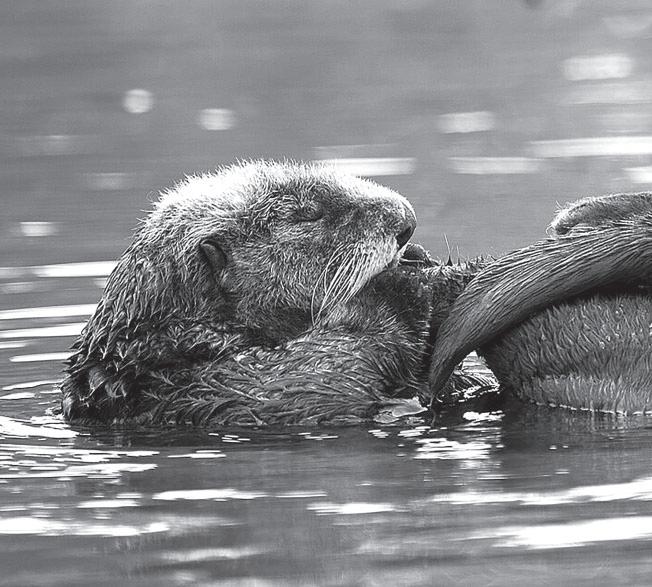
Although the concentrations of PFAS in the sampled sea otters weren’t high enough for immediate concerns, the study highlights how these contaminants may affect general sea otter health, said Price. In particular, polycyclic aromatic hydrocarbons (PAHs) were found to be present in all the sampled sea otters, with the likely source being vehicle oil. With the study capturing a snapshot for PAH concentrations in sea otters, this information could be useful for measuring chemical pollutants in coastal ecosystems if there were ever a catastrophic oil spill.
“Now that we have a baseline for PFAS levels in local sea otters, we can monitor for any changes, including potential new sources of pollution, or any positive effects of regulation,” said Price.
Laws concerning the manufacturing of PFAS are key to preventing their further spread in nature, said Alava.
“This research can help decision makers at provincial and federal levels,” he said.
“Although the Canadian government has banned the manufacture of some PFAS,
the reality is there are still over 15,000 PFAS on the market. So it is important to look for more environmentally friendly alternatives.”
Potential future research in this area could include investigating other contaminants in B.C. sea otters, and ongoing monitoring of sea otter health.
“Right now we are just focusing on marine mammals, but we may look at other predators also eating seafood diets, for example, coastal wolves. These food systems have been relied on by coastal indigenous communities for thousands of years, so it still needs to be studied more, ” said Alava.
“Our world is changing, our oceans are changing, and human-made climate change is amplifying these chemicals,” continued the researcher. “We need to combat plastic pollution, and we need decisions at government levels to really reduce the extraction of fossil fuels. We need a more holistic approach, to attack the problems from the roots.”
Wikimedia Commons photo
President’s Message
Hello Everyone. Hope you are doing well as we move into warmer weather and all the beautiful flowers are out as well as all the leaves on the trees. Such a beautiful time of the year.
We are moving into graduation and scholarship season. June 5th and 6th is the ceremonies for NTC nations who are part of these programs. It is always so empowering to hold all our students up for winning scholarships and receiving their diplomas, degrees or certification. A lot of hard work went into achieving degrees, diplomas and certifications. It is also great to see our students who excel in their studies to be recognized with a scholarship. Enjoy the graduation season as there are a lot ceremonies going on besides NTC at colleges and universities and schools. Congrats to class of 2026, it will always be a memorable year for you grads.
It is so good to see our Nuu-chah-nulth people filling in important roles at universities as you are role models and someone to talk to when a person is having issues at a university. Congrats to Layla Rorick for being appointed as Canada research chair at the University of Victoria Department of Education. Layla is a Hesquiaht member and her research contributes to the ongoing resurgence of Indigenous languages and knowledge systems. Great to see and good luck to her.
I have continued to work with the Leadership Council and other First Nations regarding implementing the United Nations Declaration on the Rights of Indigenous Peoples. The work continues with B.C. on how to address their concerns regarding the Declaration on the Rights of Indigenous Peoples Act. The premier backed off his need to amend that act and the Interpretation Act. Amending DRIPA would have meant gutting the legislation as it meant removing all accountability of B.C. on changing laws to align with UNDRIP. When he proposed suspending the provisions he was worried about, it meant our human rights would have been suspended for up to three years. While he promised work under DRIPA would continue we had a hard time trusting him to do so.
In the end the premier said B.C. and First Nations would work towards a solution in the next six months. So if we don’t come up with solutions he will be back to amending DRIPA once more.
The premier and attorney general are wanting to work directly with First Nations and not giving the Leadership Council that role. The Leadership Council is made up of the elected leaders of the First Nations Summit, the B.C. Assembly of First Nations, and the Union of B.C. Indian Chiefs. They have reboot assemblies every three months and receive their mandates through resolutions of the chiefs. The Leadership Council have staff that work on these issues and have the capacity to deal with these high-level matters. The Leadership Council bring their ideas to the chiefs for ratification and would do so in the new process we are trying to put in place. Another chiefs meeting with the premier and attorney general is coming up soon to try and work through this.
At our first meeting with the premier following his decision to not move ahead with amendments, I and other chiefs said we need a clear statement of the legal problem B.C. has with DRIPA. The premier had repeatedly said that due to the Gitxaala and Ehattesaht case that all law of B.C. can be challenged under DRIPA, even when we have not had the opportu-
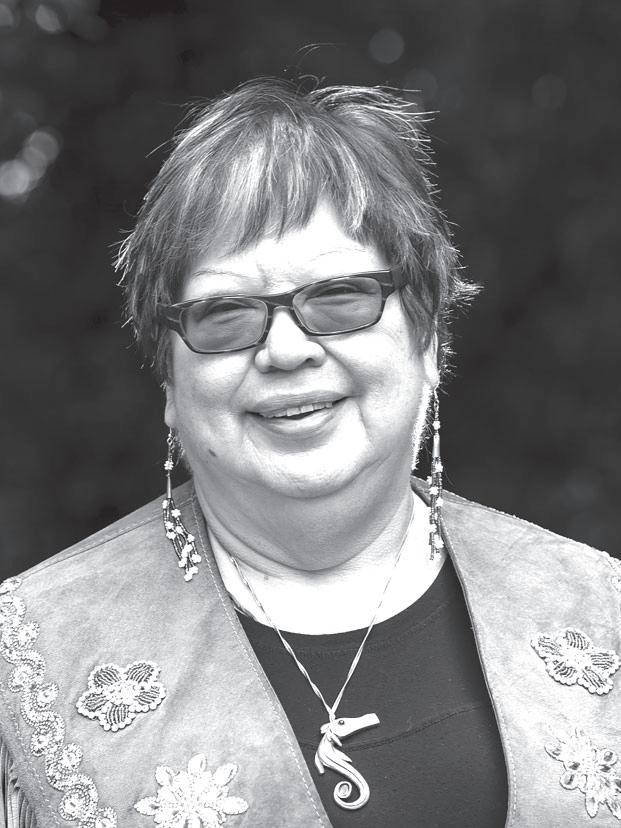
nity to align the laws with UNDRIP. He fears a landslide of cases will be filed and B.C. would not be able to handle all those legal cases. We need to know the legal issue and not the fears of the premier in order to set out a process to resolve the issue.
What this means is that it may be difficult for the First nations and B.C. to come to an agreement on what the real problem is. I hope we can get the issue defined and then we can look at options that could work.
I also am continuing my work on the heritage conservation to ensure our sacred sites, objects and cultural belongings can be protected and preserved. This includes burial sites. B.C. has been working towards tabling legislation to amend the act this fall and the working group that I am on has been working hard for over four years to get this done. The Union of B.C. Municipalities (UBCM) is now trying to exert its political power and stop the legislation from going ahead until they play a greater role in what goes on in the amendments, and in particular on permitting. They have refused to sign confidentiality agreements, meaning they cannot see the work that is being done before it goes to legislative drafters. So they would not okay a role at this point. I say that is their decision. If they don’t want to participate that is their right.
Not sure what the B.C. government will do at this point, but I’m hoping they do not delay the needed amendments to the Heritage Act. The UBCM already got it delayed for six months because they said they had not been consulted properly. The UBCM was given extra time and now are still saying they have not been consulted yet. This is totally untrue and there have been many meetings with local governments.
Everyone including First Nations have been engaged in the same amount of time, with the ability to answer surveys, write papers, and attend meetings. I am not sure why UBCM thinks they should be getting greater participation. The working group is continuing to do our work to get these amendments drafted and ready for the fall session. I’m hoping B.C. doesn’t back down on its commitments to table the legislation this fall. Our heritage is too important to put this aside for a minimum of six months.
It is a time of real political uncertainty as so much fear grips the government and the public. Fears of First Nations title and our right to the land and resources. Fear of First Nations having jurisdiction and having our own laws and enforcement. This is based on misconceptions and misinformation, and the fear is being stirred up by certain leaders.
- Cloy-e-iis, Judith Sayers

NCN Mental Health Counselling
Tuesdays and Thursdays 8:30am – 4:30pm 4841 Redford Street, Port Alberni
NCN Mental Health Services – DropIn Counselling with Margaret Bird, Registered Clinical Counsellor and Play Therapist. For on and off reserve members of all ages of the Nuu-chahnulth Tribal Council. Call (250) 724-3939 to book your appointment.
Stirring up Connections
Every Friday 10am – 12:30pm

&Community Beyond



NTC Kitchen – 4841 Redford Street.
A warm and welcoming cooking group designed just for parents! Each session will feature: Easy, budget-friendly recipes; Tips for cooking with kids and picky eaters; Space to connect with other parents over food and family life. Contact 250-724-3939 for questions.
Samuel Richard Johnson jr. mit. Memorial Potlatch
November 7th, 2026
Starting with lunch at 12:00pm Wahmeesh gym, tsaxana reserve. All welcome.

25
The movie Insomnia starring Robin Williams and Al Pacino caused crowds of stargazers wherever filming took place in downtown Alberni. Williams in particular impressed many with his willingness to meet and talk with people during the three days of filming. Bella Joe, Boyd Gallic, Andrew Dick, Bonnie Gus, Eileen Haggard, Darrell Ross Sr., and Barry Watts were all cast as extras.
Argyle Street was staged as Diamond Tooth Road in the film, representing a small Alaskan town in which the plot was set. After meeting with a crowd of Nuu-chah-nulth fans, Williams was presented with an Art Thompson designed t-shirt from Kaw T-shirts, which he was very grateful for and said he would wear with pride.
Insomnia sweeps through Alberni
Employment Opportunities


Port Alberni Friendship Centre Volunteers Needed
Need work experience? The Port Alberni Friendship Centre is looking for interested applicants for various positions. Call 250-723-8281

Women’s empowerment takes centre stage
Giving Voices Tseshaht Women’s Empowerment Conference began May 22 for three days care and connection
By Olivia Thomas Ha-Shilth-Sa Contributor
Port Alberni, BC – A weekend dedicated to healing, self-care, culture, and connection came to the Tseshaht First Nation as organizers prepared to welcome women from across the region to a three-day empowerment conference focused on wellness in all forms.
The Giving Voices Tseshaht Women’s Empowerment Conference began Friday, May 22, and ran through Sunday, May 24 at the Maht Mahs gym, bringing together keynote speakers, cultural teachings, wellness workshops, and self-care activities designed to uplift and support women in the community.
The conference was created through a “Giving Voices” grant and grew out of conversations about wanting more opportunities specifically for women within the community, said organizer Gail Gus, who is also Tseshaht’s crisis care and wellness coordinator.
“The idea for the women’s empowerment conference started off with the Giving Voices grant, and with people wanting something for women in our community,” Gus explained.
While the event included important conversations around healing and personal growth, Gus said the overall vision is centered in joy, wellness, and reminding women they deserve care and happiness.
“What I want to address is wellness,” she said. “To show we are allowed to take care of ourselves. We don’t need permission to laugh and play. Not everything is about our trauma, we should have fun, too.”
For Gus, this empowerment means helping women recognize their own value and creating space where they feel supported, heard, and celebrated.
“I want women to know what they’re worth,” she said.
The conference reflects a broader shift happening in many Indigenous communities, where wellness initiatives are increasingly moving beyond trauma recovery, with more of a focus on prevention, connection, cultural revitalization, and reclaiming joy.
Throughout the weekend, participants had access to a wide range of programming aimed at supporting mental, emotional, spiritual and physical wellness. Talks and workshops covered subjects including boundaries, surviving and thriving, postpartum wellness, breathwork, traditional medicines and plants.
The event also featured traditional brushings and cultural presentations, along with opportunities for participants
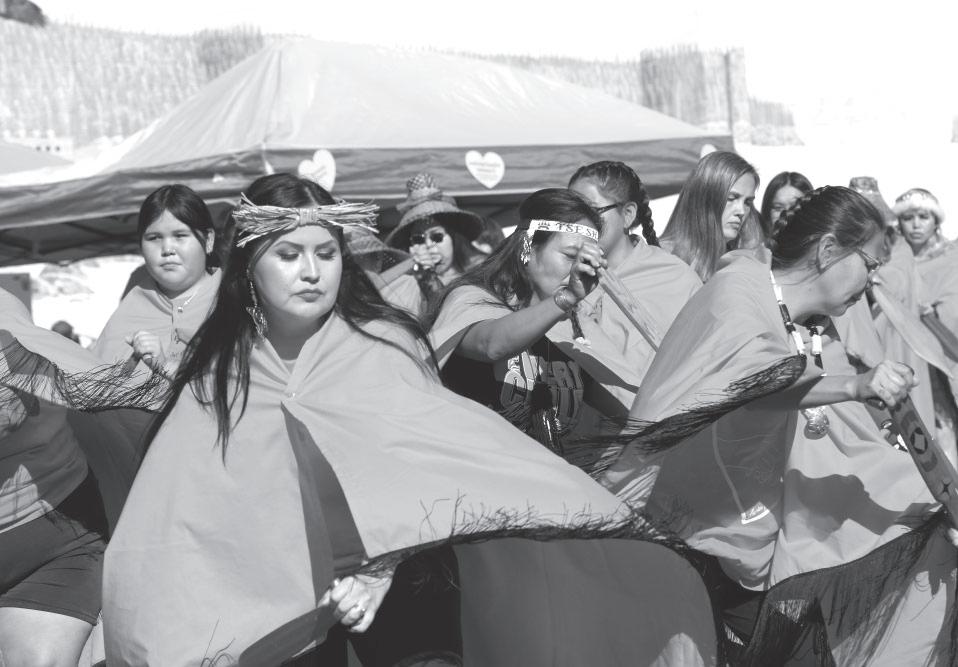
“I want women to know what they’re worth”
~ Gail Gus, Crisis Care and Wellness Coordinator
to relax and connect with one another.
Several notable speakers were scheduled to attend, including Dr. Charlotte Coté and Ashley Callingbull.
Alongside the workshops and speakers, organizers intentionally included lighter and community-focused activities to create an atmosphere centered on care and enjoyment.
Breakfast, lunch, dinner and snacks were provided throughout the weekend, and attendees could browse offerings from several local vendors. A mini fashion show featuring traditional cedar regalia was also in the works.
“I just want it to be pretty, and fancy,” noted Gus. “There will be black and gold décor, fun drink stations with hibiscus and blueberry drinks. It’s going to be nice.”
The final day of the conference leaned


heavily into self-care and wellness activities. Participants were able to access tarot card readings, massages, haircuts, nail painting and other relaxing services.
Gus said making the conference financially accessible was important from the beginning.
“We wanted it to be free,” she said.
Registration initially opened only to Tseshaht members, but organizers expanded participation to include anyone affiliated with Tseshaht in any way.
The conference comes at a time when many women, particularly Indigenous
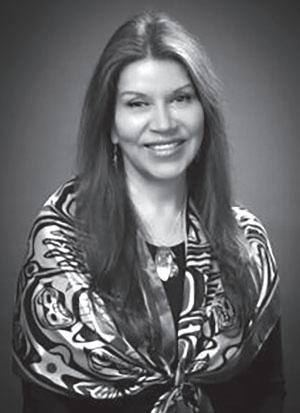
women, continue to navigate significant challenges including burnout, intergenerational trauma, caregiving pressures, violence, mental health struggles and barriers to accessing wellness supports. Organizers hoped the event offered a space where women could recharge, reconnect and feel supported by community.
Rather than focusing solely on hardship, Gus said the conference was about balance, recognizing trauma while also creating room for laughter, celebration, and healing.
Eric Plummer photo
The Giving Voices Tseshaht Women’s Empowerment Conference bagins Friday, May 22 at the Maht Mahs gym. Pictured are female Tseshaht members dancing outside of Maht Mahs on Orange Shirt Day, Sept. 30, 2023.
Ashley Callingbull Charlette Cote
Reconciliation and bball: Tseshaht tourney levels up
Tseshaht Open basketball tournament brought a diverse crowd of people together over the May long weekend
By Nora O’Malley Local Journalism Initiative Reporter
Port Alberni, BC – Fastening yellow paper event wristbands on fans at the entrance to the Alberni Athletic Hall, Port Alberni resident Graham Hughes committed four days over the May long weekend to volunteer at the third annual Tseshaht Lightning Open basketball tournament.
This year, the open tournament brought together 75 teams and roughly 28,000 Indigenous and non-Indigenous people from all over British Columbia. It’s now considered one of region’s largest sport events, selling out accommodations in the Alberni Valley with spill over into Qualicum, Parksville and Nanaimo.
“I don’t know anything about basketball. I’m not a sportsperson. But all of the aspects about what this tournament is about are things that I heavily believe in, and I think this is the best event we have in town,” said Hughes.
“And not just for youth and the community as a whole when it comes to reconciliation, this is reconciliation in action. It’s open and welcome to all people to become a part of it, to experience, to understand and to grow,” he continued.
Port Alberni Mayor Sharie Minions says the city contributed $5,000 to help support the event. She was in the bleachers as a fan to cheer for her six-foot-one daughter Zoe who played for the U17 girls Rain team.
“This tournament feels very unique. There is a different energy with this tournament for sure,” said Minions.
As the host town of the Totem basketball tournament in January – one of the longest running basketball competitions in the province – Minions says Port Alberni has always been a basketball hub, but this tournament levels up by taking things outside of the school system.
“I think Tseshaht organizing this tournament is putting Port Alberni on the map for basketball in a whole new way and in a different level. Totem has always been that foundation, but this is such a cool addition to that,” she said.
Tseshaht Lightning girls coach and tournament organizer Nasimius Ross (Ed Ross) says they had 150 volunteer T-shirts made and about 30 were leftover. He said a lot of the volunteers were youth.
“When we come together, we do a beautiful thing. This is just a smolder and now I’m starting a fire,” said Ross.
“It’s for the kids,” adds Tseshaht girls coach Len Watts. “That’s who we started it for, so they have an extra tournament after JANT. It keeps growing every year.”
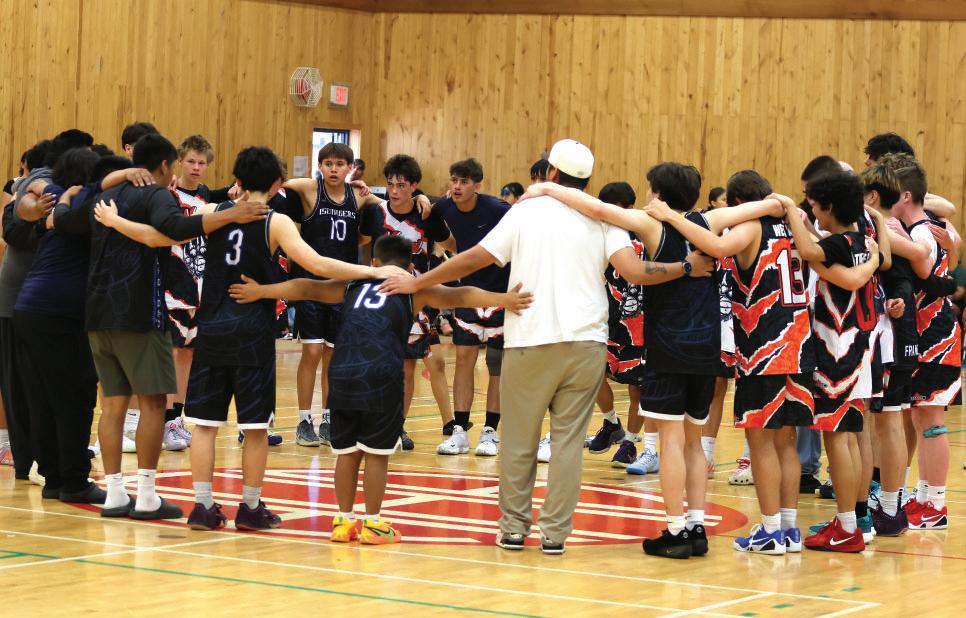
Some accusations surfaced on social media about coaches stacking teams and non-Indigenous players getting more court time than Indigenous players.
But Naani U17 boys coach Chris Sylvester said he thought the tournament was “all positive”, even when his boys fell 61-51 to the Ahousaht Islanders in an exciting final at the Alberni Athletic Hall on May 18.
“That was a lot of fun and we can’t wait to play Ahousaht again. If we can’t play together then there is no reconciliation. That’s the bottom line for me,” said Sylvester.
“That’s reconciliation. Playing on the same teams, playing against each other, being a good winner or loser,” he said.
Most of the players on the Naani squad are part of the Ucluelet Secondary School team that finished sixth at Provincials this year, according to Sylvester. He said they were invited to play for Naani by their Nuu-chah-nulth friend Anthony Curley.
“If people thought (the final) was heated; these kids know and respect each other. This is our community. It’s not Ahousaht, Tofino, Ucluelet, YFN, TFN, we’re West Coast and we do basketball in a certain way and it’s a winning style of basketball played with a lot of skill,” he said.
Sylvester shared that while he grew up in Detroit, Michigan, he really learned to play basketball when he was living in Ahousaht and working as a teacher.

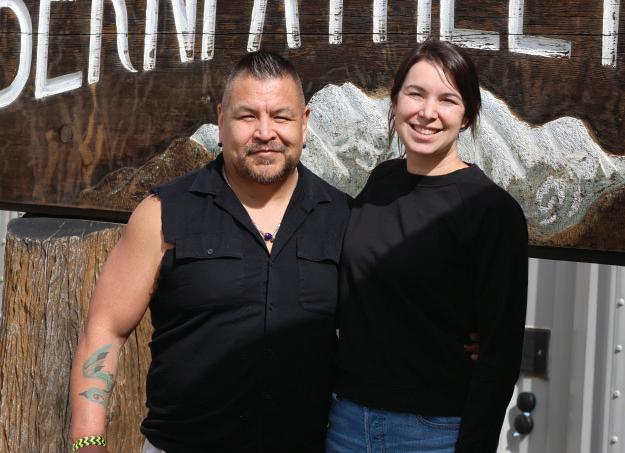
“Ahousaht is the centre of basketball on the West Coast,” he said. “My first day in Ahousaht I went to men’s drop-in and never looked back. I was accepted right away.”
He said the best part about the tournament for him was getting to spend time with people he usually doesn’t get to see.
Tseshaht Lightning also hosted a youth dance during the weekend for players to make friends off the court.
Hughes said it’s the youth that motivates him to come back as a volunteer each year.
“Port Alberni has a lot of issues we have to address. There is not a lot of opportunity here,” said Hughes.
“Ed and the Tseshaht community, who have welcomed everyone to be a part of, it’s something that is humbling to be a part of because there is so much optimism and growth. I don’t play sports, but I grow by being here,” he said.
The tournament was broadcast live on hashilthsa.com with about 350 viewers tuning in from all over Canada and as far as Hong Kong and Switzerland.

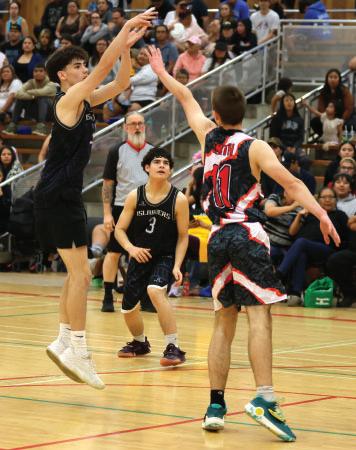
Nora O’Malley photos Ahousaht Islanders and Naani U17 boys link arms after an exciting Tseshaht Lightning Open final on May 18 at the Alberni Athletic Hall.
Tournament organizer Nasimius Ross with Port Alberni Mayor Sharie Minions.