INTERESTING NEWS
Piecing together a budding kelp growing industry
Seaweed makes products that can be food, a crop booster, plastic alternatives and even skin care components
By Eric Plummer Ha-Shilth-Sa Editor
Campbell River, BC - Throughout British Columbia’s coastline stretches vast forests of kelp, dense underwater vegetation that’s home to a diversity of species. Growing year-round under the ocean’s surface, this seaweed produces oxygen, stores carbon and helps to mitigate the effects of global warming.
As coastal First Nations have known for countless generations, kelp can be useful outside of the water as well. It offers nutrients and vitamins - a healthy meal component. The mineral-rich nature of seaweed can also boost plant growth, is good for the skin, and can even be produced into a plastic-like material. It’s also renewable, and giant kelp is one of fastest growing plants on earth.
North America’s first kelp farm was established in 1982, and Canadian Kelp produced food products from its location in Bamfield for 35 years. But despite its environmental benefits and product potential, the kelp industry has yet to hit its stride. It’s estimated that just 35 per cent of the total area permitted for kelp growing in North America is being used commercially, according to a report released in February from GreenWave, a network of “regenerative ocean farmers”. Meanwhile 27 per cent of the farms GreenWave surveyed reported a profit.
“It’s in a startup phase,” said Mark Smith, executive director of the Pacific Seaweed Industry Association. “I think we have all the pieces, we just don’t know how they go together yet.” Even so, seaweed is considered by many to be the fastest growing aquaculture sector. In 2015 there were just a handful of kelp nurseries in North America, but over the last decade this has grown to 56. Seeded twine from these nurseries now go to 248 permitted farms in Canada and the United States, where rows of rope are suspended across the ocean for kelp to grow along the lines below the water’s surface.
Just over a quarter of what’s produced is for the food industry, according to GreenWave. The rest is spread across a diversity of purposes, including as a bio-stimulant for agriculture, textile production, bio-plastic building material and even as a component in skin care products.
Looking beyond the ‘hero ingredient’
GreenWave cites 20 kelp farms in B.C., covering a total 441 hectares of coastal water. The largest tenure is operated by Naas Foods, which farms 40 hectares in Clayoquot Sound at the northeast part of
Inside this issue...
Ahousaht territory.
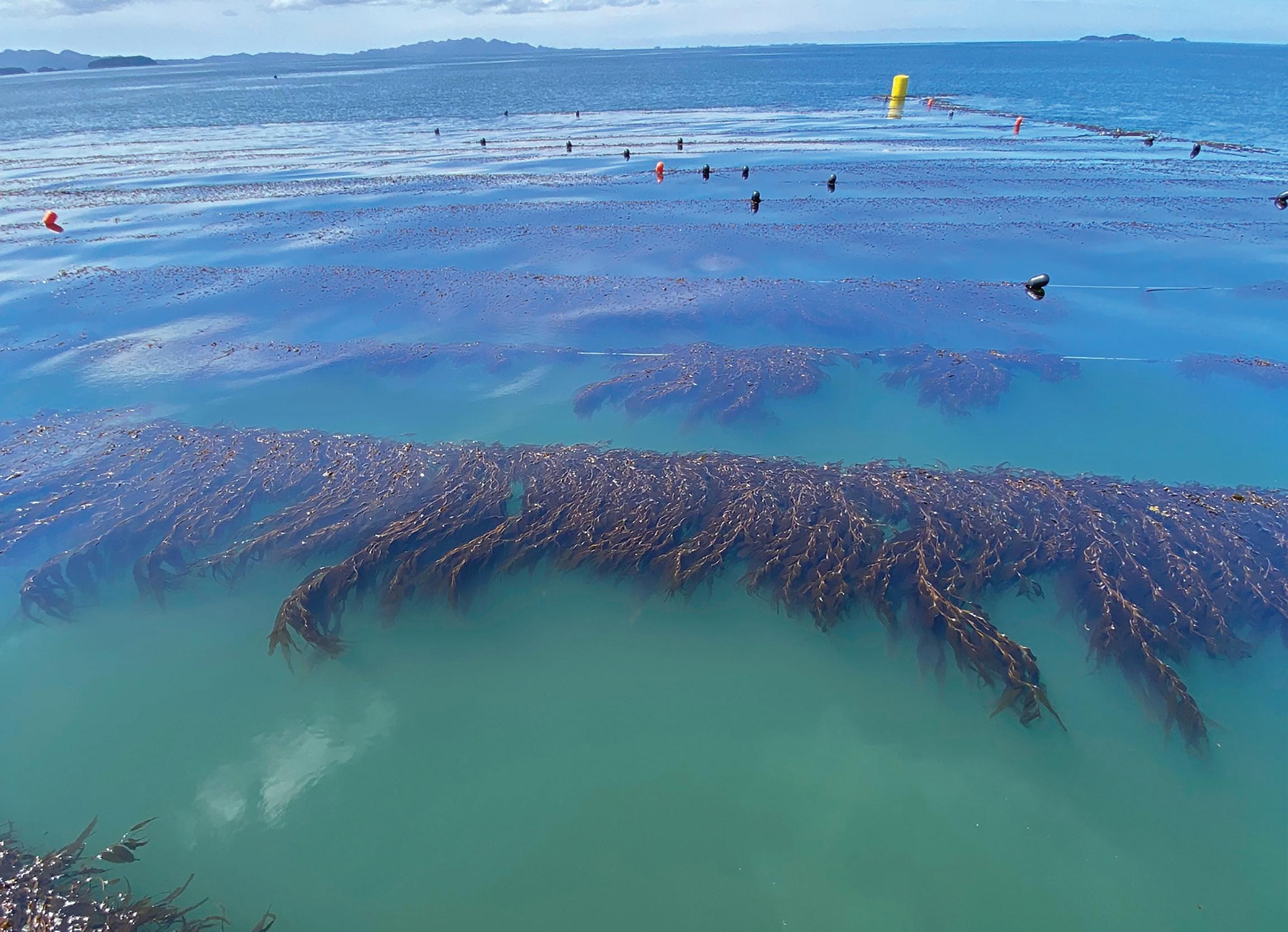
from lines across an ocean-based farm operated by Cascadia Seaweed on Vancouver Island’s coast. The Aquaculture company has partnerships with several First Nations, including Tseshaht, Ahousaht and Uchucklesaht. on bio-stimulants, liquid extracts that enhance crop yields.
“The location was picked for the growth of the plant,” said co-owner and founder Stevie Dennis, who is from the Ahousaht First Nation, while he attended the Indigenous Seafood Conference in early February.
Naas Foods produces dried and smoked kelp flakes for eating, a product that’s sold from their store in Tofino, provided to restaurants in B.C. and sold through online orders. So far kelp has accounted for about 20 per cent of the company’s revenue, as they also process fish from recreational anglers and the Taaq-wiihaq rights-based fishery, but this year Dennis is expecting seaweed opportunities to grow.
“I foresee kelp this year probably hitting 40-50 per cent of revenue for the business,” he said.
Naas Foods has tapped into kelp’s reputation as being a nutrient-rich “hero ingredient” on the dinner plate, which was an emphasis in the early days of the industry, says Kendall Barbery, director of partnerships and industry engagement for GreenWave. But she also notes that for many other growers to last in the business they’ll need to look beyond food.
Earliest ever fire ban takes effect for one week..............Page 3
Nucii gym to become an emergency space in PA...........Page 6
Opitsaht wild cow study underway........................Pages 10-11
Alana Sayers earns PhD from UVic ............................Page 13 Nanaimo’s fourth annual MMIWG2S+ walk...............Page 19
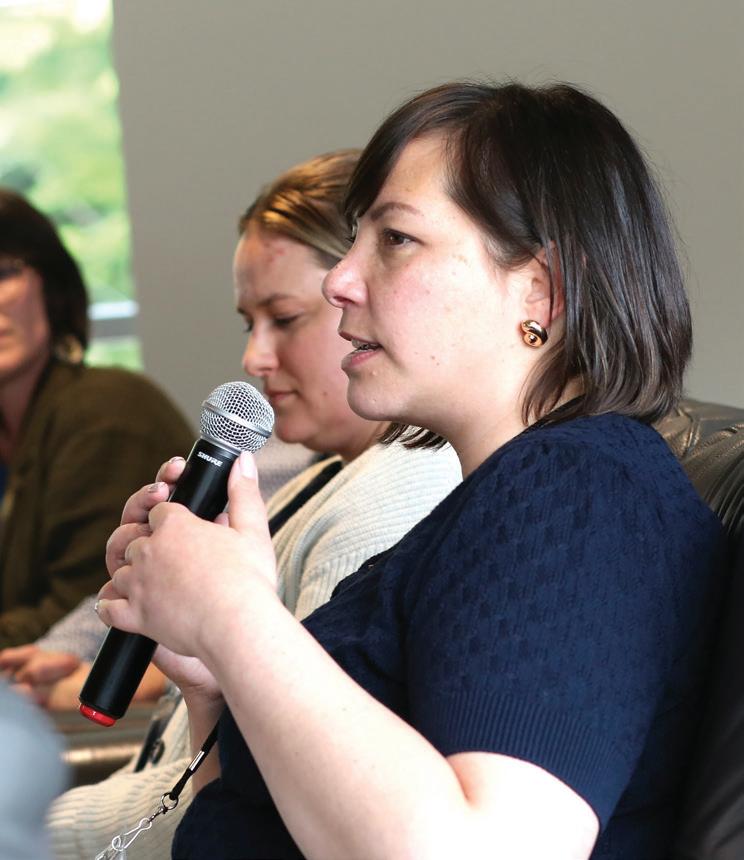
“There were some novel products that made it to market, there are some companies that persist to focus on condiments and things like that, but those don’t require large volumes of material,” said Barbery. “In fact, many of the companies that focused originally on food have either closed down or shifted gears.”
One such example is Cascadia Seaweed, a growing operation out of Sydney on southern Vancouver Island. Cascadia has shifted away from its food line to focus
“We’re not going to have a thriving sector if we don’t know where our market is,” said Jennifer Clark, Cascadia’s chief scientist. “There’s so many different uses for seaweed that we’re still learning about and still discovering.”
The company sold 100,000 litres of the product last year to agricultural producers, and even managed to get insurance from Farm Credit Canada. This is a novel sign of confidence for the kelp industry, which often still struggles to get backing from insurance providers and banks. Cascadia has farms on Vancouver Island’s coast through partnerships with the Tsawout, Uchucklesaht, Tseshaht, Ahousaht and Metlakatla First Nations.
At the north end of Vancouver Island, Shaelynne Bood has spent the last several years growing a seaweed business that harvests wild kelp from the territory of her Kwagiulth First Nation. From April to October Bood’s boats are out on the water at daybreak to cut the kelp plants at low tide, enabling the bottom section of the canopy to continue growing underwater.
Continued on page 2.
Cascadia Seaweed photo
Kelp grows
Jennifer Clark
Regulator follows ‘precautionary principle’ for farms
Continued from page 1.
Her crews use small boats, cutting the growth with gaff hooks and knives. On a good day four boats bring in 16,000 pounds of kelp.
“We do all of our harvesting by hand, there is no machinery,” said Bood. “I am almost always the first person out on the water in the morning. I think that’s really, really special.”
Most of the product goes to a single supplier of crop-boosting bio-stimulants for agriculture, but Bood has also tapped into an arrangement with Estee Lauder.
“Our kelp is also the first ingredient in La Mer cosmetics,” said Bood. “We are flash freezing it for them to get the quality product straight to New York, then it goes through a fermentation process for about four months.”
Salmon farming’s leftover space
Smith, Barbery, Clark and Bood all shared their experiences at the Pacific Seaweed Summit, a three-day conference co-hosted by North Island College, the Wei Wai Kum First Nation, Heiltsuk Climate Action and the Pacific Seaweed Industry Association in Campbell River May 6-8.
Over the past decades the Vancouver Island city has hosted central offices for some of the major salmon farming operations on the B.C. coast, but the tide is clearly changing for this side of aquaculture. A federally mandated deadline of June 30, 2029 states that all open net pens – long the industry standard for salmon farming – must be out of the ocean, meeting the concerns of many that the practice is interfering with the health of migrating wild Pacific stocks.
For an industry that at one time ac-
counted for more than three quarters of all salmon harvested in the province, the effects of this phase out are already apparent. In January the BC Salmon Farmers Association cited a 40-per-cent drop in the province’s production of farmed salmon since 2015. Over this same period Canada’s salmon imports have more than doubled, reported the association, with more shipments coming from Chile, Norway and other coastal exporters.
Amid what appears to be the sunset of one coastal industry are leftover vessels, equipment and personnel – leaving some to wonder if seaweed could claim some of the space left by salmon farming. The Wei Wai Kum has taken over salmon farming tenures that were previously held by Cermaq in the First Nation’s territory to explore opportunities in kelp farming.
“It’s naturally occurring,” said Wei Wai Kum Chief Councillor Chris Roberts of kelp’s benefits, drawing comparisons to salmon farming. “They’re a filter feeder, we’re not adding feed, we’re not adding a
bunch of inputs in there.”
But with kelp aquaculture still in its early phase, Roberts cautions that questions remain about environmental impacts of the practice.
“Much like shellfish aquaculture as a filter feeder, there are impacts, so it’s important to understand the overall environmental context,” he said.
In B.C. even the provincial regulators admit uncertainty over how kelp aquaculture will impact coastal ecosystems.
“At this time we’re trying to follow that precautionary principle,” said Kylee Pawluk, an aquatic plant specialist with the B.C. Ministry of Water, Land and Resource Stewardship.
Currently the province puts limits on moving a species of kelp so that it doesn’t interfere with wild growth of another plant.
“We know that there are individual populations, and we don’t want any of the farming practices to impact those wild beds,” said Pawluk, adding that this
is in place “so that you’re not moving one from down in Victoria all the way up to Haida Gwaii. We don’t understand what that could do.”
‘First Nations have to lead it’
The Pacific Seaweed Summit opened with a keynote address by Larry Johnson, president of Nuu-chah-nulth Seafood, who reflected on the lessons he gained from growing up in Huu-ay-aht territory in southern Barkley Sound. He recalled how an area known as ‘Kelp Bay’ hardly contained any of the aquatic plants, thanks to the historic overhunting of sea otters. Sea otters feed on sea urchins and abalone, but without the furry predators around this shellfish thinned out the region’s kelp beds.
“We eradicated sea otters; we didn’t think it would have an effect,” said Johnson. “The world relies on the exploitation of natural resources in silos. That’s why we’re experiencing climate change. It’s our own fault.”
As First Nations and ocean farmers explore the future of kelp growing, Johnson hopes that those tied to the industry will work together – never losing sight of the lesson that everything in our world is connected.
He recalled a tour of aquaculture sites along Norway’s coast, all connected by paved roads with cellular service.
“That’s really good infrastructure to support economic development,” said Johnson.
“I saw industry, the universities and research and development working together to solve the environmental issues,” he continued. “I thought, ‘Why can’t we do that in Canada?’ We can, but First Nations have to lead it. So don’t be afraid.”

Cascadia Seaweed photo
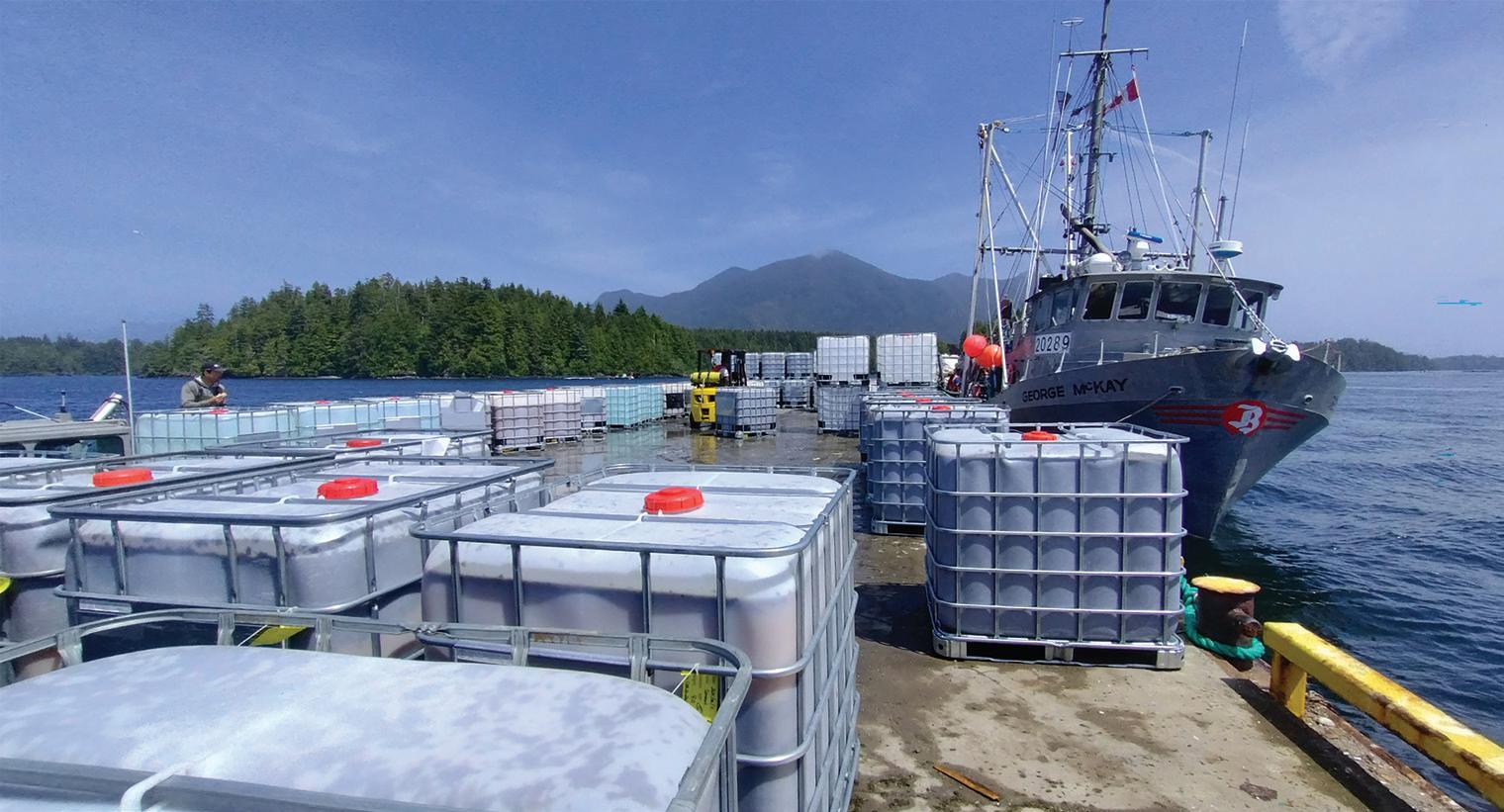
Derived from kelp, tanks of biofuel await shipment for the agriculture industry.
‘Earliest ever’ fire ban imposed through B.C. coast
Coastal
By Nora O’Malley Local Journalism Initiative Reporter
Vancouver Island, BC – As of Thursday, May 7 at noon, camping trips on B.C.’s coast will entail empty fire pits.
The provincial government says open fires throughout the Coastal Fire Centre’s jurisdiction, with exceptions for Haida Gwaii, are prohibited. The prohibition will be in place until October 31, 2026, or until the order is rescinded.
The temporary campfire ban applied throughout the Coastal Fire Centre’s jurisdiction, with exceptions for Haida Gwaii.
“It’s the earliest ever, but at the same time it’s certainly dry out there. After last year we certainly don’t want any more wildfires,” said Sproat Lake Volunteer Fire Department Chief Mike Cann.
After days of cooler temperatures, on May 12 a notice came from the BC Wildfire Service that campfires would be permitted after all – for the time being.
“Current and forecast conditions have since shifted, bringing cooler temperatures, improved humidity values and an overall reduction in wildfire hazard throughout the Coastal Fire Centre,” stated the wildfire service.
B.C.’s Coastal Fire Centre covers the Lower Mainland, Sea-to-Sky corridor, the Sunshine Coast, Vancouver Island, the Central Coast and Haida Gwaii.
Last year, the Coastal Fire Centre’s campfire ban didn’t take effect until July 17. In 2024, the fire ban landed around the same time on July 12 and in 2023, the fire ban was early on June 8.
“It’s earlier than typical for the area,” said Erika Berg, fire information officer for Coastal Fire Centre.
“Coming into the May long weekend as well we are going to have a lot of people visiting the Island, so just to limit that risk of human-caused wildfires we made the decision to implement the prohibition a little earlier than usual,” said Berg. By early May most of the area within the Coastal Fire Centre had a Moderate or High fire danger rating, including the ‘West Coast Fog Zone’, a two-kilometredeep strip of land along the outer coast of Vancouver Island. In the past, this fog belt was exempt from open burning restrictions.
BC Wildfire opted to remove the exemption in 2019 to reduce confusion and limit the risk of human-caused wildfire.
“During the 2018 fire season, which was the last year the Fog Zone was in place, 23 per cent of suspected campfire-caused wildfires on Vancouver Island were
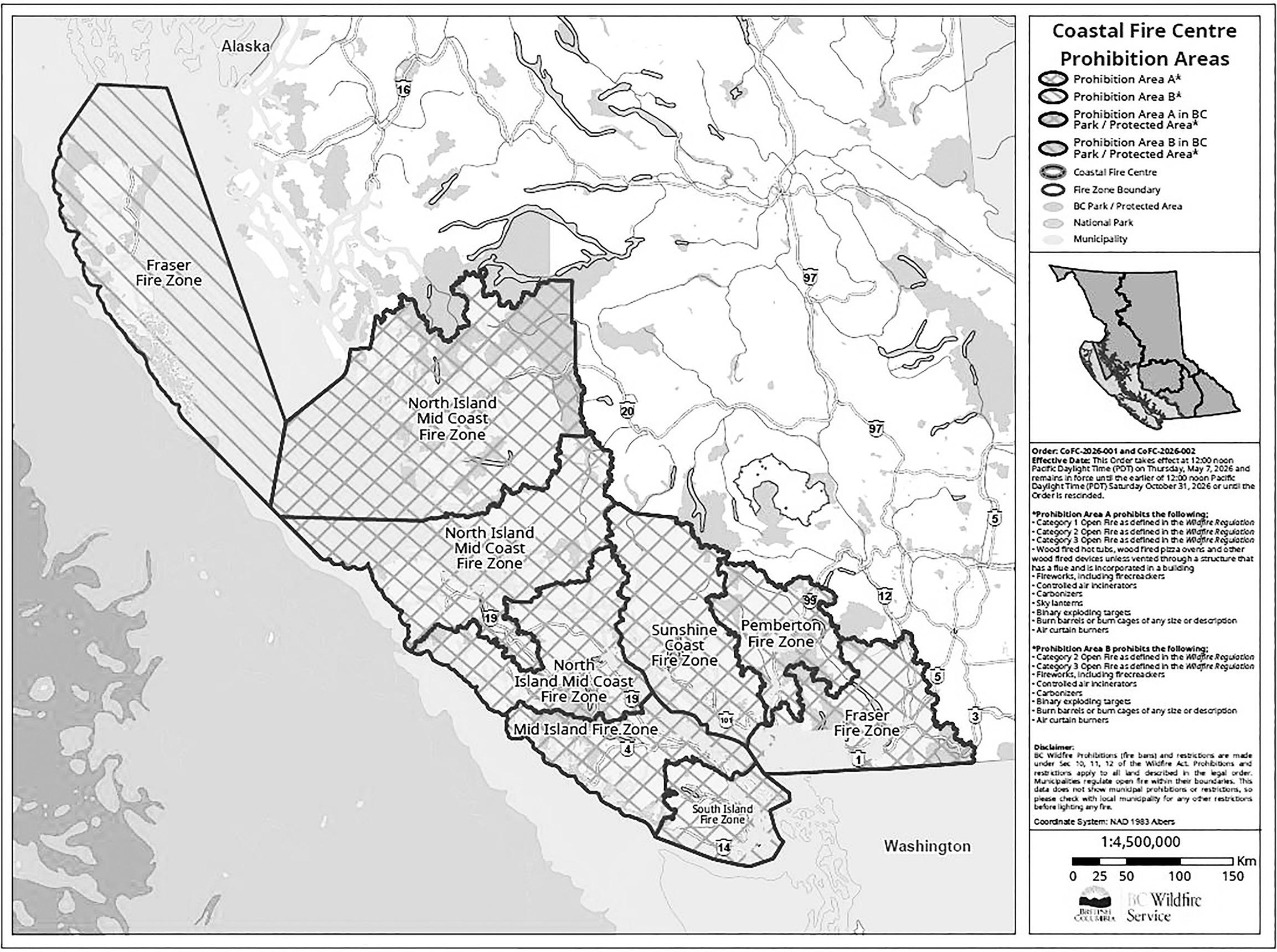
The Coastal Fire Centre put the lid on campfires early this year. With exception for Haida Gwaii, a campfire ban took effect May 7, but was lifted one week later after temperatures eased.
located within the Fog Zone boundaries,” said Berg.
Cann adds that the coastal region has lots of afternoon winds.
“Be careful of anything you burn. Cigarettes are horrible for causing wildfires. You have to be careful on ATVs and dirtbikes if they don’t have spark arrestors, and leaving cars idling on grass fields could cause a fire,” he said.
The Coastal Fire Centre ban prohibits open fires used for recreational activities, fires used for ceremonial purposes, larger burn piles used for disposing of grass or stubble and burn barrels. It also prohibits fireworks and any wood fire devices that aren’t vented through a structure that has a flue and is incorporated in a building.
In the Haida Gwaii Forest District campfires (Category 1) are still permitted while larger burn piles (Category 2 and Category 3) fires are prohibited, as they are throughout the Coastal Fire Centre.
Cann says the most important message he wants to share with the public is to FireSmart their own properties.
He said the Alberni-Clayoquot Regional District (ACRD) offers a FireSmart pro-

gram for residents living in Tseshaht First Nation, Hupacasath First Nation, Beaver Creek, Cherry Creek, Sproat Lake, Beaufort and the City of Port Alberni.
The Sproat Lake Volunteer Fire Department sells WASP Gutter Mount Sprinkler Brackets for $199, Cann notes. The WASP sprinkler kits include two gutter mount sprinklers and two 50-foot hoses that hook up to garden taps.
“Hook it up and just drop it into the gutter of your house. Put the tap on and it sprays water around,” said Cann.
“If there is a fire in your neighbourhood, you want sprinklers up high on your house. You want to be careful you don’t cause water damage to your house, but at the same time you want to raise the humidity level; you want to build a humidity dome around your property,” he said.
Last August, the Mount Underwood wildfire broke out near China Creek Marina just outside of Port Alberni on the Bamfield Main Road. The ACRD said it was the worst wildfire in their history. Power to the western communities of Anacla, Bamfield and Nitinaht was cut for 12 days, as crews worked to safely access the area to repair the fire-damaged poles and power lines.
At the end of July last summer, the Wesley Ridge wildfire burned on the opposite side of Cameron Lake from Highway 4. The highway remained opened as crews tackled the fire for weeks and an evacuation order was issued for the area.
“We sent a crew up to Wesley Ridge for five days,” said Cann. “During that time
we also had a three-person crew as an initial attack for the Alberni Valley and the West Coast because all the forestry people were busy with the Wesley Ridge fire.”
He said his department is ready for the hot and dry summer ahead.
“We put together a forestry trailer with a bunch of forestry pumps and hose to do the initial take care of our neighbourhoods if something does happen,” said Cann.
During a campfire ban, campers can still cook on outdoor stoves fueled with gas or briquettes, with limitations. Berg says to check local advisories before heading out as some parks may have additional restrictions that prohibit camp stoves.
She said Coastal Fire Centre is already trending towards a record-high wildfire season with over 30 total wildfires resulting in 140 total hectares since April 1. “That is over double our 10-year average and the majority of those have been human-caused,” she said.
“It’s still early to make strong conclusions or comparisons, but we just don’t want to be trending in that direction. If we can limit some of that, it will set us up for success. We know it’s no fun having (campfires) restricted, but ultimately, it’s to prevent wildfires so we can enjoy the outdoors for longer and not have smoke impacted skies,” said Berg.
Campfires are currently still permitted in all the remaining fire centres in the province: Cariboo, Kamloops, Northwest, Prince George and Southeast.
Notice to Remove Schedule A Land from Woodlot Licence W1941
Please be advised that KA:’YU:’K’T’H’/CHE:K:TLES7ET’H’ First Nations is proposing to remove 63.7 ha of Schedule A land (Treaty Settlement Land) from Woodlot Licence W1941 located in the vicinity of the community of Kyuquot.
Information about this proposal can be obtained by contacting Tom Younger RPF at 250-830-84784 or Len Apedaile RPF at 250-2030225. Any comments or questions regarding this proposal must be submitted to forestry@tiicma.com by May 30, 2026 to be considered in the decision.
Coastal Fire Centre map
BC Treaty Commission reappoints Angela Wesley
Wesley previously served BCTC as K’omoks, Kitselas and Kitsumkalum progressed their treaty negotiations
By Denise Titian Ha-Shilth-Sa Reporter
The BC Treaty Commission is congratulating Huu-ay-aht’s Angela Wesley on her appointment by the Government of British Columbia for a two-year Commissioner term.
Wesley is no stranger to the role, having previously served as a commissioner from 2018 to 2025. During that time, the K’omoks, Kitselas and Kitsumkalum First Nations moved forward in their treaty negotiations with the federal and provincial governments.
Previous to her time with the BCTC, Wesley worked on the negotiation of Maa-nulth treaty on behalf of Huu-ayaht. Implemented in 2011, the Maanulth Final Agreement also includes, Toquaht, Uchucklesaht, Ka:’yu:’k’t’h’/ Che:k’tles7et’h’ and Yuułuʔiłʔatḥ First Nations, who are working hard to implement their treaties. Wesley serves as the speaker in the Huu-ay-aht Legislature.
“She was involved in the negotiation, ratification and ongoing implementation of the Maa-nulth Treaty, which was the first multi-nation modern treaty under the B.C. treaty process,” said Spencer Chandra Herbert, B.C.’s minister of Indigenous Relations and Reconciliation. “Wesley has served as speaker (legislative chairperson) for the Huu-ay-aht First Nations Legislature and People’s Assemblies.”
“I’m excited to join the Treaty Commission at this important time when the principals have renewed their commitments to the treaty process through the Principals Accord,” said Wesley in a statement. “I look forward to bringing my experience in treaty negotiations and implementation to BCTC.”
The Ministry of Indigenous Relations and Reconciliation said that Wesley will serve as B.C.’s appointed commissioner. Commissioners do not represent the principals who appoint them, and serve independently.
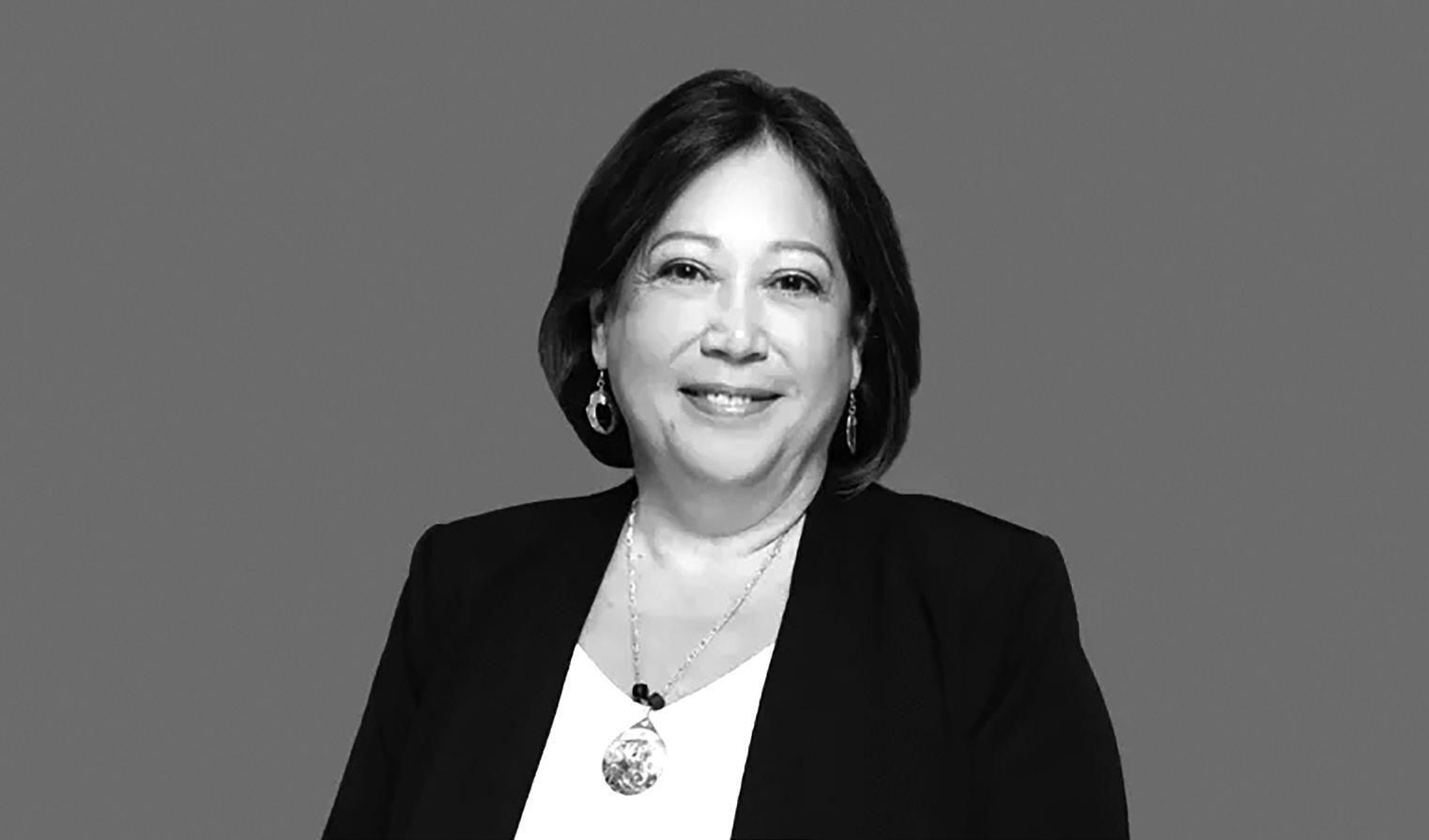
Previous to her time with the BCTC, Wesley worked on the negotiation of Maanulth treaty on behalf of Huu-ay-aht, implemented in 2011. Stage 4 – negotiation of the Agreement in Principle.
Established in 1992, the BC Treaty Commission is an independent, impartial body responsible for facilitating treaty negotiations between the provincial and federal governments, and participating First Nations in the province. It consists of one chief commissioner, who serves for a three-year term, and four commissioners each appointed for two-year terms.
It was in February 1993 that the Nuu-chah-nulth Table, representing 14 Nuu-chah-nulth First Nations, officially entered the treaty process. Over time, some of the nations splintered off to move forward with negotiations at smaller table.
Huu-ay-aht, Ka:’yu:’k’t’h’/ Che:k’tles7et’h’, Toquaht, Uchucklesaht and Yuułuʔiłʔatḥ First Nations united to successfully negotiate the Maa-nulth Treaty, which was implemented in 2011. Ditidaht joined Pacheedaht First Nation to negotiate together. They are currently in Stage 5 of the six-stage treaty process. In this stage, the parties are negotiating to finalize their treaty.
This leaves eight Nuu-chah-nulth nations. Hupačasath and Tla-o-qui-aht have negotiated on their own and both are in
Hupačasath are not in active treaty negotiations; however, they are working on sector-specific reconciliations.
“They are actively negotiating agreements that cover land use, forestry, and economic opportunities, including a 2025 reconciliation agreement,” according to the provincial government.
Similarly, Tla-o-qui-aht is not in active treaty negotiations but is engaged in independent discussions with the province and federal governments on matters outside of the treaty process. They’ve completed several revenue-sharing agreements when it comes to clean energy and forestry. They signed an incremental treaty agreement in 2008 and a pathway agreement with the province in 2021.
Ahousaht, with its enrolled membership standing at 2,241, is now negotiating land and resource agreements outside the treaty process. According to information from the provincial government, Ahousaht has signed a Reconciliation MOU with the province in 2021. From 2008 to 2025 Ahousaht has signed agreements with the province in the areas of forestry, an Atmospheric Benefits Agree-
ment, and a protocol agreement in 2016. Ehattesaht, Hesquiaht, Mowachaht/ Muchalaht, Nuchatlaht and Tseshaht First Nations are the remaining nations representing just over 3,000 citizens that remain at the Nuu-chah-nulth Treaty Table. This table has reached Stage 4, but their negotiating status is listed as inactive. Why are treaties important? According to BCTC, self-determining First Nations each establish unique, constitutionally protected self-government arrangements, which will be exercised within the existing Canadian Constitution. Through a finalized treaty agreement, First Nations are released from Canada’s Indian Act. Treaties, agreements, and other constructive arrangements seek to end the legacy of colonialism. Instead of the Indian Act, new agreements aim to recognize First Nations’ Aboriginal title and rights. They provide for the co-existence of Crown and First Nations governments and laws, allowing Indigenous cultures, languages, and values to grow.
Through treaties and such agreements, the BCTC says First Nations can unlock economic development opportunities, close socio-economic gaps between Indigenous and non-Indigenous communities, ensure a true sharing of prosperity, and build a new nation-to-nation, government-to-government-to-government relationship through constitutionally entrenched agreements.
Wesley joins Francis Frank of Tla-o-quiaht, who, since 2015, has served several terms at the BCTC as a commissioner.
“The Treaty Commission also acknowledges Commissioner Tom Happynook after close to four years as the provincial appointee. Tom was the first commissioner who was a citizen of a modern treaty First Nation and played a significant role in the negotiation and implementation of Huu-ay-aht First Nations’ treaty. He brought valuable experience and a passion for the meaningful reconciliation that comes from modern treaties,” reads a BCTC statement.

BC Treaty Commission photo
Elders housing on horizon as Tsawaayuus expands
Rainbow Gardens plans to add 31 independent living spaces for elders, Aboriginal people will be prioritized
By Denise Titian Ha-Shilth-Sa Reporter
Port Alberni, BC – The senior’s care facility designed to serve First Nations elders in Port Alberni is looking to expand its facilities by building new apartments on the Russell Place property.
Tsawaayuus Rainbow Gardens is a senior care/subsidized housing facility built with First Nations elders in mind. Located at 6151 Russell Place, the care home was first dreamed of in 1985 when a group of women began planning safe housing for Indigenous elders.
In 1992, Tsawaayuus Rainbow Gardens opened its doors with 30 residential care beds. In 2007 the first expansion saw 10 assisted living units and the addition of 14 more long-term care beds.
A new single-story apartment building capable of housing 20 independent living units was built on the property in 2019. Then, in 2022, a five-story apartment building was completed, adding 48 new independent living units.
Now, the Westcoast Native Health Care Society, the entity that designed and operates Tsawaayuus Rainbow Gardens, is looking to build more independent living apartments on the property. They are in the process of public hearings with the City of Port Alberni seeking necessary approvals.
The West Coast Native Health Care Society submitted their proposal for the development of a 35-unit apartment building back in 2024. Intended for low to moderate-income seniors, the apartments would stand adjacent to the singlestory apartments along Russell Place on what is now a large lawn.
The original plan called for a threestorey apartment building offering 35
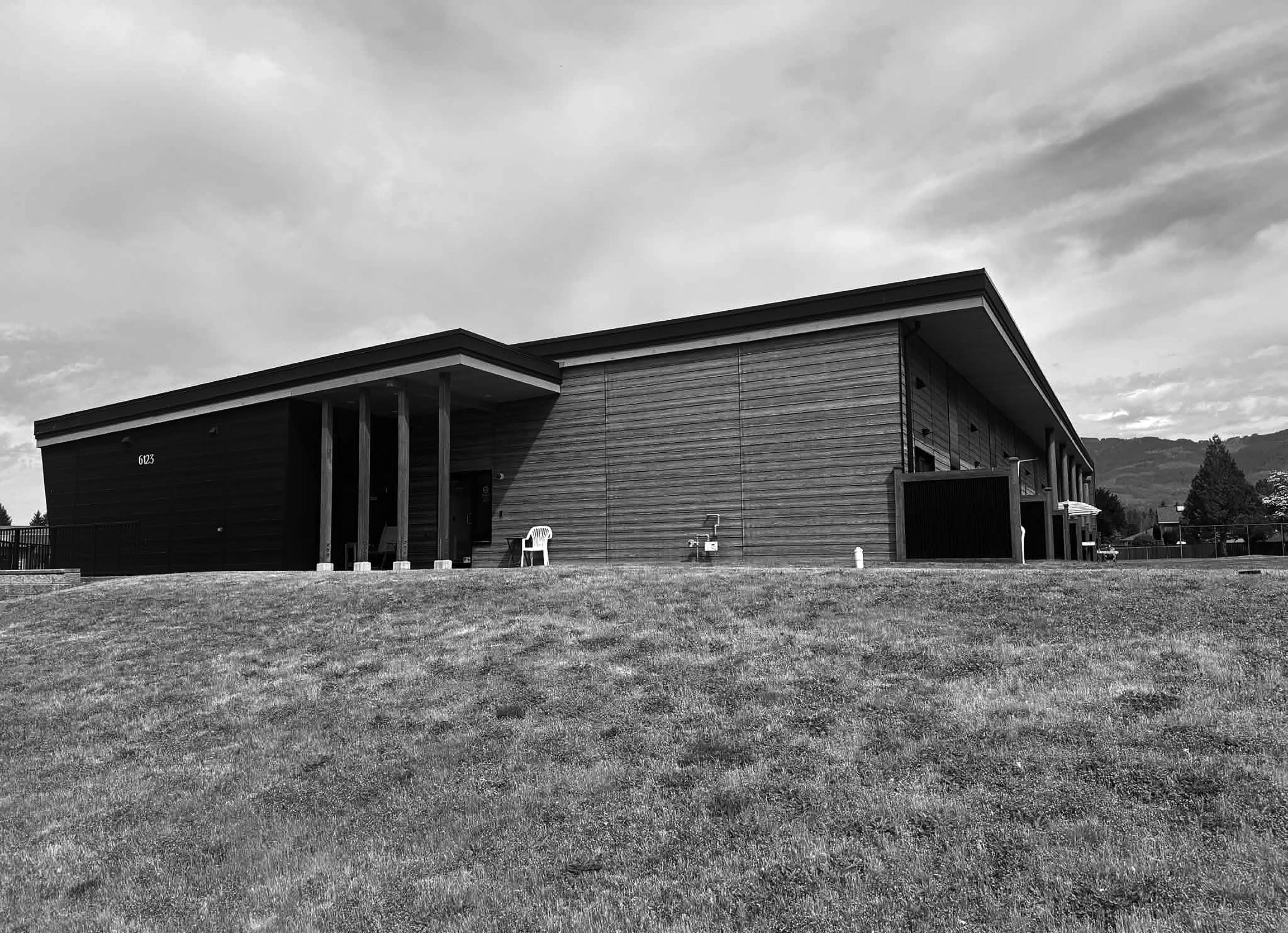
The proposed building will be two stories where there is now an open field, offering 31
aged 55 and older
living units. Residents in the neighborhood raised concerns at public hearings about the size of the building and the plans were revised. Now, the proposed building will be two stories, offering 31 living units for independent elders aged 55 and older.
According to Tsawaayuus Rainbow Gardens Building Manager Art Van
Volsen, the project has gone through three readings at City Council. Once it passes fourth reading, the project will be approved, and planners will move ahead to get funding in place.
“We hoped to be doing the groundbreaking this summer,” said Van Volsen. But with a few more hoops to jump through, it is difficult to know when con-
units for
struction can begin, and when it will be ready for tenants.
When completed, the project will add 31 living spaces for elders, where Aboriginal people will be prioritized.
NTC nurses celebrate National Nursing Week
By Denise Titian Ha-Shilth-Sa Reporter
Port Alberni, BC – The NTC Nursing team gathered at Canal Beach on May 12 to welcome their new manager and to celebrate each other during Canada’s National Nursing week, which runs May 11 to 17.
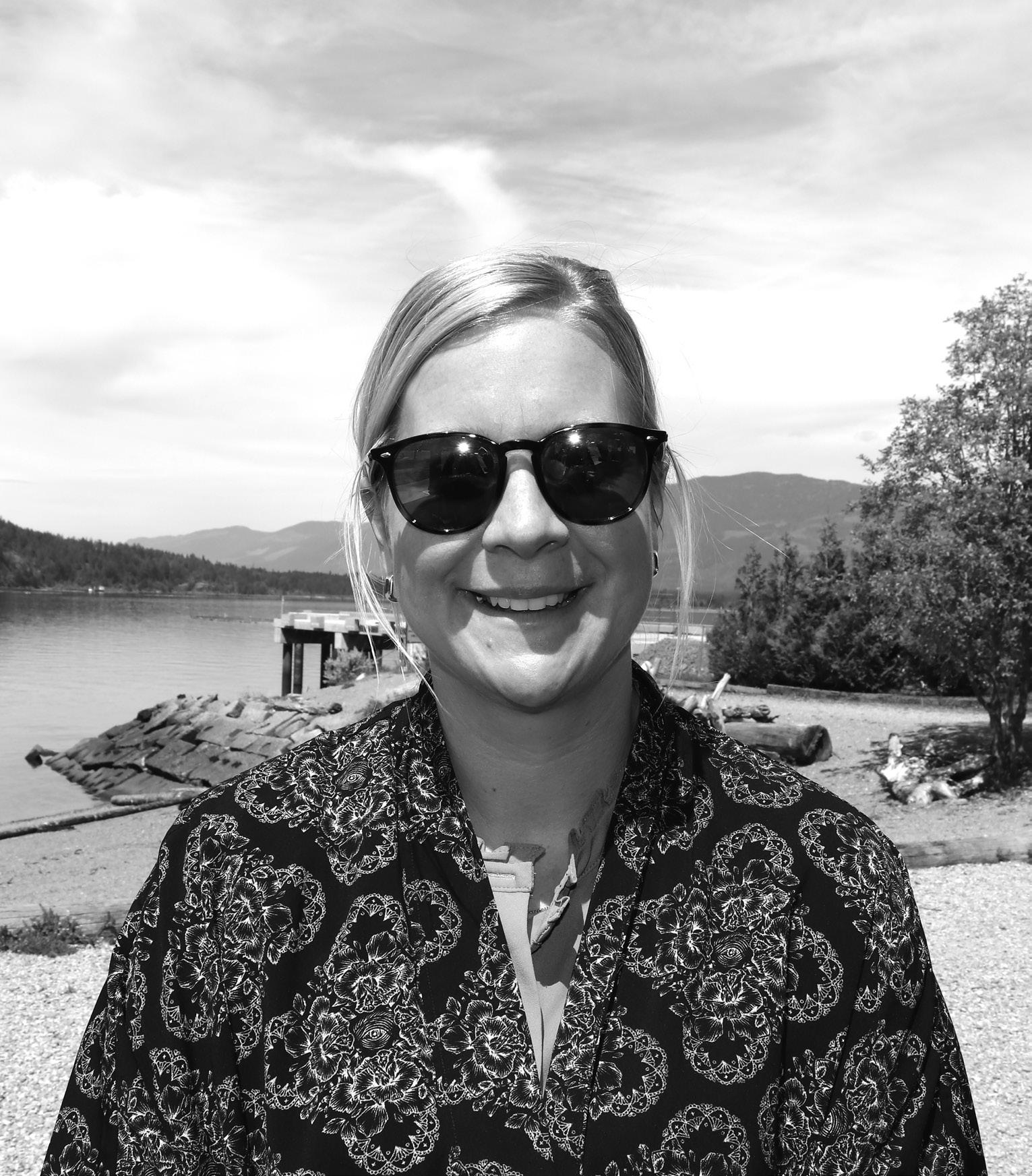
Tenille Lindsay is the new Nuu-chahnulth Tribal Council Community Health manager. Part of her role is to manage the NTC Nursing team. According to NTC nurse Kelsey Rix, there are eight NTC nurses plus two casual workers.
“There used to be about 32 nurses,” said Sonya Summerville, a long-time NTC nurse.
When asked where the nurses went, Summerville said, over time, everyone just moved on. She pointed to the nationwide nurse shortage that is also being felt in the US.
Tenille Lindsay was born and raised in Port Alberni, where she is raising her own children. She has been a registered nurse for 16 years. Growing up in the small city, Lindsay says she has lots of Nuu-chah-nulth friends that she maintains connections with.
Lindsay said she had a previous connection with the NTC by working with one of Usma’s programs.
“The NTC has always been welcoming, supportive and collaborative,” she said. Also, the NTC Nursing program does things differently.
“We look at health care holistically,” said nurse Rix.
Lindsay says the nursing style is more about building relationships rather than treatment alone. This is why they can’t just have a nurse from a hospital, for example, come and fill in for an NTC nurse for a day.
“They need to build those relationships,” said Lindsay, who, on her second day in the role, admitted there was much to learn. “I want to bring back the Nuuchah-nulth way of nursing, even though I may not fully understand it.”
Part of bringing that style of nursing back would be to rebuild the nursing staff to the numbers it once had. At this point, it is not known how this can be achieved given the current health care crisis, but it is a goal.
NTC nurses are divided up to serve as many Nuu-chah-nulth communities as possible. They make scheduled trips to remote communities. Lindsay hopes to find ways to make these services more accessible.
“I know it is not accessible to all communities – we want to make it accessible…equitable. The goal is to grow it.” she said.
The NTC Nurses took part in a smudge ceremony and were brushed off, blanketed and praised for the good work that they do. A large portion of the staff are Nuu-chah-nulth nurses from Ahousaht, Tseshaht, Hupačasath and Tla-o-qui-aht.
Chloe Wangler photo
living
independent elders
Denise Titian photo
Tenille Lindsay is the new Nuu-chah-nulth Tribal Council Community Health manager.
Ha-Shilth-Sa newspaper is published by the Nuu-chah-nulth Tribal Council for distribution to the members of the contributing First Nations, as well as other interested groups and individuals.
Information and original work contained in this newspaper is protected by copyright and may not be reproduced without written permission from:
Nuu-chah-nulth Tribal Council
P.O. Box 1383, Port Alberni, B.C. V9Y 7M2.
Telephone: (250) 724-5757
Fax: (250) 723-0463
Web page: www.hashilthsa.com facebook: Hashilthsa Ntc
2026 Subscription rates:
Non-Nuu-chah-nulth, Ahousaht, Ehattesaht,Toquaht and Ucluelet members are subject to a yearly subscription fee of $40 in Canada, $50 in the US and $60 for overseas. Payable to the Nuu-chah-nulth Tribal Council
Manager/Editor/Reporter
Eric Plummer (Ext. 243) (250) 724-5757 Fax: (250) 723-0463 eric.plummer@nuuchahnulth.org
Reporter
Denise Titian (Ext. 240) (250) 724-5757 Fax: (250) 723-0463 denise.titian@nuuchahnulth.org
Reporter Nora O’Malley (604) 353-8488 nora.omalley@nuuchahnulth.org

Audio / Video Technician
Mike Watts (Ext. 238) (250) 724-5757 Fax: (250) 723-0463 mike.watts@nuuchahnulth.org
Editorial Assistant
Holly Stocking (Ext. 302) (250) 724-5757 Fax: (250) 723-0463 holly.stocking@nuuchahnulth.org
DEADLINE:
Please note that the deadline for submissions for our next issue is May 22, 2026
After that date, material submitted and judged appropriate cannot be guaranteed placement but, if material is still relevant, will be included in the following issue.
In an ideal world, submissions would be typed rather than hand-written. Articles can be sent by e-mail to holly.stocking@nuuchahnulth.org (Windows PC).
Submitted pictures must include a brief description of subject(s) and a return address.
Pictures with no return address will remain on file. Allow two - four weeks for return.
Photocopied or faxed photographs cannot be accepted.
COVERAGE:
Although we would like to be able to cover all stories and events, we will only do so subject to:
- Sufficient advance notice addressed specifically to Ha-Shilth-Sa.
- Reporter availability at the time of the event.
- Editorial space available in the paper.
- Editorial deadlines being adhered to by contributors.
LETTERS and KLECOS
Ha-Shilth-Sa will include letters received from its readers. Letters MUST be signed by the writer and have the writer’s full name, address and phone number on them. Names can be withheld by request. Anonymous submissions will not be accepted. We reserve the right to edit submitted material for clarity, brevity, grammar and good taste. We will definitely not publish letters dealing with tribal or personal disputes or issues that are critical of Nuu-chah-nulth individuals or groups. All opinions expressed in letters to the editor are purely those of the writer and will not necessarily coincide with the views or policies of the Nuu-chah-nulth Tribal Council or its member First Nations. Ha-Shilth-Sa includes paid advertising, but this does not imply Ha-Shilth-Sa or Nuu-chah-nulth Tribal Council recommends or endorses the content of the ads.

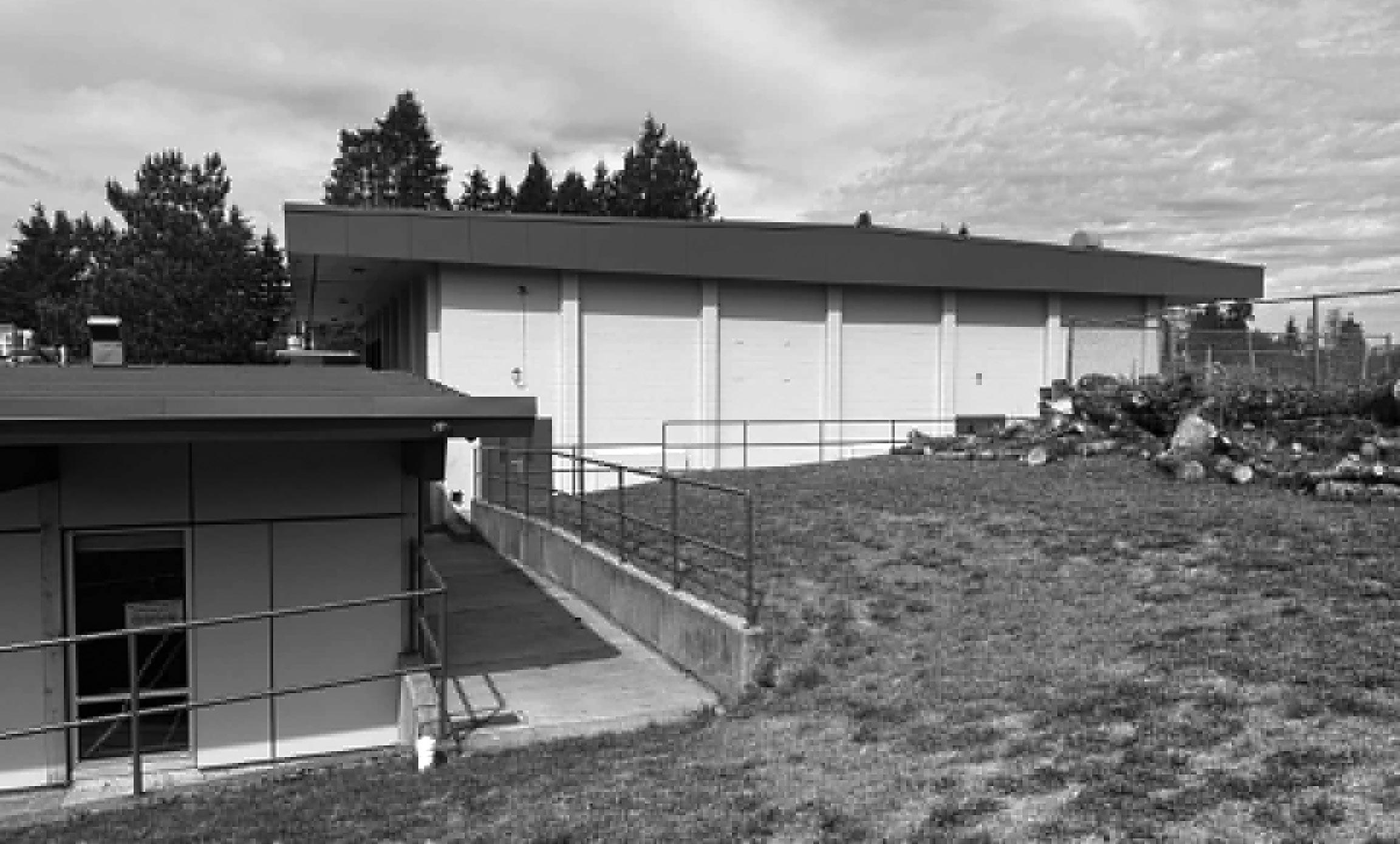
Nucii gym to become emergency space
Converted space will prioritize elders and unhoused during community crises
By Jessie Levene Ha-Shilth-Sa Contributor
Port Alberni, BC - The Uchucklesaht Tribe Government (UTG) will receive provincial funding towards retrofitting the Nucii Gymnasium in Port Alberni into a community cooling centre and emergency support space.
Through the province’s Disaster Resilience and Innovation Funding (DRIF) program, UTG will receive up to $665,502 in phased reimbursements tied to project completion milestones, with any remaining costs to be paid for by the First Nation.
The funding from the province’s Ministry of Emergency Management and Climate Readiness aims to help First Nations and local governments reduce risks from natural and climate-driven hazards, and help communities strengthen their emergency preparedness.
The Nucii Gymnasium project is currently in its final design phase, and is due to be completed by the end of 2026.
Located at 4841 Redford Street in Port Alberni, the upgraded facility will serve
as UTG’s Emergency Support Services Centre.
The coming upgrades include backup power and infrastructure improvements to ensure the centre can operate during emergencies such as extreme heat events, wildfire smoke, and power outages. The space will be activated during emergency events and supported by trained staff and community volunteers.
The cooling centre is designed to prioritize elders, unhoused community members, and families and will provide access to a temperature-controlled space, drinking water, washroom facilities, and a safe place to rest.
As well as supporting Uchucklesaht members, the project will help strengthen regional emergency response capacity and will reduce pressure on similar services offered by the City of Port Alberni and the Alberni-Clayoquot Regional District.
“This project ensures our community has a safe, reliable place to go during extreme heat events, wildfire smoke, and power outages,” said Ryan Anaka, deputy chief administrative officer for Uchuckle-

Ha-Shilth-Sa belongs to every Nuu-chah-nulth person including those who have passed on, and those who are not yet born. A community newspaper cannot exist without community involvement. If you have any great pictures you’ve taken, stories or poems you’ve written, or artwork you have done, please let us know so we can include it in your newspaper. E-mail holly.stocking@nuuchahnulth.org. This year is Ha-Shilth-Sa’s 52nd year of serving the Nuu-chah-nulth First Nations. We look forward to your continued input and support. Kleco! Kleco!
saht Tribe Government.
“We are prioritizing elders and unhoused members who are most at risk during these events, and creating a space that is welcoming, culturally safe, and grounded in care and respect,” said Anaka.
The province is investing more than $18 million through the DRIF program for 10 projects throughout B.C.
“People and communities in British Columbia are facing increasing risks from climate-driven hazards, making it critical to invest in preparedness and mitigation,” said Kelly Greene, minister of Emergency Management and Climate Readiness. “Through this funding, we are working with First Nations and local governments to strengthen infrastructure and reduce disaster risks, helping build safer, more resilient communities.”
The Nucii building was once part of the Redford Elementary School, a sprawling, multiple-structure property that Uchucklesaht purchased in 2018. After the school closed it was used by the Salvation Army before the Uchucklesaht purchase.
Legal Information
The advertiser agrees that the publisher shall not be liable for damages arising out of errors in advertisements beyond the amount paid for space actually occupied by the portion of the advertisement in which the error is due to the negligence of the servants or otherwise, and there shall be no liability for non-insertion of any advertisement beyond the amount paid for such advertisements
Chloe Wangler photo
Located at 4841 Redford Street in Port Alberni, the upgraded facility will serve as Uchucklesaht’s Emergency Support Services Centre.
Ucluelet hires new wildlife safety response officer
Wildlife activity in Ucluelet is high with a dog killed by wolves and black bears killed by conservation officers
By Nora O’Malley Local Journalism Initiative Reporter
Ucluelet, BC – As Vancouver Island black bears emerge from hibernation, Ucluelet residents and businesses are also waking up to the reality that fines are coming for not being bear aware when it comes to garbage disposal.
Violation of a Wildlife Attractant Bylaw - which was adopted on March 17, 2026is punishable by a fine of up to $50,000.
Violations include putting cooking fat/grease directly in refuse containers instead of a “metal grease collection bin with a secured metal lid”, leaving bins outside overnight and using damaged bins.
“Our Wildlife Safety Response Officer has started, which is great news. We will be issuing a joint press release shortly,” said Ucluelet’s director of community services Abby Fortune.
Wildlife activity in the tourist town of roughly 2,000 residents is high. An offleash dog was lured and killed by wolves at a popular walking spot in early April. Last year, BCCOS killed 13 habituated black bears for public safety.
But the community appears to be making a collective effort to turn things around to co-exist peacefully with wildlife.
Inspector Drew Milne, Officer in Charge of the West Coast Region BCCOS, said since the tragic killing of a dog, there has been there no new reports of wolves in or around local communities that have warranted a response from conservation officers.
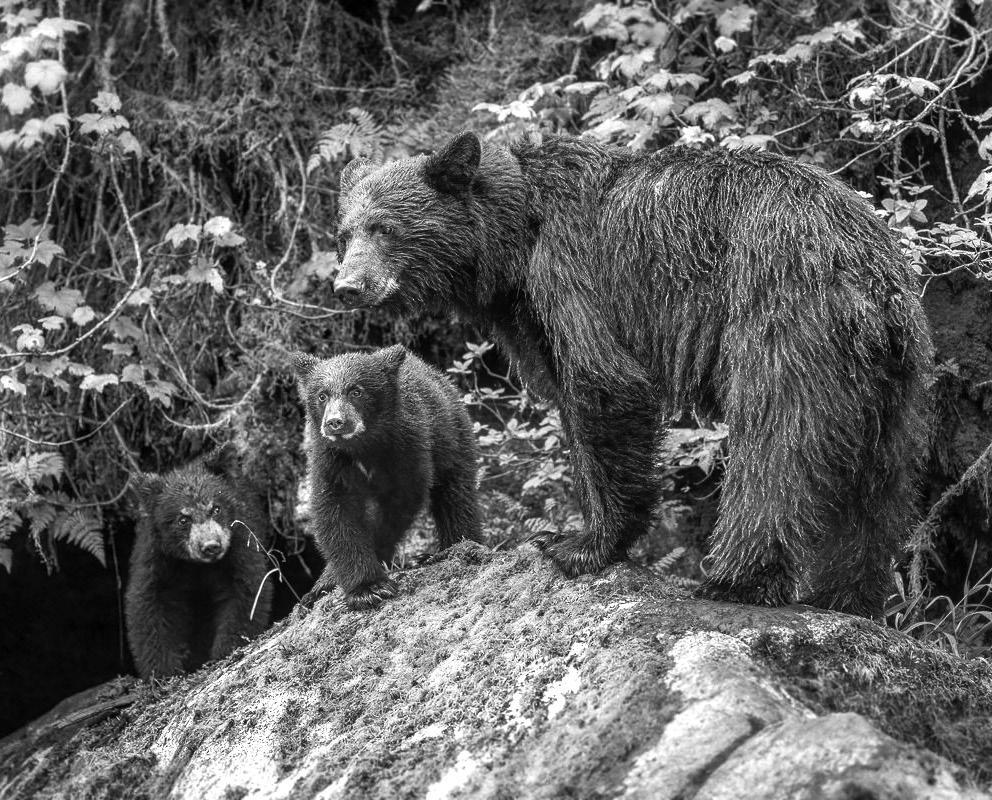
A black bear sow and her cubs wander the shores of Clayoquot Sound.
“This is largely due to the prompt education and outreach efforts by organizations - such as the District of Ucluelet, Tourism Ucluelet, WildSafeBC, Parks Canada, the RCMP, and the BCCOS - as well as strong compliance and accountability from local residents and visitors,” said Milne.
The District of Ucluelet is contributing roughly $50,000 a year for five years to the salary of the Wildlife Safety Response Officer. The position is contracted under BCCOS.
Lesley Fox, executive director of the
Association for the Protection of FurBearing Animals, praised the district for investing in enforcement and “trying to do the right thing” at a time when the Government of B.C. has seemingly bailed on wildlife education and prevention programs like Bear Smart.
There are 12 communities in B.C. that are certified Bear Smart under the province, including Port Alberni and Tofino within Nuu-chah-nulth traditional territory. In 2025, Tofino had two bears dispatched. Port Alberni was zero.
To be certified, a community needed to
meet six established criteria including a bear hazard assessment, prepare a bearhuman conflict management plan, implement an education program and develop and implement bear-safe bylaws.
The government’s Bear Smart Community Program says it’s currently “not processing any Bear Smart Community Program applications at this time.”
“Bear Smart was a well-established and well-known program that focused on preventing. Not investing in these programs leaves those communities in limbo,” said Fox.
Regardless of whether a Bear Smart program is in place, Milne says BCCOS assesses and responds to all reported wildlife conflicts in accordance with a provincial response matrix.
“Public safety is the priority. Conservation officers will also continue to liaise with and provide guidance to communities to address wildlife conflicts and welcome opportunities for further discussion. Communities are encouraged to continue managing attractants wherever possible, as this is a key factor in reducing bear conflicts,” said Milne.
Fox says this hiatus from the usual ministries to support the Bear Smart program could be an opportunity for the Ministry of Tourism to take a more active approach.
“We live in the most biodiverse province in Canada. We have a really unique geography and landscape, ocean and rainforest, we have a desert with Osoyoos, mountains. Wildlife requires an investment and we’re just not seeing that with this government unfortunately,” said Fox.
Shipwreck and rescue in Broken Group Islands
By Eric Plummer Ha-Shilth-Sa Editor
Barkley Sound, BC - A shipwreck occurred in the Broken Group Islands on the weekend, prompting the Coast Guard to rescue the two who were aboard and an assessment of how much of the trawler’s 530 litres of diesel leaked in the ocean.
According to initial reports from the Canadian Coast Guard, the Northern Challenge, a 40-foot commercial fishing trawler, hit a rock in the Broken Group at about 7 p.m. on Saturday, May 2. The vessel soon took on water and began to sink.
“Tseshaht got emails from the Coast Guard and Parks Canada that it happened near Dodd Island at a place called Galley Rock,” said Hank Gus of the Tseshaht First Nation, who leads a team of beach keepers who monitor the Broken Group Islands. “We’re working together with [Western Canadian Marine Response Corporation], Parks Canada and the Coast Guard to resolve the situation. We’re assessing everything and seeing where we can go.”
Two Coast Guard boats were dispatched, the CCG Cape Sutil and Bamfield 1, who took two people from the sinking fishing boat to Port Alberni, including the vessel’s owner.
The owner informed rescuers that the ship had about 530 litres of diesel in it, leading the Coast Guard to alert the Western Canada Marine Response Corporation, an industry funded organization that specializes in dealing with marine spills. Saturday evening a crew and vessel from WCMRC’s Port Alberni’s base was
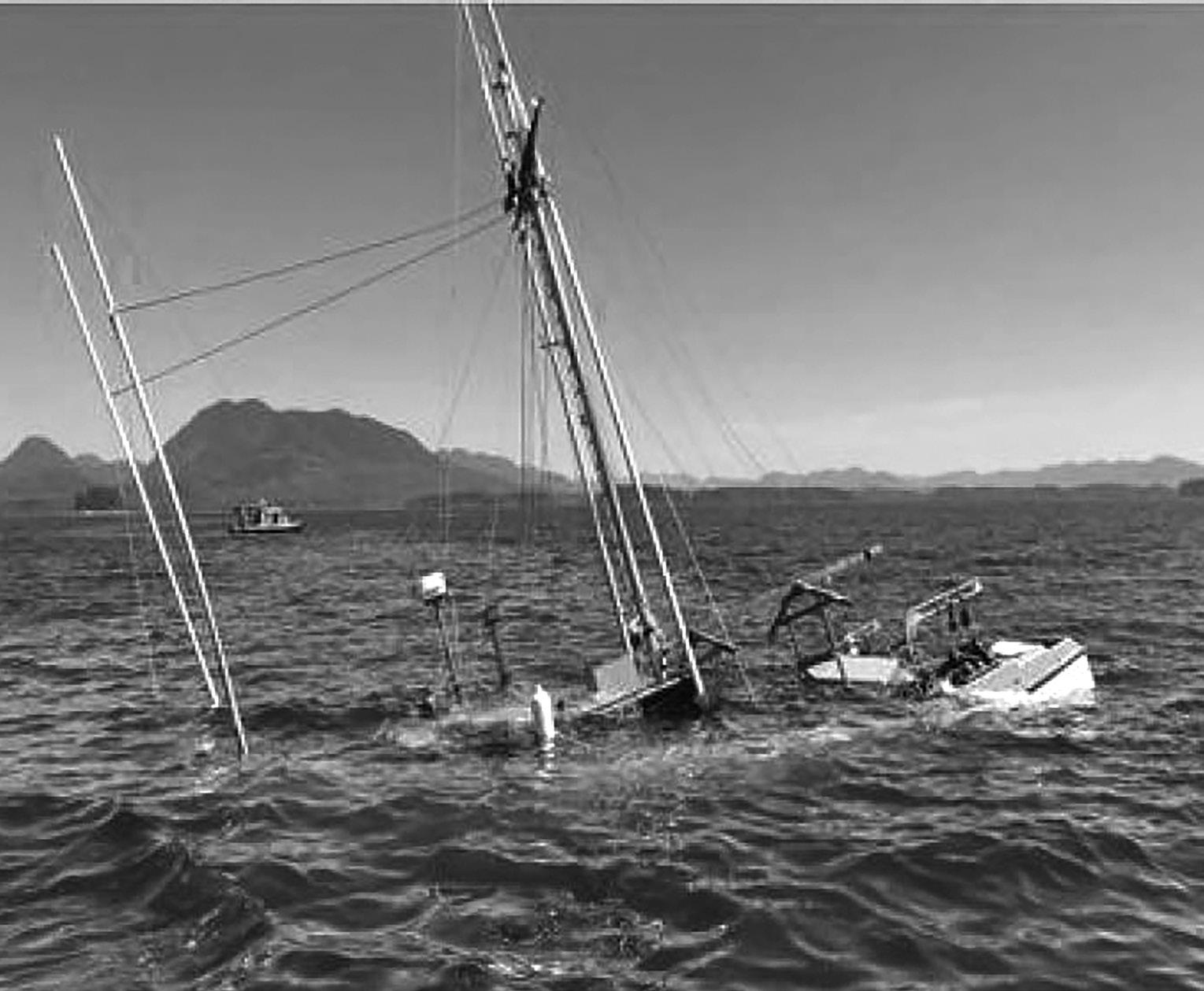
On May 2 a 40-foot fishing trawler took on water after hitting a rock near Mence Island in Barkley Sound.
dispatched to assess the damage, arriving just before midnight.
“They didn’t see any upwelling of diesel, we stood down that night,” said Michael Lowry of WCMRC communications. “Yesterday, Sunday, we went out again and did some drone overflights, but did not see any upwelling.”
A sheen was observed on the water, but this isn’t something that a response team can normally remove after a spill, noted Lowry
“Nothing we call ‘recoverable’,” he said. “If it’s that rainbow-coloured
sheen, that usually means it’s going to evaporate. It’s not something you really recover. We didn’t see any recoverable product, we didn’t require any boom or recovery from our side.”
On Sunday morning a Coast Guard team were back to assess shorelines in the area, including the Brabant, Hands, Capstan, Prideaux and Treble Islands. The shipwreck was nowhere to be seen, nor were there any signs of pollution or debris from the sinking vessel.
By noon Sunday the partially submerge trawler was seen drifting near Page
Island.
“The vessel is mostly submerged, and no visible sheening or upwelling reported by the crews in the immediate vicinity,” reported the Coast Guard. “WCMRC conducted drone overflights and identified a faint sheen approximately 14 feet wide extending from the vessel toward Bryant Islands.”
By 4:15 p.m. on Sunday, May 3 the drifting Northern Challenge was secured just north of Bryant Islands.
“Response activities remain ongoing, with Canadian Coast Guard Marine Environmental and Hazard Response specialists working alongside federal and response partners to assess conditions, conduct aerial surveillance, and plan next steps to further stabilize the vessel and remove it from the marine environment,” stated the Coast Guard in an email to HaShilth-Sa Wednesday morning, May 6. Under Canadian law, a ship’s owner is responsible to pay for the clean up of pollution from their vessel into the marine environment. But the owner in this case is unable to fund any response, according to early reports from the Coast Guard.
“The Canadian Coast Guard will ensure an appropriate response is carried out and will pursue cost recovery as required under federal legislation,” stated the Coast Guard.
Records from the federal agency also indicate that the vessel needed help just days before it crashed into Galley Rock. On April 29 the Northern Challenge broke down, and was towed after requesting assistance from the Coast Guard, according to records obtained by HaShilth-Sa.
Jeremy Mathieu photo
Canadian Coast Guard photos
Wildfire damage clouds future of Alberni Valley rail
The 2025 Wesley Ridge wildfire destroyed two historic trestle bridges and damaged a third near Cameron Lake
By Olivia Thomas Ha-Shilth-Sa Contributor
Port Alberni, BC – A long-discussed vision to restore rail service between Port Alberni and Parksville has been complicated by wildfire damage, raising new questions about whether the corridor can return to its historic role as a vital transportation link or shift toward tourismfocused use.
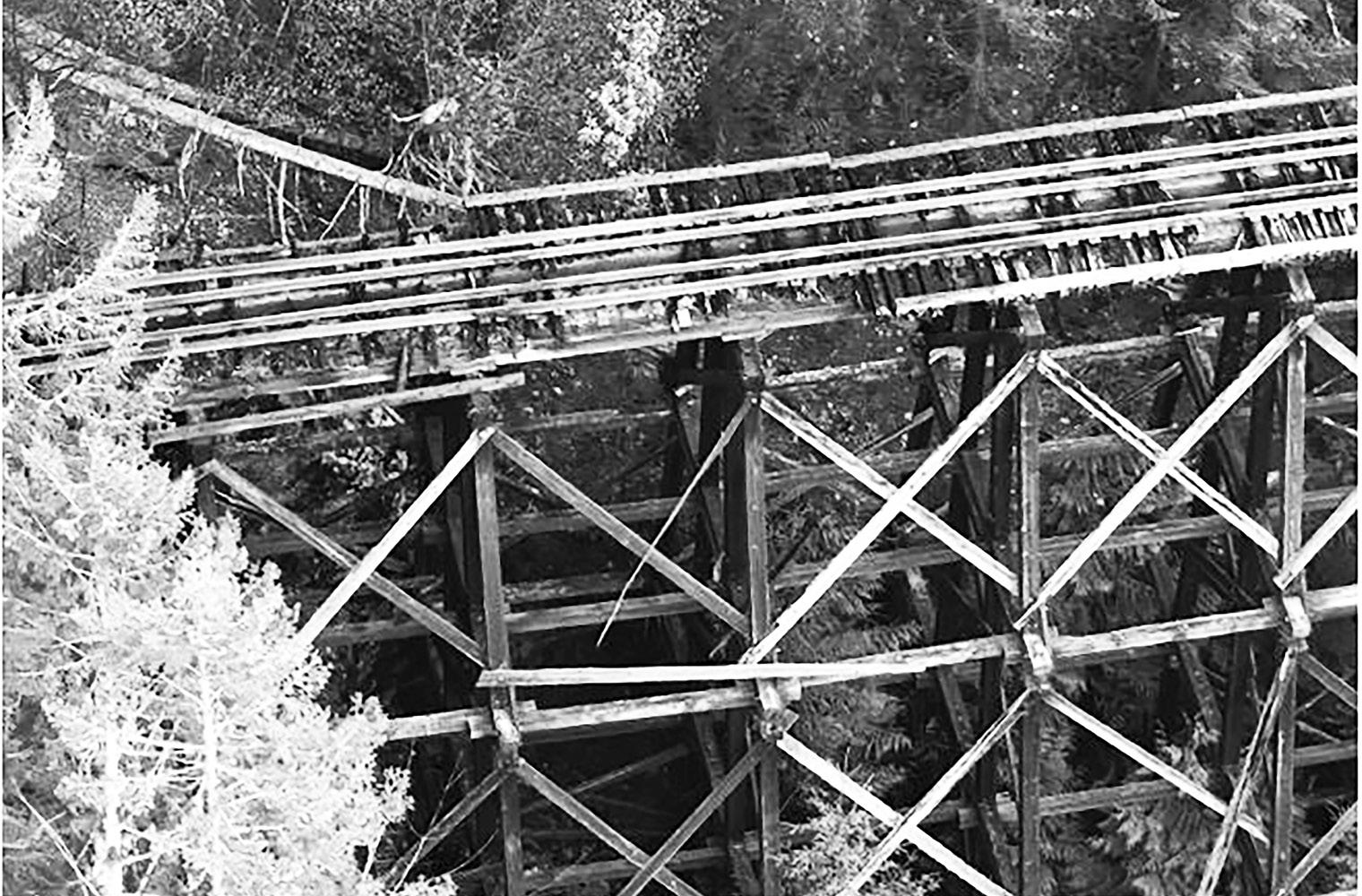
A final report on the vision for the Alberni Valley rail corridor, released in March, outlines both the promise and the limitations facing the line after the 2025 Wesley Ridge wildfire destroyed two historic trestle bridges and damaged a third near Cameron Lake.
The study, led by a working group that includes the Alberni-Clayoquot Regional District (ACRD), Tseshaht First Nation, Hupačasath First Nation, and the City of Port Alberni, identified low-speed freight rail as a top long-term priority. However, the extent of wildfire damage has made restoring service beyond Cameron Lake “challenging in the near term.” The damage to the trestles are estimated to be in the tens of millions, according to a video by the Working Group and ACRD.
“While the wildfire changed the opportunities available in the short-term, the group remains in agreement that opportunities for the rail line should be pursued,” said Daniel Sailland, chief administrative officer for the ACRD.
The rail corridor has deep historical roots in the region. Originally completed to Port Alberni in 1911 as part of the Esquimalt and Nanaimo Railway expansion, the line was built to support forestry and resource industries, transporting logs, lumber, and industrial goods across Vancouver Island.
For decades, the railway served as a critical economic route. At its peak, thousands of carloads of forest products and industrial materials moved annually along the corridor. However, declining freight volumes, deferred maintenance, and competition from improved highway infrastructure led to a gradual decline.
The Port Alberni branch has been out of service since the early 2000s, while Vancouver Island passenger service on from Victoria to Courtenay was stopped in 2011 due to safety concerns and deteriorating track conditions.
Despite the long-term ambitions released in the March 2026 report, the wildfire has forced a shift in focus. In the short term, the working group is exploring expanded tourism uses for the rail corridor, building on existing operations that offer limited rides around Port Alberni’s Harbour Quay.
Representatives from both Tseshaht and Hupačasath First Nations have highlighted the importance of ensuring the rail corridor serves local communities and aligns with Indigenous priorities.
“Freight would be challenging given the damage to the trestles and the huge costs to reconstruct,” said Tseshaht Chief
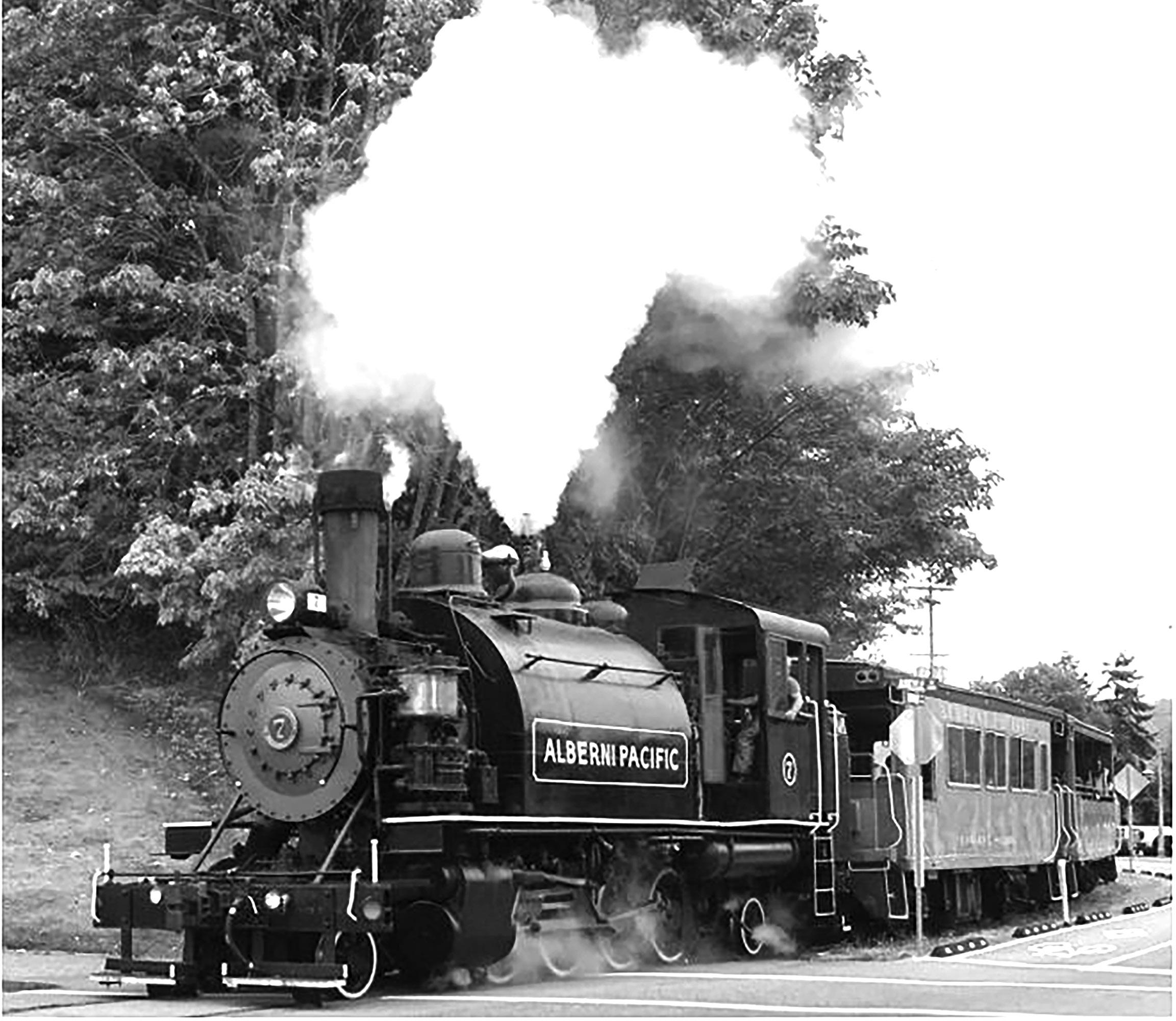
In recent years a stretch
the historic No. 7 steam locomotive
Councillor Ken Watts. “We have considered all options including pedal cart and passenger train.”
However, Watts noted that the study released this March was undertaken before the damage from the 2025 wildfire.
“We have partnerships between us at Tseshaht and Hupačasath First Nation, but we won’t know the final answer for what’s possible until we do another study that includes considering the damage and the cost to repair,” he said.
Watts noted that a business case will be needed to determine how much more of the railway can be used. Since 2018 the train has ceased to run from the Harbour Quay to the historic McLean Mill, instead just doing short trips along Port Alberni’s waterfront.
“We will work with ACRD and the city to come to a solution, but we have homework to do before we can decide since the fire happened,” he said. “We know restoring rail to McLean Mill is important but recognize the need to plan for Harbour Quay to Cameron Lake.”
The Island Corridor Foundation, which has been involved in discussions around rail use across Vancouver Island, also contributed to the study.
Looking ahead, the report highlights the needs for continued collaboration among local governments, First Nations, and
Les Sam Construction
provincial partners to determine what’s feasible, both financially and logistically, for restoring the corridor.
Key questions remain about the cost of repairing damaged infrastructure and whether investment in the line can be justified given competing transportation priorities.
For now, the future of the Alberni Valley
rail corridor is at a crossroads between its past as a working railway and an uncertain path forward shaped by climate impacts, economic considerations, and community priorities. Whether it will once again carry freight through the valley or remain a limited tourist attraction is a question that may take years, and significant investment, to answer.
Notice to Remove Schedule A Land from Woodlot Licence W1877
Please be advised that KA:’YU:’K’T’H’/CHE:K:TLES7ET’H’ First Nations is proposing to remove 92.3 ha of Schedule A land (Treaty Settlement Land) from Woodlot Licence W1877 located in the vicinity of the community of Kyuquot.
Information about this proposal can be obtained by contacting Tom Younger RPF at 250-830-84784 or Len Apedaile RPF at 250-2030225. Any comments or questions regarding this proposal must be submitted to forestry@tiicma.com by May 30, 2026 to be considered in the decision.
Mike Bonkowski photo
of railway along Port Alberni’s waterfront has been used as an attraction, including some runs by
Benjamin Hazel photo
Three trestles were damaged during a forest fire by Cameron Lake in 2025, bringing an estimated repair cost in the tens of millions.
Port Alberni’s railway expands to Barclay hotel
The historic train now runs to the Barclay hotel, but many hope it will one day venture as far as Cameron Lake
By Eric Plummer Ha-Shilth-Sa Editor
Port Alberni, BC - After two years of running a short stint along Port Alberni’s waterfront, the historic train extended its route today to the Barclay hotel - with hopes of eventually running the attraction to the eastern extent of Nuu-chah-nulth territory at Cameron Lake.
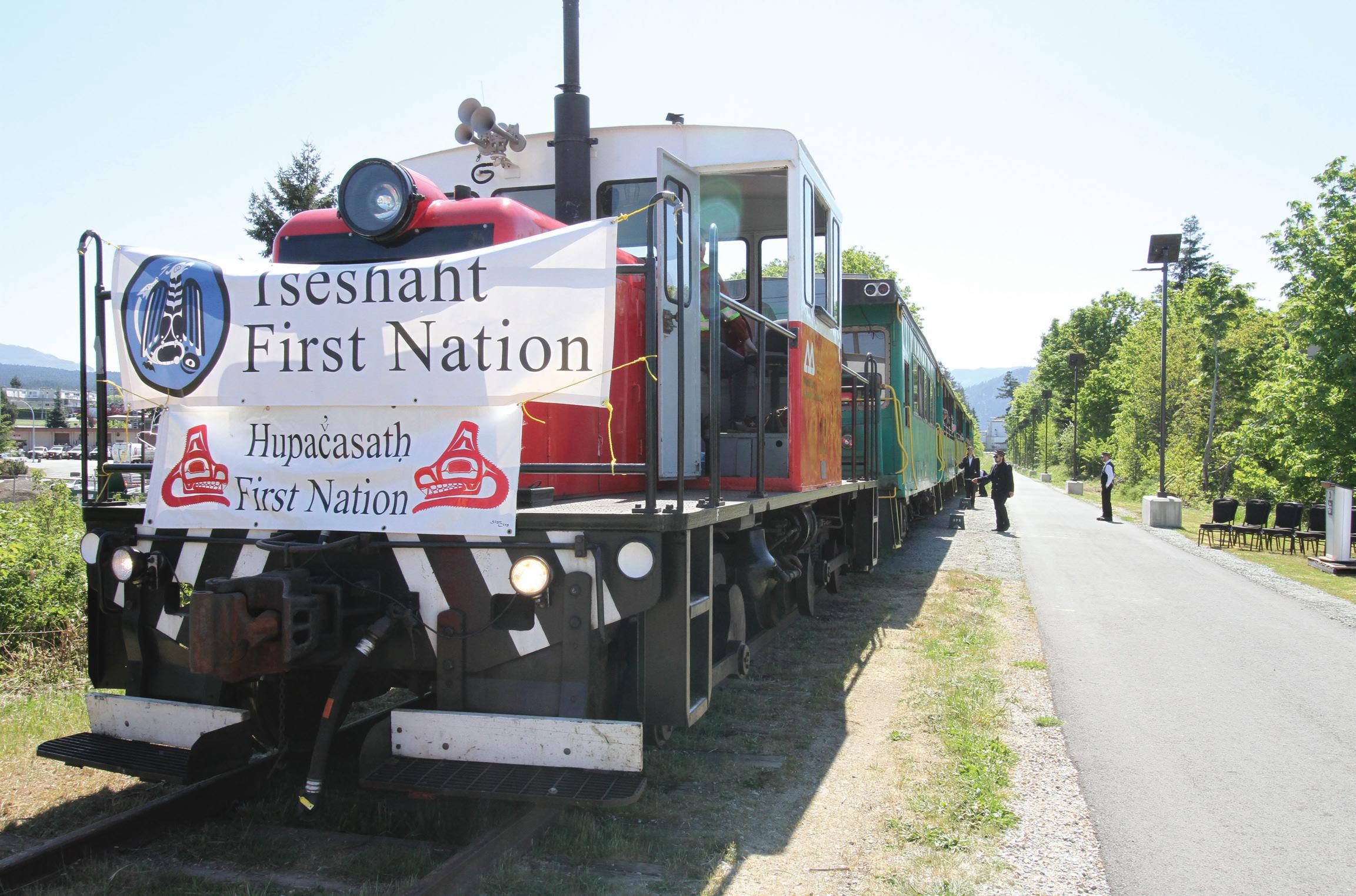
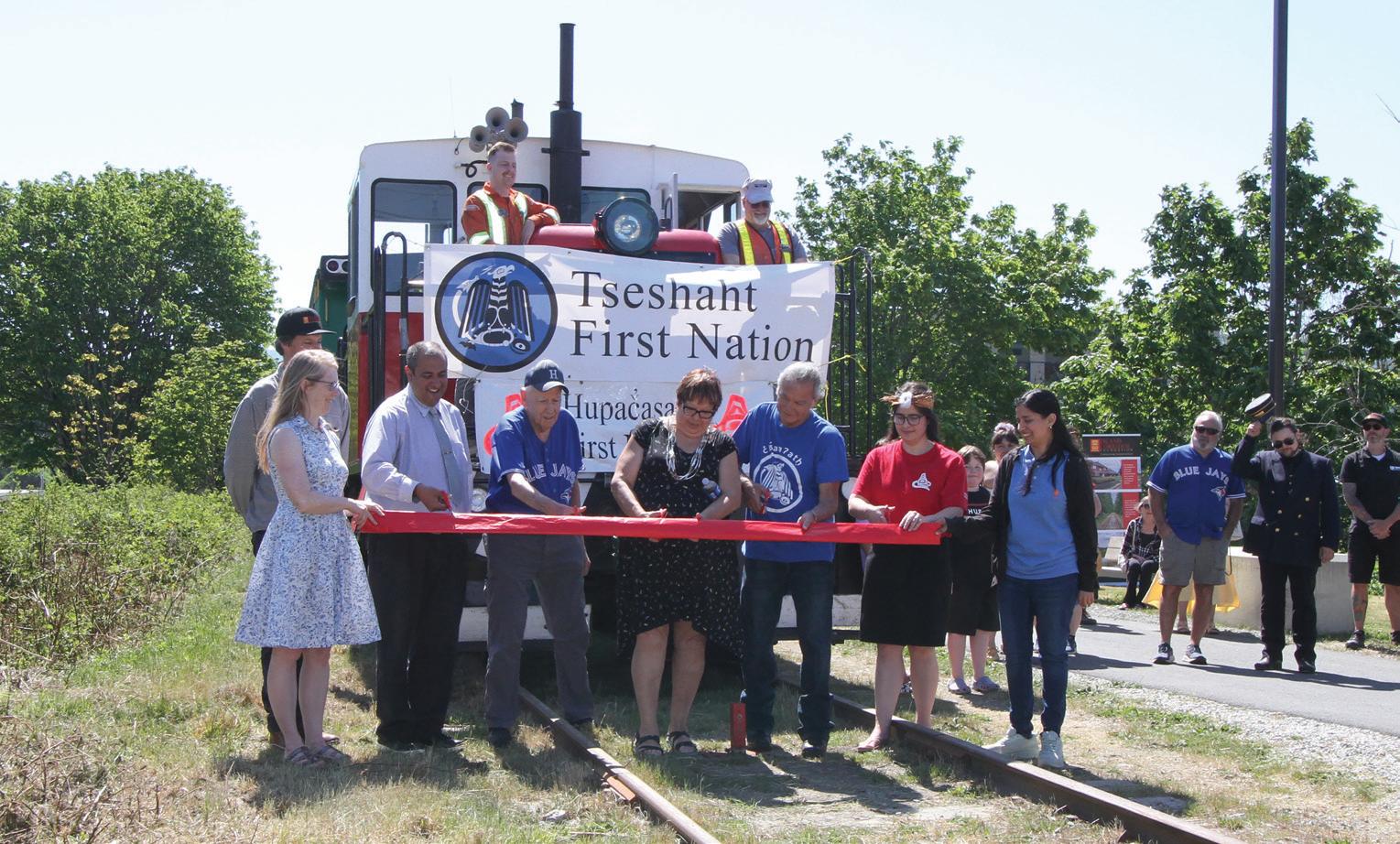
The Alberni Pacific Railway’s No. 11 1954 diesel locomotive pulled up to the tracks by the Best Western Barclay Hotel early in the afternoon on May 2, the furthest that the train has carried passengers since it halted trips to the McLean Mill National Historic Site in 2018. Stretched across the front of the locomotive were banners for the Tseshaht and Hupačasath First Nations, recognition of the local Indigenous communities’ recent involvement in the effort to revive the railway. To restore the route as far as Roger Street Tseshaht members cut hedges to improve sightlines for the train, while the Hupačasath’s contracting company worked to replace railway ties and improve the track area around hotel. Restoring the whole extension to the Barclay cost approximately $20,000, shared equally by the Western Vancouver Island Industrial Heritage Society that operates the railway and the Island Corridor Foundation, a partnership of 14 First Nations and five regional districts.
“Most of the work was done around Stamp Avenue crossing. The signals haven’t been used in about eight years, so they need full inspections,” said Richard Spencer, the Alberni Pacific Railway’s operations manager. “The entire corridor around here was maintained up until 2018, so the track is still in quite good condition.”
In the early 20th century rail was an integral part of establishing industrial forestry in the Alberni Valley. Up until 2001 trains crossed the middle of Vancouver Island to reach the paper mill, after which time a growing reliance on highway transport came to replace industrial use of the railway. But the Industrial Heritage Society kept the railway active as an attraction, using their iconic steam engine as a tourist draw for trips out to the McLean Mill.
In 2018 these trips ceased when three boiler tubes in the No. 7 steam engine ruptured, putting the locomotive out of service for the rest of the summer. Then in early 2019 Port Alberni City Council opted to not fund the operation, facing the prospect of a $192,500 cost and a potential property tax increase to shoulder it.
“The business plan was not evolving at that time, so there needed to be some change,” noted Spencer.
By the summer of 2024 the city was able to find some funds to bring the service back with the diesel engine running a short 1.3 kilometres along the waterfront, and eventually the No. 7 locomotive was also once again whistling steam
through the valley. The Alberni Pacific Railway hopes to have the steam engine running this year by Canada Day and every other weekend through the rest of the summer, said Spencer.
“We’ve had some problems with its boiler, so very minor maintenance issues that are just taking our volunteers a little bit longer than expected to do the repairs to,” he said. “There is always a lot of work involved in anything with old equipment. The steam engine specifically takes very skilled and knowledgeable people which don’t really exist that often in the world anymore.”
To some the appearance of the Tseshaht and Hupačasath banners on the front of the locomotive will bring a hint of irony, as the Vancouver Island railway corridor was cut through First Nation’s territory without their consent - “the product of a 19th century land grant that alienated two million acres of traditional territories,” stated the Island Corridor Foundation.
“The rail does have a history in terms of our territory that was taken from us, but we do see opportunities to work together so that we can all benefit from this,” mentioned Tseshaht Chief Councillor Ken Watts after the train reached the Barclay on May 2. “I was just sitting with our economic development officer, talking about the visitors that can come here and see certain parts of our territory, and the opportunity for our nations to share our history on this rail.”
“Even with a challenging history, I think there’s opportunity to build a new path forward in a strong way,” added Hupačasath Councillor Serena Mayer, whose family has been enjoying the train since it re-opened. “It’s such an incred-

ible way to experience our territory.”
Spencer admits that, until now, the involvement of the local First Nations has been a lacking component of the Alberni Pacific Railway.
“It is a portion of our program that has been missed for many years. It’s better late than never, I guess,” he said, noting that First Nations are a major part of the area’s history. “It’s ideal for tourism, it’s something unique about Port Alberni and the nations have so much to offer in that.”
Although there is considerable work ahead to restore the rest of the route, Spencer is confident that the train will once again run north of the city to McLean Mill. But others foresee the train going further east to Cameron Lake,
reviving tracks that have not carried a locomotive in more than two decades.
“Everybody in the Valley would love to see this train go all the way out to Cameron Lake,” said Watts. “We’re going to do what we can to help support that vision.”
Port Alberni City Councillor Charles Mealey spoke of the tourist potential for such an extension to rail service, tapping into the popular attraction of Cathedral Grove’s old growth trees by Cameron Lake.
“Come to Cathedral Grove, get on a train, come to Port Alberni, stay here, spend some money and get back out on a train,” he said.

Eric Plumer photos
Bearing the banners of the Tseshaht and Hupačasath First Nations, a diesel locomotive on the Alberni Pacific Railway arrives at the Barclay hotel on May 2.
Representatives from the Island Corridor Foundation and the Alberni Pacific Railway cut a ribbon by the Barclay hotel on May 2, celebrating the train’s expanded service to the location.
‘A remarkable herd of cattle’: Opitsaht wild cow study
Tla-o-qui-aht, University of Lethbridge and Tsolum Vet are braiding traditional knowledge and western science to find
By Nora O’Malley Local Journalism Initiative Reporter
Opitsaht, BC – A cow research project is underway in the ancient village of Opitsaht within Tla-o-qui-aht First Nation (TFN) traditional territory on the west coast of Vancouver Island.
The multi-year study looks at why the wild cows, or muus muus as they’re called in TFN language, are so healthy.
Tla-o-qui-aht has partnered with researchers at the University of Lethbridge and Tsolum Mobile Vet for the project.
“There are some really interesting research questions surrounding the muus muus. They are a remarkable herd of cattle and I think they are a unique resource in Canada and around the world,” said Dr. Wade Abbott, a senior research scientist from Agriculture and Agri Food Canada involved with the study.
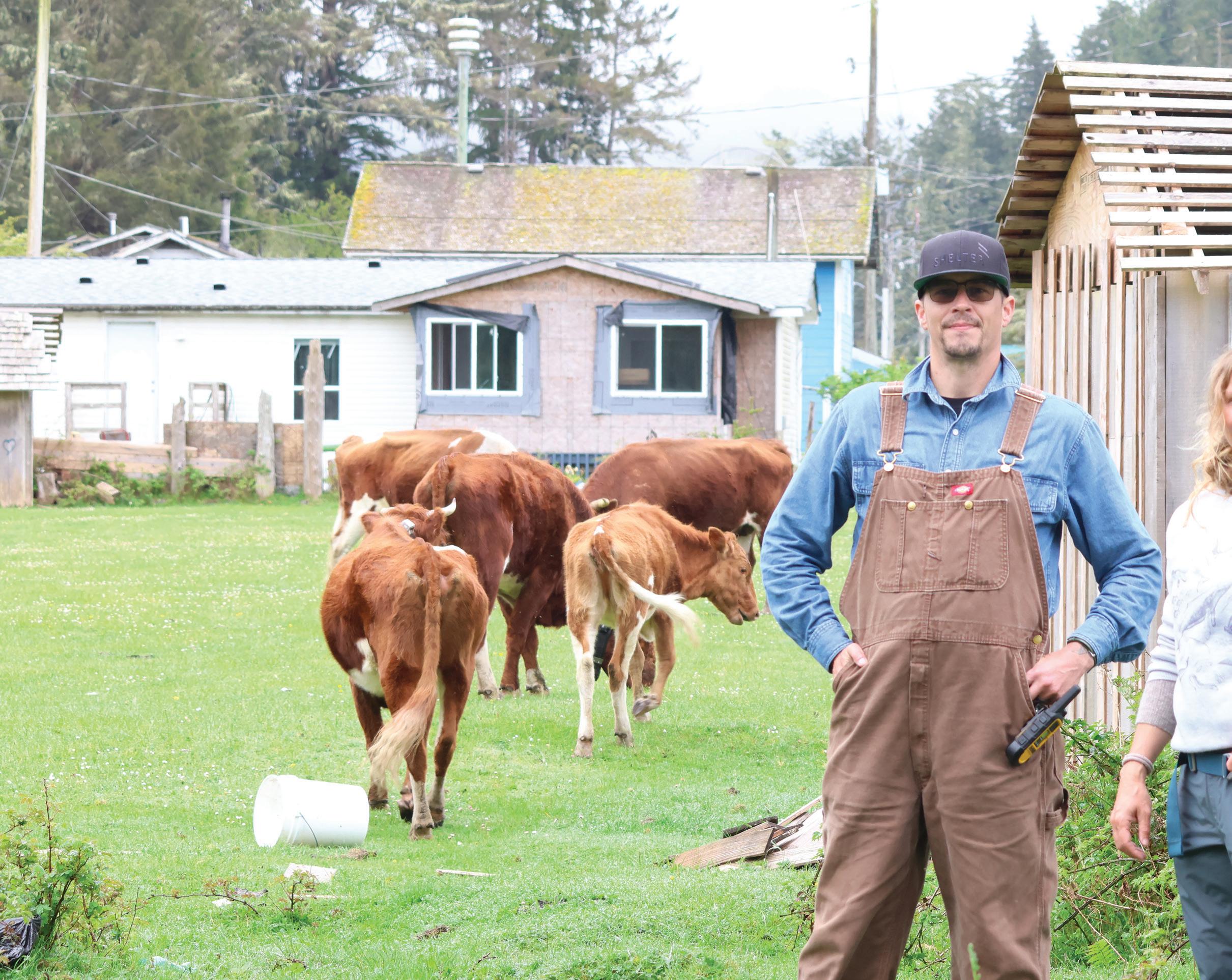
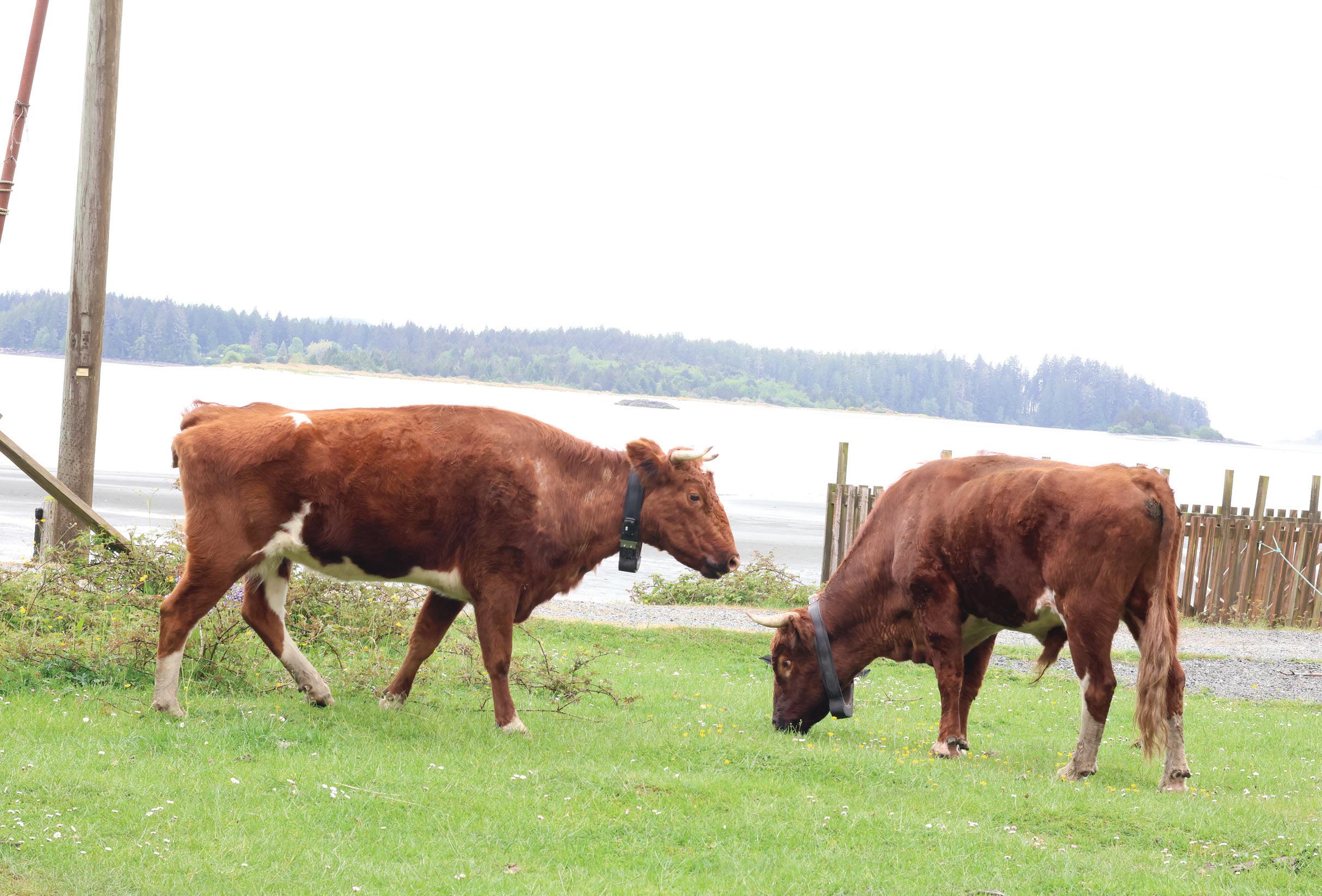
The cows have been roaming free on Meares Island near Tofino, B.C. since the early 1900s. They are a living relic of colonialism, having first set cloven hooves on Tla-o-qui-aht shores “around the same time all the priests came and started building residential schools,” says to Tla-o-qui-aht member and Opitsaht resident Deb Masso.
“There used to be some black ones, the bulls anyways. But now they are all just brown,” said Masso.
She says they are “constantly eating everything” - even trees.
Abbott said the University of Lethbridge is “weaving” Indigenous knowledge and western science to gather “clues” that could benefit cattle health across the country.
“For me, it’s really been a transformational process; having the privilege to work with the Tla-o-qui-aht on this project,” he said.
“Classically trained scientists, they are not trained to think that way. Confronting personal biases and learning to think differently and see things differently has been the focus of my journey and the whole research team,” said Abbott.
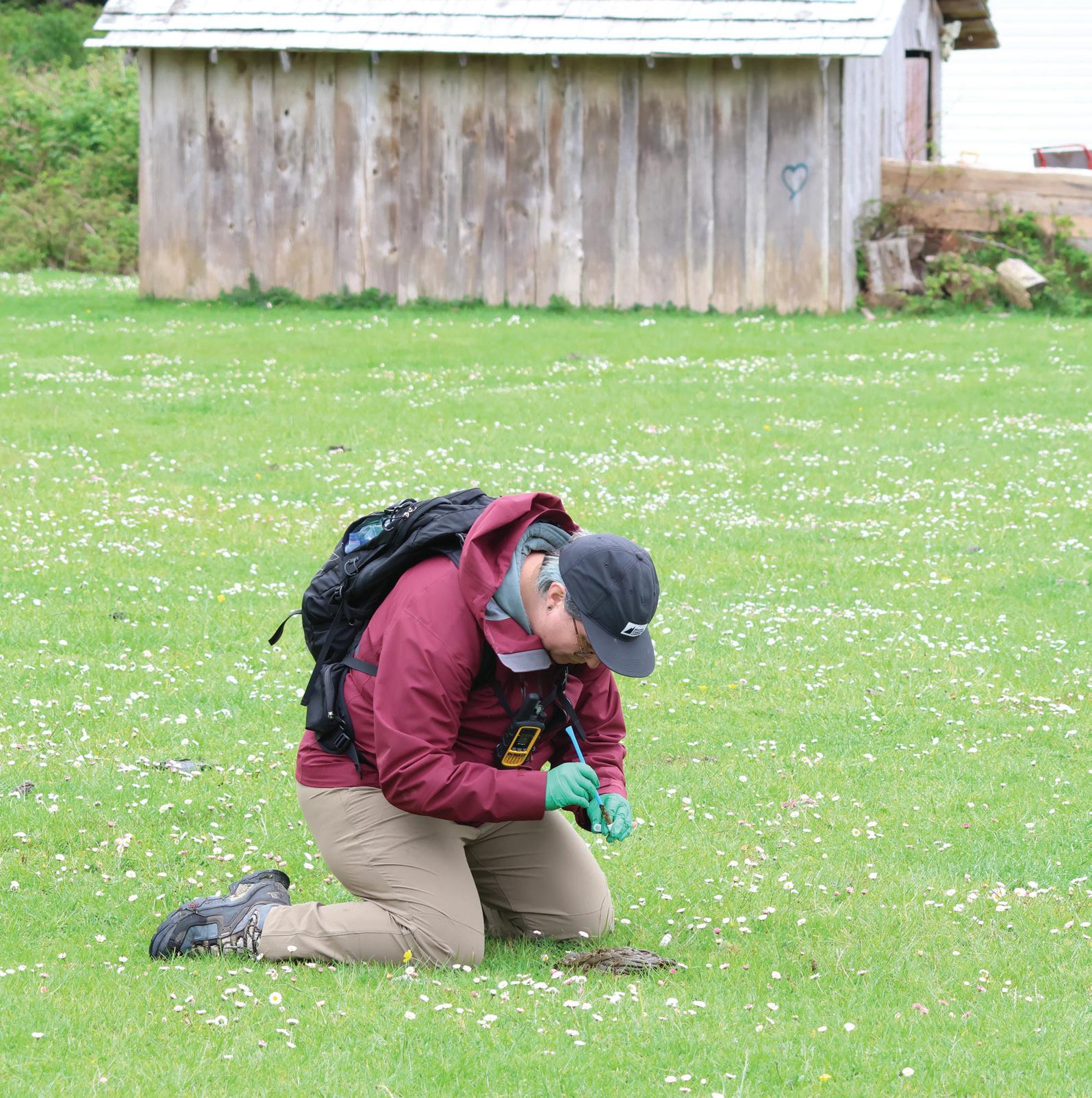
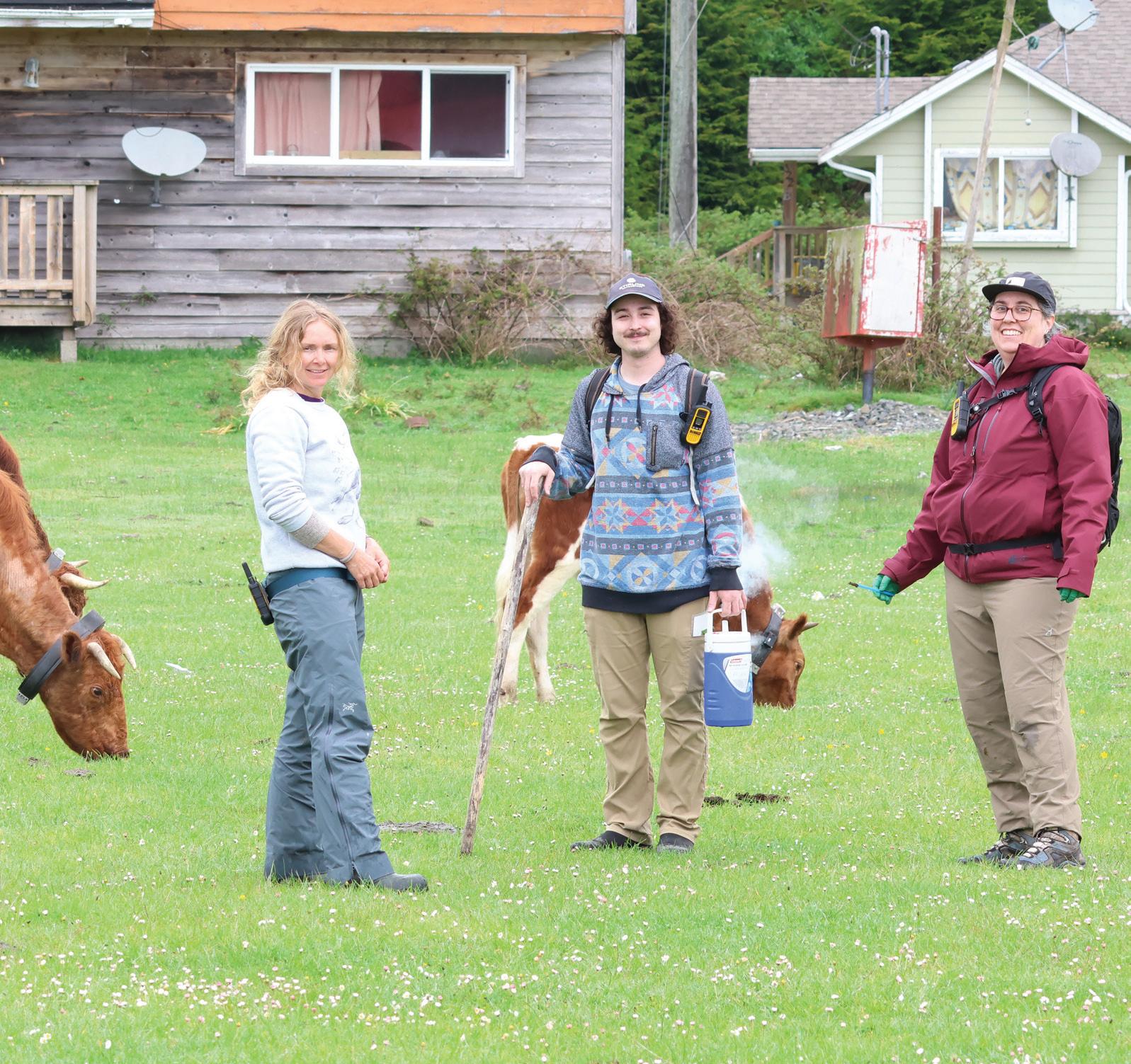
During an early May visit to Opitsaht, Agriculture and Agri Food Canada researcher Kristin Low and University of Lethbridge graduate student Michael Veltri collected plant samples and a total of 120
fecal samples – four poo samples from each of the 10 cows in the herd over three time points.
The fecal samples were frozen in liquid nitrogen immediately after collection and sent to the research lab at the University of Lethbridge.
“We are looking at the feces to track how they digest and what plants they are eating, and then correlating that with observations from the community,” said Low.
“I feel privileged, thankful and super touched to be part of this research,” she said.
The research team took OCAP (owner-
ship, control, access and possession) training, which asserts that First Nations have control over data collection processes, Low said.
“Any sharing of information, we need permission from the nation,” said Low.
With the plant samples, the research team is using an artificial rumen system that mimics the cow gut to measure several things including methane secretion.
“What we saw is that several of these plants did decrease methane,” said Abbott.
“We are still processing, but we’ve seen some very promising, early results. You could imagine if the nation wants to harvest
some of these traditional forest plants it could maybe be a product that could lower methane in feed lots in Alberta. You can ship the plants, but you can’t ship the muus muus,” he said.
The first muus muus research paper is currently under revision, according to Abbott, and should be published in fall 2026.
“One of the biggest questions is, why are the cattle so healthy? Some of the knowledge holders and elders started sharing that the plants that the (wild cows) eat have been used to treat (human) ailments since time immemorial,” said Abbott.
“Are the cattle managing their own
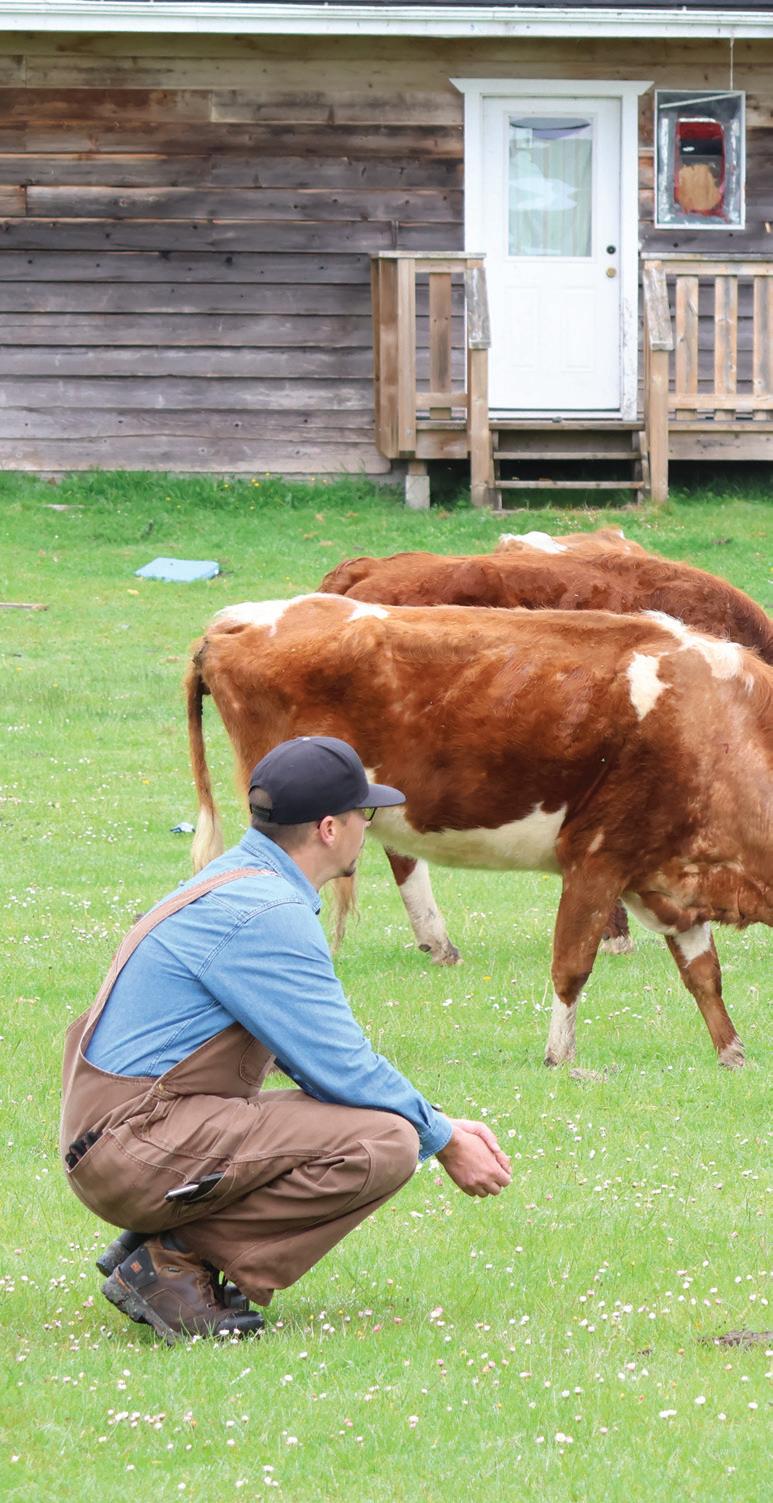
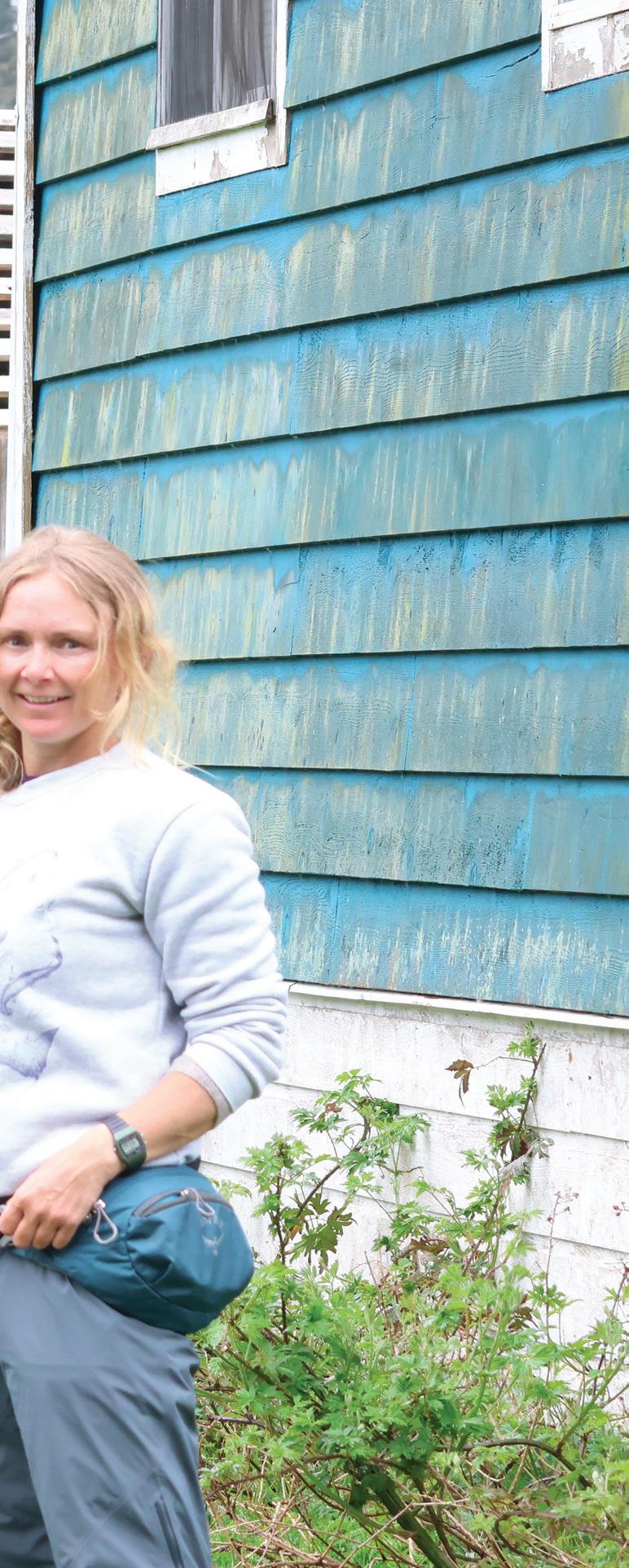
Tla-o-qui-aht wild cow technicians Clay Weisschadel and Robyn Perritt support the study with data collection and daily observations.
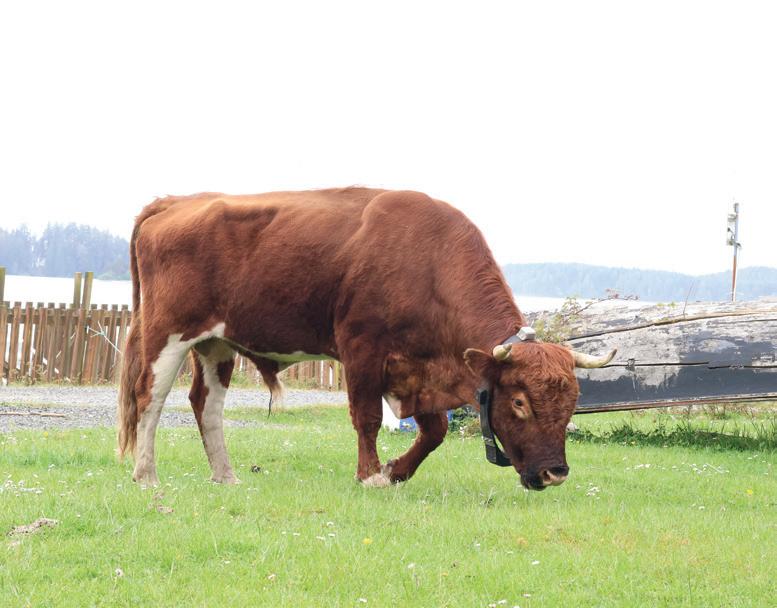
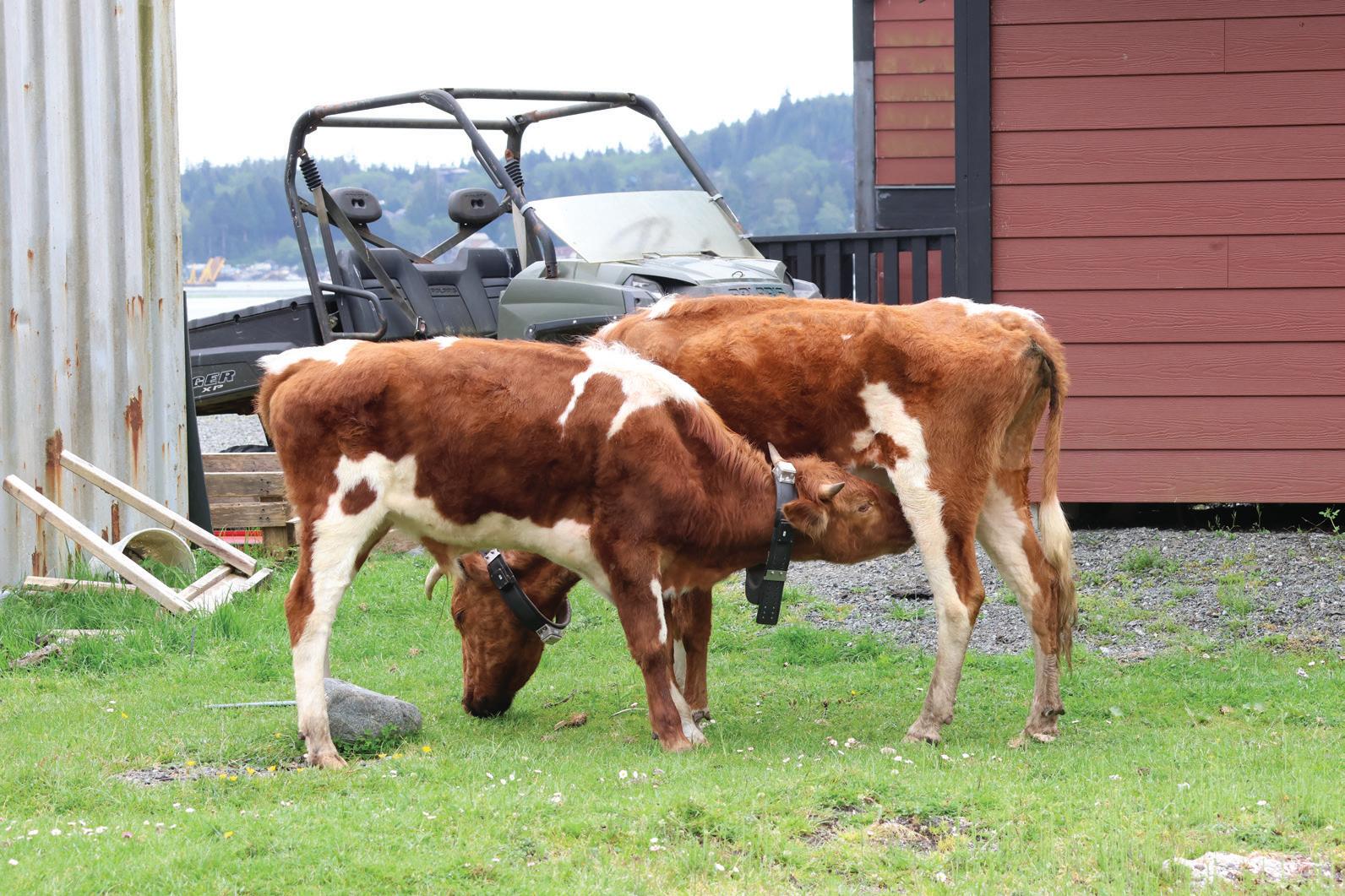
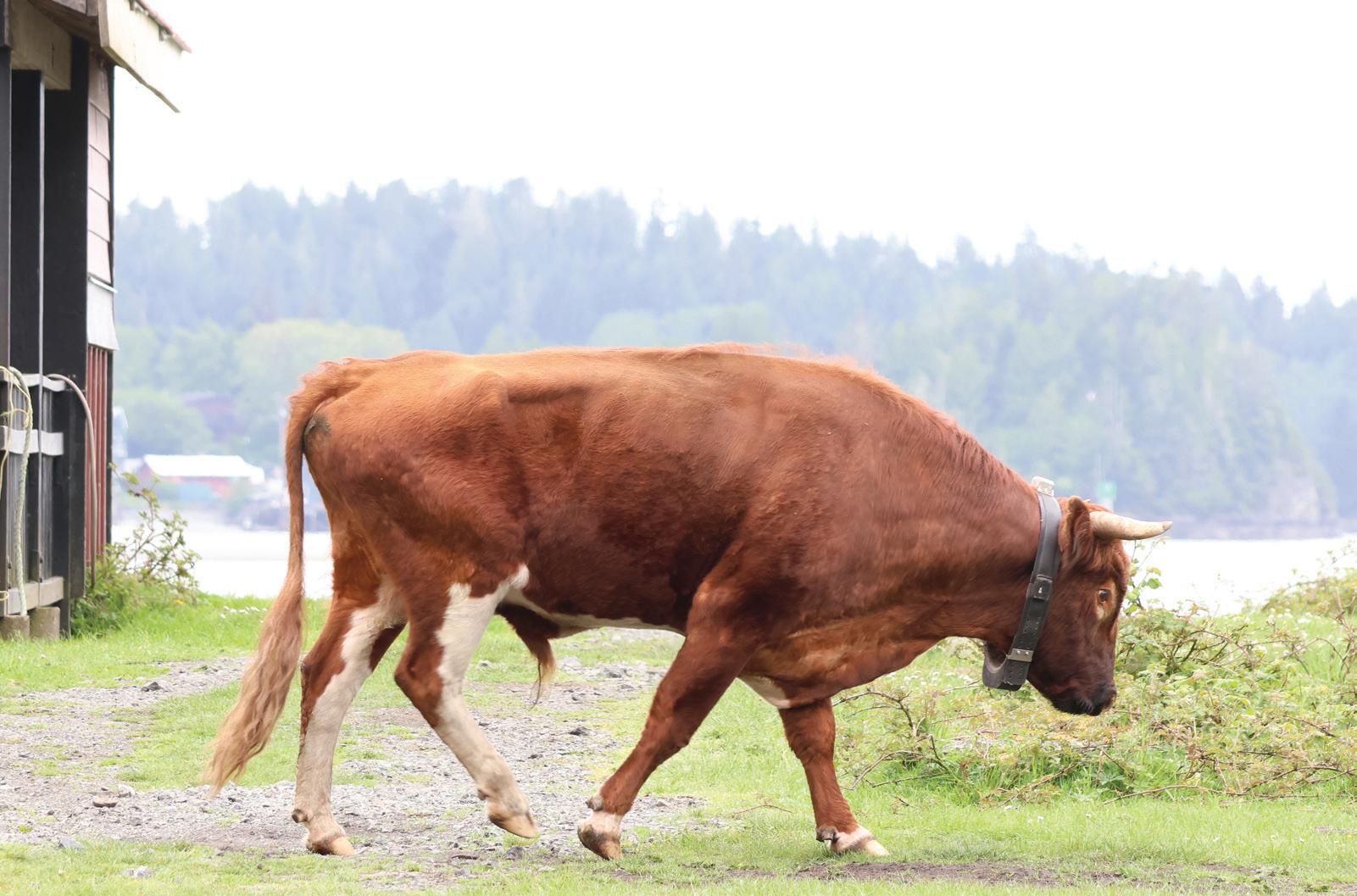
The matriarch of the herd Hip Spot, left, munches on grass with the main bull called Clifford or Big Red.
Cow techs Clay Weisschadel and Robyn Perritt fecal samples from each cow in the herd.
underway
find answers to a colonial relic
O’Malley photos observations.
health with these plants? We will see. We still have lots to do,” he said.
Hip Spot and Big Red
The researchers were guided on Opitsaht by wild cowhand technicians, Clay Weisschadel and Robyn Perritt. The cow techs were hired by the nation in October 2025 to collect data for the research project and to monitor what the cows eat.
The duo had the honour of giving each cow a unique name: Cinnamon, Buck N Lucky, Hip Spot, Italy, Florida, Bishop, Lover Girl, Wrench, Little Red and Clifford.
“Hip Spot is the matriarch,” said Weisschadel, who has called Opitsaht home for
about nine years. “She yells at the other cows on the beach to tell them it’s time to go, go into the bush to eat. They generally stay together.”
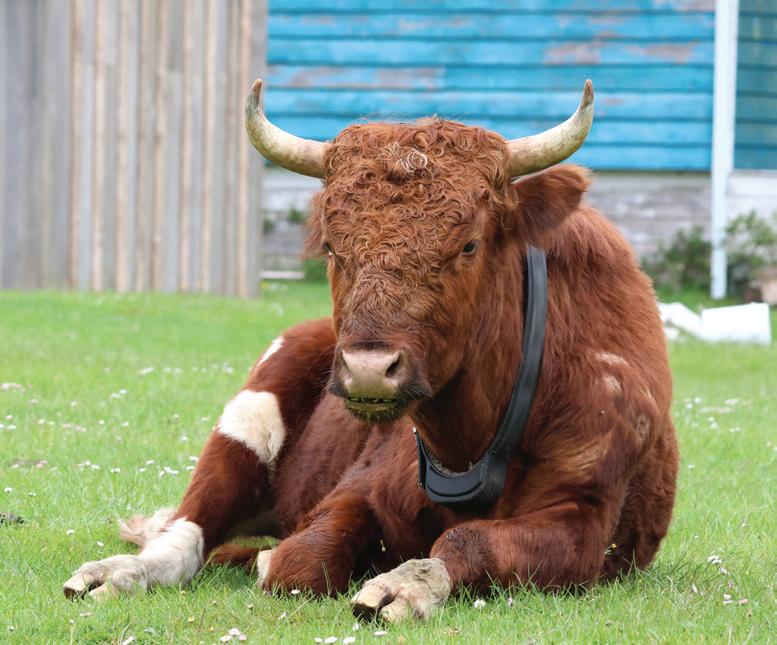
He said while there are six bulls in the herd, three were castrated to prevent fighting. Clifford (a.k.a. Big Red) is the alpha male.
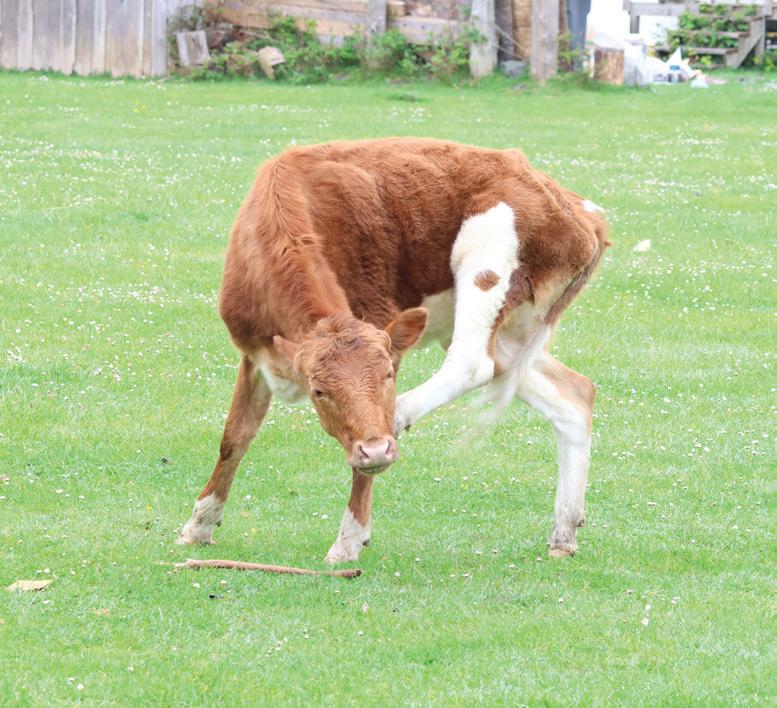
Cinnamon is the youngest in the herd and an orphan.
“She’s my favourite,” said Perritt, who catches the 8:45 a.m. boat from Tofino each day to watch the cows on Opitsaht. She says she treats the cattle a bit like a black bear, if one starts to come towards her, she’ll raise both arms and shout at it.
“For the most part they are docile. Children play around them,” said Perritt.
“(The work) has been a neat glimpse into how life goes on in an isolated community. Even if it’s a short boat ride, it is still a hurdle to travel. You’re separate over there and on a boat schedule, so people talking about going out and going to town, it’s a mission as is carrying your groceries from the dock,” she said.
For Masso, 76, the muus muus have
always been part of the community. She shared that one of the bulls knocked over an elder once, which led to the animal being killed and its meat distributed to the community.
“Some people didn’t want to eat it because we think of them as pets, so the idea of eating them turned a lot of people off. But they are super healthy when you think of all the things they eat around here that is not toxic or sprayed,” she said.
“I hope they stay forever because we need them here. They keep the grass and all the plants healthy. If the cows were never here, Opitsaht would be overgrown. They are
part of the lay of the land,” said Masso. While most of the cows were collared for GPS tracking, the cow techs say they rarely need to look at the app to know where they are. They’ll be eating eelgrass on the beach at low tide, munching on plants in the forest, grazing on the lawn in the middle of the village or sometimes the herd wanders to Kakawis, the former site of the Christie Residential School.
Nora
Perritt and researchers Michael Veltri and Kristin Low spend the morning collecting
Agriculture and Agri Food Canada researcher Kristin Low from the University of Lethbridge collects a fecal sample during a May 6 trip to Opitsaht.
Clifford (aka Big Red)
Buck N Lucky and Italy.
Indigenous art piece unveiled at West Coast General
Art piece and a plaque recognize the Coulson and Campbell families, who each donated $500,000 to the new ER
By Karly Blats
Ha-Shilth-Sa Contributor
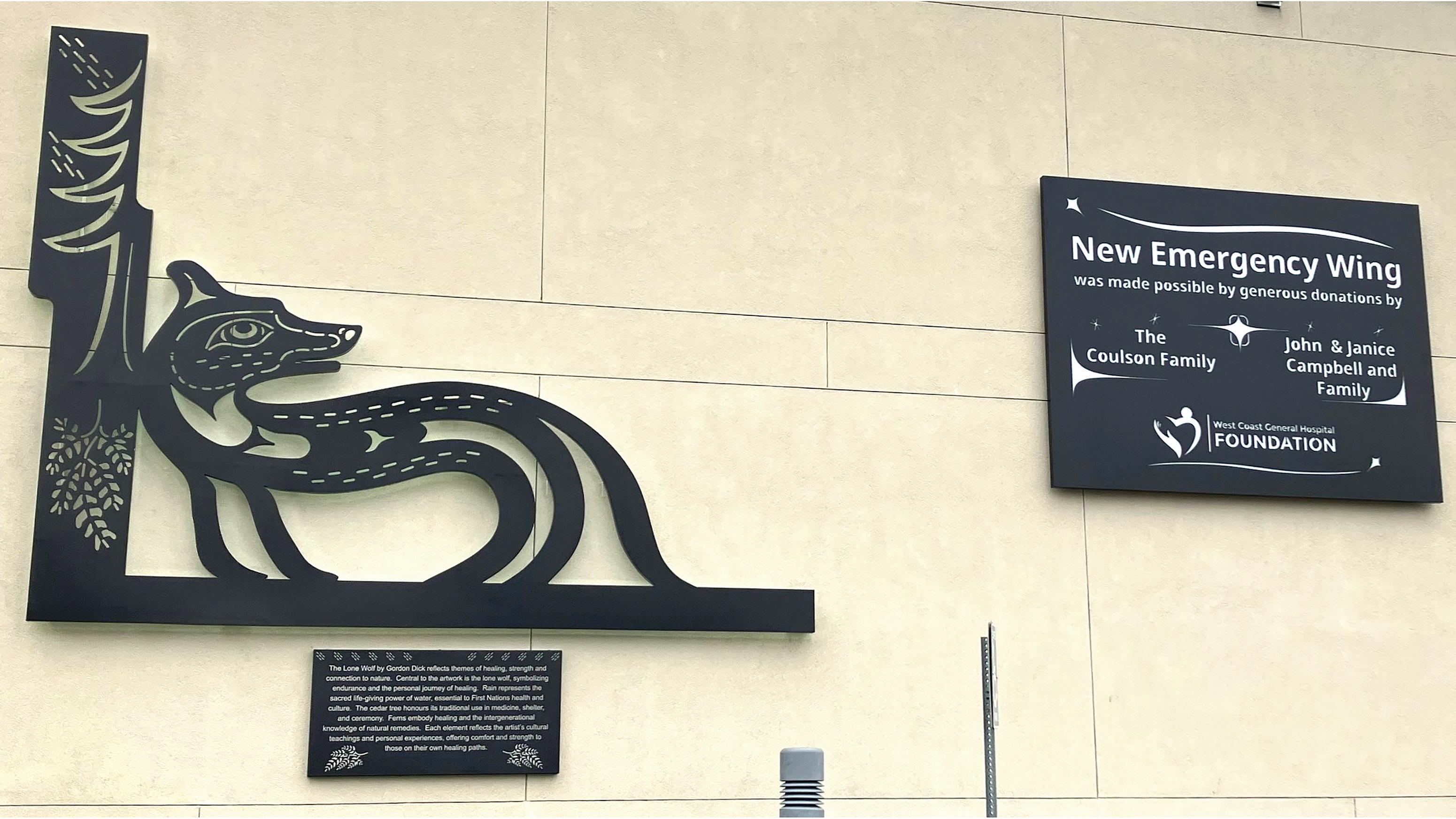
Port Alberni, BC - A new art installation, designed by Tseshaht master carver, Gordon Dick, has been mounted on the exterior wall of West Coast General Hospital (WCGH) to recognize the expansion of the emergency department.
The art piece and a plaque recognize the Coulson and Campbell families, who donated $500,000 respectively to the expanded emergency department project.
Dick said he created the lone wolf design because of the animal’s connection to endurance and the personal journey of healing. The art piece and plaque were installed across from the helicopter pad, in full view for people arriving at the hospital or travelling along the highway.
“I hope that when people see this piece, it will offer them comfort and strength on
Phrase
their healing path,” Dick said.
Dick said in Nuu-chah-nulth culture, the wolf represents family and community.
On the left side of the art piece the design includes rain falling onto a cedar tree. The rain represents the sacred lifegiving power of water, essential to First Nation health and culture. The cedar tree honours its traditional use in medicine, shelter and ceremony. Underneath the cedar tree is a fern, which represents healing and the intergenerational knowledge of natural remedies.
Each element of the art piece reflects Dick’s cultural teaching and personal experiences, offering comfort and strength to those on their healing paths.
The new emergency department, which opened in November 2023, was expanded by 2,626 square feet. Updates include three new patient exam beds, additional space for patients awaiting tests and
results, the addition of a secure seclusion room for patients in need of emergency mental health care, improvements to the triage and admitting area, increased clinical space and a dedicated entrance for ambulances.
In addition, a larger waiting area and treatment rooms that can accommodate larger family groups were designed based on feedback provided by local Indigenous partners.
The expansion cost $6.95 million, which was shared between the provincial government ($2.55 million), WCGH Foundation ($2.40 million), the AlberniClayoquot Regional Hospital District ($1.70 million) and Island Health ($0.30 million).
The artwork was paid for out of the overall emergency department project’s budget, which also included the two $500,000 donations from the Coulson and
Pronounced ‘too/kwuss he/ees/hh tla/ya/uh/sookqs’, it means, ‘I am planting in my garden.’ Supplied by ḥakaƛ.
Campbell families.
“West Coast General Hospital has long been a beacon of care and support for people in the community,” said Wayne Coulson in a press release. “Our family was in the fortunate position to offer some financial assistance to the hospital, and it was our pleasure to do so.”
Josie Osborne, B.C. minister of health, said the lone wolf’s symbolism of healing and endurance can offer quiet strength to those on their own healing journeys.
“This beautiful installation helps create a welcoming and inclusive space where everyone in the community can feel a sense of comfort and belonging when they arrive for care,” Osborne said in a press release.
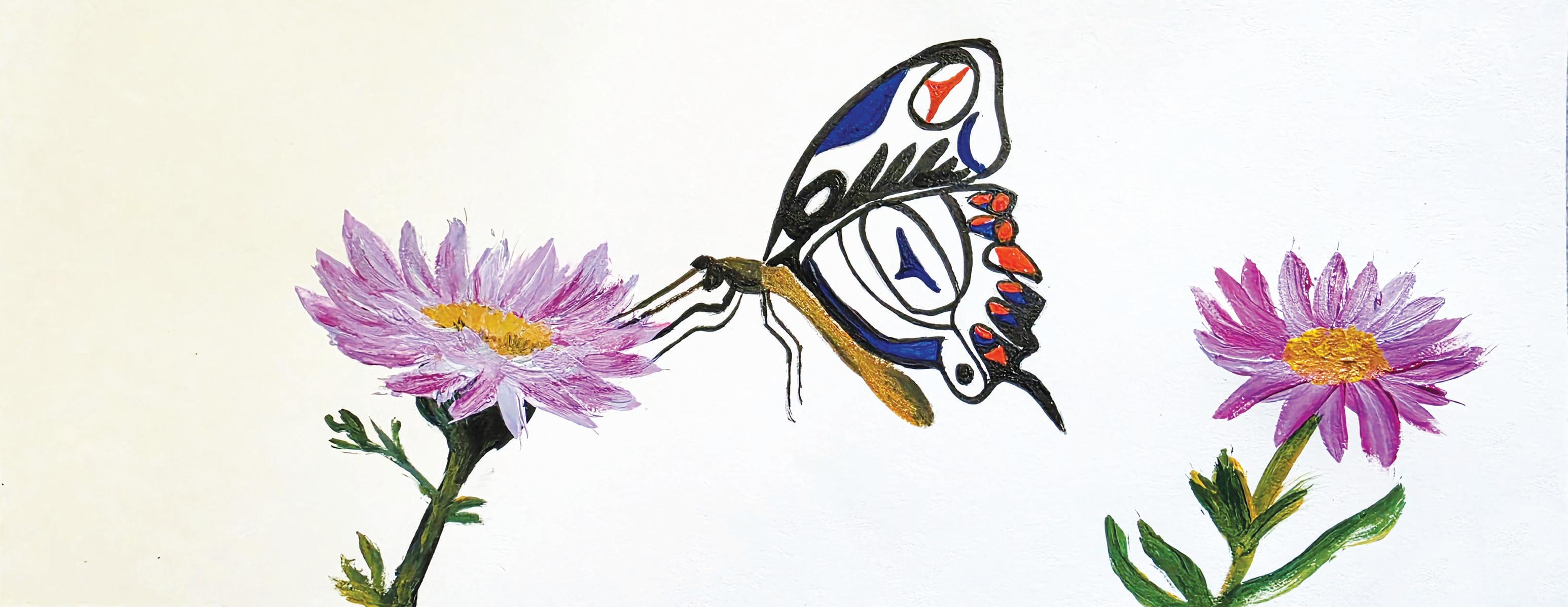
Illustration by Christine Sparks
Submitted photo
A lone wolf art piece, designed by Tseshaht carver Gordon Dick, has been mounted on the exterior wall of the West Coast General Hospital by the Emergency Wing.
First Indigenous person graduates with English PhD
Alana Sayers is the first Indigenous woman to receive a PhD from the UVic English Department, says chair
By Nora O’Malley Local Journalism Initiative Reporter
A Nuu-chah-nulth woman is the first Indigenous person to graduate from the University of Victoria (UVic) English Department with a doctoral degree in Philosophy, according to the department chair.
Alana Sayers, 38, successfully defended her dissertation about what it means to be Nuu-chah-nulth on April 15, with her four-year-old son Taryn, her niece and nephew looking on.
“That was important to me, wanting them to be there to witness that, because that’s how we do things, you bring the young people,” said Sayers, who is from Hupačasath First Nation in Port Alberni on Vancouver Island and Alexander First Nation near Edmonton, Alberta.
“I feel like the strongest version of myself and I’m glad that it was this version of me that wrote,” she said. “I was able to work with some really amazing people, and they are the reason I made it through.”
Sayers’ dissertation is titled ‘Revitalizing Hupačasatḥ Navigational Knowledge: Mapping the Waters of Settler-Colonialism Using a Critical, Coastal, Community-Based Consciousness’. It’s about being from a reserve, the colonization of coastal First Nations and simply working with the current realities of how things are for Indigenous people. Sayers now has a Doctor of Philosophy degree (PhD) from the UVic English department.
Dr. Adrienne Williams Boyarin, UVic English professor and Humanities Associate Dean of Research, was Sayers’ grad advisor for several years. She called Sayers’ dissertation defence, which was held at the Ceremonial Hall of UVic’s First Peoples House, a “joyful experience”.
“There was drumming and song, family, children, and many supporters in attendance. It was also the day of Elder Dr. Skip Dick’s funeral, so there were remembrances of Dr. Dick’s legacy and his huge impact on UVic,” said Boyarin. In a statement, UVic wrote that Dr. Skip was “a guiding light, a teacher, a Knowledge Keeper and an advocate for Indigenous education, culture and community.”
“His life’s work left an everlasting mark on this university, Camosun College, the Victoria Native Friendship Centre and across communities throughout these territories and beyond,” UVic’s statement said.
The university flag was lowered on the day of his funeral, April 15.
Boyarin went on to congratulate Sayers, who can now be called Dr. Sayers, for defending her work “brilliantly”.
“Alana is a trailblazer in many ways, and English literature as a discipline— like many academic disciplines, founded on colonial, nationalist, and exclusionary canons—has changed a lot in the last few decades, opening up what it means to study literary traditions and methodologies. Alana is part of that change,” Boyarin said.
UVic English Department an ‘alienating’ experience
Sayers says she grew up learning from her great uncle Bert Mack and great aunt Jesse Hamilton about the importance of education. They were both hereditary chiefs.
“They knew that we were going to be entering the ‘Paper Wars’ and they wanted us to be able and go get the training that we needed so that we can fight back
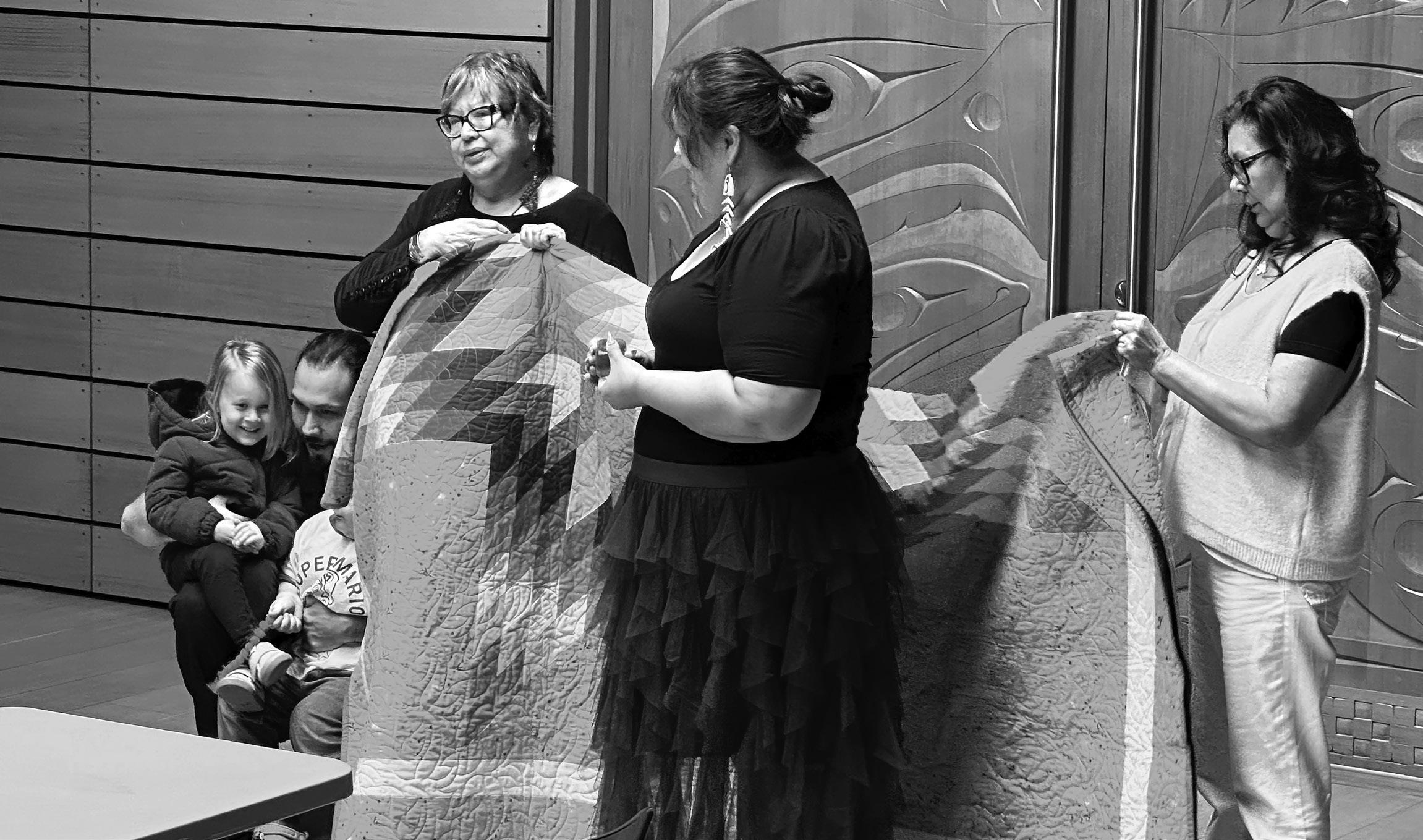
Sayers’ mom Judith and Aunt Brenda wrap her in a blanket at a joyful dissertation defense
First Peoples House, Ceremonial Hall.
the best that we could,” said Sayers.
As a child, Sayers went to Haahuupayak Elementary School on the Tseshaht First Nation reserve and was taught Nuu-chahnulth culture and language alongside other students.
“Nuu-chah-nulth-aht were the heart and centre of the education and that laid the foundation for me,” shared Sayers.
But she says that sense of Nuu-chahnulth community quickly went away when she switched over to Alberni District middle school and secondary school.
“That’s where racism began. Everything changed. All of a sudden, everything I knew wasn’t valued. It wasn’t centered,” said Sayers.
Flashforward to her years-long pursuit of a PhD at the University of Victoria and Sayers expresses a similar hardship tied to an “ongoing pattern of racism” within the English Department.
In one incident during her Masters, Sayers said she called a male professor out for using all the assigned readings in an Indigenous Literature class being written by Caucasian anthropologists. She said the professor changed the location of the classroom because he thought he “wasn’t safe”, without notifying her and another Indigenous student.
“We were registered students in this class just having a discussion about the text in there. You wouldn’t think that would happen. They do,” she said.
At another time, she said she was asked to braid her hair to attend teachers’ office hours.
“It was very, very creepy,” said Sayers. She said the hardest part of pursuing her doctoral degree wasn’t the academic part, it was the “regular racism” she experienced on campus.
“I want other people to know that. It’s okay to not make it through, it’s okay to try. It’s alienating, it’s isolating, it’s lonely,” she shared. “Taryn is the reason I was able to push through and make it to the end.”
On behalf of the UVic English Department, Boyarin acknowledged that “challenges and systemic barriers continue to exist for Indigenous students throughout the post-secondary sector in Canada.”
“The University of Victoria is not immune to this issue, and we are working to address it,” said Boyarin.
Within the English Department, Boyarin
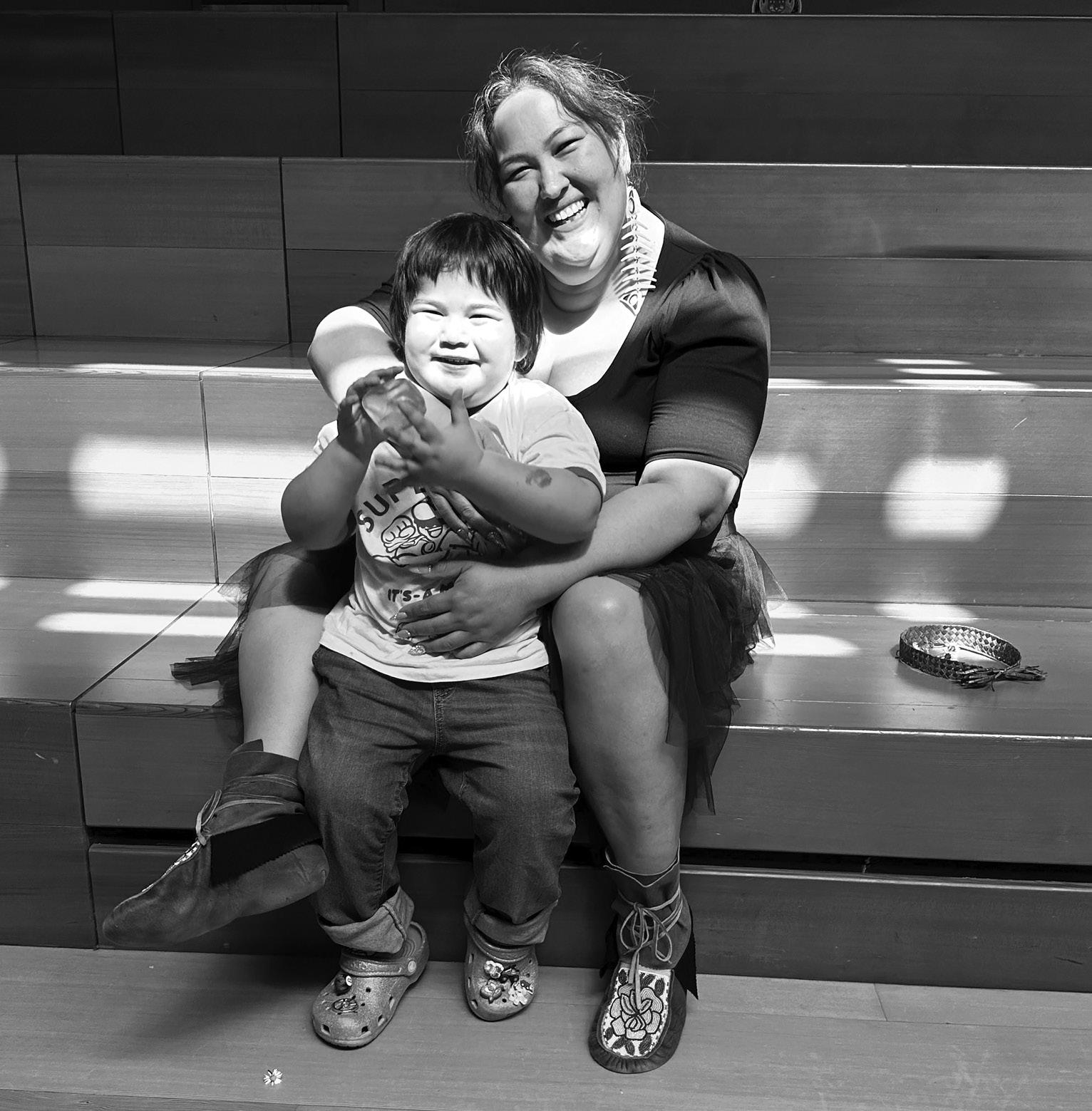
tor of Philosophy.
says the university hired an Indigenous literature scholar (who will start in 2027) and introduced the position of Indigenous Storyteller-in-Residence in 2024. Individual instructors have also worked to “decolonize their syllabuses and create new opportunities for Indigenous students”, according to Boyarin.
In 2023, UVic published an updated ‘Indigenous Plan’, which reinforces the institution’s commitment to “implement responsibilities and calls to action from all levels of government in support of the rights and sovereignties of Indigenous Peoples, including the BC Declaration on the Rights of Indigenous Peoples Act (DRIPA Act).”
UVic’s Indigenous Plan, or Xʷkʷənəŋistəl | WȻENEṈISTEL meaning ‘Helping to move each other forward’ in Coast Salish (SENĆOŦEN) language, features a welcome message from Dr. Skip Dick.
“Our people are not just carving the wood on the doors; the doors themselves are all opening up, all over, in a really
good way. Our advice is no longer staying on the bottom shelf collecting dust; we are ensuring that the university’s ears are listening, and that we are stepping outside our comfort zone to feel what it’s like to listen in a different way,” wrote Dr. Skip.
UVic currently has about 85 Indigenous faculty members, according to Boyarin. Sayers is a single mom and was raised by a single mom, Cloy-e-iis (Judith Sayers), Nuu-chah-nulth Tribal Council president. With her doctoral complete, she says she’s looking at opportunities that could keep her at home in Hupačasath.
“My dream teaching position would be able to work with Indigenous graduate students and go into their community,” said Sayers.
She shared that her academic journey took her to places like Hawaii and New Zealand to connect with other scholars and present her work.
“These experiences really changed my life,” she said.
Submitted photos
at the University of Victoria
Dr. Alana Sayers and son Taryn during her April 15 final oral exam for her Doc-
Juan de Fuca trail reopening after extensive repairs
Closed since April 2025, the 47-kilometre trail suffered damage after a series of winter storms over a year ago
By Antonella Medina Arias Ha-Shilth-Sa Contributor
Port Renfrew, BC – After being closed for a year, the iconic Juan de Fuca Marine Trail is expected to be accessible to the public this summer with the reopening date to be announced in mid-May.
The Juan de Fuca Trail, one of B.C.’s most popular coastal hiking trails, receives thousands of visitors each year. The trail is in the territory of the Pacheedaht First Nation, which holds deep cultural significance for their community.
The 47-kilometre trail suffered extensive damage after a series of winter storms between 2024 and 2025, and a closure has been in place since April last year. The affected areas spanned from China Beach to Botanical Beach, leading to the closure of backcountry campgrounds at Bear Beach, West Sombrio Beach, Little Kuitsche Creek, and Payzant Creek.
“It has affected the local area. There are so few opportunities for public access, a lot of recreation done that is semitrespass, because the land is private, owned by the forestry companies,” said Rosemary Jorna, director of the Juan de Fuca Community Trails Society. “But actual public trails are the Juan de Fuca Trail, and that’s fragile, as shown by the destruction from the storms that we had.”
The storm washed out sections of the trail, toppled trees and created unstable slopes that made areas impassable or unsafe for hikers to cross. Multiple bridges, boardwalks, shelters, campsites and other structures were damaged.
“Major, complex repairs could not begin until engineering and geotechnical assessments were completed, and a detailed scope of work, funding, and contracts were in place,” the Ministry of Environment and Parks said in a statement. Due to the extent of the damage and the challenging backcountry terrain, repairs took time.
The Pacheedaht First Nations works in partnership with BC Parks on the management of the park, including operational logistics and the scope of work for storm-damage repairs. Together, there has been considerable progress in repairing critical infrastructure essential for safe public access by prioritizing trail and bridge facilities.
The Ministry of Environment and Parks had to carefully plan the restoration to ensure public safety, while minimizing impacts on sensitive habitats and ecosystems.
The estimated cost of repairs is approximately $950,000, with the Government of Canada’s Disaster Financial Assistance Arrangements Programs providing most of the funding.
Administered by Public Safety Canada, the program provides financial assistance to provincial and territorial governments for response and recovery costs from large-scale disasters caused by natural
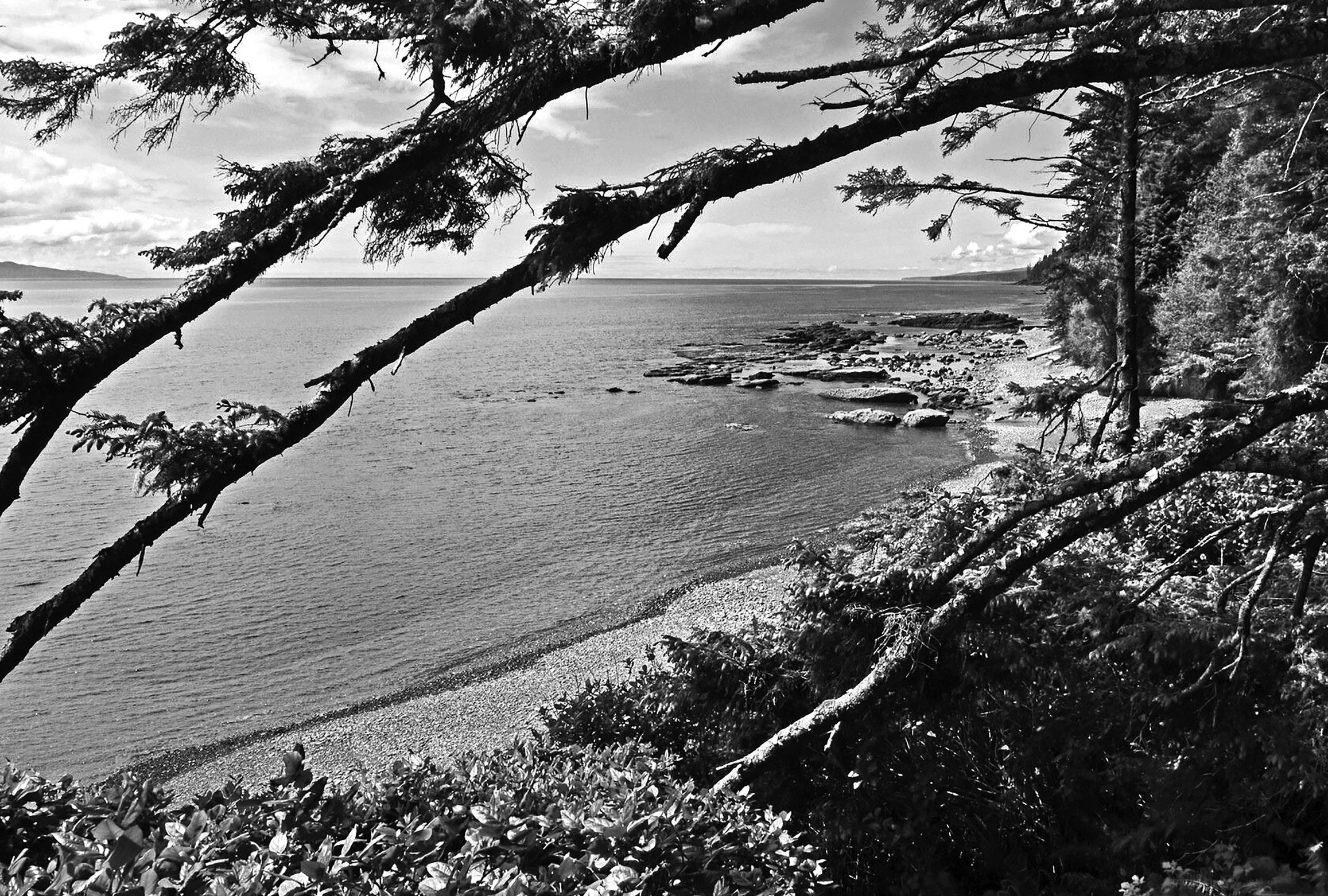
hazards.
The restoration process was completed in phases, with priority given to the major infrastructure required for safe hiking along the full length of the trail.
At times, major restoration efforts had to be flown in. Seven engineered bridges were installed, from small creek crossings to larger spans designed to withstand storms.
Other tasks involved constructing more than 800 metres of boardwalk and multiple staircases on steep and unstable terrain.
The trail had to be rerouted to several locations to bypass areas affected by landslides, erosion and ongoing slope instability, ensuring a safer and more sustainable route for hikers.
Minor repair to existing infrastructure will continue throughout the summer and fall while the trail is open. These include resurfacing worn or eroded sections of trail, repairing or replacing damaged railings and small bridge components, and improving drainage to prevent future washouts.
“The trail is mostly gravel. You have in one stretch of seventeen points where you have to go up and down on a gravel spine towards the water,” said Jorna. “Then you have logging up the trail, heavy rain and storms. [If] the footing isn’t good and it becomes very poor, then people start making their own desired routes, causing more erosion.”
Additionally, repairs will focus on rebuilding short sections of trail affected by fallen trees or erosion, installing additional steps and boardwalk segments,

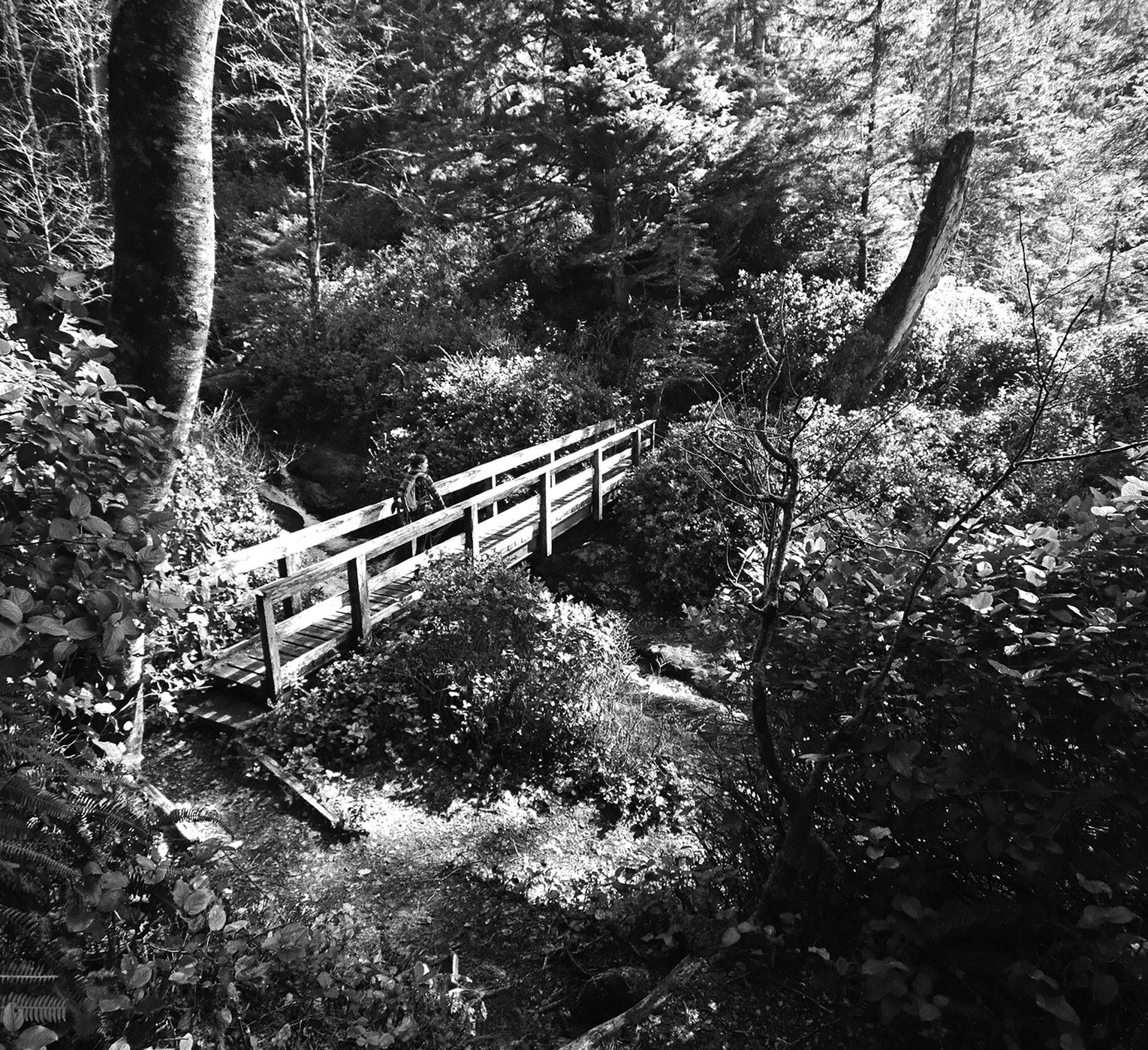
and reinforcing trail edges in areas where footing has been compromised.
While it’s difficult to know precisely how many hikers and campers are expected to visit the trail this year after its reopening, the Ministry of Environment and Parks estimated a total attendance of 506,061 visitors at Juan de Fuca Park between 2025 and 2026. This was a noticeable decrease from the 586,030 visitors reported between 2024 and 2025 at the Juan de Fuca Park, due to limited access to the trail last year.
“It has had an effect on tourism,” said Jorna. “I checked with the local tourism bureau, and we had people from Germany and Australia asking if the trail was open. Of course it’s not [open yet].”
“Everyone is feeling relieved with their own hiking and for the boost in tourism in this area,” she added.
Jorna, along with a party of six people, is planning to hike a segment once the trail reopens, sharing the enthusiasm of hikers and campers both locally and internationally.
For the past six years, the British
Columbia government has been upgrading the trail to improve safety, support sustainable infrastructure, and enhance hikers’ experiences. Over this time the province invested $2.1 million in new bridges, boardwalks, stairs, and food catches at multiple locations along the trail. In 2023, $905,000 was invested in 50 new tent platforms across backcountry camping areas, along with additional infrastructure improvements.
The Ministry of Environmental Parks advises hikers to use caution, follow the signs, and be prepared for momentary delays, as the crew will continue working to improve the trail’s safety and longterm durability.
“I hope that people will respect the instructions on the trail,” said Jorna. “I’m delighted that the trail will be opened. I wish there was a possibility - and I hope there will be - the acquisition of more parks and protected land between Sooke and Port Renfrew.”
For more information about the trail and timelines, please visit: https://bcparks.ca/ juan-de-fuca-park/
BC Parks photos
After being closed since April 2025, the Juan de Fuca Marine Trail is expected to reopen this spring. A reopening date is expected from BC Parks in mid May.
Mom and son thankful for marathon experience
Volunteers and spectators had squirt guns, hoses, ice cubes and Freezies for over 25,000 participants in the run
By Nora O’Malley Local Journalism Initiative Reporter
Vancouver, BC – Tseshaht First Nation member ƛiniiḥak (pronounced Tli-niihak) ran the BMO Vancouver Marathon with her 27-year-old son Edward Johnson Jr. on Sunday, May 3.
Race day was hotter than expected as an early May heatwave surged over a sea of roughly 25,000 participants from over 60 countries with record temperatures of 26 C.
“My son and I had goal finish times going into the race, but we had a really good conversation, and made the hard decision to adjust our pace,” said ƛiniiḥak, who is also known as Janice Johnson.
“I’m glad that we did. We really slowed down our pace to manage the heat and to make sure we could enjoy the full distance,” she said.
ƛiniiḥak finished the women’s marathon in 5:08:33 and her son ran the men’s marathon in 4:42:17. This was her third marathon and her son’s first.
“I’m really grateful as a mom that I was able to experience this together with my son. It is something I will definitely remember for the rest of my life,” said ƛiniiḥak.
She said her son’s knee gave out with about 10-kilometres to go, but after seeking medical assistance, he started running again and was able to cross the finish line.
“He had a lot of determination. I am just absolutely proud of him,” she said. For Johnson Jr., the most memorable moments of the race were “the hills and the incredible support from spectators along the way.”
ƛiniiḥak echoed the feeling.
“I honestly think a lot of us runners wouldn’t have been able to complete that race if the volunteers and spectators weren’t helping us along the way. They had squirt guns, people had hoses, spectators had ice cubes, they were giving out Freezies… It was just an amazing experience,” she said.
Friends and family could also livestream the BMO Vancouver Marathon and cheer

from afar.
“They could track you when you’re on the course. Their support really helped us push through,” said ƛiniiḥak.
Training and motivation
To prepare for the 42.2-kilometre distance race, ƛiniiḥak says they had a 16-week training plan and did extra exercises to strengthen muscles. She said diet also played a key role.
“It took a lot of time and it took a lot of commitment, but it was so worth it because the feeling that you get when you are out there, it’s super hard, but it’s just such a great feeling to be able to accomplish something that is considered to be super hard,” she said.
ƛiniiḥak says running has always been
an outlet that helps her process emotions and ground herself.
“After losing my youngest brother, the one thing that really helped me process that grief and just help be stronger was running,” she shared.
She compared running to life.
“When you’re running or when something happens in your life it’s not always going to be easy, but as long as you keep putting one foot in front of the other you will eventually get to where you need to be,” said ƛiniiḥak, who is the manager of community engagement for the First Nations Health Authority.
To celebrate after completing the marathon, ƛiniiḥak said they “hobbled” to the Old Spaghetti Factory for a big plate of ribs, fries and lots of water.
Johnson Jr. says this won’t be his last marathon.
“Everyone should do a marathon. They’re actually fun,” he said, adding that he wants to focus more on strength training to build muscle and help prevent injury for the next one.
He also shared a race day lesson: “If it’s hot, don’t dump water on your clothing, it can cause chafing.”
ƛiniiḥak says they’re already talking about doing the BMO Vancouver Marathon next year. She says they inspired her youngest son Isaac, 21, to join. Her husband might join too, and her daughter is also thinking about getting into running.
“I just can’t help but think that wow, maybe one day we’ll be a running family,” she grinned.
Dating show for Indigenous singles is auditioning
By Denise Titian Ha-Shilth-Sa Reporter
Spring is in the air and so is the chance for love - maybe more so, if you’re Indigenous in Canada. That’s because there’s a new reality dating show featuring Indigenous couples is soon to hit your television screen.
APTN, a broadcasting network featuring Indigenous content, is launching the new reality dating show.
“Rezervations for Two brings rez humour, real chemistry and Indigenous love stories to reality TV,” said APTN in new release.
Capitalizing on the popularity of reality television, APTN’s Rezervations for Two brings together Indigenous singles, “of diverse genders, sexualities, ages and nations for a dating experience that throws the reality TV rulebook out the window,” said an APTN media advisory.
What can you expect to see? Participants are sent on blind dates which could involve creative activities or fireside chats. Commentary is provided by hosts watching and bantering in real time, “reacting to every awkward silence, flirty exchange and spicy pickup line with their
signature ‘fairy god-auntie’ energy. Their charm, wit and zerofilter reactions are as much a part of the show as the dates themselves,” said APTN.
Hosted by Kairyn Potts, a proud TwoSpirit Winkte (two-souls person) man from the Alexis Nakota Sioux Nation and Scott Wabano, a two-spirit Eeyou’d (person), from the Cree Nation of Waskaganish and fashion designer, the best friends bring humour and entertaining commentary to the show.
The first season of the show was filmed in Winnipeg, Manitoba and features First Nations couples from that area. Production for season one has already wrapped up. The producers hope to launch the first episode on YouTube to reach a wider audience. The series will premiere on June 15 on APTN and APTN+.
Were love matches made on Season One? Producers don’t want to spoil the surprises but promise some jaw dropping moments. The show promises “equal parts hilarious, heartfelt and hot mess.”
“We’re really excited to bring Rezervations for Two to APTN audiences,” said Crystal Dubois, APTN’s Development, Factual and Special Events Executive. “This show is about finding your forever
Scott Wabano and Kairyn Potts host Rezervations for Two, an Indigenous dating show coming to APTN on June 15.
snag and keeping it real while you do. Nothing is scripted. It’s packed with rez humour and heart, and it’s a true celebration of love in all its forms. We want Indigenous and non-Indigenous viewers alike to see us as we really are vibrant, funny and full of life. This is us — unfiltered, unapologetic and totally fabulous.”
And if you’re single and looking, maybe
swap those rez dating apps and have a Rezervations for Two watch party.
Casting for the second season of Rezervations for Two is already underway.
This time, the location moves to Toronto. APTN says they select cast members from the locations they film in. The second season will soon begin filming and is slated to premiere in 2027.
Submitted photos
Tseshaht mom ƛiniiḥak (pronounced Tli-nii-hak) and her son Edward Johnson Jr. entered their first, but not last, BMO Vancouver Marathon together.
APTN TV photo
Usma News
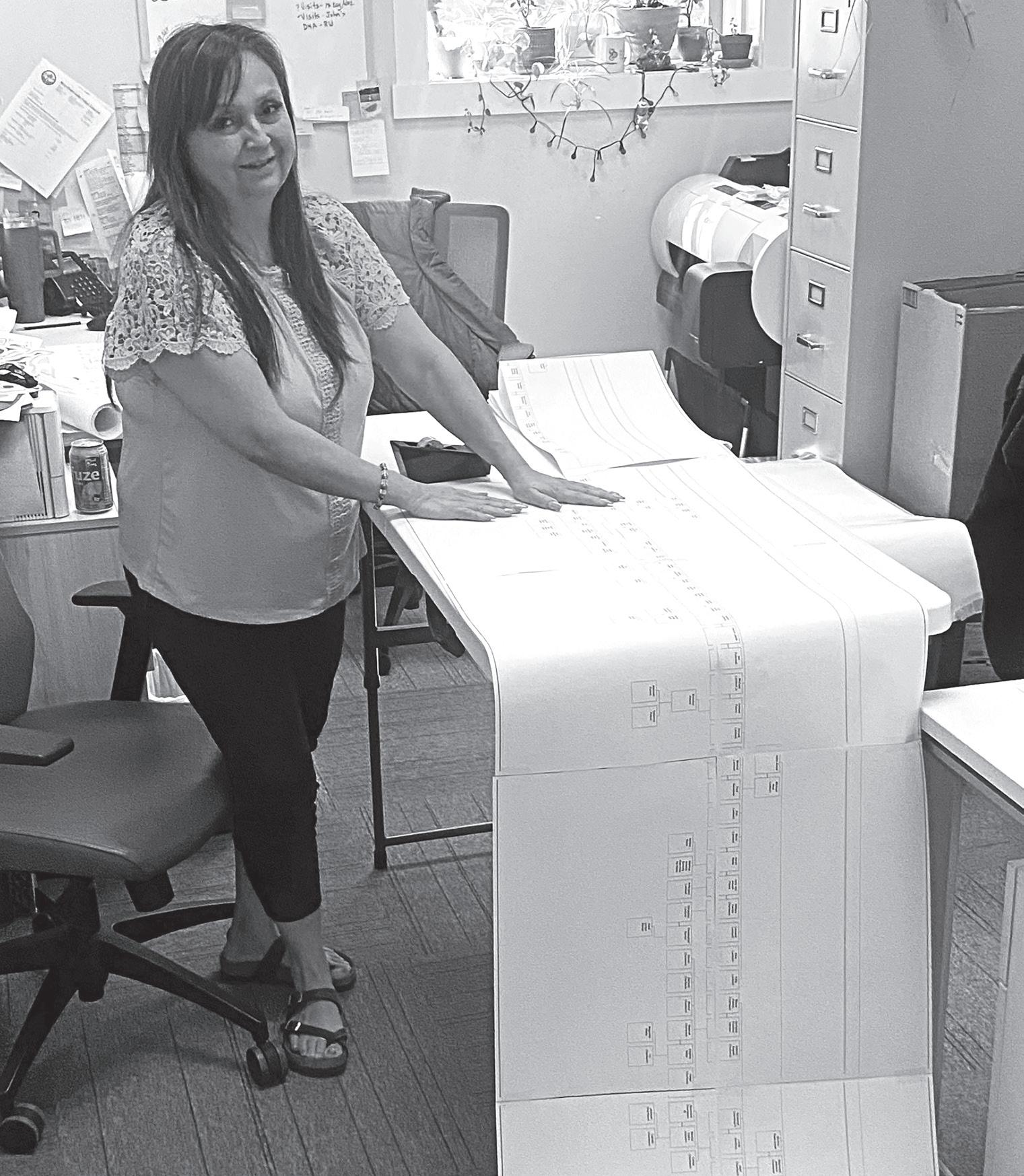
Branches that reach generations
A growing family tree database is piecing together generations of Nuu-chah-nulth families
By Rebecca Aldous Usma Communications Coordinator
Peggy Tate carefully tapes together more than 100 pages, creating a long, twopage-wide trail of paper. Across it are the names of five generations from one Nuu-chah-nulth family. The tree could have stretched back 12 generations, the Usma Connections worker notes—but that would have taken nearly 600 pages.
This family tree was created for a student’s Grade 7 graduation at Haahuupayak Elementary School. Tate, along with co-workers Damon Rampanen and Sherri Cook, has been piecing together family trees for each student in the class.
“This one student thought they were all by themselves,” Cook says.
Since 2019, Usma has been compiling names for Nuu-chah-nulth family trees. Today, their database includes 19,423 individuals connected across families. For this project, Cook begins by asking students to share what they know about their families. From there, she fills in the gaps and updates the system with new information.
Along the way, unexpected stories sometimes surface. In one case, a student discovered that their maternal grandfather was a gold medal Olympic swimmer. But family trees can also uncover difficult truths—details some would rather not revisit. For that reason, the trees are kept confidential and only shared for meaningful purposes, such as special events or approved personal requests.
“Some families want to know, some families don’t,” Rampanen says.
Beyond connection, the information also supports care at the family and child services. Usma uses the data to help understand family health histories, including research into patterns such as early deaths across generations, as well as infertility
&Community Beyond
NCN Mental Health Counselling
Tuesdays and Thursdays 8:30am – 4:30pm
4841 Redford Street, Port Alberni
NCN Mental Health Services – DropIn Counselling with Margaret Bird, Registered Clinical Counsellor and Play Therapist. For on and off reserve members of all ages of the Nuu-chahnulth Tribal Council. Call (250) 724-3939 to book your appointment.
Stirring up Connections
Every Friday 10am – 12:30pm
NTC Kitchen – 4841 Redford Street.
A warm and welcoming cooking group designed just for parents! Each session will feature: Easy, budget-friendly recipes; Tips for cooking with kids and picky eaters; Space to connect with other parents over food and family life. Contact 250-724-3939 for questions.
Samuel Richard Johnson jr. mit. Memorial Potlatch
November 7th, 2026

and autism.
“It can be overwhelming at times— sometimes even triggering,” Cook says. For many of the youth themselves, it is all about understanding where they fit in.
As a result, youth reactions vary. Younger children often feel excited seeing their history laid out so clearly. For some older youth, however, it can be more complex, especially when they see long lists of relatives who may not be present in their lives.
“It raises questions like, ‘Where are these people?’” Cook adds.
Still, learning where you come from— and which nations your family belongs to—can be deeply empowering.
“A lot of kids don’t know their nations,” Rampanen says. “But they can really thrive when they connect with their culture.”
Rampanen sees this firsthand through the cultural drop-in he runs for boys.
While he hasn’t yet explored his own family tree, he plans to. Tate has traced her family back eight generations, with one side reaching back to Scotland in the 1800s. Cook’s family tree extends back 12 generations across three nations—zigzagging to a time before English was spoken on this land.
“They’re all traditional First Nations names,” she says.
One clear takeaway from the database: many families across the west coast of Vancouver Island are deeply connected. For students, that can mean discovering unexpected relationships—like a teacher being connected through a great aunt, or a classmate linked through a distant grandfather.
After building these trees for many individuals, Rampanen says those moments of discovery never get old.
“We always have these ah-ha moments,” he says.
Starting with lunch at 12:00pm Wahmeesh gym, tsaxana reserve. All welcome. 25 Years Ago in
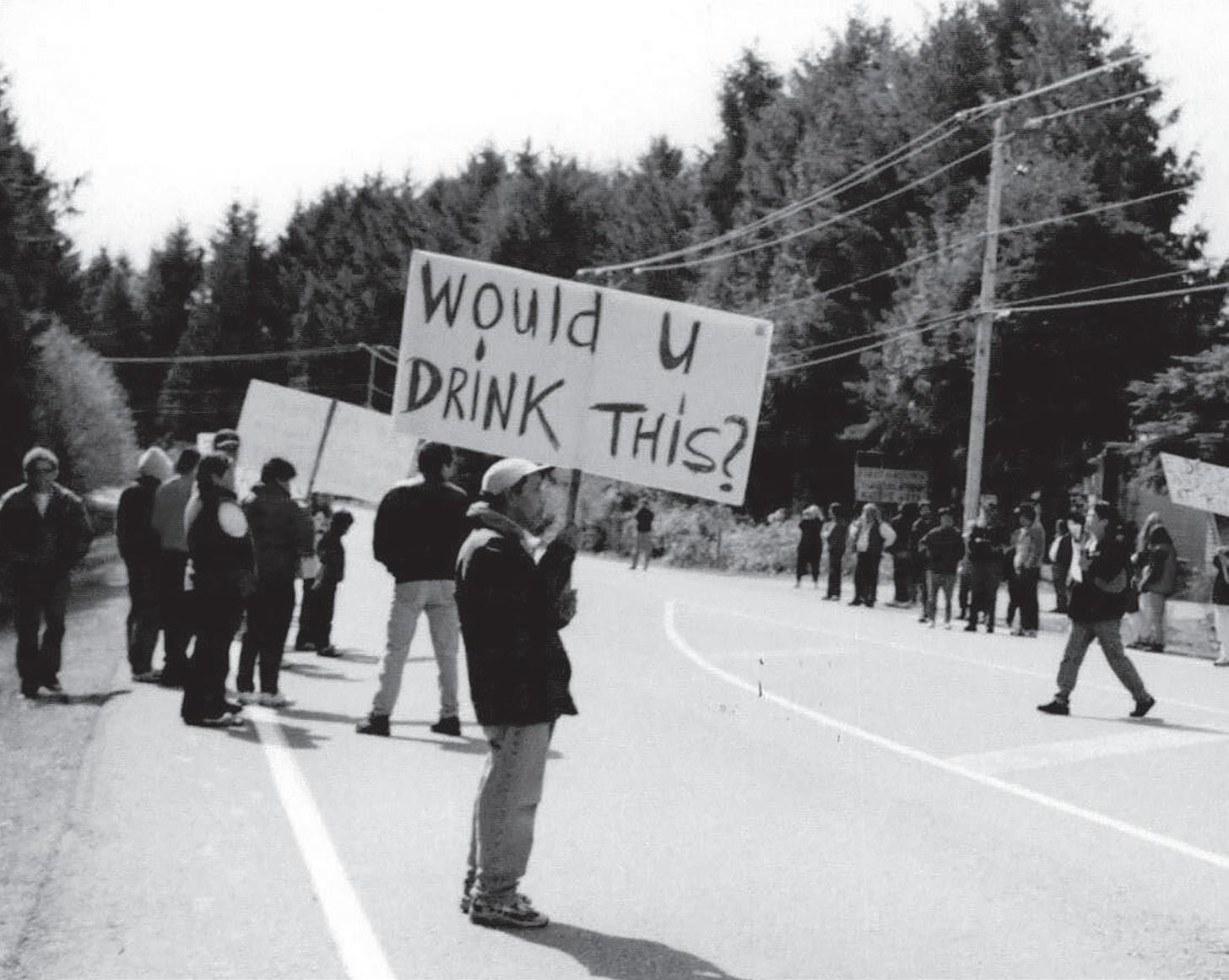
May 8th, 2001, Esowista residents and their supporters waved placards and slowed traffic to and from Tofino to bring attention to their dirty water plight.
Esowista resident Delores Keitlah handed out information flyers that explained the history of the community water problem to passing cars. The flyer said that after months of undrinkable water the Tla-o-qui-aht First Nation is demonstrating over the inaction by Dirty Water sparks Protest
federal and provincial agencies to restore clean water to the reserve. Keitlah explained that the demonstration was not to stop traffic completely, but to bring attention to her community’s problem, especially since the area’s political candidates would be meeting in Tofino that evening. The protest lasted an hour, after which Tla-o-qui-aht members planned to attend an all candidates meeting in Tofino to discuss the issue with those running in the next election. If you should be getting a copy of the Ha-Shilth-Sa paper delivered to your home,
Usma photo
Usma Connection’s Worker Peggy Tate tapes together a family tree for a student at Haahuupayak Elementary School.
Employment Opportunities


Port Alberni Friendship Centre Volunteers Needed
Need work experience? The Port Alberni Friendship Centre is looking for interested applicants for various positions. Call 250-723-8281
Wildlife discovery centre in the works for uptown PA
Attraction planned for basement of the Beaufort, which is set for major upgrades to be part of Wyndham Hotels
By Karly Blats
Ha-Shilth-Sa Contributor
Port Alberni, BC - A new discovery centre is in the works for Uptown Port Alberni.
Wild Tide PA will bring both a community gathering space and an interactive discovery centre to the Alberni Valley.
Founder Greg Banman said his team has just secured a space and renovations will begin soon.
“We’ve just entered into an intent to rent on 14,000 square feet,” Banman said. “It’s the basement of the Beaufort. There’s a huge project going right now with the investors to renovate that space.”
Wild Tide PA will be completed in phases, the first being the building and opening of the community hub. The intent for this space is to offer a place for community members of all ages to gather, play games, create and offer the possibility for comedy shows and other events. Banman hopes to have the space open to the public later this year.
“This is a space that’s multipurpose, multi-use. It can be converted into a comedy club style or into a community drop-in centre where people can come out and play games,” Banman said. “Our goal is two days a week for the community hub. The venue itself is focused on family friendly. Even though we will have 19 plus events, we are keeping it a dry space. If we do an event with liquor, it’s catered in, not a permanent fixture and that’s intentional. We found there’s an extreme lack of that in the Alberni Valley.”
The second phase of the project will be the addition of the discovery centre. This space will allow the public to view an assortment of creatures from the Pacific Northwest.
“This is not another aquarium,” Banman said with a laugh. “[Creatures] will be locally focused. Locally being Pacific Northwest so all around Vancouver Island and into Washington and Oregon. However, we are going to host exotic species as well.”
The discovery centre will also include exhibits and displays rented from other centres to provide a virtual component.
“We can present a lot more creatures that way, a lot more ethically, than if we stick a giant octopus in a small tank,” Banman said.
The idea for Wild Tide came about from Banman’s curiosity around why something like this hasn’t been done before in Port Alberni.
“The fact that we don’t have a significant wildlife rescue or refuge here…that
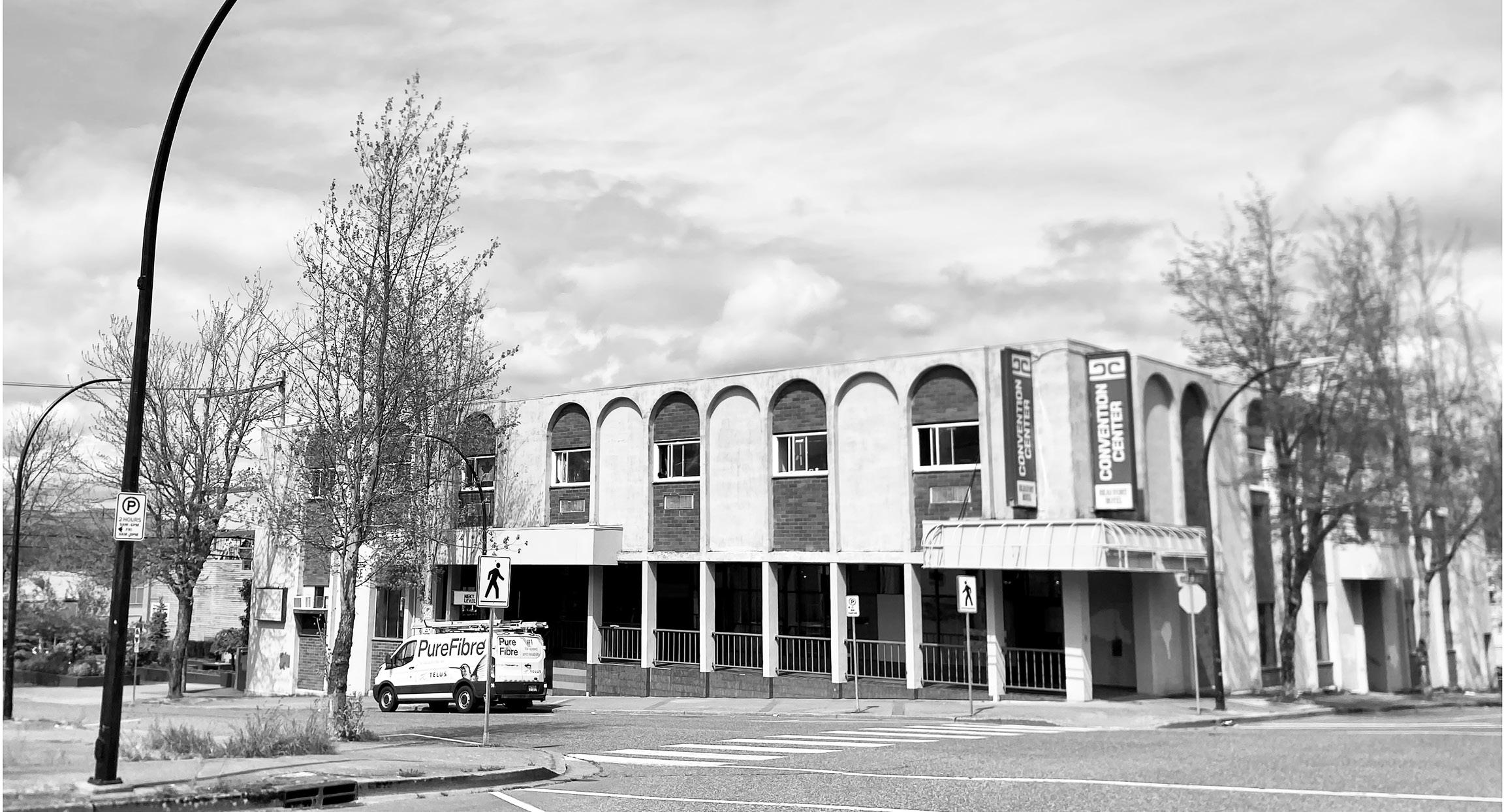
has always baffled me,” Banman said.
“I am aware we’ve had two different aquariums. My original goal was to start an aquarium and that’s how I discovered we’ve had two that didn’t work. This is where the plan started to pivot and grow.”
Banman began forming an organization to explore nature, history, heritage, culture and conservation. He hopes the centre will not only be a space for locals to connect, but a tourist attraction as well.
“Tourism is the future and we have 1.1 million people passing through the Valley every year on their way to Tofino,” Banman said. “If we can get 10 per cent of that, that would easily fund the vision that we have.”
After months of networking and having conversations with community members, Banman began to believe his vision could really become a reality and an official board was formed. The founding board includes a Uchucklesaht First Nations member, a business owner, a tax lawyer, a business masters student and a marine biologist.
Now that the board is formed and a space has been secured, Banman and his team plans to begin making connections with the local First Nations.
They have not secured a business license with the City of Port Alberni yet as they will need to create a map and design of the new space before being considered for licensing.
“A lot of it is high risk right now because we have to do the designing and the layouts and there’s no guarantee

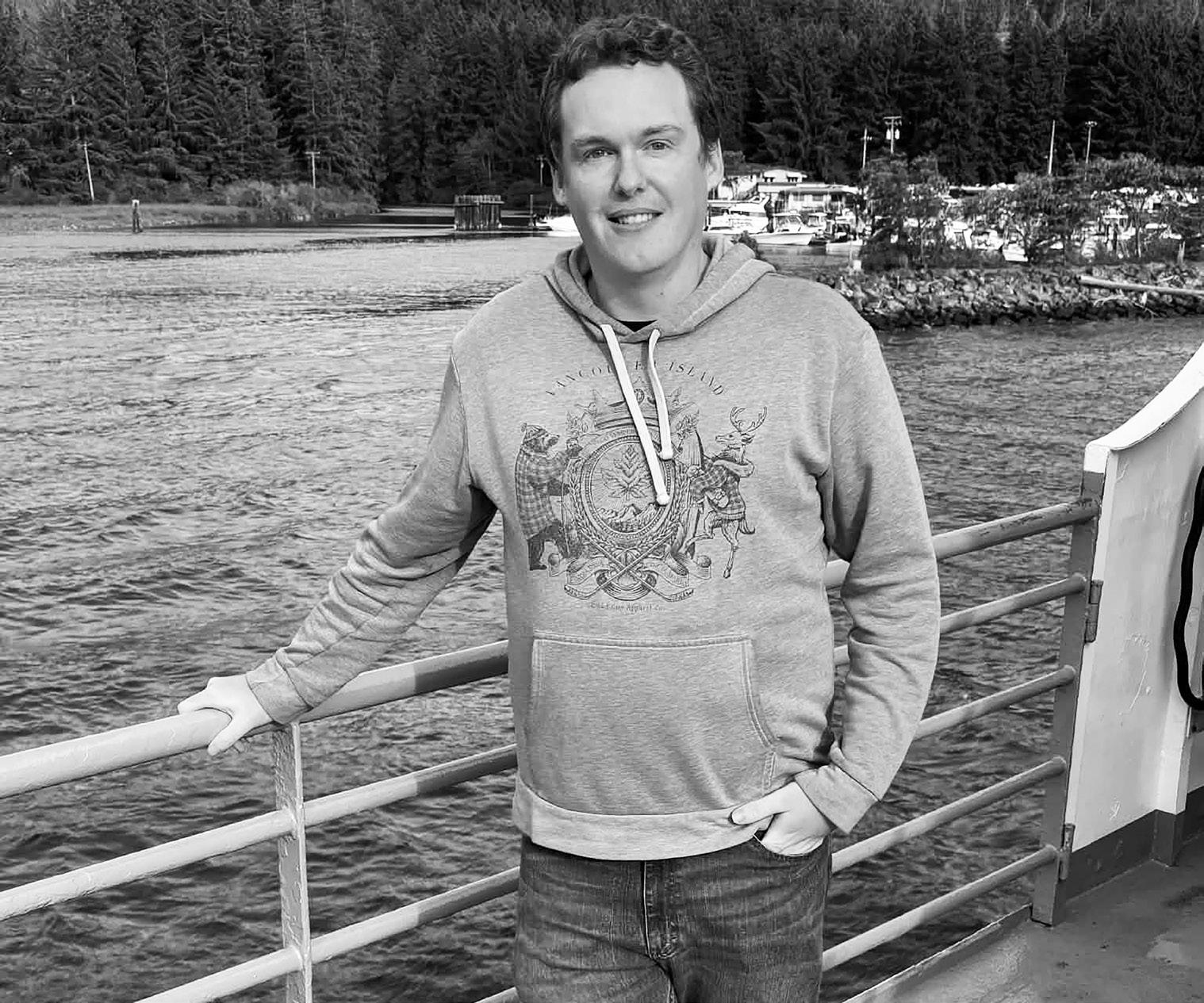
they’ll be approved,” Banman said. “I could put all this work into the space and have the city say ‘no’.”
One of the five members currently investing in the Beaufort, Alnoor Kassam, said they are “delighted” to have Banman and Wild Tide as tenants to the space.
“Wild Tide and Greg have inspired us to create a destination that highlights the natural strengths of Port Alberni,” Kassam said.
Kassam said the Beaufort will become part of the Wyndham Hotel franchise with renovations expected to be complete by September 2026.
Wyndham Hotels is an American hospitality company that is described as the largest hotel franchisor in the world.
Locally, the Howard Johnson Hotel on Beaver Creek Road is part of the Wyndham Hotel franchise.
Kassam said current residents of the Beaufort should not be affected by renovations. The five investors consist of Keith Mackenzie, Dale Haggard, Rob Namor, Jerry Wong and Kassam.
For more information or how to get involved with Wild Tide, Banman welcomes emails at info@wildtidepa.ca
Karly Blats photo
The Beaufort Hotel in uptown Port Alberni is undergoing renovations with plans for a new wildlife discovery centre in the basement.
Submitted photo
Wild Tide PA founder Greg Banman is planning a wildlife discovery centre and community gathering hub for the Alberni Valley.
Nanaimo’s fourth annual MMIWG2S+ walk
Also known as Red Dress Day, May 5 now marks a Canada-wide movement for remembrance and activism by Olivia
Thomas Ha-Shilth-Sa Contributor
Nanaimo, BC – Scores of people dressed in red marched through downtown Nanaimo late Tuesday afternoon to honour missing and murdered Indigenous women, girls, and Two-Spirit people during the city’s fourth annual MMIWG2S+ walk and gathering.
The May 5 march took place on the traditional territory of Snuneymuxw First Nation and brought together Indigenous families, community advocates and supporters carrying drums, signs, banners, and photographs of loved ones.
“This year marked the fourth MMIWG2S+ walk and gather in Nanaimo,” said Meagan Anderson, the Transition House director at Cedar Woman House. “We do it because it’s our responsibility to care for one another as human beings and to honour the thousands of MMIWG2S+ across Canada and their grieving families, most of which still seek answers and justice for the loss of their loved ones.”
Participants gathered before walking through downtown Nanaimo, while many drums echoed through the streets along with voices singing the “Woman’s Warrior Song,” as onlookers stopped to watch and support the procession. Many marchers wore red, a colour that has become symbolic in the movement to honour missing and murdered Indigenous women, girls, and Two-Spirit people.
The annual march is part of a broader national movement calling attention to the disproportionate violence faced by Indigenous women, girls, and Two-Spirit people across Canada. Also known as Red Dress Day, May 5 has come to mark a Canada-wide movement for remembrance and activism towards the ongoing calls for justice that resulted from the National Inquiry into Missing and Murdered Indigenous Women and Girls.
Anderson said the gathering is also intended as a call for political accountability and systemic change.
“It’s a call to action for our federal and provincial governments to uphold the demand for change in systems that consistently dehumanize and devalue Indigenous lives,” she said.
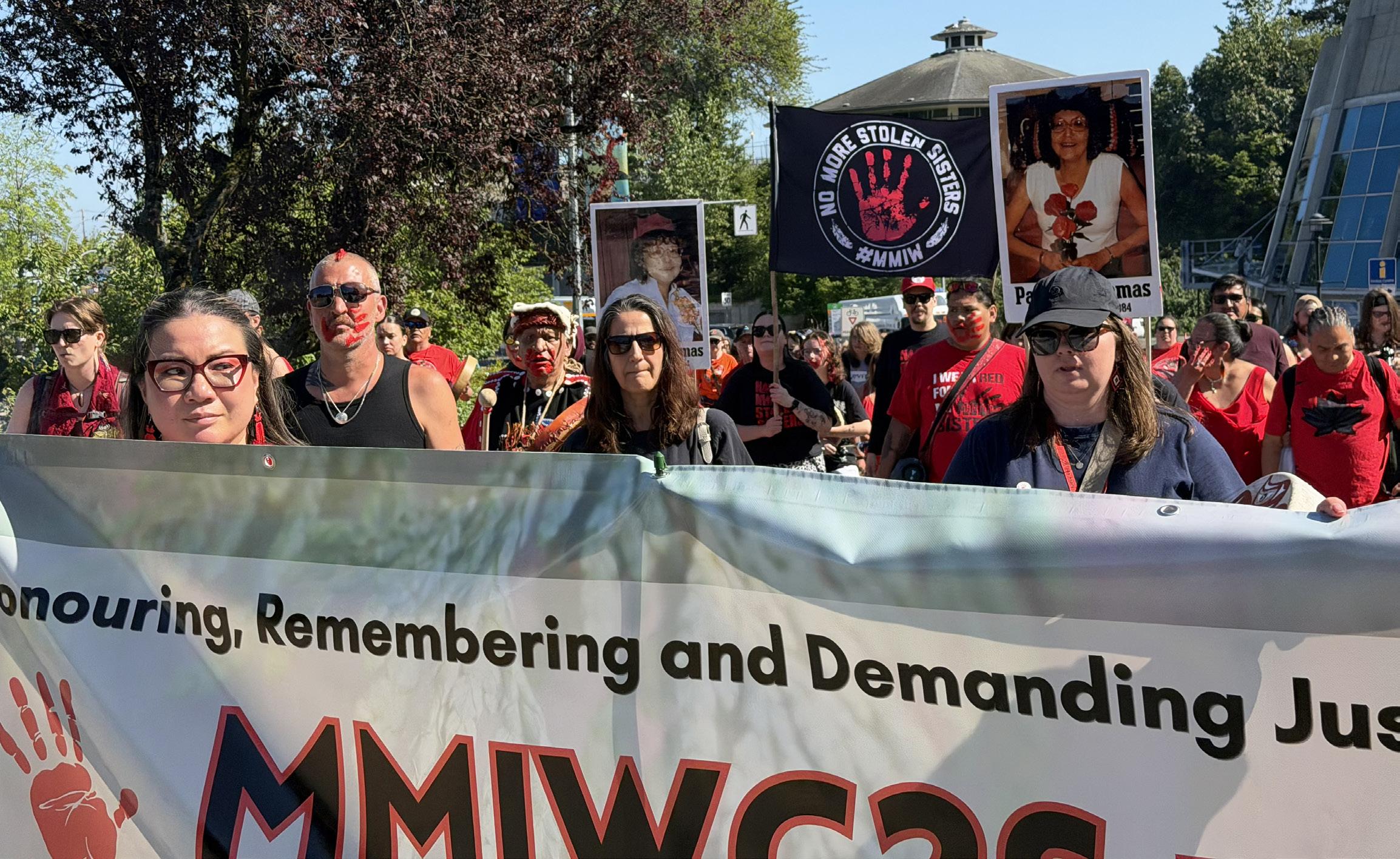
To start the gathering at Maffeo Sutton park, Snuneymuxw elder Lolly Good offered an opening prayer and song to welcome the participants before subsequent speakers took to the stage to share stories, personal tributes, and more. Organizers shared the importance of community solidarity and refusing silence around the topic of MMIWG2S+.
“I believe that silence creates complicity and the normalization of harmful views and actions; it’s where violence thrives,” Anderson said. “Our governments must lead Canadians by example. Words are not enough, it’s past time for action to create true systemic change and to make it clear that Indigenous lives matter.”
The gathering concluded with speeches, songs and community support, with many attendees remaining afterward to connect and reflect together.
“A lack of action is a choice, and it speaks volumes,” Anderson said. “It’s a choice that comes with the highest price, and that’s human lives.”
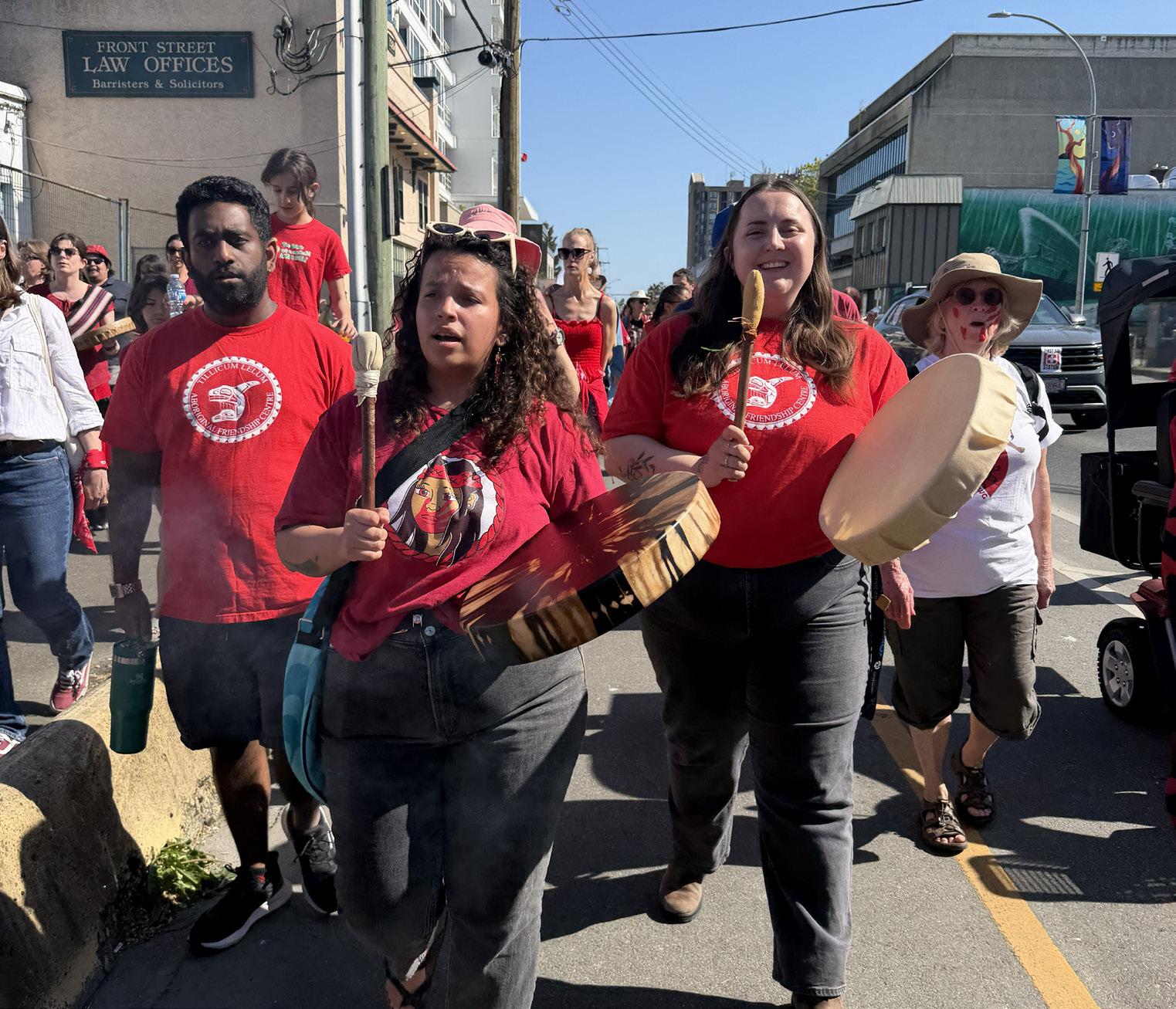

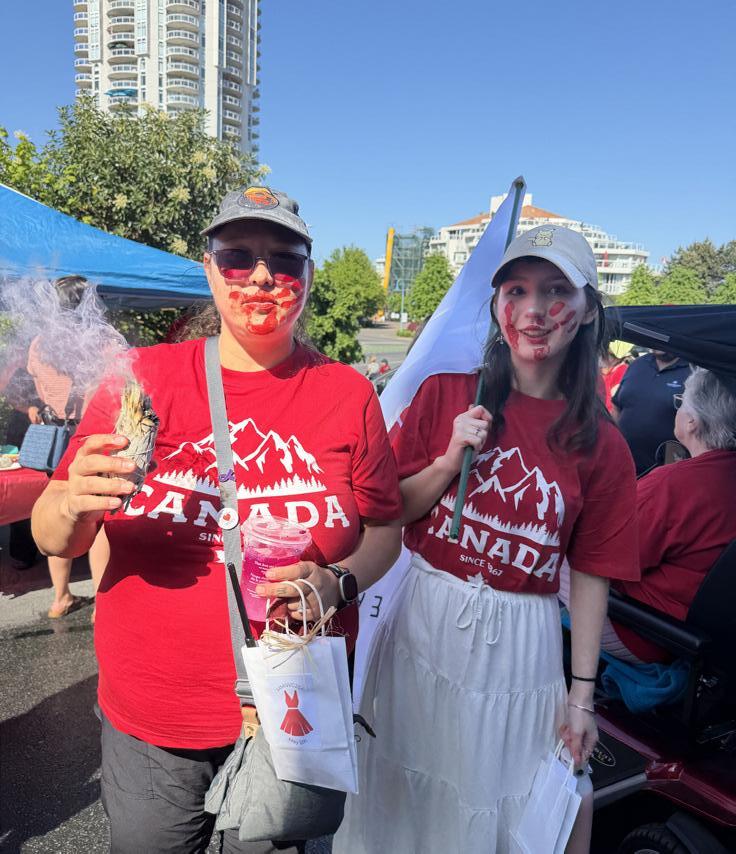
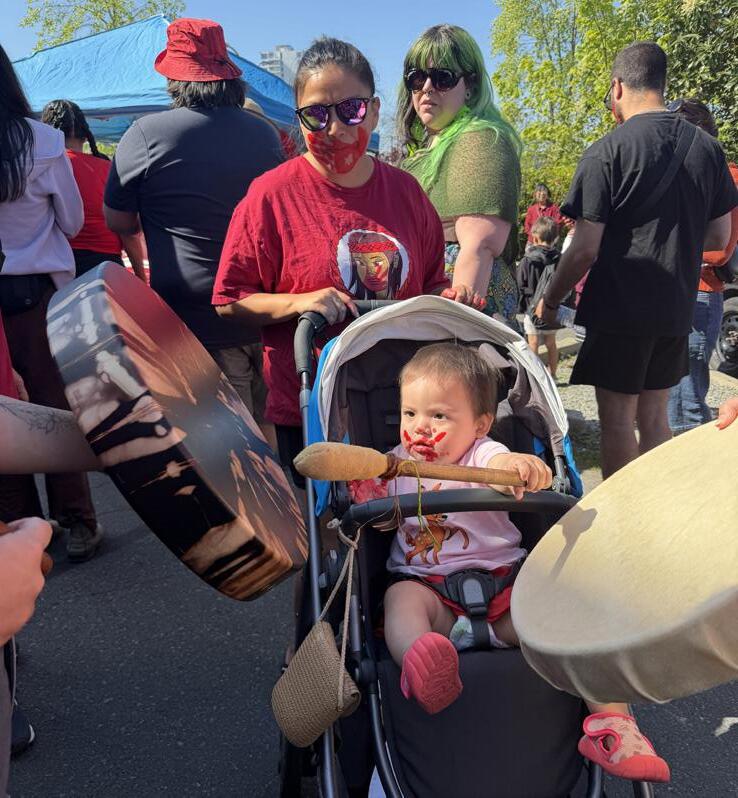
Olivia Thomas photos
The May 5 march took place on the traditional territory of Snuneymuxw First Nation and brought together Indigenous families, community advocates and supporters carrying drums, signs, banners, and photographs of loved ones.