
Similkameen Starbirds dominant once again, winning fourth consecutive title in the Prince Rupert tournament
By Nora O’Malley Local Journalism Initiative Reporter
Prince Rupert, BC – With a loss to the Laxgalts’ap Aces (Greenville) in game
two of a grueling All Native Basketball Tournament, it could have easily gone sideways for the Hesquiaht Descendants.
But the small team of eight players took the defeat, turned it into fuel and rallied to win six tough backdoor games for a spot in the women’s final against the Similkameen Starbirds from the Okanagan Valley. Along with 15 other teams in the women’s division, the Descendants made a run for the title of the 66th annual All Native Basketball Tournament (ANBT), which was held Feb. 14 to 21 in Prince Rupert, B.C.
“We proved ourselves. We really took that first loss and learned from it. We got stronger from it,” said team captain Mariah Charleson, who was named a tournament All-Star.
She said her young team from Nuuchah-nulth First Nations territory on Vancouver Island “connected with home” after the Greenville upset by going to the ocean together for a cold dip and receiving a cedar brushing from coach Qwaami Frank and team manager Troy John.
“I don’t think we could have made it to the finals without Qwaami’s knowledge of the game,” said Charleson.
The Descendants knocked out three teams in the backdoor before getting revenge on Greenville in a close 68-60 rematch. They went on to oust Kitamaat 72-57 to make it to a semi-final against Bella Coola.
With an impressive defense and a string of smooth triples, Hesquiaht showed up for the Friday night lights semi-final, taking down Bella Coola 73-62.
“We want to give a big klecko, klecko to Ha’oom for sponsoring that semi-final game. We know that it means a lot for our fans just to be able to see us play,” said Charleson. “We don’t have a lot of fans up there because we travel so far, so having the little Hesquiahts running around in the gym with our banner was super awesome and uplifting.”
Port Alberni-based Descendant Destiny Hanson, 24, hit seven three-pointers in the semi-final against Bella Coola.
“They passed me the ball and I was just open. They trusted me. It was really a team effort on that. They couldn’t guard all of us on that, one of us was always open, so I always just had the opportunity to shoot, so I just shot the ball,” said Hanson, who also picked up a tournament All-Star award.
ANBT rookie Jaysen Touchie, a Grade 12 student at Ucluelet Secondary School, made a few huge blocks throughout the tournament, leading commentators to call
3 Is recreational fishing a right or privilege?.....................Page 5 Could tourism pay the bills.......................................Pages 8-9 Jordan’s Principle program renewed............................Page 11
her “force field”.
“I am so proud of Jaysen,” said her older sister Jada Touchie, who won Most Outstanding Player and Top ANBT Scorer.
“I’ve spent all season watching her train hard in the gym and going to training camps and just being such a strong player offensively and defensively. Seeing her determination and strength, I’m just so proud of her. And to see it translate to All Natives, which has the roughest basketball in all of B.C., is just awesome.”
“I’m already looking forward to next year. I’ve gotten a feel for the physically and what I need to improve on,” said Jaysen.
It’s hard to take down a dynasty team like Similkameen. Hitting the court for the ninth game of the tournament, a “roughed up” Hesquiaht bench fell prey to the rhythm of Similkameen’s suffocating defense to lose the ANBT final 61-29.
This year marks Similkameen’s fourth consecutive All Native championship banner. Two years ago in 2024, the Starbirds also beat the Descendants in the final by 21 points.
“We’ve observed a lot of other teams get close to the championships, make it finals, not quite make it, make it to finals, not quite make it, and then eventually, break through. That is my prediction for our team. We will get there. We will break through,” said Skylene Touchie,
the eldest of the Touchie sisters who was injured early in the tournament.
“We are going to get home and train harder to show up in the finals a little stronger next year,” said Skylene. “Our team also travels the farthest to get to this tournament. There is no team that travel farther than we do.”
“It was an unfortunate outcome, but we know what we are capable of,” Charleson adds. “We know under the right circumstances we can beat Similkameen.”
Rookies Tessa Charleson, 18, won the Ms. Hustle award and Brielle Tom, 16, held her own against collegiate-level ballers.
Hesquiaht Descendants were named the Most Sportsmanlike Team of the 66th ANBT, an award many say means even more than winning a title. This year, 16 women’s teams from all over the province entered the tournament.
“I feel really proud of our team for all of the hard work they put in. It was not an easy road at all to make it as far as we did,” said Skylene.
“The whole tournament through the backdoor, I wouldn’t have changed it. It brought us closer together and stronger,” said Jada.
The next All Native Tournament will be Feb. 13 to Feb. 20, 2027.
A commercial roe-on-kelp fishery is underway this year, as the region continues to see better biomass numbers
By Eric Plummer Ha-Shilth-Sa Editor
On Monday, March 2 seagulls could be seen divebombing into the ocean near the base of Catface Mountain, the waters near the shore a milky hue.
The birds were tapping into a current of excitement spreading through Nuu-chahnulth territory, as herring continue their late-winter tradition. This reproductive activity entails each female laying thousands of eggs that stick to underwater rocks, silt and kelp, awaiting the milky spawn from male herring that turn portions of the Pacific into a lighter aquamarine blue.
Confirmed herring spawn on the west coast of Vancouver Island was first sighted by the Island Marine Aquatic Working Group in mid February. On Feb. 16 satellite images showed spawn at Hesquiaht Harbour, followed by sightings south on the coast near Ucluelet between Mussel Beach and Maggie River Feb. 19, while the milky water was also detected by Brady’s Beach in Bamfield on the same day.
Reproductive activity from the keystone species continued in late February.
Tla-o-qui-aht Fisheries Manager Andrew Jackson joined staff from Fisheries and Oceans Canada for a flight on Feb. 27 to spot spawn in parts of the Island’s west coast, including on the northwest coast of Nootka Island in Nuchatlaht territory.
“We saw dissipated spawn on the outside of Nuchatlitz, estimated to be four to six hours old, we saw new spawn (active) North of Nuchatlitz and southeast of Katala Island,” reported Jackson.
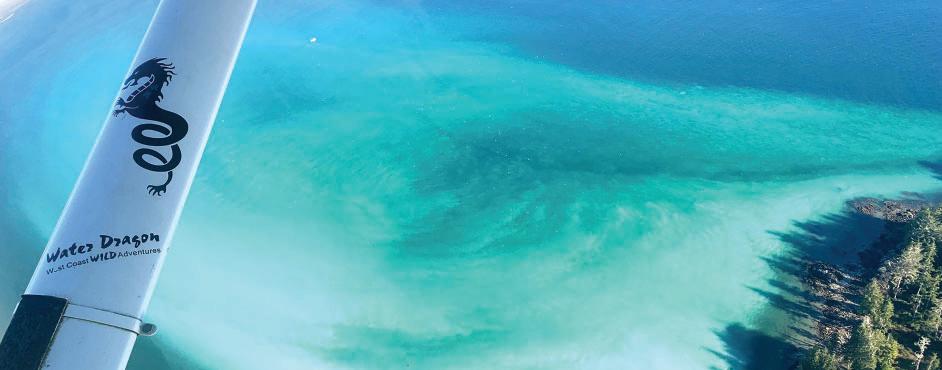
IMAWG/DFO photo
Aerial photos show the herring spawn spreading on coastal parts of the west coast of Vancouver Island on March 2. This photo is from the Island Marine Aquatic Working Group’s Pacific Salmon Observation page.
“These spawns were relatively small in nature. We also observed approximately 30 whales in the area.”
Spawn was also seen in Tla-o-qui-aht territory around Stubbs and Wickaninnish Islands near Tofino.
“All the spawns we observed were small in nature but was good to see them back in our nation’s territory,” said Jackson.
The spawn enabled Nuchatlaht to continue their annual collection of herring roe, distributing to members.
“We had one last week for about three days in our area,” said Judae Smith of Nuchatlaht’s fisheries department.
The First Nation soaked 12 trees for two to three days, collecting the beloved kʷaqmis when the branches became thick with herring eggs.
“We harvested a couple of half totes on the trees,” added Smith, noting that
they gathered so much kʷaqmis that the Nuchatlaht were able to share with neighbouring Ehattesaht and Ka:’yu:’k’t’h’/ Che:k’tles7et’h’ First Nations.
By the morning of March 2 the spawn had also spread to Yuquot at the southern shore of Nootka Island, reported resident Darrell Williams.
After a period of meagre herring stocks, recent years have brought encouraging signs on the west coast of Vancouver Island. The region’s biomass, which is an assessment model used to calculate the collective weight of the fish, was under 15,000 tonnes in 2018, but this rose to as high as 65,500 tonnes in 2024, followed by 62,160 last year and 55,432 tonnes expected for 2026.
Reproductive modelling has shown an even more marked rebound, according to the herring spawn index, which is the
sum of various data collected to measure spawning. In 2015 the spawn index was under 12,000 tonnes, but this rose to over 86,300 tonnes in 2024 – the highest index tracked on the west coast of Vancouver Island since the mid 1970s, a time when the species was challenged by extensive commercial fisheries. Last year the spawn index was 59,800 tonnes, while 47,525 is forecast for 2026.
The region has not sustained a commercial herring fishery since 2005, which was followed by years of the biomass wallowing under 10,000 tonnes. Seign and gillnet fleets are still not permitted off the Island’s west coast, but in 2025 a limited commercial row on kelp harvest began, with an initiative by the Ha’oom Fisheries Society. The commercial roe on kelp harvest continues this year, which opened Feb. 27.

Medical health officer stresses need for regulated supply – but this isn’t direction that B.C. appears to be taking
By Denise Titian Ha-Shilth-Sa Reporter
The BC Coroners Service has release preliminary information that shows 1,826 lost their lives to unregulated drug toxicity in 2025, compared to 2,315 deaths in 2024. That represents an approximate 21 per cent decrease – a significant improvement, if the numbers hold.
While the news is indeed positive, the reasons for the downward trend are not clear. Are harm reduction measures working? If so, which ones? Are illicit drugs less toxic in 2025 than in previous years? Are fewer people using illicit drugs?
“While still representing a profound loss of life, this reflects an approximate 21 per cent decrease from 2024 (2,315), and the first time since 2020 that deaths due to unregulated drug toxicity have totalled fewer than 2,000 people within a year,” said the B.C. Coroners Service in a Feb. 19 statement.
The Ministry of Public Safety and Solicitor General notes that the Fraser and Vancouver Coastal Health Authorities recorded the highest number of unregulated drug deaths in 2025 – not surprising as the City of Vancouver is the most densely populated in British Columbia.
B.C. Medical Health Officer Dr. Charmain Enns is cautiously optimistic about the news, saying she hopes that the downward trend is sustained over time. She points out that since the public health state of emergency was declared in 2016, 18,000 people have died from illicit drug overdoses.
“This is still a profound loss of life that shouldn’t be happening and we should be outraged by this,” she stated.
In 2019 Dr. Enns noted that the situation was improving with harm reduction measures in place at the time, and it seemed that the illicit drug supply was less toxic than in previous years. People were less isolated and could use safe consumption sites in their cities.
But then the 2020 pandemic happened, forcing people to isolate indoors for an extended period of time. The number of deaths began steadily increasing.
“People were disconnected and the drug supply became very toxic and things got worse,” said Enns.
The year 2025 is the first time the number of opioid deaths has declined since 2019, but Enns says even with that 21 per cent decline we are still not at the level

A small bag like one commonly used to carry illicit drugs lies in Port Alberni’s Dry Creek Park.
we were before the pandemic.
While the issue of addiction and overdose deaths is complex, it is happening all over North America and the number one factor is the toxicity of the illicit drug supply.
“Because it is unregulated, it is like a cocktail of chemicals and poisons,” Enns noted.
There is no way of knowing, with confidence, if the street drug one consumes is safe.
“And (without safe supply) we cannot be confident that the downward trend will continue,” she added.
The now widespread availability of Naloxone, which reverses the effects of opioid intoxication, has been a major factor in saving lives. Dr. Enns said an
estimated 40,000 lives have been saved with Naloxone since 2016.
On Vancouver Island, greater Campbell River joins Vancouver and Terrace on the list of highest rates of suspected unregulated drug deaths.
Fentanyl and its analogues continue to top the list of deadly poisons detected during expedited testing of decedents, according to the BC Coroner. Preliminary numbers show 69 per cent of fatalities had some form of fentanyl in their systems. The numbers are subject to change as more toxicological testing results come in.
But the substances used to make illicit drugs is always changing with powerful sedatives meant for veterinary use added to the mix. Naloxone does not reverse the

effects of those sedatives, but Dr. Enns advises that Naloxone should be administered in case of an overdose because it works for opioids that are probably in the mix.
Alarmingly, the number of youth (18 years and younger) deaths suspected to be caused by drug toxicity increased by nearly 20 per cent last year, with 26 deaths in 2025 compared to 21 youth deaths in 2024.
“A whole generation of people are being lost and that is so profound,” said Enns. “What does this mean for children and families?”
Dr. Enns praised the efforts of the frontline harm reduction workers for keeping people connected and helping to protect lives. She believes that the answer to turning things around is to destigmatize those in addiction along with the provision of a safe, regulated drug supply. But that is not on the horizon for British Columbians.
In 2023 the province launched a pilot program to decriminalize people who use drugs. Those in possession of small amounts of drugs, less than a half a teaspoon, according to Enns, would not be criminally charged. It was intended to make it easier for people struggling with addiction to come forward for help.
The idea was to remove the fear of criminal drug possession charges for those reaching out for help. Instead, the problem became more visible as drug use moved out into the open.
As of February 1, 2026, possession of small amounts of illicit drugs (opioids, cocaine, methamphetamine, MDMA) is illegal again. The B.C. government stated the pilot did not deliver the intended results, citing difficulties in measuring if it connected people to care and high public concern regarding “street disorder” and public consumption.
Enns says while the decriminalization effort failed, there are lessons to be learned from it. She said it was never fully implemented, and modifications were made along the way.
There are also not enough recovery beds, but it’s better than it was in 2016.
“We can’t take our foot off the gas in terms of intervention,” said Enns. “The ultimate answer is a regulated supply that’s controlled and managed, so people know what they’re getting.”
That decision she said, belongs to the provincial and federal governments.

Ha-Shilth-Sa newspaper is published by the Nuu-chah-nulth Tribal Council for distribution to the members of the contributing First Nations, as well as other interested groups and individuals.
Information and original work contained in this newspaper is protected by copyright and may not be reproduced without written permission from:
Nuu-chah-nulth Tribal Council P.O. Box 1383, Port Alberni, B.C. V9Y 7M2.
Telephone: (250) 724-5757
Fax: (250) 723-0463
Web page: www.hashilthsa.com facebook: Hashilthsa Ntc
Non-Nuu-chah-nulth, Ahousaht, Ehattesaht,Toquaht and Ucluelet members are subject to a yearly subscription fee of $40 in Canada, $50 in the US and $60 for overseas. Payable to the Nuu-chah-nulth Tribal Council
Manager/Editor/Reporter
Eric Plummer (Ext. 243) (250) 724-5757 Fax: (250) 723-0463 eric.plummer@nuuchahnulth.org
Reporter
Denise Titian (Ext. 240) (250) 724-5757 Fax: (250) 723-0463 denise.titian@nuuchahnulth.org
Reporter
Nora O’Malley (604) 353-8488 nora.omalley@nuuchahnulth.org

Audio / Video Technician
Mike Watts (Ext. 238) (250) 724-5757 Fax: (250) 723-0463 mike.watts@nuuchahnulth.org
Editorial Assistant
Holly Stocking (Ext. 302) (250) 724-5757 Fax: (250) 723-0463 holly.stocking@nuuchahnulth.org
Please note that the deadline for submissions for our next issue is Mar. 13 2026
After that date, material submitted and judged appropriate cannot be guaranteed placement but, if material is still relevant, will be included in the following issue.
In an ideal world, submissions would be typed rather than hand-written. Articles can be sent by e-mail to holly.stocking@nuuchahnulth.org (Windows PC).
Submitted pictures must include a brief description of subject(s) and a return address.
Pictures with no return address will remain on file. Allow two - four weeks for return.
Photocopied or faxed photographs cannot be accepted.
Although we would like to be able to cover all stories and events, we will only do so subject to:
- Sufficient advance notice addressed specifically to Ha-Shilth-Sa.
- Reporter availability at the time of the event.
- Editorial space available in the paper.
- Editorial deadlines being adhered to by contributors.
Ha-Shilth-Sa will include letters received from its readers. Letters MUST be signed by the writer and have the writer’s full name, address and phone number on them. Names can be withheld by request. Anonymous submissions will not be accepted. We reserve the right to edit submitted material for clarity, brevity, grammar and good taste. We will definitely not publish letters dealing with tribal or personal disputes or issues that are critical of Nuu-chah-nulth individuals or groups. All opinions expressed in letters to the editor are purely those of the writer and will not necessarily coincide with the views or policies of the Nuu-chah-nulth Tribal Council or its member First Nations. Ha-Shilth-Sa includes paid advertising, but this does not imply Ha-Shilth-Sa or Nuu-chah-nulth Tribal Council recommends or endorses the content of the ads.

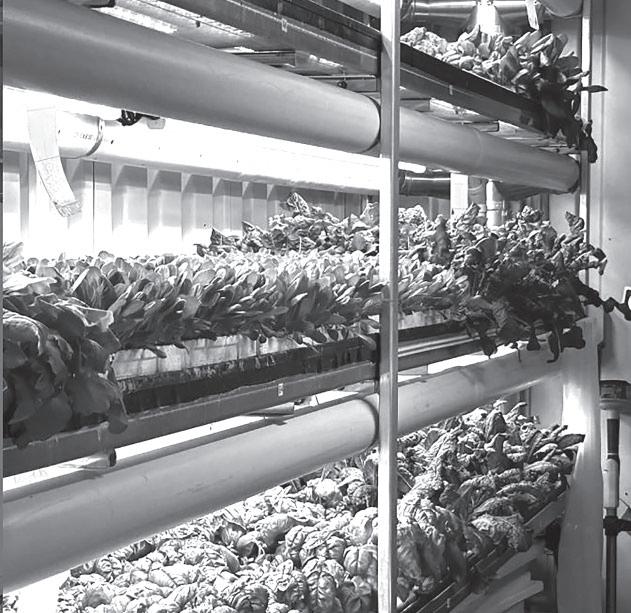
A hydroponic vertical system is already being built and will be installed in Anacla
By Denise Titian Ha-Shilth-Sa Reporter
Anacla, BC – Living in a small, remote community can make it hard to get fresh fruit and vegetables in a pinch. Add to that road closures due to wildfires or storms, making access to grocery stores tough for residents of Anacla and Bamfield. It also makes bringing in fresh produce equally difficult for the local grocer.
Huu-ay-aht Elected Chief Sayaacath (John Jack) said that the nation runs one small grocer in Bamfield and if it doesn’t have what you need, you’d have to drive 90 minutes to Port Alberni to the nearest grocery store.
“Despite the road being improved, we’re still far removed from any sources of fresh food. And that’s when we saw an opening for working with an economic partner on creating vertical farms that would allow us to grow produce in the area using new technology that would bring healthier food (to the community),”
Jack told Ha-Shilth-Sa.
To address this need, Huu-ay-aht First Nations has turned to a company called Growcer, and with funding from the Large-Scale Food Infrastructure Fund and the Capital and Innovation program, the nation will purchase a system that grows produce with a hydroponic vertical farming technology.
The hydroponic vertical system is already being built and will be installed in a clearing behind the House of Huu-ay-aht.
Jack says that the system has a smaller footprint than a traditional greenhouse, but it will be taller. The vertical growing system can be used in harsh climates.
Hydroponics is a method of growing plants without soil, using mineral nutrient solutions in a water solvent instead.
Special lights are used to grow fresh food like lettuces, leafy greens, herbs and brassicas (broccoli, cauliflower, cabbage, turnips, brussels sprouts).
What this means for locals is they will have access to fresh, nutritious food grown in the community by two of their citizens who have been trained to operate the facility. The system can grow food year-round, regardless of the weather.
“While this initiative is fundamentally a social-economic development project aimed at increasing reliable access to
photo
The Growcer Modular Vertical Farm system is made in Canada and is easily expandible. Land in Anacla is being prepared to receive the system. Once installed, two Huu-ay-aht citizens can begin growing food for the nation beginning in late spring or over the summer. Pictured is a Growcer system already operating elsewhere in Canada.
fresh, healthy foods, our goal is to ensure it remains financially sustainable and does not place an ongoing burden on the nation’s resources,” stated Huu-ay-aht First Nations in their newsletter.
The Growcer Modular Vertical Farm system is made in Canada and is easily expandible. The land in Anacla is being prepared to receive the system. Once installed, two Huu-ay-aht citizens can begin growing food for the nation beginning in late spring or over the summer, according to Jack.
According to their website, Growcer partners with Indigenous communities to create local food systems that promote food sovereignty, economic growth, and environmental stewardship.
“You will gain the tools for year-round, climate-resilient agriculture to reclaim control over your food supply and create a lasting impact for generations to come,” states the Growcer website.

Ha-Shilth-Sa belongs to every Nuu-chah-nulth person including those who have passed on, and those who are not yet born. A community newspaper cannot exist without community involvement. If you have any great pictures you’ve taken, stories or poems you’ve written, or artwork you have done, please let us know so we can include it in your newspaper. E-mail holly.stocking@nuuchahnulth.org. This year is Ha-Shilth-Sa’s 52nd year of serving the Nuu-chah-nulth First Nations. We look forward to your continued input and support. Kleco! Kleco!
Jack looks forward to having healthier food brought closer to the community. Having food grown locally means the people will receive produce at its freshest.
“The idea is that we are going to be creating a source of this food locally, and so the selling of that food will likely be through already existing markets,” said Jack.
These existing markets include a grocery store and restaurant that Huu-ay-aht runs in Bamfield. Jack says the nation could consider other types of distribution systems to help make the venture sustainable.
Two Huu-ay-aht citizens have gone to Alert Bay for training to operate the system. Canadian First Nations that are utilizing the Growcer systems including Squamish and Nisga’a in British Columbia, creating employment and providing fresh, healthy food grown at home.
The advertiser agrees that the publisher shall not be liable for damages arising out of errors in advertisements beyond the amount paid for space actually occupied by the portion of the advertisement in which the error is due to the negligence of the servants or otherwise, and there shall be no liability for non-insertion of any advertisement beyond the amount paid for such advertisements
Salmon Allocation Policy’s ‘common property resource’ is scrutinized as DFO must follow the Ahousaht ruling
By Eric Plummer Ha-Shilth-Sa Editor
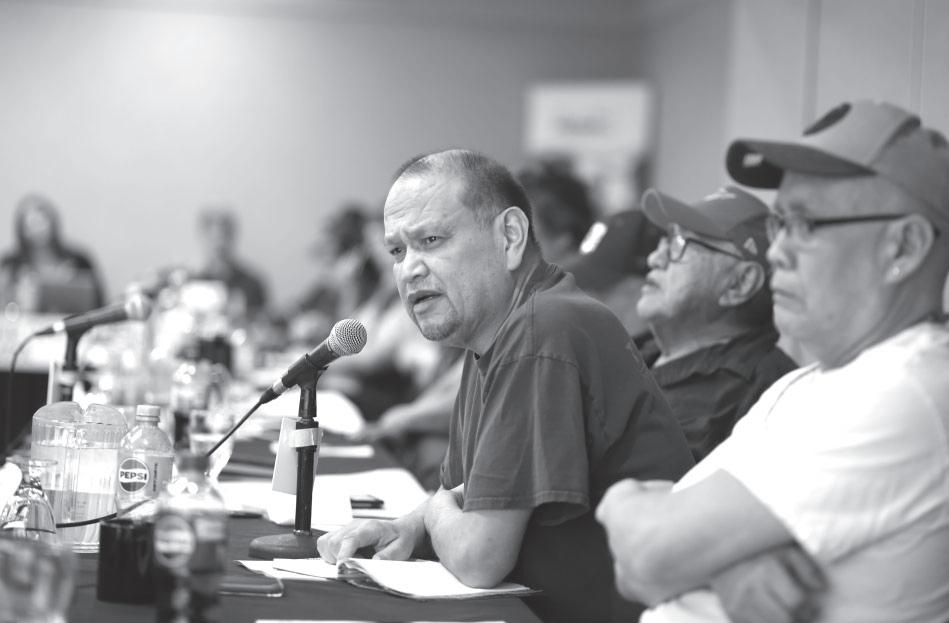
Campbell River, BC - Nuu-chah-nulth representatives are appealing for tensions to ease before this year’s recreational fishing season opens, as a campaign continues to warn anglers that their right to fish is “under threat” by upcoming revisions to B.C.’s Salmon Allocation Policy.
The issue arose during a recent Council of Ha’wiih Forum on Fisheries, which was hosted by the Nuchatlaht First Nation in Campbell River Feb. 18 and 19 on the traditional territory of the Wei Wai Kum and We Wai Kai. During the meeting Nuu-chah-nulth delegates shared concerns about messaging currently coming from sports fishing advocacy organizations.
“The public fishery in B.C. is under threat,” states a campaign being promoted by the Sports Fishing Institute of B.C. and the B.C. Wildlife Federation. “Extreme policy” changes that are actively being explored by Fisheries and Oceans Canada could severely limit the public’s ability to catch salmon, says the Fishing Rights campaign.
“Under the proposed changes, the public would lose priority not only to recognized First Nations fisheries but also to all commercial fisheries,” warns the material. “The public fishery would come last, being reduced to seeking ‘leftovers,’ and YOU would have less predictable opportunities and less time on the water.”
This messaging has ignited a conflagration of online rhetoric against First Nations, according to Nuu-chah-nulth participants at the recent fisheries forum.
“We need Canada to step up to do its part to counter all this misinformation, the bigotry that’s been allowed run rampant,” said Remi Tom from the Tla-o-quiaht First Nation.
“We’re the recipients of that racism and hatred, so we’re asking the ministry and fisheries to help us educate the public that we have rights, that we have a priority right and that we are not trying to do away with the recreational fishery,” added Nuu-chah-nulth Tribal Council President Cloy-e-iis, Judith Sayers. The Ahousaht judgement
The issue has arisen as the federal government prepares to revise the Pacific Salmon Allocation Policy. In place since 1999, the policy guides how much of each salmon species can be harvested by various groups in B.C. According to the policy, the conservation of salmon
species is the highest priority, followed by the right of First Nations to catch the fish for food, social and ceremonial purposes, as well as harvesting according to treaty obligations. For chinook and coho salmon, the recreational fishery is next, while commercial fleets are prioritized over sports fishers in their access to pink, sockeye and chum.
But this needs to change, according to a 2018 ruling from the B.C. Supreme Court. The judgement found that the Ahousaht, Ehattesaht/Chinehkint, Hesquiaht, Tla-o-qui-aht and Mowachaht/ Muchalaht First Nations were unjustifiably infringed upon by the Salmon Allocation Policy in their ability to catch and sell fish from their own territories.
This means that the relatively small-scale commercial T’aaq-wiihak fishery should be given a higher priority to exercise this right within nine miles of the five nations’ home shores.
Many sports fishers expect that this direction to change the policy could cut into the rec catch, which has by far accounted for the largest portion of the chinook harvest off the west coast of Vancouver Island. According to the most recent catch numbers collected by the Pacific Salmon Commission, in 2024 the
sports fishery caught 47,656 off the west coast of Vancouver Island – nearly half of the 96,128 total chinook caught in the region that year. Commercial troll fleets caught 24,154 chinook, while Taaq-wihaak harvested 17,267, Maa-nulth treaty nations caught 3,506 and another 3,545 were taken in for First Nations food, social and ceremonial purposes. Despite the court ruling, the sports fishing campaign argues that the sector has the greatest economic value to British Columbia, supporting thousands of jobs as coastal communities offer tourism drivers like guide operations and fishing derbies. The DFO reports that over 370,000 recreational fishing licences were issued in 2023 – the vast majority held by B.C. residents. In that same year people spent $604 million on sports fishing in B.C., with 61 per cent of this going towards salmon fishing.
‘Common property’
Since the Ahousaht decision came in 2018, DFO has been directed to update its Salmon Allocation Policy. Years of meetings followed, engaging a working group with representatives from the various sectors tied to the resource.
In December DFO released a discussion paper outlining how things have progressed. The policy’s identification of salmon as a “common property resource” has been a major sticking point; First Nations want this reference removed due to concerns that it is a “colonial concept” that harms Indigenous communities, salmon and the surrounding ecosystem.
The Sports Fishing Advisory Board recommends keeping the “common property” language.
“Salmon fishing must remain an assured common law right, not a “privilege” to be granted or denied,” states the Fishing Rights campaign. “Removing the language defining salmon as common property would create uncertainty, plus a lack of clarity and transparency regarding intentions for future ownership, management, and public access to salmon.”
But this goes against the concept of a chief’s Ḥahahuułi, a foundation that governed Nuu-chah-nulth society for millennia.
“I, as a First Nation person, owner of the resources and the land that I live in, watch all the commercial fisheries go by the bay, while I’m told that I can’t fish,” commented Mowachaht/Muchalaht Tyee Ha’wilth Mike Maquinna during the recent fisheries forum.
“We need more information out there,” commented Tla-o-qui-aht Fisheries Manager Andrew Jackson. “I’d hate to see some sort of confrontation on the water.”
Alice Cheung is the regional director of Policy and Economic Analysis for the DFO’s Pacific Region. Her department has “been getting thousands and thousands and thousands of emails” about the Salmon Allocation Policy.
“Our response in all of them include reaffirmation of why the SAP needs to be revised,” said Cheung on Feb. 19 while presenting to the Nuu-chah-nulth delegates. “That includes, front and centre, the Ahousaht decision, front and centre the need to acknowledge and put in place the priority right of First Nations. That is in all of our responses.”
First Nations participating to the SAP discussions have recommended more “regional allocation boards” that can make decisions on catch numbers at a more local level. This is already happening on the Somass River and Alberni Inlet, where the Area 23 roundtable meets weekly through the fishing season to discuss the most recent monitoring data and adjust the catch limits and fisheries openings.
It’s a collaborative management process shared by representatives from Tseshaht, Hupacasath, the Maa-nulth treaty nations, the sports fishery and commercial fleets, says Tseshaht Councillor Les Sam.
“We work in harmony quite well. We do have our disagreements, but we manage the stocks and escapement really quite well and we’re hopeful that it continues like that,” he said during the fisheries forum. “I think DFO needs to do the right thing, stand up and showcase things like the Area 23 table and the good it’s doing.”
The DFO has scheduled a series of committee meetings in March, but it has not been specified when the next Salmon Allocation Policy will be completed.
More salmon fishing restrictions could come this year to help the endangered Southern Residents killer whales
By Eric Plummer Ha-Shilth-Sa Editor
Campbell River, BC - Commercial and recreational fishers could be facing more of a squeeze this year, as DFO considers adding to restrictions on salmon harvesting in areas used by southern resident killer whales.
Listed as endangered under Canada’s Species At Risk Act, the number of southern resident orcas is currently believed to be 74, migrating in three pods throughout the coast of British Columbia, Washington and Oregon. During the warmer months the species primarily eats chinook salmon, leading Fisheries and Oceans Canada to consider more protections for areas off the west coast of Vancouver Island to enable the struggling orcas to forage.
The potential salmon fishing closures were presented to the Nuu-chah-nulth Council of Ha’wiih Forum on Fisheries, which was hosted by the Nuchatlaht First Nation in Campbell River in mid-February.
“Part of it is trying to reduce the competition between commercial and recreational fishers,” said Johanna Withers, a DFO marine mammal advisor, to the forum on Feb. 19. “We are aiming to create spaces where there could be more of their prey for them and less of that disturbance that can prevent them from accessing that prey.”
Besides threats to the chinook stocks that they feed on, other challenges for the southern resident orcas include contaminants from passing vessels as well as the physical and acoustic disturbances from boats, as this can disrupt the auditory sounding methods that the killer whales use to navigate and locate prey.
“The chinook closure piece was also looking at specific ways to provide access to the southern resident killer whale for their preferred prey, which predominantly is a couple specific stocks of chinook in those areas,” added Heather Brekke during the DFO presentation.
In recent years interim sanctuary zones have been established off North Pender Island and Saturna Island. No boats are permitted in these protected areas. There is also a speed reduction requirement of 10 knots around Swiftsure Bank, a nutrient-rich area located 15 miles west of where Nitinaht Lake meets the Pacific Ocean. These protection measures apply June 1 – Nov. 30.
Since 2019 salmon fishing has also been prohibited in what DFO calls “key foraging areas” for southern residents off

Fisheries and Oceans Canada photo
Listed as endangered under Canada’s Species At Risk Act, the number of Southern Resident orcas is currently believed to be 74, migrating in three pods throughout the coast of British Columbia, Washington and Oregon.
the southern coast of Vancouver Island. These include sections at the mouth of the Fraser River from Aug. 1 – Sept. 30, the Gulf Islands May 1 – Nov. 30, parts of the Juan de Fuca Strait Aug. 1 – Oct. 31 and sections around Swiftsure Bank July 15 – Oct. 31.
This year the Juan de Fuca and Swiftsure areas could have their salmon fishing closures start as early as June 1, if DFO decides to proceed with further measures to protect southern resident habitat. Also being considered is increasing the minimum vessel distance to 1,000 metres from the endangered orcas. Currently the limit is 400 metres along southern Vancouver Island, 200 metres elsewhere.
In addition to this is a proposed closure for catching any chinook off Vancouver Island’s southern coast, from Ucluelet on the west to the Gulf Islands - not including the Alberni Inlet and Somass River.
Proposed to be in place June 1 – Aug. 31, this chinook closure would replace the existing prohibition on retaining chinook in the region, meaning that fishers were previously required to throw the king salmon back if the species ended up on their hooks or in nets.
These current and potential salmon fishing restrictions do not apply to First Nations’ harvest for food, social and ceremonial purposes, as they are intended to limit the commercial and recreational fisheries.
With the decision on the measures now


added Ahousaht member Andrew Webster, who has fished commercially for over 50 years.
Despite increased measures in recent years to protect their habitat, southern resident killer whales have shown little sign of a rebound, as the current number of 74 is close to a historic low since consistent population monitoring started in the early 1970s. After recording a count of 71 in 1974, the number gradually rose to 98 in 1995, according to the US-based Marine Mammal Commission. After falling for a few years, the most recent population peak was 89 in 2006.
This sharply contrasts with the Northern Resident killer whale, also a salmon eater that has steadily grown since the early ‘70s to over 300 between southeast Alaska and north Vancouver Island’s coasts.
The marine-mammal-eating Bigg’s killer whale is also more stable with an estimated population of 400, ranging from Alaska to northern California.
in the hands of Fisheries Minister Joanne Thompson, any further restrictions bring the risk of adding fuel to a fire already burning in the West Coast fishing circles. This winter concerns have flared up amongst sports fishing groups, which face potential changes to their harvest limits as DFO undergoes a rewriting of the Salmon Allocation Policy. More restrictions off the Island’s southwest coast will create pressure elsewhere as boats look for places where they can legally fish, warned Nuu-chah-nulth representatives during the fisheries forum.
Tseshaht Councillor Les Sam cautioned that extending the salmon closures will “put another river at risk to feed the whales.”
“What you’re doing is congesting all of the fishermen right into the mouth of the Barkley Sound,” he said. There’s going to be a huge number of extra boats that are targeting our chinook going up the Somass.”
“All you’re going to be doing is relocating the sports fishery to the north island,”
Some blame the health of chinook for the Southern Resident orca’s meagre numbers, but the salmon stocks that southern residents feed on appear to have shown some improvement, according to a recent report from the Pacific Salmon Foundation. Its 2025 State of the Salmon report cites a 45 per cent increase in Fraser chinook and a 32 per cent rise in chinook stocks off the west coast of Vancouver Island compared to long-term averages.
“[S]outhern populations – west Vancouver Island, east Vancouver Island and mainland inlets, central coast and Fraser – are well above long-term averages,” states the salmon report.
While long-term solutions for the southern resident killer whale remain up for debate, Andy Webster wonders where the people who live off the ocean fit into these plans.
“We’re finding it harder and harder to make a living on the water because of all the pressures we face,” said the lifelong fisherman. “Salmon have been mismanaged to the point where killer whales are going to take priority over us. I find that really unacceptable.”
Thunderbird Spirit Water gains a nomination at the Vancouver Island Business Excellence Awards in February
By Sam Laskaris Ha-Shilth-Sa Contributor
Port Alberni, BC – Accolades and contracts are pouring in for Thunderbird Spirit Water.
The company offers both still and sparkling water products, and is 100 per cent owned and operated by the Uchucklesaht Tribe, a Nuu-chah-nulth First Nation from southwest Vancouver Island.
Thunderbird Spirit Water was a nominee for the best Indigenous business at the Vancouver Island Business Excellence Awards last month.
Nanaimo’s Petroglyph Development Group ended up winning in this particular award category.
“We were pretty thrilled to be nominated for it,” said Andrew Silver, who works in sales and promotions for Thunderbird Spirit Water.
Thunderbird was one of four nominees in its category.
Though its products existed for years beforehand, Thunderbird Spirit Water’s official launch was in mid-2024, when it started being sold in various stores.
Thus, Silver said the business is still relatively new. But many positive things are happening for the company.
“Currently we’ve been selling to different resorts and spas and restaurants up and down the island and a few on the mainland,” Silver said. “And we’ve just signed a deal with Sobeys to go into their Thrifty (Food) stores on the island. So, that’s going to be pretty big for us. And then if that takes off, then we’ll go into the Thriftys on the mainland as well.” Thunderbird Spirit Water has also gone
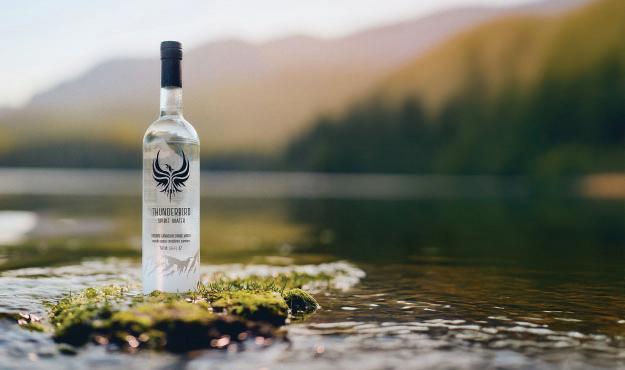
abroad.
“We do some international shipping,” Silver said. “We’ve had some large orders from China, for example.”
Silver said the business does not release its sales figures. But he confirmed a substantial order was placed from China in late 2025.
Thunderbird Spirit Water is currently sold in bottles, bags and boxes.
“The canning line is coming soon,” Silver added.
Company officials are waiting on a part from Italy that will be utilized on its canning line at its plant in Port Alberni.
“We’re hoping the part is going to come in the first or second quarter (of the year),” Silver said.
Silver is also rather excited that the company could soon have some other international markets soon.
“We’ve had some some interests, just no sales yet from other Asian markets as well,” he said.
Silver said strained relations between Canada and the U.S. is not affecting any possible deals south of the border.
“It’s just more of a negotiation between our company and the companies that are looking to carry us,” he said.
One thing that is known is that Thunderbird Spirit Water is held in high regard. That’s based on the company’s successes over the years at the annual global Taste & Design Awards, the equivalent of The Oscars for water products.
“There’s water sommeliers and they judge water samples from premium water companies around the world,” Silver said. “And we’ve come away from it with golds and silvers for our water quality.”
Silver said the company entered the
Taste & Design Awards to gauge its water quality even before the business was officially launched. Over the years it has entered the super low mineral content category for sparkling and still water.
Thunderbird officials would also welcome the opportunity to expand its sales to other continents.
“We’d like it to be international,” Silver said. “One of the things that we’re really excited about is this water and the land the Uchucklesaht people have been nourished by it for generations. And they are excited and happy to be sharing it with everyone.”
For some, Thunderbird’s prices might seem costly. A 750-ml bottle costs several times more than a similar-sized bottle from other brands.
“I think there’s always going to be feedback from people when you get a premium product,” Silver said. “But it’s no different than you can go and buy a bottle of wine. You can get a bottle of wine for $7.99. Or you can spend $20,000 on a bottle of wine, depends what you’re looking for, what you’re after. We offer a really high-end product and there is considerable expense in actually getting it from where it is and bringing it to the plant.”
The Thunderbird is deemed a majestic creature in Uchucklesaht tradition and lives in a nest in the mountains surrounding Hucuktlis (Henderson) Lake. The Thunderbird is believed to be the guardian and protector of the First Nation’s lake and its supply of drinking water.
Thunderbird Spirit Water comes from a natural artesian spring source nestled in the mountains on Uchucklesaht lands.

With mill closures, old-growth deferrals and tarrifs, B.C.’s forestry wades through challenging times, leading some Fir
By Nora O’Malley Local Journalism Initiative Reporter
Jordan River, BC – At the mouth of Jordan River in Pacheedaht First Nation territory on Vancouver Island, British Columbia, the tide is pushing. Heat from a February sun warms the face as sets of friendly waves roll in under the backdrop of the Olympic Mountains. Parking at the day-use area of this regional park is squeezed on this fine Friday away from the screen.
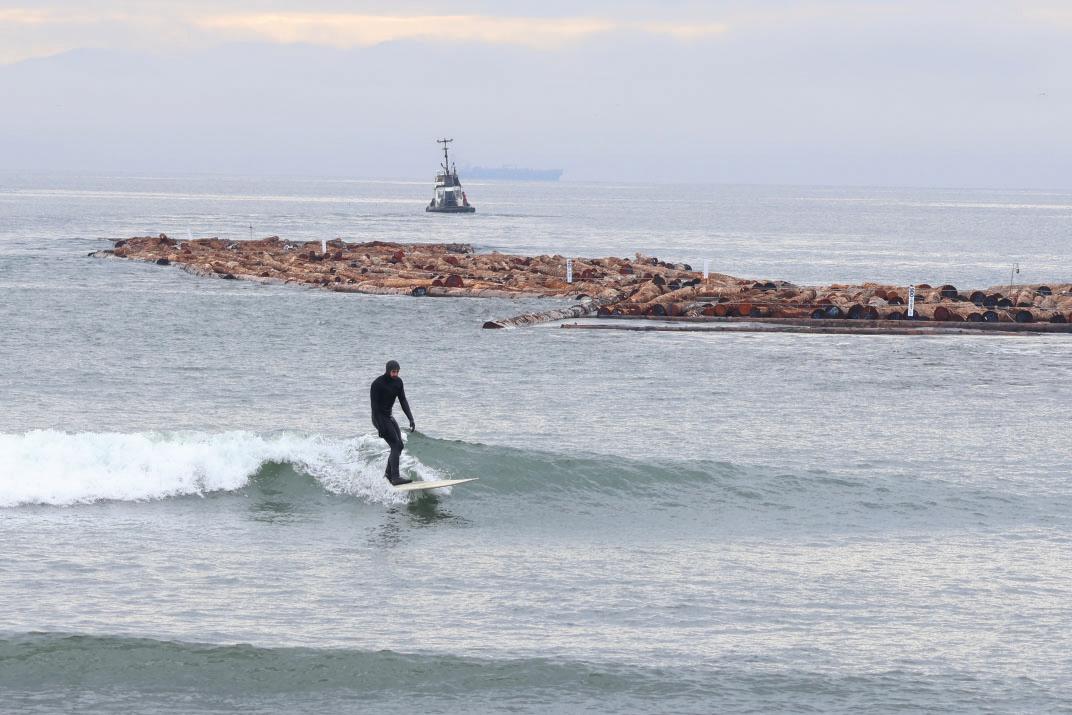
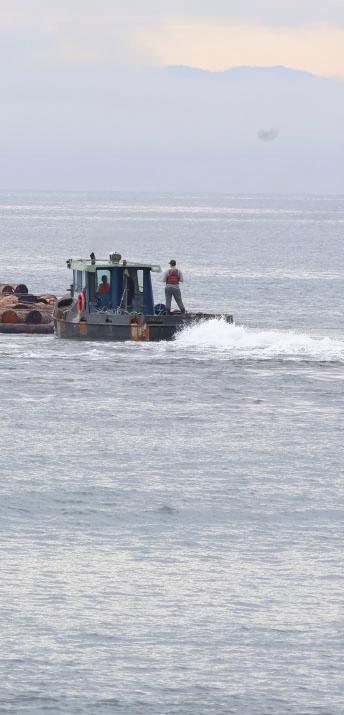
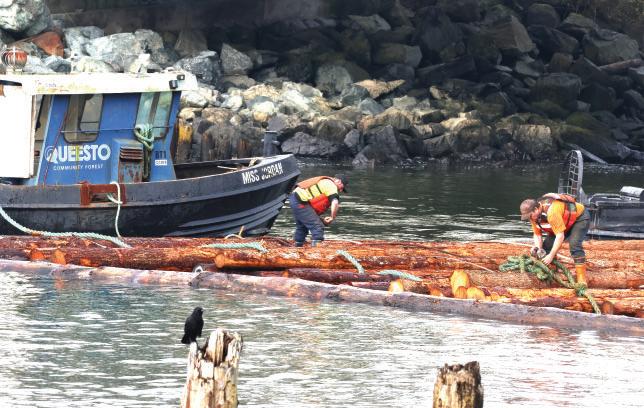
A tugboat called Miss Jordan cruises by a bob of surfers, dragging a line of thick rope towards a raft of floating logs, otherwise known as a log boom. Some of the surfers catch a wave towards the cobble shoreline and exit the water.
“They’ll run right over us if we don’t get out of the way,” says a stand-up paddler.
“But it is a nice day for it,” he concedes. The discord between B.C.’s forest industry and B.C.’s tourism industry was ever apparent as surfers rode peeling waves while the Jordan River log boom was towed through the line-up and then dwindled into the horizon.
Many people in British Columbia, including those living in remote First Nations communities, still rely on forestry revenue to keep the lights on. But as the forestry industry continues to wade through economic uncertainty, outdated forest legislation and - in some regions - a declining fibre supply, one can’t help but wonder: Could shifting gears to tourism pay the bills?
“I think about where are we going to be in 50 years. Or 100 years. I think about what is this world going to look like,” said Paula Amos, chief marketing and development officer for Indigenous Tourism BC (ITBC). Amos is of Hesquiaht and Squamish Nation descent. Born and raised in Nuu-chahnulth territory on the west coast of Vancouver Island, she currently resides in North Vancouver and has been working for ITBC for over two decades.
“We watched the fishing industry decline to a scary, scary point. And we depend on that food. We as Nuu-chah-nulth need that food sovereignty. Now we’re watching the forestry decline. We are in a place where we need to look at other options and have a new story. I think tourism is a great option for that story,” said Amos.
In the last five years, Amos says Indigenous tourism has seen significant growth. In the resort municipality of Tofino, Ahousaht Ha’wiih (hereditary chiefs) launched the eco-tourism business Ahous Adventures in 2023 and, that same summer, Tla-o-qui-aht expanded their business portfolio with the opening of Tsawaak RV Resort and Campground adjacent to Tin Wis Resort.
Most recently, on the other side of Vancouver Island in Campbell River, Wei Wai Kum First Nation announced the acquisition of a majority interest in the Campbell River Adventure Tours Group, which includes Campbell River Whale Watching and Wildcoast Adventures.
“This acquisition marks the transition of one of the region’s premier adventure providers into an Indigenous-owned business and is a major step in a broader economic sovereignty strategy,” said Wei Wai Kum First Nation in a news release.
“It secures a robust revenue stream to support community programs, infrastructure, and social services. More importantly, by owning a leading marine ecotourism operator, the Nation reasserts its presence and guardianship over its traditional marine territory, ensuring operations align with Indigenous stewardship values,” they said.
With over 400 Indigenous tourism-related businesses open in 2023 supporting 9,962 jobs, Amos says First Nations are just “scratching the surface” of an industry rife with opportunity.
“Indigenous tourism is more than just building economies and jobs,” she said.
“It’s about Indigenous people using tourism as an avenue to educate the world who we are as First Nations people, as Indigenous people. It’s a way for us to get out on the land in a new way. It’s connecting youth and elders and sharing the knowledge.”
The tourism industry contributed $9.7 billion to the provincial gross domestic product (GDP) in 2023, according to government statistics - $4 billion more than forestry. Shifting to tourism doesn’t necessarily mean shifting to serving patrons, says Amos, with more people finding ways to enter the supply side of the industry.
Indigenous-owned Sea Wench Naturals supplies non-chemical hair and body products to resorts, short-term rentals and retail shops throughout B.C. Originally founded by Sharon Whalen and Chris Tay-
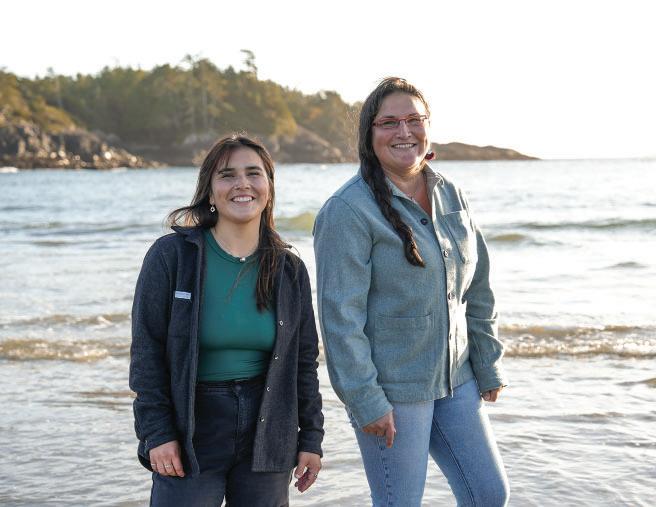
lor, mother and daughter team Quoashinis (Cosy) and Laterra Lawson took over the Tofino-based business on Jan. 1, 2025.
“We’ve grown up with Sea Wench from the very beginning. It’s not new to us by any means. The ownership is new to us, but its products and its way of being are not new to us at all,” said Cosy.
She said the tourism industry has an economic “waterfall effect” on small businesses like Sea Wench.
“These businesses have the ability to uplift the community behind them,” she said. “We had a person that emailed us last week and they said, ‘Every time I hop in the shower and use your body wash it makes me want to come back to Tofino.’” Cosy and Laterra encourage others to find something they are passionate about and share it.
“No matter where you are, people will find you. Whether it be guiding or even just making food out of your house for hikers going by, if it’s consistent and it’s there, the story will travel and it will continue to grow. You have to have patience,” they
said.
‘Tourism and forestry can work hand in hand’
The Jordan River log boom was destined for the Fraser River where the privatelyowned Richmond Plywood will turn them into plywood to be sold to local lumberyards for building houses, says tree farm licence (TFL) 61 manager Angus Hope. The harvest tenure for TFL 61 is held by Pacheedaht Andersen Timber Holdings (PATH). PATH purchased the relatively small 20,000-hectare Jordan River TFL tenure from Western Forest Products in 2010.
“We probably do a couple of tows a month. We are super-duper weather dependent. It’s challenging because you’re dealing with tide and wind and swells,” said Hope.
He laughed when asked to talk about how the forestry operation is doing.
“That can be a very, very, very long answer,” he says. “There are a lot of challenges.”
From the “glacial pace” of government to the high cost of getting the logs to market, Hope says the status quo just doesn’t make sense anymore.
“A lot of the old tenures for tree farm licences have been around for a long, long time where it was big industry, feeding a mill or two. Now it’s getting a lot smaller and First Nations are getting involved directly. We have to change,” he said. He envisions a future where tourism, community and industry work together to manage a geographical area.
“Tourism by itself isn’t going to replace what forestry does for the economy. We can’t just be forestry, we need all sorts of stuff going on. There is no doubt in my mind we can make those things work together,” said Hope.
Recent provincial data shows that in 2023, B.C.’s forest sector generated 50,225 jobs, $5.62 billion in GDP and reported $694 million in provincial government revenues. While PATH does harvest some old growth, Hope says the majority of the trees they cut are second-growth timber and they plant more than they harvest.
“This year it’s all second-growth. We’re
rst Nations to eye tourism for economic sovereignty
Nora O’Malley photos th of the river, destined for the Fraser
looking over time to transition to where it’s going to be all second-growth. Again, part of the challenge there is with government policy; pricing and values as to how you can get to market faster. We have the volume to do it, it’s
just a matter of getting costs and values in line,” he said.
“You get more volume out of a secondgrowth stand than an old-growth stand. Some of the oldest second-growth down there is 90 years old. We are truly sustainable, no doubt about it,” Hope continued.
Amos believes the old-growth forests are worth more standing, both economically and holistically for the ecosystem. Remaining old-growth stands like Cathedral Grove near Port Alberni and along the Big Tree Trail on Meares Island, a short boat ride away from Tofino, draw hundreds of thousands of visitors every year.
“We look at it longer term rather than the shorter term of what that benefit is,” she said.
Access to the land
Hope shared that PATH is constantly maintaining the forestry road, fixing up trails for dirt bikers or dredging rocks from the shore for the surfers. He says most of the work is “goodwill” and it’s all just a cost to the business.
“Tourism and forestry can work hand in hand. It’s not one or the other. For where we are, one of the bigger things we provide is access to the land,” said Hope. “We share the area of the tree farm with many different users of the land and resources.”
North of Jordan River, a series of privately-owned gravel logging roads connect Pacheedaht First Nation to Ditidaht First Nation, which operates the Nitinaht Lake Campground and Windsurf Park, a third stop along the West Coast Trail.
A quick internet search reveals the campground is nearly sold out during the
weekends of peak summer season, and with the opening of the new visitor centre and cabins last summer, Ditidaht appears to be well-positioned to welcome more visitors. But road access to Nitinaht is in dire need of safety upgrades. And while the province flags the roads as detour route during emergencies like the 2023 Cameron Bluffs Wildfire, the Ministry of Transportation and Transit says: “Longterm decisions about upgrades or investments in private industrial roads remain the responsibility of the road owners and require collaboration with Indigenous and local partners.”
“These roads are privately owned and operated, and the ministry does not plan to take over ownership or management. Any change in designation would require consultation with local communities and the Ditidaht First Nation,” said the ministry. The infrastructure gap faced by Ditidaht
is a key barrier to tourism growth for First Nations, on par with the shortage of staff and affordable housing in Tofino and the high operating costs of living in a remote community.
For Cosy and Laterra, their small business has dealt with “hiccups” like the Canada Post strike, road closures due to wildfires and American tariffs during year one of ownership. But for them, a successful business doesn’t necessarily mean raking in money.
“A business is something that supports you,” said Cosy. “It keeps the funds in the community. It’s like the old fishing, we used to have a fishing boat in every family, and each family just caught enough fish to get themselves by. It wasn’t about making the most money it was about enough, enoughness.”

By Nora O’Malley Local Journalism Initiative Reporter
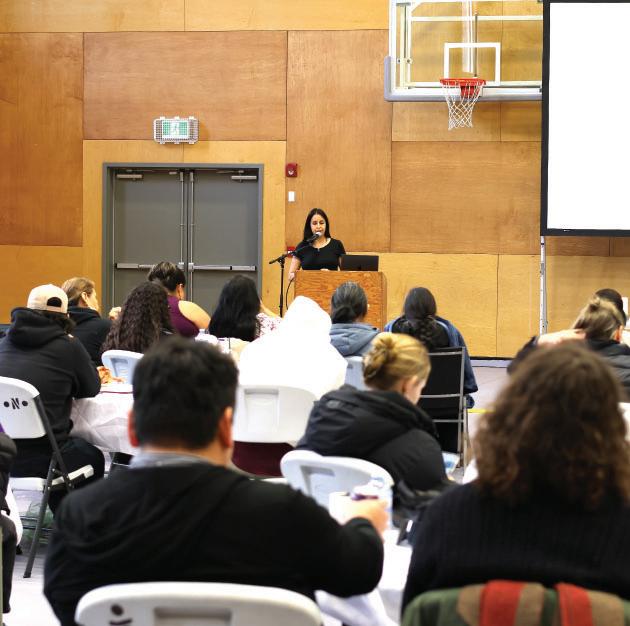
Hitacu, BC – Yuułuʔiłʔatḥ Government’s education department held an uplifting professional development day on Feb. 13 at the Cixʷatin Centre in Hitacu.
Manager of education services Jennifer Touchie said about 90 West Coasters from Ahousaht, Tla-o-qui-aht, Huu-ayaht, School District 70 and Pacific Rim Hospice attended the full-day event, which centered around ‘Moving through trauma by connecting to culture, language and traditional foods’.
“I was really happy to see SD70 and community participate,” said Touchie. “Maybe this will open up new roads for reconnecting with our children in a different way, and (I was happy) to have teachers be a part of our culture and be a part of our language; that it is open to everybody to learn.”
In the morning, Nuu-chah-nulth counsellor and owner of Tiičmis Wellness Anita-Charleson Touchie gave a meaningful presentation about understanding trauma and reconnecting with language, which was followed by a language lesson led by Jeneva Touchie.
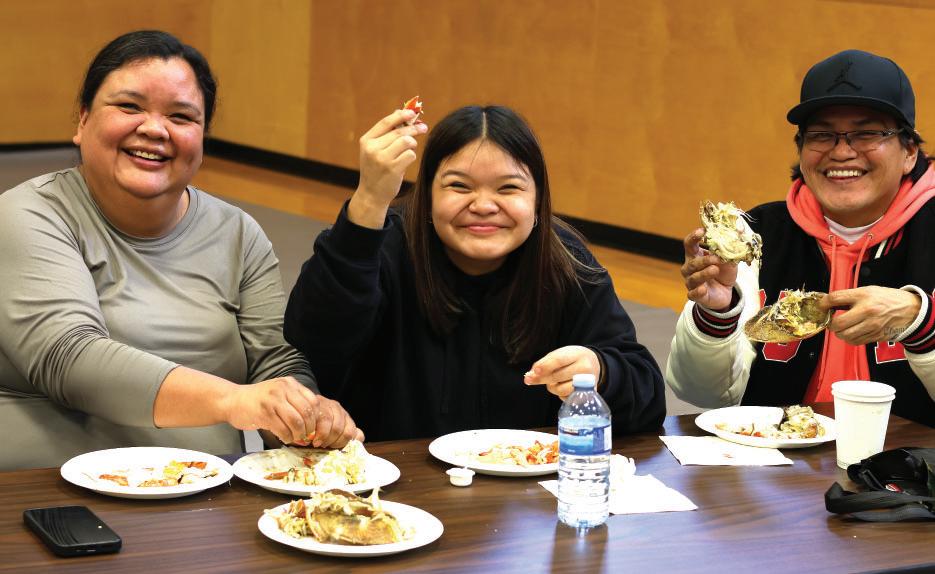
After a seafood lunch of Dungeness crab, prawns, salmon and fish roe, Touchie brought two elders and two youth to the front of the hall for a panel discussion about traditional food and reconnecting with culture.
When asked how to preserve Indigenous language, youth panel member Matthew Touchie said, “I think there could be more one-on-one work between elders and youth to keep our language alive. Slowly teach them words, day by day. Learn and keep it consistent.”
In the afternoon, Tla-o-qui-aht First Nation member Gisele Martin gave an interesting talk and slideshow about traditional foods.
“It’s not just what we eat, it’s which part of the fish we eat. When we are young, the youngest eat the tail because there are no bones, but also that’s the hardest working part of the salmon and young people have their whole life ahead of them, so they need that force for the work ahead of them,” Martin shared.
“And then as you get older, you might get the belly parts of the salmon that are richer and better for you. And when you are really old, you get the best part… you
fic Rim Hospice attend event
get the head! My dad used to split the head with me when I was a kid, I was so lucky. He would give me one eye and he would eat the other eye,” she said.
The overarching message within Martin’s presentation was the need for Nuuchah-nulth to become more self-sufficient in getting their own food whether it be by restoring clam gardens, building root gardens or learning how to properly care for and sustainably harvest plants, seaweed and mushrooms.
Tseshaht First Nation member Lisa Watts wrapped the education day with a presentation about the importance of culture and the significance of having a traditional name.
“I really wanted to make sure I chose Nuu-chah-nulth speakers because we are here and we know all this. We have experience and knowledge to share and how important it is to do that,” said Touchie.
She thanked all the speakers and the crew of people who put together the amazing traditional feast: Audrey and Dawn Edgar, Gale Hayes, Neptune Packers for the crab and prawns, and Yuułuʔiłʔatḥ lands and resources for the fish.
Pronounced ‘Qii yu alt I hi nin klus mit ah yii chilt is alth maa ma tee ah yah sa ah ya’, it means, ‘When the herring comes to spawn, the sky fills up wth lots and lots of sea birds.’ Supplied by ciisma.

Jordan’s Principle ensures that Canada’s First Nations children have equal access to social and health services
By Nora O’Malley Local Journalism Initiative Reporter
Ottawa, ON – On Feb. 26, Indigenous Services Canada announced $1.55 billion in federal funding to ensure First Nations children have equal access to essential government services.
The funding, which supports and renews the Jordan’s Principle, is earmarked to last until March 31, 2027.
The federal government stated in a media release that: “the renewal provides immediate stability for families and enables communities to deliver services with confidence as efforts to reform Jordan’s Principle in partnership with First Nations leadership and families continue.”
The Jordan’s Principle is a standard largely defined by the Canadian Human Rights Tribunal (CHRT). The principle is in place to ensure that First Nations children do not face gaps or delays in accessing government services. Jordan’s Principle also means that they are not denied government services because of their identity as First Nations children.
Jordan’s Principle is named in memory of Jordan River Anderson, a young boy from Norway House Cree Nation in Manitoba. In 2005, Anderson died in the hospital while the provincial and federal governments could not agree on who was financially responsible for his home care in a medical foster home. He was five years old.
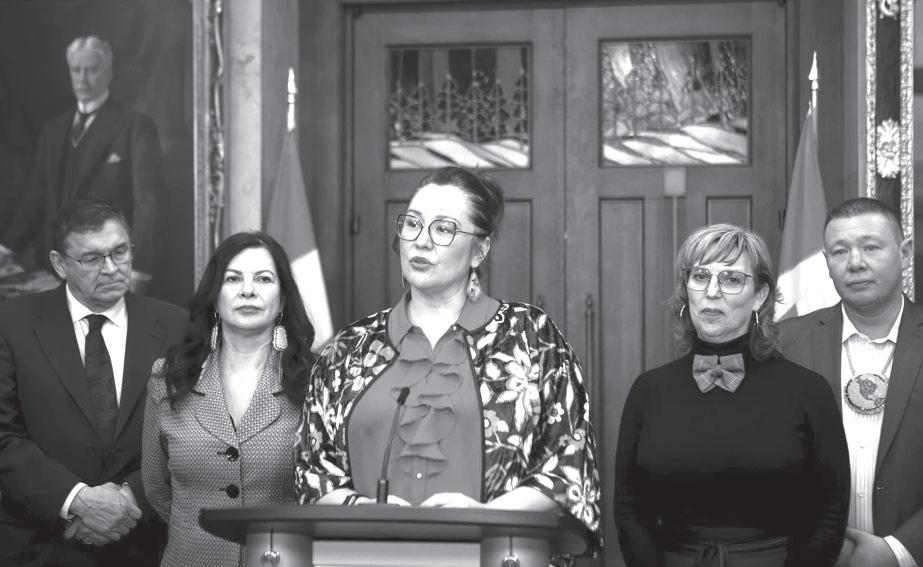
“Children are at the heart of who we are as First Nations. Jordan’s Principle must work for those who depend on it,” said Indigenous Services Minister Mandy Gull-Masty, in a media release.
“By committing $1.55 billion over the next year, we are reducing uncertainty and strengthening stability for communities. We will continue working with First Nations leadership and families to ensure Jordan’s Principle remains predictable, practical, and grounded in fairness and respect,” said Gull-Masty.
Jordan’s Principle allows families to submit requests for needs like medical and mental health services, educational supports and physiotherapy.
Between July 2016 and September 30, 2025, more than 10 million products, services, and supports were approved under Jordan’s Principle, according to government data.
Les Doiron is the vice president of the Nuu-chah-nulth Tribal Council. At

70-years-young, the Port Alberni resident says Canadians are still lacking fundamental education about the historical discrimination First Nations faced.
“You could say Jordan’s Principle to a white guy, and they would probably think you’re talking about Michael Jordan,” said Doiron.
“That’s what it comes down. Why is that? It’s because of ignorance and the lack of education that’s been pushed out by our federal government. Until we own (our history) as Canadians, I don’t think that will ever change,” he continued.
While Doiron expressed joy for the renewal of the Jordan Principle, he pointed out that the March 31, 2027 deadline is not long off. He called the renewal a “short-term fix”.
“In these times, the feds are cutting back on pretty much everything, everywhere. At least it’s there. I’m excited about it. I’m really happy to see that money is there, but 2027 is not very far away,” he said.
Nearly 135,000 cases backlogged
According to a report published by Indigenous Services Canada (ISC), it is estimated that Jordan’s Principle has nearly 135,000 backlogged requests as of
Usma Nuu-chah-nulth Family and Child Services are looking for individual/s or families who are interested in caregiving for teens with high-risk behaviors.
The Caregiver(s) would provide 24-hour care in a culturally safe and supportive environment, responding effectively to challenging behaviours.
Compensation would be built around the specific needs of the youth and the Caregiver, and could include both direct services and financial support to allow Caregivers to meet the needs of the youth.
For more information, please call Joni or Julia at 250-724-3232.
Feb. 20, 2025. The national appeal backlog sits at 727 cases and a total of 8,000 cases were flagged as “urgent” requests on backlog.
“That’s the government,” said Doiron. “When you have the turnover in cabinet or governance… It should be fasttracked. If they want to do something, they’ll do it in a hurry.”
Data on the volume of outstanding payments/reimbursements was not provided in the ISC report.
Cloy-e-iis (Judith Sayers), president of the Nuu-chah-nulth Tribal Council, says the minister has a lot of work to do to make effective use of this fund.
“Setting aside this $1.55 billion is a good step but the minister needs to get the distribution of the money out to children who need it in a more timely manner,” said Cloy-e-iis.
“The waiting lists to apply are long. For example, my daughter applied in October and still hasn’t been notified that her application has been accepted and then it still has to go a verifier. This is typical of anyone applying to the fund to face bureaucratic delays and this does not have the best interests of children in mind. The minister needs to streamline policies so our children can get the help they need quickly. No sense of having all that money if they can’t get it out the door,” she said.
There is still a $23 billion settlement for First Nations Children and Family Services regarding Jordan’s Principle that needs to be distributed, notes Cloy-e-iis.
On Oct. 24, 2023, the Federal Court ap-
proved a Settlement Agreement intended to compensate those harmed by the discriminatory underfunding of the First Nations Child and Family Services Program and those impacted by the federal government’s narrow interpretation of Jordan’s Principle.
The original complaint was filed before the Canadian Human Rights Tribunal (CHRT) in 2007 by the Assembly of First Nations and the First Nations Child and Family Caring Society (the Caring Society).
Cloy-e-iis said revising the operational policy that limited the scope of services is a “necessity”.
“The $1.55 billion for a year is an interim step,” said Cloy-e-iis.
The Caring Society acknowledged the funding announcement in a media release.
“We look forward to better understanding what it is intended to cover. While funding is necessary, it does not, on its own, remedy Canada’s ongoing noncompliance with binding CHRT orders or end discrimination against First Nations children,” said the Caring Society.
The CHRT has ordered Canada to immediately resolve the backlog of Jordan’s Principle cases. The Caring Society called the backlogs a “violation of children’s human rights and a direct failure to comply with Tribunal orders.”
“Jordan’s Principle is not a program of goodwill—it is a court- and Tribunal-affirmed legal obligation rooted in the best interests of the child,” said the Caring Society.

Hello everyone. Hoping all is well with you and your communities. I know there have been more losses and my deepest sympathies goes out to your families, friends and communities.
I attended the Council of Ha’wiih meeting on fisheries. The salmon allocation policy has been outdated for some years since the Ahousaht and five nations court case win. The court told DFO that their policy infringed aboriginal rights. The existing policy lists First Nation commercial fishing rights as fourth in priority. First priority is conservation. Second is First Nations’ food, social and ceremonial. Third priority is recreation fisheries and then commercial fisheries including First Nation commercial fisheries. The court decided that First Nations’ right to a commercial fishery should be in the second priority and included with FSC. It has taken DFO all these years to get to the point where they have some ideas of their revised policy. They have done engagement First Nations, recreation and commercial fisheries over these years. Recently the recreation fishery came out telling people that they were having their privilege of fishing taken away because of aboriginal right to fishery. This of course is all wrong, but they stirred up people and many racist remarks were made. This is continuing so we posted a statement on our website correcting this misinformation and speaking out against these racists remarks. We called upon the fisheries Minister to set the record straight and speak out against the racism and hatred being created. With DFO staff at our meeting we repeated our message. They said they have gotten over 2,000 emails and they have been correcting information to these people. You can see this has become a big issue for First Nations to deal with.
DFO told us that they have been asked to cut 15 per cent from their budget over three years, while not cutting back services to Canadians. They also mentioned how they value their relationships with First Nations and will work to keep their services as much as possible.
With the horrible tragedy in Tumbler Ridge, NTC issued a letter of sympathy to the families and community. Everyone all over the world felt the impacts and it was something we could do.
I attended the Reconciliation Awards at Government House. It is always empowering to see efforts being made to make things right and correct the wrongs of the past. Positive relationship building is always good to witness.
I attended a two-day capital and infrastructure meeting. Nine Nuu-chah-nulth nations (doesn’t include the Maa-nulth nations) are looking at taking over capital and infrastructure from Indigenous Services Canada. We are in our second year of looking at this and it will take time to look at everything, collect information, ask questions, get information and look at ways on how we could take over housing for ourselves. The nine nations in the last year have put together 30-year plans and determined what their needs and wants in housing and infrastructure are and how much that could cost. ISC had always had us do capital plans for five years, which had been detrimental to our communities because it is not long enough for planning. No government does five-year plans, but the federal government has always insisted on short-term planning. This is one of the reasons First Nations are so behind on housing and infrastructure. One thing we have to determine before we could take over is how much
money the federal government will provide to the nations if they could possibly take over their own housing and infrastructure. There are many other things we are looking at before deciding if we want to take over housing and infrastructure.
The premier is continuing to work towards amending the Declaration on the Rights of Indigenous Peoples Act (DRIPA). He has not consulted First Nations properly and over 100 have publicly stated they are opposed to any changes to DRIPA. Also many individuals and organizations have come out in support of First Nations and told the premier not to amend DRIPA. We have not heard anything from the government on next steps in the past two weeks, so we’re uncertain as to what will happen next. The premier said he wants to amend DRIPA this legislative sitting so he doesn’t have much time left.
I continue to do work on changing the Heritage Conservation Act to align with the United Nations Declaration on the Rights of Indigenous Peoples (UNDRIP). Hoping that the premier’s efforts to amend DRIPA does not stop or slow down this work as we have been doing this for over four years. We hope to get these changes to the act in the fall sitting.
Ha-Shilth-Sa recently ran an article about the environmental impacts of Artificial Intelligence, better known as AI. I wanted to add to that article as the use of water by AI is growing exponentially to cool data centres and we need to be informed on this.
The United Nations declared in a report in January 2026 that we have moved beyond a water crisis and into a state of global water bankruptcy. This is a pretty scary state of affairs and we must pay attention as this is critical. Water as a resource is precious and there is a lack of regulatory reporting requirementsthis must change. Accurate reporting is needed for environmental assessments on the supply of water. Currently with climate change the world is facing severe heat, wildfires, floods and droughts. We need water for critical things like our day-to-day living… Clearly, we need to be speaking out to governments to start curtailing the use of water by those AI corporate data centres, make it mandatory to re-use water or other techniques to reduce the use of water. The warning is clear: act now before we all suffer from lack of sufficient drinking water and we find drought everywhere. Look forward to reporting to you next month.
Respectfully,
Cloy-e-iis, Judith Sayers

Netp’s Annual Career Fair
Thursday, April 9th 9:00am – 3:00pm
3737 Roger Street, Port Alberni
Free table registration. For further details contact Shan at shan.ross@nuuchahnulth. org or Kirunn at kirunn.sharma@ nuuchahnulth.org or call 250.723.1331or
visit 4090 8th ave Port Alberni.
NCN Mental Health Counselling
Tuesdays and Thursdays 8:30am – 4:30pm
4841 Redford Street, Port Alberni
NCN Mental Health Services – DropIn Counselling with Margaret Bird, Registered Clinical Counsellor and Play Therapist. For on and off reserve



members of all ages of the Nuu-chahnulth Tribal Council. Call (250) 724-3939 to book your appointment.
Stirring up Connections
Every Friday 10am – 12:30pm
NTC Kitchen – 4841 Redford Street.
A warm and welcoming cooking group designed just for parents! Whether you’re a seasoned home chef or just learning how to boil water, this group is all about sharing recipes, laughter, and stories while preparing simple, nourishing meals together. Each session will feature: Easy, budget-friendly recipes; Tips for cooking with kids and picky eaters; Space to connect with other parents over food and family life. Contact 250-724-3939 for questions. 25 Years Ago in Ha-Shilth-Sa

Vol. 28 – No. 3February 15, 2001
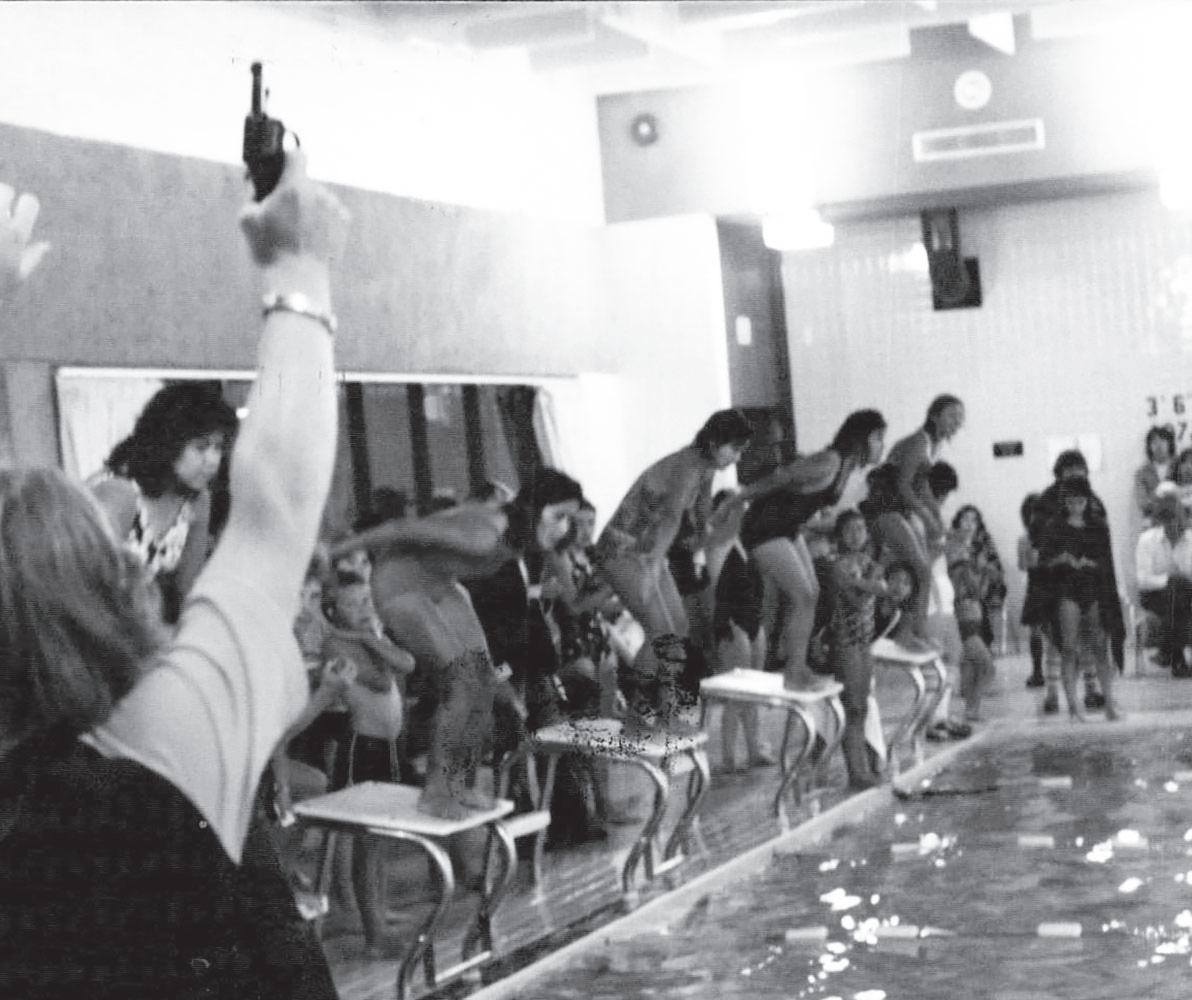
Swimming
With family and friends in attendance to cheer her on in the 100-metre backstroke, she never wavered, finishing her race with a lifetime best and the fastest time of the whole swim meet in the

Port Alberni
Friendship Centre Volunteers Needed
Need work experience? The Port Alberni Friendship Centre is looking for interested applicants for various positions. Call 250-723-8281

With two dead from crash, sentencing is on the low end of the scale and came as a surprise to MADD Canada
By Nora O’Malley Local Journalism Initiative Reporter
Cranbrook, BC – A B.C. Supreme Court justice in Cranbrook has chosen the low end of the sentencing range for a 23-yearold woman who pled guilty to impaired driving causing death, weighing the extent of the tragedy against Indigenousspecific considerations and the convicted person’s hope for rehabilitation.
Twenty-five-year-olds Brady Tardif and Jackson Freeman, and 21-year-old Gavin Murray lost their lives as a result of the offence. They were passengers in the crash, which happened on July 9, 2024, near Wilmer, B.C., a small semi-rural community just a few minutes south of Invermere.
In a decision released on Jan. 30, 2026, B.C. Supreme Court Justice Lindsay Lyster sentenced Haley Watson to two years in prison less a day, followed by a three-year probation period, a three-year driving prohibition and 240 hours of community work.
Watson is a member of the Lower Nicola Indian Band on her paternal side, according to court documents. In handing down her decision, Lyster said that Watson is “very young and has excellent rehabilitation prospects” and “enjoys the benefit of strong support from her mother and others in the community.”
Judge Lyster considered several mitigating factors in determining Watson’s sentence. Watson had no criminal record prior to the crash, she was a youthful offender, she pled guilty at her first available opportunity and she is sincerely remorseful, according to court documents.
The Gladue factors present in her life also played a role in somewhat reducing her moral blameworthiness, stated Lyster. Gladue Principles were established by the Supreme Court of Canada. They legally require judges to consider the unique history, circumstances and challenges of Indigenous people that come before the court.
“She suffers from the intergenerational effects of her grandmother’s forced attendance at residential school, including an absentee father who has struggled all his life with substance use, racism in school, disconnection from her Indigenous heritage and community, and her own substance use disorder,” wrote Lyster. Watson’s two years less a day sentence ensures she will serve her time in a provincial correctional facility rather than a federal prison, according to BC Prosecution Service.
Crown sought a term of imprisonment of five years and an eight-year driving prohibition, while the defense was requesting a conditional sentence of two years less a day, to be followed by three years of probation, according to court documents.
In a Statement of Admission signed by Watson, analysis showed that her bloodalcohol concentration at the time of driving was 168 per cent, more than twice
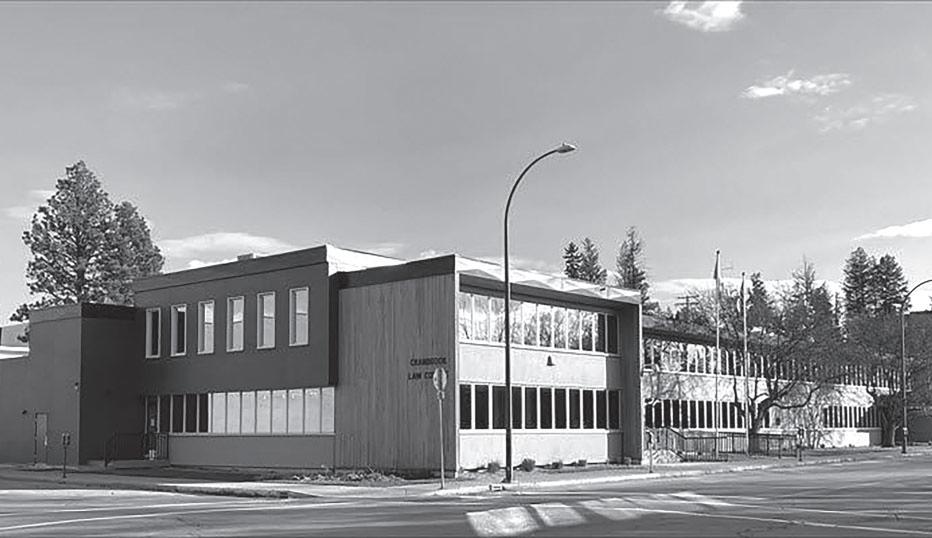
In a decision released on Jan. 30, 2026, B.C. Supreme Court Justice Lindsay Lyster sentenced Haley Watson to two years in prison less a day, followed by a three-year probation period, a three-year driving prohibition and 240 hours of community work. Watson pled guilty before the judge at the Cranbrook Law Courts.
the legal limit. Watson, who was 21 at the time of the accident, could not legally drive if her blood alcohol concentration was over zero. She was also found to be travelling over double the speed limit while approaching a bend in the road that had a suggested speed reduction of 50 kilometres per hour.
Steve Sullivan, CEO of MADD Canada (Mothers Against Drunk Driving), said they were a little surprised by the sentencing. For a person with no prior criminal convictions, MADD sentencing guidelines for impaired driving causing death is three to four years jail and a lifetime driving ban, or a permanent alcohol ignition lock three years after release from prison.
“It’s certainly on the low end of the scale,” said Sullivan. “Our deepest condolences and thoughts are with everybody impacted. Sentencing is one of the hardest parts of our criminal justice system for victims and survivors because the expectation is that is going to reflect the harm that has been caused - and what number could ever reflect the loss of three young men’s lives?”
“There is no magic number. It’s always going to be a subjective element,” Sullivan continued.
“Even with those mitigating factors, I think it’s still on the low-end. Many families who we work with will often say, ‘That sentence wasn’t enough.’ And in the next breath, they’ll say, ‘But no number would have made a difference.’
It’s a very emotional process for families and they are just often let down,” he said.
‘Wake-up call for us’
Tla-o-qui-aht First Nation (TFN) Justice Manager Curtis Joseph (Tayiisimčił) said that the impaired operation of vehicles


and vessels is an ongoing and high concern in their community, which is located roughly 15 minutes from Tofino.
In effort to prevent similar incidents from happening, Joseph says the nation worked collaboratively with the Tofino RCMP to create an action plan that includes more patrols, especially in the summer months.
“Hearing this is a wake-up call for us in our community. We need to be diligent because it can happen on reserve. This is a stark reminder of why we have these agreements in place to better protect our community,” said Joseph.
He said he was also surprised at the two years less a day sentence Watson received for a triple-fatal drunk driving crash.
“Considering how many people were
involved, I figured there would be more harsh repercussions. I would have imagined it would have been a lot more. I’ve seen people go away for a lot longer for less,” said Joseph.
He reminded community members that they can reach out to the rideshare page, and he celebrated the launch of the West Coast Transit system.
“The transportation system between Tofino and Ucluelet has helped a lot. We used to see a lot of people hitchhiking that now take the bus,” he said.
Youth are amongst the highest risk groups when it comes to alcohol-related crashes, according to MADD Canada.
“Hopefully, as tragic as this situation is, it is a reminder to all of us that there are different choices we need to make, and one wrong decision can cause so much harm and tragedy in people’s lives,” said Sullivan.
The court received 26 victim impact statements from the family members and friends of the deceased. Judge Lyster said that the statements “reflect the fact that Brady, Jackson and Gavin’s deaths have touched so many, not just their friends and immediate families, but the whole community.”
“To the loved ones of Brady, Jackson and Gavin, I know that no words I can say, nor any sentence this court can impose on Ms. Watson, will assuage your grief. Your young men are gone, far too soon,” said Lyster.

Indigenous people make up six percent of B.C.’s population, but they represent 36 per cent of those in custody
By Denise Titian Ha-Shilth-Sa Reporter
Port Alberni, BC – A Memorandum of Understanding between the Huu-ayaht and B.C. Corrections was recently signed at the First Nation’s Port Alberni office, opening the lines of communication between the parties to help citizens reintegrate back into the community after incarceration.
Huu-ay-aht Chief Councillor Sayaacath, John Jack, said that the First Nation has met with provincial and municipal governments to talk about community safety. In November 2025 the discussion led to a Memorandum of Understanding to improve outcomes for Huu-ay-aht citizens leaving B.C. Corrections facilities and returning to the community.
“The purpose of the MOU is to establish a collaboration between B.C. Corrections and HFN to support release planning, reintegration and/or case management of B.C. Corrections clients who are registered citizens of the HFN, or are currently residing in, or intending to reside in the HFN community,” states Huu-ay-aht’s December 2025 newsletter, Uyaqhimis.
B.C. Corrections provides custody for people awaiting trial as well as for those serving sentences of less than two years. It operates probation offices that supervise individuals serving community sentences, such as bail or probation orders.
According to B.C. Corrections, Indigenous people make up six percent of the population in the province but they represent 36 per cent of those in custody with the agency, and 28 per cent of those in the community on conditions or probation.
The B.C. Corrections website says they are committed to addressing this overrepresentation by “transforming our organization and healing broken relationships”.
Part of that effort includes building relationships with First Nations leadership.
The Ministry of Public Safety and Solicitor General says it has similar MOU’s with other B.C. First Nations and each one is created through partnership between BC Corrections and designated community leaders and elders.
“The MOU with Huu-ay-aht First Nation commits all BC Corrections staff to work collaboratively on case management and release planning of individuals who are returning to live in the Huu-ayaht community as well as any Huu-ay-aht member, whether they live in the community or anywhere else in the province,” stated the ministry.
Huu-ay-aht is a treaty nation and has their own Community Safety Act, which is a legislative framework used to promote safety on its Treaty Settlement Lands. It can and has been used to temporarily ban individuals convicted of certain crimes from HFN treaty lands.
Sayaacath says that his council has been focused on concepts of community safety for the past couple of years.
“We’ve talked about our Community Safety Act, how it automatically excludes people who are convicted of violent crimes from our territory,” said Sayaacath, adding that the act only applies to Huu-ay-aht hahulthi (lands).
When individuals are released from provincial custody, they don’t always return to the homelands.
“We would like to be involved in how B.C. Corrections manages the cases, for our citizens who are convicted of crimes,” Sayaacath said.
“It’s not just violent crimes, people can be convicted of other types of crimes that aren’t violent, and therefore they’re not excluded from our territory. We have an interest in making sure that when they’re being released, [we know] how the case is being managed,” he added.
The MOU, he explained, guides the communication between the First Nation, the province and the correction service.
“So that when somebody is released, there’s a good plan in place for them,” said Sayaacath.
The Solicitor General concurs, saying the MOU, which is intended to improve information sharing between BC Corrections and designated Huu-ay-aht members, will help support community safety, successful reintegration, connection to community and culture, and access to
supports and services.
Sayaacath notes that the agreement is not just between the leadership and the provincial government but also Huu-ayaht administrators. This gives the nation the ability to coordinate services, preventing gaps in support.
By effective communication and planning it’s hoped this will maximize success of those released from custody.
The planning would not only include release plans but also supervision – knowing whose responsibility it is to oversee those on probation whether they are at their homelands or in the city.
“It’s just really trying to get the highest level of success coming out of these systems because it’s already going to be pretty hard coming out of a correction system to kind of jump back into your life,” said Sayaacath.
It is hoped that agreements like this one will reduce recidivism.
The agreement also helps the nation manage victims’ services, like notifying those who were subjected to violence when an offender is being released.
Having release information allows the nation to plan for monitoring, helping to promote safety in the community.
Other B.C. First Nations that have signed onto this initiative include the Tsleil-Waututh First Nation, Nicola Valley Indian Bands, Nooaitch Indian Band, Shackan Indian Band and Upper Nicola Indian Band.
According the Ministry of Public Safety and Solicitor General, work is underway to support similar MOUs with other BC First Nations, including Ahousaht and Tla-o-qui-aht First Nations.