INTERESTING NEWS
Huu-ay-aht Tyee Ha’wilth is seated in Port Alberni
The people are happy - +iišin%as, 18, is the youngest hereditary chief to be seated in the house of %Apwinisath
By Denise Titian Ha-Shilth-Sa Reporter
Port Alberni, BC – A young woman has been seated as Huu-ay-aht’s Tyee Ha’wilth (Principal chief) as invited Ha’wiih and elders applauded in approval. The subdued celebration was held at Hupacasath’s House of Gathering over the weekend in front of a small crowd of invited guests.
Flanked by her parents and elders, hupałʔas (Olivia Peters) warmly greeted everyone with a hug as they entered the hall on Saturday, March 7, 2026. It would be her first day as hereditary leader of the Huu-ay-aht.
Guests were told that the House of ʔApwinisath would be conducting important business, a ‘ti’tikuu-ilth, which means a ceremony which seats a person in their proper place, according to huminʔiki (Irene Peters).
The family was there to fill the longvacant seat of Tyee Ha’wilth of Huu-ayaht. Derek Peters, the last seated Tyee Ha’wilth, stepped down from his role in 2022 following an incident that ultimately prevents him from continuing in the role of Huu-ay-aht Tyee Ha’wilth.
Since May 2022, Peters family matriarchs stepped in temporarily to represent the house. Jane Peters was there until her recent passing. Theresa Peter has since stepped in and has promised to continue to mentor the young new chief.
Derek Peters said their house of ʔApwinisath acknowledged Theresa Peter, saying, “she is our matriarch, the last one left of that generation.”
But the house of ʔApwinisath could not take care of important cultural business until a new Tyee Ha’wilth is seated.
The former Tyee went on to say that the celebration marks the day that he transfers his former responsibilities to the next heir, his daughter. “Olivia was always next in line. Jane held it, then Theresa held it. We are ready to make things right,” he said.
Hupacasath elder and historian, čučkaamałnI, Ron Hamilton, welcomed the people on behalf of Hupacasath Chief Alton Watts. Hamilton spoke of the close familial ties between Watts and ƛiišin (Art Peters) who was Olivia Peters’ great grandfather.
“We are happy this is happening here,” said Hamilton, adding that Olivia comes from Hupacasath as well as Huu-ay-aht because her maternal grandmother, Clara is from Hupacasath. At age 18, Olivia is the youngest ever in the ƛiišin line to take the hereditary chief seat and all its
responsibilities.
Hamilton told the story of a Hupacasath elder that was Olivia’s great, great grandfather. xoʔis, or Chief Joseph. He was an elderly man when he died the day after a successful deer hunt. The deer, he said, was used to feed the people at xoʔis’s funeral.
Generations, later, baby Olivia Peters was born, and her new life was celebrated at her great great grandfather’s Hupacasath home territory, at the House of Gathering.
At two weeks old, baby Olivia was given her the name xoʔooniš, which is the child version of the chief Joseph’s name. The name tells the people she is directly connected to the Joseph family from Hupacasath.
Because of her familial ties to Hupacasath and because her first naming was held in that territory, the family said it is important to come full circle to do their important business of seating her there.
On the morning of her seating, a young buck was seen grazing just outside the hall as guests gathered for the big day. Undisturbed by all the activity nearby, the buck would casually look to the window, seemingly watching the historic event. One couldn’t help but wonder if it was
xoʔis, giving his great granddaughter silent approval.
Robert Dennis informed guests that the seating ceremony was small and that a bigger celebration would be held at a later date. The Peters family, he explained, has suffered heavy losses in recent months. While events like this one are not usually done in times of mourning, this was important business that needed to be taken care of, he noted.
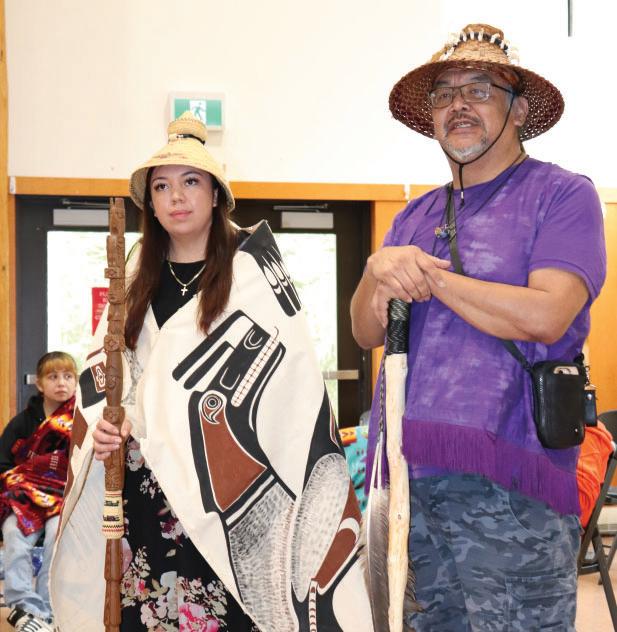
But now, said Dennis, there is a sense of excitement as they move forward, ready to rebuild. “This is uplifting,” he said. Shortly after lunch, Olivia Peters, flanked by her grandmother and family elders, stood up in front of the crowd. A hand-woven whaler’s hat was placed on her head by her aunt, Stella Peters. She was given a Chief’s talking stick and a painted shawl, depicting a chief’s curtain, was wrapped around her shoulders.
In front of her stood Huu-ay-aht men holding two sets of headdresses, representing songs and dances that she now owns.
After she was dressed as Huu-ay-aht’s Tyee Ha’wilth, she was given the name ƛiišinʔas, which means daughter of ƛiišin, “She’s the most kind-hearted person, not a bad bone in her body and she’s going to
be good for the community,” said Hamilton. He thanked Derek Peters for showing good judgement and leadership in seating Olivia.
There were a few Nuu-chah-nulth hereditary chiefs in the house that were there to show their support. They, along with other guests, stood to congratulate the young chief and most explained how they are related to one another. All said they support Olivia on this historic occasion.
Some of the Barclay Sound chiefs said that some of their songs, stories, or ceremonial curtains are similar or ‘shared’. The curtain cape that Olivia was dressed in, for example is a miniature replica of a ceremonial curtain similar to a Yuułuʔiłʔatḥ chief’s curtain. This, they said, shows the family connection that occurred generations back when the daughter of the Huu-ay-aht Tyee Ha’wilth married the Yuułuʔiłʔatḥ Tyee Ha’wilth. Today, that would be the connection between the Jack family of Yuułuʔiłʔatḥ and the Peters family of Huu-ay-aht.
Toquaht Tyee Ha’wilth Wiicackum (Ann Mack) presented the new chief with a beautifully woven cedar bark hat. It was pointed out that Mack was also seated in the same place many years before. “It is not out of line to be seated in another’s house because of these close family ties…we are one,” said Robert Dennis Sr.. Chiefs that were there stood to show support for ƛiišinʔas in her new role. They came to ‘shake her hand’, to offer her money as she plans for her first big celebration, or for a trip to Dairy Queen, some joked.
As she stood to speak, elder family members dabbed their tears, so proud of their new tyee. “I am proud to be Huu-ayaht and I am proud to hold the stick held by my great grandfather,” ƛiišinʔas told the crowd.
To those that were there to support her, she said she’s happy to know that she has all these people to lean on as she steps into her role. ƛiišinʔas said she and her house will now move forward to take care of business that needs to be done.
Because the Peters family is in mourning and their tyee ha’wilth hadn’t yet been seated, the house could not publicly share songs and dances. Now that she is seated, the family can move forward to take care of business, like planning memorial potlaches, said Derek.
According to the Peters family, the big celebration for their new Tyee Ha’wilth will take place at their Anacla home sometime in the winter.
Denise Titian photo
ƛiišinʔas says she is proud to be Huu-ay-aht and proud to hold her great grandfather’s talking stick
Ha’oom Fisheries Society unveils ceremonial curtain
HFS will use its new curtain at an upcoming information sharing gathering in April 2026
By Denise Titian Ha-Shilth-Sa Reporter
Vancouver Island, BC – The five nations that fought the Canadian government for their Aboriginal right to harvest and sell fish, and won, gathered to celebrate on March 13, with the unveiling of their new ceremonial curtain.
The Ha’oom Fisheries Society (HFS), represented by the five Nuu-chah-nulth nations that participated in the landmark court case, the Ahousaht, Ehattesaht/ Chinehkint, Mowachaht/Muchalaht, Hesquiaht and Tla-o-qui-aht First Nations, have been working together tirelessly to implement and manage their commercial rights-based fisheries.
It was in 2009 that the court ruled in favor of the Nuu-chah-nulth-aht in the BC Supreme Court case, Ahousaht et al. vs. Canada, which overturned decades of restrictive DFO policies that forced many Nuu-chah-nulth fishermen out of the commercial fishing industry.
Based in Tofino, HFS employs mostly Nuu-chah-nulth people who work to ensure that their constitutionally protected right to harvest and sell fish is managed in accordance with principals laid out by the Ha’wiih (hereditary Chiefs) and their advisors. The foremost principle for sustainable management is Hišuk ish tsa’walk (meaning everything is connected, everything is one).
“This (principle) includes implementing fisheries for the five nations based on their inherent and constitutionally protected Indigenous right to harvest and sell fish; enhancing the capacity and role of the five nations in the management and
sustainability of fisheries, in collaboration with the Fisheries and Oceans Canada where appropriate,” as stated on the HFS website.
The celebration started with dinner which included fresh herring eggs for an appetizer and a seafood buffet. Most, if not all of the seafood came from the HFS members.
David Miller of Ehattesaht/Chinehkint, welcomed everyone, telling them that this would be a night for recognizing all the work that has been accomplished, and what is being planned for future generations. First nations enjoy through unity, he noted.
“For generations, our people have depended on the ocean,” Miller said, adding that the Nuu-chah-nulth not only harvested seafood, but also preserved it and
traded it. It is not only a right, but a way of life, he added.
Since its establishment in 2021, HFS has been working to restore access to the fisheries and economic opportunities for their member nations. That includes training and mentorship for next generations of Nuu-chah-nulth fishermen.
In keeping with Nuu-chah-nulth teachings about sustainability and protecting the resources, HFS also conducts research and development with respect to rebuilding ocean resources
Following dinner, Ahousaht elder Cliff Atleo spoke at length about the history of the fisheries court case and Ahousaht’s position. “We didn’t want to go to court, but we knew what we had and we knew we were going to kick butt in court,” Atleo told the crowd.
“We want everyone to know that it (resources in Nuu-chah-nulth territories) belongs to our Ha’wiih (hereditary chiefs),” said Atleo.
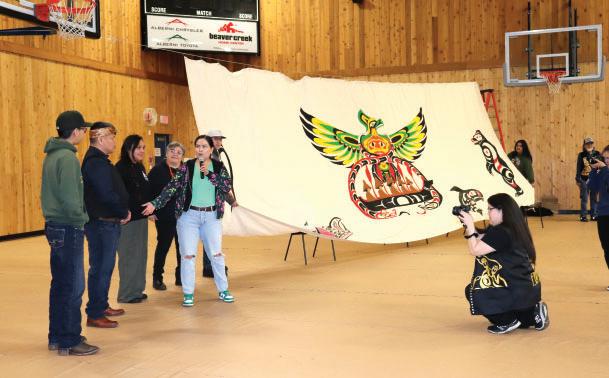
Abigail Titian-Manson works for HFS as its Community and Capacity Building Coordinator. She said that HFS has had other gatherings where they would have to borrow ceremonial curtains from the Ha’wiih. Someone came up with the idea of making their own curtain, known as muyapiłum, that would represent all five nations.
It was decided that five artists, one from each nation, would work on the muyapiłum.
Also called a thliitsapilthim in other Nuu-chah-nulth language dialects, a ceremonial curtain is not simply a colourful display of Indigenous art. Its purpose is to tell a story through symbolism. For Ha’wiih, the curtain can describe what is in their territory, what they own, what powers they have and more.
Following dinner, the artists and helpers carefully unfurled the curtain. The artists, they said, were Georgina Hayupis, Stanley Bob, Lacey Adams, Bill Morris and Walter Thomas.
“Lots of work went into this curtain,” said Kayla Lucas. She said the artists consulted with other people to come up with an overall design of the curtain.
“They (artists) put their time, effort, heart, soul and passion into this,” said Lucas.
The curtain will be used at all future gatherings of HFS. The collaborative piece represents the critical importance of fisheries to the people of the five nations.

Denise Titian photo
Kayla Lucas of HFS introduces the artists that designed the ceremonial curtain, saying they put their heart and soul into the project.
Tla-o-qui-aht says no to mineral exploration
The B.C. government recently re-issued mineral exploration permits for Fandora mine without consent
By Nora O’Malley Local Journalism Initiative Reporter
Clayoquot Sound, BC – Imperial Metals is hoping to strike gold in the Clayoquot Sound UNESCO Biosphere Region, but Tla-o-qui-aht First Nation and several allies are calling on the B.C. government to rescind the company’s permit to drill for the yellow metal.
Clayoquot Sound is located within the unceded traditional territory of the Tlao-qui-aht First Nation (TFN) on the west coast of Vancouver Island. The small tourist town of Tofino serves as a gateway to the biosphere region and welcomes over 600,000 visitors annually.
The permits related to gold mining in Clayoquot Sound were first issued in 2013. The recently re-issued permits expire in February 2031 and include 22 drill sites, three helipads and six trenches.
“First Nations rights and title are not just an aspiration, they must be honoured and respected, and this decision by the government of British Columbia totally goes against that,” said Chief Councillor Elmer Frank, in a March 4 media release.
“We call on the province to rescind these permits and properly and respectfully engage with Tla-o-qui-aht First Nation Ha’wiih as the titleholders in our territory,” said Frank.
Clayoquot Sound encompasses the Tlao-qui-aht Tribal Parks, an expanse of land with critical habitat and ancient trees that defenders have protected from industrial logging and mining for decades. It was officially designated as a UNESCO Biosphere Region in January 2000.
Tla-o-qui-aht manager of lands and resources Saya Masso said the last correspondence they sent to the Ministry of Mining and Critical Minerals clearly stated that the nation does not consent to mineral exploration in the Tribal Park.
“This is not an impact we supported in a watershed that we are investing in rebuilding the river and recovering it from logging, not being a gold mine to further impact our fisheries and clean water,” said Masso.
“The ministry is incapable of hearing no. (Mineral exploration) may make sense in other parts of B.C. or in other watersheds, but it does not work here. We clearly said no for many years talking to B.C. about this,” he said.
Imperial Metals is currently facing 15 charges under the federal Fisheries Act in relation to the tailings pond breach at the Mount Polley Mine on August 4, 2014. The mine is located in B.C.’s interior Cariboo region and the traditional territory of Xat’sull First Nation.
According to the B.C. government, the Mount Polley tailings embankment breach resulted in the loss of about 17 million cubic meters of water and 8 million cubic meters of tailings/materials into Polley Lake, Hazeltine Creek and Quesnel Lake with significant impact.
Research shows the cumulative effects of the Mount Polley disaster had a direct impact on the aquatic food chain, even several years after the initial breach.
“Tla-o-qui-aht is very clear about the
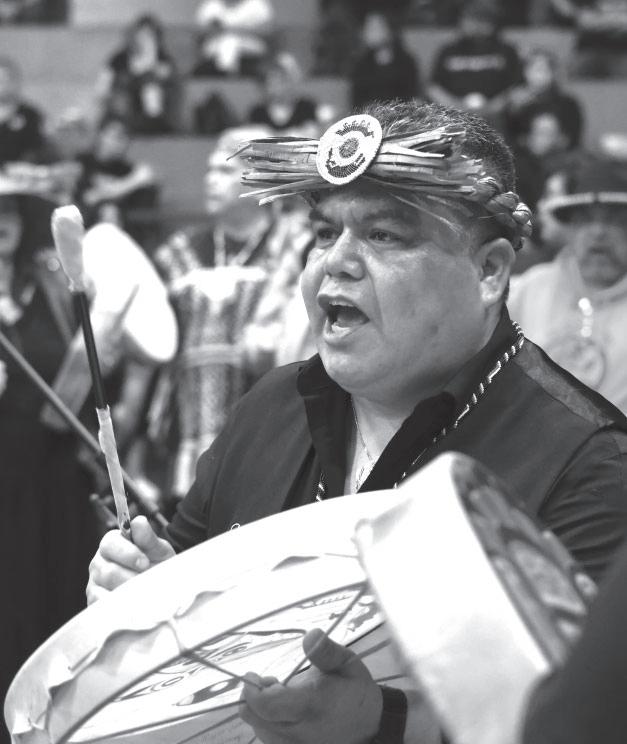
Tla-o-qui-aht Chief Councillor Elmer
rescind permits for mineral exploration in unceded Tla-o-qui-aht traditional territory.
vision for our Ha-oothlee (traditional territory) of Tla-o-qui-aht Ha’wiih (Hereditary Chiefs), which is watersheds of abundance. Mining just goes against that and negatively impacts too many of our interests,” said Masso.
Tla-o-qui-aht is looking at pursuing “any option in the toolkit” including raising awareness of the infringement at the United Nations, according to Masso.
In a written statement, the Ministry of Mining and Critical Minerals said they approved a mineral exploration permit for Imperial Metals following an “extensive, consensus-seeking review process which included consultation with the Tla-o-quiaht and the ʕaḥuusʔatḥ (Ahousaht).”
“Ultimately, the province was not able to reach consensus on all the issues raised,” said the ministry.
Any future proposals to expand the project beyond the permitted exploration work would be subject to a new decision under the Mines Act, says the ministry.
The ministry stated that permit conditions addressed some of the key concerns that were raised through consultation, including: wateruse restrictions on Tranquil Creek, archaeological and cultural heritage protections, accommodation of hunting and harvesting, protection of any identified spiritual bathing sites, requirements for a ʕaḥuusʔatḥ environmental monitor, and measures to avoid disturbance in identified old growth areas.
“We remain committed to strong environmental oversight, safe mining prac-
CORRECTION: The front page headline of the March 5, 2026 vol. 53 no. 05, Ha-Shilth-Sa Newspaper incorrectly stated the Hesquiaht Descendants earned second at JANT.
We meant to say the Hesquiaht Descendants earned second at ANBT (All Native Basketball Tournament). We apologize for the error.
tices and ongoing engagement with First Nations and partners,” said the ministry.
Torrance Coste, associate director for the Wilderness Committee, said it is “absolutely shameful” for the B.C. government to approve mineral exploration permits in a Tribal Park against the wishes of Tla-o-qui-aht.
“The BC NDP is choosing the interests of mining corporations over rights and title, and that’s unacceptable for any government, let alone one that claims to care about reconciliation,” said Coste in a joint press release issued by the Clayoquot Sound Conservation Alliance (CSCA).
Brian Kynoch is the president of Vancouver-based Imperial Metals.
“This is about exploring to see whether it’s worth building a mine there,” Kynoch told the Ha-Shilth-Sa over the phone.
“We have a permit. We haven’t said we are going to do it. We will go work with First Nations. We have been meeting with them for years.”
“It’s exploration. It’s not a mine,” Kynoch continued. “The neat thing about this mine is it’s a narrow vein gold mine. It would most likely be underground and you would probably not have to build a mill. It would be more like a quarry than a normal mine.”
There was no fee attached to Imperial Metals “straight-forward” mineral exploration application, according to the ministry.
In January 2026, Western Canada’s provinces and territories signed a memorandum of understanding (MOU), which aims to “unlock Canada’s potential as a global leader in critical minerals.” Gold is currently not identified as a critical mineral on official provincial or federal lists.
Fandora property overlaps territory lines
The gold vein in Clayoquot Sound is located at the Tranquil Creek watershed northeast of Tofino and is historically known as the Fandora property. It was discovered in the 1930’s and explored on surface by hand trenching, according to government records.
A portion of the Fandora work area overlaps territory lines with the neighbouring First Nation of Ahousaht.
“Ahousaht acknowledges and respects the concerns raised by the Tla-o-qui-aht Ḥa’wiiḥ regarding mineral exploration within their territory and affirms their authority as rights and title holders to determine what activities are acceptable within their lands,” said Ahousaht Ḥaw iih (hereditary) representative Tyson Atleo in a written statement.
“Each Nation holds distinct laws, governance systems, and responsibilities to their lands and people, and those authorities must be recognized and upheld,” said Atleo.
Atleo says Ahousaht was consulted and are “actively engaged” with the Fandora project and the province regarding the permit renewals for Imperial Metals.
“This engagement reflects our customary and professional responsibilities to assess potential impacts, apply Ahousaht law and governance, and ensure decisions protect culturally and environmentally significant areas while supporting longterm community wellbeing,” said Atleo. Imperial Metals also holds permits for the exploration of copper deposits on Catface Mountain, or Chetarpe in Nuuchah-nulth language, which resides in Ahousaht territory, about 13-kilometres northwest of Tofino and in the heart of the Clayoquot Sound UNESCO Biosphere Region.
Atleo said Catface is a “culturally significant” area and that Ahousaht has worked collaboratively with the Imperial Metals and the government to address concerns and safeguard the land.
Imperial Metals has already conducted some baseline work at Fandora, such as collecting soil samples, according to Kynoch.
“Diamond drilling is the next step,” he said.
Kynoch went on to note that the Imperial Metals “remains committed to engaging respectfully with First Nations and local communities as the project moves forward.”
Tla-o-qui-aht says they will monitor the Fandora site for commencement of work related to the permits.
Les Sam Construction
Nora O’Malley photo
Frank wants the B.C. government to
Ha-Shilth-Sa newspaper is published by the Nuu-chah-nulth Tribal Council for distribution to the members of the contributing First Nations, as well as other interested groups and individuals.
Information and original work contained in this newspaper is protected by copyright and may not be reproduced without written permission from:
Nuu-chah-nulth Tribal Council P.O. Box 1383, Port Alberni, B.C. V9Y 7M2.
Telephone: (250) 724-5757
Fax: (250) 723-0463
Web page: www.hashilthsa.com facebook: Hashilthsa Ntc
2026 Subscription rates:
Non-Nuu-chah-nulth, Ahousaht, Ehattesaht,Toquaht and Ucluelet members are subject to a yearly subscription fee of $40 in Canada, $50 in the US and $60 for overseas. Payable to the Nuu-chah-nulth Tribal Council
Manager/Editor/Reporter
Eric Plummer (Ext. 243) (250) 724-5757 Fax: (250) 723-0463 eric.plummer@nuuchahnulth.org
Reporter
Denise Titian (Ext. 240) (250) 724-5757 Fax: (250) 723-0463 denise.titian@nuuchahnulth.org
Reporter Nora O’Malley (604) 353-8488 nora.omalley@nuuchahnulth.org

Audio / Video Technician
Mike Watts (Ext. 238) (250) 724-5757 Fax: (250) 723-0463 mike.watts@nuuchahnulth.org
Editorial Assistant
Holly Stocking (Ext. 302) (250) 724-5757 Fax: (250) 723-0463 holly.stocking@nuuchahnulth.org
DEADLINE:
Please note that the deadline for submissions for our next issue is Mar. 27 2026
After that date, material submitted and judged appropriate cannot be guaranteed placement but, if material is still relevant, will be included in the following issue.
In an ideal world, submissions would be typed rather than hand-written. Articles can be sent by e-mail to holly.stocking@nuuchahnulth.org (Windows PC).
Submitted pictures must include a brief description of subject(s) and a return address.
Pictures with no return address will remain on file. Allow two - four weeks for return.
Photocopied or faxed photographs cannot be accepted.
COVERAGE:
Although we would like to be able to cover all stories and events, we will only do so subject to:
- Sufficient advance notice addressed specifically to Ha-Shilth-Sa.
- Reporter availability at the time of the event.
- Editorial space available in the paper.
- Editorial deadlines being adhered to by contributors.
LETTERS and KLECOS
Ha-Shilth-Sa will include letters received from its readers. Letters MUST be signed by the writer and have the writer’s full name, address and phone number on them. Names can be withheld by request. Anonymous submissions will not be accepted. We reserve the right to edit submitted material for clarity, brevity, grammar and good taste. We will definitely not publish letters dealing with tribal or personal disputes or issues that are critical of Nuu-chah-nulth individuals or groups. All opinions expressed in letters to the editor are purely those of the writer and will not necessarily coincide with the views or policies of the Nuu-chah-nulth Tribal Council or its member First Nations. Ha-Shilth-Sa includes paid advertising, but this does not imply Ha-Shilth-Sa or Nuu-chah-nulth Tribal Council recommends or endorses the content of the ads.

Concerns emerge over mining projects
U.S. states unsettled by proposed projects on Vancouver Island and Northern BC
By Antonella Medina Arias Ha-Shilth-Sa Contributor
British Columbia – Washington and Alaska are raising concerns about potential environmental harm stemming from mining projects in British Columbia approved by the Canadian government.
“British Columbia is transforming the headwaters region of our wild salmon rivers into a mining district without our consent while excluding our sovereign Tribal governments from meaningful participation,” said Esther Aaltséen Reese, President, Southeast Alaska Indigenous Transboundary Commission (SEITC).
Minister of Mining and Critical Minerals Jagrup Brar announced the Northisle Copper and Gold Inc.’s North Island Project, Surge Copper Corp.’s Berg Project and Defence Metals Corp.’s Wicheeda Project on February 20, 2026, in Port Hardy, B.C..
The Tribes of SEITC and the Lummi Nation in Bellingham, Washington, warn that their exclusion from the environmental assessment could lead to an incomplete consideration of risks, affecting salmon populations, water quality, sacred sites, and Indigenous food security and way of life.
“We have stewarded the Taku, Stikine, and Unuk Rivers since time immemorial. Our ancestors left us these life-giving waters and it is our responsibility to ensure they remain for the next generations,” said Reese.
In 2024, the SEITC requested that the Inter-American Commission on Human Rights pause the mining activity that violated Indigenous peoples’ human rights. The rivers affected by the mining activity—the Unuk, Stikine and Taku—hold part of the living oral history and have significant cultural importance to the Tribes.
“The Taku, Stikine, and Unuk support wild salmon runs that feed our communities, our economies, and Southeast Alaska’s temperate rainforests. Contamination or failure at the headwaters would travel downstream across the border and through one of the most intact salmon systems left in the world,” said Reese. The watersheds are key to sustaining the Tongass, the world’s largest temperate rainforest.
“BC has acknowledged that even one project, Eskay Creek, poses risk to us downstream. The cumulative impacts of multiple large mines magnify that risk. This means our way of life is on the line,” said President Reese.
Ehattesaht Chief Counsellor Simon John calls on the Minister of Mining and Critical Minerals to follow the UNDRIP (The United Nations Declaration on the Rights of Indigenous Peoples) obligations regarding consent to all First Nations communities that could be affected.
Chief John noted how the economic investment could aid in growing the community and create job opportunities, but acknowledged that past mining activities caused negative effects, and future projects should be handled differently. He said steering towards consent-based approaches is a positive change, providing greater opportunity for investors while ensuring stronger protections for local lands and waters.
The three projects, North Island, Berg and Wicheeda, have not reached the environmental assessment stage. The Environmental Assessment Office (EAO) is aware of the projects and anticipates they will enter the environmental assessment process sometime in 2026.
Assessments follow a clearly defined process under the Environmental Assessment Act, with deep participation from First Nations.
If approved, projects must follow legally binding requirements applied to mitigate potential negative impacts on the environment, communities and First Nations
Ha-Shilth-Sa belongs to every Nuu-chah-nulth person including those who have passed on, and those who are not yet born. A community newspaper cannot exist without community involvement. If you have any great pictures you’ve taken, stories or poems you’ve written, or artwork you have done, please let us know so we can include it in your newspaper. E-mail holly.stocking@nuuchahnulth.org. This year is Ha-Shilth-Sa’s 52nd year of serving the Nuu-chah-nulth First Nations. We look forward to your continued input and support. Kleco! Kleco!
rights.
“These are promising projects that are in early development. Each one represents a huge potential investment in B.C., bringing hundreds of jobs and economic growth,” Brar said.
According to Brar, the Northisle mining project is set to generate 498 full-time permanent jobs during the mining operation. The other two projects are expected to create about 200 jobs with 200 more jobs opening during the mining operation.
Brar said the mining project can help address the high unemployment in rural areas, a consequence of the recent U.S. tariffs.
The province continues to work collaboratively with impacted First Nations, with the Critical Minerals Office supporting relationship building and coordination to ensure processes are clear and consistent.
“We appreciate the Province taking these projects seriously and ensuring there is a clear and fulsome process in place. Having a dedicated point of contact to support ongoing dialogue is important for our community as the North Island Project advances,” said Chief James Nelson, Quatsino First Nation.
“We believe it is essential to balance responsible economic development with protection of the local environment, and we look forward to continued engagement and discussions and welcome continued improvements in the administrative processes.”
Legal Information
The advertiser agrees that the publisher shall not be liable for damages arising out of errors in advertisements beyond the amount paid for space actually occupied by the portion of the advertisement in which the error is due to the negligence of the servants or otherwise, and there shall be no liability for non-insertion of any advertisement beyond the amount paid for such advertisements
Submitted photo
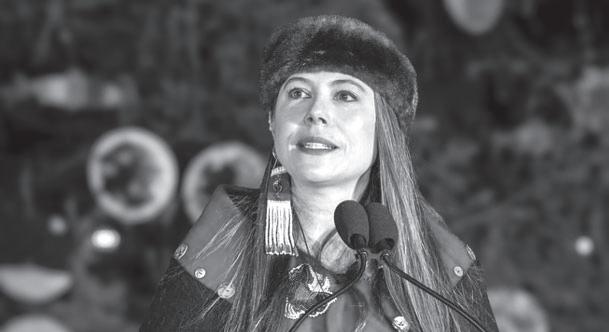
Esther Aaltséen Reese, President of SEITC.
Women take a leading role in a livelihood of fishing
Ladies were an untold story in the once thriving commercial fishery of yesterday – now play a significant role
By Eric Plummer Ha-Shilth-Sa Editor
On the B.C. coast, fishing is a tradition that runs deep in the blood of Indigenous families – but the critical role women have had in sustaining this livelihood has at times been an untold story.
Rosemary Georgeson, who has Sahtu Dene and Coast Salish roots, took her first steps on her father’s old fish packing boat. To support his family living on the south of Galiano Island, George Georgeson was a commercial fisherman – a common occupation for coastal residents at the time. By the time Rosemary was 14 she was working on boats, and owned her first vessel later in her teens.
On the north side of Galiano Island, Connie Crocker shares a similar story, as she was raised to help in any way she could while on her father’s boat. One of the earliest duties was ensuring that the tobacco can full of paper records wouldn’t fall off the dashboard.
Crocker bought her first boat at the age of 24, and spent years trolling the Strait of Georgia. While her father Angus raised Connie to operate with confidence on the water, others didn’t always give women the same degree of respect in the 1970s and ‘80’s.
“It was really hard to get equal treatment when you’re a female on the boat,” said Connie, who is from the Penelakut First Nation. “I think a lot of times they would think a woman should be in the processing plant cutting up fish and not steering the boat or pulling in fish. It took a lot to get the status of being a respected deck hand, because you just had to get away from that part about being female.”
With perspectives from both ends of Galiano Island, Crocker and Georgeson shared their stories in early February at the Indigenous Seafood Conference, which was hosted by the Nuu-chah-nulth Economic Development Corporation, the Native Fishing Association and the Ha’oom Fisheries Society.
The pair described their intimate connection to commercial fishing, but as was seen across the West Coast, this industry hit a severe decline a generation ago. After decades of squeezing allocations, fishery closures and license retirement programs, B.C.’s commercial fleet is about half the size it was in the mid 1990s.
It was around this time that Crocker found herself struggling to cover the costs of running a vessel, as fisheries around the Gulf Islands were closing.
Georgeson also had to make a hard decision after a particularly harrowing trip home.
“I was a single mom, and I kind of got caught in a storm with my kids up on the ridge at Galliano watching,” she recalled. “I had to make a decision whether I wanted to be around for my kids or not. That’s when I stepped back in the business.”
As the pair watched salmon farms spread through the B.C. coast, they knew a decline in the fishing industry would follow.
“You started seeing the decline within two years of those coming onto the coast,” said Georgeson of the farm sites. “It was just something that just hit you like a ton of lead,” added Crocker about the loss of commercial fishing. “You took it for granted.”
While eight to 10 weddings come to Galiano Island each week in the summer, a once widespread coastal fishing industry has long passed. Georgeson said many
“I think a lot of times they would think a woman should be in the processing plant cutting up fish and not steering the boat or pulling in fish. It took a lot to get the status of being a respected deck hand, because you just had to get away from that part about being female”
~ Connie Crocker
of the commercial boats were beached and gutted, and now none from her community are in operation.
“We just stripped them out, took out all of the lines,” she said. “They’re grave markers to a life.”
Success on the Somass
On the other side of Vancouver Island, an entirely different story is unfolding on the Somass River that runs through Port Alberni – and women fishers are taking a critical role. Composed of representatives from the commercial fleet, sports fishery, local First Nations and the Maa-nulth treaty nations, the Area 23 roundtable meets regularly to co-manage fishing on the Alberni Inlet and Somass River.
Through agreed-upon catch limits and a successful hatchery, Area 23 has sustained consistent participation from the various user groups over recent years.
Each year the local Tseshaht and Hupacasath take advantage of an Economic Opportunity agreement with Fisheries and Oceans Canada that enables them to sell their catch to commercial buyers –something that keeps a significant portion of the First Nations busy and on the water through the summer months.
Tseshaht member Christine Fred usually starts in mid May, fishing what’s allocated to her community for First Nations food, social and ceremonial purposes (FSC). Later in June the Economic Opportunity usually starts, enabling Fred to fish sockey and chinook through the summer, before she finishes in late September catching chum salmon through her First Nation’s FSC allotment.
“It makes me so proud to be Tseshaht,” reflected Fred, who has been fishing on the Somass since she was 12. “I grew up around watching everybody fishing and providing for their families. It made me excited that one day I’m going to be able to do that for my family. It made me eager to learn.”
When Fred was growing up she doesn’t recall that women fishers were discouraged in her community, but the female involvement wasn’t nearly what it is today.
“For a long time there was only four or five of us on the river,” she said. “Now, it’s nice to see, there’s maybe 20 or 30 ladies out there just giving ‘er.”
Also from the Tseshaht First Nation, Shae Doiron was only nine when she started learning how to fish from her grandfather, Bob Thomas.
“My grandpa always said, ‘When the swallows are here, the fish are here’,” she said. “My grandpa always had a smokehouse. He taught my auntie Linda how to smoke fish. My grandma Rosie, his wife, was pretty talented with a knife too. Fishing has always been a part of our lives.”
Now she often fishes with her dad, Chuck Doiron, but also harvests for the community’s “Fish Days” by the Paper Mill Dam Park in the summer, an event held Friday, Saturday and Sunday mornings to collect salmon.
“We fish for our elders and our community – and our out-of-town community too,” said Doiron, who starts at 4:30 a.m.
on Fish Days to ensure she can catch salmon in her lead-weighted net at the right time.
“Come high tide, fish will move, they’ll move up,” explained Doiron. “When the tide is up our net doesn’t reach the bottom of the river. That’s what you want, is to create a pocket, a horseshoe pocket of your mesh. You pull your lead line in quick and scare the fish into your net.”
Doiron recalls a time when her grandfather would row a boat out onto the river to set his net. Under DFO regulations, Tseshaht and Hupacasath couldn’t always fish commercially on the river, but years of advocacy from individuals like Bob Thomas led to change.
“Twenty, 30 years ago the fishery wasn’t as big as it is now,” recalled Doiron, who sees many successful women on the river taking advantage of more opportunity.
“You see 200 guys out there. Twenty-five years ago there was about 40 guys out there.”
Fred learned to fish from her father, the late Gerald Fred Jr., which she remembers being the best time spent with him.
“I think of him every day and fishing season is no different,” said Christine.
“My dad taught me, that makes it even more special because he’s been gone 20 years. Here I am now 46 providing for my family and teaching my nieces and nephews how to hang nets and smoke
fish.”
TSESHAHT MARKET GATEWAY TO THE PACIFIC RIM

Hours of operation - 7:00 am - 10:00 pm
Phone: 724-3944
E-mail: manager@tseshahtmarket.ca
Eric Plummer photo
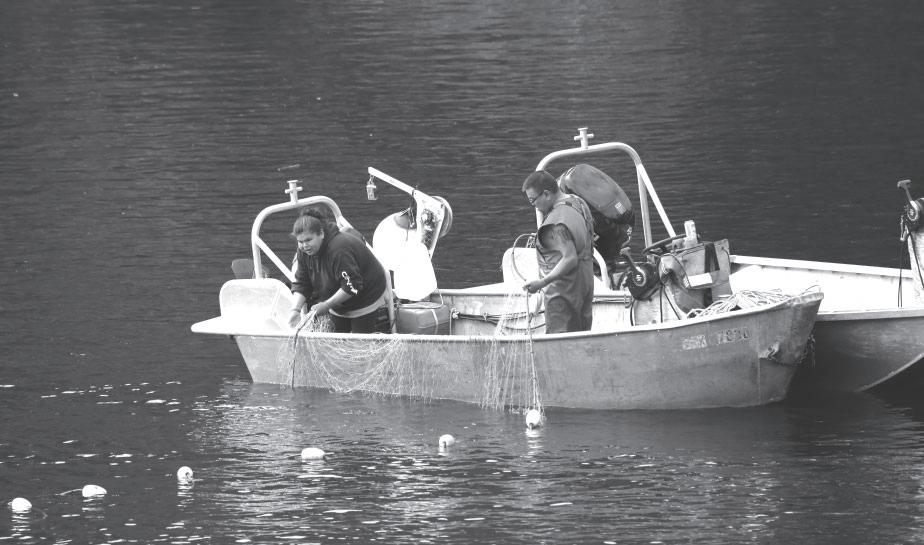
Christine Fred hauls in chinook salmon with her partner Steven Mack on the Somass River.
Uncertainty for salmon farms as deadline proceeds
Most salmon harvested in B.C. comes from farm sites, but many fear pathogens are spreading to wild stocks
By Eric Plummer Ha-Shilth-Sa Editor
Campbell River, BC - As the sun appears to be setting on salmon farming in British Columbia, the industry remains a divisive topic amongst coastal First Nations. Some declare their territorial right to economic development, while other First Nations say pathogens spread from fish farms aren’t giving wild Pacific salmon stocks a chance to recover.
After years of debate, court battles and studies promoted from both sides of the issue, the future of the industry was given a defining blow in June 2024, when Fisheries and Oceans Canada gave aquaculture companies five years to get open net pens out of the Pacific. This narrowed the options for salmon farming on the West Coast, as open net pens have long been the industry standard.
“The government is firmly committed to taking concrete steps to protect wild salmon,” stated former fisheries minister Diane Labouthillier when the deadline was announced.
Most of the salmon harvested in B.C. comes from ocean-based farms, according to economic data tracked by the provincial government. With almost 54,000 tonnes of farmed salmon harvested in 2024, the government’s decision to ban open-net pens brought protest from the industry. The BC Salmon Farmers Association expects that thousands of coastal jobs will be lost, while Canada will rely more on importing fish from foreign markets.
A year and a half later, the future remains uncertain for the industry. In 2025 DFO released a transition plan that leaves the door open for “marine and land-based closed containment” systems which “will be required to ensure the removal of waste and filtration or treatment of discharged waters.”
Large-scale companies like Cermaq already use land-based and semi-closed containment systems for part of their salmon’s growing cycle. But transitioning to only using closed containment isn’t viable, says Brian Kingzett, executive director of the BC Salmon Farmers Association.
“The ban as it’s described now is not workable for British Columbia and it will have significant economic repercussions for the north coast and the west coast of Vancouver Island,” he said. “We’re waiting for a decision from the Carney government in how they want to proceed.”
For some the ban couldn’t come soon enough. For years the practice has been disputed, while most Pacific salmon stocks have remained below their longterm averages for abundance. Those against the farms have long feared that the close proximity of ocean pens act as a breeding ground for sea lice and other pathogens, which spread to wild stocks as they migrate past the farm sites.
In December a letter signed by Hesquiaht Ha’wiih and elected council was sent to Prime Minister Mark Carney, expressing disappointment that the net pens have until 2029 and were not removed in 2025 as the Trudeau government previously planned.
“We cannot emphasize enough how important wild salmon are to Hesquiaht. Our own pre-existing laws and sacred duties require us to respect, care for and be in good relationship with salmon who have long been a foundation of our lives and communities,” stated the letter.
“That open-net fish farms are causing
harm to wild salmon and endangering their future survival – our own observations as coastal peoples and the scientific evidence are both well-documented – is abhorrent to us.”
Over 120 First Nations – comprising most in B.C. – have added their names to those against the practice. Signatories to the First Nations Wild Salmon Alliance include the Ditidaht, Tseshaht and Uchucklesaht.
But other First Nations have explored a stake in salmon farming, tapping into the industry’s economic potential to provide valuable employment in remote coastal communities. The Coalition of First Nations for Finfish Stewardship cites 17 Indigenous communities with formal salmon farming agreements, including Ahousaht, Tla-o-qui-aht and Ehattesaht.
For over a decade Ahousaht has had a protocol agreement with Cermaq, which currently operates a dozen farm sites in the First Nation’s territorial waters north of Tofino. Valued at $6 million annually, the agreement brings employment, educational supports and transportation benefits to the remote First Nation community. Over 20 Ahousaht members are employed at Cermaq sites in the region, which raises Atlantic salmon through a multi-stage growing period that uses land-based hatcheries, semi-closed containment ocean sites and open net-pens in the Pacific waters.
In mid February the Nuu-chah-nulth Council of Ha’wiih Forum on Fisheries held a two-day meeting in Campbell River, which was hosted by the Nuchatlaht First Nation on the traditional territory of the We Wai Kai and Wei Wai Kum. At the end of the first day on Feb. 18 acting Tyee Ha’wilth Hasheukumiss, Richard George, stood up with other Ahousaht delegates to make a statement.
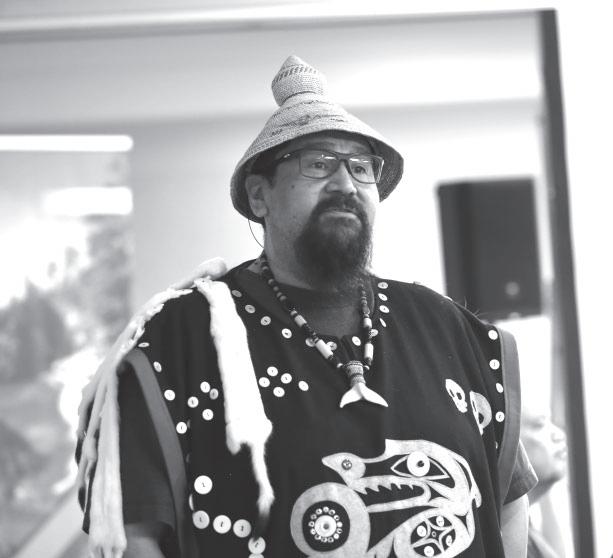
“Please respect our businesses in our Ḥahahuułi,” said Kiista, Keith Atleo. “It’s our Ḥahahuułi, we don’t go to anybody’s other Ḥahahuułi and tell them how it operates.”
During the meeting Ahousaht also distributed a press release announcing that in the last year a full 22-month salmon production cycle was completed at the
Cermaq sites that required zero mechanical treatments for sea lice. Over the previous 12 months an average of 0.3 lice motiles were detected in the farmed fish, showing an improvement over the 1.93 average that Cermaq recorded in 2022. In that year Cermaq conducted 56 mechanical delousing treatments.
Sea lice are natural parasites found in wild and farmed salmon. DFO requires sea lice to be below an average of 2.8 motiles per fish during periods when wild salmon are migrating out into the ocean, but Ahousaht’s protocol agreement has this limit set at 1.5.
“Our Ha’wiih have made sure that protocol agreement that we have with the fish farms follow our Ha’wiih’s environmental assessments - not DFO’s, ours,” said Kiista, noting that Cermaq has helped the First Nation in ways that the federal government and environmental groups haven’t. “They help us with some of the environmental impacts that have happened. They give us funding for our fishery program every year. DFO doesn’t,
Clayoquot Action doesn’t. These are some of the things that we’re up against.”
In late January the Federal Court of Appeal upheld a decision to keep salmon farms out of the Discovery Islands, dismissing a challenge from MOWI.
Located northeast of Vancouver Island, these farms were phased out in 2021 and 2022 when the fisheries minister refused to renew the licences.
The Discovery Islands are considered a critical migration route for wild Fraser River stocks. With the farm sites gone, now the Pacific Salmon Foundation is undertaking a multi-year study to determine if the absence of the farms will help wild stocks.
“We are seeing huge numbers of healthy-looking local salmon,” said Kyra Ford, a fisheries health technician in an article published by the Pacific Salmon Foundation.
Ford added that the fish “have persisted much later into the summer than when the farms were around.”
Eric Plummer photos
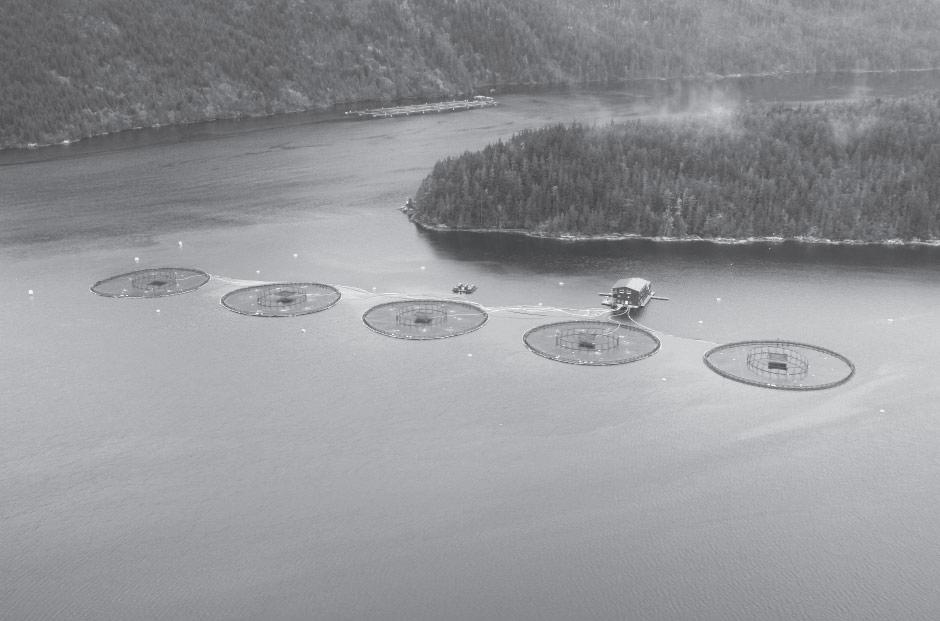
Most of the 65 finfish aquaculture licences that remain active in British Columbia are in Nuu-chah-nulth territory on the west coast of Vancouver Island. Pictured are sites operated by Grieg Seafood, which have recently been acquired by Cermaq.
Hasheukumiss
Tire chemicals proving toxic to Coho salmon
Universities are studying the environmental impacts of tires toxins on salmon bearing streams
By Karly Blats Ha-Shilth-Sa Contributor
Vancouver Island, BC – New studies are exploring how pollution from tire chemicals found in streams are affecting salmon on Vancouver Island.
When it rains, contaminants from tires can be carried to streams through storm water drains. One of the contaminants, known as 6PPD-quinone (6PPDQ), leaks from tiny tire wear particles left behind on the road.
According to a report from Vancouver Island University and the BC Conservation Foundation, 6PPDQ forms when a common tire additive reacts with oxidants in the air and is acutely toxic to coho salmon even at extremely low levels.
Dr. Erik Krogh, a Vancouver Island University Chemistry Professor and Co-director of the Applied Environment Research Laboratories (AERL), and his team are leading a large-scale study to understand when and where this tire-wear toxin appears in waterways across Vancouver Island. The project includes 35 local groups, citizen scientists and First Nations, sampling more than 60 waterways at 140 sites between Victoria and Campbell River.
“We’ve worked with more Coast Salish Nations, as our primary study area was on the east coast of Vancouver Island (We Wai Kai, A-Tlegay Fisheries Society, Snuneymuxw First Nation, Stz’uminus First Nation, Halalt First Nation, Cowichan Tribes, Malahat Nation),” said Haley Tomlin, biologist with the BC Conservation Foundation. “That said, we have also been working with Tseshaht
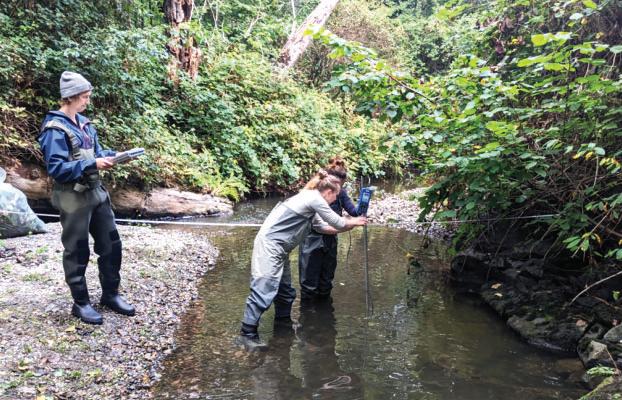
Project led by the Scholes Lab in Civil Engineering at UBC and funded by the Department of Fisheries and Oceans, aims to identify salmon streams and rivers affected by the newly discovered tire toxin 6PPD-quinone (6PPD-q).
First Nation to support their monitoring.”
By collecting water samples during rainstorms, the researchers have found the highest 6PPDQ levels in areas with heavy traffic and many paved surfaces, where tire dust is quickly washed into storm drains and fish habitat. Concentrations can spike rapidly during storms, sometimes reaching levels that harm fish.
“Tire wear chemicals are usually found in small urban streams where there is a lot of impermeable surface and lots of cars,” Krogh said in a press release.
“Tire wear toxins show up in the stream because rainwater washes them off the roads and into nearby creeks through storm drains. Levels can change a lot depending on the amount of rainfall and
runoff occurring.”
A rapid testing method was developed at VIU, with support from the Natural Sciences and Engineering Research Council of Canada, allowing the research team to analyze more than 100 samples a day at parts-per-trillion levels.
The study has identified high-priority storm water outfalls affecting small, fishbearing streams in the urban landscape. Krogh and his partners are now testing rain gardens and filtration systems and developing “stream report cards” to help guide future solutions.
Krogh said some storm water outlets are more important to watch than others. High-priority spots are where 6PPDQ often shows up at levels above safe lim-
its, and where the water flows into small streams that have fish.
“Coho salmon are very sensitive and live in these small creeks during their first year, so they can be affected by multiple rain events,” Krogh said.
There are several ways to clean storm water, Krogh said.
“Nature-based solutions, like rain gardens and wetlands, slow down water, help it soak into the ground and make the water cleaner before it reaches streams,” he said. “These areas also reduce erosion and create habitats for beneficial insects and other animals. In places where this is hard to do, we are also testing end-ofpipe solutions that treat water right at the outfall or downspout.”
Krogh added that storm water in cities can carry other toxic chemicals, like metals and persistent organic compounds, that harm the environment.
“We are working with First Nations and local Island governments to learn more and help remove these toxic chemicals from storm water before they reach natural waterways,” he said.
The BC Conservation Foundation, with VIU are continuing their work with local First Nations and stewardship groups to identify which waterways along the east coast of Vancouver Island are most impacted by tire wear toxins.
Sampling crews, primarily comprised of volunteers from local stewardship groups across Vancouver Island, are sampling before, during, and after major rain events to gain an understanding of which waterways are most impacted and which sources are contributing to the greatest amount of tire toxins.

UBC photo
A tale of two cities: Port Alberni’s supportive housin
Lease negotiations with BC Housing are underway and construction is expected to start this summer. Lookout Housin
By Nora O’Malley Local Journalism Initiative Reporter
In the face of public dissent, Port Alberni Mayor Sharie Minions holds the line on the construction of a controversial 55-studio unit supportive housing complex in the Uptown core.
“I don’t for a second believe that housing people within a neighbourhood where they are currently homeless is going to make it worse. I think it will make it better, and I feel very strongly about that,” said Minions during the Feb. 9 regular council meeting question period.
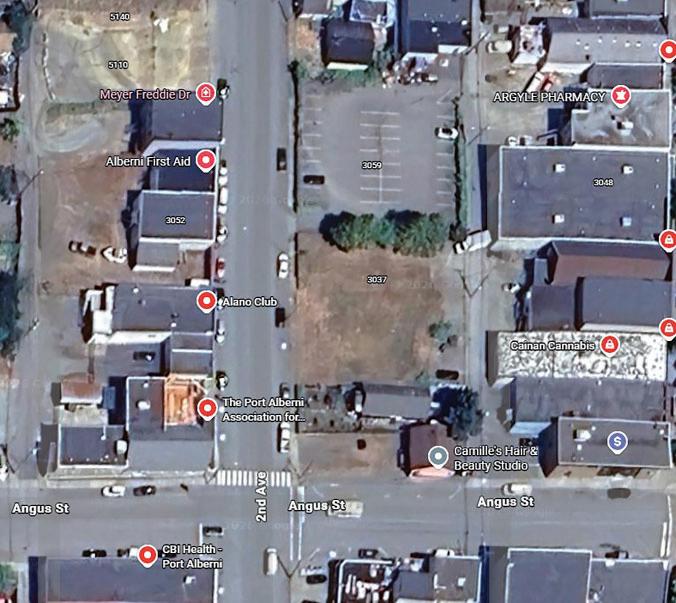
City council approved rezoning of the site at 3027 and 3037 Second Avenue in February 2026 and lease negotiations with BC Housing are underway. BC Housing says construction on the low-barrier housing is expected to start this summer.
“I fully believe it will be a positive impact on the neighbourhood,” said Minions.
While Port Alberni’s recent Point-in-Time homeless count in April 2025 totaled 180 people, the proposed Second Avenue supportive housing building has drawn flurry of local criticism since letters were first sent out to neighbours and area businesses in Jan. 2025, announcing the project. Many folks who oppose the project say it’s far too dense, the location does not align with the city’s downtown revitalization goals and that finding qualified staff could be a challenge.
“Why are we putting it in our downtown core that we call the arts district and our revitalization area where our tourists walk?”
said Roseanne Doiron, a realtor and the spokesperson for a community group called Right Place, Right Plan. They meet weekly on Thursdays at the SteamPunk Cafe.
“We’ve got all these people pouring their heart and soul into these businesses. Who gives you the right to put this right in the middle of all this when all these people are trying to revitalize it?” said Doiron, who was born and raised in Port Alberni within the homelands of the Tseshaht and Hupacasath First Nations.
Port Alberni’s Uptown District extends east to west from Sixth Avenue to the Harbour Quay, and north to south from Dunbar

Street to Mar Street. Over the past few years, shops like Pinto Goods & Refillery, Wildflower Café and Cloud City Apparel have slowly transformed the vibe of the area from decrepit to cool.
The Uptown District also acts as a services hub for people dealing with homelessness, addictions and mental health. Bread of Life soup kitchen is across the street from Dog Mountain Brewery, where folks can nurse a craft beer on the patio as they people-watch traffic coming and going from Harbourview Apartments, Port Alberni’s notorious nuisance property.
“It’s controversial,” said Doiron. “But I really want people to know that Right Place, Right Plan really wants something for the homeless. It’s not that we are against and want to run them out of town. Let’s deal with it properly though.”
Port Alberni’s safe injection site and a low-barrier tiny home village managed by the Friendship Centre is a short walk down the hill from the Uptown core.
Janine Fraser recently moved from Edmonton, Alberta, to Port Alberni. She is the executive director of Sage Haven Society, a non-profit that provides safety and supports
to women and children surviving intimate partner violence that has a brick and mortar office right in the Uptown area.
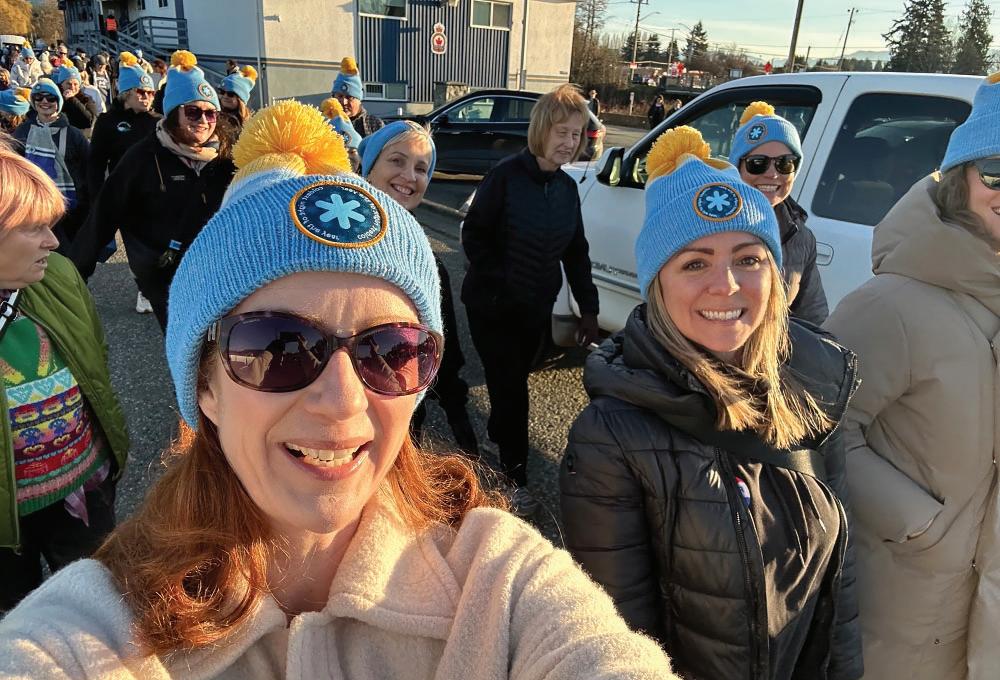
On Feb. 28, the community came together for the annual Coldest Night of Year walk and raised over $55,000 for Sage Haven. Doiron participated in the walk alongside 160 other walkers, including local councillors Debbie Haggard, Dustin Dame and Charles Mealy and the NDP’s Gord Johns and Josie Osborne.
“I’m so thankful and grateful,” said Fraser. “The level of participation and generosity that we saw represents an overwhelming success, but it also really speaks to the compassion and the commitment of the Port Alberni community. That’s exactly what I saw when I first moved here.”
She encouraged the community to continue discussions around the Second Avenue supportive housing with the same spirit of humility, compassion and shared humanity
BC Housing says construction on Port Alberni’s new 55-studio unit supportive housing building is expected to start this summer.
Submitted photo
Roseanne Doiron, in the middle background, was one of over 160 walkers to join the annual Coldest Night of the Year fundraiser for the Sage Haven Society.
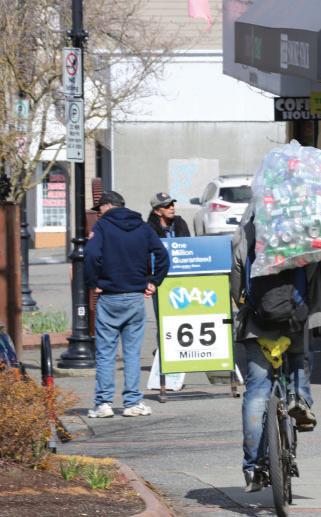
A Port Alberni citizen shuttles empty cans
ng takes a different approach from Campbell River
ng has been contracted to manage the facility.

BC Housing image
they brought to the Coldest Night.
“There is some divisiveness, which is unfortunate. I understand where people are coming from, but at the end of the day, housing is a human right and we know that it’s a social determinant of health,” said Fraser.
“Safe, stable housing is critical foundation. It allows unhoused individuals and families to rebuild those lives with dignity and security,” she said.
Campbell River’s Homewood
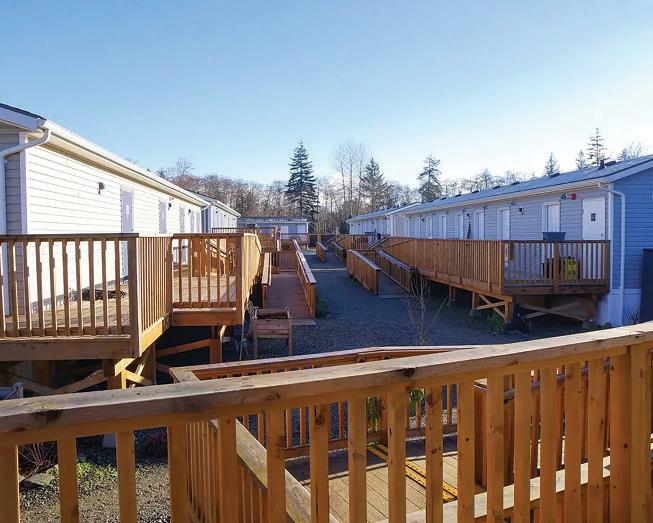
Meanwhile in Campbell River, Mayor Kermit Dahl has taken a different approach for people experiencing homelessness by fast-tracking a BC Housing initiative located at 1299 Homewood Road, roughly 25-minutes’ walk from the downtown core.
Homewood was opened in Nov. 2024 after the city forced its community
kitchen and drop-in centre Kwesa Place and Hem’?aelas Community Kitchen to close for redevelopment. The refreshed properties will include up to 200 residential rental units, as well as commercial and civic spaces. The city says a minimum of 10 per cent of the residential units will be dedicated to “affordable housing”.
The City of Campbell River also ramped up security patrols of the downtown core and adopted new zoning bylaws that prohibit the use of social care facilities, overdose prevention sites, escort services and massage parlors.
In a 2025 Citizen Satisfaction Survey, 71 per cent of Campbell River residents that took the survey said they felt “neutral, safe, or very safe downtown”, a significant jump from 52 per cent in 2023.
Nearly 600 Port Alberni residents included in an Uptown District revitalization survey conducted in 2020 to 2021 listed “personal safety/security” caused by “addictions/drug use” as the main reason for not visiting downtown or spending more time in the area.
Homewood was originally opened as a 40unit temporary supportive housing project and has expanded to add eight new units. Funding is provided through the Province’s homeless and encampment response teams and temporary housing solutions (HEART and HEARTH), according to BC Housing.
“Residents of Homewood pay the provincial shelter rate of $500 to rent the private, secure sleeping units,” said BC Housing.
“The City of Campbell River owns the land and is leasing it to the Province for a nominal fee. Lookout Society operates the site. The Province, through BC Housing, has committed operating funding for a minimum of three years,” the statement from BC Housing continued.
Lookout Housing and Health Society
The Homewood site is managed by Lookout Housing and Health Society, which employs Tenant Support Workers (TSWs) on site 24/7. Residents receive hot meals, access to laundry and several support services, including: training for life skills, employment skills, referrals to other community services and access to health supports.
“Direct service staff have a combination of education and prior experience working with vulnerable populations,” said Megan
for substance use,” said Kriger.
“Our experience shows that once individuals are out of survival mode and their basic needs are met, they often reduce or stop using altogether. It’s also important to note that these are mixed communities, and many of our residents do not use substances,” Kriger continued.
Jacqueline Spies manages the Homewood site. She has been working in community wellness for over 20 years.
“So far (the location) is positive,” she said. “We are respectful of the businesses around us. Really, it’s just about providing a good environment and getting people that are homeless off the street and giving them an opportunity to move forward.”
“We’ve proven over and over again that it works. It’s just meeting people where they are. Everybody is treated the same. There are people that are active in addictions here. They don’t do it out in the yard. They stick to their room or they go off the property,” said Spies.
Right Place, Right Plan is advocating that the city put restrictions on the lease with BC Housing and to cut the density of the build in half.
Kriger, director of development for Lookout Housing and Health Society.
“Additionally, they receive training that includes, but is not limited to: First Aid, Non-Violent Crisis Intervention, TraumaInformed Practice, Cultural Safety, Mental Health First Aid, Respectful Workplace, Medication, and Suicide Prevention,” she said, adding that the safety and security of both tenants and staff is a priority.
“Lookout supports the use of cameras to monitor common and exterior spaces on site, and these are within the other supportive housing sites we operate,” said Kriger. BC Housing has also contracted Lookout Society to operate Port Alberni’s proposed Second Avenue supportive housing building. Tenants will also be charged the provincial shelter fee.
Drug use is of a particular concern for residents who oppose the Second Avenue project. Both Homewood and Second Avenue are considered “wet housing”, which means tenants are allowed to consume alcohol on-site and use drugs.
“Lookout Housing and Health Society aims to meet people where they are at, to build trust and connect residents with healthcare, rather than turning them away
“I don’t think it needs to be wet housing. I just don’t. The only way I think wet housing can work is if there are definite rules and support in the building and good management. I even think there should be a curfew on the door,” said Doiron.
In 2023, a 16-room supportive housing facility managed by Lookout Society made headlines when a 28-year-old man died from an overdose – and wasn’t discovered for five days.
“That was the most difficult thing I’ve ever gone through in my life,” said the man’s father Erick Soestmeyer in an interview with Global News.
“They shouldn’t have left him alone, especially in a room full of drug stuff. There was meth pipes all over. There was needles all over,” he said.
Fraser reminds us that no one grows up with the hope that one day, they will be an addict.
“There is always something behind it. These people come with trauma,” said Fraser.
In effort to gather more information and understand the impacts of low-barrier housing on surrounding neighbourhoods, Port Alberni mayor and council are planning to tour supportive housing sites around the Island.
Eric Plummer photo
Campbell River’s Homewood low-barrier housing is located roughly 25-minutes’ walk to the downtown core.
Eric Plummer photo s through Port Alberni’s uptown.
Google map image of the purposed site for the supportive housing site. 3027 and 3037 Second Ave, Port Alberni
New signage commemorates historic double rescue
Uchucklesaht Ha’wilth recalls early days on job with his father at Bamfield Coast Guard station
By Denise Titian Ha-Shilth-Sa Reporter
Bamfield, BC – “When I think of what we went through 50 years ago I think about how lucky I am to be here today,” said Uchucklesaht Tyee Ha’wilth Clifford Charles. His hair, now frosty white, Charles was only 25 when he and his father answered a distress call that stormy night in ‘76.
According to information from the Bamfield Historical Society, it was the start of the herring season and fishing boats were moving around the coast despite the wind and falling wet snow.
Charles, a new member of Bamfield’s Coast Guard, was paged late that night, around 10:00 p.m. on Feb. 29, 1976. The Bamfield lighthouse keeper reported that there was a fishing vessel in trouble right off at Cape Beale.
It was by chance that Cape Beale lighthouse keeper Mike Slater learned of the accident. He was bringing his dog in from the cold when he heard something. High on a cliff, he peered out into the dark ocean. He heard someone calling for help and summoned the Coast Guard for help.
Clifford, his father, Martin Charles along with David Christney and Bob Amos met at the coast guard station where they boarded their vessel to head out into the pitch blackness.
The seiner, Bruce 1, out of Victoria, ran aground on the rocks at Cape Beale with four men aboard. One of those men, Reid Dobell, a lawyer from Vancouver, was only going along for the to observe the herring fishery activities.
David Christney recalled it was around 11:00 when they reached Cape Beale near the lighthouse and it was pitch black as they navigated around towering rocks and breaking waves. A faint light was spotted between the waves. It was a partially inflated life raft with two men clinging to it.
In a recording, Clifford Charles says one man was lying on across the raft, on top of it instead of inside of it, because it wasn’t fully inflated. Another fisherman was clinging to the raft when they rescued them, after struggling with cords attached to the raft.
Thinking the rescue was complete, the crew was about the head back to their base when one of the fishermen asked, ‘where’s Reid, where’s Rusty?’
“There’s two more guys!” Clifford yelled. But it was too rough and rocky for
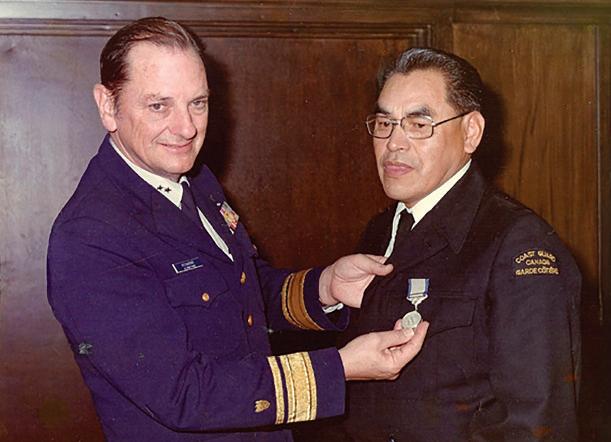
his efforts in saving the crew of a US Coast
of Bamfield in 1976.
the big boat, so father and son launched the rubber boat to search. They heard someone yelling, ‘hey! hey!’
A third man, Reid Dobell, was deposited by a wave 30 feet up on top of a rock pinnacle directly in front of the Cape Beale lighthouse station and he could not get down, nor could the Coast Guard crew get to him.
The US Coast Guard in Port Angeles was monitoring the situation and offered to send a rescue helicopter. They quickly rescued Dobell, who had been stranded for hours atop the rock pinnacle, wet and freezing. He was hoisted up to the US helicopter in a litter.
Charles said there was no way they could leave him there until morning. He needed to be rescued that night, after being in the ocean and exposed to the wintery weather, he wouldn’t have made it through the night, said Charles.
The Bamfield Coast Guard crew was heading back to their station with two rescued crewmen from the Bruce 1 while the US Coast Guard, with Reid safely aboard, flew over several times in search of the last missing crewman, Rusty Waters, when disaster struck again.
Alex Thompson from the Cape Beale lighthouse had been providing assistance to the recue crews from shore. High up on the cliff, he could see the helicopter and the lights from the boats.
“Thompson radioed us that the heli-
Pronounced ‘tlulth uts ulth thl muks ti nahts sahtl koos hoop kwis tuh’, it means, ‘The
copter just crashed right in front of the lighthouse,” Clifford recalls. Christney, he said, went full throttle toward the lighthouse. There was more frightening action as the rescuers nearly capsized with Clifford out on the deck and near misses with the helicopter rotors.
“We went alongside the helicopter sliding door…it was still floating,” said Clifford. He and his father Martin were able to get close to the wrecked Sikorsky with the rubber vessel. They pulled Reid and the three US Coast Guard crew members from the helicopter.
Pilot Brian Mills said in a recording that the helicopter engine just quit, 250 feet above the ocean. As the helicopter fell from the sky, it was caught in a breaker, a large wave, that extinguished a fire and broke the helicopter’s fall into the ocean. Of his rescuers, Mills said, “we never got wet, those guys risked all to save us.”
The Bamfield Coast Guard crew returned with three survivors from the fishing vessel and three survivors from the US Coast Guard helicopter. Reid Dobell was fortunate enough to survive both. Sadly, the missing fisherman, Rusty Waters, perished and was never found. The following day his green Mustang floater jacket was found, turned inside out, drifting offshore.
In the weeks and years following the incident, the Bamfield Coast Guard crew received bravery medals from both the
Canadian and United States governments. In May 2015 the Canadian Coast Guard christened a Hero Class vessel the M. Charles after Uchucklesaht’s Tyee Ha’wilth Martin in recognition of his heroism. Clifford Charles and family attended the event in Port Alberni.
The Bamfield Historical Society maintains audio accounts of this event on their website.
On Nov. 27, 2025, they posted on their website that a new commemorative sign about the rescue of the crew of fishing vessel Bruce 1 by the Bamfield Coast Guard Crew in 1976.
“During a fierce snowstorm on the evening of February 28th, 1976, the seiner Bruce 1 struck the rocks off Cape Beale, five miles SW of Bamfield. Immediately all four crew were fighting for survival in the frigid waters. The skipper Stan Beale and Randy West clung to a semi-inflated life-raft. Reid Dobell and Rusty Waters were swept onto semi-submerged rocks battered by waves.”
Heather Cooper is a volunteer at the Bamfield Historical Society and says this is one event that should not be forgotten.
“There are people that were there 50 years ago, involved in the incident that are still here today,” she said. Sadly, two of the Bamfield Coast Guard crew from that day have since passed away, including Martin Charles. But Clifford is still here to tell his and his father’s stories.
In 2017 the Bamfield Historical Society received a BC/Canada 150 grant to create 10 historical interpretive signs. The Society aims to produce one sign each year.
The latest sign, posted in Bamfield, tells the story of what is now called the Bruce 1 Rescue incident.
On February 28, 2026, the Bamfield Historical Society in partnership with the CCGBamfield Lifeboat Station hosted a small social gathering at the Bamfield Lifeboat Station to commemorate the 50th anniversary of the rescue.
“We will honour those who took part from air and sea and unveil a new permanent interpretive sign detailing the event,” reads the invitation.
For information about locations of interpretive sign locations or to hear recorded voices of the men involved in the rescue go to the Bamfield Historical Society website. There, you can hear Clifford Charles, his co-worker David Christney or the USCG helicopter pilot give firsthand details of what happened that night.
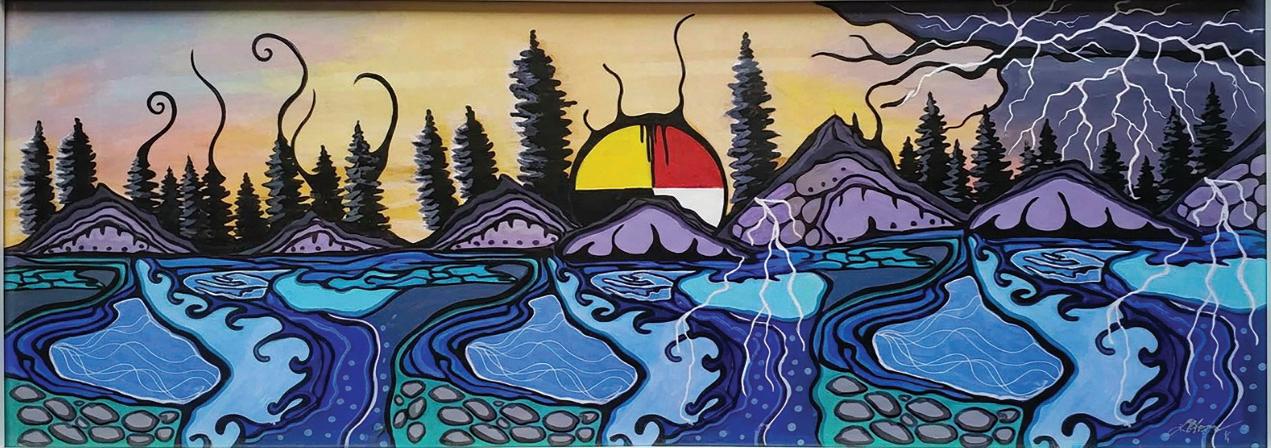
Illustration by Laura Graves
Ha-Shilth-Sa archive photo
The US Coast Guard Silver Medal of Bravery was presented to Martin Charles for
Guard helicopter that crashed into the ocean off
Bamfield’s submarine water line project complete
The replacement watermain project was celebrated with a ribbon cutting by local officials
By Sam Laskaris Ha-Shilth-Sa Contributor
Bamfield, BC – Residents of a community adjacent to Huu-ay-aht First Nations’ Anacla are thrilled a major submarine watermain project is now complete.
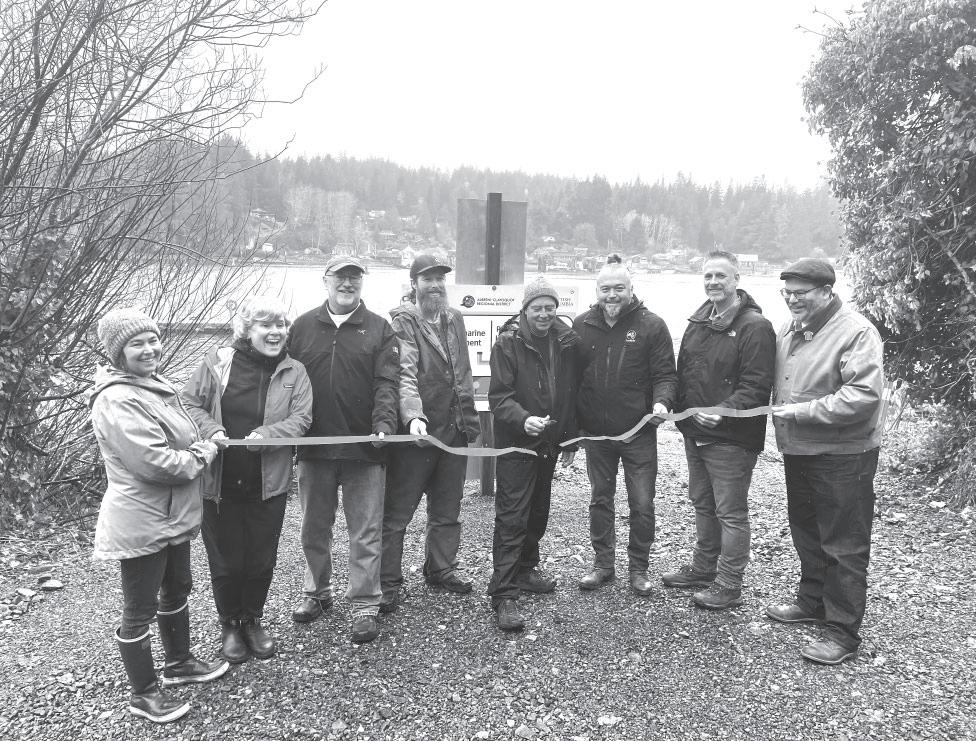
Officials from the Alberni-Clayoquot Regional District (ACRD) held a ribboncutting ceremony on Mar. 6 to celebrate its new $1.2 million project, which saw the construction of submarine line replacement.
The new line will provide a more reliable source of potable water for the community of West Bamfield. It replaces a line which had existed since 1981 and had its share of challenges in recent years including leaks and a boil water advisory last June.
The ACRD had contributed more than $300,000 in funding for the project. The federal government chipped in with about $470,000 while the British Columbia government provided close to $400,000.
Eddie Kunderman, the ACRD’s operations manager, said the completion of the line is a relief for West Bamfield residents.
“The other line had a number of failed welds along it that were repaired,” he said. “But it was always kind of one of those things and hoping it would hold for longer. It was aging infrastructure installed around 1980. It had reached its end of life and our water operators had done a fantastic job, keeping it going and with all the repairs. So yeah, it’s just a little bit of a peace of mind for those on the west side.”
Kunderman is hoping the new line will be problem free for several decades.
“Anytime you talk about infrastructure, there are always things that could take place, especially submarine infrastructure,” he said. “It adds a whole other layer of complexity to things. But we feel good about the process that was undertaken and the line of where it is right now.”
O
fficials had previously hoped that the new line would be completed by June of 2025.
“I had hoped that it would have been done in June, just to avoid the risk of some form of failure, impacting our summer shoulder season,” said Bob Beckett, the ACRD director for electoral area “A” Bamfield.
“But it didn’t align. There’s lots of
Submitted photo
A ribbon-cutting ceremony was held for a new underwater piping project serving West Bamfield residents on Mar. 6. Christine Gruman (community volunteer for the Bamfield Area Services Committee), MLA Josie Osborne, Bamfield (Area “A”) Director Bob Beckett, Lake Butler and Les Butler (Bamfield water crew), Deputy Chief of Huu-ay-aht First Nations Edward R. Johnson, ACRD Operations Manager Eddie Kunderman, John Jack (Chair of the ACRD Board of Directors and Chief Councillor of Huu-ay-aht First Nations).
challenges with the permitting process, especially with department of fisheries and those type of governing bodies. But the good news is that we got all the permissions and the work was just recently completed.”
Beckett also said work on the line was not possible to do last summer because of boat traffic in the harbour.
“It was a quite an engineering feat to float the line in and then sink it in,” he said. “It had to be strategically located.”
Beckett added it wasn’t simply placing a matter of placing the pipe in a straight line as it had to be situated at several different angles.
“The bottom of the harbour, of course, is not level,” he said. And it has different depths and so they had to maneuver it around certain obstructions and keep it at
PROPOSED WOODLOT LICENCE PLAN FOR WOODLOT LICENCE W1941
Notice is hereby given that a proposed Woodlot Licence Plan (WLP) has been prepared for Woodlot Licence W1941, located in Kyuquot Sound on Union Island. The WLP outlines management strategies, objectives, and standards for timber harvesting and forest stewardship within the licence area. The proposed plan, if accepted will have a 10-year term.
The WLP and information about the proposal can be obtained by contacting Len Apedaile RPF at 250 203-0225 or Tom Younger RPF at 250-830-8474. Comments regarding the WLP must be submitted to forestry@tiicma.com by April 18, 2026.
a certain depth. It’s now in place.
“It’s properly anchored so that it can’t be damaged by vessels or people anchoring over top of it as well. It’s marked on the surface with buoys. Hopefully it will last for a long, long time.”
Beckett said he’s pleased the piping did not create any additional problems after its last leak and boil water advisory last June. He’s thankful the new project is now finished as he felt it was just a matter of time before another failure would occur with the old pipe.
“Tourism is huge for our community, especially June, July, August and September,” he added. “Most of the accommodations for the tourism is on the west side, which this line feeds. If the business has lost the potable water, it would have a very negative effect on one’s experience at a lodge or at a cottage.
“We were able to get past our shoulder season last year and I’m just so glad that we don’t have to worry about it with this upcoming tourism season.”
Beckett also said the newly installed pipe is considerably better than its predecessor.
“It’s a very large pipe,” he said adding it is 300 millimetres wide. “We’ve doubled the size of the pipe which will allow for better flow, better pressure, better fire flows and will help with whatever growth the west side may see in the years to come.”
And it’s also better in other aspects. “It’s a continual welded, I’ll call it plastic but it’s synthetic material, whereas the other pipe had couplings in it and they were prone to failure,” Beckett said. “This is a very, very rugged line. There will be no corrosion. There are no couplings that should fail. It should last a considerable amount of time.”
Kunderman also spoke highly of the new project. “When we talk about the pressure rating of the line, it’s improved,” he said. “When you look at all the technologies in the world, when they’re from the 1980s compared to 2025-2026, technology has improved. So, the robustness of the line is something we feel more confident about now. The outer wall of the line is much thicker. We feel good about it.”
Five homes vandalized in
Yuułuʔiłʔatḥ community of Hitacu
No one was displaced by vandalism, but the damage will delay occupancy for community members
By Nora O’Malley Local Journalism Initiative Reporter
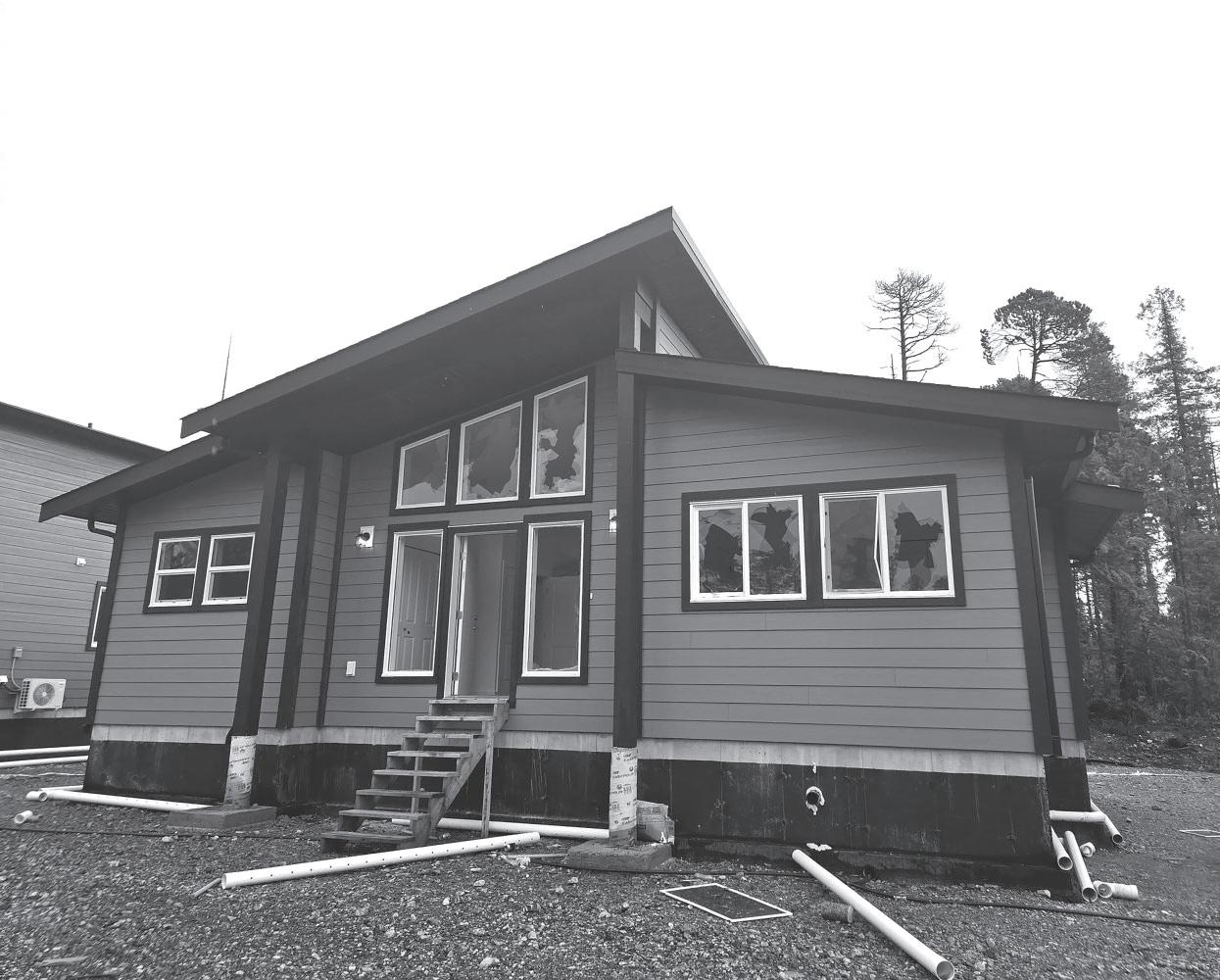
Hitacu, BC – Ucluelet RCMP are investigating after five new homes in the Yuułuʔiłʔatḥ community of Hitacu were vandalized on Feb. 23.
Photos shared on social media by Yuułuʔiłʔatḥ Government (YG) show smashed windows, doors knocked in and fire damage to a stove and microwave.
YG president Charles McCarthy expressed grave disappointment for the “senseless damage”.
“Repairs will be in the hundreds of thousands of dollars, which will delay occupation of these houses for our community members,” said McCarthy in a news release.
“It took many years and considerable staff time and effort to secure new housing in the community. These five homes were built to fill a gap in our housing portfolio, creating detached homes where families can set roots and build their lives. It is disheartening that someone would go to such lengths to damage new homes, especially when there is a housing shortage in hitacu,” he said.
Hitacu is located across the harbour
from the municipality of Ucluelet on the west coast of Vancouver Island. About 275 people call Hitacu home.
YG is asking the public to contact the Ucluelet RCMP at (250) 726-7773 if they know anything about the vandalized homes. According to the YG news release, staff first discovered that the five new homes were vandalized on Alec Road on Feb. 23.
The nation says the extent of the damage includes: broken windows, doors kicked in, countertops torn off, cabinetry damaged and stove and microwave fire damage.
YG’s manager of communications Elena Rardon says the new homes were funded in part by a loan from the Canada Mortgage and Housing Corporation (CMHC).
“The houses were not rented out. Construction is still ongoing, so no one was displaced by the vandalism, although this vandalism will delay occupation even further,” said Rardon.
McCarthy is asking everyone to treat the community with ʔiisaak (respect).
“It is essential that we treat our assets with the care they deserve, so that all community members can have healthy living spaces,” he said.
ANNOUNCEMENT OF NTC
EXTRAORDINARY GENERAL MEETING
RE: NTC 2026/2027 BUDGET
The NTC Society Members will conduct an Extraordinary General Meeting of the Nuu-chah-nulth Tribal Council on Tuesday, March 31, 2026, for the purpose of the NTC 2026 / 2027 Budget.

Time: 9:30 am – 1:00 pm
Location: Barclay Hotel in Port Alberni Format: Hybrid (in person/zoom)



Celebration of Life
Saturday, March 28th 12:00pm start
Maht Mahs Gym, Port Alberni
You are invited to the Celebration of Life for Earl Mundy. For more information please contact Karen Severinson.
Netp’s Annual Career Fair
Thursday, April 9th
9:00am – 3:00pm
3737 Roger Street, Port Alberni
Free table registration. For further details contact Shan at shan.ross@nuuchahnulth. org or Kirunn at kirunn.sharma@ nuuchahnulth.org or call 250.723.1331or visit 4090 8th ave Port Alberni.
NCN Mental Health Counselling
Tuesdays and Thursdays 8:30am – 4:30pm



&Community Beyond



4841 Redford Street, Port Alberni
NCN Mental Health Services – DropIn Counselling with Margaret Bird, Registered Clinical Counsellor and Play Therapist. For on and off reserve members of all ages of the Nuu-chahnulth Tribal Council. Call (250) 724-3939 to book your appointment.
Stirring up Connections
Every Friday 10am – 12:30pm
NTC Kitchen – 4841 Redford Street.
henna artist
By Aleesha Sharma
Book your henna session for community events, weddings, birthday parties, school events or any special event.
Phone: 250-730-1262 or 250-720-3096
E-mail: aleesha_sharma1@hotmail.com


A warm and welcoming cooking group designed just for parents! Whether you’re a seasoned home chef or just learning how to boil water, this group is all about sharing recipes, laughter, and stories while preparing simple, nourishing meals together. Each session will feature: Easy, budget-friendly recipes; Tips for cooking with kids and picky eaters; Space to connect with other parents over food and family life. Contact 250-724-3939 for questions. 25 Years Ago in
Ha-Shilth-Sa
Vol. 28 – No. 5March 15, 2001
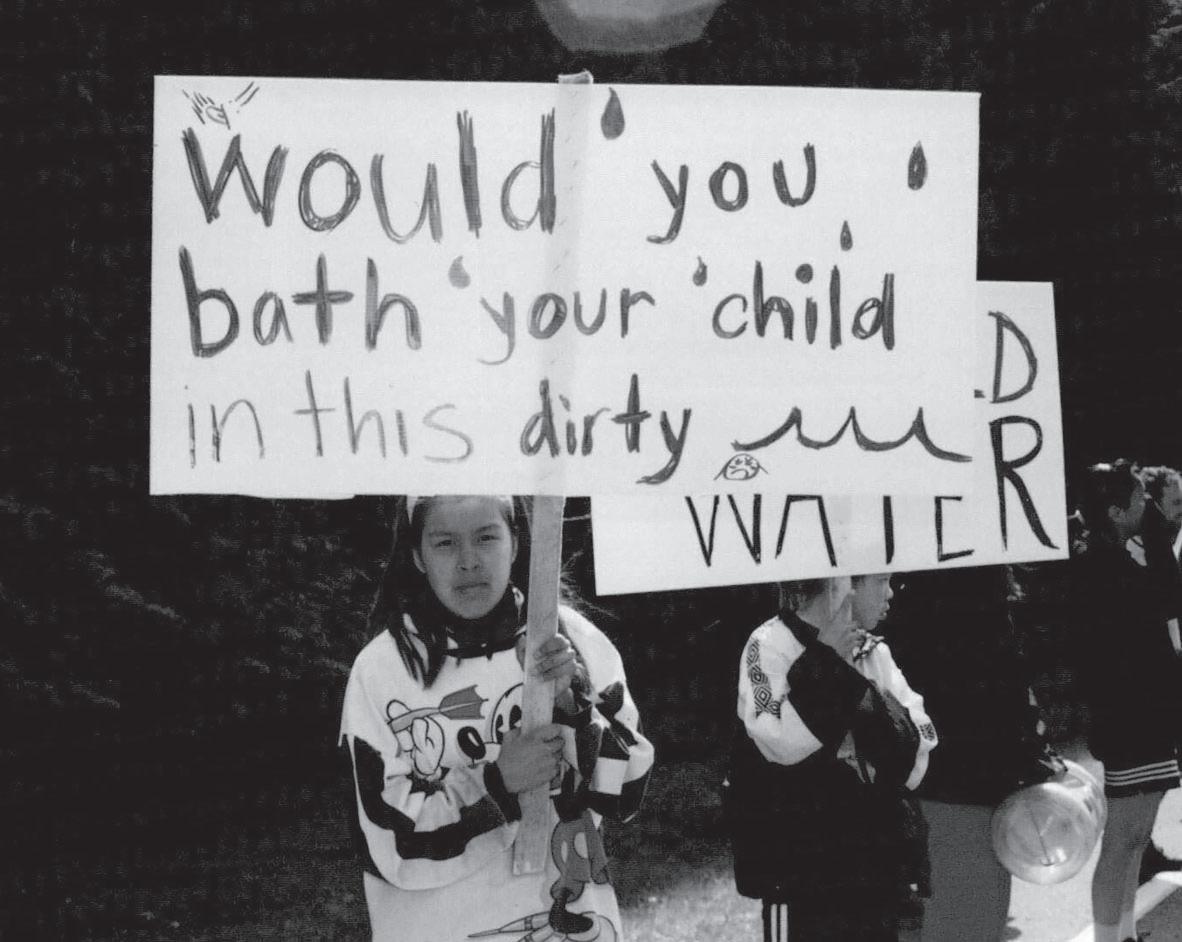
Dirty water reaches a boiling point; entire reserve forced from homes
More than 30 families were evacuated to the Tin Wis Resort after power outages turned Esowista tap water into a murky black soup. A long-term problem, dating back more than ten years from this incident, Esowista’s water comes from a well located on Tofino Airport Lands. Originally built to serve a community of 140, the water system was severely underrated to the grown community of 200. With transfer of the property, it was unclear where the Esowista Evacuated
responsibility for maintenance and upgrades fell. ACRD director Brian Harper and TFN representative Danny Watts met on March 12, 2001 and agreed in principle that the cost of correcting the water problems will be divided between the three user groups, ACRD, TFN and the Ministry of Transportation. Esowista residents remained in hotel rooms for two days while the band picked up the tab for the rooms and meals, roughly estimated to be around a total cost of $2500.
Government photo
Five new homes in the Yuu
atḥ community of Hitacu were discovered vandalized on Feb. 23.

Employment Opportunities
Port Alberni
Friendship Centre Volunteers Needed
Need work experience? The Port Alberni Friendship Centre is looking for interested applicants for various positions. Call 250-723-8281
Junior All Native Tournament descends on Langley
22 Nuu-chah-nulth teams are playing in the 50th edition of the youth basketball tourney
By Nora O’Malley Local Journalism Initiative Reporter
Langley, BC – Over 1,855 youth athletes from 129 teams journeyed to Kwantlen First Nation territory in the lower mainland for the 2026 BC Junior All Native basketball tournament.
The Langley Events Centre serves as the tournament’s primary venue, hosting the opening ceremonies on March 15 and the Championship Friday games on March 20. A mayhem schedule of 300 games will be played starting March 16 across nine gyms, including: RE Mountain Secondary, Langley Secondary, Walnut Grove Secondary, Peter Ewart Middle and Yorkson Creek Middle Schools.
The 2026 edition of the Junior All Native Tournament (JANT) marks the 50th anniversary of the largest Indigenous youth sports gathering in B.C. and one of the biggest basketball tournaments in Canada. It promises to be an epic production with pro basketball team the Vancouver Bandits from the Canadian Elite Basketball League (CEBL) partnering with Kwantlen First Nation and Vancity Nation youth basketball to host.
Nicole Cardinal, also known as Aunty Nicki, is the team manager of the Vancity Nation basketball club, an organization that provides low-cost basketball opportunities for urban youth. She said one of the goals for 2026 JANT is to give the youth a sense of what it’s like to be at Provincials or to imagine themselves playing for a pro team like the Vancouver Bandits.
“This is more than just basketball,” said Cardinal. “It is a cultural thing, but it’s also a pride thing.”
She shared that her oldest daughter Kailani, 18, was able to understand the spiritual concept more when she aged up to All Native Basketball Tournament.
“She understood that there was a spirit in the game. Once you tap into your Indigenous strength, you’re able to see the spirit of ball. Once you’re in it, it’s a beautiful thing,” said Cardinal.
“Basketball is a resistance. It was one of the things that allowed us to gather. There was a time that we weren’t allowed to gather and that’s when the All Native comes in. Sport was a form of resistance. Basketball still is a form of resistance in modern times when we look at the external things youth are dealing with,” she continued.
“We know that basketball saves lives. Our youth are being targeted through various means. We know what’s at risk and we know what’s down the street from our Friendship Centre. We are not far from Main and Hastings,” said Cardinal. Vancouver Bandits team president and 2026 JANT co-chair Dylan Kular says this is the first time a CEBL team has been involved with a youth tournament of this magnitude.
“We’re bringing our event expertise, and we have a lot of fun things planned for the youth,” said Kular.
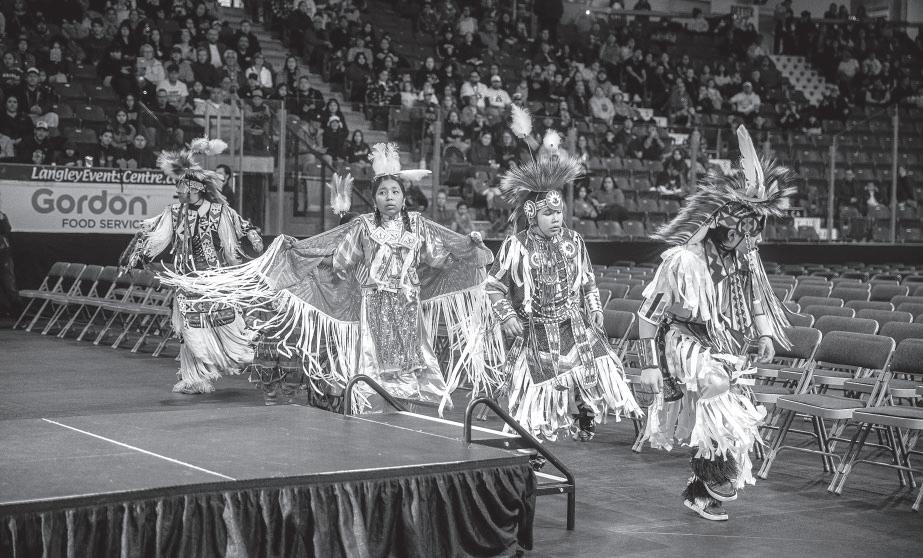
While Kular wanted to keep the details a surprise, he was able to confirm that on Monday, March 16 the Langley Events Centre will act as a health and wellness hub for the players with various vendors providing information, free swag and there will be a free meal. March 16 is also a dedicated Media Day where individuals and teams can get professional photos.
“We want to do really well by these youth with these families travelling and spending thousands and thousands of dollars to get down here for this event. I think about that every day,” said Kular.
2026 JANT features seven age divisions: Girls U17, Boys U17, Girls U13 Gold, Boys U13 Gold, Girls U13 Silver, Boys U13 Silver, and Co-Ed U10.
Boys/Girls U17 division is a double knockout format and the U13 divisions are a round robin with a single knockout, depending on seeding after the round robin. The U10s play a round robin of three games each, with lower hoops and smaller basketballs.
“We are really excited to host the babies,” said Cardinal of the U10s. Only in its second year on the JANT program, the U10 division has 17 teams entered this year.
“Our cap (for U10) was 18. Last year, was a cap of 10 or 12. Some nations have two teams entered. We are going to playing music during their games. We’ll do a little media day for them as well. It’s going to be a lot of fun,” said Kular. Games from March 16 to 19 are free of charge to fans of all ages, thanks to the generous support of JANT 2026 sponsors. Tickets to the opening ceremonies and Championship Friday are $10 for fans, except for youth 12 and under and fans 65 and over are free. Visit showpass. com for tickets. Daily schedules, scores and tournament updates can be found at

Mobile Hair Stylist
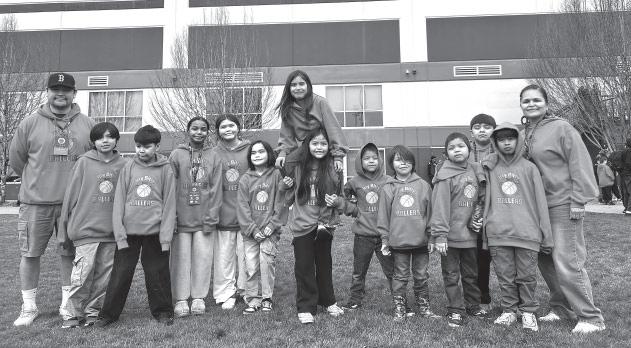
https://jant.ca/or by following the official tournament social media accounts on Instagram and Facebook.
There are 22 teams from Nuu-chahnulth territory playing in 2026 JANT:
U17 BOYS
Ahousaht Eagles
Ahousaht Islanders
Hiiyitliik (Tla-o-qui-aht)
Mowachaht Bucks
Naani (Ahousaht, Tla-o-qui-aht and YFN)
NCN tatuus (Port Alberni)
U17 GIRLS
Ahousaht Storm
Maaqtusiis Lady Suns (Ahousaht)
Nootka Rebels (Mowachaht/Muchalaht)
Tseshaht Lightning
West Coast “All Heart” (Tla-o-qui-aht)
U13 GIRLS SILVER
Ahousaht Ocean Storm
Maaqtusiis Suns (Ahousaht)
Yuułuʔiłʔatḥ Ravens
U13 GIRLS GOLD
Tseshaht Lightning
U13 BOYS SILVER
Junior tatuus (Port Alberni)
Tla-o-qui-aht Wolfpack
YFN Ravens (Ucluelet First Nation)
ʔÚpnit Warriors (Ahousaht)
U13 BOYS GOLD
Guardians (Ahousaht)
U10 CO-ED
Itty Bitty Ballers (Ucluelet First Nation)
Naani (Tla-o-qui-aht)

Edy Saini/Vancouver Bandits photo
Dancers perform at the 2026 JANT opening ceremonies held at the Langley Events Centre on March 15.
Submitted photo
Itty Bitty Ballers U10 team are psyched for a week of basketball in Langley.
Maht Mahs hosts Fentanyl ball hockey tournament
17 teams faced off at the annual event honouring loved ones lost to the toxic drug crisis
By Eric Plummer Ha-Shilth-Sa Editor
Port Alberni, BC - Over the second weekend of March
Maht Mahs once again turned into a hub of ball hockey action for a three-day tournament held to support those affected by the toxic drug crisis.
Held March 6-8, this year the annual fentanyl ball hockey event attracted 17 teams, including groups who travelled from Tofino, Port Hardy, Alert Bay and Vancouver. Local Port Alberni teams played in honour of loved ones lost due to the toxic drug crisis, and the event serves as a fundraiser to support those struggling to recover from addiction.
Last year’s fentanyl ball hockey tournament raised over $10,000, which enabled donations towards five different treatment centres, the sponsoring of two individuals in their recovery from addiction and meals for the homeless, according to the event’s organizer Shae Doiron.
This year Doiron plans to hold a celebratory meal at Maht Mahs over the first weekend of April to honour those working to overtake drug addiction, as well as cancer survivors.
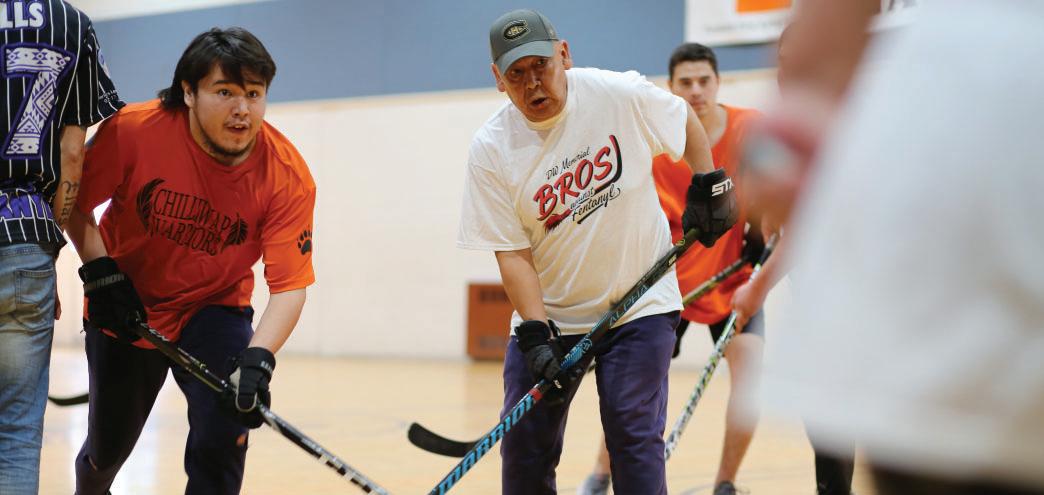
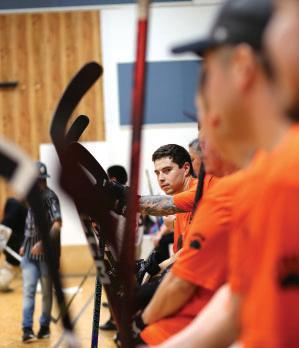

Eric Plummer photos