INTERESTING NEWS
Artists speak out against AI-generated art and fashion
Bayja & Koyah Morgan-Banke want to see AI content labelled. They hope the technology triggers a renaissance
By Nora O’Malley Local Journalism Initiative Reporter
From a shared house in Medellín, Colombia, Koyah Morgan-Banke from the Toquaht and Secwépemc First Nations says all her career aspirations are going to be impacted by AI.
The 20-year-old is spending the summer in South America after signing with a modelling agency. The Ucluelet Secondary School graduate also specializes in Indigenous formline design and is studying Neuroscience at the University of British Columbia (UBC).
“In science, AI excites me because data analysis is so much easier now. In every other facet, specifically creative, it’s horrifying. It’s very, very scary,” said Morgan-Banke over Facetime.
When it comes to the modelling industry in 2026, Morgan-Banke says she is competing with computer generated models for gigs, and she has to be vigilant when signing contracts.
“I have to be careful because I don’t speak Spanish very well. I could definitely sign a form and two years later I’m on a diaper ad,” she said.
Some contracts request permission from the model to create an AI rendition of their likeness and then just pay the model a flat rate, according to Morgan-Banke.
“Me and the girls living in the house, we talk about it. It’s so creepy. You lose a lot of autonomy. You don’t know what people are going to use these images for,” she said.
Artistically speaking, Morgan-Banke is contracted by several organizations, including the Nuu-chah-nulth Tribal Council and UBC, for her Indigenous drawings. One of her designs was the emblem for Pink Shirt Day Canada’s 2023 campaign and she also has an orange shirt featured on Tourism Tofino’s Makuwas market.
Today there are dozens of free AI art generators that can quickly produce formline designs. The real artists behind the work are not compensated and the art is currently not required to be labelled as AI-generated content.
“That is horrifying. I don’t think a lot of people know how much effort goes into these designs and how much culture is actually present in them,” said MorganBanke. “Art is the expression of a person. In my mind, it’s supposed to be something only a human can make. When AI is making it, it kind of takes out the light and joy. It’s formline vomit.”
Morgan-Banke was taught the traditional method of formline drawing by her older sister, Bayja, who is a full-time
“In
science, AI
me because data analysis is so much easier now. In every other
and
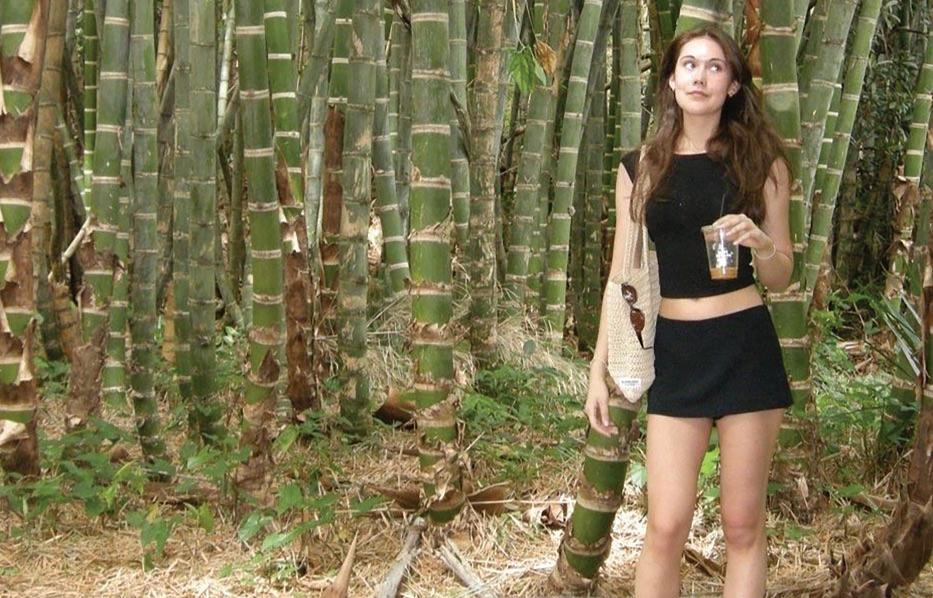
model Koyah Morgan-Banke.
illustrator for Indigenous Marketing Solutions. The company does a lot of graphic design and communications for Indigenous businesses or companies that want to appeal more to an Indigenous audience.
“We will never send AI to a client. No drafts, no preliminaries, no finals. We do not produce AI, ever,” said the older sister.
Bayja, 24, explained that formline is a method used by many coastal Indigenous cultures in Canada and in the U.S. She said the formline refers to the line that connects everything in the drawing.
“For me the process of the art is a lot of storytelling. I think a lot of that is lost when there is so much single-use purchase junk out there,” said Bayja.
She thinks it should be illegal for people or businesses not to disclose when something is created by AI.
“That might sound a little bit extreme, but I don’t think it’s fair to anyone consuming it. I don’t think we should have to be so skeptical browsing the internet,” said Bayja.
On June 4, Prime Minister Mark Carney launched ‘AI For All’, Canada’s new national AI strategy. The federal approach is to use the technology more and aims to position Canada as an AI innovator.
“We envision a Canada where AI is not a threat, but a critical piece of technology
which enhances everyday life for Canadians. Done right, AI can be a powerful force – harnessed with innovation and deployed with intention for the betterment of society,” reads the government document.
Canada’s new “responsive and adaptive” AI strategy outlines six pillars; the first is centred on protecting Canadians and safeguarding democracy. One key action item under the first pillar is to “work on AI transparency, including capabilities like watermarking of AI-generated content, so Canadians can better understand when they are interacting with AI systems and AI-generated content.”
The Carney government also says it will update laws to protect “vulnerable groups from online violence and algorithmic biases,” including providing Canadians with legal tools to combat deepfakes, which are when AI replicates someone’s likeness – often in the form of a video without their permission.
Bayja says the introduction of AI-generated art takes jobs from an already small pool or opportunities. She hopes the technology triggers a “renaissance” that makes real artwork all the more valuable.
“I’m really proud of artists who are not buying into AI and who are continuing to practice their culture and teachings,” she said. “I think of art as a very safe area to be in. I’ve been very fortunate to not
cally
it’s
have to go through addiction in my life, but every time something hard happens to me, I turn to art as a place to go when I need something.”
“AI erases the experience of doing (art) and having that calm space for yourself. I want to say to all the artists who have gone through struggles that I am really proud of you for sticking with it and turning pain into something beautiful and worthwhile. I hope more people can turn to that,” Bayja continued.
Koyah wants to see artists compensated when their art is replicated by AI – and she wants to see AI tools culpable for “basically stealing” work from Indigenous creators who are already largely underrepresented.
“It’s very easy to start using AI, especially for something like making a cute poster for a BBQ. But when it comes to something like art, that should be way more regulated. Should you be even able to use AI for things that are supposed to be authentic?” said Koyah.
Bayja, who grew up with her sister in the artistic town of Tofino, B.C. where creativity was encouraged, expressed concerns about children using the technology.
“I worry mostly about children growing up around this. They are missing a whole learning curve,” she said.
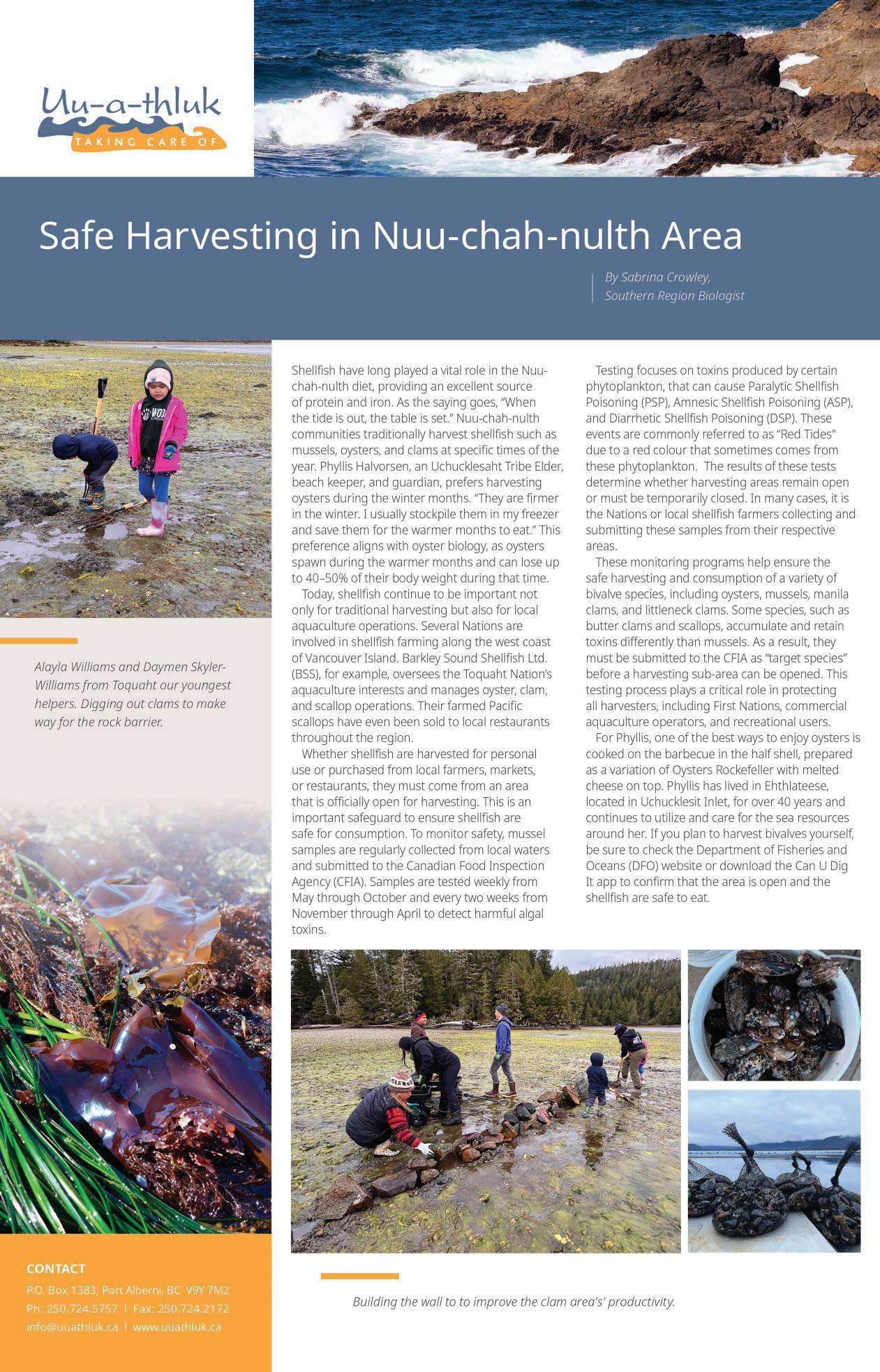
Submitted photo
excites
facet, specifi
creative,
horrifying,” says Toquaht artist
Nuchatlaht looks ahead after winning title
B.C. government appeals to the Supreme Court of Canada to hear the title case over northern Nootka Island
By Eric Plummer Ha-Shilth-Sa Editor
As the Nuchatlaht look at the future of managing their territory after a recent title victory from the B.C. Court of appeal, the possibility looms that their nine-year court battle may not be over.
The provincial government has applied to the Supreme Court of Canada to hear the Aboriginal title case that concerns 201 square kilometres on northern Nootka Island.
On April 2 the B.C. Court of Appeal granted the Nuchatlaht title to the entire claim area, after legal teams for the parties involved appeared before the panel of three judges for four days in Vancouver the previous October. Although this decision was unanimous, in its recent filing to Canada’s highest court the province said the appeal judges were loose with how they determined Aboriginal title should be granted.
“[T]he Court of Appeal’s loosening of the test for Aboriginal title could have significant practical consequences for the course of title litigation, the duty to consult, and First Nation treaty negotiations,” wrote the province in its submission to the Supreme Court of Canada. That legal test was determined by the Supreme Court of Canada in 2014, when it heard the case of the Tsilhqot’in Nation. Despite calling the nation a “seminomadic” tribe that did not occupy a specific site year-round, the country’s highest court found that the Tsilhqot’in had earned title to 1,700 square kilometres in central British Columbia by demonstrating a historic and continual use of the land. This decision determined that title is not limited to a specific village site but can cover a broad territory that was used for hunting, fishing and trapping since British sovereignty was declared. Unlike the Tsilhqot’in, the Nuchatlaht are primarily coastal people who traditionally rely on the ocean for sustenance and transportation, argued the province. It questions if this should be further considered by a higher court before ownership is granted to all of northern Nootka Island’s inland areas.
“[I]n recognizing title to the entire claim area, the Court of Appeal set the bar for sufficient occupation unduly low, via a broad brushstroke understanding of ‘regular use’,” wrote the province.
This spring’s Court of Appeal win marked a momentous change of course for the Nuchatlaht, after two previous rulings that granted title to small portions
trial in March 2022. of the claim area. Through his decisions in 2023 and 2024 Justice Elliott Myers of the B.C. Supreme Court found that the Nuchatlaht had proved title to just 11 square kilometres of the claim, most of which was along a coastal strip that went inland below an elevation of 100 metres.
“[T]his case demonstrates the peculiar difficulties of a coastal Aboriginal group meeting the current test for Aboriginal title, given the marine orientation of the culture,” wrote Myers in his 2023 judgment. “For example, there will probably not be trails between one coastal location and another, given that the means of transport was primarily by canoe. This may be indicative of the need for a reconsideration of the test for Aboriginal title as it relates to coastal First Nations. That would be for a higher court to determine.”
Thousands of culturally modified trees were identified in the trial, but Meyers was not satisfied with this evidence. Their average distance from the coast is one kilometre, while most are not formally dated to prove they were stripped before British sovereignty took hold in 1846, stated the judge.
The B.C. Court of Appeal found errors in this reasoning.
“[I]n allowing the modified title claim,
he drew an arbitrary boundary that was not based upon the Nuchatlaht’s manner of life, material resources and technological abilities, or the character of the lands claimed,” stated the appeal court. “The undisputed evidence was that frequent travel into the forest above 100 metres was required for the Nuchatlaht.”
Managing better
Before attending residential school, Archie Little spent his early childhood at a village on the northwest of Nootka Island. Now in his 70s, he spends his days advocating for the First Nation as a councillor and house speaker. The court of appeal decision from April marked a milestone in his life.
“That was the first time I did not feel like a beggar in my own country,” said Little. “We own something, we can do something, we can make change. All we want to do is better.”
For most of the last century, the majority of the claim area has been Crown land managed under B.C.’s Forest Act. The area’s last tenure was held by Western Forest Products, whom the Nuchatlaht approached before court proceedings began. Little says himself and the late Tyee Ha’wilth Walter Michael met with Western representatives to ask them to
stop logging sections of the Island.
“We went to Campbell River, we met with Western, we made some demands,” he said. “We walked out and went to court.”
With large sections of the territory clearcut, the Nuchatlaht are assessing their options, but it appears that the forest will have more value being left alone, said Little. The First Nation is exploring the possibility of selling carbon credits. Worth the equivalent of one tonne of carbon dioxide that would be emitted into the atmosphere, a carbon credit is a tradeable commodity on the international market which acts like a permit for a company or government to release greenhouse gases. These credits could be generated by not logging forest on Nootka Island.
“With the area being logged so heavily, carbon credit seems to be the way to go,” said Little.
Included in the western section of the title claim is the Nuchatlitz Marine Park, a former provincial park that served as a remote destination for kayakers. The Nuchatlaht now own this land and plan to continue allowing visitors, although protocols will need to be in place, explained Little.
“We’re probably going to allow people to come on, but we’re going to have to be really careful and really strict with how they act on the land,” he said. “We now have to act like landowners. We make the rules and we make the policies.”
“The management has to be there” added Little. “Otherwise, why spend all of that money if nothing is going to change?”
A decision from the Supreme Court of Canada on if it will hear the province’s appeal is expected in October. If there is a trial, it would likely be in 2027, but Owen Stewart of the Nuchatlaht’s legal team is hopeful that the country’s highest court will not head in this direction. He said the Supreme Court tends to open up cases that involve “competing decisions” from other courts in the country.
“That’s when the Supreme [Court of] Canada weighs in, if the law is going in two different directions within the country,” said Stewart. “We don’t really have that in this circumstance.”
The other matter is if the court is ready for another Aboriginal title case, as this may not be relevant to much of the country that is covered by treaties east of the Rocky Mountains. Two of the judges who ruled on Tsilhqot’in in 2014 are still on the Supreme Court of Canada.
Eric Plummer photo
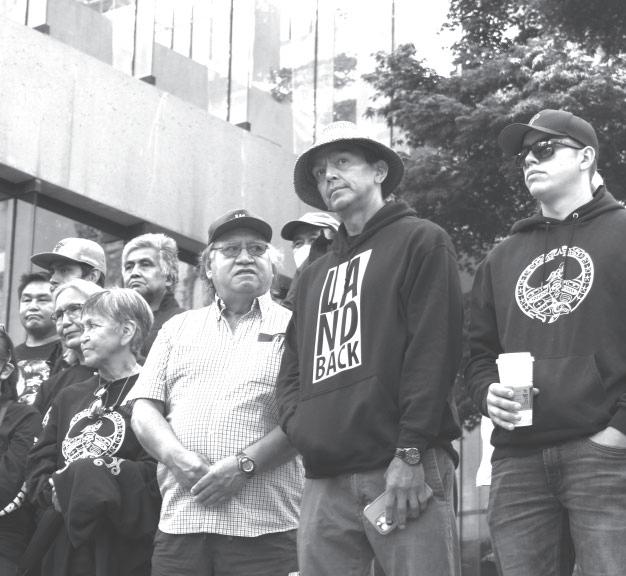
Nuchatlaht Councillor Archie Little (left) and Tyee Ha’wilth Jordan Michael stand before the Vancouver courthouse at the beginning of the the First Nation’s
‘Never let go’: Alcohol concerns intensify after deaths
Provincial health officer reports drinking has declined in B.C., but First Nations ‘face disproportionate harms’
By Eric Plummer Ha-Shilth-Sa Editor
Port Alberni, BC - In the wake of a call from the provincial health officer for stronger regulations to curb drinking in British Columbia, Nuu-chah-nulth leaders are stressing the urgency to address alcohol abuse in their communities.
“The weight is coming down on us,” said Hasheukumiss, Ahousaht’s acting Tyee Ha’wilth, on June 2, after his onreserve community suffered two alcoholrelated deaths in one week, including the passing of a 25-year-old member from liver failure.
He noted that a cemetery Ahousaht opened less than a decade ago is now full, with many burials of young people lost due to alcohol-related issues.
“We have to do something,” said Nuchatlaht Councillor Archie Little, who joined the chorus of concerns at the beginning of a Nuu-chah-nulth Council of Ha’wiih Forum on Fisheries. “We’re killing our young people, we’re killing our fishermen. Pretty soon this table won’t be here.”
The fisheries forum was hosted in Port Alberni on June 2-3 by the Hupacasath First Nation. As delegates shared concerns over how alcohol continues to affect their respective communities, Hupacasath Ha’wilth Alton Watts expressed the frustration of regularly seeing open drinking and drug use on Port Alberni’s main streets.
“There’s absolutely no policing left around here,” said the hereditary chief. “You can sit there and watch people shoot up, smoke their crack, it’s all right out there for everybody to see.”
Approximately 1,000 people live in Ahousaht’s village of Maaqtusiis, which is located on Flores Island, a 45-minute boat ride from Tofino. Over 20 years ago the First Nation passed a bylaw prohibiting alcohol from being brought into the reserve community, but enforcement proved to be a challenge, and binge drinking persisted.
Bootlegging has continued to be a concern – particularly plastic vodka bottles that are known locally as “red cap”. In 2024 Hasheukumiss brought the issue to the provincial government, resulting in a limit for Tofino’s government-owned BC Liquor Store. The retailer now restricts purchases to no more than four liquor bottles at a time if they are sold in plastic containers.
“It didn’t really solve our situation, but it slowed it down,” said Hasheukumiss, noting that bootleggers have continued to
dumps out a con
scated bottle of vodka at the main dock in
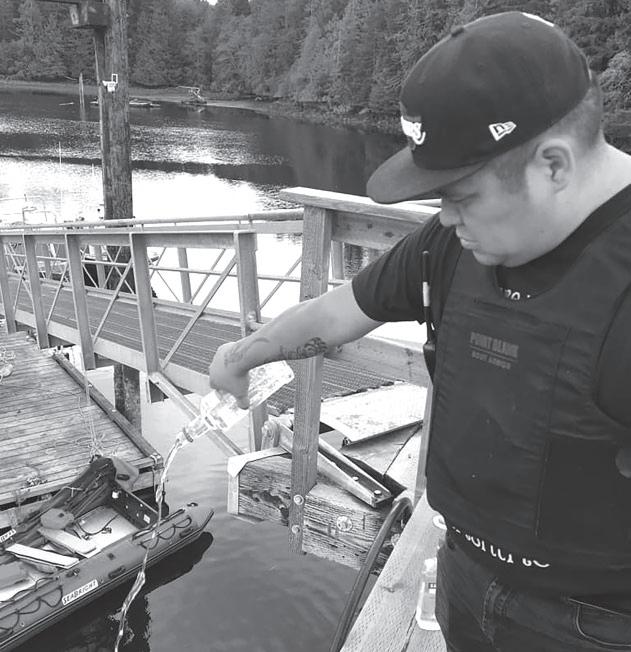
In a measure to discourage gatherings and prevent the spread of COVID-19, Ahousaht blocked the arrival of booze during the coronavirus lockdown. Years later, bootlegging continues to be a foremost concern for the remote community.
stock up on 26-ounce bottles purchased from Ucluelet, Port Alberni and Nanaimo. “There’s four cases every Friday purchased by four different people. These are 26ers.”
Hasheukumiss wants a B.C.- wide restriction on the number of liquor bottles that someone can purchase.
“Whether it be Indigenous or non-Indigenous, there’s a lot of hurt going on,” said the chief. “It’s not just the Indigenous that are going through this, it’s a coastwide non-Indigenous issue.”
These comments come one week after a report was released on B.C.’s drinking habits by the office of Dr. Bonnie Henry, the provincial health officer. At an average of 8.8 standard drinks a week, alcohol use is actually at a 20-year low in the province, a decline from when it peaked at 10 drinks a week in 2021 at the height of the COVID-19 pandemic. The most recent average is based on data from 2024.
But B.C. residents are drinking more than the Canadian average of 8.8 per week, while Vancouver Islanders are having just over 10 alcoholic beverages in a

from the health care system for those with an alcohol use disorder.
The report notes that Indigenous people “face disproportionate harms related to alcohol”, although no data is presented to back up this statement. Instead, multiple advocacy calls are listed from Aboriginal organizations, including a 2023 resolution from the B.C. Assembly of First Nations to “reduce alcohol-related harms”.
Several Nuu-chah-nulth nations are in the Alberni-Clayoquot health area, which spans from the Alberni valley to the west coast, from Bamfield to Hesquiaht. In 2023 residents in this region consumed the equivalent of 13.6 litres of pure alcohol – more than the B.C. average of 8.6 litres, according to Island Health, and in 2019 Alberni-Clayoquot had double the rate of alcohol-related hospital admissions than the rest of the province.
During the recent fisheries meeting Hesquiaht Councillor Kayla Lucas stressed that “Alcohol and drug abuse is a symptom of trauma.”
“It can’t just happen overnight, we need to get to the root,” she said on approaches to treatment. “We need to look at that person, what hurt them?”
“It’s now time to sit with out people and give them a compassionate ear, get them away from the chaos that’s going on,” added Hasheukumiss.
typical seven-day period, according to the report. Senior men are the age group consuming the most with 15 drinks a week on average, while those aged 18 to 34 are drinking less alcohol with eight drinks. However, the report notes that those under 50 are more likely than seniors to binge drink, which is five in one sitting for males and four for females. Almost one quarter of those under 50 reported consuming this much at least once a month over the previous year.
Henry’s report estimates that alcohol use led to six per cent of B.C.’s deaths in 2023, with the leading causes being cardiovascular conditions, cancer and unintended injuries. The document recommends a provincial alcohol strategy, shifting to minimum unit pricing that better reflects the alcohol content in drinks, warning labels on beverages, an awareness campaign and stronger intervention
Hesquiaht elder Tim Paul shared the struggles of his son, who he lost just two weeks previously at the age of 47 due to an alcohol-related health condition. Despite his struggles, Paul said that Tom never stopped trying to quit.
“’I accept what you are’,” recalled Paul saying to his son. “’You’re an alcoholic and I accept that, but you’re my son’.”
“I knew clearly that his life was limited in years in how he conducted himself,” he added.
With the hope of not losing more Nuu-chah-nulth-aht to alcohol, Paul announced the need for a cultural gathering in the fall, something that was supported by other leaders at the fisheries meeting.
“We need to get together in ceremony, to celebrate, to sing our songs to bring ourselves up,” said Paul. “We need to step into our grandfathers’ way of doing things. We never let go of any of our children, any of our young people until they’re well.”

Submitted photo
Wally Thomas, Chief Hohomiius, an Ahousaht Tribal Police officer,
fi
Ahousaht in 2020.
Chinook catch restricted west of Vancouver Island
DFO introduces measure to protect salmon bound for the Fraser River, while Ahousaht fishers get ‘harassed’
By Eric Plummer Ha-Shilth-Sa Editor
Port Alberni, BC - To protect threatened salmon stocks destined for the Fraser River, DFO has announced a widespread chinook closure west of Vancouver Island – but the restriction has sparked opposition from First Nations that underwent years of court battles to fish commercially.
As of June 5, chinook harvesting is prohibited by Fisheries and Oceans Canada for the offshore region stretching from south of Nitinaht Narrows to the northern tip of Vancouver Island. Effective one nautical mile from the surf line, this restriction applies to commercial and recreational fishing, as well as the rights-based T’aaq-wiihak harvesting undertaken by the Ahousaht, Hesquiaht, Tla-o-qui-aht, Mowachaht/Muchalaht and Ehattesaht/ Chinehkint. Some chinook retention for First Nations food, social and ceremonial purposes is still permitted by DFO, as is fishing by Maa-nulth treaty nations for domestic use.
Restrictions were introduced for some areas before June, as Ahousaht fisherman Andy Webster reported during a Council of Ha’wiih Nuu-chah-nulth Forum on Fisheries meeting on June 3.
“It was as recent as last week when our fishers were being harassed offshore,” said Webster. “They were given the message, because you’re over one mile, you cannot sell. The fish you’re bringing in will be considered food, social and ceremonial. That’s what they were told.”
These measures were introduced to protect three different stocks of chinook salmon that are migrating offshore west
of Vancouver Island to the Fraser River.
“These stocks are recommended for listing as endangered, special concern or threatened by the Committee on the Status of Endangered Wildlife in Canada,” wrote DFO in an email to Ha-Shilth-Sa.
“Areas inside one nautical mile seaward of the surf line are open, as these areas do not typically have significant encounters for Fraser River chinook stocks of concern that migrate in the offshore areas back to the Fraser River.”
It remains to be seen when these chinook restrictions will be eased.
“As these are interim measures, a further announcement on possible revised management actions will be announced in a subsequent fishery notice,” stated DFO in a notice for the recreational catch.
While keeping the chinook salmon is prohibited, recreational fishers can still practice non-retention, which is catching the fish and releasing them from their hooks. A mortality rate of 20 per cent is expected from this practice, some of which will be Fraser chinook, according to Uu-a-thluk, the Nuu-chah-nulth Tribal Council’s fisheries department.
These restrictions were vigorously criticized during the recent Council of Ha’wiih forum, and Ahousaht Acting Tyee Ha’wilth Hasheukumiss even authorized his fishers to go beyond the onemile limit. He said the restrictions show DFO’s refusal to recognise Ahousaht’s jurisdiction over its territorial waters.
“I don’t ask permission from DFO to do what I’m doing in my backyard for management,” said Hasheukumiss. “Going forward, it’s just up to us to do it our way.”
“We don’t want to be oppressed by your
Cli
ff Atleo
policies and guidelines,” said Ahousaht representative Kiista to DFO representatives during the meeting. “We will no longer accept the harassment that our fishers have gone through over the years, and last week.”
DFO said that its officers will continue patrolling to enforce the chinook restrictions, using their boats and aircraft and even in partnership with the Canadian Coast Guard.
“Fisheries officers use their discretion to employ a range of responses to instances of non-compliance,” wrote DFO, adding that these can entail “education, penalties” or other actions.
against Canada and the province of B.C. for not honouring their Aboriginal fishing rights. This eventually led to a 2009 B.C. Supreme Court ruling that the Ahousaht, Hesquiaht, Tla-o-qui-aht, Mowachaht/ Muchalaht and Ehattesaht/Chinehkint have the right to harvest and sell fish from their respective territories.
The federal government unsuccessfully challenged this ruling several times, until the B.C. Court of Appeal determined in 2021 that the five nations have the right to “a non-exclusive, multi-species, limited commercial fishery aimed at wide community participation, to be conducted in their court-defined area for fishing, which extends nine nautical miles offshore.”
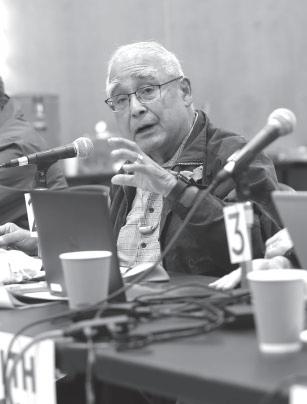
“We have a small fishery that we won,” said Council of Ha’wiih Chair Cliff Atleo during the meeting in early June. “It’s very frustrating for us.”
During the forum Tseshaht Councillor Les Sam mentioned that the Somass River fisheries are managed by a collective table that meets every week to determine harvest and escapement. With representatives from DFO, the commercial fleets, the recreation fishery, Maa-nulth nations as well as the local Tseshaht and Hupacasath, Sam sees the roundtable as significant progress from the conflict that marked the 1970s and 1980s on the Somass River.
“There were 256 charges against us when it finally came to a head,” said the Tseshaht representative.
“When we first started, I thought we would kill each other,” continued Sam about the Area 23 fisheries table. “We don’t always agree on everything - as a matter of fact sometimes we disagreebut we work through it to make it happen for us.”

Lots of gifts under $25
Professional knowledge and advice
Free delivery
Injection services Visit our pharmacy team to discover how we can help advance your health care needs through:
The rights-based T’aaq-wiihak Fisheries are the outcome of a court battle that spanned several years. Commonly known as the Ahousaht et al. case, the litigation dates back to 2003, when Nuu-chahnulth nations filed a writ of summons
TO FRIDAY, 9:30 am - 5:30 pm
MONDAY TO SUNDAY, 8:00 AM - 10:00PM
Supporting our First Nation Community with their health and wellness concerns
One on one private counselling
Personalized medication reviews
Ha-Shilth-Sa newspaper is published by the Nuu-chah-nulth Tribal Council for distribution to the members of the contributing First Nations, as well as other interested groups and individuals.
Information and original work contained in this newspaper is protected by copyright and may not be reproduced without written permission from:
Nuu-chah-nulth Tribal Council P.O. Box 1383, Port Alberni, B.C. V9Y 7M2.
Telephone: (250) 724-5757
Fax: (250) 723-0463
Web page: www.hashilthsa.com facebook: Hashilthsa Ntc
2026 Subscription rates:
Non-Nuu-chah-nulth, Ahousaht, Ehattesaht,Toquaht and Ucluelet members are subject to a yearly subscription fee of $40 in Canada, $50 in the US and $60 for overseas. Payable to the Nuu-chah-nulth Tribal Council
Manager/Editor/Reporter
Eric Plummer (Ext. 243) (250) 724-5757 Fax: (250) 723-0463 eric.plummer@nuuchahnulth.org
Reporter
Denise Titian (Ext. 240) (250) 724-5757 Fax: (250) 723-0463 denise.titian@nuuchahnulth.org
Reporter
Nora O’Malley (604) 353-8488 nora.omalley@nuuchahnulth.org

Audio / Video Technician
Mike Watts (Ext. 238) (250) 724-5757 Fax: (250) 723-0463 mike.watts@nuuchahnulth.org
Editorial Assistant
Holly Stocking (Ext. 302) (250) 724-5757 Fax: (250) 723-0463 holly.stocking@nuuchahnulth.org
DEADLINE:
Please note that the deadline for submissions for our next issue is June 19, 2026
After that date, material submitted and judged appropriate cannot be guaranteed placement but, if material is still relevant, will be included in the following issue.
In an ideal world, submissions would be typed rather than hand-written. Articles can be sent by e-mail to holly.stocking@nuuchahnulth.org (Windows PC).
Submitted pictures must include a brief description of subject(s) and a return address.
Pictures with no return address will remain on file. Allow two - four weeks for return.
Photocopied or faxed photographs cannot be accepted.
COVERAGE:
Although we would like to be able to cover all stories and events, we will only do so subject to:
- Sufficient advance notice addressed specifically to Ha-Shilth-Sa.
- Reporter availability at the time of the event.
- Editorial space available in the paper.
- Editorial deadlines being adhered to by contributors.
LETTERS and KLECOS
Ha-Shilth-Sa will include letters received from its readers. Letters MUST be signed by the writer and have the writer’s full name, address and phone number on them. Names can be withheld by request. Anonymous submissions will not be accepted. We reserve the right to edit submitted material for clarity, brevity, grammar and good taste. We will definitely not publish letters dealing with tribal or personal disputes or issues that are critical of Nuu-chah-nulth individuals or groups. All opinions expressed in letters to the editor are purely those of the writer and will not necessarily coincide with the views or policies of the Nuu-chah-nulth Tribal Council or its member First Nations. Ha-Shilth-Sa includes paid advertising, but this does not imply Ha-Shilth-Sa or Nuu-chah-nulth Tribal Council recommends or endorses the content of the ads.
Tseshaht pals go bald for cancer patients
Proceeds from the cancer fundraiser go towards six patients undergoing treatment
By Denise Titian Ha-Shilth-Sa Reporter
Port Alberni, BC – With the new cancer care clinic still more than a year down the road, those living in Port Alberni with the terrible disease must travel as far as Nanaimo or Victoria to receive treatment.
Even with financial support from health-care programs, it is not enough for patients, according to Tseshaht Chief Councilor Ken Watts. Watts’ mother Matilda Atleo was recently diagnosed with cancer. She, along with half a dozen other community members, make regular trips down island to receive treatment.
“We get support from First Nations Health Authority, but travel to Victoria is not cheap and it takes its toll…it’s not enough,” said Watts.
Inspired by Shae Dioron, a fellow Tseshaht member who organized a ball hockey fundraiser tournament for cancer warriors, Watts called upon friends and family to support Tseshaht First Nation in their Head Shave 4 Cancer Fundraiser.
Proceeds from the fundraiser went to Matilda Atleo, Gail Baker Gus, Julie Fontaine, Mike Lambert, Joe Charleson Sr. and one community member that wishes to remain anonymous.
Matilda Atleo advised people to be aware of their health. She said she developed a cough after the summer 2025 wildfires. The heavy smoke hung over the Alberni valley for days.
“I was never a smoker, but was diagnosed with lung cancer in February 2026,” she shared.
Held at the new Somass Hall, on June 7, volunteers bravely and generously had their hair shaved off for donations. They did it, they said, to show love and support.
“It’s important to give help, to give back to the community,” said Harry Brossault, a Huu-ay-aht man who volunteered to shave his head for the cause.
Alex Masso had six years of hair growth that he parted with that day. His waist-length hair was sectioned off and wrapped in elastic bands before being cut. His beautiful, long hair was donated to a charitable organization that makes wigs for cancer patients. He said he gave his hair to show his love for the people.
Myra Mack said she joined the cause
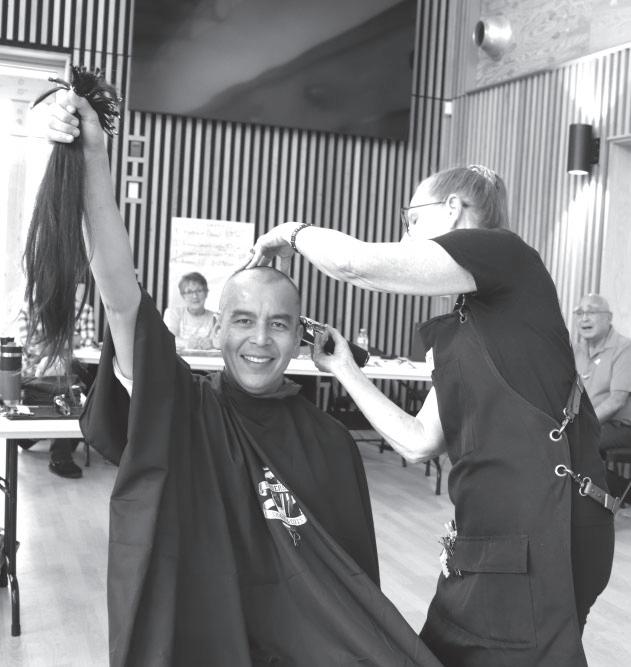
Alex Masso had six years of hair growth that he parted with on June 7. His waistlength hair was sectioned off and wrapped in elastic bands before being cut. His beautiful, long hair was donated to a charitable organization that makes wigs for cancer patients. He said he gave his hair to show his love for the people.
because her life has been impacted in a good way by each of the people they were supporting that day. It was important that she show love and support for them.
Cliff Atleo Sr. shaved his head for his wife, Matilda. He said cancer is an awful disease.
“You never expect it to happen to your family,” he said.
Both Matilda’s sons, Ken Watts and Robert Watts, stepped up for their mother and had their head and beards shaved.
“This is a small way to show love and support to our members. It’s a way to raise awareness for my kids and the community,” said Josh Goodwill.
Walker Watts shaved his head because he knows what it’s like to have cancer in the family. He lost his father to the disease.
Ha-Shilth-Sa belongs to every Nuu-chah-nulth person including those who have passed on, and those who are not yet born. A community newspaper cannot exist without community involvement. If you have any great pictures you’ve taken, stories or poems you’ve written, or artwork you have done, please let us know so we can include it in your newspaper. E-mail holly.stocking@nuuchahnulth.org. This year is Ha-Shilth-Sa’s 52nd year of serving the Nuu-chah-nulth First Nations. We look forward to your continued input and support. Kleco! Kleco!
“One way or another, we’ve all been touched by this horrible thing,” said Watts.
Beaufort Barbers generously donated their time and equipment to shave the heads and sometimes faces of the volunteers. Trish Pavan, owner of Beaufort Barbers, said the cause is important to her team because one of their staff is a cancer survivor.
Cash donations were being accepted both at the event and are still being collected via EMT at headshave4cancer@ gmail.com.
Several door prizes were donated to support the event and there was a draw for prizes at the conclusion of the fundraiser. According to Ken Watts, more than $5,600 was raised and donations were still coming in.
Legal Information
The advertiser agrees that the publisher shall not be liable for damages arising out of errors in advertisements beyond the amount paid for space actually occupied by the portion of the advertisement in which the error is due to the negligence of the servants or otherwise, and there shall be no liability for non-insertion of any advertisement beyond the amount paid for such advertisements
Denise Titian photo
Nuu-chah-nulth-aht look forward to cancer clinic
West Coast General plans for oncology services in 2028, after Cameron Lake wildfire highlights an urgent need
By Denise Titian Ha-Shilth-Sa Reporter
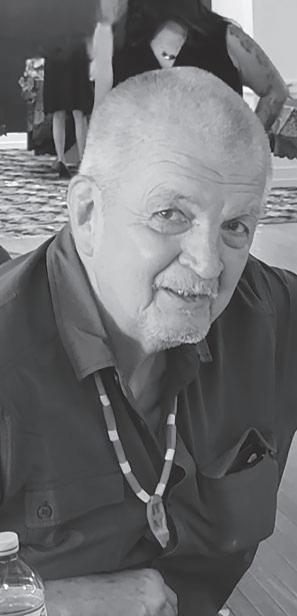
Port Alberni, BC – It’s been a sevenyear battle, so far, for Tseshaht’s Mike Lambert. “The Big C”, as he calls it, has seen him making countless trips from Port Alberni to Victoria and Nanaimo –the closest cancer clinic and oncology teams.
So, Mike and his family are pleased to hear that Port Alberni will have its own cancer care clinic. Island Health has announced that a cancer care clinic will open at West Coast General Hospital in 2028. This is welcome news for Port Alberni cancer patients and for those living in the west coast communities of Tofino, Ucluelet and beyond.
Island Health says patients living on the west coast of Vancouver Island will soon have improved access to cancer care closer to home, as the health authority, in partnership with BC Cancer and local community supporters, advances plans to establish a new Community Oncology Network (CON) site at West Coast General Hospital (WCGH).
Traveling for cancer care adds additional burden to those in need of treatment. It was the closure of Highway 4 during the 2023 forest fire at Cameron Lake that highlighted the need for CON care closer to home.
“In response, a temporary CON site was established at WCGH to ensure continuity of care. This temporary service demonstrated the critical importance and lasting value of providing treatment closer to home,” said Island Health in a statement to Ha-Shilth-Sa Newspaper.
“I imagine it is a good thing for Port, as long as they get the proper care and experienced doctors and care teams as they do in other towns,” said Lambert. “Me, myself, I don’t mind the one-hour travel to Nanaimo. Over the seven years of me battling the big C, I have been going through numerous appointments Nanaimo and Victoria. And I do my chemo in Nanaimo, and I get good quality care, from their chemo team and oncologists.”
Still in planning stages, the new clinic is expected to open within two years, according to Island Health. It will be near the main entrance of West Coast General. Cancer patients have compro-

therapy.
facilities and dedicated clerical and storage areas.
mised immune systems and having the clinic near the entrance to the hospital minimizes their contact with the general population. Island Health says an existing space within WCGH has been identified for renovation to support the delivery of chemotherapy. The upgraded space will include three patient treatment chairs, a medication preparation room, an exam room, washroom facilities and dedicated clerical and storage areas.
The renovation is estimated to cost $1.23 million. The West Coast General Hospital Foundation has committed to leading a fundraising campaign to fully cover these capital costs, officially launching the campaign at a community event in Port Alberni on May 7, 2026. In addition, the WCGH Hospital Auxiliary has pledged $120,000 toward the project. Ongoing operating costs for the new service will be funded by Island Health and BC Cancer.
According to WCGH site director, Kelli Walsh, the Alberni-Clayoquot region sees over 250 new cancer diagnoses every year. The new closer-to-home cancer care clinic will save people travel time and expenses.
“It is very good to have a clinic starting up in Port Alberni, it will benefit a lot of
people, and save travel,” said Lambert. According to Island Health, the clinic will offer chemotherapy and other oncology therapies three days a week. It will not provide radiation therapy.
Island Health went on to say that construction is also underway on a new BC Cancer centre at Nanaimo Regional General Hospital, which will include radiation therapy and PET-CT diagnostic services. This estimated $311 million project is expected to open to patients in 2028.
Island Health currently operates four CON sites at Nanaimo Regional General Hospital, Cowichan District Hospital, Campbell River Hospital, and Comox Valley Hospital. The addition of a site at WCGH will significantly expand access for patients living in Port Alberni and surrounding communities.
To support their members battling cancer, Tseshaht First Nation held an event on June 7 called Head Shave 4 Cancer Fundraiser. Tseshaht Chief Councillor Council Ken Watts invited others to join him as local business Beaufort Barbers volunteered their time to shave heads.
“This terrible disease has touched us all in some way. Let’s stand together in solidarity with those that are facing this health challenge,” Tseshaht states on their fundraiser poster. Donations are being collected via EMT at headshave4cancer@gmail.com.
Funds generated from the event will go to support six community members to support them with travel expenses as they battle cancer.

Island Health photo rendering
Island Health says an existing space within WCGH has been identified for renovation to support the delivery of chemo-
The upgraded space will include three patient treatment chairs, a medication preparation room, an exam room, washroom
Mike ‘Rambo’ Lambert
Overdose site blocked as FIFA descends on Vancouver
For the time being, the downtown loses a safe consumption site, while overdoses remain the No. 1 killer in
By Nora O’Malley Local Journalism Initiative Reporter
Vancouver, BC – James Harry is the founder of the All Nations Outreach Society, a team of urban outreach workers dedicated to saving lives on Vancouver’s Downtown Eastside (DTES).
His staff do rounds three to four times a day, and if anyone goes down, Harry says they’ll check to see if they’re alive.
“It’s a whole different animal now with the poison that’s being sold,” said Harry.
“I’m a big advocate for more outreach. Just let them know that they are not alone. They are probably at their lowest.”
In British Columbia, unintentional unregulated drug toxicity deaths among youth have increased since public health authorities declared an opioid crisis in 2016. One of the main drivers of this increase was the introduction of the toxic synthetic opioid, fentanyl, into the unregulated drug market, according to the BC Coroners Service (BCCS).
From January 1, 2019 to December 31, 2023, BCCS says there were 126 unregulated drug toxicity deaths in B.C. of persons younger than 19 years of age. The number of deaths equates to about 25 a year.
Over the first three month of 2026 there were 401 suspected lives lost to unregulated drug toxicity, according to the BCCS March data report.
Overdose remains the most common cause of unnatural death in B.C. for those age 10 to 59 – more than homicide, suicide, accidents and natural diseases combined. But the 1,820 fatalities tracked last year show a significant decrease from the 2,318 lives lost from toxic drugs in 2024, and a continued decline from the peak of 2,593 deaths in 2023.
Vancouver’s City Centre, which is gearing up to host the 2026 FIFA World Cup, records the second-highest rate of overdose deaths in the Vancouver Coastal Health region and the second-highest number of calls to B.C. Emergency Health Services after the Downtown Eastside.
In a May 5 information bulletin, VCH announced that services would soon open for a proposed overdose prevention site in Vancouver’s City Centre on

O’Malley photo
This overdose prevention site in East Hastings offers recovery support, medical and mental health referrals and overdose response. The Ministry of Health recently reversed a decision to open another overdose prevention site in Vancouver’s downtown.
900 Helmcken St., across the street from the Sheraton Vancouver Wall Centre and less than a block away from St. Paul’s Hospital.
But roughly three weeks later, Health Minister Josie Osborne alongside her colleague, Terry Yung, Minister of State for Community Safety and Integrated Services and MLA for Vancouver-Yaletown, announced on May 27 that VCH will not proceed. The overdose prevention site at 900 Helmcken St. will not open “at this time” due to concerns from the City of Vancouver, local businesses and community partners.
The proposed 900 Helmcken St. overdose prevention site was meant to replace the Thomus Donaghy overdose prevention site at 1060 Howe Street, which closed in January 2026.
VCH said the lease for the space at 900 Helmcken Street began on June 1 and runs for a term of two years at a cost of $179,000 annually. The lease, which is held by RainCity Housing and Support Society, is still currently in place, according to VCH.
Since 2021, VCH says the Thomus Donaghy overdose prevention site supported 149,603 visits and responded to
480 overdoses. It was the only overdose prevention site in the Vancouver City Centre available to the public, according to VCH.
“Stores are closing down or threatening to close down because of the theft downtown. With the FIFA coming in they want to revitalize it, I guess,” said Harry. “The homeless population down there is very evident. How do you change it? You move them out.”
He says while harm reduction measures like overdose prevention sites are vital, a lot of his clients don’t use them.
“A lot of my clients are at their lowest. When they get (street drugs), the last thing on their mind is finding a safe site to go to,” said Harry, although he added that he has a few clients who had their lives saved by using overdose prevention sites. “When they first came in, they definitely served their purpose.”
Jess Ketchum is the co-founder of Save Our Streets (SOS), a non-partisan group of over 120 plus community and business organizations representing every corner of British Columbia including the BC Chamber of Commerce, BC Restaurants and Food Services Association, BC Hotel Association, Retail Council of Canada and the Tourism Industry Association of BC.
He says the move from the Ministry of Health to pause the opening of the overdose prevention site in downtown Vancouver echoes frustrations felt in communities across the province.
“We can’t lose sight of the fact that this is not just a Vancouver problem,” said Ketchum. “I think we sometimes confuse the immediate need of the person suffering from addictions, we confuse that with the longer-term need. What we are saying is much of the short-term need would be dealt with if people had that long-term need dealt with.”
He said detox and recovery facilities like the Red Fish Healing Centre for Mental Health and Addictions in Kwikwetlem First Nation (Coquitlam) should
be available in every community in B.C.
“We need to take care of these people. The problem only goes away when we do take care of these people and give them reason to get off the streets. We know a tremendous amount of shoplifting that goes on provincewide is people feeding their drug habits,” he said.
“The overriding issue is that someone is addicted to drugs and their lives are ruined as a result of that addiction,” Ketchum continued. “The solution is getting off of (the) addiction. How do I do that? That takes detox, treatment and recovery. We have to do more of that.”
Vancouver Mayor Ken Sim thinks so too. He moved to block the proposed overdose prevention site and said the city has seen “zero” of 400 mandatory care beds the premier promised over a year and a half ago.
“Vancouver will not support solutions that fail both those who are struggling and the communities around them,” said Sim in a media release. “We have seen the disastrous impact when overdose prevention sites are introduced without the right planning, oversight and accountability.”
Harry also said more detox beds are “absolutely” needed.
“The wait time is long,” he said. “Our window is small. We have a very small window as an outreach worker. We get that one client who will say, ‘I want to go now, let’s do this, let’s go’, and you make that call and you get a two, three sometime four-week wait.”
He’d love to see more “positive, singleroom occupancy” or “sober homes” created with staff that really care.
“Staying sober is changing the habit of drugs into something positive,” said Harry.
Like many non-profits these days, Harry says the All Nations Outreach Society is in “survival” mode, just playing it year to year, while their long-term goal is to eventually have a detox and recovery home to call their own.
“Our staff do an amazing job. All our staff are people in recovery. Everybody knows. The best person for the job is someone who has been through that battle,” said Harry.
They end each weekly staff meeting with a team motto: “let’s go out there and save some lives.”
Vancouver BC Place is hosting seven FIFA World Cup 2026 matches and games will also be broadcast live in Hastings Park (also known as PNE) from June 11 to July 19.
The latest projected nets costs for the tournament are $114 million, according to the B.C. Government. Host city event costs are being offset by the provincially established 2.5 per cent Major Events Municipal and Regional District Tax (ME-MRDT), which is funded by travellers through a tax paid on shortterm accommodation in Vancouver, for a seven-year term. ME-MRDT revenue is estimated to generate $250 to $260 million from 2023 to 2030.
Nora
Opportunities unfold as construction facility opens
Woman makes career transition as IGV Housing manufactures pre-engineered building components at mill site
By Denise Titian Ha-Shilth-Sa Reporter
Port Alberni, BC – Tina Gus, 55, is following in the footsteps of her father as she trades her catering apron for a toolbelt. A member of the Tseshaht First Nation (cišaaʔatḥ), Tina is one of two women in the first Green Building Foundations and Manufacturing training program cohort who went on to work at IGV Housing as a Production Operator.
Tina spent many years working as a cook and caterer.
“As a cook the opportunities to advance past minimum wage are slim and with catering, the competition is high,” she told Ha-Shilth-Sa, noting how she cooked for Port Alberni’s Orange Shirt Day event on Sept. 30. “My sister and I had the opportunity to catch the 2025 truth and reconciliation walk for 1,500 people. It was an honor, however the cost of food had risen so much since COVID that profits are still somewhat slim for catering.”
And then she heard about a training opportunity and enrolled in the first cohort of the Green Building Foundations & Manufacturing program at Port Alberni’s North Island College Campus.
The program brings together IGV Housing, North Island College and Synergy Foundation to deliver a fully funded skills-building opportunity that delivers trained workers to Port Alberni’s new IGV Housing plant and other construction businesses like it.
IGV Housing manufactures pre-engineered building components, including SmartCore units, volumetric wall panel systems, and coordinated building pack-

ages, from its advanced manufacturing facility in Port Alberni. Using a hybrid construction model through IGV Build Systems (a division of IGV Housing), factory-built components are combined with efficient on-site assembly to deliver homes with greater speed, cost certainty, and more precision than traditional construction methods.
Located at the former San Group wood manufacturing site next to the paper mill in central Port Alberni, IGV Housing is a facility where new homes are being built, or parts of homes.
“The company manufactures full-scale homes, including single family, duplexes, multiplexes, and is developing a solution for multi-family buildings up to six storeys,” said a spokesperson for IGV Housing.
The company uses a systemized hybrid construction model that combines factory-built components with on-site assembly.
“IGV Housing is still in the development phase but will be coming out with more news in the coming months on units and deployment,” continued the spokesperson.
The finished housing components can be delivered across British Columbia.
“IGV Housing is working to make homes easier to build and possible to own,” said the spokesperson.
The facility is hiring skilled workers and the program at North Island College is already running its second cohort of 15 students in training.
According to Tina, the Green Building and Manufacturing Program she took involved five weeks of intense training, “including the crane operation, forklift, and construction components. I was one of two women enrolled in the course and the only woman that came to work for the IGV factory with the rest of my classmates, who were all men,” she told Ha-Shilth-Sa.
She said that being a woman in this industry is not as tough as it sounds.
“My coworkers all treat me with respect, and we all work together well,”
Tina added. “Communication and confidence to succeed are important traits in any workplace. We all have different skills, and we are all learning from each other often.”
The program is fully funded and
students gain practical, hands-on skills, safety certifications, and real workplace experience in green construction and advanced manufacturing. Further, the graduates gain a direct pathway into stable, full-time employment.
“The first cohort saw all 15 participants graduate and move into full-time roles, 12 of them as production operators with IGV Housing, demonstrating that the program offers not just training, but a genuine bridge to long-term career opportunity in a growing industry,” said the IGV spokesperson.
The second cohort of the program is now in session and expected to wrap up later this month.
“Working for IGV Housing has given me routine and has given me a chance to experience something other than cooking,” said Tina. “IGV is a great place to work with many different skill levels and plenty of opportunities. I highly recommend the Green Building and Manufacturing Program to anyone interested in working in a factory environment.”
According to the company, IGV Housing’s model is designed to help more homes get built across B.C., connecting supply, delivery capability, and long-term housing access to support stronger communities.
“The Port Alberni facility is also creating meaningful local employment, with a particular focus on workers navigating transitions out of the forestry sector, including Indigenous community members,” stated the company.
If you’re interested in learning more about IGV Housing in Port Alberni, contact info@IGVHousing.com

Submitted photo
Students in the NIC program pose inside Port Alberni’s IGV Housing facility.
What are we going to do with all the old
Funding for wrecked boats from Transport Canada and province has dried up, while DFO has a budget to dispose of
By Nora O’Malley Local Journalism Initiative Reporter
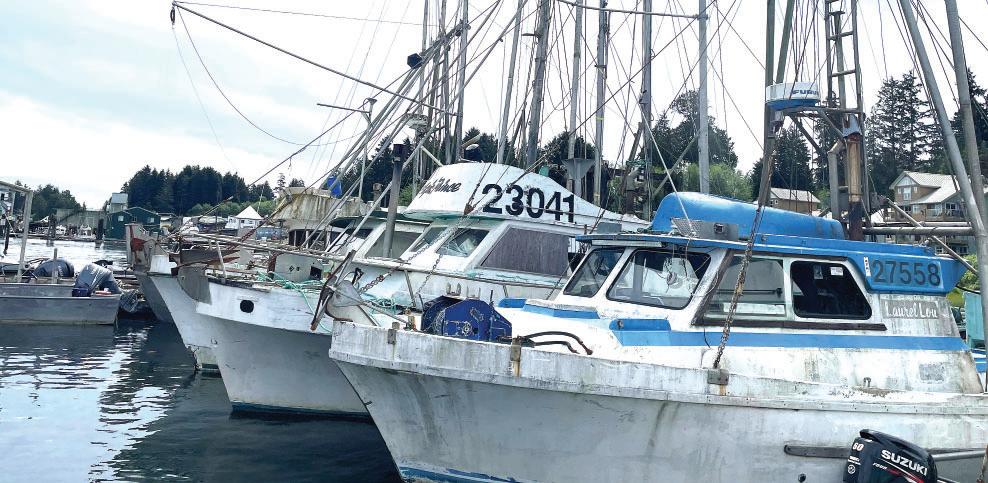
Tofino, BC – Down the dock of broken dreams lies a fleet of old fishing boats that are the end of their life – and there’s next to no money left in federal or provincial coffers to do anything with them.
The federal Abandoned Boats Program (ABP), which was launched in 2017 with an initial investment of $6.4 million, was not renewed.
“There is no more funding for ABP at this time,” said Transport Canada in a May 29 email.
The program disposed of 223 abandoned and wrecked vessels in Canadian waters.
Provincially, the Clean Coast, Clean Waters initiative (CCCW) that funded derelict vessel removal projects in Tofino, Ucluelet, Opitsaht, Tla-o-qui-aht and Ahousaht, removing a combined 65 vessels from these communities, is also closed.
“There is currently no funding allocated for CCCW and no organizations will be receiving funding through this program in 2026,” said the Ministry of Environment and Parks.
The ministry recommended exploring federal programs, “as the federal government holds primary responsibility for managing derelict, wrecked and abandoned vessels.”
Fisheries and Oceans Canada (DFO) has the Abandoned and Wrecked Vessels Removal Program (AWVRP), which has removed and disposed of 259 vessels across the country since its inception in 2017, including 131 in DFO’s Pacific Region.
But AWVRP is limited in scope as it’s available only to vessels located on DFO small craft harbour property and its annual budget is only $250,000 to support applications submitted by harbour authorities nationwide.
“That’s five decent size boats,” said Ben Boulton, project manager and vessel captain with the Rugged Coast Research Society.
DFO says the cost for the removal and disposal of vessels can vary significantly, from less than $10,000 to $50,000. In the previous fiscal year (2025-26) the program secured additional funding, enabling the removal and environmentally responsible disposal of 40 vessels – 33 of those boats were removed from harbour authorities in B.C., according to DFO.
Launched in 2017, Rugged Coast started out by mapping coastline for marine debris.
From that, the society found the need for clean-ups, which led to wrecked vessel removals. They have since removed 95 wrecked or abandoned boats from B.C.
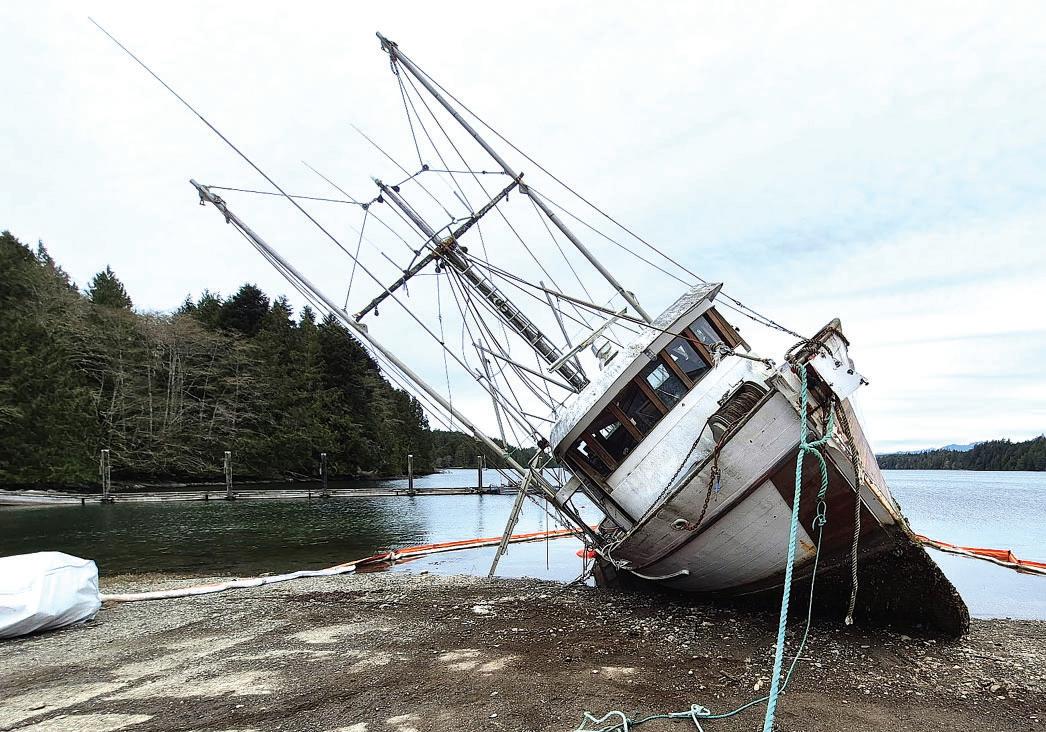
The Mikley was parked at Tofino’s Fourth Street Dock for two years before it was towed to Ucluelet and demolished by Rugged Co $50,000. Old fishing boats (below) moored at Tofino’s Fourth Street Dock await their turn to be removed and demolished.
waters.
Recently in April, Rugged Coast removed a vessel called the Mikley from Tofino’s Fourth Street Harbour for roughly $50,000. Harbour manager Momtchil Momtchilov
reported that the removal of the 40-foot wooden fishing boat with a 15-foot beam was funded under DFOs Abandoned and Wrecked Vessel Removal Program.
“We’re dealing with higher costs out on
the West Coast. East side (of Vancouver Island), it’s a lot easier because we have boat lifts, but we don’t have that infrastructure here,” said Boulton. Due to the lack of space and the
ing boats?
five decent-sized vessels
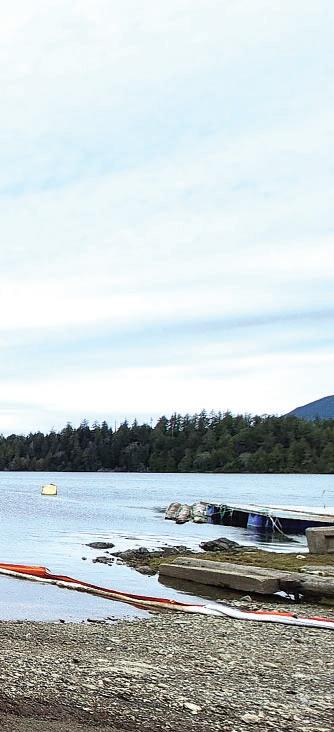
Ben Boulton photo oast Research Society in April 2026 for
absence of a boat lift at Tofino’s harbour, Rugged Coast towed the Mikley down the peninsula to Ucluelet where it was bridled with rope, pulled to land on the highest tide with an excavator and demolished; some parts were salvaged and recycled, but all the rotting wood went to the West Coast Landfill.
Boulton says the tipping fee, which was worked into their budget, was over $5,000.
“Coast Guard pulled off 5,000 litres of fuel and there was still another 500-litre tank hidden,” he said.
Environmental impacts
Wrecked and abandoned vessels pose a serious risk to the environment and traditional food harvesting. In a 2025 report written by the House of Commons Standing Committee on Fisheries and Oceans, chaired by Member of Parliament Patrick Weiler, several B.C. First Nations lead-
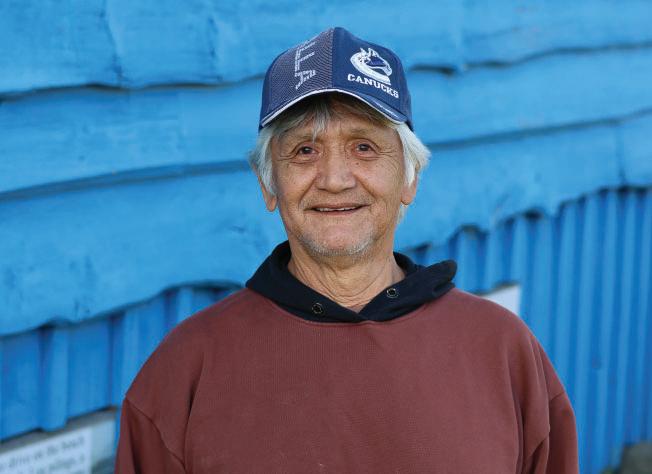
Joe David, a Tla-o-qui-aht First Nation elder and ex-fisherman, says there are “no less than 10 boats on the Ty-Histanis reserve that should be disposed of.” ers raised concerns about derelict boats leaching fuel or other toxins - like heavy metals from lead paint - into the marine environment. The toxins can poison clam and oyster beds and damage Pacific salmon stocks.
Chief Lenora Joe of shíshálh (Sechelt)
First Nation stated, “food security is huge in our community. The fact that we are unable to collect food in the way our ancestors did is very concerning and serious.”
The national inventory of wrecked, abandoned or hazardous vessels lists 935 entries in British Columbia (filtered from 1,355 total entries). Of those 935 entries, 175 are classified as fishing vessels.
“We have all the old fishing fleet that is aging out and we have no plan for it,” said Boulton. “Where do we send these boats? You look at any harbour and we have half a dozen vessels that are nearing the end of life.”
Joe David is a Tla-o-qui-aht First Nation elder and ex-fisherman. He says there are “no less than 10 boats on the Ty-Histanis reserve that should be disposed of.”
Ty-Histanis is located about a 15-minute drive south of Tofino within the Pacific Rim National Park Reserve.
“I believe (boat disposal) should be done yearly. We shouldn’t even have 10. We shouldn’t even have one,” said David.
“With our new council in place, I think those things could be re-addressed, especially with contaminants on some of the boats. It doesn’t justify even having one on the beach with contaminants inside them.”
In Maaqtusiis, Ahousaht First Nation’s
“If you are buying a boat for a dollar then there must be something wrong with it. Don’t ever buy a wooden vessel. Think for the future; aluminum or fiberglass vessels,” said John.
In 2019, the Government of Canada created the Wrecked, Abandoned and Hazardous Vessels Act (WAHVA) for irresponsible management to address vessels of concern. Under the Act, individuals can receive monetary penalties of up to $50,000 while corporations could be issued fines up to $250,000. It also gives authority to the Ministry of Transport to transfer an abandoned vessel to a third-party to dispose of the wreck.
“Imagine someone that has bought a boat for a dollar. They don’t have $50,000 to dispose of a boat,” said Boulton.
main village about a 45-minute boat ride from Tofino’s Fourth Street Dock, former harbour manager Kurt John says they have around 20 fiberglass speed boats littering the community and a couple of wooden vessels that are “taking up space at the dock”.
“Boats hold a lot of sentimental value. People can’t let go,” said John. He said over the years he was Ahousaht’s harbour manager, they removed about 50 vessels and cleaned up the seafloor at the dock, which cost upwards of $250,000 because they had to barge all the boats out.
Buying a boat for $1
Boulton shared that boat owners tend to give away old boats for free or for $1 to avoid paying for proper disposal.
The Clean Coasts Act (Bill-C244) is new legislation introduced in 2025 that attempts to amend WAHVA by prohibiting the transfer of vessels to people who boat owners know can’t safely maintain or dispose of them. It also amends the Canadian Environmental Protection Act so polluters are held legally liable for marine dumping and hazardous leaks without requiring proof of intentional dumping. The legislation passed its second reading and is currently under consideration from the standing committee.
In Washington State, the Department of Natural Resources has a Vessel Turn-In Program with the goal of removing boats before they become abandoned or derelict. If boat owners qualify, the disposal is free.
Boulton says Washington State’s boat removal process is exceptional because it looks ahead at the end of a vessel’s life. He would like to see a portion of money received through boat registry allocated to a vessel removal program.
“We need a program that funds itself,” he said.

Tourney marks UVic’s first Indigenous sporting event
The Coastal Wave Basketball tournament brought together 40 teams and 650 players to take the court in June
By Roniya Sahin Ha-Shilth-Sa Contributor
Victoria, BC - Coastal Wave Basketball held its first ever Indigenous youth tournament June 5-7 at the University of Victoria. It was also a first for UVic, which had never hosted an Indigenous sporting tournament.
“This tournament is something that we had on our dream goals for the next few years,” said Coastal Wave Basketball director Tina Savea. “We thought strategically about where we wanted to host it.”
The first day of the tournament saw friends and families of team members sprawled across the many basketball courts in the Centre for Athletics, Recreation, and Special Abilities (CARSA), UVic’s campus gym.
Around 40 teams were registered for the tournament, yielding in over 650 players from all over Vancouver Island. Three Nuu-Chah-Nulth teams were on fire. The U10 co-ed team Itty Bitty Ballers and the U13 girls team YFN Ravens represented the Yuułuʔiłʔatḥ First Nation, while the Maaqtusiis Suns competed for Ahousaht.
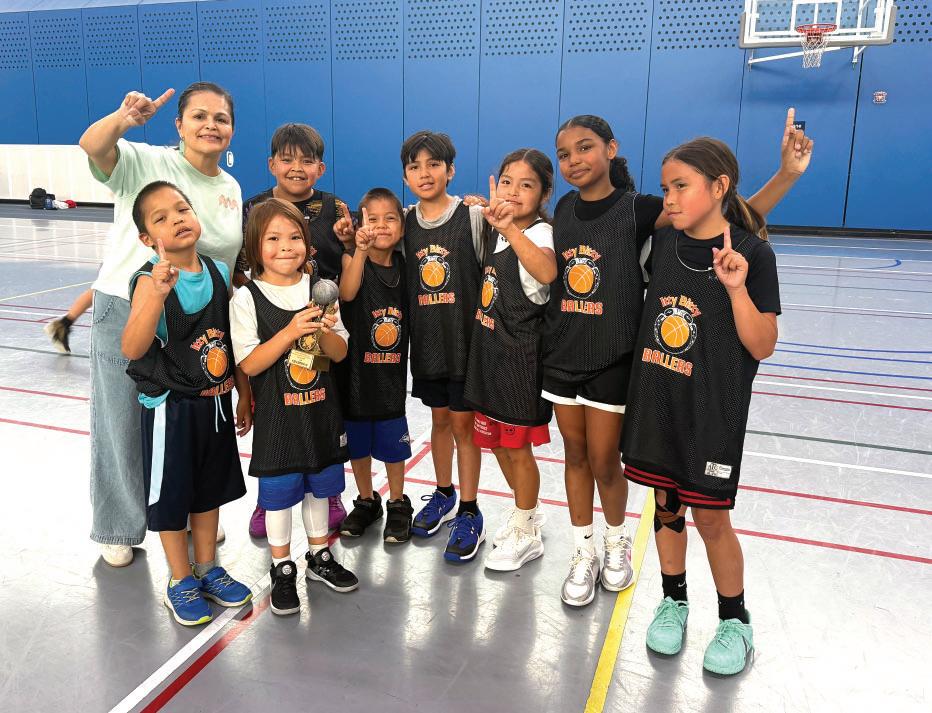
The court was bright with smiles when the U10 co-ed team Itty Bitty Ballers faced off with Kelset. The Ballers defeated Kelset 28-12, carrying over their winning streak from the Junior All Native Tournament back in March. By Sunday, they won the tournament’s U10 championship.
Taleah Touchie of the Itty Bitty Ballers received the Coastal Wave Basketball MVP award for U10 girls and co-ed. Similarly, Micah Jack received an MVP award for U10 boys and co-ed.
Friendly rivalries continued into the evening with the U13 girls’ teams YFN Ravens and Maaqtusiis Suns. The Ravens won 50-26.
Suns coach Robert Stanley noted the hard work the players put into playing basketball, as well as the “big target” on the girls’ backs after winning the JANT silver division title against the Ravens earlier this year.
“We tell them at the beginning of every season: it’s up to you what you want to bring to the court,” said Stanley. “They put in all the work. We just make sure they get there alright.”
‘Where culture meets the court’
Scrawled on the backs of every Coastal Wave Basketball t-shirt reads the slogan “Where culture meets the court.” This year, directors and participants emphasized the importance of engaging Indigenous culture with sporting events and opportunities.
Coastal Wave Basketball is a relatively new non-profit organization dedicated to running culturally inclusive programs and tearing down barriers for Indigenous youth in sports. They especially focus on uplifting girls in sports.
“If you focus on the girls and teach them strength, love and confidence, the boys will follow,” said founder and board chair Kim Graves.
Tina Savea highlighted how sporting
events can foster existing relationships between friends and family. The stands are often full of supporters at all-Indigenous sporting events, with seats occupied by grandparents, uncles, aunties, cousins, parents and friends.
Both Anita and Tyler Touchie, who is Anita’s husband and coach of both Ravens and Ballers, taught the players cedar weaving before last year’s JANT. As a team, they created their own cedar headbands and wore it to the JANT opening ceremonies. They plan on creating shirts and vests with Aboriginal designs for the next JANT.
Anita Charleson-Touchie spoke on the sense of belonging children develop from being on the basketball teams.
“I’ve seen the power of connection. I’ve
seen little kids – prior to being part of the basketball community – I’ve seen them with their heads down and walking past me,” she said. “After they’ve been participating and being part of the team, they have their heads up and take their time to wave and connect.”
Graves and Savea shouted out the Indigenous Education department at UVic for helping to make the tournament possible during the opening ceremony. Both women acknowledged the long-term benefits for youth to explore the UVic campus during the three-day tournament.
“I want every athlete walking around this campus to imagine themselves attending this university,” said Graves during the opening ceremony. “At the centre of everything we do is education.”
Phrase of the week: %inis%aah %ayapici+qu hisit
Pronounced ‘ih nis aww ai ya pih chitl qoo hih sit’, it means, ‘We are hoping for a good sockeye run .’
Illustration by Joslyn Charlie
Anita Charelson-Touchie photo
Anita Charelson-Touchie poses with the Itty Bitty Ballers, who claimed the under 10 division at the Coastal Wave Basketball tournament, which was held at the University of Victoria June 5-7.
FIFA watch party hosted by local First Nations
A ticket for the Vancouver matches are at least $569, but fans can cheer for their teams at local watching parties
By Denise Titian Ha-Shilth-Sa Reporter
Port Alberni, BC – FIFA World Cup soccer fans won’t need to subscribe to any expensive sports cable channels thanks to watch parties being organized by local First Nations in Port Alberni.
Held every four years, the FIFA World Cup brings together 48 top men’s soccer teams from around the world who play round-robin-style soccer matches as they vie for the world champion crown. Organized by the Fédération Internationale de Football Association (FIFA), the World Cup games will be hosted by Canada, Mexico and the USA with 104 matches to be televised.
In Canada, the FIFA World Cup games will be played in Toronto, where six matches will be held, and Vancouver for seven matches. If you would like to attend a match in person, tickets are selling fast and could drain your bank account.
An online search for tickets to the Canada versus Qatar game, to be held in Vancouver on June 18 at BC Place, will cost at least $569 for a seat in the upper deck (nosebleed section as they are commonly called).
That same Canada versus Qatar game will cost around $1,000 per ticket for seats much closer to the playing field. Or, if it’s a clear view of the field that you’re looking for, there are tickets selling for more than $23,000 for this game – and tickets are selling fast.
And then there’s the closer to home, free option. You can join other FIFA fans at a community watch party.
The provincial government is providing $1.7 million through the Ministry of Tourism, Arts, Culture and Sport to 32 communities throughout British Columbia. The funding, to be used for multicultural watch parties, will bring together the communities.
“Local events will celebrate community spirit through soccer-themed activities, live public match viewings, multiculturalism, local performers and food and beverage offerings,” said the ministry in a statement.
Hosting the seven World Cup games in Vancouver is expected to cost the province up to $729 million in public funds – equal to $104 million per match. The government is also expecting revenue from the tournament, which is projected to bring the net loss down to the $90$114 million range.
Despite this drain on public funds, Premier David Eby is optimistic about the opportunity.
“We are proud to help bring the excitement of the FIFA World Cup 2026 to communities throughout B.C.,” he said. “Hosting this tournament is a once-in-a generation opportunity. It’s something

that everyone will remember, especially the thousands of kids in B.C. who look up to these incredible athletes. It’s about sharing the love of sport, and the excitement, energy, and pride in hosting the largest single-sport event in the world.”
In the Port Alberni region, the Hupacasath, Tseshaht, and Huu-ay-aht First Nations received $90,000 in provincial funding to host public match viewings over several days. The hosts will provide entertainment, food and cultural displays at designated watch party locations. The watch parties coincide with FIFA matches being played on June 12, 13, 18, 21, 24, 26, and July 2, 7, and 19.
Other Vancouver Island communities that received funding include Tofino, which got $37,179. The resort town will host a Soccer Celebration from July 16–19, featuring a free allages beach soccer jamboree, a movie night, and public match viewings.
The Comox Valley is receiving $60,000 to host a public match viewing on June 12 with live local music and cultural performances before and after the broadcasts.
Organizers in Port Alberni have been meeting frequently to plan for the watch parties. According to Hupacasath CAO Susan Wale, who is helping the First Nation prepare for the event, opening ceremonies will be held June 12, starting with cultural protocols.
Starting at noon, attendees will watch team Canada’s opening match with
Organizers are still working on event locations but say most screenings will take place at the Kinsmen Community Centre (The KCC) at 4090 Hollywood Street, unit 40 (think Fall Fair grounds). There will be a special satellite event hosted at the House of Huu-ay-aht in Anacla, near Bamfield, on July 7.
All events are open to the public. Guests are encouraged to bring their jerseys,
flags and community spirit while enjoying these free, public watch parties.
Important dates for FIFA fans are:
June 12 – Canada vs. Bosnia
June 18 – Canada vs. Qatar
June 24 – Canada vs. Switzerland
July 2 – knockout screenings
July 19 – FIFA World Cup Final
Closing day and the final screening is July 19.

Bosnia.
Korea Ministry of Culture, Sports and Tourism/ Heo Manjin photo
This summer Vancouver is hosting seven FIFA World Cup games. Held every four years, the World Cup is one of the largest sporting events in the world. Pictured is Korea facing Uruguay in the last World Cup in a game held November 24, 2022 at Education City Stadium in Doha, Qatar.
Expansion at the Dock + boosts seafood processing
New machine uses extreme water pressure to efficiently process seafood products, including shucking oysters
By Karly Blats Ha-Shilth-Sa Contributor
Port Alberni, BC - A new expansion at the Dock + Food Hub aims to strengthen local seafood processing capacity, support food security and create new opportunities for producers across the Alberni Valley and beyond.
The Dock+, operated by the Port Alberni Port Authority (PAPA), is now a shared food processing facility of more than 20,000 square feet. As part of the BC Regional Food Hub Network, it is home to multiple anchor tenants and supports a growing network of local producers, seafood businesses, and food entrepreneurs.
The expansion was a $5 million project that was made possible though support from the Government of British Columbia, with $3 million in funding administered by the Investment Agriculture Foundation (IAF), along with $1.5 million by PAPA and $500,000 by Kuunaa Foods, a partnership between Huu-ay-aht First Nations and Nova Harvest.
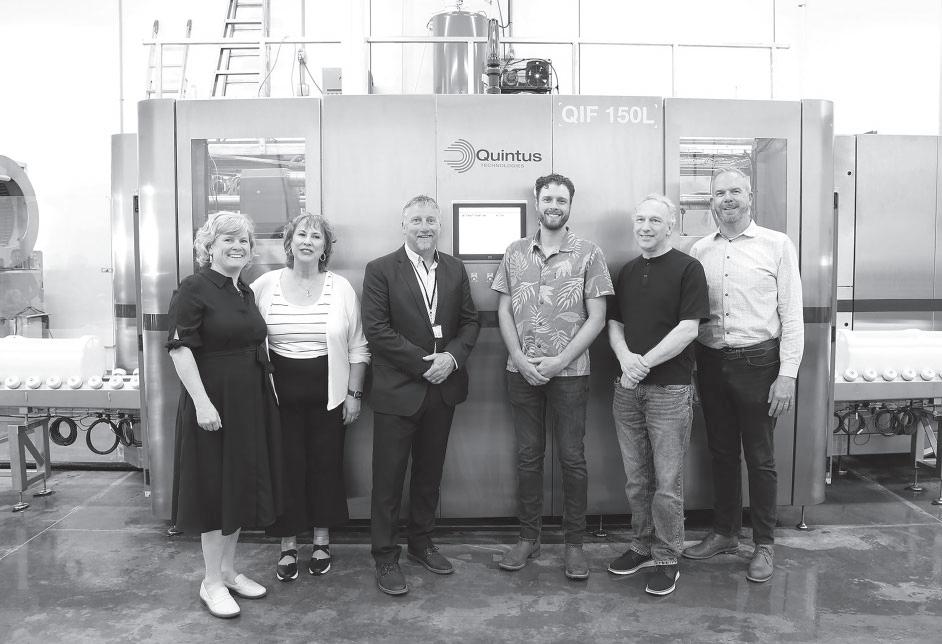
At the center of the expansion is the addition of a High-Pressure Processing(HPP) machine which allows seafood products to be processed more efficiently, extend shelf life, improve distribution and help reduce costs for consumers.
“The new High Pressure Processing machine uses extremely high water pressure to safely process seafood products, particularly oysters, without the use of heat or chemicals,” said Carmela Ferro, manager of marketing, communications and public relations with PAPA. “For oysters, the process cleanly separates the shell from the meat, making shucking faster, safer by killing bacteria and more efficient.”
Ferro said the expansion significantly increases processing capacity at The Dock+ and strengthens Port Alberni’s role as a growing seafood and food innovation hub.
“With the addition of the HPP technology and expanded cold storage and processing space, local producers can process larger volumes of seafood more efficiently and access broader domestic and international markets,” Ferro said.
“The project also supports value-added processing, reduces spoilage, creates jobs and helps local and Indigenous businesses grow within the marine and seafood sector.”
Currently, the Dock +, located on Harbour Road, is home to seven anchor tenants, a cold storage facility, blast freezer
and ice plant. Of the seven anchor tenants, five are Canadian Food Inspection Agency certified fisheries and aquaculture processors.
“While the current Dock+ footprint has limited room for physical expansion, there are still many opportunities for future growth,” Ferro said. “The focus moving forward is on continuing to attract new seafood and food processing companies, supporting entrepreneurs and increasing membership within the commercial kitchen, which still has capacity for additional users and businesses.”
Ferro added that The Dock+ is also looking to expand community involvement by hosting more culinary workshops, training opportunities and foodfocused events in partnership with chefs, producers and community organizations.
“Long term, the success of The Dock+ could potentially lead to a future Dock+ 2.0 concept in another location, building on the strong demand and momentum the facility has created in Port Alberni and across Vancouver Island,” Ferro said.
The expansion project was initially spearheaded by Kuunaa Foods, designed and developed by PAPA, and made possi-

ble in large part through funding from the Government of British Columbia through the Ministry of Agriculture and Food.
“By combining traditional foods, ancestral knowledge and modern science, we are building a sustainable economy rooted in our sacred principles,” said
Larry Johnson, operating board chair of Hu-ay-aht First Nations Group of Businesses, in a press release. “This work creates opportunities for future generations and empowers our youth through education grounded in culture, values and innovation.”

Submitted photos
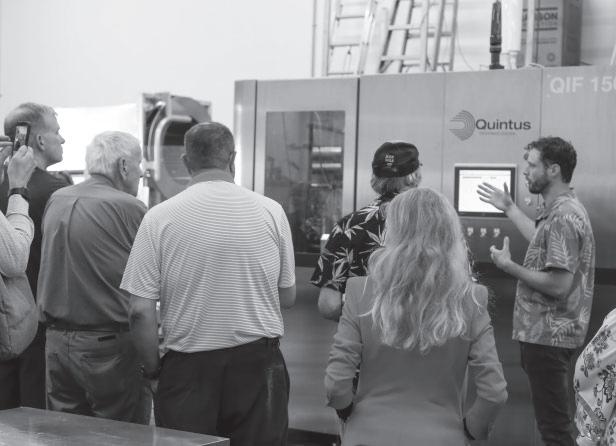
Minister Josie Osborne stands with Shelley Chrest, board chair of the Port Alberni Port Authority, Mike Carter, PAPA coCEO , JP Hastey, Nova Harvest/Kuunaa Foods, Patrick Schmidt, chief executive officer for the Huu-ay-aht Group of Businesses, Hendrik Steenkamp, director of programs at the Investment Agriculture Foundation of BC at The Dock+.
JP Hastey of Kuunaa Foods speaks to a group about the new high-pressure processing machine at the Dock +.
Routes Driving Academy aims to close transport gaps
A new driving school founded by a Hupacasath member travels to remote communities to offer road lessons
By Olivia Thomas Ha-Shilth-Sa Contributor
Nanaimo, BC – A new driving school based out of Nanaimo is aiming to bridge a long-standing transportation gap for rural and remote First Nations communities across Vancouver Island.
Routes Driving Academy, founded by Hupacasath First Nation member RandiLeigh Macnutt, officially opened earlier this spring after nearly four years of planning, training, and navigating regulatory hurdles. While the school offers driving lessons to anyone seeking licensing supports, its primary focus is making driver education more accessible to people living in remote Indigenous communities.
“For a lot of rural nations, getting driving lessons isn’t simple,” said RandiLeigh. “People have to pay for ferries, taxis, hotels, gas, and time off just to access an hour-long lesson. I wanted to create something that could actually come to the communities instead.”
The idea for the business began while Randi-Leigh was working with the Warriors Program, a youth initiative serving Nuu-chah-nulth nations. Around four years ago, the program organized a driving initiative to help community members work toward obtaining their Class 5 licenses. Randi-Leigh helped coordinate learners from participating nations and quickly noticed a major issue: very few driving instructors were willing to travel outside urban centres.
“It became really obvious that instructors generally stay in the cities where they’re based,” she said. “Communities like Clayoquot and other rural nations were struggling to access services because of the distance and cost involved.”
For many families, the logistics alone made driving lessons nearly impossible. Learners from remote communities often face long logging road trips, ferry rides, and overnight stays just to attend a short lesson in a city such as Campbell River.
“If you’re transporting multiple learners, suddenly you’re looking at a sixhour day or overnight trip,” Randi-Leigh explained. “The costs can easily reach hundreds, sometimes close to a thousand dollars.”
Encouraged by the need she witnessed
Uu-a-thluk recognized for youth programs
During the Nuu-chah-nulth Council of Ha’wiih Forum on Fisheries on June 3, the Nuu-chah-nulth Tribal Council’s fisheries department received an award for its youth programs that spark an interest in science.
Since 2005 Uu-a-thluk, which means ‘taking care of’ in Nuu-chah-nulth, has partnered with Science Venture from the University of Victoria to offer camps and other programs that encourage an interest in the science behind fisheries and its related ecosystems.
On June 3 Tracy Ross (pictured) presented the Actua STEM Community Builder Award to NTC President Judith Sayers and Alison Wale from Uu-a-thluk. Actua is a national charity that works to build youth confidence in science, technology, engineering and mathematics (STEM). Also pictured are Gillian Gawron and David Jackson
Venture.

first-hand, Randi-Leigh began researching how to become a licensed driving instructor. The process, she said, was far more intensive and expensive than many people realize.
To qualify, she completed a three-week instructor training course in Vancouver, costing approximately $7,500 before accommodations, fuel, and travel expenses were included. Spaces in the program are limited, with only a handful of students accepted at a time, forcing her to wait nearly a year for entry.
“There’s a huge demand for instructors already,” she said. “And there really wasn’t funding available because it doesn’t fall into post-secondary or trades funding categories.”
Without outside financial support, Randi-Leigh funded the process herself while continuing to work toward opening the business. The first planning documents for Routes Driving Academy were written in 2022, and she officially earned her instructor certification in 2024.
But the process did not end there. After completing training, instructors must still receive approval from ICBC and operate under the insurance corporation’s approved driving school before they can begin teaching. Rather than work under another company, Randi-Leigh chose to continue pursuing her own independent business model.
“I knew my focus was different,” she said. “I wanted the flexibility to serve rural and remote communities in a way that worked for them.”
The vision eventually became Routes Driving Academy. After securing a business loan and outfitting her vehicle to meet ICBC requirements, the school officially received approval to operate at the end of April this year.
Now licensed to operate throughout much of Vancouver Island, Randi-Leigh says one of the academy’s standout features is its mobility. Instead of requiring learners to travel to larger cities, she brings lessons directly into communities.
Her vehicle, a Toyota crossover equipped with upgraded tires for logging roads and rural terrain, allows her to safely access harder-to-reach areas. She has also invested in portable pylons and equipment to create temporary practice driving spaces within communities themselves.
“Being pulled from a small community and suddenly trying to learn to drive in a busy city can be overwhelming,” she said. “I can come directly to the community, set up a safe practice area, and help people build confidence where they’re comfortable.”
The school currently offers practical onroad lessons for Class 5 and Class 7 drivers, with lessons scheduled in hour-anda-half blocks to allow learners a full hour behind the wheel along with pre-lesson planning and post-lesson feedback.
Randi-Leigh is also working toward the Graduated Licensing Program (GLP), which provides high school students with extracurricular graduation credits while shortening the time required between license stages.
Her long-term goal is to eventually expand into Class 4 licensing instruction as well, helping learners train for jobs involving taxis, shuttles, and small buses - areas where many communities also face barriers.
Beyond licensing, Randi-Leigh says the broader goal is empowerment and accessibility.
“There are households where four people live together and only one person has a license,” she said. “Why wouldn’t we want to give more people the opportunity to drive safely and independently?”
Though still in its early stages, Routes Driving Academy has already generated interest from several communities and organizations. For Randi-Leigh, the business represents creating opportunities and reducing barriers for people who have historically had limited access to driver education.
“I just want people to have the same opportunities and the same tools,” she said. “If I can help someone gain confidence, independence, and access to more opportunities through driving, then that’s what matters.”
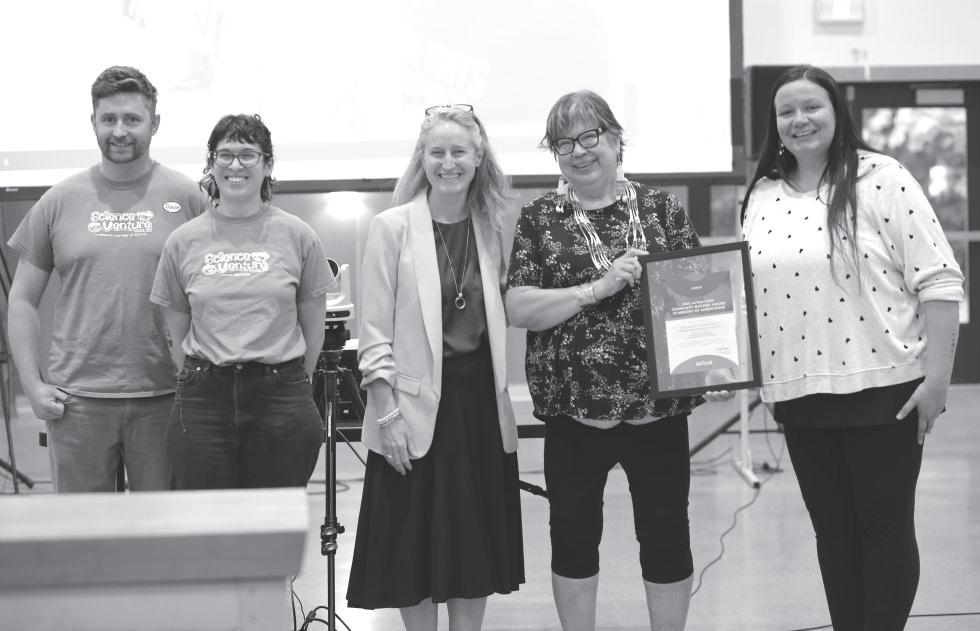
Olivia Thomas photo Routes Driving Academy, founded by Hupacasath First Nation member RandiLeigh Macnutt, officially opened earlier this spring after nearly four years of planning, training, and navigating regulatory hurdles.
from Science
Eric Plummer photo
Usma News
Passing stories through culture and creation
Isaac ‘Ike’ Charlie has spent 25 years sharing culture through carving, teaching, and hands-on learning rooted in story, connection and tradition
By Rebecca Aldous Usma Communications Coordinator
Nuu-chah-nulth artwork is more than carving, painting, or drawing — it is a form of communication, a way of passing stories, legends, and history from one generation to the next, says Isaac “Ike” Charlie.
“Even without knowing the language, I know the stories. The artwork is the stories,” Charlie explains. “If you look at First Nations people, the way we documented things was through artwork.”
He notes that this differs greatly from many other cultures, where symbols eventually evolved into alphabets and written language.
“For us, it is not just an art form,” he says. “It is a way of communicating.”
With that understanding, Charlie takes his role as a mentor and facilitator seriously.
For the past 25 years, he has worked as a cultural teacher, sharing his time and knowledge with groups and schools throughout the Nuu-chah-nulth region. Over that same period, he also developed R.A.R.E. Journey, a cross-cultural awareness training workshop grounded in Nuu-chah-nulth values, intentions, and principles.
His love of creating began at an early age.
Growing up in Port Alberni, Charlie constantly pestered his older brother, Art Charlie II, to teach him how to carve. Finally, on his 10th birthday, Art handed him a knife.
“At first, my hands were covered in tissue paper and tape,” Charlie recalls with a laugh.
By the age of 15, Charlie was self-employed through his artwork. Searching for a new adventure and inspired by the craft merchants at Victoria’s Inner Harbour, he became one of the first Indigenous carvers to sell his work there.
In the beginning, he says, city officials repeatedly questioned whether he had permission to sell. Determined to find a way forward, Charlie sought and received approval from the Esquimalt Nation Chief to sell on their territory.
“I dance to the beat of my own drum,” he says.
By
then enrolled at Camosun College to become a First Nations Support Worker — a role that felt like a natural fit.
As the youngest of eight siblings, Charlie often found himself acting as a mediator among brothers, sisters, nieces, and nephews.
While in college, an instructor encouraged him to apply for a new opening with the Greater Victoria School District. The district was seeking a First Nations art teacher, cultural awareness teacher, and teacher assistant. Charlie applied for the art teacher position.
“I was interested. It was kind of in my wheelhouse.”
After an hour-and-a-half interview and a handshake, Charlie was offered not just one role, but all three.
“I was thrown into the deep end of the pool,” he says.
For three years, Charlie helped shape that role alongside Songhees Nation carver Clarence “Butch” Dick. Eventually growing weary of the fast pace of Victoria, Charlie returned to Port Alberni, where he continued focusing on cultural teaching and mentorship.
“I love teaching because it is a part of our culture,” he says. “I am a facilitator.”
Charlie says there is something especially powerful about blending creativity with listening — whether that means carving while hearing stories or working with one’s hands while immersed in conversation and sound.
Pairing these activities, which are deeply rooted in Charlie’s culture, has long been understood by First Nations communities to foster deeper focus, freer ideas, and stronger creative expression. Recent scientific studies support that understanding, suggesting that listening while creating helps synchronize multiple brain networks at once, blending analytical thought, imagination, rhythm, and motor flow.
“The end result is that you are practicing mindfulness,” Charlie says.
It is that quiet concentration, paired with cultural teaching, that Charlie hopes young people carry with them.
In every lesson, he is not simply showing students how to carve or paint, but how to slow down, listen, and connect — to the stories, to the process, and to who they are.

NCN Mental Health Counselling
Tuesdays and Thursdays
8:30am – 4:30pm
4841 Redford Street, Port Alberni
NCN Mental Health Services – DropIn Counselling with Margaret Bird, Registered Clinical Counsellor and Play Therapist. For on and off reserve members of all ages of the Nuu-chahnulth Tribal Council. Call (250) 724-3939 to book your appointment.
Stirring up Connections
Every Friday 10am – 12:30pm

&Community Beyond



NTC Kitchen – 4841 Redford Street.
A warm and welcoming cooking group designed just for parents! Each session will feature: Easy, budget-friendly recipes; Tips for cooking with kids and picky eaters; Space to connect with other parents over food and family life. Contact 250-724-3939 for questions.
Samuel Richard Johnson jr. mit. Memorial Potlatch
November 7th, 2026
Starting with lunch at 12:00pm Wahmeesh gym, tsaxana reserve. All welcome.

25 Years Ago in Ha-Shilth-Sa
Vol. 28 – No. 12 June 21, 2001
The Huupukwanum Tupaat exhibit of Nuu-chah-nulth treasures officially closed on June 10, 2001.
Huupukwanum Tupaat, Out of the Mist – Treasures of the Nuu-chah-nulth, Closes in California our story our way. It is time for us to let people know who we are and what we are about so that they can better understand what we are struggling for,” said Gallic.
A small Nuu-chah-nulth delegation had travelled to the sunny state of California to oversee the closing of the exhibit. At the Autry Museum of Western Heritage in Burbank, Jeff Gallic stood in front of a crowd and explained to the people that for over a hundred years non-Nuu-chahnulth have tried to tell our story but have never gotten it right.
“We thank the Autry Museum for allowing our people to come here to tell
NTC Executive Director Florence Wylie echoed her gratitude to the museum’s board of directors for bringing the exhibit to their museum.
“It means a lot for our people and our Ha’wiih,” she said. “You have taken good care of the people that we left here for the exhibit, and you have shown respect to our people.”
18, Charlie was teaching an art class at Haahuupayak Elementary School. He
Submitted photo
Isaac “Ike” Charlie helps a youth with beadwork during a workshop.


Port Alberni Friendship Centre Volunteers Needed

Parks Canada takes measures to prevent wildfires
Federal agency doesn’t have any record of a signi
Antonella Medina Arias Ha-Shilth-Sa Contributor
Vancouver Island, BC— Parks Canada is preparing for another wildfire season, as Vancouver Island faces below-normal snowpacks and warmer temperatures that could potentially cause drought conditions across the region.
In a news release on May 28, Julie Dabrusin, the minister of the Environment, Climate Change and Nature, announced that the Government of Canada will invest $45.8 million over five years to support Parks Canada’s National Fire Management Program.
“Climate change is intensifying wildfire seasons across Canada, putting communities, ecosystems, and our economy at greater risk,” said Dabrusin. “Our government is ensuring that we have the expertise, tools, and capacity needed to respond to wildfires and proactively reduce risk.”
Funded through the 2025 budget, the investment supports Parks Canada’s operation for wildfire response personnel, national deployable equipment and proactive wildfire risk-reduction measures.
“This investment...ensures Parks Canada has the resources it needs to reduce wildfire risk, strengthen preparedness, and respond when it matters most— while working closely with key partners, including provinces and territories, and Indigenous and local communities to keep our country strong and resilient for generations to come,” said Eleanor Olszewski, minister of Emergency Management and Community Resilience.
As our climate changes, fire seasons are expected to become longer, with wildfires growing in size and burning more severely. This is particularly due to droughts that create dry, flammable conditions across the country.
Since 2023, wildfires have put 47 national parks, 171 national historic sites, five zones surrounding marine conservation areas, and one urban national park at risk.
Other human settlements within the risk
zone included seven town sites, adjacent Indigenous communities and land, 1,056 kilometres of highways, 250 kilometres of railways, local businesses and a significant portion of the Canadian tourism sector.
Parks Canada’s plans to mitigate this risk by reducing the build-up of flammable vegetation within the wild-land urban overlap, creating landscape-level fuel breaks and following the FireSmart Canada’s guidelines.
Many parks across Canada have dedicated fire personnel who are ready to respond to wildfire calls. During periods of elevated fire danger, a dedicated fire duty officer is in place to coordinate a response, while resources like helicopters remain on standby.
Parks Canada’s National Fire Management Program is in place to protect communities while maintaining ecological fire practices.
Parks Canada uses prescribed fire—the planned buring of land to meet a set goal—to reduce wildfire risk and restore ecological integrity across the country. Reintroducing fire helps create a more diverse landscape and improve the ecosystem’s ability to adapt to the changing climate, according to the national agency.
But prescribed Burns are not undertaken in the Pacific Rim National Park Reserve along the west Coast of Vancouver Island. Fires occur very infrequently in the reserve’s coastal rainforest ecosystem, as forests regenerate through natural processes that don’t involve burning, states Parks Canada.
Instead, Parks Canada is focused on prevention, monitoring, interagency cooperation, and training. The agency collaborates with First Nations who have haḥuułi (territories and ancestral lands) that overlap with the boundaries of Pacific Rim National Park Reserve to reduce wildfire risks to communities and infrastructure.
Besides some small fires, Parks Canada doesn’t have any records of significant wildfires within the Pacific Rim National Park Reserve. However, there had been
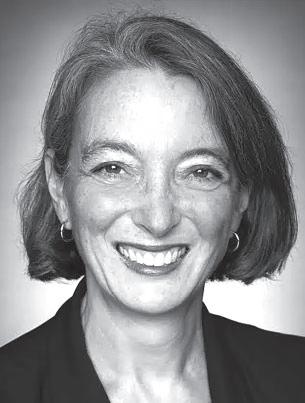
fires in surrounding areas like the Mount Underwood incident that impacted nearby communities and travel to the West Coast Trail unit in 2025.
While Parks Canada cannot avoid naturally occurring wildfires that are caused by lightning strikes, they can avoid human-generated incidents. Between 1981 and 2023 about 30 per cent of wildfires in Parks Canada administered places have been caused by humans.
Human-caused fires include unattended or illegal campfires or inappropriate disposal of cigarette butts. Powerlines and railway malfunctions or damage are also a reason for these fires.
“The most important thing about human-caused wildfires is that they are preventable. The easiest way to fight a wildfire is to prevent it from starting. We encourage folks to take a moment and learn how to engage in activities that could potentially spark wildfire responsibly,” said the Coastal Fire Centre. However, it’s important to remark that not all human-caused fires result from careless behaviours—some fires start unintentionally and can occur during everyday recreational activities, like sparks from equipment or heat generated by vehicle brakes igniting dry grass.
The National Parks of Canada Fire Protection Regulations are the legal foundation for Parks Canada’s fire prevention protocols, giving park managers the authority to close or restrict access to any parts of the national parks.
The Coastal Fire Centre relies on the public for early detection and to ensure they don’t contribute to human-caused wildfires by following the basic campfire safety rules.
“As we often say: people are both the biggest risk and the biggest part of the solution” said Parks Canada.
Another preventive measure are fire bans implemented to ensure the safety of visitors, residents and for the protection of the park. The fire bans are based on the potential chances for a local fire, taking into account the current and forecasted weather conditions, the amount of moisture in vegetation, the regional wildfire situation and the availability of responders and equipment.
A combination of moisture levels in fuels (branches, grass, logs), and dryness in the organic layers (pine needles, decomposing fuels and soils) determines if a fire ban should be implemented. Less moisture in fuel increases the chances for a fire to take hold and spread out of control. Fire bans are only lifted when conditions allow for it.
In national parks, fires are only permitted inside metal fire rings or boxes provided by Parks Canada; to reduce the chances of an ingnition spreading, open and rock ring fires are never allowed.
“[It’s important] for people to do their part and to be cautious with the use of any type of open fire, regardless of the time of the year and to always keep in mind that virtually all human-caused wildfires are preventable,” said the Coastal Fire Centre. “During a busy wildfire season, human-caused fires can take resources away from lightning-caused fires.”
Report wildfires using the BC Wildfire Service mobile app. Wildfires can also be reported by calling *5555 on a cellphone or 1-800-663-5555 toll-free.
Former President of Haida Nation talks conservation
By Nora O’Malley Local Journalism Initiative Reporter
Tofino, BC – Miles Richardson, former president of the Council of the Haida Nation and champion of Aboriginal title and rights, was in unceded Tla-o-qui-aht First Nations territory on June 4 and 5 for a speaker series at Clayoquot Campus.
Coincidentally, Richardson’s visit paralleled Premier David Eby’s visit with Yuułuʔiłʔatḥ, a modern treaty nation located across the harbour from Ucluelet in the community of Hitacu.
Richardson served as president of the Council of Haida Nation from 1984 to 1996. During his 12-year tenure, he led the drafting of the Constitution of the Haida Nation and the development of the first comprehensive Haida Nation land and marine use plan, enacted under Haida law. Richardson also helped establish the Haida Watchmen program.
“At that time the big issues were logging and mining. They were cutting all the trees, they were going to rip every piece of iron ore, they were talking about mining for gold on the Yakoun River,” said Richardson at his June 5 talk. “They were going to cut the last tree and I guess
leave us with nothing and move on. Our people were getting increasingly agitated with that. Not only that, at this time in 1985 they were talking about drilling for oil and gas in our oceans.”
He said they worked with a group called the Circle of Traditional Elders, spiritual leaders from all over North America, to find a solution.
“Our elders said if we don’t stop what’s proposed it may be the last generation of our nation. They said Haida Gwaii is our life source. That led us to protect our life source,” continued Richardson.
“We are not who we are because of cheques from Ottawa and Victoria. That never made us who we are. We are who we are because our relationship to this wonderful part of the earth we’ve been put on. Haida Gwaii is our life source. That’s our prosperity. That’s our security. That’s our sustainability and if you are going to do anything you’ve got to protect her. You have to protect the natural integrity of your home,” Richardson shared.
During Richardson’s June 5 talk, Clayoquot Campus director Eli Enns raised the issue of the B.C. government recently renewing a controversial mining permit to
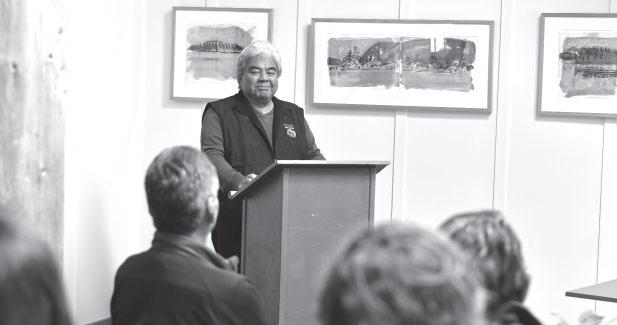
Imperial Metals that allows the company to drill for gold in Clayoquot Sound. “That was stopped dead in its tracks 20 years ago and now it’s lit up again. We have to create that positive alternative so that people in the future won’t be desperate enough to drink that dirty water,” said Enns.
Richardson said when it comes to nations working outside the treaty process, what is at issue is very simple: “It’s title. Title is the issue. You’re not
asking them if you can be sovereign. That is a ridiculous question. You are either sovereign or you ain’t. You either have it in your heart to be Nuu-chah-nulth or you don’t,” he said.
On June 21, National Indigenous Peoples Day, Tla-o-qui-aht will honour Haida leaders for inspiring the early Tribal Parks movement. The community gathering takes place at 1 p.m. at the Wickaninnish Community School.
Julie Dabrusin
Nora O’Malley photo
Miles Richardson talks about protecting Haida Gwaii’s life source on June 5 at Clayoquot Campus.
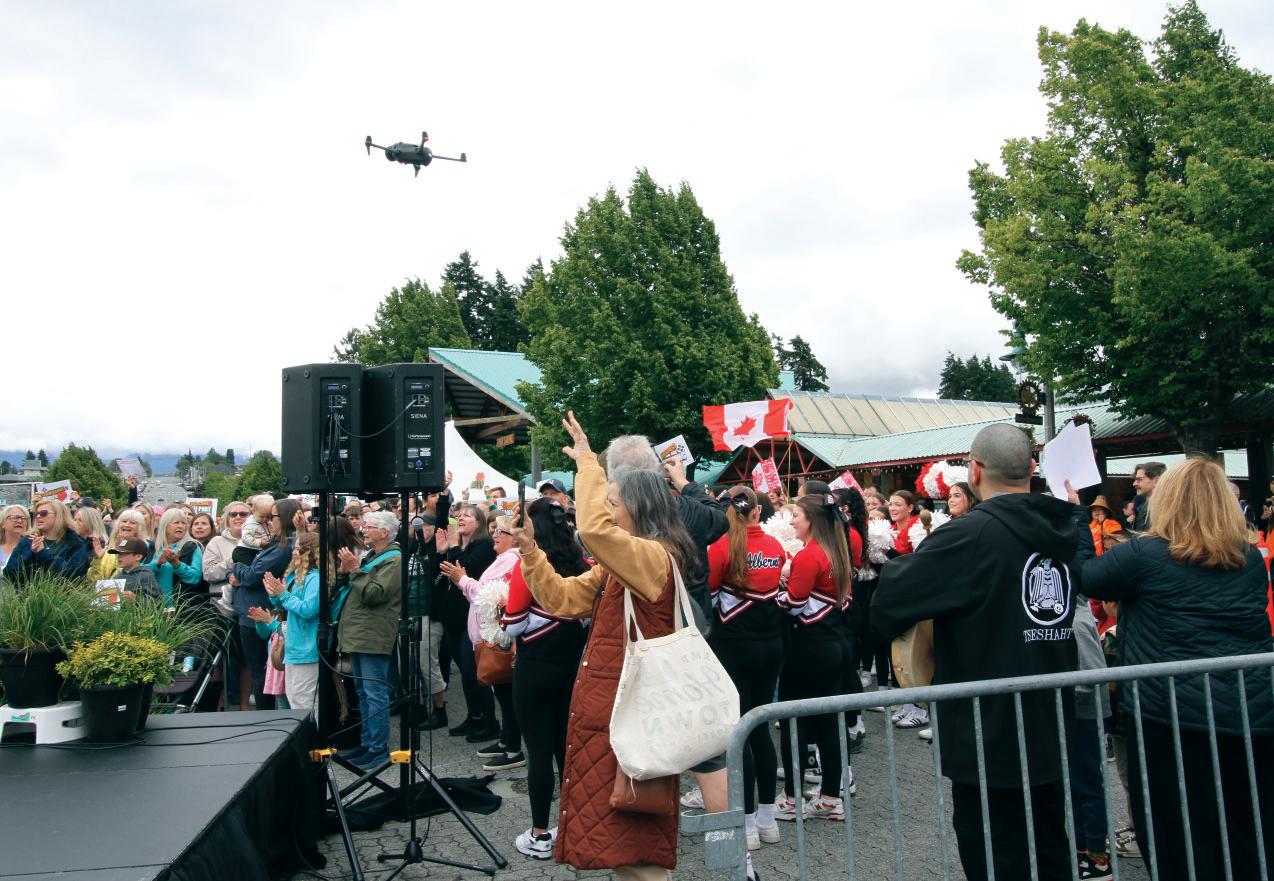
Port Alberni selected for HGTV Hometown Takeover
Show’s filming started June 10, running until Aug. 28 with renovations to a home, business and a public space
By Chloe Wangler Ha-Shilth-Sa Assistant
Port Alberni, BC - On a cloudy Tuesday morning, a crowd of Port Alberni residents came together for the final push to be selected for HGTV’s Hometown Takeover.
With people filling the Harbour Quay on June 9, community members proudly sporting city colours of green, white and orange, HGTV’s film crew were given a glimpse into what makes Port Alberni such an amazing community. The small city was selected for the TV series shortly after the gathering, beating out hundreds of communties from across Canada that vied to be featured in the show.
Bryan and Sarah Baeumler will host the new HGTV original series Home Town Takeover Canada, with production set to begin in Port Alberni June 10. Based on the hit U.S. format, Home Town Takeover Canada follows a full-scale small-town revitalization, transforming homes, businesses and public spaces while breathing new life into a deserving Canadian community. Submissions for the show were accepted in Fall of 2025.
Before the announcement of Port Alberni’s selection for the show, Tseshaht Chief Councillor Wahmeesh, Ken Watts opened the welcome with a brief history of ƛuukʷatquuʔis, teaching the crowd the correct pronunciation of the Nuu-chahnulth name for Wolf Ritual Beach, the
traditional site where the Harbour Quay is now located.
Hupacasath Chief Councillor Brandy Lauder, dressed in her shawl and cedar headband, followed Wahmeesh with her own welcome and warm words of the community.
With eight years standing as Mayor, Sharie Minions gave her own appeal as to why Port Alberni is deserving of the chance to shine. She highlighted the natural beauty around the city, the strength of the people who make it the town with a big heart, and shared the sentiment of the speakers behind her. Port Alberni is a community that is strongest when it comes together, noted Minions.
While filming was progressing throughout the morning, the crowd was entertained by the Alberni District Secondary School Marching Band, cheerleaders and leadership class. Jokes were shared and
the kindness and positivity of the community shone through the overcast sky.
With drones flying above capturing the excitement Tseshaht and Hupacasath performed for the crowd, creating an inclusive environment highlighting the strength a community has when it works and grows together.
While cranes were set up as backdrop to the stage, a sign with ‘We love Port Alberni’ hung behind HGTV hosts Brian and Sarah Bauemler, and Ben and Erin Napier as they announced Port Alberni as the chosen town in the first season of Canada’s Hometown Takeover.
Filming begins June 10th and will continue through to end of August. No plans have been announced about where they will begin, but it’s safe to say the community is excited to support the growth and revitalization expected to come with the TV production.
Chloe Wangler photo
The drones fly overhead as the crowd comes together at the Harbour Quay on June 9 in the final push for Port Alberni to be selcted for the Hometown Takeover. Port Alberni was selected for the five-month makeover, beating the other finalists. which were Hope, B.C., Fort Frances, ON, and Pembroke, ON.