INTERESTING NEWS
Vol. 53 - No. 09—April 30, 2026

Dozens of grey whales have washed up on West Coast
Carcasses wash up
on beaches, leading researchers to suspect global warming may be disrupting feeding habits
By Denise Titian Ha-Shilth-Sa Reporter
An alarming number of dead grey whales have been found on beaches of the Pacific Northwest. Most of the carcasses show tell-tale signs of starvation.
Reports indicate that 18 dead grey whales were found in the Pacific Northwest region in April – with five in British Columbia and thirteen in neighbouring Washington State. Add to that the dead grey whales found in Oregon, California and Mexico in the last few weeks and the number jumps to more than 30 found this spring.
According to Paul Cottrell, a marine mammal coordinator with Fisheries and Oceans Canada (DFO), the whales found around Vancouver Island in April were floating offshore. At least three of the carcasses were towed ashore for necropsies.
Two of the dead whales were towed to Nuu-chah-nulth territories, one in Huuay-aht territory and the other in Kyuquot. There were two males and one female found floating in the waters off Vancouver Island.
“They were very skinny animals, a bag of bones,” said Cottrell.
According to Cottrell, researchers believe the grey whales died by vessel strikes or malnutrition. It is believed that the starving whales venture through ship-
Inside this issue...
ping lanes in search of food.
Grey whales are migratory mammals traveling up to 22,500 kilometres between their summer feeding grounds in the Arctic to their winter calving lagoons in southern California and Mexico. A newborn calf is about 5 metres long and will grow to be up to 15 meters, weighing about 450,000 kilograms when fully grown.
A grey whale needs over a tonne of food daily to survive. They are bottom feeders, stirring up sediment on the ocean floor then straining their catch through their baleen. They feed on benthic invertebrates, mostly amphipods, a flea-like crustacean. They also consume tube worms, crab larvae, mollusks and herring eggs.
At this time of year, the grey whales are making their way back to their summer feeding grounds in the Arctic – the Bering and Chukchi seas. Cottrell noted that conditions were not good for feeding whales in the summer of 2025.
It is believed that climate change is a contributing factor to the lack of food supply for the Eastern North Pacific grey whales. According to the United States’ National Oceanic and Atmospheric Administration, ice coverage in the Arctic is melting earlier in the season and more receding than in previous decades. This could impact prey distribution, quantity
Premier backs down on threat to suspend DRIPA..........Page 3
Redd Fish Society works with First Nations..................Page 5
Tla-o-qui-aht marks spring with celebration.............Pages 8-9
Elected Uchucklesaht chief speaks at UN....................Page 11
Con Charleson legacy lives on with tournament..........Page 15
and quality. “The impacts of climate change on baleen whales are unknown, but it is considered one of the largest threats facing high latitude regions where many gray whales forage,” NOAA states.
NOAA goes on to say that any resulting changes in prey distribution could affect foraging behavior, nutritional stress, and diminished reproduction for gray whales. Additionally, changing water temperature and currents could impact the timing of environmental cues important for navigation and migration.
Poor nutrition means lower birth rates for the grey whales. There were 84 calves born in the Baja lagoons last winter, the lowest on record to date.
“Nutritional stress lowers the female’s
ability to carry a pregnancy and feed the young,” said Wendy Szaniszlo, a marine mammal technician for DFO.
Cottrell says there were 28,000 grey whales in 2019. By 2023 the animal’s population dropped to 14,000. This year the population is estimated to be 14,500 to 11,000 and declining.
“We hope it’s just a blip but it’s probably more than that,” said Cottrell.
DFO is working with scientists from other countries. They are using drones to track the migrating whales, watching for changes in body condition.
Little is known about what the whales are feeding on as they pass through the waters of British Columbia. Szaniszlo says more research is needed.
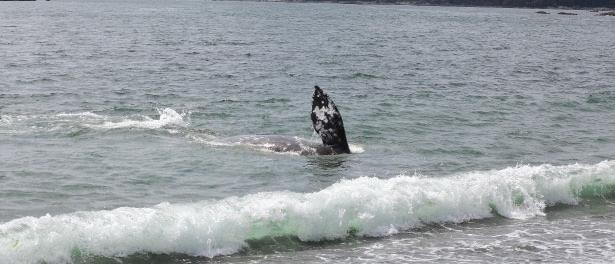
A grey whale rubs up against the rocks of a beach in Yuquot in August 2025. It is believed that the species’ population has declined to about 14,000 in recent years.
If undeliverable, please return to: Ha-Shilth-Sa P.O. Box 1383, Port Alberni, B.C. V9Y 7M2
DFO photo
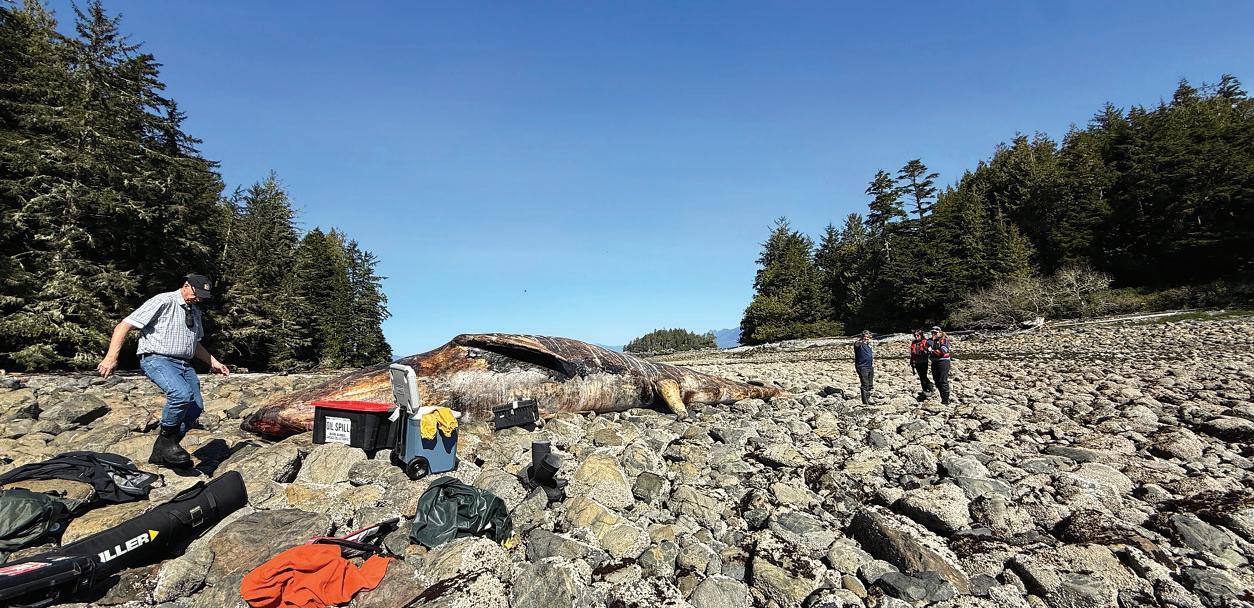
A grey whale carcass is found in the southern part of Barkley Sound in April, one of more than 30 such mortalities affecting the species this spring on the west coast of Canada and the United States.
Eric Plummer photo
A decade-long ‘crisis of disconnection’
After 10 years as B.C.’s public health emergency, opioid crisis has drawn differing opinions on the best solution
By Eric Plummer Ha-Shilth-Sa Editor
Port Alberni, BC - When Rita Watts re-
flects on British Columbia’s drug crisis, a young First Nations man she encountered one day outside of Port Alberni’s Shopper’s Drug Mart comes to mind. Watts noticed the fellow slumped over on the sidewalk as she stepped out of the store.
“I sat in my vehicle and cried, because this young man was just so wired, and he looked maybe 13, 14 years old, sitting there with a pipe in his hand,” said Watts. “He needs help, he needs guidance. Where’s his parents? If he’s in foster care, why is he sitting there?”
Watts is no stranger to the throes of addiction, as she used crack-cocaine for 22 years. She’s been clean for the past 13, a recovery that began after losing her brother, who was also struggling with drug use.
“I just started my journey then, and I didn’t turn back. It made me hate drugs even more,” said Watts, who sought counselling several times a week as she fought to change her path. “I did everything in my power to stay away, to stay clean. What really stuck in my head is, do I enjoy being treated that way? Do I enjoy being lied about? Do I enjoy being laughed at?”
After more than a decade of sobriety, Watt’s fight continues as she tries to support a son and daughter in their addiction struggles.
“Right now I hate it even more than anything in my entire life, because my son and my daughter are still out there, but for how long I don’t know,” she said. “The scream for help is pretty loud, but no one hears them.”
The spread of supervised sites
This April marked 10 years since the opioid crisis was declared a public health emergency in B.C. Since then over 18,000 lives have been lost to drug poisoning, with First Nations facing a fatality rate 5.4 times greater than the rest of the province, according to numbers reported by the First Nations Health Authority from the first half of 2025. First Nations women have died 8.5 times more than other females in B.C.
The rise in overdose deaths has coincided with the presence in the illicit market of fentanyl, a synthetic painkiller that was originally produced for medicinal purposes. Just a small amount of fentanyl can be fatal, and over 2023 – which was B.C.’s worst year for drug overdoses –the synthetic opioid was detected in 85 per cent of tragic drug poisonings. In that year an average of seven people died each day in the province.
This has since declined to 4.1 deaths a day, according to the B.C. Coroners Service’s most recent statistics from February. Fluorofentanyl, a modified analogue of fentanyl, was detected in 68 per cent of the drug-related fatalities so far analysed this year, with cocaine present in 57 per cent of cases, fentanyl in 56 per cent and methamphetamine in 54 per cent. Smoking (71 per cent) is by far the most common form of drug consumption.
Overdose remains the most common cause of unnatural death in B.C. - more than homicide, suicide and car accidents combined. But the 1,826 fatalities tracked last year show a 21 per cent decrease from 2024, and a continued decline from the peak of 2,591 deaths in 2023.
The province is crediting a combination of approaches to this downward trend,
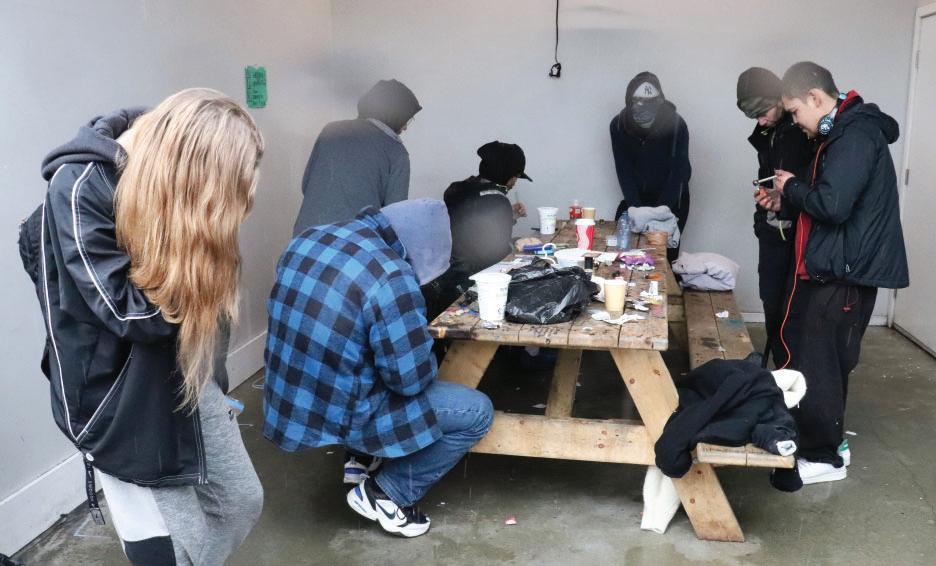
including the expanded prescription of less dangerous medical alternatives like methadone and hydromorphone to drug users. Overdose prevention sites have also opened in cities and towns across B.C. over the last decade, where users can legally consume illicit substances under the watch of trained staff. From January 2017 until the end of January 2026 there were over 6.6 million visits to overdose prevention sites across B.C. Over this time staff responded to almost 33,000 overdoses, which resulted in just two deaths at the sites.
‘A crisis of disconnection’
While these approaches appear to be helping keep more people alive, there’s far more that’s needed to alter the course of an addict’s life, says Rose Chester, who used fentanyl, heroin and cocaine for seven years. She’s been clean for over two years now since she left Vancouver’s Downtown Eastside to live in her home
Ditidaht First Nation community on Nitinaht Lake.
“For me it was a spiritual, cultural connection, but when I came home I knew I needed help because of my heart,” said Chester, who had been taking methadone while she was using drugs in Vancouver.
“I started seeing a doctor for my health, because my body was aching and my chest at times. That’s when he told me my heart was fibrillating and that’s a risk by taking the methadone.”
Chester ended up back in Vancouver, hospitalized and hooked up to an IV due to her body’s reaction to quitting the drugs, which brought risks of heart attack, stroke and seizures. Once stabilized, she returned to Nitinaht and was connected to a doctor in Port Alberni. Nurses in her remote community also helped guide Chester to mental health and addictions counselling.
It was a difficult period, and although family members were close by, they had trouble seeing the violent withdrawal symptoms that Chester was struggling with.
“If they have family lost in that world and want to help, people need to educate themselves,” she said.
The isolation addicts face is an understated part of the issue, says Nicki Love, a next-generation Nuu-chah-nulth elder
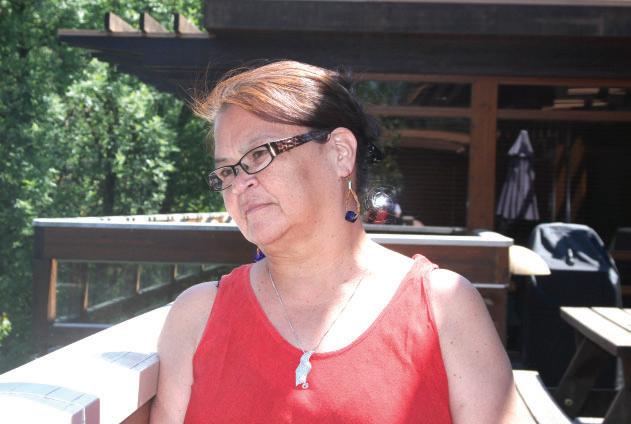
“I did everything in
my
who worked for years in harm reduction with the Nuu-chah-nulth Tribal Council.
“The toxic drug crisis is often framed as a crisis of substance. I believe that it’s a crisis of disconnection,” she said. “Disconnection from the land, disconnection from community, disconnection from identity.”
Love stresses the need for medical detox along with cultural support like counselling and land-based learning, an approach that “brings the connection back to call their spirit back.”
But the risk rises when Nuu-chah-nulth people leave their home to live in urban areas, says Love.
“It’s a death sentence when people leave our communities in Nuu-chah-nulth territories to go to Port Alberni,” she said.
Is the system enabling addicts?
Over the last decade health authorities have taken a harm-reduction approach to the drug crisis, while introducing measures intended to bring drug users out of the shadows so that they can connect with the necessary help. Not all initiatives have been successful, including the threeyear decriminalization of illicit drug use. Introduced in late January 2023 to remove the social stigma that substance users face, less than halfway through the pilot project it became clear that things could be getting out of hand. Reports
emerged of open substance use being permitted in hospitals, while opposition MLAs accused the ruling NDP of making British Columbia a social experiment for the rest of the country to watch. By May 2024 Premier David Eby announced that illicit drug use would again not be permitted in public places. Early this year Health Minister Josie Osborne announced that decriminalization would not be renewed after the project “hasn’t delivered the results we had hoped for.”
Watts fears that some of these approaches are enabling drug users to continue in the world of addiction.
“SIS is a safe injection site that helps them to do drugs,” she said. “Is that helping them? Not in my eyes.”
In Port Alberni, a small city that often serves as an urban hub for Nuu-chahnulth, a central issue remains the lack of a medical detox facility for addicts who want to get well.
“You talk to any one of them, and there’s no where to go,” said Watts, adding that help needs to be available on the day that an addict seeks it, otherwise tomorrow might be too late.
“It only takes one night to go to sleep, you wake up and that anxiety is there again, that crave is there,” added Watts.
“‘Do I or do I not? No one is calling me to help me out, so I’m just going to go’.”
Alexandra Mehl photo
People use Port Alberni’s Overdose Prevention Site on Third Avenue, where the consumption of illicit substances continues to be legal after decriminalization expired on Jan. 31. All of those photographed have agreed to getting their picture taken.
Eric Plummer photo
my power to stay away, to stay clean. What really stuck in
head is, do I enjoy being treated that way?” says Rita Watts.
B.C. premier backs down on move to suspend DRIPA
On the day that a bill was to be tabled to stall DRIPA, premier & First Nations leaders release a joint statement
By Denise Titian Ha-Shilth-Sa Reporter
Victoria, BC – It was shaping up to be a hot, contentious summer as Premier David Eby considered introducing a bill that would suspend or amend the Declaration on the Rights of Indigenous Peoples Act, also known as DRIPA. The province’s First Nations and their supporters were prepared to fight the move, seeing it as a step backward from the hard-fought gains made by previous generations of both First Nations and provincial leaders. DRIPA was unanimously passed in the provincial legislature in November 2019. It requires that the B.C. government ensure the laws of the province are consistent with the United Nations Declaration on the Rights of Indigenous Peoples (UNDRIP).
Ha-Shilth-Sa previously reported that in early April Premier Eby detailed his plans to temporarily suspend, for up to three years, various sections of the DRIPA following fears over recent court rulings. Some landmark court decisions in 2025 sparked public concerns over how Aboriginal title will affect the rights of private landowners, while the cashstrapped provincial government fretted over how it will attract natural resource investment while honouring obligations to gain consent from First Nations.
On Monday, April 20 Eby, along with representatives of the First Nations Leadership Council, found common ground and released the following statement, regarding the Declaration on the Rights of Indigenous People’s Act (DRIPA):
“The Government of B.C. will not be introducing legislation to suspend or amend DRIPA or UN Declarationrelated provisions in the Interpretation Act, in the spring legislative session. The government and First Nations Leadership Council are committed to working together with all First Nations leaders on a path forward to discuss and consider the government’s stated legal concerns, while upholding the title and rights and human rights of First Nations,” they stated, adding that they commit to work together in genuine collaboration to find a solution prior to the fall legislative session.
In a written statement, the Nuu-chahnulth Tribal Council said it applauds the Leadership Council and the premier of B.C. for coming to an agreement regarding the Declaration on Indigenous
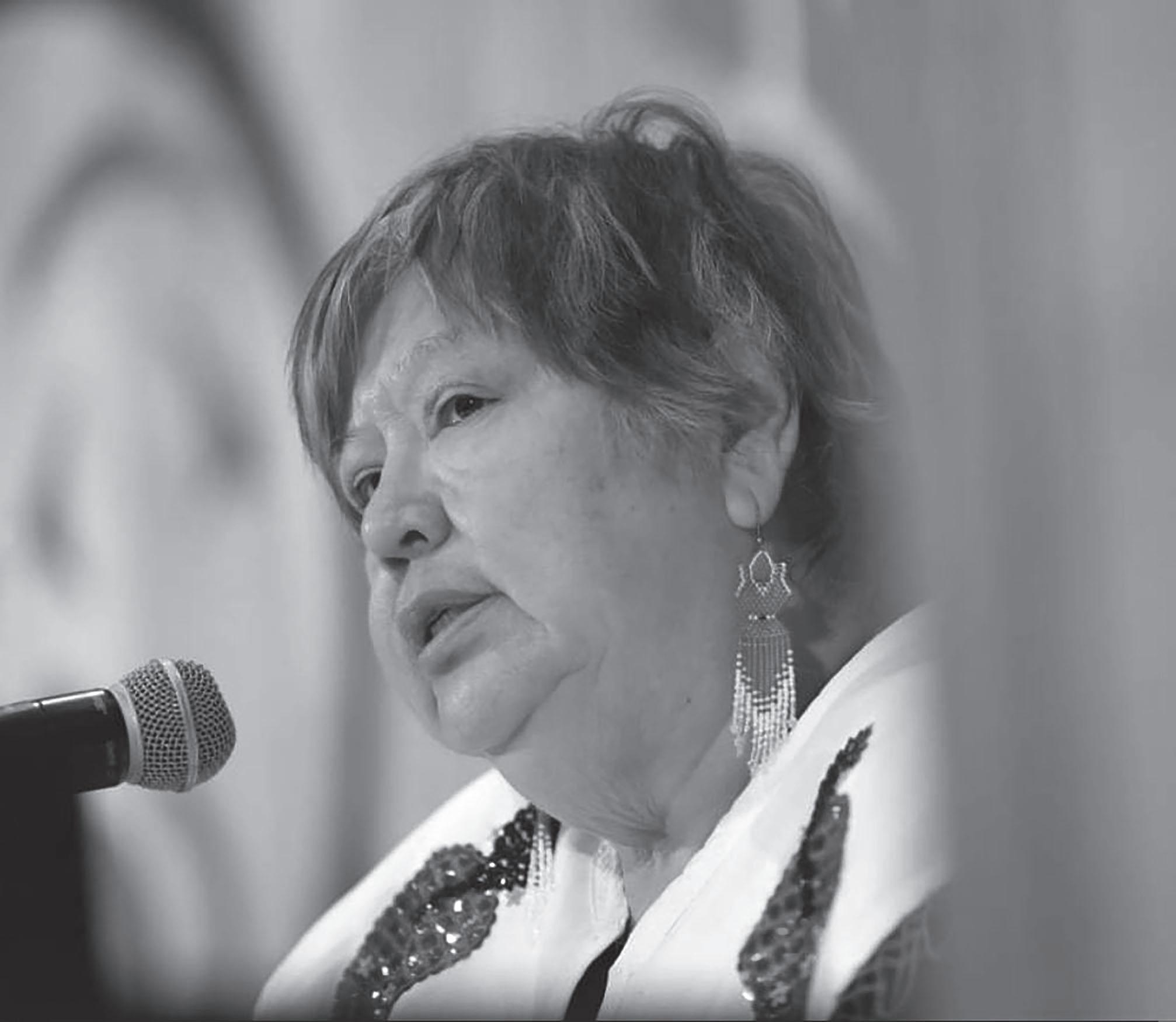
“I am happy that we can be putting our energies towards achieving good work and not
initiatives happening in the province that can now be accomplished under the same path we set seven years ago,” says NTC President, Cloy-e-iis, Judith Sayers.
Peoples Rights Act (DRIPA) for the next six months.
“This agreement prevented BC-First Nations relationships from falling apart and from pitting First Nations against the provincial government,” the statement reads. “The NTC is relieved that there can now be a period of time without the threat of amendments to DRIPA hanging over our heads and clear strategic thinking can occur.”
The short-term solution will allow First Nations to continue to work on important issues with the province, something the NTC leadership says they prefer.
“We did not agree with unilateral actions proposed by the premier in the
media without talking to First Nations,” the NTC statement reads, adding that now is the time for respectful and good faith engagement.
According to the Nuu-chah-nulth Tribal Council, a table will be established to look at options and solutions to the issues the province sees with DRIPA. The NTC says that DRIPA has been described as a framework for reconciliation, and efforts must continue to realize this path.
“I am happy that we can be putting our energies towards achieving good work and not fighting with B.C. There are good initiatives happening in the province that can now be accomplished under the same path we set seven years ago,” said NTC

President, Cloy-e-iis, Judith Sayers. NTC Vice President, Les Doiron, says, “it is good to see that the parties could come to a meeting of the minds and to take the time to listen and hear one another and find solutions collaboratively. That is how you work together.”
The NTC statement goes on to say that it knows the importance of this table and expects viable solutions to come out of this working group that can be accepted by both parties.
“The Declaration on the Rights of Indigenous People Act started as a collaborative effort and it must continue in that fashion,” stated the tribal council.

Eric Plummer photo
fighting with B.C. There are good
Ha-Shilth-Sa newspaper is published by the Nuu-chah-nulth Tribal Council for distribution to the members of the contributing First Nations, as well as other interested groups and individuals.
Information and original work contained in this newspaper is protected by copyright and may not be reproduced without written permission from:
Nuu-chah-nulth Tribal Council P.O. Box 1383, Port Alberni, B.C. V9Y 7M2.
Telephone: (250) 724-5757
Fax: (250) 723-0463
Web page: www.hashilthsa.com facebook: Hashilthsa Ntc
2026 Subscription rates:
Non-Nuu-chah-nulth, Ahousaht, Ehattesaht,Toquaht and Ucluelet members are subject to a yearly subscription fee of $40 in Canada, $50 in the US and $60 for overseas. Payable to the Nuu-chah-nulth Tribal Council
Manager/Editor/Reporter
Eric Plummer (Ext. 243) (250) 724-5757 Fax: (250) 723-0463 eric.plummer@nuuchahnulth.org
Reporter
Denise Titian (Ext. 240) (250) 724-5757 Fax: (250) 723-0463 denise.titian@nuuchahnulth.org
Reporter Nora O’Malley (604) 353-8488 nora.omalley@nuuchahnulth.org

Audio / Video Technician
Mike Watts (Ext. 238) (250) 724-5757 Fax: (250) 723-0463 mike.watts@nuuchahnulth.org
Editorial Assistant
Holly Stocking (Ext. 302) (250) 724-5757 Fax: (250) 723-0463 holly.stocking@nuuchahnulth.org
DEADLINE:
Please note that the deadline for submissions for our next issue is May 8, 2026
After that date, material submitted and judged appropriate cannot be guaranteed placement but, if material is still relevant, will be included in the following issue.
In an ideal world, submissions would be typed rather than hand-written. Articles can be sent by e-mail to holly.stocking@nuuchahnulth.org (Windows PC).
Submitted pictures must include a brief description of subject(s) and a return address.
Pictures with no return address will remain on file. Allow two - four weeks for return.
Photocopied or faxed photographs cannot be accepted.
COVERAGE:
Although we would like to be able to cover all stories and events, we will only do so subject to:
- Sufficient advance notice addressed specifically to Ha-Shilth-Sa.
- Reporter availability at the time of the event.
- Editorial space available in the paper.
- Editorial deadlines being adhered to by contributors.
LETTERS and KLECOS
Ha-Shilth-Sa will include letters received from its readers. Letters MUST be signed by the writer and have the writer’s full name, address and phone number on them. Names can be withheld by request. Anonymous submissions will not be accepted. We reserve the right to edit submitted material for clarity, brevity, grammar and good taste. We will definitely not publish letters dealing with tribal or personal disputes or issues that are critical of Nuu-chah-nulth individuals or groups. All opinions expressed in letters to the editor are purely those of the writer and will not necessarily coincide with the views or policies of the Nuu-chah-nulth Tribal Council or its member First Nations. Ha-Shilth-Sa includes paid advertising, but this does not imply Ha-Shilth-Sa or Nuu-chah-nulth Tribal Council recommends or endorses the content of the ads.
Vancouver Island faces elevated drought
The winter left the region with a low snowpack, bringing likelihood of a dry forest
By Olivia Thomas Ha-Shilth-Sa Contributor
Victoria, BC – British Columbia officials say Vancouver Island could face an elevated risk of drought and water shortages this summer, even as the province reports normal snowpack levels overall. Snowpack levels recorded on April 1st showed that the B.C. average was 93 per cent of normal, compared to 79 per cent in 2025 and 66 per cent in 2024. However, low snowpack in south interior and south-west B.C. is increasing seasonal drought hazard.
At a press conference in Victoria on April 16, provincial ministers and agency experts outlined seasonal emergency preparedness plans, addressing the upcoming wildfire season. Randene Neill, Minister of Water, Land, and Resource Stewardship, said that while much of B.C. has seen typical snowpack accumulation, Vancouver Island experienced significantly lower-than-normal levels over the winter.
“That puts the Island at increased risk for drought and water shortages,” Neill said, noting that conditions could still change depending on spring weather patterns.
David Campbell of the River Forecast Centre echoed that assessment, identifying Vancouver Island as a region of particular concern heading into the summer months. For Vancouver Island residents, this could mean earlier calls for water conservation, potential restrictions on outdoor water use, and heightened awareness around fire safety. Officials are urging the public to prepare for the possibility of dry conditions by reducing water consumption where possible and following fire bans or advisories as they are issued.
The province says it has strengthened its ability to respond to wildfires following destructive seasons in recent years.
Minister of Forests Ravi Parmar said the B.C. Wildfire Service now has a record number of personnel, including approximately 2,200 trained volunteers and 600 full-time staff
“We feel well equipped to respond to wildfire activity across the province,” Parmar said, adding that $14 million has been invested into ground equipment to
improve response capacity.
Matt MacDonald of the B.C. Wildfire Service reported that below-normal precipitation was recorded over central, northeastern, and southern B.C. during October and November. MacDonald emphasized that the severity of the 2026 wildfire season will depend heavily on weather conditions in the coming months. “The amount of precipitation we receive in May and June will be a key factor,” MacDonald said. “We encourage the public to stay informed as conditions evolve.”
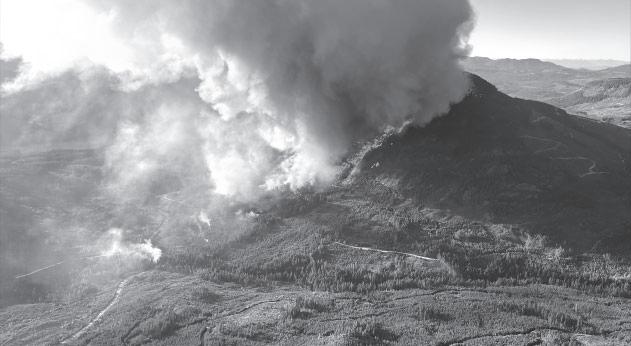
The province’s emphasis on preparedness comes after several challenging wildfire seasons that stretched response capacity and forced evacuations in multiple regions. Fires such as Mount Underwood and Wesley Ridge, which occurred on either sides of Port Alberni, highlighted the increasing frequency and intensity of wildfire events in British Columbia, driven in part by hotter, drier conditions linked to climate change.
Low water levels could also pose a threat to fish populations, particularly in salmon-bearing streams.
In an email statement, the Ministry of Water, Land, and Resource Stewardship said that in the event of severe drought conditions, some watersheds can reduce stream flows, putting already vulnerable salmon populations at risk during spawning season.
If drought conditions intensify, the province may increase monitoring in affected watersheds and ask water users to
Ha-Shilth-Sa belongs to every Nuu-chah-nulth person including those who have passed on, and those who are not yet born. A community newspaper cannot exist without community involvement. If you have any great pictures you’ve taken, stories or poems you’ve written, or artwork you have done, please let us know so we can include it in your newspaper. E-mail holly.stocking@nuuchahnulth.org. This year is Ha-Shilth-Sa’s 52nd year of serving the Nuu-chah-nulth First Nations. We look forward to your continued input and support. Kleco! Kleco!
voluntarily reduce consumption.
“Voluntary water conservation can help minimize further declines in stream flow and may prevent the need for regulatory action,” the ministry said.
Reduced stream flow not only limits available habitat but can also increase water temperatures, creating additional stress for salmon during critical life stages. Conservation measures such as voluntary water reductions are intended to maintain sufficient flow levels, particularly in smaller or already stressed watersheds. Officials noted that if voluntary measures are insufficient, the province can issue temporary protection orders to restrict water use to reduce pressure on flows and give salmon the best chance to survive and spawn. These measures are considered a last resort.
While officials highlighted the importance of increased awareness by British Columbians, they also acknowledged that much depends on how weather conditions unfold in the coming months.
For Vancouver Island in particular, a dry spring could significantly heighten the risk of both drought and wildfire activity, with cascading impacts on communities, ecosystems, and water resources. With key months of spring precipitation still ahead, officials say the situation remains fluid. However, the combination of below-average snowpack on Vancouver Island and ongoing climate pressures means communities may need to prepare for a summer shaped by heightened environmental risk.
Legal Information
The advertiser agrees that the publisher shall not be liable for damages arising out of errors in advertisements beyond the amount paid for space actually occupied by the portion of the advertisement in which the error is due to the negligence of the servants or otherwise, and there shall be no liability for non-insertion of any advertisement beyond the amount paid for such advertisements
BC Wildfire Service photo
After the region was already dealing with the Wesley Ridge/Cameron Lake fire, Mount Underwood exploded in flames south of Port Alberni in August 2025.
Redd Fish society works to restore salmon habitat
Watershed Security Fund announces $6 million for projects across B.C., with participation of local First Nations
By Antonella Medina Arias Ha-Shilth-Sa Contributor
Clayoquot Sound, BC - A project is being launched in Clayoquot Sound that researchers believe attends to the “root causes of salmon decline.”
It’s part of a $6-million investment in watershed restoration has been launched across British Columbia to improve salmon recovery, support Indigenous-led environmental stewardship and ecosystem restoration.
The Watershed Security Fund (WSF), a collaboration with the First Nations Fisheries Council (FNFC), the Real Estate Foundation of BC (REFBC) and the First Nations Water Caucus, announced the beneficiaries that will receive funding from its grants program, with $6 million being shared among 26 community-based projects within the province.
The program includes $5 million generated from the province’s $100 million endowment, along with an additional $1 million contribution from the Hillary and Galen Weston Foundation.
“This work is about restoring balance and abundance in our haḥuułi,” said Saya Masso, the Tla-o-qui-aht First Nation’s Lands and Resources manager. “By leading watershed restoration in partnership, we are bringing together knowledge systems, creating opportunities for our people, and ensuring these ecosystems are healthy for generations to come.”
The Redd Fish Restoration Society, one recipient of the WSF grant, will receive $400,000 to continue evaluating and identifying better strategies to speed up the recovery of wildlife habitats, starting immediately with landslide stabilization in Hesquiaht territory.
With the support of the WSF, the Redd Fish Restoration Society will collaborate with the Hesquiaht, Ahousaht, and Tlao-qui-aht First Nations to restore salmon habitats and watersheds prioritized by the nations.
The restoration work is built on a decade of detailed assessments and monitoring of the watersheds and ecosystems to understand the issues within each area that are limiting salmon recovery.
“We’ve identified some really critical projects that could help address the root causes of salmon decline and support the recovery for the long term,” said Jessica Hutchinson, executive director and an ecologist at the Redd Fish Restoration Society. “Our work is looking at each of the salmon [life phases] and trying to identify factors that may be limiting abundance or recovery. Once we’ve
pinpointed [these], we can begin to look at what tools we have in our toolkit that could help repair these damages . . . and help accelerate the recovery of these ecosystems that support salmon.”
The primary factor of the salmon habitat issues within freshwater dates back to the 1960s, and lasted up until the 1990s, according to Hutchinson. This period was marked by industrial logging in the watersheds, overfishing, and poor management that led to the decline of the Chinnok, coho, chum, sockeye, pink and steelhead salmon populations. Now human intervention is needed to balance restoration and recovery in the same measure.
“There’s often this misconception that nature heals itself, and to a certain extent I think that is correct, but when we’ve damaged ecosystems to the extent that we have through mining, logging and other industrial activities, we have an obligation to go back and help these watersheds get on a healing trajectory,” said Hutchinson. “[It] is going to take stewardship [and a] commitment by these nations to manage and support these watersheds through that recovery process.”
The loss of Indigenous management and stewardship in the watersheds is another factor in the historical degradation. The

Redd Rish Restoration Society works closely with First Nations to support guardian programs, stewardship, and the reconnection of these communities with the affected watersheds.
Climate change is another contributor to salmon decline, with water temperatures that aren’t suitable for juvenile and adult salmon to incubate their eggs. Summer droughts are affecting salmon, as they become stranded near creeks and streams, leaving the fish vulnerable to predators.
Watersheds play a critical role in the ecosystem by regulating water flow and temperature, with the salmon population highly dependent on these structures to thrive and avoid decline. The partnership with the Redd Fish Restoration Society and First Nations communities offers the opportunity to restore the wild salmon, one of the coast’s most culturally important resources.
“Collaboration is at the heart of this work, as we all have a shared responsibility to contribute to the care and preservation of our most sacred source of life — water,” said Toni Boot, vice-chair of the REFBC Board of Governors and a member of the Watershed Security Fund Joint Executive. “When we support each other in this work, we support a future with vibrant watersheds and healthy communities.”
The 26 beneficiaries of the WSF are set to work on implementing nature-based solutions to lessen the impact of climate change on ecosystems and place First Nations’ rights and knowledge at the centre of the operation, fostering lasting collaborations based on respect and balance.
The projects are creating over 640 jobs while helping communities achieve eco-
nomic, cultural, social, and environmental objectives by prioritizing watershed health.
The Wildsight Foundation, another beneficiary of the grant, is offering an educational program to empower students from Grades 10 to 12 across the Columbia River Basin area to engage in water monitoring and management.
The Soowahlie First Nations, another recipient of the WSF grant, is set to restore the Sweltzer Creek Watershed, aiming to replace the current inadequate infrastructure for community safety and flood management.
Since the launch of the grant program in 2024, the WSF has supported 80 watershed projects and made $18 million in direct investments to communities, including $10 million from the WSF, $8 million in philanthropic contributions.
In those two years, the WSF has received 400 grant applications with over $100 million in funding requests, proof of the vast need for funds and the serious commitment of communities to care for water resources within the ecosystem.
“We’re grateful to the nations that we work with on habitat recovery and restoration. We’re also very grateful to the Real Estate Foundation of BC, the Watershed Security Fund and everyone who really believes in the work that we’re doing. We’re excited about what strides we can make with this funding,” said Hutchinson.
The WSF will continue to seek funding opportunities through government, philanthropic and industry contributions to secure reliable funding that will support healthy watersheds and communities.
Notice to Remove Schedule A Land from Woodlot Licence W1941
Please be advised that KA:’YU:’K’T’H’/CHE:K:TLES7ET’H’ First Nations is proposing to remove 63.7 ha of Schedule A land (Treaty Settlement Land) from Woodlot Licence W1941 located in the vicinity of the community of Kyuquot.
Information about this proposal can be obtained by contacting Tom Younger RPF at 250-830-84784 or Len Apedaile RPF at 250-2030225. Any comments or questions regarding this proposal must be submitted to forestry@tiicma.com by May 30, 2026 to be considered in the decision.
Redd Fish Restoration Society photo
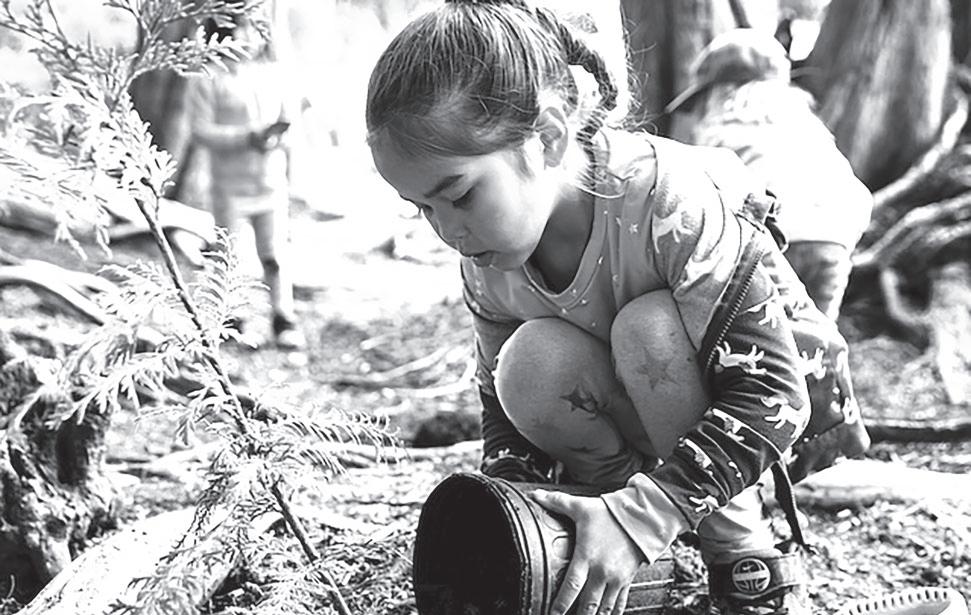
Hesquiaht members work to repair salmon habitat in their territory. With the support of the Watershed Security Fund, the Redd Fish Restoration Society will collaborate with the Hesquiaht, Ahousaht, and Tla-o-qui-aht First Nations to restore salmon habitats and watersheds prioritized by the nations.
Upgrades to deep-sea research in Barkley Sound
Investments
include earthquake seismometers, ocean current sensors and hydrophones for listening to whales
By Jessie Levene Ha-Shilth-Sa Contributor
Victoria, BC - The University of Victoria will receive funding to advance ocean research of black holes, deep sea life, and oncoming earthquakes off the west coast of Vancouver Island.
The federal government’s Canada Foundation for Innovation announced in March $1.65 million in funding to upgrade a multi-disciplinary ocean observatory, the NEPTUNE (North-East Pacific Time-series Undersea Networked Experiments) research facility in Barkley Sound.
The enhancements will be used for new deep-sea power and communication nodes on the observatory, which will support breakthrough research in oceanography, marine biology, seismology, acoustics, and particle physics.
Ocean Networks Canada (ONC) is a non-profit initiative of the University of Victoria that develops and manages the world’s most advanced cabled ocean observatories. NEPTUNE was first established by ONC in 2009 and was the world’s first regional-scale underwater ocean observatory that plugs directly into the Internet and provides power to sensors.
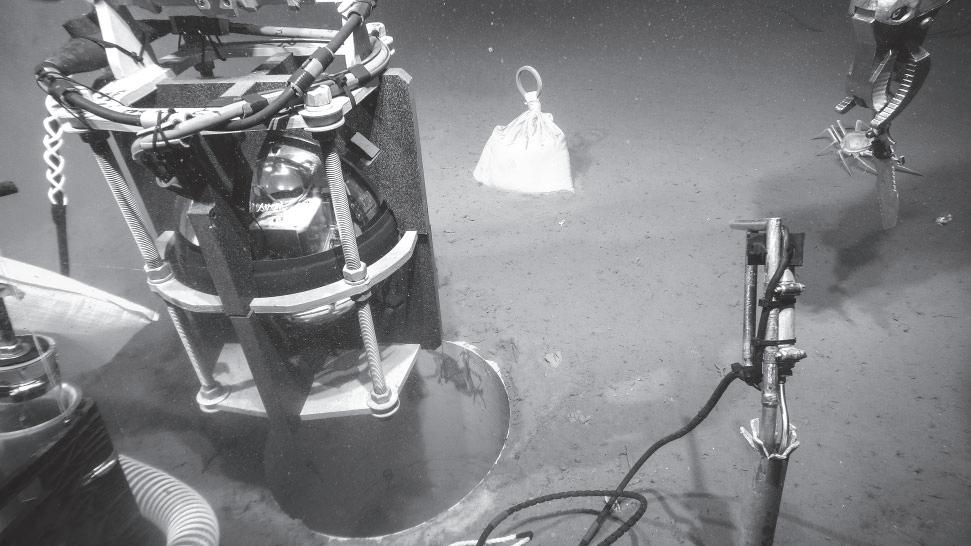
With a network of oceanographic instruments installed on the sea floor that record data from hundreds of sensors, NEPTUNE - the largest ONC installation in Canada - is linked to shore via shielded cables carrying power and fibre-optic communication lines, allowing scientists to transmit continuous, real-time data of ocean-floor conditions to universities and researchers around the world.
With a total cable length of over 800 kilometres, the NEPTUNE network runs through Barkley Sound from Port Alberni all the way to 300 kilometres offshore, before looping back to Port Alberni. It is the only large ocean observatory on the west coast of Vancouver Island.
“The origin of NEPTUNE was in Huu-ay-aht First Nations territory,” said Dr. Sean Rogers, executive director of the Bamfield Marine Sciences Centre (BMSC). “It was born out of the idea that understanding ocean weather is important. We can’t be down at the bottom of the ocean all the time, but with what ONC has accomplished, they can. It’s such critical infrastructure for Canada.
Working under the sea is difficult and expensive, so it’s really important that we continue to invest in this space.”
Benoît Pirenne, a corporate innovation and technology officer at ONC, has been with the NEPTUNE project since 2004.
“Technology evolves fast, and with more users wanting their instruments on our observatories, that demands more capabilities,” Pirenne explained.
Named Unlocking New Knowledge of the Ocean with NEPTUNE, the node upgrades project is essentially “a technology refresh to provide extra data band-
An
off Canada’s west
width and power capacity,” said Pirenne.
The upgrades will support more of the research NEPTUNE has already been undertaking, including seismometers to monitor earthquakes, sensors to measure long-term changes in currents and temperature as the earth warms up, hydrophones to listen to whales, and instruments that record changes in the ocean’s salinity and oxygen levels.
“Ensuring a long-time series is important,” said Pirenne. “These new nodes will allow us to continue to collect these details for many years to come.”
NEPTUNE’s upgraded power and data facilities will also enable new research.
“The upgrades to the sensors will be able to measure things that we didn’t even imagine needing to measure 20 years ago,” said Rogers.
“One large project we’re supporting now and in the future is the Pacific Ocean Neutrino Experiment (P-ONE),” said Pirenne. “This involves very sensitive
Les Sam Construction
light detectors, which are used to time the arrival of any blip of light near the ocean bottom.”
This data will then be used by astronomers and astrophysicists to better understand the cosmos and the nature of black holes, supernova outbursts, and other cosmic particle accelerator events.
As Pirenne explains, “these new light measuring instruments will also be useful for marine biologists studying bioluminescence, who have discovered that more and more deep-ocean creatures use light to communicate.”
The coming upgrades will include new instruments to improve earthquake monitoring.
“One of the sites on the NEPTUNE system is at the junction of three tectonic plates,” said Pirenne. “The data collected there won’t necessarily improve earthquake alerts, but it will help scientists’ understanding of how and why earthquakes here occur, and could eventually support earthquake information messaging systems that help alert industry and critical infrastructure operators about oncoming earthquakes.”
“It will really give us an opportunity to learn more about ocean weather,” Rogers added. “In terrestrial weather we now have incredible predictions down to the hour. And yet we’re still very poor at predicting ocean weather. Those predictions make a big difference for things like food security and salmon runs. It’s all connected, as the Huu-ay-aht say, Hišuk ma cawaak.”
The new upgraded nodes for NEPTUNE will be built in-house at the University of Victoria, where the ONC team will assemble and test the new equipment. With some of NEPTUNE’s nodes located at a depth of over two and a half kilometres, the ONC team will install the new equipment on the ocean floor via remotely operated robots from a vessel on the water’s surface. Like all ONC’s regular expeditions, the installation will be available to watch live online.
Rogers praises ONC’s videos from NEPTUNE’s sensors, which are available to watch on their website.
“ONC has done an amazing job of curating all that data, so anyone anywhere can go online and be a scientist.”
Rogers also teased a new ONC community observatory that his team has recently secured funding for, which will be installed underwater next to the Bamfield Marine Sciences Centre within the next nine months.
“It’s going to be a game changer. It will bring together all our work with Huu-ayaht First Nations and connect it all over the world,” said Rogers. “We’ll be continuing to invite community to see what’s underwater in the ḥaḥuułi. That’s where these upgrades are important to connect with the community, in terms of the difference that it can make in their lives.”
The first of the new NEPTUNE upgraded nodes is planned to be deployed in 2028.
To watch ONC’s regular NEPTUNE expeditions live online, visit https://www. oceannetworks.ca. ONC’s next expedition is scheduled to begin on July 27, 2026.
This new earthquake research will also inform tsunami science. But when asked about deep-sea mining, Pirenne says that “the west coast of the Island where we are operating is a Marine Protected Area, so nothing of that sort could happen there.”
Notice to Remove Schedule A Land from Woodlot Licence W1877
Please be advised that KA:’YU:’K’T’H’/CHE:K:TLES7ET’H’ First Nations is proposing to remove 92.3 ha of Schedule A land (Treaty Settlement Land) from Woodlot Licence W1877 located in the vicinity of the community of Kyuquot.
Information about this proposal can be obtained by contacting Tom Younger RPF at 250-830-84784 or Len Apedaile RPF at 250-2030225. Any comments or questions regarding this proposal must be submitted to forestry@tiicma.com by May 30, 2026 to be considered in the decision.
Ocean Networks Canada/Woods Hole Oceanographic Institution photo
earthquake early warning sensor is connected to the Internet on the Cascadia subduction zone, an active seismic region
coast.
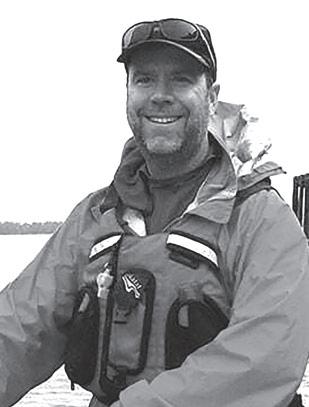
Sean Rogers
Three members run for chief in Tla-o-qui-aht election
Candidates for elected chief Joseph David, Elmer Frank and Saya Masso all say that Tla-o-qui-aht needs a gym
By Nora O’Malley Local Journalism Initiative Reporter
Ty-Histanis, BC – Tla-o-qui-aht First Nation members head to the polls on May 12 to elect one chief and 11 councillors. Three candidates put their name forward for elected chief: Joseph Stephen David, Elmer Frank and Saya Masso.
In total, there are 34 candidates running for council positions.
“We’re trying to get out of what we are under right now which is the Indian Act,” said David, 69, who is known by most in the community as JD.
Previously, David served over 12 years on council and was involved with the T’aaq-wiihak Fisheries / Ha’oom Fisheries Society for about 18 years.
“We need to get our people more independent, more self-determining, like any general public where they are not under the thumb of the government,” said David.
Tla-o-qui-aht First Nation (TFN) has over 1,200 muscim (citizens), and is governed by ancestral knowledge from Ha’wiih (hereditary chiefs) as well as an elected chief and council who serve a four-year term.
Located on the west coast of Vancouver Island, TFN territory extends through the Pacific Rim National Park Reserve, Kennedy Lake, the District of Tofino and into Clayoquot Sound.
TFN includes the communities of TyHistanis and Esowista, located just north of Long Beach, and the ancient village site of Opitsaht, which is across the inlet from Tofino.
Tla-o-qui-aht never signed a treaty with the Government of Canada. In 2024, they entered a Memorandum of Understanding (MOU) with the minister of CrownIndigenous Relations. They also have MOUs with the District of Tofino and the Alberni-Clayoquot Regional District. The ‘hisiikcumyin: Pathway Agreement’ with the province that was signed in 2021.
Current Tla-o-qui-aht Chief Councillor Elmer Frank is hoping to be re-elected.
“I think it’s important to keep that consistency,” said Frank.
He said Phase Two of the housing development project at Ty-Histanis is well underway.
“We are doing all the civil work starting late summer or early fall and following that we will be looking at building homes,” said Frank.
“We also have funding applications out there for a gymnasium and a cultural hall. The costs of that is going to be quite significant so it is taking a little bit longer than we anticipated. But we have paid for plans. We have all the plans drawn up,” he continued, noting that the gym will be constructed in Ty-Histanis.
Saya Masso, Tla-o-qui-aht’s natural resources manager, said he will take “de-
cisive action” to get Tla-o-qui-aht rights and title recognized in order to meet the needs of the muscim.
“I think as leaders we have a role to elevate our rights and title and reaching the right people across the table to get them implemented. It also requires us to develop the leverage, so we are taken seriously at the table. That might include raising awareness of our rights and title through new and different strategies,” said Masso.
“Part of developing leverage to get our rights recognized is working with the Tofino business community with hopes that now it will make it easier with the B.C. to create memorandums of understanding with Tla-o-qui-aht,” he said.
Masso led the creation of the Tla-oqui-aht Tribal Park Allies program, a first-of-its-kind initiative that collects a one-per-cent stewardship fee from 143 participating businesses.

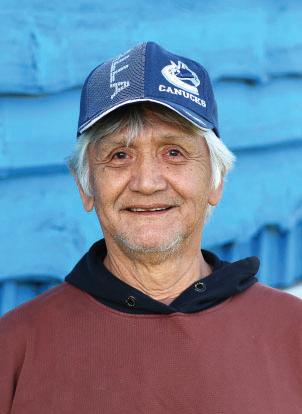
Previously, Masso served six terms on council. He says he ran for chief about 20 years ago.
“Now I think people know who I am and what I stand for,” said Masso. He says he works every day to make Tla-o-qui-aht territory a thriving place for his grandchildren.
“Our grandchildren deserve to live with healthy clean beaches, and abundant salmon runs. Our future should include a vibrant culture, language and thriving village,” said Masso.
All three candidates vying for the role of chief say Tla-o-qui-aht members have many infrastructure needs.
“We are always thinking about our children. We don’t have any sporting complexes whatsoever. We don’t have a field out at the new reserve, we don’t have a gym, we don’t have a longhouse. My focus is going to be really pushing hard, if I am successful, on obtaining some infrastructure needs,” said JD.
Frank spoke about the Saasin House, a facility that was created during the pandemic for members struggling with addiction.
“We brought in a 21-person camp that we bought off of a company from Ahousaht. We built it to address the opioid and alcohol crisis,” said Frank.
“It’s designed so that it helps people who
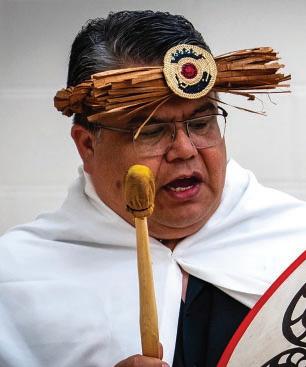
are wanting to get off the street, who are wanting to sober up. It provides space for community members to go to detox and a treatment centre.”
For Masso, the list of infrastructure needs is long and includes, “a longhouse, athletic hall, culture academy, museum to repatriate artifacts, paving the road in Opitsaht, covering outdoor basketball courts, a ball field at Ty-Histanis, better docks and safe harbour, and housing and more housing.”
He re-emphasized that getting rights and title recognized is needed to support infrastructure needs.
Tla-o-qui-aht’s administration staff is large with 121 people currently on the payroll, and they continue to look for more to fill roles, according to Frank.
“We’ve never had such a high number of staff. It’s great,” said Frank.
David is also pushing to recapture language.
“We are already pretty heavy into culture, and I’m real happy about that, one thing I miss is our First Nations language,” said David. “I just want to wish all of our candidates good luck. We all have the same focus.”
Tla-o-qui-aht members can cast their ballots on May 12 from 9 a.m. to 8 p.m. at the following three locations: Meares Island Cultural Centre in Opitsaht, Tiicmis-Aq’kin Health Centre in Esowista/ Ty-Histanis and the Best Western Barclay in Port Alberni.
Sam Beebe/Wikimedia Commons photo
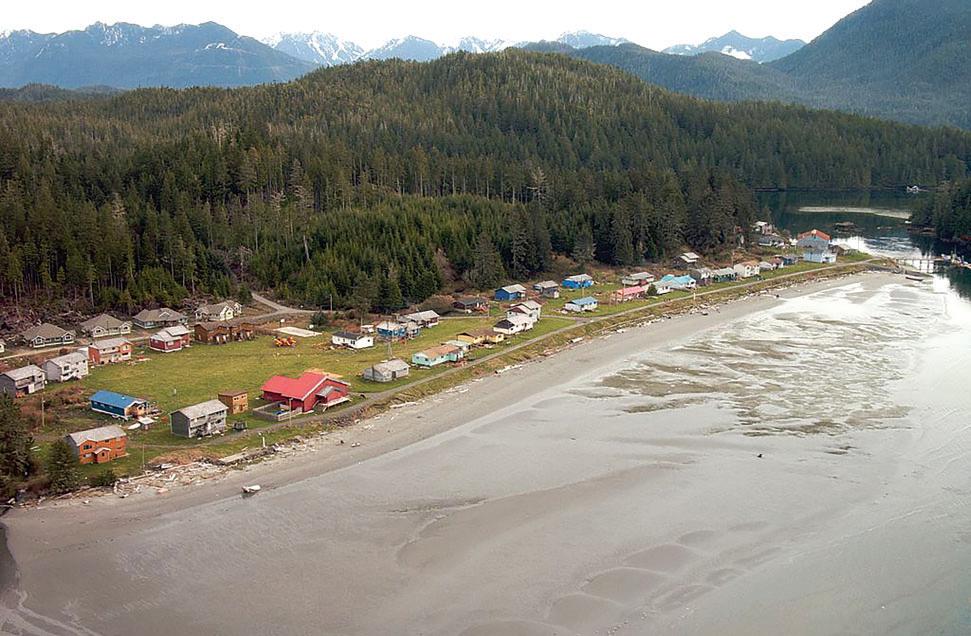
On May 12 Tla-o-qui-aht members head to the polls to elect one chief and 11 councillors. Pictured is the ancient village of Opitsaht, located across the bay from Tofino.
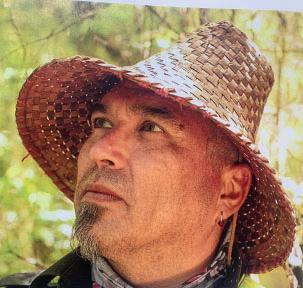
Saya Masso
Joseph David
Elmer Frank
Tla-o-qui-aht marks spring with large-scale cultural
The event was born as an alternative to Tla-o-qui-aht’s participation in Hoobiyee, leading the First Nation to plan to m
By Eric Plummer Ha-Shilth-Sa Editor
Tofino, BC - Born as an alternative to Tla-o-qui-aht’s growing participation in the Vancouver Hoobiyee event, a new cultural celebration has arisen that the First Nation plans to make an annual gathering in its home territory.
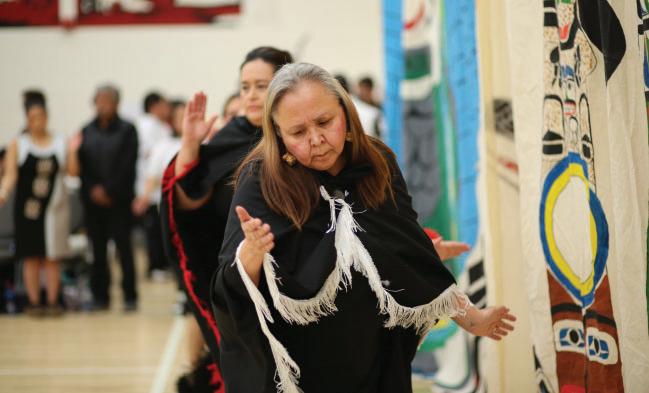
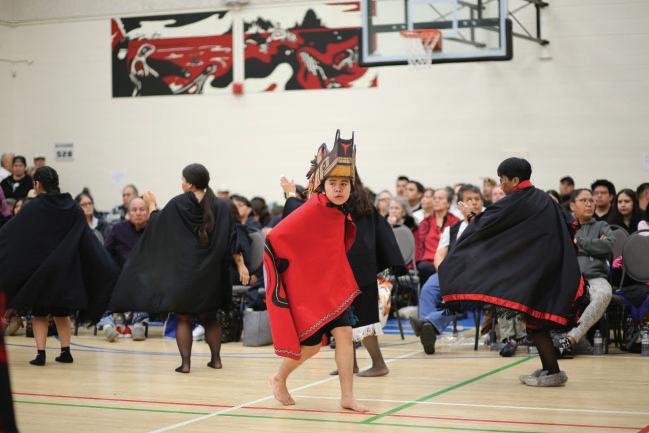
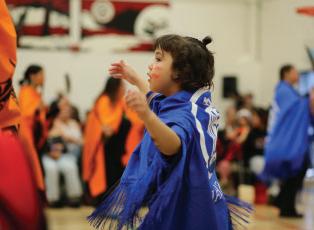
From April 17 to 19 hišumyił ƛaʔuukʷiʔatḥ - meaning ‘To Gather Tla-oqui-aht’ – was held in Tofino, culminating in the convergence of hundreds of Nuuchah-nulth-aht packing the Wickaninnish Community School gymnasium for a full day of cultural performances on Saturday, April 18. On the previous day canoes paddled across the bay from Opitsaht to land at Tin Wis, where the groups received a traditional welcome with song and the sharing of history. From 1971 to 1983 Tin Wis served as the final site of the Christie Indian Residential School, but now the Best Western Tin Wis Resort stands at the location, a Tofino hotel wholly owned by Tla-o-qui-aht.
Baby names were also given, followed by an evening of lahal, a traditional First Nations guessing game involving bones.
On the Sunday Tla-o-qui-aht members were treated to a brunch, before those who live away from their home territory said farewell.
In recent years the appetite among Tla-oqui-aht members to gather for cultural celebration has become increasingly evident from their growing participation in Hoobiyee. Each year, usually around the end of February, the Nisga’a Ts’amiks Vancouver Society hosted a large-scale event at the PNE Forum in celebration of the Nisga’a new year – a time when oolichan fish normally return to the Nass River Valley in northwestern British Columbia.
In 2025 about 200 Tla-qui-aht members came to Hoobiyee to perform, but this led the First Nation to wonder why they weren’t having such a gathering at home.
“The community members said, ‘It’s quite often that we get together for more sad occasions. It’s not often that we celebrate as just Tla-o-qui-aht people’,” said Chief Councillor Elmer Frank. “And even when we do have potlatches, they’re held by
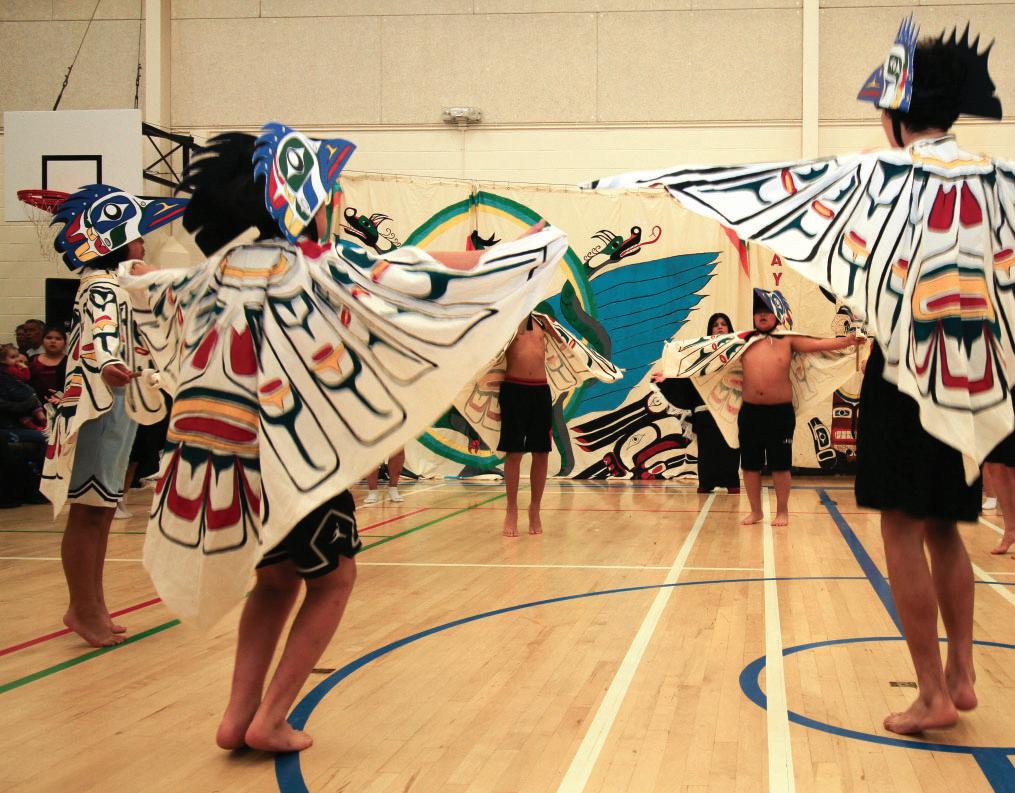
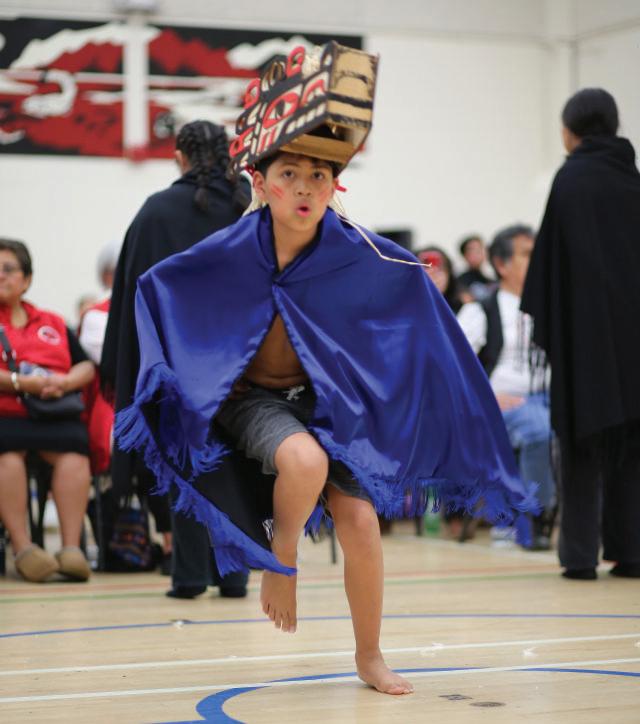
Tla-o-qui-aht members were the last group to perform at the Wickaninnish Community School on Saturday, April 18, where the e song until 11 p.m. Pictured is a performance of the Kingfisher Dance.
families, and we’re not celebrating as who we are as just 100 per cent Tla-o-qui-aht members.”
“We said, we just want to come home, we want to cancel Hoobiyee,” Frank continued. “We want to use our resources to have our own potlatch as Tla-o-qui-aht and celebrate who we are, celebrate how we became what we are today, considering all the struggles that we faced, with the 60s scoop, residential schools, the government banning of the potlatches - all of those other components that tried to keep us down as First Nations people.”
To support hišumyił ƛaʔuukʷiʔatḥ the First
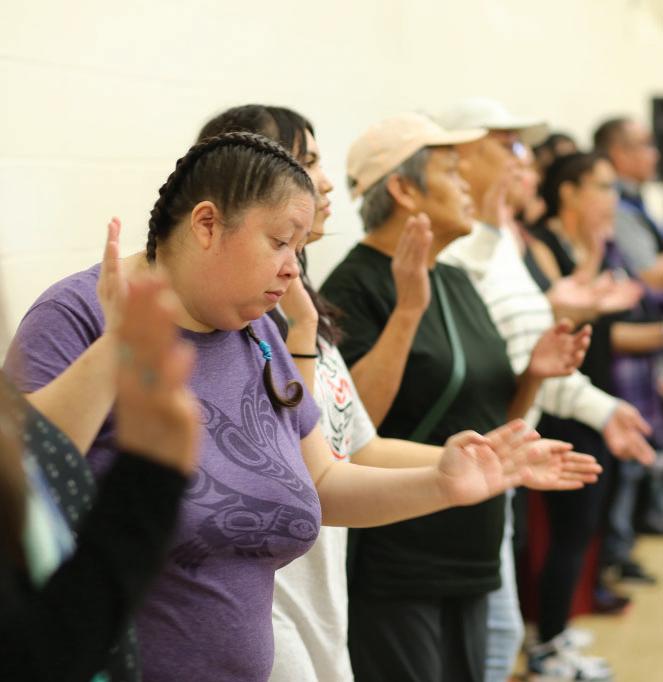
Nation drew upon funding from the Four Pillars Society, which manages a $2.8-billion settlement with the federal government. Over 300 Indigenous communities that have been directly affected by residential schools are part of this class action settlement, which distributes funding to help revive Aboriginal languages, support heritage, improve community wellness and protect culture. The Four Pillars Society defines culture as “a complete whole that includes knowledge, practices, customs, art, norms, beliefs and any other capabilities and habits that offer a sense of meaning as peoples.”
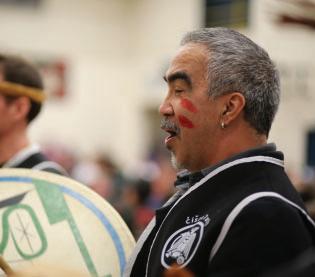
This meaning was palpable among other Nuu-chah-nulth nations present at the event to perform. Approximately 80 Tseshaht members filled the gym with song, honed by their weekly practices each Thursday at the Somass Hall. Opened last year, the Tseshaht’s new facility on their main reserve by Port Alberni enables large crowds to regularly perform, a practice that Martin Watts sees benefitting younger participants.
“It gives them an identity, who they are,” said the Tseshaht member. “For instance we had one young fellow, he’s supposed to be playing basketball
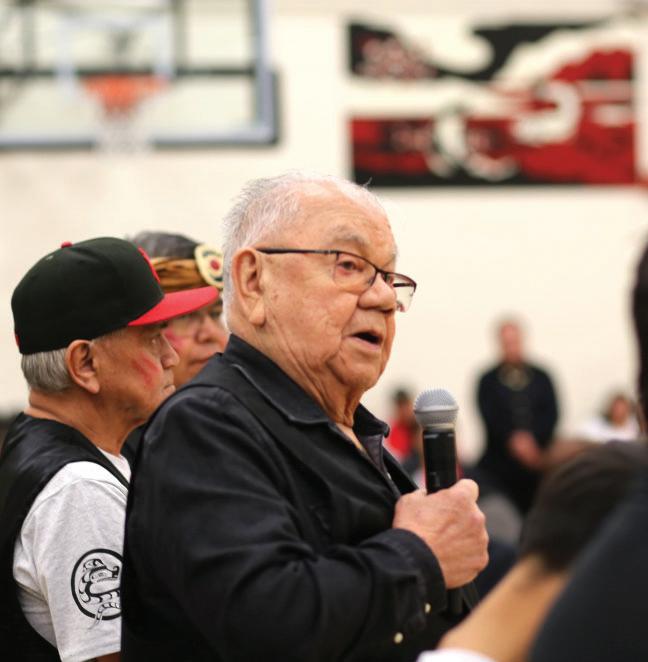
Tla-o-qui-aht Beachkeeper Barney Williams speaks to the crowd at the event, which followed traditional Nuu-chah-nulth protocols for cultural presentations. The gathering included a full day of cultural performances on Saturday, April 18.
make it an annual gathering
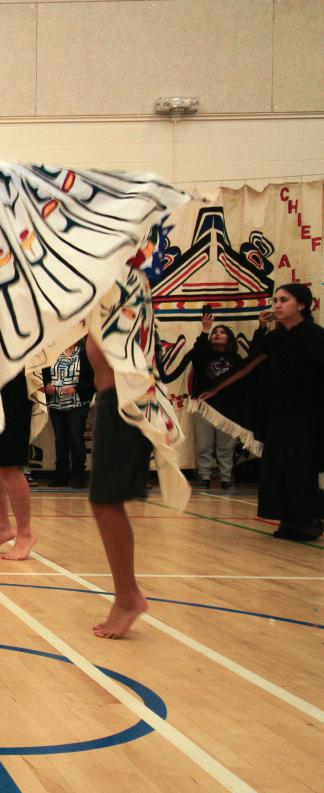
Eric Plummer photos event filled the gym with Nuu-chah-nulth
today…he chose culture over sports, even though his team is winning at home, he chose culture. It gives him the strength of growing.”
At one point amid their series of songs Tseshaht gave a formal apology to Tla-o-
qui-aht Ha’wiih for breaking traditional protocol during a performance. This was one of several such apologies from groups over the event, a sign of adherence to traditional practices that can too easily be forgotten by those caught up in modern life.
“It’s proper teachings, teachings that have been carried on for centuries,” explained Watts of what his fellow members follow.
“They lead by example, to do things the right way.”
After Tseshaht 25 Ahousaht members took the floor. Unlike Tseshaht, this group came from across the coast, with members living
in Ahousaht, Port Alberni and Victoria.
But they performed as a whole, thanks to practicing to recordings.
“We send CDs out to people so they know our songs,” said Ahousaht member Marshall Thomas.
Their last song was particularly emotional, a piece that came to Marshall’s brother Wally after they lost a cousin years ago.
“It’s a blessing and healing song,” explained Marshall. “It was gifted to my brother from the Creator when he lost an older cousin of ours in the early 2000s due to a very bad car accident.”
At the time Wally was praying for his aunt, who had just lost her son.
“I said, ‘Ask for a song that will heal you’,” recalled Marshall. “That song came to him. He wanted to be strong, he wanted his spirit to be healed.”
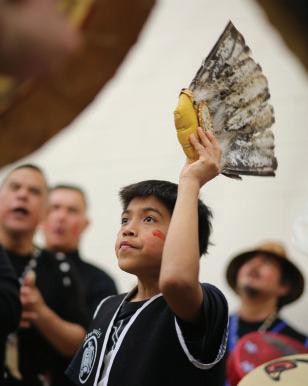
Approximately 80 Tseshaht members came to perform at the event in Tofino.
In 2026 Hoobiyee ended up not happening after the Nisga’a Ts’amiks society failed to agree on plans for the event. Now Tla-oqui-aht is looking ahead with hopes to hold their celebration each spring.
“hišumyił ƛaʔuukʷiʔatḥ is a celebration of a new season, where we started whaling in the spring, we started hunting otters and seals in the spring, we started fishing,” said Frank. “We’ll find funding for it.”
members came to perform at the gathering as well.
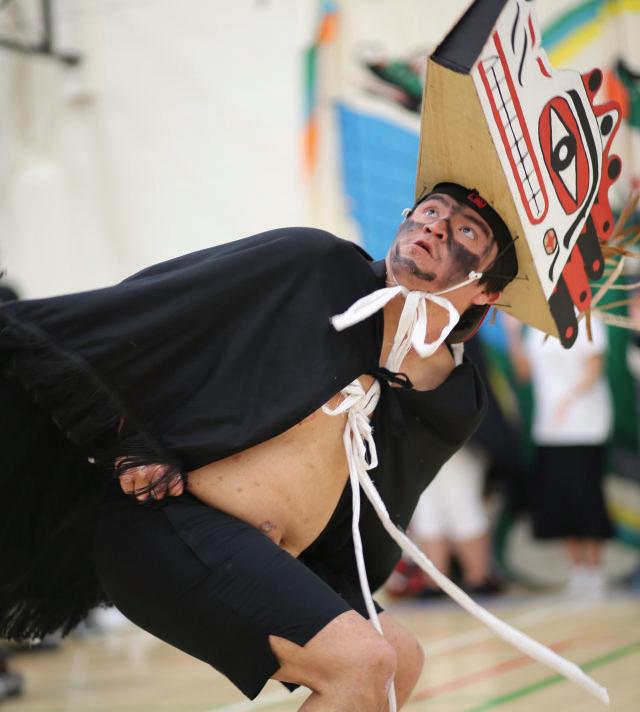
A Tla-o-qui-aht dancer performs with a hinkeets mask.
A pair of Thunderbirds pop up on Tofino’s streets
Designed by Nuu-chah-nulth artists, rainbow sidewalk and reconciliation crosswalk both feature Thunderbird
By Nora O’Malley Local Journalism Initiative Reporter
Tofino, BC – Two Indigenous Thunderbirds landed in downtown Tofino on Earth Day, April 22.
Tofino in Tla-o-qui-aht territory is now their permanent home, and they reflect the community’s history, identity and respect for one another, according to the district.
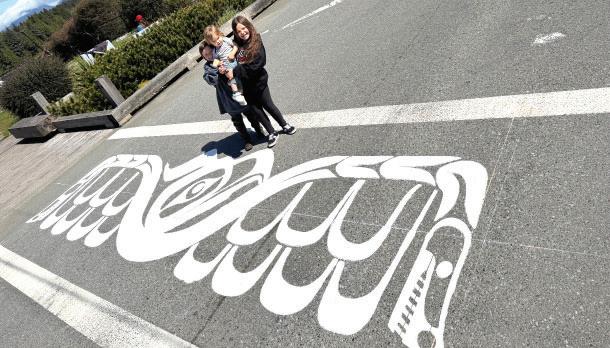
One Thunderbird can be seen emerging into a rainbow on the sidewalk in front of the Clayoquot Sound Theatre along Campbell Street, while the second Thunderbird spread its wings along the crosswalk heading to Anchor Park lookout at Third Street and Main.
“The Thunderbird is the overseer of everything,” says Nuu-chah-nulth artist Nicki Love, who created the design for the Thunderbird over the rainbow.
“I knew right away I wanted it to be a Thunderbird,” she said.
“The way it’s situated, it’s emerging. That’s why it’s not the full scale of the Thunderbird, it’s emerging. It’s literally coming into the rainbow rather than coming out. I always say I didn’t come out; I came into my authentic being,” said Love.
Hjalmer Wenstob designed the Thunderbird at the crossing to Anchor Park.
The District of Tofino is referring to the street art installation as a “reconciliation crosswalk”.
Wenstob said he created his Thunderbird without knowing Love was creating her Thunderbird, but incidentally he said he was told by an elder that artists are “always supposed to do Thunderbirds as a set so they have a partner”.
“It was just meant to be to have more Thunderbirds in the territory. It’s very fitting. Even though we didn’t plan it, I guess it was just meant to be,” he said.
Wenstob comes from Tla-o-qui-aht
First Nation on his father’s side, and his design features two Lightning Snakes on the wings of a Thunderbird. He says it’s a simplified portrayal of the story of the Great Flood that happened in the Tla-oqui-aht territory.
“This history proceeds the dark side of our recent history,” said Wenstob.
“Our people go the top of what is now called Lone Cone Mountain and this great flood comes and wipes out our village. After a time, the waters recede and we are gifted a whale and that’s what we
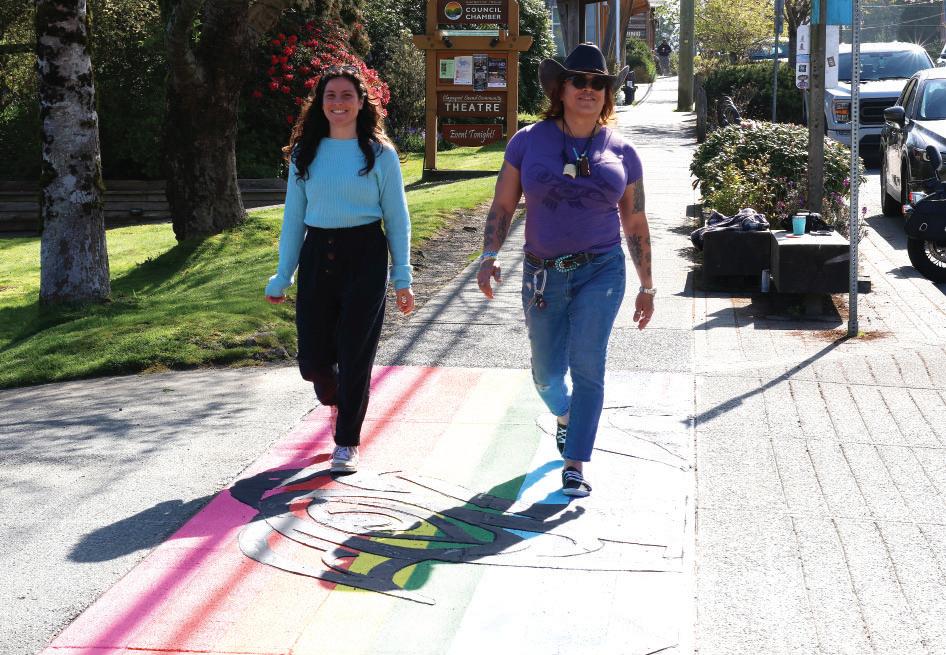
Nuu-chah-nulth artist Nicky Love (right) and District of Tofino culture and events programmer Karen Habib walk across the Thunderbird emerging into a rainbow street art installation located along Campbell Street. use to survive on. We go through a test for that to be given to us,” he shared.
The Thunderbird brings thunder and storms and it also brings lightning by throwing the Lightning Snakes like a spear, said Wenstob.
“It’s a snapshot of that story with the Thunderbird and the snakes,” said Wenstob, noting that the Lightning Snake is Tla-o-qui-aht’s crest.
District of Tofino culture and events programmer Karen Habib said the pair of Thunderbirds came to life with Resort Municipality Initiative (RMI) funding.
“The district values fostering a community that is inclusive. The two designs both serve very important purposes and represent communities that are important to Tofino. It’s a project that supports inclusion and represents the fabric of the community,” said Habib.
“We’ve had lots of really positive feedback. The community is all-in for this,” she said.
Habib went on to note that the district involved representatives from Tla-o-qui-
aht and Coast Queer Alliance throughout the design selection process.
Love says the Thunderbird coming into a rainbow is a symbol for safety.
“It’s like my prayer came alive,” said Love, who calls herself a “queer granny” to many adopted queers.
“I wanted the visibility to happen for a lot of our Nuu-chah-nulth young people who are questioning or who are queer, I wanted them to know that they have a place here. That they don’t need to go to the big cities. They can be queer in their home territories,” she said.
Phrase of the week: %uqmiss%iš%a> naaca taatnaa%is tictin%up hupcum> yuckta>h kamutquk %uu%a>ukum%ic
Pronounced ‘Ohh k miss is alth nut saw tat naa im job dids alth huupalth yuk stlth kaa mud quail ooh alth look ii alth’, it means, ‘Sports is so much fun. Lots love to watch them. Basketball, football, track and field. Play hard, have fun’ Supplied by ciisma.

Illustration by Koyah Morgan-Banke
Nora O’Malley photos
Tla-o-qui-aht children Huumis, Cinkwa and Tsaahtis stand over Tofino’s “reconciliation crosswalk”, which was designed by their dad Hjalmer Wenstob.
Uchucklesaht chief speaks at United Nations forum
‘There should be nothing about us without us,” says Cootes after participating in the UN’s Indigenous forum
By Denise Titian Ha-Shilth-Sa Reporter
New York, NY – Chief Councillor Wilfred Cootes spent a few days in the ‘Big Apple’ (New York City) to talk about health with other Indigenous leaders from around the world.
Held in late April, the event was the annual United Nations Permanent Forum on Indigenous Issues (UNPFII). The Uchucklesaht elected chief spoke about enhancing Indigenous inclusion within the “mechanisms of the UN”.
The forum brings together governments and Indigenous representatives to discuss and promote the rights of over 370 million Aboriginal people globally. The annual gathering takes place over two weeks at the United Nations headquarters in New York City.
The theme this year is “Ensuring Indigenous Peoples’ health, including in the context of conflict.” But there were other side events taking place at the forum: workshops, panel presentations or roundtable discussion organized by member states, UN entities, Indigenous Peoples’ organizations, as well as other intergovernmental organizations and NGOs that have been approved for accreditation to the 25th Session of the UNPFII.
The Government of Canada sent a delegation to the forum including the Department of Crown-Indigenous Relations along with Indigenous leaders. Minister Rebecca Alty was joined by Governor General Mary Simon, First Nations, Inuit and Métis elders, Ruth Mercredi, Minnie Grey, and Alberta Malcolm, as well as reception keynote speaker Be’sha Blondin, and Senator Margo Greenwood.
As part of the Canadian delegation, Cootes noted that the forum is a strategic platform to influence global policy, build alignment, exchange knowledge with other governments from around the world and to leverage international mechanisms to support work at home.
While there, Chief Cootes said he exchanged views on ways to enhance participation of Indigenous peoples within the mechanisms of the UN, “and in particular, to support advancing a distinct approach to recognizing the status as Indigenous Peoples within the United Nation’s system,” he explained in an email.
“Being part of these international spaces is important,” said Cootes. “The conversations and decisions made here have an impact on us at home. I believe strongly

that there should be nothing about us without us.”
In her opening statement at UNPFII 2026, Annalena Baerbock, president of the General Assembly said, “our responsibility today is not to speak about Indigenous Peoples…about you or for you, but rather to amplify your voices, to join your hands, embrace your leadership, and value your knowledge and culture, not only for your communities but for the benefit of all societies.”
For Canada, Minister Alty said the 25th
session of the Permanent Forum reminded them that Indigenous rights and health are deeply interconnected.
“Canada will keep working, at home and with our partners around the world, to advance reconciliation as we continue to implement the United Nations Declaration on the Rights of Indigenous Peoples Act and support Indigenous–led solutions, guided by the leadership of First Nations, Inuit and Métis voices,” she stated.
Alty went to say that she discussed Indigenous Peoples’ resilience in the face of climate change, and highlighted Canada’s recently launched $3.8 billion A Force of Nature strategy, which emphasizes the importance of Indigenous–led conservation in protecting lands, waters, and ways of life.
“Canada also hosted an event that looked at how important the United Nations Declaration on the Rights of Indigenous Peoples is for protecting health,” Alty stated. “Canada was clear throughout: Indigenous rights are fundamental to achieving improved health outcomes and meaningful climate action, and these solutions must be Indigenous led.”
For Chief Cootes, highlights from the forum included a breakfast with Indigenous leaders from across Canada, a meeting with Ambassador Mohamed, Australia’s Ambassador for First Nations People, and a strategic dialogue chaired by Senator Margo Greenwood.
UNPFII promotes respect for and full
application of the provisions of the UN Declaration on the Rights of Indigenous Peoples and follows up on the effectiveness of this declaration.
Established in 2000, the UN Permanent Forum on Indigenous Issues is a highlevel advisory body to the UN Economic and Social Council. They are part of the UN’s Division for Inclusive Social Development (DISD), which is part of the UN’s Department of Economic and Social Affairs (DESA). Each part works to advance DISD’s global mandates “on groups of people that have traditionally been left behind” (Indigenous peoples, person with disabilities, older persons and youth, among others).
These groups work to eradicate poverty and reduce inequities around the world. Among their goals is to empower Indigenous peoples to strengthen their identity and determine their lives.
UNPFII’s forum serves as a platform for Indigenous Peoples to discuss issues affecting their communities. It provides a space for Indigenous Peoples to engage with member states, civil society organizations, and other Aboriginal organizations from around the world to exchange views and best practices on how to promote and protect the rights of Indigenous Peoples. Part of the purpose of these annual meetings is to bring together leaders from around the world to advance the implementation of the United Nations Declaration on the Rights of Indigenous Peoples.

Eric Plummer photo
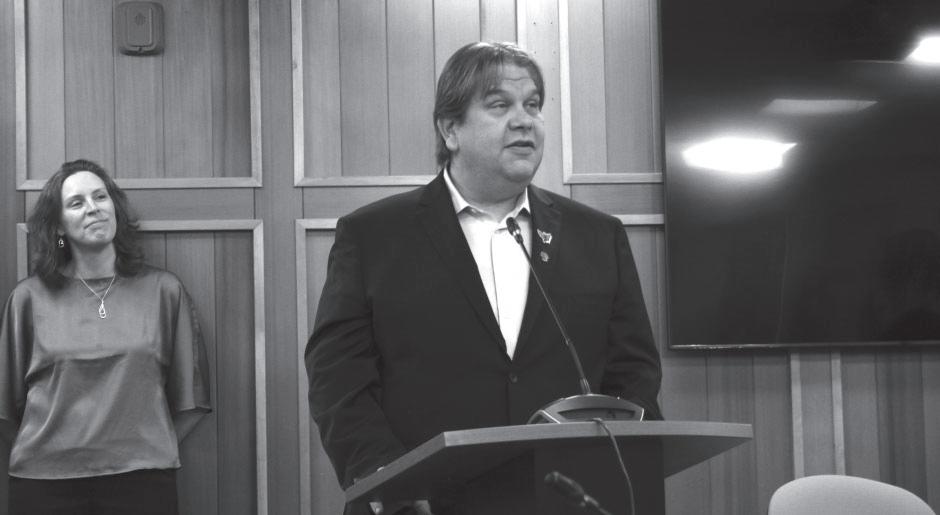
In late April Uchucklesaht Chief Councillor Wilfred Cootes, who is also president of the Maa-nulth Treaty Society, spoke in New York during a United Nations forum on Indigenous issues. Pictured is Cootes speaking at the Alberni-Clayoquot Regional District office in Port Alberni.
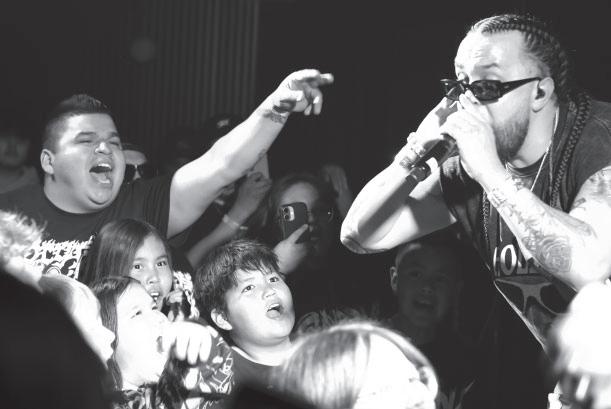
Snotty Nose Rez Kids lit up Tofino’s Clayoquot Sound Theatre on April 23 in front of a sold-out crowd. The Haisla Nation hip-hop duo won Rap Album/EP of the Year at the 2025 Juno Awards for their sixth studio album Red Future. They are on a West Coast Tour for the next two weeks, with stops in Cumberland, Port Alberni, Whitehorse, Dawson City, Salt Spring Island and Campbell River.
Rebecca Alty
President’s Message
Greetings Everyone. Hoping you are all good and enjoying spring as we see a return to flowers, buds and leaves and warmer temperatures. The signs of new growth is all around us and hoping for good things in all our communities.
As always, it has been a busy month.
The B.C. government and their move to amend the Declaration on the Rights of Indigenous Peoples Act (DRIPA) without First Nations’ free, prior and informed consent or even consultation and collaboration took up a lot of my time.
There was an initial meeting with the Attorney General and minister of Indigenous Relations and Reconciliation introducing their concept of amending DRIPA. Then there were two one-and-ahalf-hour meetings with the premier. As you can imagine, in that short time period not every chief or leader on the call was able to speak. Not one chief spoke in favour of the proposed amendments to DRIPA. Everyone knows if the act was amended to delete certain key provisions or to suspend them, it would gut the purpose and intent of the act. I also attended a couple of all chief meetings where we talked about what our directions should be to stop the amendments. The First Nations Summit, the B.C. Assembly of First Nations and the Union of B.C. Indian Chiefs had all passed motions against any amendments to DRIPA.
DRIPA is based on international human rights laws and so the effect of what the premier was trying to do was to suspend our human rights. Doing this in 2026 … this is not the dark ages. Other times when human rights were suspended include things like the residential school system and much more.
UNDRIP is a tool that we can use and because B.C. and Canada have both passed laws on it, it becomes a more powerful tool as B.C. and Canada have to live up to the commitments in it. What B.C. is most afraid of is that DRIPA calls for the provincial laws to be aligned with UNDRIP. Several acts have been changed and more are being worked on, such as the Heritage Conservation Act. The province feels there will be a lot of lawsuits from First Nations challenging all the laws in B.C. The premier said this was not his intent and that work would continue even with the amendment, but there would be no accountability on them to continue the work if it wasn’t in law. And how much faith can we have in the premier when he was trying to do this unilaterally without working properly with us. The First Nations Leadership Council issued a statement on April 19 to all MLAs asking them not to vote in favour of the amendments. First reading was to be on Monday, April 20. Finally, the premier and leadership council met late afternoon on April 19 and the premier agreed to six months (until the next legislative sitting).
B.C. and First Nations will work to find agreeable solutions to what B.C. sees as a big problem with DRIPA.
I did a couple of media interviews on the Salmon Allocation Policy. As you recall, the Court of Appeal in the Ahousaht case said that Canada had to revise their policy to include First Nation commercial fishing at the same level as our food, social and ceremonial fish (FSC). The Council of Ha’wiih asked me to continue to advocate in the media for a fair policy that followed the ruling of the court case. It is our understanding that all the engagements have ended and several committees have recommended what the policy should say. It is now up to the
minister to approve a policy. We hope she will do it soon. We understand from DFO staff that it won’t be put in place until next fishing season. This is totally unacceptable and unreasonable. The order from the court to revise the policy came five years ago. We are sending a letter to the minister of Fisheries and Oceans Canada to implement the policy right away, as the uncertainty of no updated policy has created a lot of negative reactions from the recreation sector and that needs to stop. First Nations should be able to exercise their Aboriginal right to a viable fishery and be provided an allocation that allows for that.
I also did an interview on the 10-year anniversary since B.C. called an emergency on the toxic drug crisis. Ten years and not enough done to combat this emergency. We as Nuu-chah-nulth have put together strategies on what we could do, but both federal and provincial governments say they have no money to deal with the kind of capacity and resources we need. Not sure what they think an emergency is if they cannot put money towards it.
I attended the ground breaking of the new Indigenous Community Health Centre beside the old Woodward’s store in Port Alberni. It is a community partnership with the Friendship Center, Hupacasath First Nation, Tseshaht First Nation, and other groups. They are fulfilling a vision to provide health services in the Alberni Valley that is culturally sensitive and trauma informed. Many groups attended the opening and good words were spoken and it was a great event as we toured the building and saw what its potential is.
While I recognize that this a mother’s pride speaking and I normally don’t mention my personal life in my column, my daughter Alana Sayers completed her doctoral degree in Philosophy at the University of Victoria in April. She is now Dr. Sayers. She was in the English Department with a focus on Indigenous literature. She had to defend her dissertation to a committee of five professors and did an awesome job of it. She suffered a lot of racism and negativity in her time there, but she stuck with it and overcame many obstacles, so it is well deserved. She, like our other university graduates, are role models for our youth to see and look up to. We are coming up to NTC grad and scholarships on June 5th and 6th to celebrate all our grads and their accomplishments who work so hard to get their degrees and diplomas.
- Cloy-e-iis, Judith Sayers

NCN Mental Health Counselling
Tuesdays and Thursdays 8:30am – 4:30pm 4841 Redford Street, Port Alberni
NCN Mental Health Services – DropIn Counselling with Margaret Bird, Registered Clinical Counsellor and Play Therapist. For on and off reserve members of all ages of the Nuu-chahnulth Tribal Council. Call (250) 724-3939 to book your appointment.

&Community Beyond



Stirring up Connections
Every Friday 10am – 12:30pm
NTC Kitchen – 4841 Redford Street.
A warm and welcoming cooking group designed just for parents! Each session will feature: Easy, budget-friendly recipes; Tips for cooking with kids and picky eaters; Space to connect with other parents over food and family life. Contact 250-724-3939 for questions.

25 Years Ago in Ha-Shilth-Sa
Vol. 28 – No. 9 May 10, 2001
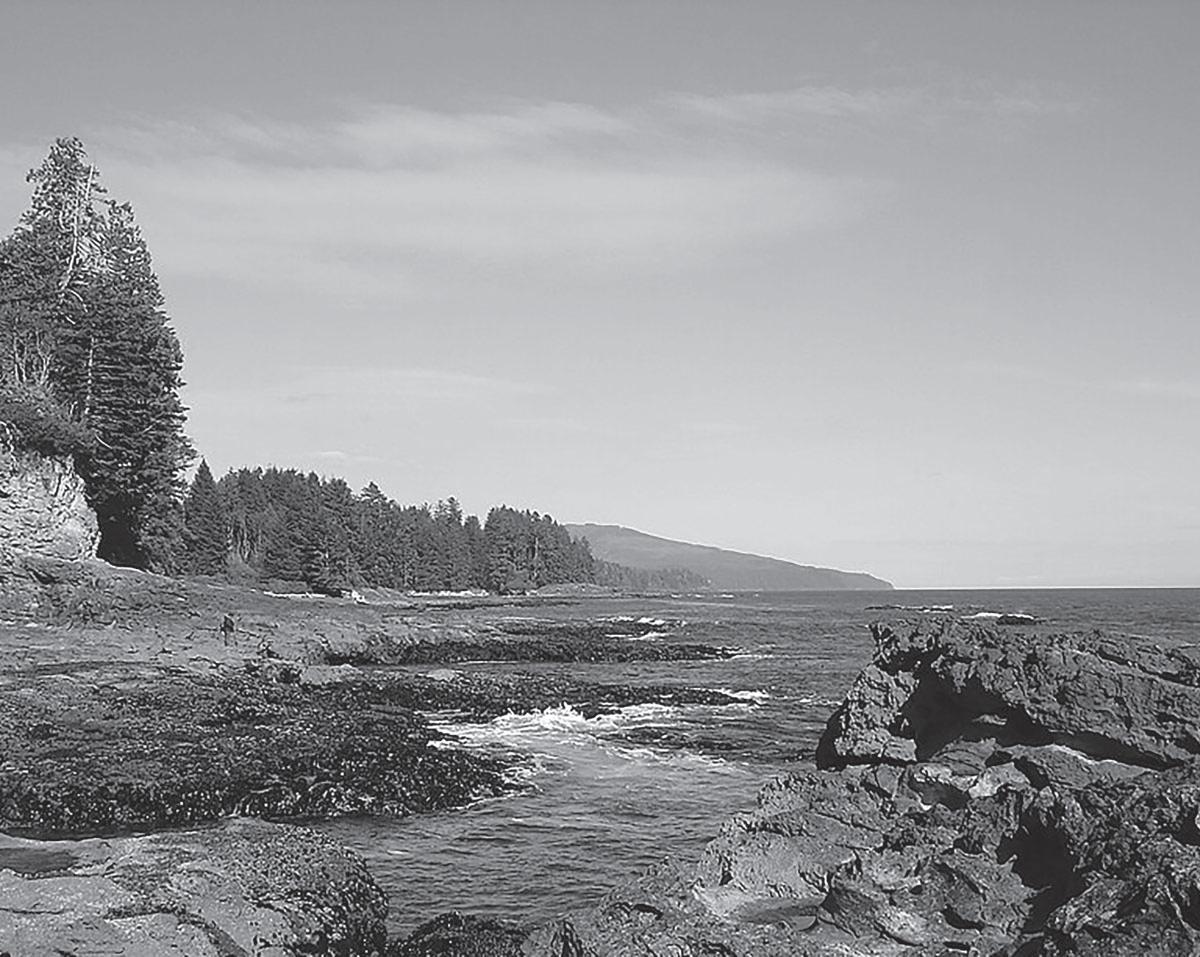
The Pacheedaht First Nation voted in favour of ratifying a Specific Claim Settlement that corrected a survey error of a reserve made 109 years previously. The claim for land and compensation for lost income involved approximately acres acres of prime ocean beach front.
Elected Chief Councillor Marvin McClurg stated that “I’m pleased that the majority of band members voted in favour of the deal and feel this finally makes a wrong right.”
The Chief emphasized that the greatest
benefit may come much later and that the consolidation of the reserves on the beach front will enable the Pacheedaht to find substantial economic opportunities for the site at the edge of the Pacific Rim National Park West Coast Trail.
“With the addition of this land connecting our two existing reserves, we effectively control the majority of beach front property on Port San Juan which are considered the most accessible and economically viable lands in the area,” said Chief McClurg.
Pacheedaht settles Specific Claim
Employment Opportunities
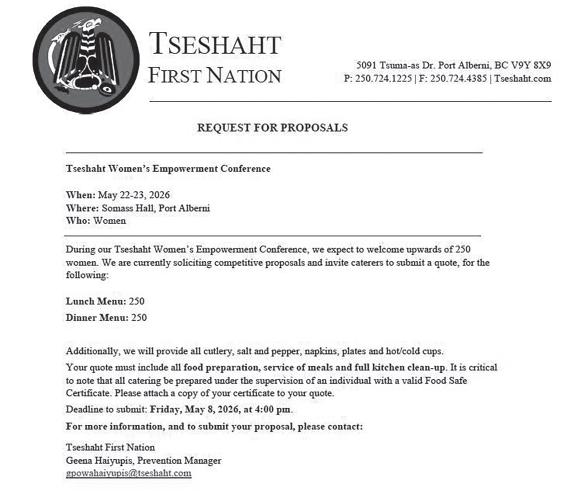
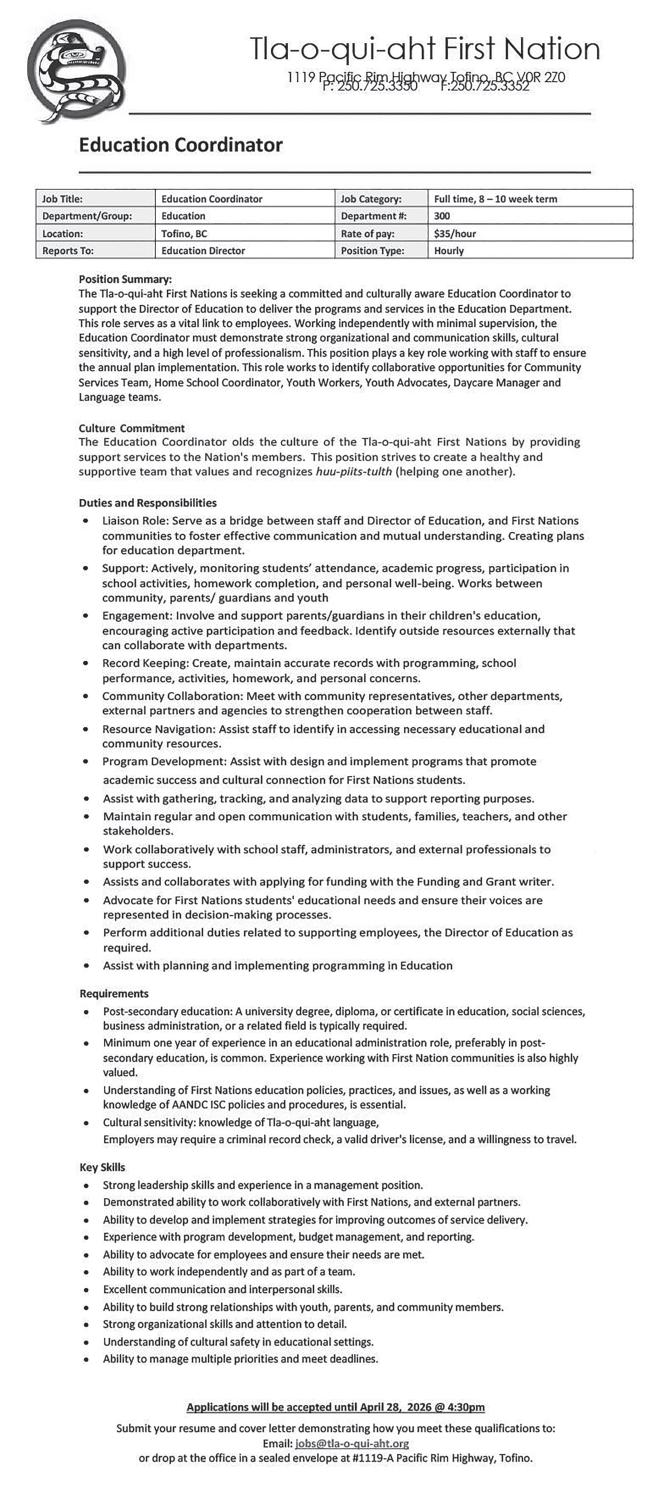

Port Alberni Friendship Centre Volunteers Needed
Need work experience? The Port Alberni Friendship Centre is looking for interested applicants for various positions. Call 250-723-8281
Basketball tournament brings ‘May Madness’
76 teams hit the Port Alberni courts to play in the third annual Tseshaht Lightning Open Basketball Tournament
By Nora O’Malley Local Journalism Initiative Reporter
Port Alberni, BC – One month after the passing of his brother Yemchiss, Nasimius Ross found his way to the Alberni Athletic Hall to catch the finals of the Con “Nupps” Charleson Memorial Basketball Tournament.
Ross received warm hugs from everyone who crossed his path, April 19 was his birthday after all, a special day he serendipitously shares with Nupps.
For a moment Ross thought he would cancel the third annual Tseshaht Lightning Open Basketball Tournament, scheduled for May 15-18. But he could see his brother wrinkling his nose at the very thought, so he forged on despite his grief. Yemchiss (Darrell Roger Ross Jr.) passed on March 18, 2026 after a long battle with necrotizing pancreatitis.
“My brother almost passed away 15 years ago, and he didn’t take a day for granted. He was always out enjoying life. He went out and did it; he went out and got it. He faced some challenges, but he didn’t let that hold him back,” Ross shared.
“He kept trying to go forward in a positive way and that’s the legacy he leaves within me. I would be disrespecting him if I didn’t go ahead with this,” he said.
This year, 76 teams are entered in the Tseshaht Lightning tournament. Ross said he had 136 teams reach out from as far as New Mexico, U.S.A. and Newfoundland on the east coast of Canada. There will be eight divisions played across six gyms, including: master’s men, senior men/ women, U17 boys/girls, U13 boys/girls and U10 exhibition games.
Tseshaht Lightning is also hosting a youth dance on Sunday, May 17 at Glenwood Sports Centre and an evening of music for the adults on Saturday, May 16 at the KCC concert hall in partnership with Five Acre Co.
“It’s what we call ḥačatak. It means everybody. It’s just a collaborative of Indigenous and non-Indigenous artists coming together to create some good energy,” said Ross.
“That’s what this tournament is about; just coming together and having a good time and letting your hair down and just connecting,” he continued.
The May 16 concert features DJ Handsome Tiger and KOKUM, with special guest DBL-G.
Once again, Ross says a community seafood feast for the elders will take place over the May long weekend hoopfest.
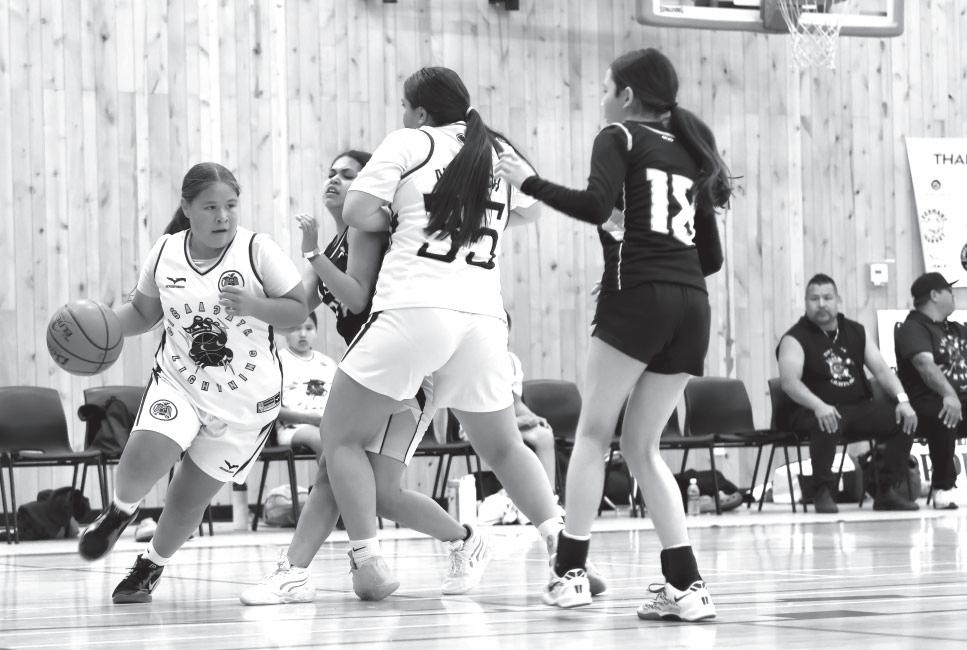
“This tournament is different because it invests back into the people,” said Ross. About 80 per cent of the teams registered in Tseshaht’s basketball tournament are Nuu-chah-nulth.
“I think Port is the Nuu-chah-nulth capital. It’s very central to all the coastals. It’s an hour out and you have Nanaimo and Victoria that aren’t too far,” said Ross.
Coastal teams travel from the central Nuu-chah-nulth region (Ahousaht, Hesquiaht, Tla-o-qui-aht, Toquaht, and Yuułuʔiłʔatḥ) and the northern region (Ehattesaht, Ka:’yu:’k’t’h’/ Che:k’tles7et’h’, Mowachaht/Muchalaht, and Nuchatlaht).
“The Coastals are the ones that don’t get a lot of opportunity and attention because they are so secluded. I think that’s why they are so supportive because it’s an opportunity for them to get their kids out and I think that says a lot. I think our services should really look at that,” Ross continued.
There are 20 teams entered in the senior men’s division this year, including Tom Campbell’s indestructible pick-up squad.
For the past two years running Tom Campbell’s team has yet to lose a game in the Tseshaht Lightning tournament.
“We have some big boys again,” said
Campbell. “Our plan is to play on the final afternoon.”
Campbell, a veteran Ahousaht coach, says he won’t know the final roster until he gets to the gym, but says it’ll be a mix of Indigenous and non-Indigenous players.
“Last year we had one kid from VIU, Ryan. He was the MVP. I don’t know if he’ll be playing this year,” said Campbell.
“I like to have kids not only from Ahousaht but from all over to show them what hard work will do for you. (Ryan) was just amazing. He’s a top-notch ball player. Even in his off-season, he was telling me he was going to the gym twice a week,” said Campbell.
He says open tournaments are “always
competition”.
“It brings out better and tougher competition when you open it up,” said Campbell.
Games start on Friday, May 15. Finals are on Monday, May 18 at the Alberni Athletic Hall. Admission is $10 per game or $25 for an all-facility weekend access pass. For full tournament schedule, visit the Facebook page: Tseshaht Lighting Basketball Tournament.
“Come out even if it’s not for basketball. Come out to see family and have some fun,” said Ross.
The Ha-Shilth-Sa will be broadcasting the action live from the Alberni Athletic Hall. Visit hashilthsa.com to watch.

Nora O’Malley photos
Tseshaht Lightning is hosting its third annual open basketball tournament on May 15-18 in Port Alberni.
Elders can once again relish a community seafood feast over the May Long hoopfest at the Alberni Athletic Hall.
great
Con ‘Nupps’ Charleson legacy lives on with tourney
Invitational Port Alberni tournament saw 40 all-native teams from around B.C. play in four gyms April 16 to 19
By Nora O’Malley Local Journalism Initiative Reporter
Port Alberni, BC – Hesquiaht Braves basketball legend Constant Napolean Charleson, or “Nupps”, was honoured throughout an all-native invitational basketball tournament hosted by his family on April 16 to 19 in Port Alberni.
Charleson was player, coach, manager and a strong believer in all-native sports. Before he passed away in September 2022, he was working towards reviving the annual Hesquiaht tournament that faded when the pandemic paused sporting events in 2020.
“He wanted to focus on making it all native just so we can have a place for our kids, and they can get their chance,” said his son Jason.
The Con “Nupps” Charleson Memorial Invitational Tournament saw about 500 First Nations athletes from 40 B.C. teams play across four gyms in seven divisions: U13 girls and boys, U17 girls and boys, men’s, women’s and masters. There was also a co-ed U10 exhibition game.
“He would have been so happy,” said Jason, who travelled from the Sunshine Coast to take part in the hoops weekend.
“There is so much I miss about him. Just his love and caring he had from each and every one of us right from his clan to his grandchildren. He was very supportive of school and basketball,” he said.
Charleson had seven brothers and seven sisters: late Christopher Sr., late Patrick Sr., late Francis, Joseph, David, Darryl, Tony, Marge, late Eilleen, Linda, Mamie Jr., Emma, Corrine and late Colline.
“He taught us a lot. He was a really great coach. We won a lot of games under him. There used to be seven of us brothers on one team,” said brother Darryl. “I sure miss him now. He was somebody to a lot of people, especially the basketball community, really looked up to.”
Charleson and all his siblings went to residential school.
“The whole family. Every child went to residential. We spent a lot of time away from our parents when we were children,” said Darryl.
“I went for 12 years,” said older sister Marge. “I was in Christie for eight years and then I went to St. Mary’s Mission for four years. Out of a whole year we were only home for like three weeks.”
Darryl said Nupps fell in love with basketball early.
“Up in Hot Springs there was an abandoned house on stilts, and they put basketball hoops in there. It was just a small little house, but that was the start,” said Darryl.
Nupps is survived by his father Pat
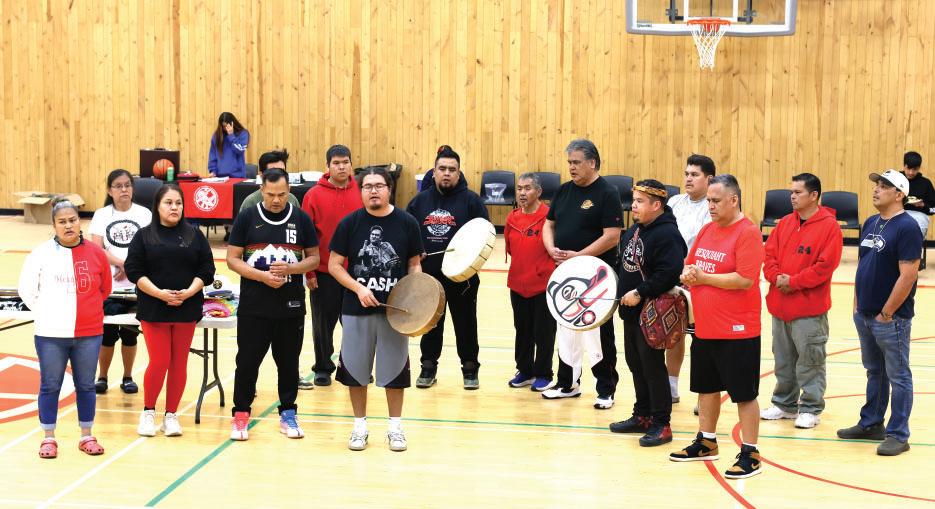
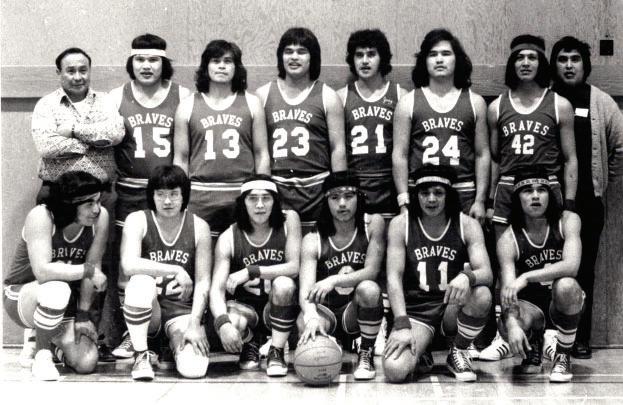
Charleson Sr., who spent the weekend cheering for his family in a section of the Alberni Athletic Hall known as “Charleson’s Corner”.
“This is great. I’m glad to see so many people show their love of my son,” said Charleson Sr.
Nupps had six children with first wife Arlene Ganske (Connie, Anita, Jason, Joy, Lila, and Nicole), one child with Teresa Hansen (late Conn), one child with Julia Joseph (Tracy) and with Frieda Joseph he had five children (Henry, Michelle, Fran, Daniel, and late Raianne).
Jason told the Ha-Shilth-Sa that there are over 40 grandchildren in the Nupps Clan, and if you add the great grandchildren, there are more.

“It is a legacy left by him. So many of us have played basketball in each of our families,” said Jason.
“Thank you to everyone that came to support and honour my father. It meant the world to us. We are all filled with pride after it’s all said and done with the turnout,” he said.
‘Do it for Grandpa No. 24’
Charleson was known for wearing the Hesquiaht Braves jersey No. 24. Red and white tournament sweaters featured the No. 24 and kids ran around the court with posters that read, ‘Do it for Grandpa No. 24’.
When Jason first started playing for the Hesquiaht Braves, he says his dad passed on the No. 24 jersey to him and he took No. 34.
That tradition was carried on in this
tournament as the hosting female Nupps Clan team saw Anita Charleson-Touchie take to the court in the No. 34 jersey with her daughter Jada sporting No. 24.
Jason’s daughter Azayliah played in the U13 division wearing a No. 24 Ravens jersey and his son Breven would also wear No. 24 when he played on the junior team.
‘Wolf comes from the killer whale’
The Charleson family crest is an orca transforming into a wolf known as the “kakawin cheelth”, according to Jason.
“It’s the transformation from whale to wolf. It is said that the wolf comes from the killer whale,” he said.
Tournament t-shirts featured the orca and wolf, and Nuu-chah-nulth carver Vince Smith from Zeballos created a stunning cedar trophy with the crest for champion teams to hoist.
Jason shared a story his father told him a few years ago, before he passed. It involved a Mowachaht elder and biologist observing something remarkable on a beach.
“They saw a killer whale come onto the beach, you know how they can beach themselves, and when it beached itself, a white wolf ran into the forest. That biologist said, ‘I know what I saw, but if I was to ever tell people what I saw, people would think I’m crazy’.”
Charleson would have celebrated 74 years around the sun on April 19. Looking forward to 2027, the Con “Nupps” Charleson Memorial Invitational will transform into the Con “Nupps” Legacy Tournament. The family is hoping to make it an annual event.
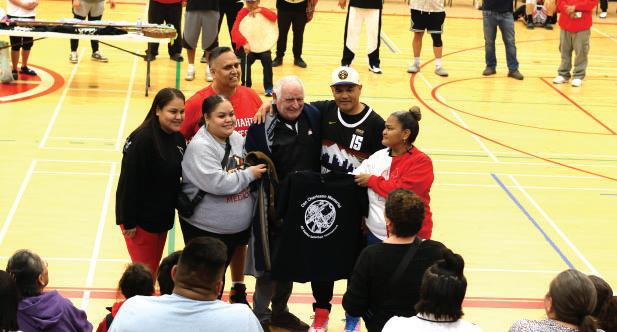
Nora O’Malley photos
The Charleson Family had a moment of silence during the tournament to honour Nuu-chah-nulth basketball legend Con Charleson.
Con Charleson wears jersey No.23 in this Ha-Shilth-Sa archives photo from the 1970s.
Nupps Clan player Jada Charleson-Touchie (24) puts one up for Grandpa Nupps during the women’s final of the Con “Nupps” Charleson Memorial Invitational Tournament in Port Alberni on April 19.
Jason Charleson, centre right, puts his arm around referee Luy Adamo during the Nupps memorial tournament. The Charleson family honoured Adamo for his service.