INTERESTING NEWS
It’s a win! Nuchatlaht First Nation granted full title
Historic B.C. Court of Appeal ruling grants small First
By Denise Titian Ha-Shilth-Sa Reporter
Vancouver, BC – A panel of three B.C. Supreme Court judges has ruled in favour of the Nuchatlaht First Nation, granting them full title over their entire 210 square kilometer land claim on Nootka Island –and the decision was unanimous.
“We are celebrating this victory and looking ahead to our future,” stated Tyee Ha’wilh Jordan Michael upon hearing the news. “This recognition gives us a foundation to help our members, steward our territory, and drive our own successes.”
“It was indeed a historic day for Nuchatlaht Tyee Ha’wilth (Chief) Jordan Michael, and the peoples of the Nuchatlaht Nation when their long-fought legal battle for their lands was ruled in their favour in the Court of Appeal. The Nuu-chah-nulth Tribal Council congratulates the Nuchatlaht on this huge win in the courts,” said Nuu-chah-nulth Tribal Council President Judith Sayers in a written statement.
“The Appeal decision is the first time a First Nation has been awarded its entire claim area,” said Owen Leggatt-Stewart of Woodward and Company LLP, the legal firm representing Nuchatlaht First Nation.
The decision came down from the B.C. Court of Appeal on April 2, 2026. In it, the court determined that Justice Elliot Myers erred in an earlier case, when he ruled that Nuchatlaht had proven title over a very small sliver of their claim, about 11 kilometres along the shoreline, going no deeper than 100 meters above sea level.
The Nuchatlaht title case has been weaving its way through the court system for nearly a decade, beginning in 2017. The small nation, numbering about 200 members at that time, were frustrated at the lack of progress and the financial cost at treaty table. They turned to the court system following the success of the 2014 Tsilhqot’in decision.
In that historic case, the Supreme Court of Canada granted a declaration of Aboriginal title to over 1,700 square kilometres of land to the Tsilhqot’in Nation. The court ruled that title is not limited to specific, intensively occupied sites, like villages, but can cover broader territories regularly used for hunting, fishing, and trapping.
The Tsilhqot’in Nation was represented by a legal team from Woodward and Company LLP who focus exclusively on serving Indigenous governments, businesses and organizations.
In May 2023, the B.C. Supreme Court
Nation title to entire land claim for north Nootka Island
Since they
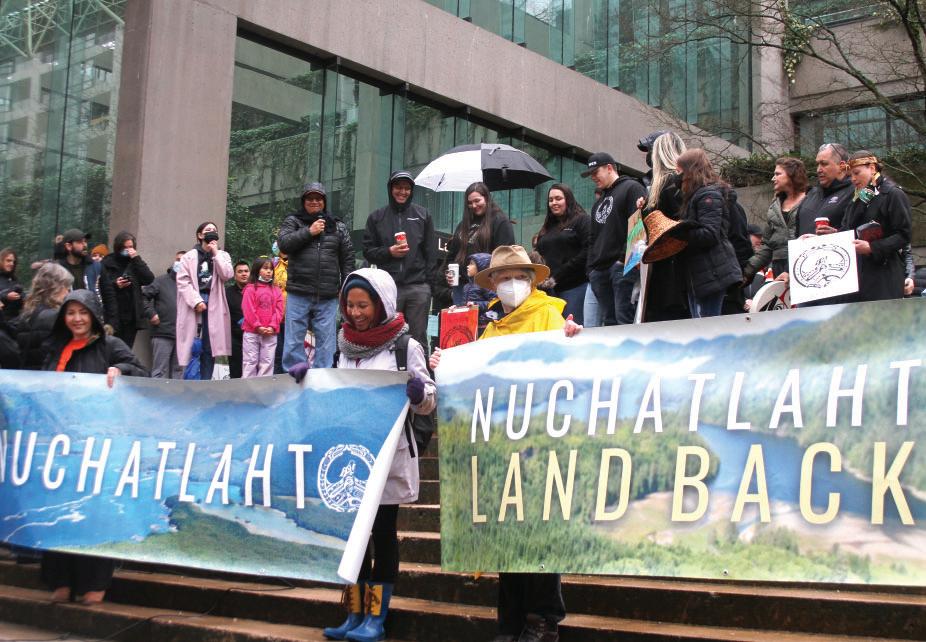
Nootka Island. Now the small First Nation is celebrating a victory, with a recent decision from the B.C. Court of Appeal that has granted them full title over the claim area. Pictured are Nuchatlaht members and supporters on the steps of the B.C. Supreme Court in Vancouver during proceedings in 2022.
ruled in Nuchatlaht’s favor as Justice Elliott Myers found that the small First Nation satisfied the legal test to be granted title in their territory on Nootka Island.
But they were not granted Aboriginal title over the entire 210 square kilometre claim on northern Nootka Island. Instead, the nation was granted a strip of shoreline where villages once stood. It was believed by newcomers at the time that the rugged terrain and dense forests would have prevented the Nuchatlaht from going inland.
But there were thousands of silent witnesses, some nearly 500 years old, in the form of culturally modified trees and stumps (CMT’s) that testified to the Nuchatlaht’s use of their inland forest resources.
An court appeal was launched by Nuchatlaht in the fall of 2025 where the panel of judges heard four days of testimony in Vancouver.
On April 2, 2026, news came that the Nuchatlaht First Nation won a landmark B.C. Court of Appeal case, securing Aboriginal title over their entire 210-squarekilometre claim on Nootka Island.
“This is a big decision, for both lawyers
and First Nations,” said Stewart of the Nuchatlaht’s legal team. “It recognizes that Aboriginal title is territorial, and indicates the evidence required to prove it. The Appeal decision is the first time a First Nation has been awarded its entire claim area. Nuchatlaht’s victory was built upon their trial, the fastest Aboriginal title trial since the 1970s. Nuchatlaht have shown great leadership throughout the process.”
Judith Sayers, NTC President says she feels good about the decision and is very excited for the Nuchatlaht victory.
“(It’s) very satisfying to see a Ha’wilth’s territory recognized after so many years of struggling for this recognition,” she stated. “Also, I know they have a lot of work ahead of them restoring their lands after the ravages of forestry development and know they will work with the land to their standards as they steward the land.”
It has been reported that the Nuchatlaht Nation turned to the courts so that they can regain control of their territories and properly steward their lands, which have been heavily impacted by commercial forestry. The court also found that the B.C. Forest Act and B.C. Parks Act do not
apply to these Aboriginal title lands.
The court recognized that the Nuchatlaht had exclusively occupied and used this territory for hunting, gathering, and fishing. The ruling acknowledges evidence of thousands of “culturally modified trees” as proof of long-standing occupation.
Looking ahead, the First Nation plans to rehabilitate forests in the claim area to strengthen salmon habitat.
“We are ocean people,” said Councillor Archie Little. “A priority is restoring wild salmon habitat in our waters.”
The Aboriginal title also presents potential for housing, and the Nuchatlaht are developing plans for members.
“It’ll be a great thing for our small community being able to provide for our community members,” said Melissa Jack, Nuchatlaht councillor. “We were forced to move from Nootka Island in the 1980s, and one day we would like to be able to live there again.”
The provincial government has stated that it is reviewing the decision and will explore its legal options, including a potential appeal to the Supreme of Canada.
Eric Plummer photo
first filed a claim to the B.C. Supreme Court in early 2017, the Nuchatlaht have been fighting for Aboriginal title over their territory on northern

Maa-nulth Final Agreement turns 15-years-old
Treaty between five Nuu-chah-nulth nations, B.C. & feds remains one of the few such modern-day agreements
By Roniya Sahin Ha-Shilth-Sa Contributor
The historic Maa-nulth treaty was signed 15 years ago this April 1, one of the few modern-day formal agreements between First Nations and the federal and provincial governments that sets the tenets of self-governance.
Five Nuu-chah-nulth First Nations celebrated their 15th anniversary of the historic Maa-nulth Final Agreement signing on April 1. The signing ratified the Toquaht, Ka:’yu:’k’t’h’/ Che:k’tles7et’h’ (Kyuquot/Checklesaht), Huu-ay-aht, Yuułuʔiłʔatḥ (Ucluelet) and Uchucklesaht First Nations as autonomous First Nations belonging to one treaty, and effectively removed them from the Indian Act.
“In 15 years of treaty implementation, our governments and culture have strengthened, we are building lasting economies empowered by our treaty, a living document that will continue to evolve alongside our peoples for generations to come,” said Maa-nulth Treaty Society President Wilfred Cootes, “hišḥukʷiš cawaak — everything is connected. Our work continues.”
The BC Treaty Commission (BCTC) took to Facebook to also congratulate the 15th anniversary of the Maa-nulth treaty signing, stating the commission “celebrate[s] the many successes and achievements of the Maa-nulth Treaty Partners.”
Negotiations for the Maa-nulth Treaty began around 15 years before its actual implementation, years of efforts between Nuu-chah-nulth First Nations, the Province of British Columbia, and the Government of Canada.
It wasn’t until 1982 when section 35 declared that “the existing aboriginal and treaty rights of the aboriginal peoples
Ha-Shilth-Sa
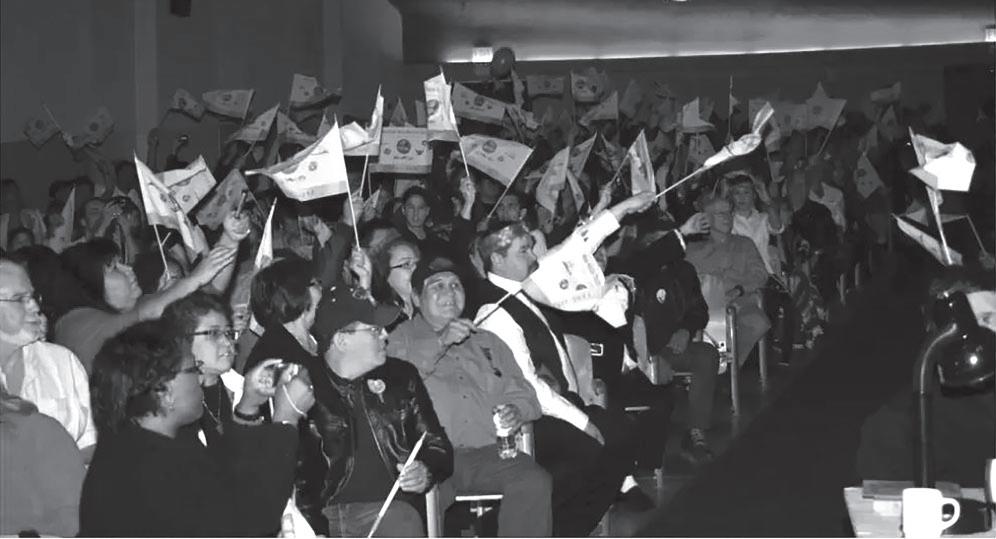
Nuu-chah-nulth-aht celebrate in 2011 when the Maa-nulth Final Agreement was implemented. The modern-day treaty was signed April 1, 2011 between the province, federal government and the Toquaht, Ka:’yu:’k’t’h’/ Che:k’tles7et’h’ (Kyuquot/ Checklesaht), Huu-ay-aht, Yuułuʔił
at
of Canada” was added to the Canadian Constitution, affirming treaty rights under the national law. The Maa-nulth Final Agreement was the first modern treaty recognized on Vancouver Island, 29 years after section 35 was added to the Canadian Constitution.
Since then, the treaty nations have been leading an example of what it means to be self-governing.
Reconciliation
The Maa-nulth treaty focuses on strengthening the five nations’ autonomy, self-governance, cultures, economies and communities. Each First Nation exercises their right to govern and regulate their own treaty according to their communi-
(Ucluelet) and Uchucklesaht First Nations. ties’ unique needs and concerns. Overarching regulations include managing land use and natural resources, defining and running community-led leadership, as well as participating in conservation goals.
The Indian Act has subjugated First Nations people to its assimilationist policies since its implementation 150 years ago on April 12, 1876. Various amendments have been made to the Indian Act since, but the effects of its legacy caused tragic consequences for many Indigenous peoples across Canada.
The Maa-nulth treaty has since freed the five Nuu-chah-nulth nations from the restrictions of the Indian Act.
For example, the Huu-ay-aht First
Nation has since implemented social services programs that help bring together separated families.
The Ucluelet First Nation built 30 affordable homes last year. The Uchucklesaht Tribe has repurposed an industrial facility to produce Thunderbird spirit water in Port Alberni, further strengthening their local economy. Ka:’yu:’k’t’h’/ Che:k’tles7et’h’ First Nations proposed an Indigenous-owned sablefish farm in October of last year.
Road developments connecting Maggie Lake Road and Canal Main Road have also been completed in the last year, ensuring safety and fostering further community between Toquaht Nation and Uchucklesaht Tribe.
Ucluelet dog lured and killed by coastal wolves
By Nora O’Malley Local Journalism Initiative Reporter
Ucluelet, BC – Currently no wolves have been dispatched after a tragic incident on April 7 that resulted in the death of a Ucluelet family dog, “as there is no immediate public safety threat identified”, according to Inspector Drew Milne, officer in charge of the West Coast Region B.C. Conservation Officer Service (BCCOS).
The dog was off-leash when it was lured and killed by the wolves at a popular walking spot known locally as Wyndansea, according to BCCOS.
“Wolves may display behaviour that can appear playful or curious, such as approaching, circling, or retreating, in order to entice a dog to follow them. Once a dog is separated from its owner, it can be led into an area where other wolves are present and quickly attacked,” said Milne about the luring tactics of wolves.
The deceased dog, who was identified as ‘LeLe’ on social media, was recovered and while the BCCOS is working with local officials to investigate the incident, the exact number of wolves involved is unknown, according to Milne.
“Conservation Officers are continuing to assess the situation and monitor wolf activity in the area, and are working with the local RCMP, the WildSafeBC coordinator, the District of Ucluelet, and Parks Canada to promote public and pet safety
information,” said Milne.
For the safety of the public and pets, BCCOS is urging people to keep dogs on a leash at all times and to avoid walking pets in and around the Wyndansea development area. BCCOS encouraged people to stay on well-travelled paths, remain alert and to not allow pets to roam or run ahead.
Carrying deterrents like noise makers or bear spray, where appropriate, is also encouraged.
Yuułuʔiłʔatḥ Government has also reported increased wolf activity in the community of hitacu, located across the harbour from Ucluelet.
They are asking citizens to keep children close and to keep pets indoors or on-leash when on walks.
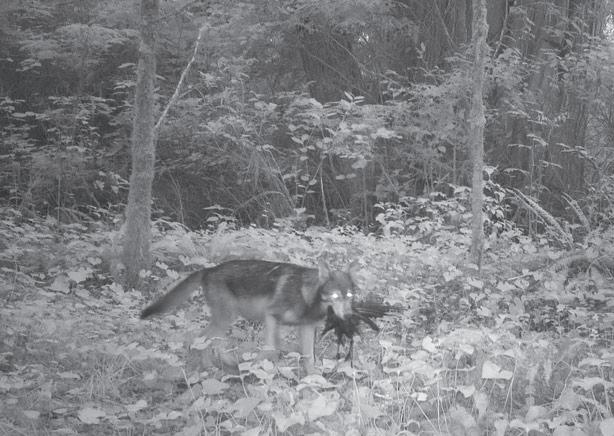
Wolf encounters (or interactions) on the west coast have been high this year compared to in the past, after a mated pair of habituated sea wolves established a section in the Long Beach Unit of the Pacific Rim National Park Reserve as their core area.
To mitigate human-wolf encounters, Parks Canada established dog prohibited areas back in February, including: Wickaninnish Beach, South Beach, the former Gold Mine Trail, Florencia Beach (north and south) and the Willowbrae Trail/Half Moon Bay.
Disregarding leash laws, area closures or dog prohibited areas can result in charges, including a maximum fine of
$25,000.
The network of trails within the municipality of Ucluelet are maintained by the Wild Pacific Trail Society (WPTS) and the district.
“The Lighthouse Loop section of the Wild Pacific Trail between 10 a.m. and 5 p.m. has very busy human traffic so dogs on leash should not be an issue,” said WPTS President Barbara Schramm.
“The north end of the trail is more
remote and closer to recent wolf activity. No dogs off leash are recommended anywhere on the Wild Pacific Trail to respect both wildlife and interactions with other trail users. We are fortunate to live in a wild environment, please avoid any interactions to keep wildlife wary,” she said. Report wildlife sightings to the BC Conservation Officer dispatch line 1 (877) 952-7277 or email PacificRim@ WildSafeBC.com.
file photo
Parks Canada photo
Parks Canada monitors wolf activity in the Pacific Rim National Park Reserve. The agency has noticed an increase in wolf interactions with people and dogs since 2024.
Ha-Shilth-Sa newspaper is published by the Nuu-chah-nulth Tribal Council for distribution to the members of the contributing First Nations, as well as other interested groups and individuals.
Information and original work contained in this newspaper is protected by copyright and may not be reproduced without written permission from:
Nuu-chah-nulth Tribal Council P.O. Box 1383, Port Alberni, B.C. V9Y 7M2.
Telephone: (250) 724-5757
Fax: (250) 723-0463
Web page: www.hashilthsa.com facebook: Hashilthsa Ntc
2026 Subscription rates:
Non-Nuu-chah-nulth, Ahousaht, Ehattesaht,Toquaht and Ucluelet members are subject to a yearly subscription fee of $40 in Canada, $50 in the US and $60 for overseas. Payable to the Nuu-chah-nulth Tribal Council
Manager/Editor/Reporter
Eric Plummer (Ext. 243) (250) 724-5757 Fax: (250) 723-0463 eric.plummer@nuuchahnulth.org
Reporter
Denise Titian (Ext. 240) (250) 724-5757 Fax: (250) 723-0463 denise.titian@nuuchahnulth.org
Reporter
Nora O’Malley (604) 353-8488 nora.omalley@nuuchahnulth.org

Audio / Video Technician
Mike Watts (Ext. 238) (250) 724-5757 Fax: (250) 723-0463 mike.watts@nuuchahnulth.org
Editorial Assistant
Holly Stocking (Ext. 302) (250) 724-5757 Fax: (250) 723-0463 holly.stocking@nuuchahnulth.org
DEADLINE:
Please note that the deadline for submissions for our next issue is Apr. 24, 2026
After that date, material submitted and judged appropriate cannot be guaranteed placement but, if material is still relevant, will be included in the following issue.
In an ideal world, submissions would be typed rather than hand-written. Articles can be sent by e-mail to holly.stocking@nuuchahnulth.org (Windows PC).
Submitted pictures must include a brief description of subject(s) and a return address.
Pictures with no return address will remain on file. Allow two - four weeks for return.
Photocopied or faxed photographs cannot be accepted.
COVERAGE:
Although we would like to be able to cover all stories and events, we will only do so subject to:
- Sufficient advance notice addressed specifically to Ha-Shilth-Sa.
- Reporter availability at the time of the event.
- Editorial space available in the paper.
- Editorial deadlines being adhered to by contributors.
LETTERS and KLECOS
Ha-Shilth-Sa will include letters received from its readers. Letters MUST be signed by the writer and have the writer’s full name, address and phone number on them. Names can be withheld by request. Anonymous submissions will not be accepted. We reserve the right to edit submitted material for clarity, brevity, grammar and good taste. We will definitely not publish letters dealing with tribal or personal disputes or issues that are critical of Nuu-chah-nulth individuals or groups. All opinions expressed in letters to the editor are purely those of the writer and will not necessarily coincide with the views or policies of the Nuu-chah-nulth Tribal Council or its member First Nations. Ha-Shilth-Sa includes paid advertising, but this does not imply Ha-Shilth-Sa or Nuu-chah-nulth Tribal Council recommends or endorses the content of the ads.
New community health clinic for PA
Facility aims to serve over 4,000 patients who don’t currently have a family doctor
By Denise Titian Ha-Shilth-Sa Reporter
Port Alberni, BC – A new health care service facility will soon open in uptown Port Alberni. The facility is expected to ease the strain on a local healthcare system that suffers from insufficient family physicians to serve the population and long wait lines at the hospital emergency room and walk-in clinics.
The Indigenous Community Health Centre (ICHC) was developed through a partnership involving the Port Alberni Friendship Center, Port Alberni Primary Care Network, Island Health, and the BC Ministry of Health. According to PAFC Executive Director Cyndi Stevens, the ICHC aims to enhance primary health care services in the region as part of the Ministry of Health’s Primary Care Strategy.
“This is exactly the kind of progress we want to see,” said Josie Osborne, MLA for Mid Island – Pacific Rim. “A health care system that listens, that reflects the people it serves, and that is built in true partnership with communities. When communities lead, outcomes improve for everyone, and I am so proud to support that work here at home,” she added.
Located in a convenient uptown Port Alberni location, the ICHC, when it opens next year, will provide comprehensive, team-based, culturally safe primary care services for 4,150 unattached patients in Port Alberni. An unattached patient is someone who does not have a primary care provider, such as a family doctor or nurse practitioner. Without a consistent, long-term relationship with a clinician who manages their ongoing health history, referrals, and preventive care, these patients must rely on hospital emergency care or walk-in clinics. The new clinic will be open to any unattached patients in Port Alberni, as those in need are not required to have Indigenous ancestry.
This past of a province-wide effort from health officials, Indigenous agencies and community partners to establish primary care networks (PCNs).
Part of that work includes the development of Port Alberni’s ICHC. According to Stevens, the primary care clinic at the ICHC will deliver comprehensive, longterm primary care services to individuals
of all ages within the Port Alberni region.
“To qualify, patients must reside in the area and currently lack attachment to a primary care provider. The clinic aims to attach 2,100 patients to either a nurse practitioner or family physician, who will be supported by an interdisciplinary team of registered nurses (RNs) and allied health professionals,” Stevens wrote in an email.
There will be more than 20 full-time equivalent health care professionals working on site in Primary Care Health, Mental Health, and Substance Use programs areas.
In addition to health care services on site, there will be a Mobile Health Unit that will deliver services on an outreach basis. The MHU is designed to serve the unsheltered population, local social service organizations, and First Nations communities by providing regularly scheduled visits to “meet the community where they are,” Stevens said. The focus of the MHU is to eliminate barriers to accessing care, offering primary health services to patients who may struggle to attend the ICHC due to challenges such as poverty, mental health issues, or transportation difficulties.
Ha-Shilth-Sa belongs to every Nuu-chah-nulth person including those who have passed on, and those who are not yet born. A community newspaper cannot exist without community involvement. If you have any great pictures you’ve taken, stories or poems you’ve written, or artwork you have done, please let us know so we can include it in your newspaper. E-mail holly.stocking@nuuchahnulth.org. This year is Ha-Shilth-Sa’s 52nd year of serving the Nuu-chah-nulth First Nations. We look forward to your continued input and support. Kleco! Kleco!
“This announcement means so much for the Alberni Valley, and it’s the result of the commitment and work that local people and organizations are doing to deliver Indigenous-led primary care that is grounded in Nuu-chah-nulth principles and culture, safe and welcoming for all people, and shaped by the lived experiences of Indigenous people,” said Osborne.
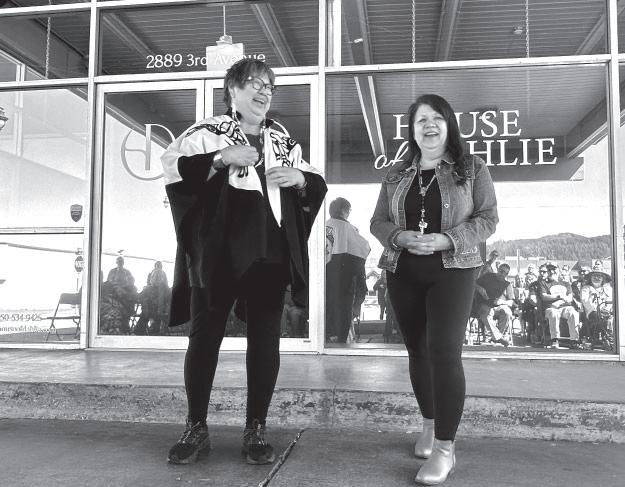
A cleansing and groundbreaking ceremony was held at the 2889 3rd Avenue location on April 8.
Osborne siad the Port Alberni Indigenous Community Health Centre, set to open early next year, will bring culturally safe, timely care closer to home for both Indigenous and non-Indigenous people.
“With a mobile health unit and a dedicated Mental Health and Substance Use clinic, it will be a place of care, connection, and healing for generations to come,” she stated.
Built in the 1940s, the vacant building started out as Woodwards gas station and automotive shop. Over the decades it housed a video rental store and finally a furniture store. The old building will be getting a major facelift before it is open to patients in early 2027.
Legal Information
The advertiser agrees that the publisher shall not be liable for damages arising out of errors in advertisements beyond the amount paid for space actually occupied by the portion of the advertisement in which the error is due to the negligence of the servants or otherwise, and there shall be no liability for non-insertion of any advertisement beyond the amount paid for such advertisements
Submitted photo
Port Alberni Friendship Center Executive Director Cyndi Stevens (right) stands NTC President Judith Sayers and at the cleansing and groundbreaking ceremony for a new health clinic at the 2889 3rd Avenue on April 8.
Premier slammed over push to suspend DRIPA
Future of legislation is uncertain, as BC NDP divided over how to deal with the Declaration Act passed in 2019
By Sam Laskaris and Eric Plummer Ha-Shilth-Sa Contributor and Editor
Port Alberni, BC - Nuu-chah-nulth
Tribal Council President Judith Sayers is not a huge fan of British Columbia Premier David Eby these days.
Earlier this month Eby detailed his plans to temporarily suspend, for up to three years, various sections of the Declaration on the Rights of Indigenous Peoples Act, which is often simply called DRIPA.
Passed unanimously in the B.C. legislature in 2019, DRIPA requires the province to align its laws with the United Nations Declaration on the Rights of Indigenous Peoples - an international call to action that specifies the importance of a government gaining “free, prior and informed consent” from Indigenous communities before decisions are made that will affect their land or people. UNDRIP was adopted by the UN General Assembly in 2007.
DRIPA was to be enacted over a period of several years, but in recent months the legislation has faced the prospect of being amended. This came after some landmark court decisions in 2025 sparked public concerns over how Aboriginal title will affect the rights of private landowners, while the cash-strapped provincial government has fretted over how it will attract natural resource investment while honouring obligations to gain consent from First Nations.
In an interview with Ha-Shilth-Sa in December, Minister of Indigenous Relations and Reconciliation Spencer Chandra Herbert addressed the Ehattesaht and Gitxaala Appeal Court decision, which determined that updates are needed to the Mineral Tenure Act. Herbert wholly agreed that the act needed to be updated, but expressed concerns that the ruling would lead to a “scattergun” approach to legislated reconciliation led by court direction, rather than a methodical approach of partnering First Nations.
“It could launch a whole bunch of lawsuits” that would “bring any forward movement and negotiation to a standstill,” he said of the ruling.
Sayers said First Nations leaders originally heard that Eby was planning to make changes to DRIPA this past December.
“That totally caught us off guard,” Sayers told Ha-Shilth-Sa in a phone interview this past Thursday.
After considering amendments to the legislation, on April 2nd Eby announced plans to suspend sections of the act until May 31, 2029.
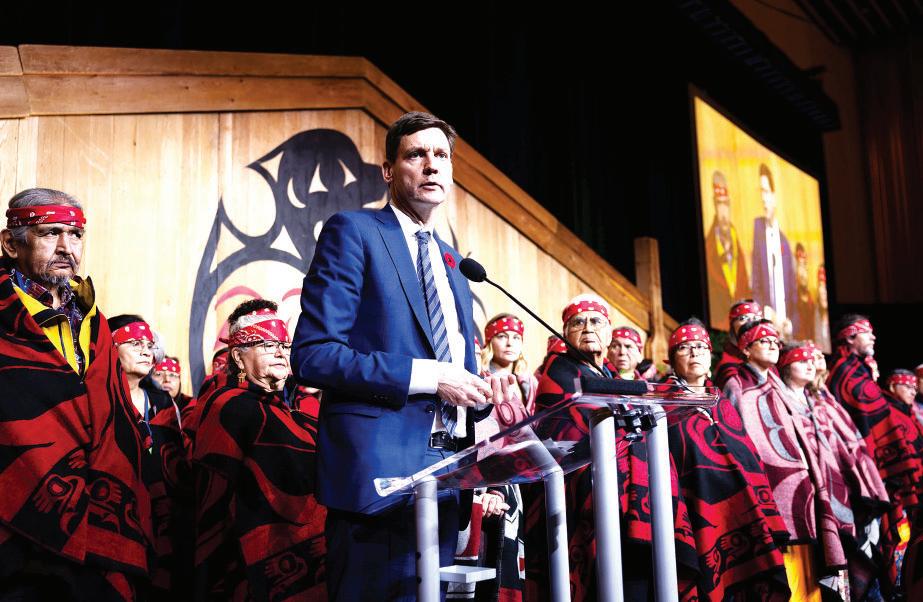
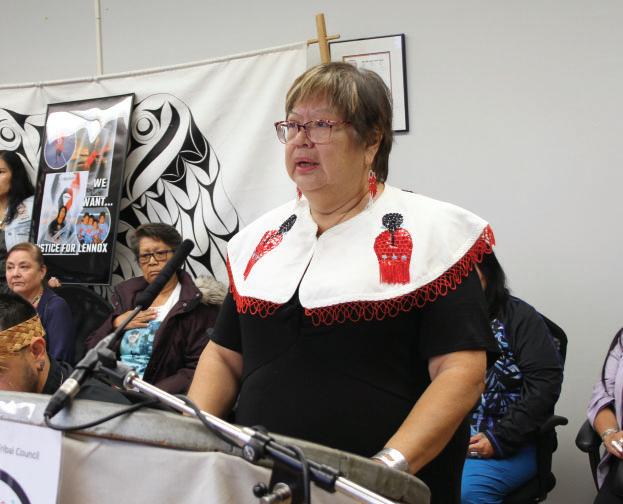
“I don’t think I have much confidence in the premier anymore to carry this out,” says Nuu-chah-nulth Tribal Council President Judith Sayers about progressing the Declaration on the Rights of Indigenous Peoples Act.
The B.C. First Nations Leadership Council called this “a unilateral betrayal and an abandonment of the province’s commitment to principled reconciliation” that will “neutralize” any further DRIPA obligations until the next government is formed.
“He had plans to amend DRIPA one way or the other. That’s what he said was non-negotiable,” said Sayers. “He’s just planning on suspending the same sections that he wanted to amend.”
“First Nations cannot be expected to take a leap of faith when suspension

renders the Declaration Act ineffective immediately and paves the way for its inevitable repeal,” stated Terry Teegee, regional chief of the B.C. Assembly of First Nations, which is part of the First Nations Leadership Council.
Meanwhile Eby’s NDP government sits with a slim one-seat majority in the legislative assembly, with calls from the opposition Conservatives to repeal DRIPA altogether.
“Reconciliation existed before 2019, and it will continue long after David Eby’s failed implementation of DRIPA is gone,” stated Trevor Halford, interim leader of the opposition B.C. Conservatives. “British Columbians can support reconciliation and demand certainty at the same time.”
Eby was hoping to introduce legislation this week to begin the suspension on portions of DRIPA, but some of his own MLAs have opposed this, casting uncertainty on how the government will deal with DRIPA in its current state.
“Our position is we don’t want DRIPA changed,” Sayers said. “We’ve set out a course of action. We did it collaboratively.”
Sayers said she was uncertain of next steps with this issue as Eby seemed reluctant to meet with First Nations leaders.
“He’s not even asking for a response from us,” she said. “So, I don’t know what the next steps are. I think the chiefs are going to have to meet and decide from there.”
If legislation is tabled, Sayers said that with various readings approval to suspend DRIPA could happen by June, which signifies the end of the legislative sitting.
Sayers also said that the relationship between Eby and herself and other First Nations leaders has changed significantly since December.
“We’ve all been working with the premier under different things,” she said.
“I’ve been working really hard on the Heritage Conservation Act. We’ve been doing different things and people have been looking at shared decision making.
There’s been all kinds of initiatives under DRIPA, achieving some good things and looking forward to doing more.
Sayers now describes the relationship between the premier and First Nations leaders as “very rocky.”
“I don’t think I have much confidence in the premier anymore to carry this out,” she said. “I think he’s looking more to the general B.C. population who elects him and seeing what they’re doing as opposed to trying to educate people as to our rights. DRIPA is about our human rights. Whose human rights get suspended for three years?”
Sayers said the premier’s recent actions have also hindered reconciliation efforts.
“This puts us on very, very shaky grounds. First Nations are trying really hard in economic development, education, health. There are all these wonderful things that are happening and are they going to happen anymore? Will they be put on hold? We just don’t know what that future is going to hold.”
Province of B.C. photo
B.C. Premier David Eby speaks as First Nations leaders and provincial officials come together for the 10th B.C. Cabinet and First Nations Leaders’ Gathering on Nov. 4 at the Vancouver Convention Centre. Eby said that the province plans to appeal a 2025 court decision which found that Cowichan nations have established Aboriginal title to a portion of the southern arm of the Fraser River.
Erc Plummer photo
Tla-o-qui-aht wins Tofino Green Business award
Tin Wis and Tsawaak RV Resort are leading the way in green business initiatives, according to Tofino chamber
By Nora O’Malley Local Journalism Initiative Reporter
Tofino, BC – The Tla-o-qui-aht Development Corporation (TDC) was named
Tofino’s top Green Business of the Year at the 2025 Business Excellence Awards gala hosted by the Tofino Chamber of Commerce.
Established in 2001, TDC is wholly owned by the Tla-o-qui-aht First Nation (TFN) and helps manage Tin Wis Resort, Tsawaak RV Resort & Campground, TFN Micro Hydro, and TFN Seafoods.
“We literally just purchased over $30,000 worth of plants that will be going throughout the grounds,” said TDC Chief Executive Officer Nik Vischschraper.
“Most of them are plants that are native to the region or have cultural significance. We have some ferns, salal, huckleberry, hemlock, dogwood… We are excited. Those will be coming into Tin Wis and Tsawaak pretty soon,” he said. TDC was nominated for demonstrating environmental leadership across all its entities.
“TDC’s commitment to sustainability is guided by Indigenous values of reciprocity and responsibility, rooted in the ?iisaak pledge. Whether through renewable energy, water conservation, or reducing single-use plastics, TDC is leading by example, creating a more sustainable future while building a regenerative, Indigenous-led economy in the heart of the Tla-o-qui-aht territory,” reads a statement from the individual that submitted the nomination.
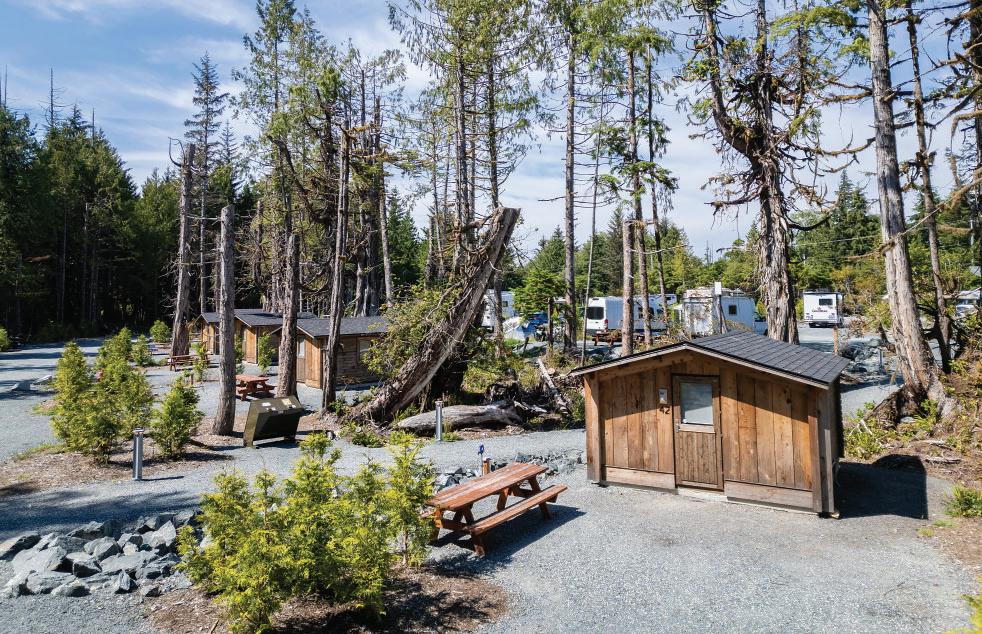
At Tsawaak RV Resort, a rainwater harvesting system was installed to conserve water and reduce pressure on municipal supply.
“That visitor centre has a roof that funnels water into one spot. We take advantage by capturing that water and it can be recycled into watering the landscaping throughout the grounds,” said Vischschraper, noting that there are also water fountains and reduced water flush-
ing toilets.
At Tin Wis Resort, several initiatives are underway to support an eco-friendly guest experience including replacing single-use toiletry bottles with refillable dispensers and adding eight new electric vehicle charging stations.
“One of our key values across TDC is Tla-o-qui-aht nučḥak, which is Tla-o-quiaht pride and we want to communicate that to our visitors,” said Vischschraper.
“The Tla-o-qui-quaht ha’houlthee is such a beautiful piece of land and we have to treat it accordingly. Whatever we can do to be good stewards of the land is always important,” he said.
Then there is the TFN Micro Hydro, a trio of run-of-the-river hydro plants that can generate enough electricity for all of Tofino and Ucluelet, according to
“It’s something to be proud of for sure. It’s sold to BC Hydro and feeds the grid,” he said. “It’s coming from the natural movement of water rather than gas power or something.”
Tofino Chamber executive director Graydon Clerk says the chamber has a strong relationship with Tla-o-qui-aht.
“We actually just recently signed a friendship accord with Tla-o-qui-aht First Nation and that’s a positive step for us in our efforts towards reconciliation and how we can work with them on their priorities,” said Clerk.
When it comes to environmental initiatives, Vischschraper said TDC is just getting started.
“It’s cool to win an award, but there is still so much more to do. We are look-
ing at the opportunity of getting some solar panels placed on the roof of the conference centre and our next company vehicle will certainly be an electric,” he said.
For 2025, Hotel Zed Tofino won Business of the Year for the second year in a row, Tofino Gallery of Contemporary Art won Small Business of the Year, New Business of the Year went to Topinoy, Clayoquot Biosphere Trust took Nonprofit of the Year, Rebecca Hurwitz from Clayoquot Biosphere Trust was named Business Leader of the Year, Ahous Adventures won Employer of the Year, Tofino Brewing Company won Customer Service Excellence and Employee of the Year went to Jennifer Braiden from Tofino Co-op.
Full house at annual spring 2026 NETP Career Fair
By Denise Titian Ha-Shilth-Sa Reporter
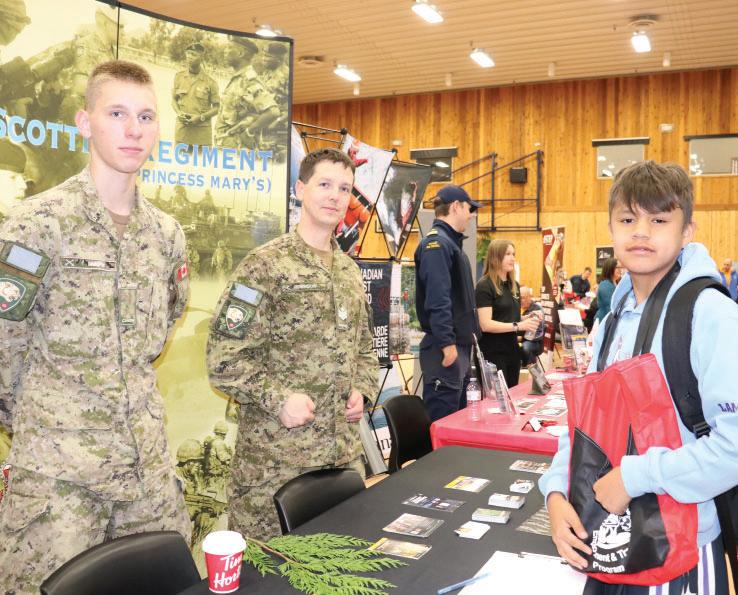
Port Alberni, BC – The doors were open to all at the annual NETP Career Fair, held at the Alberni Athletic Hall on April 9, 2026. Attendees were invited to bring their resumes as they visited dozens of booths offering career or educational information.
Shan Ross, special projects coordinator for the Nuu-chah-nulth Employment & Training Program (NETP), said the event has been running annually for 10 years, with an average visitor count of 400.
“Four hundred and seventy-three was our highest count, mostly high school and college students as we are located across the street from both learning centers,” he said.
But there were other school students from neighbouring communities that attended the fair. There were also adults and seniors seen checking out employment opportunities.
NETP provided lunch and snacks, and many of the students went home with red swag bags.
Ross said the fair is open to the public.
“Some people do come with resumes in hand, but most vendors are there providing career information, while only a few
will take resumes if they are hiring,” Ross shared.
Those that were taking resumes included Alberni Co-op, Long Beach Lodge Resort, Cermaq, Starbucks and Ucluelet Harbour Seafoods. Others will have online applications, Ross added.
The 2026 NETP Career Fair offered employment and education information for dozens of sectors from tourism and hospitality jobs to careers in forestry, fisheries, wildfire fighting, health care, emergency services and military careers.
“We’ve been holding this event annually since 2014 but missed a couple of years during COVID-19,” said Ross. NETP was able to host this year with the support of co-sponsors including the Government of Canada.
Lexi Lancaster photo Tsawaak RV Resort & Campground offers eco-friendly facilities amid Tofino’s competitive tourism market.
Vischschraper.
Denise Titian photo
A high school student looks into the possibility of a military career as he visits the Canadian Scottish Regiment Army Reserve table.
Sobering centre coming to west coast region
The much-needed facility builds on Community Alcohol Strategy (CAS) work that started over a decade ago
By Nora O’Malley Local Journalism Initiative Reporter
Tofino, BC – Island Health is making progress towards establishing a muchneeded Sobering and Assessment Centre for Vancouver Island’s west coast region.
Located in Tofino, the six-bed facility will offer shelter and assessment for inebriated clients for up to 24 hours.
“Island Health is committed to increasing access to the health and care services people need, where and when they need them. Island Health and our valued local partners recognize the need for a Sobering and Assessment Centre for the West Coast region and we can confirm work is underway to establish these services in
Tofino,” said Island Health.
Faye Missar, Alberni-Clayoquot community health promoter, said there has been a lot of work with community partners to secure a location close to the Tofino General Hospital.
“One of the reasons the Sobering and Assessment Centre needed to be close to the hospital was in case someone went into a withdrawal state. (Withdrawal) is a complex medical state and things can happen quickly,” said Missar.
“(The centre) will provide a safe space for someone who needs sobering and ideally within that stay, they also make a connection with a worker who then, if they are feeling ready, can connect them to other community-based services and support their recovery process,” said Missar.
The Sobering and Assessment Centre builds on Community Alcohol Strategy (CAS) work that started over a decade ago and comes at a time when data from the BC Centre for Disease Control shows substance use disorders in the AlberniClayoquot region have increased by nearly 40 per cent over the past 15 years, primarily due to alcohol.
“Tofino’s unique context, including seasonal tourism, a strong hospitality sector, limited health and emergency response resources, and close relationships with First Nations, means that alcohol use can affect the community in different ways,” said the District of Tofino.
According to the district, alcohol-related hospital admissions among west coast residents are significantly higher than the Island Health average and the alcoholrelated death rate in the region is higher than both Island Health and provincial averages.
In 2024, after multiple tragic losses
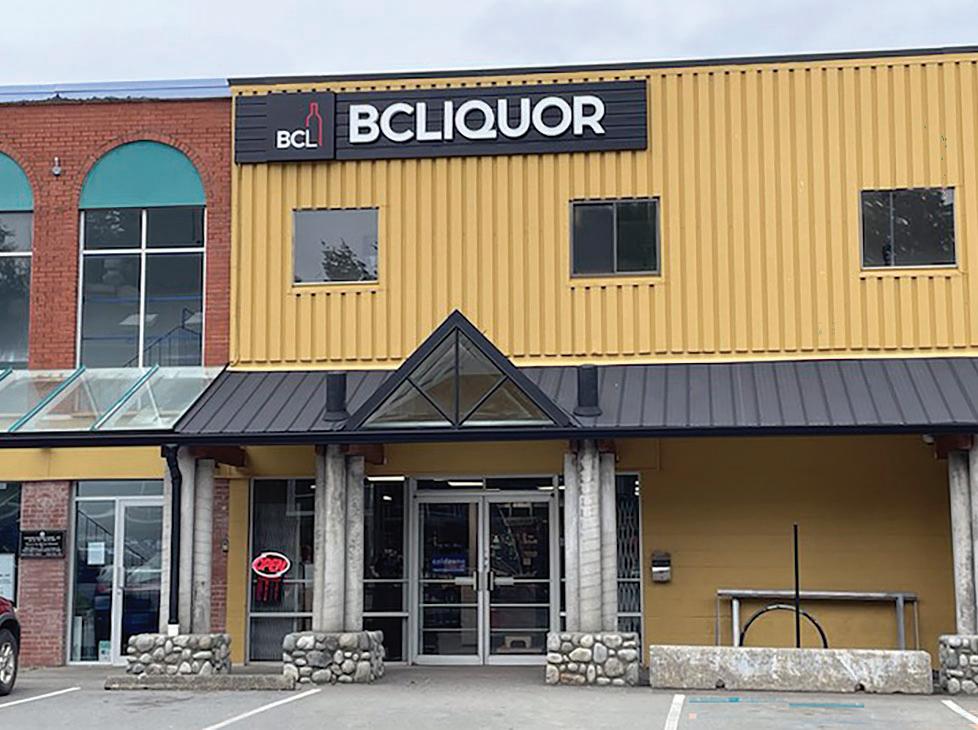
The sobering centre will take some pressure off the Tofino emergency room as alcohol-related hospital admissions among West Coast residents are significantly higher than the Island Health average, according to local data. Pictured is Tofino’s provincial liquor store, where limits on alcohol purchases were introduced in 2024.
in the small community of Ahousaht First Nation, the Nuu-chah-nulth Tribal Council declared a state of emergency in response to the mental health and opioid crisis that is disproportionately affecting First Nations communities. The state of emergency included all 14 Nuu-chahnulth nations.
“Alcohol is like a sickness. A sobering centre is definitely needed,” said Tlao-qui-aht First Nation Chief Councillor Elmer Frank.
He said the West Coast sobering centre will support Tla-o-qui-aht’s Saasin House, which opened in 2022 in TyHistanis with 20 beds for long-term substance use recovery.
“You have to be sober to be at the (Saasin House),” said Frank. “Sometimes home is not the best place to come back to after treatment because you could fall back into the same friends, back into the same pattern.”
In 2024, the Province of British Columbia supported a request from Ahousaht
First Nation leadership to limit liquor purchases at Tofino’s government-owned liquor store in order to reduce alcoholrelated harms and impacts on remote communities.
Currently, customers at the BC Liquor store in Tofino can only buy up to four bottles of hard liquor at a time if the alcohol is sold in plastic containers.
“We have bootlegging going on in my nation and there’s cases by cases every Friday coming in, sometimes three or four from certain individuals,” said Ahousaht Tyee Ha’wilth Richard George (Hasheukumiss) when announcing the new purchase limit.
Over a year after the new purchase limits were put in place, Hasheukumiss says full cases of vodka are still coming into Ahousaht that are purchased from other liquor stores. Ahousaht is a small village of about 1,000 people located a 30-minute boat ride away from Tofino.
Chief Frank and Hasheukumiss sit on a steering committee with other communi-
ty leaders, including representatives from Island Health, Tofino RCMP, Westcoast Community Resources Society, Coastal Coalition Community Response Network, Tourism Tofino and the District of Tofino. The team is encouraging AlberniClayoquot residents, business owners, workers, and anyone who feels connected to the Tofino community to help inform the CAS by taking a short survey or participating in one of several upcoming engagement sessions.
“We will be going to Ahousaht and Ty-Histanis and hosting a meal,” said Missar. “The survey is a listening tool aimed at the whole region. We want to assess where the awareness level is and what the issues are.”
The public survey is open until April 23 and takes about five to 10 minutes to complete. It can be accessed by visiting: https://talktofino.ca/alcohol
Everyone who completes the survey will be entered into a draw for a chance to win a $100 prepaid credit card.
Ha-Shilth-Sa file photo
Clayoquot Campus welcomes visitors with open arms
Former Tofino Botanical Gardens reopens with a carving studio, Indigenous gardens, café and learning lodge
By Nora O’Malley Local Journalism Initiative Reporter
Tofino, BC – The scent of chiseled cedar filled the air as artist Josh Watts perfectly centered his latest carving on a white wall.
Watts is one of five artists featured this April at the Naa’Waya’Sum Carving Studio in a Carving on the Edge exhibition called the ‘Next Generation Indigenous Art Show’. Naa’Waya’Sum (pronounced nah-why-a-sum) is located at the former Tofino Botanical Gardens within the ha’houlthee (traditional territory) of Tlao-qui-aht Ha’wiih (hereditary chiefs).
“There’s strength you can find in learning where you come from, and a lot of our artwork is about connection to our ancestors,” said Watts, who is of Nuuchah-nulth and Sḵwxwú7mesh First Nations descent.
“Your ancestors are connected to a place and time, so if art is something that you want to do and excites you, it can be really healing. You don’t have to be professional at it. Something in everybody is creative. The way I see it, it’s a way to connect to my family, my history, where I’m from and where I grew up. You can find a lot of healing and a lot of strength in that,” he said.
The Next Generation Indigenous Art Show runs until April 30 at the Clayoquot Campus, a newly reopened space that includes the Naa’Waya’Sum Indigenous Coastal Gardens, Naa’Waya’Sum Carving Studio, IISAAK Learning Lodge and the čukʷaa haʔuk café (meaning ‘Come! Let’s feast’), which is run by culinary legend chef Lisa Ahier.
Indigenous-led IISAAK OLAM Foundation acquired the property in 2021, and after a five-year transition, Clayoquot Campus director Eli Enns says the April 2 reopening under a Pink Full Moon signifies rebirth and “all of the intentions growing up”.
“This is no longer the botanical gardens. People need to understand that botanical gardens are inherently colonial,” said Enns. “It’s a colonial thing where they bring different plants from the rest of the world. This has unfortunately led to a lot of invasive species outbreaks.”
He said the revitalized trails within the Naa’Waya’Sum Indigenous Coastal Gardens are going to encourage Indigenous
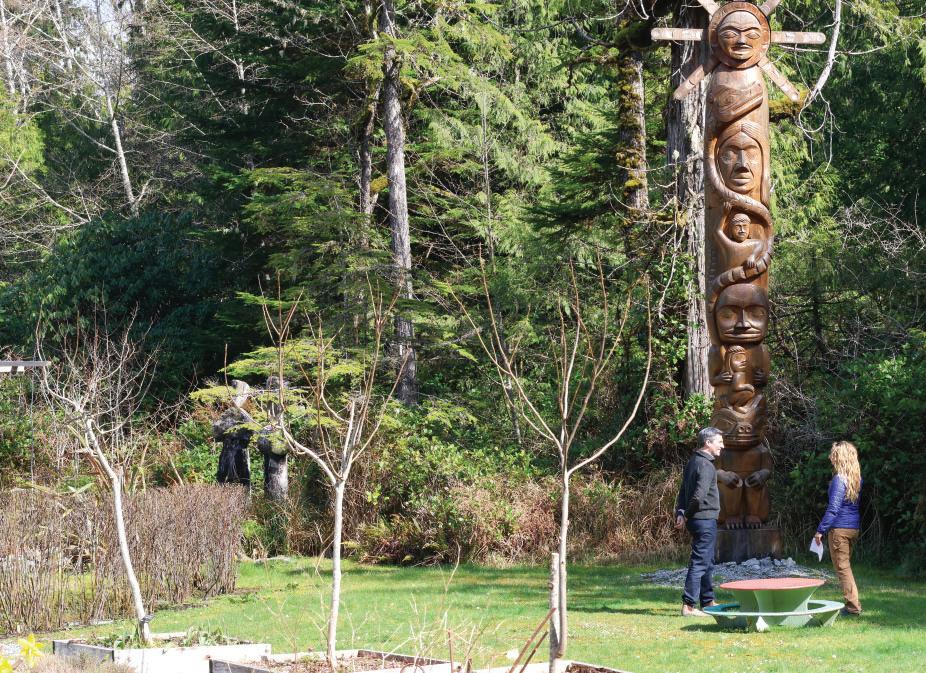
Visitors admire the Naa’was totem pole at the centre of Naa’Waya’Sum Gardens, which depicts responsibilities to future generations.
practices, with the planting of native medicinal plants, a demonstration root garden and a teaching clam garden.
“Everything we do in our foundation and everything we do on this property is rooted in the concept of ethical space,” said Enns.
Ethical space is a concept adopted from Indigenous thought leaders of the older generation, says Enns, which is applied broadly to Indigenous-Crown relations in a Canadian context.
“It’s similar to two-eyed seeing,” he explained. “Two-eyed seeing you are looking at the world through Indigenous worldview and western science. In ethical space, you’re bringing the best of Indigenous knowledge and the best of western science and modern technology together to solve complex problems for the benefit of all.”
He went on to note that in ethical space, one knowledge system isn’t dominant
Phrase of the week:
over the other or validating the other.
“They are both independently valid and they come together in equality and ideally in complementariness,” said Enns.
Two cedar welcome figures, carved by Tla-o-qui-aht First Nation Joe Martin, greet guests at the entrance of Clayoquot Campus with both arms open. Enns says the welcome figures symbolize the need for the two knowledge systems to come together for the collective well-being of future generations.
“Right now, they are on display at the carving facility, a lot of people assume that we will move them out by the road, but actually we are going to put them down by the water,” Enns shared.
“There is a location at high tide where you can travel in and come by canoe or kayak. In former times, that’s how people got around; people travelled by the waterways. We want to revitalize a canoeing culture in Tofino, so it’s a regular mode of
Pronounced ‘hee kwulth utl ish mi/thloom/yootl hoo/pulth i’, it means, ‘The moon is almost full.’ Supplied by ḥakaƛ
travel,” he said.
Carving on the Edge Festival’s cultural planner and treasurer Norma Dryden said the Next Generation Indigenous Art Show includes free workshops throughout April at the art hub below the Tofino Legion.
“We are really grateful to be here. We are so happy to see how it’s blossomed,” said Dryden.
Visit carvingedgefestival.com/ for more information about the workshops and clayoquotcampus.ca/ to see how you can support the maintenance of the gardens by purchasing an annual membership.
Nuu-chah-nulth citizens are welcome to apply for a free annual membership
Naa’Waya’Sum, a word gifted by elder Levi Martin that references traditional cedar benches used for intergenerational knowledge sharing and observation.

Illustration by Rosemary Lucas
Nora O’Malley photo
Door-to-door to end as Canada Post faces major debt
Crown corporation bleeds $10 million a day, as it loses its share of the package delivery market to competitors
By Karly Blats Ha-Shilth-Sa Contributor
Canada – The future of mail delivery across the country is changing now that Canada Post has announced it is ending door-to-door mail delivery. The corporation is facing major debt issues and drastically lower letter volumes.
The announcement to end door-to-door delivery came last fall from Joël Lightbound, minister of Government Transformation, Public Works and Procurement.
A statement from the government of Canada says that, since 2018, Canada Post has accumulated more than $5 billion in losses. In 2024 alone it lost more than $1 billion, and in September 2025 it was on track to lose close to $1.5 billion by the end of that year.
Earlier in 2025, the federal government provided a $1-billion injection to keep the corporation operational. In the second quarter of 2025 Canada Post posted its worst quarterly results ever, losing $407 million. Today, the corporation is losing approximately $10 million every day.
“This situation is unsustainable,” Lightbound said in the statement. “Canada Post is effectively insolvent, and repeated bailouts are not a long-term solution. Transformation is required to ensure the survival of Canada Post and protect the services Canadians rely on.”
Twenty years ago, Canada Post delivered 5.5 billion letters annually. Today, it delivers 2 billion, even as the number of households has grown, which means fewer letters are being delivered to more addresses.
According to the federal government’s statement, parcel volumes — which should have been Canada Post’s growth opportunity — have declined. In 2019, Canada Post delivered 62 per cent of parcels in Canada. Today, its market share has dropped below 24 per cent, with private competitors taking the lead.
“Structural challenges combined with outdated restrictions and stalled negotia-

tions between labour and management, have further limited the corporation’s ability to adapt,” Lightbound said. “I am announcing today a series of measures to stabilize the corporation’s finances and enable its modernization.”
Announced measures include adjusting standards so that non-urgent mail can move by ground instead of air, which should save Canada Post more than $20 million per year. The switch to community mailboxes was also announced as a cost saving measure.
“Currently, three-quarters of Canadians already receive mail through community, apartment, or rural mailboxes, while onequarter still receive door-to-door delivery. Canada Post will be authorized to convert the remaining 4 million addresses to community mailboxes, generating close to $400 million in annual savings,” Lightbound said.
In addition, the moratorium on rural post offices, in place since 1994, will also be lifted. The rural moratorium covers close to 4,000 locations. Areas that used to be rural may now be suburban or even

urban but are still required to operate as rural post offices. Canada Post must return to the government with a plan to modernize and right-size its network.
“The government is also reviewing the process for increases to the stamp rate to modernize and shorten it,” Lightbound said. “Transforming an institution of this size will take time, but it is necessary to protect postal services for the future.”
In an email from Canada Post media relations, the corporation said they are currently consulting with their unions regarding transformation initiatives.
“We want to conclude those important initial discussions before we share more details publicly. We hope to be in a position to share further details publicly in the coming weeks,” said the Crown corporation.
An updated statement from Canada Post says the Government of Canada is lifting long-standing barriers to reform and directed the corporation to implement transformative changes to ensure they can meet evolving needs of Canadianswithout becoming a recurring burden on
taxpayers.
“We continue to work closely with the government on the details of our proposed transformation plan,” says the statement. “At the same time, given the government’s direction to begin taking initial steps, we are reaching out to our bargaining agents to consult on our approach to several proposed changes.”
The proposed changes include converting the remaining addresses that still receive delivery at the door to community mailboxes and modernizing the retail network.
“Once initial consultations with our bargaining agents are complete, we will begin engaging municipal officials and other key stakeholders,” says the statement. “We are also collaborating with the government on updates to our delivery standards for letter mail, which will require amendments to the Canadian Postal Service Charter.”
Canada Post said they will provide as much advance notice as possible of any changes coming into affect.
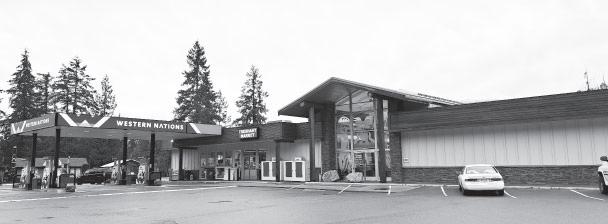

Karly Blats photo
Upcoming savings to Canada Post include replacing door-to-door delivery with community mailboxes.
Usma News
Tara Jewell photo
Finding Her Voice
Teens attend Canada’s
Indigenous youth conference
By Rebecca Aldous Usma Communications Coordinator
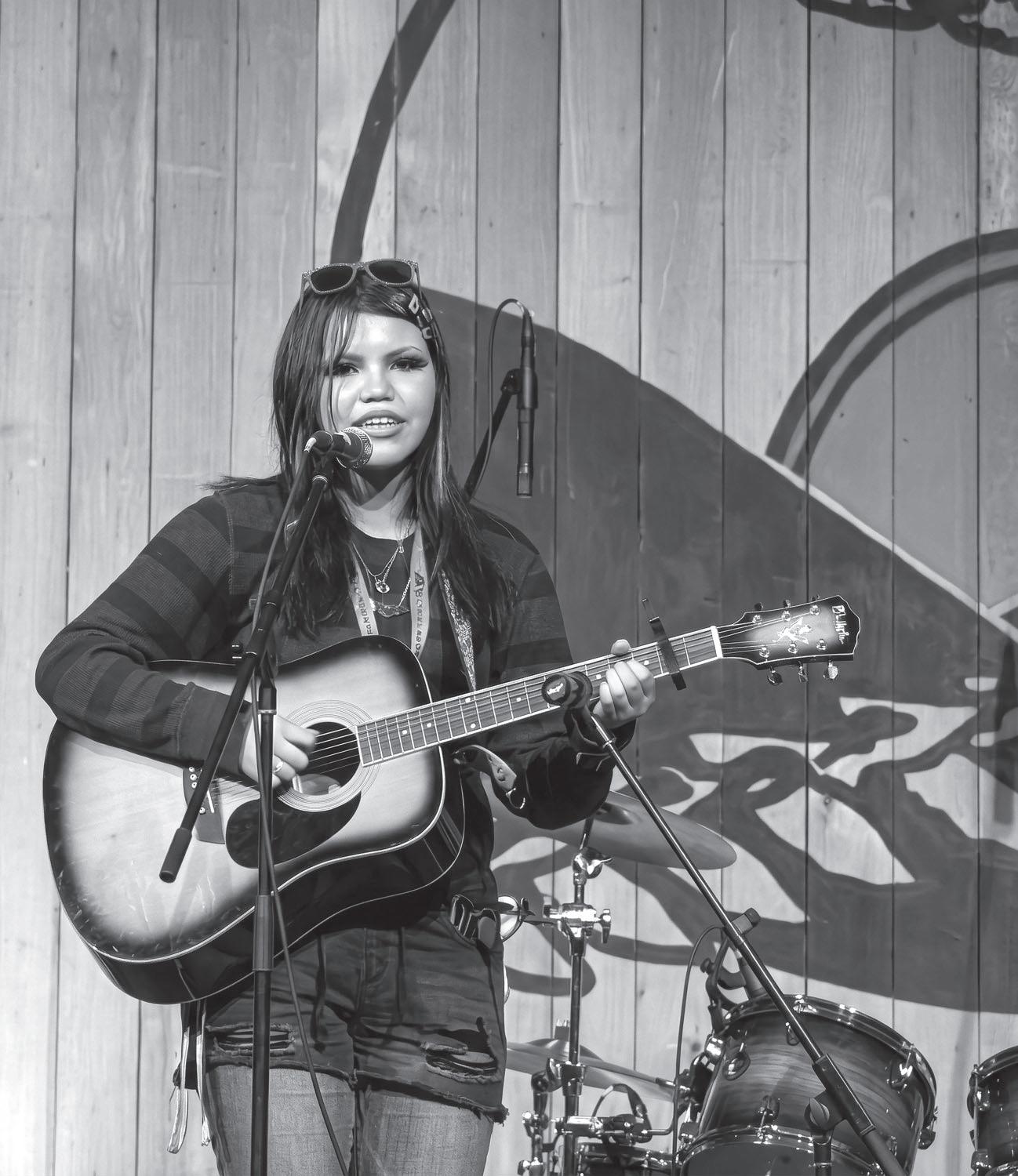
Vancouver, BC - Guitar in hand, Quastania had performed for crowds of up to 50 people before—but this was different.
“I couldn’t really see. All I could see was a blur of faces. They were waving the flashlights on their phones during the song,” she says.
In front of more than 2,000 youth, Quastania took the stage at Canada’s largest Indigenous youth conference, Gathering Our Voices. She sang and played the guitar, which she’s been practicing for the past six years. It’s also one of her favourites, alongside the clarinet, ukulele, and trumpet—several of which she taught herself to play.
After all those years of practice, performing on that stage was a moment she won’t forget.
“I felt famous,” Quastania says, recalling how participants recognized her in
workshops after her performance.
The three-day event, held March 17–20 in Vancouver, brought Indigenous youth together from across the country. Through workshops and activities, organizers aimed to inspire and empower young people. Usma Nuu-chah-Nulth Family and Child Services brought eight youth to the gathering.
For Jade, it was her first time attending. She especially enjoyed a tea-making workshop, where she tried rose nettle tea.
“It tasted good,” she says.
She also enjoyed playing Lahal, known commonly as the bone game.
Overall, the gathering created a welcoming and supportive environment, says Usma Youth Outreach Worker Tara Jewell, noting that Quastania’s performance was a highlight.
Quastania is already looking forward to returning next year, having made new friends from as far away as Manitoba.
“I loved the event,” she says.


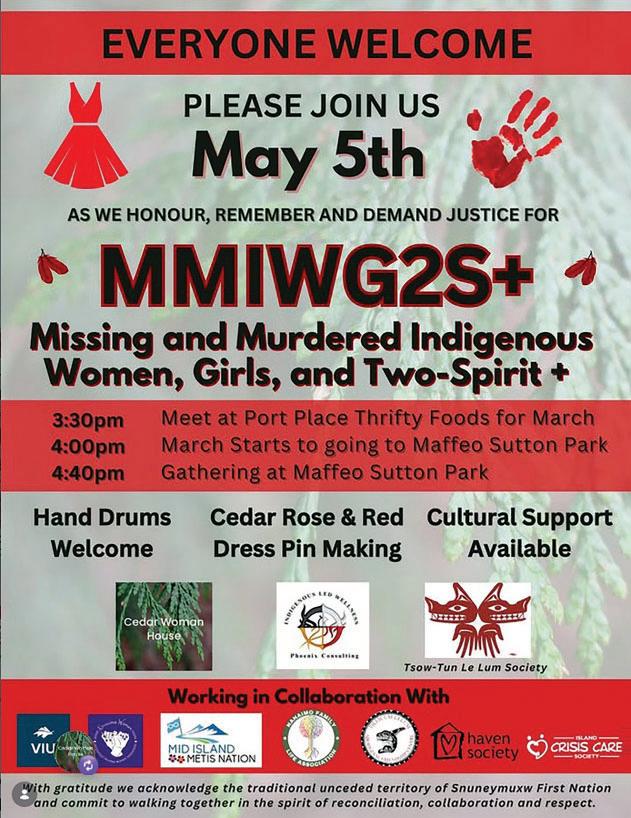
MMIWG2S+ Walk
Tuesday, May 5th 3:30pm – 4:30pm
Port Place Thrifty’s, Nanaimo
Meet at Port Place Thrifty’s for a march to Maffeo Sutton Park. There will be hand drums, cedar rose making, dress pin making, cultural supports. Everyone welcome.
NTC Grad & Scholarship Ceremony
June 5th to June 6th
3:30pm – 4:30pm
ADSS, Port Alberni
Ceremony then dinner to follow each day.
NCN Mental Health Counselling

&Community Beyond



Tuesdays and Thursdays 8:30am – 4:30pm
4841 Redford Street, Port Alberni
NCN Mental Health Services – DropIn Counselling with Margaret Bird, Registered Clinical Counsellor and Play Therapist. For on and off reserve members of all ages of the Nuu-chahnulth Tribal Council. Call (250) 724-3939 to book your appointment.
Stirring up Connections
Every Friday 10am – 12:30pm
NTC Kitchen – 4841 Redford Street.
A warm and welcoming cooking group designed just for parents!

If you should be getting a copy of the Ha-Shilth-Sa paper delivered to your home, please contact: Holly Stocking at 250-724-5757
25 Years Ago in Ha-Shilth-Sa
Vol. 28 – No. 8 April 26, 2001
Auction sells priceless pieces
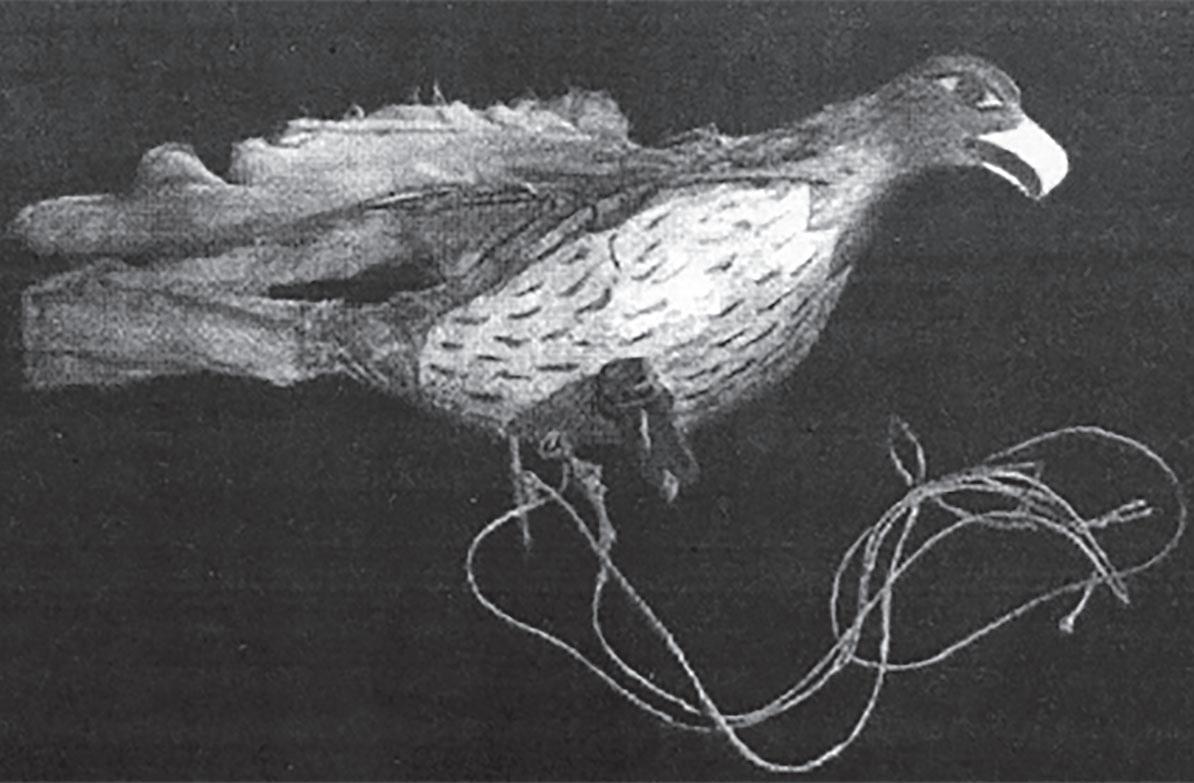
On April 19th 2001, 14 Nuu-chah-nulth artifacts collected by a Victoria couple in the 1950s were offered for auction by the family at Kilshaw’s auction house. The collection consisted of woven baskets, mats and a few carved pieces, including a magnificent painted bird headdress with mechanical wings made of cloth, wire and twine.
In interviews with Victoria media, auctioneer Alison Ross claimed the Nuu-chah-nulth had been consulted on the pieces, but after speaking with several Nuu-chah-Nulth leaders, it was discovered that consultations did not occur. The Royal B.C. Museum was also
consulted, but most museums refuse to participate in artifact auctions because such events cause the price of artifacts to rise, making illegal trade in such treasures more attractive to some collectors. All together the 14 Nuu-chah-nulth pieces were sold for a total of $31, 190. According to Alison Ross, the highprofile event was an important learning process for Kilshaw’s, and they would become more actively involved in consulting with the NTC in the future.
An apology was written to Ha-Shilth-Sa, expressing the auctioneers respect and interest in improving dialogue with First Nations.
Quastania performs at the talent show during the Gathering Our Voices conference in Vancouver, which was held March 17-20.
Prof tells unvarnished story of her people’s survival
Account details a Nova Scotia community’s difficult transition into modern life over the course
By Jessie Levene Ha-Shilth-Sa Contributor
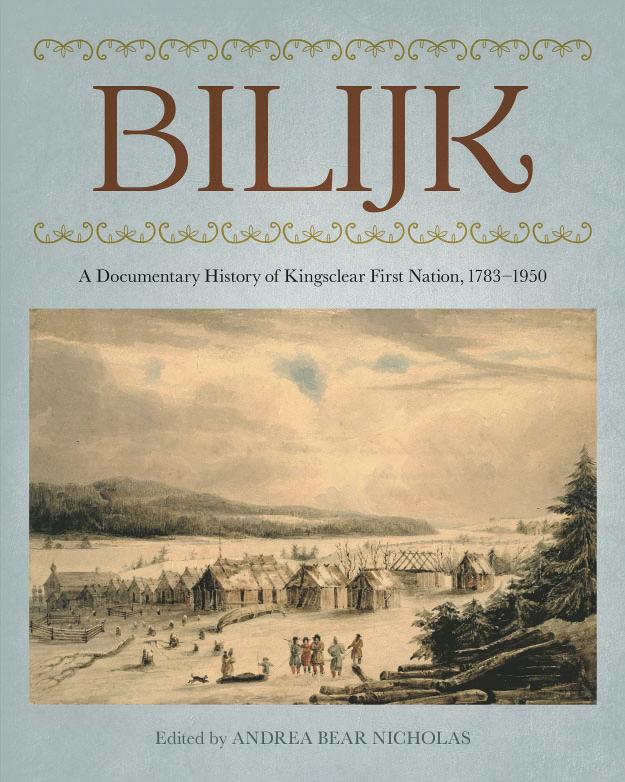
In this beautifully presented but shocking history of settler colonialism in a small First Nation community, Kingsclear - now known as Bilijk, New Brunswick - Andrea Bear Nicholas tells an explosive tale of land theft, violence, forced assimilation and cultural genocide – and, despite all, the survival of an unwavering people.
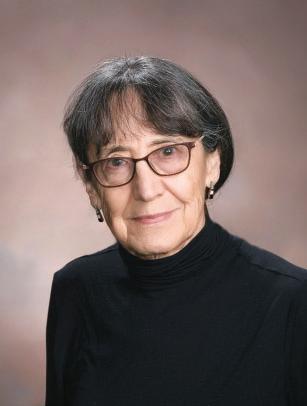
Through contemporary oral histories, archive documents, paintings, maps and photographs, professor Bear Nicholas, who is Wəlastəkwew (Maliseet) from the nearby Nekwətkok (Tobique First Nation), comprehensively documents the history of the first Maliseet community to be established by the Canadian government as a reserve.
As Nicholas explains, the land that became the first Kingsclear reserve was set aside for the Maliseets by the British of Nova Scotia twice: first in the 1760s, and second in 1779, during the American Revolution, when authorities promised the land to two Maliseet chiefs in return for their support of the British over the Americans.
On banks of the lower Wəlastəkw (Saint John River), the Kingsclear reserve was continually reduced in size by the authorities, swindled away from the community through lies, deception and sales that vastly undervalued the highly fertile land.
Like so many other Indigenous communities across Canada, before colonialism the Maliseet had lived a rich, plentiful life, hunting moose, deer, and caribou, and fishing for salmon with spears and torchlight. And like so many other Indigenous communities, these traditional practices were systematically eradicated, firstly through forcing of agriculture upon the Maliseet, and later through the passing of laws restricting or forbidding traditional food-gathering practices.
When the New Brunswick authorities enacted a complete ban on hunting moose in 1937, Bear Nicholas explains that such laws pushed even more Maliseets into the working classes of settler society, as farmhands, mill and domestic workers.
“With the Maliseets no longer surviving by traditional means, anthropologists were quick to capitalize on the situation by buying up treasured Maliseet cultural artifacts for a pittance,” she writes.
Many photographs of these stunning cultural artifacts - birch bark canoes, baskets, bead work, wampum belts and much more - grace the pages of this book, alongside official church records of marriages, baptisms and funerals among the community.
In all the archive material, which Bear Nicholas presents chronologically, any offensive language is kept intact “in the interest”, as she writes, “of conveying the true attitudes of the time.” These archival texts, alongside letters, laws and many contemporary photographs (some from as early as the 1850s), vividly depict the daily life of the Kingsclear First Nation over the centuries.
The Catholic Church first began educat-
of colonization
ing Kingsclear children in the 1850s, but as Bear Nicholas writes, this accelerated with the building of a day school on the reserve in the early 1880s.
“The goal this time was not only to educate children in the knowledge and customs of the settler society, but also to wipe out Maliseet, the language that connected Maliseets to the land and their traditional form of life.”
When the residential school at Shubenacadie, Nova Scotia was opened in 1929 (the only residential school in the Maritimes), some Kingsclear children were sent there in the 1930s and 1940s - over
400 kilometres away from home. Today, Kingsclear has approximately 981 members, with 692 residing on reserve, which is located 15 kilometres west of Fredericton, New Brunswick. The on-reserve Wulastukw Elementary School was built in 1995 and currently has a student population of 55.
Bilijk: A Documentary History of Kingsclear First Nation, 1783-1950 by Andrea Bear Nicholas is available for purchase at Goose Lane Editions. A Maliseet edition of the book (Pilick: Kekw Kisowikhasik ’ciw Pilick təkkiw 1950), is also available.

Bilijk: A Documentary History of Kingsclear First Nation, 1783-1950 by Andrea Bear Nicholas is available for purchase at Goose Lane Editions.
Andrea Bear Nicholas