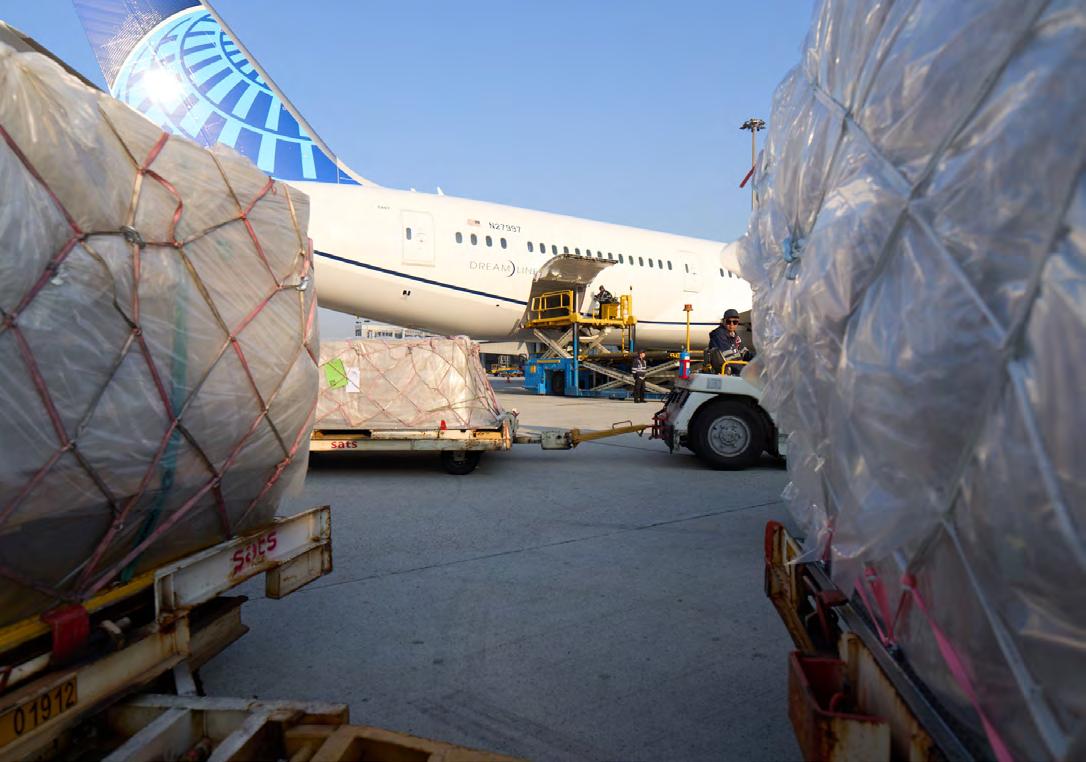
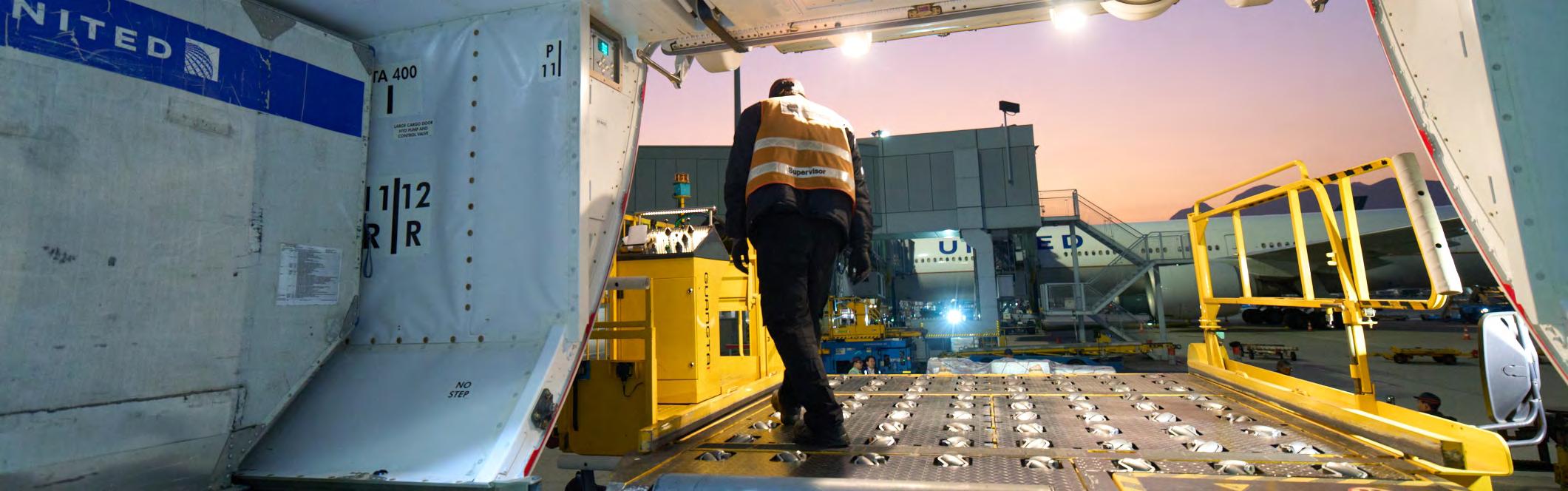
The World Cargo Symposium (WCS) is the largest and most prestigious air cargo annual event. The 2025 edition brought close to 2’000 delegates to Dubai, UAE.
Participate in exclusive business, networking, and branding opportunities tailored for industry leaders and decision-makers. Access industry intelligence, staying updated on the air cargo latest trends.
The WCS 2026 edition will include Regulatory, Special Cargo, and Digitalization Streams.
Host Airline
Harvest Information Pte. Ltd. 531 Upper Cross Street,#04-16, Singapore 050531
EDITORIAL/PUBLISHER
Keen Whye Lee Publisher publisher@harvest-info.com
Hong Kong, Europe and Middle East sales@harvest-info.com
Chua Chew Huat Asia Pacific sales-sg@harvest-info.com
Matt Weidner North America mtw@weidcom.com
TECHNICAL SUPPORT
MJ Magsalin tech@harvest-info.com
GRAPHIC LAYOUT
Red Van Cliff Estocado vancliff.estocado@gmail.com
EDITOR’S NOTE
Dear Reader,
In today’s air cargo landscape, network strategy is no longer just about chasing routes— it is about building systems that can perform consistently under pressure. As volatility continues to shape global trade, carriers and logistics stakeholders are increasingly focused on optimising networks through smarter hub planning, fleet deployment, corridor development, and operational resilience.
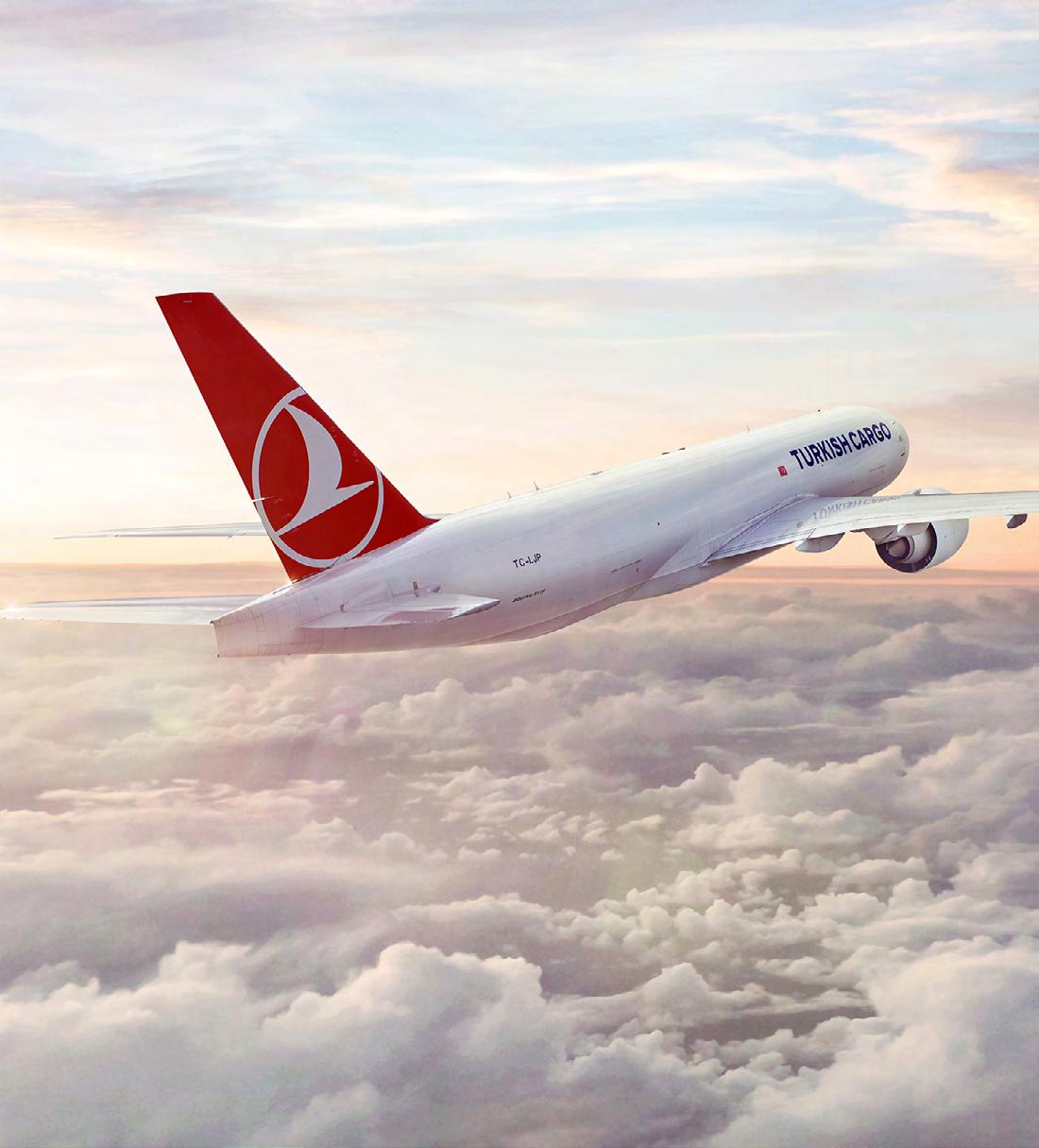
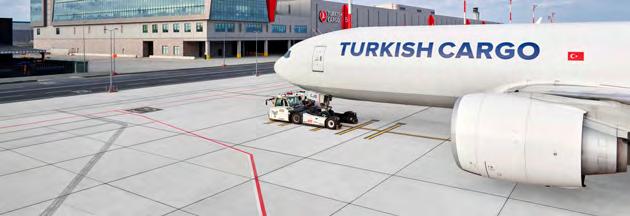
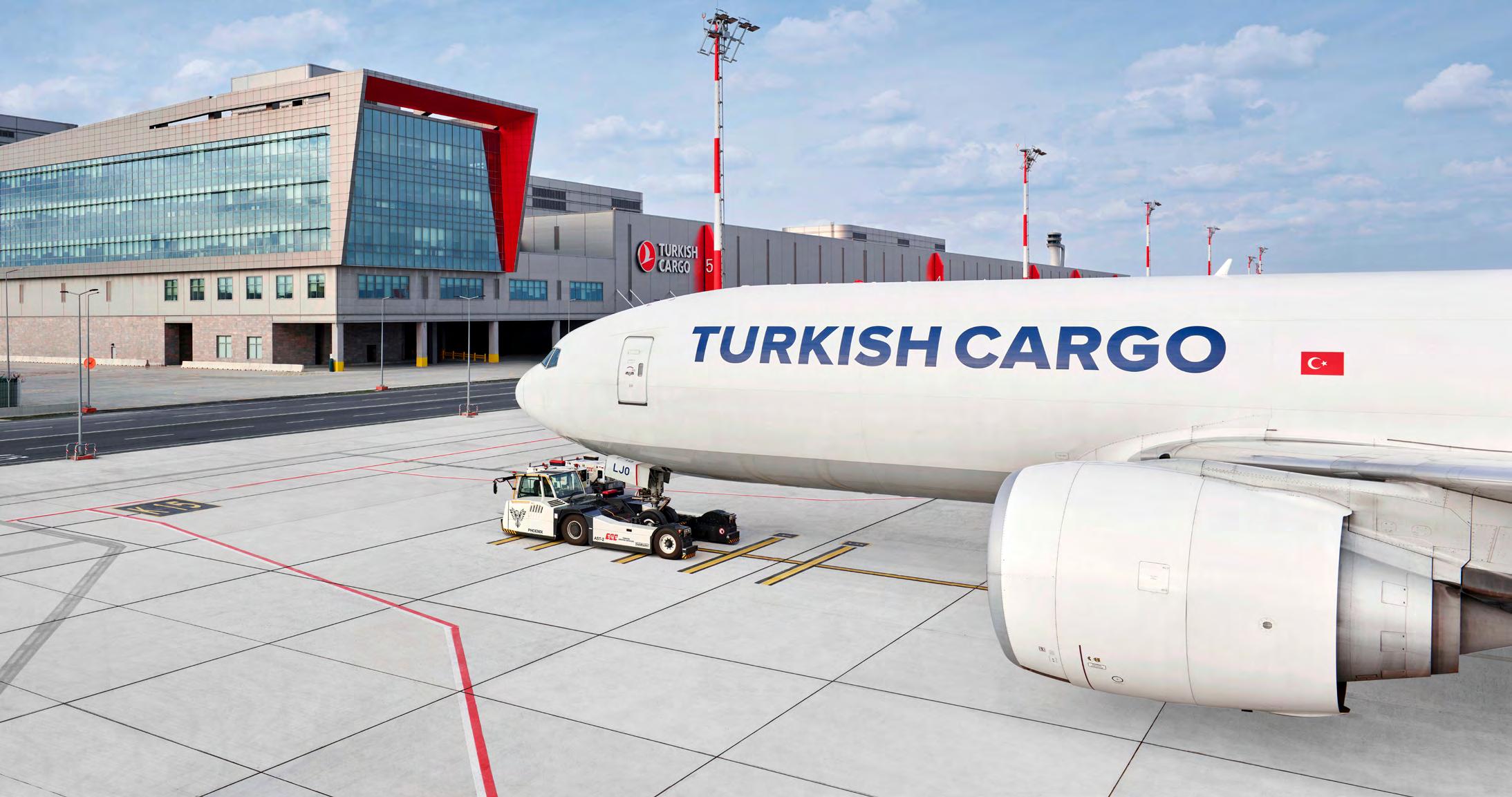
In this January–February issue of Payload Asia, we explore how leading industry players are refining their networks to stay competitive in 2026. Our cover story features Turkish Cargo, named Overall Carrier of the Year – Global at the 12th Payload Asia Awards, highlighting how its hub-led model, anchored by Istanbul Airport, supports scale, connectivity, and reliability.
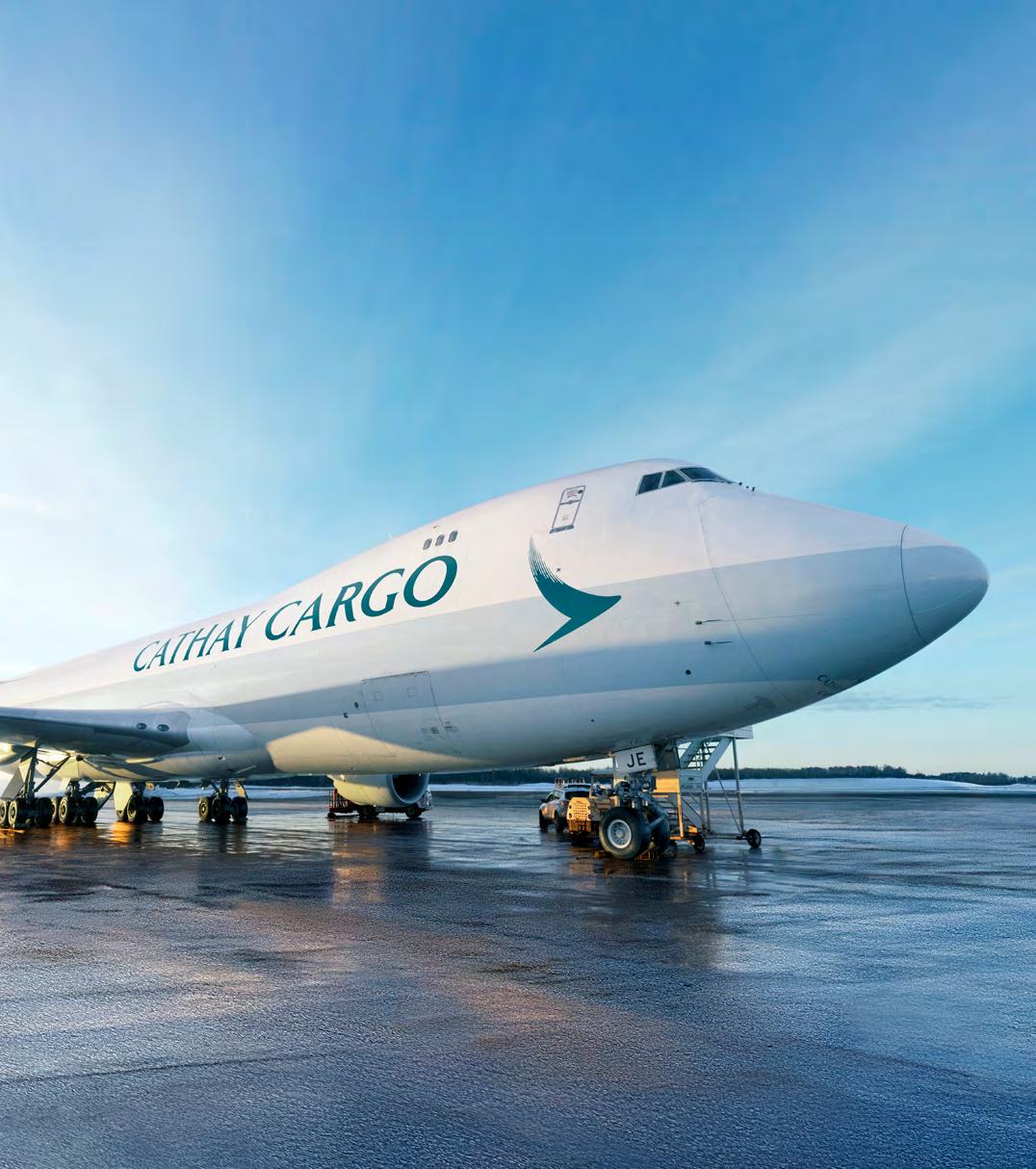
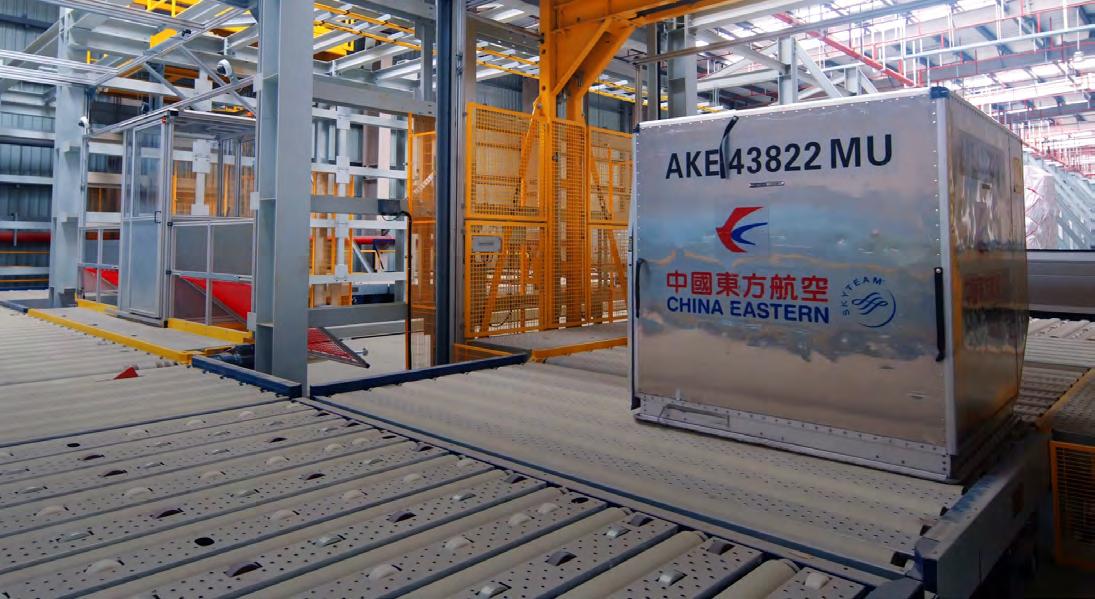
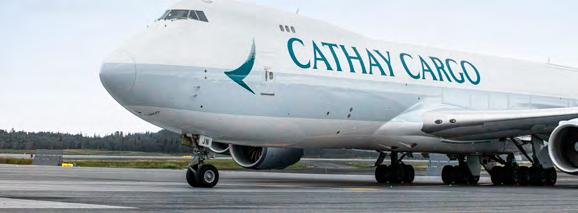
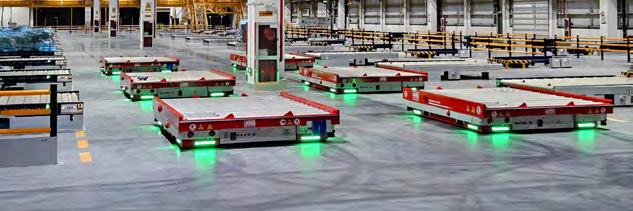
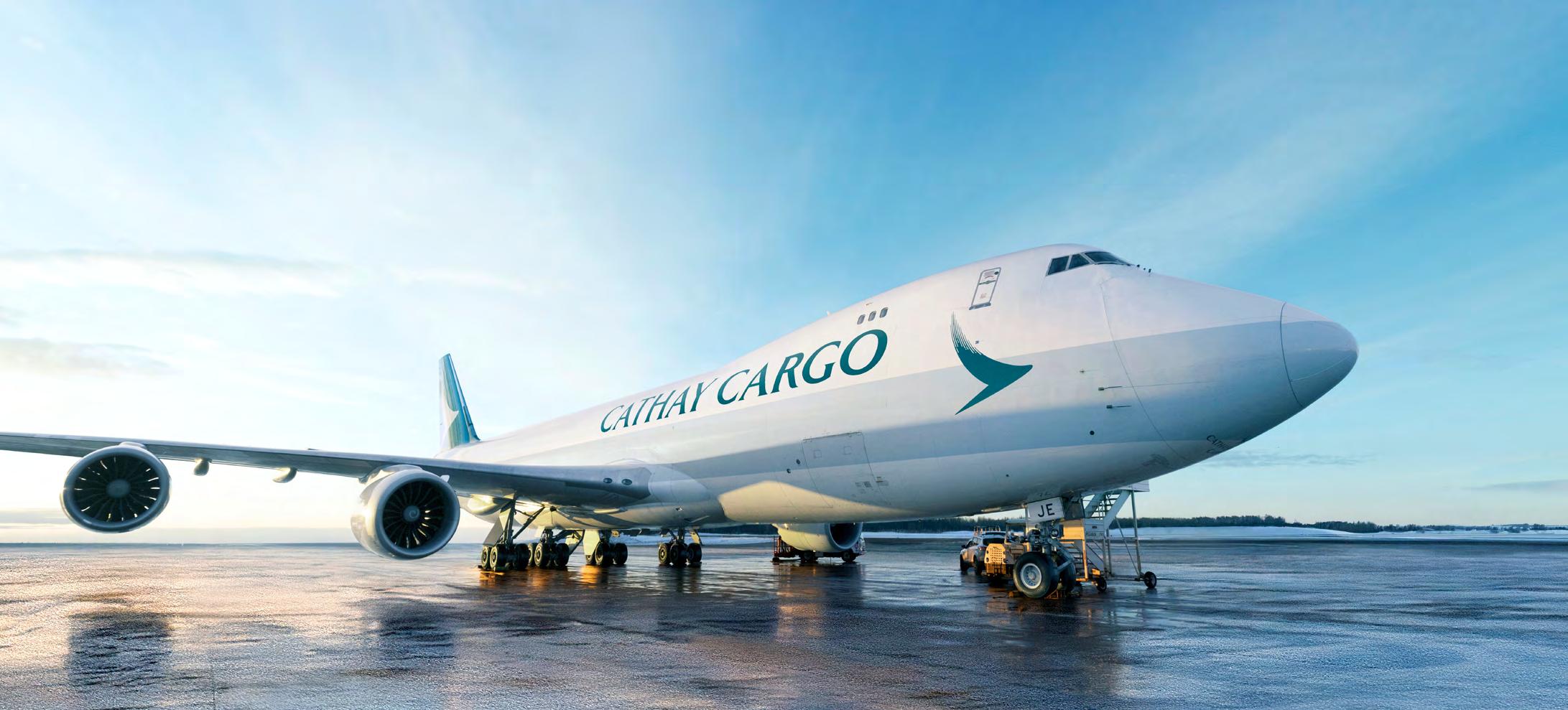
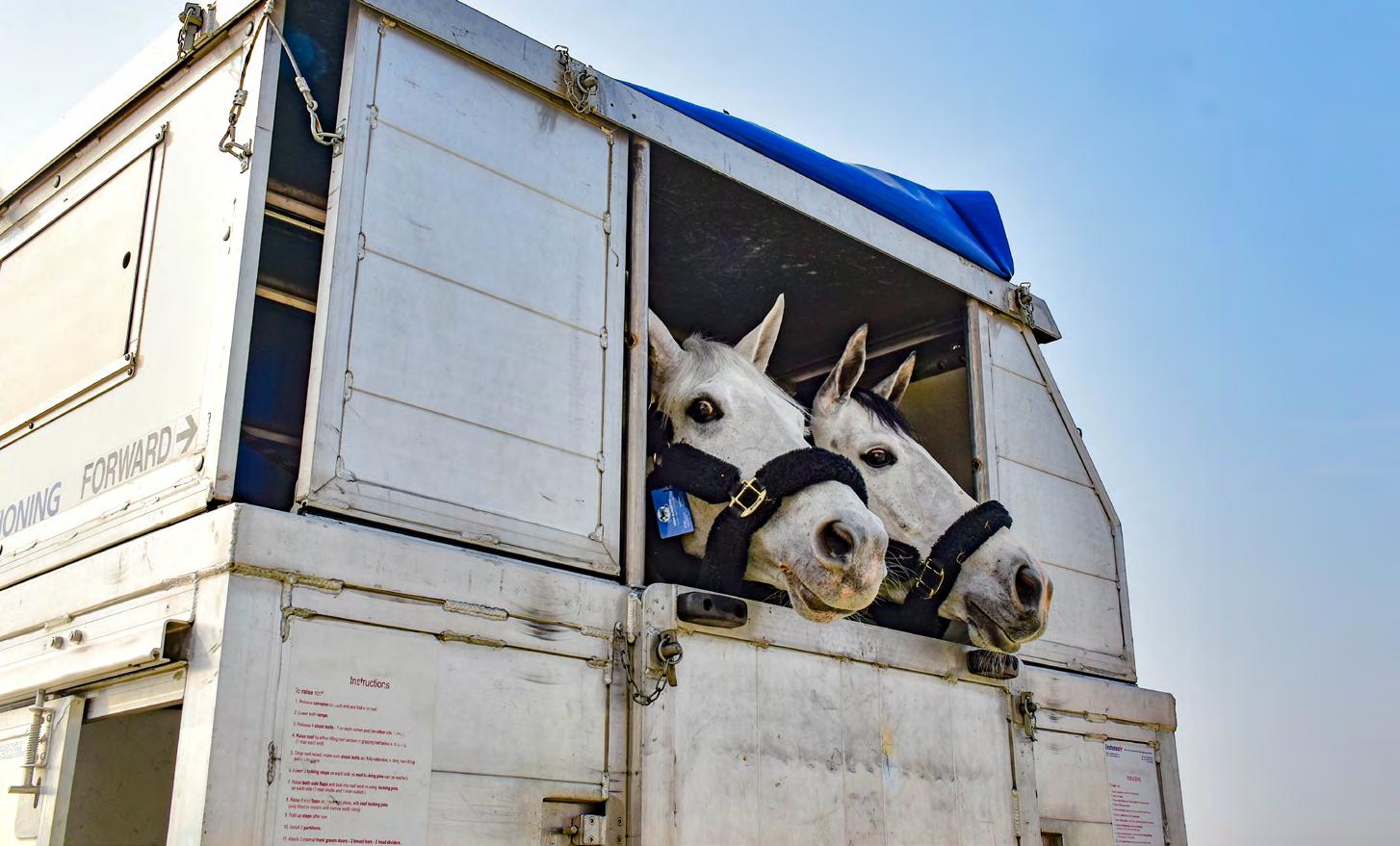
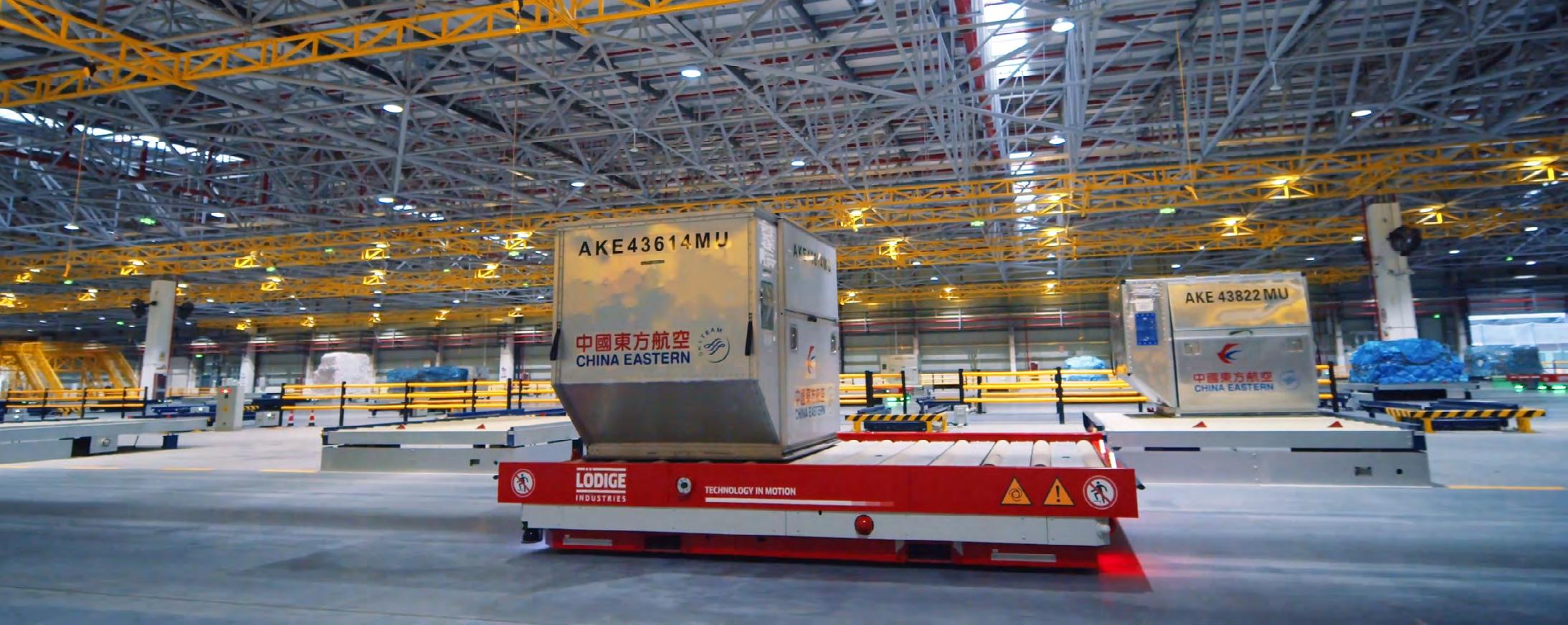
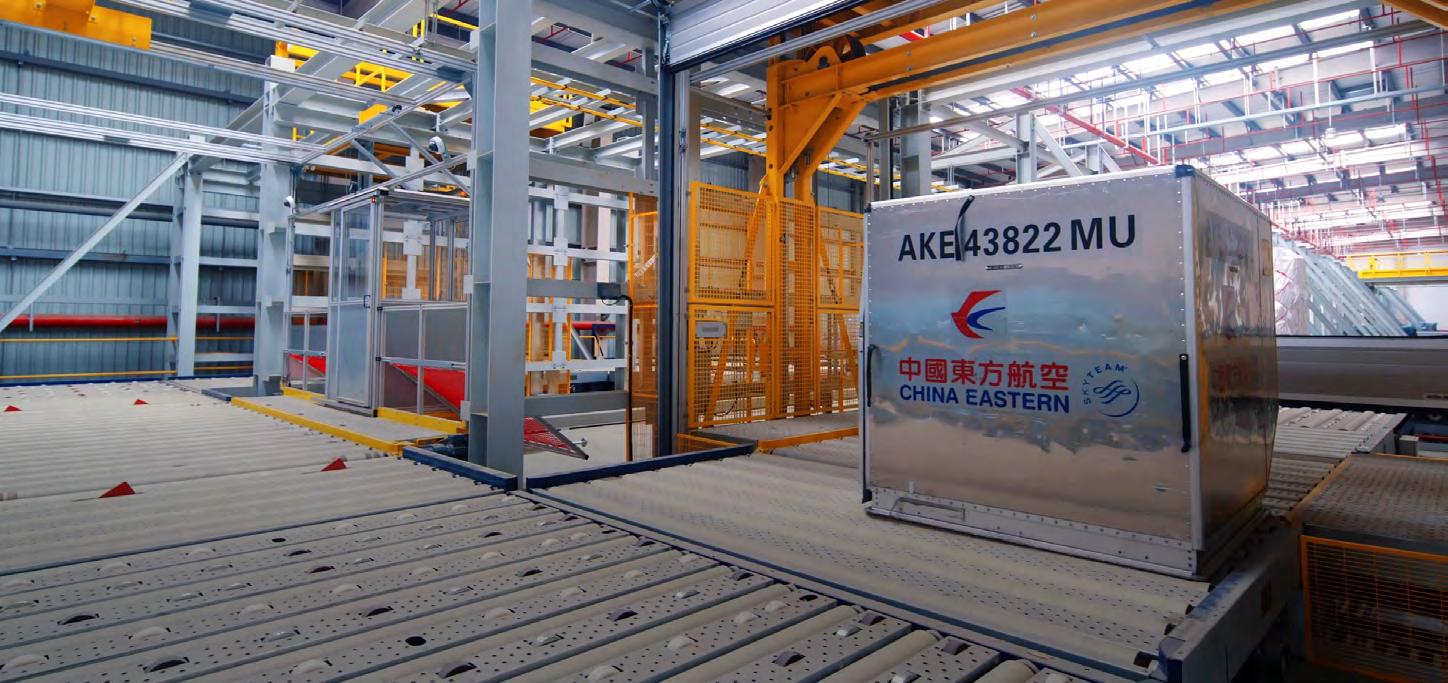
We also feature Skyworks Solutions, winner of the newly introduced Shipper of Choice –Collaboration award at the 12th Payload Asia Awards, offering a shipper’s perspective on how measurable reliability and collaborative planning are reshaping expectations in an increasingly time-sensitive supply chain. From specialised cargo to ground infrastructure, this issue examines Cathay Cargo’s growing expertise in equine transport—where network performance is tested at the highest level—and how cargo terminals are evolving into intelligent performance nodes, as explored in our feature on Lödige Industries.
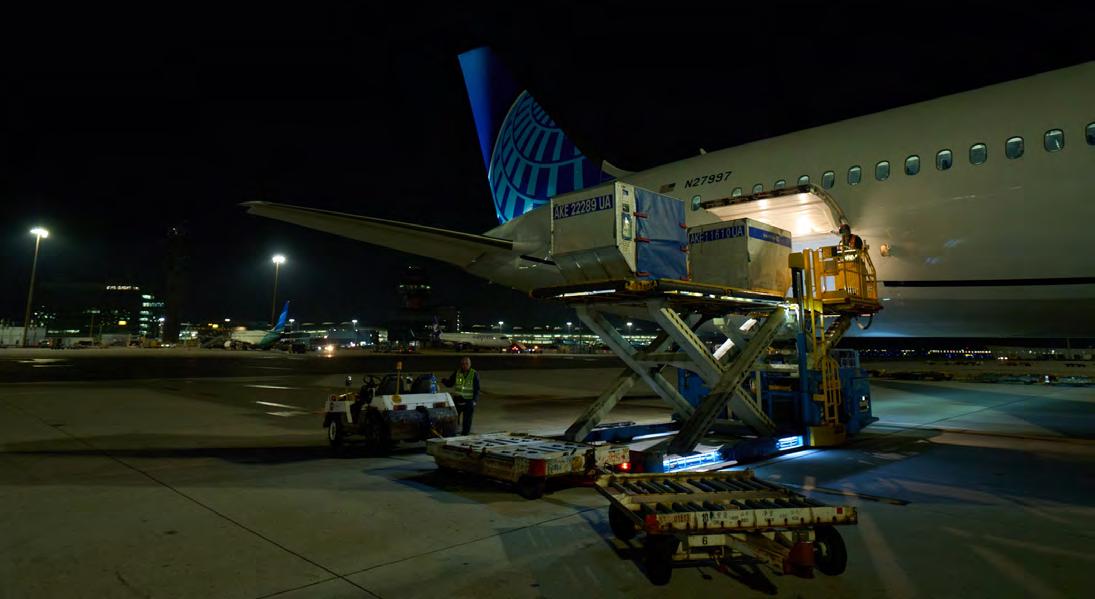
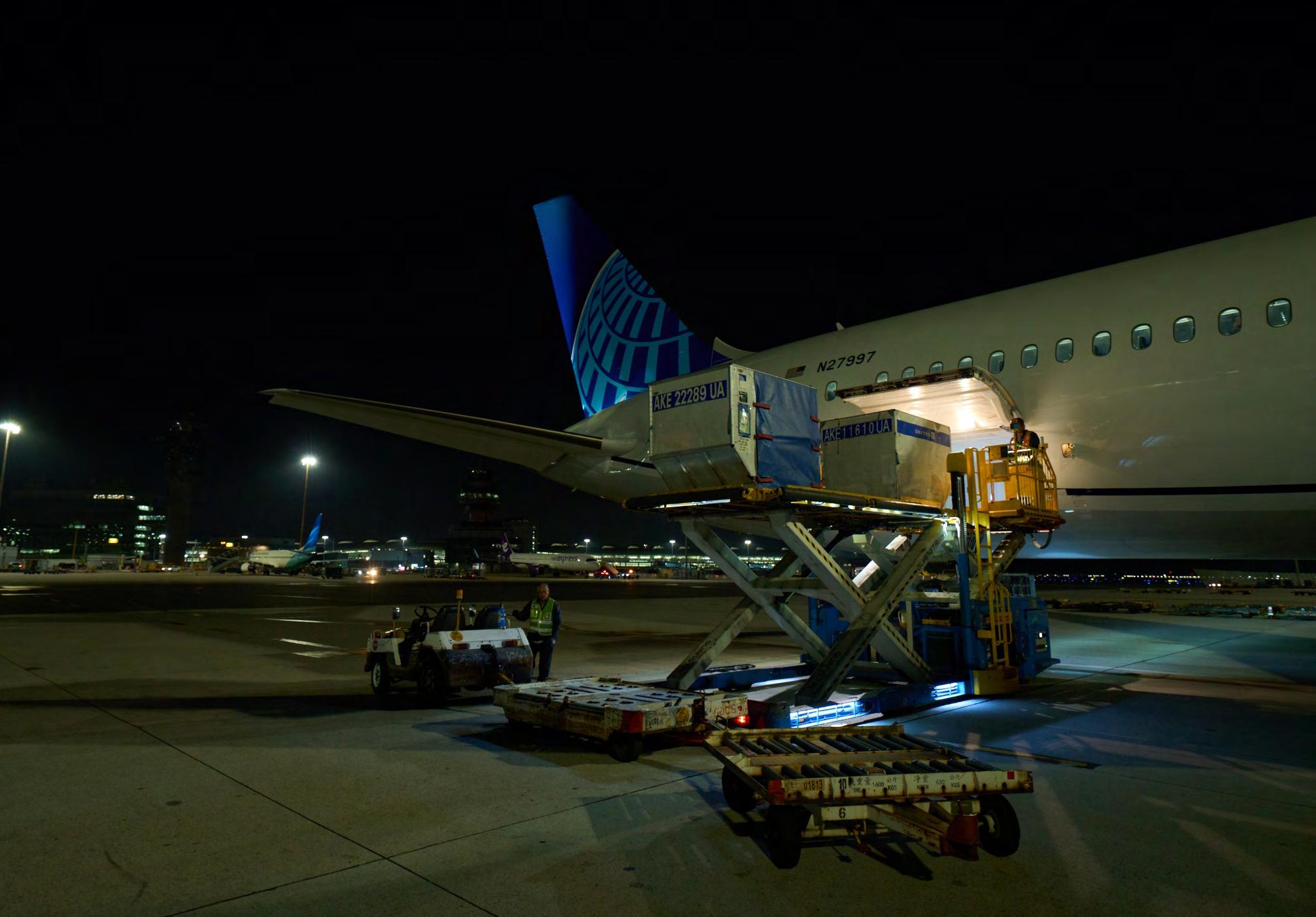
Finally, we look at how legacy experience continues to shape modern cargo strategy through a feature on United Cargo, which examines the evolving roles of connectivity, partnerships, and adaptability in building a future-ready cargo network.
As we enter 2026, one thing is clear: the most competitive cargo networks will not simply be the biggest, but the most resilient, predictable, and well-coordinated.
Warm regards,
Monina Eugenio
Chief Editor
Skyworks Solutions: Why collaboration, not cost, defines a shipper of choice
Turkish Cargo: Building a hub-led global cargo network for resilience and growth
Turkish Airlines lays the foundations for a new investment initiative worth TRY 100 billion
Oman Air Cargo expands into East Africa with new Muscat-Kigali route
ANA Group announces flight schedule for FY2026
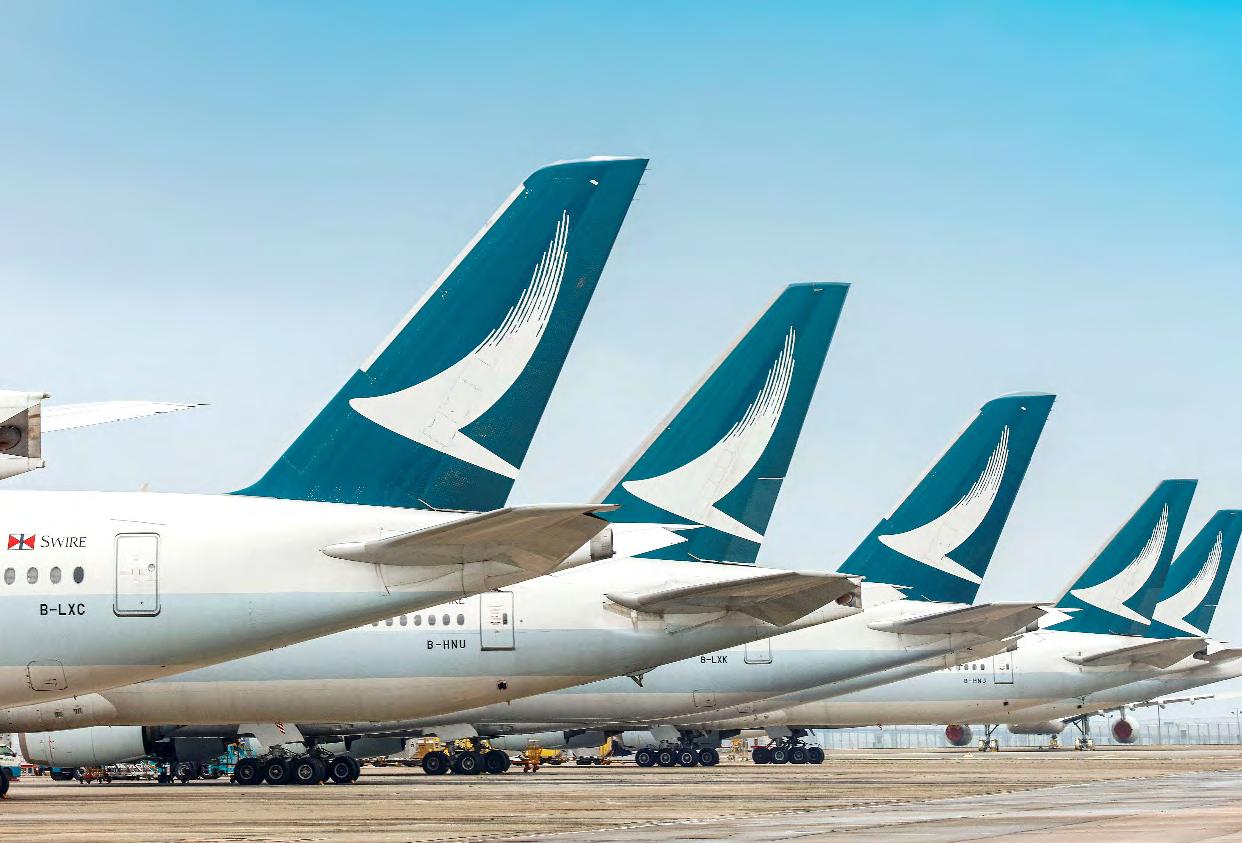
Cathay Group posts solid passenger and cargo growth in 2025, capped by strong December traffic
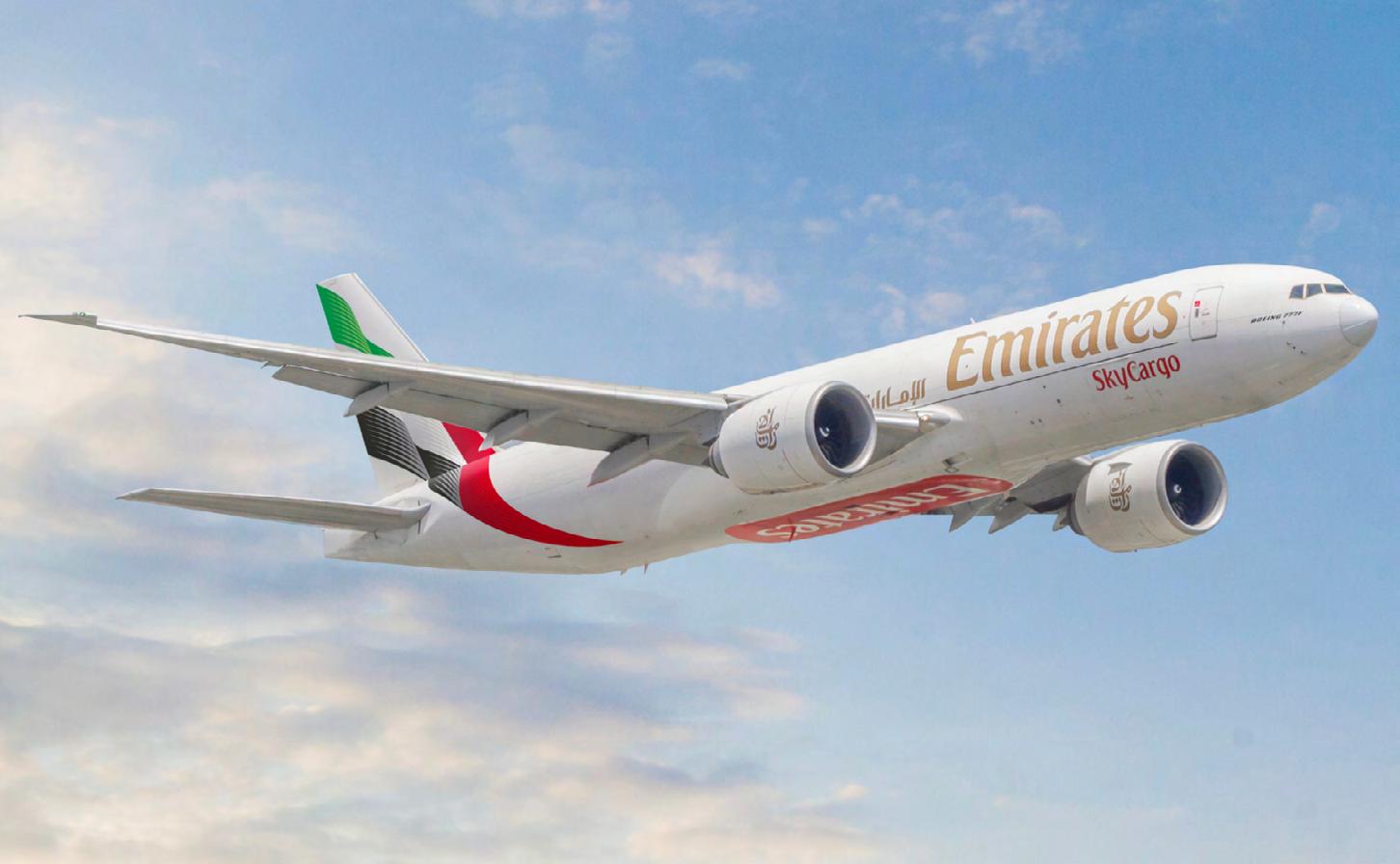
Emirates SkyCargo adds Liege, Belgium to its freighter network
Lufthansa Cargo strengthens short and medium haul freighter network
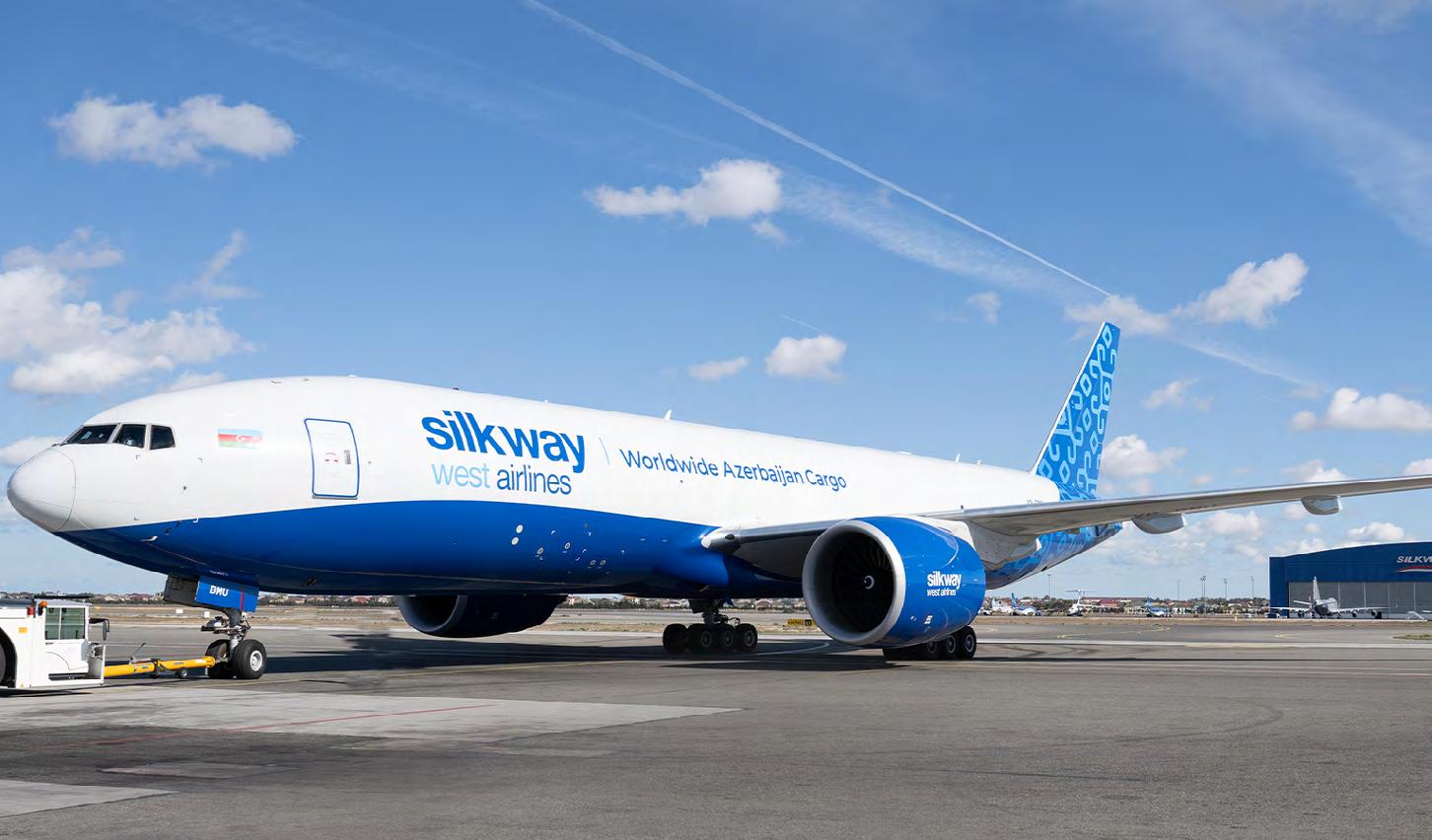
Silk Way West Airlines receives fourth Boeing 777F as part of fleet renewal programme
Liege Airport announces first direct scheduled connection with Chongqing as Suparna Airlines launches new cargo route
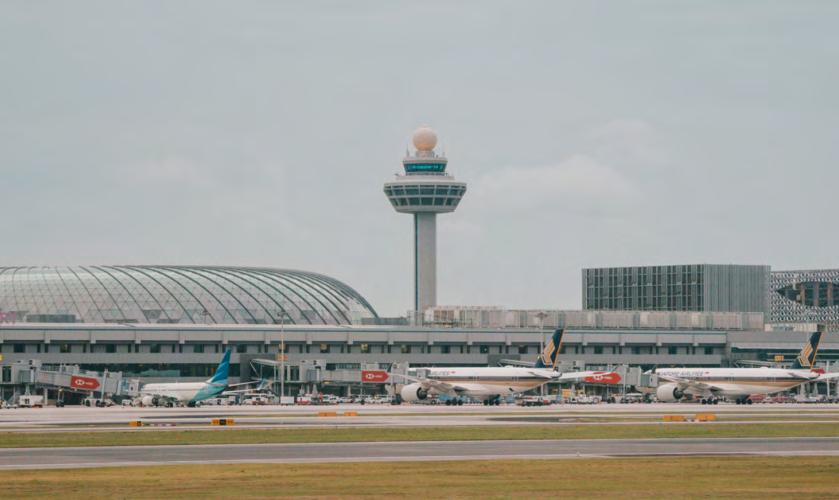
Changi Airport posts strong 2025 performance with over 2 million tonnes of cargo and record passenger traffic
Maastricht Aachen Airport reports 40% increase in air freight in 2025
Glasgow Prestwick Airport represents UK aviation during state visit to China as trade talks progress
FedEx announces filing of Form 10 registration statement for planned spinoff of FedEx Freight
Gebrüder Weiss expands presence in Uzbekistan
From SAF to solar: DHL’s bold steps toward net-zero by 2050
AAT launches Digital Import Cargo Collection, eliminating paperwork and queues
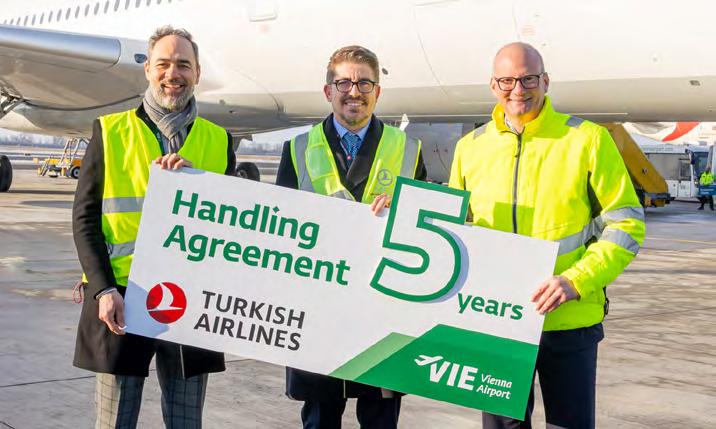
Turkish Airlines and Vienna Airport sign five-year ground handling agreement
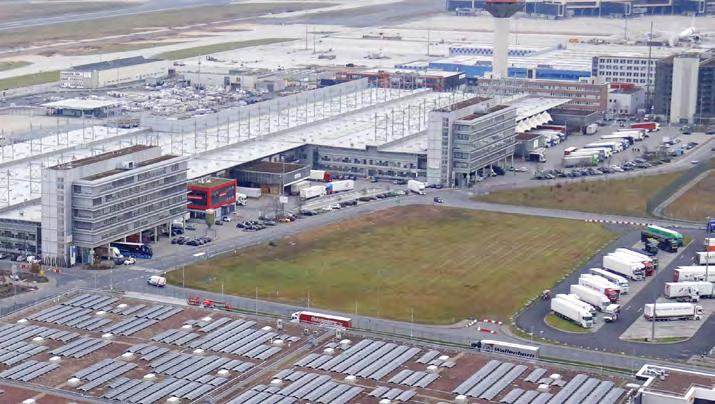
Fraport signs lease agreement with Kuehne+Nagel for new air cargo warehouse 10
Swissport partners up with Scan Global Logistics and launches its first dedicated perishables centre in the UK
WFS plans rollout of CIND’s Dimensioner in Motion System after successful ‘Proof of Concept’ operational trial in Copenhagen
Cainiao opens new U.S.–Mexico crossborder logistics lane; steps up logistics tech push in Japan and South Korea
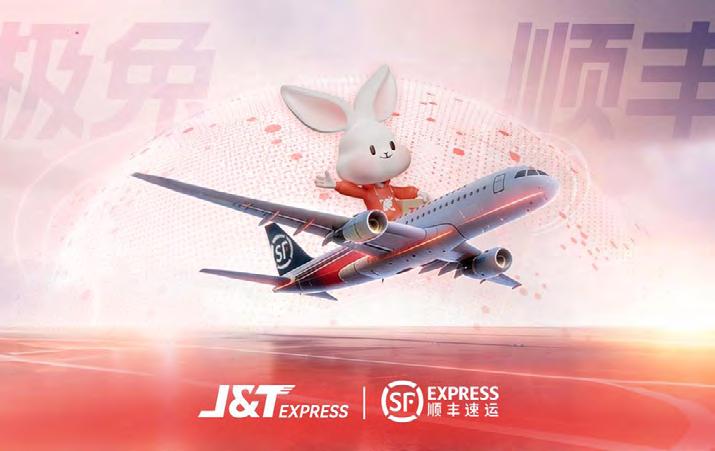
J&T Global Express and SF Holding announce strategic cross-shareholding to build new global smart logistics ecosystem
DHL Group adds new sustainability milestones in Asia Pacific across skies and streets
CEVA Logistics, HAECO Group sign global air freight partnership at Singapore Airshow
World’s first Boeing 737-800 Combi conversion by KF Aerospace secures Supplemental Type Certificate (STC)
ST Engineering and LOT Polish Airlines extend partnership with multi-year nacelle MRO agreementt
AMETEK MRO sees demand for specialist avionics MRO soar in Middle East
FedEx study affirms sustainability is a business imperative for APAC supply chain
appoints Tom Owen as new Group Director Corporate Developmentt
Logistic International and THAI Cargo honour top-performing agents at Nepal customer event
CHAMP Cargosystems welcomes Manuel Galindo as new Chief Executive Officer FedEx appoints Salil Chari as President of Asia Pacific
at Lufthansa
Chapman Freeborn appoints Tyler Porteous as Vice President of Cargo – Canada
DHL Express appoints General Manager of Central Asia Hub in Hong Kong
NEWS - CARRIERS
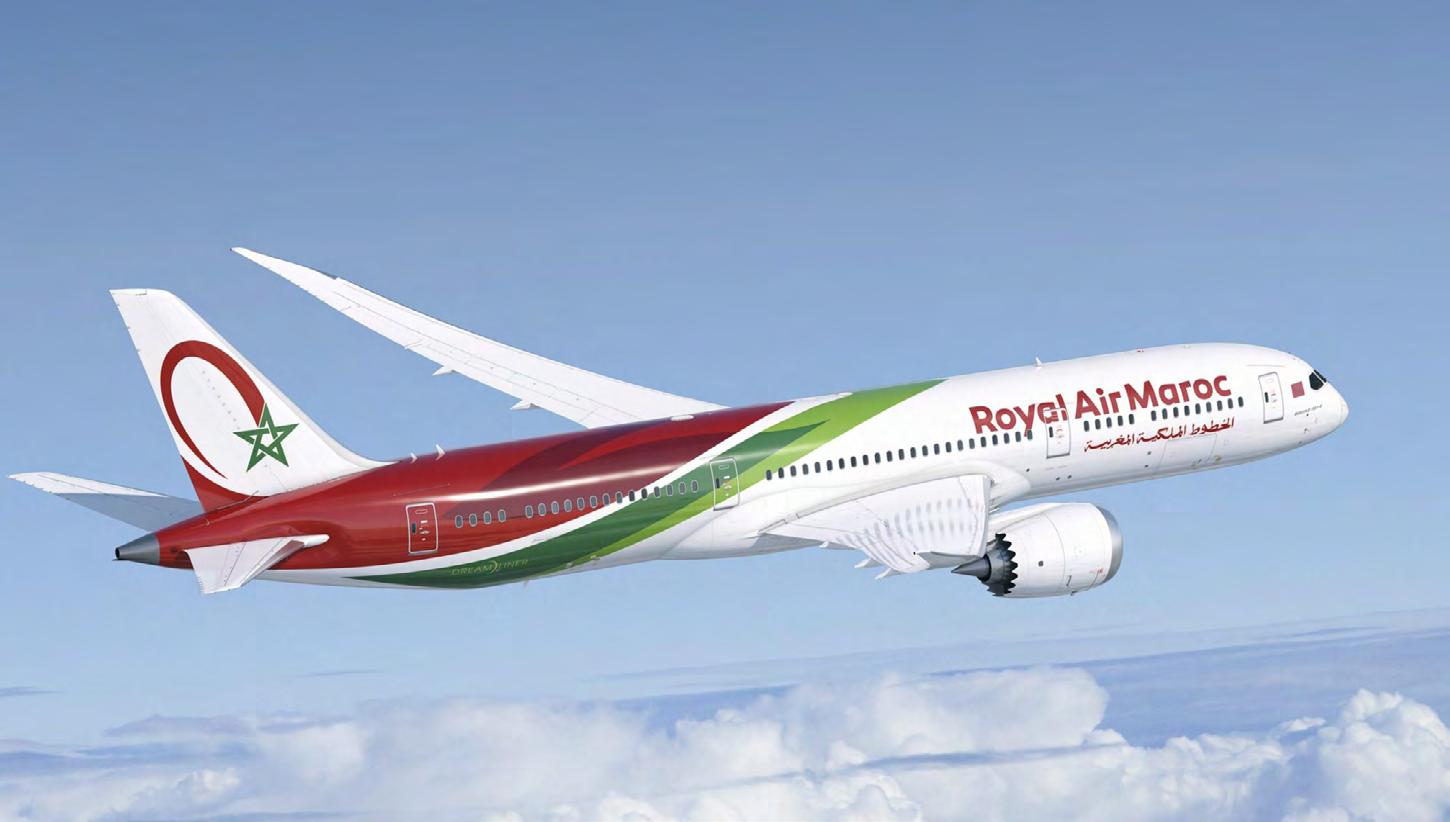
Royal Air Maroc Cargo launches new Casablanca–Dakar freighter service, reinforcing its African network
Royal Air Maroc Cargo has launched a new dedicated freighter route between Casablanca and Dakar (CMN–DSS). Operated by a Boeing 767 freighter offering 45 tons of capacity, this weekly Friday service strengthens the airline’s role as a strategic
connector between North and West Africa.
The addition of Dakar expands the airline’s freighter network, which already includes Brussels (three flights per week), Istanbul (two), Bamako (two), and Ouagadougou
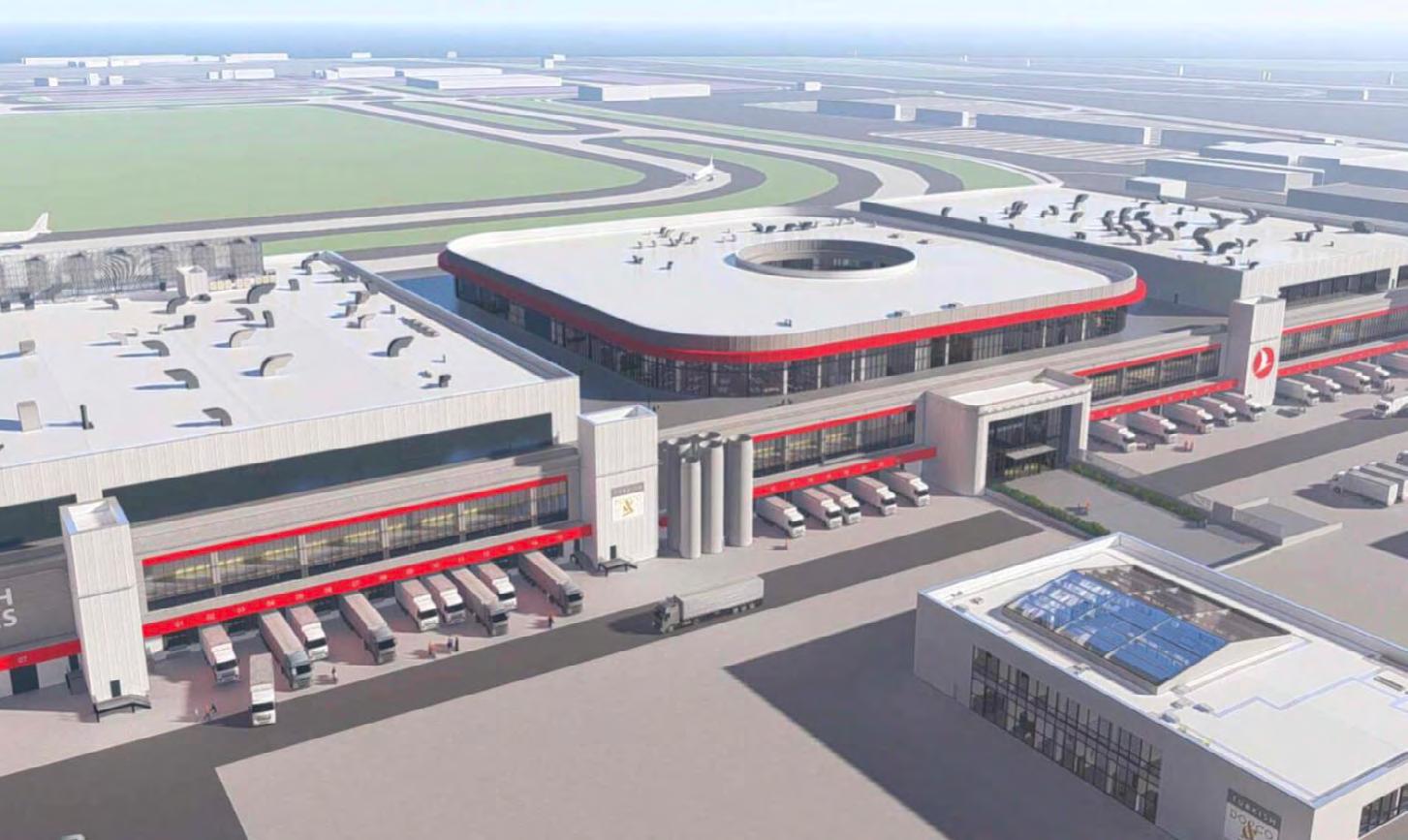
Turkish Airlines lays the foundations for a new investment initiative worth TRY 100 billion
Turkish Airlines has launched a major investment initiative aimed at strengthening Türkiye’s aviation infrastructure and supporting the carrier’s long-term growth strategy under its 2033 vision. Groundbreaking ceremonies were recently held for eight new facilities with a total investment exceeding TRY 100 billion (approximately US$2.32 billion), primarily
located at Istanbul Airport, the airline’s main hub.
The ceremony at Istanbul Airport was attended by Türkiye’s Minister of Transport and Infrastructure Abdulkadir Uraloğlu, Turkish Airlines Chairman Prof. Ahmet Bolat, and senior executives from the airline and its subsidiaries.
(two). Together, these routes form a robust regional backbone that complements Royal Air Maroc Cargo’s wide passenger and belly hold network across Africa, Europe, the Americas, and Asia.
Supported by its B767 all-cargo aircraft, the airline also offers daily cargo capacity on its Boeing 787 Dreamliners and Boeing 737 aircraft, ensuring flexible and efficient service across intra-African and intercontinental routes. At the heart of this network, the Casablanca hub, equipped with a 200,000-ton annual handling capacity and specialised facilities for perishables, pharmaceuticals, and high-value goods, enables swift onward connections to more than 30 African destinations.
The launch of the Casablanca–Dakar service follows recent network expansions to Beijing, São Paulo, and Toronto, reaffirming Royal Air Maroc Cargo’s strategy to consolidate its leadership in Africa and enhance trade flows between the continent and the world.
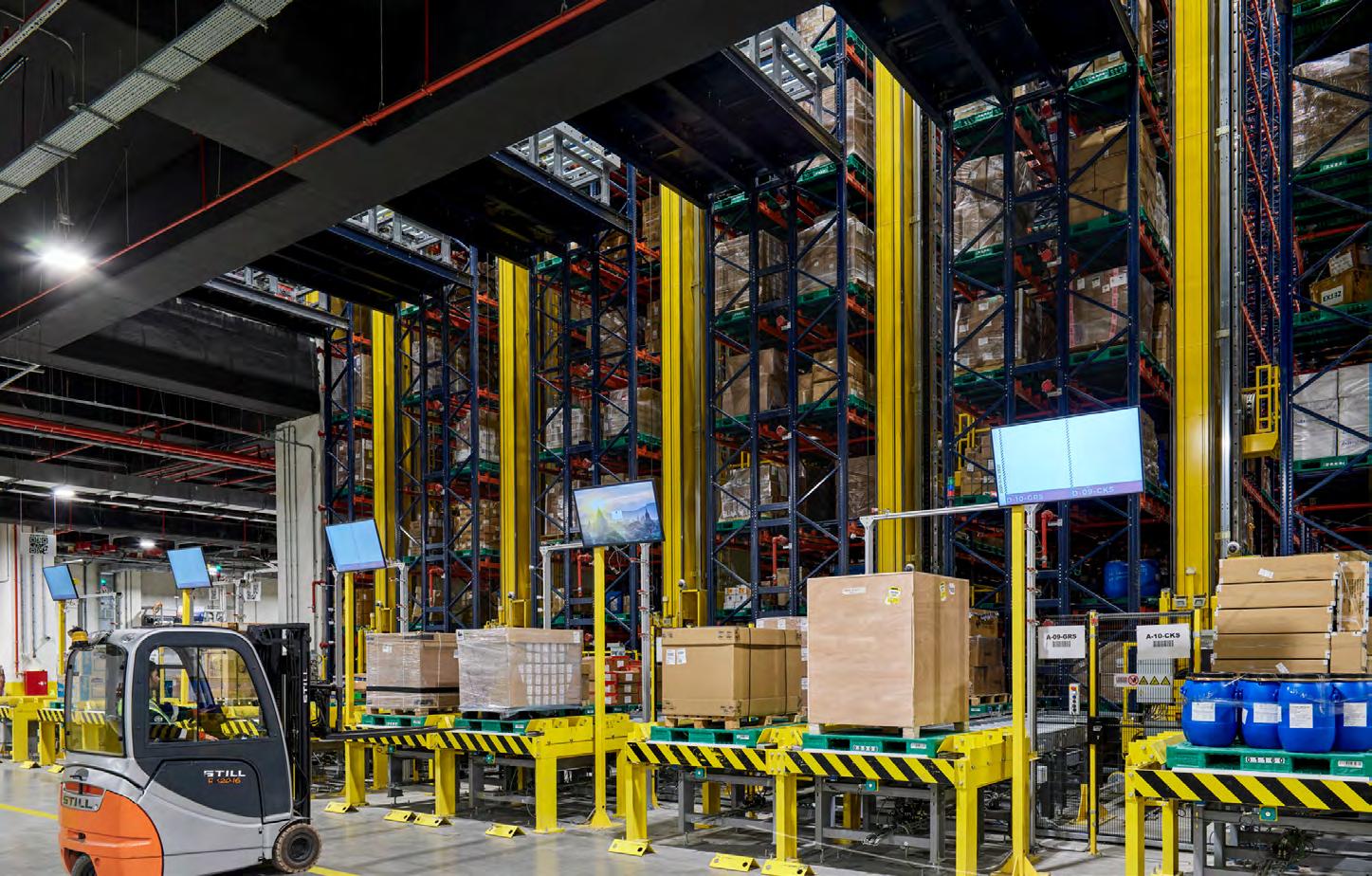
Minister Uraloğlu said the projects will boost Türkiye’s aviation ecosystem and create 26,000 new jobs in 2026. He highlighted the expansion of Turkish Cargo’s SmartIST air cargo terminal, where Phase 2 will increase cargo handling capacity from 2.2 million tonnes to 4.5 million tonnes annually.
Prof. Bolat said the investments will strengthen Turkish Airlines’ infrastructure across cargo, technical maintenance, catering, and digital operations, supporting its ambition to position Türkiye as a leading global aviation hub. He added that job creation is expected to reach 36,000 once all phases are completed, and projected the airline’s contribution to the national economy to rise from US$65 billion to US$144 billion by 2033.
Key projects include SmartIST Phase 2, a new main catering facility, an engine maintenance centre for Rolls-Royce Trent engines, additional maintenance hangars, an e-commerce complex supporting integrated cargo solutions, an Istanbul data centre, a flight training centre, and an additional crew terminal building.
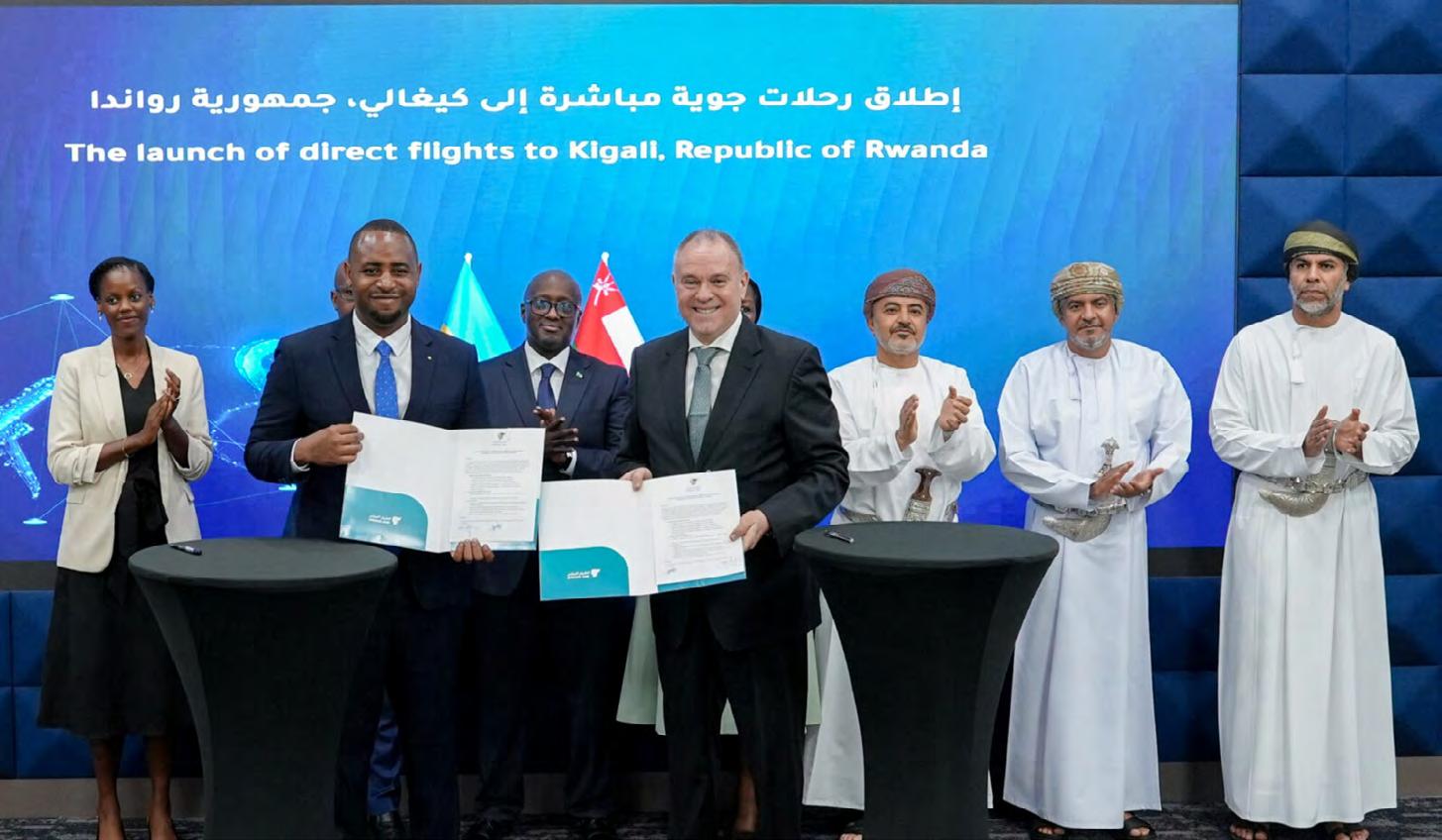
Oman Air Cargo expands into East Africa with new Muscat-Kigali route
Oman Air Cargo has expanded its network with the launch of a new Muscat, Oman, to Kigali, Rwanda, route, strengthening trade links between East Africa, the Middle East, and Europe.
The service will operate using scheduled B-737 passenger flights from June 2026, subject to regulatory approvals, adding reliable lift for perishables and time sensitive cargo flows between the regions.
“We are seeing sustained growth in demand between the Middle East and Africa, particularly for perishables and specialist cargo, and this new route allows us to respond with additional capacity and reach,” said Michael Duggan, Head of Cargo, Oman Air.
“By expanding our network into East Africa, we are providing exporters with reliable access to our global network and strengthening Muscat’s position as a dependable cargo hub.”
The Muscat-Kigali service will support the movement of fresh produce, including
fruit, vegetables, and flowers, alongside pharmaceuticals, general cargo, and express shipments originating in East Africa.
Cargo arriving in Muscat will benefit from Oman Air Cargo’s onward connections to
the Middle East, Europe, and the Indian subcontinent, positioning Oman as an efficient transit hub for African exports destined for global markets.
ANA Group announces flight schedule for FY2026
ANA HOLDINGS INC. (ANA HD) has announced its flight schedule for fiscal year 2026 (FY2026), detailing network enhancements across its passenger and cargo operations, including the introduction of additional routes and new aircraft to support targeted growth and evolving market demand.
For FY2026, ANA Group will focus on enhancing customer convenience and profitability by optimising its dual-brand network (ANA and Peach) and advancing synergies with its newly integrated Nippon Cargo Airlines (NCA), reinforcing its position as Japan’s largest combination carrier.
Freighter routes
As Japan’s largest combination carrier, ANA Group will strengthen its cargo network by focusing ANA-operated freighters on Asia routes, while deploying NCA-operated freighters on North America and Europe services. Effective 29 March, ANA will increase freighter frequencies on the Narita–Bangkok route. In addition, NCA will introduce a combined total of five additional weekly round-trip freighter services on its Narita–Chicago, Narita–Dallas and Narita–Los Angeles routes.
ANA Group will further strengthen cargo connectivity between Asia, North America and Europe through a combination of dedicated freighter operations and belly capacity on its expanding passenger network, supporting reliable cargo flows across key long-haul markets.
Medium-sized freighters, including Boeing 767Fs, will be deployed on Asia routes, while larger freighters such as Boeing 777Fs and 747Fs will primarily serve North America and Europe. In addition to deploying charter and extra flights where required, ANA Group will continue to maximise cargo capacity across its passenger fleet to respond to diverse shipper requirements.
Oman Air launches direct flights to Kigali, Rwanda
NEWS - CARRIERS
Cathay Group posts solid passenger and cargo
growth in 2025,
capped by strong December traffic
The Cathay Group has released its traffic figures for December 2025, reporting strong year-end demand across its passenger and cargo operations.
Cathay Chief Customer and Commercial Officer Lavinia Lau said December marked the traditional peak travel season, with Cathay Pacific and HK Express carrying more than 125,000 passengers on 27
December 2025, the highest single-day total in the group’s history. The record was surpassed shortly after, with more than 126,000 passengers carried on 3 January 2026. In 2025, Cathay Pacific and HK Express carried over 36 million passengers, up 27% year on year, supported by Available Seat Kilometres (ASKs) growth of more than 25%.
On the cargo side, Cathay Cargo carried over 1.6 million tonnes of cargo in 2025, more than 9% higher than 2024. In December 2025, cargo tonnage rose 6% year on year, while Available Freight Tonne Kilometres (AFTKs) increased 8%.
Lau noted that tonnage remained strong despite a slight month-on-month dip as the festive season approached. Demand for Cathay Fresh was supported by seasonal produce movements from the Americas via the Air-Land Fresh Lane into the Greater Bay Area, as well as perishables from Oceania to Hong Kong. Cathay Expert also performed well across Northeast Asia, driven by machinery shipments.
Looking ahead, Lau expects softer demand in early January, with volumes picking up closer to the Lunar New Year period.
Emirates SkyCargo adds Liege, Belgium to its freighter network
Emirates SkyCargo has added Liege Airport (LGG) to its freighter network, marking its first new freighter destination of 2026 as the airline prepares for further expansion over the next 12 months.
Located within the Amsterdam–Paris–
Frankfurt production corridor and supported by strong road connectivity, Liege has become one of Europe’s fastest-growing cargo hubs, recording a 14% increase in cargo volumes in 2025. Emirates SkyCargo has previously served LGG through ad hoc freighters and charters, transporting products including fresh flowers,
e-commerce shipments and horses. The carrier will now operate five weekly scheduled freighter flights, adding 500 tonnes of cargo capacity per week.
Three of the weekly freighters will connect Liege with Chicago O’Hare International Airport and Al Maktoum International Airport to support the transport of temperature-sensitive pharmaceuticals. The remaining two freighters will originate from Hong Kong, carrying e-commerce shipments to and through Liege.
Khawla Abdulla, Vice President Cargo Commercial for Europe at Emirates SkyCargo, said the move strengthens the airline’s European footprint and supports anticipated growth following the transport of more than 15,000 tonnes of cargo from Belgium in 2025. Liege Airport’s Torsten Wefers welcomed the partnership, citing LGG’s strong positioning in pharma, fresh, live animals and express cargo.
Emirates SkyCargo currently serves Europe with 38 freighters and 538 passenger flights weekly and plans to further expand capacity with additional Boeing 777F deliveries by the end of 2026.
Lufthansa Cargo strengthens short and medium haul freighter network
Lufthansa Cargo is expanding its A321 shortand medium-haul freighter network with the addition of two new destinations from February 2026.
From 7 February 2026, Rome Fiumicino Airport (FCO) will be added to the regular freighter schedule with a weekly Saturday service from Frankfurt Airport (FRA) under flight number LH8344. The route will continue from Rome to Istanbul Airport (IST) and onward to Munich Airport (MUC). Rome has been served on an
ad hoc basis since December 2025 to meet demand and is Lufthansa Cargo’s newest hub in Southern Europe. The carrier said customers will also benefit from access to additional cargo capacity via ITA Airways, road feeder services, and dedicated freighter operations.
The airline is also expanding its A321 freighter network into Africa with the addition of Algiers Airport (ALG). Starting 10 February 2026, the destination will be served every Tuesday under flight number LH8308.
Ashwin Bhat, CEO of Lufthansa Cargo, said the expanded network will enhance speed, reliability and flexibility for customers. With the additions, Lufthansa Cargo offers direct A321 freighter connections to seven destinations in the Middle East and Africa.
Lufthansa Cargo’s short- and medium-haul network comprises 22 destinations served by four A321 freighters, supported by 18 B777 freighters and belly capacity across partner airlines.
Silk Way West Airlines receives fourth Boeing 777F as part of fleet renewal programme
Silk Way West Airlines has taken delivery of its fourth Boeing 777 Freighter, which arrived in Baku following a direct flight from Seattle. The aircraft forms part of the airline’s ongoing fleet renewal programme to modernise its long-haul operations.
The delivery marks the fourth of six Boeing 777Fs ordered by the carrier. As part of its renewal strategy, Silk Way West Airlines has phased out two Boeing 747-400 Freighters to improve fleet efficiency and performance. The remaining two Boeing 777Fs are scheduled for delivery in 2027, completing the first phase of the airline’s fleet modernisation plan.
Wolfgang Meier, President of Silk Way West Airlines, said the delivery reflects the carrier’s disciplined approach to fleet development and long-term commitments. He added that replacing older aircraft with next-generation freighters supports stronger operational performance, improved sustainability outcomes, and continued growth.
The Boeing 777F is among the most
advanced cargo aircraft in service, offering long-range capability, high payload capacity and improved fuel efficiency.
With the latest addition, Silk Way West Airlines’ fleet now totals 12 aircraft. From 2028, the airline plans to begin the second
phase of its modernisation programme, which includes the delivery of four Airbus A350 Freighters and four Boeing 777-8 Freighters. The programme is expected to be completed by 2030, with the airline targeting a fleet of 20 wide-body aircraft.
NEWS - AIRPORTS
Liege Airport announces first direct scheduled connection with Chongqing as Suparna Airlines launches new cargo route
Liege Airport launched a new scheduled cargo air service operated by Suparna Airlines, directly connecting Liege with Chongqing Jiangbei International Airport.
On January 5th, Suparna Airlines started operating regular scheduled flights between Chongqing and Liege, marking the first-ever direct air cargo connection
between Liege Airport and Chongqing. This new route represents an important strategic addition to Liege Airport’s cargo network and establishes Chongqing as a key new gateway linking Western China with Europe’s biggest freighter hub.
As one of China’s major industrial, logistics, and e-commerce hubs, Chongqing plays
a critical role in global supply chains. The new connection will support the transport of e-commerce goods, hightech products, automotive components, and industrial cargo, providing shippers with a fast and reliable solution between Western China and the European market.
Torsten, Vice President Sales &Marketing at Liege Airport, commented: “We are proud to welcome Suparna Airlines to Liege Airport and to launch our first direct scheduled connection with Chongqing. Chongqing is an important new addition to our network and further confirms Liege’s role as the most trusted and efficient gateway between China and Europe.”
With this new scheduled service, Liege Airport continues to expand its Asian cargo network and strengthen long-term partnerships with international cargo airlines, supporting the evolving needs of global logistics and cross-border trade.
Changi Airport posts strong 2025 performance with over 2 million tonnes of cargo and record passenger traffic
Singapore Changi Airport recorded its highest-ever passenger traffic in 2025, handling 69.98 million passenger movements, a 3.4% increase year on year. Aircraft movements rose 2.2% to 374,000, while airfreight throughput climbed 4.5% to 2.08 million tonnes, marking one of the airport’s strongest cargo performances to date.
December was the busiest month of the year, with 6.3 million passengers, while 20 December saw a single-day high of more than 223,000 travellers. Passenger growth was broad-based, supported by expanded connectivity and sustained travel demand. Changi’s top passenger markets were China, Indonesia, Malaysia, Australia and India, with China posting the strongest growth at
12.2%. Vietnam and Japan were also among the fastest-growing markets.
Cargo growth was recorded across exports, imports and transshipments, driven by frontloaded activity in the first three quarters and strong global demand for semiconductors linked to AI, electric vehicles and cleantech. Changi’s largest air cargo markets were China, the United States, Australia, Hong Kong and India.
In 2025, Changi added 13 new city links, including destinations in China, Southeast Asia, South Asia, Europe and Mongolia, and welcomed new passenger airlines MIAT Mongolian Airlines and Pelita Air. The airport also expanded its freighter network, with JD Airlines launching Shenzhen services, Turkish Cargo reinstating freighter operations, and FedEx Express adding nonstop freighter services to Anchorage.
Yam Kum Weng, Chief Executive Officer of Changi Airport Group, said 2025 was a strong year for Changi as both passenger and cargo connectivity continued to expand amid a volatile global environment
HKIA
handles
5.07 million tonnes of cargo in 2025 as transshipment volumes rise
Hong Kong International Airport (HKIA) handled 61 million passenger trips in 2025, representing year-on-year growth of 15%, supported by a strong year-end peak that saw daily passenger traffic exceed 200,000 for eight days in December.
Flight movements rose 8.7% compared with 2024 to 394,730, while full-year cargo throughput increased 2.7% to 5.07 million tonnes. In December alone, HKIA processed 5.8 million passengers, up 13.5% year on year, with flight movements rising 7.1% to 35,920. Visitor and transfer traffic recorded double-digit growth, led by routes to and from the Chinese Mainland, Southeast Asia
and North America.
December cargo volumes grew 3.6% year on year to 462,000 tonnes, driven by higher exports and an 18% increase in transshipment traffic. Cargo flows to Southeast Asia, Europe and the Chinese Mainland recorded the strongest growth.
Vivian Cheung, Chief Executive Officer of Airport Authority Hong Kong, said the performance marked a new milestone for HKIA, which added 30 new destinations in 2025, including Abu Dhabi, Brussels and Dallas, while increasing frequencies on major routes.
During the year, HKIA also enhanced intermodal connectivity for Greater Bay Area passengers, commissioning the Terminal 2 Coach Hall in September and launching the “Park & Fly” service in November.
Maastricht Aachen Airport reports 40% increase in air freight in 2025
Maastricht Aachen Airport has released its 2025 annual results, reporting strong growth in air freight despite softer passenger numbers.
The airport handled 41,636 tonnes of cargo in 2025, up from 28,448 tonnes in 2024, representing year-on-year growth of around 40%. Passenger traffic reached 159,270 travellers, while total aircraft movements stood at 7,549, including 1,737 cargo and 994 passenger flights.
The rebound in cargo volumes follows a temporary dip after a EUR 35 million runway renovation completed in 2023. Dean Boljuncic, Head of Commercial Development, said the growth reflects continued investment in cargo handling
infrastructure, particularly in the second half of 2025. Recent initiatives include optimising handling processes, redeveloping the airport’s AnimalPort, and partnering with FlowerWatch to modernise perishable cargo operations.
At the end of 2024, Maastricht Aachen Airport outlined a strategy to expand its air freight business, targeting 200,000 tonnes by 2030, and appointed its first cargo sales executive in 2025.
Passenger numbers declined following the exit of two airlines, although growth is expected from March 2026 as Wizz Air expands services to multiple Eastern European destinations.
The airport has also applied for a new
Glasgow Prestwick Airport represents UK
operating licence, proposing a runway extension to 2,750 metres to support heavier cargo loads and longer-haul operations.
aviation during state
visit to China as trade talks progress
Glasgow Prestwick Airport (PIK) attended a diplomatic reception hosted by the British Embassy in Shanghai as discussions continued on the future of UK–China trade.
PIK was the only aviation business invited, joining UK Prime Minister Keir Starmer and a small group of senior government and business leaders from the UK and China. The invitation followed progress made by the airport in attracting Chinese investment and strengthening long-term trade partnerships.
Ian Forgie, Chief Executive Officer of Glasgow Prestwick Airport, said the invitation reflects the airport’s growth strategy and its role in
delivering economic value for Scotland and the UK.
PIK became the UK base for Air China Cargo and China Southern Airlines last summer and now operates 12 scheduled cargo services per week to China. The routes are expected to facilitate GBP 250 million in cross-border trade in 2026 and have already created more than 250 direct jobs.
The airport supports high-value Scottish exports, including seafood, following a GBP 1 million investment in dedicated cool chain facilities. PIK has also attracted e-commerce operators Royal Mail and EVRi, and will participate in the China–Britain Business
Council UK–China Business Forum as part of the UK Government’s trade delegation
NEWS - GROUND HANDLING
AAT launches Digital Import Cargo Collection, eliminating paperwork and queues
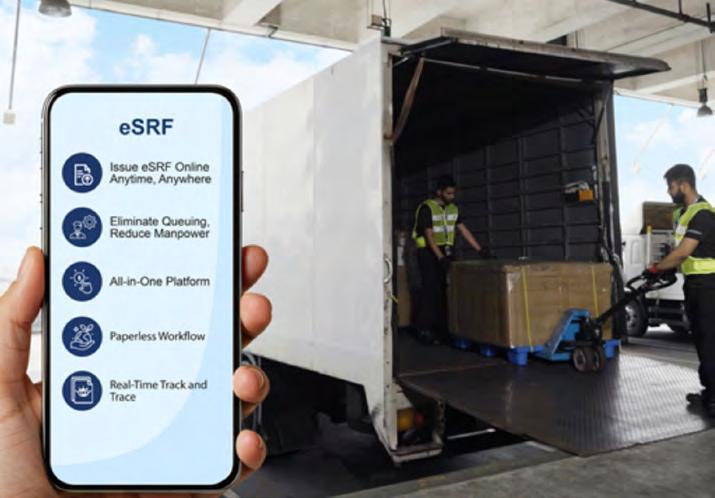
Asia Airfreight Terminal (AAT), a subsidiary of SATS Ltd, has launched an electronic Shipment Release Form (eSRF) to enable a fully digital, contactless import cargo collection process at Hong Kong
International Airport.
The initiative is part of the Import Air Cargo Collection Digitalisation Module under the Hong Kong International Airport Cargo Data Platform (HKIA CDP) and is supported by integration with AAT’s next-generation cargo management system, COSYS+. The end-to-end solution allows freight forwarders to access eSRFs, complete payment and authentication, and instantly release cargo documents to trucking agents for collection anytime and anywhere via mobile devices. This eliminates manual paperwork, in-person visits and terminal queues, improving operational flexibility and efficiency.
AAT has also introduced enhanced e-payment options through a partnership with PayCargo, complementing its existing credit facilities.
The eSRF launch builds on AAT’s wider digital transformation programme, including the July 2024 upgrade of COSYS+ with improved cloud security and a more intuitive user interface. It also follows the upgrade of AAT’s truck control system with automatic licence plate recognition, which has reduced gate waiting times while strengthening security.
AAT said the new service supports its goal of delivering best-in-class cargo handling while reinforcing Hong Kong’s position as a leading global air cargo hub.
Turkish Airlines and Vienna Airport sign five-year ground handling agreement
Turkish Airlines has signed a five-year ground handling contract with Vienna Airport, covering full-scope services including passenger handling, baggage and aircraft handling. The agreement will run through 2030 and further strengthen the long-standing partnership between the two parties.
Turkish Airlines has served Vienna for nearly 65 years and currently operates five daily flights between Vienna and Istanbul, offering connectivity through one of Europe’s major hubs.
Julian Jäger, Joint CEO and COO of Vienna Airport, said the agreement reflects Turkish Airlines’ confidence in the airport’s operational quality and reliability, highlighting Vienna Airport’s role as the largest ground handling provider on site and
Fraport signs lease agreement with Kuehne+Nagel for
new air cargo warehouse
Fraport and Kuehne+Nagel have signed a lease agreement for a new air cargo warehouse to be developed at Frankfurt Airport’s CargoCity South. The facility is scheduled for completion by 2028 and will further support the growth of the airport’s cargo hub.
Fraport will oversee construction and retain the building within its property portfolio. Kühne+Nagel, which has operated at Frankfurt Airport for more than 20 years, said the new facility will strengthen its longterm presence at one of Europe’s key cargo gateways.
Julia Kranenberg, Executive Board member and Chief Retail and Real Estate Officer at Fraport, said the project will deliver a modern and efficient cargo facility that supports expansion opportunities at Europe’s leading cargo hub. Martin Schäfer, SVP Air Logistics Germany at Kühne+Nagel, said Frankfurt is a critical gateway in the company’s global network, with the new infrastructure
one of Europe’s most punctual hubs. Serkan Özbüyükyörük, Turkish Airlines Austria General Manager, said the contract supports reliability and service excellence, reinforcing the carrier’s commitment to delivering premium quality across its operations in Vienna.
Michael Zach, Senior Vice President Ground Handling and Cargo Operations at Vienna Airport, added that smooth daily operations are supported by well-coordinated processes and a committed team.
Turkish Airlines carries more than half a million passengers annually via Vienna and also provides cargo capacity through belly freight on its passenger services, supporting global air freight connectivity.
supporting demand in sectors including healthcare, semiconductors, high tech and cloud infrastructure.
The new warehouse will be built on a 16,900 sqm site within FRA’s Air Cargo Area 2 near Gate Tor 31. It will include 7,600 sqm of warehouse space, 1,100 sqm of office and social areas, and will be equipped with 16 gates and truck docks. The building will also incorporate sustainability measures, including a rooftop photovoltaic system, and is planned to meet DGNB Gold certification standards.
The development supports Fraport’s CargoHub masterplan focused on space optimisation, expansion, and digital process innovation.
(L-R) Michael Zach, Senior Vice President Ground Handling & Cargo Operations at Vienna Airport, Serkan Özbüyükyörük, General Manager of Turkish Airlines in Austria, and Julian Jäger, Joint CEO and COO of Vienna Airport, are delighted with the new ground handling contract.
Swissport partners up with Scan Global Logistics and launches its first dedicated
perishables centre in the UK
Swissport has opened its first dedicated perishables centre in the UK at London Heathrow Airport (LHR), strengthening its global cool-chain network and supporting rising demand for fresh Atlantic salmon.
Scan Global Logistics is the first customer operating from the new facility.
The purpose-built centre was acquired by Swissport in November 2024 to expand perishables handling capacity in the UK. The facility supports time- and temperaturesensitive cargo, including seafood and fresh produce, offering exporters improved predictability, controlled handling, and faster processing.
The centre operates 24/7 and features temperature-controlled handling areas across approximately 2,694 m², with an annual capacity of up to 30,000 tonnes of perishables. It also includes a dedicated Border Inspection Post (BIP), enabling immediate airside inspection and clearance of imported goods, reducing dwell times and helping preserve product integrity.
Swissport plans to install an EMIS automated screening machine in Q1 2026, allowing dense palletised seafood shipments to be screened without breakdown. The system is expected to reduce handling steps, shorten queue times and improve throughput consistency while meeting EU security requirements.
Joe Bellfield, Chief Operating Officer Cargo UK & Ireland at Swissport, said Heathrow is a critical gateway for global seafood flows
and the facility brings proven cool-chain processes and specialised infrastructure to support exporters. Scan Global Logistics executives said the partnership provides a stable platform for long-term growth and improves reliability for high-volume perishables movements.
The Heathrow perishables centre becomes part of Swissport’s global cargo network, which includes 117 cargo centres handling around 5 million tonnes annually.
WFS plans rollout of CIND’s Dimensioner in Motion System after successful ‘Proof of Concept’ operational trial in Copenhagen
Worldwide Flight Services (WFS), a SATS company, has reached another milestone in the digital transformation of its cargo handling operations following the successful completion of a Proof of Concept for CIND’s Dimensioner in Motion System for palletised goods.
The 15-week trial was conducted at WFS’ cargo terminal at Copenhagen Airport. Following successful validation under live operational conditions, WFS plans to roll out the system across its Europe, Middle East, Africa and Asia (EMEAA) network. The next stations to implement the technology will be Amsterdam Schiphol, Arlanda Stockholm, Barcelona, Liège and Paris Charles de Gaulle.
CIND’s Dimensioner in Motion uses stereo vision cameras, AI and algorithms to automatically capture pallet dimensions and visual data while cargo is in motion, whether moved by forklift, conveyor or automated guided vehicles. The system measures standard and non-standard pallets with an accuracy of ±2cm, supporting compliance with international standards and improving freight data quality for invoicing and aircraft space utilisation. Volume calculations are
generated in under two seconds, and WFS expects the system to process up to 500 pallets per hour.
Jimi Daniel Hansen, SVP Operational Excellence at WFS, said the system improves cargo flow by delivering faster and more reliable measurements than manual processes, while providing structured data reports, photo evidence and stackability analysis based on pallet geometry.
The deployment builds on WFS’ ongoing collaboration with CIND. In 2024, WFS became the first cargo handler to implement CIND’s ContourCheck 3D modelling software, providing airline customers with digital reports and images confirming units are fit to fly, while enhancing productivity, compliance and training.
Cainiao opens new U.S.–Mexico cross-border logistics lane; steps up logistics tech push in Japan
Cainiao has announced a further step in its global expansion with the rollout of an Americas G2G (global-to-global) crossborder logistics service and increased investment in logistics technology across Japan and South Korea.
The new Americas G2G service is designed to support parcel flows between countries in the region. The first lane, connecting the U.S. to Mexico, targets one of the most
and South Korea
active cross-border e-commerce corridors, covering key U.S. West Coast markets and reaching 99% of Mexico.
Cainiao said the service is priced at around 60% of the market average, aiming to reduce cost barriers for U.S.–Mexico cross-border delivery for platforms and sellers. With the launch, the company becomes one of the first China-based global logistics providers to offer G2G services across Asia, Europe and the Americas.
Unlike models that rely heavily on outsourcing, the service is supported by Cainiao’s self-operated local networks in both the U.S. and Mexico, giving it control over sorting, line-haul transfer and last-mile delivery to improve stability, transparency
and end-to-end management.
Cainiao is also accelerating investment in logistics technology in Japan and South Korea, including the establishment of a dedicated logistics technology office in Japan and the development of local delivery and after-sales capabilities.
Bi Jianghua, Vice President of Cainiao and General Manager of Cainiao Logistics Technology, said the company expects 2026 to be a breakout year for logistics technology, supported by its AI-driven innovation and global service network.
Cainiao’s logistics technology solutions have been deployed in 27 countries and regions, supporting more than 800 collaboration projects worldwide.
J&T Global Express and SF Holding announce strategic cross-shareholding to build new global smart logistics ecosystemlogistics tech push in Japan and South Korea
J&T Global Express (J&T Express) and S.F. Holding have entered into a strategic crossshareholding agreement involving the mutual issuance of new shares, with a total
investment and transaction value of HKD 8.3 billion.
Under the agreement, J&T Express will issue 822 million Class B shares to SF Holding at an issue price of HKD 10.10 per share. At the same time, SF Holding will issue 226 million H shares to J&T Express at a subscription price of HKD 36.74 per share. Upon completion, SF Holding will hold 10% of J&T Express’ issued shares, while J&T Express will hold approximately 4.29% of SF Holding’s issued shares, on an enlarged share capital basis.
The companies said the partnership is intended to deepen integration between
both groups and support the development of a broader, more efficient and resilient global logistics network. The collaboration is expected to strengthen end-to-end crossborder logistics capabilities, particularly in support of Chinese companies expanding overseas and the growth of global crossborder e-commerce.
J&T Express brings last-mile delivery networks and local operational experience across 13 countries, while SF Holding contributes established cross-border firstmile and line-haul resources and mature operating systems.
FedEx announces filing of Form 10 registration statement for planned spin-off of FedEx Freight
FedEx Corp. has filed a Form 10 registration statement with the U.S. Securities and Exchange Commission (SEC) as part of its planned spin-off of FedEx Freight, marking a key milestone in the separation process.
Raj Subramaniam, President and CEO of FedEx Corp., said the filing reflects strong progress toward launching FedEx Freight as a focused LTL company, adding that the separation is expected to create two worldclass businesses and unlock long-term value for stockholders.
John Smith, incoming President and CEO of FedEx Freight, said the business is supported by an expansive network, a differentiated service model, and 39,000 employees, positioning it to deliver greater value as an independent company.
FedEx said the Form 10 outlines FedEx Freight’s strategy to leverage its national LTL network and premium service model, execute growth initiatives centred on highgrowth verticals and technology investment,
and drive sustained profitability and cash generation through disciplined capital allocation.
The spin-off is expected to be completed on 1 June 2026, subject to final approval by the FedEx Board and other customary conditions. FedEx Freight’s common stock is expected to list on the New York Stock Exchange under the ticker “FDXF,” and the transaction is intended to be tax-free for U.S. federal income tax purposes, subject to standard exceptions.
Ahead of the separation, FedEx also announced the initial board for the future independent FedEx Freight, to be chaired by FedEx executive chairman R. Brad Martin. FedEx Freight will host an Investor Day on 8 April 2026 in New York City.
Gebrüder Weiss expands presence in Uzbekistan
Gebrüder Weiss has upgraded its former representative office in Tashkent into an independent national organisation in Uzbekistan, effective 1 January 2026. The move responds to growing demand for logistics and supply chain services in the country from both international and local customers, particularly in sectors such as agricultural machinery.
The company said it is increasingly supporting the transport of oversized agricultural and construction machinery into Central Asia, reflecting rising demand for specialised logistics solutions.
Thomas Moser, Regional Manager Black Sea/ CIS at Gebrüder Weiss, said the company continues to invest in Uzbekistan to support customers expanding into Central Asia with reliable logistics processes.
Uzbekistan’s economy has shown sustained growth, with GDP rising by around 7% in 2025. Growth of approximately 6% is forecast for 2026 and 2027, supported by expanding industry, agriculture and foreign trade. Reforms and tax incentives are also increasing the country’s attractiveness to foreign investors, further driving demand for logistics services.
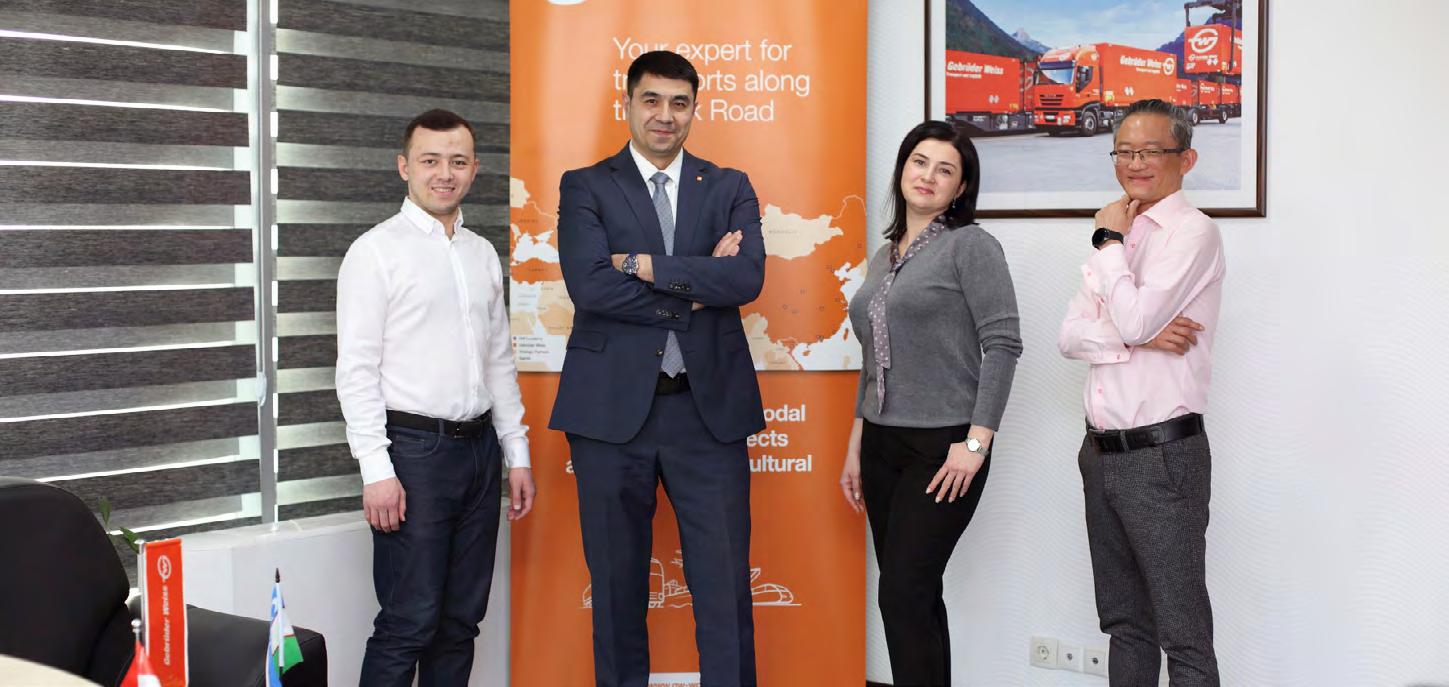
As of January 1, 2026, the representative office in Uzbekistan has become an independent national organisation. Pictured here: Kamil Ernazarov, Country Manager Uzbekistan at Gebrüder Weiss (second from left), with his team in Tashkent. (Source: Gebrüder Weiss)
The new national organisation will be led by Kamil Ernazarov, who has held a management role in Tashkent since 2019. He said local companies are seeking to improve supply chain reliability and international competitiveness.
Gebrüder Weiss currently employs four staff in Uzbekistan and offers land transport services including groupage and full truckloads, as well as air, sea and rail freight. The company plans to expand into warehouse logistics services in the medium term.
From SAF to solar: DHL’s bold steps toward net-zero by 2050
DHL Group entered 2026 with continued progress in its decarbonisation strategy, advancing key initiatives in sustainable fuels, fleet electrification and renewableenergy infrastructure as part of its goal to achieve net-zero greenhouse gas emissions by 2050.
In air freight, DHL signed one of its largest sustainable aviation fuel (SAF) agreements with Phillips 66, securing more than 240,000 metric tonnes (around 314 million litres) of SAF over three years. The deal is expected to reduce lifecycle emissions by approximately 737,000 metric tonnes of CO₂e, with the fuel produced in California primarily supporting DHL’s West Coast operations.
For ocean freight, DHL partnered with CMA CGM to purchase 8,800 metric tonnes of second-generation biofuel (UCOME), enabling an estimated reduction of 25,000 metric tonnes of CO₂e on a well-to-wake basis.
In the Middle East, DHL signed a memorandum of understanding with Hyperview in Saudi Arabia to pilot hydrogenpowered trucks, including feasibility work for supporting infrastructure aligned with Saudi Vision 2030.
In last-mile operations, DHL announced the purchase of 2,400 Ford electric vans for its Post & Parcel Germany division, expanding
its electric fleet to over 35,000 vehicles and enabling zero-emission delivery coverage for one-third of German postcodes.
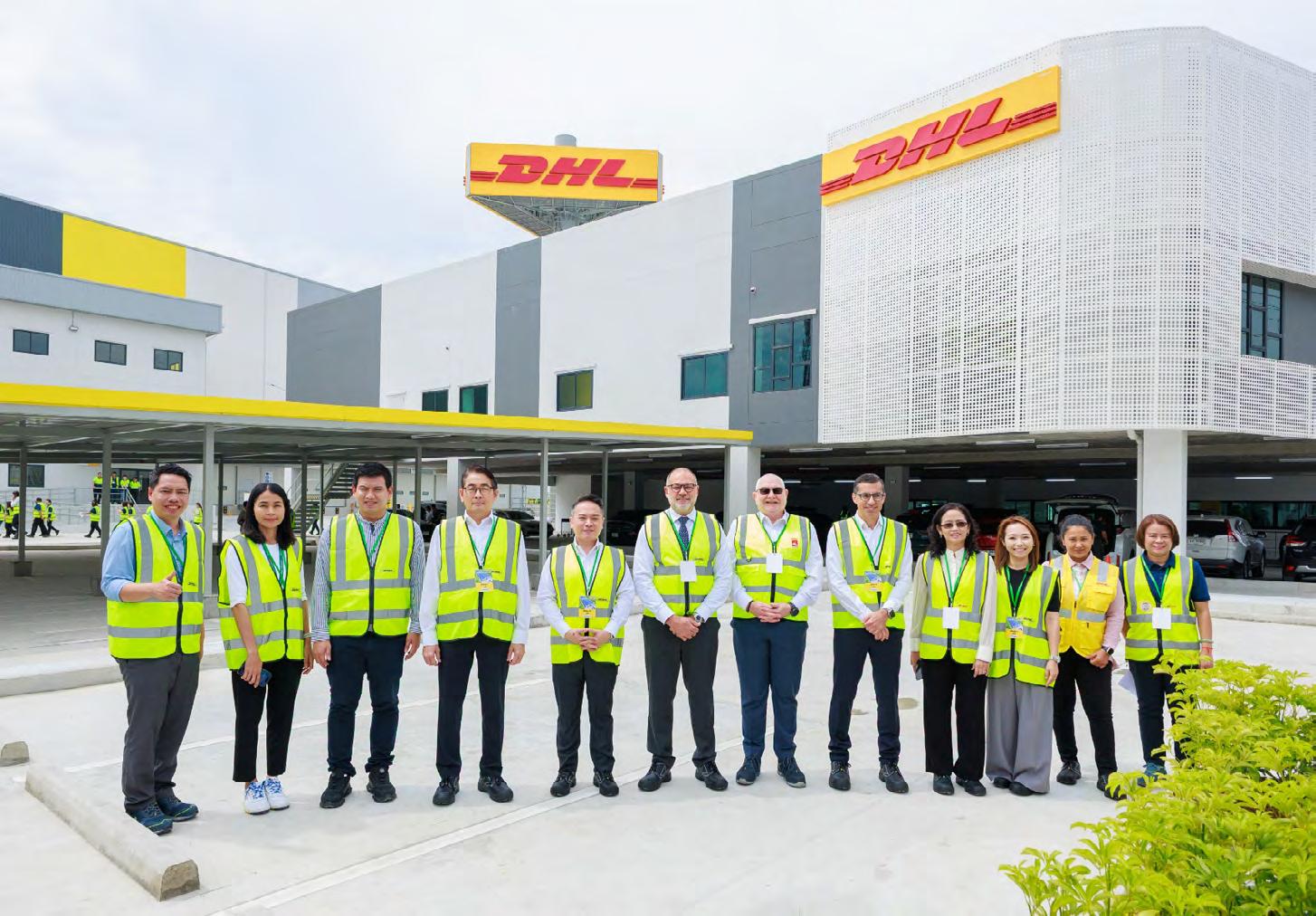
In Asia, DHL launched a solar-powered warehouse in Thailand featuring a 4.2 MWp
solar array and battery storage, designed to generate 100% of its energy on-site and reduce reliance on fossil-based grid electricity.
DHL Group adds new sustainability milestones in Asia Pacific across skies and streets
DHL Group has highlighted major sustainability milestones across Asia Pacific in 2025, reinforcing its decarbonisation strategy and readiness to meet rising demand for emissions-reduced logistics solutions. Key initiatives included expanded sustainable fuel agreements, electric vehicle deployment and lower-emission facilities.
DHL Express advanced its target of reaching
30% sustainable aviation fuel (SAF) usage by 2030 by signing SAF agreements with Cosmo Energy, Cathay and Neste. The contracts account for close to 20 million litres of SAF to be supplied for DHL Express flights departing Narita, Incheon and Singapore. DHL also reported strong customer uptake of its GoGreen Plus programme, with more than 153,000 customers in the region using the service in 2025 to reduce Scope 3
emissions via a book-and-claim SAF model.
Ken Lee, CEO Asia Pacific, DHL Express, said the company remains committed to scaling solutions that reduce operational emissions and deliver measurable impact for customers.
DHL Global Forwarding also partnered with CMA CGM to purchase 8,800 metric tonnes of UCOME biofuel, aiming to cut emissions by around 25,000 metric tonnes.
Across ground transport, DHL expanded electrification and hydrogen initiatives, deploying hydrogen-powered trucks in Japan and rolling out additional electric delivery vehicles across Thailand, the Philippines, Korea and China. The Group now operates more than 1,800 electric vehicles in the Asia Pacific.
In facilities, DHL Supply Chain launched its first fully renewable energy warehouse globally in Thailand, powered by a 4.2 MWp solar array and battery storage.
CEVA Logistics, HAECO Group sign global air freight partnership at Singapore Airshow
from HAECO facilities in Hong Kong, Xiamen and Jinjiang and across key trade lanes.
With a unified operating model, CEVA will support HAECO’s 24/7 operations through seamless end-to-end coordination, delivering consistent service, unified visibility and harmonised reporting across the HAECO Group.
Olivier Boccara, Regional Leader, APAC, CEVA Logistics, said, “The new global agreement affirms CEVA’s ability to support missioncritical aerospace logistics at scale. Our strong presence in APAC, combined with our extensive international network, positions us to deliver the reliability and connectivity HAECO requires as their operations evolve.”
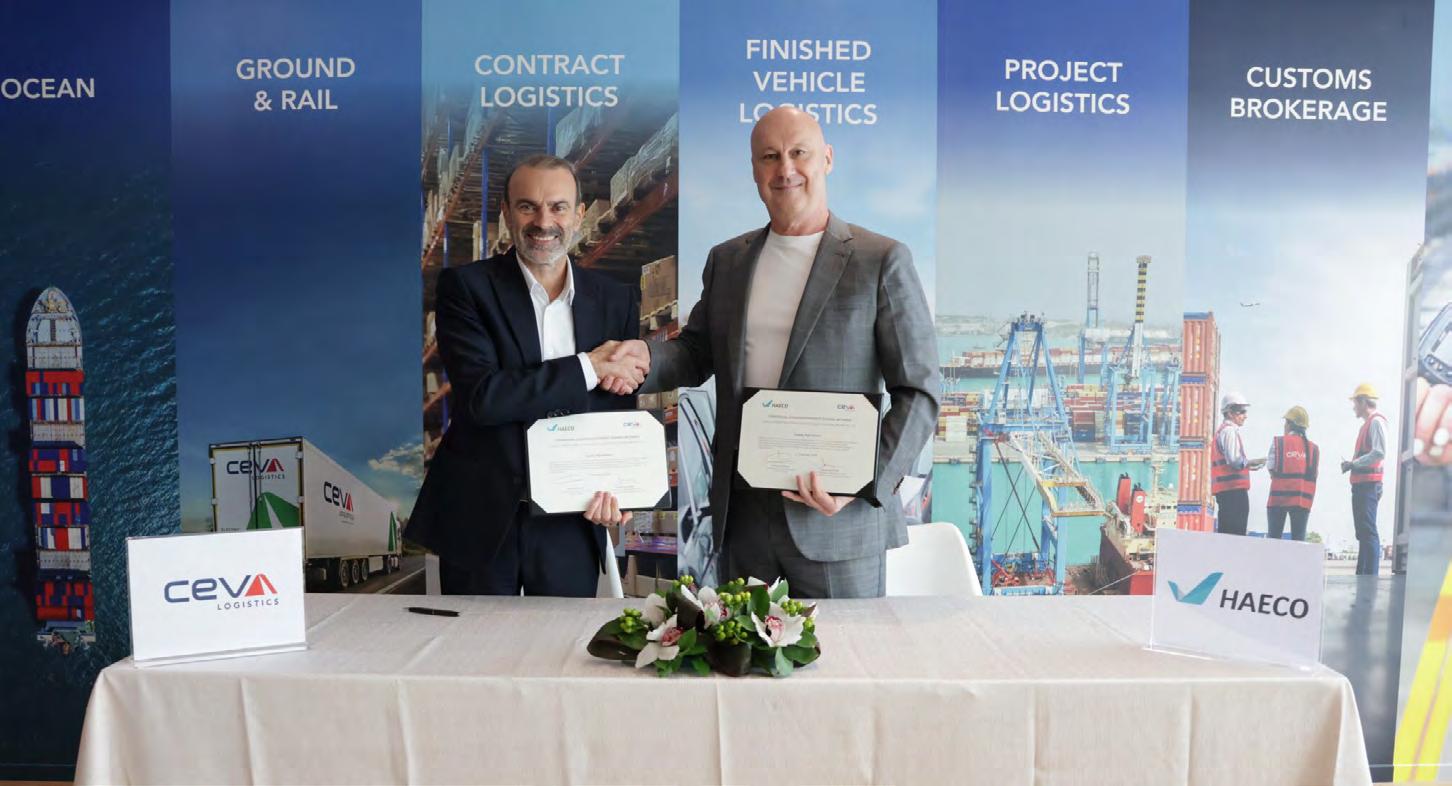
CEVA Logistics and HAECO Group have signed a new two-year global air freight contract at the Singapore Airshow, strengthening their longstanding partnership and establishing a fully integrated global logistics collaboration. Under the agreement, CEVA will manage
HAECO’s worldwide component flows, leveraging its global air freight network and aerospace expertise. The scope includes handling routine, urgent, Aircraft on Ground (AOG), dangerous goods, temperaturecontrolled and oversized shipments to and
Christian Pinter, General Manager of Group Procurement at HAECO, said, “Partnering with CEVA strengthens the alignment of our logistics activities across all our entities through a unified global network. CEVA’s worldwide capabilities and aerospace expertise make it a valuable partner as we continue to advance and expand our operations.”
(L-R) Olivier Boccara, Regional Leader, APAC, CEVA Logistics; Christian Pinter, General Manager of Group Procurement, HAECO
World’s first Boeing 737-800 Combi conversion by KF Aerospace secures Supplemental Type Certificate
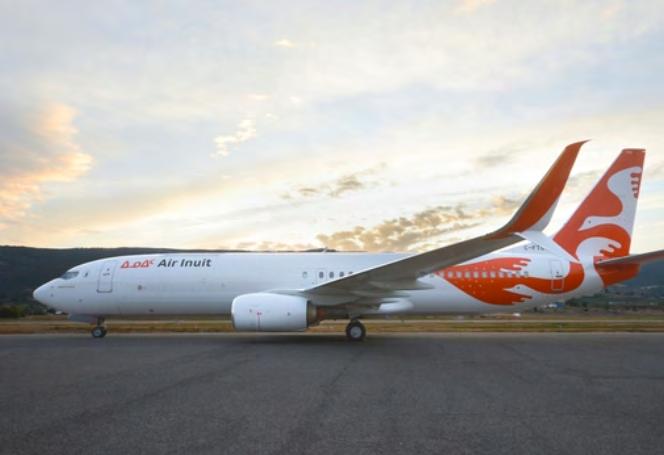
KF Aerospace has achieved certification of the world’s first Boeing 737-800 Combi conversion, marking a significant milestone in aircraft modification. Transport Canada has approved the modification with the issuance of Supplemental Type Certificate STC #SA25-72, clearing the aircraft for entry into service.
The newly certified 737-800 Combi features a unique multi-role configuration, combining a forward cargo compartment with five pallet positions and a 90-seat passenger cabin in the aft section. It is the first aircraft of its kind globally, with no comparable 737-
800 Combi currently in service in the U.S., Europe, or other international markets. The first aircraft was completed and delivered to Air Inuit in October 2025 as part of the carrier’s fleet modernisation programme.
The certification builds on the proven AEI 737-800SF large cargo door and represents another milestone in KF Aerospace’s long-standing collaboration with AEI. The programme required extensive redesign of aircraft interiors and systems, including the integration of fire detection, halonbased suppression, and advanced smoke containment for Combi operations.
Gregg Evjen, President of KF Aerospace, said the project reflects the depth of the company’s in-house engineering, manufacturing, and certification capabilities, delivering a world-first solution that expands mixed-use aircraft options for operators.
ST Engineering and LOT Polish Airlines extend partnership with multi-year nacelle MRO agreement
ST Engineering’s Commercial Aerospace business has expanded its long-standing partnership with LOT Polish Airlines, securing a five-year nacelle maintenance, repair and overhaul (MRO) agreement to support the airline’s 15-strong Boeing 787 Dreamliner fleet.
The exclusive agreement extends ST Engineering’s nacelle MRO support for LOT’s 787s and introduces a structured refurbishment programme that embeds predictive maintenance into nacelle lifecycle management. The programme shifts maintenance from a reactive model to a data-driven planning framework, leveraging soft time-based scheduling and predictive reliability modelling to reduce
unscheduled removals, improve turnaround performance, and optimise total cost of ownership.
Henrik Scholtfeldt, Head of Global Nacelle MRO at ST Engineering, said the agreement reflects LOT Polish Airlines’ continued confidence in its capabilities, while enabling stronger service consistency, cost efficiency, and operational resilience.
Wiktor Radon, Technical Operations Managing Director at LOT Polish Airlines, described the programme as a strategic investment in fleet resilience, citing improved aircraft availability, fewer unscheduled events, and assured turnaround times.
ST Engineering’s Commercial Aerospace
AMETEK MRO sees demand for specialist avionics MRO soar in Middle East
Demand for avionics maintenance, repair and overhaul (MRO) services in the Middle East and North Africa (MENA) is rising sharply, driven by fleet expansion, military modernisation and increasing aircraft complexity, according to AMETEK MRO.
Speaking ahead of MRO Middle East in Dubai, Ismaël Fadili, VP Sales EMEA at AMETEK MRO, said airlines across the region are placing record orders for newgeneration aircraft, including the Airbus A320 and Airbus A350, while existing fleets undergo large-scale retrofit programmes. These trends are significantly increasing demand for advanced avionics support and placing pressure on existing MRO capacity.
Military aviation is also contributing
strongly, supported by rising defence budgets and the modernisation of legacy fleets. As military platforms become more digitally integrated and software-driven, they require highly specialised avionics repair capabilities. AMETEK MRO businesses Muirhead Avionics and AvTech support a wide range of avionics systems under OEMaligned agreements.
Technological advances, combined with harsh regional operating conditions such as heat, sand and humidity, are accelerating component wear and driving more frequent maintenance cycles. At the same time, the sector faces challenges including skills shortages, infrastructure expansion needs and global supply chain constraints.
These factors are accelerating efforts to build local avionics MRO capabilities. Looking ahead, the GCC MRO market is forecast to grow at a CAGR of around 14.5% between 2025 and 2030, reinforcing avionics as one of the fastest-growing segments of the region’s aerospace ecosystem. business brings over 50 years of nacelle MRO experience, supported by a global network of facilities in Stockholm, Baltimore, Melbourne, and Xiamen, along with additional service centres and exchange asset pools worldwide, providing OEMaligned repair solutions for major aircraft manufacturers.
NEWS - EXPRESS
J&T Express hits record 30 billion parcel volume in 2025 with 22.2% YoY growth
J&T Global Express (J&T Express) has released its key operating metrics for the fourth quarter and full year 2025, reporting continued growth driven by strong performance in Southeast Asia and new markets.
In Q4 2025, J&T Express handled 8.46 billion parcels, up 14.5% year on year, with average
daily volume reaching 92 million. For the fullyear 2025, total parcel volume surpassed 30 billion for the first time, reaching 30.13 billion, representing 22.2% growth. Average daily volume rose 22.6% to 82.5 million.
Southeast Asia remained a key growth engine, with Q4 parcel volume rising 73.6% to 2.44 billion. Full-year volume in the region reached 7.66 billion, up 67.8%. In new markets including Saudi Arabia, the UAE, Mexico, Brazil and Egypt, Q4 volume reached 130 million, up 79.7%, while fullyear volume climbed 43.6% to 400 million. In China, the company recorded 5.89 billion parcels in Q4, with full-year volume reaching 22.07 billion, up 11.4%.
FedEx study affirms sustainability is a business imperative for APAC supply chain
FedEx has released findings from an Asia Pacific (APAC) survey of consumers and businesses on sustainability and crossborder trade, highlighting growing demand for lower-emission logistics solutions.
The survey found that 80% of APAC small and medium enterprises (SMEs) consider environmental concerns when trading with Europe, with sustainability playing a growing role in logistics decisions. Southeast Asia is leading the trend, with more than 55% of
SMEs in Malaysia and Indonesia prioritising sustainability in supply chain choices.
Consumer expectations are also accelerating change. FedEx reported that 84% of APAC consumers want businesses to offer more eco-friendly online shopping options, while 81% prefer companies that appear to operate more sustainably than competitors. Nearly four in ten consumers said they are willing to pay more for sustainable packaging.
Salil Chari, Regional President Asia Pacific at FedEx, said sustainability is shifting from a compliance requirement to a driver of growth and competitiveness, noting FedEx’s target of achieving carbon-neutral operations globally by 2040.
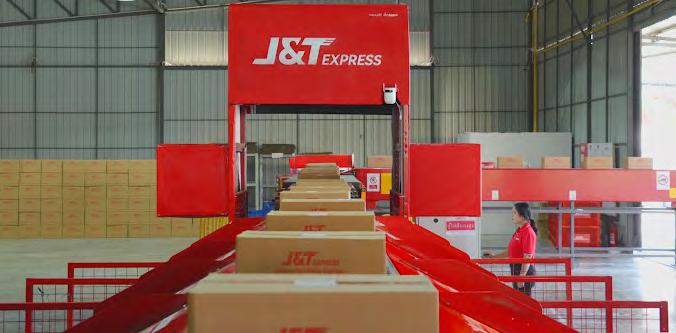
The company continued investing in infrastructure and automation. In China, J&T supported outlet automation and cloud warehouse expansion, reporting a 26% increase in automated equipment by year-end compared with June and the deployment of 1,000 unmanned vehicles to enhance last-mile efficiency. The company also operates 173 cloud warehouses.
As of the end of 2025, J&T Express operated 19,300 outlets and 246 sorting centres. Automated sorting machines across all markets increased by 134 year on year to 413.
Group Vice President Charles Junyi Hou said the company will continue strengthening its global network and driving growth through innovation.
FedEx highlighted several initiatives supporting more sustainable logistics, including its AI-powered Stops Sequencing tool, which optimises delivery routes to reduce unnecessary mileage. The company also offers FedEx Sustainability Insights, a cloud-based platform providing nearreal-time CO2e emissions estimates for individual shipments and customer accounts.
FedEx has also begun using sustainable aviation fuel (SAF) at Chicago O’Hare and Miami International airports. In lastmile delivery, the company is expanding fleet electrification across APAC markets, including Japan, New Zealand, Singapore and Thailand, with electric vehicles accounting for more than 20% of its delivery fleet in China. In Taiwan, electric tricycles have been introduced to support loweremission urban delivery.
DHL Aviation welcomes two dedicated Boeing 737 aircraft to Lagos, reinforcing commitment to Africa’s
economic growth
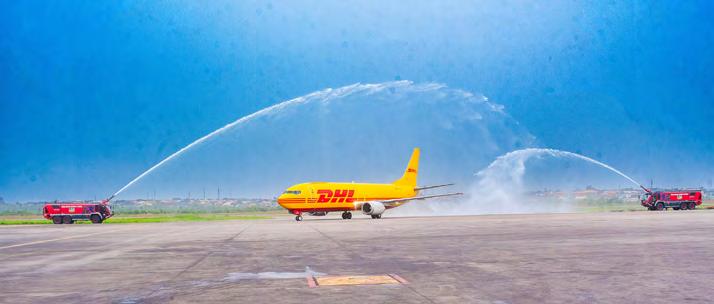
DHL Aviation unveiled two fully branded Boeing 737-400 aircraft at Murtala Muhammed International Airport in Lagos, marking a significant milestone in the company’s ongoing investment in SSA’s logistics infrastructure. The additional air capacity will enhance transit times, improve delivery predictability, and extend DHL’s reach to support businesses across West Africa and beyond.
As the only integrator with a dedicated air network in Sub-Saharan Africa, DHL continues to expand its aviation uplift to meet growing demand from West African businesses across key sectors, including e-commerce, perishables, energy, and life sciences & healthcare.
“As trade expands across Africa under the African Continental Free Trade Area, businesses are demanding predictable transit times and consistent delivery performance. The two dedicated aircraft will be integrated into DHL Aviation’s African air network, strengthening connections on critical Africa-Europe and Africa-Asia trade lanes,” added Anthony Beckley, VP Operations and Aviation, DHL Express SSA.
DHL’s investment in aviation capacity complements the company’s broader commitment to sustainable growth. The company continues to advance digitalisation through AI-enabled route optimisation and digital customs tools, while piloting renewable energy and alternative fuel projects across its facilities to support longterm environmental goals.
“With this latest investment, DHL Express reaffirms its position as the logistics partner of choice for businesses seeking to grow their presence in regional and global value chains,” said Riaan Vorster, Aviation Senior Director, DHL Aviation SSA.
TGP launches dedicated department in Bremen
Trans Global Projects (TGP) has launched a dedicated airfreight department in Bremen, expanding its capabilities for time-critical and complex cargo. The new unit operates under its own IATA licence, providing direct control over airfreight operations and ensuring full regulatory compliance.
As part of the expansion, Tobias Teichmann has joined TGP as Head of Airfreight Germany. He brings more than 10 years of experience in complex airfreight operations, having previously served as Airfreight Manager at Alexander Global Logistics and spent nearly a decade at Kopf & Lübben, specialising in charter solutions and engineered transport. He also holds a Certified Transport Specialist qualification from DAV.
The Bremen team will complement TGP’s existing airfreight expertise, including Natco’s airfreight and charter operations in Rümlang, Switzerland, as well as established capabilities in Brazil supporting urgent and oversized cargo movements.
Teichmann said the Bremen department provides clients with specialised airfreight solutions backed by full IATA accreditation, focused on speed, safety and flexibility. Andreas Menzel, Managing Director Germany and Benelux, said Bremen will serve as a hub for urgent shipments and engineered solutions
Andreas Menzel, Managing Director Germany and Benelux, and Tobias Teichmann, Head of Airfreight Germany, Trans Global Projects
supported by TGP’s global resources. Group CEO Colin Charnock added that airfreight remains a critical part of the company’s strategy.
The Bremen unit is fully operational and IATA licensed under number 23475620000.
Logistaas introduces new Ai document reading tool to automate data entry for freight forwarders
Logistaas has introduced a new AIpowered document reading feature within its transport management system (TMS), aimed at helping freight forwarders manage high volumes of operational paperwork.
The tool uses optical character recognition (OCR) and an AI engine powered by Logistaas’ AI agent, Averroes, to extract key shipment data from documents and automatically import it into the relevant shipment record. This reduces the need for manual data entry and improves processing speed and accuracy.
Logistaas said the system has been trained using real-world shipping documents, which often vary widely in format and terminology across carriers, shippers and agents. Users can upload documents such as air waybills and supporting shipment files, with the system automatically populating required TMS fields and providing translation to and from any language.
Kareem Naouri, Co-Founder and Chief Executive Officer of Logistaas, said freight forwarders spend significant time entering
information from documents received throughout the shipment lifecycle, calling it a repetitive and costly task well-suited to AI automation. He added that the key challenge was ensuring the model could interpret inconsistent layouts and terminology across different document types.
The release marks the first phase of Logistaas’ broader AI roadmap. The company is developing a second AI tool to analyse shipment data and flag potential compliance issues based on route and destination requirements.
NEWS - GSSAs
ECS Group expands GSSA coverage for Challenge Group
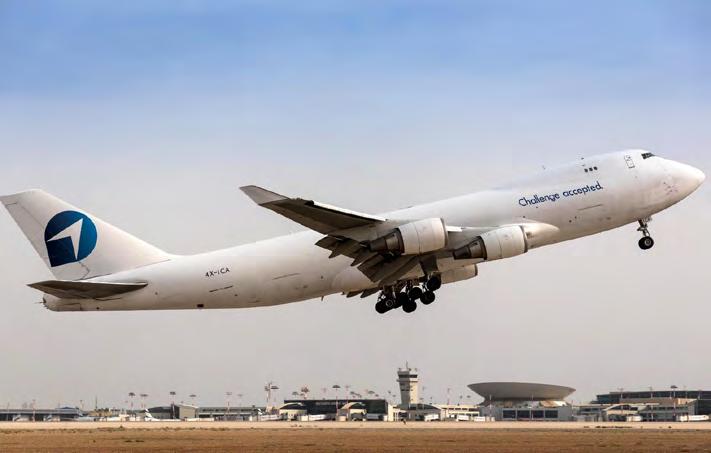
Challenge Group and ECS Group have expanded their international collaboration following the signing of an open-ended contract earlier this year. ECS Group, the world’s largest GSSA, already represents Challenge Group in Germany, France, Scandinavia, Singapore, and Vietnam, with Bulgaria, Czech Republic, Hungary, Poland, Romania, Slovakia, and Ukraine recently
added to the portfolio.
The inclusion of Eastern Europe broadens the feeder catchment into Challenge Group’s Belgian hub in Liege, strengthening connections to major global gateways. From Liege, Challenge Group operates a dense Boeing freighter network serving the U.S., China, the Middle East, Africa, and AsiaPacific, including core markets such as Hong Kong, India, Kenya, China, and the U.S. The airline division continues to expand and will soon take delivery of Boeing 777-300ERSF freighters, complementing its existing 747400F and 767-300BDSF fleet and enabling new routings to Asia and South America. The group also conducts regular international charter operations.
“Challenge Group is unique because we take on logistics challenges that standard
providers reject,” said Or Zak, Chief Commercial Officer of Challenge Group, noting ECS Group’s alignment with its operational and commercial mission.
Jean Ceccaldi, Chief Executive Officer of ECS Group, added that the partnership has successfully transformed complex cargo requirements into sustainable opportunities and expressed confidence in strong growth across Eastern Europe, particularly in industrial machinery, engines, spare parts, and drilling equipment.
Challenge Group’s portfolio also includes pharmaceuticals, automotive, aerospace, perishables, and live animal transport, supported by integrated IT systems and CargoTech software solutions for capacity optimisation, market intelligence, and business reporting.
Express Logistic International Pvt. Ltd., Cargo GSSA Thai Airways International, held its Customer Event at the Kathmandu Marriott Hotel, Kathmandu, to honour and thank all customers for their support in 2024.
Express Logistic International invited more
than a hundred valued customers and guests during the event to celebrate its achievements together with its customers. During the occasion, Mr. R. M. Singh Pradhan, Chairman, Express Logistic International, cordially thanked and expressed his gratitude to THAI Cargo customers in Nepal for their continued support and patronage.
The event was joined by Mr. Natthaphat Ingsakulsomboon – Team Lead Cargo & Mail Sale for West Asia, Australia & New Zealand and Mr. Pichet Wanaviroj – Marketing Cargo & Mail Commercial, Thai Airways International. Speaking at the occasion, Mr. Natthaphat appreciated the support and confidence of the Nepali Freight Forwarders fraternity on THAI Cargo products and
services.
Mr. Natthaphat Ingsakulsomboon and Mr. Pichet Wanaviroj recognised and appreciated the THAI Cargo Agents in Nepal for their support and contribution in Year 2024. On the occasion, THAI Cargo presented the Excellence Performance Award to its TOP 5 Cargo Agents in recognition of their outstanding revenue performance in 2024.
Top 5 Agents were as follows: 1st position – Unique Freight International Pvt. Ltd.; 2nd position – Apex Global Logistic Pvt. Ltd.; 3rd position – ABC Global Logistic Pvt. Ltd.; 4th position – Legend Cargo Pvt. Ltd.; and 5th position – Nepal Express Parcel & Logistics Pvt. Ltd.
Global GSA Group and China Southern expand partner portfolio to Spain
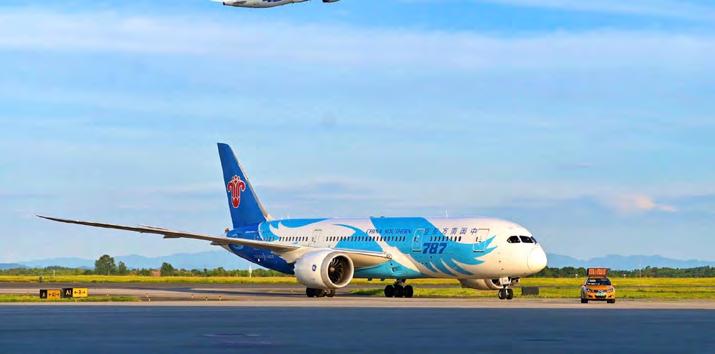
Global GSA Group subsidiary, Mondial Airline Services Spain, won the tender to represent China Southern Airlines Cargo in Spain and successfully ramped up the launch of the airline’s new cargo connection from Madrid to Guangzhou. Since 02 December 2025, China Southern Airlines has operated a Boeing 787-9 direct flight,
three times a week, between China and the Spanish capital.
Mondial Airline Services Spain has become China Southern Airlines Cargo’s local representative and successfully carried out the preparations for the airline’s new route entry into the Spanish market. A dedicated local team now takes care of all commercial activities, is the direct contact for key local customers, and supports all necessary operational processes, acting as a full extension of China Southern in Spain.
The first of the new Madrid (MAD) with Guangzhou-Baiyun (CAN) flights took off on 02 December 2025. On board of the Boeing
787-9, was a mix of general cargo and temperature-sensitive products. With three flights per week, on Tuesdays, Thursdays, and Saturdays, China Southern Airlines Cargo offers not only a direct link to one of China’s most important commercial centres and key cargo hubs, but also efficient widebody connections to other destinations in China, Asia, Australia and New Zealand across China Southern’s extensive flight network. Bookings can be accepted for general cargo, time-sensitive shipments, and a wide range of specialised products, including typical Spanish exports such as temperature-controlled pharmaceuticals or seafood. Each Boeing 787-9 flight offers a capacity of 15,000 kg and 80 m³.
San Diego AI startup cuts China-to-USA freight costs 15-60% for small shippers
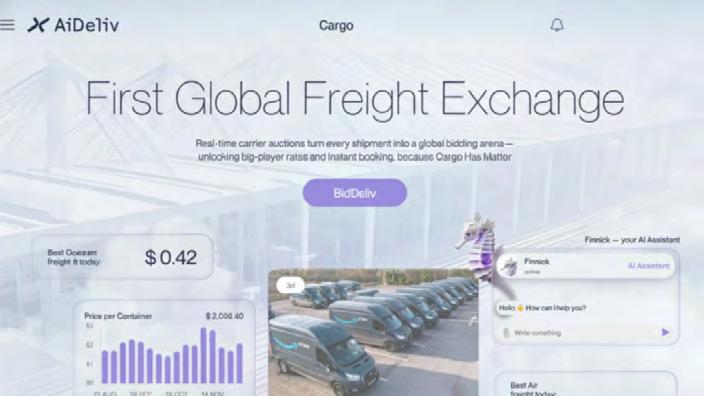
AiDeliv, a San Diego–based logistics technology firm, has launched an AIpowered Delivered Duty Paid (DDP) marketplace aimed at reducing freight costs for small importers. The platform addresses a long-standing imbalance where small shippers importing from China typically pay 30–40% more than large enterprises on the same routes, further compounded by shifting U.S. tariff policies.
AiDeliv operates a real-time reverse auction marketplace where AI-vetted freight carriers compete for shipments. Before bidding, carriers are screened based on route history, customs performance, and damage rates, ensuring only proven providers participate. By aggregating demand from multiple small businesses, the platform
creates competitive volumes that deliver enterprise-level rates previously out of reach for smaller importers.
Founder Vitalii Savryha brings eight years of China–USA logistics experience. He previously co-founded ARDI Logistics in 2017 and launched ARDI Express in 2021, scaling operations to 96,000 sq ft across California and New Jersey. In 2025, he completed executive programmes at Stanford Graduate School of Business and Harvard University, focusing on business growth and supply chain management.
During closed beta testing in summer–fall 2025, AiDeliv processed US$600,000 in shipments, with users reporting cost savings of 15–60%. For a seller importing US$50,000
monthly from China, this equates to savings of US$900–3,600 per month.
The platform launches at aideliv.com, initially focusing on the China–USA corridor, while also covering routes from Southeast Asia to the U.S., Europe, Canada, Australia, and Japan. All shipments are offered on DDP terms, locking in total landed costs upfront and eliminating surprise charges at customs.
WiseTech Global and Elm Company collaborate to drive innovation and digital transformation in the logistics sector in Saudi Arabia
WiseTech Global and Elm Company have signed a non-binding Memorandum of Understanding (MoU) to strengthen collaboration and drive digital transformation in Saudi Arabia’s logistics sector.
Under the agreement, the two companies will explore the use of modern technologies to deliver advanced digital solutions aimed at improving operational efficiency, service quality, and overall sector performance, aligned with the Kingdom’s national digital transformation objectives. Areas of focus include enhancing logistics operations, improving customer experience through flexible and simplified technology solutions, and supporting sustainable value creation across the sector.
The collaboration also emphasises knowledge sharing and integration in the development of technology platforms to accelerate digital adoption within Saudi Arabia’s logistics ecosystem.
The MoU was signed on the sidelines of the Saudi Supply Chain and Logistics Conference 2025 on 13 December. Elm was represented by Hesham S. AlNaser, Vice President –Logistics Products, while WiseTech Global was represented by Vlad Bilanovsky, Chief Execution Officer.
Commenting on the agreement, Elm’s spokesperson and Vice President of Marketing, Majid bin Saad Al-Arifi, highlighted the company’s role as a digital enabler supporting innovation and efficiency across the logistics sector. Vlad Bilanovsky added
Çelebi unlocks significant operational
Turkish ground handler Çelebi has implemented CHAMP A2Z Scan, an AIpowered application that automates the conversion of paper Air Waybills and cargo documents into digital data.
Using CHAMP’s first fully AI-based product, Çelebi has reduced manual data entry and verification time from around three minutes to just 45 seconds per document. Data captured through CHAMP A2Z Scan is automatically populated into Çelebi’s cargo management systems, including its proprietary platform, significantly reducing
(L-R) Vlad Bilanovsky, WiseTech Global and Hesham Alnasser, ELM Company, signing MoU on the sidelines of the Saudi Supply Chain and Logistics Conference.
that Saudi Arabia presents strong growth opportunities, and the collaboration will support improved operational performance and customer experience through technology-led solutions.
efficiencies through CHAMP A2Z Scan
manual errors associated with paper-based processes.
Çelebi selected the solution following a market assessment, citing both the tool’s technical capabilities and its alignment with the company’s shared focus on innovation and collaboration. The implementation was supported by close cooperation between both teams, including staff training to ensure effective use of AI technology across operations.
Lucas Fernandez, VP Innovation & Insight
at CHAMP, highlighted Çelebi’s strong commitment to digitalisation, while Çelebi IT Manager Ahmet Balakci said the solution has unlocked measurable efficiency gains and supports the company’s ongoing digital optimisation efforts.
NEWS - ASSOCIATIONS
AAPA: Asia Pacific airlines deliver solid traffic growth in 2025
Preliminary full-year 2025 traffic figures released by the Association of Asia Pacific Airlines (AAPA) showed strong growth in international passenger and cargo markets, supported by resilient economic conditions and sustained travel demand, despite ongoing trade and geopolitical uncertainty.
Asia Pacific airlines carried a combined total of 390.5 million international passengers
in 2025, representing a 9.4% increase compared with 2024. Revenue passenger kilometres (RPK) rose 11.0%, reflecting strength on long-haul routes, while intraregional demand remained buoyant. Available seat capacity increased 10.2% for the year, lifting the average international passenger load factor by 0.5 percentage points to a record 82.2%.
In air cargo, international demand as measured in freight tonne kilometres (FTK) grew 5.6% in 2025, supported by supply chain adjustments and continued e-commerce and intermediate goods flows. Offered freight capacity rose 6.8%, driven by expanding belly-hold space, resulting in a
0.7 percentage point decline in the average international freight load factor to 60.3%.
Subhas Menon, AAPA Director General, said passenger growth was supported by robust demand across key regional markets including China, India, Japan and Vietnam. He added that airlines demonstrated agility in responding to evolving trade policies and market dynamics.
Looking ahead, Menon said the outlook for 2026 remains positive for passenger travel, supported by steady growth and network expansion, while air cargo demand is expected to continue rising but could face headwinds from global trade tensions. He noted that carriers continue to face inflationary cost pressures and are focused on cost management, digital investments and network adjustments.
Global air cargo demand achieved record volume in 2025
The International Air Transport Association (IATA) has released full-year and December 2025 data for the global air cargo market, showing continued growth supported by e-commerce demand and shifting trade flows.
For full-year 2025, demand measured in cargo tonne-kilometres (CTK) rose 3.4% compared with 2024, or 4.2% for international operations. Capacity, measured in available
cargo tonne-kilometres (ACTK), increased 3.7% year on year, or 5.1% internationally. In December 2025, global demand was 4.3% higher than December 2024 levels (5.5% internationally), while capacity rose 4.5% (6.4% internationally).
IATA noted that full-year yields declined 1.5% year on year, the smallest drop in three years. Despite competitive pressure, yields remain 37.2% above 2019 levels.
2026 growth is expected to moderate to 2.4%, with demand shaped by trade and geopolitical developments.
Asia-Pacific carriers recorded the strongest regional performance in 2025, with demand up 8.4% and capacity rising 7.4%. North American carriers were the only region to post a decline, with demand down 1.3% and capacity down 1.1%. Africa also saw strong growth, with demand up 6.0%.
IATA said 2025 trade lane data indicates a shift in air cargo flows from Asia–North America to Asia–Europe, alongside continued growth within Asia and on the Middle East–Asia corridor.
Singapore to establish world’s first airport testbed for next-generation propulsion technologies
Willie Walsh, IATA Director General, said air cargo adapted quickly as businesses frontloaded shipments ahead of tariff changes and demand shifted toward intra-Asia and Asia–Europe trade lanes. He added that world’s first airport testbed for CFM’s nextgeneration Revolutionary Innovation for Sustainable Engines (RISE) technologies, with a focus on Open Fan engine architecture.
Signed at the 3rd Changi Aviation Summit on 2 February 2026, the partnership will study the impact of Open Fan and other RISE programme technologies on airport operations, with the aim of developing a comprehensive readiness framework to guide airframers, airports and airlines globally.
efficiency compared with current engines, while also aiming to reduce emissions and noise and support future hybrid-electric compatibility.
Under the MoU, the parties will co-develop operational and regulatory frameworks covering aircraft design considerations, infrastructure needs, procedural changes and safety standards. They will also leverage Singapore’s aviation ecosystem to exchange expertise and plan operational trials of Open Fan demonstrators at Singapore Changi Airport or Seletar Airport.
Photo credit: Ministry of Transport, Singapore.
The Civil Aviation Authority of Singapore (CAAS), CFM International and Airbus have signed a Memorandum of Understanding (MoU) to establish Singapore as the
CFM’s RISE programme is designed to advance next-generation commercial aircraft propulsion technologies, including the Open Fan architecture, which removes the traditional casing to allow a larger fan size with reduced drag. The programme targets more than 20% improved fuel
CAAS Director-General Han Kok Juan said the partnership reflects Singapore’s strength as an integrated air hub with robust regulatory expertise. CFM CEO Gaël Méheust said real-world demonstrations will build confidence in the safety and durability of Open Fan technology, while Airbus’ Rémi Maillard highlighted the role of Singapore’s aerospace ecosystem in supporting future propulsion innovation.
(L-R) Mr Rémi Maillard, Executive Vice-President Engineering for Commercial Aircraft Business and Head of Technology of Airbus, Mr Han Kok Juan, Director-General of the CAAS and Mr David Dufrenois, Chief Executive Officer, Safran Singapore.
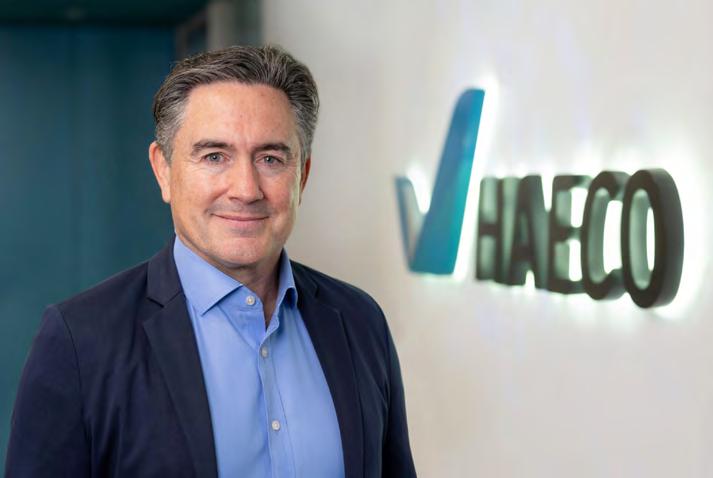
HAECO appoints Tom Owen as new Group Director Corporate Development
HAECO Group has appointed Tom Owen as Group Director Corporate Development, effective January 2026.
Owen brings 30 years of aviation leadership experience spanning sales, revenue management, logistics and regional operations,
including a long career with Cathay. In his new role, he will help shape HAECO’s strategic direction, lead information technology and digital transformation initiatives, and advance the Group’s sustainability commitments. He will also strengthen relationships with key stakeholders, including joint venture and government partners, to support HAECO’s global growth.
Richard Sell, CEO of HAECO Group, said Owen’s industry background and international experience will support HAECO’s expansion in Southeast Asia, the Middle East and other strategic markets.
Owen joined the Swire Group in 1995 and held multiple senior roles at Cathay across marketing, sales and distribution, network
CHAMP Cargosystems welcomes Manuel Galindo as new Chief Executive Officer
CHAMP Cargosystems, a SITA Group company, has appointed Manuel Galindo as Chief Executive Officer, effective immediately.
Galindo is a seasoned SaaS executive with deep experience in air cargo and logistics technology. He co-founded WebCargo and grew it into a leading digital platform for air cargo rate management and quoting before its acquisition by Freightos in 2016. He later continued as WebCargo CEO, driving expansion into eBooking and airline-forwarder digital integration. Galindo also served on Freightos’ executive leadership team and later became Chief Revenue Officer, overseeing global commercial strategy.
As CEO of CHAMP, Galindo will focus on strengthening the CHAMP neo platform, improving interoperability across airline and partner systems, and supporting customers as air cargo operations become more standardised, digital and data-driven.
David Lavorel, CEO of SITA Group, said Galindo joins at a pivotal time for the industry as digitalisation accelerates and airlines, handlers and forwarders face increasing pressure to scale efficiently.
Galindo said he aims to build on the strategic foundation established under his predecessor and reinforce CHAMP’s role as a trusted,
FedEx appoints Salil Chari as President of Asia Pacific
FedEx has appointed Salil Chari as President of its Asia Pacific (APAC) region, effective 1 January 2026.
Chari previously served as Senior Vice President, Marketing and Customer Experience APAC. He succeeds Kawal Preet, who has moved into a new role as Executive Vice President, Planning, Engineering, and Transformation.
As regional president, Chari will lead nearly 30,000 team members across APAC, overseeing business strategy and driving profitable growth, customer experience and operational excellence across the region.
Richard W. Smith, Chief Operating Officer, International and CEO, Airline at FedEx, said Chari brings strong multi-regional leadership experience and a deep understanding of the
revenue management and regional leadership in markets including Korea, Canada, the United States and South Asia. He was appointed Director People in 2015, leading the modernisation of Cathay’s HR functions, and became Director Cargo in 2020, overseeing record financial and operational performance while strengthening digital capabilities.
HAECO also acknowledged the contributions of Summit Chan, who retired as Group Director Corporate Development in December 2025. Chan led key technology and sustainability initiatives, including drone-assisted inspections, autonomous robotics and Hong Kong’s largest single-site solar panel project, and helped HAECO Xiamen achieve LEED Platinum certification.
mission-critical technology partner for the global air cargo community.
Galindo succeeds Chris McDermott, who has served as CEO since October 2020.
APAC market, adding that the appointment reflects FedEx’s commitment to developing internal talent.
Chari joined FedEx in 1997 as a marketing analyst in Memphis and has held leadership roles across Latin America and the Caribbean, Asia Pacific and Middle East, the Indian Subcontinent and Africa.
“It is an honour to lead such a talented team in a region that sits at the centre of global trade,” Chari said, noting that APAC’s dynamic trade corridors create strong growth opportunities for businesses. He added that his focus will be on strengthening resilience, accelerating growth and reinforcing FedEx’s role as a key partner for customers and communities.
Management changes at Lufthansa Cargo
Lufthansa Cargo has announced new leadership appointments across its commercial and operational teams.
Effective 15 February 2026, Gunnar Loehr will take over as Head of Region DACH & KAM EMEA. In this role, he will oversee Lufthansa Cargo’s markets in Germany, Austria and Switzerland, as well as key account management across Europe, the Middle East and Africa. Loehr previously served as Head of Supply Management and Infrastructure and has been with Lufthansa Cargo since 2002, holding senior roles across Spain and Portugal, the Arabian Peninsula and Levant, global handling performance, and Latin America. Since 2019, he has led Lufthansa Group’s logistics procurement, along with supply management and infrastructure at Lufthansa Cargo.
Loehr succeeds Philip Rauchhaus, who became Vice President Global Revenue Management and Pricing on 1 January 2026. Rauchhaus in turn succeeds Helge Krueger-Lorenzen, who is retiring after 38 years with the Lufthansa Group.
Anand Kulkarni, Head of Global Markets at Lufthansa Cargo, said Loehr brings extensive international management experience that will support customer collaboration across the region.
Separately, Markus Cirjan will assume operational management of Lufthansa Cargo’s Munich hub at the earliest possible date. Cirjan currently serves as Director Sales & Handling USA Mid-Atlantic & Ohio Valley and joined Lufthansa Cargo in 2013. He succeeds Ivo Seehann, who has taken on new
responsibilities linked to closer cooperation with Swiss WorldCargo.
Frank Bauer, COO of Lufthansa Cargo, said Cirjan will help drive performance at Munich, the carrier’s largest hub outside Frankfurt.
Chapman Freeborn appoints Tyler Porteous as Vice President of Cargo – Canada
Chapman Freeborn has appointed Tyler Porteous as Vice President of Cargo – Canada, strengthening its cargo charter capabilities and support for customers in the region.
In his new role, Porteous will focus on expanding Chapman Freeborn’s cargo operations in Canada, growing its customer base and developing new opportunities across key market segments. He will work closely with clients to deliver tailored charter solutions and build long-term partnerships.
Porteous brings more than 15 years of experience in air cargo and charter operations, with expertise in freighter operations, commercial strategy and market development. He previously worked for one of the world’s
largest freighter operators, where he was responsible for building and growing the charter division.
Porteous said his understanding of the Canadian market and its key air cargo industries will support Chapman Freeborn’s growth in the country. Jack Burt, Senior Vice President of Cargo at Chapman Freeborn Americas, said Porteous’s market knowledge and customer relationships make him a strong addition as the company continues expanding across the Americas.
The appointment is part of Chapman Freeborn’s broader investment in cargo and passenger charter services across the region.
DHL Express appoints General Manager of Central Asia Hub in Hong Kong
DHL Express has appointed Lee Kwong Ming as General Manager of its Central Asia Hub, effective 1 February 2026. He succeeds Samuel Lee, who has moved to a new role as Managing Director for Taiwan.
Based in Hong Kong, Kwong Ming brings more than 30 years of experience in express logistics and high-volume air hub operations. He has held senior roles across hub operations, network planning, automation engineering and process transformation. Most recently, he served as Operations Head at the Central Asia Hub, playing a key role in three phases of the hub’s expansion.
Peter Bardens, Senior Vice President Network Operations & Aviation, Asia Pacific, DHL Express, said the Central Asia Hub is a critical node in the company’s global network,
particularly with rising cross-border trade and e-commerce. He added that Kwong Ming’s operational expertise will support the hub’s continued development and long-term growth strategy.
Located at Hong Kong International Airport, the Central Asia Hub plays a key role in DHL Express’s global aviation network and supports Hong Kong’s position as a major cargo gateway, connecting the Chinese Mainland with international markets.
Kwong Ming said he looks forward to strengthening the hub’s capabilities, advancing automation and innovation, and ensuring speed and reliability for customers worldwide.
DHL Express operates three global hubs in Hong Kong, Leipzig and Cincinnati, supported by approximately 3,800 facilities worldwide.
(L-R) Gunnar Löhr, Philip Rauchhaus, Markus Cirjan
Skyworks Solutions: Why collaboration, not cost, defines a shipper of choice
When Skyworks Solutions was named Shipper of Choice – Collaboration at the 12th Payload Asia Awards, the recognition reflected more than strong ties across the air cargo value chain. It underscored how a global technology manufacturer has deliberately engineered its air freight strategy around reliability, transparency, and long-term partnerships— principles increasingly reshaping shipper expectations amid ongoing volatility.
For Barakathulla Buhari, Country Manager and Senior Director of Global Logistics & Fulfilment at Skyworks, collaboration is not an aspiration but a structural requirement—one that governs how the company plans, selects, and manages its global cargo networks.
“At Skyworks, collaboration is not a slogan, but it is the operating model that underpins every link of our global logistics supply chain,” he says, pointing to a system built on transparency, data, and fast decision-making across partners.
Evaluating cargo networks beyond price
Operating in the wireless semiconductor industry means logistics must keep pace with short production cycles, aggressive customer timelines, and geographically dispersed manufacturing across the US, Singapore, Taiwan, Malaysia, China, Japan, and India. As a result, evaluating airline cargo networks is a disciplined, data-driven exercise.
Reliability sits at the top of Skyworks’ criteria. As Barakathulla puts it, “Semiconductor supply chains require deep global coverage and access to remote or capacityconstrained locations.” But uplift alone is not enough. Skyworks looks for carriers that can protect capacity during peak periods, support short-notice surges, and maintain service consistency when markets tighten.
As industry complexity has increased, so too has Skyworks’ evaluation framework— shifting beyond operational fundamentals toward a broader assessment of network resilience, digital maturity, transparency, and strategic alignment.
Securing uplift when it matters most
In an environment where a single missed shipment can disrupt downstream production, Skyworks takes an unequivocal view on the cost-versus-service debate. Customer continuity, Barakathulla stresses, is non-negotiable.
“Cost matters, but service assurance matters more,” he says. “When the market enters a capacity crunch, Skyworks will secure uplift first.”
That philosophy is reflected in how the company designs its networks. Diversified routing strategies—with primary and
secondary carriers on each lane—are supported by strict performance metrics, including 99.9% on-time delivery targets, quarterly scorecards, claims history, and operational support quality.
The principle guiding these decisions is simple: “Cost is a variable; customer continuity is not.”
Long-term partnerships as a strategic anchor
While the spot market plays a role, Skyworks’ air cargo strategy is anchored in long-term partnerships designed to deliver predictability and resilience.
“Long-term strategic partnerships form the backbone of Skyworks’ air cargo strategy, while spot-market arrangements play a targeted, complementary role,” Barakathulla explains.
COMPANY PROFILE - SKYWORKS SOLUTIONS
Annual AI-driven request-for-quotation (RFQ) processes establish baseline reliability and structured lane awards, while spot RFQs provide agility during unexpected surges or last-minute routing constraints. Continuous benchmarking ensures competitiveness across both models— without compromising service integrity.
Together, these mechanisms create what Skyworks describes as a high-resilience cargo network engineered for speed, precision, and customer commitment.
Managing risk through real-time visibility
Operationally, Skyworks relies on a realtime control-tower model to anticipate disruptions and intervene early. Centralised, AI-driven tracking platforms—integrated via electronic data interchange (EDI) and API with multiple forwarders—give teams continuous visibility across global lanes.
Daily performance reports, milestone tracking, and exception alerts enable corrective action before delays impact customer commitments. According to Barakathulla, this level of coordination is essential to maintaining above 99% on-time delivery performance across a predominantly air-freight supply chain.
Turning complexity into trust
As a wireless semiconductor manufacturer with a logistics network that is approximately 95% air-freight dependent, complexity is a given. Skyworks’ response is to standardise visibility and decision-making across partners.
By consolidating EDI and API feeds into a single performance cockpit, both internal teams and external partners work from the same data—covering milestones, dwell times, and ETA confidence at the lane level. Explicit targets, weekly operational huddles, and quarterly business reviews remove ambiguity and accelerate response times when capacity tightens.
“This triad—visibility, communication, responsiveness—is how we and our cargo partners convert complexity into reliability,” Barakathulla says, “and reliability into longterm trust.”
Designing networks for volatility
Network planning at Skyworks blends global governance with regional optimisation. Detailed operational mapping defines cutoff times, buffer assumptions, capacity commitments, and recovery workflows across markets.
This structure allows the network to remain stable even under volatile demand, geopolitical disruptions, or weatherrelated constraints. Assured uplift during peak seasons, alternative gateways, and pre-approved premium options are built into planning models to protect customer continuity under all scenarios.
Raising the bar for cargo partnerships
From a shipper’s perspective, Skyworks believes airlines and cargo service providers can further strengthen their value by focusing on uplift certainty and predictive intelligence.
“Semiconductor shippers don’t just need lift—we need certainty, speed, and datadriven collaboration,” Barakathulla notes.
Consistent API and EDI data quality, predictive ETA models, and faster exception notifications are increasingly critical in supporting high-value, time-sensitive supply chains operating with little margin for error.
The AI-driven future of collaboration
Looking ahead, Skyworks sees AI and data analytics reshaping shipper–carrier relationships from transactional coordination to predictive, automated collaboration.
AI-driven tools are expected to anticipate congestion, simulate alternate routings, optimise load planning, and continuously
assess carrier performance in real time— reducing manual intervention while increasing network resilience.
“The future of air logistics will belong to partners who embrace digital collaboration,” Barakathulla says. “AI will be the catalyst that lifts the entire industry to that next level.”
Country Manager and Senior Director of Global Logistics & Fulfilment at Skyworks
BARAKATHULLA BUHARI
COVER STORY - TURKISH CARGO
Turkish
Cargo: Building a hub-led global cargo network for resilience and growth
When Turkish Cargo was named Overall Carrier of the Year – Global at the 12th Payload Asia Awards, the recognition was not simply a reflection of scale. It was an endorsement of the execution of an air cargo operator that has expanded rapidly, yet continues delivering reliability at scale in an increasingly complex global cargo landscape.
“Being named Global Carrier of the Year reflects where Turkish Cargo stands today in the global air cargo industry,” says Ali Türk, Chief Cargo Officer of Turkish Airlines. “Over the past 15 years, Turkish Cargo has evolved from a solid international cargo operator into one of the world’s top three air cargo carriers.”
That growth has been substantial. Turkish Cargo’s market share has increased from 0.8% in 2010 to 6.1% today, supported by a dual-capacity network combining dedicated freighters with the extensive passenger operations of Turkish Airlines. Together, this structure reaches 375 destinations in 368 cities across 134 countries, forming one of the broadest cargo-enabled footprints in the industry.
“At this stage, the award is less about scale and more about execution,” Ali adds. “It confirms that we can grow while keeping operations predictable.”
In an industry where global trade patterns remain volatile, and disruptions have become a permanent feature rather than an exception, the ability to expand while
maintaining control is precisely what has differentiated Turkish Cargo—and why its network strategy continues to draw attention across the market.
The Istanbul advantage: A hub built for intercontinental connectivity
At the heart of Turkish Cargo’s global operating model is Istanbul Airport, positioned at the crossroads of Europe, Asia, the Middle East, Africa, and the Americas. For Turkish Cargo, Istanbul is not merely a transfer point, but the centre of the airline’s cargo orchestration.
“Istanbul Airport is the backbone of Turkish Cargo’s intercontinental network,” Ali says. “Our hub model gives us two capabilities at the same time: scale and agility.”
Its geographical position allows Turkish Cargo to maintain shorter connection times and routing flexibility, enabling efficient twoway cargo flows between key trade lanes. This is especially critical as shippers demand faster transit, greater route optionality, and stable capacity access amid continued supply chain uncertainty.
The strength of this model is reflected in the composition of Turkish Cargo’s business. “Today, around 80% of our volumes move as transfer traffic, which defines how capacity, connections, and operational priorities are planned and managed,” Ali explains.
This heavy reliance on transfer cargo underscores the importance of hub
performance. In a hub-led network, even minor inefficiencies can cascade into missed connections, longer transit times, and service disruption across multiple regions. Turkish Cargo’s approach has been to ensure that network planning, hub operations, and infrastructure development function as a single integrated system.
“We do not see Istanbul as a simple transfer point, but as the place where the network is actively managed,” Ali says.
Differentiation through execution
Winning the Overall Carrier of the Year –Global category at the 12th Payload Asia Awards was a strong endorsement of Turkish Cargo’s performance and execution over the past year. According to Ali, the distinction reflected not only network reach but the carrier’s ability to expand connectivity while maintaining operational control.
“In 2025, the real difference for Turkish Cargo came from how the network was operated,” he says. “Capacity and connectivity grew together, while operational control remained within a single operating model.”
During the year, Turkish Cargo carried around 2.16 million tons, with an average load factor of approximately 85%. More importantly, Ali notes that this growth was absorbed without sacrificing performance.
“This growth was absorbed without extending connection times or changing
operating routines,” he says. “Network planning, hub operations, and infrastructure decisions were handled together, with SMARTIST acting as the operational backbone of the hub.”
Today, Turkish Cargo is reinforcing this operating model by strengthening digital visibility, refining hub processes, and selectively adding long-haul capacity where demand and connectivity justify it. With a combined freighter and belly network serving more than 110 direct cargo destinations, the carrier is focused on converting connectivity into consistent performance—delivering reliability at scale in an increasingly complex global cargo landscape.
Network optimisation: Growth without operational strain
Operating one of the world’s widest cargo networks is only valuable if the airline can deliver consistent reliability across markets. For Turkish Cargo, network expansion decisions are not evaluated in isolation.
“At Turkish Cargo, each decision starts with market data, demand, customer needs, competition, and operational feasibility,” Ali says. “But the final view is always networkwide.”
In a hub-based model, route development is only meaningful if it strengthens connectivity across the broader system. Turkish Cargo has therefore adopted a layered approach to capacity management—reinforcing core corridors while applying flexible planning tools in markets where demand fluctuates.
“Core corridors that carry connectivity are reinforced structurally,” Ali explains. “In markets where demand fluctuates, we rely on seasonal planning, frequency adjustments, and flexible capacity options rather than permanent deployment.”
This approach allows Turkish Cargo to protect service quality even as the network grows. By keeping schedules realistic and maintaining manageable connection flows, the airline can avoid putting strain on hub operations—particularly during peak seasons.
“Our aim is clear: expand the network while delivering the same level of reliability in every market we serve,” Ali says.
Resilience built on ground coordination
For many cargo airlines, resilience is often framed in terms of fleet size or network redundancy. Turkish Cargo, however,
COVER STORY - TURKISH CARGO
places equal emphasis on operational coordination—particularly on the ground.
“In a hub-led cargo model, resilience comes from how the operation is run on the ground,” Ali says.
At its Istanbul hub, Turkish Cargo manages its network through a central operational control structure. During peak periods or disruptions, decisions are prioritised centrally to ensure cargo flows remain stable.
“Cargo flows are adjusted, connections are protected, and recovery actions are taken without fragmenting the network,” Ali explains. “This prevents local issues from spreading and keeps the overall system stable.”
Consistency is achieved through common operating standards across airports, ground handlers, and partners, as well as clearly defined decision-making lines. Rather than relying on short-term fixes, Turkish Cargo focuses on controlled recovery to restore normal operations.
For customers, the outcome is tangible. “Shipments remain traceable, commitments remain valid, and the operation continues without unexpected changes,” Ali says. “That consistency is what keeps the network reliable under pressure.”
SMARTIST and the infrastructure behind scale
Infrastructure is often the silent enabler of cargo growth. For Turkish Cargo, the SMARTIST facility at Istanbul Airport is not only a major cargo hub—it is central to the airline’s long-term scalability.
Turkish Airlines’ recent announcement of a large-scale investment initiative covering cargo, maintenance, and logistics infrastructure reinforces the importance of planning ahead.
“Network growth puts pressure on the hub before it shows up in the market,” Ali shares. “That is why we always plan infrastructure one step ahead.”
He emphasises that the expansion of SMARTIST is not simply about adding capacity, but about maintaining the same operating model at higher volume.
“When we expand SMARTIST, the focus is not simply to add capacity. It is to run the same operating model at a higher volume,” he explains. “Throughput increases, but the transfer flow stays unchanged. This is how we scale without losing performance.”
The upcoming SMARTIST 2.0 expansion will provide significant advantages for special cargo segments—particularly pharmaceuticals, perishables, and highvalue shipments. Ali notes that Turkish Cargo’s pharmaceutical product, TK Pharma, operates under CEIV Pharma and GDP standards, supported by the facility’s temperature-controlled centre.
“With SMARTIST 2.0, cold chain capacity is being doubled,” Ali says, “enabling higher volumes of temperature-sensitive cargo to move through the hub without changing compliance or transfer discipline.”
The same structured handling flows support other specialised services, including TK AERO, ensuring that complex shipments can be transferred efficiently without disrupting the broader operation.
Looking ahead, Turkish Cargo expects the share of special cargo and e-commerce in its revenue mix to increase from around 49% today to approximately 55% by 2033— a shift that will require both infrastructure capacity and operational control.
“The SMARTIST expansion provides the capacity and operational control needed to support this shift while keeping speed and predictability consistent across the network,” Ali says.
Fleet planning as a strategic lever
Fleet decisions are another cornerstone of network optimisation. Turkish Cargo’s model relies on both freighters and belly capacity—managed not as separate business lines, but as complementary tools.
“At Turkish Cargo, freighters and belly
ALI TÜRK
Chief Cargo Officer of Turkish Airlines
COVER STORY - TURKISH CARGO
capacity are not alternatives,” Ali says. “They are complementary tools managed under the same planning discipline.”
Belly capacity provides frequency and geographic depth through Turkish Airlines’ passenger network, while freighters are deployed where concentrated volume, time-critical flows, or specialised cargo profiles require greater control.
“The balance is set at the planning level,” Ali explains. “Capacity is adjusted through deployment rather than network redesign. This keeps the system responsive while preserving operational continuity.”
Importantly, the airline also recognises that freighter expansion must be supported by parallel investment in technical maintenance. Without that support, fleet growth can quickly become constrained.
“As freighter capacity grows, planning quickly becomes constrained if maintenance does not scale at the same pace,” Ali says. “By expanding maintenance capability in parallel, network decisions are driven by demand and connectivity, not by technical limits.”
Digitalisation as a foundation for predictability
As Turkish Cargo scales, technology plays an increasingly central role in ensuring alignment between planning and execution.
“As Turkish Cargo, technology supports how we run the operation,” Ali says. “It ensures planning and execution stay aligned as the network grows.”
The airline’s digital transformation is particularly evident in booking and capacity
planning. Ali notes that most bookings now enter the system digitally, improving early visibility and reducing last-minute operational adjustments.
“In Asia Pacific, more than 90% of Turkish Cargo bookings are processed through digital channels, mainly via TK GO, our online booking platform,” he says.
On the operational side, Turkish Cargo continues to standardise documentation and tracking through tools such as electronic air waybill (e-AWB) and electronic Cargo Security Declaration (e-CSD), reducing manual intervention and improving regulatory efficiency.
Within SMARTIST, automation and dedicated secure zones support sensitive cargo flows, while internal systems provide real-time coordination. Ali highlights CAPRON for apron coordination, RPA for repetitive operational tasks, and Cargy for routine customer queries.
Together, these digital tools help Turkish Cargo maintain speed and control even as volumes rise.
Sustainability in a high-volume network
As shipper expectations evolve—particularly in Asia Pacific and Europe—sustainability has become a growing factor in airline selection and long-term partnerships. Turkish Cargo is positioning itself to meet these expectations while ensuring that operational reliability remains intact.
“Sustainable aviation fuel is currently used on selected flights, given current supply constraints,” Ali says. “We work with forwarders on shared SAF models
and support initiatives in Türkiye to enable wider adoption over time.”
Beyond fuel, Turkish Cargo’s sustainability strategy remains anchored in efficiency— optimising aircraft utilisation and network planning to reduce unnecessary mileage, while providing emissions transparency to customers.
“This approach is reflected at our main cargo hub,” Ali says. “SMARTIST operates as a LEED-certified facility, designed for energy efficiency and lower environmental impact, while maintaining operational stability and throughput.”
Positioning for 2026 and beyond
Looking ahead, Turkish Cargo sees future growth anchored in both strategic trade corridors and value-added cargo flows, with Asia and the Americas expected to remain key axes of expansion.
“Our focus is not simply to add new destinations,” Ali says. “We concentrate on improving connection quality across the existing network, shortening transfer times, strengthening operational quality, and increasing capacity flexibility.”
Cargo segments such as e-commerce, pharmaceuticals, perishables, hightechnology products, and time-critical shipments are expected to continue driving demand. Turkish Cargo is structuring its network around the specific requirements of these flows—speed, traceability, and service consistency.
To support long-term ambition, Turkish Cargo is aligning with Turkish Airlines’ Vision 2033 strategy, with concrete targets including a freighter fleet of 44 aircraft, around 150 cargo-only destinations, and annual volumes of approximately 3.9 million tons.
“These targets are underpinned by infrastructure expansion in Istanbul,” Ali says. “With SMARTIST 2.0, handling capacity will reach around 4.5 million tons, allowing growth to be absorbed without increasing operational strain.”
For Turkish Cargo, the path forward is clear: not merely to move more cargo, but to operate a network that remains controlled, predictable, and scalable as the industry evolves.
“Backed by Turkish Airlines’ 90 years of aviation experience,” Ali says, “this approach allows Istanbul to function as a controlled, high-capacity logistics hub rather than a volume-driven transit point.”
FEATURE - CATHAY CARGO
Cathay Cargo’s equine edge: Where live animal logistics meets network optimisation
Live animal transport is often described as a niche within air cargo, but for carriers willing to invest in specialised capability, it has become a revealing test of how well a network truly performs under pressure.
For Cathay Cargo, equine movements in particular have evolved into a strategic proving ground—one where commercial planning, infrastructure, and flight operations must align seamlessly to deliver outcomes with little margin for error.
“We’ve seen strong momentum in this segment,” says James Evans, General Manager, Cargo Commercial, Cathay Cargo.
“Our equine shipments increased 33% yearon-year in 2025, and the broader sector is projected to expand by USD 638 million by 2029, according to industry projections. What’s driving demand isn’t just volume, it’s a fundamental shift in expectations.”
That shift reflects how customers now assess live animal logistics: not as pointto-point transport, but as an end-to-end experience defined by welfare, reliability, and operational certainty.
From niche product to strategic differentiator
Elite horses are not treated as standard cargo. They are athletes whose performance can be affected by even minor disruptions during transit. For Evans, this reality has reshaped how equine shipments are
positioned within Cathay Cargo’s broader commercial and network strategy.
“From our perspective, this is a strategic, high-yield segment where specialised expertise becomes a genuine differentiator,” he says, pointing to the return of global equestrian events such as the Hong Kong International Horse Show as catalysts for highly concentrated, high-stakes demand.
The Cathay Live Animal solution sits alongside other specialised offerings such as Cathay Pharma and Cathay Fresh, reinforcing a tiered portfolio focused on expert-led, high-touch logistics. According to Evans, transporting live animals requires “exceptional attention to detail, expertise, and infrastructure,” all of which directly influence how routes are planned and resources allocated across the network.
Hong Kong’s role as a hub is central to this approach. With over 100 destinations accessible through the Cathay Group’s network and half the world’s population within five hours’ flying time, network design prioritises shorter total journey times and fewer handoffs—reducing stress for animals while preserving schedule reliability.
Planning for zero tolerance
The stakes in equine transport eclipse those of other live animal movements. “Competition horses are elite athletes,”
Evans explains. “As a result, planning and risk management become far more complex and rigorous when you’re coordinating 50 horses on a single charter, each requiring precise environmental controls.”
That planning begins well before the aircraft is assigned. Each equine movement starts with a detailed pre-flight planning session to ensure full compliance with IATA Live Animal Regulations, local laws, and Cathay Cargo’s own safety protocols. Flight operations teams use software to model temperature requirements and ventilation settings based on species-specific needs, while optimising routing to achieve the shortest possible transfer times. IATA-compliant custom stalls are prepared in advance, and contingency plans are built into the operation long before departure.
During the flight, crews actively manage the cargo environment, while professional grooms accompany the horses with full cargo access to monitor welfare throughout the journey. Communication between the grooms and the cockpit allows environmental conditions to be adjusted in real time if required.
On arrival, planning gives way to choreography. Priority handling procedures are applied to minimise noise and stress, ensuring a calm transition from flight to ground handling at one of the most sensitive stages of the journey.
Infrastructure as a network enabler
Much of the complexity in equine logistics is absorbed on the ground. At its Hong Kong hub, Cathay Cargo operates purposebuilt live animal infrastructure designed to reduce friction at every transfer point and support high-stakes movements at scale.
“The Large Animal Reception Room is quiet and temperature-controlled to provide a stress-free and comfortable environment during transfers,” Evans says. The facility is equipped with vulcanised rubber mat flooring to protect horses’ hooves. At the same time, its seamless cross-docking design allows stalls to be towed directly from the apron into the centre and onto trucks without unnecessary stops, minimising release time.
These procedures are complemented by priority handling protocols, including “laston, first-off” loading and slow-speed tarmac transfers capped at 5kph, to minimise stress and maintain welfare throughout the transfer process. According to Evans, these measures are not cosmetic but essential to balancing animal welfare with tight schedules at a major international hub.
Inside the cockpit: operational decisions in real time
While infrastructure sets the foundation, equine transport ultimately tests decisionmaking in the air.
Pilots verify aircraft capability before departure, ensuring all air-conditioning packs and the auxiliary power unit are fully operational to maintain environmental control on the ground. “Racehorses typically prefer temperatures of 12–14°C,” Evans notes, “but stall interiors can run warmer due to body heat, which crews actively manage during flight.”
During the journey, “temperature, airflow and air quality are actively managed to prevent CO2 buildup.” Professional grooms—and in some cases veterinarians— accompany high-value shipments with full cargo deck access and can communicate animal status directly to the cockpit. Flight crews are briefed pre-flight on speciesspecific requirements and adjust conditions as needed throughout the journey.
Routing decisions are equally deliberate. Flight paths are planned to minimise turbulence exposure, and in the event of depressurisation, pilots are instructed to descend to a lower cabin altitude than the standard 25,000 feet, where terrain permits, maintaining acceptable oxygen levels for animals. Landing techniques are
FEATURE - CATHAY CARGO
also adapted, with lower auto-brake settings and extended runway use to ensure gentle deceleration for standing cargo.
Resilience under pressure
Equine logistics offers little room for improvisation, which is why Cathay Cargo treats it as a stress test for network resilience.
“When weather or technical delays arise, pre-arranged contingency plans activate,” Evans says, including standby aircraft and rerouting to airports equipped with appropriate animal facilities. Large consignments are typically handled via dedicated Boeing 747 charters to preserve space and environmental control, while smaller groups may be integrated into scheduled services without compromising welfare.
Cross-functional working groups spanning cargo planning, flight operations, engineering, and local cargo teams assess every risk before a shipment begins. The result, Evans argues, is a model where schedule reliability and animal welfare reinforce—rather than compete with—each other.
Beyond horses
Many of the disciplines developed for equine transport extend well beyond a single species.
“The focus on calm loading, ventilation, and contingency planning for horses reinforces welfare-centric planning for all animal types,” Evans says, whether the shipment involves pets, livestock, or conservation animals.
This translation is where live animal logistics begins to intersect meaningfully with broader cargo strategy. The same accredited teams, infrastructure investments, and planning frameworks that support elite horses are shaping how carriers approach high-touch cargo more generally—raising expectations across the network.
As one event organiser observed following Cathay Cargo’s recent equine operation, “there’s no margin for uncertainty when dealing with equine athletes,” adding that it is the “assurance and peace of mind” provided by the airline that allows riders and organisers to focus on the competition itself.
For Cathay Cargo, that assurance reflects how a modern cargo network performs when every decision—from hub design to cockpit technique—must work in concert.
JAMES EVANS
General Manager, Cargo Commercial, Cathay Cargo
FEATURE - LÖDIGE INDUSTRIES
From handling to intelligence: Why cargo terminals now shape airline network performance
Cargo terminals are no longer simply the physical endpoint of an airfreight journey. As airlines streamline networks and concentrate operations around fewer, high-intensity hubs, terminals increasingly influence reliability, connectivity, and overall network performance.
“Air Cargo terminals are playing an important and ever-increasing global role in consolidating and distributing airfreight via their network independent hubs,” says Björn Ussat, Director Air Cargo at Lödige Industries. “Having evolved from pure handling facilities into digitally connected performance nodes within airline and forwarder networks, their role has become more strategic within the global cargo networks rather than a local processing point.”
“Beyond physical handling, terminals today capture structured operational events across the cargo journey and feed them into airline and cargo management systems,” Björn adds.
Automation is now standard— intelligence is the differentiator
Automation has become common across major hubs, but Lödige Industries argues that mechanisation alone does not guarantee performance. The real leap comes from combining automated equipment with process control and integrated software.
“Automation primarily refers to mechanised or automated equipment — ranging from assisted handling and operator-driven
systems to highly automated solutions such as Elevating Transfer Vehicle (ETV) storages, Automated Storage and Retrieval System (ASRS) or Automated Guided Vehicle (AGV)based transport and all kinds of conveyor decks,” says Björn Ussat, Director Air Cargo at Lödige Industries.
What distinguishes an intelligent terminal is the ability to orchestrate those systems through a software layer that drives consistency and repeatable performance. Lödige’s Cargo Direct software acts as this process-controlling “brain,” using air waybill data, handling requirements, terminal layout, system interfaces, and real-time availability of equipment and personnel to determine the next optimal step for each cargo unit—reducing user interaction to a structured “scan-and-confirm” workflow.
“This distinction matters because intelligence delivers consistency, predictability and repeatable performance,” Björn notes. “Combining modern equipment with process automation has shown that significant throughput gains can be achieved within the same footprint — providing airlines and network planners with reliable operational throughput rather than theoretical capacity assumptions.”
Visibility becomes a performance tool
As cargo networks become more complex, terminals are expected to provide visibility that goes beyond shipment status updates. Instead, real-time operational dashboards and performance indicators are becoming essential tools for managing throughput,
staffing, and hub connectivity.
Björn notes that improved data visibility allows terminal operators and airline managers to move beyond traditional freight data and take a more proactive view of day-to-day operations. By consolidating shipment information, special handling requirements, flight schedules, and resource availability into a continuously updated activity plan, terminals can create a single operational view that supports faster and better-informed decision-making.
“Operational status and location data are fed back to cargo management systems in real time, creating a consistent audit trail across the terminal,” he says.
This level of transparency strengthens schedule resilience and helps terminals stay aligned with airline expectations for predictability and network performance. As digitalisation accelerates, initiatives such as Cargo iQ reporting and preparations for ONE Record are also shaping the next phase of data-driven cargo handling.
“Digitalisation — including Cargo iQ event reporting and preparation for ONE Record concepts — enables terminals to actively support transparency, predictability and performance management across networks,” Björn adds.
Hub-centric design priorities
With airlines consolidating cargo flows into key hubs, terminal design must be aligned with future demand and operational flexibility rather than static capacity
FEATURE - LÖDIGE INDUSTRIES
assumptions.
“Accurate forecasting and simulation-driven design are critical,” Björn says. “Terminal layouts must be based on realistic demand assumptions and validated through detailed simulations, including ‘what-if’ scenarios.”
“On the hardware side, long-term flexibility and redundancy of individual operational functions are essential to prevent bottlenecks,” he explains. “On the software side, systems must provide sufficient transparency to stay ahead of ad-hoc decisions while remaining flexible enough to meet customer requirements.”
“With terminal delivery timelines often exceeding two years, the ability to scale capacity in line with actual network development is essential to avoid premature constraints,” Björn adds.
Smarter disruption handling and a gap in process automation
Irregular operations, shifting flight schedules, and demand surges have become common realities. In this environment, cargo terminals need structured information and central orchestration to respond quickly.
“Advanced cargo handling systems place real-time, structured information directly in the hands of operational managers through configurable dashboards and alerts,” Björn says.
“Because planning and execution are centrally orchestrated, activities can be dynamically re-sequenced when volumes, flight schedules or priorities change,” he adds. “This allows terminals to adjust processes during disruptions rather than relying solely on manual intervention.”
Despite progress in equipment automation, Björn believes a key gap still persists: process automation remains limited across many terminals.
“Despite widespread equipment automation, a key gap remains the limited adoption of true process automation,” he says. “In many terminals, operational consistency still depends heavily on individual experience required to handle freight with non-sufficient data quality rather than system-guided workflows.”
At the same time, specialised cargo flows such as e-commerce and temperaturecontrolled freight are adding new complexity.
“Increasing volumes of specific types of freight - such as temperature-controlled freight and e-commerce - require terminal space and scalable, seamlessly integrated processes alongside general cargo,” Björn says.
Shanghai Pudong Terminal 4: flexibility and scalability in action
Lödige Industries’ recent deployment at Shanghai Pudong International Airport Terminal 4—operated by China Eastern Air Logistics—offers a timely example of how automation, software integration, and flexible design can support future-ready hub operations.
The project includes six high-capacity AGVs capable of transporting ULDs up to 6.8 tonnes, reinforcing the push toward scalable terminal systems built for evolving hub demands.
“The Shanghai Pudong Terminal 4 project demonstrates how smart automation can support future-ready hub capacity,” Björn says. “The terminal combines a flexible layout with high-capacity AGVs and an integrated software environment within Lödige Industries’ Cargo Professional Suite.”
“This enables dynamic routing, reduces dependence on fixed infrastructure and provides real-time visibility of cargo movements,” he explains.
“From a network perspective, the scalability and adaptability of the solution support long-term operational resilience and allow capacity to evolve in line with airline and airport growth strategies,” Björn adds.
A shift toward integrated platforms
Lödige Industries’ recognition as Air Cargo Automation Provider of the Year at the 12th Payload Asia Awards reflects what Björn describes as changing expectations across the industry.
“The recognition reflects a clear shift in market expectations toward integrated, data-driven platforms that unify core processes, material handling and automation — particularly in environments characterised by constrained floor space, manpower shortages and live operations that cannot be disrupted,” he says.
Looking ahead, Björn expects cargo terminals to become even more closely aligned with airline and airport network strategies, supported by increasing automation and AI-assisted guidance.
“Increased automation combined with AIsupported guidance will further integrate cargo terminals into airline and airport network strategies,” he says. “Rather than operating as isolated facilities, terminals will increasingly function as digitally connected nodes that support coordinated, data-driven decision-making across networks, improving local performance while enhancing end-toend visibility and predictability.”
For airlines reassessing hub strategies, the takeaway is clear: terminal performance must increasingly be treated as a network planning asset—not just a handling capability.
Industries.
BJÖRN USSAT Director Air Cargo at Lödige
Evolving the cargo network: How legacy experience shapes a resilient, future-ready strategy
For a global carrier, a cargo network is never static. It is a living, adaptive system shaped by shifting trade flows, evolving customer expectations, and continuous fleet transformation. From the perspective of United Cargo, decades of operating within a legacy airline framework have fundamentally influenced how modern cargo networks are designed: scalable, flexible, and resilient by intent rather than by circumstance.
From passenger network strength to cargo agility
For a legacy carrier like United, the cargo network has always been intrinsically connected to the passenger network—and that connection remains one of United Cargo’s greatest strategic advantages.
United’s expansive global passenger network, built on decades of investment in routes, frequencies, and hub infrastructure, provides a powerful foundation for cargo
operations. Rather than viewing cargo capacity as simply a byproduct of passenger flying, United Cargo leverages this breadth and depth as a source of flexibility, reach, and responsiveness.
A large and diversified passenger network enables access to more markets, more often. High flight frequency across key corridors increases routing options, reduces dependency on single lanes, and allows shipments to move with greater speed and reliability. The scale of the passenger operation also supports rapid adjustments, whether accommodating demand surges, navigating disruptions, or opening new trade opportunities.
As cargo demand has grown more complex, driven by e-commerce acceleration, specialised commodities, and evolving supply chain expectations, this network strength has become even more valuable. Time-sensitive and high-value shipments
benefit from increased connectivity, alternative gateways, and faster recovery paths when irregular operations occur.
Balancing scale, flexibility, and resilience
Scale remains a core advantage of a global airline group. A broad route map, diverse gateways, and frequent departures provide optionality. But scale alone does not guarantee resilience. In fact, without flexibility, scale can amplify disruption.
United Cargo balances these forces through deliberate network optionality. Multiple gateways serve key trade corridors, enabling shipments to flow through alternative paths when congestion, weather, or regulatory constraints arise. Frequency across hubs supports recovery without significantly compromising transit times, while schedule diversity reduces dependency on any single flight, aircraft type, or node.
FEATURE - UNITED CARGO
Equally important is a mindset shift: planning for variability rather than perfection. Peak seasons, harvest cycles, and promotional surges are treated as anticipated stress tests. Predefined operating playbooks and close cross-functional alignment across sales, operations, and partners enable proactive adjustments. The outcome is a network engineered to absorb volatility rather than react to it after the fact.
The role of hubs in modern cargo strategy
Hubs remain the backbone of a legacy carrier’s cargo network, but their role has evolved. Historically, hubs were primarily consolidation points. Today, they function as control centres for connectivity, speed, and recovery.
United Cargo leverages hubs not just for volume aggregation, but for decision velocity, the ability to redirect freight, prioritise time-critical shipments, and restore flow when disruptions occur. Hub proximity to major consumption markets, advanced handling facilities, and intermodal connections allows cargo to move quickly beyond the airport fence.
Partnerships as network multipliers
No cargo network operates in isolation. Partnerships have become central to network optimisation, extending reach and capability without adding unnecessary complexity. Strategic airline partnerships, trucking providers, handlers, and digital platforms all act as force multipliers, enhancing access, visibility, and speed.
For United Cargo, partnerships enable alignment across the supply chainfrom origin to destination–ensuring that network decisions translate into real-world performance.
Crucially, partnerships are integrated into planning, not layered on afterwards. This ensures consistency in service standards and faster execution when conditions change.
Fleet mix and network agility
Fleet composition plays a critical role in how cargo networks perform. A modern, diverse fleet provides flexibility in gauge, range, and frequency, allowing capacity to be matched more precisely to demand. Widebody aircraft support long-haul flows and high-density lanes, while narrowbody
and regional assets enhance intra-regional connectivity and speed to market. The right fleet mix enables faster response to market shifts, supports new trade flows, and enhances sustainability through more efficient operations.
Letting history inform the future
Perhaps the greatest advantage of operating within a legacy carrier framework is institutional memory. Decades of navigating economic cycles, regulatory change, and global disruptions have created a deep understanding of what works and what does not, under pressure.
Looking ahead, cargo networks will continue to evolve alongside global trade, emerging technologies, and rising customer expectations. For legacy carriers, the challenge—and opportunity—is to combine the strength of scale with the agility typically associated with challengers.
At United Cargo, the network is no longer viewed simply as a map of routes. It is a strategic asset: designed to adapt, built to endure, and optimised to deliver in a world where certainty is the exception rather than the rule.