With the Ministry of Health (MOH) Malaysia prioritising the suppression of Non-Communicable Diseases (NCDs) in the 2026 budget, the domestic food industry is grappling with unprecedented ‘formulation anxiety.’ As the potential expansion of the Sugar Tax and stricter NutriGrade systems looms, experts view 2026 as a definitive tipping point. Mirroring Singapore’s regulatory model, products labelled ‘Grade D’ (high sugar) face immediate advertising bans, effectively silencing their brand voice. As tax thresholds broaden to include categories like powder sachets, sugar reduction has shifted from a health trend to a non-negotiable requirement for profitability and retail viability.
While brands strive to balance flavour with health, reducing sugar poses formidable technical challenges. Removing sucrose often
introduces a medicinal aftertaste that compromises the consumer experience. Furthermore, in functional jellies and gummies, sugar is essential for structural stability; without it, products frequently suffer from syneresis (water separation). In the high-temperature climates of Southeast Asia, this structural failure leads to ‘bursting juice’ upon opening—a critical quality defect.
To navigate these complexities, Wel-Bloom—Taiwan’s leader of jelly supplements—unveils the FRESHJelly® technology. Utilising advanced physical structural reorganisation, FRESH-Jelly® ensures a moisturelocked, resilient texture that withstands the rigours of tropical climates. Rather than relying on artificial sweeteners, Wel-Bloom leverages its proprietary ‘Healthy Sweetness Strategic Library’ of natural alternatives to maintain a superior flavour profile. Furthermore,
this innovation disrupts traditional OEM reliance on preservatives, achieving a clean-label, preservative-free product without compromising the integrity of its sugar-reduction goals.
As a premier dietary supplement manufacturer—backed by both NSF-GMP and comprehensive HALAL supply chain certifications— Wel-Bloom empowers Malaysian brands to navigate MOH regulations with precision during early-stage development. Our expertise ensures that products bypass ‘Grade D’ risks, seamlessly transforming health-conscious formulations into the ‘great flavour’ that drives consumer loyalty. As the 2026 policy landscape tightens, Wel-Bloom is committed to helping clients across Malaysia and Singapore convert regulatory challenges into a sustainable competitive advantage.
Arla Foods Ingredients targets protein bar innovation in South America
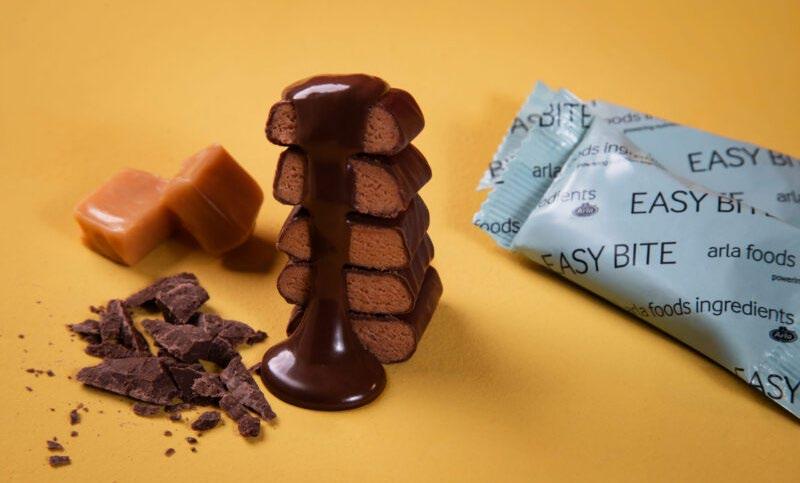
Easy Bite is a bite-sized, 18g protein bar featuring Arla Foods Ingredients’ customised protein solution, Lacprodan® EasyBar. It delivers up to 40% high-quality protein in a convenient, on-trend format and is also high in fibre, with no added sugar or fat, and no maltitol. Made with just eight ingredients, its formulation ensures stable softness throughout a two-year shelf life without requiring additional fat or water-binding ingredients such as collagen.
Designed to appeal to active, health-conscious consumers who seek nutritious snacks without compromising on taste, Easy Bar targets the growing demand for healthier snack options in South America. Over the last 12 months, 56% of Latam consumers have switched from traditional snacks such as chocolate to high-protein or lowsugar alternatives. This shift is driven by consumers’ increasing health awareness. High-protein products are often perceived as satisfying
and aiding weight management, with weight loss a motivating factor for 67% of consumers, and general health for 62%.
Sensory experience and perceived health benefits were key factors influencing purchase decisions, highlighting the importance of formulation and taste.1 Reflecting this, a recent Arla Foods Ingredients survey of 1000 consumers in Brazil found that great taste, naturalness, and high protein content were their primary considerations when purchasing food. Furthermore, 40% wanted bars with higher protein content, rising to 49% of consumers aged 25-29.
Ignacio Estevez, Application Manager, South America, at Arla Foods Ingredients, said: “The Easy Bite concept has been a big hit globally across tradeshows and conversations with the industry, and now we’re showcasing it for the first time in South America. We can provide specialised whey and milk
protein ingredients for indulgent, high-protein bars and snacks to help South American manufacturers stay ahead of the game. Our protein bar ingredients deliver great taste, high protein content, and soft texture and bite for extended shelf life.
They are ideal for optimising texture, strengthening labelling claims, and creating a fast, easy-to-formulate solution that will keep consumers coming back for more.”
Visitors to NIS will be able to sample Easy Bite at stand 2-40. In addition, Arla Foods Ingredients will also be demonstrating a range of refreshing, clear protein water concepts, featuring highquality whey protein isolates.
These include Lacprodan® ISO. Water for ready-to-drink applications and Lacprodan® ISO.WaterShake for shakes with a clear, waterlike quality, offering a convenient solution for hydration and nutrition with no dryness or protein off-tastes.
NEWS | Packaging
KHS SUPREME: clear benefits for aseptics
• KHS SUPREME combines highquality design with the product protection properties of glass bottles
• Maximum protection thanks to Plasmax barrier technology for premium products at outputs of up to 60,000 bottles per hour
Dortmund – With KHS SUPREME, the KHS Group is taking the protection of oxygen-sensitive beverages up to the next level.
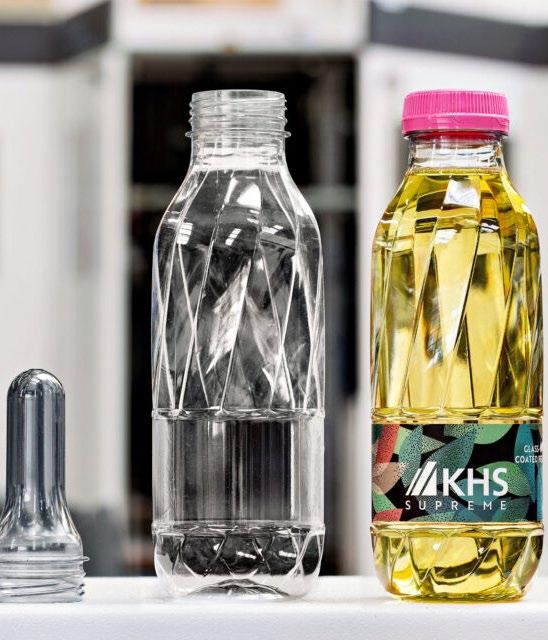
The innovative system combines the benefits of glass with the handleability of PET by applying Plasmax barrier technology. KHS presents the result of an extensive development study: with the KHS
SUPREME PET bottle, the Dortmund turnkey supplier is focusing on the product protection of oxygensensitive beverages such as tea.
Here, KHS makes use of its tried-andtested Plasmax barrier technology, a wafer-thin, transparent layer of silicon oxide that coats the inside wall of PET bottles like glass. Less than 100 nanometers thick, it reliably protects the sensitive bottle content from oxidation, retaining its taste, color and quality for lengthy periods of time. This helps to make the product last up to ten times longer.
Plasmax technology, which KHS has been successfully using for over 20 years, is being continuously further developed at its Hamburg factory.
This site is KHS’ competence center for PET, with the team’s pooled expertise directly incorporated into every single innovation to support customers worldwide with the development of pioneering packaging systems.
Protection for quality-sensitive beverages
“Our barrier system is ideal for premium products such as green tea that’s extremely quality-sensitive and has to satisfy the highest requirements on markets such as Asia,” explains Philipp Langhammer, product manager for barrier technology at KHS. Tea oxidizes easily, leading to unwanted changes in color and taste. The glass barrier prevents this, making for long shelf lives, freshness and safety.
This technology, originally developed for pharmaceutical glass containers, is based on many years of research and process optimization. The first Plasmax systems were piloted in the food sector back in the early 2000s. Since then, KHS has further developed its Plasmax barrier and this year scaled it up to industrial production speeds of up to 60,000 bottles per hour – without any detriment to its protective properties.
Technology meets sustainability
Besides its technical precision, the barrier is also convincing with respect to its environmental friendliness. One major advantage of Plasmax technology is that it is completely recyclable: the glass coating is removed by caustic during the recycling process without affecting the quality of the material. Unlike chemical scavenger technologies that make recycling more difficult, here, the purity of the separated PET is maintained. The coating is also fully compatible with 100%
®PET: This means that it can be recycled and applied to recycled PET containers. “We thus refer to this as a fully circular barrier technology,” says Langhammer. “Our style of packaging combines all the benefits: top barrier performance and full recyclability.”
Packaging
Ducona chooses Sidel’s blower with Preferential Heating to expand into sauces
Ducona Holland BV (Ducona), a leading family-owned PET bottle manufacturer based in the Netherlands, strengthened its commitment to efficiency and sustainability by installing Sidel’s SBO 8 EvoBLOW blower with Preferential Heating technology to produce flat PET containers for sauces.
Ducona’s ongoing collaboration with Sidel reflects a shared dedication to sustainable growth and flexible, high-performance packaging. This last investment enabled Ducona to expand into the sauce market and further its focus on lightweight, energy-efficient packaging. The partnership between Ducona and Sidel spans more than three decades, with Sidel’s expertise and innovative solutions supporting Ducona’s evolution from its origins in 1991 producing bottles for Selchemie, to its current position as a leading PET packaging supplier.
“We are growing not only in volume but also in the variety of products and market segments, offering more added-value packaging for water, syrups, juices, smoothies and now sauces,” said Gerben Schepers, CEO of Ducona.
The company’s commitment to flexibility and rapid delivery, guaranteeing shipment within 48 hours, is underpinned by its
investment in state-of-the-art equipment, a need consistently met by Sidel’s advanced technologies.
Preferential Heating technology for flat containers superior quality
Ducona’s investment in Sidel’s SBO 8 EvoBLOW with Preferential Heating marked a turning point in its production capabilities. The new equipment enabled the manufacture of 16,000 bottles per hour and delivered substantial PET savings, reducing packaging weight by up to ten percent.
This technology proved especially valuable for producing complex, shaped containers for sauces, allowing Ducona to achieve superior packaging quality at a higher speed. “The Sidel Preferential Heating technology provides much better quality for the top-down flat bottles at a competitive cost compared with the traditional blowing process”.
The Sidel blower also helps the company to overcome challenges such as sustainable operations, processing recycled PET (rPET), accounting for eighty per cent of its total volume, and lightweighting packaging. To match its sustainable ambition, Ducona is also supplying over thirty per cent of the company’s energy needs with 8,800 solar panels. addressing the constraint of limited electricity availability in the Netherlands, which makes energyefficient solutions essential.
As Schepers explained: “Of course, we use recycled PET in a lot of our products. Depending on what the customer wants, we have from zero to hundred percent. If you produce rPET, the process window is more restrictive than if you blow virgin bottles. And with Sidel Preferential Heating process, we achieve superior packaging quality with a better bottle base’s shape whatever the recycling rate. And we also have the double air recovery system to save energy which is very important for Ducona”.
Sidel’s advanced technology addresses all these distinct manufacturing needs, supporting Ducona’s flexibility and rapid
changeovers across more than 500 SKUs and over 300 million bottles produced annually. “With Sidel’s quick-change technology, we can easily produce a wide variety of bottles within the expected delivery time,” Schepers noted.
Long-standing partnership
The long-standing partnership with Sidel has been instrumental in Ducona’s growth and ability to meet evolving market demands. Schepers recalled the importance of Sidel’s early machines in improving bottle quality. He also highlighted the comprehensive support Sidel provides, from packaging design, testing, moulds, to operator training, counting on a turnkey supplier with everything in one hand.
Reflecting on the collaboration, Schepers concluded: “We are very satisfied with the new equipment, which offers higher output, better cost efficiency, improved quality, and packaging lightweighting that helps us gain market share.”
Find out more about this partnership and how you can access this kind of support for your business on the Sidel website
Sidel is a leading global provider of packaging solutions for beverage, food, home and personal care products. Leveraging 175 years of experience, we deliver a full range of solutions from packaging design to line engineering to advanced equipment, systems and services. We serve products packaged in PET, can, glass and other materials. At the heart of Sidel are over 5,000 employees worldwide who are passionate about fulfilling the needs of our customers, working together with a community of partners. Our rich heritage as innovators, combined with our deep expertise, allows us to bring a new level of performance for our customers while serving people and the planet. With over 40,000 machines installed in 170 countries, we bring strong technical understanding, smart digital technologies and forwardthinking solutions to help shape the packaging industry, now and for the future.
The World’s 100 Best Coffee Shops: Asia Pacific’s notable winners
Four coffee shops from Australia, Singapore and Malaysia ranked in top 10. The second edition of THE WORLD’S 100 BEST COFFEE SHOPS 2026 with DaVinci Gourmet announced its global rankings at CoffeeFest Madrid 2026, revealing a reshaped coffee landscape for the Asia Pacific region.
This definitive list of the world’s best specialty coffee shops saw Australia deepening its leadership with seven coffee shops in the global ranking, Taiwan with four, returning favourites such as Singapore’s Apartment Coffee maintaining its 2025 ranking, and Malaysia’s Story of Ono climb one level up.
Australian newcomer Only Coffee Project Crows Nest clinched 4th position, followed by Toby’s Estate Coffee Roasters in 5th. Returning to the list were Proud Mary Coffee and Coffee Anthology, joined by newcomers Beta Coffee and Single O. The blend of returning icons and new entrants underlines Australia’s ongoing influence on global café standards. In Asia, Apartment Coffee in Singapore and Story of Ono in
Malaysia took 6th and 8th place respectively, with The Republic of South Korea, Japan, China, and the Philippines securing placements in this year’s Top 100 rankings.
See the full list at The World’s 100 Best Coffee Shops.
The list confirms the emergence of new global capitals of quality coffee, as well as the consolidation of an increasingly diverse and innovative international coffee community that includes the United States, which leads the ranking with nine selected coffee shops, South America, Europe, Asia Pacific, Africa and the Middle East.
“Congratulations to all 100 ranked coffee shops. The World’s 100 Best Coffee Shops 2026 with DaVinci Gourmet is the global benchmark celebrating the cafés shaping the future of coffee, and as a leading beverage solutions brand, DaVinci Gourmet is proud to stand alongside it as the global title partner,” said Eloise Dubuisson, General Manager, Food Service Brands, Kerry Asia Pacific, Middle East & Africa.
A global evaluation process
The ranking is produced through a mixed system combining the evaluation of more than 800
professional judges from all continents with public voting, which exceeded 350,000 votes in this edition. In total, more than 15,000 coffee shops worldwide were analysed.
Recognising excellence in coffee
A benchmark for the industry and professionals, The World’s 100 Best Coffee Shops aims to highlight coffee shops that not only serve exceptional coffee but also create unique coffee experiences.
As Global and Title Partner of the 2026 edition, and together with initiatives like the DaVinci Gourmet Barista Craft Championship, DaVinci Gourmet remains committed to championing global beverage artistry and café culture.
DaVinci Gourmet
DaVinci Gourmet is a global beverage brand that emphasises innovation and sustainability while offering beverage solutions for the Foodservice channels. At DaVinci Gourmet, our passion for coffee is at the heart of everything we do. We provide a vibrant palette of authentic flavours crafted from the highest quality ingredients, empowering drink artists to create their next masterpieces.
NEWS | Industry
Indorama Ventures, Nigerian Breweries and Genesis Energy partner to develop one of Africa’s largest rPET production facilities
Indorama Ventures Public Company Limited, a global sustainable chemical company, together with Nigerian Breweries Plc, the foremost brewer in Nigeria, and Genesis Power & Energy Solutions Ltd, a leading African clean energy infrastructure development and asset management company, have entered a strategic partnership to establish one of Africa’s largest stateof-the-art recycled PET (rPET) production facilities in Nigeria, based on planned production capacity. The landmark collaboration marks a significant step toward strengthening circular economy infrastructure and sustainable packaging value chains across the region.
Located in Lagos, the site represents an investment to develop a facility capable of producing up to 45,000 tons of food-grade rPET resin annually, with start-up targeted in the first half of 2027. By converting post-consumer PET bottles into high-quality recycled material for packaging applications, the initiative aims to meet fast-rising demand for recycled content, reduce plastic waste, and create local value through improved collection systems, job creation, and increased participation across the recycling value chain.
The partnership brings together complementary strengths across the PET value chain. Indorama Ventures, the world’s largest recycler of PET for beverages, contributes expertise in sustainable materials development. Nigerian Breweries, a Heineken operating company, provides strong local market insight and engagement across Nigeria’s beverage ecosystem, while Genesis
Energy supports the initiative with sustainable infrastructure and energy expertise. The project is expected to support recycling capacity in Nigeria, subject to regulatory approvals, technical validation, and operational implementation. Together, the partners aim to establish commercially viable rPET operations that enable responsible growth and longterm environmental impact.
This initiative aligns with Nigeria’s National Policy on Plastic Waste Management, introduced in 2020 to strengthen collection, recycling, and circular economy solutions, with the goal that all plastic packaging be recyclable, biodegradable, compostable, or reusable by 2030. Lagos, as Nigeria’s commercial hub, provides a strategic base to develop recycling infrastructure capable of serving both national and regional demand. Commenting on the landmark partnership, Yash Lohia, Executive President of Petchem and Chairman of ESG Council at Indorama Ventures, said, “This partnership marks a defining milestone in our global recycling journey. By establishing our largest recycling facility to date and one of the largest rPET sites in Africa, we are bringing Indorama Ventures’ global expertise, proven technologies, and long-term vision for circularity to a region with immense growth potential. This investment reflects our belief that scaling sustainability solutions locally is essential to building resilient, sustainable packaging systems that deliver lasting environmental and economic value.”
With a global recycling footprint spanning 20 facilities across 11 countries, Indorama Ventures has recycled more than 160 billion post-consumer PET bottles into high-quality recycled materials. The Nigeria facility represents the company’s first recycling investment in Africa and the largest recycling plant Indorama Ventures has ever built, underscoring the scale of the company’s longterm commitment to circular infrastructure, advanced recycling technology, and partnerships that
strengthen collection, education, and innovation across the value chain. Genesis Energy supports the partnership by enabling sustainable infrastructure and energy solutions that underpin lowcarbon industrial development and circular economy systems across Africa. The company operates across 11 African countries, with utility-scale generation projects of more than 780MW in operations, ongoing construction, and advanced development in Nigeria, South Africa, the Benin Republic, Zambia, Rwanda, Zimbabwe, Mali and the United Kingdom, as well as a project development pipeline north of 4.5GW. It deploys solar, wind, battery storage, and natural gas solutions, and is pursuing an ambition to allocate up to $2 billion annually over the next five years, with a targeted 10 GW of installed and contracted capacity. Speaking on the partnership, Chairman and CEO of Genesis Energy, Mr Akinwole II Omoboriowo, said, “This compelling initiative demonstrates Genesis’ commitments to deploying capital to climate resilient investments by leveraging clean energy as a strategic nexus to advancing viable economic opportunities. The investment is also a testament to how cross-sector partnerships can enable sustainable industrial development. By combining circular economy principles with resilient infrastructure and energy solutions, the initiative supports long-term environmental impact and local value creation.”
Beyond industrial investment, the project is expected to contribute to broader environmental and socioeconomic objectives through increased PET collection, diverting plastic waste away from landfills, and sustained engagement with local communities to promote best practices in waste collection and recycling. The signing of the partnership agreement represents the first milestone in a longerterm development roadmap and reflects a shared commitment by the partners to invest responsibly, support sustainable packaging solutions, and contribute to Nigeria’s transition toward a more circular and resource-efficient economy.
NEWS | Automation
Compact AI-based hyperspectral camera enables new industrial applications
The OASYS project focuses on optoelectronic sensors for application-oriented systems. In the subproject A1, a team of scientists and industry experts is developing an ultra-compact, energy-efficient hyperspectral camera that uses artificial intelligence to perform complex material and quality analyses in real time. The integrated spectrometer records spectral characteristics, revealing chemical properties that are invisible to the human eye. This enables defects in food or the composition of textiles or plastics to be identified quickly and accurately.
The novel hyperspectral camera offers wide-ranging applications in industrial and agricultural processes. Its innovative approach combines conventional 2D imaging with artificial intelligence and spectral analysis. A standard 2D camera first captures a high-resolution image of the target object. Artificial intelligence then analyses the image in real time, automatically identifying regions of interest.
The integrated spectrometer subsequently performs spectral analysis exclusively at these selected positions, determining the chemical composition. This intelligent approach significantly enhances the efficiency of
hyperspectral measurements. Rather than capturing spectral data across the entire image – a computationally intensive process –the system analyses only the relevant measurement points. This targeted method substantially reduces data volumes, energy consumption, and processing time.
The information obtained in this way supports, for example, the reliable sorting of textiles and plastics. It also increases the reliability of identifying counterfeit products. Additionally, it improves quality control in food processing by detecting pressure marks and defects and enables an accurate assessment of plant condition and nutrient requirements in agriculture. Automated evaluation enables faster and more reliable decision-making. At the same time, processes become more sustainable, and economic resources are used more efficiently.
“With the compact hyperspectral camera from OASYS A1, we are developing technology that can be used directly in production lines, sorting facilities, or in the field for analytical processes,” explains Heinrich Engelke, project manager at the Fraunhofer Institute for Photonic Microsystems IPMS. “The combination of miniaturization, energy efficiency and artificial
intelligence opens up completely new applications, while also making an important contribution to resource conservation and process reliability.”
The components developed in the project will form the basis for future sensor systems that could significantly improve industry, recycling, agriculture, and the food sector.
About the project
The OASYS research program runs from September 2023 to August 2028, covering a period of five years, and is funded by the German Federal Ministry of Research, Technology, and Space (BMFTR) with around 12.5 million euros. Brandenburg University of Technology CottbusSenftenberg (BTU) is coordinating the project. In addition to Fraunhofer IPMS, the consortium also includes the Ferdinand Braun Institute FBH and the IHP – Leibniz Institute for Innovative Microelectronics. The joint commitment to OASYS, particularly in project A1, highlights Fraunhofer IPMS’s leading role in developing innovative optical system technologies.
Further information about the OASYS project and its partners is available on the website oasys-cottbus.com
Automation |NEWS
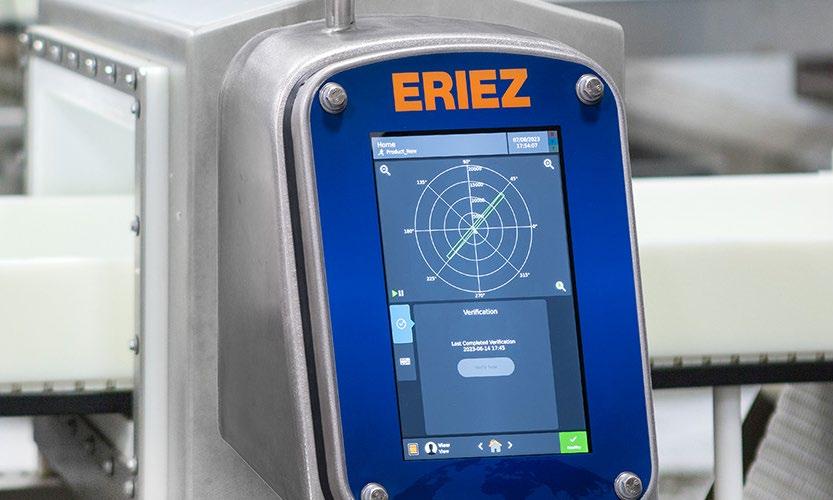
New Eriez® QRC kit advances metal detection and retail compliance worldwide
Eriez®, a global leader in separation and inspection technologies, introduces the new Quality Retail Compliance (QRC) Kit, setting a new standard for metal detection performance and product safety. This innovative solution enhances the company’s X8 Metal Detectors with intelligent automation and verification tools, enabling processors to meet and surpass the world’s most rigorous retail and regulatory standards.
Developed in response to escalating food safety and quality demands— particularly within UK and European retail supply chains—the QRC Kit integrates state-of-the-art software and precision-engineered hardware to deliver exceptional inspection accuracy, traceability, and reliability. Automated monitoring and control functions provide users with complete confidence in system performance while ensuring the transparency required by global compliance programs.
“The QRC Kit represents a transformative leap in retail-ready metal detection,” said Emmett Keim, Eriez Global Product Manager for Inspection Systems. “It allows manufacturers to verify functionality automatically, maintain audit-ready documentation, and uphold brand integrity within a single, streamlined solution.”
The QRC software features guided challenge testing, dependable failsafe verification, and comprehensive event logging, automatically recording every reject and test action to simplify audit preparation and reporting. Optional hardware components, including rejectbin auto locks, tunnel guards, air pressure regulators, and photo-eye sensors, provide real-time oversight of critical inspection points. If any condition falls outside specification, the system immediately halts operation and alerts personnel to ensure rapid correction and continuous product quality.
All new X8 Metal Detectors are now equipped with QRC software as standard, while existing users gain access at no additional cost. Compatible hardware retrofits extend these capabilities across legacy or mixed equipment fleets, promoting consistent compliance throughout plant operations.
Modelled after globally recognised retailer protocols for fail-safe inspection and data traceability, the QRC Kit reinforces Eriez’ commitment to product safety and customer success. With advanced automation and data management capabilities, manufacturers can stay ahead of evolving regulations while maintaining the precision and dependability that define the Eriez brand.
For more information about Eriez metal detectors, visit eriez.com
NEWS | Processing
SED to modernise Jaggery Production with Bihar’s first MVR-based industrial-scale plant
New 475 TCD fully automated facility to set a global benchmark for energy efficiency and technology-driven agro-processing.
Spray Engineering Devices Limited (SED), a global leader in energyefficient industrial technologies, continues to drive the technological evolution of India’s agro-industry with the announcement of a new industrial-scale project in Bihar. The company has secured a turnkey Engineering, Procurement, and Construction (EPC) contract from Harsidhi Agro Food and Biofuels Private Limited to establish a 475 TCD (tonnes crushed per day) fully automated, MVR-based jaggery plant in East Champaran, Bihar, India. This project introduces industrial-scale automation and Mechanical Vapour Recompression (MVR) technology to traditional processing, setting a new standard for energy efficiency and production quality in the region.
The plant will oversee the entire lifecycle of jaggery production, from design and manufacturing to final commissioning. By recycling waste
heat through MVR technology—a first at this scale for the sector—the facility will significantly cut energy costs and improve process performance. The project is expected to be completed within six to seven months, featuring modern utilities and automation that will reduce the carbon footprint by 90%. The total project value stands at approximately INR 75 crores.
Vivek Verma, Managing Director, SED, stated, “For too long, jaggery production in India has been sidelined as a traditional, lowtech sector. We are changing that narrative by bringing global engineering standards to the grassroots. By deploying MVR technology, we aren’t just building a plant; we are creating a blueprint for an energy-efficient sugarcane ecosystem. This facility will prove that traditional agro products can be manufactured with the same precision and efficiency as high-end industrial goods, ultimately helping farmers realise better value for their produce.”
Krishnarjun Kushwaha, Managing Director, Harsidhi Agro Food and
Biofuels Private Limited, added, “Choosing SED as our EPC partner was a strategic move to ensure our facility stands at the forefront of the agro-processing industry. Their expertise in automation and process engineering is exactly what Bihar’s sugarcane sector needs to scale up. We expect this plant to generate over 1000 direct and indirect jobs in the East Champaran region, while setting a new benchmark for hygiene and production speed in the domestic market.”
The project scope covers everything from the initial cane carrier to final jaggery storage, including electrical and automation infrastructure. As India moves toward “Smart Villages” and sustainable manufacturing, this initiative marks a pivotal shift in how the country processes its sugarcane surplus. Once operational, the plant is expected to deliver 90% energy savings, reduce up to 50,000 tonnes of CO2 emissions annually, and create 1000 direct and indirect jobs, underscoring its impact on sustainability and rural development.
CH4 Global scoops the pool with 2 international sustainability gongs
H4 Global has won two international awards recognising business sustainability and the impacts being made with its proprietary Methane Tamer feed supplement, which cuts methane emissions from cows by up to 90 per cent.
Announced in the US, the SEAL (Sustainability, Environmental Achievement and Leadership) Awards recognise the 50 most sustainable companies in the world and the most impactful and innovative environmental initiatives, while also funding research and environmental impact campaigns. CH4 Global won both the SEAL Environmental Initiative Award for its role in reducing global methane emissions and the SEAL Sustainable Product Award for the production of Methane Tamer.
The SEAL Environmental Initiative Award honours specific environmental and sustainability initiatives, recognising the efforts CH4 Global has taken to establish the world’s first EcoPark, on Eyre Peninsula, to grow Asparagopsis. When dried and formulated into Methane Tamer and fed to cattle, it
significantly reduces the methane emissions in their burps.
The SEAL Sustainable Product Award honours innovative and impactful products that are “purpose-built” for a sustainable future, such as CH4 Global’s Methane Tamer. Other major international companies to have been honoured at the 2026 SEAL Awards included British Airways, General Motors, Lenovo, Hitachi Energy, and Wolters Kluwer.
CH4 Global founder and CEO Steve Meller said it was an honour to be recognised internationally for the years of effort taken to build a new seaweed industry in South Australia, which was working towards reducing greenhouse gas emissions at a global level.
“It’s rewarding to be recognised for our efforts to bend the climate curve, alongside other major international organisations taking steps to change, whether it be embedding circular economy principles into their activities, recycling plastics, reducing carbon footprints, or building living sea walls,” Mr Meller said.
“By growing and drying Asparagopsis, which is native to southern Australian waters, we’re providing farmers with an opportunity to feed their cows a natural seaweed that has an impact on their emissions. Farmers are feeling better about reducing methane emissions, their cows are thriving, and they’ve been able to create a new market for consumers wanting to purchase and consume methane-reduced beef.”
At the Louth Bay EcoPark, CH4 Global is growing and processing Asparagopsis at scale to formulate Methane Tamer, which, when fed to cows at just .5 per cent of their daily mix, reduces enteric methane emissions from cattle by up to 90 per cent.CH4 Global last year opened phase one of its EcoPark, where it is growing and processing Asparagopsis in 10 large-scale cultivation ponds with a combined capacity of 2 million litres –capable of producing 80metric tonnes of the seaweed each year. Beef from cattle consuming Methane Tamer is being sold in butchers’ and restaurants in South Australia, with a supermarket chain soon to follow suit.
Why Asia is where next-gen beverages go mainstream first
By Cath Isabedra
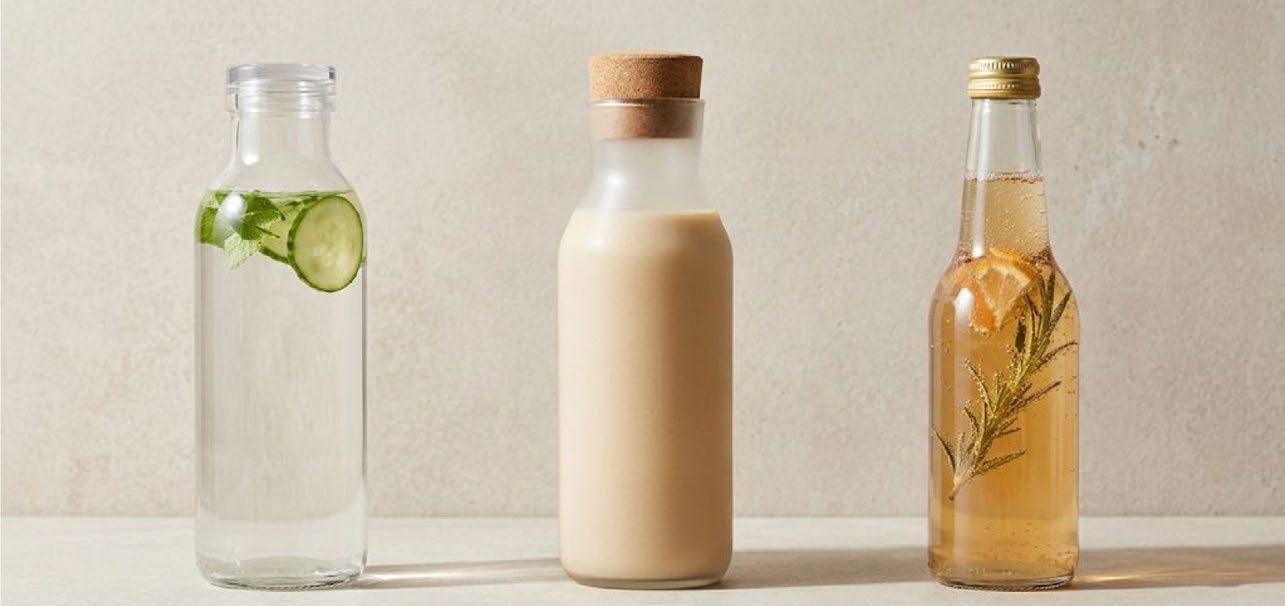
In the next wave of beverages, “refreshing” is table stakes. What wins is measurable value, felt quickly. Better hydration on a hot commute. A gentler lift than a sugar-heavy energy drink. A calmer night routine that still tastes like a treat. Across the Asia Pacific, consumer demand is already shifting in that direction, and the numbers suggest it is not a fringe move. In early 2024, beverage spending outpaced broader FMCG growth across the region in panel-tracked markets, with beverages up 9.2% in value sales while overall FMCG spend rose 3.5%.
This matters to B2B leaders because it reframes innovation risk. If beverages are the growth engine while households stay selective, then R&D that lands in the right “need state” can grow even in cautious
conditions. At the same time, the bar for trust is rising. A consumer research study published by Innova Market Insights found that 56% of consumers in Asia say health and nutrition have become more important to food and beverage brands. Product quality and safety are also gaining weight as decision factors.
The strategic signal is clear. Next-gen beverages in Asia are not defined by one hero ingredient. They are defined by a contract: deliver a benefit people can feel, keep the label understandable, and make the price feel justified. The upside is meaningful. A global health-and-wellness outlook from Euromonitor International argues that the Asia Pacific will drive global wellness growth to 2029, with functional drinks and dairy highlighted as leading growth vectors.
What consumer reports in Asia are really saying about demand
The most important shift is that wellness has become daily, not seasonal. In the same Asia consumer work from Innova (reported as an average across China, India, and Indonesia), one in three consumers say mental and emotional wellness is their primary health goal, and 29% say they choose food or beverages that “boost health” to eat healthily.
That is a demand blueprint for beverage developers: benefits that do not require a behaviour change tend to scale faster. Beverages are uniquely advantaged because they fit existing routines and “microoccasions.” The same dataset shows 47% of consumers in Asia say they have become more self-sufficient in caring for their own health over the past three years.
The implication for manufacturers is that consumers are more willing to self-select functional products, but they are also more critical of quality signals and clarity.
Occasions are also shifting, and Asia’s beverage opportunity is closely tied to where social life takes place. Innova reports a +17% net shift in Asia toward the workplace as a place to socialise, and a +26% net shift toward consumers eating at home more (and away from out-of-home eating).
That duality is pushing two innovation tracks at once: portable single-serves for “between moments,” and at-home formats that feel premium without the restaurant markup.
Digital behaviour reinforces this. Innova describes “digitally empowered” consumers who are increasingly willing and able to self-serve and self-support on aspects such as health, fitness, finance, and cooking at home.
Separately, NielsenIQ notes that health-and-wellness preferences, including demand for immunity boosters, low-sugar options, and functional ingredients are shaping online beverage sales.
One more signal is easy to miss but commercially decisive: “value” is being redefined. In Innova’s Asia findings, 42% say good quality is key to perceiving a product as good value for money.
This means the right path to margin often is not simply premium pricing. It is a premium justification: clearer sourcing, better taste, better texture, and benefits that can be explained without sounding medicinal.
“The next-gen beverage is a new contract with consumers: less sugar, clearer function, and proof you can sustain the promise at scale.”
Cover Story
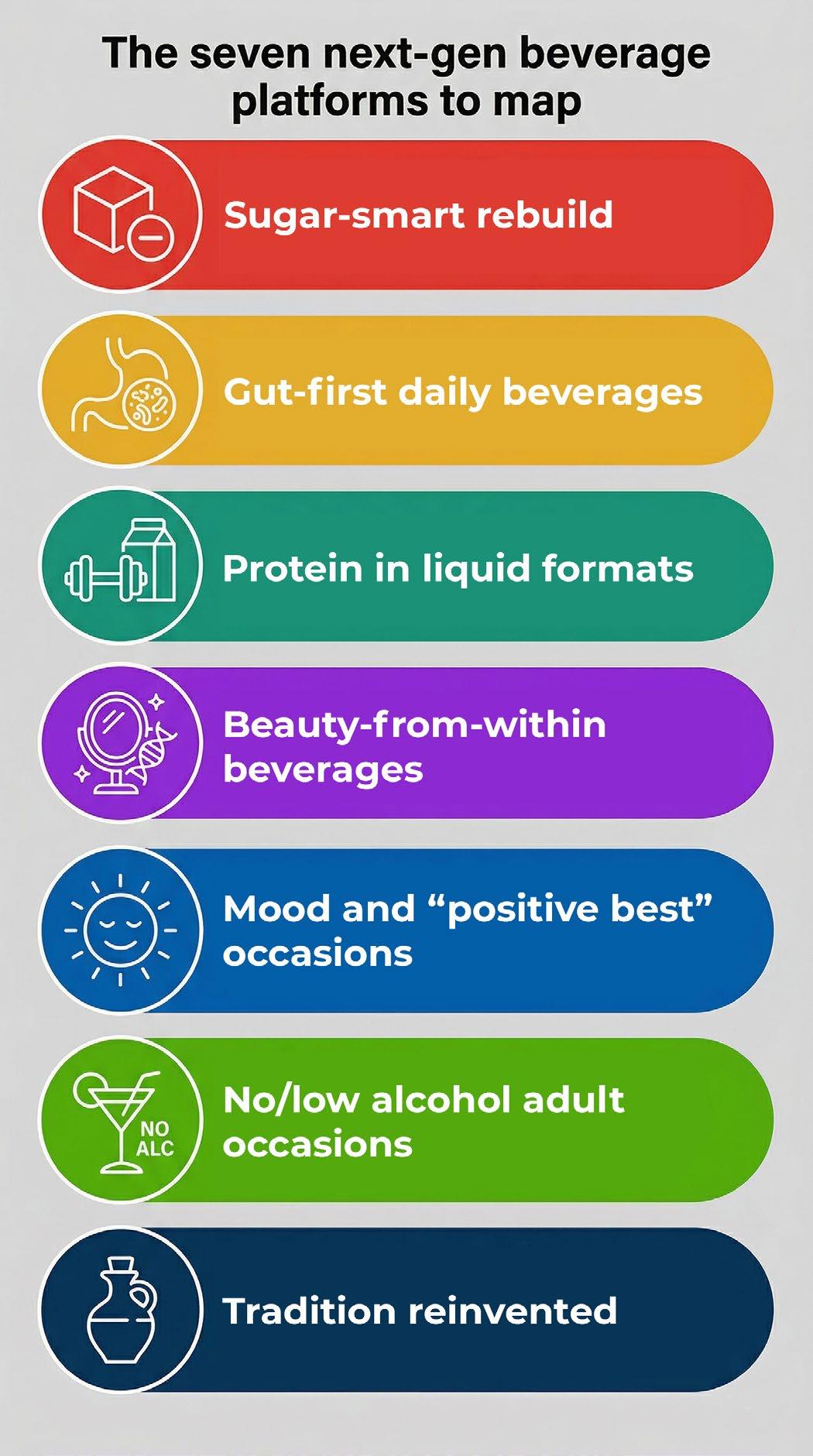
The sugar-smart rebuild
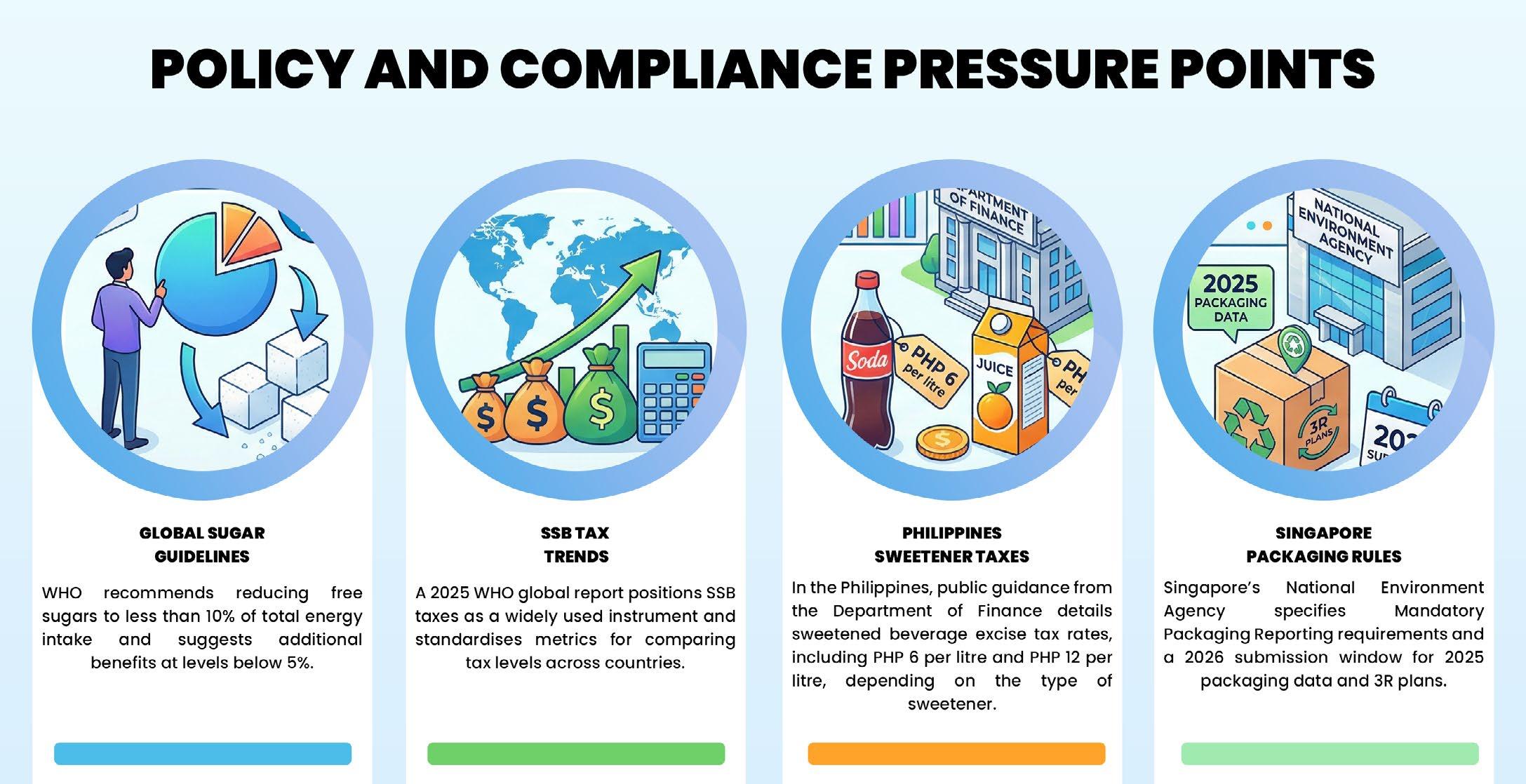
Sugar reduction in Asia is moving from “nice to have” to structural priority. World Health Organization guidance recommends that adults and children reduce free sugars to less than 10% of total energy, with additional benefits below 5%.
Governments are also tightening the environment through fiscal tools. In the Philippines, the Department of Finance has publicly detailed excise tax rates under the sweetened beverage tax regime, including PHP 6 per litre for caloric and non-caloric sweeteners and PHP 12 per litre for HFCS-sweetened beverages.
A 2025 global report on sugar-sweetened beverage taxes also underscores that SSB taxation has become a mainstream policy tool internationally, with comparable metrics to assess tax levels across countries.
For manufacturers, this platform is not only a reformulation. It is reformulation plus “taste insurance”: acid balance, aroma lift, texture work, and ingredient quality cues that protect repeat purchase.
Gut-first beverages that earn trust
Gut health is no longer confined to dairy aisles. Innova Market Insights reports that consumers increasingly treat gut health as central to holistic wellbeing, and its 2025 trends commentary highlights the role of probiotics and prebiotics and the need to explain mechanisms and tangible benefits to reduce confusion.
In its Asia consumer trends, Innova frames gut health as a multi-generation priority and points to fibres, probiotics, prebiotics and vitamin D as functional levers for gut benefits.
The opportunity is to build “credible daily” formats: beverages that can be consumed frequently without health halo fatigue, with dosage levels and stability that survive the supply chain.
Protein in liquid formats
Asia’s wellness growth outlook highlights functional drinks and dairy, including protein-rich dairy in India, as key drivers.
For R&D teams, the next question is not “add protein.” It is “make protein pleasant,” especially under low sugar constraints. That pushes innovation into mouthfeel, flavour masking, and hybrid formulations that keep ingredient lists legible.
Beauty from within goes broader than supplements
In Innova’s Asia consumer trends, “beauty-enhancing benefits” are explicitly identified as an opportunity in food and beverages, with nearly one in four consumers seeking products that improve physical appearance.
This platform is expanding beyond niche beauty boutiques because it aligns with the “daily wellness” mindset and because beverages are an easy delivery vehicle. For decision makers, the question becomes positioning discipline: whether your brand can credibly play in appearance benefits, and whether you can support claims responsibly in each market.
Mood, calm, and the “positive best” occasion
Innova’s Asia trends include a “positive best” framing, where feeling well is a key driver, and consumers adopt strategies to look and feel their mental and emotional best. A global consumer study by McKinsey & Company similarly describes wellness as increasingly personalised and daily for younger consumers, with mental health among the subcategories expected to grow.
For manufacturers, this is a high-upside, high-discipline platform. The whitespace is not for more claims. It is clearer claims in simpler language, designed for repeatable occasions like after-work decompression, screen breaks, and sleep routines.
No- and low-alcohol becomes a mainstream beverage occasion
Across APAC, the on-premise opportunity is real and measurable. NielsenIQ reports that 30% of APAC consumers are drinking less alcohol than a year ago, and the proportion is even higher in countries including Australia (34%), New Zealand (38%), and the Philippines (42%).
This is not only a beer or spirits story. It is a “grownup occasion” story: beverages that hold up in social settings with taste complexity and better-for-you cues.
Tradition reinvented, engineered for modern shelves
Asia’s next-gen beverage innovation is also local by design. Innova’s Asia trends explicitly point to opportunities to bring back local ingredients, traditional flavours, and well-known recipes, modernised through technology and improved product quality.
This is a major strategic advantage in Asia because familiarity lowers trial friction, even when the format is new.
The constraints that will define winners: sugar policy, packaging rules, and supply shocks
Next-gen beverages are being shaped as much by constraints as by creativity. Sugar is the most obvious. Alongside WHO intake guidance, governments and public-health bodies are pushing practical interventions that change the default choice. In
Thailand, a government-backed initiative reported by Associated Press describes major coffee chains pledging to cut the default sugar content in some drinks by half. The report also notes sugar consumption levels far above the WHO’s recommended limit of six teaspoons per day.
Even for manufacturers outside of coffee industry, this matters because it normalises “less sweet by default” as a cultural standard.
Packaging is the second constraint, turning into a competitive filter. In Singapore, the National Environment Agency sets out Mandatory Packaging Reporting requirements under the Resource Sustainability Act, including an annual turnover threshold and a 2026 reporting window for calendar-year 2025 packaging data submissions and 3R plans.
The Ministry of Sustainability and the Environment describes this framework as laying the foundation for an extended producer responsibility approach to packaging waste, and includes requirements for packaging data and 3R plans.
Across the region, packaging regulation is moving in the same direction: more reporting, more recovery expectations, and more scrutiny of plastic leakage.
An overview by the Asian Development Bank highlights the Philippines’ EPR law, which requires producers to manage plastic packaging waste, positioning EPR as a policy approach to shift responsibility across the lifecycle.
A regional policy landscape review by the OECD compiles country targets and planned rules across Southeast and East Asia, from recycling and landfill reduction goals to plastic packaging recovery targets.
The third constraint is supply volatility, often triggered by climate and demand spikes. The matcha boom is a cautionary case study for any premium botanical, fruit, or fermented input that cannot be scaled quickly. A Reuters report describes how heat stress affected tencha yields while demand surged, driving record auction prices and highlighting that new fields can take years to mature.
In parallel, the Global Japanese Tea Association explains why matcha output is inherently constrained, including its seasonal nature, its small share of total tea production, and the time-intensive grinding required.
For beverage manufacturers, the broader lesson is not “avoid trending ingredients.” It is “design ingredient resilience”: multi-origin sourcing, flexible flavour systems, and transparent substitution rules that protect taste and brand trust when input costs rise.
Cover Story
The R&D and commercial playbook for 2026 decision makers
The winning operating model looks different from the old “launch more SKUs” approach. Consumer insights in Asia point to a more disciplined formula: quality signals, credible benefit delivery, and channel-specific formats that match shifting occasions.
Start with occasions, then build functions
The same benefit can be delivered in multiple ways, but the occasion decides the format. A workplace socialising rebound and a parallel shift toward more eating at home suggest a two-speed portfolio. Portable, low-mess formats for commuter and office moments. And at-home beverages that feel premium and restorative without being “clinical.”
Treat transparency as a formulation requirement
Innova’s Asia work repeatedly ties growth to transparency, ingredient quality, and trust.
When 46% say safety has become more important, and 56% say health and nutrition are more important in brand choice, quality assurance becomes part of marketing, not only compliance. This pushes leaders to invest in traceability, stability validation, and simpler labels that are still technically robust.
Make “less sugar” taste better, not just lower
With sugar taxes and default-sugar reduction efforts shaping norms, sugar-smart beverages need to be optimised as full systems: sweetness architecture, bitterness management, aroma, and texture. The commercial payoff is that “less sweet” becomes an advantage only when consumers do not feel punished by flavour.
Build an evidence posture you can sustain across markets
The next-gen beverage era pushes brands toward function, but it also increases scrutiny. Innova’s global and Asia-facing commentary emphasises clearer explanations of mechanisms and tangible benefits, especially in gut health, to reduce confusion and help consumers choose appropriately. For leadership teams, the practical move is to define an “evidence posture” by platform, then align R&D, regulatory, and marketing around the same standard across countries and channels.
Treat
packaging reporting as a data capability
Packaging compliance is increasingly operational. Singapore’s mandatory reporting framework includes packaging data submissions and required 3R plans with KPIs and targets. Brands that build packaging data capture early will move faster as EPR-style requirements expand, and they will also be better positioned to credibly justify sustainability claims.
The companies that win will design beverages for systems, not shelves
Next-gen beverages in Asia are no longer defined by flavour trends or packaging refreshes. They are defined by structural intent.
The brands that will lead the next cycle understand three things clearly.
First, function must be credible. Consumers are scrutinising claims. Regulators are tightening language. Clinical backing, clean labels, and transparent sourcing are no longer optional. If your formulation cannot withstand regulatory review or scientific questioning, it will not scale.
Second, localisation drives relevance. Asia is not one market. South Korea’s functional beverage culture differs from India’s value-driven fortification market.
Southeast Asia’s young urban consumers behave differently from Japan’s ageing demographic. R&D teams must design with cultural and physiological context in mind, not simply export Western wellness narratives.
Third, resilience now sits inside the product strategy. Ingredient volatility, climate exposure, and supply chain fragility directly shape formulation choices. Water usage, energy intensity, and sourcing geography affect margin and brand trust alike. Beverage innovation today is as much about operational architecture as it is about taste.
The mandate is clear. Invest in validation. Build agile formulation platforms. Strengthen regional ingredient networks. Align regulatory strategy early. Treat sustainability metrics as commercial metrics.
The next generation of beverages will not be defined by novelty but by durability, credibility, and adaptability.
INGREDION
Mouthfeel is now the real sugar-reduction test for Asia’s beverage brands
By Cath Isabedra
For years, sugar reduction in beverages was framed as a sweetness problem. Cut the sugar, find a substitute, adjust the flavour, and move on. That logic no longer holds.
Across Asia, beverage makers are now operating in a market where health policy, cost pressure, and consumer scrutiny are converging. Singapore’s NutriGrade framework continues to shape reformulation behaviour, while broader public-health policy across markets is reinforcing the direction of travel. WHO’s latest global review shows sugar-sweetened beverage taxes are spreading and increasingly used to encourage reformulation, not just discourage consumption. That is why this conversation with Ingredion matters. We
cannot simply repeat the familiar line that consumers want less sugar. It points to the harder commercial reality. In beverages, the real risk is not losing sweetness alone. It is losing satisfaction.
As Mandy Zhang, Director, Marketing Category Lead, Texture and Healthful Solutions, Asia-Pacific at Ingredion, puts it, “Sugar provides not just taste and sweetness, but also contributes to the body, weight, and lubrication of a product.”
That single point has major implications for product strategy. Once sugar comes out, brands are not merely correcting flavour. They are rebuilding the structure of the drink.
Reformulation pressure is rising, but consumers are not lowering their expectations
The policy backdrop matters because it is forcing more brands to act. Singapore’s Ministry of Health has repeatedly underscored that beverages were targeted first because they contribute more than half of Singaporeans’ sugar intake. It also reported that the median sugar level of pre-packaged Nutri-Grade beverages fell from 7.1% in 2017 to 4.6% in 2021, with close to two-thirds of pre-packaged beverages reaching Nutri-Grade A by 2023.
That kind of shift changes the benchmark for the industry. Reformulation is no longer a side project for a few health-led brands. It is becoming a mainstream operating requirement.
Yet consumers have not become more forgiving. Ingredion is clear on this point. “APAC consumers are among the most value-seeking and discerning,” Zhang says. “Today’s consumer wants ‘better-for-you’ and simpler labels at an affordable price point, while still expecting an indulgent drinking experience.” She adds, “low sugar cannot exist solely within the premium tier.”
In Asia, reduced sugar has to work under everyday market conditions. That means familiar formats, familiar price expectations, and no obvious drop in enjoyment.
The first failure signal is usually not flavour. It is thinness.
This is where many sugar-reduction discussions become too simplistic. The industry often talks about sweetness replacement as though the challenge is mainly taste calibration. Ingredion’s answers suggest something more exacting.
“When sugar is reduced by 30–50%, the sensory impact is immediately felt,” Zhang says. She points to imbalances in onset, intensity, and back-of-thetongue sweetness. But she does not stop there. “If a drink lacks mouth coating, feels ‘watery,’ or leads to a faster swallow, it indicates that the formulation does not deliver the necessary viscosity.” Consumers, she notes, often describe these beverages as “empty” or “thin”.
That matters because thinness is not a minor defect. It is often the point where the consumer decides that a reduced-sugar beverage feels like a compromise.
This is the sharper lesson: Taste issues may be easier to spot in development. Texture failure is often subtler at first, but more corrosive in the market. It chips away at the finish rate, repeat purchase, and trust.
Texture has become a repeat-purchase issue
Ingredion’s 2024 texture work is useful here because it gives the discussion commercial shape. The company says 25% of consumers rate texture above flavour, while 52% would reject a product if they dislike the texture. More telling still, Zhang says that for more than half of consumers, texture helps determine whether they will finish the drink or buy it again.
That is not a niche sensory observation. It is a revenue issue.
In beverages, texture often sits below the threshold of conscious attention until it goes wrong. A consumer may not describe a drink in technical terms, but they will recognise when it feels weak, short, or less rewarding than expected. In a region where better-for-you claims are becoming more common, that gap between claimed value and lived experience can quickly work against a brand.
Indulgence is not about thickness alone
One of the stronger parts of the conversation with Ingredion is their refusal to reduce mouthfeel to simple viscosity. Zhang says indulgence in reduced-sugar beverages is “rarely about a specific textural attribute alone”. Instead, the key cues are “smoothness and lubrication on the tongue, paired with a mouth-coating sensation that lingers well after the liquid is swallowed”. She adds that the company focuses on “a balanced viscosity” because consumers prioritise “a lasting experience over the thickness of the first sip”.
That distinction is important. Brands can make a drink thicker and still miss the target. A beverage that feels heavy but not rounded, or creamy but not clean, can still fall short of the sensory memory attached to the original full-sugar version.
This is where sugar reduction becomes a more advanced product development exercise. The goal is not to add back bulk in a blunt way. It is to rebuild the sequence of sensations that make the drink feel complete.
Feature Story
Affordability is narrowing the room for technical error
Zhang describes low sugar at scale as a “value equation” that balances “texture, mouthfeel, and flavour against the price point”. That line deserves attention beyond R&D teams.
Cost discipline is central because reduced-sugar beverages are not entering a market that automatically rewards technical sophistication. In many cases, consumers expect reformulated versions of existing favourites to sell at the same price. Ingredion says exactly that. New beverages with additional benefits may support some premium, but the price-benefit balance has to be clear.
This aligns with wider policy trends across the region. Malaysia’s Ministry of Health, in its 2024 technical report on sugar-sweetened beverage taxation, frames the tax as part of a broader effort to drive healthier consumption and push industry reformulation.
The commercial implication is straightforward. Brands do not have unlimited formulation freedom. They need systems that restore taste and mouthfeel without making the final product unworkable on the shelf.
A reduced-sugar beverage should still perform like the original
Perhaps the most useful discipline is how Ingredion defines a formulation “pass”.
Zhang says success means meeting both technical standards and consumer sweetness preferences. Ingredion uses temporal profiling to assess how closely the reduced-sugar version matches the sweetness profile of the full-sugar reference. On texture, the benchmark is also reference-led. “We establish a target descriptive analysis based on the reference product to lock in the desired mouthfeel.” Stability across the full shelf life is also non-negotiable.
That is the right benchmark for the market. Consumers do not reward effort. They reward outcomes.
A reformulated beverage is not judged against the difficulty of the technical task. It is judged against memory, habit, and the next competing product on the shelf. If it no longer delivers the expected experience, the sugar reduction story alone will not save it.
Mandy Zhang, Director, Marketing Category Lead, Texture and Healthful Solutions, Asia-Pacific at Ingredion
The next challenge is scale-up, not ideation
Many beverage concepts now entering the market carry multiple formulation demands at once. Less sugar. Added fibre. Protein. Functional positioning. Cleaner labels. Sometimes all of them together.
Ingredion’s warning here is practical and worth taking seriously. One of the most common failures it sees in next-generation beverages is “texture instability that may appear over time”, often driven by ingredient interactions that emerge at production scale. The cost can show up in waste, reformulation cycles, and “possibly loss of consumer trust”.
This is where product strategy and operational discipline meet. A concept can be commercially attractive on paper and still become expensive if the texture does not hold through manufacture, transport, and shelf life. For increasingly crowded beverage categories, that instability is not just a technical problem. It is a brand risk.
Why blended sweetness and mouthfeel will matter more than zero-sugar claims
Ingredion does not believe the market will be won simply by pushing towards absolute sugar elimination. Zhang says consumers are moving away from both full sugar and artificial sweeteners, leaning more towards plant-based options such as stevia. She also argues that “sugar is no longer the only standard” for meeting sweetness preferences.
That is consistent with the broader direction of the market, but it also raises the bar. Once sugar is no longer the only sweetness benchmark, brands have more formulation options. They also have more sensory variables to manage.
Ingredion’s forward view is notably measured. “We see that the winning low-sugar beverages will be those that deliver indulgence through superior texture and mouthfeel, and use blended sweetness to fill the sensory gaps,” Zhang says. “Consumers will likely seek less-sugar beverages that offer total satisfaction, rather than simply ‘zero sugar’ options.”
That is probably the most important takeaway from the interview.
Zhang adds, “To keep these products affordable at a mass scale, brands must design with scalability in mind from day one. At Ingredion, this is an important requirement that we prioritise during the earliest stages of development with our customers.”
A reduced-sugar beverage should still perform like the original
The next phase of low-sugar beverage development in Asia will not be defined by sweetness reduction alone. It will be defined by whether brands can remove sugar without making the drink feel diminished. In that equation, mouthfeel is no longer a secondary refinement. It is one of the main drivers of whether reformulation succeeds in the market.
The message is clear. Sugar reduction has moved beyond a compliance or claims exercise. It is now a product performance challenge with direct implications for pricing, scalability, and repeat purchase.
The brands that do this well will not simply lower sugar. They will preserve pleasure, control cost, and build formulations that hold up at scale.
That is a more demanding brief. But it is also the one that now matters most in Asia’s beverage market.
Empowering educated choices: Shaping a more positive and mindful drinking culture in Asia Pacific
By Wilson Del Socorro, Regional Corporate Relations Director, APAC, Diageo
A quiet revolution is underway in how people drink. Consumers are reevaluating their relationship with alcohol – choosing better serves and looking for more meaningful experiences and occasions where alcohol fits into their lives, not the other way around. Across the Asia Pacific, this shift towards more mindful and intentional drinking is reshaping what “a good night out” looks like and what responsibility means for the hospitality sector.
These shifts are an evolution rather than a rejection of the role of alcohol in society.
Across centuries and civilisations, alcohol has marked weddings, milestone birthdays, harvest festivals, business achievements, and cultural gatherings. They have been depicted in art, poetry and literature, from ancient banquets captured in classical paintings to toasts immortalised in novels and theatre, reflecting their lasting place in ritual, connection and celebration. This positive role of alcohol in meaningful human connections and elevating great moments endures today.
At the same time, there are modern-day shifts in drinking trends due to cost-of-living pressures amid economic uncertainty and a stronger focus on wellness and balance. These are expressed across a spectrum of behaviours when people socialise. Some consumers are opting for non-alcoholic alternatives. Others are choosing quality over quantity, pacing themselves, or “zebra striping” by alternating alcohol drinks with water or non-alcohol options. And others choose to drink more premium or higher quality serves, but drink less overall when they socialise.
With this in mind, it’s more important than ever that producers like Diageo and the wider F&B community, including retailers, bartenders, publicans, and hospitality operators, continue to play a role in supporting and informing consumers about moderate and responsible consumption. In particular, this means providing choices for when, where, and how they choose to drink.
This presents both responsibility and opportunity. As an industry, we acknowledge instances of harmful use of alcohol and that we have a responsibility to work collectively to address it. Concurrently, we have an opportunity to help shape a more positive drinking culture, one that empowers informed choices and enables moderation as a social norm.
What does this mean in practice?
People should have access to a range of options suited to different occasions and lifestyles. This includes regular-strength products, lower-alcohol serves, and high-quality non-alcoholic alternatives.
Our investment in no-alcohol products reflects this commitment. Brands such as Guinness 0.0, Gordon’s 0.0, and Tanqueray 0.0 have expanded the repertoire available to bartenders and hosts. They enable more inclusive occasions where everyone can participate, whether they are drinking alcohol or not. This is not about replacement. It is about broadening choice and normalising moderation.
Pre-mix or ready-to-drink (RTD) beverages in markets like Australia are lower alcohol content serves that offer consumers more choice, convenience, and control. Globally, they are a growing category reflecting shifting consumer tastes and preferences that align with more choiceful, moderate drinking styles.
Southeast Asian markets such as Singapore, where tourism is a major economic driver, have seen strong growth in experience-led hospitality that encourages mindful, premium consumption. According to an Oxford Economics report commissioned by the Asia Pacific International Spirits and Wine Alliance (APISWA), tourists in this part of the world are 2.5 times more willing to choose a destination when premium F&B experiences are available, increasing spend by an additional USD250 more per person per day.
In India and China, premiumisation trends emphasise craftsmanship and sipping over speed. Across the region, consumers are increasingly choosing to drink better at a range of price points.
When it comes to education and awareness about responsible alcohol consumption, there is plenty the wider industry can do. On DRINKiQ.com, Diageo’s online platform for alcohol information, we provide accessible information about alcohol content, standard drinks, and drinking patterns to help consumers make informed decisions. Across Asia, we work with governments, NGOs, local communities, schools, traffic police, and trade associations to address drink driving, underage drinking, and harmful consumption. We also run educational campaigns to show that alcohol can be enjoyed in moderation as part of everyday life.
For F&B professionals, there are many opportunities and touchpoints to help educate consumers on alcohol. Menu design can encourage pacing through smaller serves and thoughtful food pairing. Bartenders can normalise alternating between alcoholic and non-alcoholic options and show how low-alcohol cocktails can also be as tasty. Retailers can prioritise transparency and clear labelling. Influencers can help reshape narratives away from excess and towards enjoyment, balance, and craftsmanship.
Bringing all of this together, alcohol, when enjoyed in moderation and responsibly, can complement shared occasions and traditions. It is not a constraint on celebration, but a companion. Celebration and responsibility are not opposites — they belong together.
The modern era of drinking is defined by mindful consumption and intentionality, with consumers more informed and conscious about their lifestyles than ever before. Through the right product offerings that expand choice and by normalising moderation and responsibility across drinking occasions, we can help shape a culture where alcohol continues to be part of meaningful moments and connections.
SYENSQO
Syensqo’s natural flavour strategy signals a shift in how beverages are built
By Cath Isabedra
Beverage reformulation has moved beyond incremental sugar reduction. Manufacturers are managing regulatory definitions of “natural”, off-notes from plant proteins, oxidation in high-fat systems, and supply volatility at the same time. Each of these pressures affects commercial viability.
In its interview, Syensqo addressed how its natural vanillin and rosemary extract lines are positioned within that reality. What follows is an examination of those claims in the context of current regulatory and market conditions.
What does “natural” really mean?
nder EU Regulation (EC) No 1334/2008, a flavouring substance may be described as natural only if it is obtained by appropriate physical, enzymatic or microbiological processes from material of vegetable, animal or microbiological origin. The regulation is process-focused. Origin alone is insufficient.
In the United States, 21 CFR 101.22 defines natural flavour as substances derived from plant or animal sources whose significant function is flavouring rather than nutritional. The regulation explicitly recognises products of fermentation within scope, provided they are derived from natural source materials.
Syensqo’s positioning of Rhovanil® Natural sits squarely within those definitions.
Maud Joassard, Aroma Global Marketing & Sustainable Development Manager at Syensqo, states, “For more than 20 years, the Group has developed a fermentation process to produce a natural vanillin, Rhovanil® Natural, that complies with both EU and US natural flavor regulations (EC 1334/2008 in the EU and FDA 21 CFR 101.22 in the US), including the criteria related to the production process.”
She adds that the vanillin is produced by fermenting ferulic acid, described in the interview as a naturally occurring organic compound found in rice bran oil, and that it is “fully compliant with EU and US regulations and can be labeled as a natural flavor under both European and US regulations.”
Ferulic acid is widely present in cereal bran. In industrial practice, it is often liberated from agricultural byproducts such as rice bran and then bioconverted via microbial fermentation into vanillin. The route has been documented in scientific literature for more than two decades as a scalable alternative to petrochemical synthesis.
For alcoholic beverages, regulatory scrutiny is additional. Joassard notes:
“Rhovanil® Natural, as an ex-ferulic vanillin produced by fermentation, also has natural status for use in alcoholic beverages in the USA, as recognized and listed by the TTB (Alcohol and Tobacco Tax and Trade Bureau).”
For RTD cocktails and flavoured alcoholic beverages, that recognition removes a potential formulation constraint. The significance is practical. A fermentation pathway aligned with both EU and US definitions reduces the need for region-specific reformulation or relabelling.
Vanillin beyond flavour: bitterness modulation and sweetness perception
Vanillin’s classical role is aromatic. Its emerging role in beverage reformulation is sensory modulation.
Bitterness in plant-based and high-protein beverages is typically associated with peptide fragments, polyphenols, or interactions between proteins and high-intensity sweeteners. These compounds activate TAS2R bitter receptors. Complete removal is rarely feasible without altering nutritional positioning.
Joassard describes a receptor-level approach: “Syensqo’s natural vanillin is a versatile, pure ‘superingredient’ with key benefits beyond the classic vanilla taste. One of these is its ability to reduce off-notes, especially bitterness or astringency, which can be caused by plant-based proteins or certain sweeteners.”
She continues, “Even at low dosages, Rhovanil® Natural can help reduce these off-notes by inhibiting bitter taste receptors. Syensqo has conducted internal research and can provide customers with insights into this scientific mechanism.”
Peer-reviewed literature supports the broader concept that certain aroma compounds, including vanillin, can modulate perceived bitterness and enhance sweetness perception through cross-modal sensory interactions. The mechanism is not sweetness replacement. It is perceptual enhancement.
Aroma compounds can prime sweetness expectation and reduce perceived harshness. This becomes
commercially relevant in reduced-sugar beverages. Joassard states:
“In some formulations, documented use cases have shown benefits with sugar reductions of up to 30%.” She further notes: “By playing with dosage, Rhovanil® Natural can enhance perceived sweetness and mouthfeel, including in reduced-sugar recipes.”
The emphasis is on optimisation. At low levels, vanillin may function primarily as a bitterness attenuator. At higher levels, it contributes an explicit vanilla character. The formulation objective determines its role.
For developers working on oat-based or pea-based RTDs, the possibility of achieving sweetness lift and off-note reduction with a single flavour component can simplify system design, though matrix-specific validation remains essential.
Lipid oxidation in protein and fat-containing beverages — and the role of rosemary extract
Oxidation remains a leading cause of quality loss in shelf-stable beverages containing lipids, dairy components, or plant oils.
Lipid oxidation proceeds through free radical chain reactions. Initiation can be triggered by heat, light, metal ions or residual oxygen. Propagation produces hydroperoxides, which decompose into aldehydes and ketones responsible for rancid or cardboard-like offnotes. Protein-rich systems can exacerbate oxidative pathways through metal binding and emulsion instability.
Rosemary extract has been widely studied for its antioxidant components, notably carnosic acid and carnosol. These phenolic diterpenes act as free radical scavengers and metal chelators, interrupting the propagation phase of lipid oxidation.
Qing Wang, Rosemary Extracts Technical Business Development Manager at Syensqo, frames the application in beverage terms:
“In shelf-stable beverages, especially protein-rich or higher-fat formulations, measurable advantages are primarily observed in oxidation reduction.”
She lists improved oxidative stability, slower flavour degradation and better colour retention among observed effects.
Validation methods cited include “sensory panels, color measurements, and oxidation markers such as peroxide value and TBARS, supported by both accelerated and real-time shelf-life studies.”
TBARS or Thiobarbituric acid reactive substances are a widely used assay to quantify malondialdehyde, a secondary oxidation product. While not beveragespecific, it is a recognised proxy for lipid peroxidation across food systems.
The more important operational insight is Wang’s caution.
“The biggest blind spot is assuming a ‘natural’ solution is a drop-in replacement for a synthetic preservative.”
She distinguishes oxidation control from microbial stability, noting that microbial safety depends on pH, thermal processing, water activity and packaging integrity.
In practical terms, rosemary extract can extend sensory shelf life by slowing oxidative deterioration. It does not, however, replace validated antimicrobial hurdles. That distinction is critical for ambient RTDs distributed across variable climates.
European anti-dumping duties and the strategic value of regional vanillin production
Ingredient sourcing has moved from procurement detail to board-level discussion.
In June 2025, the European Commission imposed definitive anti-dumping duties exceeding 130% on certain vanillin imports originating in China. Such measures materially alter landed costs and supply
chains. Syensqo references the restart of its synthetic vanillin production in Saint-Fons, France. “Syensqo restarted synthetic vanillin production at the end of 2025 to support European and global customers. With a unique footprint (one production site in each key region: France, the USA, and China) Syensqo offers reliable, consistent supply, supported by regional inventories and market proximity.”
Joassard adds that the reopening provides “added value in securing supply for European beverage manufacturers, particularly in the current geopolitical context and with the anti-dumping duties implemented by the European Commission.”
For beverage manufacturers operating in Europe, regional production mitigates exposure to trade volatility. It also shortens logistics chains, which has implications for lead times and working capital. In an environment where natural and synthetic vanillin coexist in portfolios depending on positioning and cost targets, diversified regional capacity is a risk management tool.
Natural vanillin and botanical antioxidants in a competitive perspective
Global demand for vanillin significantly exceeds supply from traditional vanilla bean extraction. The majority of vanillin used in food and beverages remains synthetic or bio-based. Fermentation-derived vanillin occupies a strategic middle ground. It satisfies natural labelling criteria while offering greater supply stability than crop-derived vanilla extract.
Similarly, botanical antioxidants such as rosemary extract have gained traction as brands move away from synthetic antioxidants, including BHA and BHT, in response to consumer perception and retailer pressure.
The competitive question is not whether natural alternatives exist. It is whether they deliver equivalent performance within cost and processing constraints.
There’s emphasis on structured validation, traceability and documentation. On sustainability and audit scrutiny, Joassard notes that they support claims through “robust document management systems, third-party certifications where relevant, and, when appropriate, on-site audits,” and that it is “open to customer audits to ensure transparency across the value chain.”
In a regulatory climate increasingly sensitive to greenwashing, that documentation layer is becoming integral to ingredient selection.
Strategic takeaways
Three points emerge when the regulatory, scientific and trade context is considered alongside the interview.
First. Fermentation-derived vanillin aligns with both EU and US natural flavour definitions when process and source criteria are met. That alignment simplifies cross-border portfolios.
Second. Vanillin’s functional role in bitterness attenuation and sweetness enhancement can support sugar reduction and plant-based reformulation strategies, but requires matrix-specific optimisation.
Third. Rosemary extract addresses oxidative deterioration, not microbial stability. Effective use depends on an integrated system design that includes packaging, processing and dosage validation.
For next-generation beverages, flavour chemistry, regulatory compliance and supply architecture are part of the same formulation brief.
THE PROTEIN BREWERY
Why Fermotein® could reshape nutrient-dense beverages
By Cath Isabedra
The most memorable ingredient innovations rarely appear first in a finished product on a supermarket shelf. More often, they surface quietly in prototypes, conference tastings, or conversations between technologists trying to solve a stubborn formulation problem.
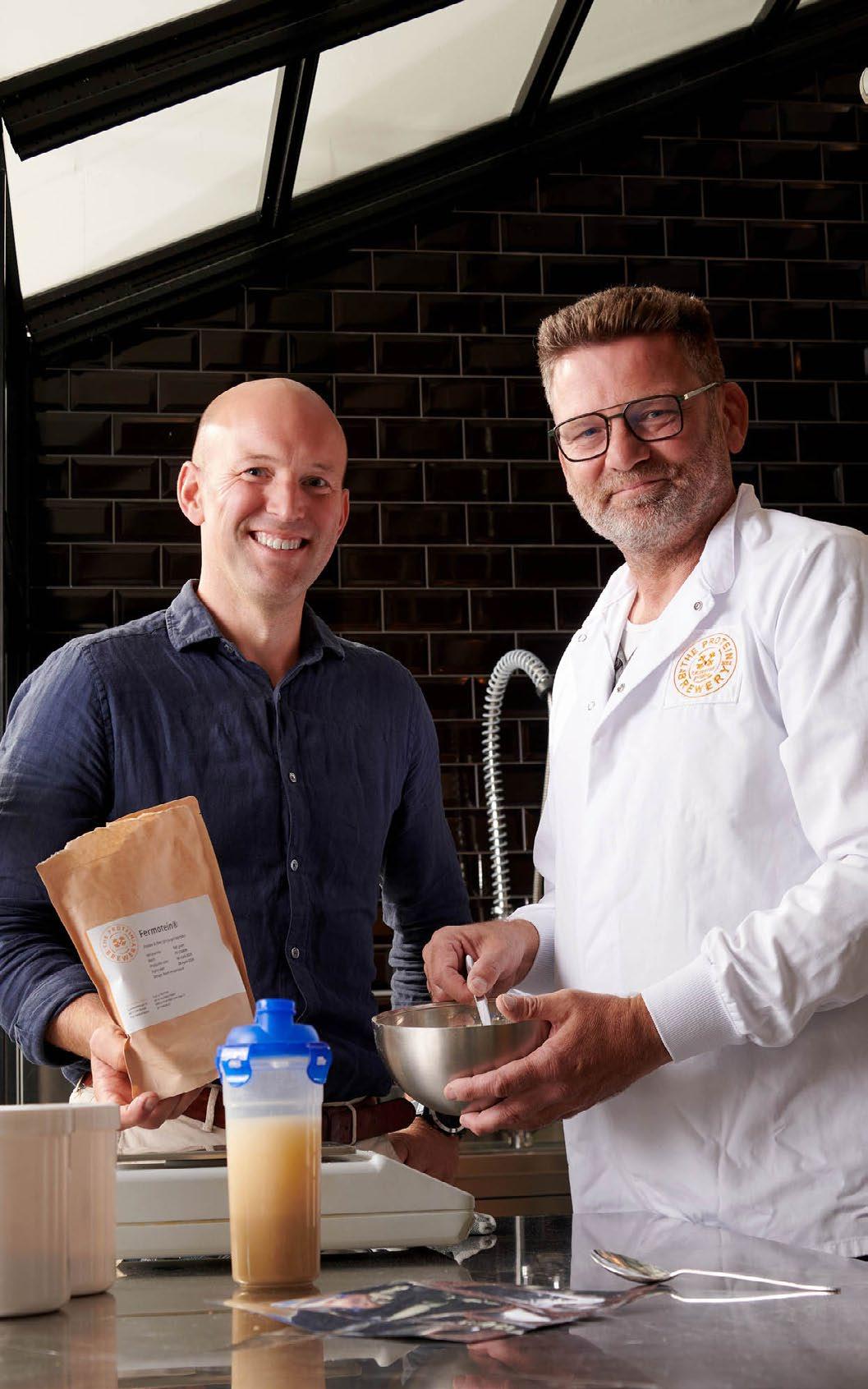
During the Singapore International Agri-Food Week (SIAW), I met Thijs Bosch of The Protein Brewery. Later that same day, Fermotein® surfaced again during the I sampled it in action, where it appeared in cookies and cupcakes served during the event’s lunch. The ingredient was not presented as a headline feature
of the food. The flavour profile remained familiar. The texture felt natural. The significance of the ingredient became clearer only after understanding the role it played in the formulation.
Bosch explained that while Fermotein® had been used in the baked samples served at the summit, the ingredient’s ready-to-mix format is already being explored for beverage applications, where it can deliver nutritional value without altering taste.
The concept addresses a long-standing problem in functional beverage design.
Challenging the formulation logic of protein drinks
Most protein beverages today rely on isolated ingredients assembled into complex formulations. Protein isolates deliver the headline nutrition. Fibre ingredients are added separately. Stabilising gums and emulsifiers help prevent sedimentation or phase separation during processing and shelf life.
This layered system often creates technical trade-offs.
Bosch believes the underlying assumption deserves reconsideration.
“Fermotein® challenges the assumption that delivering protein and fibre in beverages requires compounding multiple isolated ingredients.” Traditional proteins bring their own technical limitations. “Traditional proteins (whey, soy, pea, etc.) are poorly soluble at neutral pH and denature under heat, shear, and acidity. This leads to sedimentation, chalky mouthfeel and off-notes.”
The addition of an isolated fibre can further complicate the system. “Isolated fibres add further instability by binding water, thickening over shelf life and interacting unpredictably with proteins.”
Fermotein® takes a different approach. Produced through biomass fermentation of a food-grade fungal strain, the ingredient is designed as a whole matrix rather than a fractionated component.
“Fermotein® is a single, whole-food ingredient that naturally contains protein, fibre, micronutrients and bioactives.” That integrated structure influences how the ingredient behaves in formulation. “Protein, fibre, and micronutrients are naturally co-located, which supports a stable texture.
Moving beyond protein quantity to protein quality
Another shift underway in the functional beverage market concerns how protein value is defined. For years, product development focused on increasing protein content. Higher gram counts became the dominant marketing signal.
Bosch believes that approach is beginning to change. “In beverages, ‘meaningful protein’ should be defined by quality and utilization, not just grams per serving.” Protein quality becomes particularly important for ageing populations. “Across alternative proteins, a PDCAAS of 1.0 is a critical benchmark because it reflects a complete amino acid profile.”
This matters because ageing bodies use protein less efficiently. As the body ages, muscle protein synthesis becomes less efficient, a condition often referred to as anabolic resistance. Higher-quality proteins are more effective at supporting muscle maintenance at lower intake levels.
Asia’s beverage market is shifting toward targeted nutrition
The conversation around nutrient density is particularly relevant in Asia.
PwC estimates the Asia Pacific protein market at US$8 billion today, expected to reach nearly US$11 billion by 2030, with growth driven by functional beverages, dairy alternatives, and protein supplements.
At the same time, consumer expectations are becoming more nuanced. Innova Market Insights reports rising demand for targeted nutrition based on age, lifestyle, and metabolic health, alongside continued interest in gut health and clean-label ingredients.
For beverage manufacturers, this combination suggests a shift away from single-nutrient fortification toward products that deliver multiple nutritional benefits without complex ingredient decks.
Fermotein® aligns with that direction because it integrates several nutritional components within one ingredient matrix.
The demographic force behind functional beverages
Demographics add another layer of urgency.
Asia Pacific is ageing rapidly. According to the United Nations Population Fund, one in four people in the region will be over 60 by 2050, representing close to 1.3 billion older adults. Older consumers typically seek products that support muscle maintenance, digestive health, and sustained energy, but they also prefer formats that are easy to consume. Functional beverages naturally fit that requirement.
However, delivering meaningful nutrition within smaller serving sizes requires more careful formulation. Bosch emphasises that protein alone does not solve the problem. “Protein alone suppresses hunger signals, but fibre and protein together slow gastric emptying and digestion, extending the feeling of fullness.” This protein–fibre interaction is one reason the company believes fermentation-derived whole-biomass ingredients may play a larger role in beverage development.
GLP-1 therapies are influencing beverage design
Another emerging factor is the growing influence of GLP-1 weight management therapies.
Although adoption levels vary across Asia, the category is already influencing nutrition product development. Reduced appetite changes how consumers interact with beverages. Instead of larger volumes, drinks must deliver meaningful nutrition within smaller portions.
Bosch explains how this shift is affecting formulation thinking.
“When appetite is suppressed and side effects like nausea or bloating are common, drinks must deliver real nutritional value with high sensory comfort. This shifts the focus from volume to nutrient density.”
In practice, that means beverages must combine protein, fibre, and micronutrients in balanced formats that remain easy to consume repeatedly.
Where Fermotein® fits in beverage innovation
In beverage development trials, Fermotein® has shown promise across several formats.
Bosch notes that the ingredient performs well in readyto-drink beverages, ready-to-mix powders, and meal replacement products.
“Fermotein® performs well across RTD, ready-to-mix and meal-replacement formats, and it excels where nutrient density, stability and formulation simplicity matter most.”
However, not every beverage category suits the ingredient. “Enhanced waters, such as transparent or translucent protein waters or vitamin waters, are not within scope with Fermotein®.”
Because the ingredient naturally contributes body and opacity, it works best in creamy or textured beverage formats rather than clear drinks.
Regulatory momentum shaping market entry
Regulatory approval is another factor shaping the trajectory of fermentation-derived ingredients.
Fermotein® received novel food approval from the Singapore Food Agency in 2024, enabling its commercial introduction in Singapore.
The Protein Brewery is working with Nurasa, a Singaporebased food innovation company, to distribute the ingredient and identify opportunities across beverage, snack, and bakery applications.
Regulatory timelines differ significantly across regions, which affects where innovation tends to occur first. “Beverage innovations occur faster and more frequently in markets with faster approval,” Bosch explains.
Early launches in markets such as the United States and Singapore allow companies to gather real-world insights about processing and consumer acceptance.
Sensory experience remains the deciding factor
or all the technical discussion surrounding fermentation-derived proteins, Bosch believes the final determinant of success will remain sensory performance.
“No matter how strong the health story is, a beverage must taste good and feel right in the mouth to earn repeat purchase.”
That perspective echoes across the broader alternative protein sector. Consumer acceptance rarely hinges on technology alone.
Standing among the tasting tables at Marina Bay Sands, that principle was already evident. Fermotein® had quietly enhanced the nutritional profile of the baked samples served at the summit, yet it left the sensory experience untouched.
For beverage developers seeking to combine nutrition, simplicity, and drinkability, that balance may ultimately determine whether fermentation-derived ingredients remain a niche innovation or become part of the next generation of functional beverages.
With insights from Thijs Bosch. Bosch is the CEO of The Protein Brewery, a Dutch food ingredients innovator pioneering sustainable nutrition through biomass fermentation. He has 20+ years of experience in the food ingredients and protein markets, previously in executive positions at Fonterra and Cosun. He brings unique experience in the sports and active nutrition market to help their hero ingredient, Fermotein®, take a share of the $38 billion USD global opportunity. Learn more about The Protein Brewery and Fermotein® here.
Q&A WITH KERRY
The new language of flavour in next-gen drinks
Asia Food Journal speaks with Jie Ying Lee, Senior Strategic Marketing Manager for Taste at Kerry Group, about the flavour signals, consumer expectations, and innovation strategies shaping next-generation beverages.
Across the beverage industry, innovation pipelines are moving faster than ever. New formats appear almost monthly. Functional claims continue to expand. Yet behind many of these launches lies a deeper shift that is quietly reshaping how drinks are conceived, formulated, and marketed.
Flavour is no longer simply the finishing layer of a beverage concept. Increasingly, it is doing strategic work. It signals health benefits, creates emotional associations, and anchors premium positioning. For beverage developers, this means flavour choices now carry commercial meaning well beyond taste.
That shift is becoming particularly visible as brands try to balance three pressures at once. Consumers want drinks that feel indulgent but also support wellness. Younger audiences expect novelty and cultural relevance. At the same time, manufacturers must control costs and maintain global scalability.
To understand how these forces are changing beverage development, Asia Food Journal spoke with Jie Ying Lee, Senior Strategic Marketing Manager for Taste at Kerry Group across Asia Pacific, the Middle East, and Africa. Drawing on insights from Mintel’s Future of Flavours research and Kerry’s 2026 Taste Charts, Lee discusses the signals beverage innovators should be watching closely.
The conversation explores where genuine growth is emerging, why flavour sameness is becoming a risk in categories such as energy drinks, and how botanicals, tea profiles, and culturally anchored flavours are being used to create drinks that feel both functional and premium.
For manufacturers planning the next generation of beverages, the message is clear. Flavour strategy is no longer about keeping up with trends. It is increasingly about shaping how consumers interpret value, wellness, and experience in a single sip.
When you look at next-gen beverages heading into 2026, what shift do you think the industry is still underestimating? What is being treated as a trend when it is already a structural change in how beverages are being formulated or positioned?
One of the most underestimated shifts is how flavour is now carrying functional and emotional meaning at the same time, rather than acting as a secondary layer. Mintel’s Future of Flavours research shows that consumers increasingly expect flavour to deliver both enjoyment and wellness cues simultaneously, rather than choosing between indulgence and function.
In Kerry’s 2026 Taste Charts, we see this clearly in refreshing beverages, teas, and alcohol-inspired drinks, where flavour choices such as chamomile, matcha tea, and elderflower are being used to intuitively signal calm, balance, or light energy without overt functional claims. Ingredients like botanicals and tea are no longer niche or experimental but are becoming a ‘healthy halo’ for positioning beverages as better-foryou or everyday premium.
From what you’re seeing across markets, where is real growth in next-gen beverages actually coming from? Is it more about format shifts, usage occasions, or ingredient-led renovation? I’d be interested in a concrete example you’ve seen recently.
What we’re seeing globally is that growth is more about key functional need states such as immunity, gut health, and energy across all next-generation beverages. More innovative flavours that are not typically tied to functional health and are on trend for the new generation of consumers (Gen Z and Alpha).
A good example is dragon fruit, which has moved from an exotic novelty to an everyday flavour across iced teas, flavoured waters, and sparkling beverages. Its mild sweetness, visual appeal, and health halo allow brands to renovate existing SKUs while broadening appeal. In the Asia Pacific, it anchors hydration-led formats, while in Europe and the Americas, it’s extending into alcoholinspired drinks and fruit-forward refreshment.
Another flavour following a similar path is mandarin, which is gaining traction across refreshing beverages and alcohol-inspired drinks, particularly as brands look for more citrus varieties that are understood across markets.
Which beverage categories do you think are most at risk of flavour sameness right now? What’s driving that convergence, and how are leading manufacturers breaking out of it without materially increasing cost or complexity?
Energy drinks are one of the beverage categories most exposed to flavour convergence today. Innovation pipelines frequently revolve around a narrow set of category-relevant flavour cues such as the familiar “Red Bull-style” profile, mixed tropical fruits, or broadly
appealing notes like berry and citrus. While these flavours have proven commercial success, their repeated use across brands can gradually lead to sensory fatigue.
However, flavour sameness is not entirely negative. Familiar taste profiles often provide a sense of comfort and category recognition, reinforcing consumer expectations and maintaining brand relevance. These flavour anchors play an important role in ensuring that products remain immediately identifiable as energy drinks.
What leading manufacturers are increasingly doing is turning to limited-run seasonal flavours to break out of this cycle. Seasonal editions create a sense of novelty and scarcity that resonates strongly with younger audiences seeking new experiences.
A good example is the launch of Red Bull’s seasonal editions, such as the Spring Edition Cherry Sakura flavour, inspired by the Japanese cherry blossom season and the start of Spring. By connecting flavour innovation with cultural moments and seasonal storytelling, brands can refresh their portfolios while generating demand spikes without altering their identity.
Many brands are still talking about premiumisation, even as consumers remain price-sensitive. When premiumisation works in beverages today, which sensory cues are really doing the heavy lifting?
Despite ongoing cost-of-living pressures, premiumisation continues to work in beverages because consumers are trading up selectively. Rather than paying more for larger sizes, many consumers are prioritising perceived quality and distinctive experiences. Premium beverages increasingly serve as a form of affordable escapism, offering moments of indulgence in an uncertain world.
“Today’s consumers are therefore seeking experiences rather than simply products. They are moving beyond straightforward flavours toward more distinctive taste profiles that deliver a sense of craftsmanship, origin, or cultural storytelling. These sensory cues allow brands to justify premium positioning.”
However, the sensory cues of premiumisation differ across beverage categories. In ready-to-drink tea, for example, a new wave of modern tea beverages is driving premiumisation through terroir, specialty tea varieties, and more nuanced flavour profiles.
We are also seeing traditional teas being reinterpreted for contemporary audiences. Specialty teas such as lapsang souchong, once considered old-fashioned, are gaining renewed interest through foodservice and modern beverage applications. Its distinctive smoky character and dried longan-like sweetness have even led some brands to position it as the “whisky of tea.” This bold flavour profile resonates particularly well with younger consumers who are seeking more adventurous and memorable taste experiences.
Kerry’s 2026 Taste Charts are already being referenced widely. From your perspective, how should R&D and marketing teams actually be using them in a beverage innovation pipeline, and where do you see them being misapplied?
Taste Charts should be seen as a decision framework rather than a flavour menu. The “Now, New, Next” structure helps teams understand where different flavour profiles sit along the adoption curve, providing guidance on consumer familiarity, emerging opportunities, and future white spaces.
When used correctly, the charts support several stages of the beverage innovation pipeline. They help teams assess flavour positioning, evaluate consumer readiness in different markets, and identify the sensory nuances that are gaining traction across regions. This allows companies to design products that balance familiarity with novelty, ensuring new launches remain commercially viable while still feeling differentiated.
The charts are also particularly valuable for brands operating across multiple markets. By highlighting flavour exposure and adoption patterns globally, they help manufacturers make more informed decisions when adapting concepts for export markets or regional product lines.
Where misapplication occurs is when the charts are interpreted as a direct flavour wish list. Selecting a flavour simply because it appears on the chart, without considering the beverage format or consumer readiness.
Kerry Taste Charts are intended to guide strategic thinking. They help brands identify relevant flavour directions, understand evolving consumer preferences, and translate emerging trends into beverage concepts that fit their brand, category, and target market.
When you’re deciding whether a flavour direction has moved from “new” to “now”, what signals do you personally trust most in beverages? What gives you confidence that a concept is ready to scale?
In beverages, one of the most reliable signals that a flavour has moved from “new” to “now” is cross-format adoption. When a flavour begins appearing across multiple beverage formats rather than remaining confined to a category, it is a strong indication that consumer familiarity and acceptance are increasing. For example, matcha has evolved from a specialty tea ingredient into a mainstream flavour used across ready-to-drink teas, carbonated soft drinks, and even alcohol-inspired formats. When a flavour starts to appear across different consumption occasions, it often signals that it is ready to scale.
To support these observations with data, we also rely on proprietary tools such as Kerry Trendspotter. The platform uses artificial intelligence and natural language processing to analyse millions of consumer conversations and digital signals to identify emerging food and beverage trends in real time. By processing large volumes of social media and online content, it can detect flavour combinations and ingredients that are gaining traction and predict which ones are likely to move into mainstream demand.
What gives confidence that a concept is ready to scale is when these signals align: growing cross-category presence, increasing foodservice and product launch activity, and strong digital momentum captured through predictive tools like Trendspotter. When all three indicators point in the same direction, brands
can move from experimentation to commercialisation with far greater confidence.
Botanicals, teas, and herb-forward profiles continue to feature heavily in next-gen beverage launches. What, in your view, separates these flavours that feel complex and premium from those that consumers perceive as medicinal or polarising?
What leading brands are doing well is balancing botanical intensity with more approachable flavour cues. Botanicals on their own can sometimes come across as bitter, medicinal, or overly herbal. To avoid this, successful beverage formulations rarely present botanicals in isolation. Instead, they are layered with familiar flavours that create balance and improve drinkability.
Tea bases, citrus notes, or fruit-forward profiles often act as flavour bridges. These elements soften herbal intensity while preserving the authenticity and functional appeal of the botanical ingredients. This approach allows brands to deliver both the wellness perception and the enjoyable taste experience that consumers expect.
A good example is the use of ginseng in modern beverage formulations. Traditionally, ginseng is associated with a strong, bitter taste that can be polarising. However, products such as Korean Ginseng Corp’s I-Kicker beverage range combine Korean red ginseng with natural fruit flavours such as grape, apple, and orange. By pairing ginseng with familiar fruit profiles, the brand is able to transform a traditionally bitter ingredient into a more approachable and enjoyable drink for their young consumers.
This demonstrates how great flavour design can reposition botanicals from something perceived as medicinal into a more balanced, premium beverage experience.
Looking ahead to the end of 2026, what flavour approach do you expect to feel dated? What do you see replacing it in the next wave of successful beverage launches?
By the end of 2026, an innovation strategy that is likely to feel increasingly outdated is the “one-size-fitsall” approach. Historically, many beverage brands have attempted to develop flavour profiles that work across multiple dayparts and consumption occasions. However, this broad positioning is becoming less relevant, particularly for Gen Z consumers.
Gen Z is a highly expressive and first true digital native generation. They are interested not only in how a drink tastes but also in what goes into it, how it is produced, and how it fits into specific moments of their day. This means beverage innovation is shifting toward more contextualised flavour experiences, where drinks are designed for specific moods, occasions, or functional needs.
Another important shift is the growing expectation that flavour and function work together. Functional beverages are rapidly becoming a baseline expectation across many beverage sub-categories. Younger consumers increasingly look for drinks that deliver benefits such as immunity, energy, and digestion while still offering a distinctive sensory experience.
In terms of flavour direction, we are likely to see continued growth in ingredients that combine authenticity with modern appeal. Matcha is a strong example. Once confined to traditional tea consumption, it has evolved into a cross-category flavour appearing in carbonated soft drinks or blended with other fruit flavours.
At the same time, the next wave of beverage innovation will increasingly embrace sensory tension—flavour combinations that create contrast and sensation. Pairings such as sweet-spicy, salty-sour, or citrus with heat are becoming more common because they deliver layered taste experiences that feel more memorable.
Ultimately, Gen Z and Generation Alpha are pushing the beverage industry toward what could be described as an experiential economy. Successful beverage launches will move beyond simple sweetness or fruitforward profiles and instead deliver multisensory flavour experiences that combine distinctive taste, functional ingredients, and compelling storytelling.
The
beverage industry is entering an era of intentional flavour design
What emerges from this conversation is a clear change in how beverage innovation is unfolding. Flavour is evolving into a strategic tool that connects formulation, consumer psychology, and market positioning. Ingredients such as matcha, botanicals, and globally recognised fruits now act as intuitive signals for energy, calm, or everyday indulgence.
Younger consumers are pushing brands toward drinks designed for specific moods, moments, and functional needs rather than broad all-day appeal.
The next wave of successful launches will depend less on chasing isolated trends and more on designing flavour systems that integrate taste, wellness perception, and cultural relevance into a single coherent experience.
From comfort to curiosity: the new role of flavour in consumer resilience
By Zona Negri, Marketing Director, Flavours, APAC, ADM
Resilience is no longer an abstract concept. For many consumers, it has become something they practice every day. In a climate shaped by economic pressure, rapid change, and constant noise, people are looking for small ways to feel grounded.
Food and beverage choices have become part of that response. A familiar tea brewed in the morning, a flavour that evokes comfort, or a snack that feels both indulgent and nourishing can offer a moment of pause. While these choices may seem routine, they signal something deeper: a desire for balance, familiarity,
and reassurance – flavours that provide a sense of consistency even as daily life continues to shift.
ADM’s 2026 Flavour Outlook identifies this shift as A Year to Cultivate Personal Resilience. We are seeing renewed appreciation for flavours that feel culturally rooted and emotionally grounding, yet flexible enough to evolve with modern lifestyles. Traditional profiles are not disappearing. Instead, they are being reinterpreted in ways that meet today’s expectations for health, convenience, and sensory experience.
Feature Story
The grounding power of authentic heritage flavours
Across the Asia-Pacific, flavour is closely tied to identity, and that connection is becoming a marker of trust. Heritage flavours continue to feature prominently in new products2, not simply because they are familiar, but because they carry cultural and emotional meaning. Flavours such as yuzu in Japan, oolong in China and Taiwan, and jasmine across Southeast Asia are embedded in daily rituals, from morning teas to afternoon refreshments, quietly anchoring everyday life.
This reflects what we identify as Authentic Wellbeing1 – a preference for flavours that feel genuine, culturally grounded, and aligned with more intentional living.
Wellness-associated fruit flavours such as orange, lemon, red apple, and green lime continue to anchor beverage consumption. There is also growing momentum behind nourishing berries and tropical fruits, including pineapple, acai berry, and melons, sometimes layered with botanical cues such as jasmine, chrysanthemum, or osmanthus. Together, these profiles allow products to signal vitality and authenticity while remaining grounded in recognisable taste foundations.
Alongside these brighter profiles, soothing cues such as creamy-dairy style notes and sweet browns like caramel are also gaining traction. This is reflected in sweet snacks, where familiar flavours, including chocolate, vanilla, jujube, and date, create a balance between refreshment and comfort.
For brands, the opportunity lies not in replacing established tastes, but in extending them thoughtfully. When innovation builds on recognisable flavour cues, it signals progression without disrupting trust – an important consideration as risk-averse consumers increasingly gravitate toward themes of simplicity and authenticity.
Exploration as emotional uplift
Resilience does not necessarily mean restraint. Alongside demand for grounding flavours, there is a growing appetite for sensory experiences that feel immersive and playful. ADM’s 2026 Flavour Outlook describes this as Give Me More1, highlighting that novelty and familiarity can coexist.
Across the Asia-Pacific, this is evident in how familiar flavours are appearing in new formats rather than being replaced. Next-generation citrus profiles such as calamansi and Hirami lemon bring sharper, more distinctive expressions to the beverage category, while emerging berry notes such as mulberry and deeper fruit tones like black cherry refresh familiar flavour spaces with contemporary appeal.
Culturally anchored flavours such as matcha, closely associated with Japan, are being elevated through contrast and pairing. Combinations like strawberry matcha and matcha affogato show how this recognisable classic can be elevated with new twists while remaining instantly familiar.
There is also momentum behind indulgence-driven expressions. In sweet goods, this is increasingly expressed through deeper, layered sweetness. Syrupy notes such as date, maple, and honey are gaining traction, alongside sweet brown combinations and “sticky” profiles that deliver richness and familiarity. Sweet-and-spiced expressions, including cinnamon date or cinnamon churros, and fruit-and-spice pairings such as apple clove add warmth and complexity, while sweet-and-savoury contrasts introduce a contemporary twist to classic comfort.
When novelty is anchored in recognition, experimentation often feels more accessible. Exploration, in this sense, becomes part of resilience itself – not a departure from comfort, but a natural extension of it.
Nostalgia as renewed connection
Beyond reassurance or discovery, familiarity can also create a deeper emotional connection. ADM’s Newstalgia Dreamland1 trend highlights how classic flavours are being reimagined in richer, more expressive ways, evolving comfort into something more layered and indulgent.
Across the Asia-Pacific region, long-loved flavours such as red bean and taro are being elevated through creamier textures and more indulgent formats in beverages and sweet goods. Pink fruit expressions, including pink guava and pink dragon fruit, are refreshed through lemonade interpretations or dessert-inspired combinations, amplifying both visual and sensory appeal.
Within this movement, comfort itself is also becoming more refined, taking on more elevated expressions of luxury and glamour. Richer, more lingering flavour experiences – such as Black Forest cake, pistachio chocolate and Basque cheesecake – introduce a deeper dimension to familiarity. Here, nostalgia is not simply cosy; it becomes expressive and refined.
In this context, nostalgia becomes less about looking back and more about creative discovery. When familiar, trusted tastes are reimagined through new formats and layered expressions, they feel both timeless and contemporary, reborn from memory and brought vividly to life today.
Flavour as a daily expression of balance
At its core, cultivating resilience through flavour begins with recognising that food and drink are essential drivers of daily life. At times, consumers seek grounding through culturally rooted and familiar profiles. At others, they look for immersive sensory experiences that feel playful, layered, and energising. And increasingly, they turn to elevated expressions of comfort that feel indulgent yet reassuring.
A lightly sweetened calamansi beverage during a morning commute may offer brightness and vitality. A sparkling sherbet-style drink or layered fruit-botanical blend can deliver moments of sensory immersion and contrast. Meanwhile, a creamy pistachio-chocolate profile or a cinnamon-date pairing provides a slower, more indulgent form of comfort.
Together, these flavour experiences show how resilience is not one-dimensional. It is expressed through authenticity, exploration, and reimagined nostalgia. By bringing together cultural memory, sensory excitement, and layered indulgence, brands can create experiences that help consumers feel grounded, stimulated, and comforted in equal measure.
About the Author
Zona Negri, Marketing Director, Flavours, APAC, ADM, has her key focus on delivering consumer insight-driven innovation and delivering profitable growth.
Zona has over 20 years of experience in the flavours and ingredients industry, leveraged across various disciplines, including new product development, business development, commercial strategy, marketing, and consumer insights. Zona holds a BSC. Agric. Food Science & Technology degree, with an MBA and Marketing Degree, to bring a holistic perspective to innovation.
Her broad experience has been built up, working across multiple markets in Asia-Pacific, Europe, and Africa, as well as Australia and New Zealand. Her expertise encompasses an extensive spectrum of multiple food, beverage, and health and wellness categories.
From sugar rush to smart fuel: how 2026’s wellness shift is redefining next-gen beverages
Words By Christian Philippsen, Managing Director, BENEO Asia
If 2025 was the year of protein, 2026 is shaping up to be the year of metabolic health. We’re just a few months into 2026, and it’s clear that consumers are no longer chasing quick fixes. They are talking about blood sugar balance, sustained energy, gut health, and recovery. Wearables are tracking glucose responses in real time. Marathon participation continues to climb across cities like Singapore, Bangkok, and Jakarta. And even recreational athletes are becoming fluent in terms like “fat oxidation”
and “glycaemic response”. This broader wellness shift is reshaping the performance beverage category. The brightly coloured, high-sugar isotonic drinks that once dominated shelves are being questioned. In their place, a new generation of beverages is emerging: designed not just to hydrate, but to support metabolic efficiency and sustained performance. The difference lies in carbohydrate quality.
The end of the sugar spike era
Traditional sports drinks have long relied on rapidly digestible sugars to deliver quick energy. While effective for short bursts of high-intensity activity, these sugars can cause sharp rises in blood glucose followed by crashes — something increasingly at odds with today’s focus on metabolic health.
Research clearly shows that different carbohydrates have markedly different effects on blood glucose response. High-glycaemic sugars are absorbed quickly, triggering rapid insulin spikes. In contrast, lowglycaemic carbohydrates provide a more gradual, sustained energy release.
In a region where consumers are scrutinising labels more closely than ever, this distinction matters:
Athletes today are not just asking: “Will this fuel me?” They are asking: “How will this fuel me?”
One ingredient gaining traction in next-gen beverage design is isomaltulose (Palatinose™), a naturally sourced carbohydrate with a low glycaemic profile. Scientific studies show that isomaltulose provides a
more stable blood glucose response compared to sucrose4. Because it is digested more slowly, it delivers energy over a longer period, avoiding the rapid spikes and crashes associated with traditional sugars.
Isomaltulose provides the same amount of energy as sucrose, but with a lower glycaemic response5. It is fully digested and absorbed in the small intestine, meaning it does not ferment in the colon and therefore does not typically cause gastrointestinal discomfort associated with some alternative carbohydrates6. For athletes, this combination – sustained energy, full carbohydrate availability, and digestive tolerance – is particularly relevant during longer training sessions or competition.
Research also demonstrates that consuming isomaltulose can enhance fat oxidation during endurance exercise7. In practical terms, this supports metabolic flexibility, allowing the body to utilise fat alongside carbohydrates as fuel. For endurance athletes, this can help preserve glycogen stores and extend performance capacity.
This is not just about elite sport. Recreational runners, cyclists and fitness enthusiasts – increasingly common across Asia’s urban centres – are seeking sustained energy that supports longer training sessions without digestive discomfort or post-exercise fatigue.
Hydration alone is no longer enough
Performance beverages in 2026 are evolving beyond simple hydration formulas; they are becoming metabolic tools.
In the hot and humid climates across Southeast Asia, athletes face compounded physiological stress. The composition of a sports drink – including its carbohydrate concentration and resulting osmolality – can influence gastric tolerance during prolonged exercise8. Careful carbohydrate selection can help manage osmolality while still delivering an effective energy supply9.
Digestive comfort is often underestimated, yet it can be a decisive factor in performance outcomes. A drink that causes bloating or discomfort undermines even the most carefully designed training strategy. Next-gen beverages therefore balance:
• Sustained carbohydrate delivery
• Electrolyte replenishment
• Digestive tolerance
• Reduced glycaemic impact
This more sophisticated formulation approach reflects the increasing maturation of the category.
The convergence of physical and cognitive performance
Another defining trend of 2026 is the blurring of lines between physical and cognitive performance. Consumers increasingly understand that blood glucose stability affects not only muscles but also the brain, and fluctuating glucose levels can influence concentration and mental clarity. Studies have suggested that low-glycaemic carbohydrates may support cognitive performance by avoiding rapid glucose swings10.
In Asia’s high-performance urban environments, where professionals often train before or after long workdays, beverages that support both physical endurance and mental focus are particularly compelling. This expands the addressable market beyond the traditional definition of an ‘athlete’. For instance, it could include executives training for a triathlon, university students balancing exams and sport, as well as everyday consumers seeking steady energy throughout the day.
Designing for the 2026 consumer
What distinguishes the next generation of performance drinks is not the removal of carbohydrates, which remain essential for athletic output, but the intelligent selection of them. BENEO’s concept work around performance drinks demonstrates how functional carbohydrates such as isomaltulose can be incorporated into beverage formulations to provide sustained energy and improved metabolic response11.
For manufacturers, this opens opportunities to:
• Develop lower-glycaemic sports drinks
• Position beverages around sustained energy rather than quick boosts
• Support endurance and metabolic health simultaneously
In 2026, innovation in this space will be defined less by intensity and more by precision.
A smarter fuel for a smarter athlete
Asia’s wellness movement is becoming more informed, more data-driven and more holistic. Athletes and active consumers are no longer satisfied with products that deliver a short-lived surge followed by fatigue.
They are seeking smarter fuel: energy that works with the body’s metabolism, not against it. The future of performance beverages will not be about adding more sugar for greater impact. It will be about understanding carbohydrate functionality, metabolic balance and sustained performance. And in that future, the winners will be brands that recognise that performance is no longer measured in minutes alone, but in how well we support the body over time.
PLANTENEERS
What formulators need to get right in next-gen beverages
By Cath Isabedra
The beverage category is getting harder to formulate well. Consumers want more from every bottle, from stronger nutrition and cleaner labels to better texture, clearer purpose, and fewer compromises. For manufacturers, that raises the bar well beyond flavour alone. A drink now has to perform across sensory, function, processing, and trust. That shift is defining the next generation of beverages, and it is changing what formulation success looks like.
In Asia Pacific, that pressure is becoming more visible as demand grows for protein-led formats, better-for-you beverages, gut health support, and products tailored to more specific use cases. For formulators, this changes the brief. Beverage development is no longer about imitation alone. It is about building products that feel purposeful from the first sip to the last day of shelf life.
That broader shift comes through clearly in insights from Dr Pia Meinlschmidt, Head of Product Management at Planteneers, whose work sits at the intersection of plant proteins, clean label formulation, and functional beverage development.
As she puts it, “Plant-based drinks are no longer compared directly to milk. They are an established category. Therefore, the goal is not imitation, but relevance.”
That line captures where the category is heading. Relevance means a beverage must justify why it exists. It must offer something a consumer can feel, understand, or value. That could be protein, satiety, digestive support, micronutrient fortification, reduced sugar, or simply a texture and flavour profile that fits a specific occasion better than anything else on the shelf.
Feature Story
Sensory quality still decides repeat purchase
For all the discussion around functionality, beverage developers already know the first test remains brutally simple. Does the drink feel good to consume?
Protein density, gut health positioning, or a strong nutrition panel will not rescue a beverage that tastes raw, feels sandy, settles in the bottle, or leaves a lingering off-note. Research continues to show that plant-based beverages face wide variation in flavour, texture, and nutritional performance, with processing and storage often intensifying stability and aroma problems.
Dr Meinlschmidt is clear on what success still looks like in sensory terms: “Taste and mouthfeel remain essential. Creamy, smooth, no grit, no off-notes. But beverages today also need a purpose.”
That matters because the category is no longer being judged only against dairy. It is being judged against a growing set of competing promises. Some drinks need to refresh. Some need to nourish. Some need to feel light but still satisfying. Others need to support exercise, weight management, or digestive wellbeing without collapsing under the technical demands those claims create. This is why protein choice has become far more than a nutrition decision.
Protein selection is now a sensory strategy
High-protein plant beverages continue to struggle with chalkiness, astringency, sedimentation, and unwanted flavour notes. That is one reason formulators are looking more carefully at not just how much protein a source can deliver, but how it behaves under real processing conditions.
Dr Meinlschmidt frames it directly: “Protein selection is both a sensory and nutritional decision.”
She points to mild taste, good solubility, and strong water-binding as critical characteristics, adding that blends are often more effective than relying on a single source. That reflects a wider technical reality. Protein choice affects viscosity, particle behaviour, aroma expression, heat stability, and the level of correction required later through masking, texture support, or process changes.
“Technologically, we select proteins with mild taste, good solubility, and strong water-binding to avoid grit and sedimentation. Blends are often more effective than single sources. The objective is dairy-like texture and neutral flavor while enabling functional positioning.”
This is also why fermentation is drawing more attention across alternative protein development. A recent study found that a two-stage fermentation process reduced key off-odour compounds in plant proteins by as much as 95% to 99%, highlighting how processing interventions may help address one of the category’s most persistent sensory barriers.
For beverage teams, the implication is practical. Protein cannot be treated as a standalone nutrition input. It is part of the product’s sensory architecture.
Claims are shaping the formulation brief much earlier
Another shift in next-gen beverages is that claims strategy is no longer something to tidy up near launch.
Whether a beverage is being built for protein, vitamins, fibre, satiety, digestive support, or more targeted health positioning, the formulation now often starts with the threshold. In the EU, nutrition and health claims are governed by a detailed framework, with specific criteria tied to nutrient levels and energy contribution. A product cannot simply imply its way into a claim. It has to be engineered to support it.
Dr Meinlschmidt notes that this shapes development decisions from the outset. Optional claims, she says, depend on customer strategy and target group, but the underlying nutrient structure must still be grounded in regulation.
She says, “Wherever possible, we naturally try to use regional raw materials. However, as an international company, “regional” is a relative term. In addition, we have a very broad base of raw materials with very different properties.
These properties must be fulfilled at all times, regardless of which continent our functional systems are used on.” She adds, “A consistent standard is therefore paramount. Factors such as availability, supply chain security, and, of course, prices also play a central role in the procurement of raw materials.”
That makes platform thinking more attractive. Rather than creating every SKU from scratch, developers can work from a strong base and build out variants through targeted nutrient additions or positioning changes.
Dr Meinlschmidt describes this in terms of a highprotein functional system that can be adapted with micronutrient premixes for uses ranging from sports performance to digestive support or mental wellbeing.
For manufacturers under pressure to scale faster while managing formulation risk, that kind of approach is becoming harder to ignore.
Clean label still has to answer to safety and stability
Few terms in food and beverage have been stretched more than “clean label.” Its value now lies in how honestly it is defined and how well it survives technical reality.
Dr Meinlschmidt defines clean label in a relatively disciplined way, focusing on formulations without declarable E-numbers or additives such as preservatives, flavour enhancers, or added flavours. She also makes a point many marketers skip over. Shelf life in these beverages is not simply created by throwing more additives at the problem.
Instead, it often depends on formulation discipline, UHT processing, aseptic filling, optimised homogenisation, and carefully controlled heat treatment. These are the tools that help maintain microbiological safety and physical stability without leaning heavily on preservatives.
That does not mean every additive can or should disappear. Dr Meinlschmidt offers one of the more grounded lines in the interview: “The goal is always to balance clean-label expectations with technological reliability. Additives are not removed at the expense of safety or consistent performance.”
That balance is likely to define the category for some time. Ingredient lists may shorten. Systems may become smarter. But physics remains in the room.
The industry needs a better way to talk about processing
The debate around ultra-processed foods is also affecting how fortified plant-based beverages are perceived. This is not a small communications issue. It goes directly to trust.
Dr Meinlschmidt argues that classification systems focused mainly on processing steps fail to capture nutritional quality, especially in products where fortification or fermentation may be necessary to improve nutrient density, support adequacy, or secure shelf life. She says, “Instead of evaluating products mainly by their level of processing, greater emphasis should be placed on composition, nutrient content, and functional contribution.”
That view is increasingly reflected in scientific discussion. Researchers have argued that processing level alone does not provide a complete picture of a product’s health value, particularly in categories where technology is being used to deliver safety, stability, and nutritional performance rather
than empty formulation complexity. Still, this is not an excuse for weak products. Nutritional quality across plant-based beverages remains uneven. Analyses continue to show major differences in protein quality, micronutrient content, and physical consistency, with some products requiring shaking to redistribute nutrients such as calcium or protein before consumption.
The burden now is on the industry to communicate more clearly. Consumers are asking sharper questions. A beverage that is processed because it must be nutritionally viable should not be treated the same way as one that is merely over-engineered.
Texture is doing more strategic work than many brands realise
One of the more useful insights from the interview is Dr Meinlschmidt’s description of viscosity as a kind of design language.
She explains it this way: “Texture communicates purpose: spoonable formats are linked to satiety and nourishment, while drinkable formats convey convenience and refreshment.”
That idea deserves more attention. In an increasingly crowded beverage market, texture is not just part of the eating experience. It is also part of the product signal. A thicker beverage can imply nourishment, fullness, and function. A lighter one can suggest speed, hydration, or a more casual occasion. The rheology is helping frame the product before a consumer processes the full message on the pack.
Feature Story
Some of the biggest openings are still underserved
When looking ahead to 2030, Dr Meinlschmidt identifies children’s products and fitness or activity formats as particularly promising areas, including beverages designed for emerging needs such as GLP-1-related nutrition support.
That tracks with broader market movement. Protein, fibre, and hydration are gaining attention in nutrition conversations linked to GLP-1 use, while gut health continues to influence food and drink launches across Asia Pacific.
Children’s products are a more delicate opportunity. They may represent a growing whitespace, but they also demand tighter nutritional responsibility. A UK government-backed scientific assessment has already noted that common plant-based drinks are not nutritionally equivalent to cow’s milk, particularly when it comes to nutrients such as iodine and vitamin A, and that these differences matter in younger populations depending on the wider diet.
So while the market may want more targeted children’s concepts, the category cannot afford casual formulation. Growth here will depend on whether brands can build products that are both commercially attractive and genuinely fit for purpose.
Hybrid beverages may prove more durable than expected
The category has also spent years asking whether hybrid beverages are just a transition. Dr Meinlschmidt gives a more useful answer. Hybrids, she says, can be both a bridge and a durable category, depending on whether they deliver clear benefits.
That is likely correct. For many consumers, especially flexitarians, the appeal is not ideological purity but practical value. Better taste. Familiar texture. Improved amino acid profile. Lower environmental impact than conventional dairy. Less sensory compromise than some plant-only systems.
If those benefits hold, hybrids may persist well beyond a temporary adjustment phase. They may become one of the category’s most pragmatic long-term tools.
The next phase will belong to system thinkers
What makes next-gen beverages difficult is also what makes them commercially interesting.
The drinks now expected to win are not the ones that
solve one problem in isolation. They are the ones that manage trade-offs well. They carry protein without punishing mouthfeel. They deliver shelf life without leaning too heavily on additives. They support claims without losing credibility. They use processing where needed, but explain it better. They feel designed for a real occasion, not just a trend report.
That is why one of Dr Meinlschmidt’s most useful comments is also one of her simplest:
“Next-generation beverages combine indulgence with a clearly defined functional benefit.”
That is the formulation brief in one sentence.
And it is also a warning. Beverages that still rely on vague health halos, weak sensory delivery, or borrowed dairy logic are likely to struggle in the next round of competition. The market has moved on. What matters now is whether a drink can hold together as a complete proposition.
Not just on paper. In the bottle.
With insights from Dr. Pia Meinlschmidt. She is the Head of Product Management at Planteneers, a German food tech company pioneering the development of plant-based ingredients and products. After studying food biotechnology and process engineering, she worked for several years as a scientist in the field of plant proteins, focusing on allergenicity, sensory properties, and techno-functionality. Accordingly, her focus at Planteneers is on the entire field of alternative proteins. Her work concentrates on the development of plant-based clean label alternatives that are convincing in terms of taste, texture, and nutritional value –and also have ecological and ethical advantages over conventional animal products. Under her leadership, Planteneers has become a key player in the field of alternative proteins, collaborating with manufacturers and food service providers across Europe.
GRAASI
Reintroducing barley to the beverage conversation
By Cath Isabedra
Functional beverages are no longer a niche category. Hydration drinks now compete not only on refreshment but also on health claims, ingredient transparency, and nutritional credibility. The result is a crowded landscape of electrolyte waters, vitamin drinks, botanical tonics, and performance beverages.
Yet the category still struggles with a fundamental question. How do you deliver real functionality without overwhelming consumers with complicated formulations or high sugar levels?
For Chris LaCorata, President and Founder of Graasi and LaCorata Beverage LLC, the answer came from
an ingredient that predates modern beverage science by centuries. Barley. The company’s flagship product, Graasi organic barley water, positions itself within the growing functional hydration segment. But the strategy behind the brand is less about novelty and more about rethinking how legacy ingredients can be adapted for modern beverage expectations.
“We saw a gap in clean, minimally processed, low sugar beverages that actually had a medicinal quality consumers could trust,” LaCorata explains.
That gap has become increasingly visible across the global beverage industry.
Barley.
SINGAPORE NOVEMBER 4 - NOVEMBER 6
From manufacturing revival to beverage innovation
ASIA-PACIFIC AGRI-FOOD INNOVATION SUMMIT,
The company’s flagship product, Graasi organic barley water, positions itself within the growing functional hydration segment. But the strategy behind the brand is less about novelty and more about rethinking how legacy ingredients can be adapted for modern beverage expectations.
“We saw a gap in clean, minimally processed, low sugar beverages that actually had a medicinal quality consumers could trust,” LaCorata explains.
That gap has become increasingly visible across the global beverage industry.
A crowded functional beverage market with unresolved problems
The functional beverage category continues to expand rapidly as consumers look for drinks that deliver more than hydration. Immunity support, recovery, gut health, and mental focus are now common positioning platforms. At the same time, the category faces several structural challenges.
Sugar reduction remains a central pressure point. Traditional soft drinks, juices, and many sports drinks still rely heavily on sugar to deliver flavour and mouthfeel. Meanwhile, consumer scepticism toward wellness claims has grown as functional ingredients become more complex and difficult to understand.
For emerging brands, the challenge is balancing functionality with simplicity. Graasi entered the market with a relatively straightforward proposition. Hydration first, supported by nutrients and plant-based functionality.
“In today’s market, we compete in the functional beverage space first,” LaCorata says. “But that has evolved over time.” The brand’s positioning has shifted as consumer priorities changed, particularly during the pandemic.
“At first, we felt the focus on the long medicinal history of barley was understated especially in the U.S. and was a unique brand position,” he explains. “After Covid, the functional aspects beyond barley took center stage as interest in bolstering natural immunity became important to consumers and is why we have RDA of Vitamin D, C and Zinc.”
The company now frames its offering around a broader concept. “With the whole ‘wellness’ revolution that has since taken a foothold and GRAASI becoming a favorite of professional athletes like MMA fighters for its recovery aspects, the whole emphasis now has become hydrating with benefits.”
Graasi’s origin story is unusual for a beverage startup.
LaCorata spent more than three decades in manufacturing before entering the drinks industry. His initial project was not even focused on beverages. Instead, he was working on a manufacturing initiative intended to revitalise a local economy impacted by industrial decline.
“I spent more than 35 years in manufacturing and had my start in my wife’s hometown,” he says. “This was a town reeling from severe job loss from multiple factory shutdowns.”
The plan was ambitious. A new manufacturing enterprise designed to stimulate economic activity and restore local employment.
“We partnered for the next two years and developed a new manufacturing enterprise that was estimated to drive more than $90 million in local economic activity.”
Then the pandemic changed everything.
“We were getting ready to launch this firm, and the COVID-19 pandemic hit creating massive obstacles and headwinds for the project.”
The manufacturing project was paused, but the experience revealed something else.
“We were listening closely to consumers’ concerns and requests, especially that of immunity,” LaCorata says. “We had learned a lot during this project regarding the long medicinal history of barley and felt it was a perfect answer to consumers’ requests, especially a certified organic product they could trust.”
That insight eventually became the foundation for Graasi.
Reframing barley for modern consumers
Barley drinks are hardly new. Across Asia and parts of Europe, barley-based beverages have long been part of everyday consumption. Roasted barley teas and traditional barley waters remain familiar cultural staples.
The challenge for Graasi was introducing that concept to a different audience.
“We saw it as a value that barley can be traced all the way back to the Roman Gladiators,” LaCorata says. “With the present concerns around wellness in a beverage industry fraught with high-sugar and highly processed drinks, we felt that all the right medicinal qualities existed in our formulation to meet consumers’ demands.”
The brand also recognised that heritage could become part of the narrative.
“We also felt tapping into the past cultural aspects of barley would be of interest as Americans love vintage and retro themes, we felt this was a plus in terms of our brand value.”
At the same time, the company had to overcome a persistent perception.
“We are not grandpa’s barley drink,” LaCorata says.
Because Graasi uses barley grass juice powder rather than grain barley, the beverage avoids the heavier sensory profile many consumers associate with barley drinks.
“Since we do not use the grain barley, we are gluten free and have a fresh, light taste compared to the misconception that we would have a more pungent taste.”
Choosing the right functional base
Functional beverages often rely on a base ingredient that carries the nutritional story. Coconut water, kombucha, and aloe drinks are all examples of this approach.
For Graasi, barley grass juice powder became the anchor ingredient.
“The benefits of barley grass juice powder, which has all the essential amino acids, most of the non-essential amino acids, and is a great detoxifier for the blood, gastrointestinal tract, and liver, made perfect sense as a powerful base for the brand,” LaCorata says.
The formulation also integrates vitamins associated with immune support.
“Boosting natural immunity through RDA vitamin D, C,
and zinc coming out of the pandemic,” he explains. “Now it’s more the functional aspects from barley grass juice powder and through our relationship with professional athletics, hydration with recovery has become a key theme.”
Notably, the company intentionally avoided some of the trends dominating functional beverages.
“From the very start, we went through the rigors to be USDA certified organic,” LaCorata says. “Second, what we intentionally left out was high amounts of sugar.”
The contrast with mainstream beverages is significant.
“We are 4g of sugar, derived from organic ingredients, when the typical soft drink in the United States is 40g or higher.”
Solving the formulation challenge
Developing a barley-based beverage required overcoming several technical hurdles.
“The first problem was solubility,” LaCorata explains.
Ingredients like barley grass can be difficult to stabilise in beverages without affecting texture or appearance.
Once that problem was solved, flavour development became the next challenge.
“The remaining question became launching the first flavors that would tap into consumers’ taste profile interests.”
Selecting barley grass juice powder helped address sensory concerns.
“It has a light, non-grainy taste, but it still contains the functional benefits like the amino acids, detoxification qualities, and the immunity boost with added vitamins D, C, and zinc.”
Clean label as a trust signal
In the functional beverage sector, clean label claims can quickly become cluttered with additives, extracts, and complex formulations. Graasi opted for a simpler interpretation of the concept.
“For Graasi, this means the process of USDA certified organic embodies clean label ingredients and is a trust and verification point for consumers,” LaCorata says.
Maintaining that certification requires continuous oversight across the supply chain.
“First, it’s working with an organic producer who has to be certified organic, and then testing, verifying, and ensuring that every ingredient in our formulation has up-to-date certifications.”
Recognition from the natural products industry
Graasi’s approach recently gained recognition as a finalist in the NEXTY Awards, one of the natural products sector’s most competitive innovation programs. LaCorata believes the judges recognised several factors.
“Number one, we are a unique brand in a unique market vertical,” he says. “Number two, we are a brand based on an ingredient that has a long, interesting history. Number three, we are the only USDA certified organic barley brand in the United States.”
When asked if the recognition has already shifted conversations with potential partners, he was quick to answer, “Yes! We are now speaking with Asia Food Journal.”
Lessons for global beverage innovators
Graasi’s experience also offers insights for beverage developers beyond the United States.
“In a fast-paced modern world of global trade and travel and increased use of technology, natural immunity, clean ingredients, and detoxifying from increased pollution would be important aspects,” LaCorata says.
For Asian markets specifically, the product itself may not require significant reformulation.
Instead, the company would prioritise cultural adaptation.
“We would change the packaging and be respectful of Asian cultures to meet their purchasing interests.”
The next frontier for functional hydration
Looking ahead, LaCorata believes the beverage industry will need to play a larger role in addressing long-term health challenges.
“For us, number one is addressing chronic disease rates in the United States,” he says. He points to rising rates of obesity and diabetes as a critical issue for the food and beverage sector. “It is our belief that the food and beverage industry plays a pivotal role here.”
Future innovation, he argues, will increasingly focus on preventative nutrition.
“The future winners in the food and beverage industry will be those that introduce functional products that address brain health, gut health, obesity, and a host of chronic diseases.”
For Graasi, that future begins with an ingredient that has been part of human diets for thousands of years.
The difference today is how that ingredient is being reintroduced to the beverage conversation.
With insights from Chris LaCorata. LaCorata is the president and founder of Graasi and LaCorata Beverage LLC. With more than 35 years of experience in U.S. manufacturing leadership, Chris has built a career from the ground up around revitalizing operations, leading turnarounds, and creating high-performing teams through lean and Six Sigma methodologies. He previously served as executive vice president of a $1.2 billion integrated manufacturer and has long been a passionate advocate for keeping manufacturing jobs in America—especially in underserved, rural communities. He is a supporter of small businesses as a member of the Charlotte Angel Fund. As a thought leader for US manufacturing operations, Chris has been featured in Industry Week and Industry Today.
Chris is the author of The Leadership Crisis: The looming talent shortage and how to make sure your company survives.
EVENT CALENDAR
CHINA PACKAGING CONTAINER EXPO
APRIL 15 - APRIL 17 SHENZHEN WORLD EXHIBITION & CONVENTION CENTER (BAO’AN)
FBIF FOOD INNOVATION EXPO
APRIL 27 - APRIL 29 HANGZHOU INTERNATIONAL EXPO CENTER, CHINA
VITAFOODS EUROPE
MAY 5, 2026 - MAY 7, 2026 FIRA BARCELONA GRAN VIA
MAY 13, 2026 - MAY 15, 2026 SAIGON EXHIBITION & CONVENTION CENTRE (SECC)
FI VIETNAM BIOFACH CHINA 2026 & NATURAL EXPO CHINA 2026
MAY 18 - MAY 20 SHANGHAI NEW INTERNATIONAL EXPO CENTER
SWEETS & SNACKS EXPO
MAY 19 - MAY 21 LAS VEGAS, USA
MAY 26 - MAY 30 IMPACT MUANG THONG THANI, BANGKOK, THAILAND
JUNE 2 - JUNE 5 TOKYO BIG SIGHT
THAIFEX - ANUGA ASIA 2026 FOOMA JAPAN SNACKEX
JUNE 17 - JUNE 18 FIL EXPO LISBON, PORTUGAL
JUNE 30 - JULY 2 DUBAI, UNITED ARAB EMIRATES 24-27 JUNE 2026, TWTC, TaiNEX 1 & 2
A D V E R T I S E A N D R E A C H
Y O U R A U D I E N C E T H R O U G H
O U R D I G I T A L C H A N N E L S
F o r a d v e r t i s i n g n e e d s e m a i l u s a t : m k t g @ h a r v e s t - i n f o . c o m
A s i a F o o d J o u r n a l A s i a F o o d J o u r n a l a s i a - f o o d - j o u r n a l - m a g a z i n e
Content Usage Disclaimer
All content in Asia Food Journal is subject to copyright. Unauthorized downloading, reproduction, reprinting, or republication without prior written permission is strictly prohibited. For inquiries, please contact editor-afj@harvest-info.com.