
Read the stories in this issue back to back and a pattern emerges that none of the companies involved quite say outright. Cargill calls it partnership. Tetra Pak calls it an ecosystem. PepsiCo calls it integration. ofi calls it origin-to-application alignment. AKA Foods calls it making twenty years of R&D data queryable before the person who understands it retires. The language differs, but the direction is consistent: fewer F&B companies now expect to originate, formulate, manufacture and commercialise a product entirely on their own, and more are building that expectation into how they operate.
The timing makes sense once you look at the arithmetic. Cocoa futures swinging from USD 10,000 a tonne to a low of 3,100 within eighteen months has made in-house R&D a harder line to hold at exactly the moment product cycles are compressing from months to weeks. Add a demographic reality Japan is living through first, per FOOMA’s own data, and Southeast Asia is now approaching: formulation and engineering knowledge is retiring faster than most companies can replace it.
In response, ingredient suppliers have built the labs many customers can no longer justify building themselves. Contract manufacturers have moved upstream into applied R&D. Platforms like AKA Studio are trying to capture institutional memory before it walks out the door. And corporates like PepsiCo are working out, carefully, what separates a promising pilot from something that actually survives inside a live supply chain.
It isn’t tidy. ofi’s Ramki Prasad raises, without fully resolving it, the question of how credit and value get shared once a co-created product reaches shelf. Oishi Manufacturing offers one answer: keep the recipe with the brand, and the process with the manufacturer.
What this issue points to, more than anything, is that the sharpest advantage now may belong to whoever chooses their partners most deliberately.
Your partner for all things food and beverage,


Cath Isabedra Editor-in-Chief Asia Food Journal
EDITORIAL/PUBLISHER
Keen Whye Lee Publisher
Cath Isabedra Editor editor-afj@harvest-info.com
Danico Acosta Layout and Design
OPERATIONS
SALES
Simon Lee Hong Kong, U.S.A. sales@harvest-info.com
Chua Chew Huat Asia Pacific sales-sg@harvest-info.com
Erhardt Eisenacher Europe info@eisanacher-medien.de
MARKETING
Lali Singson mktg@harvest-info.com
TECHNICAL SUPPORT
Michael Magsalin tech@harvest-info.com
Harvest Information Pte. Ltd. 531 Upper Cross Street,#04-16, Singapore 050531
AsiaFoodJournal
AsiaFoodJourna1
asia-food-journal-magazine


22


Cover Story: The new architects of food innovation
Feature Story: Rethinking the ingredient partnership in SEA with Cargill
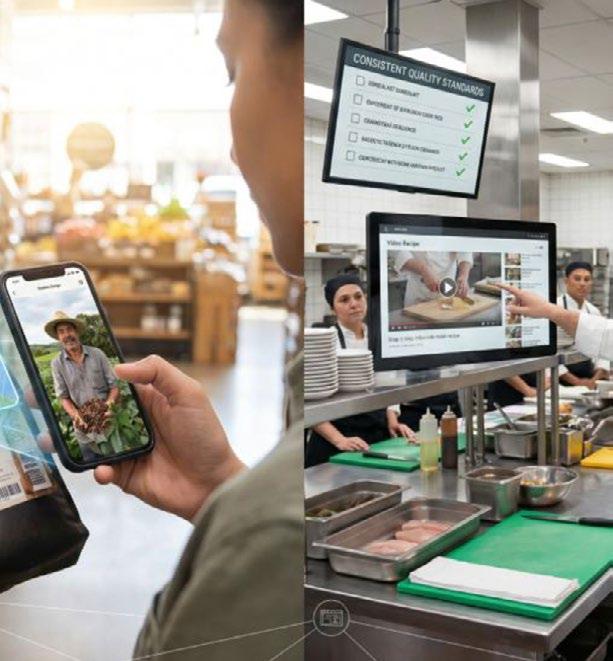
Special Feature: How video and AI are rewriting the rules of F&B communication
Feature Story: The R&D reckoning: How AKA Foods is rebuilding food innovation from the inside out
Feature Story: Inside ofi’s playbook for turning Asian food trends into shelfready products
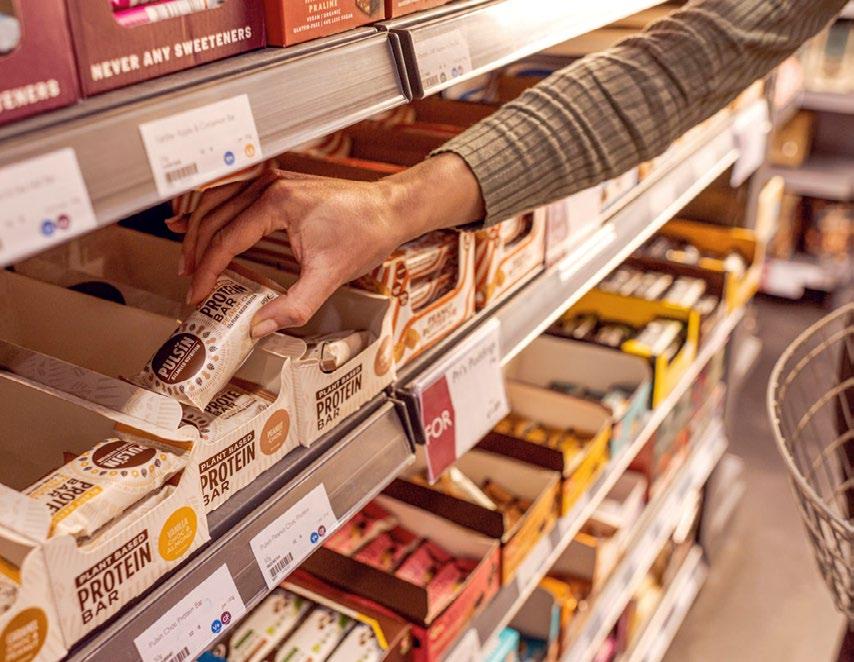
Feature Story: Why co-creation is becoming essential in protein snacking
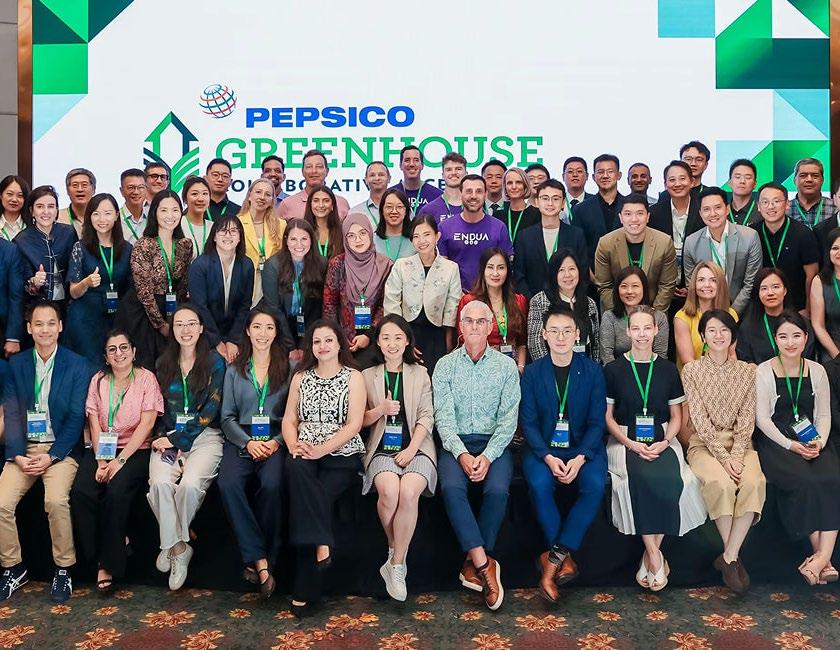
Feature Story: When the pilot ends: What PepsiCo and Adiona reveal about scaling innovation in Asia-Pacific
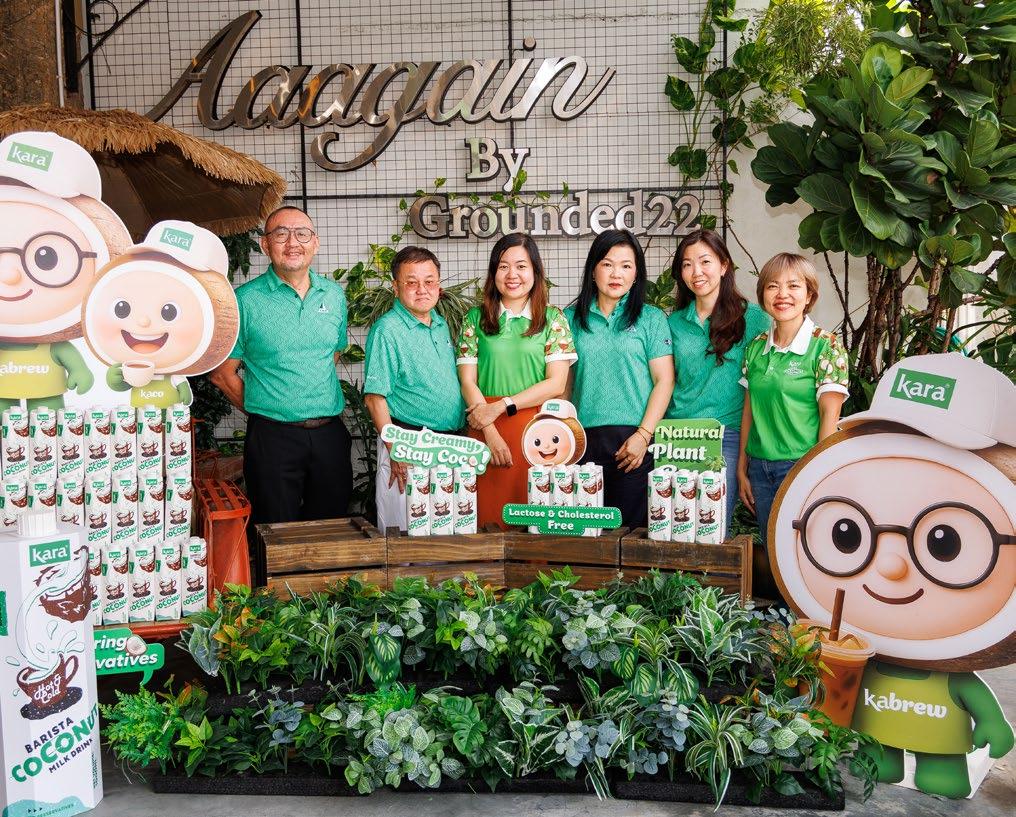
Feature Story: From idea to market: How co-creation accelerates F&B innovation
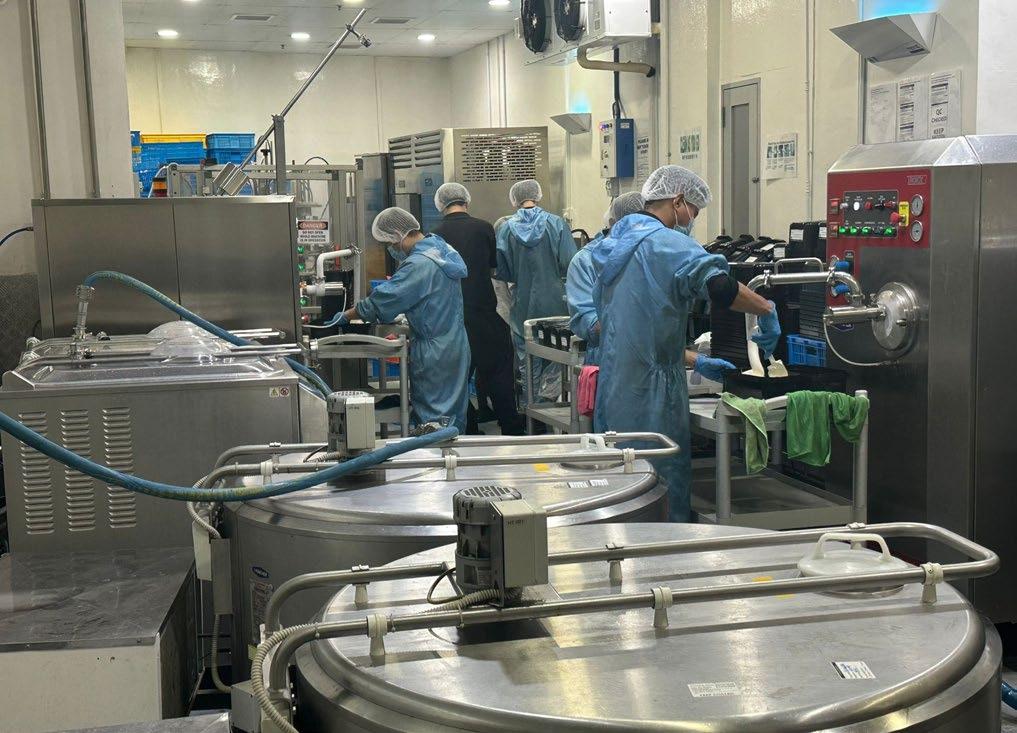
Feature Story: When the brand isn’t the one making the product
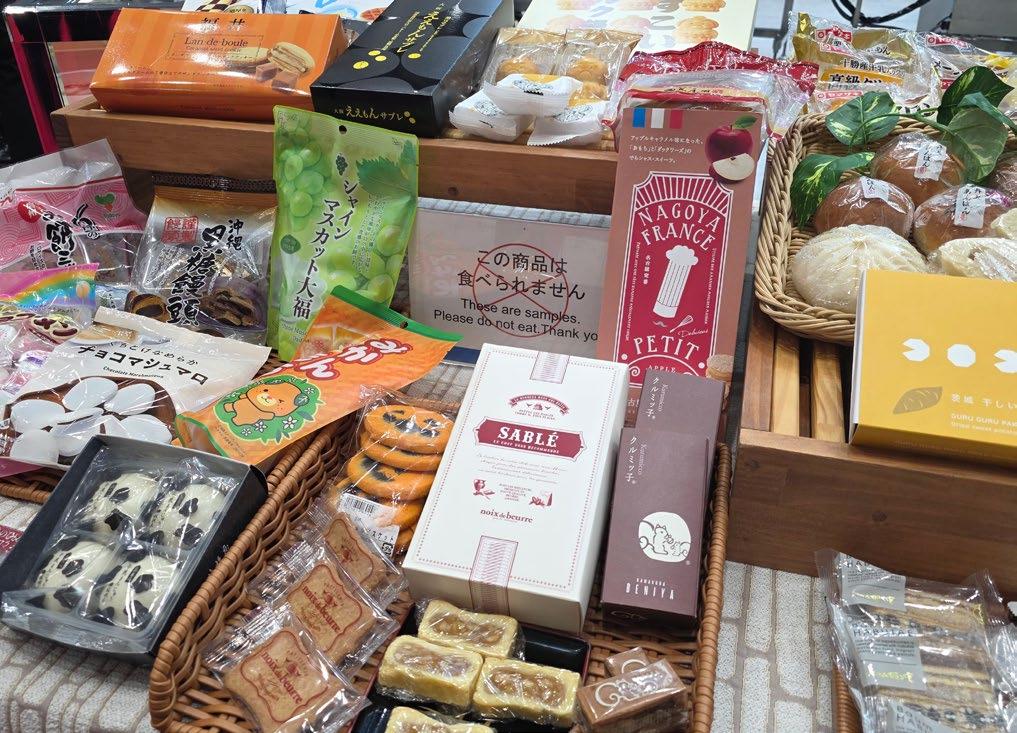
Event Spotlight: The shift is on: What FOOMA Japan is really telling Southeast Asian food manufacturers
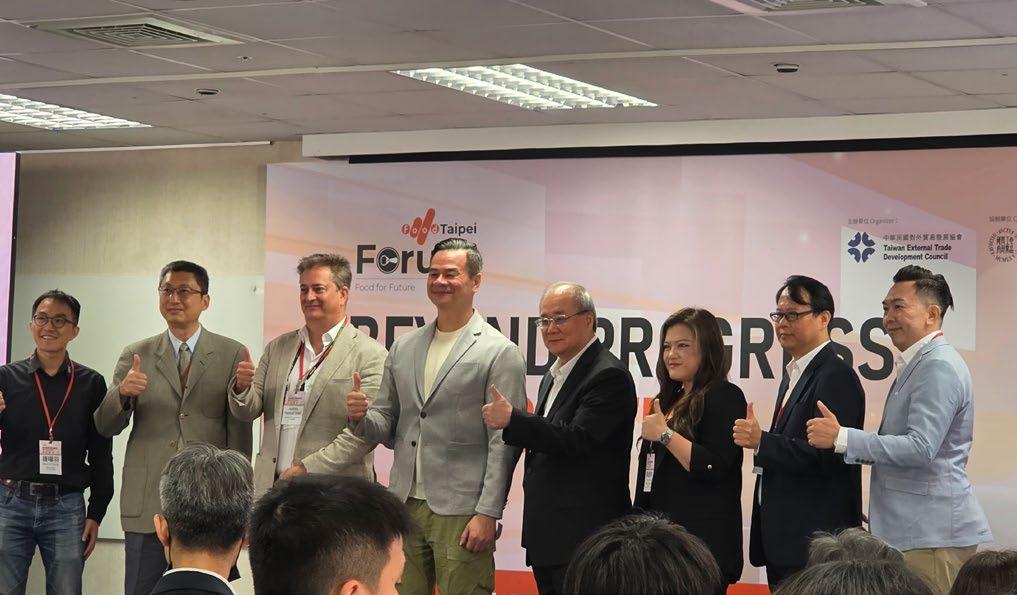
Event Spotlight: Taipei bets on precision and resilience as Food Taipei
Mega Shows hits record scale
Event
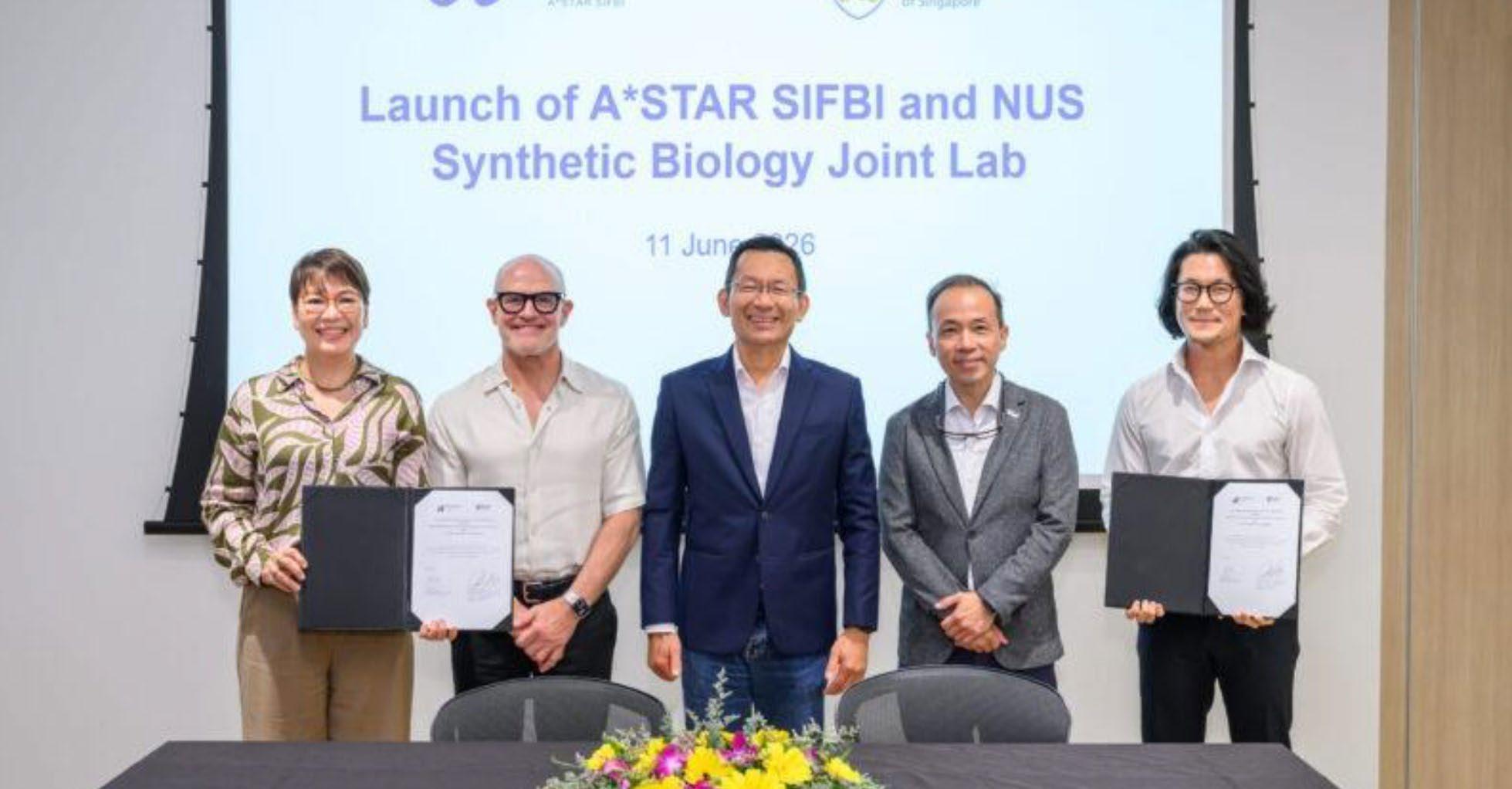
As industries seek more sustainable ways to produce ingredients, chemicals and materials, synthetic biology is opening up new routes to make useful compounds by engineering biological systems such as microbes and enzymes. The Agency for Science, Technology and Research (A*STAR) and the National University of Singapore (NUS) have launched a joint laboratory to help turn these research advances into commercially viable products.
The launch comes as global demand for such bio-based alternatives accelerates. The bioeconomy is projected to contribute up to US$4 trillion annually within the next decade, driven by a broad shift away from petrochemical-based production.
The new A*STAR SIFBI-NUS Synthetic Biology Joint Lab is established by the A*STAR Singapore Institute of Food and Biotechnology Innovation (A*STAR SIFBI) and the NUS Synthetic Biology for Clinical and Technological innovation (NUS SynCTI). It will support efforts to strengthen translation in emerging technologies and grow the bioeconomy.
The joint laboratory brings together A*STAR SIFBI’s capabilities in bioprocess development and scaleup, and NUS’ strengths in fundamental science, interdisciplinary research and talent development. Its initial focus will be on nutrition and consumer care, with broader applications spanning advanced materials and health. It will support companies in co-developing testing and validating sustainable, synthetic alternatives to conventional chemical manufacturing.
A*STAR Chief Executive Officer, Mr Beh Kian Teik, said, “For Singapore to capture opportunities in the bioeconomy, we need to move strong science closer to market. This joint lab is one way A*STAR and NUS are closing that gap, by working with industry to develop bio-based solutions that can be scaled into products, including for ingredients, chemicals and materials.”
Led by Professor Jay Keasling, a pioneer in synthetic biology, the joint lab will focus on three areas to accelerate industry translation:
• Scalable production: Industrially deployable microbial platforms to produce complex molecules at scale
• New molecules: Access to novel bio-based compounds for ingredients and functional applications
Further details are provided in Annex A.
Strengthening Singapore’s role in the emerging bioeconomy
The bioeconomy encompasses industries that use biological systems and biotechnology to produce chemicals, ingredients and materials. It is reshaping how goods are made at a fundamental level. The global market for bio-based chemicals alone is expected to exceed US$200 billion by 2030, while synthetic biology, a key enabling technology, is projected to grow to over US$60 billion in 2030,.
This shift is evident in the food and
• Faster design: AI-guided enzyme and pathway engineering to shorten development timelines
nutrition space where bio-based ingredients are opening up vast new catalogues of sustainable sources. This transition allows industry players to strengthen their supply chains by diversifying the source of their ingredients and embracing the latest technologies. For example, in the production of ingredients such as omega-3 lipids, companies are reducing reliance on imported marine sources. Advances in synthetic biology, combined with artificial intelligence (AI) and large-scale data analysis, are accelerating the discovery and production of complex molecules that were previously difficult to make at commercial scale.
Mr Jermaine Loy, Managing Director of the Singapore Economic Development Board, said, “As the chemicals sector adopts greener alternatives, industrial biotechnology offers companies a credible pathway to diversify raw material sources and develop novel, sustainable products. The A*STAR SIFBI-NUS Synthetic Biology Joint Lab will strengthen Singapore’s capabilities in this emerging area, bringing together world-class R&D and industry translation to advance bioeconomy innovation from Singapore.”
Building the next generation of talent
Beyond research and industry engagement, the lab will serve as a training ground for Singapore’s future scientists and engineers in areas such as synthetic biology, metabolic engineering, AI-guided biological design, and industrial biomanufacturing. Joint supervision arrangements, internships and fellowships are designed to develop researchers who can operate at the interface of academia and industry. Professionals with such skills are increasingly in demand as more companies build in-house biotechnology capabilities.
“NUS brings strengths in foundational science and interdisciplinary research. Especially relevant to this joint lab is our strong and established research track record and presence
in the synthetic biology space, an example being NUS SynCTI,” said Professor Aaron Thean, NUS Deputy President (Academic Affairs) and Provost. “The joint lab gives our scientists a direct pathway to translate their work into practical outcomes, while equipping students and early-career researchers with valuable skills needed to operate across research and industry settings.”
Over time, the lab aims to catalyse technology licensing, start-up formation and new partnerships to build a pipeline of talent and ideas that will support the long-term growth of Singapore’s bio-based innovation ecosystem.
Annex A: About the A*STAR SIFBINUS Synthetic Biology Joint Lab
Unlike conventional research labs that focus mainly on discovery or manufacturing, the joint lab is designed to connect both ends of the process. The joint lab will help companies move from identifying promising biological routes to testing whether these can work at pilot scale. Its work will focus on three areas:
Faster design: AI-guided enzyme and pathway engineering
The lab brings together machine learning and biological data, allowing scientists to identify the most promising design to test and prioritise. By reducing the need for lengthy trial-and-error, it significantly shortens development timelines from months to weeks or minutes,, enabling companies to move faster from concept to validated candidates and reducing the time and cost to bring new products to market
Scalable production: Industrially deployable fungal host systems
The lab enables the development of engineered fungal “cell factories” that can produce complex molecules efficiently from simple nutrients. Designed to be scalable, the platform can be readily adopted across applications from ingredients
to consumer care and advanced materials, allowing companies to integrate it directly into product development without costly redevelopment.
New molecules: Access to novel bio-based compounds
The lab engineers fungal systems to generate novel molecules, compounds found in many clinically important drugs and functional ingredients, opening access to a new class of ingredients and bioactives that were previously too complex or costly to produce commercially.
The lab will be led by Professor Jay Keasling as Lead Principal Investigator. He is a professor at the University of California, Berkeley, and is widely credited with pioneering the use of yeast to produce complex molecules. His lab continues to advance technologies that convert renewable resources into biofuels, bioproducts, and next-generation bioactives.
1. NatureFinance and Getúlio Vargas Foundation. The Global Bioeconomy: Preliminary Stocktake of G20 Strategies and Practices: A Contribution to the Brazilian G20 Presidency’s Global Initiative on Bioeconomy. Prepared for the G20 Initiative on Bioeconomy (GIB), May 2024.
2. Green Chemicals Global Overview 2024–2030. Research and Markets, November 2024.
3. The Business Research Company. Synthetic Biology Market Report 2026. Published January 2026.
4. Singh, N., Lane, S., Yu, T. et al. A generalized platform for artificial intelligencepowered autonomous enzyme engineering. Nat Commun 16, 5648 (2025).
5. Rapp, J.T., Bremer, B.J. & Romero, P.A. Self-driving laboratories to autonomously navigate the protein fitness landscape. Nat Chem Eng 1, 97–107 (2024).
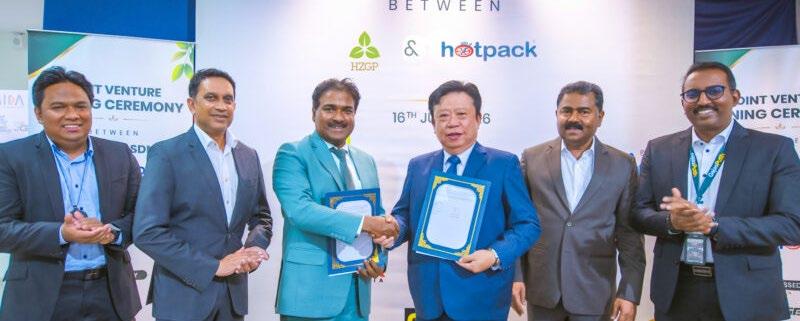
The joint venture (JV) targets highgrowth markets across the Middle East, Southeast Asia, Australia, New Zealand, and North America with paper-based alternatives to singleuse plastics.
Hotpack, a UAE-headquartered global leader in sustainable packaging solutions, has announced a joint venture (JV) with HZ Corporation, a Malaysia-based manufacturer specialising in paperbased foodservice packaging.
The partnership, formalised through the establishment of HZP Eco Packaging, aims to accelerate the adoption of sustainable paperbased packaging solutions across global markets. By combining the strengths of both companies, the venture will enhance manufacturing capabilities, support evolving customer requirements, and respond to growing demand for innovative and environmentally responsible packaging solutions.
Commenting on the partnership, Mr Abdul Jebbar PB, Managing Director and Group CEO of Hotpack, said: “We are happy to sign a pact with Malaysia’s industry major HZ Corporation. This is a major step in Hotpack’s journey toward building a truly global sustainable packaging ecosystem. With Hotpack’s expansive market presence across the Middle East and HZ Corporation’s footprint across Southeast Asia, the combined entity is positioned to capture significant demand across multiple high-growth regions.”
“This partnership brings together complementary strengths in manufacturing, innovation, and market access. By combining Hotpack’s operational scale and global distribution network with HZ Corporation’s expertise in paperbased foodservice packaging, we are creating a strong platform to deliver high-quality, certified sustainable solutions to customers across the world. It also supports our long-term vision of expanding access to practical and scalable alternatives that help businesses meet evolving sustainability requirements.”
Founded in Dubai in 1995, Hotpack has grown into a multinational enterprise with operations across 30 locations worldwide. The company serves customers in more than 100 countries and continues to invest in sustainable packaging technologies, manufacturing capabilities, and international expansion.
HZ Corporation is a Malaysiabased packaging manufacturer specialising in sustainable paperbased foodservice solutions, including paper cups, folding cartons, and other paper packaging products. The company has established a strong presence across Southeast Asia and serves a broad customer base in the foodservice sector. In addition to its paper packaging expertise, HZ Corporation is also involved in the development of dry moulded fibre technologies for selected packaging applications, reflecting its broader
commitment to sustainable packaging innovation.
Dato’ Dr Donald Yap, CEO of HZ Corporation, said: “This joint venture is the culmination of a shared belief that sustainable packaging must be both technologically advanced and commercially viable at scale. By pairing our manufacturing expertise and regional market access in Southeast Asia with Hotpack’s global distribution network and brand equity, we are building an ecosystem that can meaningfully accelerate the shift away from plastic across multiple industries and geographies.
“We are excited about the opportunities this collaboration creates for expanding the reach of high-quality paper-based packaging solutions into new markets. Together, we can support customers seeking reliable, certified alternatives that align with changing regulatory requirements and consumer expectations.”
Initial product commercialisation will target quick-service restaurant (QSR) chains, coffee brands, airlines, catering companies, and food delivery platforms—sectors facing mounting regulatory and consumer pressure to reduce dependence on plastic packaging.
The joint venture’s initial product portfolio will include paper cups, folding cartons, paper bags, and related foodservice packaging products designed to support businesses transitioning to more sustainable packaging formats. All products manufactured under the partnership are certified to internationally recognised standards, including FSC, ISO 9001:2015, ISO 14001, BRCGS, and the SMETA 4-Pillar audit framework, with ECO Label certification for compostability where applicable.
The partnership also supports Hotpack’s ambition to strengthen its position as a leading global provider of sustainable food packaging solutions by expanding its presence in key international markets and enhancing access to innovative paper-based packaging products.

Comparable to stainless steel when it comes to hygiene and corrosion resistance, more efficient when it comes to space requirements and scalability: With theNXD tupH® surface treatment, NORD DRIVESYSTEMS opens up new planning options for primary packaging. Aluminium drive solutions are more compact and provide thermal benefits as well as – thanks to NXD tupH® – effective protection against moisture and aggressive cleaning chemicals in intensive cleaning intervals.
With NXD tupH®, NORD DRIVESYSTEMS puts drive technology with aluminium housings into wet product-contact areas. The combination of surface treatment and high-performance sealer provides a particularly hard and non-porous surface that can be cleaned quickly and hygienically. Even after numerous cleaning cycles, the sealer does not flake off and thus does not enter the products to be packaged. Thanks to the surface treatment, the protective effect remains unchanged even with minor damage. A long-term test using Ecolab cleaning agents has proven the resistance to cleaning chemicals. Decisive for use in wet
product-contact areas of primary packaging: NORD drive components with NXD tupH® surfaces are in accordance with the requirements of the FDA, EU and Switzerland as well as the MER-COSUR states.
compact and more scalable
With NXD tupH®, NORD refines the hygienically designed drive components of its wash-down modular product system and reveals process advantages in some additional application areas of primary packaging. For example, drive solutions with aluminium housings can be designed more compactly than with stainless steel, as aluminium is lighter and has a significantly higher thermal conductivity. The modular product system furthermore allows the drives to perfectly fit into the machine. All these factors result in reduced space requirements and enable flexible scalability of the system.
Decentralised and suitable for servo
With the NXD tupH®-capable NORDAC ON PURE, the solution provider will
soon reveal the advantages of decentralised drive electronics for wash-down areas. Ethernet on Board, hybrid cables and daisy chain technology enable efficient and hygienic topologies.
This makes the inverter easier to clean and significantly more streamlined than conventional decentralised wiring. Furthermore, its integrated POSICON software allows for the creation of travel profiles for non-complex servo applications in packaging. This includes control functions such as synchronism and flying saw that are used, for example, when separating and sealing during flow wrapping.
Wherever servo gear units are oversized in the primary packaging line, NORD offers helical, helical bevel and worm gear units as an economic alternative. With IEC, NEMA and servo adapters from the NORD modular product system, they can be combined with servo motors from various manufacturers. And here again: NXD tupH® makes the drive solutions resistant and durable.

Singapore ranks amongst world’s ten most food-resilient nations, according to New Index on Global Food Systems
Latest global index finds that Singapore leads Southeast Asia on affordability, safety and supply chain innovation
Singapore has ranked among the world’s ten most resilient food systems in a latest study by The Economist Enterprise. The research on global food resilience also delivers a strong word of caution: every major Asia-Pacific economy, including Singapore, has a blind spot around its ability to manage climate-driven food shocks.
The inaugural Resilient Food Systems Index (RFSI), by Economist Enterprise, supported by Cargill, ranks 60 countries on food system resilience across four pillars of affordability, availability, quality and safety and climate risk responsiveness. Singapore scores 73.0 overall. Ranking 9th out of 60 countries surveyed globally – the second-highest score in Asia –Singapore’s ranking places it at the top of a closely competitive APAC cluster. Malaysia, a neighbouring country and key trade partner, ranks 10th with a score of 73.0. Together, the two economies represent the strongest food system performance in Southeast Asia and signal the region’s capacity to compete with advanced economies globally.
This index corresponds with Singapore’s updated food security and sustainability agenda; with the Singapore Food Story 2 (SFS2),
announced in 2025, featuring sharpened 2035 targets and an expanded sustainability framework that goes beyond local production to a wider food resilience strategy.
The RFSI shifts the focus from just rankings on the four pillars researched to highlighting pathways showing where targeted investment and policy co-ordination can materially strengthen food systems, improve livelihoods and secure nutrition outcomes over the long term.
“The results offer an independent, data-driven endorsement of Singapore’s Food Story 2 strategy, confirming that a city-state without agricultural land can build a world-class food system through trade, partnership and targeted investment rather than production alone,” commented John Fering, Group President, Food APAC, Cargill.
1. Affordability: Singapore’s food diversity strategy earns a global top ten ranking
Singapore scores strongly on affordability with a score of 85.2. On the affordability pillar for healthy diets, Singapore scores a near-perfect 99.9, the highest in Asia-Pacific, and a high 81.5 for the food safety net programmes, placing it amongst the top seven in Asia-Pacific and reflecting the effectiveness of its food pricing and social support infrastructure.
2. Availability: Continued investment in import diversification and supply chain efficiency
Singapore scores 67.7 on food availability, ranking 7th globally and second in Asia-Pacific just behind Japan, which is significant for a country that imports 90% of its food currently. It reflects the effectiveness of its open-trade model and food resilience framework as a functional substitute for domestic agricultural capacity. Its logistics and distribution infrastructure score of 82.5 leads the entire region.
Singapore Food Story 2 builds on this foundation, moving beyond the previous 30-by-30 goal toward focused 2035 targets supported by a broader portfolio of strategies to ensure ample food availability.
3. Quality and Safety: Strong foundation with a focus on nutrition outcomes
Singapore’s food quality and safety score of 79.8 places it third in APAC and on the 11th rank globally, with a food safety sub-score of 94.9. This is the fourth highest in Asia-Pacific and aligns with Singapore’s Food Safety and Security Act on food legislation, consumer protection and traceability requirements and pre-market approval for novel foods.
In 62% of countries globally, the nations with the cheapest healthy diets absorb nearly two-thirds of
the poorest households’ income, underscoring the need to pair affordability with equitable access to nutritious food. This access depends on reliable supply and trade. The Index highlights that the fifteen largest exporters have an average resilience score of 71, reinforcing the need to monitor risks and opportunities. These countries play an outsized role in global food-system resilience: when they function well, they stabilize markets globally; when they falter, the impact is felt around the world.
4. Climate risk responsiveness: An APAC-wide urgency
While the RFSI data positions Singapore as Asia-Pacific’s most consistent top-tier performer on food system design – strong across affordability, availability and quality
and safety – it also highlights that climate risk responsiveness is the universal weak point in the region. The climate risk responsiveness measures countries’ physical exposure to climate hazards, disaster preparedness and commitment to agricultural adaptation. Singapore scores just 57.4 here, placing it 35th globally. No APAC economy in the index scores well on climate risk responsiveness.
Singapore has designated 2026 as the Year of Climate Adaptation, with strategies like the SFS2’s global partnerships pillar aimed at expanding Singapore’s import ecosystem by building cooperation with food-supplying nations to reinforce trade resilience.
“For over 160 years, Cargill has worked closely with partners

Tate & Lyle receives innovation in health technology product award
Tate & Lyle PLC (Tate & Lyle), a global leader in ingredient solutions for healthier food and beverages, is delighted to announce that it has received the Innovation in Health Technology Product Award at the Boao Food for Health Science Conference and Expo (FHE) 2026, recognising its leadership in precision prebiotic technologies and evidence-based nutritional research.
The award celebrates innovations that demonstrate meaningful scientific advancement, strong validation, and the ability to deliver measurable health benefits in
across the global food system – from farmers and suppliers to governments and customers –to keep food moving around the world. This index reminds us that resilience can only be built together. As food security challenges evolve across APAC, we will continue to strengthen partnerships that help food systems adapt and provide people with greater access to safe, nutritious food,” added John Fering, Group President, Food APAC, Cargill.
The RFSI covers 60 countries across six regions and 71 indicators. It is a part of The Food Imperative, a multi-year programme from Economist Enterprise examining the future of global food systems. Full data, country profiles and research methodology are available at impact.economist.com/energyenvironment/resilient-foodsystems-index.
is underpinned by an integrated research framework and application expertise, enabling customers to translate scientific insight into commercially viable products. Together, these capabilities support the development of solutions that are grounded in robust science and designed to perform in real-world conditions.
real-world food and beverage applications.
At the event in Boao, Hainan, China, Tate & Lyle showcased its portfolio of functional oligosaccharide dietary fibres and prebiotic solutions. This includes EUOLIGO® FOS, GOSYAN® GOS, PROMITOR® Soluble Fibre and STA-LITE® Polydextrose – forming a comprehensive and scalable fibre portfolio designed to support gut health and enable product innovation across a wide range of food and beverage applications.
The breadth and value of Tate & Lyle’s comprehensive fibre portfolio
Commenting on the award, Remington Zhu, President, Asia Pacific at Tate & Lyle, said: “This award recognises our scientific capabilities and our continued focus on advancingprebiotic innovation. Our approach is centred on translating scientific research into practical solutions that support health while meeting the expectations of both customers and consumers.
“As demand for functional ingredients continues to grow, we remain focused on delivering solutions that are scientifically robust, scalable, and designed to work across a wide range of applications.”
This recognition reflects Tate & Lyle’s research capabilities and reinforces its role in advancing science-led innovation across the food and health industry.

The X56 DXD+ expands the X6 Series of X-ray inspection systems, offering cutting-edge detection of lowdensity contaminants in mediumand large-packaged applications on single lanes or smaller packages on multiple lanes
Mettler-Toledo Product Inspection has announced the global launch of the X56 DXD+ dual-energy photon-counting X-ray system with AI capabilities, expanding the innovative X6 Series portfolio. Designed specifically for packaged applications under the “Inspect. Protect.
Comply.” ethos, the X56 DXD+ enables manufacturers to inspect every product with confidence by delivering enhanced contamination detection capabilities. This makes the X-ray solution ideal for challenging applications where low-density contaminants, such as rubber and plastics, must be reliably detected. Food manufacturers benefit from protecting brand integrity and supporting premium product safety
in complex formats, such as pet food, crisps or potatoes. The X56 DXD+ makes compliance with regulatory and retailer requirements easier to achieve. The X6 Series now offers manufacturers a full range of x-ray inspection solutions to suit different product sizes, from individual packs to large cases or multi-packs. The X56 DXD+ builds on the success of the X16 and X36.2 systems and brings advanced dual energy photon-counting capabilities for medium to largesized products on single lanes or smaller packages running across multiple lanes, in a 500mm system width.
AI inspection for enhanced quality checks
AI integration helps to improve the quality and reliability of quality inspection tasks while reducing unnecessary product rejection. This is beneficial to overcoming inspection challenges in complex scenarios like overlapping or mixed products thereby contributing to
increasing production process efficiencies. The AI integration is not limited to the X56 DXD+; it is also available on other X-ray systems within the Mettler-Toledo product range.
Built for high levels of performance and flexibility
Powered by DXD+ detector technology and Advanced Material Discrimination Pro (AMD Pro) software, the X56 DXD+ delivers exceptional performance for complex applications that conventional single-energy systems may struggle with, particularly when detecting low-density contaminants in packaged products with high variability in thickness, density or overlapping textures, such as multipacks, bags of crisps or bulkier cartons. This high level of detection sensitivity supports effective quality control, even in noisy or high-contrast products where conventional systems may fall short.
This makes the X56 DXD+ a powerful
complement to the X6 Series. The X16 is positioned for inspecting single packages at high speed, and the X36.2 is customisable for more advanced, high-throughput environments and is available for multi-lane inspections.
Smart design for speed & productivity
The X56 DXD+ has been designed with operational efficiency in mind. The system combines premium detection performance with an intuitive interface, toolless belt removal for fast cleaning and a robust hygienic design suited to high-speed, high-volume environments.
With throughput rates of up to 500 products per minute, the X56 DXD+ matches the demands of production lines, helping manufacturers boost efficiency and combat rising operational costs through enhanced productivity and intelligent design.
Through built-in product quality tools including completeness checks, clip detection and product trapped in
seal inspection, the X56 DXD+ also supports effective quality control by enhancing consistency and protecting brand integrity beyond contamination detection alone.
integration for a global market
Compatible with a wide range of conveyor heights and reject options, and available in single or multi-lane configurations, the X56 DXD+ has been developed as a global solution for manufacturers needing greater flexibility and performance. Its advanced software provides full traceability through a recorded image database, which can be accessed on-screen or integrated with Mettler-Toledo ProdX™ data management software for centralised monitoring and compliance.
This connectivity, along with support for common network protocols, makes compliance easier by enabling real-time monitoring, secure record-keeping and simplified audit readiness across global production environments.
ProdX™ automates the monitoring, reporting and collation of all inspection activities in real-time. The securely stored data helps facilitate regulatory compliance, provides clear proof of due diligence to protect brand reputation and enables data-driven decisions that can lead to performance and productivity improvements across the line.
Chris Plant, Head of Market Management, Mettler-Toledo Safeline X-ray, says, “The launch of the X56 DXD+ expands our X6 Series, offering a comprehensive suite of inspection solutions tailored to modern food manufacturing. With its dual energy photon-counting capabilities, the X56 DXD+ delivers new levels of detection performance in complex packages across single and multi-lane formats.
This advanced inspection capability will further help customers inspect every product with confidence, protect productivity, brand reputations and profits, plus comply easily with industry requirements.”
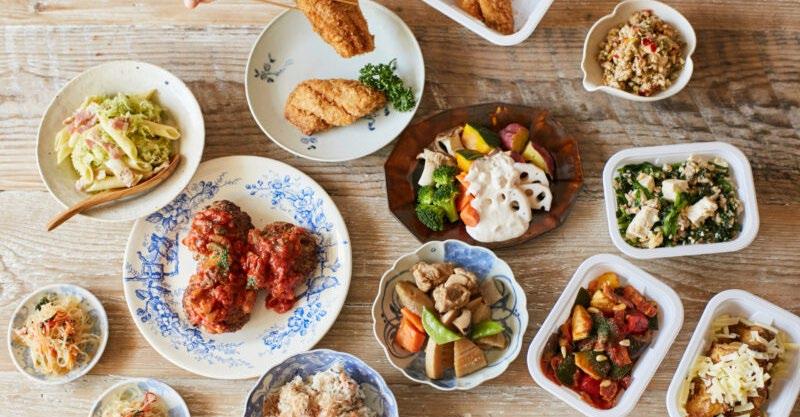
Japan’s fastest-growing meal prep service Tsuklio launches in Singapore, marking its first step in Asia expansion
Over 3,000 people registered their interest ahead of Tsuklio’s Singapore launch, demonstrating strong demand from local households
Antway Inc., the Tokyo-based food-tech company behind Japan’s leading home-cooked meal subscription service Tsuklio, today announced its official launch in Singapore, marking its first international expansion into Southeast Asia.
Tsuklio operates a central-kitchen production model in which all meals are prepared daily and overseen by registered dietitians to ensure consistent nutrition, flavour and quality. Meals are delivered fresh, never frozen, through a weekly subscription plan designed to meet the needs of busy households and working professionals. In Singapore, Tsuklio will introduce a 4-serving, 3-meal-per-week household plan suitable for families of 3–4, priced at SGD 211 per week, while maintaining the same stringent qualitycontrol standards that underpin its operations in Japan.
A proven operating model from Japan with strong market fit in Singapore
Backed by a strong track record of more than 30 million meals served across 46 prefectures in Japan, JPY 8.6 billion in Gross Merchandise Value (GMV) for the financial year ending
January 2026, and the number of meals provided increased by 64% compared to the same month of the previous year (as of April 2025), Tsuklio is now bringing its proven operating model to Singapore.
Singapore was selected as Tsuklio’s first overseas market following extensive market validation, including online quantitative studies, qualitative interviews and a fourweek test-marketing programme conducted in March 2025 with a local food and beverage (F&B) partner. The pilot, which involved 70 participants, demonstrated strong weekly order rates and high retention despite the premium SGD 211 price point. These results reinforced Singapore’s attractiveness as both a viable consumer market and a strategic launchpad for regional expansion.
As the next phase of its growth strategy, the company plans to leverage Singapore as a strategic hub for international expansion, strengthening its operating model, menu innovation and marketspecific partnerships. Tsuklio is also evaluating partnership and franchise opportunities across the region, especially with operators with central kitchen infrastructure.
In Japan, the franchise business model of Antway Inc. has proven highly adaptable across diverse industries. Franchise partners have included car dealerships and
shipbuilding companies, alongside F&B operators, each successfully launching and operating Tsuklio kitchens with Antway Inc.’s support. This versatility underscores the accessibility and robustness of the model for potential Singapore partners, even those without F&B experience.
Each franchise launch involves hiring dozens of local staff and providing more than one month of structured training before operations begin. Antway Inc.’s proprietary training methodology, rooted in Japanese operational standards, ensures every partner meets rigorous launch criteria and adheres to the company’s high-quality benchmarks. These practices not only guarantee a consistent Tsuklio experience worldwide but also align closely with Singapore’s ongoing national focus on workforce reskilling and upskilling by offering meaningful local employment opportunities and long-term capability building within the community.
“We aim to position Tsuklio to address the market gap between health-conscious meal kits and everyday dining needs of households in Singapore,” said Kei Maejima, Chief Executive Officer of Antway Inc., “We also welcome collaboration opportunities with local partners to further strengthen our regional operating model. Launching in Singapore marks an important milestone for Antway and Tsuklio as we build a scalable business platform for Southeast Asia and advance our international expansion plans.”
The international expansion is anchored on Antway Inc.’s mission to “eliminate household obligations from every home,” with a strong focus on supporting busy dualincome families.
Food safety and quality assurance remain central to Tsuklio’s brand promise. In line with Singapore’s regulatory requirements, the company will implement strict checks on ingredient sourcing, supplier selection and kitchen processes.
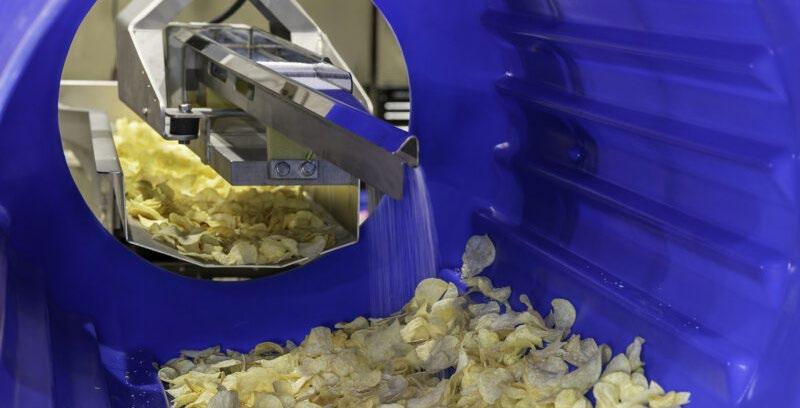
PPM Technologies and Key Technology, both Duravant operating companies, introduce their new fully-integrated potato chip processing line at SNACKEX booth 431. Designed for processors managing raw material variability, labour shortages and the coordination demands of highvolume chip production, the line brings together PPM’s frying, seasoning and product handling capabilities with Key’s advanced optical sorting technology into a single, unified solution. From slicing through packaging, this integrated line helps achieve consistent product quality, recover more usable product, reduce labour requirements and offer singlesource accountability with global support.
“Potato chip processing lines that hold up under challenging conditions aren’t just well speced,” said Daniel Luna, Director of Processing at PPM Technologies. “They’re built by partners who understand what each stage demands, can anticipate future needs and are committed to making those technologies work as one cohesive unit. PPM and Key have two of the longest histories in the potato chip industry, and their
across long production runs.
depth of expertise doesn’t just show up at startup – it’s there through the life of the equipment.”
PPM’s frying technology anchors the line. Processors producing kettlestyle chips utilise the BatchWright™ batch fryer, which provides exacting control over the full frying curve to deliver the texture, colour, and flavour profiles consumers expect from premium kettle chips. Processors producing conventional potato chips utilise the CookWright™ continuous fryer, which features customizable heating, belt and filtration configurations to meet each processor’s application needs and goals. Both fryers are equipped with advanced oil filtration to extend oil life and reduce operating costs, along with clean-in-place capability that limits downtime during sanitation.
After frying, optical sorting is the last opportunity to remove defects and foreign material before the product reaches packaging. Combining multi-channel sensor data and multi-wavelength strobing technology, Key’s COMPASS® sorter identifies dark spots, green discolouration, and white knots as well as fryer debris without the more complex laser-based systems that can increase maintenance costs. Recipe-driven operation, simplified controls and an open sanitary design help processors sustain consistent inspection performance while reducing training requirements, cleaning time and maintenance burden
From inspection, the product is transferred to PPM’s versatile FlavorWright™ All-in-One seasoning system, which applies liquid and/ or dry seasoning immediately before the weigh scale and packaging equipment. Since any coating inconsistency at this stage passes directly into the finished product, FlavorWright All-in-One’s precise application controls are optimised to achieve consistent coverage across every batch. The system handles the full range of chip seasoning applications, from simple salt to complex multi-stage treatments using speciality oils, slurries and powders. Quick-release components support changeovers in as little as five minutes, and IP65rated washdown capability keeps sanitation straightforward across frequent flavour changes.
PPM’s slice feeder is at the front of the line and equipped with a dual auger feed conveyor to meter whole potatoes into the slicer at a controlled rate to produce uniform slices for consistent frying. A coordinated network of PPM conveyors then connects each subsequent stage, with horizontalmotion conveyors moving chips gently between steps to minimise breakage and seasoning loss, and vibratory conveyors metering product accurately to multihead weighers at packaging. Recirculation conveyors can also be integrated to keep product moving when a scale or packaging machine goes offline, helping processors avoid waste and maintain uptime during real production disruptions.
Beyond the conveying network, each element of the line is configured to fit the processor’s plant layout and production requirements. Centralised and local controls give operators real-time visibility across the line. Key Discovery™ software collects and analyses data about every object passing through the COMPASS sorter, helping processors identify and address trends in yield, reject rates, raw material variability and upstream equipment performance.
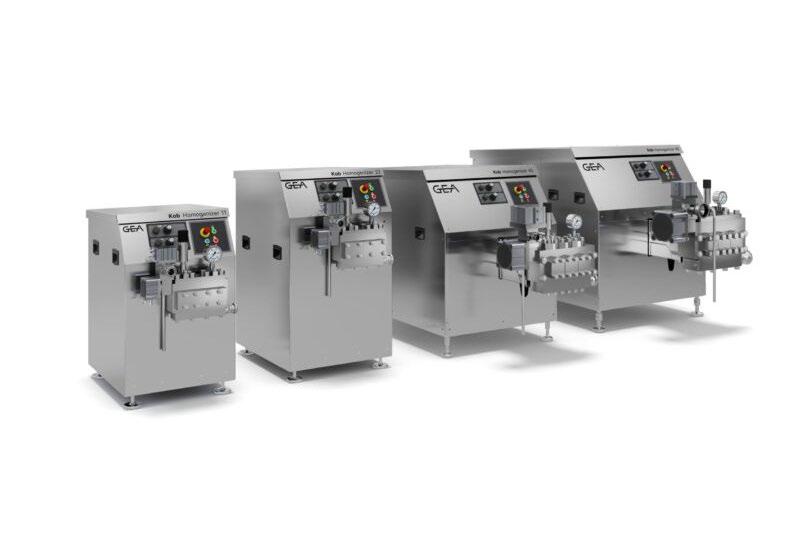
GEA is presenting the complete range of its KOB series, a new costefficient line of homogenizers reaching up to 400 bar. The series is designed to give small and medium production plants access to industrial-grade performance at an attractive investment level. With KOB models 11, 22, 45 and 90 available, the homogenizers offer a compact, hygienic and flexible solution for a broad range of food, beverage, chemical and personal care applications, including homogenizing and feeding spray dryers. Optimized and compact mechanical construction, lower noise levels, simplified maintenance access and efficient power use create a strong value proposition for existing plants and new lines alike.
Built for performance: up to 400 bar and flexible valve options
At the core of the GEA KOB homogenizers is a robust high-pressure design up to 400 bar, ensuring stable and efficient homogenization for demanding, moderately viscous and abrasive applications. To meet the requirements of diverse applications, higher-efficiency homogenizing valve technology
and more wear-resistant materials are available as options. The base configuration uses competitively priced wear-resistant parts, providing an economical choice for standard, non-abrasive products, while optional high-wear-resistant materials extend service life in more demanding, abrasive formulations.
Compact machines engineered for efficiency, low noise and reduced operating costs
The KOB homogenizer series is designed for processors who need adequate and fit-for-purpose homogenization performance within a limited footprint. Its compact architecture is enabled by an optimized crankcase and gear-reducer design that delivers high mechanical efficiency while generating minimal heat, noise and vibration. As the drive compartment requires neither oil cooling nor forced-air ventilation, the machines rely on fewer auxiliary components and deliver lower installation, maintenance, energy and utility demands.
A newly engineered frame and cladding, developed using advanced structural analysis,
further contribute to low vibration levels and long-term durability. The use of poppet-type pumping valves enhances flow characteristics and feeding stability, significantly reducing noise and cavitation while improving volumetric efficiency and extending component life.
Together, these mechanical considerations result in a homogenizer family that reduces energy consumption, simplifies daily operation and maintenance, and minimizes downtime. With their compact footprint and minimal maintenance-space requirements, KOB machines are well-suited for both new installations and the replacement of legacy homogenizers without major layout modifications.
Designed to meet demanding sanitary requirements, every KOB model is available with CIP and SIP capabilities and can be configured to meet 3-A sanitary standards. Steamable full-stroke barrier chambers provide aseptic product handling. The machines can be equipped with a secondstage pressure gauge and pressure transmitters on both homogenization stages as well as the outlet, for process automation and control. This makes the KOB homogenizers ideal for a broad range of products and processes such as milk, dairy ingredients, beverages, plant-based formulations and selected chemical, personal care and cosmetic products in manual, semi-auto and fully automated production lines.
The KOB series supports a wide range of automation levels, from simple motor-starter solutions to full PLC/HMI control. Connectivity options enable seamless integration into SCADA and plant-wide automation systems, allowing processors to choose the right level of digitalization for their operation. This modularity helps ensure fast installation and smooth retrofitting into existing production lines.
When ingredient suppliers and contract manufacturers move upstream, the rules of product development change. Asia’s F&B industry is finding that co-creation is no longer a premium option but a survival strategy.
By Cath Isabedra
There is a moment in most new product development cycles when a brand owner realises, usually too late, that the people who know the most about making the product are not inside the company. They are in the factory. They are in the ingredient supplier’s application lab. They are the food scientists running formulation trials, the process engineers troubleshooting shelf stability, the flavourists who understand how a texture will behave under high-pressure processing. For decades, those people were kept at arm’s length, engaged only once a brief had been written and a purchase order signed. That arrangement is unravelling.
Across Asia Pacific, a quieter but more consequential
shift is underway in how food products are made. Ingredient suppliers and contract manufacturers (CMOs) are repositioning themselves not as downstream executors of a brand’s vision but as architects of the process. The economics driving this are not subtle. Commodity inflation, compounding input costs, fragmented consumer demand, and an accelerating product launch calendar have made the traditional model of internal R&D prohibitively expensive for most brands outside the top tier. The smarter play, and the one gaining traction across markets from Jakarta to Chengdu, is to bring partners in earlier and give them genuine creative latitude.
The macroeconomic conditions of the past three years have been a forcing function. Food input costs remain elevated well above pre-pandemic baselines. Essential raw materials including dairy, meat, and packaging materials such as aluminium and glass have seen rising costs due to labour shortages, and currency fluctuations have further pressured companies operating in developing markets where weaker local currencies make essential commodities more expensive. Meanwhile, consumer patience for price increases is finite. Food manufacturers are losing pricing power as consumers trade down, forcing tougher decisions on margins, promotions, and investment.
Against this backdrop, the calculus around internal R&D has shifted. Building and maintaining in-house formulation capability is capital intensive in the best of times. Under current conditions, it is increasingly difficult to justify for brands below a certain scale. The alternative: accessing a partner’s existing infrastructure, ingredient expertise, and formulation libraries offers a faster, lower-risk route to market without the overhead.
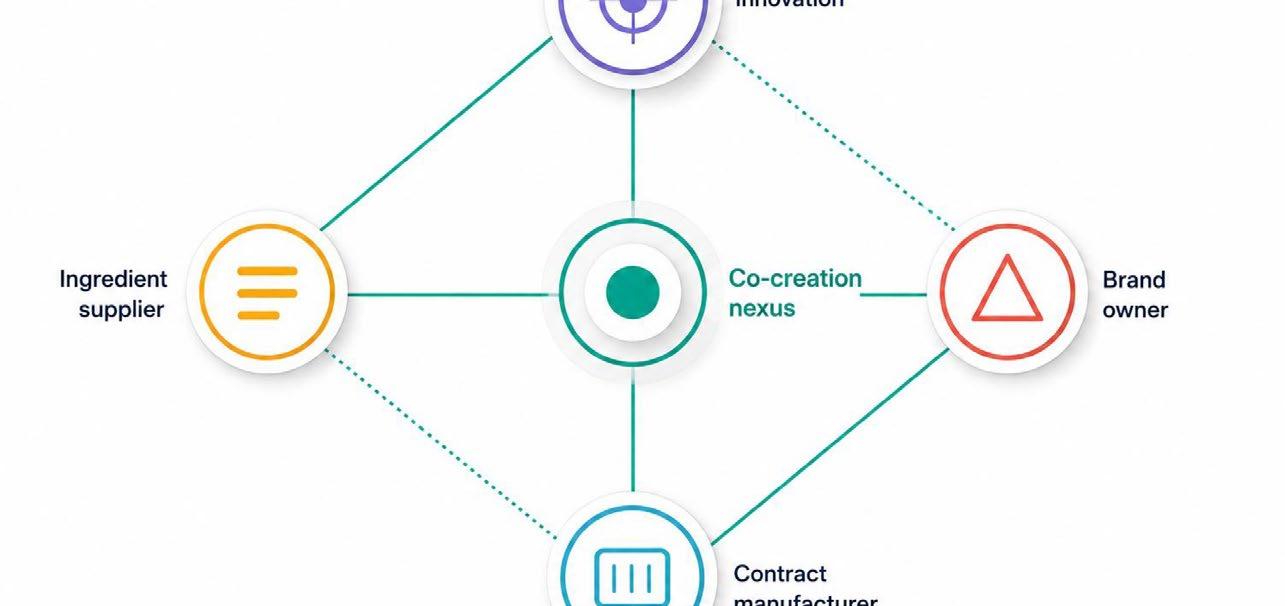
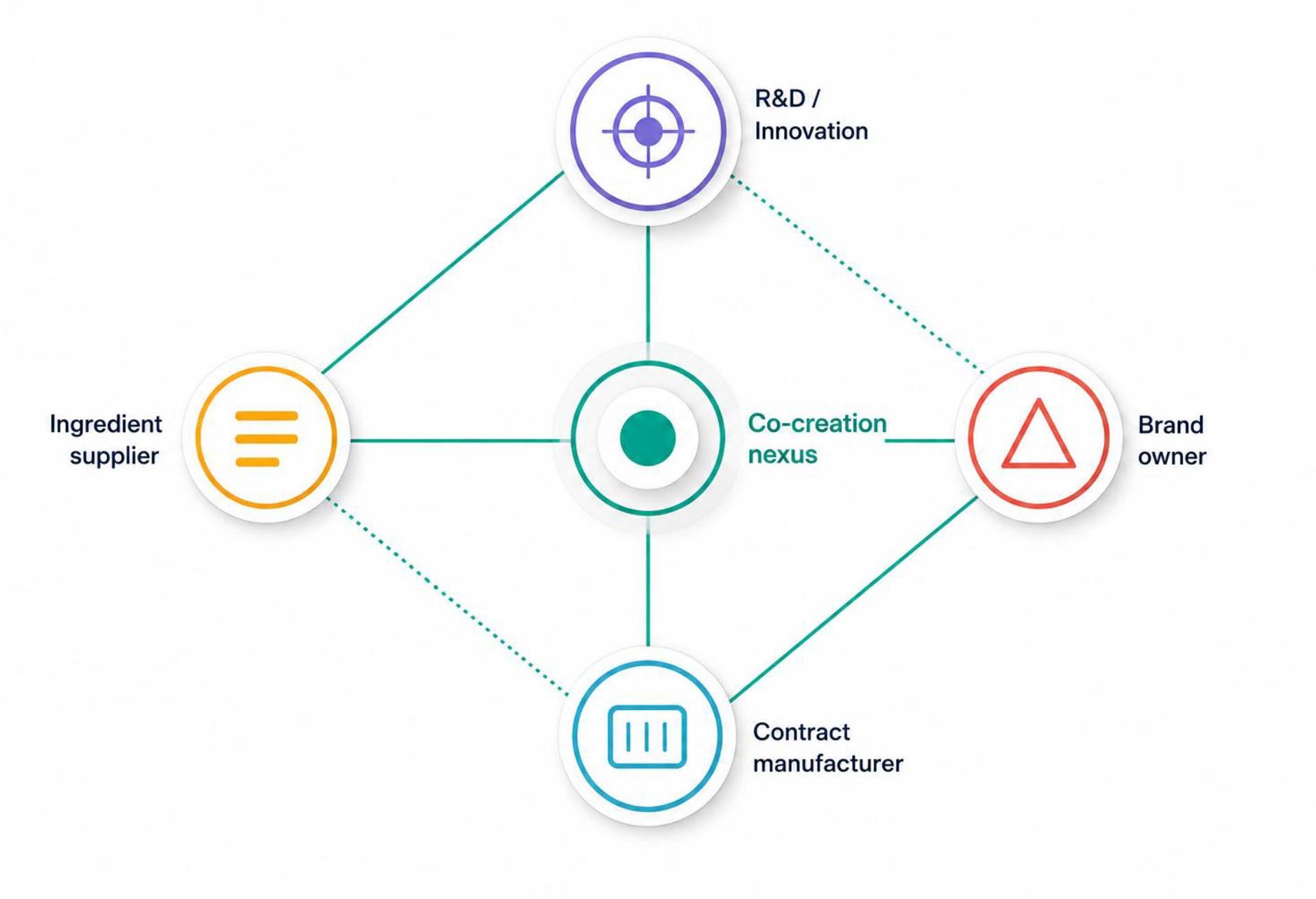
Contract negotiation and pricing models now emphasise risk-sharing and transparency, ensuring greater stability and alignment across the value chain. That framing matters. What was once a transactional relationship (brand provides specifications, manufacturer executes) is being replaced by something structurally closer to a joint venture, one in which the partner contributes knowledge rather than just capacity.
The numbers bear this out at scale. The Food Contract Manufacturing Market grew from USD 170.90 billion in 2024 to USD 186.62 billion in 2025, and is expected to continue growing at a CAGR of 8.99 per cent, reaching USD 340.51 billion by 2032. Asia Pacific remains the dominant production region, accounting for 53 per cent of global contract manufacturing revenue, and is projected to grow at the fastest regional rate through the decade. Within that growth, the segment that is expanding most rapidly is not basic manufacturing services. It is R&D and co-formulation.
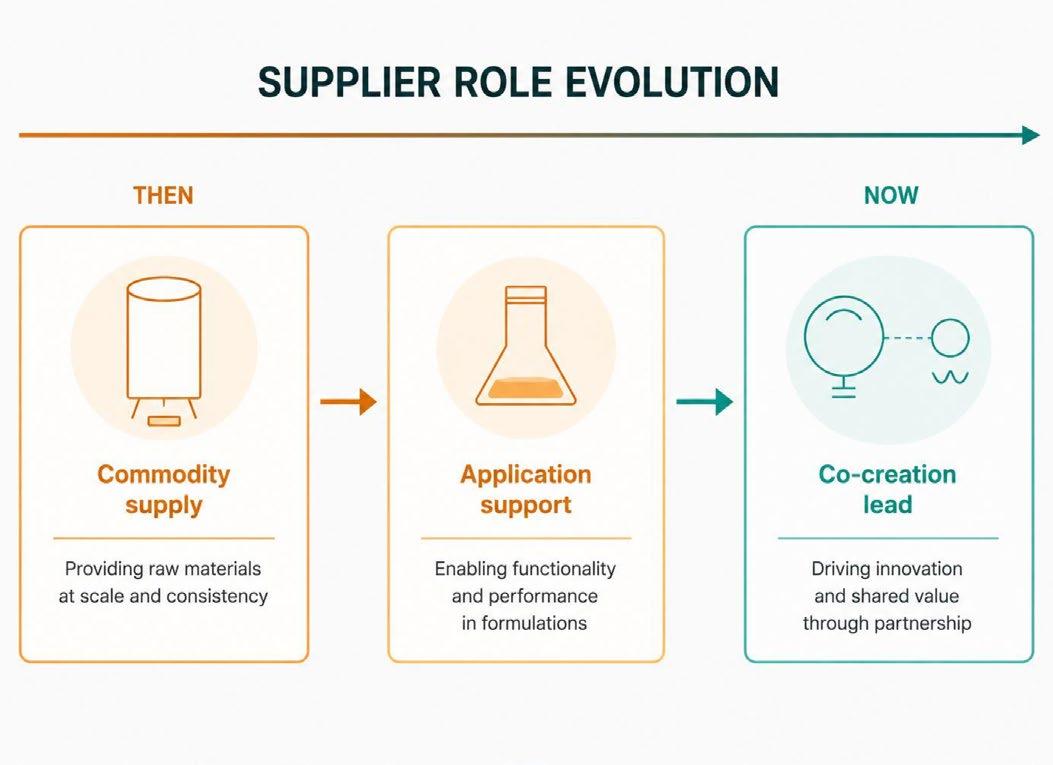
If one structural shift defines this era of co-creation in Asia’s food industry, it is the ingredient supplier’s move into product conception. Companies that once sold functional inputs, starches, texturisers, flavour systems, proteins, are now arriving at the table with product concepts already mapped, consumer insights already interrogated, and prototype formulations already tested. The brand’s role, in these arrangements, is less to originate and more to select, refine, and commercialise.
Ingredion’s CATALYST programme, run through its Idea Labs network, is among the more transparent examples of how this model works in practice. The programme covers the complete idea-to-launch process: projects begin with consumer research and insights, move through rapid prototyping and refinement, and extend to support for scale-up and co-manufacturing. Critically, the company brings its own ingredient portfolio and third-party solutions into the mix, and the sourcing and pricing of any outside ingredients are disclosed to the brand partner. It is a model built on transparency precisely because opacity is what historically made these arrangements uncomfortable for brand owners wary of supplier lock-in.
The demand for this kind of engagement is measurable. Ingredion CEO Jim Zallie reported that engagement at its 32 Idea Labs globally, both online and in person, rose 26 per cent in 2023 as customers placed a greater priority on using the company’s insight and expertise to co-create or find solutions for product development. That figure preceded the most acute phase of reformulation pressure. In 2025 alone, Ingredion received just under 2,000 co-brief requests from customers and generated approximately 500 project briefs, having cut prototype turnaround from three months to 15 days. That compression in development time is not incidental. It is the point.
IFF’s investment trajectory in Asia tells a parallel story. In July 2025, the company unveiled its Immersive Experience Hub at its Singapore Innovation Centre — a multi-sensory facility that enables IFF to work alongside customers to conceptualise, test, and refine product ideas in simulated real-world environments, with the stated aim of shortening development timelines and improving go-to-market success. The facility builds on a USD 30 million investment IFF made in Singapore in 2022, and its function is deliberately experiential: rather than presenting brands with a finished ingredient brief, the hub puts customers inside a simulated retail or consumption environment, so product decisions are made with sensory context that approximates the end-use condition. IFF’s expanded Shanghai Creative Centre, operational since late 2024 and the company’s
largest facility in Asia at 16,000 square metres, similarly brings together capabilities across taste, biotech, and perfumery with collaboration and co-creation as its design philosophy.
Kerry Group’s approach is anchored in Southeast Asia’s fastest-growing market. Kerry opened an expanded Research, Development and Applications facility in South Jakarta in 2025, complementing its EUR 30 million Karawang manufacturing plant, the company’s largest greenfield investment in Southeast Asia, which supports customers across beverage, snacks, and bakery, among its fastest-growing end-use categories. The RD&A facility in Jakarta includes a co-creation lab, positioning Kerry not simply as a supplier of taste and nutrition systems but as an active development partner for Indonesian brands navigating a market where consumer preferences are shifting rapidly and the cost of reformulation error is high.
dsm-firmenich has positioned Singapore at the centre of its Asian innovation strategy for over three decades, and continues to deepen that commitment through specialised facilities including its FutureBites Food Design Studio and Perfumery Automated Compounding Encapsulation facility. Its CEO has described Singapore as the company’s gateway to Asia-Pacific, a point of concentrated technical and regulatory capability from which co-development projects are seeded and scaled into regional markets. Symrise, meanwhile, strengthened its co-creation infrastructure in the region with the announcement of a Digital Immersion Co-Creation Centre in Singapore in July 2024.
What this concentration of investment signals is not merely competitive positioning. It is a structural argument about where innovation value now resides in the food supply chain. The ingredient suppliers have, in effect, built the laboratories that many of their customers can no longer afford to build themselves.
The contract manufacturer’s upstream ambition
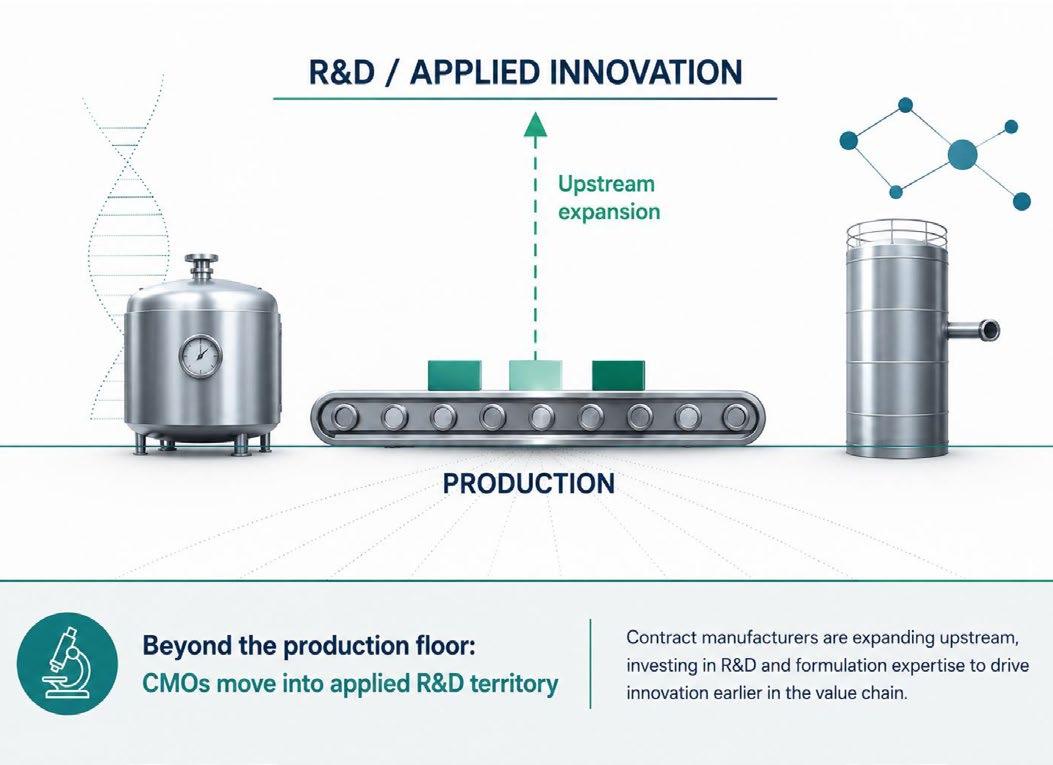
Contract manufacturers are making a similar move, though from a different starting point. Where ingredient suppliers are pushing into concept and formulation, CMOs are pushing into applied R&D, regulatory mapping, and commercial intelligence. These are services that were once the exclusive domain of a brand’s internal team. Several co-manufacturers have developed AI-powered formulation platforms that reduce new product development cycles from 18 months to under 90 days, with systems that analyse consumer trend data, regulatory requirements, and supply chain variables to generate compliant, costoptimised recipes.
For brands operating in Asia’s fragmented regulatory environment — where labelling standards, health claim frameworks, and additive approvals vary considerably between markets — access to a manufacturing partner’s compliance infrastructure can be the difference between a 90-day and an 18-month launch timeline. The economic logic for the CMO’s upstream move is equally clear. Value-added services command better margins than pure production runs. Food contract manufacturers have implemented innovative strategies that lead to co-development opportunities and expand into packaging, R&D expertise, and storage as additional value-added services. Brands that engage a manufacturer at the concept stage, rather than at the specification stage, tend to develop longer, deeper commercial relationships. The stickiness that comes from co-developing a product line is considerably greater than the stickiness that comes from simply filling a contract.
India’s Hindustan Foods Limited illustrates how this works at scale. The company operates state-ofthe-art manufacturing facilities across categories including snacks, confectionery, ready-to-eat meals, sauces, and beverages, and invests in innovation by working closely with clients to develop new products, reformulate existing ones, and improve manufacturing processes. Its client list includes Hindustan Unilever, Reckitt Benckiser, and Danone. Companies that could theoretically manufacture in-house but choose the co-development model because it provides access to HFL’s production intelligence without requiring capital allocation to additional facilities.
TraceGains research found that among 300 food and beverage professionals surveyed, over half of brands are now outsourcing more of their manufacturing than they were three years prior, with 47 per cent working with up to ten contract manufacturers simultaneously.
That last figure is telling. Brands are not choosing one CMO partner and deepening a single relationship in every case. They are constructing networks of manufacturing partnerships, each optimised for a specific category, geography, or processing capability. The co-creation dynamic operates differently across those relationships. Some are transactional, some are deeply integrated, but the direction of travel is consistent.
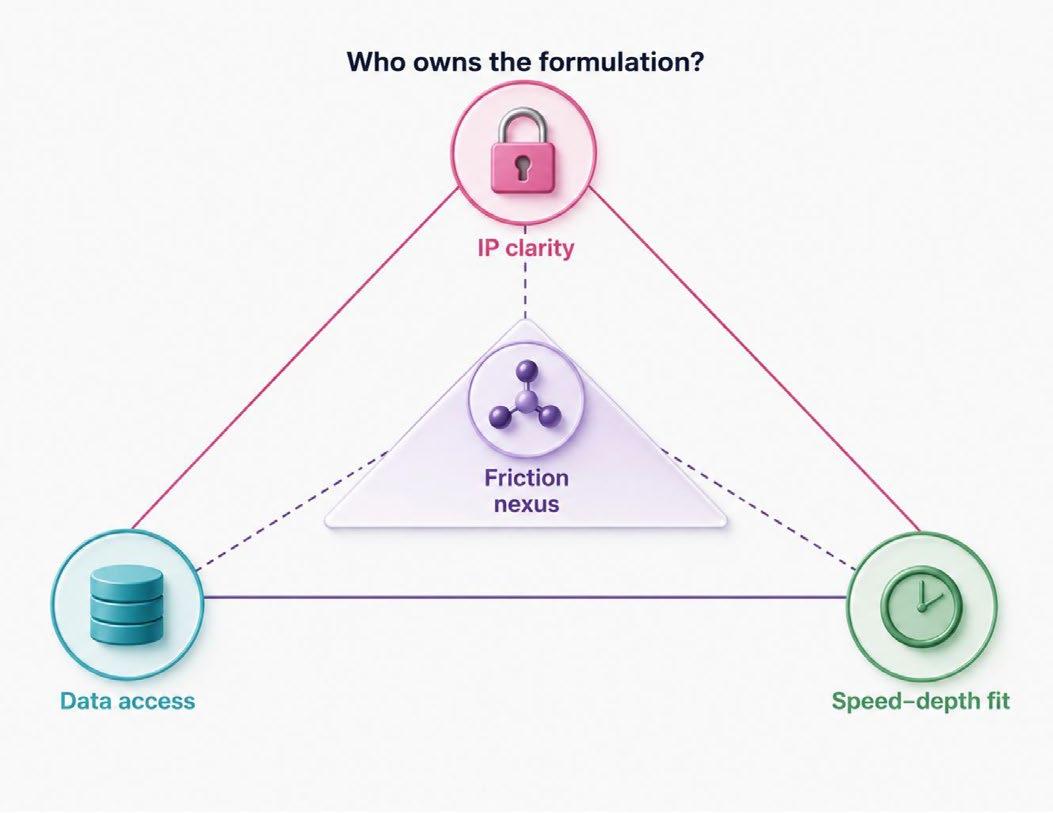
The mechanics of successful co-creation in this environment are more demanding than the marketing language around it suggests. Several structural conditions need to be in place.
IP clarity is the first. In a co-development arrangement where the ingredient supplier contributes a flavour system, the CMO contributes a processing method, and the brand contributes market positioning and distribution, the question of who owns what is not a formality. It is the agreement that determines whether the relationship scales or stalls. The industry has not yet produced a standard framework for this, and the absence of one remains a friction point, particularly for brands working across multiple jurisdictions in Asia where IP enforcement varies.
Data governance is the second. A leading Asian manufacturer now offers consumer insight subscriptions, providing brands with anonymised consumption data from its production network — intelligence that shapes both product development and marketing strategy. The value of this data is significant, but so are the questions of who controls it, how it is used beyond the immediate partnership, and what obligations exist regarding its retention and sharing. As CMOs invest in more sophisticated sensor and traceability infrastructure, the data generated during co-development becomes a commercially contested asset.
The third condition is alignment on speed versus depth. Ingredient suppliers operating fast-cycle co-brief models, 15-day prototype turnaround, and modular concept libraries are optimised for agility. Some brand partners want exactly that.
Others need a slower, more thorough development process that accounts for scale-up complexity, regulatory clearance, and consumer testing.
Misalignment on this dimension is a common reason co-development projects stall between prototype and launch.
Manufacturers are enhancing product quality to offer cost-effective options that still meet consumer preferences, using improved ingredient standards and emphasising quality through storytelling and compelling visuals to attract value-conscious consumers. The framing here is instructive: co-creation is not only a cost lever.
It is increasingly a brand equity tool, one that allows a mid-market player to access ingredient and processing quality that its internal budget could not sustain.
The shift from transactional to strategic partnerships in food manufacturing is not uniform across Asia.
In more mature markets like Singapore, Japan, South Korea, and Australia, the co-creation infrastructure is well established, and the contractual frameworks that support it are more sophisticated.
In high-growth markets where the manufacturing base is scaling rapidly, including Indonesia, Vietnam, India, and the Philippines, the co-creation model is being built alongside production capacity itself, creating both opportunity and complexity.
What is consistent across the region is the pressure. Brands of every size are being asked to launch faster, at lower cost, with greater formulation complexity and more robust sustainability credentials than previous product generations required.
That is a burden no single organisation can carry internally at acceptable risk.
The ingredient suppliers and CMOs who understand this and have invested accordingly in application infrastructure, formulation science, and codevelopment processes are repositioning themselves as indispensable.
The question for brand owners is no longer whether to engage manufacturing and ingredient partners in cocreation.
The question is how to structure those engagements so that the knowledge transferred goes both ways, the IP ownership is resolved before the first prototype, and the speed advantage promised by the partner’s investment actually compounds into competitive advantage at the shelf.
That is a harder problem than it looks. But it is the one the industry is now obligated to solve.
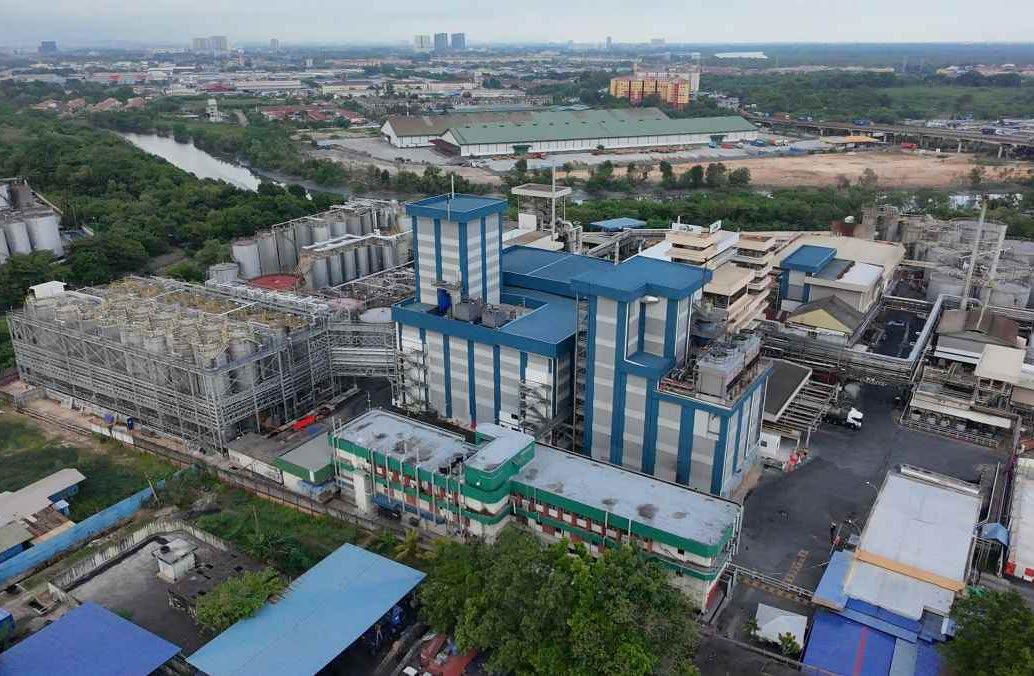
Cargill’s Port Klang specialty fats expansion is a capital commitment to a manufacturing thesis: that the most durable partnerships in this region’s F&B industry are built on shared formulation intelligence, not just ingredient supply.
By Cath Isabedra
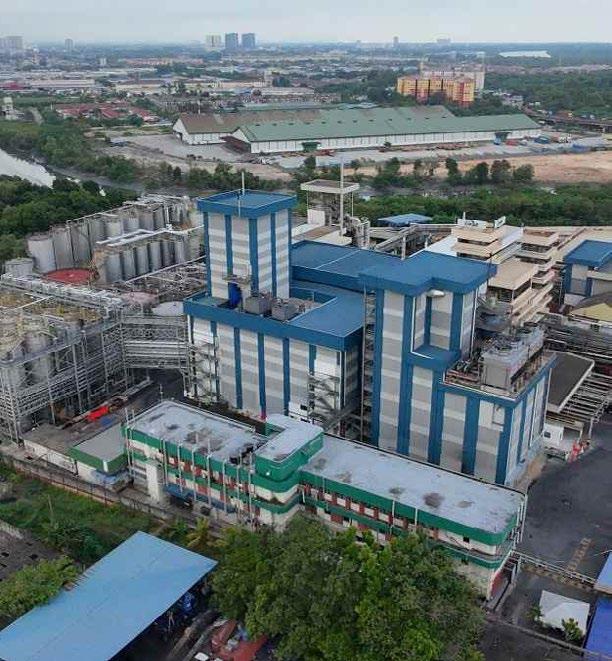
When Cargill announced the completion of its new specialty fats production line at Port Klang in late March 2026, the press release framed it primarily as an infrastructure story: new capacity, broader product range, the first specialty fats processing capability in Cargill’s entire global edible oils network. What the release did not foreground, but what emerges clearly in conversation with Kashan Rashid, Vice President
and Managing Director for Cargill’s Food Southeast Asia, Australia and New Zealand business, is the more consequential story underneath the capital expenditure. Port Klang, in Cargill’s framing, is the regional anchor of a partner-powered manufacturing model that Cargill believes will define how competitive F&B manufacturers in this corridor formulate, differentiate, and grow over the next decade.
The argument is structural. Southeast Asia, Australia and New Zealand represent one of the world’s most complex ingredient markets: high-growth but pricesensitive in some geographies, heavily regulated and consumer-sophisticated in others, with channel structures ranging from modern retail in Singapore and Australia to fragmented general trade in Indonesia and Vietnam. A manufacturer operating across that territory cannot be served adequately by a supplier relationship that begins and ends at the point of purchase order. What they need, and what Cargill is positioning Port Klang to provide, is a working partnership that integrates formulation expertise, application engineering, sourcing strategy, and increasingly, sustainability alignment into a single commercial relationship.
“The starting point in co-creation,” Rashid says, “is understanding what the customer is trying to achieve within their product and commercial objectives.” That framing matters. It positions the engagement upstream of ingredient selection, at the level of business objectives and product strategy, which is where the most consequential formulation decisions are actually made.
The Port Klang expansion is the third consecutive capital commitment to the same facility within six years. A 2020 modernisation programme was followed in 2021 by the announced construction of the new specialty fats production line, with commercial operations confirmed in 2026. That sequencing is not incidental. For a manufacturer being asked to align its product roadmap with a supplier’s infrastructure, a multi-year investment cycle at a single site signals something more considered than routine capacity growth. It signals an intention to build deep, sustained technical capability in one place.
The technical centrepiece of the new line is multi-stage palm fractionation. Standard fractionation separates crude palm oil into olein and stearin fractions through controlled crystallisation and filtration. Multi-stage fractionation refines that process iteratively, producing fractions with more precise melting profiles, tighter compositional control, and a correspondingly wider range of functional properties. The result is a specialty fats portfolio capable of meeting demanding specifications across compound chocolate coatings, bakery fillings with defined melt behaviour, and frying applications requiring high stability and minimal oil weeping.
From Port Klang, Cargill’s current specialty fats portfolio includes Coconera, Olinera NH, Ocolna, and CremoFLEX, alongside the newly introduced BakeFry™, a high-performance frying fat engineered specifically for stability in delivery and takeaway contexts, and
Bakefill™, designed for bakery filling applications. The Lipid R&D Centre, located within the same Port Klang compound, is the formulation interface between this manufacturing capability and the co-creation engagements Rashid describes. Proximity between production and formulation is, by design.

“The partnership works best when each side brings its expertise: Cargill contributes ingredient, formulation and application knowledge, while customers bring their understanding of their products, processes, channels and operating model.” ~ Kashan Rashid, Vice President and Managing Director for Cargill’s Food Southeast Asia, Australia and New Zealand
What co-creation actually means in practice
The term co-creation is used widely enough in ingredient industry marketing to have lost some of its precision. Rashid’s account of how it actually operates at Port Klang is worth examining in detail, because the mechanics matter more than the label.
A co-development engagement begins with a customer conversation about business objectives, not ingredient specifications. Cargill then aligns its formulation, application, sourcing, portfolio, and supply capabilities to those objectives. At the Lipid R&D Centre in Port Klang, customers can access oils and fats expertise and pilot capabilities directly. Depending on
the scope of the project, the engagement can draw on R&D capabilities in cocoa and chocolate, sweeteners and texturizers, application expertise from the Food Innovation Centre in Singapore, and Cargill’s innovation network across APAC and globally. Timelines, Rashid notes, vary by project complexity.
The engagement model shifts depending on the customer’s scale and internal capability. For a large co-packer with its own R&D function, the value proposition looks different from that offered to a midtier manufacturer entering specialty fats for the first time. “It is about complementing their teams with the required support based on their specific business and product needs,” Rashid says. Some customers prioritise formulation support and application knowledge; others are primarily interested in supply reliability and managing ingredient requirements across multiple SKUs. The co-creation architecture adapts accordingly. This is where the co-creation model’s practical limits come into view. Commercial terms, exclusivity arrangements, and intellectual property protections are handled case by case and governed by bilateral agreements. Rashid’s answers on these specifics are deliberately measured, which is commercially reasonable: ingredient companies do not disclose partnership terms, and any specific answer would be used comparatively by competing customers. The formulation capability is genuine and substantial. The terms that govern access to it require negotiation.
The BakeFry™ product offers a useful illustration of how customer problems translate into Cargill products. Rashid describes a broader pattern across foodservice: the need to maintain product quality beyond the fryer, particularly as delivery and takeaway channels grow. “The partnership works best when each side brings its expertise: Cargill contributes ingredient, formulation and application knowledge, while customers bring their understanding of their products, processes, channels and operating model,” he says. The practical boundary of that partnership is explicit: ingredient and application expertise can optimise what happens inside the formulation, but the performance of a fried product across a 45-minute delivery window is equally a function of packaging design, logistics, and container engineering. Those are the customer’s domain.
The cocoa disruption and what it changed
The Port Klang expansion arrives at a moment when the case for ingredient diversification has been sharpened considerably by events in the cocoa market. Asian cocoa grindings fell 16.3% year-on-year in the second quarter of 2025, the steepest regional decline globally, according to data from the International Cocoa Organisation (ICCO). The decline reflected a broader contraction driven by the extraordinary price environment of 2024 and early 2025, when ICE New York
cocoa futures briefly exceeded USD 10,000 per tonne. The ICCO’s February 2026 Quarterly Bulletin revised the 2024/25 global surplus to 75,000 tonnes, with production reaching 4.728 million metric tonnes against grindings of 4.606 million metric tonnes. By March 2026, futures had corrected to the USD 3,100 to 3,200 range, near lows not seen since mid-2023.
The correction creates a commercially awkward moment for ingredient suppliers, making the case for formulation flexibility. When cocoa is expensive, the argument for alternatives or partial substitution requires little advocacy. When prices fall sharply, a manufacturer mid-reformulation faces pressure to reconsider. Rashid addresses this directly, noting that commodity price movements may affect the timing of formulation reviews, but situating the more durable argument at the level of application performance, ingredient availability, and commercial risk management.
“The conversation is about helping customers evaluate a wide range of options. It is about giving customers more flexibility to make formulation decisions responsibly that are right for their category, market and intended consumer experience.”
The argument for ingredient diversification, properly framed, is structural rather than reactive to a price cycle. Regional grindings data support this. Demand destruction in Asian cocoa processing in Q2 2025 did not reverse cleanly as prices fell. Certified ICE cocoa stocks at US ports continued climbing through late March 2026, reaching a 7.5-month high, while market participants described global demand as fragile even as supply expanded. Manufacturers who had reformulated or reduced portion sizes during the high-price period proved reluctant to reverse those decisions when the market corrected, an outcome that reflects the actual economics of reformulation: once a product is re-engineered and consumer-tested, the cost of reverting is non-trivial.
For co-creation conversations specifically, the cocoa disruption shifted the starting point. Manufacturers who previously approached Cargill primarily around cost optimisation are now arriving with more complex briefs: supply diversification, formulation flexibility, and the capacity to respond to future commodity shocks without re-engineering their entire product range. That is a more demanding engagement, and one for which the Lipid R&D Centre at Port Klang, with its multistage fractionation capability and cross-category formulation expertise, is now better equipped to respond.
When sustainability enters the co-creation brief
For manufacturers with European export exposure or retail partners operating under responsible sourcing commitments, the sustainability dimension of a specialty fats co-creation engagement is no longer a secondary consideration. The EU Deforestation Regulation (EUDR), with compliance deadlines set for December 2026 for large and medium enterprises, is tightening the acceptable supply pool for palmderived ingredients in ways that make NDPE-aligned sourcing a commercial requirement rather than an ethical positioning.
Rashid describes a shift in the nature of these conversations. “Beyond certification, customers increasingly want to understand traceability, alignment with NDPE principles, risk mitigation and how sourcing choices can support their own responsible sourcing commitments,” he says. The consequence is a change in the architecture of co-creation itself.
“This changes the nature of co-creation. In addition to discussions on achieving the right taste, texture, melting profile, or shelf life, the conversation also includes sourcing options and supply security, so products can meet both technical and sustainability expectations.”
The Port Klang facility, situated within Malaysia’s palm oil production ecosystem and operating with NDPE-aligned sourcing, is positioned to serve both domestic mass-market manufacturers and exportoriented co-packers navigating the EUDR supply chain requirements.
The degree to which it can credibly serve the latter depends on the depth of traceability infrastructure Cargill can demonstrate at the mill and plantation level, a standard that has moved well beyond broad NDPE commitments to granular, verifiable chain-ofcustody documentation.
For SEA manufacturers currently operating in domestic channels, the EUDR compliance pressure may still feel remote. For co-packers producing private-label goods for Australian or European retailers, it is an immediate commercial requirement shaping ingredient sourcing decisions now. The co-creation model Cargill is describing at Port Klang needs to serve both categories simultaneously, and the co-creation conversations in each category will look substantially different.

One of the more consequential observations Rashid makes concerns where the demand signal for cleaner ingredients is actually coming from.
The persistent industry assumption has been that health-conscious formulation is a premium-tier concern, driven by high-income consumers in modern retail environments, and that mass-market manufacturers in markets like Indonesia, Vietnam, or the Philippines are primarily driven by price and taste.
Cargill’s own research challenges that assumption directly. The APAC IngredienTracker 2025 study, conducted with 2,000 respondents across China, Indonesia, Australia and Japan, found that over 70% of surveyed consumers in the region check product labels before purchase, with immune system-related ingredient concerns rising 101% between 2017 and 2024 across 91 assessed ingredients in categories spanning chocolate confectionery, bakery, dairy, and beverages.
The Cargill Indulgence Study across Southeast Asia reinforces this at the category level. Approximately 66% of consumers surveyed in Indonesia, 72% in the Philippines, and 74% in Vietnam identified health as an important factor even in explicitly indulgent categories. Some 69% of SEA consumers cited health attributes as a priority when indulging, with reduced sugar as the single most influential purchase driver.
The study found consistent willingness to pay a 10-20% premium for products with better ingredients across income levels. Rashid draws the conclusion plainly: “demand for cleaner and health-conscious ingredients is no longer tied to a specific income or urbanisation
threshold — it’s already a mass-market expectation.”
The implication for co-creation briefs is significant. Once a manufacturer accepts that the demand for better ingredients is a baseline expectation rather than a premium feature, the formulation conversation changes. Ingredient choices that previously sat in the innovation pipeline move into the core product brief.
The non-hydrogenated positioning of Olinera NH, and the clean-label credentials of the Port Klang specialty fats portfolio more broadly, become relevant not just for export-facing SKUs but for the full domestic range.
“For manufacturers, this means cleaner formulations are no longer a premium add-on — they’re increasingly a core part of the brief when designing for the mass market.”
Southeast Asia, Australia, and New Zealand are not homogeneous territories, and the co-creation model Cargill is describing at Port Klang must work across a range of operating contexts that differ substantially in regulatory frameworks, consumer sophistication, channel structures, and manufacturer capabilities. A co-development engagement in Indonesia, where the market is high-growth, price-sensitive, and where many manufacturers are approaching specialty fats partnership for the first time, demands a different entry point, timeline, and risk allocation than one in Australia, where retail structures are concentrated, regulatory expectations are demanding, and manufacturers often have well-developed internal R&D functions.
Rashid acknowledges this directly, describing an approach that begins with the customer’s business objectives, product requirements, and commercial priorities, and then aligns Cargill’s capabilities accordingly. The question of how to prioritise across that territory, and how to resource co-creation support equitably across markets with very different economics, is one to which his answers remain at the level of principle. In practice, the allocation of R&D and application support capacity across a territory this diverse is one of the more consequential operational decisions an ingredient partner makes, and it shapes which manufacturers genuinely have access to the co-creation model being described.
Asia Pacific is the fastest-growing region in the global chocolate market, with its market share projected to rise from 19.6% in 2025 to 22.0% by 2030, according
to Cargill’s own market data. The region’s chocolate market was valued at approximately USD 19.1 billion in 2025 and forecast to reach USD 24.5 billion by 2030. That growth is occurring in the context of the post-cocoacrisis reformulation conversations described above, in markets where consumer ingredient expectations are rising faster than many manufacturers have anticipated, and against the backdrop of sustainability compliance requirements that are tightening the available supply pool. The convergence of those pressures is precisely the environment in which a cocreation model, backed by serious manufacturing infrastructure, becomes a competitive differentiator rather than a supplier talking point.
Three capital investments in the same Port Klang facility within six years, culminating in the first specialty fats production capability in Cargill’s global edible oils network, are considered an answer to that environment. For decision-makers in the F&B manufacturing sector across this corridor, the question worth asking now is not whether specialty fats co-creation is strategically relevant. The cocoa market of 2024 and 2025 settled that. The question is whether their current ingredient partner has the manufacturing depth, the formulation expertise, and the structural commitment to their market to make that co-creation conversation worth having.
References
Cargill. (2026, March 30). Cargill strengthens global specialty fats portfolio with expansion of Port Klang, Malaysia facility [Press release]. Business Wire. www.businesswire.com
Cargill. (2025, November 14). Cargill APAC IngredienTracker™ 2025 reveals impact of ingredient perception on purchase decisions [Press release]. www.cargill.com
Cargill. (2025, June 25). Southeast Asians crave taste in new indulgence era [Press release]. www.cargill.com
International Cocoa Organization. (2026, February). Quarterly bulletin of cocoa statistics, Vol. LII, No. 1, Cocoa Year 2025/26. ICCO.
International Cocoa Organization. (2025, November). Quarterly bulletin of cocoa statistics, Vol. LI, No. 4, Cocoa Year 2024/25. ICCO. www.icco.org
Trading Economics. (2026, March 24). Cocoa futures hover around 2023-lows. tradingeconomics.com
Mordor Intelligence. (2026, January). Asia Pacific chocolate market — growth, trends, and forecasts (2026–2031). www.mordorintelligence.com
NielsenIQ & Bain & Company. (2025). Southeast Asia consumer products report 2025. www.bain.com
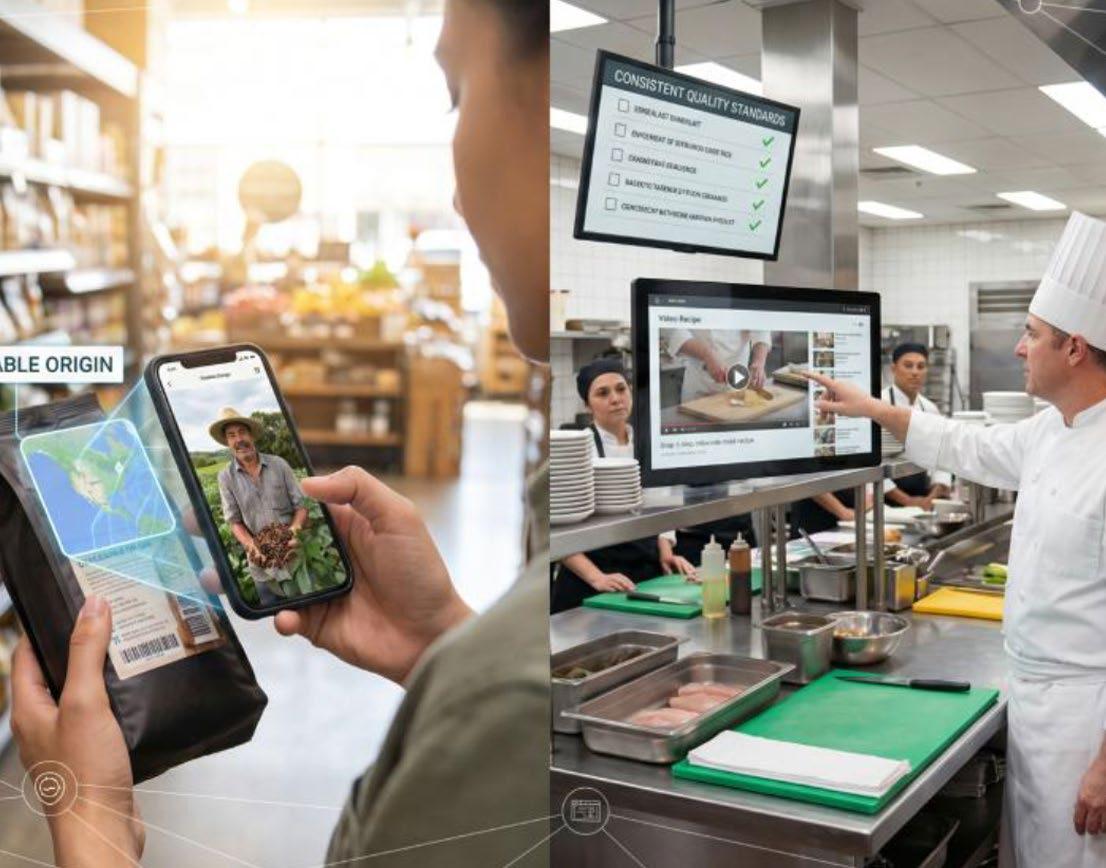
As Asia Pacific consumers demand greater transparency and richer brand engagement, food and beverage operators are turning to AI-powered visual storytelling to close the gap between knowledge and connection.
Words by Raanan Nedivi, CEO, ShareLook
The food and beverage industry has always sold more than products. It sells experiences, trust, emotion, and stories. But the stakes of that transaction are rising.
According to Innova Market Insights, honesty and transparency are now among the most influential
themes shaping purchasing behavior across the Asia Pacific region. Consumers no longer just want to know what they are buying. They want to know where ingredients come from, how products are made, who made them, and what the brand represents.
1 in 3
APAC consumer priority
Asia Pacific consumers actively prioritise health and wellbeing beyond essentials. Safety, freshness, and transparency are among the top purchase decision drivers across the region. — Innova Market Insights, 2025
At the same time, video has emerged as the format best equipped to answer those demands. Research by Wyzowl found that 98% of consumers have watched an explainer video to learn about a product or service, while 87% say video content has directly influenced a purchase decision. In categories as emotionally and sensorially driven as food and beverage, those numbers carry particular weight.
A product description can explain a recipe. A video can make someone crave it.
The result is an industry increasingly dependent on visual communication.
In Southeast Asia, where social platforms like TikTok, Instagram Reels, and YouTube Shorts have become primary discovery channels for F&B brands, this shift is especially pronounced. TikTok culinary content featuring non-Western dishes accumulated over 94 billion views in 2025 alone, according to Mintel’s Global New Products Database, a signal of how powerfully video shapes not just awareness, but appetite.

Food and beverage organisations are not short of valuable knowledge. Most possess deep reserves of culinary expertise, sourcing stories, sustainability initiatives, operational standards, and brand heritage. Food and beverage organizations already possess enormous amounts of valuable content:
• Recipes
• Chef expertise
• Product sourcing stories
• Sustainability initiatives
• Operational SOPs
• Franchise training manuals
• Beverage preparation standards
• Brand campaigns
Yet much of this knowledge remains trapped inside documents, presentations, or internal systems. The challenge is translation.
Transforming that expertise into compelling visual formats has traditionally required production teams, agency relationships, editors, and timelines that bear little resemblance to the speed at which menus change, trends emerge, or consumer expectations shift.
The gap is felt acutely by operators managing multiple touchpoints simultaneously: marketing campaigns for consumers, onboarding content for new staff, compliance training for franchise partners, and product education for retail buyers. Each demands a different format, a different register, and a different turnaround. It is a structural problem that has long favoured large enterprises with dedicated creative resources and placed smaller operators, independent restaurants, and regional food manufacturers at a distinct disadvantage. AI-powered platforms are beginning to disrupt that equation.
Up to 60%
Production cost reduction
AI-powered video tools can cut video production costs by up to 60% for brands, while reducing the average time to produce a 60-second marketing video from 13 days to 27 minutes.
— Vivideo AI Video Statistics, 2026
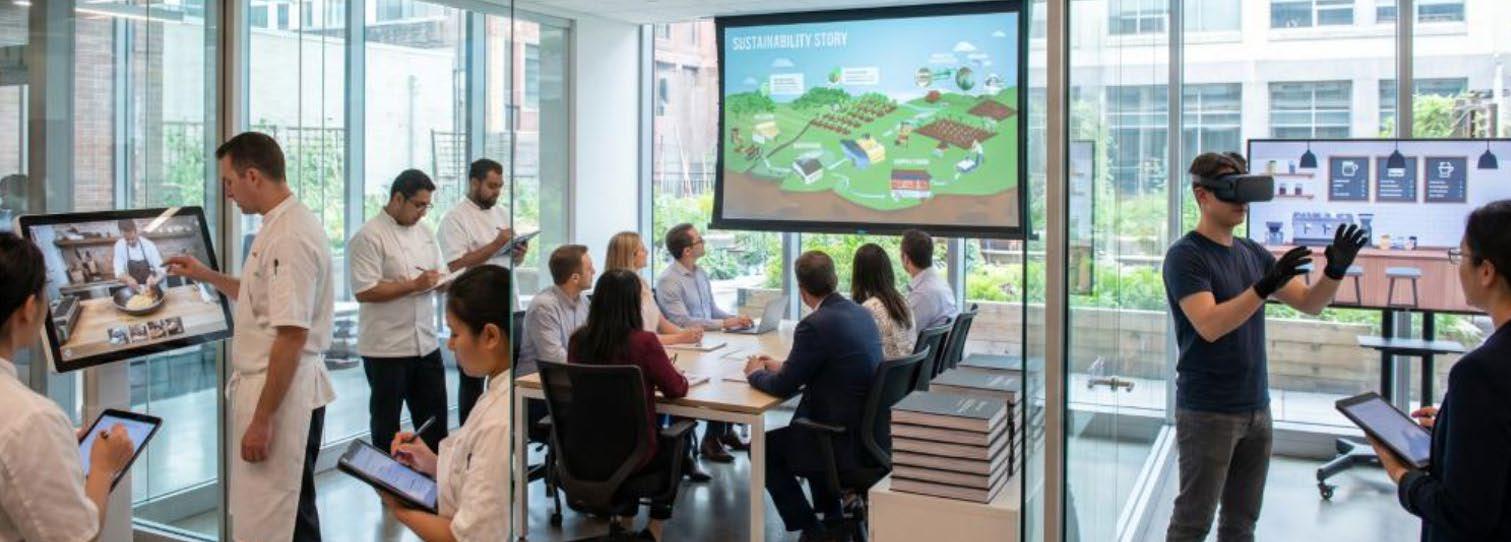
A new generation of AI-powered creative platforms is changing how visual content is produced, including Synthesia, Runway, and LTX Studio, is fundamentally changing how visual content is conceived, produced, and scaled. But the most consequential innovation is not faster editing or cheaper production. It is the ability to turn existing knowledge into narrative.
But the most important innovation is not simply faster editing. It is the emergence of systems capable of turning knowledge into a story.
Rather than asking creators to begin from scratch, AI workflows now start with existing information recipes, campaign briefs, sourcing documents, operational guides, or chef notes and structure them into narrativedriven video experiences.
A recipe becomes a visual cooking journey. A sourcing report becomes a sustainability story. A training manual becomes an onboarding experience.
This fundamentally changes how food and beverage organizations can scale out storytelling.
The implications extend far beyond social media campaigns. For multi-site restaurant groups, food manufacturers, and franchise networks, video is rapidly becoming a critical operational infrastructure.
Food and beverage businesses are increasingly using video for:
• Customer education
• Sustainability communication
• Beverage preparation standards
• Seasonal campaign rollouts
• Kitchen and operational training
• Franchise consistency
• Product launches
Training itself is becoming increasingly visual. Research consistently shows that employees retain information more effectively when learning is interactive and immediately applied. Recent workplace training studies show that microlearning and short-form visual content significantly improve retention and completion rates compared to passive long-form learning. In fast-paced restaurants and hospitality environments, that matters enormously.
Teams do not have time for hour-long onboarding modules. They need short, clear, visual communication that works inside operational reality.
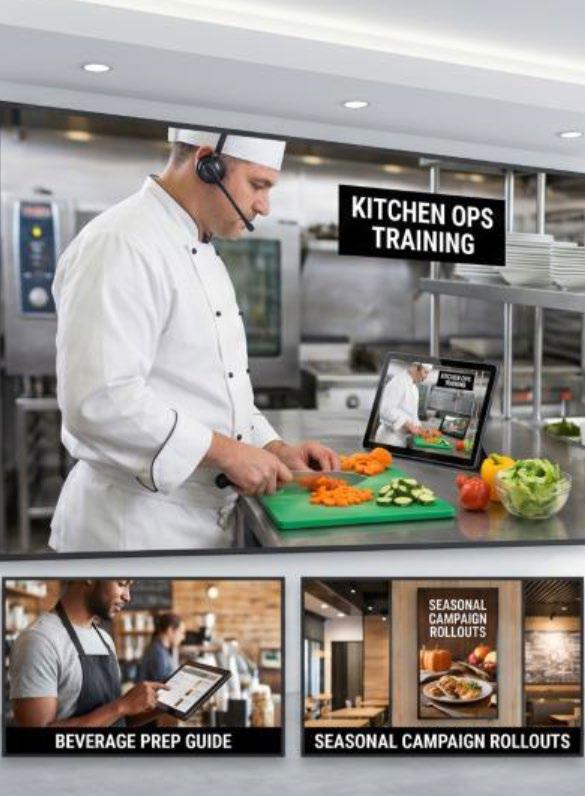

89%
Video and brand trust
89% of consumers globally say video quality directly impacts their trust in a brand. For Asia Pacific F&B operators, where PwC research identifies emotional resonance and authentic storytelling as key trust-building levers, the link between content investment and consumer loyalty is direct. — Wyzowl, 2025
The next evolution of the food and beverage industry will not just be about better products. It will be about better communication. AI-powered storytelling platforms are making it possible for brands to continuously transform operational knowledge, culinary expertise, and brand identity into scalable visual experiences.
PwC’s Voice of the Consumer Survey for Asia Pacific identifies emotional resonance and brand storytelling as key levers for building consumer trust across the region, particularly as digital-savvy consumers become more adept at evaluating the authenticity of brand claims. Transparency, consistency, and content quality are increasingly non-negotiable expectations, not differentiators. The businesses that win in this environment will not necessarily be those producing the most content. They will be capable of turning expertise into compelling stories faster than competitors.
Platforms such as ShareLook’s AI video creator are designed to address this gap, enabling F&B organisations to continuously transform operational knowledge, culinary expertise, and brand identity
into scalable visual experiences, without the production overhead that has historically made that transformation prohibitive.
The businesses that gain competitive ground in this environment will not necessarily be those producing the most content. They will be those capable of turning deep expertise into compelling stories quickly, consistently, and at scale.
In a region where trust is built on transparency and experience is the primary currency of differentiation, that capability may prove to be one of the most consequential investments an F&B brand can make.
Raanan Nedivi is a trusted pioneer in multimediabased e-learning and mobile learning. While working on his PhD in biochemistry, he began producing training and interactive videos for corporate clients and institutions like Intel, Motorola and more. Nedivi set up 3 View Group in 2000 to expand multimediabased learning. With a focus on content, application, and solution development for e-learning and blended learning, ShareLook provides technology and services to large MNCs.
By Cath Isabedra
Twenty years of formulation data locked in filing cabinets. A senior technologist about to retire. A new brief landing on Monday. For most food manufacturers, this is not a worst-case scenario — it is Tuesday. David Sack, founder and CEO of AKA Foods, is building the platform that finally does something about it.
The vegan pizza cheese was never really about cheese. That is the first thing David Sack will tell you, and it matters because the insight it produced is what AKA Foods and its proprietary AI platform AKA Studio are built on.
“We started with what looked like a contained brief,” Sack says of the early development project that became the company’s founding provocation. “And we quickly discovered that the way food R&D actually works isn’t built for the speed or complexity that modern brands need.” Critical knowledge, he found, sat in three places simultaneously: inside people’s heads, across scattered files, and locked within ingredient suppliers who held it tightly and released it slowly. Every iteration became a phone call, a sample request, a wait. “What we saw wasn’t a cheese problem. It was an information and orchestration problem dressed up as a formulation problem.”
That diagnosis: blunt, structural, and deliberately unglamorous, sets AKA Foods apart from the wave of AI food-tech ventures that arrived promising to automate the kitchen. Sack is not in that business. He is in the business of making the twenty years of R&D data that a mid-sized manufacturer already owns actually usable, and turning fragmented institutional knowledge into a queryable, living asset before it walks out the door with the next retiring technologist.
The urgency of that problem is not rhetorical. According to industry analysis published in September 2025, 22% of U.S. food manufacturing employees were aged 55 or older in 2024, representing nearly 290,000 workers in the 55–64 bracket alone, a retirement cohort carrying decades of formulation expertise that no spreadsheet has ever adequately captured. The same analysis warned that U.S. manufacturers may need 3.8 million new workers by 2033, with close to half those roles potentially going unfilled. Knowledge loss, it concluded, represents a concentrated and immediate risk for plants built on tacit, experience-based expertise. The food industry’s R&D infrastructure was, in short, already fragile before anyone started talking about AI.
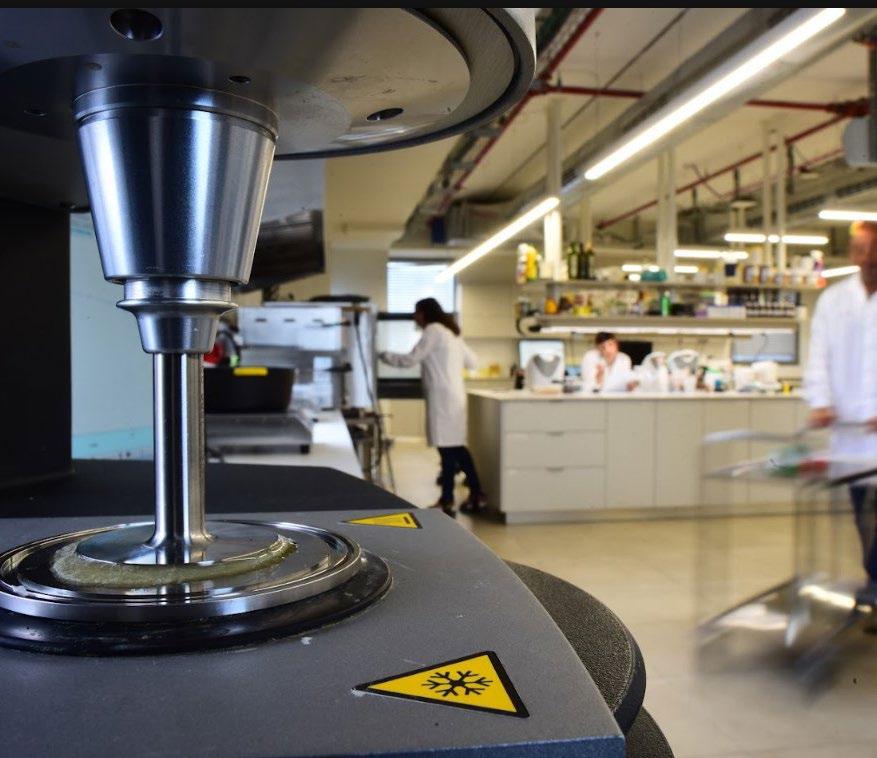
AKA Studio, which launched formally in November 2025 following a $17.2 million seed funding round led by AI specialists Alex and Michael Bronstein, is structured around four interconnected layers: Knowledge, Workbench, Sensory, and an AI Assistant that runs across all three. The architecture is deliberate. Knowledge is the substrate, ingesting a client’s proprietary R&D history alongside scientific literature, ingredient databases, and regulatory frameworks in a form the AI can reason over, not merely retrieve from. The workbench is where formulation hypotheses are generated and stress-tested before a single sample is made. Sensory closes the loop with structured human feedback. The AI Assistant surfaces insight from any layer on demand, in the language food scientists actually use.
What surprises clients most, Sack says, is not the AI assistance itself. It is something considerably more basic.
“Their own R&D history, made coherent and queryable for the first time. The questions they’ve quietly given up on suddenly have answers.”
~ David Sack, Founder and CEO of AKA Foods
That distinction, between a chat tool a technologist plays with for a week and a platform a senior food scientist actually relies on, is where AKA Foods has staked its credibility. The scientific architecture is led by

Professor Alex Bronstein, whose work focuses on what Sack describes as building “a new grammar for food”: structured representations, food-specific reasoning, and the connections between molecules, processes, and outcomes that a general-purpose large language model has no way to derive from training on web data alone.
An LLM may understand the word emulsification. It does not, however, understand how an emulsion behaves under shear with a specific supplier’s lecithin at 18°C. That gap, between language fluency and domain physics, is where food-specific AI either earns its keep or doesn’t.
The platform’s headline claim: compressing development cycles from years to weeks is specific enough to invite scrutiny. Sack offers two anonymised cases. A leading snack company arrived with a brief for a functional protein line; from kickoff to validated formulations took under eight weeks. A programme of that complexity, against the sensory and nutritional targets they had set, would historically have run six to nine months. A second client, a dairy company, used AKA Studio to develop a full GLP-1 support drink range of six SKUs end-to-end, alongside a plant-based cream cheese now entering retail.
The caveat Sack is careful to make is the right one.
“The
speed comes without sacrificing the rigour. The platform doesn’t replace the bite. It earns the bite.” ~ David Sack
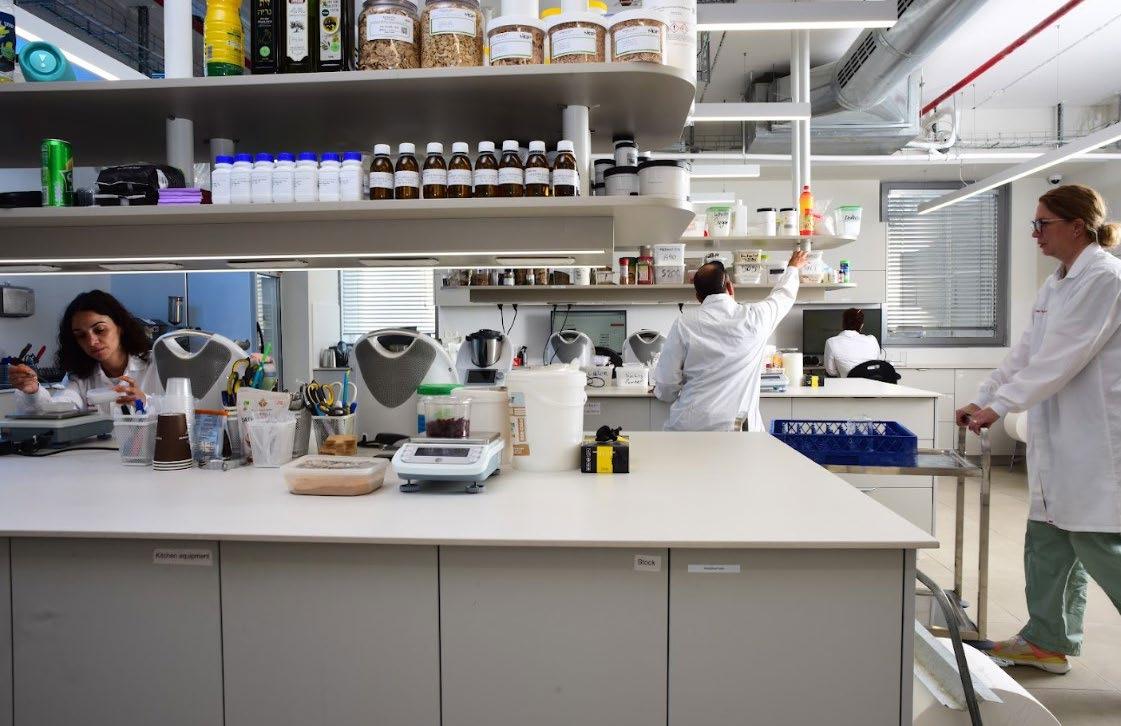
A food scientist can detect an off-note, a textural slip, or an aroma that the data didn’t predict from a single taste. AKA Studio is built to compress everything that precedes the kitchen, the literature search, the formulation mathematics, the iteration cycles, so that human expertise is concentrated on the judgements only humans can make, rather than expended on reconstructing context that already exists somewhere in the building.
For all its technical ambition, AKA Foods operates amid one of the industry’s most persistent anxieties: what happens to a company’s IP when it hands over decades of formulation data to an external platform. The concern is not irrational. Proprietary formulations represent, in many cases, the most defensible competitive asset a food manufacturer holds.
Sack’s response is architectural rather than contractual. AKA Studio is SOC 2 compliant, with each client’s data held in its own isolated environment and never used to train models that benefit any other client. For organisations with a stricter security posture, where even a SOC 2 cloud environment is insufficient, the company offers a standalone, on-premise, airgapped deployment, fully isolated within the client’s own infrastructure with no external connectivity.
“The conversation isn’t binary between cloud SaaS and not engaging at all,” Sack says. Whatever a client’s security policy is, there is a configuration that fits.
For clients that reach due diligence and see how the data is partitioned and governed, Sack reports that most move from sceptical to active quickly. That trajectory: initial caution, architectural review, and rapid adoption is increasingly visible in AKA Foods’ commercial footprint.
In December 2025, days after winning the Future Foodtech Innovation Award at Fi Europe in Paris, competing against Amano Enzyme and Tetra Pak in the category, AKA Foods announced a multi-year agreement with Technology Driven Concepts (TDC), one of Africa’s most advanced ingredient solutions and application development companies. TDC serves leading CPG companies, major retailers, and a global fast food restaurant chain, and has already worked alongside the company as an early design partner for AKA Studio.
The significance of the deal is less about geography than about posture. TDC became, in Sack’s framing, one of the first companies globally to formalise a longterm strategy for AI-enabled product development as
a multi-year strategic capability. “What surprised us was how quickly their internal teams moved from ‘how does this work?’ to ‘how do we apply this to the next ten projects?’” Chris Botha, R&D Director at TDC, put it plainly: “AKA Studio gives our developers something we have never had before — the ability to see and use all of our knowledge in one place.”
That shift in framing, from AI as novelty to AI as infrastructure, is precisely what the food industry’s more forward-looking operators are beginning to internalise. According to a November 2025 survey by Innova Market Insights cited at Fi Europe, nearly 41% of consumers globally now see potential in AI for F&B product development, a signal that commercial pressure to accelerate innovation will only intensify. On the manufacturer side, Food Technology’s 2025 Technology Trends Survey found that around half of industry professionals planned to invest in AI as part of their digital transformation strategies, a notable uptick from prior years.
AKA Foods’ most operationally interesting challenge is also its most common starting point: the client whose R&D history exists in filing cabinets, in the memories of a team that has been there for two decades, and in the institutional habits of a senior technologist who has never written down what they actually know.
Sack does not underplay the work involved. “Onboarding works alongside the client’s R&D leads to digitise, structure, and contextualise what already exists. Paper records, scattered spreadsheets, and tacit knowledge held by senior staff get translated into a structured knowledge layer over a defined onboarding period. Without it, the AI is impressive but unanchored.” The observation is pointed. Organisations that arrive expecting the platform to perform on thin or disorganised data will be disappointed. The foundation must be built, and building it takes real effort from both sides.
His advice to any mid-sized brand sitting on two decades of scattered R&D data is telling for what it delays: “Don’t start with technology. Start with an honest audit of what you already know that you can’t currently access.” Walk the building, he suggests. List the questions your R&D team cannot answer in under an hour. List the answers that live in a single person’s head. That list, he argues, is the actual cost of fragmented R&D, and it is almost always larger than leadership realises. The technology question becomes considerably easier once that cost is visible on paper.
It is the kind of advice that does not accelerate a sales cycle. It is also, for an industry overdue for a structural reckoning with how it manages and transfers knowledge, exactly the right place to start.


David Sack is the founder and CEO of AKA FOODS, the company behind AKA Studio, the secure AI system designed specifically for food innovation. With more than 20 years of experience turning early-stage ventures into scalable international businesses, he has built and led multiple 100+ person teams across Europe and Africa, transforming ideas into commercially successful, technology-enabled operations.
His work today focuses on advancing food R&D through secure, intelligent systems that help global food, beverage, and ingredient companies develop better products with greater speed, efficiency, and scientific rigour.
Before founding AKA Foods, David cofounded Kanabo, the UK-based health and wellness company.
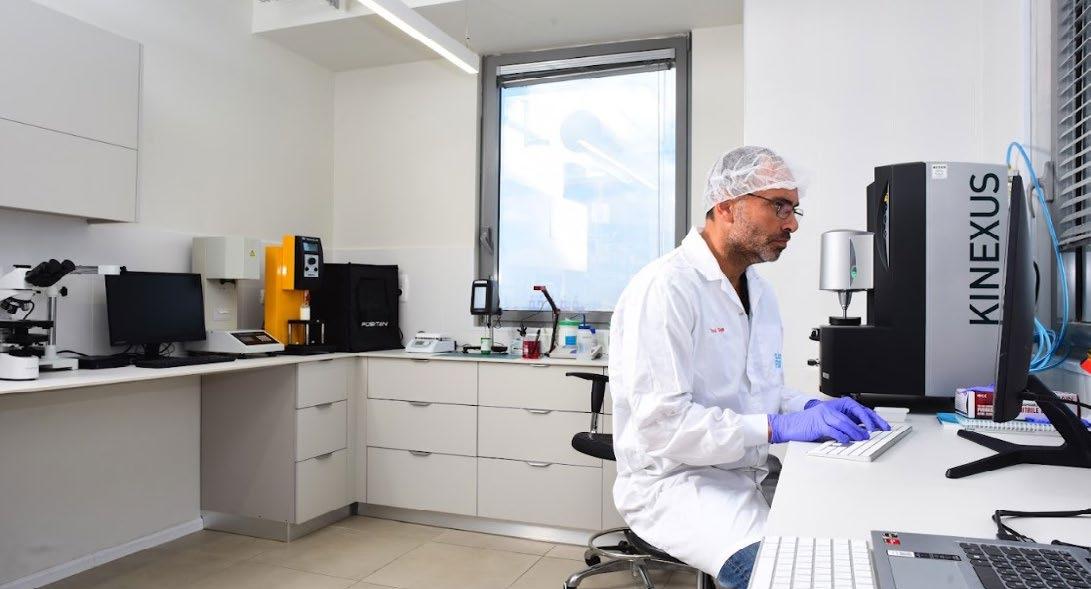

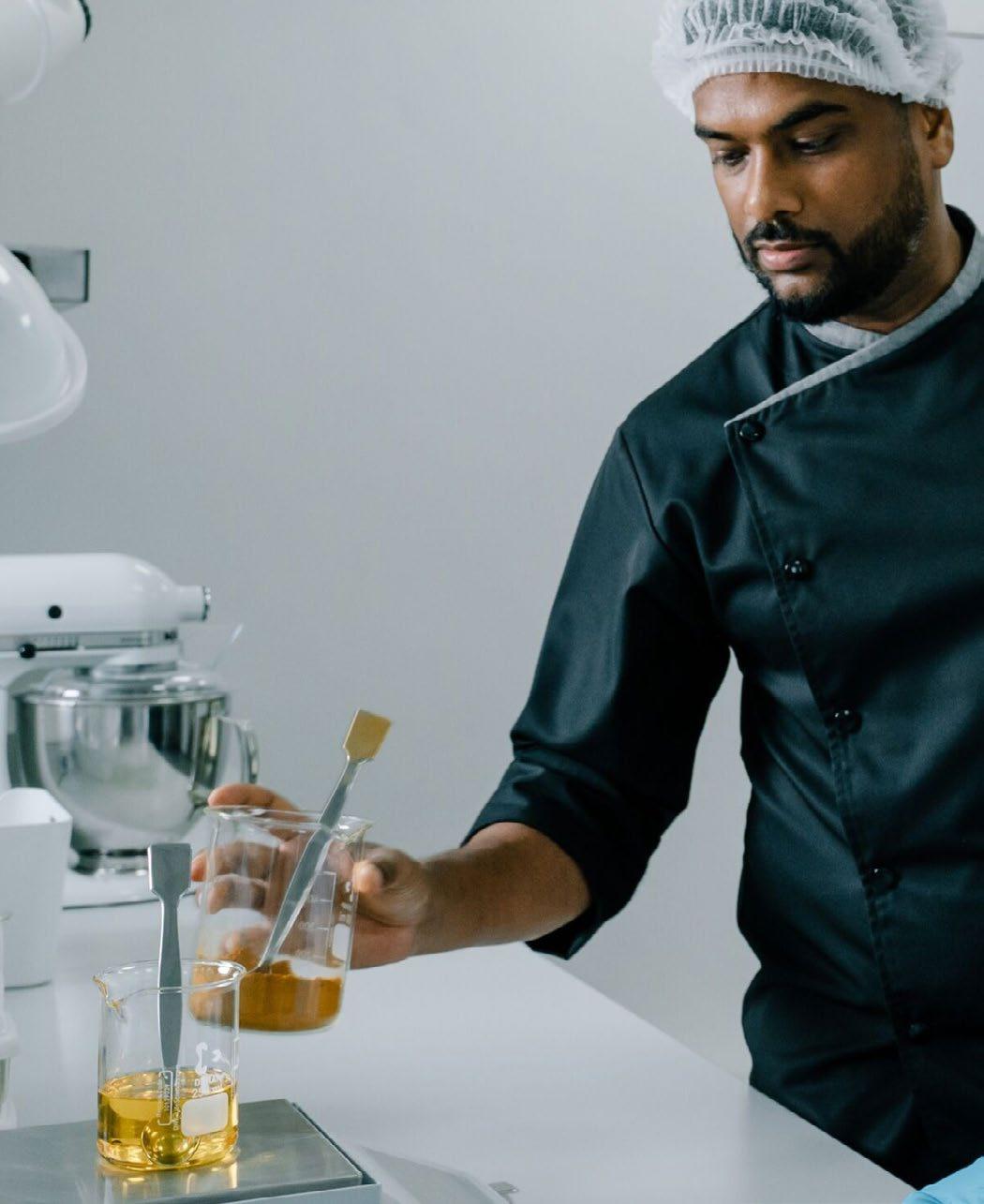
ofi’s Ramki Prasad on what changes when an ingredient supplier stops selling data and starts sharing the workload
By Cath Isabedra
Every ingredient supplier in Asia now hands clients a trend report. Fewer can say what happens after the report lands on a desk. That gap, between naming a trend and building the product that monetises it, is where ofi’s Asia Pacific F&B Solutions business has chosen to compete.
“Trend reports are widely available. The difference is what happens after the insight.” ~ Ramki Prasad, Head of Asia Pacific F&B Solutions, ofi
It is a simple distinction, but it carries real commercial weight. A trend report can be bought from any number of research houses. What cannot be bought off a shelf, according to Prasad, is the formulation expertise, manufacturing footprint, and origin-level ingredient knowledge needed to turn a consumer insight into a product that performs identically on a production line in Jakarta as it does in a pilot kitchen in Singapore.
ofi’s pitch to brands is built around its TrendBites report, a study spanning nine Asian markets that the company published for the first time this year. The report identifies six consumer-behaviour shifts reshaping how the region eats and drinks, from “Modern Authenticity,” rooted in nostalgic, regionally specific flavours, to “Flexi Fueling,” a structural change in when and how people eat.
Prasad draws a clear line between spotting a pattern and confirming a trend. “The real challenge in consumer insights work is separating a trend from a short-term fad,” he says. “We look for consistency across different sources and markets before we take a trend seriously.” Only once a behaviour shows up consistently across consumer data, product launches, and actual eating habits across multiple markets does it earn a place in the report.
Clients arrive at different points in their own development cycle. Some come early, hoping to translate an emerging behaviour into a concept from scratch. Others arrive later, already committed to a product idea but stuck on a specific technical problem, whether texture, taste, or nutrition. “We start by understanding the customer’s objectives, target consumers, and operational constraints,” Prasad explains. From there, the process moves into formulation and prototyping inside the client’s own production environment, supported by ofi’s network of Customer Solutions Centers (CSCs) and Ingredient Excellence Centers (IECs) across the region.
Asked which TrendBites finding the industry is most likely to misjudge, Prasad does not hesitate. “If I had to highlight one area that is still underestimated, it would be Flexi Fueling,” he says. The figures behind it are
striking: roughly half of consumers across Asia are now replacing meals with snacks multiple times a week, a shift already well established in markets such as the Philippines, Indonesia, and Thailand, where on-the-go eating was common before the trend had a name.
“If around half of consumers in Asia are replacing meals with snacks multiple times a week, you are no longer designing a treat. You are designing something that needs to function as a meal, in a snack format.” ~ Ramki
That reframing changes the formulation brief in three ways. The first is nutrition density: enough protein, fibre, or sustained energy to genuinely substitute for a meal. The second is satiety, which pulls texture, fat content, and product structure into the brief, so the consumer is not hungry again within the hour. The third is format, since a meal-replacement snack needs to travel well and behave consistently from one production run to the next.
None of that comes at the expense of flavour. An ofi survey of 300 Indonesian consumers aged 18 to 45, conducted last year, found taste was the top purchasing priority, cited by 86 per cent of respondents, ahead of cost (82 per cent), naturalness (79 per cent), and healthiness (77 per cent). Functional credentials matter to Asian consumers, but they are not a substitute for a product that tastes good.

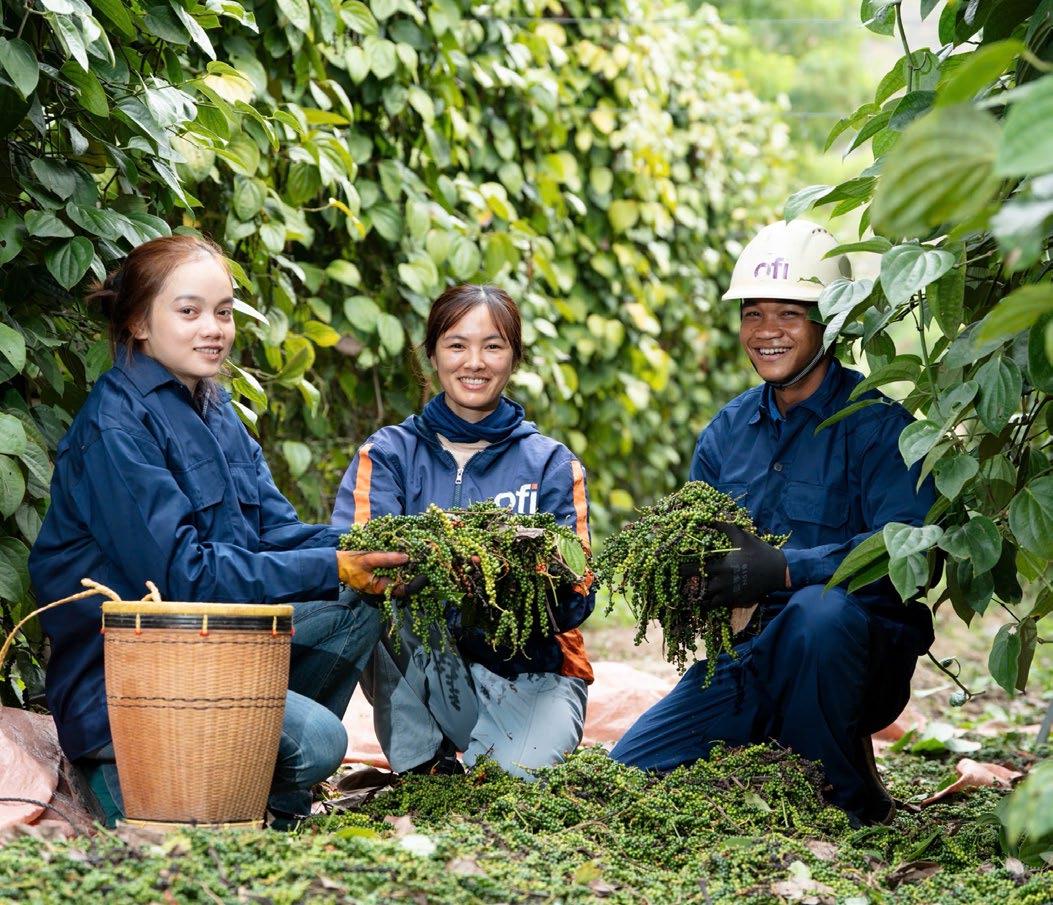
A natural question for any brand weighing a co-creation partner is where the real advantage lives: upstream, at the origin of the ingredients, or downstream, inside the application labs. Prasad rejects the framing that one matters more. “The strength of the competitive advantage actually comes from how origin and application work together hand-in-hand,” he says.
His example is cocoa. A single-origin bean can vary considerably in flavour depending on how it is grown and processed, and that variation directly shapes how the ingredient behaves once it reaches a finished product. Understanding that link end-to-end is what lets ofi’s formulation teams adjust a recipe with precision. It is also what underpins the thing brands say they value most.
“Where
customers feel the difference most is consistency. When sourcing, processing, and formulation are connected, we can deliver the same product quality across multiple production runs and markets.” ~ Ramki Prasad
That promise is now being tested at a more granular, in-market level through ofi Philippines Blends, a joint venture with WNC Capital Holdings announced in May. The partnership will build a manufacturing facility in Bulacan province, expected to be commissioned by the fourth quarter of 2026, focused on seasonings, marinades, and dry mixes tailored to Filipino taste preferences. For brands, it is a working example of what in-market production and application capabilities look like once they move off a slide and onto a factory floor.
Co-creation without a co-creation team
Southeast Asia’s food and beverage sector carries a structural mismatch: a large, fast-growing population of homegrown brands scaling across borders without the fully resourced R&D functions multinational competitors take for granted. Prasad’s view of that gap is notably free of condescension. “Homegrown Asian brands often understand their consumers deeply, from local flavour preferences to how products fit into everyday eating habits,” he says. “Many already have strong capabilities in product development within their home markets.”
The friction tends to surface later, once a brand tries to scale beyond its home market and meets regulatory variation or production consistency requirements it was not built to handle alone. That is the gap ofi’s CSCs are designed to absorb. “In some cases, we take a more hands-on role alongside the customer as they adapt and scale a concept,” Prasad says, describing a model built to flex to the level of support a partner actually needs.
Few trends expose the limits of treating Asia as a single market as clearly as Modern Authenticity, which TrendBites found resonates with 82 per cent of consumers across the region. In China, the starting point is typically a well-established regional dish, such as mapo tofu, reworked into a packaged snacking format while preserving its depth of flavour and spice-umami balance. In the Philippines, the brief tends to begin with a familiar comfort ingredient like ube, elevated through format, moving from traditional desserts into café-style beverages or premium packaged treats. In Indonesia, the brief often centres on bold, everyday flavour memories such as balado, carried into new formats while keeping the profile unmistakably local.
The throughline, in Prasad’s words, is that “products need to feel rooted in culture but fit modern consumption habits.” ofi’s role is translating that principle into product concepts that can be produced consistently for each market, rather than a single formulation stretched across very different consumer expectations.
Sustainability as a brief, not an afterthought
The conversation around sourcing claims on pack has shifted meaningfully. “Sustainability is increasingly built into the brief from the start, not added at the end,” Prasad says. Brands now operate under far more rigorous expectations around traceability, due diligence, emissions, and the evidence required to
support whatever they put on packaging.
ofi’s own numbers give that statement some texture. The company’s first Choices for Change impact report shows it is now working with more than 570,000 farmer households and has geolocated roughly 730,000 farms through its EUDR-ready Track and Trace system, part of a traceability push tied to its AtSource platform. A brand may now choose a specific origin not purely for flavour, but because it is backed by verified sourcing data or aligns with a defined sustainability commitment.
Prasad is clear this is not yet universal. “There are still cases where sustainability comes in later, particularly for compliance,” he says, “but increasingly, it is part of how the product is defined from the outset.”
Strip away the language of partnership, and what ofi is offering brands is a different relationship with time. A brand that arrives with a validated trend, a formulation partner with origin-level ingredient knowledge, and a network of solutions centres built to stress-test a concept against real production conditions is not running the same development clock as a brand starting from a blank page. For Asia’s fast-multiplying homegrown F&B brands racing against multinational competitors with deeper resources, that compressed timeline may be the most consequential thing a supplier can offer.
The harder question, and one the wider industry has only begun to ask in public, is how that compressed timeline gets priced, structured, and credited once the product reaches the shelf. Prasad’s answers make clear that ofi sees the value sitting in the integration of origin and application, not in either alone. Whether brands with less negotiating leverage end up agreeing on where that value sits commercially is a conversation the sector is still working out.
With insights from Ramki Prasad, Head of Asia Pacific F&B Solutions, ofi. At the helm of ofi’s Asia Pacific Food & Beverage solutions, Ramki’s focus is on corporate strategy and new business development. His leadership in sales has been instrumental in driving regional growth and manufacturing process improvements. With the help of a dedicated team, ofi has made significant strides in expanding its market presence.
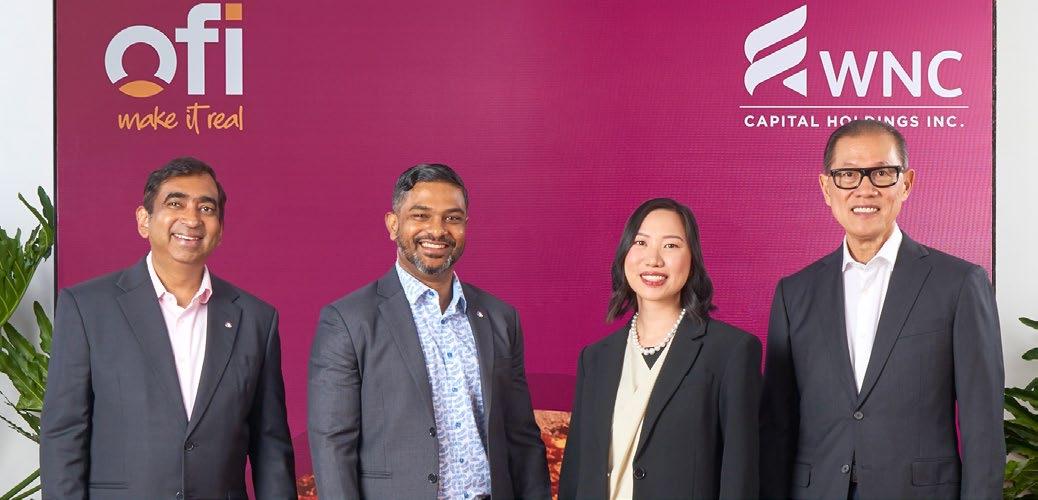
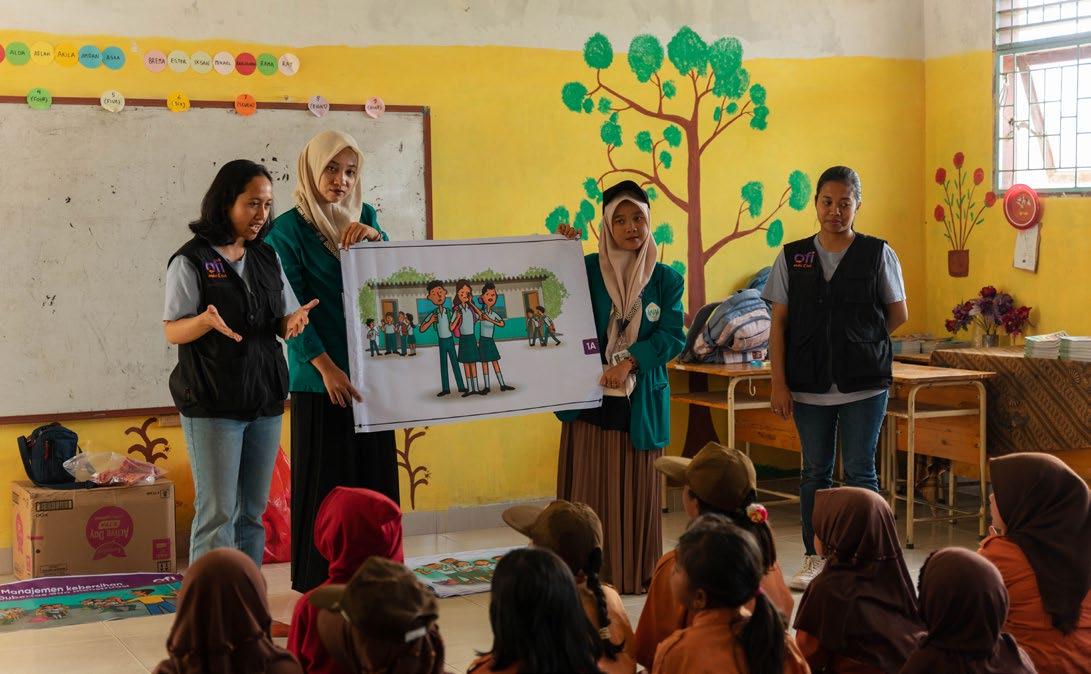


Prior to his current role, Ramki spearheaded ofi’s sales division, where collaboration and building customercentricity were key in scaling operations across the region. The skills honed there, combined with his experience in leading talented multicultural teams, have shaped a leadership style that embraces diversity and strives for executional excellence in every venture.
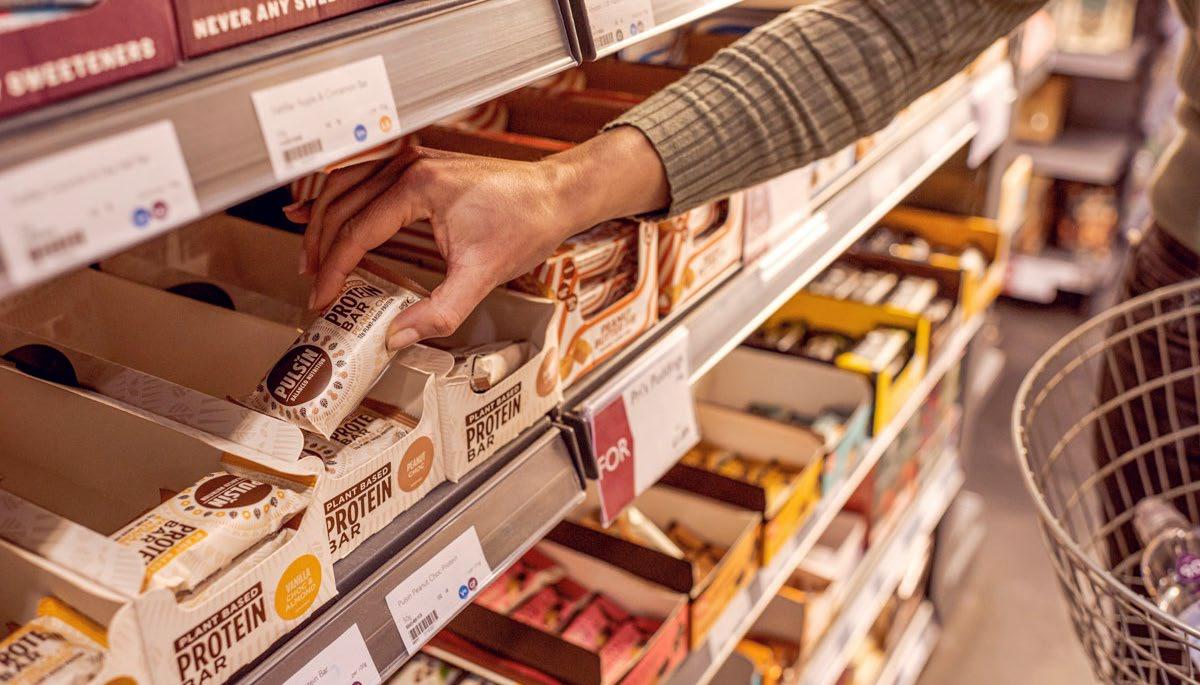
By Parth Patel, Vice President, Specialty Ingredients, APAC, ADM
The biggest challenge in protein snacking today isn’t adding more protein. Most manufacturers can do that. The harder task is increasing protein levels without sacrificing the taste, texture and enjoyment that keep consumers coming back.
Across Asia Pacific, manufacturers are racing to launch high-protein snacks, with the region projected to record the highest CAGR of 9.2% globally. Yet many discover that raising protein content can quickly affect texture, flavour, crunch and shelf-life. While a protein claim may encourage consumers to try a product, it is the eating experience that determines whether consumers return.
We see this challenge play out across the region.
Brands are under pressure to raise protein levels, shorten development timelines and respond to changing consumer preferences. Consumers, however, remain unwilling to compromise on taste and texture. In fact, research consistently identifies texture as one of the primary drivers of consumer rejection, meaning products that fall short on mouthfeel or flavour risk losing repeat buyers.
This balancing act is one of the reasons co-creation is becoming essential. As formulation challenges become more complex, manufacturers are bringing ingredient specialists into projects earlier to help identify potential issues, reduce reformulation cycles and accelerate the path to commercialisation.
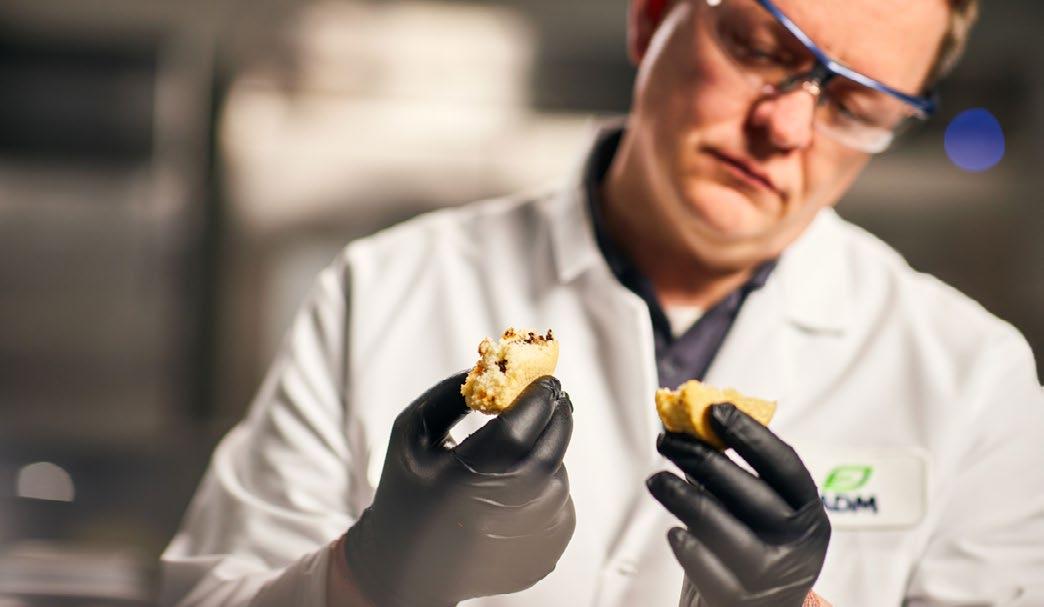
Protein is one of the most sought-after nutrients among consumers. In Asia Pacific, 68% of consumers say they want to increase their protein intake, while 72% actively seek different protein sources. As a result, manufacturers are introducing protein into a growing range of snack formats, from chips and crackers to bars and bites.
That demand is also not uniform across the region. Protein-increase intent is particularly high in markets such as the Philippines, Indonesia, China, Korea and India, which means manufacturers need to tailor product design and sensory delivery to local preferences rather than assuming one approach will work everywhere. Those differences in consumer demand make differentiation more challenging in an increasingly competitive market.
A few years ago, simply making a protein claim could help a product stand out. Today, expectations are much higher. In Asia Pacific, 70% of consumers say novelty of flavour and texture drives them to try a new snack, 66% prefer contrasting textures, and 84% agree that food is about enjoying a multi-sensorial experience3. They want products that deliver nutrition, convenience and enjoyment at the same time.
For manufacturers, meeting these expectations is rarely straightforward. Increasing protein content can introduce formulation challenges such as dryness, chalkiness and off-notes, all of which can undermine the eating experience if not carefully managed. Texture may become dense or gritty, while consistency and shelf-life stability can be harder to maintain. Successfully navigating these trade-offs is often easier said than done.
As protein snack development becomes more demanding, many manufacturers are rethinking how they approach product innovation.
Over the past few years, we have seen more manufacturers engage ingredient specialists earlier in product development, particularly when projects involve complex formulation requirements.
There is a practical reason for this. When texture, flavour or stability issues emerge late in development, solving them can require multiple rounds of reformulation. This can add time, cost and uncertainty to a project. Addressing potential challenges earlier often leads to a smoother development process and a faster route to market.
In our work with manufacturers across Asia Pacific, product development discussions increasingly extend beyond ingredient selection to include processing considerations, application requirements and the consumer experience the product is intended to deliver.
The benefits of co-creation become particularly clear when manufacturers are trying to balance multiple product requirements at once.
We recently worked with a snack manufacturer in Asia that wanted to increase protein levels in a product without losing the light, crunchy texture consumers expected. Rather than offering a generic ingredient recommendation, we worked closely with the customer to understand what they were trying to achieve and the technical requirements needed to support it.
By defining the desired product attributes early in the development process, the team identified a solution that supported both nutritional and sensory goals, contributing to a successful product launch.
We see this across many projects. Customers bring a clear vision for the products they want to create, while we contribute ingredient expertise, application knowledge and technical support. Combining those perspectives helps accelerate development, overcome formulation hurdles and deliver products that meet consumer expectations and business objectives.
Importantly, solving formulation challenges rarely comes down to a single ingredient. Depending on the application, solutions may incorporate soy, pea and wheat proteins alongside lecithin emulsifiers, hydrocolloids, starches and flavour systems such as ADM’s TasteSpark™ to help optimise texture, stability and taste.
Supporting this process is a network of resources ranging from our Protein Innovation Centre in Decatur, Illinois, to regional Creation, Design and Development centres across Asia Pacific, helping connect global expertise with local market needs.

Manufacturers are also preparing for new shifts in consumer behaviour.
The growing influence of GLP-1 medications is prompting new conversations around satiety, portion sizes and nutrient density. In Asia Pacific, 8% of respondents say they are currently using GLP-1 medications, rising to 13% in Indonesia, 15% in Thailand, and 17% in India. Among current users, 70% say they are eating less since starting these medications, while 43% say they feel full more quickly3.
For manufacturers, this raises important questions. How do you deliver higher levels of protein and other key nutrients within smaller serving sizes? How do you increase nutritional density without sacrificing taste and texture?
These are challenges that require a more integrated approach to formulation and product development.
As demand for nutrient-dense products grows, manufacturers will need to work even more closely with technical partners. Access to the right expertise will become increasingly critical.
The protein snacking category is maturing rapidly, and the factors that determine success are changing with it. Manufacturers are balancing higher protein targets, evolving preferences and increasing pressure to move quickly from concept to launch.
In that environment, the challenge is no longer simply developing a product with more protein. It is developing products that successfully balance nutritional goals, technical requirements and consumer expectations.
That is why co-creation has become essential. The most successful products are often the result of combining a clear product vision with the expertise needed to bring it to life.


Parth Patel is Vice President, Specialty Ingredients APAC, at ADM. Based in Singapore, he leads ADM’s Specialty Ingredients business in the Asia-Pacific region, overseeing commercial strategy and customer engagement across a broad portfolio of ingredient solutions for the food and beverage industry.
With more than 20 years of experience in the food and ingredients industry, Parth has held roles spanning business development, sales, and marketing. Prior to joining ADM, he led commercial and marketing activities at Olam Food Ingredients (ofi), Kerry and DuPont, with responsibilities across Asia and Europe.
Parth holds a Bachelor of Commerce degree in Economics and Accounting from Ness Wadia College of Commerce in India, a Diploma in Marketing from Symbiosis Institute of International Business, and an MBA from London Business School.
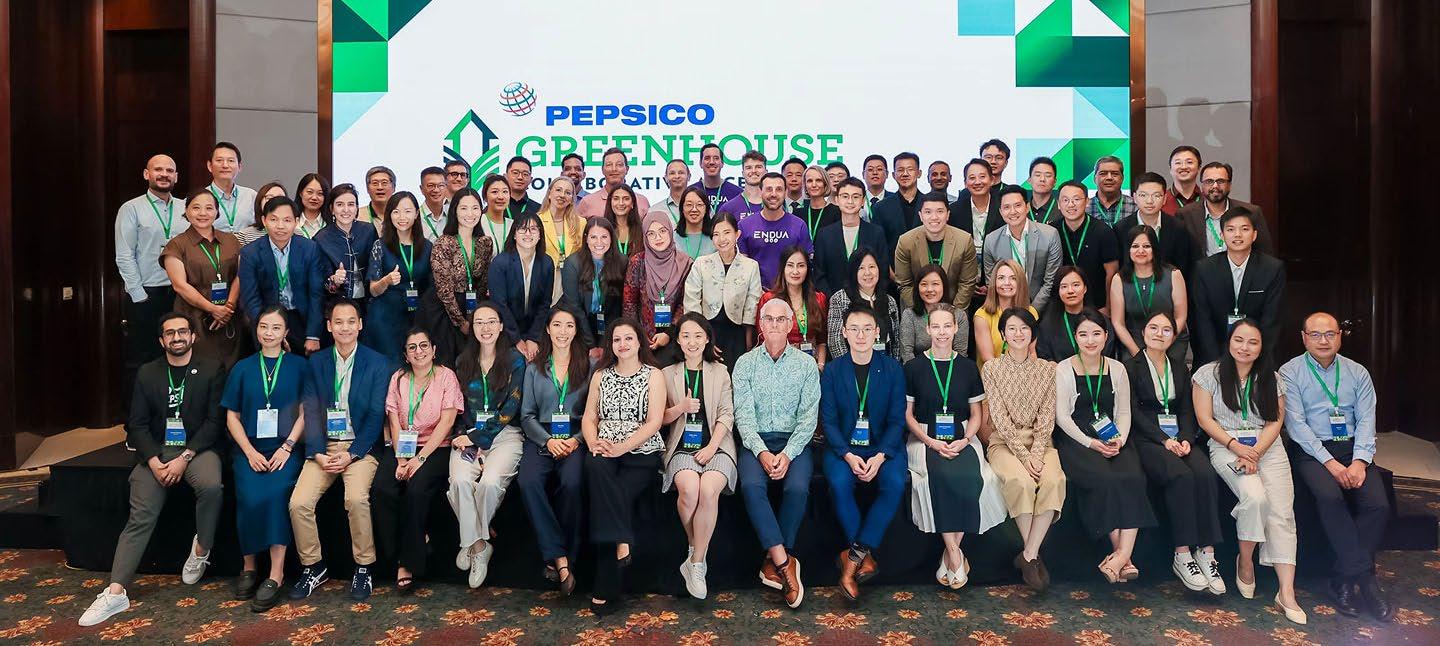
PepsiCo’s fourth-year Greenhouse Programme has stopped chasing new ideas and started testing whether old ones can survive contact with a real supply chain. Its 2026 IMPACT Edition, and the AI logistics platform at the centre of it, offer a rare, unvarnished account of what integration actually costs.
For four years, PepsiCo’s Greenhouse Programme in Asia-Pacific has run on a familiar accelerator logic: bring in promising startups, give them a defined problem, run a pilot, see what happens. The programme has produced more than 22 pilots from over 30 startups across the region since it launched, a healthy pipeline by any measure. But pipelines are not the same as outcomes, and in 2026 PepsiCo made a decision that says as much about the limits of the accelerator model as it does about the company’s own ambitions.
The 2026 edition, branded the IMPACT Edition, does not admit new startups at all. Its five-company cohort, Sydney-based Adiona and X-Centric, Indonesia’s Bali Waste Cycle, China’s Beijing AI ForceTech and Thailand’s Takachar, is made up entirely of Greenhouse alumni: companies PepsiCo has already worked with, already tested, and already has data on. The seven-month programme, which culminates in a regional showcase in Singapore this October, is built around a question that most accelerators never get around to asking properly: not whether a technology works, but whether it can become part of how a company the size of PepsiCo actually runs.
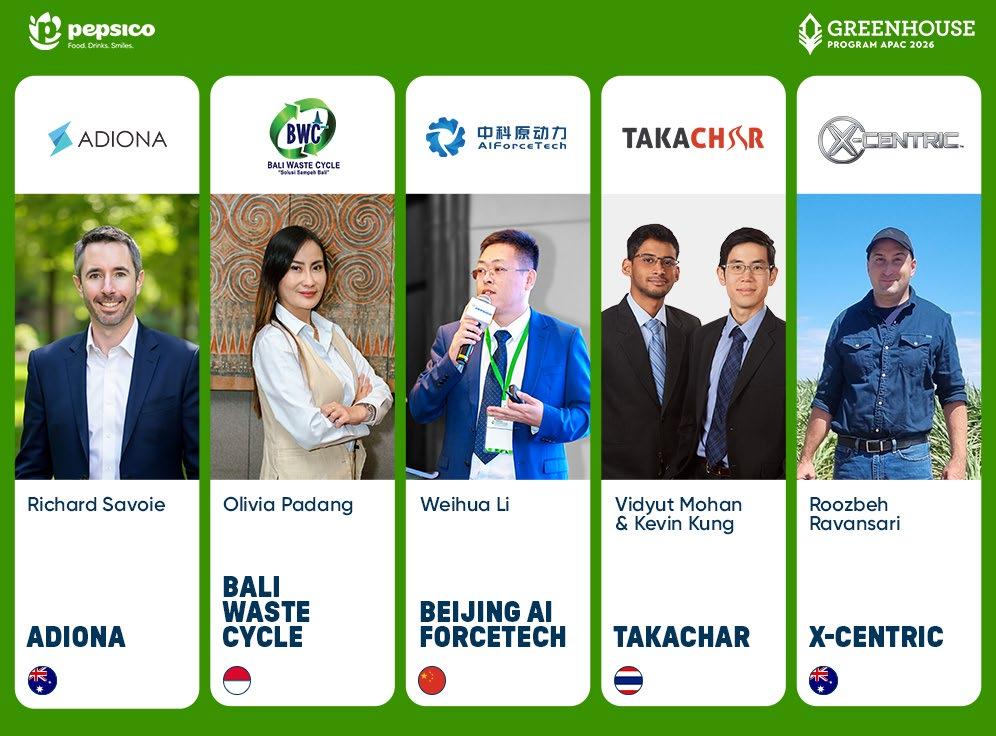
Ashley Brown, PepsiCo’s Chief Sustainability Officer for Asia Pacific and India, is candid about why this shift happened. “The transition from pilot to integration is often where the real work begins,” he told Asia Food Journal. “A pilot can demonstrate that a solution works, but integration requires proving that it can operate within the realities of a large business and become part of how the organisation runs day-to-day.”
The mechanism PepsiCo has built to manage that transition is what it calls the IMPACT Framework, an acronym that also describes the programme’s six phases:
Integration, Measurement, Planning, Acceleration, Commercialisation and Tracking. Each phase carries defined exit criteria reviewed by senior leadership before a startup can advance to the next. It is a modest but significant change from the traditional model, in which sustainability, supply chain, procurement, R&D and operations teams tend to engage with a startup solution
sequentially rather than together. “Sustainability, R&D, supply chain, procurement, operations and finance are aligned from the outset around business priorities, technical feasibility, operational requirements and commercial pathways,” Brown explained.
The intent is to shorten the far longer gap between validation and a signed commercial agreement, by surfacing the questions that usually kill deployments late: cost structure, savings potential, business case viability, at a point when a startup still has room to adapt its offer.
Selection for this year’s cohort ran against four criteria: alignment with PepsiCo’s pep+ sustainability priorities, ability to deliver measurable impact, readiness for commercialisation, and feasibility of integration into the company’s supply chain.
Brown is careful to note that clearing this bar is not a guarantee of full-scale deployment. It is, in his words, evidence that a startup “has shown enough relevance, traction and potential to move into a more structured scale-readiness phase.”
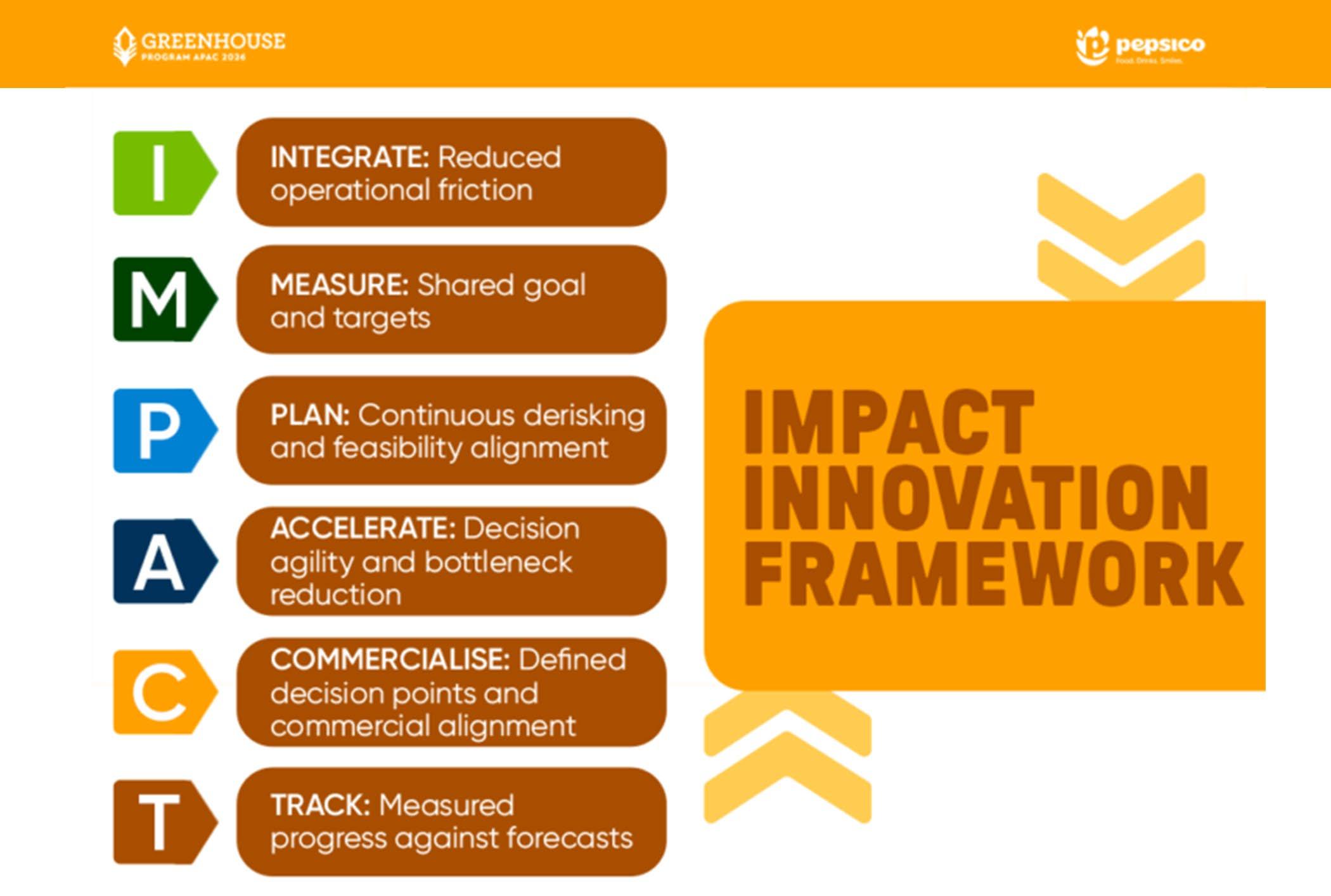

“The most effective partnerships are built on early and ongoing transparency, fast feedback loops, and a shared understanding of what success looks like on both sides.”
- Ashley Brown, Chief Sustainability Officer for Asia Pacific and India, PepsiCo
Pressed on what separates a startup that integrates successfully from one that stalls after a promising pilot, Brown lays out a framework of his own, distinct from the programme’s official six phases. Four factors decide it, he says: a clearly defined business problem that is owned internally, a credible commercial case that proves value beyond the pilot, operational compatibility with existing systems, and the ability to work across procurement, operations, supply chain, sustainability and finance at once. Technology, in his account, is the smallest part of the equation.
He is equally direct about the relationship itself, arguing that the quality of a partnership matters as much as its structure. For other F&B manufacturers designing their own startup collaboration models, Brown’s advice is to stop treating integration as something to worry about after a pilot succeeds. “It is a design principle that must be embedded from the outset,” he said. “That means aligning commercial, operational and functional stakeholders early, so that feasibility, adoption and scalability are tested alongside innovation, not after it.” Businesses that build this in from the start, he argues, significantly improve the odds that a pilot becomes a scalable deployment rather than a well-documented experiment that never leaves the lab.
If Brown’s account describes the view from inside PepsiCo, Adiona CEO and Co-Founder, Richard Savoie’s account of the three years inside PepsiCo’s ecosystem describes what that structure looks like from the vendor’s side of the table, and it is considerably less tidy.
Adiona, an AI-powered route optimisation platform, has worked with PepsiCo since 2023, when it joined the Greenhouse Programme’s original cohort. Its early deployment work with PepsiCo delivered a 19% reduction in fleet distance travelled, with further potential to cut Scope 3 emissions across the company’s bottler network. But the route from that first engagement to a live pilot completion in late 2025 was not primarily a technology story. It was, in Savoie’s telling, a story about data fragmentation and the slow grind of enterprise procurement.
“Your owned fleet might sit in SAP. Your largest thirdparty logistics provider might be running a different transportation management system entirely. Your bottler network in Southeast Asia might be operating on spreadsheets and WhatsApp,” Savoie told Asia Food Journal, describing the operating reality that most route-optimisation vendors are not built to handle. His verdict on tools that cannot cope with that mess is unambiguous.
“A logistics AI that can only work with clean, standardised, API-ready data from a single
source
is not
a logistics AI that works in the real world. It is a laboratory instrument.”
- Richard Savoie, Chief Executive Officer & Co-Founder,
Adiona
This is not an abstract concern for the region. Regional supply chain analysis published this year by Roland Berger has described Asia-Pacific’s shift from a single manufacturing centre into a strategically fragmented, capability-specific cluster of interconnected hubs, a structural condition that inevitably fragments the data sitting behind it too. Separate research from the OECD has flagged that logistics systems across Southeast Asia in particular remain inadequately integrated, compounding the challenge for any company trying to run a single optimisation layer across the region.
Adiona’s response was to build what it calls a data normalisation engine capable of ingesting logistics data from virtually any enterprise resource planning or transportation management system, including SAP,
custom EDI feeds and even CSV exports, and to produce optimised route plans within four to eight weeks of first data handover. Crucially, Savoie stresses this does not require replacing a client’s existing systems. “Drivers see the same runsheet format they are used to; dispatch sees the same interface; the AI optimisation happens in the layer in between.”
What Savoie identifies as the more persistent obstacle is not technical readiness at all, but internal trust. “The minimum viable data set for meaningful route optimisation is actually quite straightforward,” he said: delivery addresses, time windows, order volumes and available vehicle types. “You do not need a perfectly clean data warehouse, a modern cloud-native ERP, or a dedicated data engineering team.”
The harder gap, he argued, is organisational. A route planner with fifteen years of accumulated knowledge about a territory will treat an AI-generated route that looks unfamiliar as wrong by default, regardless of whether it actually is, unless the logic behind it has been made transparent. That scepticism, and the work of overcoming it, is what separates a pilot that produces an interesting report from one that becomes a permanent fixture of daily operations.
The procurement runway compounds the problem. Savoie describes the two-year gap between Adiona’s initial PepsiCo engagement and its first live pilot completion candidly, attributing it largely to the company working through PepsiCo’s enterprise procurement, IT and security review processes, a delay he does not begrudge. “That process exists for good reasons,” he said. “A company like PepsiCo cannot integrate software into its supply chain operations without rigorous due diligence on security, data handling, and operational resilience.” His advice to other startups eyeing large F&B manufacturers is blunt: treat that runway as a fixed cost of doing business, not an obstacle to be argued away. This tension between startup velocity and corporate governance is well documented beyond this one partnership. Sector commentary from a recent Future Food-Tech panel described most corporate-startup collaborations as structurally weighted toward the corporate’s comfort rather than the startup’s need for speed, with governance processes often becoming, in one analyst’s phrase, straitjackets that drain founding teams before a deal ever closes.
The
commercial case that does not need a green premium
Where Brown and Savoie converge most clearly is on the argument that operational efficiency and emissions reduction are not competing priorities but
the same investment expressed in different units. PepsiCo’s own climate disclosures make plain why that convergence matters commercially as much as environmentally. The company’s Scope 3 emissions, covering everything from ingredient sourcing to thirdparty logistics, account for the vast majority of its total footprint, and PepsiCo revised its 2030 Scope 3 reduction target this year to a 30% cut against a 2022 baseline for forest, land and agriculture emissions, alongside a 42% reduction target for energy and industry emissions, having reported a 12% reduction against the earlier baseline in its prior disclosure.
Brown credits this alignment between PepsiCo’s sustainability and operations functions as an underrated advantage, one that Savoie independently echoes from the vendor’s side, noting that conversations about route optimisation at PepsiCo do not have to bridge a gap between a cost-focused logistics team and a target-focused sustainability team, a divide he says is rarer to close than it should be across the sector.
Savoie frames route optimisation as one of the few sustainability levers available to a manufacturer that carries no cost premium at all. “It does not require capital expenditure on new vehicles, new infrastructure, or new energy sources,” he said. “It works on the fleet you already have, from day one.”
His closing observation on the companies leading their sector’s transport-emissions targets is a pointed one: “The companies getting ahead of their Scope 1 and 3 transport targets in APAC are, almost without exception, the same companies that made the investment in route intelligence first.”

“Assign your best operators to the pilot, not your most available ones. The quality of a pilot is almost entirely determined by the quality of the internal engagement behind it.”
- Richard Savoie
Asked what other manufacturers and startups should take from the PepsiCo-Adiona relationship, Savoie returned to a theme that runs through both interviews: structure protects everyone, but only if it is paired with genuine internal investment. He credits the IMPACT model’s phase-gate discipline with preventing the “comfortable ambiguity” that he says kills most corporate pilots before they ever reach a commercial decision. But he is equally direct that the framework alone is not sufficient.
Brown’s version of the same lesson is less about individuals and more about design. Manufacturers building their own startup collaboration models, he argues, need to stop separating commercial evaluation from technical validation and start running them side by side from day one. For manufacturers elsewhere in the region watching how PepsiCo has restructured its innovation pipeline, the two views together are perhaps the least glamorous and most useful takeaway in the whole exercise.
Frameworks, exit criteria and cross-functional alignment can shorten the distance between a working prototype and a deployed system. They cannot substitute for a named, senior owner inside the business who is prepared to sit through the unglamorous middle of a pilot, the shadow-routing weeks, the data-cleaning arguments, the procurement queue, and make it their problem to solve.
That, more than any single technology outcome, is what the IMPACT Edition is really testing.

Words By John Jose, Marketing Director, Tetra Pak Malaysia, Singapore, Philippines
Innovation is no longer simply about developing new products. Increasingly, it has become a core growth strategy, helping food and beverage manufacturers respond to changing consumer expectations, enter new categories, and capture emerging market opportunities. Success depends not only on having good ideas, but on turning those ideas into commercially successful products amid growing complexity.
Today’s consumers expect more: products that fit their lifestyles, support wellbeing, and deliver high-quality experience. They increasingly expect products that combine functionality, convenience, and premium experiences within a single offering. Meanwhile, trends are evolving faster than ever, placing pressure on manufacturers to innovate quickly while ensuring products remain commercially viable, scalable and relevant to changing consumer needs.
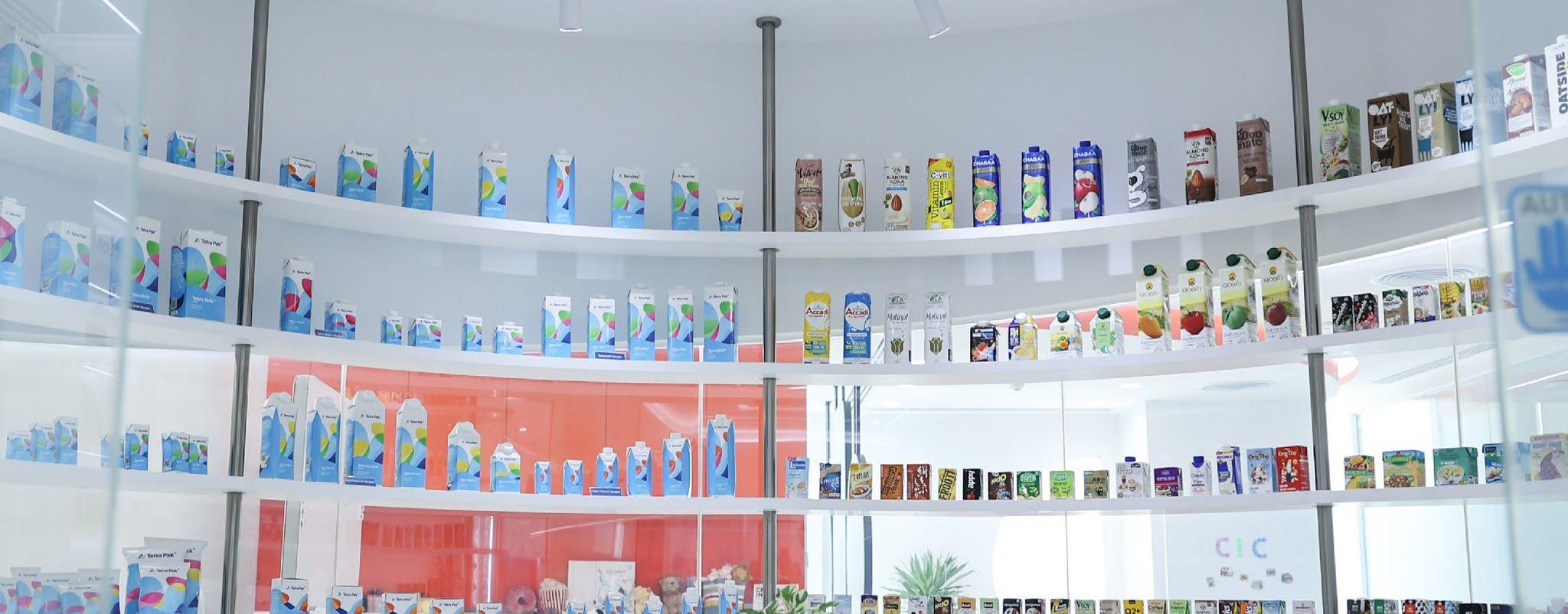
Turning ideas into successful products is rarely straightforward. Developing a new food or beverage product requires companies to navigate a range of interconnected considerations. At the same time, manufacturers must balance commercial viability, operational efficiency, and speed-to-market to remain competitive in an increasingly dynamic industry.
For coconut milk products, consumers increasingly look for a combination of authentic taste, nutritional value, creamy texture, convenience, and sustainability credentials all at the same time. Meeting these expectations requires expertise across multiple disciplines, many of which extend beyond traditional product development.
Rather than viewing these as separate priorities, successful innovation increasingly depends on bringing together consumer insights, technical expertise, manufacturing capabilities, and commercial thinking into one connected development journey.
With rising complexity, collaboration has become a strategic advantage, enabling businesses to combine complementary expertise, reduce development risks, accelerate commercialisation, and respond more effectively to changing market opportunities.
Co-creation offers a practical way to achieve this balance, bringing together expertise across product development, processing, packaging, and commercialisation. F&B brand are seeking partners who can support the full innovation journey, from ideation to commercial readiness.
The development of Kara Barista Coconut Milk provides an example of how collaborative innovation can help transform an emerging market opportunity into a commercially successful product.
The idea behind Kara Barista Coconut Milk emerged from both changing consumer preferences and Kara’s broader business transformation journey. As demand for plant-based beverages continued to grow, Kara identified an opportunity within the specialty café and food service segment, where coconut milk remained relatively underrepresented compared to other plantbased alternatives.
Recognising this opportunity, Kara also understood that bringing the product to market would require capabilities beyond traditional product development. Through its collaboration with Tetra Pak, both organisations combined complementary strengths, bringing together Kara’s expertise in coconut-based products and consumer insights with Tetra Pak’s product development, processing and packaging capabilities to develop a commercially viable solution.
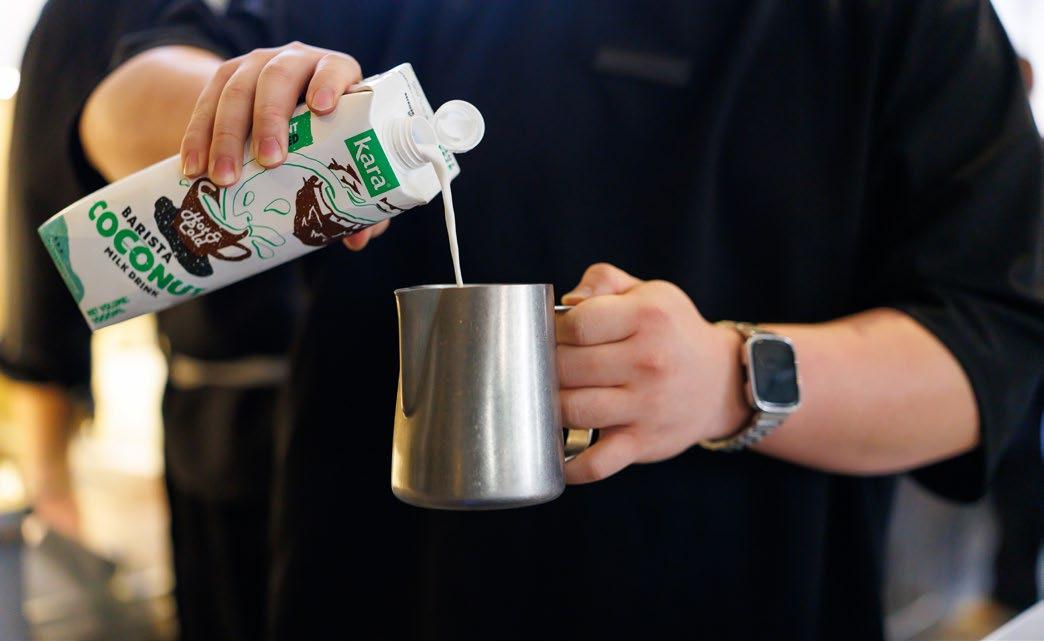
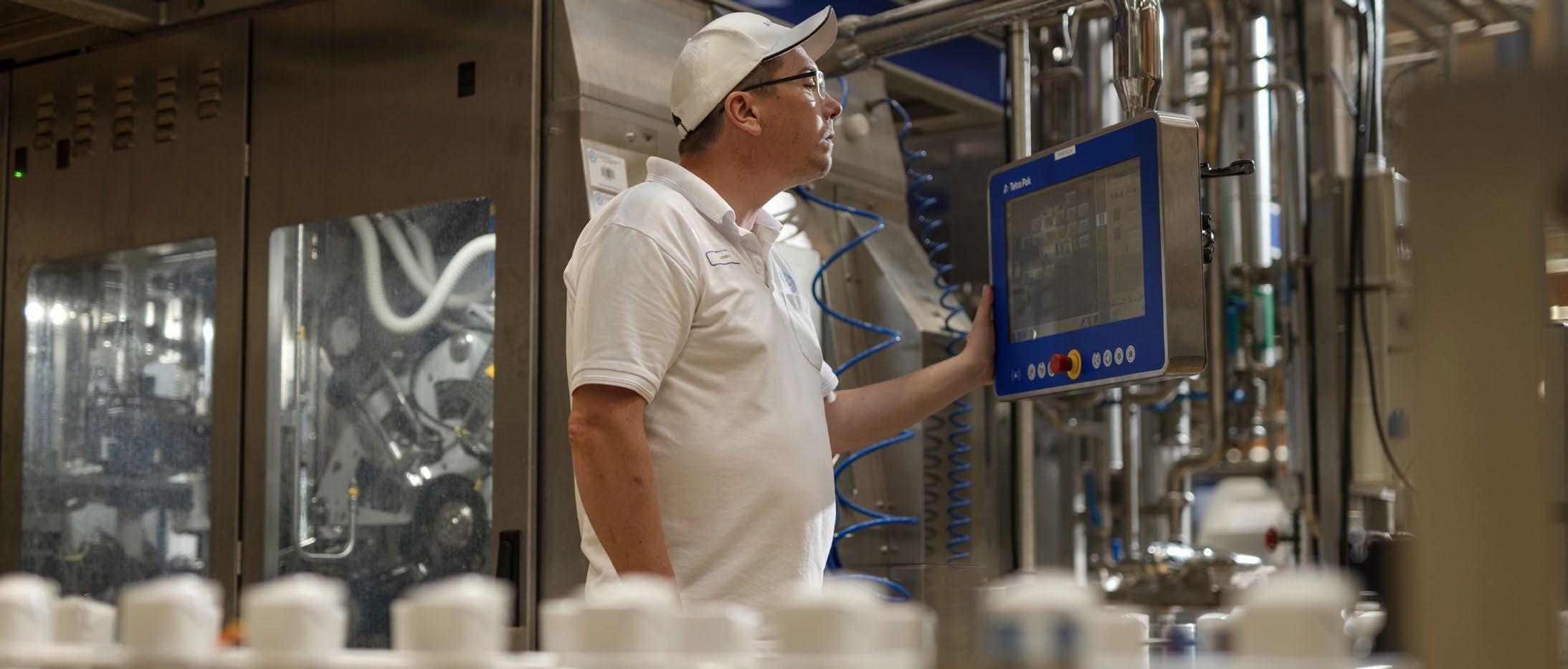
Drawing on its long-standing expertise in coconut products, Kara saw the potential to create a premium barista-grade coconut milk that could meet the technical demands of professional coffee preparation while appealing to consumers seeking lighter, plantbased beverage options. The initiative also marked an important step in Kara’s evolution from a trusted kitchen staple into a broader lifestyle beverage brand, expanding its presence beyond traditional culinary applications and into new consumption occasions.
Within the food service segment, expectations can be particularly demanding. Products must perform consistently in professional coffee applications while delivering the taste, texture, and quality that consumers expect.
Working through Tetra Pak’s Customer Innovation Centre and Product Development Centre, both teams collaborated on concept development, formulation, testing, and technical validation, supported by market insights, workshops and development expertise throughout the journey to commercialisation. One of the biggest challenges was creating a product that could consistently meet the expectations of both professional baristas and consumers while remaining commercially scalable.
Through extensive collaboration between Kara’s R&D team, manufacturing specialists, and local barista partners, the product underwent multiple rounds of testing and refinement. This process helped achieve the balance between flavour, creaminess, and functionality required for both hot and cold beverage applications while ensuring consistency during largescale production.
The project illustrates how collaborative innovation can help companies navigate complexity while
progressing from concept to commercialisation with greater confidence.
More importantly, it demonstrates that successful innovation is rarely the result of a single breakthrough or one organisation working alone. Instead, it is built through continuous learning, shared expertise, and strong partnerships that help transform opportunities into commercially successful products.
Innovation rarely follows a straight path. Consumer feedback, technical findings, and operational considerations often reveal opportunities for improvement throughout development.
Extensive sensory evaluations with local baristas, combined with shelf-life studies and production trials, played a critical role in shaping the final product. These insights helped optimise flavour, texture, and beverage performance while ensuring the product consistently delivered the intended experience throughout its lifecycle and at commercial scale.

The challenges facing today’s F&B industry, from evolving consumer expectations to increasingly complex product and sustainability requirements, are driving demand for more connected innovation models.
Competitive advantage is increasingly being shaped not only by technological capability, but by an organisation’s ability to build strong partnerships that connect consumer insights, product expertise, manufacturing capabilities and commercial execution.
As a result, innovation ecosystems are becoming increasingly important. By bringing together customers, technology providers, ingredient specialists, and development experts, these ecosystems enable companies to access specialised expertise, accelerate development timelines, and navigate complexity more effectively.
The development of Kara Barista Coconut Milk provides one example of how collaborative innovation can support this journey. More broadly, it highlights a shift taking place across the industry: the move from isolated innovation towards more connected, ecosystemdriven approaches to product development.
As consumer expectations continue to evolve, the companies best positioned for future growth will be those that embrace collaboration as a core innovation strategy. By bringing together complementary capabilities, manufacturers can reduce development uncertainty, respond more quickly to changing market needs, and transform promising ideas into commercially successful products.
Reflecting on the project, Kara identified co-creation as one of the most valuable drivers of successful innovation.
Mr. Susanto Lee, Director of Kara Marketing Malaysia, said: “In the pursuit of market-leading innovation, we hold quality and consistency as our highest priority. Cocreation expands our boundaries through knowledge exchange, proving that 1 + 1 is truly more than 2.
By merging our strengths, we optimise the innovation journey to deliver highly competitive, high-performance solutions with a level of speed and precision that redefines market standards.”
This content is contributed by Tetra Pak , providing advanced food production systems with a purpose to make food safe and available, and Kara Marketing Malaysia (KMM), a trusted partner dedicated to Driving Brand Success through Innovation, Partnership, and Sustainable Growth.

John Mari Jose, Marketing Director at Tetra Pak Malaysia, Singapore, Philippines & Indonesia
John Jose is the Marketing Director of Tetra Pak Malaysia, Singapore, Philippines and Indonesia and has been with the organisation for 26 years. Currently leading the Marketing Function in Tetra Pak Malaysia, Singapore, Philippines, and Indonesia (MSPI); John is responsible for the overall direction of Tetra Pak in MSPI, providing strategic insights and leading the expansion efforts.
During his tenure as portfolio manager, John supported the new packaging portfolio deployment and development needs for Southeast Asia and South Asia markets. He also ensured the smooth introduction of Tetra Pak’s new products and innovations to local markets.
Jose Mari is a strong advocate for success through partnerships with customers and believes in the importance of cocreation to bring innovative solutions to market. He is proud to contribute to making food safe and available for everyone through end-to-end solutions that have a meaningful impact.
John has a bachelor’s degree in marketing management from De La Salle University.
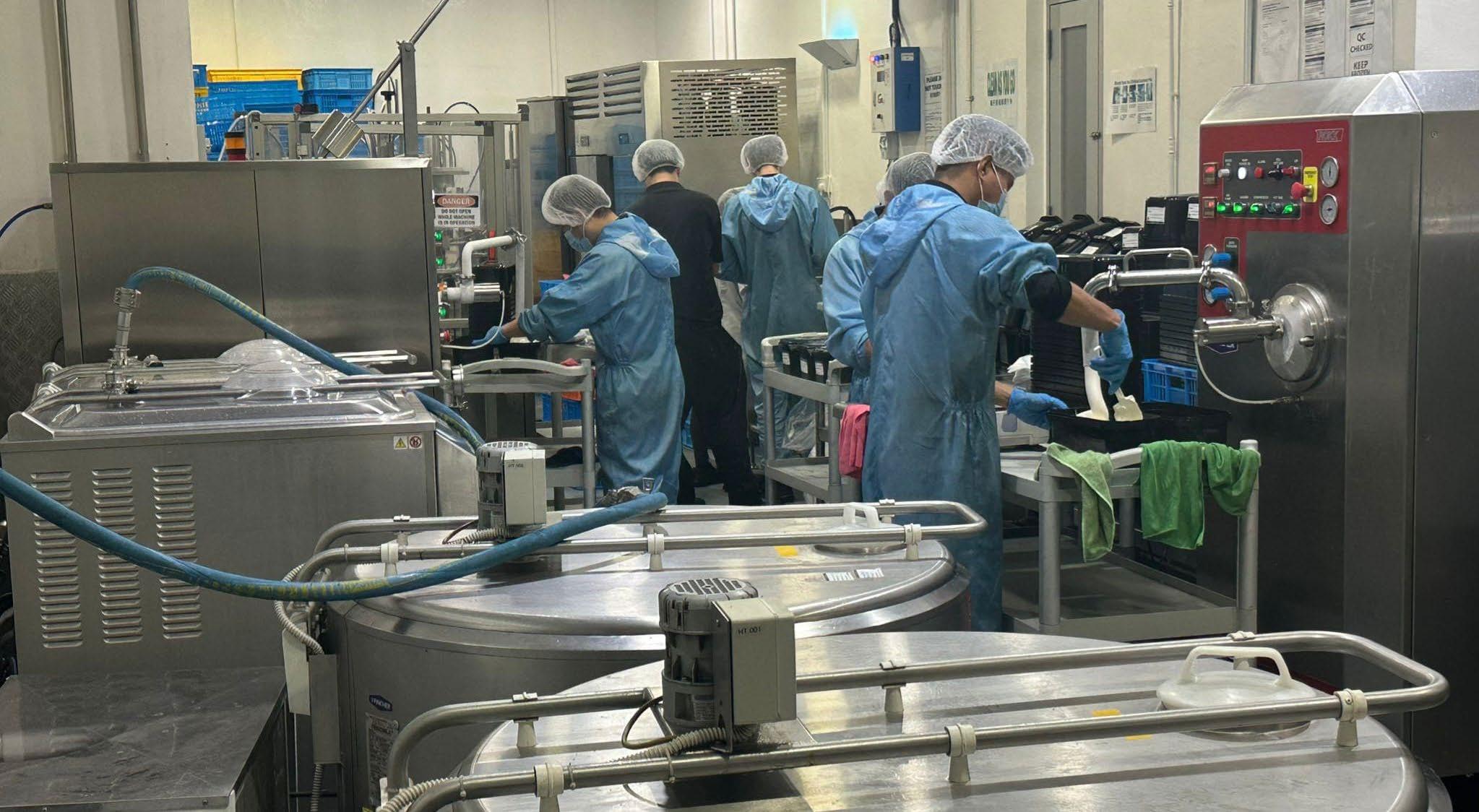
By Cath Isabedra
Singapore’s F&B sector is closing restaurants at a pace not seen in two decades. The operators still standing are asking a harder question: what should we actually be making ourselves? For Oishi Manufacturing, that question is where the business begins.
More than 3,000 food and beverage establishments shut in Singapore in 2024, the highest number of closures since 2005, according to data cited by the country’s Channel NewsAsia. The figure is striking not because the industry is collapsing, but because it reveals a structural reality: the cost of doing everything in-house has quietly become untenable for a large portion of the market. Labour, rental, utilities, regulatory compliance — each line item has risen, and the cumulative effect is now visible in the vacancy rates of shopfronts across the city-state.
Erik van Keulen watches this from a different vantage point. As co-owner of Oishi Manufacturing, a Singaporebased OEM and co-packing facility specialising in ice cream, gelato, soft-serve premixes, and frozen desserts, he supplies operators who are still open. And from that position — upstream of the restaurant, upstream of the brand — the structural dynamics of the industry look quite different.
“Singapore’s high operating cost environment makes scale and operational efficiency critical for long-term competitiveness,” he says. “OEM partnerships provide larger, more predictable order volumes, enabling better production planning, higher factory utilisation, and lower unit costs through economies of scale.”
That logic is not new. What is new is the speed at which the market is arriving at the same conclusion.
Oishi Manufacturing was founded in 2003 as a wholesale ice cream supplier, primarily serving the HoReCa segment. Erik and his wife and business partner, Shamsa van Keulen, acquired the company in January 2022, and the transformation that followed was deliberate. The company shifted its centre of gravity away from fragmented smaller accounts and towards OEM and co-packing relationships with established brands.
The reasoning was clinical. Servicing a large number of smaller HoReCa customers involves elevated sales, customer service, inventory management, and distribution costs, with demand that can be volatile and hard to plan around. OEM relationships operate on longer planning horizons, involve collaborative product development, and create deeper integration into a client’s supply chain. The economics are more predictable. The factory runs more efficiently. The margin per unit, at scale, improves.
“Rather than competing primarily on price, the company can leverage its strengths in product development, quality assurance, food safety, innovation, and technical expertise to become a strategic manufacturing partner,” says Erik. “This creates stronger customer retention, higher barriers to entry, and opportunities to participate in customers’ regional and international growth.”
That ambition required investment in the facility itself. In 2022, Oishi commissioned an FSSC 22000-certified waffle production line. In 2023, a BRC-accredited premix mixing and filling line was introduced.
By early 2024, the company had moved from traditional batch ice cream production to a continuous freezer line, also FSSC 22000-certified, equipped with mini cup and pint packaging systems and ripple and ingredient feeders. The facility operates out of Food Xchange @ Admiralty, a purpose-built food manufacturing hub in northern Singapore. Certifications include FSSC 22000, Halal licensing, and BRCS accreditation, with SOCOTEC compliance applied to relevant product lines.
The result is a facility that can now serve both the QSR segment, requiring tight specification control and high-volume consistency, and retail, with products distributed through NTUC FairPrice and 7-Eleven across Singapore.
Today, Oishi counts over 1,700 customers across its B2B and B2C channels, with export operations reaching Malaysia, Indonesia, Thailand, and Brunei.
The real cost of making your own dessert
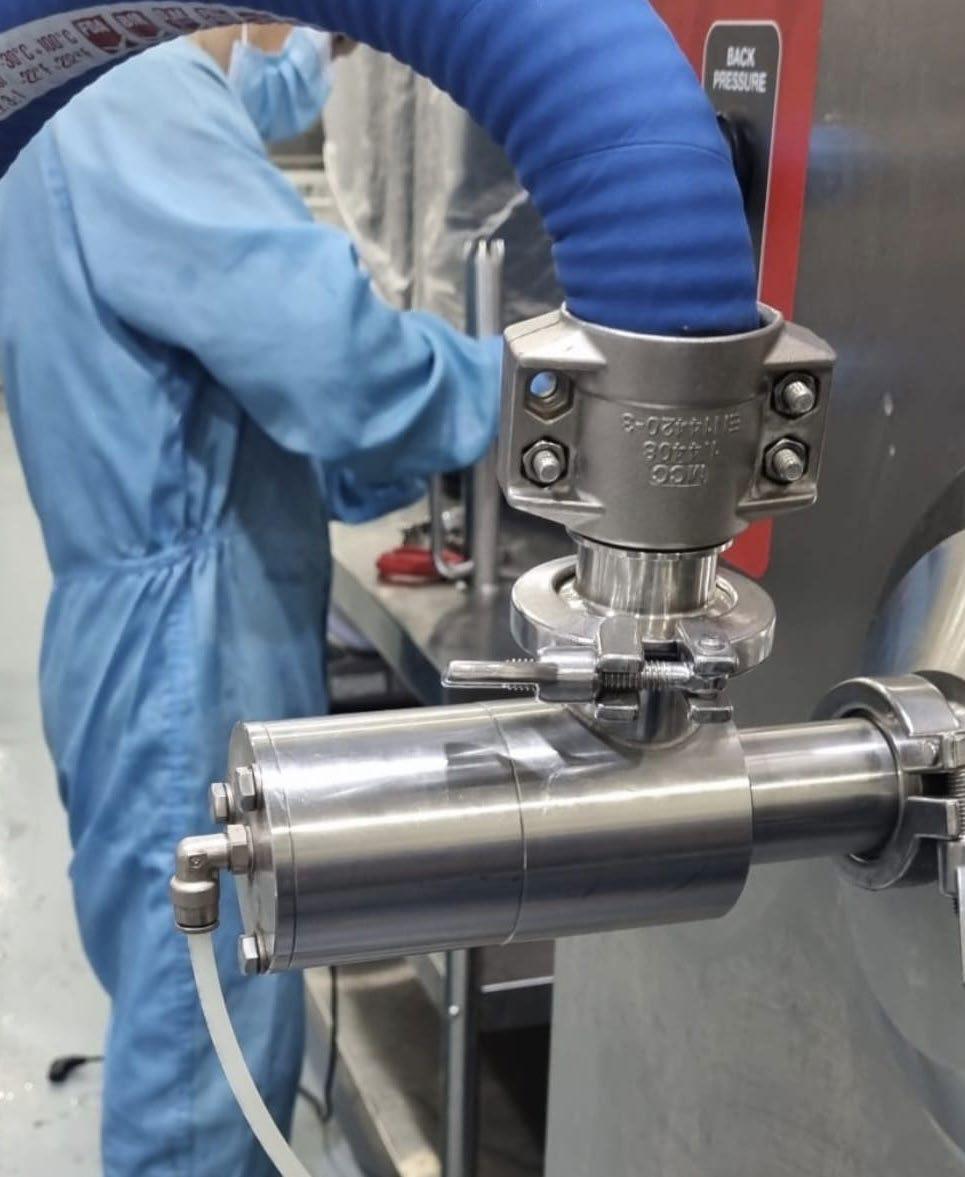
For F&B operators considering whether to produce desserts in-house or outsource them, the conversation often begins with ingredient cost and ends there. Oishi’s experience supplying more than 1,700 outlets has produced a more complete picture.
“Many operators initially compare only the purchase price of an outsourced dessert against the raw material cost of making it themselves,” says Erik. “What is often overlooked are the hidden costs: labour, wastage, quality inconsistencies, production downtime, equipment maintenance, food safety compliance, utility consumption, inventory holding costs, and the opportunity cost of valuable kitchen space.”
He offers a useful benchmark: a dessert that appears to cost 20 to 30 per cent less when produced in-house can become more expensive once labour, wastage, and overheads are fully allocated. The arithmetic changes materially when a kitchen is not running at full utilisation, when cold storage is shared across product categories, or when trained pastry staff are also expected to manage service peaks.
Consistency compounds the issue for multi-unit operators. A centrally produced dessert, manufactured against a fixed specification and quality standard, delivers the same result across dozens of outlets. An in-house dessert is subject to the skill, attention, and availability of whoever is working that shift.
“Consistency is achieved through a chain of controls
rather than a single process,” says Erik. “The greatest risks typically arise at transition points, when ingredients enter the factory, when products move through the cold chain, and when they are handled at the outlet.”
That cold chain observation matters more for frozen desserts than for almost any other category. Ice cream is acutely sensitive to temperature fluctuations during storage, transport, and handling. A product that leaves the factory at specification can arrive at the outlet degraded if any link in that chain fails. Managing that chain, through documented SOPs, supplier specifications, incoming quality checks, and production parameter controls, is the operational discipline that a specialist manufacturer brings to the relationship.
Shamsa van Keulen, who leads product development and quality at Oishi, is direct about where accountability sits when something goes wrong. “Food safety is a shared responsibility, but accountability to the consumer ultimately rests with the brand whose name is on the product. That is why both the brand owner and the manufacturing partner must maintain the highest standards throughout the supply chain.”

The question that B2B buyers in the foodservice and retail sectors most commonly raise with OEM
manufacturers is this: if multiple brands are running through the same production line, what actually makes each product distinct?
It is a legitimate operational question. The answer, at Oishi’s level of operation, is found in the separation of recipe and process.
“Customisation at scale is really about separating the brand’s intellectual property from the manufacturing process,” says Erik. “While products may be produced on the same production line, the recipe, ingredient selection, processing parameters, and quality specifications are unique to each brand.”
In practice, this means that the brand owns its formulation, the specific dairy ratios, flavour profiles, texture targets, inclusion types, and overrun specifications, while the manufacturer owns the process capability to execute those specifications reliably and at volume. The production line provides consistency and efficiency. The recipe and parameters determine identity. A consumer tasting the final product is tasting the brand’s IP, not the facility.
The product development pathway typically begins with a client brief, a desired flavour experience, a texture target, a cost ceiling, a shelf-life requirement, and moves through formulation trials, pilot production runs, and customer evaluations before arriving at a commercial specification. That process can expose technical constraints that were not apparent at the concept stage: how an ingredient behaves under continuous freezing conditions, how overrun affects mouthfeel at a given butterfat level, how stabiliser systems interact with fruit preparations over a 12-month shelf life.
“Manufacturing at scale is not just about creating a great product,” says Erik, drawing on a lesson learned from a compressed launch timeline. “It is equally about creating a robust and repeatable process. A recipe can be ready for market long before the production system is ready to support it efficiently.”
For operators and brand owners evaluating a copacking partnership, that distinction is worth dwelling on. The development of a product and the development of a scalable production process for that product are two separate workstreams, and the latter often takes longer.
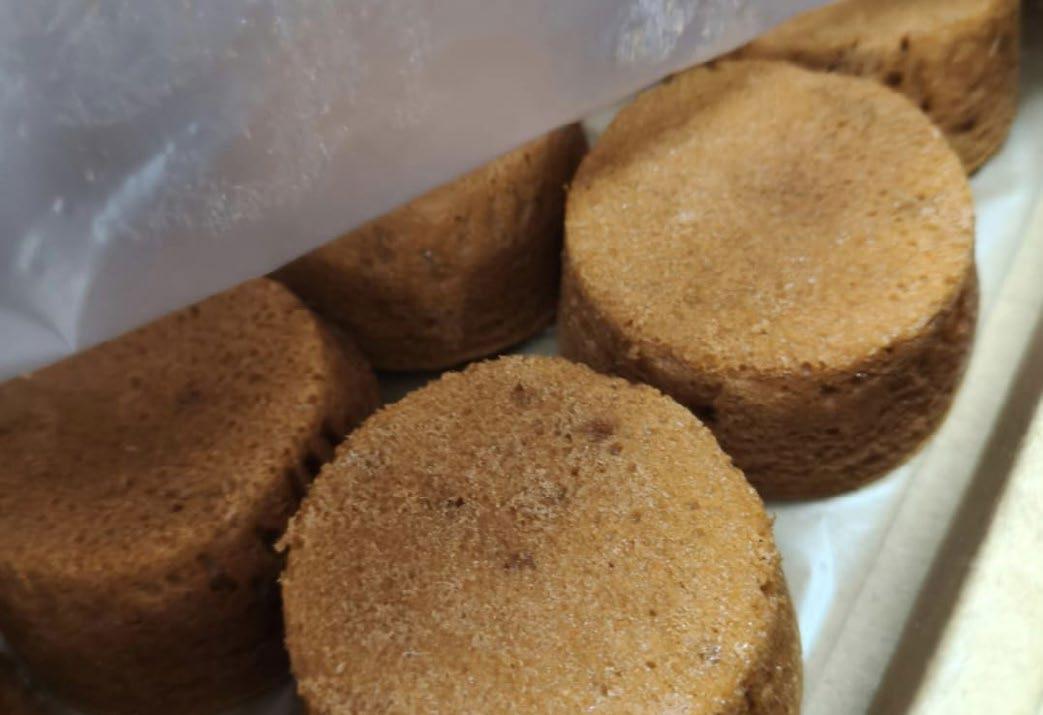
Singapore’s labour market in food manufacturing and food services has tightened considerably over the past several years. According to the Ministry of Manpower’s Report on Wage Practices 2024, the F&B services sector recorded nominal wage growth of 4.8 per cent in 2024, below the national average, reflecting the sector’s weaker economic performance and the squeeze on margins that has characterised the postpandemic operating environment.
For manufacturers, the labour dynamics are no less acute. Managing a production team, recruiting, training, and retaining skilled operators, technicians, quality assurance personnel, and warehouse staff, has become structurally harder. Oishi experiences the same pressures its clients face.
“Both manufacturers and operators are responding to the same challenge: how to do more with limited manpower while maintaining quality and consistency,” says Erik. “That has made collaboration and operational efficiency more important than ever.”
Shamsa frames the outsourcing decision as fundamentally a resource allocation question. “The most successful operators tend to view dessert outsourcing not as a procurement decision, but as a resource-allocation decision, one that allows them to deploy labour, space, and capital where it creates the greatest value for their business.”
That framing has practical implications for how food businesses should evaluate a co-packing relationship. The question is not simply whether the outsourced product is cheaper per unit, but whether the resources freed by not producing in-house — kitchen space, skilled labour, management bandwidth, cold storage capacity — can be redeployed into activities that directly support revenue or guest experience. For a multi-unit QSR operator, those resources are almost always better deployed on service, throughput, and the core menu.

Singapore’s F&B closure figures are often framed as a story about cost. Rental. Manpower. Utilities. Those are real pressures, and Erik does not dismiss them. But he observes that the operators who manage well in this environment share characteristics that extend beyond cost management.
“The operators who perform best tend to have a very clear understanding of their value proposition and maintain strong discipline around execution,” he says. “The most resilient operators are often those who carefully allocate their resources — simplifying menus, improving operational efficiency, or partnering with specialists where it makes sense.”
He is also cautious about overreading any single failure as a systemic diagnosis. “Every concept, location, and market segment faces different circumstances.” That qualification matters: the 3,047 closures recorded in 2024 occurred across wildly different business models, rent structures, and competitive positions. What they share is that each represents a set of costs that grew faster than the revenue model could sustain.
The inverse proposition, that partnering with specialist manufacturers on non-core categories can reduce that structural vulnerability, is the business case Oishi is making with every OEM contract it signs.

Erik van Keulen’s background is in private equity and real estate. He holds a Master’s in Real Estate from the National University of Singapore and an MBA from ESSEC Business School in Paris. He is a Fellow of the Singapore Institute of Arbitrators. Shamsa holds a BSc in Property Valuation and Finance from City University London and qualified as a Chartered Surveyor. Neither arrived in food manufacturing via a culinary career.
That distance from the kitchen, rather than being a liability, may be precisely what allows them to look at the industry’s structure with investor discipline. They see the factory as infrastructure. They see the brand as IP.

And they see the relationship between the two as increasingly central to how food businesses scale.
“Twenty years from now, I believe the relationship between restaurant brands and manufacturing partners will become far more collaborative and integrated than it is today,” says Erik. “Manufacturing partners will increasingly be involved not just in production, but also in product development, innovation, supply chain management, and helping brands scale consistently across multiple markets.”
On the question of what that means for chefs, he is measured. “The chef’s value will lie less in personally producing every component and more in defining the brand’s culinary vision, quality standards, and customer experience. In that sense, they become custodians of the brand’s identity while working with specialised partners to execute that vision at scale.”
That evolution is already visible across the sector. The most commercially successful food brands in Singapore, across QSR, casual dining, and retail, are not necessarily those with the most impressive kitchens. They are those with the clearest brand identity and the most reliable supply chains. The kitchen, for a growing share of the market, is somewhere else.
Oishi Manufacturing Pte Ltd operates out of Food Xchange @ Admiralty, 8A Admiralty Street, Singapore 757437. The facility holds FSSC 22000 and BRC certifications, Halal licensing, and SFA food factory accreditation. OEM enquiries: sales@oishi.com.sg
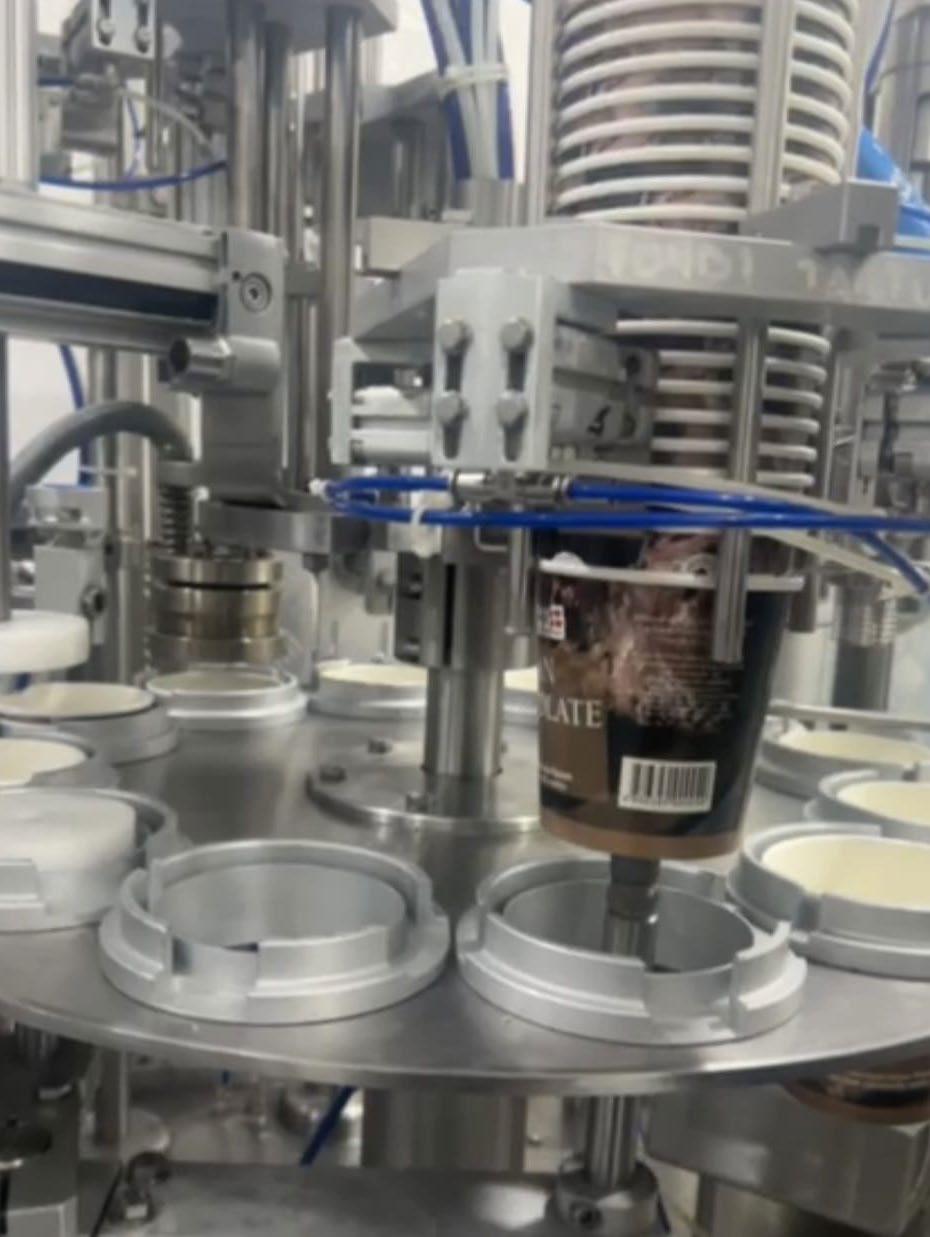
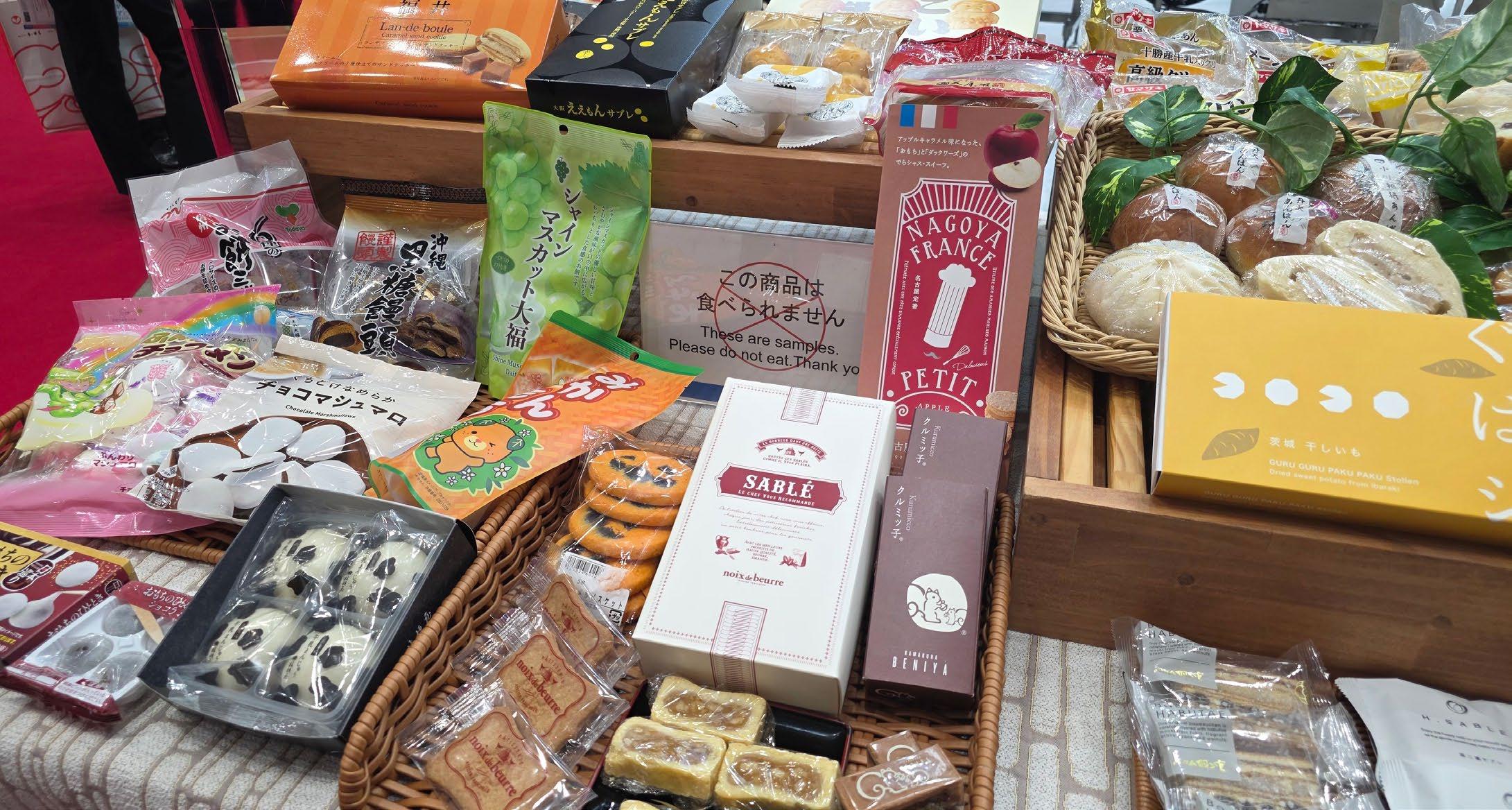
By Cath Isabedra
There is a particular kind of quiet that settles over a trade floor at the end of four long days. Booths are halfdismantled, catalogues are dog-eared, and somewhere in the crowd, a plant manager is photographing a machine she has never seen before on her side of the world. That image, unremarkable in isolation, is precisely the point of FOOMA Japan.
The exhibition itself was first held in 1978, but its organising body, the Japan Food Machinery Manufacturers’ Association (FOOMA), has been at work considerably longer, established in 1948 and incorporated as an association in 1967. In 2028, FOOMA marks its 80th anniversary, and the show, its 50th edition in 2027. That kind of institutional weight is rare in any trade event, and it shows in the substance of what gets exhibited. The
2026 edition, held from 2 to 5 June at Tokyo Big Sight, was the most internationally-oriented in its history, with 1,056 exhibitors across 4,874 booths and 21 product categories, drawing 130 first-time participants and visitors from across Asia-Pacific, Europe, and the Americas. This year, for the first time, the organisers framed the entire conversation around a single directional signal: the shift is on.
The question worth asking, the one that matters to the decision-makers reading this, is what that shift actually means for food manufacturers operating in Southeast Asia. The answer, drawn from conversations on the floor, the show’s own programming, and FOOMA’s own membership data, is more substantive than a theme line.
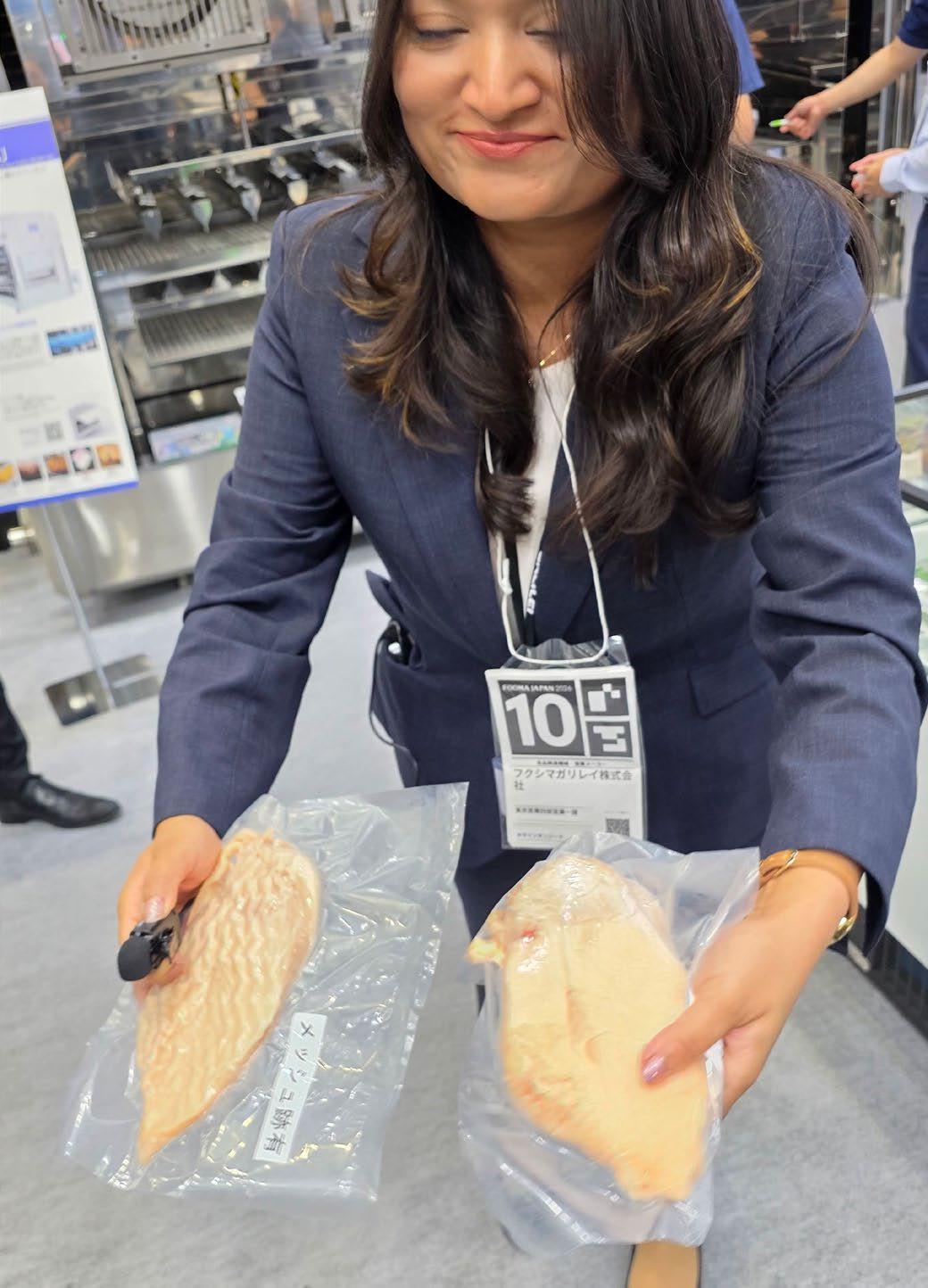
Asia Food Journal sat down with Mr Minoru Onoe, Chairperson of the FOOMA Japan 2026 Exhibition Committee, and Mr Junichi Hayashi, Chairperson of the International Affairs Committee of the association, for an exclusive conversation about the show’s direction.
Mr Onoe was measured but clear: the industry has, for decades, focused on making existing production processes more efficient. That emphasis has not disappeared, but it is no longer sufficient on its own. The pressures now arriving from Japan’s domestic landscape, labour shortages, an ageing population, and mounting attention to public health require a different kind of response. One that moves beyond line optimisation and into a more fundamental rethinking of how food is produced at scale.
“Japan has an issue of labour shortage, and we believe that the same issue will be dealt with in Southeast Asia,” Mr Onoe noted. “In that sense, Japan is a pioneer.”
This is not a modest claim, but it is a grounded one. Japan’s working-age population has been contracting for years, and the food manufacturing sector has been among the most acutely affected. The machinery and
systems on display at FOOMA Japan have, in many cases, been developed in direct response to that pressure, tested and refined under real production conditions, not in a lab. Automation of repetitive line tasks, AI-assisted quality control, robotic handling systems: these are not aspirational technologies at FOOMA Japan. They are operational ones.
Southeast Asia is now entering a comparable phase. Labour costs are rising across Vietnam, Thailand and Indonesia. Retention in food processing facilities remains a persistent challenge. Regulatory standards are tightening in line with export requirements. The tools Japan has built for its own constraints translate, with relevant adaptation, into meaningful solutions for the region.
What separates FOOMA Japan’s framing from typical trade-show rhetoric is the depth of data the association keeps on its own industry. As of late April 2026, FOOMA counted 523 participating organisations: 250 regular manufacturer members, two organisation members, and 271 associate members spanning parts, components, and engineering firms tied to food processing machinery.
Sales of food processing machinery among FOOMA’s member companies reached approximately ¥625.8 billion in 2025, part of a five-year run that has averaged 1.4% annual growth and peaked above ¥634.6 billion in 2024. Bakery and confectionery machinery and dairy processing machinary are the two largest segments by sales share, each accounting for roughly a quarter of the market, with meat processing machinery a distant third. That sales composition is a reasonably accurate map of where Japanese manufacturers have concentrated their engineering effort, and by extension, where their deepest expertise now sits.
Exports tell a complementary story. Food machinery export values climbed from approximately ¥42.9 billion in 2021 to ¥57.1 billion in 2025, a clear upward trajectory even allowing for year-to-year variation. Bakery and confectionery and beverage manufacturing machinery and bakery and confectionery machinery again lead the export mix, both holding a meaningfully higher share of exports than they do of domestic sales, an indication that overseas buyers are actively seeking out the categories in which Japanese engineering is most distinguished.
On destinations, the data is unambiguous about where the region fits. Asia has accounted for an overwhelming share of food machinery exports, consistently in the range of 60 to 70% over the past five years. Within that, China, the United States, South Korea, and Thailand represent four of the six largest single-
country destinations, with Taiwan and Indonesia also among the leading markets. Vietnam, while smaller in current export share, appears consistently enough in the data to suggest it is being tracked as a market of rising interest.
For Southeast Asian buyers, the practical takeaway is this: the region is not a peripheral market that Japanese
manufacturers are tentatively testing. It is already one of the established centres of gravity for Japanese food machinery exports, and the association’s own expansion-intent data suggests that gravity is set to increase. Among member companies indicating interest in further overseas expansion, Thailand ranks second only to China, ahead of South Korea, the United States, and Singapore.
Figures based on FOOMA’s own membership survey; respondents could select multiple countries.
Worth noting too: only 61 of FOOMA’s 250 regular member companies, just under a quarter, currently operate an overseas base of any kind. Of the 466 overseas bases these companies do maintain, 59.9% are located in Asia, well ahead of Western Europe’s 12.9% and North America’s 11.8%. The bulk of these bases, nearly two-thirds, are subsidiaries rather than branch offices or liaison offices, suggesting a level of operational commitment that goes beyond simple sales presence.
What this combination of figures suggests is an industry still in the relatively early stages of its overseas footprint, but one with clear intent, sufficient capital discipline to expand through subsidiaries rather than loose partnerships, and a demonstrated preference for Asia, and Southeast Asia specifically, as the next phase of that expansion. For manufacturers in the region currently weighing whether to engage with Japanese suppliers, the data suggests the relationship is more likely to deepen than recede.
Japanese food machinery has a well-earned reputation for precision, but it is worth being specific about what that means in practice, because the word is used loosely in this industry.
Ishida Co., Ltd., a Kyoto-based manufacturer established in 1893 and the company credited with developing the world’s first combination weighing machine, was among the prominent exhibitors at
this year’s show. On the floor, Ishida’s booth offered a complete end-to-end view of its capabilities: from multihead weighers to packaging systems, check weighers, inspection equipment, and palletising. What distinguished the demonstration was not any single machine but the coherence of the integrated line. Each element had been engineered to work with the others. Data flows between stations. Waste is minimised. Output consistency is maintained at speeds that would otherwise demand significantly more headcount.
For a Southeast Asian producer currently running mixed-brand, legacy-configured lines, this kind of integration represents a meaningful operational leap. The efficiency gains are real. But the more durable value is in quality consistency, the ability to produce the same product, to the same specification, across shifts, across facilities, across markets.
AI is increasingly part of this picture. At FOOMA 2026, several exhibitors demonstrated AI-based camera systems used for foreign matter detection and real-time process monitoring. Anritsu Corporation, which received an Excellence Prize at this year’s FOOMA Awards, showcased its Smell Detector, a system using gas sensors to identify abnormalities in food products that visual inspection alone cannot catch. System Square Inc., another Excellence Prize recipient, presented its Hygienic High-Resolution X-ray Inspection System, designed for complex food geometries and high-speed lines. These are not concept demonstrations. They are production-ready systems deployed in Japanese facilities, and their relevance to the region’s growing export-oriented food sector is direct.
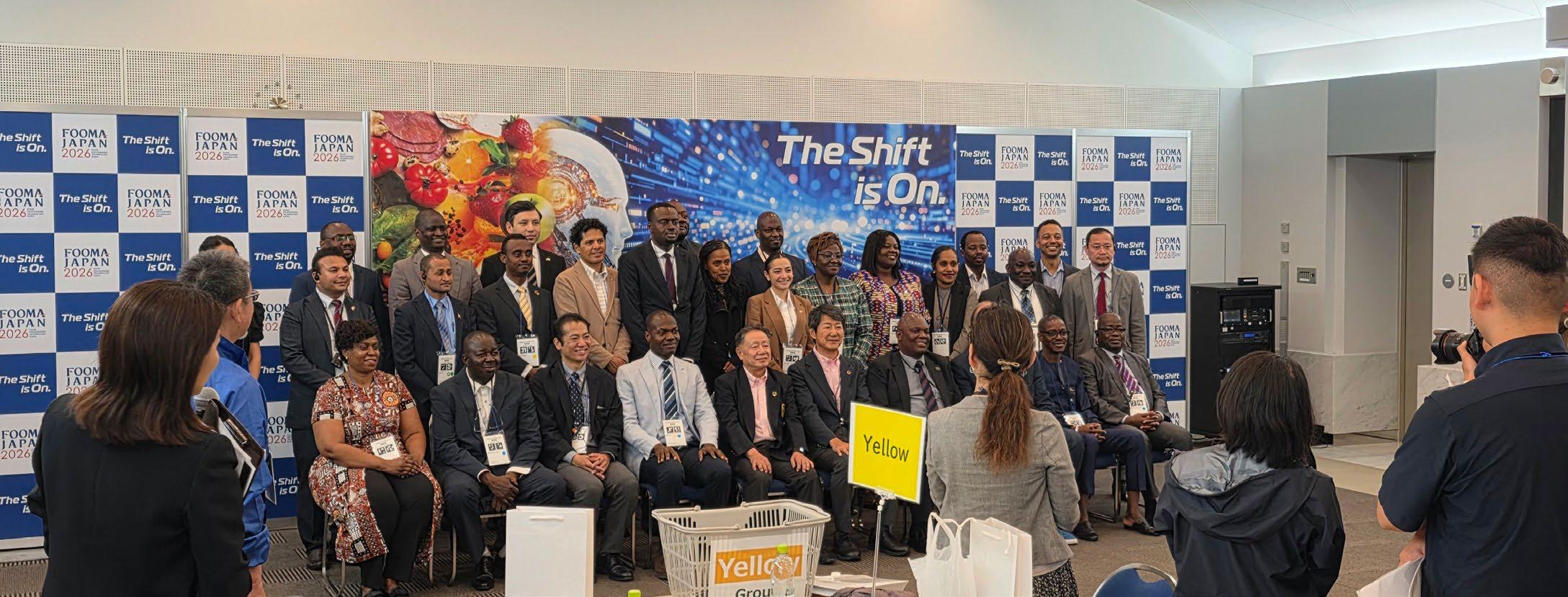
The 5th FOOMA Award 2026, presented on the opening day, drew 27 product submissions, which were evaluated by an independent expert panel. The Grand Prize went to Fujiwara Techno-Art Co., Ltd., based in Okayama, for its Air Flow Type Solid State Fermenter for Laboratory Use.
The product is compact, but its implications are not. It replicates the aeration and temperature-control conditions of large-scale industrial fermentation systems at laboratory scale, allowing producers to validate processes before committing to full production runs. The judging committee’s chair, Yoshikazu Goto, noted that large-scale fermentation carries significant financial risk if conditions are not properly calibrated in advance, making this kind of small-scale reproducibility especially valuable.
“Right now, the entire world is paying attention to fermentation,” said Fujiwara Techno-Art’s representative upon receiving the award. “Our fermentation technology is designed to work at a global scale, this machine allows producers to experiment at a small scale and apply it to the real thing.”
Fujiwara Techno-Art has existing operations across Asia, Europe and the Americas. The award-winning fermenter carries particular resonance for Southeast Asian producers exploring fermentation as a platform for ingredient upcycling, functional food development, or the preservation of traditional fermented products at commercial scale.
The Special Prize, which is not awarded every year and has only been given three times in the award’s history, went to Shinagawa Machinery Works Co., Ltd. for its Steam Type Egg Roasting Machine, a recognition of the Nara-based company’s decades of contribution to industrial egg processing.
The innovation hub and the startup signal
One of the more deliberate structural additions to this edition was the Innovation Hub, which brought together startup companies, investors, and academic institutions in a dedicated space separate from the main exhibition halls. This was not simply a showcase for emerging brands. The intent, as Mr Onoe described it, was to create a platform where the challenges facing the industry could be addressed through collaboration that cuts across the traditional boundaries between established manufacturers, new entrants, and research institutions.
The distinction from prior editions is meaningful. Startup companies and investors had participated in FOOMA Japan before, but they were dispersed across the broader floor. Gathering them into a dedicated zone with structured interaction opportunities changes the nature of the conversation. The potential for partnerships between startups working on, say, AIdriven sorting algorithms and established machinery manufacturers with proven production infrastructure is exactly the kind of cross-sector connection that the organising committee is now actively trying to facilitate.
This ambition is consistent with FOOMA’s own stated contribution to the United Nations Sustainable Development Goals, where the association has named the development of digital transformation and the diversification of knowledge transfer to the next generation among its priority focus areas, alongside food security and the reduction of environmental load in food processing.
For international visitors evaluating the ecosystem, not just individual products, this matters. It signals that FOOMA Japan is evolving from a product showcase into a genuine industry development platform.
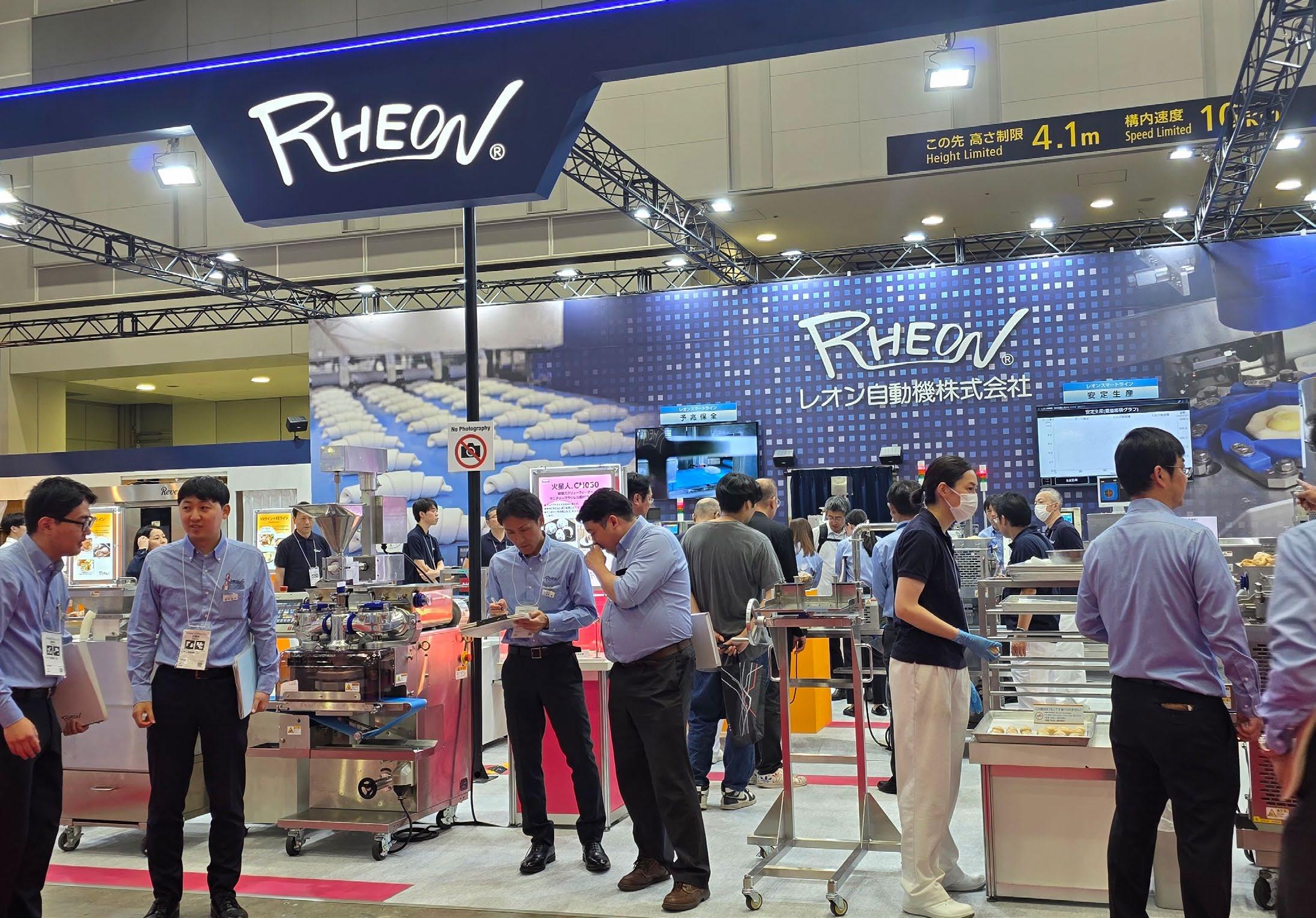
Japan’s food machinery sector is predominantly composed of small and medium-sized companies. This is, in many respects, a strength: specialisation is deep, knowledge is highly concentrated, and the engineering culture prioritises rigour over speed-tomarket. However, it also creates a practical hurdle for international buyers seeking to initiate supplier relationships. Direct outreach is often complicated by language differences and the absence of established export channels for smaller manufacturers, a reality borne out by the fact that three-quarters of FOOMA’s regular members have no overseas base of their own.
This is where FOOMA itself plays a concrete role. The association actively facilitates connections between Japanese manufacturers and overseas buyers, and its international engagement strategy extends well beyond the annual Tokyo exhibition. FOOMA members exhibit at regional trade shows across Southeast Asia, including in Thailand and Indonesia, and the association organises site visits to member facilities for
overseas delegations. These are practical entry points for food manufacturers in the region who want to evaluate Japanese machinery under actual production conditions before determining to a purchase.
For those visiting FOOMA directly, the 2026 edition offered a dedicated Global Information Desk and a venue map specifically highlighting export-ready exhibitors, a modest but useful navigation tool for international buyers working across a show floor of this scale.
On the question of adaptability to Southeast Asia’s production diversity, Mr Onoe’s position was clear: the goal is not to customise Japanese technology down to local specifications, but to transfer the underlying qualities of Japanese manufacturing, precision, food safety standards, consistency at high yield, into markets that are actively developing the infrastructure to sustain them. Thailand’s high-volume processing facilities, Indonesia’s broad-category food manufacturing base, and Vietnam’s rapidly expanding export-oriented sector each represent relevant, and growing, markets for Japanese equipment, a reading that lines up closely with where FOOMA’s own export and expansion data points.
One detail from the show that is easy to overlook, but worth noting: high school students were walking the floor in organised groups. FOOMA Japan’s organising committee arranges this annually, welcoming around 100 students per day as part of an active effort to connect young people with the food manufacturing industry.
For observers from the region, this is a useful data point. The pressures driving Japan’s investment in automation and AI-assisted production are structural and demographic, not cyclical. The machinery being developed in response to those pressures will only become more capable, more accessible, and more relevant to markets facing analogous transitions.
FOOMA Japan’s 50th edition arrives next year, and the organising committee is working toward a milestone edition that strengthens the show’s international presence, a priority that, in practice, means deeper outreach across Southeast Asia, greater familiarity with FOOMA Japan among regional buyers who currently have limited awareness of it, and continued expansion of the export-oriented infrastructure that makes the show accessible to international manufacturers.
“We don’t consider our exhibition as just a showcase for machinery,” Mr Onoe said in closing. “This is a place for exhibitors and visitors to meet, to find insight, to create new business. I hope that people visiting FOOMA Japan 2026 can find at least one solution to deal with their own challenge.”
For Southeast Asian food manufacturers with genuine production challenges to solve, in quality consistency, in labour-dependency reduction, in scaling fermentation or in upgrading inspection systems, this is a useful frame for thinking about what the show offers. FOOMA Japan is not a buying trip. It is a working visit to the facilities and systems of an industry that has been forced, by its own circumstances, to become very good at solving exactly the kinds of problems that are now arriving on the region’s doorstep, and one whose own numbers confirm it is already building toward a deeper presence here.
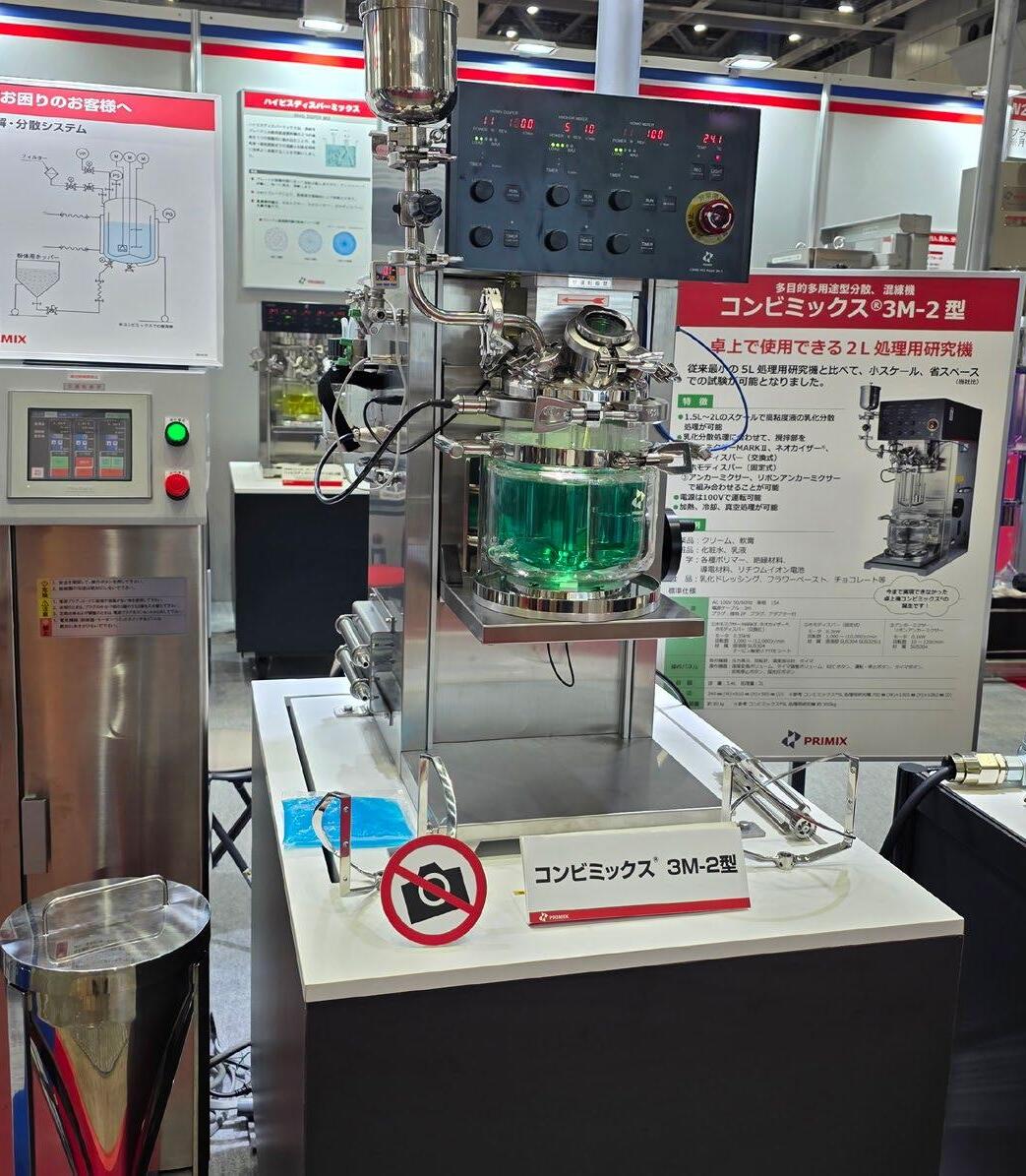
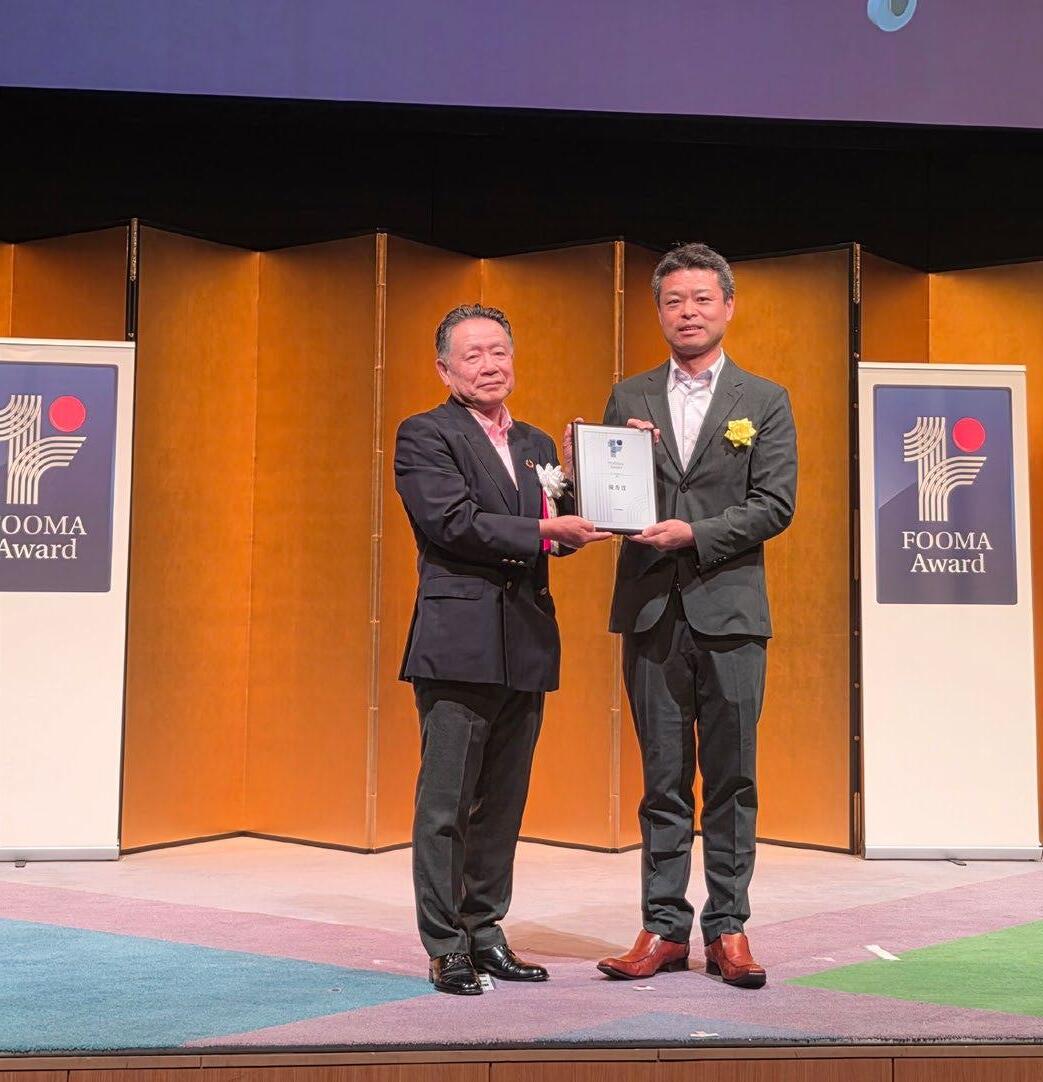
FOOMA Japan 2026 was held at Tokyo Big Sight from 2 to 5 June 2026. Organised by the Japan Food Machinery Manufacturers’ Association. Membership and trade data drawn from FOOMA’s own published survey of member companies. Further information at www.foomajapan.jp/int/
FOOMA Japan is set to host its 50th milestone edition from June 8 (Tuesday) to June 11 (Friday), 2027.
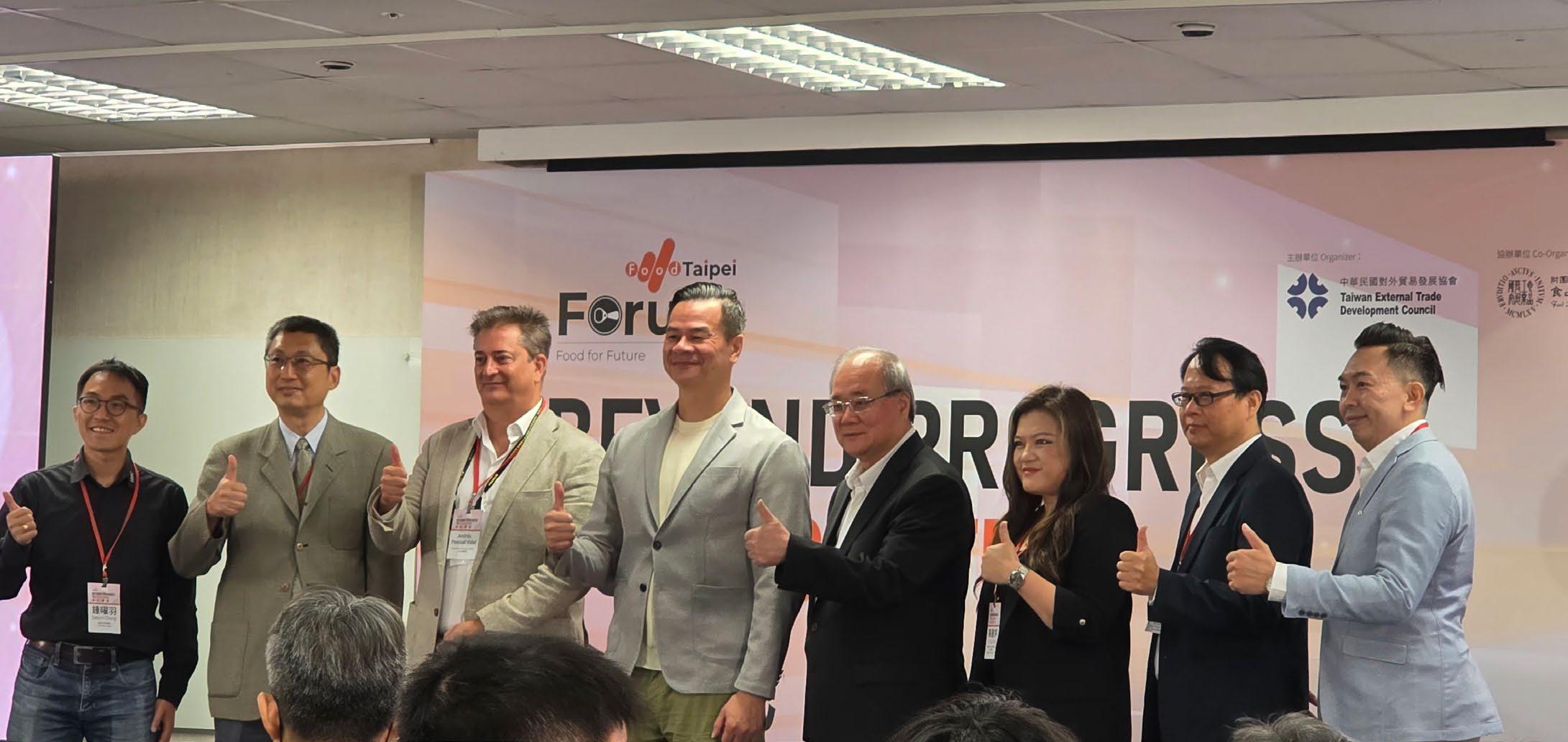
By Cath Isabedra
Taiwan’s food industry used to measure its trade shows in booths and buyers. This year, organisers measured something harder to count: how fast the ground underneath the sector is shifting.
Food Taipei Mega Shows 2026 opened on 24 June at the Taipei World Trade Center and the Nangang Exhibition Center, and ran through 27 June. TAITRA, the Taiwan External Trade Development Council, confirmed nearly 1,800 exhibitors from 33 countries and 4,750 booths across 21 national pavilions, calling it the largest edition in recent years. Organisers expected more than 50,000 visitors to pass through the venues over the four days.
That scale builds on a show that had already been climbing steadily out of its pandemic-era lull. The 2025 edition drew roughly 1,700 exhibitors from 31 countries and over 50,000 professional visitors, including close to 4,500 international buyers from 83 countries, with
Japan, the United States, Malaysia, the Philippines and Singapore topping the buyer rankings. The Food Taipei component alone pulled in 47,885 visitors from 84 countries and regions, according to the U.S. Department of Agriculture’s Foreign Agricultural Service, which this year endorsed the show for the first time.
That endorsement matters more than it might first appear. Food Taipei is now a USDA Endorsed Trade Show, a status that places it alongside a small number of international events the department actively backs for American exporters. The U.S. Pavilion has long been the largest national pavilion at the event, and in 2025 it hosted 44 exhibitors, including USA Rice, the U.S. Meat Export Federation, Potatoes USA, and 10 state departments of agriculture, with beef, poultry, dairy, tree nuts, and alcoholic beverages drawing the strongest interest from buyers.
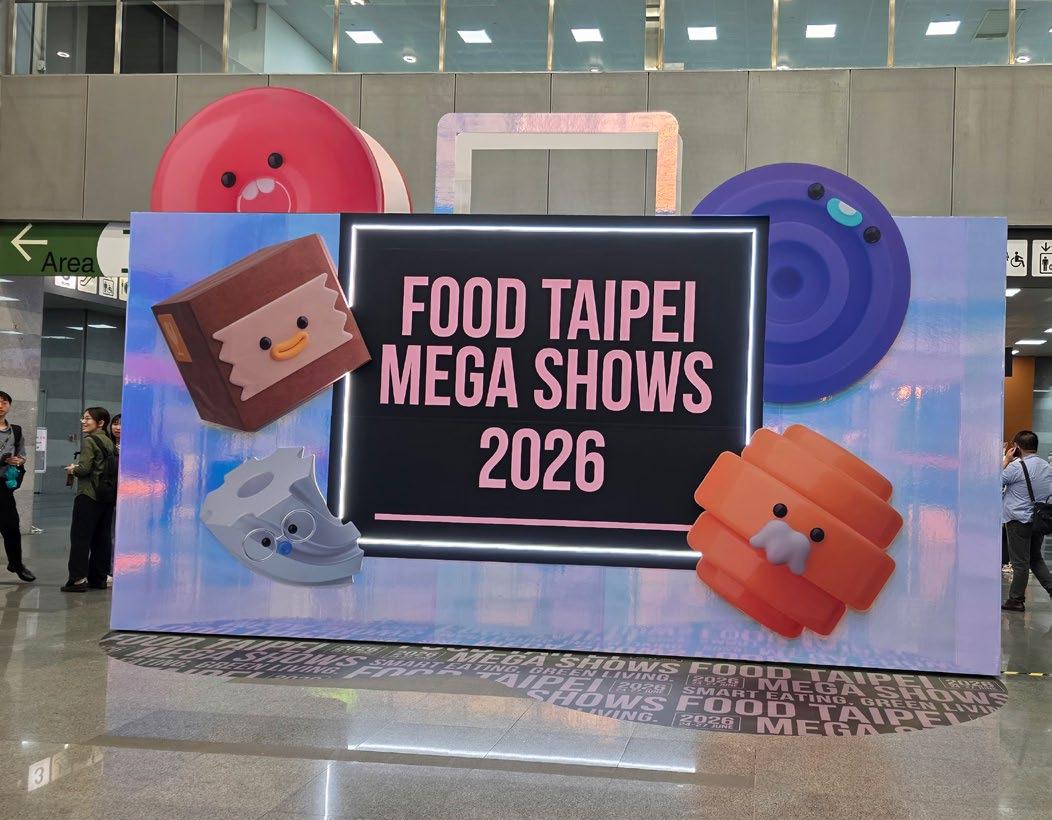
TAITRA framed 2026 around “Smart Eating x Green Living,” a pairing meant to fuse two pressures the global food industry is contending with simultaneously: personalising what people eat while decarbonising how it gets made. TAITRA chairman James Huang put the ambition bluntly at the opening ceremony, describing the gathering as a meeting point for the world’s food trade rather than a conventional exhibition floor. “We are not just opening a trade show. We are gathering at the world’s table here in Taipei,” Huang said. He went further on Taiwan’s underlying strategy, telling the audience that the island intends to extend its semiconductor strength into the food sector itself: “Beyond what we eat, Taiwan is changing how food is created.”
The theme also surfaced inside the show’s flagship knowledge programme, the Food Taipei Forum, subtitled “Beyond Progress to Evolution,” held alongside a separate Wellness and Nutrition Summit. Opening remarks framed the day around three pillars: precision foods tailored to different ages and health needs, sustainable development and supply chain resilience built on data, and Taiwanese brands moving from local roots into higher-end international markets. In Chinese-language coverage of the same series of events, organisers also ran a parallel Food Innovation Trends Forum and a Health Food Industry Summit Forum, alongside the Green Vision Awards ceremony and dedicated procurement matchmaking sessions for international buyers.
solutions. It brought together Taiwanese names such as New-In, Ming Chyi Biotechnology and K&K Foods alongside international exhibitors including Cahokia Rice from the United States and Vitamin Bottle from Hungary. A linked “Funtasty Recharge” zone showcased near-market products such as plant-based braised pork rice and low-sugar functional bubble tea, giving visitors a way to taste the trend rather than just read about it.
That focus on precision nutrition was not confined to the exhibition floor. During the forum, Dr Yang Binghui, Deputy Director of the Food Industry Research and Development Institute (FIRDI), addressed the tension between high-value and low-cost food products directly. Yang has spent more than three decades at FIRDI developing plant-based protein beverage processing technology, including platforms designed to lift the protein content of plant milks beyond what conventional equipment allows. His comments at the forum captured the structural argument running through the day:
“Ah, it can be very high, but we can see that in our current restaurant development there can be very upscale, high-value restaurants, yet there are also roadside night-market stalls selling very cheap food. They’re all food, but their value is expressed differently in different places. The food industry is the same: we face an international trend in development, and we need to talk about sustainability, net-zero carbon emissions, and so on.”
Yang’s underlying point, made plainer earlier in his remarks, was that the inherent value of a food product is rarely visible in the product alone. From the transcript: “From the product itself, it isn’t.” The value, in his framing, gets attached through positioning, branding and the surrounding supply chain, which is precisely where TAITRA’s “Smart Eating” push and FIRDI’s own research agenda intersect.
The clearest physical expression of the “Smart Eating” half of the theme was the debut of the Fresh Living Pavilion at TWTC Hall 1, a new zone built around precision nutrition, plant-based innovation and healthy-ageing
The forum’s most pointed exchange concerned artificial intelligence, and it avoided the generic optimism that often accompanies the topic at trade shows. One panel discussion examined how AI is reshaping the established structure of Taiwan’s food ecosystem, from raw material sourcing through manufacturing to the point of consumer purchase. A moderator pressed the panel on what that restructuring would look like in practice, asking what shape the industry’s familiar “square” framework would take once AI forced it to bend.
The answer that came back was notably unsentimental about how far the technology has actually proven itself, even among companies held up as success stories elsewhere. As one panellist put it:
“Even current overseas operators, even if they are successful cases, still face uncertainty. What they say now and their future development are affected because technological changes are happening too quickly, but you can probably see that the structure is changing.”
That caution sits comfortably alongside TAITRA’s own positioning of AI as connective tissue across the supply chain rather than a single dramatic application. Organisers described the goal as helping the industry find each consumer’s most suitable need at the right moment, language that points toward personalisation engines and demand forecasting tools rather than headline-grabbing generative AI features.
The sustainability half of the 2026 theme carried its own credibility test this year. TAITRA’s Green Vision Award, introduced in 2024 to recognise environmental, social and governance performance among exhibitors, expanded its 2025 eligibility criteria to cover the full roster of Food Taipei Mega Shows participants and brought in the British Standards Institution as a technical partner, a move organisers said was intended to deepen the award’s international credibility.
That credibility question is not abstract in Taiwan at the moment. A report published by the Taiwan Climate Action Network Research Centre and the Green Citizens’ Action Alliance, reviewing four of the island’s major sustainability awards including the Taiwan Corporate Sustainability Awards, found that among 113 manufacturing companies honoured in 2025, nearly half carried records of environmental or labour law violations.
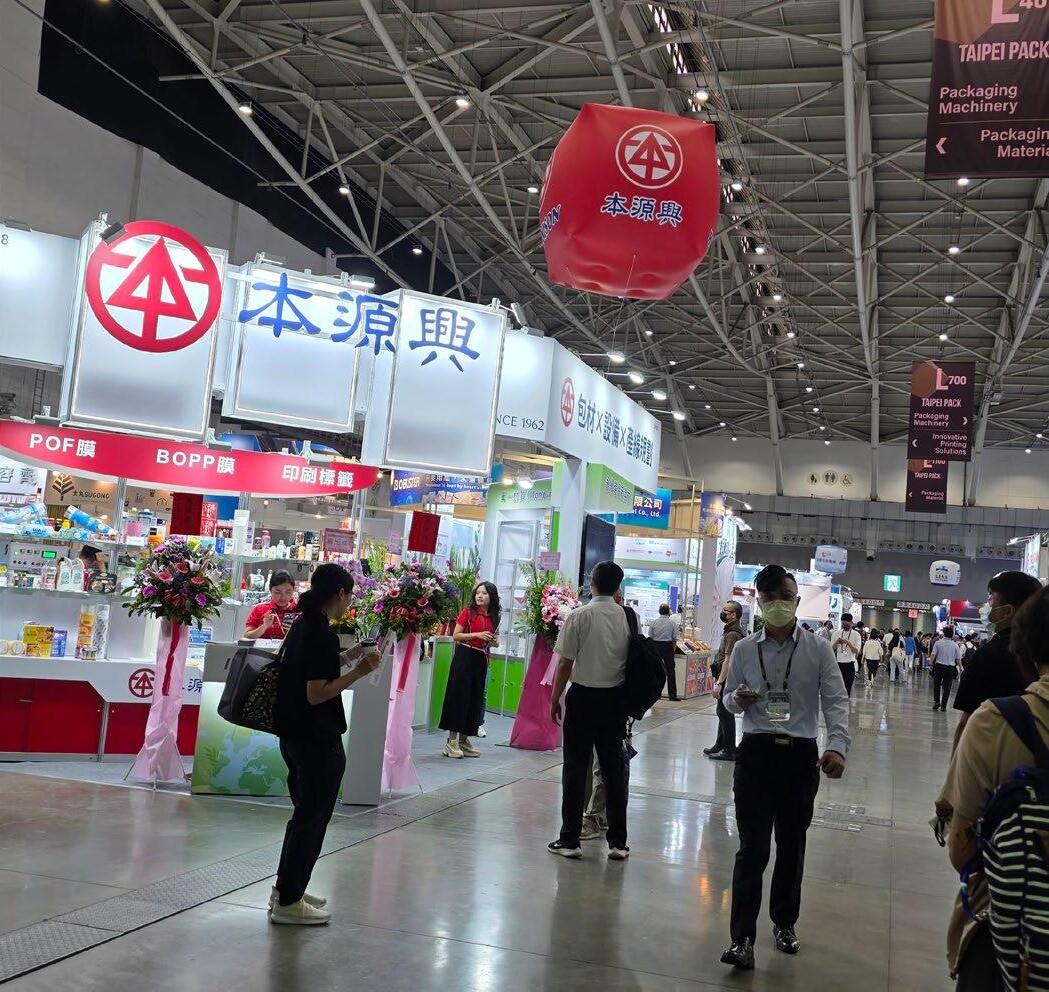
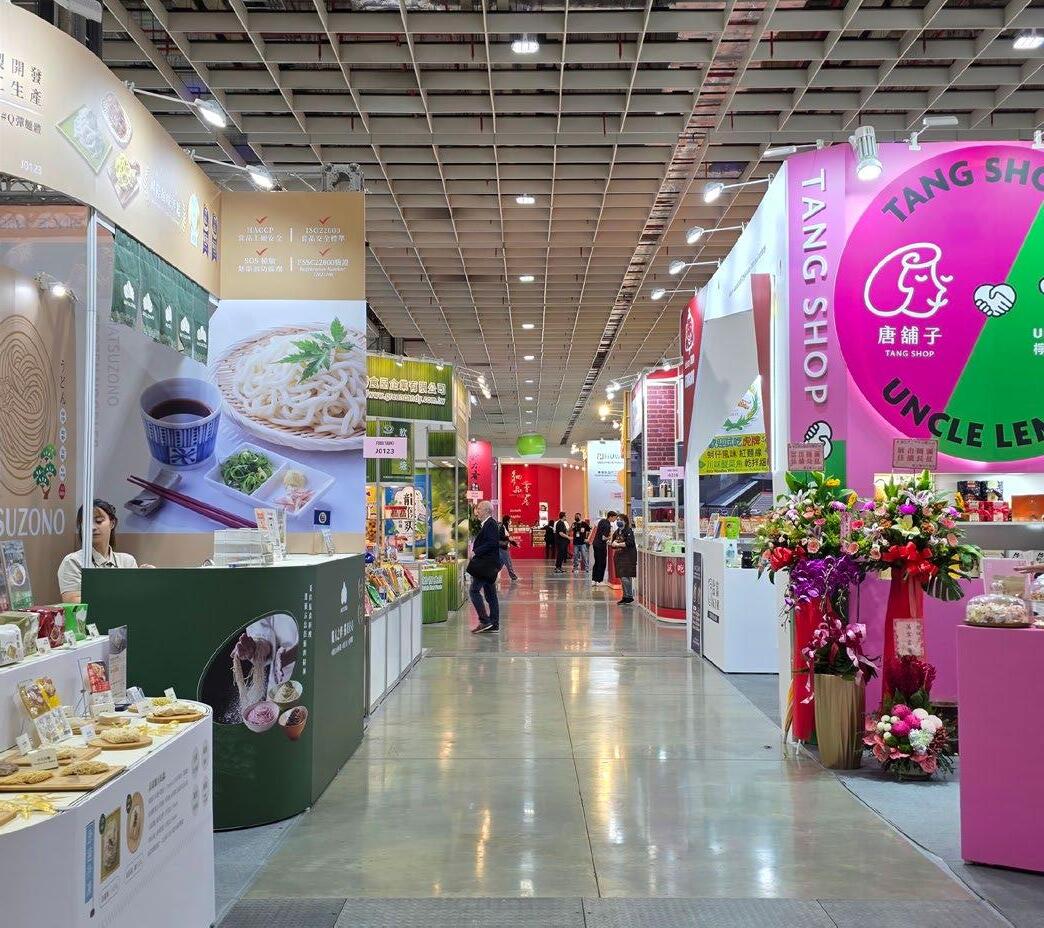
Roughly one-fifth of the firms recognised under the Taiwan Corporate Sustainability Awards programme had environmental violations, and about 40 per cent had breached labour regulations, including cases involving fatal workplace accidents. The report’s authors argued that sustainability awards ought to recognise genuine leaders rather than companies simply meeting a minimum bar.
Food Taipei’s Green Vision Award is a separate scheme from those reviewed, but the findings underline why TAITRA’s decision to bring in an external, internationally recognised assessor for its own ESG award is a sensible hedge against the same scrutiny eventually landing on trade show honours.
The forum’s third pillar, framed in the transcript as “disruptive business-model sharing,” addressed a question Taiwanese food brands have wrestled with for years: how to carry genuinely local products into premium international categories without losing what made them distinctive at home. Organisers described the goal as helping Taiwanese brands build outward from local values toward higher-end markets and international arenas, with the explicit hope that companies attending the forum would carry the trends discussed back into their own product roadmaps.
That ambition runs through several of the show’s other components. The Taiwan Pavilion, led this year by the Ministry of Agriculture alongside sixteen local government pavilions, was built specifically to showcase the island’s agricultural innovation, food R&D capability and regional specialities to the buyers passing through. It is the same instinct behind Taiwan’s pursuit of the USDA endorsement and behind Huang’s framing of semiconductor-grade precision as something Taiwan can export into food production processes rather than keep confined to chips.
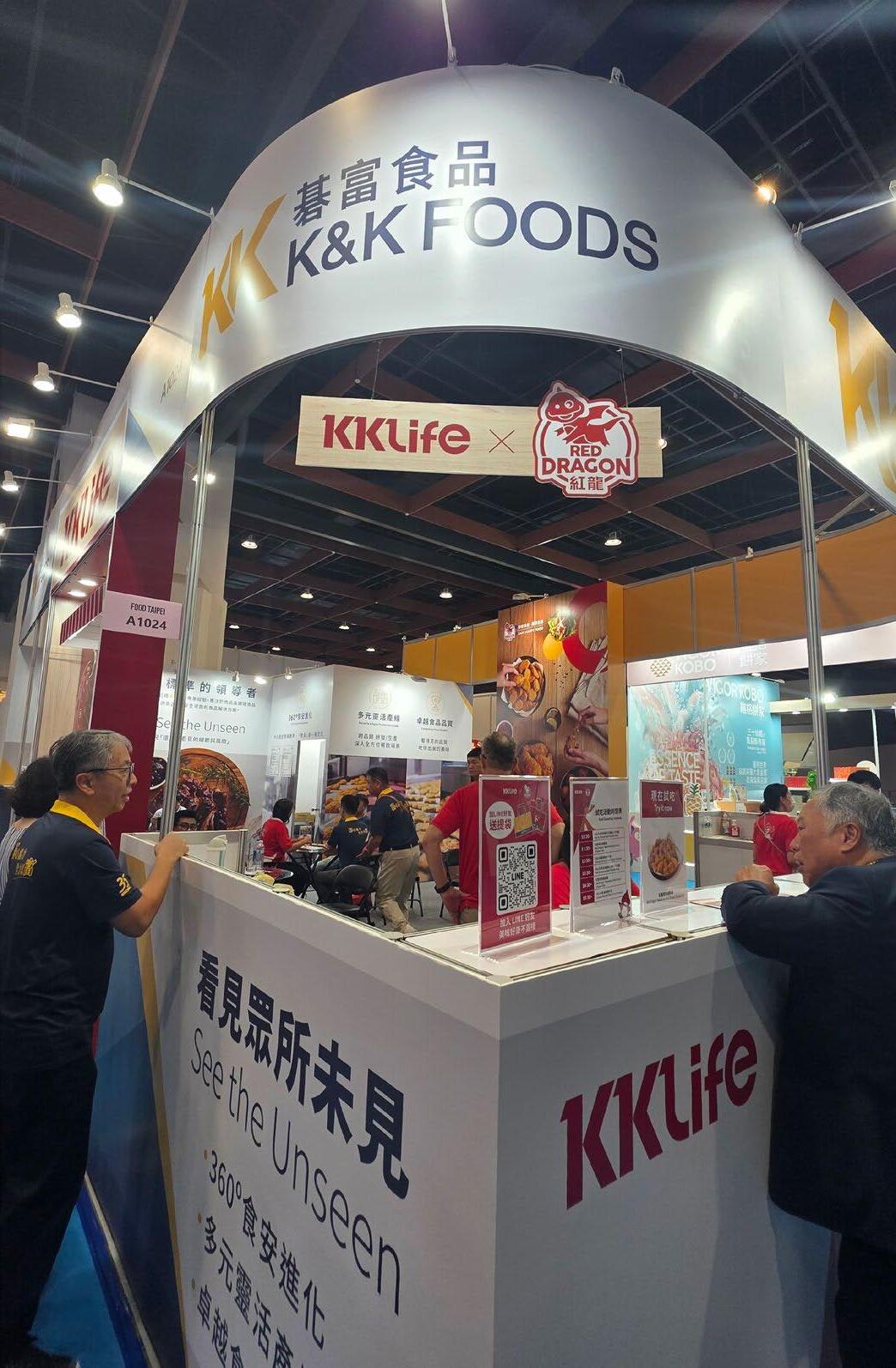
Viewed across three editions, the trajectory is consistent rather than dramatic: 2024’s roughly 1,640 exhibitors and 47,000 visitors gave way to 2025’s 1,700 exhibitors and over 50,000 visitors, which gave way to 2026’s nearly 1,800 exhibitors and an expected 50,000plus visitors across an expanded three-venue footprint. The growth is real but incremental, and TAITRA’s own description of the 2025 edition as “2 to 3 percent larger than last year” suggests organisers are managing expectations around steady expansion rather than promising a breakout year.
What changed more visibly in 2026 was not the headline count but the architecture underneath it: a new pavilion purpose-built for precision nutrition, an AI-and-supply-chain panel willing to admit how unsettled the technology still is, a sustainability award strengthened with outside verification, and a USDA endorsement that gives the show a credibility marker it did not carry twelve months earlier. For an industry being asked to get more personalised and more sustainable at the same time, that is arguably a more useful signal than the booth count.
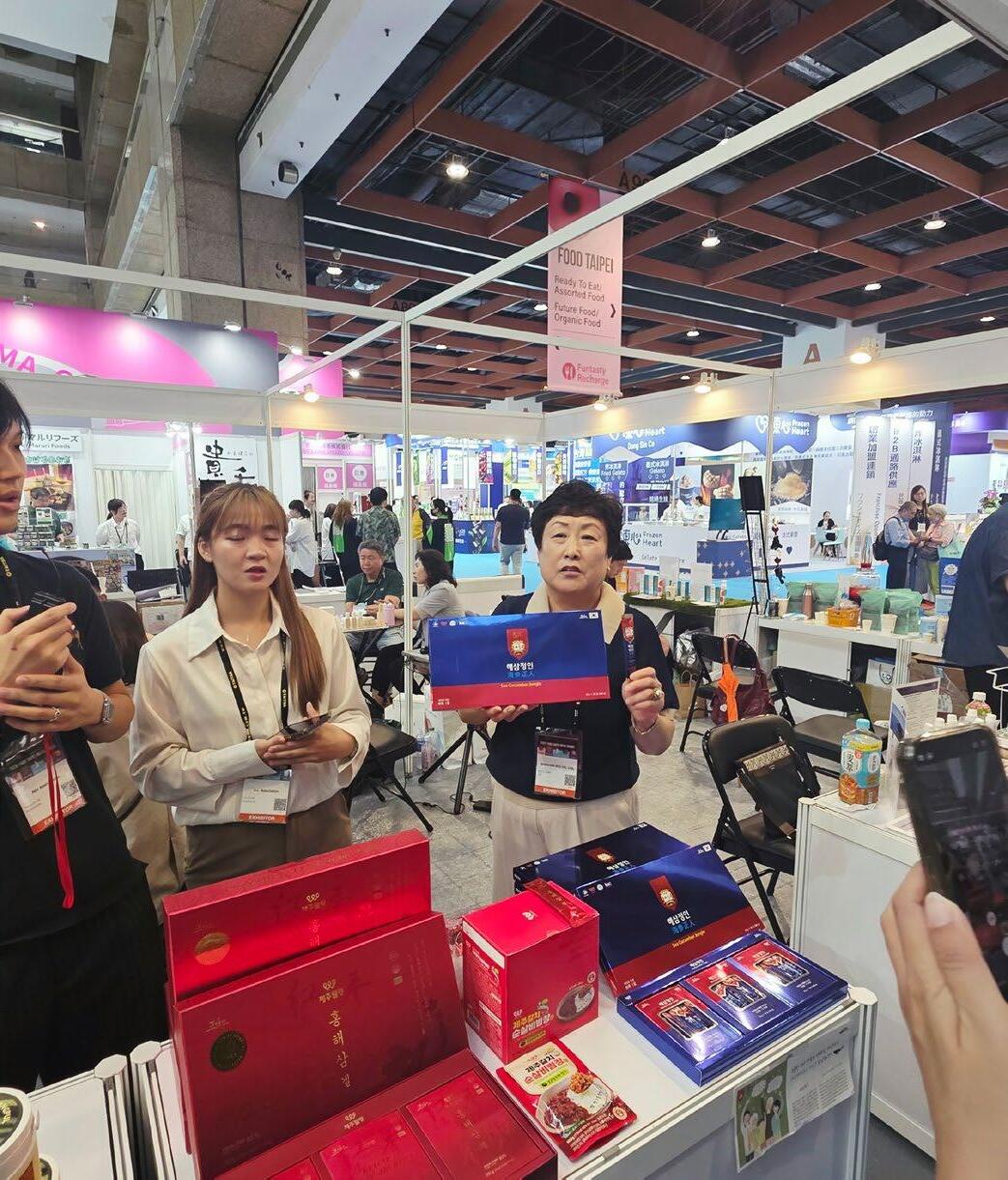
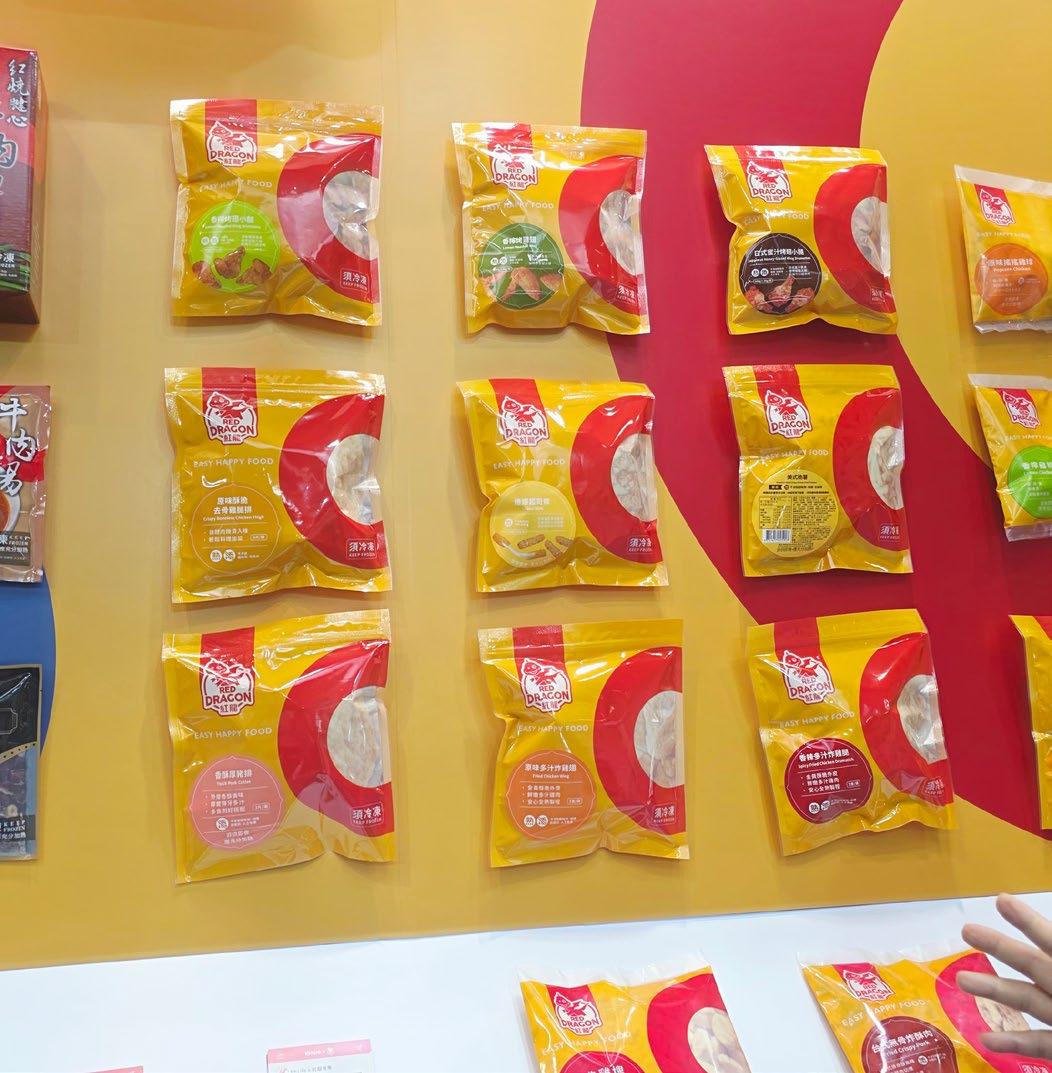

JULY 28 - JULY 30 | JIEXPO KEMAYORAN, JAKARTA, INDONESIA
AUGUST 24 - AUGUST 26 | XI ‘AN INTERNATIONAL CONVENTION AND EXHIBITION CENTER (XI ‘AN ICEC), CHINA
AUGUST 25 - AUGUST 27 | DUBAI, UNITED ARAB EMIRATES
AUGUST 26 - AUGUST 28
DIECC (KOH PICH), PHNOM PENH, CAMBODIA

SEPTEMBER 2 - SEPTEMBER 4
SANDS EXPO AND CONVENTION CENTRE, SINGAPORE

AGRIFOOD TAIWAN
SEPTEMBER 8 - SEPTEMBER 10
TAINEX 1, TAIPEI
SEPTEMBER 29 - OCTOBER 1
BOMBAY EXHIBITION CENTRE, MUMBAI, INDIA

Content Usage Disclaimer
All content in Asia Food Journal is subject to copyright. Unauthorized downloading, reproduction, reprinting, or republication without prior written permission is strictly prohibited. For inquiries, please contact editor-afj@harvest-info.com.


A D V E R T I S E A N D R E A C H
Y O U R A U D I E N C E T H R O U G H
O U R D I G I T A L C H A N N E L S

F o r a d v e r t i s i n g n e e d s e m a i l u s a t : m k t g @ h a r v e s t - i n f o . c o m


A s i a F o o d J o u r n a l A s i a F o o d J o u r n a l a s i a - f o o d - j o u r n a l - m a g a z i n e