
CORAL
COASTAL
COASTAL WATER
GEOSPATIAL SCIENCES
HYDROECOLOGY
COASTAL ENVIRONMENTAL
MESSAGE FROM THE


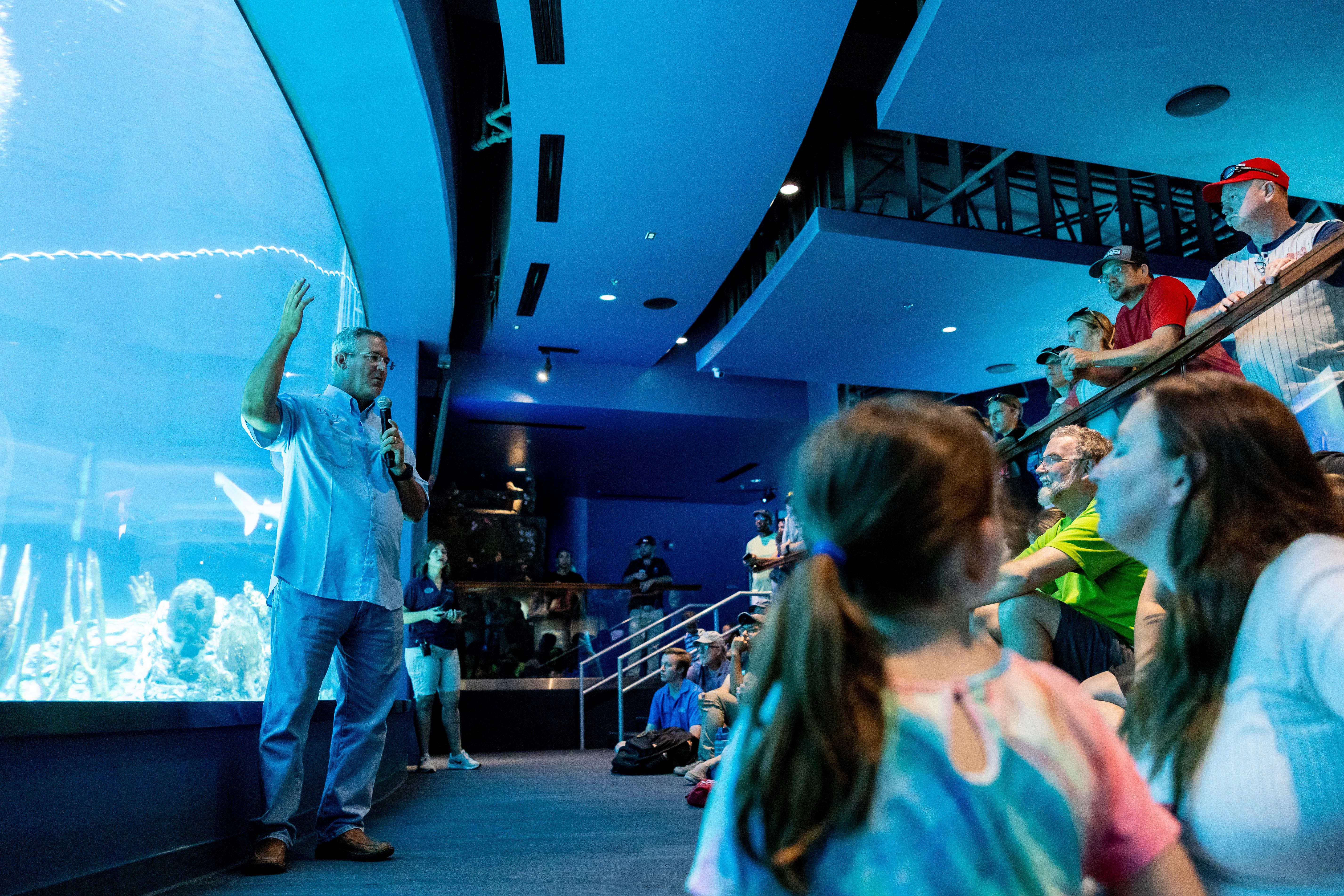
At the Harte Research Institute, people are at the center of everything we do. From the students who bring fresh ideas and energy, to the researchers who push the boundaries of knowledge, to the chairs who provide leadership and vision, our community drives our rapid progress.
For 25 years, that progress has been fueled not only by marine science, but also by innovation in law, economics, and policy. Our researchers and scientists are leading deeply impactful projects such as studying freshwater inflows to understand how human pressures stress ecosystems, applying artificial intelligence to predict bacteria on beaches and harmful algal blooms, and expanding coral reef research from the Flower Garden Banks National Marine Sanctuary to laboratory propagation initiatives that safeguard corals for conservation.
Our outreach and engagement depend on people, too. The next generation of ocean stewards are inspired by educators from the continually expanding Bringing Baffin Back™ initiative, as well as Nurdle Patrol and Beachcombing programs. Scientists and community partners advance oyster restoration through a combination of research and citizen projects like Sink Your Shucks™. Teams use drone technology to study shorebirds and guide coastal management; and shark experts continue to expand FinFinder, enhancing tagging efforts and fisheries research on species such as tarpon and red snapper.
Key international collaborations in Mexico, Cuba, and Panama bolster the relationships that strengthen conservation across the wider Gulf and beyond.
At HRI, every discovery, every program, and every success all come back to the people — people united by a shared passion for the ocean and a commitment to a healthier Gulf for generations to come.
Stunz, Ph.D.
Senior Executive Director
Harte Research Institute
nesting season from March through August, she’s surrounded by the calls and movements of colonial waterbirds.
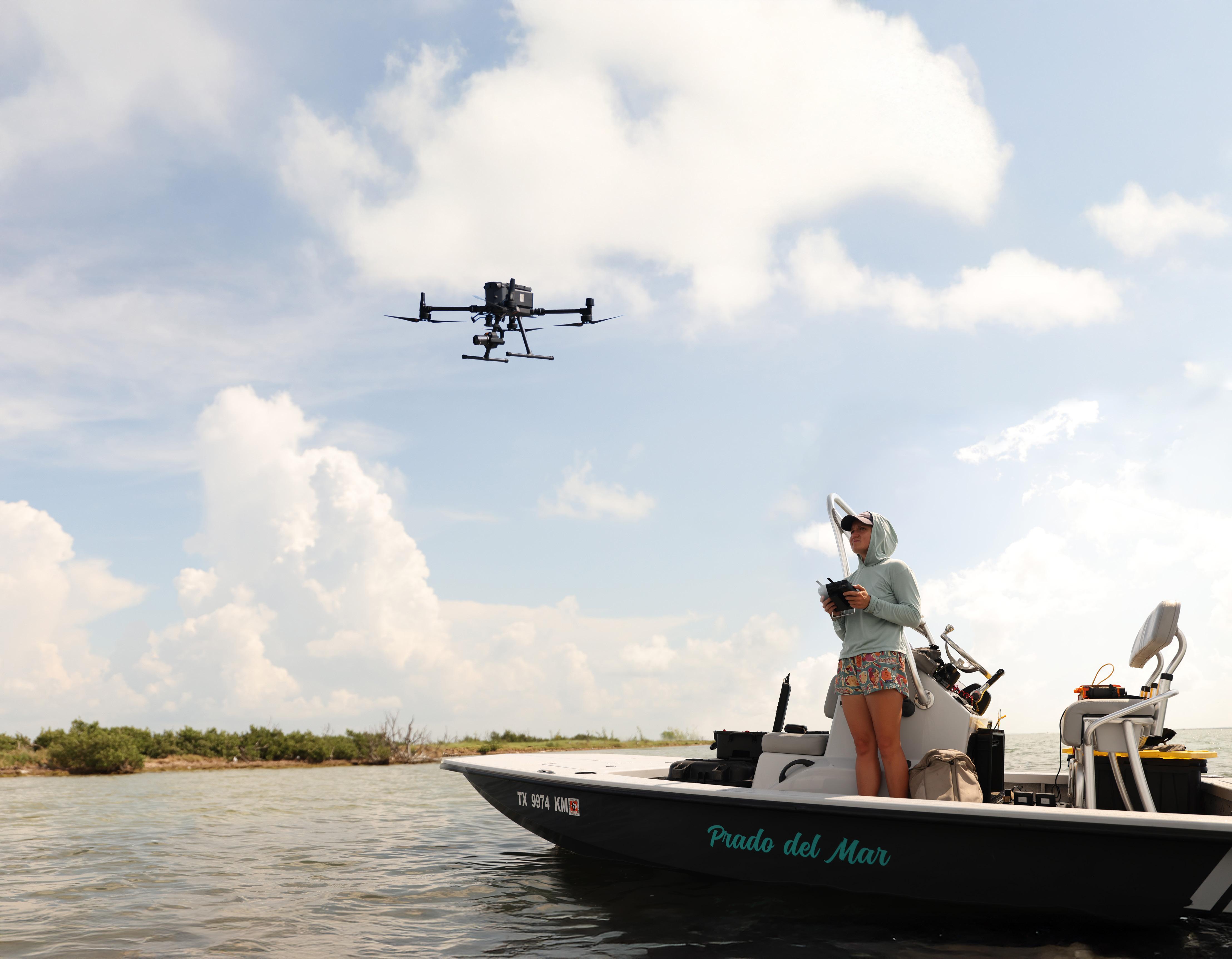
That journey, though, isn’t just about the view. As part of the Conservation and Biodiversity Lab at HRI, she is helping unlock the secrets of these fragile habitats. Supported by the NOAA RESTORE Project’s Colony Island Network and Design Implementation (CINDI) tool, her work relies on drone technology to capture a bird’s-eye view of nesting and vegetation across the islands. The islands — on which these iconic Gulf species depend for nesting — are shrinking at a rate of about 3% per year, so each flight provides new insights into how these rookeries sustain bird populations, demonstrating how science and innovation can help protect and sustain the Gulf.
Being able to step into this space each week puts things into perspective. It strips away the noise of the outside world and connects me to the main reason why conservation matters. These islands can experience harsh and sometimes unforgiving conditions, but they are also nurseries where these incredible birds are raised. To be a part of this, and to know that my work might contribute in some way to their persistence, is fulfilling and a slice of hope.
Graduate Research Assistant
Marissa’s work focuses on five species and their habitat — reddish egret, tricolored heron, great egret, Caspian tern, and black skimmer. The new insights she provides to resource managers will make restoration of rookery islands more effective and improve the sustainability of waterbird populations.
For the CINDI project, Marissa helps identify the most productive islands for restoration.
The thousands of images taken are stitched together into detailed maps, giving researchers an opportunity to track habitat changes and nesting.
Protecting these rookery islands sustains wildlife, supports coastal ecosystems, and strengthens ecotourism.
With the use of the drone, she can count eggs, trace chick development, and estimate chick age, while her imagery supports the development of AI-based monitoring techniques.
The Conservation and Biodiversity Lab provides scientific data to guide managers and policymakers in sustaining Gulf bird species, which connect wetlands, marshes, and marine ecosystems.
Bird response to habitat change
Waterbird ecology and conservation
Ecosystem restoration
Monitoring programs and habitat modeling


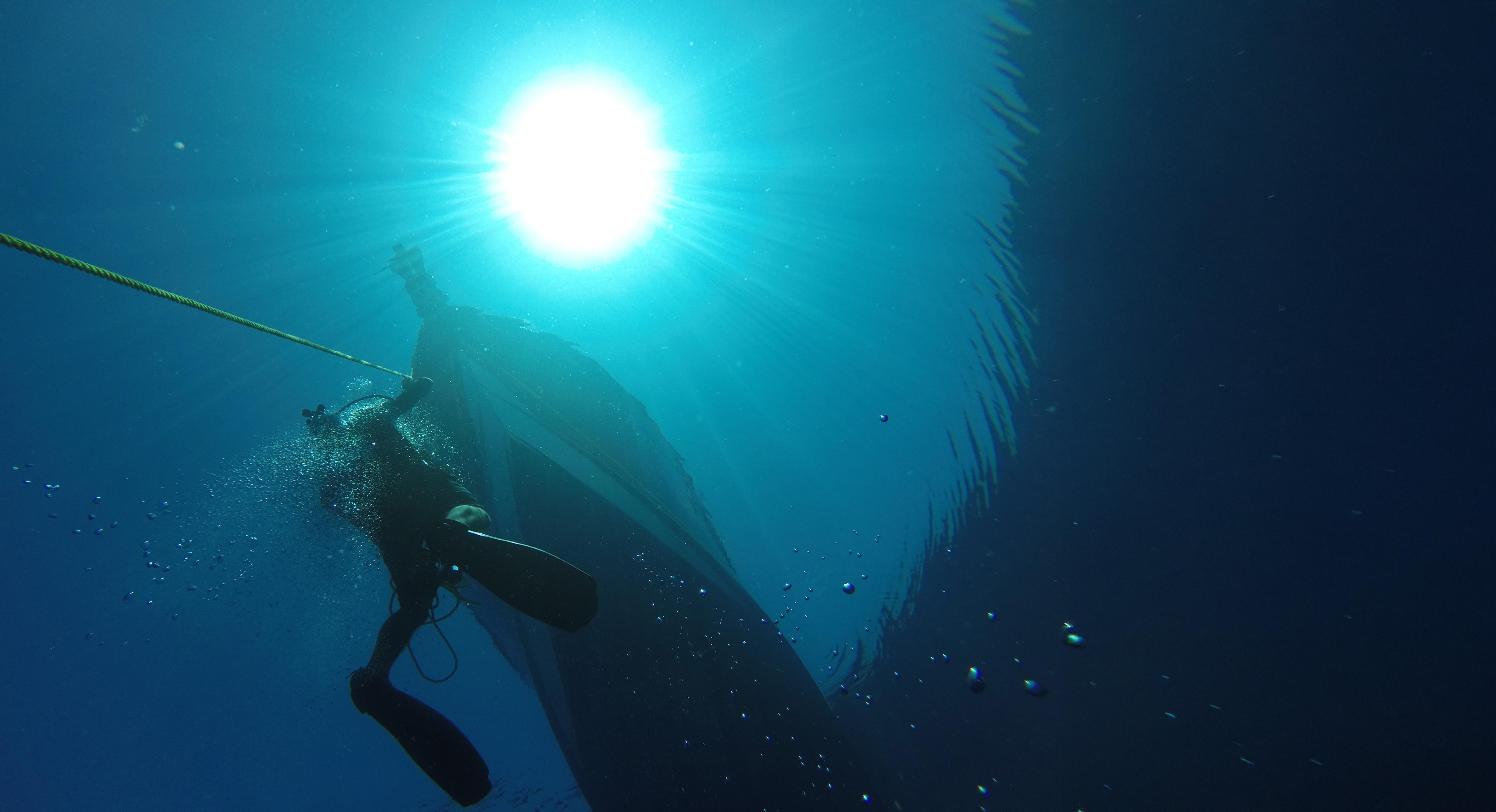
While finding sustainable solutions through science drives Jason Williams ’11, he also sees two other perks to his job as a Research Specialist with the Center for Sportfish Science and Conservation (CSSC) at HRI — the chance to work outdoors and the opportunity to work with exceptional people. Jason likes to say he’s “mortar for the bricks,” serving as a facilitator for many of the lab’s research projects. The position gives him the opportunity to watch young scientists grow and mature while participating in work that ranges from fish surveys on artificial reefs to scuba diving and shark research. It’s that versatility that intrigues him each day and allows him to continually gain new knowledge, expand his understanding, and help others see the connections that make up a living coast.

I have the privilege to work with intelligent, inspired people that are motivated to learn more for the sake of knowledge. I was inspired by a whole crew of preceding scientists that had a contagious thirst and drive. People come into the lab, focus on a particular project for a few years and earn a master’s or Ph.D., and it’s an honor to see them push and better themselves and go on to prolific careers in science.
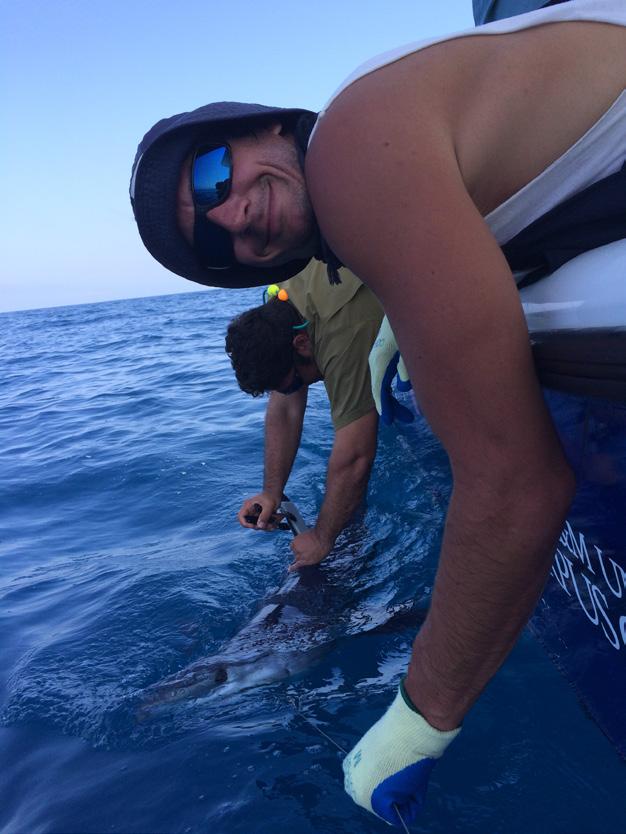
Jason’s work with the CSSC spans a wide array of hands-on research, from diving and remotely operated vehicle (ROV) surveys of artificial reefs and sunken ships to fish identification, mapping, and field collection using seines, gill nets, longlines, and other sampling gear. His involvement in multiple projects has strengthened his technical skills and broadened his field experience while deepening his understanding of coastal ecosystems and the fisheries they support.
The results of this research help inform key state and federal decision makers on marine management. The combination of multifaceted research paired with collaboration keeps his work dynamic and meaningful, allowing him to contribute to the lab’s mission of advancing knowledge of sportfish and promoting healthy marine fisheries in the Gulf.
Led by Dr. Matt Streich, Mark W. Ray CCA Texas Endowed Director
The CSSC — better known as the Sportfish Center — is a leader in providing scientific data for the sustainable management of marine recreational fisheries and ocean resources in the Gulf and beyond. Its research covers migration patterns, the role of estuaries and nearshore waters in sustaining marine populations, and the ecological importance of apex predators like sharks. The CSSC is helping conserve the species that define Gulf waters and sustain coastal communities — from red snapper to spotted seatrout.
ristina Alexander is the lawyer among the scientists at HRI. As the Endowed Chair of Marine Policy and Law, she researches the same subjects as they do — fisheries, waterbirds, sea level rise — but focuses on finding legal solutions. What makes her work a little different from other environmental lawyers is her goal to communicate law with non-lawyers and to make it interesting for people to learn about the laws affecting the Texas coast and waters.
In 2025, Kristina created two online resources to protect the nesting birds on Texas coasts: Law Enforcement Guide to Reducing Human Interference with Coastal Nesting Birds and Ideas to Increase Coastal Nesting Bird Protection in Texas. Used by law enforcement and birders, these guides provide practical steps to safeguard nesting sites and ensure these species thrive. Her publication, Third Coast Lines, has connected scientists and citizens to current legal matters such as sea water desalination, Rice’s whale conservation, and wind energy production, explaining those issues to raise awareness and deepen understanding of coastal and marine law.
Led
by Kristina Alexander, Endowed Chair for Marine Policy and Law
HRI’s foundation is its interdisciplinary approach to solving the challenges facing the Gulf. The Marine Policy and Law program is unique among marine institutes, focusing on how laws affect the use and enjoyment of natural resources. By mentoring graduate students and new-career attorneys, Kristina is expanding HRI’s reach to get more people excited about making an impact on the Gulf.
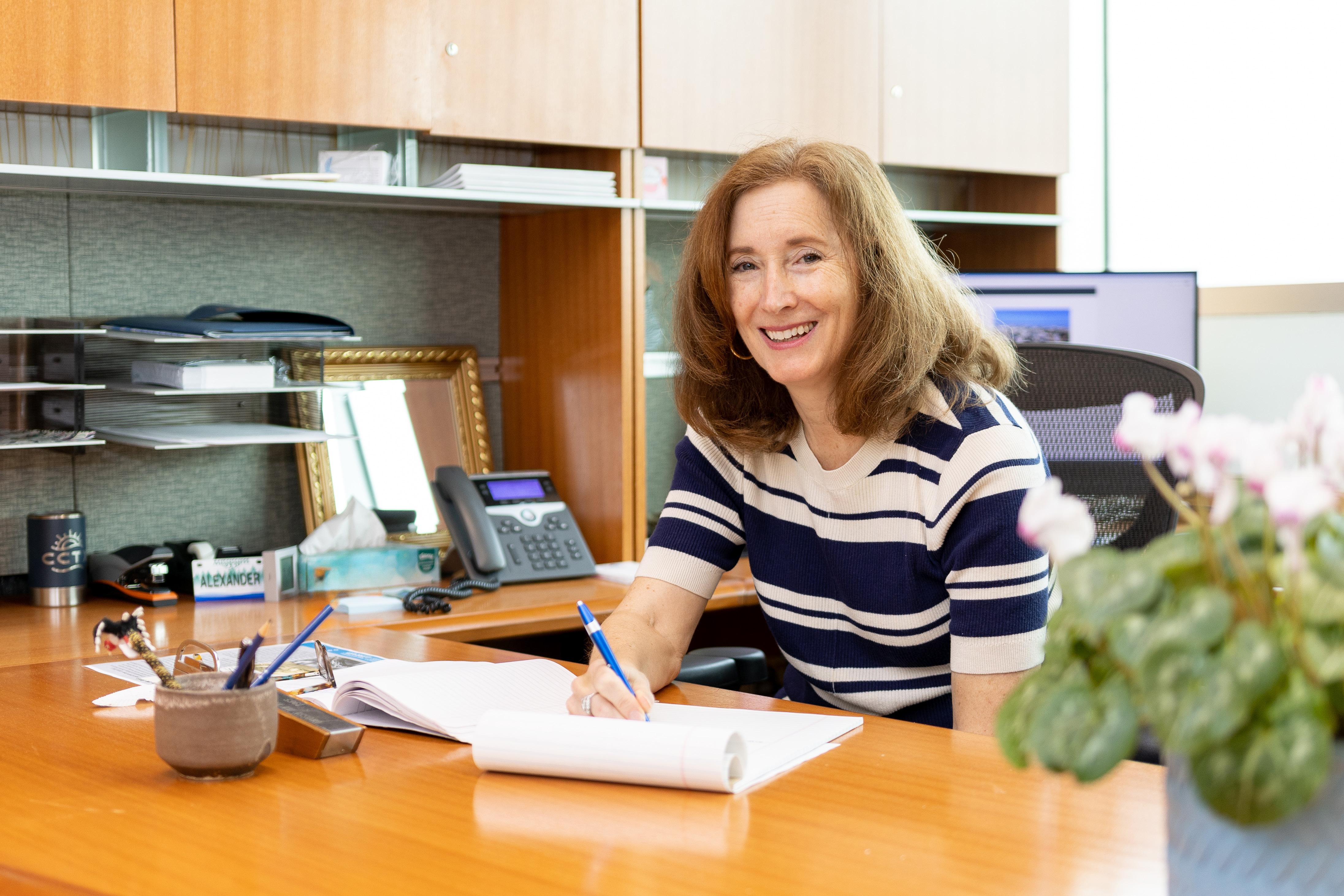


I want people to know they can look to HRI when they have questions about what the law allows regarding coastal and marine issues. They can take informed action to support the vitality of the Gulf.
Kristina Alexander, J.D. Endowed Chair for Marine Policy and Law
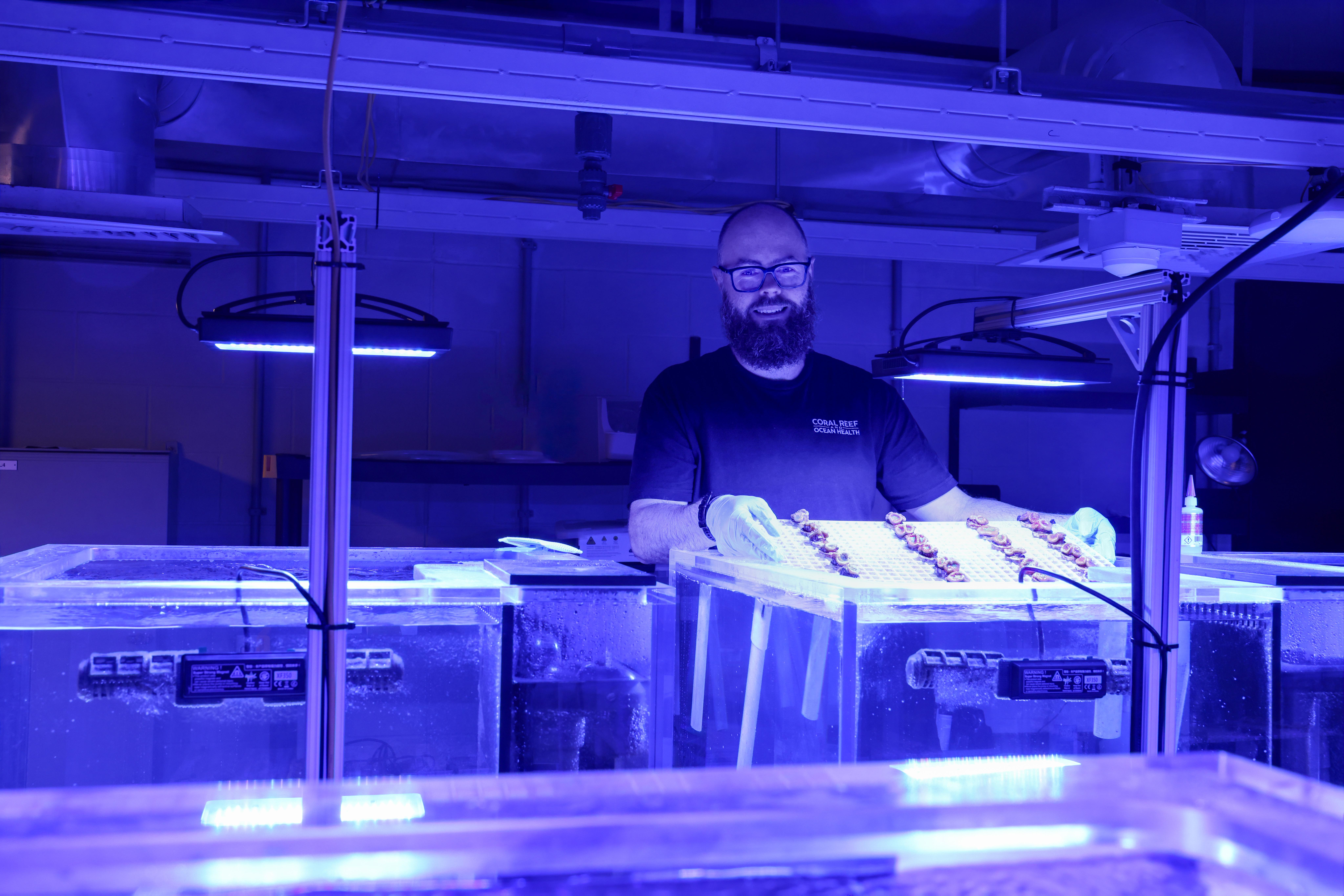
ack Willans experiences multiple worlds when it comes to corals. As HRI’s Research Aquarist for the Coral Reef and Ocean Health Lab, Jack cares for corals in the institute’s growing aquarium facilities while also serving as lead diver in field operations, giving him the chance to observe them in their natural habitat, including in the Gulf’s Flower Garden Banks National Marine Sanctuary. Together, these roles position Jack at the forefront of research into corals and their vital role in sustaining ocean health. He relishes witnessing how a tiny coral polyp can build vast, intricate reefs that, under the right conditions, can live for centuries. Knowing these reefs support more than 25% of all marine organisms and provide resources for over a billion people, despite covering only a fraction of the ocean floor, fuels his passion for the work.
Jack’s work involves keeping the corals at the Coral Reef and Ocean Health Lab healthy and helping them recover from stress that can occur during research activities. His responsibilities include:
Regular water testing
Health monitoring and feeding
Training others in the lab on how to care for the corals and their systems
Maintaining coral health is essential for producing accurate research results and understanding species’ limits. This research not only informs environmental policy but also supports education, conservation, and coral reef restoration efforts.
Led by Dr. Keisha Bahr, HRI Chair for Coral Reef and Ocean Health
The Coral Reef and Ocean Health Lab continues its growth at HRI as it uses cutting-edge research to better understand coral reefs and their importance to ocean health. Its goal is to uncover insights into ecosystem health and resilience, anticipate future biodiversity trends, and provide stakeholders and communities with information they need to support conservation efforts.
” “
I hope that the work I do will allow us to learn more about the reefs found in the Gulf, such as the Flower Garden Banks National Marine Sanctuary, and why they are doing as well as they are. I also hope that our work will help keep HRI at the forefront of coral research and allow us to look after and work with more species.
Jack Willans, M.S. Research Aquarist

For HRI, this strengthens our role as a bridge between science and action — delivering datasets, methods, and maps that guide planning, permitting, and funding — while training students and engaging the community. By sharing methods and results with national collaborators and on international stages, we connect Texas insights to global oyster-reef recovery and highlight HRI’s leadership in science-driven solutions.
Savage ’26 Graduate Research Assistant ”
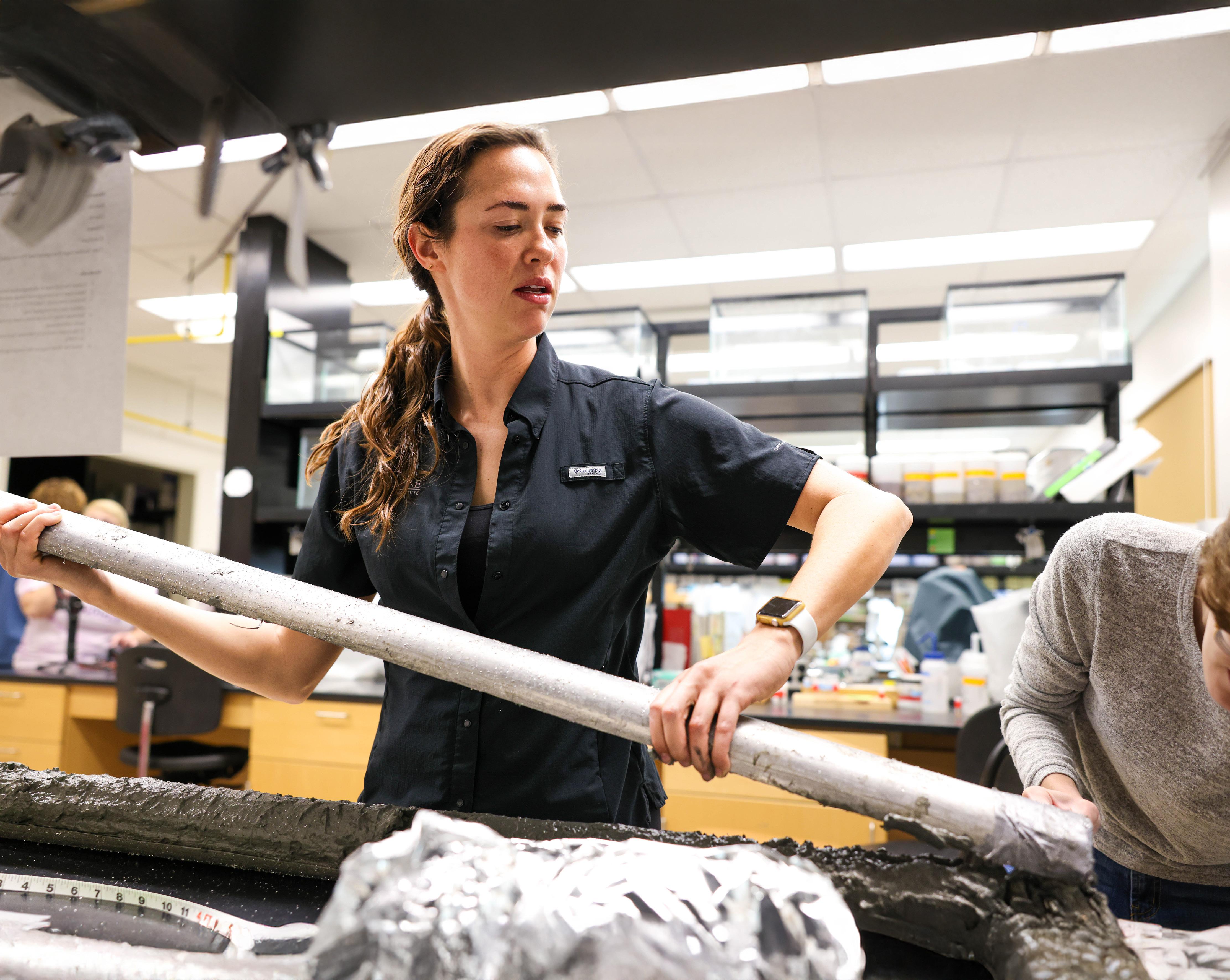

The work of Kelley Savage ’26 illustrates ambitious science takes support, which is championed at HRI through a “let’s solve it” culture. Kelley’s study of oyster reefs and carbon sequestration recently presented the challenge of extracting and processing core samples from subtidal reefs.
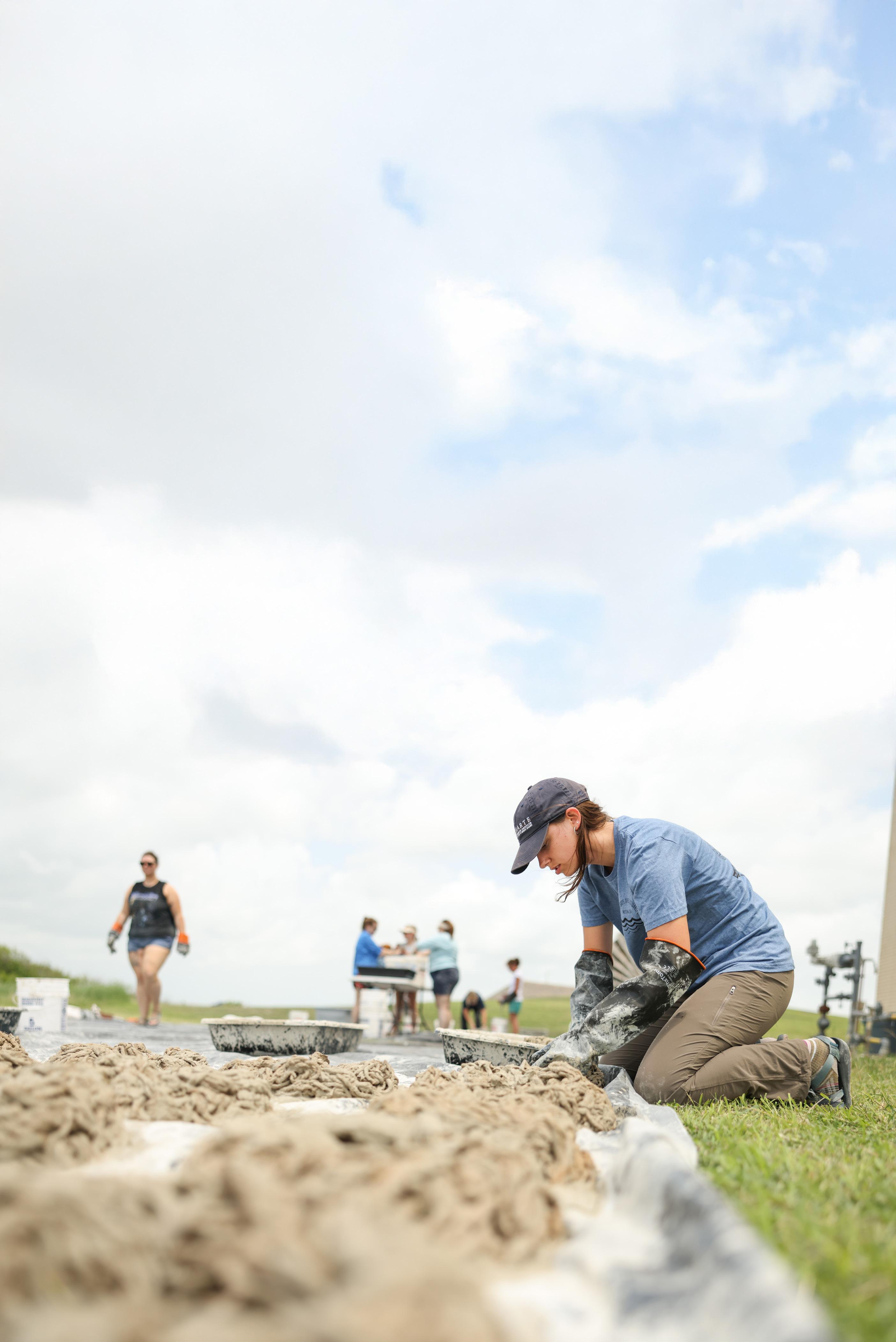
After collecting 22 vibracores, 13 lab mates and staff pitched in to process and store the samples — even carrying a few 3-meter cores upstairs. Within days, the team staged the cores in a walk-in chamber, cut them open using a custom-built cradle, and archived more than 600 samples for analysis.
The focus was carbon sequestration: nature’s way of storing carbon to keep it out of the atmosphere and slow climate change. Kelley and her team are intrigued by what the cores may reveal since few researchers have looked that far back in the Gulf’s oyster reef history. The experience reinforced for Kelley that with the right support, even the toughest projects can lead to discoveries that shape conservation and restoration.
Kelley’s research examines the carbon storage potential of natural and restored oyster reefs across tidal zones and habitats. Oyster reefs provide key benefits including shoreline protection and water filtration, along with potential carbon storage. By combining field and lab analyses with stable isotope tracing to quantify carbon stocks and burial rates, this project can help identify tools to guide restoration policies, with key elements including:
Prioritizing sites with the greatest ecological and climate benefits
Building a standardized framework where early results can be updated as the work expands
Engaging communities to support restored reefs that strengthen coastal resilience and ecology
Applying findings and methods beyond the Gulf to inform restoration efforts worldwide
Led by Dr. Jennifer Pollack, Larry D. McKinney Endowed Chair
Home to the innovative Sink Your Shucks™ oyster shell recycling program, the Coastal Conservation and Restoration Lab studies how habitats, and the wildlife that depend on them, respond to changing conditions. Through field research, lab work, and data analysis, the lab informs restoration and management decisions that protect and restore coasts, while building tools, sharing knowledge, and working with communities to help coastal habitats and the people who depend on them thrive.
Each day brings a new challenge for Athena Frasca, and it’s those challenges that fuel her curiosity and passion for learning. As the Watershed Restoration Coordinator for the Bringing Baffin Back™ initiative, Athena helps lead one of Texas conservation’s most unique collaborations.
The Bringing Baffin Back™ initiative was born from the concern of long-time anglers and residents who had seen the decline of their beloved bay over time. Today, that concern has transformed into coordinated action. Through her role, Athena helps lead implementation of a Watershed Protection Plan for the bay, bringing together stakeholders and identifying the resources needed to improve water quality and restore the bay and its watershed.
Bringing Baffin Back™ pursues short-term and long-term goals to restore the health of a bay many call a “Texas Treasure.” Thanks to consistent stakeholder engagement, community collaboration, and on-the-ground action, the initiative is making an impact through:
Adopting conservation practices for soil and water health
Habitat restoration
Water quality improvements
Community engagement and education
And over time, that work will contribute to:
Cleaner water
A more resilient ecosystem
And most of all, a healthy Baffin Bay
Led by Dr. Michael Wetz, HRI Endowed Chair for Coastal Water Health
The Coastal Water Health Lab conducts applied research to address the pressing challenges facing estuaries and coastal waters. By studying how these systems function, the lab provides a strong scientific foundation for management decisions that protect and restore water quality.Through efforts such as the Bringing Baffin Back™ initiative, the Clean Coast Texas program, and leadership in harmful algal bloom monitoring, the lab is advancing practical solutions that support healthier ecosystems and communities.
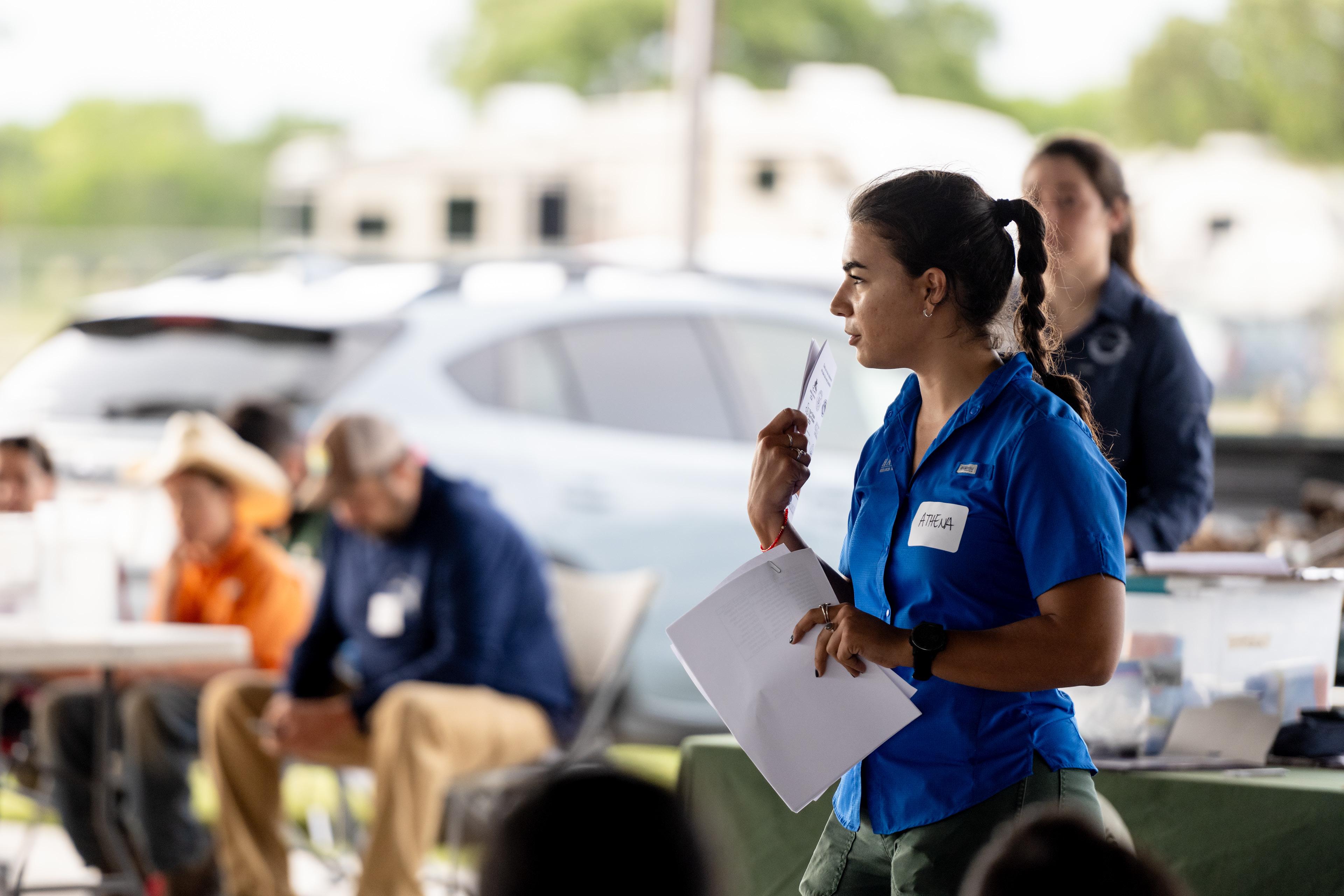
Baffin Bay is ecologically unique and central to the culture and economy of the Texas coast. Decades of stressors have placed the bay under strain from nutrient and bacterial pollutants. Addressing these issues at the watershed scale means tackling the root causes of water quality degradation, with the goal of safeguarding biodiversity, restoring ecosystem health, and protecting the livelihoods and traditions that depend on a healthy bay.
The list of collaborators Felimon Gayanilo is involved with is a who’s who of agencies in Texas and the United States — NOAA; NASA; National Academies of Sciences, Engineering, and Medicine; and the Texas General Land O ce. While Felimon may not often be in the spotlight, his work supports data-driven decision-making addressing coastal resilience. Felimon’s work as an Information Systems Architect designing advanced IT solutions — including the use of Arti cial Intelligence (AI) and Machine Learning (ML) — helps scientists reach beyond traditional approaches to discover new insights and create innovative solutions.
This work may seem complicated, but it o ers simple solutions: online databases capable of ingesting vast amounts of data that can accelerate the search for scienti c information and ultimately shorten the time required to address scienti c challenges. Using AI and ML tools can assist in predicting and classifying data that might otherwise require signi cant human resources.
Among the projects Felimon is working on:
Gulf of America Coastal Ocean Observation System (GCOOS): Creating a prototype system for the e-Predictor project that helps Texas quickly measure coastal bacteria levels and share results with agencies and the public.
Advancing Harmful Algal Bloom Monitoring E orts on the Texas Coast: Improving early detection and tracking to better protect human health and coastal economies from harmful algal blooms.
Led by Dr. James Gibeaut, Endowed Chair for Coastal and Marine Geospatial Sciences
The Coastal and Marine Geospatial Lab focuses on understanding how natural processes and human activities shape our coastal environments. By combining advanced technology with field research, the lab provides data and tools that guide science, policy, and community decision-making. Their work combines time series, sea-level rise data, storm records, and human activity trends to model and predict coastal change; produces maps and models to inform environmental policy; studies how geomorphology, sediments, hydrology, climate, and biology shape coastal environments; and fosters open-source data sharing through the Coastal and Marine Science Data Repository (GRIIDC) database.
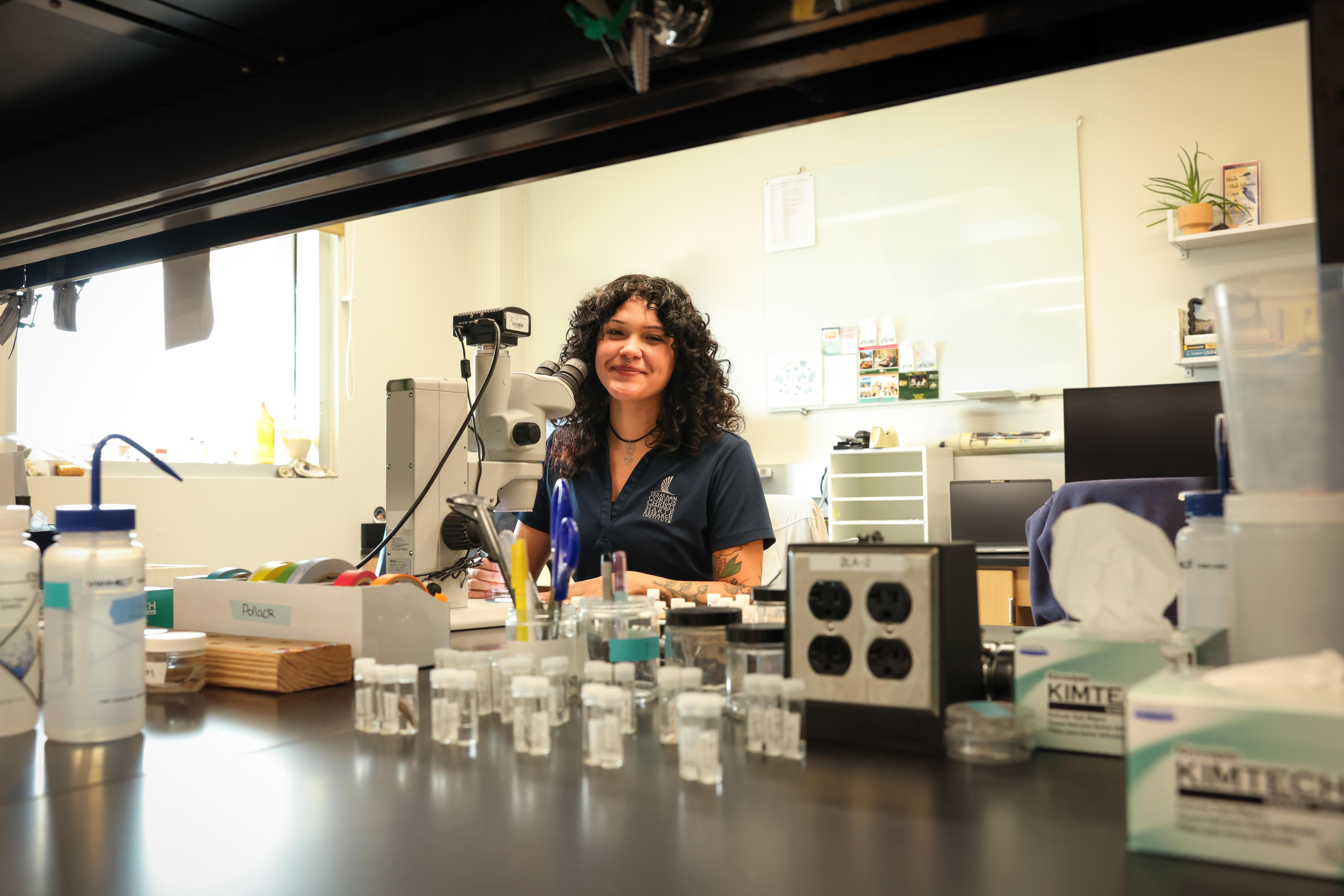
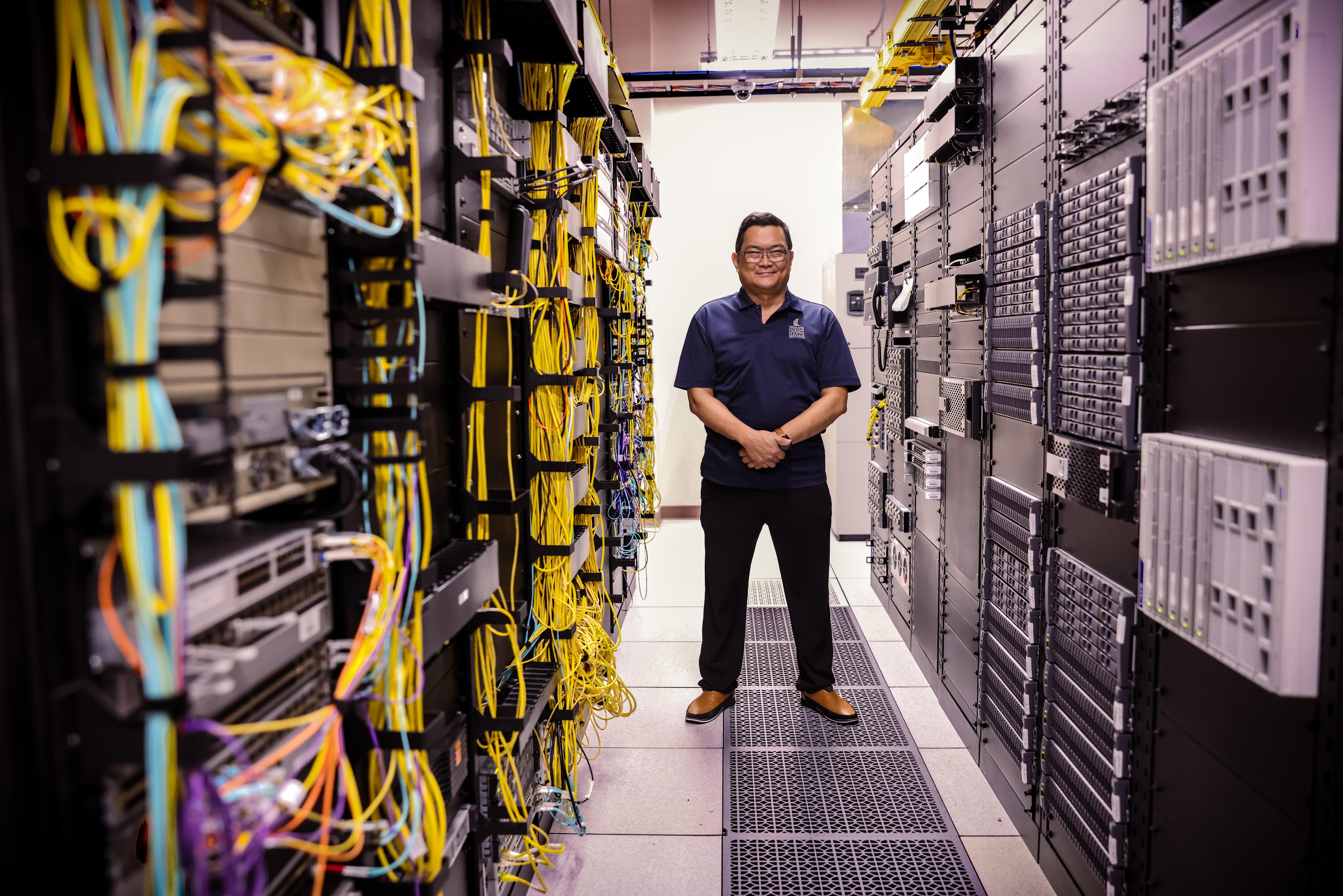
Building a strong cyberinfrastructure and archiving Gulf-centric data will enable future researchers and scientists in the region to address their scientific challenges more effectively. They will gain the ability to easily search historical data, archive current datasets, and analyze time series data. This initiative not only demonstrates effective strategies for supporting the scientific community, but also emphasizes the optimal use of recent advancements in computer science to aid in resolving scientific issues.
Felimon Gayanilo Enterprise IT Technologist
“ The best part about the work I do here at HRI is that I am able to combine two passions of mine — landscape sustainability and coastal conservation. It’s rewarding to know that the research I’m doing contributes to better conservation strategies for ecosystems that I strive to protect. There is also something very satisfying about how science can tell a story that could possibly shape how we protect areas we care deeply about.
Estuarine Researcher and Geospatial Analyst
HYDROECOLOGY

Angelica Ovalle ’26 discovered a passion for sustainability while earning her bachelor’s degree in agriculture at Texas State University, and that passion drives her work at HRI. Angelica uses ArcGIS Pro (geographic information system software) to study how land use along the Texas coast has changed over time and across different areas. Those changes are compared to factors in estuaries to understand how human activity has affected these ecosystems. Angelica’s research helps bridge the gap between land cover changes and ecosystem responses, providing insights into how land use shapes ecological outcomes downstream and supporting the integration of watershed-estuary connections into long-term land use planning.
Angelica’s work helps enhance conservation strategies by identifying which habitats are most vulnerable to human pressures and prioritizing those most at risk. The goal is to raise awareness among land developers, emphasizing that actions taken upstream can have impacts on downstream habitats.
Led by Dr. Paul Montagna, Endowed Chair for HydroEcology
The Hydroecology Lab studies how freshwater flows into bays and estuaries, and why those flows are vital for keeping coastal ecosystems healthy. The lab uses a mix of fieldwork, laboratory studies, ecological technology, and statistical modeling to better understand benthic or bottom-dwelling ecosystems. Their work also combines ecological research with socioeconomic studies, helping the lab shape sound policies and management practices that protect freshwater inflows for the future.
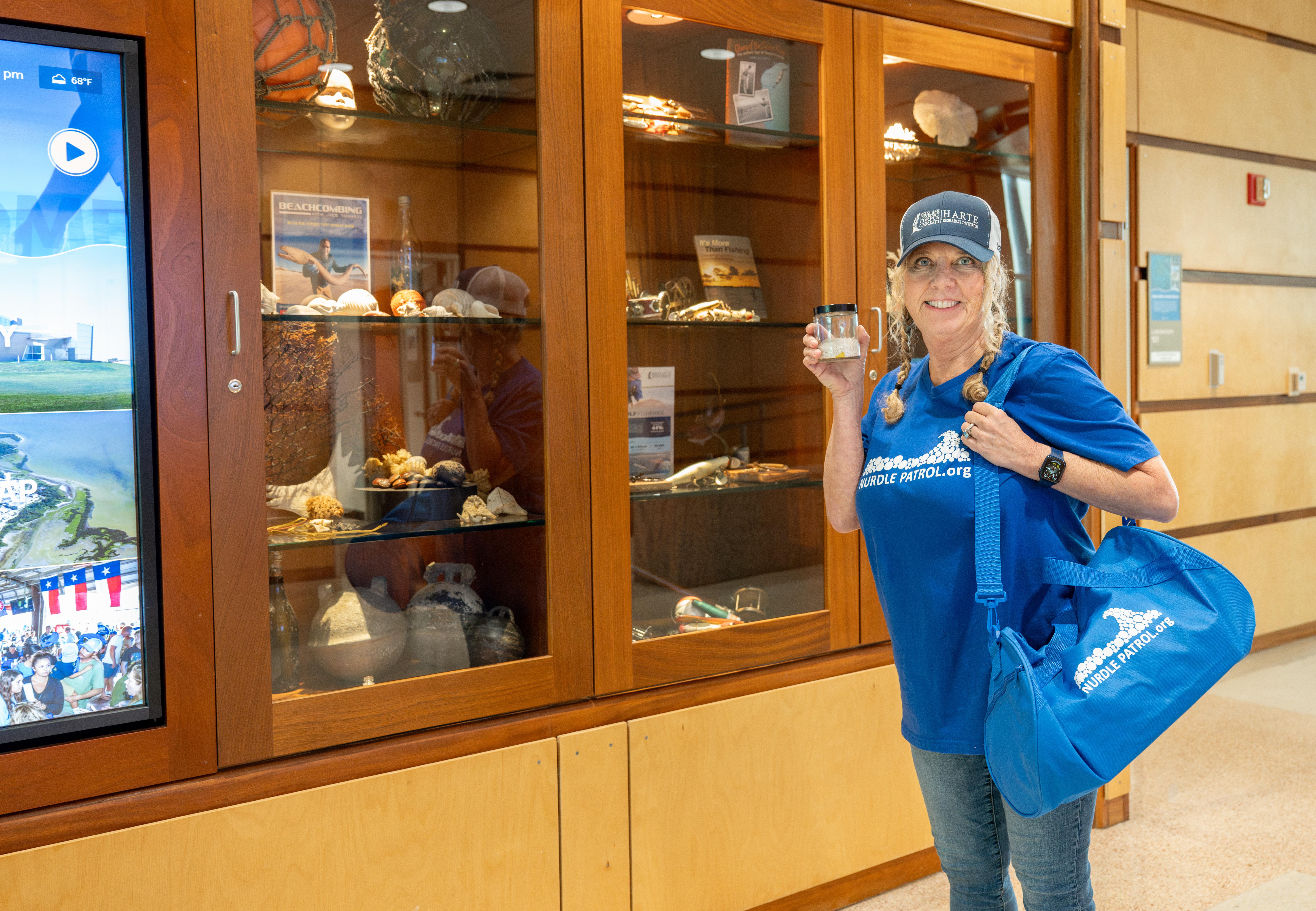
Science is more than charts and data points for Tracy Weatherall. It’s about building a foundation for sustainable coastal management and helping others see the value of engaging in environmental science. Public involvement is central to her work with the Nurdle Patrol citizen science program. Nurdles, tiny plastic pellets used to make products worldwide, pose a growing pollution problem, and Tracy’s goal is to reduce their impact along Texas’ coastline and beyond. From managing the program’s vast nurdle collection database to distributing Nurdle Patrol kits, she works tirelessly to raise awareness about nurdles and their effects on coastal communities.
Plastic pollution, including nurdles or tiny plastic pellets, is an issue that affects marine life, ecosystems, and in some cases human health.
Tracy and Nurdle Patrol are tracking the problem and driving solutions by:
Identifying polluted areas
Working toward better industry regulations
Improving handling practices for nurdles
Raising public awareness
It’s the combination of science, policy, and community action.
Led by HRI Community Engagement Director Jace Tunnell ’98, ’01
The Coastal Environmental Awareness program works to create a platform for environmental education and citizen science. Through the program's initiatives, including Nurdle Patrol, community engagement, and "Beachcombing," Tunnell's video series showcasing his finds along the Texas coast; HRI works to increase the community's understanding of Gulf Coast ecosystems. From identifying mysterious beach finds and tracking nurdles to building lasting local partnerships, the program encourages the public to learn how to protect the Gulf and contribute to a better tomorrow.
“ I hope my work helps build a stronger foundation for sustainable coastal management and inspires others to get involved in environmental science. By expanding awareness and improving data collection, I aim to support HRI’s mission of keeping the Gulf healthy and productive for future generations. I also hope our findings continue to influence meaningful environmental policies and innovations at both local and global scales.
”Tracy Weatherall Nurdle Patrol Specialist
Scientifically, the program provided a unique platform to engage with professionals from a wide range of disciplines, each bringing a distinct lens to shared conservation challenges. This diversity of perspectives reshaped how I approach problem-solving, understanding that solutions to ecological and socioeconomic issues often lie in integrating multiple ways of knowing and working.
Dr. Antonio Cantú de Leija ’25 ” “
Graduate Research Assistant
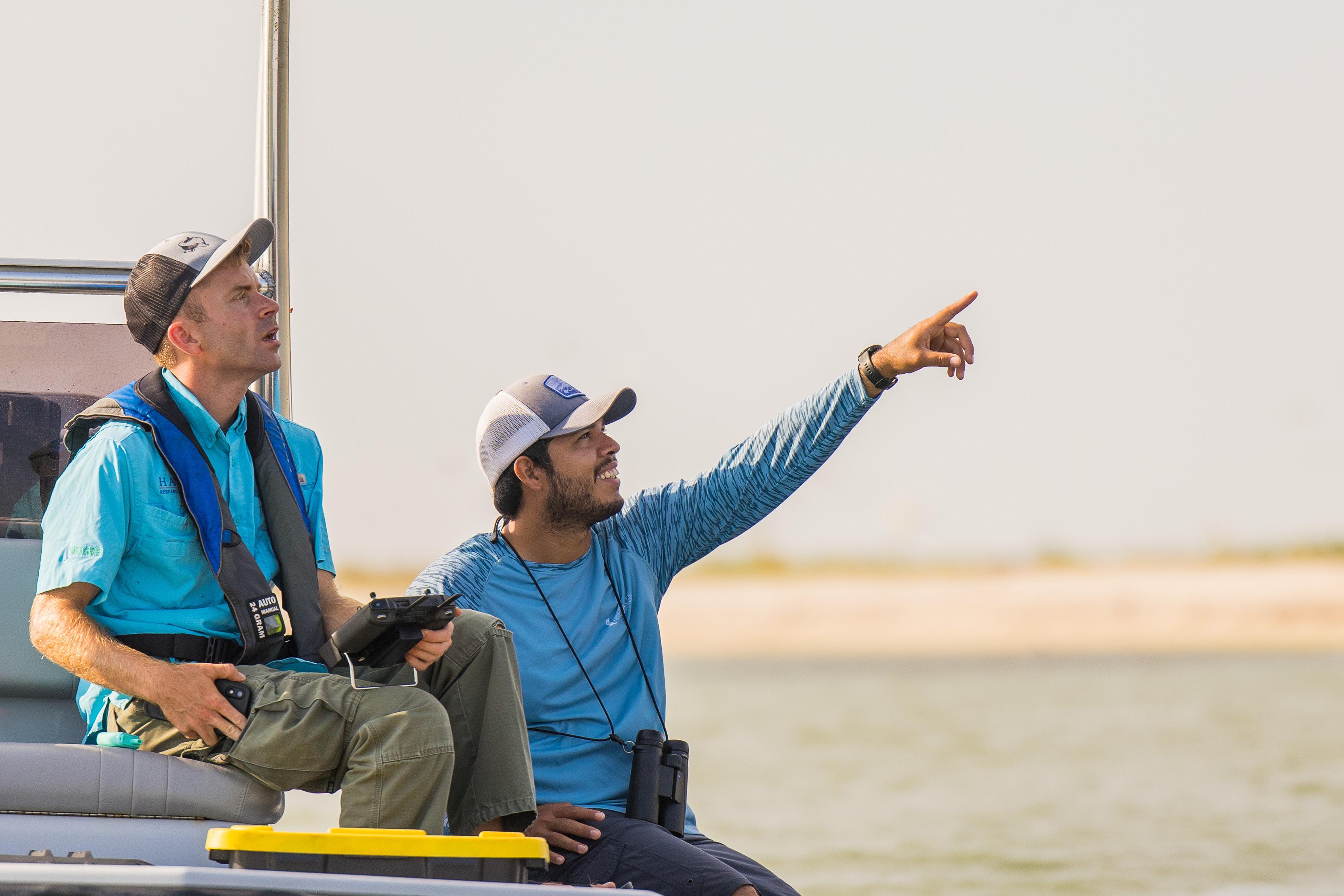
BDr. Antonio Cantú de Leija, Monitoring bird colonies
orders are no barrier for science and cooperation at the Harte Research Institute. Dr. Antonio Cantú de Leija ’25 experienced that firsthand when he participated in the Student Workshop on International Coastal and Marine Management, or SWIMM, program. Early in 2025, while pursuing his doctorate in Coastal and Marine System Science at Texas A&M University-Corpus Christi, Antonio, who worked in HRI’s Conservation and Biodiversity Lab, traveled to Tabasco, Mexico, for a portion of that year’s SWIMM seminar. It was an enlightening experience that not only helped him grow scientifically through engagement with a wide range of Gulf-related topics, but also allowed him to build relationships that shaped him as a scientist. He developed professional and personal connections that enriched his career, gaining valuable lessons in mentorship and interdisciplinary collaboration. Antonio now is an assistant professor and research scientist with the Borderlands Research Institute at Sul Ross State University and represents a new generation of scientists shaped by the SWIMM program. Through his work, he is advancing collaborative research across coastal and inland ecosystems, forging global partnerships, and promoting sustainable management of the Gulf and beyond.
The SWIMM program is one of several key initiatives within HRI’s International Program. This milestone effort helps train the next generation of coastal and marine leaders through collaboration and hands-on learning experiences. Developed in 2010, the program gives students the opportunity to participate in workshops that focus on coastal and marine management issues such as fisheries management and the discovery of new microorganisms along the beaches of Mexico — providing a firsthand look at the challenges facing the Gulf. Understanding these issues helps expand scientific knowledge, which in turn supports sustainable management of the Gulf and beyond.
Led by Director Dr. Mark Besonen, and International Chairs Dr. Silvia Patricia González Díaz, Dr. Fernando Nuno Dias Marques Simões
International collaboration between scientists in Cuba, Mexico, and the United States was part of HRI’s founding vision, one that fostered more than cooperation. The three countries share the Gulf, and what affects one likely affects all. Collaboratively advancing research on tropical ecosystems, coastal management, and marine biodiversity strengthens global partnerships, expands scientific understanding, and supports sustainable management of the Gulf and beyond. HRI’s role as a convener of international science ensures that solutions for the Gulf are built on shared expertise and collective commitment.
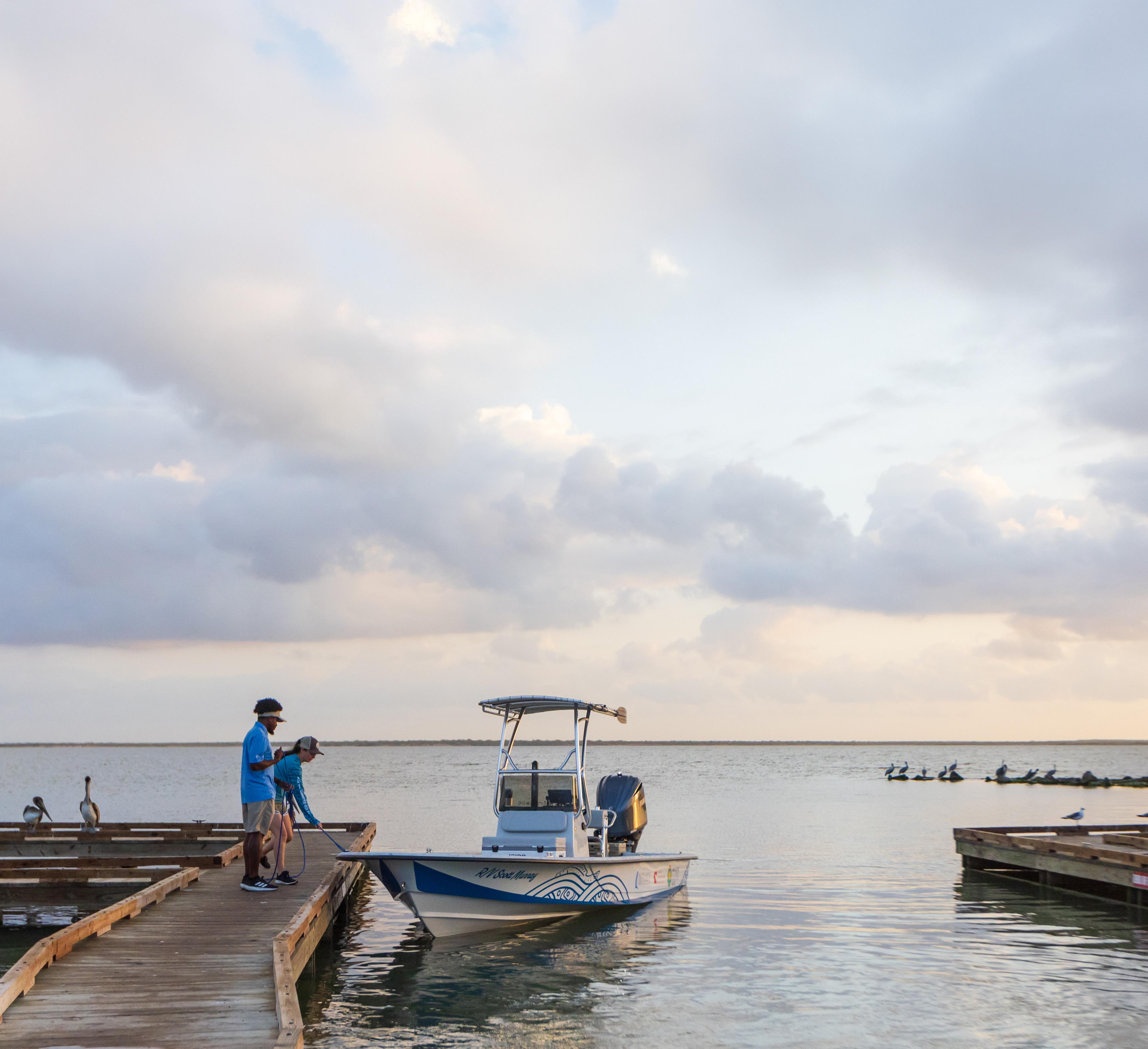

At HRI, students experience marine science firsthand. Through fieldwork, lab research, and collaboration across disciplines, students gain practical skills that prepare them to tackle real-world challenges facing our oceans and coastlines. This approach not only builds expertise, but also equips future scientists, policymakers, and conservation leaders to make meaningful impact in their careers and communities.
Lucero Barraza, M.S.
Coastal and Marine System Science Committee Chair: Dr. Mike Wetz
Coastal Water Health Lab
Dijani Laplace, M.S. Environmental Science CCME Scholar
Committee Chair:
Dr. Jennifer Smith-Engle Community Resilience Program
Nancy Ballard B.S. Marine Biology
Coastal Water Health Lab
John Pena-Baker
B.S. Environmental Science Hydroecology Lab
Alexis Jimenez
B.B.A. General Business HRI Support Staff
Melanie Ponce, M.S. Marine Biology Committee Chair:
Dr. Jennifer Pollack
Coastal Conservation and Restoration Lab
Isabelle Morales B.S. Marine Biology
Coral Reef and Ocean Health Lab
Felipe Urrutia, M.S. Marine Biology CCME Scholar
Committee Chair:
Dr. Daniel Coffey
TAMU-CC Life Sciences
Autumn Hampton B.S. Marine Biology
Coral Reef and Ocean Health Lab
Ryce Hailes B.S. Marine Biology
Coral Reef and Ocean Health Lab
Casey Gallagher, M.S. ‘22 Marine Biology Committee Chair:
Dr. Keisha Bahr
Coral Reef and Ocean Health Lab
Ellis Chapman, M.B.A. Oyster Resource and Recovery Center
Isabel Nykamp, M.S. Coastal and Marine System Science Committee Chair:
Dr. Jennifer Pollack
Coastal Conservation and Restoration Lab
Danielle Lisiecki B.S. Marine Biology
Coral Reef and Ocean Health Lab
Alexandra Good, Ph.D. Marine Biology Committee Chair:
Dr. Keisha Bahr
Coral Reef and Ocean Health Lab
Antonio Cantú de Leija, Ph.D. Coastal and Marine System Science Committee Chair: Dr. Dale Gawlik
Conservation and Biodiversity Lab
Alec Oveisi B.S. Marine Biology
Coral Reef and Ocean Health Lab
Jeanne Adams
Joyce Almaguer-Reisdorf
Dr. George Alsop and Connie Alsop
Frank and Paula Armstrong
Paula Barclay
Mary Beecroft
Regent John Bellinger and Gina Bellinger
Brian Berryman
Dr. Mark Besonen
Philip A. Blackmar
Dr. Charles Blend
Rachel Botello
John Botter
Patricia Boyd
Cecilia and Larry Bridges
Kent and Angie Britton
Bill Brooks
Charlie and Linda Brown
Charles and Carolyn Brown
Ernest Brown
CJ Buck
Bill Burge
Phyllis Burright
Ed and Pam Cantu
John and Ellen Carlson
Sheila and Karey Carrell
Andrea Chang
Louise Chapman
Barry and Janice Clark
Dr. Chuck Clark and Jan Clark
Bill and Cathy Colglazier
Marilyn Cook and Benjamin Brundrett

Ann and David Coover
Sharon Correll
George and Katherine Cox
Bruce Davis
Mac DeLaittre
Bonnie Derkits
James Dodson
Drew and Alyson Donalson
Brian Donovan
John and Mary Eads
Johan Emerensiana
Greg Espenhover
Harry Fouke
Dr. Raymond Frisbie
Elvin and Kim Fritsch
Dr. Dale Gawlik
Dr. Jim Gibeaut and Linda Gibeaut
Michael and Edie Gibson
Olga Gil Barrientos
Travis Glidden
Cynthia and Eddie Gomez
John and Graciela Greer
Jason Gunning
Tim Handren
Kelly Harding
Dr. Sandra Harper and Dave Harper
The Honorable Hayden Head and Barbara Head
Fred and Edna Heldenfels
Duane and Janet Herbst
Tracy and Robert Herrin
Henrietta Hildebrand
Dr. Vivian Ho
Bruce and Gail Hoffman
Lynton Holloway
Julianna Holt
Joe and Janet Hornblower
Dr. Xinping Hu

Jacob Hupp
Lou Hyden
David Jackson
Clint Johnson
Beverly Jones
Jerry and Kathy Kramer
Bo Kratz
Paul and Jane Kratzig
Nicole Leal
Jun Lee
Brad and Elizabeth Lomax
Andrew Marin
Dylan Mayne
Camille McAuley
Emily McCauley
John and Mary Ann McGregor
Julie and Dr. Mike McNeil
Donna Metting
Jim Meyn
Kimberly and Joe Miller
Tony Moherek
Dr. Paul Montagna and Angela Montagna
George Morrill
Thomas and Cindy Mullenix
Kirk Murray
Michael Murray
Chuck Naiser
Sherry and Dr. Robert Naismith
Duncan Neblett
Richard and Kim Nunley
Patty Nuss
Will and Ellen Ohmstede

Joey Park
Joshua Peetz
Christopher Pipes
Dr. Jennifer Pollack
Mike and Melisa Prasek
Megan Radke
Carol Reed
Evan Reilly
Bobby and Carol Richter
Cynthia Robalin
Alice Sallee
Keleigh and M. Stuart Sasser
Donna Scott
Jim Sedwick, CPA and Sharon Sedwick
Dr. Gregg Silverman and Nicole Silverman
Cindy and Lieutenant Colonel Paul Stanton
Jeff Steen
Tim and Holly Stephens
Ted Stephens
Roger Steward
Jennifer and Jonathan Streich
Dr. Greg Stunz and Cherrie Stunz
Linda Taylor
Danielle Tondre
Jace and Kathryn Tunnell
George and Claire Vaughan
Patti and Mark Veteto
John and Sally Wallace
Jay and Gretchen Watkins
Dr. Robert Webster and Allison Webster
Brittany and Harvey Weil
Dr. Gordon Welch and Debi Welch
Jimmy and Karen Welder
George and Ellen Wilkinson
Kaitlyn Witsaman
Suzann Woodward
Dr. David Yoskowitz and Carolyn Walker

Charles and Linda Zahn
BUSINESSES AND ORGANIZATIONS
American Bank
Ananias Fishing Club
Antiques and Flowers Garden Club
Baffin Bay Coastal Cast Off
Black Diamond Oyster Bar
Building Conservation Trust
Capital Counsel, LLC
Church of the Good Shepherd
CITGO Petroleum Corporation
Coastal and Estuarine Research Federation
Coastal Conservation Association Texas Copano's
Corpus Christi Yacht Club
Coterra Energy
Country Club Women's Association
Doc's Seafood & Steak Restaurant
Enbridge/Benevity
ExxonMobil
Flint Hills Resources Corpus Christi, LLC
H-E-B
Hometown Seafood
KC's Oyster Shack
Latitude 28°02'
Monday Forum
Packery Bar & Grill
Port Aransas Billfish Pachanga LLC
Port of Corpus Christi
Saltwater Fisheries Enhancement Association
SeaWorld
South Texas Charity Weekend, Inc.
Southerleigh Fine Food and Brewery
Suemaur Exploration & Production, LLC
Texas State Aquarium Institute for Wildlife Conservation
Valero Energy Corporation

Virginia's on the Bay
Water Street Oyster Bar
Weaver and Tidwell/Benevity
White - Conlee Builders
FOUNDATIONS
Amy Shelton McNutt Charitable Trust
Claudia Huntington HM Fund/American Endowment Foundation
Devary Durrill Foundation
Earl C. Sams Foundation, Inc.
Engel Family Fund/Coastal Bend Community Foundation
George and Mary Josephine Hamman Foundation
Harte Charitable Foundation
Harte Research Support Foundation
Harvey Weil Sportsman/Conservationist Award Fund/ Coastal Bend Community Foundation
James A. "Buddy" Davidson Charitable Foundation
Shield-Ayres Foundation
Sid W. Richardson Foundation
Susser Family Foundation
Texas Parks and Wildlife Foundation
Tom & Chris Custer Foundation c/o Trust Point Inc.
The Trull Foundation



In Memory of Daniel Pedrotti
American Bank
Frank and Paula Armstrong
Mary Beecroft
Patricia Boyd
Kent and Angie Britton
CJ Buck
Louise Chapman
Engel Family Fund/Coastal Bend Community Foundation
Sharon Correll
Greg Espenhover
Elvin and Kim Fritsch
Fred and Edna Heldenfels
Duane and Janet Herbst
Tracy and Robert Herrin
Bruce and Gail Hoffman
Lynton Holloway
Lou Hyden
Dylan Mayne
Camille McAuley
John and Mary Ann McGregor
Tony Moherek
Michael Murray
Patty Nuss
Alice Sallee
Keleigh and M. Stuart Sasser
Jim Sedwick, CPA and Sharon Sedwick
South Texas Charity Weekend, Inc.
Cindy and Lieutenant Colonel
Paul Stanton
Roger Steward
Suemaur Exploration & Production, LLC
Patti and Mark Veteto
John and Sally Wallace
Dr. Gordon Welch and Debi Welch
White - Conlee Builders
Suzann Woodward

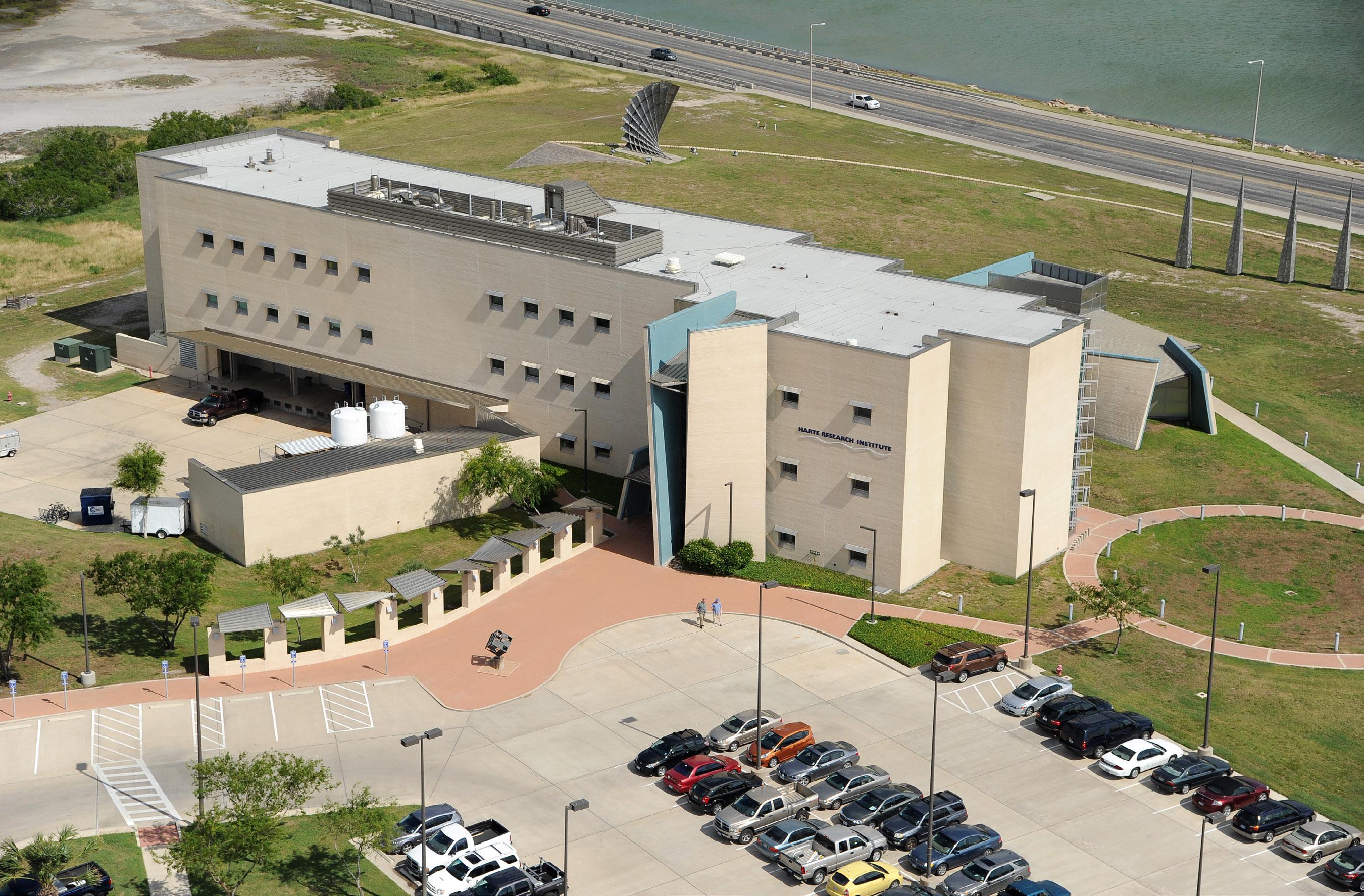
Sponsored research is a key part of HRI’s mission to create science-driven solutions™ for conservation and restoration of the Gulf’s resources. Funded projects help HRI researchers expand their scientific efforts and support a wide range of initiatives, from habitat restoration and species conservation to water quality and ecosystem health. These projects also create educational opportunities for students, helping to train the next generation of research scientists as they tackle ecological challenges in the Gulf and beyond.
1PointFive, LLC
Coastal Bend Bays and Estuaries Program
Coastal Bend Council of Governments
DOC-National Ocean Service
DOC-National Oceanic and Atmospheric Administration
DOI-Fish and Wildlife Service
DOI-National Park Service
Environmental Protection Agency
Florida Agricultural and Mechanical University
Florida Atlantic University
Florida Department of Environmental Protection
Friends of Padre
Gulf Of America Alliance
Louisiana State University
Matagorda Bay Mitigation Trust
Mississippi State University
National Academy of Sciences, Engineering, and Medicine
National Fish and Wildlife Foundation
National Science Foundation
New Jersey Sea Grant Consortium
Shell Exploration & Production Tech. Application & Research
SpaceX
Texas A&M Agrilife Extension Service
Texas A&M Agrilife Research
Texas A&M University
Texas A&M University-Kingsville
Texas Commission on Environmental Quality
Texas General Land Office
Texas Parks & Wildlife Department
Texas State University
Texas Water Development Board
University of Hawaii-Manoa
University of South Alabama
University of Southern Mississippi
University of Texas at Austin
University of Texas Marine Science Institute
USDA-Natural Resources Conservation Services
Maggie Bains Endowed Scholarship
Established in 2013 by Chapel in the Hills to assist deserving full-time students pursuing a graduate degree in marine biology and studying at the Harte Research Institute.
Coastal Conservation Association Texas Scholarship Fund – Harte Research Institute
Established in 2017 by CCA Texas to assist a full-time student in good standing, pursuing a graduate degree with specific focus on marine resource management.
CCA-Phillips 66 Science of Conservation Scholarship
Established to assist two students committed to advancing their education in marine fisheries conservation.
R.N. “Dick” Conolly Endowed Scholarship
Established in 2008 by Rotary Club of Corpus Christi to assist deserving students pursuing a master’s or doctoral degree during a program of study with the Harte Research Institute.
Crutchfield Fellowship Endowed Fund
Established in 2012 through the Estate of John W. Crutchfield to fund fellowships at the master’s and doctoral levels for students enrolled at Texas A&M University-Corpus Christi and studying at the Harte Research Institute.
Richard A. Davis, Jr., Ph.D. and Mary Ann Davis, Ph.D. Endowed Scholarship
Established in 2018 by Richard A. Davis, Jr., Ph.D. and Mary Ann Davis, Ph.D. to assist deserving full-time students pursuing a master’s of science or doctoral degree.
Erin Caroline Donalson Memorial Endowed Scholarship
Established in 2019 by Drew and Alyson Donalson to assist deserving full-time students pursuing a degree from Texas A&M University-Corpus Christi whose studies and/or research aligns with the mission of the Center for Sportfish Science and Conservation at the Harte Research Institute.
Thomas and Susan Shirley Graduate Student Travel Endowed Scholarship in Marine Sciences
Established in 2024 by Thomas and Susan Shirley to recognize and augment the abilities of graduate students conducting research in marine or estuarine science at Texas A&M University-Corpus Christi by supporting travel expenses for them to present scientific findings at national and international scientific conferences.
William and Lyell Snyder Memorial Endowed Scholarship in Marine Science
Established in 2020 by Gail S. and J. Michael Sutton to assist deserving full-time students pursuing a degree in marine biology, or another discipline supported by the Harte Research Institute.
Dee and Ted Stephens Endowed Scholarship
Established in 2025 by Ted Stephens to assist deserving full-time students pursuing a degree from Texas A&M University-Corpus Christi whose studies and/or research aligns with the mission of the Center for Sportfish Science and Conservation at the Harte Research Institute.
Texas State Aquarium Endowed Scholarship in Biodiversity and Conservation Science
Established in 2018 by the Texas State Aquarium in memory of Dr. Wes Tunnell to support graduate students conducting research on the Gulf at Texas A&M University-Corpus Christi.
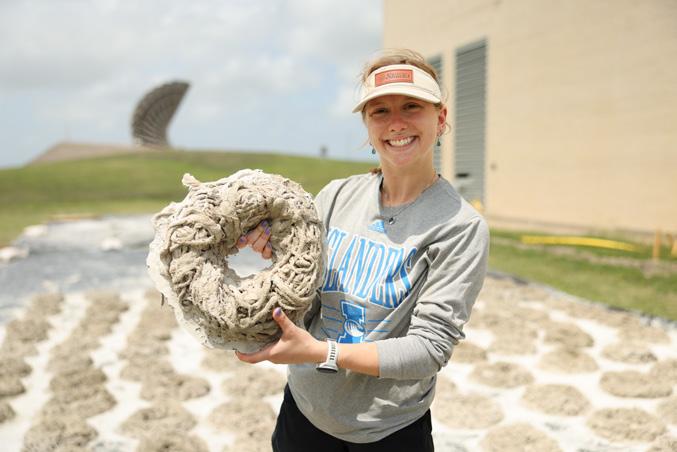
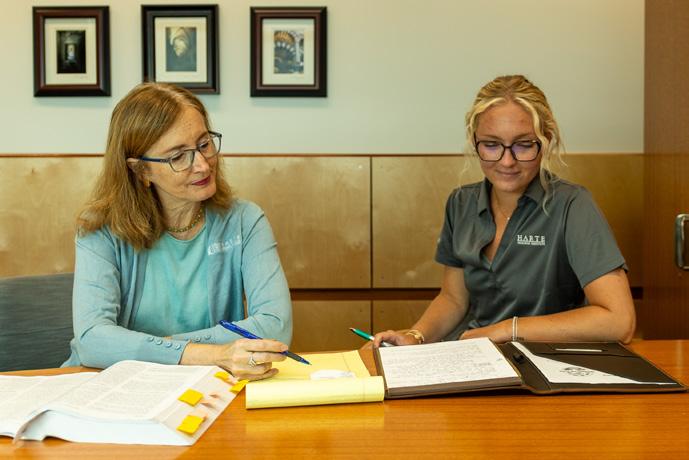
Stephen Truchon Endowed Fellowship in Marine Ecology
Established in 2022 by Raymond Valente and other friends of Stephen Truchon to assist deserving full-time students pursuing a graduate degree in the field of marine ecology or another discipline supported by the Harte Research Institute.
Dr. Wes Tunnell Fellowship Endowment at the Harte Research Institute
Established in 2024 by the Harte Charitable Foundation to honor Dr. Wes Tunnell’s legacy by providing support for the graduate education of Mexican national students or American students studying a research discipline supported by the Harte Research Institute with a focus on the Gulf.
The Kathy and Wes Tunnell Endowed Travel Scholarship in Marine Sciences
Established in 2020 by the Tunnell Family to assist deserving full-time master’s and doctoral students and post-doctoral researchers at the Harte Research Institute with travel expenses.
The Cedar Bayou Endowed Restoration Fund
Established in 2024 by Port of Corpus Christi Authority of Nueces County to cover costs associated with the maintenance and restoration of Cedar Bayou.
The James A. “Buddy” Davidson Charitable Foundation Endowment
Established in 2024 by the James A. “Buddy” Davidson Charitable Foundation to establish The James A. "Buddy” Davidson Endowed Chair for Conservation and Biodiversity at the Harte Research Institute.
Edwin and Elizabeth Dodds Endowment
Established in 2022 by Edwin and Elizabeth Dodds for the enhancement of the Bringing Baffin Back™ program.
Furgason Fellowship Fund
Established in 2007 through the George Marshall Hornblower Trust and matched by the Harte Charitable Foundation to fund teaching/research fellowships to Mexican and Cuban nationals holding doctoral degrees from Mexican or Cuban universities in academic disciplines compatible with those of the Harte Research Institute. Additionally, this fund underwrites conferences, workshops, and symposia relating to the Gulf and sponsors participant scientists, experts, and students from Mexico and Cuba.
Harte Research Institute Endowment
Established in 2025 to be used at the discretion of the senior executive director of the Harte Research Institute for the fulfilment of its mission.
The Harte Research Support Foundation
Established in 2000 by Edward H. Harte to create and sustain the Harte Research Institute at TAMU-CC.
Diana and Eric Kern with Susan Kern Coastal Wildlife and Habitat Preservation Endowment
Established in 2020 by Eric and Susan Kern to support scholarship and research related to conservation in and around the Laguna Madre and Texas Gulf Coast.
The Larry D. McKinney Endowed Chair in Coastal Conservation and Restoration
Established in 2023 by the Will Harte Family and the Harte Charitable Foundation to provide leadership and science-based information supporting resource management and conservation efforts and improve sustainability of coastal ecosystems.
Louis “Scott” Murray Endowed Fund for the Conservation of Baffin Bay
Established in 2023 by Kirk Murray and other family members and friends of Scott Murray for the enhancement of the Bringing Baffin Back™ program.
The Dan and Carolyn Pedrotti Endowment for the Center for Sportfish Science and Conservation
Established in 2018 by Dan and Carolyn Pedrotti for the enhancement of the Center for Sportfish Science and Conservation at the Harte Research Institute.
The Mark W. Ray CCA Texas Endowed Directorship of the Center for Sportfish Science and Conservation
Established in 2024 by Coastal Conservation Association of Texas to establish the Mark W. Ray CCA Texas Endowed Directorship of the Center for Sportfish Science and Conservation at the Harte Research Institute.
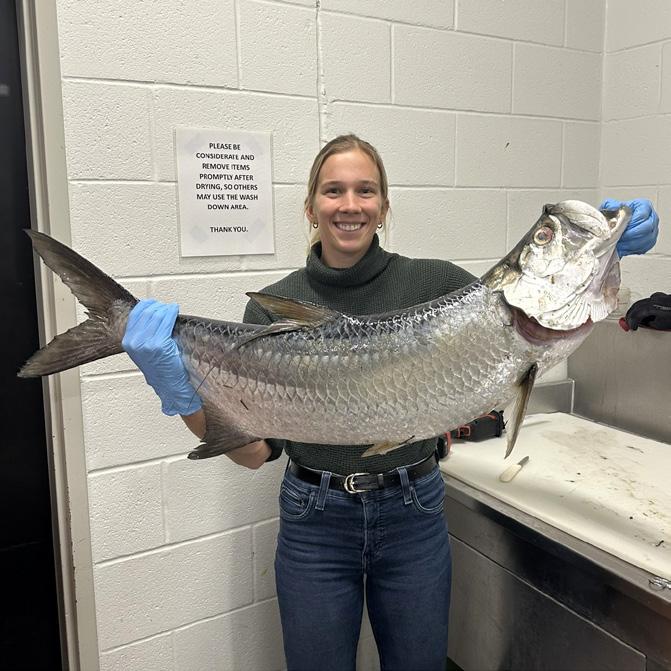
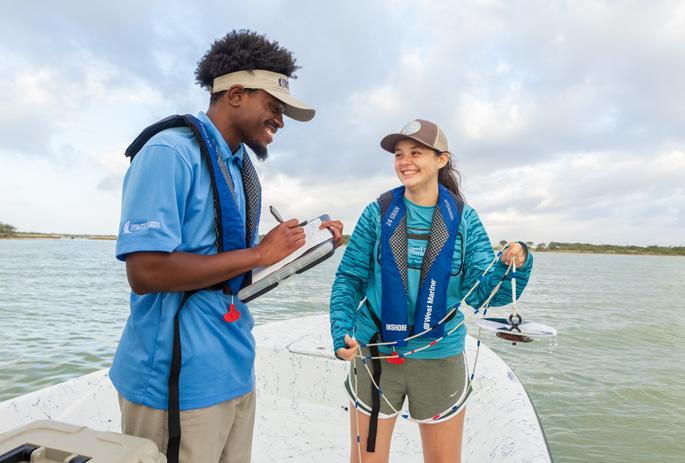

Fiscal year 2025 continued HRI’s strong momentum in research, education, and outreach efforts, fueled by higher endowment values, robust sponsored research funding and philanthropic giving.
Sponsored Research Funds
Endowments
Other
Charitable Donations
Institutional/Legislative Funds
9/01/24 – 08/31/25
Research, Education, and Outreach
Administrative
General Maintenance and Operations
– 08/31/25
HRI’s positive performance is reflected in annual funding support of $23.8 million with total restricted and unrestricted funds reaching $53.8 million in fiscal year 2025.
Dr. Kelly M. Miller
President and CEO
Dr. Catherine Rudowsky
Provost and Vice President for Academic Affairs
Andrew Rogers
Vice President for Finance and Administration
Jaime Nodarse Barrera
Vice President for Institutional Advancement
Adrian Rodriguez
Vice President for Student Engagement and Success and Intercollegiate Athletics
Dr. Ahmed Mahdy
Executive Vice President for Research and Innovation
John LaRue ’23
Vice President for Institutional Excellence and Chief Compliance Officer
Dr. Brenda Harms
Vice President for Enrollment Management
Dr. Gregg Silverman (President)
Suzelle Tinnell ’89 (Vice President)
Diane DeCou (Secretary)
Dana Sisk ’01 (Treasurer)
Jordan Anderson
Ed Cantu ’81
Jag Cheema ’68
Dr. Haysam Dawod ’85
Nancy Eshleman (Past President)
President Kelly M. Miller (Ex Officio)
Govind Nadkarni
Stephen Rybak ’05
Tim Stephens
Rosie Vela ’79, ’80
Pat Murray (Chair)
Dr. Kelly M. Miller (Ex Officio)
Dr. Greg Stunz (Ex Officio)
Jay Kleberg (Ex Officio)
Clint Bybee
John Carlson
Drew Donalson
Rob Fondren
Pam Harte
Dan Allen Hughes
Phil Miner
Mike Pedrotti
Mark Ray
Raul Rodriguez