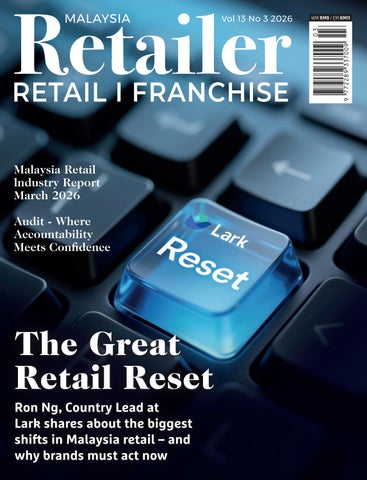
MRCA_Vol13 No3_LARK_

Page 1


RETAIL I FRANCHISE

Malaysia Retail lndustry Report

March 2026

Audit - Where Accountability Meets Confidence

The Great Retail Reset

Ron Ng, Country Lead at Lark shares about the biggest shifts in Malaysia retail – and why brands must act now

THE GREAT RETAIL RESET

Why Execution Will Define the Next Phase of Growth.

In today’s fast-moving digital economy, execution speed has become a defining competitive advantage. Consumer tastes shift constantly, trends fade in days, and expectations for service have never been higher. To succeed, retail brands need to stay one step ahead.

On paper, many organisations already have defined processes and structured operations that enable agile execution. But when asked how confident they are that every store can roll out a pricing or promotion change within hours, execute it consistently, and give HQ visibility on what’s happening on the ground, the confidence starts to waver.

And therein lies the challenge: Retailers are not facing an operations problem. Their biggest challenge is execution.

The root of the challenge is the reliance on fragmented systems. The industry has long accepted a collaboration tech stack built for the desktop era. Retailers have worked around the inefficiencies of juggling separate tools for messaging, approvals, documents, workflows, and reporting, even as it slows decision-making. What’s more concerning is that the majority of retail manpower is deskless. Yet many organisations still rely on

tools that were never designed to support how their frontline teams actually work.

Today, that is no longer acceptable.

It is within this context that Lark has emerged as the operations system for Malaysia’s fastestgrowing retail brands, redefining how modern organisations execute.

THE ANSWER TO RETAIL EXECUTION IN MODERN TIMES

Lark was designed to solve a fundamental retail challenge: the execution gap caused by fragmented systems and siloed information.

At its core, Lark is an all-inone AI-powered super app that integrates messaging, video conferencing, collaborative documents, workflow automation and knowledge management into one seamless environment. Lark enables companies to reimagine how work should flow, bringing communication, automation, and execution into a single unified platform. This eliminates the need for employees to constantly switch between applications, reducing context switching and improving overall productivity.

“What sets Lark apart is its philosophy: productivity is not just about communication, but about

execution. By bringing discussions, decisions and actions into one environment, Lark enables teams to move seamlessly from idea to implementation without losing context,” said Ron Ng, Country Lead, Malaysia at Lark.

DRIVING CLARITY IN EVERYDAY WORK

Transforming how a company works is not simply about introducing new software. It requires a complete reset and a reimagining of how people, processes, and information come together across the organisation.

According to Ron Ng, effective workflow transformation rests on three interconnected elements: people, culture and tools. Technology alone does not drive change. It must be adopted in a way that supports collaboration, accountability and day-to-day execution.

This is especially relevant in retail, where operational demands are constant and coordination must happen across headquarters, store teams and frontline employees. In many organisations, these groups still work in disconnected systems, creating delays, duplicated work and inconsistent execution.

Lark is designed to remove those barriers by providing a single

Retail doesn’t lose on strategy, it loses on execution. Lark was built to close that gap caused by fragmented systems.
- Ron Ng, Country Lead, Malaysia, Lark “ ”

platform where communication, approvals, documents, reporting and operational workflows can happen together. Instead of relying on separate tools that do not speak to each other, teams are able to move from discussion to action within the same environment.

For management, that means faster decision-making and greater transparency. For employees, it means less time spent switching between systems and more time focused on meaningful work.

“If you’re just digitising complexity, you’re not fixing the problem. Modern workflow design is about simplifying how work gets done, so organisations can scale with clarity, consistency and speed.”, says Ron.

RESET 1: EMAIL WAS BUILT FOR A DIFFERENT ERA

One of the clearest shifts we’re seeing in retail execution is the decline of email. It was built for a desktop world. Retail no longer operates that way.

Walk into any store today and you’ll see how teams actually communicate. It’s fast, informal,

and chat-based. The problem is that most business processes haven’t caught up.

Take a simple finance approval. A request is sent over email. Hours, sometimes a full day passes before a response comes in. Follow-up questions add another delay. Updates are scattered across threads. By the time the approval is processed, the context is already lost, and the loop is far from closed. This isn’t a system problem. It’s an execution problem.

The shift we’re seeing is towards chat-first execution. Not

just communication, but how work actually gets done. With Lark, requests are structured, updates are immediate, and everyone involved operates within the same flow of conversation. Instead of chasing emails, teams move in real time. Decisions are made faster, actions follow immediately, and execution keeps pace with the business.

RESET 2: ELIMINATING WORKFLOW FRAGMENTATION

While Lark enables organizations to adopt a chat-first way of working

that better reflects how teams operate today, that alone does not solve the execution challenge. The real power of Lark lies in consolidation.

When Lark was first conceptualized, the market was already saturated with specialized tools, each optimized for a specific function. But this abundance created a new problem: fragmentation.

“It was inefficient for employees to constantly switch between applications. Data was scattered, visibility was limited, and management teams struggled to get a clear view of operations,” said Ron.

Having the best individual tools is not enough. What organisations need is a system that brings everything together.

By consolidating communication, workflows, and data into a single platform, Lark removes the friction of context switching and allows teams to move seamlessly from discussion to action, where execution actually happens. This integration allows retailers to

significantly reduce approval cycles from days to hours, streamline operations, while automating up to 90% of repetitive manual processes.

RESET 3: BRIDGING THE HQ AND FRONTLINE DIVIDE

In high-growth sectors like retail, execution success depends on two critical elements: systems and people. While many organisations invest in enterprise collaboration tools for headquarters teams, frontline employees often rely on informal communication channels such as Whatsapp or Telegram. This creates a disconnect between strategy and execution. Imagine a major supply shortage for a key product. HQ develops a detailed strategy and SOP to manage the situation. The plan is sound. But it starts to break the moment it’s pushed to frontline teams through informal messaging apps. Was the message received?

Was it understood? Are stores following the protocol? There’s no clear way to know. And when execution varies, it’s not HQ that feels it. It’s the customer.

Lark addresses this challenge by unifying the entire organisation within a single platform. Equally important is Lark’s mobile-first design. Unlike traditional document systems that require constant zooming and scrolling, Lark is optimized for mobile use, enabling frontline employees to access

information, complete tasks, and respond instantly from their devices.

With Lark, information flows directly two-ways between HQ to frontline, updates are shared in real time, feedback from the ground is captured instantly, and everyone operates on a single source of truth.

DRIVING INNOVATION: LARK EFFICIENCY PIONEER COMPETITION

Beyond operational improvements, Lark is also helping retailers build a culture of innovation. Through initiatives such as the Lark Pioneer Efficiency Programme, companies like MR DIY and ZUS Coffee have implemented internal competitions where teams develop solutions using Lark’s low-code and no-code capabilities.

In these programmes, frontline and HQ teams identify real operational challenges, employees build their own solutions directly within Lark and leadership evaluates and scales the most effective ideas. This approach democratizes innovation, shifting it from top-down initiatives to ground-up problemsolving.

“It’s the people on the ground who understand the challenges best,” says Ron. “When you give them the right tools, they can build the solutions themselves.”

TURNING DATA INTO ACTIONABLE INTELLIGENCE

As artificial intelligence continues to evolve, retailers are increasingly looking to adopt AI-driven solutions. However, a critical challenge remains: data readiness. Many organisations still operate with fragmented, inconsistent data, making it difficult to generate accurate insights.

Lark addresses this by

standardising workflows, centralising data and ensuring transparency across operations. By consolidating workflows and information into a single platform, Lark creates a clean and reliable data foundation, essential for leveraging AI effectively.

Without accurate and consistent data, AI tools cannot deliver meaningful insights. Lark’s integrated approach ensures that organisations are not only adopting AI, but doing so in a way that drives real business value.

BUILDING A MORE CONNECTED RETAIL WORKFORCE — TOGETHER

As Malaysia’s retail landscape evolves, the gap between those who can execute and those who can’t is widening. This is no longer about becoming more connected or adopting better tools. It is about fixing how execution happens across the organisation.

Retailers that continue to operate on fragmented systems will find it increasingly difficult to keep up. Decisions will slow, inconsistencies

will grow, and control will weaken as they scale. What once felt manageable will quickly become a barrier to growth.

Lark represents a shift from fragmented tools to a unified system where execution is structured, visible, and consistent from HQ to frontline. It brings communication, workflows, and data into one environment, so teams can act faster, align better, and ensure that what is planned actually happens on the ground.

For Ron Ng, the direction is clear. “The future of retail will not be defined by who has the best strategy or the most outlets, but by who executes best. You either move now, or risk falling further and further behind.”

For more information, visit www. larksuite.com ■

Malaysia Retail Industry Report

(March 2026)

PREAMBLE

Members of Malaysia Retailers Association (MRA) and Malaysia Retail Chain Association (MRCA) were interviewed on their retail sales performances for the entire year of 2025 and the first quarter of 2026.

This is the 29th anniversary of Malaysia Retail Industry Report. It is the longest- running retail industry survey in Malaysia.

LATEST RETAIL PERFORMANCE

For the fourth quarter of 2025, Malaysia’s retail industry recorded a disappointing growth rate of 2.5% in retail sales, as compared to the same period in 2024 (Table 1).

In November 2025, members of MRA and MRCA projected the fourth quarter growth rate at 5.0%. This latest result was 50% below market expectation.

The year-end festive celebration, the longer school holidays and the higher tourist arrival failed to bring cheer to many Malaysian retailers.

Malaysian consumers continued to shop for goods and services during the year-end holiday season. However, they were careful in their spending. They spent their hard-earned money on goods and services that offered good values at reasonable prices.

Malaysia’s school holiday schedules returned more or less to pre- Covid period. The year-end

school holidays started from 20 December 2025 and ended on 11 January 2026. However, it did not contribute to higher retail sales for retailers.

Higher tourist arrival during the last 2 months of the year benefited retail businesses located in major cities, as well as tourist-oriented towns and islands. In spite of that, the increase in retail sales was limited.

Source: MRA/ MRCA/ Retail Group Malaysia

TABLE 1: YEAR ON YEAR PERCENTAGE CHANGE IN RETAIL SALES (WEIGHTED), 2024/25

Malaysia’s retail industry reported a positive growth rate of 2.4% for the entire year of 2025 (Table 1). This final annual growth rate was below market expectation. In November last year, the estimate by Retail Group Malaysia was 3.6%.

COMPARISON OF RETAIL SALES WITH OTHER ECONOMIC INDICATORS

For the fourth quarter of 2025, the Malaysian national economy reported a growth rate of 6.3% (Table 2, at constant prices), as compared to 2.5% for retail sales (at current prices).

This quarterly growth rate was supported partly by sustainable household spending. Private and public investment activities enjoyed higher growth rates of 9.2% and 8.0% respectively. Net export was -45.8% due mainly to stronger imports of capital and intermediate goods.

The high demand for data centres led to strong growth at the

services sector (6.3%) during the fourth quarter.

In addition, higher demand for E&E products as well as the robust foreign tourist arrivals contributed to the promising economic growth rate during the quarter.

For the whole year, Malaysia’s real GDP expanded by 5.2%, slightly above the economic achievement in 2024.

The average inflation rate during the fourth quarter of

2025 remained stable at 1.3%. Throughout this period, higher prices were reported in 4 main categories. They included Personal Care, Social Protection & Miscellaneous Goods & Services (5.8%); Insurance & Financial Services (5.6%); Restaurants & Accommodation Services (3.3%) as well as Education (2.6%).

Under the Food & Beverage group, the subgroup of Food Away from Home was the main

Notes:

Source: MRA/ MRCA/

Source: Bank

Department of Statistics/ Retail Group Malaysia

TABLE 2: COMPARISON OF RETAIL SALES WITHOTHER ECONOMIC INDICATORS, 2025
Negara/
TABLE 3: YEAR ON YEAR PERCENTAGE CHANGE IN RETAIL SALES BY RETAIL SUB-SECTOR, 2025

contributor of overall increase at 2.8% during the quarter.

For the year 2025, inflation rate rose at a slower pace of 1.4% as compared to 1.8% in 2024.

Private consumption increased by 5.3% during the fourth quarter of 2025. Positive labour market condition, higher overall household spending and improved tourism receipts led to sustainable growth in this component of GDP.

Unemployment rate during the fourth quarter of 2025 reduced slightly to 2.9%. Labour force participation rate remained at historically high level of 70.9% during the quarter.

RETAIL SUB-SECTORS’ SALES COMPARISON

Despite the year-end festival and holidays, the sales performances of numerous retail sub-sectors were discouraging during the fourth quarter of 2025.

The Department Store cum Supermarket sub-sector suffered a negative growth rate of 2.3% during the fourth quarter of 2025. For the entire year, the business of this sub-sector dropped by 0.7%.

Similarly, the retail business of the Department Store sub-sector suffered a negative growth of 4.5% during the last quarter of 2025. For the entire year, its performance ended at -4.8% in growth rate as compared to a year ago.

The Supermarket and Hypermarket sub-sector achieved a disappointing growth rate of -1.8% during the fourth quarter of 2025. The annual growth rate of this subsector was 1.0% in 2025.

The Mini-Market, Convenience Store

& Cooperative sub-sector outperformed other sub-sectors during the fourth quarter of 2025. During this period, it grew by 15.9%. For the whole year, it expanded by 13.2%. Once again, it was the best performing retail sub-sector of the year.

During the fourth quarter of 2025, the business of the Fashion and Fashion Accessories sub-sector expanded by 3.7%, as compared to the same period a year ago. For the entire year, it recorded a satisfactory growth rate of 3.4%.

During the fourth quarter of 2025, the retail sale of the Fashion sub-sector improved by 3.6%, as compared to the same period a year ago. This sub-sector managed to achieve a yearly growth rate of 1.8% in 2025.

Similar to previous quarters, the business of the Furniture & Furnishing, Home Improvement as well as the Electrical & Electronics sub-sector shrank by 7.6% during the fourth quarter of 2025. For the

TABLE 4: 3-MONTH RETAIL SALES FORECAST BY RETAIL SUB-SECTOR, JANUARYMARCH 2026

whole year, the sales of this subsector contracted by 9.6%. It was the worst performing retail subsector for the year.

The growth rate of Other Specialty Stores sub-sector (including photo shop, fitness equipment stores, stores retailing musical instruments, arts and crafts stores as well as sporting goods’ stores) grew by 8.1% during the fourth quarter of 2025. The business of this sub-sector rose by 2.2% for the entire year.

NEXT 3 MONTHS’ FORECAST

Members of the two retailers’ associations project an average growth rate of 4.4% for the Malaysian retail industry during the first quarter of 2026 (Table 4).

During the first quarter of this year, the department store cum supermarket operators are hopeful of a recovery with a growth rate of 4.3%.

Similarly, the department store operators are expecting a turnaround with a growth rate of 6.0% for the first 3-month period of this year.

The supermarket and hypermarket subsector should achieve a moderate growth rate of 2.6% for the first quarter of 2026.

Note:

Source:

After a strong performance in 2025, operators of mini markets, convenience stores and cooperatives are expecting its growth to moderate at 10.9% during the first 3 months of this year. This is still the most optimistic projection among the retail sub- sectors.

After a roller coaster ride in retail sales last year, retailers in the fashion and fashion

accessories sub-sector are targeting a growth rate of 3.8% during the first quarter of 2026.

Pharmacy operators expect its business to climb by 3.6% during the first quarter of this year.

Operators of furniture & furnishing, home improvement as well as electrical & electronics are not expecting their business to turn positive during the first 3 months’ period of this year. They anticipate their total retail sales to drop by 4.1% during the first quarter of 2026. This is the least optimistic projection among the retail subsectors.

Retailers in other specialty stores sub-sector (including photo shop, fitness equipment stores, stores retailing musical instruments, arts and crafts stores as well as sporting goods’ stores) are foreseeing their businesses to expand by 7.7% during the first quarter of 2026.

THE YEAR 2026

Retail Group Malaysia (RGM) maintains its projection on the annual growth rate of retail sales for 2026 at 4.0% (Table 5).

This projection has yet to take into account the negative impact on the cost of living of Malaysians in the near future due to the ongoing Middle East war.

In 2026, the Malaysian government expects the national economy to grow between 4.0% and 4.5%. This economy is expected to be driven by healthy household spending, sustainable private and public investments, increased export growth (especially for E&E goods) as well as higher foreign tourist arrival.

However, the US-Israel strikes on Iran that began on February 28 has brought growing uncertainty on the economic prospect of Malaysia in 2026.

TABLE 5: MALAYSIA RETAIL INDUSTRY QUARTERLY GROWTH RATE, 2026

Second (e) 3.3

Third (e) 3.0

Fourth (e) 4.6

Whole year (e) 4.0

(e)- estimate

Source: Retail Group Malaysia

This Middle East conflict has contributed to rising energy prices, severe supply-chain disruption and surging logistic costs. Manufacturers in Malaysia have to deal with higher input costs and weaker demand from major export markets.

The Malaysian government expects inflation rate to rise between 1.3% and 2.0% in 2026.

The RON95 subsidy rationalisation will allow inflation to stay partly under control in the new year with RM1.99/litre for all Malaysian car drivers.

However, the current Middle East war may affect the subsidised rate in the near term. The Malaysian

government may be forced to raise the RON95 fuel price due to increased fuel subsidy costs.

The Malaysian government has allocated RM15 billion for Sumbangan Tunai Rahmah (STR) and Sumbangan Asas Rahmah (SARA) for 2026, up from RM13 billion in 2025.

Phase 1 of STR was distributed from January 20 and Phase 2 of STR was brought forward to March 10 (instead of early April). 5 million eligible Malaysians received payments total RM2.4 billion during the first quarter of 2026.

Since February 9, the Malaysian government has provided a oneoff RM100 SARA to 22 million Malaysians aged 18 years and above with a total cost of RM2.2 billion. SARA merchant partners have increased to more than 11,000 outlets. This year, it includes a new list of claimable goods – frozen foods.

This monetary incentive should have stimulated more spending in conjunction with the celebration of Chinese New Year in February and Hari Raya in March. For the first 3 weeks, it had been redeemed

by 12.5 million people with a total value exceeding RM1 billion. The usage rate had reached 56%.

Year 2026 is Visit Malaysia Year. The Malaysian government is targeting 47 million foreign tourist arrivals and RM329 billion in tourism receipts during this year-long campaign. High tourists’ (both domestic and international) spending is expected in this new year. This will benefit retail businesses located in major cities and tourism towns throughout Malaysia.

The recent Middle East war has affected the holiday plans for tourists coming from West Asia and Europe. Nevertheless, this major travel disruption should have temporary and limited negative impacts on the target number of foreign tourist arrival for the whole year.

For the first quarter of 2026, Malaysia’s retail industry is expected to enjoy a promising growth of 4.4%. The two largest festivals in Malaysia were celebrated during the first quarter.

Chinese New Year took place in the month of February and Hari Raya Aidilfitri was celebrated in the month of March. On March 10, the Education Ministry announced extra school holidays in conjunction with the Aidilfitri celebrations.

These two festivals and the extra school holidays should boost retail sales during the first quarter.

The Malaysian retail industry is projected to grow moderately by 3.3% during the second quarter, as compared to the same period a year ago.

Footnote:

TABLE 6: MALAYSIA FOOD & BEVERAGE INDUSTRY QUARTERLY GROWTH RATE, 2025/ 2026

Notes:

-Cafe and restaurant include fast food restaurant, cafe, coffee cafe, bakery cafe, restaurant, full-service restaurant and caterer.

-Take-away, kiosk and stall include food outlet caters for takeaway only, bakery without seating, kiosk and food stall. (e)- estimate

Source: MRA/ MRCA/ Retail Group Malaysia

The retail sector in the country is anticipated to expand by 3.0% during the third quarter of 2026.

For the last quarter of 2026, the Malaysian retail industry is hopeful of a 4.6% growth rate as compared to the same period a year ago. This growth rate will be contributed by strong sales from festive celebrations and year-end holidays.

FOOD & BEVERAGE SECTOR

During the last quarter of 2025, Malaysian consumers dined in F&B outlets in conjunction with the festivals and year-end holidays. Many Malaysians also ordered takeaways including meals, snacks, desserts, coffees, teas and sweetened beverages from both physical outlets and online platforms.

Food & Beverage Outlets (Cafe and Restaurant) enjoyed a lessthan-expected growth rate of 3.1% during the fourth quarter of 2025, as compared to the same quarter a year ago (Table 6). This was much lower than the estimate made in November 2025 at 5.0%.

For the whole year, this F&B sub-sector achieved a growth rate of 3.7%.

For 2026, higher food prices (raw materials and food ingredients) and higher operation costs (shop rental and staff cost) will remain the key struggles for F&B operators in Malaysia.

In spite of the two major festivals and higher tourist activities, cafe and restaurant operators are expecting their businesses to grow at a slower pace at 1.9% (Table 6) during the first quarter of 2026, as compared to the same period last year. ■

• This report is provided as a service to members of MRA, MRCA and the retail industry. It provides industry data that give retailers better analytical tools for running their retail businesses.

• This report is not allowed to be reproduced or duplicated, in whole or part, for any person or organisation without written permission from Malaysia Retailers Association, Malaysia Retail Chain Association or Retail Group Malaysia.

• Retail Group Malaysia is an independent retail research firm in Malaysia. The comments, opinions and views expressed in this report are of writer’s own, and they are not necessary the comments, opinions and views of MRA, MRCA and their members.

• For more information, please write to tanhaihsin@yahoo.com.

AnyMind Group Secures Official Shopee MCN Accreditation in Malaysia

Strengthening creator-driven commerce and end-to-end e-Commerce infrastructure.

AnyMind Group, a BPaaS company for marketing, e-Commerce and digital transformation, announced that it has been accredited as an official Shopee Multi-Channel Network (MCN) programme partner in Malaysia. This milestone enables enterprises to tap into AnyMind Group’s end-to-end ecosystem, bridging creator influence with e-commerce infrastructure on Shopee.

Through this accreditation, enterprises can launch large-scale affiliate marketing campaigns by activating a pool of vetted creators to drive Gross Merchandise Value (GMV) with reduced lead times. The streamlined approach allows brands to execute affiliate strategies with greater precision and maximize performance within the Shopee ecosystem.

Creators who join AnyMind Group’s MCN gain access to hightier brand collaborations, priority product sample fulfilment, and exclusive commission structures. The program also provides technical support and studio access to help creators produce high-performing content that drives conversions.

Steven Tan, Managing Director of Fulfilment at AnyMind Group and CEO of Arche Digital, said: “Securing this official Shopee MCN accreditation is a pivotal move in our effort to redefine e-Commerce. By bridging the gap between frontend creator influence and back-end fulfilment infrastructure, we are removing the operational friction enterprises face when scaling. This partnership ensures that every click generated by our MCN network is backed by a robust, automated supply chain, allowing our clients to achieve sustainable growth with total operational confidence.”

The Shopee MCN programme is an invitation-only partnership framework designed to connect enterprises with professional creator networks to maximize highvolume e-commerce performance through creator-led strategies.

AnyMind Group also participates in the YouTube Shopping Affiliate Program and is the only company supporting the initiative across all six Southeast Asian markets. Under the programme, the company received the top GMV award in Indonesia. ■

Enterprises in Malaysia can leverage AnyMind Group’s suite of platforms and solutions, including:

● AnyTag – Influencer marketing platform to discover, manage and track influencer campaigns, with Shopee affiliate integration

● AnyLive – AI live commerce platform enabling hybrid human-AI live commerce and always-on Shopee Live storefronts

● AnyX – e-Commerce management platform that unifies product data, pricing and orders across multiple platforms

● AnyChat – Conversational commerce platform handling 24/7 customer inquiries and order processing

● AnyLogi – Logistics and fulfillment platform managing shipping and inventory synchronization

● e-Commerce management services – Provided by Arche Digital, including strategy, operations, warehouse management, marketing and customer service

Audit - Where Accountability Meets Confidence

Would you trust your financials without an audit? An audit strengthens trust, ensures compliance and supports sustainable growth.

In today’s increasingly complex business environment, financial transparency, accountability and credibility are crucial for sustainable success.

Companies are expected to generate profits and demonstrate that their financial practices are reliable, compliant and well managed. Auditors remain essential in meeting these expectations despite their poor reputation of being labelled as non-value-added professionals.

While audits are often perceived as a statutory requirement, they offer significant value when it comes to strategic planning. A well-conducted audit strengthens financial integrity, improves internal processes and aids management in decision-making. Ultimately, audits help businesses operate with greater clarity and discipline.

ENSURING ACCURACY

One of the primary objectives of an audit is to confirm that a company’s financial statements are true and fair. Independent auditors review financial records, transactions and supporting documentation to verify that the information reported reflects the company’s true financial position and performance.

Key benefits include:

● Proper recognition of income, expenses, assets and liabilities in accordance with accounting standards.

● Identification of omissions, errors or misstatements in financial reporting.

● Greater confidence among stakeholders in the credibility of financial information.

Accurate reporting plays a critical role as a trust builder among investors, shareholders, lenders and business partners. When financial

statements are independently verified, stakeholders will be able to assess the company’s performance and financial stability much better.

ENSURING COMPLIANCE

Compliance with accounting standards and legal requirements is another key reason for companies to undertake audits. Financial statements must be prepared in accordance with recognised financial reporting frameworks and relevant regulations.

An audit helps organisations to:

● Comply with accounting standards and statutory requirements.

● Identify potential compliance issues earlier and address them promptly.

● Avoid legal complications, regulatory penalties and reputational risks.

● Demonstrate sound corporate governance and responsible management. By reinforcing proper documentation and consistency in financial reporting, audits help organisations maintain consistent and transparent reporting practices.

BETTER DECISION MAKING

Reliable financial information is essential for proper business planning as well as corporate strategy. Audited financial statements will be able to provide management with dependable data that can be used to evaluate performance and aid in future decisions.

Through the audit process, companies could gain:

● Clearer insights into financial performance and operational results.

● Improved understanding of revenue trends and cost structures.

● Identification of strengths

and areas that might require improvements.

● Greater justification when planning budgets, investments and strategic moves.

These insights enable management to allocate resources more effectively and make decisions that support long-term growth and sustainability in order to protect stakeholders.

DETECTING FRAUD, REDUCING RISK

Fraud and financial mismanagement can pose serious risks to any organisation. Audits play an important role in strengthening corporate governance and reducing the likelihood of irregularities caused by fraud.

The audit process contributes by:

● Reviewing transactions for unusual or suspicious activity.

● Evaluating internal controls and standard operating procedures.

● Deterring fraudulent behaviour

FACILITATING ACCESS TO FINANCING

Capital accessibility is often critical for business development and also expansion. Audited financial statements is able to provide assurance to financial institutions and investors that a company’s financial position has been independently verified, although it would only be a reasonable assurance. Audits can help companies:

● Improve its credibility status among banks and lenders.

● Improve the chances of securing loans or bank facilities.

● Attract investors who need reliable financial information.

● Demonstrate financial transparency and solid governance culture.

This level of assurance can make an impactful difference when an organisation is seeking for funds to pursue growth or seizing opportunities.

through independent scrutiny.

Although it is not guaranteed that an audit can detect every instance of fraud, it significantly reduces the likelihood of unethical practices and encourages a culture of integrity.

IMPROVING BUSINESS PROCESSES

Audits do not focus solely on financial figures. They also assess how effectively a company’s internal controls and systems are being executed in its day-to-day operations.

During this process, auditors may identify weaknesses or inefficiencies within existing standard operating procedures.

Organisations may therefore benefit from:

● Identification of flaws or weaknesses in internal controls.

● Practical recommendations for improving its standard operating procedures.

● More effective and efficient financial management systems.

● Stronger operational processes with minimised risk of errors.

Over time, these improvements could significantly contribute to a more resilient and well-managed organisation.

PROMOTING ETHICAL PRACTICES

Strong governance and ethical conduct are probably the most fundamental elements of a successful organisation. Audits promote accountability by ensuring that management is responsible for the quality of financial reporting.

Key benefits include:

● Greater transparency in financial reporting.

● Better clarity of company performance for stakeholders.

● Integration of ethical and corporate social responsibility into business practices.

● Strengthened trust surrounding the organisation’s business environment.

When financial activities are subject to independent review, it tends to encourage adherence to ethical conducts and practices across the entire organisation.

AUDIT EXEMPTION IN MALAYSIA: NEW RULES EFFECTIVE 2025

The revised audit exemption framework for private companies were designed to reduce compliance costs for SMEs while maintaining the quality of financial reporting standards.

The framework is being implemented progressively over a three-year period, allowing more companies to qualify for audit exemption.

Its key objectives:

● Reduce compliance costs for smaller companies with minimal operations.

● Promote business growth by easing regulatory barriers.

● Address the lack of licenced auditors within the audit profession.

Malaysia has approximately 2,000 auditors compared with more than 600,000 active companies. By allowing small companies to be exempted from audits, auditors will be able to focus on higher-risk entities.

Under the Companies Act 2016, private companies are required to appoint an auditor on an annual basis. However, the Companies Commission of Malaysia (SSM) allows certain small companies to be eligible for exemption if they satisfy specified criteria.

Under the previous framework, a company could qualify for audit exemption if it was a dormant, has no revenue and its total assets do not exceed RM300,000

for the current financial year and the previous two financial years, or it has a small company threshold.

A company must meet all three conditions for the current financial year and the previous two financial years with revenues not exceeding RM100,000, total assets not exceeding RM300,000 and has not more than five employees.

This system requires companies to fall strictly within one category to qualify for the exemption.

NEW AUDIT EXEMPTION FRAMEWORK FROM 2025

Beginning in January 2025, Malaysia has introduced a more flexible framework for audit exemption. Instead of requiring

companies to fall entirely within one category, companies will qualify if they satisfy any two of the following three thresholds, namely revenue, total assets and number of employees.

The revised framework features a wider flexibility in qualification criteria, a three-year assessment period, requiring the thresholds to be met for the current financial year and the two preceding financial years, and phased implementation, with thresholds increasing gradually over time.

This approach ensures that the exemption applies to companies that are consistently and genuinely small rather than those experiencing temporary high and low fluctuations.

PHASED IMPLEMENTATION OF NEW THRESHOLDS

The revised framework will be introduced in three phases.

Phase 1 – Jan 2025

Companies must meet any two of the following thresholds:

● Annual revenue not exceeding RM1 million

● Total assets not exceeding RM1 million

● Not more than 10 employees

Phase 2 – Jan 2026

The thresholds will increase to:

● Annual revenue not exceeding RM2 million

● Total assets not exceeding RM2 million

● Not more than 20 employees

Phase 3 – Jan 2027

The final phase introduces the highest thresholds:

● Annual revenue not exceeding RM3 million

● Total assets not exceeding RM3 million

● Not more than 30 employees

Once fully implemented, the revised framework will significantly widen scope of eligibility for audit exemption and targeting smaller entities at the same time.

Despite the expanded thresholds, certain types of companies remain ineligible for audit exemption due to their regulatory or public interest nature. These include, private companies that are subsidiaries of public companies, foreign companies registered in Malaysia and certain exempt private companies that lodge certificates under the Companies Act. Such entities must continue to comply with statutory audit requirements regardless of their size.

WHAT YOU DON’T AUDIT CAN COST YOU!

While the new audit exemption framework eases the compliance requirements for a number of small companies, exemption does not entirely eliminate the practical need for audited financial statements.

In many situations, businesses may still voluntarily choose to undertake an audit for the purpose of strengthening governance, enhancing credibility and meeting stakeholder expectations.

Even when a company qualifies for audit exemption, an audit may still be required due to external factors.

Common situations include:

● Bank requirements – Audited financial statements may be required by financial institutions when companies apply for loans or credit facilities.

● Regulatory requirements

– Requirements by certain government agencies for other purposes.

● Contractual obligations –Funding arrangements, grants or commercial agreements may still require audited financial statements.

More than 30% of companies have bank charges registered, indicating that lenders may still require audited accounts even when a company qualifies for audit exemption.

Other situations where audits may be requested include:

● Applications for government grants or incentives.

● Joint venture or partnership arrangements.

● Investor due diligence processes.

These circumstances highlights that the need for audited financial statements often extends beyond statutory requirements.

PREPARING FOR FUTURE STATUTORY REQUIREMENTS

Companies that currently qualify for audit exemption may eventually exceed the exemption thresholds if they manage to expand their businesses successfully.

Undertaking voluntary audits can help companies:

● Establish strong financial reporting processes earlier.

● Ensure the audit-readiness of its accounting systems and documentation.

● Minimise knee-jerk reaction when statutory audit requirements apply in the future.

● Support smoother business scaling and expansion.

Developing strong financial governance early can significantly aid in future compliance obligations.

CONTINUING RESPONSIBILITIES OF COMPANIES

It is important to realise that audit exemption does not remove a company’s responsibility to maintain proper financial reporting practices.

As such, companies must continue to maintain adequate accounting records, prepare financial statements in accordance with Malaysian accounting standards, ensure financial statements present a true and fair view of the company’s financial position, and maintain appropriate financial controls and documentation.

Directors remain responsible for the accuracy and reliability of the company’s financial information.

Although audit exemption aims to ease the regulatory burden on smaller companies, it

does not diminish the importance of audits in cultivating financial integrity and sound corporate governance.

Audits provide independent assurance that financial information is accurate, transparent and prepared in accordance with applicable financial reporting standards, which is important when it comes to decision-making.

Beyond fulfilling statutory obligations, audits aid organisations build robust internal controls, improve decision-making and enhance credibility with stakeholders. They also enhance confidence among lenders, investors and regulators who rely on reliable audited financial statements when evaluating a company’s financial position and performance.

The reality is simple – business owners may choose to save on audit fees today but risk paying far greater consequences tomorrow. What is not verified today may become impossible to defend when it matters most. Unaudited numbers may seem sufficient until they are questioned. ■

Visit www. mcmillanwoods.com

Disclaimer: The information herein is simplified for brevity. Kindly seek case-specific consultation prior to any action. The write-up may contain our interpretation, to which the authorities and Courts may not necessarily concur. Strictly no liability is assumed.

Dato Seri Dr Raymond Liew is a senior audit practitioner and the President of McMillan Woods, a global business advisory network – The McMillan Woods Worldwide.

Poh Kong Celebrates 50th Anniversary at 1 Utama

Event highlights RM2mil rewards campaign and community initiative.

Shoppers at 1 Utama Shopping Centre were treated to interactive activities and prize giveaways as homegrown jeweller Poh Kong celebrated its 50th anniversary with a launch event held from April 21 to 26.

The event marked a key milestone in the brand’s yearlong celebration campaign, which featured RM2 million in rewards aimed at enhancing customer engagement both in-store and online.

Anchored on Poh Kong’s Jeweland app, the campaign offers members vouchers redeemable at 50% off points, alongside a “Spin & Win” programme with prizes ranging from jewellery worth up to RM50,000, gold bar sets, gold coins, vouchers, loyalty points, and many more rewards.

Visitors to the event took part in family-friendly activities, including stage games, reward redemptions, and interactive experiences, contributing to a lively

retail atmosphere throughout the week.

As part of its 50th anniversary initiatives, Poh Kong also announced a collaboration with Make-A-Wish Malaysia, committing to grant lifechanging wishes for 50 children with critical illnesses. The initiative reflects the brand’s focus on giving back to the community by delivering the “Gift of Joy” to those in need.

Poh Kong said the campaign will

continue with further activations at selected locations, supported by ongoing digital initiatives via its Jeweland app and social media platforms.

The 50th anniversary campaign underscores the brand’s efforts to blend its heritage with contemporary collaborations and digital engagement, as it continues to stay relevant to a new generation of customers. ■

ADVERTISE YOUR BUSINESS IN THE OFFICIAL PUBLICATION OF

RETAIL I FRANCHISE

RETAIL I FRANCHISE

MALAYSIA RETAILER magazine is MRCA’s official publication that provides news, relevant information and market reports on the evolving retail, franchise and branding landscape in the country and the region.

The quarterly publication highlights:

• Events • Market information • Changing consumer behaviour with a focus on retail-industry specific surveys, studies and reports to help those in the industry to assess their impact and to stay informed

• Success stories of business people – their achievements, innovation, vision, hard work and dedication – that can inspire up-and-coming entrepreneurs

• Digitalization • Special reports on the retail industry such as Fashion & Lifestyle, F&B, Pharmacy & Healthcare equipment and supplements, Shopping Malls, Hypermarkets and Supermarkets; and general information related to the three disciplines.

Apart from the print copy, the entire issue of MALAYSIA RETAILER magazine is available online, including at MRCA website (www.mrca.org.my). A link is available for anyone who wishes to read the magazine, free of charge. A PDF of the magazine will be given to advertisers who wish to promote their write-up and advertisement through email, WhatsApp and other social media.

MAGAZINE DETAILS

Frequency: Quarterly

Issues:

• February 2026

• May 2026

• August 2026

• November 2026

Material Requirement:

PDF Format

ADVERTISING SPECIFICATIONS

Trimmed Size:

210mm (W) x 275mm (H)

Typed Area :

190mm (W) x 250mm (H)

Bleed Size : 216mm (W) x 286mm (H)

ADVERTISING ENQUIRIES

HARINI MANAGEMENT SERVICES SDN BHD (609031-W)

TARGET MARKET

Business community interested in the retail, franchising and branding industry.

DISTRIBUTION

• More than 530 Members Companies & Associates in Malaysian and abroad.

• Top Management of companies.

• Relevant Government Ministries & Agencies, including the Malaysian Overseas Trade Office.

• Relevant Business Organisations & Major Shopping Malls.

• MRCA Events.

• Sold in all leading bookstores nationwide.

W-9-12, Menara Melawangi, Amcorp Trade Centre, 18, Persiaran Barat, 46050 Petaling

Tel: 603-7932 3259

Email: harini.mservices@gmail.com

Jaya, Selangor.

Record Revenue and Profits

Focus Point Holdings Bhd achieves record-high revenue of RM311.4 million, a 6.4% increase from the previous year.

Focus Point Holdings Bhd announced its financial results for the fourth quarter ended Dec 31, 2025 and for the full financial year ended Dec 31, 2025, which reflect the group’s continued growth momentum and disciplined execution across its core businesses.

For FY25, the Group achieved a record-high revenue of RM311.4 million, representing a 6.4% increase from RM292.5 million in FY24.

Profit before tax rose 11.5% to RM48.8 million from RM43.7 million previously, while profit after tax improved 5.5% to RM35.0 million from RM33.2 million. Earnings per share increased to 5.7sen from 5.4sen.

STRONG PERFORMANCE

4QFY25 registered the strongest quarterly revenue to date at RM91.2 million, representing a 22.4% increase quarter-on-quarter. Quarterly profit before tax also rose 89.7% to RM17.4 million from RM9.2 million, while profit after tax increased 96.2% to RM12.4 million from RM6.3 million, underpinned by the optical segment’s strong performance during the quarter.

On a year-on-year basis, quarterly revenue, profit before tax and profit after tax grew 9.2%, 48.5% and 34.1% respectively, mainly driven by the strong performance in the optical segment.

The segment achieved another record year, with revenue rising 7.9% to RM263.2 million from RM243.9 million in FY24. Profit

before tax increased 22.8% to RM53.1 million from RM43.2 million. The strong performance was driven by resilient consumer demand, continued network expansion and improved operational efficiency.

EXPANSION

During the year, the group strengthened its nationwide presence with the opening of its

optical outlet in Kangar Jaya Mall, achieving a presence in every state across Malaysia.

Moving forward, the group will continue strengthening its optical business through outlet expansion in strategic locations, investment in advanced primary eye care equipment and enhanced community outreach initiatives.

HIGH OPERATING COSTS

The food and beverage segment recorded a revenue of RM44.2 million, remaining stable year-onyear. The segment registered a loss before tax of RM3.1 million, mainly due to higher operating costs and write-downs.

The group continues to focus on cost optimisation, operational efficiency improvements and expanding product offerings to both retail and corporate customers as part of its turnaround initiatives to improve performance and return the segment to profitability over time.

HIGHER DIVIDENDS

Meanwhile, the board has declared a third single-tier interim dividend

of 0.75sen per share for FY25, bringing the total cumulative dividend declared for FY25 to 3.56sen per share, compared to 2.63sen in FY24.

In line with this commitment towards enhancing shareholders’ value, the board has formalised an enhanced dividend policy under which the group intends to distribute at least 50% of its annual profit after tax as dividends.

Dividends will be paid on a quarterly basis moving forward, providing greater consistency and visibility in shareholder returns.

SUSTAINABLE VALUE

“FY25 has been a meaningful year for Focus Point. Our record revenue

and improved profitability reflect the steady strength of our business and our commitment towards vision care in the community,” said Focus Point CEO and President Dato’ Liaw Choon Liang.

“We are also pleased to introduce our enhanced dividend policy, where we aim to distribute at least 50% of our annual profit after tax through quarterly dividends, reflecting our commitment to delivering consistent returns and sharing our progress with shareholders.

“While we are encouraged by our performance, we will continue to stay disciplined in our execution, expand carefully and focus on delivering sustainable long-term value,” he added. ■

BAM: Ace The New Year 2026

Positioning Branding as a National Economic Force.

On 6 March 2026, the Branding Association of Malaysia (BAM) convened more than 400 brand owners, founders, C-suite executives and policymakers at its flagship event, ‘Ace The New Year 2026’. More than just an annual gathering, the event underscored BAM’s role as Malaysia’s foremost branding platform, bringing together the country’s branding ecosystem in a shared commitment to elevate Malaysian brands as drivers of sustainable economic growth.

The strong turnout reflected growing business confidence and highlighted the importance of cross-industry collaboration in an increasingly competitive and globalised marketplace. As Malaysia continues to position itself on the international stage, the role of branding has become more critical than ever, not only as a marketing tool but as a strategic economic force.

A GLITTERING CELEBRATION WITH NATIONAL SIGNIFICANCE

The evening’s Annual Gala Dinner was graced by YB Dato’ Sri Tiong King Sing, Minister of Tourism, Arts and Culture, represented by YBhg. Tuan Samuel Lee, Deputy DirectorGeneral of Tourism Malaysia. His presence underscored the vital link between branding and national development, particularly in enhancing Malaysia’s tourism competitiveness and global reputation.

“A strong national tourism brand is built on the strength of its businesses and industries. When Malaysian brands are

clear in purpose and consistent in quality, they enhance visitor confidence, strengthen destination appeal and position Malaysia more competitively on the global stage,” said YB Dato’ Sri Tiong King Sing.

BRANDING AS A NATIONBUILDING TOOL

BAM President Datin Winnie Loo delivered a powerful message on the evolving role of branding. She framed branding not merely as a business function, but as a nationbuilding tool, one that empowers enterprises, fosters resilience and elevates Malaysia’s identity on the global stage.

“The past five years were not ordinary years. We navigated uncertainty, reinvention, digital transformation, economic shifts and a rapidly evolving marketplace. But what made the difference was not the cards we held, it was how we chose to play them,” said Datin Winnie Loo.

The event was co-chaired by Dato’ Sri Dr. Vincent Tiew and Dr Jodness Tan, who championed a holistic approach to brand

leadership, emphasising that longterm brand success begins with strong values, leadership wellbeing and purposeful growth.

“Sustainable brands are built by leaders who are healthy, focused and values-driven. BAM provides a platform where business performance, personal well-being and social contribution are aligned, ensuring that growth is meaningful and lasting,” said Dato’ Sri Dr. Vincent Tiew.

“Our goal for this year’s gala is to transcend the traditional dinner. We want to demonstrate that Malaysian brands are the ‘Aces’ of our economy. Through this event, we are facilitating the exchange of wealth, wisdom and strategic partnerships that will drive our members to win big in the year ahead,” added Dr Jodness Tan, joint Organising Chairman.

A RETRO-INSPIRED EVENING OF BOLD THINKING

Breaking away from convention, the gala adopted a Retro Hong Kong ‘God of Gamblers’ theme: an imaginative concept that symbolised

bold decision-making, calculated risk-taking and the winning mindset required in today’s dynamic business landscape. The theme brought a sense of nostalgia and flair to the evening, while reinforcing key entrepreneurial values.

A standout highlight was the launch of the BAM Branding Goal Cards, a curated deck of 52 expert branding principles designed to guide business leaders throughout the year. More than a symbolic gesture, the cards represent BAM’s commitment to practical knowledge-sharing and continuous development. They also emphasise the importance of balance, encapsulated in a simple yet powerful reminder: “Have a good rest.”

CELEBRATING EXCELLENCE AND COMMUNITY

The celebratory atmosphere was further elevated with a range of exciting highlights. Guests had the opportunity to win grand prizes,

including RM5,000 in cash and a premium massage chair by Zero valued at RM16,999. Adding a festive touch, 10 customised Chinese New Year fire extinguishers sponsored by Fire Fighter were also given away as prizes.

Elegance took centre stage during the Best Dressed segment, where 10 outstanding attendees were each recognised and awarded with a cash prize of RM300. Meanwhile, the evening’s entertainment showcased the diverse talents within BAM’s own community, demonstrating that creativity and artistry are integral to strong branding.

STRENGTHENING MALAYSIA’S BRANDING ECOSYSTEM

Beyond the glamour and celebration, the event served a deeper purpose: fostering meaningful connections. It provided a high-value platform for strategic networking, enabling participants to engage with influential business leaders, founders

and policymakers. In doing so, BAM reinforced its role as a connector, educator and advocate within Malaysia’s branding landscape.

Since its inception in July 2000, BAM has been dedicated to supporting Malaysian brands in achieving both domestic and international success. By offering a unified platform for collaboration, knowledge-sharing and advocacy, the association continues to empower businesses, particularly SMEs, to realise their full potential.

As “Ace The New Year 2026” demonstrated, branding is no longer just about visibility or recognition. It is about building trust, driving innovation and shaping a nation’s identity. Through initiatives like this, BAM is not only strengthening individual brands but also contributing to Malaysia’s broader economic narrative, positioning the country as a competitive and confident player on the global stage. ■

Raya Cheer Shared

MRCA’s Branding Education Charity Foundation spreads festive joy with a RM20,000 donation and heartfelt visit to Rumah Bakti Nur Ain Bangi.

In the spirit of compassion and togetherness during the holy month of Ramadan, MRCA, through its Branding Education Charity Foundation, conducted a heartfelt charity visitation to Rumah Bakti Nur Ain Bangi in early March.

The initiative, held in conjunction with the upcoming Hari Raya Aidilfitri celebrations, saw the foundation donate cash and essential items totalling RM20,000.

Beyond the financial contribution, the visit provided an opportunity for MRCA leadership and members to spend quality time with the children and residents, fostering a warm atmosphere of festive cheer and embracing the true spirit of giving.

The delegation was led by MRCA Branding Education Charity Foundation Chairman Dato’ Liaw Choon Liang, MRCA President Datuk Dr Ken Phua, and MRCA CSR head Jordan Ng.

They were joined by foundation trustees and council members to personally deliver festive cheer to the home.

In his speech, Dato’ Liaw Choon Liang said the foundation is dedicated to its core mission of branding, education and charity.

“This contribution to Rumah Bakti Nur Ain Bangi is a small token of our care for the children,” he said.

Datuk Dr Ken Phua, meanwhile, emphasised the association’s commitment to social responsibility.

“As we celebrate Hari Raya, it is important that we give back to the community. Our members are proud to come together not just for business but to serve the community that supports us.”

COMMITTED TO GIVING

This Hari Raya visit follows the foundation’s active start to the year.

In February 2026, the foundation

held its annual Chinese New Year Charity Visit at Pertubuhan Kebajikan Anak-Anak Yatim dan OKU Mesra in Petaling Jaya, where it similarly donated RM20,000 to support the home’s residents.

The MRCA Branding Education Charity Foundation expresses its sincere gratitude to all contributors and members who made both these visits a success. ■

Community giving: Rumah Bakti Nur Ain Bangi Chairman Shaizul Karnon Nasir (fourth from left) receiving the donation from MRCA committee members. From left are Jordan Ng, Datuk Dr Ken Phua, Dato’ Liaw Choon Liang, MRCA Honorary Lifetime President Shirley Tay and MRCA Vice President Dr Afendi Dahlan.

INTRACOPALLET®: REDEFINING RETAIL SUPPLY CHAIN EFFICIENCY

From warehouse to store shelf, See Hau Global’s innovative plastic pallets & bins/containers.

Since 1994, See Hau Global Sdn. Bhd. has been revolutionising logistics for more than 40 countries. The company produces more than 4.0 million premium plastic pallets annually under the IntracoPallet® brand, trusted by retailers and distributors for reliable, cost-effective supply chain solutions (www.intracopallet.com).

By meeting various local and international standards, IntracoPallet® products excel in versatility. They perform flawlessly in one-way shipments, rackable and stackable storage, and fully automated storage and retrieval

STREAMING MEETS RETAIL: HOW VIU ENGAGES THE MODERN CONSUMER

Blending entertainment, community, and commerce in a digital-first era.

In today’s experience-driven economy, retailers are increasingly looking beyond traditional models to capture consumer attention—and streaming platforms like Viu offer a compelling blueprint. By combining a freemium content strategy with premium exclusives, Viu attracts a wide spectrum of users while building long-term brand loyalty.

What sets Viu apart is its ability to transform passive viewing into active engagement. Through initiatives like live fan events and original productions, the platform creates emotional connections that extend beyond

systems (ASRS), helping businesses optimise space, streamline handling, and protect valuable inventory. Their adaptability makes them indispensable across industries—from food and beverage to pharmaceuticals, electronics, and petrochemicals.

Combining engineering precision with market insight, See Hau Global delivers durable, sustainable alternatives that keep operations moving efficiently while reducing environmental impact (about us). IntracoPallet® is more than a product; it is a trusted partner for retailers aiming to enhance supply chain performance, reduce risk, and stay ahead in today’s competitive market.

the screen. For retailers, this signals a powerful shift: consumers are no longer just buying products—they are buying into experiences, stories, and communities.

Viu’s emphasis on localised content also mirrors a growing retail trend. Just as the platform tailors its shows to regional tastes, successful retailers are curating offerings that resonate with local cultures and preferences.

The lesson is clear—engagement is the new currency. By integrating digital experiences with real-world interactions, brands can deepen customer relationships and drive sustained growth. As retail continues to evolve, those who adopt a content-driven, community-centric approach will be best positioned to thrive.

MACEOS Hari Raya Open House

Strengthening Unity and Driving the Future of Business Events.

The Malaysian Association of Convention and Exhibition Organisers and Suppliers (MACEOS) Hari Raya Open House, held on 2 April 2026, brought together industry leaders, partners and members in a warm celebration of unity, appreciation and resilience. The event served as a meaningful platform to reconnect and recognise the collective contributions that continue to elevate Malaysia’s business events sector.

In his welcoming speech, Datuk Dr M Gandhi, the President of MACEOS, expressed heartfelt gratitude to members and partners, acknowledging their time, energy and passion in driving the industry forward. Reflecting on MACEOS’ journey since its establishment in 1990, he highlighted the association’s longstanding role in positioning Malaysia as a premier destination for business events through strong collaboration across public and private sectors.

The gathering also came at a time of global uncertainty, with geopolitical tensions and rising travel costs impacting the

industry. Despite these challenges, the President emphasised the importance of unity, noting that business events remain resilient as purpose-driven travel continues to support national economic goals. He reaffirmed the industry’s role as a catalyst for trade, innovation and global connections, contributing significantly to nation-building.

Looking ahead, several key initiatives were announced, including the launch of the MACEOS Business Events Directory 2026 and the development of the Malaysia Business Events Industry White

Paper in collaboration with the University of Malaya. Members were encouraged to participate actively in the survey to ensure accurate industry insights.

The evening also recognised the contributions of event partners and sponsors, whose support brought the celebration to life. More than just a festive occasion, the open house embodied the true spirit of Hari Raya, fostering stronger bonds and reaffirming a shared commitment to advancing Malaysia’s business events industry. ■

Raya Bersama PIKOM Celebrates Unity

The tech association demonstrates that beyond business and technology, it is people, partnerships and shared purpose that power progress.

PIKOM, the National Tech Association of Malaysia, recently hosted its festive Raya Bersama PIKOM celebration, bringing together close to 300 members, partners and industry friends for an evening marked by warmth, joy and the spirit of togetherness.

The gathering reflected the close bonds within Malaysia’s technology community while offering an opportunity for members to

reconnect and celebrate the season.

Held in a lively and welcoming atmosphere, the event featured traditional Raya favourites, meaningful conversations and a shared sense of gratitude.

Guests from across the digital ecosystem enjoyed the chance to network and strengthen relationships that continue to support the growth of Malaysia’s technology sector.

This year’s celebration carried added significance as PIKOM marks its 40th anniversary, commemorating four decades of collaboration, trust and shared progress in shaping the nation’s tech landscape.

Over the years, PIKOM has played an important role in championing industry interests, fostering innovation and helping Malaysia advance its digital transformation agenda.

The event was made possible through the strong support of valued partners. TIME came on board as Gold Partner, while Glocomp Systems (M) Sdn Bhd and Verity Intelligence Sdn Bhd were Silver Partners. Bronze Partners included Enzo Plus Sdn Bhd and JLG Corporate Edge Sdn Bhd. Their contributions

underscored the importance of partnerships in creating meaningful industry platforms and successful engagements.

A highlight of the evening was the recognition of PIKOM’s long-time members, whose dedication and contributions have been instrumental in shaping the association’s journey over the years.

Their loyalty and commitment have helped build a strong foundation for PIKOM and continue to inspire future generations of industry leaders.

More than a festive gathering, Raya Bersama PIKOM served as a reminder of the strength of community and the importance of collaboration in driving digital excellence. ■

Turn static files into dynamic content formats.

Create a flipbook
MRCA_Vol13 No3_LARK_ by Harini Management Services Sdn Bhd - Issuu