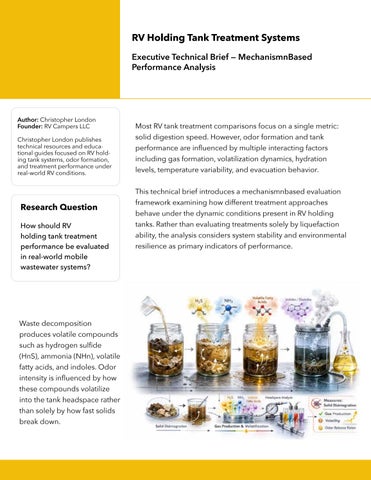
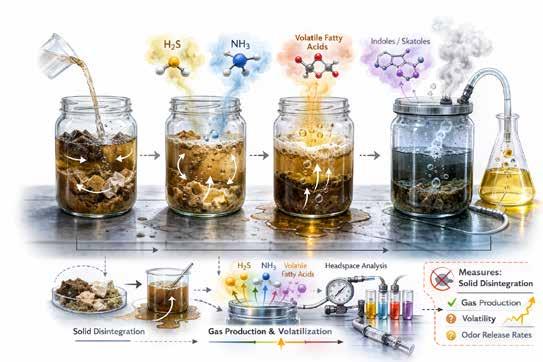
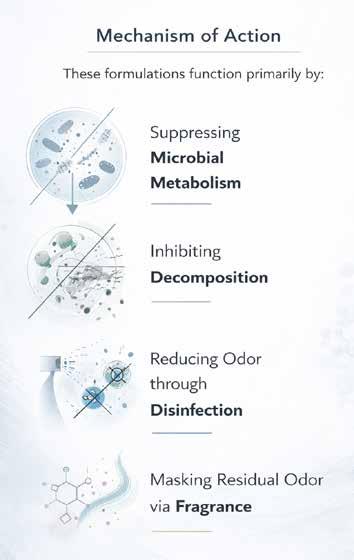
RV holding tank treatments are commonly evaluated by how quickly they break down solid waste. However, real-world RV systems operate under dynamic conditions that influence odor formation, gas release, hydration levels, and waste suspension behavior.
This executive technical brief introduces a mechanism-based framework for understanding how different RV holding tank treatment systems behave in mobile wastewater environments.
Topics explored include:
• Gas formation and odor volatilization
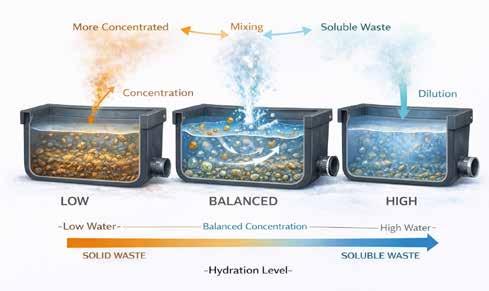
• Hydration dynamics and water-to-solid ratios
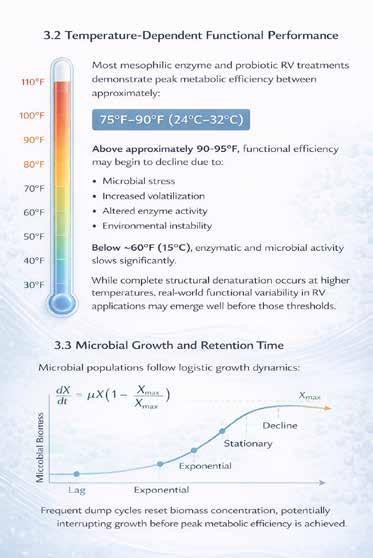
• Temperature-dependent biological activity
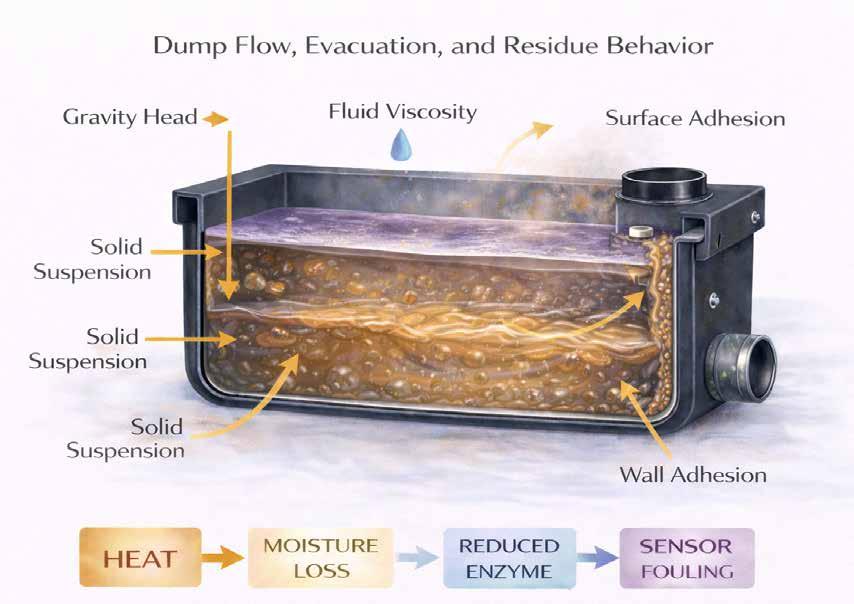
• Surface adhesion and tank evacuation behavior
• Environmental stress factors affecting treatment performance
Rather than focusing solely on digestion speed, this analysis examines the broader system variables that influence odor control and operational consistency in RV holding tanks.
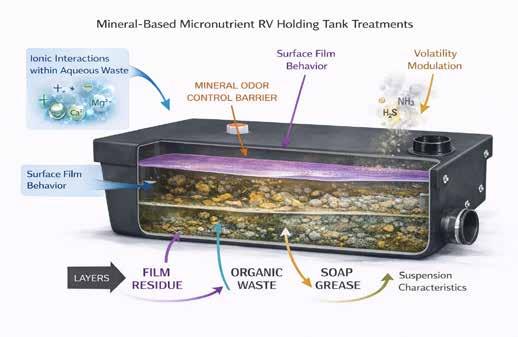
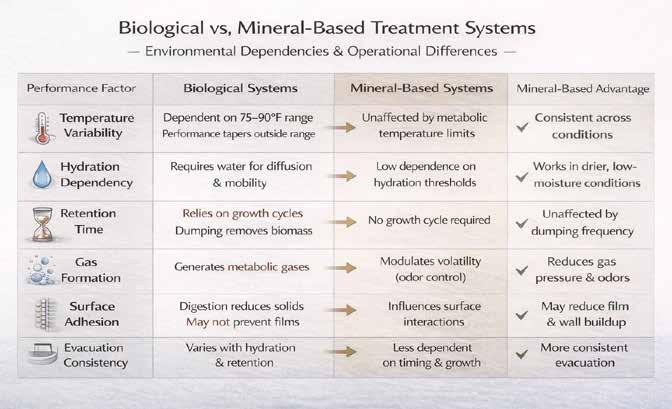
This document serves as a condensed research summary of the full white paper examining biological and mineral-based treatment mechanisms.