HANNAH KIRBY PORTFOLIO
2021-2025
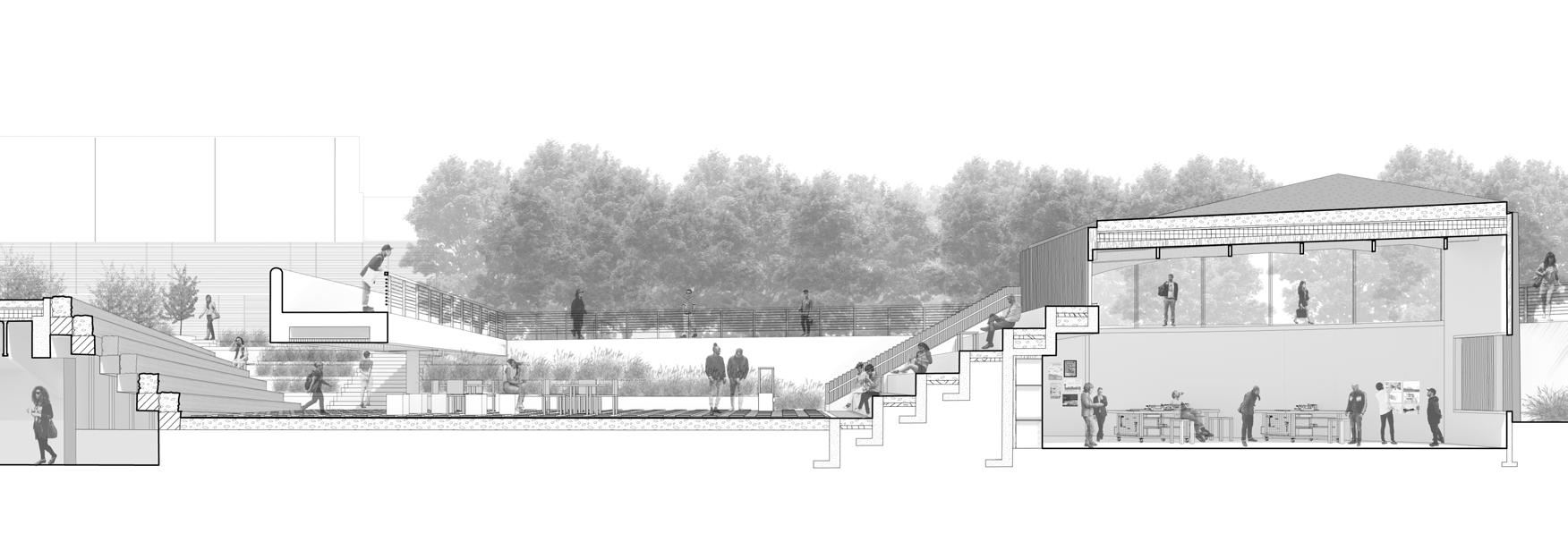
HANNAH KIRBY
2021-2025
University of Tennessee, Knoxville
Bachelor of Architecture | College of Architecture & Design
August 2021 - December 2025
Study Abroad | Urban Design Studio
Civic Design Center | Nashville, TN
May 2024 - August 2024
Architectural Intern Hereford Dooley Architects | Nashville, TN
May 2025 - August 2025
Teaching Assistant
College of Architecture & Design | Fall 2025
History of Architecture 211/217: Pre-History to 1750
Teaching Assistant
College of Architecture & Design | Spring 2025
Architecture 111 Intro to Architecture & the Built Environment
01 - Page 06 - 23
Woven Harbor | Civics Common Edge 2025
02 - Page 24 - 47
Common Grounds | Liminal Conditions 2025
03 - Page 48 - 63
Integrations Studio | Interflow 2024
04 - Page 64 - 79
Transit-Oriented Development | Nashville, TN 2024
05 - Page 80 - 89
Research Document | Reviving Morristown 2023
06 - Page 90 - 101
Exploring Wellness | Health Avenue 2023
07 - Page 102 - 107
Orderly Chaos | A Spatial Construct 2022
08 - Page 108 - 115
Cloud 18 | The Art of Spatial Discovery 2022
Semester: Fall 2025
Location: Helsinki, Finland
Professor: Frances Hsu
Partners: Emma Kirby & Trevor Woodyard
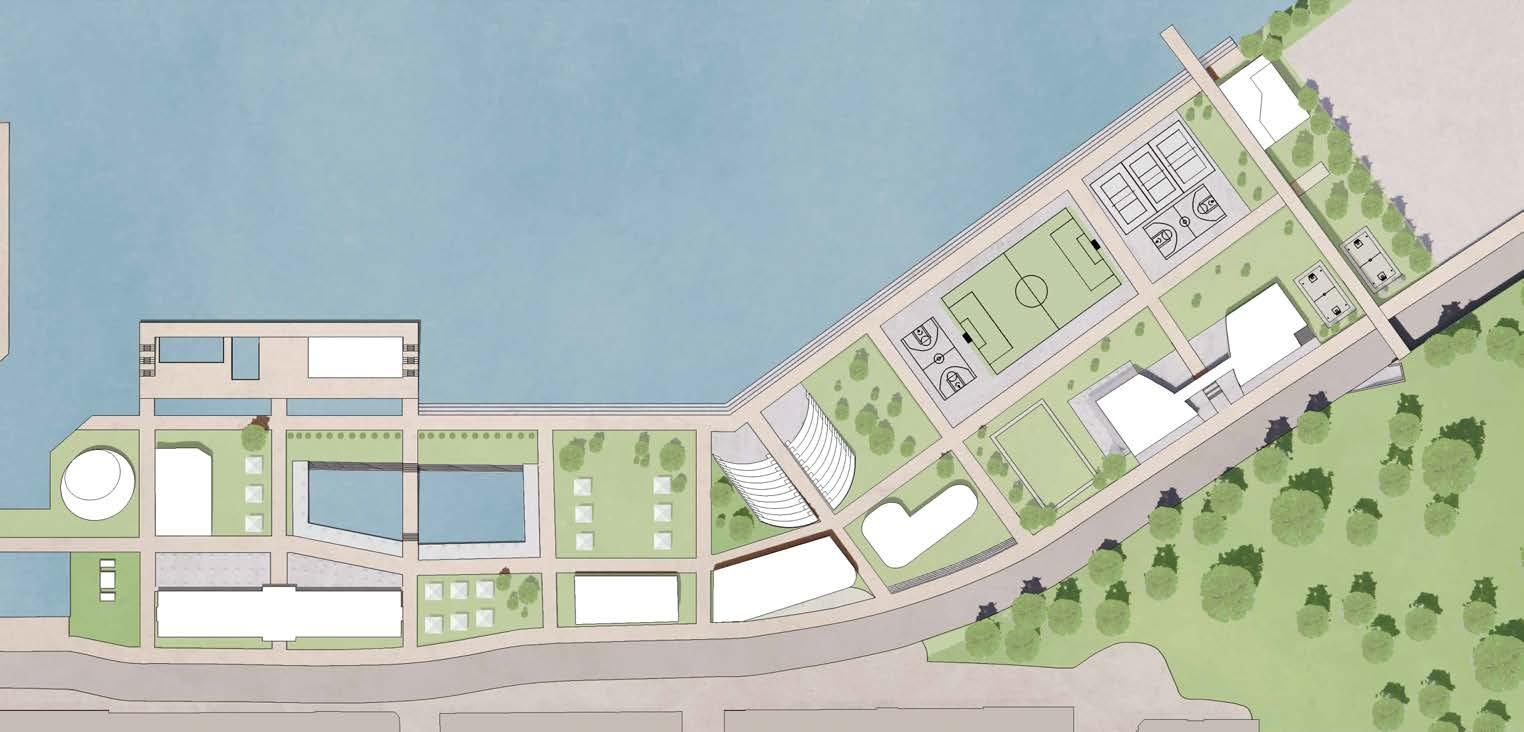
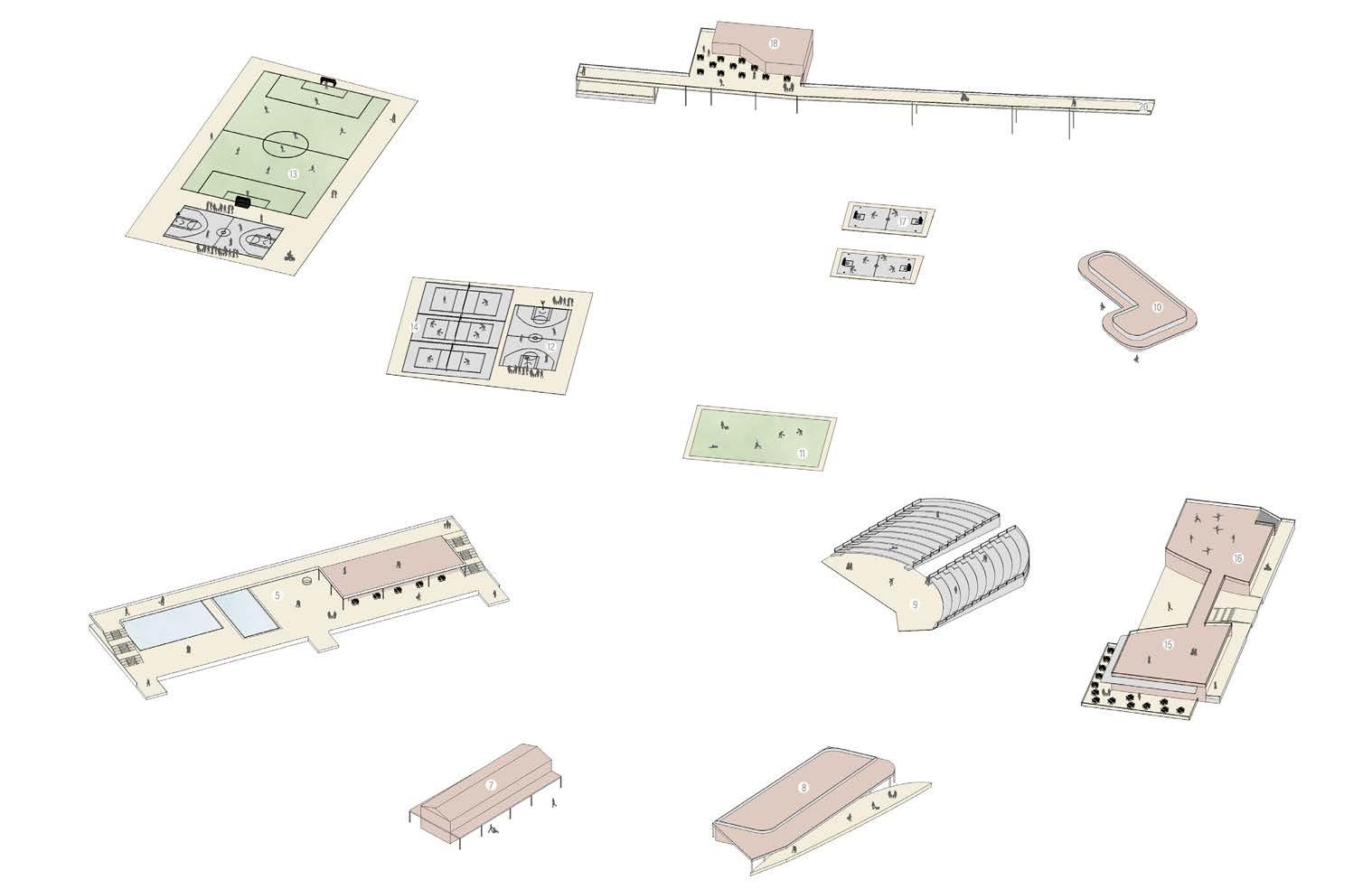
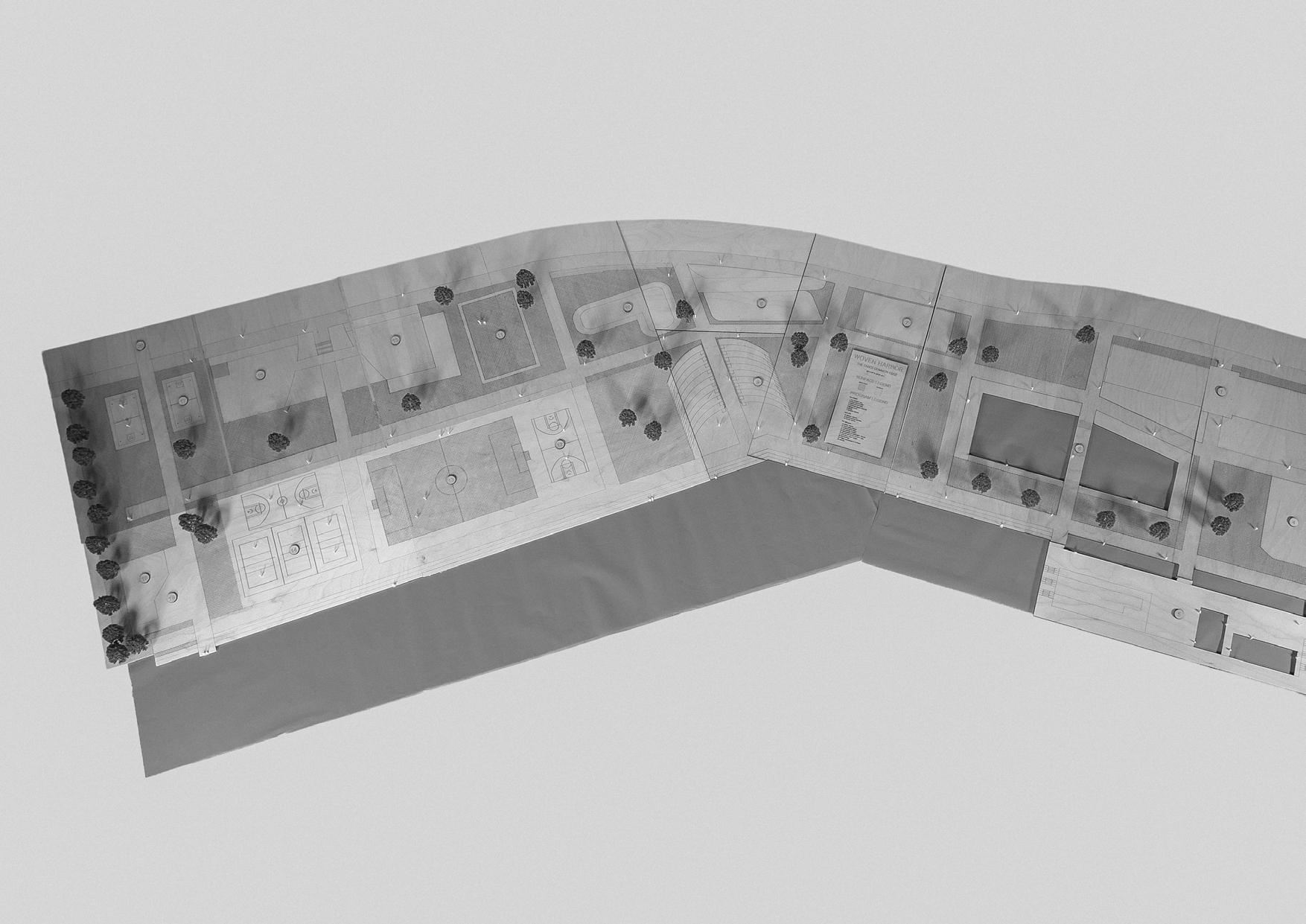
South Harbor currently serves as a symbolic and physical edge of Helsinki, yet the west waterfront is fragmented and underutilized, dominated by transit infrastructure rather than civic life. Woven Harbor proposes a new vision: a vibrant civic commons that reconnects the city, the harbor, and the community.
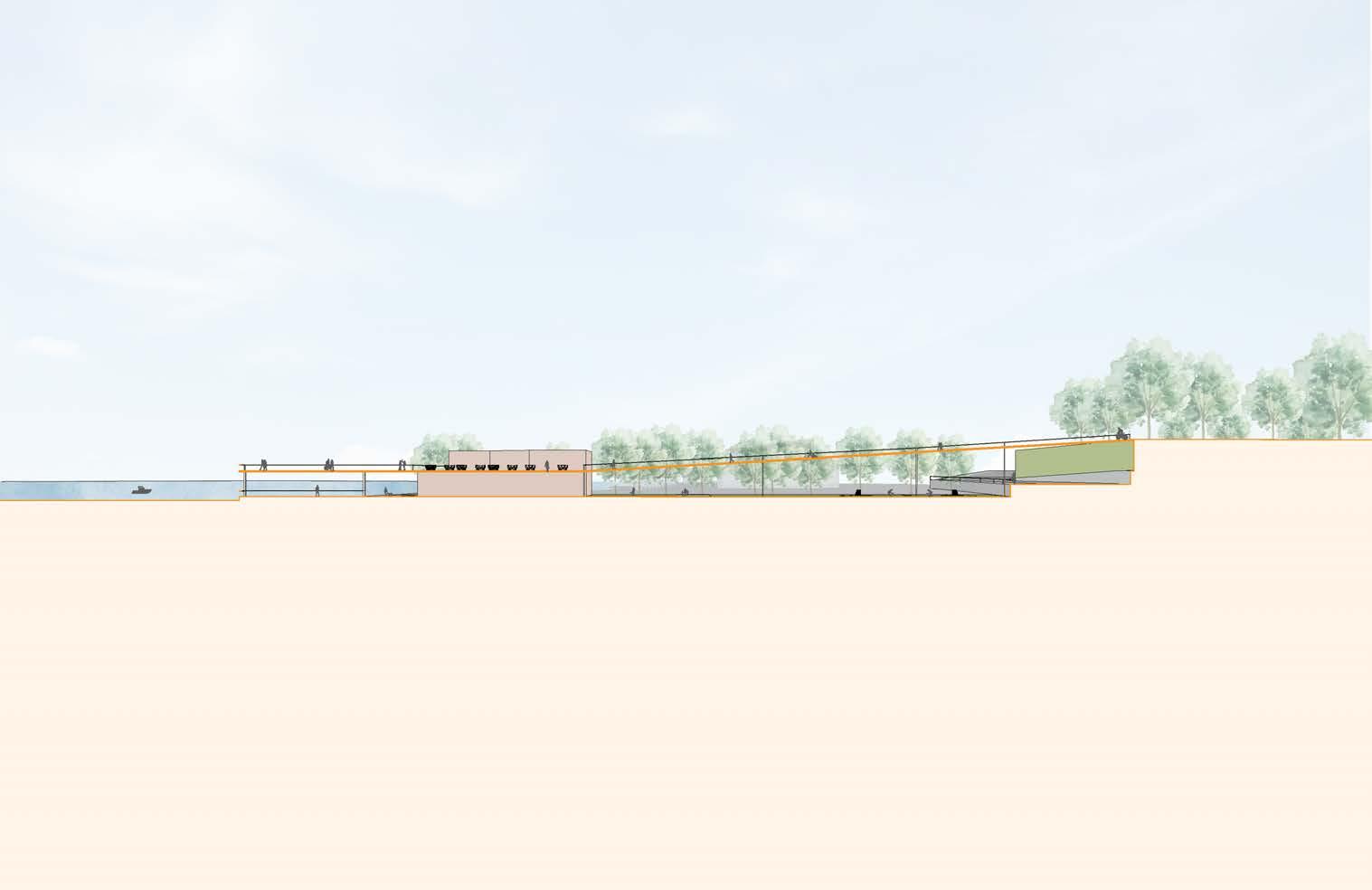
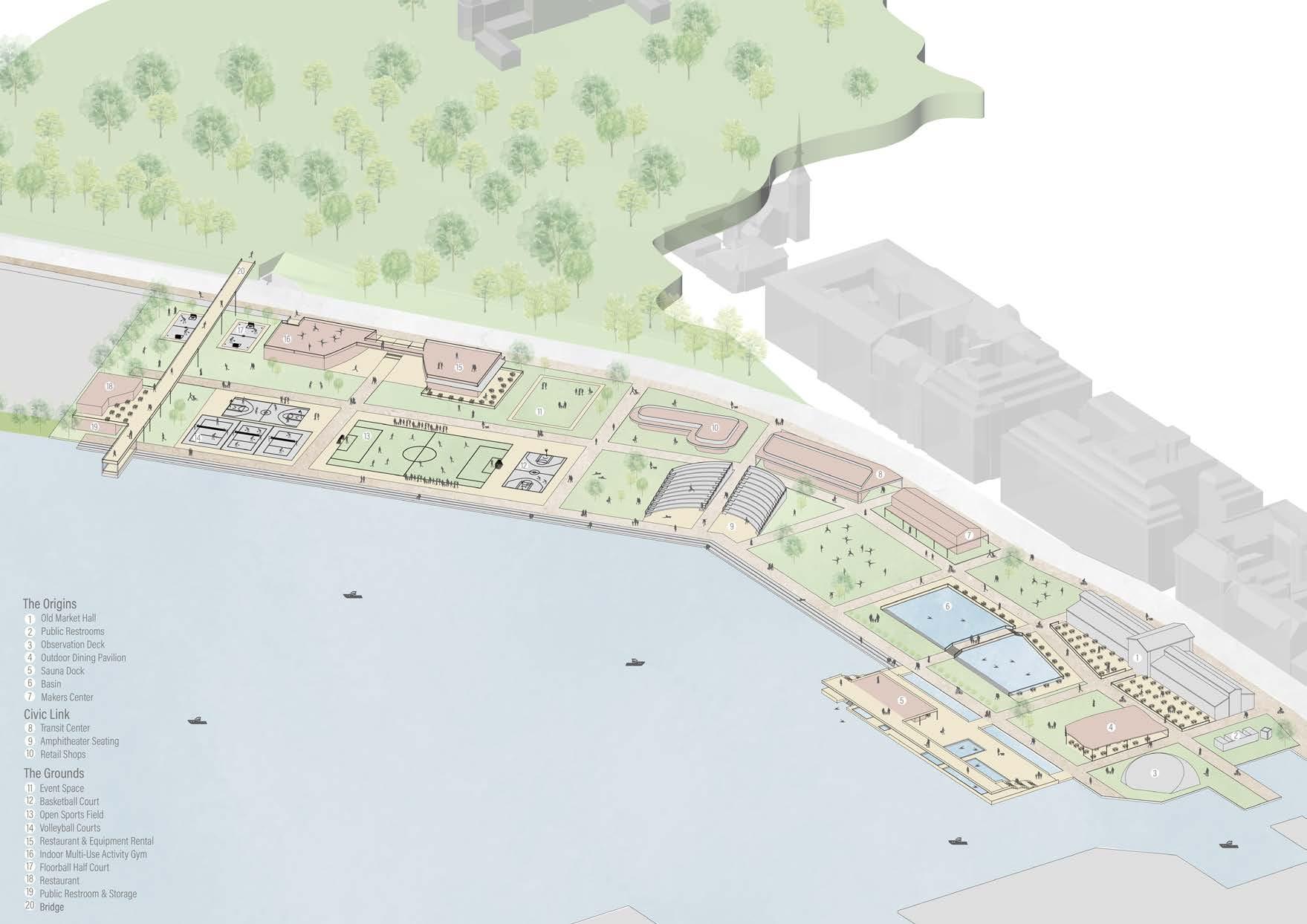
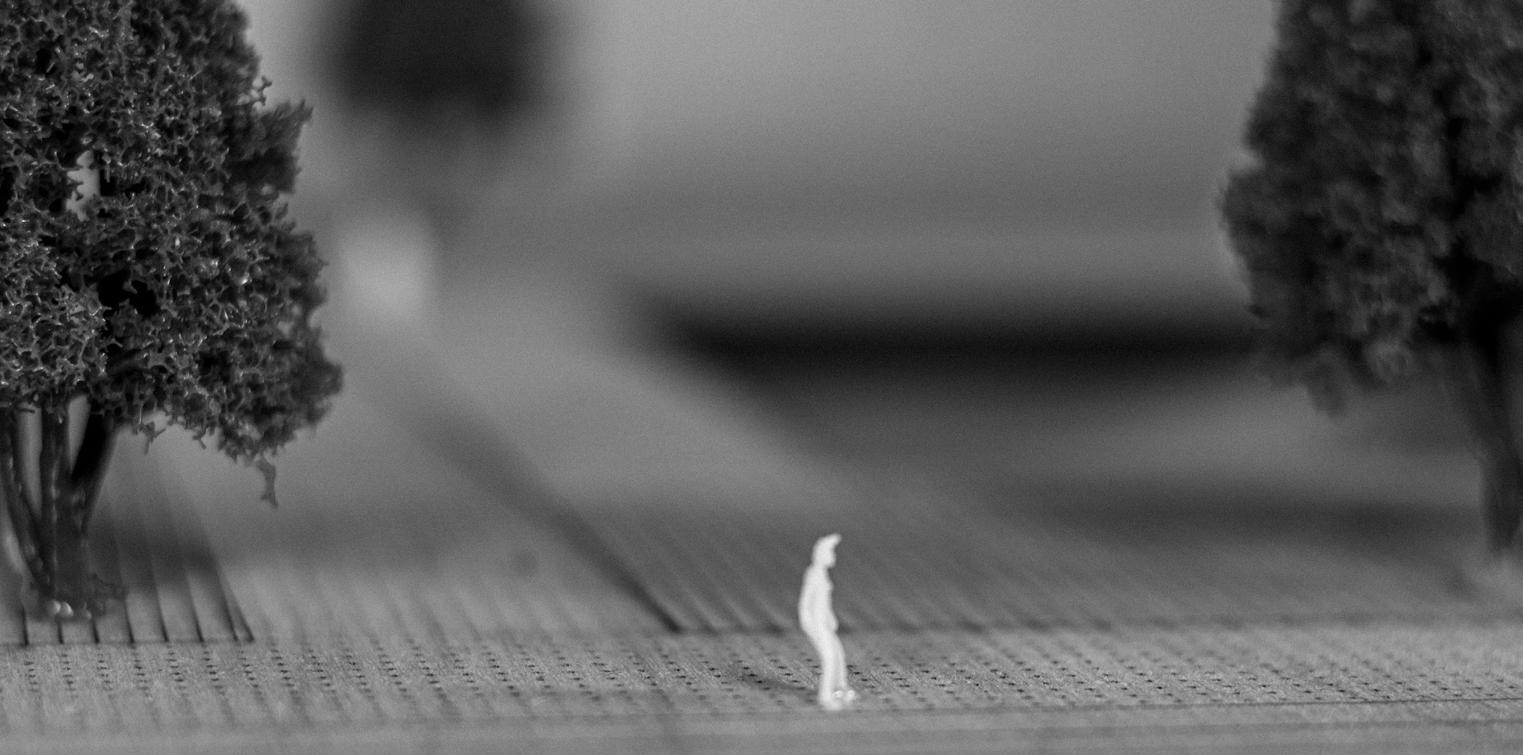
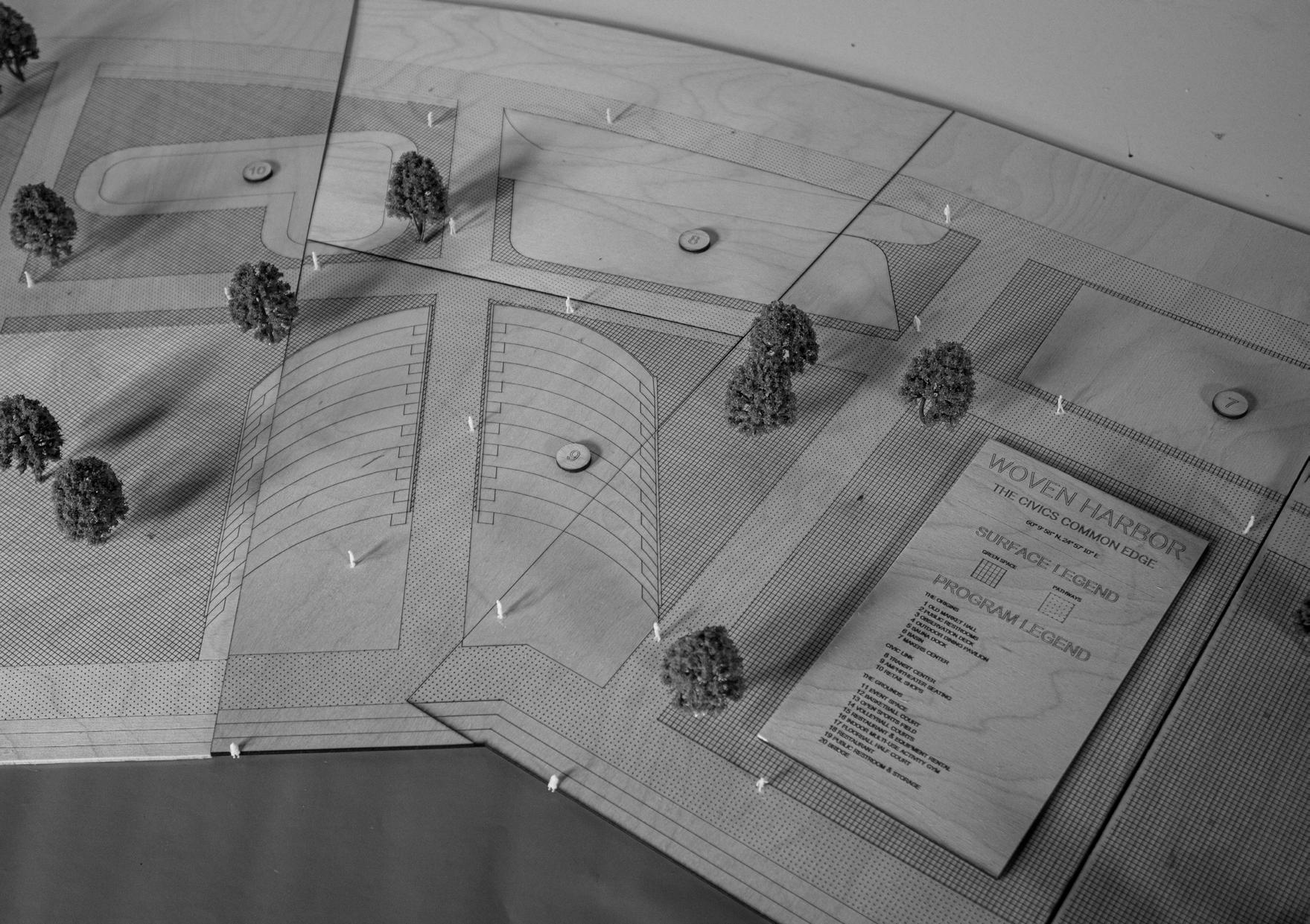
The project envisions a continuous landscape that blurs the line between land and water, activating underutilized edges with flexible, human-centered design. Fixed structures anchor activity, while adaptive spaces allow visitors to define their own experiences. The design integrates heritage, recreation, and movement, fostering a shared civic identity that supports locals and welcomes visitors alike.

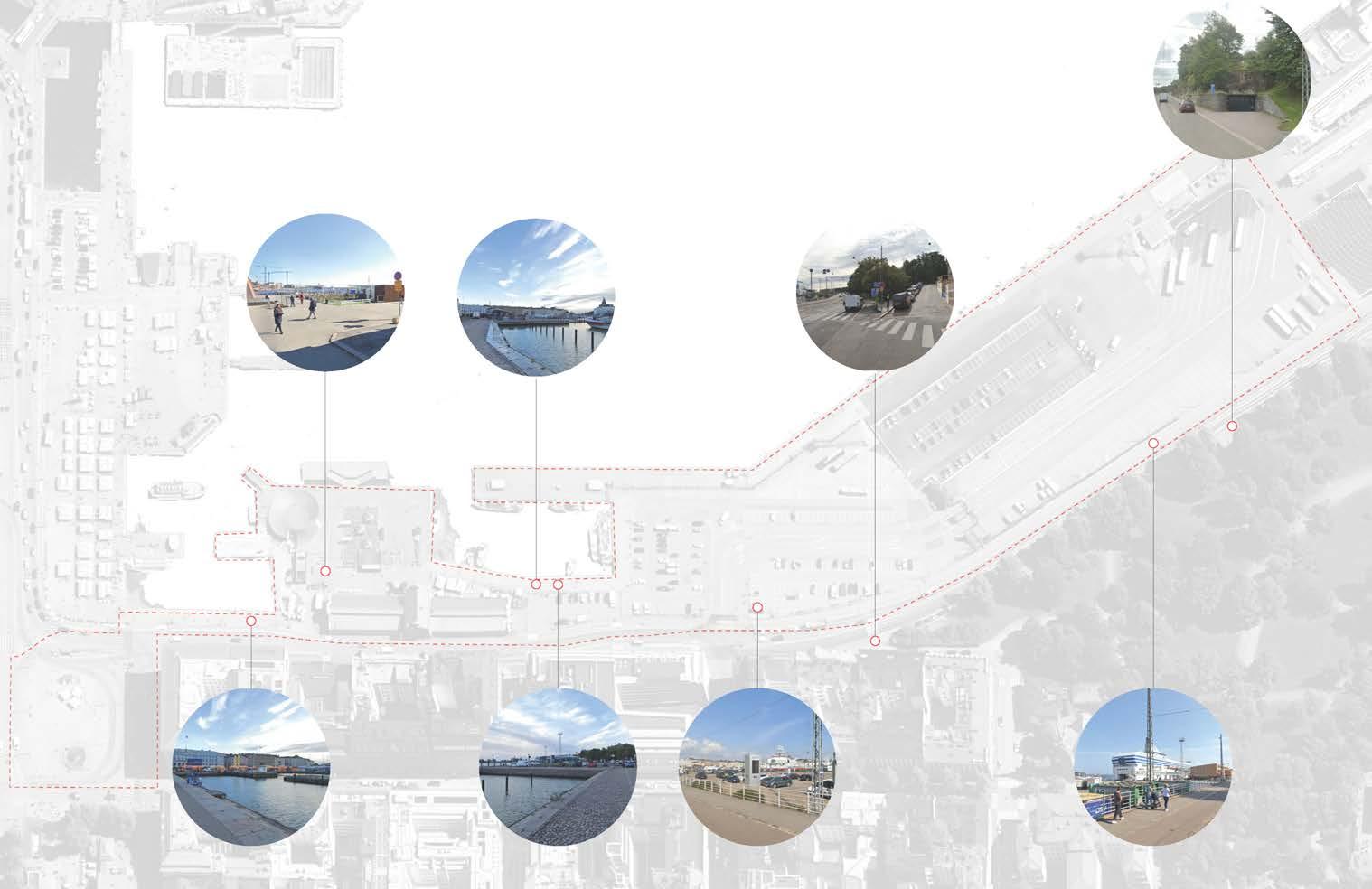
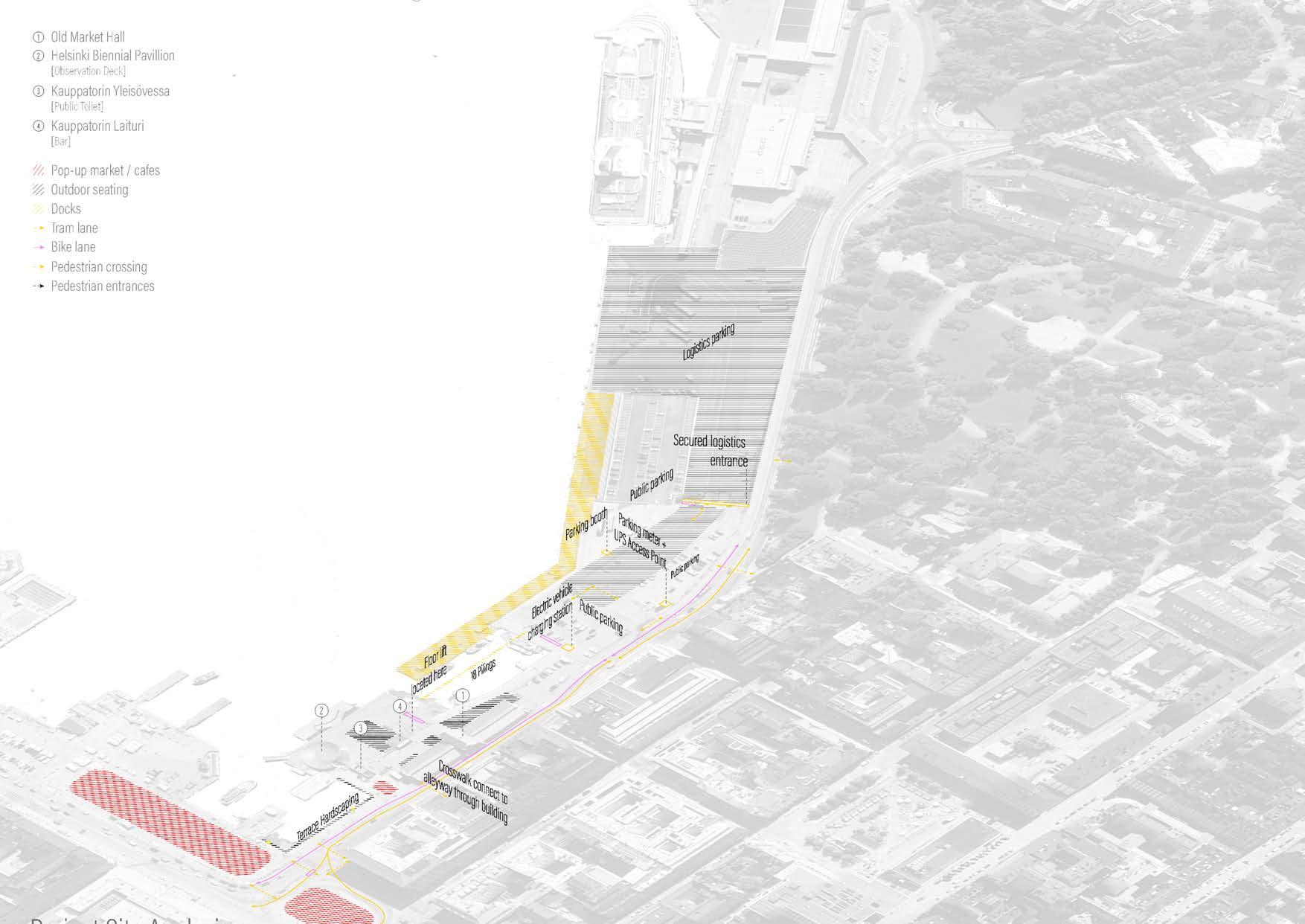
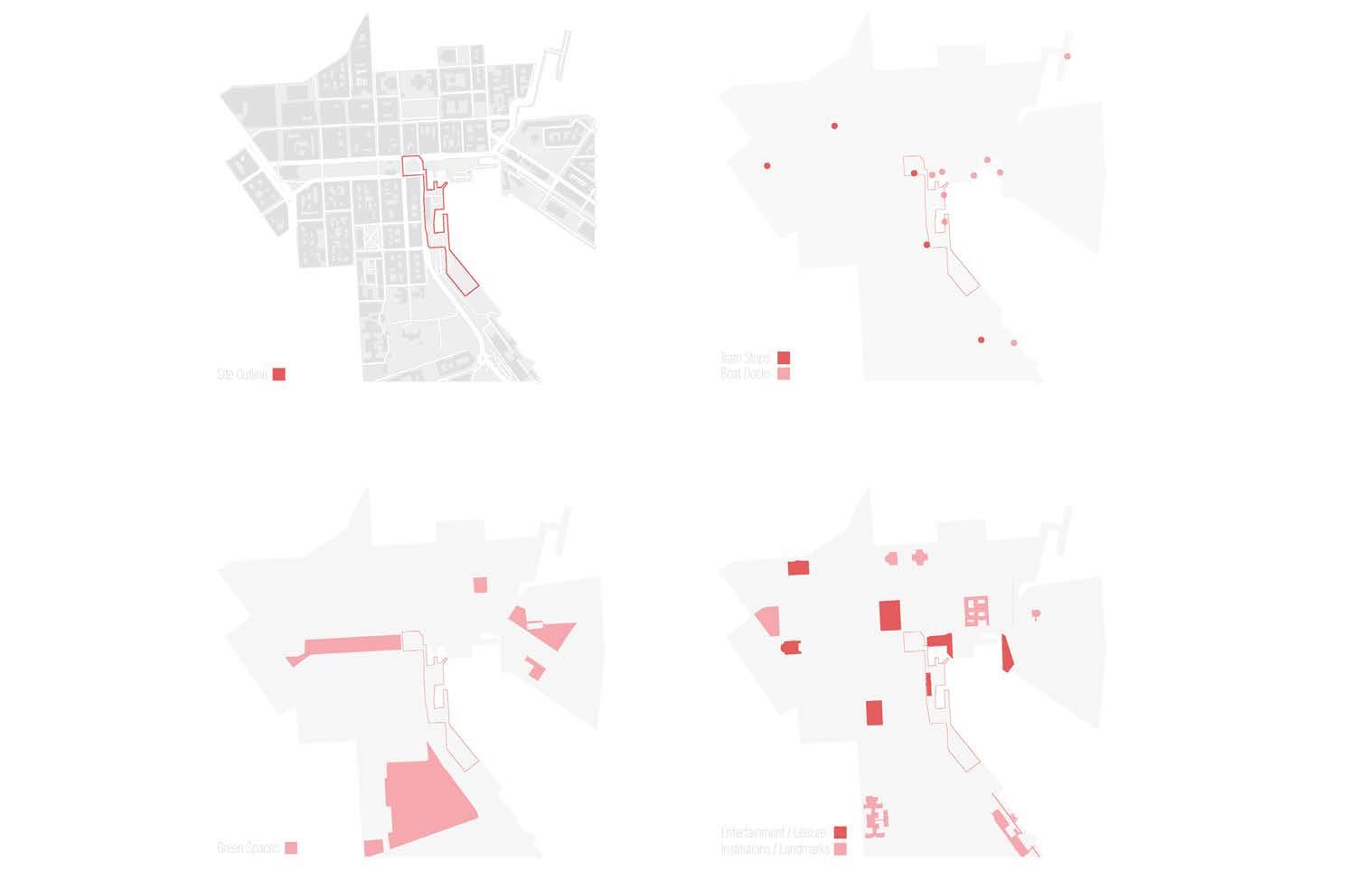

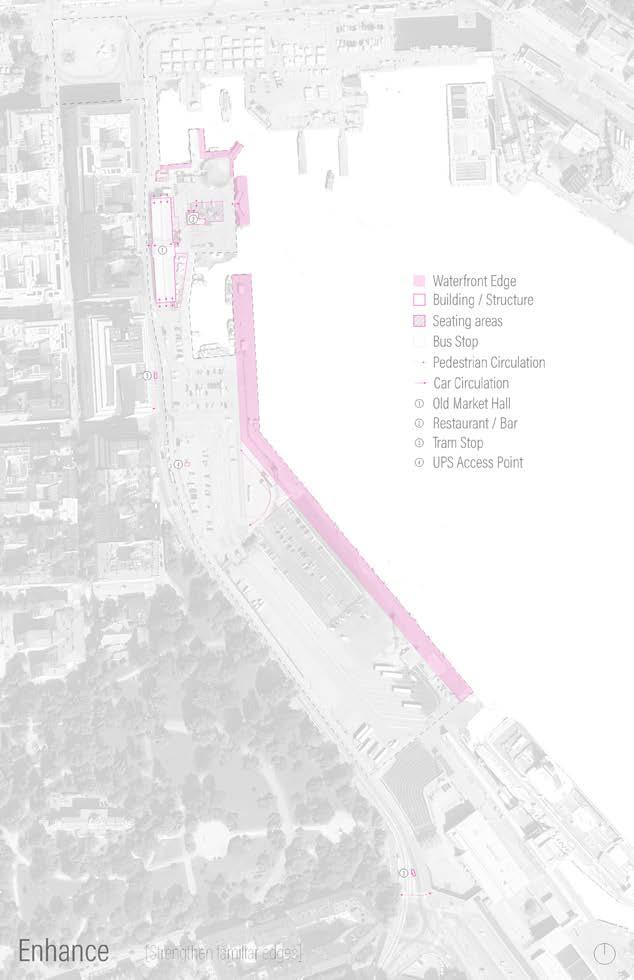
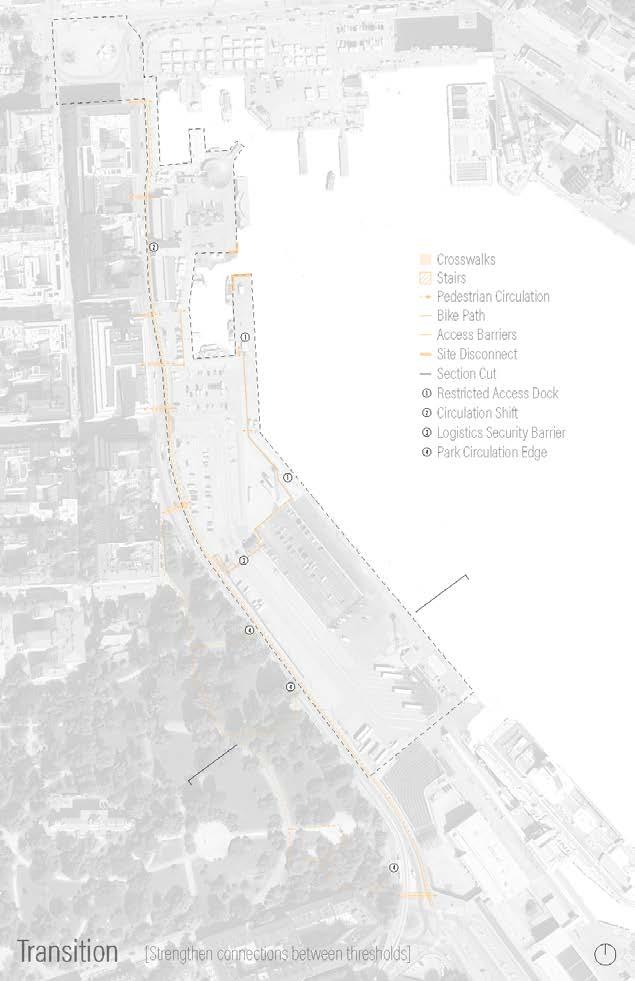
This project is grounded in a layered reading of the existing site through the strategies of Enhance, Transition, and Activate. These diagrams reveal how strengthening functional elements, reconnecting broken thresholds, and activating dormant spaces can collectively reshape South Harbor. Enhance builds upon existing civic infrastructure, reinforcing places already embedded in daily use. Transition repairs the physical and experiential gaps between land, water, and movement networks. Activate reclaims overlooked areas as spaces for gathering, leisure, and public life. This layered approach becomes the driver of the project, informing form, circulation, and program while transforming a fragmented edge into an active and connected waterfront.

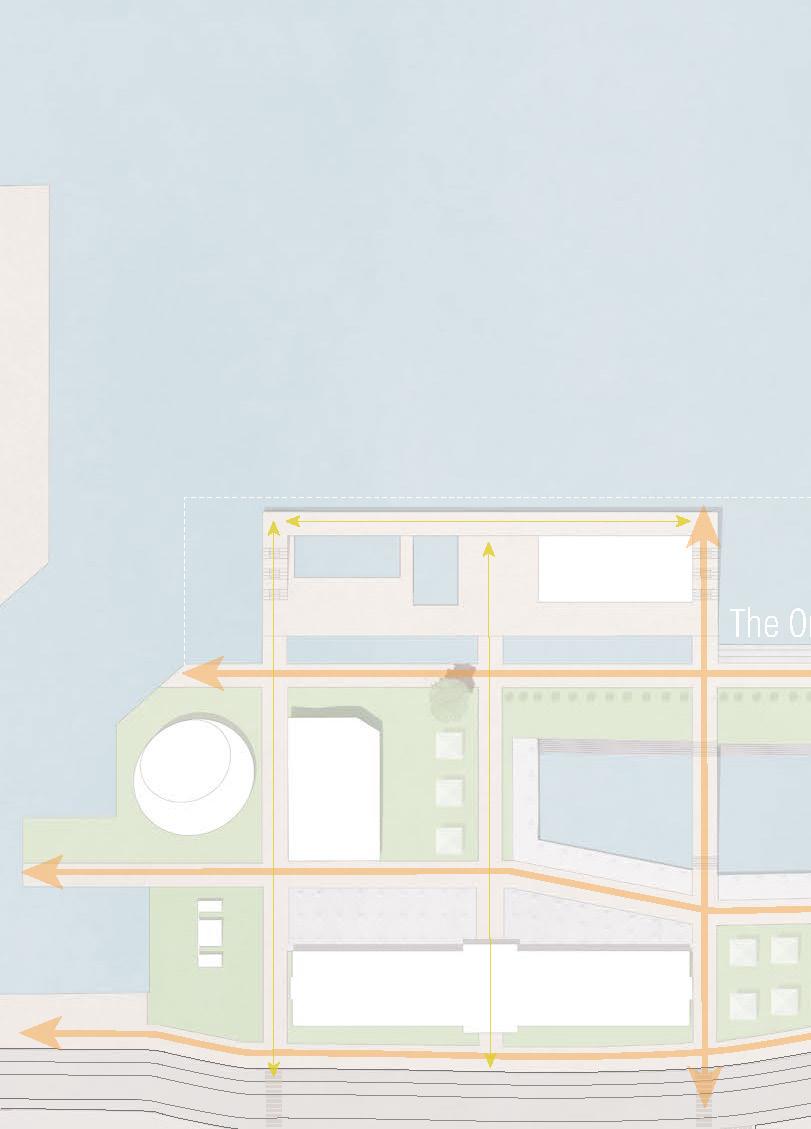
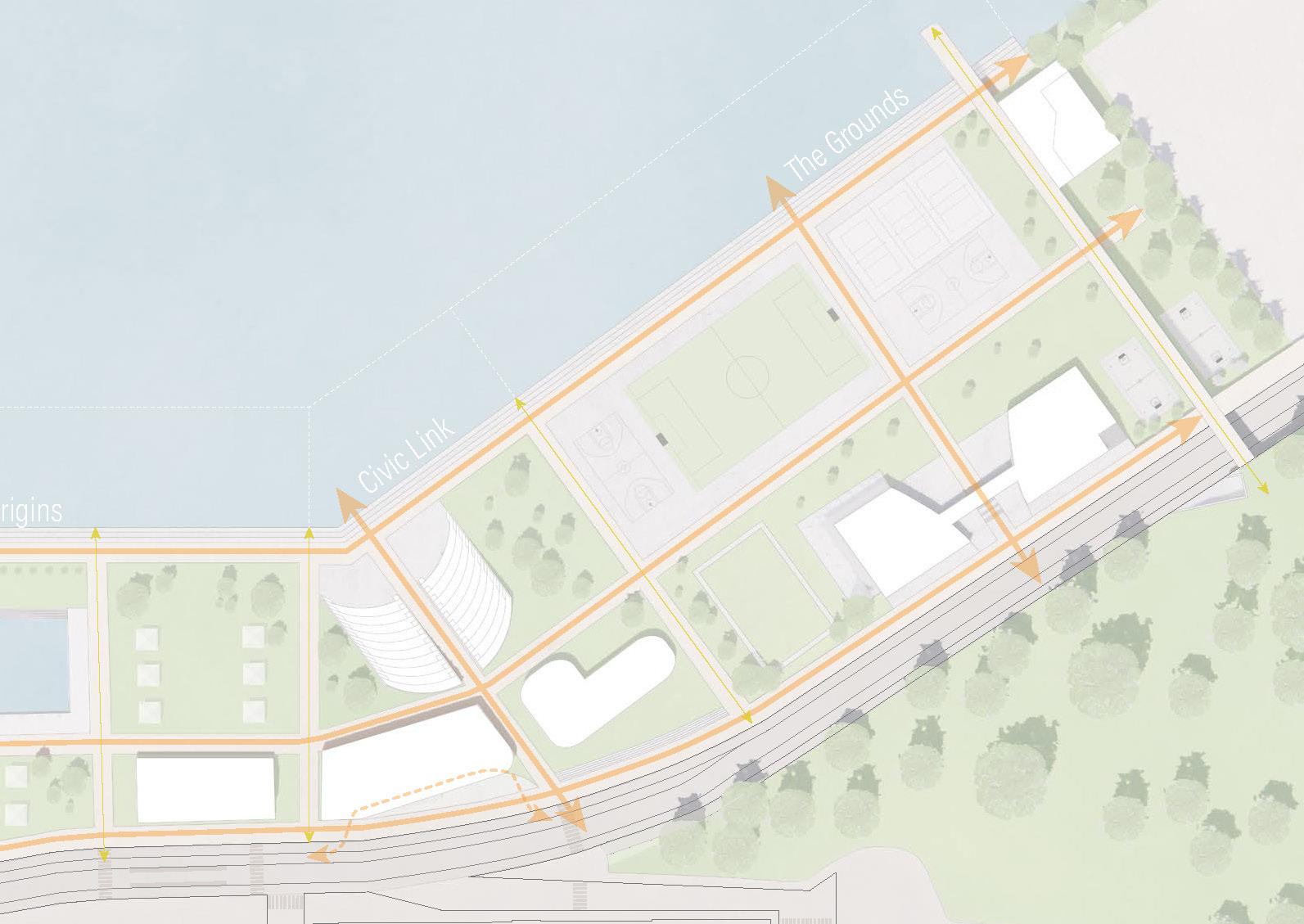
The final design proposal is organized into three interwoven zones that collectively shape Woven Harbor as a flexible civic commons. The Origins celebrates cultural heritage and local traditions, from the historic Old Market Hall to Nordic bathing rituals, reinforcing shared memory through enhanced public amenities and social spaces. The Civic Link serves as the active spine of the site, connecting the city, surrounding neighborhoods, and transport networks through pedestrian pathways and civic programs that transform movement into engagement. The Grounds provides openair landscapes for recreation, wellness, and community life, supporting activities ranging from sports and fitness to informal gatherings.

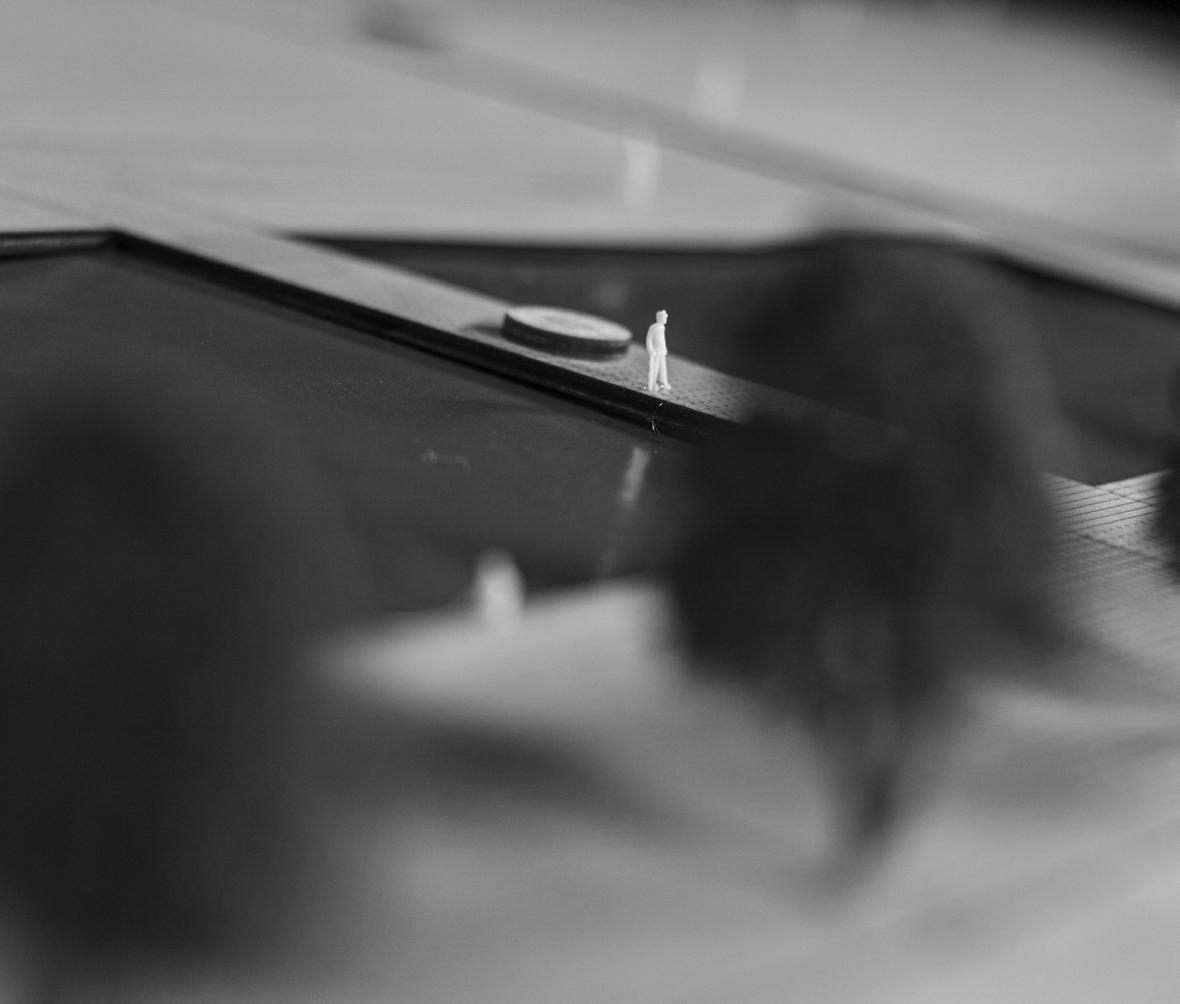
Semester: Spring 2025
Location: Knoxville, Tennessee
Professor: James Rose
Partners: Alyza Zink, Austin Joyner, Cavan Walker, Danielle Dicicco, Libby Richardson, & Marlow Degraw
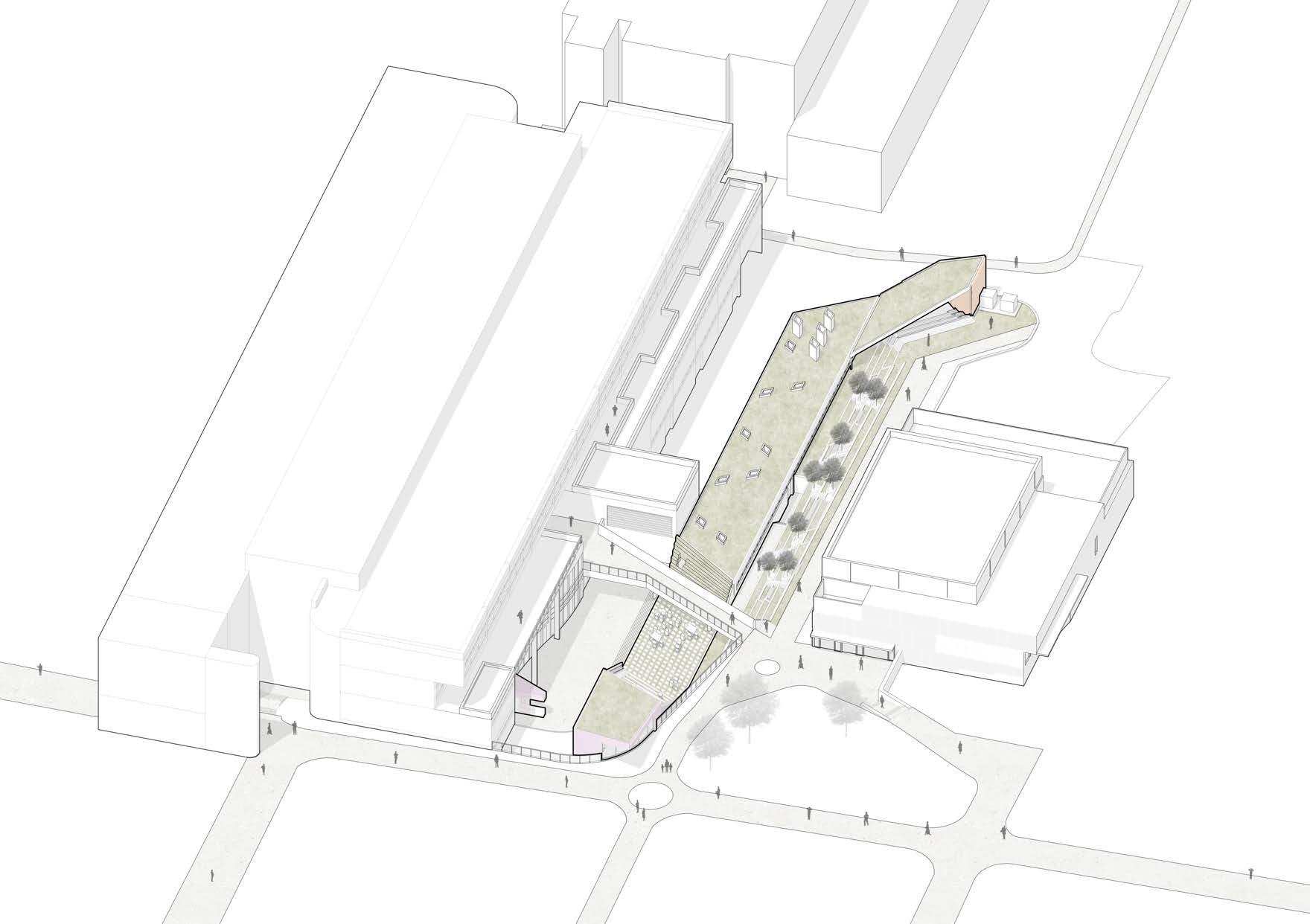
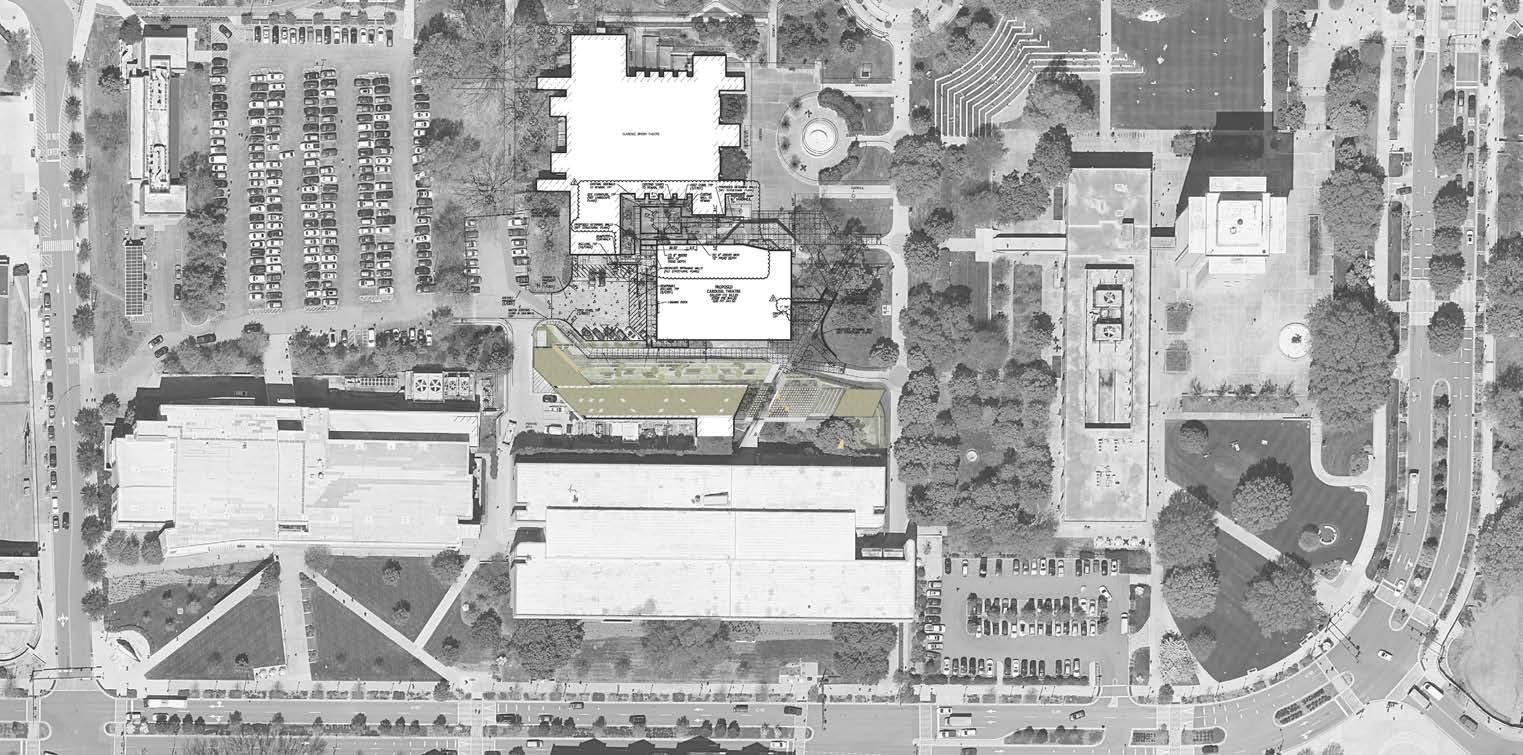
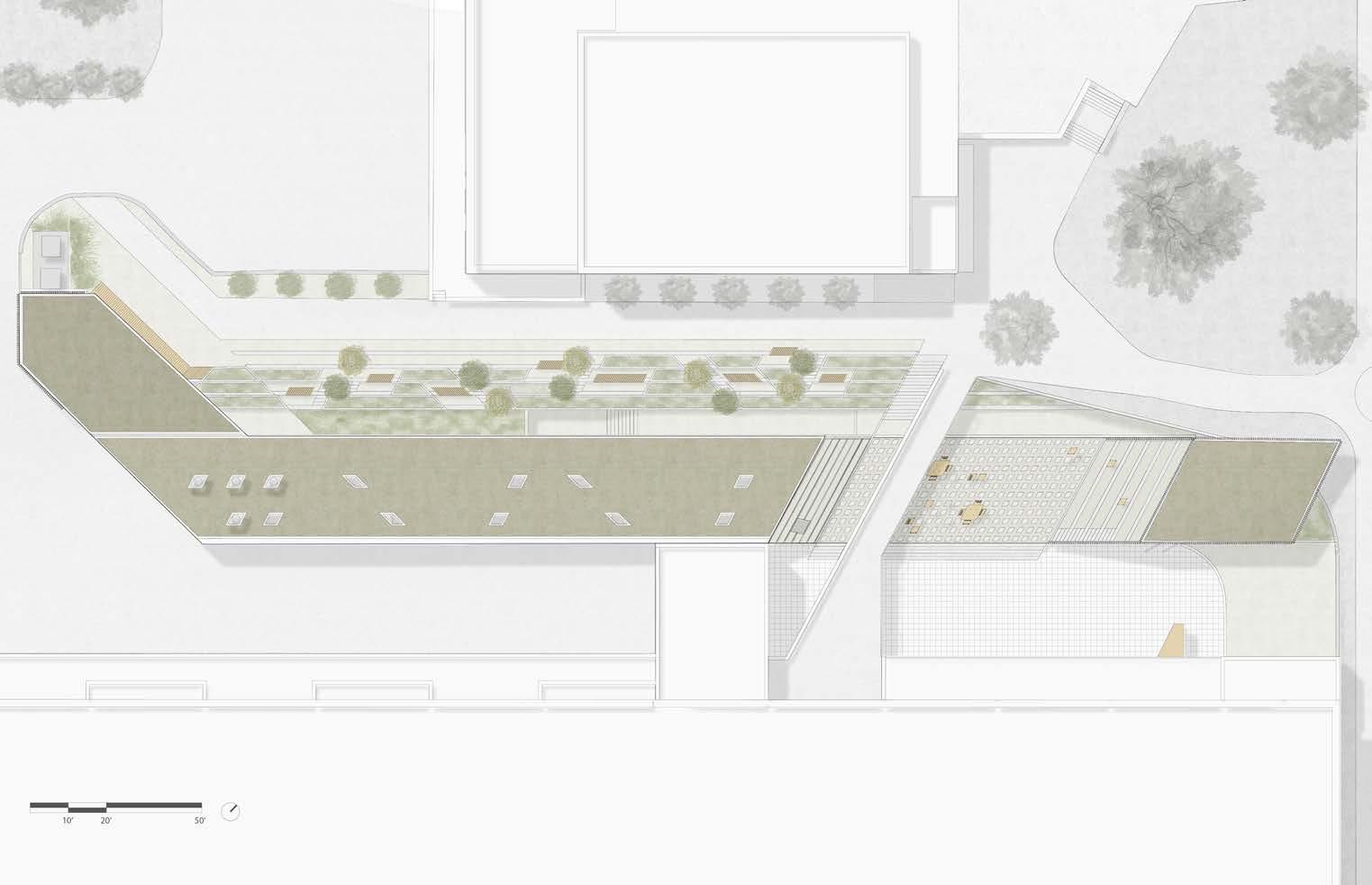
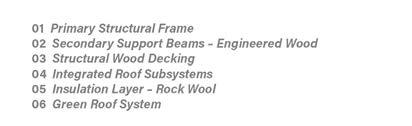
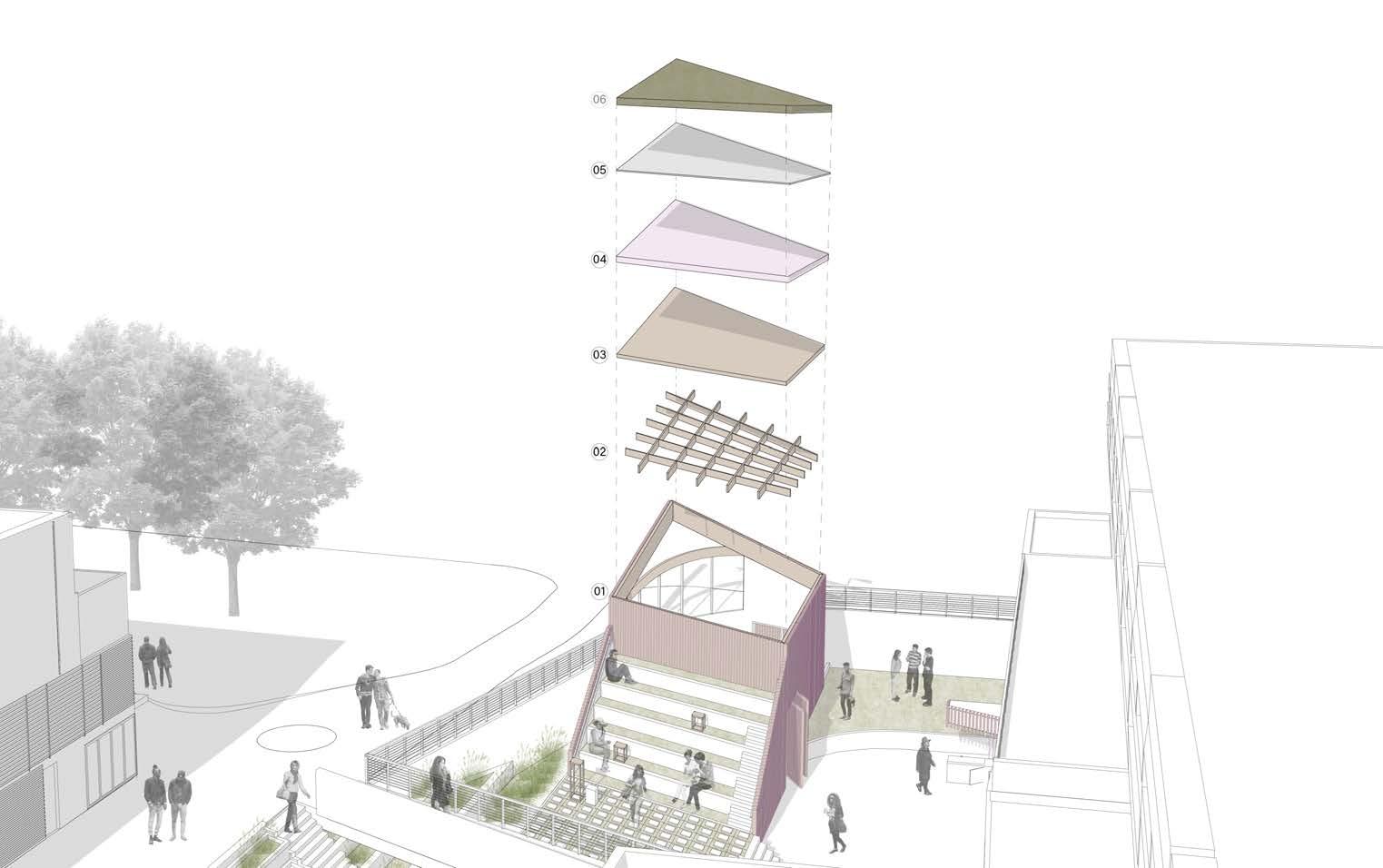
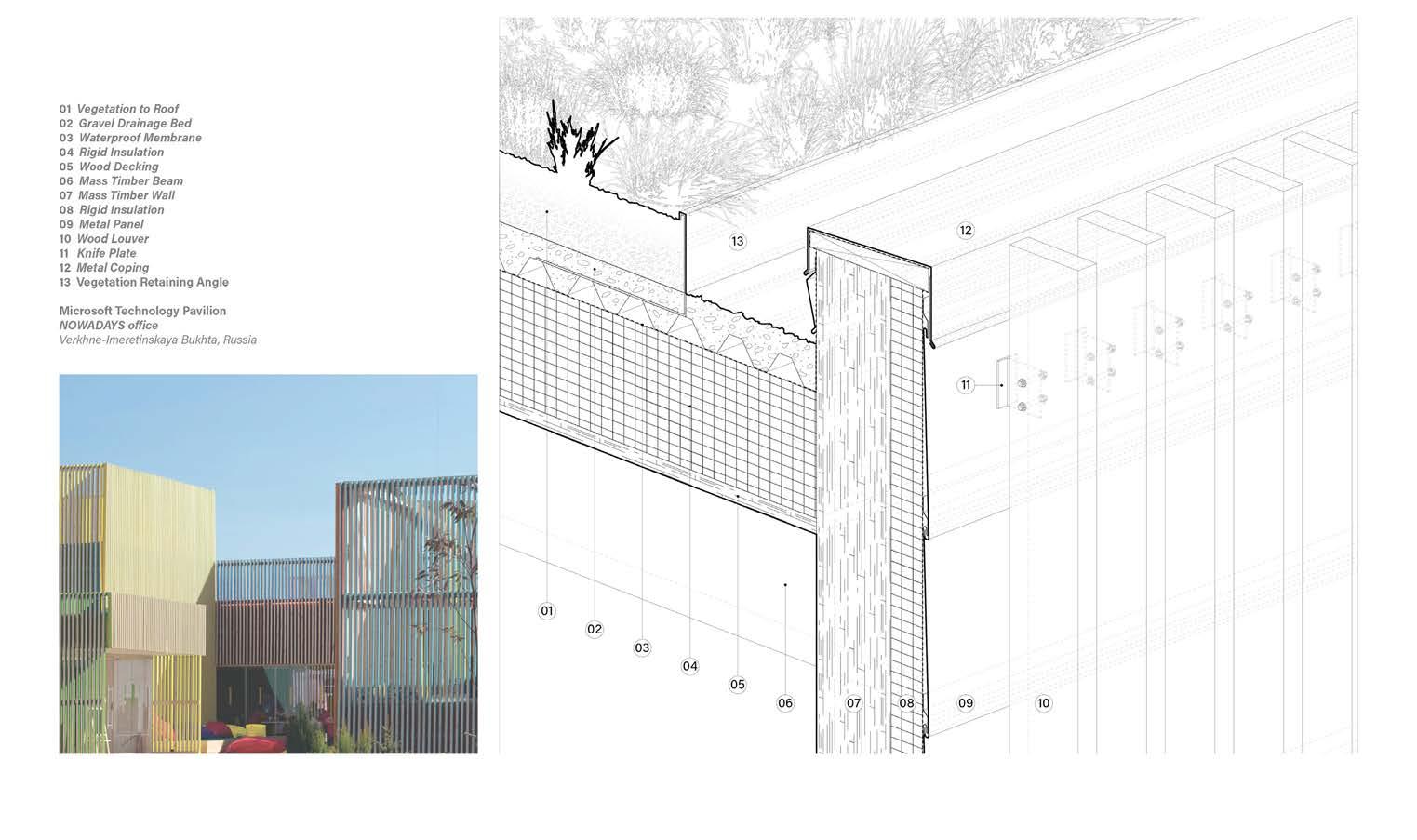
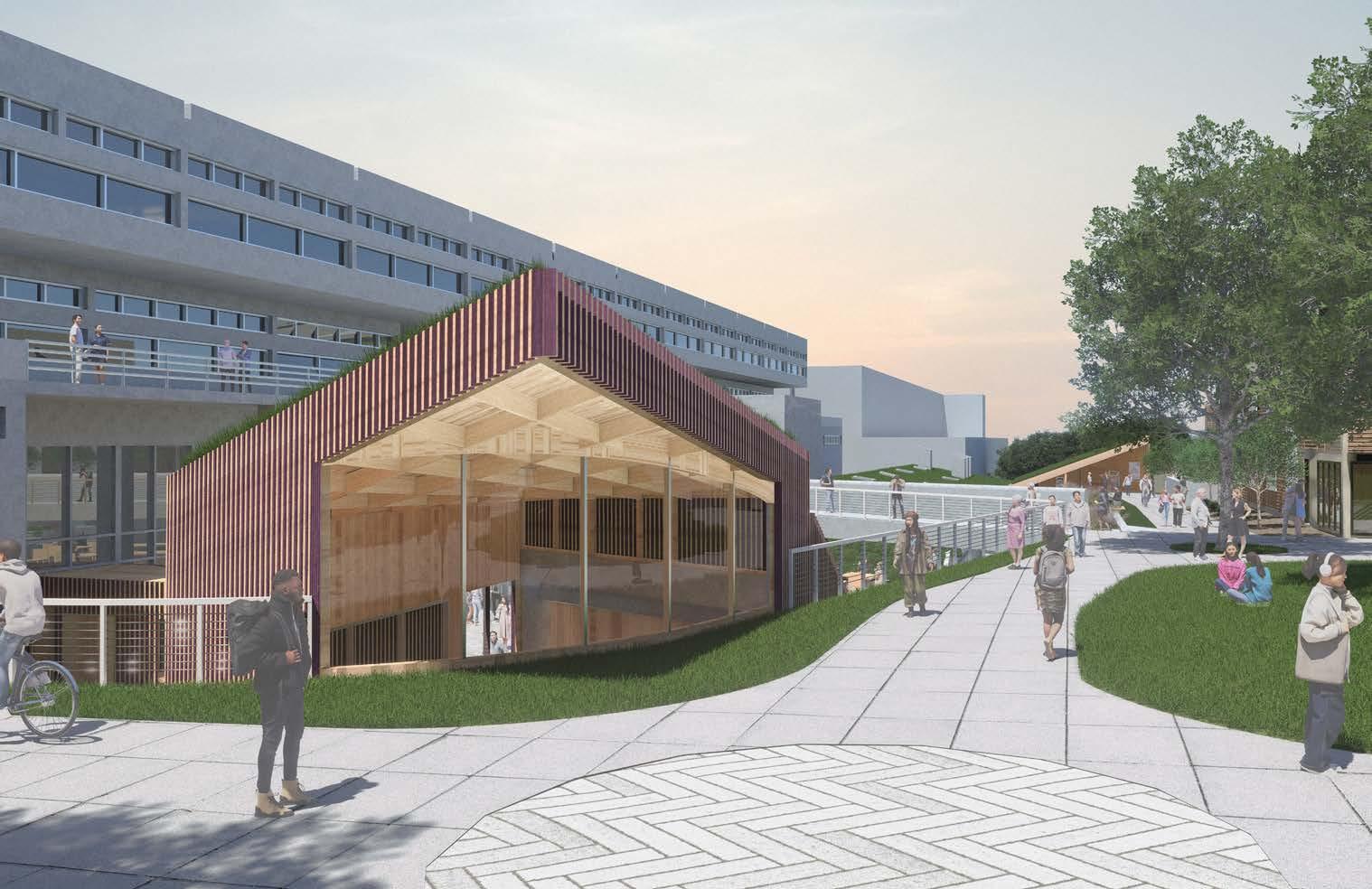
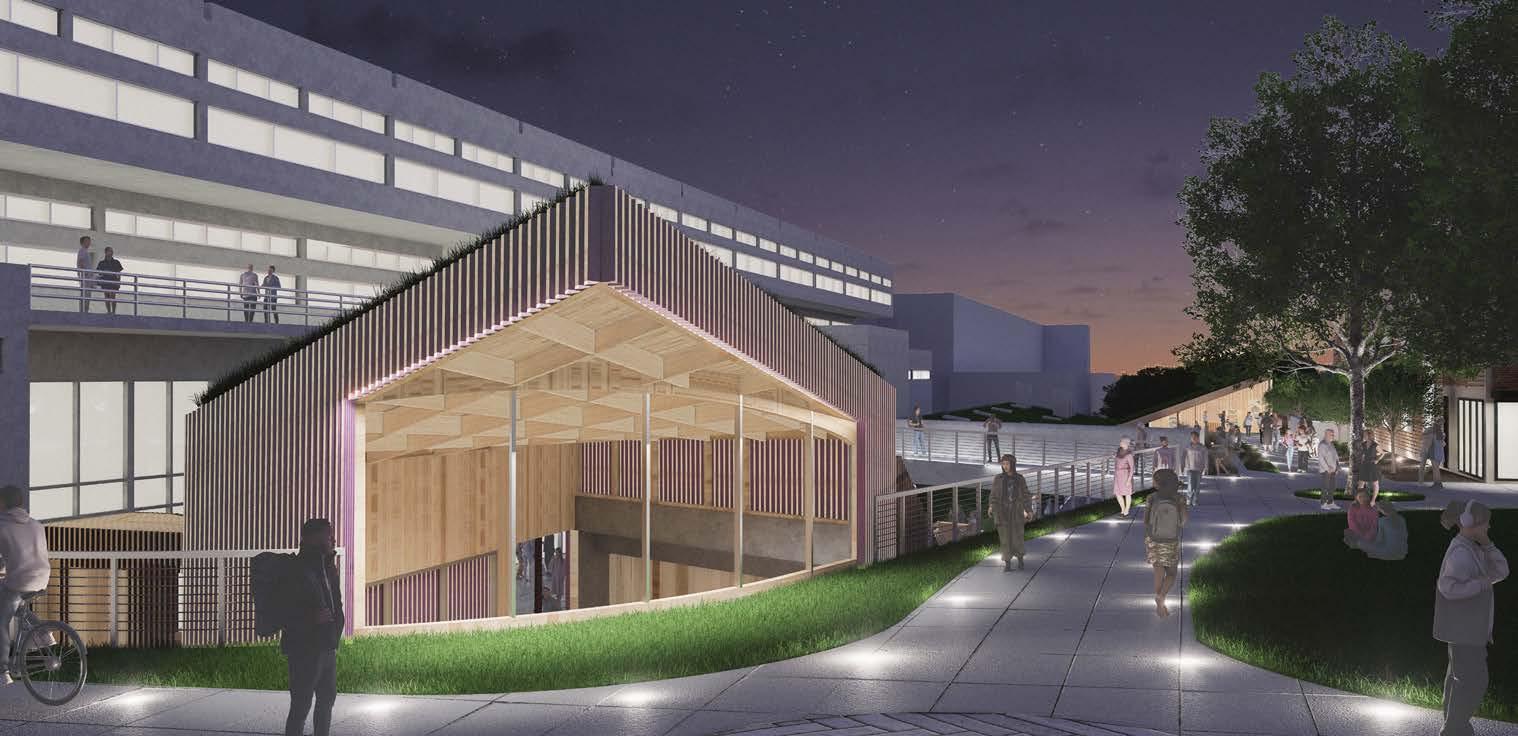
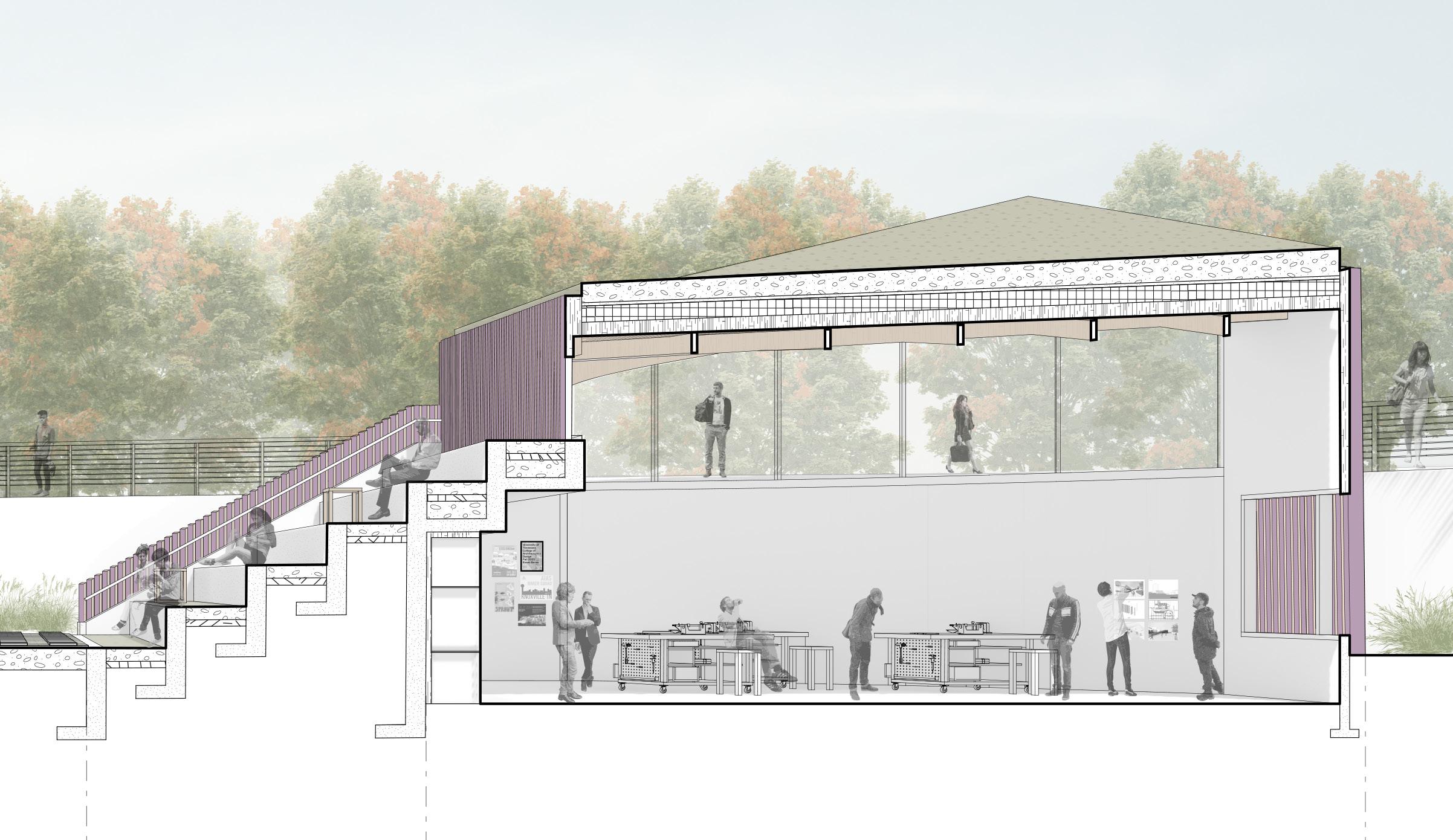
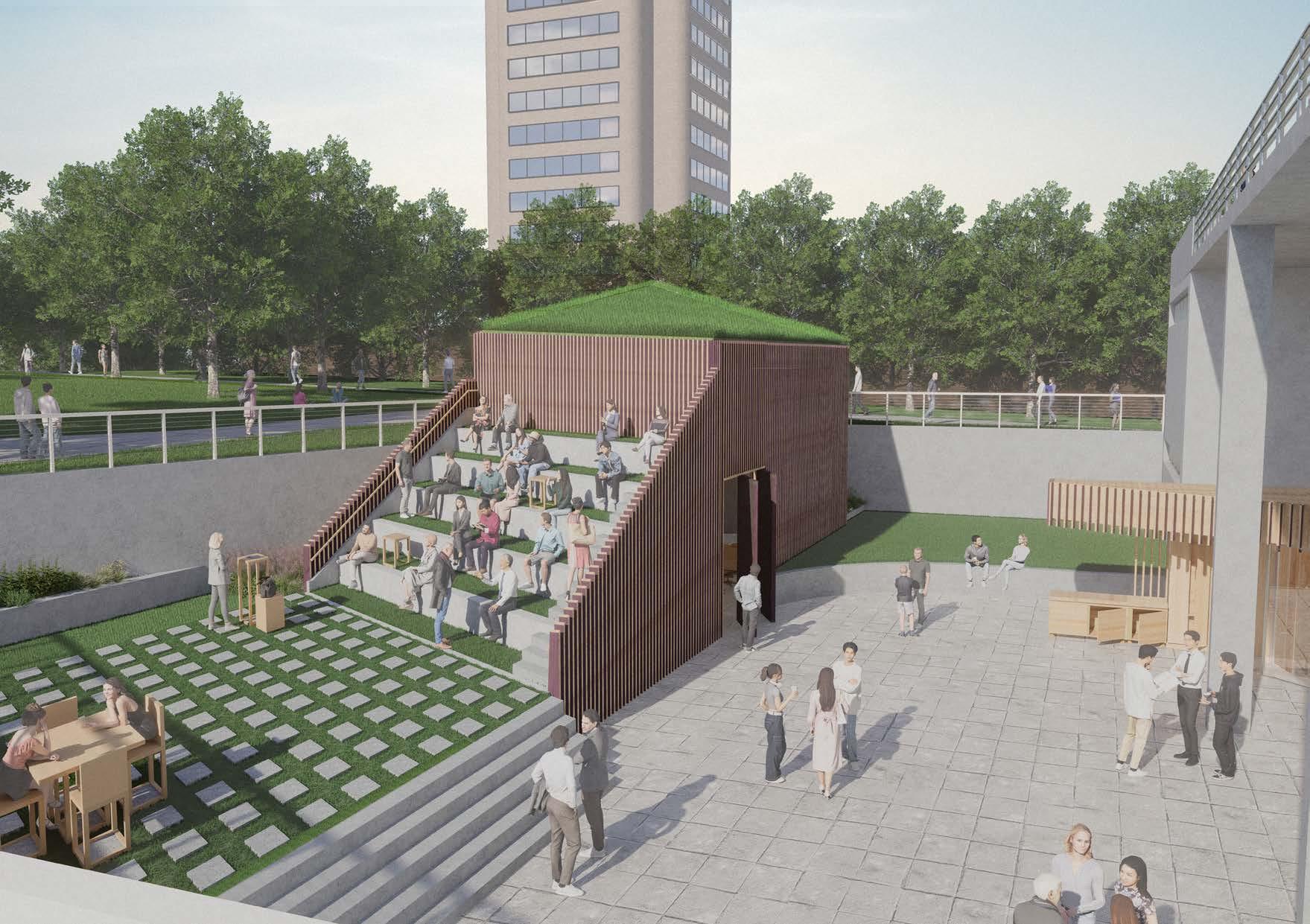
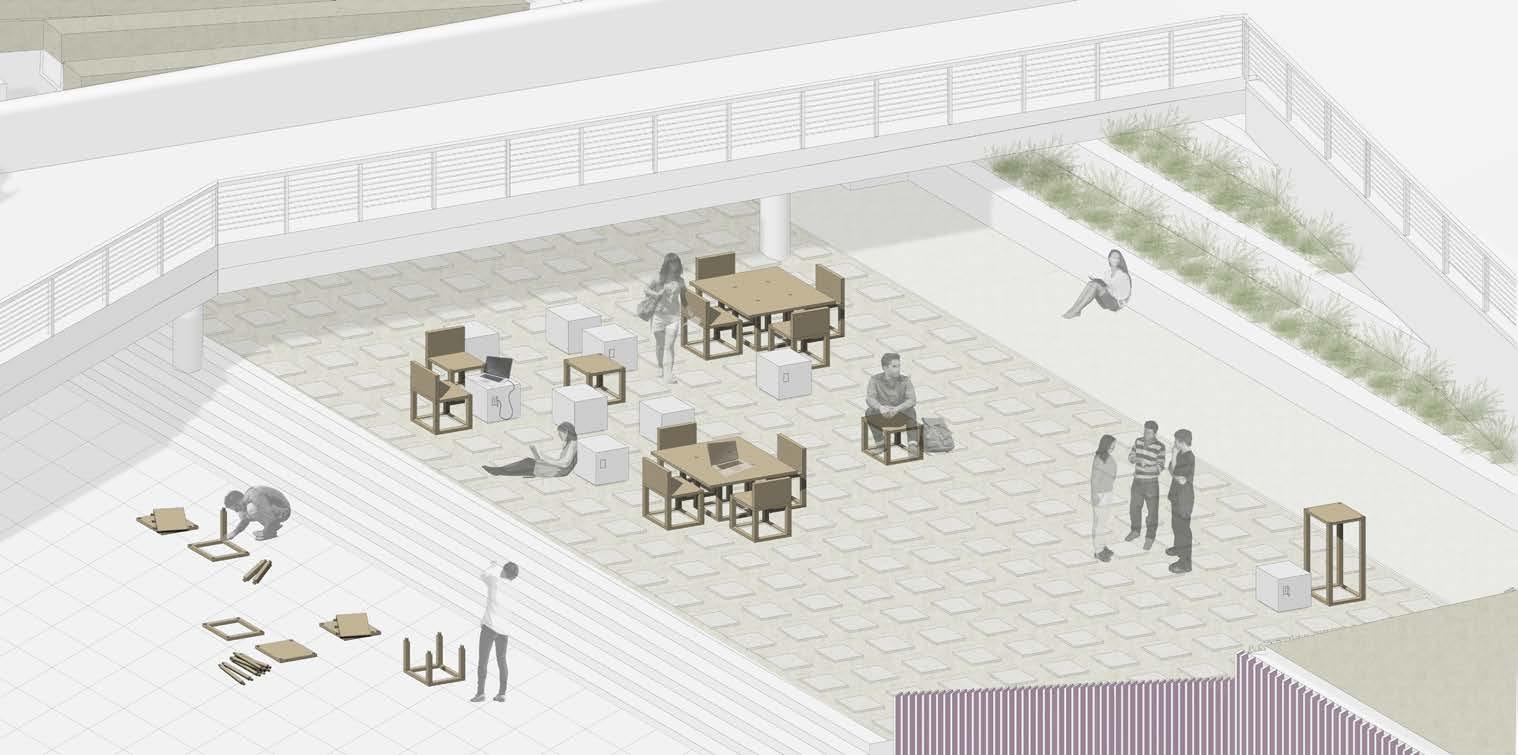
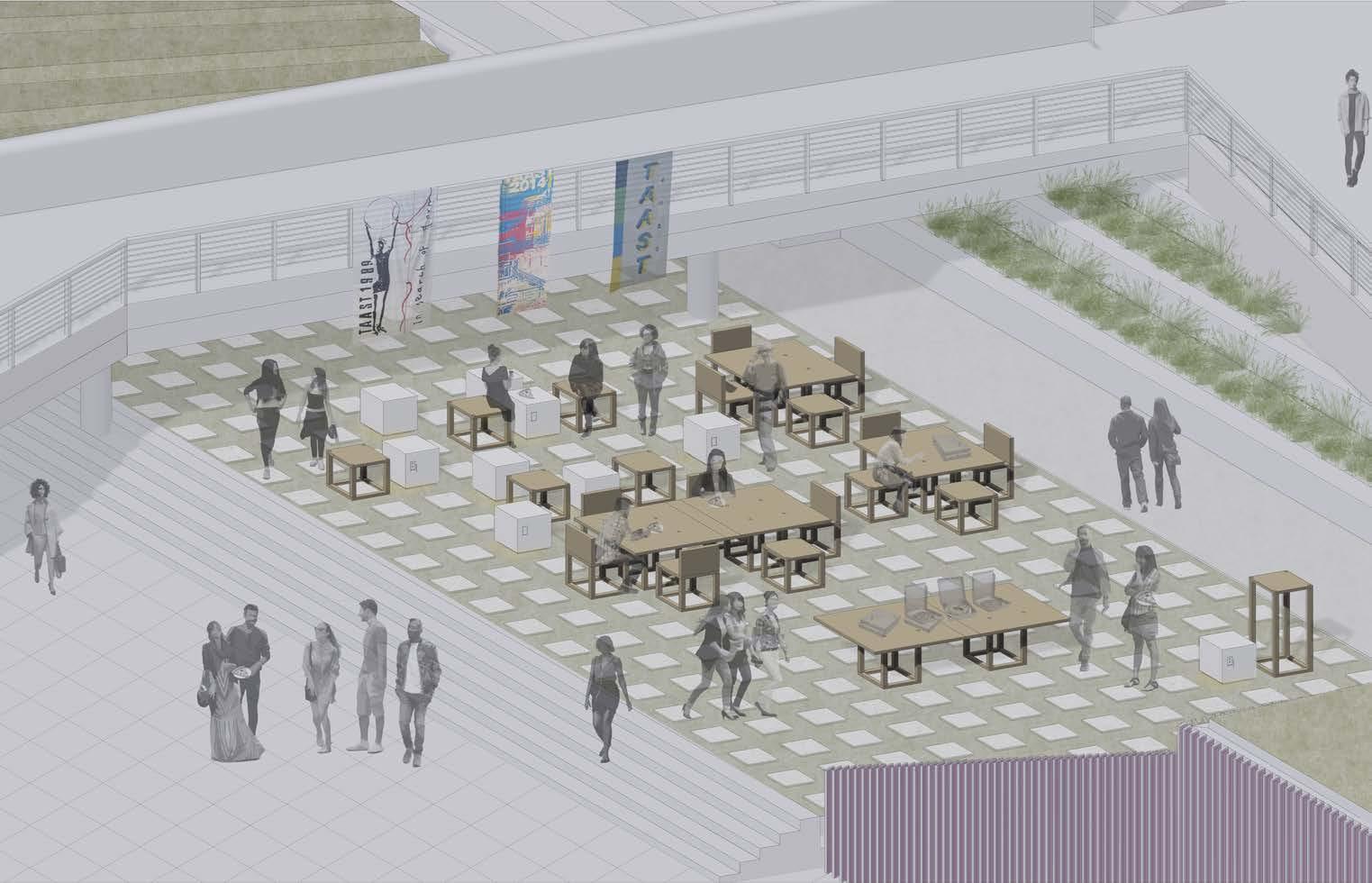
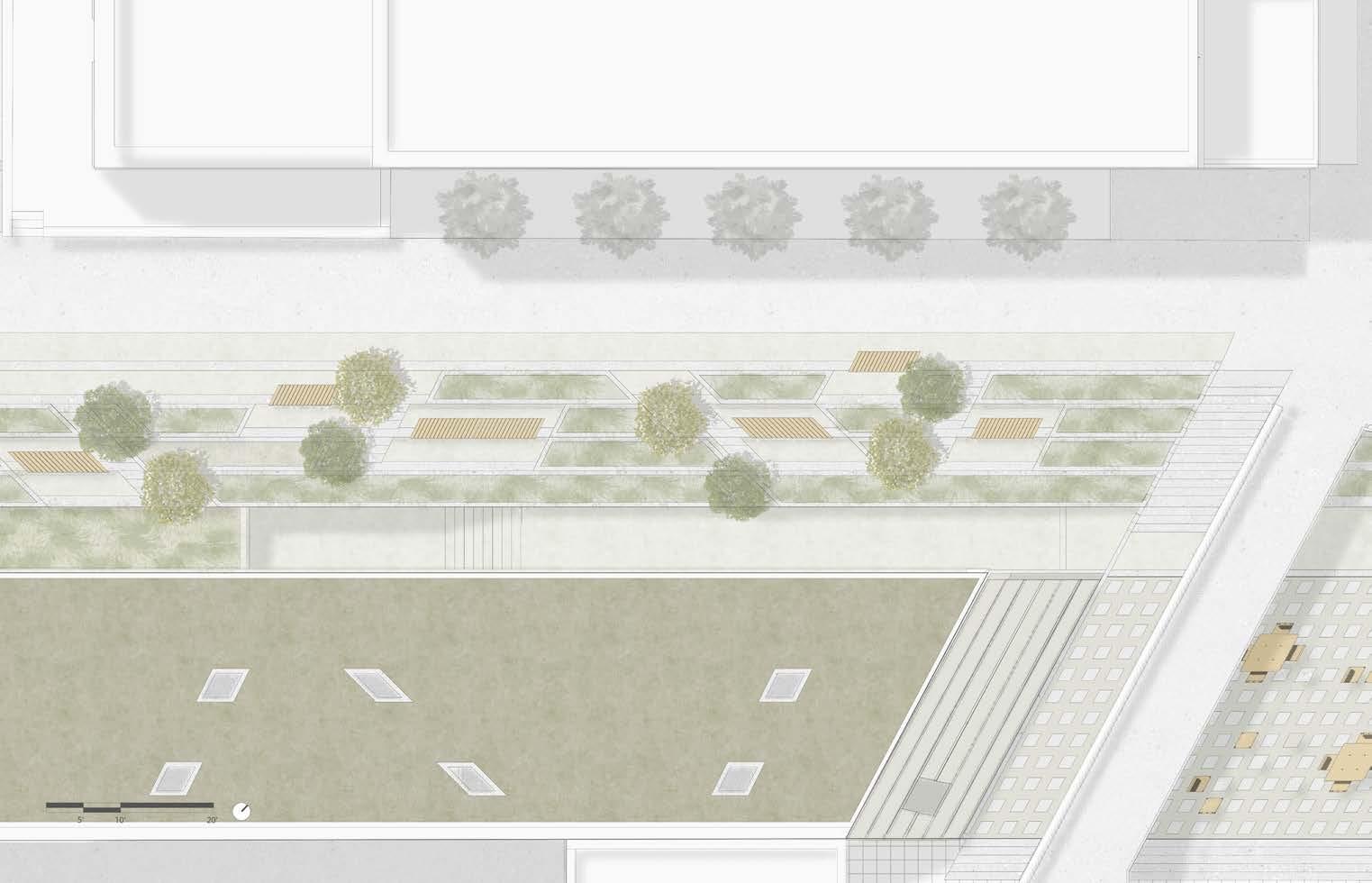
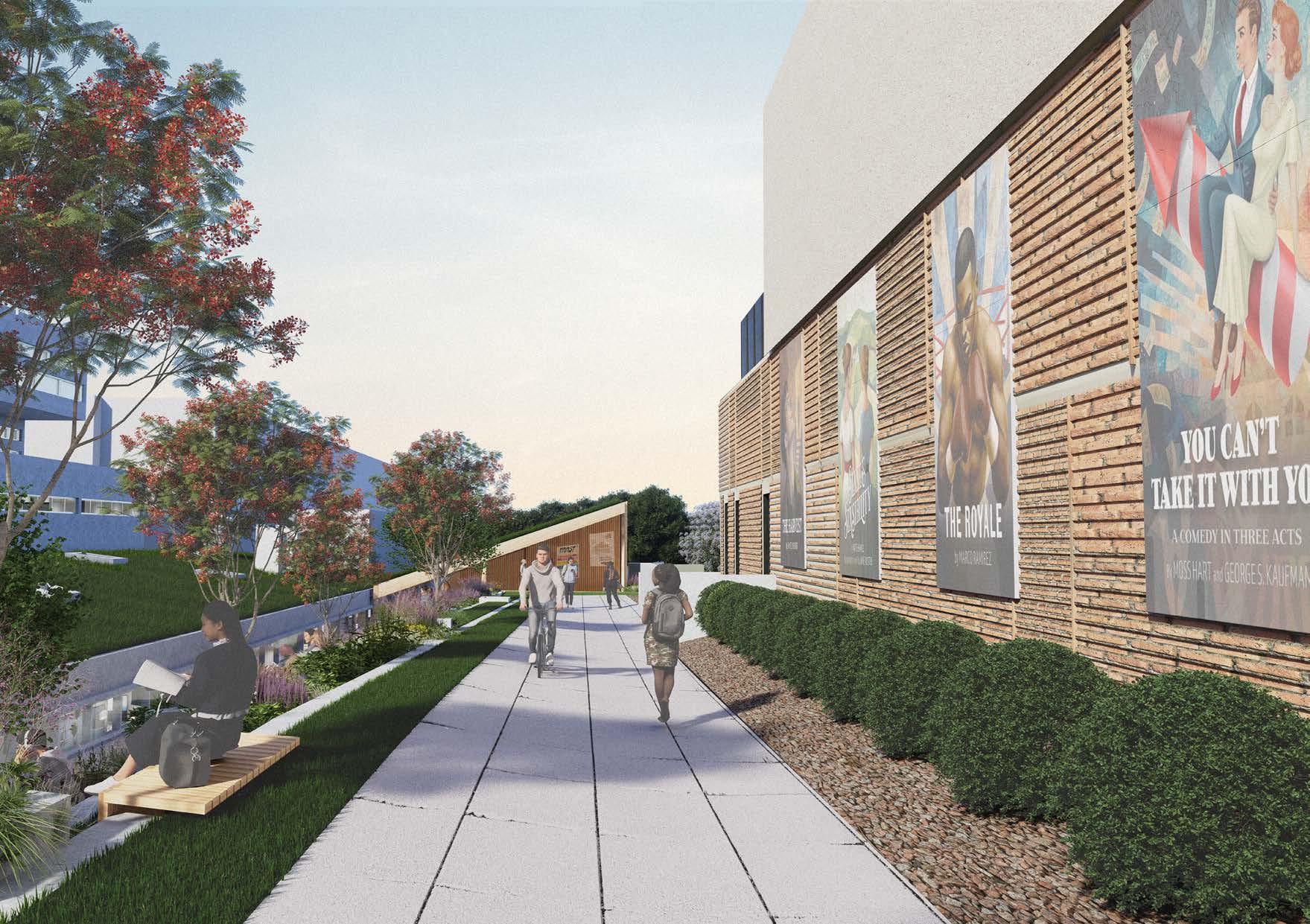
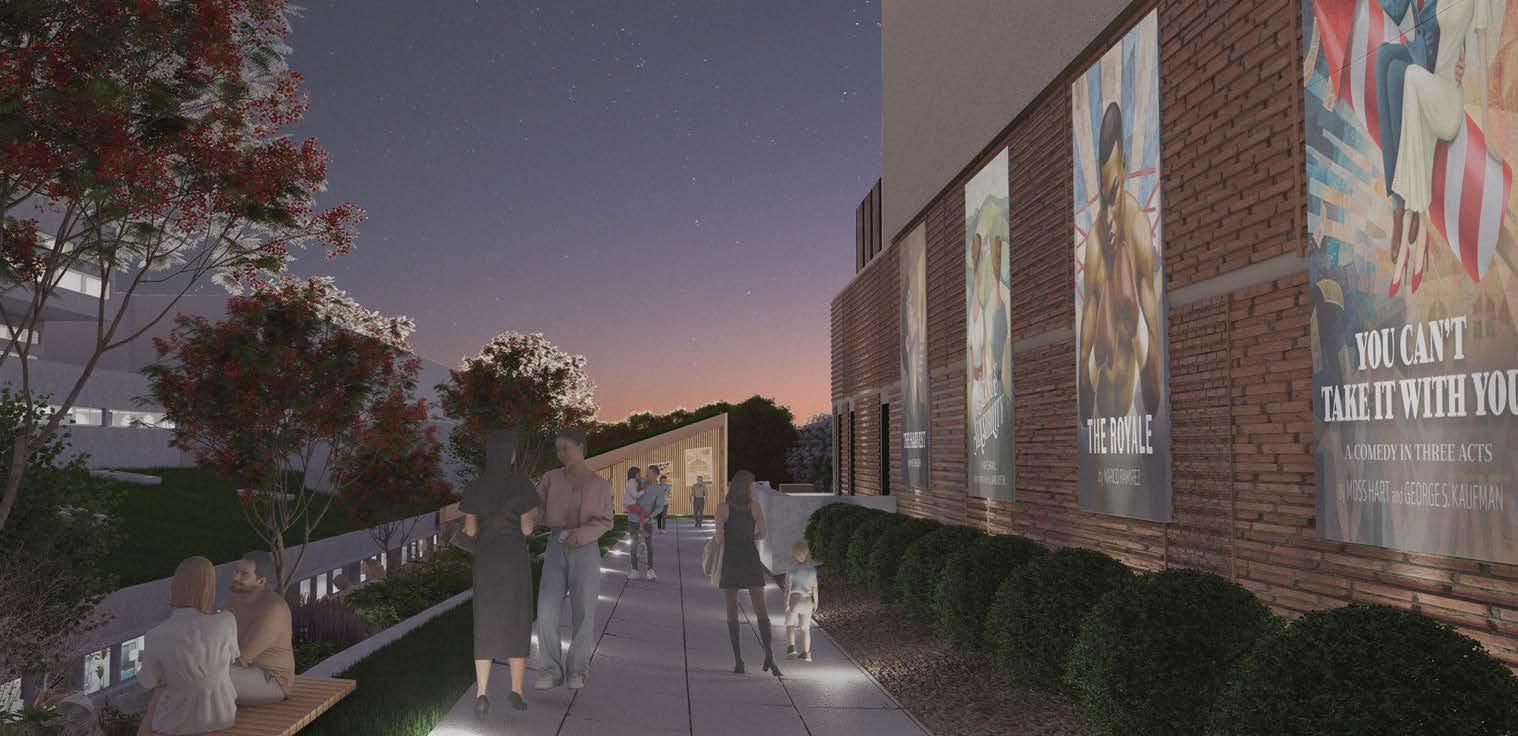
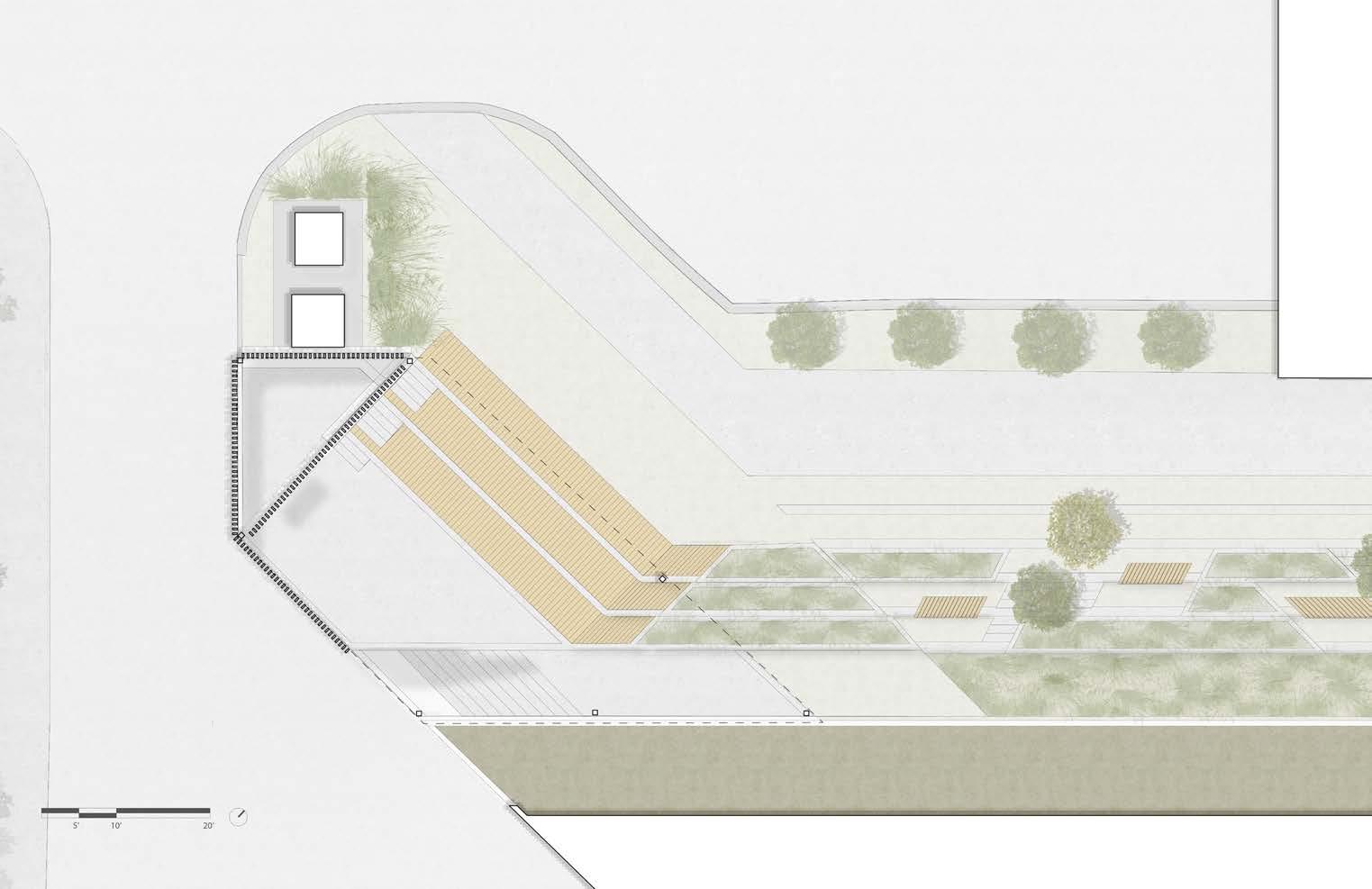
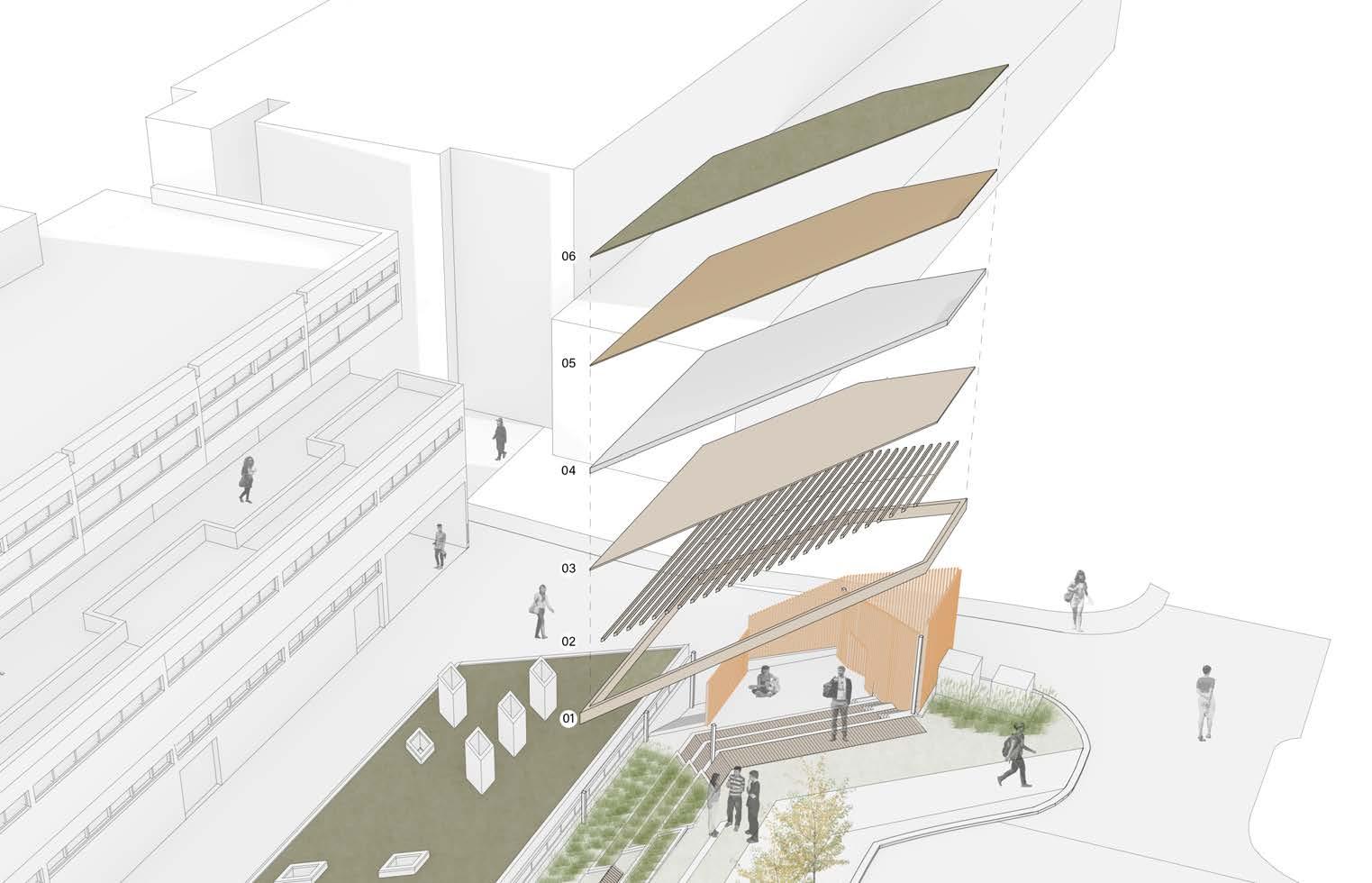
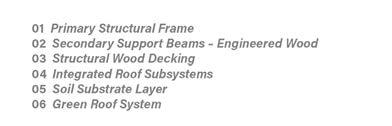
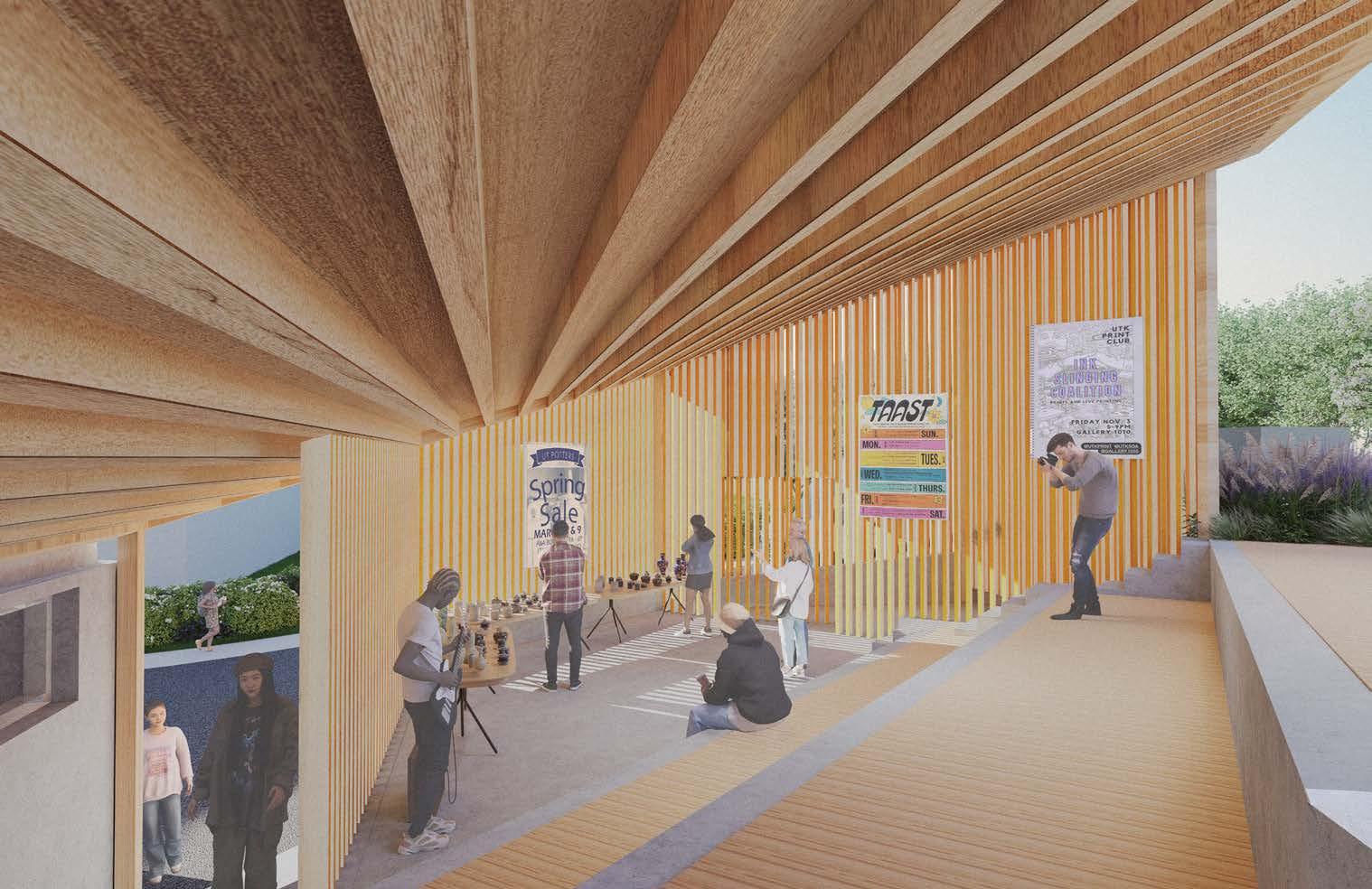
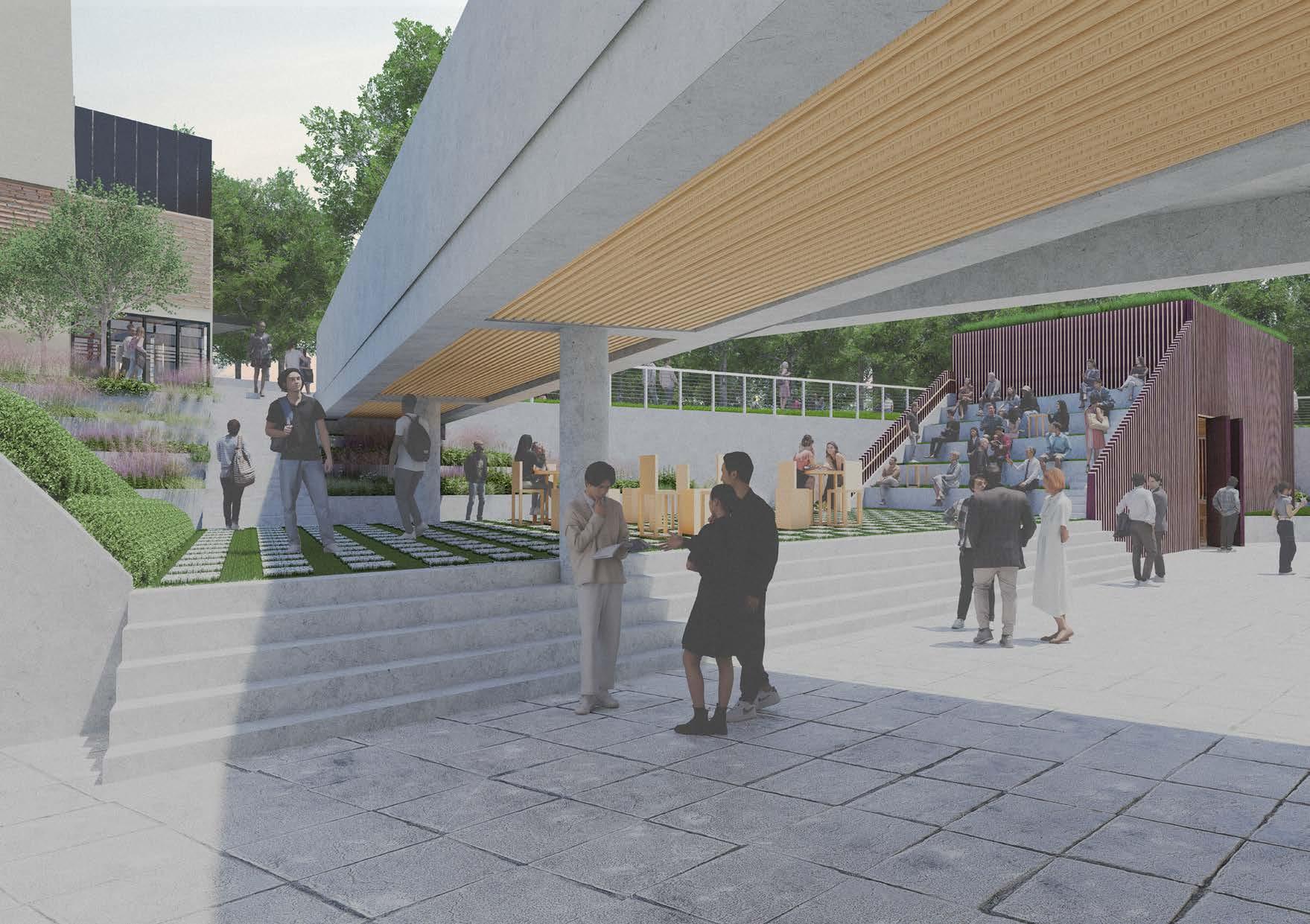
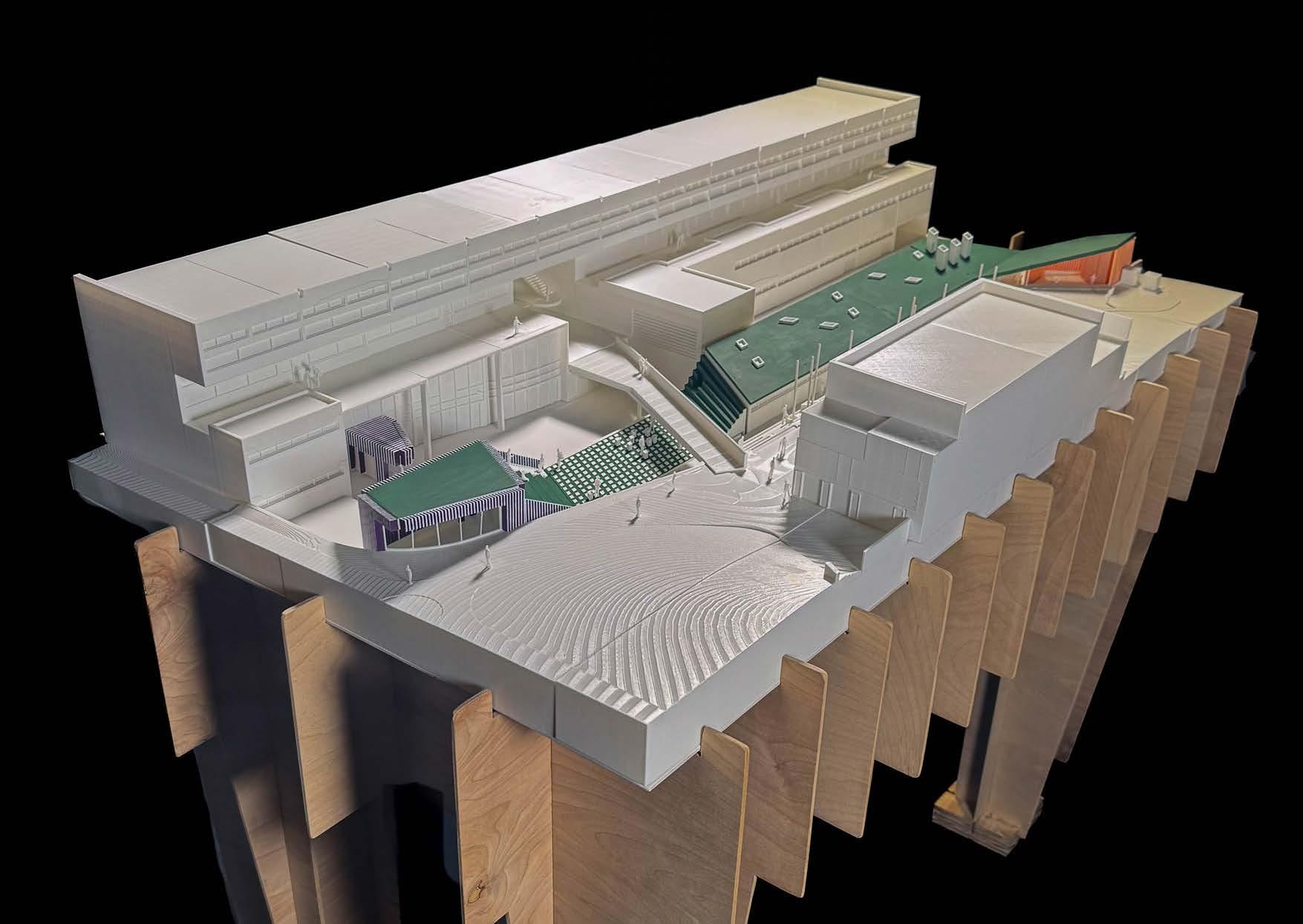
This project transforms the underutilized space between the Art + Architecture Building and the Jenny Boyd Carousel Theatre Extension into an activated Arts Quad that supports circulation, collaboration, and public use. A network of paths, regulating lines, and pavilions connects key campus corridors while creating opportunities for exhibitions, workshops, and reviews.
Distinct zones and gathering spaces are distributed throughout the site to foster interaction among students, faculty, and the public, reclaiming underused territory for meaningful engagement and strengthening connections across disciplines.




Semester: Fall 2024
Location: Knoxville, Tennessee
Professor: Jeremy Magner
Partners: Emma Kirby & Jenna Tiger
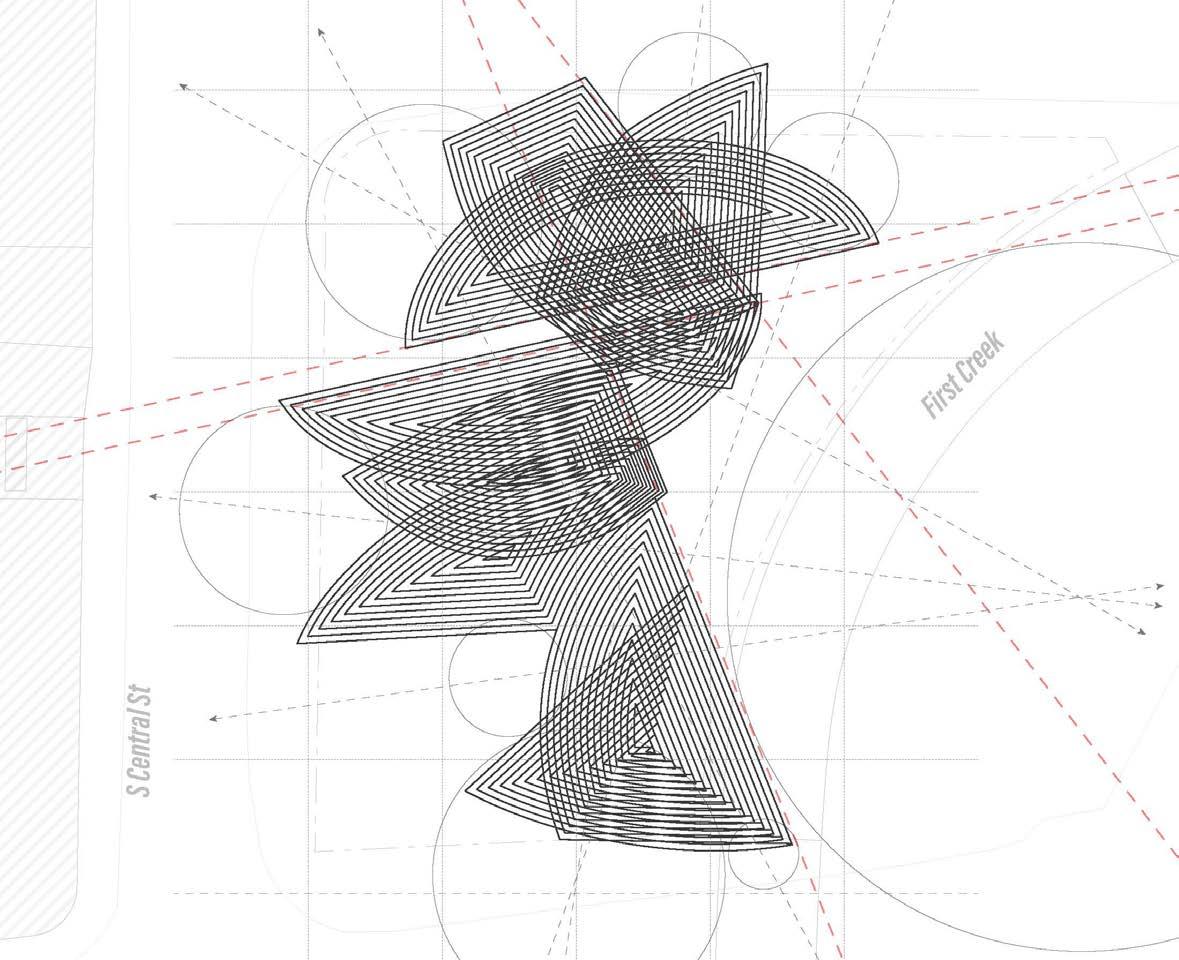
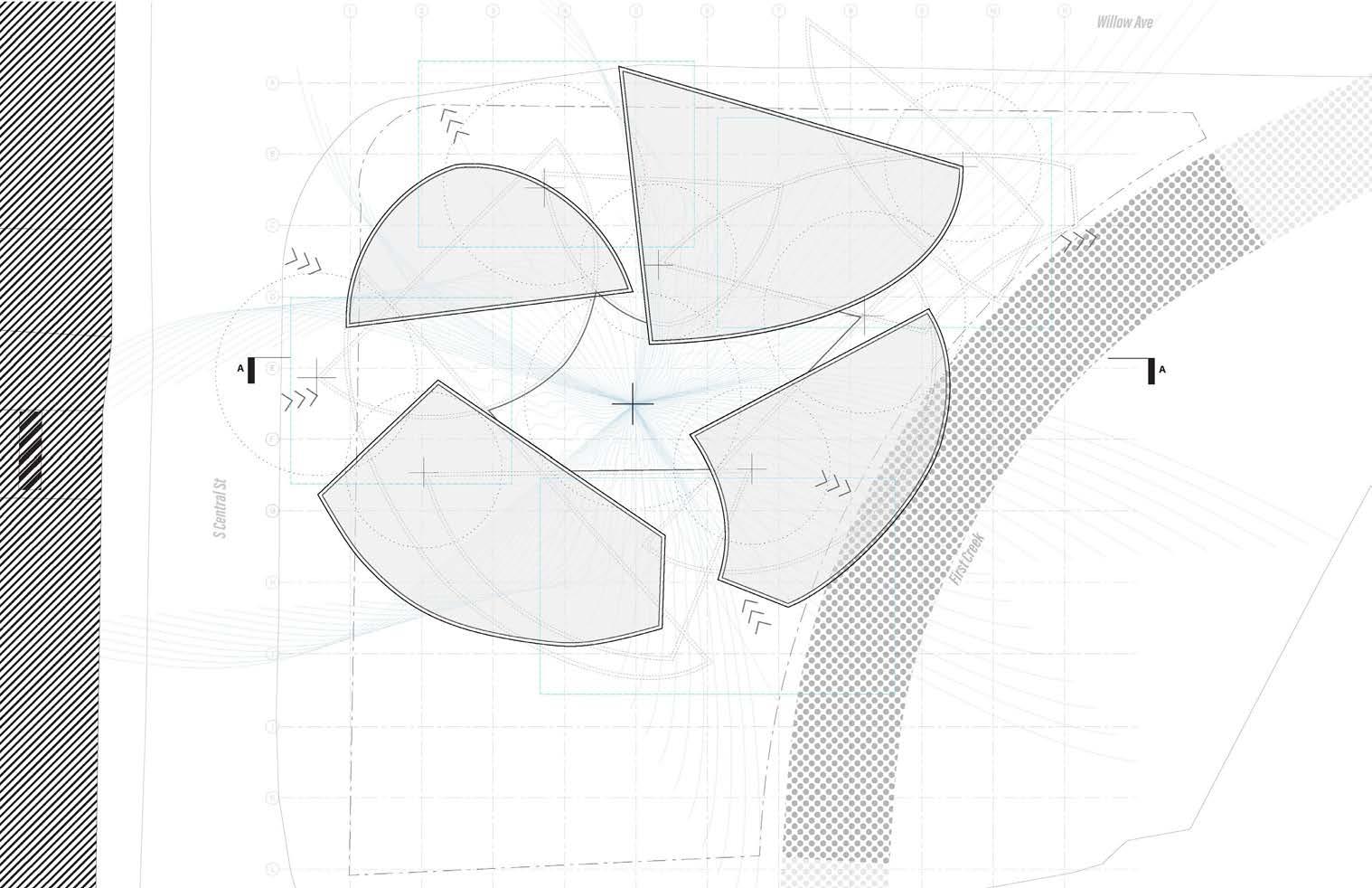
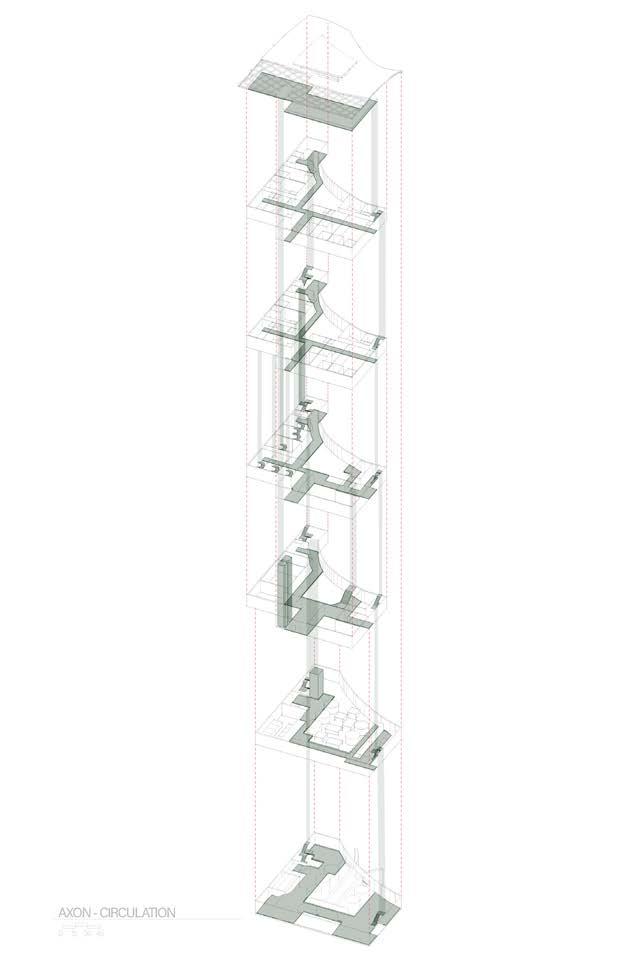
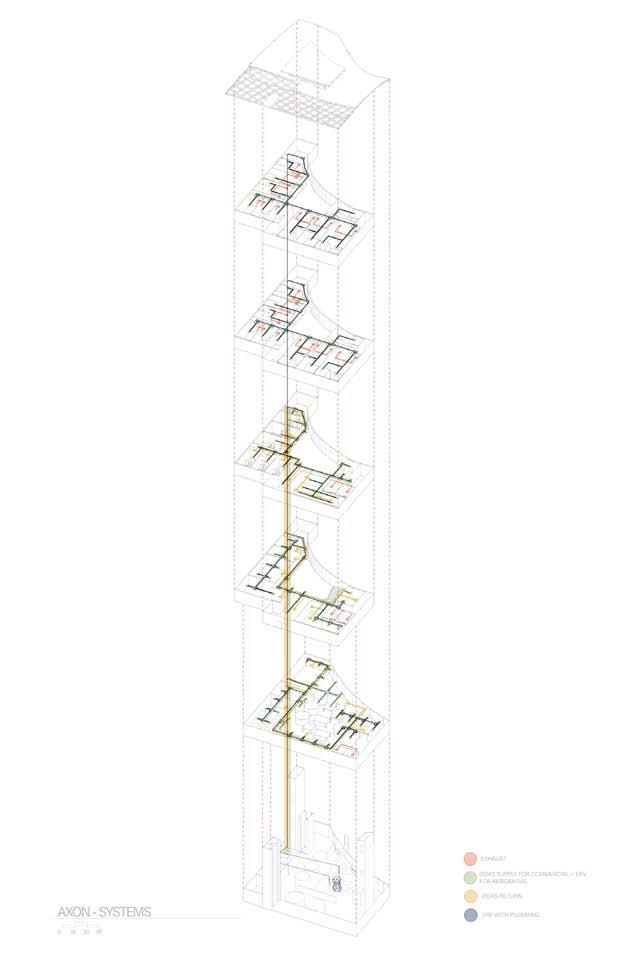
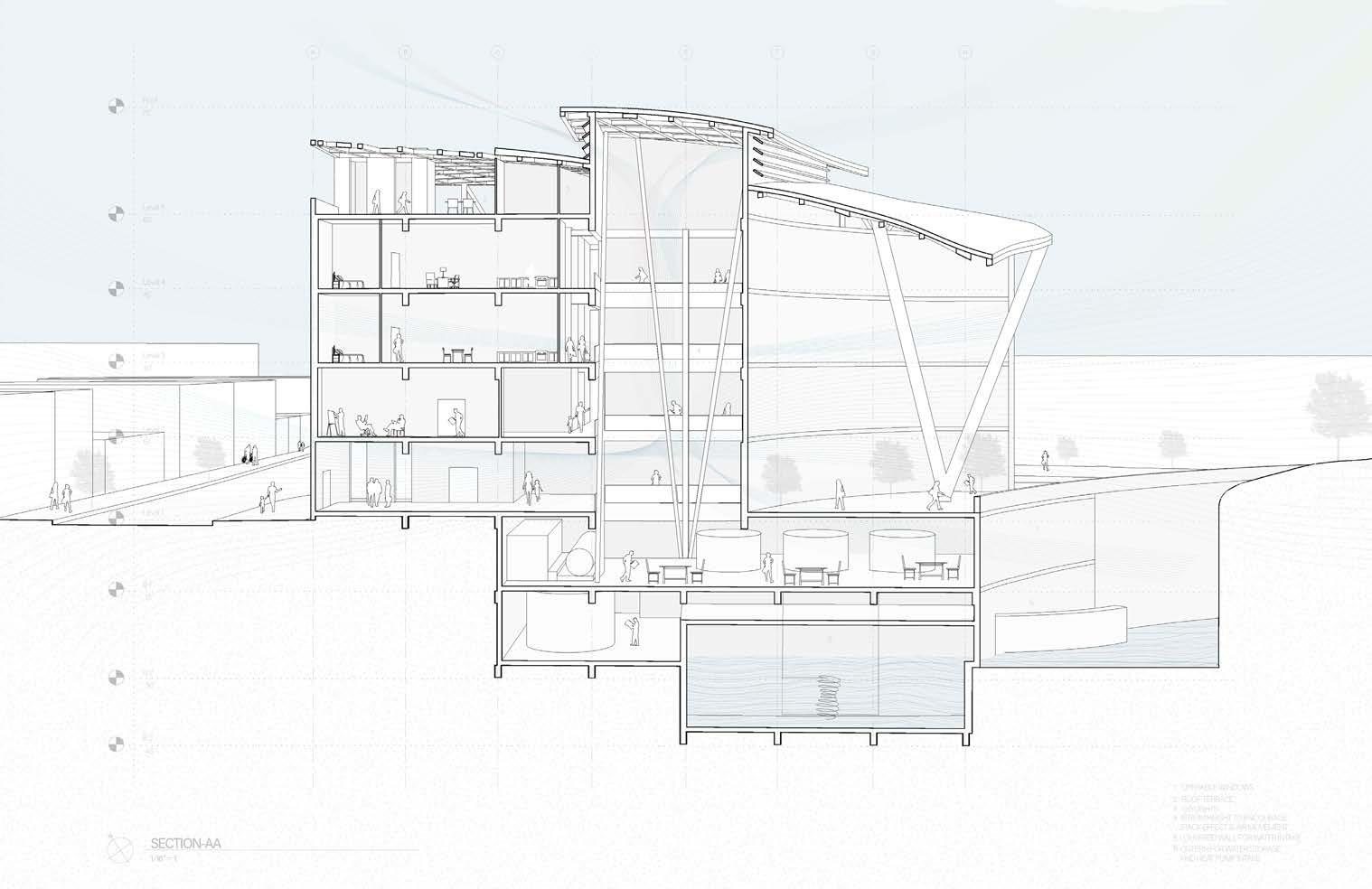
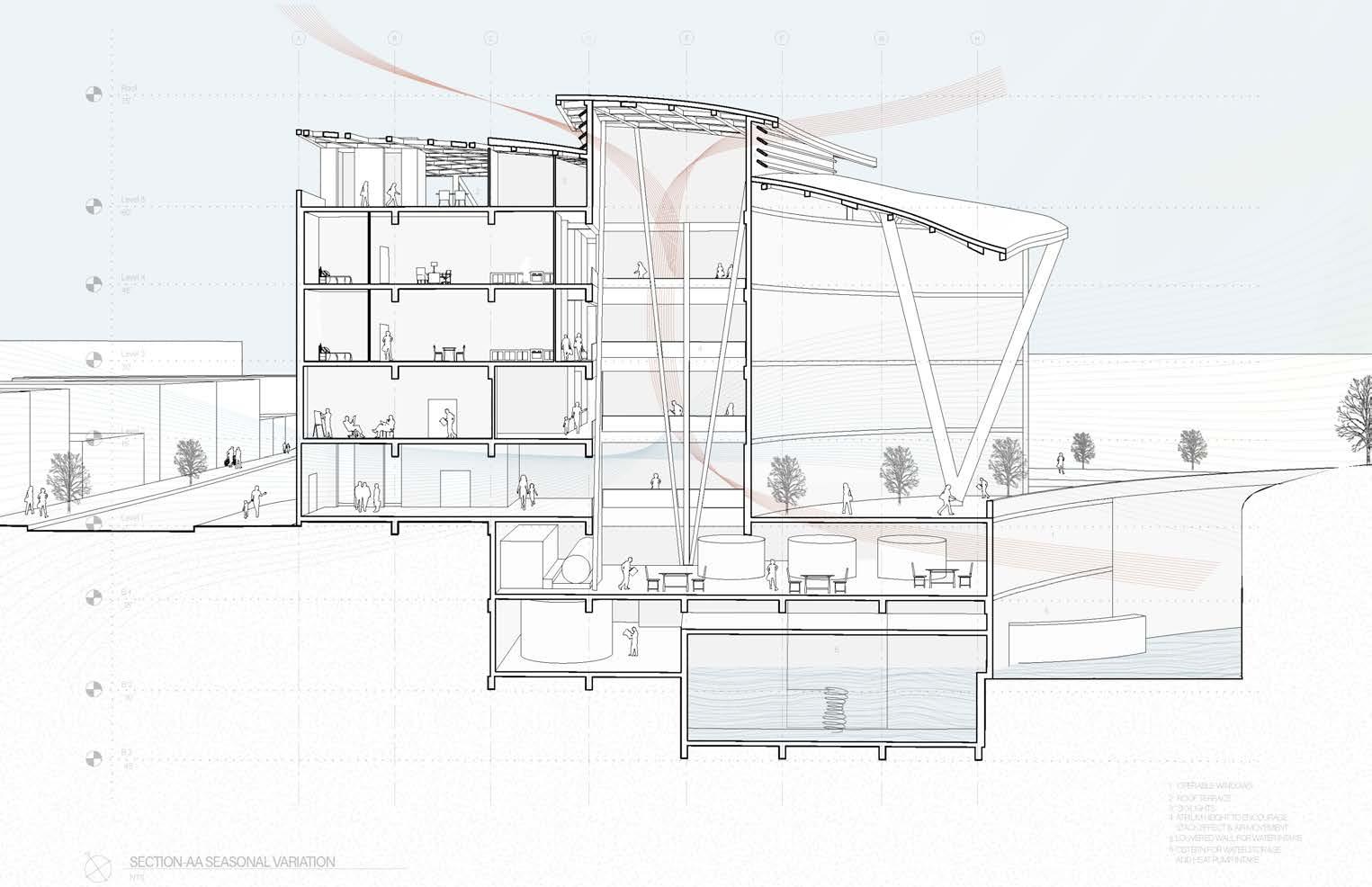
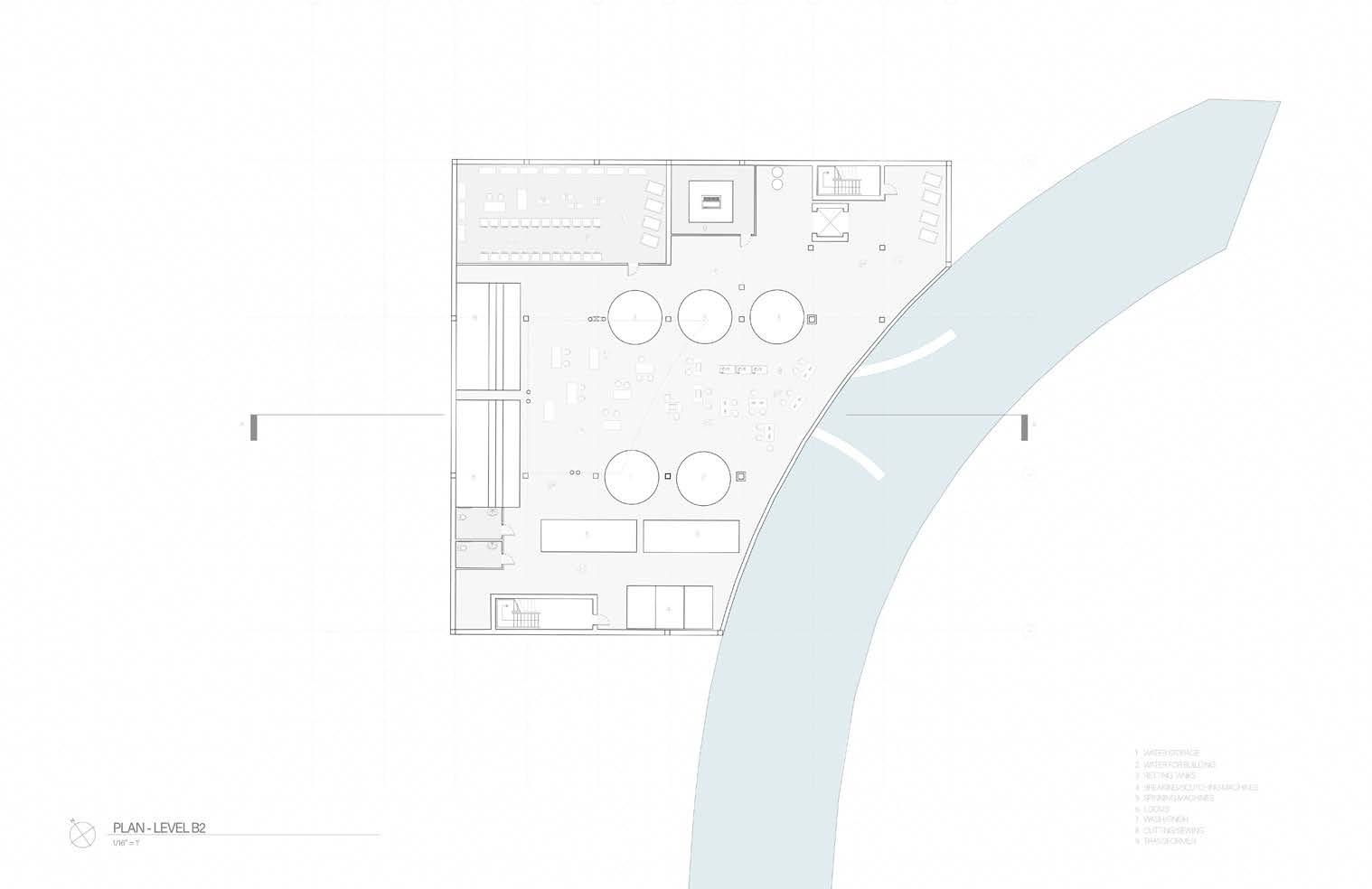
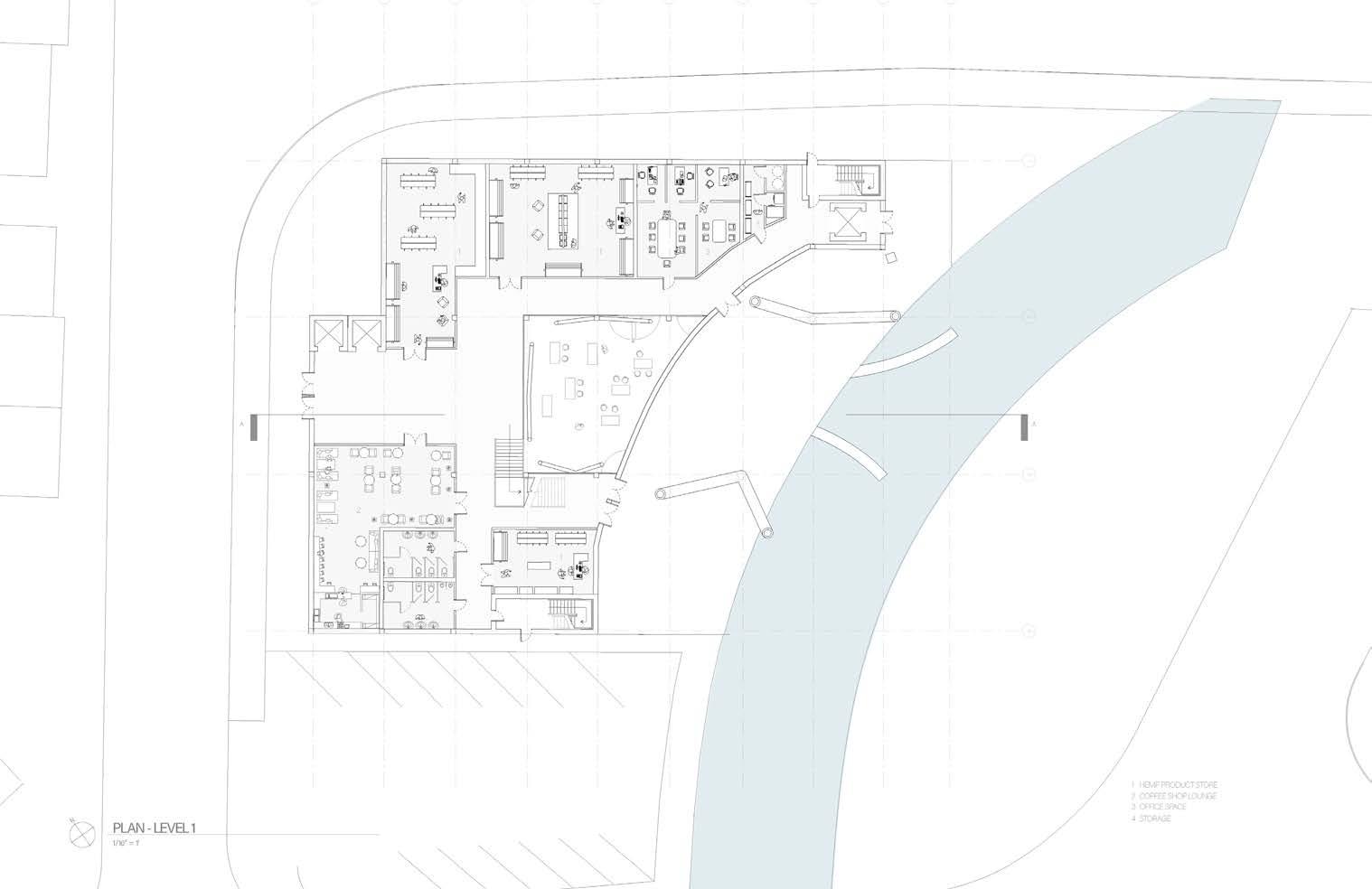
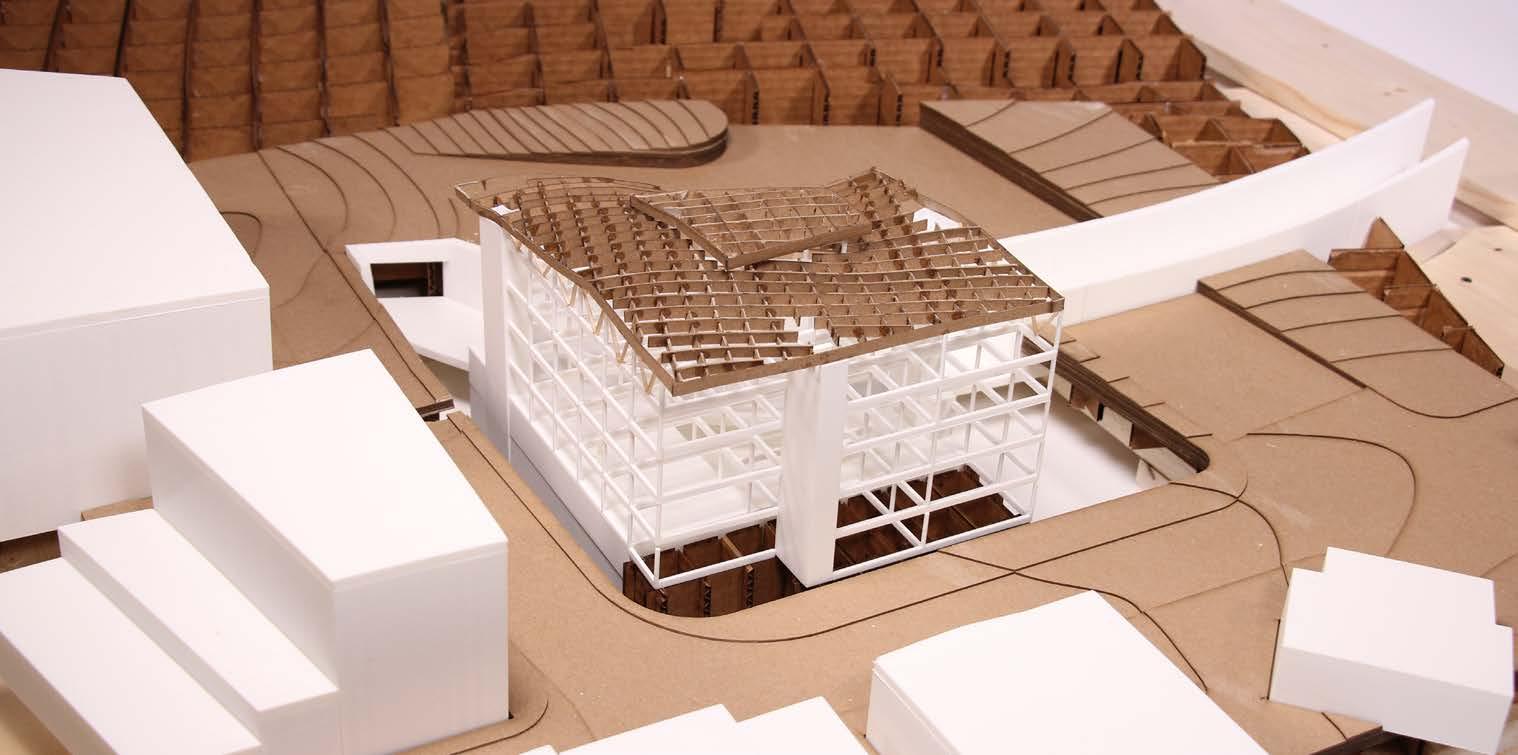
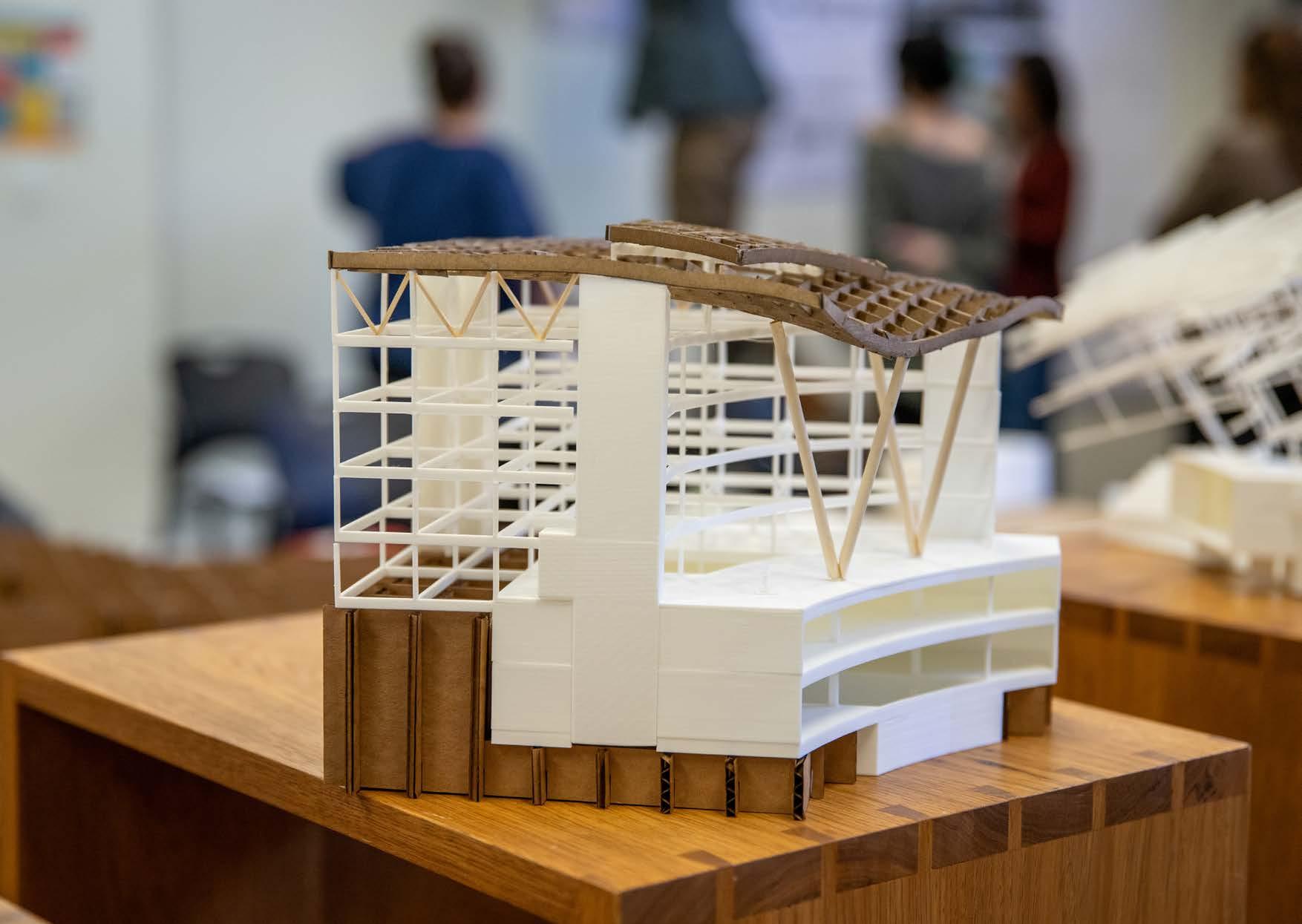
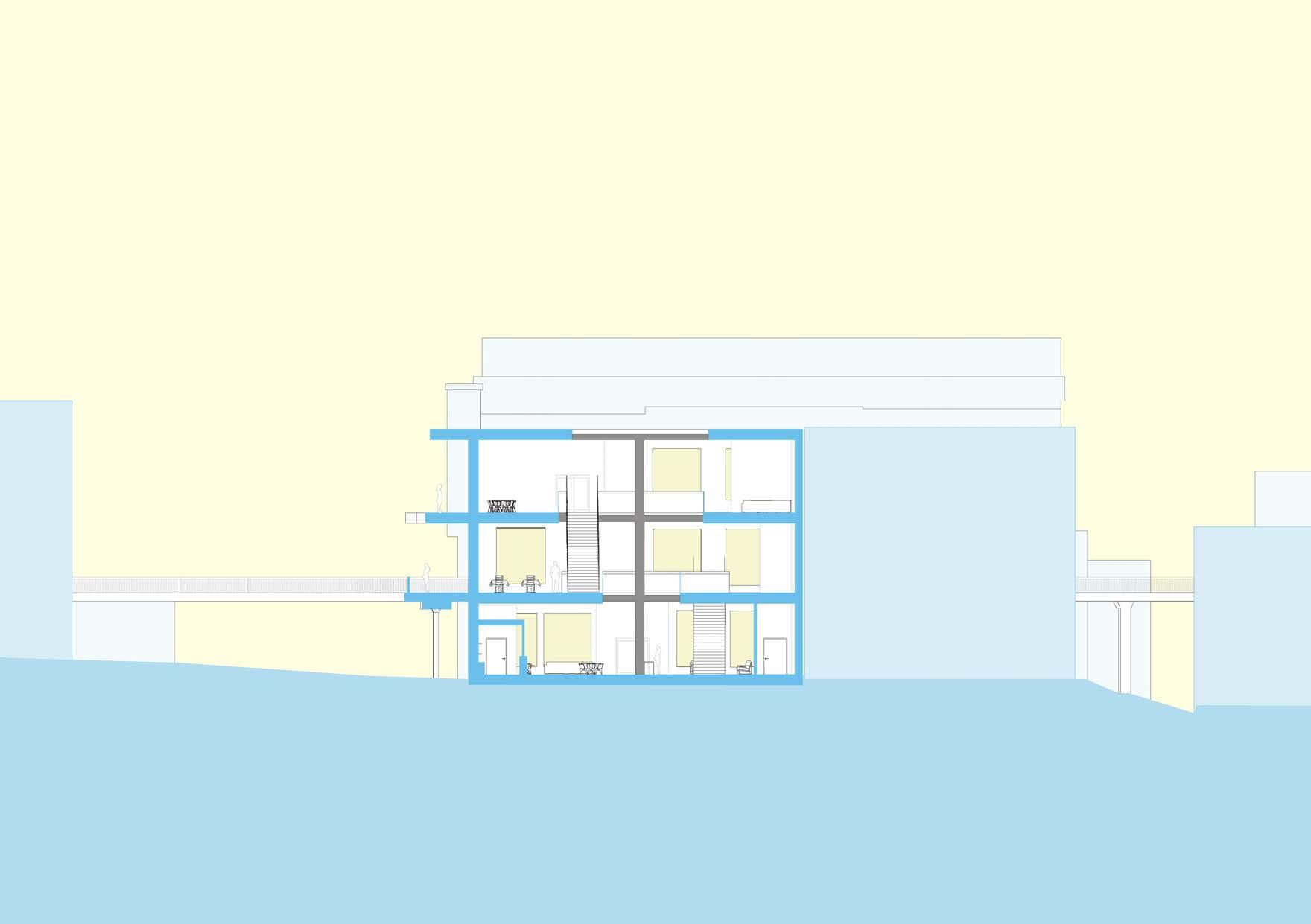
This project is located in Knoxville’s Old City, situated along First Creek, which flows into the Tennessee River. The design aims to utilize the creek as a resource for the building while simultaneously improving water quality in the surrounding environment. The building serves multiple purposes: the bottom two floors house a production facility and water treatment systems; the middle levels feature commercial and retail spaces for selling and promoting clothing; and the top two floors provide residential spaces for workers and artists. The project emphasizes the interconnected flows of water, people, and air, creating a harmonious balance between industrial, commercial, and residential functions.
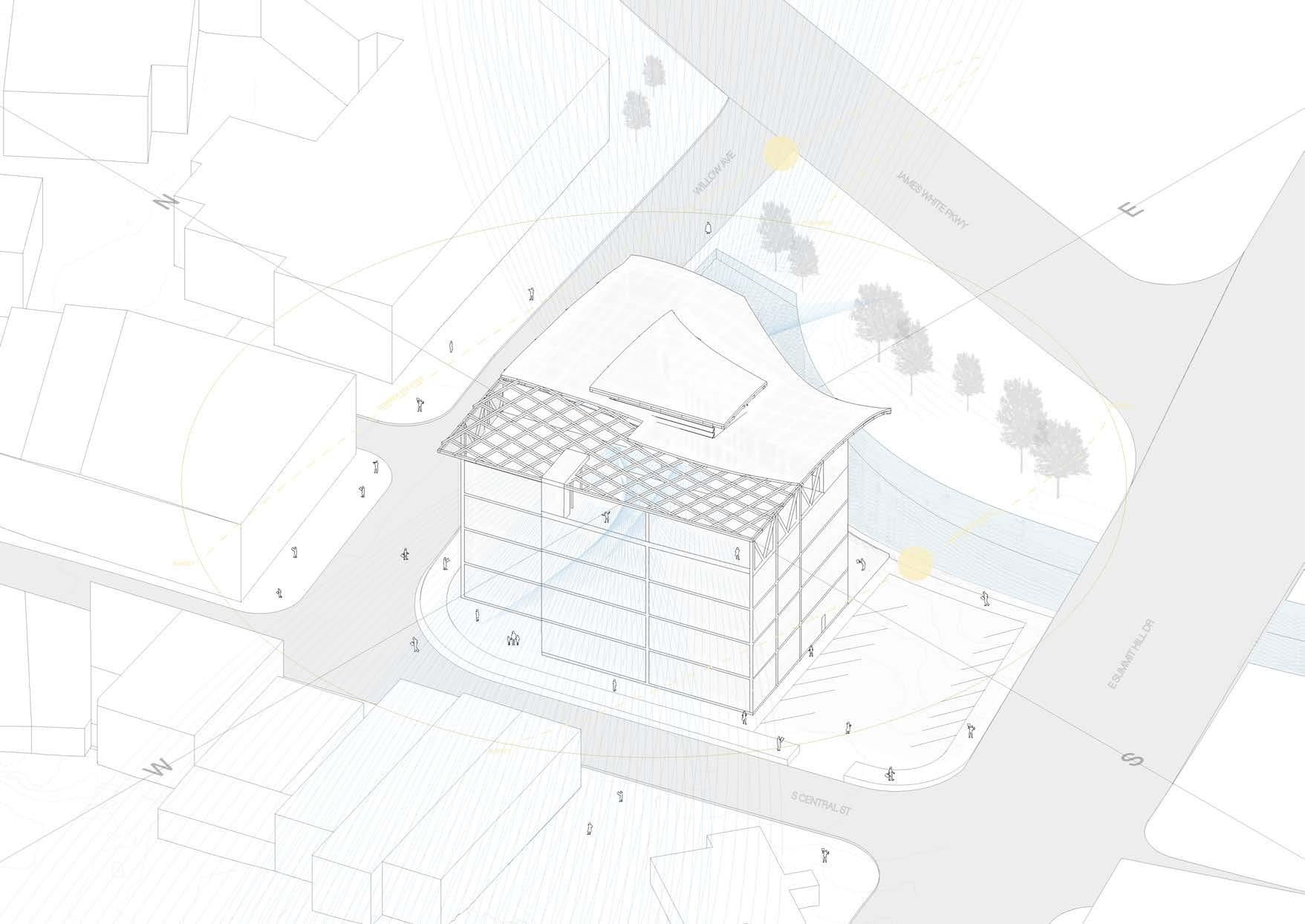
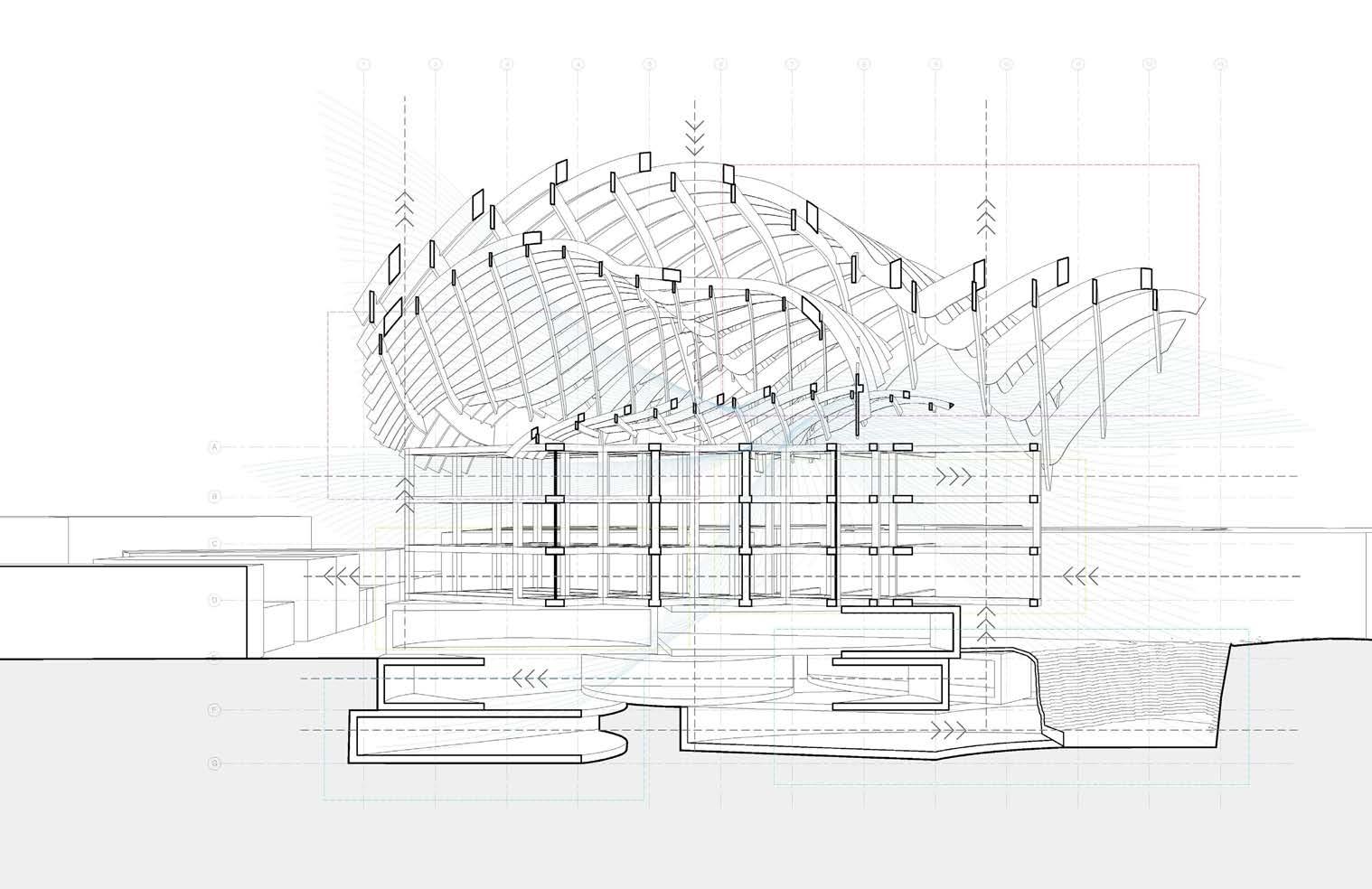
The studio explored the site through three realms: above (Jenna Tiger), between (Emma Kirby), and below (Hannah Kirby).
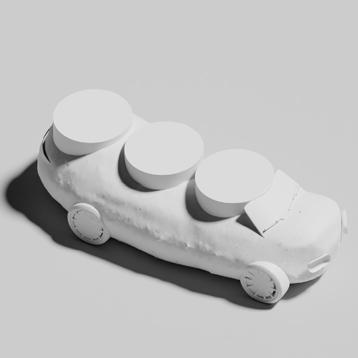
The below realm focused on mapping First Creek, a polluted and channelized stream, using geological and hydrological research to frame water as a transformative force. Site visits revealed layered, decaying conditions that were translated into physical and digital models, curved wax forms emphasizing flow, layering, and circulation. The `movement, below uncovering geological and hydrological layers, and between linking them through program flow and porous boundaries. Together, they form a unified framework where nature, architecture, and people coexist fluidly.
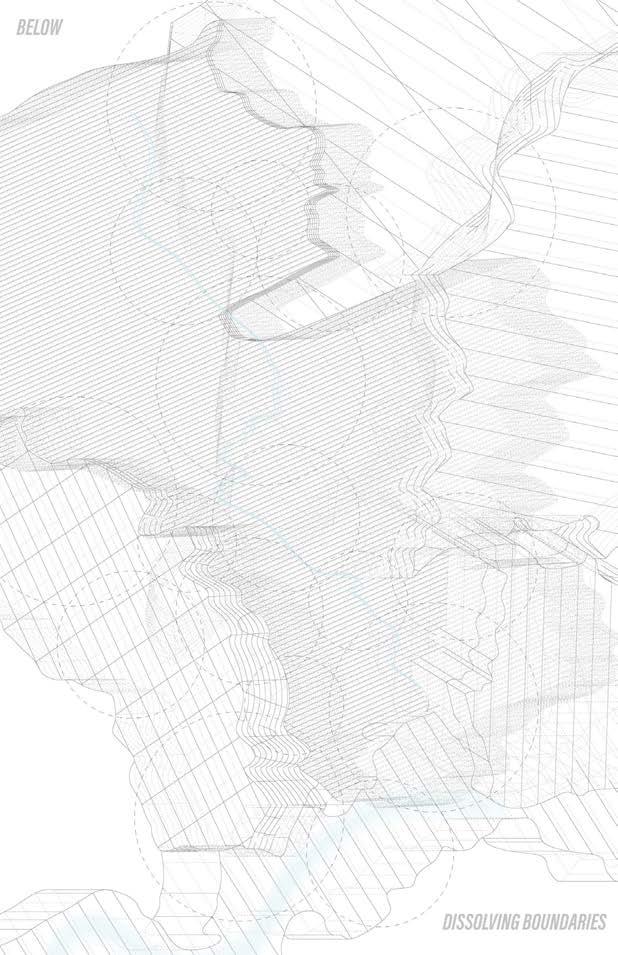
Section | Three Zones : Above, Between, & Below
The proposed design re-establishes First Creek as an important ecological and urban asset by integrating a clothing production facility with on-site water treatment, commercial spaces, and housing. Curved, layered forms follow the creek’s natural flow, shaping a porous edge that invites movement, visual connection, and public engagement. This strategy dissolves conventional boundaries between built and natural environments, positioning the creek as both a functional resource and a cultural anchor. The result is a dynamic blend of industrial, commercial, and residential uses that coexist in a balanced, responsive landscape.



Semester: Summer 2024
Location: Nashville, Tennessee
Professors: Clay Adkisson, Will Rosenthal, Harriet Brooks, & Adam Nicolson
Partners: Audrey Reddick, Chris Pyle, & Emma Kirby
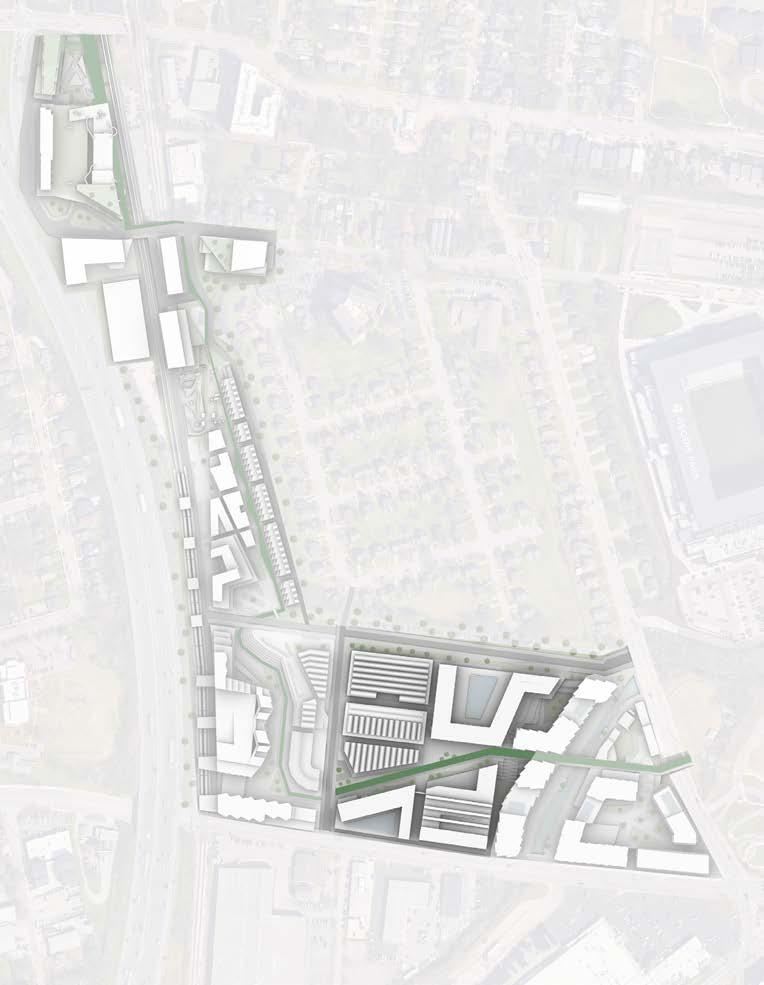
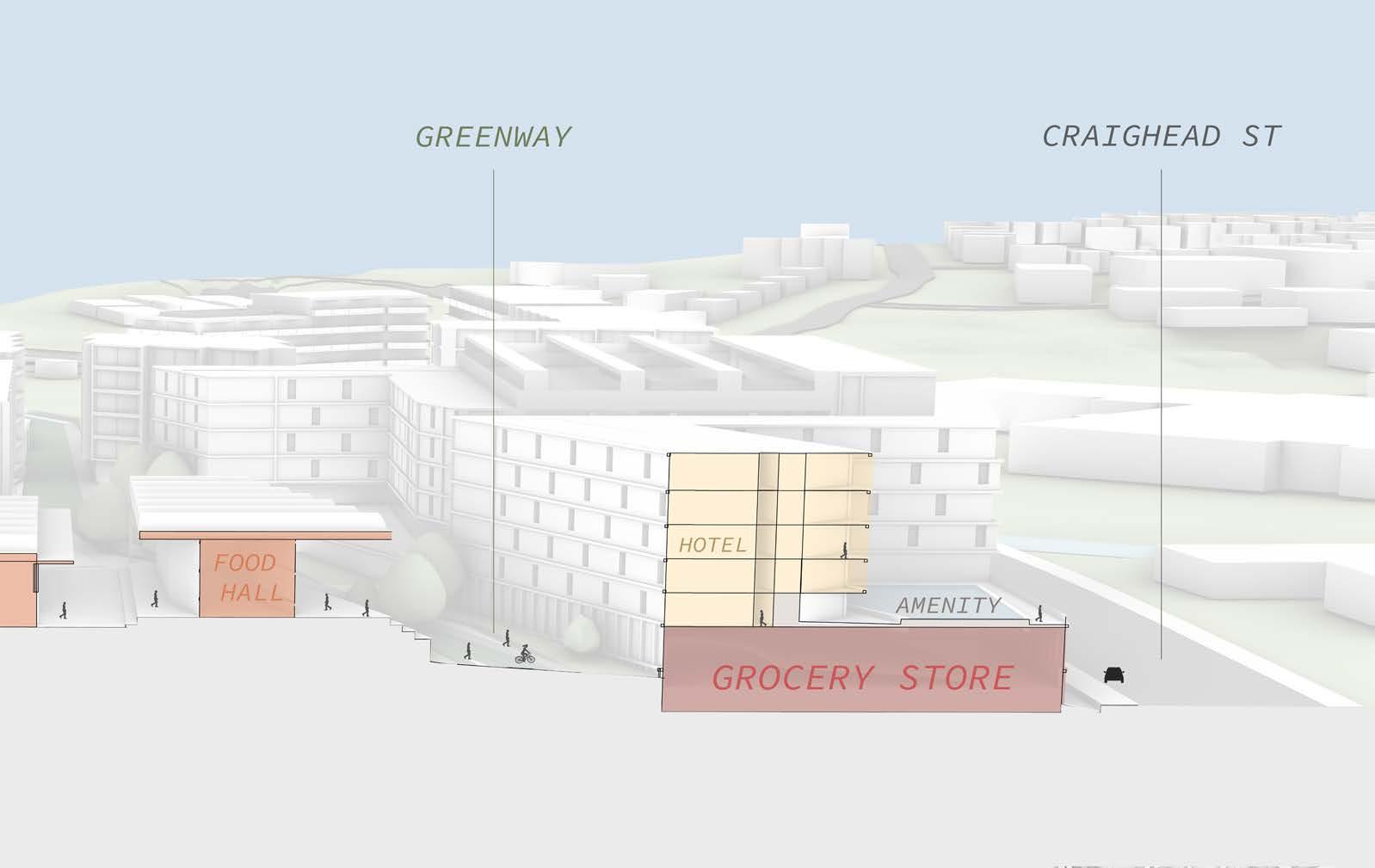
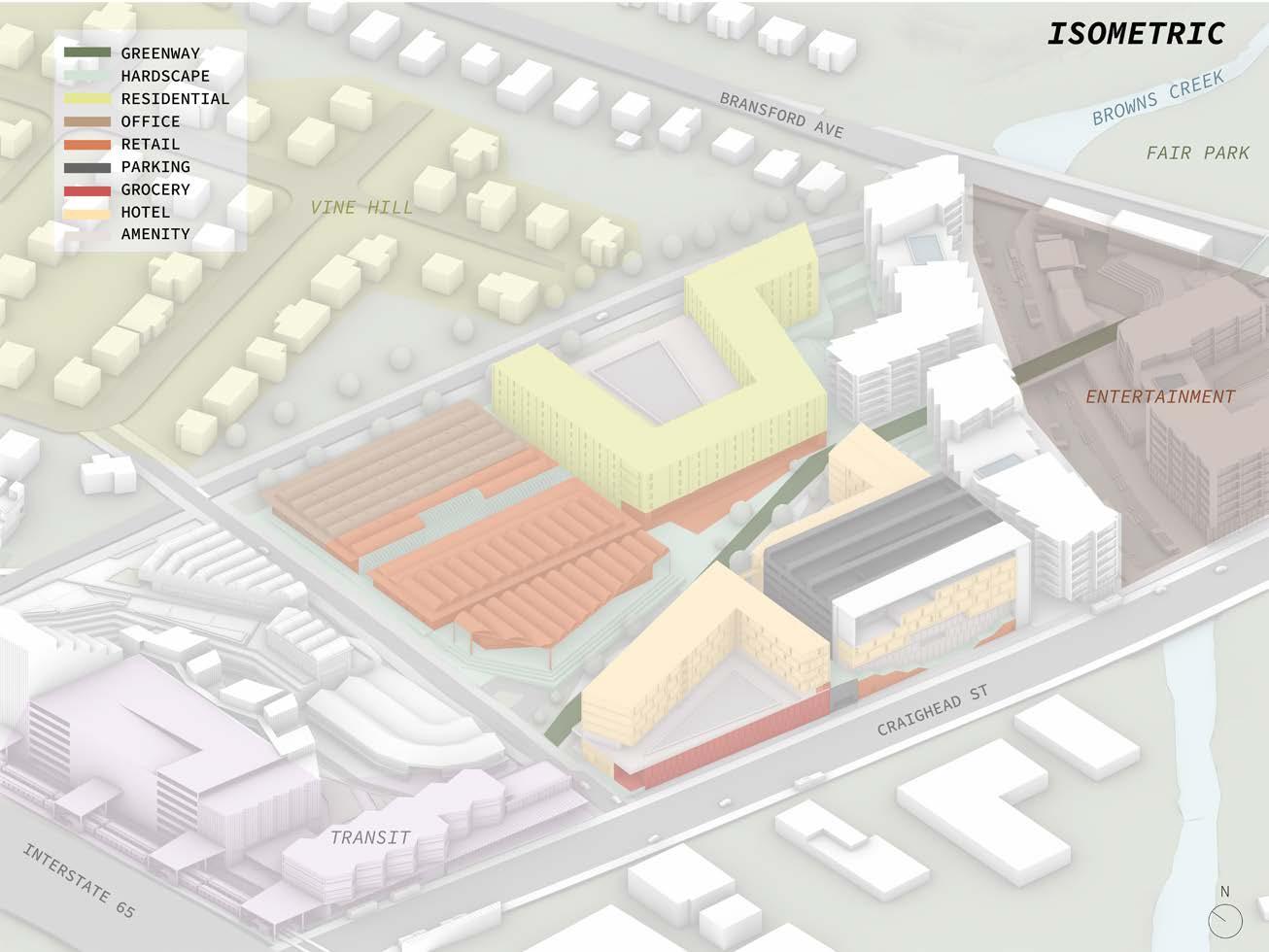
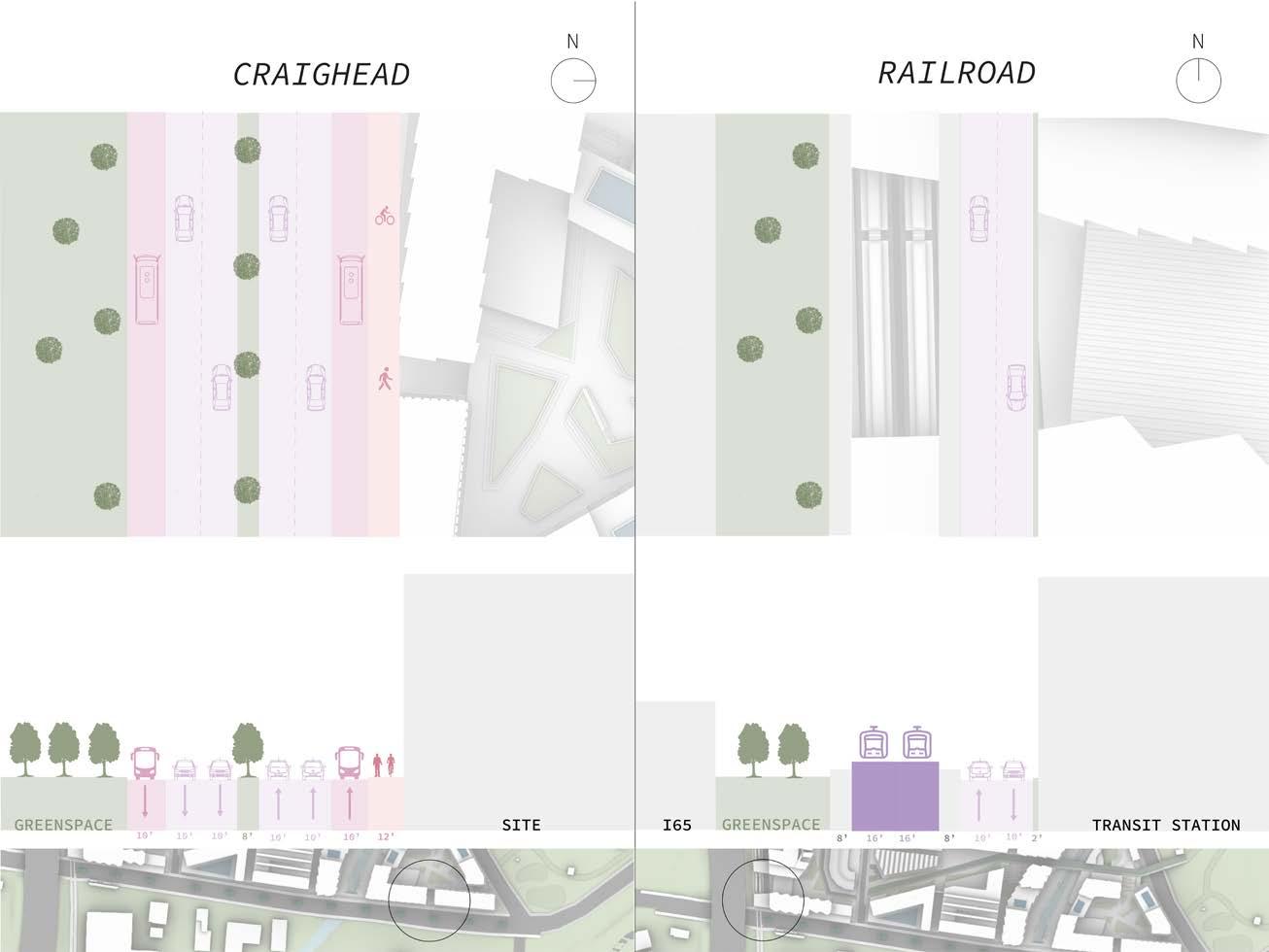
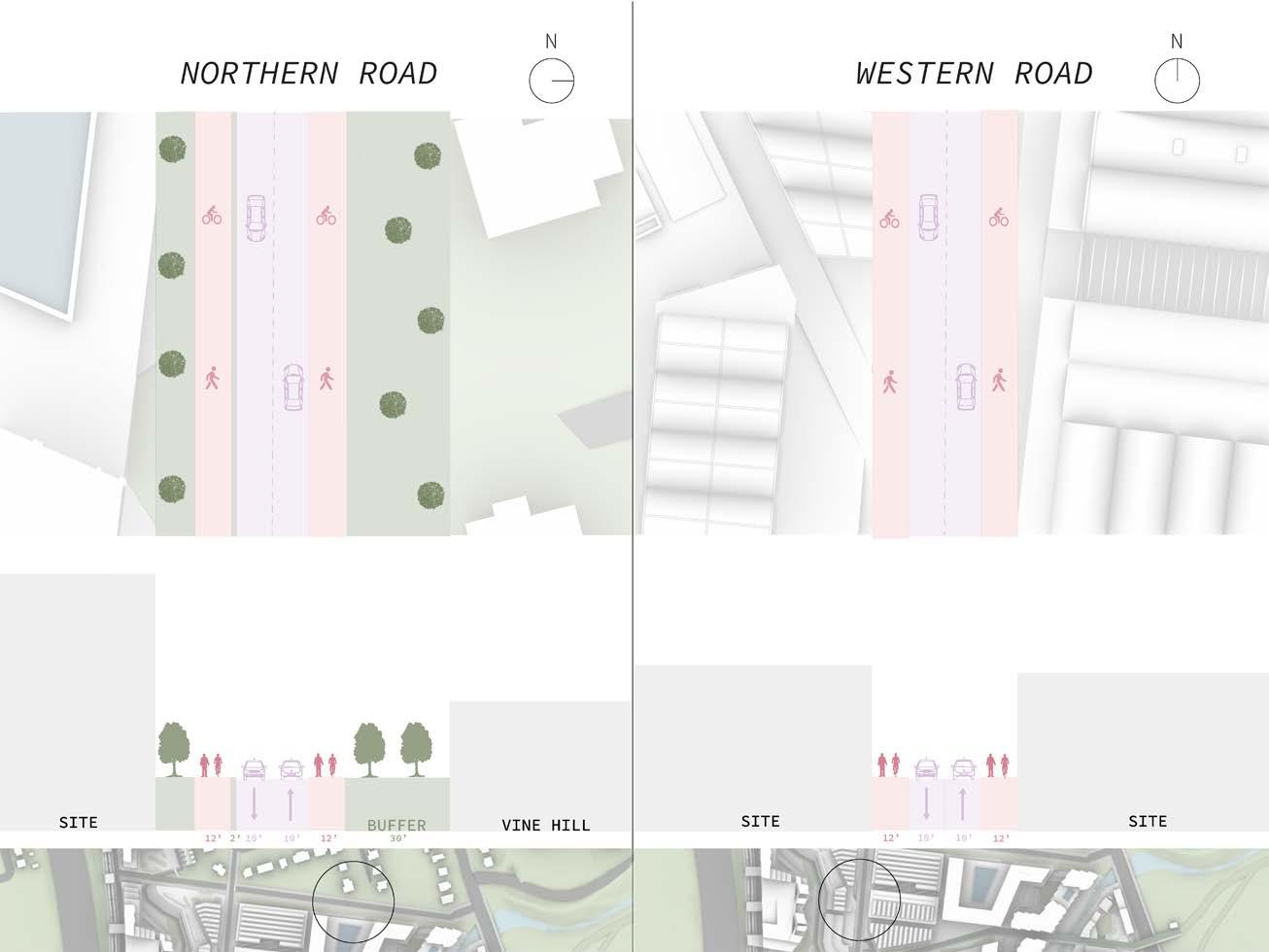
This project proposes a 40-acre transit-oriented development in Nashville’s Wedgewood-Houston (WEHO) neighborhood, near Geodis Park. Positioned between the stadium, a proposed rail-based transit center, and the Vine Hill neighborhood, the development aims to establish a vibrant, mixed-use district. Designed as a central hub, the project facilitates smooth connections between local and regional transit routes. The plan includes housing, restaurants, healthcare, entertainment, and other community resources—strategically integrating WEHO into the larger fabric of Nashville through accessible, transit-focused infrastructure.
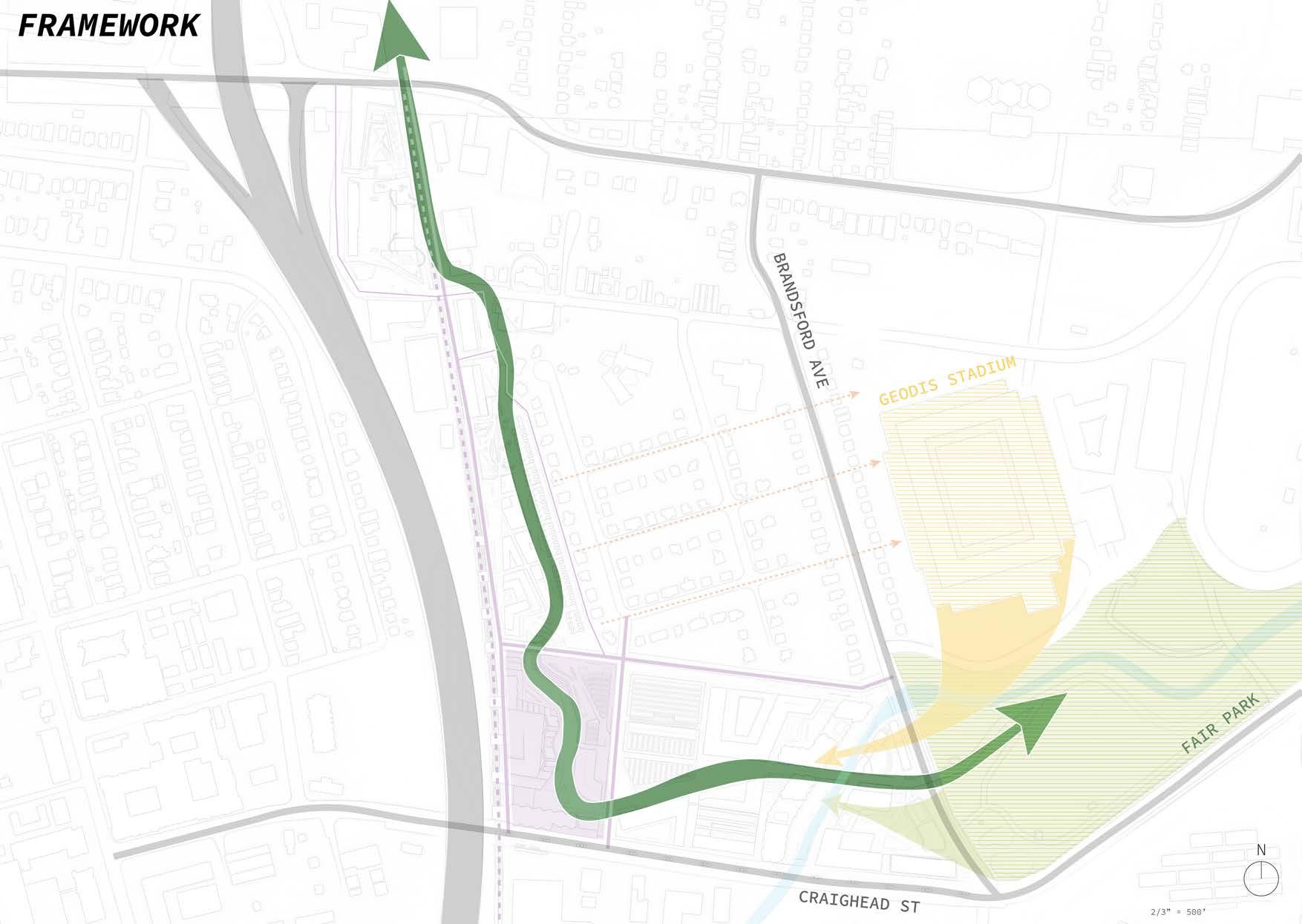
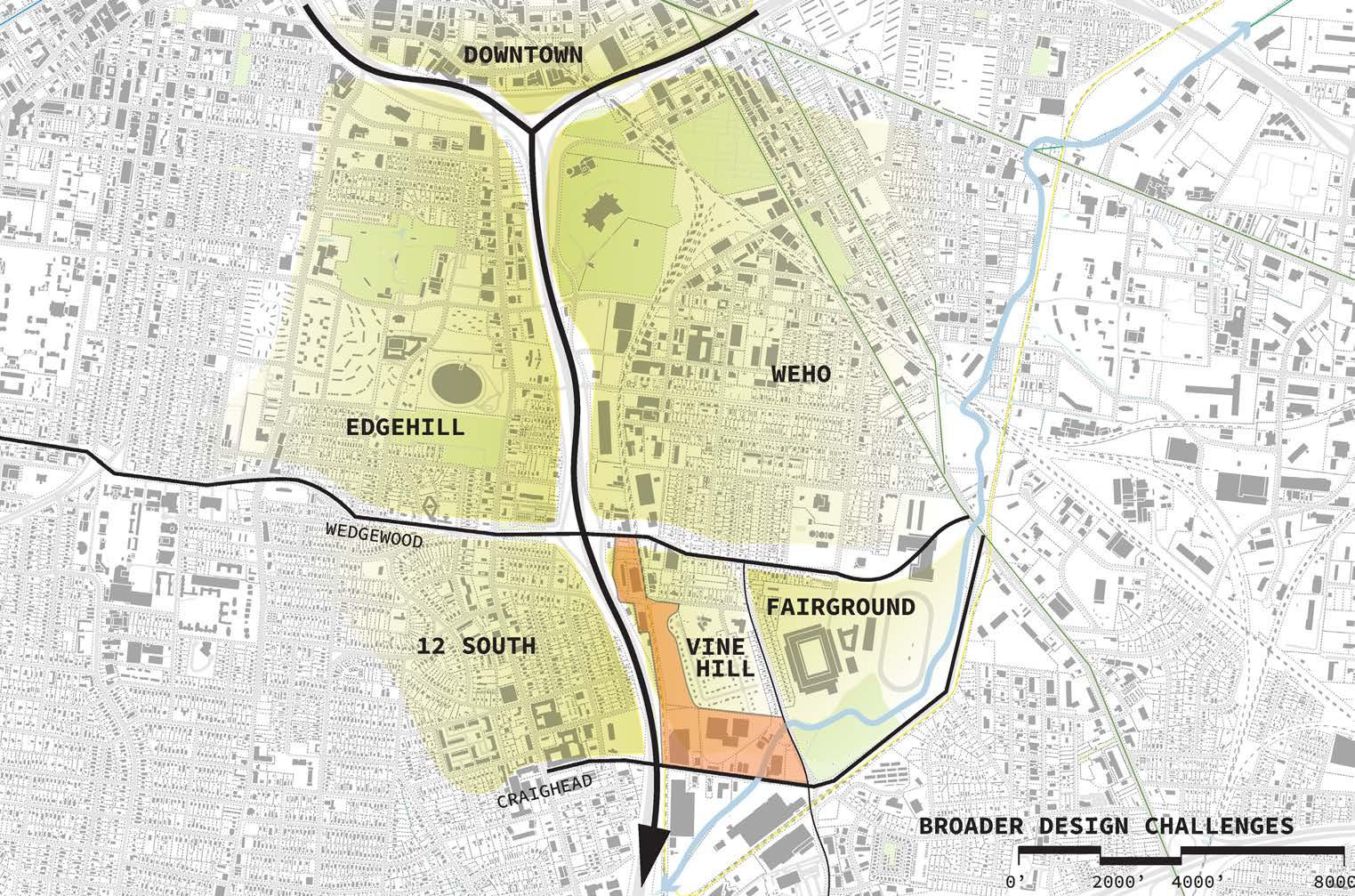
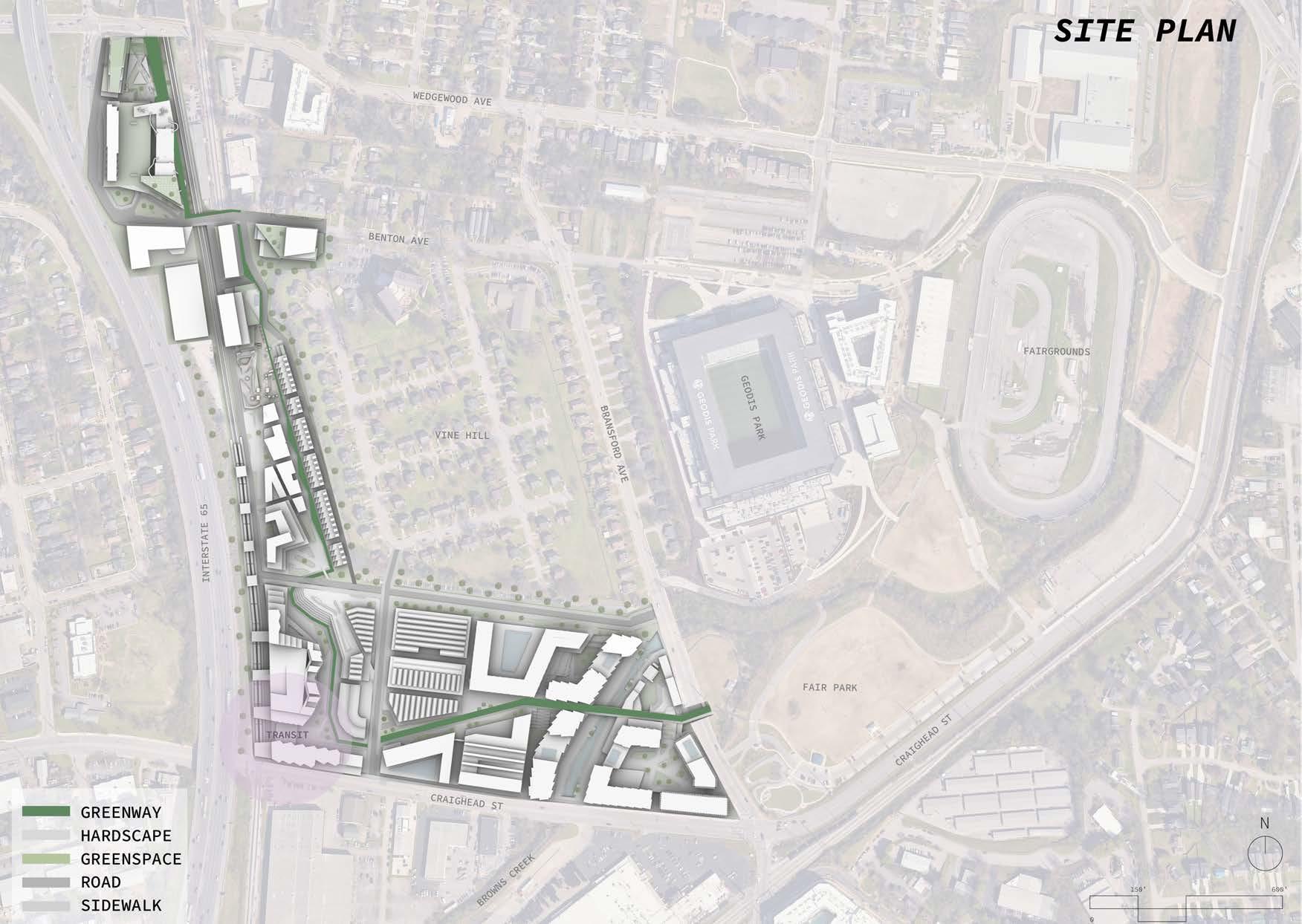
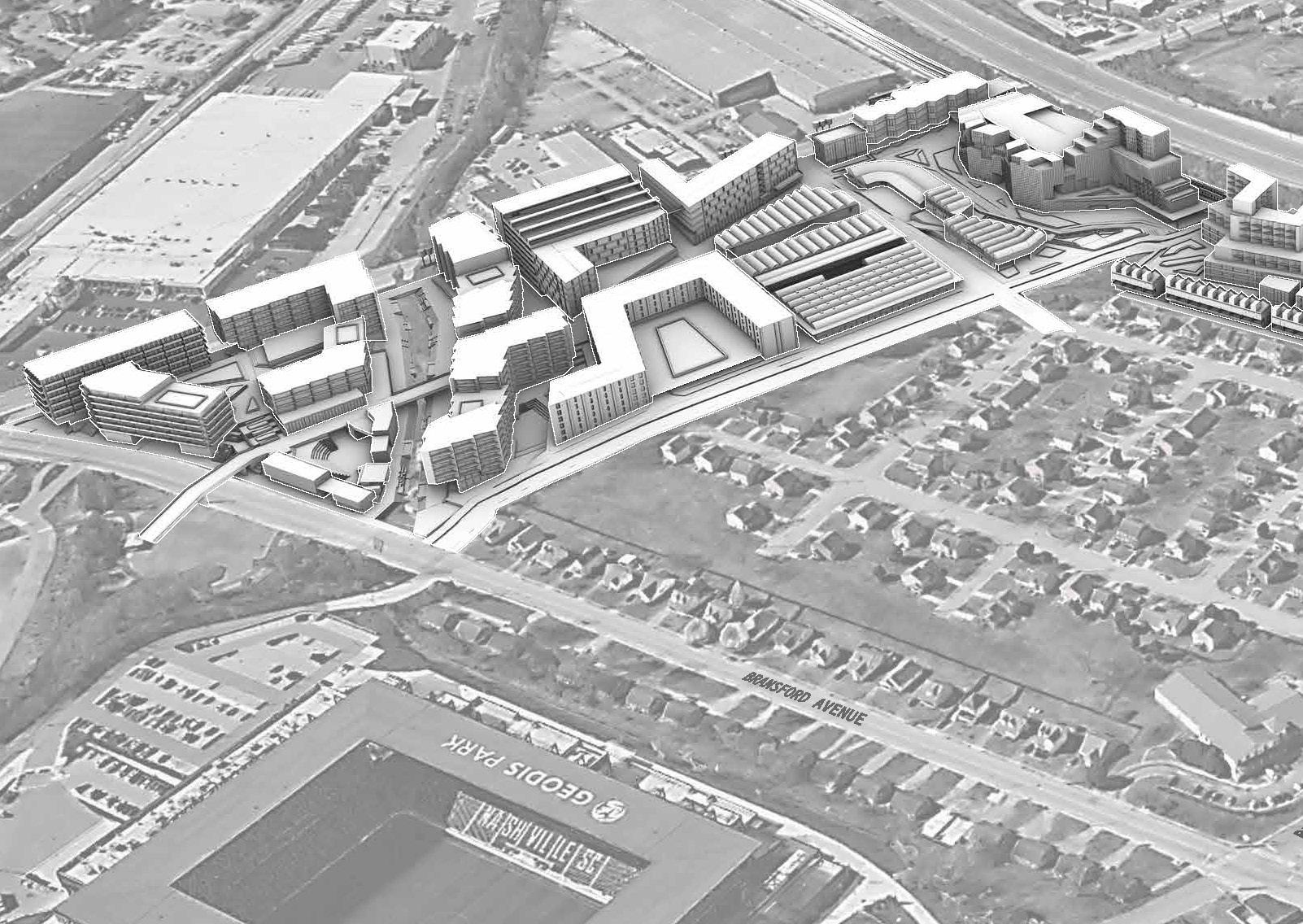
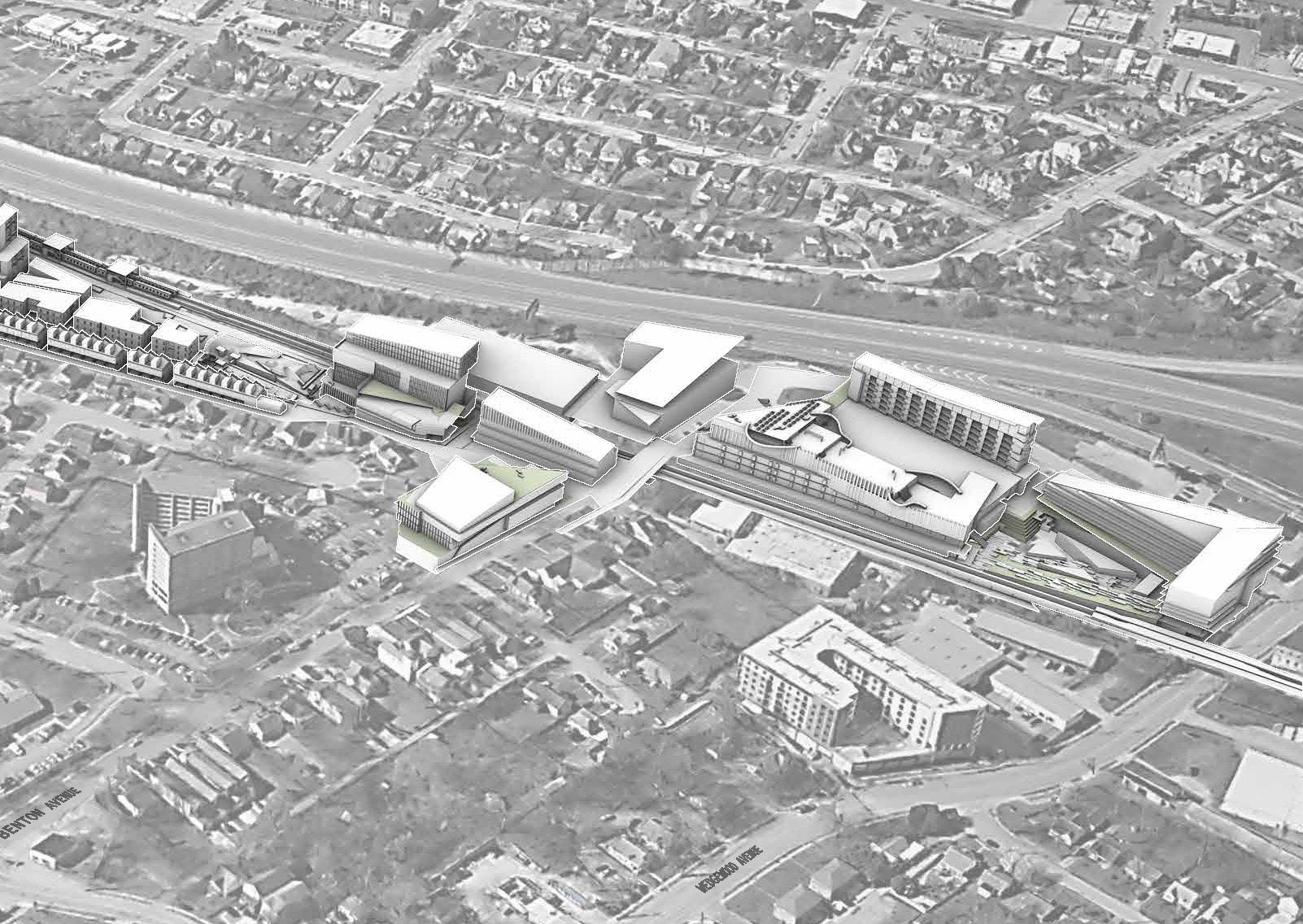
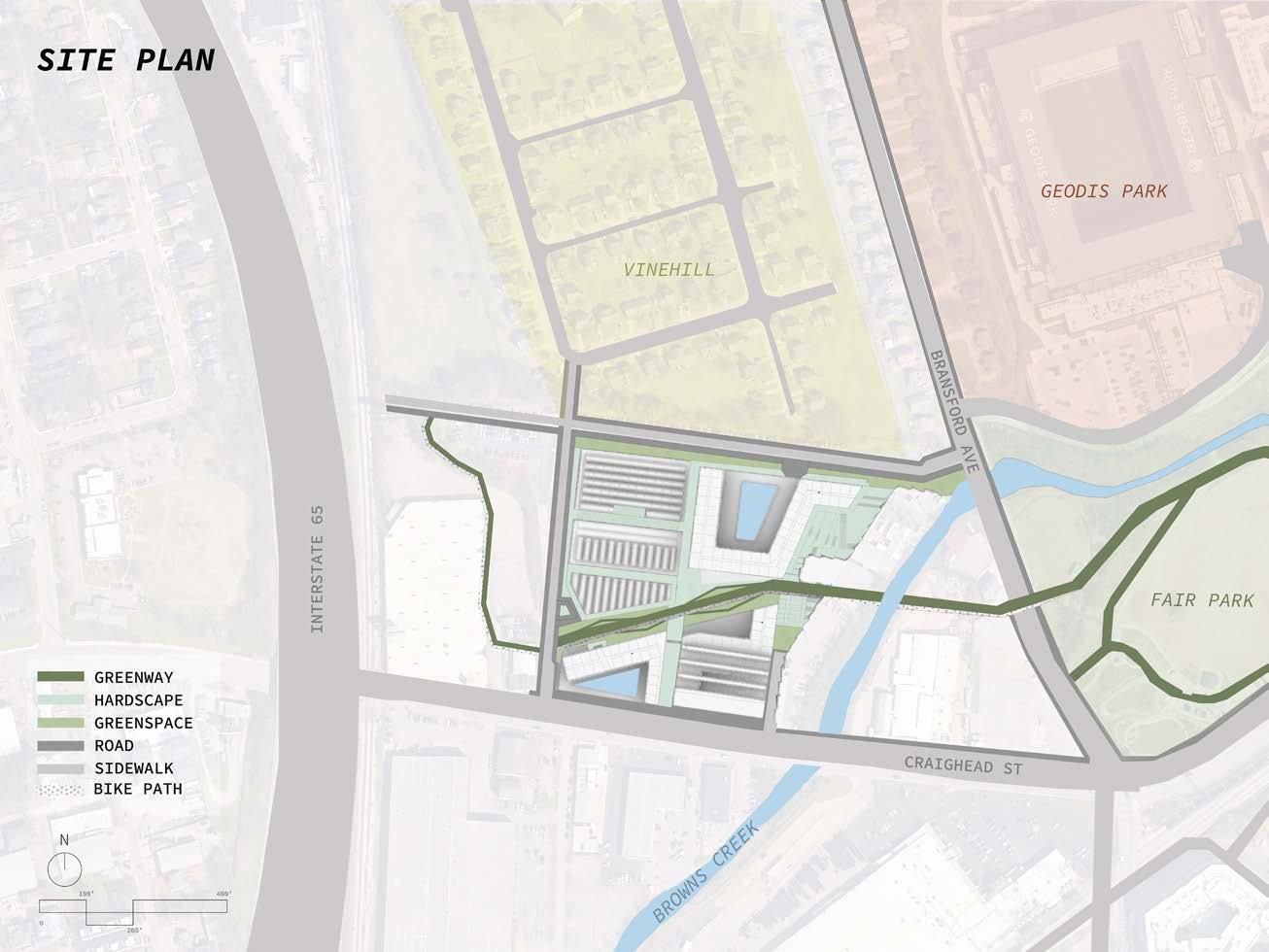
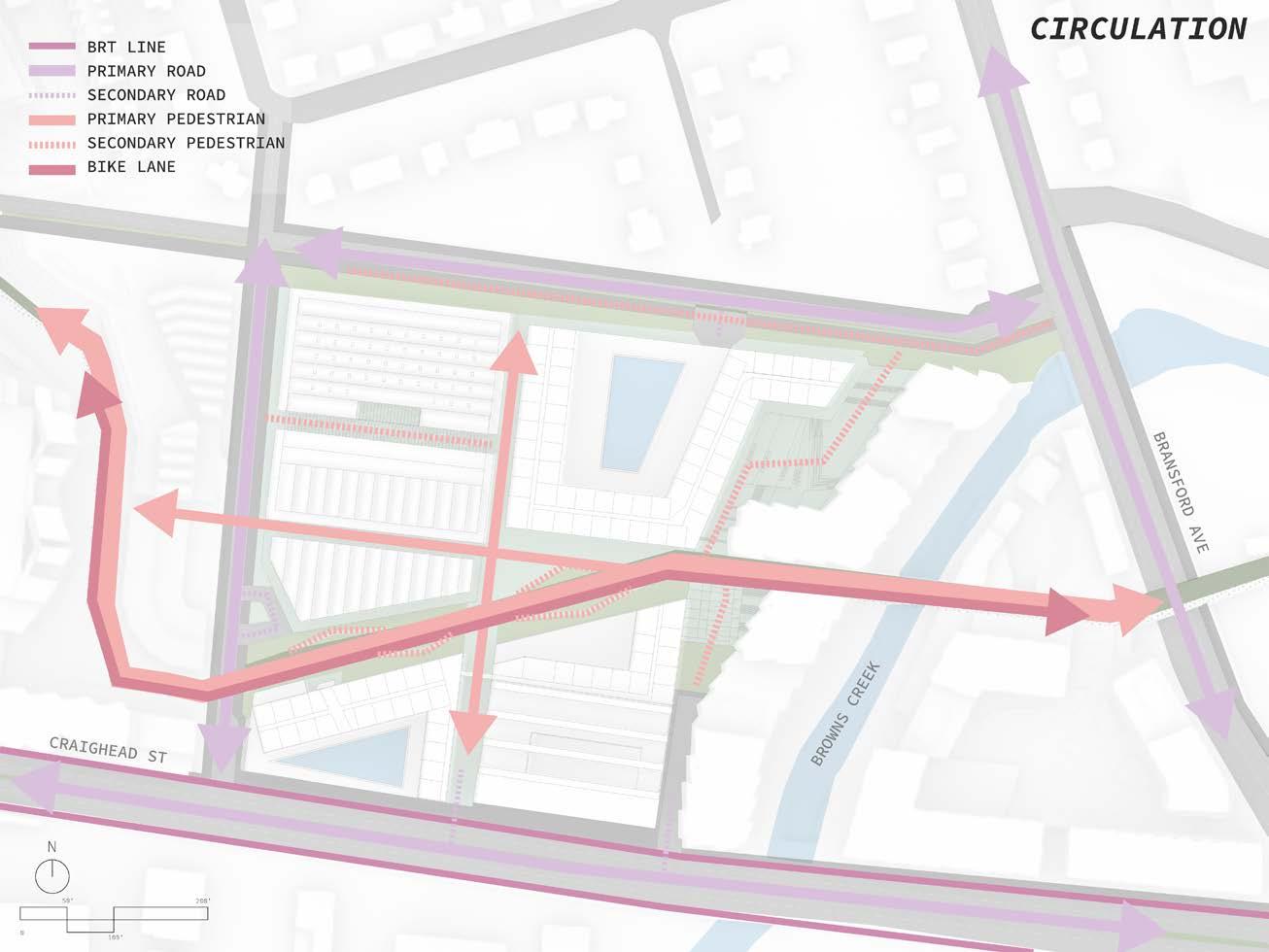
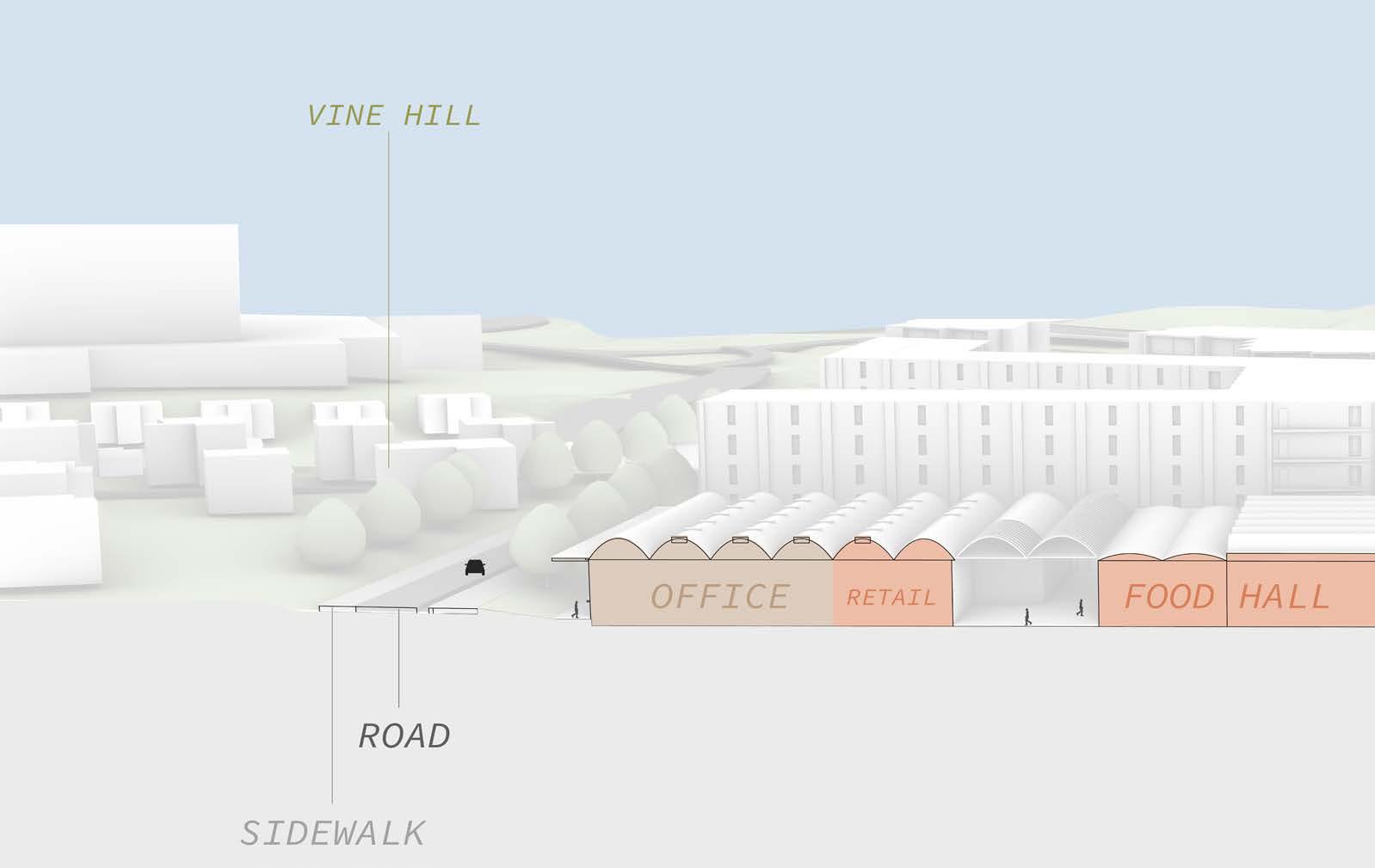
Each team member was responsible for a specific section of the large-scale transitoriented development proposal. This section served as the bridge between the entertainment district, the proposed transit center, and the existing Vine Hill neighborhood, ensuring strong physical and programmatic connections among these areas.
A central greenway runs through the site, acting as the main connector that ties together parks, transit, and public amenities. The goal was to create a safe, walkable environment that allows seamless movement from the transit hub to Geodis Park, nearby neighborhoods, and key public destinations. The central greenway plays a crucial role in this system, acting as a connective spine throughout the site. Designed with a mix of paved paths, hardscapes, and open green spaces, the greenway is a flexible, accessible corridor meant to serve people of all ages and abilities. It responds to the surrounding context by drawing in energy from the entertainment district, transit center, and residential edges, while also giving that energy back through activated public space.


Semester: Fall 2023
Location: Morristown, Tennessee
Professor: Kevin Stevens
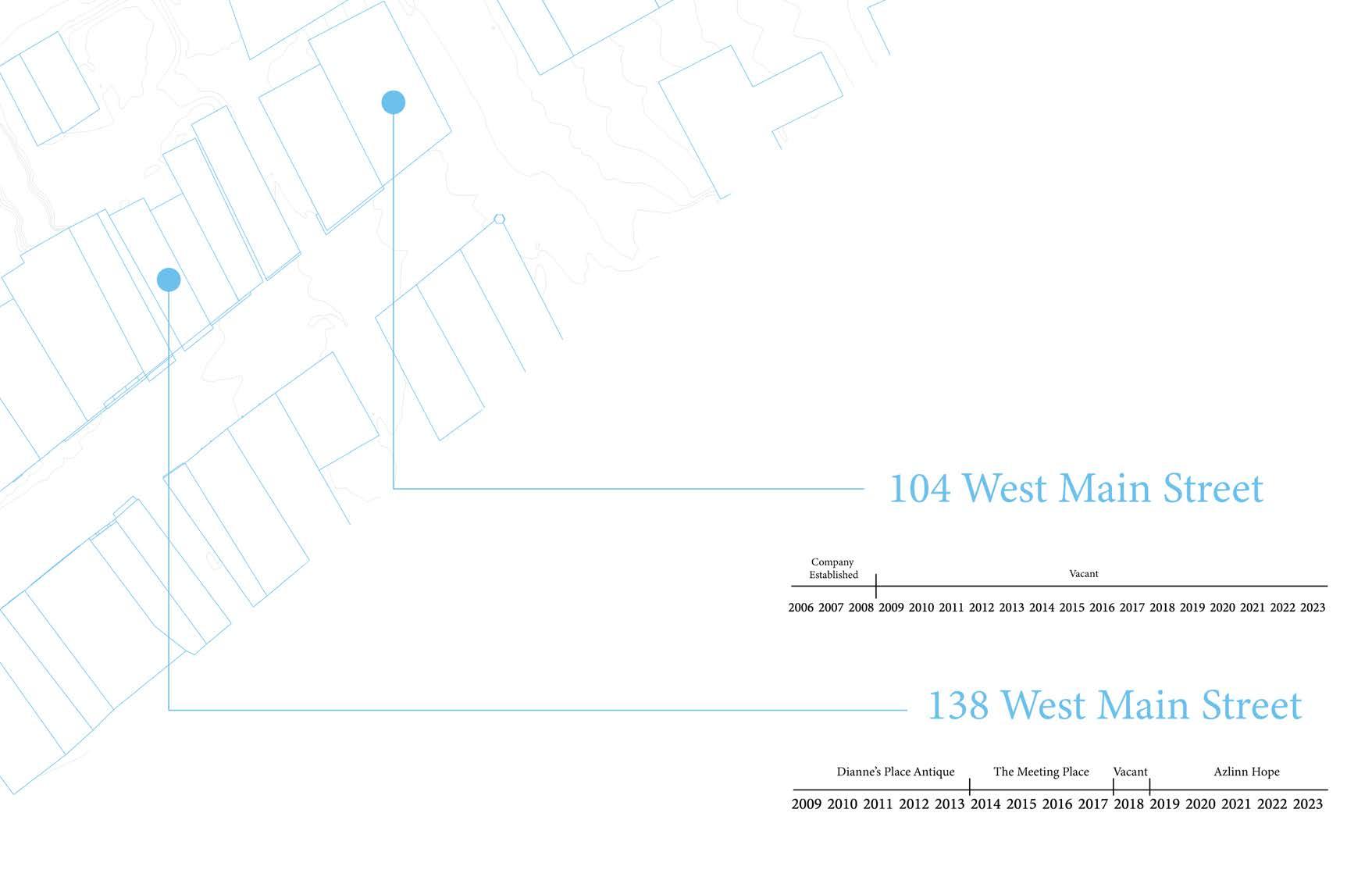
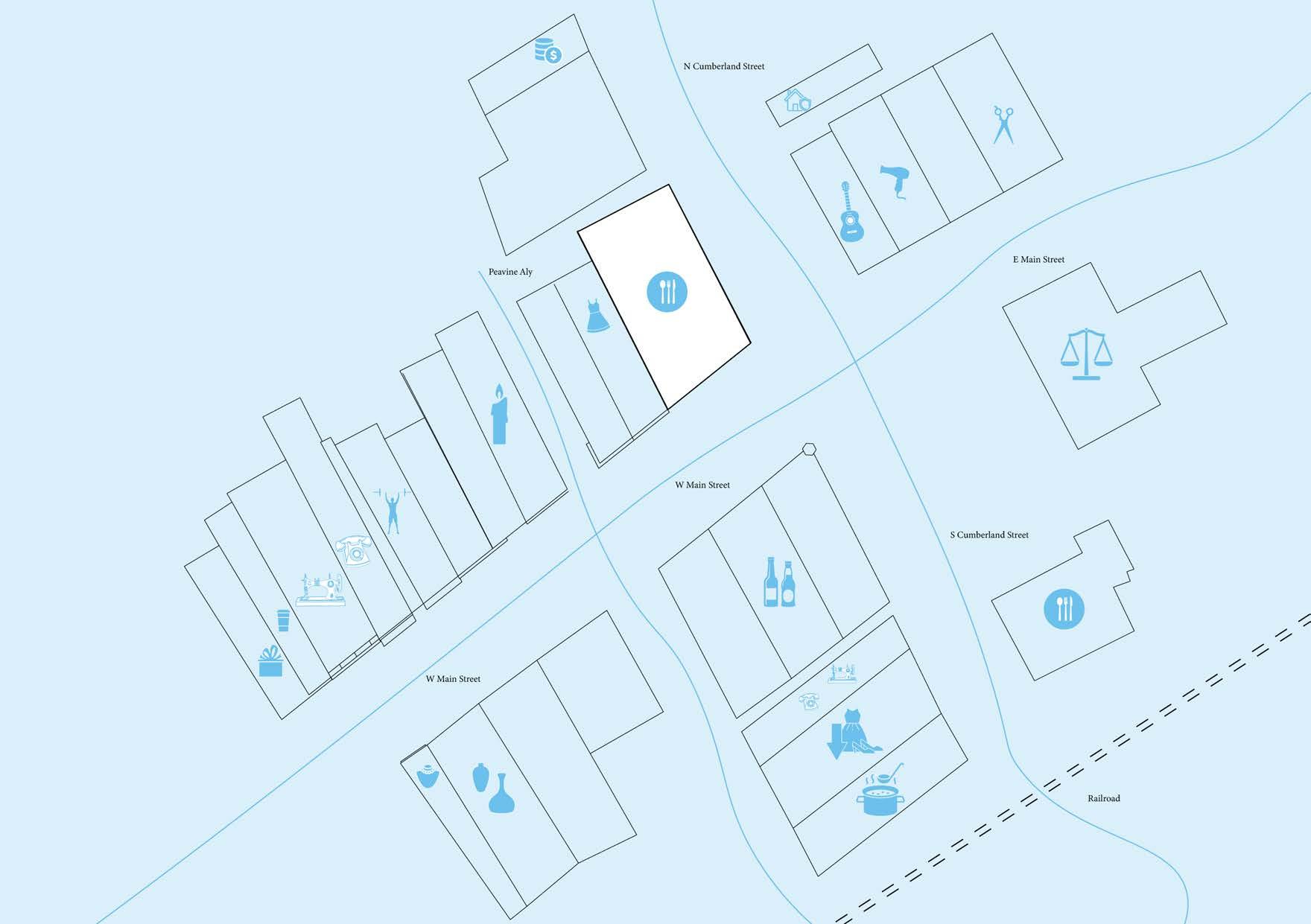
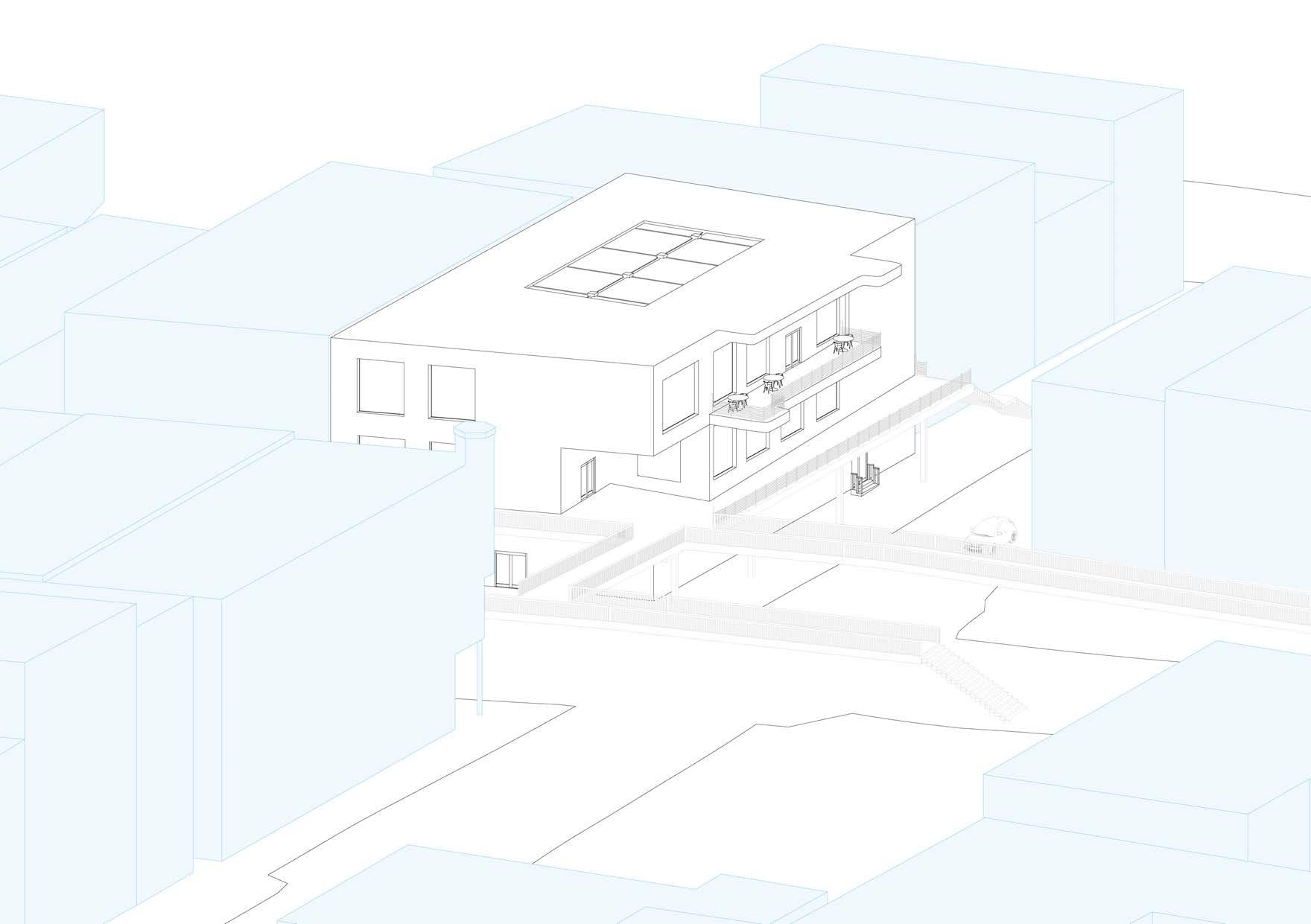
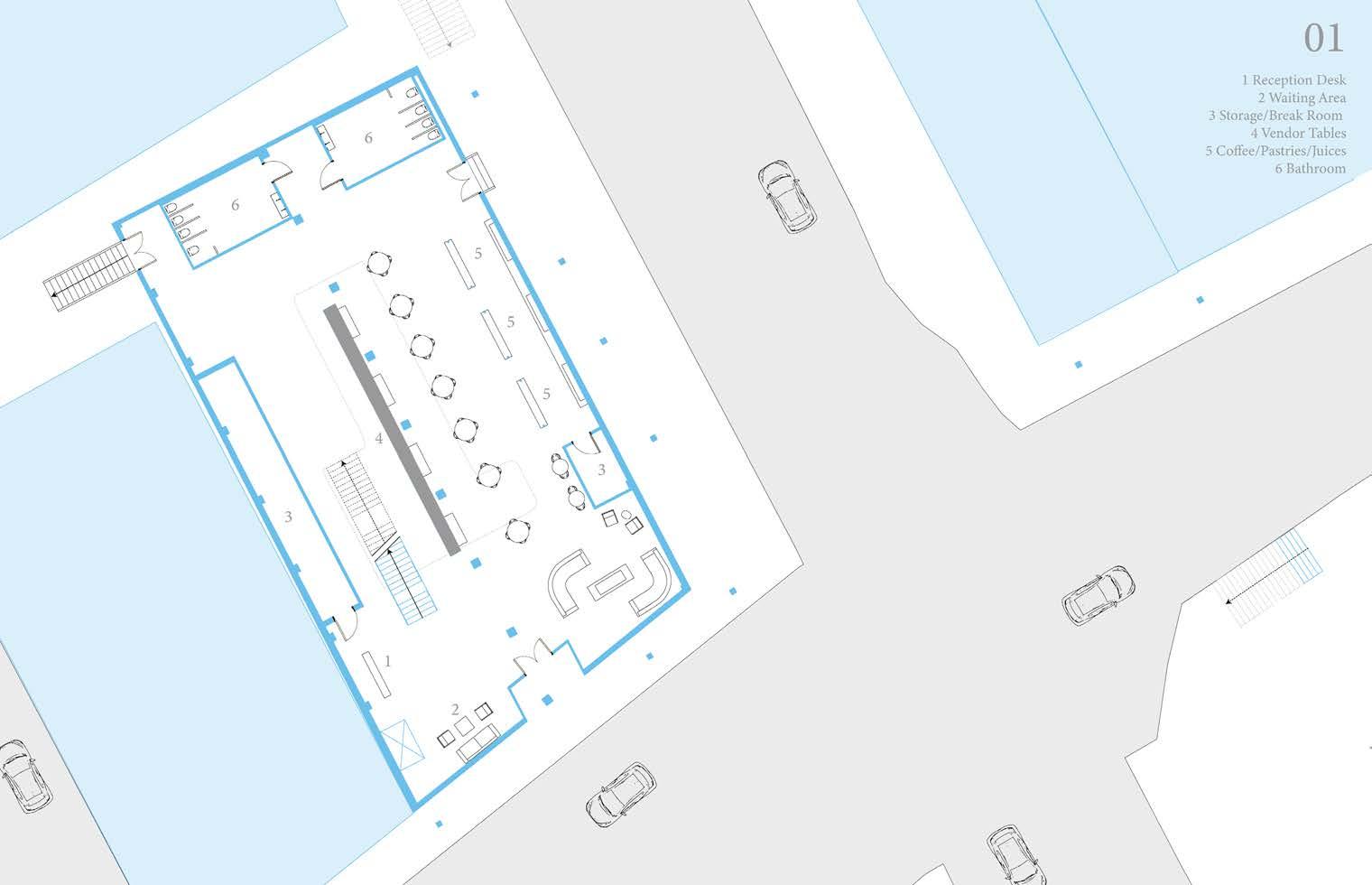
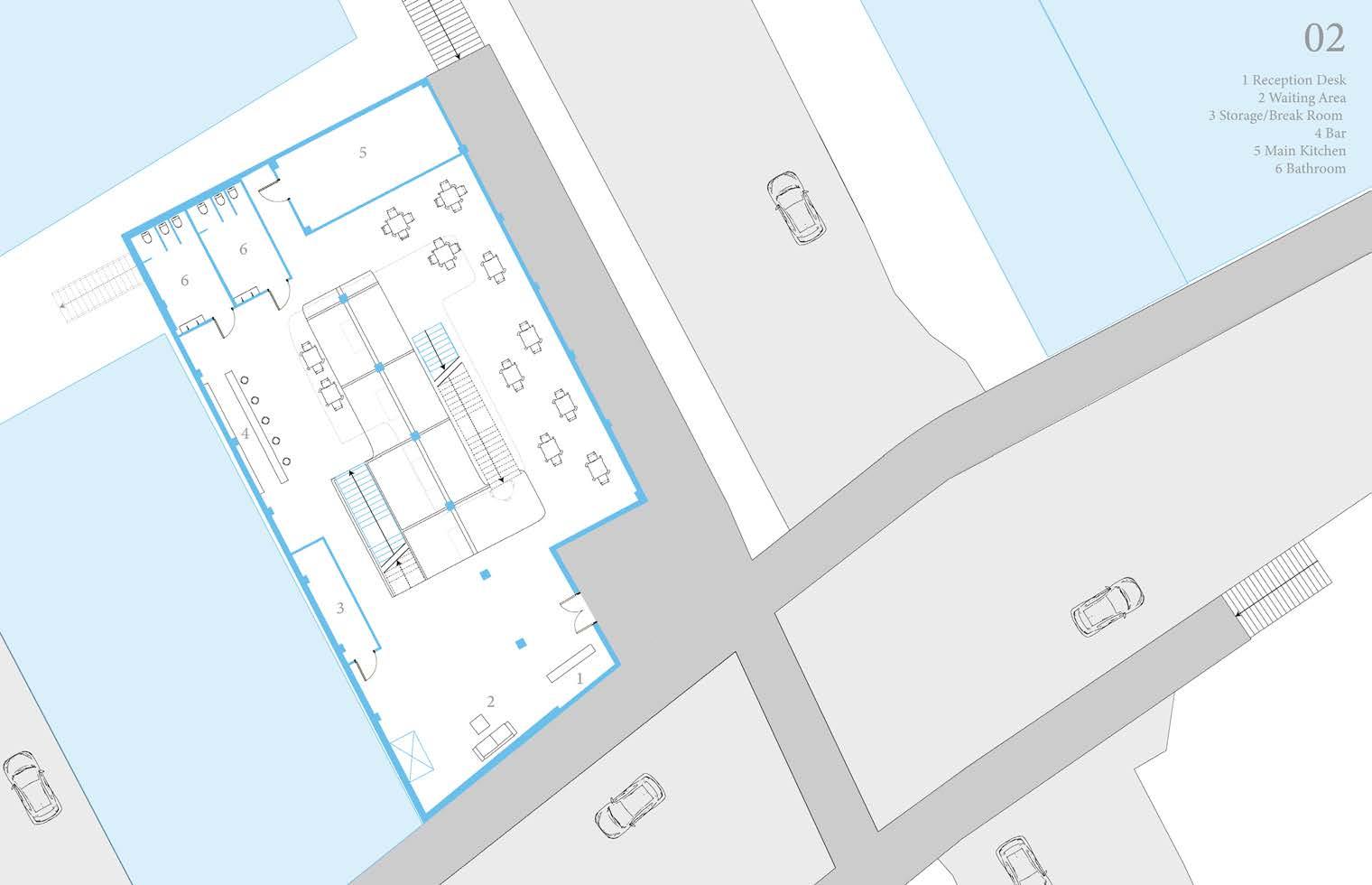
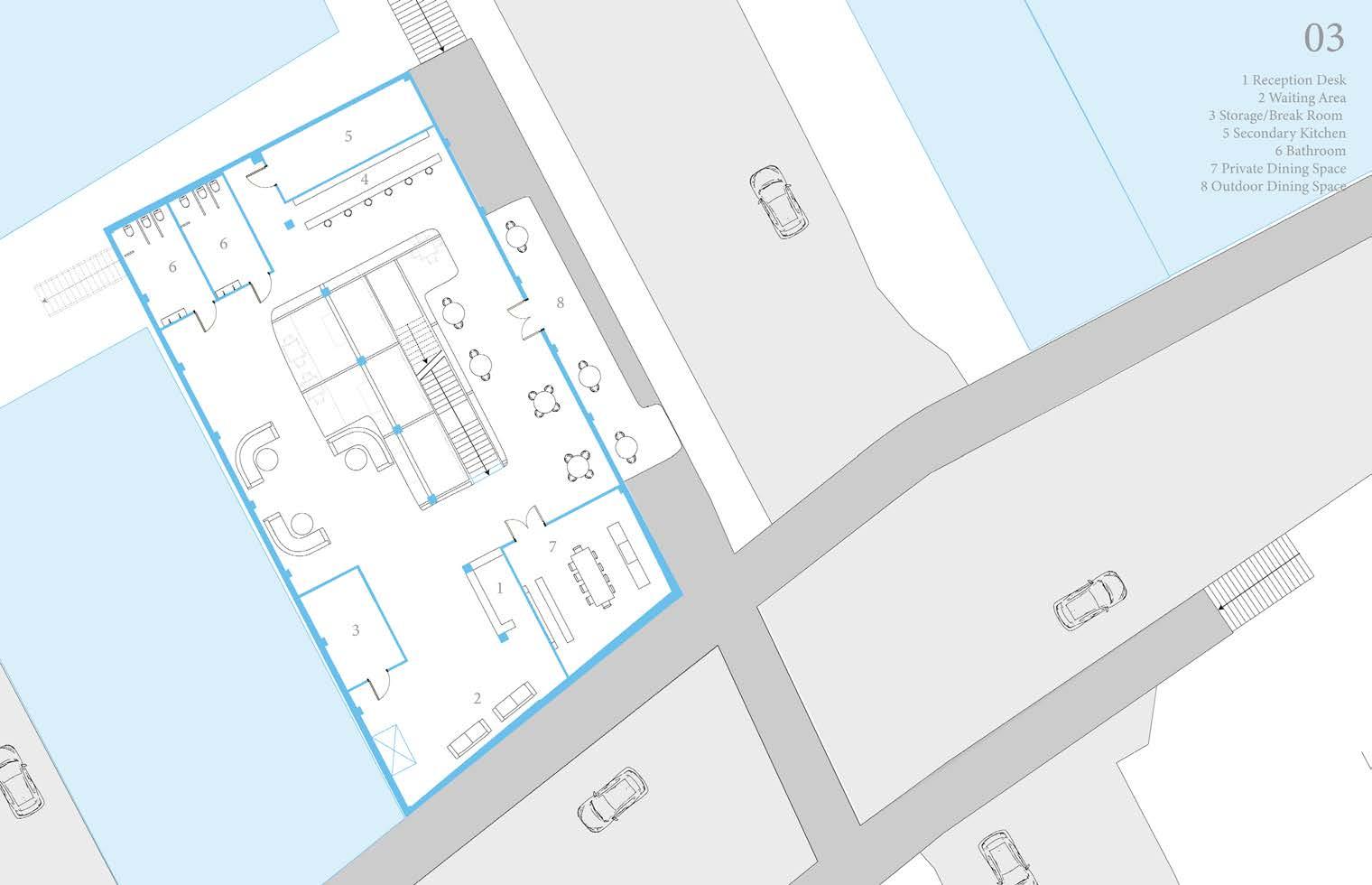
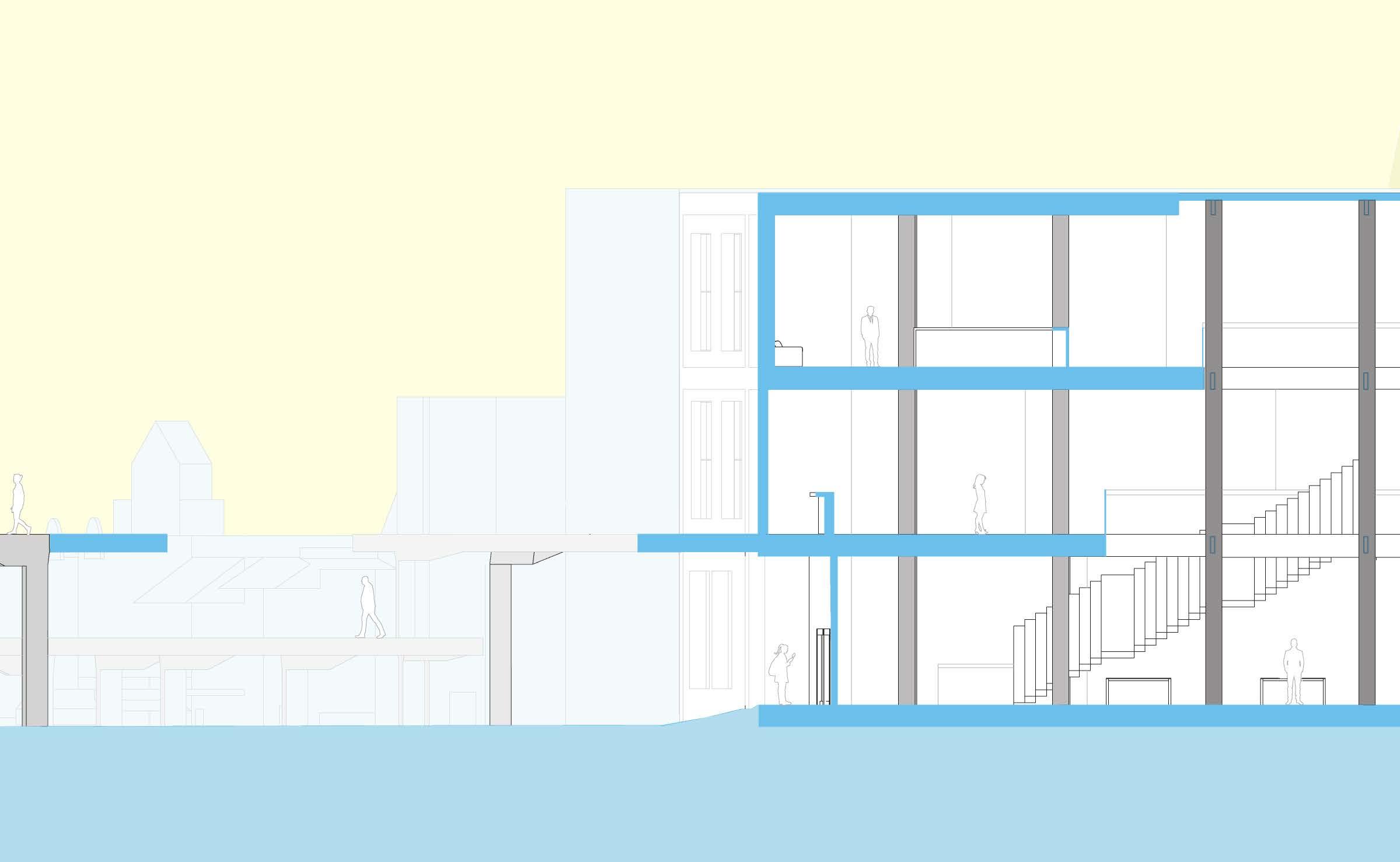
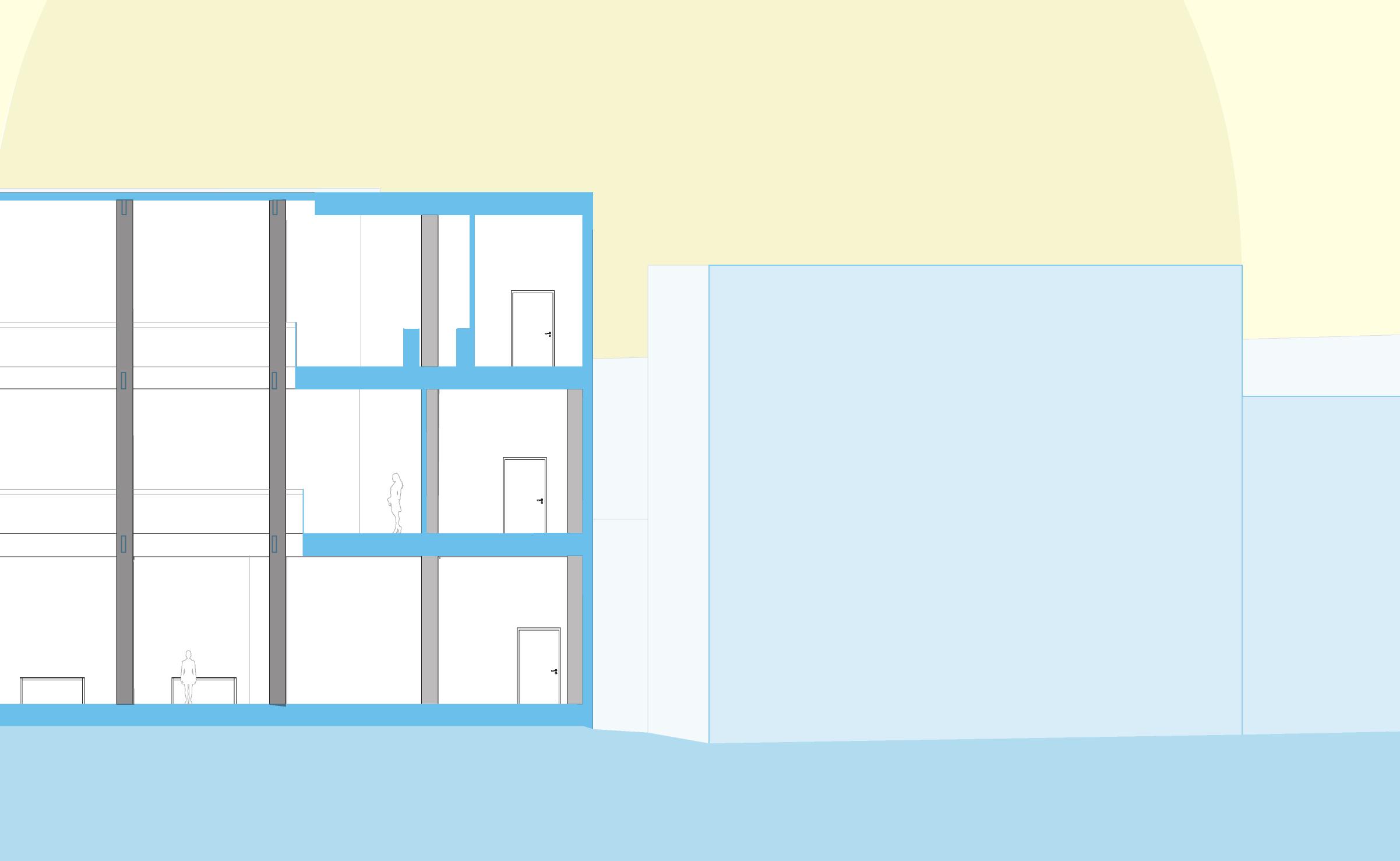
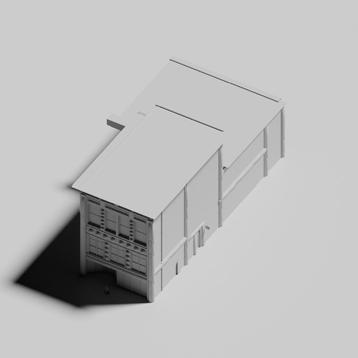
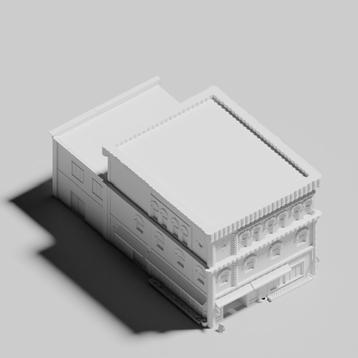
This project explores the role of architecture in addressing the town’s lack of spaces for interaction and connection. The work began with the development of a comprehensive research document that examined Morristown’s history, cultural context, and existing urban conditions, identifying the absence of communal gathering places as a central issue. From this research, a proposal was formed to transform an existing building into a new dining experience that both preserves and reinterprets the town’s character. By exposing the building’s interior columns, the design reveals layers of Morristown’s history while simultaneously creating a setting for shared meals, conversations, and community activities. The project positions dining not only as a functional program but also as a catalyst for civic engagement, bridging the gap between past and present. The project emphasizes the importance of grounding proposals in research while demonstrating how design can reclaim underutilized spaces and foster meaningful human connections.
Semester: Spring 2024
Location: N/A
Professor: James Roha
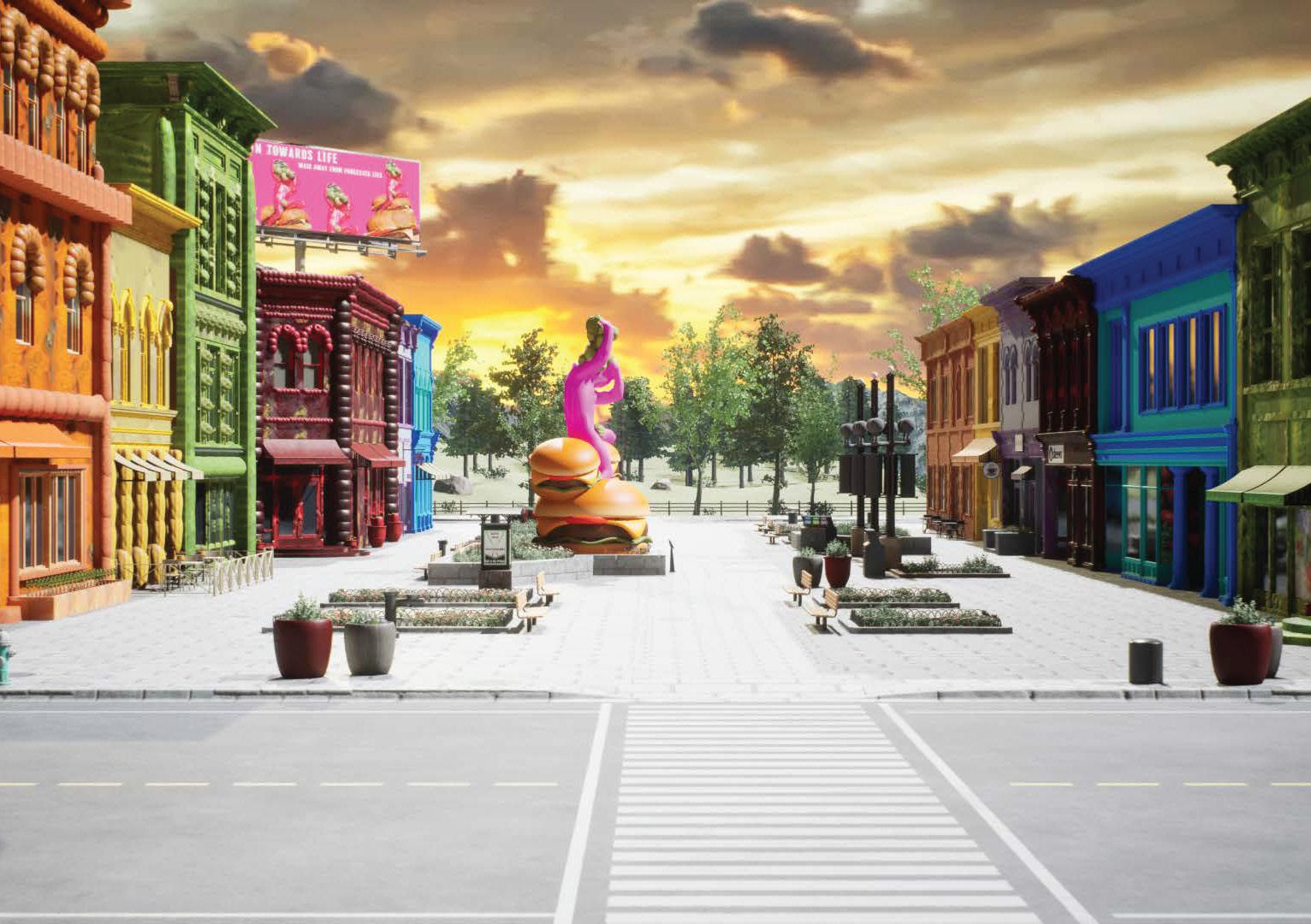
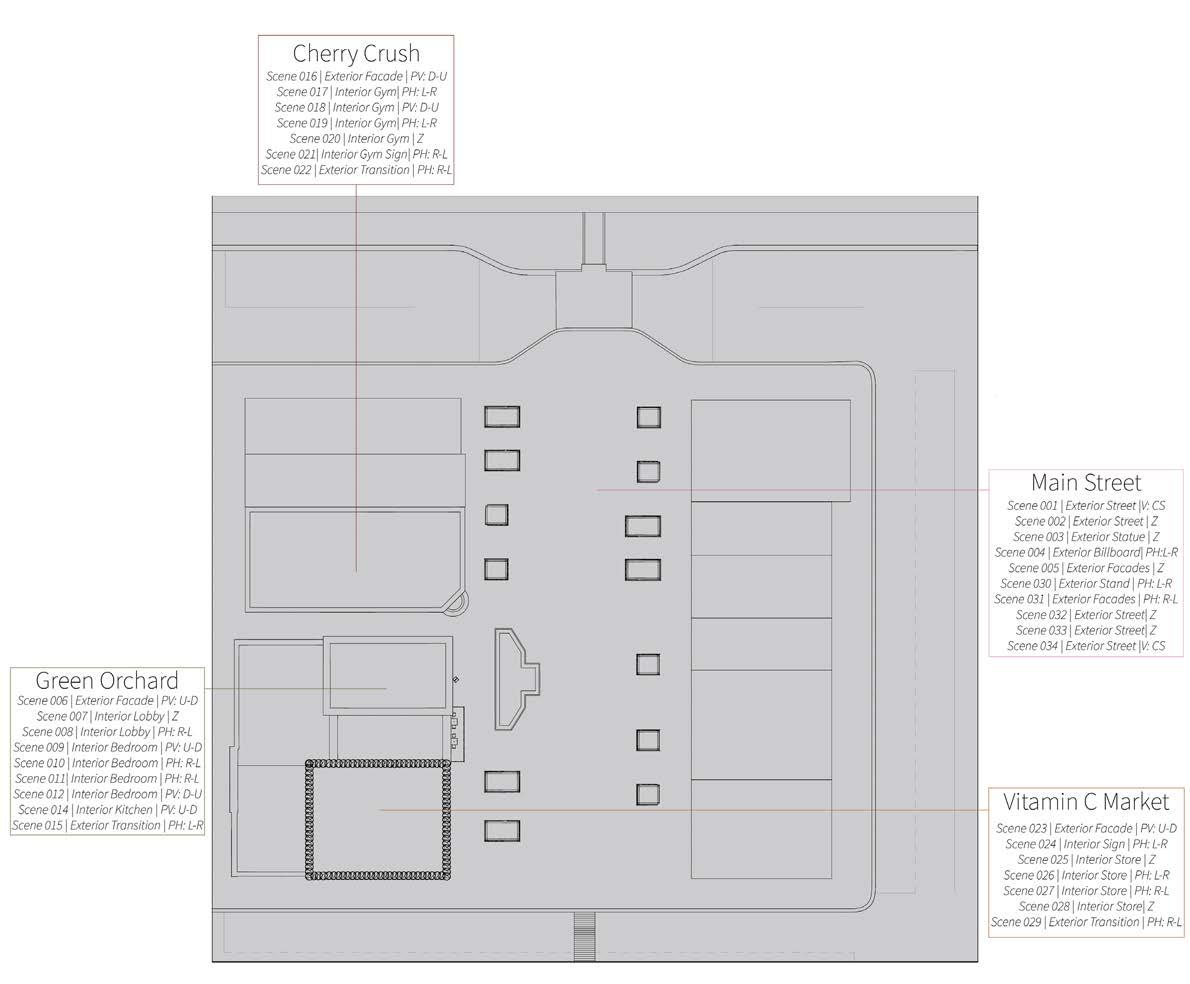
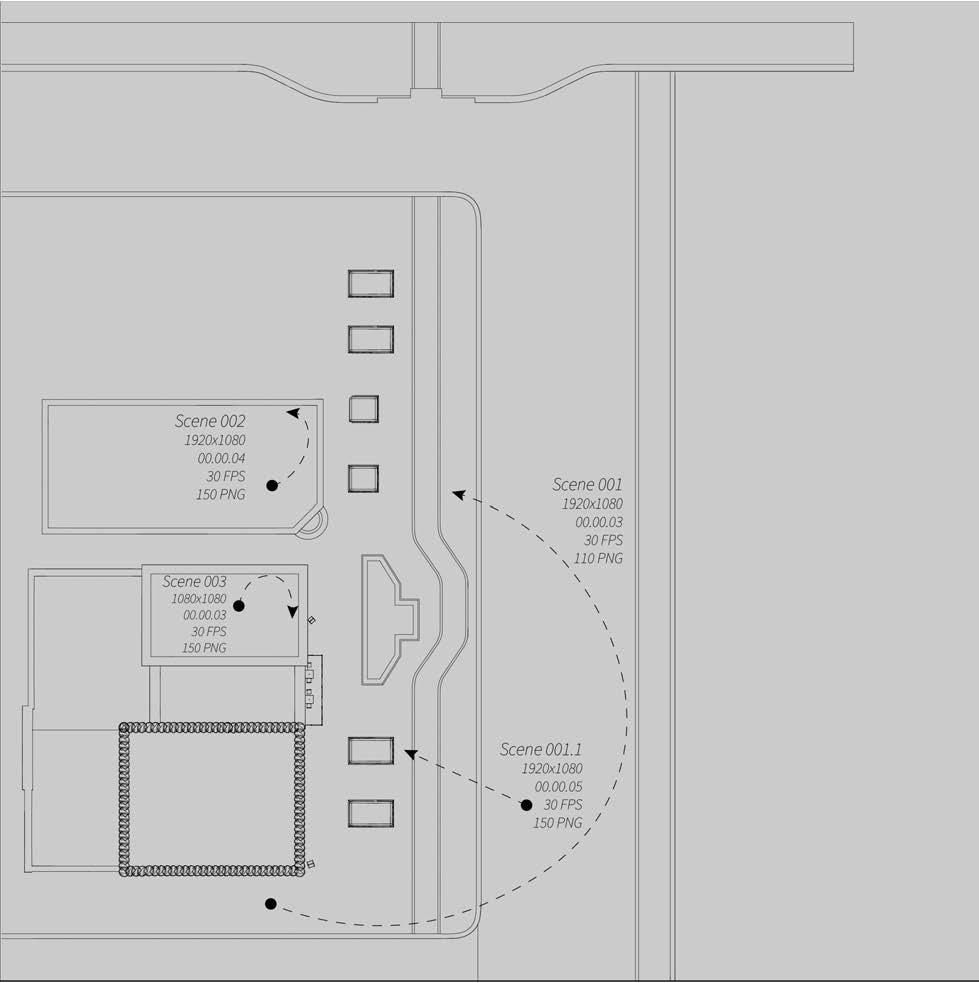
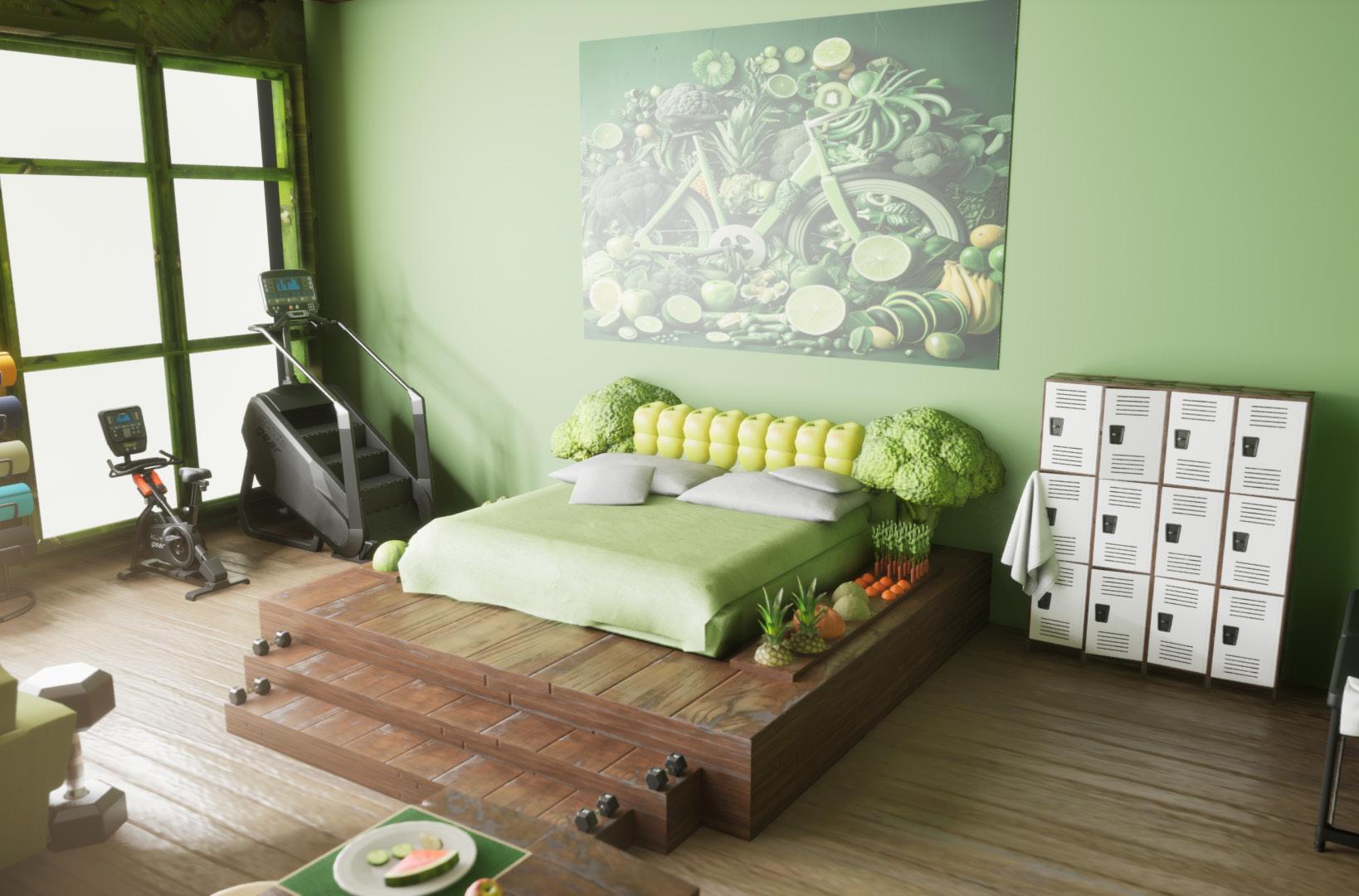
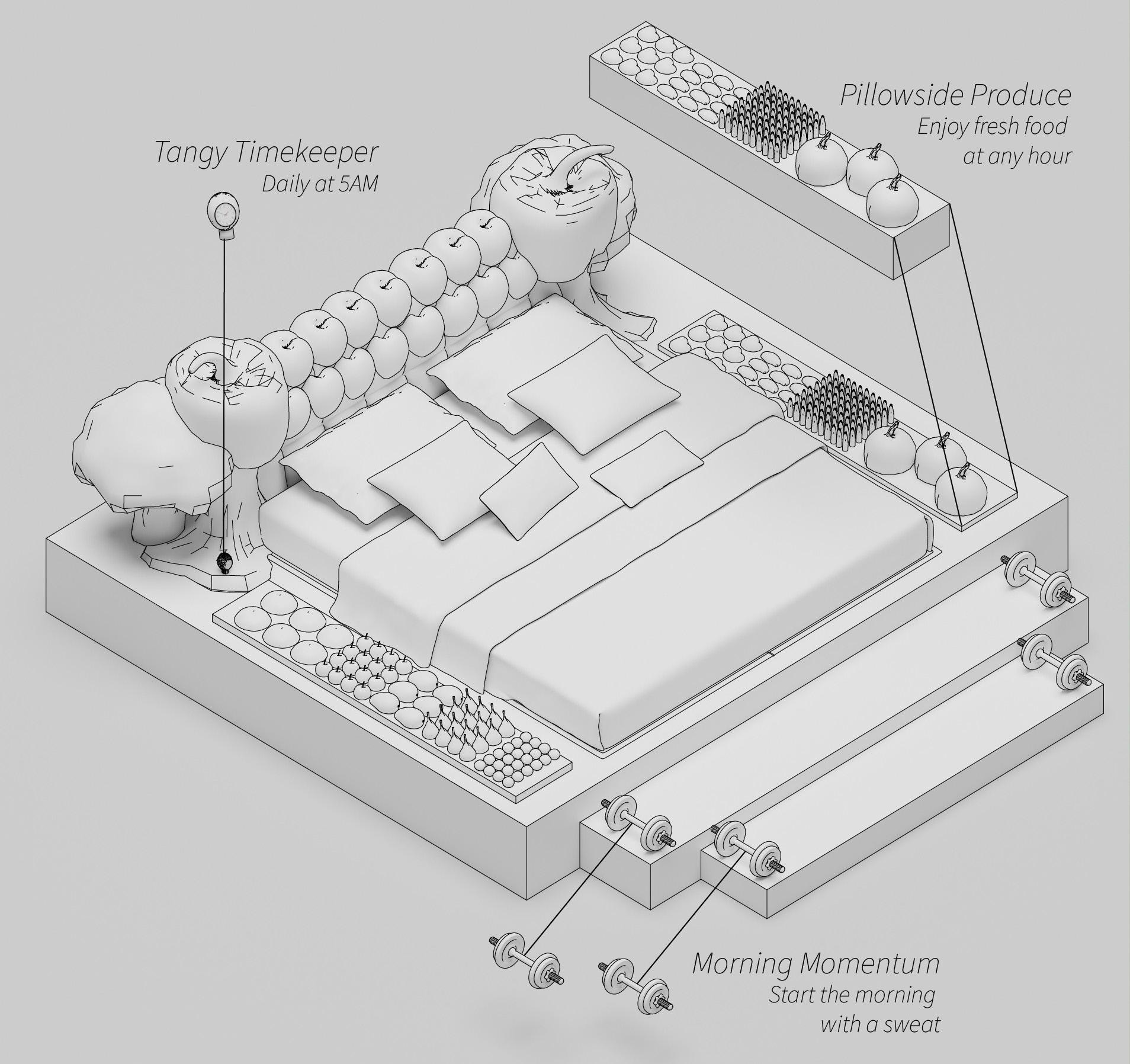
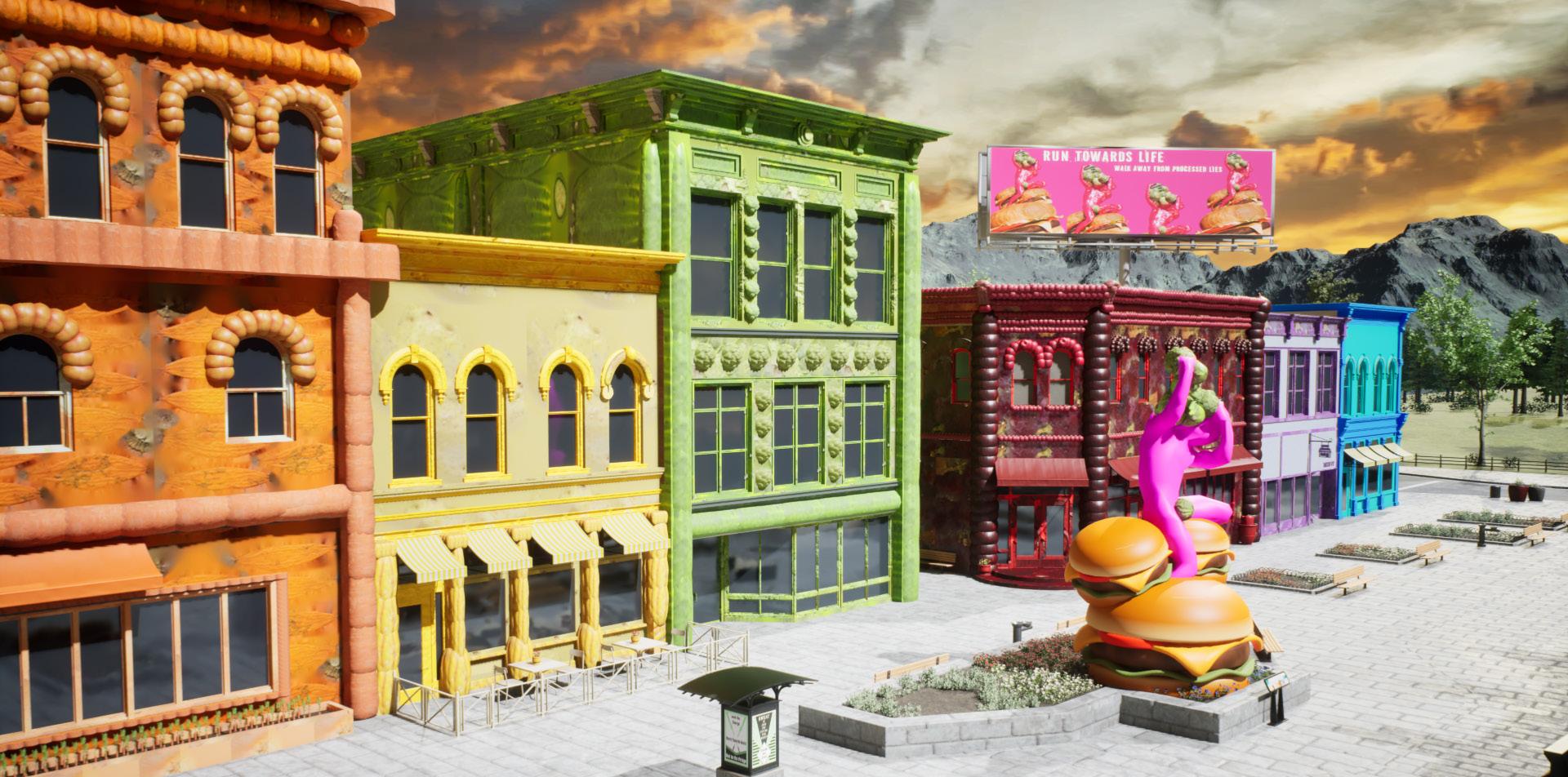
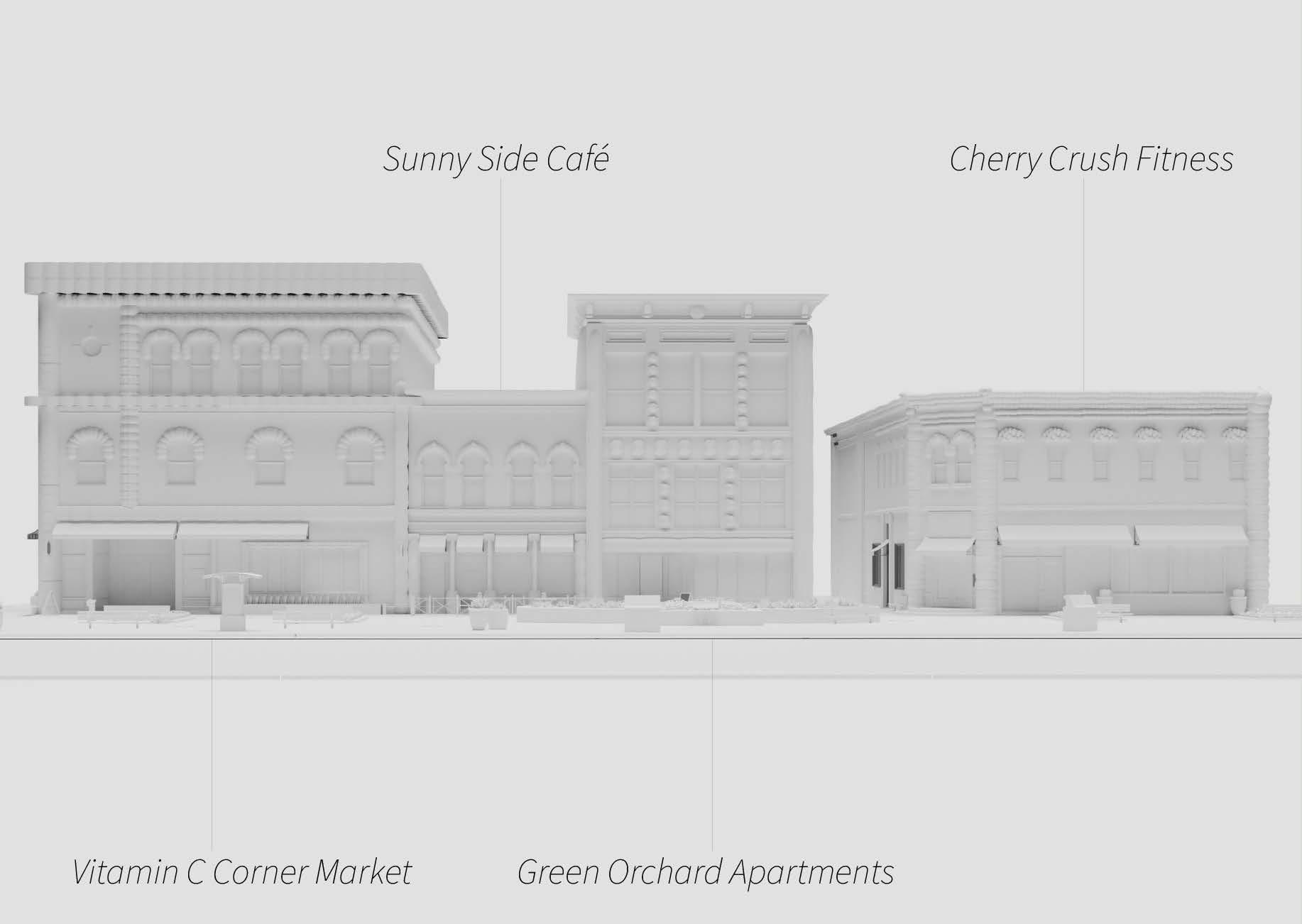
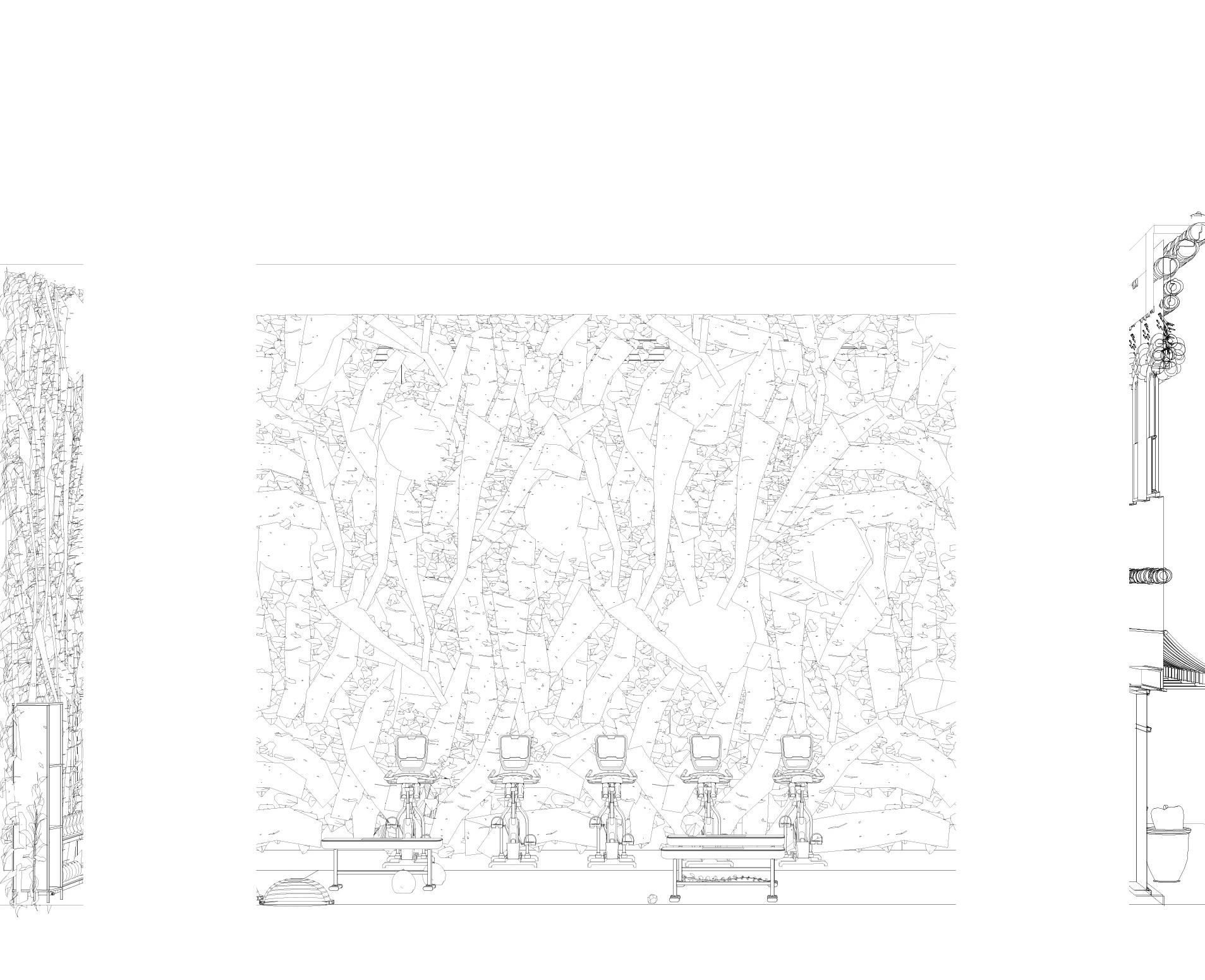
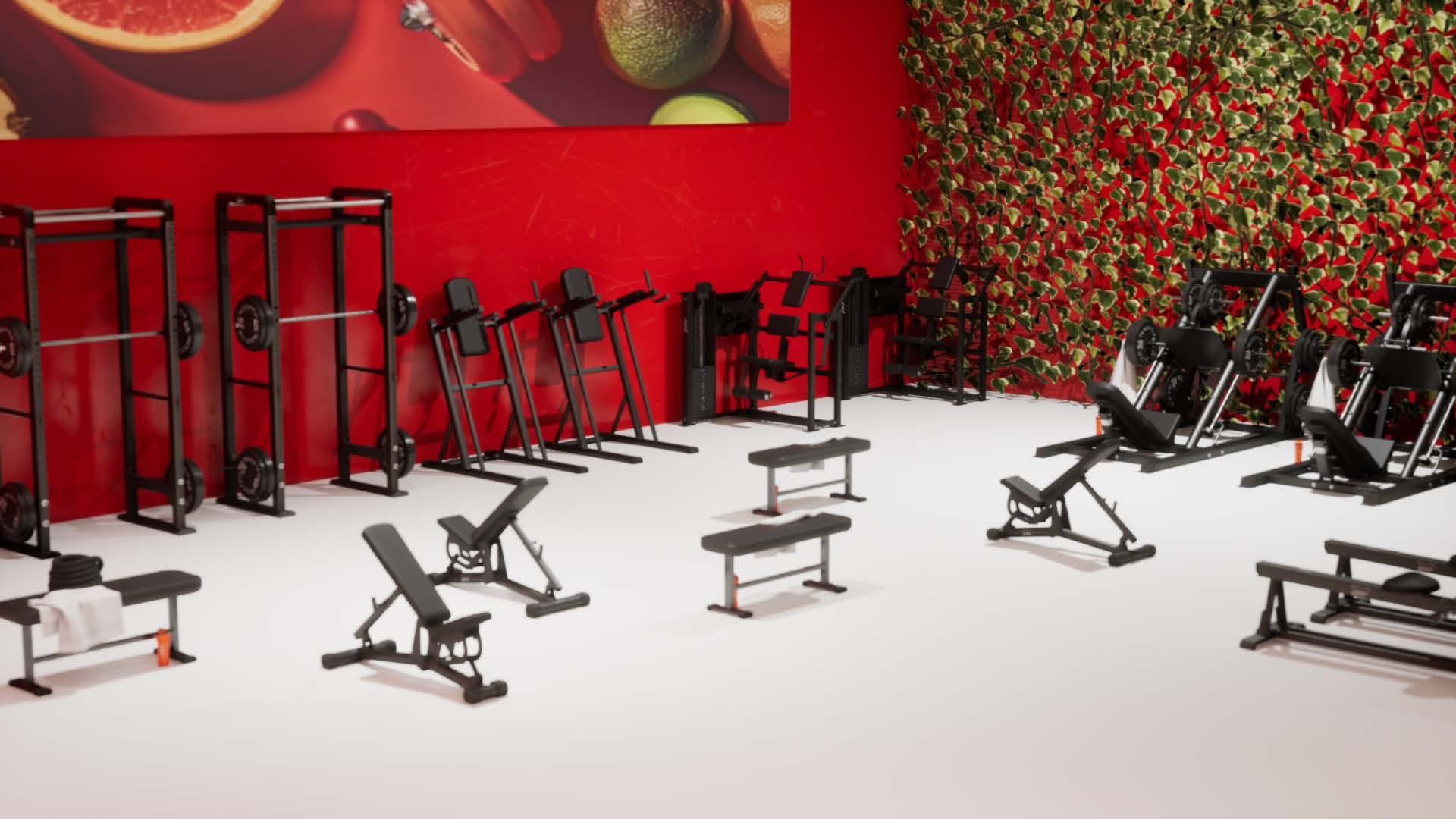
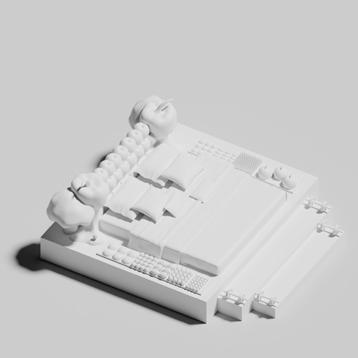
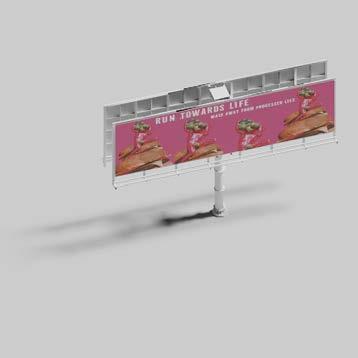
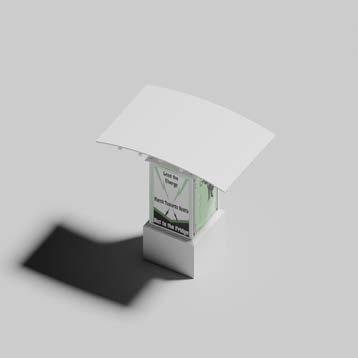
This project examines TikTok’s influence on health and wellness perceptions through the lens of the “TikTok Fitness Fanatics” subculture. The work imagines a world built around fitness and clean eating, using a series of visual narratives and designed environments. Scenes include a green juice-themed restaurant, an empty plate representing disordered eating, and a surreal town made entirely of fruits and vegetables. Key spaces like the Green Orchard Apartments and Cherry Crush Fitness Gym reflect a hyper-focus on health trends. Developed over the semester, the project combines custom assets, animations, and renderings into a final video that critiques how TikTok can distort our understanding of nutrition and wellness.
Video Link: https://youtu.be/3UFOyIO3d9c?si=eFSYpxkjPPliuODO



Semester: Spring 2022
Location: Knoxville, Tennessee
Professor: Christinia Pint
Partners: Beshoy Daniel, Hannah Crosby, & Katie Morriss
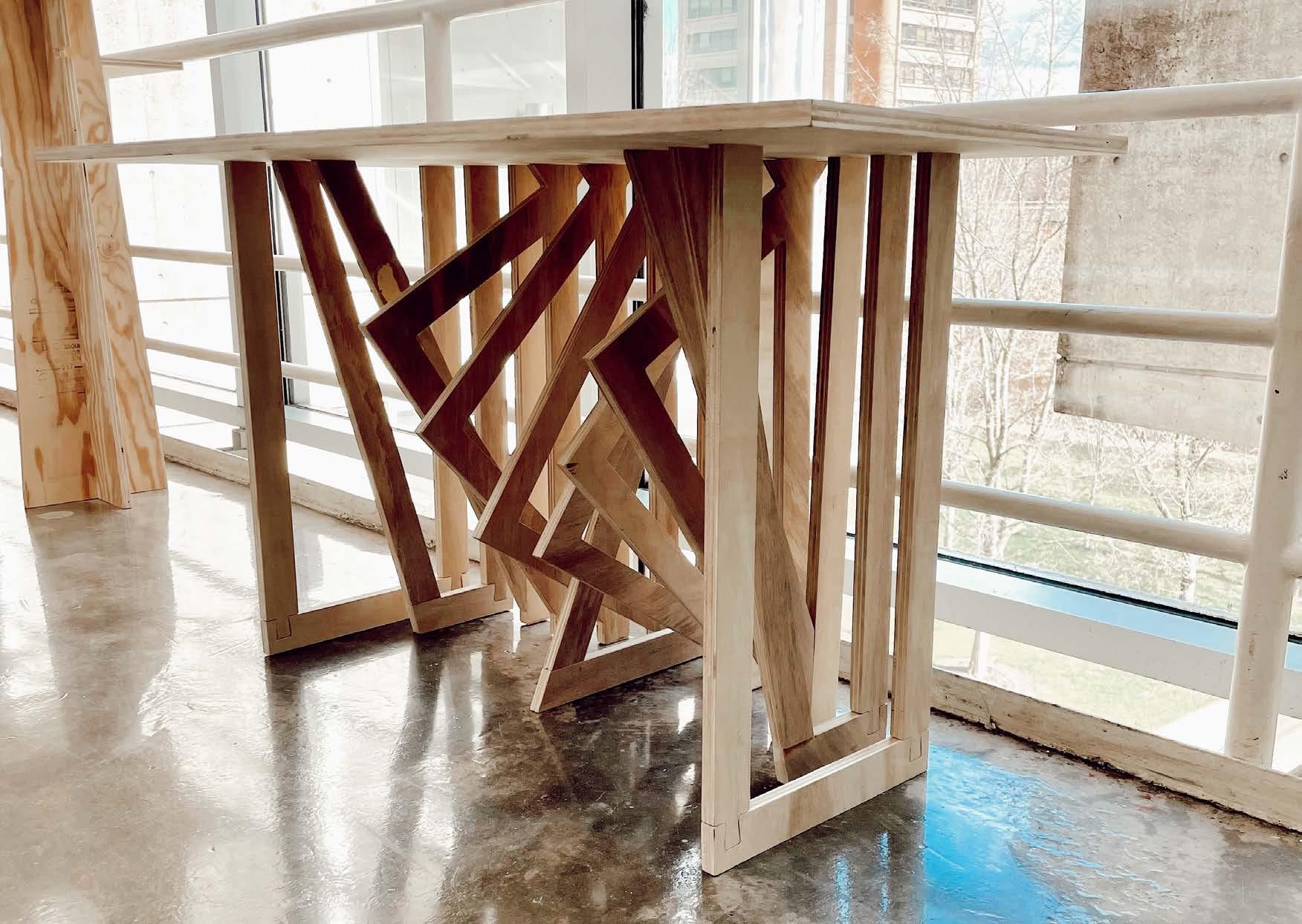
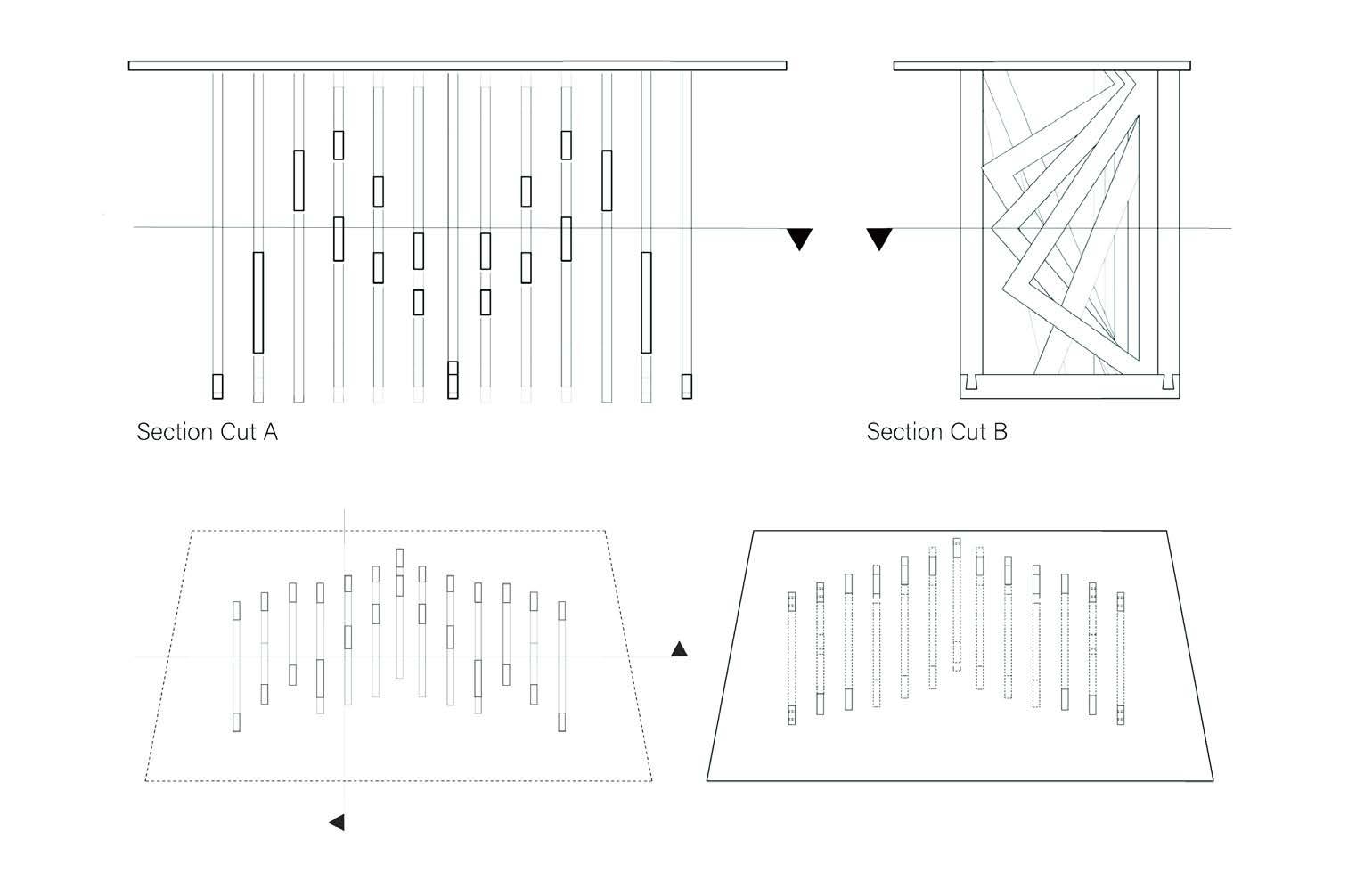
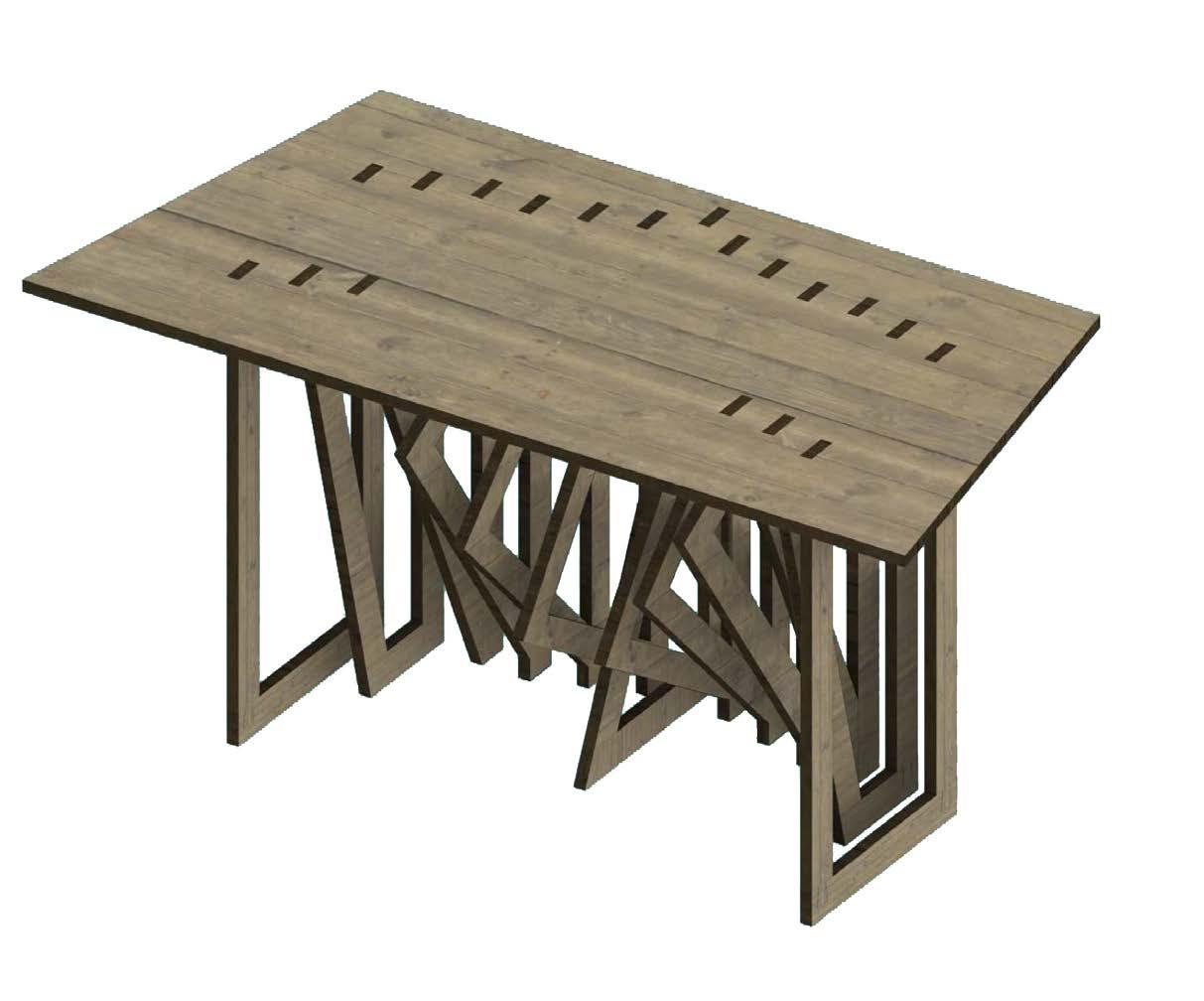
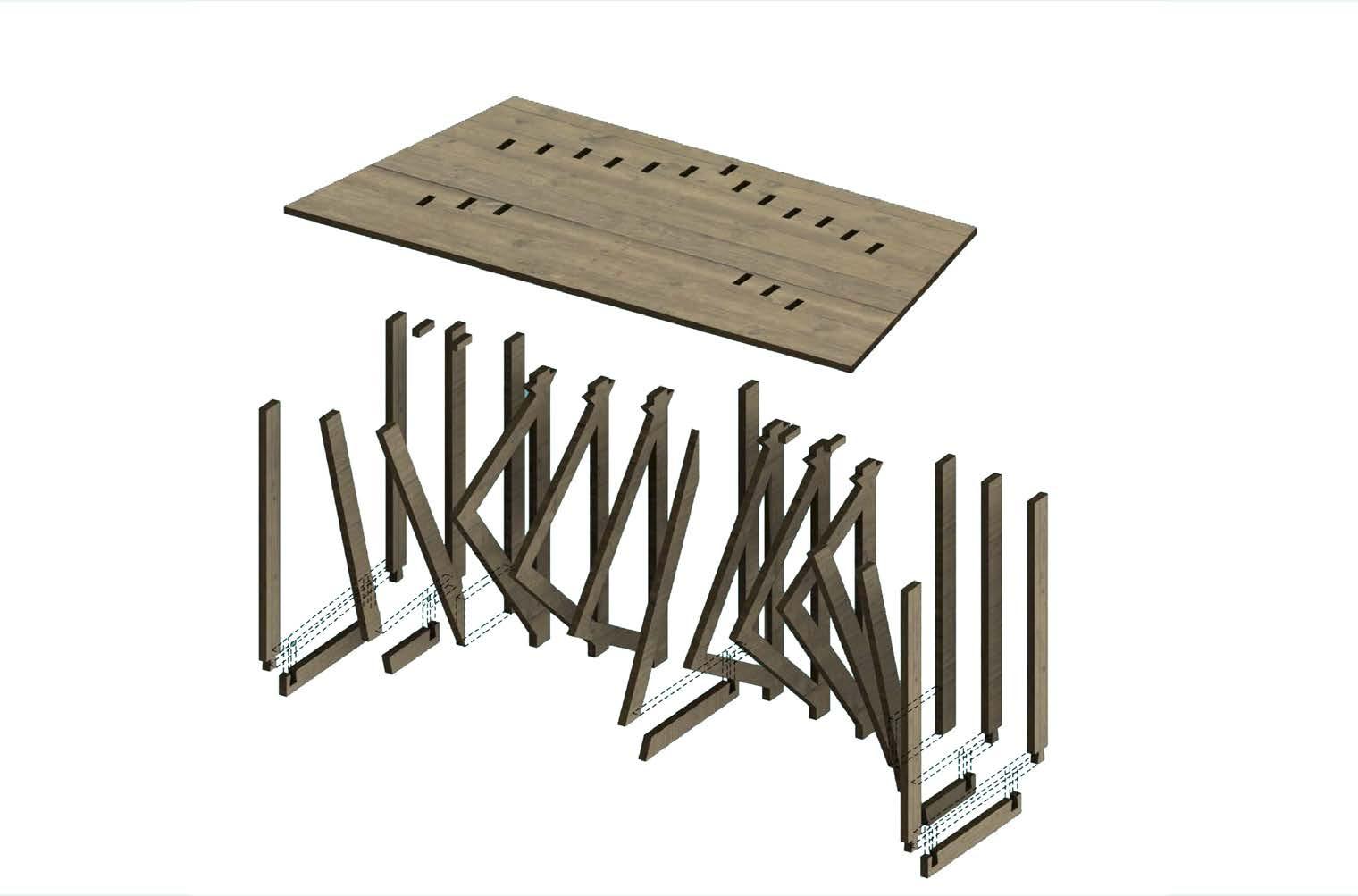
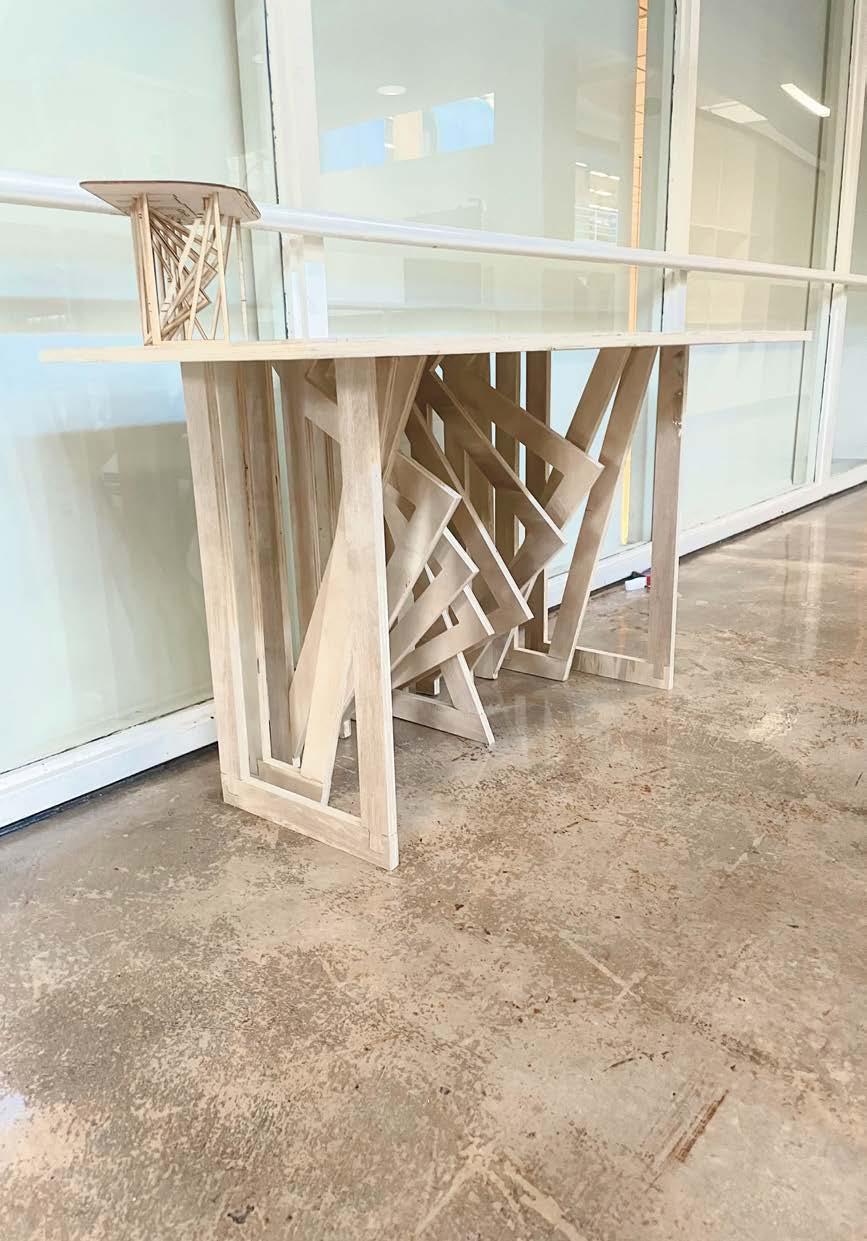
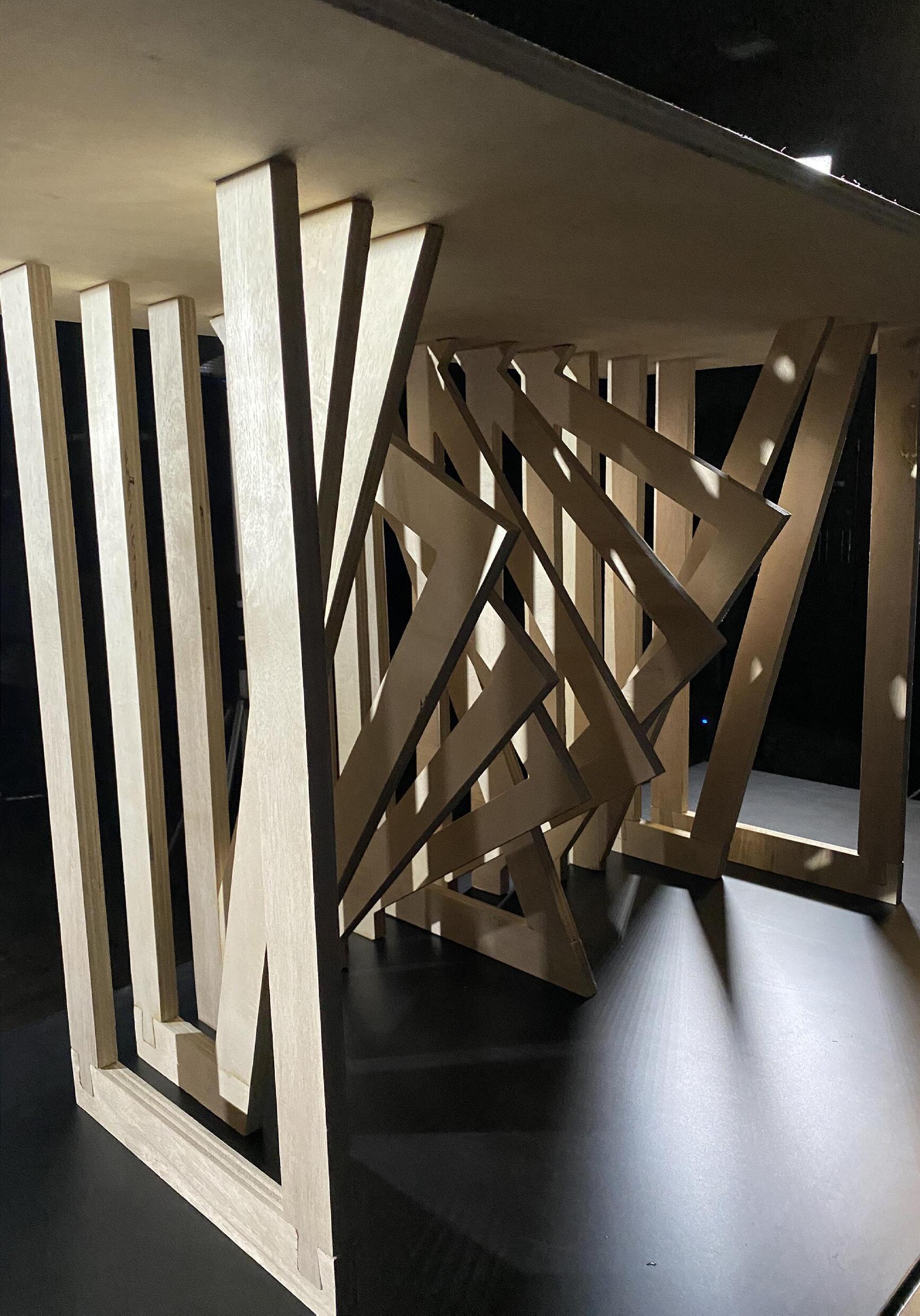
This project is a spatial construct designed to support a seamless “grab-and-go” dining experience. The design rethinks traditional meal spaces by catering to busy, high-traffic areas such as the 2nd-floor bridge overlooking the Ewing Gallery. Positioned at the edge of circulation, the construct provides a place to pause, set down a meal, and engage with others while also serving as a sculptural endpoint to the bridge. Its repetitive frames support the horizontal surface, creating a sense of motion in their incrementally adjusted configurations, while exposed joints highlight the design’s construction logic. When not serving its intended purpose, the piece adapts as a casual dining table, balancing functionality, movement, and visual interest in one cohesive design.
Semester: Fall 2022
Location: Knoxville, Tennessee
Professor: Scott Poole
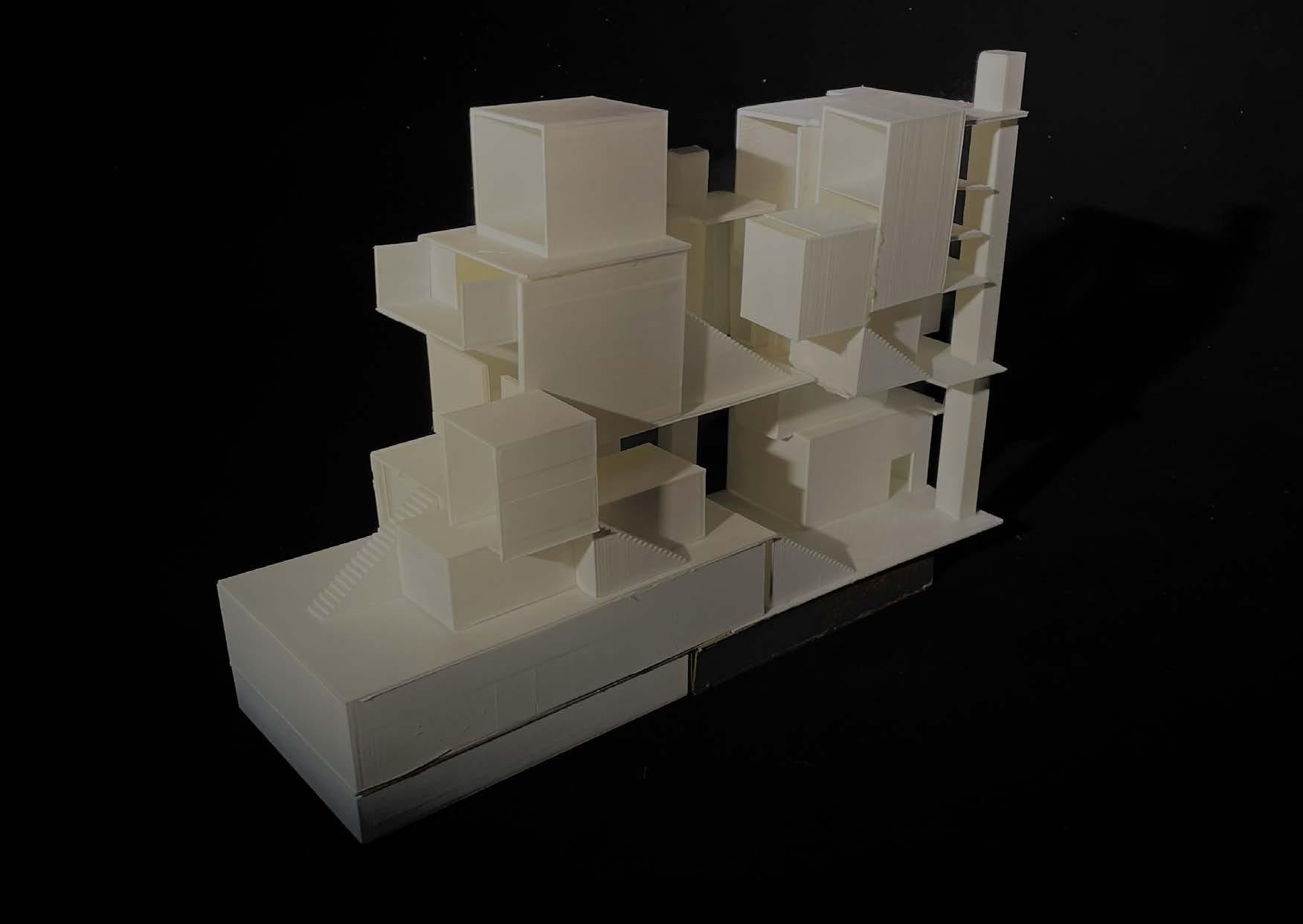
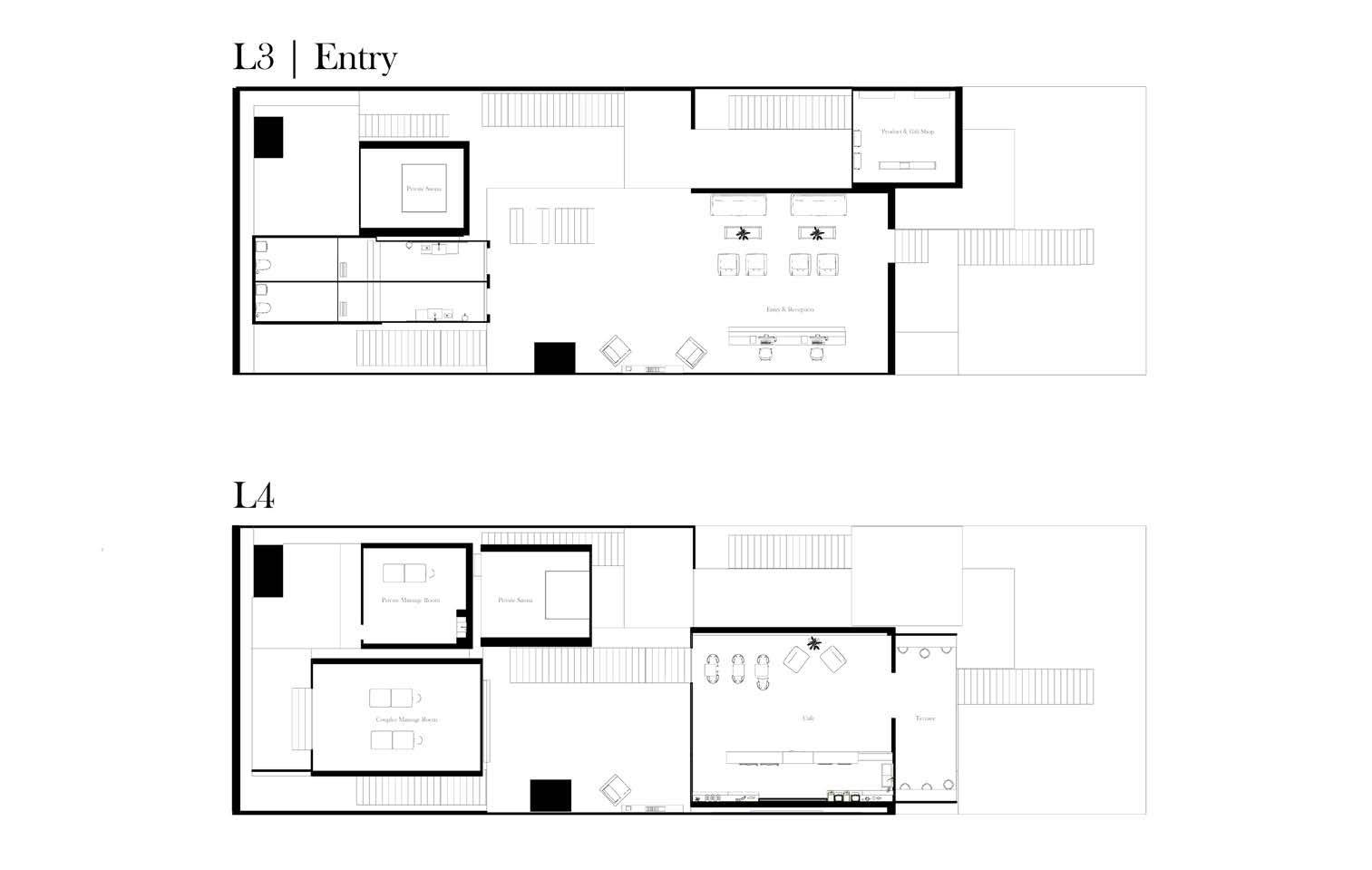
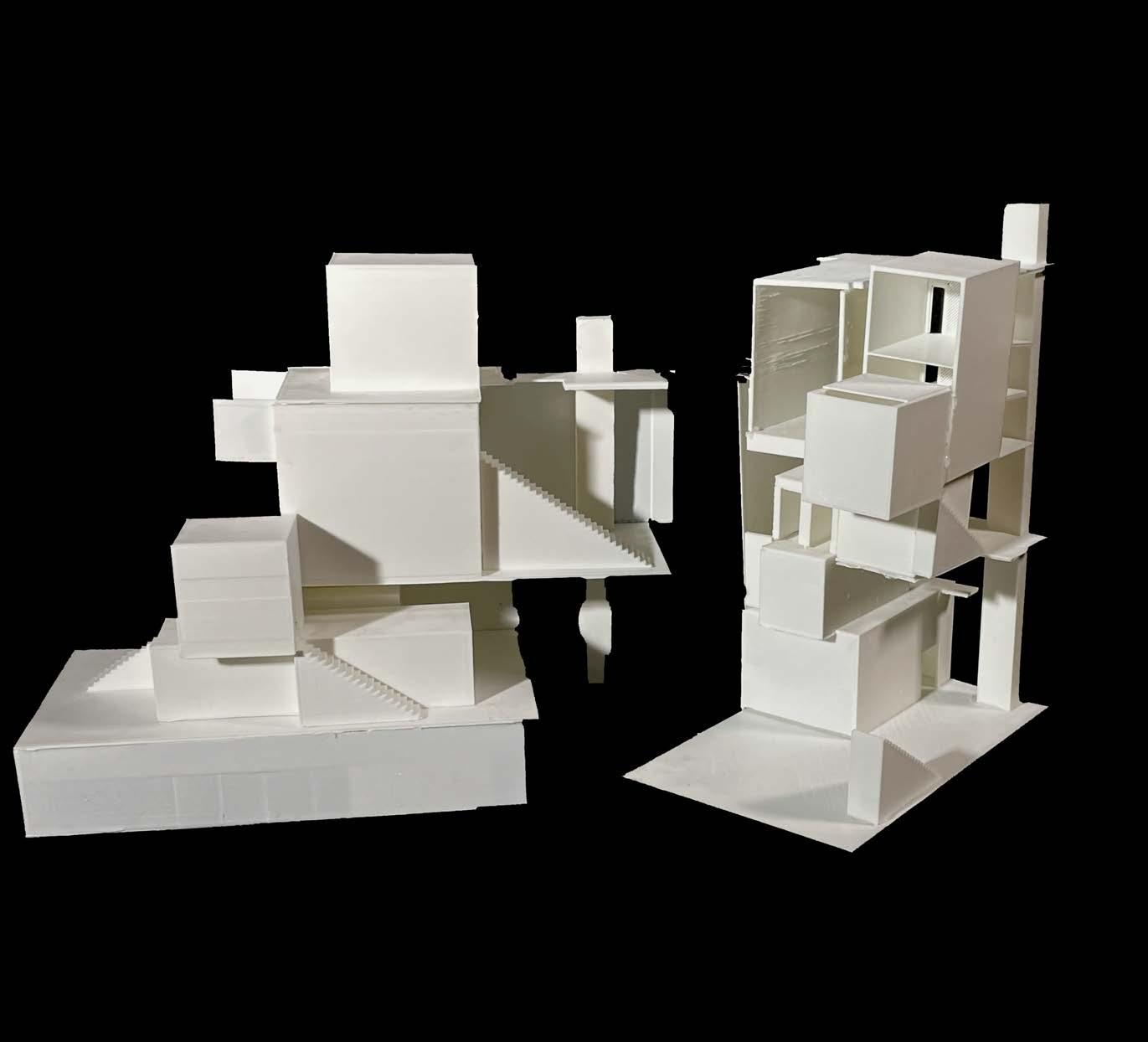
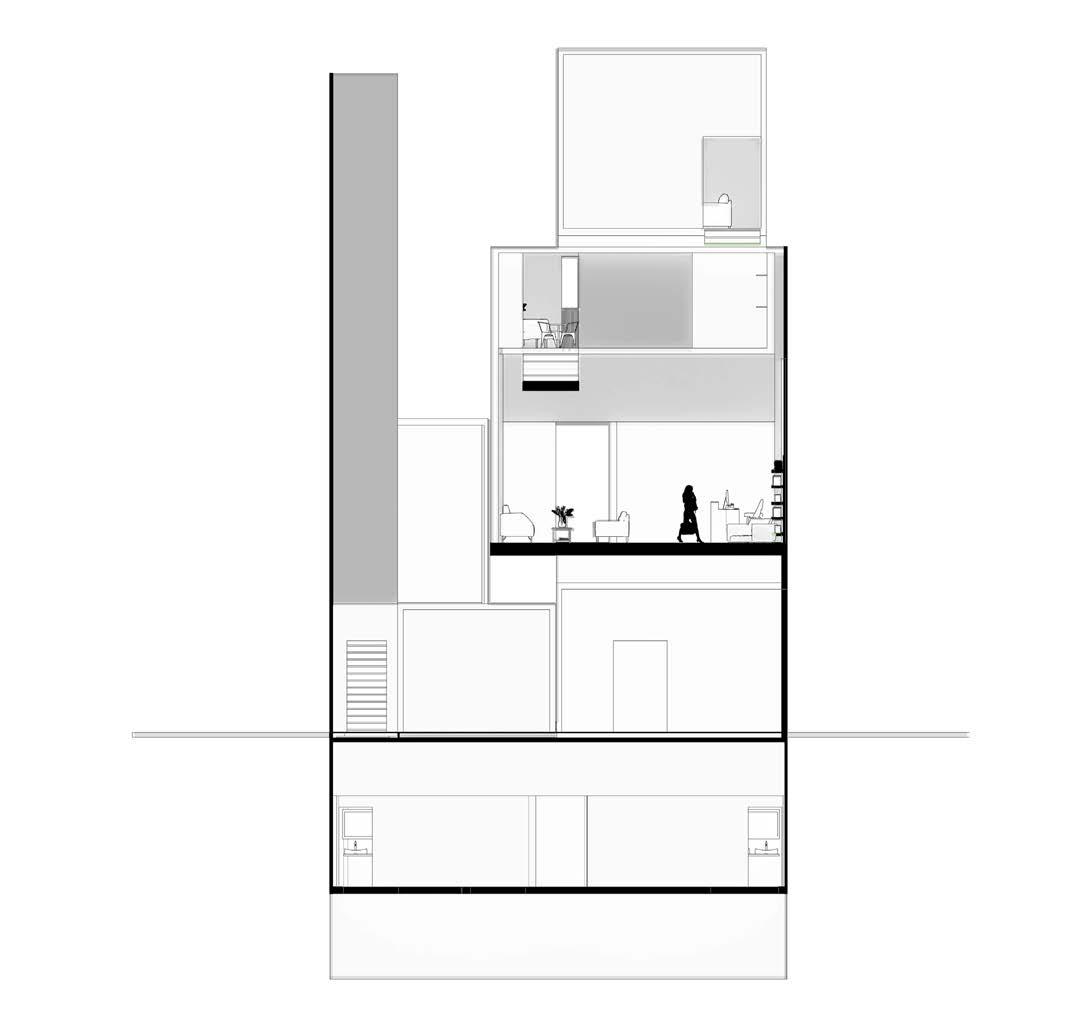
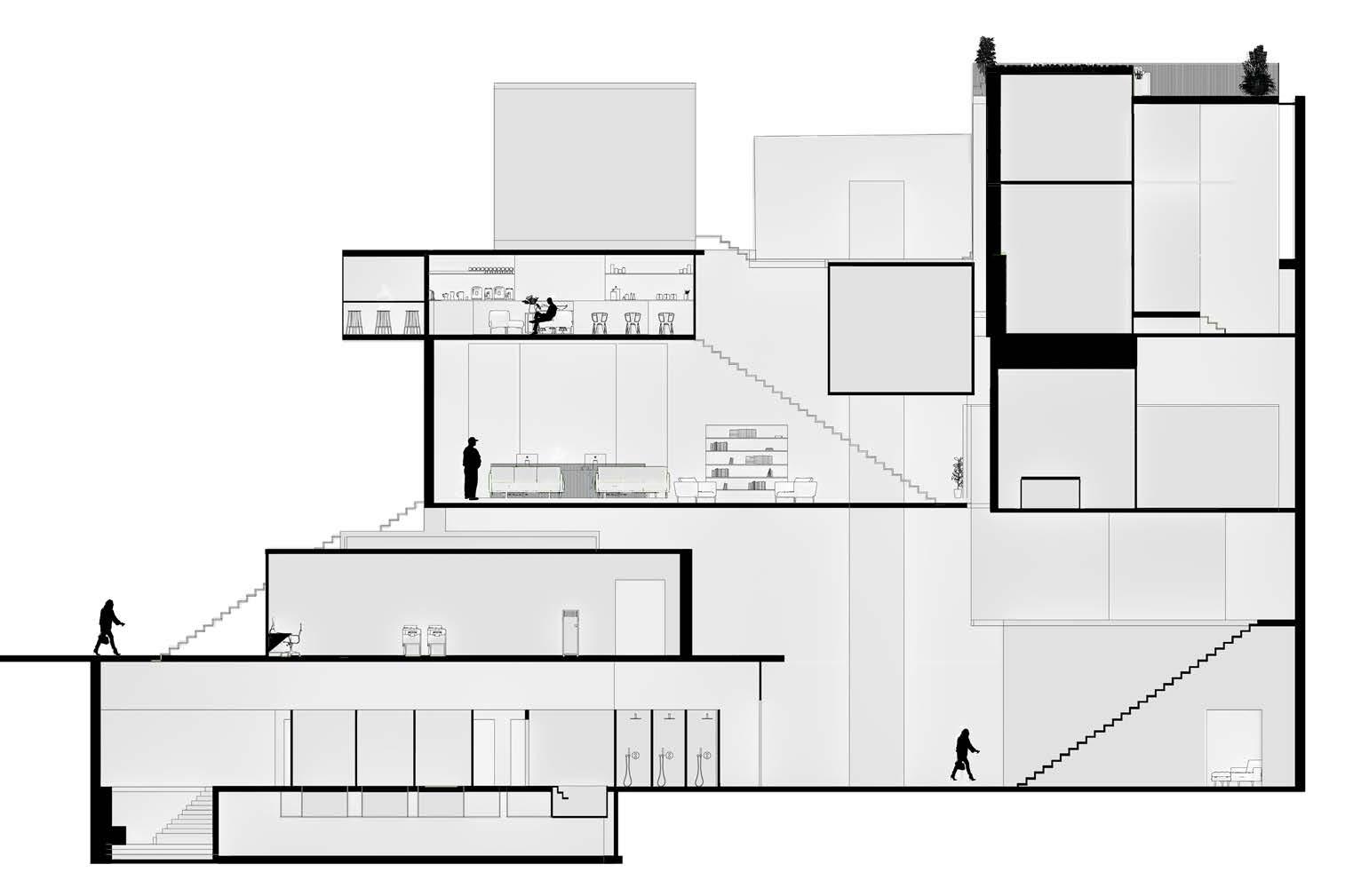
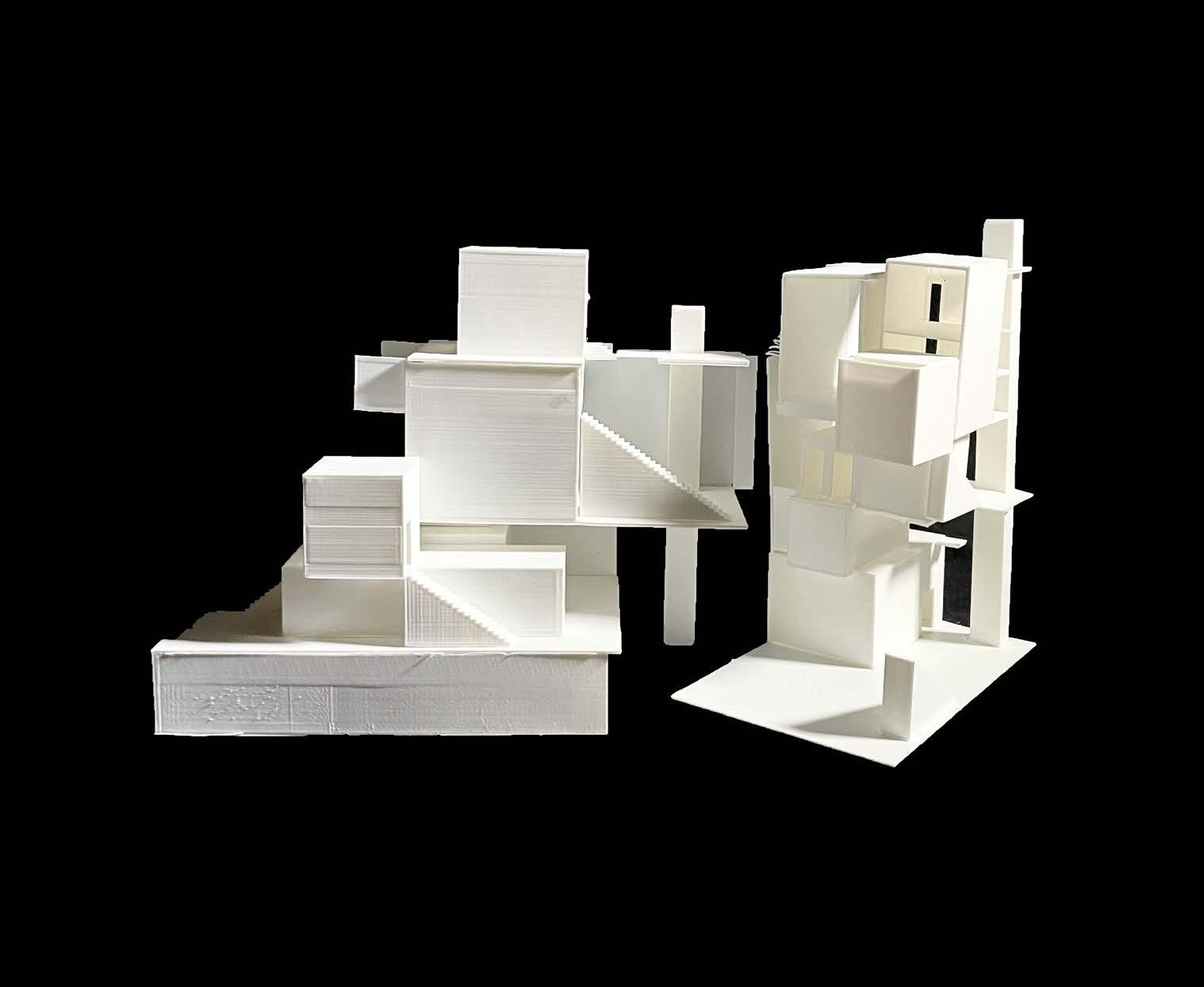
Cloud 18 is a luxury spa in downtown Knoxville defined by 18 distinct volumes that inspire exploration and connection throughout the space. Serving both functional and aesthetic purposes, these volumes create a dynamic interplay between open and enclosed areas, producing moments of depth and dimension that give the building a floating, light appearance from the street. By blending innovative spatial design with practical program needs, the project redefines urban luxury; its varied configurations encourage discovery and engagement, while the nontraditional form establishes Cloud 18 as a striking architectural statement and a new standard for upscale urban experiences in Knoxville.

LinkedIn www.linkedin.com/in/hannahkirby2525
Instagram www.instagram.com/hannahkirbyarch/
Website www.hannahkirbyarch.myportfolio.com
Issuu https://issuu.com/hannahkirbyportfolio