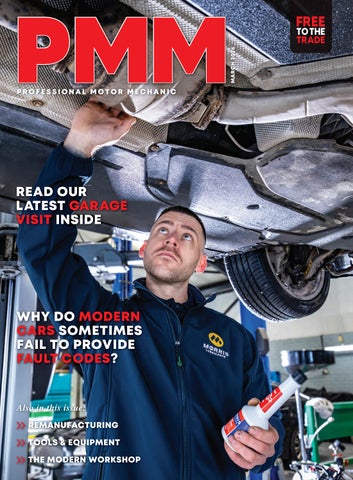
Professional Motor Mechanic March 2026

Page 1


Find

Scan the

EDITOR’S PICKS

Welcome to the March issue of Professional Motor Mechanic! In this issue, we visit Comma Oil, who have been mixing oil in the UK for over 60 years now. We had a great time visiting their facilities and learning about how quality oil is produced and distributed to garages. Turn to page 42 for that. We’ve been back visiting garages, including PW Auto Repairs in Newark, where we spoke to director Diana about what it takes to keep your customer base loyal and happy – that’s on page 24. Lastly, Autotech Recruit’s new CEO, Simon King, writes a brilliant piece on why 2026 is the time to act on the skills gap, find that on page 26. Enjoy the issue!

Take a walk with us through the Comma Oil mixing facility in Gravesend, turn to page 42 for more.

The most expensive car part sold on eBay last year was an aluminium Jaguar E-Type bonnet. Can you guess how much it cost? Turn to page 7 to find out!

Seven out of 10 garages believe drivers are likely to put off essential repairs this year.

According to the SMMT, the UK is now registering 2m new cars each year, a quarter of which are fully electric.

According to the IMI, the aftermarket contributes over £21 billion annually to the UK economy.

Illegal imports of harmful refrigerants are on the rise throughout Europe.

Editor KIERAN NEE

Digital Manager

KELLY NEWSTEAD

Group Manager

ALEX DILLEIGH

Senior Account Manager

MATTHEW BOASE

Magazine Designer

GEMMA WATSON

Group Production Manager

CAROL PADGETT

Production Assistant

CLAIRE SWENDELL

Distribution Manager

KARL CLARK

Subscriptions

PROFESSIONAL MOTOR MECHANIC is a business magazine for firms and individuals involved in all aspects of the motor trade. It is published eleven times a year and is available nationally FREE to the trade through leading motor factors. It is also available through the post at a cost of £30.

EUROPE and OVERSEAS

UK £30 post paid

Air mail £99 post paid

Europe £70 post paid

Printed by PCP Telford

Published by

HAMERVILLE MEDIA GROUP

Regal House, Regal Way, Watford, Herts, WD24 4YF.

Tel: Watford (01923) 237799

Fax: (01923) 246901

E-mail: pmm@hamerville.co.uk

Sales enquiries: pmmsales@hamerville.co.uk

Website: www.pmmonline.co.uk

Copyright © 2026

UNWANTED UPDATES

In politics, there is a concept known as the Overton Window, named after Joseph Overton, the political scientist who first verbalised what is, on the face of it, a rather obvious concept. Essentially, the Overton Window is the range of policies and ideas that the general public is ready for at any given moment. This is what informs political parties when they decide six months before a general election on what they really stand for. You could argue that each party these days is not so much looking through the Overton Window as simply looking at its own reflection in that window. In any case, I was reminded of the concept when I read this week that driverless taxis are to be rolled out in the capital before the end of this year. We are used to reading about driverless taxis being trialled in places like San Francisco – unreal places where every second person is an NFT-owning tech entrepreneur. Anyone who has engaged with social media over the past two years will also have seen many horror stories of driverless taxis holding their passengers hostage or taking increasingly erratic decisions. The latest “unforeseen” event involved a power cut which immediately shut down all the driverless taxis in the area in one go, resulting in videos online of drivers having to swerve around seemingly dead cars like an obstacle course. It brought to mind seeing the poor souls who have fallen victim to the fentanyl epidemic, stopped dead in their tracks along the street like memorial statues, another point of pride of that wonderful experiment gone wrong across the pond. Closer to home, you could compare the roads littered with stationary taxis to the streets of all major UK cities, now blighted with the white and green detritus of discarded Lime bikes.

The point is, whilst this madness has been rumbling on in America, no one has seriously broached the idea of introducing it to the UK. And now, unbeknownst to all of us, it’s almost here, coming to the city where 5,000 cyclists are hit by cars every year. The city where road signs change overnight on an almost quarterly basis, where Uber drivers pull U-turns as casually as bus drivers swing out into flowing traffic. The city where tourists, families and businessmen jostle for the same metre and a half of pavement, inevitably resulting in someone stepping out into the road momentarily. London is a maze, a city of medieval streets congested with cameras, road works, delivery e-bike riders and entitled cab drivers – it requires not merely diligence and awareness, but an understanding of behaviour, of how people think (or not) when they drive. Can you teach a driverless car to watch out for the Prius three cars ahead or to keep an eye on the white Audi two cars behind you who keeps edging out to see whether the miraculous Audi-lane is clear yet: you know the one, it goes from Harrow to Mayfair in twenty minutes and is hidden from speed cameras the entire way.

Whilst politicians spend all their time debating immigration, the real issues that affect most people get swept under the carpet: minor, local issues, we’re told. It makes you wonder whether the Overton Window has any meaning left at all, or whether, like the electric window on a malfunctioning driverless taxi, it’s simply shut for good, trapping us inside.

KieranNee Editor

JOIN

PMM NEWS

Nine out of ten garages to struggle with costs this year

The UK’s service and repair sector is set to face a convergence of challenges this year, according to The Motor Ombudsman’s latest annual survey of independent garages and franchise dealer workshops.

The Ombudsman study, which provides a yearly ‘gauge of business sentiment’, has revealed that rising operational costs, taxes and bills are set to pose the biggest obstacle for over nine in ten (92 per cent) vehicle repairers during 2026 – a slight two-percentage point increase versus the figure for the same study conducted ahead of 2025. Coupled with the recent rise in National Insurance employer contributions, vehicle repairers are set to be impacted by the arrival of added expense this year, such as higher minimum wages, a revaluation of business rates, and greater standing charges for energy use.

The research equally showed nearly seven in ten businesses forecasting that fewer consumers will be both unable to afford routine maintenance, such as servicing (69 per cent) and put off vital work to their cars in the coming months in a bid to save money (68 per cent), as households themselves grapple with bills that have once again increased with the start of the new year.

This potential drop in footfall may call for businesses to look at diversifying income streams to futureproof revenue in 2026 and

“Coupled with the recent rise in National Insurance employer contributions, vehicle repairers are set to be impacted by the arrival of added expense this year, such as higher minimum wages, a revaluation

of business rates, and greater standing charges for energy use.”

drive further efficiencies in the way that they work, such as through using Artificial Intelligence. Similarly, making investments in new technology, for example, in relation to the

maintenance of Advanced Driving Assistance Systems (ADAS) and electric vehicles (EVs), could also serve as an important point of differentiation from competitors.

Furthermore, just over two-thirds of businesses questioned (68 per cent) stated that they will face rising parts prices this year to fix vehicles. Although the outlook is positive, in that inflation is set to ease throughout 2026 according to forecasts, around half of respondents (55 per cent) nevertheless stated that not passing on higher costs to consumers when handing over a bill, posed an added obstacle for their business, when it comes to both retaining existing loyal customers and attracting new ones.

Despite a trading environment that will bring a myriad of obstacles for repairers during 2026, there are nevertheless some encouraging takeaways from the research. For example, 29 per cent of respondents explained that they intend to upgrade their premises to create an improved service and repair experience for customers, whilst about a fifth (21 per cent) plan to invest in EV-specific learning initiatives to upskill their workforce and attend training courses and webinars to further drive-up operational standards.

For more information

WWW.RDR.LINK/ACC001

ELTA Automotive acquires Cooling Components

The acquisition marks a further milestone in ELTA’s continued growth strategy and reinforces its commitment to investing in strong, specialist businesses serving the independent automotive aftermarket.

Based in Tamworth, neighbouring ELTA’s Coleshill headquarters, Cooling Components Limited is a well-established and highly respected specialist in automotive cooling systems. The business is widely recognised for its Serck Automotive

brand, a trusted name in automotive cooling and thermal management.

Cooling Components will continue to operate from its Tamworth warehouse, with all day-to-day operations remaining unchanged. The business is successful and well run, making the acquisition a rare opportunity to bring a company in excellent shape into the ELTA group.

ELTA Automotive director Ian Hallam, commented: “Cooling Components is a strong,

business with an excellent reputation and deep technical expertise. Cooling and thermal management are vital growth areas for the aftermarket as vehicle technology continues to evolve. We are delighted that Paul will continue to lead the business and that operations will remain in Tamworth, preserving the specialist focus customers value.”

For more information on Elta WWW.RDR.LINK/ACC002

FOR UP-TO-DATE NEWS, SIGN UP FOR OUR WEEKLY E-NEWSLETTER. SIMPLY SCAN THE QR CODE

Most expensive parts sold on eBay revealed

eBay has revealed the most expensive parts and accessories sold in 2025, including high-end performance engines, vintage bodywork and premium brake sets.

Last year, the priciest part or accessory sold on eBay in the UK was an aluminium Jaguar E-Type bonnet, which was purchased for £18,564. The instantly recognisable E-Type bonnet surpassed the most expensive part sold on eBay in the UK in 2024 – an Audi R8 5.2-litre V10 engine that sold for £16,567.

Second place in 2025 was more bodywork, a complete Ford Transit Custom front-end (£17,180), followed by a complete BMW

M5 4.4-litre V8 petrol engine (£17,048).

High-end engines made up seven of the top 10. A 5.7-litre V12 engine from a Ferrari 612 Scaglietti featured in fourth place (£14,851), with a remanufactured Toyota Landcruiser Amazon 4.5-litre diesel engine (£13,112), a Porsche 911 Targa 4S 3.0-litre engine (£12,995), a 4.4-litre Range Rover Vogue engine (£12,487), and two 4.0-litre engines for Audi RS6s (£12,483 and £12,407) completing an eclectic ensemble of engines.

For more information

WWW.RDR.LINK/ACC003

Car theft down, except for pick-ups

QuestGates’ latest research explores the factors behind the recent 12.57 per cent decrease in car thefts.

Analysis of the DVLA lost or stolen dataset for the first eight months of 2025, compared to the same period a year earlier, reveals the headline stolen and recovered figures, the current most stolen makes and models, and regional hotspots.

Philip Swift, technical director at QuestGates, said: “The double digit decrease in car thefts is clearly a major positive for policyholders and insurers alike. The Ford Fiesta was by far the most stolen model in

both years, frequently targeted for parts due to their popularity. Overall, less of each body type were stolen with one exception; pick-up thefts were up 9.48 per cent.

“Claims involving cars recovered quickly, within seven days, are increasingly rare and the fact remains that six out of 10 stolen cars will probably never be seen again. While 1,430 less cars were successfully recovered, there was good news in the percentage recovered increase, up 2.02 per cent.

For more information WWW.RDR.LINK/ACC004

26 %

of drivers have fallen victim to vehicle crime such as theft or vandalism in the past 12 months, according to new RAC research.

£

134 M

The amount of retail work booked through BookMyGarage in 2025, with bookings up 39 per cent compared to 2024.

1.7 M

New cars were sold between January and Novemer last year – a 3.4 per cent increase on the year before, according to GiPA.

TROUBLESHOOTER

No start, no fault codes: What’s going on?

PMM ’s indignant investigator Ben Johnson explores why many modern cars sometimes give up the ghost, without even having the decency to explain why!

Modern cars are rubbish at failing properly. They no longer expire with drama or dignity. There is no bang, no puff of smoke, no heroic mechanical sacrifice. That sort of thing belonged to an era when machines were honest. Today’s car does something far worse. It simply decides not to do something such as start. You press the button and nothing happens. No crank, no click, no warning message and, very often, no fault codes. The vehicle has not broken down in any traditional sense. It has just sulked. This is one of the great frustrations of modern diagnostics. We have more computing power in a door module than the entire Apollo programme, yet the car cannot be bothered to tell you why it will not

operate. The system is alive, the network wakes up, modules chatter away happily, and the scan tool reports that everything is absolutely fine. And yet the engine remains stubbornly motionless. It is a perfect example of how modern vehicles have become very clever at making decisions, and utterly hopeless at explaining them.

The reason for this behaviour lies in how modern systems are designed. Many control

“Modern vehicles have become very clever at making decisions, and utterly hopeless at explaining them.”

units are no longer looking for faults at all. They are waiting for confirmation. A digital handshake from somewhere else on the network to say that all the required conditions have been met. If that confirmation never arrives, the system does nothing. Because nothing has technically failed, no diagnostic trouble code is stored. From the vehicle’s perspective, everything is working exactly as intended. From the technician’s perspective, the car is an expensive ornament that has chosen to waste an afternoon.

This often presents itself in a familiar pattern. A no-start complaint arrives. The battery tests healthy. The starter motor operates when tested directly. Powers and grounds appear present. The immobiliser

- A “cheesed off” mechanic captured vividly ten minutes prior to quitting the trade and changing careers to one that involves far less stress - we’ve all been there (note: not Ben Johnson!)
“As systems become more complex and fault strategies more opaque, comparing two vehicles built to the same specification and running the same software can reveal discrepancies that no fault code ever will.”

behaves normally. The network wakes up cleanly. The scan tool reports a clean bill of health (Fig.2). No faults anywhere. Yet the engine refuses to turn. The missing ingredient is not a broken component, but missing information. Somewhere in the system, a control unit is waiting for a specific signal that never arrives. It might be a safety interlock confirmation, a transmission status message, or a plausibility signal that has quietly disappeared because an input elsewhere has dropped out. Nothing is broken enough to complain, so the vehicle simply waits.

Breaking the silence

This behaviour is bad enough when the car stays silent. What makes modern cars truly infuriating is when they decide to lie. And they do lie. Confidently. With charts, graphs and fault descriptions that look authoritative enough to waste hours of your life.

A particularly good example came from a vehicle that had tormented me for some time that appeared to be reporting a short circuit on a 12-volt power supply feeding a LIN

- No fault codes but still faulty – why? - A rogue voltage but from where? A bad ground at the DME of course

distribution module. The diagnostic fault code looked convincing. The live data trace showed unstable voltage behaviour. The fault memory supported the theory, reporting a short circuit or line disconnection on the emergency operation feed. Everything pointed squarely at a supply-side problem. This was not vague or ambiguous. It was

specific, confident and wrong. That job was solved purely by looking at live data and comparing it to another car with identical architecture – it was here that a floating voltage was found. What made that job even more unusual was that the fault code would log only upon turning off the engine. Consequently, erasing the fault codes involves a key on off procedure which, somewhat ironically, causes the fault code to be logged ad-infinitum since the floating voltage hangs after the key is left off and it is during this time period that that fault was logged. You will never erase that fault in a month of Sundays until you get a handle on what’s going on.

From the system’s point of view, voltage existed where it should not have been, so a logical conclusion was drawn. From the diagnostic software’s point of view, this was sufficient evidence to flag a power supply fault. From the technician’s point of view, the vehicle was not merely unhelpful, it was actively misleading. The fault description was plausible, tidy and confidently incorrect. The real issue was not a failed power feed, but a missing zero volt reference point. The system was alive, still communicating and still making decisions, but it was doing so until such a point that the real issue (the DME losing voltage due to bad ground) made itself known resulting in a total shutdown of the powertrain once a voltage minimum threshold of 9 volts was reached.

The real fault had nothing to do with a shorted power supply at all. The underlying issue was a poor ground reference elsewhere in the system. That bad ground allowed a floating voltage to feed back along the 12volt supply line from one control unit to another. What made this especially misleading was the internal design of the receiving module. Although the relevant 12-

“Trusting the fault description without questioning the logic behind it can waste more time than having no fault code at all.”

volt supplies are sent on separate pins and wires, they were internally connected at the BDC. The result was a back-fed voltage path that convincingly impersonated a supply fault, while the actual supply was perfectly healthy.

Misdirection

This is where modern diagnostics becomes genuinely treacherous. Not only do modern cars sometimes refuse to tell you why they will not operate, they occasionally present fault information that looks credible while steering you directly away from the real cause. The data is not random and it is not imaginary, but it is framed by assumptions made inside the software that do not always reflect what is happening electrically in the real world. Trusting the fault description without questioning the logic behind it can waste more time than having no fault code at all and increasingly there is little tech support or real-world knowhow to guide techs into thinking differently. Still, it seems, we have these outdated and frankly ludicrous test plans that seem to have been thrown together by the work experience lad at the R+D centre while the software engineers went out to lunch.

- Partially true but not quite. It saw a voltage but only a floater from a bad ground. For this the fix was to replace the LIN power distribution box. No further guided troubleshooting help was available. Of course, the issue was nothing to do with this component or even the wire powering it

- A healthy zero volts means no fault code will be logged

Increasingly, one of the most effective diagnostic tools in the modern workshop is not a scan function at all, but another identical car (Fig.6). As systems become more complex and fault strategies more opaque, comparing two vehicles built to the same specification and running the same software can reveal discrepancies that no fault code ever will. Live data that appears plausible in isolation often becomes suspicious when placed side by side with a known good example. A status flag that never quite changes state, a voltage value that hovers slightly outside normal behaviour, or a network message that arrives late rather than not at all can be invisible when viewed on its own, yet glaringly obvious when compared directly against a twin vehicle. This type of comparative diagnosis is becoming increasingly common not because technicians lack skill or information, but because modern vehicles are now designed to tolerate abnormal behaviour silently. When the system no longer tells you what it is missing, the only remaining option is to ask a second, identical car how it behaves when everything is actually right.

Guided diagnostics are of little help in these situations. They work very well when something has failed. They are almost useless when something has simply not happened. If the system never receives the

confirmation it expects, there is no failure for the software to guide you toward. The scan tool insists that everything is fine, the customer insists that the car does not work, and both are technically correct. This is not a diagnostic error. It is a design problem.

Modern diagnostics is no longer about finding what is broken. It is about understanding what the system expects to see before it allows anything to happen. It requires understanding system logic rather than just

wiring, networks rather than isolated circuits, and reference points rather than raw voltage values. It requires thinking, which is awkward in an industry increasingly built around screens that promise answers at the press of a button. So the next time a modern car refuses to start, shows no fault codes and appears electrically perfect, remember this. It is not confused. It is not broken. It is waiting. And every now and then, just to make things interesting, it is lying about why.

- Still cheesed off

- Increasingly one finds oneself having to find an identical model of vehicle from which to compare live data in the hope that one might spot an anomaly.

BEST PRACTICE

The importance of A/C compressors and condensers in vehicle air conditioning systems

Valeo is keeping professional workshops ahead of the game when it comes to thermal management.

The compressor is responsible for circulating refrigerant through the air conditioning system. It compresses low-pressure refrigerant gas into a high-pressure, hightemperature state before sending it to the condenser. If the compressor fails, the entire A/C system loses its ability to cool, leading to discomfort for the driver and potential damage to other components.

The A/C Condenser: heat dissipation for efficient cooling

The condenser works like a radiator, cooling down the high-temperature refrigerant gas and converting it into a liquid state. It plays a crucial role in regulating the system’s temperature and overall efficiency. If the condenser is clogged or leaking, it can lead to overheating, poor cooling performance, and increased strain on the compressor.

Common issues

Compressor failures – Can result from refrigerant leaks, contamination, or lack of lubrication. Symptoms include unusual noises, reduced cooling, or complete system failure.

Condenser malfunctions – Often caused by debris buildup, corrosion, or leaks. Signs include overheating, weak airflow, or reduced cooling efficiency.

Refrigerant cycle disruptions – If either component is compromised, the entire A/C system becomes inefficient, leading to increased energy consumption and potential vehicle overheating.

Regular maintenance of compressors and condensers is essential to:

Ensure A/C efficiency: Wellmaintained components improve cooling performance and fuel efficiency.

Prevent costly repairs: Early detection of wear and leaks helps avoid major system failures.

Extend component lifespan: Keeping the system clean and well-lubricated reduces strain on the A/C system.

Valeo releases free EV air conditioning training

Valeo Service UK has released a new free training module on its Valeo Tech Academy platform, offering technicians a clear and accessible introduction to the key principles behind battery electric vehicle (BEV) air conditioning systems.

Temperature, solar, and humidity sensors feed data into the electronic control unit, which works with the inverter to modulate compressor speed and protect against voltage spikes and overheating. Understanding how these systems work, and how to diagnose faults, is now essential for workshops.

Presented by Valeo technical trainer Stewart Lynch, the session explores the evolving role of vehicle air conditioning systems, highlighting not just their impact on cabin comfort but also their critical function in battery thermal management.

“When it comes to EVs, air conditioning isn’t just about keeping the cabin cool,” Stewart explains. “It plays a key role in regulating battery temperature, which is essential for performance, safety and longevity.”

The course breaks down the core differences in compressor technology. While internal combustion engine vehicles use belt-driven compressors lubricated with PAG oil, BEVs rely on electrically driven compressors powered by the high-voltage battery. These offer greater precision and energy efficiency, thanks to sensor-driven input and inverter-based control.

Available on Valeo Tech Academy, the new module forms part of a growing library of free and IMI-certified training. The platform covers a wide range of topics from traditional maintenance and repair to hybrid and electric vehicle systems, as well as advanced driver assistance systems (ADAS).

Courses feature interactive, gamified content designed to make learning more engaging and effective, with pre- and postassessments enabling technicians to monitor their progress and measure skill development.

Technicians can also find additional resources on the Valeo Tech Assist website, including fitting guides and technical bulletins – all available at no cost. Plus, those fitting Valeo products can scan barcodes to earn rewards through the Valeo Specialist Club, redeemable in the Valeo online shop.

HOW TO Replace the timing belt on a 2011 Ford Kuga

Febi’s technical team outlines a recent timing belt replacement on a Ford Kuga.

The routine replacement of the timing belt is an essential procedure in order to avoid failure of the belt and serious engine damage. However, replacement intervals have been considerably extended over the years due to improvements in belt material and system design. As a result, this routine replacement should be considered as a complete service of the engine belt drive system, not just a replacement of the timing belt itself.

The featured vehicle in this article is a 2011 Ford Kuga, fitted with a 2-litre common rail diesel engine; a PSA group derived engine used in a variety of Ford, Peugeot and Citroen models (Fig.1). There is also a 2.2 litre variant of this engine that is used by many other vehicle manufacturers which shares several of the features as this example.

Subject to operating conditions, the interval for the timing belt replacement on this Ford Kuga model is every 200,000 km (125,500 miles) or 120 months depending on whichever occurs first. However, this interval should be considered as the maximum range and a key reason as to why the complete belt drive system requires inspecting and replacing as necessary. Before starting any timing belt replacement, it is essential that

THE VEHICLE

Make Ford Model Kuga Year 2011

Engine 2l Common Rail Diesel

the vehicle manufacturer’s repair procedures are precisely followed. The engine should be at an ambient temperature and any special tools should be acquired in advance.

Replacement procedure

With the vehicle in the workshop, first note down the radio code. Next, open the bonnet and disconnect the battery. With the vehicle now raised, remove the lower engine cover and drain the coolant from the radiator.

Note: It is essential that the starter motor is removed in order to install the flywheellocking tool and timing pin on this engine. This is particularly difficult on this model as there is little room to remove the starter motor. First, remove the intercooler pipe that runs under the engine. Then, to make things easier, unbolt the main wiring harness from the alternator and note where the harness is routing for ease of reassembly later on. This

will provide enough flexibility for the starter to be unbolted and then angled so that the harness can be unfastened from the starter motor and subsequently removed. Lower the vehicle and remove the coolant expansion tank to gain access to the engine mount and upper timing belt cover. Supporting the engine, remove the engine mount and upper timing belt cover. Remove the right front wheel and wheel arch liner in order to access and remove the auxiliary drive belt and tensioner. Rotate the crankshaft slowly in a clockwise direction until the camshaft sprocket is at the four o’clock position. Insert the timing alignment pin for the camshaft and crankshaft, followed by the flywheellocking tool, making sure it is fully inserted into the flywheel (Fig.2).

With the engine locked into position, unbolt the crankshaft pulley-retaining bolt. Remove the torsion vibration damper pulley (TVD) and inspect it for any hardening of the rubber surface due to ageing, which eventually results in the failure of the damper (Fig.3)

Following this, remove the magnetic reluctor ring for the crankshaft sensor (Fig.4).

Note: this part is extremely sensitive to any cleaning or handling and may become faulty, leading to an incorrect sensor signal. This results in an engine management malfunction with a crank sensor signal fault being logged as fault code P0336. It is advised that this component, which is part of the TVD pulley set, be changed every time it is removed to save time and possible issues.

Next, remove the crank sensor and the lower timing belt cover, then, slacken the belt tensioner and remove the belt. Following this, remove the tensioner, idler pulley and water pump.

With all engine belt drive system components removed, inspect the products for any underlying faults that need to be rectified before reassembly. The following parts (during this repair) were required: 37460 timing belt kit; 38898 water pump; 40323 auxiliary belt;

39390 auxiliary belt tensioner; 106476 TVD pulley set and coolant. After ensuring all mating surfaces are clean, install the water pump –followed by the timing belt idler and tensioner pulleys. Lastly, fit the timing belt. To fit the timing belt – first, centre the key within the keyway of the crankshaft pulley then fit the belt in a clockwise direction starting with the camshaft pulley. Using an Allen key, adjust the tensioner anti-clockwise until the pointer is in position (Fig.5), then tighten the tensioner nut. Temporarily refit the original TVD pulley then bolt and tighten. Remove the timing pins and flywheel-locking tool and rotate the crankshaft slowly clockwise four times. Reinsert the timing pins and locking tool before rechecking the tensioner. If all timing pins align and the tensioner is set correctly, remove the TVD pulley and refit the lower timing belt cover and crankshaft sensor. Fit the new reluctor ring and TVD pulley set and tighten the new bolt to the manufacturer’s required torque.

Remove the timing pins and flywheellocking tool and then fit the new auxiliary belt and tensioner. Refit all other components in reverse order before refilling the engine with fresh coolant. Reconnect the battery; set the clock, radio and the one-touch window settings. Start the engine and ensure it is running correctly. In addition, check there are no fluid leaks and reset any fault codes logged in any of the electronic control units. Finally, road test the vehicle.

Example of a faulty reluctor using a magnetic

TROUBLESHOOTER

How to identify when an air mass meter has failed

Motaquip reveals some of the techniques required for quick and accurate air mass meter diagnosis.

Air mass meters (AMMs) measure the mass of air entering the engine, providing the ECU with the data it needs to calculate precise fuelling for efficient combustion and low emissions. Using a temperature-controlled platinum sensor, airflow is translated into a signal the ECU can interpret – but what happens when AMMs go wrong? Motaquip shares practical guidance to help technicians diagnose AMM faults quickly and accurately.

When a vehicle arrives with a potential AMMrelated issue, the first step should be an assessment of the engine’s behaviour under different operating conditions. Engines affected by a faulty AMM can run reasonably at idle but hesitate, lack power or vibrate when accelerating. Disconnecting the AMM may even improve driveability, as the ECU swaps default airflow values – but it is a sign that the AMM signal is flawed.

Specific diagnostic trouble codes (DTCs) – while not definitive proof – are a useful guide when they appear frequently. Typical AMM-related DTCs include P0100, P0101, P0102, P0103 and P0104. There are also secondary DTCs, such as P0170/P0171/P0172 (fuel trim or mixture adaptation faults), P2187/P2188 (system too lean or too rich at idle) and P0300-P030x (random or cylinder-specific misfire codes).

Fault code context is important here; relying on DTCs alone may not provide a complete nor correct diagnosis. Airflow plausibility faults, fuel trim limits or mixture adaptation errors can accompany AMM failures – but these codes can be triggered by other components. For this reason, these should be considered alongside live data, like measured air mass, engine load and fuel trim values. Furthermore, analogue AMMs can be checked using a voltmeter (0-5V). On ignition, the output voltage should rise with airflow at idle, increase smoothly as engine revs rise and return to idle values when the engine slows. Many modern vehicles, however, now use digital AMMs, which produce a waveform rather than a voltage. These sensors are sensitive and responsive, but testing requires an oscilloscope for precise measurement.

Knock-on effects

Because symptoms overlap with several other fuel and air delivery faults, accurate diagnosis of a failed AMM, along with a quick replacement, is essential. Not doing so can lead to exacerbated damage, worsening performance and pose hazards.

Incorrect fuel mixture: Wrong air readings can cause lean or rich running, which increases the risk of engine damage and fuel wastage.

Damaged components: The catalytic converter, oxygen sensors and spark plugs are all susceptible to damage in the event of failed AMMs left unreplaced.

Driveability: Faulty AMMs can cause power losses, hesitation in the engine and even stall it. Obviously, this creates hazardous driving conditions.

Engine management problems: Defective AMMs can force the ECU into ‘limp’ mode. This can lead to the real fault being masked, more error codes being generated and, ultimately, making diagnosis and repair harder.

All of these listed issues highlight how AMMs are critical to the smooth running of engine management systems. The consequences of not diagnosing and replacing damaged AMMs can be severe. Accuracy and speed are imperative and Motaquip is confident that the information contained within this article can help bolster technicians’ ability and confidence when faced with this type of job in the future.

Motaquip has a comprehensive range of engine management components, one that is engineered for modern vehicles and tested for performance, reliability and efficiency. Sensory equipment, ignition components and switches and relays are included in a portfolio that benefits from strong European manufacturing.

BEST PRACTICE

Why you should never clean air filters

MANN-FILTER, experts in automotive filtration, explains why you shouldn’t even consider cleaning your customers’ air filters.

The air filter is an often undervalued filter, with the ‘oil and filter’ interim service or perception that the air filter is of secondary importance to the engine commonplace. There are many stories of air filters being cleaned or ‘blown out’ to save time, effort and cost.

Blowing an air filter out with compressed air can look effective (a visible dust cloud), but it can create several real problems –some immediate (filter damage) and some downstream (engine contamination, sensor issues, safety). MANN-FILTER explains the consequences of air filter misuse:

Filter media damage (loss of filtration efficiency)

Compressed air can tear, stretch, or rupture the filter media –especially pleated cellulose/synthetic blends and fine-fibre layers. Think of filter media as overlapping ‘spider webs’ with large holes at the front, gradually decreasing in size throughout the layers, hence systematically blocking smaller and smaller contaminant. Compressed air cleaning can cause:

■ Micro-tears and pinholes: Not always visible, but they create “short-circuits” where particles pass through.

■ Pleat deformation: Pleats can collapse or spread, reducing effective area and

increasing localised ‘pinch points’, which reduces efficiency and can increase restriction later.

■ Delamination (multi-layer media): Fine layers can separate from support layers, degrading performance.

The result? The filter may look clean but will filter worse than before cleaning.

Driving dirt deeper into the media (not actually “cleaning” it)

As mentioned above, many particles are held by a combination of surface capture and depth loading. A strong compressed air jet can:

■ Embed fine dust deeper into the fibre structure.

■ Break up contaminant into smaller particles that are harder to capture later.

■ Redistribute dust unevenly, creating ‘heavy spots’ on and in the filter.

The result? Temporary reduction in surface dust, but shorter remaining life or premature airflow restriction.

Damage to seals, end caps, and bonding

High-pressure air jets can harm non-media components:

■ Gasket/seal nicks or lifting causing bypass leakage (unfiltered/dirty air around the filter leaking into the engine).

■ End-cap adhesive cracks or separation.

■ Distortion (panel filters) or cartridge filter end-cap loosening.

The result? Even with intact media, you can get dirty air bypassing directly into the engine, which is often more harmful than bypass through damaged media.

Downstream contamination

When you blow from the dirty side (or the clean side without containment), you can aerosolise dust:

■ Dust can settle on the clean side of the housing or intake ducts.

■ On restart, that dust can be ingested downstream.

■ In engines, this can accelerate wear on turbo compressor wheels, cylinders and piston rings.

The result? A “cleaning” step can become a contamination event.

With other known issues (problems with engine sensors and turbochargers for example) and the health risk to the mechanic of rapidly dispelled fine dust (eye damage, breathing-in of harmful substances), is it worth saving your customer a few pounds by taking the cheap option? Change the air filter, don’t try and clean it, the engine will thank you.

BEST PRACTICE

Engine oils for an ageing car parc

The good news for the UK aftermarket is that the car parc is ageing. But along with the increase in work comes the added responsibility to ensure customers’ cars run as smoothly as ever. Here, TotalEnergies outlines how age resistance technology is helping preserve older vehicles.

As the rising cost of living bites, seven out of 10 independent garages and workshops believe that vehicle owners will be less able to afford routine maintenance in the year ahead and are likely to put off essential repairs. Coupled with the fact that the UK’s car parc is ageing fast, it has never been more important to get the ‘basics’ right –including engine oil quality.

According to research conducted by GiPA for TotalEnergies, three quarters of the cars registered in the UK are more than five years old. Meanwhile, last year the RAC Foundation found that the average car was around 10 years old – with GIPA’s analysis suggesting that almost one in two cars on the road will be 10 years old by 2028.

Anti-ageing properties have always been the hallmark of the high-quality oils manufactured by TotalEnergies and these qualities are likely to become even more essential with vehicles being kept on the road for longer and with potentially lower spend on other maintenance.

A look at the tech behind it all

In 2023, the ACEA – which sets the benchmark for lubricant standards in Europe – reintroduced the OM646LA test for certain legacy oil specifications (broadly, those applying to all but the most modern engine

types). This essentially assesses lubricant impact on engine wear – making it a key indicator for how a lubricant product can help protect vehicles against the risks commonly associated with ageing.

Total Energies’ R&D teams have developed Age-Resistance Technology which feature in Quartz engine oil products including Ineo (for vehicles equipped with particulate filters) and 9000 (for vehicles without particulate filters).

When set against ACEA baselines and lubricant standards, Age-Resistance Technology provides:

■ Up to 74 per cent less total engine wear

■ Up to 18 per cent improved protection against sludge build up

■ Up to 6x less cam wear

■ Up to 30 per cent reduction in hightemperature piston deposits

In addition, compared to the API SN test baseline, Age-Resistance Technology has been shown to achieve a 3x improvement in resistance to oil oxidation.

Taken together, selecting a high quality lubricant can help keep vehicles on the road and performing at their optimum capacity for longer and more efficiently. By ensuring deposits and sludge are removed from engines and friction between mechanical parts is reduced, lubricants prevent the engine

“Selecting a high quality lubricant can help keep vehicles on the road and performing at their optimum capacity for longer and more efficiently.”

from clogging and becoming damaged. Effective lubrication using high quality products ensures parts last longer, helping the engine perform better and extending the vehicle’s lifespan – all of which adds up to a cost-effective yet powerful intervention to help to reduce the cost of motoring for drivers.

As drivers increasingly demand more from their vehicles and keep them for longer, with Age-Resistance Technology at its heart the Quartz range from TotalEnergies is built to help mechanics respond to the requirements of modern motoring.

Your garage: your answers

Finding the right balance

You may have caught our recent news article about one Lincolnshire garage’s struggles to get their apprentice enrolled at college (spoiler: they succeeded), or you may have caught Director Diana Whetton’s talk at last year’s The Blend event, and if so, you will know that PW Auto Repairs is a garage which goes above and beyond when it comes to providing a great service to their customers. We visited the garage and had a chat with Diana about the balancing act of building a loyal customer base.

THE ESSENTIALS

Name: PW Auto Repairs

Location: Newark, Lincolnshire

The team: Diana and Paul Whetton, owners

Callum Cook, vehicle technician

Josh White, vehicle technician

Ted Baumber, apprentice vehicle technician (year 3)

Lewis Monks, apprentice vehicle technician (year 1)

Aiden Johnson, service advisor

Craig Lear, service advisor

You’ve had some difficulties securing a site for your garage, why is this a problem for many garages, not just yours?

The independent aftermarket suffers from a bad reputation, often they’re not the best managed places in the world. A lot of it comes down to Phil Mitchell-type characters, wide boys with an attitude. Because of that image, people sometimes associate garages with crime. And elsewhere on TV, let’s just say that garages are never very modern or caring on TV and I think that’s a misunderstanding.

I do think, however, that the independent garage’s ability to change people's minds is changing. I think when you look at garages that have put forward

case studies or a business plan to a landlord and said “this is what our garage is going to be like. This is what we are. This is the plan. This is what we're going to do financially. This is what the floor is going to look like. This is what the walls are going to look like. This is the customer waiting area. That's what we're going to do”, then you meet the landlord halfway and they say, “oh, that’s not so bad, we can do that”.

Tell us about the new site

We have seven bays, across two units. Across the road we do servicing, fast fit, tyres, brakes, suspension, engine work, clutches, whereas over here, where we are now, is for ADAS and diagnostic work. Three over here, four over there. Over here, we need peace and quiet. We do the work here where you don’t want customers popping in the whole time, standing at the workshop door and looking over your shoulder, asking if it’s done yet. When it’s over here, you can just say it’s being dealt with and leave it at that.

Customers can go and interrupt the service advisors all day long and they're happy to answer their questions but the

customers shouldn’t just walk up to the workshop door and pull the mechanic away from the job. Like in here now you wouldn't know we're in middle of an industrial estate – you could be anywhere. It’s our secret!

How do you build up a solid customer base?

I think building a customer base is about building a community, it’s about your reputation and the trust you earn, eventually people start referring their family members. And it goes both ways, they know us but we also know them. One of our technicians Aidan has a fantastic memory for reg numbers, so when a customer walks in, he'll go, “yep, I know that reg, I know about that”. It's just built up over the past 10 years and there's a good mix of customers between the elderly customers that we take care of right through to the small business and fleet customers. Before we got Garage Hive I had everyone's phone number on my phone, had everyone's name, I knew everyone's style.

Is customer behaviour changing?

What we've found is increasingly, customers want a price and they want it now. Customers have got used to the fact that they can get a price from everywhere else through Google. But my biggest bugbear in the industry is there is no such

“I do think, however, that the independent garage’s ability to change people’s minds is changing.”

thing as a fixed, no interim service. No full service is the same, everyone does it differently. So how can we provide an immediate price? What we've done is go and do a bit of market research and thought, who do we respect in the industry and what are they doing?

Ultimately, the ideal customer is one that comes in and says, “this is the history of my car, tell me what I need” and we can just give our recommendation. That allows us to be able to give them the price as best we can in advance. It can also be a problem, though, if a customer says, “just do whatever you have to and it'll be fine, don’t bother me. I'll pay it, whatever”, because if you do that, you’re

never 100 per cent sure the work will be confirmed. In fact, there’s only one customer we will do that for, because we can rely on him to never argue about the work that’s been done.

What labour rates do you charge?

In 2019, we were charging £35 an hour for trade, which we did a lot of. I think at that point we were still probably 60 per cent trade and 40 per cent retail. And the retail labour rate was £40 plus VAT. And we didn't have set structured margins or price matrixes. We weren't charging what we should have been charging. We never used to charge for diagnostics, for instance. We just used to figure out what the problem was and try and hope that the customers would pay us enough to do the job once we told them what it was going to be. Then you get the times where they decide against it, and you’ve just wasted three hours doing that whereas again now it's every booking has an initial diagnostics fee for a set process.

And finally, what’s on the radio on a Friday afternoon?

Paul has Kerrang and I'll have, depending on what mood I'm in, an audiobook or a true crime podcast on. With my earphones, in my office. But Kerrang is what everyone else's general default is.

Opinion. Tackling the skills gap in 2026

Turning from talk to action

Talking is no longer enough when it comes to facing the skills gap, so says Simon King, CEO, Autotech Group.

The automotive aftermarket has spent the last decade talking about skills shortages. In 2026, that conversation is no longer enough. The issue is no longer awareness, but risk. Accelerating vehicle technology, tightening legislation and sustained workforce pressure have combined to make capability a defining factor in the sector’s future.

Recent figures from the Society of Motor Manufacturers and Traders (SMMT) show the UK new car market has exceeded two million registrations, with almost one in four new cars now fully electric.

For the aftermarket, the challenge is not electrification in isolation, but the growing complexity across a mixed powertrain vehicle parc. Workshops are now expected to support vehicles equipped with advanced driver assistance systems, connected diagnostics and software-defined architectures, often within the same working day. Expectations around accuracy, safety and compliance are rising accordingly.

From skills shortage to capability gap

Vacancies remain stubbornly high, around 3 per cent, and the workforce continues to age, But the more pressing issue is a widening gap between what modern vehicles require and how prepared the workforce is to support them. Industry data shows that while electrified vehicles are rapidly increasing, fewer than a third of technicians are currently qualified to work safely on EVs, and only a small fraction hold formal ADAS calibration qualifications. Today’s technicians must do far more than diagnose mechanical faults. They are expected to interpret data, calibrate safety-critical systems, operate manufacturer software and navigate evolving regulatory frameworks.

This is not about whether people are

willing to work in the industry; it is about whether training, career pathways and workplace structures reflect the reality of modern automotive work as the pace of change has outstripped many traditional models. This also requires the industry to take a broader view of talent, recognising and retaining neurodiverse individuals whose strengths in pattern recognition, focus and logical problem-solving align naturally with the increasingly data-driven, software-led nature of modern vehicles.

Advances in AI-supported diagnostics, connected platforms and predictive maintenance are reshaping workshop operations. When implemented effectively and supported by the right skills, these technologies improve efficiency, accuracy and safety. Moreover, this also means rethinking how work is carried out, from reducing manual admin through voice-totext reporting, to using digital workflows that allow technicians to focus on technical tasks rather than paperwork.

As systems evolve, workshops must also develop the capability to integrate new software, manage data confidently and adapt workflows as vehicles become more connected and software defined. The ability to draw on remote expertise, share diagnostic insight securely and collaborate

beyond the physical workshop is becoming part of day-to-day operations, particularly as skills remain stretched.

In a safety-critical industry, human judgement remains central. Technology will undoubtedly enhance decision-making, but it won’t replace it. Technicians must still apply experience and ensure compliance as regulatory expectations rise and cyber security becomes an operational concern. As vehicles increasingly resemble mobile digital platforms, workshops must treat secure systems and controlled access as fundamental to business continuity.

Legislative developments are adding urgency to this shift. The Automated Vehicles Act, alongside tighter requirements around EV safety, ADAS calibration and data access, reinforces a clear direction of travel: responsibility does not disappear as vehicles become more automated; it becomes more defined.

Why 2026 is a game changer

What makes 2026 different is the convergence of pressures. Market growth, electrification, regulation and workforce change are all landing at once. On their own, each would be manageable. Together, they fundamentally change how the aftermarket must operate.

This is no longer a discussion about future skills needs. Workforce capability now underpins compliance, access to vehicle systems, customer trust and the ability to realise value from technological investment. Treating recruitment, training and technology as separate issues is no longer viable. As 2026 unfolds, the question is no longer whether the aftermarket understands the scale of change ahead. It is whether it is ready to operate confidently within it.

Aftermarket voices. Tales from the Niterra podcast.

Getting in and getting on

In the Aftermarket Voices series of articles, Niterra UK’s marketing manager Becca Knight reflects on some of the conversations she’s had while co-hosting The Spark Inside podcast. In this instalment, she looks at the growing opportunities for entrants to the sector and what they need to do to progress.

The automotive aftermarket isn’t just evolving – it’s expanding.

According to the UK’s Institute of the Motor Industry (IMI), the sector contributes over £21 billion annually to the economy and is projected to see continued growth driven by electrification, diagnostics and digitalisation. As these demands grow, so too do the opportunities for meaningful and rewarding careers.

From engineering and diagnostics to workshop management and technical training, the industry now offers a wider range of roles than ever before. But how do young people discover these opportunities – and what helps them stay the course? Industry leaders, educators and workshop owners will all play a role in nurturing the next generation.

"What sparked it for me? My mum," said motorsport mechanic Charlie Broughton, speaking on The Spark Inside podcast. "She was a big Formula One fan. After watching it with her, I thought: this is the career I want."

Not everyone has early exposure to automotive careers, which is why access to information, mentorship and practical experience is vital. For those with the ambition, there is no shortage of pathways.

“We need people to know that this isn’t just a job –it’s a skilled, rewarding career.”

From apprenticeships and college courses to in-house training and on-the-job learning, there are multiple ways in.

At Niterra UK, we’re passionate about helping people into the trade and keeping them there. Technical education, mentoring and recognition all play a part. We need people to know that this isn't just a job – it's a skilled, rewarding career.

For motorsport careers too, technical understanding can provide the perfect foundations. Driver coach and Porsche Sprint Challenge racer Max Coates agrees: "It’s not just about turning up and driving –it’s about understanding the car, the

setup, how it all works. That came from working alongside my dad, who’s a mechanic, and getting stuck in early on."

Whether it's through structured learning or hands-on experience, the message is clear: support matters. And so does showing young people that this sector is for them. By fostering inclusive education, celebrating success, and championing industry ambassadors, we ensure the aftermarket thrives for the next generation.

Shaping your own development

Personal drive is often what separates good technicians from great ones. The best in the business aren't just reacting to problems – they're constantly improving, refining and pushing their own limits. That dedication creates a ripple effect. When one person in a workshop commits to training, everyone benefits. It lifts the standard, boosts morale and inspires the next apprentice in line.

Max Coates
Charlie Broughton

Speaking on The Spark Inside podcast, Chris Neville, performance coach for Team GB Speedway, explains how that sentiment of self-improvement leading to high performance is echoed across many disciplines: "Every rider's different. But when someone wants to understand themselves, when they want to improve, that’s when the results come. It’s about mindset, feedback, and pushing for those marginal gains."

Learning doesn’t have to mean a classroom. Online forums, hands-on tasks, manufacturer-led webinars and short courses can all help technicians deepen their knowledge. Many workshops are now investing in shared resources or training schemes to futureproof their workforce.

Developing your own skills doesn’t require a seismic shift. It starts with realistic goals and the first small steps. Analyse your strengths and weaknesses. Embrace new challenges and consider formal or informal mentorship or training.

As performance engineer Jahee Campbell-Brennan put it: "You’ve got to create the opportunity yourself sometimes. Don’t wait for permission."

Modern vehicles demand new knowledge. From EV systems and ADAS to connected diagnostics, the aftermarket is moving fast. According to the IMI, over 90,000 technicians will need to be EVqualified by 2030 to keep up with demand.

Technicians who embrace lifelong learning will always stay in demand. Whether it's gaining a new certification, exploring hybrid systems, or mastering digital service records, small steps lead to long-term success.

FOR MORE INFORMATION ON NITERRA
WWW.RDR.LINK/ACC013 or scan the QR code
Chris Neville
Jahee CampbellBrennan

Out from the COLD

Whilst winter still sees a peak in failure rates for rotating electronics, Autoelectro can’t help but wonder whether seasonality is becoming a thing of the past.

Freezing temperatures, snow flurries, tricky driving conditions and pressure on components under the bonnet traditionally mark peak season for Autoelectro – but that winter surge is becoming less noticeable with demand now consistently high throughout the year.

Traditionally, January is Autoelectro’s busiest month of the year. Cold starts make engine oil more viscous, increased use of headlights, heated seats and wiper blades put strain on the alternator, batteries operating below optimal condition can deliver insufficient power to the starter motor, and the incorrect use of jump starters are all contributing factors to unwelcome failures for motorists.

However, with charging systems becoming increasingly complex and integrating intelligent drive systems – adaptive cruise control, lane departure warning, blindspot assist and automated parking – and those functions being used throughout the year and putting continuous load on the charging system, Autoelectro has observed accelerating wear and failure rates. This explains the movement away from the traditional seasonality towards the consistent year-round enquiries and demand the remanufacturer is seeing.

The

rise of the 48V MHEV technology

This shift in electrical demand has driven the rapid adoption of 48V mild-hybrid (MHEV) charging systems. These incorporate a new generation of starter motors and alternators, which are advanced but sensitive and tightly integrated within electrical systems and software.

A belted starter generator (BSG), for example, is an electric motor-generator unit that integrates aspects of traditional starter motors and alternators, particularly in vehicles fitted with 48V MHEV charging systems. It is a single belt-driven unit mounted to the engine that can both start the engine, generate electrical power, bolster fuel efficiency and reduce emissions. The Ford Puma (AEG9034) and Land Rover Defender (AEG9028) are two popular examples.

Industry analysis indicates that MHEVs now account for a significant proportion of new hybrid vehicle registrations, with the majority of modern MHEV applications utilising 48V charging systems. Based on registration trends over recent years, it is reasonable to estimate that this trend will continue, as vehicle manufacturers increasingly adopt this

technology. The automotive aftermarket will absorb this demand.

Best practice tips

While seasonality is less of a craze than it once was, Autoelectro believes best practice and preventative maintenance should remain a key focus for technicians–nomatter thetimeof year:

■ Inspect the belt for cracks, breaks or damage; a broken belt can slip on the pulley and lead to charging problems.

■ Check the tensioner is in good condition.

■ Moisture and condensation from the engine can drip onto the terminals and arc/spark when the terminal is live –leaving potential for heat damage.

■ Test the battery state-of-charge to ensure it delivers sufficient current in cold conditions.

■ Assess electrical connections for corrosion, looseness or wear.

■ Are diagnostics up to date? Many MHEVs rely on software-controlled charging management.

■ Unusual noises or vibrations from the BSG could indicate early wear or misalignment.

■ Ensure fuses and relays are intact and free from heat.

REMANUFACTURING: A sustainablefuture for automotive braking solutions

The

automotive aftermarket is at a crossroads where sustainability, safety and quality are paramount, says Brake Engineering.

As the industry grapples with the dual challenges of environmental responsibility and consumer demand for affordable solutions, remanufacturing is leading the way as a responsible option for workshops. With over four decades of expertise, Brake Engineering is aiming to show how the industry can achieve its sustainability goals without compromising on safety or performance.

The essence of remanufacturing

At its core, remanufacturing breathes new life into used components, transforming them to meet or exceed original equipment manufacturer standards. For Brake Engineering, this isn’t merely a process but a philosophy.

Operating from its Centre of Excellence in Wrexham, the company employs a rigorous 10-stage remanufacturing process to deliver calipers that rival brand-new counterparts in quality and reliability. This commitment to quality is not only about meeting standards but also about setting new benchmarks for the aftermarket.

Remanufacturing is inherently sustainable. By reclaiming and reusing existing materials, Brake Engineering significantly reduces waste, conserves raw materials and minimises the environmental impact of its

operations. For instance, the energy and resources required to remanufacture a caliperare substantially lower than producing a new one from scratch.

This circular economy approach ensures that valuable resources remain in circulation, aligning with global efforts to reduce carbon footprints and combat climate change.

The Wrexham advantage

Brake Engineering’s facility in Wrexham is a testament to the transformative power of remanufacturing. Spanning 20,000 square meters, this Centre of Excellence is equipped to handle large volumes, ensuring consistent supply to meet growing market demands.

To date, the facility has produced over nine million remanufactured calipers, with 120 new applications introduced annually.

This scale of operation is made possible by ongoing investments in cutting-edge technologies, including 3D printing, which accelerates prototyping and enhances manufacturing precision. The Wrexham plant also boasts an impressive 90 percent availability rate, a critical metric in the automotive aftermarket.

This achievement stems from Brake Engineering’s proactive approach to inventory management and its deep engagement with motor factors. By analysing market data and

leveraging its OEM connections, the company ensures that it’s always a step ahead, anticipating demand for braking components across a wide range of vehicle models.

“Commitment to quality”

One of the cornerstones of Brake Engineering’s philosophy is its unwavering commitment to quality. Each caliper undergoes a meticulous remanufacturing process that includes cleaning, inspection, rebuilding and rigorous testing. This ensures that every unit not only meets but often exceeds OEM standards. Independent studies validate the superiority of Brake Engineering’s products, particularly when compared to low-cost alternatives flooding the market.

A recent independent study commissioned by Brake Engineering revealed 29 defects in

aftermarket calipers from rival brands, highlighting significant safety risks. These findings highlight the importance of choosing quality over cost, especially for safety-critical components like brakes.

With its robust processes and adherence to stringent quality standards, Brake Engineering provides a dependable solution that prioritises driver safety.

Sustainability as a business imperative

As global focus intensifies on reducing environmental impact, Brake Engineering’s remanufacturing model offers a viable pathway to sustainability. By remanufacturing rather than discarding used components, the company diverts significant volumes of waste from landfills and reduces the need for virgin raw materials.

This approach not only benefits the environment but also positions Brake Engineering as a leader in sustainable manufacturing practices within the automotive aftermarket.

The environmental benefits of remanufacturing extend beyond waste reduction. By conserving energy and materials, Brake Engineering contributes to a lower carbon footprint for the automotive industry.

This aligns with the broader goals of reducing greenhouse gas emissions and promoting a circular economy, where resources are continuously reused rather than discarded.

Educating the market

One of the biggest challenges facing the remanufacturing sector is educating both consumers and industry stakeholders about its value. Too often, decisions in the aftermarket are driven by cost rather than quality, leading to the proliferation of lowcost, low-quality components.

Brake Engineering is tackling this issue head-on through targeted campaigns that highlight the dangers of substandard parts and the benefits of choosing remanufactured solutions. A key initiative in this effort was a recent media day held at the Wrexham facility, where journalists, including the PMM team, and industry professionals were invited to witness the remanufacturing process firsthand.

The event showcased the meticulous attention to detail and rigorous testing that go into every Brake Engineering caliper, reinforcing the brand’s commitment to quality and safety. This transparency helps build trust and emphasises the importance of informed decision-making in the aftermarket.

Supporting the aftermarket ecosystem

Brake Engineering’s impact extends beyond its products. The company plays a pivotal role in supporting the broader aftermarket ecosystem through training, technical support and innovative solutions. Its Original Aftermarket programme simplifies product selection for distributors and workshops, ensuring that

motor factors can quickly identify the most relevant parts for the UK vehicle parc.

In addition, Brake Engineering collaborates closely with its sister brands under the ZF Aftermarket umbrella, including TRW, SACHS, WABCO, and Boge. This collaboration allows the company to offer comprehensive solutions that address the diverse needs of the automotive industry, from braking systems and suspension components to advanced diagnostics tools.

Looking ahead

The future of the automotive aftermarket lies in sustainability, quality and innovation: three pillars that Brake Engineering embodies. As the industry evolves, the company remains committed to refining its processes, expanding its product range, and championing the benefits of remanufacturing. By doing so, Brake Engineering not only sets the standard for remanufactured braking solutions but also contributes to a more sustainable and reliable future for the automotive sector.

In a world increasingly focused on environmental responsibility and safety, Brake Engineering’s role as a leader in remanufacturing is more important than ever. By choosing remanufactured products, the aftermarket can reduce its environmental impact, enhance vehicle safety and support a circular economy, all while delivering exceptional value to customers.

Lasting CARE for customers’ cars

Morris Lubricants launches new fuel additives to support automotive petrol and diesel engines.

Morris Lubricants has expanded its product portfolio with the launch of three new highperformance fuel additives, designed to support cleaner combustion, improved efficiency and reliable performance in automotive petrol and diesel engines.

The new additive range includes a DPF Cleaner, Petrol Fuel Treatment, and Diesel Fuel Treatment – each addressing common issues arising from modern driving conditions. These new fuel additives are supplied in 250ml long neck bottles for simple direct application into a fuel tank and have a strong brand design for easy identification on a crowded shelf.

DPF Cleaner

As a multi-functional diesel fuel treatment, Morris Lubricants’ DPF Cleaner is formulated to counteract issues surrounding the regeneration of Diesel Particulate Filters (DPFs) that are fitted to the latest emission compliant car diesel engines.

DPF regeneration issues are commonly associated with vehicles that operate in stopstart conditions, such as urban driving, where exhaust temperatures may not reach the levels required for effective regeneration. Over time, if the DPF fails to regenerate, it can lead to reduced performance, increased emissions and even put the engine management system into “limp home” mode or complete shutdown.

The new Morris Lubricants’ DPF Cleaner aids regeneration by lowering the ‘burn off’ temperature of soot, to assist in purging the DPF. The Morris Lubricants’ DPF Cleaner will also help control ash and soot build-up on valves and injectors, therefore reducing exhaust emissions. This DPF cleaner is suitable for all types of diesel fuel, including biodiesel and it also contains a cetane booster additive to promote smoother combustion.

Petrol Fuel Treatment

Morris Lubricants’ new Petrol Fuel Treatment is a highly concentrated multifunctional fuel additive that helps clean petrol fuel systems. It is designed to enhance combustion efficiency, improve cold starting, and combat pinking and pre-ignition in petrol fuelled engines.

Formulated as a low-toxicity solution, it inhibits ethanol-related corrosion and is suitable for use in different makes and

models of petrol cars. The Morris Lubricants’ Petrol Fuel Treatment promotes clean combustion chambers, valve seats and injectors. Also, in older and classic cars not fitted with fuel injectors, this new product helps to reduce carburettor icing.

Diesel Fuel Treatment

The new Diesel Fuel Treatment from Morris Lubricants is a highly concentrated multifunctional diesel additive that helps clean diesel fuel systems. It is designed to enhance combustion efficiency, clean injectors, improve starting, and combats wear and corrosion in diesel fuelled engines.

Specially formulated to be a low-toxicity solution, it is suitable for use in many different makes and models of car fitted with a diesel engine. Suitable for all diesel fuels, the Morris Lubricants’ Diesel Fuel Treatment promotes clean combustion chambers, valve seats and injectors, as well as helping to reduce smoke emissions and residual ash. It also combats corrosion, plus, it does not contain lead.

Adrian Hill, Technology Manager at Morris Lubricants, comments: “At Morris Lubricants, we’ve always been committed to developing practical, technically excellent solutions that reflect the realities of modern engines and driving conditions. These new additives do exactly that – helping car users maintain performance and efficiency whether they use petrol or diesel.”

EXPECT the UNEXPECTED

Have you ever needed a door lock actuator, or a replacement headlight washer nozzle, or even an oil dipstick? You might think that those parts are main dealer only, but before checking the vehicle manufacturer’s parts programme, why not try febiPLUS first?

febiPLUS combines more than 2,800 specially selected articles of different and more unusual product types for current car models – providing a solution, and alternative value-for-money repair option to the independent aftermarket. All articles are provided in OE-matching quality, endorsed by febi’s 3-Year Manufacturer Guarantee.

Engine and transmission

Timing chain covers

When completing a timing chain replacement or any other comprehensive engine repair, the timing chain cover usually has to come off. During removal, the timing chain covers can be either distorted or damaged due to the lightweight material they are made from or because they are bonded to the engine block with sealant.

If a distorted cover is refitted to an engine, it has the potential to cause an oil leak or, in extreme cases, come into contact with the timing chain, resulting in excessive noise or damage. febi recommends that whenever an engine repair requires removal of the timing chain cover, a new cover should be fitted to reduce the risk of potential issues.

Radiator fans with brushless motors

In older vehicles, the radiator fan would not operate without the engine running. This was hugely inefficient, as the engine had to keep running for a ‘cool-down’ period after the vehicle has stopped to protect heat-sensitive components like the turbocharger. The more modern version is an electronically controlled fan. The switchable electromagnets give total cooling control, varying the speed and frequency of the motor with strong, permanent magnets, and a roller bearing for smooth operation. This all results in lower

energy consumption – making radiator fans fitted with a brushless motor 20 to 30% more efficient than traditional cooling fan motors.

Rocker covers

A rocker (or valve) cover protects the internal-moving components of the engine and prevents any debris getting in, whilst also keeping the oil on the inside. Rocker covers were originally made from cast-alloy or pressed steel but – as with all other materials – a lighter and more adaptable alternative was eventually introduced.

Many rocker covers are now manufactured from a reinforced plastic, incorporating additional functions such as sound insulation and fixing points for additional pipes, hoses, and wiring. In many cases, they also integrate the positive crankcase ventilation valve. This is an integral function of the emission control strategy for the engine, directing hydrocarbons from the engine into the induction system.

Transmission oil and filter service kits

Regular oil changes prevent premature wear and increase gear shifting comfort, with new transmission oil contributing to lower fuel consumption and reduced CO2 emissions. febi Transmission Oil & Filter Service Kits provide a complete solution for a professional transmission oil change. Each kit includes high-quality filters, seals and screws, oil pans and the correct oil (made in Germany), offering the perfect maintenance solution for every workshop. febi provide kits for over 10,000 applications, including Dual-Clutch, Automatic Transmissions, CVT and even Haldex Couplings.

Chassis and body

Airbag clock springs

Airbag clock springs use a ribbon cable to ensure that the electronically controlled features stay connected to the body control units, whilst still allowing the wheel to rotate freely. These body control units include the drivers’ airbag, cruise control, and stability control (for the braking system). They all rely on data from the steering wheel angle sensor, as well as media control functions.

Each febi clock spring is supplied with a reset ring which is set in the central position, secured with a pin and ready for installation. The pin must be snapped off on the steering wheel hub after fitting to release the spring –it should not be snapped off prior to that.

Door lock actuators

The constant usage of a car door – opening and closing, locking and unlocking – makes the door’s lock mechanism prone to wear. Corrosion, as well as electrical failure of the actuator, switches, or circuit board, are all common reasons for malfunction. febiPLUS’ door locks include an innovative new feature: the metal components are treated with zincnickel alloy for anti-corrosion protection. During production, each part of the door lock is tested for functionality, ensuring highquality and a long operational lifespan.

Gas springs

In modern cars, many bonnets are not supported by a traditional hand-latched rod, but using pressurised gas springs instead. The pressure inside the gas springs allows the bonnet to open smoothly on its own.

Gas springs consist of a piston rod and a cylinder. When the bonnet is closed, the piston rod is pushed into the cylinder, compressing the gas inside. Upon opening, the gas expands, supporting and holding the bonnet in place. To prevent the bonnet from failing, the gas pressure spring must be precisely matched to the bonnet’s weight and position points. In addition to our wide range of standard Gas Springs, we also offer a range of Electronic Gas Springs for vehicles with integrated electromotive drives.

Wiring harness repair kits

Save time and money with febiPLUS’ range of over 250 wiring harness repair kits! These high-quality kits are available for doors, rear doors, tailgate lamps, and headlamps. The kits feature coverings made with silicon, which resist thermal stress and remain flexible at all temperatures, helping to prevent cable breakage. Furthermore, the wire braids are tinned and extra fine-wired, giving the wire more flexibility and preventing corrosion of the braids upon contact with moisture. The wire ends are coated with a thin layer of tin, extending their lifespan up to ten times longer than non-tinned braids.

The febiPLUS range of products is constantly being reviewed and expanded with the latest exciting parts, this is part of our service commitment to stay ahead of the industry and provide our customers with ‘Fast to Market’ solutions.

From ANALOGUE to DIGITAL and beyond

Firstly, could you explain what ESI[tronic] is?

ESI[tronic] is the very latest iteration of Bosch’s diagnostic software, which enables workshops to carry out maintenance, service and repair work quickly, efficiently and effectively. From the vast coverage for conventional cars, to over 200 electric and hybrid vehicles covered worldwide, ESI[tronic] is truly wide-ranging in its diagnostic capabilities.

Can you tell us a little more about the history of ESI[tronic]?

Our evolutionary journey began in 1976, when technical information was supplied to Bosch Car Service on microcards and cassettes. Since then the software has been constantly developing, as vehicle technology became more complex and more vehicle models were released. In the mid 1990s, ESI[tronic] for Windows was developed in conjunction with a standard PC for Bosch Car Service, while in 2000 ESI[tronic] was introduced to the independent aftermarket for the first time. We moved from CDs to DVDs in 2003 and launched ESI[tronic] 2.0 in 2012. Finally we launched ESI[tronic] in 2024!

Florian Laenge and Joel Trescher, the experts behind Bosch’s ESI[tronic] diagnostic software, reveal in their own words what makes the diagnostics software stand out from the crowd.

So what sets ESI[tronic] apart from other solutions on the market today?

ESI[tronic] has four main elements, or ‘pillars’:

The ESI[tronic] software itself, which includes diagnostics communication, maintenance diagrams, circuit diagrams, repair and troubleshooting manuals as well as experience-based repair information (more on this later).

The Secure Diagnostic Access (SDA), which provides technicians with a standardised solution for the diagnosis of modern vehicle electronics of different manufacturers.

The ‘Original Documents’ function, which enables technicians to get direct and standardised access to the original documents of vehicle manufacturers. Using this function eliminates the need to search in the various manufacturer portals, saving a lot of time for the user.

The deep integration of the Remote Diagnostic Function, which connects technicians to Bosch’s specialists, helping them perform different tasks – from updating control units to key codings and programming components.

With these four pillars, you can diagnose most cars that come into the workshop in one competitively-priced package. Every intuitive function follows the same design. This is a solution that makes Bosch distinctive in the automotive aftermarket – many workshops across Europe trust in ESI[tronic] in their day-to-day work.

A huge benefit of ESI[tronic] is its high vehicle coverage. Our customers may work in fully digital workshops or analogue workshops, but their focus will be the same –diagnosing and repairing as many vehicles as possible, to the highest standards possible. As vehicles are evolving rapidly, this coverage is important. Bosch has an outstanding coverage

for EVs, and we are regularly updating the system with new makes and models – for example, we will be adding Tesla to our system this year, so users will find technical support and manuals to the same level of detail as Tesla OE. Bosch also offer ESI[tronic] data packages that have a modular licencing option, so workshops can flex their diagnostic software to suit their individual requirements. This means that digital workshops can use a whole digital workflow to be super-efficient, whereas analogue workshops can use ESI[tronic] to support them now, as well as enable them to face a digital future with confidence.

Give us an example of how ESI[tronic] helps simplify the complexities of modern day vehicles issues

The experience-based repair information is an invaluable part of ESI[tronic]’s software. Users get fast, intuitive and easy access to a database of 1.7m cases of known fixes –

“Our evolutionary journey began in 1976, when technical information was supplied to Bosch Car Service on microcards and cassettes.”

fixes for a specific issue that we know is a common problem – for more than 150 brands. Mechanics are then guided through the solution process step-by- step, from locating the issue, to diagnosing it and ultimately fixing it. We connect all this experiencebased repair information on a component level, as well as leveraging AI to identify when people on different forums are talking about an issue. This flags to an author that a certain problem is prevalent right now, the author investigates the issue, diagnoses it and finds a fix, then uploads it into ESI[tronic].

Our customers are an invaluable part of the evolution of this process – they’re the ones in

the field, dealing with these issues on a daily basis. Mechanics can also vote on whether procedures work, so we’re getting a constant feedback loop.

Are there any updates or developments in the pipeline?

Absolutely, ESI[tronic] is constantly updating and evolving. A new navigation concept is currently being tested and there will also be a new user interface and functionality – where users can view documents alongside each other instead of having to flip back and forth between documents. ESI[tronic] brand coverage will also continue to increase. As Bosch are part of a working group that defines the diagnostic standards of the future, we have a direct insight into what will come next in service-oriented vehicle diagnostics, and can plan our updates accordingly.

Can you tell us about the new function within the remote diagnostics feature?

The on-demand request is an exciting new function on the Remote Diagnostics Service. Users no longer have to book an appointment, but can get support within 15 mins via live chat, with live translations. This, alongside the phone support options, is helping provide even more support to workshops across more than 20 EU countries.

MIX ITUP

As Comma Oil celebrated 60 years serving the UK aftermarket, the PMM team were invited to come down to their facilities in Gravesend to get a behind-the-scenes look at what goes on.

The oils industry is the perfect encapsulation of modern car repair: Globally sourced, with intensely local appeal. Just as your Mini is now made in Germany or even China, with parts sourced from the four corners of the globe, so too your engine oil is made up of base oils and additives packages that have racked up far more miles than the distance from the plant to your garage.

So why do brands like Comma Oil have such a strong UK following if what’s inside comes from who knows where?

Well, the answer to that is two-fold: Firstly, not all base ingredients are equal, and secondly, the process of formulating is extremely important.

We were taken around the impressive facilities at their headquarters in Gravesend, Kent, where oil for the UK automotive aftermarket market has been manufactured since the 60s. Despite having undergone several changes in ownership, the Comma Oil brand and, in fact, many of the staff on the shop floor that bring it to life have remained a constant throughout the years.

So what’s produced at Gravesend and how much of it passes through the gate each week? Well, there are around 900 products in total, including those filled to order. The core product line consists of around 500 individual products, however. The oils are mainly passenger vehicle-focussed. Around a

million litres of oil a week leave the site, with a turnaround of about 5 days – so that’s base oil coming in via tanker, being formulated with a complex additives package, packaged and labelled, batched up and shipped out the door once again as engine oil. No mean feat, especially considering the general sense of calm reigning throughout the factory. In fact, you could (but probably shouldn’t) say the whole operation runs like a well-oiled machine...

How it all happens

The site itself is huge, comprising around nine acres (with a further four off site), and employs around 100 people engaged on the shop floor. But despite the vastness of the blending, filling and the packing areas, the entire operation comes down, we are told, to one central system. This “heart of the entire system” controls the exact blend of additive packages and base oils needed for each oil specification, plant manager Josh tells us. Before we can ask, he assures us “don’t worry, there is a back-up system if this one fails. But we’ve never had to use it!”

Base oil arrives in tankers all day long, from the big, established oil suppliers. The contracts, we are told, are done on three-year minimum terms, so reliability and thorough futureplanning are essential. You may be surprised to learn that every single batch that comes in gets tested for quality and to check that it meets the

strict specifications set by the vehicle manufacturer. Failure to do this, neglecting the high standards demanded by modern vehicles, risks the finished engine oil not performing to the level the vehicle is demanding, potentially resulting in damage to the engine itself.

In line with Comma Oil’s commitment to be being “made for mechanics”, the company has recently introduced its new Bag in a Box line of oils. Essentially, they have replaced plastic bottles with a durable bag inside a rigid cardboard box. This uses 75 per cent less plastic than before, makes the items easier to stack and, thanks to the integrated tap, actually makes pouring oil a lot easier than before.

Finding the RIGHT replacement

Did you know that the refrigerants you’ve traditionally used in your customers’ air conditioning are being phased out? But what to replace them with to ensure an effective and easy switch? Chuck Abbott, global marketing manager at Orbia Fluor and Energy Materials, is here to discuss just that.

Automotive air-conditioning is in the middle of a major shift.

While R-134a has been the go-to refrigerant for some time, it is now being phased down in the UK under The Fluorinated Greenhouse Gases Regulations 2015, due to its high Global Warming Potential (GWP).

This reduction threatens long-term availability and will lead to a subsequent rise in costs – conditions that are already driving an increase in illegal imports throughout other countries in Europe.

Technicians on the shop floor need practical, economical, and reliable alternatives that keep older vehicles compliant and operational, helping them avoid costly mistakes and protect customers’ interests.

The industry is responding with solutions such as Klea 456A, a direct replacement for R-134a that enables the automotive aftermarket to extend the service life of vehicles originally designed for R-134a. It offers a stable, practical solution amid the

ongoing phase-down of high-GWP refrigerants, while reducing dependence on a product that is becoming increasingly scarce and tightly regulated.

While R-1234yf is widely used as the alternative for R-134a in most new vehicles, it is not a drop-in refrigerant and cannot be used to service older R-134a systems without significant redesign. It also presents its own challenges, including high costs, increased risk of polymerisation and the need for additional investment in system adaptations to manage its flammability.

By adopting next-generation refrigerants, workshops and garages can service vehicles more effectively, offering customers a solution that is both cost-efficient and environmentally compliant.

These benefits don’t just support day-today operations, they help position garages to adapt smoothly as the industry evolves under stricter emissions targets.

“What’s more, because Klea 456A contains R134a, any small amount of mixing with the old refrigerant will not damage the system, reducing the financial risk of servicing vehicles with unknown service histories.”

Guide to retrofitting alternatives to R-134a

A growing number of garages are already making the switch, with Klea 456A now adopted in more than one million vehicles across Europe.

It is a composite blend of R-1234ze, R134a, and R-32, which delivers a GWP around 52 per cent lower than R-134a –dropping from 1,430 to 684 - while still offering comparable performance.

This lower GWP is not only better for the environment, but it also reduces exposure to escalating quota costs, making Klea 456A a more economical option as the phase-down tightens across the UK.

Klea 456A delivers further financial advantages by allowing technicians to continue using their existing tools, equipment, and lubricants designed for R134a systems. This is because it maintains an A1 (non-flammable) classification, meaning garages avoid the additional investment and operational adjustments needed for flammable refrigerants. In contrast, alternatives such as R-1234yf often require new workshop equipment, updated safety procedures, and system modifications due to its A2L classification – meaning it’s flammable and non-compliant with 134a systems – all of which add cost.

What’s more, because Klea 456A contains R-134a, any small amount of mixing with the old refrigerant will not damage the system, reducing the financial risk of servicing vehicles with unknown service histories. Best practice, however, remains a full replacement of the refrigerant and updating the system’s refrigerant label. This relabelling – usually found under the hood or on the A/C system –identifies the new refrigerant type, ensuring future servicing uses the correct refrigerant and protecting garages from costly mistakes or system damage during the changeover period.

Perhaps most importantly, Klea 456A is readily available through major distributors across the UK. This gives garages a stable, legal, and cost-controlled alternative to R134a at a time when its price is becoming more volatile and supply more uncertain.

Klea 456A also helps futureproof workshops against emerging environmental legislation. It produces much lower levels of trifluoroacetic acid (TFA) – a PFAS-related byproduct. These are also known as ‘forever chemicals’ and are increasingly under scrutiny.

For vehicles that have already adopted R1234yf, Klea Edge 444A is another costeffective, low-PFAS, drop-in refrigerant that delivers higher cooling performance and improves fuel economy for EVs. With potential new PFAS regulations taking effect from 2026, switching to a low-PFAS refrigerant will help future-proof garages, avoiding disruptions and unpredictable compliance costs.

Best practice

The transition to more environmentally friendly refrigerants involves more than simply swapping one gas for another. For technicians working in the aftermarket, staying informed and up to date with best practices is required to ensure safe, compliant, and efficient servicing.

Both Klea 456A and Klea Edge 444A share the same flammability classifications as the refrigerants they are designed to replace, reducing complexity in day-to-day workshop operations. However, proper system labelling is equally important during retrofits. Clearly marking a system with the correct refrigerant information ensures

accurate service records, avoids confusion during future maintenance, and helps garages remain compliant with regulations.

As with any refrigerant, established recovery and recycling procedures must be followed closely to maintain safety and environmental standards. Oil compatibility with existing R-134a and R-1234yf lubricants further simplifies servicing, though technicians should continue to check manufacturer guidance to confirm the latest recommendations. Staying up to date with these details will be key to a smooth transition as new refrigerants become more widely adopted.

The remaining challenge is ensuring that technicians receive the right training and technical support. To support this transition, Orbia is partnering with organisations such as Nissens to deliver training sessions focused on A/C installation and retrofitting. These sessions provide comprehensive guidance and live demonstrations covering the full process of converting a vehicle to one of our next-generation refrigerants.

With the right training and the adoption of these advanced refrigerants, workshops can ensure compliance, safety, supply, and dependable pricing whilst protecting the environment and continuing to deliver dependable service as the automotive industry enters a new era of cooling.

Thriving under PRESSURE

The changing nature of the vehicle parc continues to shape workshop tool requirements. As systems become more software-controlled and pressures within engines and fuel circuits increase, technicians rely on precise, data-led tools to diagnose, measure and verify faults. The shift toward GDI fuel systems, advanced emissions controls and tighter tolerances in combustion management has increased the need for accurate service tools capable of capturing real-time measurements. With these developments, brands supplying the aftermarket have expanded their specialist tool ranges to help workshops keep pace with modern servicing demands.

Digital measurement tools for engine and fuel systems

Oil pressure remains a fundamental indicator of engine health, and accurate measurement can help identify problems relating to lubrication, pump performance, bearing wear or oil control. The Digital Oil Pressure Test Kit (Model No. VS217) has been developed for real-time oil pressure readings with an easy-to-read digital display. The 2.8-inch backlit screen displays in psi, bar and kg/cm² with a range of 0-435 psi (0-30 bar). Supplied with 16 adaptors, a 90-degree quick-release connector and an oil-resistant hose, it’s suitable for passenger cars, light commercials and motorcycles. For workshops dealing with a range of vehicle types, the ability to adapt the kit to different applications supports efficiency during diagnosis.

For fuel systems, pressure measurement has become increasingly important as GDI technology becomes more commonplace. These systems operate at significantly higher pressures than traditional port injection, increasing the benefit of digital testing equipment. The Digital Fuel Injection Pressure Test Kit for GDI Circuits (Model

No. VS566) provides real-time minimum and maximum readings with the same easyto-read 2.8-inch backlit display format. The unit measures in psi, bar and kg/cm² and features an alarm if pressure exceeds 5148 psi (355 bar). The six-piece set includes fuel hoses and adaptors covering common thread sizes along with a T-piece, allowing the tool to integrate with system components during testing. Understanding pressure behaviour during cranking, idle and load conditions can assist technicians in diagnosing performance issues, misfires and starting problems on GDI-equipped engines.

Compression testing remains a reliable method for identifying mechanical issues such as worn piston rings, valve leakage or head gasket failure. The Digital Compression Test Kit (Model No. VS956) provides a modernised approach by delivering digital readouts rather than relying on traditional analogue gauges. This allows technicians to

capture consistent values for comparison across cylinders, improving clarity during mechanical diagnosis.

Diagnostic tablets and supporting workshop equipment

With electronics playing a larger role in modern servicing, diagnostic platforms have become central to workshop operations. The Multi-Manufacturer Diagnostic Tablet (Model No. SDS1) combines a fast wireless multitasking Android operating system with a 7-inch LCD touchscreen, quad-core processor and extensive vehicle coverage. Designed for independent garages, the device provides OE-level diagnosis for cars, SUVs and vans. The unit features a rechargeable lithium-ion battery delivering up to 30 hours of continuous use and is supplied with three years of free updates. Continued software support is available via Model No. SDS1-U. Software functions include maintenance routines, technical data access, data management, live data, actuation tests and key system resets. Coverage extends to airbag, battery, DPF regeneration, electronic parking brake, ABS bleeding, injector programming, steering angle calibration, throttle reset and TPMS –areas that increasingly form part of routine servicing as modern vehicles incorporate more electronic subsystems. The tablet is also available packaged with a Superline PRO diagnostics trolley, offered in red or green.

As vehicle engineering continues to progress, workshops increasingly rely on accurate testing and diagnostic tools to ensure repairs are carried out correctly. The growing range of Sealey digital service equipment reflects this shift, offering technicians practical solutions to support efficient diagnosis and modern maintenance work.

Sealey outlines its latest tools responding to changing vehicles.

CASE STUDY Getting everything aligned

Pro-Align, the exclusive UK distributor of Hunter alignment equipment, has been in contact recently with the owner of one independent garage which is reaping the benefits of regular wheel alignment work. Read on to find how this workshop is keeping their business like their customer’s tyres: pointing forward.

Meet Pat Coyne, owner of Coyne Tyres, a garage which goes far beyond tyre-fitting to include brakes, shocks, batteries and wheel alignments. If time is anything to go by, Coyne Tyres’ 40 years in business would suggest that they know a thing or two about serving the local community.

Pat’s customers include a mix of individual car owners as well as commercial operators. Importantly, they have a very loyal and discerning customer base whilst also attracting new customers due to the reputation they have built over the years.

Talking to the team at Pro-Align, Pat highlighted how busy the business currently is, how well they’re performing. Customers, he argues, are choosing to go to him because of the quality of the work and the quicker turnaround times compared to other areas in the industry, which often have longer wait times.

There are however challenges and one of the major ones facing the business is the supply chain issues, particularly with deliveries of parts and tyres. Wrongly delivered parts or missing orders create delays and customer dissatisfaction.

Alignment

Pat has been using a Hunter wheel aligner since 2019 and acknowledged that it has been very successful for his business.

Product reliability and backup service are of the utmost importance to him and his business: “Ever since we had the unit installed, we have had very few issues. The revenue from alignment is very important to our business so we can’t afford to have significant downtime.”

“The ‘Red and Green’ reports are very useful” says Pat “it allows us to talk to the customers and help them understand the importance of carrying out an alignment check and where necessary the relevant adjustment. The accuracy of the aligner is second to none and once the technicians are

“The accuracy of the aligner is second to none and once the technicians are trained they find it really easy to use”
Pat Coyne, Coyne Tyres

trained they find it really easy to use” Pat also went on to highlight the speed of the quick check facility as being just one of the useful features.

The business performs approximately 10 alignments per day, six days per week. This is therefore a major contributor to the revenue and profitability of the business.

Importantly, offering the alignment service also leads to additional services being offered such as track rod end replacement and other mechanical work identified during the alignment process.

Get trained up first

Pat emphasised the importance of training staff before purchasing alignment equipment. He suggested sending technicians to Pro-Align’s training facility to ensure they are wellprepared to use the equipment effectively.

When selecting alignment equipment, Pat advises looking for reliable backup service and support. He believes strong support from the supplier is crucial. The Hunter Aligner with the Pro-Align Service is exactly what his business wanted.

“There is no doubt, that alignment is a very important part of our business” Pat concluded. “It allows us to have meaningful conversations with our customers about tyre replacement and any other work that might need to be carried out.”

Pat’s business showcases the importance of choosing the right equipment, in this case Hunter; a reliable service partner Pro-Align, who offer effective training and reliable backup service.

Ring and OSRAM provide PMM with a full rundown of their tools and equipment offering for garages.

From BATTERIES to LIGHTS

Auto accessories supplier, Ring Automotive and its parent company, original equipment lighting manufacturer, OSRAM, present its vast array of workshops tools, including its battery care, inspection lights and consumables ranges.

When technicians think of workshop tools, they usually think about sockets, spanners, screwdrivers or pliers. However, aside from hand tools there are a multitude of other tools that technicians need on a daily basis to allow them to successfully service and repair the vehicles that visit the workshop.

Ring, and its parent company, OSRAM are widely regarded in the automotive aftermarket as trusted brands. However, while many know them both for bulbs, there are a host of other products the businesses offer to assist technicians.

Battery care

Ring’s battery care range has grown exponentially in the last few years, and boasts jump starters, smart chargers and battery analysers, all of which are products needed by technicians. Ring’s RSCP5024 is a complete battery support unit, suitable for 12V and 24V vehicles with mixed battery types, including Lithium and Start-Stop. Slimline and light, it’s ideal for intensive use with fleets of mixed vehicles, in garages, workshops and showroom environments.

Using the power supply function, technicians can maintain a constant battery voltage level at both 12V and 24V for when appliances or programming and vehicle diagnostic equipment is connected and drawing power. Multi-chemistry and

charging level selection allow the user to set the specific charge required for different battery types. Test functions provide battery and alternator diagnosis.

When it comes to jump starters, Ring’s professional heavy duty Lithium Jump Starter, (RPPL1000) is able to withstand the tough conditions in a workshop, but is also lightweight (weighs 2kg) and compact, so it can be moved quickly and easily to where it’s needed.

The RPPL1000 jump starter is for 12V systems with 1000A starting capacity and 1500A peak current. This jump starter is capable of performing multiple starts from just one charge and can be used for all petrol vehicles and diesel engines up to 10-litre

capacity, so includes motorcycles, cars, 4x4s, vans, commercial vehicles and boats. It will jump start Lead acid, AGM, Gel and Calcium batteries, all in under 30 seconds.

Ring has also recently expanded its professional battery care range with the JUMPSTART PRO 3000 (RJST3000) – a powerful, portable lithium jump starter designed for workshops, mobile mechanics, and fleet operators who need reliable performance for a wide variety of vehicles.

The new RJST3000 is 12V and 24V compatible and will jump start all petrol engines and up to 13L diesel engines, which makes it suitable for a wide range of vehicles, including heavy duty trucks and tractors.

Finally, it’s important for technicians to test the batteries that enter the workshop to ensure they’re in optimum condition. Ring’s battery analyser (RBAG950) can provide a complete health check of the battery and electrical systems in both 12V and 24V vehicles, including motorcycles, cars and vans.

Suitable for 12V lead acid, AGM, EFB, gel and LiFePO4 lithium, as well as start/stop batteries, this multi-functional unit is able to test the battery, alternator, starter and vehicle earth, via its intuitive graphical interface.

Consumables range

In 2025, Ring Automotive expanded its product portfolio with the launch of its Core Consumables range – a comprehensive selection of auto electrical consumables developed specifically for the aftermarket.

The Core Consumables range features more than 100 premium quality references, including fuses, terminals, cables, connectors, and more – all available in bulk packs of 10, 50, 100 or 200. This approach helps businesses reduce order frequency, cut costs and streamline their operations – no more wasting time purchasing individual items.

Lighting

OSRAMLEDinspect, Inspection Light range

As every technician has a different preference when it comes to inspection lights, OSRAM’s new range should provide a suitable option for them all, whether that’s a lamp that attaches to the bodywork of a vehicle, a head torch or one with multiple attachments.

LEDinspect 3-in-1 Inspection Light Kit

OSRAM’s inspection light that has three separate attachments, creating an innovative 3-in-1 solution for a variety of tasks.

Coming in a handy and compact case, the LEDinspect 3-in-1 inspection light kit is the first of its kind in the OSRAM portfolio. Included are three attachments: a standard torch attachment, a thin inspection light attachment; with two hinge positions, which rotate 180° and 230° respectively, and a gooseneck light attachment, that can bend and twist to illuminate hard to see locations across the whole car.

LEDinspect Flexible Inspection Light

Launched with incredible uptake is the flexible inspection light, an LED strip light, that can be twisted, bent and contorted into any shape, making the LEDinspect flexible inspection light unique. It also comes with a stretchable strap with fixing hooks at either end that twist 180o, allowing it to span a wide area, such as under the bonnet, between vehicle doors when doing interior work, across the underside of the car or mounted to the ramp as a site light.

LEDinspect Flexible Head Torch

One that allows for complete handsfree working, is the head torch. With three light functions, the brightest providing 115 lumens and a low setting providing 50 lumens, as well as a red flashing function at the rear, this head torch offers various settings for a variety of tasks. The head torch is similar to the flexible inspection light, in that it’s a flexible and adjustable headband with a strip of LED light. It also has soft pads inside and

additionally an adjustable strap for optimal wearing comfort. With a weight of only 62g and the flexible, foldable design, the product is easy to store and transport. The rechargeable battery allows up to four and half hours of operation at high power or up to five and half hours at low power and with a charging time of only one and half hours.

LEDinspect Torch Range

Earlier in 2025, OSRAM launched its LEDinspect torch range of reliable and innovative products, designed to deliver consistent performance and peace of mind. Compact, lightweight and easy to carry, the portable LEDinspect torch range provides the perfect companion for technicians.

There are two options in this competitively priced range of six LED torches, the ESSENTIAL range, which consists of three battery operated torches and the PRO, which features three torches that are rechargeable via USB-C. The ESSENTIAL torches are the 250, 350 and 450 and the PRO torches are the 500, 800 and 1200, with the number associated with the torch referring to the maximum number of lumens it produces.

OSRAM’s Marketing Manager, Terri Clark, said: “We pride ourselves on the array of tools we can provide to technicians, whether in our OSRAM or Ring brands. Each brand has a specialist area, for instance with OSRAM it’s lighting, or for Ring its award winning battery care range that continues to expand. If a technician needs a tool, we’re confident we can assist them!”

Here is a useful summary of all the adverts that appear in this issue of Professional Motor Mechanic Each is listed with its page number and a direct URL that will get you straight to the relevant online information

AC Tronics Ltd ................................................(page 29)

www.rdr.link/ACC100

Alexander Duckham & Co Ltd..........................(page 35)

www.rdr.link/ACC101

ALLDATA UK Sales Ltd ................................(page 19)

www.rdr.link/ACC102

Automotive Brands ............................................(page 7)

www.rdr.link/ACC103

AutoElectro ......................................................(page 29)

www.rdr.link/ACC104

Bilstein ............................................................(page 41)

www.rdr.link/ACC105

Borg Warner ....................................................(page 23)

www.rdr.link/ACC106

Carwood Motor Units Ltd ................................(page 38)

www.rdr.link/ACC107

Elta Automotive Ltd ................................(page 52/OBC)

www.rdr.link/ACC108

Ferdinand Bilstein UK Ltd ................................(page 4)

www.rdr.link/ACC109

Jack Sealey Ltd ................................................(page 13)

www.rdr.link/ACC110

Kalimex Ltd ....................................................(page 44)

www.rdr.link/ACC111

Mann & Hummel (UK) Ltd ................................(page 8)

www.rdr.link/ACC112

Mechanex ........................................................(page 30) www.rdr.link/ACC113

PHINIA Delphi UK Ltd ..............................(page 2/IFC)

www.rdr.link/ACC114

Ring Automotive Ltd ......................................(page 38)

www.rdr.link/ACC115

SIP Industrial Prods ........................................(page 35)

www.rdr.link/ACC116

The IMI ..........................................................(page 41)

www.rdr.link/ACC117

TotalEnergies Marketing UK Ltd ....................(page 20)

www.rdr.link/ACC118

Turn static files into dynamic content formats.

Create a flipbook