









General Superintendent
Max Edwards & Judy

Here we are – late May. We’re at the cusp of the unofficial start of Summer. You may not have known it, but the month of May witnessed several significant historical events in the early days of the United States.
May 24, 1844: Inventor Samuel Morse sent the first telegraph message from Washington D.C. to the B & O railroad office in Baltimore, Maryland.
May 20, 1862: President Abraham Lincoln signed the Homestead Act, which accelerated the country's Western expansion by granting land to U.S. citizens who paid a small fee, built a home, and cultivated the land for five years. This led to the granting of 270 million acres of land to nearly 2 million settlers.
May 10, 1869: The Transcontinental Railroad was completed when the Union Pacific and Central Pacific lines met at Promontory Summit, Utah. It reduced coast-to-coast travel time from months to just one week.
May 21, 1881: Clara Barton launched the American Red Cross, which has become the primary supplier of blood to needy persons in the U.S., collecting nearly 4.5 million blood donations annually. The Red Cross also responds to thousands of disasters every year, providing critical aid and material help to victims.
But this weekend, we commemorate Memorial Day, first established on May 30th of 1868 to honor the fallen dead of the U.S. Civil War. The keynote speech at the inaugural event was delivered by then Congressman James A. Garfield. He began with these words, “I am oppressed with a sense of the impropriety of uttering words on this occasion. If silence is ever golden, it must be here - beside the graves of 15,000 men, whose lives were more significant than speech, and whose death was a poem, the music of which can never be sung.”
Garfield was later elected the 20th president of the United States, though he did not seek the office. He was nominated on the 36th ballot of the Republican National Convention as a compromise nominee. Like Lincoln, he rose from humble beginnings, being raised in a log cabin. He became a Civil War general, a nine-term Congressman, and finally President.
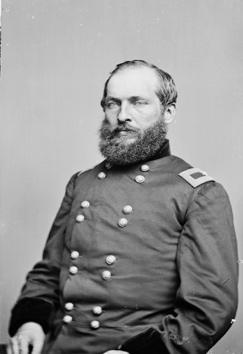
He died 200 days into his presidency, assassinated by a man who was angry at not being given a job in the government. He was a genuine born-again Christian, saved at age 18, and was the presiding elder in his church when elected. He regarded his position as PASTOR to be the highest honor of his life. He said, before leaving for Washington: “I resign the highest office in the land to become President of the United States.”
James A. Garfield was honest and brilliant. He could write in Greek with one hand, and in Latin with the other, simultaneously He was an anti-slavery crusader and was martyred for fighting deep-seated government corruption. He was an example of a public figure who had his priorities straight. We need more like him.