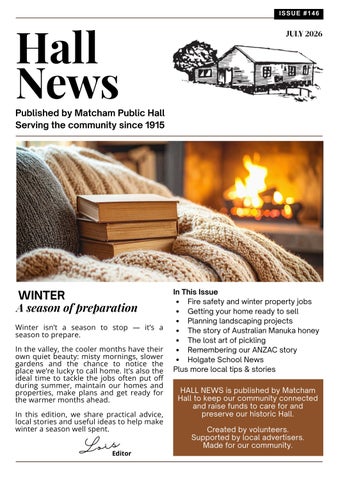
Winter isn’t a season to stop it’s a season to prepare.
In the valley, the cooler months have their own quiet beauty: misty mornings, slower gardens and the chance to notice the place we’re lucky to call home. It’s also the ideal time to tackle the jobs often put off during summer, maintain our homes and properties, make plans and get ready for the warmer months ahead.
In this edition, we share practical advice, local stories and useful ideas to help make winter a season well spent.
In This Issue
Fire safety and winter property jobs
Getting your home ready to sell
Planning landscaping projects
The story of Australian Manuka honey
The lost art of pickling
Remembering our ANZAC story
Holgate School News
Plus more local tips & stories
HALL NEWS is published by Matcham Hall to keep our community connected and raise funds to care for and preserve our historic Hall.
MATCHAM HALL PRESIDENT’S REPORT with Ingrid
Welcome to our Winter – A Season of Preparation edition of Hall News. For many of us, winter is a chance to get ahead It’s when we tackle the jobs often put off in summer maintaining our homes, planning holidays, preparing gardens and getting ready for the months ahead.
The Hall is no different.
After a big year of improvements, including new flooring, painting, upgraded lighting, air conditioning and filtered water, our focus has shifted to the quieter but essential work of caring for a 110year-old building. Gutter repairs, tree management, fire safety compliance and ongoing maintenance may not be glamorous, but they keep the Hall safe, welcoming and ready for our community.
This edition features advice from local experts, many of whom are businesses that support both our community and Hall News. Small businesses everywhere are doing it tough, so if you find their advice helpful, please keep them in mind. Supporting local business strengthens the community we all value.
Our ANZAC Day service was a wonderful reminder of that community spirit, with more than 160 locals attending. Thank you to everyone who sponsored, donated, volunteered or participated, and especially to Josh and Renee from VIP Private Chef for providing breakfast for the sixth year running, and to Peter and Vicki Webber and Vesta Harris for the homemade ANZAC biscuits.
Our Annual General Meeting was another positive step forward. I'm honoured to continue in the role of President and
grateful for the opportunity to work alongside such a dedicated committee. We also welcomed three new members Andrew, Justin and Verity, whose enthusiasm and fresh ideas will help shape the Hall's future.
The Matcham Hall has been cared for by volunteers for more than 110 years. That is something worth celebrating. Every committee, past and present, has contributed their time, skills and energy to ensure this Hall remains part of the fabric of the community. The work is almost entirely behind the scenes, but it matters.
Finally, thank you to everyone who helps make Hall News possible. This publication exists because people continue to give something incredibly valuable their time.
We also have a couple of exciting community events in the pipeline this year We'll leave you with one small clue 31.10.26... save the date! Thank you for your continued support of Matcham Hall. We hope you enjoy this edition.
THE COMMUNITY REMEMBERS ANZAC
Day 2026
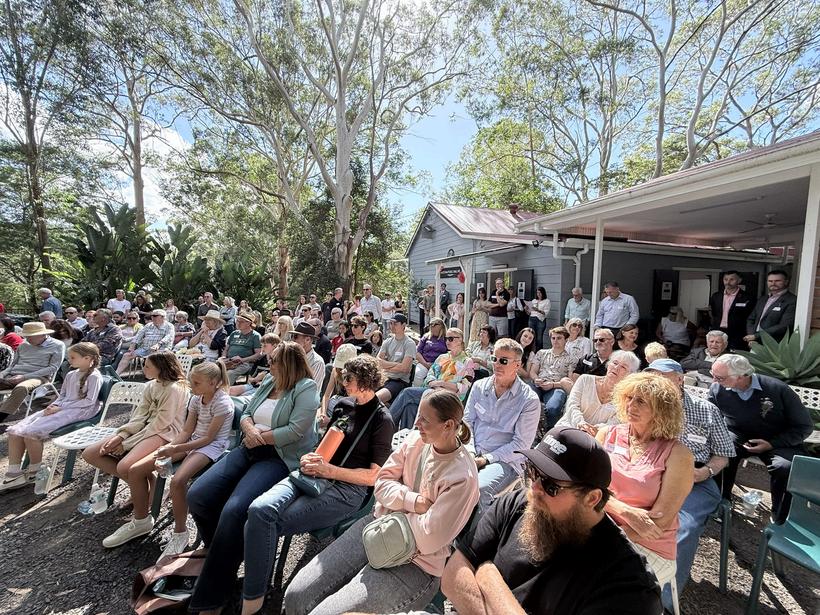
More than 160 locals gathered at Matcham Hall on ANZAC Day to remember those who have served our country and to reflect on the special role the Hall has played in our community's ANZAC story for more than 110 years.
The morning began with bacon and egg sandwiches and plenty of conversation as neighbours, friends and families gathered b J g c
One of the highlights of the morning was a beautiful rendition of Clair de Lune by local musician Andrew Warboys. His performance brought a moment of quiet reflection and set the tone perfectly for the service that followed.
More Than Just a Hall
This year's ceremony carried particular significance with the unveiling of a p M
MATCHAM HALL ANZAC MEMORIAL
This Hall was built in 1915 by the local community as a place to farewell and later welcome home the men of this valley who served in the Great War. It stands today as a lasting tribute to their courage, sacrifice and the enduring spirit of community.
LEST WE FORGET
While many locals know the story, not everyone realises Matcham Hall was built in 1915 by local residents on donated land to farewell young men leaving for WWI, and later welcome them home.
For generations, that history has lived on through local stories, family memories and the Honour Roll above the Hall fireplace Now, thanks to a Department of Veterans’ Affairs grant, a new brass plaque ensures this important part of our local story will be recognised for generations to come.
A big thank you to Ken Gray, who set the plaque into a beautiful piece of local sandstone, creating a lasting tribute for the Hall and community.
The new plaque is a simple but powerful reminder of the Hall’s ANZAC story.
Bringing History to Life
A particularly moving part of the service came from Myah Gartrell and Norman Martin, who shared the story of their family member Cyril Henry Martin, one of two local men recorded on the Honour Roll who never returned home.
Following is the story that Norman shared with everyone on ANZAC Day.
“Roughly three years ago, I was contacted by Merril Jackson, the creator and lead researcher behind The Poppy Project, to engage the community in honouring fallen soldiers. She informed me that she was about to visit the burial site of my grandfather’s brother Cyril Martin & was seeking an item to take overseas with her to place on his burial site. We decided to go to Wamberal Cemetery, where Cyril’s father, James and mother, Ellen, rest. A small pebble was chosen & she placed that pebble on Cyril’s final resting place. Cyril Martin was the 9 child born of 13 children. He had 7 sisters and 5 brothers. One of them Harold fought in the same Battalion. My Uncle Doylah or Uncle Dook as we liked to call him told me that when retreating Harold called out to Cyril, ‘”are you alright, mate” he called back to Harold “yeah” I was also told that not long after that he was shot. It is unknown if that was 5 seconds, 5 minutes or more. His wounds were to his back and his shoulder. Wounded on Wed 19 July 1916 and died on Tuesday at 9 20 pm, 20 days later on the 8 August. “ th th th
Their contribution reminded everyone that the names on the Honour Roll are not simply names from history they were sons, brothers, friends and neighbours.
A Community Effort
Throughout the service, community members of all ages played an important role. From Bella Nealon's Acknowledgement of Country, to the readings, wreath laying, Last Post and National Anthem, the ceremony reflected the community spirit that has long defined ANZAC Day in Matcham.
Among those laying wreaths were representatives of Federal Member for Dobell Emma McBride and State Member for Terrigal Adam Crouch, who both generously provided wreaths for the service. Local resident Meg McGowan (below) also laid a beautiful handmade wreath, creating a particularly personal tribute.
The morning was made even sweeter thanks to local resident Vesta Harris, who abaked more than 100 ANZAC biscuits for attendees to enjoy. Her contribution was a wonderful reminder that community events are built not only through formal ceremonies, but also through the many acts of generosity that happen behind the scenes.
Part of the ANZAC Story
While ANZAC Day is commemorated across Australia, gathering at Matcham Hall carries special meaning. This is not simply a venue for remembrance ,it is part of the story itself.
Lest we forget. .
A very big Thank you
The Hall Committee would like to acknowledge our sponsors and silent auction donors whose generosity helps ensure Matcham Hall can continue serving the community for generations to come.
Sponsors
VIP Private Chef ⟡ Michael Boyce Boyce Lawns & Gardens ⟡ The Loan Market by Andrew Dunreath Cooper ⟡ Gittoes Real Estate ⟡ Sasha Raymond ⟡ Aspire Physiotherapy ⟡
THE BEST SEAT IN THE VALLEY
Around 50 locals recently enjoyed one of the most unique music venues on the Central Coast Andrew Warboys’ front balcony.
Performing as AW & Associates, Andrew and a group of talented local musicians treated guests to an evening of live music under the stars, with the valley lights as a backdrop.
One highlight was 18-year-old singer Lizzie Adams, whose remarkable voice and stage presence left a lasting impression.
Guests brought chairs, settled onto the lawn and enjoyed a night that felt more like a gathering of friends than a formal concert
As Andrew put it, “With so much going on in the world, it’s just good to get together and jam d calls for an e ey did.
WINTER IN THE GARDEN
A season to plan ahead
In this practical and thoughtful piece, local permaculture expert Meg McGowan encourages us to use the cooler months not just to tidy, but to observe, plan and prepare. From drainage and pruning to food gardens, water tanks and fire readiness, winter is the season that shows us what our gardens need next.
While winter for many signals more time at home, rugged up in front of the fire, for most gardeners the opposite is true. Winter is typically our driest time of the year and a great opportunity to make big changes in preparation for spring.
It’s time to look at the ‘bones’ of your system, as trees shed their leaves, creeks and drains hopefully dry out a little, and plants generally slow their growth to cope with the colder weather. Weeds can be left a bit longer while you take stock of your garden and plan for improvements.
Winter is a good time to notice where the sun falls. At this time of year, the sun is at its lowest point in the sky, shadows lengthen and deep shade settles on the southern side of hard structures. Because we live in a network of valleys, many of us lose the sun early in the afternoon, or don’t get direct morning sun until well after sunrise.
Keep in mind that the “full sun” recommendations we see on a lot of plants were inherited from other climates, particularly the UK. Here, where our summers are longer and hotter and our winters are mild, dappled light or less sun can be preferable. Leafy green vegetables only need two to four hours of sun a day and I have successfully grown repeat harvest lettuce, coriander and land cress in full shade. Fruiting plants will be productive on just four to six hours of sun a day.
Look for the microclimates within your site, where buildings with plenty of thermal mass (water tanks, brick and stone walls, hard surfaced driveways) will be slowly releasing their stored summer heat. Notice where the sun first appears in the morning, where it stays during the day and where it retreats as the afternoon arrives. Notice which surfaces are bouncing light (typically white or pale coloured) and which are absorbing it. Darker structures will hold more heat and paler ones might make an otherwise dim area more suitable for growing.
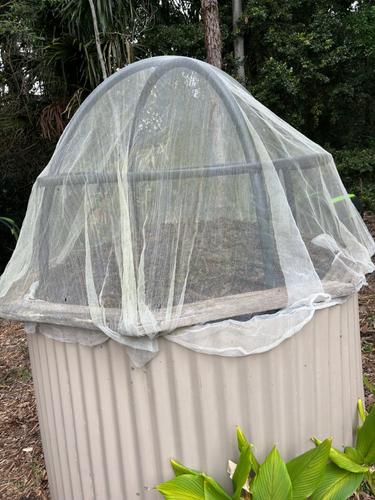
A few years back we developed “cupcake beds”. These grow our annual food plants, and are rat proof, dog proof and possum proof. You can find out more about them by visiting our Permacoach page on Facebook. We have located our cupcake beds specifically for winter sun and this time of year they are providing lettuce, cabbages, broccoli and onions In summer they will give us potatoes, sweet potatoes, tomatoes and beans, along with more Asian greens and lettuce. Setting up a system like this to capture winter sun will give you food for years.
Winter is a good time to review your drainage system and correct any flooding issues before big summer storms return.
Deciduous trees are showing you their structure and you can make plans for pruning, but it’s best to wait until late winter or early spring to do this work so the tree can recover quickly. Winter is one of the best times for tree removal because you can see which plants are overshadowing your garden or dumping leaves into your gutters.
Winter is also an opportunity to look at large projects like water tanks, driveways, drainage and extensions, but you will probably have planned these well before the season arrives. Converting plastic tanks, if you have them, to those that are stainless steel or concrete should definitely be a consideration. Plastic tanks have an engineered design life span of twenty-three years, assuming nothing damages them in the meantime, and as
they age they will start to shed microplastics into your water and your soil They may also melt if you experience a bush fire.
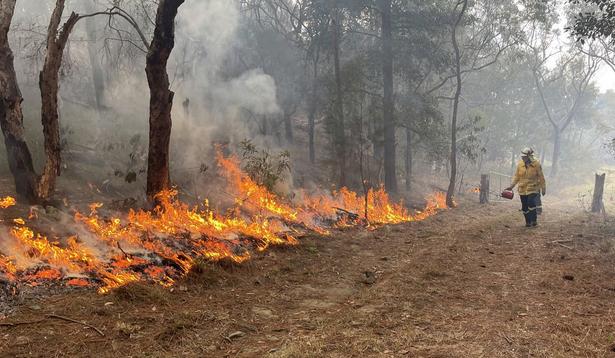
It seems so long since we had a dry summer that bush fire preparation feels almost unnecessary, but long experience teaches us that an El Niño summer is notoriously difficult to predict, and when it arrives, there won’t be time to play catch up. That’s why it’s a good idea to start your fire plans in winter. Most of this will be timetabling. When will you get the gutters cleaned out? When will the cobwebs be swept from the windows and fly screens? When will the winter firewood stack be moved away from the house?
Remember too that the whole point of living on acreage is enjoying the life that it gives us. Have at least one day each week where you park the to-do list and enjoy the garden Accept that gardens this large will always be a work in progress.
PREPARING THE PANTRY IN WINTER
The lost art of pickling
Before supermarkets, families preserved the harvest by bottling fruit, making jams and pickling vegetables. 91-year-old local Vesta Harris keeps the tradition alive with her much-loved pickles, often the first to disappear at the monthly produce share. She has even created her own pickle label
I first decided to make pickles while watching my mum on our farm at Taylors Arm. We grew plenty of fruit and vegetables and with her help, I became a pickle and jam person. This continued when we moved to Kempsey during the 2nd World War. We had food rationing, and times were tough, but we grew all of our own vegetables and fruit. My mum always had a cupboard lined with jars full of her pickles and jams. It was a great way to enjoy summer fruit and veggies through Winter and vice versa in Summer.
My favourite thing to pickle is choko and cucumber, but just about anything can be pickled, especially onions. My advice to anyone starting out would be use the best vinegar you can. Make sure you use fresh and barely ripe fruit or vegetables. Use clean, sterilised jars, seal tightly and turn upside down. My favourite of all times is pickles spread on fresh bread and butter with a shake of black pepper. Yum Yum!
BREAD AND BUTTER PICKLES
4 large cucumbers
½ cup hot water
1 dsp Mustard Seed
1 tsp Salt
2 cups Vinegar
3 dsp Sugar
4 Strips Capsicum
Wash cucumber, slice thinly, sprinkle with salt and cover overnight. Next day wash in cold water and dry. Combine all the rest of ingredients, bring to the boil. Add cucumbers and boil for 3 mins. Using tongs pack into hot jars Add the hot vinegar and seal immediately
PICKLED ONIONS
1.8kg of small white onions 680g salt
1 ½ tbsp salt
2 dsp salt
1 ½ tsp allspice
1 cinnamon stick
1.1 litre Vinegar
1 dsp ginger
1 ½ tsp whole cloves
Few whole peppercorns
Place unpeeled onions, 680g salt and enough water to cover in a large bowl Stand for 2 days, stirring occasionally. Drain liquid, peel onions. Cover onions in boiling water, stand 3 mins drain. Repeat this boiling water and draining process 2 more times Pack onions into sterilised jars. Combine all remaining ingredients in a saucepan, bring slowly to the boil, reduce heat, simmer 10 mins. Cool slightly, strain, pour over onions, seal.
WHAT WINTER IS DOING TO YOUR HOME
Preparing your home for the seasons ahead
Winter’s damp, cooler conditions can quickly lead to mould, moss and algae around the home. We spoke with local expert Joel from Emerald Exterior Cleaning about the simple maintenance jobs that can help protect your acreage before spring arrives.
Moisture Is the Main Problem
In Winter everything stays damp for longer, roofs, walls, paths and decks — because there is less sun and more dew. We see a rapid uptick in mould, algae and moss growth on roofs and paving, algae spreading across shaded walls, and gutters getting clogged with leaf litter from winter storms/winds/rain. On acreage properties especially, the combination of tree cover and morning dew means surfaces never really dry out entirely.
Watch the Shady Spots
It's the perfect storm: lower UV means less natural drying, higher rainfall keeps everything wet, and fallen leaves and bark debris create a nutrient layer for organic growth to thrive on. Algae and moss love cool, damp, shaded conditions — exactly what winter delivers. That's why you see green and black patches popping up on paths, driveways, and decks that were perfectly fine in summer.
Don’t Forget the Roof and Gutters
People don't think about them until water's pouring over the edge or leaking into the roof cavity. Also, the underside of eaves and the shady side of the house — the areas you don't look at every day — can be absolutely covered in mould by the time spring rolls around. And roof valleys: if leaves and moss are building up there, that's where leaks can start.
Areas to keep your eye out for
The top four are: gutters and downpipes (check for blockages after every big storm), roof surfaces (look for mould, algae, moss and lichen spreading between tiles or forming on colourbond), shady exterior walls (north and east facing can be better, but south and west-facing walls are usually the first growth spots), and any paved or concrete surfaces where you've noticed a darker patch or green tinge — that's algae taking hold - and it gets slippery fast.
Small Problems Can Become Expensive
Moss and lichen retain moisture against roof tiles, which accelerates deterioration and can lead to leaks. On painted or rendered walls, mould breaks down the paint over time. On concrete and paving, algae creates a micro layer that traps grit and moisture, leading to surface degradation. And if it's on timber decking, you're looking at rot. A $1,500-$3,000 clean now can save you $10,000+ in repairs later.
Look for the signs of damage
Dark patches or green tinges are the obvious ones. Also: surfaces that feel slick underfoot even when it hasn't rained, visible moss growing in the joints between pavers, or water pooling on concrete instead of running off (that can mean the surface has become too porous from algae and needs cleaning to restore it). For retaining walls, look for black streaks running down the face — that's mould feeding on organic matter trapped in the stone or blockwork.
DIY Mistakes
The two big mistakes I see from people trying to do it themselves are using too much pressure and using the wrong mix of chemicals. A lot of people hire a cheap pressure washer from the hardware store and blast everything at full power — that can force water behind cladding, lift roof tiles, etch concrete, strip paint off weatherboard, and crack composite materials on decks or other surfaces. The other mistake is using an incorrect mix of cleaning products, that unless used at the right level, with the right method and safeguards in place, can kill plants, contaminate rainwater tanks, or don't actually kill the mould at the root — so it can come back in a matter of weeks.
Get jobs done in winter
Winter is the ideal time to book a roof and gutter clean — before the spring storms hit and before pollen and new growth start kicking off. It's also a great time to get house washing done because the cooler
weather means the cleaning solutions work more effectively (less evaporation). Plus, contractors are generally less booked up in winter, so you can get on the schedule faster.
A little preventative maintenance in winter costs a fraction of what emergency repairs cost in spring and summer. Ensure you have a maintenance schedule and budget that suits your particular property – tailored to it’s location and it’s specific surfaces.
Rules of thumb can be simple: The more shade and moisture you have, the more often your cleaning schedule should be. Most of our clients are yearly. Some are biannual, some are quarterly as their risk of surfaces becoming slippery are high.
If you wait 2yrs, you’ll most likely have a mould, algae, moss, or lichen problem, that will take longer and more budget to clean, and risk degradational damage along the way.
0438 277 421
We offer an extensive range of residential pest control services and/or packaged programs for all common household pests & rodents
Timber pest inspection services, termite removal and prevention strategies
GETTING YOUR PROPERTY MARKETREADY
The work starts in Winter
Spring may be known as the traditional selling season, but the preparation starts much earlier. Local real estate agent Ingrid Medlicott from Gittoes, who specialises in acreage properties throughout Matcham and Holgate, shares her valuable advice.
What are the most important areas?
We encourage owners to keep on top of their maintenance so that when they come to sell it isn’t as overwhelming. Consider the repairs and painting of external timbers, trimming of trees and hedges, removal of fallen debris and regular external cleaning. Keeping gutters clear so that untimely leaks don’t occur just prior to sale, which will then require rectification.
Which improvements tend to deliver the best return on investment?
Overall, the improvements that deliver the best returns on investment include painting, upgraded light fittings such as covered LEDs and contemporary pendants where required, and bulbs (not power savers!), steaming of grout in wet areas or regrouting, replacing tired sealants, carpet cleaning, external cleaning of roof and hard surfaces, weeding & mulching.
Why is winter ideal to prepare for sale?
Winter is a great time to start preparing your property for sale as many acreage properties look their best in Spring when the gardens and grounds come to life. If the hard work is done to coincide with the vibrant colours, all the better. I encourage sellers to aim for photography mid-end August depending on their property. Being market-ready sooner means there will likely be fewer properties for buyers to choose from. Another great reason to prepare in Winter is because it is easier to keep the grounds under control as there is less growth. Some owners can progress from ‘Live Mode’ to ‘Sell Mode’ in a few weeks and others take several months so it’s good to start planning ahead.
The final consideration is a full or partial property styling as it can make all the difference to how the property is perceived and received in the marketplace. The question is not “Can I afford to style?” but “Can I afford not to style?”. Those that haven’t sold recently may not be aware of businesses such as ‘Campaign Agent’ which will fund property improvements and marketing up to $25,000 to be repaid upon property settlement.
What are buyers looking for in acreages?
Buyers are preferring properties that offer privacy and an abundance of natural sunlight, along with a certain amount of useable land that doesn’t require too much maintenance.
A seamless flow from internal to external living, functional floor plans and at least one ensuite in addition to the main bathroom and multiple living spaces. Whilst a small part of the buying market would love to get stuck into a full renovation, most buyers prefer to only undertake cosmetic improvements.
What maintenance issues commonly stand out to buyers during inspections?
Anything that looks tired. Whether that be carpets, cabinetry, paint, grout and sealants. When putting your property on the market you want everything to look as fresh as possible, so those small items don’t stand out to buyers and make them consider the cost and time involved with fixing/replacing them.
How important are gardens and outdoor spaces in creating a good first impression?
Incredibly important! Your gardens and outdoor spaces are some of the first things that buyers see when they come to your property and play a vital part in making a good first impression. Does that mean you need to construct landscaped gardens if you don’t already have them? No. It just means that whatever gardens and lawns you have should be neat and tidy – weeded and mulched. Perhaps some new colour where appropriate.
Drive onto your property and pretend that you are visiting for the first time. How would you rate your kerbside appeal? Are your fences in good order? Is the driveway free of potholes? If a buyer perceives that the property isn’t well maintained, they will automatically think that the property is difficult, time consuming or expensive to maintain.
Are there any common mistakes when preparing their property for market?
Putting money into the wrong items for presentation is certainly one of them as are heavily personalised improvements. Capital improvements may not add value if they aren’t what a future owner wants. Let a future owner make the expensive decisions. Focus on cosmetic updates as they will generally provide a minimum of a 3:1 return. They are the most costeffective way to improve your property’s overall presentation and feel. If in doubt, ask your agent for advice. We often work with our clients for extended periods prior to their making the final decision to sell, and we have a helpful booklet –“Maintaining & Preparing your Property for Profit” available.
Any trends in the local market?
Winter is traditionally a quieter period in real estate, and this year is no exception given the global and economic climate. In saying that, the Gittoes Acreage team has finalised a number of acreage sales during the start of the cooler season. As many acreage properties present better in Spring/Summer, we do see a reduction in the number of properties available online, in winter however, that does not mean there are not people looking to buy and that properties can’t present well. Think cosy fireplace and fire pit settings If a property has a good aspect and natural light, and an owner is looking to sell,
WHY MANUKA IS WINTER’S FAVOURITE HONEY
From bee to bottle
As winter settles in, many of us reach for a jar of honey to stir through a warm drink or drizzle over our morning toast. But what makes Manuka honey so different from other honeys, and why has it become one of Australia's most sought-after natural products?
We asked local Matcham resident Sandra Rae from Bee-U-tiful Honey to share her expertise. Passionate beekeeper and renowned honey judge, Sandra takes us behind the scenes to uncover the fascinating story of Australian Manuka honey and what makes it so unique.
Manuka honey is produced by bees collecting nectar from the flowers of the Manuka plant (Leptospermum species), a hardy native shrub that originated in Australia. Australia is home to 84 of the world's 87 known Leptospermum species (Wrigley & Fagg, 1996), including Leptospermum scoparium, making Australia the natural home of Manuka.
Early Australian beekeepers knew it as Jellybush honey, named for its thick, jellylike consistency. Because of its darker colour and stronger flavour, it was once considered difficult to extract and was often fed back to the bees. Today, it is of Australia's most valuable premium honeys.
European honey bees arrived in 1822, almost 20 years before introduced to New Zealand. While quickly recognised the importance for pollinating crops, they had no nectar collected from native flowers would produce a honey other.
the late 1980s that scientific research by Dr Peter Molan and colleagues (Molan & Russell, 1988) identified the unique antibacterial properties of Manuka honey. Their work sparked worldwide interest and led to extensive research into its medical applications, particularly in wound care.
Scientists later identified methylglyoxal (MGO) as the naturally occurring compound responsible for Manuka honey's remarkable antibacterial activity. Research has also shown that some bacteria resistant to modern antibiotics do not readily develop resistance to Manuka honey (Blair et al. 2009), helping establish its value in clinical settings.
For centuries, honey had been valued for its natural healing qualities, but it wasn't until
Australia's importance in the Manuka story has continued to grow. Research has confirmed that Australia is home to 84 of the world's 87 Leptospermum species (Wrigley & Fagg, 1996), while more recent studies have found exceptionally high levels of MGO in some Australian Manuka honeys (Cokcetin et al. 2016), with activity equal to or even exceeding many New Zealand products.
Leptospermum flowers and the bioactive fraction of MGO contained in the nectar of Manuka flowers are the key driving force behind the antibacterial effect of Manuka honey.
Australian Manuka
Exceptionally high levels of MGO have been discovered in Manuka honey samples sourced in Australia (Cokcetin et al. 2016). The levels of DHA and MGO found in some Australian honey are comparable to, or higher than those observed in New Zealand Manuka honey. Research in Japan identified the unique chemical identifiers present in Leptospermum honey that are not found in regular honey, which makes it very easy to differentiate between a fake product and pure, natural Manuka honey.
Some of Australia’s best Manuka comes from the East of Australia, generally the warmer the climate the better grade and the higher the antibacterial properties. It’s just amazing what comes from this humble looking bush.
Is the name “Manuka” owned by NZ?
Australia can use the term "Manuka" for honey, as it is derived from the same species of tree found in both Australia and NZ. Despite NZ attempting to own the word “Manuka” Australia has successfully argued in the courts that the term "Manuka" is not distinctive enough allowing Australian producers to market their honey without the restrictions imposed by New Zealand.
Why is Manuka Honey beneficial to you?
When it comes to manuka honey, you may have come across two terms: raw and processed. But what’s the difference between them? And which one is better for your health and wellbeing?
Raw manuka honey is harvested straight from the beehive, without any additional processing or filtering. This type of honey retains its natural enzymes, pollen, and aroma, making it a more potent and effective product. The raw honey also contains a higher amount of methylglyoxal (MGO), the compound responsible for its unique health benefits.
On the other hand, processed manuka honey has been filtered and pasteurized to extend its shelf life and improve its appearance. While this may make the honey look more appealing, it can also strip away some of its natural goodness.
Processed honey often contains added preservatives or sugars, which can negate the health benefits of the MGO.
If you’re looking for the best quality Manuka honey, opt for a raw, unfiltered product. Look for labels that indicate the presence of pollen and bee parts, such as beeswax or propolis. This ensures that you’re getting the real deal – straight from nature’s nectar.
MGO and UMF Ratings Explained
When you’re shopping for Manuka honey, you may have come across labels featuring MGO and UMF ratings. These certifications are crucial to ensuring the quality and authenticity of this premium product. So, what do these numbers mean?
Methylglyoxal (MGO) is a compound found in Manuka trees that’s responsible for its unique properties. The MGO rating measures the concentration of this compound in the honey. A higher MGO number indicates a stronger antibacterial activity. For instance, an MGO 5+ rating means the honey contains at least 83mg/kg of methylglyoxal, while an MGO 10+ rating signifies 263mg/kg or more. Just remember as the rating goes up, so does the acidity and bitterness of the honey taste.
Other ratings such as Unique Manuka Factor (UMF), trademarked in New Zealand, and Non-peroxide Activity (NPA) are also indicative of the strength of Manuka honey. A higher UMF number indicates a more potent and authentic product.
SPOT THE MANUKA TREE
Could it be in your backyard?
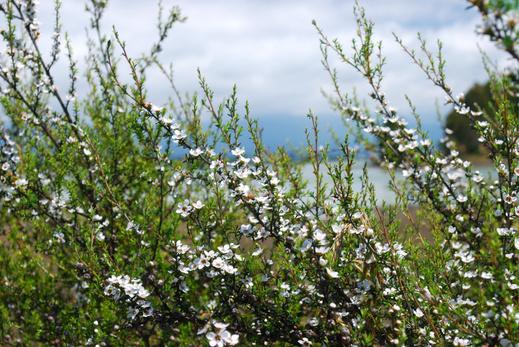
The Manuka (Leptospermum) is a hardy native shrub or small tree found throughout eastern Australia, including many parts of the Central Coast. Look for
�� A dense shrub or small tree, usually 2–5 metres tall
�� Small white or pale pink flowers with five rounded petals, appearing from late spring to early summer
�� Small, narrow, pointed leaves that release a fresh, aromatic scent when crushed
�� Distinctive rough, flaky bark that peels away in thin strips
�� Often growing naturally in bushland, along creek lines and in poor or sandy soils
THE BACKYARD YOU’LL ENJOY THIS SUMMER
Starts in winter
Spring and summer are when we enjoy our outdoor spaces, but winter is when the groundwork is done. Joe from Silverfern Projects shares his know-how on why winter is the smartest season to invest in your backyard.
Winter is the best time to start planning so that your outdoor area is ready for the warmer weather! By getting your design, approvals and construction underway during winter, you’ll be able to enjoy the finished result throughout spring and summer rather than spending those months waiting for the work to be completed.
0418 433 959
When it comes to pools most people aren’t swimming during winter, making it the least disruptive time to renovate. Whether it’s replacing coping, installing new paving, updating waterline tiles or giving the pool interior a fresh finish, completing the work now means the pool is ready to enjoy as soon as the warmer weather arrives.
The jobs best suited to winter
Pool renovations, retaining walls, paving,
Winter often highlights drainage problems that go unnoticed during drier, warmer months. If you’re seeing water pooling, muddy areas, erosion or runoff towards your home or pool, now is the ideal time to fix these issues. These areas can become expensive and difficult to rectify if left too long. Good drainage is one of the most important parts of any successful landscape project.
Design and Function
One of the biggest mistakes is focusing only on appearance without considering how the space will function. Good design should take into account drainage, levels, access, maintenance and how the area will be used. It’s also important to have an overall plan rather than completing projects in stages that don’t work together. This ensures that your landscaping concept will come together cohesively.
Trends in outdoor living
We’re seeing a strong move towards clean, timeless designs using natural stone such as travertine and limestone, larger-format paving, seamless indoor-outdoor connections and practical entertaining spaces. Homeowners are also choosing low-maintenance materials and investing in complete outdoor renovations that combine landscaping, pools and entertaining areas into one liveable and enjoyable design.
0418 433 959
Adding value to your property and life
Well-designed landscaping consistently adds value, creating a strong first impression and extends the usable living space of a home. It all contributes to both street appeal and long-term property value.
If you can create a functional outdoor living space, your family (and friends!) will benefit enormously. Features like larger paved entertaining areas, BBQ zones, fire pits, pool surrounds, seating areas and lowmaintenance landscaping encourage people to spend more time outdoors together. It’s always enjoyable to be able to entertain in an area you are proud of.
Don’t wait until spring to start planning. The best contractors often book out well in advance, so winter is the perfect time to organise designs, quotes and construction. With a bit of forward planning, you’ll be able to spend spring and summer enjoying your outdoor space instead of watching it being built. Imagine barbecuing in your beautiful outdoor space, and watching the kids play in the pool on Christmas Day.
MATCHAM HOLGATE RURAL FIRE BRIGADE
Update with Captain Ian
Our Brigade recently held its Annual General Meeting, providing an opportunity to reflect on another busy year of serving our community and to appoint the leadership team for the year ahead.
We congratulate and thank the members who have accepted leadership and administrative roles for the coming year. Volunteering to take on these responsibilities requires a significant commitment of time and energy, and their willingness to serve is greatly appreciated.
Our Field Officers for the coming year are:
Captain – Ian Goodman
Senior Deputy Captain – Richard Shedden
Deputy Captain – Chris Radford
Deputy Captain – Geoff Clark
Deputy Captain – Peter Burfitt
Our Administrative Officers are:
President – Murat Kivilcim
Secretary – Geoff Clark
Treasurer – Neil Rechlin
Executive Member – Jo Gracie
leadership of Matcham-Holgate Rural Fire Brigade. Their ongoing commitment to our community and to the NSW Rural Fire Service is greatly appreciated, and we all look forward to working alongside them over the coming year.
SUMMER FIRE SEASON OUTLOOK
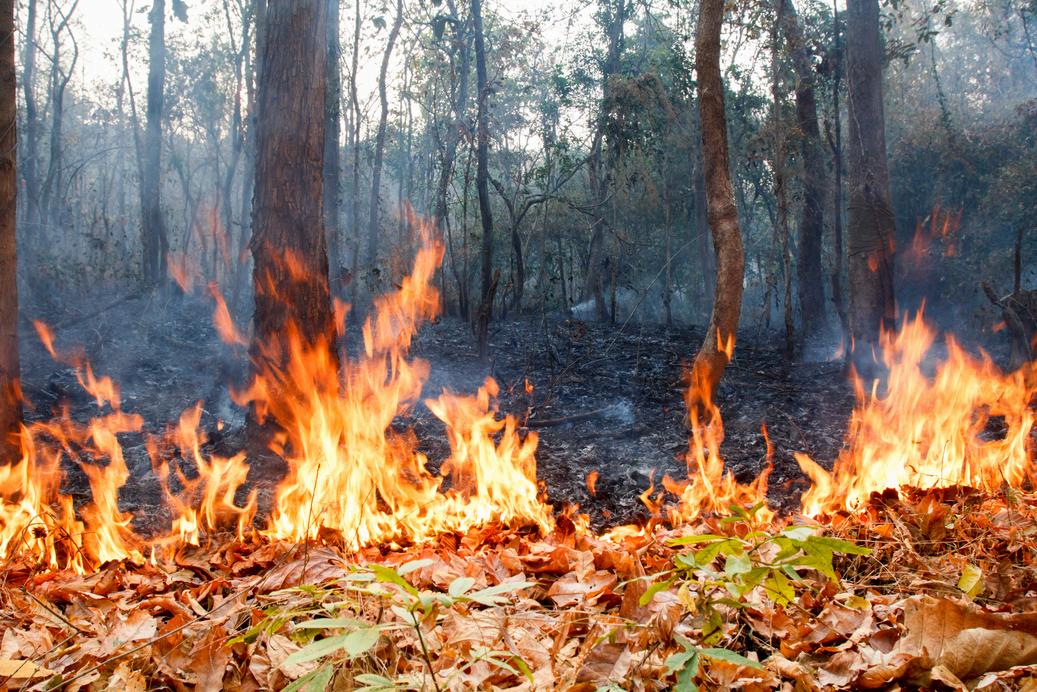
The Bureau of Meteorology has recently declared that an El Niño climate pattern is now underway in the Pacific. While it's still too early to know exactly what next summer will bring, El Niño is typically associated with warmer and drier conditions across eastern Australia, increasing the potential for heatwaves and elevated bushfire risk.
For communities like Matcham and Holgate, where homes sit amongst bushland and within our unique valleys, extended dry weather can quickly dry out vegetation on the ridges, valley slopes, creek lines and surrounding reserves. Combined with hot days and strong winds, these conditions can lead to fast-moving fires that are challenging to control.
VOLUNTEER IN WINTER Be ready
for summer
Whatever the season ultimately brings, the best time to prepare is now. A wellmaintained property, a clear Bush Fire Survival Plan and an informed household are still the most effective ways to reduce your risk.
We look forward to continuing to work with our community over the coming months to ensure Matcham and Holgate are as prepared as possible for the summer ahead.
If you've ever thought about becoming a volunteer with Matcham-Holgate Rural Fire Brigade, we'd love to hear from you. Now is the best time to start so that you are trained and ready for Summer.
Volunteering is not only an opportunity to give back to the community—it also provides valuable training, lifelong friendships, the chance to develop new skills and the satisfaction of making a genuine difference when your own family or neighbours need you most.
If you'd like to find out more, drop by the station on a Thursday evening to have a chat with one of our members, or get in touch with the Brigade on (02) 4367-7563. We'd be happy to answer your questions and show you how you can become part of our team.
Our community has always been strongest when neighbours help neighbours, and we'd be delighted to welcome new volunteers who share that spirit of service.
WINTER JOBS THAT COULD SAVE YOUR HOME THIS SUMMER
With Fire Captain Ian
With the cooler weather upon us, it's easy to put bushfires out of mind. But here in Matcham and Holgate, surrounded by beautiful bushland, winter is actually the ideal time to get your property ready for the next fire season.
Every summer reminds us that living in such a wonderful environment also comes with responsibility. The good news is that by tackling a few jobs now, you can make a real difference if a fire threatens later in the year.
Some simple tasks to consider include:
Clean leaves from gutters, roofs and around your home.
Trim back overhanging branches and remove vegetation growing close to buildings.
Mow or slash long grass before it becomes dry fuel.
Remove piles of leaves, fallen branches and other combustible materials from around your property.
Check that driveways and property access are clear enough for emergency vehicles.
Review your pumps, hoses and water supplies to make sure they're in good working order.
Winter is also a great opportunity to walk around your property with fresh eyes. Are there areas where vegetation has crept closer to the house? Could a few small changes make it easier for firefighters to defend your home? These are much easier jobs to tackle now than during the heat of summer.
Just as important as preparing your property is preparing your family. Take some time to discuss your Bush Fire
Survival Plan. Know what you'll do, where you'll go, and remember that leaving early is always the safest option.
The members of Matcham-Holgate Rural Fire Brigade are all local volunteers. We live here too, and we understand both the beauty come prepared chances make our whole community safer.
A little difference next summer.
IS YOUR FINANCIAL HOUSE IN ORDER?
Use the quieter months to sort your ‘to do’ list
With the end of the financial year now behind us and a quieter period before the busy months leading into Christmas, winter provides an ideal opportunity to take stock of your financial position. Local Chartered Accountant Kennedy Cross shares some tips and hints to get ahead.
Rather than waiting for an important life event or unexpected expense to prompt action, a regular financial review helps you stay organised, make informed decisions and ensure your financial arrangements continue to support your goals. After all, no one plans to fail, but many fail to plan.
A few simple checks now can make a meaningful difference over the long term.
Review Your Insurance Cover
Insurance is designed to provide financial protection when you need it most, but your circumstances can change over time. If you've renovated your home, purchased significant assets, changed employment or experienced major life events, your existing policies may no longer provide the right level of cover.
Check Your Superannuation
For many Australians, superannuation is one of their largest long-term investments, yet it is often overlooked. Consider reviewing your account balance, investment options and contribution levels to ensure they remain aligned with your retirement objectives. It is also worthwhile checking that your nominated beneficiaries are current and confirming whether you have multiple superannuation accounts that could be consolidated to reduce fees and simplify administration. Small decisions made today can have a significant impact on your retirement savings over time.
Update Your Estate Planning
Estate planning is about ensuring your wishes are clearly documented and that your loved ones are protected should the unexpected occur.
If it has been several years since you reviewed your will, or if you've experienced major life changes such as marriage, separation, the birth of children or grandchildren, or significant changes to your financial circumstances, now is an appropriate time to revisit your arrangements.
Reviewing your powers of attorney and other estate planning documents at the same time can help ensure your affairs remain properly structured and up to date.
Review Borrowings and Debt
With interest rates remaining a key consideration for many households, now is an ideal time to review your mortgage, personal loans and credit card balances.
A review may identify opportunities to refinance, reduce interest costs or accelerate repayments. Even modest additional repayments can significantly reduce the total interest paid over the life of a loan and strengthen your overall financial position.
Plan Ahead with Confidence
A financial health check is not simply about identifying potential issues; it is about ensuring your financial arrangements continue to support your goals and adapt to changing circumstances.
Winter offers the perfect opportunity to step back, take stock and prepare for the year ahead.
If you're unsure where to begin, speaking with your accountant or financial adviser can help you understand your options and ensure your financial strategy remains aligned with your personal circumstances and long-term objectives.
DREAMING OF FARAWAY PLACES?
Now’s a great time to start planning
While winter is the season for preparing our homes and gardens, it's also the perfect time to start planning your next holiday while you’re cosied up by the fire.
Fortunately, one of Australia's cruise experts lives right here in our Valley. Iryna, owner of Cruise Addict, is a former cruise ship crew member who has spent more than 1,100 days at sea, sailed on all seven continents and visited almost 70 countries. Drawing on her first-hand experience, she shares her tips for making the most of your next cruise adventure
Where to start
Most people begin their search online, and that’s completely understandable. These days, we use search engines and AI to find answers to almost everything. However, cruising is far more complex than it first appears.
My advice is to start by finding an experienced travel agent who specialises in cruises and has personally sailed on different cruise lines and visited the destinations you’re considering. Personal experience makes a huge difference. Even the same ship can offer a completely different experience depending on where it’s sailing. For example, a short cruise from Australia will feel very different from a voyage to Queensland, let alone an Alaska cruise on the very same ship.
Find your perfect cruise match
Matching the right cruise to the traveller is one of the most important factors in creating an unforgettable holiday.
There are more than 200 cruise lines operating worldwide, yet many people
think cruising is only about large ships and the handful of cruise lines that sail from Australia. In reality, every cruise line has its own personality—just like every traveller. Even within the same cruise line, different ships can offer very different experiences.
Before choosing a cruise, ask yourself:
Who am I travelling with—family, friends, as a couple, or solo?
Am I looking for relaxation, adventure, entertainment, or cultural experiences? Am I comfortable on a large, lively ship, or would I prefer something smaller and quieter?
Am I looking for value, premium service, or a luxury experience?
If you’re travelling with children, make sure the ship offers facilities such as kids’ clubs and family activities. Even children who are normally shy often end up making wonderful friends onboard, giving parents the opportunity to relax and enjoy some well-earned time together.
Book well in advance
Ideally, travellers should start planning more than a year in advance and book at least 12 months before departure.
Many cruise lines release their itineraries up to two years ahead, while world cruises can go on sale three years before departure. Booking early usually provides the best availability and often the best value.
Booking early also gives you greater flexibility with payment options, as most cruise lines don’t require final payment until around three months before departure (although this varies between cruise lines). You’ll also have a much wider choice of cabin locations, which can be particularly important on scenic itineraries such as Alaska or the Norwegian fjords, where the side of the ship you choose may enhance your views.
If you’re travelling with family or friends, booking early gives you the best chance of securing cabins close together. It can also unlock group benefits and celebration packages for special occasions, as well as additional group perks that aren’t available to individual travellers.
Cruise prices generally increase as ships fill, so booking early often means securing a better fare, especially on smaller ships where the focus is on the destination rather than the ship itself. Larger ships often have great promotions throughout the year, but some of these are simply marketing, with discounts applied after prices have already increased.
Common mistakes
Choosing a cruise simply because someone else recommended it or because it appears to be a great deal.
A cruise that’s perfect for one traveller may not suit another. Without expert guidance, people often book the wrong cruise line, the wrong ship, or the wrong itinerary for their travel style. They may also overlook important details such as cabin location, inclusions, gratuities, shore excursions, or the overall value of what’s included in the fare, such as drinks, Wi-Fi, or specialty dining.
A knowledgeable cruise specialist removes the stress and confusion from the planning process. Instead of sorting through hundreds of options, you receive recommendations that genuinely suit your interests, budget and travel style. An experienced travel agent understands the differences between cruise lines, ships, cabins and destinations.
The biggest benefit is having someone who genuinely cares about your holiday, can answer your questions, share real-life tips, recommend the best experiences and highlight destinations you shouldn’t miss.
You also build a relationship with someone you can trust. They can compare your options, advocate for you if anything changes, and help make your holiday clearer, less overwhelming and far more enjoyable from the very beginning.
Speak with an experienced cruise specialist who has personally sailed on different ships and visited the destinations you’re considering.
BEFORE YOU TRAVEL Acreage
security goes beyond locking the front door
LOCAL WILDLIFE Skinks of the Valley
Local wildlife enthusiast Matt Barnett shares another glimpse into the remarkable creatures living alongside us in Matcham and Holgate, with practical tips on how we can help them thrive.
Who are we?
Skinks are one of the most diverse families of lizard in Australia with over 325 species, of which around 25-30 are found in the Central Coast.
Starting with our most common reptiles in the valley, are the little garden skinks. We have the Dark and Pale flecked garden sunskinks who you’ll see running across paths and in the house, copper tailed skinks who are a little more secretive, and if you’re digging in the soil you may find burrowing skinks with much shorter limbs, on their evolutionary path to become legless lizards. They feed on ants, spiders, beetles and other small invertebrates and, in turn, provide food for birds, snakes and larger lizards. If caught, many skinks can detach their tail, leaving it wriggling behind to distract the predator while they escape.
Eastern Water Skinks are one of our larger local species, growing to around 25–30cm, and often mistaken for “Adults” of the smaller skink species. They are strong swimmers, but also much better climbers than you might expect.
Eastern Blue-tongues are another familiar member of the family. Rather than fleeing at high speed, they often rely on their size and their vivid blue tongue to intimidate predators. They are valuable garden residents, eating snails, slugs, insects and other small animals.
We also have Australia’s largest skink in the Valley, the Land Mullet. These glossy, dark lizards can grow to more than 50cm and look almost prehistoric as they crash through the undergrowth.
Where can you find me?
As reptiles, Skinks rely on external warmth to regulate their body temperature. On sunny mornings they often emerge to bask on rocks, paths, fences and fallen timber before heading off to hunt.
Small garden skinks are most easily found around leaf litter, rockeries, garden beds and old timber, whereas Eastern Water Skinks are usually found close to water, although they may travel surprisingly far into gardens and buildings. They tend to remain in territorial areas, so you’ll find “locals” in the same spots. If frightened, they may dive underwater and remain hidden until the danger has passed.
Blue-tongues prefer areas with both open sunny patches and dense shelter. They may live beneath sheds, decks, logs and thick vegetation, sometimes returning to the same property for many years.
0401 164 787
As for Land Mullets, you can find a couple of residents down by Seymour pond, a short walk from Katandra reserve. Look on the left side of the pond as you head down (a great place to see dragons, frogs and turtles too). They need deep leaf litter, fallen logs and dense cover and will quickly disappear into shelter when disturbed.
How can I protect and encourage them near me?
The best habitat for local lizards is generally not an overly tidy garden. Retain leaf litter, old logs, fallen branches, rocks and dense native vegetation wherever possible. These provide feeding areas, sunning spots and safe places to escape predators.
Avoid using insecticides, snail pellets and rodent poisons. Lizards may be poisoned directly or by eating insects and other animals that have consumed the chemicals. Take care when mowing, moving timber or using whipper snippers around long grass and garden edges. Blue-tongues in particular are often injured because they freeze or rely on camouflage instead of running away.
Keep cats indoors or contained, particularly at night, and supervise dogs around larger lizards. Small skinks, dragons and geckos are extremely vulnerable to cats, while blue-tongues can suffer serious injuries from even curious dogs.
Most importantly, leave some wild corners. A pile of logs, an undisturbed patch of leaf litter or a gap beneath a shed may be all that is needed to support generations of skinks.
164
02 4367 4066 Mon-Fri 9-5pm Sat 9-1pm 02 4321 0990 Mon-Fri 9-5pm Sat 9-1pm
LOCALLY OWNED & OPERATED BY RESIDENTS IN THE MATCHAM
VALLEY
A BUSY START TO THE YEAR
Preparing students for another exciting Semester ahead
Dear Families and Friends of our beautiful valley, Semester 1 was a very busy term here at Holgate Public School. Firstly, welcome to Mrs Kerri Kerry who was our Assistant Principal Curriculum and Instruction and is now our Relieving Principal. From Term 3 our APC&I position will be held by Mr Tom Stott, welcome Tom. Due to changes in the Department of Education Enrolment Availability Policy we currently have vacancies and would love to speak to you, friends and relatives if you are interested in enrolling your children at our wonderful school. Due to our enrolment buffer being increased we can take Out of Area enrolments. If you would like a tour of HPS please make an appointment with Mrs Kerry.
resolve minor conflicts, promote kindness and ensure a safe, inclusive playground environment for all students. Their training has taught them to listen, guide and assist students in finding peaceful solutions and fostering respect and understanding across the student body.
Our Peer Mediators Program launched this semester. Selected Year 6 students are playing a vital role in supporting their peers during recess and lunch breaks. These trained Peer Mediators are helping to
Our K-2 students had an amazing excursion to the Hunter Valley Wildlife Park; Year 6 students organised and ran the whole school Leadership Day; we had an incredibly popular Mums and Muffins morning where we celebrated mums, grandmothers and special women in our school community for Mother’s Day;
Our band members attended the Central Coast Band Big Day Out; Bella, Malita, Harrison, Noah and Flynn attended the Hunter Creative Arts Camp; our Dance Group performed at Laycock Street Theatre during the Central Coast Dance Festival; and, Millie and Landon will represent HPS at the Regional Spelling Bee finals next term. Our students celebrated Harmony Day and made some spectacular hats for our annual Easter Hat Parade. Students finished the term with a School Disco PJ Party and a Tattoo Fundraising Day.
We competed in a multitude of Gala Days and Carnivals with other Central Coast schools. Congratulations to Mahdi who made the Sydney North Hockey Team and a special mention must be made of Mason state
Swimming National his
We must thank our wonderful P&C for the donation of funds towards a new Commbox Interactive Whiteboard for our Kindergarten classroom. Also, the landscaping and new handball courts next to the oval.
As the final autumn leaves fall we head into Term 3 surrounded by nature and we look forward to sharing with you again next term.
RAINFALL UPDATE
30 years of rainfall data collection in the Valley
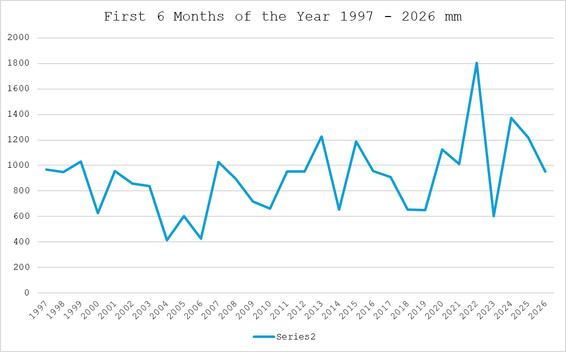
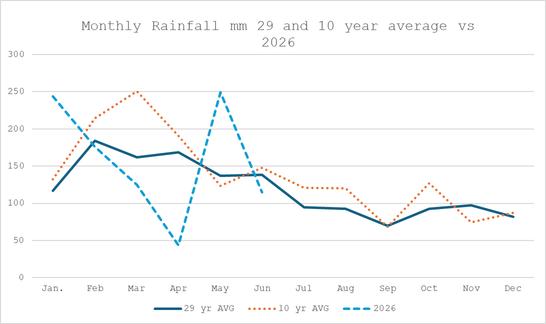
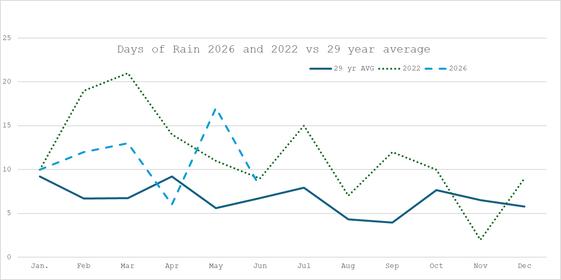
The wild ride in the first six months’ rainfall since 2021 appears to be returning to “normality” this year albeit with some huge swings from the very dry April and dryish June vs the quite wet May.
The comparison of the first half of 2026 to the most recent 29 and 10 year average rainfall numbers indicates an unusually wet May. Only 6 of the last 29 years have had wetter Mays.
In contrast to the actual rainfall in mm, I’m sure you are noticing that the days of rain are well above the 29 year average albeit not as bad as the webbed feet year, 2022. It is “normal to have a wetter first six months of the year. Fingers crossed the sun will come out again soon.
JDW
MATCHAM HALL
From birthday parties and weddings to community events, classes and celebrations, Matcham Hall is the perfect setting to bring people together.