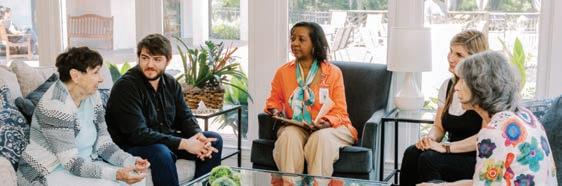
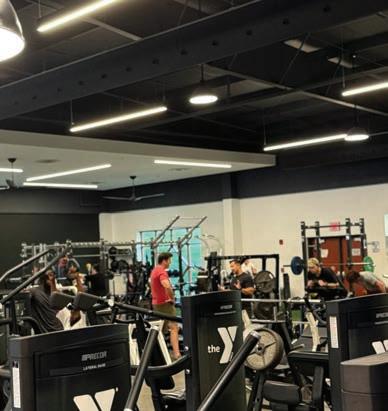
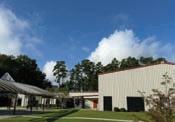
St. Joseph’s/Candler’s 84,000 square-foot campus, located on Pooler Parkway and I-16, combines hightech, digital technology and a high-touch friendly atmosphere for an unparalleled customer experience that completely re-imagines healthcare.
• Specialty Care Physicians (Bone, Joint & Muscle Care, Cardiology, Adult and Pediatric ENT, Neurology, OB/GYN, Podiatry, Vascular Surgery, Metro Surgical)
• Independent Physician Practices (Gastro Savannah, Neurological Institute of Savannah, Most Plastic Surgery)
• Physical Therapy
• Occupational Therapy
Based on high-tech innovations, convenience and the high-quality compassionate care that one has come to expect from St. Joseph’s/Candler, the Pooler campus redefines the patient experience and takes smart medicine to a whole new level. Visit us online at sjchs.org/pooler-campus.
CONTRIBUTORS
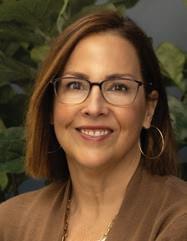
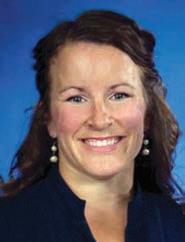
1. Alycia Calderin is a Florida native who moved to Georgia in 2013, where she planted roots with her husband of 16 years. When she’s not balancing the whirlwind of activities for her four kids, she escapes into the world of books. .
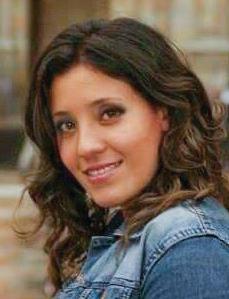
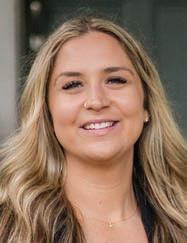
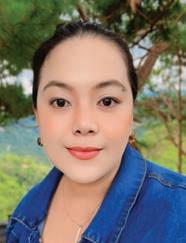
2. Leidy Lester is a freelance photographer, originally from Bogota, Colombia. One of her proudest achievements was working with models and highly experienced photographers in Las Vegas.
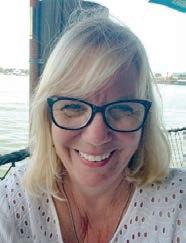
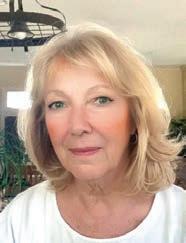
3. Gail Mihalik lives in Rincon with Scott, her high school sweetheart, and their two rescue dogs. Chef by trade with over 50 years of experience, she spends most of her time living, loving, and sharing the history and culture of the area.
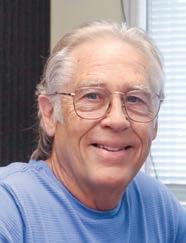
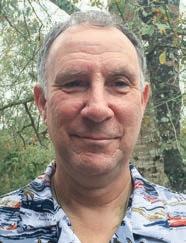
4. Scott Douglas Miller is a broadcaster celebrating 50 years in radio as an air personality, news director, event DJ and content provider several publications. He Originally from Mississippi, Scott shares a home in Rincon with his high school sweetheart, Gail.
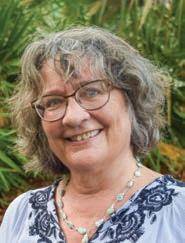
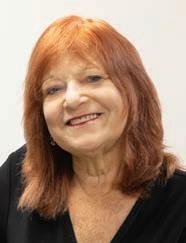
5. Gail Parsons has more than 30 years experience writing for magazines and newspapers. She most enjoys feature writing because it allows her to share the stories of interesting and inspiring people. She is also an artist and enjoys traveling and spending time at the beach.
6. Stephen Prudhomme is a native of New Jersey who lived in Savannah and Rincon for 25 years before moving to Pikeville, TN, with his wife and son. He’s written sports, features, news and business for a number of newspapers and magazines over nearly 40 years and likes table tennis, Frisbee and running.
7. Cindy Reid has been a freelance writer for over 15 years. A native of New York’s Hudson Valley, she embodies the saying “I wasn’t born in the South but I got here as soon as I could.” She can usually be found on a beach, a boat or at a pier at sunset.
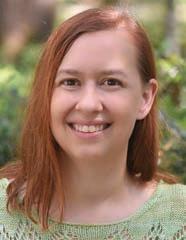
8. Claire Sandow is a marketing professional who lives in Savannah with her husband, daughter and cat. In her spare time, she enjoys pursuing her many hobbies, including knitting, crocheting, quilting and running.
9. Laura Zielinski is a freelance graphic designer specializing in print design. When she’s not working, she loves spending time with her husband Keith and their three beautiful children.
10. Mabel morale officer, enjoys roaming the backyard at home, sitting for hours on the back porch and coming to the office to greet visitors and encourage the staff. Mabel loves getting treats and taking long naps in her mommy’s office in the afternoons.
Veterans and First Responders
PUBLISHER
Jan Southern Jan@JDelSURMarketing.com 912-318-8645
135 Goshen Rd Ext., Suite 251, Rincon, GA 31326 (912) 295-5406 PoolerMagazine.com
J. DelSUR Marketing Group is the publisher of Effingham Magazine, Pooler Magazine and Bryan County Magazine in South Georgia. We are a full service marketing agency with products that include print, digital and social media marketing.
LETTERS TO THE EDITOR
Write and tell us what you think. Pooler Magazine welcomes all letters to the editor. Please send letters to Jan Southern at Jan@JDelSURMarketing.com. Letters to the editor must have a phone number and name of contact. Phone numbers will not be published.
ARTICLE SUBMISSIONS
Pooler Magazine welcomes story ideas from our readers. If you have a story idea or photos to share, please submit ideas and material to Jan Southern at Jan@JDelSURMarketing.com. Stories or ideas for stories must be submitted by email. Only feature stories and photo essays about people, places or things in the Pooler area will be considered.
CIRCULATION: Pooler Magazine is published bi-monthly and distributed to hundreds of locations throughout the area, as well as mailed to thousands of homes. The full magazine is available online at PoolerMagazine.com.
Views expressed in editorial or advertising do not imply endorsement by J. DelSUR Marketing Group.
Reproduction in whole or in part in any manner without the written permission of the publisher is strictly prohibited.
This issue of Pooler Magazine is one of the most meaningful we publish each year.
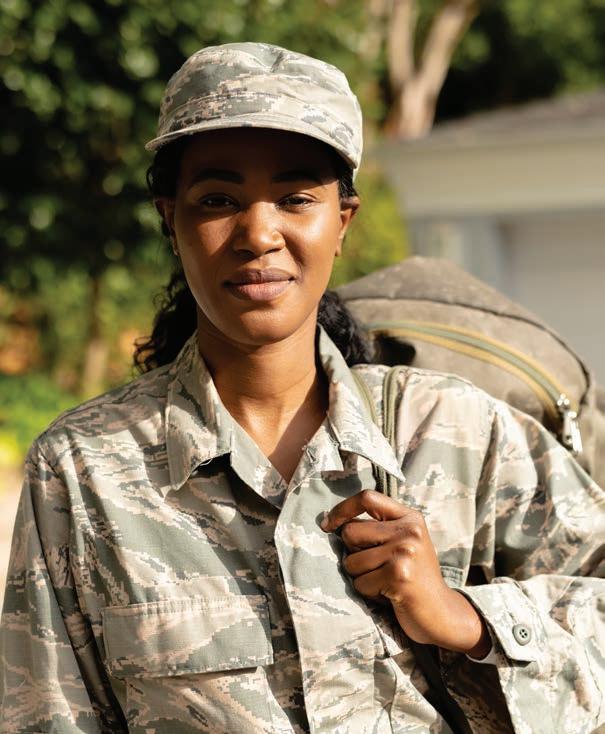
As you flip through these pages, you’ll meet just some of the people whose lives have been shaped by service. Some have worn military uniforms. Some answer emergency calls in the middle of the night. Others continue serving their communities long after their military careers have ended.
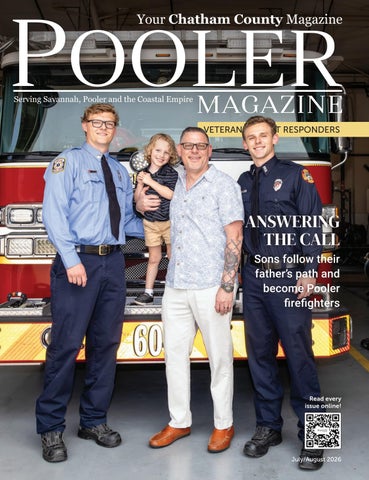
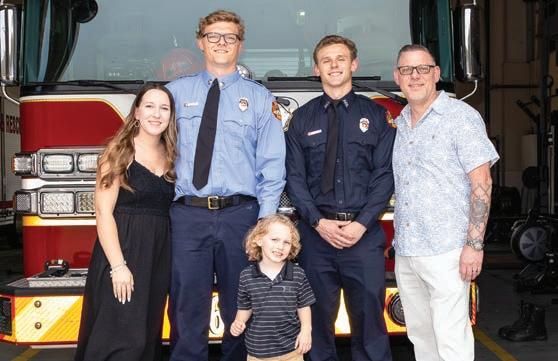
One story that especially touched me is the Haley family. A former firefighter watched his two sons follow in his footsteps and join the Pooler Fire Department. I know he is so proud. And so are we!
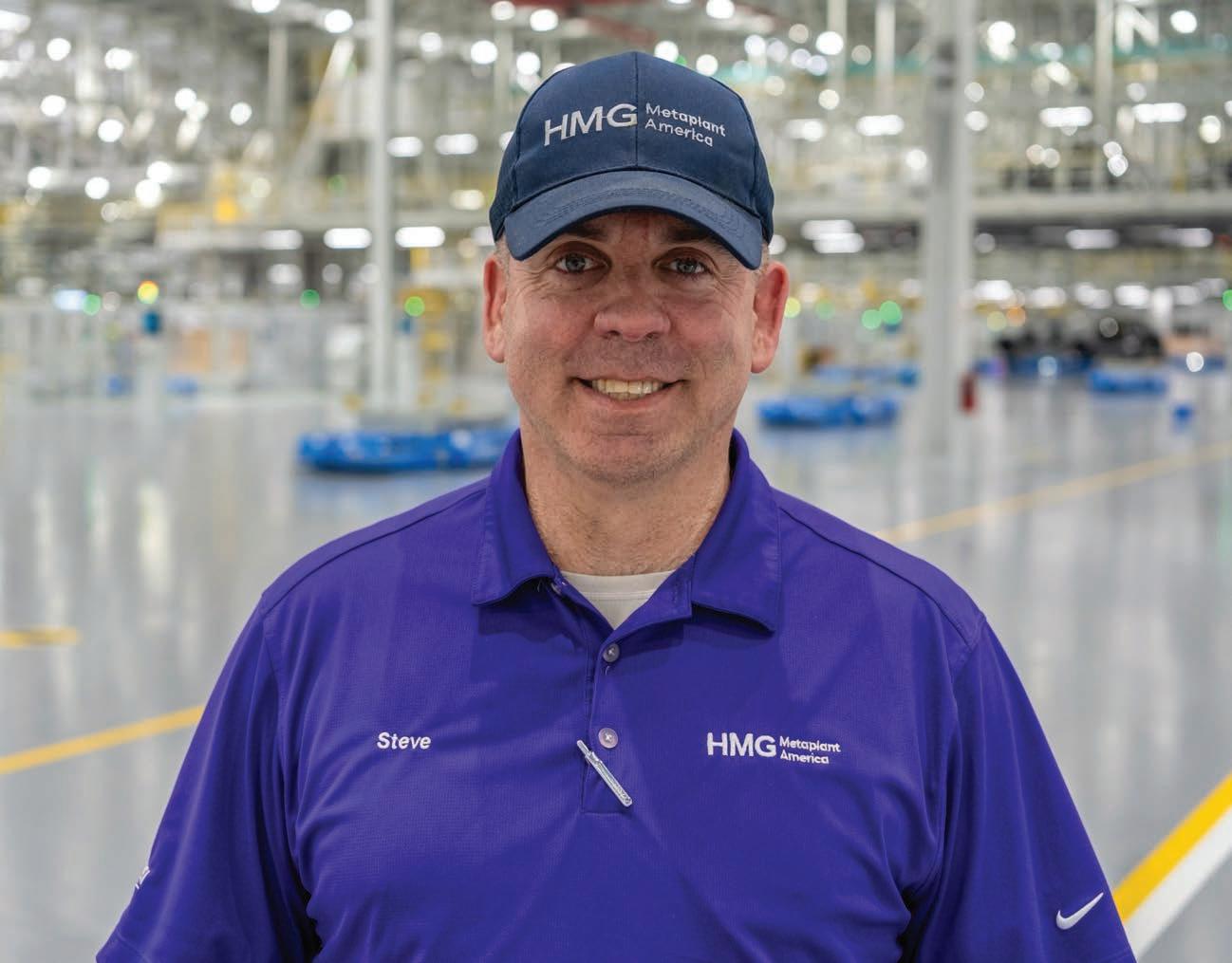
You’ll also meet retired Army officer Steven Kurczak, whose commitment to serving others continues long after he left active duty, and the inspiring women of Beauties in Boots Women’s Veteran Club, who demonstrate the power of service, friendship, and community.
What struck me most while preparing these stories is that service comes in many forms, but it is always rooted in the same qualities: courage, sacrifice, commitment, and compassion.
To our veterans, thank you for protecting the freedoms we enjoy every day.
To our firefighters, police officers, EMS personnel, healthcare professionals, and all first responders, thank you for showing up when others need you most.
And to the families who support them, encourage them, and sacrifice alongside them, thank you as well.
On behalf of all of us at Pooler Magazine, thank you for making our community stronger, safer, and better.
We are grateful for your service.
CEO/Publisher Pooler Magazine
Pooler Magazine is proudly produced by:
Jan Southern
Your Partner in Health is Close to Home.
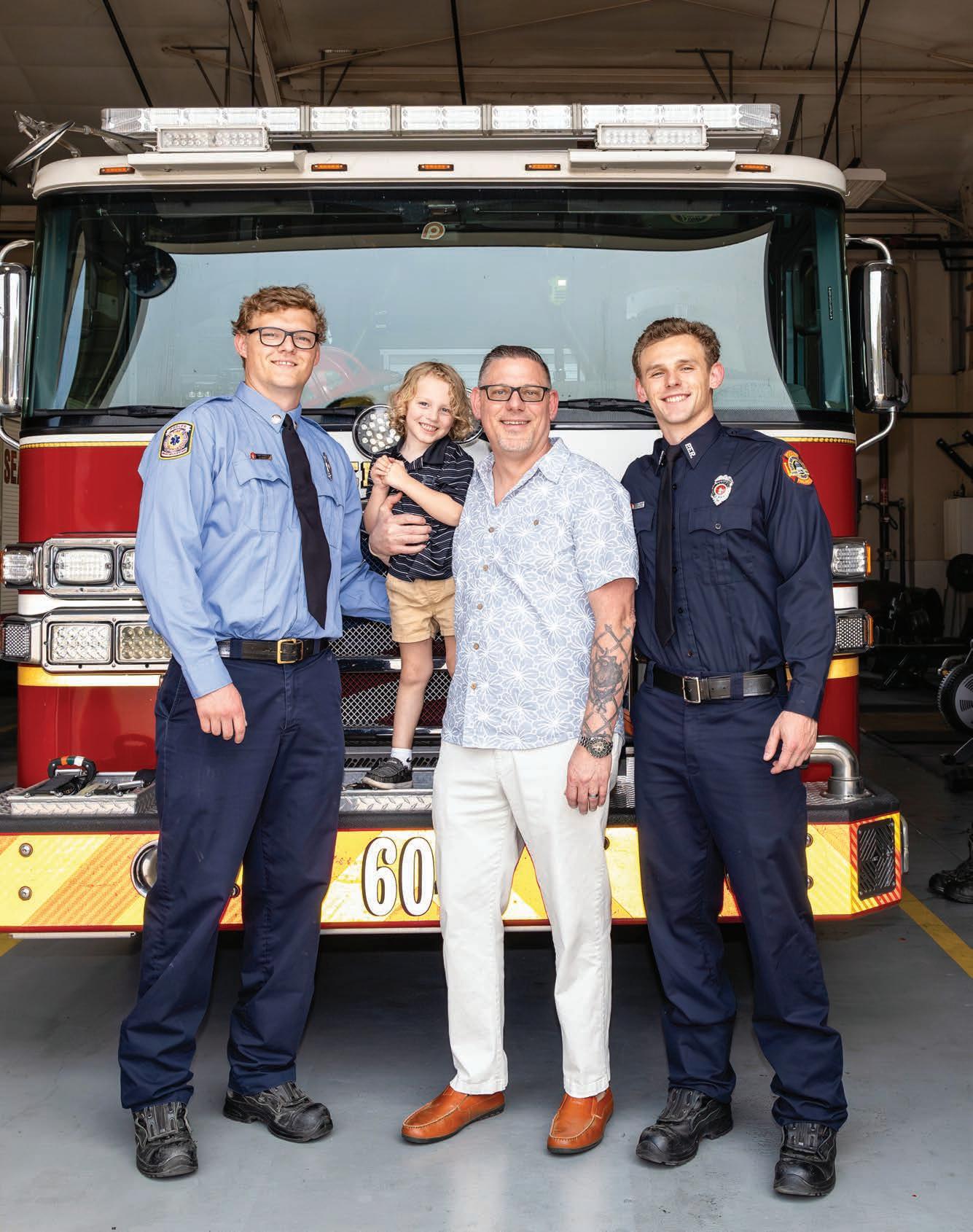
Former Firefighter Passes the Hose to Sons and Expresses Gratitude for their Hiring
Story by Stephen Prudhomme | Photography by Leidy Lester
Being a firefighter is a tough and demanding job that calls for superior physical and mental strength and toughness and above all a willingness to sacrifice one’s own life to save another. With many parallels to the military, these individuals support and care for one another like family as they perform a dangerous job with the realization the next call could be their last.
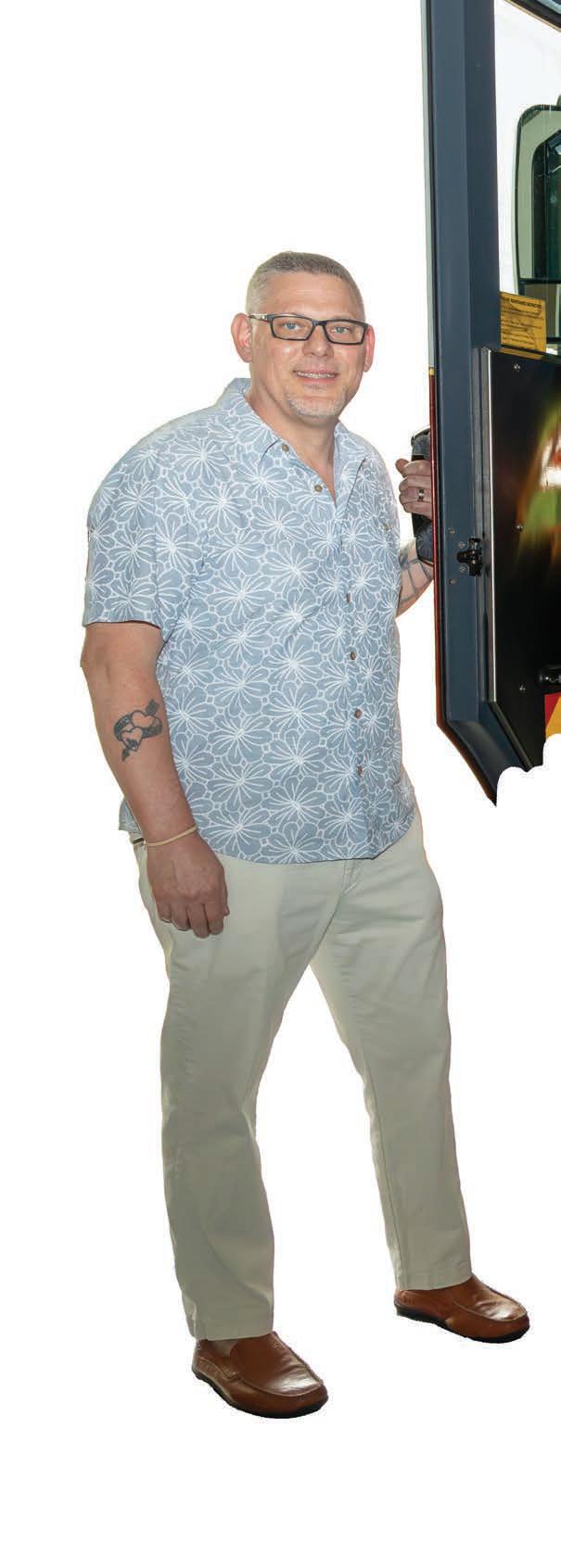
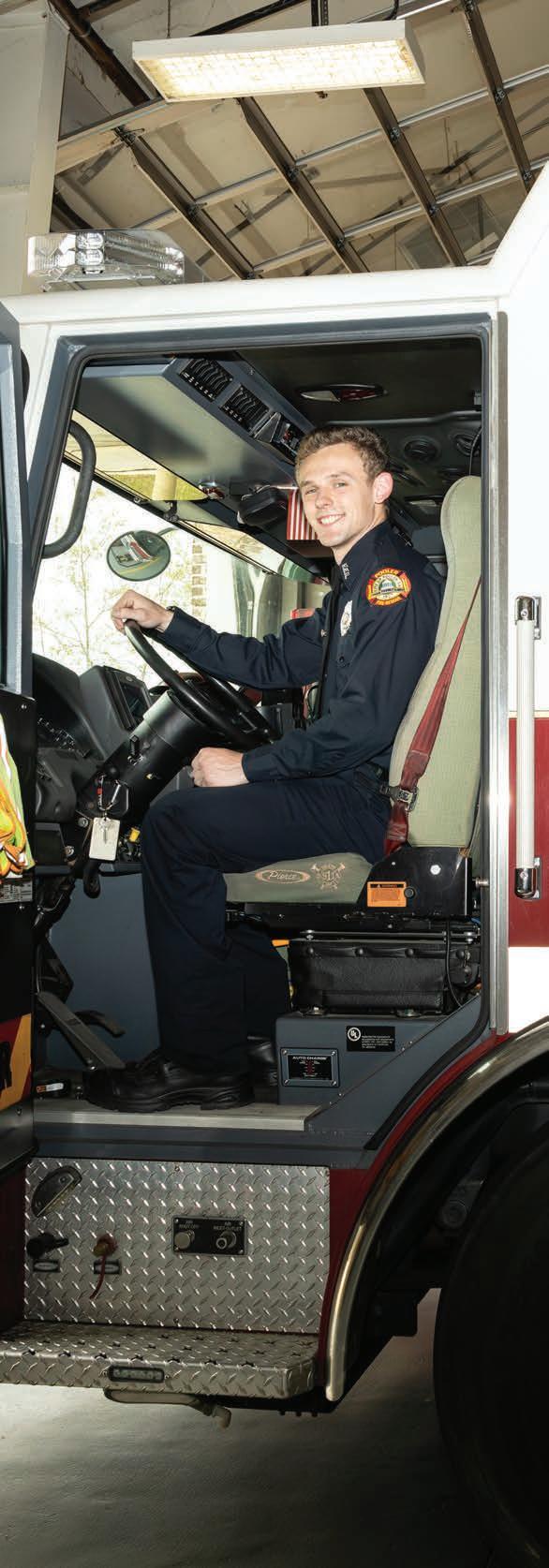
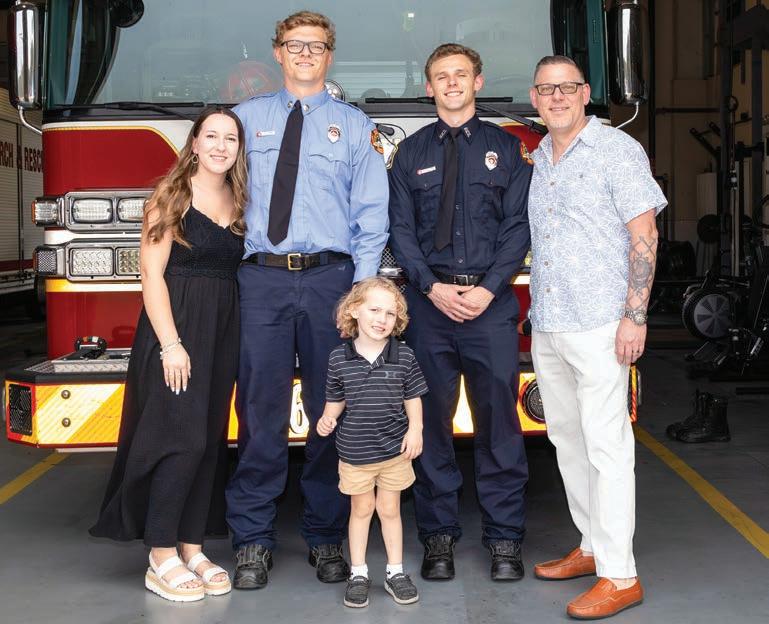
Family takes on an added meaning for two Pooler firefighter brothers. They’re following the path taken by their father, who, along with his wife, a registered nurse, has dedicated his life to service.
As his sons pursue a firefighting career, Christopher Haley wrote a heartfelt letter to Pooler’s fire chief in which he expresses gratitude for the hiring, notes how he and his wife instilled a sense of service in their sons they’re bringing to the department, and asking they’re cared for, just like family.
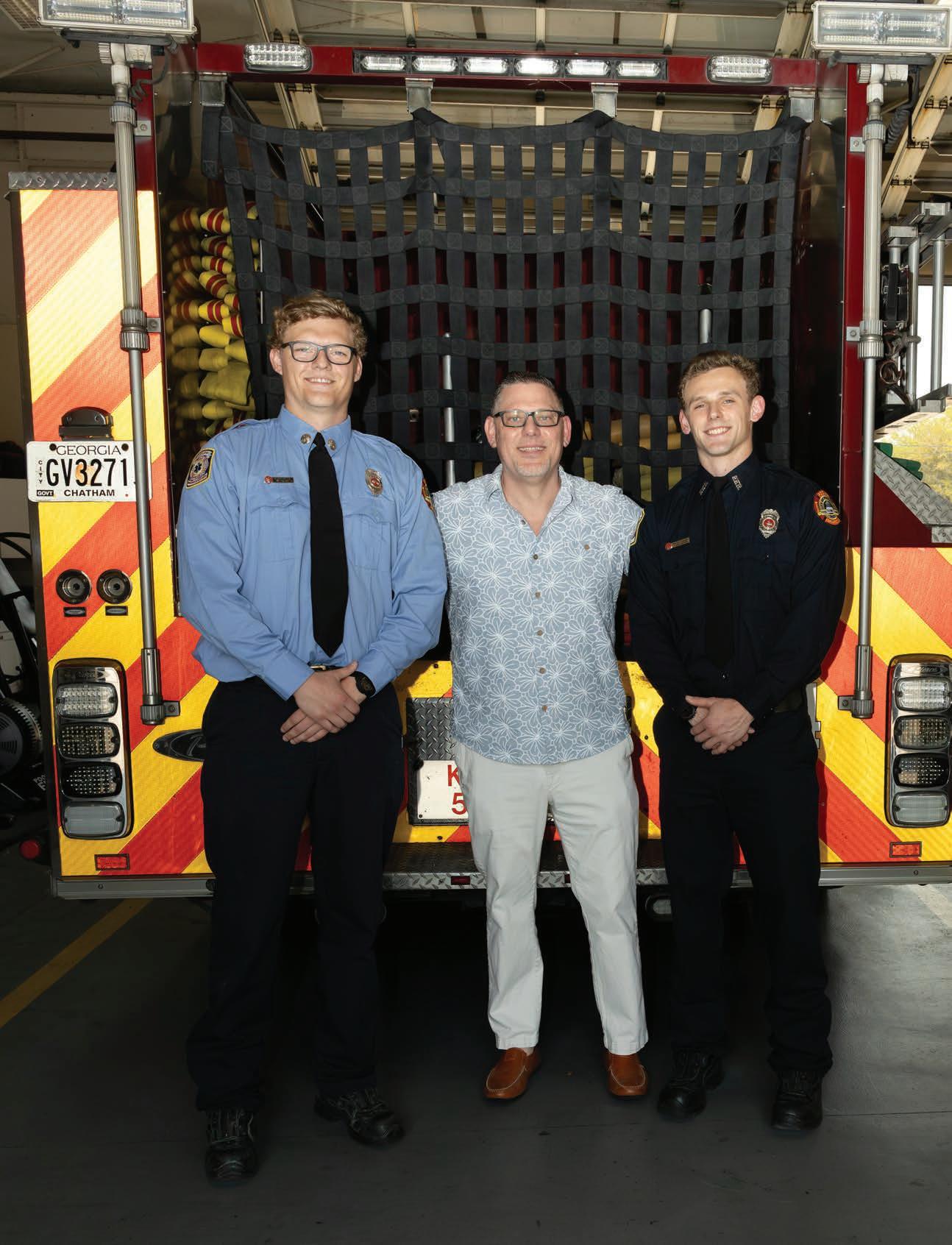
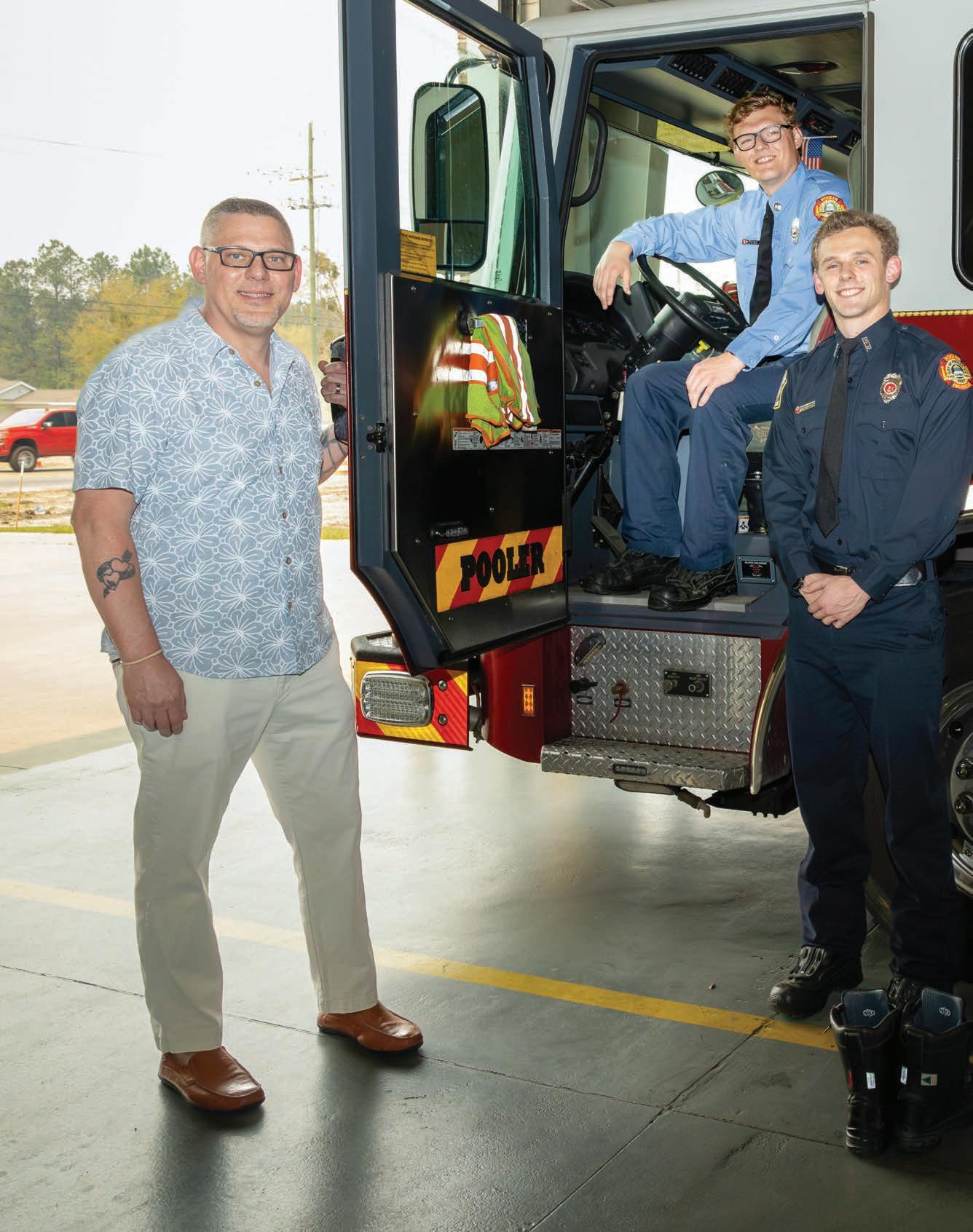
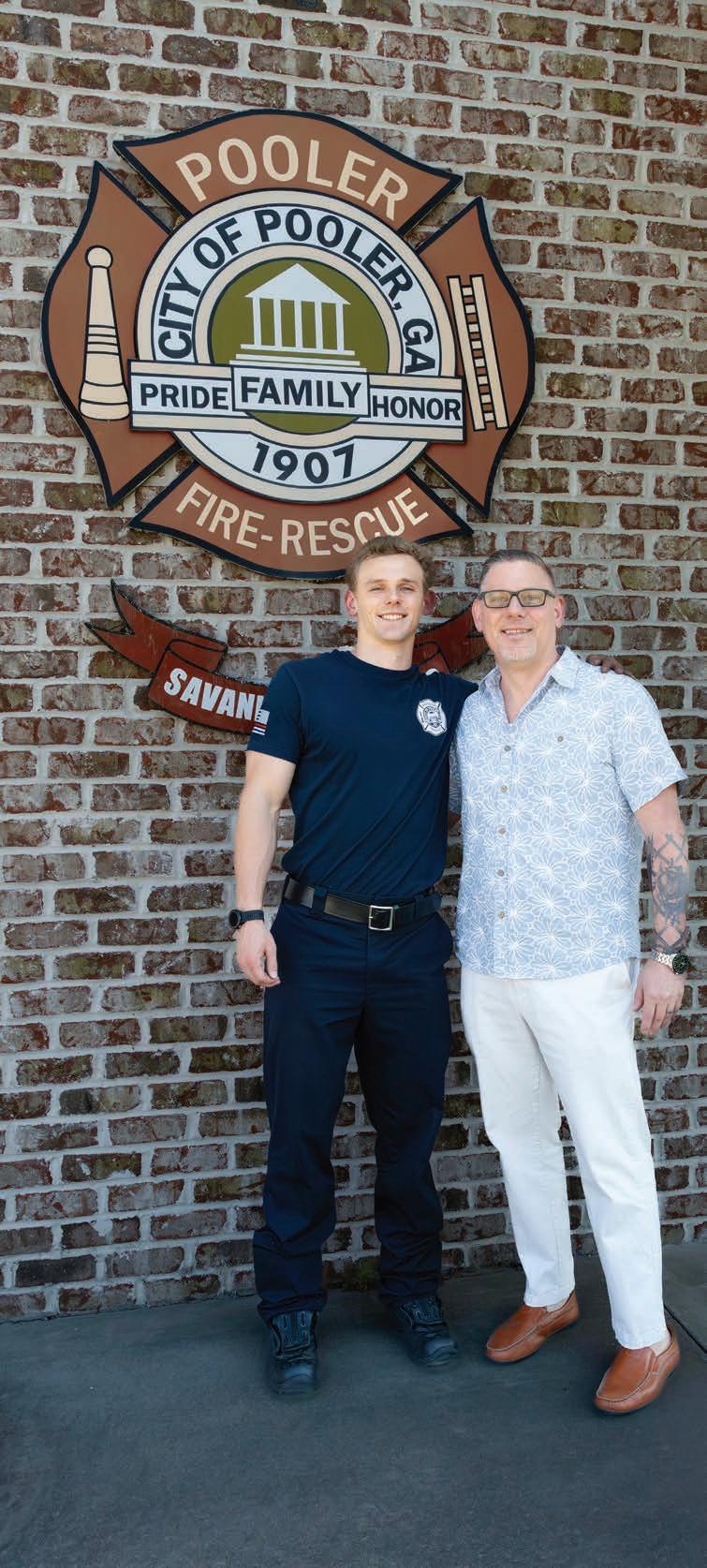
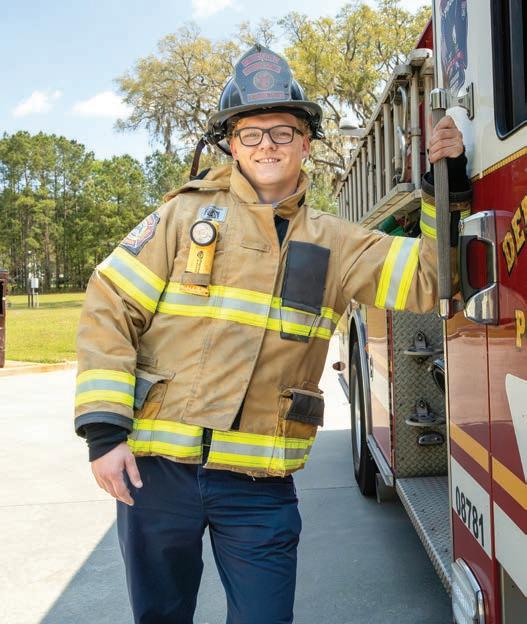
Haley is the hospital emergency manager at Beaufort Memorial Hospital. That followed 22 years as a firefighter/emergency medical technician (EMT) in Dayton, Ohio. In December, Tyler, 21, joined his brother, Matthew, 24, as members of the Pooler Fire Department. That decision to answer the siren call of firefighting and continue a family tradition inspired the senior Haley to reflect on the path they followed and express fatherly pride and gratitude in a letter to Pooler Fire Chief Wade Simmons.
The Haley family is marked by service. Along with Christopher’s jobs as a firefighter/EMT and hospital emergency manager, his wife, Rebecca, has worked as a registered nurse for 30 years. Service isn’t just something they believe in, Christopher wrote to Chief Simmons, it’s something they live. That philosophy was passed down to the next generation.
“Their mother and I have carried them through scraped knees, late-night homework, disappointments and triumphs,” Christopher wrote. “We taught them to stand tall, to protect those who cannot protect themselves, and to always watch over their crew.”
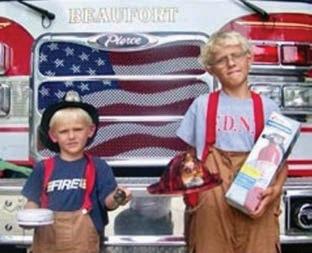
When he looks at a picture of his sons as youngsters visiting him at his fire station, Christopher continued, he sees two little boys who used to tug at his gear, climb on the engine, and sit wideeyed listening to stories from the station. He and his wife watched them play firefighter in oversized suspenders with hearts already full of compassion and courage.
Being the sons of a firefighter and having the lessons of serving instilled by their parents made the Haley brothers ideal candidates to follow their father’s onetime profession. The senior Haley remarked how his little boys have become men, citing the qualities they’ll bring to their new job as men and firefighters.
“Speaking from the heart,” Christopher commented on how the department has seen firsthand the gentle giant side of Matthew, nicknamed Big Bird, adding it now has two of the finest men in its department. “They are dedicated, compassionate, and ready to give everything they have for their community,” Christopher wrote in his letter.
In turn, Christopher, remarked that he and Rebecca, with full hearts, are entrusting their sons to the Pooler Fire Department, asking the latter to provide a nurturing environment similar to the one in which they grew up. “Encourage them, guide them, challenge them to grow, keep them safe,
and love them as family, just as we always have. Their journey started with us, but now it continues with you.”
Wade Simmons has been Pooler’s fire chief since 2008 and started his firefighting career 36 years ago. He’s continuing a family tradition that includes his grandfather, father and four uncles. Noting how the family tradition of firefighting that marked the early part of his career is no longer as prevalent, Simmons is heartened by the Haleys joining his department and the letter thanking him for bringing them onboard.
“I was shocked to receive the letter,” Simmons said. “It touches home with me. I’m old school. The family aspect is a big deal to me. I thanked Christopher for the letter and said I would take good care of them. I told him he should be proud of his two sons and how they serve the community.”
Simmons said Matthew, a driver with the department who is on track to become a lieutenant, really wanted to become a firefighter and possesses a tremendous work ethic. Tyler, who joined the department in early December and is a probationary firefighter for his first year, was an all-star in his 24-week training class, according to Simmons. He added that Tyler stood out in his recruiting class and has the ability to learn quickly and pass his knowledge on to others.
The hiring of his two sons elicited words of gratitude from Christopher. “From one firefighter to another, and from two parents who have spent a lifetime serving others, thank you for welcoming them and helping shape the men they will continue to become,” he wrote. “And thank you for allowing their childhood dreams to become their calling.”
Tyler said his dad’s letter meant more to him than he can put into words. It didn’t just make him proud of his brother and himself, he noted, but it caused him to reflect on his family as a whole and their incredible good fortune.
“The love, support and lessons our parents gave us are things I will always carry with me,” Tyler said. “I am forever proud of my family and deeply grateful for the foundation they provided.”
Growing up, Tyler recalls waking up in the morning and putting on his firefighter costume, running around all day and reenacting scenes from movies and imagining he was wearing his dad’s boots. One memory that stands out is watching his father sprinting through their backyard while throwing on his gear, jumping the fence and running into their neighbor’s burning garage. “As a kid it was both awe inspiring and deeply comforting at the same time,” Tyler said. “It felt like watching a real life superhero, someone who brought safety and calm into a chaotic situation.”
Tyler said his brother also influenced his decision to become a firefighter, seeing the bond he shares with his peers and how they rely on each other through the best and worst moments. Now he has the opportunity to work with him.
“Being able to work alongside my brother is something I don’t take lightly,” Tyler said. “This is something we dreamed about as kids, and now getting to live it together makes this career even more meaningful. I’m honored to continue the legacy of service my dad started.”
Similar to his brother, Matthew has the vivid memory of his dad coming home in the morning with the smell of smoke on his shirt and soot on his face. After four years as a firefighter, he said it’s a job he was put on this earth to do and carry on the lesson imparted by his dad to help people on the worst day of their lives.
In 2020, Matthew saw the impact his father made as a firefighter and with those he served when attending the funeral of a former coworker in Dayton, Ohio. Following the funeral, they attended a dinner to celebrate the life of their friend.
“Something that struck out to me about that night is that fireman after fireman told me that my father was the best firefighter they had ever known,” Matthew said. “I strive to be the best firefighter I can be not just because of the impact my dad had on the people who called for his help but because of the impact he had on the men and women who stood beside him.”
Working alongside his brother is especially meaningful and watching him go through the same experiences he had, face the same challenges and develop pride in his job and his fire family is humbling, according to Matthew. “Being able to share this profession as a family and follow in our dad’s footsteps together is something I don’t take for granted,” he said.
Then there’s the letter his dad wrote that brought the brothers full circle, from awestruck youngsters looking up to their father to firefighters following in his boot prints.
“Reading the letter my dad wrote recently was incredibly moving,” Matthew said. “Hearing how proud he is of my brother and me means more than I can put into words. Knowing that he believes we’re carrying on the values he lived by throughout his career is something I’ll always be grateful for.” ■
SECOND TUESDAY Wilmington Island – 1:00 – 2:00PM
SECOND WEDNESDAY ONLINE – 11:00AM – 12:30PM
THIRD TUESDAY
Hope Haven – 10:45AM – 12:00PM
FOURTH TUESDAY Richmond Hill – 5:30 – 7:00PM
One Day Dancing, the Next on Dialysis
Story by Gail Parsons | Photographs by Leidy Lester
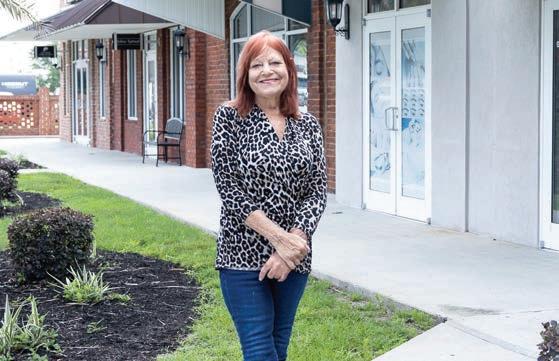
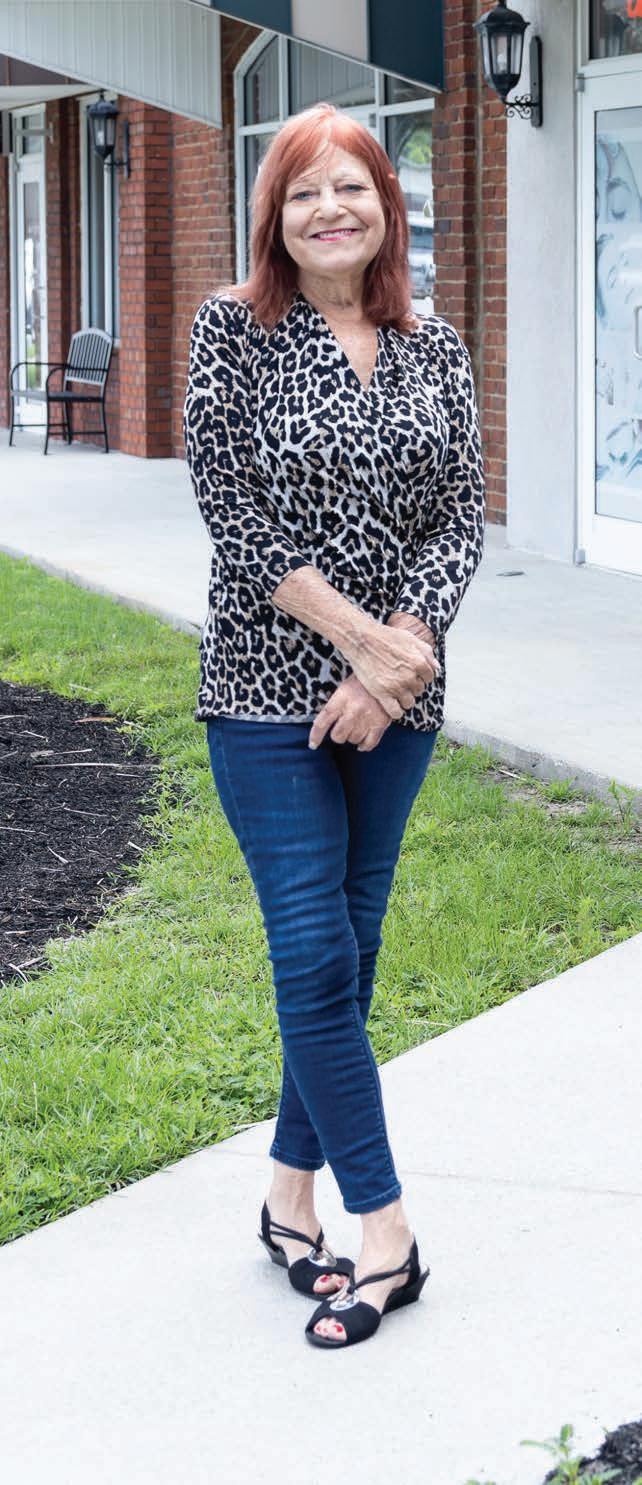
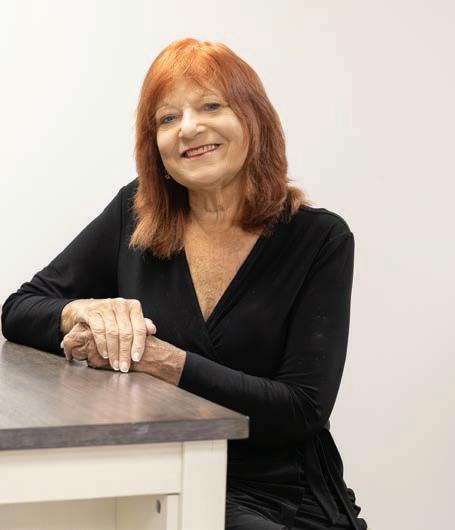
Nancy Edwards spends three days a week hooked to a dialysis machine while she waits for a kidney transplant. Between medical appointments, Edwards performs in local theater productions, spoils her grandchildren, volunteers in the arts community and helps local businesses with marketing at J. DelSUR Marketing Group — all while battling multiple myeloma and kidney failure.
She doesn’t let these challenges bring her down.
“I just refuse to stop living my life over this,” Edwards said. “I don’t want to be viewed as a sick person.”
It was a few days after she stepped off the stage following a run of The Full Monty that she first realized something was wrong.
She thought it was the flu, or a virus.
“I was nauseous, I was throwing up for about two weeks, and finally checked into the hospital,” she recalled “They discovered I had 6% kidney function and was in a very grave situation.”
Further testing revealed she also had multiple myeloma, a blood cancer that develops in plasma cells within bone marrow. It’s not curable, but it is treatable.
“I got all that wonderful news on Christmas Eve,” she said. “I had no idea I was sick. One day you’re dancing, the next day you’re on dialysis, it’s just crazy.”
Edwards is now in remission, but the journey is far from over. She has spent the last four years going to dialysis three times a week while waiting for a kidney transplant. The dialysis treatments have contributed to heart complications, and she estimates medical expenses not covered by insurance have climbed into the hundreds of thousands of dollars.
Despite the challenges, Edwards remains optimistic.
“I feel like everything’s going to work out,” she said.
Not her first run-in with cancer
Decades earlier, Edwards battled breast cancer. She was only 36 when she discovered a lump and got a mammogram.
“They didn’t see it, but I knew it was there, so I demanded a sonogram,” she said. “It was 2.5 centimeters.”
She had a lumpectomy, but more cancer was discovered. The second time around she opted for a double mastectomy to just wipe out any possibility it would come back.
“I had chemo, radiation, I had reconstructive surgery,” she said.
Over the two year ordeal she continued to work and raise her two children. “I worked in television at the time and that kept me going,” she said. “Between my kids and my job, I just charged forward. What’s the alternative? You have to just stay positive and keep moving forward, and hope for the best.”
She doesn’t deny the new diagnosis was devastating.
“By the grace of God, things worked out, and now here we are again,” she said.
“I thought I was done with all this cancer nonsense,” she said. “This time was harder than the first time because I was young and naïve at the time.
She turned that experience into an opportunity to help others through her work with the American Cancer Society and Relay for Life. This time, however, the challenge of a kidney transplan is different.
Her O-negative blood type makes finding a compatible kidney even more difficult.
“O negative is the universal donor, but not so much the recipient,” she said. “It’s hard to find a kidney match.”
Even if a willing donor is not a direct match, Edwards could still receive a transplant through a kidney exchange program, which matches incompatible donor-recipient pairs with other pairs so each recipient ultimately receives a compatible kidney.
“I don’t know how in some mysterious way, it’s going to come to me, but I know it will, and I feel like this is going to be my year,” she said. “I didn’t want to stop working and just have my life be series of doctor appointments and dialysis – that would crush me. I must focus on things that make me happy.”
One piece of good news came recently when Edwards completed all the requirements needed to be placed on the kidney transplant list at Emory Hospital in Atlanta. She is also listed at several other transplant centers, including hospitals in Augusta and Jacksonville. Because each transplant center maintains its own waiting list, patients must complete a separate evaluation and registration process for each one.
“It could be any time, or it could be another two years,” she said.
Because she doesn’t know, she doesn’t waste time thinking about what she shouldn’t or can’t do — she finds ways to do what she wants.
She recently stepped back on stage for the musical Come From Away, which told the true, and inspiring story of 7,000 stranded airline passengers diverted to a small town in Newfoundland following the events of September 11, 2001.
“It was wonderful to just be part of that production,” she said. “That’s what keeps me going. I don’t let it get me down, if anything, it amps me up to live larger.”
Although she said she is a naturally positive person, she doesn’t discredit the remarkable support she gets from her family and friends. She even has one friend from the theater who is undergoing testing to see if she can be a donor.
Until she gets the call that a kidney is available, Edwards plans to keep living life the same way she always has — spending time with family, volunteering in theater productions and enjoying every chance she gets to spoil her grandchildren.
As she sees it, dwelling on the uncertainty won’t change the outcome.
"I've got too much to live for,” she said. “I want to see my grandkids grow up and dance at their wedding.” ■
How to Become a Kidney Donor
Kidney donation can happen in two ways: after death through organ donation registration or while living as a kidney donor.
Patients who receive a cadaver donor live 8 to 10 years longer. Those who receive a living donor live an average of 20 to 40 years longer.
According to the National Kidney Foundation, vary by transplant center, but donors generally must be in good health and free of certain serious medical conditions.
Potential donors can choose to donate to a specific person or make a non-directed donation. A donor does not have to be a direct match for a recipient. Through kidney exchange, or “paired donation” programs, incompatible donor-recipient pairs can be matched with other pairs, so each recipient receives a compatible kidney.
Most living donors spend one to two nights in the hospital following surgery and return to normal activities within four to six weeks, according to the National Kidney Foundation.
People interested in becoming a donor can contact a transplant center directly for information about the evaluation process or register as an organ donor through their state’s driver’s license program. Additional information is available through the National Kidney Foundation and local transplant centers.
People interested in learning more about living kidney donation or being tested as a potential donor can contact the Emory Transplant Center, 5353 Reynolds St., Suite 212, Savannah at (855) 366-7989.
TRADING RANK FOR ROOTS
Story by Gail Parsons
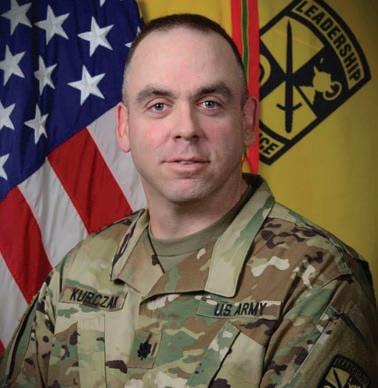
For as long as he can remember, Steven Kurczak knew exactly what he was meant to do. “I knew I wanted to serve my country… as far back as five years old,” he says.
That sense of purpose, something he describes as a “divine calling” carried him from a small riverside town in Virginia into a 26-year career as an Army officer. It shaped his decisions, sustained him through deployments and relocations, and anchored a growing family that would eventually include seven children. And when that career finally came to an end, it left him facing a question he had never seriously considered before: What comes next when the only life you’ve ever planned for is over?
A family tradition
Kurczak grew up in Tappahannock, Virginia, along the Rappahannock River, in a family steeped in Navy tradition. His grandfather and multiple uncles had all served at sea. For years, he assumed he would follow the same path.
“I thought it was going to be the Naval Academy,” he says.
But life, and what he sees as God’s sense of humor, redirected him. A football injury changed his trajectory, and an Army ROTC scholarship opened a different door. What began as a detour became a defining path.
“There’s an interservice rivalry between Army and Navy,” he said. “My family always thought Army was a four-letter word they couldn’t say out loud.”
Still, the deeper motivation remained unchanged. Service, leadership, and a commitment to something larger than himself drew him in. Commissioned as an Army officer after college, Kurczak quickly found his place.
He chose the Field Artillery career path, “a fish out of water” at first in a branch he hadn’t grown up around, largely because of the Army leaders who mentored him.
“They left an impact on me,” he says. “Their leadership, how they taught, how they communicated.”
A pivotal moment came during ROTC summer training, where cadets are tested on everything they’ve learned. Watching live artillery fire sealed it.
“I was sold,” he says.
Built on people, not just purpose
While Kurczak entered the Army with a strong sense of calling, it was the people who kept him there.
“I went in knowing it was my calling, but the people kept me there,” he says. “The friends I still have from the military.”
Over time, the Army became not just a profession, but a way of life, one that demanded constant movement. Every few years brought new orders, new locations, and new challenges. Over 26 years, his family would move nine times.
With each transition, Kurczak made a deliberate choice: involve his family.
“my family, and especially my wife, would have some vote and where we would go,” he said. “I could get the job requirements done at any of multiple location choices.”
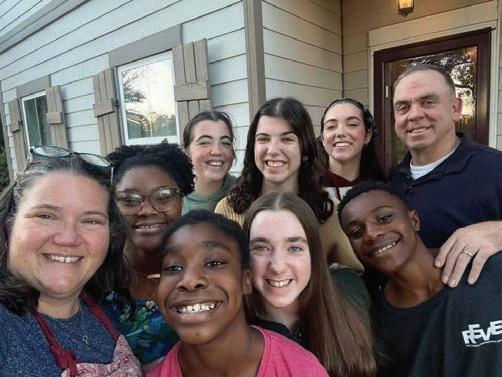
That approach became increasingly important as his family grew. He and his wife eventually became parents to seven children, four biological daughters and three adopted siblings.
As responsibilities multiplied, so did moments of reflection.
“You start doing a little bit of that … am I supposed to still be doing this?” he says. “You start praying.”
But each time he evaluated his path, the answer remained the same.
“I had a leader early in my career that said, ‘when you stop having fun is probably when you start thinking about getting out of the military,’” he said. “Throughout the 26 years, I didn’t stop having fun. Not all days are rainbows and unicorns, but the good days outweigh the bad.”
A family grows through loss and faith
The Kurczak family story took a profound turn during a difficult season.
After the loss of a newborn son, Steven and his wife felt called in a new direction: foster care.
“We thought we would be a foster family after I got out of the military,” he says. “But with our own traumatic experience of losing a newborn son, we thought God was telling us to do it while we were still serving.”
What began as an intention to foster became something more permanent.
“We thought we would be a foster family after I got out of the military, but with our own traumatic experience of losing a newborn son, we thought God was telling us to do it while we were still serving.”
Two siblings, Jayvion and Julaya, had been in the foster system for years in Kansas where Steven was stationed. When he and his wife were asked if they would consider adoption, it wasn’t what they had expected.
“That’s not how the foster system is supposed to work,” he recalls thinking. “You try to reintegrate the kids back to their families.”
But in this case, reunification wasn’t possible. The couple said yes.
Later, a third sibling, Ja’ziyah, nicknamed Jazzy, entered the system. By then, the Kurczaks had already adopted her brother and sister.
“We knew we would say yes to any siblings,” he says. “We wanted to keep them together.”
The process wasn’t simple. Military life complicated everything, especially as the family moved from Kansas to Illinois and later prepared to relocate again. Adoption timelines stretched, paperwork multiplied, and state systems didn’t always align.
“It added about two years to the process,” he says.
Determined to avoid further complications, Kurczak worked to finalize Jazzy’s adoption before the family’s next move to Georgia—successfully completing it during the uncertainty of the COVID-19 pandemic.
Through it all, he returns to the same theme: faith.
“Through our prayer, we were able to do both,” he says — serve and grow their family.
Instead of leading soldiers, he now supports employees, helping them navigate challenges, connect with resources, and improve their work experience.
The Decision to Stay
By the time Kurczak arrived at Fort Stewart for his final assignment, he was a Lieutenant Colonel with decades of leadership behind him. He could have pursued further assignments, but it would have required yet another move.
This time, the decision was different.
“After nine moves in 26 years, I didn’t want to move again,” he says.
His children were settled in schools. His wife had found what he describes as her “dream job” teaching. For the first time, stability mattered more than advancement.
“I wanted to be a keeper of my own transition,” he says.
So, after 26 years, he retired and entered the civilian world. However, joining the military had been a lifelong plan, leaving it was the opposite.
“I didn’t know what my next purpose was,” Kurczak admits. “I didn’t know anything else.”
The transition to civilian life was, in many ways, more uncertain than anything he had faced in uniform. He applied for hundreds of jobs across the Savannah area.
“I cast a wide net,” he said.
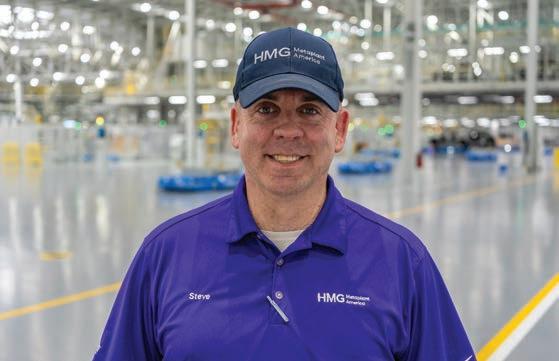
Eventually, he found his place with Hyundai Motor Group Metaplant America (HMGMA), where he now works in Employee Relations. A position that aligned with his strengths and what he learned in the Army.
“What I do here is a continuation of what I did in the military,” he says.
Instead of leading soldiers, he now supports employees, helping them navigate challenges, connect with resources, and improve their work experience.
“If their needs are met, they help meet the business needs,” he says. “They help us make a quality car.”
While Kurczak has found fulfillment in his new role, the transition hasn’t been without difficulty.
One of the biggest challenges, he says, is redefining identity. In the military, rank and role are immediately understood. In civilian life, those markers disappear.
“My neighbors didn’t know me as Lieutenant Colonel,” he says. “I wasn’t coming out of the house every day in uniform.”
Building community has also been harder than expected. After years of moving, the Kurczaks are used to starting over, but civilian communities don’t always function the same way military ones do.
“In the military, you put yourself out there,” he says. “You wear your emotions on your sleeve, you volunteer. I
think that’s the things that we’ll have to continue to work on to establish ourselves in the communities that we live in, that we work in, and that we go to school in.”
In a more rooted community, where many relationships have developed over years or decades, connection can take longer.
“We haven’t found our people yet,” he says. “But I think that’ll come over time.”
For all the focus on his own journey, Kurczak is quick to shift attention to his family.
“The entire family serves,” he says.
His children, now spread across college, high school, and middle school, have grown up navigating constant change. They’ve gained adaptability, perspective, and resilience. But those strengths have come with sacrifices.
“They’re connected to friends all over the nation,” he says. “But they didn’t grow up with the same friends their whole childhood.”
It’s a tradeoff many military families understand deeply—and one he believes deserves broader recognition.
Today, the Kurczaks are putting down roots in Richmond Hill. Their children are thriving in schools and
activities, especially dance, a passion that has become a central thread in family life.
“I’m a dance dad,” he says, laughing. “All my money goes to dance.”
After decades of movement, the idea of staying put feels both unfamiliar and right.
“We decided to plant our flag here,” he says.
For a man who once defined his life by service in uniform, the mission has changed but the purpose remains: Helping people. Building community. Leading with intention. Just in a different kind of uniform. ■
POOLER
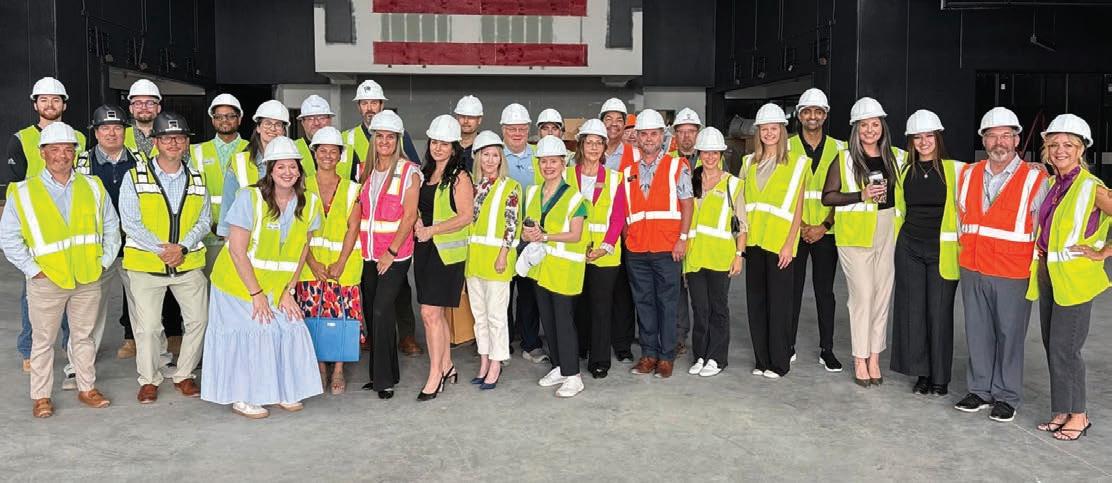
Pooler Chamber of Commerce April Investor Tour for an exclusive behind-the-scenes look at the Ghost Pirates Ice Cove & Amphitheater at VyStar Pavilion.
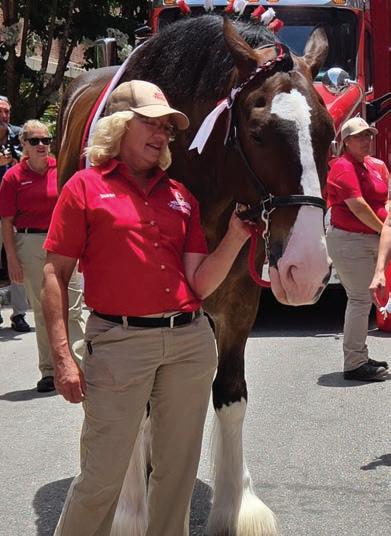
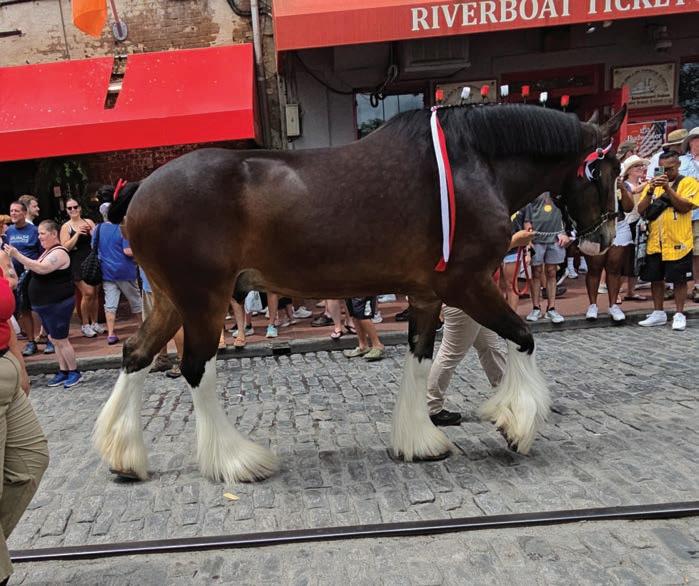
2026 Clydesdales Savannah
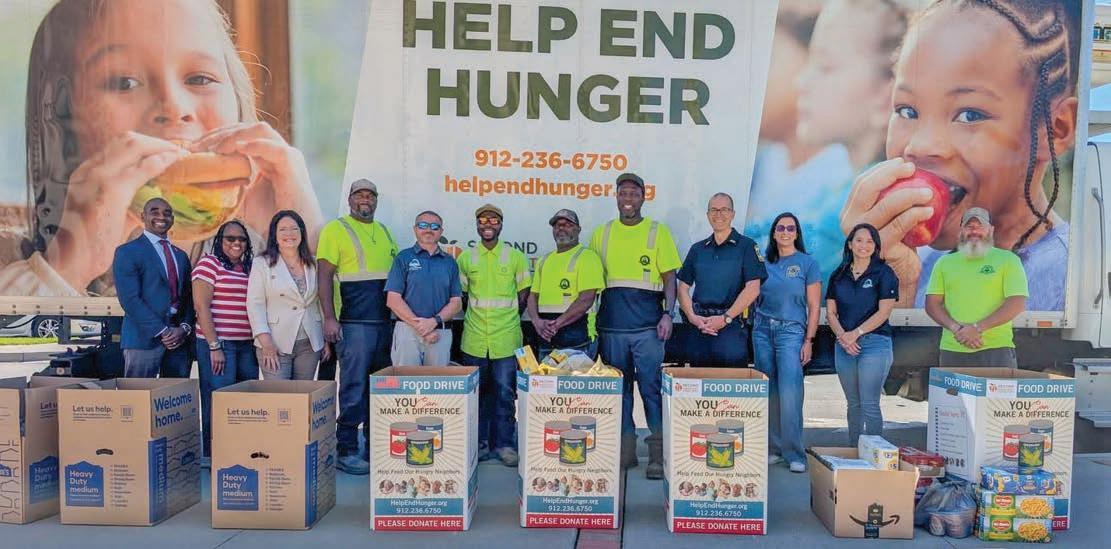
The City of Pooler celebrated the end of the employee food drive with Second Harvest of Coastal Georgia
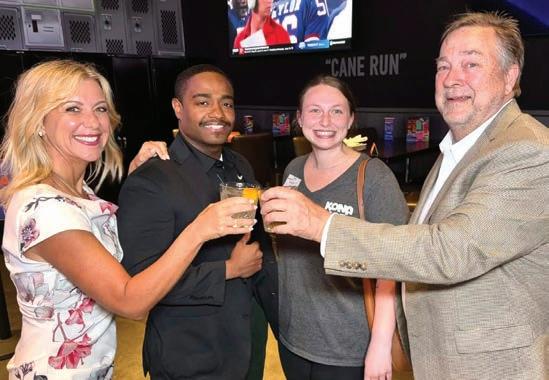
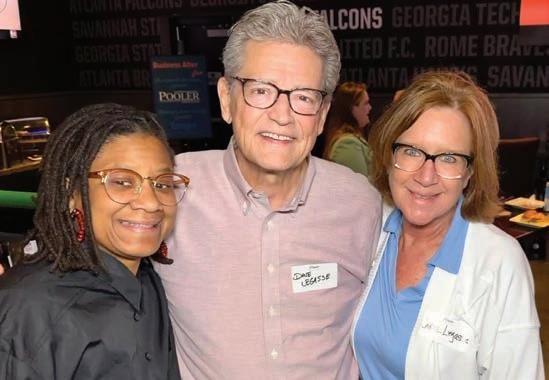
Pooler Chamber of Commerce BA5 MegaMixer
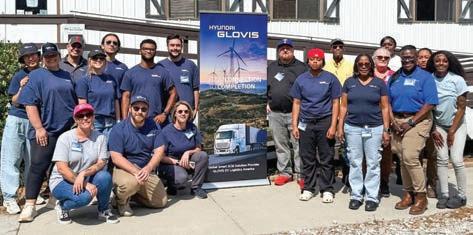
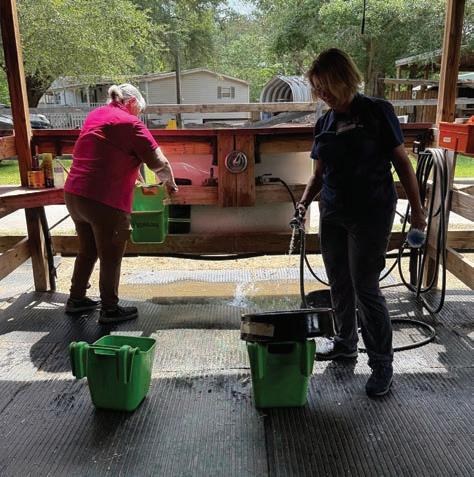
United Way of the Coastal Empire with Hyundai Motor Group Metaplant America team and Faith Equestrian Therapeutic Center
SISTERHOOD IN STEP: BEAUTIES IN BOOTS WOMEN'S VETERAN CLUB
Story by Cindy Reid
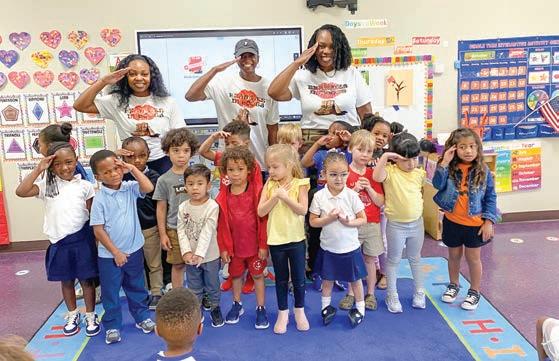
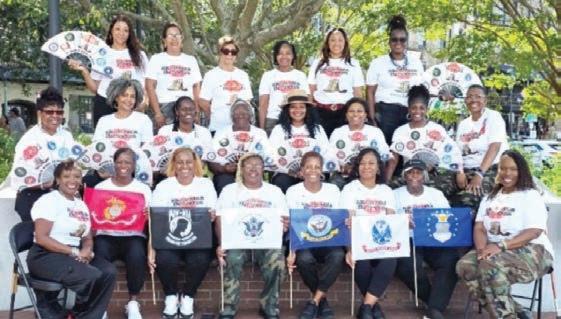
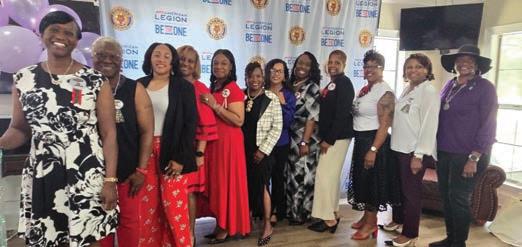
Beauties in Boots Women’s Veteran Club is built on connection, community, and shared experiences. These women walk together, serve together, and lift one another up through every season of life.
Based in Savannah, Beauties in Boots brings together women veterans who share a common bond of military service. The organization provides emotional and social support while encouraging members to remain active in their communities through volunteerism, mentorship, and service projects.
Founding President Tresa Hester explains the club's mission simply.
“Beauties in Boots is open to all women who have served or are actively serving in the United States military. We also welcome supporters. We believe in serving our communities, military or civilian.”
While traditional veteran organizations and civilian friendships offer valuable support, many women veterans find something uniquely powerful in connecting with others who have shared similar military experiences. Peer-topeer networks create a space where women can be seen, understood, and celebrated for their service.
“We call ourselves a club, which is a more modern term for sisters who have a commonality and support each other,” says Tresa. “We consider ourselves a tribe.”
That support can take many forms. It may mean accompanying a fellow member to a doctor’s appointment, celebrating the birth of a child, or standing beside a sister during the loss of a loved one.
A Calling to Serve
Beauties in Boots Women’s Veteran Club was founded in 2023 by Tresa Hester and Ebony Elim while they were attending Hope City Church in Savannah.
Tresa proudly served in the United States Army as a medic and medically retired with the rank of Sergeant. Today, she continues her commitment to service as a mortician and death-care professional. She also serves with the National Cemetery Administration as a Cemetery Representative, assisting military families during some of life's most difficult moments.
In 2023, however, Tresa found herself praying about returning to ministry.
One Sunday at Hope City Church, she heard Pastor Tameka say, “I feel a veteran ministry in the atmosphere.”
At that moment, Tresa knew God was speaking directly to her.
Later that same day, she found herself standing beside Ebony Elim, a 23-year U.S. Army veteran whose distinguished career included combat deployment and multiple overseas assignments as a Senior Telecommunications Supervisor.
“We get the word out by continually being active in the community,” says Tresa. “We wear our club shirts and walk in parades. We set up booths at veterans events, volunteer at the YMCA, and maintain a strong online presence.”
Chaplain Shirlenia Daniels, a retired Army Logistics Officer with 20 years of service and Executive Pastor at Bread of Life Ministries, first discovered the organization online.
“I first saw the club while searching for veterans groups,” she says. “Everything flowed from there.”
Today, Daniels serves as both the club chaplain and treasurer.
A Heart for Service
The club operates under a simple philosophy: Service, not being served.
The club operates under a simple philosophy: Service, not being served. From the beginning, members committed themselves to finding meaningful ways to give back to the community.
Although they had never met, Tresa recalls feeling a clear sense of direction.
“God whispered, ‘That's the one.’ I was hesitant at first, but the message came again, ‘That's the one who will help you lead the group.’ That was the beginning.”
What started as a simple conversation quickly gained momentum. By 2025, the organization had officially become Beauties in Boots Women’s Veteran Club.
Growing a Tribe
Growth came quickly.
The club’s first meeting attracted eight women. Today, membership has grown to more than 70 women veterans and supporters.
From the beginning, members committed themselves to finding meaningful ways to give back to the community. Their first major project was a feminine hygiene drive benefiting young women at Park Place. Working alongside Single and Soaring, members collected more than 550 feminine hygiene products to help combat period poverty in the community.
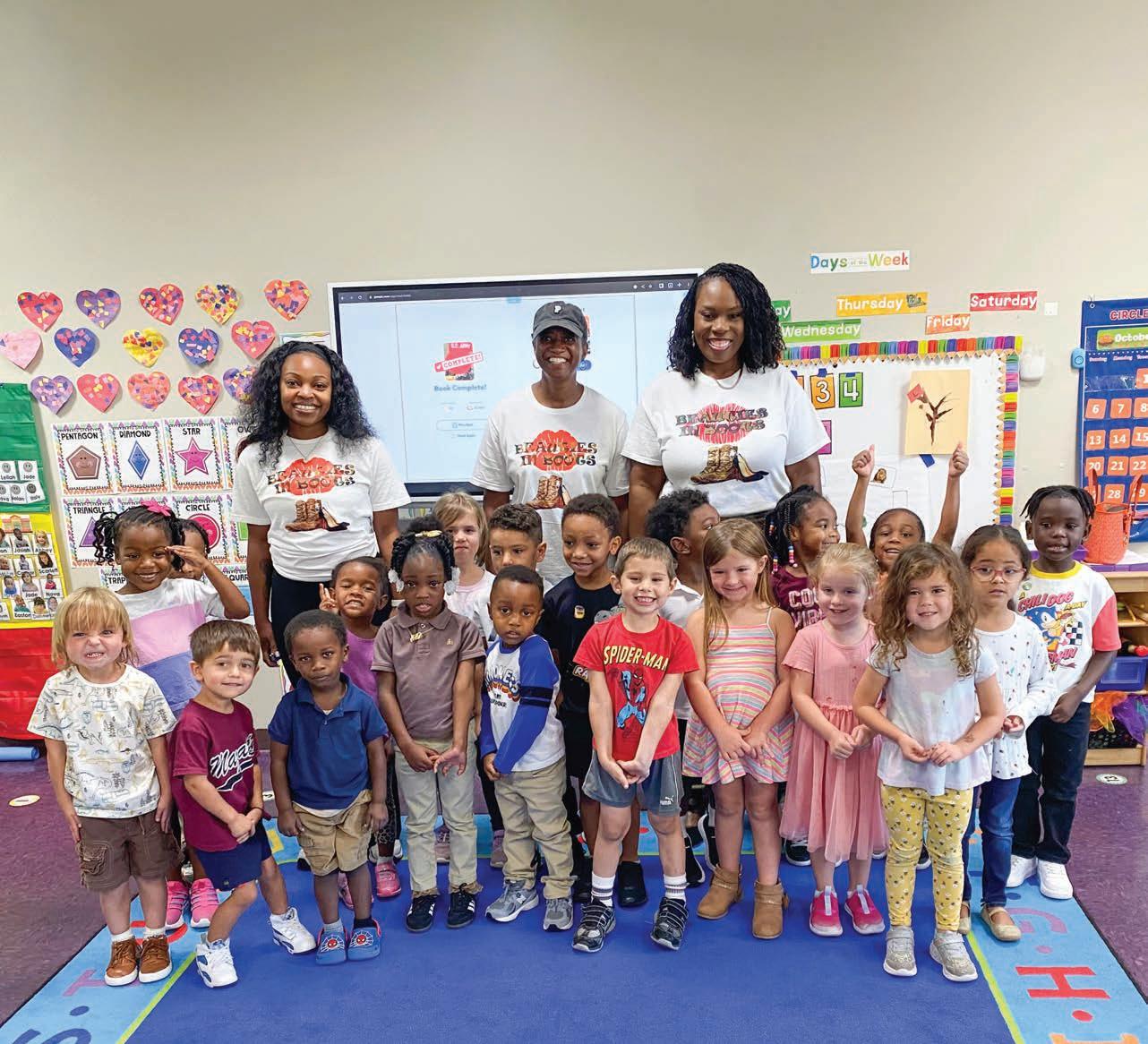
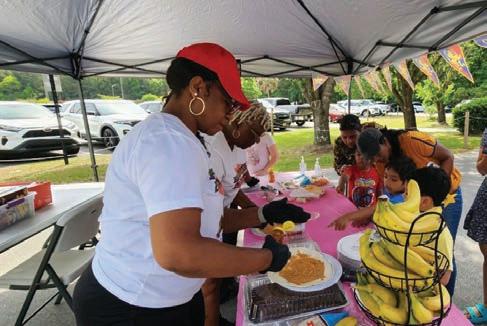
Daniels, who also serves on the West Chatham (Pooler) YMCA Board of Directors, has connected the organization with numerous volunteer opportunities, including Children's Day activities during the past two years.
Members have also spent time mentoring young women at the Georgia Youth Challenge Academy, a military-style residential academy serving at-risk teenage girls.
"We shared our testimonies and showed them a different path,“ says Tresa. "We also distributed feminine hygiene products, and we repeated that effort again this year.“
A major donation of 1,300 feminine hygiene items from Shelly Fickau and the YMCA helped make the initiative even more successful.
Today, the club is planning both an elderly care drive and a baby supply drive.
"So many of us were mothers while serving in the military, often the only woman and sometimes the only Black woman in our units,“ says Tresa. "We know what that's like. We want to provide clothes, diapers, formula, and other necessities to military mothers who may be struggling.“
The Invisible Veteran
One of the challenges many women veterans face is what some call the "Invisible Veteran" phenomenon.
In civilian life, women are often mistaken for military spouses rather than veterans themselves. This cultural blind spot can leave women feeling overlooked within the very communities they served.
Being surrounded by other female veterans provides a sense of validation and understanding without the need to explain or prove their military experience.
Veterans share an immediate bond built on trust, service, and sacrifice.
"Because we spent so many years in the military system, where we're taught that we're all one team and that no one gets left behind, we still carry that desire to serve after leaving the military,“ says Tresa.
"We know other veterans are trained a certain way. We don't have to figure each other out. That connects us. You served your country, and we still stand together.“
These are women who understand the sacrifices of deployment, including leaving children behind while serving their nation. They understand the challenges, triumphs, and realities of military life in ways others simply cannot.
DID YOU KNOW?
Women currently make up approximately 17.9% of active-duty U.S. military personnel, representing more than 227,000 service members across all ranks and career fields.
Among women serving in the military, Black women represent a significant demographic, accounting for nearly 30% of all enlisted women, roughly double their representation in the civilian population. Black women also make up approximately 19% of female officers within the Department of Defense.
Of the nation’s more than 2.1 million women veterans, approximately 20% are Black.
Beauties in Boots provides a place where women veterans can speak the same language, share honest stories, and build lasting friendships with people who truly understand their experiences.
Quite simply, it is their tribe.
Looking Ahead
The group meets twice each month at various locations throughout the Savannah area, including local restaurants, private homes, community venues, and American Legion Post 500.
As membership continues to grow, the leadership team wants every woman veteran to know she has a place where she belongs.
Beauties in Boots is more than an organization. It is a sisterhood built on service, support, faith, and friendship.
The club welcomes new members and supporters and looks forward to continuing its mission of serving both veterans and the broader community. ■
July 2026
POOLER EVENTS
7/3: 4avannah Stars & Stripes Celebration at Plant Riverside District
400 West River St., Savannah
7/4: Do The Red, White, & Brew Pub Crawl in Savannah 12 West State St., Savannah
7/9: Mother-Daughter Permanent Jewelry Night with the Savannah Stee
400 West River St., Savannah
7/17 and 8/17: Paws on the Patio 2411 De Soto Ave. Savannah
7/25: Back to School Color Dash & Splash 5k & Fun Run Tanger Outlets
7/29: Mobile MammographyChatham County Sheriff’s Office 1050 Carl Griffin Drive Savannah
7/29 and 8/12: Chair Yoga for Cancer Survivors 225 Candler Drive, Savannah
8/7-8/16: 14th Annual Savannah VOICE Festival Various locations
8/15 and 8/22: Forsyth Farmer’s Market Forsyth Park
8/29: 13th Annual Run For the Wounded Grayson Stadium Savannah
mom-ing UN FILTERED
Finding Magic in the Madness of Motherhood
The Middle Child With the Mouth (And the Backbone)
by Alycia Calderin
Every family has that child.
The one with the timing.
The delivery.
The zingers that land before you even realize what just happened.
In our house, that’s Sofia.
She’s the middle child, the sassy one, the sharp one, the one who keeps me on my toes and occasionally has me questioning my parenting in real time. She is, without question, the hardest child I’ve ever raised.
And also the one I worry about the least.
Sofia came out observant. She reads a room instantly. She doesn’t miss a beat. And she has a way of responding that makes you pause and think, Wow. That was… accurate.
She’s not loud just to be loud. She’s quick. There’s a difference.
Over the years, we’ve had teachers gently suggest that maybe she needed to be “toned down.” Softened. Redirected. As if her personality was something that required sanding.
But I never wanted to dull her.
Instead, we worked on channeling it, teaching her the difference between confidence and disrespect, between standing her ground and crossing a line. She’s learned that words matter. Tone matters. And yes, kindness matters.
But so does backbone.
Case in point: one afternoon, I got a call from the school about an “incident.” Those calls never come with good vibes.
Apparently, Sofia had made a boy cry. Naturally, I asked what happened.
The teacher explained that the boy had been making fun of Sofia’s weight. This was fourth grade, prime baby fat era,
awkward all around. Sofia listened for only so long before responding with, “Be quiet with your round head. I know you be thinkin globally.”
I mean… what does that even mean?
I had questions. The teacher had questions. The boy, presumably, had feelings.
Now, don’t get me wrong, we addressed it. We talked about words, tone, and not stooping to someone else’s level. We reinforced that we don’t insult people’s bodies, even when they start it.
But I’ll also say this: that boy did not bother her again. Sofia isn’t a bully. She doesn’t go looking for trouble. But she is also not the child someone targets unless they’re prepared to walk away emotionally wounded.
I’ve even had to warn her older sibling during verbal sparring matches: You might want to reconsider.
Because Sofia will make you cry.
And she will do it with confidence and confusing metaphors.
Raising a child like her is exhausting. You can’t coast. You can’t bluff. You have to be present, consistent, and honest, because she will call you out if you aren’t.
But kids like her? They grow into women who speak up. Women who don’t shrink. Women who don’t need permission to take up space.
She’ll be the one who asks the hard questions. The one who doesn’t tolerate nonsense. The one who knows who she is, even when the world tries to tell her she’s “too much.”
And maybe she is.
Too smart.
Too sharp.
Too strong.
But if history tells us anything, those are usually the kids who end up just fine.
So no, I didn’t dull her down. I helped her aim.
The Corner Table Chatham County
by Gail Mihalik
Chasing the Sweetest Scoops in Coastal Georgia
Ice cream didn’t begin as an everyday treat—it started as a luxury reserved for the upscale crowd. By the early 1700s, America had gotten its first taste, and by 1744 it was already being written about. Back then, enjoying ice cream meant you were living pretty high on the hog. Even George Washington and Thomas Jefferson were known fans of the frozen indulgence.
Then came the real game changer. In 1844, Nancy Johnson created the hand-cranked ice cream freezer, allowing regular families to bring the magic home. No palace required—just some elbow grease, rock salt, and a sweet tooth.
As technology improved, ice cream rolled from fancy parlors into everyday American life. Then in 1904, the ice cream cone arrived and changed dessert forever. Suddenly, you could stroll, chat, and enjoy your scoop all at once.
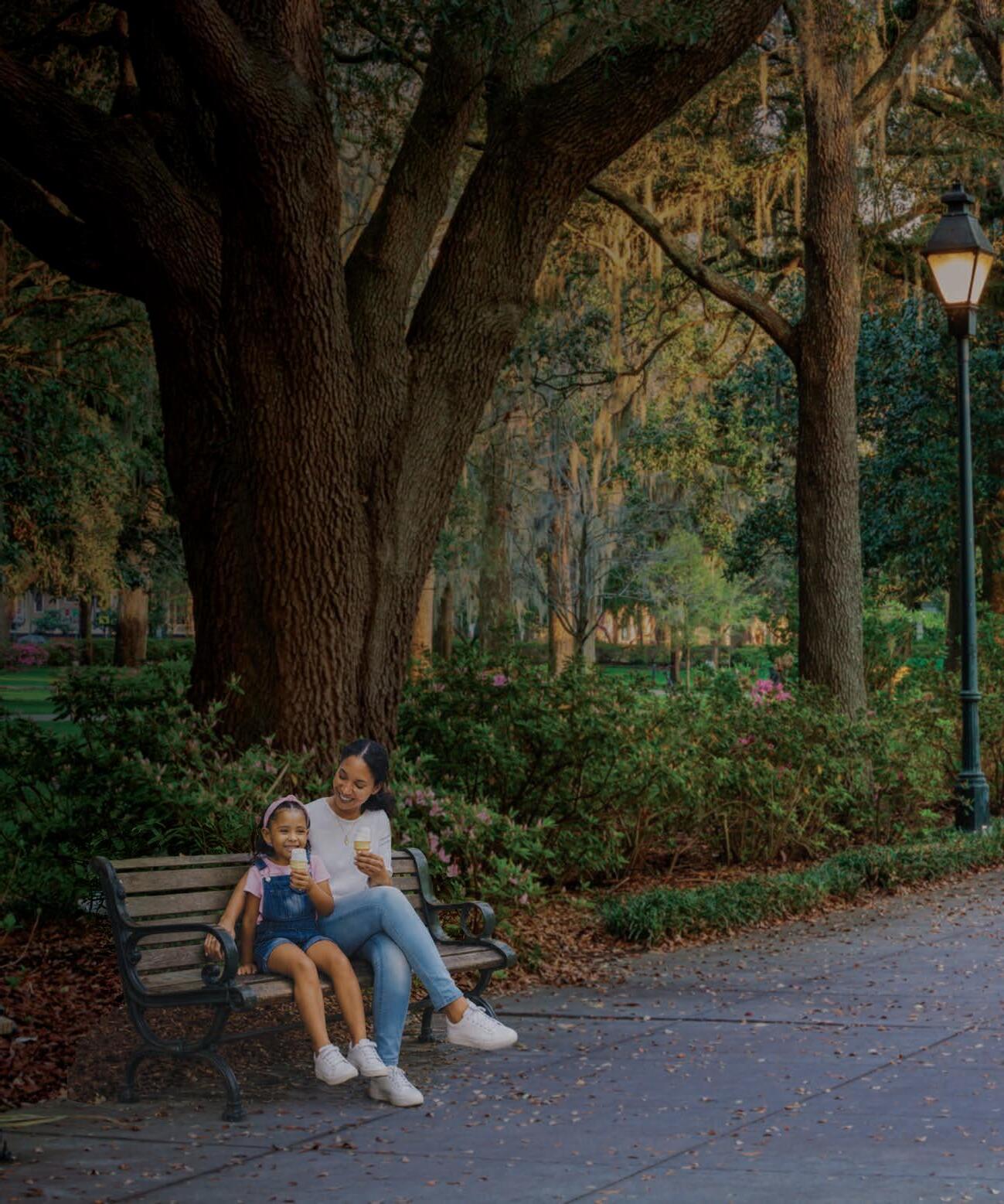
Some foods fill you up. Others take you back. Ice cream has always had a way of doing both. One bite can return you to childhood summers, sticky hands, porch swings, beach vacations, and evenings when life moved a little slower. It is comfort served cold, joy balanced on a cone, and one of the few treats that still makes adults smile like kids.
Luckily for us, Coastal Georgia has plenty of places carrying that tradition forward one scoop at a time.
When you’re in Savannah craving something sweet, join the line at Leopold’s Ice Cream. Don’t worry—it moves fast. Part dessert stop and part beloved institution, Leopold’s has been winning hearts for generations. The vintage soda fountain feel, polished counters, and classic atmosphere make it more than a shop—it’s an experience. Whether you choose timeless vanilla, rich chocolate, or one of their famous signature flavors, every visit feels like stepping into a sweeter era.
For those traveling through Richmond Hill, Rincon, or Pooler, keep an eye out for The Ice Cream Stop. The Pollards came from California to our Southeast shores with a simple idea: create the kind of family tradition they loved—heading
out for ice cream after dinner. To their surprise, nothing like that existed in the area. So rather than wait for someone else to do it, they decided to be the first. The hardest part here? Choosing just one flavor from the 36 offered.
And here’s a recipe I love to share with y’all. Kids especially enjoy helping with this one. Fair warning—once they see how easy it is, they may start volunteering in the kitchen a lot more often. One spoonful later, you may never look at the freezer aisle the same way again.
HOMEMADE ICE CREAM (No-Machine Needed)
Base
• 2 cups heavy whipping cream, whipped to medium peaks
• 14 oz sweetened condensed milk
• 2 tablespoons vanilla extract
• A dash of salt
Fold condensed milk and vanilla gently into whipped cream.
Chocolate Version
Mix ¾ cup unsweetened cocoa powder into the condensed milk first, then fold into whipped cream.
Fresh Fruit
You can incorporate any fruits you like, strawberries (1 pint) crushed, don’t leave them too big they will get icy. Blueberries chopped again 1 pint. Peaches approx 2 cups chopped. You can also add freeze dried fruit. Crush it up in a blender to a powder a ¼ cup really gives a pop of flavor. You can leave it a little chunky for texture.
Rocky Road Version
Fold in gently by hand:
• ¾ cup chopped almonds
• ¾ cup chocolate chips
• ¾ cup mini marshmallows
Pour into a sealed container and freeze at least 6 hours.