



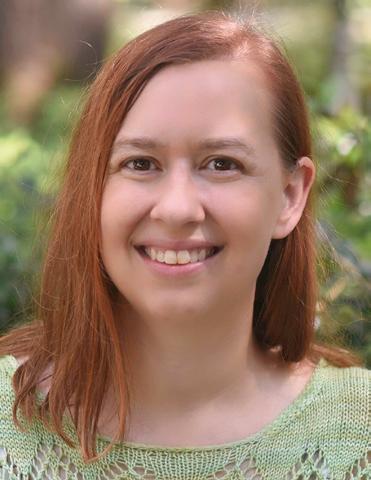
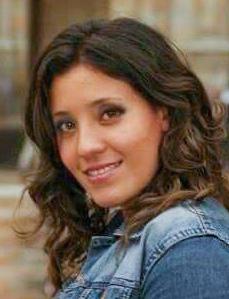
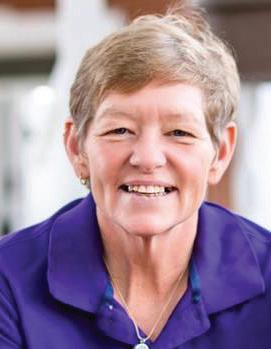
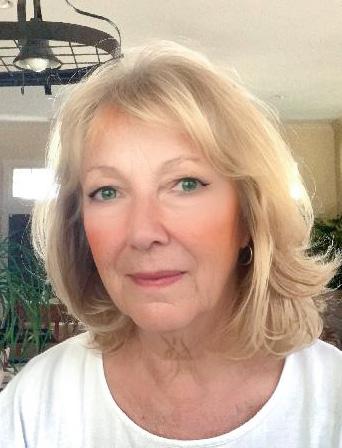
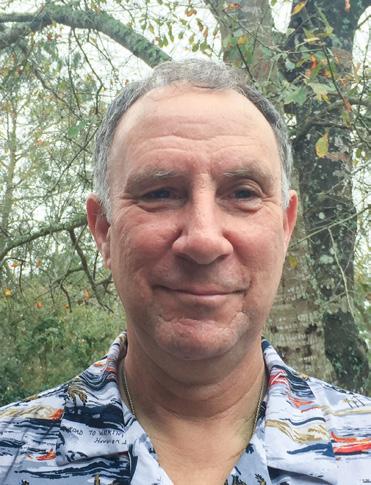
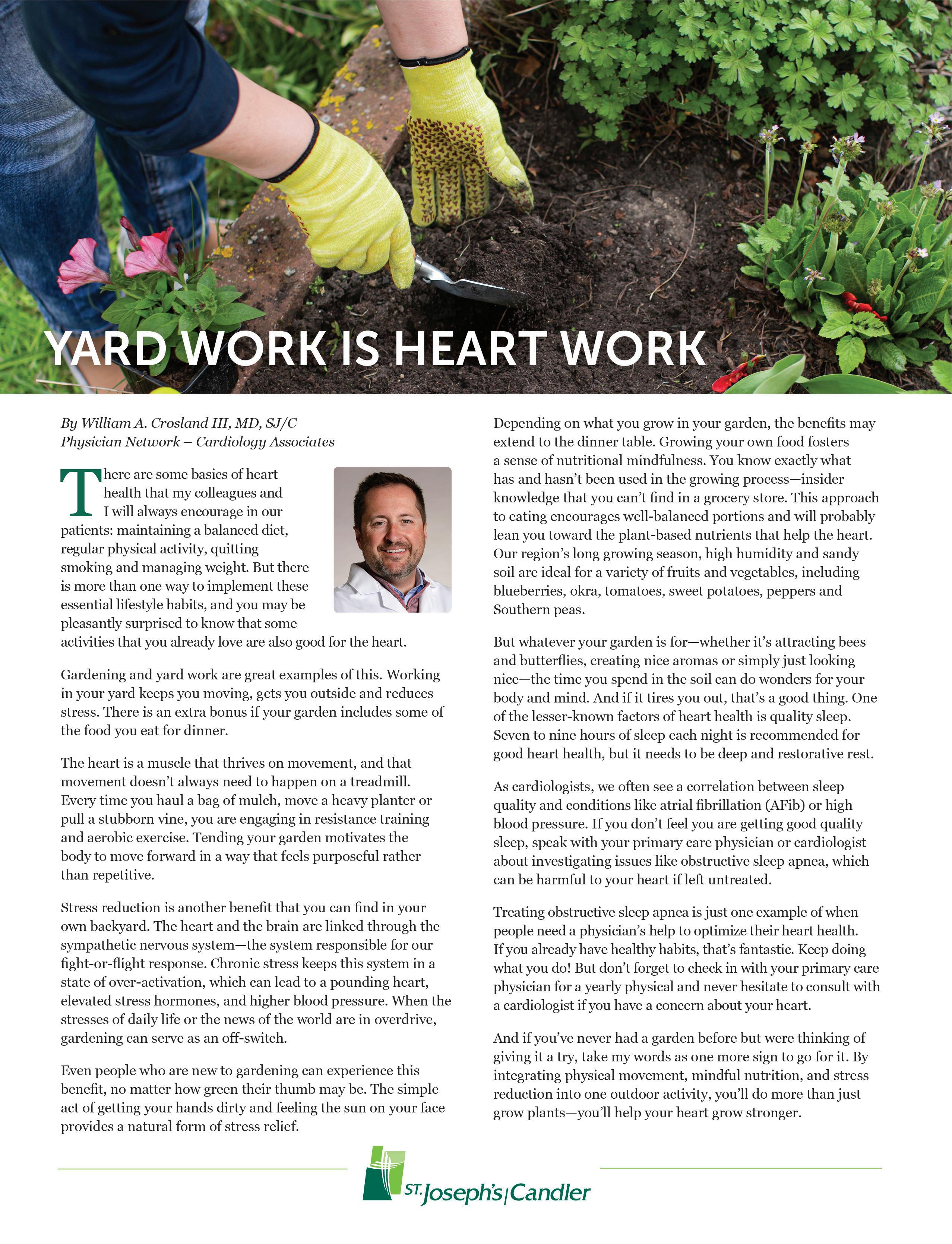
1. Alycia Calderin is a Florida native who moved to Georgia in 2013, where she planted roots with her husband of 16 years. When she’s not balancing the whirlwind of activities for her four kids, she escapes into the world of books.
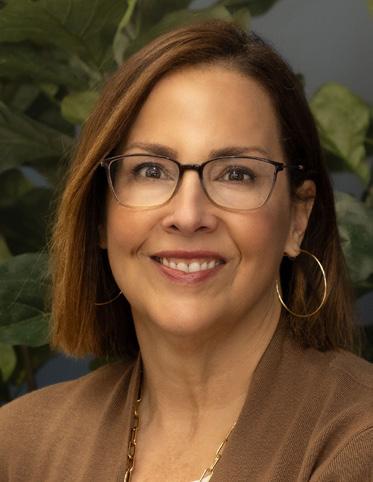
2. Leidy Lester is a freelance photographer, originally from Bogota, Colombia. One of her proudest achievements was working with models and highly experienced photographers in Las Vegas.
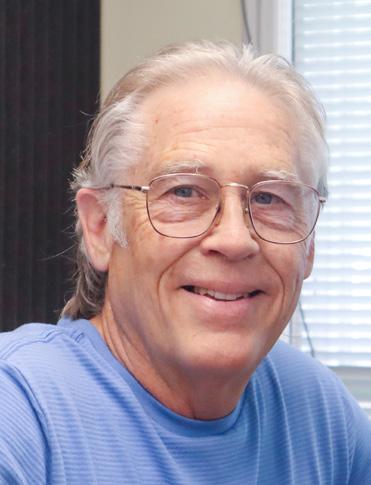
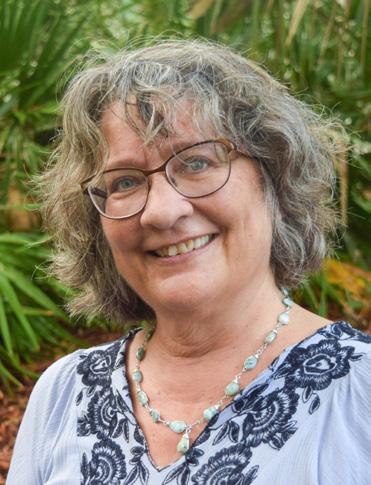
3. Gail Mihalik lives in Rincon with Scott, her high school sweetheart, and their two rescue dogs. Chef by trade with over 50 years of experience, she spends most of her time living, loving, and sharing the history and culture of the area.
4. Scott Douglas Miller is a broadcaster celebrating 50 years in radio as an air personality, news director, event DJ and content provider several publications. He Originally from Mississippi, Scott shares a home in Rincon with his high school sweetheart, Gail.
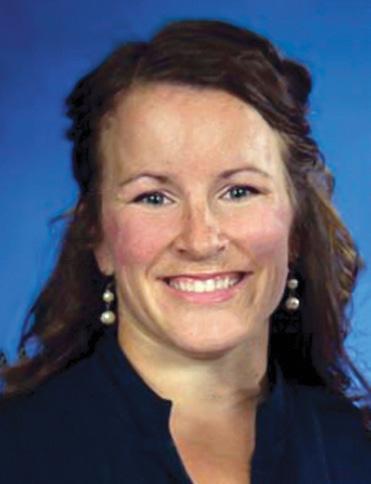
5. Gail Parsons has more than 30 years experience writing for magazines and newspapers. She most enjoys feature writing because it allows her to share the stories of interesting and inspiring people. She is also an artist and enjoys traveling and spending time at the beach.
6. Stephen Prudhomme is a native of New Jersey who lived in Savannah and Rincon for 25 years before moving to Pikeville, TN, with his wife and son. He’s written sports, features, news and business for a number of newspapers and magazines over nearly 40 years and likes table tennis, Frisbee and running.
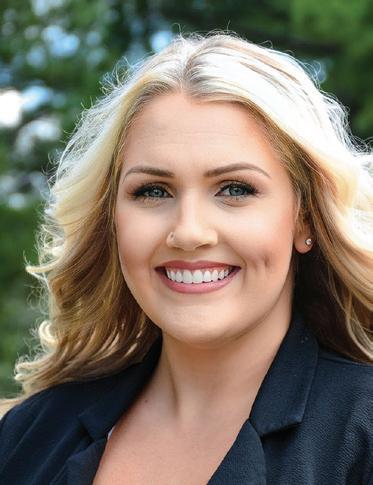
7. Claire Sandow is a marketing professional who lives in Savannah with her husband, daughter and cat. In her spare time, she enjoys pursuing her many hobbies, including knitting, crocheting, quilting and running.
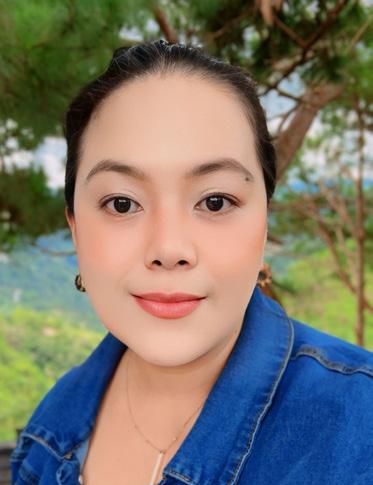
8. Laura Zielinski is a freelance graphic designer specializing in print design. When she’s not working, she loves spending time with her husband Keith and their three beautiful children.
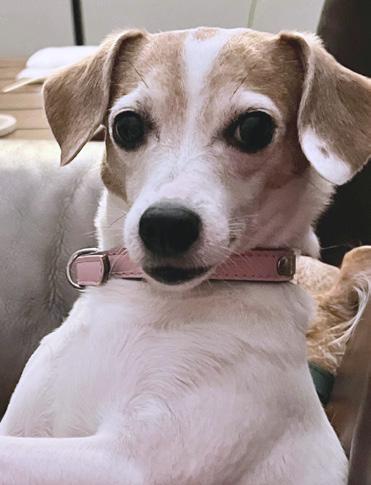
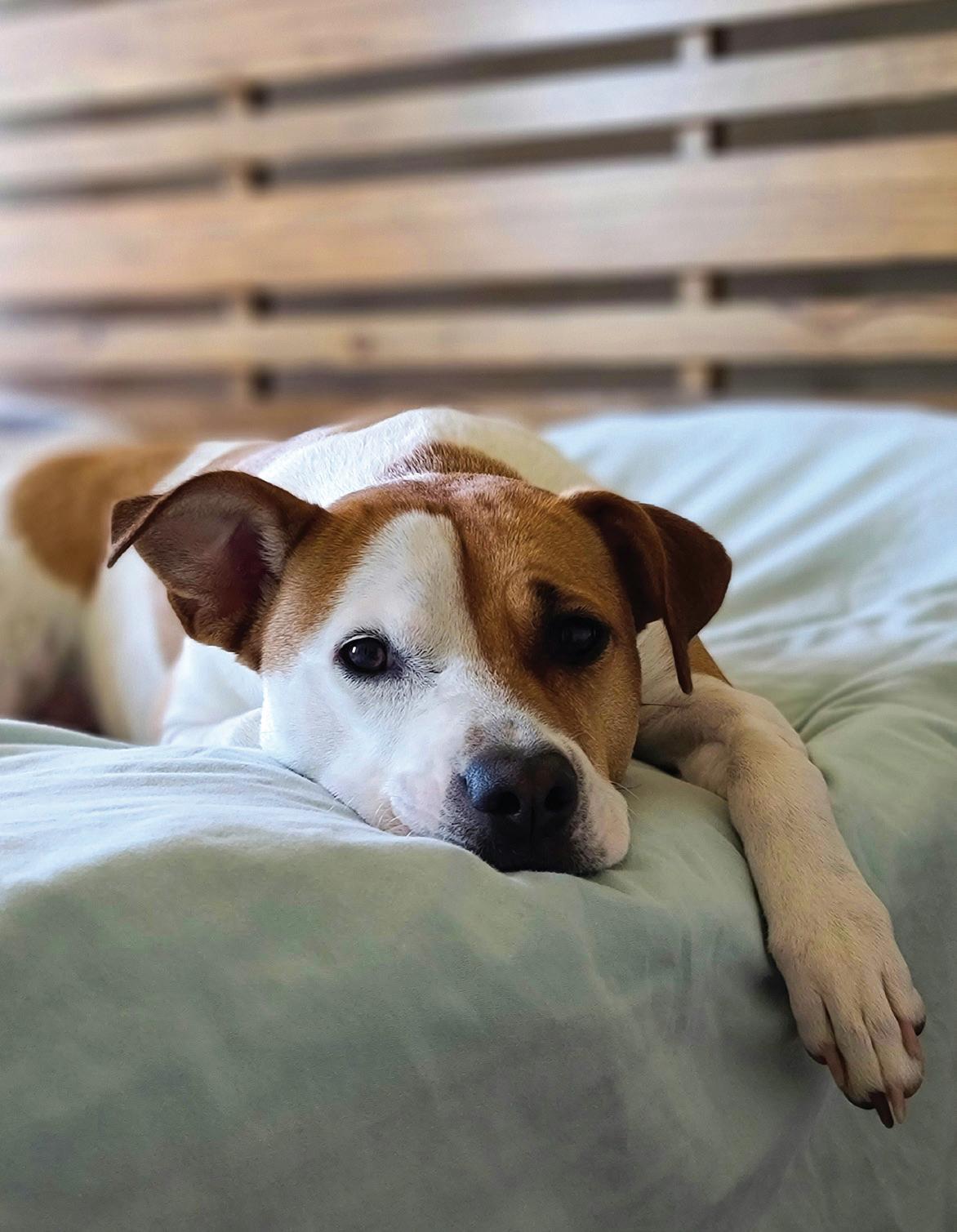
9. Mabel morale officer, enjoys roaming the backyard at home, sitting for hours on the back porch and coming to the office to greet visitors and encourage the staff. Mabel loves getting treats and taking long naps in her mommy’s office in the afternoons.


There’s something about Bryan County that just feels different this time of year.
Maybe it’s the marsh, the water, or the slower pace. It reminds us to step back and appreciate where we are.
As I read through this issue, I kept coming back to one idea: access.
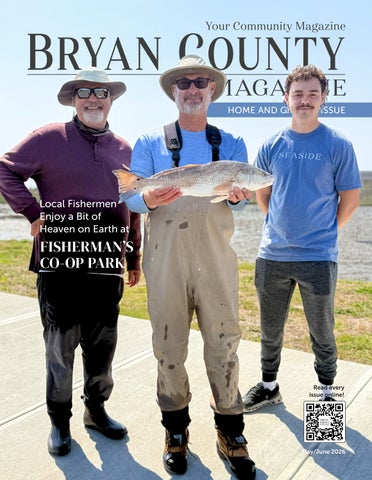
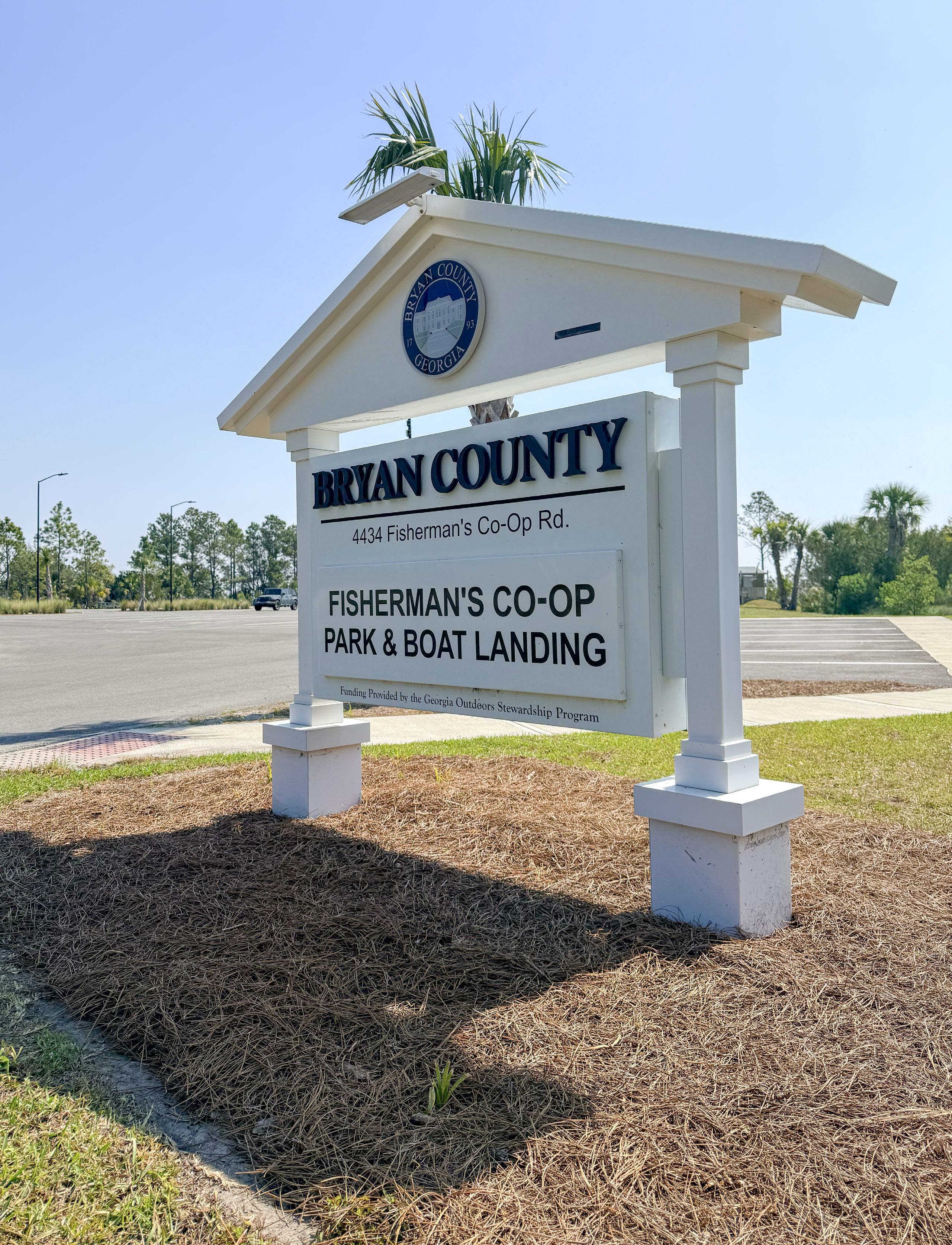
You see it in the story of Fisherman’s Co-op Park, a place that was reclaimed so people can experience the coast the way it was meant to be… simple, open, and shared.
You see it in Pembroke, where the revival of the Tos Theatre is about more than a building. It’s about creating a place for people to gather again.
And that’s really what this issue is about.
Home isn’t just where we live. It’s what we have access to. The water. The community. The experiences that make this area special.
Growth in Bryan County doesn’t mean losing that. It means protecting it.
As you flip through these pages, I hope you’re reminded of just how much there is to appreciate, and how important it is that we continue to invest in what makes this place feel like home.

CEO/Publisher
Bryan County Magazine


PUBLISHER
Jan Southern Jan@JDelSURMarketing.com 912-318-8645
CLIENT SERVICES
Christie Wilson, Director of Advertising Christie@JDelSURMarketing.com
Kelsey Harrison, Account Executive Kelsey@JDelSURMarketing.com
OFFICE MANAGER
Chris Antonio
DESIGN
Laura Zielinski
DISTRIBUTION
Penny Redmond
Bryan County Magazine is proudly produced by:
135 Goshen Rd Ext., Suite 251, Rincon, GA 31326 (912) 295-5406
PoolerMagazine.com
J. DelSUR Marketing Group is the publisher of Effingham Magazine, Pooler Magazine and Bryan County Magazine in South Georgia. We are a full service marketing agency with products that include print, digital and social media marketing.
LETTERS TO THE EDITOR
Write and tell us what you think. Bryan Count Magazine welcomes all letters to the editor. Please send letters to Jan Southern at Jan@JDelSURMarketing.com. Letters to the editor must have a phone number and name of contact. Phone numbers will not be published.
ARTICLE SUBMISSIONS
Bryan County Magazine welcomes story ideas from our readers. If you have a story idea or photos to share, please submit ideas and material to Jan Southern at Jan@ JDelSURMarketing.com. Stories or ideas for stories must be submitted by email. Only feature stories and photo essays about people, places or things in the Bryan County area will be considered.
CIRCULATION: Bryan County Magazine is published bimonthly and distributed to hundreds of locations throughout the area, as well as mailed to thousands of homes. The full magazine is available online at BryanCountyMagazine.com. Views expressed in editorial or advertising do not imply endorsement by J. DelSUR Marketing Group.
Reproduction in whole or in part in any manner without the written permission of the publisher is strictly prohibited.
by Alycia Calderin

There’s this quiet, uncomfortable moment in motherhood that no one really warns you about. And it’s not the first day of kindergarten, or the first sleepover, or even the first time you have to Google what “six seven” means because apparently middle schoolers now communicate exclusively in coded slang.
It’s the moment you look around your house and suddenly realize…They don’t need you like they used to.
And now you’re standing there, holding a cup of coffee that went cold thirty minutes ago, wondering who you are without a diaper bag, a preschool pickup line, or a tiny human physically attached to your body demanding snacks shaped like dinosaurs.
Welcome to Mom 2.0, the identity update nobody told us we’d need.
Version 1.0: The Baby Years
I had Brooklyn, my daughter, at 19 which means she didn’t just grow up with me, she grew up alongside me. We figured life out together. I learned how to be a mom while she learned how to be a human.
Those early years were a blur of survival mode: diapers, drive thru dinners, school parties, and Googling every rash at 2 a.m. Motherhood wasn’t just something I did, it was my entire identity. Every decision, every schedule, every ounce of energy revolved around keeping my kids fed, safe, and relatively well adjusted.
Then came Sofia and Mikey, and with each child, motherhood layered itself deeper into who I was:
✓ Snack packer.
✓ Homework helper.
✓ Permission slip signer.
✓ Carpool coordinator.
✓ Finder of the one shoe that somehow disappeared overnight.
My twenties were spent fully immersed in motherhoodexhausted, overstimulated, and fiercely in love with the life we were building.
Back then, I thought the hardest part would be the sleepless nights or the toddler meltdowns. I didn’t realize the real emotional gut punch would come later, when the noise quieted and the constant need faded.
Version 2.0: The Tween & Teen Era Now?
Brooklyn is 16 and got her license in June, a sentence I still don’t fully believe. She’s independent, confident, and moving toward a life that doesn’t always include me in the center of it. Sofi is 13 and in her final year of middle school, standing right on the edge of becoming someone entirely new. And Mikey, my baby, is 11 and just entered his first year of middle school, at the same school as Sofia, which somehow feels both comforting and completely illegal.
Now, I’m standing in a season where I’m no longer consumed by survival, instead I’m faced with space.
✓ Space to think.
✓ Space to feel.
✓ Space to ask myself questions I’ve put off for years. Who am I outside of motherhood?
What do I enjoy when I’m not managing someone else’s schedule?
What parts of me have been waiting quietly underneath all of this?
It’s disorienting, like meeting yourself again after being too busy to look up.
The Awkward Beauty of Mom 2.0
Mom 2.0 feels unfamiliar. There’s no manual for this version.
She’s proud and heartbroken at the same time.
She’s grateful, but grieving.
They still need me, just not in the same ways.
✓ They need rides.
✓ They need money.
✓ They need reminders that were apparently mentioned “five minutes ago” but don’t count unless repeated three times.
But emotionally and physically? They’re pulling away in small, bittersweet increments. Doors close more often. Conversations happen on their terms. Affection looks quieter, like a quick hug, a shared joke, a hand brushing mine when no one’s watching.
And here’s the part no one prepares you for: When your kids grow, you have to grow too.
For years, my identity was rooted in being needed. In the physicality of motherhood. In the constant presence. The “Mom, watch this.” The bedtime routines. The sticky kisses and tiny hands reaching for mine.
She misses the little years while loving the people her kids are becoming.
She laughs more with them now, has real conversations, shared humor, moments of connection that feel deeper and more intentional. But she also feels the weight of time in a way she never did before.
And she’s learning something important: She’s allowed to exist beyond motherhood. Not instead of it, but alongside it.
The Truth No One Says Out Loud
Just because you’re done having babies doesn’t mean you stop mourning the idea of them. Just because your kids grow up doesn’t mean you stop being needed, you’re just needed differently. And just because this season feels uncomfortable doesn’t mean it isn’t sacred.
Mom 2.0 Isn’t the End — She’s the Upgrade This stage of motherhood is quieter, deeper, and somehow more emotional than the early years.
It’s the season of rediscovery.
Of remembering what you love.
Of finding joy outside of carpools and class parties.
Of realizing that the woman you are now exists because of everything you poured into your kids.
And maybe that’s the point of Mom 2.0. Not to replace who you were, but to finally make space for her again. ■
Story by Gail Parsons
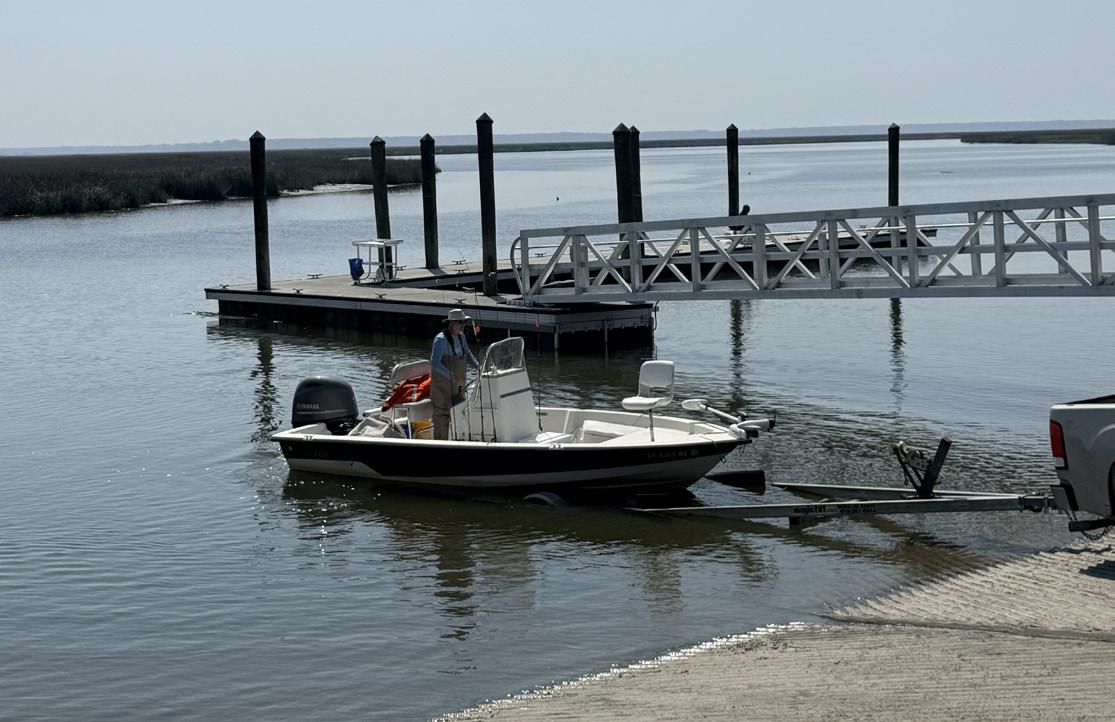
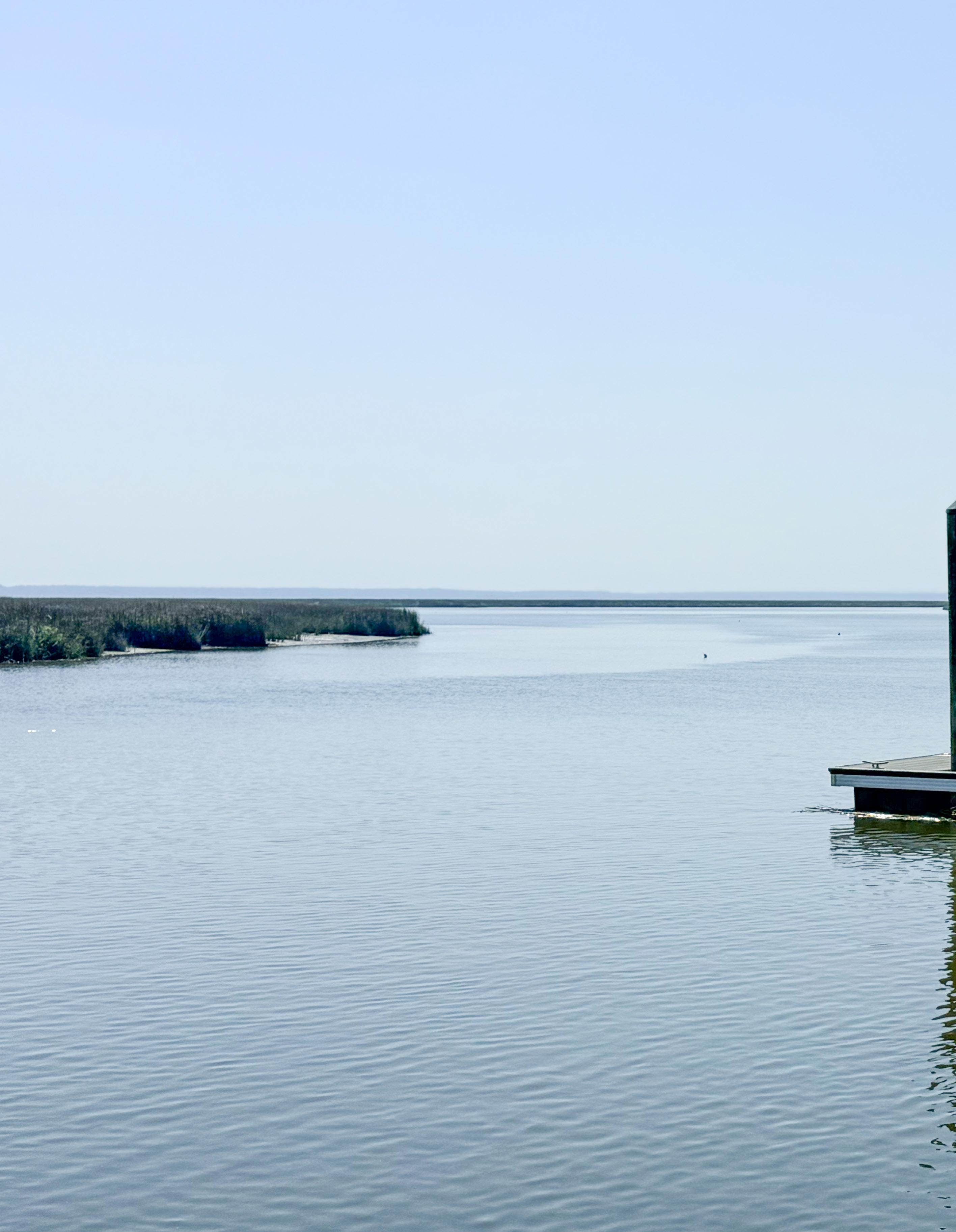
On the edge of Bryan County’s coastal marshlands, where tidal water winds through spartina grass and the horizon shifts with every breeze, a transformation has taken place. A long-neglected stretch of shoreline has been returned to the public.
What is now known as Fisherman’s Co-op Park is less a traditional park and more a reclaimed meeting point between land, water, and memory. Once a working hub tied to the region’s shrimping industry, the site has been reshaped into a public access point where boaters, anglers, and families can step directly into the rhythms of coastal Georgia without barriers or gates.
For Bryan County Commissioner Carter Infinger, the project represents both practicality and philosophy: a belief that living on the coast should come with the ability to experience it.
“It gives people an opportunity to live on the coast and really enjoy it,” Infinger said. “A lot of times, people own
waterfront property, but they don’t have public access. This was our opportunity to change that.”
That idea became the driving force behind a multi-year effort to acquire, clear, and rebuild a parcel of land that had long since faded from its original purpose.
A shoreline with working roots
Long before it became a public park, the site functioned as part of Bryan County’s working waterfront. In its earlier days, it was closely tied to the shrimping industry that once defined much of coastal life in the region. Boats came and went with the tides, unloading catches that fueled local markets and anchored a way of life.
“There was a boom there,” Infinger said, recalling its history. “That’s where a lot of the shrimp folks brought their catch. It was really a gathering place.”
It also served as the backdrop for one of the county’s most recognizable community traditions, the Seafood Festival,

Today, Fisherman’s Co-op Park looks and functions very differently from its former life. Walking trails cut through the property, guiding visitors toward open views of marsh and water. A pavilion offers shaded space for gatherings, picnics, and quiet observation of the tide. Fishing areas and docks extend access directly into the water.
which Infinger noted originally began in that very area before moving elsewhere as the waterfront changed.
Like many small coastal working sites, however, time and industry shifts took their toll. Shrimping activity declined, infrastructure aged, and what was once a bustling maritime point gradually fell into disuse. Wooden structures deteriorated. Boat access became unreliable. Eventually, the land stood as a quiet reminder of a past economy rather than an active part of the present one.
When the property eventually came up for sale, county leaders saw more than just an abandoned waterfront. They saw a rare opportunity in an area where development is happening at a fast pace.
“Now we don't have to worry about the land being destroyed to put houses or condos on it,” Infinger said. “That landing will always be there, just like it is.”
He recalled when he learned the land was for sale. The decision to purchase it was deliberate. Along Georgia’s coast, undeveloped waterfront land is increasingly vulnerable to privatization. He and others in county leadership viewed the acquisition as a way to preserve public access at a time when such access is becoming harder to secure.
He said his first thought was, “Let's figure out how we can do it, not if we can, let's figure out how can we make this work?”
With the county staff behind the project, they went to work. Grants were written, sleeves were rolled up, old, deteriorating structures were removed, and the shoreline began to take shape.
Old, deteriorating structures were removed. The shoreline was reworked for safety and usability. In their place, a new public recreation area began to take shape.
Today, Fisherman’s Co-op Park looks and functions very differently from its former life. Walking trails cut through the property, guiding visitors toward open views of marsh and water. A pavilion offers shaded space for gatherings, picnics, and quiet observation of the tide. Fishing areas and docks extend access directly into the water.
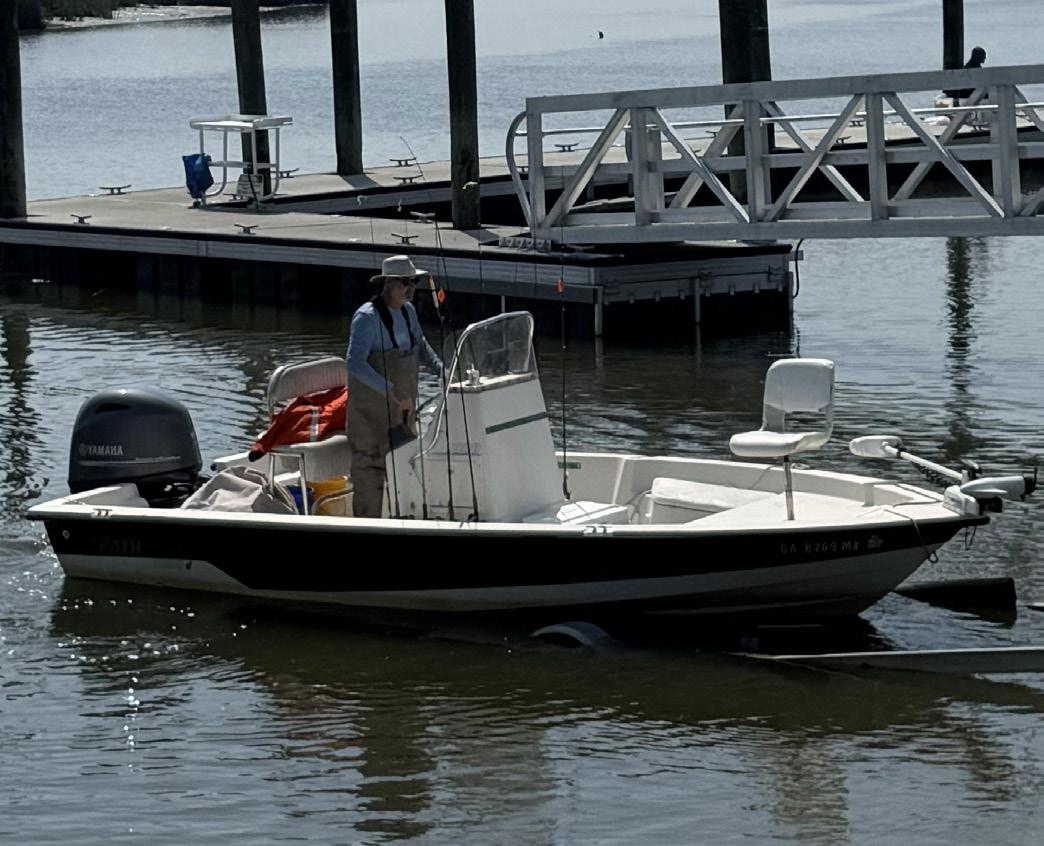
Perhaps most notably, the park includes four boat ramps allowing small craft to launch directly into coastal waterways.
“That’s a big deal,” Infinger said. “We’ve got four boat ramps there for people to put their boats in and go out and enjoy the water. And it’s free to the public.”
In a region where waterfront access is often limited or privately controlled, the
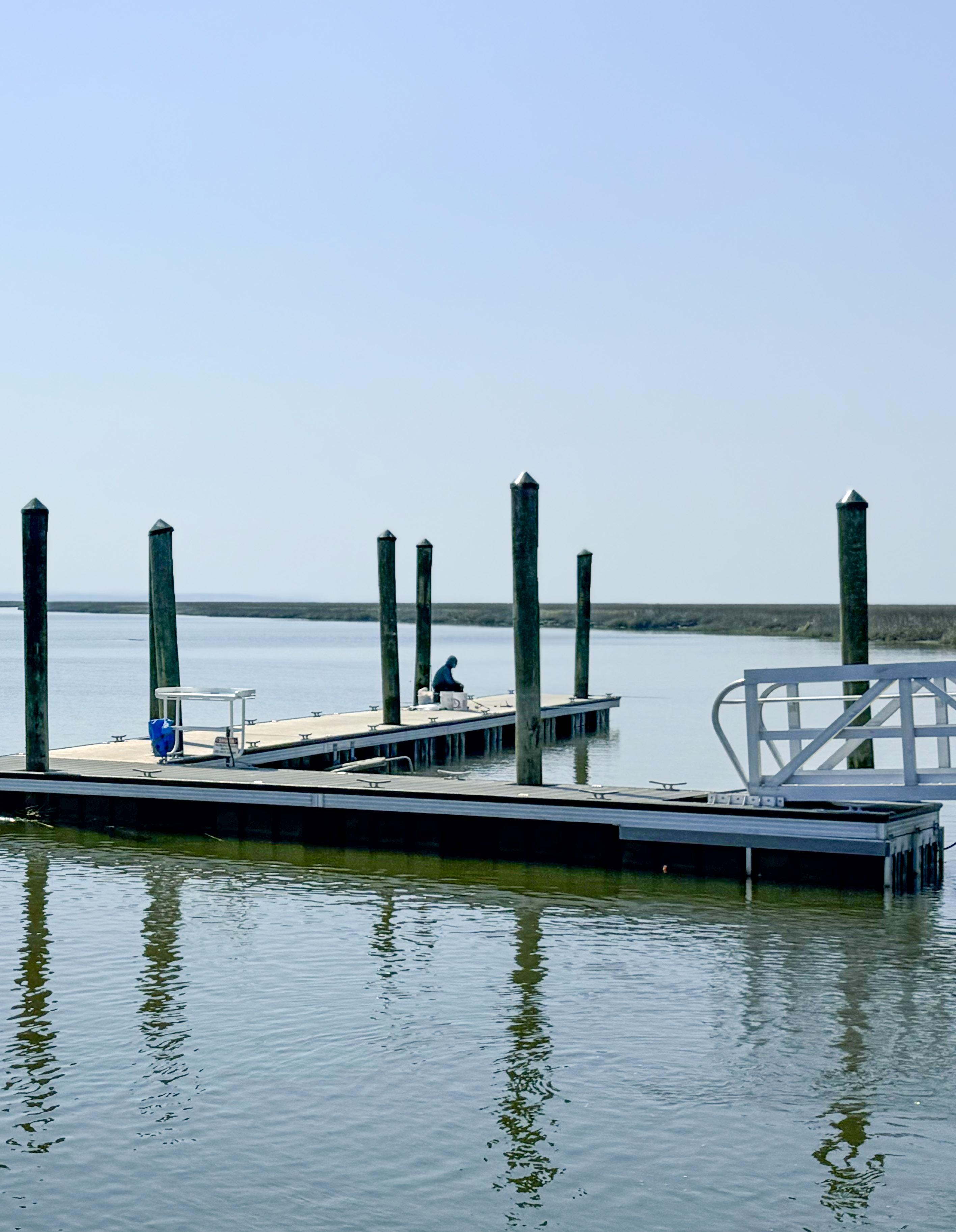

availability of free, public boat launches has become one of the park’s most valued features.
The scale of the project is modest, roughly six to eight acres, but its impact is outsized in a county where shoreline access points are limited.
Funding for the redevelopment came in part through a grant from the Georgia Outdoor Stewardship Program, administered by the Georgia Department of Natural Resources. But Infinger emphasized that the project’s success also depended heavily on county staff.
“A lot of our employees did the work themselves,” he said. “That saved us several million dollars.”
Fisherman’s Co-op Park was developed in phases, beginning with core infrastructure: ramps, trails, and basic amenities. Future plans include expanded walking paths, additional docks—possibly floating docks—and further improvements to back trail systems.
“Phase two would be more docks, more trails, maybe some back trails,” Infinger said. “We’re always looking at how to improve it.”
While there is no fixed endpoint, the vision remains consistent: expand access without compromising the natural character of the land.
A landscape shaped by marsh and movement
What defines Fisherman’s Co-op Park now is not infrastructure alone, but its setting. The site opens onto a broad expanse of marsh, where water shifts constantly with tide and wind.
Infinger describes it in simple terms: “You look out there and see the ocean, the marsh, the sunrises. It’s beautiful. People can just go sit, relax, and enjoy it.”
The park was designed to encourage that kind of unhurried engagement. Benches and picnic areas are positioned to face the water. Trails lead to observation points where the marsh stretches outward in layered greens and golds.
Wildlife is a constant presence. Sea turtles are occasionally spotted and manatees, though less commonly seen, are known to travel through coastal Georgia waters during seasonal movement patterns.
That balance, use and protection, is central to the park’s design philosophy. The land is meant to be used, but not consumed; enjoyed, but not exhausted.
Community investment and quiet support
Like many public infrastructure projects, Fisherman’s Co-op Park drew a range of reactions during its development. But Infinger said community support ultimately outweighed skepticism.
“For the most part, people were for it,” he said. “They understand, we live on the coast. If you don’t have access to the water, why live here?”
That sentiment reflects a broader coastal identity in Georgia, where waterways are not just scenery but part of daily life and cultural memory.
In many ways, the park ... is a place defined by what it allows people to do simply: launch a boat, sit under a pavilion, watch the tide move in and out.
“I’ve never seen one there,” Infinger admitted, “but they’re here.”
Their presence adds another layer to the park’s identity, not just as a recreational space, but as part of a larger ecological corridor.
With increased public access comes increased responsibility. Manatees, in particular, are federally protected under both the Marine Mammal Protection Act of 1972 and the Endangered Species Act of 1973. Visitors are encouraged to maintain distance, avoid interference, and report sightings to wildlife authorities.
While Infinger did not dwell on regulations, the underlying message is clear: access to the water is paired with stewardship of what lives within it.
The park is also not limited to county residents. It is open to the public, with usage monitored through security systems and maintained by county crews and contracted maintenance teams.
“There are cameras out there,” Infinger noted. “We monitor it. We keep it safe.”
In many ways, the park reflects the philosophy that brought it into being. It is not a highly commercialized attraction or a heavily programmed recreational complex. Instead, it is a place defined by what it allows people to do simply: launch a boat, sit under a pavilion, watch the tide move in and out.
Infinger sees it as one of his most meaningful projects.
“I’m super proud of it,” he said. “It really came out well.”
And in that quiet pride is a larger truth about coastal development in places like Bryan County. Progress, in this case, is measured by what is preserved.
For visitors, the park offers a direct line to water, sky, and marsh, and a reminder that access to nature is not guaranteed unless it is intentionally protected.
As Infinger put it, “If you live on the coast, you should be able to get to it.” ■


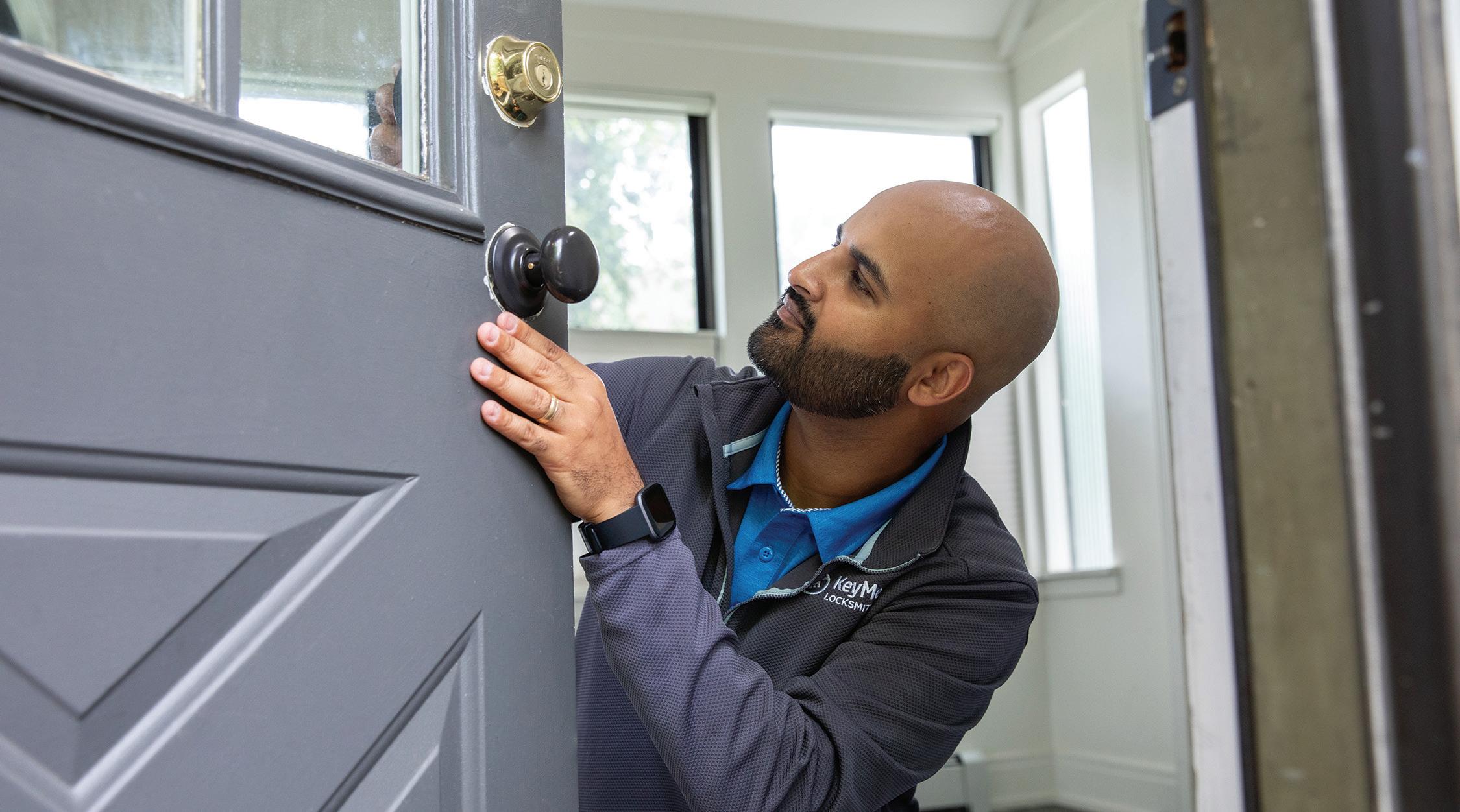
You have locks on your doors and windows, and you make sure they’re secure before you leave the house or head to bed each night. You may even have a security system with an alarm or cameras to protect your home. Some locksmiths say that may not be enough.
Bryan McCabe, director of locksmith operations with KeyMe Locksmiths, the nation’s leading provider of local locksmith services and No. 1 provider of key duplication kiosks, said homeowners should be mindful of common security vulnerabilities, many of which go unnoticed until it’s too late.
A thief who wants to gain access to your home may do so by any means possible, including breaking windows or kicking in doors. However, those methods are loud and may attract attention. Instead, thieves will look to find the easiest house to enter. Consider these small changes you can make to deter thieves from your home.
Leaving your garage door open may seem harmless, but it can signal easy access to thieves. An open garage suggests relaxed security habits and can make burglars assume doors or windows might also be unlocked. Keeping it closed is a simple step that instantly makes your home more secure.
Burglars often target homes that appear empty. Dark houses – especially after nightfall – can stand out as easy opportunities. Leaving a light or two on helps create the impression someone is home. If you want to level up, use light timers or smart bulbs to automatically turn lights on and off, even when you’re away.
Thieves prefer to work unnoticed. Overgrown trees, tall bushes, or dense landscaping near entrances can provide cover for someone trying to break in. Trimming greenery and maintaining clear sightlines from the street makes your home less appealing and more exposed – exactly what burglars want to avoid.
Some relatively minor updates can make a big impact toward protecting your home. Start by assessing all home entry points, including secondary points like sliding doors, garage entries and basement doors. In addition to checking door frames, homeowners should examine strike plates, hinge security and whether existing locks are outdated.
Doorbell cameras are an affordable way to boost your home’s security. Visible cameras can stop many would-be thieves as they don’t want to be seen or recorded. Beyond deterrence, doorbell cameras let you see who’s at your door, receive alerts and check on your home anytime, whether you’re home or away.
Smart locks are another smart investment in home safety. They allow you to track who enters your home and when by assigning unique access codes. You can even lock (or unlock) the door remotely from your phone. With the ability to monitor, control and limit access, smart locks offer convenience and security. A local locksmith can help you choose the right option and handle installation, making the upgrade simple and stress-free.
Connecting customers with professional locksmiths in their area, KeyMe Locksmiths provides comprehensive home security and lockout services – from key replacement to lock installation or repair – with more than 7,500 kiosks nationwide. These self-service machines utilize advanced technology for fast, accurate and “one-stop-shop” key copying, including home and office keys, car keys and fobs, mailboxes, padlocks and RFID access cards.
Find more advice to help protect your home and belongings, and a locksmith or kiosk near you, by visiting key.me.
By Derek Horne, Horne Law Firm
When someone comes to me for legal help, it’s usually because something unexpected has turned their life upside down. An injury, an accident, or a difficult situation can bring a lot of stress and uncertainty. In those moments, I’ve learned that knowing the law is only part of my responsibility. Understanding the person sitting across from me is just as important.
Every client’s story is different. Even when cases look similar on paper, the impact on someone’s life can be completely unique. One person may be worried about getting back to work. Another may be focused on caring for their family or managing medical appointments. Taking the time to listen helps me understand what truly matters to them — not just what’s written in a report.
I believe good legal representation starts with real conversation. When clients feel comfortable talking openly, they’re more likely to ask questions, share concerns, and stay informed throughout the process. That kind of communication builds trust, and trust makes everything work better.
At Horne Law, personal attention isn’t a strategy — it’s how we’ve always done things. Whether that means meeting someone at their home, explaining things in plain language, or checking in after a case is over, my goal is to make sure clients never feel like just another file on a desk.
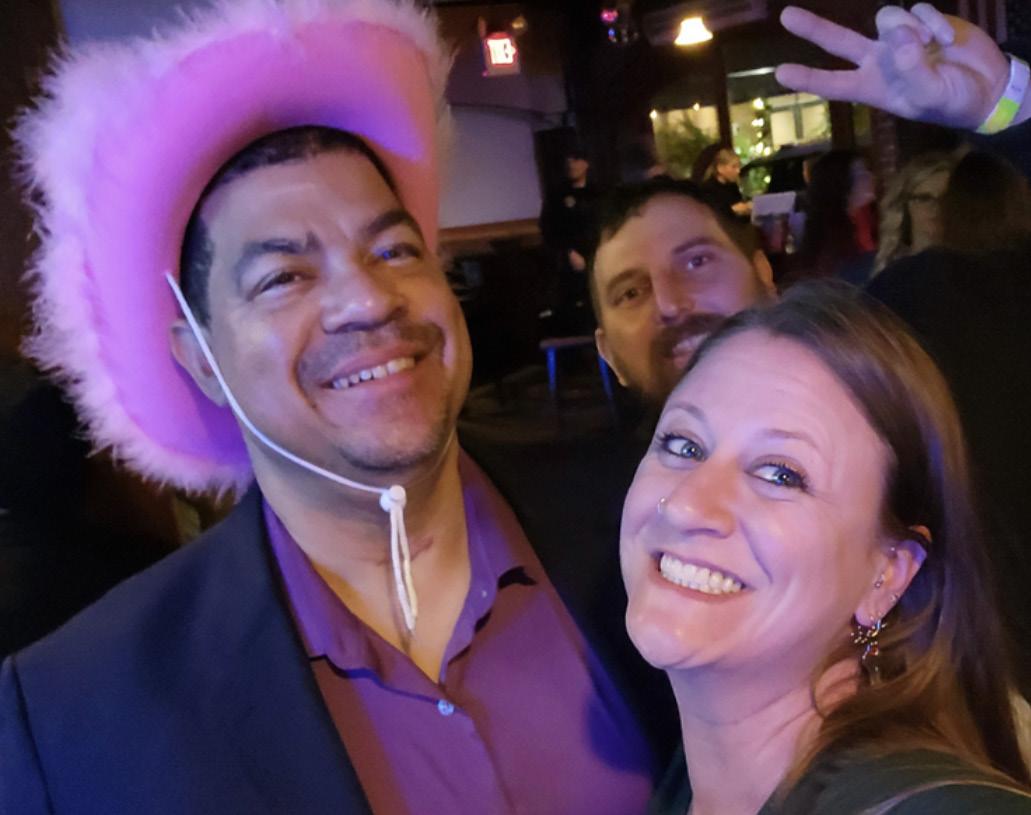
The legal process can feel overwhelming, especially during hard times. If I can make it a little clearer, a little more human, and a little less intimidating, then I know I’m doing my job the right way. Understanding my clients on a personal level helps me serve them better — and that’s something I’ll always value.
Personal Injury Deserves Personal Attention.
Horne Law Firm | (912) 800-4878


by Gail Mihalik




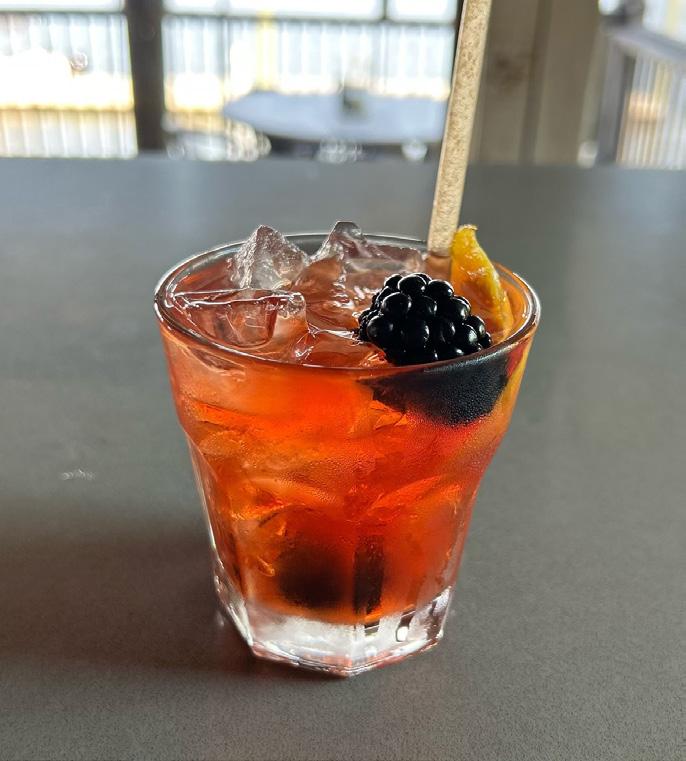
Tucked away at the end of a winding, oak-canopied road in Richmond Hill sits one of those places you almost don’t expect to find—a true waterfront gem. Marker 107 rests quietly along the banks of the Ogeechee River, where the marsh opens wide and the pace of life slows just enough to remind you why you came.
The drive in is part of the experience. Moss drapes from the trees like lace as the road curves and narrows, and just when you think you may have taken a wrong turn, the river appears—broad, calm, and beautifully Lowcountry. Then comes Marker 107, perched right on the water’s edge, as if it has been waiting for you all along.
The atmosphere strikes that rare balance between casual and special occasion. With a nearby marina, it’s not unusual to see guests arrive in boat shoes and sun-kissed attire, while others are dressed for a celebratory night out. It’s comfortable, welcoming, and effortlessly Southern.
Some restaurants are about the food. Others are about the view. And every once in a while, you find a place where the two come together in perfect harmony. Marker 107 is exactly that place.
Yes, it feels like a hidden haven—one locals likely wouldn’t mind keeping to themselves. But it’s hard not to share something this special. If you’re drawn to golden sunsets, wide marsh views, and seabirds skimming the water, you’ll find yourself settling in before you even glance at the menu.
But let’s be honest—that’s only the opening act. The real reason we came was the food, and it did not disappoint.
From the moment we were seated, the experience felt effortless. Our server, Sierra, was warm, attentive, and genuinely knowledgeable, guiding us through the menu with ease. We began with two standout appetizers: a shrimp and jalapeño dish that delivered just the right balance of heat and flavor, and a Lowcountry seafood dip served in a bread bowl that was rich, comforting, and impossible to stop eating.
For the entrée, the evening’s special—a pecan-crusted grouper—was a showstopper. Perfectly cooked, with a delicate crunch and a flavor that felt both refined and rooted in Southern tradition, it was a dish worth returning for. The fried shrimp dinner held its own alongside it—fresh, crisp, and exactly what you hope for when you’re this close to the water.
Dessert carried the same level of care. The Nutella mousse pie was light and airy, a sweet finish without being heavy, while the caramel brownie delivered that indulgent, satisfying close to a memorable meal.
All the while, the river quietly did its part. Boats drifted past, birds dipped and dove for their supper, and the marsh stretched out like a living painting. It’s the kind of place where you find yourself lingering a little longer, soaking it all in.
Whether you arrive by land or by water, Marker 107 offers more than just a meal—it offers an experience. With fresh seafood, thoughtful service, and a view that does half the talking, it just might become your new favorite stop along the Ogeechee River.






Story by Gail Parsons
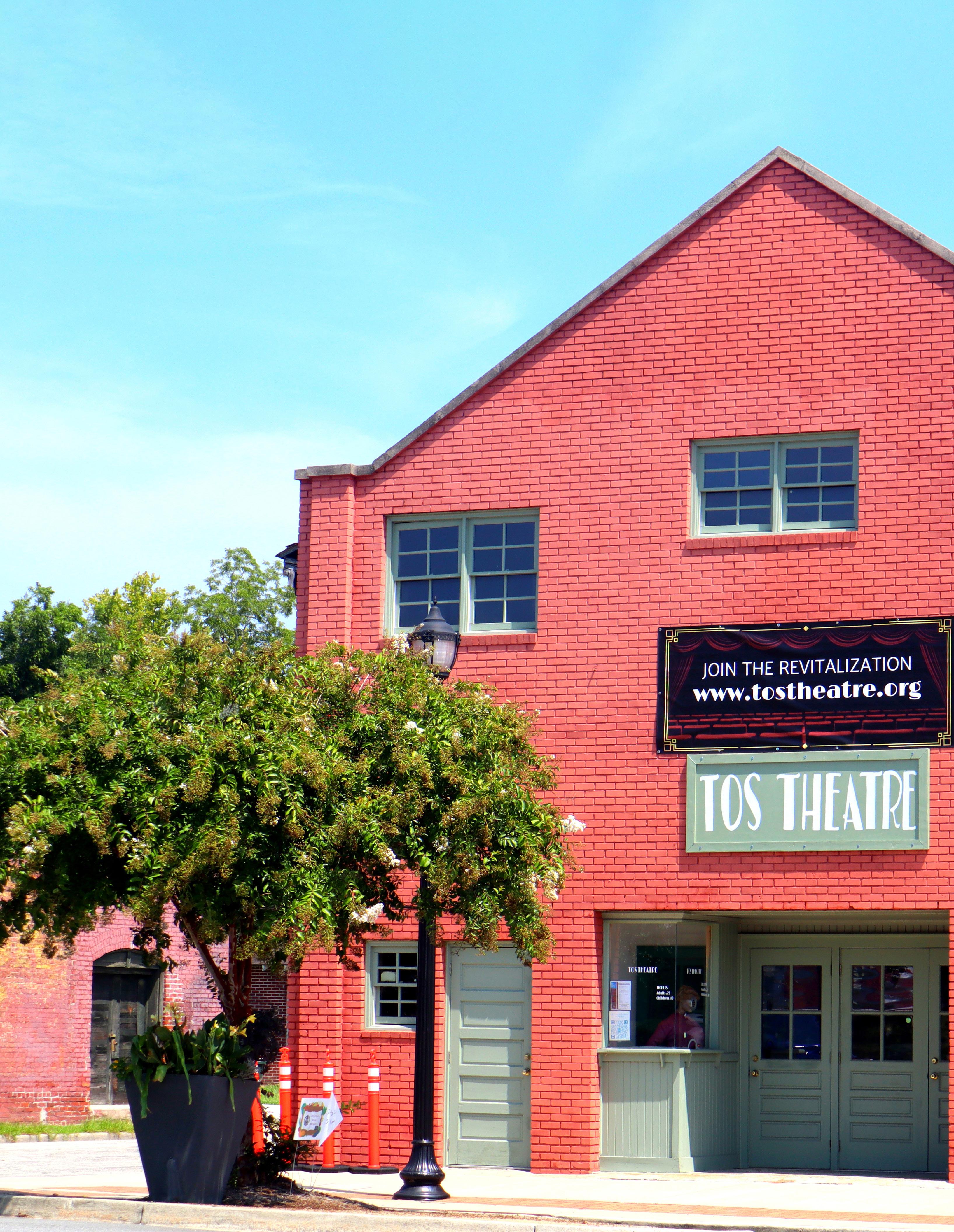


Nestled along the quiet streets of Pembroke, Georgia, a long-forgotten marquee is flickering back to life. Once the center of downtown bustle, the town’s heartbeat has slowed over the decades, storefronts sit empty, and the echoes of community gatherings have grown faint. But now, the historic Tos Theatre is poised to reclaim its place as the soul of Pembroke, promising not just films and performances, but a renewed sense of connection, creativity, and civic pride.
Fernanda Camacho Hauser, Pembroke’s Director of Downtown and Economic Development, has been leading the charge to breathe life back into a town whose downtown had grown dormant over time.
“The goal for downtown isn’t just to bring back commerce,” Fernanda explained. “Every bit of the revitalization we’re building is rooted in our community’s history. At one point, we had to fit three car dealerships downtown. But as generations moved on, the area became quiet. We’re turning that around.”
Fernanda’s approach isn’t just about buildings or budgets; it’s about people. The path to revival, she said, lies in what she calls a “mainstream community approach,” an asset-based development strategy. Instead of focusing solely on what the town lacks, it leverages the resources, connections, and cultural heritage already present.
“We start by asking, what do we already have, and what do people want to see?” she said. “There’s been a lot of interest in theater and movie events downtown. We want something that draws visitors while supporting all our local businesses and becoming a true community hub.”
At the heart of this vision is the historic Tos Theatre, a building whose story is inseparable from Pembroke itself.
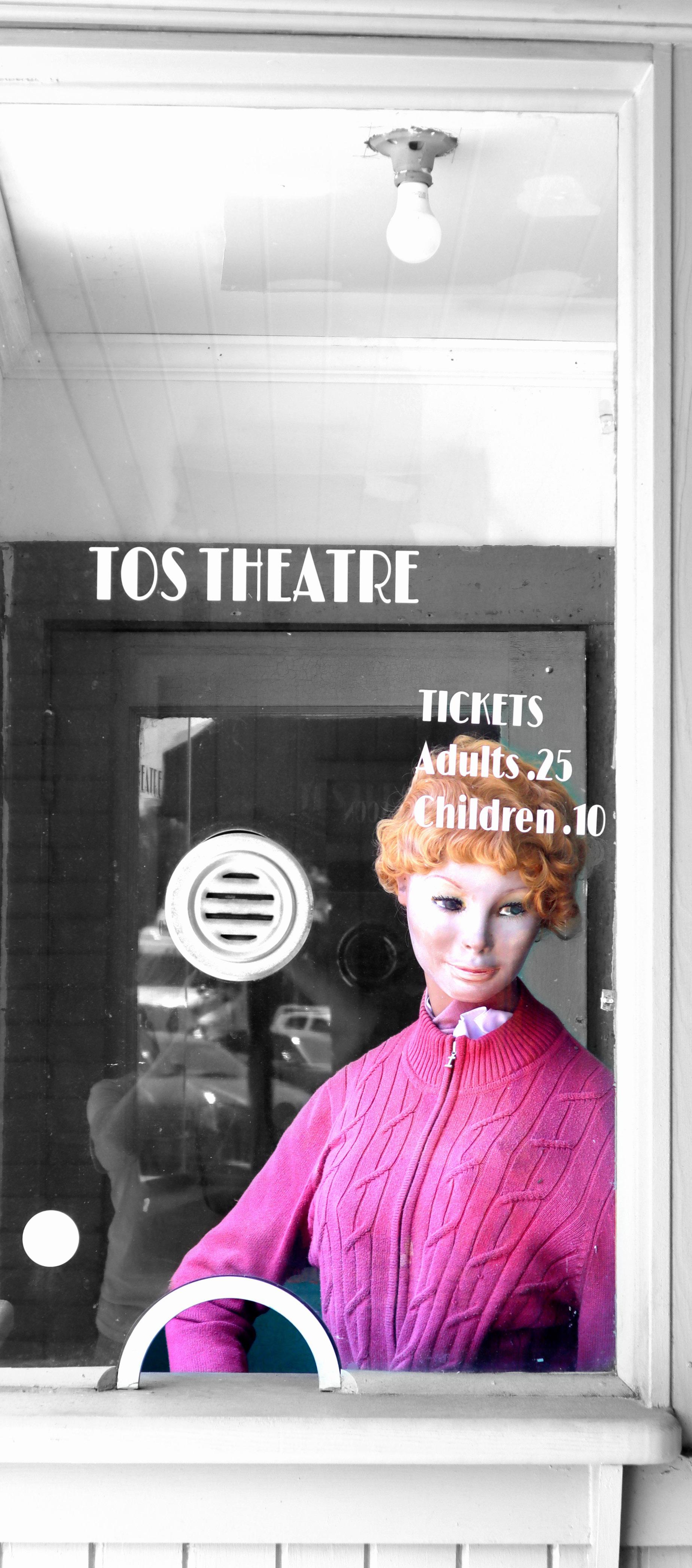
The theater owes its origins to Savino Tos, an Italian immigrant who settled in Claxton in the early 20th century. Savino opened a bakery in 1910, followed by his first movie theater in 1927, and by 1938, he broke ground on the Pembroke Tos Theatre. The theater premiered its first film in April 1939, boasting state-of-the-art seating and a partnership with the neighboring pharmacy that provided concessions for ticket holders. Its two-sided ticket booth, a reflection of the segregation era, stands as a reminder of the town’s complex history.
“Pembroke’s Tos Theatre wasn’t just a film house,” Fernanda said. “It was where the community came together for education, entertainment, and shared experiences.”
The theater closed its doors in the 1970s, leaving a void in the town’s cultural life. In 2001, the City of Pembroke acquired the building and adjacent pharmacy from long-time owner Billy Miles, hoping to one day reopen it. But like many historic preservation efforts in small towns, the project stalled due to national financial pressures and the need to prioritize other community needs.
It wasn’t until 2022 that the project found new momentum, thanks to a collaboration between the City of Pembroke, Downtown Development, and the nonprofit Friends of Tos Theatre. Grants from Fox Gives, the philanthropic arm of Atlanta’s Fox Theatre, architectural planning by Savannah-based Lott & Naugle, and construction management from Garbutt Construction finally set the stage for the Tos Theatre’s next chapter.
The vision for the theater extends beyond its walls. Fernanda envisions a space that becomes self-sustaining, a “living, breathing environment” where the city checks in occasionally, but the theater thrives on its own programs and community engagement.
Adjacent storefronts, once home to the senior center, are slated to reopen as commercial spaces, potentially housing restaurants, boutiques, and galleries that complement the theater experience.
Elizabeth Norman, a board member of Friends of Tos Theatre, is equally optimistic about the theater’s role in cultivating local arts.
“We have talented community members whose work is known only locally,” she said. Once the theater is open, it will provide permanent display space for visual arts, opportunities for live theater, spoken word performances, and musical concerts.”
Elizabeth envisions a local theater group emerging, summer camps for kids exploring writing, acting, and set design, and even smallscale film festivals that celebrate rural life.
“Right now, the schools only have a gym with a stage and no lighting,” she notes. “This theater could provide a proper venue for kids who aren’t sports-focused, giving them a chance to shine.”
For Pembroke, the theater is more than bricks and mortar; it is a catalyst for downtown revitalization.
“It’s not just about the shows or the movies,” Fernanda said. “It’s about what happens around it, people shopping, dining, connecting. Downtown comes alive again.”
Beyond restoring a historic building, the Tos Theatre is poised to reshape the cultural landscape of Pembroke. Elizabeth emphasizes that the theater will be more than a venue — it will be a springboard for local talent and creativity.
“We’re hoping local theater groups will emerge here, giving residents a space to perform,” Elizabeth said. “We’ll also have display space for visual arts, which is something Pembroke has never had. Spoken word, music, small festivals— it’s all possible. This theater can provide an outlet for creativity that doesn’t currently exist in our community.”
She imagines a summer theater camp that could change the lives of local youth. For three weeks, kids would explore all aspects of theater— from writing and directing to set design and acting—culminating in performances for the community.
“It’s perfect for kids who aren’t into sports but want to explore the arts,” she explains. “This
could give them a sense of purpose and accomplishment that’s unique to performance arts.”
The theater’s impact will ripple through downtown. Fernanda points to empty storefronts along Main Street and sees opportunity.
“Once the theater reopens, these spaces could become restaurants, boutiques, or galleries,” she said. “We’ve seen in other towns that a theater can spark a nightlife, drawing people downtown and creating vibrancy where there was dormancy before.”
She notes that historic tax credits could help entrepreneurs renovate properties, further supporting downtown revitalization.
“It’s not just about the shows. It’s about what happens around them. People come downtown, they shop, they eat, they connect. The theater can be the heart of that revival.”
Part of the theater’s magic lies in its past. For Fernanda, who grew up in metro Atlanta before moving to Pembroke, the project has offered a personal connection to local history.
“I’ve been able to collaborate with statewide preservation efforts, digitizing historic newspapers and documenting the stories of our town,” she said. “Walking downtown, you can see history in every corner, and that informs how we revitalize the space responsibly.”
Even before renovations began, the building inspired awe. Fernanda recalls her first visit:
“It was worn and a little rough around the edges, but you could feel the excitement, the energy of all the people who had come through its doors over the years. That’s what makes revitalization so compelling—the history is alive.”
With construction underway, the community is invited to stay involved. Fernanda notes biweekly updates on progress and encourages residents to provide input or simply follow the journey. The goal is a theater that not only preserves history but also cultivates creativity, engagement, and economic growth.
Elizabeth is equally optimistic about the broader arts scene. Beyond theater, the facility could host local music performances, small film festivals, and exhibitions of visual arts. She hopes the theater will become a platform for emerging talent across disciplines.

opportunity. From youth programs to downtown revitalization, the theater’s reopening is a statement: the town values creativity, history, and community.
“Every revitalized theater has a ripple effect,” Fernanda said. “It’s not just about what happens on the stage. It’s about how the community grows around it, how downtown thrives, and how residents find new ways to connect.”
“It’s not just about the shows. It’s about what happens around them. People come downtown, they shop, they eat, they connect. The theater can be the heart of that revival.”
“Right now, Pembroke has limited outlets for the arts,” Elizabeth said. This theater changes that. It gives local artists, performers, and writers a place to share their work, to learn, and to grow. That’s transformative for a small town.”
For the people of Pembroke, the revival of the Tos Theatre represents more than entertainment—it represents
Elizabeth sums it up succinctly: “This isn’t just a building. It’s a place for people to gather, create, and celebrate. The arts can transform a town, and we’re hoping that’s exactly what happens here in Pembroke.”
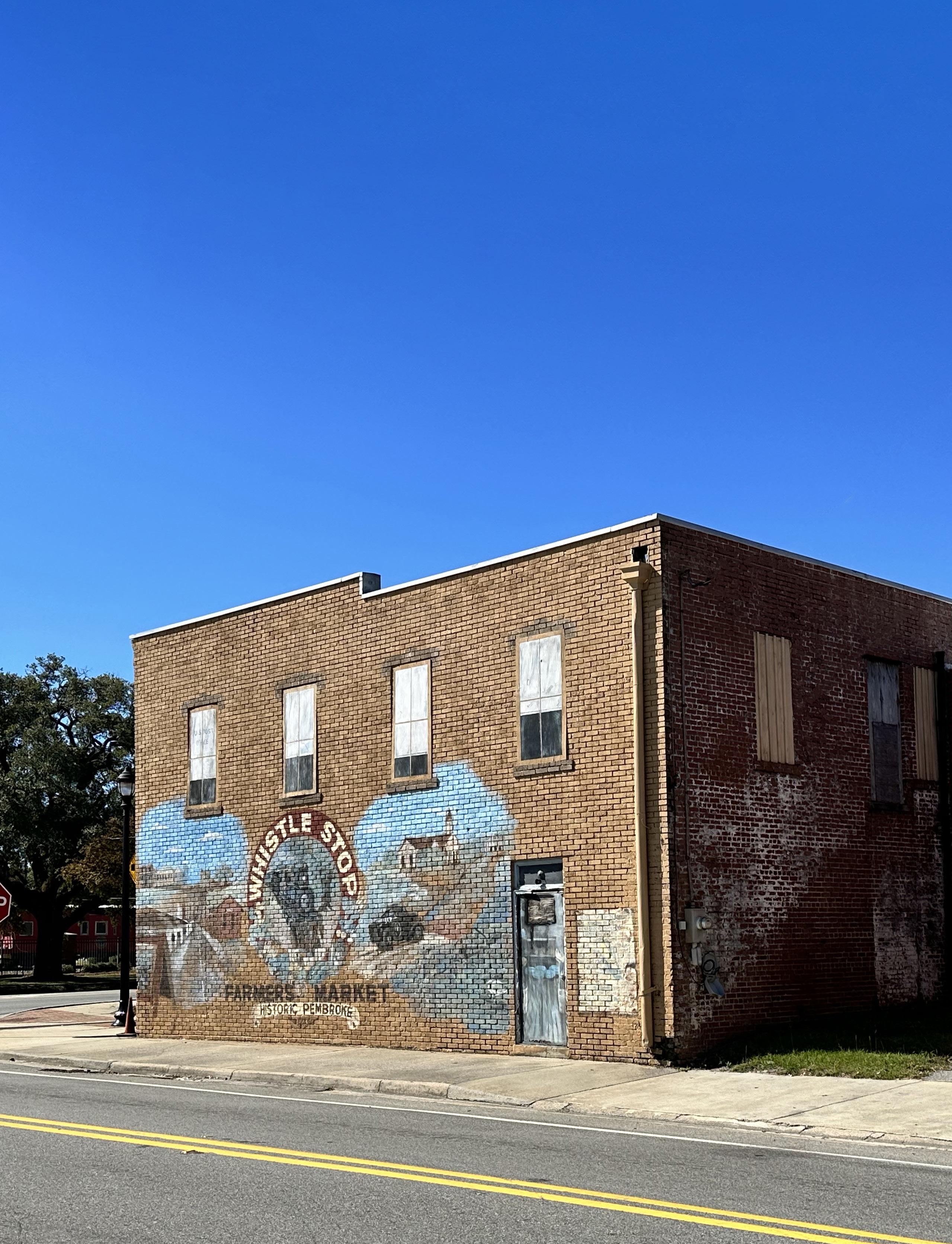
As the lights of the Tos Theatre prepare to shine once more, the story of Pembroke is being rewritten, one performance, one exhibit, and one community event at a time. From a dormant downtown to a vibrant cultural hub, the theater stands as a testament to the power of vision, collaboration, and the enduring human desire to gather, create, and celebrate together. ■






Story by Stephen Prudhomme
Water is crucial for survival, and it’s especially important to Dan Cantell. As a full-time firefighter, he relies on pressurized water to put out blazes in what are frequently life and death situations.
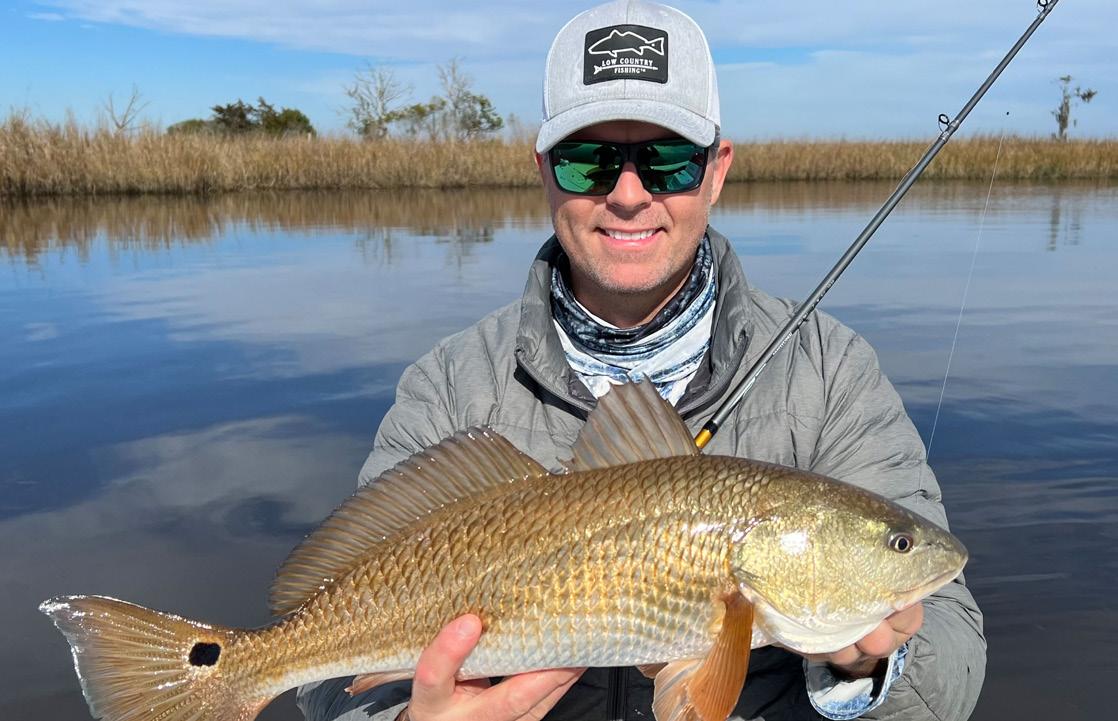
Cantrell seeks calmer waters as a fishing coach, firing up a passion for the sport among his clientele by imparting knowledge gained through a lifetime of angling and offering a bonding experience and escape from the stress of daily living.
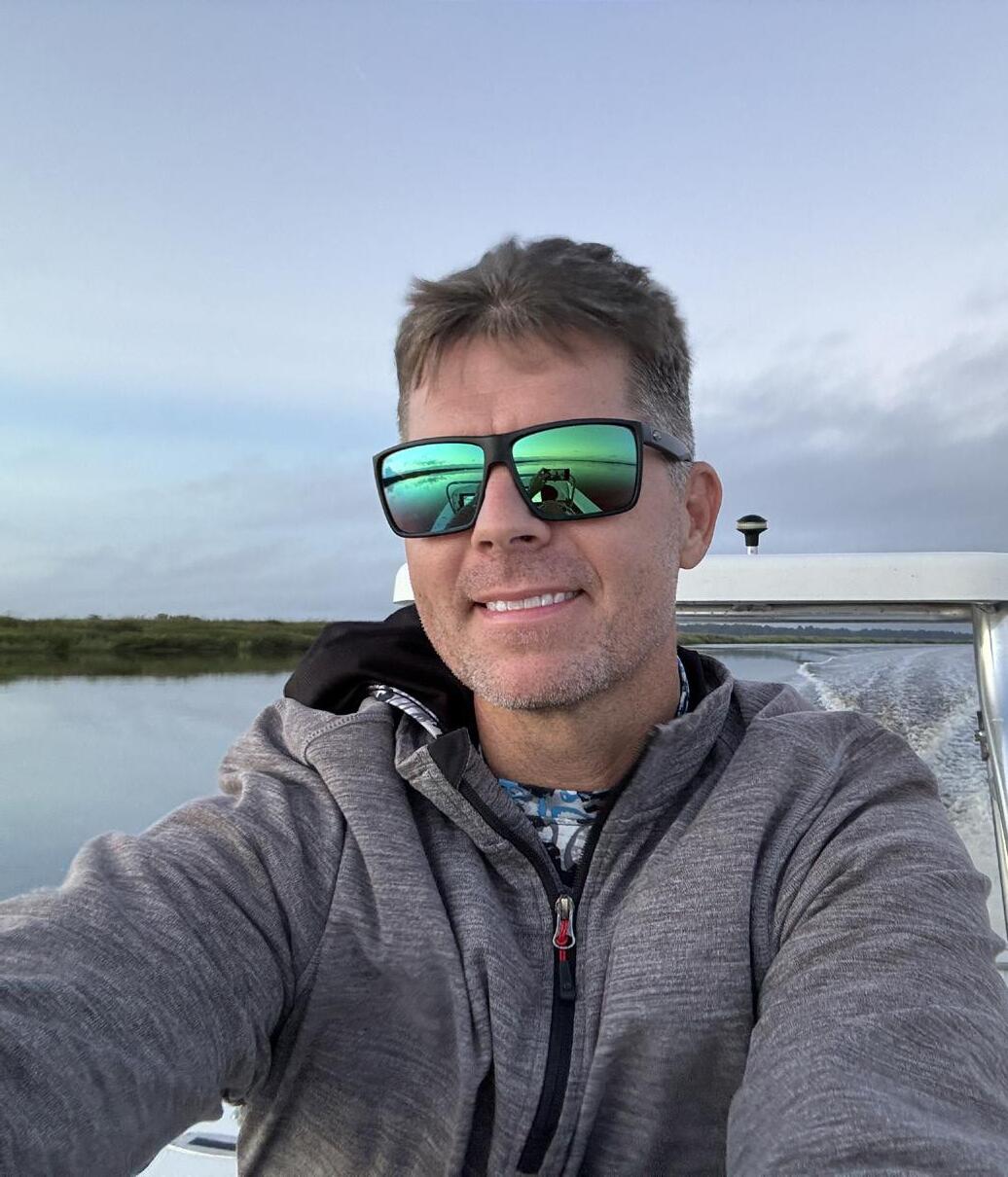
Cantrell, 44, is a Richmond Hill resident and lieutenant with the US. Army Fire Department at Hunter Army Airfield. A former member of the Air Force, he’s been with the department for a dozen years.
Putting out fires is Cantrell’s vocation. His avocation is fishing coach, which developed out of fishing videos he posted on YouTube during the pandemic and a Patreon page. What started out as a hobby provides Cantrell with his greatest source of income.
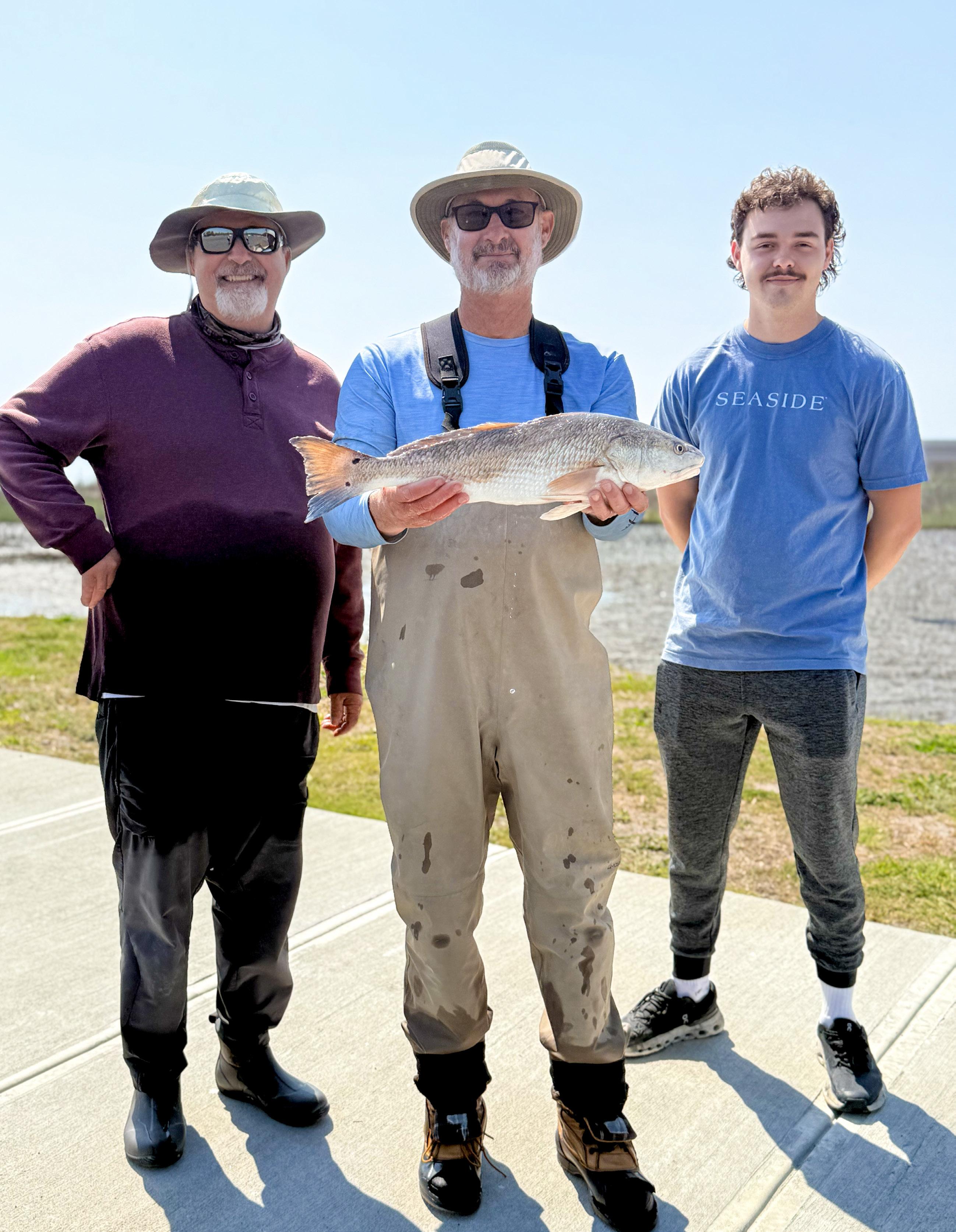
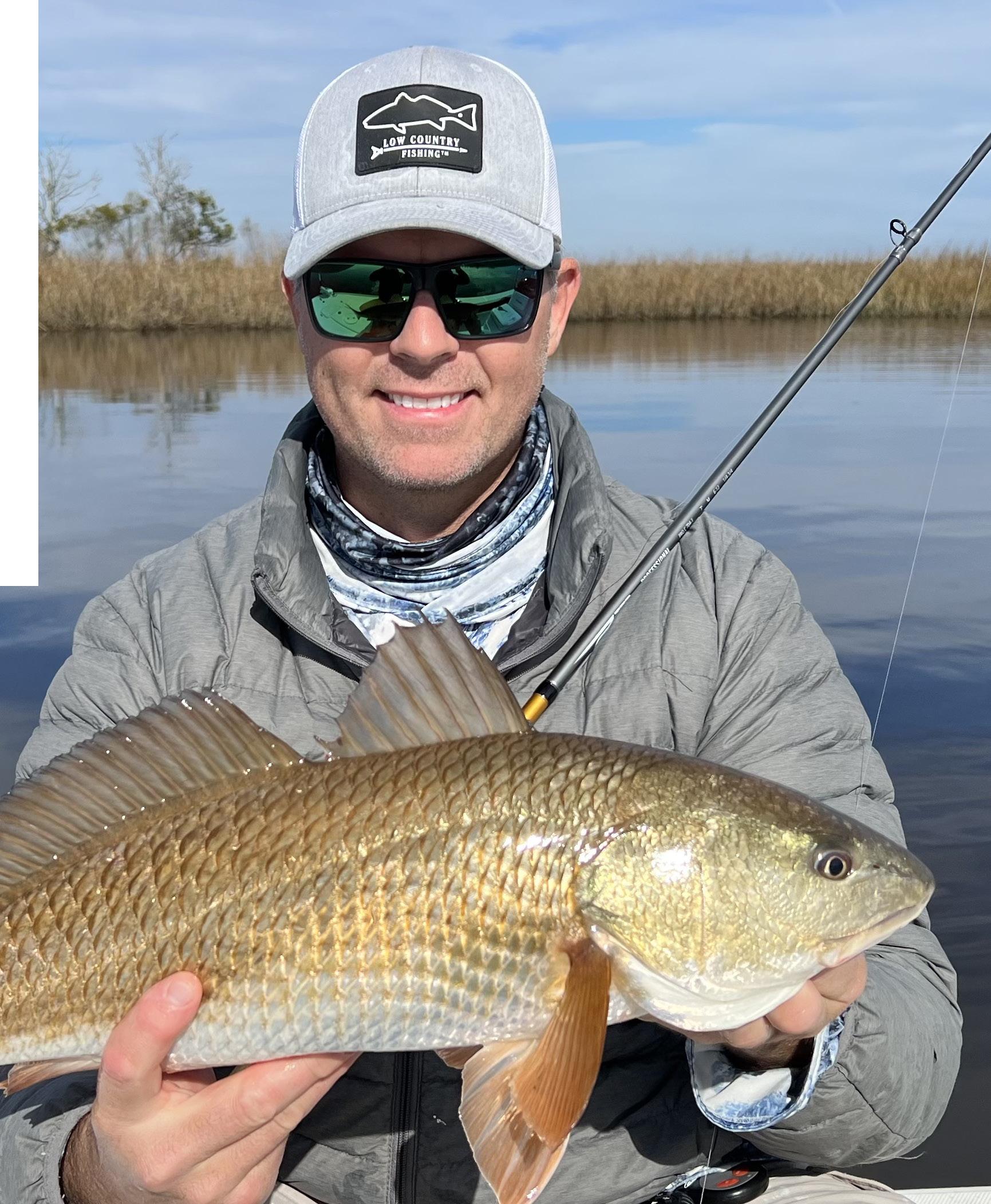
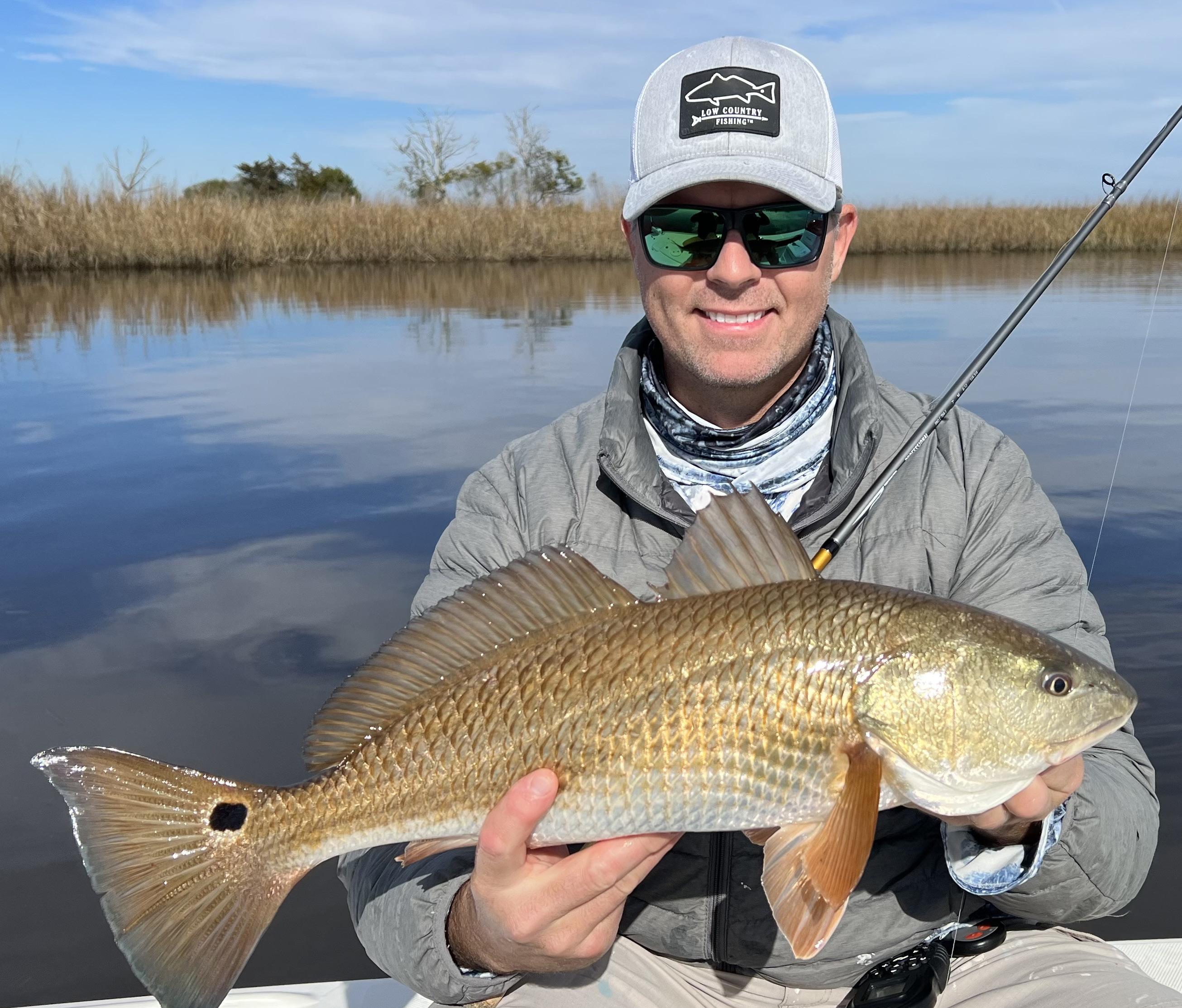
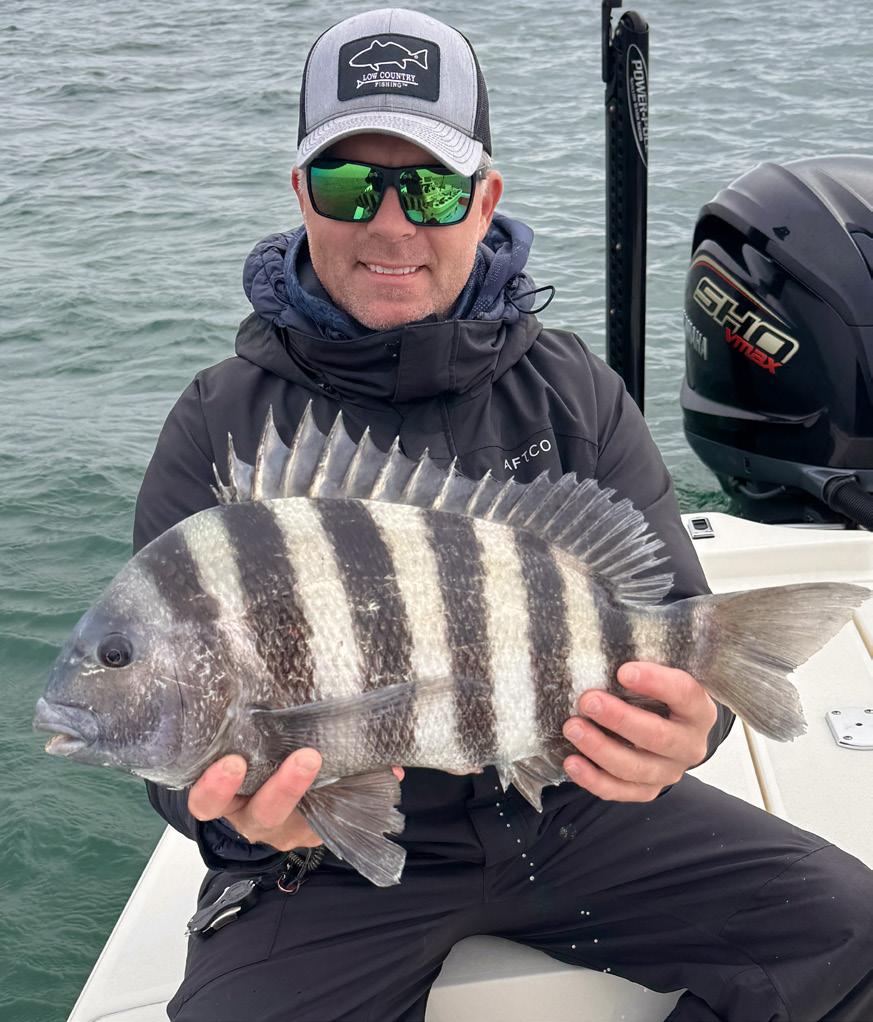
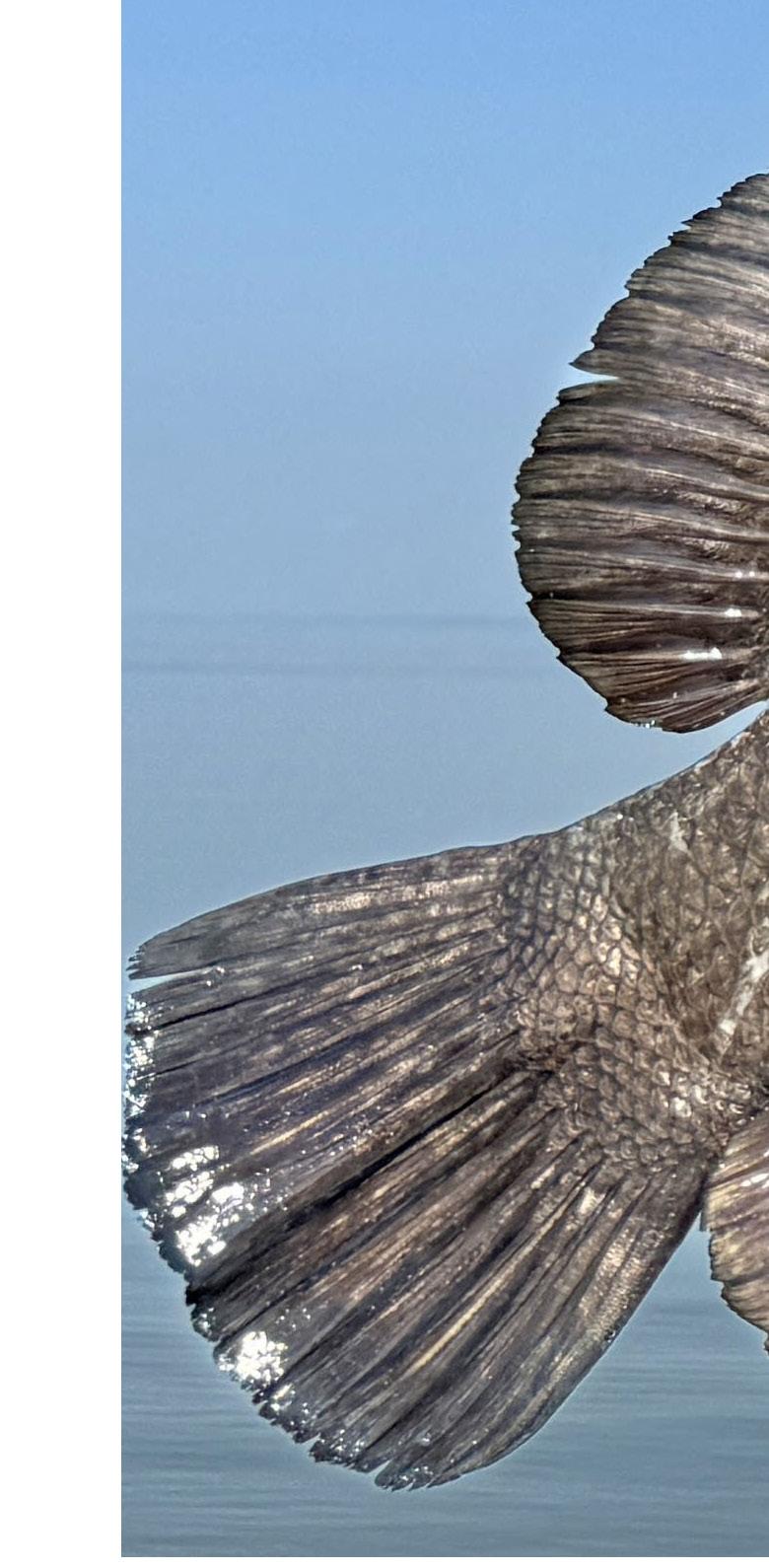
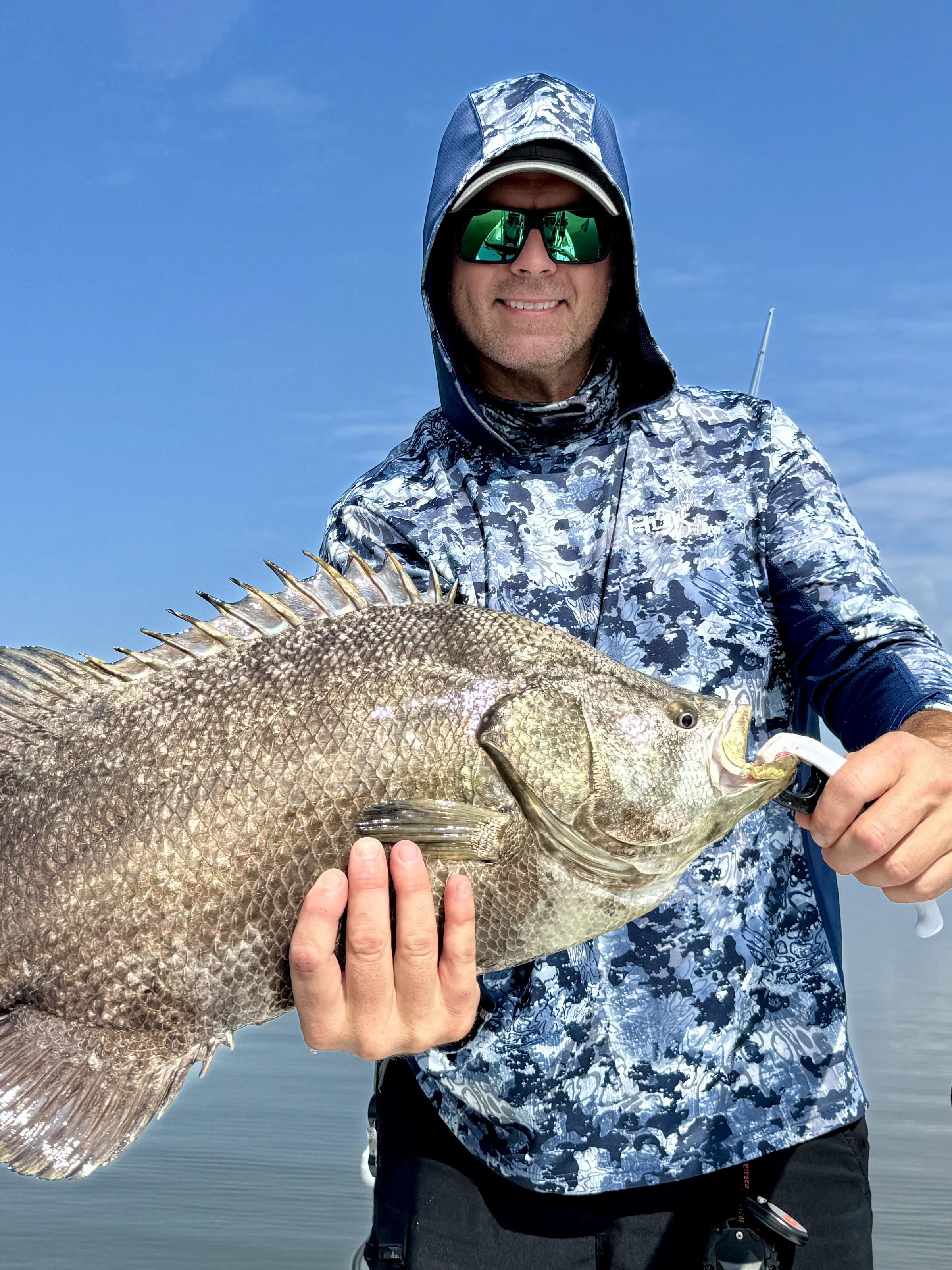
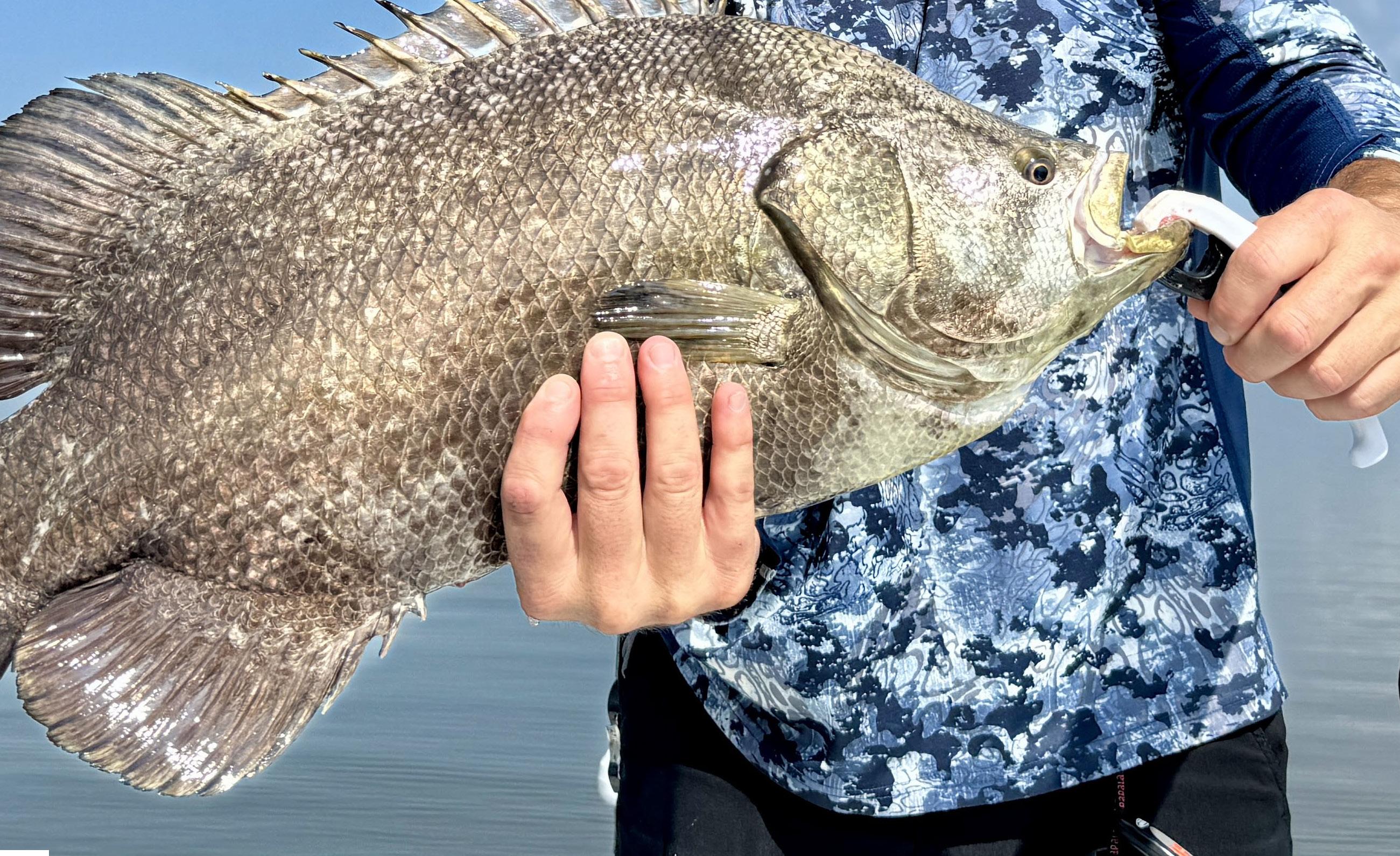
Cantrell operates Low Country Fishing, taking an average of three to four anglers on 4-hour fishing trips in his 24-foot Pathfinder boat. He travels to creeks and sounds and does primarily inshore fishing in Georgia and catches redfish, flounder, trout, sheepshead and black drum.
Cantrell offers not only fishing tips and strategy but an opportunity to relax in nature and connect with fellow anglers.
“We have a fun, good time in God’s creation,” Cantrell said. “It’s a chance to share testimony with fellow Christians. It’s therapy for these guys. I don’t even want their money. I enjoy the conversation so much. We become fishing buddies.”
One of those buddies is A.J. Balbo, a Richmond Hill attorney. The 49-year-old has fished since the age of 2 and in coastal Georgia for 20 years. He’s followed Cantrell’s Patreon page for the past three years and watched his fishing skills improve.
“He does an excellent job of actually coaching anglers what trends and habits to look for while out on the water,” Balbo said. “He’s a great fisherman and an even better teacher.”
Although he mostly fishes alone, Balbo said Cantrell has created a group of anglers that share results and observations online and meet up every few months to attend instructional lessons led by Cantrell. “It’s a great opportunity to not only hone fishing techniques but also to make new friends who enjoy the same hobby,” Balbo said.
He also welcomes the opportunity to relax in a setting other than one involving litigation. “I find fishing is a great time to mentally recharge and escape the stresses of everyday life,” Balbo said. “Even if I have a slow day on the water, it’s still rewarding to experience the beauty of the natural world. Catching fish is an added benefit.”
Cantrell grew up in Florida and discovered fishing at an early age. He fished with his dad but said he didn’t acquire a passion for it until he was a young adult.
In 2014, Cantrell found a new fishing home near the coast when he moved to Richmond Hill. When the pandemic limited social interaction, Cantrell found a welcome retreat on the water and engaging in one of his favorite pastimes. Noting the lack of fishing trips in the area, his wife suggested he take a GoPro the next time he went out and offer angling tips and strategy. That led to regular postings on YouTube and the introduction of a website on Patreon.
“It exploded fast,” Cantrell said. “We had 400 to 500 members about four years ago. We have over 800 nowadays.” He added he has an 80 percent retention rate of members who pay an annual fee of $20.
“It’s an investment in getting better out there,” Cantrell said. “My members love the information I put on the site, but they equally love the community feel that they get through communicating directly with each other, communicating directly with me, as well as the meetups and tournament that I host. I’m not just a guy on a webpage. I’m a living, breathing person and my members get that. And I truly think that is what sets me apart from these other giant companies.”
Using his YouTube channel as a marketing tool, Cantrell, having earned his charter boat captain license, introduced fishing trips and coaching. He set up a website, icoachfishing. com., and watched the business take off.
“Dan has built a community of fishermen grounded in shared values, confidence earned through experience, and a spirit of mentorship that extends well beyond fishing.”
“God kept on blessing me by being booked,” said Cantrell, noting he loves his job as a firefighter and a schedule that allows him to balance work, being with his family and casting a line out on the water. “I’m booked three to four months in advance. I like to be known as a fishing coach. I’ve figured out where to fish and what works. They’re learning the why rather than the where of fishing. They can take what they learn and go anywhere with it.”
Greg Ositko is just such an individual. A resident of Dublin, Ga., the Penn State graduate worked in the water treatment industry for a number of years. He also was around water during his spare time. Ositko said boating, fishing and time spent on the water shaped his downtime and sustained him beyond work.
In retirement, Ositko, 74, was drawn to the Georgia coast and took a spring fishing trip he said rekindled something essential. That led him to eventually connect with Cantrell.
“His enthusiastic, transparent approach to teachingcombined with integrity, generosity and respect for the water - stood apart,” Ositko said. “Dan has built a community of fishermen grounded in shared values, confidence earned through experience, and a spirit of mentorship that extends well beyond fishing.”
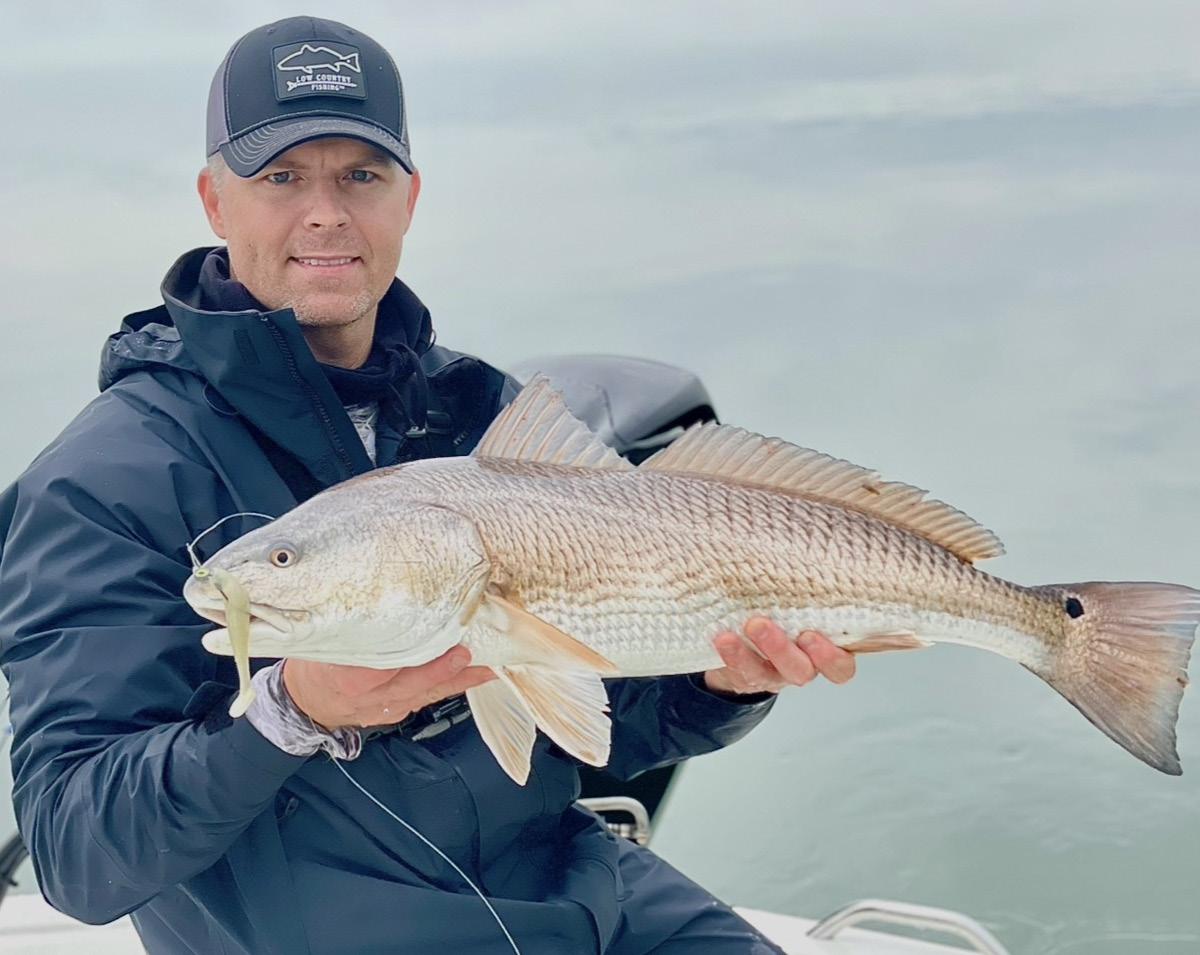
Fishing can test even the most eager novice, Ositko noted, adding that passion for the sport, paired with a genuine desire to learn, has a way of guiding you to the right people such as Cantrell.
“Capt. Dan Cantrell is one of those rare guides in Georgia’s Low Country,” Ositko said. “His character, experience, and steady presence on the water create the conditions every angler hopes for: confidence, learning, and plenty of tight lines for all ages.”
Ositko said Cantrell helped him gain a new appreciation for time spent in the waters off the Georgia coast. “At 74, I find myself learning again, with humility, joy, and gratitude,” Ositko said. “Georgia’s coastal waters, and the people who steward them well, have reawakened a passion I once feared I had lost. Some journeys return us not to who we were, but to who we still have time to become.”
Victor Hurtig is another satisfied customer. An emergency room doctor, he’s been a serious fisherman for over 30 years and began saltwater fishing from a boat six years ago. Connecting with Cantrell has enhanced his fishing experience.
“Dan runs an exceptional service through his Patreon called Lowcountry Fishing, and I’ve benefited tremendously from his coaching, guide trips and online community,” said the Savannah physician. “What sets Dan apart is his very detailed and advanced approach to fishing combined with a unique ability to take a very complicated fishery and explain it to the layperson while keeping things light and upbeat. Our local waters present significant challenges with large tide swings and seasonal challenges. Dan is an outstanding guide with a deep understanding of how to navigate and teach these complexities.”
Hurtig added that Cantrell’s Patreon has been invaluable for gear tips, preparation advice, and planning out fishing days given current trends and conditions. He also cited Cantrell’s development of a wonderful local community with charitable events that bring anglers together and give back.
Each year, Cantrell holds a fishing tournament featuring 25 boats. The event benefits the Savannah River Keeper.
Cantrell has also helped Hurtig increase his chances of landing the big one. “The impact on my fishing has been significant,” Hurtig said. “I understand the waters much better and feel like I can navigate safer. My confidence and success rate have improved dramatically. Being new to saltwater fishing from a boat about six years ago, Dan has significantly sped up my learning curve in ways I couldn’t have achieved on my own. Perhaps most importantly, it’s made the experience much more enjoyable when I take my kids out now.”
For Cantrell, one of the most enjoyable aspects of his job as fishing coach is helping strengthen family bonds, especially between fathers and sons.
“The coaching strengthens bonds with fathers and sons because it takes the dad to hero status,” Cantrell said. “The mindset of a kid was my dad doesn’t know what he’s doing but now he puts us on fish.”
The coaching also evokes a simpler time when communication was more face-to-face rather than through a phone or computer. “It allows a unique bond in the outdoors you cannot get inside with technology,” Cantrell said. “These days there are so many distractions going on that it’s hard for parents to connect with kids due to the fast-evolving technology. But with fishing it puts the ball in the other court where a father can teach his son the importance of patience, attention to detail, as well as that one on one, undistracted time that is so valuable.” ■
RICHMOND HILL CONVENTION & VISITORS BUREAU
(912) 756-2676
HEALTHCARE
Bryan County Health Department | (912) 756-2611
Please refer to the online directory, “Health Care,” for a complete listing of healthcare partners.
LAW ENFORCEMENT
In case of EMERGENCY, dial 911
Georgia State Patrol | (912) 754-1180
Bryan County Sheriff | (912) 756-2282
Bryan County Fire & Emergency Services | (912) 756-1982
City of Pembroke Police | (912) 653-4414
City of Pembroke Fire Department | (912) 653-4400
City of Richmond Hill Police | (912) 756-5645
City of Richmond Hill Fire Department | (912) 445-5928
LIBRARY SERVICES
Pembroke Public Library | (912) 653-2822
Richmond Hill Public Library | (912) 756-3580
NEWSPAPERS
Bryan County News | (912) 756-2668
Savannah Morning News | (912) 236-9511
POST OFFICES
Ellabell Post office 8745 US Hwy 280 E Ellabell, GA 31308
Pembroke 298 Ledford St Pembroke, Ga 31321
Richmond Hill 9664 Ford Ave Richmond Hill, GA 31324
SCHOOL REGISTRATION
Public Schools Bryan County Schools | (912) 851-4000
ELECTRICITY
Canoochee EMC | (800) 342-0134
Coastal Electric Cooperative | (912) 844-3311
Georgia Power | (888) 660-5890
WATER / TRASH PICK-UP
Pembroke City Hall | (912) 653-4413
Richmond Hill City Hall | (912) 756-3345
Water Utility Management | (912) 352-9339







Find additional details and a full calendar for the entire Greater Savannah area at BryanCountyMagazine.com. Sign up for the newsletter at www.bryancountymagazine.com/pages/ magazine-subscription-bryancounty
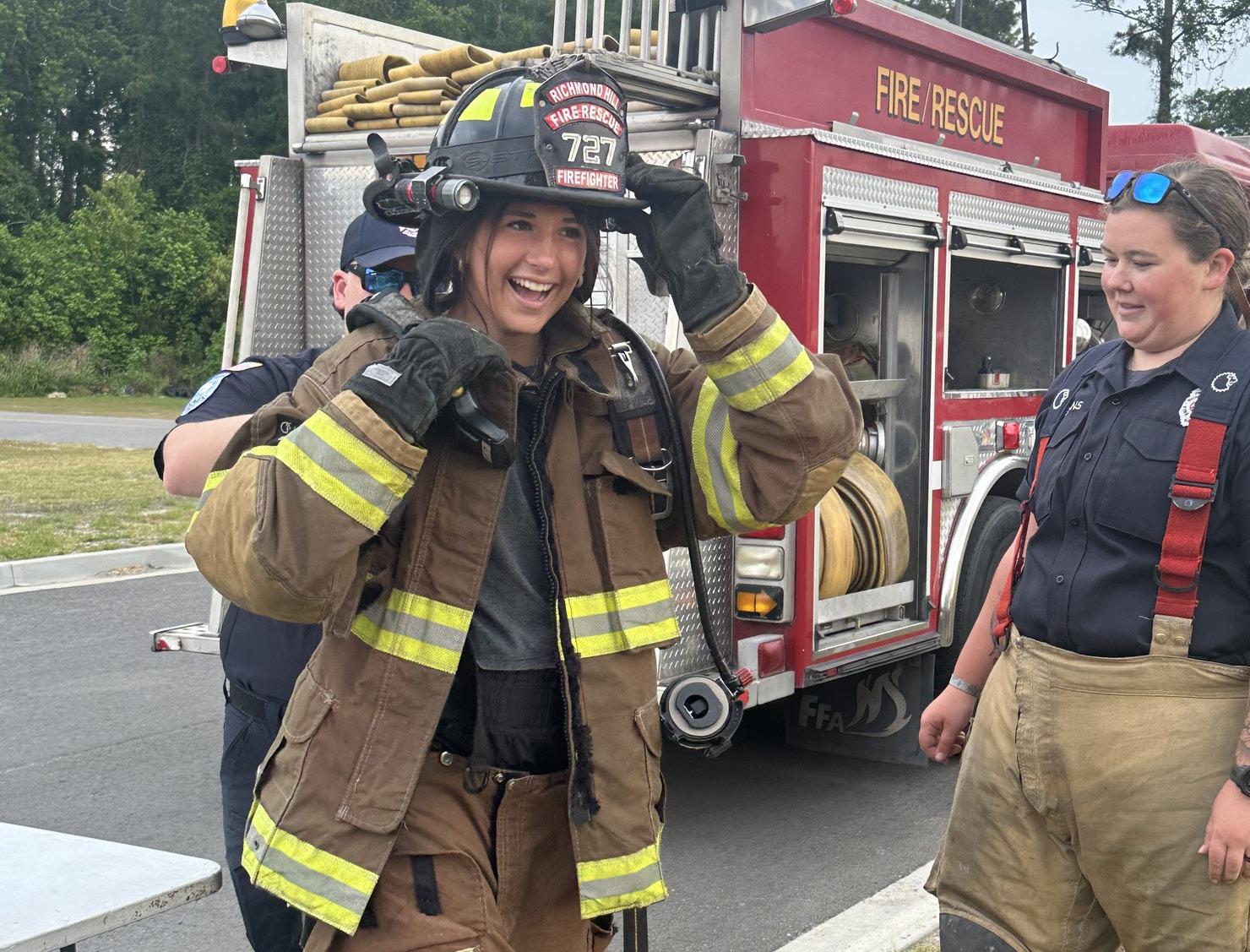
5/6: Women’s Healthcare Expo Presented by St. Joseph’s/Candler Richmond Hill City Center
5/9: Neighbor Fest 2026 1460 Ford Ave, Richmond Hill
5/10: Mother’s Day On The Farm! Triple J Stables & Petting Zoo
5/11: The Mayor’s Table Wetlands Education Center, Gregory Park
5/21, 6/18: The Richmond Hill Friends of the Library hold used-book sales Richmond Hill Library
5/23: Fort McAllister State Historic Park to Commemorate Memorial Day Fort McAllister State Park
6/6: Cars & Coffee Richmond Hill History Museum
6/7: Family Farm Day Triple J Stables & Petting Zoo
6/15: Mobile Mammography - SJ/C Primary Care - Richmond Hill 10055 Ford Ave, Suite 3A, Richmond Hill
6/27: Red, White & Blue –Independence Day Celebration J.F. Gregory Park
6/27: Bryan Animal League Splash into Summer Bryan County Bark Park

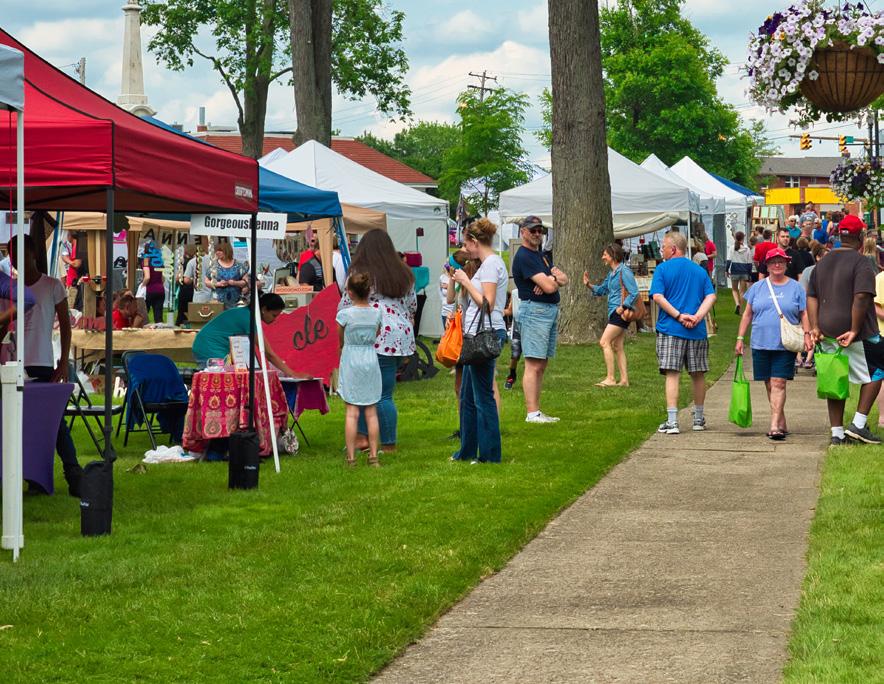
2026 is about real growth.
New neighborhoods are going up. New families are moving in. New businesses are opening their doors. Every single month, people are making decisions about where to eat, where to shop, who to trust with their home, their health, their finances, and their families.
Those decisions are happening right now.
And here’s the part many business leaders miss:
Most of these new residents don’t have brand loyalty yet. They’re forming habits. They’re choosing favorites. They’re deciding who feels familiar, credible, and trustworthy in a place that’s still new to them.
That creates a real opportunity for business growth.
It also creates a real risk of being overlooked.
Most local businesses aren’t struggling because they’re bad at what they do. They’re struggling because when it comes to marketing, they’re winging it.
• They post when they remember.
• They boost a few ads.
• They sponsor an event here and there.
• They hope it all adds up to growth.
Hope is not a strategy.
At J. DelSUR Marketing Group, we look at businesses through a big-picture lens. We don’t believe in one-size-fits-all packages, and we don’t believe more tactics automatically equal better results.
We believe strategy comes first.
2026 is the year to move from random acts of marketing to a strategy-first approach that:
• Reaches the right people at the right time
• Builds trust with newcomers and long-time residents
• Turns first-time buyers into loyal advocates
• Uses your budget wisely instead of spreading it thin
In the months ahead, we’ll be sharing what’s working right now for local businesses in our region — from strategy and local visibility to content, email, paid media, and of course AI.
You’ll see one theme come up again and again: Real growth doesn’t come from doing MORE marketing.
It comes from doing the right marketing, consistently, with a clear strategy behind every move.
If you’d like a partner to help you build and execute a real plan, that’s exactly what we do.
JDelSURMarketing.com | 912-295-5406 | 135 Goshen Rd Ext., Ste 251, Rincon, GA
St. Joseph’s/Candler’s Richmond Hill Campus at Heartwood offers a wide variety of healthcare services designed to keep you and your family in great health. Located on Belfast Keller Road across from the Heartwood community, our medical campus offers key access to vital services in a convenient, close-to-home location.
Staffed by experienced, board-certified medical professionals, services now include:
• Primary Care
• Urgent Care
• Cardiology

• Neurology
• OB/GYN
• Podiatry
• Bē Health & Well-Being Program
Whether its diagnosing and treating illnesses, managing chronic illnesses, coordinating care provided by other St. Joseph’s/ Candler specialists, or focusing on preventive care, including checkups and physicals, or immunizations and screenings, we are here to make your health a priority.
For more information, or to schedule an appointment, visit us at sjchs.org/heartwood.