A proud partner of Issuu, U.S. Polo Assn., USPA, Global Polo Sports, The Impression and Mixam
LA PALMERAIE MOROCCO
The Autumn Cup
PATAGONES POLO CLUB
Inglehart Cup
Outback Cup
DOMAINE DE CHANTILLY
Polo Nations
Tournoi des Legendes
GUARDS POLO CLUB
Cartier Cup
La Martina Queen Elizabeth the Queen
Mother Centenary Trophy
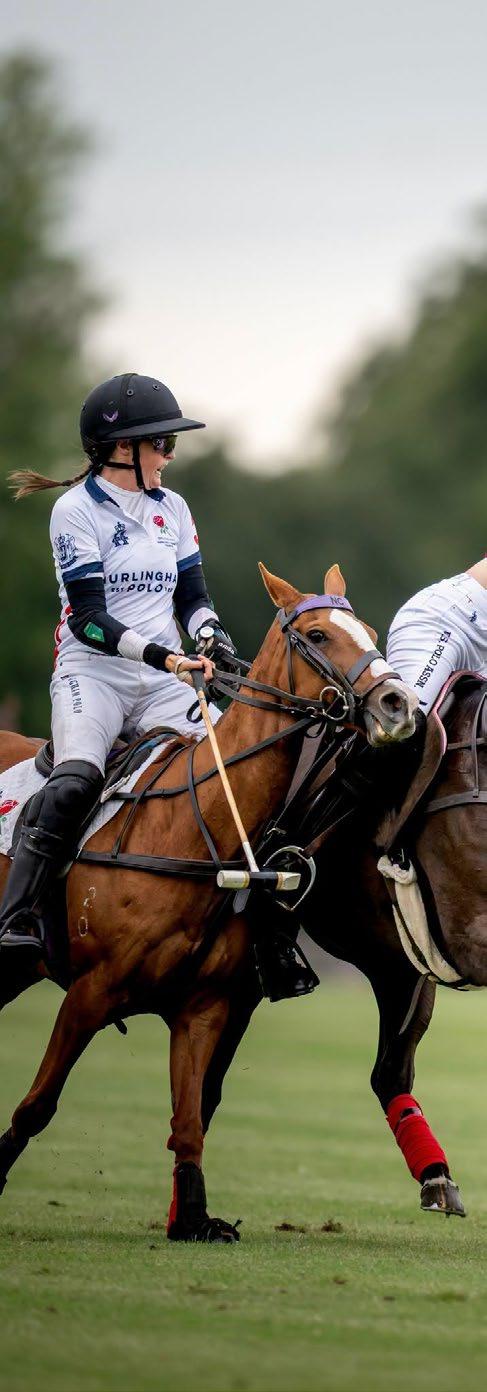
HURLINGHAM POLO CLUB
Coronation Trophy
Cowdray Park Gold Cup
The Queen's Cup
ROLAND GARROS FRENCH OPEN
FORMULA 1 GRAND PRIX
WIMBLEDON
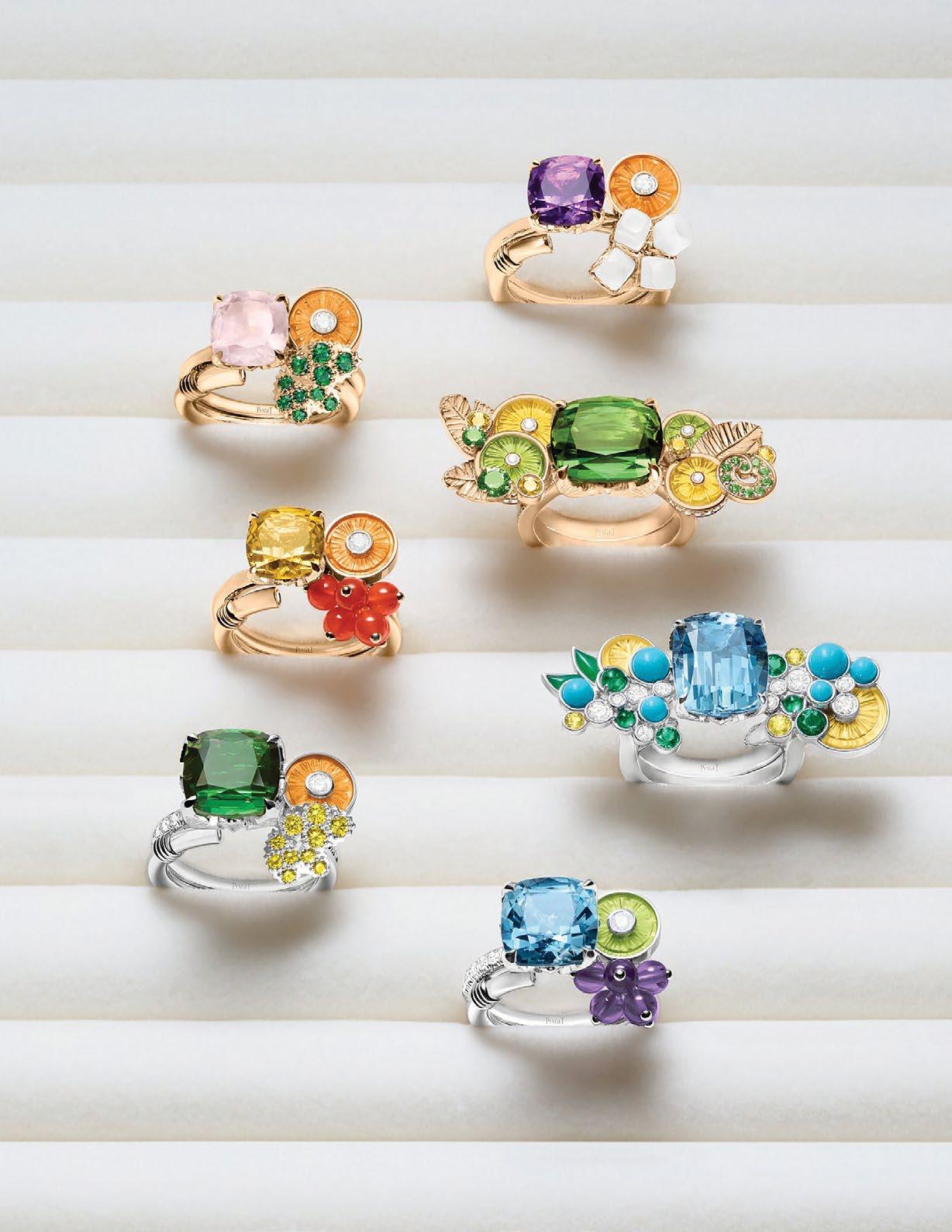
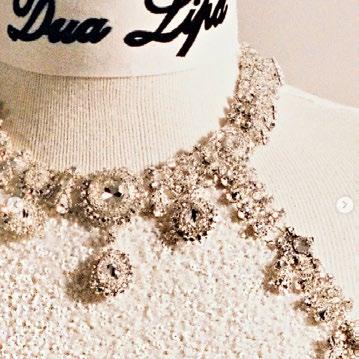
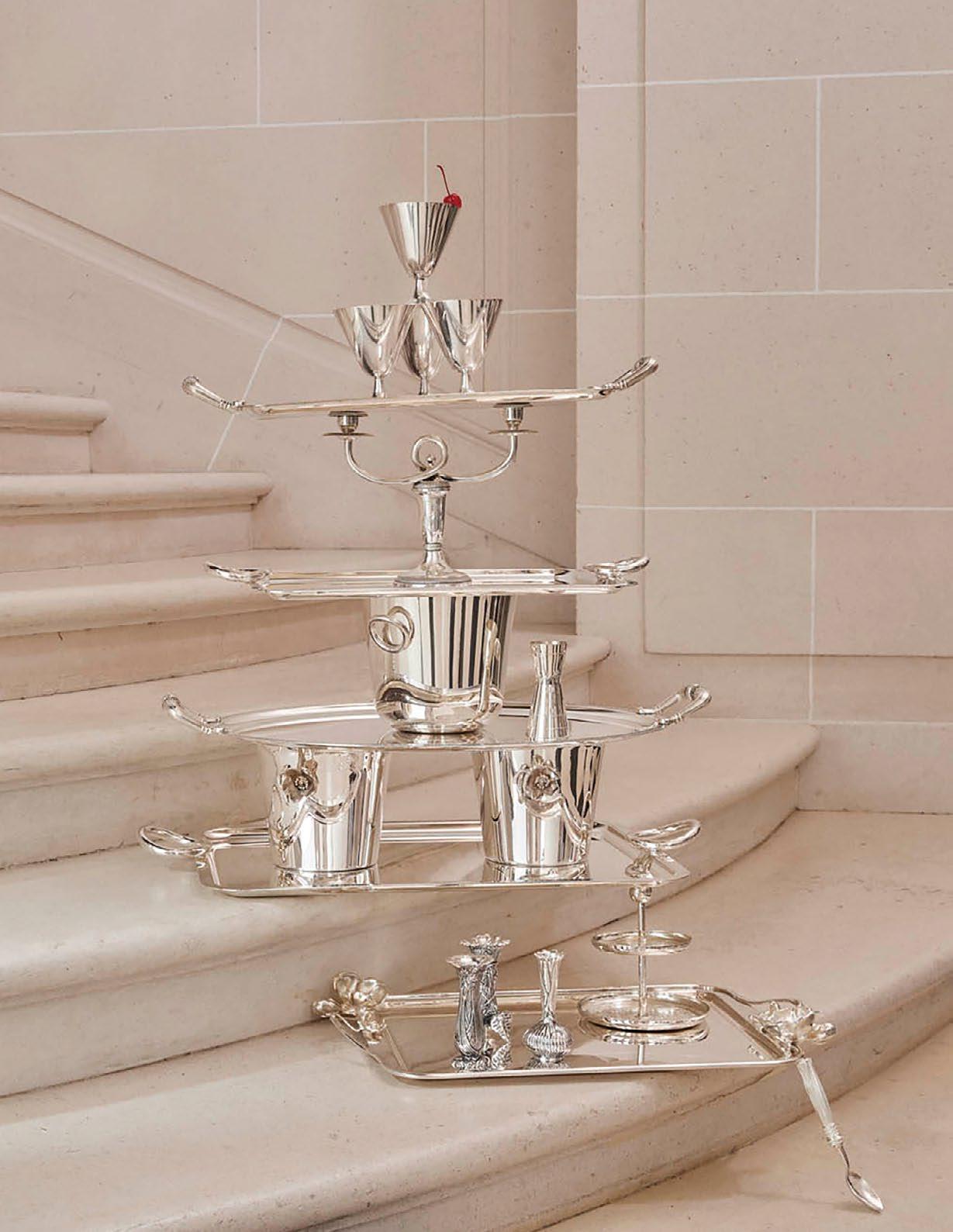
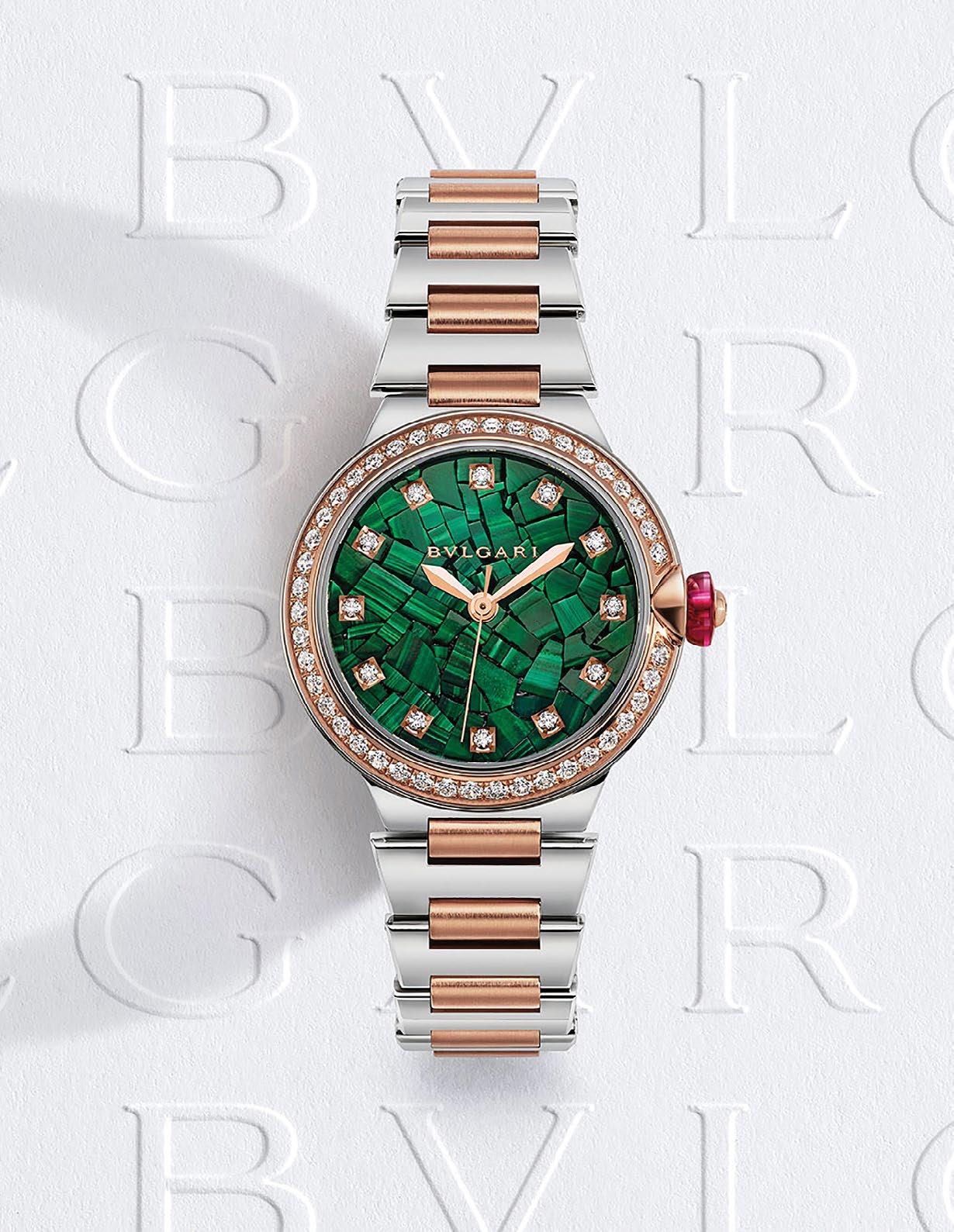
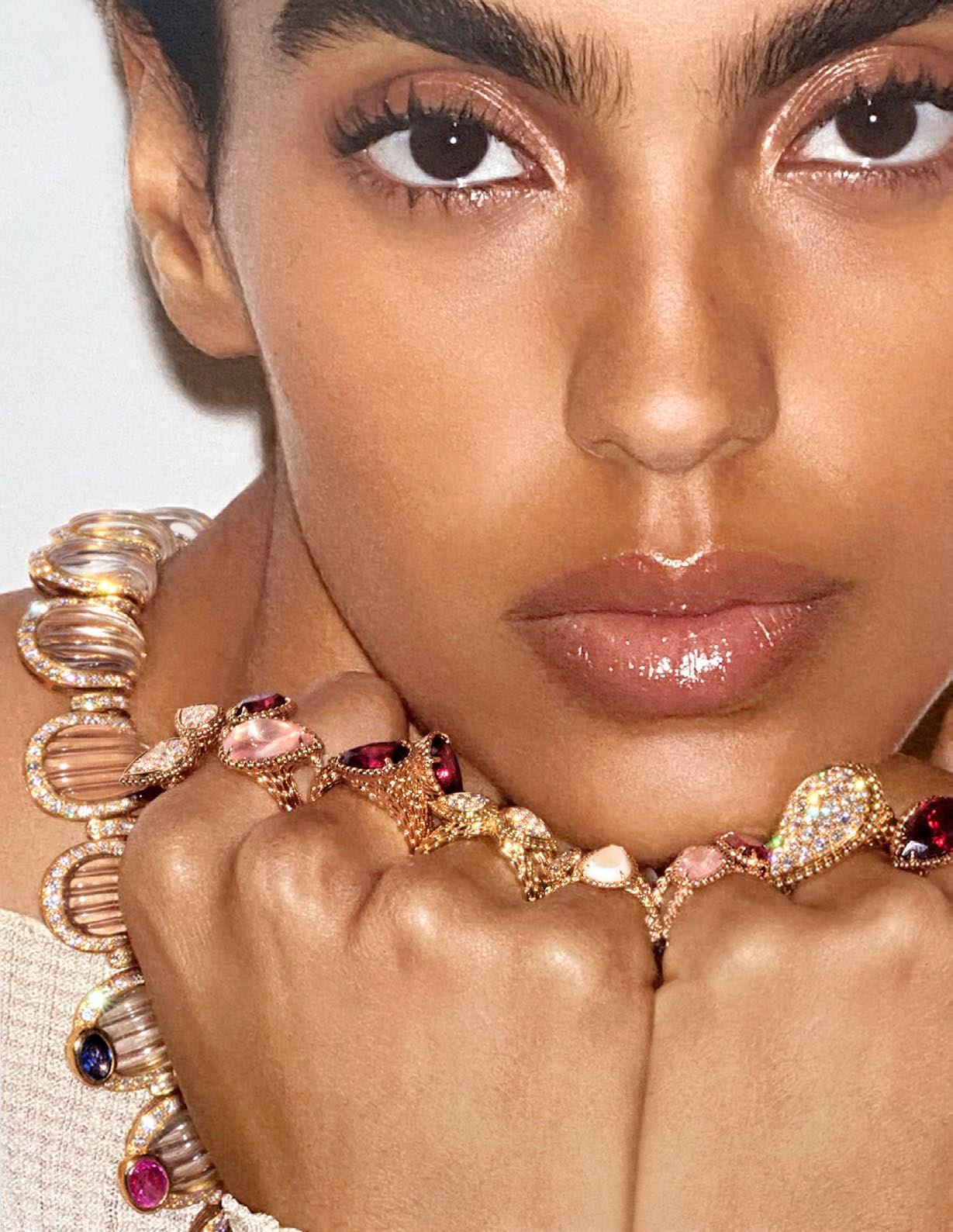
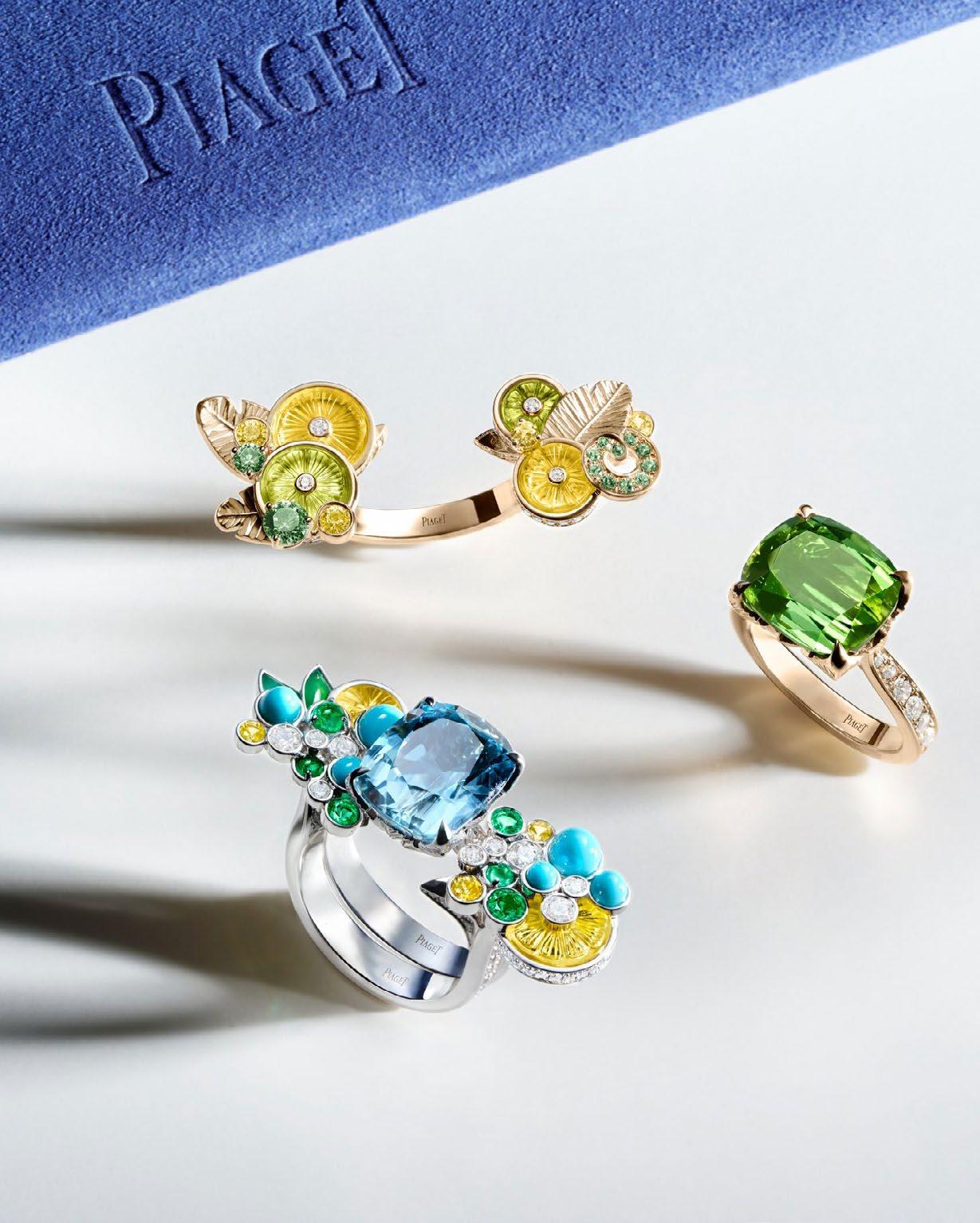
COCKTAIL COLLECTION
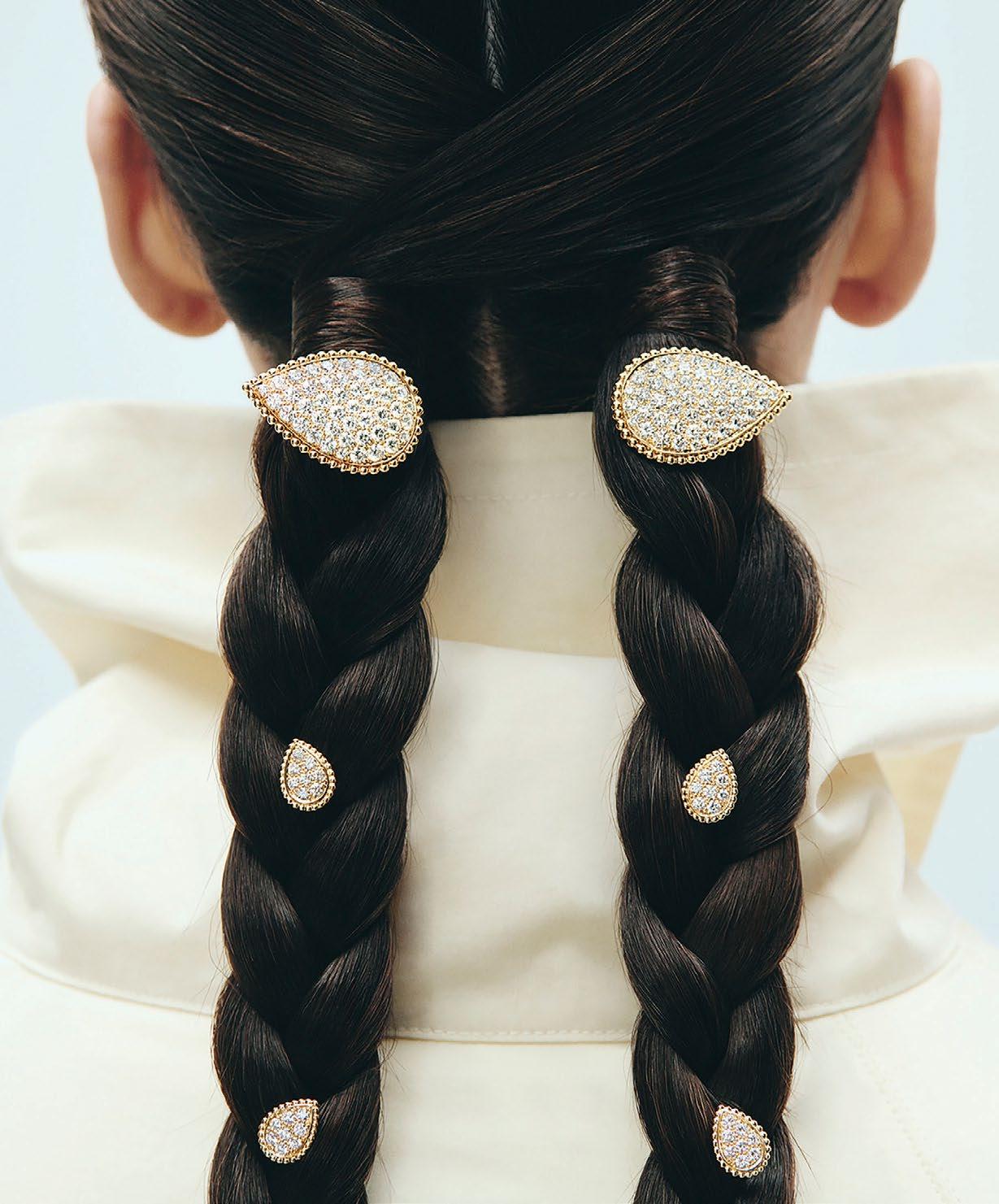
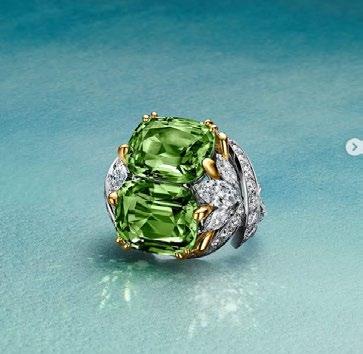
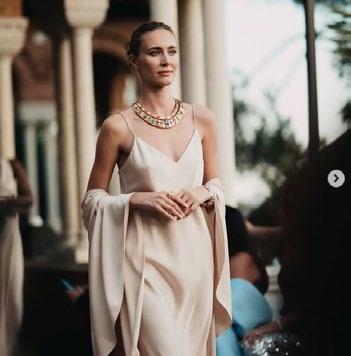
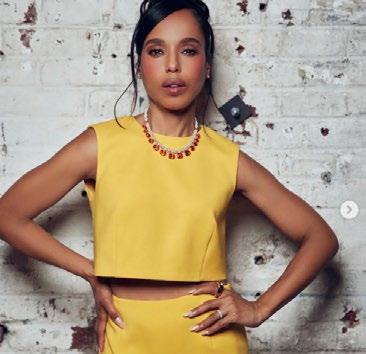
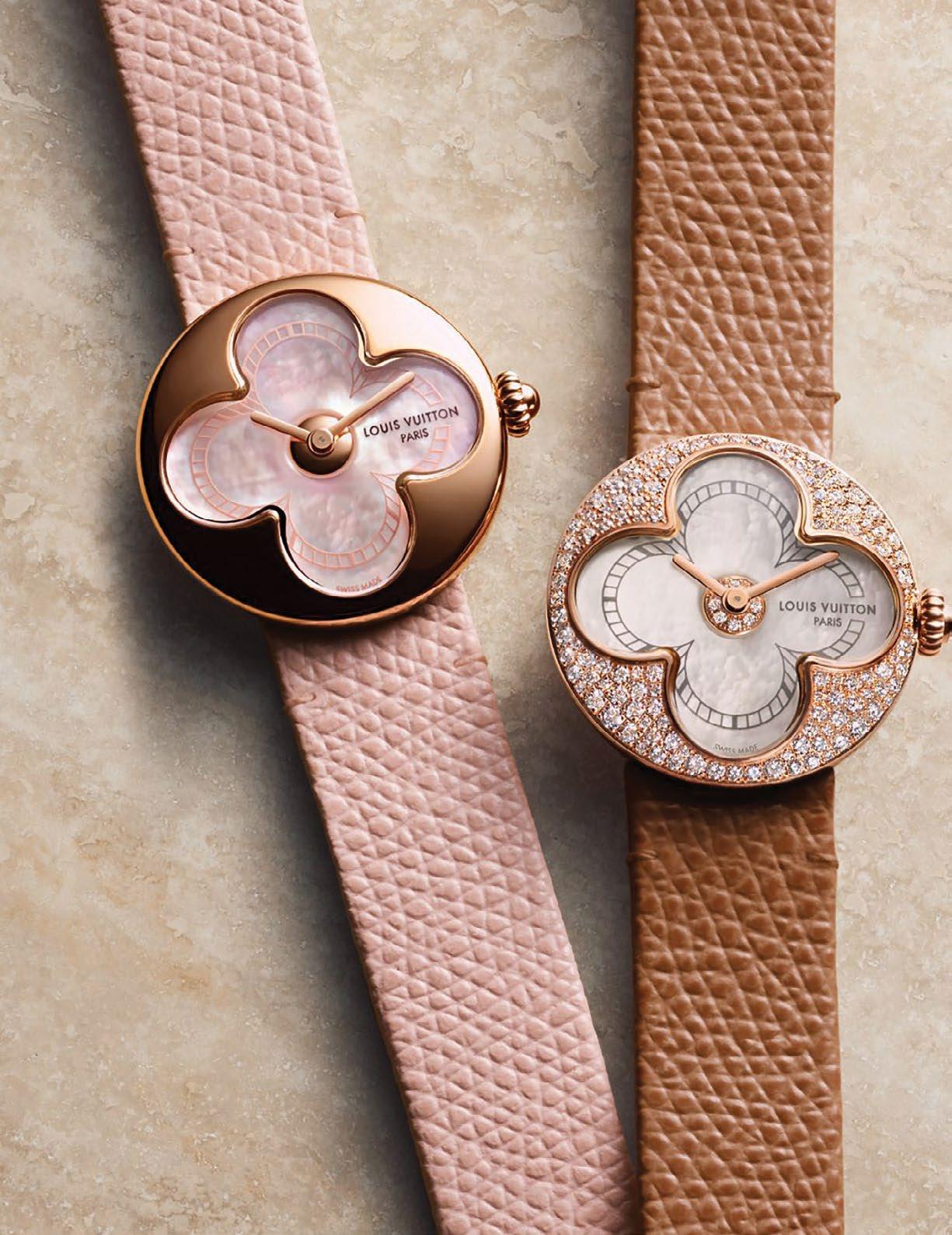
A vibrant invitation to celebrate life's golden moments. Flamboyant jewels, a blend of festive audacity and timeless sophistication, brightening every day.
SCOREBOARDS & COCKTAILS
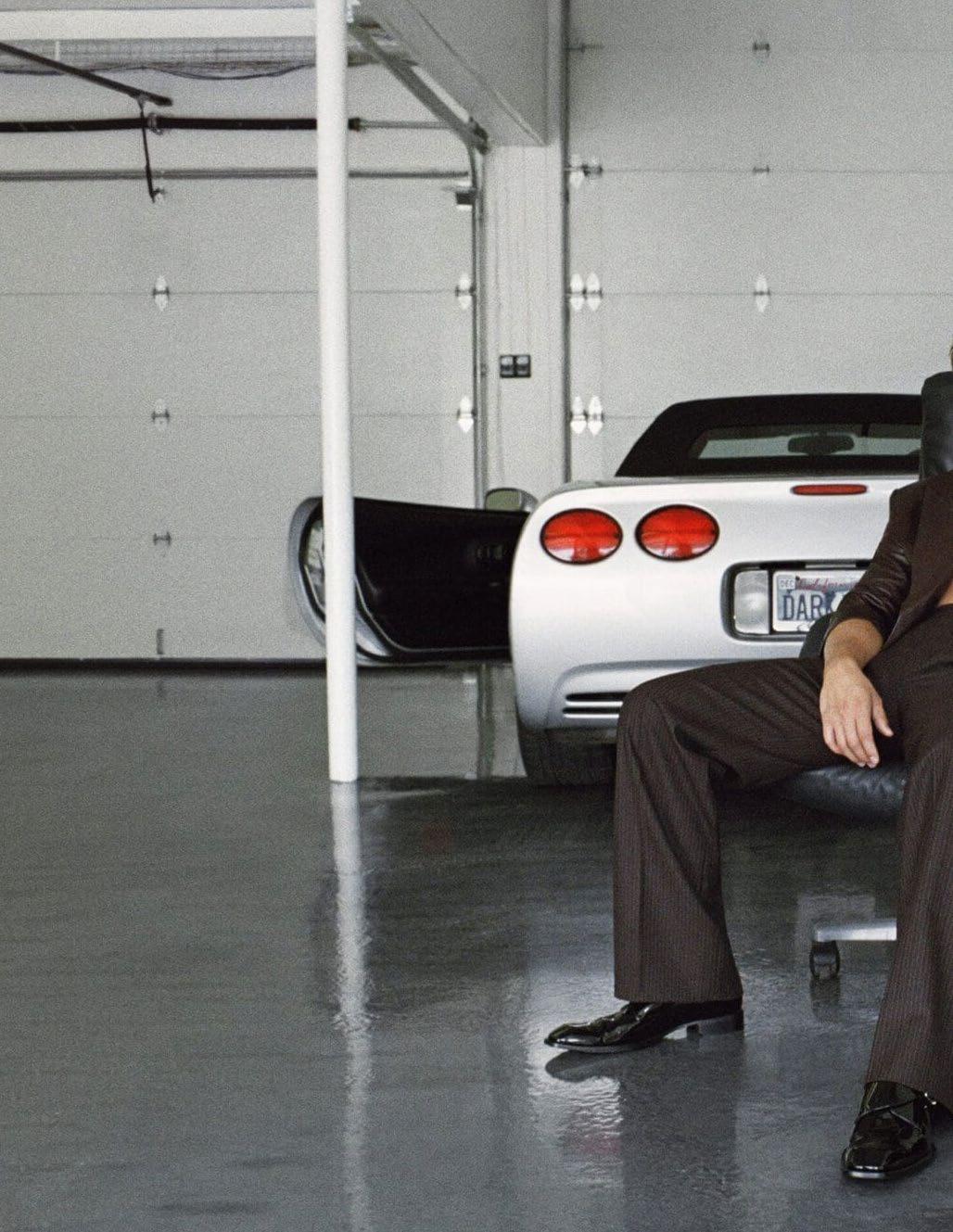
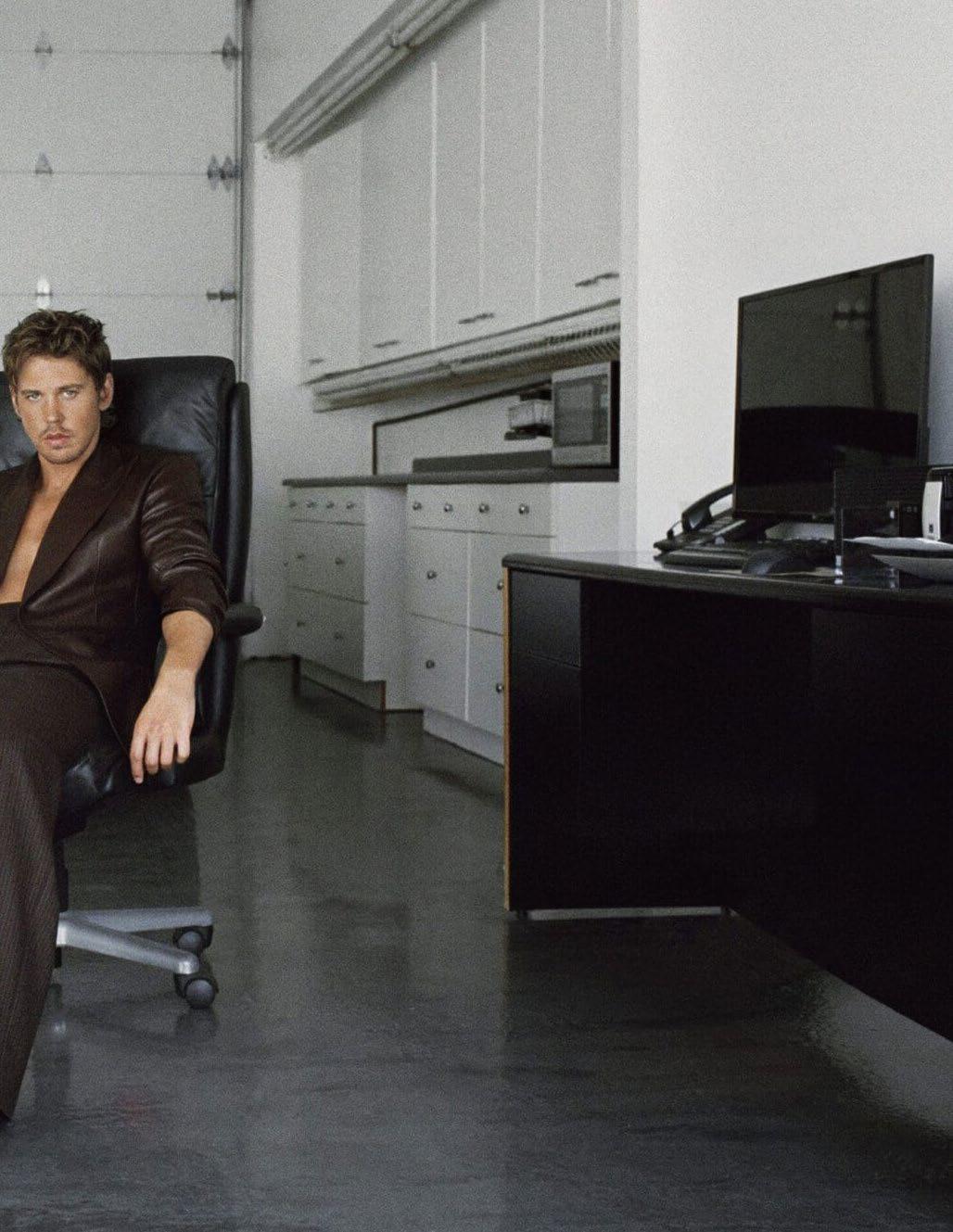
Dana
Cannabis wins reclassification, page 58
Long-term couples have these 2 things in common, page 75
Humans may be able to regrow body parts soon, page 62
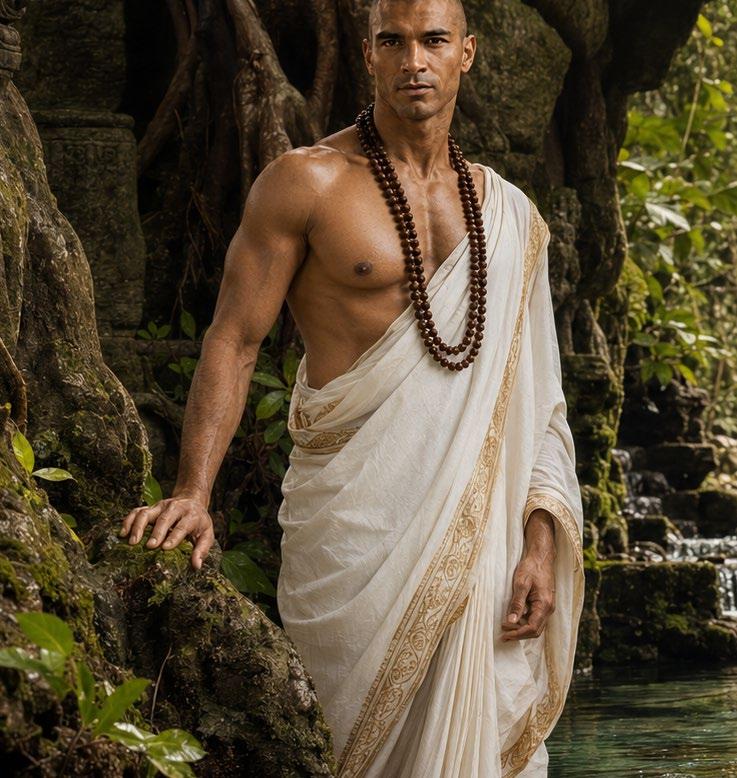
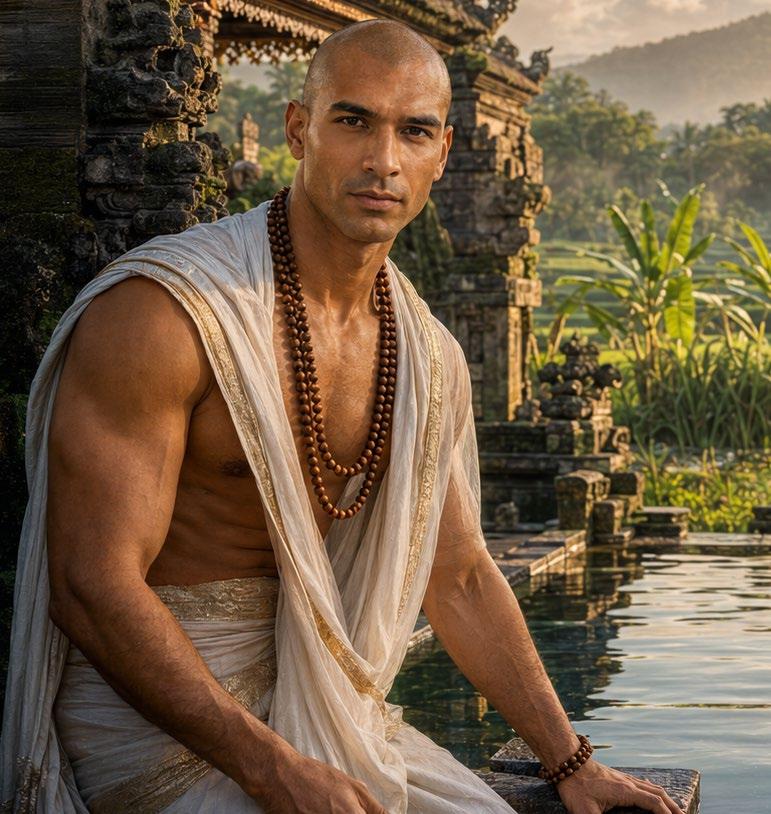
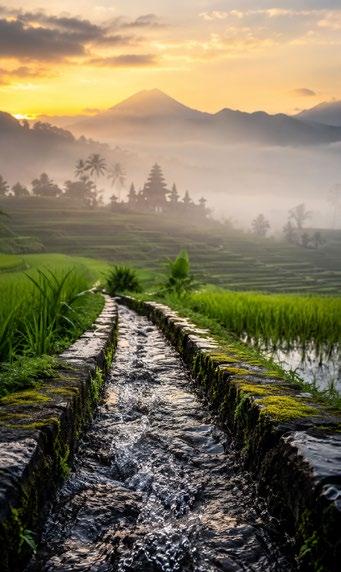
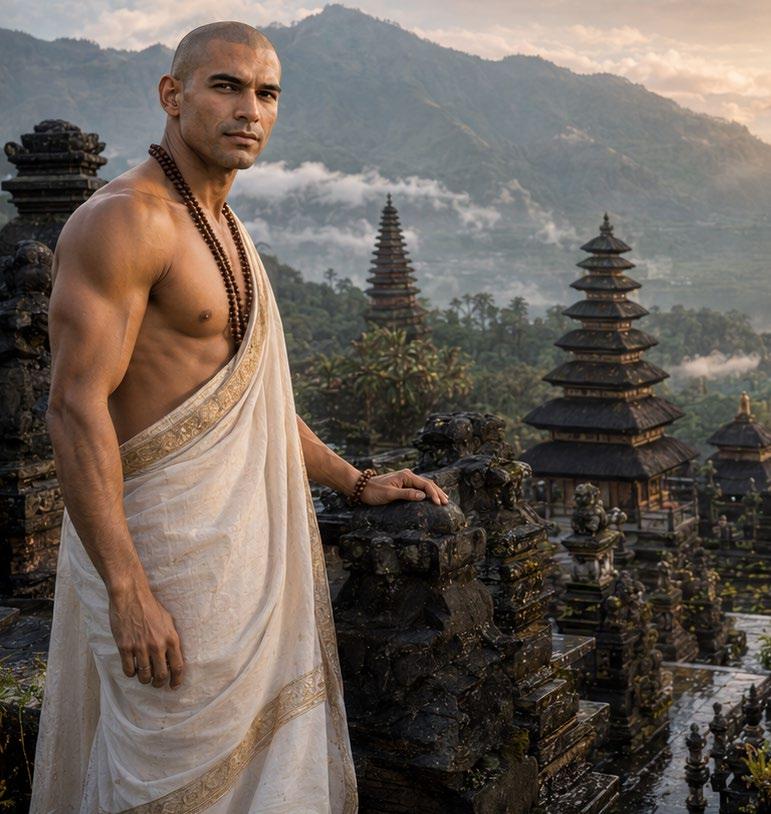
The royal waters of Bali await you, page 162
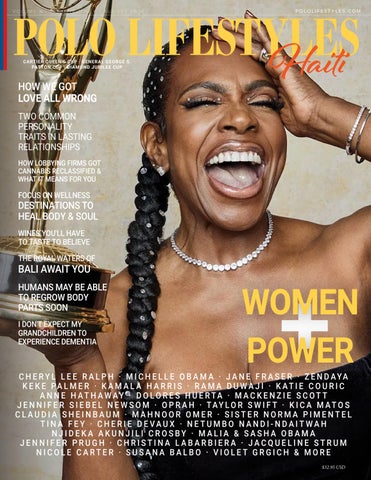
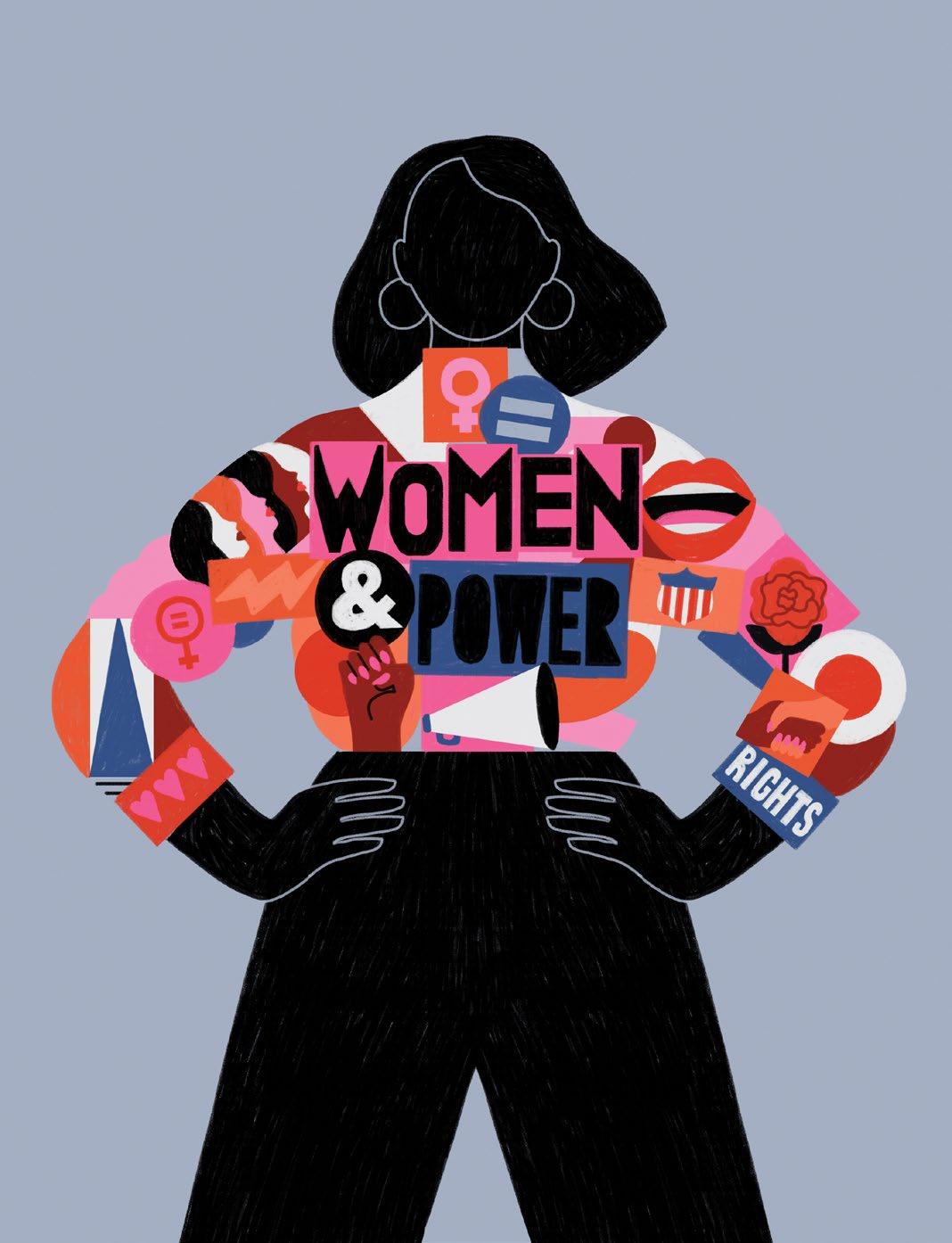
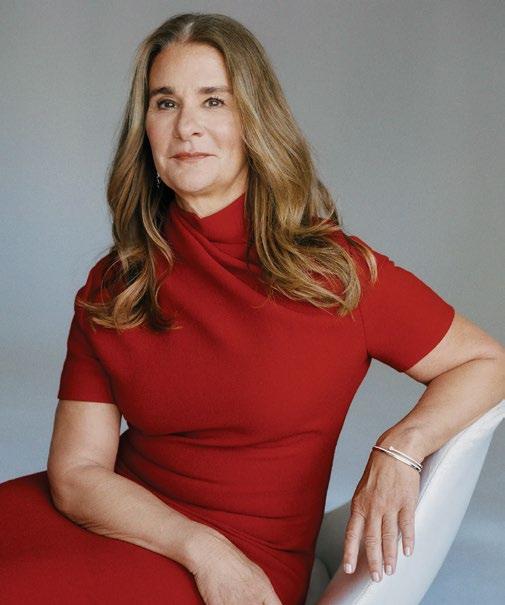
THE WOMAN ON THE COVER OF THIS YEAR WOMEN+POWER ISSUE NEEDS NO INTRODUCTION: MCKENZIE SCOTT IS THE BIGGEST NAME IN PHILANTHROPY IN THE WORLD RIGHT NOW, HAVING GIVEN AWAY OVER $26 BILLION OF HER AMAZON FORTUNE SINCE 2019, HER FIRM, YIELD GIVING, FAMOUSLY REFUSES ALL MEDIA INQUIRIES, SO IT WAS A BIG ASK TO PUT HER ON THE COVER OF THIS MONTH’S ISSUE.
But it had to be done… There is no one who compares to Scott at this moment in time. Over 60 other women join Scott in this year’s final cut of WOMEN+POWER, including repeats, as well as new faces.
Former first lady of the United States, Michelle Obama, is joined by her daughters, Malia and Sasha, for the first time ever in this issue. Keke Palmer is a new face but entirely deserves it. Other perennial figures like Oprah continue to do the work, ask the questions, and show up to hold space for other women.
Strong women are the backbone of every society and it’s probably too little to honor them only once a year, but for our ninth edition of WOMEN+POWER, we’re pleased to present who moved us in the last 12 months.
Planning and editing this issue is a labor of love and I’m grateful to have shared the experience with the entire editorial team and the Polo Lifestyles contributors who dug deep, reflected, and worked long hours to bring it all together. So find a comfortable place to enjoy this issue of Polo Lifestyles and feel free to let me know what you think.
Click and comment on our choices... Tag @pololifestyles . We will share noteworthy comments with you next month. @mandarina.mx
@mounemagazine
CARTIER QUEEN'S CUP
CARTIER
CARTIER QUEEN'S CUP
CARTIER QUEEN'S CUP
CARTIER QUEEN'S CUP
GENERAL PATTON CUP
GENERAL PATTON CUP
MARYLAND POLO CLUB
GENERAL PATTON CUP
MARYLAND POLO CLUB
DIAMOND JUBILEE CUP
CIRENCHESTER
USA jumped out to an early lead in the first half and never looked back, holding off England until the final whistle to capture the Diamond
the generous horse providers. A special thank you to Hurlingham Polo Association for making this international competition possible.
Jubilee title 7-6.5 on
English turf at Cirencester Polo Club!
Shoutout to Coach Luis Escobar, Assistant Coach Cecelia Cochran and
DIAMOND JUBILEE CUP
CIRENCHESTER POLO CLUB
DIAMOND JUBILEE CUP
CIRENCHESTER
THE TWO PERSONALITY TRAITS LONG-TERM COUPLES HAVE IN COMMON
A
STUDY FOUND THAT LONG-TERM SPOUSES TEND TO SHARE TWO TRAITS, EVEN WHEN THEIR DAILY HABITS AND TEMPERAMENTS DIFFER.
IF YOU AND YOUR PARTNER DISAGREE ON HOW TO LOAD A DISHWASHER, WHETHER 9 P.M. IS A REASONABLE BEDTIME, OR WHAT CONSTITUTES A REAL EMERGENCY, DON’T PANIC. A NEW STUDY SUGGESTS MOST COUPLES ARE BUILT THAT WAY.
Research published in the Journal of Research in Personality analyzed data from 451 married couples in the Netherlands, with an average of 28 years together. Each partner completed a detailed personality questionnaire twice, once for themselves and once describing their spouse, across six dimensions covering ethics, emotional sensitivity, cooperativeness, conscientiousness, social boldness, and curiosity. The results were clarifying in the least romantic way possible.
Couples actually resembled each other in exactly two of those areas, moral values
and curiosity, with similarity scores of 0.39 and 0.36. To put that in perspective, personality researchers consider a correlation above 0.30 meaningful, and most spousal similarity studies struggle to find even that. For emotional sensitivity, cooperativeness, conscientiousness, and social boldness, the scores sat near zero across the board.
Spouses also overestimated how much they had in common, particularly regarding values. The assumed similarity score for ethics was 0.57, compared with a real score of 0.39. That distance makes sense when you consider that values are harder to observe day-to-day than habits or temperament. There’s no obvious tell for sincerity the way there is for, say, leaving dishes in the sink.
After decades together, couples were accurate at reading each other’s personalities, scoring higher than what has been found in younger couples. The average agreement score was about 0.70 across all six dimensions, and for curiosity-related traits specifically, accuracy climbed
into the high 0.70s. The exception was ethics. Even after accounting for assumed similarity, accuracy for sincerity and modesty dropped to 0.51. Those traits are apparently harder to observe from the outside, even after three decades of shared life.
The study has limits worth noting. It drew entirely from heterosexual couples in the Netherlands, and prior research on Chinese couples found near-zero similarity across all personality dimensions. Whether these findings hold outside Western European contexts is an open question.
The data suggest that long-term compatibility is a smaller target than most people think. Two people can have entirely different temperaments, emotional wiring, and daily habits, and still build a lasting marriage. What seems to hold them together is a shared sense of right and wrong, and a mutual curiosity about how the world works.
RECLASSIFICATION OF CANNABIS MARKS MAJOR SHIFT IN DRUG ENFORCEMENT POLICIES
THE US DEPARTMENT OF JUSTICE HAS OFFICIALLY RECLASSIFIED CANNABIS AS LESS DANGEROUS, MARKING A MAJOR SHIFT IN THE COUNTRY’S DRUG POLICY.
Acting Attorney General Todd Blanche changed the classifications of products containing marijuana that are covered by the Food and Drug Administration or that have received a state medical-marijuana license. They will move from a Schedule I narcotic like heroin to a Schedule III drug - on par with Tylenol
with codeine. He also called a hearing to consider reclassifying all marijuana.
Marijuana remains illegal at the federal level. Despite the federal ban, most US states have legalized the medical or recreational use of marijuana, and many have shops where it can be purchased legally.
“The Department of Justice is expanding Americans’ access to medical treatment options,” Blanche said in a statement announcing the change. “This rescheduling action allows for research on the safety and efficacy of this substance, ultimately providing patients with better care and doctors with more reliable information.”
According to the announcement, Blanche also ordered that a hearing be held in June as part of a rule-making process to reclassify all marijuana more broadly.
Once the rule change is published in the Federal Register, it has 30 days until it takes effect. During that time, it can be legally challenged - which is expectedand be blocked from being implemented for months or even years.
Since 1970, the US has classified marijuana as a Schedule I controlled substance, meaning it possesses a “high potential for abuse” and there was “no currently accepted medical use”.
Since then, many states have enacted their own laws to loosen restrictions on marijuana, which started with places like California allowing it to be used for medical purposes. That has created a patchwork of regulations and enforcement on cannabis, and also a headache for marijuana businesses who still have to follow federal tax and banking laws.
Previous administrations initiated a review of marijuana’s classification in 2022 and about a year later the US health department recommended a change for the first time. In 2024, the Drug Enforcement Administration (DEA) re-
quested hearings, but then those hearings were indefinitely postponed.
More than two-thirds of Americans support full legalization of cannabis, according to Morgan Fox of the National Organization for the Reform of Marijuana Laws (Norml), who said changing the classification will open the door to policymakers seriously considering lifting restrictions on it.
“Moving it out of that classification allows us to have policy conversations that don’t start and end with that definition,” Fox said. “Lots of policymakers continue to fall back on that, and really won’t even
discuss the issue as long as cannabis is Schedule I.”
Fox, though, said that his group and other campaigners will continue to push for full federal legalization.
“The real solution to the issue is to de-schedule cannabis at the federal level, not just move to Schedule III, and then start changing the laws in regulatory ways that provide guidance, so we can get a little bit of uniformity,” said Fox.
HUMANS MAY SOON BE ABLE TO REGROW BODY PARTS—INCLUDING FINGERS AND LIMBS—THANKS TO A GROUNDBREAKING SERUM
The key to regeneration has been inside you all along, new research suggests.
IMAGINE LOSING A FINGER IN A KITCHEN MISHAP OR AN ENTIRE LIMB IN AN ACCIDENT. INSTEAD OF LEARNING TO ADAPT TO A PROSTHETIC, YOUR DOCTOR PRESCRIBES YOU A SERUM. A FEW MONTHS LATER, YOUR BONE, MUSCLE, NERVES, AND SKIN HAVE PERFECTLY KNIT THEMSELVES BACK TOGETHER. YOUR LIMB IS ENTIRELY REGROWN.
It sounds like pure science fiction, but scientists are currently working to unlock the secrets of limb regeneration in mammals, drawing inspiration from salamanders. Axolotls, a type of salamander, can take roughly 40 to 50 days to regrow lost limbs, which is a flash compared to humans and other mammals who lack the ability all together. But a new treatment could change that shortcoming.
In a recent study published in Nature Communications, researchers from Texas A&M University used a specially-formulated serum that encouraged mice to form a blastema—the temporary cellular structure that helps organisms like axolotls regenerate structures.
How were they able to do this?
According to study author Ken Muneoka, PhD, professor of veterinary physiology and pharmacology at Texas A&M, he and his team amputated part of a mouse’s finger. From there, researchers followed three steps to regrow the digit:
Wait for initial healing: Instead of treating the wound right away, Muneoka and his team waited for the skin to close up and heal over. The wound actually has the highest potential to regrow right when the skin closes and the body’s natural inflammation peaks, Muneoka explains.
Apply the first protein (FGF2): Once the skin closed, Muneoka and his team im-
planted a tiny bead containing a protein called FGF2. While this protein doesn’t cause full regrowth on its own in adult mice, it successfully stops the body from forming a scar, according to Muneoka. Instead, it tricks the wound cells into forming a “blastema”—a mass of multiplying, unprogrammed cells that is usually seen when animals like salamanders regrow lost limbs. Simply put, it helps the body form a “blueprint.”
Apply the second protein (BMP2): After the blastema formed, Muneoka and his team treated it with a second protein called BMP2. On its own, BMP2 only helps fix and lengthen broken bones, according to Muneoka. However, because it was applied after the first protein, it uses the newly formed blastema cells to grow an entirely new, complete bone at the tip of the finger.
So, could someone who is born with, say, an underdeveloped limb be able to grow a new one using this treatment—or does the human body lack the blueprint? According to Muneoka, it depends on the reason for the underdeveloped limb.
“The human body uses the ‘blueprint’ to form the limb in the embryo, and we found evidence that this ‘blueprint’ is re-utilized when regeneration is stimulated by our treatment,” Muneoka says. In other words, someone whose limb was underdeveloped because of external factors in vivo, such as alcohol or drug exposure, might see better results than someone whose underdeveloped limb was caused by a genetic modification—or a damaged blueprint. “If the ‘blueprint’ is intact, then the expectation is that the regeneration should be possible,” he says. The amount of time this would take isn’t yet known.
If this treatment has the potential to regrow human limbs, what else could it do? Could it eventually be used to regrow more complex structures, like organs? There are studies—such as one published in Nature Genetics and another in PNAS—that show lung formation and
limb formation share similar genetic requirements, according to Muneoka. There’s also research in salamanders that show that two proteins that are important for limb regeneration are also important for regeneration of other structures, such as gills.
“This suggests that the regenerative process may have universal characteristics, which gives us hope that our strategy for stimulating digit regeneration could have broad application,” Muneoka says. “We believe that our study outlines a general strategy for enhancing regenerative capabilities in humans. The specific details for this strategy will likely differ between organ systems, and that needs to be determined empirically.”
The tricky part, Muneoka says, is that organ regeneration requires time that may not be possible if the organ’s use is required to stay alive. So depending on the extent of the organ’s damage, a transplant from a donor may still be necessary.
Regeneration of body parts is unlikely to lead to immortality, though, according to Muneoka. “If individuals could regenerate organs throughout their lives, it would improve the quality of life, and it may enhance lifespan,” he says. But he points to a 2021 mouse study that he worked on, which found that blastema formation and the quality of the regenerative response declines with age.
So while we won’t be able to live forever or sprout a new pair of lungs overnight, the blueprint for human regeneration is already coded inside us—an exciting step forward for what’s possible when it comes to human healing.
WELLNESS IS NO LONGER THE ADD-ON TO AN ADVENTURE, BUT RATHER THE DRIVING FORCE BEHIND SO MUCH LEISURE TRAVEL.
This year, we scoured the planet to come up with those standout hotels, resorts, and cruises that serve as the catalyst for personal transformation. Here are this year’s winners.
EASTWIND OLIVEREA VALLEY BIG INDIAN, NEW YORK
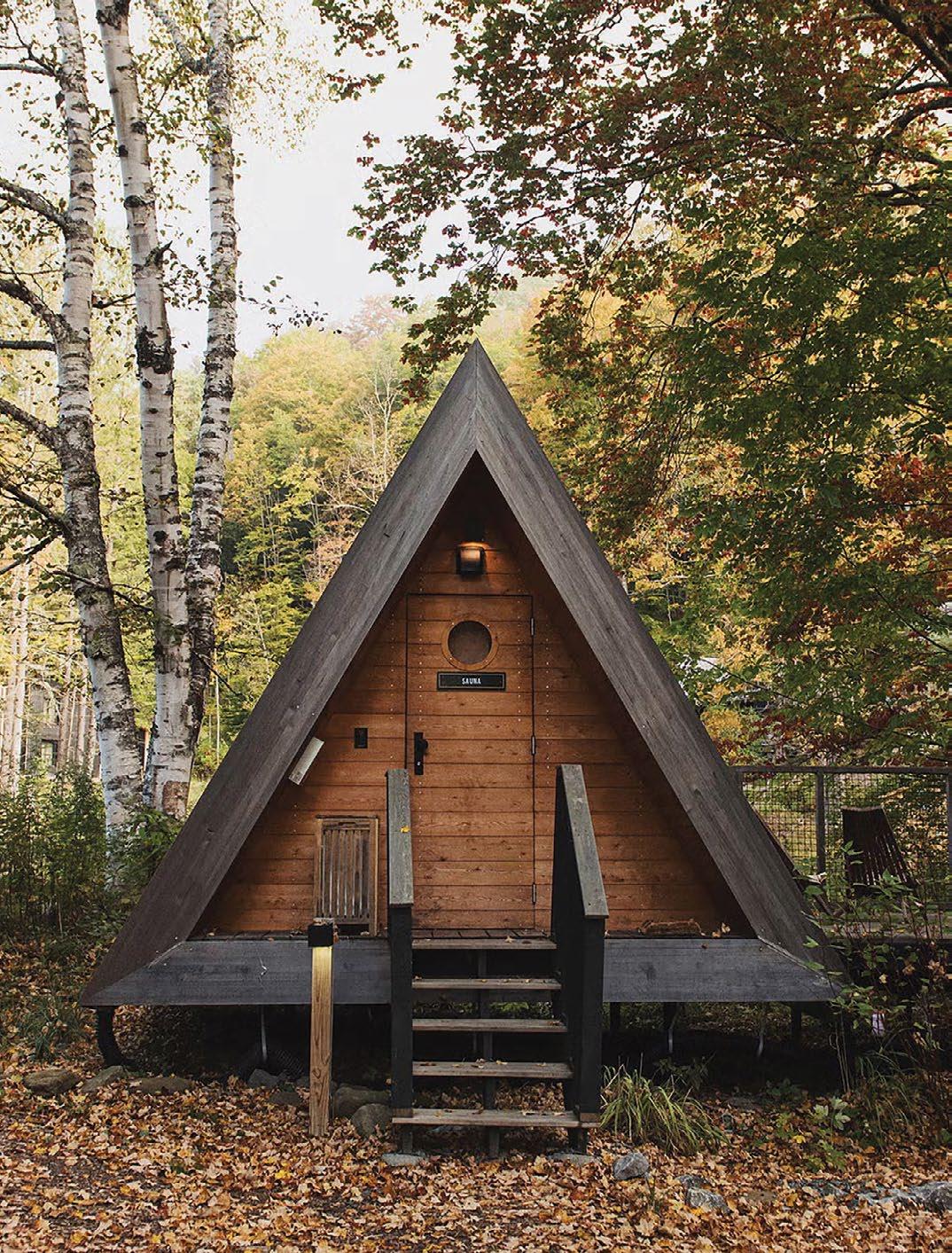
Set along Esopus Creek, deep in the Catskills, this 26-room Scandinavianinspired mountain hideaway pairs A-frame cabins and hotel rooms with mid-century furnishings and easy access to the outdoors. Barrel-shaped Nordic saunas, a heated pool, sunrise meditation sessions, and nearby hiking trails keep the focus squarely on nature, while hammocks and firepits encourage communal hangs. The real magic, however, is Eastwind’s rotating lineup of creative retreats and workshops. Guests might join a foraging walk, weave baskets, learn to make a sourdough starter, or pour
candles. For city folk in particular, it’s a gentle reminder of how nice it is to use your hands for something other than scrolling.
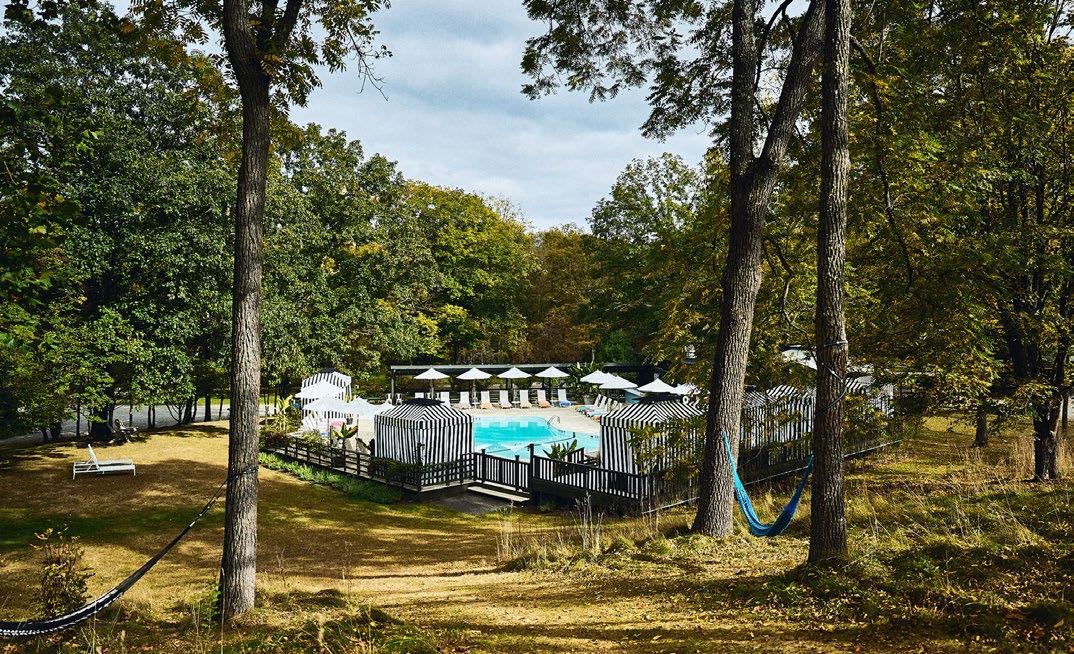
THE BARNS AT TROUTBECK AMENIA, NEW YORK
Troutbeck has long attracted great artists, writers, and thinkers; now it has a proper place to work on the body, too. Housed within a cluster of farm buildings constructed from reclaimed lumber on the 250-acre estate, The Barns includes a polished gym, traditional and infrared saunas, and treatment rooms offering acupuncture, massage, and Wildsmith’s plant-powered facials. Daily programming ranges from yoga and pilates to somatic movement classes, with hiking and biking trails, tennis courts, and a heated pool providing guests even more ways to stay in motion between all the stimulating dinner conversations.
NEMACOLIN RESORT FARMINGTON, PENNSYLVANIA
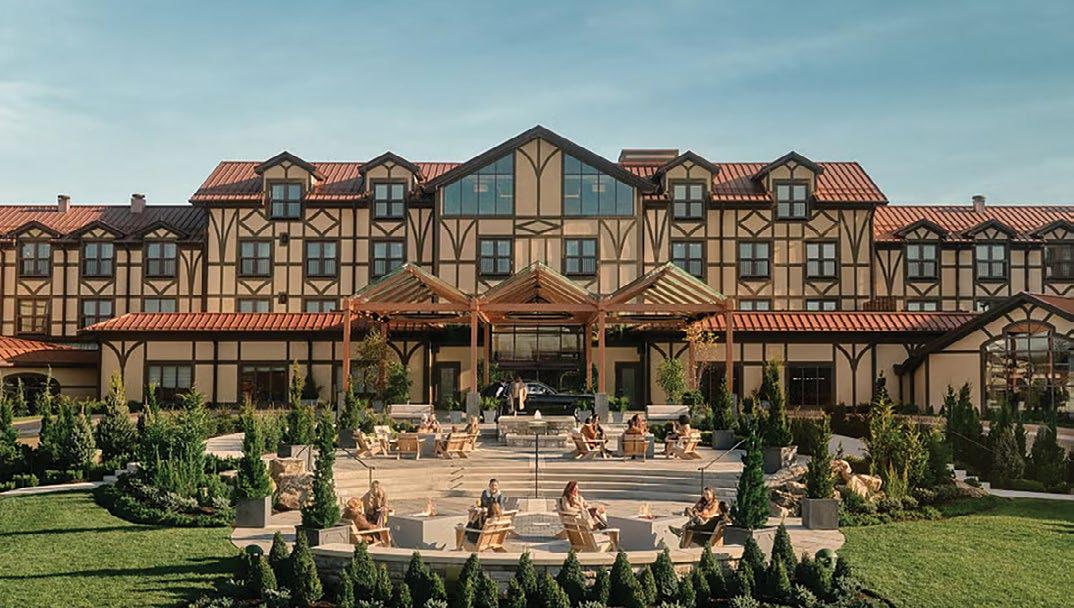
If most wellness resorts ask you to slow down, Nemacolin dares you to choose your own adventure. Less than 90 minutes from Pittsburgh in Pennsylvania’s
Laurel Highlands, the 2,200-acre resort throws a little bit of everything at you: a 32,000-square-foot spa with 30 treatment rooms and an indoor pool, a separate Holistic Healing Center for acupuncture and saltwater float sessions, and outdoor pursuits ranging from archery and fly-fishing to trail rides. There’s also a legit art collection—more than 1,000 works, including Chihuly and Botero—and a wide variety of places to stay, from the Paris-chic The Chateau to Falling Rock, a Frank Lloyd Wright–inspired haunt. It’s especially good for girlfriend trips and multigenerational getaways, since no one has to want the same thing.
BLACKBERRY FARM WALLAND, TENNESSEE
Most people come to Blackberry Farm for the food, and who could blame them? This Smoky Mountain classic has long been one of the South’s great culinary destinations. But the experience now extends well beyond the table, across 4,200 acres and 68 guest accommodations. Travelers can start the morning with woodland yoga or somatic sculpt classes, head out for a guided hike or fly-fishing lesson, then while away the afternoon at
the Wellhouse spa, where treatments use botanicals from holistic skin care pioneer Tammy Fender. Watercolor meditation and new- and full-moon rituals add a softer, more introspective layer to a stay already rooted in nature and craft.
THE SWAG WAYNESVILLE, NORTH CAROLINA
Every morning at The Swag, guests gather around a bulletin board to see what the day has in store: maybe a guided hike into Great Smoky Mountains National Park, maybe pickleball, maybe a wine tasting, maybe a horticulture lesson with the inn’s resident gardener. The all-inclusive Relais & Châteaux retreat has just 18 suites lofted atop a 5,000-foot ridge, so the whole thing feels more like staying at a private club than checking into a resort. Lectures from rotating Experts in Residence—Cherokee author Annette Saunooke Clapsaddle, Appalachian historian Daniel S. Pierce—provide context for the experience. And after dark, the entertainment shifts skyward: The Swag is one of only 11 DarkSky-approved lodgings in the country.
HILTON HEAD HEALTH WELLNESS RESORT & SPA
HILTON HEAD, SOUTH CAROLINA
For decades, Hilton Head Health was known as one of America’s original weight-loss retreats. Today it’s trying to meet the Ozempic era head-on. Its new weeklong GLP-1 Support Experience helps guests figure out how to live well on—and after—medications like Zepbound and Wegovy, with physician consultations, metabolic testing, strength training, and nutrition coaching aimed at protecting muscle mass and building habits that last. For guests nostalgic for the past, rest assured that the all-inclusive resort still offers its usual lineup of 50-plus weekly classes, from pilates to kayaking, along with cheffy meals and plenty of health education.
CARILLON MIAMI WELLNESS RESORT
MIAMI BEACH
Most Miami Beach hotels promise relaxation; Carillon would rather get you moving. The oceanfront property houses a 70,000-square-foot spa and wellness
center—one of the largest on the East Coast—where guests can pinball from aqua cycling in the rooftop pool to boot camp on the indoor climbing wall, then recover in the thermal hydrotherapy circuit. The on-site Biostation clinic offers medical expertise, with services like nutrient therapy and hormone support, while the 73 apartment-style suites (all with kitchens and living rooms) make longer stays a cinch. Come for a quick sleep reset or settle in for a more intensive menopause- or perimenopause-focused program. Either way, this is a beach vacation with actual follow-through.
THE FIELDS OF MICHIGAN SOUTH HAVEN, MICHIGAN
Glamping takes a charming Midwestern twist at The Fields of Michigan, stationed at a working blueberry farm near South Haven. Part of Under Canvas’s Outdoor Collection, the seasonal retreat trades roughing it for safari-style tents and cottages with king beds, rainfall showers, electric fireplaces, and private decks. The experience taps into the sheer joy of a lazy Lake Michigan summer: berry picking, bicycle rides, pool dips, and s’mores
after dinner at the weekends-only Supper Club. For guests craving deeper relaxation, the open-air massage cabins tucked beneath tall pines swap spa soundtracks for the real thing—wind rustling leaves and birds chirping overhead.
WILD RICE RETREAT BAYFIELD, WISCONSIN
Wild Rice Retreat lures travelers to Lake Superior not just to unwind, but to learn something new. Visiting instructors lead small-group retreats and workshops on everything from restorative yoga to encaustic painting, giving the forested property the feel of an adult summer camp
for the creatively inclined. Scandinavianinspired cabins with oversize windows and patios or balconies keep eyes on the trees, while shared spaces include a sauna house, a rain room, and miles of wooded trails. Ayurvedic-inspired meals, morning intention setting, and daily movement classes add structure, but never so much that it feels like homework.
CAMP LUCY DRIPPING SPRINGS, TEXAS
The 20,000-square-foot Folklore Spa at Camp Lucy trades predictably snoozy neutrals for playful maximalist treatment rooms designed with different colors to
influence mood and energy. Set on 282 acres outside Austin, the vineyard estate recently added 13 rooms besides the spa, making overnight stays feel seamless. Guests can bounce between massages and facials that use Natura Bissé and Irene Forte Skincare products, then linger at the co-ed sauna, hot tub, and heated pool with wide-open Hill Country views.
L’AUBERGE DE SEDONA SEDONA, ARIZONA
Sedona has long been synonymous with vortexes, tarot readings, and the occasional pet psychic. L’Auberge de Sedona has fun with that reputation while still
delivering serious luxury. A $30 million transformation recently doubled the size of the resort, adding The Cliffs, a collection of 70 guest rooms and suites with swoony red-rock views, along with Duck Pond, a three-story pool carved into the cliffs. The expanded L’Apothecary Spa offers chakra-balancing massage, floating sound healing, and organic facials with locally sourced botanicals, while crystal meditation and guided stargazing bring the full Sedona fantasy to life.
CAL-A-VIE HEALTH SPA VISTA, CALIFORNIA
A 400-year-old chapel, orangerie, and parish house from Dijon are not what most people expect to find at a California fitness retreat, but Cal-a-Vie has always done things its own way. The 40-yearold destination spa stretches across 500
private acres north of San Diego, where antique French buildings sit among lavender fields and citrus trees. Guests sign up for the famously demanding schedule—more than 160 weekly fitness classes, hikes across 10 miles of trails, and meals built with gut health in mind— then reward their sore muscles with spa treatments and, if they’re feeling particularly virtuous, advanced biomarker testing. There’s even an on-site observatory with a Takahashi telescope, because at Cal-a-Vie, wellness sometimes means looking up as much as looking inward.
RESET HOTEL
TWENTYNINE PALMS, CALIFORNIA
Joshua Tree’s north entrance hadn’t seen a new hotel in more than 15 years before Reset arrived in 2025. The 65-room boutique property occupies 180 acres of
high desert in Twentynine Palms, most of it intentionally left untouched, with minimalist architecture that blurs the line between indoors and out. Rooms open onto private patios with firepits, daybeds, and, in some cases, tubs where you can soak beneath the stars. Inside, you’ll find little to distract from the striking landscape. Guests fill their hours with yoga, sound baths, breathwork, contrast therapy, or a very underrated activity known as vegging out by the pool with a good book.
WHAT IF WE'VE GOTTEN LOVE ALL WRONG
What you’re getting wrong about feeling loved, according to relationship experts
CONSIDER THE ESTABLISHED ENTREPRENEUR AND WORLD TRAVELER WHO SAYS HE CHECKS OFF BOXES FOR BOTH “OVER 6 FEET” AND “OVER 6 FIGURES.” OR THE CEO SEEKING A BEAUTIFUL MUSE TO SHARE “INTERNATIONAL ADVENTURES” AND A “CURATED LIFESTYLE.”
Then there’s the dude pictured in the driver’s seat of a blue convertible who insists he’s “less of an a**hole than I look.”
Scroll matchmaking profiles and you’ll find posts highlighting three specific qualities on repeat: “looks, money and status” — or LMS for those hip to modern dating lingo.
Sure, touting LMS features might make more people swipe right, but if you’re looking for lasting love, this same triad could leave you lonely.
Physical attractiveness, financial security and social standing may impress people initially — driving short-term attraction and sexual interest. But ultimately, studies show, they create distance instead of closeness and can stand in the way of true connection.
Many Americans believe that if only they were wealthier, more accomplished or more beautiful they would feel more loved, happiness expert Sonja Lyubomirsky and relationship researcher Harry Reis explain.
THE SCIENCE TELLS A DIFFERENT STORY.
Instead of trying to impress, seek to be known, the authors urge in their recent book, “How To Feel Loved: The Five Mindsets That Get You More of What Matters Most.” Lyubomirsky, a distinguished professor of psychology at the University of California, Riverside, and Reis, a professor of psychology at the University of Rochester in New York, offer evidence-based strategies for forging meaningful, loving ties — quality connections that studies show have an impact on both sickness and health.
ON PAR WITH FOOD AND WATER
Far more than just nice to have, a loving connection is an essential well-being requirement.
That’s because humans are a social species. Our mammalian brains encode feeling unloved as a threat to survival. Because the roots of feeling loved are deeply embedded in the most ancient parts of the brain, Lyubomirsky and Reis hypothesize in their book that “humans wouldn’t have survived as a species without feeling loved.”
Decades of evidence showing the critical role of social connection for both mental and physical health reinforce the point. And the influence that both romantic and platonic relationships have over a person’s lifespan raises concerns about the current declines in social health.
COSTS OF MISSED CONNECTIONS
“Connection is as essential as food and water,” Kasley Killam wrote in her book, “The Art and Science of Connection: Why Social Health Is the Missing Key to Living Longer, Healthier, and Happier.”
“Over the past 30 years, the percentage of Americans with 10 or more close friends dropped by 20 percent,” Killam explained. Yet Americans long for greater closeness.
Although more than 75% of participants in the 2024 American Friendship Project said they were satisfied with the number of friends they had, more than 40% felt
they were not as close to their friends as they would like. Feeling a lack of connection is nothing short of dangerous, according to Killam. It increases people’s risk of stroke, their risk of dementia and their risk of early death.
MYTHS AS ROADBLOCKS TO THAT LOVING FEELING
If the stakes are so high — and the benefits so powerful — why aren’t we better at forging and maintaining that loving feeling? Because we get stuck in misbeliefs about exactly what will bring us the love we need, Lyubomirsky and Reis said.
They point to five core myths that interfere with feeling loved:
• If only I were more attractive, powerful or successful
• If only I could make sure others knew my positive qualities and successes
• If only I could hide my shortcomings
• If only my partner could speak my love language
• If only I could get my partner to love me more
It turns out feeling loved does not come from changing ourselves or others. Instead, research has shown, it comes from changing our conversations.
THE LOVE IMPACT OF A HEART-TO-HEART
To give and receive more love, Lyubomirsky and Reis advise upgrading your approach to communication with these strategies:
Listen to learn. Next time you’re in a conversation, instead of waiting to jump in with a response, quiet your inner voice and listen like your only job is to understand. Ask yourself: What’s it like to be them right now?
Try this: Listen without interrupting. Nod, reflect, ask a follow-up question and avoid offering advice unless asked. Just show the other person that they matter.
Show genuine curiosity through asking better questions. Dig deeper than “How was your day?” with invitations to share such as these: “What happened this week that made you think?” or “What’s something people misunderstand about you?”
Try this: Pose a question you’ve never asked before, for example: “What’s something you’ve changed your mind about?” Then listen.
Share important parts of yourself, not all at once but gradually. You don’t need to share your deepest secrets right away; start small.
Try this: Instead of “I’m fine,” offer something real, like, “I’m nervous about this presentation tomorrow” or “I’m struggling today.”
Share warmth and kindness. Show you care about another’s well-being by offering a warm smile, a gentle tone, a quick check-in or a thoughtful text.
Try this: Share a heartfelt compliment you’d normally keep to yourself. Small acts of micro-kindness that let your warmth shine through add up.
Show nonjudgmental compassion. Open the door to empathy by offering grace and replacing labels with questions. Instead of “They’re selfish,” ask yourself, “What burden are they shouldering right now that might be driving this behavior?”
Try this: Zoom out. Instead of defining a person by a bad moment, step back to consider extenuating circumstances. They may be tired, stressed, grieving or scared — in other words, human. Take it as a given that you might not know the whole story.
These approaches work in long-term relationships, too. We often think we know our partners through and through, but this false assumption can mean we fail to ask the curious questions that can foster real connection. Remind yourself that you don’t know everything about the other person and consider asking questions that could summon answers that surprise you.
THE TROUBLE IS NOT TMI BUT TLI
Another falsehood standing in the way of feeling loved is the presumption that asking questions will seem nosy. In truth, most people, when asked respectfully from a place of genuine curiosity, appreciate the chance to share themselves with others.
Similarly, while most of us worry about sharing TMI (too much information), research has shown the real problem comes, more often, from TLI (too little information).
Self-disclosure is among the most underappreciated tools for building trust, connection and influence, decision scientist Leslie John argued in her book, “Revealing: The Underrated Power of Oversharing.” She sees disclosure as an investment — a “risk in service of trust.” Showing vulnerability is “one of the oldest and most beautifully human ways we build connection,” John wrote.
Whether in personal or professional contexts, and even when it seems reckless, divulging more about yourself can be a powerful interpersonal tool. It even heals us, “emotionally, mentally and physically,” John explained, citing studies that sharing can boost immune function, reduce depression and even speed recovery.
THINK DIALOGUE, NOT MONOLOGUE
If sharing is so great at bringing people together why, when accosted with an unceasing soliloquy of self-disclosure, do so many feel the urge to flee?
Unsurprisingly, one-sided overshares lack the back-and-forth rhythm of reciprocity that helps people feel closer.
Sharing skillfully, in ways that foster connection, isn’t always easy, Lyubomirsky and Reis insist. Success requires mutual attunement between individuals, when “the interaction flows smoothly, deep-
ening the bond between them as they coordinate their steps.”
Even if a few stumbles and missteps are an inevitable part of practicing this kind of communication, developing deep connections is too important not to try.
Becoming an active and encouraging listener can convey that you recognize the other person’s humanity and want them to be happy. Showing love through granting someone this kind of attention helps support their beliefs, value and even self-worth. That’s the kind of love most likely to come right back around.
No wonder some swear that the three most irresistible words in the English language are: “Tell me more.”
Looking for more love? Take this quiz, developed by Lyubomirsky for “How To Feel Loved” readers, to learn more about what approaches make it harder and easier for you, personally.
An Alzheimer’s specialist says science will continue to make great leaps in diagnosing and treating Alzheimer’s. But that’s only part of the battle.
I DON'T EXPECT MY GRANDKIDS TO EXPERIENCE DEMENTIA
WE’VE COME A LONG WAY IN COMBATING ALZHEIMER’S DISEASE OVER THE PAST DECADE. I BELIEVE THE NEXT DECADE WILL SHOW EVEN MORE STUNNING ADVANCES.
Not too long ago, most individuals with possible Alzheimer’s disease would come to my office already showing progressive and debilitating cognitive loss. Available tests would yield a diagnostic guess by ruling out other causes, such as strokes, tumors or bleeds in the brain. I didn’t know it then, but those guesses were wrong at least 25% of the time.
It usually didn’t matter anyway, because there was no effective treatment to slow down Alzheimer’s inexorable and destructive path. Patients were advised to get their affairs in order and consider inevitable nursing-home placement.
But times have changed dramatically, and the history I’ve just recounted seems almost ancient to me now. Where we once spoke only of affected individuals trying to survive amid gloom, we can now advise them on how to thrive amid hope.
So, what’s changed? Specialized blood
tests and brain scans can now identify the toxic forms of amyloid and tau protein in the brain that confirm a diagnosis of Alzheimer’s disease. Early and accurate diagnosis means that many of my patients arrive with minimal symptoms, and some are completely asymptomatic. Diagnosis can then be matched to newly available immunotherapies that dissolve amyloid plaques in the brain and slow the overall course by approximately 30%. These tests aren’t perfect, and the therapies can have important side effects. They must be given early in the course of the disease and only to eligible patients. What’s more, for non-Alzheimer’s forms of dementia, no such tests or therapies yet exist.
The next 10-15 years will certainly bring a much deeper understanding of brain function, along with more-accurate theories of what causes Alzheimer’s and other forms of dementia. In time, these advances will be coupled with an expanded array of blood tests, brain scans and AI-driven computerized assessment tools to enable universal diagnosis. In turn, targeted therapies will either prevent Alzheimer’s in the first place or convert it and other progressive dementias into chronically manageable or even curable conditions.
I don’t expect my grandchildren to experience dementia.
Despite this rosy forecast, I need to rain on the parade a bit. Three decades of work as a geriatric psychiatrist have shown me that even as we are better at diagnosis and treatment, medicine is outpacing the educational, social and financial side of Alzheimer’s. And without addressing those aspects of the disease, the science won’t be able to fulfill its potential.
Specifically, there remains tremendous stigma for those living with dementia, huge gaps in care compared with other diseases, and a medical system that is insufficiently funded and staffed to deal with the complexities and labor-intensive needs of affected individuals and their caregivers.
Based on my daily work with patients and families, let me offer three key challenges that need to be overcome so that medical advances can benefit as many people as possible.
1. OVERCOMING IGNORANCE
Dementia has historically been a hidden disease in which affected individuals are sequestered at home or segregated in day
programs or institutions. The result is a society imbued with ignorance, indifference and even disdain for individuals wrestling with intersecting challenges of aging and cognitive impairment.
Ronald Reagan’s diagnostic revelation in 1994 was a watershed event in promoting awareness of Alzheimer’s disease and has been followed by many more high-profile disclosures. But we need to move beyond iconic individuals and realize this is an epidemic facing our entire society.
Unfortunately, too many people and providers understand little about this disease. I meet every day with affected individuals and caregivers who are confused and panicked because no one has taken the time to educate and support them. Their first question is often: “Is my life over?”
At the same time, social media is happy to fill the knowledge vacuum with theories and therapies that purport to educate but are sometimes unrealistic, exaggerated or outright false.
What’s needed are more well-informed and supportive dementia-care specialists who can build therapeutic relationships that enable appropriate action. They are needed everywhere, especially in underserved communities, but their numbers will never expand without increased advocacy and funding.
2. BUILDING A TEAM
Alzheimer’s is the single most expensive disease to manage, even outpacing heart disease and cancer. Care is complex and demanding, and ideally requires a team of clinicians, therapists, a social worker, a care manager and round-the-clock aides—all of it difficult to organize and impossible to fund.
I think about this as it pertains to a family that came to me (and encouraged me to include them in this essay). Carol Clarke’s older brother Rodney developed Alzheimer’s at the relatively young age of 68. His initial team included Carol, her sister and brother-in-law, two daughters, several legal and financial advisers, and several dementia-support services.
Coordinating such a team was difficult and left loose ends.
Carol and her sister Elaine arrived at my memory-disorder center with Rodney and a bevy of questions. His two daughters participated via video. “I’m the kind of person who once you tell me something that can be done, I want it done,” Carol told me. We worked together to develop a detailed plan tailored to Rodney’s situation, including specialized blood tests and brain scans to confirm the diagnosis of Alzheimer’s, speech and cognitive therapy, and a warm relationship between Rodney and his family and our dementia-care team.
3. THE STIGMA
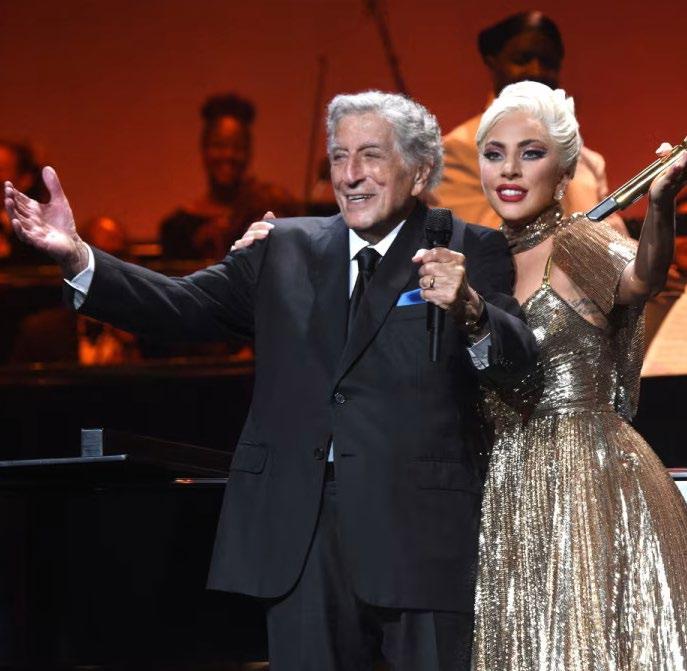
An amazing concert took place in 2021. Singer Tony Bennett lighted up the stage at Radio City Music Hall in front of thousands of fans, singing duets with Lady Gaga in perfect pitch and harmony and with amazing recall of the lyrics despite his diagnosis of Alzheimer’s disease.
The lesson is that there are still abilities and strengths, immutable long-term memories and tacit knowledge that can be engaged and expressed across all stages of the disease. If we only define people with dementia based on their deficits, we become demoralized and give in to pessimistic attitudes that inevitably deprive them of dignity and hope. A positive stance—both from the patients and others—is critical to inspiring the development and availability of innovative cognitive therapies and wellness activities that can transform the course of dementia for the better.
If I could boil my formula for the future of dementia care into two words, it would be this: Hope heals. Alzheimer’s disease and other forms of dementia are so frightening because they threaten to rob us of the very essence of our history and being. This fear can tilt aging into a dark space, devoid of any good future.
Fortunately, we have entered a new era of disease management in which we know more and can do more, enabling us to implement brain-healthy strategies before symptoms begin and mitigating them after they start. This proactive approach will broaden and improve the span of normal and meaningful living.
POLO LIFESTYLES
THE WOMEN WHO ARE CHANGING OUR WORLD FOR THE BETTER EVERY DAY
CURATED BY WILLIAM SMITH, AMRITLAL, JOSHUA JAKOBITZ AND CLAUDE-ALIX BERTRAND
WOMEN + POWER
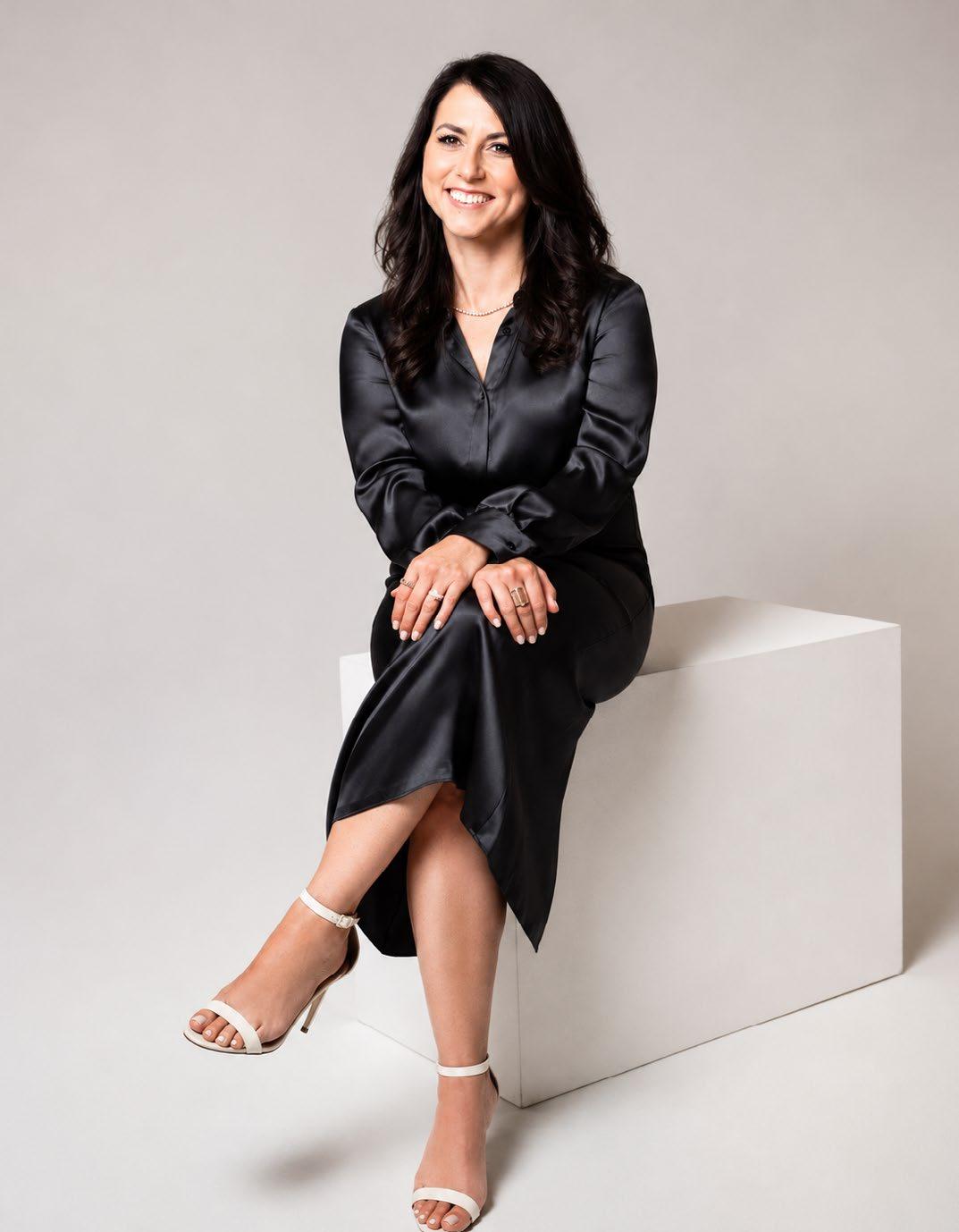
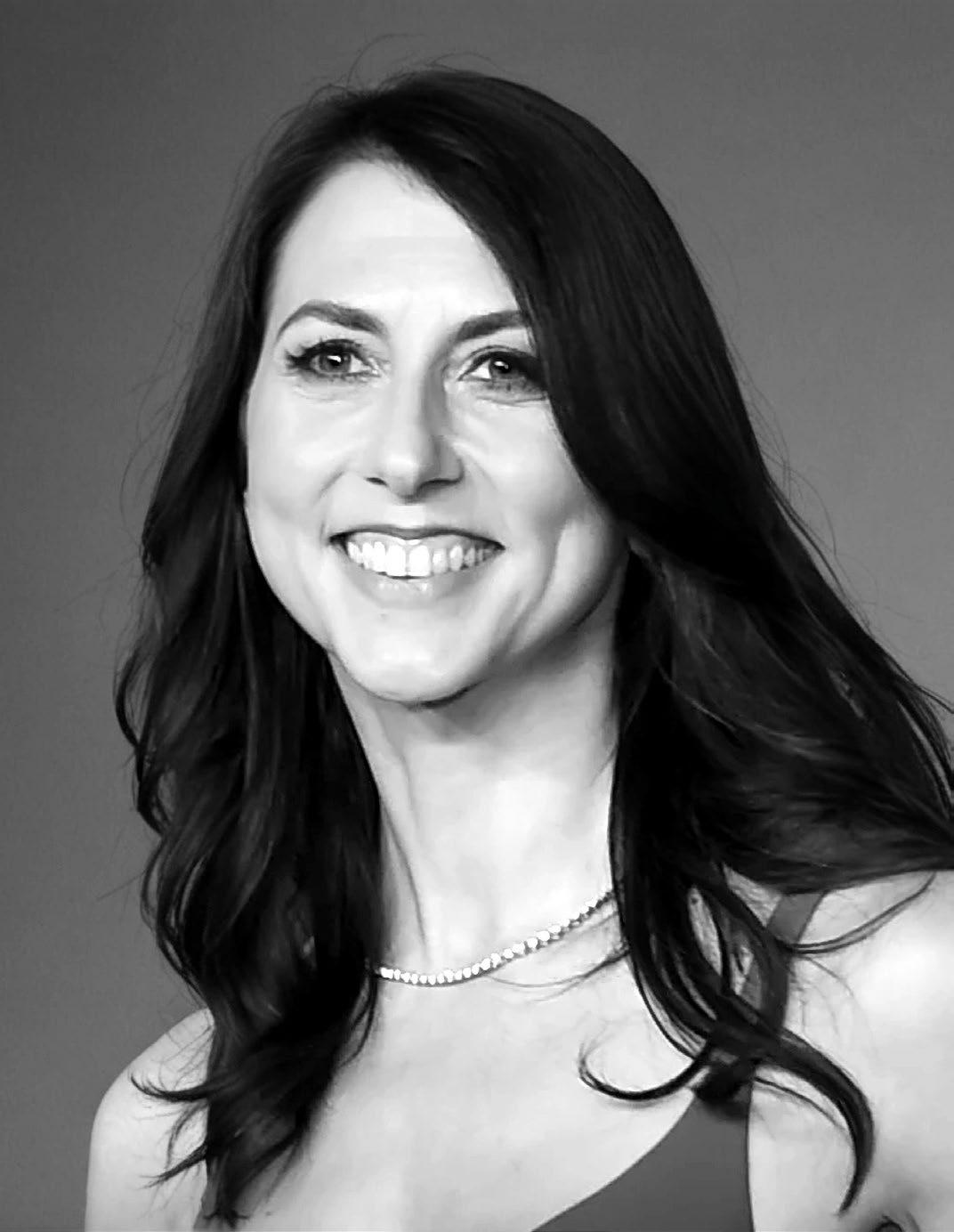
MACKENZIE SCOTT
WOMEN + POWER
MACKENZIE SCOTT
QUIET
PHILANTHROPY MAKES A SPLASH
DESPITE WANTING TO KEEP HER GIGANTIC PHILANTHROPY QUIET, MACKENZIE SCOTT’S GIVING KEEPS MAKING A SPLASH.
Receiving money from MacKenzie Scott is like winning the lottery, except hardly any recipients bought a ticket. Scott, whose wealth comes from the Amazon stock she received as part of her divorce from Jeff Bezos, has developed a novel method for giving away her billions.
She and her team find organizations that are unsexy but have competent leadership—community colleges, HBCUs and other minority-serving institutions have been favorites of late—and Scott gives them a no-strings-attached sum of money often large enough to be transformative but not so large as to overwhelm them.
So far she has given away $26 billion, and has $40 billion or so to go. Scott requires no follow up from recipients. There are zero buildings, plazas or endowed chairs named after her. She has declined to
talk to the media, beyond the essay she writes each time she gives a new round of grants. In her most recent missive in December 2025, she extolled the acts of generosity that people do every day, which dwarf, she wrote, the $7.2 billion she had donated, and might have far-reaching consequences.
“It is these ripple effects,” she wrote, “that make imagining the power of any of our own acts of kindness impossible.”
Before she became one of the world’s most prolific philanthropists, MacKenzie
Scott had a different ambition: to be a writer.
Scott graduated from Princeton University in 1992. During her time there, she studied creative writing under Nobel laureate Toni Morrison, who served as her senior thesis advisor and became one of the most formative influences of her life.
While Amazon, the company founded by her former husband Jeff Bezos, would go on to reshape global commerce and generate vast wealth, Scott has played an outsized role in philanthropy efforts around the world. She consistently points to her early years — and Morrison’s mentorship in particular — as the foundation for her sense of value and drive.
During the dedication of Princeton’s
Morrison Hall in 2017, Scott recalled that she arrived on campus with a quiet hope of taking just one class with Morrison. Since Scott arrived at the university shortly after Morrison won the Pulitzer Prize for Beloved, she wasn’t sure how much access she would have to someone in such high demand.
“This woman was busy — there were a lot of demands on her time,” Scott said. “I honestly expected to be on my own to nurture my own interest in writing with whatever she had left to give me.”
Yet, what she found exceeded anything she had anticipated; the writer she had long admired was just as extraordinary in the classroom.
What the esteemed author modeled was balance, and it was a lesson Scott would carry with her long after leaving
Princeton. “This teaching thing was a true second passion,” Scott said. “She has given me a real example of a life of passionate devotion to more than one calling.” It is a philosophy that would come to define Scott’s own approach as a writer, businesswoman, and philanthropist.
The regard was mutual. Morrison later told Vogue that Scott was “one of the best students I’ve ever had in my creative-writing classes,” praising her discipline and originality. The relationship extended beyond the classroom as well; Scott worked as Morrison’s research assistant while the Nobel laureate was writing her novel Jazz.
Morrison’s impact on Scott stretched far beyond their time together in the classroom, shaping the trajectory of her career in ways that would prove pivotal. A personal recommendation from the Nobel laureate helped Scott land a position at the hedge fund D.E. Shaw after graduation, where she would eventually meet Bezos.
Additionally, Morrison later connected Scott with her own literary agent, Amanda Urban, and wrote a blurb for the cover of Scott’s debut novel The Testing of Luther Albright. “A rarity: a sophisticated novel that breaks and swells the heart,” she wrote. The book would go on to win an American Book Award.
Over the years, Scott has woven Morrison’s legacy directly into her philanthropic work. In 2022, she directed a $3 million donation to Morrison’s alma mater, Howard University, to fund the creation of the Toni Morrison Endowed Chair in Arts and Humanities. It was a tribute to her mentor who died in 2019, the same year Scott signed the Giving Pledge.
Her commitment to the institutions Morrison championed has only grown since. Scott’s donations to historically Black colleges and universities surpassed $1 billion this year.
WOMEN + POWER
MICHELLE OBAMA MALIA & SASHA OBAMA
BRINGING EVERYONE TOGETHER
MICHELLE OBAMA IS THINKING OF HER NEXT CHAPTER, BOTH PERSONALLY AND PROFESSIONALLY.
It has been ten years since she and husband Barack Obama left the White House, though it has been only in recent
years that she has defined what her postfirst lady career looks like, returning to the spotlight with ventures such as her podcast, IMO, which she hosts with her brother Craig Robinson, and her books, most recently her fashion book The Look. And though her podcast only just rang in its first year since release, the former attorney is already aware it might be her
last professional chapter, and is thinking what that means for her and her family.
Speaking with her brother at a live taping of their podcast for SXSW London, Michelle, who shares daughters Malia, 27, and Sasha, 24, with Barack, confessed: “This is probably my last chapter from a career standpoint.”
“I am 62 years old. We could be grandparents! But we are not,” she then added. Later Michelle also shared gratitude for her parents, noting: “I have to take a moment, just [to] give tribute to our parents. They were uniquely gifted in pushing us to do things that they wouldn’t themselves, and we’re parents now,” and adding: “You know the hardest thing in the world to do is to let your kids try more things.”
Reflecting on how quickly the last ten years out of the White House went by, she shared: “My daughters will be 28 and 25 this year. So this next chapter I want to be mindful about it, so that it doesn’t just slip away.”
“The choices that I make now are going to be for me, not for my husband, not for my kids, not for the country, not for the
world, because this is it,” she continued, emphasizing: “And at some point, it’s important for our generation to step out of the way and be prepared to step out of the way so that the next generation can really sit in these seats.”
Michelle also shared her best advice for the younger generations, telling the audience: “Learn to enjoy the process, whatever your process is, because that’s where you develop the skills.”
Getting to the White House, she said, took time. “It took a level of persistence. There was a whole lot of backlash. Was I prepared for it? Was Barack prepared for it? Heck yeah — all the other things we had done, it leads up to being ready for the thing you don’t even know that you’re going to do.”
Michelle’s eldest Malia is a budding filmmaker, having previously worked as a writer on Donald Glover’s TV series Swarm, and she made her directorial debut with the 2023 short The Heart. Her sister meanwhile graduated from USC after transferring from the University of Michigan, and also recently obtained a Master’s.
In a recent IMO podcast episode, Michelle had Steven Spielberg as a guest, who joked he “scooped” Malia when he invited Barack to the set of his film Disclosure Day, making it his first visit to a film set, according to the legendary director.
Michelle however confessed: “She doesn’t care. She will never invite us to anything that she does. You know, she doesn’t want us around her stuff.”
WOMEN + POWER
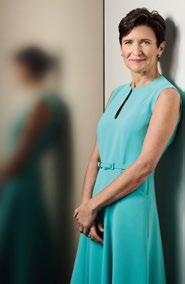
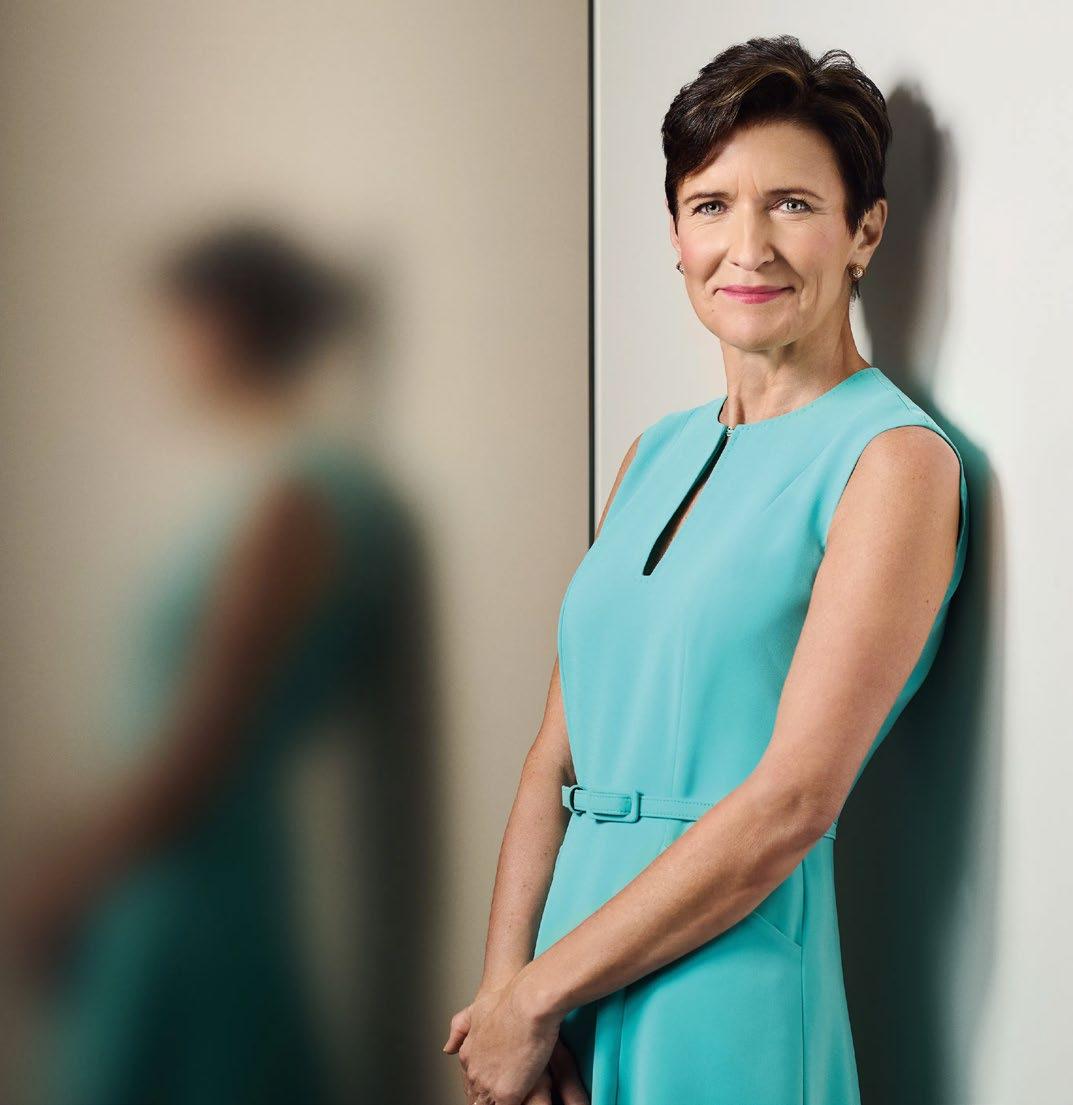
JANE FRASER
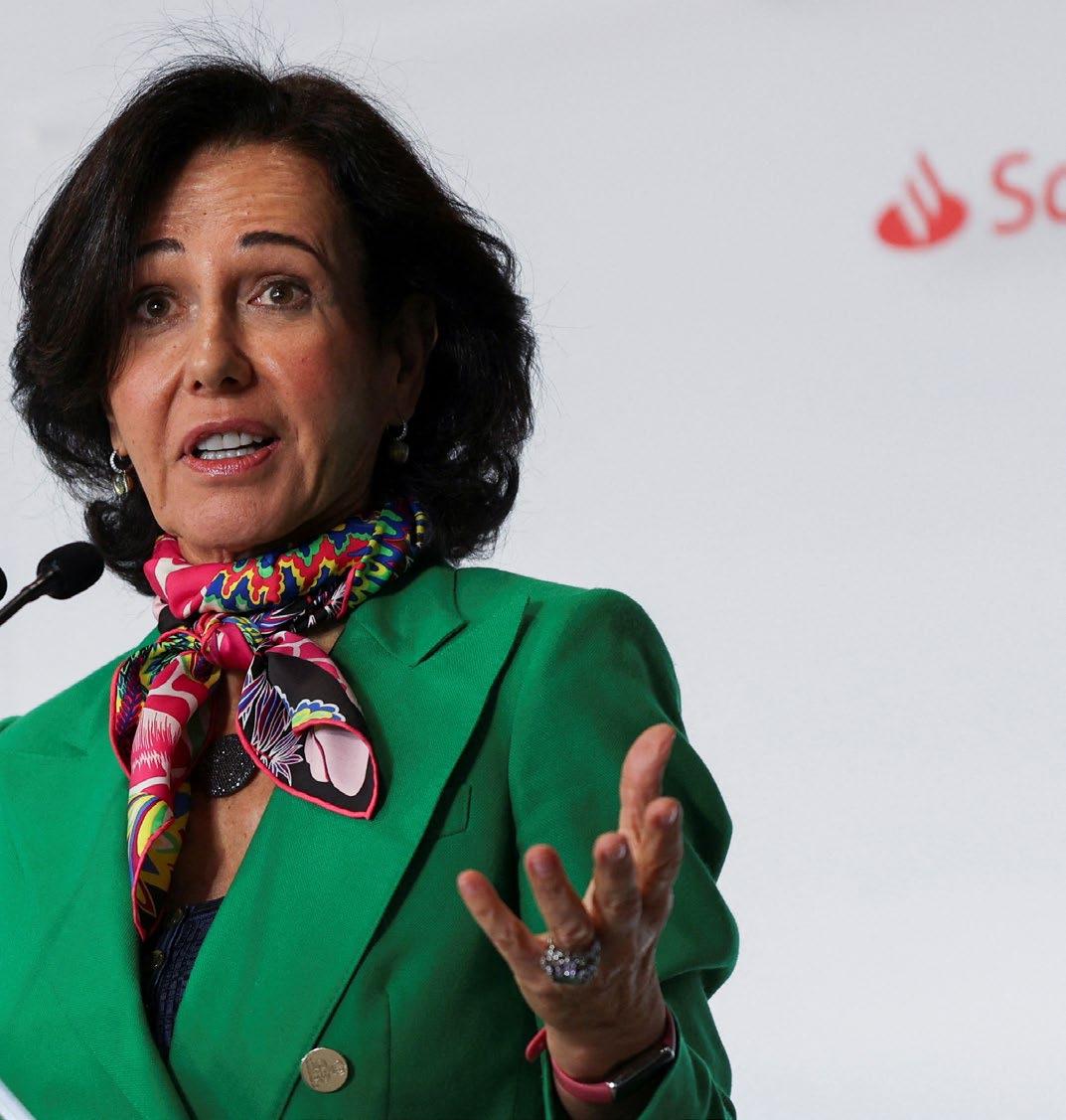
CEO OF CITIBANK
WHEN MIKE MAYO, THE LONG-TIME ANALYST AT WELLS FARGO SECURITIES, REFLECTS ON THE TURNAROUND CEO JANE FRASER HAS ENGINEERED AT CITI, ONE DECISION STANDS OUT: HER RESTRUCTURING OF THE BANK INTO FIVE DIVISIONS THAT REPORT DIRECTLY TO HER.
“When you look back in 10 years, you’re likely to say this was the most powerful change made at Citi,” he said. Now, Mayo said, “there’s nowhere to hide.”
There are fewer dark corners in lower levels of the company too. As part of the overhaul, Fraser cut Citi’s layers of management from 13 to eight, a move she said at the time would result in a “simpler firm that can operate faster, better serve our clients and unlock value for our shareholders.”
So far, it’s hard to argue with the results. Fraser is five years into her plan to remake the bank that has long been a Wall Street laggard. In April, Citi logged its highest quarterly revenue in a decade, with all five divisions recording gains. The bank’s return on tangible common equity hit 13.1% in the first quarter, the highest since 2021. Citi stock is up about 80% since Fraser took over as CEO.
WOMEN + POWER
TAYLOR SWIFT
MASTER OF SOCIAL MEDIA
TAYLOR SWIFT HAS BEEN A DOMINANT FORCE IN MUSIC FOR NEARLY TWO DECADES, AND HER APPEAL SHOWS NO SIGNS OF FADING AMONG YOUNG AMERICANS.
From her country roots in Pennsylvania to global superstardom, Swift’s journey resonates with teens and twenty-somethings who stream her catalog daily on Spotify and TikTok. Her songs about love, heartbreak, and self-empowerment feel fresh, fueling viral dances and fan edits that introduce her to new listeners. Whether it’s ‘Anti-Hero’ blowing up on Reels or ‘Folklore’ inspiring cozy playlists, Swift remains a cultural touchstone. What makes her enduring? It’s the way she evolves while staying relatable. Young fans in the US connect through her lyrics that mirror high school dramas, college breakups, and social media pressures.
Platforms like Instagram and YouTube amplify this, with millions searching her name weekly for reactions and covers. Her influence extends to fashion, where Swift-inspired outfits trend on Depop and Pinterest, blending vintage dresses with modern streetwear.
In today’s fast-scroll world, few artists maintain Swift’s level of relevance without constant new drops. Her catalog— over 200 songs—offers endless entry points. For US teens juggling school and side hustles, tracks like ‘Lavender Haze’ capture the chaos of young adulthood. Data from streaming services shows her holding top spots in teen playlists, proving her songs transcend eras. Pop culture weaves her into memes, TV references, and even school dances, making her a shared language for Gen Z.
Swift’s business savvy also inspires. She re-recorded her early albums to regain masters, a move young entrepreneurs admire. This empowers fans to think
critically about art ownership in the digital age. Her fanbase, Swifties, builds communities online and offline, from Discord servers to local meetups in cities like LA and Nashville. This loyalty keeps her buzzing without relying on fleeting trends.
TikTok challenges using ‘Cruel Summer’ rack up billions of views, drawing in users who weren’t even born when she started. Instagram Reels remix ‘Karma’ for comedy skits, while YouTube deep dives analyze her Easter eggs. This interactive fandom keeps her alive for American youth, turning passive listening into creative participation.
Swift’s eras—from boho to sleek pop— dictate trends. Young fans thrift her ‘Folklore’ cardigans or style ‘1989’ crop tops. Pinterest boards explode with ‘Taylor Swift outfits for school,’ blending accessibility with aspiration. Her red carpet looks spark affordable dupes at Target and Shein, democratizing celebrity style.
WOMEN + POWER
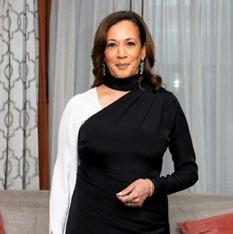
KAMALA HARRIS
EYES ON THE FUTURE
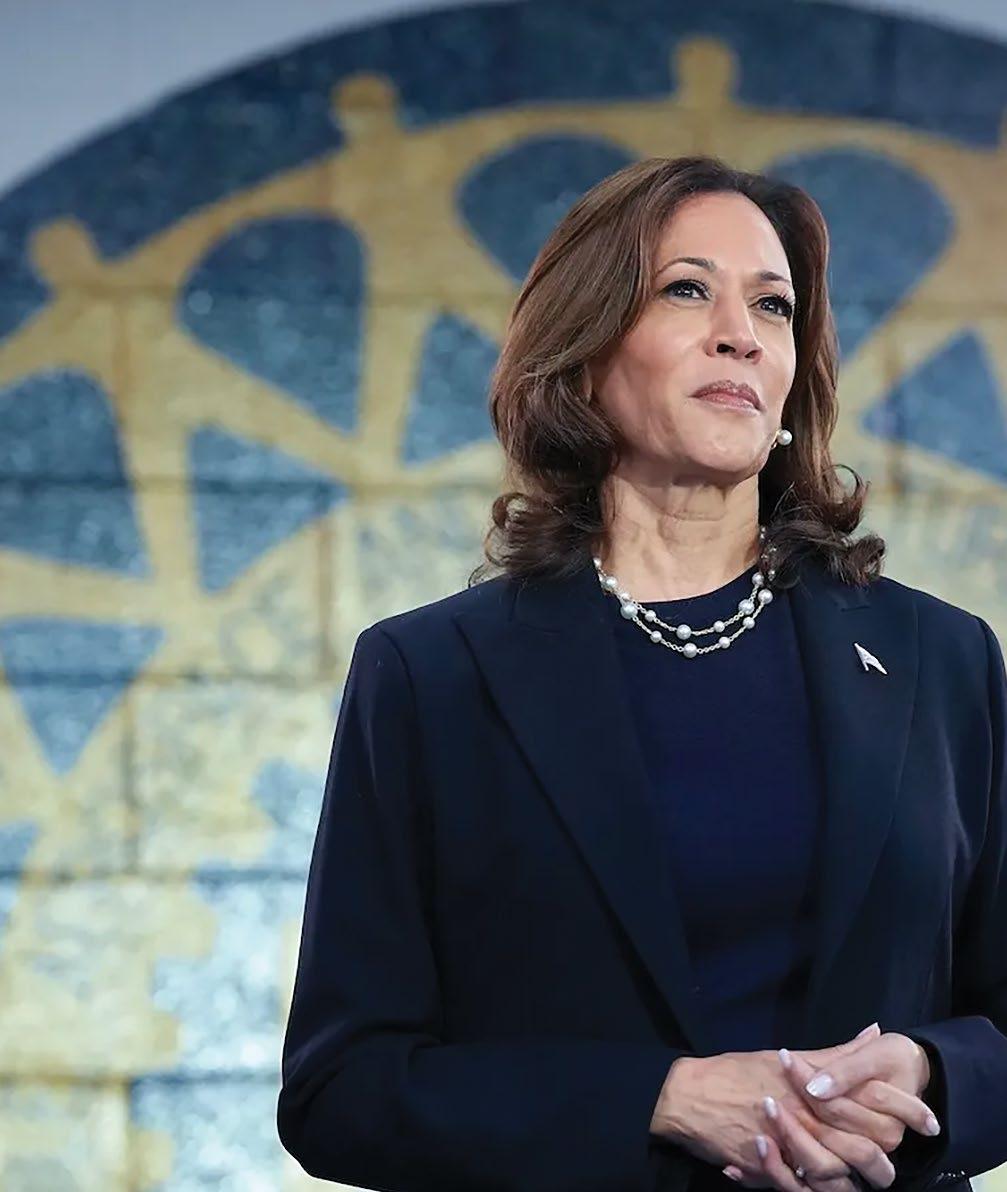
FORMER VICE PRESIDENT KAMALA
HARRIS SAID SHE HAS NOT DECIDED WHETHER SHE WILL SEEK THE PRESIDENCY AGAIN IN 2028 BUT ACKNOWLEDGED THE POSSIBILITY RECENTLY.
Asked directly in a live video call with author Sharon McMahon if she would run again, Harris replied that she “might,” offering one of her most explicit answers yet on her political future. The comment came during a conversation that otherwise focused on lighter topics and her recently released memoir.
Speculation on Harris’ potential political future has been a constant after losing the 2024 presidential race. Early polls have gained significance as potential contenders for the 2028 presidential election begin to emerge. Even with the election still years away, polling offers potential insight into candidate viability, voter sentiment and evolving party dynamics, particularly after the pivotal 2024 election cycle.
Harris has repeatedly said she is weighing her next steps as Democrats begin looking ahead to 2028. Harris’ post-2024 profile, sustained by a national book tour and decision not to run for California governor, has positioned her as a prominent potential contender despite her loss.
“Last question,” McMahon said. “Everybody here wants to know the answer. Will you run again?”
“I haven’t decided,” Harris said and later added, “I might.”
Harris then said in part, “the book is about a specific period in time. There was no agenda beyond what we’ve discussed already, which is just sharing with people, you know, the reality of the experience, and hopefully allowing people to see something of themselves in it, in a way that—you know, that Girl Scout troop, when it comes time for them to read it, might see themselves in it and know what they can do and that they could do it.”
“Last question,” author Sharon McMahon said to former Vice President Kamala Harris.
“Everybody here wants to know the answer. Will you run again?”
“I haven’t decided,” Harris said and later added, “I might.”
WOMEN + POWER
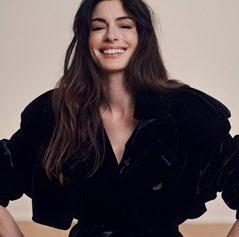
ANNE HATHAWAY
REDEFINING BEAUTY STANDARDS
WOMEN + POWER
ANNE HATHAWAY
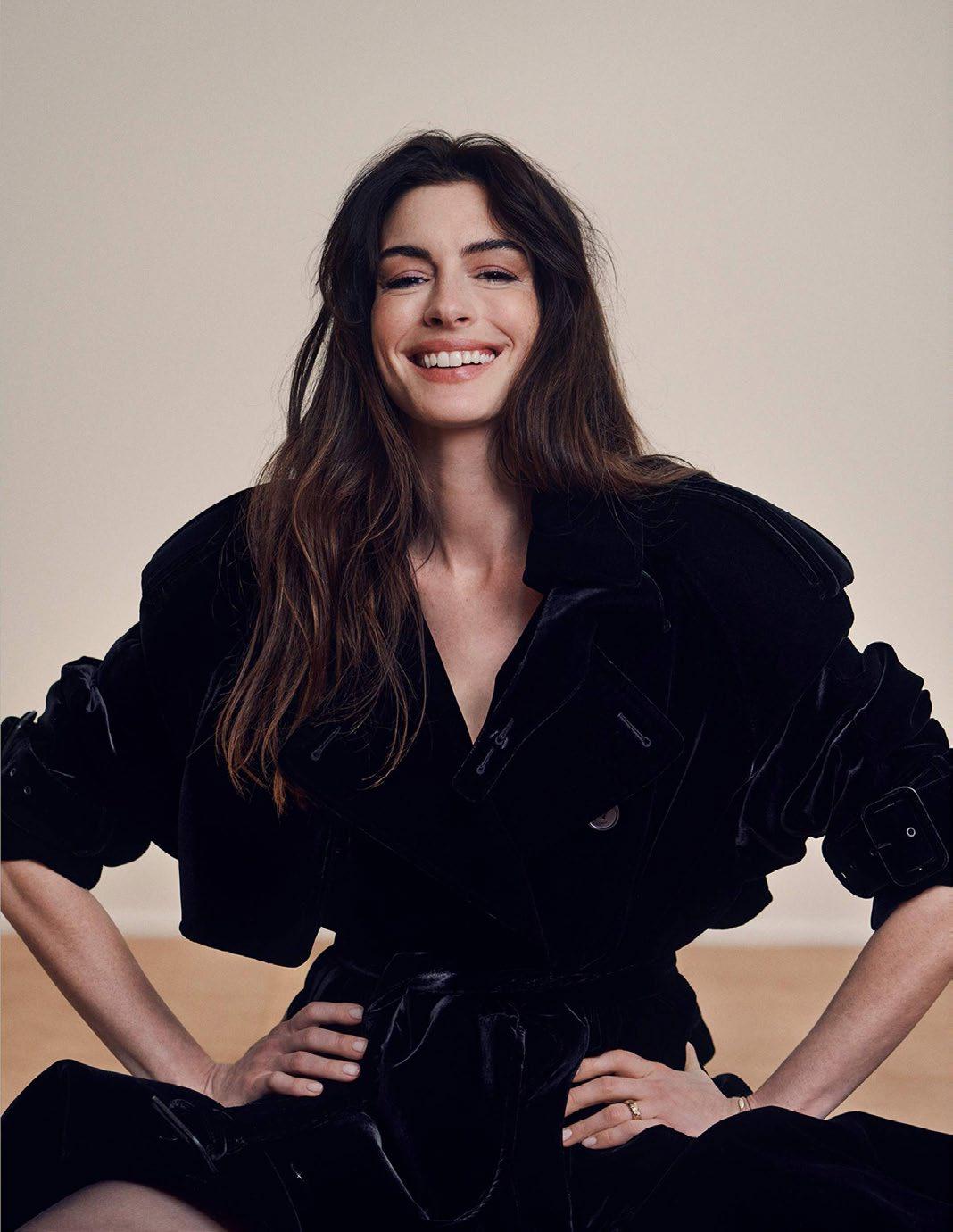
FROM THE OUTSIDE LOOKING IN, ANNE HATHAWAY IS THRIVING. SHE’S GOING TO RELEASE THREE MORE FILMS ON THE 2026 MOVIE SCHEDULE, AND SHE JUST ANNOUNCED THAT SHE’S PREGNANT WITH HER THIRD CHILD! HOWEVER, THE GOOD TENDS TO COME WITH A BIT OF BAD, TOO, AS THE ACTRESS NOTED WHILE TALKING ABOUT THE STRUGGLES SHE’S HAD WITH PREGNANCY BEFORE.
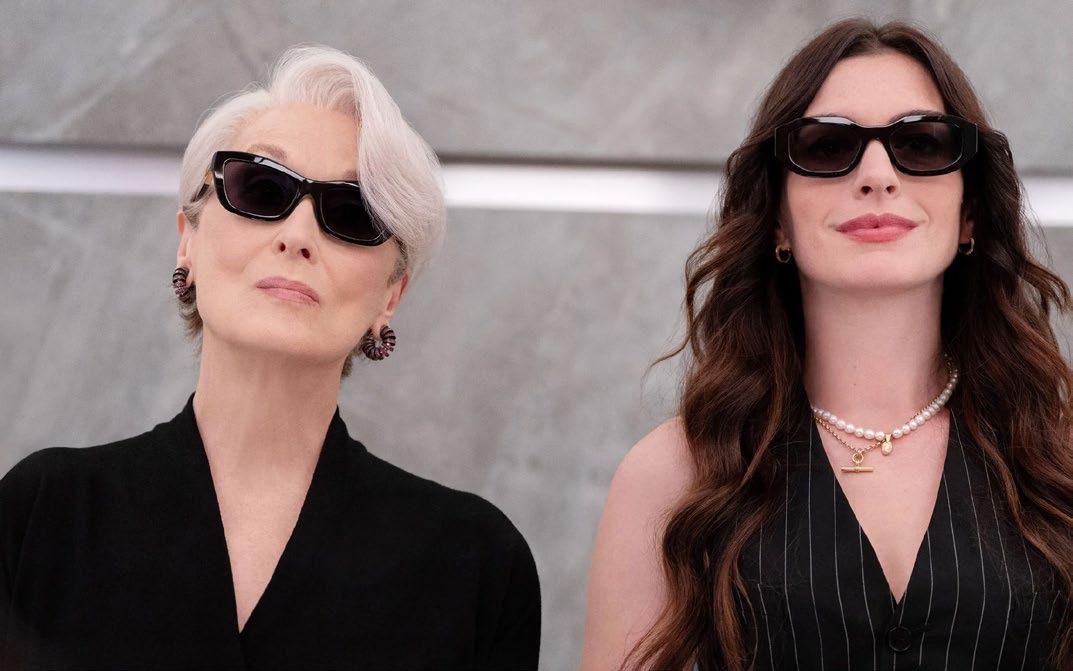
While Hathaway was already having a big year with the releases of Mother
Mary and The Devil Wears Prada 2, it just got bigger as she will be welcoming a new member to her family. However, her recent announcement conjured memories from 2019 when she was pregnant with her second child. During an interview with AP News, she opened up about how trying to conceive wasn’t as easy as people may have though.
“I think that we have a very one-size-fitsall approach to getting pregnant. And you get pregnant and for the majority of cases, this is a really happy time,” Hathaway said.
“But a lot of people who are trying to get pregnant; that’s not really the story. Or that’s one part of the story. And the steps that lead up to that part of the story are really painful and very isolating and full
of self-doubt. And I went through that,” she said.
Hathaway is lending awareness to a very real issue that many women face. It is a common misconception that getting pregnant is easy. But the reality is that the road to getting there can be challenging, whether it’s facing the strains of miscarriages or failing to conceive.
“I didn’t just wave a magic wand and, ‘I want to be pregnant and, wow, it all worked out for me, gosh, admire my bump now!’ It’s more complicated than that,” Hathaway said. “I was just aware of the fact that when it came time to post that I was pregnant, somebody was going to feel even more isolated because of it. And I just wanted them to know they have a sister in me.”
WOMEN + POWER
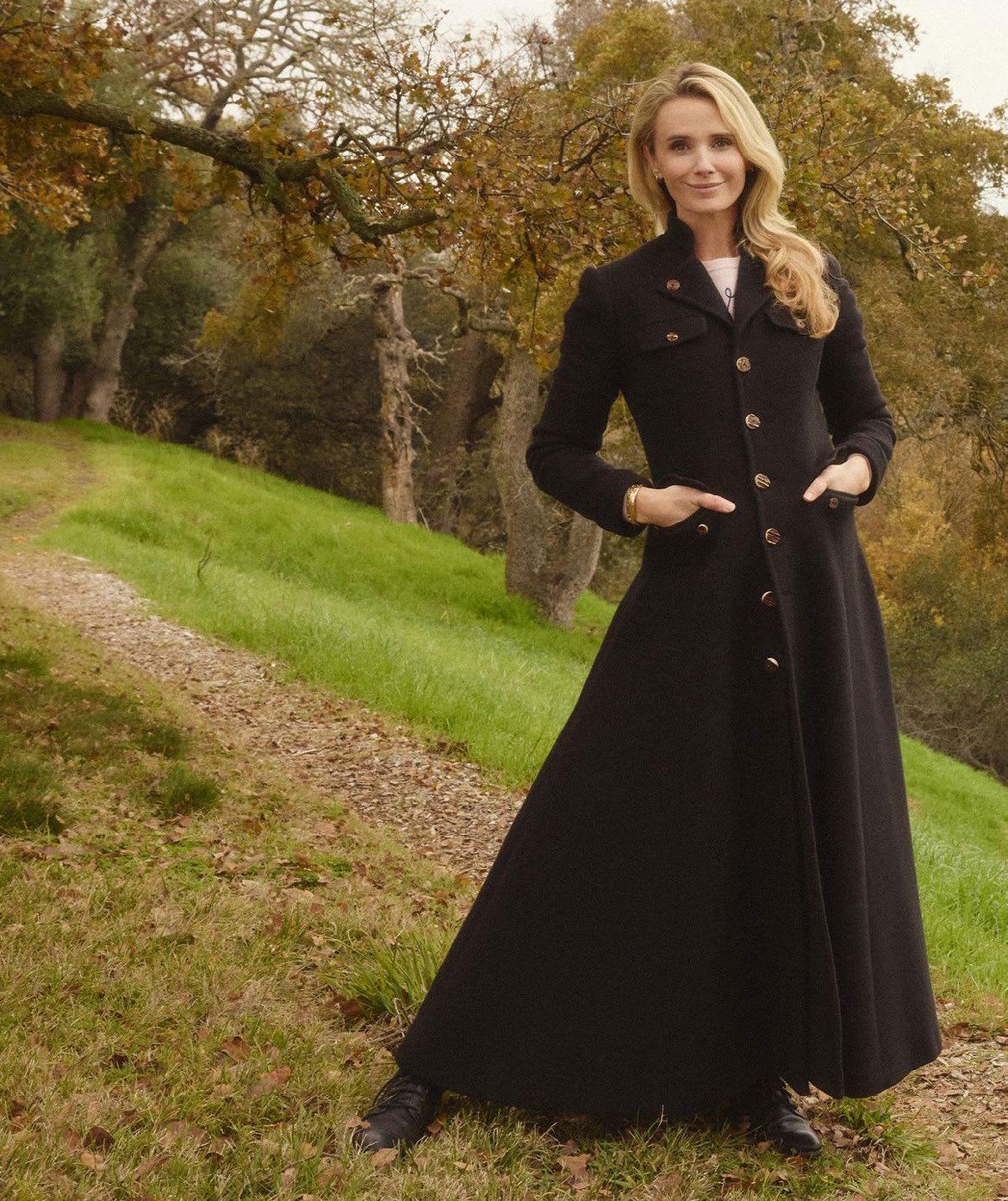
JENNIFER NEWSOM
THE FIRST PARTNER OF CALIFORNIA
Life moves pretty fast. It is Monday lunchtime when Jennifer Siebel Newsom drops by the office in Washington, just a couple of blocks from the White House, for an interview to promote her new film. Less than two hours later, her husband, the California governor, Gavin Newsom, announces that the couple are under investigation by the justice department.
One strand of the investigation specifically targets Siebel Newsom’s taxes and the California Partners Project, a gender equity non-profit she co-founded that received $4.3m in donations solicited by her husband. Gavin Newsom denounced the move as a “personal vendetta” because the governor is considering running for US president.
Even before the news breaks, Siebel Newsom’s verdict on the administration is withering. “I feel sorry for our country right now because when the father figure, the leader, the president is such a broken, damaging, harmful role model, everyone’s being traumatized,” she says, more in sorrow than in anger. “Everyone’s mental health is
not what it could be – should be.”
Siebel Newsom, who turns 52 this week, is not a politician but has long engaged in causes that are anathema to the current president. At Conservation International, she helped women in Africa and Latin America start environmentally friendly businesses. After a spell in Hollywood as an actor, she started her own production company to highlight women’s stories.
Siebel Newsom has the clout to pull in big names: former secretary of state Hillary Clinton, the congresswoman Nancy Pelosi, the senator Amy Klobuchar, the actor Jameela Jamil, and journalists Gretchen Carlson and Katie Couric are among the film’s cast of talking heads.
They sound the alarm about a mental health crisis: 53% of teenage girls reported feeling persistently sad and hopeless in a 2023 study by the Centers for Disease Control and Prevention, and 27% of high school girls seriously considered attempting to end their life. Whereas depression was once associated with girls aged
16 or 17, now it affects them at 11, 12 and 13.
Much of this is directly tied to the advent of the “like” and “share” buttons that offer a constant source of social comparison and potential exclusion. Miss Representation: Rise Up cites internal documents leaked by Facebook whistleblower Frances Haugen, alleging that tech companies explicitly studied the neurobiology of children to take advantage of their vulnerabilities.
Siebel Newsom is unsparing in her assessment. “AI and social media have been weaponized, not just to objectify and diminish women and girls’ value but to silence women and girls,” she says. “It’s harming our mental health, it’s harming our safety and it’s harming our sense of power, and it’s happening at an unprecedented rate and scale and it’s getting to girls younger and younger. We haven’t done enough to hold tech companies accountable.”
WOMEN + POWER
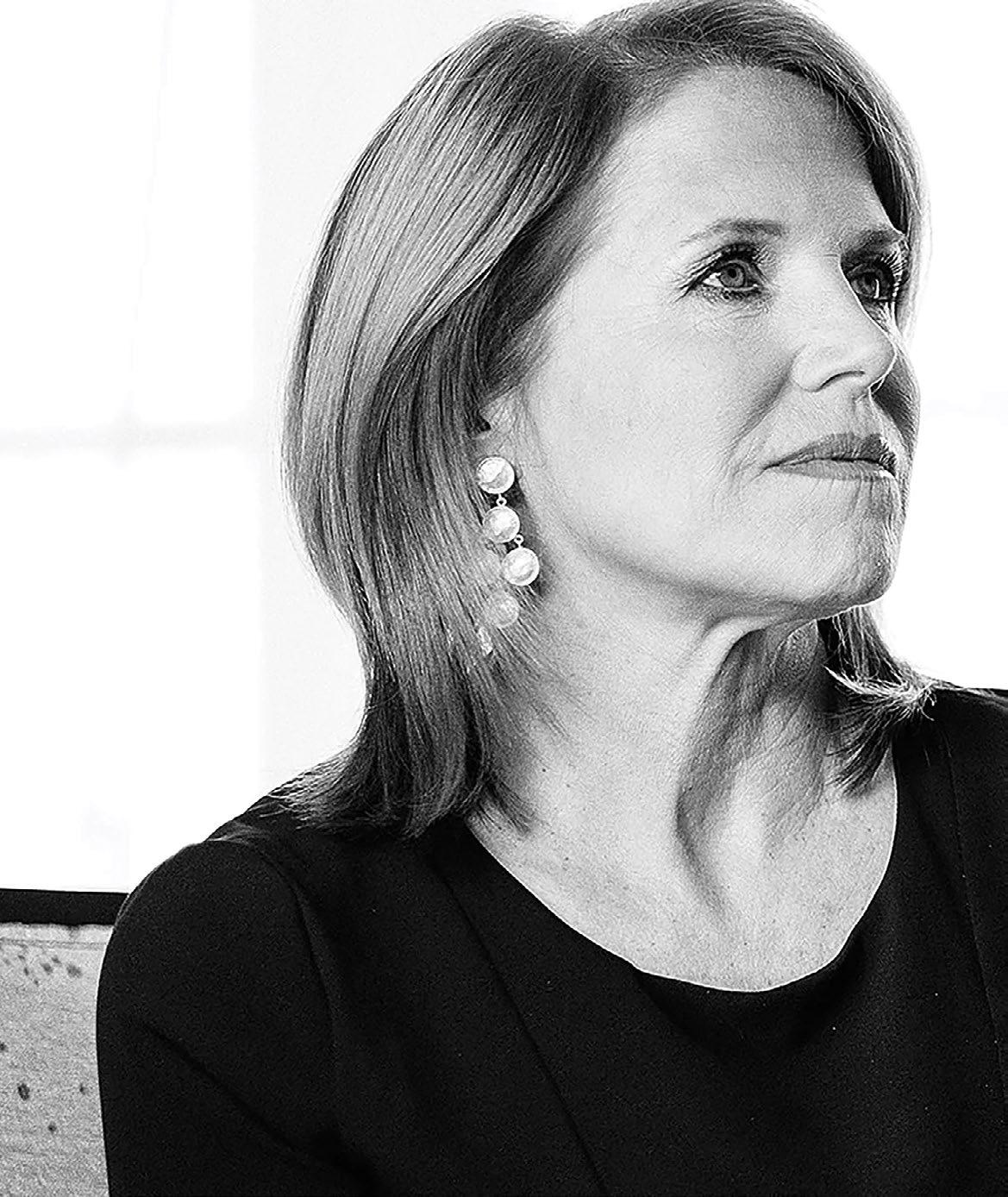
KATIE COURIC
THE VOICE OF REASON
WOMEN + POWER KATIE COURIC
“I’ve got issues,” says Katie Couric. She’s on vacation with friends in Nantucket, and has been driving around the island looking for a spot with good reception. Her cell phone’s battery has died, so she’s calling from a friend’s phone.
“Like most people I know, I sometimes get panic-stricken looking for my phone—when I’m on my phone,” the anchorwoman says with a laugh. “That makes me think that I have I have a problem. I just think that like so many people, I check my phone way too frequently. I am on it way too much and I think it’s disruptive to relationships and to your mental health.”
Recently Couric sought professional help, inviting author and psychology professor Jean Twenge to her year-old podcast to talk about the impact that smartphones are having on her and all of us. Twenge, who teaches at San Diego State University, recently set the internet atwitter with an article for The Atlantic that asked, “Have smartphones destroyed a gener-
ation?” Couric was already a fan of Twenge and her book Generation Me. “I was anxious to talk to her.”
Since Couric is the boss of her podcast and one of the most respected journalists today (her resumé, remember, includes helming Today and the CBS Evening News), she can pretty much interview whomever she likes. Soon enough, Twenge was in the recording studio for an in-depth discussion about her work and what smartphones are doing to kids these days—and adults like Couric who can’t put their phones down.
That ability to spend 50 minutes thoroughly discussing the minutiae of a topic (along with cohost Brian Goldsmith) is what led Couric—a decades-long veteran of the far punchier, far more ratings-driven world of news TV and web video—into podcasting in the first place.
“I love the idea that I can do an extended conversation,” she says. “That is really hard to do! I really love the idea of really exploring a topic and not feeling like I had to rush somebody to come up with sound bites. As a result, you can have a much more thoughtful conversation, which feels more natural and sort of meanders, in the best possible sense of the word.”
After years of high-profile gigs, the podcast, simply titled Katie Couric, is now her most reliable regular outlet for that kind of long-form thoughtfulness— the sort of thing that seems to be go-
ing extinct across the web. That shift helps explain why she stepped down as Yahoo’s global news anchor in July, amid an exodus of talent just weeks after Verizon acquired the company, and despite the fact that she was reportedly offered something in the low seven figures to extend her contract through the end of the year.
Couric may continue to work with Oath (that’s Yahoo’s new name) on a project basis, but is now looking forward to bigger, longer-form material, including working on a docuseries for National Geographic about major social issues.
While Couric could theoretically have her choice of outlet, podcasting appealed to her because she loves conversation and the way audiences respond to them.
“[It] is an extremely intimate experience between whoever’s doing the podcast and the listener,” says Couric. “It feels very one-on-one.” The audience seems to love it, too. “For whatever reason, the podcast audience is just very loyal, very engaged,” says Couric. “That’s a very gratifying thing for me.”
WOMEN + POWER
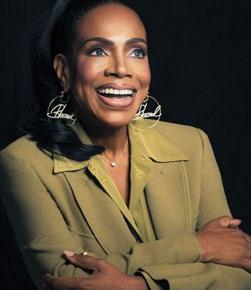
CHERYL LEE RALPH
WOMEN + POWER
CHERYL LEE RALPH
FROM BROADWAY TO HOLLYWOOD
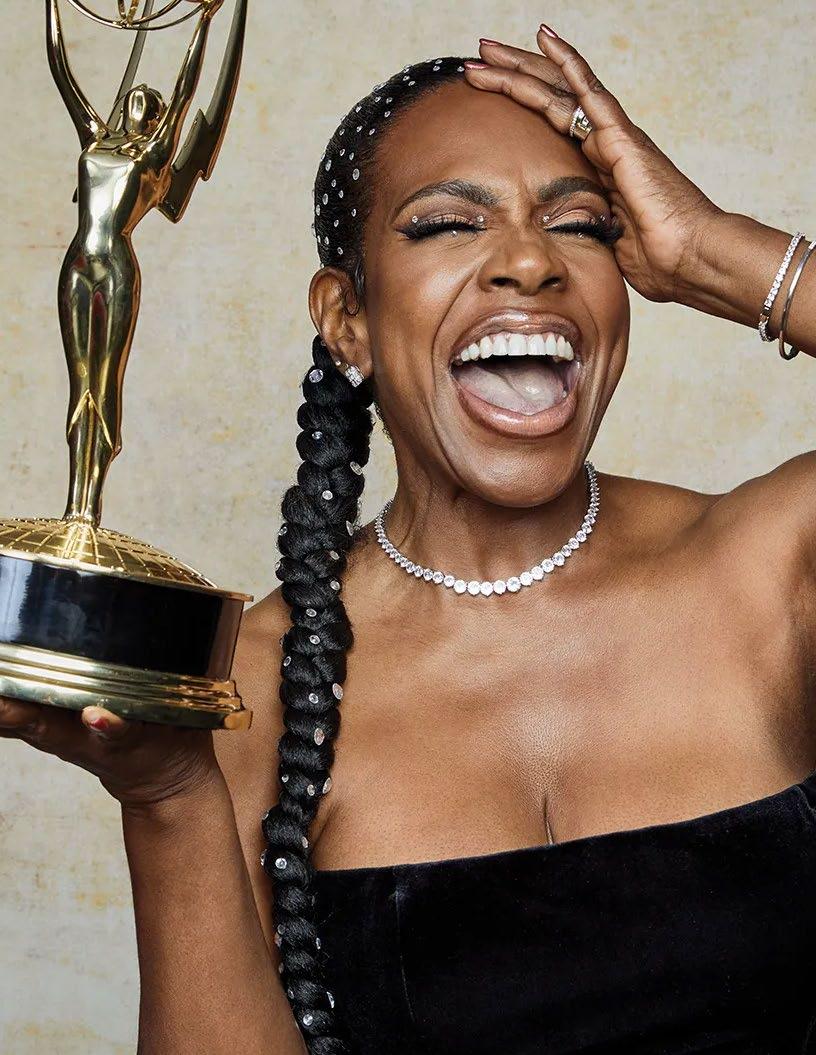
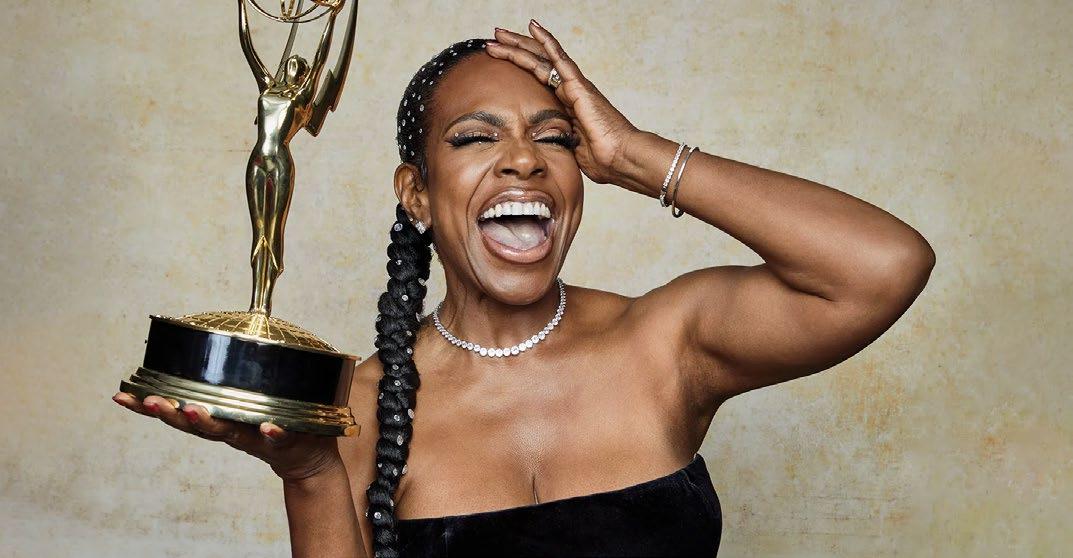
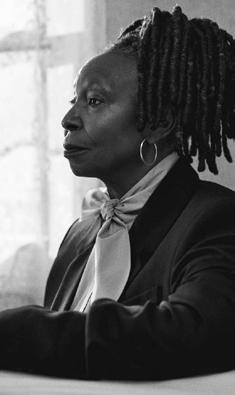
In April 2025, after nearly 50 years as a performer, Sheryl Lee Ralph was finally granted a star on the Hollywood Walk of Fame. Reflecting on her journey to the milestone, the actor recalls advice Robert De Niro gave her on set for the 1992 dramatic comedy Mistress. “He said, ‘You’re a damn good actress, and that’s too bad, because Hollywood is not looking for you—so you better climb that mountain and wave that red flag and let them know that you are there,’” Ralph says. “It was hard. I could have given up. I could have stopped when it looked like it just wasn’t going to happen. But I act, I sing, I perform, because that is my joy.”
Ralph, 69, has channeled that joy into captivating audiences for decades. She received her first Tony nomination in
1982 for her breakout role as Deena Jones in the original Broadway production of Dreamgirls and has amassed an extensive list of credits on the stage and screen, notably her ongoing portrayal of the no-nonsense kindergarten teacher Barbara Howard on the ABC sitcom Abbott Elementary. In 2022, she won her first Emmy for the role—making her just the second Black woman to win Outstanding Supporting Actress in a Comedy Series—and she has earned consecutive nominations since. Playing Barbara continues to deepen Ralph’s respect for educators. “It is the heart of a human being that spends six to eight hours with other people’s children ... and still chooses to come back to work with love, ready to begin again,” she says. “Being an educator, as they say in the vernacular—it ain’t easy, baby.”
Ralph champions another type of teaching through her decades-long tenure as an activist, particularly raising awareness about HIV/AIDS. Recently, in collaboration with the DIVA Foundation, the nonprofit she founded in 1990, Ralph executive-produced a documentary special, Living Proof, which highlights the experiences of Black women living with HIV in the South. The film premiered on Hulu on World AIDS Day in December. “It is Black women in the South—at numbers that are very high—that are being ignored, and that is why I chose to take the documentary cameras right to the women,” she says. “Tell us your story, because your story matters. Your health matters. You matter just the way you are.”
WOMEN + POWER
CHERIE DEVAUX
KENTUCKY DERBY'S HISTORY-MAKING WIN
Golden Tempo claimed Saturday’s Kentucky Derby and made history, as trainer Cherie DeVaux became the first woman to ever prep the winner of America’s most famous horse race.
“I don’t have any words right now,” DeVaux said after the victory. “I’m just so, so happy for Golden Tempo. (Jockey) Jose (Ortiz) did a wonderful job, a masterful job at getting him there. He was so far out of it, and he has had so much faith in this horse.”
Golden Tempo entered with 23-1 odds. Renegade (5-1) and Ocelli (70-1) took second and third, respectively.
Golden Tempo, the son of two-time horse of the year Curlin, had run well during show efforts in the Louisiana Derby and Risen Star Stakes but wasn’t considered a serious contender in the Run of the Roses.
Before DeVaux’s big win, the closest a female trainer had come to the winner’s
circle came in 1992 with the place showing of Casual Lies, prepped by Shelley Riley.
“I’m glad I can be representative of women everywhere,” DeVaux said in a postrace interview on the broadcast. “We can do anything we set our minds to.”
WOMEN + POWER
KEKE PALMER
THE HEARTBEAT OF ENTERTAINMENT
Keke Palmer is the kind of talent you spend a career hoping to find. Every so often, someone arrives with that rare combination—instinct, intelligence, presence—and it stops you. That is Keke Palmer.
When asked to star in The ’Burbs, she received almost no instruction, only a loose idea of the role. Most actors need
more, but not Keke. She caught it in the air and immediately built something vivid, large, and alive. She found the heartbeat. Then she deepened it, shaped it, and made it more human.
Audiences connect to her depth, heart, and authenticity. After shooting only two episodes with her we knew we wanted her to bring those same quali-
ties—and impeccable sense of comedy—to our next project, Spaceballs 2.
Keke doesn’t wait to be told, she decides. She doesn’t just reflect the moment, she creates it. We are just lucky to be watching.
WOMEN + POWER
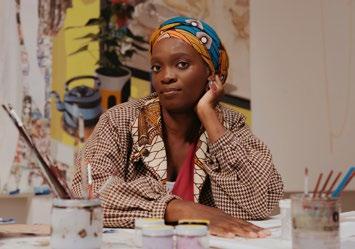
PAINTING PORTRAITS OF PRESIDENTS NJIDEKA AKUNJILI CROSBY
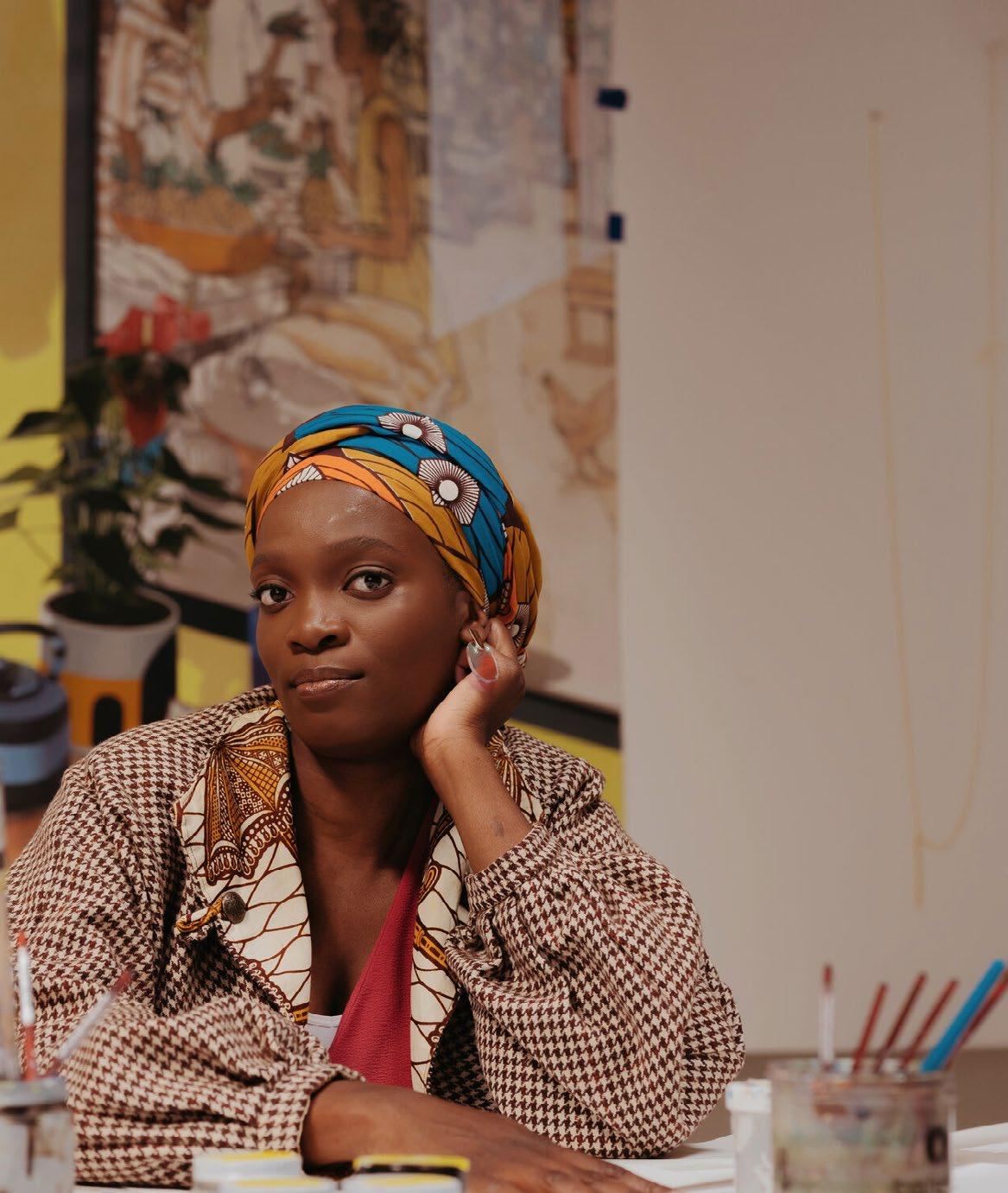
The first official portrait of Barack and Michelle Obama together was revealed last week, ahead of the opening of the Obama Presidential Center, a museum, library and education center in Chicago. The painting, by Nigerian-born, Los Angeles-based artist Njideka Akunyili Crosby, places the former president and first lady within a domestic interior surrounded by books and plants.
The work was among the final commissions to be unveiled before the center opened on 19 June—Juneteenth—the federal holiday commemorating the emancipation of enslaved African Americans. The center, a 7.7-hectare (19-acre) campus which also houses athletic facilities, gardens and public gathering spaces (much of which is freely accessible to the public), is situated in Chicago’s historic Jackson Park. More than a decade in the making, the project evolved from a presidential archive into a cultural destination.
In Crosby’s painting, a window behind the Obamas shows the modest Chicago home
where Michelle Obama grew up. Family photographs sit in the background of the composition, in Crosby’s signature collage-like style, while a bust of Martin Luther King Jr, which sat in the Oval Office during Obama’s tenure, sits in a corner, linking the pair to a larger history of Black American history.
Born in Nigeria in 1983, Njideka Akunyili Crosby is the recipient of a MacArthur fellowship and is represented by Victoria Miro Gallery and David Zwirner Gallery, and has work in the collections of the Museum of Modern Art, the Metropolitan Museum of Art, and the Tate. She studied at Swarthmore College, Pennsylvania Academy of Fine Arts, and Yale University. Her hallmark is using her work to create a tapestry of memory, historical recall, and cherished personal references. She frequently juxtaposes quiet domestic moments with colorful photo collage.
WOMEN + POWER
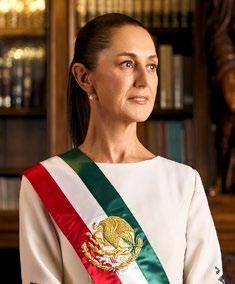
OF MEXICO CLAUDIA SHEINBAUM
Mexican President Claudia Sheinbaum began her first full year in office with pressure from all sides. Donald Trump, then the U.S. President-elect, had threatened to slap tariffs on Mexico and launch American military strikes into its territory. Violent gangsters ran fentanyl and human smuggling over the Rio Grande. And her domestic critics claimed she would be overshadowed
PRESIDENT
by her crusading predecessor, Andrés Manuel López Obrador.
Sheinbaum’s response to the onslaught was a lesson in diplomacy. She hit cartels hard, raiding labs, transferring bosses into U.S. custody, and taking down the kingpin “El Mencho,” helping to stave off more aggressive American intervention. She spoke coolly in defense of Mexican
sovereignty while avoiding confrontation. These wins made her one of the most popular leaders in the region and a success story for mixing populism with pragmatism. Yet with Mexico’s economy sluggish, crime still critical, and tens of thousands of disappeared still missing, it may be an uphill battle to turn her strong start into a lasting legacy.
WOMEN + POWER
RESISTANCE IN IRAN MAHNOOR OMER
As a teenager in Pakistan, Mahnoor Omer’s purpose was shaped by two pivotal moments. At 14 years old, dissatisfied with a major NGO’s effort to educate girls about sexual violence, she founded the Noor Foundation and held her own workshops with village girls about everything from climate change to menstruation. Roughly two years later, a conversation with a domestic worker in her house about the price of pads and tampons sparked a stark realization: not everyone can afford these essentials.
The taxes imposed on sanitary products in Pakistan can add up to 40% to the retail price. In some villages you can’t find any, Omer says, because there is no demand for such an expensive product. UNICEF estimates just 12% of
women in the country use commercially produced pads or tampons. The alternative, using cloth, risks health impacts including rashes and infections, and can make it impossible for girls to attend school while menstruating.
A decade and one law degree after her interest in activism was sparked, Omer, now 25, is putting her passion and expertise to work in the name of gender equity. “Growing up and seeing how society has no justice for women has put this innate sense of obligation in me,” she says. Last September, she took the government of Pakistan to court to challenge its “period tax.” The case had its first hearing at the end of 2025 and is now awaiting the government response.
The suit has sparked a national discussion of a traditionally taboo topic. For Omer, that has meant talking about menstruation with her father and male cousins who’ve thanked her for standing up for their daughters.
But she’s not stopping there. She is currently earning her master’s degree in gender, peace, and security at the London School of Economics, and sees this case as just the first of many.
“I’m not free until every woman is free,” she says. “I want to leave no stones unturned in terms of what I can do with the next few decades—as a lawyer for the women in my country and gender minorities in general.”
WOMEN + POWER
C-SUITE POWER
WOMEN IN TECHNOLOGY AND AI
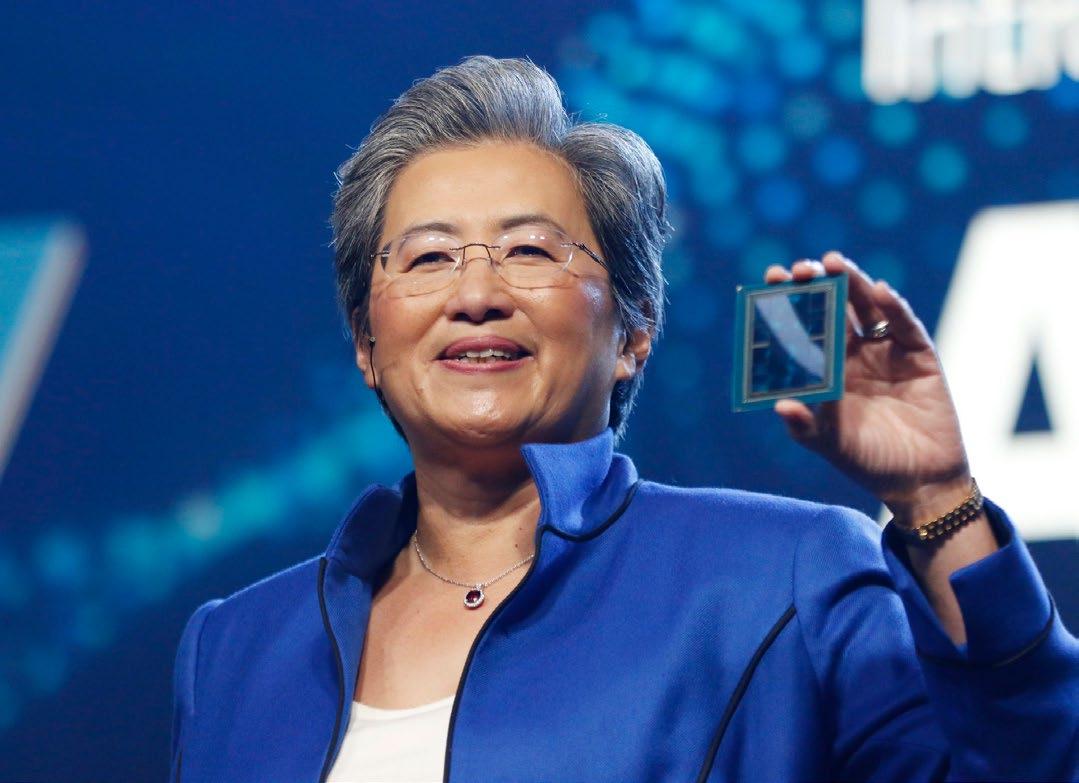
Women lead nine of the companies featured on the recently published Fortune AIQ 50 list, a ranking of the top Fortune 500 companies that are most advanced in their adoption of artificial intelligence, especially in light of how much their tech leaders value AI investments compared with rivals.
These women-led companies come from all corners of the economy, ranging from aerospace and defense to banking and retail. They account for 18% of the AIQ list,
compared with women running just 11% of all companies on the Fortune 500 list in 2025.
AI use cases that have been deployed by these businesses have varied greatly. Financial giant Citigroup’s (No. 38) recent AI efforts have included retraining 175,000 employees on how to write better prompts to generate more impactful results from large language model queries. Insurance provider Progressive (No. 22) is using AI to help sort through hun-
LISA SU, NVIDIA
dreds of thousands of job applications. And a recently launched AI-powered tool at Albertsons (No. 30) can carry on a conversation with consumers shopping online, suggesting grocery items to consider buying, which has proved to lift total basket size.
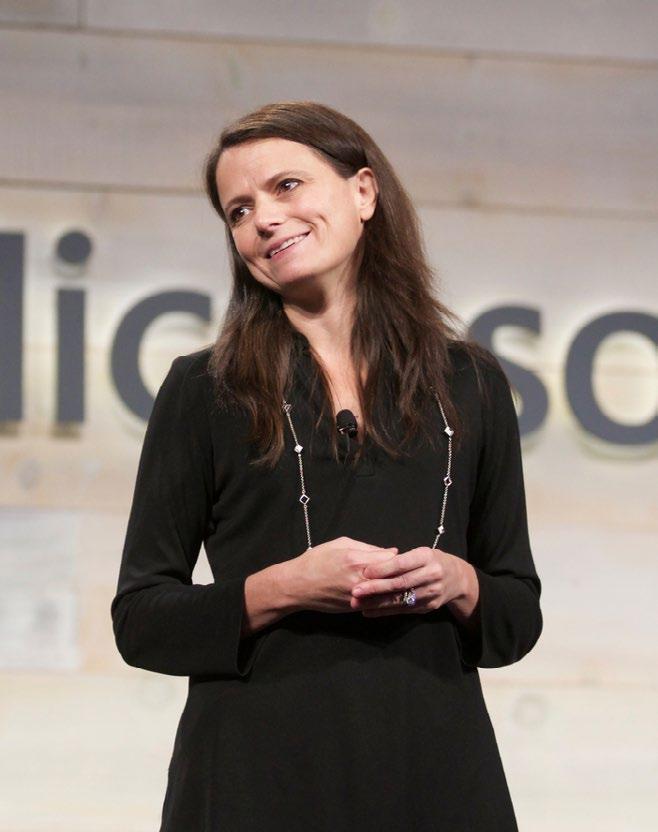
Women in tech have cornered the chief financial officer role. At OpenAI, Micro soft, Nvidia, Alphabet, and Salesforce, a woman serves as CFO.
AMY HOOD, MICROSOFT
JULIE SWEET, ACCENTURE
SARAH FRIAR, OPEN AI
WOMEN + POWER
JENNIFER PRUGH
MIDWIFE OF DIVINITY
Jennifer Prugh represents one of the rarest forms of contemporary leadership: the ability to turn inner practice into public good.
As founder of Breathe Together Yoga (recognized as one of the best yoga studios in Silicon Valley) and creator of the JOY teacher-training pathways, Jennifer has built more than a yoga studio. She has created spiritual infrastructure: a sanctuary, a school, a curriculum, a community, a philanthropic bridge, and an artistic body of work through which people are invited to transform pain into wisdom, wisdom into purpose, and purpose into service.
What distinguishes Jennifer’s body of work is its breadth without dilution. She is a founder, and a mentor; a teacher, and an institution-builder; an artist, and also a humanitarian steward. Through Breathe Together Yoga, she has created a sanctuary for practice; through JOY, she has helped shape future teachers; through Tibetan children’s education, she has translated compassion into long-term responsibility; through her writing and photography, she has turned beauty into a vehicle of attention and care. These accomplishments reveal a woman whose spirituality is not decorative. It is organized, embodied, and made useful.
That is what makes the theme “Midwife of Divinity” so fitting. Divinity is the awakened human capacity for conscience, courage, beauty, compassion, and responsibility. A midwife does not create life; she protects the conditions through which life can bloom. Jennifer’s work holds that threshold for others: the passage where grief can become compassion, confusion can become clarity, discipline can become devotion, and suffering can be transformed into meaningful contribution.
The alchemical science of yogic philosophy gives her work its deeper architecture. Pain is not glorified, but neither is it discarded. It is brought into awareness. The samskara, the old imprint, is witnessed. Breath steadies the body. Tapas refines the will. Agni clarifies perception. Practice becomes the crucible through which suffering may become discernment, humility, tenderness, and purpose.
Jennifer’s genius is that she brings this wisdom out of abstraction and into com-
munity life. Breathe Together becomes the vessel. JOY becomes the refining path. Community becomes the crucible. Service becomes the offering. The wound is no longer wasted. The heartbreak becomes a doorway. The shadow becomes instruction. The old pain, once met with breath, beauty, study, and care, becomes the very ground from which a person learns to love more honestly, serve more deeply, and lead with humility.
Her life and leadership echo the Monarch Visionary Fourfold Path. In Initiation, the seeker enters the honest fire of pain, longing, change, and the call to become more fully alive. In Crystallization, that fire becomes form through discipline, study, ethics, embodiment, and contemplative practice. In Actualization, the refined self becomes useful through teaching, mentoring, healing relationships, building bridges, and serving community. In Ascension, the work expands beyond the individual into culture, education, ecology, compassion, and responsibility for the wider world.
At a time when wellness is often commodified, belonging is fragile, and spiritual language is easily separated from ethical action, Jennifer offers a more demanding and more beautiful vision: healing that matures into service. Her work reminds us that the restored life is not meant only to feel better. It is meant to become more available: to love, to teach, to protect, to repair, and to serve.
Jennifer Prugh deserves Woman of the Year recognition because she has spent her life helping others recover purpose from pain and carry that purpose into the world. She is a teacher of teachers, a builder of sanctuary, a steward of contemplative intelligence, and a bridge-builder whose work demonstrates that inner awakening becomes meaningful only when it takes form as care.
To honor Jennifer Prugh is to honor the sacred feminine art of transformation: the capacity to hold suffering without being defined by it, to turn wisdom into service, and to help communities remember that divinity is not elsewhere. It is born through us when we become courageous enough to live our purpose in service to the world.
WOMEN + POWER
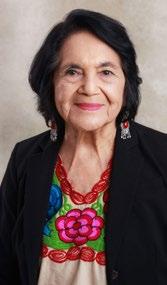
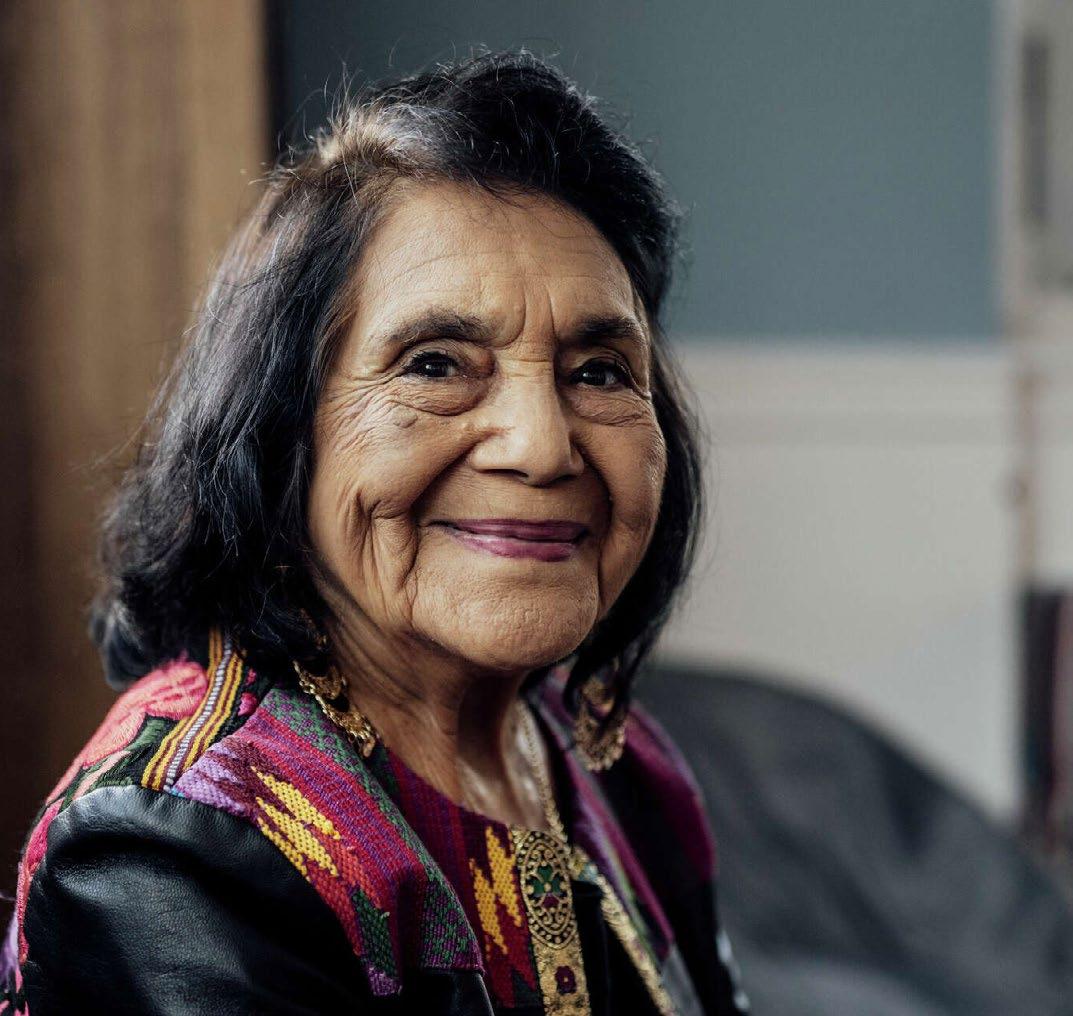
DOLORES HUERTA
FIGHTING FOR LABOR RIGHTS
Organizing in support of farmworkers was one of my first political endeavors. In the late 1960s, Marion Moses, then a nurse for farmworkers with no health care, landed on the East Coast to replicate successful West Coast organizing, boycotting grapes and other products picked by exploited workers.
That’s why I ended up picketing in front of an A&P store in New York, and going to California to march and organize a press conference. Through this activism, I got to know Dolores Huerta, a fierce
political organizer helping farmworkers around the country secure better pay and protections. That work made her a civil rights and labor icon.
In March, the New York Times reported that Dolores’ longtime colleague, labor leader Cesar Chavez, had sexually assaulted young girls, and also Dolores. In a statement, Dolores wrote: “I have encouraged people to always use their voice My silence ends here.”
We can all learn from the courage and conscience Dolores and others have
modeled. The truth about Chavez reminds us to look honestly at the behavior of everyone, including our leaders, and to lend support to those who may be hurt by misused power. It is also a reminder that movements are made up of many people, not just one leader. If a leader fails us, we must say so if the movement is to go on.
Dolores’ impact, like that of many other activists, will continue to guide us, regardless of the hurtful behavior of any one individual.
WOMEN + POWER
TINA FEY
THE MOST-RELATABLE WIFE ON TV
When Tina Fey entered public consciousness as the co-anchor of Saturday Night Live’s “Weekend Update” news segments in 2000, she was a revelation. Here was a woman who was as snarky as her male co-stars, who ran the writing team, and who wasn’t afraid to direct her sketches squarely at women in the audience.
Fey grew up in Pennsylvania with a comedy-focused family, her parents sneaking her in to see Young Frankenstein and sharing their love for Saturday Night Live, Monty Python, and the Marx Brothers. After college, she worked with The Second City in Chicago and submitted material to SNL. She eventually went on to become Saturday Night Live’s first female head writer and half of the show’s first all-female “Weekend Update” news team with Amy Poehler.
At the same time, she wrote the surprise hit film Mean Girls, which came out in 2004, and created the Peabody-winning sitcom 30 Rock, which premiered in
2006. Both became tremendously influential, with their sheer density of jokes and quotable lines. In 2014, a writer for The Atlantic actually calculated the rate of jokes per minute of TV’s most popular sitcoms, and 30 Rock came out on top with 7.44 per minute. That is, just to be clear, more than one joke every ten seconds.
Fey’s most successful projects are rooted in personal experience. Her latest, the hit Netflix series “The Four Seasons,” is no exception. “(‘The Four Seasons’) is a reflection now of not only sort of where I’m at, but also like, of the kind of show I want to watch now,” Fey adds.
In addition to Fey, the feel-good dramedy stars Will Forte, Kerri Kenney-Silver, Colman Domingo, Erika Henningsen, Marco Calvani and Steve Carell as a group of friends who vacation together every season, chronicling the ups and downs of their respective relationships. “We fell into an algorithm Season 1 and
it was even easier to jump back in Season 2,” Fey adds of working on the latest season, which hit Netflix May 28.
Could the show return for Season 3?
“We hope there will be,” Fey says. “We’re certainly all up for it if there will be.”
Given the show is currently at No. 1 on Netflix, the “30 Rock” actor says it’s a “good sign” that the show will probably return. She anticipates a decision being made later this month.
Either way, Fey is keeping an open mind about the future.
“I’m hoping that things will just continue to present themselves. There definitely are other forms of writing that still interest me. I’d love to write a play,” she says.
“I’d love to maybe write in prose in another form,” she adds. “But I also just like sitting still in a chair and drinking coffee outside.”
WOMEN + POWER
NICOLE CARTER
LEADING U.S. BUSINESS OF FRENCH GIANT ROEDERER
In 2019, Merry Edwards Winery, one of the truly great American producers of Pinot Noir and among the most preeminent of producers in Sonoma County’s Russian River Valley, was acquired by Maison Louis Roederer. Those who’d fallen in love with the sublime bottlings from Merry Edwards, which in addition to Pinot Noir, also includes Chardonnay and Sauvignon Blanc, wondered how that boutique winery magic would persist as part of a larger, international family of wineries.
Soon after the acquisition, wine industry veteran Nicole Carter was appointed as President, joining an all-female team at the winery and leading it to new heights ever since. Additionally, in 2021, Nicole was appointed as President of Roederer Collection US, the newly created umbrella under which all US producers of Maison Louis Roederer would be held, including Roederer Estate, Scharffenberger Cellars, Domaine
Anderson, Diamond Creek Vineyards, and Merry Edwards.
When queried about the headwinds facing the wine business, Nicole takes an optimistic, long view acquired from her years of work. “As an industry, we are witnessing a change in consumption. That said, the consumer is asking for the wine industry to adjust, and we need to listen and flex – different experiences at tasting rooms, more education and accessibility in price and formats. Strong brands continue to resonate, and there is strong demand for our wines. Sparkling wines and white wines, along with newer, lesser-known appellations, such as the Anderson Valley, as a point of discovery are in growth, and we are well positioned to capture it. “
Nicole has been working in the wine industry for nearly 30 years and across a diverse range of roles from marketing and sales to wine making to viticul-
ture. For 18 years, she was at Treasury Wine Estates, managing marketing and public relations for the many brands in Treasury’s portfolio. She then moved to Hess Family Wine Estates, bringing her marketing acumen to building their portfolio of brands.
And as a woman in an industry that is often criticized for being dominated by men, Nicole sees the progress. “I have been exceptionally fortunate during my career in the wine industry that my mentors saw my talent and drive and championed my journey. What I find so exciting today is that there are more women in top wine industry roles than ever before that span from C-suite to Wine making. Moreover, there are many organizations such as Batonnage created to support women in the wine industry through mentorship, and Women for WineSense that promotes education and enjoyment of wine, clearing the path for women to succeed in this industry.”
NETUMBO NANDI-NDAITWAH
WOMEN + POWER PRESIDENT OF NAMIBIA
Netumbo Nandi-Ndaitwah’s life reflects a powerful, often overlooked truth: African women were central to the struggle against colonial rule. As a young woman, she left her home to join Namibia’s liberation movement in exile, helping to secure independence and shape a vision of a democratic nation grounded in dignity, equality, and shared prosperity.
She has faithfully carried that vision into national leadership, serving in senior
roles, including Foreign Minister, which culminated in her election as Namibia’s first female President. Today, she is breaking barriers for African women and women globally, leading an inclusive government where women hold the highest offices.
On the global stage, she has been a consistent and respected voice from the Global South, advancing equity and justice through key international agree-
ments—including the Beijing Declaration and Platform for Action on women’s rights—and helping to shape a more just, safe, and equitable world. Whether as liberation fighter or President, Netumbo embodies courage, conviction, and transformative leadership.
WOMEN + POWER
RAMA DUWAJI
WOMEN + POWER
RAMA DUWAJI
FIRST LADY OF NEW YORK CITY
My first encounter with Rama Duwaji’s art was while waiting in line for the restroom at the Levantine bistro Huda in East Williamsburg back in 2024. It took me a second to realize that I was looking at an NYC-mandated first-aid poster, transformed into a stunning artwork in what I can now recognize as Duwaji’s signature style.
The Texas-born, Syrian-American artist has created illustrations and animations for the New Yorker, Tate Modern, and BBC, among other outlets and institutions. Last November, Duwaji became a household name after her husband, Zohran Mamdani, swept the New York City mayoral race in a historic victory that inspired and delighted millions. A private person by nature, she was catapulted into the spotlight, finding herself cast as a tastemaker and Gen-Z role model on the left, and a Muslim boogeywoman on the right.
Last week, I met Duwaji at Gracie Mansion in Upper Manhattan for a wide-ranging conversation about her art practice and her life as first lady of New York. We were surrounded by her hand-drawn animation frames, paintings on found wood panels and cardboard, and charming ceramics. She left a strong impression as a thoughtful and ethical artist, keen on remaining true to herself amid intense media attention and ready to break into a new stage of her art practice.
H: By definition, illustration depends on another source material — usually interpreting or giving another dimension to text. However, your illustrations present their own worlds. What makes a good illustration, in your opinion?
RD: I love illustration because you’re working within a guideline, and the best work comes from limitations. It’s a puzzle to solve; how do I best convey an emotion or story, and compose everything in one frame, while still maintaining my own visual language and style? A good illustration is true to them and true to you.
H: You’ve lived in Texas, Dubai, Qatar, New Jersey, and New York — how did these varied backgrounds shape your personality and your work? Did they turn you into an eternal outsider, or someone who can fit in anywhere?
RD: It gave me the ability to relate to more and different kinds of people. It makes for moments like bonding with a stranger I met in Washington Square Park over a mutually loved bakery in Beirut or chatting about my favorite street in Astoria with someone I met in Doha. I’d like to think this translates in the art I both share and make.
H: Your art has always been political. How does your new position as first lady of New York City impact your freedom to make more of this kind of work?
RD: Everything is political: what we choose to show, what we choose to omit, the stories we highlight and the ones we leave in the margins. It has and will continue to be important for me to reflect the times around me as an artist. If anything, having this position makes me more committed to being honest and attentive, to making work that is complex. It feels like it would be doing it a disservice to not be the artist that got me to this point.
H: Becoming a public figure over the last year has changed your life drastically. Did it also change you as a person?
RD: This experience has absolutely changed my life. I am still figuring out how it applies to me as an artist and as a person, both thinking of the future and the past. It has forced me to confront how much I’ve changed, even before this moment. When a tabloid recently published old tweets I wrote as a teenager, I felt a lot of shame being confronted with language I used that is so harmful to others; being 15 doesn’t excuse it. I’ve read and seen a lot of what others have had to say in response, and I understand the hurt I caused and am truly sorry. My focus isn’t on being a public figure, but continuing my work with care and responsibility, and allowing my art to speak for itself.
WOMEN + POWER
CAITLIN CLARK
WNBA SUPERSTAR
Professional basketball player Caitlin Clark is about to make a lot more money.
According to People, after the WNBA and the players’ union finalized a new collective bargaining agreement, Clark’s salary with the Indiana Fever will jump from $85,000 last season to roughly $528,000 in 2026.
The increase comes as the league dramatically raises player pay, with the salary cap climbing from $1.5 million per team to $7 million.
Clark’s new deal is one of the clearest examples yet of how quickly the WNBA’s economics are changing. Just two years after entering the league as the No. 1
overall pick and becoming its biggest attraction, Clark is now set to earn more than six times what she made during her rookie contract.
The new labor agreement, reached on March 18 after weeks of negotiations between the league and the WNBA Players Association, establishes a supermax salary of $1.4 million and lifts minimum contracts above $300,000. Average salaries are now expected to land around $600,000 per season.
Since arriving in the WNBA in 2024, the Fever guard has become the face of a new era for the league, driving television ratings, attendance, merchandise sales,
and social media engagement.
Clark’s games routinely ranked among the most-watched in WNBA history, and her rivalry with stars such as Angel Reese helped push the league into the mainstream conversation.
At the same time, Clark’s rise also intensified discussions about player salaries. Throughout her first two seasons, Clark made headlines for earning less than six figures in base pay despite becoming one of the most recognizable athletes in the country. Her endorsement deals with brands like Nike and Gatorade far exceeded her WNBA salary.
WOMEN + POWER
THE VIEW
THE LADIES OF DAYTIME TV
ABC is showing teeth in its fight with the White House. The network launched a defense of The View, running ads urging viewers to call out the FCC directly.
The government body launched an investigation into the popular daytime talk show, which is co-hosted by critics Whoopi Goldberg, Joy Behar, Ana Navarro, Sunny Hostin, Sara Haines, and former Trump aide Alyssa Farah Griffin, over the “equal time” rule that requires
Democratic and Republican candidates to have equal airtime.
In a filing fighting the investigation, ABC called the probe “unprecedented, beyond the Commission’s authority, and counterproductive to the Commission’s stated goal of encouraging free speech and open political discussion,” before it began enlisting viewers’ help.
The ad uses the voice of the show’s cre-
ator, the late veteran journalist Barbara Walters, who says, “I had this idea for a show: Different women, different points of view.” The narrator then says, “The View has welcomed your favorite guests and covered the issues you care about for nearly 30 years. Now, the FCC wants to control who is allowed to appear on the show. Viewers, use your voice, scan this QR code. You have until July 6th.”
WOMEN + POWER ZENDAYA
WOMEN + POWER
ZENDAYA
FROM DISNEY TO THE EMMYS
The nickname has followed her since she was 19 years old. “The next Beyoncé.” It’s meant as a compliment, of course. But here’s the problem: Zendaya isn’t trying to be the next anyone.
At 28, Zendaya has already accomplished what most entertainers spend lifetimes chasing. She’s a two-time Emmy winner, the youngest person ever to win the award for Lead Actress in a Drama. Her films have collectively grossed over $11 billion globally. She’s a fashion icon who makes headlines every time she steps onto a red carpet. And yet, the Beyoncé comparisons persist, reducing a ground-
breaking career into a familiar narrative we’ve heard before.
In a 2023 interview with British Vogue, Zendaya addressed these comparisons directly: “I think it’s beautiful that people see potential in me, but I’m carving my own path. I don’t want to be the next anybody. I want to be the first me.”
And she’s doing exactly that. While Beyoncé built her empire through music, world tours, and brand partnerships, Zendaya’s approach is fundamentally different. She’s become a master of
strategic selectivity in an era of content overload.
Consider this: Zendaya has starred in only 12 major film and television projects since 2017, yet her cultural impact rivals performers with twice the output. The “Dune” franchise alone has generated over $1 billion in box office revenue, with Zendaya’s Chani serving as the emotional anchor of Denis Villeneuve’s epic. “Spider-Man: No Way Home” became the sixth highest-grossing film of all time at $1.9 billion, with her MJ character evolving from supporting role to franchise cornerstone.
WOMEN + POWER
SUSANA BALBO
WOMEN + POWER
SUSANA BALBO
WINE AND HOSPITALITY POWERHOUSE
Argentina has emerged as one of the world’s top-wine producing countries and it is pioneering women winemakers like Susana Balbo that deserve much of the credit. She became Argentina’s first female winemaker in 1981 and is fondly referred to as the “Queen of Torrontés,” for elevating the grape from creating simple table wines to one that creates world class bottlings.
Her winery was founded in 1999 and is regarded as among Argentina’s best with a diverse portfolio of labels which celebrate the expression of celebrated varieties like Torrontés and Malbec. Somehow in the midst of it all, she was also a member of the Argentine Congress for a time, representing Mendoza, and served three terms as President of Wines of Argentina, a role that also had her at the center of catapulting Argentina into the upper echelons of the wine world.
"Today, there are many women working as wine makers, and I have certainly seen great progress compared to the industry I entered back in 1981," she said. "At that time, it was very difficult for a woman to build a career in the wine business... it required talent, resilience, confidence and the ability to stand by your decisions... (defending) every choice and every wine making style with professionalism and sound technical arguments."
In 2022, along with her daughter Ana, the pair embarked on a broader hospitality venture and launched Susana Balbo Unique Stays. The boutique hotel is the family’s former home in a posh suburb of Mendoza, the SB Winemaker’s House and Spa Suites. Part of the Relais & Chateaux collection of global luxury hotels, seven opulent suites – where absolutely every detail has been meticulously tended to – are nestled into a retreat for
the senses including full spa services, outdoor pool, gardens, and the onsite restaurant, La Vida. A second property, SB Mountain Lodge Villas & Spa in Valle de Uco, is slated to open soon, also under the Susana Balbo Unique Stays hospitality company.
The key to Susana Balbo’s success is an abiding dedication to evolution and innovation. With daughter Ana now in the family business and her son Jose leading research and development, this is a family on a mission and led by a matriarch who’s transformed her country’s wine making prowess across the globe.
"I still remember something Father Oreglia, the dean of my university and my mentor, once told me, 'The future of wine has the face of a woman.' I believe he was right," Balbo said in conclusion.
WOMEN + POWER
CHRISTINA LABARBIERA
WOMEN + POWER
CHRISTINA LABARBIERA
BUILDING MORE THAN HOMES
For some people, real estate is a profession. For Christina LaBarbiera, it has been a way of life for as long as she can remember. Long before she became one of Bergen County’s (New Jersey) most respected luxury real estate professionals, she was a young girl walking construction sites alongside her family, watching empty parcels of land transform into magnificent residences. Those early experiences would shape not only her understanding of business, but also her philosophy on relationships, integrity, and success.
“As young as five years old, I remember walking job sites and seeing homes go from dirt to 10,000-square-foot estates,” she recalls. “I also remember dinners with my father’s clients and seeing those relationships evolve into lifelong friendships.”
Growing up within the legacy of LaBarbiera Custom Homes offered a front-row seat to the realities of entrepreneurship. While many might assume that exposure to luxury development simply instills an appreciation for beautiful homes, Christina learned something far more valuable.
“I learned that being ethical, friendly, and building a career organically serves you better in creating meaningful relationships and a genuine referral base.” Those lessons would become the foundation upon which she would later build her own career.
Although real estate was always present
in her life, Christina never viewed her future through the lens of obligation. Instead, she approached the family business with a clear understanding of her own strengths.
“It wasn’t a question of if I would enter the industry—it was how,” she says with a laugh. “I always knew I wasn’t going to wear work boots, sweep floors, or ever use a shovel.”
While attending college, she earned her real estate license at just nineteen years old during a summer break. After graduation, her father introduced her to one of Saddle River’s most respected brokers, a mentor who would prove instrumental in her development. “If you’re going to learn this business,” she remembers being told, “you’re going to learn from the best.”
That guidance, paired with her formal education in Business and Marketing, helped sharpen her understanding of consumer behavior and client psychology. One professor, Ed Petkus, left an especially lasting impression. “He taught me to understand the consumer and approach business through a psychological lens,” she says. “That lesson has stayed with me throughout my entire career.”
In industries rooted in legacy, there is often a misconception that opportunity alone guarantees success. Christina is quick to challenge that notion. “Connections may get you access,” she explains, “but everything after that has to be earned.”
Building a personal brand in one of the
nation’s most competitive luxury real estate markets required years of persistence, patience, and resilience. While she acknowledges the opportunities that came with growing up around the industry, she is equally candid about the effort required to establish her own credibility.
“My family didn’t take every deal to the closing table. They didn’t source properties, market themselves, network every day, or spend countless hours talking to clients and agents. A large majority of my business has been built independently.”
Over time, successful transactions spoke louder than assumptions. “It didn’t happen overnight,” she says. “Time and patience are everything, and I learned that early.”
To outsiders, luxury real estate often appears glamorous—beautiful homes, affluent clients, flashy events and record-setting transactions. Christina knows the reality is far more nuanced. At its core, she believes the business is about people.
“Service and understanding clients’ wants and needs are everything,” she explains. “My job is often about putting out fires, not igniting them.” Negotiating multi-million-dollar deals requires more than market expertise. It demands emotional intelligence, diplomacy, and the ability to manage several personalities and emotional opinions under pressure. That ability has become one of her de-
WOMEN + POWER
BUILDING MORE THAN HOMES CHRISTINA LABARBIERA
fining strengths. Perhaps no transaction illustrates that better than the sale of 23 Stone Tower Drive in Alpine, NJ—an experience she considers her proudest professional accomplishment to date.
“The deal died and came back to life multiple times over the course of a year with the same buyers,” she recalls. “My proudest moment was seeing all the management of emotions and egos ultimately lead everyone across the finish line.”
As her career has evolved, so has her role within the industry. Today, Christina is not only advising clients but also helping guide younger agents while serving as a trusted resource for developers seeking opportunities and strategic insight. “Leadership means my voice and opinion matter,” she says. “Developers now come to me to help source projects and value my perspective. “One of the most significant turning points in her career came when she made the difficult decision to leave a successful team. While the move carried risk, it ultimately allowed her contributions to stand on their own. “Others began to see my name attached to my deals and understand what I was bringing to the industry.” It was a reminder that growth often requires stepping outside of comfortable situations and trusting one’s own abilities.
Over the years, Christina’s understanding of success has evolved. Like many entrepreneurs, she once measured achievement through traditional milestones. Today, her perspective is broader. “There are different kinds of success,” she says. “Money is one. Another is simply saying you’re going to do something and then accomplishing it.”
A decade ago, she read The Go-Giver, a book whose philosophy continues to influence her approach to business. “Helping others succeed and taking ego out of the equation makes for smoother transactions and stronger relationships. People want to continue working with you.” She also remembers looking up to legendary Alpine, New Jersey broker Dennis McCormack and setting ambitious goals for herself. “I used to say, ‘One day I want to sell large estates in Alpine like him.’”
She pauses before smiling. “And here we are.”
Despite the demands of a business that rarely adheres to traditional office hours, Christina has found a simple way to maintain balance. Fitness. “I love to exercise,” she says. “I love feeling like I’ve accomplished a difficult workout.” Just as importantly, it offers something increasingly rare in today’s hyperconnected world: time away from her phone. “For fifty minutes, I can re-center, refocus, and come back to my business with a clear head.”
That clarity is essential in a career where every day presents new challenges, new personalities, and new opportunities. “That’s what I love most about real estate,” she says. “No two days are ever the same.”
As part of Polo Lifestyles’ Women+ Power series, Christina’s story serves as a powerful reminder that success is rarely linear. When asked what advice she would offer young women entering business, her response is immediate.
“Patience. Thick skin. Resilience.” She emphasizes the importance of learning
before leading and remaining humble throughout the process. “A few bad days are going to happen. Don’t give up. Learn from experienced professionals. Don’t let your ego get in the way.”
She is equally direct when discussing perceived barriers. “There are no barriers besides the ones we create in our own heads.” Rather than allowing outside opinions, criticism, or jealousy to dictate her path, Christina believes entrepreneurs must focus on their goals and trust the process. “There is more than enough business to go around. Stay committed. Stay humble. Drown out the noise.”
Looking toward the future, Christina’s ambitions are less about accolades and more about authenticity. At just 37 years old, she has already accomplished many of the goals she once set for herself as a young woman entering the industry. If she could sit down across the table from that younger version of herself today, the conversation would be surprisingly simple. “I would tell her never to take anything personally. A lost listing or deal isn’t always about you.” And what would that younger Christina be most proud to see? “That she accomplished everything she set out to do.”
For a woman who grew up watching houses rise from foundations, perhaps that is the ultimate achievement—not simply building a successful career, but building it on her own terms.
And, much like the finest homes she represents, Christina LaBarbiera’s legacy continues to be built one thoughtful decision, one meaningful relationship, and one extraordinary success story at a time.
WOMEN + POWER
JACQUELINE STRUM
WINE ENTHUSIAST PRESIDENT & PUBLISHER
In 1979, Adam and Sybil Strum found a passion for all things wine and started a mail order catalog offering the best accessories for enjoying wine as a lifestyle. Thus Wine Enthusiast was born and that year, they processed 100 orders – what the company history describes as “quite a coup considering that most wine sold at the time was still in a jug!”
About a decade later, the commerce business was complimented by the founding of Wine Enthusiast Media, which today, boasts over 4 million readers across its many platforms and is the most authoritative voice in the wine industry on, well, everything. Most notable for consumers is access to over 25,000 tasting notes each year that are brilliantly assembled by some of the very best wine talent in the world.
Since 2021, Jacqueline “Jacki” Strum has led the powerhouse wine-focused company founded by her parents and when she took over the President & Publisher role
from her father. But prior to that, Strum went out on her own, cutting her teeth at various public relations and marketing agencies on behalf of wine and spirits clients. She also founded ThirstyNest, the first wine and Spirits registry for couples.
Her roles inside Wine Enthusiast Media over the years were numerous and were all steppingstones to boldly leading the company today. They allowed her to analyze the business, inside and out, and then strategically rebuild the company. “Within two years of being named President of Wine Enthusiast Media, I oversaw an overhaul of content strategy and business infrastructure to bring in the next generation of wine drinkers without losing attention on Wine Enthusiast’s core audience,” she shared with online publication CanvasRebel in 2024.
The diversification of the business under Strum has also blossomed, including in launching Cork + Compass Travel, Wine
Enthusiast’s immersive travel platform bolstering global wine tourism, and the Tasting Room Directory, a consumer-facing travel planning guide that also allows users to make tasting room and experience reservations via a partnership with AMEX.
Strum’s own voice as a critical thinker and thought leader in the world of wine is a powerful one, magnified even more so by her launch earlier this year of The Corner Seat, a thought forum for the industry where she doesn’t hold back.
On a final note, Wine Enthusiast Companies is made up of two units – Media and Commerce. The latter is led by Jacqueline’s sister, Erika Strum Silberstein, who also holds the title of President of Wine Enthusiast Companies.
This is one wine media and commerce titan whose female leads are transforming an industry from the vineyard to the dining table.
WOMEN + POWER
THE WOMEN OF HEATED RIVALRY
The breakout gay hockey romance story that aired late in 2025 was just what the doctor ordered to counter the rising forces of intolerance against LGBTQ+ identifying people. The six-episode first season aired simultaneously on Crave in Canada and on HBO in the United States and quickly became one of the most successful television series of the entire year.
And while the vast majority of the attention from fans and critics fell upon the
male leads – Hudson Williams, Connor Storie, François Arnaud, and Robbie G.K. – it’s the incredible and diverse females in the series that we laud in this year’s Women+Power issue of Polo Lifestyles.
Actors Marie-Sophie Nélisse and Ksenia Daniela Kharlamova each play love interests of the two lead protagonists-turned-partners. They provide emotionally cutting and empathetic portrayals that are ultimately profound
and affirming for the struggles met by the men they love. Gal pal Nadine Bhabha is all boss in protecting her BFF from living openly as a gay man in love with a closeted major sports figure. And Bianca Nugara provides support for unconventional matchmaking in a smoothie shop and providing comedic relief – Gurl!
The most incredible performance of the Heated Rivalry women is that of Christina Chang, who plays the mother
BIANCA NUGARA
CHRISTINA CHANG
to Hudson William’s character, Shane. In living rooms and pop-up watch parties across the U.S., there wasn’t a dry eye in sight when [SPOILER ALERT] Shane apologies for being gay, but she insists he has nothing to apologize for and in turn, breaks into tears and apologizes to him for feeling like he could not share with her about who he truly is. It’s the coming out conversation every LGBTQ+ person yearns
for and Chang does it with authenticity and a mother’s unconditional love.
Last, but certainly not least, is the author of the books on which the series is based, Rachel Reid. She’s created a world of characters – both straight and gay – that demonstrate that in the end, love is love.
The second season of Heated Rivalry is slated for release in April 2027. We can’t wait.
NADINE BAHBAH
SOPHIE NELISSE
KSENIA D. KHARLAMOVA
How to describe the phenomenon that is Zoe Saldaña?
An Academy Award–winning actor, she has starred in films that together have grossed more than those of any other actor in history, male or female. She is known to many by her vivid, non-human characters: the surly, deadpan Gamora and the ferocious warrior-mother Neytiri.
To those close to her, she is the most gracious, loyal, loving, and fiercely protective mother, wife, friend, and all-around incredible human being we know. Through her roles in Star Trek, Emilia Pérez, and others, she celebrates her Afro-Latina roots with fierce pride and courageous dignity.
She can shape-shift before our eyes from heartbreaking vulnerability to the strongest icon of female badassery ever seen. In her work and in life, Zoe moves through the world with grace and beauty, elevating all of us whom she touches. She is one of one in the universe.
ZOE SALDANA
SHAPE-SHIFTING,
WOMEN + POWER
VIOLET GRGICH
CONTINUING THE WINE
LEGACY
The world of wine and food has been abuzz this year about the storied Judgement of Paris, and rightly so. Fifty years ago, American wine – California wine to be exact – shed its provincialism and stood side-by-side France’s best reds and whites and triumphed in a blind tasting among French judges. You can still hear the cries – Quelle horreur!
The victorious white was a 1973 Chardonnay from Napa Valley’s Chateau Montelena and crafted by winemaker Miljenko “Mike” Grgich, a Croatian emigree from what was then Yugoslavia. With major bona fides at his back prior to Chateau Montelena and with much credit for catapulting California Chardonnay onto the world stage, Grgich began his own winery in Rutherford in
1977 with business partner Austin Hills, of Hills Bros. Coffee fame.
Today, Grgich Hills Estate and the legacy of Mike Grgich is helmed by his sole child, Violet Grgich. Her father passed in 2023, but it was in the aftermath of the devastating fires that ravaged Northern California wine country in the fall of 2017 that he turned the reigns over to Violet. “He said, ‘you seem to know what you are doing,’ and I became President and CEO,” she told Polo Lifestyles.
Violet went off to school and pondered studying genetics or astrophysics, but she always leaned toward music and has both a BA from University of California Davis, and an MA from Indiana University, both in music. Yet, she recalled, her Dad kept asking “when are you coming home?” In 1998 she did just that on a full-time basis and as insisted upon by her father, worked in every role of the family business.
“I have no desire to be a winemaker and thankfully, my cousin came into the business and is our winemaker. I knew I had big shoes to fill in leading Grgich Hill Estate, but I think my strength is putting all the pieces and parts together, including our dedication to regenerative organic farming practices, stewardship of this land, and giving back to our community.”
The Grgich legacy also persists in producing exceptional wines, made from all estate grown fruit since 2003. For those in the know, Mike Grgich crafted the legendary Fumé Blanc style of Sauvignon Blanc for Robert Mondavi in the late 1960’s and it still shines at Grgich, with the 2021 vintage being named best Sauvignon Blanc in the world in 2024 by respected wine industry publication Wine Enthusiast. Updated elegant, yet understated, labels adorn the Estate’s Legacy Selections and the Croatian Coat of Arms has also made its way onto most of the labels, heralding the deep familial connection to their ancestral homeland.
“My dad’s philosophy was that everyday, you should do your best, learn something new, and make a friend. That is both how I live my life and how I lead Grgich Hills Estate,” Violet shared.
WOMEN + POWER
VICTORIA BECKHAM
FAME, FASHION AND FAMILY
I remember when Victoria Beckham first showed Vogue one of her earliest collections, not long after her Spice Girls days. I’d already met her backstage at Madison Square Garden with my children, but fashion designer was a new identity for her then. I was expecting a rack of dresses and maybe a brief hello, followed by a quick disappearance. But she stayed and talked us through every look. I was
struck by how intent she was on putting her work out there. Even established designers aren’t comfortable doing that.
That’s the Victoria I’ve come to know, a designer who is as fearless as she is gifted. When she was made a Knight of the Order of Arts and Letters by the French Ministry of Culture in January, my first thought was that the recognition was
overdue. She stepped into fashion in 2008 and hasn’t stopped since, adding a beauty line and fragrances. She’s also become something of a Netflix star, alongside her husband.
Victoria may have been in the public eye for most of her life, but it’s her family that means the most to her.
WOMEN + POWER
SR. NORMA PIMENTEL
EXECUTIVE DIRECTOR OF CATHOLIC
CHARITIES
As executive director of Catholic Charities of the Rio Grande Valley (CCRGV) since 2004, Sister Norma Pimentel has helped transform the Humanitarian Respite Center in McAllen, Texas, into a place of refuge that has served more than 100,000 migrants, providing them with food, shelter, and essentials like clothing and hygiene products.
But last year, with a national crackdown on immigration, the number of asylum seekers entering the center fell to nearly zero. Rather than closing the facility, Pimentel, 72, shifted its focus to aiding community members who are elderly,
hungry, or experiencing homelessness; according to 2024 U.S. Census data, 1 in 5 McAllen residents lives in poverty.
In November, the Department of Homeland Security suspended federal funding to CCRGV, alleging the nonprofit violated the terms of its government grant by providing services to migrants beyond the federal 45-day limit in past years. (In its response, CCRGV affirmed its commitment to complying with federal grant requirements.) In the face of this challenge, Pimentel notes, faith institutions, nonprofits, and neighbors have donated to ensure the organization can continue its work. “The Valley is a very
poor area,” she says, quoting executive board member Bishop Daniel E. Flores. “But yet it is an area with a big heart: un gran corazón.”
Pimentel, known as the late Pope Francis’ “favorite nun,” aims to bring “light in the midst of darkness.” The respite center continues to provide up to three meals a day to hundreds of people per week, plus natural disaster and emergency relief and short-term rent and utility assistance. “In the Valley, somos familia,” she says. “We are family because ... no matter who we are, we come together and we respond together.”
WOMEN + POWER
COCO GRAFF
COMMANDING TITLES AND ENDORSEMENTS
Two weeks after topping Sportico’s list of highest-paid female athletes in the world for the third straight year, Coco Gauff has also ranked as Forbes’ highest-earner.
With an estimated $33 million earned in 2025, the world No. 3 racked up the fourth-highest dollar figure for a female athlete ever according to the publication, behind Naomi Osaka’s ($57.3 million) and Serena Williams’ ($45.9 million) 2021 totals, and her own $34.4 million haul from a year ago.
Both on-court and off-court earnings are factored in Forbes’ rankings, with the former rounded to the nearest $100,000 and the latter to the nearest $1 million.
Previously tabbed as one of Forbes’ 30 Under 30 Sports selections, Gauff was the only athlete in the list to clear a projected $25 million in off-court income over the last 12 months thanks to deals with brands including New Balance, Bose and Baker Tilly.
“As I’ve gotten older, I don’t want to just be a face of brands, but also be the brand,” Gauff is quoted by Forbes as saying. “My dad has always said that this was his plan for me when I was younger, and it was up to me if I wanted to hop on board or not. And when I became 18, I knew that this is something that I wanted to work for.”
WOMEN + POWER
SANTANDER ANA BOTIN
CHAIR OF BANCO
Santander’s largest M&A deal under chair Ana Botín began with a JPMorgan Chase conference in New York in 2023, where the Spanish executive first met John Ciulla, head of US-based Webster Financial.
The two struck up a rapport and stayed in touch. Then toward the end of last year, Ciulla approached Botín with an ambitious proposal: an outright takeover. Within nine weeks of formal discussions beginning, the biggest acquisition of a US bank by a continental European lender was done. Santander announced its $12.2bn purchase of Webster, codenamed “Project Wren”. The transaction marks the culmination of Botín’s year-long mergers and acquisitions spree as she seeks to refocus Santander by bolstering its operations in the UK and US — geographies where it has historically struggled.
“If one is not in the United States, one cannot aspire to be a global bank,” Botín said of the deal. “Europe needs global companies and banks, and for that, we need to compete successfully in the United States.” The deal, which will propel Santander into the top-10 retail and commercial banks by assets in the US, flies in the face of a string of European misadventures in the country.
With Webster, Santander will acquire an established retail and consumer bank with $84bn in assets, 5mn customers and about 200 branches. Botín said Webster’s presence in US commercial banking, where Santander is less strong, was also a key attraction.
Botín’s M&A push has been aided by a higher share price — which has climbed 140 per cent since the beginning of 2025 — as well as a €6.8bn windfall from the sale of its Polish business last year.
WOMEN + POWER
KECIA STEELMAN
CEO OF ULTA BEAUTY
In January 2025, when Kecia Steelman was named president and CEO of Ulta Beauty, one of the largest beauty retailers in the U.S., she became the leader of a staff of more than 58,000. Of those workers, from the in-store sales associates to corporate executives, 91% are women.
That statistic means something to Steelman, who started in retail over 30 years ago, when women in corporate leadership roles felt like a rarity. “I take a lot of responsibility in ... being an advocate for other women that are out there trying to break through,” she says. “That’s one of the best days at work for me— when I identify someone as having that ‘it’ factor and I’m like, ‘I see your potential even more than what you may see.’”
In fact, it’s what happened to Steelman. In 1993, as a 20-year-old single mom in Iowa, she took an $8-an-hour job at a local Target. A manager offered her a leadership opportunity. From there, she worked her way up, landing roles at Home Depot and Family Dollar before joining Ulta’s C-suite in 2014.
When she was starting out, Steelman felt as if female leaders “had to be more masculine in how we showed up at work.” As a young mom, she felt pressure to miss school concerts and soccer games to prove her commitment. It’s something she now tries to discourage.
“You need to be at home, start a little later in the day? I’m fine with that,” she says. “As female CEOs, we need to create
those environments so we can get more women at the top.”
Since 2022, Ulta’s MUSE Accelerator program has supported emerging beauty and wellness brands, a majority of which are owned by BIPOC women, by offering funding and mentorship. In her first year as CEO, Steelman took the U.S.-based company international, opening stores in the U.K., Mexico, and the Middle East, a move expected to help Ulta’s annual fiscal revenue reach its $12.3 billion forecast for the year 2025, up by $1 billion from the previous year. It has also allowed Steelman to champion women-owned brands around the world. “To me,” she says, “that’s what global beauty is about: giving these brand founders the opportunity for greater success.”
WOMEN + POWER
KICA MATOS
NATIONAL IMMIGRATION LAW CENTER PRESIDENT
Kica Matos goes deep. She scuba dives, exploring the vast secrets of the ocean. Her pursuit allows her to delve far beyond what meets the eye, pushing past discomfort and into the unknown. In her work, too, Kica is unafraid of depth. She fights for the people, especially the most vulnerable and marginalized in our country. For decades she has fought for and alongside people on death row, working-class families, and immigrants.
As the president of the National Immigration Law Center and Immigrant Justice Fund, Kica faces pressure with steadiness, rather than retreat. Since she stepped into the role in 2023, racial justice, decriminalization, and immigrants’ rights have been at the forefront of her work.
She has tirelessly challenged the current Administration on topics ranging from ICE officers wearing face coverings to the rights of unaccompanied migrant children. As I think about Kica’s impact on our country, I think about her diving. A fierce, brave explorer, shining light on parts of our world that often go unseen. But she also understands the freedom in an infinite sea.
WOMEN + POWER
OPRAH WINFREY
RISING TO MEET EVERY MOMENT
In 2005, Business Week named Winfrey the greatest Black philanthropist in American history. She has created multiple charities over the years, including Oprah’s Angel Network, the Oprah Winfrey Foundation, and the Oprah Winfrey Charitable Foundation. Between 1998 and September 2010 when it stopped operating, Oprah’s Angel Network had raised more than $80 million supporting schools around the world and victims of Hurricane Katrina, among other recipients.
Winfrey is a dedicated supporter of youth around the world and has even advocated on behalf of children’s rights. She created the Oprah Winfrey Leadership Academy for Girls in South Africa as a safe space to educate and inspire the “next generation of leaders for South Africa.” It opened in 2007. In 1994, then-President Bill
Clinton signed a bill, which Winfrey had proposed to Congress, into law that created a nationwide database of convicted child abusers.
In February 2018, after a shooting at Florida’s Marjory Stoneman Douglas High School left 17 people dead, Winfrey announced she would follow the example set by George and Amal Clooney and donate $500,000 to the March for Our Lives demonstration scheduled for the following month.
All in all, she has given away more than $500 million with the kind of enthusiasm with which she gave out new cars on TV.
Her foundation’s focus has been on female education—seeing girls graduate from the Oprah Winfrey Leadership Academy for Girls in South Africa, established in 2004, is “one of the greatest rewards in her life,” she has said.
But she also personally steps in whenever and wherever she sees a need. She donated $20 million to fight food insecurity during the pandemic, contributed $24 million to the Smithsonian’s National Museum of African American History and Culture as a founding (and its largest) donor, and gave tens of millions to aid recovery after devastating wildfires in Maui in 2023 and Los Angeles in January.
When talking about giving, Winfrey likes to paraphrase Dr Martin Luther King, Jr. “Not everybody can be famous, but everyone can be great,” she says, “ because greatness is determined by service.”
WOMEN + POWER
MING XI
UNITING HIGH FASHION AND HIGH SOCIETY
When Chinese supermodel Ming Xi wed Macau casino heir Mario Ho in a spectacular celebration at Mont Saint-Michel’s Abbey, the union of high fashion and elite society instantly dominated headlines.
Yet, long before becoming the glamorous newest addition to the prominent Ho dynasty, the Shanghai-born beauty had already cemented her status on the global runway. From walking exclusive Givenchy couture shows to capturing hearts as a Victoria’s Secret Angel, Xi’s fashion pedigree is as dazzling as her nuptials.
WOMEN + POWER
NICKY GLASER
KEEPING THE FUN IN FUNNY
The thing I love about Nikki Glaser is she has the decency to be scared, and you can tell she has the decency to be scared because of how hard she works. So many comics get ego’ed out, performing to only their fans in the safest possible environments. They fall in love with their own delivery and mistake that for actual craftsmanship.
Yes, Nikki has all the tools for comedic stardom. She’s got the look, she’s got the voice (by the way, the most underrated part of being a great comedian—think Bernie Mac, Roseanne Barr, and the
greatest voice of all, Katt Williams); she’s also got a strong point of view and is extremely likable. Writing jokes for standup is one of the hardest things a writer can do. Lots of writers are funny, but no one ever said Toni Morrison bombed last night. George Carlin once said to me, “I’m not in show business, I’m a comedian.”
When I see Nikki on television, no matter the assignment, she’s not there to be your friend. She’s there to crush. I’ve seen Nikki host the Golden Globes twice and couldn’t tell you who won a single
award but I remember Nikki crushed. Lorne Michaels used to say to me, “You can’t make an entrance if you never leave.” I hope Nikki takes her time and explores all aspects of her gift. I hope she realizes she has the potential to be not just a great comedian, but a great artist who uses the power that comes with this moment to approach her career like Madonna or Leonardo DiCaprio and work with only the best. I hope this is just the beginning of an incredible, multifaceted, Steve Martin–esque career.
MORE WOMEN WHO NEED NO INTRODUCTION
WOMEN+POWER
JILL BIDEN, MICHELLE OBAMA
LAURA BUSH AND HILLARY CLINTON FORMER FIRST LADIES
CHRISTINE LAGARDE EUROPE'S CURRENCY MANAGER
ANNA WINTOUR EDITOR AND CREATIVE DIRECTOR
KRIS JENNER MOMAGER OF THE KARDASHIAN-JENNERS
MELINDA FRENCH GATES PHILANTHROPIST
WHOOPI GOLDBERG "THE VIEW" HOST
GIORGIA MELONI PM OF ITALY
LAUREN SANCHEZ BEZOS PHILANTHROPIST
THE JENNER SISTERS INFLUENCERS AND ENTREPRENEURS
MARY BARRA CEO OF GENERAL MOTORS
CHRISTY WALTON HEIRESS AND PHILANTHROPIST
CATHERINE, PRINCESS OF WALES THE UNITED KINGDOM'S NEXT QUEEN
FASHION & STYLE
THE RETURN OF TOGGLES TO THE RUNWAY
MIU MIU AND NEW BALANCE STYLE COCO GAUFF
THE TOGGLE TAKEOVER
Toggles returned this season with a quiet authority, reframing a utilitarian fastening as something far more expressive. Long associated with heritage outerwear, the detail was re-imagined across 2026 ready-to-wear as both closure and ornament—offering structure while introducing rhythm and tactility to garments. In a moment where minimalism risks feeling overly controlled, toggles bring a sense of ease and human touch, softening precision and suggesting clothes meant to be lived in rather than simply observed.
Designers approached the toggle with a sensitivity to both craft and context. At Valentino, they appeared elongated and refined, lending elegance to tailoring, while Louis Vuitton explored a more utilitarian, travel-minded interpretation. Chanel polished the detail within its codes of refinement, and Etro embraced its artisanal, bohemian roots through texture and pattern. Across the board, toggles emerged not as statement embellishments, but as subtle punctuation—grounded, tactile, and quietly expressive.
THE TOGGLE TAKEOVER
MIU MIU + NEW BALANCE
The latest collaboration introduces a performance-focused tennis collection and campaign timed to the summer tournament season
NEW BALANCE AND MIU MIU HAVE UNVEILED THE LATEST CHAPTER OF THEIR ONGOING COLLABORATION WITH TENNIS PLAYER COCO GAUFF, INTRODUCING A NEW COLLECTION AND CAMPAIGN THAT COINCIDES WITH THE SUMMER TENNIS SEASON.
Gauff, currently ranked world No. 2 and an 11-time singles champion, will wear the collection on court during one of the sport’s major tournaments.
The collection centers on a white set that combines traditional tennis attire with performance-focused construction. Designed through Miu Miu’s contemporary lens, the pieces are crafted in technical stretch jersey and incorporate details including scalloped edging, pleated skirts, navy piping, and tailored silhouettes engineered for movement. Outerwear is developed in Silk Tec, a lightweight fabric designed to balance structure, breathability, and flexibility.
The collaboration also introduces a new decò leather version of the New Balance 530 SL tennis sneaker. The style combines
technical performance elements with asymmetrically colored woven laces, while caps and headbands complete the collection. Each piece features the joint New Balance and Miu Miu logo in navy and red.
Supporting the launch is a new campaign photographed by Chaumont and Zaerpour. The imagery focuses on Gauff’s athleticism and movement, highlighting both the technical attributes of the collection and the evolving relationship between luxury fashion and professional sport.
IN BALI’S WORLD HERITAGE SUBAK LANDSCAPE, WATER IS NOT SCENERY. IT IS SOURCE, ORDER, RITUAL, AGRICULTURE, MEMORY AND RESPONSIBILITY - A SACRED CIVILIZATION OF FLOW THAT ASKS MODERN LUXURY TO BECOME STEWARDSHIP.
The Royal Waters of Bali answers the modern thirst to turn toward one of the world’s most refined sacred-water landscapes: Bali’s Subak cultural system, where crater lake, water temple, forest, canal, terrace, village and ritual order form a living civilization of flow.
At its heart is a simple doctrine: abundance is not accumulation. Abundance is sacred circulation.
A LUXURY MEDITATION ON POWER, REMEMBRANCE AND THE SACRED INTELLIGENCE OF FLOW
There is a form of success that leaves the soul thirsty, and then there is the kind that shines outward while the inner river recedes.
Material success is visible, admired, efficient and welllit, yet something beneath it has stopped moving. The external façade rises while the inner river recedes. The voice becomes sharper, the body more disciplined, the brand more polished, the ambition more precise; even abundance begins to feel barren when it no longer flows from source. Modern life has taught the self how to perform; culture teaches the soul how to ascend.
This is why Bali matters now. Before the traveler sees the terraces, the water has already
crossed a hidden world. It has gathered in cloud, touched volcanic stone, entered forest shadow, rested in crater silence, and passed through forms of reverence older than spectacle. By the time it reaches the field, it is no longer merely rain. It is relationship made visible.
Bali is a living civilization of water. Its terraces, temples, lakes, forests and volcanic slopes reveal an ancient intelligence the modern world urgently needs: life flourishes only where circulation is protected. Water descends from mountain and cloud, gathers in crater lake and spring, passes through temple, canal, village and field, and becomes visible as rice, offering, nourishment and beauty. The field does not create its own abundance. It receives what has passed
through relationship.
The Royal Waters of Bali offer a doctrine of purified power: before water reaches the field, it filters and bathes in the sacred. Before power becomes illumination, it must do the same.
SOURCE BEFORE SPEECH
Every civilization of water must have a source, not only geographically but spiritually. A source is the hidden origin before distribution, before harvest, before architecture, before possession. It reminds every visible form that it did not create itself.
Lake Batur is not only an image of stillness. It is the upstream memory of the island: water held by fire, source held by mountain, reflection held by
mist. Within the World Heritage frame, Lake Batur is regarded as the ultimate origin of springs and rivers, while Pura Ulun Danu Batur stands as a supreme water-temple anchor at the head of the system.
The crater lake belongs to a volcanic world where rupture and nourishment are not opposites. Fire breaks the earth open. Rain gathers in the wound. Water rests inside the mountain’s memory. From this hidden receiving, the downstream world becomes possible.
Through a Vedic lens, one may consider this source through the language of āpas, the sacred waters, and amṛta, the immortal nectar of renewed consciousness: water as origin, purification, nourishment, memory and return.
SPIRITUALITY FAITH QUESTIONS
A CIVILIZATION BORN FROM FIRE AND WATER
Officially recognized as a UNESCO World Heritage cultural landscape, Bali’s Subak system encompasses rice terraces and water temples through a cooperative culture of canals, weirs, forests, villages, rituals and shared responsibility. The word “irrigation” is too small for what is being described. Subak is not only a technical system. It is a sacred social ecology: a way of organizing water so that source, temple, farmer, field, village and landscape remain in relation.
The terraces are not merely carved into land; they are inscriptions of time, labor and devotion. Each terrace is a contour of patience. Water does not simply move downhill; it is received, timed, divided, negotiated and returned. The channel is
small, but its meaning is vast. A narrow line of moving water carries a civilization’s discipline: timing, trust, law, cooperation, ceremony and restraint. The field receives because the community remembers how to share.
Subak reveals that abundance is not a private miracle. It is a cooperative achievement.
The philosophy that gathers this world into a luminous triad is Tri Hita Karana: harmony among the spiritual realm, the human world and nature. Harmony transcends mood: it is maintenance, it is canal work, temple obligation, community timing, forest protection, field care and spiritual proportion repeated across generations.
In Vedic language, this resonates with ṛta, cosmic order, and yajña, sacred rec-
GROWTH · FOCUS
iprocity. Yet again, the comparison must remain humble. Tri Hita Karana belongs to Bali’s living cultural landscape. Rta and yajña offer a contemplative echo, not a replacement. Both point toward a shared intuition: life flourishes when order is relational, not extractive.
The beauty of Bali is therefore disciplined. The terraces appear serene because countless acts of coordination, restraint and reverence have made serenity possible. Abundance is not the field’s private achievement; it is the visible tenderness of relationship made fertile.
TEMPLE AS MEDIATOR
At the headwaters, the temple gives form to what the mountain gathers. It does not possess the lake. It acknowledges that water must be received before it is
distributed, blessed before it is used, and remembered before it becomes grain.
Pura Ulun Danu Batur is essential to the Royal Waters because it teaches that source alone is not the whole story. Water must flow through order. It must pass through a culture capable of receiving it without reducing it to commodity. In this landscape, the temple does not stop the water. It teaches it how to arrive.
This harmonic equilibrium demonstrates that sacred systems shape emotions and behavior, known as biophilia. A temple network can coordinate attention, obligation, timing and community memory. A field may look natural to the tourist eye, but the cultivated landscape is a moral and practical achievement. Water reaches the rice because a society has learned how to cultivate the passage.
Through a contemplative Vedic lens, the human being follows a similar law. The self cannot remain abundant if its inner channels are blocked. Prā a, the life-current, must move through breath, memory, attention, devotion, creativity and service before it becomes clear action. When it does not, the soul becomes pressurized. What cannot be grieved becomes atmosphere. What cannot be spoken becomes tension. What cannot be blessed becomes repetition. What cannot be offered becomes stagnation.
Healing, spoken precisely, is not a magical promise made by a landscape. It is the restoration of relationship within a living system.
THE SOUL AS WATERSHED
The modern seeker often wants the harvest without the pilgrimage: clarity
without purification, influence without responsibility, wealth without reverence, visibility without truth, spiritual power without surrender. Yet the inner life follows the same law as the field: when the channels are blocked, abundance becomes strained.
The human being is also a watershed. There is a source within the self, and there are channels through which life must pass before it becomes clear action. The ego is not only vanity; it is a survival structure. It protects identity, continuity and boundaries. It learned to guard the spring because at some point the spring felt unsafe. Yet when wounded, it mistakes protection for separation. The inner spring calls: “I am the source.” Pain becomes known as possession. Knowledge inflates as superiority. Beauty becomes corded to performance. Spirituality becomes self-display. Leadership becomes control. Even suffering becomes a private kingdom.
A watershed reveals the error. No field is the source of its own fertility. No leader is the source of all power. No house is the source of the beauty it borrows. No traveler owns the sacredness they encounter. What flourishes does so because it belongs to a larger order.
In this sense, dharma is not simply personal purpose. It is right relation: the discipline of letting power serve life. Taking back power does not mean becoming harder, louder or more dominant. It means reclaiming the channels through which power becomes clean. Breath returns from anxiety. Speech returns from distortion. Beauty returns from vanity. Wealth returns from extraction. Leadership returns from control. Ancestry returns from unconscious repetition. Power returns to source.
What hoards decays. What circulates breathes.
THE ROYAL WATER TEMPLE
Every civilization reveals its understanding of power through the beauty it chooses to protect. Some build monuments to conquest; others to wealth, victory or the immortality of a ruler’s name. Bali’s water civilization offers a subtler image: royal architecture placed within the order of water, temple, field and community.
Pura Taman Ayun, the Royal Water Temple, becomes the monarchic thresh-
SPIRITUALITY FAITH
QUESTIONS GROWTH · FOCUS
old of this essay. Reflected in water, the temple becomes less like an object and more like a question: what kind of power is worthy of being mirrored by the sacred?
The Royal Water Temple does not teach domination. Its moat teaches measure. Its reflection teaches humility. Its beauty teaches that a kingdom survives not by enclosing the spring, but by protecting the order through which life downstream continues. Sovereignty here becomes editorially meaningful not as ownership, but as custodianship. The monarch is not the owner of abundance, but the guardian of its passage.
The crown becomes sacred only when it learns to bow to the water.
For founders, patrons, hoteliers, fashion houses, wellness houses and cultural institutions, the Royal Water Temple becomes a mirror. What flows through your influence? Does your wealth protect what is vulnerable? Does your power serve the source, or does it place another crown upon the ego?
The purified crown is not a symbol of superiority. It is the vessel through which source blesses the field.
ANCESTRY IS ALSO A RIVER
Within every human being are rivers of ancestral memories, there are ancient sentient rivers coursing through our veins to be purified in the light of loving awareness. It carries languages, migrations, devotions, silences, disciplines, losses, songs, fears and unfinished prayers. The individual is the arrival of present awareness.
To remember who you are is to recognize that identity forms inside inheritance. Some inheritance is luminous:
courage, devotion, artistry, reverence, survival, tenderness, discipline and the instinct to protect life. Some is wounded: shame, exile, domination, abandonment, grief never spoken and fear carried as family law.
Ancestry, like water, can nourish or flood. When unconscious, it pulls the person into repetition. When rejected entirely, it severs the person from roots that should source strength. When romanticized, it becomes illusion. The sacred task is purification: receive the river, bless what is life-giving, grieve what was wounded, release what must not be carried forward and steward the continued inheritance of consciousness.
Lineage becomes abundance when its spiritual gifts are consciously utilized so the wounds fertilize growth. The task is not to escape the river of ancestry, but to let it arrive in the future clearer than it was seeded within us.
Bali’s cultural landscape offers a mirror for this responsibility. It is not a frozen relic from an untouched past. It is a living inheritance shaped by volcanic ecology, temple networks, Indic exchange, local governance, artistic refinement, agriculture, royal patronage and contemporary pressure. Its beauty is historical, not static. It became itself through continuity and adaptation.
Sacred culture must not become a mood board for aspiration. It must remain a living inheritance approached through relationship, compensation and care. A more reverent luxury asks: who carries this knowledge? Who maintains the field? Who protects the temple? Who must be credited, compensated, consulted and honored before beauty becomes content?
The answer determines whether a house becomes a consumer of atmosphere or a steward of meaning.
COSMIC CONSCIOUSNESS IS EARTHLY INTIMACY
The modern imagination often places cosmic consciousness far away: in distant light, higher dimensions, celestial abstraction. Bali’s water civilization offers a more demanding correction. The universal mystery is not just birthing within blackholes of cosmic perceptionit is hidden in right relationship between spirit, body, community and Earth.
Water gathers, descends, nourishes, evaporates and returns. Breath enters, exchanges, departs and returns. The heart receives, pulses, sends and receives again. Forests hold rainfall; soil holds memory; terraces hold water; communities hold ritual; ritual holds meaning. A civilization of water becomes a sacred astronomy of the Earth, revealing the law of interdependence through which life continues.
In Vedic terms, the body is is a microcosmic field of prā a, fire, water, rhythm and consciousness. The same intelligence that moves breath and blood also asks the soul to circulate truth, compassion and service. Cosmic consciousness is not achieved by rejecting nature, but by perceiving nature as divine relationship.
Cosmic abundance is not excess. It is the recognition that life is already exchanging itself through breath, water, soil, sunlight, memory, labor and love.
This is why beauty can become a spiritual teacher if it is not consumed too quickly. The eye that merely takes beauty remains hungry. The eye that reveres
beauty becomes educated by it. The stars do not cancel the soil. They are reflected in it. Bali asks the viewer to recognize that visible serenity rests upon invisible cooperation.
THE ETHICAL TEST OF BEAUTY
Beauty is a binary gate. She can open the heart, or she can become another appetite. She can educate the senses, but she can also be consumed so quickly that the observer never learns who projects from behind the shades, who labors within it and what responsibilities arise once the sacred treasure has been witnessed.
Sacred stewardship begins where beauty stops being consumed and starts being protected. It is beauty governed by source, provenance, reciprocity, restraint and care. Bali is not a stage upon which luxury houses, wellness houses, hotels, fashion houses or cultural entrepreneurs may project longing without consequence. It is a living landscape of farmers, priests, families, artists, artisans, guides, temple communities, hospitality workers, ecological pressures and historical responsibilities.
A sacred landscape must become a teacher before it becomes an itinerary. The first offering is perception itself: a more reverent way of witnessing beauty before shaping one’s experience around it.
This path educates before it sells. It gathers aligned audience before moving bodies across borders. It allows an international house to become associated with reverence, not extraction; with thought leadership, not tourism cliché; with sacred luxury, not decorative wellness.
The right house is not merely one with reach or taste, but one refined enough to
understand that beauty becomes more powerful when it protects what made it possible. A hotel becomes aligned when it treats the landscape not as décor, but as living context. A fashion house becomes aligned when it honors craft, provenance, maker, material and cultural review. A wellness house becomes aligned when it frames experience as contemplative education and wellbeing support, not a cure, activation or mystical guarantee. A luxury travel house becomes aligned when it privileges smallness, permission, local guides, appropriate spaces and benefit-sharing over spectacle.
Luxury becomes sacred when it does not merely display abundance, but participates in the conditions that make abundance possible. True abundance is what remains trustworthy as it grows.
AFTER THE STORY, THE VISION REMAINS
The Royal Waters of Bali do not promise to save the modern seeker. They offer something more demanding: a mirror of how life becomes whole when it returns to relationship. A volcanic island becomes fertile through fire, rain, soil, watershed, terrace, temple, labor and time. A culture becomes luminous when philosophy is cultivated into field, ritual, governance and daily responsibility. A person becomes powerful in the same way: not through separation from life, but through restored circulation with source, body, ancestry, nature, community and divine intelligence.
To remember who you are is not to invent a more impressive self. It is to return to the living source beneath the defended one. It is to ask where power became dry, where the voice became
guarded, where the heart became armored, where beauty became performance, where ancestry became burden and where ambition forgot prayer. It is to allow the old channels to be seen with enough honesty that life can begin moving through them again.
Taking back power means recovering the channels through which power becomes clean. The false monarch wants to be worshiped by the field. The illuminated monarch protects the waters that make the field possible. The false crown shines for itself. The purified crown becomes a vessel through which source may continue to bless the world.
The source does not ask the river why it became muddy. It receives what returns and teaches it how to move again.
The Royal Waters reveal that true abundance is not what the self can possess, but what life can safely entrust to a purified channel. When consciousness becomes water, power becomes stewardship. When power becomes stewardship, beauty becomes blessing. When beauty becomes blessing, luxury becomes accountable to the sacred. When the sacred is honored, the world is not escaped, but restored.
Return to the waters. Purify the power. Remember the source. Let life become a river through which your beauty, wisdom and love flow to the world a nourishing sense of self restored.
MANSION OF THE MONTH
THE MOST PROLIFIC PROPERTY IN BEVERLY PARK. THIS IS THE DEFINITION OF PERFECTION, FROM ONE OF THE BIGGEST 2 ACRE FLAT LOTS IN BEVERLY PARK TO THE IMMACULATE GROUNDS, NOT INCLUDING THE 4 ACRE MOUNTAIN THAT SITS AT THE BACK OF THE PROPERTY THAT CAN NEVER BE BUILT ON, TO THE ARCHITECTURE AND INTERIORS, AN ESTATE THAT EMBODIES THE VERY ESSENCE OF WHAT BEVERLY PARK STANDS FOR. THE ULTIMATE IN PRIVATE AND SECURE LIVING.
This is why the titans of industry choose to call Beverly Park home. Privately set behind the guarded gates of one of Los Angeles’ most prestigious enclaves, 77 Beverly Park Lane is a masterclass in architecture by world-renowned William Hablinkski, offering extraordinary privacy and grandeur just minutes from the heart of Beverly Hills.
A dramatic arrival unfolds into interiors defined by soaring ceilings, refined architectural detail, expansive volumes, and millions spent on stones and finishes sourced from around the world. Walls of glass frame the surrounding landscape, filling the home with natural light and seamlessly connecting indoor living with the estate’s outdoor spaces.
Designed for grand-scale entertaining and luxury living, the residence features a multimillion-dollar private theater, an
extraordinary wine cellar that may never be completely filled, incredible gym, parking for over 50 cars across the property, and the latest and greatest amenities. Outdoors, multimillions were invested in landscaping by the renowned landscape designer of San Ysidro Ranch.
Resort-caliber grounds showcase manicured lawns, lush rose and vegetable gardens, and entertaining terraces with multiple fire pits, an outdoor kitchen, pizza oven, grills, and dining areas, creating a private oasis. 77 Beverly Park Lane stands as a true trophy estate and a rare opportunity to experience the pinnacle of privacy, prestige, and architectural excellence in Beverly Park.
Properties of this caliber very rarely ever come up. Call for a private showing.
MANSION OF THE MONTH
2680 TRADER ROAD
JACKSON, WYOMING, 83001 UNITED STATES
$23,000,000 USD
BEDROOMS 6 | BATHROOMS 6 FULL AND 2 PARTIAL | INTERIOR
Located in the gated Gros Ventre North subdivision, in the heart of Jackson, Wyoming, is this newly constructed architectural masterpiece. Boasting exquisite craftsmanship and attention to detail, this home offers an unparalleled living experience amidst the breathtaking backdrop of the Teton Range.
At the heart of the main level is the expansive Great Room adorned with vaulted ceilings and exposed steel beams. Gather around the floor-to-ceiling stone fireplace or express your culinary creativity in the chef’s kitchen, outfitted with top-of-theline appliances, tailor-made finishes, and a butler’s pantry.
Floor-to-ceiling windows and telescoping doors flood this room with natural light and provide seamless access to the expansive deck, complete with a covered outdoor dining area, a built-in grill, and an outdoor fireplace, perfect for entertaining against the backdrop of Wyoming’s natural splendor.
Step into opulence as you enter the spacious Primary Suite. Featuring his and her walk-in closets and a spa-like bathroom complete with a double vanity, double showers, a freestanding bathtub, and an outdoor shower, this retreat boasts privacy and comfort.
Relax and unwind on the private deck, offering a sweeping panorama of the Teton Range, or enjoy the warmth and comfort of the double-sided fireplace perfectly situated in front of a built-in reading nook. There is a private office located between the Primary Suite and the Great Room, designed for productivity and inspiration. With a private covered deck offering sweeping views of the surrounding mountains, this office becomes a private retreat within the expansive home.
Adjacent to the office is the mudroom, a transitional space crafted with custom millwork and thoughtful design elements. Here, gear, jackets, and shoes find a styl-
ish home, keeping the main living area pristine and clutter-free. Adjacent to the mudroom, is the upstairs laundry room and an additional coat closet to meet all your storage and cleaning needs. At the center of the home where the main level and lower level meet is a causeway flanked by expansive two-story windows which saturate the home with natural light while providing endless views of the surrounding wilderness.
Located on the lower level is the entertainment and media room. Unwind in the sprawling Media Room, equipped
with a full-sized wet bar featuring a wine fridge, ice machine, and dishwasher. Built-in shelves offer ample space for entertainment, books, and art. Indulge in recreation and relaxation within the gym and sauna, with seamless outdoor access to the meticulously landscaped backyard and built-in hot tub, creating an oasis of luxury and relaxation.
Additionally, attached to the Media Room is a spare Flex Room with an en-suite bathroom that is perfect for supplementary accommodations for guests. The south wing of the lower level is the dedicated
guest wing, with four en-suite bedrooms, each offering incredible wilderness and mountain views.
The garage is a haven for recreation enthusiasts, with expansive storage solutions ensuring that every vehicle, tool, recreational equipment, or seasonal gear finds its designated place. This six car garage bay designed to provide maximum utility and with over 1,500 square feet this space can easily house all of your standard and recreational vehicles.
BLENDED WITH NATURE IN THE HEART OF SAGAPONACK
A STORYBOOK ESTATE IN THE HEART OF SAGAPONACK
Set on three enchanting acres in Sagaponack, “Whimsy Farm” is a one-ofa-kind estate blending Hamptons farmhouse charm with French countryside elegance and Palm Beach flair. From the
original barn-turned-great room to the lush, sculpture-filled grounds, saltwater pool, dual kitchens and separate guest quarters, every detail invites relaxation, celebration and timeless style.
PROPERTY DETAILS
790 Sagg Road, Sagaponack, New York
5 Bedrooms | 6 Bathrooms
$6,995,000
Listed by Douglas Elliman Adam Hofer adam.hofer@elliman.com 631.236.8659
In Search of Solace Vine Finds
CRESTA BLANCA RE-EMERGES YOU
WON'T BELIEVE HOW GOOD THESE WINES ARE UNTIL YOU TASTE THEM
WILLIAM SMITH
@willismith_2000 COPY EDITOR & WINE CONTRIBUTOR
IN LAST YEAR’S WOMEN+ POWER ISSUE OF POLO LIFESTYLES, WE PROFILED THE WENTE SISTERS, THE NEXT GENERATION OF WOMEN FROM LIVERMORE VALLEY’S WENTE FAMILY TAKING THE CALIFORNIA REGION’S WINE MAKING INTO THE FUTURE.
Siblings Jordan, Aly, and Niki all have roles in the operations of Wente Family Vineyards, about 30 miles west of San Francisco Bay and in one of California’s’
original wine growing regions established in the middle of the 18th century.
The Wente family purchased what was once the Cresta Blanca winery in 1982. Cresta Blanca was founded by Charles Wetmore in 1882 during the fabled Gilded Age. Named after the white limestone cliffs that tower over Livermore, to this day, the Wetmore family name lives on in various named places in what was once a rural agrarian area, but now very much a suburban satellite of the Bay Area’s major metropolitan centers.
I recall the first time I visited Wente Family Vineyards, where the signs of Cresta Blanca are numerous. The caves. A historic manufacturing facility with a pristine whitewashed exterior. And perhaps most memorable, a large oak barrel in the cellar, meticulously carved with what I would learn is “the Wine Goddess,” and was a commemorative
CONTRIBUTOR
barrel commissioned to mark a most historic of occasions for California wines. I allowed my hand to trace the intricacies of the artisan’s labors, with my imagination connecting with this rich wine history and culture, bringing it into the present in the Wente family’s thoughtful stewardship of this place and its legacy.
It was with those impressions in my mind, that I was thrilled to hear a few months ago that the Wentes family had decided honor the history of their estate with the revival of the Cresta Blanca label and release a new line of white (blanca) wines.
The timing could not be more propitious given the wine world’s attention to the 50th anniversary of the legendary Judgement of Paris in 1976, when a panel of French judges blind-tasted Napa wines against legendary producers from
WILLIAM SMITH /WINE
Bordeaux and Burgundy – and Napa triumphed. What is not as well-known –but should be – is that nearly a century earlier, Wetmore put a dry white wine from his Livermore winery into the 1889 Paris Exposition and won the coveted Grand Prix. Long before Napa was Napa, California wine was showing its prowess, and it was from Cresta Blanca.
How the re-emergence of Cresta Blanca came about is connected to one of the Wente sisters. The Wentes shared that, "the inspiration for the revival came while Aly was walking past the historic barrel cellar on the Wente Family Vineyards property, which still houses the beautiful carved redwood barrels that date back to the estate’s Cresta Blanca days. One such barrel was commissioned to celebrate Cresta Blanca’s grand prize win at the 1889 Paris Expo and has a striking classical wine goddess carved into the barrel’s face. Embodying the same spirit of abundance, optimism, and exuberance shared by her ancestors
as reveled in the expansive bounty of late 1800s California, Aly was moved by the weight of the legacy these barrels contained. In that moment, she knew this remarkable piece of history was worth preserving for future generations, ensuring the Cresta Blanca story continues to evolve while remaining true to its origins."
The inaugural release of wines from Cresta Blanca features a 2025 Sauvignon Blanc, a 2024 Chardonnay, and a nonvintage sparkling Blanc de Blancs. And last but not least, the throwback labels of the Wine Goddess launch all the feels and the wines are fantastic. Enjoy.
It was a blend of Sauvignon Blanc (from cuttings from the storied Château d’Yquem, no less) and Sémillon that
garnered Wetmore accolades for Cresta Blanca in 1889 and this bottling of 100 percent Sauvignon Blanc from Wente’s Mel Vineyard in the Livermore Valley pays homage to the original.
Fermented in stainless steel, with a small portion aged in acacia, this is a vibrant and wonderfully acid-forward wine. On the nose, notes of lemon sherbet and white flowers emerge from the glass. On the palate, its bright and flavors of lemon curd underscore a lusher mouthfeel, thanks to the bit of acacia aging. The acidity is wonderfully bold, exactly what you want on a summer day and it’s a crisp finish with a bit of nuttiness on the back of the palate. Nary a hint of grassiness here.
Very food-friendly. Consider a seared, mild white fish like sea bass with a beurre blanc and harissa-roasted rainbow carrots.
In Search of Solace Vine Finds
2024 CRESTA BLANCA CHARDONNAY (RETAIL: $29.99)
With fruit sourced from nearly 30-yearold vines in the Wente Estate Vineyard in the Livermore Valley, this wine is gorgeous and elegant. Barrel-fermented and aged on the lees for nine months in French oak, the fruit is at the forefront and the oak, wonderfully playing a minor supporting role.
This wine is bursting with ripe white peaches, apples, and hints of nutmeg and cardamom. On the front of the palate, it is bright and lively and moves on to become so much more refined on the back of the palate. Full malolactic fermentation creates a full and lush experience in the mouth, with just enough
acidity to create a long and clean finish. One of the best and pure expressions of California Chardonnay I’ve had in the past few years.
The purity in flavor of this wine compels one to want to enjoy it on its own. And you should. But if you’re looking for a food pairing, keep it basic so the wine shines – a simple roasted chicken, haricots vert with toasted slivered almonds, and rice. That may not sound so imaginative a meal, but trust me, the wine is the star of the show.
CRESTA BLANCA NV BLANC DE BLANC (RETAIL: 34.99)
They went outside of the Livermore Valley to source the Chardonnay for
this wine, taking advantage of the Riva Ranch Vineyard in Arroyo Secco and its cool and coastal climate. Connecting it to Cresta Blanca, the wine aged for approximately six years en tirage in the historic caves of Cresta Blanca.
Full of bright acidity and crisp green apples, there are also notes of toast and brioche. The bubbles are fine and voluminous and the acidity bright and refreshing.
Perfect on its own as an aperitif or enjoy with raw oysters and a slightly piquant red chili mignonette. And of course, served with some caviar and blinis would make for a perfect entry point for an al fresco summer dinner party,
MASTER YOUR CREATIVE FIRE
AMRITLAL
ASCENSION CONTRIBUTOR @monarchvisionary
THE CELESTIAL REVERSAL
“The Yang Fire Horse year is not asking us to become more than ourselves. It is asking us to become more fully ourselves - to shine clearly, move courageously, and follow the path that is truly ours.”- Aelita Leto, Daoist Priestess
There are seasons when the Universe does not advance the soul by giving it more speed. It advances the soul by deepening perception. The senses sharpen. The body speaks. The hidden chamber opens. The pain binding the life-force rises, not as punishment, but as sacred attunement. What once appeared as delay becomes initiation. What once felt like interruption becomes the doorway into mastery.
“To
liberate a divine being, restore the signal. To resurrect a spiritual warrior, churn the nectar. To liberate a planet, charge the galactic heart with divine vision.”-
The chains that drain creative power appear as anxiety, exhaustion, avoidance, inherited fear, emotional contraction, and subtle loyalty to suffering. They hide inside the organs of perception until the soul mistakes limitation for self-identity. The fire of awareness floods these hidden chambers to restore the original current of divine power.
The Fire Horse year brings motion, courage, visibility, intensity, and the demand to move. Fire illumines what has been hidden; the Horse gives movement to what is ready to travel. Yet Aelita Leto’s Daoist wisdom reminds us that nature does not rush. Power ripens. Grain matures when its inner timing is complete. Creative potential is not liberated by frantic expansion, but by recognizing what has ripened within consciousness.
This is the symbolic power of Mercury retrograde in Cancer inside the summer
furnace of the Fire Horse year.
The Fire Horse brings blaze. Summer magnifies Yang. Kundalini rises. Hermes carries the message. Yet Mercury appears to reverse in Cancer, the sign of emotional waters, ancestry, memory, home, protection, mother, and the hidden child-warrior within the forgotten divine body.
The 2026 Mercury retrograde in Cancer begins June 29, stations direct July 23, and moves through a wider shadow period from June 12 to August 6, with a cazimi on July 12. Astronomically, Mercury does not physically reverse its orbit; retrograde is an apparent reversal from Earth’s vantage point. But spiritually, that apparent reversal becomes a perfect mirror.
The planet does not betray its path. Perception changes. The world calls it retrograde. The soul senses it as revision. The Summer Solstice already contains the mystery
of reversal. At the throne of maximum light, the descent of light begins. Peak Yang contains the return of Yin. The highest flame reveals the shadow that must be integrated before power can become wisdom.
Before the horse can gallop, the rider must be purified. Before fire becomes destiny, the waters must be cleansed. Before creative power becomes service, the beholder must be restored. The reversal is not regression. It is the descent required before ascent.
WHEN THE MESSENGER ENTERS THE WATERS
“Nature never rushes, yet everything is accomplished. The Fire Horse rewards those who recognize what is timely: what is ready to grow, what is ready to complete, and what must now be released.” - Aelita Leto
Mercury is the messenger: speech, perception, language, interpretation, memory, technology, commerce, signal,
and the sacred responsibility of meaning. In mythic imagination, Hermes moves between Olympus, Earth, and the underworld. He is the psychopomp, the guide through hidden passageways. He teaches that messages do not only move across distance; they move between dimensions of consciousness.
Cancer is the water of memory. It is the field of mother, home, lineage, belonging, emotional security, tenderness, ancestral protection, and the shell built around the wound. Cancer does not only feel. Cancer remembers.
When Mercury appears to reverse through Cancer, the messenger turns from the outer marketplace and enters the inner waters where memory first became identity. The body remembers before the mind can explain. The stomach tightens. The throat trembles. The heart aches with grief that has outlived its story. Dreams become vivid as the subconscious speaks through oceans, ancestors, temples, storms, and symbolic fragments.
The outer world says accelerate. The inner waters say return.
The Fire Horse gallops, but Mercury reins the rider inward. The soul is asked to become active, not aggressive; expressive, not chaotic; radiant, not consumed.
Mercury retrograde can be used as a contemplative timing ritual: a sacred calendar for review, purification, repair, and return. Modern science confirms that human beings are rhythmic organisms; circadian rhythms influence sleep, hormone release, appetite, digestion, and body temperature, while light, stress, food, activity, social environ-
ment, and temperature affect the body’s timing systems.
Mercury in Cancer asks: What language did pain teach you? What have you been hearing through old fear? What family pattern still speaks through your tone? What memory has become an altar, and what memory has become a prison?
Mercury does not punish the mind. It reveals where the message has been corrupted.
Cancer opens the waters so the spiritual chains may finally be seen. The chains that drain creative power appear as anxiety, exhaustion, avoidance, inherited fear, emotional contraction, and subtle loyalty to suffering. They hide inside the organs of perception until the soul
mistakes limitation for self-identity.
The retrograde begins the sacred correction. Not by forcing collapse. By revealing the signal.
PURIFY THE CHARIOT, RESTORE THE SIGNAL
“At the peak of Yang Fire, vitality must be guided by rhythm. Sustainable radiance is more powerful than temporary intensity; the wise rider balances movement with restoration.” - Aelita Leto
Ancient mystical traditions teach that the soul requires a vessel of ascent. The Merkabah is the chariot of divine ascent. The Egyptian Akh is the luminous transfigured being. In yogic philosophy, the body is the field through which consciousness rises, purifies, and becomes
SPIRITUALITY FAITH
QUESTIONS GROWTH · FOCUS
transparent to the divine. Classical Yoga offers a disciplined path of mind, consciousness, meditation, and liberation from ordinary mental agitation.
The body is not the enemy. The body is the chariot.
Aelita’s Fire Horse wisdom is essential here: sustainable radiance is more powerful than temporary intensity. Fire must be guided by rhythm. Movement without purification becomes reckless. Vision without containment burns through the vessel. The feminine within the Fire is not passivity; it is the intelligence of receptivity, timing, beauty, and grace - the power that leads without forcing and transforms without losing harmony.
The Daoist seasonal body understands that Fire is healthiest when it complements Water. Too much Fire becomes agitation, volatility, anxious speech, restless striving, and overextension. Too much Water becomes stagnation, heaviness, fear, withdrawal, and emotional captivity. The chariot must learn balance before it can ascend.
In the Monarch Visionary cosmology, the chakra system is not spiritual decoration. It is the inner communication architecture of the embodied soul-star: the system through which consciousness receives heavenly intelligence, transmits divine intention, manifests Dharma into matter, and aligns the human being with Heaven and Earth.
To enslave a divine being, the soul does
not need to be destroyed. The signal must be fragmented. Fear locks the root. Shame clouds the sacral waters. Anger distorts the solar fire. Grief seals the heart. Suppressed truth imprisons the throat. Projection fractures the brow. Separation veils the crown.
In Classical Feng Shui, stagnation is blocked circulation. A room, a body, a family, a lineage, or a destiny becomes congested when energy can no longer move cleanly. The home mirrors the body. The body mirrors the field. The field mirrors the soul’s relationship to Heaven and Earth.
The chakra system becomes the inner Feng Shui of the soul: a sacred architecture cleared, ventilated, aligned, and reactivated so Heaven can enter Earth
without obstruction.
Restoration is not passivity. Walking, meditation, qigong, water, journaling, spaciousness, prayer, and sleep discipline help the chariot cool excess Fire and move stagnant Water. These are not promised cures; they are practices of rhythm, attention, and reverence.
When the signal is hijacked, divine intention remains trapped as longing, addiction, anxiety, avoidance, and scattered desire. When the signal is restored, longing becomes command. Command becomes action. Action becomes service.
Service becomes creative fire aligned with Dharma.
HEAL THE ENEMY WITHIN
“Fire illuminates what has been hidden. In the Fire Horse year, what rises with intensity is not always meant to be acted upon; sometimes it is asking to be witnessed, refined, and returned to harmony.” -
Aelita Leto
The enemy within is not the soul, and it is not the body. It is the inner resistance to higher purpose: the pattern that projects fear outward and calls it truth, the inner aggressor that attacks before it can be rejected, the wounded intelligence that mistakes control for safety
and spiritualizes resentment as discernment.
Peak Fire gives an essential warning: what rises with intensity is not always meant to be acted upon. Sometimes it asks to be witnessed, refined, and returned to harmony. Emotions may flare because stagnant energy is being released, but release is not the same as wisdom.
Fire must be guided, or it becomes destructive.
In Plato’s Timaeus, cosmic order becomes a model for the restoration of rational souls; the visible heavens are contemplated not as chaos, but as a pattern of order, beauty, and ethical return. Monarch Visionary translates this into embodied spiritual responsibility: the human being must not worship intensity, but refine it until power becomes service.
In the Monarch Visionary process, shadow is not suppressed, dramatized, or obeyed. It is metabolized through four sacred gates: Initiation, Crystallization, Actualization, and Ascension.
Initiation begins when the ocean is disturbed. A memory rises. A conversation returns. The body tightens. A family pattern becomes visible. The creative path suddenly feels blocked because the soul is asking for purification before expansion.
Crystallization begins when the poison is named. This is resentment. This is fear. This is grief. This is my mother wound. This is my family script. This is the abandoned child in me. This is my need to be right. This is my unspoken apology. This is the creative work I have delayed because I fear being seen.
Actualization begins when the energy is redirected. Anger becomes boundary. Grief becomes art. Shame becomes humility. Confusion becomes inquiry. Nervous energy becomes discipline. Pain becomes wisdom when it is safely witnessed, metabolized, and consecrated.
Ascension begins when nectar emerges: clearer speech, calmer presence, restored intuition, ethical power, emotional sovereignty, and creative fire offered in service.
The heart becomes the alchemical vessel where Fire is cooled by compassion and Water is warmed by courage. This is how the enemy within becomes the medicine within.
Amrit does not defeat the enemy by descending into the same vibration. Amrit crystallizes trapped spiritual energy by returning it to light. The shadow is not given the throne. It is embraced with grace. The chakras reverse their distorted function and shine divine radiance once again.
This is not ordinary healing language. This is the mastery of creative fire.
The Monarch Visionary archetype creates by entering the darkness, churning the poison, restoring the signal, and returning with the nectar to restore to the world nourishment of sense.
HONOR THE BEHOLDER: BREATHE THE RAINBOW CURRENT
“The feminine within the Fire is not passive. It is the intelligence of receptivity, timing, beauty, and grace - the power that leads without forcing and transforms without losing harmony.” - Aelita Leto
The final teaching is simple: Honor the Beholder.
Aelita’s seasonal instruction can be reduced to three words: Observe. Align. Act. To observe is to see without distortion. To align is to move with Heaven. To act is to serve only what has ripened.
Reality is shaped by the cultivated senses of the seer. The beholder is the total instrument of divine perception: senses, nervous system, memory, emotion, breath, belief, trauma, intuition, and soul. To see clearly is to surrender the senses to the attractive pull of the cultivated inner flame. Your entire reality gradually aligns with your inner spiritual work – the passion of your divine fire.
The Rainbow Current is not escape. It is circulation purified into passage. Each breath becomes a sacred step. Each inhale gathers scattered fragments back into the temple. Each exhale releases inherited grief, fear, shame, and unconscious vows that once distorted the family system. Breath widens the bridge. Tears cleanse the waters. Restraint cools the fire. Prayer opens the gate.
The caduceus reveals the deeper yogic map: two serpents spiral around the central staff, mirroring solar and lunar, active and receptive, fire and water, rising around the central channel of ascent.
The wings above the staff symbolize awakened perception: the moment
divided currents harmonize and consciousness becomes capable of flight.
Together, they reveal the Monarch Visionary path: Initiation descends into shadow; Crystallization harmonizes the currents; Actualization translates divine intelligence into service; Ascension becomes the winged bridge between dimensions.
The final act is not domination. It is alignment. Not force, but timing. Not escape, but transmission. The Fire Horse teaches courage. Mercury teaches passage. Cancer teaches memory. Shiva teaches containment. The churning teaches patience. The Rainbow Current teaches redemption.
Mercury retrograde is not a curse. It is a mirror. Creative fire is not egoic performance. It is purified intelligence becoming visible. The purified beholder finally sees the world not as an obstacle to ascension, but as the sacred field through which Heaven is asking to descend.
Before the horse can gallop, the rider must be purified. Before fire becomes destiny, the waters must be cleansed. Before the Merkabah ascends, the beholder must become empowered. And when the signal is restored, the soul does not merely create.
It transmits.
MOLD YOUR MIND
THE POWER OF MILESTONES WHY REFLECTION IS ESSENTIAL FOR HIGH PERFORMANCE
COACH JOEY VELEZ MENTAL WELLNESS CONTRIBUTOR
@velezmentalperformance
HIGH PERFORMERS ARE OFTEN CONDITIONED TO MOVE QUICKLY FROM ONE ACHIEVEMENT TO THE NEXT. THE FINISH LINE BECOMES A STARTING POINT. THE CELEBRATION LASTS MINUTES BEFORE ATTENTION SHIFTS TOWARD THE NEXT GOAL, THE NEXT STANDARD, THE NEXT CHALLENGE.
However, milestones matter, not because they represent perfection, status, or arrival, but because they offer something increasingly rare in modern performance culture: perspective.
As I approach my 100th published article, I have found myself thinking less about the number itself and more about what milestones reveal. They illuminate
consistency. They expose growth that was invisible day to day. They remind us that meaningful progress is rarely explosive, it is cumulative. Whether it is an athlete reaching a career benchmark, an executive building a company, a parent navigating seasons of life, or someone quietly rebuilding themselves after adversity, milestones provide an opportunity to pause long enough to recognize who we are becoming.
In sport psychology, reflection is not viewed as indulgent or sentimental. It is considered a performance skill. Without reflection, experience does not automatically become wisdom. People can repeat the same patterns for years without learning from them. Reflection is what transforms activity into insight. The healthiest and highest-performing individuals are not simply driven. They are aware and milestones create the perfect environment for awareness.
WHY REFLECTION MATTERS IN PERFORMANCE AND LIFE
There is a misconception in achievement culture that reflection slows momentum. In reality, strategic reflection improves it. Elite performers review game film not to
dwell on the past, but to sharpen the future. The same principle applies psychologically. Reflection allows individuals to identify patterns, reinforce strengths, and recalibrate priorities before burnout, misalignment, or emotional exhaustion take hold. One of the most important benefits of reflection is that it restores context. During intense seasons of ambition, people often become so focused on outcomes that they lose sight of internal progress. Confidence becomes tied exclusively to external wins—income, rankings, recognition, productivity, or validation.
But sustainable confidence is built differently. It comes from evidence accumulated over time: challenges survived, habits maintained, boundaries learned, emotional resilience developed, failures navigated, and discipline repeated quietly and consistently. Milestones help make those invisible victories visible again. They also help people reconnect with meaning. Many individuals eventually discover that achievement without reflection can feel strangely hollow. Goals reached too quickly without emotional processing often create a temporary high followed by an imme-
THOUGHTS MATTER
"THE MENTAL BREAK-DOWN" PODCAST IS NOW ON ALL STREAMING PLATFORMS
diate emotional reset. This is why some people continually chase “more” without ever feeling fulfilled.
Reflection interrupts that cycle. It asks important questions: what did this season teach me? What strengthened me? What no longer aligns with who I am? What deserves more attention moving forward? What am I proud of beyond outcomes? These questions create psychological depth. They shift people from autopilot into intentional living.
In performance psychology, this is critical because long-term success is not just about intensity, it is about sustainability. The ability to periodically evaluate direction, identity, and wellbeing is often what separates people who burn out from people who evolve. Reflection also builds emotional accuracy. Many people minimize their own growth because they adapt to it gradually. The person you are today likely handles stress, disappointment, pressure, or uncertainty differently than you did five years ago. But without intentional reflection, that transformation often goes unnoticed. Milestones serve as markers of evolution. Not just of what we have done, but of who we have become.
HOW TO PRACTICE MEANINGFUL SELF-REFLECTION
Reflection does not need to be dramatic, complicated, or time-consuming. In fact, the most effective forms are often simple and consistent. There are several ways to make reflection practical and
psychologically useful. As a first step, create space before the next goals. Most people rush past milestones because they fear losing momentum. But taking time to evaluate progress is not complacency—it is strategic recovery for the mind. Before immediately setting the next target, spend time identifying what the current season required from you mentally, emotionally, and physically. Ask yourself: what challenged me most? What habits helped me succeed? What would I repeat? What would I change? This creates clarity before re-entering another demanding cycle.
Next is to measure more than just outcomes. Outcomes matter, but they are incomplete measurements of growth. Instead of only asking, “Did I achieve the goal?” Also ask: did I become more disciplined? Did I manage stress more effectively? Did I stay aligned with my values? did I recover well during adversity? This broadens confidence beyond external performance and creates more emotional stability.
You also want to document your growth. One reason milestones feel powerful is because they provide tangible evidence of consistency. Journaling, voice notes, annual reviews, or even simple written reflections can help capture lessons that would otherwise disappear into routine. Over time, these records become reminders of resilience during moments of doubt. People often underestimate how motivating it is to see proof of how far they have come.
Finally, celebrate intentionally. Celebration is not arrogance. It is reinforcement. Psychologically, acknowledging progress increases motivation, emotional wellbeing, and long-term persistence. Yet many high achievers dismiss accomplishments almost immediately. Intentional celebration does not require extravagance. Sometimes it is simply allowing yourself to feel pride without immediately minimizing it.
That pause matters.
FINAL THOUGHTS
Milestones are not valuable because they make us important. They are valuable because they make us aware. They remind us that growth is rarely linear, confidence is rarely instantaneous, and transformation is often happening long before we recognize it. The older I get, the more I believe that self-reflection is one of the most underrated components of performance and wellbeing. In a world obsessed with acceleration, reflection creates grounding. It allows people to move forward with greater intention instead of simply moving faster. A milestone is not merely a marker of productivity. It is an invitation to examine the journey with honesty and gratitude. And perhaps the greatest realization reflection offers is this: The most meaningful achievements are rarely just about what we accomplished. They are about what the process taught us to carry into the next chapter.
COCKTAIL COLLECTION
AVAILABLE AT PIAGET BOUTIQUES WORLDWIDE
A vibrant invitation to celebrate life's golden moments. Flamboyant jewels, a blend of festive audacity and timeless sophistication, brightening every day.