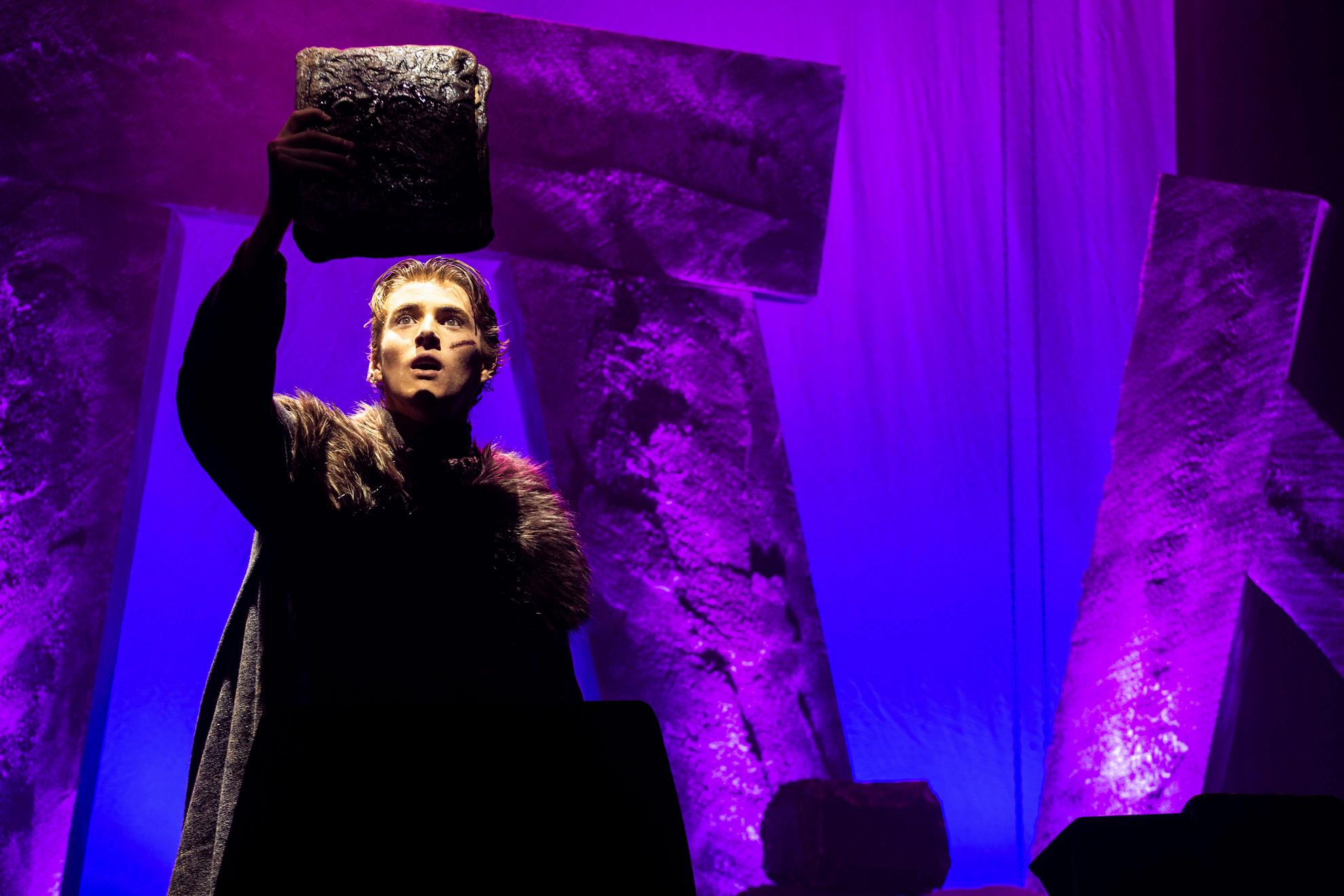
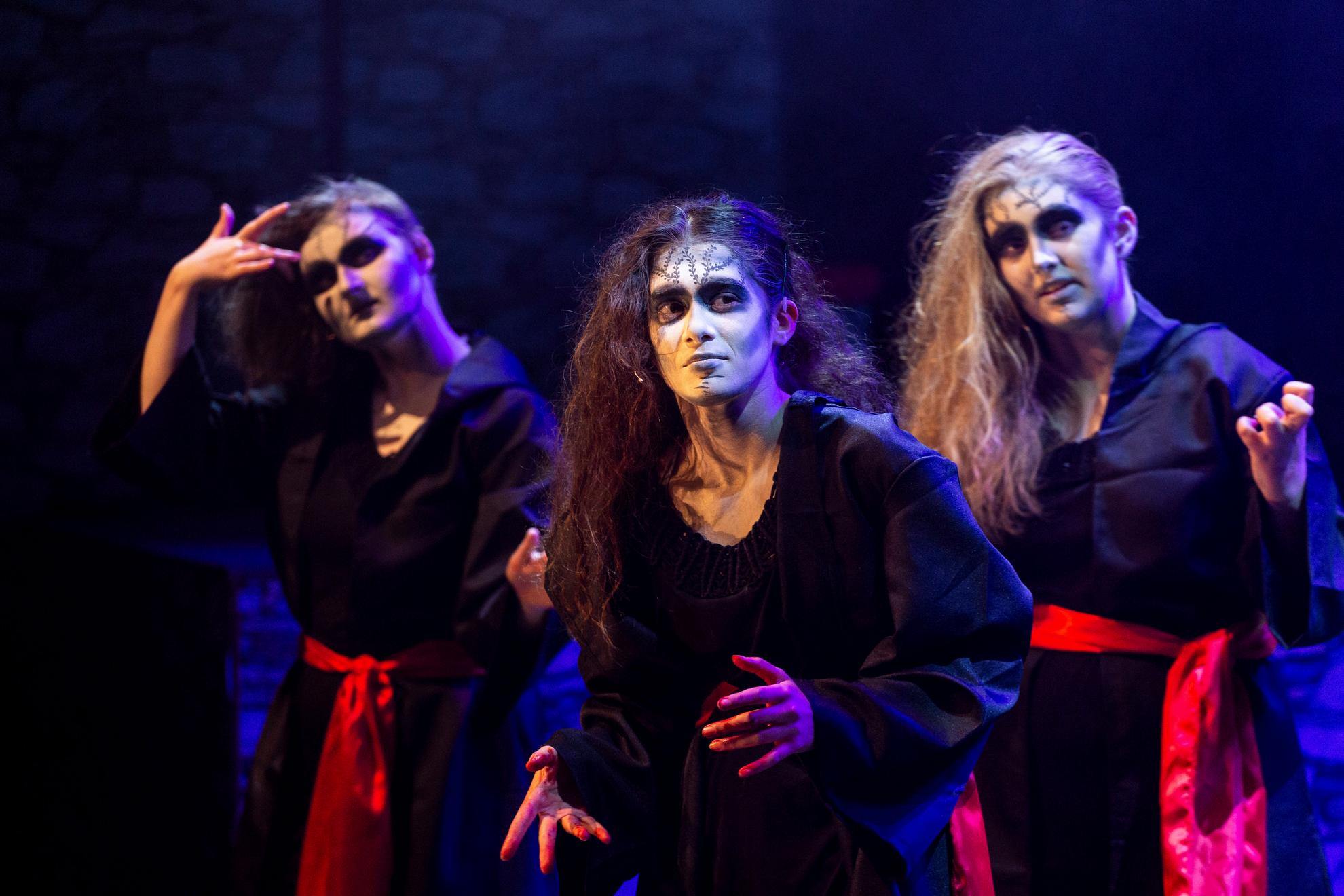
Drama is a unique subject witihin the performing arts in which actors use their voices, bodies or inanimate objects to convey artistic expression. If you have a desire to create, make a statement, use your imagination, or understand who you are and how you relate to others, then Performing Arts is for you. High-profile public events will see you take the stage and embrace your inner performer.
In VCE Drama, students tell stories, explore ideas, make sense of their worlds and communicate meaning through the practice of performance-making. We investigate explore and respond to the contexts, narratives and diverse stories that shape our world.
Drama develops creativity, empathy and critical thinking. Students develop their skills in communication, criticism and aesthetic understanding as both artists and audiences.
From exploring different theatre styles and devising work, to attending professional performances, students develop an appreciation of drama as an art form.
Unit focus areas
Unit 1 – Introducing performance styles
In this unit students study three or more performance styles from a range of social, historical, contemporary and cultural contexts. They examine the traditions of storytelling and devise performances telling stories that go beyond representations of reality. They incorporate and/or juxtapose a number of performance styles to make dramatic statements and create performances that are innovative, transformational and contemporary. They learn about contemporary drama practices that incorporate a range of conventions and devices for making dramatic works. Students use creative processes and play-making techniques to consider the specific purpose and intention of performance styles, and how conventions of those styles can be used in the work they devise and create for an audience. This unit also involves analysis of students’ own performance work and a work by professional drama performers
Unit 2 – Australian identity
In this unit, students study aspects of Australian identity by engaging with contemporary drama practices as artists and as audiences. In creating a performance, students engage with stimulus material to extract ideas and possibilities that allow them to explore an aspect or aspects of Australian identity, which could include engaging with the experiences and perspectives of Aboriginal and Torres Strait Islander peoples, colonial Australians, migrants, refugees, and/or urban and rural communities. They examine selected performance styles in relation to contemporary drama practices and explore the associated conventions, including those of Aboriginal and Torres Strait Islander artists and practitioners, and the broader diversity of Australian stories. They consider the sustainable sourcing and ethical use of materials when applying production areas.
Unit focus areas
Unit 3 – Devised ensemble performance
In this unit, students explore the work of drama practitioners and draw on contemporary practice as they devise ensemble performance work. They explore performance styles and associated conventions from a diverse range of contemporary and/or traditional contexts. Students work collaboratively to devise, develop and present an ensemble performance They create work that reflects a specific performance style or that draws on multiple performance styles and is therefore eclectic in nature. They use play-making techniques to extract dramatic potential from stimulus material, then apply and manipulate conventions, dramatic elements, expressive skills, performance skills and production areas.
Unit 4 – Devised solo performance
This unit focuses on the development and presentation of devised solo performances. Students explore contemporary practices and works that are eclectic in nature. They develop skills in extracting dramatic potential from stimulus material and use play-making techniques to develop and present a short solo performance.
Students experiment with the application of symbol and transformation of character, time and place They apply conventions, dramatic elements, expressive skills, performance skills and performance styles to shape and give meaning to their work. Students further develop and refine these skills as they create a performance in response to a prescribed structure They consider the use of production areas to enhance their performance and the application of symbol and transformations. Finally, they document and evaluate the stages involved in the creation, development and presentation of their solo performance.
Assessment
Units 1 and 2 include the presentation of the devised, scripted and ensemble performances with an analysis of the process involved in the development of the pieces. A similar analysis and evaluation is made of professional performances. There is also an examination at the end of the academic year.
For Units 3 and 4, students complete School-Assessed Coursework (40%), a performance examination (35%) and a written examination (25%).
Pathways
A recent innovation has been the introduction of a combined pathway where students are exposed to a unit of both Drama and Theatre Studies in their first year of the subjects. This opens up an understanding of both subjects that allows those going into Units 3 and 4 in Year 11 to make an informed decision. Many students continue to do this multiple option in Year 11.
The Haileybury Drama studio is located at the Keysborough campus, where Drama classes are held for Brighton, Berwick and Keysborough students. The City campus will offer Units 1 and 2 Drama/Theatre Studies for Years 10 and 11 students in 2027 and Units 3 and 4 Drama in 2028.
City Campus Berwick, Brighton, Keysborough
and
Past drama experience and ability is required to study Drama as part of VCE. Students must have completed at least two Drama/Theatre Studies units in Year 10 or 11 to be able to study Theatre Studies and/or Drama Units 3 and 4 City students have Drama Units 3 and 4 as the only pathway. Students who intend to complete a number of Performing Arts subjects should, where possible, spread the Units 3 and 4 load over their final two years to avoid a cluster of performance examinations in their final year.