Lighting & Energy Performance Study – Sugar Hill Library
Part 1: Basis Of Design
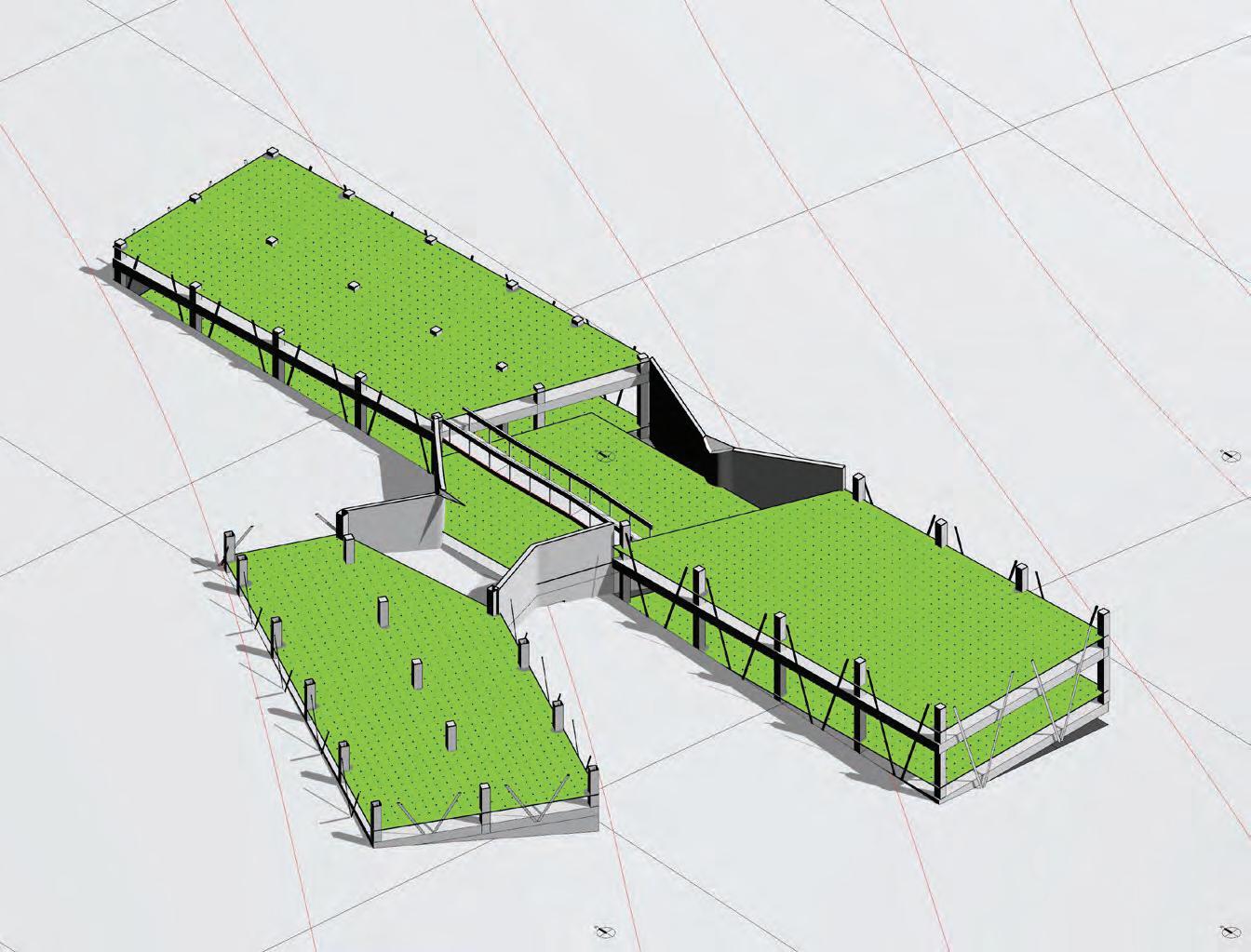
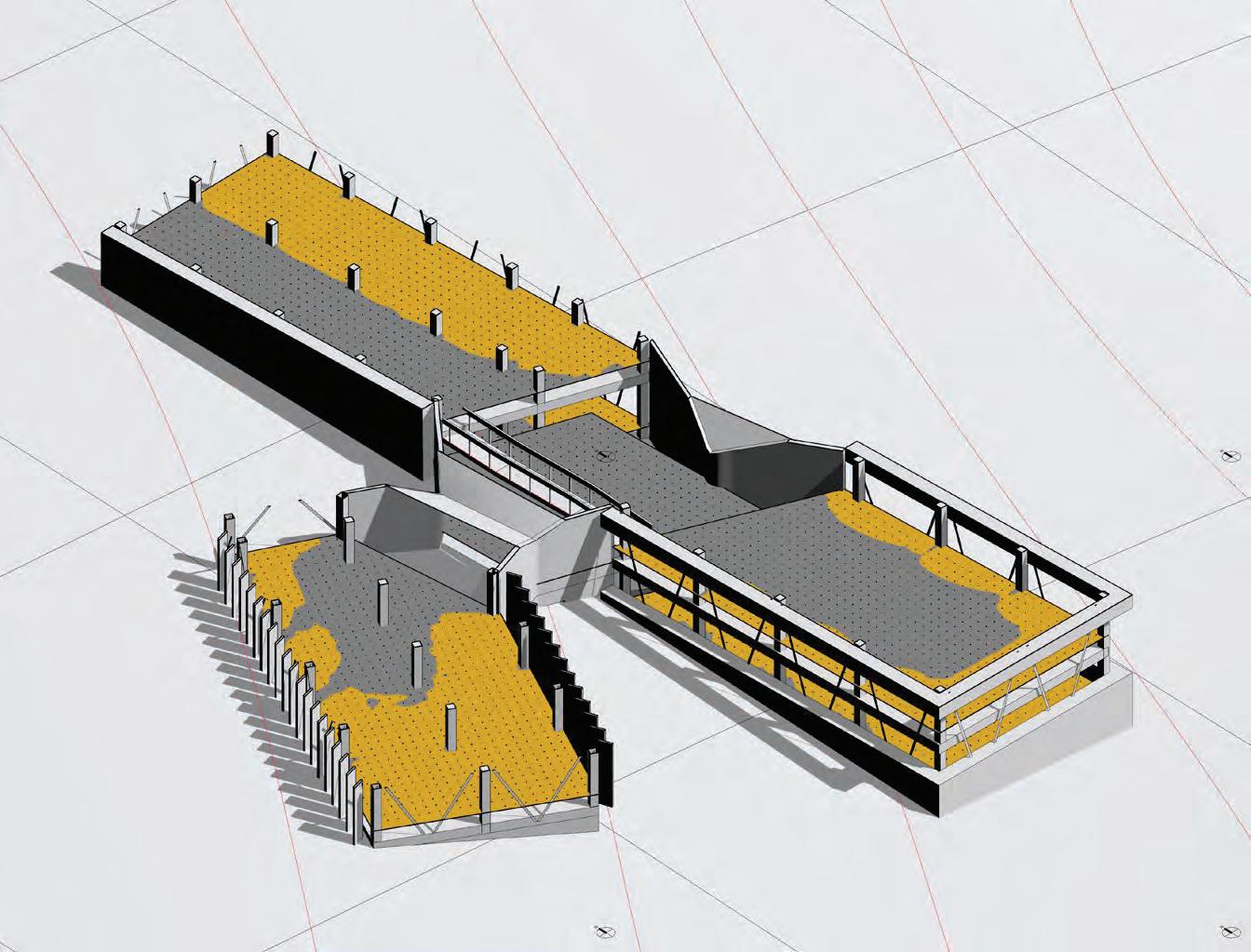
The library is located in the Sugar Hill Luminaries Lawn in Harlem. It consists of three pavilions that are connected to each other, along with a central atrium. The design of the library focuses on promoting cultural enrichment and sustainability. At twilight, the West Pavilion, which has a Photovoltaic roof, emits gentle light in the community areas, while the atrium's metal mesh ceiling adds to a functional and welcoming ambiance. The Southeast Pavilion, situated in the eastern direction, is illuminated in a strategic manner to cater to children's areas and collaborative meetings. On the other hand, the Northeast Pavilion provides a more muted lighting atmosphere, specifically designed for calm reading spaces. Both pavilions are enhanced by the presence of green roofs.
The curtain walls of the East Pavilions adhere to the principles of Low-E coated glass, creating a practical interaction between the city lights and the interior. This design highlights a smooth integration of technology and natural components. The illuminated walkways on the green roofs inspire visitors to explore and interact with the natural elements while also serving as a means for rainwater drainage. This library is situated against the night sky of Harlem and has been constructed responsibly. The lighting in the library serves practical purposes by directing guests and creating a sense of community.
Part 1: Initial Design
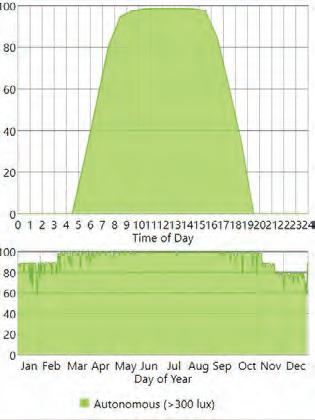
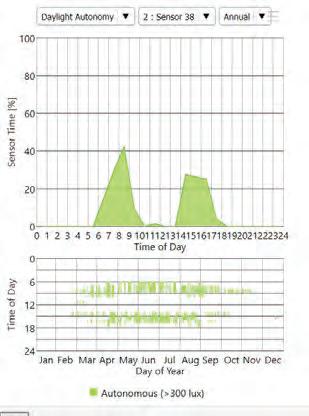
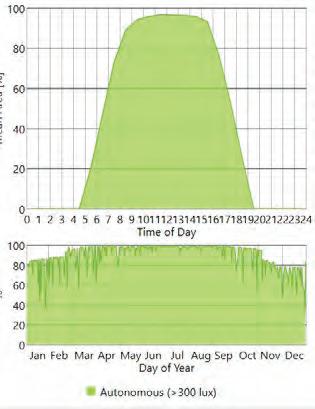
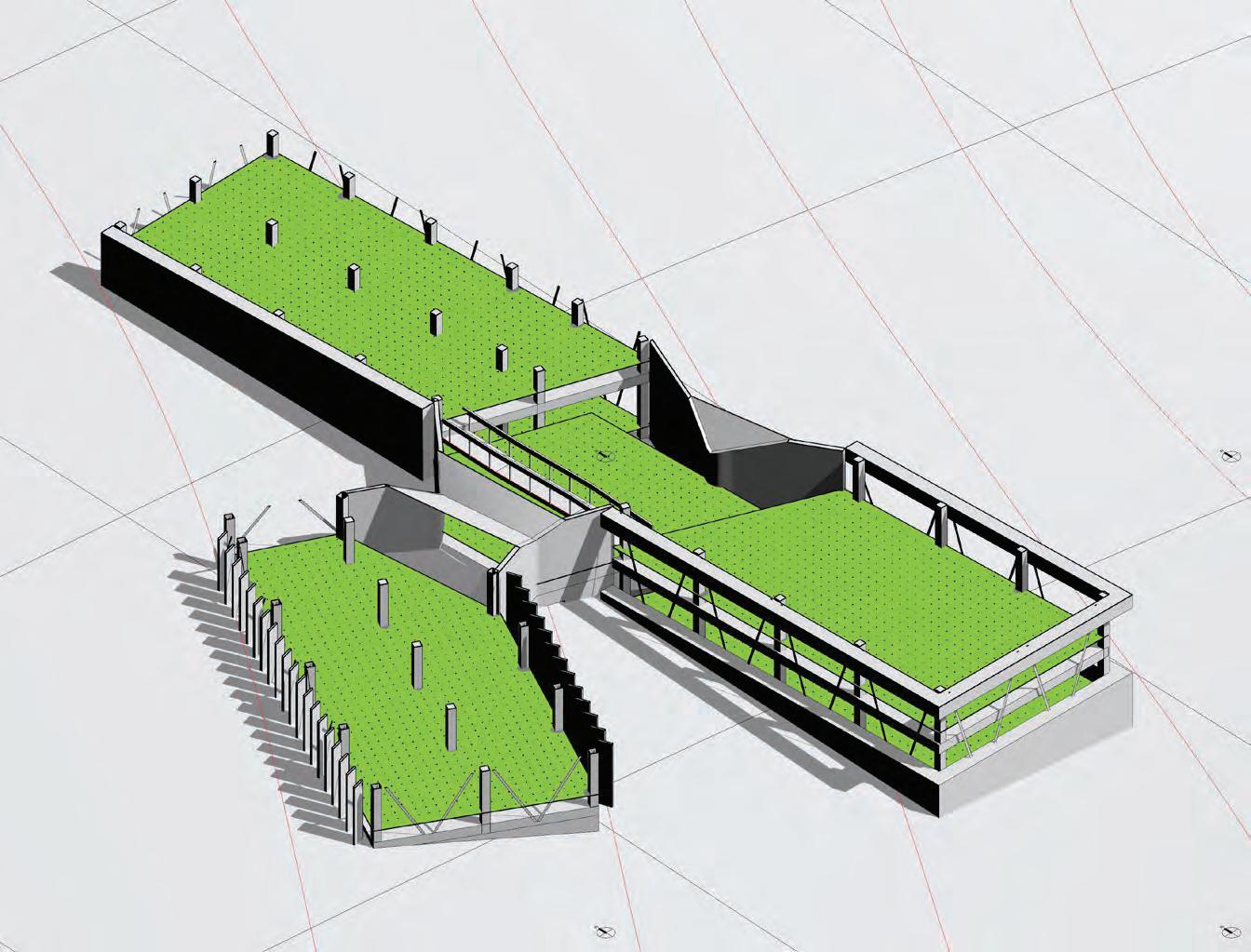
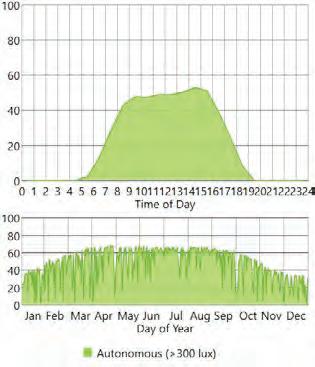
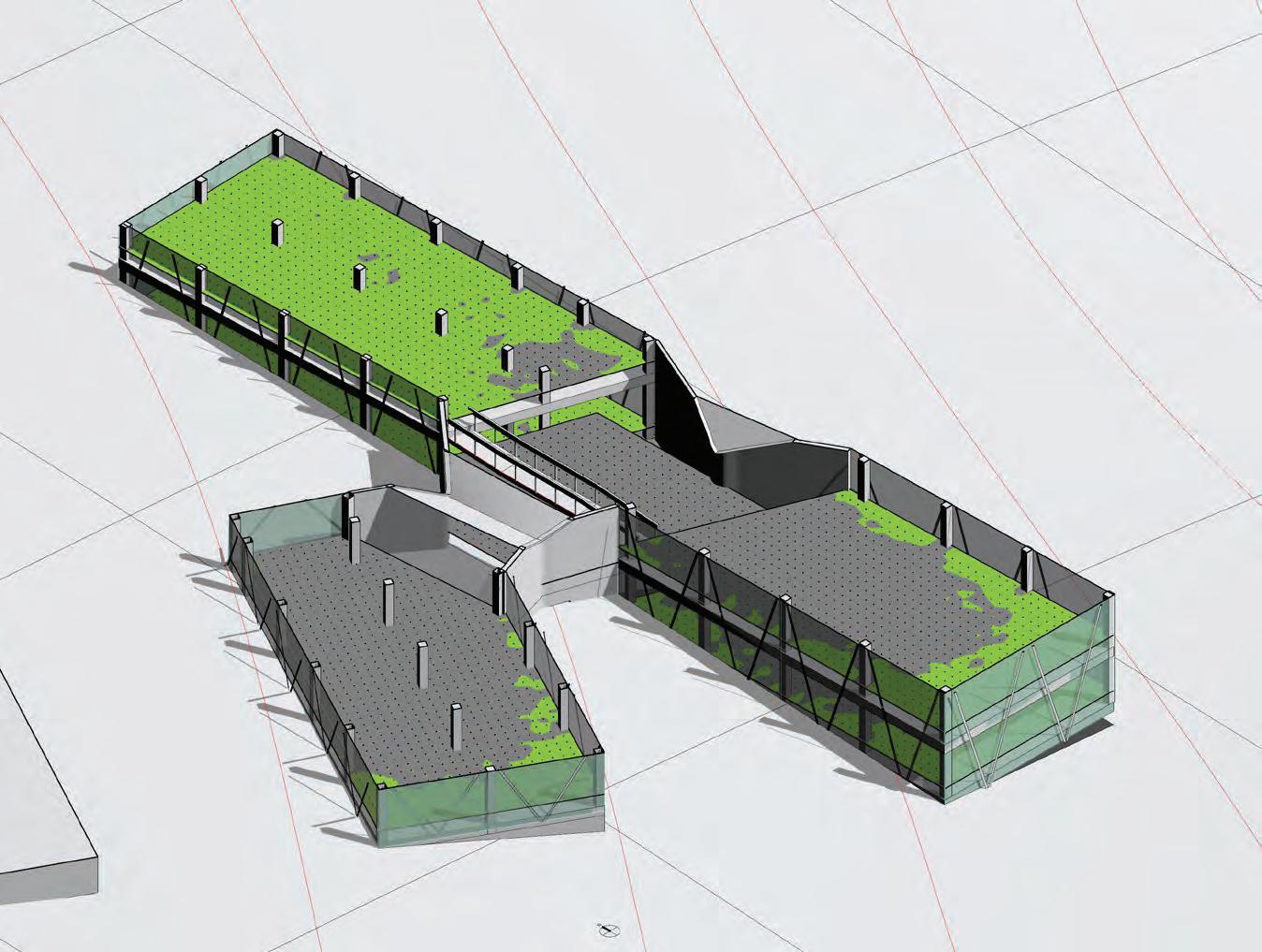
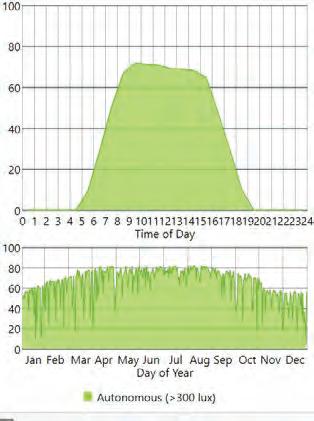
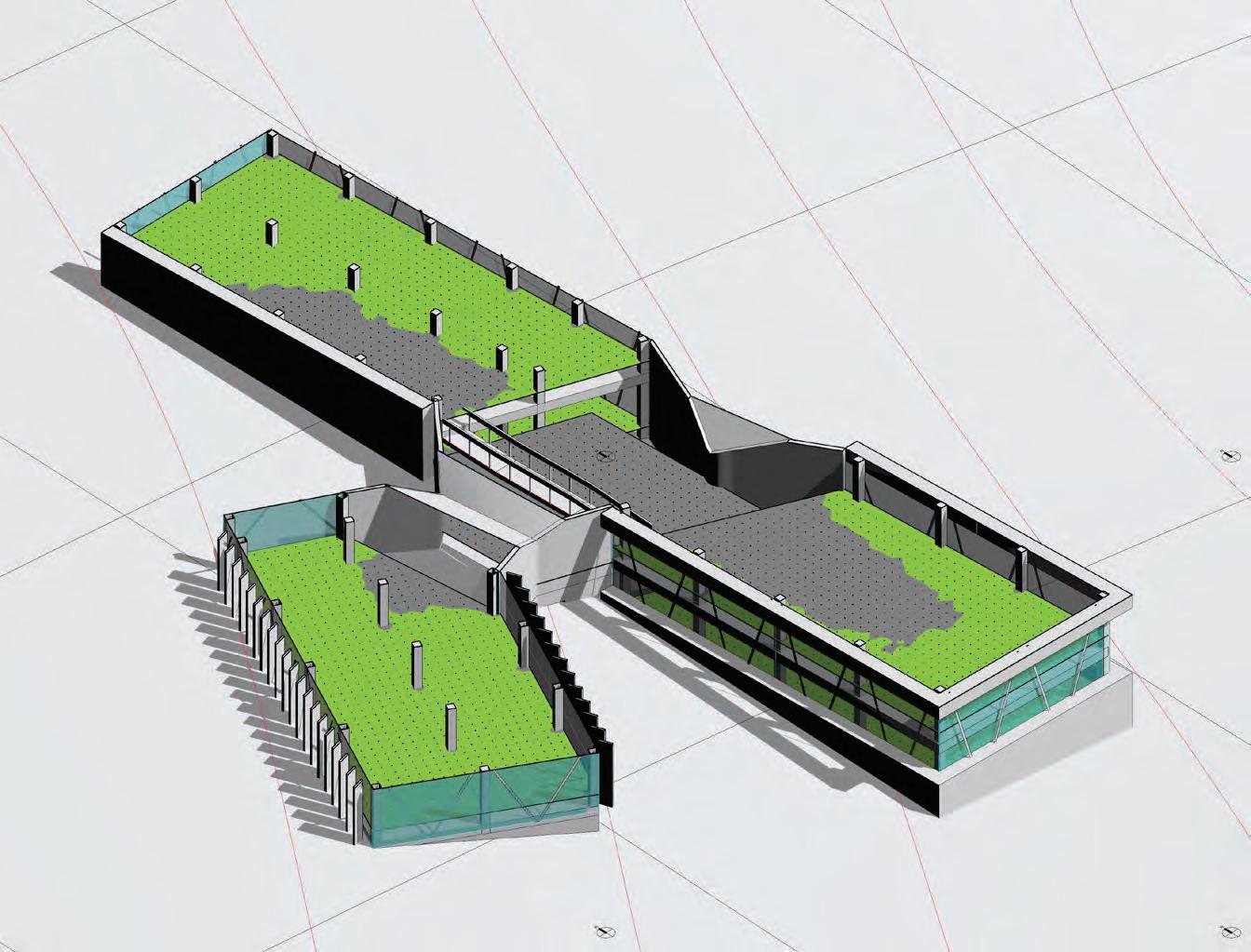
AVG.SCORE: 99.2% DAYLIGHT AUTONOMY
The daylight autonomy score is calculated for an occupancy from 9.00AM to 18.00PM, which is equivalent to 9H per day. In accordance to the program, the reference has been set as New-York libraries to be open on average 45H per week. The target illumination is 300lux. The initial design features large glazed facades which provide high direct & inirect illumination levels. As a result, the daylight autonomy is superior to 99%.
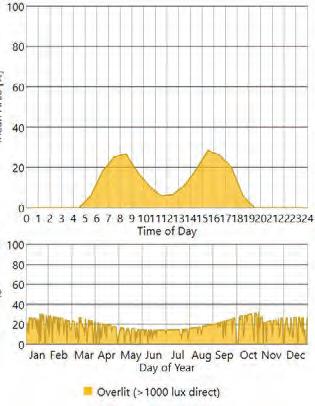
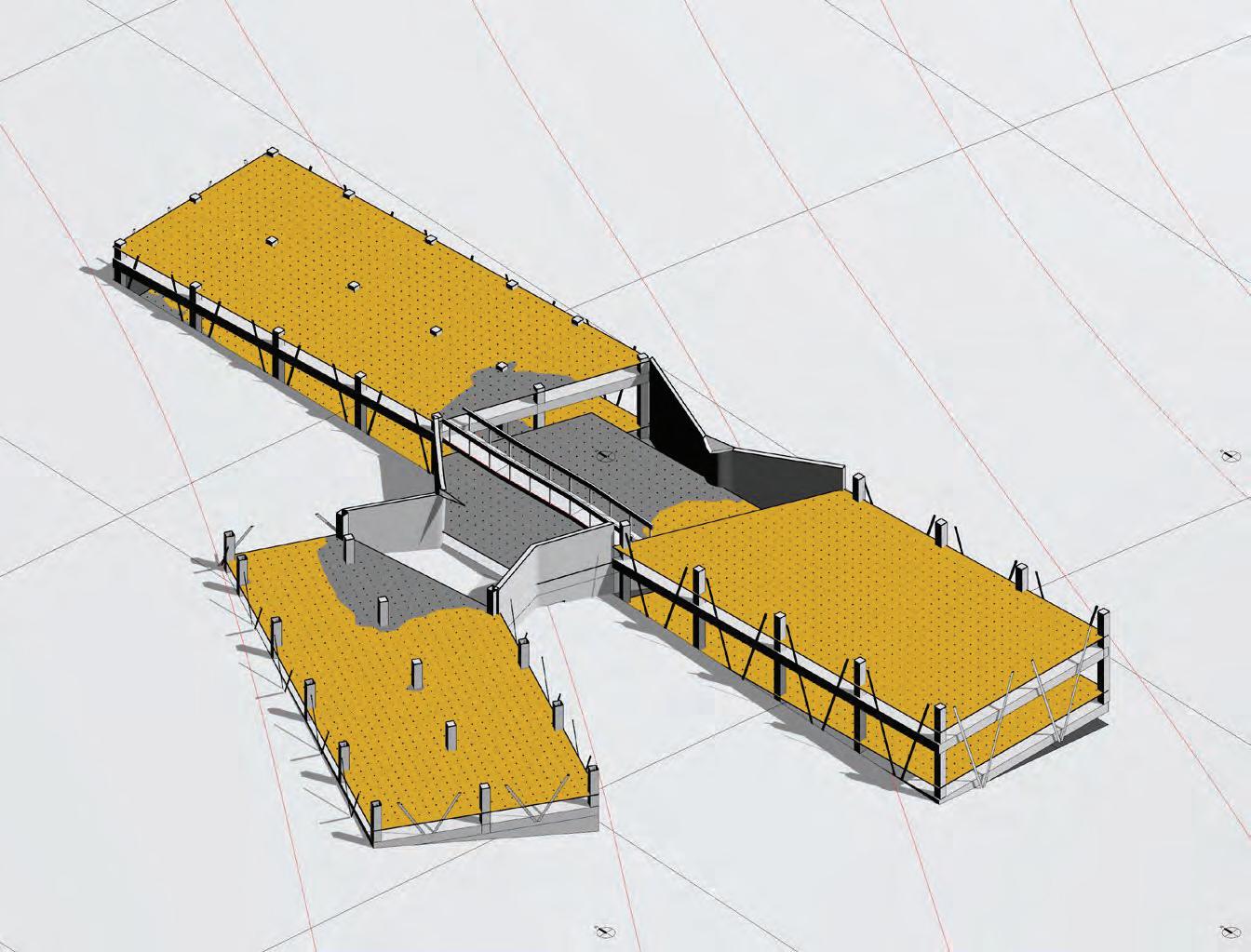
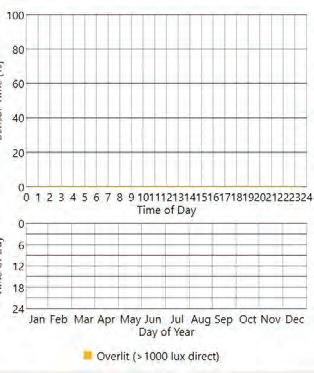
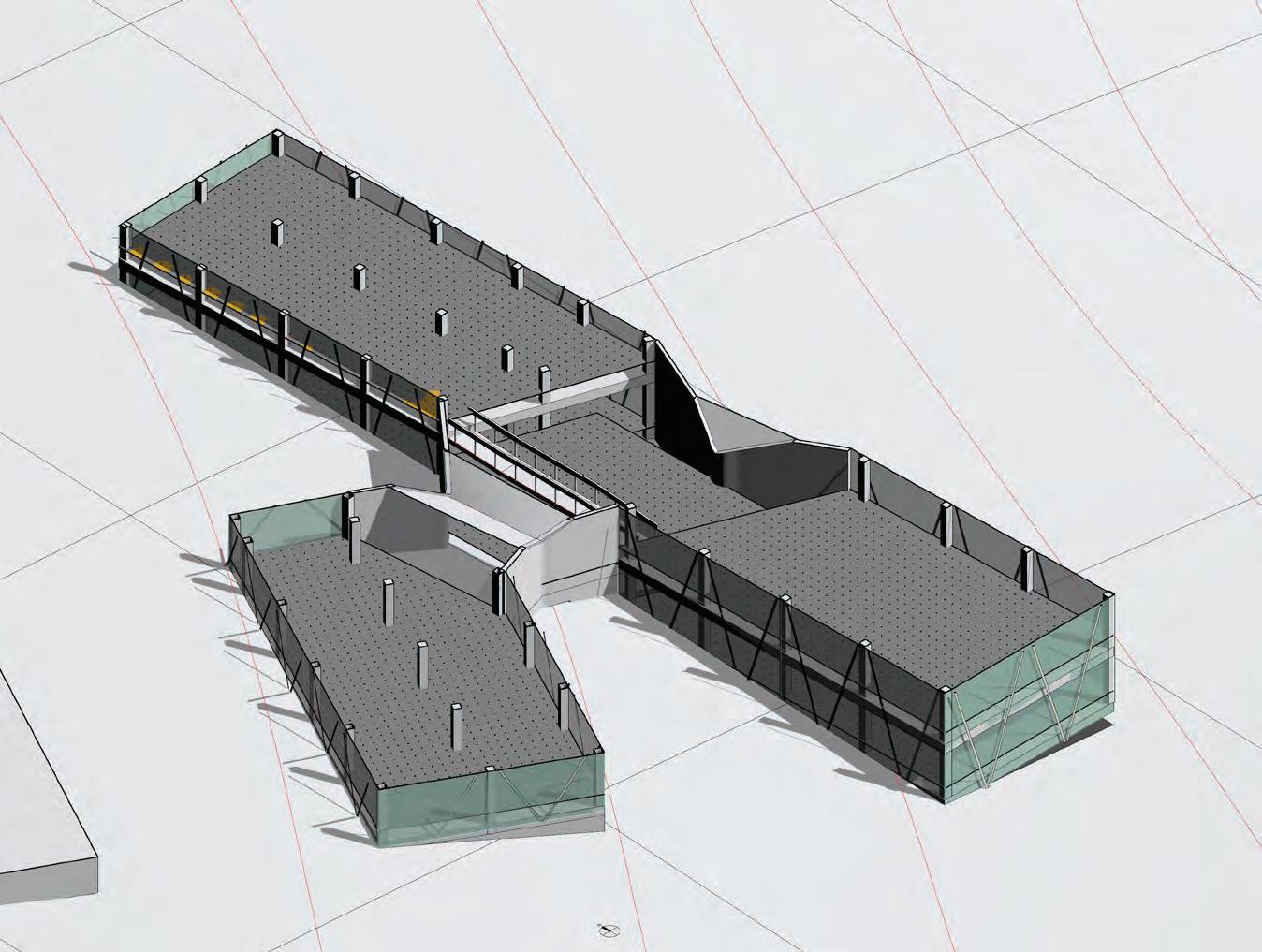
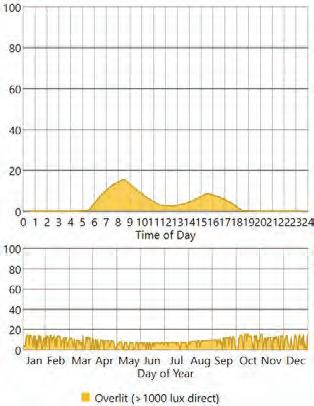
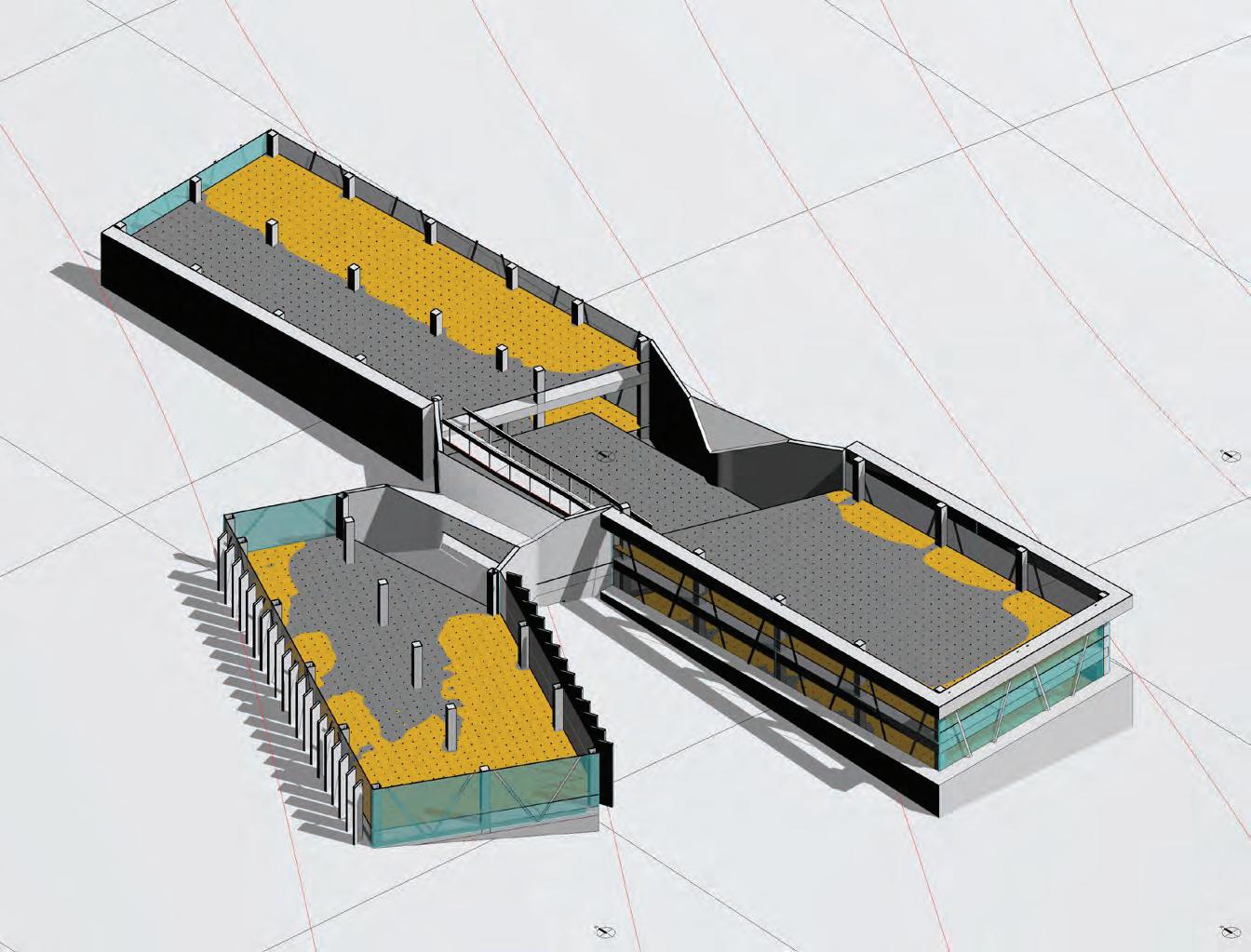
AVG.SCORE: 79.26% OVER-EXPOSURE
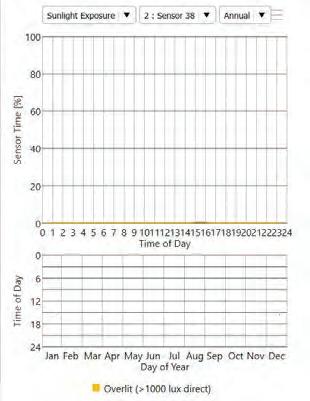
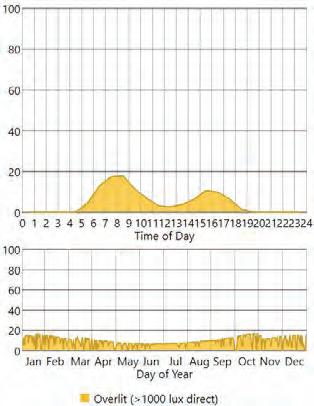
The term «Annual Sunlight Exposure» (ASE) denotes the proportion of an area that is exposed to excessive direct sunlight, defined as an illumination of >1000 Lux for minimum of 250 occupied hours per year, at work plane height.
This exposure has the potential to induce glare, discomforting to users.
The initial design features large glazed facades providing high direct illumination levels, which can lead to mportant glare issues. As a result, the average ASE score is superior to 79%, with a majority of the servant spaces being concerned by this issue.
Part 2: Design iteration 1
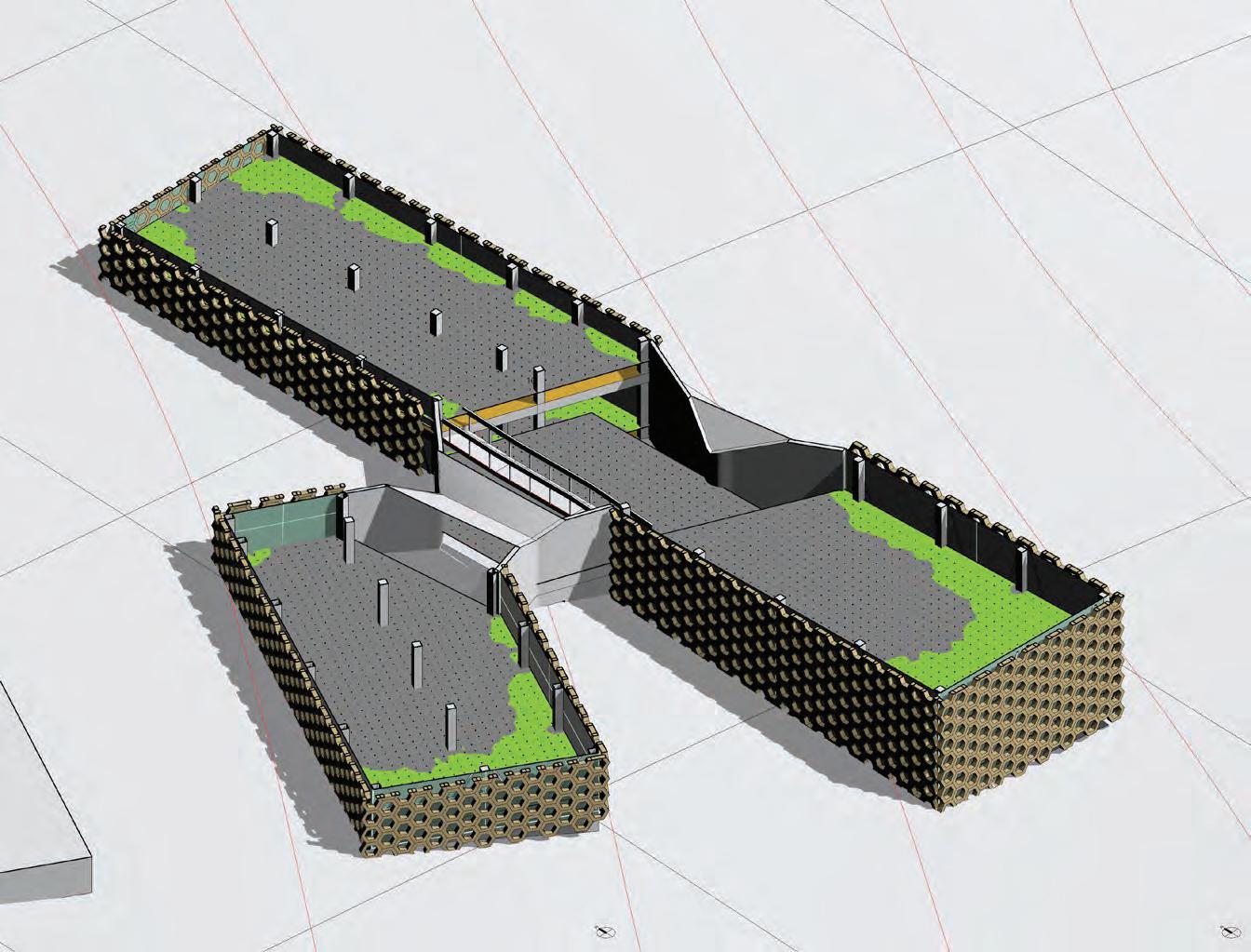
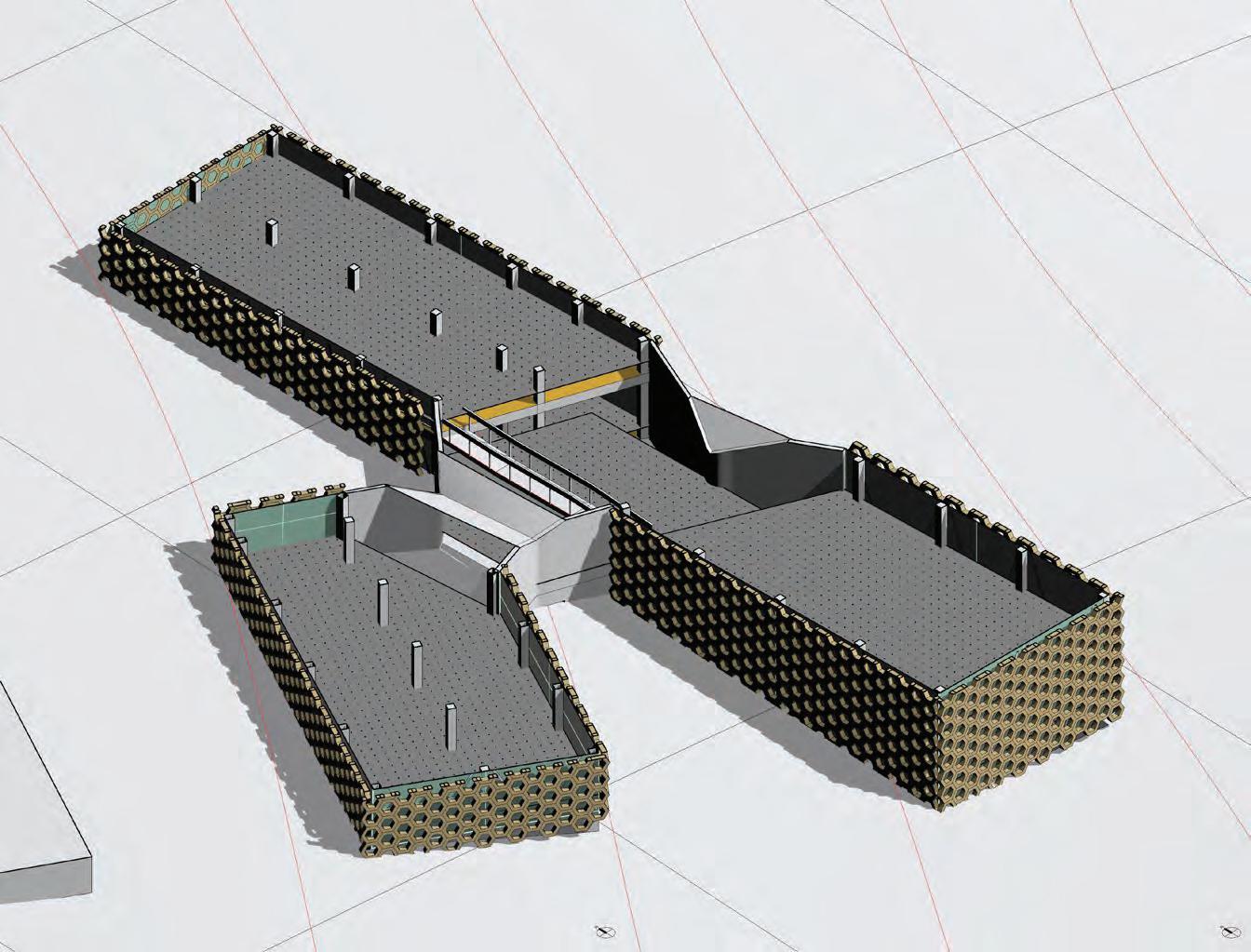
AVG.SCORE: 26.0% DAYLIGHT AUTONOMY
By applying a cladding to the the entirety of the facade, the daylight autononmy has dropped to a very low 26%. Further iterations could be beneficial to find a more refined solution which preserve the initial illumination qualities of the design, resulting in higher daylight autonomy levels. These interations could imply playing with the following parameters :
+ Enlargaing the opening dimension of the repeated module
+ Reducing the thickness of the double skin
ASE
AVG.SCORE: 0% OVER-EXPOSURE
By applying a dense cladding to the entirety of the facade, all of the over-exposure situations have been eliminated. Further iterations could be beneficial to find a more refined solution which preserve the initial intention of connection to the outside and unobstructed views. These interations could imply playing with the following parameters :
+ Opening dimensions of the repeated module
+ Thickness of the double skin
+Parametric approach to create bespoke variations to the skin according to the orientations and surronding masses.
Part 2: Design iteration 2
AVG.SCORE: 99.0% DAYLIGHT AUTONOMY
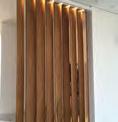
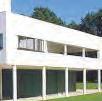
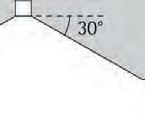
This iteration proposes the implementation of 3 different strategies to evaluate their efficiency in limiting glare while conserving the high daylight autonomy. The first strategy used is a series of louvers (4” x 10” x 16’) rotated by 20° from the facade to limit direct illumination. The second strategy are horizontal shades at the top & bottom of the glazed wall to limit higher sun angles light rays. The third strategy introduces a blind concrete wall to limit glazed surfaces and reduce the illumination. All strategies do not affect the daylight autonomy which remain above 99%.
AVG.SCORE: 46.1% OVER-EXPOSURE
This iteration proposes the implementation of 3 different strategies to evaluate their potential efficiency to limit glare. All three strategies have an impact in reducing over-exposure situations, with an average over-exposure reduced to 46% The louvers are efficient in reducing glare on west-oriented surfaces, by preventing lower sun angles penetration in the afternoon. The horizontal shades limit the penetration of direct sunlight at the centre of the space, but have little effect on the spaces close to the glazed walls. Finally, the blind wall has a drastically reduces the over-exposure on a large portion of the adjoining space.
LOUVERS RIBBON WINDOW BLIND WALL
Part 2: Design iteration 3
AVG.SCORE: 50.0% DAYLIGHT AUTONOMY
This iteration proposes to add to the previous iterations by introducing operable blinds with a transmission of 7.2%. The blinds are applied to all the glazed walls. As the blinds are operable, they preserve a maximum of the daylight autonomy but still drastically affect the daylight autonomy levels with an average score halved at 50%
AVG.SCORE: 0.6% OVER-EXPOSURE
This iteration proposes to add to the previous iterations by introducing operable blinds with a transmission of 7.2%. The blinds are applied to all the glazed walls. As the blinds are operable, they completely eliminated the overexposed situations. This results in a ASE score of 0.6%.
Part 2: Design iteration 4
AVG.SCORE: 71.7% DAYLIGHT AUTONOMY
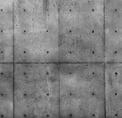
This last iteration introduces low transmission triple glazing (29%) which reduces the amount of light penetrating into the spaces. A second addition is the colouring of the concrete wall in a low-albedo colour (black coloured concrete) to eliminate diffuse light reflection in the space.
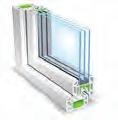
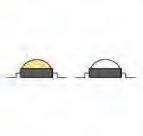
TRIPLE GLAZING, LOW T.VIS (29%)
TEINTED CONCRETE
AVG.SCORE: 32.6% OVER-EXPOSURE
This last iteration introduces low transmission triple glazing (29%) which reduces the amount of light penetrating into the spaces. A second addition is the colouring of the concrete wall in a low-albedo colour (black coloured concrete) to eliminate diffuse light reflection in the space. The over-exposure score drops of 8% to 32.6%, which represent a significant improvement from the previous iteration. The changes do not affect the homogeneity of the result
Part 3: Electrical Lighting Schudele
PRODUCT SPEC. SHEET
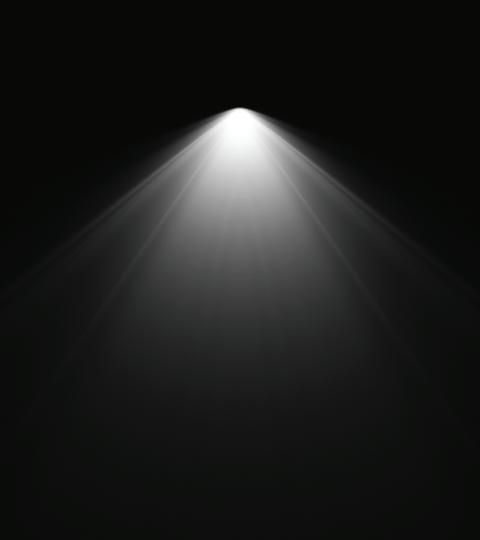
IES (LIGH T DISPERSION)
It
a
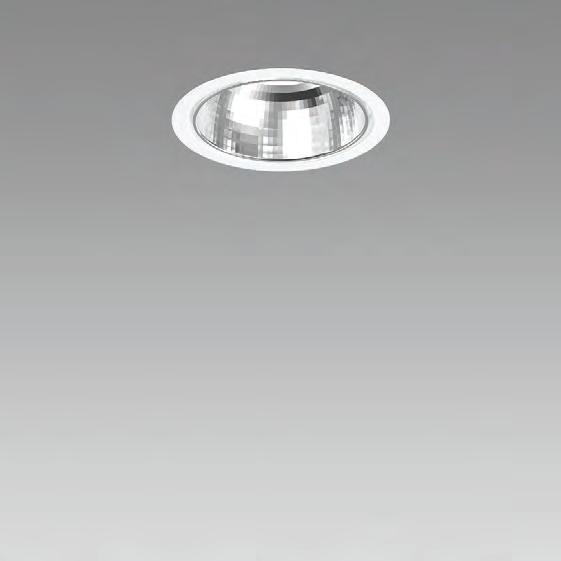
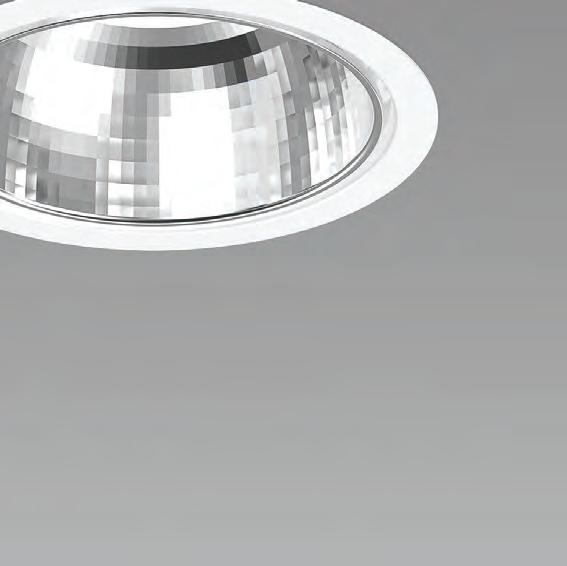
It is a well-known fact that all good things come from above. This is particularly true for Echo. Regent’s new downlight is a delight even before being switched on. The installation of the lightweight is
FEATURES
Glare-free light thanks to highly precise light conduction
High luminous e ciency
Passive cooling
and tool-free
Echo 137
It is a well-known fact that all good t
This is particularly true for Echo. Regent’s new downlight is a delight even before being switched lightweight is a matter of seconds and feasib
Tool-free assembly of accessories
DALI
Operating unit included in delivery
Ceiling
Retail & Hospitality: retail spaces, presentation of merchandise/key locations, restaurants, hotels, art & culture establishments
Downlight
Ceiling
Part 4: electrical lighting design
IN ITIAL ANALYSIS
AVG.SCORE: 72 MEAN LUX | 13 MEDIAN LUX
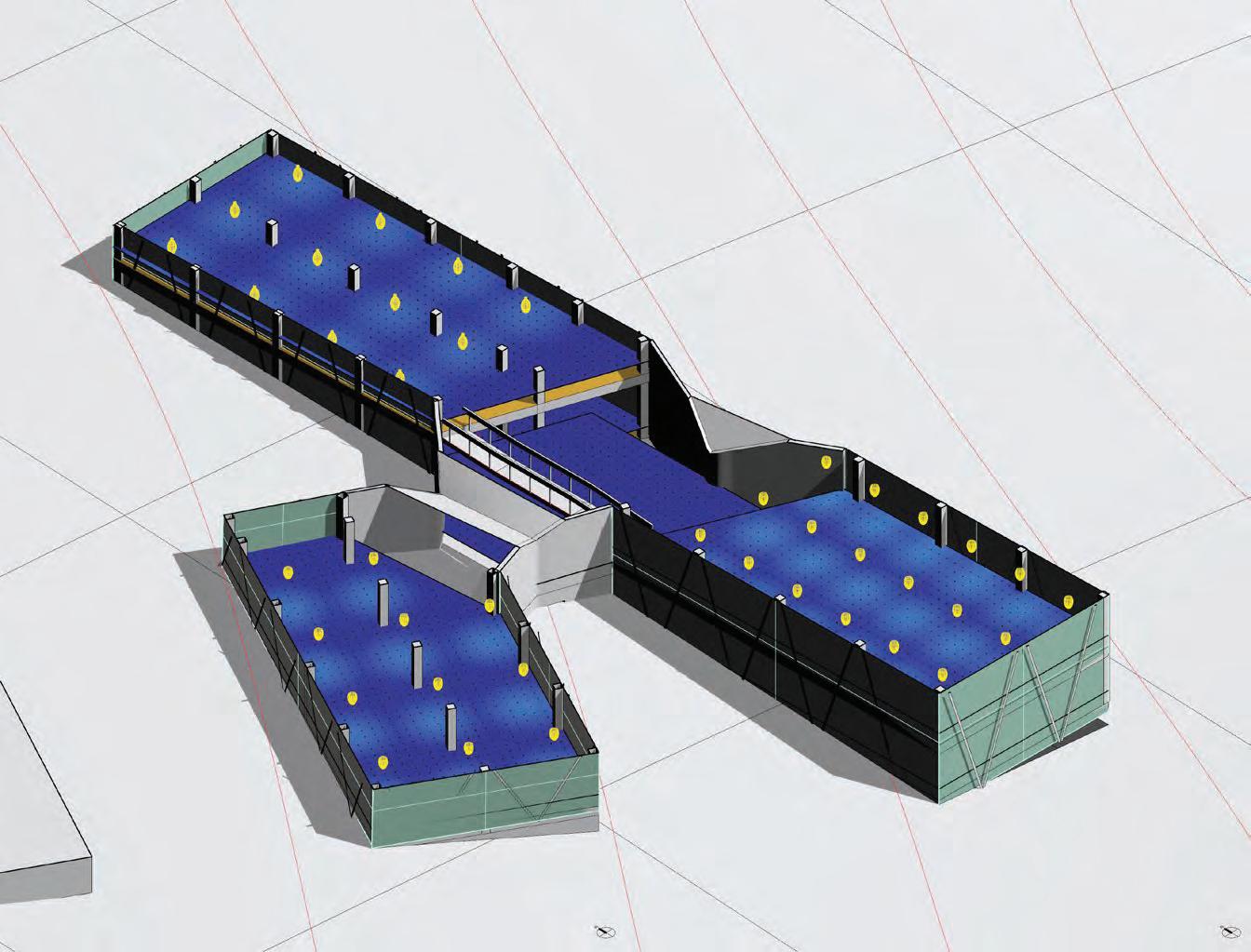
The point-in-time luminance analysis targets the efficiency of artificial lightning to meet the luminance requirements of the space according to its program. A library requires an average of 300lux, with additional surface lighting requirements of 1000lux. Using the IES files provided by the manufacturer, and by matching the lumen output of each fixture, we obtain the following results. The mean luminance is 72lux, and the median lux level is 13lux which is very low compared to the targets. The lumen output of the fixtures are not providing enough light to illuminate vast open spaces.
POINT IN TIME ILLUMINANCE
AVG.SCORE: 164 MEAN LUX | 83 MEDIAN LUX
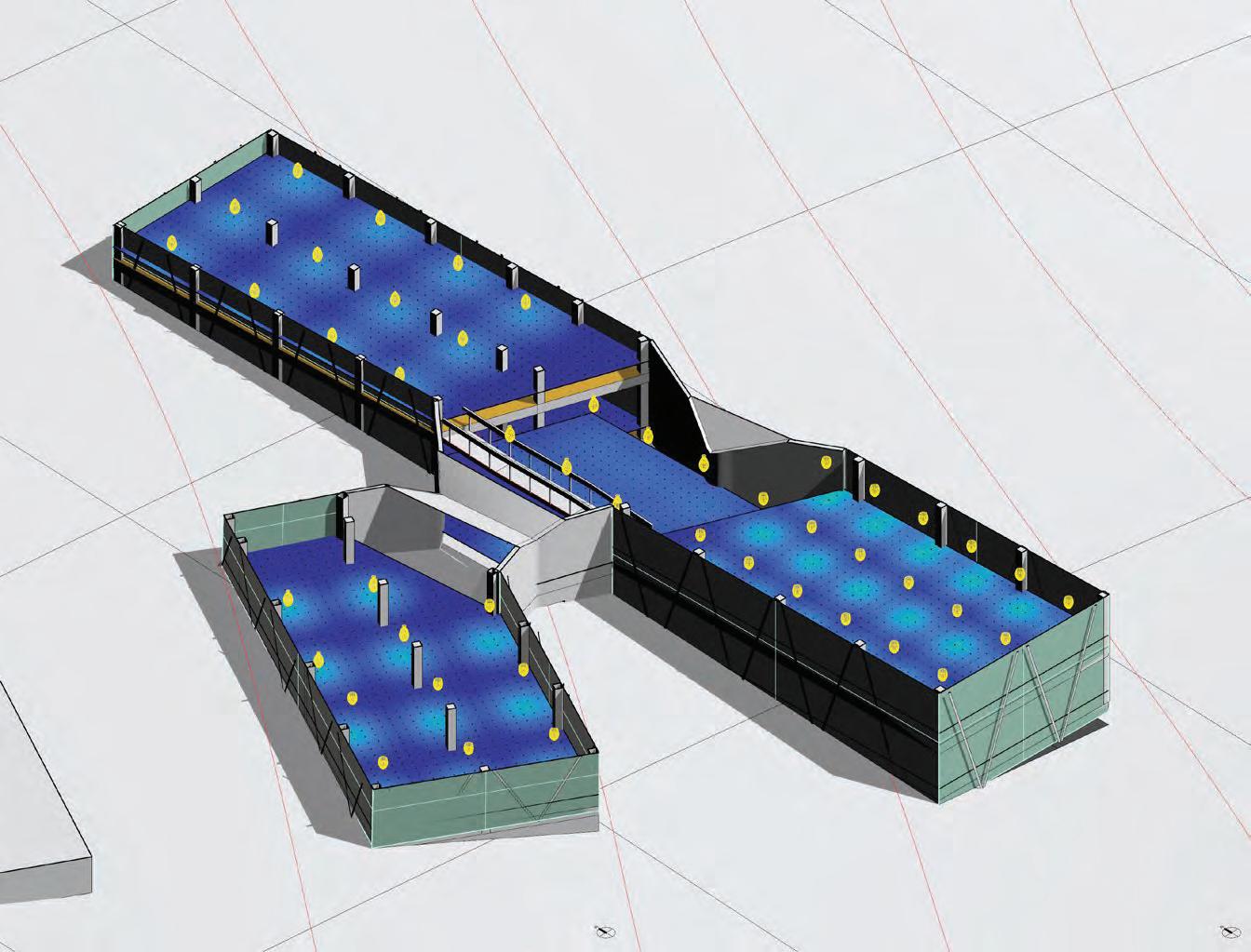
By using a different type of fixture designed for larger open spaces, with a power imput of 85W, we obtain the ollowing results. The mean luminance is now 164lux, and the median lux level is 83lux which remains well below our targets. The lumen output of the fixtures are not providing enough light to lluminate the spaces. We notice differences in results depending on the ceiling height of each spaces which vary through the building.
Part 4: electrical lighting design
110W FIXTURES
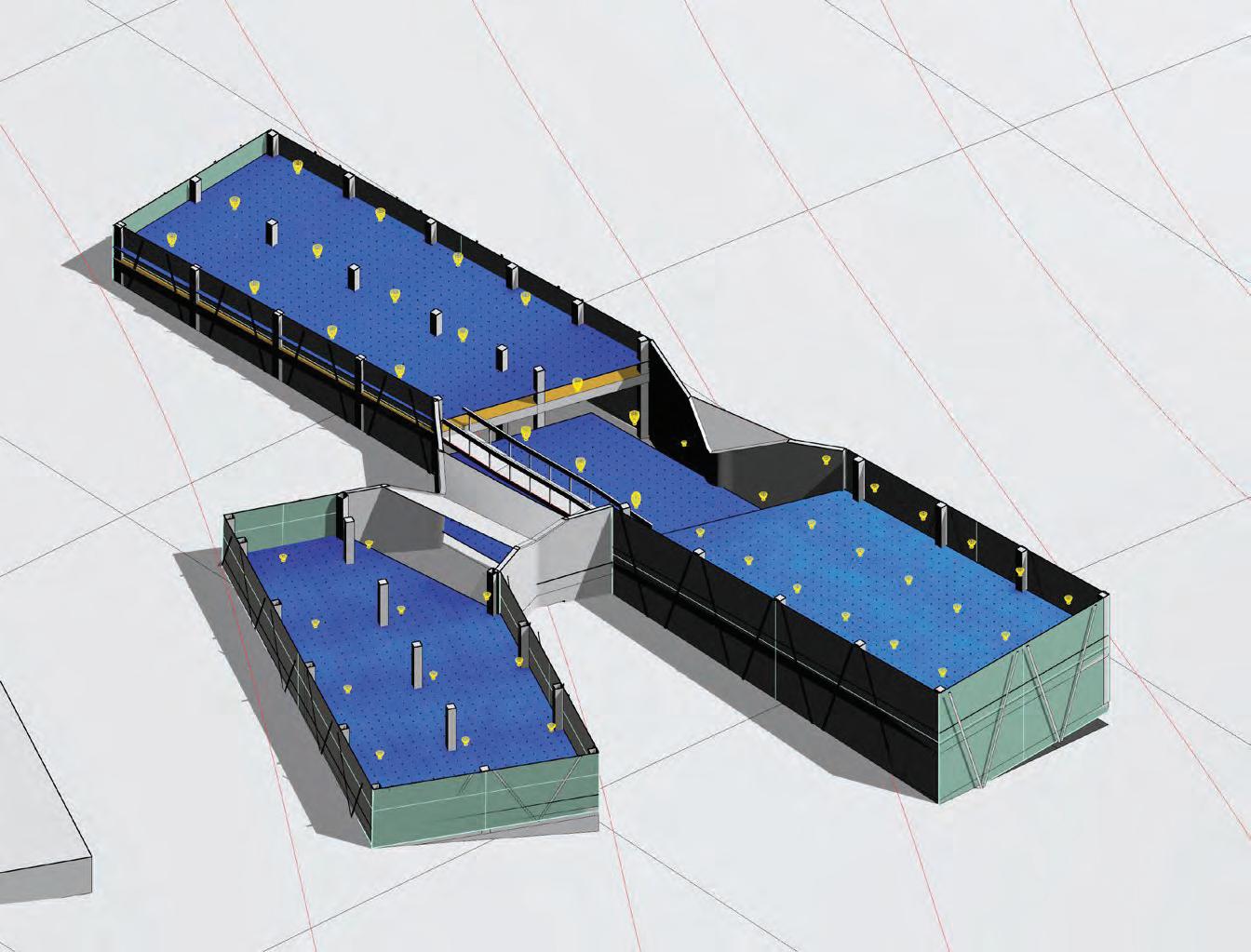
REFLECTIVE CEILING - INDIRECT
AVG.SCORE: 282 MEAN LUX | 267 MEDIAN LUX
For this iteration, the fixtures have been oriented toward the ceiling as pendant luminaires, and feature a power input of 110W. A reflective ceiling surface has been added, with a reflective index of 74%. The mean luminance is now 282lux, and the median lux level is 267lux which remains slightly below our targets despite a 37% increase. It seems like the fixtures are powerful enough to illuminate the spaces, but are quite energy-consuming. We notice a uniformity of the results through the use of indirect lightning, which can provide comfort for readers compared to bright point lights.
REFLECTIVE CEILING 69W UP + DOWNLIGHT FIXTURE (SEE NEXT PAGE) (74% REFLECTANCE)
DIRECT + INDIRECT LIGHTS
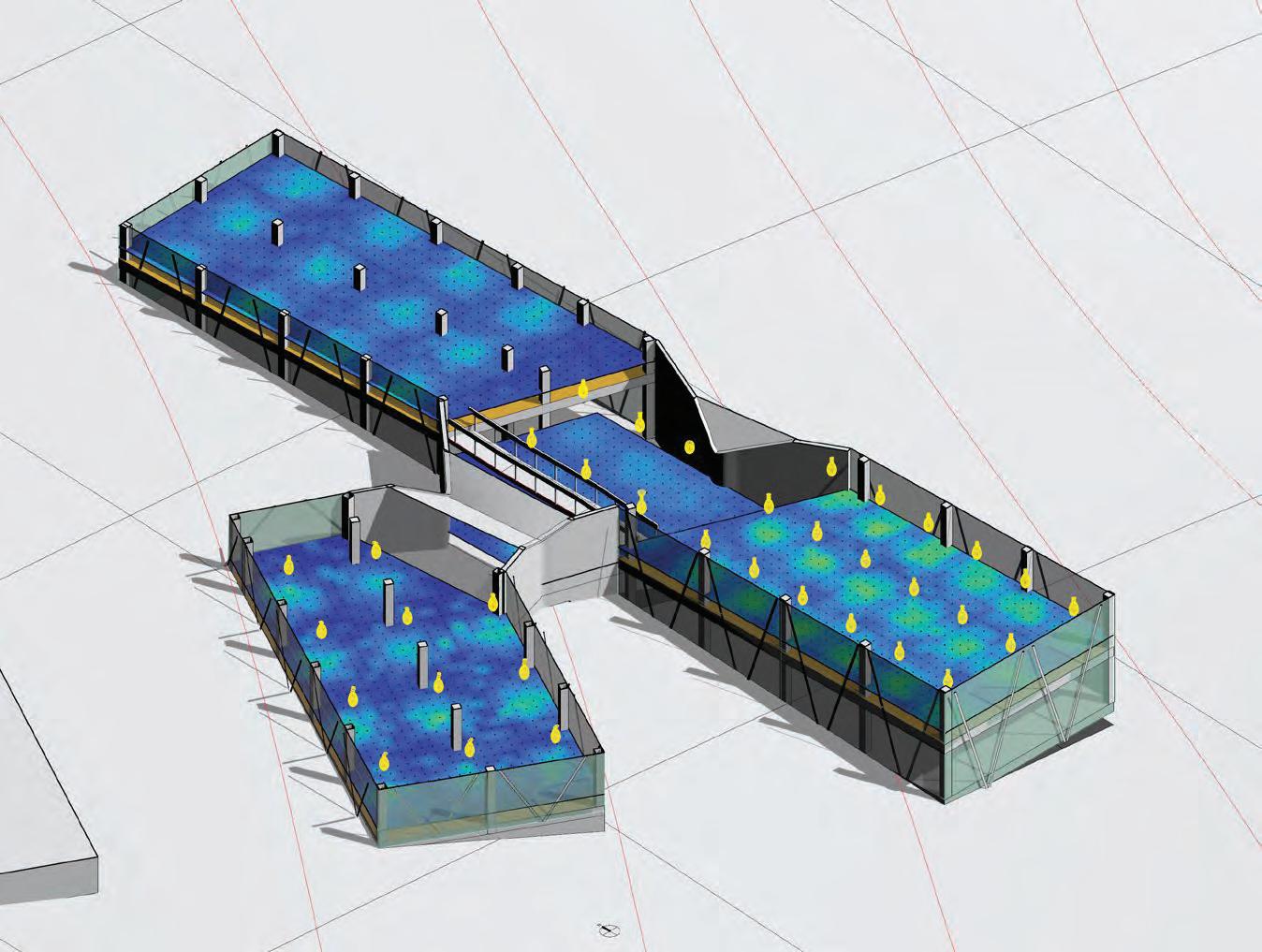
AVG.SCORE: 380 MEAN LUX | 328 MEDIAN LUX
For this iteration, a new type of fixture including both downlight & uplight, have been implemented as pendant lum naires, and feature a power input of 69W. The combination of indirect and direct lightning should create a uniform lightning while providing high luminance through the downlights features. The mean luminance is now 380lux, and the median lux level is 328lux which is slightly above the requirements for the program. A remaining heterogeneity of light conditions persist due to the differences in ceiling heights.
Part 4: electrical lighting design
PRODUCT SPEC. SHEET
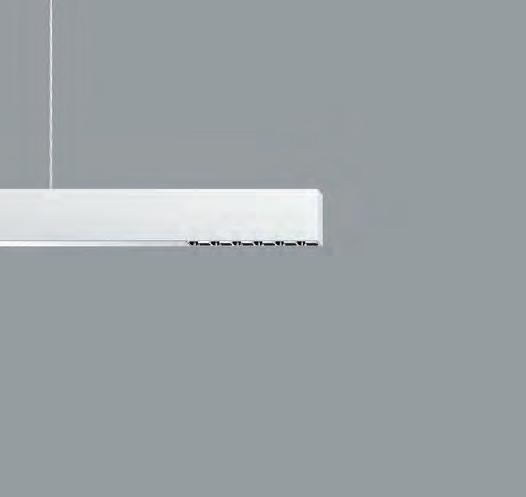
direct/indirect distribution with silver louvre
ACCENT LIGHTNING
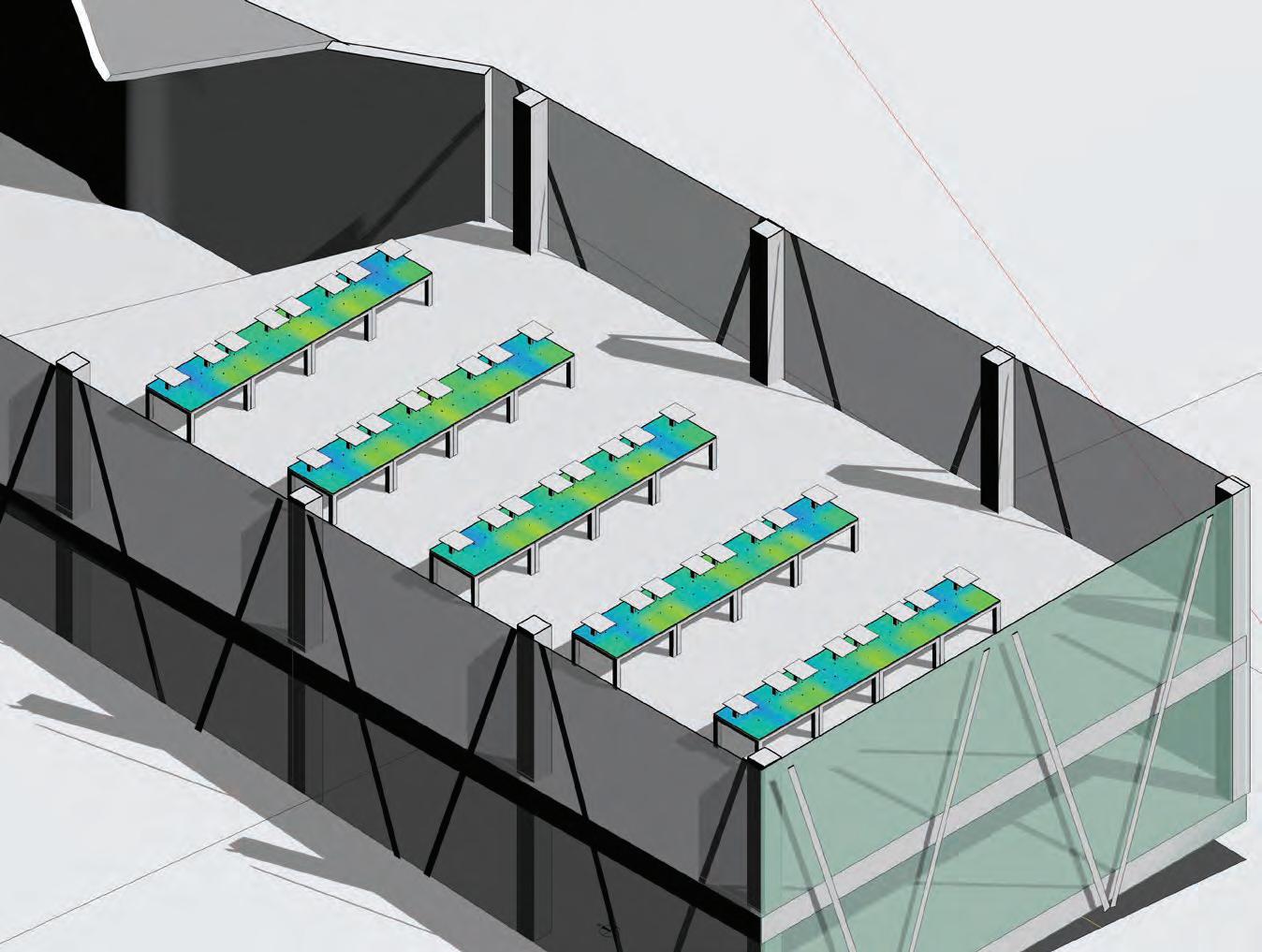
For this last iteration, we will focus on the work surfaces. A new type of appoint fixtures of indirect light have been implemented, and feature a power input of 9W. The combination of indirect and direct lightning should create a uniform lightning while providing high luminance through the downlights features. The mean luminance on the reading tables is 1000lux, and the median lux level is 956lux which in line with the targets set.
Part 5: energy calculation
To calculate the C02 emissions of my lightning design, I proceed to the following :
+Firstly, we calculate the total power output of the design. The main lightning accounts for 3312W with 48 light fixtures. The reading lights account for 315W with 35 fixtures.
+Secondly, I multiply the power output by the annual occupancy hours ( 45H per week, 52 week/year) which gives us the consumption in kWH/Year : 8,494