H2O Magazine-trimestrale di pesca, turismo e tempo libero. Tariffa R.O.C.: Poste Italiane spa - Spedizione in abbonamento postale - D.L. 353/2003 (conv.in L. 27/02/2004 n° 46) art.1, comma 1, CN/BO In caso di mancato recapito inviare al CPO di Bologna per la restituzione al mittente previo pagamento resi. Contiene I.P..
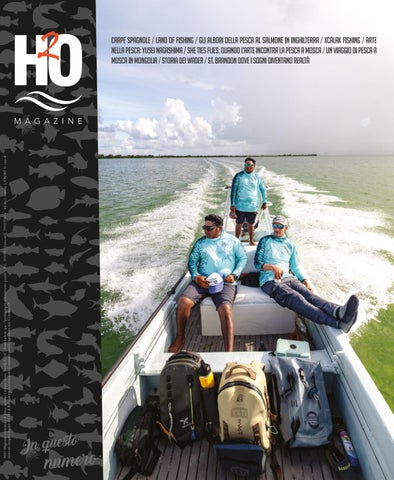
CARPE SPAGNOLE / LAND OF FISHING / GLI ALBORI DELLA PESCA AL SALMONE IN INGHILTERRA / XCALAK FISHING / ARTE NELLA PESCA: YUSEI NAGASHIMA / SHE TIES FLIES: QUANDO L’ARTE INCONTRA LA PESCA A MOSCA / UN VIAGGIO DI PESCA A MOSCA IN MONGOLIA / STORIA DEI WADER / ST. BRANDON DOVE I SOGNI DIVENTANO REALTÀ
In questo
numero:
H2O anno XVIII • NUMERO 4 • INVERNO 2025 Direttore Responsabile Sara Ballotta Direttore Editoriale Giorgio Cavatorti Redazione Giorgio Cavatorti Via Verdi, 30 42027 Montecchio Emilia (RE) e-mail: info@cavatortigiorgio.it FOTO COPERTINA ALBERTO ZANGHIERI Hanno collaborato a questo numero: Barry Langley, RIcardo De Stabile, Bob Mole, YUSEI NAGASHIMA, Erin Hyde, Alex Burnett, RASMUS OVESEN, Anders Ovesen, Alberto Zanghieri Art Director E GRAFICA: OMAR GADE, VALENTINA SCARABELLI, ANGLINGCONSULTING.ONE Stampa: “Tipografifia Bertani” Cavriago (RE) Fotografi di Redazione: Alessandro Seletti, ALBERTO ZANGHIERI Social Media Manager: Fulvio Oliva Traduzioni: Rossella Catellani, Elisabetta Longhi Autorizzazione Tribunale di Bologna n°8157 del 01/02/2011 Poste Italiane spa- Spedizione in Abbonamento Postale - 70% - aut. Roc N°20825 del 10/03/2011 - DCB Bologna Una copia € 14, 00 Arretrato € 14,00 Copyright © 2008 Tutti i diritti sono riservati, è vietata la riproduzione anche parziale senza l’autorizzazione della Redazione. Fotografie e manoscritti non richiesti non vengono restituiti. Per qualsiasi informazione inerente i viaggi trattati nel magazine, vi invitiamo a contattare la Redazione: INFO@ h2oflyfishing.com info@cavatortigiorgio.it
Editor note
W
e open our winter issue with a selection of truly exciting travel destinations. From Mongolia to the atoll of Saint Brandon, passing through Mexico and Spain, where we recently had the chance to fish for massive carp and barbel. The 2026 season is just around the corner, and our team is already getting ready for the many events ahead. Below you’ll find the (still provisional) calendar of fairs and events where you’ll be able to find us — the perfect opportunity to meet in person, pick up your free copies of our international destination catalogues, and browse the brand-new “Best Lodge 2026” guide. Very often, our booths also host the lodge owners or guides we work with — a great chance to talk directly to the people who will take you fishing on your next adventure. 2026 Event Calendar: • January 31 – February 1 – Fly Fishing Show, Charleroi, Belgium • February 7–8 – BFFI Fly Show, England • Febbraio7-8. Occitane fly show. Francia • February 13–15 – Rimini Fishing Fair, Italy • March 13–15 – Sweden Fly Fishing Show • April 18–19 – EWF Fly Show, Germany • June 20–21 – SIM Fly Fishing Festival, Italy Enjoy the read – and tight lines!
A
Giorgio
priamo il numero invernale con una selezione di destinazioni di viaggio davvero interessanti. Dalla Mongolia all’atollo di Saint Brandon, passando per il Messico e la Spagna, dove di recente abbiamo pescato enormi carpe e barbi. La stagione 2026 è alle porte, e la redazione si sta già preparando per i numerosi impegni in arrivo. Qui sotto trovate il calendario (ancora provvisorio) delle fiere e degli appuntamenti in cui saremo presenti: occasioni perfette per incontrarci, ricevere gratuitamente i cataloghi delle destinazioni internazionali che promuoviamo e il nuovo catalogo “Best Lodge 2026”. Spesso, presso i nostri stand, troverete anche i titolari o le guide dei lodge con cui collaboriamo: un’opportunità unica per parlare direttamente con chi vi accompagnerà nella vostra prossima avventura di pesca.
Calendario fiere 2026: • 31 gennaio – 1 febbraio – Fly Fishing Show, Charleroi, Belgio • 7–8 febbraio – BFFI Fly Show, Inghilterra • 7-8 Febbraio. Occitane fly show. Francia • 13–15 febbraio – Fiera di Rimini, Italia • 13–15 marzo – Fly Fishing Show, Svezia • 18–19 aprile – EWF Fly Show, Germania • 20–21 giugno – SIM Festival, Italia Buona lettura
let's keep in touch: www.h2oflyfishing.com info@h2oflyfishing.com • info@cavatortigiorgio.it
5
8
18
30
38
50
58
66
88
80
Contents 8
... CARPE SPAGNOLE ....SPANISH CARP
18
LAND OF FISHING LAND OF FISHING
30
GLI ALBORI DELLA PESCA AL SALMONE IN INGHILTERRA THE DAWN OF SALMON FISHING IN ENGLAND
38
XCALAK FISHING XCALAK FISHING
50
ARTE NELLA PESCA: YUSEI NAGASHIMA ART IN FISHING: YUSEI NAGASHIMA
58
..SHE TIES FLIES: QUANDO L’ARTE INCONTRA LA PESCA A MOSCA SHE TIES FLIES: ARTISTRY MEETS ANGLING
66
UN VIAGGIO DI PESCA A MOSCA IN MONGOLIA A FLY FISHING JOURNEY IN MONGOLIA
80
STORIA DEI WADER THE HISTORY OF WADERS
88
ST. BRANDON DOVE I SOGNI DIVENTANO REALTÀ ST. BRANDON – WHERE DREAMS COME TRUE
SPANISH CARP 8
GIORGIO CAVATORTI
CARPE
Spagnole
9
Tra Madrid e Barcellona, lontano dal trambusto delle due grandi metropoli spagnole, si estende un territorio costellato di laghi, fiumi e bacini artificiali che offre scenari ideali per la pesca alla carpa. Qui la natura si fa protagonista: acque calme, sponde tranquille, cieli tersi e tramonti infuocati accompagnano il silenzio delle attese. La pesca alla carpa in questa regione non è solo sport, ma un’esperienza immersiva, meditativa, fatta di pazienza, tecnica e rispetto per l’ambiente.
Between Madrid and Barcelona, far from the hustle and bustle of Spain’s two great metropolises, lies a land dotted with lakes, rivers, and reservoirs that provides the perfect setting for carp fishing. Here nature takes center stage: calm waters, quiet banks, clear skies, and fiery sunsets accompany the silence of the wait. Carp fishing in this region is not just a sport but an immersive, meditative experience, built on patience, skill, and respect for the environment.
10
L
’ invito degli amici del Flyshop di Madrid e l’idea di trascorrere qualche giorno di pesca con Paolo e Javier arrivano al momento giusto. Finalmente avrò l’occasione di pescare in questi splendidi luoghi di cui ho spesso sentito parlare. Nonostante il caldo soffocante delle ultime settimane in Italia, ci siamo sentiti spesso per pianificare la battuta di pesca nella zona di Madrid… anche perché Javier continua a mandarmi foto di grosse carpe catturate a mosca in bellissimi laghi spagnoli! Sembra molto interessante, quindi si parte. La comodità dei voli – dall’Italia si arriva a Madrid in appena due ore – unita a una logistica semplice per pescare in queste zone, rende il tutto molto allettante. Se poi aggiungiamo il famoso cibo di quest’area della Spagna, credo che questa meta di pesca possa solo crescere di interesse. A non più di due ore da Madrid si trovano enormi laghi artificiali costruiti durante il periodo franchista per soddisfare il fabbisogno di acqua ed energia della Spagna centrale. L’ambiente è
T
he invitation from our friends at the Flyshop in Madrid, and the idea of spending a few days fishing with Paolo and Javier, came at just the right time. At last, I would be able to fish for a few days in these beautiful places I had often heard about. Despite the sweltering heat of recent weeks in Italy, we often spoke to plan the fishing trip near Madrid, while Javier kept sending me photos of big carp caught on the fly in stunning Spanish lakes. It all seemed very tempting, so the decision was made. The convenience of the flights—just two hours from Italy to Madrid— combined with the straightforward logistics of fishing in this area makes everything even more attractive. And if you add in the famous cuisine of this part of Spain, it is easy to see why this destination is becoming increasingly appealing for anglers. Less than two hours from Madrid, these vast reservoirs—built during Franco’s time to provide water and energy to central Spain—offer a truly wild environment and breathtaking scenery. Our fishing was focused
11
estremamente selvaggio, e la bellezza di questi vasti bacini è davvero incredibile. La pesca che abbiamo praticato è stata principalmente alla ricerca di grosse carpe regine e a specchi, e si svolge completamente a vista: si cammina per una dozzina di chilometri al giorno lungo le rive cercando di individuare le carpe mentre si nutrono nei pressi della
12
riva. È un pesce estremamente forte e sensibile ai rumori e ai passi sulla riva, quindi la presentazione dell’artificiale dev’essere perfetta. Abbiamo sempre pescato con code galleggianti e piccoli streamer di vari colori, che imitano i crostacei presenti in questi laghi. È una pesca difficile ma altamente gratificante, e la taglia di queste carpe giganti fa il resto.
Ho visto pesci di oltre 15 kg muoversi velocemente a pochi metri di distanza per avvicinarsi alla mosca, poi improvvisamente rifiutarla, oppure fermarsi a scrutarla per alcuni secondi prima di inghiottirla – e poi sfilare 100 metri di backing in meno di 10 secondi: pura adrenalina. Con una guida come Javier e la sua compagna
mainly on large common and mirror carp, all sight-fished while walking more than ten kilometers a day along the banks, searching for feeding carp close to shore. These are incredibly strong fish, highly sensitive to noise, footsteps along the bank, and the presentation of the fly must be flawless. We always fished with floating lines and small streamers in various
colors imitating the crustaceans found in these lakes. It is a demanding yet deeply rewarding style of fishing, and the sheer size of these giant carp makes it all the more thrilling. I saw fish of over 15 kilos rush from two meters away to inspect the fly, only to suddenly refuse it, or pause to study it for a few seconds before taking it—then tearing out 100 meters of backing in
less than ten seconds. Pure adrenaline. With a guide like Javier and his partner Eris, things were much easier; without the vast experience of this friend, it would have been far more difficult. Accommodation in the area consists of beautifully restored rural houses, and the food is both fantastic and inexpensive. I highly recommend an experience like this to anyone
13
14
Eris è stato tutto più semplice: senza la grande esperienza di questo amico sarebbe stato molto più difficile. Le sistemazioni in zona sono splendide case rurali ristrutturate, e il cibo è fantastico e conveniente. Consiglio a tutti un’esperienza di pesca a mosca come questa, ovviamente con una guida esperta che sappia muoversi in questo intricato reticolo di strade sterrate dove è facile perdersi. Personalmente tornerò presto per pescare i grossi barbi spagnoli a secca in alcuni fiumi e laghi della Spagna, sempre con l’organizzazione dei ragazzi del Fly Fishing Center di Madrid.
interested in fly fishing—though of course, with a knowledgeable guide who knows how to navigate this maze of small dirt roads where it’s all too easy to get lost. Personally, I’ll be back soon to fish for big Spanish barbel on dry flies in some of Spain’s rivers and lakes, again with the support of the Fly Fishing Center team in Madrid.
15
Land of fishing LEGENDS
18
Barry Langley
19
E
ra la metà degli anni Ottanta. Frequentavo una ragazza dagli occhi azzurri che accettò di accompagnarmi in un viaggio di nove ore dal New Jersey fino al confine occidentale delle North Woods del Maine. Uscimmo dalla strada asfaltata e ci avventurammo su
I
t was the mid-eighties. I was dating this blue-eyed beauty who accompanied me on a nine-hour drive from our suburban homes in New Jersey to the western edge of Maine’s North Woods. Turning off the macadam and onto dirt and gravel, we caught glimpses
20
un sentiero di terra e ghiaia, intravedendo un lago avvolto dalla nebbia. Superai rocce affioranti, ponticelli arrugginiti e buche così profonde da poter contenere un branco di persici, percorrendo tredici miglia di una strada forestale che conduceva ai Bosebuck Mountain Camps.
Durante quella prima visita al Maine occidentale, esplorammo torbiere, aggirammo alberi caduti, attraversammo stagni color ambra in canoa e lanciammo mosche artificiali nelle rapide che si infrangevano su massi grandi quanto le spalle di un alce. Cercavo un buon posto
of a lake, mist swirling over its surface. I navigated around exposed rock, over rusted culverts, and through potholes deep enough to hold a school of largemouth bass while bumping and grinding up thirteen miles of logging road that led to Bosebuck Mountain Camps. On that
first visit to western Maine, we hiked into bogs and around deadfalls, canoed across tannin-stained ponds, and swung streamers through rapids that broke over boulders as large as a moose’s shoulder. I’d been looking for some good fishing, but found a whole lot more. So much so
21
per pescare, ma trovai molto di più. Tanto che tornammo l’anno successivo. A quel punto avevo già sposato quella donna che ancora oggi preferisce i jeans agli abiti eleganti e gli scarponi da trekking ai tacchi. Eravamo legati tanto quanto il suo primo salmone lacustre, un pesce che saltò fuori da una pool sotto la diga di Keenan non una, ma quattro volte. Alcuni potrebbero pensare che siano state le trote di torrente a catturare la nostra immaginazione, quei grandi fantasmi dal muso adunco che ti insegnano l'importanza di controllare il filo prima di lanciare in una
pool oscura, o magari quei piccoli streamer di sei pollici che sfrecciano sulla superficie di un ruscello come stelle cadenti. Altri direbbero che è stato il paesaggio, selvaggio quanto i pesci che nuotano nei suoi fiumi e le alci che si aggirano nelle calette ombrose di laghi e stagni. Come tanti altri prima di noi, tutto questo è vero. Ma c’è qualcosa di più in questa terra così remota. Potrei raccontarvi di Metallak, un membro della tribù Abenaki che si dice abbia vissuto 120 anni e che divenne noto ai coloni come l’Indiano Solitario del Magalloway. Poi c’è la storia di Johnny Danforth e Fred Barker, due giovani
"...Vedi quella montagna laggiù? Beh, era solo una collina quando ho iniziato a fare la guida..."
22
che trascorsero l’inverno del 1882/83 cacciando e intrappolando animali nella regione sopra il lago Parmachenee. Forse vorreste sapere di Ed “Ned” Grant, il Saggio dei Beaver Pond Camps, che una volta disse a un turista: “Vedi quella montagna laggiù? Beh, era solo una collina quando ho iniziato a fare la guida.” Oppure potrei parlarvi delle tre Belle delle North Woods—Cornelia Crosby, Carrie Stevens e Louise Dickinson Rich. E che dire dei successi di Herbert Welch, il Rinascimento della pesca a mosca? O di quelli di Wallace, il marito di Carrie, e del colonnello Joseph Bates, o forse di
that we returned the following year. By then, I’d married the woman who to this day would rather wear blue jeans than dresses and prefers hiking boots to heels. We were hooked as good and true as her first landlocked salmon, a fish that leaped across the pool below Keenan Dam not once but four times. Some might think it was the brook trout that captured our imagination, those big-kyped phantoms willing to teach you the value of checking your tippet before casting into a dark pool, or perhaps one of those little six-inch bully boys that streak across the surface of a forest stream like a star fallen from the sky.
Others would say it was the terrain as wild as the fish swimming in its rivers and the moose lumbering through the shadowy coves of its lakes and ponds. Like so many others before us, all of that is true. But there is something more about this land back of beyond. I could tell you about Metallak, a member of the Abenaki tribe reputed to have lived for 120 years and who came to be known by the settlers he’d helped as the Lone Indian of the Magalloway. Then there’s the story of how Johnny Danforth and Fred Barker, two young men, spent the winter of 1882/83 hunting and trapping the region
above Parmachenee Lake. You might wish to learn about Ed “Ned” Grant. Known as the Sage of Beaver Pond Camps, he once told a fisherman “See that mountain over there? Well, it was jest a hill when I began guidin’.” Then again, you might ask about those three Belles of the North Woods—Cornelia Crosby, Carrie Stevens, and Louise Dickinson Rich. And what about the accomplishments of fly-fishing’s Renaissance man, Herbert Welch? And those of Carrie’s husband, Wallace, and Colonel Joseph Bates, or perhaps any one of the many other Upper-Dam notables. Maybe you’d rather hear
23
altri illustri frequentatori dell’Upper Dam. Forse preferireste sentire parlare dei fratelli Barrett e di Herbert Ellis, e di come costruirono le loro barche Rangeley. Sicuramente vi fareste una risata con la storia di Shang Wheeler su White Nose Pete o sulla trota di torrente conosciuta come Salmo Polaris, rivestita di pelliccia anziché di squame. Potreste anche essere interessati agli uomini che guidavano i visitatori durante gli “anni d’oro,” come Walter “Skeet” Davenport, Harland Kidder e Kenneth Crocker. Ma sebbene la regione dei Rangeley Lakes nel Maine occidentale meriti di essere chiamata “La Terra
24
delle Leggende della Pesca,” sono le persone che io e mia moglie abbiamo incontrato lungo il cammino a renderla speciale—guide, guardiani, proprietari di lodge, negozianti e sportivi—tutte quelle persone che oggi vivono in questa parte del New England settentrionale, La Terra delle Leggende Viventi. Vi assicuro che Tom Rideout, il proprietario e gestore dei Bosebuck Mountain Camps durante la nostra prima visita, conosceva la regione del lago Parmachenee bene quanto Johnny Danforth, così come la conosce oggi Mike Yates, l’attuale proprietario del lodge. Non posso non citare Bob Duport, guida registrata
del Maine e appassionato avventuriero come Fred Barker. E sono certo che Cornelia “FlyRod” Crosby, la prima guida registrata del Maine, sarebbe orgogliosa di Bonnie Holden, la prima donna a vincere il premio di Guida Leggendaria del Maine. L’ex direttore del Rangeley’s Outdoor Heritage Museum, Bill Pierce, e il guardiano in pensione, Charlie Atkins, possono raccontare storie curiose quanto quelle di Shang Wheeler o Ned Grant. E sebbene Carrie Stevens non ci sia più, Selene Dumaine porta avanti la sua tradizione di creare fantastici streamer. Herb Ellis non costruisce più barche Rangeley, ma potete
about the Barrett brothers and Herbert Ellis, and how they built their Rangeley boats. You’d certainly get a chuckle at Shang Wheeler’s tale about White Nose Pete or the brook trout known as Salmo Polaris lined with fur rather than scales. You might also be interested in the men who guided those “from away” during the “golden years” such as Walter “Skeet” Davenport, Harland Kidder, and Kenneth Crocker. But although the Rangeley Lakes Region of western Maine deserves to be called The Land of Fishing Legends, it’s the folks my wife and I met along the way—the guides, wardens, lodge owners, store keepers, and
sports—all those men and women living today that make this part of Northern New England The Land of Living Legends. I can assure you that Tom Rideout, the owner and operator of Bosebuck Mountain Camps when we first visited, knew the Parmachenee Lake Region as well as Johnny Danforth, as does Mike Yates, the lodge’s present owner. I mustn’t forget outfitter and Registered Maine Guide, Bob Duport, whose wanderlust matches that of Fred Barker. And you just know that Maine’s first registered guide, Cornelia “FlyRod” Crosby, would be proud of Bonnie Holden, the first woman to win Maine’s Legendary
Guide Award. Former executive director of Rangeley’s Outdoor Heritage Museum Bill Pierce and retired warden Charlie Atkins can tell tales as tall as any spun by Shang Wheeler or Ned Grant. And although Carrie Stevens is gone, Selene Dumaine carries on her tradition of tying exquisite streamers. Herb Ellis may no longer build Rangeley Boats, but you can talk to John Blunt about the fleet of Rangeleys he maintains at Grant’s Camps, the sporting lodge located on Kennebago Lake he and his wife, Carolyn, have owned and operated for more than forty years. I imagine Walter “Skeet” Davenport might be smiling down from the
25
26
parlare con John Blunt delle imbarcazioni che mantiene al Grant’s Camps, il lodge sportivo sul lago Kennebago che lui e sua moglie Carolyn gestiscono da più di quarant’anni. Immagino che Walter “Skeet” Davenport sorrida dal Grande Oltre osservando il nipote del suo amico, Steve Kidder, che da giovane guida porta avanti la tradizione del nonno. Il negozio sportivo di George Fletcher è in ottime mani con Brett e Susan Damm. E sebbene la sala musicale dell’Upper Dam sia sparita da tempo, Moose Alley continua a fare rock lungo la Route 16. Purtroppo, il negozio di Herbert Welch, un tempo situato a Haines Landing, è chiuso da molti anni. Ma Gerry e Sally White continuano a fornire attrezzature sportive da River’s Edge, il negozio poco più avanti, e vi assicuro che la Sneeka di Fern Bosse è una mosca altrettanto efficace del Black Ghost di Herb. Sì, ci sarebbe molto da dire sulla regione dei Rangeley Lakes, ma vorrei soprattutto ringraziare tutte le persone che io e Trish abbiamo avuto il piacere di incontrare nelle nostre avventure in queste terre selvagge.
Great Beyond upon his friend’s grandson, Steve Kidder, who as a young guide is carrying on his grandfather’s tradition. George Fletcher’s Sport Shop is in Brett and Susan Damm’s capable hands. And although the music hall at Upper Dam is long gone, Moose Alley continues to rock and roll along Route 16. Sadly, Herbert Welch’s shop, once located at Haines Landing, has been closed for many years. But Gerry and Sally White continue to outfit sports from River’s Edge, their store just up the road, and I can assure you, Fern Bosse’s Sneeka is a streamer pattern every bit as effective as Herb’s Black Ghost. Yes, there’s much to be said about the Rangeley Lakes Region. But as this new year unwinds, I’d like to simply thank all those folks Trish and I have had the pleasure to meet on our backwoods adventures.
27
30
Riccardo De Stabile
GLI ALBORI DELLA PESCA AL SALMONE IN INGHILTERRA THE DAWN OF SALMON FISHING IN ENGLAND
31
C
i sono alcune prove che il salmone fosse pescato a mosca in Gran Bretagna già prima del decimo secolo. Nell'ottavo secolo, il monaco noto come il Venerabile Beda scrisse che la Gran Bretagna "aveva la più grande abbondanza di salmoni e anguille". In epoca anglosassone, il salmone aveva un valore monetario: ci sono diversi registri di affitti pagati in salmone. Il Lord di Gloucester riceveva mille
T
here is some evidence that salmon were being fly-fished in Britain as early as before the tenth century. In the eighth century, the monk known as the Venerable Bede wrote that Britain “had the greatest abundance of salmon and eels.” In AngloSaxon times, salmon held monetary value: there are several records of rents paid in salmon. The Lord of Gloucester received one thousand
32
salmoni all'anno come tributo. Il Domesday Book del 1086, il lavoro normanno di elencare esaustivamente ogni fonte di ricchezza nel regno conquistato, elenca numerose pescherie di salmone. La reputazione del salmone può essere vista nel numero di città sia inglesi che francesi che hanno sigilli municipali risalenti al Medioevo che raffigurano il pesce. La chiesa proibì di mangiare carne per quasi metà dei
giorni dell'anno, quindi il pesce era un alimento base. Nell'Inghilterra medievale, il salmone, come l'aringa, il merluzzo e altri pesci, veniva spesso salato per conservarlo per il commercio, ma a volte veniva mangiato fresco. Nel 1500 il commercio delle spezie dominava la cucina del Nord Europa e si preparava una salsa per i tranci di salmone arrosto facendo sobbollire la cannella nel vino rosso, poi venivano
salmon a year as tribute. The Domesday Book of 1086, the Norman work cataloguing every source of wealth in the conquered kingdom, lists numerous salmon fisheries. The salmon’s reputation can be seen in the number of both English and French towns with municipal seals dating back to the Middle Ages that depict the fish. The Church forbade the consumption of meat for nearly half the days of the year, so
fish was a staple food. In medieval England, salmon—like herring, cod, and other fish—was often salted to preserve it for trade, but was sometimes eaten fresh. By the 1500s, the spice trade dominated Northern European cuisine, and a sauce for roasted salmon steaks was prepared by simmering cinnamon in red wine, then adding onions. The sauce was strained, removed from the fire, and seasoned with black
aggiunte le cipolle. La salsa veniva filtrata e tolta dal fuoco e si aggiungevano pepe nero, zenzero in polvere e agresto, un succo molto aspro ricavato dalla pigiatura di uva acerba. Le frittelle note come Nese Bekys venivano preparate mescolando cannella, zenzero e fichi secchi in polvere con salmone e anguille bolliti. A volte si aggiungevano ribes o noci essiccate. Il salmone veniva anche cotto in
camicia e schiacciato e mescolato con pinoli, uvetta e cannella e poi avvolto in pasta e cotto al forno. In origine i diritti di pesca inglesi erano di proprietà privata e alcune di queste sono elencate nel Domesday Book. Ma nel 1210 al pubblico inglese fu concesso il diritto di pescare e la Magna Carta del 1215 stabilì che il re era tenuto a rimuovere le sue dighe dai fiumi in modo che il salmone non venisse bloccato
nel raggiungere le sue zone di riproduzione. Inoltre, impedì alla corona di appropriarsi delle zone di pesca del salmone. Nel XII secolo la costruzione di dighe sui fiumi che ostruivano il passaggio del salmone da e verso le zone di riproduzione era già diventata un problema in diversi paesi, tra cui Inghilterra, Francia e Scozia. C'erano più leggi a protezione del salmone rispetto a qualsiasi altro pesce perché
pepper, powdered ginger, and verjuice, a very sour juice obtained from pressing unripe grapes. Pancakes known as Nese Bekys were made by mixing powdered cinnamon, powdered ginger, and powdered dried figs with boiled salmon and eels. Sometimes currants or dried nuts were added. Salmon was also poached, mashed, and mixed with pine nuts, raisins, and cinnamon, then wrapped in pastry and baked.
Originally, English fishing rights were privately owned, and a number of such private holdings are listed in the Domesday Book. But in 1210 the English public was granted the right to fish, and the Magna Carta of 1215 declared that the king was required to remove his fishing weirs from rivers so salmon would not be blocked from reaching their spawning grounds. It also prevented the crown from seizing salmon
fisheries. By the twelfth century, the building of river weirs that obstructed salmon from reaching or leaving spawning grounds had already become a problem in several countries, including England, France, and Scotland. More laws were enacted to protect salmon than for any other fish because salmon was considered highly valuable commercially, partly due to its large size. Under King Richard I, the
33
il salmone era considerato molto prezioso dal punto di vista commerciale, in parte anche perché era un pesce di grandi dimensioni. Sotto Riccardo I, gli inglesi decretarono che i fiumi non potevano avere alcuna ostruzione che non lasciasse un'apertura abbastanza ampia da consentire a un re di starci di lato. Questo passaggio per i pesci è ancora noto come King's gap (o Queen's a seconda del regno). Sia in Inghilterra che in Scozia, nel XIV e XV secolo, esistevano molteplici statuti contro il blocco dei fiumi. Nel 1188 Geraldus Cambriensis scrisse la Descrizione del Galles. In questo libro descrive le truppe di Cesare che pescavano il salmone sul fiume Teifi con piccole imbarcazioni leggere
ricoperte di pelle, chiamate coracles. Rimasero in uso per la pesca del salmone in Galles fino ai tempi moderni. Alcune sono ancora in uso. Due coracles lavorano insieme andando alla deriva a valle con una rete tra di loro, quindi tirano su la rete quando il salmone vi nuota dentro. I gallesi bollivano il salmone nel latte con alloro e poi usavano il latte per fare una salsa al prezzemolo da versare sul pesce; servivano anche il salmone con il finocchio che cresceva selvatico in Galles. Le piccole reti a ponte scoperto usate in Northumbria e note come cobles potrebbero essere vecchie quanto le coracles gallesi, ma la prima testimonianza del loro utilizzo risale al 1244 sul fiume Tweed. I Cobles catturavano
una grande scorta di salmone Tweed. Il piccolo coble, con la poppa alta fuori dall'acqua, divenne la principale barca per la pesca del salmone tra le foci dei fiumi Tweed e Humber. Questo è un tratto estremamente accidentato del Mare del Nord e queste piccole imbarcazioni aperte navigavano con la forza dei remi. Nonostante siano forti e durevoli in mare aperto, i cobles hanno un pescaggio ridotto, quindi possono muoversi verso la costa in acque poco profonde e possono viaggiare rapidamente controvento. Erano veloci ed economiche da costruire; nel diciannovesimo secolo, un coble costava veramente poco.
English decreed that rivers could not have any obstruction without leaving an opening at least wide enough for a king to stand sideways in. This fish passage is still known as the King’s gap (or Queen’s, depending on the reign). Both in England and Scotland during the fourteenth and fifteenth centuries, multiple statutes existed against blocking rivers. In 1188, Geraldus Cambrensis wrote The Description of Wales. In this book he describes Caesar’s troops fishing for salmon on the River Teifi with small, light, skincovered boats called coracles. They remained in use for salmon fishing in Wales until modern
times. Some are still used today. Two coracles work together by drifting downstream with a net stretched between them, then hauling it up when a salmon swims into it. The Welsh boiled salmon in milk with bay leaves and then used the milk to make a parsley sauce to pour over the fish. They also served salmon with fennel, which grew wild in Wales. The small opendeck nets used in Northumbria and known as cobles may be as old as the Welsh coracles, but the earliest evidence of their use dates to 1244 on the River Tweed. The cobles yielded a large and reliable supply of Tweed salmon. The small
coble, with its high stern lifted out of the water, became the main salmon fishing boat between the mouths of the Tweed and the Humber. This is an extremely rugged stretch of the North Sea, yet these small open boats navigated it under oar power. Despite being strong and durable in open sea, cobles had a shallow draft, enabling them to move close to shore in shallow waters and travel quickly against the wind. They were fast and inexpensive to build; in the nineteenth century, a coble cost very little.
34
36
Bob Mole
Xcalak Fishing 38
39
S
e sei un appassionato di pesca — o semplicemente un pescatore che apprezza l’arte della pesca a mosca — Xcalak, in Messico, è una destinazione che dovresti assolutamente considerare. Situata all’estremità meridionale della Costa Maya, questa località incontaminata offre un’esperienza di pesca senza pari, unendo una
40
bellezza naturale mozzafiato a opportunità di pesca di livello mondiale. Questo gioiello nascosto è una meta imperdibile per ogni appassionato di fly fishing. Xcalak si trova lungo un tratto davvero unico della costa caraibica meridionale del Messico. Vanta alcune delle acque più cristalline e incontaminate del pianeta, insieme a una
straordinaria varietà di specie ittiche. È il luogo perfetto sia per i principianti che desiderano avvicinarsi alla pesca a mosca, sia per i pescatori esperti in cerca di prede tropicali rare.Xcalak è anche uno dei pochi posti al mondo dove è possibile tentare il mitico Grand Slam: potresti avere la fortuna di catturare un Permit, un Tarpon e un Bonefish nello stesso giorno.
"...Possibile tentare il mitico Grand Slam..."
41
42
Ma per affrontare al meglio un viaggio di pesca a Xcalak, ci sono alcune cose da preparare prima di salire sull’aereo. Continua a leggere per scoprire cosa includere nella tua checklist per vivere un’esperienza davvero indimenticabile. Una destinazione incontaminata All’estremità meridionale della penisola dello Yucatán, a pochi chilometri a nord del Belize, Xcalak è un vero paradiso ancora poco conosciuto. A differenza delle zone turistiche più affollate a nord, qui lo sviluppo è minimo:
I
f you're a passionate angler or simply someone who appreciates the art of fly fishing, Xcalak, Mexico, is a destination you should absolutely consider. Located at the southernmost tip of the Costa Maya, this pristine area offers an unmatched fishing experience that combines breathtaking natural beauty with world-class angling opportunities. This hidden gem is a must-visit for any fly fishing enthusiast. Located along a truly unique stretch of the southern Caribbean coast of Mexico, Xcalak boasts some of the most pristine waters
le spiagge sono selvagge, l’atmosfera rilassata e le acque di un turchese brillante. Di fronte alla costa si estende la Barriera Corallina Mesoamericana, la seconda più grande al mondo. Questa barriera protegge la costa da onde e mari agitati, creando un habitat perfetto per la fauna marina e le flats — fondali bassi ideali per la pesca a mosca. Il villaggio, situato su una sottile lingua di terra tra il Mar dei Caraibi e la Baia di Chetumal, è un campo base perfetto per lanciarsi all’esplorazione. Da qui puoi pescare nelle flats
salmastre, lungo i margini della baia e nelle lagune di mangrovie: ambienti ideali per chi ama la pesca tecnica e immersiva.
in the world and an extraordinary variety of fish species. It offers unique opportunities both for beginners who want to approach this style of fishing and for seasoned anglers in search of particular tropical species. Xcalak is also one of the few places where you can attempt the famous "grand slam": you might have the chance to catch a Permit, a Tarpon, and a Bonefish in a single day. But to have a successful fly fishing trip, there are a few things you need to prepare before boarding the plane. Keep reading to find out what to check off your list to enjoy an
unforgettable fly fishing experience in Xcalak.
Prepararsi al meglio Pescare nelle flats di Xcalak è un sogno — ma arrivarci preparati è fondamentale. Oltre a portare con sé canne, mulinelli e code da mosca adeguate, è essenziale allenarsi un po’ prima della partenza. Un lancio sbagliato potrebbe costarti il pesce della vita. Ti consigliamo di esercitarti con lanci tra i 12 e i
The Region: Xcalak At the southernmost point of the Yucatán Peninsula, just a few kilometers north of Belize, Xcalak is still an untouched paradise. Compared to the more touristy areas to the north, development here is minimal. The beaches remain wild, and the water is a brilliant turquoise. Off the coast lies the Mesoamerican Barrier Reef, the second-largest coral reef in the world. This reef protects the area from waves
43
21 metri (40–70 piedi), con pochi falsi lanci, per aumentare precisione ed efficienza. Anche la scelta delle mosche giuste può fare la differenza tra una giornata memorabile e una deludente. Specie da insidiare 1. Bonefish – Famosi per velocità e agilità,
44
sono tra i pesci più amati dai fly fisher. Le flats di Xcalak sono il loro habitat ideale e offrono numerose occasioni per mettere alla prova le tue abilità. 2. Permit – Considerati una delle prede più difficili da catturare a mosca. A Xcalak sono presenti in buon numero. Si dice che il Permit
sia “il pesce dei mille lanci”: se ne vedi uno, è già un buon giorno; se lo catturi, è un traguardo. 3. Tarpon – Dai giovani esemplari nelle mangrovie ai giganti in acque più profonde, Xcalak offre alcune delle migliori zone di pesca al Tarpon della regione. Le loro acrobazie e fughe potenti sono pura adrenalina.
and rough seas, creating a perfect refuge for the fish and wildlife that inhabit the flats. The town’s position on a peninsula that separates the Caribbean Sea from the Bay of Chetumal makes it an ideal base camp. From here, you can fish the saltwater flats, the edge of the bay, and the mangrove lagoons—three dream environments for any fly angler. Fishing the flats of Xcalak is a dream come true, but arriving prepared is essential. Bringing the right rods, reels, and fly lines is only half the battle. Practicing your casting before the trip is crucial—you could miss the fish of a lifetime due to poor technique. It’s recommended to practice casts between 40 and 70 feet (12 to 21 meters) with minimal false casts. Additionally, having the right flies can make or break the success of your trip. Target Species 1. Bonefish – Known for their speed and agility, they are among the most beloved fish for fly anglers. The flats of Xcalak are ideal bonefish habitat and offer many opportunities to test your skills. 2. Permit – Considered one of the most challenging fish to catch on the fly, permit are abundant in the waters around Xcalak. It’s said that Permit is “the fish of a thousand casts”: if you see one, it’s already a great day. If you catch one, it’s a true milestone. 3. Tarpon – Whether you’re chasing juvenile tarpon in the mangroves or the larger specimens in deeper waters, Xcalak offers some of the best tarpon fishing in the region. Their acrobatics and powerful runs provide an unforgettable thrill. 4. Snook – Aggressive predators found in mangroves and estuarine areas. Known for their strong fighting ability, they are a rewarding catch for any angler. Xcalak Paradise Fishing Lodge This is the perfect accommodation in this marine paradise. The lodge offers top-level fly fishing for Permit, Bonefish, and Tarpon. With space for up to 8 guests, you’ll enjoy personalized service, all-inclusive comfort, a swimming pool, and expert guides. It’s an experience that blends adventure and relaxation in one unforgettable destination. For those who want to take a break from fishing or
45
4. Snook – Predatori aggressivi che vivono nelle mangrovie e nelle aree estuarine. Noti per la forza in combattimento, sono una cattura entusiasmante per ogni pescatore. Xcalak Paradise Fishing Lodge Questa struttura è la sistemazione ideale per vivere appieno tutto ciò che Xcalak ha da offrire. Il lodge propone pesca a mosca di altissimo livello, in particolare per Permit, Bonefish e Tarpon. Con una capienza massima di 8 ospiti, garantisce un servizio personalizzato, comfort allinclusive, piscina e guide esperte. Un’esperienza che combina avventura e relax in una delle destinazioni più affascinanti del mondo. Per chi desidera prendersi una pausa dalla pesca o vivere altre esperienze, il lodge propone anche attività alternative per scoprire Xcalak e dintorni: dai tour naturalistici al completo relax — ce n’è per tutti i gusti.
explore other experiences, the lodge also offers alternative activities to discover the wonders of Xcalak and its surroundings—from nature tours to total relaxation, there's something for everyone.
46
50
ARTE NELLA PESCA
YUSEI NAGASHIMA
51
Y
usei Nagashima è un artista giapponese contemporaneo specializzato nell’acquerello, che ha saputo padroneggiare la delicata arte di catturare l’essenza della vita acquatica. Concentrandosi esclusivamente sui pesci, le sue opere vanno oltre la semplice rappresentazione, immergendosi nella profondità dell’eleganza e del
52
Y
usei Nagashima is a contemporary Japanese watercolor artist who has mastered the delicate art of capturing the essence of aquatic life. With a singular focus on fish, his works transcend mere representation, delving into the depths of nature’s elegance and mystery. Nagashima's paintings are more than just portraits of marine creatures; they are windows into an underwater
mistero della natura. I dipinti di Nagashima non sono solo ritratti di creature marine; sono finestre su un mondo subacqueo, dove ogni pennellata rivela una storia di fluidità,
movimento e vita. Crescendo vicino alla costa, Nagashima ha sviluppato fin da piccolo un legame profondo con il mare. Questo legame è vividamente riflesso nella
sua arte, dove studia meticolosamente le forme, i colori e i comportamenti delle diverse specie, riportandoli in vita sulla carta. Il suo stile unico combina le tecniche
world where each brushstroke reveals a story of fluidity, movement, and life. Growing up near the coast, Nagashima developed a deep connection with the sea from an early age.
This bond is vividly reflected in his art, where he meticulously studies the shapes, colors, and behaviors of different species, bringing them to life on paper. His unique style combines
traditional Japanese watercolor techniques with a modern sensibility, creating works that are both timeless and contemporary. Nagashima’s fish are not merely subjects; they are muses that
53
tradizionali dell’acquerello giapponese con una sensibilità moderna, creando opere che sono allo stesso tempo senza tempo e contemporanee. I pesci di Nagashima non sono semplici soggetti; sono muse
che lo ispirano a esplorare il rapporto tra natura ed emozioni umane. Attraverso la sua arte, invita gli spettatori a sperimentare la tranquillità e la bellezza del mondo acquatico, pur riflettendo anche sul fragile
equilibrio che lo sostiene. Le sue opere sono state esposte in gallerie in tutto il Giappone e all’estero, ottenendo attenzione per le loro immagini serene ma potenti.
inspire him to explore the relationship between nature and human emotion. Through his art, he invites viewers to experience the tranquility
and beauty of the aquatic world, while also contemplating the fragile balance that sustains it. His work has been exhibited in galleries
across Japan and internationally, garnering attention for its serene yet powerful imagery.
54
55
58
SHE TIES FLIES: quando l’arte incontra
LA pesca a mosca
SHE TIES FLIES:
Artistry Meets Angling 59
L
a pesca a mosca non è solo uno sport: è un’arte, un mestiere, e per alcuni uno stile di vita. Pochi incarnano questa fusione tra creatività e pesca come Erin Hyde e Alex Burnett, le menti creative dietro She Ties Flies. La profonda passione di Erin per le arti tessili e il suo amore nascente per la costruzione di mosche, unita all’esperienza di Alex nella videografia e nel montaggio professionale, hanno conquistato il pubblico con i loro affascinanti video in stile ASMR dedicati alla costruzione di esche. Ma il loro percorso nella pesca a mosca è tutt’altro che convenzionale. Un amore duraturo per fibre e pesca Erin ha trascorso oltre un decennio immersa nel mondo delle arti tessili—lavorando a maglia, tessendo, cucendo, filando e infeltrendo— sviluppando una grande passione per i materiali naturali, in particolare la lana. Ma ben prima di impugnare un morsetto da costruzione, era già un’appassionata (anche se non sempre fortunata) pescatrice. Pescava con suo nonno fino al tramonto usando vecchie canne e mulinelli, imparando ad amare il ritmo e il rituale
60
dell’essere in acqua. Questa passione è continuata anche in età adulta, ma è stato l’incontro con il suo compagno, Alex Burnett, a far decollare davvero il suo interesse per la pesca a mosca. Alex, pescatore esperto e videomaker, l’ha introdotta alla pesca a mosca in acqua salata nella baia di Tampa. Sebbene inizialmente pescasse con una canna da lancio, la complessità della pesca a mosca le sfuggiva— finché qualcosa non cambiò tutto. La scoperta dell’arte del fly tying Quel momento decisivo arrivò quando Alex le consegnò un morsetto e un sacchetto di materiali per la costruzione di mosche. Fu un’illuminazione: costruire mosche è arte tessile. Da quel momento fu letteralmente e metaforicamente catturata. Quella che era nata come semplice curiosità si trasformò presto in una vera ossessione. Erin iniziò a raccogliere materiali e a perfezionare la sua tecnica. Uno dei primi incontri significativi avvenne in modo del tutto inaspettato, tramite Facebook Marketplace: cercando materiali usati, Erin entrò in contatto con un ex guida di pesca che
aveva lavorato per 30 anni nel settore e che aveva persino creato una mosca venduta nel catalogo Orvis. L’uomo le inviò una scatola con materiali extra non previsti nell’ordine iniziale. Per ringraziarlo, Erin decise di ricreare la sua mosca iconica, un gesto che avrebbe, senza saperlo, gettato le basi per She Ties Flies. La nascita di She Ties Flies Grazie all’esperienza di Alex nella videografia e nel montaggio, la coppia decise di filmare il processo di costruzione delle mosche di Erin. Quello che era nato come un gesto semplice si trasformò rapidamente in un progetto creativo a tutti gli effetti. I ritmi naturali del tying, i suoni delicati dei materiali e la precisione della tecnica di Erin crearono un’esperienza ipnotica—che ha colpito profondamente il pubblico. Unire la costruzione delle mosche con uno stile visivo ASMR si è rivelata una combinazione vincente, capace di attrarre spettatori amanti sia dell’artigianato sia del rilassamento sensoriale. Oggi, She Ties Flies ha una community affezionata, con migliaia di persone che guardano Erin creare mosche da streamer a
F
ly fishing is more than just a sport—it’s an art, a craft, and for some, a way of life. Few embody this fusion of artistry and angling as uniquely as Erin Hyde and Alex Burnett, the creative forces behind She Ties Flies. With Erin's deep-rooted passion for fiber arts and newfound love for fly tying, and Alex's experience in professional videography and editing, they have captivated audiences with their mesmerizing ASMR-style fly-tying videos. But their journey into fly fishing is anything but conventional. A Lifelong Love of Fiber & Fishing Erin has spent over a decade immersed in the world of fiber arts—knitting, weaving, sewing, spinning, and felting—developing an appreciation for natural materials, especially wool. But long before she ever held a tying vise, she was an enthusiastic (if not always successful) angler. Fishing with her grandfather until dusk on ancient spinner rods and reels, Erin learned to love the rhythm and ritual of being on the water. That passion continued into adulthood, though
it wasn’t until meeting her partner, Alex Burnett, that her interest in fly fishing truly took off. Alex, an experienced angler and videographer, introduced Erin to the world of saltwater fly fishing in Tampa Bay. While she took to the water with a spinning rod, the intricacies of fly fishing remained elusive—until one moment changed everything. Discovering the Art of Fly Tying The pivotal moment came when Alex handed Erin a c-clamp vise and a bag of fly-tying materials. The realization struck immediately: fly tying is fiber art. With that, she was hooked— both literally and figuratively. What started as a casual curiosity quickly became an obsession, and before long, Erin was on a mission to gather materials and refine her craft. One of her early influences came unexpectedly through a retired fly fishing guide she met on Facebook Marketplace. In search of used fly-tying materials, Erin connected with a former instructor who had spent 30 years guiding and had even developed a fly sold in the Orvis catalog. He generously sent her a
box of supplies—complete with extra materials not included in the original deal. To show her appreciation, Erin set out to tie his signature fly, an act that unknowingly set the foundation for She Ties Flies. The Birth of She Ties Flies With Alex’s background in videography and editing, they decided to capture Erin’s tying process on film. What started as a simple gesture quickly evolved into a full-fledged creative project. The natural rhythms of tying, the delicate sounds of the materials, and Erin’s meticulous technique created a mesmerizing experience—one that resonated deeply with viewers. Combining fly tying with ASMR-style videography turned out to be a match made in heaven, drawing in an audience that appreciated both the craftsmanship and the soothing nature of the content. Today, She Ties Flies has cultivated a dedicated following, with thousands tuning in to watch Erin craft everything from saltwater streamers to intricate crab patterns. The overwhelmingly positive response has been both humbling and
61
62
modelli complicati di granchi. L’entusiasmo del pubblico è stato emozionante e motivante, e ha confermato la convinzione di Erin: la costruzione di mosche non è solo una necessità per pescare, ma una vera forma d’arte. Materiali, mentori e processo creativo Per quanto riguarda i “materiali da mosca”, Erin predilige fibre naturali—soprattutto lana e piume—che conferiscono autenticità ai suoi lavori, ma ama anche sperimentare con materiali insoliti. Anche se in gran parte autodidatta, trae ispirazione da pioniere donne del fly tying come Megan Boyd, nota per la sua dedizione leggendaria, e Carrie Stevens, che ha rivoluzionato il settore con le sue tecniche
inspiring, reaffirming her belief that fly tying is not just a fishing necessity—it’s an art form in its own right. Materials, Mentors & Creative Process When it comes to fly ingredients, Erin gravitates toward natural fibers—particularly wool and feather selections that lend authenticity to her flies - but also enjoys trying new and often unorthodox materials. While she is largely selftaught, she draws particular inspiration from female fly-tying pioneers like Megan Boyd, whose dedication to the craft was legendary, and Carrie Stevens, whose innovative construction
costruttive innovative. Lo stile di Erin è meticoloso, volto a creare mosche sia belle da vedere che efficaci nell’uso. She Ties Flies è una vera collaborazione. Ogni video è un lavoro d’amore che richiede ore di costruzione, riprese e montaggio per ottenere la qualità elevata che distingue il loro progetto. Con Erin al morsetto e Alex alla regia visiva, i due hanno dato vita a qualcosa di davvero unico nel mondo della pesca a mosca. E ora? Guardando al futuro, Erin e Alex hanno grandi piani per She Ties Flies. Di recente, Erin ha preso in mano per la prima volta una canna da mosca e sta imparando a lanciare—una
techniques revolutionized fly tying. Erin’s approach is meticulous, ensuring each fly is both visually stunning and functionally effective. She Ties Flies is a true collaboration. Every video is a labor of love, requiring hours of tying, filming, and editing to achieve the high-quality production values that set their content apart. With Erin at the vise and Alex shaping the visual storytelling, the duo has created something truly unique in the fly fishing community. What’s Next? Looking ahead, the pair has big plans for She Ties Flies. Erin recently picked up her first fly rod
nuova sfida che sta affrontando con lo stesso entusiasmo con cui ha abbracciato il fly tying. I progetti futuri includono l’espansione della loro videoteca, collaborazioni con brand e forse contenuti didattici per aiutare altre persone a scoprire la bellezza del costruire mosche. In tutto questo una cosa è certa: She Ties Flies non è solo un progetto digitale—è una celebrazione dell’artigianato, della creatività e delle infinite possibilità che nascono quando l’arte incontra la pesca. E mentre Erin continua ad affinare le sue abilità sia al morsetto che in acqua, possiamo solo immaginare cosa riserverà il futuro a questo duo così affiatato.
and is actively learning to cast—a new challenge that she’s embracing with the same enthusiasm she brought to fly tying. Future projects include expanding their video library, collaborating with brands, and possibly launching educational content to help more people discover the joys of tying flies. Through it all, one thing remains clear: She Ties Flies is more than just a digital project—it’s a celebration of craftsmanship, creativity, and the endless possibilities that come when artistry meets angling. As Erin continues to refine her skills at the vise and on the water, one can only imagine what’s in store for this dynamic duo.
63
Sean H. & Omar G
MAURO BARBACCI
A FLY FISHING JOURNEY IN MONGOLIA
Un viaggio di pesca a mosca in 66
RASMUS OVESEN
RASMUS OVESEN- Anders Ovesen
MONGOLIA 67
Sogni di vedere alcuni dei fiumi più remoti e incontaminati del pianeta e vivere una pesca di salmonidi di proporzioni epiche? Allora la Mongolia fa proprio per te. Ma potresti dover fare in fretta...
S
ubito a nord si trova il confine con la Russia. Più a valle, il fiume scorre in territorio russo prima di diramarsi attraverso altopiani desolati e montuosi. Tuttavia, non ci spingeremo così lontano. Abbiamo circa 100 chilometri di fiume, ampiamente ramificato, da percorrere in deriva nei prossimi sei giorni, e anche continuando altri 100 chilometri a valle, saremmo ancora in Mongolia, il paese meno densamente popolato del mondo, stretto geopoliticamente tra le superpotenze Russia e Cina. Siamo nei tratti superiori di questo fiume remoto e pittoresco, che nasce nella regione
68
montuosa dove si dice sia sepolto Gengis Khan – il grande condottiero mongolo. Nel suo periodo di massimo splendore, nel XIII secolo, Gengis Khan controllava la maggior parte dell'Estremo Oriente con un territorio grande quanto l'intero continente africano, circa 30 milioni di chilometri quadrati. L'impero di Gengis Khan è stato il più grande della storia, crollato dopo essere stato diviso tra i suoi quattro figli. Fuga dalla civiltà È stato un sollievo quando il nostro gruppo ha lasciato la capitale Ulaanbaatar, attraversando pianure vaste e interminabili per raggiungere
il letto preistorico, profondo e serpeggiante del nostro fiume di destinazione. Oggi circa 1,7 milioni di persone – quasi metà della popolazione mongola – vivono a Ulaanbaatar, una metropoli in rapida crescita, brulicante e a tratti modernizzata, che molti mongoli vedono come un faro di speranza per un futuro migliore. A me Ulaanbaatar sembra solo una metropoli sporca e cinica, alienante, dissonante e prossima al collasso sotto il proprio peso. Non ho dubbi: la vera grandezza della Mongolia risiede nella sua straordinaria natura. Ed è proprio qui che ci troviamo. Il nostro fiume si unisce ad altri
Dreaming of witnessing some of the most remote and pristine rivers on the planet, and experiencing fishing – frozen in time – for salmonids of epic proportions? Then Mongolia might just be your place. But you might have to hurry...
J
ust north lies the border with Russia. Further downstream, the river flows into Russian territory before splitting through desolate, mountainous plateaus. However, we won’t venture that far. We have about 100 kilometers of widely branching river to drift over the next six days, and even if we continued another 100 kilometers downstream, we would still be in Mongolia; the world’s least densely populated country, squeezed geopolitically between the superpowers Russia and China. We are in the upper reaches of this remote, picturesque river, born in the mountainous
region where Genghis Khan – the great Mongol leader – is said to be buried. At the height of his power, in the 13th century, Genghis Khan controlled most of the Far East, ruling over a territory as large as the African continent – about 30 million square kilometers. His empire was the largest in history, collapsing only after being divided among his four sons. Escape from Civilization It was a liberating relief when our group left the capital, Ulaanbaatar, crossing vast, endless plains to reach the deep, serpentine, prehistoric bed of our destination river. Today, about 1.7 million
people – nearly half of Mongolia’s population – live in Ulaanbaatar; a fast-growing, bustling metropolis, modernized in places, that many Mongolians see as a beacon of hope for a glorious future. But from a distance, Ulaanbaatar feels to me like just another dirty, cynical metropolis – alienating, dissonant, and close to collapsing under its own excessive weight. I have no doubts: Mongolia’s true greatness lies in its extraordinary nature. And it’s precisely here that we find ourselves. Our river merges with other larger rivers further downstream, becoming the Amur – one
69
corsi d’acqua più grandi giù a valle, diventando l'Amur, uno dei dieci fiumi più lunghi del mondo, con oltre 4500 km di lunghezza. Nel suo corso tortuoso, cresce in ampiezza e portata; alla foce, in Siberia di fronte all'isola di Sakhalin, supera i 10 chilometri di larghezza. Acque torbide Immagino che, molto più a valle, l'Amur sia perennemente gonfio e carico di sedimenti.
70
Tuttavia, da mesi sognavo un fiume cristallino, come spesso avviene in questo periodo dell’anno nell’area di partenza delle "Buryat Expeditions" organizzate da Mongolia River Outfitters. Ma ora non è così! Ha piovuto ininterrottamente per settimane. Il fiume è gonfio, color caffè e le guide lottano contro correnti impetuose. Le sponde sono erose, gli alberi sradicati, con nuovi rami e canali. In certi tratti il fiume è
irriconoscibile. Non ci possiamo però permettere di disperarci. Cerchiamo invece piccole finestre favorevoli: zone dove la corrente, la profondità e la copertura offrono la speranza di una cattura. Lanceremo le nostre mosche vicino alla riva, sotto alberi sporgenti, verso sponde erose e tra radici sommerse. Sport estremi È un gioco ad alto rischio! È come cercare di
of the ten longest rivers in the world, spanning over 4,500 km. As it twists and winds, it grows in width and power; at its mouth in Siberia, across from Sakhalin Island, it stretches over 10 kilometers wide. Muddy Waters I imagine that much further downstream, the Amur is perpetually swollen and laden with sediment. However, for months, I had dreamed
of a crystal-clear river, as is often the case at this time of year in the starting area of the "Buryat Expeditions" organized by Mongolia River Outfitters. But now, that’s not the case! It has rained non-stop for weeks. The river is swollen, the color of strong Sunday morning coffee, and the guides battle against fierce currents. Banks have eroded, trees uprooted, new branches and channels formed.
In some sections, the river is unrecognizable. We cannot afford despair. Instead, we look for small favorable windows: areas where the current, depth, and cover offer a chance for a catch. We’ll cast our flies close to the banks, under overhanging trees, eroded shores, and among submerged roots. Extreme Sport It’s a high-stakes game!
71
centrare un canestro da un pick-up in corsa su una strada dissestata. Un lancio impreciso e rimani impigliato senza scampo. Risalire il fiume con la barca per recuperare è quasi sempre impossibile; spesso si deve solo tirare e sperare che qualcosa si rompa (con un GROSSO schiocco!). A quel punto, devi solo dimenticare le ore trascorse a costruire quella mosca gigante. Ricordi vividi L’ultima volta che sono stato qui, ho catturato un taimen di quasi 125 cm – un pesce primitivo e perfetto che non dimenticherò mai. Ma ciò che ricordo con la stessa intensità sono altri
72
momenti: tratti di fiume profondi e spettrali sotto pareti rocciose scolpite; la neve bianca e cristallina sulle rive; il crepitio del fuoco nella stufa della yurta al mattino; il profumo del caffè che promette calore immediato; le conversazioni profonde alla luce tremolante delle candele e i volti vivaci, come quelli di due anziani americani – di oltre 80 anni – che pescavano senza sosta durante il giorno e ridevano più forte la sera. Mi chiedo se siano ancora vivi, dieci anni dopo. Mi rendo conto che non sono solo i pesci a contare. I luoghi, le esperienze culturali e le persone con cui le condividiamo sono altrettanto importanti.
Ottima compagnia Questa volta, io e mio fratello siamo con due imprenditori norvegesi: ragazzi meravigliosi e divertenti, che avrebbero pescato più spesso se non fossero stati così impegnati in consigli d’amministrazione, investimenti e decisioni strategiche. Le serate in tenda sono piene di risate e musica mongola folk e rock trasmessa via Spotify. Si beve vino, birra e vodka Ghingis. Tuttavia, nemmeno qui si sfugge a email, messaggi e social media. La connessione Internet raggiunge anche questi angoli remoti, segno che la Mongolia è in trasformazione.
"... le conversazioni profonde alla luce tremolante delle candele e i volti vivaci..."
It’s like trying to sink a basketball shot from the back of a pickup truck driving on a bumpy road. One misplaced cast and you're hopelessly snagged. Rowing upstream to retrieve a stuck fly is nearly impossible; most times, you just have to pull and hope something breaks free (with a LOUD snap!). At that point, you can only forget the hours spent tying that giant fly. Vivid Memories The last time I was here, I caught a taimen almost 125 cm long – a primitive, perfect fish I will never forget.
But what I remember just as intensely are other moments: Deep, ghostly stretches of river under sculpted rock walls; the crystalline white snow on the banks; the crackling of the fire in the yurt’s stove in the morning; the aroma of coffee promising immediate warmth; the deep conversations by flickering candlelight and the lively faces, like those of two elderly Americans – well into their 80s – who fished harder than anyone during the day and laughed louder than everyone in the evening. I wonder if they are still alive, ten years later.
I realize it’s not just about the fish. The places, the cultural experiences, and the people we share them with are just as important. Great Company This time, my brother and I are joined by two Norwegian entrepreneurs: wonderful, fun guys who would probably fish more often if they weren’t so entangled in board meetings, investments, and strategic decisions. Evenings in the dining tent are filled with laughter and Mongolian folk and rock music played via Spotify. Wine, beer, and Ghingis vodka are plentiful.
73
Un fiume che cambia Durante la settimana, le gelate notturne intensificano i colori autunnali. I larici e le betulle si accendono d’oro sotto il cielo blu profondo, i cespugli di mirtilli arrossiscono tra i prati ancora verdi. Questo paesaggio, più ipnotico di un dipinto di Van Gogh, ci avvolge completamente.La presenza di trote primordiali grandi quanto un essere umano nei fiumi è solo un bonus. Pesca nelle correnti lente Il mio primo pesce non è un taimen, ma una grossa trota dell’Amur, circa 65 cm, presa in una corrente laterale. Ammirando le sue pinne magenta e i fianchi verde oliva, la rilascio rapidamente. Il fiume ospita molte specie: trota lenok, luccio dell'Amur, temolo, coregone, pesce gatto, aspio, burbot e naturalmente il taimen. Troviamo più facilmente i taimen nelle correnti morte. Le abboccate sono sporadiche, prendiamo esemplari tra 60 e 90 cm, dato che le condizioni difficili rendono improbabile la cattura di giganti oltre 1,5 metri. Il mio più grande taimen arriva tre giorni dopo, in un piccolo canale laterale tra rocce sparse. L’attacco è deciso e subito sento il peso del pesce. Dopo una dura lotta, riesco a portarlo al guadino. Pesci da ricordare Quando il pesce scivola nella rete, sembra grande e piccolo al tempo stesso. Un salmonide di oltre un metro è sempre impressionante, ma rispetto ai giganti di viaggi passati, sembra piccolo. Peter Fong, la nostra guida, è di nuovo al mio fianco, come dieci anni fa. Rilasciamo il pesce, e un'ondata di emozioni contrastanti mi travolge. Vorrei che tutto rimanesse congelato nel tempo, ma so che è impossibile. Le forze del cambiamento soffiano anche qui. Il fiume rimarrà uno dei più remoti e selvaggi al mondo, ma non sarà più immune ai cambiamenti della società mongola. Il silenzio è stato infranto. Quando effettuo l’ultimo lancio e inizio a prepararmi mentalmente al lungo rientro, mi sembra di svegliarmi lentamente da un sogno. È stato un altro viaggio magnifico, educativo e divertente – pieno di momenti magici, nuove amicizie e ricordi indelebili. E con i sensi ancora in allerta, so che devo tornare su questo fiume – prima piuttosto che poi.
74
Yet, even here, we can't escape emails, messages, and social media. Internet connection reaches even these remote corners – a clear sign that Mongolia is changing. A River in Flux During the week, the nighttime frosts intensify the autumn colors. The larches and birches blaze gold under a deep blue sky, blueberry bushes blush red among still-green meadows. This landscape, more hypnotic than a Van Gogh painting, completely envelops us. The presence of ancient trout as big as a human being is just a bonus. Fishing in Slow Currents My first fish of the trip is not a taimen but a big Amur trout, about 65 cm, caught in a side current. Admiring its magenta fins and olive-green flanks, I quickly release it. The river hosts many species: lenok trout, Amur pike, grayling, whitefish, catfish, asp, burbot, and of course taimen. We find taimen more easily in dead currents. Strikes are sporadic; we land fish between 60 and 90 cm, as the difficult conditions make it unlikely to catch giants over 1.5 meters. My biggest taimen comes three days later, in a small side channel among scattered rocks. The strike is fierce, and I immediately feel the fish’s weight. After a tough battle, I manage to bring it to the net. Fish to Remember When the fish slides into the net, it seems both big and small at the same time. A salmonid over a meter long is always impressive, but compared to the giants of past trips, it feels smaller. Peter Fong, our guide, is by my side again, just as he was ten years ago. We release the fish, and a wave of mixed emotions hits me. I wish everything could stay frozen in time, but I know that’s impossible. The forces of change are blowing even here. The river will remain one of the most remote and wildest on Earth, but it will no longer be immune to the changes affecting Mongolian society. The silence has been broken. When I make the final cast of the trip and start mentally preparing for the long journey back, it feels like slowly waking from a dream. It has been another magnificent, educational, and fun journey – full of magical moments, new
friendships, and unforgettable memories. And with my senses still sharpened, I know I must return to this river – sooner rather than later.
75
76
80
Riccardo De Stabile
STORIA DEI WADER THE HISTORY OF WADERS
81
U
na delle più grandi innovazioni per la pesca a mosca è stata l’introduzione dei wader. Questi stivaloni permettono al pescatore di restare immerso fino alla vita in acque fredde, mantenendosi asciutto e sufficientemente caldo, se adeguatamente vestito. Senza i wader, un pescatore potrebbe comunque
O
ne of the greatest innovations in fly fishing has been the advent of waders. These high waterproof boots allow anglers to stand waist-deep in cold water while staying dry—and even reasonably warm, if properly dressed. Without waders, a fisherman could still
82
entrare nel fiume, come fanno i personaggi dei romanzi di Hemingway, ma il corpo umano non può resistere molto più di un’ora nelle acque della maggior parte dei fiumi da pesca a mosca. Osservando litografie e disegni sulla pesca a mosca realizzati prima della metà del Novecento, non si vedono pescatori in acqua:
pescano dalle rive, a volte appollaiati su grandi rocce sporgenti per lanciare più lontano. Prima dell’invenzione dei wader, esisteva una vasta gamma di accessori simili, per lo più progettati per mantenere asciutte le gambe del pescatore in acque basse. In Inghilterra, i pescatori più abbienti disponevano anche di un’altra preziosa risorsa: il gillie wetfoot, un
wade into a river, much like characters in Hemingway’s novels, but humans wouldn’t last more than an hour in the waters of most flyfishing rivers. Take a look at lithographs and illustrations of fly fishing from any period before the mid-20th century, and you won’t see anglers standing
in the water. They fished from the riverbank, sometimes perched on large overhanging rocks to cast farther. Before waders, there was a wide variety of similar accessories, mostly designed to keep a fisherman’s legs dry, at least in shallow waters. In England, the wealthier fishermen
servitore che trasportava il pescatore attraverso il fiume sulle proprie spalle. Successivamente, gli europei scoprirono la gomma, già utilizzata da secoli dalle popolazioni sudamericane, che la estraevano dall’albero della Hevea, diffuso nelle foreste pluviali. Secondo la leggenda — probabilmente fondata — fu Cristoforo Colombo a far conoscere la gomma in Europa, dopo aver visto gli abitanti di Haiti giocare con palle di caucciù. Tuttavia, la gomma non venne commercializzata fino al 1823, quando Charles Macintosh, un chimico scozzese, la impiegò per creare un tessuto impermeabile con cui realizzò, tra le altre cose, pantaloni da pesca alti fino alla vita, sostenuti da bretelle.
Nel 1839, Charles Goodyear scoprì il processo di vulcanizzazione, che rese possibile la produzione industriale della gomma. Le galosce, ovvero gli stivali di gomma, iniziarono a essere prodotte dagli anni Cinquanta dell’Ottocento; il termine deriva dalla parola latina che indicava le calzature indossate dai Galli. I primi capi impermeabili alti fino al petto — quelli che oggi chiamiamo wader — comparvero nel 1850, prodotti dalla Hodgman Rubber Company di New York. All’inizio, l’idea di immergersi nei fiumi per pescare non fu accolta con entusiasmo. Sir Humphry Davy sosteneva che non fosse salutare. Thomas Tod Stoddart, autore nel 1847 del volume The Angler’s Companion to the
Rivers and Lochs of Scotland, lamentava che gli stivali di gomma non tenessero bene nei fiumi. Tuttavia, entro la fine del XIX secolo, le riviste di pesca iniziarono a parlare di una nuova generazione di pescatori a mosca che si addentravano nei corsi d’acqua. Negli anni Trenta del Novecento comparvero materiali impermeabili più leggeri e resistenti. Nel 1931, DuPont sviluppò una gomma sintetica chiamata Duprene, oggi nota come neoprene: più leggera, più robusta e dotata di proprietà isolanti contro il freddo. Solo nel 1970, però, furono realizzati i primi wader in neoprene: più caldi, leggeri e resistenti, resero più sicura e confortevole la pesca in acque fredde e profonde.
even had a precious additional resource: the gillie wetfoot—a servant who would carry the fisherman across the river on his shoulders. Then Europeans discovered rubber, which had already been used for centuries by South Americans who extracted it from the Hevea tree that grew naturally in the rainforest. According to legend—likely true—Christopher Columbus introduced rubber to Europe after seeing the people of Haiti playing with rubber balls. However, rubber was not commercially used until 1823, when Scottish chemist Charles Macintosh used it to produce a waterproof fabric, which he employed—among other things—
to make waist-high fishing pants held up by suspenders. Then in 1839, Charles Goodyear discovered the process of vulcanization, which led to the industrial production of rubber. Rubber overshoes or boots—galoshes—began to be produced in the 1850s, their name derived from the Latin word for the footwear worn by the Gauls. The first chest-high waterproof garments— what we now call waders—appeared around 1850, manufactured by the Hodgman Rubber Company of New York. The idea of standing in rivers to fish didn’t catch on immediately. Sir Humphry Davy said
it wasn’t healthy. Thomas Tod Stoddart, author of the 1847 volume The Angler’s Companion to the Rivers and Lochs of Scotland, complained that rubber boots didn’t hold up well in rivers. By the end of the 19th century, however, fishing magazines began writing about a new breed of fly fishermen who waded into rivers. In the 1930s, lighter and more durable waterproof materials appeared. In 1931, DuPont developed a synthetic rubber called Duprene, now known as neoprene—a material not only lighter and stronger than rubber but also insulating against the cold. However, it wasn’t until 1970 that the first
83
All’inizio del XXI secolo, negli Stati Uniti si vendevano ogni anno circa 1,4 milioni di wader. La pesca praticata stando immersi nelle acque (wading) è ormai una tecnica standard. Una delle principali motivazioni è accedere meglio ai pesci nei fiumi, ma per molti pescatori il vero piacere è l’esperienza stessa di stare
in piedi nel fiume, osservando la superficie increspata dell’acqua e sentendone la forza che spinge verso valle. Quando sei in piedi in un fiume a pescare, ti sembra di partecipare alla vita del fiume stesso. Diventi, almeno per un po’, una creatura del fiume.
Haig-Brown scrisse: “Pescando in acqua, si entra a far parte della corrente più che in qualsiasi altro modo.” e Joan Wulff aggiunse: “Mi fa sentire più strettamente legata alle creature che vivono nel fiume, ai pesci che cerco di catturare.”
neoprene waders were manufactured: warmer, lighter, and tougher, they made it safer and more comfortable to fish in wide, cold rivers. At the start of the 21st century, 1.4 million pairs of waders were sold each year in the United States. Wading—fishing while standing in the water—has become a standard technique.
One reason anglers wade is to gain better access to fish, but often what they enjoy most is the experience itself: standing in the river, observing the ripples on its surface, feeling the current pulling downstream. When you’re standing in a river fishing, you feel like you’re participating in the life of the river itself. For a
moment, you become a creature of the river. Haig-Brown wrote: “Wading makes you a part of the current more than anything else.” Joan Wulff wrote of wading: “It makes me feel more connected to the creatures living in the river, to the fish I’m trying to catch.”
84
ST. BRANDON DOVE I SOGNI DIVENTANO REALTÀ
ST. BRANDON – WHERE DREAMS COME TRUE 88
Alberto Zanghieri
89
I
mmagina di trovarti ai confini del mondo, dove l’oceano si tinge di sfumature di blu e verde e l’aria è impregnata dell’emozione dell’avventura. In questo angolo remoto dell’oceano Indiano, esiste un paradiso nascosto chiamato Saint Brandon: un luogo dove la pesca a mosca diventa una danza tra l’uomo e la natura. Saint Brandon è un gruppo di atolli situato a 268
miglia nautiche a nord delle Mauritius. Questo viaggio di 10 notti, con 7 giorni dedicati alla pesca, è pensato per appassionati in cerca di un’esperienza senza pari, a stretto contatto con una natura incontaminata. Ma parliamo prima del viaggio e della logistica, che — va detto — non sono adatti a tutti. Il viaggio inizia da Bologna, con un volo diretto verso Dubai. Dopo circa sei ore di volo,
"...un luogo dove la pesca a mosca diventa una danza tra l’uomo e la natura..."
90
atterrerai nella capitale degli Emirati. Qui avrai una breve pausa prima della coincidenza per le Mauritius. Una volta atterrato a Sir Seewoosagur Ramgoolam, un taxi ti condurrà nella capitale, Port Louis, dove potrai riposarti e pernottare in un ottimo hotel, Le Suffren, situato nella marina del porto principale. La mattina seguente un trasferimento ti porterà al porto, dove inizierà la parte più impegnativa
del viaggio: una traversata oceanica di oltre 30 ore. È inutile nasconderlo: pazienza e resistenza saranno messe a dura prova. La barca è robusta ma non è uno yacht: il comfort a bordo è minimo. Dovrai armarti di incrollabile determinazione… e magari anche di qualche pastiglia per il mal di mare, se non hai lo stomaco forte. Un consiglio: prepara una buona playlist
o un podcast, porta con te un power bank aggiuntivo, qualche snack di riserva e una giacca impermeabile. Finalmente, dopo una lunga notte e un paio di pasti di fortuna, l’atollo di Saint Brandon apparirà all’orizzonte… e capirai subito che non si tratta di un luogo qualunque. Sbarcati a Raphael Island, i tender ci hanno portati sull’isola, ci hanno mostrato gli alloggi,
abbiamo incontrato il team e fissato il safety meeting con il controllo dell’attrezzatura da parte delle guide. La prima notte sarà trascorsa in una struttura di appoggio, poiché la principale è ancora occupata dal gruppo precedente. L’isola di Raphael sembra uscita da un romanzo di pirati: c’è una cappella, un cimitero, abbondante avifauna, e il terreno è fatto di corallo sbriciolato. Si respira
91
I
magine yourself at the edge of the world, where the ocean is painted in shades of blue and green, and the air is filled with the thrill of adventure. In this remote corner of the Indian Ocean lies a hidden paradise called Saint Brandon, a place where fly fishing becomes a dance between man and nature. Saint Brandon is a group of atolls located 268 nautical miles north of Mauritius. This 10-night trip, with 7 full days of fishing, is designed for enthusiasts seeking an unparalleled experience of fishing in close contact with unspoiled nature. But first, let’s talk about the journey and logistics, which are certainly not for everyone. The trip begins in Bologna with a direct flight to Dubai. After about six hours of flying, you’ll land in the capital of the Emirates. Here, you’ll have a short layover before catching your connecting flight to Mauritius. Once you arrive at Sir Seewoosagur Ramgoolam International Airport, a taxi will take you to the capital, Port Louis, where you'll have an entire day to rest and spend the night at the excellent Le Suffren Hotel, located in the main port's marina area. The next morning, a transfer will take you to the port, where the most demanding part of the journey begins: a sea crossing of over 30 hours. Let's not sugarcoat it — your patience and endurance will be put to the test. The boat is sturdy but by no means a yacht; the onboard comfort is basic at best. You'll need unwavering determination — and a few seasickness tablets if you’re not used to rough seas. I recommend preparing a good playlist or podcast for the crossing, packing an extra power bank, a bag of snacks, and a waterproof jacket. Finally, after a long night, a makeshift breakfast and lunch, Saint Brandon’s atoll will appear on the horizon, and you’ll immediately realize this is no ordinary place. Upon landing at Raphael Island, tenders brought us ashore. We were shown our accommodations, met the team, and held a safety meeting, during which the guides checked all our gear. The first night was spent in a temporary structure because the main lodge was still occupied by the previous group of anglers. Raphael Island looks like a classic pirate island: it has a chapel, a cemetery, it is filled with seabirds, and the ground is made up of crushed coral. The atmosphere is thick with history and epic tales. For the next seven days, wake-up
92
93
94
un’atmosfera carica di storia e racconti epici. Per i successivi 7 giorni, la sveglia suonerà di buon’ora. Dopo colazione sarai pronto ad affrontare un’intensa giornata di pesca. Con oltre 80 km di atolli incontaminati e solo 8 pescatori a settimana (con intervalli di tre mesi), Saint Brandon garantisce una pressione di pesca controllata, che lo rende un luogo unico. Qui, le acque cristalline nascondono veri e propri tesori viventi: i Bonefish, rapidi e scattanti come il vento, mettono alla prova i pescatori con la loro potenza esplosiva. Ma non sono soli. I Permit indo-pacifici, creature eleganti e potenti, si muovono come guardiani tra le vaste aree coralline, pronti a sfidare chiunque osi lanciare un granchietto nelle loro vicinanze. E poi ci sono i GT (Giant Trevally), insieme ai Bluefin Trevally, che qui raggiungono dimensioni notevoli: veri "cattivi ragazzi del quartiere", pronti a scatenare il caos in ogni momento. Con la loro forza e la loro stazza, trasformano ogni cattura in una lotta epica, una storia da raccontare. Non mancano neppure le specie coralline: cernie, pesci imperatore e altri abitanti del reef regalano momenti di pura azione.
calls would come early, and after a hit-or-miss breakfast, we'd set out full of energy for our fishing day. More than 80 km of untouched atolls are reserved for just 8 anglers per week, with threemonth intervals between groups. This carefully managed fishing pressure makes the atoll truly unique. Here, the crystal-clear waters hide living treasures: Bonefish, fast and explosive like the wind, challenge anglers with their incredible speed. But they are not alone. IndoPacific Permit, elegant and powerful creatures, stand as guardians of the vast coral flats, ready to challenge anyone daring enough to cast a crab fly before them. And then there are the GTs, along with the Bluefin Trevallies (which reach impressive sizes here), prowling the waters with the majesty of true "neighborhood bad boys," always ready to start a fight. With their impressive size and explosive strength, every catch becomes an epic battle, a story to tell for generations. You’ll also encounter various reef species like groupers, emperor fish, and many
95
La pesca è straordinaria. Non è raro catturare un Bonefish da oltre 9 libbre — e a volte anche da 12! — lanciare con precisione su Permit in tailing quasi ogni giorno, e avere la possibilità di completare lo slam con un grande carangide come un GT o un Bluefin. Certo, tra il dire e il fare… Ma il solo fatto di poterci provare in un contesto del genere è impensabile altrove. Le difficili condizioni causate da una marea calda in entrata non hanno permesso quasi a nessuno del gruppo di fare un lancio pulito su un GT — tranne a Giles, un bravissimo pescatore inglese specializzato nella loro cattura. I Bluefin, invece, si sono mostrati più collaborativi, con alcuni esemplari trofeo salpati con successo: uno spettacolo! Tutti, più o meno, abbiamo avuto delle chance con i Permit, ma il bilancio è stato impietoso: 9 su 9 persi. Il “diavolo giallo” si conferma una leggenda. Ma non è solo la pesca — rigorosamente in wading, con qualche pausa di lancio dalla barca — a rendere Saint Brandon un luogo magico. Sono soprattutto le guide, custodi
di questo paradiso, a trasformare il viaggio in un’esperienza indimenticabile. Con la loro conoscenza profonda delle acque e una passione autentica, ti accompagneranno nella ricerca del pesce della vita. Grazie alla loro professionalità, ogni cattura diventa un momento da incorniciare. Non mancano i momenti di convivialità e le risate, soprattutto la sera, quando ci si ritrova a tavola per condividere storie di pesca e avventure vissute durante il giorno. Saper sdrammatizzare un errore o ridere insieme di una situazione buffa rende il gruppo — pescatori e guide — ancora più unito. A volte, una risata sincera è la miglior medicina. La sera è anche il momento perfetto per ascoltare e confrontarsi con le esperienze degli altri membri. Indimenticabili le storie di David sui suoi Permit: vere perle di entusiasmo.
others that will give you moments of pure action! The fishing here is exceptional. It's not unusual to land a trophy Bonefish over 9 pounds — even 12 pounds! You'll have clean shots at tailing Permit almost every day, and there’s always the chance to complete the slam with a big GT or Bluefin. Of course, easier said than done, but having the chance to chase these trophies in such a setting is simply incredible. Tough conditions caused by a warm tide entering the atoll made it difficult to get any clean shots at GTs for almost the entire group, except for Giles, a great English angler specialized in catching these giants. The Bluefin, however, were more cooperative, with some trophy-sized specimens successfully landed — truly a spectacle! Almost all of us had chances with the Permit, but the "yellow devil" remained undefeated: 9 encounters, 9 losses, only adding to its legendary status. But it’s not just the fishing — strictly wading, with occasional "relaxing" boat sessions along the reef — that makes St. Brandon magical. It's the guides, the true guardians of this paradise, who
turn the trip into an unforgettable story. With their deep knowledge of the waters and the passion burning in their eyes, they lead you on a journey of discovery, chasing the dream of the catch of a lifetime. Thanks to their help, professionalism, and experience, every fish caught becomes a dream come true — a moment to frame and treasure forever. There are always laughs and good times, especially in the evenings, when everyone gathers for dinner to share stories of the day's catches and adventures. Being able to laugh about mistakes or funny moments strengthens the bond between anglers and guides. Sometimes a hearty laugh is the best remedy. The evenings also offer a great opportunity to listen, learn, and exchange experiences. It's impossible to forget David's stories about Permit — beautiful and inspiring.
96
Conclusione e riflessione personale Un viaggio a Saint Brandon è un’esperienza unica per chi ama la pesca a mosca in wading,
Conclusion and Personal Reflection: A trip to Saint Brandon is a unique experience for lovers of wading fly fishing, in an
immerso in un ambiente che sembra fuori dalla realtà. È un’avventura che consiglio a chi mette al primo posto la qualità della pesca, anche a scapito del comfort — che, comunque, reputo sufficiente, sebbene migliorabile. L’unicità del luogo, la bellezza della natura incontaminata e la competenza delle guide rendono il viaggio memorabile, nonostante i costi elevati e la lunga traversata in barca. Se sei un pescatore in cerca di un’avventura fuori dal comune, Saint Brandon potrebbe essere la tua prossima meta. Anche se il viaggio è lungo, ricorda: ogni miglio ti porta più vicino a un’esperienza capace di cambiarti. Perché a Saint Brandon non stai solo pescando — stai vivendo un sogno. Preparati a immergerti in un mondo dove ogni onda racconta una storia, e ogni cattura è un capitolo di un’avventura senza fine. Benvenuto a Saint Brandon, dove i sogni diventano realtà.
environment that feels almost unreal. It’s an adventure recommended for those who prioritize the quality of the fishing experience over comfort — which I still found acceptable, though improvable. The uniqueness of the place, the beauty of untouched nature, and the expertise of the guides make this trip unforgettable, despite the high costs and the long boat crossing. If you’re an angler looking for an extraordinary adventure, Saint Brandon might just be the perfect destination for you. Even if the boat ride seems long, remember: every mile brings you closer to a lifechanging experience. Because in Saint Brandon, you're not just fishing. You're living a dream. So get ready to dive into a world where every wave tells a story, and every catch is a chapter in an endless adventure. Welcome to Saint Brandon, where dreams come true.
"...Welcome to Saint Brandon, where dreams come true....."
97