Helena Martin


By Dr. ViVian ramBihar
My father was briefly the secretary of the Guyana National History and Culture Council, when historian Bobby Moore
was its president. Culture and health were separate things then; culture essentially how we live and health something we have. Now that’s history, with health and culture interconnected. They also change,
as we adapt in different countries and interact with other cultures.
We have to respond to this change in a dynamic fashion to create a culture of health to ensure the health of our cul-

ture. Our health is at risk everywhere, at home and abroad, in the lands of opportunity with advanced health care. The better life and better health abroad may be illusory.
The immigrant effect in Canada describes immigrants arriving healthy, with health declining over the next five to ten years. There are many reasons for this; increased stress, unemployment, cultural adaptation stresses, selection of healthy immigrants, and many other factors, but we also eat more, exercise less and stress more, leading to our weight, cholesterol, blood pressure and blood sugar going up, causing earlier illness.
The U.S. Office of Minority Health’s website says, “Racial and ethnic minorities still lag behind the general population on many health fronts. Minorities are less likely to get the preventive care they need to stay healthy, more likely to suffer from serious illnesses, such as diabetes, heart disease and colon cancer, and they are less likely to have access to quality health care.”
This is powerful information, where we can see our future, in time to do something about it. It tracks through to children and grandchildren and this is a tremendous opportunity to change the course of history for ourselves and everyone else.
Culture holds the key to change. We hold on to culture and customs for various good reasons. But we need to adapt
now to the new situation and change. We need to retain the good things about our culture and change the things that cause us harm. We are accustomed to eating certain foods which have too much salt, saturated fat and carbs, and tend to rest when we should be active. Our portion sizes are too large, and our Guyanese hospitality dictates that no one leaves our house without eating or drinking, again, adding on more calories. We reinforce these habits when we get together, rather than promote healthy living.
We need to put health in our culture and make a new culture of health. We should include a health impact or thinking in everything we do and in all our activities and social occasions, and put things in place to make healthy living reflex and automatic. We should address health from the other sectors that impact health, as recommended by the UN. We should make our friends healthy so they would
make the community healthy, since health spreads in networks.
Health is part of culture, so we need to use our fabled Guyanese ingenuity and creativity to create a culture of health for the health of our culture.
Dr. Vivian Rambihar was born in Guyana, attended Queen’s College, and then came to Canada in 1970 as a Guyana Scholar. He completed a BSc at the University of Toronto in two years and graduated from McMaster Medical School in 1975 where he completed Internal Medicine and Cardiology training, followed by sub-specialist training at Toronto General Hospital. With more than 25 years of cardiology practice in Toronto, Dr. Rambihar is recognized around the world for his pioneering health and health promotion ideas and practice, and a dedicated activist for the health rights of ethnic communities, Dr. Rambihar created an innovative grassroots community programme to reduce health risks in ethnic communities. In 1993, he implemented a multicultural cardiology project to address the excess risk of heart disease in South Asians, native peoples, Hispanics and people of African origin. He has also pioneered the concept of ethnicity and health, particularly heart disease and diabetes. (Published in the Guyana Cultural Association of Guyana June 2012 Newsletter)

Physiotherapist Beverly nelson of the Georgetown Public Hospital Corporation explains her department’s mandate and her love for what she does
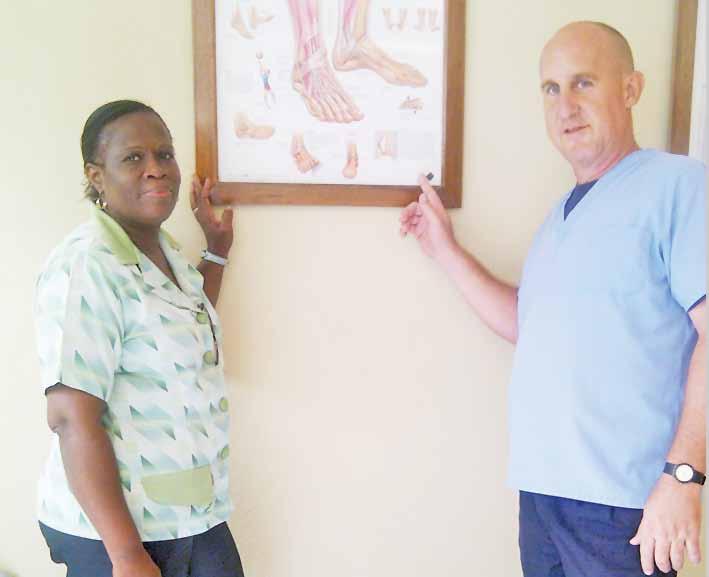
The Rehabilitation Department at the Georgetown Public Hospital Corporation (GPHC) is a key department within our medical sector in Guyana. Professional therapists provide timely, restorative medical techniques in helping persons with temporary or permanent disabilities to heal both physically and emotionally.
Equipped with medical therapy experts, the Rehabilitation Department offers effective, modernized programmes. Of note is Beverly Nelson, the principal physiotherapist of the department. Nelson has been working in physiotherapy for more than 20 years. She initially worked for a number of years in her hometown of New Amsterdam, and about 10 years ago, was transferred to Georgetown. She started off working as
has been a rewarding career,” Nelson declared in an interview with Guyana Times Sunday Magazine
The therapists also use a variety of modalities to help treat their patients. These modalities, which comprise of hot/cold packs and electrical stimulation, can help strengthen, relax, and heal muscles. Additionally, the modern equipment at the gym at GPHC is vitally necessary in the healing process.
Nelson sees more than 40 patients on a daily basis and has worked with famous athletes such as pro cricketer Ramnaresh Sarwan, who was required to undergo remedial physiotherapy treatment due to an injury he sustained while playing.
“We assess the injuries and work not only to treat these but to find the reason for the injuries so that they can avoid doing so again. I’m happy to see when rehabilitation brings joy to families. I recall a patient who had a fracture to his pelvis. He came in on a stretcher and left us walking without the use of aids. Our department has certainly developed over the years and some credit must go to the Ministry of Health for their support in providing timely resources. Right now I think we are on par with any rehab department in the Caribbean,” she conveyed.
Nelson encourages persons who need the services of her department to seek its help as it aids in living
Young Professionals
Pg 7
ShaSha Designs outshine at int’l fashion show
Hrithik Roshan unveils ‘Krrish 3’ motion poster online


Pg 14 Pg 19
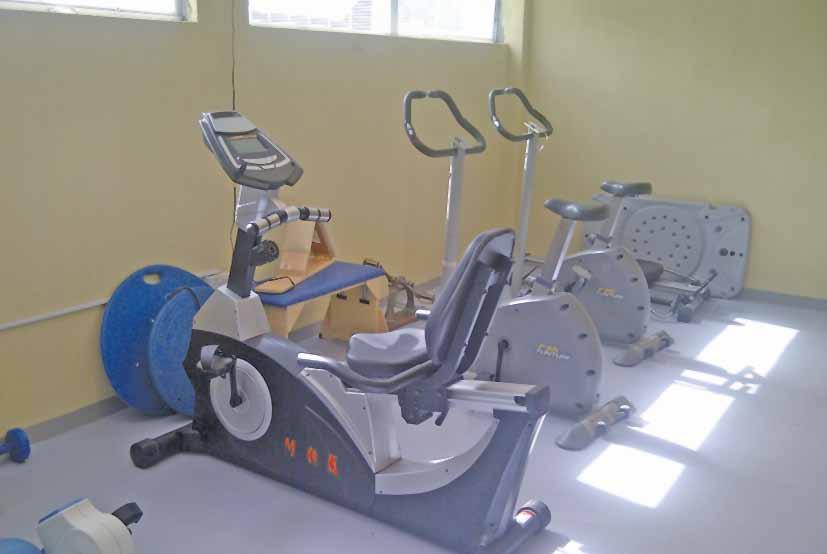
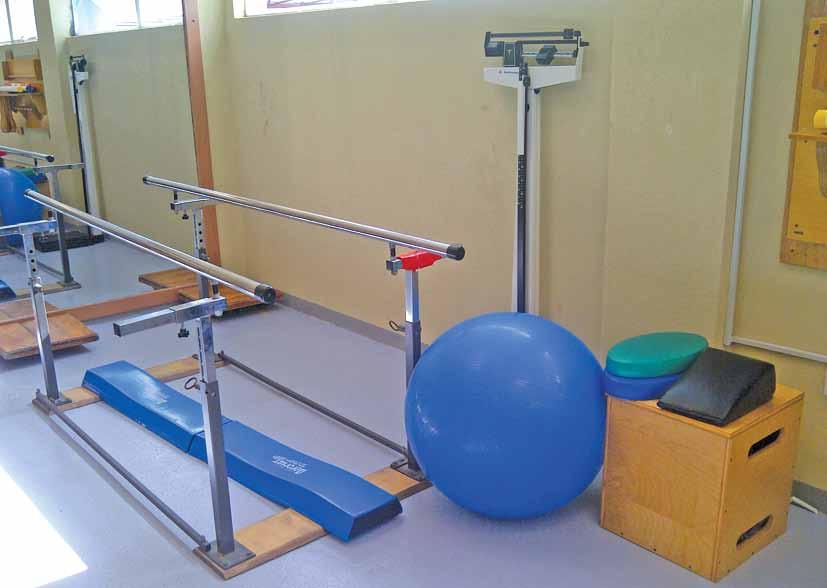
a physiotherapy assistant and moved up in the profession. Excelling in a two-year training programme in Guyana, Nelson was granted a scholarship for a three-year professional programme in physiotherapy in Jamaica. About two years ago, she graduated with her Masters in Physiotherapy.
“You have to like what you do before you can be committed to it. This job requires lots of patience. Sometimes we have patients who may become depressed because, to them, they’re not getting better. This requires not only being able to offer physical rehabilitation but also emotional. For me it
The physiotherapist explained that her department offers occupational therapy, speech therapy, audiology, and medical rehabilitation for persons with temporary or permanent disabilities. She noted that patients include those with temporary disabilities, those who have been privately referred to her department for medical rehabilitation, persons suffering from a stroke, and those with speech problems. There is also occupational therapy which is the use of treatments to develop, recover, or maintain the daily living and work skills of patients with a physical, mental or developmental condition.
Pg 22 Pg 10

Hermanus H Post and Plantation Le Resouvenir Part I
an urgent need for more professionals in the areas of occupational therapy and speech therapy. She stated that a core of professionals to guide staff is also needed.
The department recently completed its celebration of its 10th rehabilitation week. Informative booths were placed in front of Republic Bank, lectures on coping skills for staff were done at GPHC, and a charity drive, among other activities, was done in

healthy lives. She pointed out that persons maybe be hesitant because they may have the misconception that it is pricey. Nelson disclosed that those going to GPHC pay only $40 (Guyana) dollars for the entire duration of their therapy session. She added that there are similar departments in all administrative regions of Guyana and the services at those locations are free.
Discussing the challenges faced by her department, Nelson revealed that there is
commemoration of the week.
The importance of early detection of ill health was underscored during the week under the theme, “Rehabilitation Moving Forward: New Ventures, New Technologies”.
Nelson pointed out that early detection means early intervention, and she believes early intervention helps to decrease the amount of complications resulting from various disabilities.
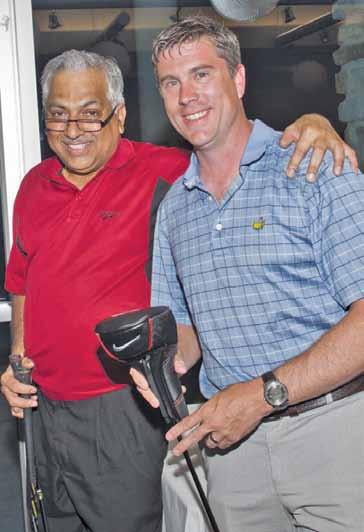
The Kissoon Annual Charity Golf Tournament was started in 2000. Sugrim Kissoon, patriarch of the Kissoon clan, passed away in 1979. Though he never visited Canada, his children decided that they wanted his name to be forever remembered in their adopted home land.
The tournament took its birth at the Mayfield Golf and Country Club in Caledon, Canada. There were eighty golfers. Little did the organizers of the first tournament know that the “Kissoon Classic” would over the years become one of the most successful community tournaments.
The first four tournaments were held at Mayfield, Canada. But as the tournament grew in size and stature so did the demand for bigger and better facilities. From 2004 to 2007 the tournament was hosted at the Woodbine Golf Club, Canada. It became a full shotgun tournament in 2004 with 144 golfers. There was no turning back. The tournament has been completely sold out every year since.
In 2008, it was necessary to move to Royal

Ontario, a golf course with a larger banquet facility. The after-golf banquet had grown substantially. Many supporters, who do not golf, would attend just
to be part of this very special event.
Sugrim Kissoon was a devout Hindu. In his name the proceeds from the golf tournament were

donated exclusively to the Devi Mandir in Pickering, Ontario. This exclusive support continued for ten years as that would have been what Sugrim, his children believed, wanted. But the children decided to change the focus of their charitable efforts and wanted to give back to the Canadian and Guyanese communities.
Since 2010, the proceeds have been shared among a number of charities that have focused on the health of children in Canada and in Guyana. The Toronto Sick Kids Foundation, Guyana Three Rivers Foundation, and the Guyana Help the Kids Foundation were the main beneficiaries. Funds from the “putting” contest, over the years, have been donated to the Canadian Cancer Society.
Then the Kissoon children decided to add another dimension to their charitable work – the education of children. To this end they have created, in memory of their parents, the Latchmin and Sugrim Kissoon Scholarship Fund. This scholarship will assist a number of deserving high school students who will be going on to college or university. The scholarship would be done in conjunction with the Rotary Club of Brampton Flower City and the Pandit Sirju Persaud Scholarship Fund. The scholarship also includes funding for students pursuing studies at the
University of Guyana.
Of note, the backbone of this charity is Dhaman Kissoon. Born in Guyana, Dhaman comes from a family of lawyers, High Court judges and legal luminaries in Guyana, Barbados, England and Canada. For the last eighteen years, he has been a lecturer at the Faculty of Law at Queen’s University in Canada.
“I migrated to Canada in 1976 and graduated
as a lawyer in Canada in 1991. I own my own law firm and have been teaching law at Queen’s Faculty of Law since 1990. The golf tournament was started in 2000 in recognition of my deceased father. For the first ten years, the golf tournament assisted a Hindu temple in Pickering because that was what my father wanted. But in 2010 the focus of the tournament changed. Health of children became a major concern and so now we’re supporting the Toronto Sick Kids Foundation, Guyana Help the Kids, and the Three Rivers Kids Foundation,” Dhaman Kissoon stated in an interview with Guyana Times Sunday Magazine.
“In addition, this year we are partnering with the Brampton Flower City Rotary Club, of which I am the president, to give 10 deserving scholarships to graduating high school students going on to college or university. We have also assisted an orphanage in India this year for the first time,” he added.
On June 19, this year, the 14th annual charity golf tournament was successfully held at the Royal Ontario Golf Club. The funds raised will be given to the various organizations in Canada, Guyana and beyond, as the charity has been doing for years.
For more information on the work of the Kissoon family visit www.kissoongolftournament.com
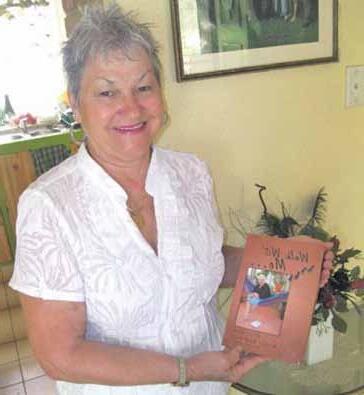
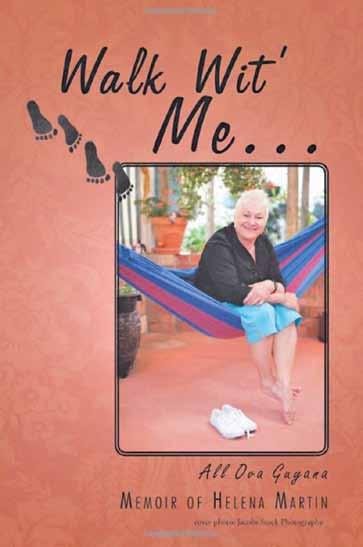
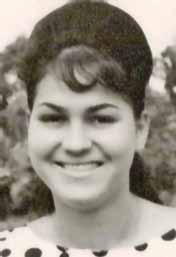
Overseas-based Guyanese author Helena Martin wanted to not only preserve her love for her homeland but to share this with the wider world, and this she accomplishes through her memoir, “Walk Wit’ Me… All Ova Guyana”.
Martin was born in 1947 in British Guiana. She taught kindergarten until her marriage in 1968. She and her husband migrated to Australia and currently reside there with their four children and seven grandchildren.
Some 16 years ago, Martin wrote a poem, “Come Walk Wit’ Me”, but it was left forgotten in a drawer for many years. When she came across it about 6 years ago, it sparked the beginning of her memoir.
In the book, she documents the first 21 years of her upbringing in Guyana where she was born to a Portuguese
immigrant family from the islands. Martin is uncertain about which islands: Madeira or the Azores. In 1835, the first Portuguese arrived here from the Portuguese island of Madeira. Between 1834 and 1882, some 30,645 Portuguese settled in British Guiana, the vast majority from Madeira, but others from the Azores Islands.
She writes in her book, “Bits of information were passed on here and there as I was growing up, but I never thought to ask for meaningful aspects of their lives. Most people never think of doing that until it is too late.”
For most of her childhood, her family socialized with other members of the migrant Portuguese community where everyone was related. They moved many times from Georgetown to Pomeroon and then to the Rupununi’s open savannah next to the rainforest. They settled there about twelve
miles from Lethem in a remote village called MocoMoco where there was no school and life proved difficult.
The family then decided to move the children to board with relatives in Albouystown so that they could attend school. Of her mother’s choice of school she writes, “She wanted us to attend a school where all the Putagee (Portuguese) children went because we were fair skinned.”
The book not only speaks of Martin’s experiences growing up Portuguese, discovering the country of her birth, but also of her visits back to her homeland from Australia.
“I yearned to preserve the love for my country, family and fellow countrymen,” the author relates in an in-
terview with Guyana Times Sunday Magazine. “But most importantly, I want to pass on the legacy of my life in Guyana to my children, grandchildren and future generations.”
In this compelling, humorous memoir, Martin recalls her years living in Guyana while navigating a labyrinth of family secrets.
“My memoir is laced with nostalgia and at the same time it is my sincere intention to portray the true essence of the Guyanese culture without offence,” she explained. “Keep in mind that this is not based on the experience of every Guyanese. This was the way I saw and experienced things back then.”
While documenting her own experience of Guyana, Martin also takes care to preserve the traditions she has
come to love while conveying the clever humour and witty repartee abundant in Guyanese culture.
“Not only is this a personal account of my life, this memoir was intentionally written to preserve the language from that era. I also wanted to enlighten readers on the delightful folklore and cultural aspects of a little unknown country in South America,” she mentioned.
Included in the book is a glossary of terms, providing readers with insight and translation of the colloquialisms and vernacular used throughout the book.
Email the author at helenjon21@yahoo.com.au for more information on her book. Helena as a
In addition to documenting Guyanese culture, Martin also aims to bring readers back to simpler times. “The majority of today’s society is totally focused on achieving happiness through material possessions. My book will show the importance of good ol’ family values and friendship.”

By PetamBer Persaud
In a previous article, I bemoaned the situation of a Guyanese bookshelf short on children’s literature, using the visit to Guyana by John Agard and Grace Nichols as a point of departure.
I now use that visit as a point of return to the subject of children literature.
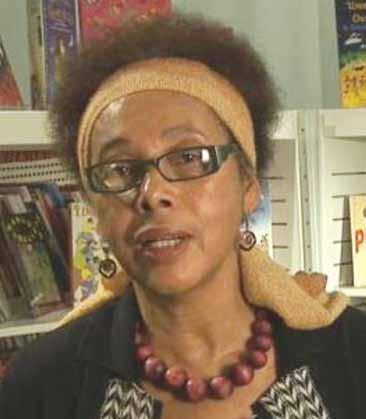
During that visit to Guyana, Grace Nichols launched her recent book “Sun Time Snow Time”. The book is divided into two parts, ‘Sun Time’ and ‘Snow Time’ and is a twoin-one offering, in that it is a reprint of a combination of two books. Those two books:
“Come into my tropical garden” and “Give yourself a hug”, were first published in 1988 and 1994 respectively, and were out of print.
The combination works well for it is designed to be an offering of both worlds – the tropical zone and the temperate zone.
The tropical zone is in-
vested with jumbie stories, moon-gazer, sugar cane plantation, mama wata, ‘me-riddle me-riddle meree’, complaining cows and
Creole while the temperate zone is invested with winter, spring, summer, autumn, daffodils, ‘trapped in the tube’, building the snow-

man, and daylight saving time.
From the word go, Nichols was able to connect to children, using all the techniques and skill warranted and with ample use of repetition, dialogue, rich imagery, personification, history and folklore. Nichols connects when she invites us into her tropical garden: “have a laugh, taste my sugar cake and my pine drink”. What a haven; what a heaven for children and grownups too.
And there is music when she talks about the alligator: “She’s a-big. She’s amean. She’s a-wild. She’s is a-fierce”. Nichols continues in the Creole rhythm when she talks about the oral traditions, listening to jumbie and moon-gazer stories.
She reminds us of our history, out of which came those stories, like in the poem “They were my people” – they were those who cut cane/to the rhythm of the sunbeat....they were those who carried cane, ...they were those who crush cane,...../ they were women weeding, carrying babies... all to the rhythm of the sunbeat’. This is a caution to remember the struggle of our forefathers and not to allow their sacrifice to go in vain.
In her poem “catfight”, Nichols takes joy in teaching children: ...spitting and spurring/clawing and furring/wailing and railing/shrieking and tearing/hissing and scratching/bawling and mauling/Man, it’s really appalling -/Granny throw a bucket of water, please/I can’t stand the sound of all that caterwauling.
Nichols takes joy in teaching by entertaining in poems like: “Moody Mister Sometimish”, “Cow’s Complaint” and “The fastest belt in town” – the latter which is about Ma Bella’s way of fixing situations with her belt ‘until one day/Ma Bella swished, missed/and lashed her own leg/That was the day Ma Bella got such a welt’/That was the day Ma Bella knew exactly how it felt/That was the day Ma Bella decided to hang up her belt but not before I give you the chorus plai-plai/ her belt would fly/who don’t hear must cry.
Nichols describes “Come into my tropical garden” this way: “I tried to capture something of that bright hot ‘floody’ world of the village I grew up in, and something of the everyday speech of the people, which we call “Creole”. Creole is a mixture of English words with the rhythms and bits of languages of the different people who made up the Caribbean.”
“Give yourself a hug” she says “was very much inspired by life in England and especially by the weath-


er – crunching through thick powdery snow, helping my daughter to make a snowman, picking blackberries, and just observing life in general. I’ve been living in England for over thirty years now, longer than I lived in Guyana, which used to be a British colony.”
In part two, labelled “Snow Time”, the style of writing is similar as in part one - ample use of repetition, dialogue, rich imagery and personification, and many of the poems end with a punch line like the poem “Morning”, where the poet describes that morning comes ‘with milk-float jiggling, ...milkman whistling...empties clinking... alarm-clocks ringing...toasters popping...letters dropping...kettle singing...to drag me out of bed/Boss Woman Morning’. In “making my first snowman in my mother’s pink rubber gloves”, the poet describes her travails, ending with “he wasn’t a snowman, he was a snowcrow.”
Nichols closes “Snow Time” with “Give yourself a hug”: ‘give yourself a hug/ when you feel unloved... when people put on airs/ to make you feel a bug... when everyone seems to give you/a cold-shoulder shrug/ and keep on singing/only one in a million like me’.
Grace Nichols has written and edited a huge corpus of children literature. She was born into a world of books and music. Her father was a head teacher and at home she was surrounded by books - she was fascinated by the kingdom of books and language. Her mother used to give piano lessons. The music in her poetry came from that and other sources –like the singing of birds, the whistle of the wind in the mangrove, the roar of the Atlantic Ocean, the rhythm of calypso music and the beat of pan, the call of the fisherman and the fruit vendor, the odour of mud and salt when she went crab hunting, the mystery of fishes under the surface of sunkissed water, the silence of a dark country night, the eerie jumbie story, the closeness of storytelling, the folktales, the tricks of Anancy, the lusty singing in church, the correctness of Standard English and the colourful Creole, the whole of the morning sky, the whole of the evening sky.
Nichols has won the Commonwealth Prize and the Guyana Prize for Literature. In 1977 she migrated to the UK, along with another influence on her life and work, John Agard. Responses to this author telephone (592) 226-0065 or email: oraltradition2002@ yahoo.com


Raul Couchman started charting his creative path from a very young age. The eldest of three siblings – and the only male, it logically placed him as a role model for his younger siblings, which he took seriously.
Music was introduced to him as a young boy and he fell in love with it at first sound. “I remember listening to my dad play the guitar and sing, and thinking to myself, ‘I would really love to sing and make music', because it made me feel free.’’
Couchman recalled in high school wanting to follow the medical field, but later found an interest in electronics. He spent most of his teenage years exploring his musical talents thereby allowing him to meet a number of people, especially in the business arena. He said that he got into music because it allowed him to channel his creativity in a positive way.
Couchman started out as musician with the well known Couchman Family Band, then quickly got into video production and from there, everything fell into place. Through music, he said, he got into video production. “I wanted to produce high quality videos and to be able to direct and control everything in the production.”
In doing so, he was intrigued by the video production process, and began playing around with graphic designs, which eventually led him to a job at Guyenterprise, where he gained more exposure in the video production sector. He explained that most of what he knows was self taught through many sleepless nights of reading and researching.
“Slowly this began fully utilizing my time and energy, and I was absorbed with work and decided to take up video production as a career. This unleashed a whole new world in front of my eyes where anything and everything became a reality,’’ he recollected.
After a few years of hard work, dedication and having his own family, he decided he was ready to venture out on his own; thus came the establishment of Artistic Marketing in 2006. Artistic Marketing provides innovative and effective services in the area of advertising, which includes the production of television /radio commercial, 3d animation, special FX, newspaper/magazine/billboard artwork, jingles, documentary, filming, photography, corporate event planning and marketing consultancy.
The company holds that every project is new, because every assignment is different and they all bring their own challenges. Clients are constantly seeking a new and dynamic approach to their advertising needs which they receive from Artistic Marketing. Artist Marketing provides its services to major companies such as GT&T, John Lewis Styles, Electronic City, E-Networks, Buddy’s Group of Companies and Genequip among others.
Couchman pointed out that he is constantly making every effort to improve his company at every step possible. “We just want to keep abreast with the changing world and continue to provide the highest quality service,’’ he noted.

Beautyand brawn are visible qualities Stacy Small possesses. Always a fan of the gym, Stacy enjoys lifting weights and looking fit. Approached last year by the managers of Fitness Paradise gym, where she works out, to compete for the first time in a body building event, Stacy seized the opportunity to challenge herself. Working out days and nights tirelessly in the gym, Stacy decided she was ready to sign up in December 2012 for the local competition, Flex Nite International. With dedication and relentlessness, Stacy wowed the crowd with her ripped physique and although she did not win, Stacy was happy to be awarded second place in the Ms. Best Legs category. From then on, Stacy fell in love with the sport because it pushed her to be better. She competed in the Guyana Amateur Body Building Fitness Federation (GABBF) and placed second in the Ms. BodyFitness and Ms. Physique categories. Additionally, she competed in the Ms. Fitness Paradise and won first place in the Best Legs category. At present, Stacy is sweating it out in the gym, making needed improvements, and is planning to compete once again in Flex Nite International scheduled for December. When the fitness expert is not in the gym, she enjoys spending time with her daughter, listening to music, or watching a good movie. For the pro champion, being fit has built her self-confidence and has given her a greater sense of well-being.
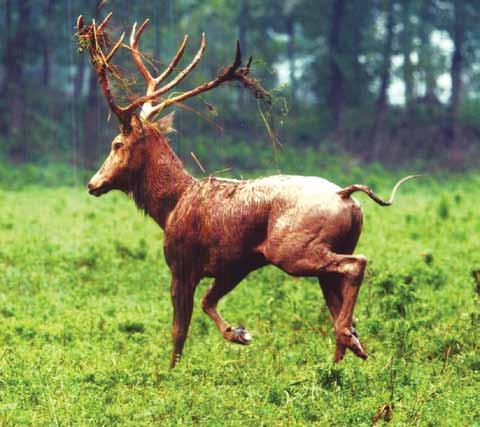
ThePère David’s deer, (Elaphurus davidianus) also called the milu or elaphure, is a large, rare Asian deer that has been recovered from the brink of extinction and has become a classic example of how to rescue a highly threatened species.
Père David’s deer was re-introduced into captive facilities in China in the 1980s after becoming extinct in its wild native range there.
The Pere David's deer originally occurred in north-eastern and east-central China, but it apparently became extinct in the wild at least 1000 years ago. Its original habitat is thought to have been swampy, reed-covered marshlands.
The deer is a grazer, eating mainly grass which it supplements with water plants in the summer.
The objective of the game is to fill all the blank squares in a game with the correct numbers. Every row of 9 numbers must include all digits 1 through 9 in any order. Every column of 9 numbers must include all digits 1 through 9 in any order. Every 3 by 3 subsection of the 9 by 9 square must include all digits 1 through 9.
PUnlike


People have been making art for about 2 million years. Prehistoric art focuses on what was important to the people of the time, essentially food and procreation. As humans continued to develop, so did their art. But the one thing all art has in common is its ability to reflect the times and cultures of the people who made it. This is the first of a four-part series on the history of art. Collect all four to make a giant poster.
Seated figure
c. 6500–5500 B.C. Mesopotamia (Iraq)
Metropolitan Museum of Art, United States
The Stone Age can be divided into three eras. During the Paleolithic Period, or Old Stone Age (30000–10000 B.C.), humans were nomadic hunters and gatherers who struggled to survive in a harsh and cold world. These early people painted their hunts in ancient caves and used stone tools to carve magical figures.
Plate, c. 5500–4000 B.C. Ubaid Period, Mesopotamia
Metropolitan Museum of Art,
The Mesolithic Period, or Middle Stone Age (10000–8000 B.C.), marked the end of the Ice Age. As the glacial era ended, life became easier. The art of the time consisted of abstract rock paintings, delicate stone carvings and pottery.
The Neolithic Period, or New Stone Age (8000–3000 B.C.), took place at different times in different places. Many cultures began to establish permanent settlements, and their art began to reflect this stability.
Kneeling
Bull
Ancient
Metropolitan
Ancient Egyptians made the earliest paper from the fibrous strips within papyrus stems. The strips were soaked in water, placed side-byside and over one another, pressed flat and dried in the sun. Parchment followed and was made using animal skins washed in water and lime and stretched onto a frame to dry. The high-quality white paper we are familiar with today can be traced back to China in A.D. 105. Grass, leaves and old rags were soaked in limewater until they turned to pulp. The mixture was strained and pressed into flat sheets of paper. Paper was handmade and expensive until the 19th century, when papermaking machines were developed. Today, there are many different kinds of paper.
Recycling paper
Usually made from the plant fiber found in trees, paper can also be recycled. Recycling paper is fun, but messy. You will need an adult to help you. What you need:
• Lots of newspaper
• Food processor or blender
• 2 tbsp. glue
• 2 or 3 cups of water
Egypt c. 3200 B.C. Egyptian Museum, Egypt
Marble statuettes from Abu Temple Tell Asmar, Iraq c. 2700–2600 B.C.
The Iraq Museum and the Oriental Institute, University of Chicago
c.
Kamares pitcher Kamares cave c. 1800–1700 B.C
Middle Minoan Period
Archaeological Museum, Greece
Classical art of the Western world is characterized by its realism. The Greeks (800–323 B.C.) created art that was known for its glorification of the human figure. The Etruscans (Italian peninsula, sixth and fifth centuries B.C.) created huge, stylized, ornamental objects. The Romans (509 B.C.–A.D. 476) borrowed heavily from the Greek and Etruscan art styles to create their own classical art forms.
First-century B.C. Roman marble copy of a Greek bronze statue by Myron c. 450 B.C.
c. 210 B.C.,
• Old pantyhose
• Coat hangers
• Tape
• Scissors
• Rolling pin
• Sink or small tub filled with 4 inches of warm water
Step one: To make the frame, bend and twist the coat hanger wire into a 6-inch-square frame. Tape the ends of the wire so they are not sharp (have an adult help). Stretch one leg of pantyhose over the frame, making it tight and flat. Tie knots in the hose and trim off the excess. You will need one frame for each piece of paper you make.
Step two:
Put a handful of torn-up paper and some warm water into the food processor. Mix until all the paper has dissolved; add more water if the mixture gets too thick. Add 2 tablespoons of glue to the paper pulp. Pour pulp into a sink or tub with 4 inches of water and mix well.
Step three: Slide the frame to the bottom of the sink. Spread an even coat of the pulp on top of the screen. Lift it out slowly, letting the water drain for about a minute. Place the frame, pulp-side up, on a stack of newspapers. Cover with more newspaper and roll with a rolling pin to squeeze out the water. Remove frame from newspaper and allow to dry completely. Gently peel the paper from the frame. Trim with scissors and your homemade paper is ready to use.
Note: There are many ways to make paper. This is just one way. Some craft stores sell papermaking kits.
Romans decorated their homes with mosaics made from tiny pieces of colored stone or tile. Try making your own mosaic with construction paper. Sketch your design on the paper. Cut out small triangles and squares from pieces of different colored paper. Then glue them onto the pre-sketched design.

Guyanese designer Keisha Edwards, owner of fashion label ShaSha Designs, has received rave reviews for her avantgarde collections at a recently held fashion gala in the U.S. Her pieces debuted at the “Caribbean Style & Culture Fashion Show”, held in Maryland, U.S. and, based on her daily posts on her Facebook page, she is quite ecstatic about the experience and response she has been receiving so far.
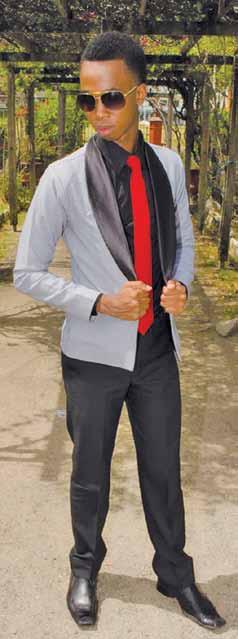

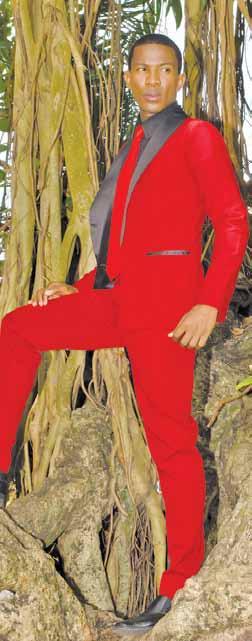
The designer expressed on her FB page, “ShaSha Designs will continue to produce unique designs that are readily available and easily accessible to the New York and Washington clients. ‘Personality Risen to the Surface’ is your escape from the norm and mass produced fashion. Be bold this summer and express YOUR style.”
Additionally, ShaSha Designs is slated for another appearance in New York at a “summer and fall” fashion event. Visit ShaSha Designs on Facebook for more information.


Dean Geyer is a South African Australian singer-songwriter and actor who finished third in the 2006 season of the talent show television series "Australian Idol", and has had a notable role in the Australian soap opera "Neighbours" as Ty Harper. In October 2010 it was announced Geyer would make his film debut in the film "Never Back Down 2: The Beatdown". Geyer portrays the role of Mike Stokes a former high school wrestler who competes in MMA. In July 2011 Geyer made his American television debut on the VH1 Drama television series "Single Ladies". In 2012 Geyer maintained a major-recurring role on the Fox Network Steven Spielberg produced science fiction drama television series "Terra Nova". From 2012 to present, he plays Brody Weston in the musical comedy-drama television series, "Glee".
Anti-drug group calls in River Island's bosses to stop working with Rihanna after the “Umbrella” singer posted pictures of her smoking giant suspicious-looking cigarettes.
Anti-drug campaigners urge fashion chain River Island to stop using Rihanna in its product campaign after the singer posted pictures of her smoking giant rolled-up cigarettes, which appeared to be marijuana on her Instagram and Twitter accounts last week. The campaigners are concerned about children who see Rihanna as a role model.
Lucy Dawe of the Cannabis Skunk Sense group told British media Daily Mirror, "She should be dropped by River Island as she's a role model to young children but clearly an appalling one. It is a huge double standard because if River Island were really concerned about the effects of drug use, they wouldn't be supporting someone

who is so blatantly using drugs herself."
Paul Jenkins, CEO of charity
Rethink Mental Illness, also criticizes Rihanna for supporting marijuana legalization. "She is reinforcing the myth that cannabis is a 'safe' drug, when in fact it can increase your chances of de-
veloping mental illness, especially if you use it when you're young. It's disappointing to see Rihanna normalising cannabis use in this way," Jenkins said.
River Side donated $10,000 pound sterling (around US$15,000) to Nicholas Mills Foundation in 2008. The foundation was set to honor a young man who got addicted to cannabis and heroin and later died of suicide. River Island's Lewis Family Charitable Trust also donated $4,000 pound sterling (around US$6,000) to mental health charity ReThink that campaigns the danger of drugs in 2011.
Rihanna showcased the company's products during London Fashion Week in February, in which she reportedly got paid as much as $800,000 pound sterling. So far, she has produced two collections. The fashion company declined to comment on the issue.
(AceShowbiz)
He has built a multimillion dovvvllar empire around being the ultimate international playboy.
But now rapper Diddy has tried to play down his lavish life of excess in the latest interview with Los Angeles Confidential magazine.
Ironically, the famous music mogul and business man claims that people have misconceptions about him due to his larger-than-life image.
Diddy - whose real name is Sean John Combs - told the magazine: “I like nice things, but life's pretty normal around here.”
“People think. '’Oh, Diddy's probably running around his mansion spooning caviar into his mouth’,” he says with a laugh.
“I don't even like caviar.”
The rapper, who came from a humble home in Harlem New York - to amass a fortune estimated at $550 million in various fields of business and entertainment.
And the rapper, who has five biological children by three different women, claims that these ladies keep life real for both him and his children, whom he admits he sometimes spoils.
“A lot of people say yes to me, I admit that. But I’m blessed by how much the mothers of my children love to tell me the truth. They don’t let me get away with anything!” he revealed.
“I don’t make apologies for what I have. Especially in these economic times, it’s an achievement to have financial success. If part of that is to spoil your kids, to give them things, it’s okay, as long as they appreciate what they have.”
Diddy - who is currently rumored to be dating R & B recording artist Cassie - claims he still gets a huge kick from unearthing new talent.
The “Shake Ya Tailfeather” rapper claims that being a mentor is one of the most rewarding aspects of being famous for him.
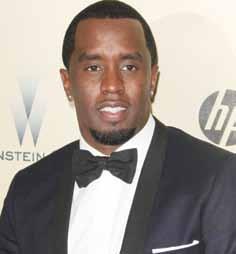
“It’s really like a spiritual type of experience, making that connection with someone,” he adds.
“You get these goose bumps when you encounter a diamond in the rough. You see potential. You see possibilities unfolding before your eyes. It helps me to help them.” (Daily Mail)
Anew track by Beyoncé has appeared online.
The singer originally recorded “Standing On The Sun” for her forthcoming album, and previewed the song during an advert for her H&M summer campaign.

However, a full version has now been revealed, and is believed to be a leaked demo of the track.
“Standing On The Sun” was written by Sia and produced by Timbaland.
It follows the leak of “Grown Woman”, a track which appeared online
in demo form earlier this year.
Beyoncé performed both tracks during recent dates of her “Mrs Carter Show” world tour.
However, she is yet to formerly announce release dates for either of the songs. (Glamour)

Jay-Z ponders ‘the paranoia of not being a great dad’

Jay-Z gets deep on a pair of new “Magna Carta Holy Grail” previews, “Heaven” and “Jay-Z Blue”.
In the "Heaven" teaser clip, which premiered late Thursday (June 27), Jay can be seen explaining to producer Rick Rubin that the song "is toying with the idea of [there] being heaven or hell on earth," and the uncertainties that idea raises: "Have you ever been to heaven? Have you ever seen it?" he asks, rhetorically.
"For me, my idea is heaven is in your daughter's laughter; hell could be if your child is missing for three minutes — you're in three minutes of hell," Jay continues, as Rubin nods in agreement. "It's just not my belief that a just God would make you burn or eternity for [the] free will that He gave you."
Earlier in the week, Jay revealed the lyrics for "Heaven," which see him shooting down those Illuminati rumors, and crib a few lines from R.E.M.'s
classic "Losing My Religion."
As you can probably infer from its title, the second Magna Carta clip, "Jay-Z Blue" is also inspired by his daughter, though in a completely different manner. On the track, HOV ponders his past, lamenting that his absent dad didn't prepare him for fatherhood or manhood, and, ultimately wondering if he's able to handle the responsibilities of raising his daughter while also maintaining his marriage to Beyoncé.
"[She's] something that we both created; we still marvel at her," Jay beams to Rubin while discussing baby Blue. But then, his mood shifts as he discusses the somber song: "It deals with my pop left when I was young, so he didn't teach me how to be a man, nor how to raise a child, or treat a woman. So, of course, my karma, the two things I need, I don't have. And I have a daughter. "It's the paranoia of not being a great dad," he concludes. (MTV)

While both Kim Kardashian and Kanye West have remained mum on why they named their daughter North West, Kim's tight-knit family is opening up about the unique moniker.
On Wednesday (June 26), Kim's little brother, Rob Kardashian, called into Ryan Seacrest's radio show where he dished on his new niece and her headline-making name.
"When it comes to babies and stuff like that, I like to give the person all their time with their significant other. Let them enjoy their moment. I'm happy the baby is healthy and my sister is healthy," he said, adding that he thinks that her name "sounds cool."
"[And] North is the highest point, so it has a lot of meaning to it. As long as
they're comfortable with it, you can't tell them what to do," he shared, further adding, "I told Kim and Kanye this, I'm like, 'Yo, people are always going to talk whether it's good or bad. There's always going to be the haters, but do what you guys feel.' Like, you know everyone's going to say, 'Oh, you're coming up with some weird celebrity, crazy name.' I'm like, 'You know how it is.' " Baby North was born on June 15 in Los Angeles, five weeks early, and right now, Rob is looking for the perfect gift to get his newborn niece. "I'm actually looking for like a giant animal to get North. Not a real animal," Rob revealed. "The baby came a month early. It's so small; she needs a big stuffed animal."
Rob isn't the only Kardashian who is excited by their latest addition to the very large Kardashian family. Momager Kris Jenner stopped by "The View" on Tuesday, where she too confirmed the origins of her granddaughter's name.
"I love the name North. I'm pro-North, absolutely. The way she explained it to me was that North means highest power, and she says that North is their highest point together. And I thought that was really sweet," she said. "You don't walk around calling somebody 'Hi, North West.' It's just North." (MTV)

uma
HQureshi worked as a theatre actress and model before beginning her film acting career. After starring in several theatrical productions, Qureshi moved to Mumbai and signed a two-year contract with Hindustan Unilever to appear in television commercials. During the shoot of a Samsung mobile commercial, Anurag Kashyap noticed her acting ability and signed her for his films.
Qureshi made her feature-film debut with a supporting role in the 2012 critically acclaimed crime drama "Gangs of Wasseypur" (parts 1 and 2) as Mohsina (a film buff and the supportive wife of a gangster). Her performance drew critical appreciation and earned her several nominations for Best Supporting Actress (including the Filmfare Award for Best Supporting Actress) and Best Female Debut. That year, Qureshi also starred in the comedy "Luv Shuv Tey Chicken Khurana". While the film was a commercial failure, her performance was well received by critics. In 2013, she starred in the supernatural thriller "Ek Thi Daayan", which opened to mixed reviews from critics. As of May 2013, she is filming for Nikhil Advani's next production, "D Day" (with Irrfan Khan), and the sequel to the 2010 film "Ishqiya"entitled "Dedh Ishqiya" (with Madhuri Dixit, Naseeruddin Shah and Arshad Warsi).

Actor Sonali Bendre says it is an uphill task to pick best moments from 100 years of Indian cinema as there’s a lot to talk about such as her movies Zakhm and Sarfarosh, cult classics like Guide and her favourite screen diva, Madhuri Dixit.
“I think Madhuri Dixit is a goddess!” Sonali said, when asked to pick her favourite diva in the Indian cinema. “There have been lot of classic moments in the Indian film industry,” added the 38-year-old.
Picking her favourite moments, she

started with Mahesh Bhatt’s 1994 directorial venture Naaraaz, saying, “It was a different kind of acting.”
Then she recalled her 1998 release Zakhm. “It was a special film and I thought the film was telling the story in it’s own way,” said Sonali.
Sarfarosh, in which she teamed up with Aamir Khan, was another movie that she found interesting. “It spoke about facts and yet it was not as dry as a documentary,” she said. (Hindustan Times)
Actor Hrithik Roshan unveiled the motion poster of his much awaited sci-fi film “Krrish 3” online Thursday.
As part of the digital campaign, the motion poster was launched through social networking site Facebook and the actor had a live video chat with his fans, said a statement.
The poster shows a moving close up of a light with debris lying around. As the background score gains momentum, the side pose of two faces - one of them being Hrithik’s character - emerges.
During the live chat, Hrithik spoke about various things ranging from his hobbies, likes and his hero.
Actress Priyanka Chopra, who plays female lead in the movie also joined the actor.
Directed by Rakesh Roshan, “Krrish 3” also stars Vivek Oberoi. It is slated to release Nov 4. (Zee News)


Salman Khan has launched a website to provide his fans with details of his impending court hearings.
The website www.salmankhanfiles.com will be regularly updated by the actor's legal team, and is designed to serve as an interface between the star and his fans.
Writing on the site, Khan cited his reasons for creating it, stating: "The reports are sometimes inaccurate, misleading, and cause damage to my reputation, both profession and personal.
"I have been advised to put up this website, to provide easily accessible factual information... I have the greatest respect for the law, judiciary and the legal process."
Mid Day quotes a source close to the Dabangg star as saying: "Yes, the website has been initiated by him. The disclaimer is sufficient enough to let people know the intention behind the website."
The 47-year-old star is to face trial for culpable homicide not amounting to murder in relation to a 2002 hit and run case.
If found guilty, the 47-year-old star could face a ten-year prison term.
It was previously reported that a film inspired by the actor's controversies and brushes with the law may be made. (Digital Spy)


The actors, who were not seeing eye-toeye, partied together at Arjun Kapoor's birthday bash.
The new generation of Bollywood A-listers likes to work hard and party harder and Wednesday saw all the nouveau stars letting their hair down at Anil Kapoor's Juhu residence with Sonam Kapoor playing the perfect host.
The occasion was Arjun Kapoor's 28th birthday and the guest list included Deepika Padukone, Priyanka Chopra, Ranveer Singh, Parineeti Chopra,
Katrina Kaif, Imran Khan with wife Avantika, Alia Bhatt, Varun Dhawan, Siddharth Malhotra and Dhanush. But the man who made heads turn was Ranbir Kapoor. Sonam and her Saawariya co-star have not been on the best of terms post their debut film.
Often in the past, both Sonam and Ranbir have lashed out against each other in sections of the media. However, it seems six years is long enough time to heal the wounds.
A source said: "Sonam is riding high on the success of Raanjhanaa. And when
you're happy, you tend to let bygones be bygones. She has moved on, so has Ranbir. Post Saawariya, Sonam was dating Punit Malhotra and Ranbir was in a relationship with Deepika. Over the years, both have matured. Sonam had even invited Punit for the party, who also dropped by."
Ranbir and Sonam are said to be childhood friends, who got closer on the sets of Saawariya. But slowly, things soured. It all took an ugly turn in 2010, when Ranbir tagged Sonam as 'not sexy' and the latter retaliated by airing some equally strong views on Karan Johar's chat show. As and when she was asked if she would apologise to Ranbir for her remarks, she had refused outright.
The source added: "People were a bit surprised to see Ranbir at the party but he got along with Sonam famously—their interaction was very warm with no references of the bitter past." The party went on till the wee hours of the morning.
(Mumbai Mirror)
Aishwarya and Abhishek Bachchan’s bundle of joyAaradhya , who is making headlines since her birth, is reportedly all set to join a school. The little one will turn two this November and the Bachchans are rumoured to have already started searching for a suitable playschool.
The toddler, who is no less than a megastar- all thanks to her famous family- has earlier been in news for being a tech-savvy kid, as her grandpa, Amitabh Bachchan had gushed about her operating the iPad at

such a tender age. According to a tabloid, the Bachchan family feels that Aaradhya is big enough to join a playschool and ever since the new academic year has kicked off, it has started the hunt for a suitable school for the star kid.
“Aaradhya is big enough to join a play school now and interact with kids of her own age. They want only the best school for her,” a source said.
However, an official from the Bachchan bungalow said, “It is too early to start scouting for schools for Aaradhya.” (Zee News)
Like werewolves and vampires, bacteria have a weakness: silver. The precious metal has been used to fight infection for thousands of years — Hippocrates first described its antimicrobial properties in 400 BC — but how it works has been a mystery.
Now, a team led by James Collins, a biomedical engineer at Boston University in Massachusetts, has described how silver can disrupt bacteria, and shown that the ancient treatment could help to deal with the thoroughly modern scourge of antibiotic resistance.
The work is published June 20, 2013 in Science Translational Medicine.
Collins and his team found that silver — in the form of dissolved ions — attacks bacterial cells in two main ways: it makes the cell membrane more permeable, and it interferes with the cell’s metabolism, leading to the overproduction of reactive, and often toxic, oxygen compounds. Both
mechanisms could potentially be harnessed to make today’s antibiotics more effective against resistant bacteria, Collins says.
Many antibiotics are thought to kill their targets by producing reactive oxygen compounds, and Collins and his team showed that when boosted with a small amount of silver these drugs could kill between 10 and 1,000 times as many bacteria. The increased membrane permeability also allows more antibiotics to enter the bacterial cells, which may overwhelm the resistance mechanisms that rely on shuttling the drug back out.
That disruption to the cell membrane also increased the effectiveness of vancomycin, a large-molecule antibiotic, on Gramnegative bacteria — which have a protective outer coating. Gram-negative bacterial cells can often be impenetrable to antibiotics made of larger molecules.
“It’s not so much a silver

bullet; more a silver spoon to help the Gram-negative bacteria take their medicine,” says Collins.
Vance Fowler, an in -
fectious-disease physician at Duke University in Durham, North Carolina, says the work is “really cool” but sounds a note of
caution about the potential toxicity of silver. “It has had a checkered past,” he says. In the 1990s, for exam-
ple, a heart valve made by St. Jude Medical, based in St. Paul, Minnesota, included parts covered with a silver coating called Silzone to fight infection. “It did a fine job of preventing infection,” says Fowler. “The problem was that the silver was also toxic to heart tissue.” As a result the valves often leaked.
Before adding silver to antibiotics, “we’ll have to address the toxicity very carefully”, says Fowler. Ingesting too much silver can also cause argyria, a condition in which the skin turns a blue-grey colour — and the effect is permanent.
Collins says that he and his colleagues saw good results in mice using non-toxic amounts of silver. But, he adds, there are ways to reduce the risk even further. “We’re also encouraging people to look at what features of silver caused the helpful effects, so they can look for non-toxic versions,” he says. (Nature Magazine)
“Around the world, food fraud is an epidemic — in every single country where food is produced or grown, food fraud is occurring,” said Mitchell Weinberg, president and chief executive of Inscatech, a company that advises on food security. “Just about every single ingredient that has even a moderate economic value is potentially vulnerable to fraud.”
Speaking at a recent conference organized by the consulting firm FoodChain Europe, Mr. Weinberg added that many processed products contain ingredients like sugar, vanilla, paprika, honey, olive oil or cocoa products that are tainted.
Increasingly, those frauds are the work of organized international criminal networks lured by the potential for big profits in an illicit trade in which most forgers are never caught. Europol, the European Union’s law enforcement agency, says organized crime groups have capitalized on the economic downturn.
“In response to reduced consumer spending power, counterfeiters have expanded their range of products,” a recent Europol report said. In addition to the traditional counterfeit luxury product, organized crime groups “now also counterfeit daily consumer goods such as detergents, foodstuffs, cosmetic products and pharmaceu-
ticals.”
Shaun Kennedy, associate professor at the University of Minnesota, estimated that 10 percent of food that consumers buy in the developed world was adulterated. Because the profit margins for foodstuffs are often within single digits, “if you dilute by 2 percent, that’s a big deal.” He cited a report from the United States’ Grocery Manufacturers Association saying that economic adulteration and counterfeiting of global food and consumer products was expected to cost the industry $10 billion to $15 billion a year.
“Mostly the perpetrators are not intending to cause anyone harm — that would be bad for repeat business — but often they don’t understand the potential impact,” Mr Kennedy added.
Investigators say a huge array of deceptions exists.
Simple ones involve presenting cheap products as branded or top-quality ones, like selling catfish as sea bream, labelling farmed salmon as wild or marketing battery-produced eggs as organic or free range. In February, the German authorities began investigating around 160 farms suspected of breaking rules on organic and free-range egg production, for example. In other cases, cheaper ingredients are added to genuine products to increase profit margins. Sometimes vegetable oil goes into chocolate bars; or pomegranate
juice, wine, coffee, honey or olive oil is adulterated with water, sweeteners or cheaper substitutes. Whenever there is tampering, there are potential risks to health. Indian restaurants in Britain have been prosecuted for adding
incorrectly labelled; 1.2 tons of fake truffle shavings; 500 kilograms, or 1,100 pounds, of inedible pastries; false Parmesan cheese from America and Egypt; and liquor from a Dutch company marketed as tequila. They also found fraudulent Web
fish called panga as cod. Another fraud is to fake the packaging of wellknown brands with writing in a foreign language so consumers believe they have a genuine product that was diverted abroad at a bargain price.
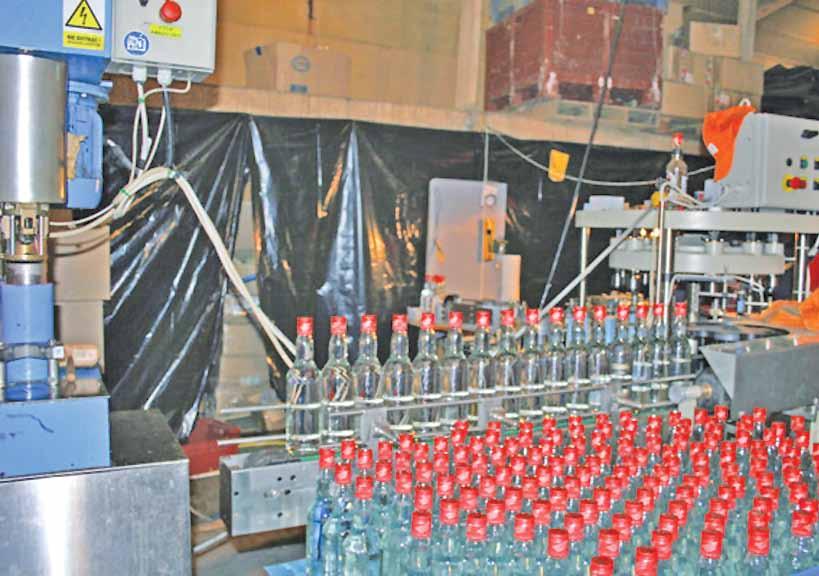
ground peanuts to almond powder, which poses a risk to allergy sufferers. Food experts say that engine oil is among the substances found in olive oil.
In a weeklong food fraud crackdown last year, the French authorities seized 100 tons of fish, seafood and frogs legs whose origin was
sites claiming to sell caviar. Illegally fished and contaminated shellfish often finds its way to fish markets. And even the fish that is safe to eat may not be what consumers think it is; the owner of a fish and chip shop in Plymouth, England, was fined last year for selling a cheaper Asian river
Even religious communities are not immune. In Britain, the Food Standards Agency has warned against drinking Zam Zam water, which is sacred to Muslims and comes from Saudi Arabia. Bottles sold in Britain “may contain high levels of arsenic or nitrates,” the agency said.
In a depot in South London, trading standards officers display fake foods including about 300 bottles of counterfeit red and white wine, labelled Jacob’s Creek. One small detail gives away these otherwise convincing forgeries: the counterfeiters misspelled the name of the country where the real wine is produced — Australia — missing its middle “a.” Russell Bignell, trading standards officer at Wandsworth Council, said bottles normally contained cheaper wine but added, “the fact is we don’t know what’s in it.”
Other items here include two boxes of fake Durex condoms, in convincing packaging, and a bottle of counterfeit Bollinger Champagne. Christopher Roe, the council’s chief trading standards officer, said that the problem affects sales of goods online but that much conventionally sold counterfeit produce turns up in markets or small independent corner stores.
“Whether or not they know it’s counterfeit is a moot point,” Mr. Roe said, adding that there are just not enough resources to combat the problem. With counterfeit products, he added, “the more you look, the more you know you will find.” (Excerpted from “Counterfeit Food More Widespread Than Suspected” by Stephen Castle and Doreen Carvajal; published: June 26, 2013, New York Times)



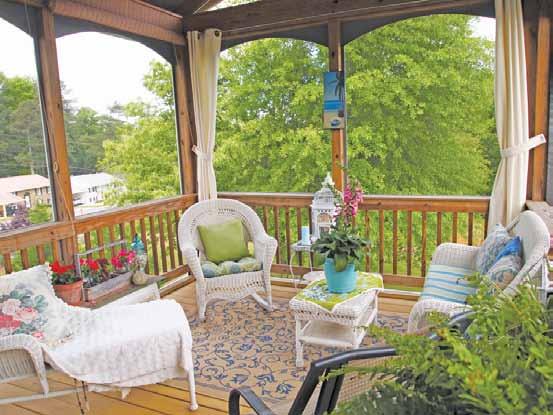
A space outdoors that seems an extension of your home is a good place to relax and enjoy the outdoors or a good book, regardless of the weather. Be inspired by these design and decorating ideas for your own outdoor space.


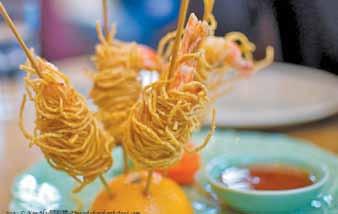
Ingredients:
4 tiger or king prawns, cleaned
1/4 cup lemon juice
1 whole red chilli, mashed Garlic, mashed
A pinch of salt
A pinch of pepper
Method:
Marinate the prawns in lemon juice, red chilli, salt, pepper, coriander, onions and garlic. Let it marinate for a couple of minutes. In the meanwhile make the sauce.
Mix all the sauce ingredients. Pierce the prawns with the satay sticks through the back of its tail. Wrap these with the noodle strands and deep fry them.
1/4 onion chopped finely
Some coriander, chopped
For the Sauce:
1/4 cup lime juice
2 tsp fish sauce
1/2 tsp garlic
1 tsp coriander, chopped 1/2 tsp chilly
A pinch of sugar or 1/4 tsp Salt and pepper to taste
For Wrapping: 1 packet rice noodles, boiled Satay sticks Oil for frying
Ingredients: 100g butter, softened 1/3 cup caster sugar 1/2 teaspoon coconut essence 1 egg 3/4 cup self-raising flour 1/3 cup desiccated coconut
Method: Preheat oven to 180°C. Grease 18 holes of two 12-hole, 30ml-capacity mini muffin pans.
Using an electric mixer, beat butter, caster sugar and coconut essence in a bowl until pale and creamy. Add egg and beat to combine. Combine flour and coconut in a bowl. Stir into butter mixture alternately with the milk. Mix until just combined. Divide mixture between muffin holes.
Pink food colouring Icing 60g unsalted butter,
1
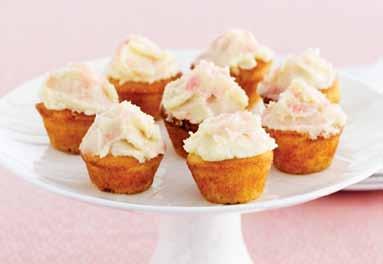
Bake for 12 to 15 minutes or until golden brown and a skewer inserted into one cake comes out clean. Stand cakes in pan for 5 minutes before turning out onto a wire rack to cool.
Make icing: Using an electric mixer, beat butter, icing sugar and milk in a bowl until light and fluffy. Spread over cake tops.
Place white sugar and 1 to 2 drops of food colouring in a small plastic bag. Rub bag between hands until sugar turns pink. Sprinkle sugar mixture over cakes. Serve.
Sausage patties rolled in flour before frying won't crack open during cooking. Tenderize pot roast or stewing meat by using two cups of hot tea as a cooking liquid.
Bread will stay fresh longer if a celery rib is stored with it in the package.
Thaw frozen meat and poultry in the refrigerator and not on the kitchen counter where bacteria can grow.
Clear the air with this homemade air freshener. Just cut an orange in half, remove pulp, and fill the peel with salt. It will provide a pleasant, aromatic scent anywhere in your home.
Shampoo is a lifesaver if your zip has stuck. Simply drop a little on the ‘stuck part’ and you will once again have a functioning zip.
Rub leather well with olive oil to make it more supple and moist to avoid the cracks. Leave overnight so the oil soaks in well. Next day, shine the leather with the cream and buff well with a soft cloth or chamois.
Suppose I am a grandfather. My grandson is about as old in days as my son is in weeks. He is also as many months old as I am in years. Together, the three of us are 140 years old. How old am I?






(Continued from June 23)
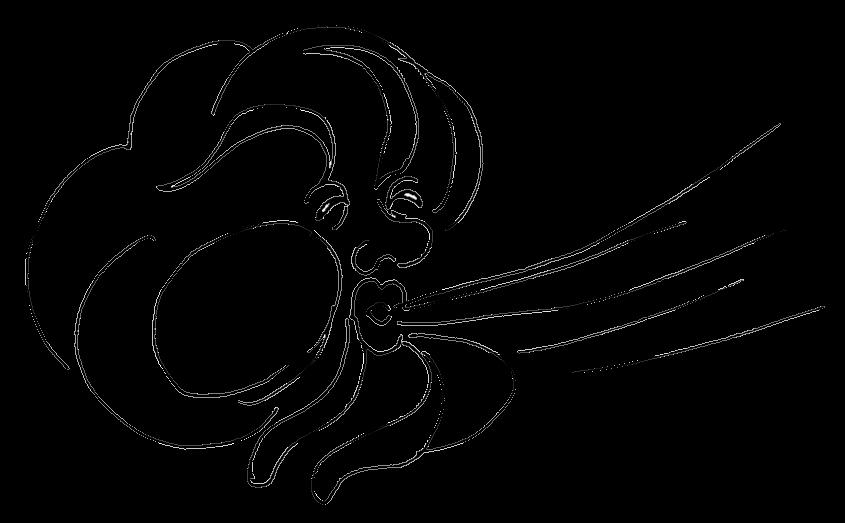
The North Wind began to relate his adventures, whence he came, and where he had been for a whole month.
“I come from the polar seas,” he said; “I have been on the Bear’s Island with the Russian walrus-hunters. I sat and slept at the helm of their ship, as they sailed away from North Cape. Sometimes when I woke, the storm-birds would fly about my legs. They are curious birds; they give one flap with their wings, and then on their outstretched pinions soar far away.”
“Don’t make such a long story of it,” said the mother of the winds; “what sort of a place is Bear’s Island?”
“A very beautiful place, with a floor for dancing as smooth and flat as a plate. Halfmelted snow, partly covered with moss, sharp stones, and skeletons of walruses and polar-bears, lie all about, their gigantic limbs in a state of green decay. It would seem as if the sun never shone there. I blew gently, to clear away the mist, and then I saw a little hut, which had been built from the wood of a wreck, and was covered with the skins of the walrus, the fleshy side outwards; it looked green and red, and on the roof sat a growling bear. Then I went to the sea shore, to look after birds’ nests, and saw the unfledged nestlings opening their mouths and screaming for food. I blew into the thousand little throats, and quickly stopped their screaming. Farther on were the walruses with pig’s heads, and teeth a yard long, rolling about like great worms.”
“You relate your adventures very well, my son,” said the mother, “it makes my mouth water to hear you.
“After that,” continued the North Wind, “the hunting commenced. The harpoon was flung into the breast of the walrus, so that a smoking stream of blood spurted
“I looked into the deep river, and saw it rushing down from the rocks. The water drops mounted to the clouds and glittered in the rainbow. I saw the
“I raised a storm, which rooted up old trees,” said the West wind

cried out! But I howled loud er than they. They were obliged to unload their car go, and throw their chests and the dead walruses on the ice. Then I sprinkled snow over them, and left them in their crushed drift southward, and salt water. They will to Bear’s Island.”
“So you have said the mother
“I shall leave good I have “But here er from the of all, for he sea about cold, fresh
“Is asked the “Yes, said the not little he was a is all past.”
He came man, and hat to pro jury. In a club, ny tree in the American forests, not a trifle to carry.

“Whence do you come?” asked the mother.
“I come from the wilds of the forests, where the thorny brambles form thick hedges between the trees; where the water-snake lies in the wet grass and mankind seem to be unknown.”
“What were you doing there?”
before me.”
“Why it is hot enough here to roast a bear,” said the North Wind.
“You are a bear yourself,” said the other.
“Do you want to be put in the sack, both of you?” said the old woman. “Sit down, now, on that stone, yonder, and tell me where you have been.” (TO BE CONTINUED)
I stand alone in a desert of nowhere I feel like an alien; unaware with the sense of foreignness in me
Everything moves in slow motion
Like the wind that passes through and slows time
My mind thinks deeply and thoroughly, working through Every crevice to make sure everything is taken into consideration I feel the loneliness and uncertainty closing in on me, Though I stand in the place of openness, I feel clustered in my own body and I remain motionless
In this moment of deepness I strain my consciousness to find my response, Be it from the dust blowing on the ground, Be it in the deep tender breeze that gently Whips strands of hair against my cheek.
I strain to even look at the sky, hoping it would give me a sign Though superstition is not in my nature
And unethical ways does not alter my sense of reason, I strain to find the answer in everything around me
Because I sense that this is the time of Judgement, change and adaptation
Isabella Theresa Ragnauth

From Bangkok to Miami, cities and coastal areas across the globe are already building or planning defences to protect millions of people and key infrastructure from more powerful storm surges and other effects of global warming.
Some are planning cities that will simply adapt to more water.
But climate-proofing a city or coastline is expensive, as shown by New York Mayor Michael Bloomberg's $20 billion plan to build floodwalls, levees and other defences against rising seas.
The most vulnerable places are those with the fewest resources to build such defences, secure their water supplies or move people to higher ground. How to pay for such measures is a burning issue in U.N. climate talks, which recently wrapped up a session in the German city of Bonn.
A sampling of cities around the world and what they are doing to prepare for the climatic forces that scientists say are being unleashed by global warming:
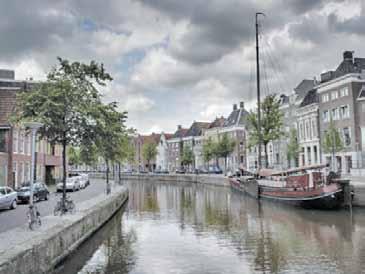
ROTTERDAM, Netherlands. In a country where twothirds of the population lives below sea level, the battle against the sea has been a matter of life and death for centuries.
The Dutch government devotes roughly 1 per cent of its annual budget to its intricate system of dikes, dunes and sea walls. Improvements to cope just with the effects of climate change have been carried out since 2003 — though planning began well before that.
The focus in the 20th century was on a spectacular series of sea defences, including massive steel and concrete barriers that can be quickly moved to protect against storm surges.
But current techniques embrace a philosophy of "living with water:" Floods are inevitable, and it's better to prepare for them than to build ever-higher dikes that may fail catastrophically.
Thousands of waterways are being connected so the country can essentially act as one big sponge and absorb sudden influxes of water. Some areas have been designated as flood zones. Houses that can float have been a building sensation.
Along the coast, the country has been spouting huge amounts of sand in strategic locations offshore and allowing the natural motion of waves to strengthen defensive dunes.
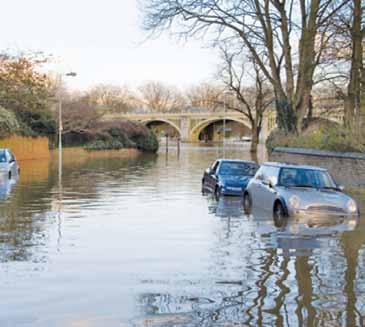
River Thames.
But Londoners already have a powerful flood defence: the 570-yard-long (half-a-kilometre-long) Thames Barrier, composed of 10 massive steel gates, each five stories high when raised against high water.
Some have called for Thames Barrier — in operation since 1982 — to be replaced or supplemented by an even more ambitious flood defence system farther down the river. But Britain's Environment Agency says the defences should hold until 2070.
Meanwhile, environmentally conscious Londoners have made plans to battle some of the other predicted effects of global warming by promoting better water management, expanding the city's Victorian sewage network, and "urban greening" — the planting of trees and rooftop gardens to help manage the urban heat island effect.
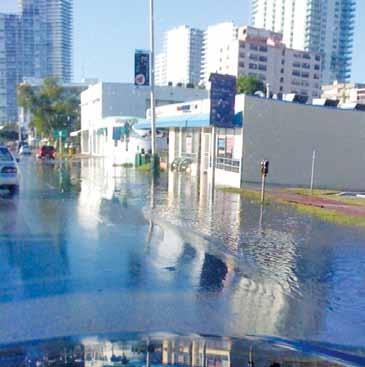
MIAMI. Southern Florida is one of those places that show up as partially under water in many sea level projec
tions for this century. So it's no surprise local leaders are seeking ways to adapt. Four counties of South Florida, including Miami-Dade, have collaborated on a regional plan to respond to climate change. Their overarching goal: keeping fresh water inland and salt water away.
The first action plan calls for more public transportation, stemming the flow of seawater into freshwater, and managing the region's unique ecosystems so they can adapt.
Before writing the plan, the counties reviewed regional sea level data and projected a rise of 9 to 24 inches (23 to 61 cm) in the next 50 years along a coastline that already has documented a rise of 9 inches over the last 100 years.
"The rate [has] doubled. It would be disingenuous and sloppy and irresponsible not to respond to it," said Monroe County Administrator Roman Gastesi, who oversees the Florida Keys.
NEW YORK CITY. Mayor Michael Bloomberg last week announced one of the most ambitious plans for defending a major U.S. city from climate change. Recommendations range from installing removable flood walls in lower Manhattan to restoring marshes in Jamaica Bay in Queens, and from flood-proofing homes to setting repair timeframe standards for phone and Internet service providers.
In lower Manhattan, a removable system of posts and slats could be deployed to form temporary flood walls. The height would depend on the ground elevation and potential surge. The approach is used along some Midwestern rivers and in the Netherlands, city officials said.
Projects also include a 15-to-20-foot levee to guard part of Staten Island, building dunes in the Rockaways, building barrier systems of levees and gates to bar one creek from carrying floodwaters inland, and possibly creating a levee and a sizeable new "Seaport City" development in lower Manhattan.
BANGLADESH. A low-lying delta nation of 153 million people, Bangladesh is one of Asia's poorest countries, and one that faces extreme risks from rising sea levels. Its capital, Dhaka, is at the top of a list of world cities deemed most vulnerable to climate change, according to a recent survey by risk analysis company Maplecroft. The World Bank says a sea level rise of 5 inches (14 centimetres) would affect 20 million people living along the country's 440-mile (710-kilometre) coast. Many of these people would be homeless.
Bangladesh is implementing two major projects worth $470 million that involve growing forests on the coastal belt and building more multi-storey shelters to house people af-
ter cyclones and tidal surges. Developed nations have so far provided $170 million to the fund.
"Bangladesh is opting for adapting to the climate change impacts as the world's developed nations are not doing enough to cut down carbon emissions," said Forest and Environment Minister Hasan Mahmud in a recent speech in Dhaka. "We want the donors to contribute more to our efforts."
CUBA. Officials recently finished a study of the effects of climate change on this island's 3,500 miles (5,630 kilometres) of coastline, and their discoveries were so alarming they didn't immediately share the results with the public to avoid causing panic.
According to the report, which The Associated Press obtained exclusively, rising sea levels would seriously damage 122 Cuban towns or even wipe them off the map by 2100. Scientists found that miles of beaches would be submerged while freshwater sources would be tainted and croplands rendered infertile. In all, seawater would penetrate up to 1.2 miles (2 kilometres) inland in low-lying areas, as oceans rose nearly 3 feet (85 centimetres).
Those frightening calculations have spurred systemic action in Cuba, the largest island in the Caribbean and one that is heavily dependent on beach-loving European and Canadian tourists. In recent months, inspectors and demolition crews have begun fanning out across the island with plans to raze thousands of houses, restaurants, hotels and improvised docks in a race to restore much of the coast to something approaching its natural state.
In the tourist resort of Varadero, the country faces a dilemma: Tearing down seaside restaurants and hotels threatens millions of dollars in yearly tourism revenue, while allowing them to stay puts at risk the very beaches that are the main draw.
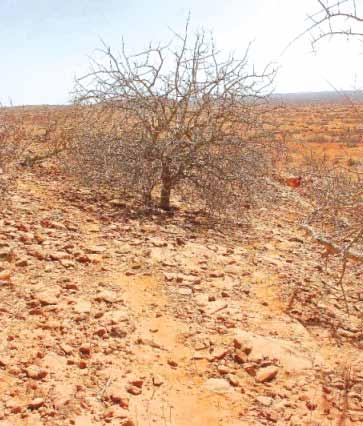
MBEERE, Kenya. While sea level rise threatens some coastal communities in Africa, the continent faces even bigger climate-related problems inland. Climate scientists have projected shifts in rainfall patterns leading to extended droughts in some areas and increased flooding in other parts. To small-scale farming communities, these shifts could be disastrous, adding further stress to scarce water supplies.
Adaptation therefore is focused on learning to cope with the climatic changes, adjusting farming practices and improving water conservation efforts.
In Kenya's Mbeere district, where people say they're noticing longer dry spells, U.K.-based charity group Christian Aid is teaching farmers to help them predict the seasons and know better what to grow and when to plant.
A text messaging system helps farmers get up-to-date weather reports specific to their locations.
"We are supporting them to access and interpret climate information and help them make forward-looking decisions so that their farming is better suited to the predicted changing conditions," said Mohamed Adow, of Christian Aid. "Farmers live off the land and the weather, and small changes to weather patterns can be a big disaster to smallscale farmers in Africa whose entire livelihoods and wellbeing depend on farming." (Source: “Losing fight vs. climate change, locales around the world find ways to live with it” by Karl Ritter, The Canadian Press)
In today’s changing technology, computer users are to become more educated to the current available products, services, software applications and accessories in order to accurately and efficiently use cutting edge technology to perform tasks as required. We will continue to briefly look at some of the various products, services, soft ware applications and accessories that are available.
Virus Protection
Virus Software is a soft ware used to prevent, detect and remove malware (of all de scriptions), such as: computer viruses, mali cious BHOs, hijackers, ran somware, keyloggers, backdoors, rootkits, tro jan horses, worms, ma licious LSPs, dialers, fraud tools, adware and spyware. Computer se curity, including protection from social engineering techniques, is commonly of-

fered in products and services of antivirus software companies. Signature-based detection involves searching for known patterns of data within executable code. However, it is possible for a computer to be infected with new malware for which no signature is yet known. To counter such so-called zero-day threats, heuristics can be used. One heuristic approach, generic signatures, can identify new viruses or variants of existing viruses looking for known licious code, or slight variations of such code, in files. Some antivirus software can also predict what a file
The Developer ID allows Gatekeeper to block apps created by malware developers and to verify that apps haven’t been tampered with. If an app was developed by an unknown developer — one with no Developer ID — Gatekeeper can keep your Mac safe by blocking the app from being installed

in: Apple has designed OS X with powerful, advanced technologies that work together to constantly scrutinize, encrypt, update — and ultimately keep your Mac safer. The following are some of the useful technologies available.

Gatekeeper makes downloading apps safer Gatekeeper makes it safer to download apps by protecting you from inadvertently installing malicious software on your Mac. The safest place to download apps for your Mac is the Mac App Store. Apple reviews each app before it’s accepted by the store, and if there’s ever a problem with an app, Apple can quickly remove it from the store. When you download software from any other place on the Internet, Gatekeeper makes that safer, too. Developers can get a unique Developer ID from Apple and use it to digitally sign their apps.
Gatekeeper gives you more control over what you install. Gatekeeper gives you three security options. Just like today, you can download and install apps from anywhere on the web. Or you can choose the safest option and download and install apps only from the Mac App Store. Or use the default option, which allows you to download apps from the Mac App Store as well as those signed with a Developer ID. If an app is unsigned, Gatekeeper blocks the app from being installed and warns you that it did not come from an identified developer. If you’re sure the app is safe, you can manually override Gatekeeper by Control-clicking the app and choosing to open it. Software updates keep your Mac

safe. The best way to protect your Mac is to keep your software up to date, and OS X Mountain Lion makes it easier than ever. It unifies software updates for apps in the Mac App Store and updates to OS X. When new updates are available, Mountain Lion sends you a notification. Just accept the updates with a click and they download automatically. OS X now checks for new updates every day, so it’s easy to always have the latest and safest version of OS X. (TO BE CONTINUED)

If you thought the monkey-like robot AMEE seen in the Val Kilmer sci-fi flick “Red Planet” was a tad far-fetched, think again. The German Research Centre for Artificial Intelligence (DFKI) and the University of Bremen are working on an ape-like robot called the iStruct Demonstrator that it classifies as a "Space Robot." Lately the mechanical monkey has been practicing how to walk and balance in the centre’s mock lunar landscape. Exploring the hazardous lunar landscape calls for a variety of forms, and researchers at the DFKI are exploring their options (including a combination of legged and wheeled robots). An ape-like body has certain benefits over a wheeled robot; its four-legged stance is stable when scrambling over obstacles or hilly terrain, and it can easily right itself if it falls over. Then when it needs to do something with its hand(s), it could feasibly balance on its hind legs to free them up for manual work. The CHIMP robot currently being developed for the DARPA Robotics Challenge has adopted a similar strategy. With renewed international interest in lunar missions, there is a remote possibility that iStruct (or one of its descendants) could be frolicking on the Moon at some point in the future. Colonizing the Moon with robots begins by developing one that can move and react intelligently to whatever situation it finds itself in.
It's a small step for a robot ape, but a potentially giant leap for robot ape kind. (GIZMAG)

US-based Guyanese Karr Dyal is a celebrated artist who creates pieces immortalizing his heritage, and he believes that the “right kind of influence” contributes to creativity.
Born in Guyana, Dyal attended the Burrowes School of Art and graduated with a Diploma in Fine Art. He also graduated with a Bachelor’s in Fine Art from the School of Visual Arts, and graduated as a Master of Arts (MA) and Master of Fine Arts (MFA) from the New York Institute of Technology. Dyal is currently employed as technology professor at LIM College in Manhattan, NY.
In an interview with Guyana Times Sunday Magazine,Dyal mentioned that his art career, as well as his professional career, got a significant start just after finishing high school and becoming a student of the Burrowes School of
Art. While a student at Burrowes, one year later, he was appointed art master of St. Roses High School and the following year became president of the Burrowes School of Art Student Association. In that same year being elected president, he was selected to represent the art school at Carifesta in Barbados.
The artist was awarded a special prize for his drawing “Portrait of Tony” in the National Exhibition of Visual Arts. This painting was subsequently bought by the government and is currently housed in the National collection.
In explaining the essence of his art, Dyal stated, “Migrating from Guyana to the United States of America many years ago and clinging on to most of my traditional values, I continue to be effervescent in representing my
heritage through art, even amidst the challenges posed by migration and adaptation to a new land. I remained conscious that with the progression of time and inclination there will be a more ex-
pressive Guyanese simulacrum through art in the new land.”
Over the years, Dyal has enjoyed exhibiting his art at various international locations. He presented a ‘Man-Made Cave Installation” featuring art and animation (giving an aesthetic analysis of cave art) at the NYIT Gallery 61 in 2009. Additionally, he was part of a two-person show at the Queens Council on the Arts in 2002. In 2000, he had his oneman show at the Great Hall in Queens New York. The artist has also participated on numerous occasions in the National Exhibition of Visual Arts in Guyana.
His art commissions include life-size bronze portraits of historical personalities in Guyana, one such being “Kowsilla” commissioned by the Guyana Agricultural and General Workers Union in 1999. In 2002, “Canecutter”,

a 5-feet high cement and steel sculpture, was commissioned by Dr Surujpaul Ragnauth in New York. Moreover, his other mix media sculptures are part of numerous for private collectors in New York.
In May 2012, Dyal was honoured by the Indo-Caribbean Council, NY, for his accomplishment in sculpture and art, and contributing to the IndoCaribbean body politics and the Indo-Caribbean identity.
Noting the source of his inspiration, the artist said, “My inspiration is my experience, with people and things and education as well. No one is born creative; perhaps with the ingredients, but with practice that conscientiousness is nurtured and reflected in one’s endeavours. The right kind of influence is also helpful. This has been my personal experience.”
Hermanus Hill Bertus Post was born Dec. 22, 1753 in Utrecht, Netherlands, the fifth child of his parents. He lived a comfortable life at first, and attended a distinguished school where he showed a strong interest in religion. However, when his father lost his public position and became bankrupt in 1768, Post was forced to leave school at 14.
The family moved at least twice before Post returned to Utrecht and started working in an office. But he was unable to continue working there as he was, according to his later friend John Wray, too proud
for that kind of work “after being accustomed to wear a sword by his side, and to associate with the most respectable people of the city.”
With an interest also in travel, in 1774 Post arrived in the Dutch settlement of Guiana, where his parents had earlier moved to, with letters of recommendation to show the prominent members of Demerara society, and the intent to buy a plantation.
With his energy and willingness, Post was soon manager of a plantation on the west side of the river. Just two years later, in 1776, with the help of a friend, he came into possession of land on the east coast, described as being “about 8 miles from
Stabroek and 1 mile from the sea to the Courabana Creek.”
The fl 20, 000 (Dutch Guilders) purchase price was paid half by “the children Post” and the other half by a relative of Post’s mother. In memory of his friend who had helped him, he named his plantation “Le Resouvenir”.
According to AN Paasman, author of “Reinhart: Dutch literature and slavery at the time of the Enlightenment” (1984) Post began at Le Resouvenir with 13 slaves, including a blind old woman, and became “manager, carpenter and mason” in his efforts to convert the swampy, flood prone lands into agricultural fields with “a system of locks, dams and sluices”.
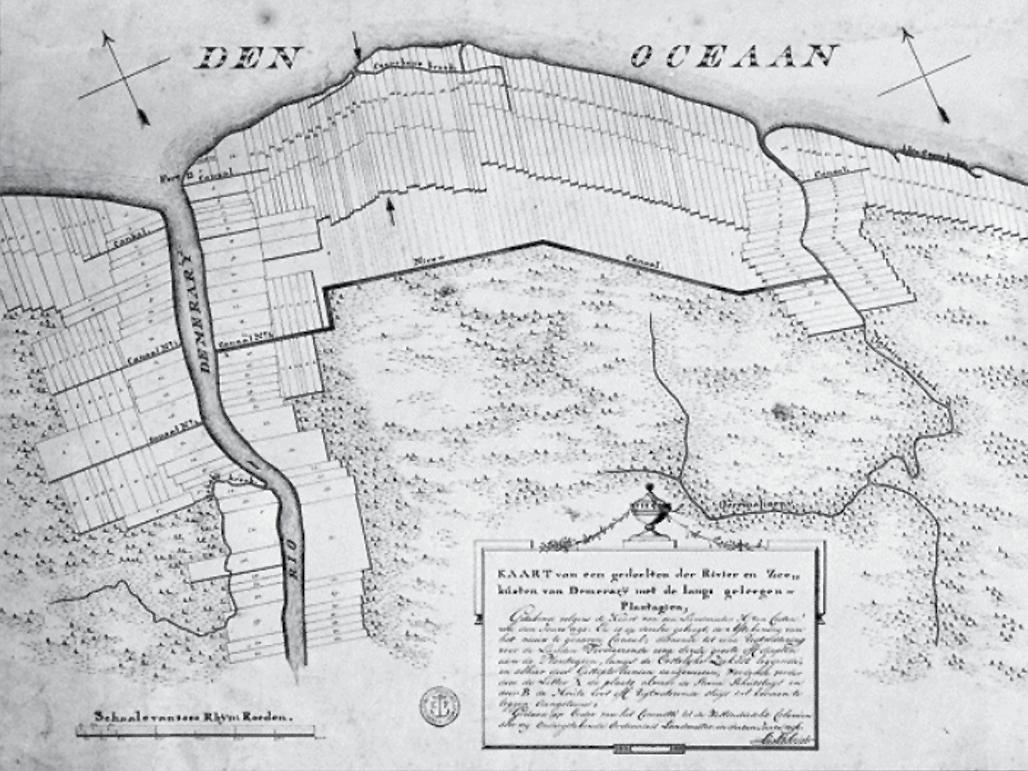
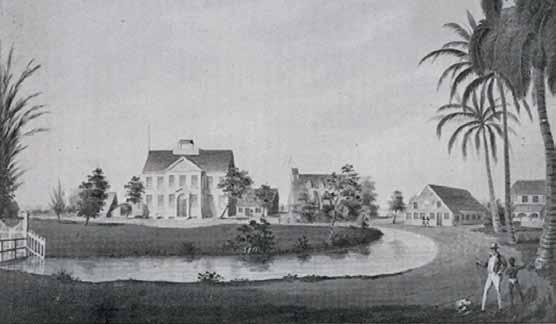
He slept in a hammock in a hut with a fire burning all night to keep away the numerous mosquitoes, and it was from this that the plantation and plantation house were eventually built where he cultivated coffee, cocoa and cotton, and later included a vegetable and flower garden.
Post soon became coowner of other plantations, and was a prominent member of Demerara society. He became “ensign of the civil division of the East Coast” in 1778 and lieutenant in 1779.
For an undetermined period Post is said to have had a live-in relationship, but in May 1781 he married another woman: the daughter of the neighbouring plantation’s owner. Intending to move back to the Netherlands with
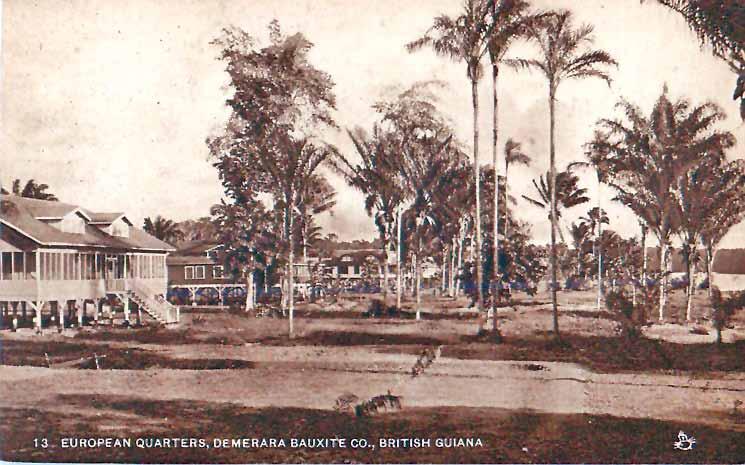
his new bride, Post divided Le Resouvenir between his brothers, sisters and parents. But the “Fourth English war” delayed these plans as just after the British took the colony in Feb 1781, the French wrested the colony away from the British in Feb. 1782. Then the Peace of Paris treaty in Sept 1783 returned Demerara, Essequibo and Berbice to the Netherlands.
Post and his wife left for the Netherlands in May 1783. In his native land however, Post was disillusioned with Dutch religious society and deemed the country “pagan”. In July 1784 he made arrangements to buy back the plantation from his brothers and sisters, and returned with his wife to Demerara a few months later. (TO BE CONTINUED)
As noted, all three are 140 years old. Thus, a+b+c=140, where ‘a’ is grandfather, ‘b’ is son, and ‘c’ is grandson. Additionally, grandson being about as many days old as son is in weeks gives 365c=52b. Finally, the grandson being as many months as I am in years gives 12c=a. Thus, the following are known.
a+b+c=140
365c=52b or b=365c/52
12c=a
By calculation and substitution we have as follows.



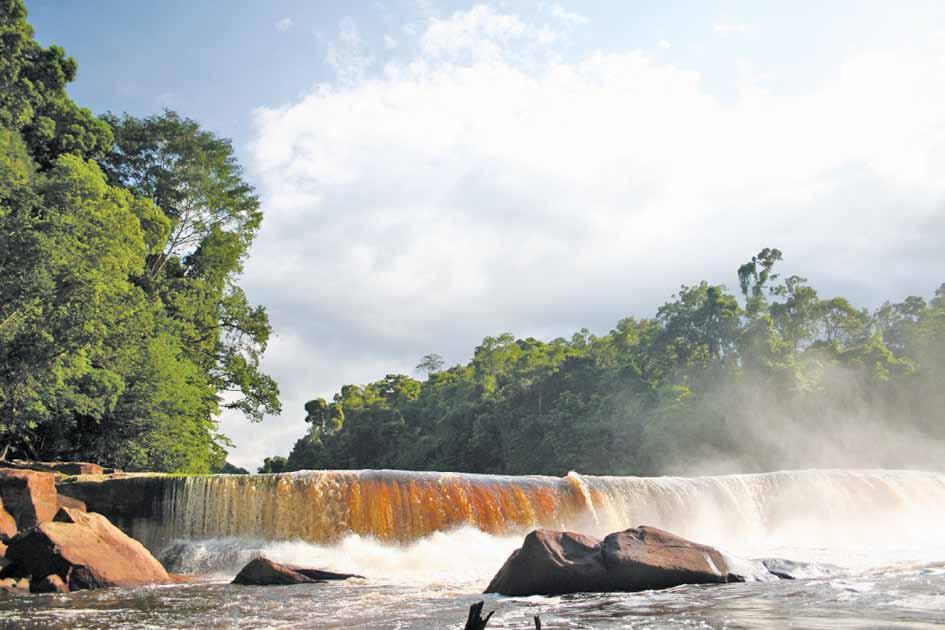
The Mazaruni River is a tributary of the Essequibo River in northern Guyana. Its source is in the remote western forests of the Pakaraima Mountains, and its confluence, with the Cuyuni River, is near Bartica.
The Roraima plateau is also the source of the Mazaruni River. The Mazaruni River drops down from each Roraima plateau through three steep sided canyons with many picturesque falls and creeks.
It also flows over three distinct habitats: the flat tops of Roraima plateau, known as “tepuis”, the lower two plateaus and the low lands. Each habitat is characterized by its own vegetation.
The habitats are fantastic lands of rain swept sandstone eroded into forms with exotic plants and savannahs with bands of canopy jungle where beautiful orchids are found.
The iron hydroxide stained brown waters of Mazaruni are home to many fish species. The most abundant are the large and dangerous black electric eels (numfish), piry (relative of piranha cutleback), haimara, and baiara. However, the most famous fish is lau-lau, with specimens weighing up to 200 kg.
Mazaruni River waters are also home to the largest water snake, the anaconda, known locally as “water kamudi”; large herds of wild pigs – peccaries, sometimes in large groups of a few hundred, live on swampy flats of the Mazaruni River.
Many monkeys, of which the howling monkey is the noisiest, inhabit tree tops, sharing the space with many types of birds. Pairs of red, yellow and blue macaws add to the kaleidoscope of life at the Mazaruni River.

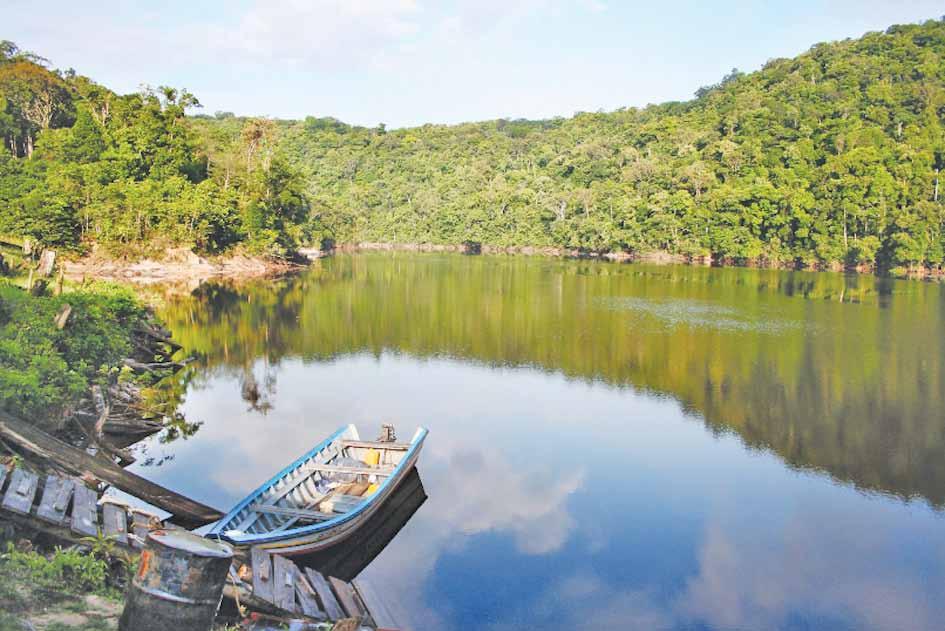
By Melvin Durai
Spelling bee fans who have dreamed of watching Snigdha Nandipati battle Kaavya Shivashankar or Sukanya Roy duke it out with Anamika Veeramani will soon get their wish. The former national spelling champions and many others are expected to participate in the inaugural season of the long-awaited Spelling Premier League (SPL).
Modelled after the hugely successful Indian Premier League (IPL), the professional spelling league will debut next fall with teams in eight SPL American cities. The league, which will feature former winners of the National Spelling Bee, as well as other super spellers, has signed a lucrative TV contract with NBC. The network already dominates the TV ratings with “Sunday Night Football,” and is expected to crush its competition by adding “Saturday Night Spelling.”
“We’re excited about the potential of the SPL,” said Mark Lazarus, chairman of NBC Sports Group. “It’s going to be a high-tech, highintensity version of the National Spelling Bee that will keep viewers on the edge of their seats.”
Players will get only 30 seconds to spell each word and the audience will get to watch all the live action, as well as instant replays, from 12 different angles. “We expect to use our Judge-Cam quite a bit,” Lazarus said. “That’s an angle you don’t see too often. We’ll also give you some great shots from the Parent-Cam, as well as the Younger Sibling-Cam. And don’t forget about the
overhead shots from the Goodyear Blimp.”
During each match, one speller will be “mic’d up,” allowing viewers to listen in on conversations in the speller seating area. “If you’ve ever wondered what the spellers say to each other after one of them has successfully spelled a word, you’ll love the ‘mic’d up’ feature,” Lazarus said.
“You’ll hear spellers talking smack, one of them saying, ‘Nice job, but I learned that word in kindergarten,’ and the other responding, ‘Oh yeah? Well, my dog could have spelled your word.’”
Actress Tori Spelling has been appointed honorary commissioner of the new league. At a press conference in New York, she announced the names of the eight teams, assigned to two divisions. In the Northern Spelling Division (NSD) will be the New York Vocabulists, Chicago Etymologists, Washington Wizkids and Boston Brains. In the Southern Spelling Division (SSD) will be the Georgia Geniuses, Memphis Memorizers, San Francisco Spellkings, and Dallas Dictionary-Studiers.
Eight businessmen, including three IndianAmericans and one Pakistani-American, have paid $5 million each to be franchise owners in the SPL, betting part of their fortune on America’s seemingly insatiable appetite for spelling.
“It may seem like a gamble to most people,” said Raj Bhattal, owner of the Etymologists, “but in my family, as in many other Indian-American families, the National Spelling Bee is like the Super Bowl, except that we don’t get to see
Janet Jackson’s breasts during halftime.”
The inaugural SPL player draft will take place on July 30. This year’s National Spelling Bee champion Arvind Mahankali is expected to be the top draft pick, but he’ll first have to prove himself at the SPL scouting combine in Indianapolis. What’s at stake is a $500,000 signing bonus, as well as the adulation of thousands of spelling-crazed pre-teen girls.
Each team will bring five draft picks and another five undrafted free agents to a three-week training camp in August. Half the players will be cut at the end of training camp – asked to turn in their dictionaries.
Other rules that will govern the SPL:
– Each team will have a salary cap of $5 million for players, with another $1 million allocated to three coaches and $100 to as many as 10 cheerleaders.
– The trading deadline will be Oct. 15. All trade agreements must include parents’ signatures.
– All players must wear Nike spelling gear, including jerseys, pants and prescription glasses.
– Players will be tested randomly for performance enhancing drugs. Positive tests may result in suspensions and, for second offenses, letters to parents.
– Each match will last up to 15 rounds, followed by (if necessary) a sudden-death tie-breaker in which players will be asked to spell words backwards. If players are still tied after 20 rounds, they will be asked to spell random names from an Indian phone book.


In class one day, Mr. Johnson pulled Johnny over to his desk after a test, and said, “Johnny I have a feeling that you have been cheating on your tests.”
Johnny was astounded and asked Mr. Johnson to prove it. “Well, said Mr. Johnson, I was looking over your test and the question was, ‘Who was our first president?’, and the little girl that sits next to you, Mary, put ‘George Washington,’ and so did you.”
“So, everyone knows that he was the first president.”
“Well, just wait a minute,” said Mr. Johnson. “The next question was, ‘Who freed the slaves?’ Mary put Abraham Lincoln and so did you.”
“Well, I read the history book last night and I remembered that,” said Johnny.
“Wait, wait,” said Mr. Johnson. “The next question was, ‘Who was president during the Louisiana Purchase?’ Mary put ‘I don't know,’ and you put, ‘Me neither’.”
A man was opening a wildlife park and needed a bear for an exhibit. He called some hunters and asked them if they could recommend someone who specialized in taking big game alive. They told him about a man that was a little unorthodox but the best in the business. He called the specialist and made arrangements to meet him at a spot in the woods where a bear had recently been spotted.
After waiting a while an old beat up pickup backed in next to him. An old man jumped out and started unloading an unusual assortment of items. He took out a feather, some rope, a gun, and an old hunting dog.
“What are you going to do with all of this?” asked the park owner.
"Well this is Old Blue,” the old man said referring to the dog,” He's the best tracking dog there ever was. He is going to track the bear down and run him up a tree. Then I'm going to climb the tree with this feather and start tickling the bear. That will loosen his grip and he will fall out of the tree. Old Blue is trained to lunge between his legs as soon as he hits the ground and bite down with all of his might. The bear will throw his arms up in pain. That's when you take the rope and tie him up and we've got him." The old man said.
"Wait a minute" Said the park owner. I want to take the bear alive. What's the gun for?" The old man looks at the gun and says "That's in case the bear knocks me out of the tree first.........then you shoot Old Blue!"
Big Family
Flying home from France on a recent trip, I noticed a rather haggard looking mom walking into the customs area with eight children-all under age 10. Collecting their many suitcas es, the nine of them entered the cramped cus toms area.
A young cus toms official watched the large entou rage in disbelief, ''Ma'am,'' he said, ''do all these children and this luggage belong to you?''
''Yes, sir,'' the lady said with a sigh, ''they're all mine.''
The customs agent began his interrogation: ''Ma'am, do you have any weapons, contraband or drugs in your possession?''
''Sir,'' she calmly an swered, ''if I'd had any of those items, I would have used them by now.''
Made in where?
A three-year-old boy went with his dad to see a litter of puppies. On returning home, he breathlessly informed his mother, "There were 2 boy puppies and 2 girl puppies."
"How did you know?" his mother asked.
"Daddy picked them up and looked underneath," he replied. "I think it's printed on the bot tom."