








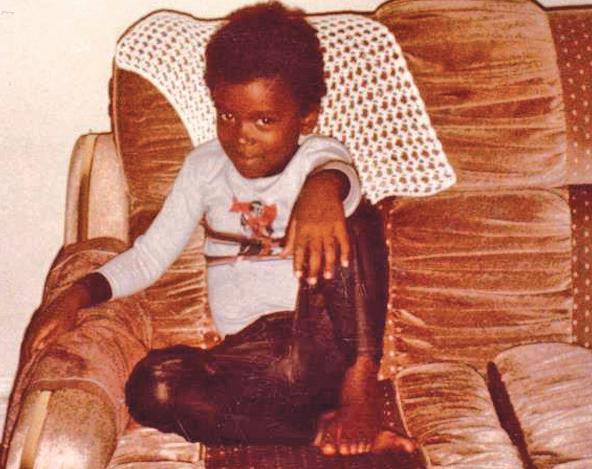
For this year’s Halloween special, Guyana Times Sunday Magazine speaks with U.S. -based Guyanese film director, producer, writer, editor and actor Sean Weathers, whose mother experienced life in the now infamous Jonestown community, and he tells how his struggles in life have inspired him to produce his own horror films.
Sean’s story is a story of life, love, redemption and the power of positive thinking. He is a well-known psychic who is said to be able to levitate small objects, cast out demons and communicate with dead people. Sean currently lives in New York and is the co-founder of Full Circle Filmworks.
Looking back at his mother’s experiences, he recalls that, while pregnant with him, his mother was one of the few survivors of the mass suicide that occurred at Jonestown in 1978 at the hands of psychotic cult leader Jim Jones and his organization called the People’s Temple.
With no money and nowhere to go, she lived for a while in the dangerous jungles of Guyana, though she
ensured that Sean was safely brought up here. However, life here, post-Jonestown, continued to present many hardships.
At the age of 10, he and his family migrated to the Dominican Republic, then to Haiti, where they would take a small boat to Miami, Florida; they have been in the U.S. ever since.
“Personally, I can’t recall anything about Jim Jones,” he says, “but I've heard a lot of what happened during my mother's time there, and it still has her traumatized to this day from the stress and nightmares. Through her I've lived through the pain and dread of the Jonestown massacre. My experiences have given me a certain view of the world around me, and filmmaking gives me an opportunity to share it. The nihilistic views seen in my films are a direct reflection of what I know happens to people who have blind faith.”
In 1994, a determined Sean, after years of struggling with self-identity and coping with numerous challenges life hurled at him, began to look for work as a filmmaker. Around this time, he also began what would be a
short-lived modelling agency.
After about a year, he abandoned the idea and decided to focus his energy entirely on filmmaking. His earliest efforts were experimental documentaries, which were shot in and around his neighbourhood. However, after a few unforeseen circumstances, Sean went on a hiatus from filmmaking.
In 1995, a highly motivated Sean decided to get back to work on his experimental films. He met up with filmmaker Aswad Issa, who decided to collaborate on his next effort titled “Gemini in Bed-Stuy”. This zero-budget film was a comedy revolving around a macho man named Gemini who spent all his time and energy pursuing women in his neighbourhood. Approximately 75 per cent of this film was shot, but due to casting-related issues, its entirety was never completed.
Then in 1998, Sean produced “They All Must Die!” Too gut-wrenching for film festivals and screening venues, and with no distributor wanting to touch it because of the legal issues surrounding it, the film had been shelved for more than 13 years. In 2011, the film was released by Music Video Distributors (MVD) through a contract loophole.
“My first film “House of the Damned” was a very cheesy horror comedy I made in 1996 with some friends. My second film, “They All Must Die!” was about three black street thugs who sexually assaulted and tortured a white woman who moves into their neighbourhood. It's a very bleak and dark film that easily says more about my psyche than any film I've done so far,” he muses.
“It cost me a lot of opportunities in the business that I'm aware of, and likely a lot more that I'm not. It also got me in a lot of legal trouble because someone sent it into

the police and said it was a snuff film. There was a long investigation that made me question a lot of things and do a lot of soul searching. It took 13 years before a distributor would finally release it in 2011.
“The third horror film I did was “Maniac Too!” it's on a DVD called “Vault of Terror” which also has a

short film which features my acting debut, and two classic horror films on it as well, “Night of the Living Dead” and “The Driller Killer”. The four-movie DVD set was released last month in time for Halloween.”
Aside from his first film, Sean says, he never set out to make horror films, pointing out that people would interpret them to be horrific in general, and so they are labelled into that genre. But he does not mind being labelled as such because his films reflect his upbringing, which was “bleak, gritty, harsh and raw.”
“That's what you're going to get from me because that's how I see the world around me. I'd love to make a film on Jim Jones, if and when I can get the budget. In terms of the near future, I have three films due out next year. I'm currently working on several scripts and plan to start shooting my next film, hopefully some time before the end of the year,” he reveals.
For more information on Sean’s work visit his website at www.fullcirclefilmworks. com
Guyanese women have years ago been instrumental in developing classical music locally. Through these passionate women, who have become cultural icons, the Guyana Music Teachers’ Association was founded.
Although there were males who played a significant part in the association, the women were the backbone of the association, and built it to what it is today. One such person is the late Lynette Dolphin. She was a musician and an academic teacher who worked with the government for 60 years. She was the first secretary of the association and its president for many years. Dolphin was also the organiser of the Schools’ Music Festival in 1942, and one of the organisers of the Competitive Music Festivals from 1952.
As a chairman of the Department of Culture for more than 25 years, she had a strong influence on the progress of music in the country. She compiled six books of songs for use in schools: “One Hundred Folk Songs of Guyana” the most notable one. The musician had served since 1965 as the local representative of the Associated Board of the Royal School of Music, London. She was awarded the Order of Roraima in 1986.
Another notable woman, Mildred Lowe, still a passionate musician who migrated to the U.S., graduated from Caldwell College in New Jersey and has taught music since 1971. Her contribution to the association had been in the form of conducting workshops in theory, voice and piano. She also was involved in several events, both national and international, and led the Guyana delegations to Carifesta in 1992 and 1995. Lowe was awarded the Golden Arrow of Achievement in 1996.
Of note too is Marilyn Dewar who continues to be an avid member of the association. She has always played a vital role as secretary of the association. Dewar is responsible for the monthly meetings and the various activities which the association hosts from time to time. She has her own music school and, in addition, is the organist and choir director of Christ Church, and the accompanist of the Woodside Choir.
The association’s founding president, Eleanor Kerry, was also active in music in Guyana. Over a span of almost 50 years she remained involved in all the activities of the association. When, in 1959, she was awarded the M.B.E. (Member of the Order of the British Empire) all the musicians of Guyana rejoiced
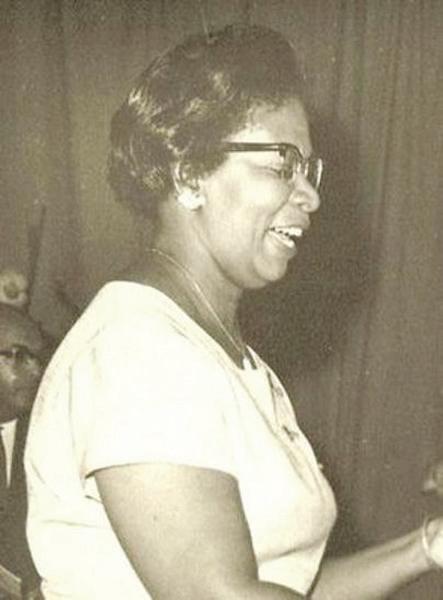
with her. Sadly, she passed away in 1997. Valerie Rodway (1919-1970) was another noteworthy teacher and composer who contributed largely to music in Guyana. She is best known for her national songs, “O Beautiful Guyana,” “Kanaïma,” “Hymn for Guyana’s Children,” “Arise, Guyana” and “Guyana the Free”. She also put to music the famed Guyanese independence poem by Martin Carter, “Let Freedom Awaken.” She was awarded the Cacique Crown of Honour, and the Guyana Folk Festival Committee bestowed upon her a Wordsworth McAndrew Award for her unselfish service to the development of Guyanese culture.
The Guyana Music Teachers’ Association was formed out of a need to ensure that music teachers in this country had access to the most up-to-date information regarding music teaching. At the inaugural meeting held on April 7, 1948, at the 186 Waterloo Street, Georgetown home of the late Lynette Dolphin, the-then elected president Eleanor Kerry, spoke about the need for a Music Teachers’ Association and the benefits to be gained from the existence of such an organisation.
From that meeting, the aims of the association were to enlarge and improve the knowledge of music of its members and to stimulate their interest in every branch of musical development; to promote discussion on matters of interest to music teachers, and to make

united representation in any matter affecting the teaching of music in this country; to keep abreast of current musical events and modern methods of teaching; and to undertake any other activity for the betterment of the association.
Its objective was to gain access to the most up-to-date and relevant information regarding the teaching of music, instrumental and vocal, for individuals and for schools, especially as it related to the world-wide examinations of the Associated Board of the Royal Schools of Music, which had been established in British Guiana since 1925, and the Trinity College of Music, a similar examining institution. As well as teachers with experience of examinations, there were others with no experience in the correct interpretation of the examination syllabus.
Besides the sharing of knowledge among its members, the association provided a forum where visiting musicians could present workshops, discussions and performances to the local teachers and their senior pupils. In addition, there were illustrated lectures by qualified local musicians, as well as gramophone concerts and film shows. With the introduction of the annual ‘Members’ Night’ every member was required to contribute an item to the programme, thus ensuring that every teacher was featured as a performer at least once in each year. These meetings revealed some hidden talent and provided a great deal of enjoyment to the members.
In December, 1950, the association was registered as a Specially Authorised Society under the Friendly Societies Ordinance. After independence in 1966, the registration was amended to The Guyana Music Teachers’ Association. The association not only promoted and sponsored local concerts but also collaborated with embassies and
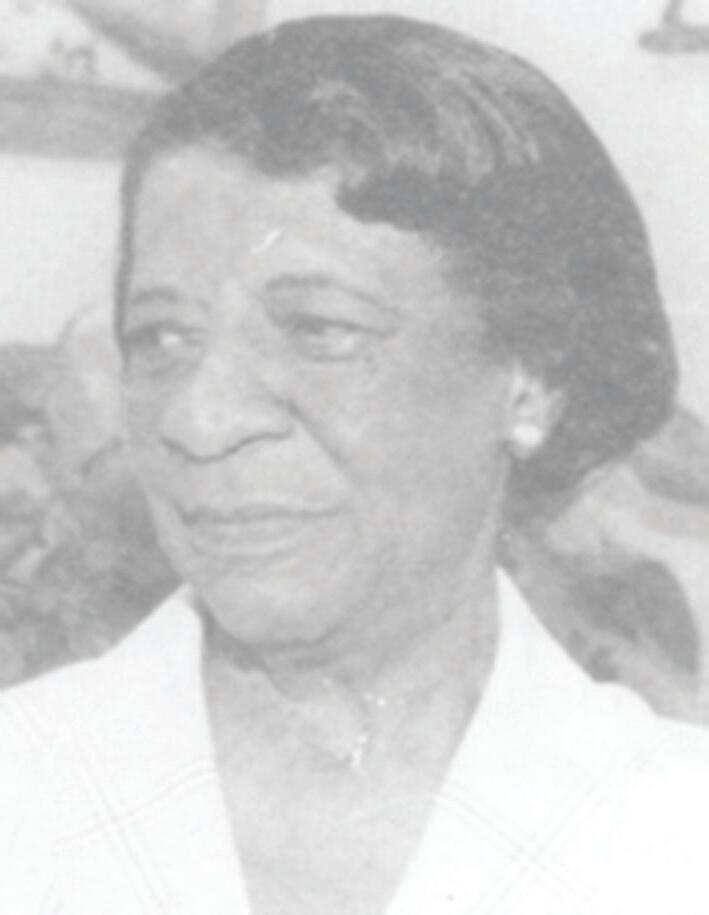
the late president of the Guyana Music teachers' Association and musician Lynette Dolphin
high commissions in bringing celebrated international performers to Guyana. Many of these performers generously held workshops for local musicians.
Today, the association continues to play a fundamental part in promoting classical music in Guyana. Recently, at the National Cultural Centre, the association hosted “Musicians on Stage”, featuring a series of mesmerising melodies and beautifully choreographed dance pieces. The programme included violin, piano, guitar, steel pan and drumming pieces. There was also choral and vocal singing, along with choral poetry. There are other women who have and still promote and preserve classical music in Guyana, to whom we are grateful for their efforts in keeping Guyana’s classical musical heritage alive.

By PetamBer Persaud
(Extract of an interview with Mosa M. Telford September 2013, Georgetown, Guyana. Telford won the 2012 Guyana Prize for Literature in the category of drama, awarded in September 2013. Telford is a playwright – radio and stage –and short story writer. Her prizewinning short story was published in The Guyana Annual magazine.)
PP I am excited, really, really excited about what has happened recently to our literature and what is likely to come out of this –I’m referring to the awarding of The 2012 Guyana Prize for Literature. What happened? Four of the five winners were locally based Guyanese writers including you, Mosa, so first things first, congratulations...
MMT Thank you, Petamber...
PP Congratulations for winning that prize in the category of drama. And thank you for your contribution to what I would call a new day in Guyanese literature, a sort of renaissance – four locally based writers winning prize, this is historical and this is a moment we ought to build on. And there’s more – three of the winning entries were submitted as manuscripts!
For a minute let’s relive that moment (I know you must be reliving it frequently) when the Chief Judge announced clearly that the panel had no hesitation, no doubt in declaring “Sauda” the winning play and its author, Mosa Telford the winning playwright.
Before she [the chief judge] made that declaration, she said that “Sauda” is, and I quote, centred on a thought provoking subject of a girl who grows up in fear, after her mother continually rejects her because of the darkness of her skin; as a result she falls into prostitution. The dramaturgy is strong – the dialogue, characterization, pace and

timing all worked, and the way women’s secrets are revealed in the course of the action as suspense and emotional depth…the issues she deals with: women’s sexuality; teenage pregnancy; ingrained racism and prostitution, are contemporary. Despite this, it is a very good attempt to dramatise and portray the hypocrisy of social standards.
I am hoping we could touch on all these things because I want to focus on the talented writers we have right here in our midst. Let’s ease in that discourse by sharing how you felt at the time of the announcement.
MMT For me it was a feeling of satisfaction, a feeling of great accomplishment. Also it has boosted my confidence as a writer because in the past most of the stuff I’ve written, I always feel to myself that I could have done better. So I was never really, really happy with my work. So winning the Guyana Prize has not completely gotten rid of that feeling but it has reassured me that I could write.
So as I said before, it had boosted my confidence and it has now put me under a lot of pressure because everything I write now has to be of a certain standard,
I wouldn’t accept anything else for myself from my work and I know people will be looking at my work with more interest. Overall it is a great feeling and now I have to more on with my game...
PP All this is saying is that something good is happening among our writers and it augurs well for our literature. For one, there are writers as you said earlier questioning their work; to me this is a learning process when the writer comes to such an understanding of their work where he or she is willing to learn, to hone that skill, to write and rewrite, to appreciate criticism and continue. This is how we develop as writers.
This would surely act as an inspiration - so many locally based writers winning the prize. I am looking forward to the next round of the Guyana Prize because we have evidence what locally based writers can do, how they tackled the issues, the contemporary situations, and we could better relate to how you and the others, and I must mention the others like Ruel Johnson and Cassia Alphonso, how you handled the issues from within, writing from within the setting.
But back to your winning play – what is “Sauda” about?

MMT “Sauda” came out of a lot of my personal experience that I have had gowning up because of my skin colour. As a child I was teased a lot by my peers; even some adults would have negative things to say about my skin colour, going through school was very difficult for me – a lot of times I was depressed, a lot of times I wanted to quit school due to all the teasing and taunting making me feel that I was not good enough, always feeling there was something wrong with the colour of my skin. I started getting over that when I was seventeen years old; my grandfather passed away and left numerous books on African history which I started reading and building pride in myself.
PP Ah, reading, we’ll come back to my pet peeve.
MMT But all through the years, it was at the back of my head – I need to write something on this issue. So “Sauda” came out of a dream – a lot of my work results from dreams. One night I had this dream about this pregnant young lady who was thrown out of the house by her mother...next morning, I jotted down the dream and then started developing the idea.
“Sauda” is basically
about a dark-skinned girl who mother never showed her any love and she felt that something was wrong with the colour of her skin because of the remarks everyone kept throwing at her. As a result her grew up with a low esteem of herself and is seeking love outside of the home. The upshot is she finds herself pregnant not knowing the father of the child and her mother throws her out and a neighbour took her in who really didn’t have honourable intentions towards her....But the point I wanted to make at the end of the play is that no matter people have to say, no matter the negative things people have to say about your complexion, at the end of the day, you are beautiful.
PP And you are satisfied you’ve made that point in your plot?
MMT Yes, I was satisfied. But the chief judge did say something in way that made it appear that I did something wrong; she said I made all the women victims; but I did that on purpose – I wanted to tell the story from that viewpoint ...all the issues that the women had, they blamed them on men. It took me eight months to write that play and I am satisfied with my effort...
PP It was hard work and it paid off with this win.
Let me pick up on something you said earlier about reading those books left by your grandfather and how it sort of influenced, changed your life... (TO BE CONTINUED)
Responses to this author telephone (592) 226-0065 or email: oraltradition2002@ yahoo.com
What’s happening:
• The Guyana Annual 2012-2013 magazine is now available at Guyenterprise Ltd, at Austin’s bookstore and from the editor at the above contacts. This issue of the magazine is dedicated to E. R. Braithwaite. The magazine also features articles on copyright, law of intellectual property, creative industries, oral traditions of Guyana, the future of West Indian cricket and the future of books.
• Look out for the launch of “An Introduction to Guyanese Literature” by Petamber Persaud. This 150-page-book is a rich collection of Guyanese pride and joy containing more than 100 photographs. Look out for information on the Mexican literature award, and the Walter Rodney creative writing prize.


By Vahnu Manikchand
Twenty-two-year-old John Antonio considers himself lucky to have a job he always wanted, lucky to be working to develop his community and its people, and lucky that even though he did not get the opportunity to complete his education, he has managed to lead a successful life so far.
Antonio grew up in the Amerindian village of Hotoquai in the Mabaruma District, the eldest of six children, who always had to act as a role model for his siblings. He attended the village primary school, which at the time included a secondary section, but only up to Fourth Form.
“There was no nursery school in Hotoquai, they only had a primary and secondary school; when I reached Fourth Form I was done with school because they did not have provisions for CXC exams and my parents could not have afforded to send me elsewhere to complete my education,” he recalled.
After being forced to cut short his academic years, Antonio began working with his parents on their farm. He explained that while he has been helping out at the farm since he was 12 years old, he knew that was not the life he wanted.
Shortly after, Antonio was given the opportunity to work with a community based volunteer programme in Mabaruma. The project had different aspects where volunteers from around the world would team up to teach agriculture and apiculture to hinterland communities.
“I was privileged to get the opportunity to work in the agriculture sector… I think I was chosen to be under that sector because of my background ideas in farming; so doing all that extra work on the farm did not go to waste, it helped me to get one step closer to realizing my dreams.”
During the project in late 2010, Antonio had to work along with the Ministry of Amerindian Affairs and his relentless hard work and dedication was recognised. He was encouraged to apply for a job since the ministry had a vacancy for a development officer in Mabaruma. Antonio did not hesitate to capitalize on the offer, and applied for the job, which he landed about three months after.
“I guess that because I didn’t get to complete school and was doing so well with the volunteer project, they thought I was worthy of the position. They probably saw leadership skills in me and thought that I could foster those same qualities in other young persons in the area,” he surmised.
At the age of 19, Antonio became the community development officer for the Mabaruma Sub-District, and was responsible for monitoring the development of that area and meeting the needs of the people. While he was attached to the ministry, Antonio was mostly based in Mabaruma and performed his duties more so as a field officer.
Then in 2013, he was elected by his co-workers at the ministry to be on the Steering Committee for Youth. “No one implemented any guidance or rules for young people in the hinterland and so my co-workers thought that if given the opportunity then maybe I can do that for the youths…and that is what the Steering Committee is about – it’s about reaching out to young people and talking about things that are affecting them. It’s a way to empower them.”
As a child, Antonio was very active in sports, and during his school days participated in as much activities as he could. However he was not as enthusiastic when it came to his academic education as he was a slow learner. It was only after he left school that he realized the importance of education.
“It was after I left school that I developed a liking for reading, especially history. But people don’t know that and so when they see me they think that I’m well educated but I tell them I’m not.”
Antonio explained that he is trying, through his work, to help as many young persons, not only Amerindians, to take their education seriously. “My advice to all young people is to attend school if you have the opportunity to because education is the key towards the development of your future…I was lucky because I didn’t get to complete my education but was still able to get a job that I wanted. But that may not happen for everyone.”


Jasoda Ramlagan is a beauty with a cause. Hailing from Land of Plenty, Essequibo, Jasoda is proud that through pageantry she can fulfill her role as a humanitarian. The Lions Club of Essequibo Coast recently held their fundraising event: ‘Fun Fair and Sari Pageant’ at the Anna Regina Centre Ground in which Jasoda was happy to have participated for the second time. In the sari pageant segment she was awarded first runner-up. Although she did not win the crown, Jasoda was pleased to be part of the fundraising event, which will benefit the less fortunate. The 17-year-old always had a passion for pageantry and was an avid participant in pageants at her Cotton Field Secondary school in Essequibo. The aspiring lawyer recently graduated from high school and has her eyes set on furthering her studies at the University of Guyana.
There are around 100 different species of angelfish (Pomacanthidae) that inhabit the waters of the southern hemisphere.
There are two main types of angelfish: those that live in the freshwater rivers in South America (freshwater angelfish) and those angelfish that inhabit the salty ocean waters (marine angelfish). Both of which are popular aquarium fish.
Freshwater angelfish are native to the Amazon basin and are also found in the rivers running off it. They feed on smaller fish and invertebrates in their natural environment as well as eating particles of food found in the water.
The freshwater angelfish is preyed upon by larger species of fish, birds and marine mammals.


Despite the fact that their names are the same, freshwater angelfish and marine angelfish are not thought to be closely related. Marine angelfish are reported to be almost fearless and are noted to be inquisitive and curious towards divers.
Help the butterfly find the flowers

Earth
Magma is the hot liquid rock under the surface of the Earth, it is known as lava after it comes out of a volcano.
Talc is the softest mineral found on Earth, reaching just 1 on Mohs scale of hardness, it is often used to make talcum powder.


Although Mt Everest is the highest mountain on Earth above sea level, its summit is only the 5th farthest from the Earth's centre. Because the Earth bulges at the equator, mountains such as Mt Chimborazo in Ecuador have summits that are farther away.
The objective of the game is to fill all the blank squares in a game with the correct numbers. Every row of 9 numbers must include all digits 1 through 9 in any order. Every column of 9 numbers must include all digits 1 through 9 in any order. Every 3 by 3 subsection of the 9 by 9 square must include all digits 1 through 9.









This season, the team at the Andrew Harris Collection has diversified the brand into relevant product areas, in keeping with the aim of becoming a lifestyle brand. The label is inspired by music and elements of everyday living, and embodies effortless luxury.
By showing a sense of versatility in each look, Harris’ recent collection, ‘Spring Summer 2014’, sets itself apart. The signature fusion of the contemporary facets of the Caribbean and European aesthetic offers men a decisive interpretation of style.
The collection caters specifically for the metropolitan man who does not try too hard and is not afraid to mix and match, while having a laid back but noticeable presence. In doing this, Harris has stayed true to his original focus, which embraces innovative designs of classic shapes, attained by traditional techniques and infinite attention to detail.
Speaking with Guyana Times Sunday Magazine, Harris stated: “With the support of Caribbean Export, I was giving the opportunity to debut my ‘Spring Summer 2014’ collection at Dominicana Moda, which is known as the largest fashion event in Latin America. I was extremely grateful for the opportunity and I know and I can't stop saying thanks to Caribbean Export Development Agency for choosing me among the seven Caribbean designers who showcased at the event. The response was overwhelming. National and visiting guests both loved the collection. After my initial showing, the organizer came backstage and informed me to get my collection ready as I was on the show line-up for the next day, so I showcased twice, which was an honour for me. I thank Socrates McKinney and his team.”
Check out Andrew Harris "The Official Page" on Facebook for more information and photos.

Matthew Mackendree "Matt" Lanter is an American actor and model. He gained fame by playing Liam Court in the CW hit teen drama series “90210”, a spin-off of the 1990s Fox series “Beverly Hills, 90210”. He also appeared in some major released films, such as “Star Wars: The Clone Wars”, “Disaster Movie”, “Sorority Row”, “Vampires Suck” and “The Roommate”. He is the voice of Anakin Skywalker in all “Star Wars: The Clone Wars” incarnations. He has worked on two films “Liars All” and “A Chance of Rain”. Lanter also voices Harry Osborn, Flash Thompson and Venom in the TV series “Ultimate Spider-Man”, which premiered on April 1, 2012. On March 5, 2013, Lanter was cast as a co-star in the CW's science fiction drama series “Star-Crossed” (originally titled “Oxygen”) opposite Aimee Teegarden. “Star-Crossed” is about an epic romance between a human girl (Teegarden) and an alien boy (Lanter) when he and eight others of his kind are integrated into a suburban high school 10 years after they landed on Earth and were consigned to an internment camp.

Chris and Karrueche have stopped following each other on Twitter and now they are both tweeting sad messages! Could they really be over for good?
Did Chris Brown dump Karrueche Tran? The couple appear to have called it quits, according to VH1′s The Gossip Table, Chris cancelled an appearance at Harrah’s Resort & Casino in Atlantic City, NJ. on Oct. 26, is it because they broke up?
Chris, who split from Rihanna in May of 2013, has also been non-committal to Karrueche, a source told HollywoodLife.com exclusively.
I mean, they’re friends with benefits and have been
for a long time now. Yeah, they kiss but that’s PG compared what they do behind closed doors. They are very ‘go with the flow. They don’t need to be boyfriend/ girlfriend, they just like being around each other in and out of the bedroom.
Nevertheless, he is clearly very fond of Karrueche, rapping about her and saying: “And ain’t none better than my Asian,” on DJ Khaled‘s song, “I’m Still.” FYI, he dissed Rihanna in the very same tune.
Not only have they unfollowed each other on Twitter but it certainly looks like Chris is tweeting about the end of his relationship with Karrueche in this tweet on Oct. 22. (Hollywood Life)
Blake Shelton is clearing the air about his marriage to Miranda Lambert.
The country crooner took to Twitter to put to rest stories that he has been unfaithful to his wife, or that they are expecting their first
37-year-old said.
A fan tweeted in response to the first message about the infidelity claims, "Rule #1: The stories are never true unless the same thing is in at least 3 of them. Hope that helps," and Shelton did not miss a beat with his re-

child together.
"I just read back to back NEW stories that @mirandalambert and I are having a baby, divorcing, cheating and feuding with @cher. Must be true!," the Voice mentor tweeted on Friday, Oct. 25.
And what does he really think about the reports that the country stars are on the brink of a $40 million divorce?
"If it costs 40 million dollars to get a divorce then how will we ever afford it?!!! We had that money set aside for health care!!!" the
sponse.
"Oh no! So I DID have sex with a goat?!" Shelton wrote.
Ha!
The couple has been dogged by constant rumours that their three-year marriage is on the rocks.
"If you're in the public eye, people are going to take shots at you," Shelton told People in May, adding that he tells Miranda, "I have nothing to hide from you. Here's my phone. Go through it. That's really the kind of trust we have. There are no secrets." (E!Online)


Orlando Bloom and Miranda Kerr have called it quits!
“In a joint statement, Orlando Bloom and Miranda Kerr have announced that they have been amicably separated for the past few months,” a rep for the actor said in a statement to E!.
“After six years together, they have recently decided to formalize their separation,” the statement
continued. “Despite this being the end of their marriage, they love, support and respect each other as both parents of their son and as family.”
The actor, 36, and model, 30, have a son together, Flynn, who was born in January, 2011.
The star couple began dating in 2007 and were married in July 2010.
(Access Hollywood)

Jon Cryer's ex wife claims their 13-yearold son is becoming the object of scorn and ridicule at his exclusive private school because the other kids have a caviar lifestyle and she's forced to live in the world of spam ... and that's why she's asking a judge to squeeze $88k a month from Jon in child support.
Sarah Trigger has been getting a measly $8,000 a month in child support since 2010. It galls her that Jon is making a fortune on "Two and a Half Men" -- she claims $2 mil a month!
Sarah says life is awful. She says her son Charlie can't afford the ritzy summer camps his friends attend. She says Charlie's friends go on "exotic vacations in the summer and
winter like Europe and Thailand." He can't go. It gets worse. Sarah says Charlie's friends at The Buckley School have "huge birthday parties at expensive places like Sky High Sports and they invite the entire grade." And worst of all ... the Bar Mitzvahs. Sarah says, "Last year there were multiple Bar Mitzvahs and Bat Mitzvahs all with custom invitations, a dress code and huge private receptions afterward."
Sarah says Charlie is feeling the pain, and so is she. Sarah says when she got child support back in 2010, she only had custody 4 percent of the time ... and that's why she only got $8,000 a month. Now she has custody 50 percent of the time, so she wants a cool $88,969 a month. (TMZ)

Navneet Kaur
Dhillon is an Indian female model. She is the winner of Pond's 50th edition of Femina Miss World India 2013 that was held in Mumbai on March 24, 2013. She belongs to Patiala, Punjab. She has won Miss Multimedia Award during Miss World 2013 Beauty Pageant, however failed to get the crown. Other than pageantry, the beauty has her eyes set on Bollywood. Currently, she is busy in the Femina Miss India 2013 tour and photo sessions in different locations of India and abroad. Navneet has graced many Bollywood star-studded events and is praised for her activism on women empowerment.
Actor Ranbir Kapoor has been voted as the most wanted bachelor in India in a survey conducted by a matrimonial site, while Deepika Padukone has been declared the most sought after bachelorette.
The survey was conducted by India’s top matrimonial site Shaadi.com with over 7,000 men and women in the age bracket of 2430 years taking part. This was part of the India's Most Wanted Celebrity survey.
Ranbir, who has been part of hit movies like "Rockstar", "Barfi!" and "Yeh Jawaani Hai Deewani", won the title after 31.4 percent women voted for him, read a statement.
He was closely followed by Salman Khan with 25.6 percent votes. Politician Rahul Gandhi and cricketer Virat Kohli filled the third and fourth positions with 21.98 percent and 21.02 percent votes, respectively.
When Indian men were quizzed about the most wanted bachelorette in India "Cocktail" actress Deepika Padukone topped the list with 32.02 percent votes.
"The survey suggests that people are now looking at celebrities as real people with real qualities that would make them great partners in their relationships," said Gourav

Rakshit, chief operating officer, Shaadi.com. Actresses Katrina Kaif came second in the list with 29.76 percent votes and Anushka Sharma and Priyanka Chopra were on third and the fourth positions with 20.14 and 18.08 percent votes, respectively.
Actress Aishwarya Rai, who is married to Abhishek Bachchan, topped the list of
favourite celebrity wife with 31.4 percent votes, while actor Hrithik Roshan leads the list of favourite celebrity husbands with 29.11 percent votes.
The "Krrish" star was followed by Shah Rukh Khan with 27.4 percent votes, Sachin Tendulkar with 23.31 percent and Amitabh Bachchan with 20.18 percent. (India Today)

Priyanka Chopra: 'I have no issues with Kangana Ranaut'
Priyanka Chopra has denied that she is competitive with her “Krrish 3” co-star Kangana Ranaut.
The actor plays Hrithik Roshan's character's wife, while Ranaut takes on the role of a superhero in the latest installment of the franchise.
Chopra told The Times of India: "Kangana and I have always gotten along. I don't know how this controversy even started. Tomorrow, we'll be promoting the film together in New Delhi and then I'll get to read that Rakesh Roshan intervened. It's absurd news that Kangana and I have a problem. In ‘Krrish 3’, we have just one scene together.
"And all we did that day (at the shoot) was make Rakesh Roshan stand between us, while we posed like Bond girls. It was really cute.

I have done so many two-heroine films. I don't take on a part that I'm not going to be content with.
"After that, it doesn't matter to me what other people are doing in the film. I'm a little self-centered like that. I have no interest in other people's lives or their profession because I have so much going on in my own."
Chopra said last week that she considers herself to have the leading female role in the film, directed by Rakesh Roshan. (Times of India)
Shah Rukh Khan could have chosen to foster or adopt a child, a newspaper editorial has said.
The actor famously had his third child with his wife Gauri by a surrogate mother earlier this year.
Writing in the Express Tribune, academic Anuradha Sharma said: "The Khans have shown how it is more important to have your own child, even if you already have children, than be bothered about 'non-questions' on ethics.
"I wonder what they would have missed out on if they had adopted children instead. Indian children lead some of the worst lives on this planet. Bollywood endorsement of adoption could have changed a culture fixated on bloodlines."
Khan was accused by the press of having practiced sex selection in order to ensure

that he had a son. The “Chennai Express” star admitted he found the claims of sex-testing “upsetting”. (Digital Spy)
Kareena Kapoor: 'I don't think I've done anything crazy for love'
Kareena Kapoor has described herself as "boring" in real life.
The actress plays an urban NGO worker in the romantic comedy “Gori Tere Pyar Mein” with Imran Khan.
"I don't think I have done anything crazy for love. I am boring. Saif has an image of being crazy but he is not. He likes me, he has no choice," she told PTI.
The 31-year-old star said she was confident portray-

ing a typical village damsel and a modern urbanite.
"I think I can look like a
Rakesh Roshan: 'No actor in Bollywood is a superhero except Hrithik'
Rakesh Roshan has claimed that noone in Bollywood could be a better superhero than Hrithik Roshan.
Hrithik reprises his character Krrish for the third installment in the popular superhero franchise.
Speaking to IANS, his director/father said: "There's no other actor in Bollywood who can become a superhero.
"If any other actor suited the role, we would have already seen a film before ours. Hrithik looks like a superhero, performs like a superhero."
Commenting on Shah Rukh Khan's portrayal of a superhero in Ra.One, Roshan said simply: "Shah Rukh is good."
'gaon ki gori' and also a girl from London. I can manage to do both. There is no formal research to play a village girl. I am an NGO worker from city who goes to village," she explained.
"There is a lot of positivity and I am happy to be part of this project," she added. The stars are due to arrive in London at the end of the month to promote the film which is scheduled to release on November 22. (Digital Spy)
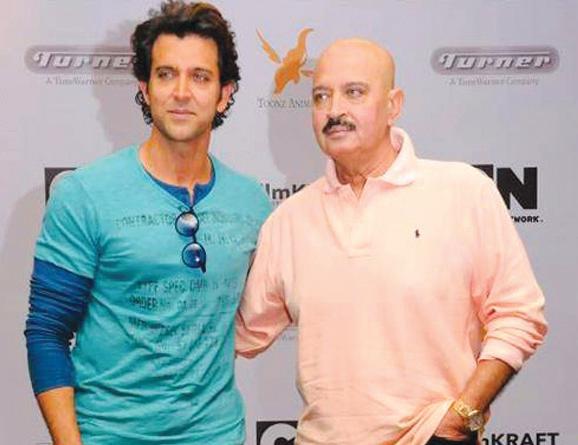
The 64-year-old director launched his son in “Kaho Naa
Hai” in 2000.
The director recently commented that while “Krrish 3” has raised the standards of filmmaking in India, Bollywood cannot compete with Hollywood. “Krrish 3” releases on November 1. (IANS)
By Dr yeaswantie Beekhoo PhD
(Continued from oCt 20)
All of us like to feel that our thinking, feeling and behaviour is understood by the other, and not judged as being wrong. Understanding does not mean agreeing. Unfortunately, if partners don't seek to understand, good will can disappear. Until each feels the other is willing to understand them, they are unwilling to understand the other. Empathy and compassion for how the other is feeling is lost; acts of care and love vanish. It is not surprising then that a partner may consider separation, or find value elsewhere - such as spending more time at work, on committees, with the children, on the internet, or with someone else. It is also not surprising that behaviours that result from a relationship under stress - including anxiety, depression, alcohol and drug use, eating disorders and gambling - can add to the difficulties.
Times of crisis
Understanding, compassion and friendship are particularly important when life sends along a crisis. Individuals act differently to issues such as a retrenchment from a job, death of a parent, infertility, miscarriage, a child's disability, fire or drought, and these differences need to be understood. If couples can support and care for each other, and stand together as a team, working through and recovering from life problems can strengthen a relationship. If not, couples can be torn apart.
Recognizing when there are relationship problems
All relationships face difficulties, and most are resolved over time. However when the problems become entrenched and seem unable to be solved, it is important to seek professional help. It is far better to resolve the problems than to dissolve the relationship. Unfortunately, research shows that the average couple waits six years before seeking help once the problem is recognized, and only a small percentage
seek the professional help they need. Half of all marriages that end do so in the first seven years. These statistics are very sad.
When there are any signs of the relationship problems outlined in the previous section, then it is time to consider seeking help. Obviously, partners will try to deal with relationship issues themselves, but when problems continue to occur it becomes clear that professional help is needed.
Ideally, both partners would agree that assistance is required to gain a new perspective and to try something different for the relationship to become unstuck, and for mending to occur. However if your partner is reluctant or unwilling to seek help, then it can be very helpful for you to seek help first. You can't make your partner change, but changes you make can start the domino effect of change for the relationship.
Seeking professional assistance
It is important that you seek help from someone who is trained and experienced in working with relationships. Most people ask friends for recommendations, and word of mouth is a good way to find help. You can also contact Ms Williams at American Coach Training Institute to be referred to a therapist/counsellor on telephone numbers 592227-1028 or 592-231-5788.
Ten tips for a happy relationship
Actively keep your love alive by valuing and nurturing your relationship in the following ways.
1. Plan regular time together doing something you both enjoy.
2. Give your partner the benefit of the doubt rather than assuming the worst. Be curious and seek to understand why your partner is acting the way he/she is.
3. Make sure the positive experiences in your relationship outweigh the negative experiences by five to one, and make sure you show your appreciation for your partner's caring actions.
4. When there is conflict, make sure you calm yourselves by taking time out when emotions are high, and coming back to the discussion later.
5. When mistakes are made, make sure you both work

to repair the damage.
6. Be there to support your partner in times of difficulty, and encourage him or her in work, friendships and leisure activities.
7. Be prepared to be influenced by what is important to your partner, just as your partner needs to be influenced by you.
8. Have a ‘team mentality'. When there are difficulties, talk about what ‘we' need to do about it.
9. Have high standards for your relationship, and stick to them yourself.
10. Keep your sense of humour, and make sure you have fun.
YOU CAN JOIN US FOR DISCUSSIONS AND HAVE FUN.
Got cellulite? You're not alone: The cosmetic condition affects nearly 90 percent of women at some point during their lives, even women who are otherwise slender and fit.
As common as cellulite is, there's also an awful lot of misinformation out there about what it is, what causes it, and how to get rid of it. So before placing blame, scheduling a cosmetic procedure, or spending a fortune on over-the-counter products, read up on Health magazine’s real story behind cellulite.

Fact: Exercise can reduce the appearance of cellulite
A regular exercise practice cannot cure cellulite—but in many cases it can help prevent or reduce its appearance. Cellulite occurs when connective fibres underneath the skin become weak or lose their elasticity, but stretching and strengthening those areas (in addition to burning away excess fat overall) can help.
"Firming and toning those muscles will in turn tighten the skin, giving the illusion that cellulite is less noticeable," says Dr. McDaniel. Yoga routines that target the
butt and thighs can help, as well as strengthtraining moves that build muscle and boost circulation.
Myth: Cardio is best for reducing allover jiggle
Running or other forms of cardio can help keep weight off, which may reduce the appearance of dimples and dents. But to really smooth out your skin, you've got to strength train.
One study by researchers at the South Shore YMCA in Quincy, Massachusetts, found that adults who did three 30-minute aerobic workouts each week for eight weeks lost four pounds, but gained no muscle—and only slightly improved body composition.
When they paired 15 minutes of aerobic activity with 15 minutes of strength training three times a week, however, they lost 10 pounds of fat, added two pounds of muscle, and saw a greater overall improvement in body composition.
Myth: Skin-firming creams can cure cellulite
Despite what you might read on their labels, no topical creams—prescription or over-the-counter—have been shown to permanently reduce the appearance of cellulite. Studies have found, however, that products containing retinoids (labelled as retinol over-the-counter) may provide some temporary effects by creating a thicker skin cover that can help camouflage bumps. There is limited evidence that creams or scrubs with stimulant ingredients, like caffeine, ginger, and green or black tea, may also help by improving circulation and breaking down fat-cell stores, but they are less proven.
"Mostly I think if these topical creams work—and I think most probably do little or nothing—they are more likely to help with slimming and body contouring, which is not the same as cellulite," says Dr. McDaniel. (TO BE CONTINUED)



Going from one floor in your home to another should not just be a utilitarian chore. Traverse with style with these modern, inspirational ideas.




Ingredients
8 ounces pasta, cooked and drained 1/4 cup butter
1 1/2 lbs shrimp, peeled and deveined
1 tablespoon minced garlic 2 cups half-and-half (mixture of half
Method
Have pasta ready.
In large skillet, heat butter; add shrimp and garlic.
Sauté 4 minutes, remove shrimp from skillet.
Add half and half.
Bring to a boil; reduce heat and simmer for 15 minutes, stirring frequently.
Add shrimp, basil, cheese, pepper and pepper flakes.
Pour sauce into a bowl; add pasta and toss well. Makes 4 servings.

Ingredients
6 large baking potatoes
85g butter
1 tbsp English mustard
6 large spring onions, finely chopped
Method
Heat oven to 200C/fan 220C/gas 7.
Oil and season the potatoes, then bake for 1 hr until a knife slides in easily and the skins are crispy. Cool for 10 minutes.
Halve the potatoes lengthways and scoop out the cooked potato into a bowl, leaving a thin layer behind so that the skins still hold their shape. Mash the potato with the butter, mustard and seasoning, and then stir in the spring onions, 175g cheese and kidney beans.
Pile the mixture into the potato skins and scatter with the remaining cheese. Can be made to this stage a day ahead and chilled. Bake for 30-40 minutes until golden.
Serve with the sausages and salad. Serves six.
W175g mature cheddar, grated, plus 85g for sprinkling 2 x 300g cans red kidney beans, drained

hen cooking eggplant, add a spoon of milk to a bowl of water and add the cut up pieces to that water. The eggplant will retain their colour without becoming black.
A pinch of turmeric powder and a teaspoonful of ghee added to dhal before pressure-cooking it will give it a better flavour.
Crumble leftover bread, buns etc. which may have become too dry or a bit stale. Add chopped green chillies, ginger, garlic, onion, salt and sufficient water. Mix to form a sticky gooey batter. Deep fry as dumplings till golden and crisp.
Line the tops of your kitchen cupboards with newspaper to prevent grease. Replace them regularly.
When potting plants, place a coffee filter in the bottom of the pot over the drainage holes to prevent the soil draining out.
Place a button at the end of a sticky tape roll so the end will be easy to find.
After you have cleaned your paintbrushes, rinse them in a little fabric softener to make them softer for the next job.
If you throw me from the window, I will leave a grieving
Bring
You'll
What am I?



By J. L.
"When you want a thing done well, do it your- self," is an old saying, and a very good one; but it is not always possible or desirable to carry out this advice. Therefore it is sometimes better to adopt an amendment to this proverb, and make it read thus: "When you want a thing done well, do it yourself, or see it done."
So thought Louis IX of France, sometimes called St. Louis, because he was considered to be rather better than most people.
Among his good qualities was kindness to the poor. He would go about, very plainly dressed, and attended by two or three courtiers, and visit poor people in their houses. He took an interest in their personal affairs, and when they were very needy, he would order bread and other food to be supplied to them. Of course, this made him a great favourite with the poorer classes of his subjects, and they were glad not only to receive his bounty, but also to talk with him and tell him about their many troubles.
One day, when he was making one of his customary rounds, an old woman, leaning on a cane, and holding a loaf of bread in her hand, came out of a door in a wall which led into a collection of wretched dwellings.
As this old woman stood awaiting his approach, the king could not help feeling a little surprised. He did not often feel surprised at anything he saw among these poor people. He had just been talking to a group of strong, hearty fellows, who preferred sitting lazily about wherever they could find a shelter from the rain and sun, and trusting in chance charity for

food and lodging, to working for an honest living; but he was not surprised at them. Such men have always existed, and probably always will exist.
He had seen all sorts of strange things among his poor people. He had seen some who seemed to prefer to be poor; he had seen others who had been rich, but who appeared to be happier now than when they had plenty of money,—and perhaps plenty of anxiety with it; he had seen others who were poor and did not know it; but this was the first time that he had ever seen any one of them offer him bread or anything else to eat. No wonder he was surprised when this old woman held out to him the loaf of bread!
She did not wait for him to ask her what she meant, but immediately commenced to explain. She told him that she and her sick old husband were among those to whom he had ordered food to be furnished, but that for some time all that his agents had given them was bread such as the loaf in her hand; bread so hard that it was almost impossible for old people to eat it, and yet they must eat it or starve.
The king listened with attention to her story, and then he took the loaf in his hands, and broke off a small piece of it.
"It is rather hard bread," he said, thoughtfully, while his attendants bent over to look at it, as if it were a matter of the greatest interest to them, although it is probable that they did not care a snap of their fingers whether or not the old woman ever had any bread.
"Yes," said the king, "it is hard bread." And then he stood thinking about it. The old woman thought he was thinking of the trouble she and her husband had in eating it, but she was very much mistaken.

He was thinking that he had ordered that these people be well fed; that he had supplied the money to buy them good and nourishing food. Now, if his poor pensioners received nothing but dry bread, and very stale, hard bread at that, while he paid for good food for them, somebody must be making money out of him, to whom he had no idea of being charitable in this way.
Therefore he thought that if he wanted a thing well done, he must do it himself, or see it done. In this case he determined to see it done.
He went into the old woman's house, and he talked to her sick husband and herself, and examined into their condition. The old people thought he was very good to say so much about their hard fare, and so he was; but if they could have heard what he said afterward to his dishonest agents, when he went home to his palace, they might have been surprised to know what an important thing a piece of hard bread may sometimes become.
And they might have thought, too, that it was a good thing for them, as well as for other poor people, that their bread had been so very hard that they were forced to complain of it to the king.

Every time I climb a tree
Every time I climb a tree
Every time I climb a tree
I scrape a leg
Or skin a knee
And every time I climb a tree
I find some ants
Or dodge a bee
And get the ants
All over me.
And every time I climb a tree
Where have you been?
They say to me
But don't they know that I am free
Every time I climb a tree?
I like it best
To spot a nest
That has an egg
Or maybe three.
And then I skin
The other leg
But every time I climb a tree
I see a lot of things to see Swallows rooftops and TV
And all the fields and farms there be Every time I climb a tree
Though climbing may be good for ants
It isn't awfully good for pants
But still it's pretty good for me
Every time I climb a tree
David McCord
Hello and Good-By
Hello and good-by
Hello and good-by
When I’m in a swing
Swinging low and then high, Good-by to the ground
Hello to the sky.
Hello to the rain
Good-by to the sun, Then hello again sun
When the rain is all done.
In blows the winter, Away the birds fly.
Good-by and hello
Hello and good-by
Mary Ann Hoberman
Frank Shaw, head of Microsoft corporate communications, scoffed Thursday at talk that Apple's free iWork threatens Office, calling the move "an attempt to catch up."
In a post to the Official Microsoft Blog, Frank Shaw countered what he said was misguided at best, reali ty-bending at worst, cover age by the media and blogo sphere on Apple's giving away iWork to new Mac and iOS device buyers.
Apple made that an nouncement Tuesday during an 80-minute event in San Francisco, where executives touted new iPads, lower-priced MacBook Pros, and de clared OS X Mavericks and the iWork apps would be free to segments of the Mac installed base.
"Seems like the RDF (Reality Distortion Field) typically generated by an Apple event has extended beyond Cupertino," Shaw wrote. "So let me try to clear some things up."
ago. Windows Blue was later named Windows 8.1, the free update that launched last week.
More recently, Shaw called out the media over

Shaw took exception to the conclusions by some pundits that the Apple manoeuvre was a shot at rival Microsoft, and that by throwing in iWork with a new Mac, iPhone or iPad, Microsoft's Office franchise, the Redmond, Wash. company's business model and its tablet strategy were threatened.
"When I see Apple drop the price of their struggling, lightweight productivity apps, I don't see a shot across our bow, I see an attempt to play catch-up," said Shaw.
But Patrick Moorhead, principal analyst with Moor Insights & Strategy, saw it as exactly that: A shot. "I don't know any other way to interpret that than to say Apple was going after Microsoft," said Moorhead.
The "that" Moorhead was talking about was the slide shown behind Eddy Cue, Apple's head of Internet software and services, yesterday just before Cue announced that iWork would be free for new device buyers. That slide displayed the logo of Office 365, Microsoft's software subscription service, and cited $99 as the annual price for Home Premium, the consumer SKU.
Shaw has lashed out at the press over reports or at bloggers over their interpretations of news before.
In May, he decried negative coverage of Windows 8 in general, and the update then code-named Windows "Blue" in particular. He took special exception to news and news analysis stories that compared Blue's restoration of the Start button to Coca-Cola's "New Coke" disaster of nearly thirty years
Unlike in May, today Shaw did not cite examples. But there were plenty to be had, ranging from the measured "Apple Drives Consumer Software Prices to Zero" on Techopinions to the over-thetop headline of "Apple's Plan to Destroy Microsoft" on The Street. Computerworld's blogger, Preston Gralla, also weighed in with his "Why Microsoft is Apple's new whipping boy."
Tit for tat
Shaw did not call out the most obvious example, that of Apple CEO Tim Cook, who took his own swings at Microsoft at the iPad launch event.
"Our competition is different," said Cook. "They're confused. They chased after netbooks. Now they're trying to make tablets into PCs, and PCs into tablets. Who knows what they will do next? I can't answer that question. But what I can tell you is that we have a very clear direction and a very ambitious goal. We still believe deeply in this category [of traditional notebooks] and we're not slowing down on our innovation."
Although Cook did not breathe the name "Microsoft," he was clearly aiming his comments at the rival, in particular its Surface tablet strategy.
Shaw struck back, trumpeting the second-generation Surface 2 tablet's price -- it replaced the struggling Windows RT-powered Surface RT of 2012 -- as lower than any full-sized iPad; and reminding customers that the tablet came with Office apps.
He also called out anyone who dared to compare Office with Apple's iWork suite, which is composed of Pages, Numbers and Keynote. Each

app costs $20 on OS X, $10 on iOS, but will be free to new Mac, iPhone and iPad custom-
"It's not surprising that we see other folks now talking about how much 'work' you can get done on their devices," Shaw said.
"Adding watered down productivity apps. Bolting on aftermarket input devices. All in an effort to convince people that their entertainment devices are really work machines.
Then he got down to
iWork, swatting the suite with each sentence.
"Apple announced yesterday that they were dropping their fees on their 'iWork' suite of apps," said Shaw. "Now, since iWork has never gotten much traction, and was already priced like an afterthought, it's hardly that surprising or significant a move. And it doesn't change the fact that it's much harder to get work done on a device that lacks precision input and a desktop for true side-by-side multitasking."
The tit-for-tat between Apple and Microsoft wasn't new, or unexpected, said Moorhead. "These are two iconic companies, so what they say does get attention
even outside the technology media," he said.
More importantly, said Moorhead, contrary to Shaw's tone -- he was dismissive of any threat to either the Surface or Office, especially the latter, from the iPad and iWork -- by eliminating the price for its suite Apple does threaten to Microsoft.
"Microsoft might view iWork as light-weight, but it could certainly be looked at as a fine small business tool, and potentially medium-sized business [tool]," Moorhead argued. "So long term, Microsoft is threatened by Apple's declaration that OS upgrades and productivity software are free, or included in the purchase."
Moorhead cautioned Microsoft not to believe its supremacy in productivity was insurmountable, even in business. "It may not be an immediate change, but it's one of these things that further galvanizes the potential buyer into seeing software as free," Moorhead said. "History has been on Microsoft's side, but markets, as we've seen, can shift quickly. And this could be another one of those big
shifts." As have others before him -- and as he has done himself in the past -Moorhead urged Microsoft to react, and quickly.
"Instead of giving people a reason to try something else, Microsoft should go cross-platform with Office. Office should be out on the iPad and on Android as soon as they possibly can do it," Moorhead said. "The extra level of pull-through of Office hasn't been enough to sell the Surface, so they're not going to lose anything by doing that."
To Moorhead, Apple's strategy was clear.
"Apple sees an opportunity to pull in people with its lifestyle and productivity applications," said Moorhead. "If it hurts Microsoft in the process, that's okay." It's Microsoft's strategy that he wasn't clear about.
"Microsoft charges tons of money for Office and Office 365," Moorhead said. "Can you imagine what it would be like if developers charged $10 or $20 for a smartphone app? Apple has simply reset the paradigm for apps."
(Source: ComputerWorld)

(CONTINUED FROM OCT. 20)
In response to the revelations revealed September by Glenn Greenwald, Brazilian President Dilma Rousseff announced measures to protect the privacy of Brazil's citizens from U.S. National Security Agency spying.
Rousseff’s measures include increasing domestic Internet bandwidth production; increasing international Internet connectivity; encouraging domestic content production and encouraging use of domestically produced network equipment
Increasing domestic bandwidth
The first point of Rousseff's four-point plan illustrates this growth. In 2004 the Comitê Gestor da Internet no Brasil, or CGI, the primary Internet governance organization in Brazil, began sending delegations to inspect the policies and operations of successful Internet exchange points (IXPs) -- the locations where Internet bandwidth is produced -- around the world. The CGI then established an aggressive program of IXP construction, taking Brazil from a single IXP in 2004 to 23 today, second only to the United States in the number and distribution of IXPs. (By comparison, half of all countries produce no Internet bandwidth domestically at all.)
Tech ByTe
By investigating and following international best practices rigorously, Brazil has created more new sites of Internet bandwidth production faster than any other country and today produces more than three-quarters of Latin America's bandwidth.
As a result, Brazil has had a 77 percent year-over-year increase in Internet bandwidth production, compared with U.S. growth of 10 percent in the past year. In absolute numbers, this puts Brazil in seventh place globally, just behind the United States.
By any measure, then, Brazil is on a clear trajectory to outstrip the United States, using the norms and best practices that the United States developed and advocates. Rousseff's declaration that Brazil will build its own IXPs and produce its own Internet bandwidth is no idle prediction; it's a statement of established fact. This energetically entrepreneurial industrial development has already begun to produce the independence and autonomy that Rousseff seeks for Brazil's citizens. Although other building blocks are necessary, this is a key one.
Increasing connectivity
Rousseff's second point, increasing international Internet connectivity, consists of at least three independent areas of development. The first of these is the intercontinental under-
sea fibre cables that link Brazil to the United States, Africa and Europe:
The South Atlantic Express, SAex, under way since 2010 and expected to be operational in 2014, is a consortium cable system majority-funded by the Bank of China with significant participation from Brazil's Oi. It is expected to provide 24 terabits per second (tbps) of capacity between Brazil and South Africa at a cost of approximately $800 million.
WASACE, a competing consortium cable system announced in 2011 and also scheduled for completion in 2014, connects Brazil with South Africa as well and touches down in the United States, Angola and Nigeria too, at 40 tbps.
In December 2011, Telebras contracted for a private 24,000-kilometer cable connecting Brazil to the United States and Angola, also scheduled for 2014 delivery. The capacity of the cable was not announced. It is anticipated to cost $900 million when complete.
In March 2012, the BRICS cable was announced for late 2015 delivery, linking Brazil with the United States, South Africa, India, China and Russia, at 12.8 tbps and a cost of approximately $1 billion.
Also in March 2012, the Seabras-1 cable was announced for 2014 delivery, providing an additional 32 tbps of capacity between Brazil and the United

States.
These five new cable systems join six existing cable systems connecting Brazil with its Latin American and Caribbean neighbours, the United States, Africa and Europe. All are privatesector efforts, and all have been in the works for a year and a half or more. By giving Brazil the ability to exchange traffic directly with other fast-growing markets in the Southern Hemisphere and their BRIC cohort -China, Russia and India -these cables provide higher capacity, lower latency and lower cost paths that don't cross United States territory. Although they'll likely be tapped eventually, that won't diminish any of the other value they provide, and at least they'll make the NSA work for its pay.
Honda announced this week that it will have a large presence at the upcoming Tokyo Motor Show, covering more floor area than any other brand. It will reveal a host of new concept

and production models, including a small roadster concept, the latest version of the NSX supercar and the production version of the Urban SUV small crossover.
Honda has only teased the most basic details, but it has a number of new designs and premieres planned. The most interesting of the lot is the S660 Concept, which Honda describes simply as an "an open-top sportstype mini-vehicle." It looks like a direct descendant of the 2011 EVSTER concept. The two-seater has a "Super cockpit interior" that separates pilot from passenger, wrapping him or her in functional hardware and displays. Honda has not yet detailed the concept's powertrain.
Honda will also debut the production version of the Urban SUV at the Tokyo show. Introduced as
So far, local companies that have indicated their willingness to collaborate and build Guyana's first IXP (and produce our own bandwidth locally), include: Global Technology, I-Net Communications, Starr, E-Networks, Qualphon, University Of Guyana and
NFMU; DigiCel has indicated a willingness to look at the local IXP proposal. (TO BE CONTINUED)
(Sources: ‘On Internet, Brazil is beating US at its own game’ by Bill Woodcock, Aljazeera America. Local information from Global Technology)


a concept at the North American International Auto Show (NAIAS) earlier this year, the Urban SUV is a small crossover designed to be lithe enough for tight city streets and capable enough for inclement mountain commutes.
Another concept from NAIAS that will make an appearance in Tokyo is the NSX. Honda says that the NSX Concept will make its Japan premiere at the show, and it appears that it will be the same model from Detroit – maybe it'll at least get splashed with a
new paint colour. Honda will also be showcasing new technologies. It will display an all-new UNI-CUB personal mobility device at its booth, and the MC-β, a "micro-sized short distance EV commuter," as part of the show's Smart Mobile City 2013 exhibit.
Visitors to Honda's booth will also enjoy a look at historical race car, road car and motorcycle models. The 2013 Tokyo Motor Show opens to the media November 20. (GIZMAG)

The National Gallery is pleased to present the Guyana Women Artists’ Association’s (GWAA) celebration of its 25th annual exhibition at Castellani House, Vlissengen Road.
Recent and retrospective works by 12 current members of the association, joined by a young guest artist, present a range of styles and images: from atmospheric views of Guyana’s interior landscapes and interpretations of Caribbean scenes and memories, to textile art featuring collage with social commentary, batik, hand painting and printing, macro photography, pen and ink and graphite drawings, and tableaus of dried flowers, leaves and grasses.
Formed in September 1987, the GWAA held its first landmark exhibition, celebrating “Sixty Years of Women Artists in Guyana”, in April 1988, with three leading artists given special tribute and focus - the painter and teacher, and first GWAA president, Marjorie Broodhagen, pioneering ceramist and painter Stephanie Correia, and painter and ceramist Leila Locke.
In the intervening years the annual events have included three exhibitions abroad, and more recently participation in other cultural events and observances, such as International Women’s Day, Carifesta X (Guyana) and XI (Surinam) and Inter-Guianas Cultural Festivals.
In the current exhibition, O’Donna Allsopp, founding member of the association and
participant of the first exhibition, is joined by younger artists, many of whom are full-time artists or artist/teachers, such as Jennifer Gibson and Lori-Ann Jacobs; others pursuing full-time careers in public administration, such as Sharon Jordan, Beverly Reynolds and Myrna Bernard, while some, like Reynolds and Gibson, are expatriates from the Caribbean or elsewhere who join the organization and contribute to its changing profile and renewed vibrancy.
Notable too are recent graduates in art – Jacobs from the University of Guyana; Dominique Hunter and Aiesha Scottland, Best Graduating Students of 2007 and 2010 respectively, from Burrowes School of Art. The association therefore continues to form a focus for the energies and aspirations of women artists wishing to lead a creative life and to further contribute to the cultural life of Guyana.
The exhibition was opened to the public October 25 and continues until November 16.
Gallery hours are 10:00 hours to 17:00 hours Monday to Friday and 14:00 hours to 18:00 hours on Saturday; the gallery is closed on Sundays and holidays. The public is cordially invited to visit this exhibition. Admission is free. (Photos and press release by Castellani House) (Cover photo "Blue Reflection" by Sharon Jordan)



Ever since the start of Dutch colonization of Guyana, the early colonists observed that many parts of the sea coast experienced cyclical periods of erosion as well as flooding during high tides. However, since settlements were located mainly on river banks, and not along the coast, the problems of erosion and flooding were not taken se-
lated during the rainy season was difficult to remove.
Georgetown, in the early nineteenth century, began to feel the effects of erosion and flooding. The Eve Leary area which housed the barracks of the West India Regiment was badly flooded at times, and the residents of the surrounding areas felt that the War Office in London should provide

riously.
But as settlements extended along the coast in the late eighteenth century, flooding of low-lying lands during high tides became a matter of concern. Also, during the periods when there was an accumulation of silt which built up the coastal plain, drainage canals were silted up and water accumu-
funds to build permanent sea defences.
The War Office, on the other hand, insisted that it had been providing grants for sea defence works over the years to the benefit of that part of the town.
As such, it stated in 1849 that the town council should take on the responsibility of sea defence, and threatened
to remove the Regiment if the barracks continued to experience flooding. But this threat was never enforced even though flooding periodically occurred.
Eventually in 1855 the Combined Court voted a sum of $135,000 to erect sea defences for Georgetown.
In the meantime, a few proprietors of estates used their own resources to build earthen embankments as sea defences to protect their lands from floods during high tides. After a while, the government realised that sea defence should not be left to the estate owners, and an effort was started by the Government to build a strong sea wall in Georgetown from Camp Street to Kitty. This wall was completed in 1882.
The director of public works was given the authority to monitor the sea defences throughout the country. He could order any proprietor to use his own funds to build sea walls (or sea dams), but he could also recommend the spending of government funds to assist the estates. Loans were also made available to proprietors to erect sea defence.
To allow for easy drainage, and also to obtain irrigation water from the inland areas, each coastal plantation was established in a rectangular pattern. The front faced the river or the sea while the back had the wet savannah or a creek as its boundary. Parallel canals on the two sides ran from the back lands to the sea or river and emptied through kokers (or sluices). Smaller canals (or trenches) cut across the breadth of the plantation to connect to the main parallel canals, and the flow of water through them was also controlled by smaller kokers.

Before 1838, all of these waterways were dug by the slaves using shovels as their tools. After this period, paid African labour and Indian indentured workers carried out the excavation works.
For every square mile of land which was used for sugar-cane cultivation, about 49 miles of drainage and 16 miles of irrigation trenches were dug. In the process of digging canals and trenches on the sugar plantations, over 100 million tons of earth was excavated.
The estates were drained by gravity during low tides. Those which faced the sea experienced serious drainage problems during the cyclical build-up of silt along the coast. During these periods, which lasted about sev-
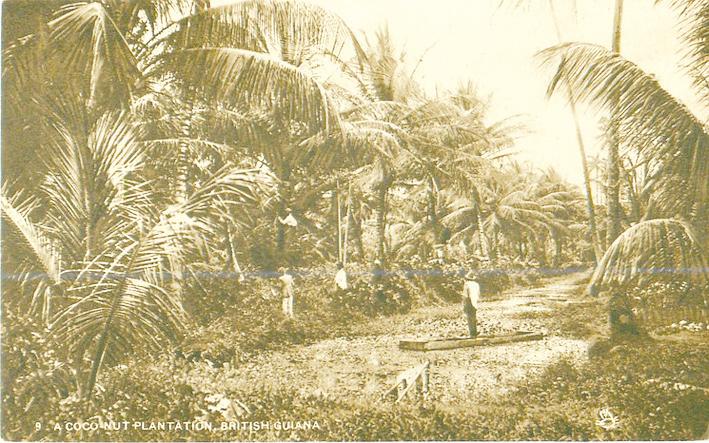
en years, the kokers (sluices) were blocked by accumulation of silt, and drainage had to be done by pumping which was very expensive.
With regard to irrigation, from the early nineteenth century, sugar estates were able to obtain water during periods of low rainfall from a natural conservancy on their southern boundary.


Four years of scientific expeditions have found previously unknown animals and plants in the world's largest tropical rainforests.
A purring monkey, a vegetarian piranha and a flame-patterned lizard are among more than 400 new species of animals and plants that have been discovered in the past four years in the rainforests of the South America.
Discovered through hundreds of scientific expeditions from 2010 to 2013, the total reaches 441 species – all new to science –that include 258 plants, 84 fish, 58 amphibians, 22 reptiles, 18 birds and one mammal. This tally does not include discoveries of insects and other invertebrates.
"The more scientists look, the more they find," said Damian Fleming, head of programmes for Brazil and the Amazon at WWFUK, which compiled the list. "With an average of two new species identified every week for the past four years, it's clear that the extraordinary Amazon remains one of the most important centres of global biodiversity."
Among the new spe-

covered, scientists warned. The thumbnail-sized "thimble frog" has been given a

cies discovered is a "purring" Caquetá titi monkey (Callicebus caquetensis) of the Colombian Amazon, whose babies have an endearing trait: "All of the babies purr like cats," said scientist Thomas Defler, who helped discover the species. "When they feel very content they purr towards each other, and the ones we raised would purr to us."
A "war painted lizard" Gonatodes timidus was discovered in the part of the Amazon that extends into Guyana. Despite its extraordinary colouring, this lizard is very shy and has a tendency to avoid being seen by humans.
Some species may be lost just as they have been dis-
Latin name Allobates amissibilis, meaning "that may be lost", because it thrives in an area of Guyana that
waterfall at the foot of the Iwokrama Mountains.
Other species are under threat from development. The strictly herbivorous "vegetarian piranha" Tometes camunani, inhabits rocky rapids in the Brazilian Amazon where its main source of food, Podostemaceae aquatic herbs, is found. However, dam projects and mining activity in Pará state are threatening the health and flow of its river habitat.
Many of the recently discovered plants and animals have very restricted ranges and are thought to be endemic to small parts of the Amazon. For example, a new fish species Apistogramma cinilabra that has adapted to low-oxygen water is unique to one small lake in the Loreto region of Peru and found nowhere else in the world –making it and other species even more vulnerable.
"The richness of the

could soon be opened up to tourism. The frog was discovered near Turu Falls, a
Amazon's forests and freshwater habitats continues to amaze the world," add-
ed Fleming. "But these same habitats are also under growing threat. The discovery of these new species reaffirms the importance of stepping-up commitments to conserve and sustainably manage the unique biodiversity and also the goods and services provided by the rainforests to the people and businesses of the region."
The Amazon ecosystem is the world's largest tropical rainforest and river system, covering 6.7 million square miles shared by Brazil, Bolivia, Peru, Ecuador, Colombia, Venezuela, Guyana, Suriname and French
About one-fifth of the Amazon rainforest has already been lost, and deforestation is currently taking place at a rate of three football pitches of a minute, WWF says. In the past eight years, Brazil has slowed the pace of forest clearance by 80 per cent,

Guiana. It is rich in biodiversity, containing one in 10 of the species known on earth in 1.4 billion acres of dense forest and 4,100 miles of winding rivers.
A recent study found that almost 400 billion trees belonging to 16,000 different species grow in the Amazon.
Deforestation, intensive farming, climate change, natural resources extraction and hydropower are among the chief threats to the forest and freshwater ecosystems.
but roughly 6,000 sq km is still converted to farmland each year.
The Amazon contains 90-140bn metric tonnes of carbon, the release of which through deforestation and land conversion – if not controlled – could accelerate global warming significantly. Go to www.theguardian.com/environment/2013/ oct/23/purring-monkeyvegetarian-piranha-amazon-species for more information and photos. (The Guardian)

By Melvin Durai
GoAir, one of India’s budget airlines, recently made a stunning announcement: it will no longer hire male flight attendants. All the men currently on GoAir’s cabin crews will keep their jobs, but future openings will be limited to women. Any complaints about gender discrimination can be sent to GoAir’s corporate office, where they will be placed in a folder with a special name: “Ha ha! They think India has anti-discrimination laws!”
Having female flight attendants may attract more male passengers, but that’s apparently not what GoAir is trying to do. They’re trying to save on fuel costs by lightening the load on their planes, and since the average male flight attendant weighs about 20 kg more than the average female flight attendant, they can save money by hiring only women. (Skinny men may still have a chance, but must submit an application to GoAir’s Department of Special Review for Sex Change Operation Eligibility.)
– 2 sin ² {( x / 2 ) – 6 cos ( x / 2 )} × {U2 + 50 cent}
Suffice to say, it’s not a very large amount, but GoAir is determined to reduce costs, partly because the Indian rupee has been falling precipitously lately. How badly has it dropped? Well, it used to be worth two cents (American), but now it’s worth only one cent (Zimbabwean).
In case you’re sceptical
in-flight magazine, you’ll also be able to spot your inflight meal.
These load-lightening steps by GoAir are just the beginning, of course. You can expect more announcements in the coming years.
2014: GoAir announces that to lighten the load on all its planes, flight attendants will be required to wear strapless blouses and miniskirts. “We are saving thousands of rupees in fuel costs by avoiding heavier clothing,” CEO Giorgio De Roni says. “Also, the size of the in-flight magazine has been reduced further. And we are moving from two-ply toilet paper to one-ply.”

2015: GoAir announces that to lighten the load on all its planes, flight attendants will be required to be lightskinned. “The lighter they are, the more money we will save in fuel costs,”
According to a Times of India article, “every additional kg on board costs Rs. 3 per flight hour.” In other words, for a one-hour flight, the additional cost of having a male flight attendant—if I remember my high school mathematics well—is √3α ÷
of GoAir’s motives, its CEO Giorgio De Roni emphasized to Times of India that the company’s strategy to lighten the load goes well beyond the flight attendants. “The size of in-flight magazines has been reduced,” he said. “The potable water tanks are no longer being filled to capacity as only 35 percent to 40 percent of that water is actually used.”
Now you know why you had so much trouble finding the in-flight magazine. Next time, please travel with a magnifying glass. Not only will you be able to find the
CEO Giorgio De Roni says. “We are also reducing the size of the in-flight magazine again. And we are moving from one-ply toilet paper to half-ply.”
2016: GoAir announces that to lighten the load on all its planes, laptops will not be permitted, but for an extra fee, passengers will be able to get lap dances.
“It’s light entertainment,”
CEO Giorgio De Roni says.
“In the interest of reducing costs, we have also agreed on a merger. We hope passengers will enjoy our halfply in-flight magazine.”


Boat Name
I wanted a boat very badly, so even though my wife forbade me, I bought one anyways.
When I came home, my wife was really mad!
So I told her she could name the boat; she named it “FOR SALE”.
Forgetting
Overheard: Two old people having a conversation:
“I can’t stand it anymore I never can remember what I just said!”
“Oh really? When did this problem start?”
“What problem?”
Helicopter Pilot
A helicopter pilot running out of gas found himself in the middle of the forest. Spotting a group of hikers, he quickly made a sign saying “Where am I?”
The pilot put the sign to the window so they could see it.
Conversing for a few minutes, the hikers soon made their own sign and flashed it at the helicopter pilot.
Their sign said, “You’re in a helicopter.”
Cleaning Dishes
I hired a new maid last year but she wasn’t doing a great job. I called her into the study and told that I was sorry but I was going to have to let her go. I tipped her an extra $20 and thanked her for her services.
As she was leaving she threw a $10 bill to our dog, Lucy.
I asked her, “What was that for?”
She replied, “Can’t forget my helper! Lucy has a great tongue, and always helped me do the dishes!!!”
I was standing in line at the local Wal-Mart store, in the gardening centre the other day. So this guy in front of me is holding a bottle of insecticide and asks the salesman, “I have lots of cockroaches, is this good for them?”
“No,” says the salesman. “It’ll kill them!”
A lawyer was walking down the street when he saw two cars crashing into each other. Rushing over he said, “I saw everything, I can take either side!”
A man is driving down the road, when he passes a farmer standing in the middle of a huge field. He pulls the car over and watches the farmer doing absolutely nothing.
The man walks over to the farmer and asks him, “Excuse me sir, but what are you doing?”
The farmer replies, “I’m trying to win a Nobel Prize.”
“How?” asks the man, puzzled.
“Well I heard the give the prize to people who are outstanding in their field.”
Two inexperienced hunters went hunting in the woods. Before long they got lost. “Don’t worry,” said the first hunter, “I heard that when you’re lost you shoot three times in the air and someone should hear you.”
They fired three shots in the air and waited a half hour. They tried again another three and nothing happened. Finally they decided they will try it once more.
“This better work,” said the second hunter nervously. “These are our last arrows!”
I was sitting on a jury for a trial of a man accused of robbing a bank. There was not enough evidence to convict him, so we had to declare him not guilty.
When the foreman announced, “Not guilty”, the defendant jumped to his feet.
“Cool!!” he shouted. “Does that mean I get to keep all the cash?”
I was on jury duty the other day and they had the victim on the stand testifying to the defendant’s ID.
“So tell us what happened,” the prosecutor said.
“I remember it like it happened today,” the victim recounted. “He walked in wearing a blue shirt, black pants, and a baseball cap, and then he pulled out the gun.”
“Hey,” the defendant yelled out. “I wasn’t wearing a cap!”
Police in Las Vegas took in a robbery suspect and had him stand out in a line up.
Detectives asked each man in the line up to repeat the words, “Give me all your money or I’ll shoot.”
It came the suspects turn to say it, and he yelled out, “I never said that! All I said was ‘I got a gun!!’”
John was riding his brand new bike down the street when he knocked over an old lady.
“You clumsy idiotic boy!” fumed the lady as she struggled to her feet. “Don’t you know how to ride a bike?”
“Of course I do,” replied John. “I just don’t know how to use the horn!”