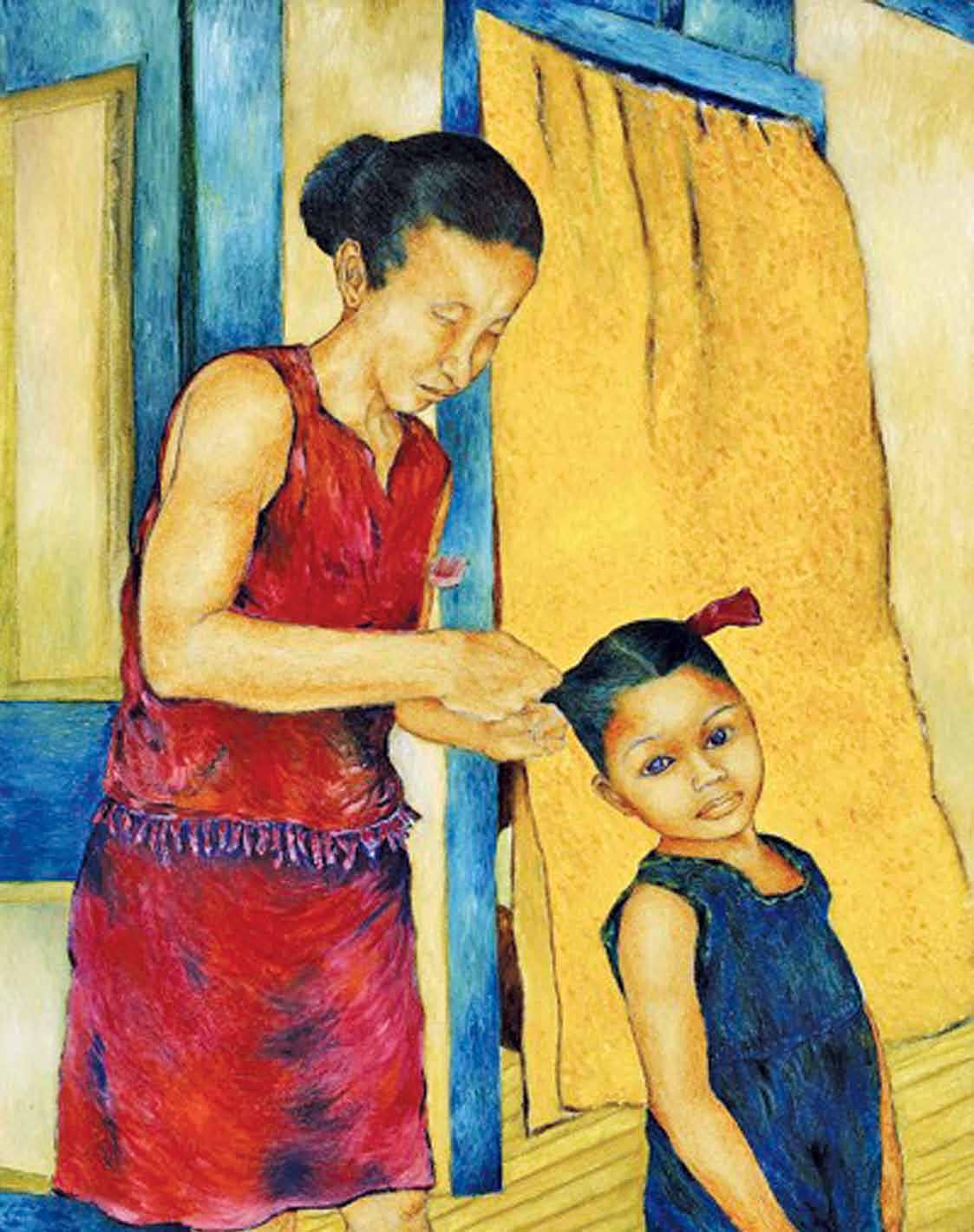
An examination of overseasbased Guyanese artist Joy Richardson’s paintings shows a joyful fusion of various cultures

An examination of overseasbased Guyanese artist Joy Richardson’s paintings shows a joyful fusion of various cultures
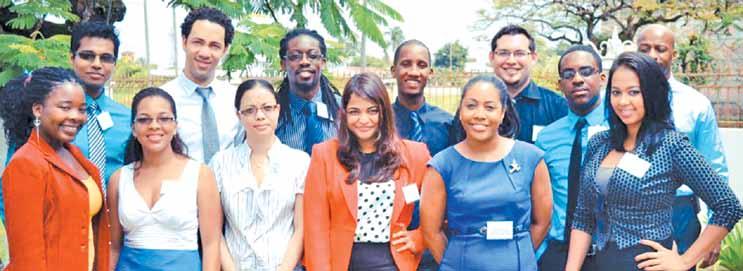
The Global ShapersGeorgetown Hub is a group of exceptional, young professionals who want to build on their achievements and entrepreneurial drive to make a positive contribution to their communities.
The Global Shapers Community is a worldwide network of more than 200 “hubs” developed and led by promising young leaders between the ages of 20 and 30. Together, they embody the “community of the future”, bringing together empowered youths in a community that is diverse, decentralised, and digitally hyper connected.
The Global Shapers Community is an initiative of the World Economic Forum and is independent, neutral, non-political and not-for-profit.
The local Global Shapers Community was established Dec 27, 2013. This group
has highlighted several issues within Guyanese society, and projects are being undertaken to create a wider impact within the country.
The Global ShapersGeorgetown Hub is united by a common desire to channel members’ tremendous energy and enthusiasm into building a more peaceful and inclusive Guyana.
As a result of this common desire, the local Global Shapers- Georgetown Hub group has recently embarked on a stationery drive, to foster the educational development of students in hinterland regions.
“Headstart” – the name of the stationery drive –seeks to provide academic resources to its target beneficiaries by leveraging support from members of the public and the business community of Georgetown and around the world to provide stationery supplies

for the 2013/2014 academic year to more than 400 students in regions One and Nine.
This micro-project was conceived after recognising the need in the villages of these regions due to socioeconomic and geographic limitations. The project, championed by Georgetown Shaper, Dr Roshan Khan, would be creating stationery packages for both nursery and primary students, and delivering these supplies in time for the resumption of school in September.
The hub has received remarkable responses – both
from the local private sector and from individuals and businesses across the globe.
In addition to donations of supplies, monetary contributions have also been made and would make a notable difference in the lives of hinterland students.
Donations (both supplies and monetary) can be made by visiting Dr Khan’s Office at the SocialRank Media Building at 125 Regent Road, Bourda, Georgetown, or by calling 225-1842.
Visit the Global Shapers Community- Georgetown Hub on Facebook for more information.

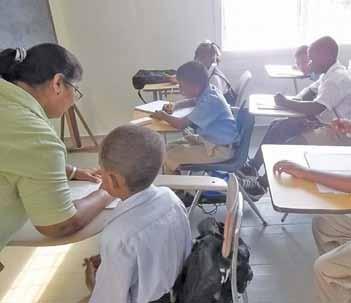
The Roadside Baptist Church Skills Training Centre has over the years, in a small way, greatly helped encourage the development or improvement in reading and writing skills. Recently, it has been conducting a special six-week programme for children 9-14 years, focusing primarily on reading, writing and comprehension and listening skills.
The five sessions per week “summer program” for this year began July 15 and ended August 23. Parents and children were interviewed and in some cases a random reading test was done in the presence of the parents. A basic evaluation was done on day one to ascertain the level of each child in reading, writing, listening and the four rules of Mathematics, so as to design a suitable program. Unfortunately, the Centre discovered that among the extremely poor readers are children who would be starting secondary school in September; children already in secondary schools and children who are at different levels in primary schools. It was no easy task for the Centre to design the programme, but the energetic team of four, assisted by volunteers, managed.
Besides reading, writing, English and the four rules of Mathematics, the children were also involved in life skills, health and family life education, games, craft and singing. Another area of emphasis was on oral expression. Children were encouraged to confidently express themselves, while being conscious of both respect for self and others. Those with an average reading ability were also exposed to keyboards and basic computer literacy.
During the final week of the programme, parents were invited to a meeting. Whose objective was to update them on the six weeks of activities and to have their feedback. They all expressed satisfaction at the progress in their child’s reading and writing.
Parents of the very late developers were so excited that they informed the meeting they initially doubted it was their children’s work when they were checking their workbooks.
According to the centre’s committee, parting with the children was not easy because of the strong bond that developed with the instructors. The children pledged to remember the life skills that were discussed with them, to continue to improve on their parent-child relationship and continue reading for recreational purposes, reading newspapers, and to listen to radio and television news. They were encouraged to continue to use the library at Roadside Baptist and/or join a library in their neighbourhood. Some of them have enrolled for the after-school programme at Roadside when the new school year starts.
Roadside Baptist extends heartfelt gratitude to the instructors, inclusive of the volunteers, for the wonderful job they have done to truly make learning fun for the 37 participants of the ‘summer’ program, and to the parents who chose Roadside to be the vehicle to improve their children’s all round development.
The Centre for the Study of Biological Diversity at the University of Guyana is dedicated to the study, documentation and conservation of nature, playing an integral role in the preservation of Guyana’s ecosystem
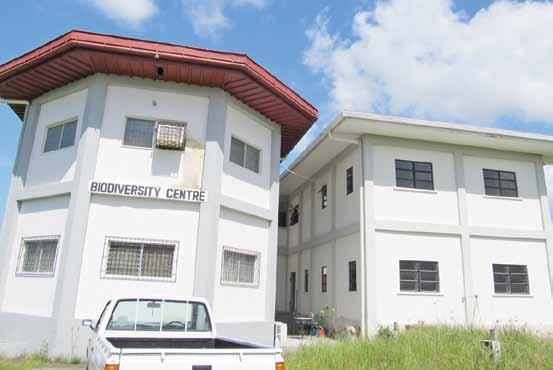
The Centre for the Study of Biological Diversity (CSBD) is described as being first conceived by the University of Guyana in 1991 as a central repository for plant and animal specimens.
Its building was completed in 1992 with funds from the Royal Bank of Canada, and houses a herbarium, a zoological collection, a small library, a GIS Centre, staff offices and exhibit space.
A complete set of all organisms collected during the centre's programmes is deposited at the centre, a second set at the Smithsonian's US National Herbarium, and exchange material is distributed among more than 50 institutions worldwide.
The centre has been a key vehicle within Guyana for the development of a full range of education, research and training programmes consistent with Guyana's effort to conserve and sustainably manage its rich biodiversity. The Smithsonian Institution's ‘Biological Diversity of the Guiana Shield’ program coordinates its activities with the centre, colleagues in Guyana and numerous international organisations and NGOs.
The centre’s establishment and continuing operation, and its research and educational activities have been facilitated by the Smithsonian programme. Several organisations have also given their assistance, including USAID, Aroaima Mining, Conservation International, the Iwokrama International Rainforest Programme, the Royal Bank of Canada with the World Wildlife Fund - Canada, the Smithsonian Man and the Biosphere Programs, the Smithson Society, the Treaty of Amazonian Cooperation (UNDP), and the World Bank Global Environmental Facility.
It is said to be the first biodiversity centre in South America, and recognized
by BIONET International as a Centre of Excellence in Biosystematics in the Caribbean.
Speaking with Guyana Times Sunday Magazine, Hemchanddranauth Sambhu, a scientific officer at the centre, stated that
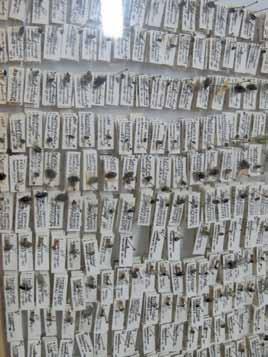
the institution welcomes anyone who wants to conduct scientific research. However, the centre does not operate like the public museums: it is not openly accessible to the public. Permission to use the facility is only given to those conducting scientific research.
Of note is the centre’s collection, which is very expansive and impressively catalogued down to the smallest detail. Sambhu noted that there are two museums in the centre: a "wet" museum and a "dry" museum.
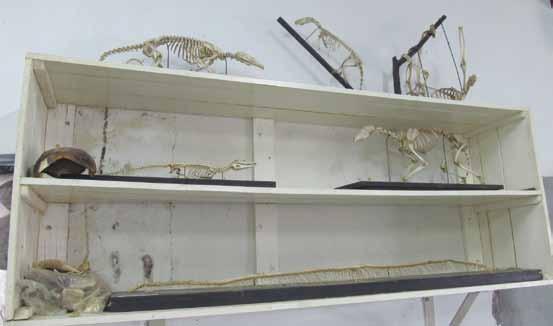
“All specimens in the wet museum are stored in liquids and, of course, in the dry museum everything is dried down to the bone – literally,” he explained.
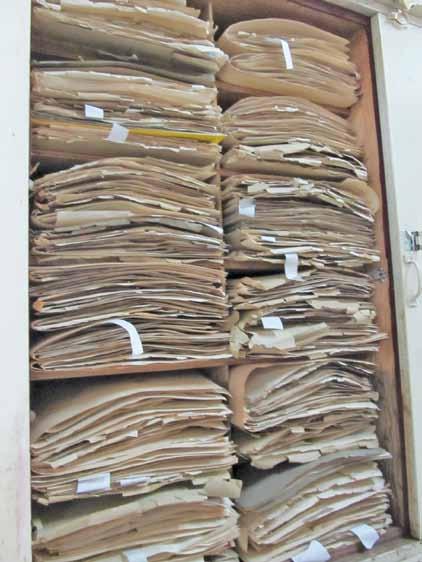
“We have a herbarium with a collection of plants, some over 200 years old. We have a special collection called the Jenman Collection. He was a botanist who was sent by the queen to gather plants for the royal gardens. In Guyana, he started an extensive documentation of plants. We have his research safely stored in the herbarium and rarely take out the files because we don’t want to damage the documents as they are very brittle,” he also revealed.
It was surely a privilege to look at the now fragile folders of Jenman’s expansive work kept at the centre. Although Sambhu did not open these, it was an intense feeling knowing crucial information for the preservation of Guyana’s floral species is safely stored at the centre’s facilities.
The centre is aptly governed by strict policies that must be followed. One of its rules is that every researcher, whether Guyanese or from overseas, must have a permit from the Environmental Protection Agency to conduct scientific research, as this guarantees the continual preservation of valuable specimens.
Offering words of caution, the scientific officer advised those who are touring interior locations not to extract any plant or animal life because it is considered illegal to do so without a permit. He encouraged taking pictures and contacting the centre for information.
The Shaping of Guyanese
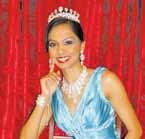
Mariska’s Designs steal Suriname runways
Ben Affleck to play Batman in 2015 ‘Man of Steel’ sequel
There are species, he pointed out, which may scare or amaze individuals who may be inclined to investigate them, and, he noted, some species are harmful, so it is wise to observe, and desist from touching.
Sambhu noted too that a special role the centre plays is loaning specimens to international biodiversity centres, which they are obligated to return, for further research. Additionally, the centre supplies materials and skills for research activities done in Guyana and to international researchers conducting local studies.
“There is none other like this centre in the country. Our research is important to the country’s biological diversity and so with more equipment, funding, and researchers, we can do even more. Most importantly, our staff and students offer vital assistance for pertinent researches and even for overseas researchers, who also share their in depth knowledge with us,” he outlined.
Currently, Sambhu disclosed, the centre is conducting research on rice, especially the chemicals used in


the industry and their effects on the environment. He also said that there are many more undocumented species to be collected, and the centre is working assiduously to gather these to aid vital research and better understand Guyana’s ecosystem.
Anonpartisan, non-sectarian organisation, the National Youth Development Network (NYDN) comprises young professionals, community leaders and students who have come together aiming to foster leadership, development and national unity through training and community service, while seeking to harness the energies, creativity and enthusiasm of young people anxious to be a part of Guyana’s development.
NYDN is a registered organisation with the Ministry of Culture Youth and Sports and the Organisation of American States (OAS). It serves as the focal point
group called The Caucus.
The Caucus comprised young professionals and university students who researched issues of national importance, and subse-
litical stability and peace.”
Additionally, it was also recognised that for such an environment to be created and nurtured, a national organisation, which truly reflects the rainbow collection of cultures, religion and ethnicities that make up our country, must be put in place.
“for Guyana to truly develop and experience its true potential there must be an environment that fosters good governance, social cohesion, citizen participation, a proactive civil society, political stability and peace”
quently presented it to the wider group for dialogue. It was from the multi-di-
Thus on Sept 1, 2004, the National Youth Development Network was established and formally presented to the public on Nov 7, 2004 as a dynamic and promising or-
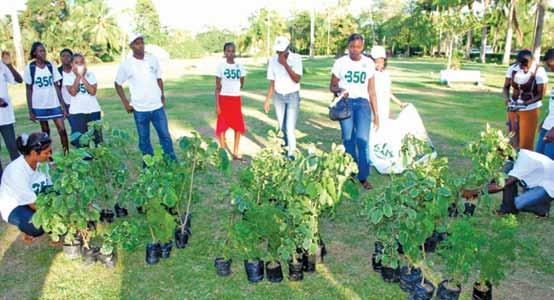
for the Caribbean Youth Environment Network in Guyana.
Bevon Currie, the group’s secretary and a youth advocate, noted that the organisation evolved out of months of discussions and consultations among a group of young people who initially met as a discussion
mensional nature of these discussions that it was recognised that all participants held a common view which was “for Guyana to truly develop and experience its true potential thre must be an environment that fosters good governance, social cohesion, citizen participation, a proactive civil society, po-
ganisation whose main objective is to function as the primary conduit of the transformation process.
The goal of NYDN is to facilitate the transformation of Guyana by empowering its young people with the knowledge and skills to be the catalyst of the transformation process.

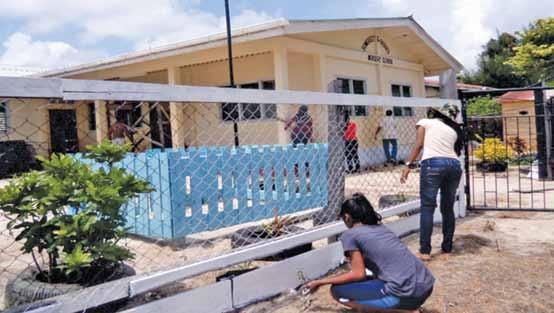
The organisation’s focus is to promote training programmes that will empower young people with skills that will improve their productive abilities; create and foster relationships with local and international fraternal organisations that have similar goals and objectives; provide young people with the opportunities to explore and reaffirm their value system with the intention of becoming positive role models; empower young people with the requisite leadership skills to become meaningful citizens; promote a culture that facilitates youth involvement at all levels of decision making in Guyana; create the environment which fosters national unity, discipline, ethnic and religious tolerance, and to provide a forum for debates, free exchange of ideas and the resolution of issues affecting young people.
In keeping with the aforementioned goals and objectives the organisation over the last eight years has embarked on numerous initiatives to promote the organisation and to reach out to as many young people and organisations for youths, managed by youths.
Currie pointed out that the organisation has also made tremendous progress in keeping with its objectives, despite having its fair share of challenges. He credits meticulous planning and smart leadership by a group of committed executive and enthusiastic members for NYDN’s success.
More recently, one such success was the unveiling of its flagship project for the year 2013. The National Youth Festival was launched at the National Library on August 25 under the theme “Fusion of our Strengths –Celebrating what is right with our diversity”.
The Festival promises to be a three-day extravaganza commencing with the opening ceremony on October 23 and conclude with a grand Guyana Night Concert on Oct 26, 2013 at the National Exhibition Complex Sophia.
“This event will see the fusion of cultural expressions, creativity and innovation by the young people
of Guyana. It is designed to create a platform through which youths can exhibit their talent, vision and innovation while exploring, exchanging and reflecting on ideas of youth development across a wide range of factors such as entrepreneurship, skills for national development, volunteerism and relativity of our cultural diversity,” Currie disclosed.
Currie noted that the principle element of this Festival is the creation of an exhibition space for youth and youth-focused stakeholders to visually showcase
products and services, while profiling their contribution towards socio-economic development of Guyana; utilise the festival to introduce and launch new products, new campaigns, programs and initiatives targeted at youths; and explore the possibilities of attracting new markets for their products and or partners for the services.
In outlining recent and future projects, Currie explained that the organisation is presently engaged in planning outreach exercises in the mining commu-
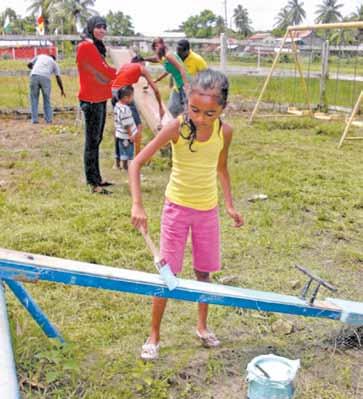
available youth-focused development opportunities and the invaluable contribution they are making to Guyana’s development.
The festival is an opportunity for young entrepreneurs, government agencies, international organisations and civil society organisations to display our country’s rich diverse culture through art, poetry, dance, skits and music; create awareness of opportunities, best practices and the contribution of youths through pictorial/editorial posts/inserts/pullouts in the festival magazine; display services offered to youths by youths; display and distribution of youth- focused advocacy materials such as publications, booklets and posters; put on display their
nity of Linden and will also be hosting its annual leadership residential retreat in September, the National Youth Festival in October and a National Youth Award Dinner in December.
“Therefore given the innovative interventions by the organisation over the years and the void still left to be filled in multiple areas of youth development, there is still an important role for the organisation in every community of Guyana. Within this context, there is no doubt in our minds that a bright and promising future lies ahead for this great organisation,” he declared. For more information on the organisation, call 2260203 or visit National Youth Development Network on Facebook.
With a new franchise holder, the Miss Guyana World pageant is providing a revamped programme in preparing intelligent, beautiful women to expertly represent Guyana on international stages.
franchise in late June 2013. A former pageant contestant herself, Martindale is a Christ Church alumna who also attended Georgetown School of Accountancy, and the College of Business and Science Studies.
Known for her tenac-
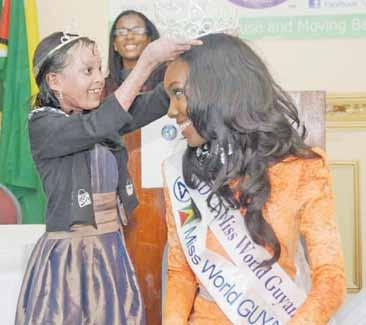
The Miss World Pageant is scheduled to take place this September in Indonesia and the new franchise holder for Guyana, Natasha Martindale, is busy prepping reigning queen Ruqayyah Boyer, to bring home the prestigious title.
The Miss World organisation appointed Martindale to take over the Guyana
ity and perseverance, she credits her former boss and now good friend Bebe Ramkissoon, president of Acme Photo, for the values she helped to instil –vital to her success.
It was while working in Guyana as PA/Accounting/ Marketing Manager at Acme that Martindale begun sponsoring pageants and promot-
ing Acme’s Polaroid and Fuji brands with the “Picture Perfect” campaign.
Martindale also worked closely with a number of local pageants like the Miss Bartica Regatta, Miss Queen of Queens and Miss African Heritage pageants before moving to the United States in late 1990.
In her new role as Miss Guyana World franchise holder, Martindale is responsible for organising and hosting the local leg of the international event, to find the best candidate to represent Guyana.
“I intend to invest my time, energy and skills to instilling the high standards that I know each and every Guyanese woman has, and therefore it is this type of passion that I expect to receive,” she declared. “It is this type of commitment that I expect to be returned and it is this same type of positive energy and exposure that I want the world to see and experience from Miss World Guyana 2013 and beyond.”
Martindale plans to put together an excellent programme for preparing contestants for the Miss World pageant. Her goal is to partner with the business community and tourism sector in Guyana, to secure sponsorships for reigning and future queens.
The new franchise hold-
er is also working on putting together a new management committee for the Miss Guyana World Pageant, which is expected to bring together a number of prominent Guyanese designers, elite business professionals, public relations representatives and beauty consultants.
Martindale stated that the committee intends to attract the best standard in the industry, and will be adding a few more titles to the mix such as a Miss Humanitarian, Miss Talent, Miss Sports & Fitness and Miss Public Speaker and, the ultimate prize, Miss World Guyana.
In addition she revealed that a fundraising committee, as well as a few others, would be put in place
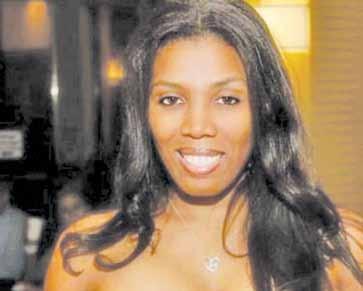
to handle the related areas. Martindale is confident that with community and sponsorship support, Miss Guyana World will continue to be one of the leading local beauty events.
Natasha Martindale is a mother and, in addition to be being a successful financial analyst and business wom-

By PetamBer Persaud
(Part two of an excerpt of an interview with Vibert Cambridge, Georgetown, Guyana on July 28, 2007. Cambridge is Emeritus Professor at Ohio University. For many years, he held the Chair of African-American Studies. He is a driving force behind the Guyana Cultural Association, New York.)
PP Now we have various angles from which to look at this subject – we have persons coming from various backgrounds, bringing various skills, speaking different languages. After a time, what brought these peoples together, was it a language?
A common language, a language evolving through use?
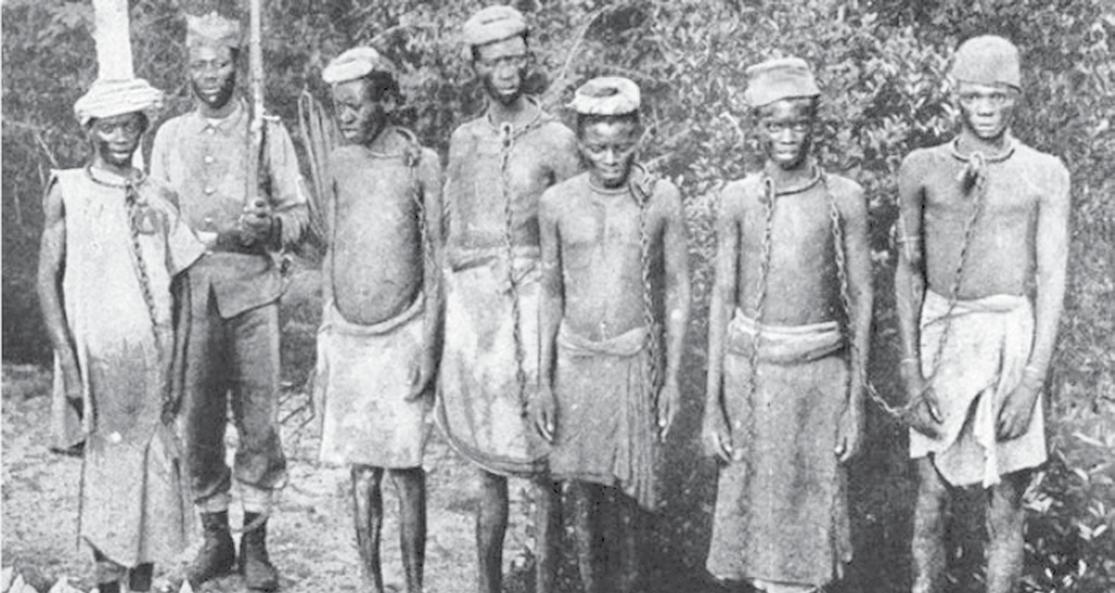
1763 rebellion. Look what the guys are doing with wood, Winston Strick with leather.
PP Amazing, uplifting works of art.
PP So that emergence started in Africa and developed in other lands like Guyana?
VC Yes, out of those encounters at the factories, a language emerged that is a mixture of Dutch, Portuguese, etc. and various African elements, where it was modified as in the Guyana situation. For instance Dr Ian Robinson,
VC That is an interesting question. Information now coming out on this is [about] how the process of the trade in African captives existed. You had along the coast of Africa, what you called factories, big warehouses: Goree in Senegal, Elmina in the Gold Coast, where you stored captive Africans until you had a boatload. They were coming in from all over the place and coming in with various languages. Added to that, the coast of Africa was associated with the Dutch, Portuguese and British traders. So you have a language emerging on the coast of Africa that is a pidgin language.
who is at University of the West Indies in Trinidad, his work is on the Dutch-based creoles that we find up the Berbice River, I think the last speaker of that old Dutch-base Creole is found there. Then you have people like Dr Walter Edwards who gave a talk here on reduplication in Guyanese creolese…
PP Hilarious and thought-provoking – eh-eh, dan-dan, din-din, one-one, lef-lef, back-back, putta-putta…

VC There is another phenomenon we need to add to this: no language – no culture is static. And there is another phenomenon that we refer to in the Americas as “re-Africanisation”. There are periods of time when new African elements get into the society. For example, after the abolition of the trade in captive Africans, Guyana’s African population became essentially Creole: local born, using a broken English: creolese. Then with indentureship, a new stream of Africans came to Guyana that will re-Africanise many sectors of social and cultural life. The last wave that came comprised of Angolans, Congolese, Kru from Sierra Leone. So when you hear people say you behave like a “Kru-man”, or a “Congo”, [it] is a direct reference to that latter wave that helped to re-Africanise the society. So scholars like Dr Gibson, Dr Kendall... these folks studied the later phase. Dr Maureen WarnerLewis’ recent book is about the Congo presence in Guyana, about Que-Que, in places like Ithaca.
PP At this point of reAfricanisation, let’s shift slightly and find out how we are dealing with the effect of enslavement in our art forms and literature.
VC Let me start by saying that enslavement was not a condition that was accepted. There is always resistance to enslavement. Our Guyanese writers/historians have written about this resistance – Professor McGowan, Professor Thompson, Professor Rose and others – this is a tradition of separating yourself, creating your own space, preserving your religion, preserving your values of honour. So resistance to enslavement holds a dominant element in the African val-
ues. This resistance took its form in many ways, mainly in retentions. Retentions became part of the songs, it was manifested in the manner of dress, the way you walk, the food you eat. Those were patterns of resistance.
PP Were there other
VC Yes, there is this effervescence that is taking place. And basically what the artists are doing is showing that the human spirit is not subjugated or dominated. So today when you see African-American kids or peoples of the African diaspora wearing their clothing in a certain way, sporting certain hairstyles, using certain speech and art forms, it is a continuation of patterns of resistance. And as we find the ‘new’ records in the new scholarship, we can go into minutiae details. And what we must not forget is how the people of African ancestry and the people of Indian ancestry lived in close proximity – yes, there was mutual suspicion then but the synthesis in the cultures now is not to be dismissed.
PP Even this is part of the answer to the question of how we are dealing with
patterns of resistance, other manifestations?
VC Yes, in our society, our urban writers began to incorporate these elements of resistance within the formal literature. Edgar Mittelholzer in his Kaywana series, although in a surface read, it is about the grand old family, it is also about the humanity of the African woman. Jan Carew in “Black Midas” is not only of somebody making money in the bush, but it is about the dynamics of colonial life. It is Martin Carter seeing within the nigger yard the heroic prototypical Guyanese hero. Then we have our paintings: we’ve got Denis Williams with his Human World, Aubrey Williams with his abstracts, and Philip Moore taking it to fantastic heights with the symbolism of the
the effects of enslavement.
VC Yes, this is the language of enslaved people.
Responses to this author telephone (592) 226-0065 or email: oraltradition2002@ yahoo.com
What’s happening:
• The Guyana Annual 2012-2013 magazine is now available at Guyenterprise Ltd and at city bookstores. This issue of the magazine is dedicated to E. R. Braithwaite. The magazine also features articles on copyright, law of intellectual property, creative industries and the future of books.
• Coming soon: “An Introduction to Guyanese Literature” by Petamber Persaud.


From a very young age, Joel Ally always knew he was destined to be successful and he is, but not without working hard to get there.
Ally grew up in the village of Triumph, East Coast Demerara, with his parents and siblings. He had a quite normal childhood and was a favourite of family members. He attended Cummings Lodge Secondary School then left to attend the Academy of Apex Education, where his true potential was realized.
At the school, Ally secured first place for an entire term and was awarded a medal for his academic performance. After undergoing a reading test and a formal interview, he was then recognized by the school’s director and chosen among 10 students to attend the school’s forum. “I became an Apex forum star for two years on national television, and then I started to train students to appear on television, and led the body that assessed the suitability of eligible students to appear on the programme,” he recounted.
Ally hosted that programme for more than a year in his more than three years experience on national television, and this, unknowingly, paved his way for his career. He successfully wrote four subjects at CXC in fourth form, and then participated in the National Youth Parliament (2007), where he performed the role of prime minister. Ally then completed his CXCs at the fifth form level in 2009, where he was once again among the top students.
After he left school, Ally realized that he had an interest in communication. When he was offered a job at the Advisory Committee on Broadcasting as a junior analyst; he quickly grabbed the opportunity.
After a year, he decided to further his studies and began attending the University of Guyana studying Communications. He graduated with a diploma in Communications and in September would be pursuing a degree in that field.
Today, at 22, Joel Ally is a senior media analyst/ monitor at the Advisory Committee on Broadcasting, where he is tasked with overlooking the junior analysts as they review local shows and programmes broadcast on various channels to ensure that there is no breach of established regulations guiding the media fraternity.
Ally has prided himself in the various projects he has worked on, both academically, socially and professionally. These include stage manager at Carifesta X; executive member of Harpy Eagle Martial Arts Academy and volunteer secretary of the Triumph Community Development Council.
“I travelled to Trinidad & Tobago as an ambassador on behalf of the Harpy Eagle Martial Arts Academy, and assisted executives from the USA at the Hyatt Regency in Port of Spain, in Oct of 2010. I was also a judge and time keeper for that international tournament,” he noted.
Ally believes in working hard and a commitment to success, with the help and trust in one’s religious belief. “You need to work hard and be patient. Success will come to you as long as you are passionate about what you want and willing to fight for it against all odds. Always remember, hard work and dedication lead to success. and you must have God in everything you do.”

Recently crowned Miss Guyana UK 2012/2013 December Online Queen, Savitrie Ramlagan has wisely used her title to showcase her homeland’s beauty on the international stage, and has sought every opportunity to help her people through numerous charity efforts. The 29-year-old from Craig, East Bank of Demerara, and from Essequibo, migrated to London in February 2001. She holds a degree in midwifery from the Luton University, London, and works as a dispenser. Savitrie is known to be a caring, lovable and beautiful individual who loves adventure and helping others. The beauty queen serves as an ambassador for Guyana at various forums abroad. As a philanthropist, Savitrie has been involved in charitable work since age 7, and has continued doing so with much enthusiasm. Her plan is to return to Guyana this year to hold fundraising events for the Georgetown Public Hospital. She aims to especially help improve medical services for premature babies at the hospital. The humanitarian is inviting all who are interested to join her to make this initiative successful. She can be contacted via email at savi384@ gmail.com or Facebook.
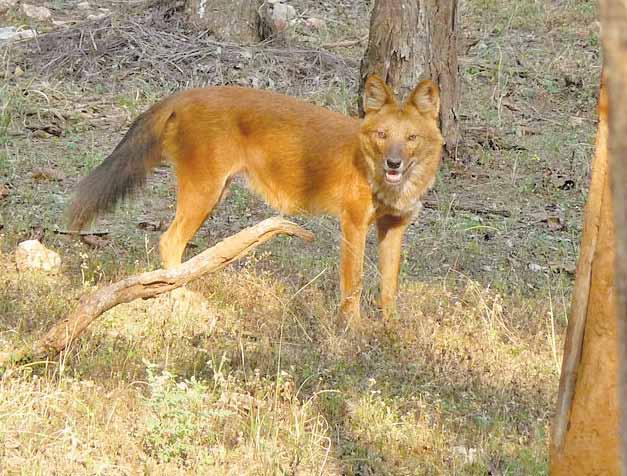
The dhole (Cuon alpinus), also called the Asiatic wild dog, Indian wild dog or whistling dog, ranges across eastern and southern Asia, where their lives in dense forests, thick scrublands, open grassland, the Siberian steppe, alpine regions of the Himalayas and in the rainforests of Java.
The dhole (pronounced "dole") doesn't fit neatly into any of the sub-families (i.e. the foxes or wolf-like dogs) and is classified in a genus of its own - Cuon Among its unusual features is a strange whistle call which it uses to re-assemble the pack when animals become separated in dense forest. The dhole also has more teats than most other dogs and has a shorter jaw with one less molar on each side of its lower jaw.
The dhole is one of the few dogs that regularly hunt in packs. It preys on hoofed mammals—in India, they eat deer, wild pigs, buffalo, and wild goats. In Southeast Asia, dholes feed on deer, gaur, and banteng, and in Siberia, they eat deer, wild sheep, and reindeer. Dholes also eat berries, bugs, lizards, and rabbits, and can hunt well on their own if needed.

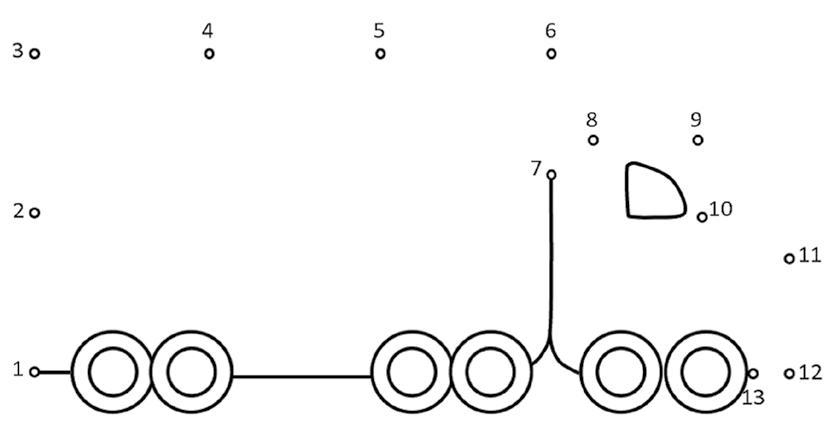
Connect the Dots: Draw straight lines to connect the dots from numbers 1 thru 13
The objective of the game is to fill all the blank squares in a game with the correct numbers. Every row of 9 numbers must include all digits 1 through 9 in any order. Every column of 9 numbers must include all digits 1 through 9 in any order. Every 3 by 3 subsection of the 9 by 9 square must include all digits 1 through 9.
The dhole makes some extraordinary sounds: it can whistle, scream, mew, and even cluck like a chicken.
The whistling sound the dhole is known for is so distinct it can be used to identify individual animals.
A dhole can jump more than 7 feet (2.1 meters) straight up into the air.
When hunting as a pack, dholes can catch prey more than 10 times their own body weight, and can even fend off a tiger.

Unscramble the countries in Part 1 and match them with the appropriate fact about them in Part 2
Part 1
Part 2
PAJNA
1. This is the world's most populous country.
2. The capital of this country is Abuja.
3. This is the only country to ever suffer an attack with atomic weapons.
4. The capital of this country is Seoul.
5. This country is a great industrial power despite the fact that it must import many resources.
6. The capital of this country is Pretoria.
7. Dracula's home, Transylvania, is in this country.
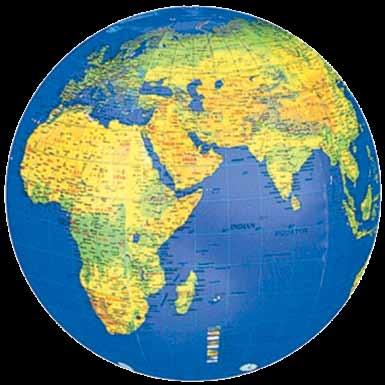
Natural diversity is amazing, giving us millions of plants and animal species on this planet. They live in every type of niche in every ecosystem on land, in the sea and in the air. Here are some of the largest living animals today. Use this actual size one-foot ruler to calculate how large these creatures are compared to you — the large number shown with the animal gives its average size and the number of rulers needed to measure it!
By Helen Driggs

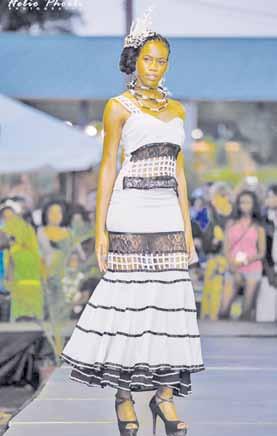
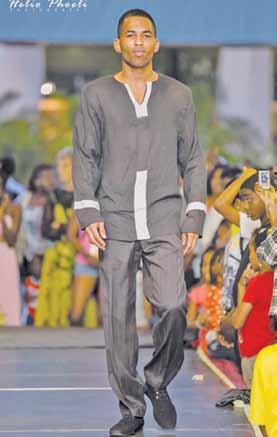
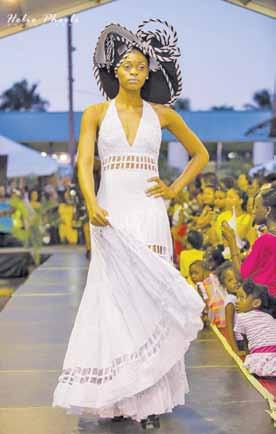
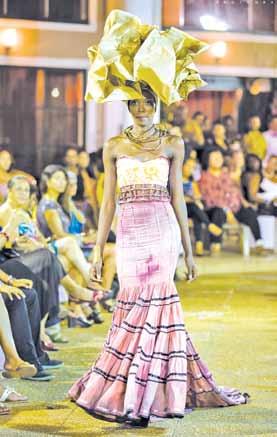
Guyanese designer Sonia Noel stole the show at what was touted as the “grandeur” fashion event of Carifesta XI in Suriname with her signature Mariska’s Designs collections.
At the Royal Torarica in Paramaribo, a line-up of hand-picked designers presented to an elite audience of cultural attachés, fashion cognoscenti, culture buffs and creative arts enthusiasts from around the region, but it was Noel’s designs that left many in awe.
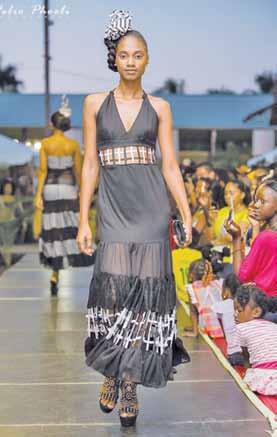

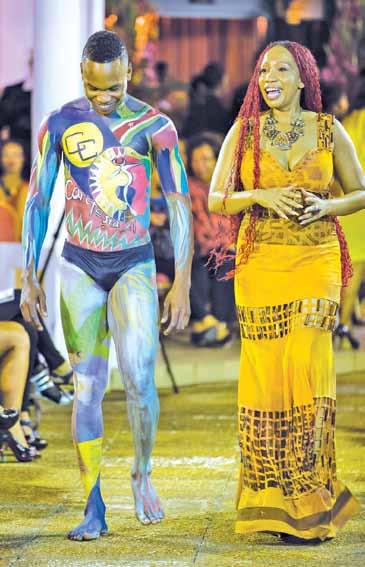
Noel stood proudly as her fashion brands, including her latest collection ‘First Resort’, took to stage with an outpouring of her legendary latticing, perennial ponchos, branded bustier and distinctive dresses – all celebrating her signature style.
“This was a proud moment for me and Guyana, and one of my best showings to date. The audience applauded from start to finish when my line came on. It was indeed a memorable occasion which also

gave me an ideal opportunity to showcase the talents of the Guyanese people,” Noel related in an interview with Guyana Times Sunday Magazine
Noel was honoured to have been escorted on the runway by Jamain Victor, a previous "Guyana Model Search" winner who was painted by Bravo Arts with the Carifesta logo.
For more information on Noel’s collections presented in Suriname call 226-3099. (Photos by Helio Phoeli)


Olivia Wilde is an American actress. Wilde was born in New York City. Her mother, Leslie Cockburn (née Redlich), is an American-born “60 Minutes” producer and journalist. Her father, Andrew Myles Cockburn, is also a journalist. She has appeared in a number of television and film productions such as “The O.C.”, “The Black Donnellys”, “House”, “Tron: Legacy”, “Cowboys & Aliens”, “In Time”, and most recently “Drinking Buddies”. The actress has won the 2006 US Comedy Arts Festival Film Discovery Jury Award for Best Actress for Bickford Shmeckler's "Cool Ideas" (2006); the Teen Choice Awards in 2008, she was nominated for Teen Choice Award for Choice TV Breakout Star Female for "House". Also in 2008, Wilde was honoured alongside Jesse Eisenberg with the Vail Film Festival Rising Star Award. A vegan, she was voted PETA's Sexiest Vegetarian Celebrity of 2010.
As almost everyone knows, billionaire Bruce Wayne has an alter ego. But as was announced late Thursday, it's something of a surprise: Ben Affleck will play Batman in an upcoming sequel to this summer's hit “Man of Steel”.
For the first time, too, the “Caped Crusader” will join forces with Superman, again to be played by British actor Henry Cavill, 31, in the as-yet-untitled movie to be directed by “Man of Steel's” Zack Snyder.
The mash-up will begin production next year and be released July 17, 2015, reports EW.com. Man of Steel stars Amy Adams (as Lois Lane), Laurence Fishburne (Perry White) and Diane Lane (Martha Kent) have also been announced to return.
"We knew we needed an

extraordinary actor to take on one of DC Comics' most enduringly popular super heroes, and Ben Affleck certainly fits that bill and then some," Warner Bros. president Greg Silverman said in a statement.
Director Snyder said about the 41-year-old leading man (and director of this year's Best Picture Oscar Winner, “Argo”), "Ben provides an interesting counter-
balance to Henry's Superman. He has the acting chops to create a layered portrayal of a man who is older and wiser than Clark Kent and bears the scars of a seasoned crime fighter, but retain the charm that the world sees in billionaire Bruce Wayne."
Reactions in the world of social media ranged ran the gamut from warm, to cautious, to critical. Some pointed to Affleck's turn as a superhero in 2003's “Daredevil”, which was a disappointment. He was on sturdier ground as troubled actor George Reeves, who played 1950s TV's Superman, in the 2006 drama Hollywoodland.
FYI, the New York Post reports that “Dark Knight” trilogy Batman, Christian Bale, turned down $50 million to put the mask back on.
(People)
Kanye West got super gushy when asked about his relationship with Kim Kardashian recently, declaring that he is with the reality TV star because, much like the famous L'Oreal catchphrase, "she's worth it".
OK, so the rapper was quizzed about his romance by Kim's mum, Kardashian matriarch Kris Jenner, as part of a fuller, hourlong interview.
Speaking to Jenner, West revealed: "Someone could say you know, 'When the paparazzi surround you, how could you... everyone knows you don't like paparazzi, but why would you, why would you be with this person?' "And I'm saying I'm being with this person because, you know I love this person. And she's worth it to me."
He added: "She's my joy, and she brought my new joy into the world."
Jenner also revealed how much she dis-
covered about her future son-in-law during their heart-to-heart.
"What surprised me about the interview is I learned things that I didn't have any idea about him... Everybody will be super surprised to see this other side of Kanye West," she said.
After she asked Kanye how he felt he had coped with adapting to the chaotic Kardashian household, he wisely responded:
"It's like noise at all times happening," he said. "I wasn't used to it, and now when I'm out, you know, I try to get home early, just to be around my family."
Jenner also added that West might show a picture of baby North West exclusively on the show.
"You'll have to tune in," she teased. "She's a beautiful combination of the both of them." (Glamour)

Demi Lovato's 21st birthday on August 20 turned out to be "the best birthday" of her "entire life," which she spent in Kenya in Africa while on a trip to do some charity work for Toronto-based international youth organization Free the Children.
Aside from a memorable celebration among the locals, she even got a most unusual gift of a farmyard goat, which was actually a traditional gift in Africa, from one of the Maasai communities where she volunteered.
"Thank you all for the birthday wishes!!! Having the best birthday ever in Africa with freethechildren!!!" the "Heart Attack" singer tweeted along with a photo of herself doing some manual labor that went towards building a new school in the area. "Absolutely incredible. I'm so in love with Kenya. I'm so sad I'm leaving....," she wrote before re-
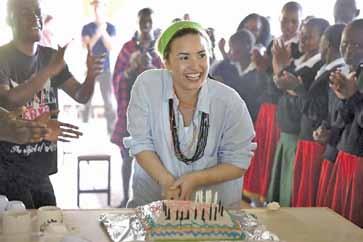
vealing that she had named her new pet goat "Billy".
Instead of celebrating her 21st birthday with family and friends, Lovato decided to go on the "life-changing" trip because she had wanted something "memorable and meaningful" for her milestone birthday. She has been working with Free the Children for a year now through which she was able to get first-hand exposure to "the wonderful work that
is being done as a result of all the incredible efforts of young people around the nation."
Sending more love towards Lovato's way is her ex-boyfriend Wilmer Valderrama, who greeted her on Twitter. "I've been so proud of the strength & commitment you've gained 4 life, keep inspiring us all! Happy birthday my @ddlovato! With & by u always," he wrote. (AceShowbiz)

Actor Matthew Bomer is one of many celebrities who support Wentworth Miller after he came out of the closet on Wednesday. Speaking to E! News during Heineken
U.S. Open kickoff party at PH-D at Dream Downtown, New York, on August 22, the "White Collar" actor said nothing but praises to Miller.
"Wow, I think its really bold and incredibly classy how he came out and did it.
I am really proud of him. It’s very reflective of his amaz-
ing character," he commented. Speaking of better changes concerning LGBT issues in the U.S., the Neal Caffrey depicter said, "I hope all these laws continue to pass but we still have a long way to go."
Miller recently revealed his sexuality as he declined an invitation to attend a film festival in Russia amidst criticism faced by the country in regards to its treatment to LGBT community. "Thank you for your kind invitation. As someone who has enjoyed visiting Russia
in the past and can also claim a degree of Russian ancestry, it would make me happy to say yes. However, as a gay man, I must decline," the "Prison Break" actor wrote.
After the news broke out on Wednesday, some celebrities took to Twitter to write supporting messages. "I'm proud of Wentworth Miller for speaking out in support of equality. Russia doesn't know what they're missing," Ellen DeGeneres said. "Little behind on the news: Good for Wentworth Miller!!! #courage," Andy Cohen added. WWE wrestler Darren Young who recently came out as gay wrote, "Congrats 2 Wentworth Miller on living his life to the fullest now #beproud!! Big step 2 take. Not easy but well worth it!" Jesse Tyler Ferguson said, "So proud of #WentworthMiller. Coming out can be hard & scary but coming out to send a message of tolerance is heroic."
(AceShowbiz)


Taaha Shah is an Indian model and actor. He is known for his leading role in the Bollywood production house Y-Films romantic comedy film “Luv Ka The End”, opposite actress Shraddha Kapoor. The film was released in 2011 and proved to be a commercial success. His second film, “Gippi”, was released in May 2013. Shah attended the New York Film Academy (NYFA) in Abu Dhabi, the capital city of United Arab Emirates. After completing six months at NYFA, Shah’s focus was to reside in Los Angeles to complete the remainder of his course. However, his father thought it best for Shah to move to Mumbai first to explore his acting options there. In 2009, Shah moved to Mumbai where he spent countless hours practicing dancing and martial arts. Nine months later, he was signed for his debut film, “Luv Ka The End”. He was cast as an “antihero, the first of its kind in the youth genre.”

Saif Ali Khan who is currently in Los Angeles shooting for “Happy Ending” seems to be caught up in trouble. Apparently, the co-producer of the film
Dinesh Vijan hired a crew from the street by paying them a token amount for acting in the film, unaware of the fact that the LA law only permits members of the Screen Actors Guild to act in any film. Hence the film's shooting was withheld on the grounds of breaking the law. It was said that such a step was taken to reduce the cost of the film.
However, Saif revealed that they were not foolish enough to break the law for curbing the budget and it was just because there was a misunderstanding between them. He claimed that the city follows different levels of tax, depending on the budget and misunderstanding had been created between the crew of the film and LA representatives because they believed that the film had a much higher budget compared to what they were paying. However, everything was sorted by the producers of the film and now the crew is happily shooting at Michigan.
Besides Saif, “Happy Ending” also stars Ileana D'Cruz and is directed by Raj Nidimoru and Krishna DK. (Hindustan Times)
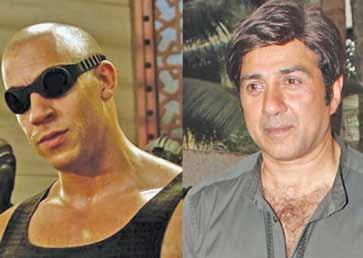
Bollywood actor Sunny Deol is in talks to lend his baritone to the character played by Hollywood star Vin Diesel in the Hindi version of sci-fi action film “Riddick”.
“Riddick” is the third film in “The Chronicles of Riddick” series, starring Diesel as the title character and will be released in India on September 6 in four languages - English, Hindi, Tamil and Telugu.
Sunny has been approached for the dubbed Hindi version as his voice is similar to that of Diesel's.
Confirming the development, a representative of PVR Pictures said: "Yes, we have approached Sunny to dub for Vin Diesel for the film."

Film actress and Rajya Sabha member Jaya Bachchan, along with actress Madhuri Dixit, will be getting the prestigious Lacchu Maharaj award this year. An announcement to this effect was made by the organizers and Shakuntala Neeruj Sansthan.
Director of the institute, Kumkum Adarsh, told media that while Jaya
Bachchan would be awarded for 2012, Dixit will be given the honour for 2013.
The award was constituted in memory of Kathak exponent Lacchu Maharaj, who died in 1978. In the past, Asha Parekh, Kumkum, Sri Devi, Jaya Prada and Rekha have won it.
Birju Maharaj, who represents the Lucknow ghara-
na of Kathak dance, and is also the nephew of Lacchu Maharaj, has also previously won the award.
Sitara Devi, an exponent of classical Kathak whom Rabindranath Tagore named Nritya Samragini -empress of dance -- has also received the award in recognition of her contribution to dance.
Lacchu Maharaj had choreographed Jaya Bachchan in the film “Ek Nazar” (1972).
In the past, the awards were given away Sept. 1, to coincide with the birth anniversary of the late dance exponent. This year, however, officials said the availability of the actresses was being ascertained to finalise the award distribution programme. (Times of India)
‘I love Shah Rukh’- Abhishek
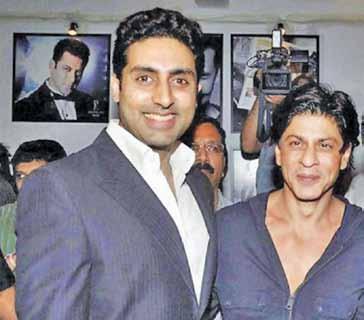
Abhishek Bachchan has said he is happy to work with Shah Rukh Khan again after a gap of seven years.
The two actors, who last shared screen space in the 2006 film “Kabhi Alvida Naa Kehna”, will star together in Farah Khan's forthcoming “Happy New Year”.
"I am very excited to work with Farah. Farah is a dear friend and I am very excited to be part of ‘Happy New Year’ and I love Shah Rukh," Bachchan told IANS.
"He is one of the few actors well known for his deep and commanding voice. Hence, we feel this will make for a great connect for Indian audiences. Now we are hoping it all goes well and we get to hear his voice in the movie," added the representative.
in September to promote the film and Sunny is expected to join them.
It was earlier reported that Diesel will visit India
Written and directed by David Twohy, “Riddick” is set in an apocalyptic future with an alien race of predators hunting down humans on a distant planet.
(Mumbai Mirrior)

"I worked with him in ‘Kabhi Alvida Naa Kehna’ and I think he is taking too much time to do another film with me. It is going to be a lot of fun," he added.
Choreographer-turneddirector Farah Khan has previously directed Shah Rukh Khan in “Main Hoon
Na” and “Om Shanti Om”.
The female leads for the film are yet to be confirmed, though it has been widely speculated that Deepika Padukone has
been cast opposite Shah Rukh Khan.
Bachchan will reportedly begin shooting for the film in September on location in Dubai. (Digital Spy)


Anger is a very powerful emotion that can stem from feelings of frustration, hurt, annoyance, or disappointment. It is a normal human emotion that can range from slight irritation to strong rage.
Anger can be harmful or helpful, depending upon how it is expressed. Knowing how to recognize and express anger in appropriate ways can help people to reach goals, handle emergencies, and solve problems. However, problems can occur if people fail to recognize and understand their anger.
What Are the Dangers of Suppressed Anger?
Suppressed anger can be an underlying cause of anxiety and depression. Anger that is not appropriately expressed can disrupt relationships, affect thinking and behaviour patterns, and create a variety of physical problems. Chronic (long-term) anger has been linked to health issues such as high blood pressure, heart problems, headaches, skin disorders, and digestive problems. In addition, anger can be linked to problems such as alcohol and substance abuse, crime, emotional and physical abuse, and other violent behaviour.
What Steps Can I Take to Help Manage My Anger?
When you start feeling angry, try deep breathing, positive self-talk, or stopping your angry thoughts. Breathe deeply from your diaphragm. Slowly repeat a calm word or phrase such as "relax" or "take it easy." Repeat it to yourself while breathing deeply until the anger subsides.
Although expressing anger is better than keeping it in, anger should be expressed in an appropriate way. Frequent outbursts of anger are often counterproductive and cause problems in relationships with others. Anger outbursts are also stressful to your nervous and cardiovascular systems and can make health problems worse. Learning how to use assertiveness is the healthy way to express your feelings, needs, and preferences. Being assertive can be used in place of using anger in these situations.
Seek out the support of others. Talk through your feelings and try to work on changing your behaviours.
If you have trouble realizing when you are having angry thoughts, keep a log of when you feel angry.
Try to gain a different perspective by putting yourself in another's place.
Learn how to laugh at yourself and see humour in situations.
Practice good listening skills. Listening can help improve communication and can facilitate trusting feelings between people. This trust can help you deal with potentially hostile emotions.
Learn to assert yourself, expressing your feelings calmly and directly without becoming defensive, hostile, or emotionally charged. Consult self-help books on assertiveness or seek help from a professional therapist to learn how to use assertiveness and anger management skills.
If you believe that your anger is out of control and is having a negative effect on your life and relationships, seek the help of a mental health professional. A psychologist or other licensed mental health professional can work with you to better understand the causes behind anger and develop techniques for changing your thinking and your behaviour. A professional can help you to deal with your anger in an appropriate way. Choose your therapist carefully and make sure to seek treatment from a professional who is trained to teach anger management and assertiveness skills. (Source: WebMD)
Exercise, weight management, and a healthy diet are important ways to help prevent high blood pressure. Working out also boosts the effectiveness of blood pressure medication if you're already being treated for hypertension. Be sure to check with your doctor before starting a fitness program.
Resistance exercise can be done in many ways, such as with free weights, weight machines, exercise bands, or by doing abdominal crunches or curl-ups. Resistance training helps reduce body fat, increase muscle mass, and boost your metabolic rate. Losing as little as 10 pounds can reduce or help prevent high blood pressure in many overweight individuals. Check with your doctor before starting a new weight-training program.
Swimming for 30 minutes reduces the amount of circulating adrenaline in the body and relaxes blood vessels. Swimming can help lower your pulse rate and lower blood pressure.
Regular exercise may prevent or control high blood pressure. Moderate-level aerobic activities, such as brisk walking, for 30 minutes a day may be enough to keep you off medications or help them work more effectively. Exercise can reduce your blood pressure readings by as much as 5-15 points. Gradually increase the intensity of your workout to continue lowering your blood pressure to safer levels.
Put the band that comes with it on your chest underneath your shirt. By looking at the watch during exercise, you can see your actual heart rate. This is a good alternative to taking your pulse manually. Ask your doctor to recommend the best target heart rate zone (or training zone) for you.
Some heart medications such as betablockers or calcium-channel blockers can
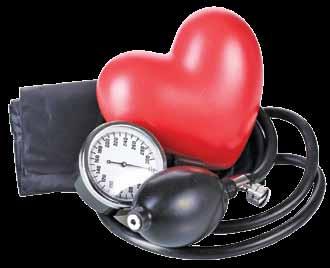
are sedentary, overweight, or have a high risk of coronary heart disease or other chronic health problem. It's important to have your blood pressure measured by a health care professional, who can advise you as to how often to have it rechecked. Don't wait for unreliable signs such as headaches, a red face, or stress to tell you your blood pressure is too high.
medications.
No matter what exercise you do, be aware of your limitations. If the exercise or activity hurts, then stop! If you feel dizzy or have discomfort in your chest, arms, or throat, stop. Also, go slower on hot and humid days or exercise in an air-conditioned facility.
Findings show that losing as few as 10 pounds, if you're overweight, can help reduce or prevent high blood pressure. To lose weight, take in fewer calories than you use each day. Ask your doctor or a registered dietician how many calories you need daily for weight loss. In addition, boost exercise to burn even more calories.
Blood pressure guidelines recommend limiting sodium to no more than 2,300 milligrams a day (about 1 teaspoon of table salt) or 1,500 milligrams a day, depending on age and other characteristics. By staying on a sodiumrestricted diet, your systolic blood pressure (top number) may drop 2 to 8 points. Salt-restricted diets can also help enhance the effects of most blood pressure medications.
A heart rate watch can let you quickly assess your pulse. Here's how to use one.
Getting your doctor's approval before starting a fitness program is important if you
The U.S. Joint National Committee on Prevention, Detection, Evaluation, and Treatment of High Blood Pressure recommends moderate alcohol consumption: No more than two drinks per day for men and no more than one drink per day for women. A drink is defined as 12 ounces of beer, 5 ounces of wine, or 1.5 ounces of 80-proof liquor.



Where you place your furniture in a living room instantly sets the tone for how you'll live in that room. HGTV provides some must-know tips for arranging spaces, whether you're relaxing, watching TV or chatting with friends.




Ingredients:
1 (14.75 ounce) can salmon, drained and flaked
2 eggs, beaten 1/4 cup garlic and herb seasoned dry bread crumbs 1/4 cup dry potato flakes
Method:
In a medium bowl, mix salmon, eggs, garlic and herb seasoned dry bread crumbs, dry potato flakes, onion, garlic, dill weed, celery salt, salt, and pepper. Form the mixture into 2 inch balls, and flatten into patties about half-inch thick.
Heat olive oil in a medium skillet over medium heat. In batches, cook patties about 5 minutes on each side, until lightly browned. (Makes 10 patties)
1 medium onion, minced
1 clove garlic, minced
1/4 teaspoon dried dill weed
1/4 teaspoon celery salt
Salt and pepper to taste
2 tablespoons olive oil

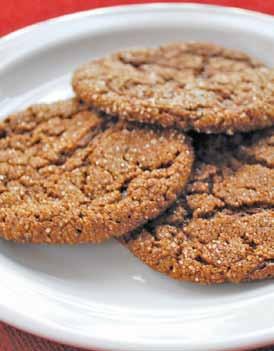
Ingredients:
1 1/2 cups shortening 2 cups white sugar
Half (1/2) cup molasses
2 eggs 4 cups all-purpose flour
Method:
Melt the shortening in a large pan on the stove, and cool.
Add sugar, eggs, and molasses, beat well.
In a separate bowl, sift dry ingredients together and add to the pan. Mix well and chill 3 hours or overnight.
Form into walnut-size balls. Roll in granulated sugar. Place on greased cookie sheet about 2 inches apart.
Bake at 375 degrees F (190 degrees C) for 8-10 minutes.
Store in an airtight container to keep from getting overly crisp. If they do lose their softness, an easy way to restore it is to place one slice of fresh bread in the container with the cookies for a couple of hours or overnight and they will be soft again. (Makes 6 dozen)
4 teaspoons baking soda
2 teaspoons ground cinnamon
1 teaspoon ground cloves
1 teaspoon ground ginger
1 teaspoon salt
In addition to adding coconut milk to your rice and fish, consider adding it to your pasta dishes or your sweet potato dishes. You could also add coconut milk to your oatmeal, stirring it into the cooked oatmeal. When you are baking, add coconut milk to your muffins or breads and cakes. Just substitute the liquid called for in the recipe (water, milk, heavy cream) with coconut milk. Add coconut milk in place of heavy cream to your cheesecake recipes, or if you use sour cream, add 1/4 cup coconut milk.
used for many other cleaning and curing duties: They remove ink and lipstick stains on fabrics. Even out scratches on DVDs and CDs. Sparkle up diamonds and silver.
the pain from burns and itches from mosquitoes and fleas.
When you are driving a car down the
How?


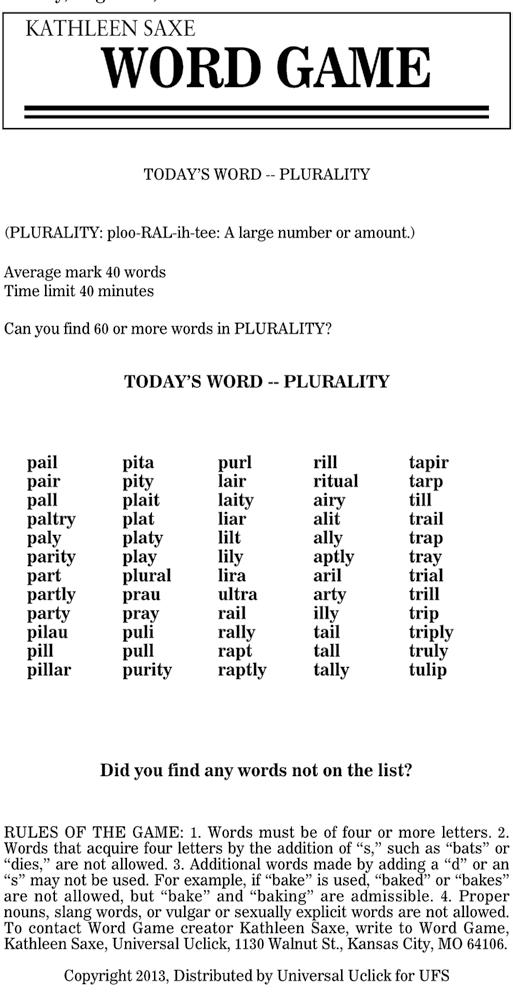


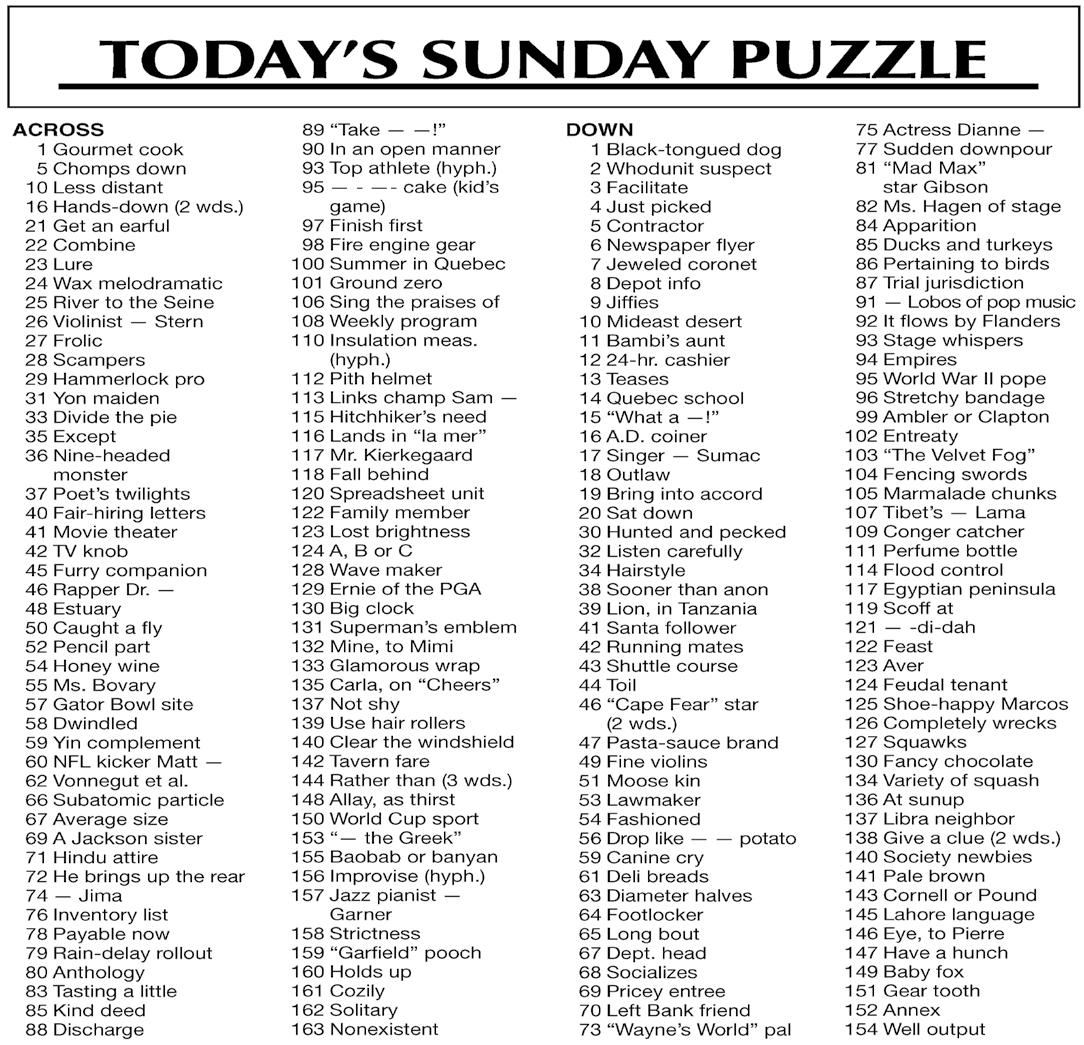
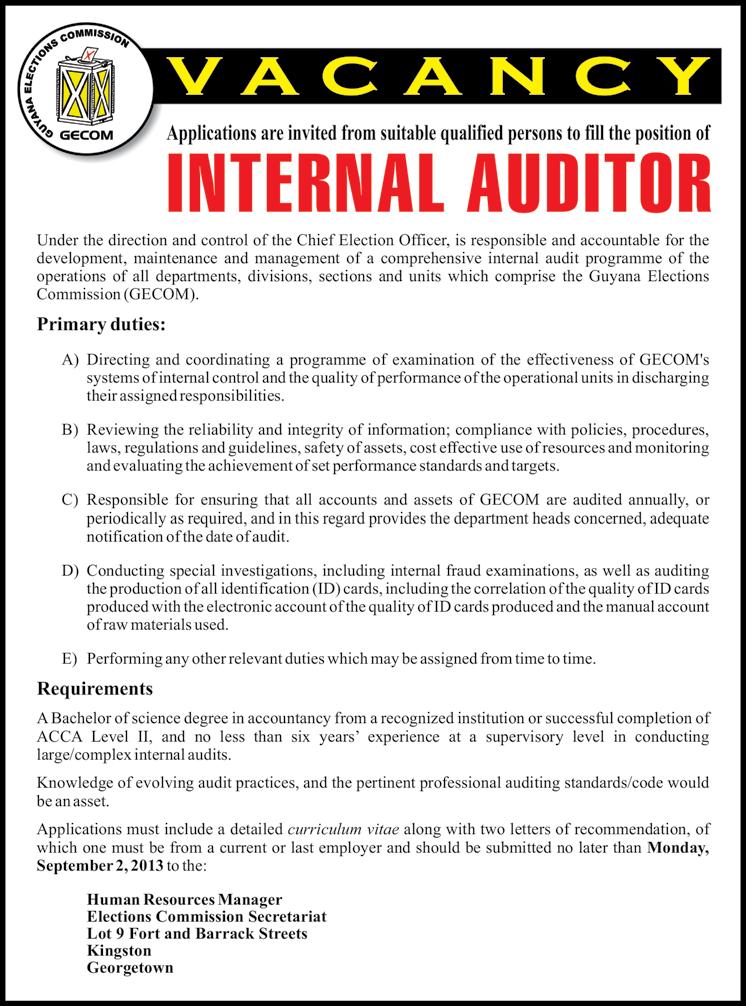
By Oscar Wilde
“She said that she would dance with me if I brought her red roses,” cried the young student; but in all my garden there is no red rose.
From her nest in the Holm-oak tree the nightingale heard him, and she looked out through the leaves, and wondered.
“No red rose in all my garden!” he cried, and his beautiful eyes filled with tears. “Ah, on what little things does happiness depend! I have read all that the wise men have written, and all the secrets of philosophy are mine, yet for want of a red rose is my life made wretched.”
“Here at last is a true lover,” said the Nightingale. Night after night have I sung of him, though I knew him not: night after night have I told his story to the stars, and now I see him. His hair is dark as the hyacinth-blossom, and his lips are red as the rose of his desire; but passion has made his lace like pale Ivory, and sorrow has set her seal upon his brow.
“The Prince gives a ball to-morrow night,” murmured the young student, “and my love will be of the company. If I bring her a red rose she will dance with me till dawn. If I bring her a red rose, I shall hold her in my arms, and she will lean her head upon my shoulder, and her hand will be
clasped in mine. But there is no red rose in my garden, so I shall sit lonely, and she will pass me by. She will have no heed of me, and my heart will break.”
“Here indeed is the true lover,” said the Nightingale. “What I sing of he suffers: what is joy to me, to him is pain. Surely Love is a wonderful thing. It is more precious than emeralds, and dearer than fine opals. Pearls and pomegranates cannot buy it, nor is it set forth in the market-place. It may not be purchased of the merchants, nor can it be weighed out in the balance for gold.”
“The musicians will sit in their gallery,” said the young Student, “and play upon their stringed instru-
ments, and my love will dance to the sound of the harp and the violin. She will dance so lightly that her feet will not touch the floor, and the courtiers in their gay dresses will throng round her. But with me she will not dance, for I have no red rose to give her,” and he flung himself down on the grass, and buried his face in his hands, and wept.
“Why is he weeping?” asked a little green lizard, as he ran past him with his tail in the air.
“Why, indeed?” said a butterfly, who was fluttering about after a sunbeam.
“Why, indeed?” whispered a daisy to his neighbour, in a soft, low voice.
“He is weeping for a red rose,” said the nightingale.
“For a red rose!” they cried. “How very ridiculous!” The little lizard, who was something of a cynic, laughed outright.
But the nightingale understood the secret of the student’s sorrow, and she
my sweetest song.”
But the tree shook its head.
“My roses are red,” it answered, “as red as the feet of the dove, and redder than the great fans of coral that wave and wave in the ocean-cavern. But the winter has chilled my veins, and the frost has nipped my buds, and the storm has broken my branches, and I shall have no roses
“One red rose is all I want,” cried the gale, “only one red rose! Is there no way by which I

“Give me a red rose,” she cried, “and I will sing you my sweetest song.”
But the Tree shook its head.
‘My roses are white,” it answered, “as white as the foam of the sea, and whiter than the snow upon the mountain. But go to my brother who grows round the old sun-dial, and perhaps he will give you what you want.”
So the Nightingale flew over to the rose tree that was growing round the old sundial.
“Give me a red rose,’ she cried, “and I will sing you my sweetest song.”
But the tree shook its head.
‘My roses are yellow,’ it answered, “as yellow as the hair of the mermaiden who sits upon an amber throne, and yellower than the daffodil that blooms in the meadow before the mower comes with his scythe. But go to my brother who grows beneath the Students window, and perhaps he will give you what you want.”
So the Nightingale flew over to the rose tree that was growing beneath the student’s window.
‘Give me a red rose,” she cried, “and I will sing you
“There is a way,” answered the tree, “but it is so terrible that I dare not tell it to you.”
“Tell it to me,” said the nightingale, “I am not afraid.”
“If you want a red rose,” said the tree, “you must build it out of music by moonlight, and stain it with your own hearts-blood. You must sing to me with your breast against a thorn. All night long you must sing to me, and the thorn must pierce your heart, and your life-blood must flow into my veins, and become mine.”
“Death is a great price to pay for a red rose,” cried the nightingale, “and life is very dear to all. It is pleasant to sit in the green wood, and to watch the sun in his chariot of gold, and the moon in her chariot of pearl. Sweet is the scent of the hawthorn, and sweet are the bluebells that hide in the valley, and the heather that blows on the hill. Yet love is better than life, and what is the heart of a bird compared to the heart of a man?”
So she spread her brown wings for flight, and soared into the air. She swept over the garden like a shadow, and like a shadow she sailed through the grove. (TO BE CONTINUED)
Iron beads found in a necklace in an Egyptian tomb were forged from meteorite iron, two thousand years before the Iron Age began, says an international team of researchers
Human fascination with outer space goes as far back as the human race itself. Our ancestors had darker skies and less air pollution than we do, so they saw much more than we can. It's no surprise that the ancients navigated by constellations, or that they noticed when stars appeared to fall from the skies – what we now call meteor showers, though the term "shooting star" will probably never go away entirely.
When meteors fell without burning up in the atmosphere, the resulting meteorites – the rocks dropped from space – attracted attention, and in fact were used in "humankind’s oldest known iron artefacts," according to a new study from the University College London.
Meteorite iron was held in the same esteem as gold and precious gems, the researchers suggest.
"Iron beads were strung into a necklace together with other exotic minerals such as lapis lazuli, gold and carnelian, revealing the status of meteoritic iron as a special material on a par with precious metal and gem stones," say the researchers in their article, published today in the Journal of Archaeological Science.
The ancients didn't just find the meteorite and drill a hole in it, like they did other precious stones. They recognized the iron's metal properties and treated it accordingly, say the archaeologists.
“The shape of the beads was obtained by smithing and rolling, most likely involving multiple cycles of hammering, and not by the traditional stone-working techniques such as carving or drilling which were used for the other beads found in the same tomb,” said Prof. Thilo Rehren, lead author of
less than five thousand years, making it harder to determine the beads' original use. Four of the nine beads were found still in sequence along the neck of the deceased; three more were at his waist. The other two beads were in a separate grave, found near the dead person's hands. That grave included "lapis lazuli, obsidian, gold, carnelian, calcite, chalcedony, steatite, faience, garnet, and serpentine," say the archaeologists.
In the five thousand years since the jewellery was made, the iron rusted to a dull reddish-orange. When the graves were discovered in 1911, the archaeologist claimed the beads were iron, but there was no non-invasive way to confirm it before now. In the past hundred years, other archaeologists theorized that the beads could be magnetite, or perhaps an iron by-product of copper smelting.
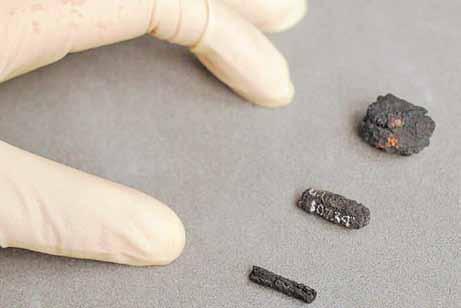
the paper, in a press release.
An international team of experts used neutron and X-ray methods to confirm that three small beads used in jewellery in 3200 BC were made from iron derived from meteors, or "meteoritic iron."
The three beads, in the collection of the Petrie Museum of Egyptian Archaeology in London, come from a set of nine similar beads buried in two sealed graves near the village of el-Gerzeh, 40 miles south of the Giza plain where the pyramids would be built hundreds of years later.
Because of the corrosion of the metal over the intervening millennia, no one had seen the rolled structure prior to this investigation. Ancient smiths had hammered and rolled copper and gold since the ninth millennium BC, say the researchers, but those are much softer and easier to work with. Meteoritic iron is harder and brittle, so would have required hotter forges and more sophisticated techniques.
Once shaped into tubes between half an inch and an inch long, the iron beads could be strung on a cord to make necklaces, belts, bracelets, or other jewellery.
Of course, cords rot away in much
Reggae immortal Bob Marley has joined Barack Obama and Elvis Presley in the elite club of those who have biological species named in their honour.
In Marley's case, it's a small parasitic crustacean blood feeder that infests fish in Caribbean coral reefs, now known as Gnathia marleyi
"I named this species, which is truly a natural wonder, after Marley because of my respect and admiration for Marley's music," said Paul Sikkel, a marine biologist at Arkansas State University.
"Plus, this species is as uniquely Caribbean as Marley."
To verify the metal's identity, the researchers scanned the beads with neutron and gamma-ray beams and found the trace metals that are the fingerprint of meteoritic iron: nickel, cobalt, phosphorous, and, especially, germanium.
“The really exciting outcome of this research is that we were for the first time able to demonstrate conclusively that there are typical trace elements such as cobalt and germanium present in these beads, at levels that only occur in meteoritic iron," said Professor Rehren, who teaches archaeology at the University College London campus in Qatar.
This means that two thousand years before the dawn of the Iron Age, Egyptians had already learned how to work with meteorite iron, says Rehren, giving Egyptians a huge military advantage once iron smelting was introduced. (Christian Science Monitor)
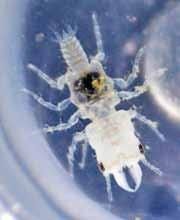
Young Gnathia marleyi hide among coral rubble, sea sponges or algae, launching surprise attacks on fish, which they then infest, eating enough to fuel their growth to adulthood.
Adults don't eat at all, Sikkel said, but manage to survive for two to three weeks on their last feedings as juveniles.
Caribbean coral reefs are vulnerable to diseases, and Sikkel said his team is studying the relationship between the health of coral reef communities and gnathiid populations.
Gnathiids, like the species named for Marley, are the most common external parasites found on coral reefs. They are ecologically similar to land-based, blood-sucking ticks or disease-carrying mosquitoes, the biologist said.
Bob Marley, who died in 1981, was an iconic exponent of the Jamaican-born reggae music.
President Obama has a lichen named for him and Elvis has a wasp. Sikkel and his research team described all the life stages of Gnathia marleyi in the current edition of the journal Zootaxia. The research was funded in part by the National Science Foundation. (CSM)
we use too many exclamation marks?
Elmore Leonard has died at the age of 87. The crime novelist really didn't like exclamation marks, notes Finlo Rohrer.
His 10 rules of writing from 2001 are arguably as famous as any of his novels. Point five reads: "Keep your exclamation points under control. You are allowed no more than two or three per 100,000 words of prose."
He wasn't the only enemy. "Cut out all these exclamation points," F Scott Fitzgerald urged. "An exclamation point is like laughing at your own joke."
There's even a word, “bangor rhea” that de scribes their overuse.
But if you read any news website or newspaper you won't find many. Stern-faced sub-editors whittle them away. Some ban them completely, insisting that if you can't convey tone in a more elegant way then writing might not really be the career for you.
English-Language Tourist's Guide to Britain.
"The reason is that you can keep your finger on the key and end your sentence with 20 exclamation marks. From the earliest days of the internet you saw this unprecedented increase in punctuation marks."
As with emoticons, there might be a gender difference. When he surveyed a collection of texts, Crystal noticed females used exclamation marks four times as often as

Many of those "suffering" from bangorrhea would argue that exclamation marks are an attempt to achieve lightness of tone or emotional emphasis. "See you there!" - In response to an invitation to a party - implies enthusiasm about attending. "See you there." merely states that you will be there. It could just as well be a rendezvous by the gallows as a joyous social occasion.
And yet exclamation marks litter our personal messages, in texts and emails.
You get clusters of exclamation and question marks across most communication on the internet, argues linguist David Crystal, co-author with wife Hilary of Wordsmiths and Warriors: The
Exclamation marks seem almost inevitable in the confined space of text messages. No-one wants to appear terse. Without the exclamation mark, your text can feel like something that might have come out of the mouth of famously deadpan comedian Steven Wright. (BBC Magazine)


Wannounced the release of the fourthgeneration iPad — often called the iPad 4, or iPad with Retina display — in October 2012, many consumers felt angered by the rapid replacement of the very similar iPad 3 ("the new iPad"). Still, you only needed to decide whether to upgrade to the slightly more powerful device — and if you had recently dished out hundreds of dollars for the iPad 3, the decision wasn't very difficult.
But in the same announcement, Apple introduced the iPad mini —arguably a game-changing miniature tablet that made consumers rethink how to use, and why they use, their mobile devices. As a result, especially for people looking to buy their first tablets, the decision process became complicated.
We've prepared this guide to help you decide whether the latest iPad or iPad mini is right for you. Like all gadgets, it ultimately comes down to preference — that is, how you plan to use your tablet — but there are plenty of specs to help you choose.
What you'll get with both the iPad and the iPad mini: As far as capacity goes, you can purchase 16GB, 32GB and 64GB models of each tablet. There are price differences, and you
upgrade to a 128GB model of the iPad, but standard memory is available on both.
Although the iPad mini is smaller, it doesn't lack anything in camera capability. The iSight camera for both tablets boasts 5-mega-
run the same version of iOS.
Both mini run every app in the App Store — however, because of screen size and power, the experience or performance may vary.
Display
video stabilization.
Both devices are compatible with mobile carriers and have exactly the same wireless and cellular capabilities (including Bluetooth 4.0 technology). Both allow for up to 10 hours of surf-

pixel photos, autofocus, face detection, backside illumination, a five-element lens, hybrid IR filter and ƒ/2.4 aperture. FaceTime HD allows for 1.2-megapixel photos, 720p HD video and works over Wi Fi and cellular services. Both record video in 1080p HD, allowing you to tap to focus while recording,
ing the web on Wi Fi, watching video or listening to music (nine hours of surfing the web using cellular data).
Each device uses the Lightning cable, and you can charge with a power adapter or connect to your computer. Siri is available to assist you no matter which iPad you purchase, since they each
The biggest difference between these tablets is screen density. The iPad mini's display is 7.9 inches diagonally, with 1024 x 768 resolution at 163 pixels per inch. The iPad with Retina display packs a punch — 9.7 inches, with 2048 x 1536 resolution at 264 pixels per inch.
For regular use, the twoinch difference and crystal clear resolution don't affect that much, but there are definitely a few things to consider. If you're using your tablet primarily as a media player — watching movies, viewing or editing photos, etc. — the iPad Retina is typically going to be the better option. The reason is simple: You can see more. This is also better for productivity, as you have more room to navigate.
That said, the iPad mini displays media perfectly fine, and may be a better option if you're using it more on the go. It's also more akin to the screens of mobile gaming devices, whereas iPad Retina gameplay may prove an uncomfortable experience (both visually and physically).
The iPad Retina, with its dual-core A6X processor and quad-core graphics, is undoubtedly stronger than the iPad mini, which has the standard dual-core A5 processor. In layman's terms, this means the iPad Retina has twice the processing power and four times the graphics power of the iPad mini.
This shouldn't be too surprising — the iPad mini is, after all, "mini." If power and speed are most impor-
tant to you, the iPad Retina is the way to go.
Still, it's worth noting: The iPad mini possesses all of the iPad's capabilities. Owning an iPad mini means you're sacrificing screen size more than anything else.
The iPad mini is definitely easier to carry around, putting the "mobile" in mobile device. It easily fits into your purse or backpack pocket, and is also easy to use with one hand. At a depth of 0.28 inches, it's thinner than other iPads, and if the smaller screen ever bothers you, you can always connect it to a TV (though that kind of defeats the purpose).
These aspects bring up an interesting point. Some people have compared the iPad mini to a slightly larger iPhone, with all of the same capabilities except making calls. And when you think about it, the screen of Samsung's Galaxy Note Smartphone is only approximately 2 inches smaller than the iPad mini's. The difference seems to be the iOS ecosystem — if you're looking for a small iPad, that's literally what you'll get with the iPad mini.
The iPad Retina is classically sized; the main difference is really the display, as mentioned above.
For many consumers, the price differences will be the ultimate deciding factor.
You'll need to ask yourself: Is saving between the two devices worth sacrificing some power and resolution? In many cases, it may be, but again, it depends how you plan to use your iPad. In the end, the iPad mini is for those Apple customers who already know and understand the iOS ecosystem (or who are looking for an introduction to it), but always thought the iPad was too large and expensive. The iPad with Retina display is for those consumers looking to upgrade their tablet experience — those who want the best tablet display size and resolution available on the market.
While Apple has discontinued the third-generation iPad, you can still purchase the iPad 2. Some critics argue that the iPad 2 is a slower and less powerful tablet than other available options — and they're correct — but it still helps you complete standard tasks.
It has the same dual-core A5 processor as the iPad mini, but it is only available in a 16GB model. It's slightly thinner and lighter than the iPad with Retina display, and has much lower camera capabilities than the iPad mini and iPad Retina. The iPad 2 is essentially for consumers looking to get a standard iPad with the classic size, without breaking the bank.

Just a few weeks after putting its Electric Defender through the rigors of field testing, Land Rover is highlighting its first-ever hybrid models: the Range Rover Hybrid and Range Rover Hybrid Sport.
If you're still questioning the offroad credentials of the hybrid Land Rover models, Land Rover won't waste any time in attempting to change your mind. It is embarking immediately on a 10,000-mile (16,000-km), 12-country "Silk Trail 2013" expedition with three Range Rover Hybrids.
The company says that these are the first hybrids to ever attempt this rugged inter-continental journey, which
will run from Land Rover's home base in Solihull, UK to the Mumbai, India headquarters of parent company Tata Motors over the course of nearly two months.
The Range Rover hybrids combine a 3.0-liter turbo diesel V6 engine with a 47-hp (35-kW) electric motor that's integrated into the eight-speed ZF transmission. The hybrid system, which weighs in at 265 lb (120 kg), includes lithiumion batteries, which are charged via regenerative braking, and an inverter. By mounting the battery pack below the floor, Land Rover says it is able to maintain the same amount of passenger and cargo space as the standard Range Rover. (GIZMAG)

An examination of overseas-based Guyanese artist Joy Richardson’s paintings shows a joyful fusion of various cultures
Taking inspiration from her childhood experiences in Guyana and the U.K, Joy Richardson finds joy in presenting “everyday life” in a kaleidoscope of Caribbean colours, which has earned her many accolades.
Born in Guyana, Richardson migrated to England at the age of three and grew up in London. She is a self-taught artist and an actress. She attended drama school for three years and holds a diploma in music and drama. Recently, she attended Oxford University for two years and did a Masters in Creative Writing. She also has a black belt in Tang Soo Do (Korean karate).
In an interview with Guyana Times Sunday Magazine , Richardson said in her formative years in London, the contrasting environments and cultures led her to
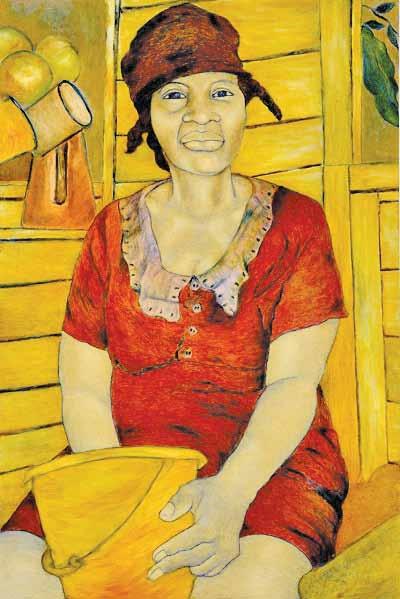
question how the daily rituals of life can inform identity, contributing to feelings of belonging or alienation.
One such aspect of alienation the artist reminisced was telling the children in London about her mother who would always put oil on her skin to keep it soft. The artist mentioned they found it very strange and their shocked reaction made her “feel like an outsider”. However, she did not allow this to deter her from pursuing her goals.
“I have always painted ever since I was a child. As a young child I had a strong stammer. This made me very shy and quiet. So I used to find a quiet corner, and draw every day. I made friends because they loved my drawings and because I was happy to do drawings for them. I loved art. An older cousin was also an artist and they basically taught me. Professionally though it wasn't something that I pursued until much later when graduating from drama school and, finding myself with no work, I got a commission from the Tricycle Theatre and I did a series of paintings on Guyana, and, remarkably, I sold them,” Richardson recalled.
Her favourite thing to paint is the “daily rituals of life”. The mundane things we do are all interesting facets of life for Richardson. She is interested in the way these daily rituals give a sense of identity, belonging, or alienation.
An aspect of a ritual of life which she superbly captures in her work is hair plaiting. These paintings illustrate the quiet moments in women’s lives and help correlate how these daily rituals in many ways help to shape a community’s sense of identity.
“I love painting people and nature.
The way bodies talk and tell you something about how they are feeling. One of the things I found when I was in Guyana was how you were always conscious of the impact that nature has on your life. It is something which is all around you and in many ways there isn't the simple separation between the city and the country but somehow they seem to merge,” Richardson explained.
Another aspect of her painting is brilliantly capturing the energy of the many markets found in Guyana and the Caribbean.
“I’m inspired by Guyana. The markets, nature, colours, and the way animals wander around. Seeing people talking in markets is exciting and really makes me want to paint there and then: the body shapes, gestures and colours. Art gives me a feeling of peace and happiness and excitement. It allows me to discover the world in many new ways. Everything is always changing. So just by focusing on some exciting detail, I can try to capture a moment in time. Best of all, you can create art anywhere. All you need is a pencil and a piece of paper, or just draw with a stick in the sand,” she declared.
Richardson disclosed that her favourite paintings are the pictures of child soldiers. These explore the rituals child soldiers go through and how their identity is forced to shift to a place that is terrifying and lonely. Additionally, she often does storytelling to accompany her exhibitions in order to give her paintings a “voice”.
“I try to exhibit in as many different types of places as possible, so a wide range of people get to see it: in theatres, art galleries, community centres, and in my art studio. This year I exhibited in The National Theatre, Oxford University and in my friend’s flat,” she recalled.
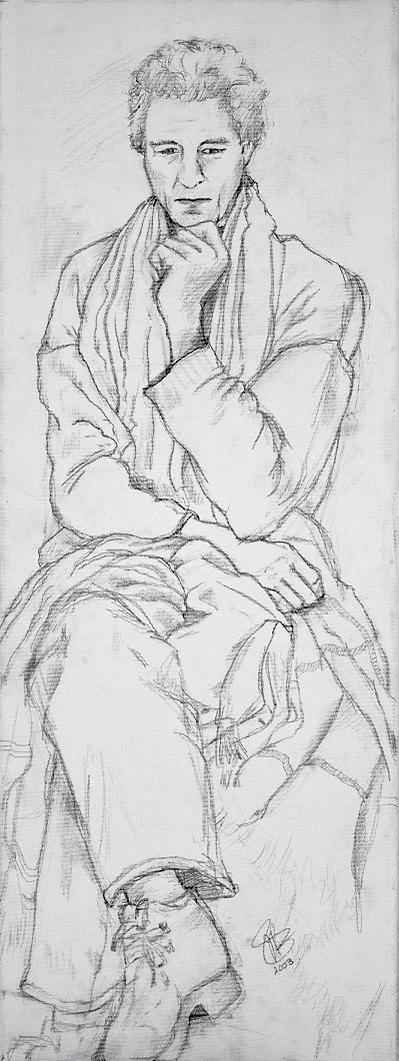
Offering a word of advice to young artists, Richardson encouraged painting or drawing every day. “Train yourself to trust your view of the world. There is no such thing as a bad drawing. You learn from each drawing you do.”
The Guyanese artist’s upcoming art project involves a series of paintings called "Earth, Sea and Sky". This would look at how the three interact, and humans’ impact on nature. It would be exhibited next year at Oxford University. She is also working for Shakespeare's Globe Theatre and touring in an all-female production of “The Taming of the Shrew”.
Richardson mostly uses oil paints on canvas. Her unmixed colours are applied onto each dried layer of paint to create a luminosity and transparency to the paintings, reflecting the multitude of influences that informs individuality and identity.
For more information on the artist visit her website at www.joyrichardson.info (Cover photo: “Ready for School”)
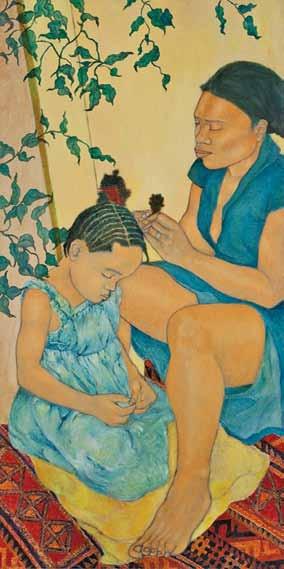

The crudest classic issue by a government Post Office in what used to be called the British Empire was made in British Guiana during 1850 and 1851. There were four different values: 2 cents, 4 cents, 8 cents and 12 cents. All are rare, but the lowest value is among the world’s greatest philatelic rarities – ten
ed of the figure of value followed by the word “Cents” in italic letters in the centre around which was BRITISH GUIANA in Roman serifed capital letters. The whole was enclosed in a singlelined circular frame, which occasionally is somewhat ovoid.
The stamps acquired the nickname “Cottonreels”, de-
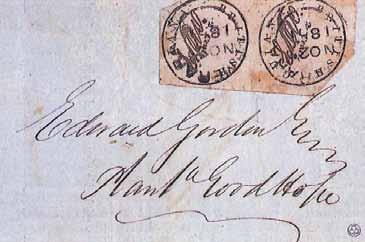
examples are known: three pairs and four singles.
The design was of the utmost simplicity; it consist-
rived from their rough resemblance to the comparatively well-printed labels which used to grace the ends
of wooden reels of cotton.
We chanced upon the nickname in an article titled “The Rarities and Early Issues of British Guiana. The Romance of Their Discovery and Rise in Value” by A. D. Ferguson F.R.P.S.L. printed in The British Guiana Philatelic Journal no 31 p 4 December 1921. He was one of, if not the foremost of, the great authorities on stamps of British Guiana. He wrote: Although not possessing the artistic merits of the Mauritius ‘Post Office’ these crude primitive stamps of 1850, commonly called
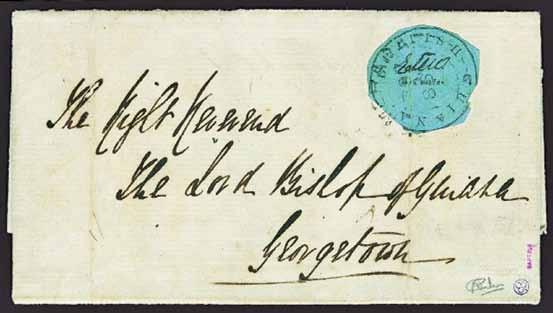
‘Cotton reels’, are looked upon with great pride by collectors who are fortunate enough to possess any
The chapter in our book “Famous Stamps” bears the title “The Cottonreels”. Its use has been commonplace and worldwide since publication of that book and our re-use of the name in our brochure The W. J. Webster Collection of British Guiana which was published in 1941 on the second anniversary of the outbreak of World War II.
Harmer, Rooke & Co. Ltd. commissioned us to write it when that collection was to be auctioned in New York to secure dollars to help the British National war effort. Thirty years later, Townsend and Howe credited the collection with twelve Cottonreels, but we had chronicled the sixteen it contained – eight 12 cents, three 8 cents and five 4 cents.
It is not known how many of the Cottonreels were printed. About 1893 in British Guiana a letter was found, signed by E. T. E. Dalton and dated 11 March 1851, being his report to the colonial legislature. Attached to the report was a copy of an account for
printing from the offices of the Royal Gazette containing these times:
Nov 23rd 1850 …
Printing 656 blue stamps of 12 cts. @ 50 p. centum………….3.28
Printing 1,200 green of 8 cts. @ 50 p. centum…………………6.00
Printing 1,752 yellow of 4 cts. @ 50 p. centum………………..8.76
Those figures are believed to refer to the numbers of stamps supplied during the last six months of 1850.
Except for the 2 cents, no one has estimated the num-
bers still existing of the other values of the Cottonreels. However, the existence of 18 examples of the 4 cents on lemon-yellow paper was recorded by Mr. H. R. Holmes, a past president of the Royal Philatelic Society, London. (Excerpted from www.davidfeldman.com; British Guiana’s Cottonreels by L. N. Williams. First extract in a series of articles about philatelic rarities taken from the Encyclopaedia of Rare and Famous Stamps, vol.1, pp.13-23, by L. N. Williams, published by David Feldman in 1992, with updates since its publication.)
1. China: This is the world's most populous country.
2. Nigeria: The capital of this country is Abuja.
3. Japan: This is the only country to ever suffer an attack with atomic weapons.
4. South Korea: The capital of this city is Seoul.
5. United Kingdom: This country is a great industrial power despite the fact that it must import many resources.
6. South Africa: The capital of this country is Pretoria.
7. Romania: Dracula's home, Transylvania, is in this country.
The earth is flying through space fairly fast, so you are moving at different speeds, greater than a hundred miles an hour.
The hundred miles an hour on the car may add to or subtract from your total speed. You are only moving 100 miles an hour in relation to the road. In space, your motion is much faster and much more complicated.


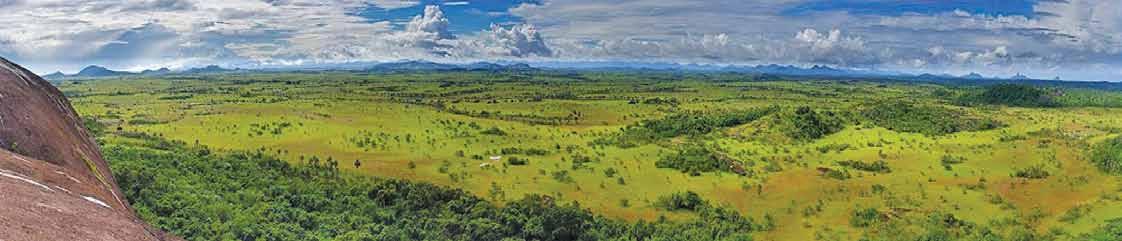
Located in the Upper Takutu-Upper Essequibo region, the Kanuku Mountain ranges are almost 3,000 ft high. Its name means “rich forest” in the Wapishana language, a reference to the abubdant diversity of wildlife found there.
The Kanuku mountain range lies in the southern half of Guyana and runs east to west to divide the Rupununi into north and south. The Rupununi River rises in the deep south of Guyana and bisects these mountains into eastern and western ranges. The mountains are internationally recognised as being extremely rich in biodiversity.
More than 60 percent of Guyana’s bird species can be found in the Kanuku, including the Harpy Eagle, White Bell Bird, Oil Bird, Pompadour Cotinga, Golden Crowned Manakins, Scarlet, Blue and Gold Macaws, as well as many parrot and toucan species. The Guianian Red Cotinga, Zig Zag and Fasciated Tiger Heron are also found there.
Not to be outdone by the birds, mammals rank high in the Kanuku Mountains since more than 75 percent of Guyana’s species have been recorded here. Black Spider, Howler, Squirrel, Brown Capuchin and Bearded Saki monkeys are common, as are Giant River and Neotropical otters. Nocturnal species such as Paca, Opossum, Ocelots, and many species of rats and bats can be seen on night drifts.
Recognized by Conservation International as one of the few remaining pristine rainforest habitats, this picturesque mountain range forms a spectacular backdrop to the Rupununi savannahs with its sculptured crowns peaking just below the clouds.
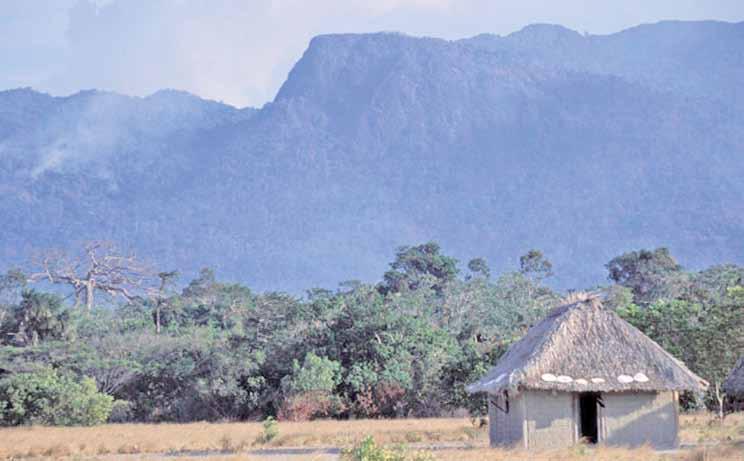
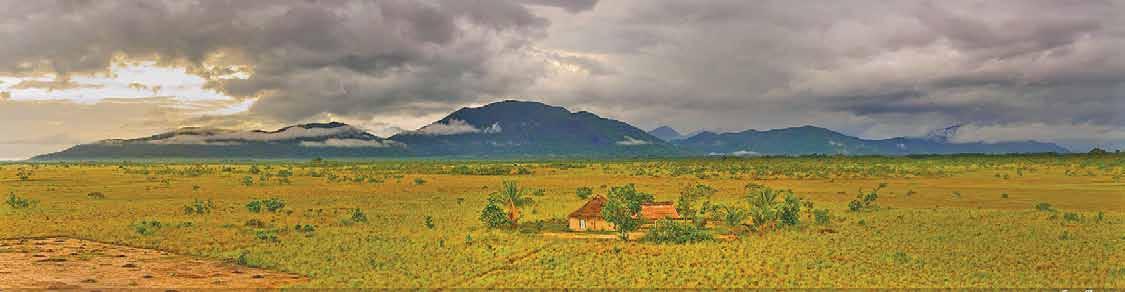
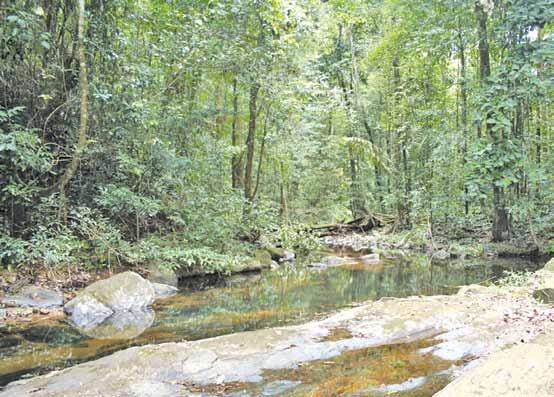
By Melvin Durai
Ilove going to Indian grocery stores.
Sometimes I go there for food, other times for entertainment. By "entertainment, "I'm not referring to the Indian movies available for rent, though they can be quite entertaining, as long as they're not so blurry that Karisma Kapoor looks like Anil Kapoor.(The reverse is just fine.)
By "entertainment," I'm referring to the unique items being sold, items that can't be purchased anywhere else. For example, during a recent visit to an Indian store, my wife, Malathi, and I found the following "exotic" vegetables listed on a sign: brokli, tommotto and calling flower.
As you can imagine, this store was flourishing, attracting customers by the busload. After all, where else could they go to buy calling flower? Certainly not Wal-Mart, which -- despite its size and popularity -- doesn't even carry tommotto. I checked.
ing 2,000 varieties of pickle -- that I can't help smiling while walking down the aisles. The products include Mysore Sandal Soap (slogan: "Distilled by the Government of Karnataka, discarded by the Government of Tamil Nadu"), Turmeric Skin Cream ("When your skin isn't quite yellow enough") and Parachute Coconut Oil ("The number one choice of skydivers everywhere").
My favourite products are Indian sweets, especially the ones with enough sugar to kill a diabetic. I also enjoy anything that contains mango, including mango ice cream, mango lassi, and mango pickle. I can never

The Indian store has undoubtedly touted its goods in newspaper ads:
---"When you're not sure whether to call your mother or send her flowers, try calling flower. It's cheaper than a calling card!"
---"If you don't like our fresh tommottos, remember this: We are the best sauce for tommotto source."
---"We always listen to our customers. They told us they don't like the taste of broccoli -- that's why we introduced brokli. It's a crucified vegetable and contains plenty of anti-accidents."
Needless to say, Malathi and I were impressed that the store carried such rare vegetables. The chicken curry that I made with tommottos was so delicious, I'm never going back to tomatoes. And my mother absolutely loves her calling flower.
But even when we don't find unique items at Indian grocery stores, there's usually such a wide array of goods -- includ-
leave an Indian grocery store without buying a mango drink. I would prefer to buy mango juice, but I usually have to settle for mango-flavoured water or, more precisely, citric acid with a hint of mango.
I bought a can of mango pulp that, according to the label, was "preparied from finest Aphonso mango's." The label suggested a number of mango dishes that could be made, including mango pie, barfi and "moose." I wonder if you have to be non-vegetarian to enjoy the moose.
Since my wife is a big fan of Indian products, our home is stocked with many such items, including some that cause a little confusion.
Me: "That Mysore Sandal Soap you bought is great. It removed all the dirt from my sandals."
Malathi: "You idiot. That soap isn't for sandals. Didn't you read the package?"
Me: "I did. But for some reason it didn't work too well as a toilet soap."


Shark bait
A Texan is having a party and is showing a few guys around his ranch. He starts by showing them the house and eventually works his way outside.
In his back yard he shows them that he has an Olympic size swimming pool. And a man eating shark in it.
“If anyone is brave enough to jump in and swim to other side I will give you half of my property.”
Before he could say another word a splash was heard and somebody was swimming as fast as they could to the other side. The shark caught the scent and started to follow the guy but fortunately the swimmer was able to get to the other side in the nick of time.
Amazed, the Texan said the man could have half of his property. But the man didn’t want it.
“So want half of my stocks don’t you.” the man shook his head.
“Oh you must want my daughter’s had in marriage.” He shook his head again.
“So what do you want??”
“I just want the name of the guy who pushed me in!!!!!”
A tour bus driver is driving with a bus full of seniors down a highway when he is tapped on his shoulder by a little old lady. She offers him a handful of peanuts, which he gratefully munches up.
After about 15 minutes, she taps him on his shoulder again and she hands him another handful of peanuts. She repeats this gesture about five more times.
When she is about to hand him another batch again he asks the little old lady why they don’t eat the peanuts themselves.
“We can’t chew them because we’ve no teeth”, she replied.
The puzzled driver asks, “Why do you buy them then?”
The old lady replied, “We just love the chocolate around them.”
Q: Why did the chicken cross the road?
A: To get away from Colonel Sanders!
Q: Why did the chicken cross the road twice?
A: Because it was a double-crosser.
Q: Why did the dinosaur cross the road?
A: Chickens hadn't evolved yet.
Have you ever wondered why foreigners have trouble with the English Language?
There is no egg in the eggplant. No ham in the hamburger and neither pine nor apple in the pineapple. English muffins were not invented in England; French fries were not invented in France.
We sometimes take English for granted, but if we examine its paradoxes we find that quicksand takes you down slowly; boxing rings are square and a guinea pig is neither from Guinea nor is it a pig. If writers write, how come fingers
don't fing? If the plural of tooth is teeth, shouldn't the plural of phone booth be phone beeth? If the teacher taught, why didn't the preacher praught.
If a vegetarian eats vegetables, what the heck does a humanitarian eat!?
Why do people recite at a play, yet play at a recital? Park on driveways and drive on parkways?
You have to marvel at the unique lunacy of a language where a house can burn up as it burns down, and in which you fill in a form by filling it out. And a bell is only heard once it goes!
English was invented by people, not computers and it reflects the creativity of the human race (which of course isn't a race at all).
All of the following songs can be found on a telephone keypad phone. (Commas are breaks, and dashes instead of grades.)
Mary Had A Little Lamb 3212333, 222, 399, 3212333322321 OR 3212333, 222, 133, 3212333322321
Happy Birthday
112, 163, 112, 196, 110, 8521, 008, 121
Jingle Bells 333, 333, 39123, 666-663333322329, 333, 333, 39123, 666-6633, 399621
Musings
As long as there are tests, there will be prayer in public schools.
Sometimes I wake up grumpy; other times I let her sleep.
Make it idiot proof and someone will make a better idiot.
She who laughs last thinks slowest. Early bird gets the worm, but second mouse gets the cheese.
Support bacteria – they’re the only culture some people have.