


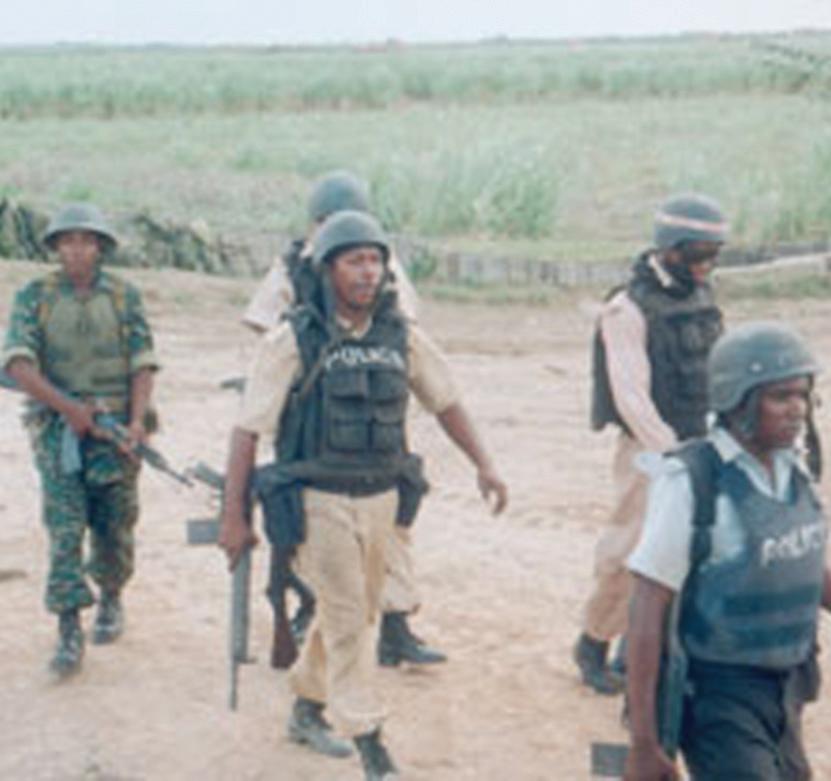
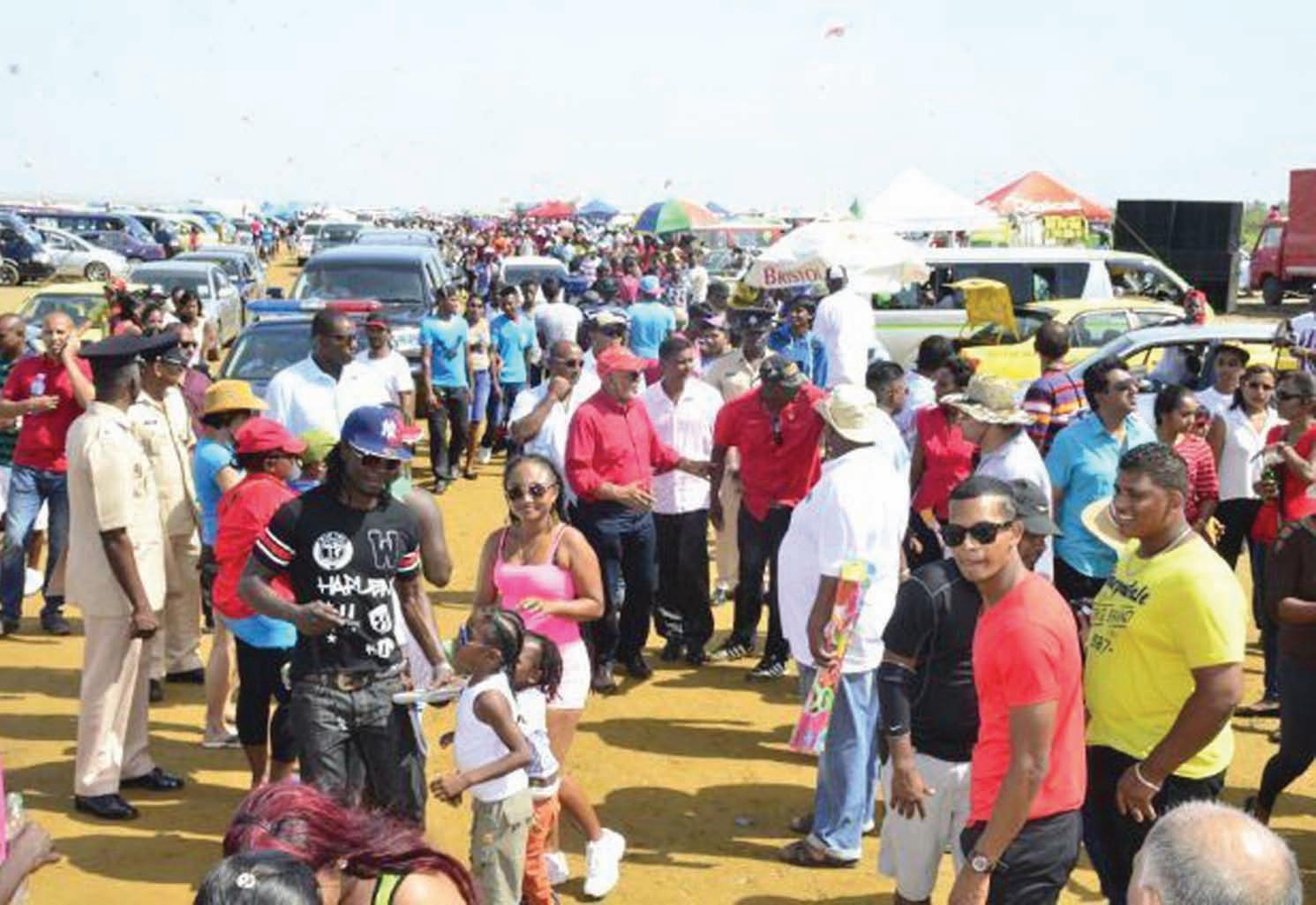



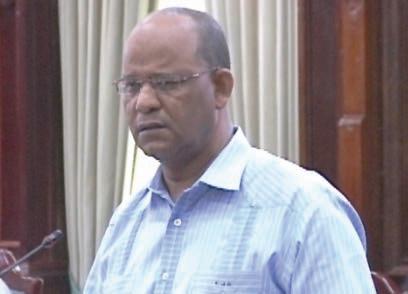
Mr Speaker, I think the nation is fully aware that the Opposition, in budget debates and out of budget debates, in the National Assembly and out of National Assembly, has always placed a tremendous amount of emphasis on the security sector, particularly the Leader of the Opposition. My contribution Mr. Speaker, with due respect to your guidance, is to make the comparative analysis between what obtains today and what obtained then.
Never in the history of our country has the security sector gone through so many reforms that it is going through now. It was not under the previous Government prior to


1992. The previous Commissioners of Police, including the Hon. Member Mr. Felix, must tell us the nature of the reforms they initiated in the security sector when they were there, save and except,...The fact of the matter is that in a police state, which existed in those days, the entire question of public safety and security was greatly emphasised in respect of the Opposition parties. That is where the emphasis lied, in maintaining total control and decapitation of the Opposition parties with respect to their leaders.
When we talk about public safety and security today we must recognise that it is taking place in the context of a democracy and that it did not take place in those days in that context - freedom of the press, freedom of the movement. Context is what is important here, the socio-economic context in which this debate is taking place. In those days, as it is now, the degree, and scale, of issues, such as money laundering, was virtually nonexistent; drug trafficking was virtually nonexistent.
Gun running, piracy, human trafficking and domestic violence, if existed
in those days, were minuscule and did not warrant the attention... That is why we have to be careful when we are speaking about public safety and security we do not only focus on crime because it is only one aspect of public safety and security. There is the question of interpersonal violence and we need to take a holistic approach to it. Fighting drug trafficking, fighting human trafficking, fighting money laundering, fighting gun running, fighting all those issues together is what constitutes the entire and the holistic approach to public safety and security. Those who wish only to focus on crime, because that is where their strength is, may be missing the boat.
The challenges, which exist today, are not similar to the challenges that existed in those days. If the Members want to talk, in order to embarrass the administration for the sake of embarrassing the administration politically, it is easy to do. That is nothing difficult to do but we have to look at public safety and security in the present day context and realities and address it from that perspective.
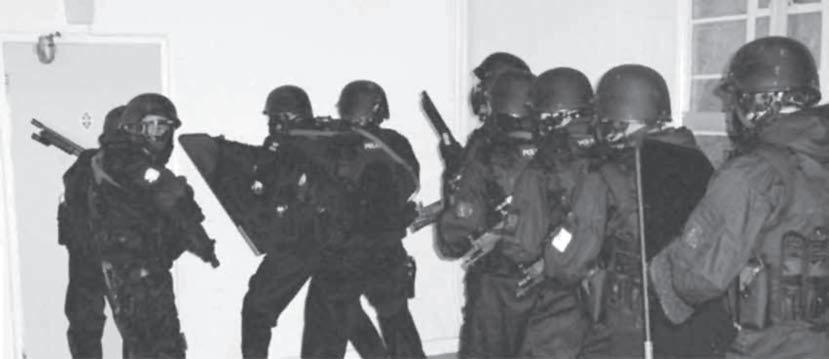
To hear Members from the Opposition benches opposing the establishment of a Special Weapons And Tactics (SWAT) team. People who came from the very security sector opposing the establishment of a SWAT team. I think they are upset about the fact that it did not happen under them. That is why they are upset, that in hindsight they realised that they are the ones that should have done that. We cannot help people who have failed in their responsibilities. They have failed in their responsibilities and they must accept failure because when one accepts failure one can learn from what one has failed on.
Turning to the security sector, this sector is going through tremendous changes. While it might not be possible to elaborate on all of the changes that are taking place in the security sector, the fact is that the Guyana Police Force, being the foremost law enforcement agency in this country, notwithstanding all of the unnecessary and uncalled for bashing, which takes place in respect of the Guyana Police Force - this force, which is a Guyanese force, which was nurtured and built up since 1966 when we achieved independence to today - is free from political control as it used to be in the past. We did not call on the police to march after and behind PPP rallies after congress. We do not do that, but the changes that are taking place are manifest.
As we come to the end, in a few days time, of the Citizens Security Programme, funded by the Inter-American Development Bank (IDB), we are now preparing to enter into negotiations with the IDB for a successor programme of the Citizens Security Programme. We are soon, this year, to engage the Capita Symonds group from England in the formulation... In fact, we have already settled on the plan for implementing four aspects that are very much needed in the police force – successor planning, probity and integrity, recruit-
ment and detention and public relations and communications. These are reforms that are vitally needed within the police force and the fact of the matter is that the force has accepted these reforms.
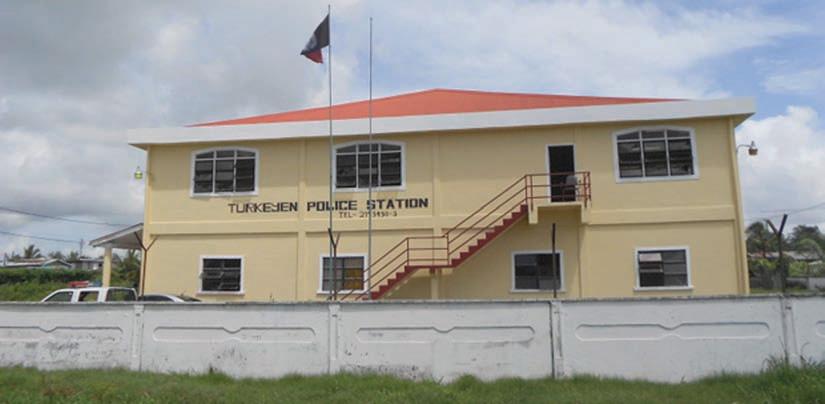
Today, more than 47 police stations are linked through a wide area network where data collected at police stations are sent to force headquarters for immediate action on an operational basis. This has never happened in the past. There is an integrated crime information system which helps to advance the investigative capacity of the Guyana Police Force.
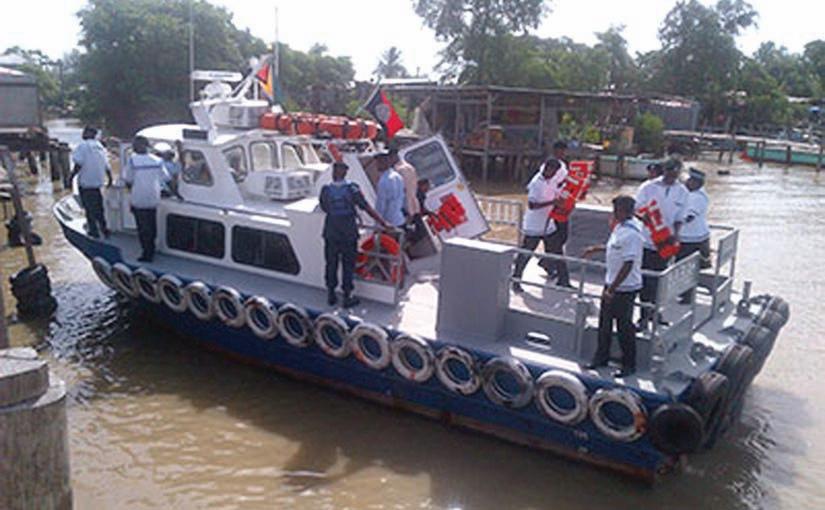
We are now working to upgrade the passport security systems and in this respect within a few months time we are going to be releasing a new machine readable passport with increased security features. This is important because already we have noticed that the extant machine readable passport is being tampered with by people who wish to steal the identity of persons in order to use it for criminal intent. We are improving the marine wing of the Guyana Police Force.
The Guyana Prison Service is also going through changes, notwithstanding the fact that the Opposition opposed the name change of the Guyana Prison Service to the Guyana Prison and Correctional Service.
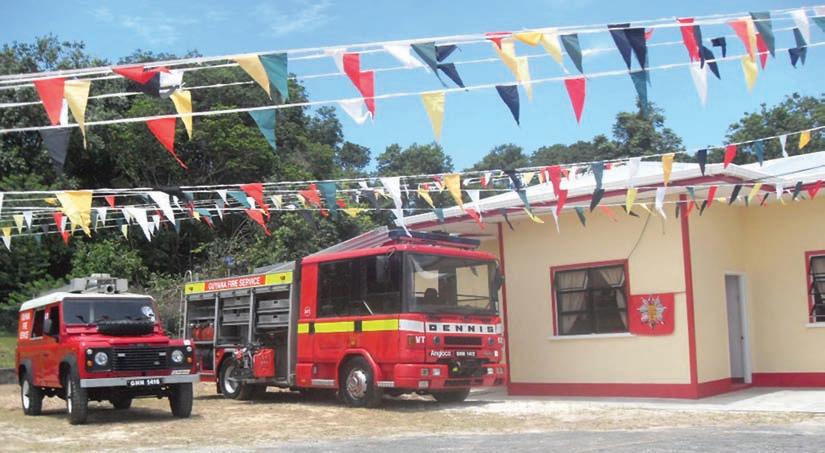
There are changes that are taking place also in the Guyana Fire Service. Incidentally the Hon. Member Mr. Felix spoke about the Guyana Fire Service. Let me inform Mr. Felix, in case he does not know, that when we came into Government in 1992 there was one fire tender and a half of a land rover pickup and three functioning fire stations. Look at what we have now, and then he should ask himself how far we have got with the firefighting capacity of the Guyana Fire Service.
At General Register Office, we are moving speedily to eventually issue birth certificates that are computerised. We will eventually, in the not too distant future, issue such type of birth certificates that are electronically generated.
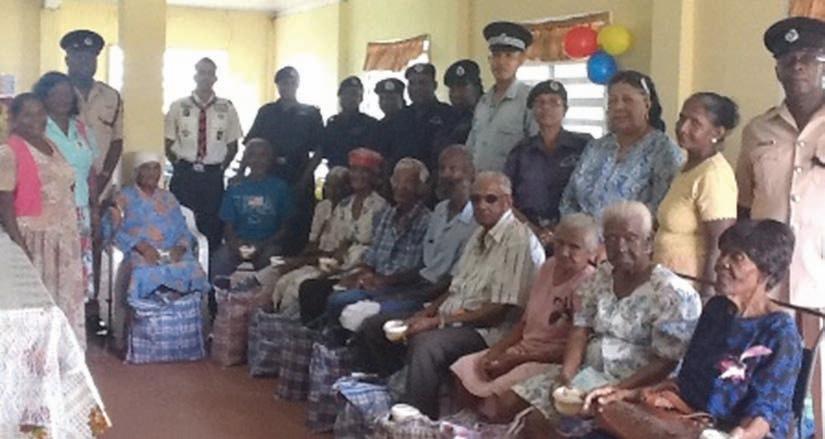
We are moving to expand neighbourhood police and community policing. It was said by Mr. Felix that we ought not to give so much to community policing, that $413 million is too much for community policing. How could a Member, who was once a Commissioner of Police, argue against increased allocation to community policing groups when it is the community that has to work hand in hand with the police? You, yourself, know that Mr. Speaker. It is an established fact that without the cooperation of the community the police will not succeed to the extent that we would like for them to succeed. We know that, but yet for the sake of politicking the Hon. Member Mr. Felix opposes $413 million for community policing. I want that word to get out so that the community members would know that the once Commissioner of Police is opposing the increase in allocation to community policing. The Hon. Member must know that we have 282 community policing groups across the country with a membership of 4,542, and growing. Mr. Speaker, I believe that we must respect these people, and do you know why? It is because they are giving voluntary time to their communities and they are in the community. If there is not enough regular ranks to police the community, which the Hon. Member knows, then obviously we have to tap into the communities to assist us with that respect.
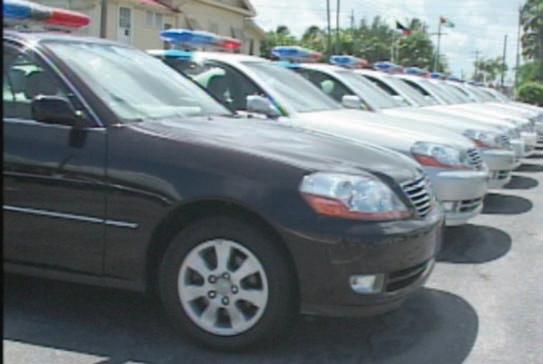
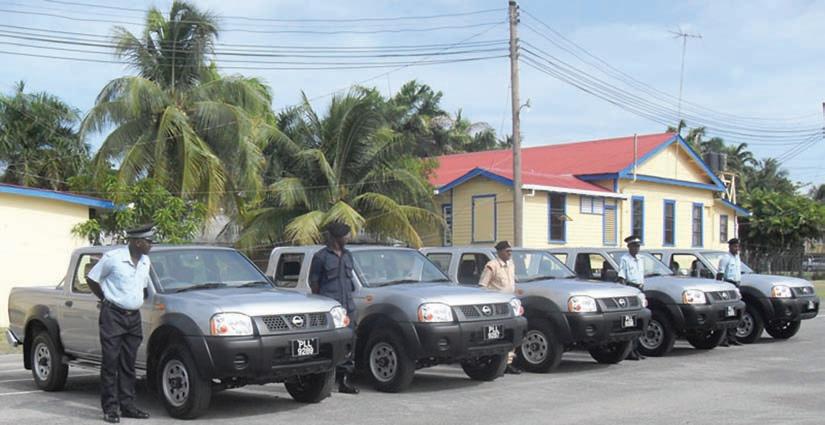
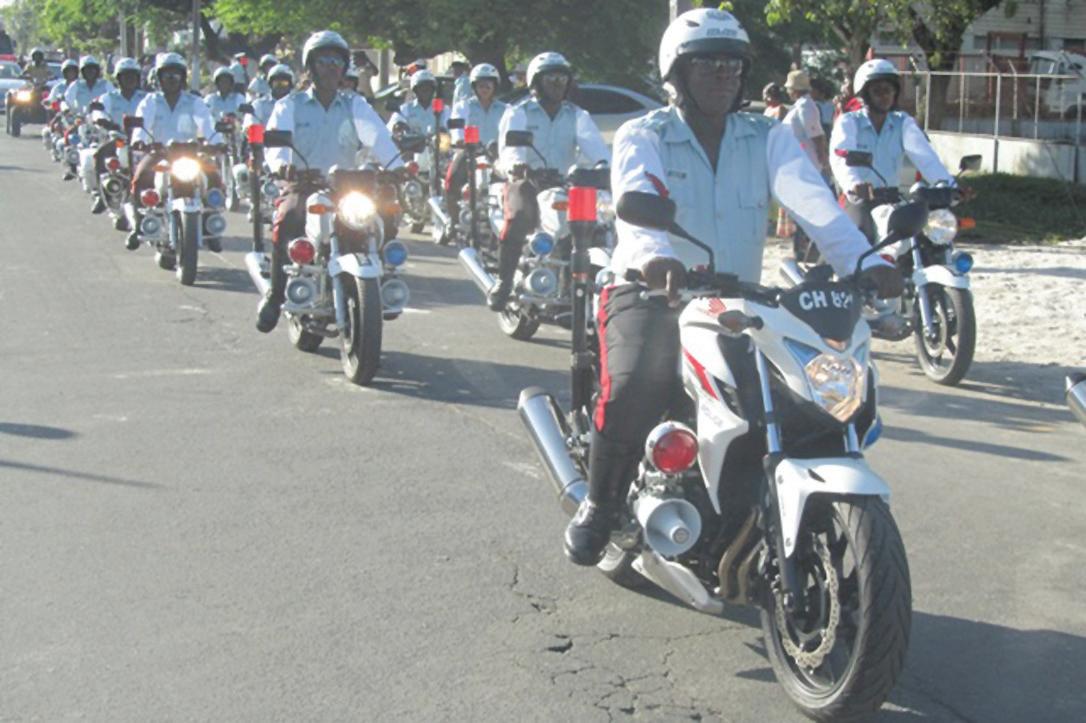
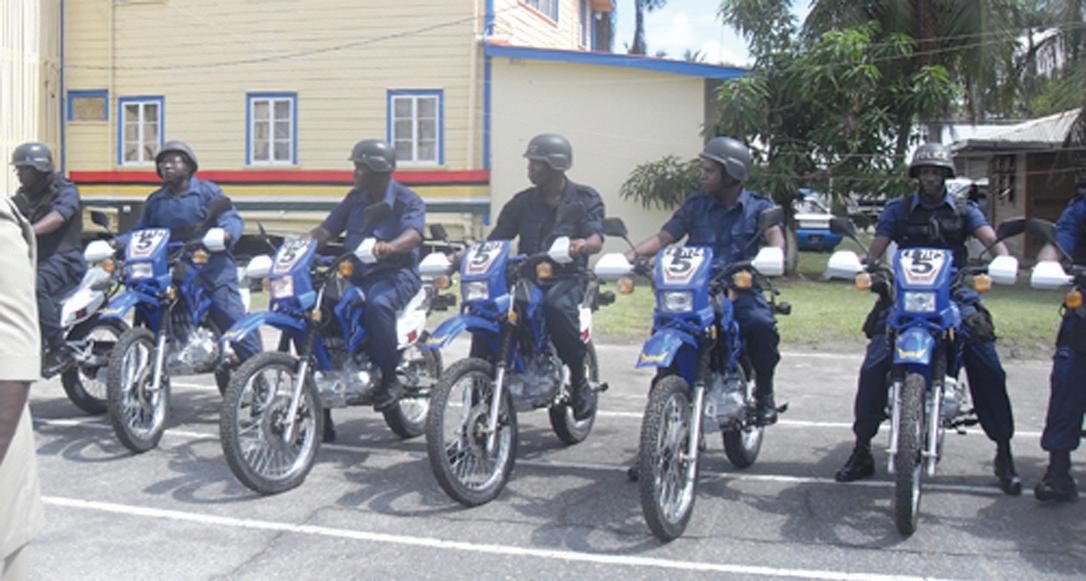
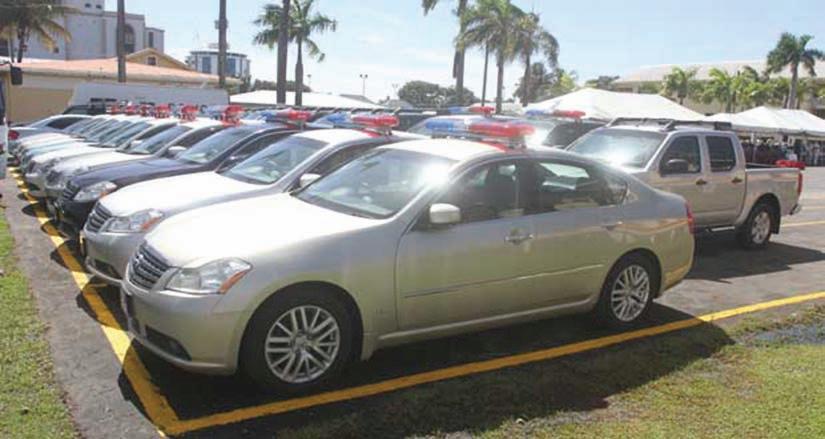
I would like to make reference to resources. We hear talk about lack of resources and vehicles, but let me refer to these figures. The year 2006 is the year I went to the Ministry of Home Affairs. Between 2006 and 2013, 374 new and additional land and water transport means were provided to the Guyana Police Force. Those included 31 motor cars, 24 trucks, 56 double cap pickups, 101 motorcycles, 21 boats and ballahoos. Five hundred and seventy-four pieces of equipment were provided to the Guyana Police Force.
When we got into Government in 1992 the salary of a commissioner was $43,374. Do you know what the salary is now, Mr. Speaker? Under the PPP/C, the salary of a
commissioner is now $470,625. This is where we have moved from $43,000 for a commissioner to $472,000. A constable under the PNC Government received $6,518. Today a constable receives $38,479. I believe we must give recognition to this vast improvement that has taken place, $4,600 under the PNC administration to $38,479.
I want to say that in a few days time we will be commissioning the forensic laboratory that has taken quiet some time to be completed. It is true that it was supposed to be commissioned late last year but owing to a number of technical snafu we are now set to commission this forensic laboratory by the end of this month.
Increasing the capacity of the police and other law enforcement agencies
with respect to polygraph testing, which is aimed at enhancing the integrity of the Police Force. Two weeks ago, 62 ranks of the Joint Services were given polygraph tests and we are now awaiting the results of those examinations. Polygraph examination, fortunately, did not begin under Mr. Felix’s time because apart from having the infamous tape of the conversation, which is called “hook-up time”, I am sure that if this polygraph test was administered during the time he was Commissioner of Police (CoP), much more would have been revealed.
Mr. Speaker, I have with me the latest Report, the 2013 Report of the United Nation’s Organisation on Drug Control. This is the Organisation that speaks authoritatively on the question of drugs and interdiction of drugs in all countries of the world. Mr. Speaker, if you read this document carefully, the section dealing with Latin America and the Caribbean, you will see that it states nothing negative about Guyana. In fact, it speaks positively about the country in respect of fighting drugs.
Both Customs Anti-Narcotics Unit (CANU) and the police narcotics branch have recently been detecting and interdicting persons caught at CJIA with drugs. I will say this: rather than referring mockingly to CANU and the narcotics branch of the Guyana Police Force (GPF), we should give credit to the fact that they continue to detect and interdict persons in respect of drug trafficking.
I continue to say: wherever they hide it, we will find it. That is the mantra that I have given to both CANU and the police narcotics branch. Wherever they hide it, we will find it. In the same way, wherever they hide the guns, we will find the guns.
I want to conclude by saying that we would soon be engaging in some new initiatives and I will speak about them more expansively on another occasion. But just to give a sneak preview, law enforcement and public safety and security continue to be and will always be a work in progress. If there is anyone on that side of the House who believes he or she has a silver bullet and can revert to the days when there was a police state to deal with public safety and security, then he or she is sleep/walking in his or her dreams. I am saying that public safety and security is a work in progress. The criminals will always try to be a step ahead of law enforcement. That is why we always have to be more than a step ahead of them and that is precisely why, under the PPP/C Administration, we are dedicated to ensuring that the citizens of this country can sleep, live, work and have leisure in an atmosphere of peace, security and good order in this country.
Mr. Speaker, thank you.
The Customs and Anti-Narcotics Unit (CANU) established several years ago to aid the Guyana Police Force in the fight against drugs has undergone a major revamping which has seen its manpower significantly increased.
This is according to Head of the Presidential Secretariat, Dr Roger Luncheon, who made the announcement at a PostCabinet press briefing at the Office of the President on Friday.
Since its establishment, CANU has successfully managed to interdict hundreds of persons who were attempting to traffic drugs, especially cocaine in and out of Guyana via several routes and ports of entry.
Only recently, ranks from CANU and the
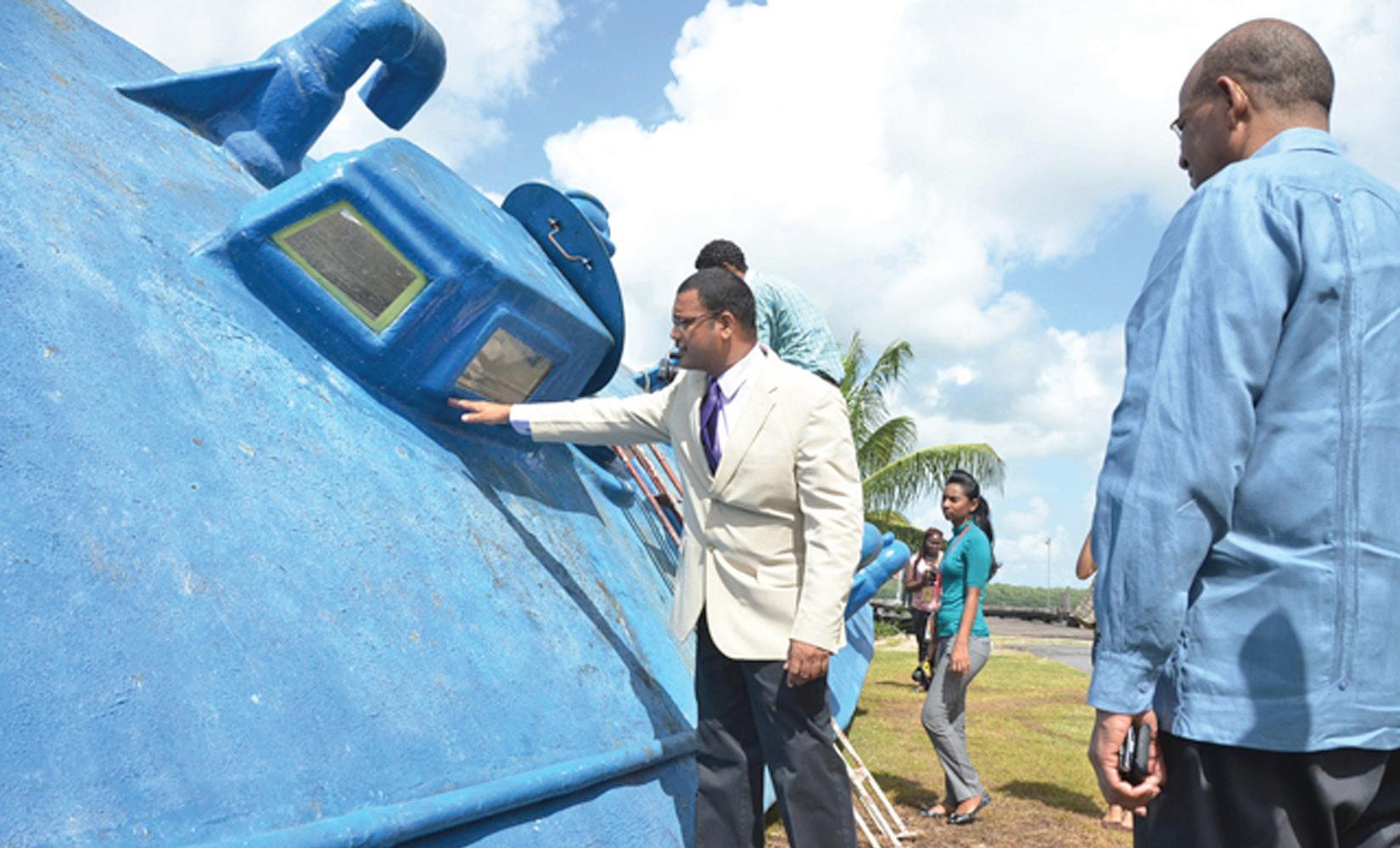
Guyana Defence Force (GDF) seized a semisubmersible craft in a creek off the Waini River in the North-West District.
Dr Luncheon said the security reform measure being implemented by the administration was one that is “extremely incisive where law enforcement is concerned in Guyana”.
He said the security reform measure “logically follow inter-current interventions and it recognises the many contributions made by CANU to law enforcement in Guyana. And specifically its functioning in the field of investigations, prosecutions and international collaborations in anti-narcotics trafficking”.
He also explained that the human resource capacity will be significantly increased

to more than two times its current strength as the Government looks to hire additional staff for the unit.
“The current strength of the Customs and Anti-narcotics Unit will be more than doubled at the end of the implementation of the project,” Dr Luncheon said.
Pointing to the organisational structure of CANU, Dr Luncheon said the revised organisational structure will be better able to respond to the functions of investigations, prosecutions and provide aid in the international fight against the narcotics trade.
It was also noted that the revision of CANU will also deal with job specifications, job description and will see a salary structure being implemented that “ensures relativity” between the other law enforcement entities such as the Guyana Police Force and the Guyana Defence Force.
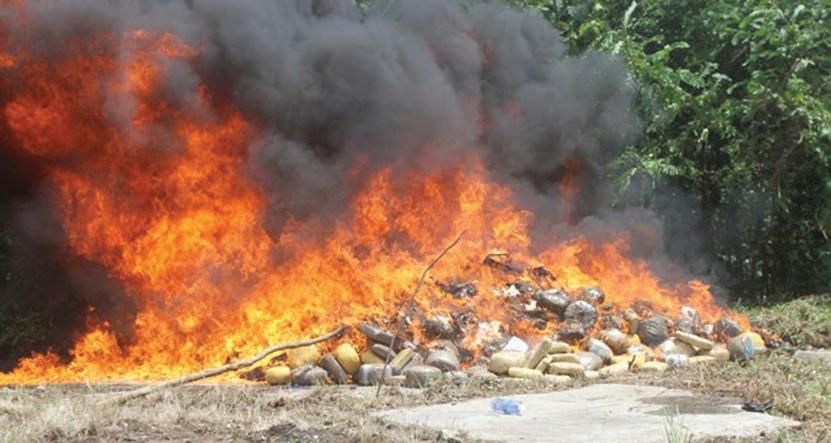
In August, CANU destroyed in excess of $5 billion in cocaine and marijuana that were seized through several operations in 2013, and the first quarter of 2014.
The drugs, which totalled close to two tonnes, were set alight in the presence of media operatives, members of CANU and the Guyana Fire Service on Homestretch Avenue, Georgetown.
A total of 1970 kilograms of marijuana with a street value of $196 million and 730 kilograms of cocaine with a street value of $5.2 billion, were destroyed.
The value was calculated on the basis of prices in the US and Europe, since the drugs were destined for those countries. The esti-
mated cost per kilo for cocaine in Europe is reportedly 45,000 euro, while in the US; it is being sold at US$35,000.
Head of CANU James Singh at the destruction exercise told media operatives that the drugs were found at airports and other operations throughout the country. He also added that apart from Europe and the US, some of the drugs were destined for other parts of the Caribbean and Canada.
Singh noted that ever so often drug mules find the most innovative ways to export the illegal substance, but with the establishment of the task force by the Home Affairs Ministry, they were able to put a dent in the drug trade.
Quite recently, there have been other innovations that were used to ship the drugs out of the country. These included achar, milk powder, fruits, vegetables, mail and frozen fish, among others.
Singh said despite the limited resources, he was elated to report that local law enforcement officers have seized more drugs than other countries which have the best drug enforcement units.
The official also stated that a high number of prosecutions are also done.
CANU is not only focused on getting the bigger “fishes”, but also scouring the country for the middle men who will ultimately lead to the dealers. On this note, he stated that it is wrong to say that Guyana is a narco state.
“We are seizing them as they come in and go out… this is an indication that the Government of Guyana is supporting law enforcement officers in carrying out its mandate.”
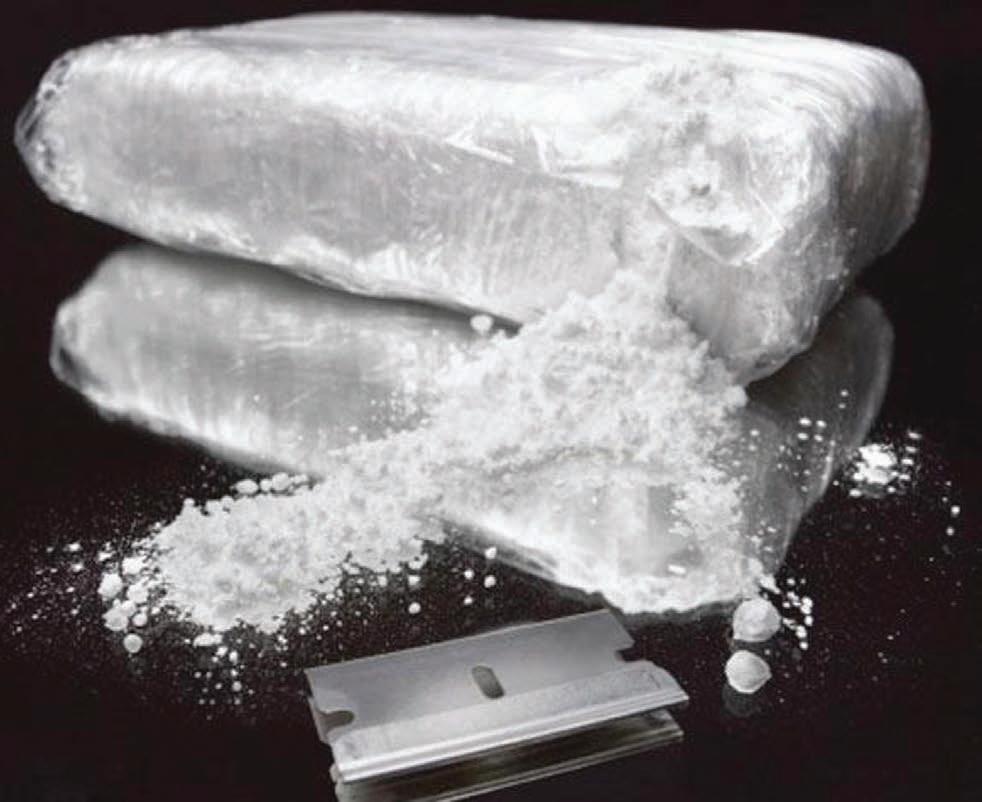
Drug bust in Guyana uncovers
US$800 million in cocaine
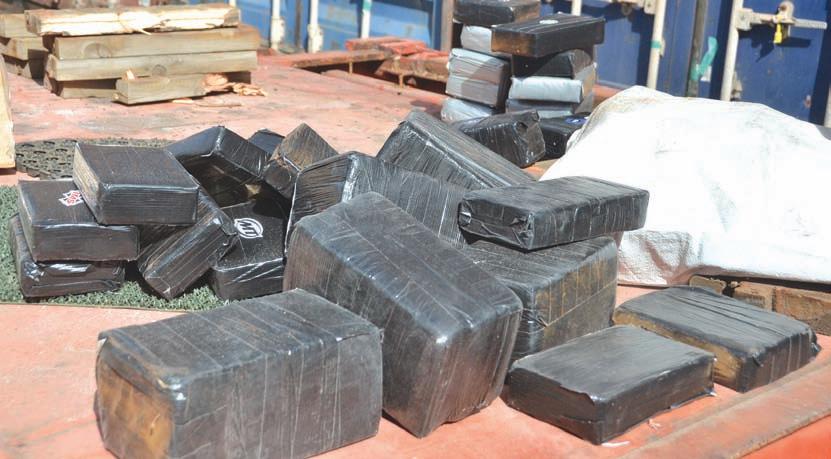
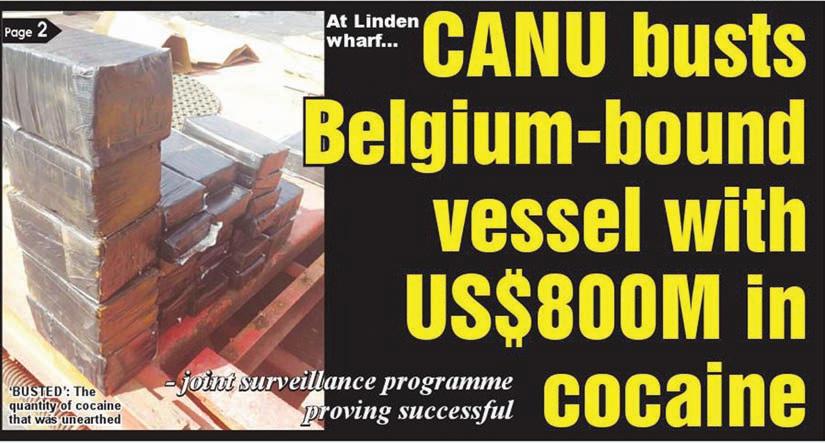
GEORGETOWN, Guyana (GINA) – One hundred and eighty-five packages (bricks) of cocaine, weighing 192 kilograms and worth approximately US$800 million, were discovered on Monday by authorities in Guyana on the MV Delta Dies, a foreign vessel registered in Cyprus.
Guyana Revenue Authority (GRA) officials acted on intelligence provided by the United Nations Office on Drug and Crime (UNODC) that one of the containers onboard the vessel had cocaine. The Customs Anti-Narcotics Unit was called in and, together with officers of GRA’s Law Enforcement and Investigation Division (LEID) and Drug Examination Unit (DEU), conducted an examination of the container.
The drugs were concealed in a flat rack on board the vessel, which arrived in Guyana from Suriname with 11 crew members. The ship left the Netherlands via Paramaribo, Suriname, then proceeded to Guyana to load bauxite and was supposed to proceed to Spain.
In 2012 Guyana and Suriname joined the Container Control Programmes to improve port security and stop the use of containers for transnational criminal activities including the trafficking of narcotics.
A memorandum of understanding with UNODC paved the way for the establishment of joint port control units in Guyana and Suriname at John Fernandes and Nieuwe Haven respectively. It allowed both countries to strengthen the control of inbound and outgoing containers, improve real time exchange and analysis of information among other advantages.
Submitted by Maggie Reece on Wednesday 3/20/2013
Department of State, Washington, DC - March 5, 2015
A. Introduction
Guyana is a transit country for cocaine destined for the United States, Canada, the Caribbean, Europe, and West Africa. Cocaine originating in Colombia is smuggled to Venezuela and onward to Guyana by sea or air. Smugglers also transit land borders with Brazil, Venezuela, and Suriname. Cocaine is often concealed in legitimate commodities and smuggled via commercial maritime vessels, air transport, human couriers, or the postal services.
The influence of narcotics trafficking is evident in the political and criminal justice systems. The value of cocaine seized by Guyanese authorities in 2011 (the last year for which statistics are available) totaled $42 million.
Traffickers are attracted by the country’s poorly monitored ports, remote airstrips, intricate river networks, porous land borders, and weak security sector capacity.
B. Drug Control Accomplishments, Policies and Trends
1. Institutional Development
The Government of Guyana has passed legislation to enable a more-effective response to the threat of drug trafficking. The Anti-Money Laundering and Countering the
Financing of Terrorism Act of 2009, the Interception of Communications Bill, and the Criminal Procedure Bill were designed to enhance the investigative capabilities of law enforcement authorities and prosecutors to convict drug traffickers. The United States supports the Government of Guyana’s justice-sector modernization strategy by assisting with case backlog, law reform, and improvements of the operating system of the Director of Public Prosecutions, among other activities.
agencies with boats, aircraft and personnel, but has limited capacity and lacks law enforcement authority.
The Government of Guyana is drafting anti-gang legislation and developing an Integrated Crime Information System to monitor trends in crime through a network linking the Ministry of Home Affairs to the public hospitals, prisons, and police stations. Some police stations in remote areas, however, continue to lack reliable telecommunication service. The government is also drafting a new Drug Strategy Plan (2012-2016), and the government’s Inter-Agency Task Force on Narcotics & Illicit Weapons is reviewing an inception report.
Guyana is party to the Inter-American Convention on Mutual Assistance in Criminal Matters, and the Inter-American Convention Against Corruption. The 1931 Extradition Treaty between the United States and the United Kingdom is applicable to the United States and Guyana. In 2008, Guyana acceded to, and has filed information requests under, the Inter-American Convention on Mutual Assistance in Criminal Matters, to which the United States is also a party. Guyana has bilateral counter-narcotics agreements with its neighbors and the United Kingdom. Guyana is also a member of the Organization of American States’ Inter-American Drug Abuse Control Commission (OAS/CICAD). Guyana signed a maritime counternarcotics bilateral agreement with the United States in 2001, but has yet to take the necessary domestic action to bring the agreement into effect.
The Guyana Coast Guard (GCG), a GDF sub-component and partner in maritime interdiction, patrols Guyana’s territorial waters and conducts humanitarian search and rescue. In September and October, through the Caribbean Basin Security Initiative (CBSI), Guyana’s security forces received training in port security and container control from the UN Office on Drugs and Crime’s Container Control Program (CCP). The government established a full-time, multi-agency CCP Port Control Unit at the John Fernandes Wharf, one of Guyana’s most active ports.
Not all government agencies/units reported seizure and arrest statistics for 2012.
The GPF Narcotics Branch reported seizing 8.6 kilograms (kg) of cocaine with 124 people charged, and 132 MT of cannabis with 540 arrests. The high volume of seized cannabis reflects the increasing trend of farm-grown marijuana for personal use and transshipment. In August, authorities discovered evidence of marijuana cultivation and processing, as well as boats for shipment on a two acre island in the Essequibo River. CANU also seized 92.2 kg of cocaine and 109.4 kg of cannabis. However, these totals do not reflect the full volume of seizures by all Guyanese agencies. The Guyana Revenue Authority’s Drug Enforcement Unit made significant seizures through the Joint Port Control Unit, but did not provide information on quantities during this reporting period.

Guyana has a drug enforcement presence at its international airports, post offices, and, to a lesser extent, at port and land-border entry points. The four major agencies involved in anti-drug efforts are the Guyana Police Force (GPF), Guyana Customs and Revenue Authority (GRA), the Customs Anti-Narcotics Unit (CANU), and the Guyana Defense Force (GDF). The GDF supports law enforcement
Marijuana is the most widely used drug in Guyana, followed by cocaine. The Guyana National Council for Drug Education, Rehabilitation and Treatment, within the Ministry of Health, is the single government body responsible for addressing demand reduction. Non-governmental organizations, such as the Salvation Army and the Phoenix
Recovery Project, also offer rehabilitation services. The University of Guyana initiated a demand reduction curriculum through OAS/ CICAD funding. As part of CBSI, the United States supports a Skills and Knowledge for Youth Employment project that provides vulnerable youth with alternatives to drug-related activities and provides skills for transitioning to the work force.
4. Corruption
As a matter of policy, the Government of Guyana does not encourage or facilitate the illicit production or distribution of narcotic or psychotropic drugs or other controlled substances, or the laundering of proceeds from illegal drug transactions.
Guyana is a party to the Inter-American Convention against Corruption, but has not fully implemented provisions, such as the seizure of property obtained through corruption.
CBSI forms the central nexus for the United States government’s security and law enforcement relationship with Guyana, with its goals of reducing illicit trafficking, increasing public security; and promoting social justice. Efforts to increase law enforcement capabilities, strengthen workforce development, and promote anti-money laundering effectiveness directly address priority concerns for Guyana and the United States.
CBSI-funded programs support Guyana’s maritime operations by providing interdiction assets, including riverine patrol boats that will be delivered in 2013 and relevant command and control systems, as well as associated logistical support and training. Initiatives also target law enforcement professionalization, forensics, and more effective narcotics investigations. In 2012, the United States provided port and maritime training to Guyana’s Coast Guard, including in container inspection, port security and leadership development. By strengthening Guyana’s counter-narcotics capabilities, the United States seeks to enhance interagency coordination and help gather better intelligence on drug trafficking routes.
The U.S. Drug Enforcement Administration’s Trinidad and Tobago office collaborates with the Government of Guyana on counternarcotics-related activities.
D. Conclusion
The United States encourages the Government of Guyana to deepen mutual security and law enforcement cooperation. Guyana has shown strong interest in furthering collaboration under CBSI. The United States looks forward to tangible progress on investigations, prosecutions, extraditions, security sector and judicial capacity enhancement, the engagement of at-risk communities, and enforcement of laws against money laundering and financial crimes.
Social and economic progress in a country is greatly hinged on political stability and public safety and security, both of which Guyana has to a large extent. This in itself is, by no stretch of the imagination, a small achievement, since many other jurisdictions in the world are struggling to cope with volatile security issues.
The maintenance of safety and security in Guyana has been a matter of great priority for the PPP/C Administration as it continues to rise above the challenges in this very important sector, amidst constant criticisms.
Through the Home Affairs Ministry, which is responsible for the joint services, the Administration has been allocating large amounts of financial resources to be spent on training and adequately equipping security personnel.
There is much more to be done and room for improvement on every front. However, the progress that has been made thus far cannot and should not go unnoticed. The security sector, by its very nature, is a very dynamic one and as such, those charged with its responsibility have their tasks cut out in keeping up with such dynamism, especially as it relates to crime trends.
For the security sector, the year 2013 was characterised by a good deal of struggle and challenges, particularly from a political standpoint, but despite the detraction, the Home Affairs Ministry forged ahead with its plan to develop and modernise its operations.
This year, the ministry received a budgetary allocation of $17.5B, an increase from that of 2012, which was $16.2B and despite threat by the Parliamentary Opposition to slash certain allocations, the sector’s estimates of expenditure were approved in its entirety.
tion, succession planning, integrity/probity (professionalism) and public relations and communications.
A contract was signed with Capita Symonds in early January valued US$129,750 or approximately G$25M.
The launch of the ‘Ipaid A Bribe Guyana’ website is a bold initiative by the Home Affairs Ministry, which will permit citizens to anonymously report their experiences with bribery and corruption within the public service.
The site allows the general public to report on the nature, number, pattern, types, locations, frequencies and values of corrupt activities, and is used to promote improved governance systems and procedures, tighten law enforcement and regulations and thereby reduce the scope for corruption in obtaining services from the Government.
The information placed on the ipaidabribe.gy website is not meant to name and shame any public official, nor is it intended to be used for criminal prosecution.
In 2013, the Home Affairs Ministry established 10 Houses of Justice in Regions Two and Three, multi-agency service centers that are geared to address pressing social needs of citizens at the community level, thereby improving access to the public service.
In late 2012, Minister of Home Affairs, Clement Rohee announced the Security Sector Strategic Plan 2013 – 2017. This strategy has been progressing smoothly and is, in fact, far advanced.
The Strategic Management Department (SMD), comprising a high-level team of 10 civilian professionals, tasked with overseeing the implementation of the Force’s strategic plan, was established in May, and has been working closely with the Guyana Police Force. Meanwhile, 46 civilians were employed as data entry clerks and were stationed at police stations around the country to assist the Force’s computerisation, while approximately 30 ranks were sent abroad between January and May for training in different areas.
Implementation of the plan, which was crafted by the UK-based Capita-Symonds Consultancy, will cost approximately $35M annually. It focuses on four specific, but critical areas in the Force, namely administra-
The agencies include: the Guyana Police Force, the General Register Office, National Insurance Scheme, Guyana Power and Light Inc., the Ministry of Labour, Human Services and Social Security and the Community Policing Secretariat.
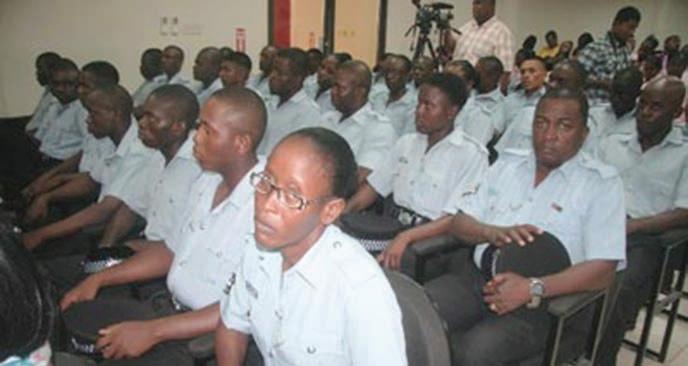
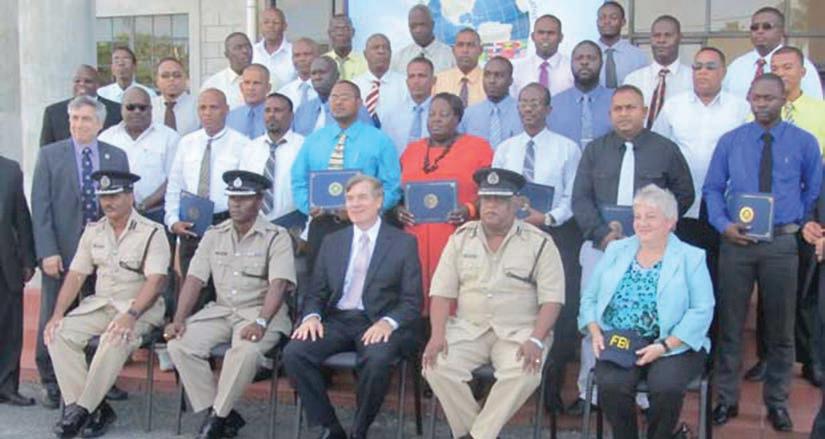
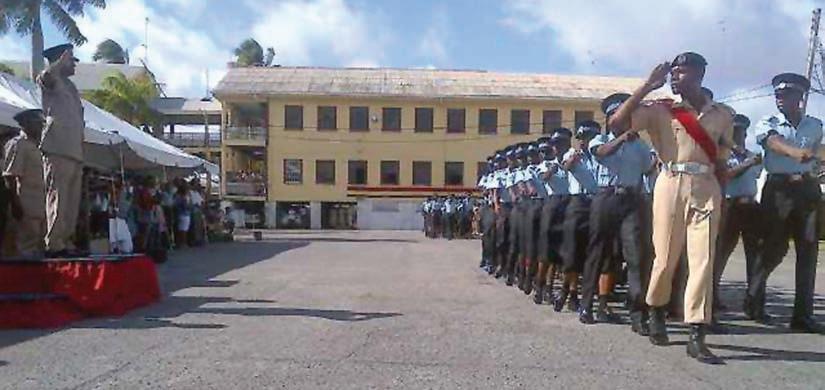
Police Officers with Commissioner Leroy Brummel and Home Affairs Minister Clement Rohee at the end of a training course
Police Officers with Commissioner Leroy Brummel and Home Affairs Minister Clement Rohee at the end of a training course
In Region Three, these facilities are located at the Parika Neighbourhood Democratic Council (NDC), Zeelugt Primary School, Best/Klien Pouderoyen NDC, Canal No.1 Health Center, and Toevulgt/Patentia NDC. The Region Two centres are located at: Charity, Dartmouth, Suddie, Aurora, and Kabakaburi.
As a matter of policy, training is placed high on the agenda in the security sector. In fact, over 30 percent of the Force’s budget is spent on training, so much so, that the Government of Guyana has invested in a $158.4M Training Centre. This facility is
a partnership between the Inter-American Development Bank (IDB) and Government under the Citizen Security Programme.
Joint services ranks have been exposed to annual training programmes, some of which were designed and conducted by overseas law enforcement agencies. Some of these programmes include: Junior and Senior Officers’ course, Special Prosecutor’s, Drug Investigators, and International Passenger Interdiction Courses.
These programmes, many of which are done through the Caribbean Basin Security Initiative (CBSI) are aimed at improving the capabilities of ranks so that they effectively work to maintain law and order.
in Trinidad and Tobago in April 2009. It aims to build capacity within the region’s security, and fulfills a commitment to deepen regional security cooperation.
In January 2013, the Governments of Guyana and the United States signed a 2012-2013 Letter of Agreement to modify specific objectives under the CBSI for the provision of funding to the tune of $172M (US $860,000).
Under the modified agreement, funding will also go towards Guyana’s capacity to target money laundering and financial crimes, and prosecution of those profiting from criminal activities. This aspect will draw a collective of personnel from the Ministry of Finance and the Director of Public Prosecution (DPP).
In November, Guyana hosted the fourth Meeting of the CBSI Commission. At this forum, the progress made thus far with CBSI projects was reviewed and recommendations were made with regards to areas that require improvement, as well as the overall operations agencies that are tasked with maintaining security throughout the region.

This is the Caribbean-US partnership that was launched by President Barack Obama at the Fifth Summit of the Americas
The US Government has dedicated more than US$263M to CBSI over the last four years despite its own budgetary constraints, including US $60M that was allocated this year.
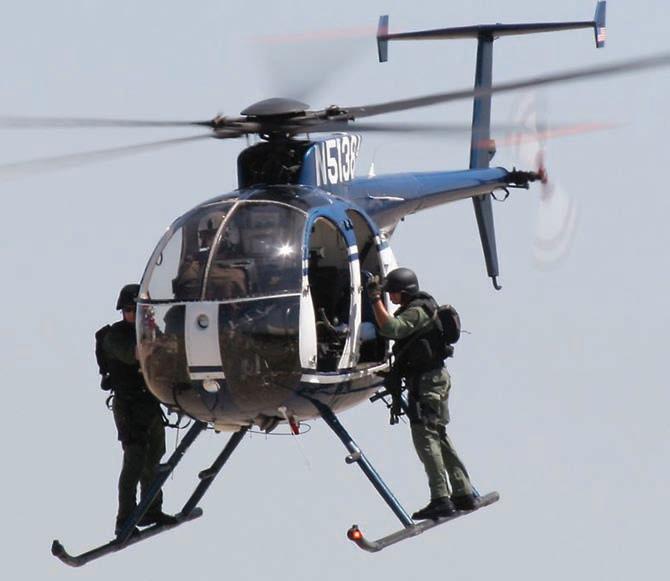
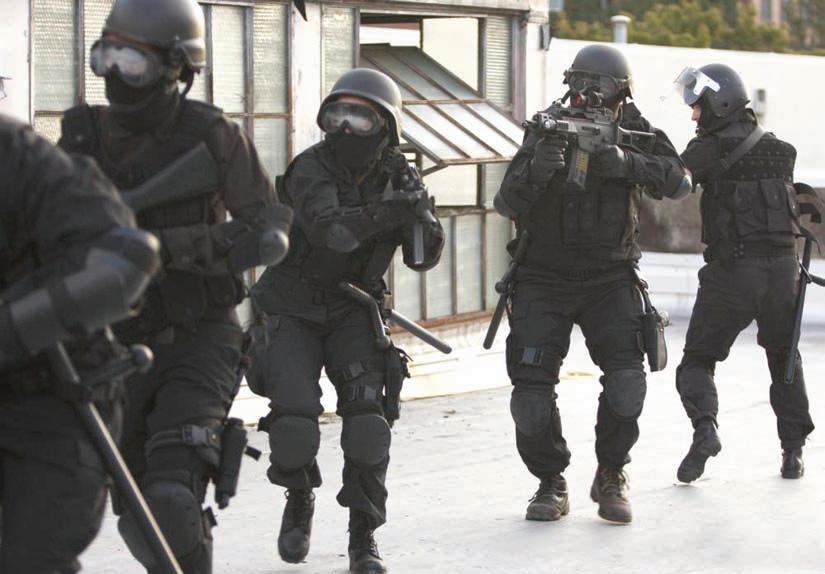
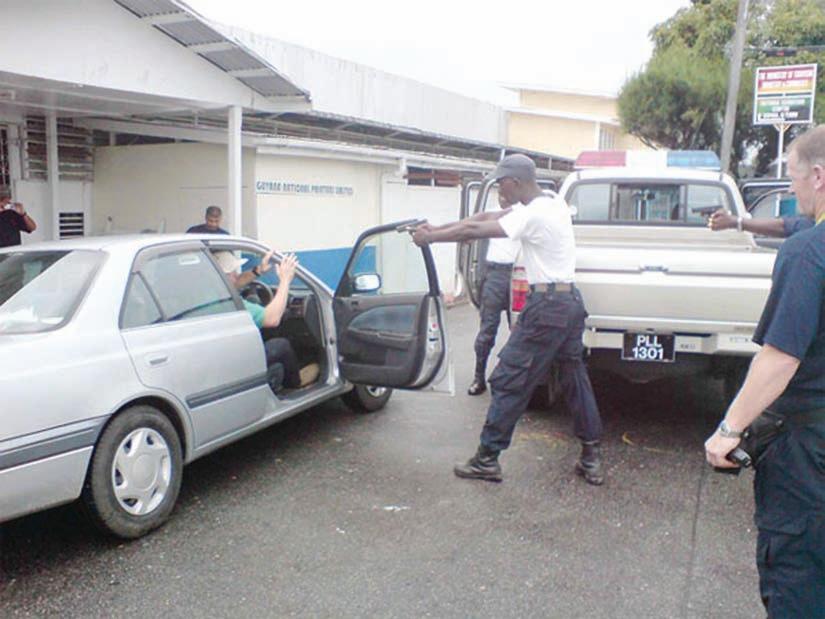
The Guyana Police Force’s capabilities will be strengthened with the addition of a Special Weapons and Tactics (SWAT) Unit. This initiative will place the Force in a better position to make specialised interventions, thereby, ensuring the maintenance of law and order, and that the prospects of crimes was neutralised.
In October, the Ministry of Home Affairs signed a contract with the Emergence Group from Washington for the provision of consultancy services for the establishment of this unit.
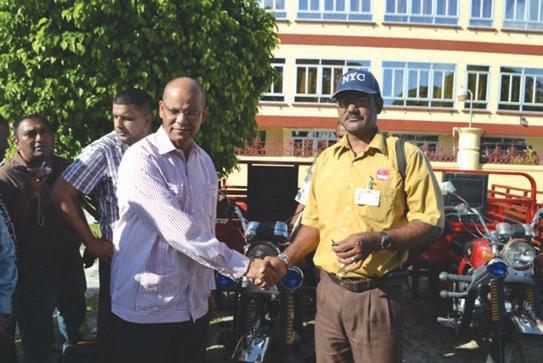
The community policing system celebrated 37 years of existence in 2013. Guyana at present boasts 252 active Community Policing Groups (CPGs) with a membership of over 4,000. They conduct thousands of patrols in the various communities annually, resulting in numerous arrests and even prosecution.
In October, Minister Rohee presented land and water transport means to the value of over $17M to the various policing divisions across the country, to strengthen their operational and response capabilities.
Two four-wheel pickups were given to Upper and Lower Corentyne, Region Six, two fibre glass boats to Bartica and Kwakwani, several three-wheelers to Parfait Harmonie, Lodge, Georgetown, and East Coast Demerara, and one All Terrain Vehicle (ATV).
CPGs have been playing a key and successful supporting role to the GPF in the fight against criminal activities, especially at the community level.
20 kilogrammes of cocaine, 555,077 kilogrammes of marijuana and charged 775 people with drug related offences up to December 17.
Recognising the alarming rate at which lives are lost as a result of interpersonal violence, the Government through the Home Affairs Ministry convened a National Conference for the Prevention of Interpersonal Violence in November.
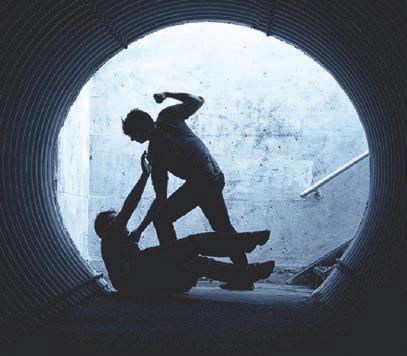
This forum included the participation of a wide-cross section of stakeholders including law enforcement, the judicial system, faithbased organisations, civil society and several governmental and non-governmental agencies. The involvement of such a diverse grouping is intended to promote inclusivity and ownership in the plans that will be developed to combat this scourge.
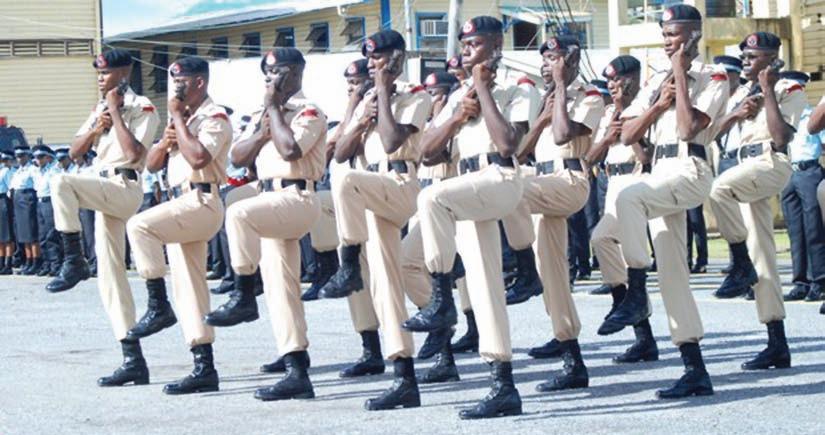
Being the foremost crime fighting institution in the country, the GPF is not without its share of challenges. While there are a few officers who have sullied the Force’s image during the course of the year, there are still many who, against all odds, upheld the Force’s motto to serve and protect.
The GPF suffered a major blow with the passing of one such principled officer, Assistant Commissioner Derrick Josiah who passed away on December 13, leaving the GPF poorer.
Police commissioner Leroy Brumell was sworn in to the post in October, and the force rewarded 1, 663 of its ranks for their dedication and courage, as well as 23 CPGs and 34 of their members.
In December, President Donald Ramotar announced a one-month bonus for the joint services in addition to the five percent increase granted in the same month.
According to the statistics provided by the Force, an overall four percent increase in serious crimes was recorded as at December 17 with a hike in gun crimes. A total of 136 murders were recorded compared to 131 in the previous year up to that period.
With regards to traffic, there was an increase by one road fatality in comparison to the same period the previous year, with 106 deaths from 98 fatal accidents.
The force seized 192 illegal firearms,
Given the current configuration of the Tenth Parliament, the outcomes of security related legislation remain virtually the same as 2012. The Parliamentary Opposition continues to maintain its non-support for the Home Affairs Minister and as such, matters raised by him in the House were voted down.
Some of the Bills that were disallowed include: the Evidence (Amendment) Bill and the Firearm (Amendment) Bill. However, they were subsequently re-tabled in December by Attorney General and Minister of Legal Affairs, Anil Nandlall.
The current Firearms Act of Guyana states that trafficking in firearms is not unlawful and as such, the amendments seek to
Last December, Cabinet decided to increase the ranks of the Guyana Police Force by 1500 – bringing the total number of ranks to 5000. For years the GPF has been severely undermanned, leaving it in many instances, stretched too thin to face the new challenges of the 21st century.
With the added manpower and enhanced training and equipment, Guyanese should expect an much higher level of security in the coming year.
address this lacuna by creating an offence for trafficking.
The Evidence (Amendment) Bill on the other hand, seeks to expand the range of documents/reports that can be admitted as evidence. The Government also tabled the Summary Jurisdiction (Procedure) (Amendment) Bill 2013.
It amends section 8 (2) of the Summary Jurisdiction (Procedure) Act, Cap.10:02, to allow a person who is issued with a traffic ticket for an offence to pay the prescribed penalty to the clerk of the court of any magisterial district regardless of where the offence was committed.
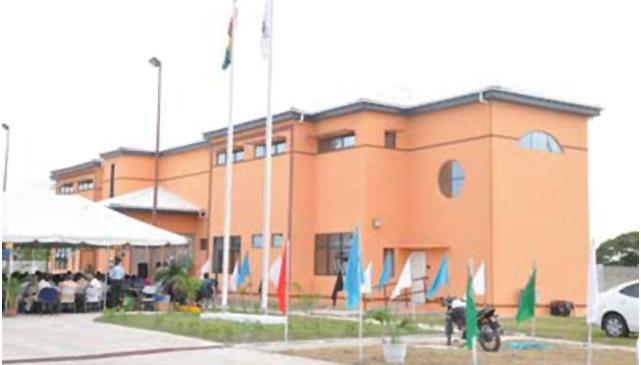
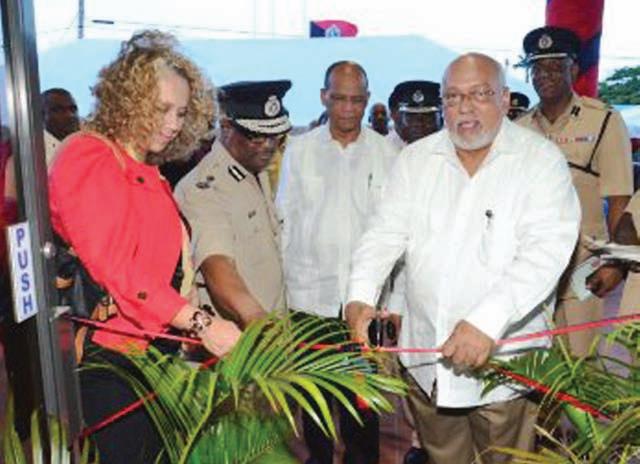
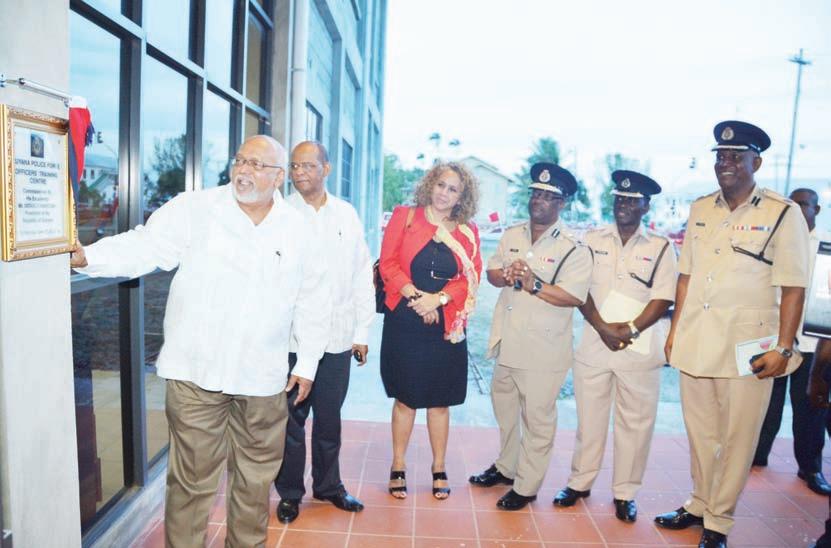
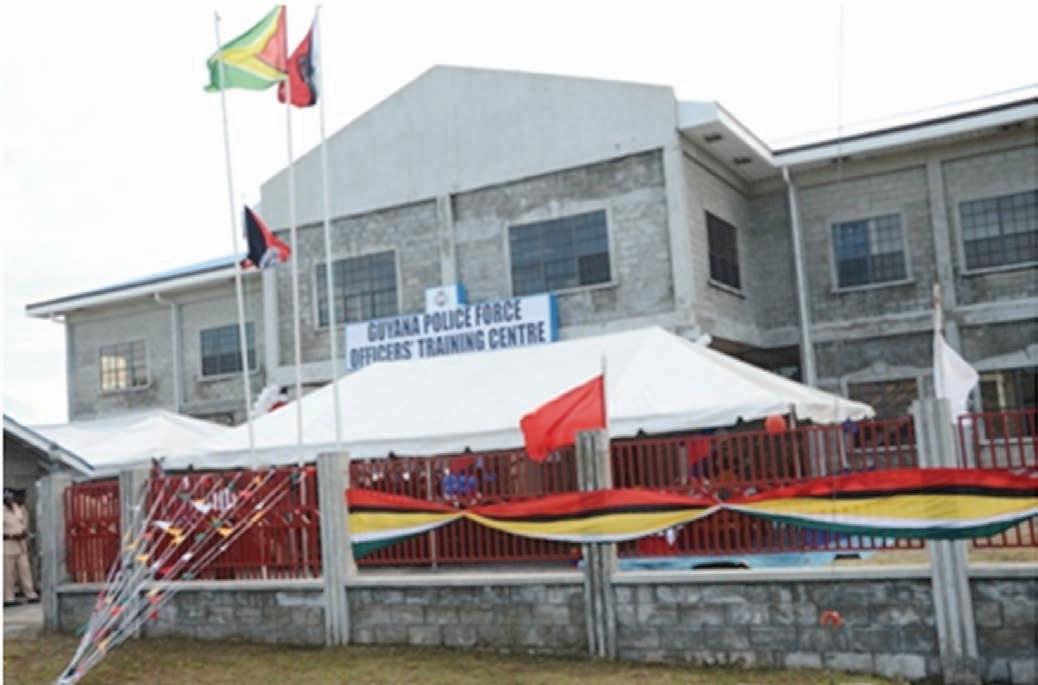
The level of professionalism expected from members of the Guyana Police Force (GPF) who have undergone training at the newly commissioned $158.4M Training Centre is already high.
The fully air conditioned facility boasts an auditorium with seating capacity for 230 persons, library and reading centre cafeteria, recruitment and Information Technology centre, lecture theatres, classrooms, registrar department, storerooms and offices.
Occupying 18,320 square feet on the corners of Young and Camp Streets, Kingston, the training centre is the product of a partnership between the Inter-American Development Bank (IDB) and the Project Implementation Unit/Citizen Security Programme.
The Ministry of Home Affairs handed over the facility to
and foreign security personnel, but one which they were urged to make maximum use of and to care.
President Ramotar and Minister Rohee sought to instill in officers, the importance and values of training to the security sector in Guyana, making reference to the type of security intelligence needed to address modern crimes.
The Head of State believes the force must build capacity to understand and address the transnational nature of criminal activities in the global environment like money laundering, cybercrimes and drug trafficking.
“There is a lot of inter-relationship and closeness and international crimes are a big and important factor today, and therefore it is logical that if we are going to succeed in… the goal of eliminating crime and minimising it as far as possible… we have to build new capacity in our security forc-
the GPF today, after President Donald Ramotar unveiled a plaque and toured the facility in the company of Minister of Home Affairs Clement Rohee, Acting Police Commissioner Leroy Brummell other senior officials of the force and IDB representative in Guyana Sophie Makonnen.
It is a facility which security officials are assured have created the type of environment needed training for local
es, particularly, our police men and women,” President Ramotar said.
Closer to home, the President spoke of a few clandestine operations like property scams which the security forces, and the Ministry of Housing have been able to unearth and the masterminds brought to justice.
ing good relations within the communities themselves… they (community) must have confidence in the police force. They should see the police as their friends to work with, to overcome difficulties, and to bring criminals to justice,” President Ramotar said.
The conduct of officers and the few “rogue elements” that give the force a bad name were among the demerits that it is hoped will be a thing of the past as efforts continue to promote professionalism through training.
Provided that such endeavours are unsuccessful, Minister Rohee assured that the recourse to disciplinary action is always available.
Security is crucial to a country’s development and for Guyana, the perpetuation of growth and investor confidence which the country has been experiencing, particularly over
the last seven consecutive years.
In other related incidents, the President spoke of lawbreakers willfully being granted amnesty, domestic violence reports that were forewarned but treated with apathy, and lack of evidence by police in court cases that result in criminals walking free. President Ramotar believes that a good police relation with the community is critical to crime fighting.
“We cannot fight crimes effectively without hav-
With training centres established in the three counties, Minister Rohee is satisfied with efforts to decentralise training of the force at various levels and vows to continue investing in the sector despite challenges by the political opposition in the National Assembly.
He underscored the importance of officers becoming au fait with Information Communication Technology.
“It is expected that with the quality of training at the centre, citizens of Guyana will feel the difference in the quality of service provided by the Guyana Police Force,” Minister Rohee asserted.
“The training centre has been constructed, not because training courses for officers are being conducted, but the conditions under which they were conducted were not conducive to the standard consistent with the modern police force,” he further elaborated.
Support from the IDB in the security sector is premised on the institution’s focus on action and prevention, and in-
stitutional strengthening programmes in Latin America and the Caribbean.
Makonnen said it is estimated that crime and violence cost economies between five and 10 percent of Gross Domestic Product (GDP).
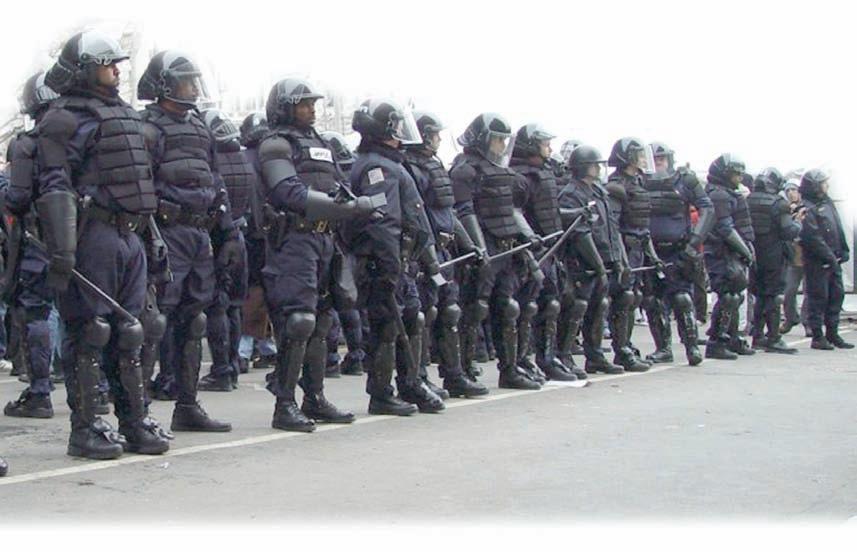
Ranks of the Guyana Police Force will from this month undergo training in crowd control, which observers say could become useful in light of elections slated for this year.
Guyana’s history has been dotted with post-lections violence and police are often called out to restore order.
Speaking recently at a forum, Home Affairs Minister, Clement Rohee said that plans are underway for the Force to receive Crowd Control Training in January 2015.
This training, he said was recommended over the years
and is provided for in the Guyana Police Force Strategic Plan. Notably, he said the Linden Commission of Inquiry had made a recommendation for the Guyana Police Force to receive this type of training.
Following the 2011 elections some eleven persons were shot and injured with rubber bullets by ranks of the Guyana Police Force during a march between Winter Place and Louisa Row.
Among those injured were 75 year-old Sarah Johnson, Joan Baveghems who is a former People’s National Congress Reform Parliamentarian, former Army Chief Brigadier Edward Collins, APNU’s Youth Leader James Bond, Brentnol Holder, Neil Mattis and his 10 year-old son Johnny Mattis, Lurlene Nestor and Laurine Mingo. These persons were all treated for pellet shots about their bodies at the Georgetown Public Hospital Corporation (GPHC) and sent away.
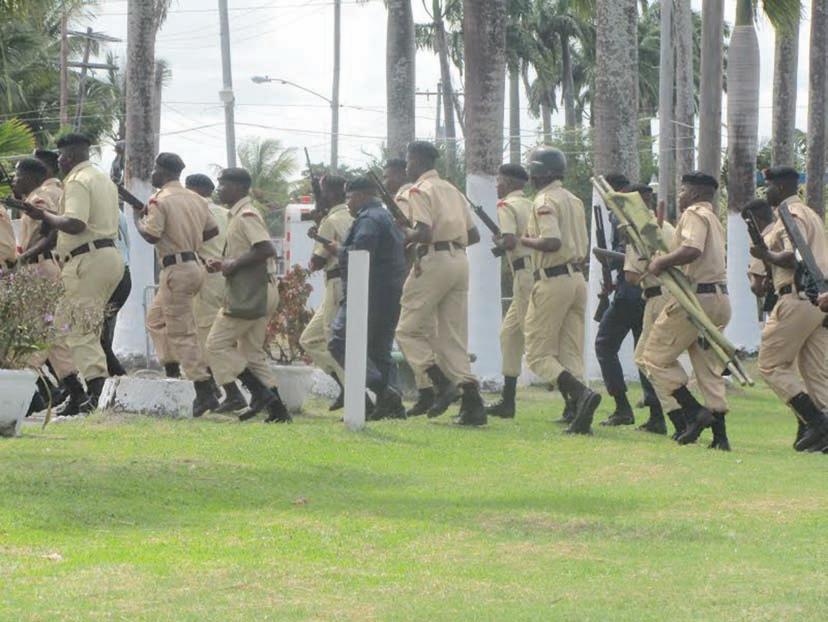
Back in August-September last year, ranks of ‘A’ Division (Georgetown-East Bank Demerara) received Special Riot Training sessions in anticipation of having to deal with crowd control and unauthorised mass street protests. The ranks which were drawn from several policing locations within ‘A’ Division, had their training in the Brickdam Station compound.
Meanwhile, Rohee said some seventy seven officers and ranks of the Force participated in a number of overseas training courses, some of which included Leadership, Management
and Development, Money Laundering, Fingerprint, Intelligence, Kidnapping, Travel Document and Security and Security and Extortion Negotiation.
A number of these courses were made possible through collaboration between the Guyana Police Force and its regional and hemispheric counterparts.
Guyana gets Canadian funding to boost security sector
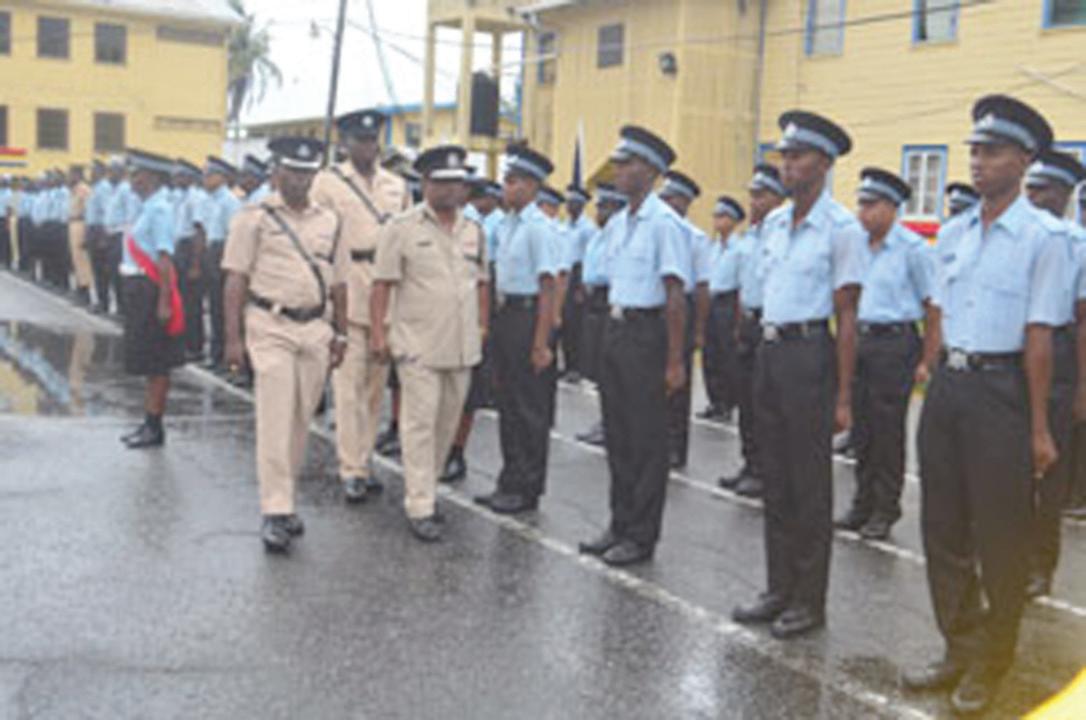
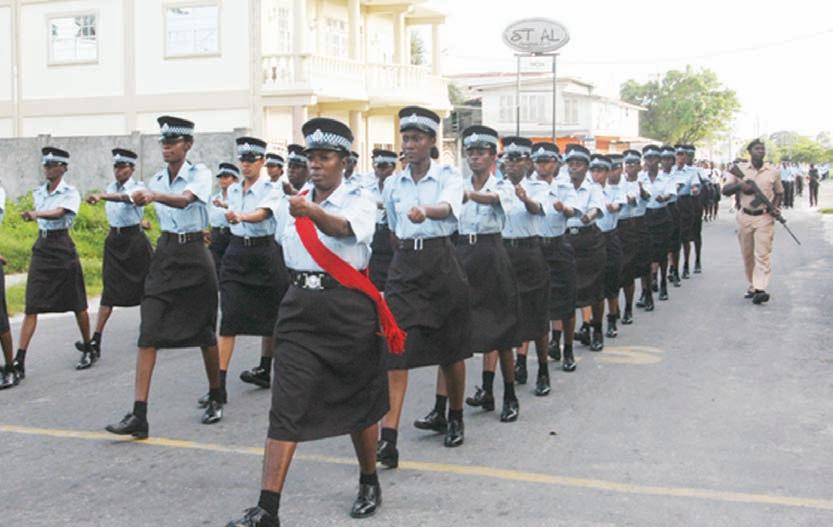
The Canadian High Commission on Monday handed over a cheque valued C$7296 (over $1.7 million) to the Home Affairs Ministry for the purchase of equipment to improve Guyana’s ability to fight crime.
The funding is being provided by the Canadian Government through the Canada Fund for Local Initiatives (CFLI) for the purchasing of two-way radios and video cameras for Guyanese law enforcement to implement best practices in crime fighting.
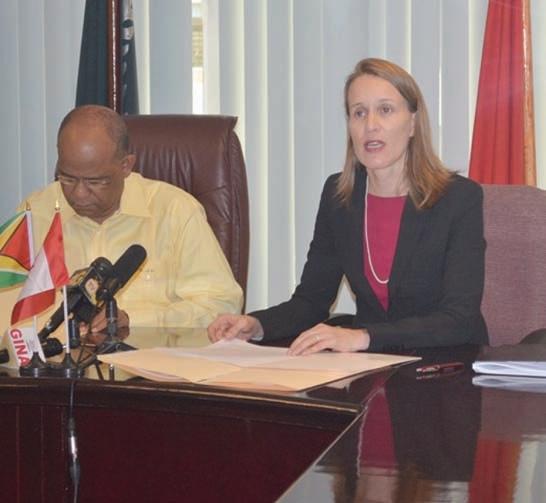
This is according to the Canadian High Commissioner Dr Nicole Giles during the singing of the CFLI 2014-2015 Memorandum of Understanding (MoU) with the Government of Guyana through the Home Affairs Ministry at the Ministry on Monday.
Home Affairs Minister Clement Rohee expressed gratitude to the Canadian Government for the donation and assured that Guyana’s law enforcement agencies would use the equipment when purchased to its fullest capacity.
He said the gesture by the Canadian Government was another manifestation of international cooperation to fight against illegal activities.
He added that over the years, Guyana has been the recipient of support from Canada for law enforcement locally. The Minister stated for the fight against illegal activities to take place effectively, the necessary tools were needed and these Guyana could not provide alone.
The pieces of equipment to be purchased will complement a two-week training course held from November 25 to December 5, 2014, Giles said.
The course was facilitated by the Royal Canada Mounted Police (RCMP) and targeted members of the Guyana Police Force and the Customs AntiNarcotics Unit (CANU). It was the brainchild of the Government of Canada’s Anti-Crime Capacity Building Programme (ACCBP)
Giles said the training course was the first-ever ACCBP-funded project in
Guyana and was a demonstration of Canada’s security cooperation with Guyana. She reported excellent results from law enforcement officials who participated in the course.
She also cited the March 2014 Jetway programme conducted in Guyana for Guyana Police Force (GPF) and CANU officers, which focused on the interdicting the transport of contraband and illicit drugs from airports as well as detecting the other crimes being committed or were about to be committed.
For this programme, the participants also received the equipment necessary to carry out their duties, Giles stated.
This programme has been an immense success and as such, Giles said: “I am confident the radios and videos provided by CFLI will ensure the investigative skills learned in 2014 will continue to deliver results in 2015 and beyond.”
The High Commissioner also expressed hope that the knowledge gained by the trained officers would be passed on to their colleagues.
This investment by the Canadian Government into Guyana’s justice system follows the most recent visit of the Canadian Justice Society, which provided a six-day training programme for Police Officers, Judges and Magistrates.
This and other initiatives are being done with the aim of strengthening Guyana’s crime fighting and justice system.
While many citizens have expressed dissatisfaction with aspects of the Police performance, most seem not to know that there is a Police Complaints Authority to which they can lodge their complaints which will be investigated.
Out of ten former police officers interviewed, four have been shortlisted and names presented to Home Affairs minister Clement Rohee to form part of the new investigative team of the Police Complaints Authority (PCA).
The Home Affairs Minister on Wednesday announced that the PCA would be establishing its own team of investigators to deal with all complaints against members of the Force. The PCA was established in December 1989 but began operations in January 1990, and has since been hearing and addressing issues brought before it about the errant conduct
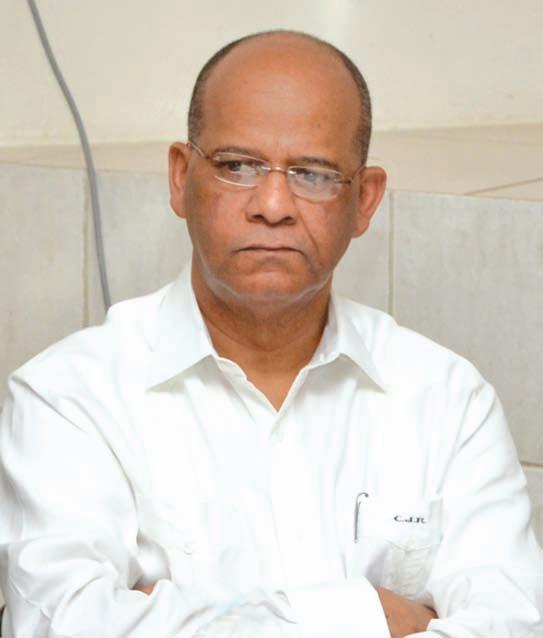
Chairman of the Police Complaints Authority Cecil Kennard told Guyana Times that he has already submitted the names of the four prospective investigators to the Home Affairs ministry and is awaiting its decision.
Approval has already been given by Cabinet for the establishment of the team. The PCA is now awaiting the undisclosed funding so that operations could commence.
The four investigators, one of whom will soon retire from the Office of Professional Responsibility (OPR), will be solely responsible for extensive investigations of Peace Officers who are found to be guilty of gross misconduct.
Kennard said he welcomed the addition of the first time investigators as it is long overdue. He said since taking up the office in 2002, he had been calling for his own team of investigators since the process, usually carried out by the Office of Professional Responsibility is oftentimes lengthy.
The PCA chairman said his organization over the year had carried out outreaches to several communities across the country, holding consultations with members of the communities. These areas include Anna Regina, Lethem, Annai, New Amsterdam and Corriverton.
Most of the issues raised surrounded the “slothfulness and neglect” of police officers to take and act on reports and wrongful arrests. He said consultations were also held with ranks in these communities, who have promised to improve their operation during this year.
Minister Rohee reported that The PCA For 2014 received and investigated some 243 written complaints against police officers.
Meanwhile, the Home Affairs minister reported a total of three hundred and twelve 312Neighbourhood Police are now serving in six Police Divisions. At his end of year review, Rohee lauded the work of the Neighborhood and Community policy, urging them to continue their efforts in helping to curb the growing incidence of crime in Guyana.
Highlighting the accomplishments of the two bodies over the year, Rohee reported that the significant growth and activities within the Community Policing Organization. Divisional and National Elections were conducted across the country for Divisional Executive Committees and National Community Policing Executive Committees, respectively, and the new office bearers were elected and installed.
Regular training sessions are provided and visits are conducted by the Subordinate Officers at the various Police Stations. Their presence in the various neighbourhoods will boost the efforts of the Guyana Police Force in its drive to build partnerships. Some 270 Community Policing Groups are now active across the country with a total membership 5201. Members of the respective Community Policing Groups in 2014 benefited from training in the areas of statement writing, first aid, trafficking in persons, domestic violence, suicide awareness, communication, custody arrest and firearm training. Groups and Divisions carried out community service activities such as environmental cleaning, road safety, providing assistance to the less fortunate and the establishment of women’s and youth groups within respective communities.
In 2014 Community Policy received much needed items including uniforms, motor cycles, boats, brush cutters and vehicles to aid their efforts in empowering their communities. In 2015 the Community Policing Organization of Guyana (CPOG) will aim to further increase its strength in non-traditional areas, while promoting further training in Communication, Management and Computer literacy among its members.
“The CPOG also intends to utilize the electronic and social media to promote road safety and security awareness within communities. Additionally, with the implementation of a Home Security Programme, businesses and home owners can obtain advice to enhance security consciousness and to further design an environment to resist crime opportunists”, Rohee said.
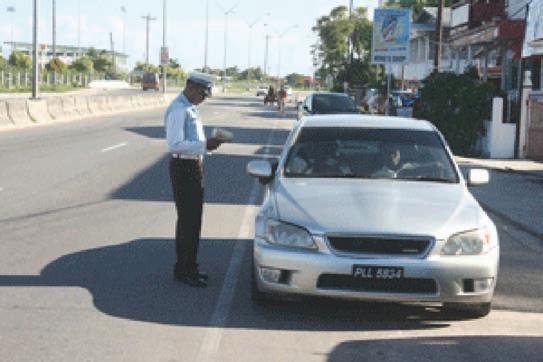
The Police Complaints Authority is still the fittest institution to function as a watchdog to detect misconduct by members of the Guyana Police Force.
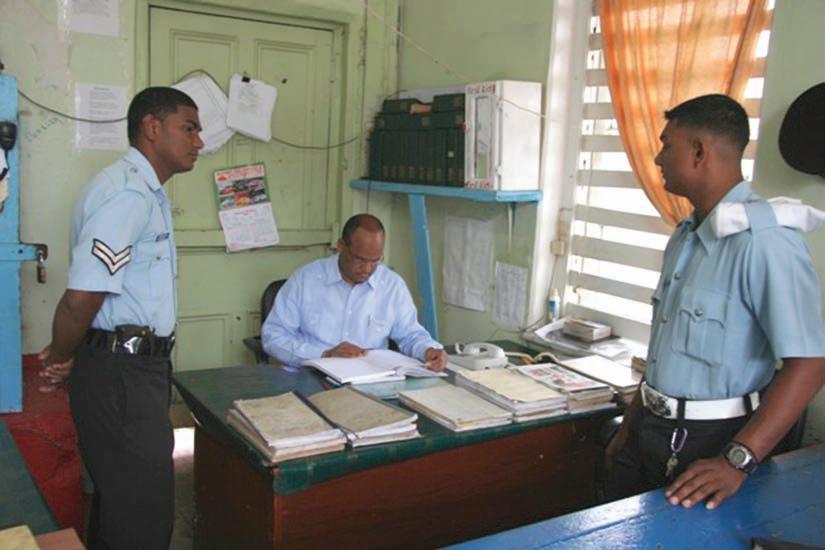
The Police Complaints Authority, which received 364 complaints against members of the Guyana Police Force for all of 2009, had to deal with exactly one complaint a day. Justice Cecil Kennard – a retired Chancellor of the Judiciary who is currently Chairman of the Authority – is hard pressed by this volume of work. He readily admits that he does not possess the administrative resources, investigative capability or the legislative authority to perform his functions effectively.
The Police Complaints Authority Act established the Authority twenty-one years ago in June 1989 during President Desmond Hoyte’s People’s National Congress Administration. It was intended to serve as an independent investigative institution which could receive
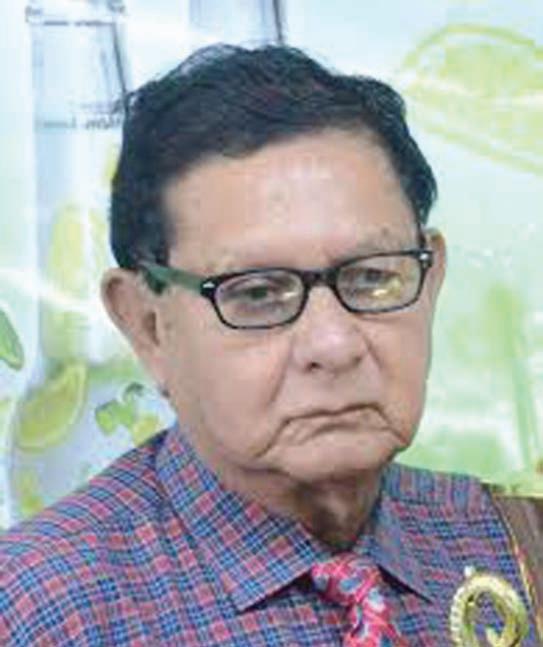
complaints from members of the public about alleged criminal offences committed by members of the Guyana Police Force. The Authority, however, is neither independent nor investigative. It is completely dependent on the Ministry of Home Affairs for staffing and financing. It is also completely dependent on the Guyana Police Force for the conduct of investigations.

Indiscipline in the Police Force, in 1990 as in 2010, had become a chronic crisis. The Police Discipline Act which was in force, however, was inadequate to deal with the flood of complaints about police misconduct from the public. The Authority was intended to police the Police Force. But has it been able to do so?
The Authority’s procedures are ponderous in the extreme. A person who feel that he or she has been wronged by members of the Police Force are required to lodge a complaint with the Authority who will determine whether the matter is ‘minor’ or ‘major.’ A minor case, for example, is one in which a policeman or woman has behaved in a rude manner to a member of the public. In such a case, the Authority
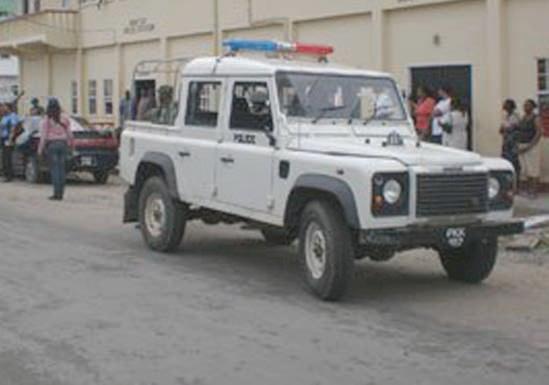
could simply and informally notify the Commander of the Police Division in which the incident occurred and report the offending officer. “It will then be up to the Commander to have a word with the policeman or woman in question,” Kennard said, “and this allows us to immediately handle such minor matters.”
Once a member of the public lodges a complaint about a ‘major’ matter that is deemed to be serious enough to be

investigated, the Authority is obliged to refer the complaint to the Commissioner and await his response before making recommendations. This could be the start of a slow process.
Most complaints within the Guyana Police Force are investigated by the Office of Professional Responsibility. The Office, which was established during 1997 but started actual operation in 1999, also investigates police misconduct and is headed currently by Mr Mohamed Jameer – himself a former Assistant Commissioner of Police. The Office’s objectives, mainly, are to investigate complaints of alleged misconduct made against members of the Force. It is staffed by uniformed policemen who record statements and conduct investigations only into such matters as are referred to it by the Commissioner. The Police Force no longer has a resident Legal Adviser hence all matters must be referred to the Director of Public Prosecutions for advice.
Mr Kennard explained that the Authority is the first to examine a written complaint against a policeman. He explained “I will look at it to see whether there is any merit in it and, further, whether it relates to misconduct on the part of members of the Police Force…If there is merit, I would send it to the Commissioner for investigation and report.”
After the report is forwarded to the Commissioner of Police he then assigns someone, usually from the Force’s Office of Professional Responsibility, to investigate. On conclusion of investigation, the report and relevant statements are forwarded, by the Commissioner to the Authority where the file is examined. It is then determined whether disciplinary charges, as distinct from criminal charges, should be instituted.
If it is decided that disciplinary charges will be instituted then the matter is forwarded to the Commissioner for a departmental hearing. This procedure is applicable to constables and subordinate officers. Hearings of complaints against officers of the ranks of Inspector to Assistant Commissioner must be done by the Police Service Commission. If the police officer is found guilty at the end of the hearing, the file will
be referred to the Authority so that an appropriate penalty can be recommended. Penalties can range from confinement to barracks; reprimand; reduction in rank; the award of extra duties; transferral from current district; a monetary fine or, in very serious cases, dismissal, depending on the seriousness of the alleged misconduct.
When investigations are satisfactorily conducted, the Authority will indicate to the Director of Public Prosecution whether the officer should be charged and will recommend an appropriate charge. Mr Kennard thought that the entire process – from complaint to sentencing – should be completed within two months. The time taken to complete a report has often been longer as it depends entirely on the Police Force.
The plain truth is that the Police Force’s departmental disciplinary mechanism is reactive. The Commissioner is the sole authority for initiating investigations into the misconduct of members of the Police Force hence, the investigative function is ponderous and highly centralised. The slowness of the process and sheer volume of complaints have not deterred policemen from behaving badly. The Police Complaints Authority and Police Service Commission do not possess the capabilities to conduct independent investigations. They cannot properly investigate, much less prevent, criminality. As a result, abuses have been recurring with frightening frequency.
bers of the Force. Kennard explained that ‘neglect of duty’ constitutes officers’ failure to perform their policing obligations. Other complaints have been about acting in a manner likely to bring discredit to a member of the Force; corrupt transactions; illegal searches; lack of civility to a member of the public; unlawful arrest; the use of unnecessary force and, most gravely, unlawful killings.
Over the twenty-one years of its existence, the Authority has not succeeded in restraining delinquent policemen. The Disciplined Forces Commission identified the problem back in May 2004 and made six specific recommendations to improve the Authority’s efficacy. Those recommendations – that members of the Police Force should be given training and instruction to create awareness of their responsibilities under the Police Complaints Authority Act; that the Authority should be provided with an investigative team
Internal police investigative units are no substitute for an independent Authority that is fearless and unrelenting in its pursuit of the truth where members of the public believe that a crime has been committed by the police. Even when police officers do face charges, lower magistrate courts, where other police officers serve as the prosecutors, hear most of the cases. Human Rights activists have questioned officers’ commitment to both investigating and prosecuting their colleagues.
The incapacity of the Authority to protect the public from police abuses has eroded public confidence in its usefulness as a watchdog. The Authority received 341 complaints from citizens in the first year of its operation in 1990 and, although the number fluctuated over the years, it was still high at 364 in 2009. Neglect of duty has been among the leading complaints made against mem-
consisting of trained police investigators who are directly responsible and accountable to the Authority; that all investigators functioning in such a capacity should be seconded and transferred to the Authority for the purpose of transparency; that the staffing of the Authority should be completed in accordance with its legislation utilising retired police officers and others with requisite skills and competence, and that the independence of the Authority should be maintained by providing more administrative and financial resources – are still to be realised.
Mr Kennard, as time went by, became even more convinced that the Authority needed its own investigation unit. He describes as “sensible” the recommendation of the Commission. He pressed the need for the establishment of such a unit because, in addition to the widely-held perception that the Police Force is jealous of its reputation and protects its own, the investigations take a long time. It was frustrating for him to have to tell the complainants repeatedly that he could not give them redress because he himself was awaiting the findings of the Police.
Mr Kennard, refers to Act which states “The Minister shall provide the Authority with a Secretary and such other officers and employees as are required for the proper performance of his functions.” He feels that the Minister of Home Affairs could provide him with officers who are not associated with the Police Force to undertake the supervision of the investigations with which the Authority is charged.
Both President Bharrat Jagdeo and the former Minister of Home Affairs Ronald Gajraj have promised to implement measures to strengthen the Authority. It is these men who determine the future of the Police Complaints Authority.
For the PPPC administration that took over the reins of government after 1992, the security challenges were formidable. It was not just that the institutions tasked with handling security matters - the Guyana Police Force (GPF) and the rest of the Disciplined Forces - were all depleted in resources and materiel, they had all been severely de-professionalised because of their extreme politicisation by the PNC government for 28 years.
The Guyana Police Force (GPF) along with the Guyana Defence Force (GDF) were particularly distorted. What has been written about the GDF was also true of the GPF:
In direct opposition to the Liberal policy of a militarycivilian dichotomy, Burnham rejected the notion of “British professionalism” in his military. He was going to create an army that swore loyalty to him and do whatever it took to keep him in power.
This was explicitly outlined in Scarlet Beret Vol 1, No 1 of 1971(p54) “Extracts from LFS Burnham’s address to officers and new recruits GDF Oct 26 1970.” Burnham declared the new ethos of the army: “I do not share with the British the concept that the Army is separate and distinct from ev-
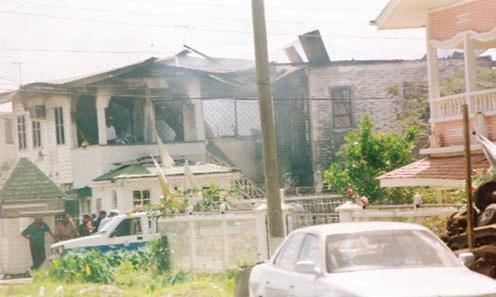
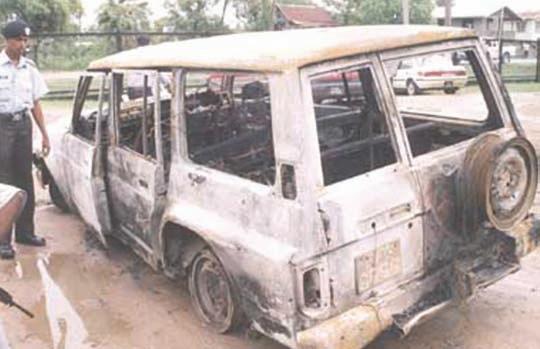
The list of crimes he was wanted for in a career of crime that began in 1989 includes the cold-blooded killing of Police Corporal Richard Faikal at Anna Regina on November 21, 1997 during a gang robbery at the branch there of the Guyana National Cooperative Bank (GNCB), Police said.
Faikal was shot dead when he confronted the heavilyarmed gang that stormed into the bank, terrorising staff, customers and villagers. Police said London and his gang fled with some millions in cash from the GNCB branch.
London was also wanted for:
** Robbery under arms committed on Glen Lall at Republic Park, East Bank Demerara during 1989.
** Possession of arms and ammunition at Ogle Airstrip on 1995-09-07 when he threatened to shoot Constable Lall of the Narcotics Branch during the execution of his duties (Lall was unarmed).
** Murder committed on Jonathan Belle and Raul Asimero in 1996-02-24 at Henapou, Upper Potaro River. Attempted murder committed on Corporal 12160 Young, Lance Corporal 13730 Thornhill, Constables 14845 Abraham and 15181 Brummell, when he threw a grenade at them at Kaieteur, Upper Potaro in 1996 when they attempted to arrest him.
** Possession of explosive device at Kaieteur, Upper Potaro in 1996.
** Robbery under arms committed at Jotish Panday’s home in Georgetown where $60M (not $60,000 as reported yesterday) in cash and jewellery were stolen. His vehicle was stolen and used by London in 1998.
** Robbery under arms committed on DIDCO Trading in Georgetown, where $872,000 and one 9 mm pistol were stolen on 1999-09-01.
** Robbery under arms and attempted murder committed on B&N Cambio, in America Street, Georgetown where $3,000,000 was stolen on 1999-09-22 (five counts).
** Robbery under arms committed on Bhagwandin Rice Mills at Crane, West Coast Demerara in September 1999 (Belgrave and others involved).
** Robbery under arms committed on the National Insurance Scheme headquarters on Brickdam, Georgetown where $13,000,000 was stolen last month.
erything else and loyal to the government of the day. As Prime Minister, I expect you to be loyal to this government. If there is any other government, it is a matter for you to decide about that, but as far as I am concerned I don’t want any abstract loyalty.”
“I have now arranged with the Chief of Staff that, in future, all recruits, apart from their military training, will also have to attend a course of lectures on the philosophy and ideology of the government and the Co-op Republic”. The officer corps of the GDF and GPF, government bureaucrats and party officials and members of the PNC youth arm the YSM, were jointly indoctrinated by the Social, Political, and Economic Council (SPEC) of Elvin McDavid from Office of the President. David Granger was the military representative in SPEC.
The Police and Army Intelligence units were widely used to conduct surveillance on the Opposition and routinely turned a blind eye to attacks on Opposition meetings by PNC thugs and gangs. Two members of the WPA were killed by the police.
While it was widely expected that the new post-1992 PPPC administration would embark on a wholesale reorganisation of the Disciplined Forces, under Dr Jagan’s promise of “no recrimination, no victimisation” there was instead immediate initiatives to inject funds, manpower and training into the Forces so that they could begin their reprofessionalisation.
But the GPF, which has the most day-to-day interactions with the public out of all state agencies, was the unit that was challenged earliest. The PPP/C government inherited a newly formed criminal enterprise in Guyana: heavily armed criminal gangs that also had a political nexus. They evolved from the phenomenon of “Kick-down-the-door Bandits” who were allegedly supplied with arms and closely linked with renegade members of the Disciplined Forces.
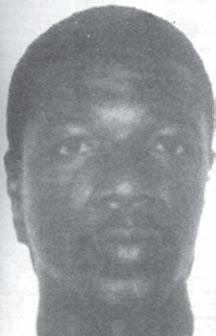
In 1989 an ex-GDF Special Forces soldier by the name of Linden “Blackie” London led a gang that contained several other ex-servicemen, launched a crime wave that involved bank robberies, kidnappings, murders and rapes. (See box)*
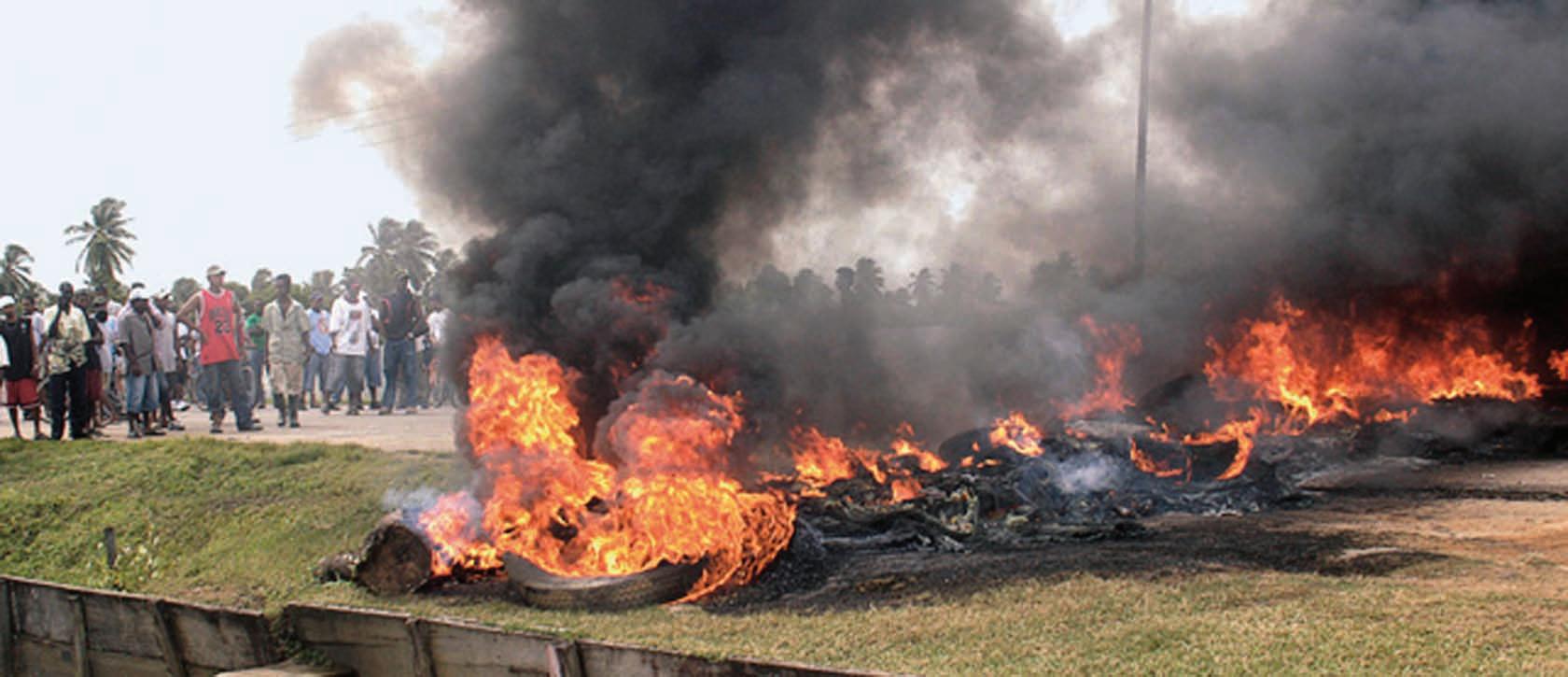
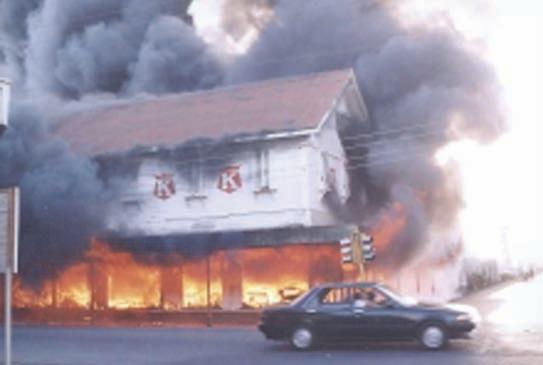
For almost a decade the police could not control the depredations of the gang and under cover of the violent street protests launched by the PNC following the December 1997 elections, the Blackie London Gang escalated their banditry. But in 2000 he was cornered in a motel and finally shot to death leaving a huge cache of weapons and ammunition - but not the hundreds of millions in loot. Desmond Hoyte, the PNC leader, then infamously draped the Golden Arrowhead over London’s coffin while at the Square of the Revolution.
The violent street protests and banditry forced the government to cut its term by two years and have President Janet Jagan resign. Under the new president, the youthful Bharrat Jaddeo, the PPP agreed to new elections in
2001, which the PNC again lost.
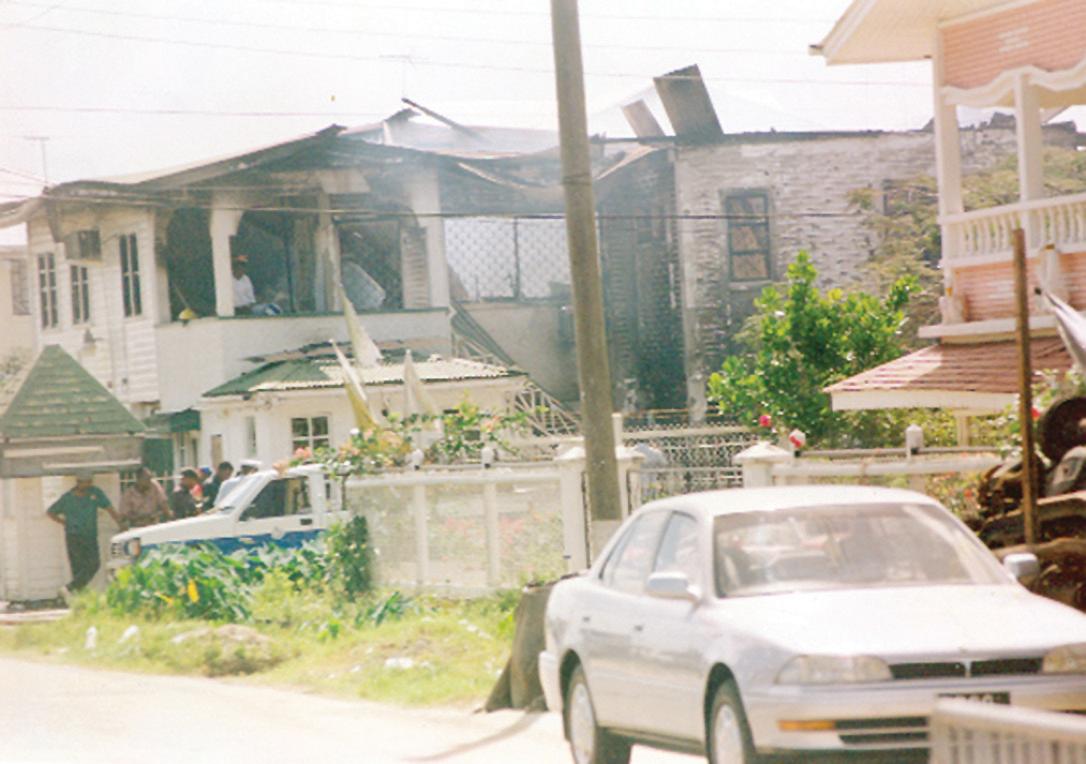
The PNC disputed the results and under Hoyte’s strategy of “slow fy aah” street protests intensified Georgetown. Roads were dug up in front of Buxton and commuters molested. Jagdeo was being tested.
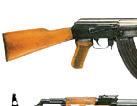
The Police were stretched thin as the PPP agreed to 17 demands of Hoyte’s. In May, a father and son were killed on the East Coast followed by the ambush of a police vehicle in which one police rank was killed. Hoyte declared that his strategy was now “slow fyaah; mo fyaah”. As businessmen began to be killed at will, on June 29, Police Commissioner

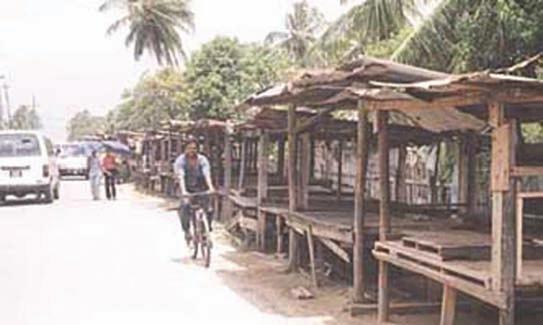
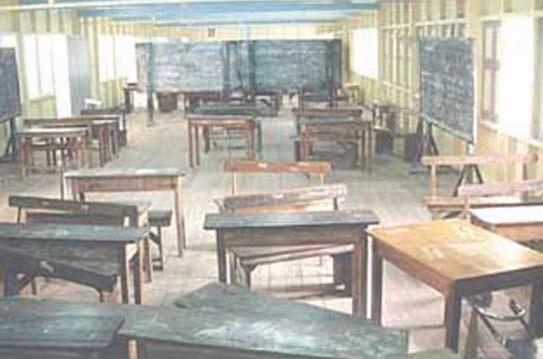
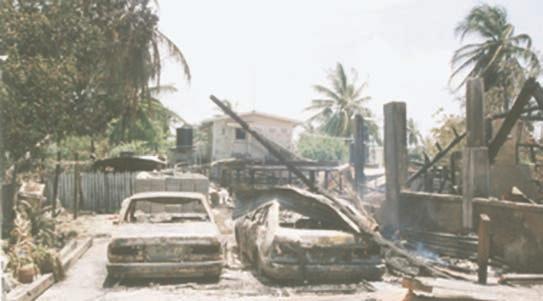
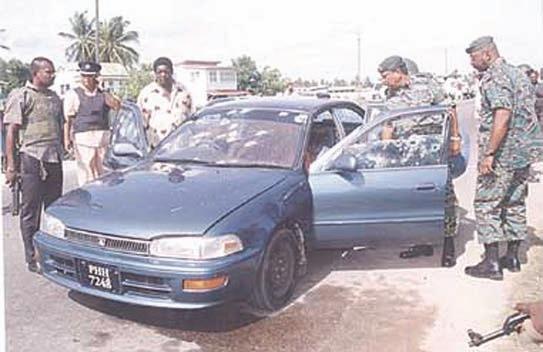

Laurie Lewis cited 11 robberies and declared that “a clear pattern of criminal activities designed to create climate of instability in the country” was underway. The PNC (Hoyte) rejected this, calling the COP’s identification of the violence as ethnically directed against Indians, “unprofessional and irresponsible”.
Several of Blackie London’s lieutenants including one Andrew Douglas were apprehended and imprisoned at the Camp Street Jail. On Republic Day Feb 23, 2002, a violent prison breakout was staged and five notorious criminals including Douglas escaped after a prison guard was killed. By the end of the month the criminals, holed up in Buxton, the home of Douglas, formed what was to be known as the “Buxton-Agricola” Gang and launched a wave of killing against civilians and police that was to create terror in the entire country and a veritable “state within a state in Buxton”.
Some called them
“Freedom Fighters” and one PNC can-
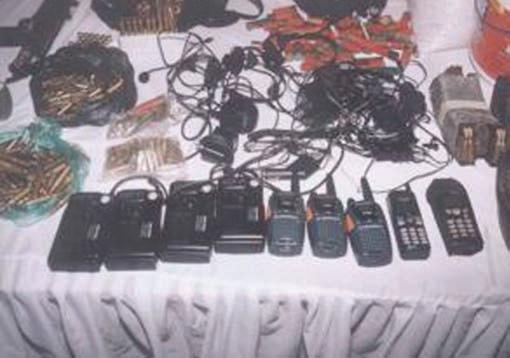
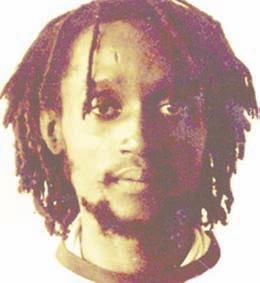
didate defended them on TV. Army ranks joined the outgunned police in Buxton in a vain attempt to return some semblance to the situation. PNC’s leader Hoyte denied that there were any criminals in Buxton however, and the present PNC leader David Granger called for the army contingent to be removed.
In Feb 2004 a new Commissioner of Police Winston Felix was appointed and the government noted, “the significant achievements of the GPF through huge investments in training, equipment and human resources, geared to improve the overall capabilities of the police, preparing them to utilise modern techniques and operations.” But under Felix’s watch dozens of persons were killed and murdered, the Office of the President was invaded and the PPP Congress in Rose Hall was attacked by the Douglas Gang.
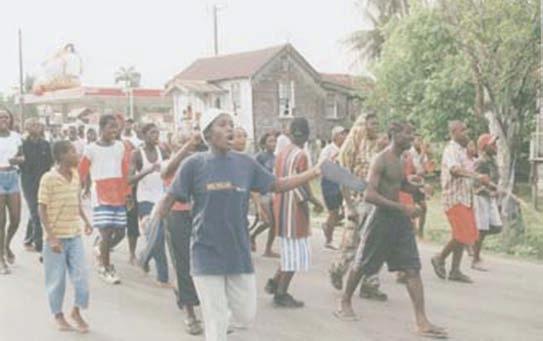
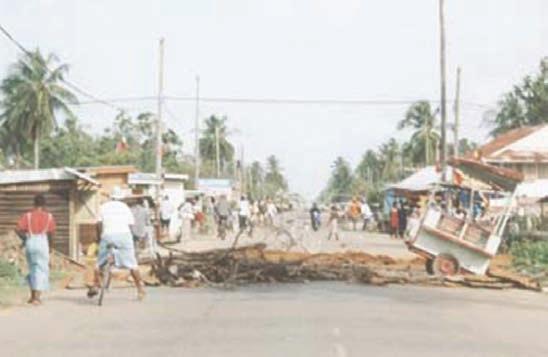
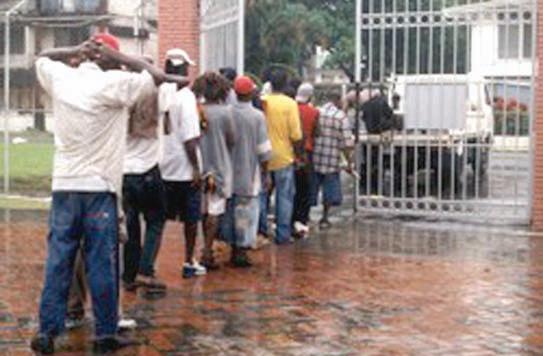
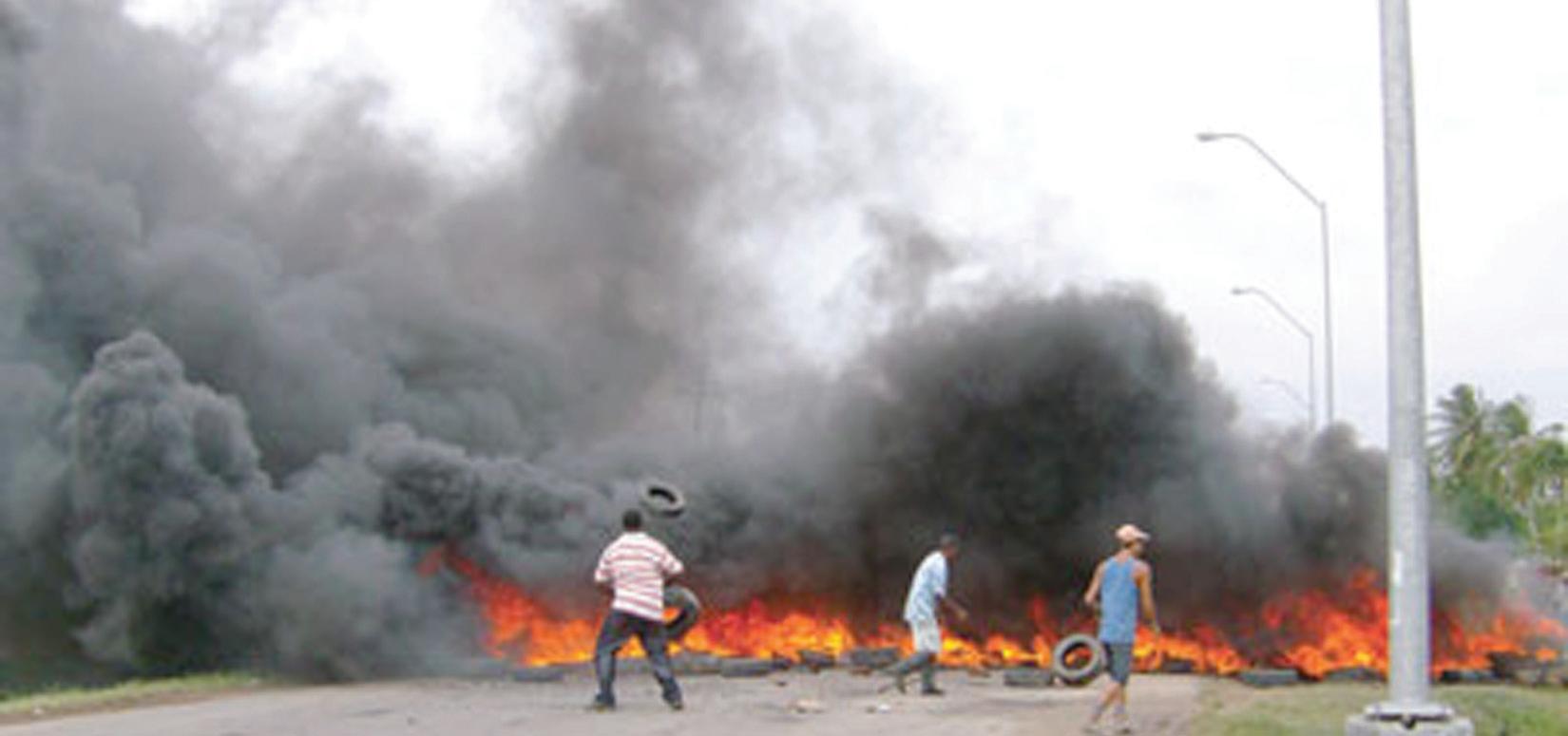
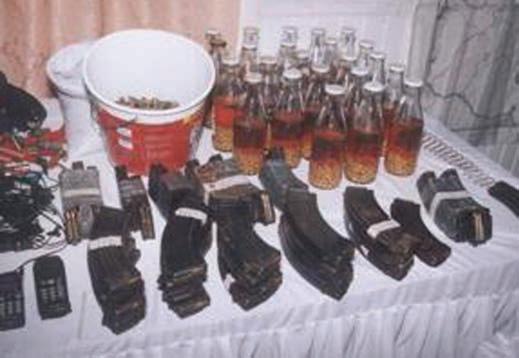
In the face of the GPF and GDF inability to root out the politically-motivated bandits even though more than a dozen policemen had been killed, (See Box 2) several armed vigilante gangs (“phantom squads’) were formed and sought to take on the bandits.
Overseas assassins were imported when one drug smuggler was kidnapped by the bandits: the pressure on the police increased. One individual, Roger Khan, who was later convicted for drug smuggling in the US admitted that he engaged in operations against the bandits. In a full-page ad in the press he claimed to have worked with COP Felix. Four of the five prison escapees were killed by vigilante squads.
While there were persistent calls to form a Special Weapons and Tactics (SWAT) unit to confront the bandits, the Police Force, under the command of Winston Felix failed to do so even after extensive assistance by the British. Men were recruited, weapons were procured, men were trained but there was no SWAT team and not surprisingly the massacres increased. After a massacre at Agricola in 2005, Felix was caught on a tape alerting PNC Chairman Basil Williams that he had “headed off” his civilian heads at the Home Affairs Ministry.
But after the Douglas “first generation” bandits were killed, they were succeeded by another “second generation” gang composed of the remnants of the first and led by Rondell “Fineman” Rawlins. However, under the persistent efforts and ministrations of the PPP administration led by President Jagdeo, a new Home Affairs Minister Clement Rohee and a new Police Commissioner Henry Greene, the
Police regrouped. In 2008, matters came to a head after three massacres by the BAGLusignan, Bartica and Lindo Creek - in which more than thirty persons died, the remnants of the bandits led by Rondell “Fineman” Rawlins were killed by joint operations of the Police and Army.
The PPPC government
had successfully defeated the armed insurrection against the state by criminal gangs. But GUYANESE will have to be constantly on Guard because members of those gangs, especially the “child soldiers” of Buxton would have now grown up and can be recruited.
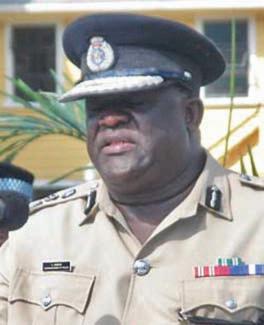
Many of the politicians who were willing to use them to attack the state are also still around - but more alarmingly a large number of these politicians are ex-members of the Disciplined Forces who were part and parcel of the deprofessionalisation of the Discipline Forces: Brigadier(rtd) David Granger, COP (rtd) Winston Felix, Brigadier (rtd) Edward Collins (rtd) Joseph Harmon and hundreds of others.
** Const. 17650 Eloye Adridge 2001 – Shot at Sparendaam Police Station, ECD by a bandit.
** Supt. Leon Fraser 2002 – Ambushed and shot dead at Yarrowkabra, Linden/Soesdyke Highway by Buxton-Agricola Gang (BAG).
** Sgt. 12361 Har ry Kooseram 2002 – Shot by BAG on Strathspey Public Road, ECD.
** Const. 18521 Sher win Allen 2002 – Ambushed and shot at Coldingen, ECD by BAG.
** R/Const. 18521 Andrew Atwell 2002 – Shot and killed by BAG w at Alber ttown Police Station.
** Const. 15751 Rawle Thomas 2002 – Shot and killed by BAG at Wismar, Linden.
** L/Cpl. 16987 Adrian London 2002 – Shot and killed by BAG at Joseph Pollydore Street, Lodge.
** Const. 11405 Outar Kissoon 2002 – Shot and killed by BAG at Rose Hall Police Outpost, Berbice.
** Const. 15636 Ramphal Pardat.
** Const. 18271 Feroze Bashir 2002 – Shot and killed by BAG at Buxton, ECD.
** Ch. Insp. Leyland October, 2002 – Shot and killed by BAG at Russell and Sussex Sts. Charlestown.
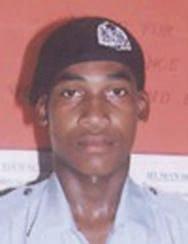
** Const. 19219 Quincy James 2002 – Shot and killed by criminals while on traffic duty on Regent Street.
** Const. 16840 Colin Robertson 2002 – Shot and killed by BAG at Sophia.
** Const. Mark Latour 2003 – Shot and killed by criminals at Arapaima Restaurant.
** Const. 14500 Rayon Roberts 2003 – Shot and killed by BAG on Bent Street.
** Const. 17657 Mark Yaw 2001 – Shot and killed by criminals, at Croal Street.
** Const. 18043 Nankumar Mohabir 2003 – Shot and killed by BAG while on patrol duty at Friendship Public Road, ECD
** Const. 18043 Deon Joseph 2003 – Shot and killed by BAG at ‘B’ Field Sophia, while on his way to work.
** Const. 18411 Ronald Abel 2003 – Shot and killed by BAG at Buxton.
** Sgt. 0612 Walton Brumell 2003 – Shot and killed by BSG in a minibus at Buxton, while on his way to work.
** Const. 19210 Suresh Dhaniram 2003 – Shot and BAG by criminals in a minibus at Buxton, ECD.
** Const. 18102 Lloyd Cameron 2003 – Shot and killed by BAG at Sophia.
** L/Cpl. 14177 – Ramnarine Latchana and Asst Supt Richard Griffith killed by ex TSU officer
** Const. 19156 Omani Savor y 2004 – Shot and killed by BAG at Buxton, ECD.
** S/Const. 13321 Kwesi Lawrence 2006 – Shot and killed whilst on a Joint Ser vices Operation at Victoria, ECD.
For those critics, especially from the political Opposition who, for the well-known exercise of soliciting sympathy from their constituents, continues to criticise the Government for its socio-economic programmes, the recent opening of the $139M Guyana Fire Service training school at Leonora, is another significant example of what national development is all about.This is a further investment in a most critical and essential service, and comes at a time when a comprehensive security reform programme is currently underway. In fact, the GFS is part of this reform process, with the objective of modernising its operational capacity for maximum response; while being prepared for its envisaged, extended role with regards to rescue and related emergencies.
This event comes in the wake of the recent announcement by Minister of Home Affairs, Mr Clement Rohee, of the Fire Service Strategic Plan 2014 – 2019, a comprehensive programme that in its implementation, will result in a service that will be properly managed, with defined roles and functions for all its actors, clearly demarcated.
Indeed, the GFS has come a very long way, gradually evolving into one that is now far better equipped, than at any other time of its history, to render response emergency service.
From a service, which at the dawn of that epoch-making year of 1992, that only had eight fire stations across Guyana and a few fire tenders, it now has a total of seventeen such services, with the significantly increased number of 54 fire tenders, inclusive of those that are equipped for multi-storeyed fires and related emergencies. It is instructive to note that nine new stations have been built since 1992.
It is an exponential improvement for a critical service that had virtually come to a dangerous halt, and which fire fighting abilities had been severely hampered by porous hoses and outdated equipment. A similar state of affairs was also common in the other sister services, especially the Guyana Police Force.
Therefore, we contend that the Security Sector Reform Programme is timely in its implementation, for what it intends to achieve – a comprehensive reform of all of the disciplined services, with the end product being individual modern components, functioning in a highly competent, professional manner. This also includes a highly capable and responsive fire service.
The undisputed, beautiful reality is that Guyana is now a vastly changed socio-economic landscape. The massive transformation along the clearly visible path of development that the current administration is pursuing cannot be disputed. Evident all over, for instance, is the four-fold increase in the industry and manufacturing sectors.
Reference can also easily be made as it relate to the newly built housing settlements across the country with thousands of newly built homes, among the numerous positive changes. Of course, these developments will always increase the risk of conflagrations and other emergencies.
It means, unhesitatingly, that a modern Fire Service with enhanced response capabilities is an imperative for Guyana. And for this the government must again be commended for its visionary approach in executing a national development plan that is inclusive of, and complements with, all the sectors for a productive whole.
We are certain that as the Guyana Fire Service continues to metamorphose into that highly professionalised service, its response to relevant emergencies will reflect such a transition. At the same time, too, citizens are expected to support the soon-to-be-renamed Guyana Fire and Rescue Service, in its fire preventive efforts.
We continue to wish all the members of this very important service, the very best in its future endeavours.
THE Guyana Fire Service (GFS) $139M state-of-the-art Training School Complex at Leonora, West Coast Demerara was officially opened Monday by Minister of Home Affairs Clement Rohee, who also unveiled the dedication plaque. He said the training facility has finally come to fruition after years of painstaking planning by the Ministry of Home Affairs (MOHA) and the Guyana Fire Service (GFS) to ensure that the GFS is equipped in all areas to carry out its mandate.
He added that it is a testimony of the Government’s commitment to modernising the GFS to a full fledged Fire and Rescue Service, which can offer a variety of emergency services to the citizens of Guyana.
Meanwhile, Rohee told the gathering that it was disappointing that a few persons would have a vested interest in stymieing the modernising process of this important Disciplined Service.
He noted that the Government cannot however, continue to deny its citizens access to better emergency services such
as an Ambulance Service and other humanitarian emergency services that the GFS undertakes on a regular basis.
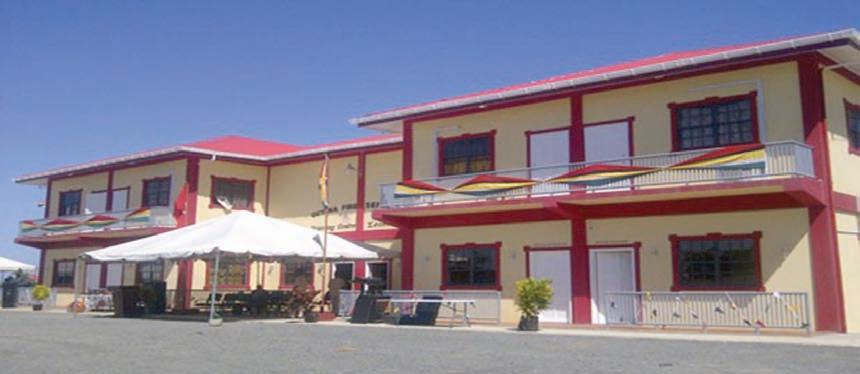
The Home Affairs Minister noted that it therefore means that more has to be done to develop these services to meet the demands of a developing country like Guyana.
He disclosed that the GFS has 46 fire tenders, five aircraft crash and rescue tenders, one hydraulic platform, three all-terrain tenders, two trailer pumps, four water bowers and four ambulances.
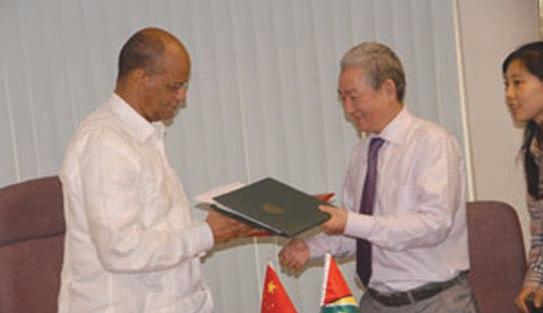
The Minister said that in addition, over 168 ranks were exposed to overseas training and the strength of the GFS also grew from 368 to 511 during this period.
Rohee stated that prior to 1992, the GFS operated from two fire stations and one fire tender and one pick-up vehicle were operational in the city, while Campbellville and Alberttown were closed for the lack of fire tenders and poor conditions at the fire station buildings. He stated that there were only three other operational stations full-time in Guyana – the New Amsterdam, Timehri and Leonora Fire Stations.
The Minister noted that training was done on an ad hoc basis at fire stations because there was no established facility to undertake sound training of ranks for the GFS.
Rohee said that the GFS has now established working relationships with the Caribbean Fire Services, the French Guiana Fire Service and Gloucestershire Fire and Rescue Service and the Seven Park Fire and Rescue Training Centre and has benefitted from positive initiatives from these relationships in the form of training and exchange visits.
He pointed out that the MOHA and the GFS have realised that there is need for a new approach to modernise the GFS and have just completed a new five-year strategic plan to bring the service up-to-date with modern methods of a Fire and Rescue Service.
Rohee added that these are just a few highlights of the government’s commitment to make citizens safer but he urged persons to desist from unsafe practices such as the theft of electricity, deliberately setting fires to open lands and public spaces, acts of arson and malicious setting of fires.
Meanwhile, Chief Fire Officer, Marlon Gentle in his remarks noted that after 57 years the GFS has a training facility to shape and mould its ranks.
He added that prior to the construction of the training facility, training was done at several fire stations and the Guyana Police Force facility but now they have their own after years of planning.
He stated that since 2011 the GFS and the MOHA have been in talks to have the state-of-the-art training complex constructed and he was very pleased that it has been established to enhance the skills of the ranks.
Gentle told the large gathering on Monday that it was also the first time in their history that they were witnessing a Passing Out Parade of 93 recruits, who had completed three months of rigid training.
He pointed out that with the changing landscape on the West Coast Demerara corridor, there is need for a second fire station and so one will be constructed at La Grange, West Bank Demerara.
He explained too that the GFS will also be running an Ambulance Service as first responders and Emergency Medical Technicians (EMTs) to facilitate humanitarian work in service to the citizens and community.
Gentle added that over the years they have been the pre-
mier agency that is constantly being called to assist in emergency situations such as fires and road accidents and they remain committed to saving lives and protecting property.
The Fire Chief also urged the recruits to be both physically and mentally prepared since they will come in for unfair criticisms at times.
The ultramodern facility was declared open when Minister Rohee unveiled the plaque and cut the ribbon before an official tour of the two-storey building. (chron)
Fire Service capacity boosted – Chinese Gov’t donates 10 fire tenders
Guyana’s Minister of Home Affairs Clement Rohee today received the keys to 10 fire tenders, and 400 suits for fire officers from officials of the Chinese Government at the Ministry of Home Affairs, Brickdam. The vehicles and protective gear were handed over following the signing of the acceptance certificate.
In expressing appreciation, Minister Rohee said: “The Ministry of Home Affairs is very appreciative of this kind gesture; it is another concerted manifestation of the friendly relations between the People’s Republic of China and the Republic of Guyana”.
This relationship from which Guyana is now benefitting will obviously go a very far way in enhancing the capacity of the Guyana Fire Service in many respects, Minister Rohee stated.
He also recalled that in his Budget 2013 debate presentation he had made it known that the Guyana Fire Service (GFS) would be renamed he Guyana Fire and Rescue Service and would go through certain transformative periods in order to ensure that the Service becomes modernised.
This is the ambition of Fire Services around the world, he said, and the GFS must not be left behind. The GFS has come a very far way, for those who are acquainted with its history would know that from seven stations there are now 16 around the country, form one and a half fire tenders there are now 36, he stated.
The additional fire tenders will see an exponential growth in the capacity of the Fire Service to provide an effective and efficient service to the residents not only in Georgetown, but in the other regions as well, the Minister said.
Rohee urged officials of the GFS to take special care of the vehicles to ensure that they are well serviced and protected and that they are usFire-fighting capacity given big boost.
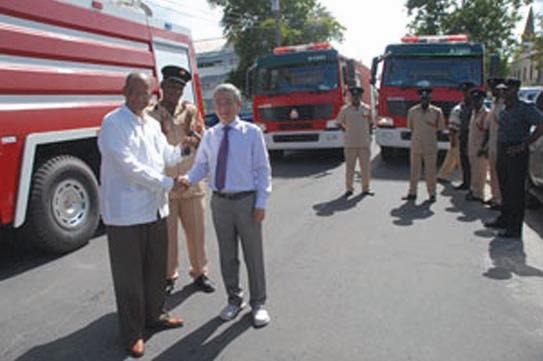
China donates 10 fire tenders
Home Affairs Clement Rohee Minister in 2013 received the keys to 10 fire tenders, and 400 suits for fire officers from officials of the Chinese government at the Home Affairs Ministry, Brickdam, Georgetown.
The vehicles and protective gear were handed over following the signing of an acceptance certificate, the Government Information Agency (GINA) reported. Minister Rohee stated that his ministry is very appreciative of the gesture, and that it is another concerted manifestation of the friendly relations between China and Guyana.
The minister said the relationship from which Guyana is now benefiting will obviously go a very far way in enhancing the capacity of the Guyana Fire Service (GFS) in many ways. He recalled that, in his Budget 2013 debate presentation, he made it known that the GFS would be renamed he Guyana Fire and Rescue Service and would go through certain transformative periods in order to ensure that the service becomes modernised.
The Guyana Prison Service (GPS) yesterday launched its Standing Orders at the Ministry of Home Affairs (MoHA) Boardroom in Brickdam, Georgetown; after which Director of Prisons, Mr. Welton Trotz, presented Home Affairs Minister, Clement Rohee with a copy of the Standing Orders.
Rohee congratulated the Standing Orders Committee and the various Boards for their input in compiling the Standing Orders.
He expressed gratitude to former Prisons Director, Cecil Kilkenny for heading the Committee and said the Standing Orders are a national document for the GPS. Accordingly, he said, the Government agrees with the consultative process through which the Standing Orders were derived.
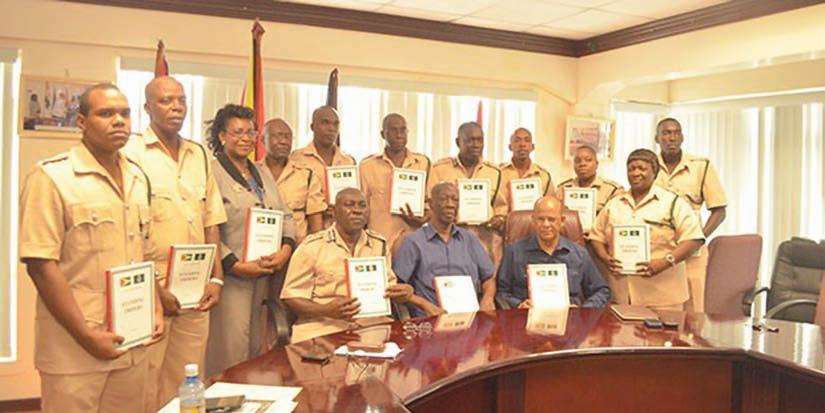
Rohee said the document came at a time when the GPS is undergoing modernisation and a Strategic Management Department has been established and is being manned by civilians.
He exhorted GPS officers to use the Standing Orders as a compass to guide them in their work.
Head of the Standing Orders Committee, Retired
The sum of $298M was allocated to the GPS for its Capital Programme for 2014. Of that sum, $212M were spent on building projects, including construction of the Brick Prison; Trade Shops; and the Lusignan Prison, which has been identified as a correctional facility, particularly for young offenders.
Some $39M has been spent on land and water transport, and $47M have been spent on agricultural and other equipment.
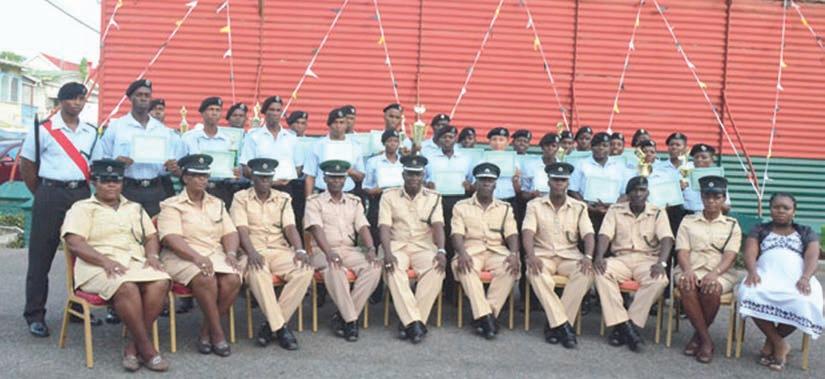
Director of Prisons, Mr. Cecil Kilkenny, said the group managed to develop the drafts after some time, and the Orders were reviewed and approved. As such, 50 Standing Orders were compiled.
In 2013, the Home Affairs Ministry established a Standing Orders Committee to develop Standing Orders for the GPS. Work was completed in 2014, and a total of 50 Standing Orders were developed, which will guide officers and ranks on their conduct in the execution of their duties.
These Orders have, in fact, laid down the rules and operational procedures by which the GPS is governed.
Director of Prisons, Mr. Welton Trotz, has said he had received a letter from Minister Rohee in 2012, instructing that the Standing Orders be developed, and after much hard work, this request came to fruition. Trotz credited this achievement to those involved, including the Committee. He, however, urged that senior ranks should ensure that the Standing Orders are enforced as he appealed to Location Commanders present at the occasion to enact the Standing Orders at the various prisons across the country. He further asked that they enlighten junior ranks under their command.
Trotz, moreover, said that members of the GPS should use the Standing Orders as a guide on how they should discharge their duties, and he said that senior officers must make it their duty to ensure this information is filtered down to others in their command.
He explained that the Standing Orders are the way forward for the GPS, but he said the Orders have not been ‘set in stone’, and can therefore be corrected and changed when necessary.
It was also learnt that the Training, Sentence Management, Recruitment, Parole and Agriculture Development Boards that were established by the Home Affairs Ministry are all chaired by civilian volunteers. These boards held their statutory meetings, made visits to prison locations, and generally made a tremendous contribution to the work of the GPS, in keeping with their mandates.
The GPS has renamed its spanking new $26.3M Prison Officers Training School at Lusignan Prison, East Coast Demerara in Mr. Cecil Kilkenny’s honour. This facility was officially opened on October 6, 2012.
To be renamed Guyana Prison and Correctional Service
Home Affairs Minister Clement Rohee Wednesday met with chairpersons of the different boards within the Guyana Prison Service (GPS), and announced that Cabinet
are equipped to bring a balance and a more comprehensive perspective on how to move the prison service forward.
Under the security sector reform strategy, there are a number of priority areas that will be focused on for the GPS, whose implementation is expected to cost approximately $831 million. These include: modernisation of existing infrastructure and penal legislation, enhancement of human resource management and financial administration, strengthening of interagency collaboration and the promotion of successful offender reintegration into society. (GINA)
Following a violent episode at the New Amsterdam Prison whereby four inmates were critically wounded, allegedly by a fellow prisoner, the Home Affairs Ministry is putting together a Board of Inquiry into the incident.
Home Affairs Minister Clement Rohee, speaking at a press conference at Freedom House on Monday, said while he is not committing to the notion that the incident was gang-related, a Board of Inquiry is being put together in keeping with the Prisons Act, to get to the bottom of the incident.
He further said a number of civilians have been identified as well as a Senior Police Officer to form the Board of Inquiry that will make recommendations based on its findings.
The prisoners were injured when another inmate reportedly attacked them with a cutlass over a week ago. The wounded men were transferred from the New Amsterdam Hospital to the Georgetown Public Hospital.
There were reports that the four men attacked were part of a notorious gang in the facility; however, Rohee said he was not yet subscribing to that belief and would rather wait on the findings of the Board of Inquiry.
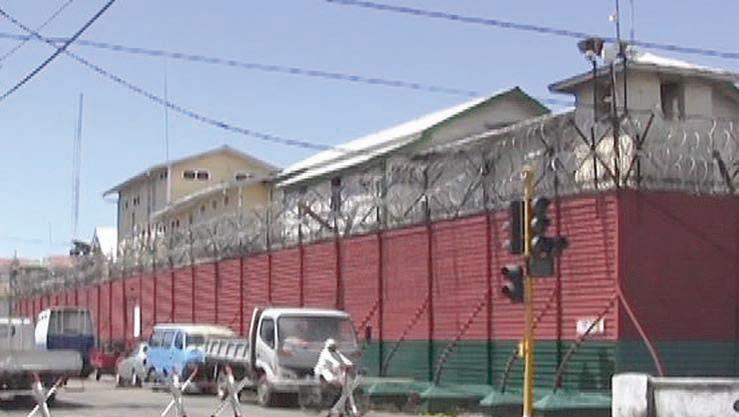
has approved the new name of the institution – the Guyana Prison and Correctional Services.
The minister described the name change as timely, since the GPS is not only embarking on a reform process but the entire security sector as well. He noted that this is an era when prisons around the world are being faced with new challenges.
He commended the chairpersons of the sentence management, agriculture, recruit, and training boards for their yeoman contribution towards prison reforms over the years. The purpose of the meeting was to have an exchange of views on what will be the focal point for the various boards this year.
“The whole idea is not only to have a change of name, but to add substance, and it is these boards that bring the substance to the name change,” the home affairs minister stated. The boards are all part and parcel of the new vision for this institution, which is an integral part of the criminal justice system and are in keeping with the GPS’s five-year strategic plan which is being rolled out.
The boards are led by prominent persons in society, who
Meanwhile, Rohee said Government is continuing to execute its strategic plan for the Guyana Prison Service. He noted that it unsuccessfully went to Parliament to have the name of the service changed to the Guyana Prison and Correctional Service to coincide with the institutional changes. The Opposition would rather play politics.
“And even though we didn’t get the jury, the permission to change [the name of the Guyana Prison Service], de facto changes are already taking place within the Prison Service. A number of bodies have already been set up internally in keeping with the strategic plan. These are administrative changes that have been made to ensure that a greater balance has been brought to custodial [arrangements] as well as correction.”
The PPP General Secretary and Home Affairs Minister said a modern prison system must have a balance between custodial and correctional responsibilities.
“While inmates are in prison at the wishes of the court to deprive them of their freedom, it is up to the State to ensure that while they are held captive behind the prison walls that they initiate plans that will help, especially firsttime offenders, reform.”
Further speaking on its strategic plans to develop the prison system and offer reform programmes for especially first-time offenders, Rohee said the Lusignan Prison will become a model prison where only first-time offenders will be housed. “Only those persons found with small amounts of ganja will be held there, far away from the hardened criminals.”
According to Rohee, changes will be made to the Timehri Prison and the Mazaruni Prison, which will become the hub of the agricultural drive of the Guyana Prison Service.
“This is the ambition of fire services around the world,” he said. “And the GFS must not be left behind. The GFS has come a very far way, for those who are acquainted with its history would know that from seven stations, there are now 16 around the country, and from one and a half fire tenders, there are now 36.”
The additional fire tenders will see an exponential
growth in the capacity of GFS to provide an effective and efficient service to residents not only in Georgetown, but in the other regions as well.
Minister Rohee urged officials of the GFS to take special care of the vehicles to ensure that they are well serviced and protected and that they are used for the benefit of the people.
Chinese Ambassador to Guyana Zhang Limin said he was very pleased to attend the signing, and alluded to the long and fruitful relations between the two countries. The two governments have also fostered good relations, as well as close friendship between their peoples.ed for the benefit of the people.
By MINISTER OF HOME AFFAIRS, CLEMENT ROHEE
Never in the history of the Guyanese Security Sector have there been so many reforms and efforts at modernization and real change. The facts attest to this reality.
These changes are not imaginary, nor far-fetched. They can be tested and proven. Neither can the skimpish reporting, rubbishing or throwing cold water on these reforms and the significance they hold for the security architecture of Guyana erase or diminish the truth.
Mr Granger would be lying between his teeth were he to deny that the ongoing reforms in the security sector have had and will continue to have far-reaching effects throughout the law enforcement agencies. This is probably what he fears most and that is why he wants to torpedo the reform and modernization process, currently underway. Or is it the eventual withering away of the ‘kith and kin’ syndrome that he morbidly fears?
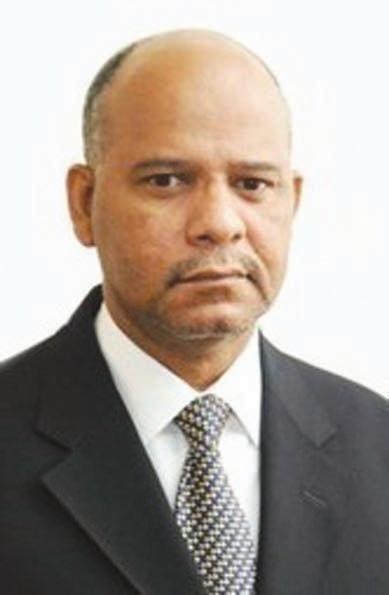
Mr Granger can only feign ignorance about these reforms in exchange for political expediency, but in the final analysis, facts and the truth are there for all those who have eyes to see and ears to hear. He who is politically deaf and blind in the realm of Guyana’s politics is bound to end up in Jurassic Park.
Vibrant, open and healthy political competition is a sine qua non for a thriving democracy, especially for a new democracy that is less than twenty-five years old. The re-invention of government and its established institutions to facilitate good governance in the interest of the populace is a vital and compelling necessity for the PPP, as a ruling party.
I have always maintained that security, call it national security or public safety and security, is a work in progress; anyone who argues that a state of perfection and or a sustainable comfort zone is attainable once an abundance of human resources, technological applications, adequate remuneration and incentives, recruitment and training of law
enforcement officers are available is living in a fool’s paradise. Ferguson, Missouri is a case in point. This is not to say that we must not strive to attain such levels so long as we can afford them.
Mr Granger must say publicly whether during his tenure as Commander of the GDF under Burnham and later, as National Security Adviser to Hoyte, the security situation in Guyana was better than it is today and whether the police and Defence Force had everything they wanted. Further, he must do the comparative analysis to show what the budgetary allocations for the GDF and the GPF were then, and what they are now.
Mr Granger must give concrete details to show whether the GDF and the GPF were better out-fitted under his command compared to how they are outfitted now.
The reality is that the current reforms and changes are manifested in the following:
* Establishment of a state-of-the-art forensic laboratory;
* Establishment of a Police Officers Training College;
* Rehabilitation/remodelling of eighteen police stations;
* Establishment of seventeen police outposts;
* Computerization of Guyana Police Force headquarters, Traffic headquarters and CID headquarters, Central Passport & Immigration Office and forty-four other police stations;
* Establishment of computer centres at all police divisions and at force headquarters;
* Establishment of CCTV cameras throughout the city;
* Establishment of a National Intelligence Centre;
* Introduction of the new machine readable passport;
* Procurement of hundreds of vehicles for the GPF;
* Establishment of the integrated crime information system;
* Establishment of a crime and social observatory;
* Establishment of a holding centre for juveniles;
* Establishment of the electronic crime reporting system;
* Establishment of civilian staffed strategic management departments at the Guyana Police Force,
* Guyana Prison Service and Ministry of Home Affairs to assist in the implementation of their respective strategic plans;
Community Policing Group to work closely with the Guyana Police Force (GPF) and Government of Guyana fight the social ills that are weakening the moral and social fabric of their communities.
Rohee was at the time delivering the feature address at a ceremony and rally organized to mark the 39th anniversary of Community Policing which was held on Saturday at the Anna Regina Community Centre ground in Region Two (PomeroonSupenaam).
The rally was held under the theme, “Community Policing: Supporting the fight Against Domestic Violence, Suicide and Promoting Road Safety” and attracted six divisions (A,B,C,D,E and F) with more than 500 members from various administrative regions.
Rohee along with Region Two Chairman, Parmanand Persaud and other officials observed the march past by the six participating divisions and their CPG members. The parade began at Reliance village and proceeded to the Anna Regina Community Centre ground. The parade was also joined by youth groups from the various community policing groups.
The programme featured poems, calypso and addresses by various persons from the Community Policing Groups.
Minister Rohee said that domestic violence continues to rear its “ugly head” in the country as he urged community policing groups to exhibit a zero tolerance plan aimed at fighting the social ill.
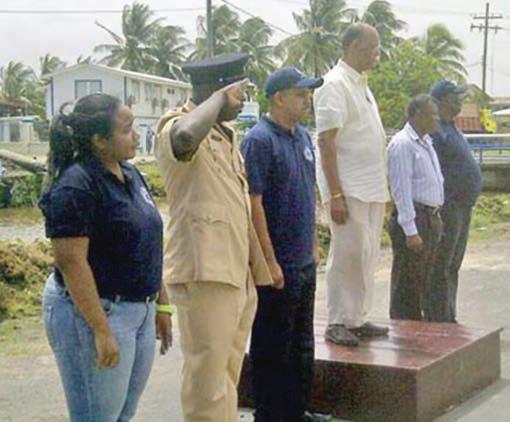
The Minister insisted that Guyana’s future depends on the adaptation of this posture which will deter perpetrators from engaging in such heinous acts.
Meanwhile, he explained that the Community Policing Groups compliments Police Force, pointing out the force cannot execute its job alone.
Rohee lauded the commitment shown by the Community Groups towards all aspects of their service explaining that they are setting a very good example for other like-minded groups to follow.
“I want to thank and express our great-
* Establishment of a Serious Organized Crime Unit (SOCU);
* Establishment of the Guyana National Computer Incident Response Team (to address cyber crimes);
* Passage of the Interception of Communication Act;
* Passage of fifty laws in the National Assembly to strengthen law enforcement;
* Establishment of a several civilian composed boards to institute internal administrative reforms within the Guyana Prison Service and Guyana Fire Service;
* Establishment of an investigating arm of the Police Complaints Authority;
* Increase in the fixed establishment of the Guyana Police Force from 3,410 to 4,956;
* Strengthening and expanding middle management in the Guyana Police Force by increasing the number of police cadets from ten to fifty;
* Strengthening the Marine Wing of the Guyana Police Force through capacity building, procurement of a floating base, a work boat and a number of additional patrol boats as well as provision of specialised training for police ranks;
* Establishment of a SWAT team at the Guyana Police Force;
* Expansion and improved equipping of the community policing organization;
* Establishment of traffic wardens;
* Expansion of neighbourhood police;
* Expansion of station management committees;
* Establishment of houses of justice;
* Successful implementation of Citizen Security Programme;
* ModerniSation of the Ministry of Home Affairs.
Mr Granger and company must be grinding their teeth with envy at the scale and magnitude of these reforms and changes in the security sector initiated by the PPP/C administration since its assumption to office.
His unwillingness to support the establishment of the Parliamentary Oversight Committee of the Security Sector is a glaring indictment of his tongue in cheek, two-faced approach to security matters and by extension the security of the nation.
The deeper these reforms go vertically and horizontally, the more irreversible they will become with the inexorable march of history.

est satisfaction to all of you, today marks 39 years of positive achievement” Rohee said. In commending the efforts of the groups, Rohee said Guyana has the best and most organised, Community Policing Organisation in the region.
During his address he pointed out the Government has invested millions of dollars on community policing as he admitted that there would be chaos if there were no Policing Groups.
“I believe that community policing has a bright future in Guyana and as it grows then Guyana will continue to be prosperous” Rohee said.
The Minister said that youths play an important role in community policing and called on the National community policing executive and divisional commanders to form more youth groups within the CPG.Deputy G Division Commander, Walter Stanton said
that Community Policing Groups throughout of Guyana play an integral role in supporting the work of the GPF.
Stanton said that the groups already help to build stronger partnerships with communities in fighting social ills but conceded that more can be done.
The Deputy Commander said that Guyana Community Policing Group was formed in Guyana in 1976, under the late Commissioner, Henry Frazer. He said from 1976-2015 the need evolved for community involvement.Region Two has 33 active groups with 389 persons enrolled and Region Two Chairman, Parmanand Persaud congratulated the groups for their years of achievement.
The Regional Chairman said from since 1992 the county of Essequibo has been developed tremendously thanking the present PPP/C Administration. He said that the community policing groups are very important and commended the various groups for their excellent works.
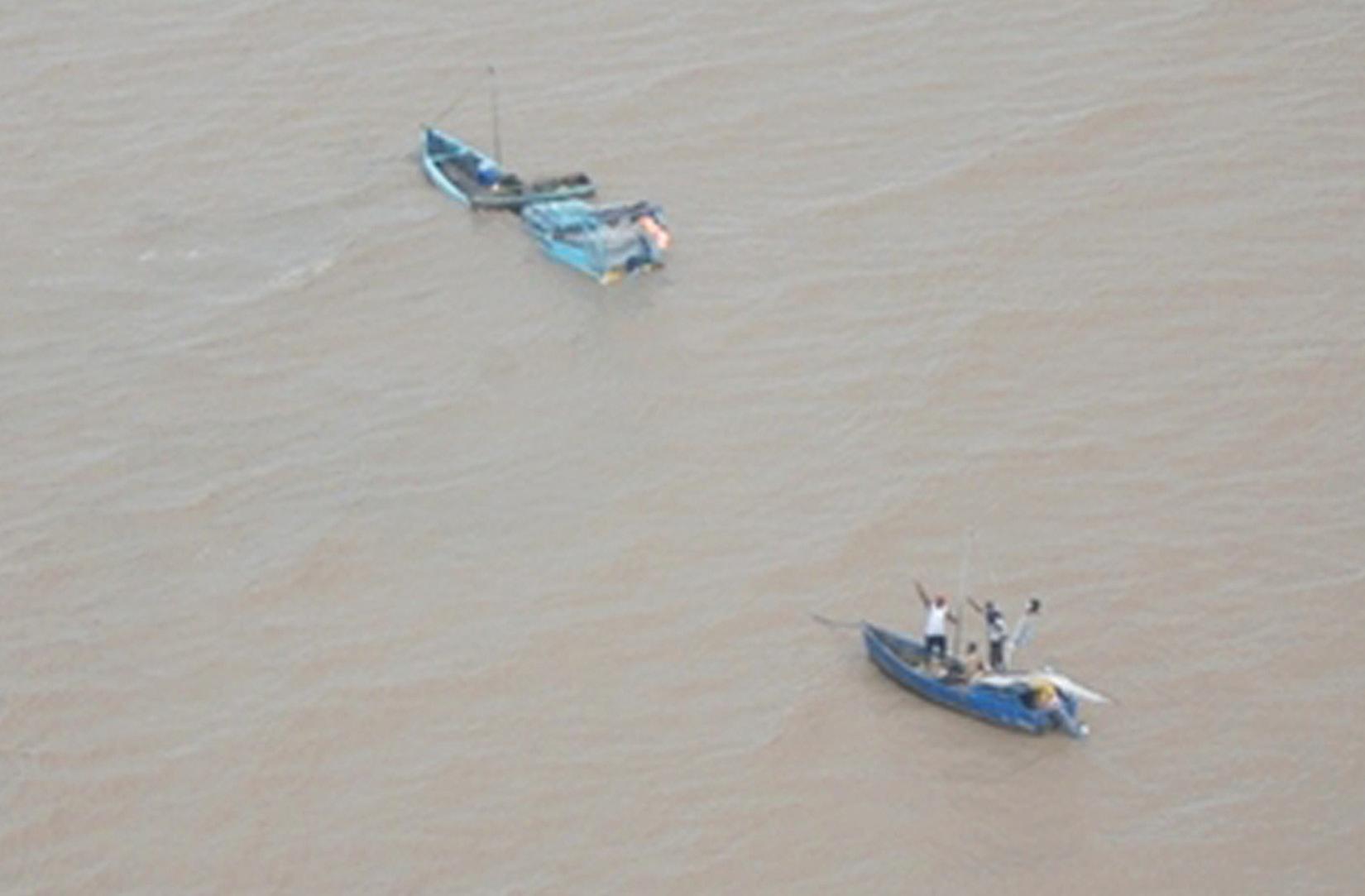
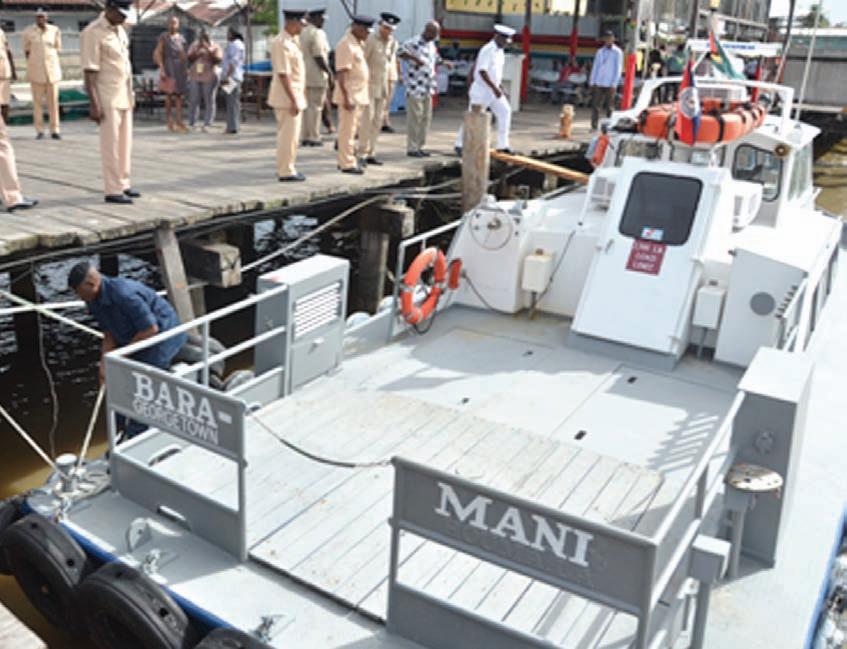
Piracy has been a problem that our fisherfolk have had to deal with for decades as our artisanal fishers to earn a livelihood and bring prosperity to this nation. At the beginning of the Millennium there were several attacks reaching a peak in 2007. Over the years, high seas piracy in Guyana has graduated from routine seizure of engines and the fishermen’s catch to the use of violence and this is because pirates are moving up the value-added ladder.
This poses a major threat to state security and also the fishing industry which is big business in Guyana, both for commerce as well as increasingly for sport. Guyana’s Hijacking and Piracy Act 2008 was defined as “any illegal act of violence or detention or any act of depredation committed for private ends by any person on board, including the crew or passengers of a private vessel and directed on the rivers, internal waters or territorial sea of Guyana against another vessel, or persons or property on board such vessel.”
Such acts of piracy have occurred as the result of lax law enforcement practices especially on the Corentyne, which is totally within the jurisdiction of Suriname, where the other maritime crimes of backtracking and smuggling thrive. Another issue at hand is that many of the pirates are rogue fishermen who are familiar with the maritime environment, know the routine of their colleagues, and also are aware of the inefficiencies of our lawmen.
equip the Police Force to fulfill their mandate. He noted too that they will add capacity and better enable the Force to Police the riverine and coastal areas.
“This will go a long way in bringing relief to fishermen and other others who operate offshore and have been threatened by piracy,” Persaud stated.
The fisheries sector, which grew 15.5 per cent in recent years and employs over 15,000 people, contributes some six per cent to the nation’s Gross Domestic Product (GDP), similar to rice production.
The marine branch of the Guyana Police Force on Wednesday received five new vessels that will be used to Police the country’s waterways in order to protect fishermen and other persons who work offshore.
The five vessels were procured as part of the Force’s anti-piracy strategy, an area which is of grave concerns to authorities.
One work boat and four patrol boats were handed over to acting Police Commissioner Seelall Persaud on Wednesday at the Police Marine Wharf, Ruimveldt, Georgetown.
In brief remarks, Persaud said these vessels will better
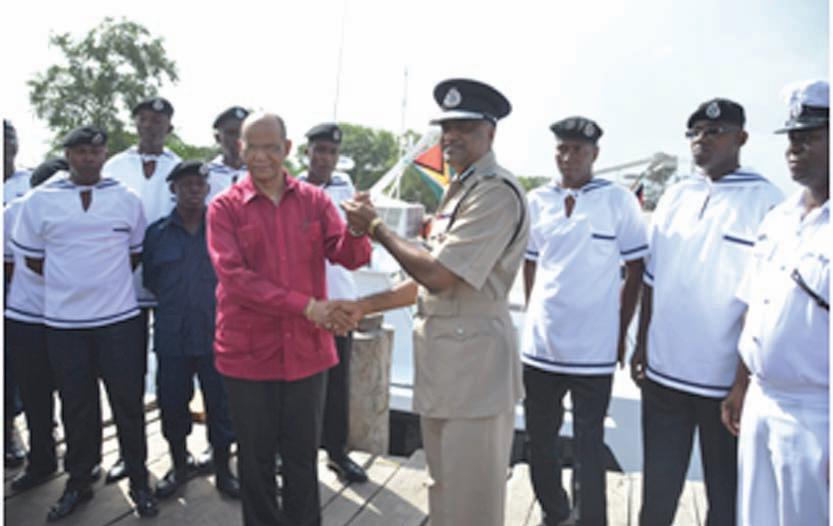
He added that it will also enhance the Police Force’s ability in joint operations with other agencies such as the Guyana Revenue Authority (GRA) and the Guyana Defence Force (GDF) Coast Guard in dealing with the smuggling of good and narcotics.
The acting Police Commissioner further remarked that the vessels have the capacity to traverse the coastland of Guyana and will be used in such patrols.
Additionally, Persaud disclosed that earlier this year, several ranks of the Police Force had undergone marine training and will be deployed to operate the vessels.
The work boat MV Baramani cost some $71.9 million and was procured by US company Sun Missionary Company while the four other patrol boats cost $76.8 million and were acquired from Houston Industrial Services Limited.
According to Home Affairs Minister Clement Rohee, Government has made this investment to fight piracy and other forms of illegal activities in the country, and is looking forward to better results as far as the fight against piracy is concerned.
“These are huge sums that the Government is investing in building capacity for the Guyana Police Force to ensure it is able to conduct its lawful duty. We know that in the interior parts
of our country these are certain challenges and therefore we need to strengthen the capacity of the force in order to patrol the riverine areas,” he pointed out.
Rohee said only recently a semi-submersible vessel, believed to have been built for narcotic-trafficking purposes, was found at a creek in the Waini area, Region One. He noted that there might be other illegal activities that are undiscovered.
“One has to assume that the criminal elements used areas which they consider to be vulnerable areas that are to their advantage to carry out their various activities,” the Minister stressed.
Rohee explained that these vessels were acquired under the anti-piracy strategy which was formulated since 2012 and were budgeted for in the 2013 budget to strengthen the marine wing of the Guyana Police Force.
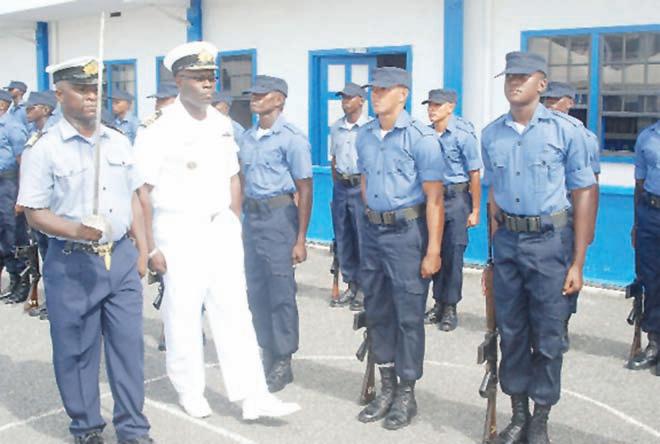
When the PPP/C government acceded to office in 1992, the Guyana Police Force was literally on its knees. Since then it has been transformed into a modern force with its Headquarters, Police Stations, Outposts, communications equipment, vehicles brought up to modern standards. While there is always room for improvement, in regards to salaries, this has been increased more than twelvefold since 1992.
The following offers a diachronic view of the improvements in some areas.
Gov’t continues to support Police Force – further $15M allocated for new vehicles
The Guyana Police Force (GPF) continues to receive support from the administration with large sums of money being allocated to the Force.
Head of the Presidential Secretariat and Cabinet Secretary Dr. Roger Luncheon at his last press briefing on November 1, announced that $15M has been approved for the procurement of vehicles to boost the mobility of the Force.
In September Cabinet also approved $24 million for the procurement of arms and ammunition and £567,995 was allocated to the Force for the procurement of uniforms and kits.
Crime fighting and improving the capability of the security forces have been high on the People’s Progressive Party/ Civic (PPP/C) Government agenda to ensure a safe environment for all Guyanese.
In 1992 the Police received $200.92M compared to $3.6B in 2007 and for its capital budget in 1992 $200,000 to purchase equipment compared to over $30M in 2007.
During to 2002-2006 a significant amount of funds were allocated to the Force to increase its effectiveness: 2002$554M; 2003-$496M; 2004$630M; 2005-$865M and 2006-$721M.
These allocations allowed for the construction and rehabilitation of Police stations, purchase of vehicles, boats, equipment, furniture, arms and ammunition. A record $9.3B has been allocated to the security and defence sectors for 2007.
In 2005, there were approximately 19 police stations refurbished and $105M in equipment purchased for communications, fingerprinting, photographs, ballistics, forensics, traffic, arms and ammunitions and horses.
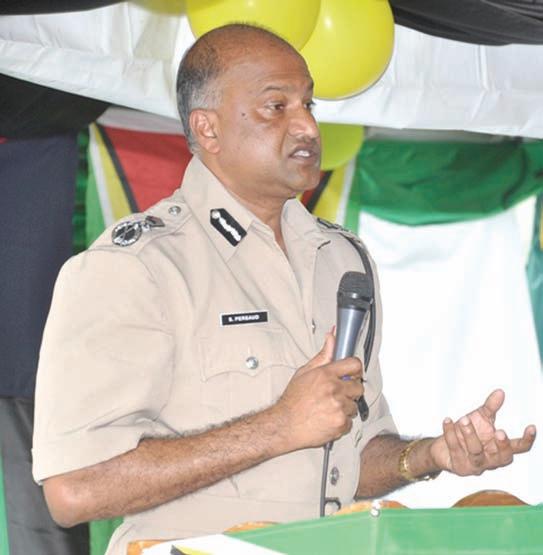
itators dealt with stress and anger management, communication with new media, motivation, and coping with change. These courses were confirmation of the effects, successes, and training impact to the ranks prior to their return to the college for these courses and enhancing capacity building with the focus of address performance gaps and the introduction of modern idea and best practices.
This program is one of force’s core courses in keeping with the statutory requirements. the recruits benefitted from lectures, oral and written presentations, field activities, drills in small arms and rages exposures.
Meanwhile Best Student award for the Conversion Course No.1/2014 went to S/Constable W.14589 Jordan, Best Student award from Recruit Course 28 ‘B’ went to Constable 22195 Trotman, Best Student, Recruit Course 315, Constable W.22213 Dougan, Best Student, Recruit Course, 316 went to, Constable 22279 Trotz. For the Probationers’ Final Training Course, the Commissioner of Police Baton went to Constable 21167 Lyken.
It is an uncontested given, that social infrastructure is the platform upon which every modern State is built. Call it the sin qua non of the latter’s existence, since it gives defined direction to the growth and development pathway, shaping citizens’ lives in the process.
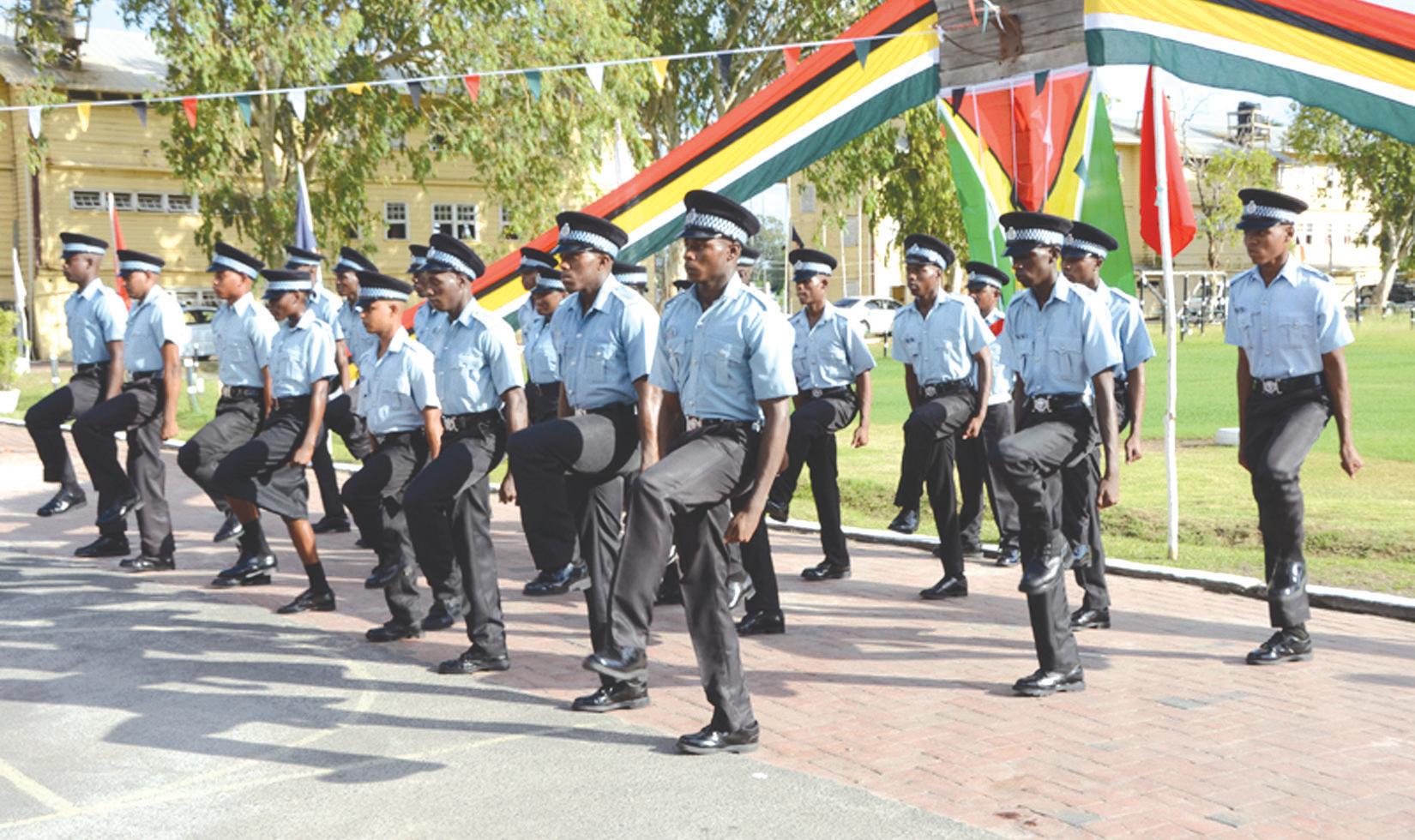
Since 2005 four modern police stations have been established. These were at Bartica, Diamond/Grove, Turkeyen/ Sophia and Fort Wellington totalling over $109M.
Recognizing the importance of improving the human resource, government has also paid keen attention to increasing the incentives for Policemen and women.
In 1992 a constable’s salary was $3,821 compared to $37,000 in 2007. In 1992 the Commissioner of Police received $15,274 to $20,857. The present scale is from $200,000 to $300,000 monthly.
Emphasis is also being placed on training. Earlier this year over 350 ranks were trained in different tactics relating to crime fighting. More training will be done later in the year.
members of the Guyana Police Force urged to serve with integrity - GINA
The Guyana police Force now has an additional workforce of 161 as they have wrapped up the, Probationers’ Final Training Course No1/2014, Recruit Courses 28 ‘B’, 315 and 316, Conversion Course No1/2014. The young men and women were honored with a passing out parade, which was held today at the Tactical Service Unit Drill Square Eve, Leary.
Commissioner of Police, Acting, Seelall Persaud who delivered the feature address to the new recruits called on them to severe with integrity and to be good role models in the communities they will each serve, “From this point onward you will be in the public eyes, every action you take will be subject to scrutiny it is just a fact of life from now on.”
He reminded the newest members of the Force that while they have made their families and friends proud on to this point, the real work and what they were taught will be put to the test in the months and years ahead, “To my left I see family and friend proud parents who have provided you with a foundation that has led you this ceremony, how you carry yourselves, and how you carry out your responsibilities reflect on your family, the police force, and the communities that you will serve and protect.”
Commissioner of Police (ag), Seelall Persaud, handing over the Commissioner’s baton to Constable 21167 Lyken who is the best student for the Probationers’ Final Training Course.
The Commissioner Ag reminded the men and women that they were taught the qualities of self-disciplines and courage, all of which will take them throughout their years in the force. He noted, “You have also learned that there is no virtue in ignorance but there is great power in knowledge, the residents of the communities that you severe therefore will expect that you protect them from those who want to do them harm”. The Commissioner Ag added that it is expected that the new ranks will be good role models to children the in communities and to make them feel safe at all times while protecting, homes, businesses and schools.
“Yes their expectation will be high and I expect you to serve them, the first line of defense for the communities that you will serve in will be you, it is fine line that you walk, it is not us against them while the public may take things personal we should not”. The Commissioner reiterated that police officers should at all times follow a path of truth, “The acquisition of the attributes mentioned, enables you to be cool, and composed under the most intense pressure and to act with strength skill and courage at all times, I urge you to seek out motivated co-workers as monitors law enforcement is a perishable skill that must be cultivate frequently congratulation thanks for commitment to service”.
The courses were conducted under the theme “Training with the focus of maximizing visions, skills, and art for enhancing leadership for a modern Guyana Police Force”.
The Probations Final Training and The Conversion Course commenced May 6th and concluded today. Both were conducted under the same module comprised of 54 lectures that addressed issues of police duties and procedures, in keeping with laws of Guyana, Force standard orders, domestic violence, and child abuse, common law principles and practices, human right and policing, community oriented policing.
Senior members of the Guyana Police Force, as well as external personnel facilitated the courses. The external facil-
It explains, therefore, the multi-billion dollars spent by the PPP/C Government in its pivotal programme of building and restoring critical infrastructure that had become obsolete, and obliterated, by the historic date of October, 1992.
Since the safety of a nation’s citizens is paramount for its advancement, its law enforcement arm has to be well equipped to ensure this most important function.
As an example, the total sum of $73.1B has been allocated to the security sector for the period 2010 – 2014. This, and prior sums since 1993, has resulted in a wholesale re-equipment to provide the Police Force with the resources to enable its ranks to better serve and protect the nation, as spelt out by its motto.
It explains why new police stations and outposts have been built in areas that were in dire need of the presence of law enforcement personnel; existing police stations refurbished; and outposts built.
These new precincts, especially, now have interviewing rooms, and specific facilities to deal with the social nightmare of domestic violence reports.
Given the organised nature of crime and for law enforcement to be abreast, the Guyana Police Force now has installed the Integrated Crime Information System. It enables police stations to process data very quickly as it relates to suspects and persons who are detained for criminal investigation.
A central feature of this continuous re-tooling of the Guyana Police Force has been its mobile capacity, as again exemplified by a recent media report of 50 new vehicles procured from the 2013 Budget allocation. This should place the number of vehicles received by the Police Force over the past decade to well over 600.
There is no doubt that more than at any other time in its history, the Guyana Police Force enjoys greater mobility in being able to get to critical areas, in addition to answering citizens’ calls for assistance. But there is a constant report from affected persons, inclusive of crime victims, that their emergency calls when answered are often met with the response of “no vehicle available”. This is indeed very surprising, given the continuous allocation of vehicles to the Force; and it was the case in Kitty a few months ago, when bandits attacked and robbed a wake house.
We do posit that each police station in Guyana should have at least two vehicles at the ready for any contingency, as would be expected. And since these vehicles have been procured at great expense to taxpayers, it is expected that these must be ready for use as designated. On many occasions, police vehicles are seen in places where they ought not to be, even involved in functions that are not part of their remit. Let it be reminded, that the element of prompt and speed is a critical essential in apprehending criminals/suspects, and this is reflected in how quickly lawmen arrive at the scene of a crime. This is what citizens expect, apart from the fact that these vehicles must be driven with due care.
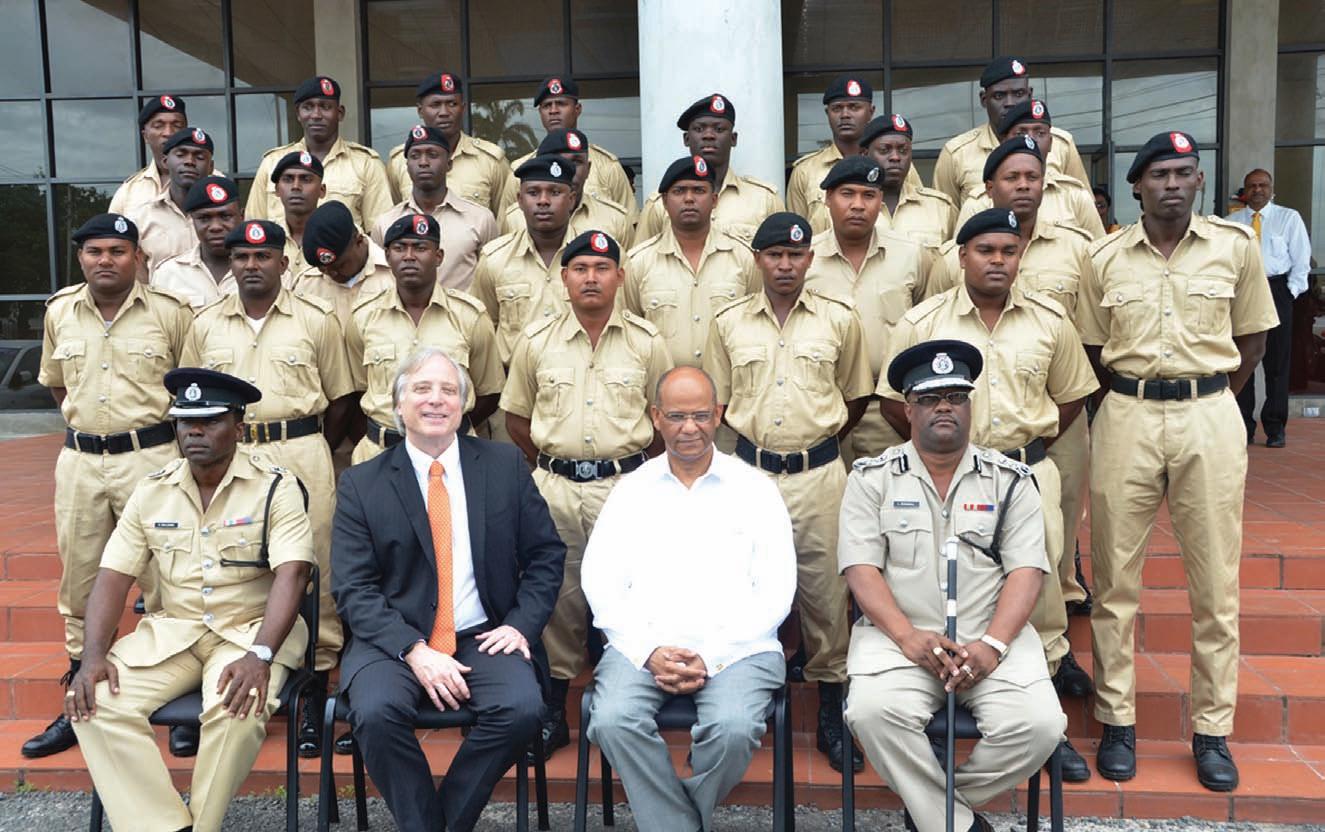
The Ministry of Home Affairs (MoHA), in collaboration with the Guyana Police Force (GPF), has launched the training programme for ranks who would be involved in the Special Weapons and Tactics (SWAT) corps of the Guyana Police Force.
This programme was launched yesterday at the Police Officers’ Training Centre at Camp and Young Streets in Kingston, Georgetown.
Minister Clement Rohee said the team was established in fulfillment of Government’s commitment to the citizens of Guyana, and is not intended to oppress or suppress members of the public, but rather to discharge its lawful responsibilities.
Rohee added that the SWAT team will not be used as a ‘political tool’, and is simply launched to fulfil certain professional responsibilities, based on the Guyana Police Force’s Standard Operation Procedures (SOPS).
He explained that there will be no political interference in the operations of this SWAT team, because the SWAT is part and parcel of the GPF, and falls under the direct command and control of Police Commissioner Leroy Brumell.
Explaining how the chain of command works, Rohee said the Home Affairs Minister gives general orders and directives, but the Police Commissioner fulfils the mandate of the Force.
Rohee said the Government of Guyana and the MoHA are not comfortable with the current crime rate, especially serious crimes committed with the use of firearms. He said the current crime rate must be brought down significantly, because the GPF is equipped to perform.
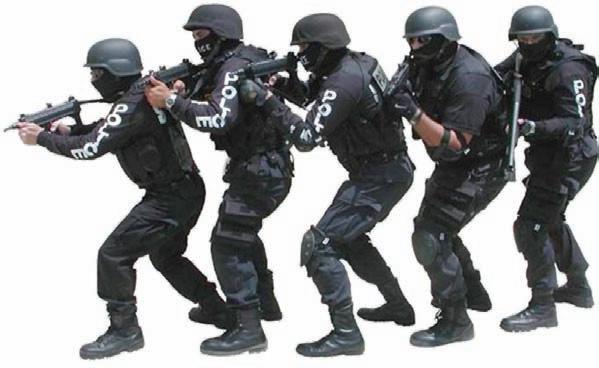
2011 manifesto.
Despite ‘talk’ surrounding the formation of this SWAT team, Rohee said, “It will prove useful for the people of Guyana, who are the ultimate beneficiaries, and its establishment was justified many moons ago”.
He said: “I am not an expert on security, and I don’t have a wealth of information on security matters…. But this [SWAT Team] is not a backward movement. The Guyana Police Force does not move backward”.
Under the theme “Training with the focus of maximising vision, skills and art for enhancing leadership for a modern GPF”, 27 ranks drawn from the GPF began official training by the contractor, The Emergence Group (TEG), to design and implement the unit.
Meanwhile, Police Commissioner Leroy Brumell remarked that there was the need to establish the SWAT team in light of sporadic situations emerging. He said that if not managed effectively, these situations can evolve into acts of terrorism, therefore the SWAT team is vital for the organisational structure of the GPF.
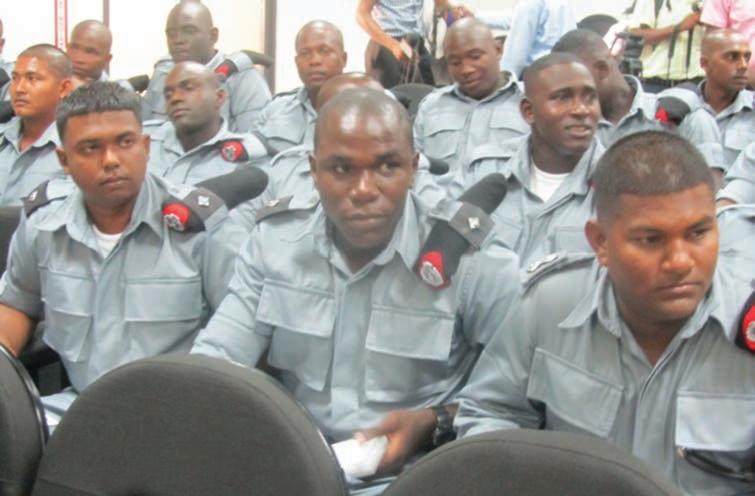
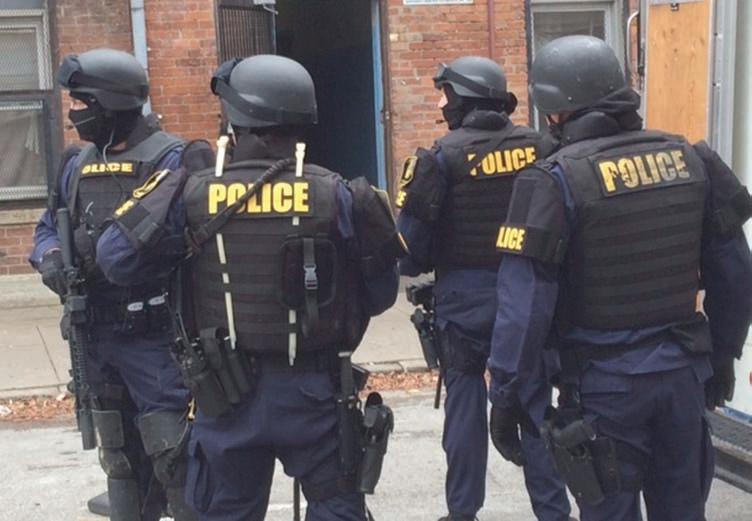
He said there must be no ‘comfort zone’ in serious crimes, since there is no crime statistics we can live with, and the GPF must adopt the “value for money” strategy by producing good results for the benefit of citizens.
Rohee noted that the MoHA has delivered the muchneeded resources to the GPF. He said that from 2004 to 2013, the MoHA has expended G$1.2B for land and water
transport and G$2B for specialised equipment for the GPF. Rohee said that despite the controversy swirling around establishment of a SWAT team, the Government went ahead with its formation, since a policy decision had been taken by the Government after committing itself in the PPP/C 2006-
He added that the SWAT is a specialised group drawn from the GPF to deal with hostage/rescue, resolving high risk situations, and suppressing acts of terrorism.
The selection process was based on several criteria set out by senior management of the GPF, which are as follows: age, health, mindset, years of service, experience, and conduct.
Brumell pointed out that the most important aspects of the unit are discipline, training and professionalism.
Speaking on behalf of TEG, Retired Ambassador Dennis Hays, who is the Director of TEG, said that when society has a dedicated, well-trained force, it can anticipate and act in situations to resolve violent situations in a professional way with the use of minimum force.
Hays noted that, through rigorous training, the team will be able to handle such situations, make quick assessment of any situation, and apply its training to achieve the desired result.
He said the SWAT team would be trained to resolve issues by employing the lowest levels of force, and the most suitable persons have been selected for the training.
Also making remarks was Permanent Secretary of MoHA, Angela Johnson, and Senior Superintendent/ Force Training Officer, Paul Williams. (Chronicle)
The Guyana Police Force (GPF) yesterday held the closing ceremony for the first phase of training for its SWAT (Special Weapons and Tactics) team at the Police Officers Training Centre, Eve Leary, Georgetown.
Minister of Home Affairs, Clement Rohee during his feature address said that in the modernisation of the GPF, the SWAT team is a major contributing factor because the unit will be filling a vacuum with its establishment.
He said further that the SWAT unit is trained to save lives as every human being has the fundamental right to life and that is the mantra of this elite team which has completed intense basic training.
The Home Affairs Minister noted that the occasion yesterday was a very historic one in light of the great expectations of the public regarding the SWAT team’s role in maintaining law and order in the interest of the public safety of taxpayers.
The minister pointed out that in Monday’s national budget presentation in Parliament by Minister of Finance Dr. Ashni Singh, a $19 billion allocation was made to the security sector and there is provision for the requisite resources for the SWAT team.
Meanwhile, in observing that the SWAT team is a component of the GPF, Rohee condemned the ongoing ‘bashing’ of
ome Affairs
HMinister Clement Rohee has made a call to opposition Leader David Granger to desist from using the security sector as a ‘political football’ stating that Granger conveniently chooses not to recognise the progress of the sector.
In a statement issued by Minister Rohee, he said Mr. Granger has obviously chosen to so do so for political reasons. Referring to a press statement issued by the Guyana Police Force, Rohee said the police recently appealed to all political parties not to use the force for political mileage.
The police’s statement also noted that the force was making every effort to improve the quality of service it provides and to gain public trust.
According to Minister Rohee, the opposition leader “likes to set himself up as the guru for the security sector in Guyana and tries to convince the nation that no one else but he has all the answers to the security situation in our country, ignoring all accomplishments and investments done since 1992 by the PPP/C Administration.”
Minister Rohee further pointed out that Mr. Granger’s PNC has never in its 28 years of misrule for the security sector, done what the PPP/C has done, “and his Security Advisor Winston Felix is very much aware of these facts.”
Minister Rohee in his statement noted that Granger continues to make erroneous comments which must be addressed so that the public can be better informed of the efforts this Government is making in the area of public safety and security.
Shedding some insight on the piracy situation, the subject Minister said it has been well established that a Guyana Police Force marine floating base was commissioned to operate collaboratively with ranks of other Law Enforcement agencies.
The Guyana Defence Force also has a similar floating base located at the mouth of the Pomeroon River.
This $49.9 million capital investment was complemented by the procurement of a boat imported from the US costing $71.4 million, in addition to four new vessels built at a cost of $4.9 million.
The PPP/C Government has consistently demonstrated its commitment to public safety and security and this is evident in capacity-building by way of training provided to the marine wing of the Force.
It was also noted that instances of piracy has dropped significantly within the past months.
Guyana’s collaborative efforts, the Minister said, with those of Suriname have contributed significantly to the reduction in instances of piracy on the Corentyne River
Further the Home Affairs Minister noted that by now Guyanese are aware that all previous strategic plans developed during Government’s engagement with local and overseas consultants have been subsumed in the current strategic plan whose implementation is being overseen by the Civilian composed Strategic Management Department.
“The Ministry of Home Affairs is awaiting resources to further engage the UK-based Capita Symonds Consultancy to implement four additional areas which are critical to building the institutional capacity of the Guyana Police Force.”
He added that it should be noted that the move by the Opposition to challenge in Court the disbursement of resources from the IDB Security Sector Loan will again stymie the implementation of plans for the achievement of the primary objective of providing comprehensive citizen security for all Guyanese.
Further it was stated that the recommendations of the Disciplined Services Commission are being implemented as recent presentations by the Guyana Police Force, the Guyana Fire Service, and the Guyana Prison Service gave status updates on the progress each agency is making towards the full realisation of those recommendations.
The Progress Report was circulated to Members of the National Assembly in June 2014.
“David Granger is entitled to his opinion, but not to his own facts in this matter. It is therefore disingenuous for him to pontificate and attempt to pronounce on any of the above issues in the manner that in which he is attempting to so do.”
The year 2014 was an exceptional one for the Force, despite some challenges faced.
* As the Government yielded to the call for increased manpower, Cabinet year approved an increase from 3410 to 4956. An increase was also approved for the Special Constabulary, from 322 to 968.
* An additional 161 ranks were added to the Traffic Department of the force and this department also welcomed its first all-female batch of newly trained traffic wardens.
* In an effort to gather and document information for analysis, with the aim of improving operational policy making, 81 data entry clerks were employed, covering divisions from ‘A’ to ‘F’ and the Customs Anti Narcotics Unit (CANU).
* Meanwhile, with Deputy Commissioner and Former Crime Chief Seelall Persaud, now being at the helm, the Force now benefits from services of a new Legal Advisor, Former Justice of Appeal, Claudette Singh.
* Further, Minister Rohee noted that as the Force’s Strategic plan continues to be implemented 2014 saw the addition of three staff members to the Strategic Management Unit and a consultant to
direct the plan and assess the successes and challenges in implementing the plan.
* Works also continued with the Cops and Faith Community Network, with interventions being made in instances, where several youths came into conflict with the law.
* Some ranks participated in a threeday, level one Community Service Chaplaincy training programme, which sought to give first time juvenile offenders a second chance at rehabilitation, without going through the process.The training was facilitated by, Dr. Jake Popejoy of the International Association of Community Service Chaplains.
* 2014 also witnessed 26 officers becoming the country’s first formalised Special Weapons and Tactics (SWAT) unit, moving the country closer towards the goal of developing a professional Police Force, capable of adapting to modern trends of crime. This new unit better positions the Force to make specialised interventions, thereby ensuring the maintenance of law and order.
* Other ranks also benefited from training programmes, both locally and overseas and in various areas, including drug trafficking, leadership, servicing of arms, anti-piracy, fingerprinting,
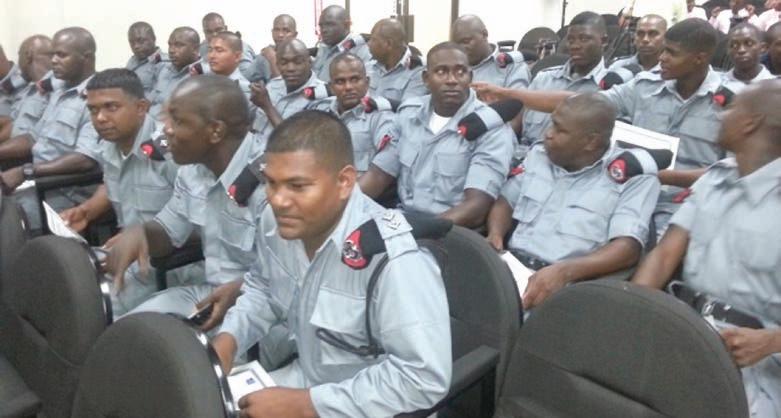
and kidnapping. Plans are underway for the Force to receive Crowd Control Training in January 2015. This training was recommended over the years and is provided for in the Strategic Plan. Notably, the Linden Commission of Inquiry had made a recommendation for the Police Force to receive this type of training.
* Overseas training was made possible through the Force and Guyana’s regional and atmospheric hemisphere relationship.
* Meanwhile, Minister Rohee said that
law enforcement by sections of the media, which he said is quite uncalled for and unwarranted although they are open to constructive criticisms.
He highlighted the government’s satisfaction with the formation of the SWAT team which is now poised to move to the next level following the successful completion of the first phase of training.
He noted also that the MOHA is in support of the SWAT team which is geared to uphold the basic human rights of every individual and without doubt they will perform creditably because their tenure is secure.
Meanwhile, lead trainer Dallas Stidd, in giving a course overview, said that the journey of the
SWAT team was not easy but the group that remained successfully completed the first phase.
Stidd explained that the group of men selected for the SWAT team received training in several areas in which they must save lives, while dominating any situation and eliminating any threat with minimal injuries and loss of lives.
The lead trainer stated that the team is now equipped with the ‘know how’ of SWAT operations and in August this year the second phase will be completed, and he thanked the men for choosing a career in law enforcement.
his ministry is satisfied that work has been done by the Strategic Management Department and others are ongoing with reform and modernisation as the focal issues. He noted that among the initiatives proposed in the short-term are a Multi-Stakeholder Forum and a Citizen Perception Survey.
“It is hoped that both of these mechanisms and others will lead to a better understanding of the perceptions, expectations and potential contributions that stakeholders can provide to the police, in fulfilling their constitutional mandate in serving and protecting out people.” (GINA)
Director of The Emergence Group (TEG) of the United States, Dan Waddington said that the SWAT training was tailored to suit the GPF which has a five-year plan for its upgrade.
Waddington stated that the SWAT team is a specialised group who have special skills and tactics to embrace any situation and they have developed the capacity to act accordingly.
Assistant Commissioner of Police (Administration) Balram Persaud and Assistant Superintendent L. Withrite also made brief remarks at the function.
(Chronicle)
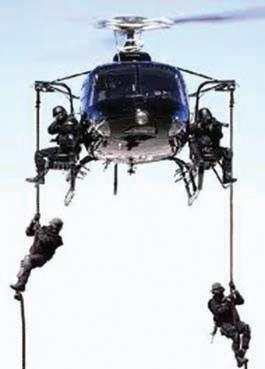
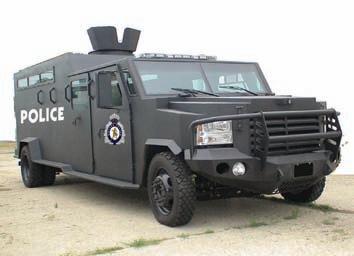
The Guyana Forensic Science Laboratory, an addition to the inventory of national institutions, was an idea crafted by the 2006-2011 Jagdeo-led People’s Progressive Party Civic (PPP/C) Administration, which today remains the most unparalleled administration in Guyana’s history.
So said Head of the Presidential Secretariat, Dr. Roger Luncheon, yesterday at formal commissioning of the laboratory, situated at the University of Guyana Complex.
He also noted that the $1.049B investment signals a landmark achievement in the country’s effort against crime and violence.
Present at the commissioning were Prime Minister Samuel Hinds, Home Affairs Minister Clement Rohee, other Cabinet members, and Inter-American Development Bank (IDB) Resident Representative Sophie Makonnen.
The laboratory is intended to enhance the investigative capacity of the local law enforcement in crime and the prosecution of offenders by providing quality scientific evidence and expert testimony.
The construction and outfitting of this facility fall under the Citizen Security Programme (CSP), which concluded on June 30, and was implemented under the Ministry of Home Affairs through a loan agreement between the Government of Guyana and the IDB.
The objective of the CSP was to enhance citizens’ security by contributing to the reduction of crime and violence. The programme also targets strengthening the capacity of the Ministry of Home Affairs and the Guyana Police Force (GPF), and also to build safer communities.
“For me, it is an occasion this evening that heralds further evidence of national building, that indeed we can gen-
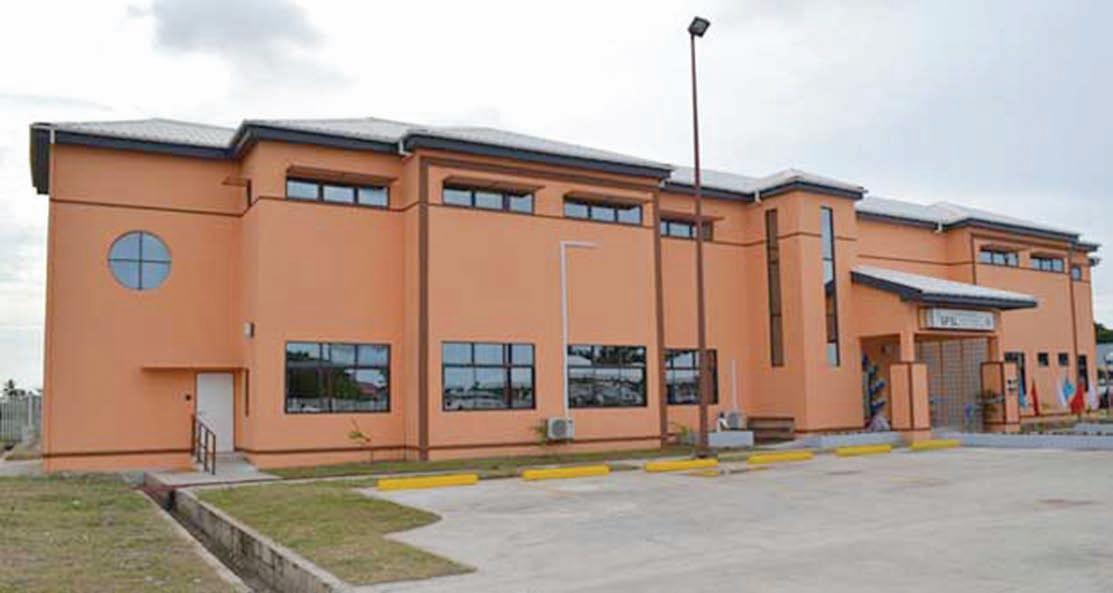
vestment to the magnitude of the Forensic Science Laboratory, in 1992 to 2006, the emphasis was on investment that pandered to restoration. “We had to build back. We had to put back in place. We had so much to do to take us to the point where we are ready to take off,” Dr. Luncheon affirmed.
“In that period 2006 to 2011, debt management, debt sustain-
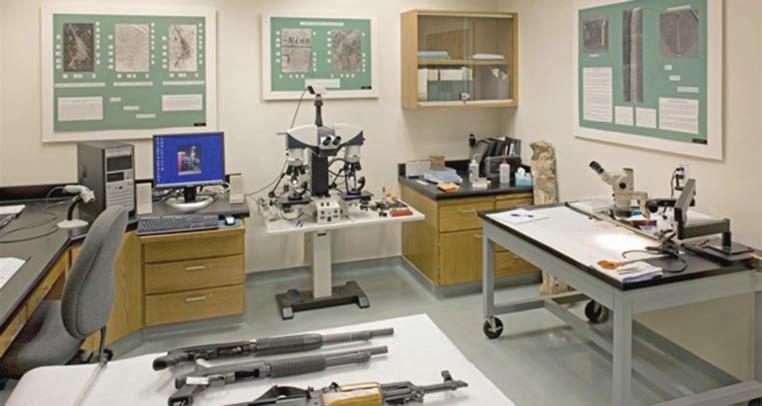
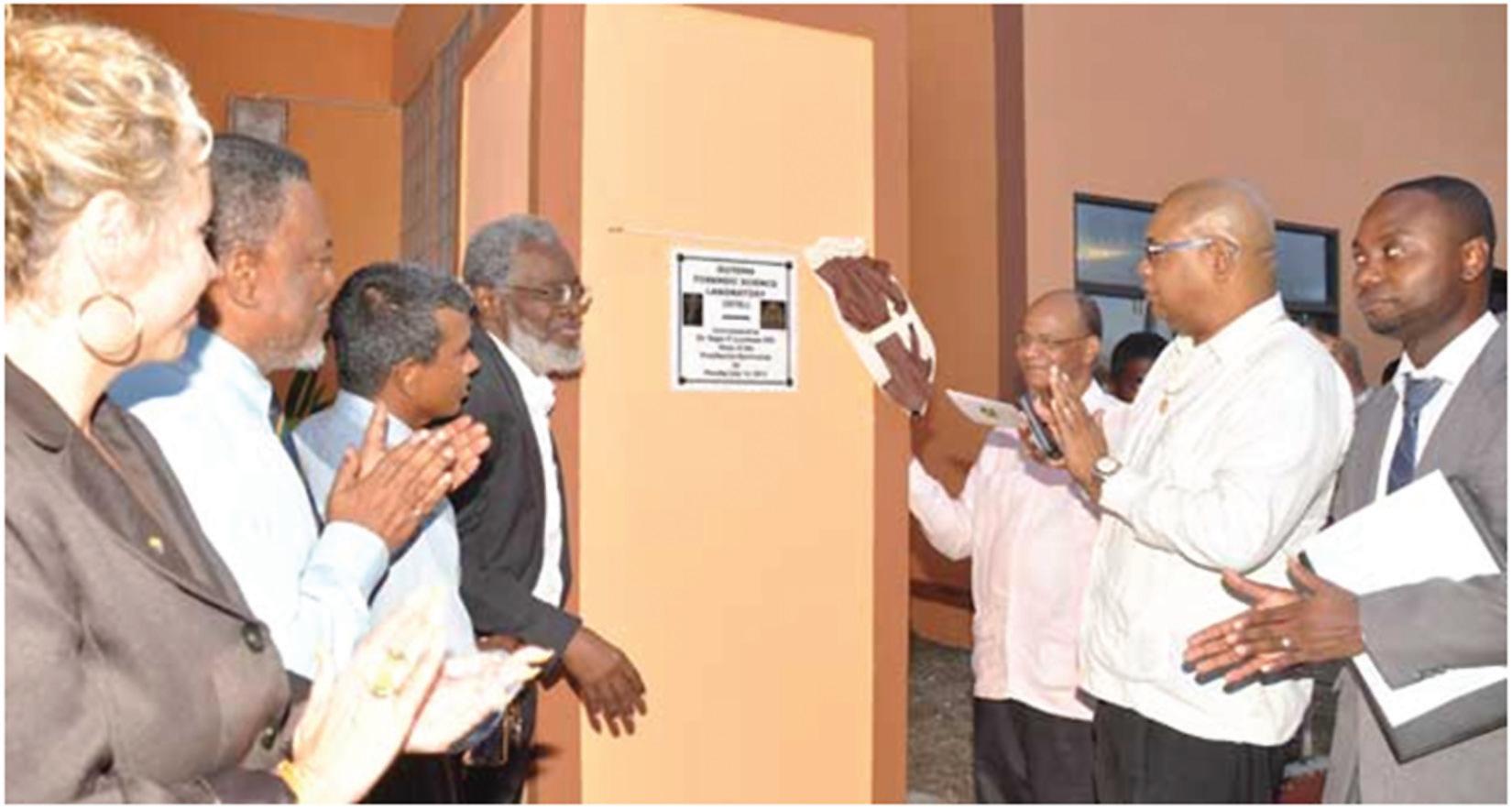
erate a convergence of interest on the local scene regionally, internationally, both bilateral and multilateral, to work in the interest of Guyana in establishing another national institution,” Dr. Luncheon said.
“…make no mistake, the Forensic Science Laboratory is an addition, and an addition whose time has come; but an addition, nonetheless, to the inventory of national institutions…and as we leave here today and we recall participating in this event, I think more than anything else is the creation of another national institution,” he said.
He highlighted that, after many years of encouragement, commitment and preparation, the country collectively would have, today, given birth to its latest of national institutions, whilst noting the context of this national creation.
Dr. Luncheon reminded that it was in the 2006-2011 period that the initiative of the lab was cultivated, whose fruition is now being witnessed.
He pointed out that the Forensic Laboratory was not the extent of the creativity and vision that flowed in the period. “That administration in 2006 to 2011 challenged the Guyanese, challenged those who supported developing countries, in transforming Guyana and transforming principally our economy,” Dr. Luncheon said.
He recalled as well the 1992 to 2006 administration, and noted that whilst today the country can speak about the in-
ability and those aspects that allowed us with the greatest amount of credibility to engage in deficit spending, to allow us to cast our horizon wider, to undertake investments that were not heard of, could not be contemplated in 1992, when we were busy and committed totally to restoration,” Dr. Luncheon said.
The Head of the Presidential Secretariat said therefore that it was no coincidence that in that period the administration was able to attend to the ‘soft investments’ that are so current and obvious today.
He said that this was the most propitious time — and with the work done prior to 2006 — to seize the opportunity offered to bring about investments such as citizens’ security and the Forensic Lab.
“It is really an index of our perseverance and consistence that we sowed the seed…and here today we are welcoming the growth of that seed; the development of the laboratory. And as we sit here, I am hoping that you join me in our anticipation that this national institution, it flowers and bear fruit that would be a testimony to all of the input that has been made by so many in giving rise to the creation of another national institution,” Dr. Luncheon stated.
The lab is also a signal of Government’s focus on a direction of science and technology in recognition that lack of emphasis on these two subjects is indeed a very awkward way
to approach development.
“They go hand in hand, and even moreso today, when technological applications fuel development in countries and regions around the world,” Dr. Luncheon said.
Minister Rohee promised that the laboratory will not be a “white elephant”. He noted that the Ministry has been taking steps in addressing this, and has been working with the Director in arriving at not only the clientele, but also towards formulating a business plan for the laboratory, in order to ensure that, at every stage of its development, it is active and “taking business”.

The laboratory is fitted with state-of-the-art equipment and highly specialised evidence recording systems that would keep track of all evidence submitted for analysis.
The lab will specialise in analysis of toxic substances, narcotic drugs, pharmaceutical drugs, alcohol, forged documents and biological fluids.
Additionally, based on a mandate given by President Donald Ramotar and the Cabinet, the Ministry of Home Affairs has been tasked with the responsibility of introducing some elements of DNA testing.

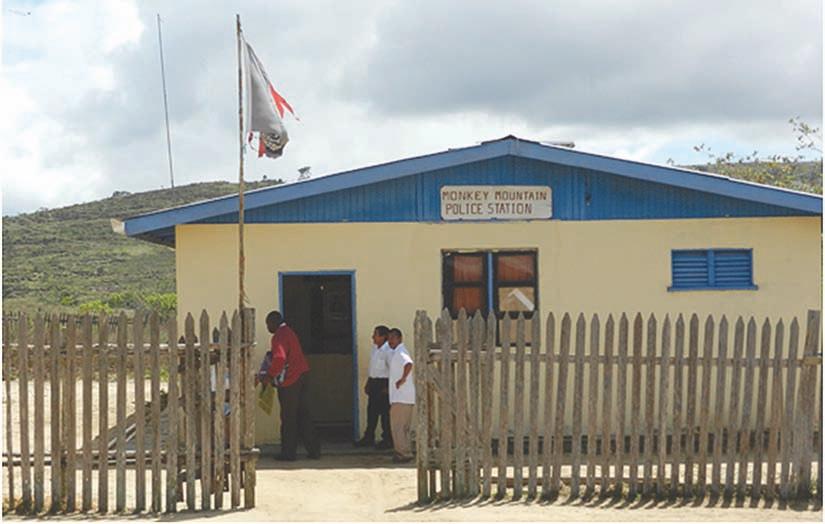
ASSISTANT Commissioner Alvin Ramnarine of the Guyana Police Force is to be the lead officer for a new programme designed to combat crime in the Hinterland.
The Force is currently preparing this programme and will soon be presenting it to key stakeholders such as the Guyana Geology and Mines Commission (GGMC), the Guyana Forestry Commission (GFC), the Guyana Gold and Diamond Miners Association (GGDMA), and other agencies with interests in the hinterland, Commissioner of Police (acting) Mr. Seelall Persaud disclosed.
He did so during a meeting with members of the association earlier this week.
The GGDMA said that the meeting held at its office was the first between the new Commissioner and its members and had proven to be very fruitful.
Among those who attended and participated in discussions were Mr. Clinton Williams – Chairman of GGMC, Commander Hicken of A Division, Commander Brutus of E Division, Commander Ramsay of F Division and Mr. Ramnarine of Police Operations.
Leading members of the GGDMA and their security personnel were in attendance.
The number of murders and robberies reported in the hinterland was a major matter of security concern which was discussed.
The problem of illegal shops in these areas was also highlighted, since members of the GGDMA knew that these shops provided a cover for illegal activities such as the selling of drugs, firearms and the promotion of prostitution.
The meeting also discussed how the Police Force could provide training for private security personnel attached to mining firms, so that they can make the environment much safer from the depredations of criminal elements.
The miners were assured by the Commissioner that these issues will be fully addressed in the anti-crime programme for the hinterland to be spearheaded by Assistant Commissioner Ramnarine.
In an effort to beef up security in the hinterland regions, especially in the mining areas, Minister of Natural Resources and the Environment, Robert Persaud yesterday handed over two All Terrain Vehicles (ATVs) and satellite phones to Commissioner of Police (ag), Seelall Persaud in the Ministry’s
Brickdam compound. Mining is the largest contributor to Guyana’s economic development and over the years, miners have been complaining about the need for enhanced security in the mining areas. And so the ministry, in collaboration with the Guyana Geology and Mines Commission (GGMC) and the Guyana Gold and Diamond Miners Association (GGDMA) are working closely with the Guyana Police Force to ensure mining areas are much safer.
During the handing over ceremony, Minister Persaud said that this event was part of the continued collaboration with the police force to ensure that residents are protected, and mining can be done in a much safer environment.
Minister Persaud spoke of the security challenges that the mining sector faces, not-

national economy and that is why we have to give it attention and priority, especially in terms of protecting people and their operations,” Minister Persaud said, while committing the ministry’s continued support to the force.
Speaking on the need for training, Minister Persaud said that the ministry will continue to support this area to ensure that the force is aware of the mining laws.
“If we are going to ensure that our national laws are adhered to, and if we are going to get the type of support from the ranks, it is also important that their knowledge as to what is expected of stakeholders is addressed,” Minister Persaud further noted.
With the establishment of close to 80 new mining stations in different areas, and the updating of the mining regulations, police presence is much more needed in order for those areas to be managed properly.
He urged the ranks to maintain the equipment and ensure that they are used for the protection of citizens.
Meanwhile, Commissioner Persaud lauded the ministry and the GGMC for providing the equipment that is much needed in order for the force to carry out its duties.
He said that the donation represents contributions to two of the major challenges in
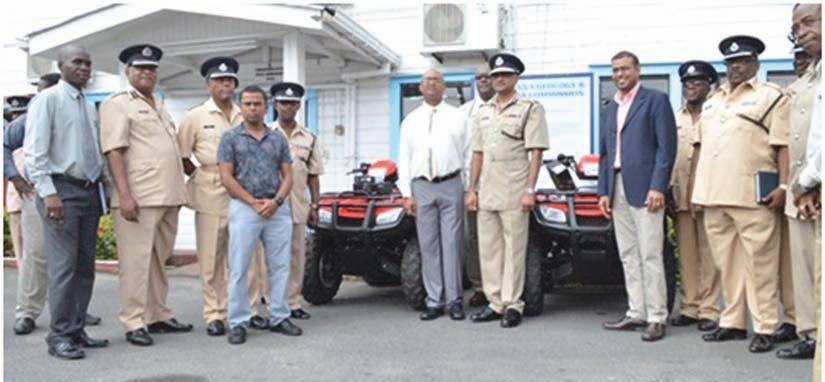
ing that just recently this issue was highlighted by the miners themselves who called for heightened seriousness being given to the security threats facing the hinterland.
“Our vast interior lends itself to a number of opportunities and challenges, one of those being how do we police, how do we ensure the safety of operations, businesses and individuals in the hinterland,” Minister Persaud emphasised.
He noted that the mining sector and the relevant agencies are prepared to work very closely with the security forces in this regard.
“The mining sector is very critical to our
policing the interior, and it also enhances collaboration among the force, the ministry, GGMC and GGDMA, and other stakeholders.
Persaud said that the approach to security within the interior has to be an integrated one, and the force has been facilitating the necessary training and providing the necessary equipment.
He believes that this effort will enhance inter-agency monitoring and enforcement efforts in the various mining districts to boost crime fighting.
(Chronicle)
Police to decentralise issuance of passports -certain conditions apply Alves assures integrity of documents would be maintained
The Guyana Police Force has taken a decision to decentralise the issuance of passports with effect from Wednesday, October 01, 2014.A police press release to the media on Saturday said that applicants of new and renewed passports can uplift those at various police stations around the country. The police also stated that, with this move, persons would not have to travel to the Central Immigration Office in Georgetown to access this service, as presently obtains, therefore, the Central Immigration Office would no longer be encumbered by persons travelling from all the extremities of the country to uplift those documents.
The police press release detailed that passports would now be issued at the following police stations: Central Police Station in New Amsterdam; the Mackenzie Police Station in Region 10; the Parika Police Station on the East Bank of the Essequibo; Bartica Police Station in Bartica, Region 7; Anna Regina Immigration Office on the Essequibo Coast in Region 2; and the Lethem Immigration Office at the Multi-purpose Building Complex in Region 9.
Additionally, passports would continue to be issued at the Central Immigration Office in Georgetown.
Persons are advised that the service offered at the listed locations is restricted to uplifting passports, and not submitting application forms. They are further advised that when visiting the Central Immigration Office to apply for a new or renewed passport, they must state if they would like to pick up their passports at any of the locations, or return to the city to uplift the document.
It is important to note, the police have said, that for passports sent to Lethem, those would remain at the location for three months, and if not uplifted within that period, would be returned to the Central Office in Georgetown. For the other locations, the passports would remain there for two months, and should there be a failure on the part of the applicants to uplift same, then those would also return to the city.
All the rules which apply at the Central Immigration Office with respect to the uplifting of passports will apply at the decentralised locations.
Contacted yesterday afternoon, Deputy Chief Immigration Officer, Senior Superintendent Dale Alves, told the Guyana Chronicle that the integrity of the passports is assured. He said the passports would be the direct responsibility of the commander of the division or the officer in charge of the police station. He added that the passports would be checked daily to ensure that they are all accounted for.
Alves also related that the move was to ease the travelling to the city by those persons living outside of Region 4. He commented that, outside of Georgetown, the largest number of applicants comes from Berbice. (Chronicle)
Minister Rohee noted that the Ministry is at present engaged with the IDB in order to see how best to introduce this function.
He also paid special recognition to the University of Guyana for providing “neutral grounds” for construction of the laboratory. In return, the university has been allocated a special area in the laboratory to conduct training for its students who are pursuing studies in forensics.
IDB Resident Representative Makonnen noted that this was the first forensic laboratory in the Caribbean that the bank has supported. She noted that the capacity and equipment being installed could poten-
tially be utilised by neighbouring countries, which currently access such services through foreign providers.
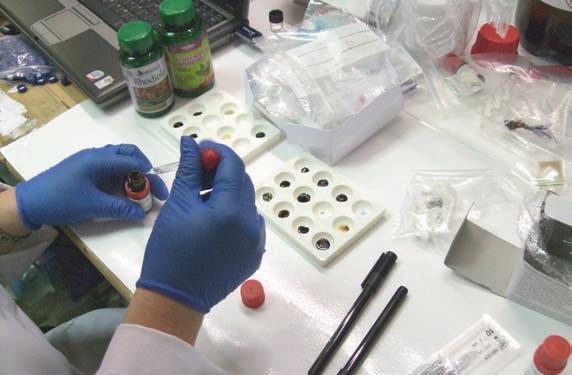
She noted that the IDB is proud to be involved in the project, which should ensure an added capacity to investigate and bring cases, thereby adding enforcement to the rule of law, and successively the capacity of the judiciary to prosecute criminals in the country.
She noted that for IDB, citizen security has always been a priority.
This complement of a main building comprises two floors totaling 12,000 square feet. The ground floor houses the administrative offices, library and research area, conference
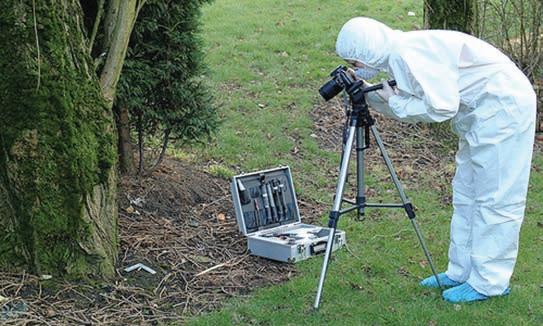
room, security monitoring, evidence submission and wash room.
The first floor has
Close to six hundred women drawn from every section of the Guyana Police Force (GPF) gathered on Sunday at the Police Officers Mess Hall for the Second Anniversary Church Service of the Guyana Association of Women Police (GAWP).
GAWP was formed two years ago, and functions under the theme “Empowering women during and beyond the 21st Century”.
The women were joined in the celebration by Permanent Secretary of the Ministry of Home Affairs, Ms Angela Johnson; retired Assistant Commissioner of Police, Ms Carol Primo; Assistant Commissioner of Police, Ms Clair Jarvis; Police Commissioner Seelall Persaud, and all divisional commanders.
The gathering was led through worship and praise by groups and individuals from various sections of the Guyana Police Force in the “all women” ceremony. There were scripture readings, the prayer of the association, songs, dance, hymn singing, and the scripture reading, all of which were led and coordinated by females of the Guyana Police Force of various ranks.
The message was delivered by Corporal Calder, who kept the gathering cheering and acknowledging the Name of the Lord as she touched on points which seemed to relate to women within the Force.
Women police hold health outreach – ahead of International Women’s Day, March 7, 2015
Senior Superintendent Maxine Graham of the Guyana Police Force and head of the Association of Women Police led a team of dynamic female police officers on a medical outreach on the West Bank of Demerara ahead of International Women’s Day.
Speaking with the Chronicle at the event yesterday, Graham explained that the initiative was planned in two parts. She first stated that the drive was to bring medical services to persons in their hometown rather than them having to travel to hospitals and health centres.
In addition, the move was also to complement the approach of Commissioner of Police Seelall Persaud with his new approach of engaging members of communities across the country on soft projects and collaborations.
Among the partners of Saturday’s medical outreach according to the senior police officer were the Ministry of Health, the Guyana Responsible Parenthood Association, The Blood Bank, Dental School, Eye Care, Vector Control Unit, Foot Clinic, the Guyana Defence Force, and other organisations and departments of the Ministry of Health.
The police, prior to their appearance in the community, did some groundwork by visiting the homes and communities of persons, encouraging them to come out to the facility to access the various medical services. Immediately after the opening of the various services, the area was packed with persons seeking medical attention before the place became less crowded with persons who were just waiting on specific medical attention.
The police also made a note of the number of persons who visited and received medical services by the various medical treatment tents.
In his address, Divisional Commander Marlon Chapman said the move by the police association was a very much appreciated, and is one which has sought to ease the strain on many persons seeking medical attention of various sorts. He said the police will continue to engage members of the public in many different ways in keeping with its new approach to policing and police public partnership. (chronicle)
Police ranks urged to be good ambassadors
Acting Police Com-missioner Leroy Brumell on Friday charged a group of policemen and women to be good ambassadors and to act professionally in their communities, saying if they do so, they will get respect.
Brumell was at the time speaking at the passing out parade on Friday at the Tactical Services Unit Square, Eve Leary, where 131 constables graduated. The ranks were
from the probationer’s Final Training Course No 1 and 2/2013, Recruit Courses 308 and 309 and Immigration Course No 1/2013. Brumell told the graduands that they are now ambassadors of the Guyana Police Force (GPF). He noted that emphasis has been placed on training in the GPF, with some $200 million budgeted for that sector; however, the force did not get the entire amount, so it will have to prioritise training.
The commissioner noted that GPF ranks are trained both locally and overseas. Currently, there are two groups of police officers in Trinidad, one set in Russia and one set in Korea undergoing training.
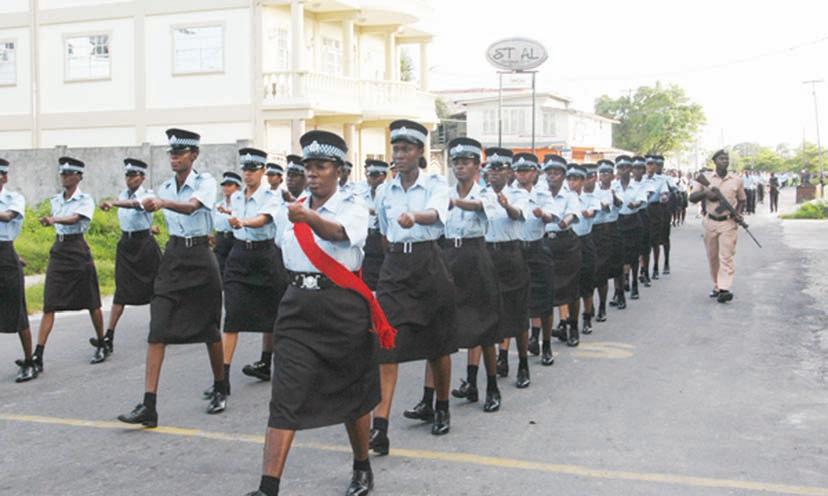
public and senior officers to be supportive of the graduating ranks and to help them in their journey.
He told the ranks from the final training course that after two years, they are being given the final tools to go return to their communities to perform their duties. The police chief added: “We expect that when you go to your respective villages, your supervisors will see changes in you, changes which you acquire while you were in training.”
“You need to look at yourself as ambassadors in this noble organisation, which is indispensable and we don’t ‘streak’, we have to maintain law and order and that is what we do,” the commissioner said. He urged the officers to develop themselves no matter the odds against them.
Do not fall among thorns
Brumell then told the immigration ranks not to “let our hands fall, because we expect that you portray the warmth of this country, we expect you to deal in a courteous manner with persons coming in”.
“I expect you to go out there and not fall among any thorns, be responsible, and maintain law and order, and we expect when you go out there, you do your utmost or your best not your utmost best.”
“We are asking our supervisors, sub-division officers, and the public at large to continue to give the force administration that support in ensuring that the training given are sustained and exercised purposefully and where… performance gaps are identified, don’t only criticise, give us workable solutions, so we can continue to modernise the Guyana Police Force to serve our country.”

The programme began with a parade march, followed by an inspection. The course reports were done by Senior Superintendent Paul Williams, force training officer, who disclosed that each rank was evaluated based on their attendance, presentation, conduct, and attitude inside and outside of the force. Based on the evaluation, the top performers were selected from each course.
Woman Constable Wilson was the recipient of the Commissioner of Police Baton of Honour. From the Recruit
Women serving in the Guyana Defence Force (GDF) have been lauded for the backbreaking work they have done in shaping the course of the military institution. For 47 years they have endured severe hardships and discontentment, faithfully serving in areas that are dominated by their male counterparts.
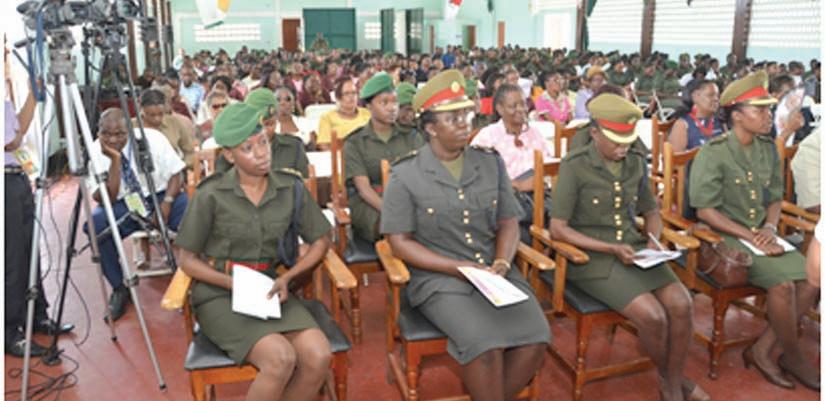
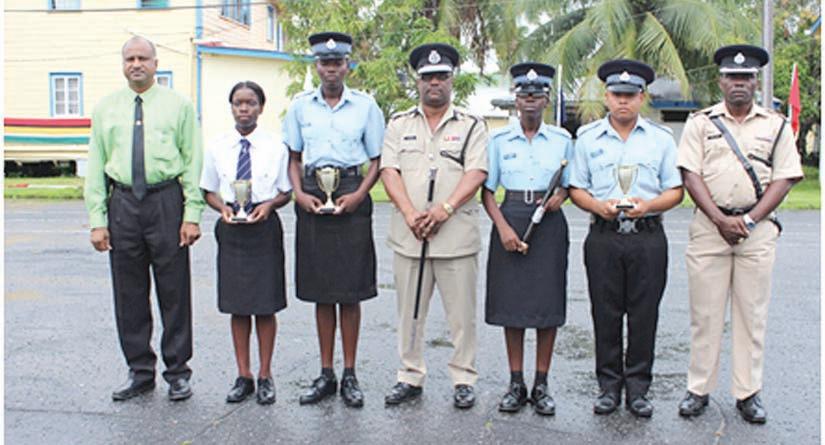
Course 308, Constable Vanhersel was the best student, Constable Barkoye was the Best Classroom Student, and Constable Mc Clintock was the most improved student.
Then from Recruit Course 309, the best student was Constable Bovell, the Best Classroom Student was Constable Munesh, and the Most Improved Student was Constable Burgess. The best student and the Best Classroom Student from the immigration course were Constable Armstrong and Constable Stewart respectively. Williams urged the
On Tuesday, the force’s auditorium at Base Camp Ayanganna was filled to capacity when officers and special invitees witnessed a packed programme of praise and thanksgiving. The women were spectacular in their performances, celebrating their achievements in what was described as one of the country’s most respected disciplined forces.
Deputy Chief-of-Staff Colonel Kemraj Persaud, delivering the feature address on behalf of army chief, Brigadier Mark Phillips, said women, since they first became part of the force in 1967, have performed exceptionally, proudly wearing their uniforms at every forum. He noted that the corps has gracefully progressed over the years.
“The women’s army corps has indeed come a long way. I do not believe that anyone would doubt their value and significance to the country as a whole and I have every confidence that we, together as a force, would embrace the changes that are so necessary for our continued development”.
He posited that the force’s many policies are very much accommodating to today’s environment. Colonel Persaud urged the women corps to do some introspection on their respective roles, pointing out that it will be prudent and appropriate for them to ascertain what kind of “women army corps they wish to build”.
“The need for the leader of this body of women to take a strategic look far beyond, into the future and have a vision, recognising where you are, where you want to go and what are the means to get you there, are more relevant than ever before,” he declared.
By Vahnu Manikchand
Commander-in-Chief of the Armed Forces, President Donald Ramotar on Thursday called on Police to reopen the mountain of “cold cases” (unsolved crimes) as part of a plan he proposed to improve policing in Guyana and also slammed the Force for having the worst response time to crime in the Caribbean.
The President’s call comes in wake of the steep increases in murder and the alarmingly high rates of unsolved crimes here.
Ramotar made the remarks while delivering the feature address at the opening ceremony of the Police Officers’ Conference held at the Police Mess Annex, Eve Leary. President Ramotar proposed what he calls the “15 in 2015 Programme”, which he said will help to restore confidence in the country’s Police Force.
One of the measures the President is asking to be implemented is the reopening of cold cases and unsolved crimes in order to improve the clear-up rates in homicide, shootings, robberies, larceny and sexual offences. “If criminals don’t think that they will be caught, they will continue to commit crimes,” he pointed out.
Ramotar also called for a review of the 911 response system to make it a rapid response system. “Too often we have heard about the length of time or the fact that people don’t answer the 911 calls, this must stop. Our response time is the worst among Caribbean nations. The short the police travel time from notification to arrival at the crime scene, the more likely it is that police can arrest offenders before they flee,” he stated.
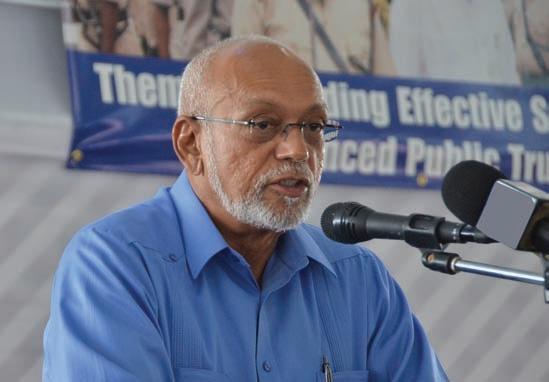
ing a presence at schools to reduce school violence and the influence of criminals in schools. “Establish drugs and weapons free zones. If a person is caught with drugs or weapons near a school, they must be dealt with condignly in accordance with our laws,” he expressed. Additionally, he called for programmes to be established to curb noise nuisance as well as expanding intelligence to target gangs, traffic syndicates and crime hotspots. “This ’15 for 2015’ Programme is the next step in the journey to bring great security, safety and stability to Guyana and I am committed to seeing that it becomes a reality,” he stated.

Another proposal is the establishment of a Neighbourhood Watch Programme, which he said will increase surveillance by residents and community members and also encourage the introduction of a problem-oriented policing (POP) approach in addressing crime by responding to problems, not only incidents in communities. Increase in the number of police officers in the streets and communities; and increased patrol policing are other areas he said the Force should address.
Ramotar also noted that the police should focus on hav-
On the other hand, in his address to the Conference, the President reminded the newly confirmed Commissioner of Police Seelall Persaud of the tremendous responsibility he is tasked with and the need to meet the expectations of the citizens. Ramotar pointed out that he envisions a Police Force that not only meet the needs of the country but also set an example for other countries to follow. “It is time for Guyana to stop wishing to be like other countries and to create a country that others would want to emulate,” he stated.
The President explained that the effectiveness of the Police Force is not measured by the number of arrests made but on the lack of crime. He mentioned the recent findings of the Latin American Public Opinion Project (LAPOP) which
found that Guyana has the lowest level of trust in the Police than anywhere else in the region.
According to the President, while persons may have their respective views on the methodology and analysis used for the survey, it does not take away from the fact that the findings have been published and disseminated widely as such an objective approach is needed to address the issues raised by LAPOP.
The survey found that between 2012 and 2014, the public’s trust in the Guyana Police Force has decreased by 10 points on a zero to a hundred scale, that is, from 45.8 in 2012 to 35.4 in 2014. This, according to the President, is worrying and should not be acceptable.
“During your deliberations at this conference, I expect that you will discuss the perceived decrease in trust, what may have fuel such views and what can be done to turn this decrease in trust to an increase in confidence by the citizens into the Police Force,” he stated.
Ramotar told the ranks that in order for them to carry out effective policing, then they must have the desire to do the job; the desire to protect their friends and families. He further charged the senior ranks to ensure the welfare of the junior ranks is protected and that they are well equipped. The President noted that Government will continue its financial contributions to the Police Force which has been complemented by collaboration with external agencies to address transnational crimes and criminal synergies.
The President also highlighted major projects such as the Forensic Lab, Police floating bases, the Special Weapons And Tactics (SWAT) team and even the increase in capacity that the Force has been given, noting that these are some of the mechanisms that have been put in place to build a well equipped and responsive Police Force.
On another note, President Ramotar noted that there is no place for corruption in the Guyana Police Force and charge the officers to adopt a no-tolerance approach as it relates to police corruption.
“A Police Officer cannot be a walking contradiction. On one hand pretending to be a paragon of virtue but on the other, clandestinely filling their pockets.
“I am optimistic that those here can address this problem but make no mistakes, if you fail to perform your duties and failure to honour the oath you took to protect to serve the Guyanese people then I would do what I have to do to ensure that the Guyana people have proper service by the Guyana Police Force,” he stated.
In 2000, after PNC inspired street protests and riots precipitated wide-scale changes in the Guyana Constitution, the following was inserted as Art 197A (5): Disciplined forces commissions may be constituted by the National Assembly from time to time, as may be necessary, with power to examine the structure and composition of the disciplined forces and make recommendations generally with a view to promoting their greater efficiency, and giving effect to the need in the public interest that the composition of the disciplined forces take account of the ethnic constituents of the population.
The Disciplined Forces Commission (DFC), which was sworn in on June 30th, 2003, comprised Justice Ian Chang, attorney Anil Nandlall, former GDF Brigadier David Granger, current Attorney General Charles Ramson and Irish human rights activist Maggie Bierne. Bierne resigned subsequently and was replaced by Dr Harold Lutchman.
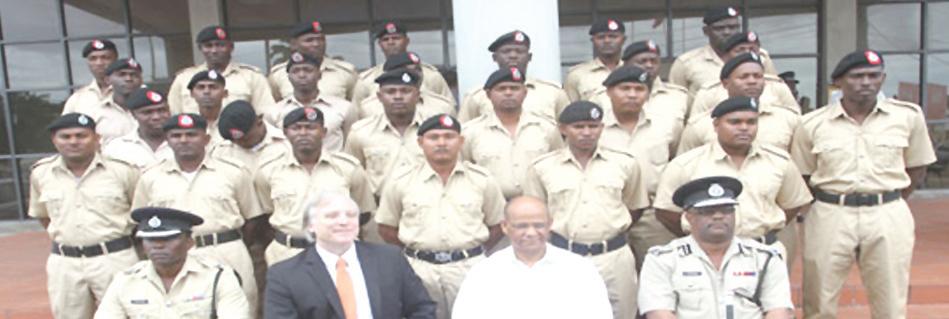
After holding hearings in various parts of the country and taking hundreds of submissions, the commission’s final report was presented to the Speaker of the National Assembly on May 6, 2004.
The report, comprising of some 164 recommendations, 71 of which were directed at the Guyana Police Force, was then laid before the National Assembly on May 17 and was ac-
cepted unanimously. A select committee was then established on November 4, 2004, with a mandate to report to the National Assembly in four months. But it was not until almost six years later that the report was finally unanimously passed by the National Assembly on June 10th 2010.
On the matter of ethnic representativeness, the DFC declared: “The Commission…is of the view that the allaying of ethnic security fears which stem from the predominance of Afro-Guyanese presence in the GPF must be addressed…but to ensure, in so doing, that no similar insecurity fears are caused in the Afro-Guyanese community.”
More specifically, it recommended: “It should be an aim (of the GPF) to achieve a Force representative of the ethnic diversity of the nation without employing a quota system.”
The report also suggested that a study be conducted on how to address the ethnic make-up imperative.