



On 5 May 1812, when Essequibo, Berbice and Demerara were united under the British, the town, named Stabroek under Dutch rule, was renamed Georgetown in honour of English monarch George IV.
Constructed from the quagmire of the low coastline that threatened or brought regular flooding, the city landscape would be built to become what was then considered, according to historian James Rodway’s “Handbook of British Guiana”, the “handsomest city in the West Indies”.
Georgetown’s wards and streets were usually given names in honour of historic persons of the time as well as names of geographic areas in the country. Most often, wards were named after its owners, who were usual-
named after historic figures.
Waterloo Street was named after Admiral Wellington's great battle and victory at Waterloo against the French forces on 18 June 1815, and Carmichael Street was named in honour of General Hugh Lyle Carmichael who served as governor of the colony from 1812–13.
The reservoir in Main Street was filled up and converted into a walkway in 1897, and named the Queen Victoria Promenade by the Mayor and Town Council in honour of Her Majesty's Diamond Jubilee (this area is now known as Main Street Avenue).
Thomas Street derived its name from its location as the main road to Plantation Thomas, while East Street received its name because of its easterly location in the ward. Cummings Street
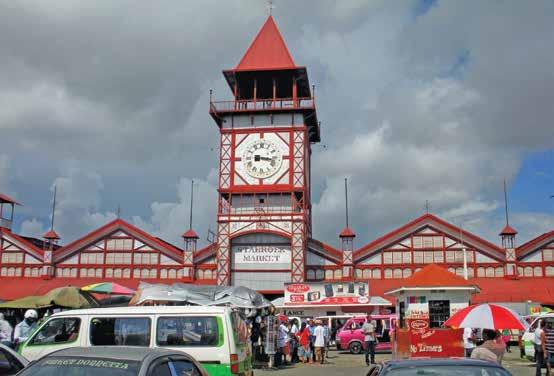
market; and Church Street, as it was the primary route used by citizens for access to St Georges Church.
This naming system remains today: Quamina Street (formerly Murray Street, named in honour of Major General John Murray) was renamed in honour of a slave who has become one of Guyana's national heroes.
When the British captured the colony, the estate of Eve Leary, a widow who had inherited it from her late husband Cornelius Leary, became a garrison for British soldiers.
The names of streets such as Parade Street, Barrack Street and Fort Street reflect this military heritage, while Duke Street was so named in honour of
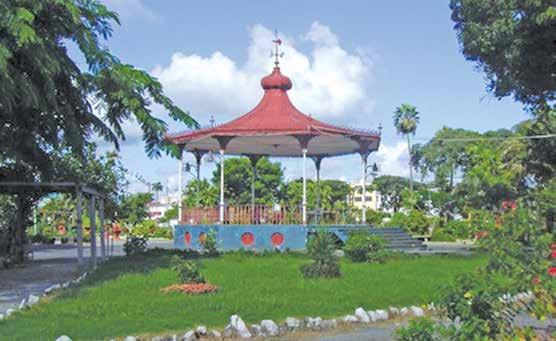
ly plantation owners.
Cummingsburg
Cummingsburg, a ward of the city once known as Plantation La Bourgade Cummingsburg, was named after its owner Thomas Cumming, a Scotsman. The ward contains streets also
was formerly known as the back dam (Cummingsburg Backdam) of Plantation La Bourgade.
Middle Street also derives its name from being the middle dam of Plantation La Bourgade. New Market Street received its name as it led to the new
one of the royal dukes, son of King George II.
Some claim that Kingston was named in honour of Lieutenant Robert Kingston who constructed Fort St. George, and others claim it was named after King George.
Robbstown was uniquely named, not after its owner, who was Joseph Bourda, but its designer, John Robb, who arranged the building lots and landscape.
Robb Street is named after John Robb and Hinks Street is named after former governor (1862-1868) Sir Francis Hinks, who was also finance minister to Canada.
This ward of Georgetown was named after Queen Victoria and was purchased in 1887 by the town council from a planter named Quintin Hogg, to protect the city from unsanitary pigpens and prevent the erection of poorly constructed buildings by its proprietor.
In the jubilee year of Queen Victoria, the town council announced the streets to be named after the Queen’s children. But this decision was not favourably received by the inhabit-


ants of the ward.
Subsequently, Laluni and Anira Streets were named after tributaries of the Lama River, also a tributary of the Mahaica River. Peter Rose Street bears the name of a former member of the Court of Policy. Forshaw Street was named after former city mayor George Anderson Forshaw. Almond Street was named after an almond tree, and Crown Street was named in honour of the crown.
The Stabroek area or ward of Georgetown is one of the oldest of the city, established by the French in 1782 before being renamed by the Dutch after Nicholas Gleevinck, Lord of Stabroek, who was also the1784 president of the Dutch West India Company.
Several of the short streets running north to south of Stabroek were known by numbers before they were named by the Mayor and Town Council in 1901.
Croal Street, named after John Croal, a former Mayor of Georgetown, was also known as Red Dam because of its surface covering of red earth. Hadfield Street was named after Joseph Hadfield, an architect and former Crown Surveyor of British Guiana.
Magnet Place was named after Dr Etienne Magnet, the director of medical services and a former surgeon general, and Sendall Place
was named after Sir Walter Joseph Sendall GCMG, a former governor (1898 -1901) of the colony.
Pollard Place was named after the Honourable W B Pollard, a former auditor general and Vlissingen commissioner, while Boyle Place was named after Sir Cadenish Boyle KCME., a government secretary and acting governor (1894-1900) of the city.
Austin Place was named after Charles Austin, the son of Bishop Austin and receiver general and Vlissingen commissioner. Brummell Place was named after John Brummell, Sheriff of Demerara, Police Magistrate of Georgetown and the first chairperson of the Botanic Gardens.
Chalmers Place was named after a crown surveyor who died in 1877. Winter Place was named in memory of F A R Winter, a wellknown merchant and the founder of Hand in Hand Insurance Company.
Brickdam, the main street of this ward of the city, was paved with bricks and made of burnt earth until 1921 when it was paved over for the arrival of the Prince of Wales (King Edward VII).
Following custom, the Bourda ward of the city derives its name from Joseph Bourda who purchased the area, which later became his estate.
Charlotte Street was named in honour of Queen
Charlotte, the wife of King George III. Bourda Street was named after its founder Joseph Bourda. South Road was commonly known as Love Lane; it was a footpath named in accordance with its geographical position as the southernmost street in this ward. Oronoque Street and Orange Walk derive their names from dams that were planted with oronoque and orange trees.
Lacytown---SUBHEAD According to Rodway in “The Story of Georgetown”, Lacytown was named after George Lacy, who had purchased the land from a representative of the Vlissengen estate of Joseph Bourda. However, another source suggests that writer L B Hill claims it was named after General Sir De Lacy Evans, a Crimean war hero.
Rodway states the land was divided into five principal streets named Bourda, Kitty, Mary, Betsy and Joseph, after Joseph Bourda and his children. Mary Street became King Street and Kitty was renamed Wellington Street, according to Rodway.
Alexander Street was named to commemorate the Czar of Russia Alexander I. Wellington Street was named after the Duke of Wellington and King Street was named in honour of King George III.
Regent Street was the middle dam of the plantation from which the five cross streets branched off. (National Trust of Guyana)
Piaiman is the name ascribed to the Amerindian shaman or “priestdoctor” of a village. According to “An Inquiry into the Animism and FolkLore of the Guiana Indians” (1908-1909) by Walter E Roth, “The Creole term for the priest-doctor is piai-man, a hybrid that seems to have been first recorded by Waterton in the form of pee-ay -man, who is an enchanter; he finds out things lost (W, 223).
In its simple form, the word of course came into use much earlier, and is seemingly derived from the Carib piache ... and is still met with among the Pomeroon group of these Indians as piésan. Brett (Br, 363) derives it from the Carib word puiai, which denotes their profession. The Akawais call it piatsan.”
His duty is to ward off evil spirits such as the much feared malevolence of kanaima. The piaiman’s power, it is believed, is mainly to converse with the spirits of the supernatural world so as to fight their malice “on equal ground”.
In addition, he is considered a doctor or “medicine man” whose methods of healing include ritual blowing (known as "tareng"). He is also consulted as the interpreter of dreams, and acts as guide during initiation rites or puberty rites for young men. He also trains other piaimen as it is an acquired trait rather than inherited.
A piaiman undergoes much training as an apprentice. In the long period of apprenticeship he or she (usually he) would have to learn ventriloquism as well as obtain a deep understanding of herbs and poisons available in the natural world in which they lived.
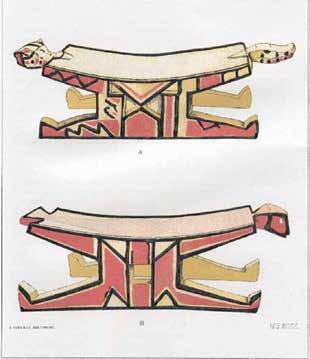
selves to those only which are indigenous to their country...; they had religiously to abstain from certain fish and game ...; no animal food was publicly tasted by these priests, while they abstained, even more strictly than the laity from the flesh of oxen, sheep, and all other animals that had been transported from Europe ... and were "unnatural" to their country...”
Roth, like other observers, believed that the piaiman is essentially one who has intimate and extensive knowledge of the me-
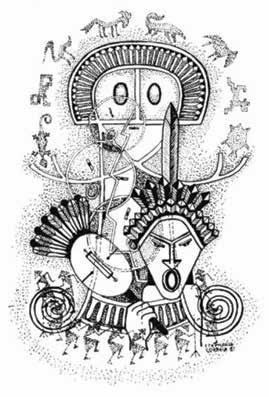
Piaimen were both respected and feared, and were essentially “above the law” as we would put it today. However they too were restricted to certain rules: according to Roth, piaimen could “not partake of the flesh of the larger animals, but limit them-
tions, when Old World meets New World, among the missionaries and modern medical practitioners.
Given derogatory or condescending names such as “witchdoctor”, “medicine-man” or “folkdoctor”, the idea of a piaiman continues to amuse and irritate modern cultures who deride its practice, in particular the aspect they call ventriloquism.
However, much of piaimen’s knowledge of natural medicines has today become an essential aspect for the preservation of Amerindian traditions, as renewed modern medicinal interest in the natural plant-based extracts known to piaimen grows.
Roth also mentioned in his writings of a case in which a piaiman was asked to diagnose and treat a patient.
The patient was a young man who just grew worse by the day.
Several doctors in the capital, Georgetown, failed to help him and, in desperation, his mother asked the piaiman's intervention.
The piaiman had the patient sit on a tortoise shell in his tent of palm leaves. Roth and others sat in a circle outside the hut and could not see what was going on inside.
But the observers could see and smell the aromatic smoke which soon seeped through the leaves of the hut. They also heard the sound of the rhythmic shaking of a gourd rattle; then later the "droning sing-song" of
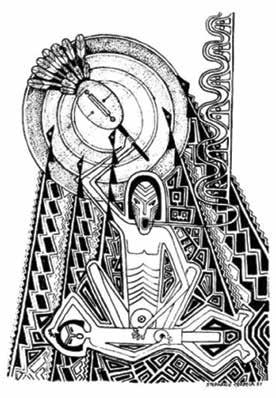
dicinal value of forest plants, and is an excellent ventriloquist.
The piaiman and his belief in traditional medicines and supernatural experiences were, and to some extent remain, one of the most controversial cultural tradi-






When the piaiman emerged, he said he had consulted the spirits of the camoodi (anaconda) and the tiger, who told him that the lad was being punished with this illness because he had been unfaithful to an Amerindian girl. However, he would not die.
The piaiman set out at dawn next morning to obtain the medicines he said the spirits prescribed; he returned in three days, administered them to the patient, and the patient became well again.

By Lennox J Hernandez
Better energy efficien-
cy in building design
has been a global priority for many years now, especially after the energy crisis of the early1970s. The building industry worldwide was slow to respond, but in recent times there has been a change in this attitude, at least in the developed world.
According to British architect and researcher Susan Roaf, the year 2003 may have been the turning point as the public in developed countries became more aware of climate change. Though the developing world may not be a great consumer of energy when compared to the developed world, appropriate environmental practices in architecture are still required to assist
in the reduction of ozone depletion and climate change globally.
Historically, designers and builders followed the traditional architecture of a region as well as relying on their own experience for building design solutions. Today “… many people idealize the designs and innovations of vernacular architecture that can be found in ancient cultures all over the world”. Acknowledged too, is the concept of “environmental syncretism” in British colonies during the Victorian era, where new building forms were created for a new cultural context in a new environment.
Unfortunately, such environmental awareness and concern for energy efficiency are not evident in the design of many, if not most, of

our contemporary buildings. Generally, the developing world today in an effort to appear “modern and advanced”, imports building designs and
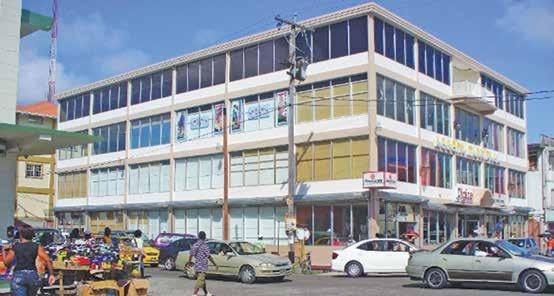

relies less on designing with climate “in mind”.
For example, to control heat flow through the building envelope, we have to consider the thermal properties of the wall itself, as well as the use of glass, the choice of colour, the requirement for shading and many other points. In the case of glass, this important material is seen as much more than a daylight-admitting element; it is also regarded as an architectural design feature to enhance the aesthetics of a
tropical buildings.
Building designers and owners in developing countries should also pay more attention to the design of open spaces and streets in settlements, for example by reducing the extent of paving and increasing the area under grass and trees.
Air conditioning is required in some buildings to achieve precisely controlled conditions indoors. However, attention to proper microclimate of the settlement and to the eco-friendly
ficiency.
Building shape and form are also basic determinants of the energy required to cool a building; for example, a compact building shape reduces the area of a building’s envelope through which solar heat may be gained. For air-conditioned buildings, careful consideration of the relationships between external surface area, volume and floor area can result in greater energy efficiency.
Energy-efficient building design is essential because of the need to reduce the amount of greenhouse gases being spewed into the atmosphere globally, and to make more efficient use of expensive fuels in developing countries.
While architects and engineers in a developing country have a major role to play in the drive for energy efficient buildings, the state has the duty to prepare and effect policies on energy efficiency in buildings, and building owners have to understand and appreciate the necessity for such measures.
We have to look to our own environmental context for so-

building.
Unfortunately, in hot countries, large areas of glass can greatly raise a building’s heat load and increase energy consumption through use of air conditioning. Also, the shading of buildings to reduce the total solar heat gain is critical for both non air-conditioned and air conditioned buildings; unfortunately, shading of buildings seems to be a thing of the past. Canopies, louvers, awnings, and external sun shading devices should be used to greater effect in contemporary
design of the building can do much to reduce the task of the air conditioner and, in many cases, actually avoid the need for air conditioning.
Improving the energy efficiency of buildings is an important and effective way to protect the ozone layer and global climate. Whereas, in a humid climate, the movement of air into buildings is vital for indoor comfort when a building is not air conditioned, the airconditioned building must be properly sealed against the entry of hot air for energy ef-
lutions to the problem of energy-efficient building design; appropriate local environmental practices will collectively reduce global warming and climate change.(From ‘Building for the Planet: A Challenge for Developing Countries’ by Lennox Hernandez, senior lecturer in the Department of Architecture at the Faculty of Technology, University of Guyana. Source: UNEP Special Issue 2011 ‘Ozon Action…Tipping the Balance towards Climate Protection through the HCFC PhaseOut’)

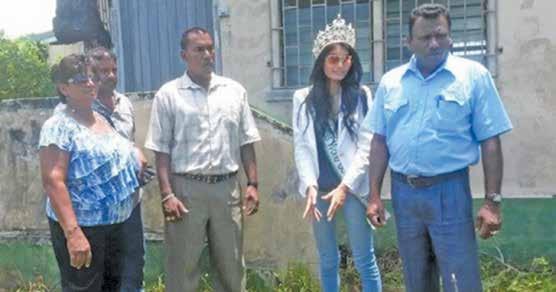
The ethos of ‘Beauty with a Purpose’ has been brought to Guyana, with reigning Miss World Guyana Rafieya Husain diligently pursuing her goal in alleviating the suffering for victims of domestic violence.
The latest developments include the acquisition of a suitable building and its surrounding land for the creation of an outreach centre in Essequibo, which would provide advocacy, education and preventative measures to help families and communities live in harmony, and ultimately end domestic abuse.
Regional Chairman Parmanand Persaud and Regional Executive Officer Sunil Singh were in attendance at a presentation of the building, with renovation work already underway to prepare the centre for its opening.
Also present at the presentation of the land were Denesh Mohan, Supt of Works, Region Two, Nandranie Coonjah, RDC Councillor, Keshana Dyal, Counsellor and Portia Jacobs, Expenditure Planning & Management Analyst for the Regional Office.
The centre will tirelessly advocate for all affected by domestic violence as it relates to ending and preventing it; it will seek every opportunity to ensure it has the inner strength to be sustainable; also seek to establish and provide useful resources

to mitigate all of the circumstances that lead to violent outcomes; and will offer a wide variety of programmes, events and ways to learn how to end the cycle of violence.
The centre’s policy will prohibit discrimination in all its programmes and activities on the basis of race, colour, national origin, age, disability, and where applicable, sex, marital status, familial status, parental status, religion, sexual orientation, genetic information, political beliefs, reprisal, or because all or a part of an individual’s income and/or status.
The Inclusiveness Initiative will distinguish the centre as a one of the leaders in supporting underprivileged populations of vi-

olence victims and those living in rural areas.
Husain’s passion for improving lives and making a difference started from an early age, which was inspired by her late grandfather, Shaffeek Khan. His philanthropic work for the community, building schools for children, is one of the reasons she is so inspired. Additionally, she is inspired by her personal experience with domestic violence as a teen to build an outreach centre in Essequibo for abused victims and survivors.
Before being crowned Miss World Guyana, Husain explained in an interview with Guyana Times Sunday Magazine her platform that is very close to her heart.
“My platform is domestic violence and to find steps towards spreading awareness and educating people. I believe violence against women, men and children results from the use of force or threat to achieve and maintain control over others in intimate relationships and from societal abuse of power. I would like to work with foundations to design and fund innovative programmes to eradicate domestic violence and to foster development of safe alternatives within local communities.”
In the interview she also mentioned that she volunteered for the Jeanie Schmidt Free Clinic, in the US, which offers free health services to the area of residents who have no health insurance and have a household income that is less than the poverty level. She also worked with ACT - now a
non-profit organisationwhich focuses on the prevention and elimination of child trafficking and domestic violence.
When asked what she would do if she won the Miss World crown, Husain declared: “I will work with the Miss World organisation’s goals and would use this platform to address corporate and public leaders, com-
munity service groups, organisations, the media and others about issues to generate awareness for a variety of causes, including poverty, domestic violence, diabetes awareness, education, literacy and so on. I would like to be more hands-on with people, sharing my experiences, listening to their challenges and finding support and alternative solutions for a bet-
ter life.”
The reigning Miss World Guyana is pleading with all Guyanese to join in her campaign to stop domestic violence and bring awareness to the early signs of it. She believes that this will in turn create a better future for families by donating and supporting this cause. (Information from www. beautywithapurpose.com)

B y P etam B er P ersaud
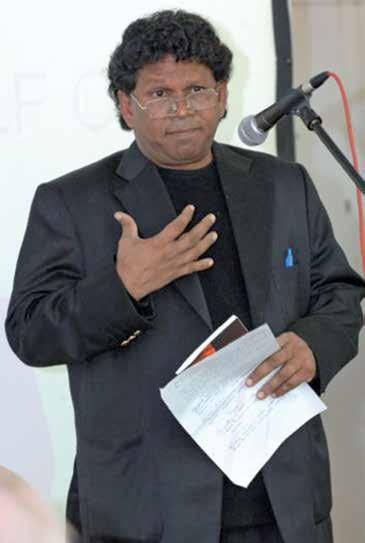
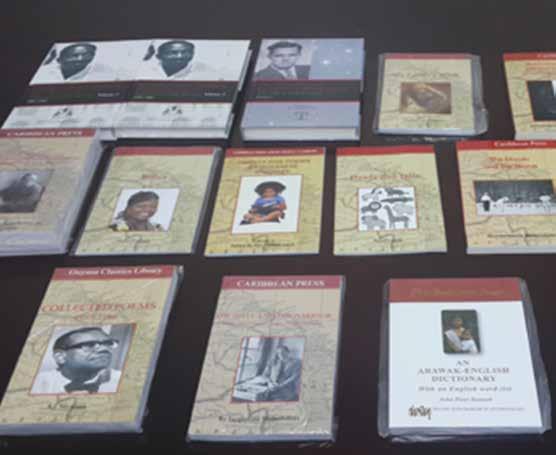
On 15 August 2014, an “Anthology of Contemporary Guyanese Verse”, ed. Petamber Persaud and published by The Caribbean Press, (along with other books) was launched by Professor David Dabydeen, one of the founders of The Caribbean Press.
The occasion was witnessed by scores of writers and lovers of literature. And what an event it was: igniting the evening with performances of prose and poetry by their authors, endowing the moment with authenticity and a sense of great achievement, many of the authors, some published for the first time, acknowledging the role of the press in affording them the opportunity to be published, thereby affording
them the opportunity to share their work with a wider audience.
Anthologies play a major role in the assessment of a country’s literature, recording the achievement of the people and so serve to build a sense of national pride. Based on this concept, an anthology is a very important mechanism in literature, and the work of the anthologist is vital to a nation in that the anthologist becomes the bookkeeper of the nation’s invaluable literary heritage. Anthologies ought to bring out the best on offer at a particular time, bring attention to the best on offer during that time, have a reasonable representation of the literary landscape, and provide writers with a wider audience. Sometimes, all these criteria are not fulfilled leading
to the fact that many anthologies begin with apologies, citing the lack of space for omissions, lack of knowledge of existing works, and lack of access to certain works leading to exclusions.
This anthology focuses on contemporary writers of poetry, many of whom have explored and exploded the frontiers of poetry, challenging canonical notions of poetry. Of course, there are others who are contented to conform to convention yet bringing fresh perspective to the typical theme by enriching their writing with local flavours and nuances.
One of the features this anthology brings to our attention is that ‘many writers from Guyana still use poetry as their medium of choice’ while poetry is declining in other parts of

the world. By sticking with this genre, the writers are saying that ‘poetry matters’ and that poetry has the power ‘to move, inspire and motivate both its writers and readers alike’.
And there is more to this anthology. Of the 21 writers, nine are women –almost half of the book. Of the 70 poems in this book, about one-third dwells on the subject ‘woman’ including ‘Adore’, ‘4 Women’, ‘Home’, ‘Goose on the loose’, ‘Black Coffee’, ‘Vishma Diana’, ‘The altar’, ‘Black lost girl’, ‘Hindu Woman’ and ‘I apologise’.
The introduction by Dr Lynn Macedo, Yesu Persaud Centre for Caribbean Studies, University of Warwick,
sums up the range of this anthology. Macedo wrote: ‘[t]he work of the twentyone poets in this anthology provides the reader with a new look at Guyanese identity from a twentyfirst century perspective, as well as examining more universal themes such as the complexities of human relationships or the exploration of race and ethnicity. Guyanese writing has long been characterised with a close engagement in politics and social issues, and many of the poems in this collection continue that tradition of questioning and challenging facets of society that are perceived as being ambivalent towards the suffering of the poor and the dispossessed.
Unsurprisingly, the violent history of the Caribbean continues to provide material with which several of the poets engage as does, in complete contrast, the natural beauty of the region’s landscape, flora and fauna.’
And there is more: the writers are from varying backgrounds, lawyer, youth advocate, transformational leader, playwright, actors, performance poet, photographer, film maker, sports journalist, television producer, fiction writer, bringing all those experiences to bear on the art.
And there is more: at the launch of the book, the performances were awesome, bringing the work alive, never before has poetry sounded so good. Why? The reason is found in the introduction: ‘Contemporary society surrounds us with many art forms that are highly poetic in nature – from rap music to advertising ‘jingle’s, or football chants to political slogans. By working with such frameworks and stretching them into new poetic dimensions, the writers in this anthology are able to speak directly to today’s reader in a format that can be easily recognized and related to’.
Responses to this author telephone (592) 2260065 or email: oraltradition2002@yahoo.com
What’s happening:
• The Caribbean Press has commissioned Petamber Persaud to produce as Editor a Volume 2 of contemporary poetry, and a Volume 1 of contemporary prose by local Guyanese writers. Please contact Persaud for further information at the above telephone number and email address.

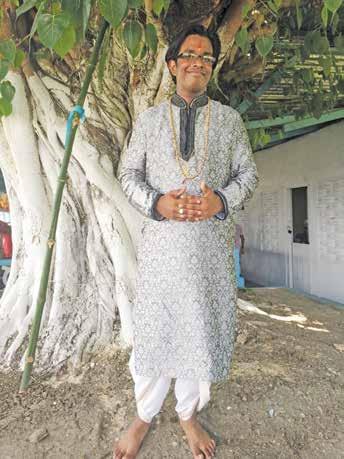
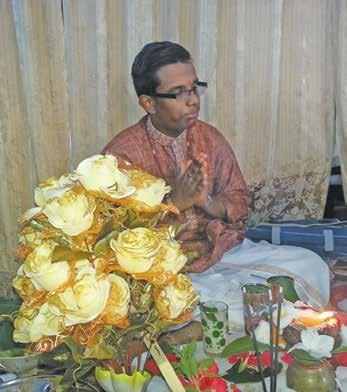
Pandit Surendranauth Persaud, 19, comes from a family of Brahmin Pandits, following in the footsteps of his father and grandfather. At his tender age, he is currently the Head Priest of the mandir in his village – Shri Satyanarayana Mandir in Patentia, West Bank Demerara.
Just last month, Pt Saren, like his father and grandfather when they were his age, went through the rite of passage where he was crowned by his Guru, making him a ‘Vyaas’. This rite of passage is a very important one in a pandit’s life, as it signifies his elevation from being an ordinary pandit to one with the authority to perform ‘yagnas’ or rituals where prayers are offered for the well-being of the entire village. The first yagna Pt Saren hosted at his mandir was from 28 to 31 August 2014, moments after his coronation on the first night.
Pt Saren is also qualified to perform all poojas, satsangs, funeral rites and weddings. Although he is only 19 years old, he already has six years experience in Panditai and eagerly looks forward to many more ahead.
He someday hopes to build his own mandir. He said he has dedicated his life to preaching the word of Hinduism and encourage other youngsters to follow their “dharma”. With this in mind, Pt Saren voluntarily teaches free Hindi, Indian music and Panditai classes in his spare time, which he hosts at his mandir for anyone who wishes to attend.

Noel Fiedtkou, 20-years-old, was born to Guyana’s famous cyclist Noel Fiedtkou and wife Marcia Fiedtkou. Alexander is the oldest of three children. He attended Mae’s Primary then St. John’s College for two years and moved back to Mae’s Secondary where he graduated with six CXC subjects. Subsequently, he attended Global Technology and graduated with certified A’s in Advance Desktop Publishing. Additionally, he graduated from Spectrum Airways, located in Canada, as a Private Pilot for Aircrafts. He is now pursuing his Commercial License at Aerial World Services in Trinidad and Tobago. Alexander is a very skilled individual, who has played and succeeded in numerous sports. At the age of nine, Alexander was Guyana’s under nine table tennis champion. This streak continued until he was 13. Later, he moved on to school sports where he participated in cycling, swimming track and field, cricket and football. After having a taste of sports, he then started squash, which ended after his first competition with a third-place trophy. He then moved on to the field of motor racing as a junior karter and became one of the fastest on the South Dakota Circuit. Alexander was chosen to participate in the Guyana National Men’s Squad for a chance to try out for the Pan American Games held in Mexico in 2011. But his calling of becoming a pilot propelled him to start his journey in Ontario, Canada. After becoming a private pilot, Alexander moved to Trinidad and Tobago to become a commercial pilot and gain experience internationally in different islands in the Caribbean. The pilot is now a contestant of the Mr. Guyana International 2014 competition and his platform is ‘Crime and Unemployment’. One of his many passions is to be a role model for children and to show them that if they set their hearts to something it can be achieved. Furthermore, he will help them to realise that everything they do can make a difference and make them a better person of tomorrow.
Kinkajous, Potos flavus, live in the tropical forests of Central and South America, where they spend most of their time in the trees. They are able to turn their feet backwards to run easily in either direction along branches or up and down trunks.
The kinkajou also has a prehensile (gripping) tail that it uses much like another arm. Kinkajous often hang from this incredible tail, which also aids their balance and serves as a cozy blanket while the animal sleeps high in the canopy.
Though many of its features and traits sound like those of a primate, the kinkajou is actually related to the raccoon.
Kinkajous are sometimes called honey bears because they raid bees' nests. They use their long, skinny tongues to slurp honey from a hive, and also to remove insects like termites from their nests. Kinkajous also eat fruit and small mammals, which they snare with their nimble front paws and sharp claws. They roam and eat at night, and return each morning to sleep in previously used tree holes.
Kinkajous form treetop groups and share social interactions such as reciprocal grooming. They are vocal animals—though seldom seen, they are often heard screeching and barking in the tropical forest canopy.



electricity you use (and need to pay for). A generator
Female kinkajous give birth to one offspring in spring or summer. The baby is born with its eyes shut and cannot see for a month. It develops quickly, however, and by the end of the second month, it is already able to hang upside down from its tail.
Kinkajous do not like to be awake during the day and dislike noise or sudden movements. If they are agitated too much, they may emit a scream and attack, usually clawing their victim and biting deeply.
Kinkajou bites are particularly dangerous as their saliva contains a sticky, speciesbacterium -Kingella potus, first identified by Dr Paul Lawson of the University of Oklahoma. Its head and body are 17 to 22 in (43 to 56 cm) and tail, 16 to 22 in (41 to 56 cm). It can weigh from three
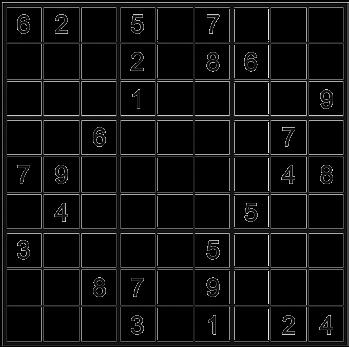
The objective of the game is to fill all the blank squares in a game with the correct numbers. Every row of 9 numbers must include all digits 1 through 9 in any order. Every column of 9 numbers must include all digits 1 through 9 in any order. Every 3 by 3 subsection of the 9 by 9 square must include all digits 1 through 9.


Ceramic llama Tiwanaku, A.D. 700-1530
Practical clay vessels like this often depicted everyday life.
Greek amphora c. 435 B.C.
By Laurie Triefeldt
One of the most ancient of crafts, pottery is also one of the world’s oldest industries. People were creating and baking clay animal and human forms as early as 24000 B.C. The first use of functional pottery vessels for storing water and food is thought to have been around 9000 B.C.
Pottery is a kind of ceramic made from clay and fired (baked) in an oven. Pottery can be mass-produced or be a one-of-a-kind work of art. There are four basic steps in making pottery — preparing the clay, shaping the clay, decorating and glazing, and firing in an oven called a kiln
There are many kinds of pottery, but three major types stand out: earthenware, stoneware and porcelain. In general, pottery is classified by the mixture of clays it contains and the temperature at which it is fired. Firing temperature plays an important role in the appearance and strength of pottery.
Earthenware has been around since ancient times and is made from a variety of common clays found in many parts of the world. It is usually decorated with colorful glazes and fired at low temperatures. Earthenware tends to break and chip easily.
Stoneware is opaque, glossy and water-resistant when fired. Stoneware is fired at very high temperatures and is stronger and heavier than earthenware.
Porcelain was invented by the Chinese, which is why it is also called china. It is a delicate, white, translucent pottery. There are three kinds of porcelain: hard paste, soft paste and bone china. Kaolin is the once-secret ingredient needed to make all types of porcelain.
Jomon earthenware pot Japan, 15001000 B.C.
Indus cooking pot c. 3100 B.C.
Hopi pottery A.D. 1950
Archaeologists have tried to match vase forms with names mentioned in ancient Greek literature. Ancient Greek pottery evolved from the Minoan period (2700-1450 B.C.), through the Hellenistic era (323-31 B.C.).
Egyptian pottery 15701342 B.C.
Ancestral Puebloan pot c. A.D. 1200
Etruscan pitcher 6th century B.C.
Chinese porcelain covered jar 14th century A.D.
One of the oldest and easiest ways to make pottery, the coil method, lays strips of rolled clay on top of each other. The potter uses a creamy clay slurry called slip to help cement the coils into a single form. For strength, the inside of a coil pot is always smoothed flat. The outside may also be flat, but that is a design decision.
A form of the pottery wheel can be traced back to 3500 B.C. Mesopotamia. The flywheel was developed around 3000 B.C. in China and the Middle East, and it was at this time that pottery production grew into a profitable industry. A pottery wheel has a spinning table with clay placed in the center. The potter uses fingers and thumbs to form the shape. Early wheels worked manually, but today they run on electricity.
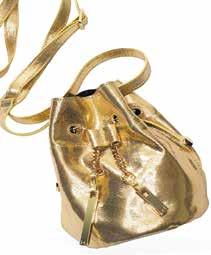
Astructured bag gives your outfit instant polish. Even jeans and a tee look pulled together when you wear them with a top-handled bag that's sharp, not slouchy. Try one in gray, the neutral of the season, or a bold color like cobalt or lipstick red, which adds pop to whatever you wear.
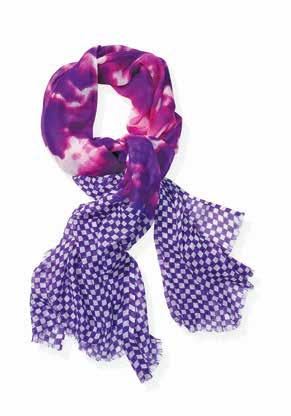
To create a signature look, scarf it up.
Cultivate personal style by choosing a distinctive accessory —like an artfully knotted scarf.

If it looks good on a hanger, chances are it'll look good on you. A garment with a sound structure sucks you in and gives you a sleek shape that's visible before you even put it on.
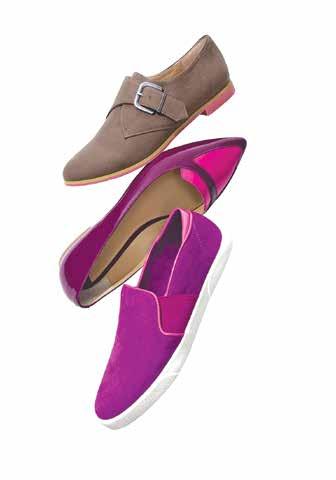
Fall in love with flats again. Not only will your feet thank you, but the freshest styles— menswear inspired, pointy and slip-on — will instantly update your outfit.

DAon't be afraid to mix gold and silver. There's no need to fret about matching all your jewelry if you have one mixed-metal piece that unites them. Put on this classic boyfriend watch and let the metallics fall where they may.
For many, jeans are the most valuable player in your wardrobe. Usually, this isn't because they're the most expensive piece of clothing you own, or even the best-looking. Instead, it's their versatility that's important, as you can wear jeans around the house, in the workplace, on a date, or on casual outings. Despite this usefulness, however, finding that perfect pair of men's jeans is never easy.
So what should you look for when searching for that perfect pair of jeans? Aside from price, here are some tips to keep in mind.
Consider when you'll be wearing them
It goes without saying that being comfortable in your jeans is the most important thing; after all, even the best-looking pair of jeans will look odd if you're uncomfortable in them. Nevertheless, keeping in mind when and where you'll wear your jeans will make the process of choosing much easier.
If, for example, you only wear suits to work, your jeans might be reserved strictly for going out or for lounging around the house, which means you have few restrictions when selecting a wash and fit. If your work environment allows jeans, however, denim might be everyday wear. In that case, you might have to consider more conservative styles,
as even in the most casual workplaces, subtlety goes a long way. Either way, always ensure your jeans look good with sneakers, boots or dress shoes.
Look for timeless washes
It's hard to say what will be in style a year from today at the retail level, but by sticking with tried-and-
er jacket for a street-ready look on the weekends.
Flashier colours, funky washes and excessive distressing are always off-limits in terms of timelessness.
Stick with classic fits
A good choice is a straight leg or boot cut. When paired with the classic washes mentioned earlier, you'll be set. Classic

true denim styles, you can aim for and land a pair of jeans that will remain stylish for years. Here are three classic examples: Original blue jeans: Evolving from rough-andtumble work wear, these are now one of the most versatile pieces of clothing you can own.
Slightly faded blue jeans: More casual wear than anything else, these can nevertheless look good with a nice sports coat and shirt.
Dark denim: You really can't go wrong with a pair of straight-leg dark denim. Wear it to the office with a white oxford and navy blazer or throw on a leath-
jean fits will give you the most bang for your denim buck because you'll be able to get a lot of versatility out of them. Meanwhile, steer clear of tapered leg openings or a wide bell-bottomed look.
No matter how great the jeans, if the fit is wrong for your body type, they'll look ridiculous on you. First, make sure the legs, crotch and waist areas are not too tight. You must also see if they look good from behind. Remember, if you're not sure, try other styles.
Also, because jeans are likely to shrink, it's not a good idea to get just the
right inseam. Buying them longer than necessary gives you the opportunity to fold them over or make any desired alterations.
The best way to test the worth of your new jeans is to put them through a trial run. Walk around the store with them and check the pocket space and your level of comfort when sitting down. Can they handle your keys? Wallet? Are they itchy or too warm for certain seasons?
You should also make sure to try them on with the belt you wear most. This will show you where the waist falls on you, if the jeans match your belt and if the loops can hold your belt properly.
Finally, try on jeans with the shoes you wear most often, and keep in mind that aside from seeing if the colours match, you want to know how the pants fall. If the jeans are too long, fold them over to approximate how they would look once hemmed. Remember, the back cuff should be aligned with the top part of the sole.
The first time you wash your jeans, wash them alone. After that, it's a good idea to wash them inside out, as this is the best possible way to maintain their colour and overall look.
Always lay your jeans on a towel to dry or, if possible, hang them with clothespins so that no part of the jean is folded over.
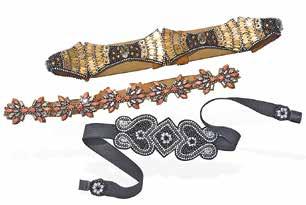
jeweled belt makes everything more luxurious. Anyone can throw on a skinny leather version, but cinch a dress, a sweater or even a jacket with an embellished number, and your look goes instantly to the next level.

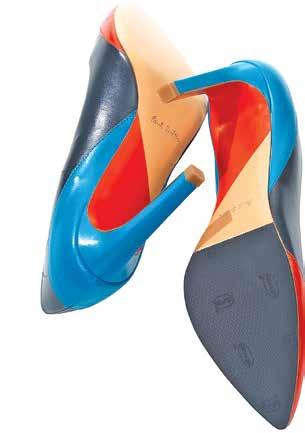
Extend the life of your shoes by adding a thin rubber sole. Make friends with your cobbler and have him put these babies on your shoes before you wear them. You (and your now longer-lasting footwear) will get an extra layer of protection from the mean streets.
Try a fresh alternative to black. You'll be pleasantly surprised at how color can rev up your look. Right now, sangria is hot. It flatters every skin tone and is the perfect gateway shade if dark is your default.

You don't have to go strapless for everything. A bag with a strap leaves your hands free for nighttime sipping, eating and Instagramming.

Blush is a pop music girl group originally composed of five membersAngeli Flores, Alisha Budhrani, Natsuko "Nacho" Danjo and Victoria Chanfrom the Philippines, India, Hong Kong, Japan, and South Korea. They were formed by FarWest Entertainment in 2010 with the intent of popularizing an Asian vocal act in the United States as well as in all of Asia. The group was the first Asian group to have its debut single hit the top three on a major US Billboard Chart when “Undivided” feat. Snoop Dogg made No. 3 on the Billboard Dance/Play Chart. Their second single “Dance On” got to No. 1 on that chart.
Floyd Mayweather, Jr. has been sued by his ex-fiancee who alleged that the boxer beat and humiliated her when they were still together. Mayweather's former fiancee Shantel Jackson filed the suit on Thursday, September 4 in Los Angeles County Court.
Jackson said she was humiliated after Mayweather posted her sonogram in May and accused her of "killing babies." "Every woman has a right to privacy and there is no excuse for invading anyone's privacy, especially about what is happening in one's own body and one's own medical records," said Jackson's lawyer Gloria Allred in a press conference that day.
Allred also claimed that Mayweather was "infuriated" when her client posted a photo of her posing with rapper Nelly and threatened her to remove it or he would release her naked photos. The photo incident with Nelly eventually led to the share of the sonogram image.
Mayweather also allegedly twisted her arm during an argument in August 2012, while in April 2013 he allegedly "bent her arm, restrained her, and pointed a gun at her foot, asking 'Which toe do you want me to shoot?' " Jackson additionally alleged that the boxing champ kept her a "virtual prisoner" for some time during their relationship and that she was in constant surveillance. Jackson said she suffered from invasion of privacy, battery, assault, defamation, intentional infliction of emotional distress, civil harassment and false imprisonment.

According to NY Daily News, she is seeking compensation for more than $2 million worth of property and gifts allegedly stolen by Mayweather and punitive damages. Mayweather's camp has not responded to requests for comment.
(AceShowbiz)

Mto, took to Instagram on Wednesday, September 3 to share a new picture of her
thetic butt. She captioned the picture with, "Ass so fat need a lap dance."
The caption is the lyrics of "Lap Dance" by Tyga, who happens to be Nicki's Young Money labelmate. In the picture, Miley can be seen doing her signature tongue out pose as she shows off her prosthetic butt in front of the mirror.
The 21-year-old singer previously talked about Nicki's butt during an interview on the red carpet of 2014 MTV Video Music Awards. "With that ass ... I ain't got that ass," Miley said, "I can bring that body, I can bring that wrecking ball, but I can't bring that ass. Not that Anaconda."
Last month, Miley shared a photo of her face photoshopped onto Nicki's body from the "Anaconda" cover art. Nicki then slammed the "Hannah Montana" star for spoofing her picture. She reposted Miley's photoshopped picture along with the caption, "Give me one good reason why Miley made this her twitter avi. #AnacondaOniTunes." (AceShowbiz)

Recently, U2 was rumored to have partnered with Apple to release their new album on the iPhone 6. According to some reports, the highly-anticipated LP would be pre-loaded onto the new phone and the Bonofronted band would perform a new single during a launching event in Cupertino on Tuesday, September 9. However, a representative for the Irish group has denied the news. "They are not releasing their al-
bum on the iPhone, and they are not performing at the iPhone launch," the rep told the Independent.
Rumors of U2 teaming up with Apple first surfaced earlier this month after an eBay employee Stephen Browne spotted some people on the Samuel Beckett Bridge in Dublin, Ireland filming what he thought would be a music video for the band.
He took a snap from the set and said on Twitter, "Looks like @U2 new album maybe preloaded on

No sooner had Brad Pitt proposed to Angelina Jolie with a stunning diamond ring in spring 2012, than plans for the next big ring were al-
ready under way.
Jewelry designer Robert Procop, who collaborated with Pitt for one year on Jolie’s engagement ring, told PEOPLE that the stars
to iPhone6. The focus of the 'video' on the bridge last week was a phone." It's unclear what phone the clip is focusing on, but MacRumors then reported that the music video shoot was actually an iPhone commercial.
U2 has a longtime relationship with Apple. That relationship got stronger after Apple acquired Beats which was co-founded by Dr. Dre and Jimmy Iovine. The latter produced two of the band's albums. (AceShowbiz)
began working on their wedding bands immediately after the proposal more than two years ago.
“This is a couple who continues to think about how to surprise each other in gifts of love that all have meaning,” Procop, a close friend, shared in 2012. “He plans way in advance. She plans way in advance,” the jewelry designer said of Pitt, 50, and Jolie, 39. Just five days after their intimate French wedding, which is featured in this week’s PEOPLE cover story, Pitt showed off his new ring during a U.K. photo call for his upcoming film “Fury”. (PEOPLE)
People working at a clinic which treated Joan Rivers before she passed away reportedly have been receiving death threats from the comedian's fans. According to a new report by TMZ, the Yorkville Endoscopy clinic in New York City has been receiving threats since news emerged that the comedian stopped breathing during a procedure.
Sources at the clinic say some people sent threats which include, "If Joan dies, so will you," and, "I hope you people die, you killed an icon." Following the incident, the clinic reportedly has improved their security and they sent the employees home early on some days.
After she stopped breathing at the clinic on Thursday, August 28, Rivers was rushed to Mount Sinai hospital. The "Fashion Police" star passed away on Thursday, September 4 at the age of 81.
"It is with great sadness that I announce the death of my mother, Joan Rivers," Melissa Rivers said in a statement. "She passed peacefully at 1:17 P.M. surrounded

family and close friends. My
and I would
to
and

Gavie Chahal is an Indian actor from Mansa, Punjab. He is known for his role in “Ek Tha Tiger” (2012), “Yaaran Naal Baharan”, “Mehendi Wale Hath”, “Majajan” and “Tere Ishq Nachayva”. Not only is Gavie an exceptional actor, but is also popular on the runway. He participated in many fashion shows and won the title of Mr Punjab in 2000, after which he started a career in the music industry. His first music video was “Jattan De Putt Saadh Ho Gaye”. Since then, he has appeared in more than 60 music videos. Subsequently, in 2005, he moved to Mumbai to start acting in the soap opera “Kyunki Saas Bhi Kabhi Bahu Thi”. He left the show to star in the Punjabi film “Yaaran Naal Baharan”. He was also featured in a variety of advertising campaigns. The actor recently starred in the Bollywood horror film, “Neighbours”.
National Awardwinning actor Kangana Ranaut, who has managed to impress the audience as well as the industry with her versatile roles, has recently topped a rating poll conducted by Ormax Media to become the top female performer of the year. She was picked for her role in Vikas Bahl’s “Queen”, where her portrayal of the character, Rani, was unanimously appreciated.
Soon after the release of that film, she followed up her performance with Sai Kabir’s “Revolver Rani”, where she essayed the unusual role of a dacoit-turnedpolitico. Incidentally, her acting in this film won her
the fifth spot too, in the same poll.
“It’s amazing for any actor to know that their body of work is being appreciated and acknowledged. It is great news and is very encouraging,” says Kangana, delighted to be placed first in the poll.
Shailesh Kapoor, founder & CEO, Ormax Media Pvt Ltd, says, “Kangana’s performance in Queen has been rated by viewers as the best female performance of 2014 till now. She is also likely to walk away with most awards next year. It’s truly commendable that she has chosen unconventional roles and made a mark for herself off the beaten track.”
(Hindustan Times)

Rani Mukerji has said that more women should be enlisted in the police force in order to eliminate sex trafficking in India.
Mukerji plays police officer Shivani Shivaji Roy in “Mardaani”, which addresses the issue of child trafficking.
She told PTI: "I feel if women cops come into the picture they will fight against human trafficking strongly because they will feel for this cause more."
The actress was speaking at an event organised by Apne Aap Women Worldwide, an anti-sex trafficking NGO.
"I inaugurated an all women beat marshal squad in Mumbai where women visit schools, colleges and malls on their bikes. I hope all other states join in and have more beat marshals like that because in Mumbai they are encouraging women cops," Rani said.
"I think these positions need to be filled up as soon as possible and I strongly ap-

peal that more women come forward and fill these positions up and work for this cause. My intention behind doing this film was to inspire women."
Mukerji said she had been inspired by stories of survivors of trafficked women.
It's the first time she has played a policewoman in her films. (Digital Spy)

Bollywood star Priyanka Chopra, who is playing Olympic-winning boxer Mary Kom in a biopic, says she does not like the term 'female-centric' in films as people should judge movies on the basis of content rather than on the gender of the protagonist.
The 32-year-old actress feels gender bias exists in Bollywood and media because people put unnecessary focus on a film with an actress in the lead, taking away attention from her performance and talent.
"I hate this term 'female-centric' because it is demeaning to an actress and her hard work. There is no hype about male-centric movies, but if an actress is in the lead, it all becomes different and special.
"I don't like that special treatment. Judge us on the basis of our performance and work, not on the basis of our gender. Treat our
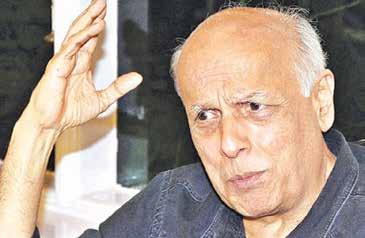
Filmmaker Mahesh
Bhatt on Friday lent support to the 'rice bucket challenge' by distributing 'biryani' packets among the needy at a programme organised here by Taj Falaknuma Palace, a hotel of the Taj Group.
Bhatt challenged young filmmaker Karan Johar to participate in a similar charity programme.
"We challenge the film industry's young and talented filmmaker Karan Johar... We have lit a lamp here. You light a lamp there. That is only way we can end the darkness from the country and the world," he said while talking to reporters.
Bhatt stressed the need to inculcate empathy towards the weak, saying the initiative has rekindled the great Indian tradition of sharing.
Taj Falaknuma in association with Sapna Iktara

films as good or bad films like you do with films with a male lead," Priyanka said in an interview. The national award-winning actress says gender discrimination is prevalent in the country and Bollywood adds to it by treating actresses differently than male actors.
"Girls are already devalued in our country. This exists everywhere, in every field. And now in films, we are not treated equally, make hoopla around an ac-
tress if she plays the protagonist in a film.
I think as a public icon and person, I should remove gender bias from my system because if we don't then how can we expect the whole country to do that?," said the Fashion star.
Priyanka, also said that though her latest film “Mary Kom” is about a female athlete's struggle to bring India on the world map, it is for everyone, irrespective of the gender.
"It is about empowerment. I would not say it is for women or girls. It can inspire anyone. It is about the youth and how they can rise above all odds and difficulties and do good for themselves because I feel there are so many around us who try to pull us down, but we should keep fighting. 'Mary Kom' shows that undying spirit, so it caters to all," the actress said. (Times of India)
Foundation distributed 500 packets of 'biryani' among the underprivileged near the Cancer Hospital at KBR Park.
Girish Sehgal, general manager, Taj Falaknuma, said the rice bucket challenge is creating awareness about the need to help alleviate hunger by donating a bucket of rice.
The rice bucket challenge is the Indian version of the famous 'ice bucket
challenge' of the US. It involves donating a bucket of rice to the needy and clicking a picture and posting it online to raise awareness.
Manju Latha Kalanidhi, who came up with the idea of the rice bucket challenge, hoped that the participation of Mahesh Bhatt and support of major organizations like Taj Hotels will give a boost to the initiative. (Times of India)
Emraan Hashmi's first international film project “Tigers” is to screen at the San Sebastian Film Festival.
The movie revolves around a salesman selling infant formula, who discovers a corruption racket within a multinational organisation.
Directed by Danis Tanovic, the film will compete in the Official Section at the 62nd edition of the Spanish festival.
The movie is scheduled
to first premiere at the Toronto International Film Festival on September 8.
Tigers also stars Geetanjali, Danny Huston, Khalid Abdalla, Adil Hussain, Maryam D'Abo, Satyadeep Misra, Heino Ferch, Sam Reid, Supriya Pathak and Vinod Nagpal.
“Tigers” will screen at San Sebastian on September 25. (Digital Spy)

Diabetes Mellitus is a chronic condition occurring when too much sugar is circulating in the blood stream. Sugar, in the form of glucose, is a necessary fuel for our bodies. So important, that the liver can produce it naturally; however, we get the most sugar from the foods we eat.The body has a system that regulates how much sugar is circulating in your blood stream. This system is controlled by many hormones but most important is insulin, which is released from cells located in the pancreas. Insulin speeds up the transfer of sugar from your blood and delivers it into your muscle, liver and fat tissues where it is used as fuel or stored for your body to use later. In this way insulin decreases the amount of glucose circulating in the blood stream. Therefore, without insulin or its effect sugar
accumulates in the blood and you develop Diabetes Mellitus.
What symptoms may suggest you have diabetes?
• Frequent urination especially at nights
• Excessive thirst
• Excessive hunger
• Unexplained weight loss
• Fatigue
• Blurred vision
• Slow healing of cuts and wounds
• Itchy skin
• Regular episodes of abscesses and thrush
If you have any of the above it is important to contact your doctor or health centre as soon as possible where tests will determine if you have the condition. What lifestyle changes are needed if you have been diagnosed with diabetes?
Diabetes is a lifelong disease without cure. However, persons can live
a long fulfilling life given that they use their medications and make healthy lifestyle changes.
• Medications – your doctor will place you on tablets and/or insulin injections. It is important for you to use the medication every day and at the correct time as ordered by your physician.
• Diet and exercise – Of great importance is the food a diabetic eats. Avoiding sugary foods, excess starchy foods and fats are important in gaining control of your blood sugar and preventing long term complications. Eating 5 or 6 small meals a day is advised as this prevents the rapid spikes in blood sugar seen when 3 large meals a day are consumed.Preparing your plate to resemble the one below is a great way to have a balanced diet that will not lead to a rapid rise in blood glucose.

Regular physical activity is important for everyone. It is even more important when you have diabetes. Exercise lowers your blood sugar, burns extra calories and fat to help manage your weight and improves your blood pressure. Contact your doctor for advice on starting an
exercise program.
• Quit smoking and use alcohol in moderation.
Smoking accelerates the rate of developing complications of diabetes e.g. stroke, heart attack and diabetic foot. One unit of alcohol a day can be consumed. One unit of alcohol is equal to 1 beer or a 5 oz glass of wine.
• Visiting your doctor or health centre regularly to modify your treatment and screen for complications of your disease.
Changing habits can be hard initially but once a routine has been developed it will go a long way towards control of your illness.
Eating tomatoes may lower the risk of prostate cancer, research suggests.
Men who consume more than 10 portions of tomatoes each week reduce their risk by about 20%, according to a UK study.
Prostate cancer is the second most common cancer in men worldwide, with 35,000 new cases and around 10,000 deaths in the UK every year.
Cancer experts recommend eating a balanced diet which is high in fruit and vegetables and low in red and processed meat, fat and salt.
The Bristol team analysed the diets and lifestyles of around 20,000 British men aged between 50 and 69. They found men who consumed more than 10 portions of tomatoes each week - such as fresh tomatoes, tomato juice and baked beans - saw an 18% reduction in prostate cancer risk.
Eating the recommended five servings of fruit or vegetables or more a day was also found to decrease risk by 24%, compared with men who ate two-and-ahalf servings or less.
"Our findings suggest
that tomatoes may be important in prostate cancer prevention," said Vanessa Er, from the School of Social and Community Medicine at Bristol University.
"However, further studies need to be conducted to confirm our findings, especially through human [clinical] trials.
"Men should still eat a wide variety of fruits and vegetables, maintain a healthy weight and stay active."
Dietary index
The cancer-fighting properties of tomatoes are thought to be due to lycopene, an antioxidant which can protect against DNA and cell damage.
The researchers also looked at two other dietary components linked with prostate cancer risk - selenium, found in flour-based foods such as bread and pasta, and calcium, found in dairy products such as milk and cheese.
Men who had optimal intake of these three dietary components had a lower risk of prostate cancer, they said.
Commenting on the study, Dr Iain Frame of Prostate Cancer UK said there was not yet enough evidence to make concrete
recommendations on which specific foods men should eat to reduce their risk of prostate cancer.

"What we do know is that men shouldn't rely too heavily on one type of food, such as tomatoes," he said.
"A healthy, balanced diet with plenty of fresh fruit and vegetables, together with regular exercise is by far the best option."
Tom Stansfeld of Cancer Research UK added: "While eating foods rich in lycopene - such as tomatoesor selenium may be associated with a reduction in the risk of prostate cancer, this has not been proven, and this study can't confirm whether there is a link between diet and prostate cancer risk.
"Diet and cancer prevention is a complex issue with few black and white answers; we encourage everyone to eat a balanced diet which is high in fruit and vegetables and low in red and processed meat, fat and salt."
The research, published in the journal Cancer Epidemiology, Biomarkers & Prevention, was carried out in collaboration with the Universities of Cambridge and Oxford. (BBC)
Even if you think you’re doing everything right, a few simple mistakes in your day-today routine can send your hormones out of whack and leave you feeling tired, overweight and crabby. Fortunately, you can reset your hormones and get your body and mind back on track with these five simple fixes.
Keep Your Bedroom Cool Skipping out on sleep or even tossing and turning against your will can cause your body to make too little leptin, a hormone that is crucial for appetite and weight control. A lack of leptin can make you feel extra hungry the next day and lead to weight gain. To optimize your rest and increase fat-burning hormones, try to get between seven and nine hours of sleep a night and maintain a cool sleep environment. To achieve the right temperature, sleep naked or with light, breathable clothing and sheets, or try turning on a fan to keep you cool while you slumber.
Any exercise is better than no activity at all, but you could be missing out on some of exercise’s best benefits if you’re not getting your heart rate high enough. Moderate to intense exercise prompts the release of endorphins, the feel-good chemicals in the brain that elevate your mood and boost your immune system. To motivate you to get that blood pumping faster, try adding some upbeat music to your workout. Music can also enhance serotonin release, a neurotransmitter which also helps make you happy.


People looking to make a big change in their weight and health are often tempted to try crash dieting, but they may actually be shooting themselves in the foot. Suddenly reducing your calorie intake by too much can cause your thyroid hormone levels to drop, slowing down your metabolism as your body seeks to conserve energy. To fix this problem, follow the 80-20 rule. Eighty percent of the time, eat a good combination of protein, whole-grain carbs, healthy fat and fiber throughout the day to keep your hormones steady. Twenty percent of the time, allow yourself a reasonable treat like popcorn or dark chocolate to keep your taste buds interested and periodically boost your thyroid hormone.
While the rest of these tips work for both sexes, this one's specifically for women. Studies have shown that levels of magnesium, which is needed for proper nerve function, blood pressure control and glucose control, can drop during the menstrual cycle. Since sweet fruits are often high in magnesium, experts think that sweet cravings before our periods may be our bodies’ signal to get more of this important mineral. Instead of eating a cookie, try making a magnesium mix of a few chopped, dried figs, two to three tablespoons of pumpkin seeds and some dark chocolate made with at least 75% cacao.

Break the Caffeine Habit
Your morning or afternoon coffee fix is sending regular caffeine-kicks straight to your brain, which then stimulates the rest of your body. It makes your blood vessels tighten, your heart beat faster and your muscles twitch – but that’s not all it does. Caffeine also increases levels of your stress hormone, cortisol.


Learn new stylish and functional ways to use window treatments and revitalise your decor with these ideas.

Decorative Designs



Ingredients:
1 tbsp dry yeast
¼ cup warm water
¼ cup sugar
1 cup milk
¼ cup shortening
1 tsp salt
3 cups flour
1 egg, beaten
1 tbsp butter
1 egg white
Filling:
1 cup shredded coconut
½ cup sugar
½ tsp cinnamon ½ tsp vanilla essence Red food colouring
Method:

Dissolve the yeast in warm water. Sprinkle with one teaspoon of sugar. Mix and let stand. Warm the milk, set aside. Combine the shortening, salt and sugar and flour. Add milk, egg and yeast to dry ingredients. Knead to make a moderately stiff dough. Shape into a ball. Place the dough in a greased bowl, cover; let rise to double in size for about 1 hour.
Combine all the filling ingredients and set aside. Punch down the dough and divide in half. Roll each half into a 12 inch x 8 inch rectangle, and brush with melted butter. Sprinkle half of the filling mixture on each rectangle of dough. Roll up lengthwise and seal the edges. Cover and let rise until double in bulk. Mix 1 egg white with water and brush the dough. Bake at 325 for 25 minutes until golden brown. Allow to cool before cutting.
Ingredients:
12 oz evaporated milk
2 cup sugar
1 tbsp butter
Method:

Line a loaf pan with parchment paper and set aside. Place milk, sugar and butter in a heavy bottom sauce pan over medium to low heat and melt sugar while stirring, about 10 minutes. Next bring to a boil. Allow the fudge to simmer for about 10 minutes while stirring constantly. Test the fudge to by dropping it in a cup of cold water to see if it has reached soft boil stage. If a soft boil forms then remove from heat. Beat vigorously until the fudge has thickened, this should take about 10 minutes. When the fudge becomes thick and pour into prepared pan and smooth. Allow to cool before cutting into pieces.
Give your veggies space; don’t overcrowd your roasting pan. Soaking brown rice overnight cooks faster.
The more fat a dish has in it, the more salt you need to make the flavours really shine (think a burger or rich, cream-based sauce).
The best way to clean your greens is to do so the leaf side down the stem. If there’s dirt on the stems — where dirt usually is, of course — you’re spreading the dirt to the leaf if you're doing it the other way around.
Grab a few disinfecting wipes to give faucets, sinks, tubs, toilet seats — you name it — an easy daily touch-up.
After going over your bathtub, sink or shower with disinfectant, wipe the area with baby oil or lemon oil. Do this once or twice a month to help dirty water bead and roll down the drain faster, buying you more time before the next cleaning.
Get rid of lime build-up on sinks by soaking an old rag in vinegar, then wrapping it around the faucet and clasping with a hair clip. Let sit for an hour, then take off rag and dry faucet.
A man picked up a plastic water bottle and filled it to the rim with water. He put a ketchup sachet in it and closed it up.
The man approached a woman and said, "If you can solve how this works, I'll give you a dollar."
The man said "down" and the sachet of ketchup suddenly went down. Then he said "up" and it went up. Then he said "down", and when it was halfway down, he said "stay" and it stayed.
How did he do this?


Long, long ago, when the world was still new, the Inuit lived in darkness in their home in the fastness of the north. They had never heard of daylight, and when it was first explained to them by Crow, who travelled back and forth between the northlands and the south, they did not believe him.
Yet many of the younger folk were fascinated by the story of the light that gilded the lands to the south. They made Crow repeat his tales until they knew them by heart.
"Imagine how far and how long we could hunt," they told one another.
"Yes, and see the polar bear before it attacks," others agreed.
Soon the yearning for daylight was so strong that the Inuit people begged Crow to bring it to them. Crow shook his head. "I am too old," he told them. "The daylight is very far away. I can no longer go so far." But the pleadings of the people made him reconsider, and finally he agreed to make the long journey to the south.
Crow flew for many miles through the endless dark of the north. He grew weary many times, and almost turned back. But at last he saw a rim of light at the very edge of horizon and knew that the daylight was close.
Crow strained his wings and flew with all his might. Suddenly, the daylight world burst upon him with all its glory and brilliance. The endless shades of colour and the many shapes and forms surrounding him made Crow stare and stare. He flapped down to a tree and rested himself, exhausted by his long journey. Above him, the sky was an endless blue, the clouds fluffy and white. Crow could not get enough of the
wonderful scene.
Eventually Crow lowered his gaze and realized that he was near a village that lay beside a wide river. As he watched, a beautiful girl came to the river near the tree in which he perched. She dipped a large bucket into the icy waters of the river and then turned to make her way back to the village. Crow turned himself into a tiny speck of dust and drifted down towards the girl as she passed beneath his tree. He settled into her fur cloak and watched carefully as she returned to the snow lodge of her father, who was the chief
"Why are you crying?" the chief asked, kneeling beside the child.
Inside the little boy's ear, Crow whispered: "You want to play with a ball of daylight." The little boy rubbed at his ear and then repeated Crow's words.
The chief sent his daughter to the glowing box in the corner. She brought it to her father, who removed a glowing ball, tied it with a string, and gave it to the little boy. He rubbed his ear thoughtfully before taking the ball. It was full of light and shadow, color and form. The child laughed happily, tugging at

of the village people. It was warm and cozy inside the lodge. Crow looked around him and spotted a box that glowed around the edges. Daylight, he thought. On the floor, a little boy was playing contentedly. The speck of dust that was Crow drifted away from the girl and floated into the ear of the little boy. Immediately the child sat up and rubbed at his ear, which was irritated by the strange speck. He started to cry, and the chief, who was a doting grandfather, came running into the snow lodge to see what was wrong.
the string and watching the ball bounce.
Then Crow scratched the inside of his ear again and the little boy gasped and cried.
"Don't cry, little one," said the doting grandfather anxiously. "Tell me what is wrong."
Inside the boy's ear, Crow whispered: "You want to go outside to play." The boy rubbed at his ear and then repeated Crow's words to his grandfather. Immediately, the chief lifted up the small child and carried him outside, followed by his worried mother.
As soon as they were free of the snow lodge, Crow swooped out of the child's ear and resumed his natural form. He dove toward the little boy's hand and grabbed the string from him. Then he rose up and up into the endless blue sky, the ball of daylight sailing along behind him.
In the far north, the Inuit saw a spark of light coming toward them through the darkness. It grew brighter and brighter, until they could see Crow flapping his wings as he flew toward them. The people gasped and pointed and called in delight.
The Crow dropped the ball, and it shattered upon the ground, releasing the daylight so that it exploded up and out, illuminating every dark place and chasing away every shadow. The sky grew bright and turned blue. The dark mountains took on colour and light and form. The snow and ice sparkled so brightly that the Inuit had to shade their eyes.
The people laughed and cried and exclaimed over their good fortune. But Crow told them that the daylight would not last forever. He had only obtained one ball of daylight from the people of the south, and it would need to rest for six months every year to regain its strength. During that six month period, the darkness would return.
The people said: "Half a year of daylight is enough. Before you brought the daylight, we lived our whole life in darkness!" Then they thanked Crow over and over again.
To this day, the Inuit live for half a year in darkness and half a year in daylight. And they are always kind to Crow, for it was he who brought them the light. (An Inuit myth)

In the beginning of the world, it was Bear who owned Fire. It warmed Bear and his people on cold nights and gave them light when it was dark. Bear and his people carried fire with them wherever they went.
One day, Bear and his people came to a great forest, where they found many acorns lying on the forest floor. Bear set Fire at the edge of the forest, and he and his people began eating acorns. The acorns were crunch and crisp and tasted better than any other acorns Bear and his people had ever eaten. They wandered further and further away from Fire, eating the delicious acorns and seeking out more when the acorn sup-
ply grew low.
Fire blazed up merrily for awhile, until it had burned nearly all of its wood. It started to smoke and flicker, then it dwindled down and down. Fire was alarmed. It was nearly out. "Feed me! Feed me!" Fire shouted to Bear.
But Bear and his people had wandered deep into the forest, and then did not hear Fire's cries.
At that moment, Man came walking through the forest and saw the small, flickering Fire. "Feed me! Feed me!"
Fire cried in despair.
"What should I feed you?"
Man asked. He had never seen Fire before.
"I eat sticks and logs and wood of all kinds," Fire ex-
plained.
Man picked up a stick and leaned it on the North side of Fire. Fire sent its orange-blue flames flickering up the side of the stick until it started to burn. Man got a second stick and laid it on the West side of the fire. Fire, nourished by the first stick, burned brighter and stretched taller and eagerly claimed the second stick. Man picked up a third stick and laid it on the south side of Fire and laid a fourth stick on the East. By this time, Fire was leaping and dancing in delight, its hunger satisfied.
Man warmed himself by the blazing Fire, enjoying the changed colours and the hissing and snapping sound
Fire made as it ate the wood. Man and Fire were very happy together, and Man fed Fire sticks whenever it got hungry.
A long time later, Bear and his people came back to the edge of the forest, looking for Fire. Fire was angry when it saw Bear. It blazed until it was white-hot and so bright that Bear had to shade his eyes with both paws. "I do not even know you!" Fire shouted at Bear. The terrible heat rolling of Fire drove Bear and his people away, so they could not take it and carry it away with them.
And now Fire belongs to Man. (A myth from the Alabama tribe, US)

She walks in beauty, like the night Of cloudless climes and starry skies, And all that's best of dark and bright Meets in her aspect and her eyes; Thus mellow'd to that tender light Which Heaven to gaudy day denies.
One shade the more, one ray the less, Had half impair'd the nameless grace Which waves in every raven tress Or softly lightens o'er her face, Where thoughts serenely sweet express How pure, how dear their dwelling-place.
And on that cheek and o'er that brow So soft, so calm, yet eloquent, The smiles that win, the tints that glow, But tell of days in goodness spent,— A mind at peace with all below, A heart whose love is innocent.
Lord Byron Dis is one recitation one declarationdat ketch it riddum from man empty belly drum 'oman dry up bubbie. Sufferation na come in couplets metaphor nor allegory it lan' by community by family.
When me pickney ketch feva dem belly swell dem mout boast white carna me woman, me mudda cyan stan' up fuh pressure. Me still a watch fuh strutcha?
If ah shop pon corna na gie awee trus', wha mex say dem a go tek iambic pentameter an doh awee is born a same country, some awee neva understan' mattie. Yuh deh ah talk poetry me stan heh an talk plain, plain poverty.
Marc Matthews’ “Wheel and Come Again” (1998)
- 14 years of service as a reliable internet provider
The digital divide separates those who know how to apply technology to create wealth and those who do not. It separates those who understand how the technology could work for them and take full advantage of it, and those who do not fully understand the technology and/or under utilise it.
Global Technology, in January 1998, started the process of bridging this divide for Guyanese.
George Melville (Cambridge University, UK, Queen’s College), Jude Philipneri (York University, UK, Queen’s College) and Orson Smith (York University, UK, Queens College) were three scholars returning from their Commonwealth scholarships from 1996 to 2000. Notably, they were part of the original Global Technology technical team, and have now formed the technical team on the current Global Technology board.
George Melville, MBA, MA, BA, CEO of the Global Technology Group, has extensive experience in enabling technology for scientific research. He also specialises in the area of Finance and has over 16 years of managing the process of delivering IT solutions to individual cli-
ents, corporations and governments.
Melville’s awards and scholarships include: Guyana's Scholar 1993; Commonwealth Scholar; Cambridge Commonwealth Scholar; and holds several academic and sports awards at Queen’s College (19861993).
Jude Philipneri, BSc, CGA, ACCA, MBA, Operations Director, Corporate Networks with Global Technology Group, has extensive experience in programming and corporate networks. Additionally, he is the System Administrator at the Central Housing and Planning Committee and is responsible for providing guidance through initial computerisation process. Philipneri is the Senior Analysis Programmer at the Guyana Revenue Authority. He is also a Certified General Accountant.
Philipneri’s awards and scholarships include: Guyana's Scholar 1993; Commonwealth Scholar 1993; and holds several academic and sports awards at Queen’s College (1986 -1993).
Orson Smith, MEng, Technical Director with Global Technology Group, holds a Master of Engineering

(MEng) Computer Science and Software Engineering, York University (UK). Smith is responsible for the engineering designs for all the information technology networks that iNet is responsible for, and the new networks that iNet will be rolling out across Guyana. He has consulted and designed the new University Of Guyana Fibre Optic Network. Currently, he is responsible for the operations of the GUYSUCO national wireless network.
Smith’s awards and scholarships include: Guyana's Scholar 1994; Commonwealth Scholar 1994; and holds several academic and sports awards at Queen’s College (1987 -
A1994)
Having experienced information technology in the developed world, Melville, Philipneri and Smith made it their personal goal to create a learning environment similar to what they were exposed to and bring that to Guyana.
The Global Technology board conducted an assessment of the technology needs locally by sending out structured surveys to every company. The response from this assessment, conducted in March 1998, was overwhelming. The information received was used strategically in developing Global Technology’s training packages. These packages remain tried, tested and true to over 30,000 Global Technology certified individuals, and over 90% of companies operating in Guyana - who are ten years or older. These packages are the Foundation Package, the Technician Package, the Desktop Publishing Package, the Programming Package, the Engineering Package, and the Web Site Development Packages.
Global Technology then collaborated with local companies that responded to its survey to deliver the training they requested. Early com-
panies included Banks DIH, RBL, GBTI, Citizens Bank, CARICOM, Laparkan, and others.
The Board of Global Technology, in 1999, quickly realised that stable internet connectivity to customers on the coast and in the interior was a major hurdle to national development. Global Technology approached GT&T and was granted reseller status for their ISP service. After reselling that Dial-up ISP service for about six months, Global Technology discontinued with its ISP reseller agreement with GT&T due to the poor quality of that service. Further, GT&T started to directly compete with their local ISP resellers (July 2010). This step by GT&T effectively killed off

other local ISP’s (companies like MDT, Solutions 2000, GuyanaNet).
When discussions began in September 2011 for the sale of iNet Communications to Global Technology, this opened up the opportunity for Global Technology to solve one of the initial needs that clients in remote locations requested (over ten years previously). Global Technology’s clients simply wanted to be properly connected so that they can communicate. This is effectively what iNet communications is delivering to the people of Guyana today.

pple is to bolster iCloud security after intimate pictures of celebrities were stolen and published online, chief executive Tim Cook has said.
Alerts sent to users will now include one when data is restored to a new device, Mr Cook told the Wall Street Journal.
iCloud accounts may been broken into when hackers correctly guessed passwords or through phishing, he said.
But Apple's security had not been breached.
The company already alerts users by email when a new device tries to gain access to data and when someone tries to change a password.
Apple will start sending push notifications about activity on user accounts in about two weeks.
"When I step back from this terrible scenario that happened and say what more could we have done, I think about the awareness piece," he told the Wall Street Journal. "I think we have a responsibility to ratchet that up. That's not really an engineering thing."
Intimate pictures of a number of personalities were published online this week.
Actress Jennifer Lawrence confirmed a leaked topless photo of her was genuine. (BBC)

ByTe
From recycled cooking oil to fox meat and chemicals, a litany of food scandals have turned Chinese diners' stomachs, but a new "smart chopsticks" concept by Internet search giant Baidu could put the answer in their hands.
The device, which the firm says can tell consumers whether the food in front of them is safe to eat, was born of an April Fool's video, a spokesman said Thursday.
Baidu at the time had "no serious intention of actually pursuing this," the spokesman told AFP of the stunt it released earlier this year. "But it generated a lot of excitement both internally and externally."
The latest stage of development was revealed this week, with a new video released by the company showing a user placing the electronic chopsticks in three different cups of cooking oil. Sensors in the implements detect the oil's temperature and its fitness for consumption, with the findings displayed on a smartphone app.
The chopsticks flash a red light when cooking oil has a higher than 25 percent level of TPMs, or total polar materials, an indicator of freshness, the spokesman said.
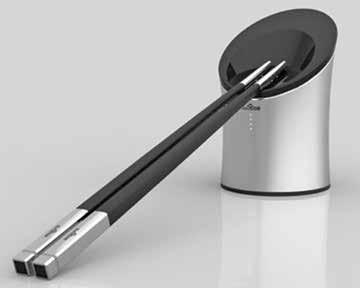
Poor food safety is a major concern in China, with one of the country's worst food scandals seeing the industrial
chemical melamine illegally added to dairy products in 2008, killing six children and making 300,000 people ill.
"Gutter oil" is a particular concern -- cooking oil illegally made by reprocessing waste oil or by dredging up leftovers from restaurants and marketing it as new.
Health authorities last year launched a crackdown on the use and manufacture of such oil, with more than 100 people arrested and 20 imprisoned -- two of them for life -- as part of the campaign.
It was not clear whether the "smart chopsticks" would go into commercial production. The company has only made a limited run of prototypes, the spokesman said, and no release date or price has been set.
China's social media users lauded the company's innovation Thursday, but lamented the need for the device in the first place.
"Is it really a good thing that they invented these?" wrote one user. "Can we still enjoy our food?"
"If I carried these chopsticks around with me everywhere, I think I'd die of hunger," wrote another. (Discovery)
In the foyer of the National Cultural Centre, an impressive art exhibition showcases the distinguished talents of the students of the E R Burrowes School of Art. Administrator of Burrowes and prolific artist, Ivor Thom stated that the exhibition is planned to be an annual event where students of the institution can display their works to the public.
At the exhibition, some of the pieces on display included ceramics, paintings, graphic art, and sculptures.
Thom expressed his gratitude to the Minister of Culture, Youth and Sport,
Dr Frank Anthony for making the exhibition possible. The minister commended the artists for their creative display and pointed out that some of the pieces could be entered in the upcoming visual arts competition.
In an interview with the Guyana Times Sunday Magazine, Elodie Smith, a painting/ceramics student who is among the batch of exhibiting artists to graduate next month, said that the exhibition is to “crown the three years the students spent at Burrowes”.
Smith, who is originally from Martinique, disclosed that she enjoys the freedom

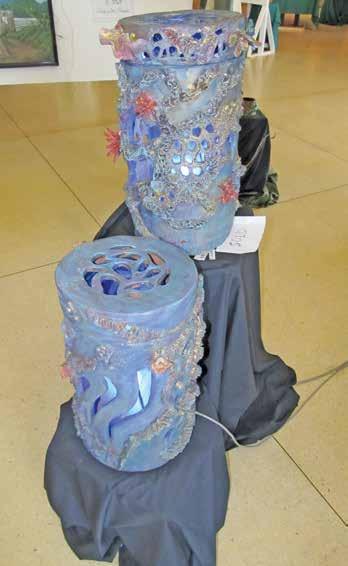
of self-expression, via art, artists have in Guyana.
“For me, art is therapeutic and helps me relax. When I’m painting or creating it’s a representation of me and helps me to express myself. I want to do more and create functional art pieces for the home. I love lights and so I enjoy creating my ceramic pieces to brighten the home. I’m inspired by people, nature and life in general,” expressed Smith.
The artist’s advice for young artists is to “keep practising by drawing every opportunity received, read a lot on art, and then get formal training. Visit the art

galleries and ask questions”.
“Personally, the creative process is very exciting. I’m sometimes surprised that I start off with one thing but

my end work is something totally different. It’s an exhilarating experience for me,” Smith declared. For more information


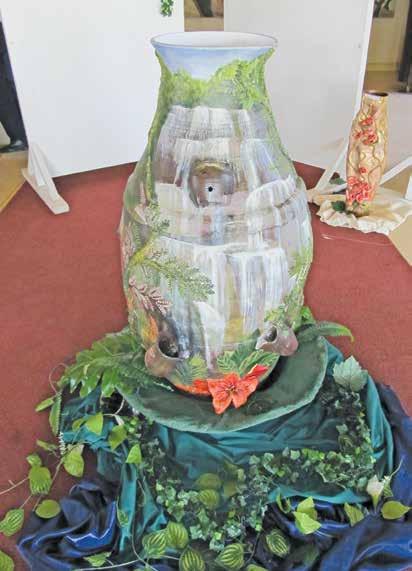
Louis Pierre De Saffon was born in France; some researchers suggest in Languedoc province in 1724, and became a land surveyor. However, in an act that was to profoundly change his fortunes, he murdered his brother during a duel (at the time outlawed in France) over a woman, and fled to the colony of Demerara seeking asylum.
Saffon Street in Charlestown, Georgetown, was named after the Frenchman. The ward itself was built on the front lands of the former Plantation Le Repentir when the land was parcelled out and sold to cover his estate debts after his death in 1784 at 60, while another account claims the lands were from the La Penitence estate.
In Demerara, De Saffon acquired much wealth, and
became owner of plantations Le Repentir (Regret) and La Penitence (Remorse), which are said to have been named in repentance of his actions in France. There is also the suggestion of a Plantation Le Misère (Woe) being another De Saffon estate.
Although he never married, he is said to have had sired a daughter with his housekeeper.
De Saffon is also known, though less spectacularly, for the De Saffon Trust; a fund he had stipulated in his will for the care and education of orphans until they reached the age of 16. After his estate debts were cleared, the remaining funds were allotted for 10 native Demerara orphans to receive his charity.
According to The British Guiana handbook, 1913, the will also stipulated, “under
the terms of the will preference must always be given to the most poor and indigent and those born of white parents”.
It wasn’t until 1825, almost 40 years later, that the trust was put into existence with two beneficiaries. By 1834, 36 persons had benefitted from the trust fund, and in 1839 the Bishop of Guiana in his report on the Diocese declared the De Saffon Institution the only public school on the colony offering a grammar school education.
The grave site of De Saffon now lies at the corner of Broad and Saffon streets, in the church yard of the St Saviour’s Church, once known as St Saviour’s Chinese Church since it was designated to provide a place of worship for the newly introduced Chinese popu-

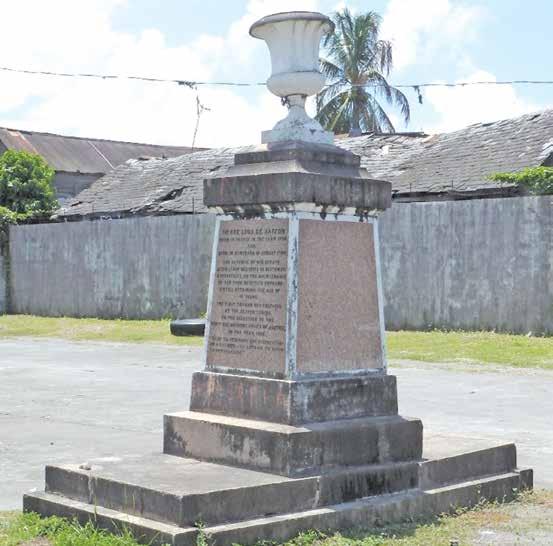
lation in Georgetown. (The word “Chinese” was omitted from the name in 1939, and the church is now known as St Saviour’s Parish Church). It was purchased in 1845 from the administrators of the Saffon estate.
The De Saffon Trust Act remains inscribed in Chapter 13:20 of the laws of Guyana, and is under ministerial authority.
A monument called The
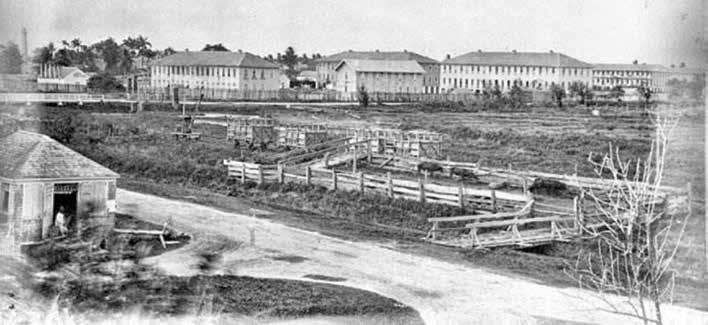
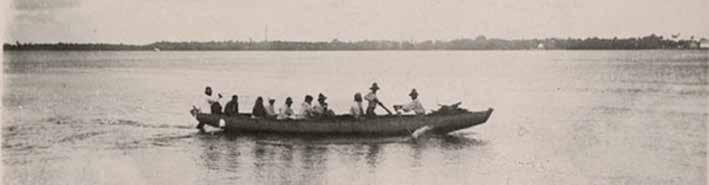
Saffon Monument was erected on his grave site in the church compound. Described as a granite monument, it reads in part, ‘Pierre Louis de Saffon: Born in France in the year 1724, and Died in
Demerara in August 1784: The Revenue of his Estate, after other bequests, be bestowed in perpetuity, on the maintenance of ten poor destitute orphans, until attaining the age of 16 years.’
He did it by adding pressure to the bottom. When there is less pressure, it rises. When there is more pressure, it lowers. If you add just the right pressure, it will stay.
(You can find a ketchup sachet at your local fast food restaurant if you want to try it).
SUDOKU KID SUDOKU
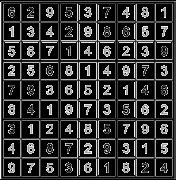


he Simoni Pond is a large fresh water oasis that flows to the Rupununi River via a smaller creek. Once the river winds down the forest-clad mountains, it slows down as it enters the vast savannah lands and opens up into five shallow river bays known as the Simoni Lakes.
The Simoni River is a tributary of the Rupununi River, and finds its source high in the Kanuku Mountains.
The best inland fishing in Guyana, including a favourite catch: peacock bass, is at Simoni Pond. There too, is a great opportunity to explore the flooded forest or savannah. A spectacular view of the beautiful spread of victoria amazonica , the world’s largest water lily and Guyana’s national flower, is also a highlight of this trip.
Besides the excellent fishing, there is
always a chance for great wildlife sightings including the Squirrel, Howler, Capuchin and Bearded-Saki monkeys. More impressive are the large Black Caiman that patrol the banks (they grow up to 18 feet), along with Giant River Otters and Capybaras. Riverine birdlife is extremely diverse and includes Jabiru Storks, Roseate Spoonbills, Woodstorks, Blackskimmers, Boat-billed Herons, and Muscovy Ducks.
Boating through the flooded forest offers unmatched opportunities to observe the unique ecosystem.
Then there is Buffalo Pond, near Karanambo Ranch on the Rupununi River. This pond offers similar adventures and an idyllic opportunity for birding and fishing enthusiasts to experience nature one-onone. (Cover photo - Breathtaking spread of Victoria Amazonica on the Simoni Pond)





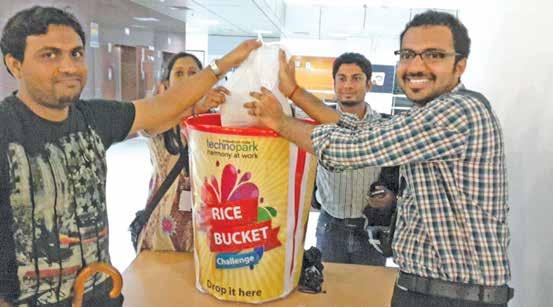
By Melvin Durai
The ALS Ice
Bucket
Challenge has been a huge success around the world, generating more than $100 million for the ALS Association. Conceived as a way to raise awareness about ALS (amyotrophic lateral sclerosis) and help find a cure for the disease, the Ice Bucket Challenge has gone viral, causing immense joy at the offices of the ALS Association, as well as the companies that produce ice. Even the rapper Vanilla Ice is thrilled, as millions of people feel a sudden urge to listen to his 1990 hit song “Ice Ice Baby.”
While the Ice Bucket Challenge has also been a hit in India, another campaign has been gathering steam: The Rice Bucket Challenge. It requires you to eat an entire bucket of rice at one meal. Then make a donation to the Diabetes Foundation of India.
Actually, the Rice Bucket Challenge isn’t like that at all. The brainchild of Hyderabad journalist Manju Latha Kalanidihi, it involves giving a bucket of rice to a needy person. Participants are asked to post a photo on social media of the rice-giving, tag their friends and challenge them to do the same.
“It’s local, desi and a practical solution to issues in the
vicinity,” Kalanidihi wrote on Facebook. “Instead of wasting water on ice bucket challenge, save water and feed the hungry.”
Not only does the Ice Bucket Challenge seem wasteful to many Indians, it’s hardly challenging to some of them.
“Ice Bucket Challenge is no big deal for me,” a Kerala man named Thomas T. Thomas said. “I take ice-cold bath with bucket every day anyway. It cools me off. Very refreshing.”
The Rice Bucket Challenge is far more appealing to him and others. Dozens of photos of grateful people receiving buckets of rice have been posted on the Facebook page of the Rice Bucket Challenge. More than 60,000 people have ‘liked’ the page, and even Vanilla Ice has endorsed the idea, promising to release a new version of his song called “Rice Rice Baby.”
The popularity of the Ice Bucket Challenge and the Rice Bucket Challenge will no doubt produce many other similar campaigns. Here are some that you should definitely add to your bucket list:
The Spice Bucket Challenge: Like the Rice Bucket Challenge, this is perfect for Indians, Pakistanis and others who like to spice it up. Just fill up a bucket with your favorite spice and donate it to a needy person. This challenge will be promoted

Guess it's no longer 'cellular' phones, only 'celery' phones

A little boy had been misbehaving and was sent to his room. After a while he emerged and informed his mother that he had thought it over and then said a prayer.
"Good!" said the pleased mother. "If you ask God to help you not misbehave, He will help you."
"Oh, I didn’t ask Him to help me not misbehave," said the little boy. "I asked Him to help you put up with me."
Three old ladies are sitting in a diner, chatting about various things.
The Mice Bucket Challenge: This is far more challenging than the Ice Bucket Challenge. Just go to a pet store, buy a bucketful of mice and dump them on your boss at work. (Be honest – you’ve been dreaming of doing this for a long time.) Your boss may scream obscenities at you, but just tell him or her that it’s for a good cause: the emancipation of mice. Post a photo of your achievement online and receive a lifetime membership in PETA (People for the Ethical Treatment of Animals).
The Device Bucket Challenge: You probably have a friend who is always buying the latest device, whether it’s a cellphone, iPod or tablet computer. Your challenge is to fill a bucket with all the devices lying around and dump them on your friend. Tell your friend to donate some of his devices to a charitable organization that can use them. If he complains, don’t make a big deal about it. Just leave him to his own devices.
The Lice Bucket Challenge: This is perhaps the most difficult challenge of them all. Find children in your town or city who have lice in their hair, do them a big favor by removing all their lice, and don’t stop until you’ve filled an entire buck-
et. When someone asks you if you’ve done the Ice Bucket Challenge, dump the bucket on them and say, “No, but I’ve done the Lice Bucket Challenge.”
The Advice Bucket Challenge: Ask all your friends and relatives for advice – all kinds of advice: how to pay for college, how to get a job, how to find a spouse, how to save money for retirement. Write all the advice on strips of paper, fill a bucket with it, and dump it on your children. Trust me, they’ll be eternally grateful. But just in case they aren’t, keep a bucket of mice ready.
One lady says, "You know, I'm getting really forgetful. This morning, I was standing at the top of the stairs, and I couldn't remember whether I had just come up or was about to go down."
The second lady says, "You think that's bad? The other day, I was sitting on the edge of my bed, and I couldn't remember whether I was going to bed or had just woken up!"
The third lady smiles smugly. "Well, my memory's just as good as it's always been, knock on wood." She raps the table. With a startled look on her face, she asks, "Who's there?!"
A businessman on his deathbed called his friend and said, "Bill, I want you to promise me that when I die, you will have my remains cremated."
"And what," his friend asked, "do you want me to do with your ashes?"
The businessman said, "Just put them in an envelope and mail them to the Internal Revenue Service. Include a note that says, "Now, you have everything."
A burglar broke into a house one night. He shone his flashlight around, looking for valuables, and when he picked up a CD player to place in his sack, a strange, disembodied voice echoed from the dark saying: "Jesus is watching you." He nearly jumped out of his skin, clicked his flashlight out, and froze.
When he heard nothing more after a bit, he shook his head, clicked the light back on and began searching for more valuables. Just as he pulled the stereo out so he could disconnect the wires, clear as a bell he heard: "Jesus is watching you." Freaked out, he shone his light around frantically, looking for the source of the voice. Finally, in the corner of the room, his flashlight beam came to rest on a parrot.
"Did you say that?" he hissed at the parrot.
"Yep," the parrot confessed, "I’m just trying to warn you."
The burglar relaxed. "Warn me, huh? Who are you?"
"Moses," replied the bird.
"Moses," the burglar laughed. "What kind of stupid people would name a parrot Moses?"
"Probably the same kind of people that would name a Rottweiler Jesus," the bird an-
swered.
Sibling education
Troy, a first grader said to his mother, "Mom, the teacher was asking me today if I have any younger brothers or sisters who will be coming to school."
Troy’s mother replied: "That’s nice of her to take such an interest, dear. What did she say when you told her you are the youngest child?"
She just said: "Thank goodness!"
Mommy's a fortune teller
"Can people predict the future with cards?" Suzie asked Little Johnny.
"My mother can," said Johnny.
"Really?"
"Yes, she takes one look at my report card and can tell me exactly what will happen when my Daddy gets home."
Weight loss plan
An extremely overweight man was put on a diet by his doctor.
"I want you to eat regularly for 2 days, then skip a day, and repeat this procedure for 2 weeks. The next time I see you, you’ll have lost at least 5 pounds," the doctor said.
When the man returned, the doctor was shocked that the man had lost nearly 20 pounds.
"Why, that’s amazing!" the doctor said, "Did you follow my instructions?"
The man nodded... "I’ll tell you though, I thought I was going to drop dead that 3rd day."
"From hunger, you mean?" asked the doctor.
"No, from all that skipping food."
Do you know who I am?
A man joined a big Multi National Company as a trainee. On his first day, he dialled the pantry and shouted into the phone, "Get me a coffee, quickly!"
The voice from the other side responded, "You’ve dialled the wrong extension! Do you know who you’re talking to?"
"No," replied the trainee.
"I’m the Managing Director of the company!"
The trainee shouted back, "And do you know who YOU are talking to?"
"No." replied the Managing Director indignantly.
"Good!" replied the trainee and puts down the phone.

Husbands are husbands Wife: 'What are you doing?'
Husband: Nothing. Wife: 'Nothing...? You've been reading our marriage certificate for an hour.'
Husband: 'I was looking for the expiration date.'
Wife: 'You always carry my photo in your wallet... Why?'
Hubby: 'When there is a problem, no matter how great, I look at your picture and the problem disappears.'
Wife: 'You see how miraculous and powerful I am for you?'
Hubby: 'Yes! I see your picture and ask myself what other problem can there be greater than this one?'