Times Magazine


On 5 October 1992, the People’s Progressive Party inherited a country that was not only broke, but was saddled with a US$2.1 billion debt that left absolutely no funds to provide even basic social services to the citizens of Guyana.
Today, 22 years later, Guyana has become a positively transformed country by every single marker - economically, socially or culturally. The economic gains especially have been nothing short of spectacular - summarised rather succinctly by the statistic that per capita GNP (how much each citizen earns annually) jumped over six times from US$506 in 1992 to US$3410 at the end of last year! In real terms this is reflected in new car ownership which now exceeds 10,000 annually. In Guyana today, it is not only a "chicken in every pot" but "a car in every driveway"!
Sure Guyana has a far way to go, but a country and its government's perfor-
mance has to be judged from where its journey began. And from 1992, Guyana has been extricated from a hole that very few countries in similar states - such as several sub-Saharan countries - could become even viable in the present.
But the PPP's greatest success has been in the creation of an overarching economic environment - still being unfurled - that has ensured a 5% growth rate
in the last decade that is unmatched in the region. In fact, the success of the government has created its own dilemma in that there is so much alternative employment available for the average person, that the traditional sugar industry cannot secure enough employees for its demands.
One of the most visible signs of the economic transformation can be seen in the remarkable statis-

tic that over 100,000 house lots have been distributed since 1992, with more than 70,000 homes built since then. This has been facilitated through the introduction of a raft of incentives so that owning a house is within the reach of every Guyanese. Conclusively, it is shown that house ownership is the largest single factor in building a stable society that can have sustainable development.
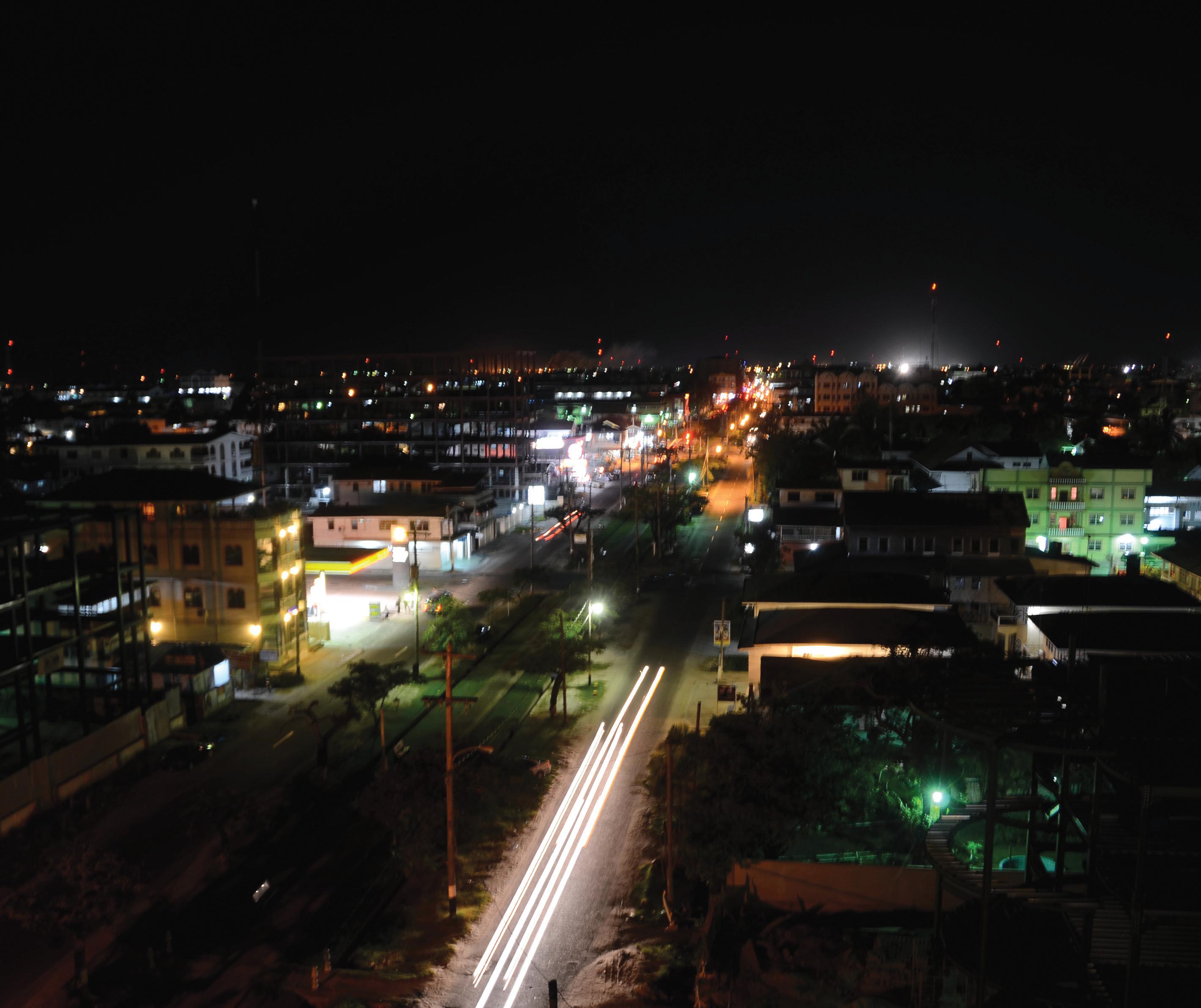
The housing boom has also segued into a general construction boom - especially in the cities and townships. The cityscape
as the hotel industry, for instance, has expanded to keep up with the influx of tourists. Guyana is about to open its first internationally branded hotel in 50 years - the Guyana Marriott - on the Georgetown seashore. This service industry alone has created hundreds of new jobs. But in its development of the Eco-tourism asset of Guyana, the government has pioneered the ownership of over five resorts to Amerindian communities in the hinterland. For the first time in the history of Guyana, Amerindians are not voyeuristic objects but in control of how their heritage is showcased.
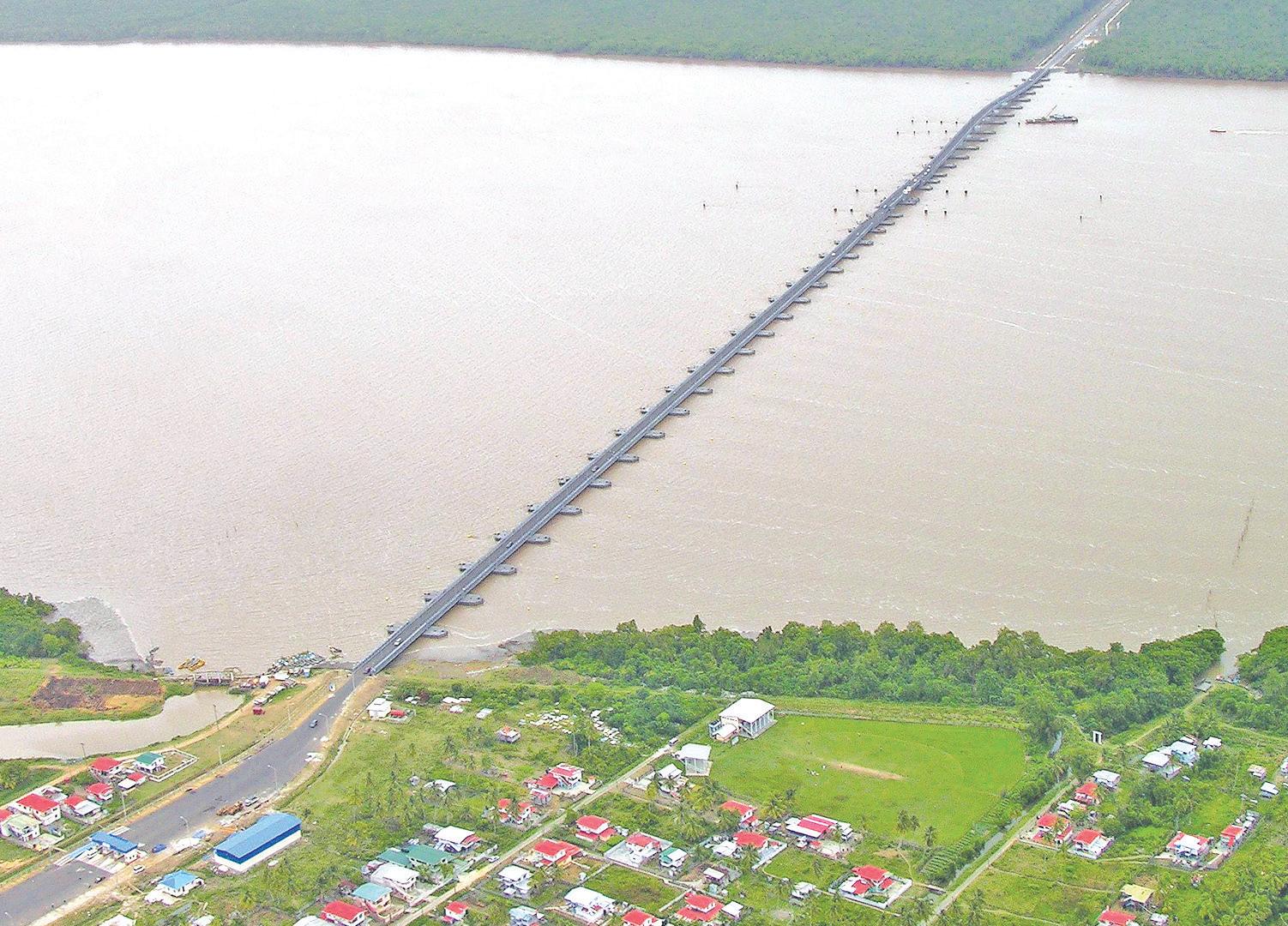
The roads and infrastructure of the country in 1992 were so pockmarked by craters that a popular joke was that no expectant woman could be taken to a hospital to deliver: the blessed event was bound to happen on the road to the delivery room. Since that time, roads and bridged within villages, towns and cities have been rebuilt as well as the connecting public roads. The Berbice Bridge has made travelling to and from the Ancient County into a painless one-day trip. The two
Southern Caribbean and possibly across the Atlantic to Africa and even India.
The CJIA is being transformed into a modern, airport that can accommodate even the largest aircrafts that ply the skies. Gold mining has taken off in Guyana in the last decade and while there was a lull last two years, occasioned by the fall in the prices of the rare metal, investors are bullish on the long term prospects of the industry. Recently, two international companies, Guyana Goldfields Inc of Canada and Troy Resources, have made substantial investments in the sector, which should add a significant boost to the 500,000 ounces that is presently being produced annually.
It is accepted by all that cheap energy is a prerequisite for the development of our industrial base into one that can compete in the world market. Our agroprocessing industry, especially, has suffered from this handicap. The government has not been blind to this reality - but unfortunately, the Amaila Falls Hydro Electric Project (AFHEP) which would have
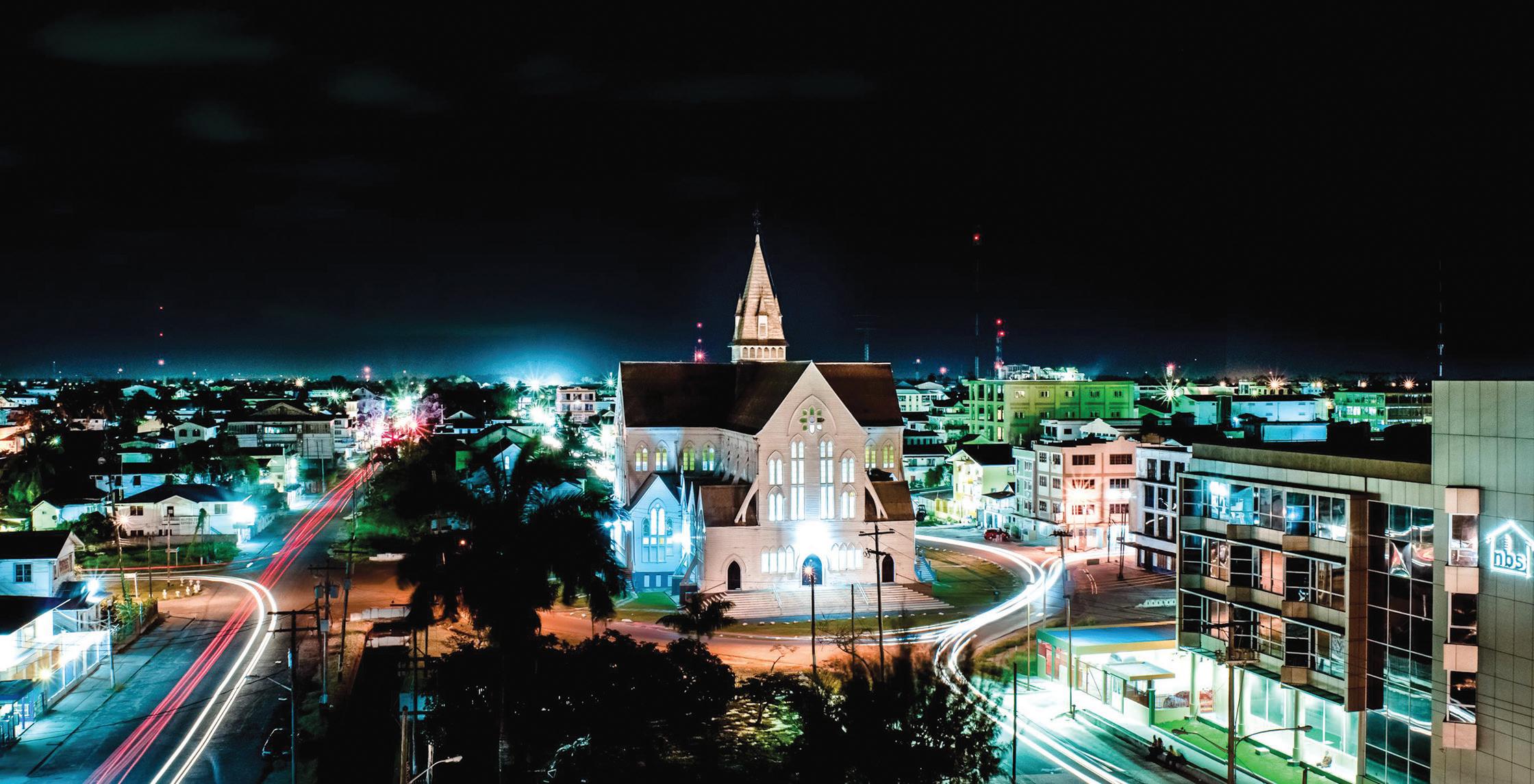
of Georgetown has been so transformed by the hundreds of high-rise buildings that it can hardly be recognised as the sleepy backwater town it was only a decade ago. But from a direct economic standpoint, the building boom - the greatest seen in the history of the Caribbean - has not only transformed the landscape of the country, but the composition of the workforce, through the direct and ancillary employment opportunities created.
Tourism has been another non-traditional area in which billions of dollars are being pumped into Guyana
new Chinese-built ferries have greatly improved the traffic in and out of Essequibo.
The all-weather surfaced Georgetown-LindenLethem road, which will finally open up our country to development in even the most remote quarter, is now ever closer to reality. The plans and funding requirements are before the presidents of Brazil and Guyana and by next year ought to move from the drawing board to implementation.
The government has conceptualised Guyana as an airport hub for Northern South America, the
doubled our electricity generating capacity and save funds from fossil fuel purchases - was derailed by the Opposition.
However, the Lethem Highway has been paired with a proposal from Brazil to exploit the entire PotaroCuyuni Basin for an integrated 4000MW generating infrastructure of dams and turbines that would supply all of Guyana needs, with the excess sold to Brazil. Overall, one would have to conclude that Guyana has indeed come a long way - and that even greater progress lies ahead under the PPP government.
22 years of revolutionary housing development
The housing situation in Guyana was desperate with strong evidence of insecure tenure and increased levels of homelessness. Though Guyana’s population growth rates had been minimal, the housing needs still could not be met adequately for the major part of the existing population.
Then enters the People’s Progressive Party Civic in 1992, and through a direct policy, the housing sector of this country was revolutionised. Scores of new housing schemes have been developed and several squatter settlements regularised.
There are few things that generate a strong sense of belonging and attachment, and inspire as much long term commitment to a society, than acquiring the sta-
home
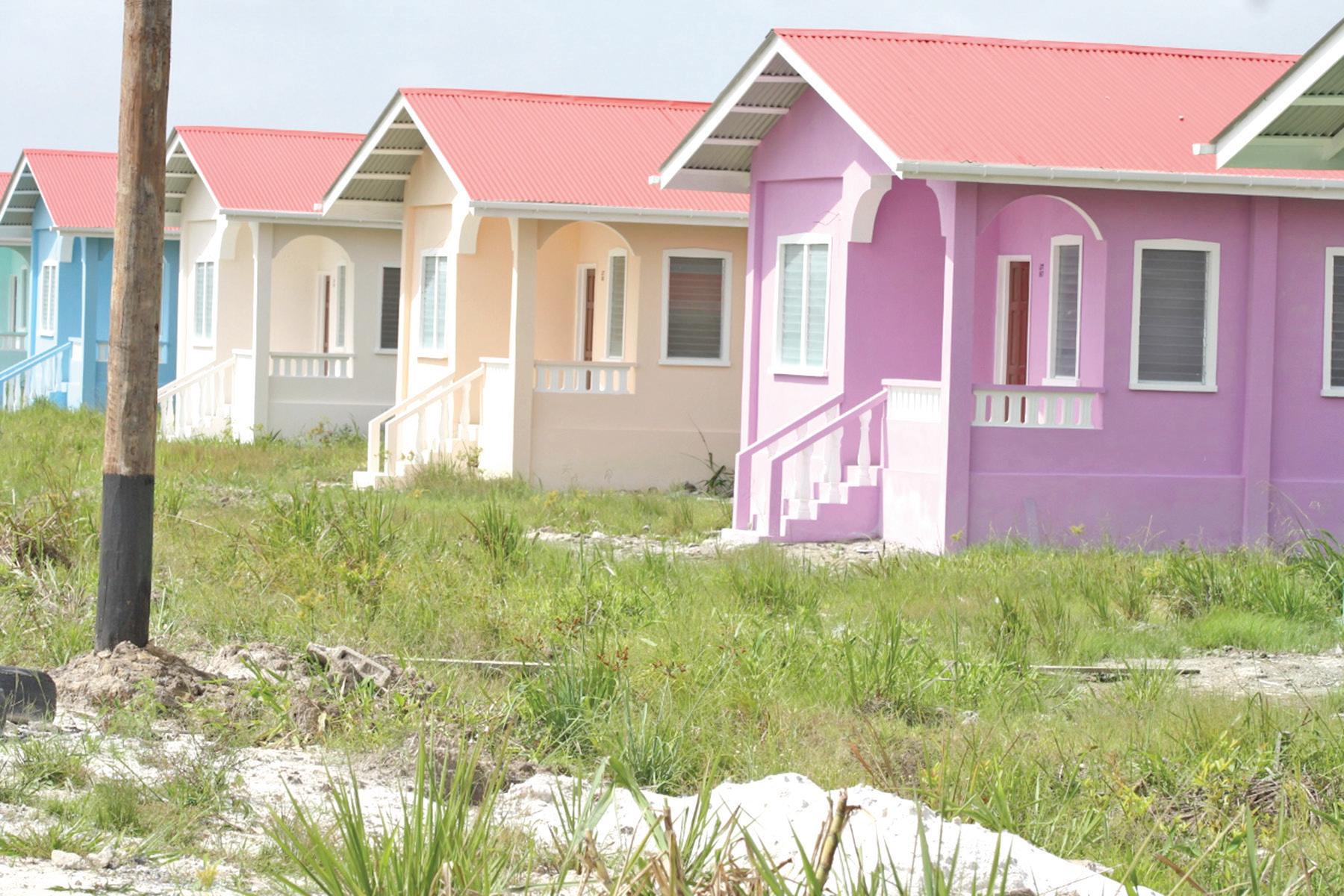
Since coming into office, more than 106,000 new house lots have been distributed, on which more than 68% have had construction of new homes commence, resulting in growth in the number of households and reduction in average. Entire new communities such as Diamond/ Grove and Parfaite Harmonie have been established, generating a boom in the construction sector and creating new centres for business growth. Existing communities have been upgraded and squatter settlements regularised.
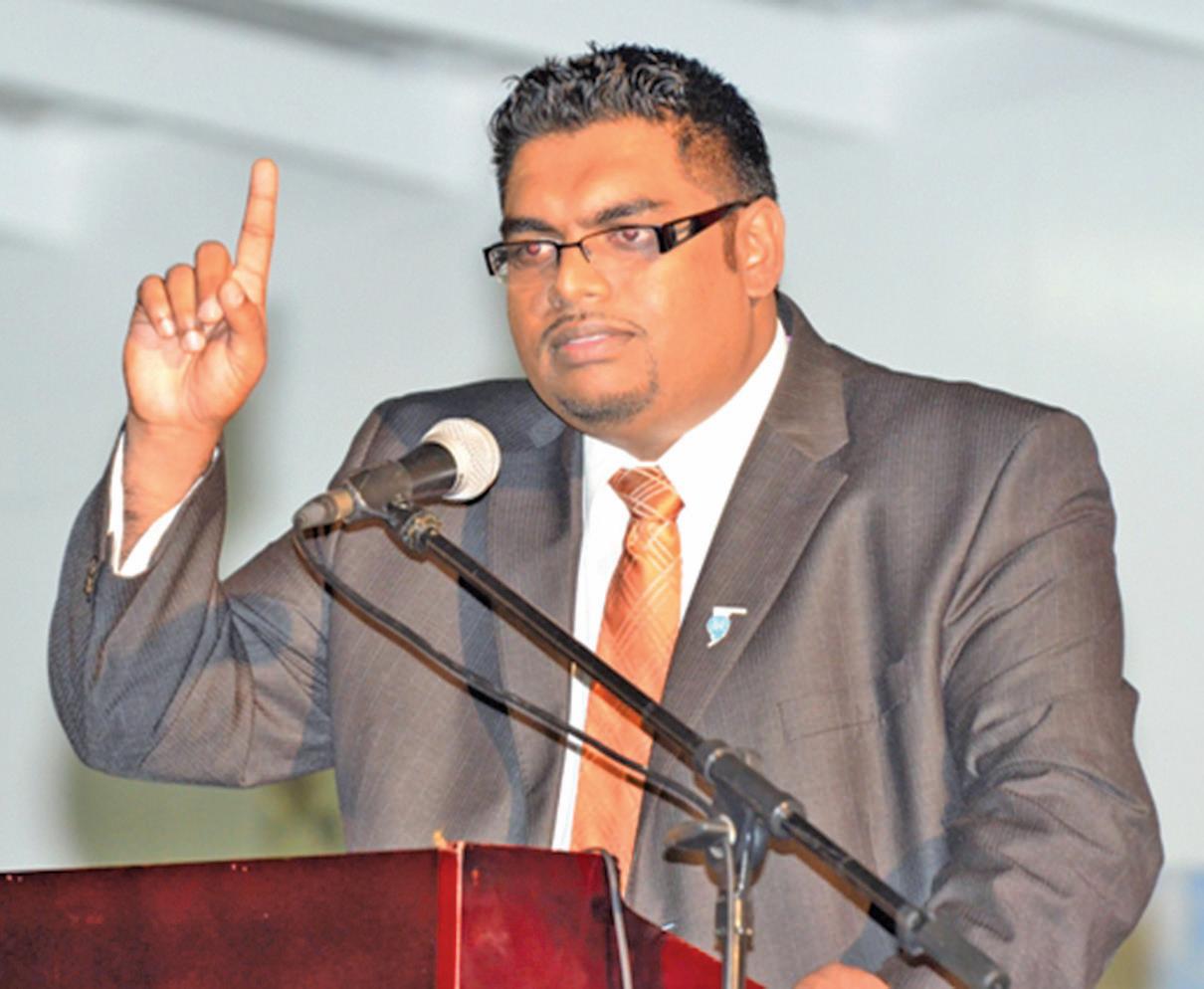
Administratively, since his coming into office, current Housing Minister Irfaan Ali has whipped up greater desire by citizens to own their own home through
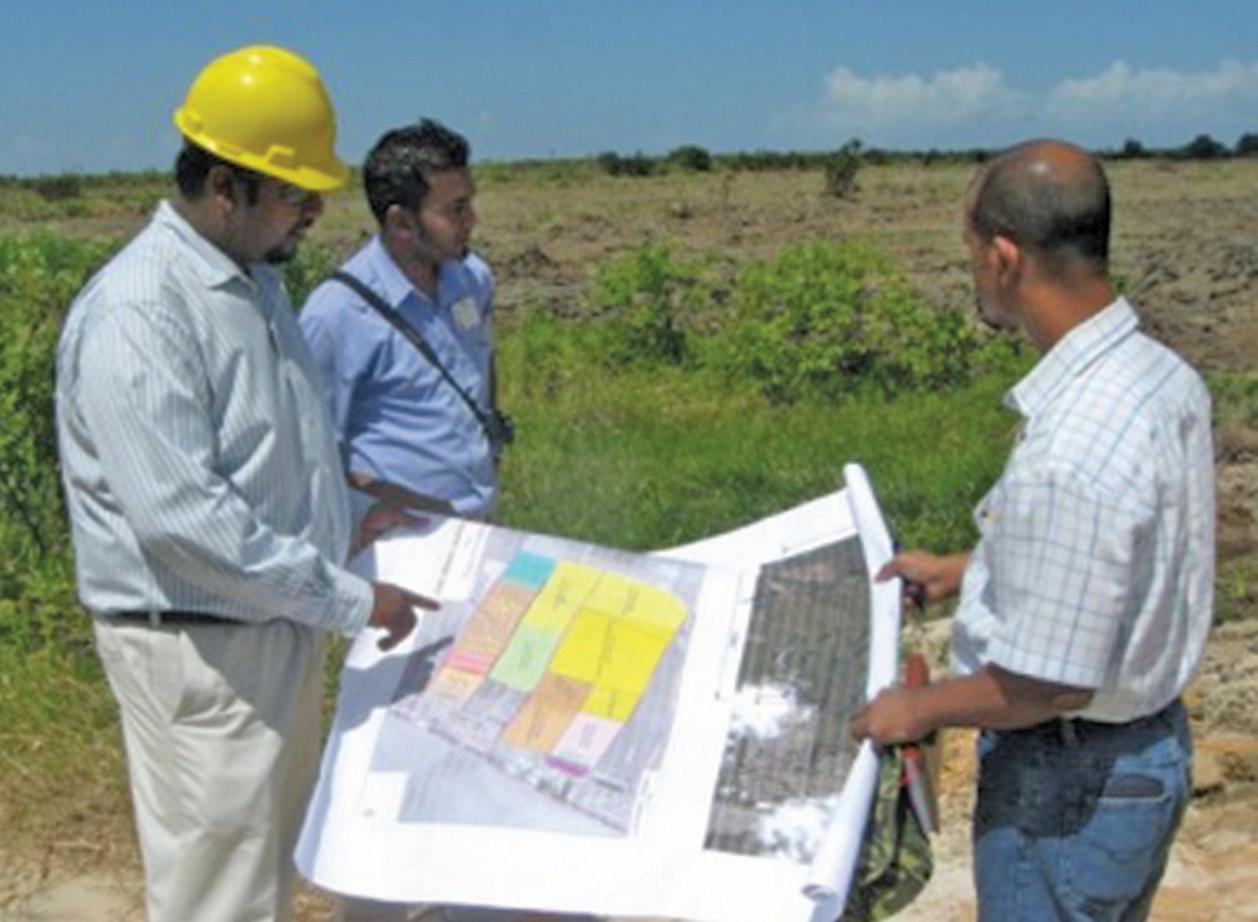
his well publicised and attended ‘One Stop Shop’. Through collaboration with the Ministry of Finance and the commercial banks, there is now more than ever before greater access to more affordable financing through the implementation of the government-supported low income housing programme, under which tax incentives are given to the banking sector to promote special lending programmes for young professionals and single persons.
In his roll out of plans for this year, Minister Ali had promised that some 6,000 house lots will be distributed; the construction of 176 core houses at $1.8 million each; construction of 100 single flat houses at $3.7 million each; and 50 house lots for nurses, police and teachers. In addition, he announced the upgrade of 45 km of existing road in 36 villages such as Sophia, Prosperity (also known as Barnwell), Diamond, Enmore, Eccles North, Eccles South, Grove, Tuschen, Zeelught, Parfaite Harmonie, Vryheids Lust and Foulis.
Additionally, Ali spoke of his ministry working assiduously to realise its target for 2014 in completing the installation of electrical distribution networks for several Government of

The developments in question include those along the East Bank of Demerara, as well as in Regions Three, Five, Six, Seven and Ten, accounting for some 37 areas. According to Minister Ali, the application for house lots process is now in “real time” in some areas.
The ministry will be inviting bids, by way of public tender, for works related to the installation of electricity distribution networks for 14 areas, including Recht-Door-Zee Phase Two, Amelia’s Ward Phase Three, Plot B Herstelling,
and Providence Phase Two.
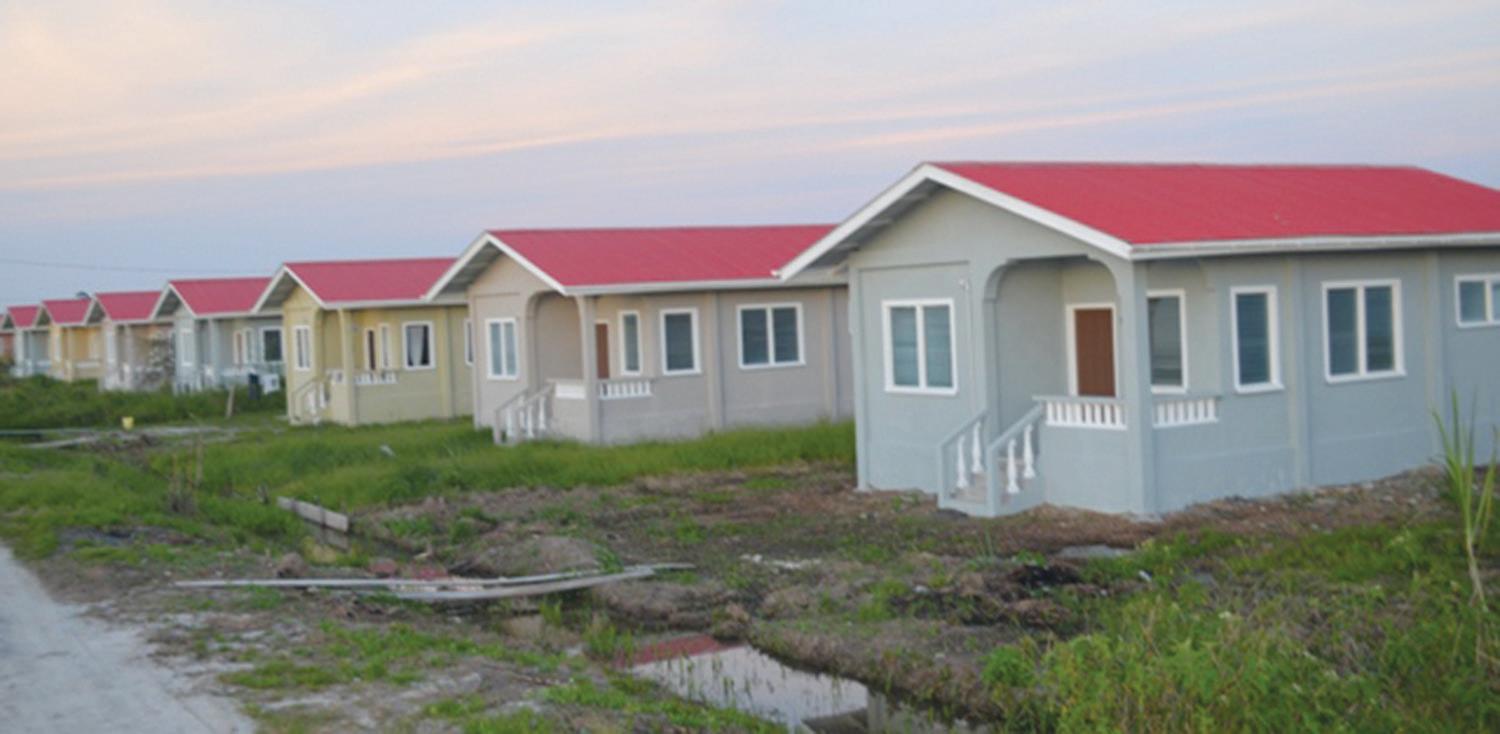
Meanwhile, the government’s housing drive has not been restricted to the coast with the launch of the Hinterland Housing Project,
first phase project targeted hosing needs of eight communities in Region One (Oronoque, Manawarin and Whitewater) and Region Nine (Kwatamang, Apoteri, Central Annai, Massara and Kataoka).
which represents the first state intervention in housing for Guyana’s indigenous population. Financed as part of the Second Low Income Settlements Programme, which is being implemented by the Central Housing and Planning Authority (CHPA), in collaboration with the Ministry of Amerindian Affairs, with funding from the Inter-American Development Bank, the
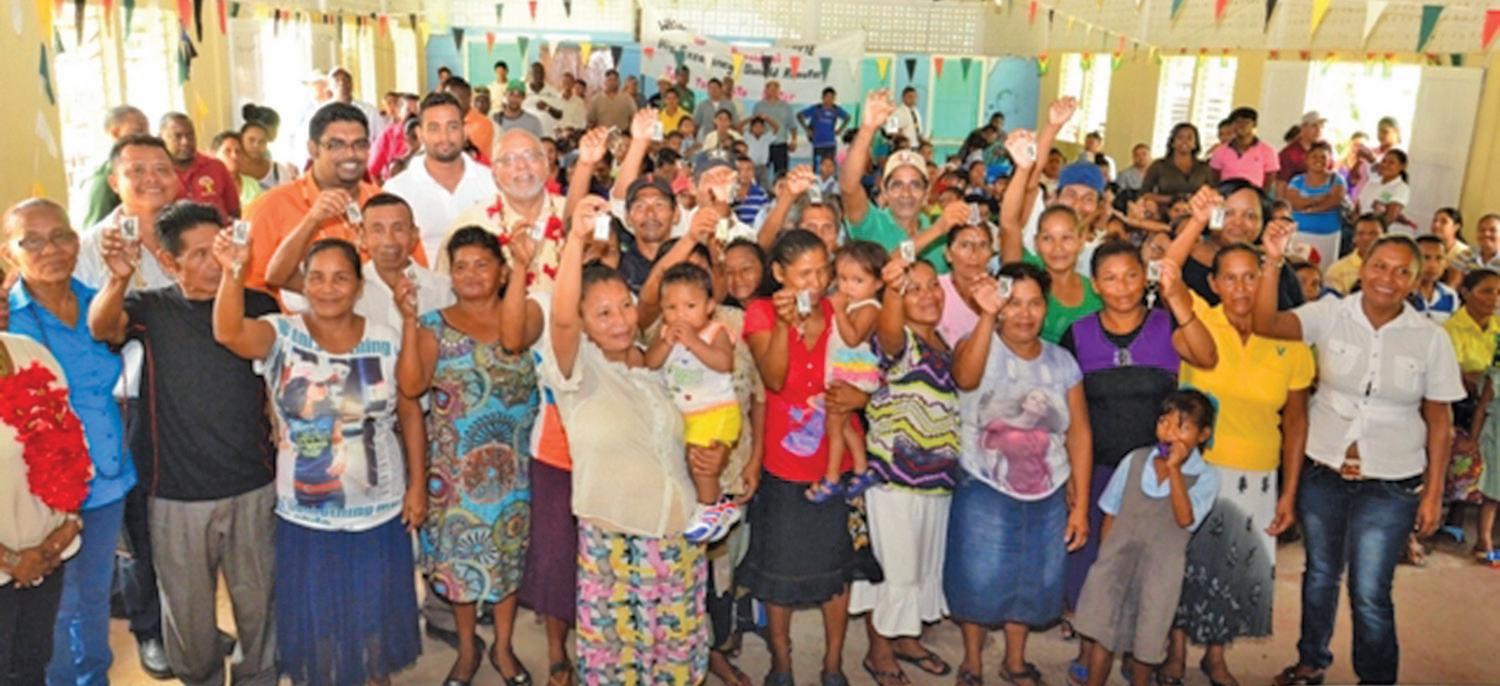
To date, 192 subsidies have been disbursed, that is 91% of the total number of subsidies, with 109 two bedroom houses (500 sq ft) completed, and 83 roofs replaced. The completion of these houses and replacement of roofs improves the quality of life of 208 families, benefiting approximately 1,500 persons (household size of eight persons per family).

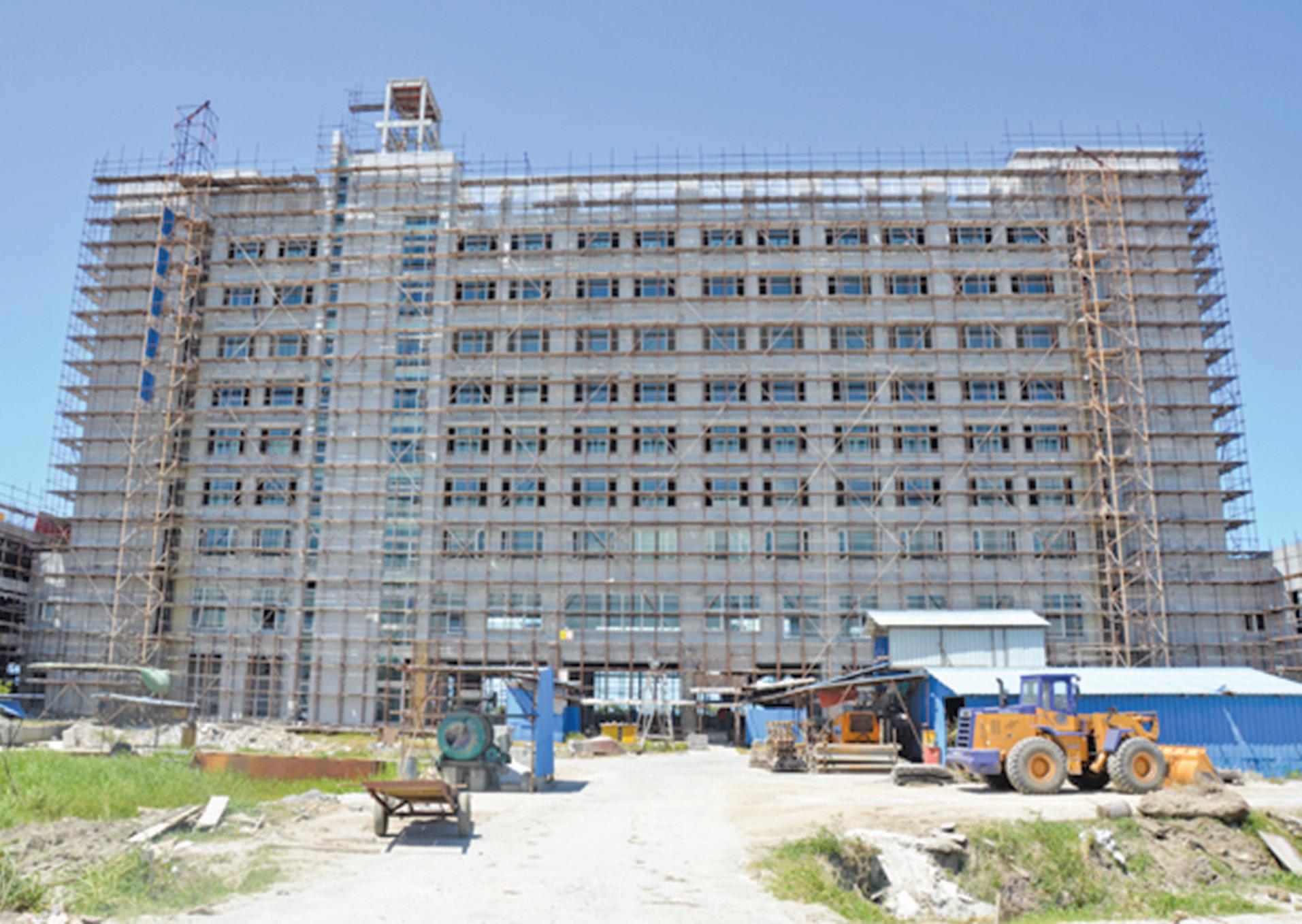
The world-class hotel, the Marriott brand, which is slated for completion in December, is another model of privatepublic partnership investment and a major achievement for the People’s Progressive Party/Civic government as it celebrates its 22nd anniversary.
The flagship luxury edifice, when completed, will be the first internationally-branded hotel since 1967 when Le Meridian Pegasus was introduced to these shores. Undoubtedly, the US multimillion investment, featuring all modern amenities, is testimony of investors’ confidence in
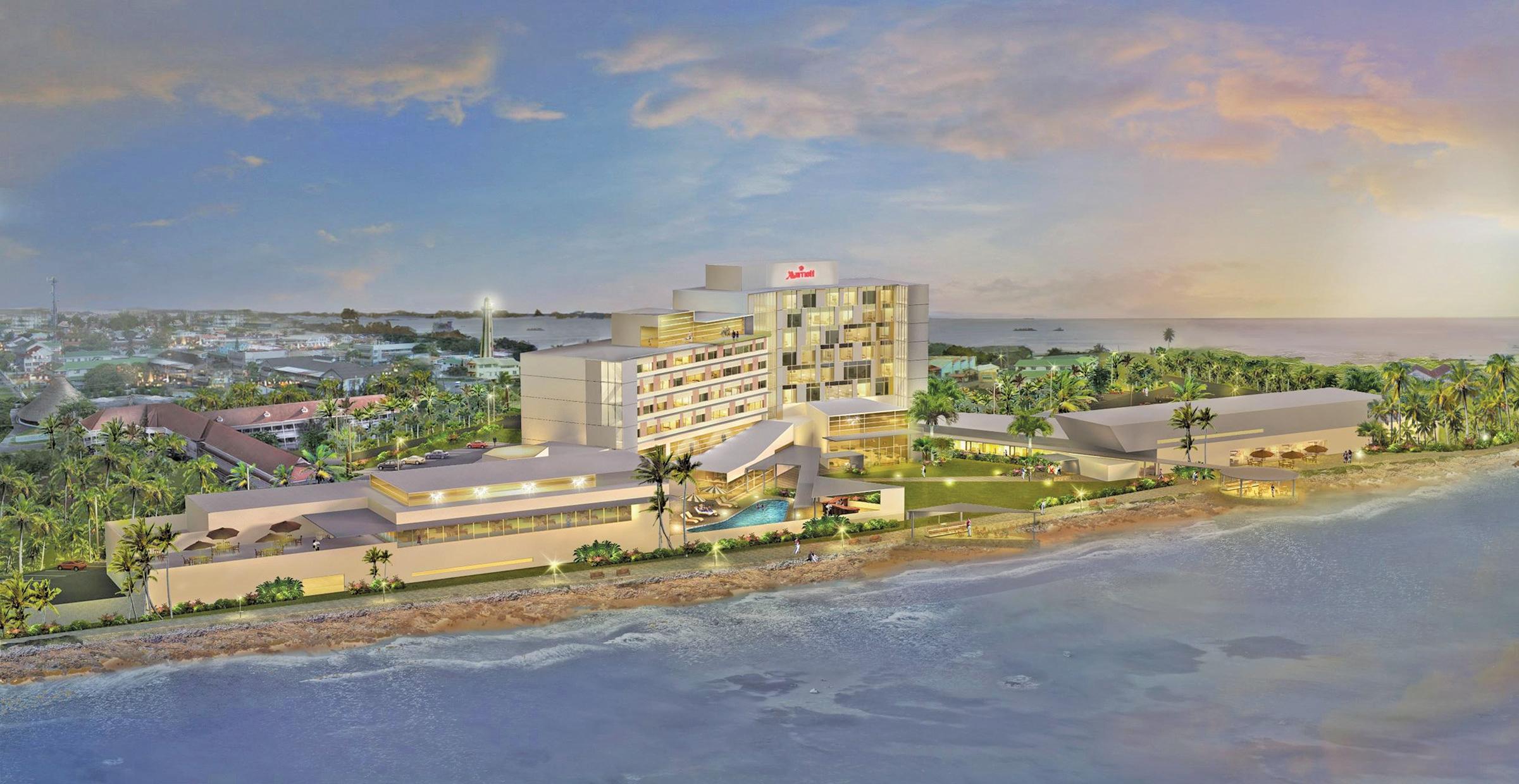
the economy and fortifies Guyana’s push to become a premiere tourist destination.
The project under the management of Atlantic Hotel Inc (AHI), a receiver company, when become operational, will add to the existing pool of top class local hotels and demonstrate that

the private-public partnership model of development can work in Guyana. The principal investors in AHI (Marriott Hotel Guyana project and Entertainment Complex) are the National Industrial and Commercial Investments Limited (NICIL) and the British Virgin Islands (BVI) -registered ACE Square Investments Limited.
ACE Square Investments Limited has acquired 67% of the equity of AHI. ACE Square Management Limited’s beneficial shareholders are the same as ACE Square Investments Limited. The beneficial owners of the shares in ACE Square Investments Limited, and the owners of the shares in ACE Square Investments Limited, through a BVI-
restaurants of a modern hotel, a promenade connecting the existing sea wall to the pier, and an entertainment complex with a casino, night club, and a separate restaurant from the hotel.
Guyanese eagerly await the completion of the flagship hotel, which will complement Georgetown's historic architectural splendour. Visitors will marvel the picturesque views of the Demerara River meeting the Atlantic Ocean and enjoy a charming welcome to nearby Georgetown's central district with its various attractions.
In fact, the local brand of the luxury hotel cannot wait to begin operations in Guyana, and has summed up the experience of what it has to offer. “Witness a breathtaking sunset by the
life and full of energy.”
Brief background on Marriott International, Inc.
According to its website, www.marriott.com, Marriott International, Inc. is a leading hospitality company with more than 3,900 properties, 18 brands, and associates at its headquarters, managed and franchised properties around the world. Founded by J Willard and Alice Marriott and guided by Marriott family leadership for more than 80 years, the company is headquartered in Bethesda, Maryland, USA.
registered holding company, Big Splendor Limited, are Hong Kong businessmen, Victor How Chung Chan and Xu Han.
The government is the minority partner with 33% (US$4 million) of the overall equity in the project. Recruitment for the entertainment complex staff has already begun. Overall, both the hotel and the entertainment complex are expected to employ between 400-500 Guyanese.
The project is expected to provide a 197-room Marriott Hotel, the largest conference/banqueting facilities in the country, bar/
pool bar and grill or re-energise at our state-of-theart fitness centre. Stay connected and entertained with Marriott's plug-andplay system, 42-inch flat panel TVs and high-speed Internet. Plan meetings effortlessly with over 8,600 square feet of flexible meeting space. Whether hosting an intimate event for 10 or a large-scale affair for 700, our Guyana Marriott Hotel Georgetown can easily accommodate your needs. Book one of our 197 guest rooms or suites with views of the ocean or Georgetown's city lights. Treat yourself to a spot; full of light, full of
Since 1927, Marriott has been known for a culture that puts people first. Marriott is growing globally - and opening up a world of experiences and opportunities for people from all walks of life.
Marriott International, Inc. is recognised worldwide for its enduring values, spirit to serve, and its corporate commitment to creating better places to live and work.
At the cornerstone of Marriott’s business is the philosophy, “How we do business is as important as the business we do.” Integrity and ethical behaviour are part of Marriott’s heritage and provide a framework for its global operations today.
By Svetlana MarShall
Sitting on the north-
ern coast of South America, Guyana, the land of many waters, is rich in hydro-resources.
It was based on this natural wealth, and the fact that Guyana currently imports 100% of its oil, that the Government of Guyana, through a public/ private partnership agreement, initiated the Amaila Hydropower Project.
Under the leadership of the then President Bharrat Jagdeo, the project was designed to have the country generate its own electricity using domestic resources instead of relying on imported heavy and light fuels.
The domino effect from this multi-million dollar project, which was estimated at US$800M, would have resulted in Guyanese being provided with reliable and affordable electricity. Additionally, it would have created hundreds of jobs for the unemployed, while simultaneously boosting the country’s economy.
According to the proj-
Assembly in the passing of key legislations.
But before crumbling in 2013, the Amaila Falls Hydropower Project was a private sector-led initiative, designed to be financed through loan from the InterAmerican Development Bank (IDB) and China Development Bank (CDB) and with equity from Sithe Global and the Government of Guyana. China Railway First Group was identified for the construction of the power facility.
However, the Donald Ramotar Administration has never lost sight of the project. After the Opposition shot it down in 2013, the Administration went back to the drawing board this year with the hope of resuscitating the project.
In recent times, the government has indicated that China Development Bank has pledged to pump US$500M into the materialisation of the Amaila Falls Hydropower Project with China Railway First Group (CRFG) remaining committed as well. China Development Bank has also
ered to Guyana's capital, Georgetown, and its second largest town, Linden, by an electric transmission line.
When it materialises, GPL will own and operate the project for 20 years, after which, the project will be transferred to GPL for free, through a Build Own Operate Transfer (BOOT) arrangement. Based on studies, an estimated 20% reduction in electricity tariffs would be experience when the Amaila Falls Hydro Power Project foes into operation with residential consumers saving approximately $208.7M monthly or $2.5B annually.
But even as the government explores possible avenues that can be taken to resuscitate the Amaila Hydropower Falls Project, a Brazilian consortium earlier this year committed US$45M into conducting prefeasibility and feasibility studies to determine Guyana’s potential to develop hydropower stations in the Upper and Middle
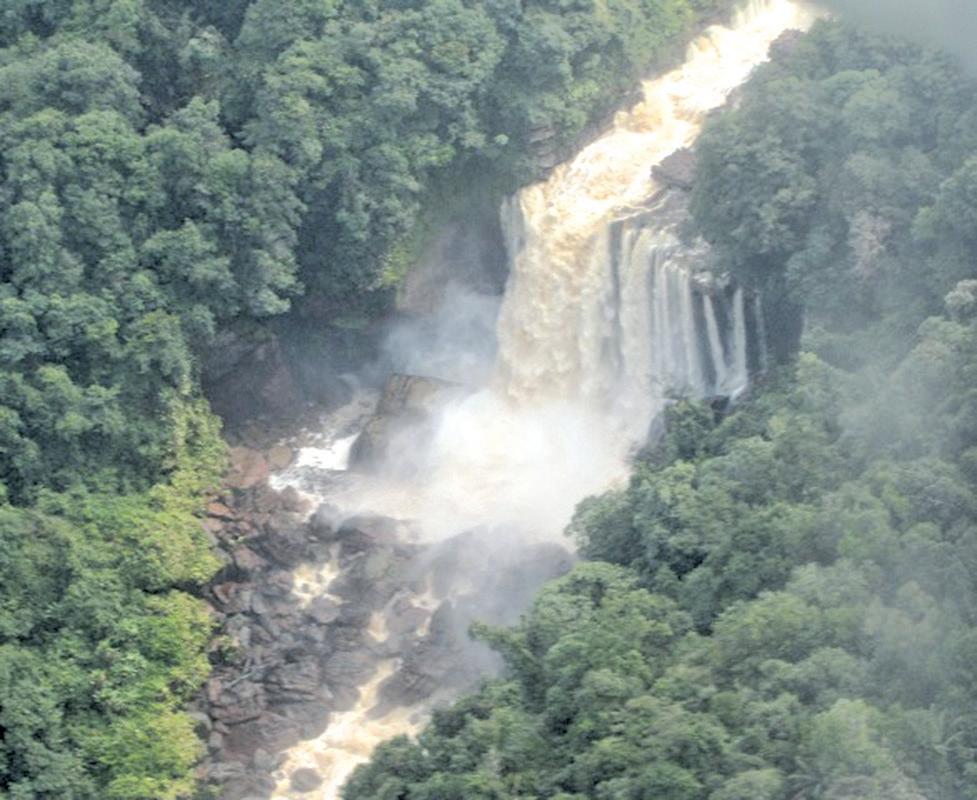
ect plan, the Amaila Hydropower Project will help to improve the dependability of the energy supply in Guyana by providing up to an estimated 165MW of renewable energy. The project includes a new double circuit high voltage 230-KV transmission network that will form the backbone of a new high voltage super highway – enhancing the reliability and deliverability of electricity throughout the country.
However, despite clearly outlying the project plan, the government was unable to win the support of the Opposition in the National
indicated its willingness to pour more funds into the project to fill any gap.
Sithe Global had pulled out of the Amaila Falls Hydropower Project in August 2013, two days after the National Assembly failed to meet consensus on legislative arrangements deemed necessary to move the project forward. The company had already expended approximately US$16M on preparatory work.
Project was designed to be constructed where the Amaila and Kuribrong rivers meet. Electricity produced at the plant would have been deliv-
Mazaruni.
Queiroz Galvao (QG) and OAS, the two multibillion dollar Brazilian companies, make up the consortium. Already the government has consulted with stakeholders on the undertaking of the prefeasibility and feasibility studies which will determine the potential of hydropower development in the Middle and Upper Mazaruni to the capacities of 1500 megawatts and 3000 megawatts respectively. Both QG and OAS has an annual revenue of US$3.5B or a collective US$7B in over 23 countries spanning from South American to Central

America, Africa, South East Asia and Russia. They are specialised in infrastructural development but more notably hydropower. Government anticipates that there will be benefits will derive from the project it the studies are proven to be successful. Having hydropower plants within Region Seven will not only provide cheap and clean electricity but will foster growth within the so-
cial and economic sectors through the creation of direct and indirect job opportunities.
On the national scene, it will pave the way for Guyana to be less dependent on imported fossil fuel which cost the country a whopping US$543M in 2013. But with the introduction of hydropower, Guyana can generate a new source of energy by selling power to Brazil. Additionally, studies
will also determine whether Guyana can become a part of the international grid. It was explained that under the North Arc (The Arco Norte) Initiative Guyana is analysing the possibility of building electrical interconnection lines between Guyana, Suriname, French Guiana and Brazil. If feasible, Guyana is also looking to sell its power where needed among its neighbouring countries.
In the publication, “The Geography of Transport Systems”, authors JeanPaul Rodrigues and Dr Theo Notteboom argued that de-
velopment is related at improving the welfare of a society through appropriate social, political and economic conditions. The expected
outcomes are quantitative and qualitative improvements in human capital as well as physical capital such infrastructures, transport

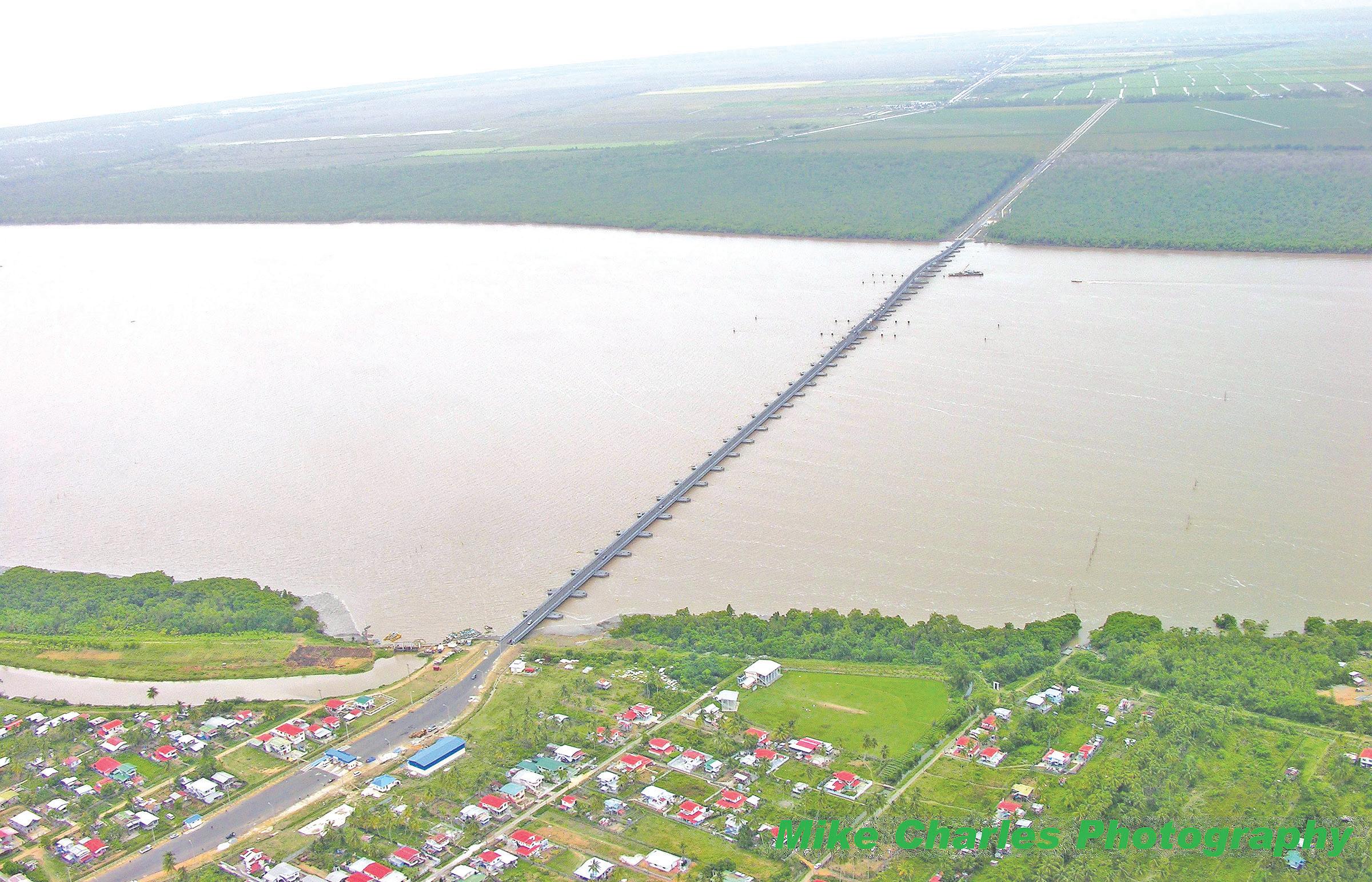
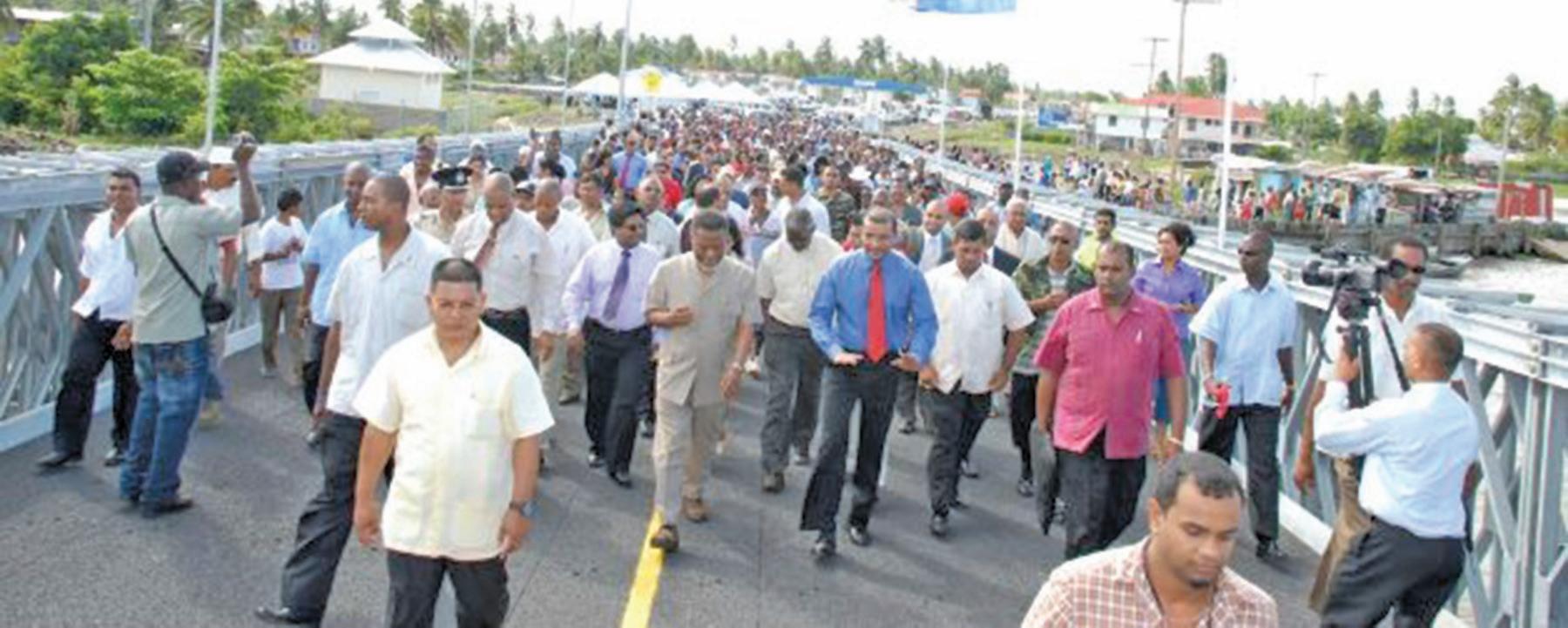
and telecommunications. It is against this background that the landmark Berbice River Bridge must be seen. Promised to the Guyanese people very early on taking office, the People’s Progressive Party government lived up to its commitment by delivering the bridge in 2008 under the presidency of Bharrat Jagdeo.
Without a doubt, the Berbice Bridge has made travelling to and from the Ancient County a painless one-day trip. The ferry and
maining $8.5 billion coming from interest bearing debts. These are 950 million preference shares with a return rate of 11% and redeemable at increasing percentages after 15 years; subordinated loan stock – $1,250 million, repayable in 2026; bonds tranche one – $3,050 million, at 9% maturing 2013; bonds tranche two – $2,525 million, at 10% maturing 2017; and loans – $450 million. As a result, the company has to pay over $800 million annually in interest alone.
ly when you had a situation to deal with where inflation was triple digit, and interest rates were close to forty percent and where debt-servicing took up most of the revenue”. The president queried which sophisticated investor would want to come into a country when its macrofundamentals and variables were not stable. Since its commissioning, the bridge has helped to significantly improve economic growth and social development in Berbice. It has also opened markets, east of
pontoon services, which were previously used plying between New Amsterdam and Rosignol, were inadequate to transport the increasing passenger and cargo traffic between these two points. Though criticised by the opposition, the project has widespread support among the Berbicians, the Berbice Chamber of Commerce and Development Association, and the Private Sector Commission.
Built using the public private partnership model of development, the bridge company had assets of $8.9 billion, of which $400 million was invested by equity shareholders with the re-
At the commissioning of the bridge, Jagdeo noted that the facility represented a dream come true for all of the country. “We’ve travelled a long road and it has not been an easy road to get this project off the ground… and for you to understand that, you need to understand what were the initial challenges we faced…what were the initial and essential tasks of the new government.”
Jagdeo said the PPP/C government, on taking over the reins, had as its first priority to restore credibility to “our finances and that is not an overnight job. It takes a long time to do that especial-
the river, to entrepreneurs on the western side and vice versa. The 1.5 kilometre bridge is the sixth longest floating bridge in the world and stretches from D’Edward Village on the western bank of the Berbice River to Crab Island on the eastern side. On the western side, the access road connecting the bridge with the main highway network is approximately .8 kilometres long while on the eastern side, the access road is approximately 3.5 kilometres in length. The edifice was constructed by Botch Retrox and Mabe Johnson under a contract with the BBCI.
“With the continuous thrust to exhibit whatever is happening, years ago when we talked about feeding and housing ourselves we had agricultural exhibitions,” Derrick Cummings, the incumbent co-chairmen of GuyExpo, stated in his outline on the history of exhibitions in Guyana.
“For the purpose of what we have today, I would say the first GuyExpo began in 1995, however, even before that, in the 70s and 80s they had agricultural exhibitions where farmers would showcase their crop - ‘the largest potato or goat’ for instance,” Cummings recalled.
Food security was a major initiative that led to the evolution of agriculture exhibitions in 1995, which also saw a move from its small beginnings at the Multilateral Schools in North Ruimveldt to the more organised setting at the Sophia Exhibition Centre.
“In the 90s, with the coming of the new government and the declaration that the private sector will be the new engine of growth, [these exhibitions were started] between the Guyana Manufacture Association (which was the main organisation holding exhibitions) and government through the Export Promotion Council,” Cummings explained.
Surrounded by the noise of the booths being constructed and the hustle of the GuyExpo planning committee and exhibitors, Cummings reminisced about the very beginnings of what is now called the ‘Premier Exposition and Trade Fair’.
“As the private sector grew and the economy advanced, more small businesses, agro-processors and services, diversified; a thrust for development was identified and a need to exhibit and showcase where we are and create awareness to demonstrate where we want to be evolved. Over time GuyExpo has responded to this need,” Cummings noted.
Back then, GuyExpo or Guyana Trade Fair and Exhibition, as it was widely known, was mainly made up of big companies (Banks DIH, DDL, Continental), nonetheless it eventually grew to encompass agro-processors, craft persons, the introduction of the culinary delights and much more.
Today, with over 460 businesses, both local and international, and the estimation of over 100,000 visitors, GuyExpo has not only become the largest trade fair and investment exposition in Guyana but also the longest sustained exhibition in the Caribbean.
Although it technically began in 1995 as a biannual event, it became an annual one in 2004 as a joint collaboration between the Guyana Office for Trade and Investment (Go Invest),
the Guyana Manufacturers’ Association and the Ministry of Tourism, Industry and Commerce.
Tracing the development of GuyExpo over the years, Cummings revealed: “GuyExpo is usually themed, and these themes are pulled or drawn from the emphasis on the development trajectory at any given period. [That is] mirroring policy in action through advancing the correctness of a policy.”
Linking the theme with policy initiatives, Cumming said: “To balance the different sectors we use the declarations of the President or the Minister of Finance to stare the economy or place emphasis on chosen sectors.”
Therefore, GuyExpo always places emphasis on what the government is striving to achieve at a given time. According to Cummings: “It [GuyExpo] is responsive to showcasing government policy in action and the practicality of arriving where we want to arrive as a nation…building a partnership between the government and the private sector.”
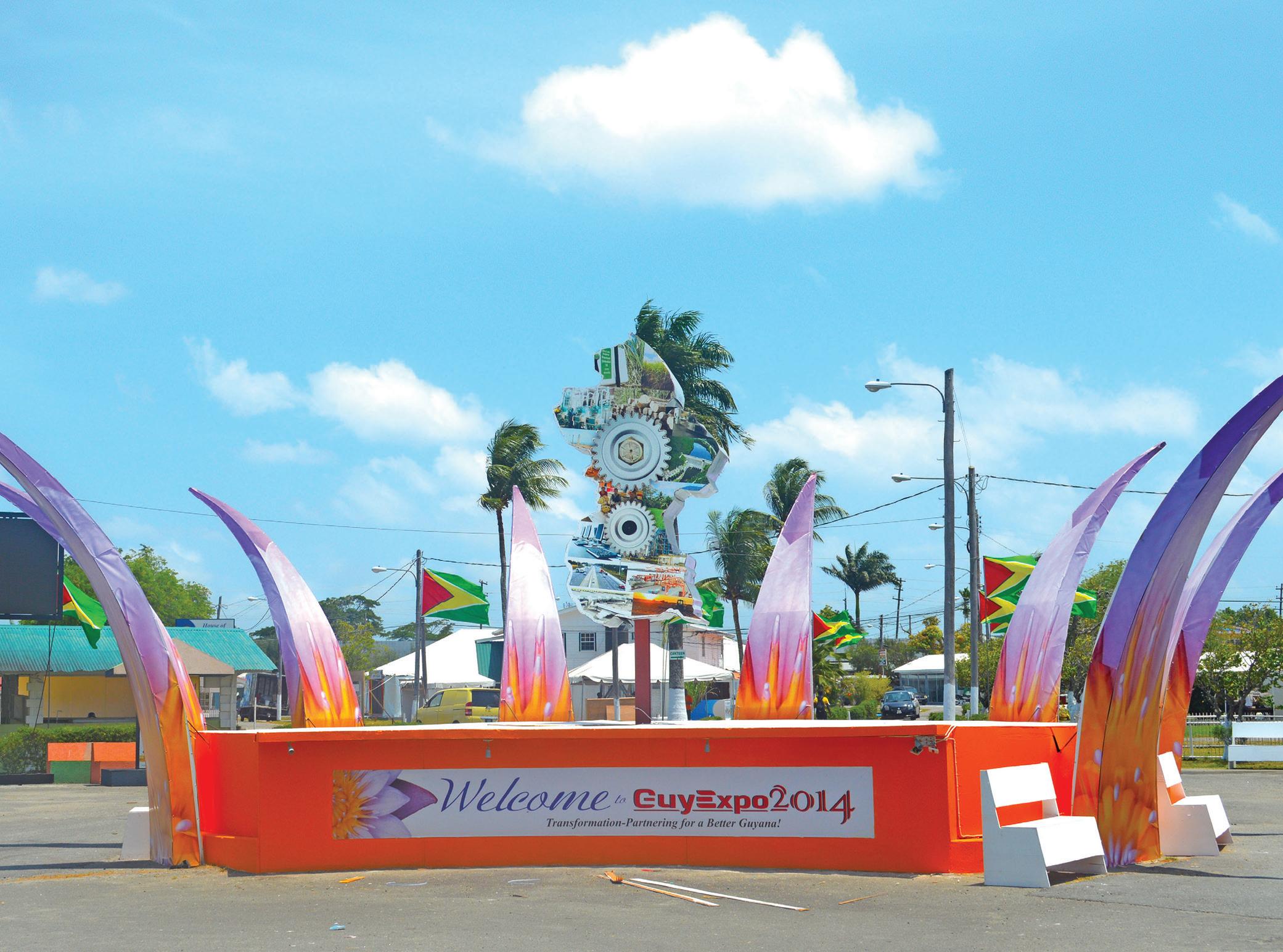
Reflected in this year’s theme, "Transformation: Partnering for a Better Guyana", President Donald Ramotar’s hope is that this year be a “breakthrough year to bloom”.
Over the years, GuyExpo has taken on several themes to generate awareness in the private sector and shape it to be an engine of growth and also promoting the national development strategies over the years.
“Even last year, for instance, we focused on advancing productivity through innovation, modernisation and expansion based on the modernisation programme that looked at strengthening growth areas identified such as tourism and information technology and alternative energy,” Cumming recollected.
As GuyExpo grew and became one of the most anticipated national events of the year, it has undergone a significant transformation as it evolved to what it is today.
“So much have been added. There is more targeted planning; it was never this
big at all. We have also become very cognizant of the surrounding neighbourhoods and their comfort for instance. Entertainment has been streamlined as well in that kids can come in the day and the adults can return later in the evening for entertainment. However, GuyExpo of course cannot cater everything to everyone but there is something for everyone here,” reiterated Cummings.
The focus of GuyExpo has remained on the development of small and medium sized enterprises, thereby ensuring that local businesses enjoy the level of growth and expansion that is needed for them to remain competitive at the regional and international levels.
“And companies recognise this, the marketing po-
thousands in just four days?” Cummings asked. "GuyExpo shows what Guyana has to offer, the availability and acceptability of our products."
He continued: “We need to look beyond the number of booths but at the quality of the event, its contribution in encouraging those who want to be entrepreneurs and business men and women and assist them to market their products and services.”
GuyExpo, by extension the Business Forum, links investors to exhibitors and offers investment opportunities and marketing possibilities for them, resulting in the growth of many companies along with the exhibition over the years.
Since its beginnings, GuyExpo has advanced under the guidance of five
Prashad, and now Minister Irfaan Ali.
The Ministry of Tourism is responsible for the private sector and although the exhibition is private sector driven, the government "lend a hand" because it possesses the necessary resources, the capacity and capability to plan and organise it.
“We can’t delink the role of the Ministers; I have worked closely alongside and with GuyExpo since Minister Nadir, so I was able to see each Minister bring their own ‘stamp’ to GuyExpo. Minister Ali has brought a lot of administrative, managerial skills, his visionary talents to GuyExpo and what we see in modified arrangements are reflective of the calibre of intellectual planning capabilities and the po-

tential of GuyExpo. Where else would a company expose its goods and services to

Hammerhead sharks, scientific name Sphyrna, are consummate predators that use their oddly shaped heads to improve their ability to find prey. Their wideset eyes give them a better visual range than most other sharks. And by spreading their highly specialized sensory organs over their wide, mallet-shaped head, they can more thoroughly scan the ocean for food.
One group of sensory organs is the ampullae of Lorenzini, which allows sharks to detect, among other things, the electrical fields created by prey animals. The hammerhead's increased ampullae sensitivity allows it to find its favorite meal, stingrays, which usually bury themselves under the sand.
The great hammerhead is the largest of the nine identified species of this shark. It can grow up to 20 feet (6 meters) in length and weigh up to 1,000 pounds (450 kg), although smaller sizes are more common.
Found in temperate and tropical waters worldwide, far offshore and near shorelines, hammerheads are often seen in mass summer migrations seeking cooler water. They are gray-brown to olive-green on top with off-white undersides, and they have heavily serrated, triangular teeth. Their extratall, pointed dorsal fins are easily identifiable.
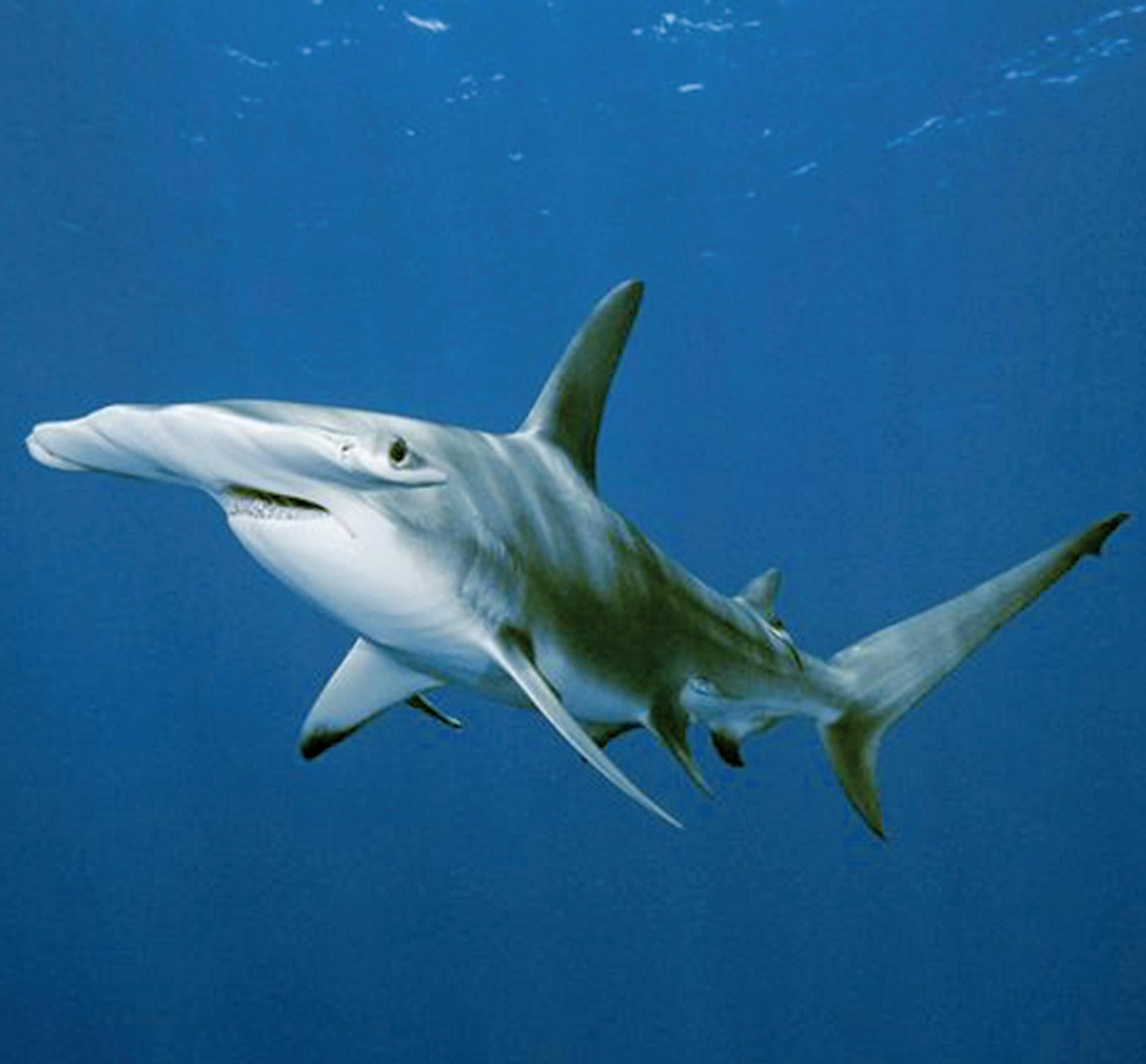
Hammerheads use their wide heads to attack stingrays, pinning the winged fish against the sea floor.
Most hammerhead species are fairly small and are considered harmless to humans. However, the great hammerhead's enormous size and fierceness make it potentially dangerous, though few attacks have been recorded.
Its group name is school or shoal. Hammerheads can live up to 20 to 30 years in the wild.
The squat-headed hammerhead (Sphyrna mokarran) and the scalloped hammerhead (Sphyrna lewini) are listed as endangered and the smalleye hammerhead (Sphyrna tudes) and the smooth hammerhead (Sphyrna zygaena) are listed as vulnerable on the IUCN Red List of Threatened Species™.
1. Up
2.
3.
4.
5.
in the world.
6. Bubble wrap was originally invented as wallpaper.
The objective of the game is to fill all the blank squares in a game with the correct numbers. Every row of 9 numbers must include all digits 1 through 9 in any order. Every column of 9 numbers must include all digits 1 through 9 in any order. Every 3 by 3 subsection of the 9 by 9 square must include all digits 1 through 9.


“Transformation: Partnering
For A Better Guyana”, the theme of GuyExpo 2014 has encapsulated the development of Guyana over the years and the drive for a brighter future through an optimistic standpoint to attract investors and nurture the local industry.
In an interview with Guyana Times Sunday Magazine, Indranauth Haralsingh, the Marketing Manager of GuyExpo 2014, noted that the event is a “critical niche market” that shows “Guyana is growing”.
“GuyExpo shows that a lot of opportunities are available and Guyana is open for business. It is where we show all we have and the best we have to produce. [It has become] a major trade event for Guyana and basically a development tool,” he mentioned.
Haralsingh also pointed out that one can see GuyExpo’s economic impact on the economy in the “millions of dollars spent on the event, the ma-
first quarter of this year,” Haralsingh added, as he listed several investments including COPA Airways and Marriott Hotel.
GuyExpo, he explained, will generate more tourism opportunities and investments, particularly through the
terials used to construct the booths, the carpenters, the contractors, electricians, plumbers”, the many employees and volunteers gathered to make the event a success.
“We at Tourism are very optimistic about GuyExpo and Guyana’s potential to attract foreign direct investments and even local investors,” Haralsingh noted, making reference to a number of investments in the economy over the last few years.
“There have been a significant number of investments in our economy, particularly in tourism. As a matter of fact, for the last year, tourism probably accounted for more than 15% of total investments in Guyana. According to Go-Invest, tourism investments reached almost 30-40% of investments in the economy for the
Business Forum held on Friday at the International Conference Centre, which focused on investment opportunities that exist in Guyana at various levels and across several fields.
The Business Forum was held for the ten visiting delegations (comprised of over 70 persons and 56 booths) as well as local business representatives to “generate leads and interests in Guyana since there have been a number of successes in the past”. This was attested by Pakistani furniture exporter, Kamran Shaikh of Global Connections, who told Sunday Magazine: “Hopefully if we have a good response we might invest locally, we also deal in marbles so if it is a good market we might get a small factory up. First we need to see how
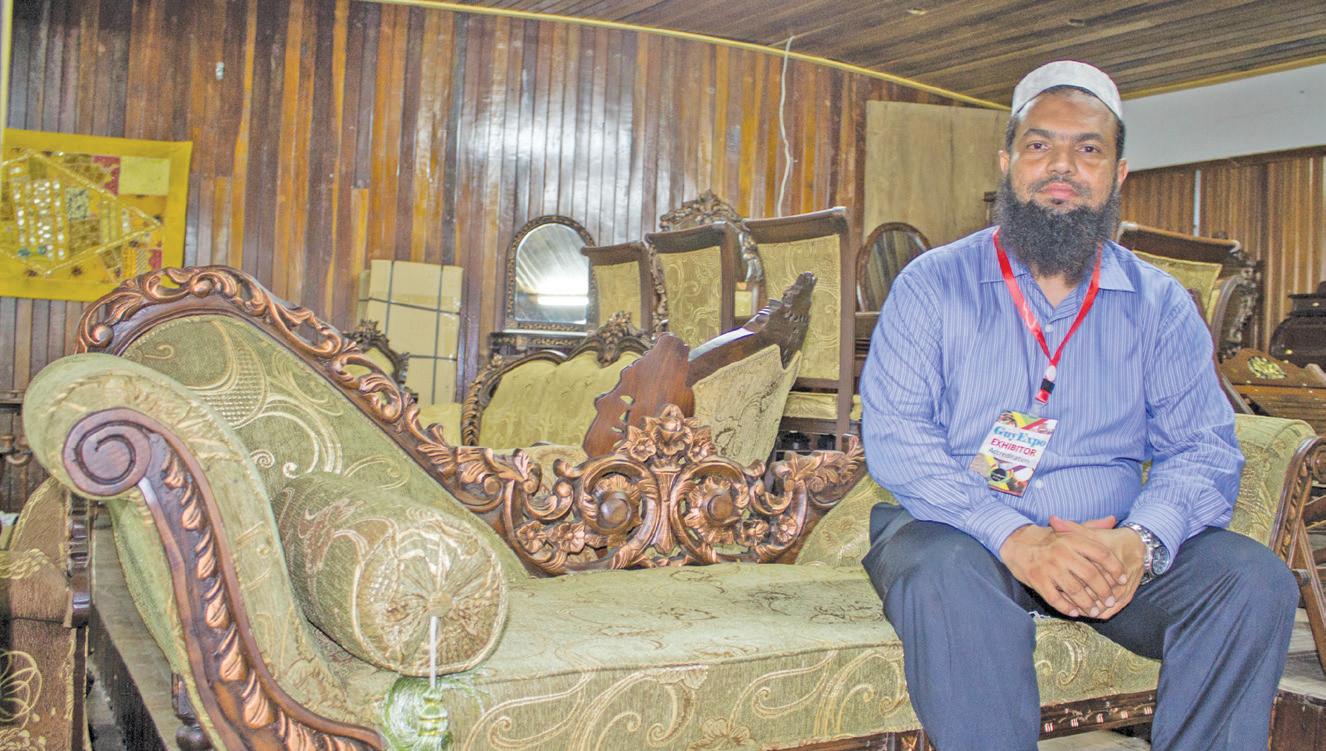
things go in GuyExpo.”
Hence, GuyExpo attracts local exhibitors as well as foreign investors.
“The fact that GuyExpo attracts thousands every year shows the growth and the dynamic nature of our economy,” Co-chairman of GuyExpo Derrick Cummings pointed out. He added: “Even the theme this year is drawn from a development trajectory.”
Haralsingh expounded: “There is much happening in tourism, yet there is so much more opportunities… and this is why the business sector looks forward eagerly each year for GuyExpo. It gives them a window to the world, massive exposure to the Guyanese public as well as foreign investors.”
GuyExpo holds tremendous potential as it helps to bridge the gap and link micro, macro and cottage industries and entities with their counterparts, with potential investors and other entrepreneurs from aboard.
Haralsingh continued by noting the confidence in the exhibition which he believes is evident in the “over 300 businesses” exhibiting their products and services in about 400 booths.
“They see the tremendous benefits and exposure GuyExpo affords them each year and
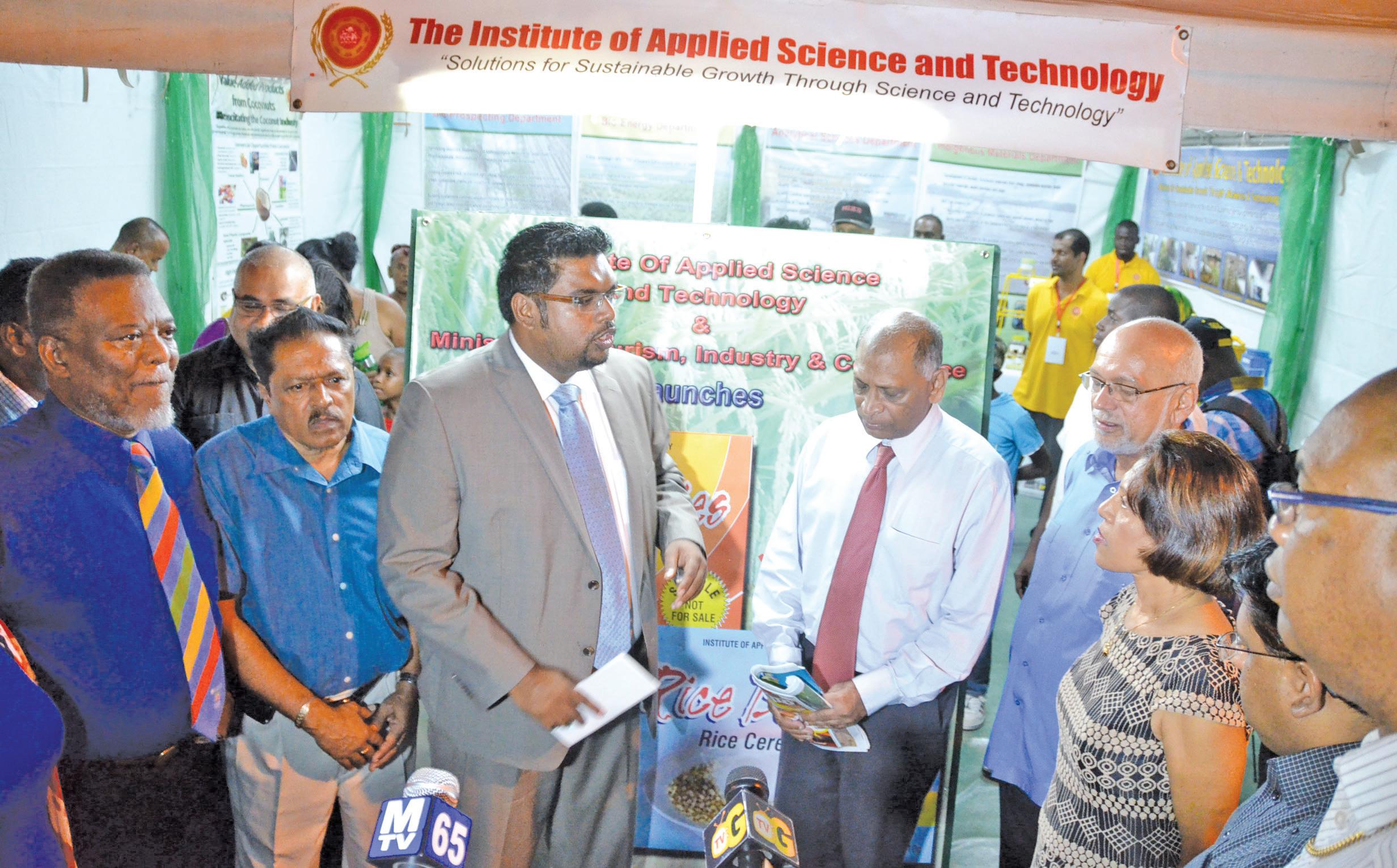
they keep coming back…They too see the future of Guyana and are also optimistic about this future. As you know our economy has been growing between 4-5% each year for the last few years,” Haralsingh disclosed.
Guyana Telephone and Telegraph Ltd representative Ramon Hunt mentioned: “We have been with GuyExpo for years, since its inception, and have grown with it. It is where we captivate our customers and market in masses.”
Haralsingh outlined the reasons people attend GuyExpo: “The ‘who is who’ of Guyana can be found at GuyExpo. Of the 100,000 plus persons expected to attend and even those ex-
hibiting they come to participate on a platform for sales, of networking and negotiations, to be a part of the showcase for pride and entrepreneurship of Guyana.”
This is in following the ‘be to see and be to be’ phenomenon as first time business men and women learn from their peers how to exhibit, interact and attract investors, and “many businesses visit to look at suppliers in Guyana and the potential, looking towards partnerships and joint ventures”.
“Even at the governmental level, we look at possible avenues for Memorandums of Understanding with various businesses as well,” stated Haralsingh.
GuyExpo is the premier exposition and trade fair that offers business associates the opportunity to meet, network and negotiate with international companies and establishments, as well as showcase their skills, talents and creative works.
It is Guyana’s largest trade and investment event which showcases locally produced goods and services. This annual event provides a platform for both local and foreign businesses: importers, exporters, retailers, wholesalers and is the ideal setting for the opportunity for businesses to increase their competitiveness and efficiency and foster growth.
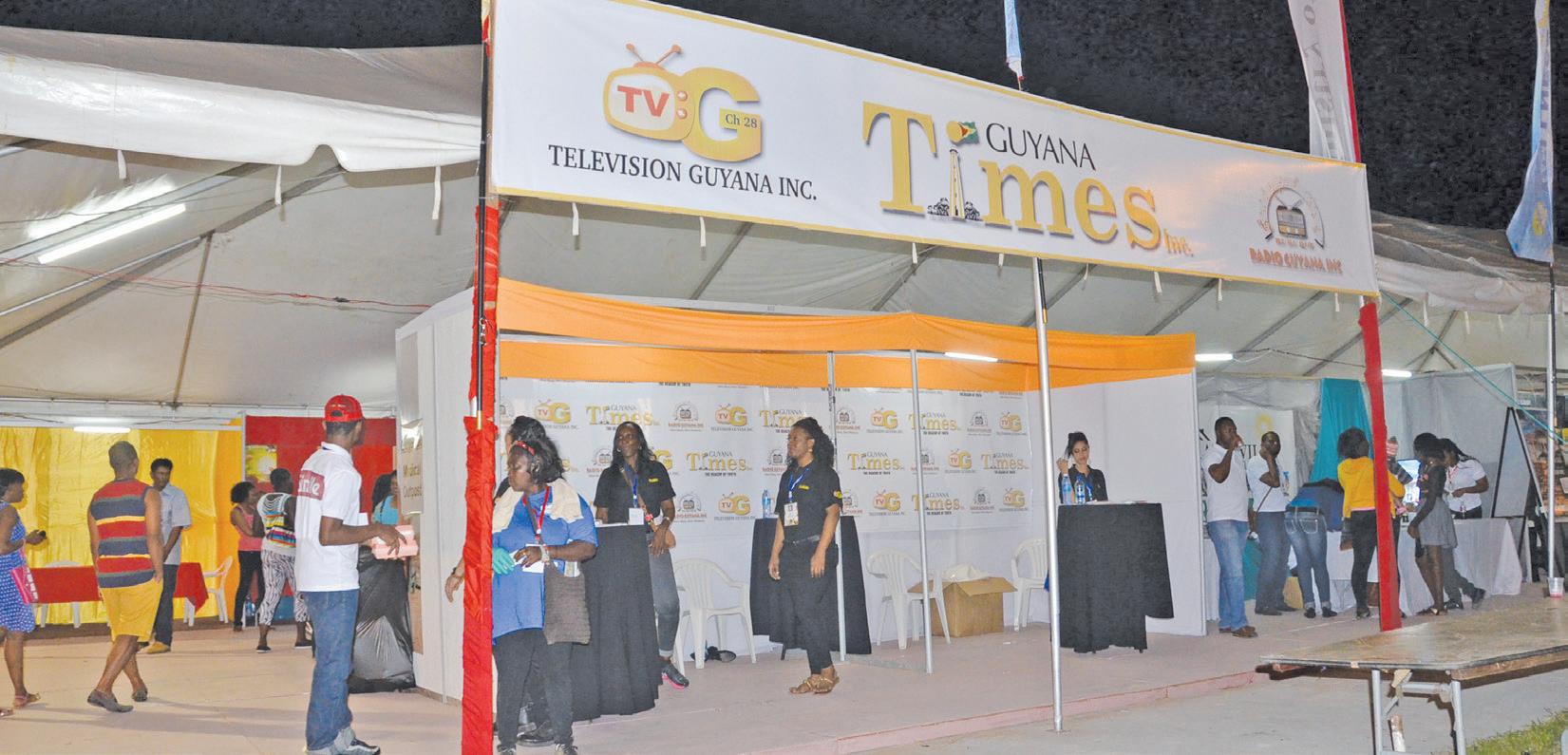








Staying stylish and being up-to-date with the latest fashion trends is easy with the help of Street Styles – a leading name in the fashion industry.
Street Styles has to offer a wide range of fashionable clothing that won’t break your pocket. This is even more important to note because of the impending Christmas season. With an abundance of parties and events to attend, Street Styles is the one-stop fashion shop for elegantly casual to more dressy clothing.

At Street Styles, you will find one-of-a-kind designs for both men and women. The team at Street Styles hand-pick all their clothing so you can be confident that you’re wearing something unique.
To pizzazz your wardrobe, the team at Street Styles will assist you in choosing the best styles for your taste and your body. Outfits are completed with chic fashion jewellery, belts, bags and much more.
Check out Street Styles on Facebook for more info.






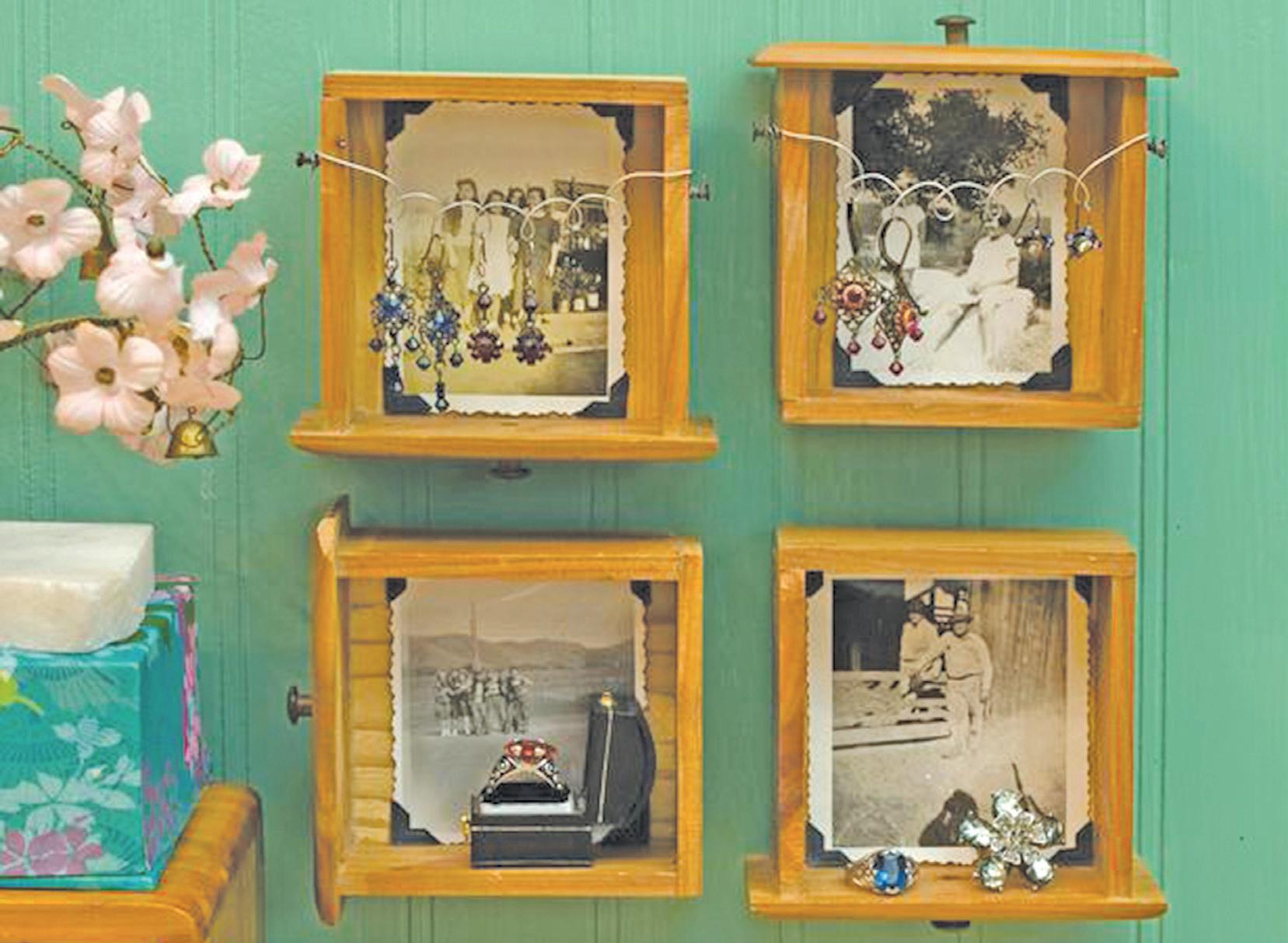
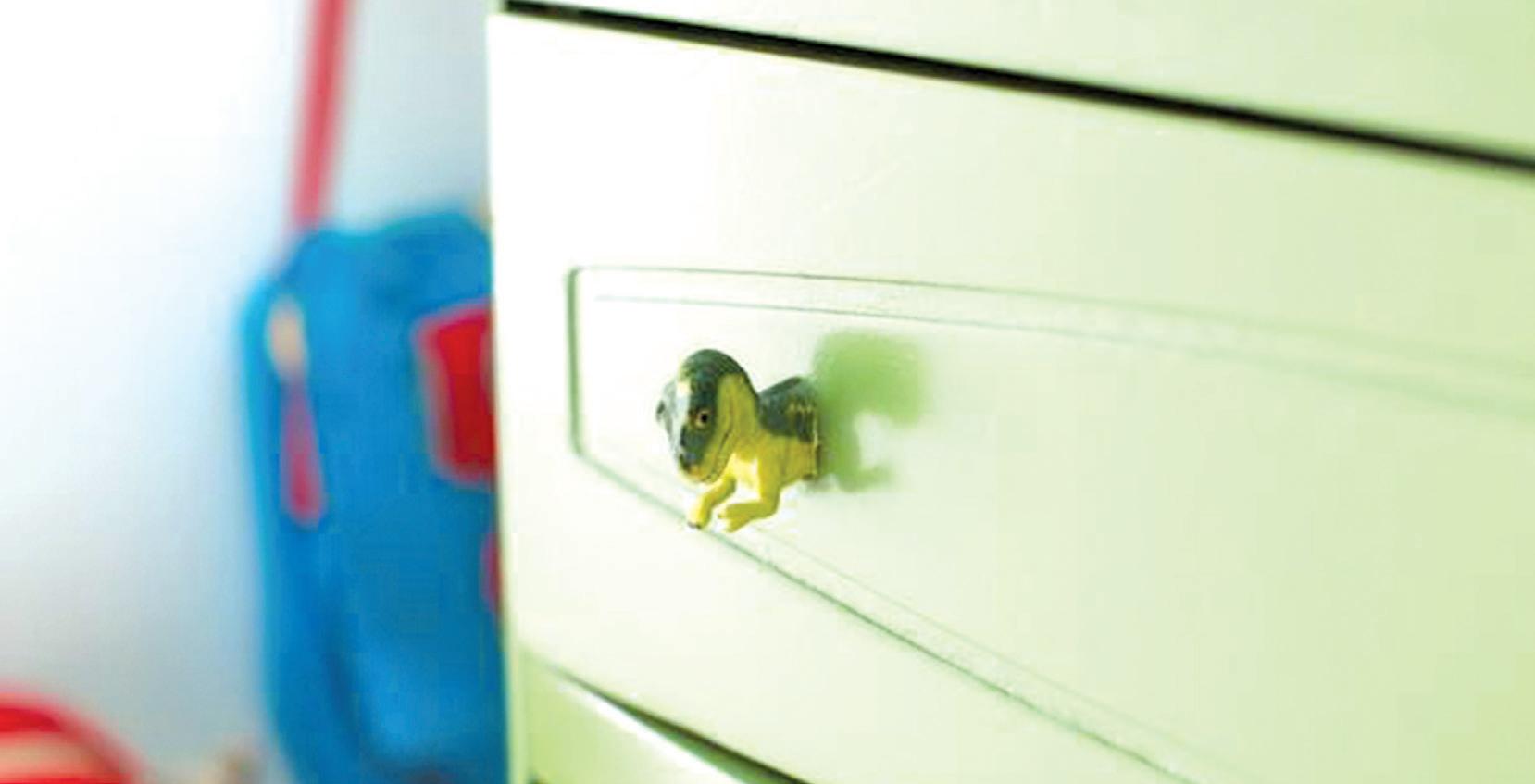
Hey, boring dresser: Your days are numbered. Transform a basic chest of drawers into a designer accent with easy makeovers you can tackle in a weekend (or less!).

Ingredients:
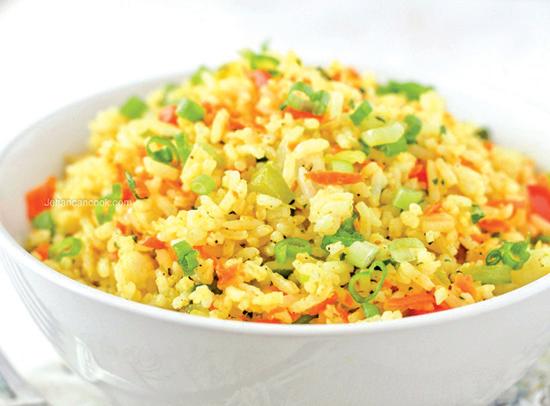
8 cups cooked long grain rice
1 red bell pepper, diced 1 green bell
Method:
pepper, diced 4 carrots, shredded 4 scallion, finely chopped 1 tbsp garlic
Place a large pot (preferable a wok) over high fire. Next place oil and butter in pot, when the butter has melted add peppers, carrots, garlic, red pepper flakes and curry powder and cook until vegetables are tender, about 5 minutes. Add rice, scallion and salt and stir to coat. Cook until rice is heated through, about 5 minutes. Serve warm.
Ingredients:
Vegetable oil, for frying 1 pound fish fillets
Salt
Freshly ground black pepper 1 cup corn flour 1 cup all-purpose flour

2 eggs, beaten with 2 tablespoons milk 2 lemons, halved
Method:
Preheat the oil in a large cast iron or heavy bottom pot, over medium heat. Cut the fillets, horizontally into strips, 1/2-inch thick. Season the fish with salt and pepper.
Combine the flours and season with salt and pepper. Dredge each piece of fish in the flour, coating completely. Dip each piece in the egg wash, letting the excess drip off. Dredge the fish for a second time in the flour, coating completely. Fry the fish in batches until crispy, about 3 to 4 minutes. Remove and drain on paper towels. Season with salt and pepper. Serve the fish with lemon halves. Garnish with parsley.
Preserve the nutrients and colours in veggies. Cook them quickly by steaming or stirfrying.
Prepare muffins and quick breads with less saturated fat and fewer calories. Use three ripe, very well-mashed bananas, instead of 1/2 cup butter, lard, shortening or oil or substitute one cup of applesauce per one cup of these fats.
The best way to cook tough cuts of meat: cook them low and slow, usually for 3 or more hours, often in liquid, to make them melt-in-your-mouth tender.
Got a few vegetables or a little leftover meat? Maybe you have some fixings for a salad or a light soup, but it’s not quite dinner. Pasta and rice are cheap, healthy pantry items that let you turn a few leftovers into a meal. Try quickly sautéing peppers and onions and toss them with noodles, herbs and a little cheese, or add rice into a vegetable soup to make it more satisfying.
Use your morning pick-me-up to eliminate odours in the fridge. Simply place ground coffee, new or used, in a bowl on a shelf. Replace them every two months for a fresh, slightly caffeinated smell.
Cut a lemon in half, squeeze juice into a small bowl of water, add both lemon halves and place in the microwave for five minutes. The fresh scent eliminates cooking odours, and condensation from the steam loosens random splatters that have hardened. Wipe away the loose stains with a damp cloth.
Polish tarnished copper with this natural solution. Fill a 16-ounce spray bottle with white vinegar and 3 tablespoons of salt. Spray onto the copper, let sit briefly, then rub clean.
Grab a few disinfecting wipes to give faucets, sinks, tubs, toilet seats—you name it— an easy daily touch-up.
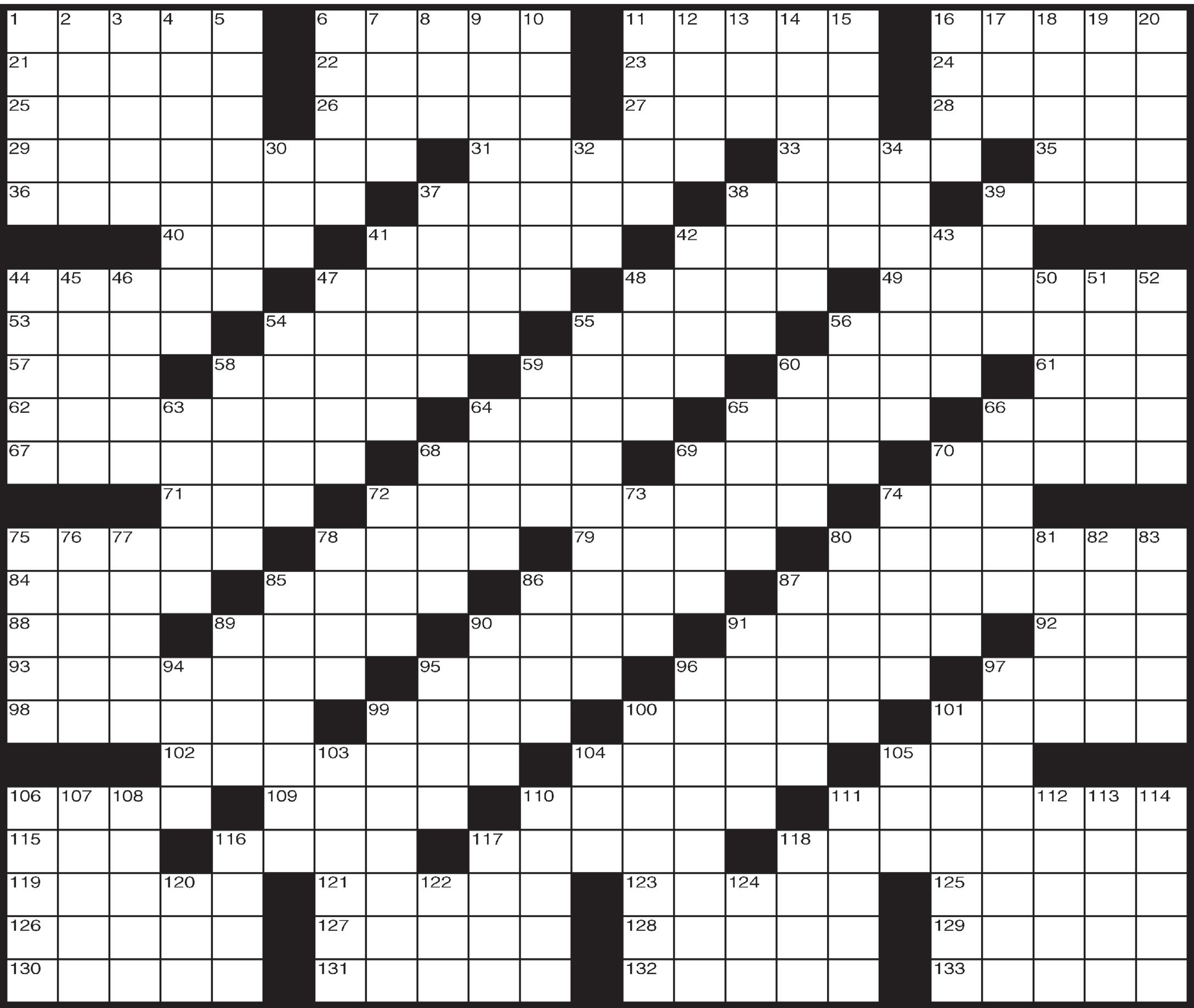
For each clue below, think of a common expression which mentions two body parts. Some phrases refer to two different body parts (mix), others use the same body part twice (match). Example: The law of retaliation. Answer: An eye for an eye.
1. To be in agreement
2. A couple strolling
3. Suddenly in love
4. Intimate discussion
5. Very expensive
6. Done at a ballroom
7. Poor, nothing extra






By Zenica DaBichan
This is a severe, often fatal disease affecting humans and other primates (monkeys, gorillas and chimpanzees). The disease is caused by an infection with the Ebola Virus named after the Ebola River in The Democratic Republic of Congo in Africa, where it was first recognized.Out of every 10 people who get Ebola, on average five to nine die.
Transmission of the disease
It is believed that fruit bats are the carriers and may spread the virus without themselves being affected. Ebola is introduced to humans through close contact with the blood, secretions, organs or other bodily fluids of infected animals such as chimpanzees, gorillas, fruit bats, monkeys, forest antelope and porcupines found ill or dead or in the rainforest. Human-to-human transmission occurs through direct contact with the blood, vomit, urine, faeces, secretions, organs or other bodily fluids of infected people and with surfaces and materials (e.g. bedding, clothing) contaminated with these fluids. Burial ceremonies in which mourners have direct contact with the body of the deceased person can also play a role in the transmission of Ebola. People can transmit the disease as long as their blood and body fluids, including semen and breast milk, contain the virus. Men who have recovered from the disease can still transmit the virus through
their semen for up to 7 weeks after recovery from illness.Spreading through the air has NOT been documented in the natural environment. To date Ebola outbreak has been localized to countries in Africa with one case of an infection diagnosed in the USA after a Texas man had returned from travelling to Liberia.
Symptoms of Ebola
First symptoms include:
• Sudden onset of fever
• Fatigue
• Muscle pain
• Headache
• Sore throat.
This is followed by:
• vomiting and diarrhea
• rash
• internal and external bleeding (e.g. oozing from the gums, blood in the stools)
Treatment
There is as yet no proven treatment available for Ebola Virus Disease. However, a range of potential treatments including blood products, immune therapies and drug therapies are currently being evaluated. No licensed vaccines are available yet, but two potential vaccines are undergoing human safety testing.
References: http://www.cdc.gov/vhf/ebola/ outbreaks/2014-west-africa/index.html http://emedicine.medscape.com/ article/216288-overview

By Zenica DaBichan
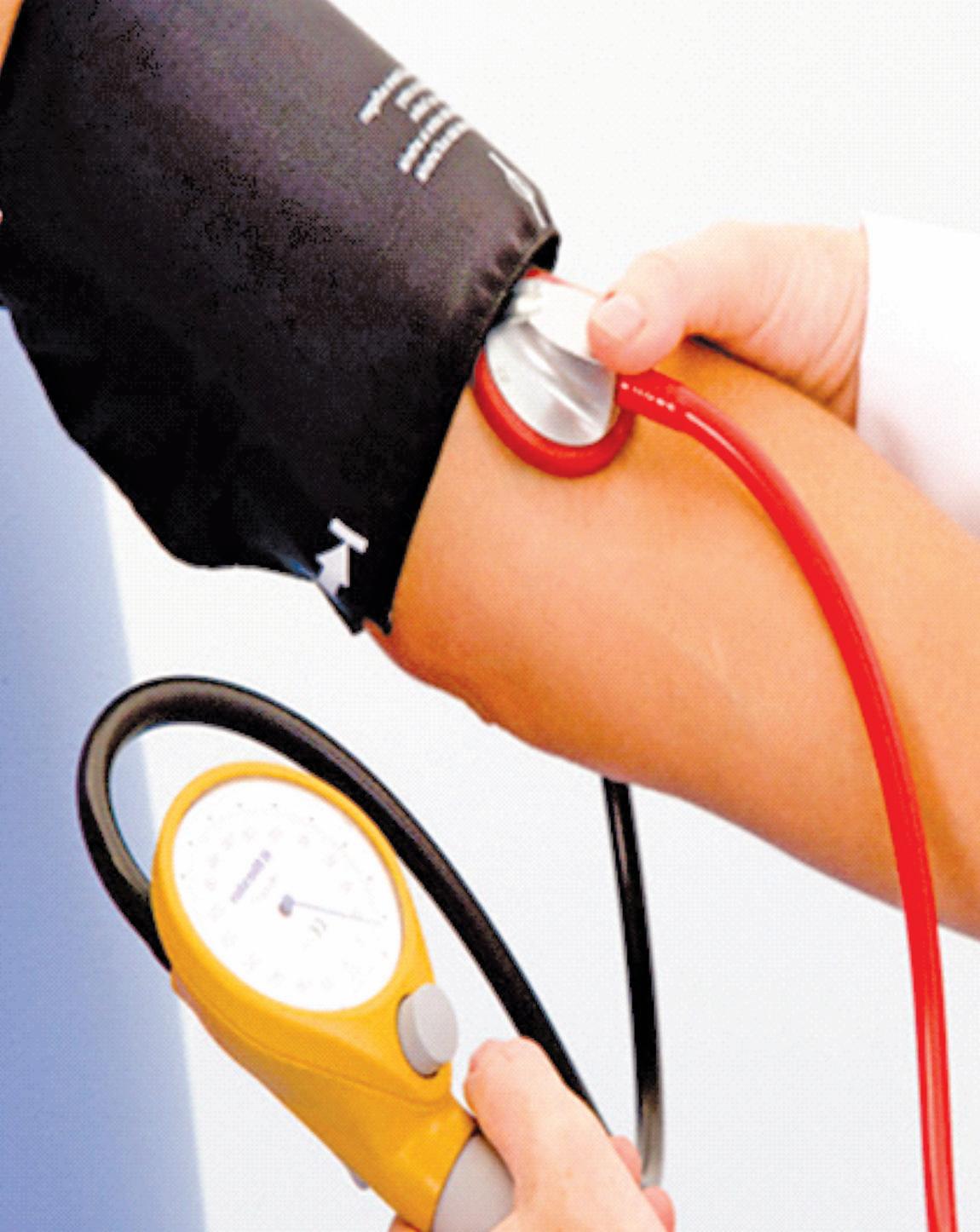
Blood is essential to life and therefore must be supplied to all parts of the body. For this to occur the heart acts as a pump that forces blood through the arteries which can be thought of as the pipelines of the body. If the pressure in the arteries is higher than normal for a prolonged duration then the person has hypertension also called high blood pressure.
It is important to know your blood pressure numbers. The top number or the systolic number is the pressure in the arteries when the heart muscle contracts. The bottom lower number or the diastolic number measures the pressure in the arteries when the heart muscle relaxes. High blood pressure is present at a systolic number (top number) greater than 140 and /or a diastolic (bottom number) greater than 90.
For more than 90% of persons suffering from hypertension the exact cause is unknown. Only a minority have an identifiable cause for their hypertension such as kidney disease or a disorder in one of the glands in the body.
Factors that increase the
risk of developing high blood pressure include:
• A history of high blood pressure in the family
• Physical inactivity and Obesity
• Smoking
• High salt diet
• Diabetes
• Stress
This disease is referred to as “the silent killer” because persons have it for many years without any
symptoms. However, hypertension increases the risk of having a heart attack, stroke, developing heart failure and kidney disease.
Preventing or controlling hypertension
• Exercise and maintain a healthy bodyweight
• Quit smoking
• Eat a healthy diet low in salt and fatty foods
• Visit your doctor for regular checkups and use your medications as directed





ARIES (March 21April 19)


TAURUS (April 20May 20)



(May 21June 20)

(June 21July 22)



Avoid confrontations, and don’t get into a tug-of-war with someone who is out to make you look bad. Let your actions speak for you.
Don’t give in to someone demanding donations. Make your own choice about which charity to contribute to. There is plenty of information in social media that can lead you in the right direction.
Try to take life a little less seriously. Your efforts will be rewarded if you convince friends and family to join you for a fun-filled day of activity and entertainment.
LEO (July 23Aug. 22)

VIRGO (Aug. 23Sept. 22)



LIBRA (Sept. 23Oct. 23)

SCORPIO (Oct. 24Nov. 22)


SAGITTARIUS
(Nov. 23Dec. 21)




AQUARIUS
(Jan. 20Feb. 19) (Dec. 22Jan. 19)


PISCES
(Feb. 20March 20)

Prove your adaptability. Do whatever it takes to get things running smoothly at home in order to reap the benefits of an unexpected and positive domestic alteration.
Express your individuality. Make self-improvements that will engender feelings of specialness. Don’t be afraid to show your style; it contributes to your wonderful personality.
It’s wonderful to get tips from others, but the ultimate decisions must be yours alone. If you feel that you are being backed into a corner, take control and find your way out.
Embrace life and enjoy the moment. You will come out on top if you wheel and deal. You have the strength necessary to defeat the opposition. Romancing someone special will add spice to your life. If you are single, you will be able to make a new connection, and if not, you can heat up your current relationship.
Do an honest inventory of your talents and strengths. Determine where you are heading, and hone the skills that will get you where you want to go. Circumstances change, and preparation will ensure that you are ready.
Accept any invitations that come your way. You are likely to meet someone interesting, unconventional and exhilarating. Your confidence and charisma will make a lasting impression.
Consider the motives of anyone who is plying you for information. Be discreet about your ideas and plans, or someone is likely to duplicate your efforts and take credit. Leave your professional woes at work. Even the ones who love you the most will grow weary of tales of office politics. Devote your time to those you care about the most.
Regardless of where you’re located, iNet Communications is committed to provide you with reliable internet connection.
For the fourth year exhibiting exciting services and deals at GuyExpo, iNet Communications has much in store for customers. Every customer at GuyExpo
2014 has a chance to secure a free iPad Mini when they purchase a complete VSAT service from iNet Communications. Purchase must include Power (UPS and Surge Protector) and Networking equipment (Router).
Most exciting of all, patrons have the opportunity to experience

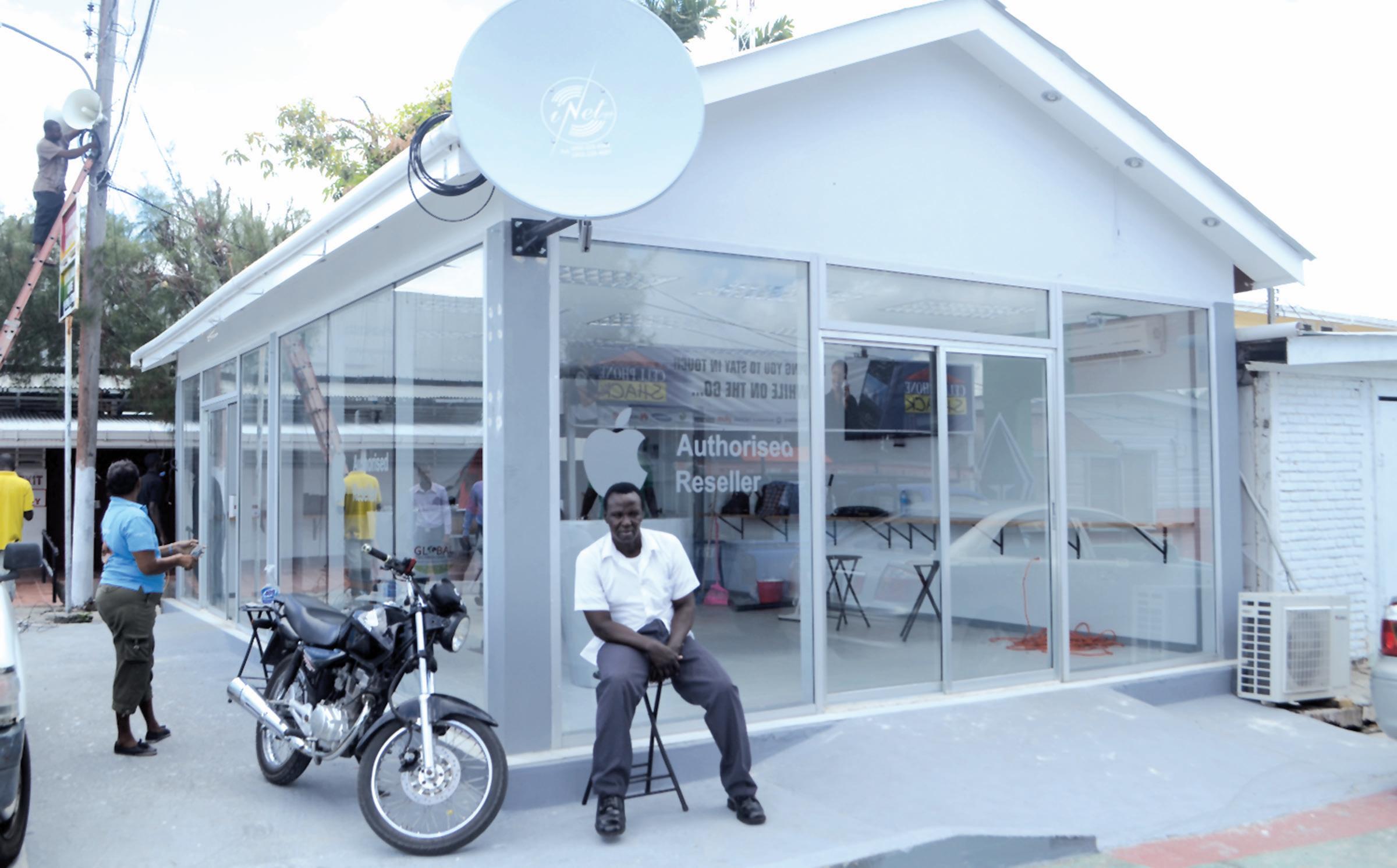
iNet Communications’ 10MB download service. Additionally, on display are iPads, iPhones and iMacs. Using the products on display, patrons have the opportunity to experience the internet speed that is independent from any other ISP. They can browse the internet, watch music videos, stream movies and much more.
Brief background on iNet Communications
Armed with the legal right to provide fair services, iNet Communications delivers communication to areas where few others dared to go. From Barima to Berbice, Georgetown to Gunns, it is now possible, with iNet, to connect to the world.
iNet Communications is part of the Global Technology Group. iNet is a licensed telecommunications provider in Guyana, specialising in designing, installing and actively managing large data networking solutions for government
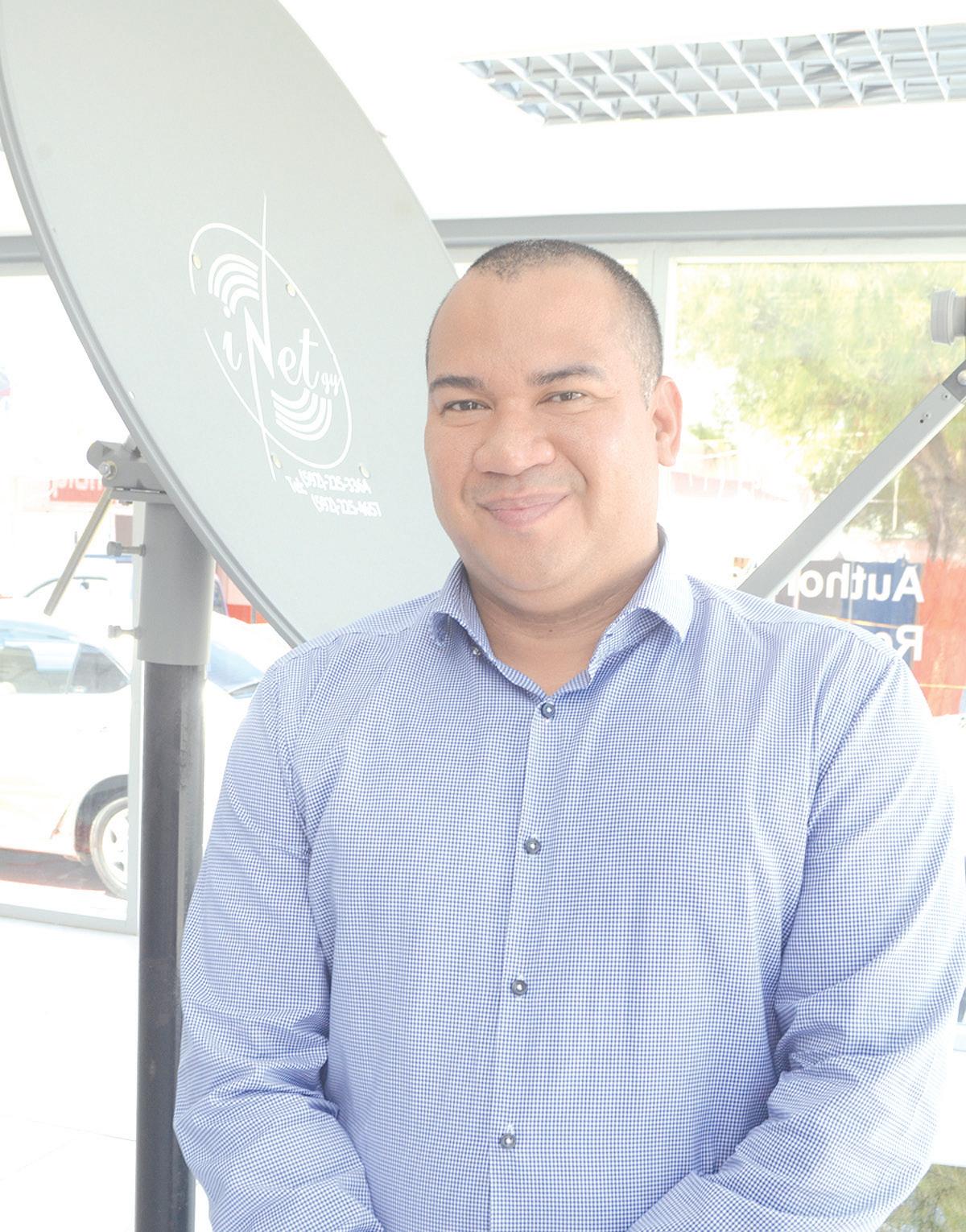
agencies. iNet also offers similar networking solutions to corporations.
Global Technology is currently Apple's only authorised reseller in Guyana.
For more information
check out Global Technology Inc on Facebook or the iNet Communications booth located at the head of the Secretariat Drive, next to all the other mobile/cellular stores at GuyExpo.

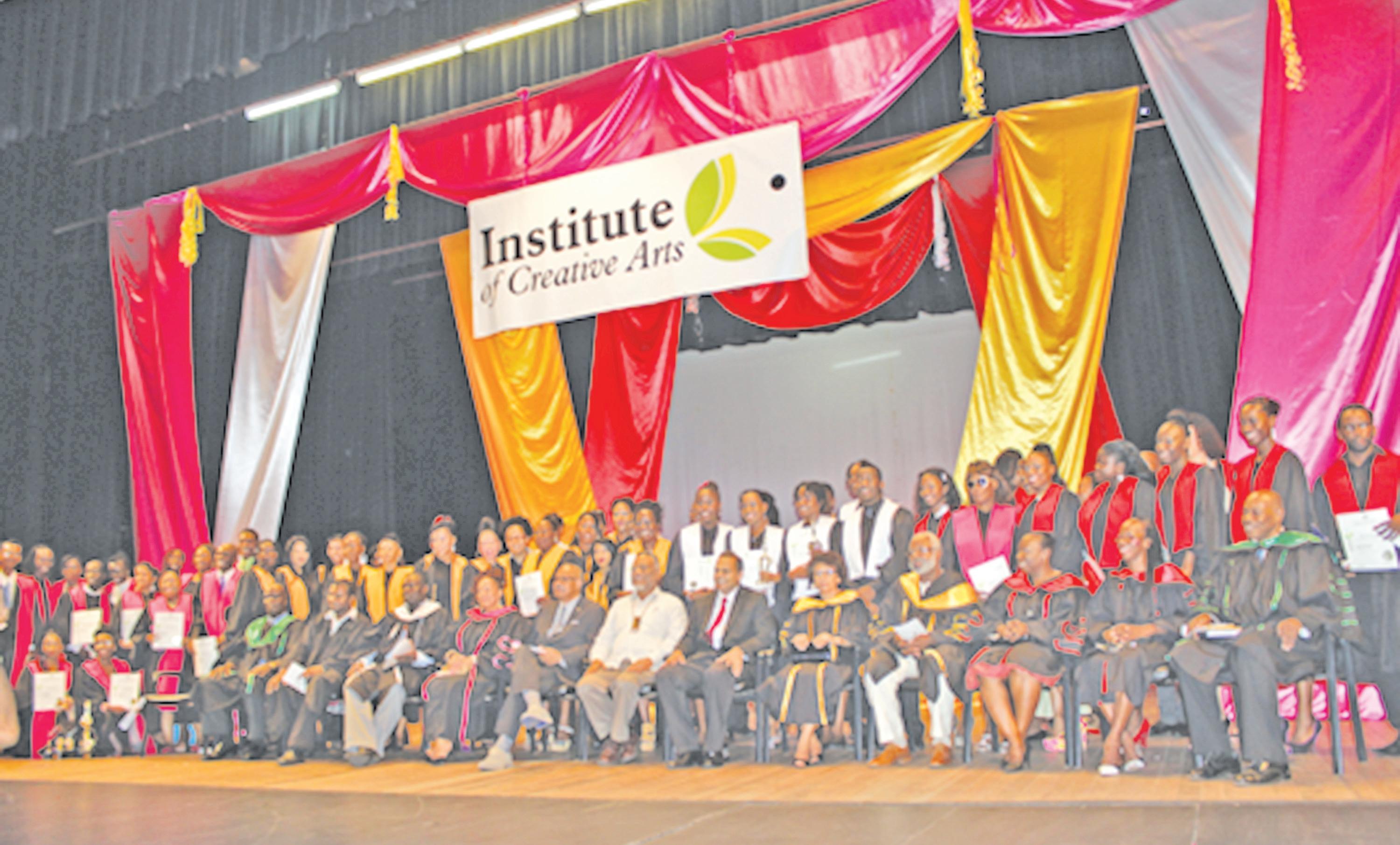
Creative Arts in Guyana has long been divided among only four areas: fine art (the E.R. Burrowes School of Arts), dance (National School of Dance), music (National School of Music) and theatre arts and drama (National School of Theatre Arts and Drama).
However, with the establishment of the Institute for Creative Arts in Guyana, an umbrella institution established to represent all creative arts institutions and organisations in Guyana, things are about to change.
The Institute of Creative Arts (ICA) represents a beacon of hope for all artistes and the art industry in Guyana. It is a Ministry of Culture, Youth and Sport initiative that seeks to invest in the education and training of the next generation of creative artistes.
Minister of culture, Youth and Sport
Dr Frank Anthony
or perform art but skills with the educational background to market and promote their art including the protection of their intellectual property.
The ICA is thus committed to creating a link between theoretical and practical studies in the visual, literary and performing arts. The Sunday Magazine was made to understand teaching strategies will combine theory-based approaches of academics in arts with the professional skills-based training of practising artists.
This will be accomplished through a curricula guided by the expectations of the CXC syllabi in music, theatre arts, the visual arts, sports and physical education, the emerging CAPE syllabus in the performing arts, and the emerging revision of the curricula of the

“This is indeed a moment of pride for us,” stated Minister of Culture, Youth and Sport, Dr Frank Anthony at the ICA inaugural graduation in September. “We have long recognised the need for a comprehensive range of post-secondary arts education.”
With the mission to provide cross-cutting education and training to promote and sustain excellence in creative arts and envisioning this excellence in creative expression, the ICA will offer a range a range of undergraduate programmes in the performing, visual and fine arts including dancing, theatre arts, drama, creative writing, media arts and music.
“The aim of the ICA is to educate students about the arts, while at the same time empowering artists through training for specific occupational outcomes,” Dr Vibert Cambridge, the institute’s facilitator explained to the Guyana Times Sunday Magazine
An underlying philosophy of the ICA is promoting autonomy among the artists and skills not only to make
Division of Creative Arts at the University of Guyana.
The institute will deliver curricula leading to Certificates [1-2 years programs] Diplomas (2-3 years), Associate Degrees (3 years). It will offer core courses such as English Language, Entrepreneurship and Caribbean Studies which will be compulsory for all students while each programme will offer cross faculty options, electives and minors.
The ICA is also committed to defining the relationship between creative arts and culture and has a particular interest in intercultural studies.
The institute was initially established in the 1970s as the teaching arm of the National History and Arts Council with five departments: art, dance, drama, music and creative writing; however it quickly dissolved soon after its establishment.
Officially re-established in 2014, the Institute for Creative Arts was formulated by a Working Group appointed by the Minister of Culture, Youth and Sport, Dr Frank Anthony in September 2012.

Many countries view the mining sector as a key engine of economic development since with the right incentives and legislation in an enabling environment it can attract untold private sector investment in exploration and production.
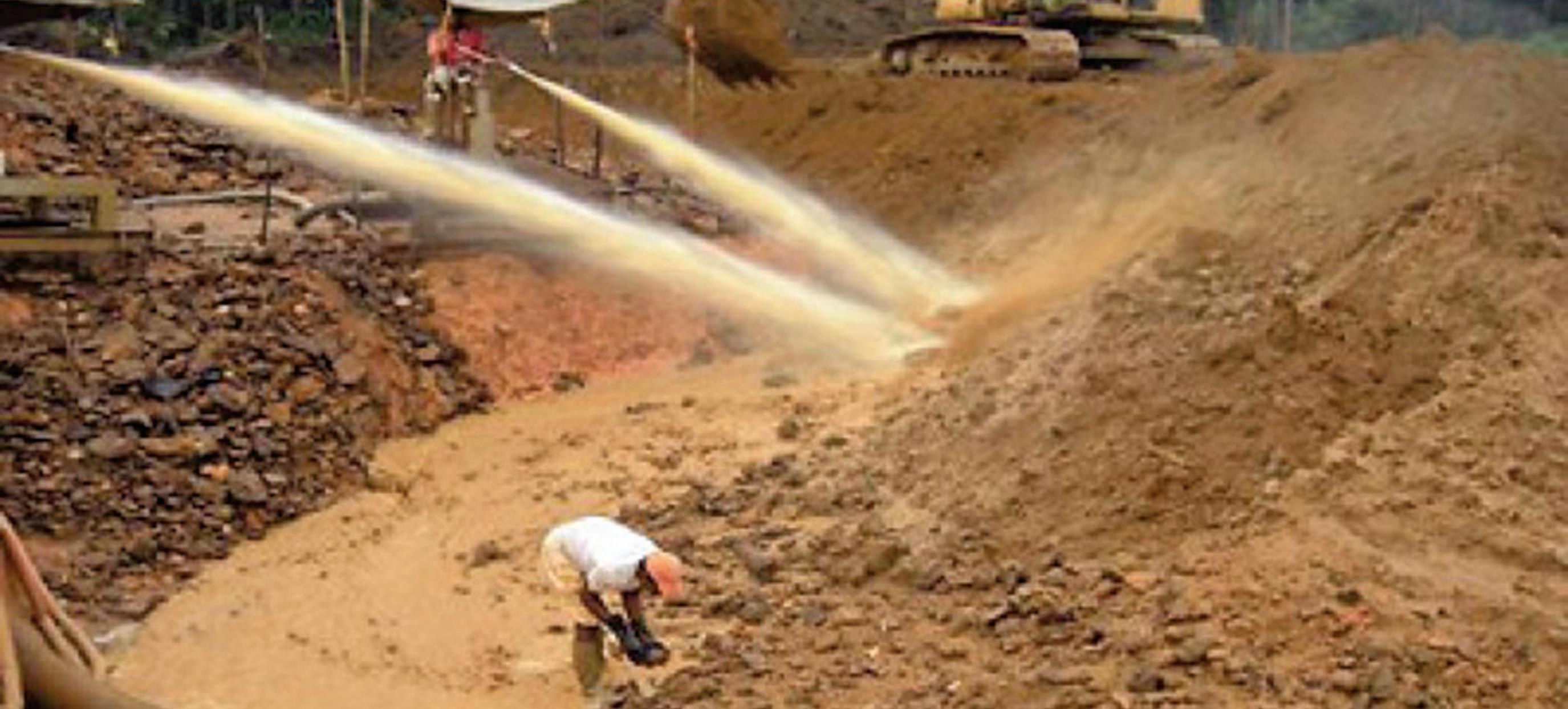
This, in turn, contributes to increased tax revenues, export earnings, employment opportunities, infrastructure development especially in rural areas, and transfer of technology to the host countries. The gold mining sector here has for successive years played an important role in the domestic economy and delivered record breaking production despite the recent fluctuation of prices on the international market.
From a period where persons were afraid to take risks and invest in the sector, the mining community has grown tremendously today. Thousands have now found employment in the industry and several thousands more
sector. The Minister cited the recent mining auction which occurred after a more than five-year lag, during which 950 mining lots were auctioned. He said the Ministry planned the auction for one day, but because of the overwhelming response, the auction lasted for five days.
“If people did not think there was money to be made in mining, and if they did not think it was good to be in mining, they would not have turned out in such large numbers to participate and to pay large sums through a public auction process,” Persaud mentioned.
He said that mining lotteries were held in the six mining districts which also received an overwhelming response. “Every single day at the Guyana Geology and Mines [Commission] (GGMC), that office is bombarded by requests at different levels – small, medium and large (scale) – for more access,” Minister Persaud revealed. He pointed out that
will consists of two tranches, US$160 million followed by an overrun facility of US$25 million, repayable over a maximum of eight years.
The first tranche carries a three-month LIBOR plus 5.11% rate. Any funds advanced under the second tranche will carry the same interest plus 0.5%. Guyana completed a recent US$33 million private placement as required for release of the first tranche, and the first drawdown is expected this month. The Aurora project contains 62.83 million measured and indicated tonnes grading 3.24 g/t Au containing 6.54 million oz of gold, plus 16.93 million inferred tonnes grading 3.34 g/t Au containing 1.82 million oz of gold. Average annual gold output is expected to be 194,000 oz over the 17-year mine life. Guyana is expected to earn US$960 million in royalty and other taxes from the Aurora goldmine during the first 17 years. The mine is also expected to produce US$150,000 ounces of gold

have been able to escape poverty. There are also numerous success stories of ordinary citizens who through small operations have today transformed into medium scale miners.
Natural Resources and Environment Minister Robert Persaud said that there are more Guyanese and non-Guyanese who want to get involved and be a part of the development of the industry. He said that he was optimistic about people’s growing confidence and interest in the
this speaks of people’s confidence and willingness to develop and grow with the sector. He said his ministry’s aim is to encourage the development of a sustainable and responsible mining sector.
Only recently, Canadian company, Guyana Goldfields signed a credit agreement that gives it US$185 million with which to complete its Aurora gold mine on the Cuyuni River. The project is now fully funded. The loan
per year beginning late 2015.
In addition to the Guyana Goldfields, Australian firm, Troy Resources Guyana Inc. is expected to complete the construction of its US$87 million mine in the west Omai region before the middle of 2015. Once completed, the mine will employ approximately 300 persons including contractors. The Australian exploration and mining company will be developing an area west of Omai with the anticipation of raking in an annual production of 90,000
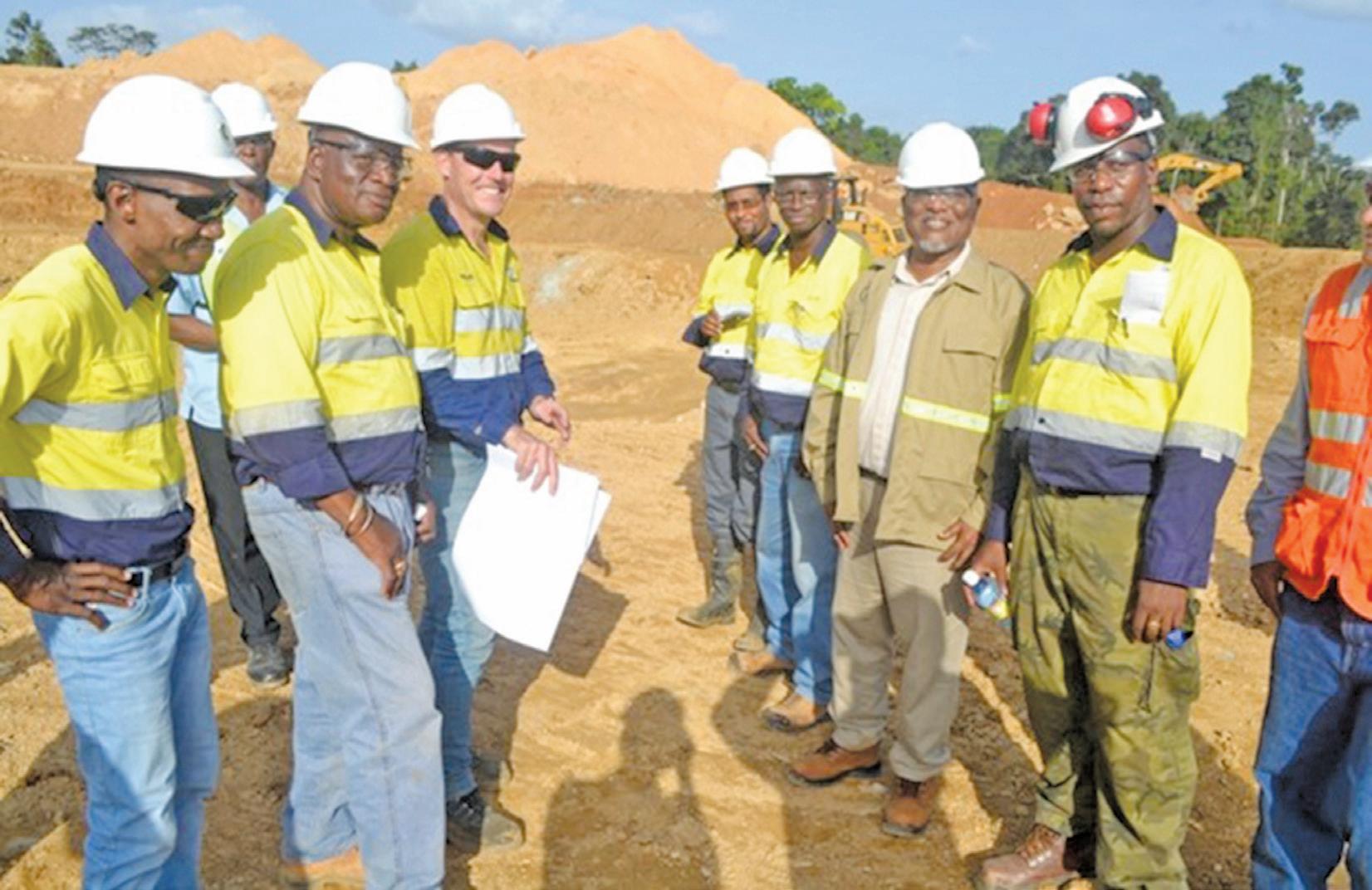
ounces of gold over a sevenyear period. Production, however, in the first 12 months, is projected at 102,000 ounces of gold, with production commencing December 2014 to February 2015.
Commenting on the growth of the sector, President Donald Ramotar said: “These projects are the evidence of the sustained faith that investors have in the economy despite the stalemate in the National Assembly.”
Referring to Guyana Gold Fields investment, Ramotar said the project heralds the creation of jobs and the distribution of wealth among Guyanese, which will in turn lend to the improvement of the standard of living for Guyanese.
“In many ways this is extremely important, because we know for a fact that for us to develop Guyana, and to make it a stronger country, where we can fight against many of the evils that plague many societies that we need investment in our society. That is important for the creation of wealth, creation of jobs and many other things… we know gold itself is a wasting asset, and therefore we
want to invest it in such a way or the wealth that created from it so that a maximum of our people can benefit, that’s why the biggest of our investments is in the social sector,” expressed the president.
Canadian High Commissioner to Guyana, Dr Nicole Giles also recently told Guyana Times that Canada is
the largest source of Foreign Direct Investment (FDI) to this country with most of these in the extractive sector. Currently, there are 32 Canadian exploration companies operating in Guyana’s extractive sector working in sectors such as gold, bauxite, oil and gas, manganese, uranium and other precious metals.


Inaugural ‘Guyana Supermarket’ at this year’s GuyExpo showcases wealth of the local agriculture sector
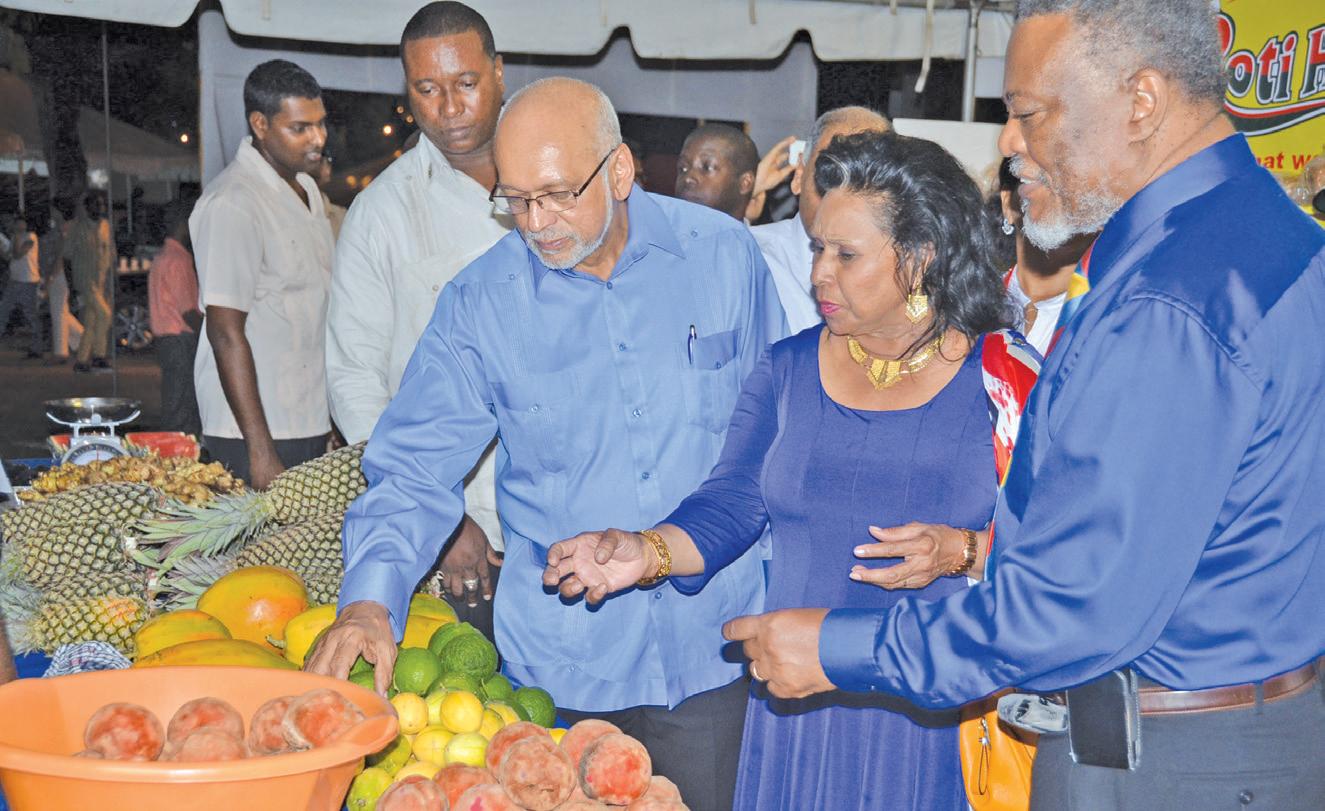
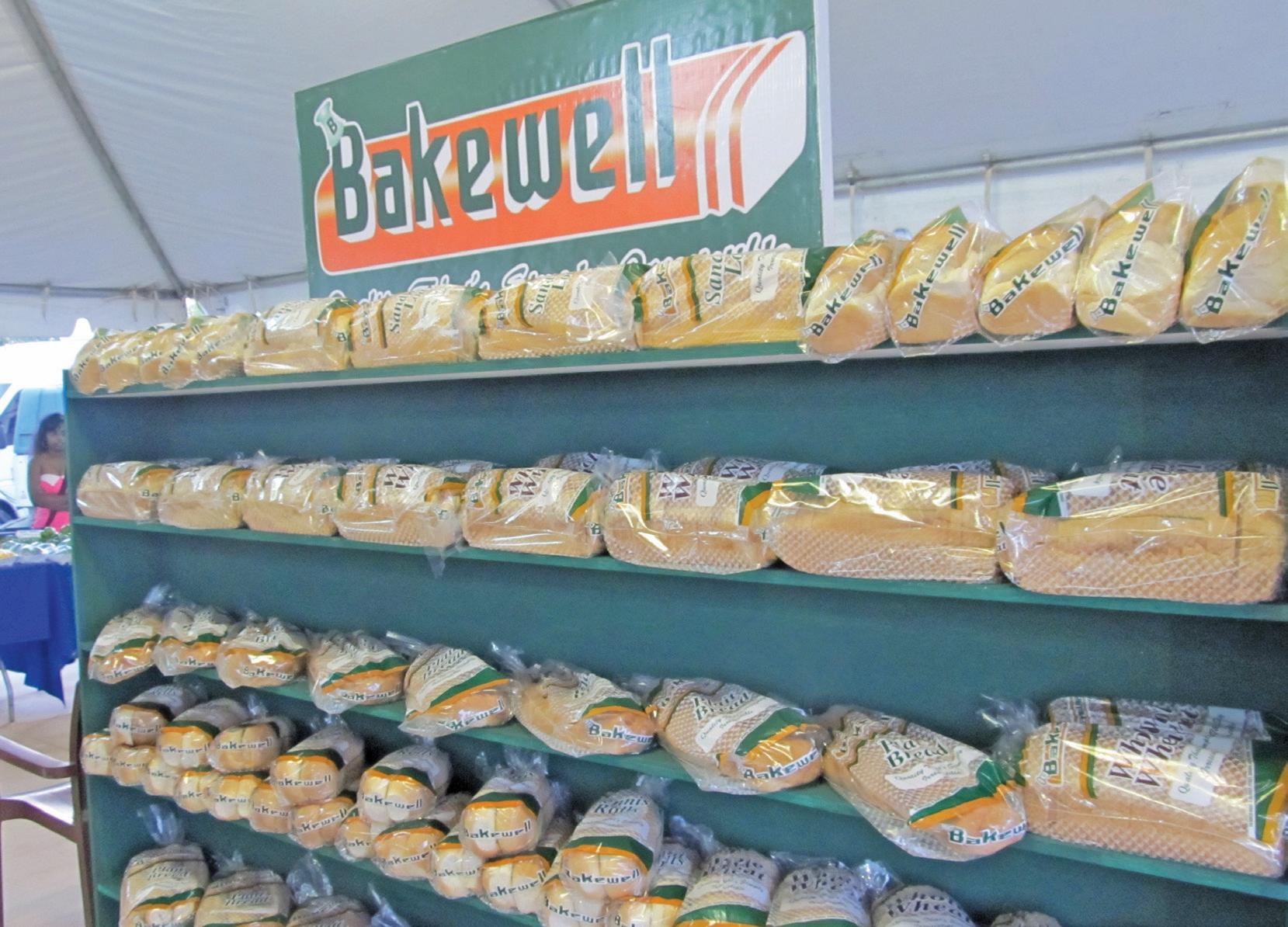
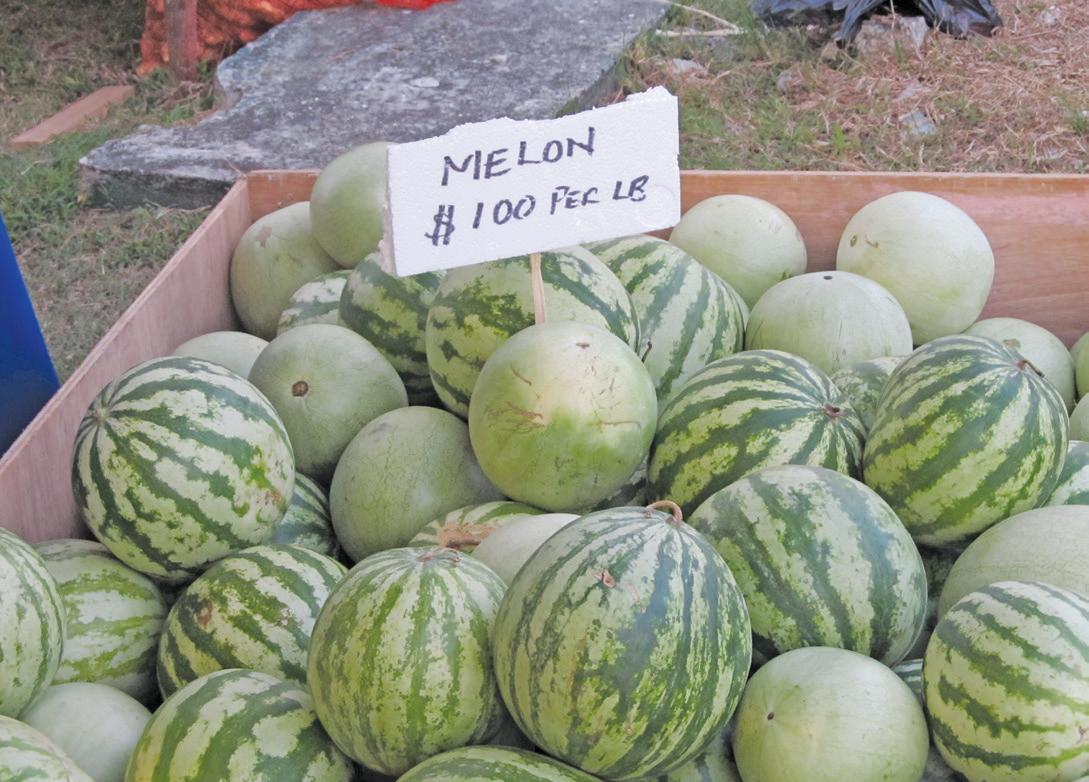
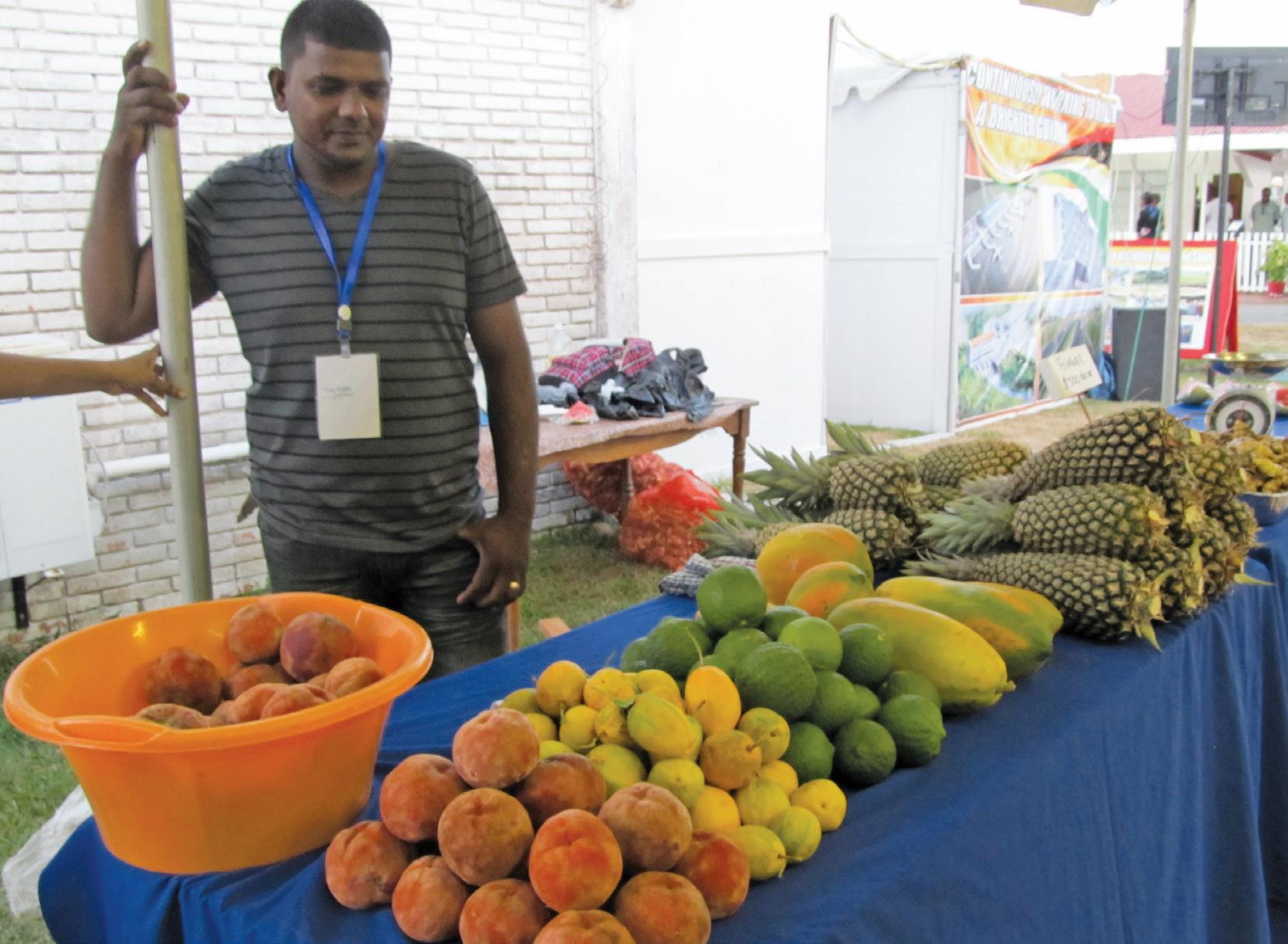
In an effort to promote local produce, goods, and by extension the Guyanese industry, a Guyana Supermarket, under its slogan ‘Buy Local, Eat Local, Live Local’, is being exhibited at GuyExpo this year. The booth, which is found just before the technology section, displays a host of locally produced products by various farmers and companies.
GuyExpo Co-Chairman Derrick Cummings explained in an interview with Guyana Times Sunday Magazine: “We are introducing a supermarket at GuyExpo for the first time where fresh Guyana produce can be found, sensitising persons at the start of Agriculture Month.”
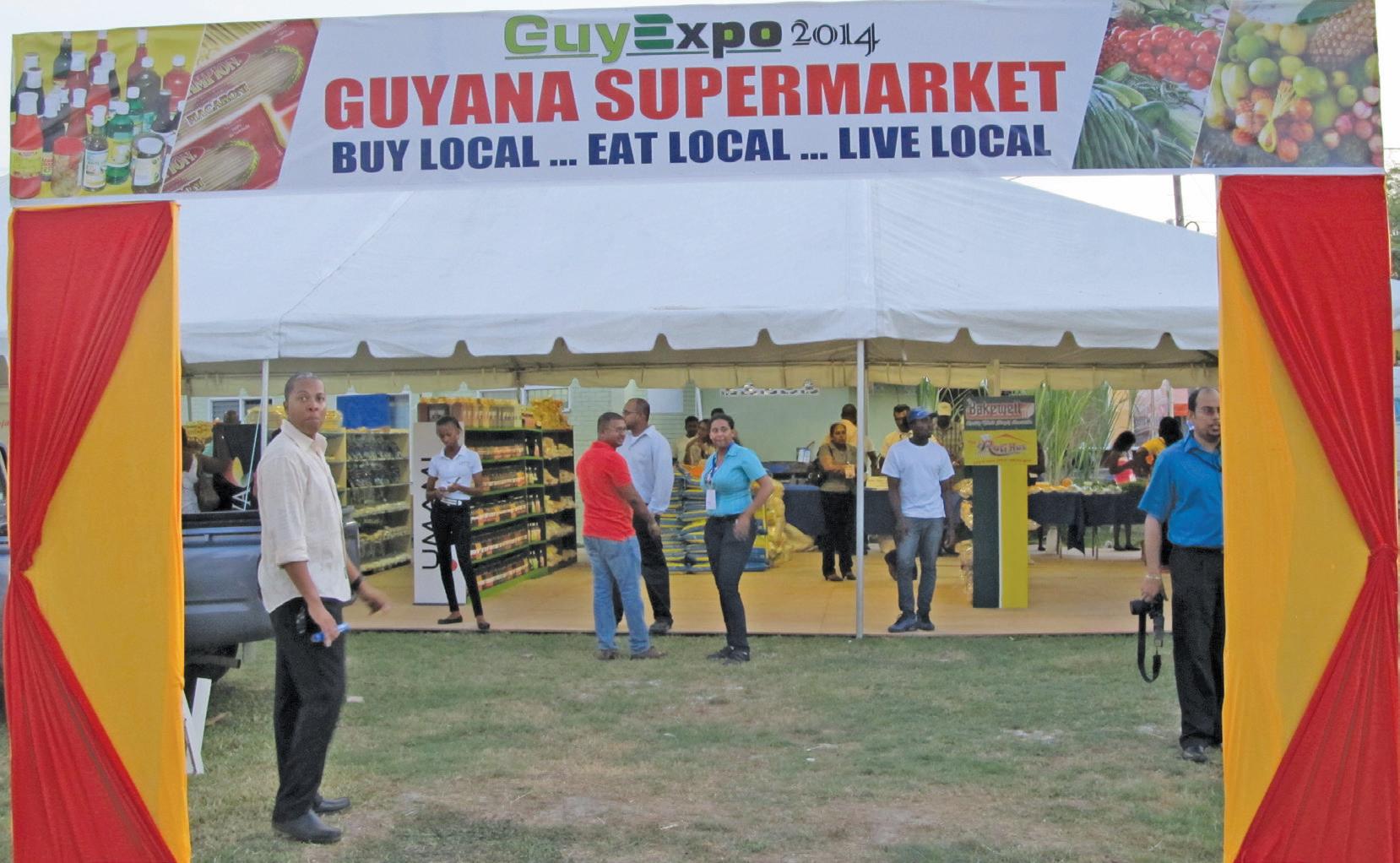
companies to best showcase and display their products to customers. These lucky customers, upon entering the supermarket, are then treated to various deals and bargains. They can also sample items that garner their interest.
The Guyana Supermarket showcases the richness of Guyana’s agriculture sector, along with the extensive talents of Guyanese manufacturers and farmers who work hard to produce a wide variety of products from sweets and baked goods to toiletries and
feel of a mini-mart, the Guyana Supermarket is comprised of eight to nine aisles filled with shelves on
coordinator of GuyExpo 2014, stated: “This is a working collaboration with the Ministry of Agriculture in commemoration of Agriculture Month 2014 [October]…so we are encouraging Guyanese to eat local, buy local and live local.”
All the products found in the Supermarket range from fresh local produce to processed and packaged items.
Informative and eyeopening, not only in its ability to showcase locally produced items, but also displaying local talents, the Guyana Supermarket might just be this year’s most exciting feature at GuyExpo.
“The Supermarket is definitely a feature [we] seek to work with the Ministry of Agriculture on, in that no matter the plans for Agriculture Month we will support and promote something in that area. So this year it is a supermarket but next year it might be something more specific,” added Sukhdeo-Singh.
Companies such as Edward B Beharry & Company Ltd, Bakewell, Nicky’s Juices, as well as support from the Ministries of Agriculture and Amerindian Affairs and the Agro Processors Association, just to name a few, are displaying their products in the Supermarket.
Taking on the look and
Agriculture Month 2014
each side allowing for easy access of goods and the identification of various items and brands.
The lanes are divided among several groups and
detergent.
The Ministry of Agriculture, earlier this week, released a document of planned activities and programmes that declared their wish to provide a glimpse of agriculture in Guyana as “we have the most developed agriculture economy in the Caribbean”. The document also highlighted our achievements in food security and the need to reduce food imports and increase food exports as well as the new dimension to the Grow More Food initiative, which is called ‘Eat What We Produce’; an initiative achieved with the advent of the Guyana Shop and now the Guyana Supermarket.
is celebrated under the theme, "Enhancing agriculture through family farming and the use of sustainable technologies".

Barcelona and Argentina star Lionel Messi is to face trial for alleged tax evasion, a Spanish judge has ruled.
The judge rejected a prosecution recommendation to drop the charges on the grounds the player's father was responsible for his finances.
Messi and his father Jorge are accused of defrauding the authorities of more than 4m euros (£3.1m; $5m).
The pair, who deny wrongdoing, have five days to appeal against the ruling.
It is alleged that they withheld the money between 2007 and 2009.
The income related to Messi's image rights, including contracts with Banco Sabadell, Danone, Adidas, Pepsi-Cola, Procter and Gamble, and the Kuwait Food Company.
The footballer and his father are suspected of avoiding paying Spanish tax by using companies in Belize and Uruguay to sell the rights to use Messi's image.
The judge ruled: "In this type of crime, it is not necessary for someone to have complete knowledge of all the accounting and business operations nor the exact quantity, rather it is sufficient to be aware of the designs to commit fraud and consent to them."

In August 2013 Messi and his father made a 5m euro "corrective payment", equal to the alleged unpaid tax plus interest.
Messi has been four times Fifa World Player of the Year and is captain of Argentina.
The court decision comes as Barcelona grapples with a separate prominent legal case.
A Madrid court is hearing a lawsuit that accuses Barcelona of misappropriating funds from the transfer fee to buy Brazil striker Neymar from Santos in 2013.
Club president Sandro Rosell quit in January, but insisted he had "acted correctly" over the transfer. (BBC)

The maker of hit mobile video game
Angry Birds, Rovio, will lay off 130 staff, it announced on Thursday.
The job cuts in Finland, which account for 16% of its workforce, will happen "sooner rather than later," said chief executive Mikael Hed on its website.
"We have been building our team on assumptions of faster growth than have materialised," he added.
Angry Birds is the number one paid mobile application of all time, according to Rovio.
The company has expanded the brand into a TV series, toys, clothing and an animated movie, which is expected to premiere in cinemas in the summer of 2016.
However, the firm has faced scrutiny af-

ter it reported its net profit had more than halved in 2013 compared to the previous year.
Technology research firm IHS mobile analyst Jack Kent said Rovio might have trouble replicating the success it had enjoyed in the past.
"What we've seen from Rovio over the last few years is that it's very reliant on the Angry Birds brand.
"It hasn't really had much success with titles that don't use Angry Birds," Mr Kent said. "So, what it's really been doing is trying to exploit the Angry Birds success as much as possible."
The company, however, has had trouble retaining players for its Angry Birds titles. (Excerpted from BBC)

Archaeologists in Spain have unearthed one of the earliest known images of Jesus, shedding new light on the appearance of Christianity in Spain. Engraved on a glass plate (called a paten) which dates back to the 4th century A.D., Jesus is depicted beardless and with short, curly hair. He wears what appears to be a philosopher’s toga and is flanked by two equally beardless male characters, thought to be the apostles Peter and Paul. All men have halos over their heads.
The plate, which measures 8.6 inches in diameter, is believed to have held Eucharistic bread in early Christian rituals. It was unearthed, broken in several fragments, inside a religious building in the ancient town of Cástulo in Andalusia.
According to Marcelo Castro, head of the FORVM MMX excavation project, the building was erected in the second half of the fourth century A.D. and abandoned about a century later.
Representing the earliest depiction of Jesus found in Spain, the glass plate features greenish hues and is in an excellent state of preservation. Archaeologists managed to piece together 81 percent of its original area.
According to Castro, the plate is in line with the Christ in Majesty iconography. In the glass paten, Jesus holds the Cross in one hand — a symbol of the resurrection — and the Holy Scriptures in the other. Both the figures on his sides, possibly the apostles Peter and Paul, carry a roll in their hands. (Excerpted from Discovery News)