


WorldTeach is a nonprofit, non-governmental organization founded by a group of Harvard students in 1986 in response to the need for educational assistance in developing countries. Since its inception, WorldTeach has placed thousands of volunteer educators in communities throughout Asia, Latin America, Africa, Eastern Europe and the Pacific and Guyana.
WorldTeach program in Guyana was first established through the efforts of Roger Arjoon, a former Rhodes Scholar and Guyanese citizen working in finance in New York City, and a member of the Board of Directors of WorldTeach. Arjoon was acutely aware of Guyana’s needs and was pivotal in making the primary contact between the
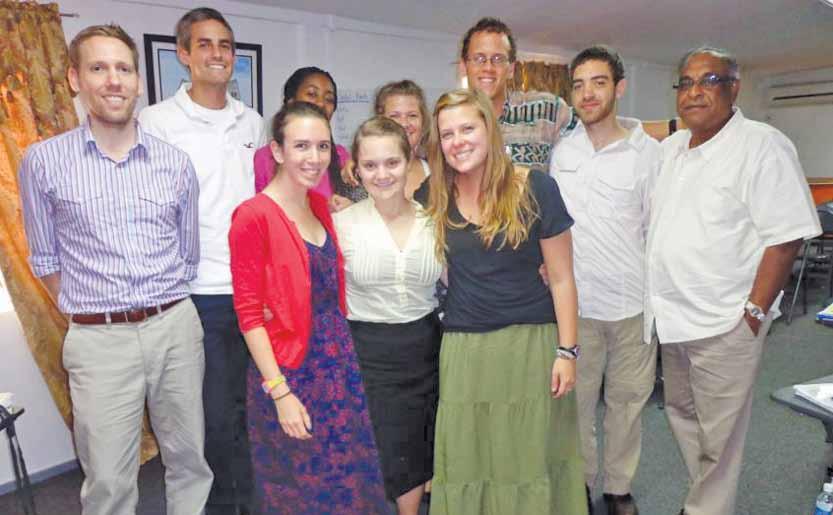
Ministry of Education and WorldTeach.
The organization was established in Guyana during
the 2005-2006 school year, and has partnered with the education ministry to help meet the academic needs

and during that time have done many things including participating in festivals and celebrations to starting extracurricular activities for their students.
In an interview with Guyana Times Sunday Magazine, WorldTeach representative Cara Abel said the volunteers really enjoy being part of the Guyanese community. “The cultural exchange aspect of the program is exciting for both the volunteers and the community they live and work in.”
Donna Chapman, Deputy Chief Education Officer, who is a wonderful resource and is passionate about education and working with WorldTeach. We immensely appreciate her help,” Cara mentioned.
Cara noted that this year there are currently six volunteers in Guyana. Past years have seen groups between 10 and 45 volunteers. She hopes that for the coming year there could be a larger group.
of the country. WorldTeach also provides an excellent opportunity for cultural exchange as the volunteers all derive from different backgrounds and become valuable parts of the communities they live in.
The program was temporarily suspended 2009 but
Over the years WorldTeach has sent volunteers to well over 25 schools throughout the country in almost every region. Each year, dependent on the size of the volunteer group and the needs of the schools, the Ministry of Education assigns 2 or 3 volunteers to each school. Cara mentioned that WorldTeach relies on the ministry to know where its volunteers will be the most useful.
“We partner with the Ministry of Education who
was later restarted and now is celebrating its 7th academic year, 2013-2014, of service this year.
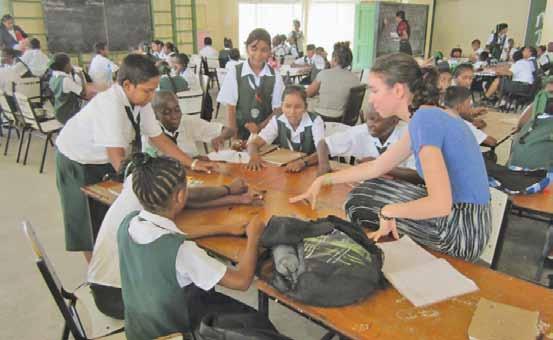
WorldTeach volunteers teach in secondary schools throughout the country.
identifies the places where our volunteers are needed; mainly when there is a shortage of teachers. They are excellent to work with; from Orientation to End of Service representa-
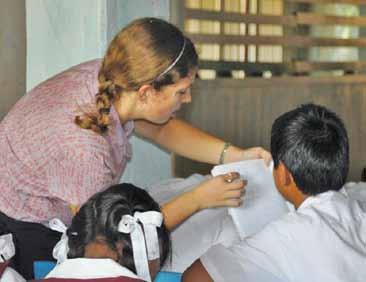
Volunteers usually teach math or sciences, but have had opportunities to teach other subjects based on their strengths. These volunteers do not just teach, they live and interact with their communities for a year
tives from the Ministry of Education work together with the Field Director to ensure the smooth and successful operation of the program. They provide constant support and training. Primarily we work with Ms.
“The six ladies (volunteers) in-country are amazing people who are thoroughly enjoying living and teaching in their school communities. Our aim is to assist the Ministry of Education in with the needs it has in secondary schools. We have been working mainly in teaching Math and Sciences but currently we have a volunteer teaching English and also one who taught geography. We look to help the Ministry of Education to fill in voids it may have and to offer our strengths as options for teaching,” she disclosed.
WorldTeach is a unique organization in that it offers placements to applicants from college graduates to 65-year-olds. To be a WorldTeach volunteer, each applicant must go through the application process, interview and successfully complete the in-country orientation. All of its volunteers have a college degree and an interest in service, so it knows that the quality of their volunteers’ work can be held to a high standard. The organization is looking forward to continue assisting in the education system in Guyana wherever the Ministry of Education needs it the most. Currently, with a huge emphasis on literacy development, Cara pointed out that WorldTeach hopes to recruit and train volunteers to work in the primary schools with students in remedial literacy programs. For more information on the organization visit WorldTeach Guyana on Facebook.
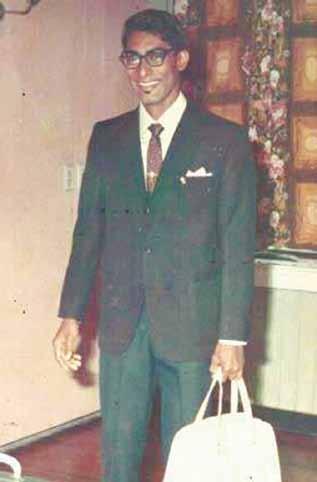
Dr Vivian Srinivas Rambihar, a 1969 Guyana Scholar, is a world renowned cardiologist based in Toronto, Canada and one of the foremost thinkers in the world today, with ideas transforming medicine, science and society globally.
He is a pioneer in “Chaos and Complexity Science”, which the celebrated Stephen Hawking says will be the new science for the 21st century. Dr Rambihar has also been a pioneer in ethnicity and health disparities; being among the first in North America to raise awareness of the high rates of premature heart disease and diabetes in South Asians and other populations. He is currently working on global grass roots engagement for change in all populations and specifically in improving health across the South Asian diaspora.
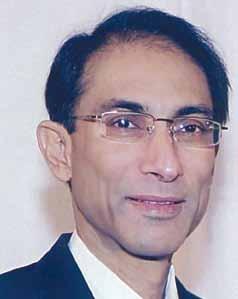
Born in 1951 in Beterverwagting, East Coast, he attended Queen’s College from 1962, excelled in math and physics and was awarded a Guyana Scholarship in 1969, which entitled him to study for a profession, free of all fees and ancillary expenses. He taught mathematics at Queen’s College for a year, then uncertain of a career choice, went to Canada to study math and physics while considering a career in medicine.
He entered the University of Toronto, where he obtained his BSc in two years – a shorter time than the usual period of three years for a degree. In 1975, at the young age of 23, he graduated from the McMaster University Medical School. He continued further studies at McMaster where he completed cardiology training, following this with sub-specialist training at the Toronto General Hospital.
He progressed rapidly in his profession and soon held the position of president of the Medical Staff and, member of the Board of Governors and Medical Advisory Committee at Scarborough General Hospital. He is an adjunct professor of Medicine at the University of Toronto and is extensively involved in research, teaching and community outreach.
Dr Rambihar’s exemplary work in the field of cardiology is prominently featured in his Alma Mater’s McMaster University website headed “Profiles of the Founders of McMaster Cardiology”. His daughter Dr Sherryn Rambihar has followed in his footsteps training in cardiology at McMaster 30 years after he started.
He remains true to his East Indian heritage and is actively engaged in the East Indian community. He served on the Board of OSSICC, the Ontario Society for the Study of Indo Canadian Culture and other community organizations. He helped to start the Indo-Caribbean World newspaper in Toronto.
As Health Co-Chair for GOPIO, the Global Organization for People of Indian Origin, he helped establish a Health Summit in New York City in 2010, after advocating for GOPIO to extend its mandate to health.
At the 20th Anniversary Convention of GOPIO in New York in August, 2009, Dr. Rambihar warned that the South Asian community is at risk if it does not address health issues now.
This warning comes on the 50th anniversary of the first report of excess and premature deaths of Indians settling abroad, which has gotten worse all across the diaspora since. (They underlined World Health Organization predictions that most of the world’s heart disease and diabetes will be in India by 2015, affecting young people in the prime of their lives. This will cause US$237 billion in lost productivity in India over the next ten years, and proportionately similar across the South Asian diaspora.)
Dr. Rambihar has proposed that the Ministry of Overseas Indian Affairs in New Delhi coordinate the response to the health crisis across the diaspora. He considers this an Urgent Call to Action, with diabetes and heart disease an epidemic that risks the economic future of India and the diaspora, based on WHO (World Health Organisation) data. He advocates novel and grassroots approaches like using community, religious and social occasions for health we can all start now, while awaiting policy and other changes.
Dr Rambihar invites Indians to do much more for health, starting earlier, because of our sensitivity to and higher levels of risk factors for heart disease and diabetes at an earlier age, especially with early family history. He emphasizes the tremendous value of using the extensive South Asian networks to improve health.
The doctor’s efforts address health for all within our diversity. After pioneering research showing ethnic health differences, he had the courage and conviction to bring the taboo subject of diversity and health to attention. His 2010 American Heart Journal editorial “Race and Ethnicity: A New Challenge for Cardiology for the 21st Century” and other publications, changed the way we envisage health.
His Health Promotion initiative started in the 1980s filled
an unmet need, as did his Valentine’s Day for Heart Health initiative, now over 25 years. The Valentine’s Global Heart Hour invites us to turn on hearts like we turn off lights for Earth Hour. His scholarly publications and books usually break new ground, such as “South Asian Heart: Preventing Heart Disease”, “Tsunami Chaos and Global Heart,” and “Chaos from Cos to Cosmos: a new art, science and philosophy of medicine, health…and everything else,” republished later as “Chaos 2000 from Cos to Cosmos: Making a New Medicine”, a tribute to James Gleick’s landmark book “Chaos: Making a New Science”.
Dr Rambihar has been the recipient of numerous awards for his outstanding work. He was awarded the prestigious CCS (Canadian Cardiovascular Society) 2007 Segall Award of Merit for his “significant contribution to the prevention of cardiovascular disease or to the promotion of cardiovascular health in Canadians.” CCS Awards are granted for excellence in research, teaching, exemplary care, prevention of cardiovascular diseases and overall career contribution.
At the Guyana Awards Gala held on May 26, 2007, Dr. Rambihar was honoured with the Community Service Award. He was among ten winners, recognized for their “special contributions…toward the promotion and development of Guyana, Guyana’s heritage and culture, as well as acknowledging the achievement of excellence by Guyanese individuals and community.”
He was one of the first recipients of the Newcomer Champion Award, which was presented by the Government of Ontario, Ministry of Citizenship and Immigration. The awardees were named on Canadian Multiculturalism Day. Dr. Rambihar was honoured for “his involvement in the social, cultural and health needs of newcomers for 25 years and is a passionate activist for the health rights of newcomers”.
The Indo-Canada Chamber of Commerce (ICCC) honoured
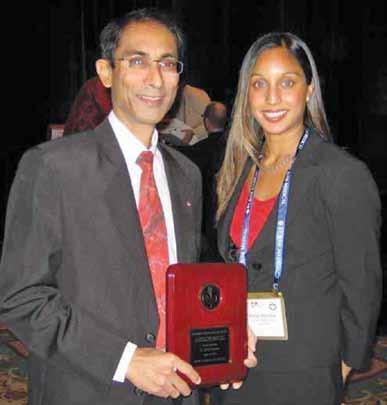
him with the Award of “Humanitarian of the Year”. The presentation was made at the ICCC Annual Gala held on Saturday June 14, 2008, in the presence of about 1000 distinguished guests and members. The award was presented on behalf of the Chamber by India’s Minister of Science, Technology and Earth Science, Hon. Kapil Sibal and Canada’s Minister of Human Resource and Skills Development, Hon. Monte Solberg.
The award he cherishes most, however, is the “Guyana Scholar Award” in 1969, without which he would not have been able to study medicine.
The Rambihar family is an example of leadership and success through education and hard work. Six of his siblings attended Queen’s College and 3 of them taught there for a year. His brothers Brian and Compton also became doctors, with Brian now a leader in medicine, lecturing widely across the United Kingdom.
Dr. Rambihar credits the family’s success to his mother Iris, who provided guidance and wisdom, despite not being able to pursue higher education herself. Dr. Rambihar credits his achievements to his wife Perdita, and their three children, who


have all followed him in medicine.
Dr. Rambihar was inspired by his father William, who worked through illness to become a headmaster and subsequently an Education Officer with the Ministry of Education in Guyana. He was in the first graduating class at the University of Guyana, working fulltime during the day and attending classes in the night, while raising eight children. He was much appreciated and inspired others with his extensive volunteer activities and community development. (First published in Horizons 2011)
By Dmitri Allicock
Ameasure of success of a school must be how far and to what heights students’ progress, and how widely and deeply they remember those formative years and outstanding faculty. By such a measure, the Mackenzie High has achieved great indeed under the administration of formidable principal John Joseph Cummings.
On September 11, 1959, the 1946 Echols High was renamed Mackenzie High School and the new campus of MHS was declared opened on Purpleheart Street, Mackenzie by Balram Singh Rai, then minister of education and community development.
The structure was financed by the Demerara Bauxite Co. (DEMBA) and built by Sprostons Construction Company to the architectural design of Messrs Mence and Moore, and provided the community with its first secondary school.
MHS aspired to emulate Guyana’s best – Queens College in Georgetown. It was a privilege to be a student of this school where high standards were encouraged at all times with equipped classrooms, great teachers, supplies, manicure lawn and landscape, cleanli-
ness and sharp looking students who enjoyed the comforts of a modern North American style high school, 65 miles up the Demerara River. My entire family of six siblings, and my mother, attended this institution.
Guyana’s Prime Minister, Sam Hinds, who served as president of Guyana in 1997, said this regarding MHS: “My first trip to Mackenzie was in 1960, as a member of a group of boys from Queens College who visited the new MHS
during its first year... After graduation, I spent the formative years of my working life in the bauxite industry. Linden is therefore my home town too, as much as, if not more than, any other place.”
Dr Rudolph Grant, professor of New York University, and a former teacher at MHS, proudly recalled: “During August of 1960, I applied for a teaching position at MHS. In Sept 1961, two other UWI graduates joined me as new members. The late

John Cummings, who became principal and the late Eirene O’Jon, a brilliant historian and educator, made their mark. It was a period of transition. Couchman, the Blairs, Corbin, the Edwards, Allicock, Thomas, Figueira, to name a few, were encouraged not to stop studying. And besides all the Mathematics, Chemistry, French and history they learned, they made sure to remember that lesson. DEMBA provided scholarships, and parents, in important ways, contributed to the school success, Today, graduates of MHS have distinguished themselves all over the world. The teachers too, moved ahead. Critchlow, Pallackdarry, Haddad, Siegfred, Wharton and others left for overseas Universities. It was exciting, those times. Many mouths were fed and many minds in many parts of Guyana were educated with the help of DEMBA employees. I am sure you would like to join in thanking all those who, in those relatively early years contributed.”
Prior to the establishment of the ‘A’ level classes, students who qualified to enter the sixth form had to seek admission to Senior Secondary Schools in Georgetown such as Bishop's High School and Queen's College to write their ‘A’ levels. DEMBA offered scholarships to those students who qualified for entry to those schools.
John Joseph Cummings soon joined the teacher staff of MHS in 1961, having attended Tutorial High, the Government Teachers Training College and the University of the West Indies where he obtained an honours degree in History. John Cummings represented a special time of transformation of education in the community and is symbolic of the best times for MHS.
Cummings’s exemplary service and magnetic personality rewarded him with the historic appointment of being the first Guyaneseborn principal on March 1, 1965. This day was also significant for Cummings and his wife Beryl, as their daughter Carleen was born earlier that morning. This enabled him to proudly announce her birth at the commencement of school that morning.
His appointment of principal followed head teachers/principals E.U. Wilson and Eddie Gunraj (19461952), Milroy Victor (1952), Dr Dennis Craig (1956), D.D. Sim (1956-1960) and William Ogle (1960-1965).
Cummings served in several social and cultural organizations in the Mackenzie area. He was
Assistant Secretary of the Watooka Management Club, Chairman of the Friends of MHS, First Vice President of the Upper Demerara Football Association and Secretary of the Sherwood Court Ancient Order of the Foresters.
Under his administration, four new classrooms were added to the building. GCE Advance Level classes were introduced in 1966 and the first students, Daniel Baker and Lennox Richardson completed their ‘A’ levels with major successes. The second group of students included my sister; Joycelyn, Daphne Casey, Johnnie Wilson and Irwin Allicock, who had transferred from Preston High School, were also equally successful.
Cummings was also a loving father and found great pleasure in his children. On October 26, 1971, he was returning from Georgetown on the Linden/Soesdyke Highway when a reckless driver caused his vehicle to crash. He died five days later on November 1, 1971, at the Mackenzie Hospital as a result of his injuries. He was just 39 years old.
The overwhelming shock and grief was felt by the entire school and community.
Scores of staff and students cried openly with painful
minds of the students to fill. Siegfred Lyken and Joseph Bakker acted briefly as principals. The following year in 1972, Clifton McDonald (1972-1983) was appointed the principal. During his 11 years, the student enrolment increased substantially and more classroom space became available when the new building, LICHAS, was opened on July 6, 1975.
In 1974, Alfie Collins became the first student to be awarded a Guyana scholarship based on his GCE ‘A’ level performance. Following in Collins’ footsteps, were James Kranenberg and Nigel Blair who were awarded scholarships in 1981 and 1985 respectively.
In 1976, MHS came fully under government control with the advent of free education. The curriculum and uniform have changed over the years as changing times have also affected the school. Yet, the school has registered outstanding performances in swimming as well as track and field at inter- school, national and invitational levels. Vocational subjects such as Food and Nutrition, Clothing and Textile, Technical Drawings were added in December 1979.
These fine attributes of character building is perhaps why that after 68 years

emotions still remembered onto this day. Bus loads of students and staff journeyed to the east coast of Guyana where dear Cummings was lovingly laid to rest. I was privileged as a Form One student to be selected to attend the funeral.
With the tragic loss of MHS icon, Cummings left a void in the hearts and
MHS is still worthy of those great values that will preserve and guide it through challenges ahead. The spirit of so many successful students of the past can serve to shepherd the new generation with hope and confident which history once provided especially under the administration of the late John Cummings.
Pageantry in Guyana has been considered a forum where girls become ladies and are prepared to be ambassadors of their country. One such pageant with an early history of producing top performers at an international level is the Miss World Guyana pageant.
Today, Natasha Martindale takes charge of the local administration of this celebrated event, bringing her years of expertise to the table in hopes of producing winners and breaking the drought within the Miss World Guyana climate.
It was in 1966 when Guyana graced the Miss World stage for the first time in history. It was such an achievement for Guyana when Umblita Van Sluytman was called into the semi-finals. She did not advance to the top seven, but competing for the first time and making it to the semi-finals was an accom-

plishment worthy of celebration.
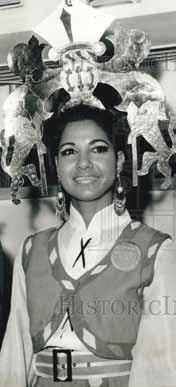
The following year, hoping to achieve something more than a semi-finalist spot, Shakira Baksh did not fail to deliver. At the end of the pageant, she was named second runner up to Peru’s Madeleine Hartog Bell.
In 1968, Guyana once again tasted success as their representative Adrienne Harris placed among the top seven. This became Guyana’s third consecutive placement in the Miss World pageant.
In 1969, Pamela Patricia Lord secured a top 7 placement where she would later finish as third runner up in Miss World 1969.
In 1970, Jennifer Diana Evan Wong continued the streak for Guyana, as she finished as a semi-finalist at the end of the Miss World pageant. This is the first time since 1966 Guyana placed outside the top 7.

In 1971, Guyana continued their impressive placement in the Miss World pageant, as their representative Nalini Moonsar finished as third runner up to Miss World 1971. This was the sixth consecutive placement for Guyana since their debut, but after 1971 Guyana did not compete in the pageant.
In 1988, Guyana returned to the Miss World stage but did not place. Since then Guyana has competed in and out of the pageant but with no success. However Natasha Martindale, who has been involved in pageants since 1995, hopes to change this.
Natasha’s first direct experience with pageantry was by way of spearheading a marketing campaign spon-
soring several pageants over a period of time, Queens of Queens, Miss Bartica, Miss Diwali, Miss African Heritage, Miss Talented Teen/ Miss Millennium and many others, on behalf of her employer Acme Photo.
“With the exposure I am happy to say that I was truly inspired by the talented young ladies and have had the chance to work with and felt quite rewarded seeing them blossom during the time they spend pursuing various crowns and later becoming professional women and mothers,” she mentioned.
Now under Natasha’s new administration as franchise holder and national pageant director for Guyana, the Miss World Guyana pageant is being revamped.
In organizing the pageant, Natasha stated that her job is to assemble a great team of persons who are passionate, committed and talented and which has an enduring love for Guyana as well as being united in seeing Guyana being crowned the next Miss World. The next step, she pointed out, is to identify the stakeholderspartners, officials and sponsors- who share the same values and commitment.
The main focus of the pageant, Natasha noted, is the contestants. The pageant process is intended to give opportunities to all who are eager and willing to participate. The objective is not only to promote their beauty and talent but an opportunity for them to grow in every area of personal development as a result of their participation.
Equally as important, Miss World Guyana is on a mission to promote civic engagement through its ‘Beauty with a Purpose’ segment. Contestants will be


paired with civic organizations to raise awareness on the issues and causes affecting their communities.
Now accepting applications for Miss World Guyana 2014, Natasha disclosed that this year’s pageant would be a cultural extravaganza.
“Personally, I would like it to be an event for us all to experience togetherness and unity as a people during our month of Independence. We first crowned our representative to Miss World, Umblita Van Sluytman, May of 1966 who was also known as the ‘Independence Queen’. It so happens that I accepted the franchise on May 26, 2013. This in of itself is very symbolic and therefore you can expect too, many Independence queens being crown Miss World Guyana. The search is on to find contestants that will exude all the beauty and values we hold dear to our heart. They must be intelligent, caring, competitive, determine, talented, articulate, and of course beautiful,” Natasha cited.
The franchise holder expressed that in order for Guyana to win a Miss World pageant, a “national effort” is needed.
Her advice to potential candidates is, “Be the change you need to see in the world. Be prepared to lead by lending your time, energy and your voice to civil engagement projects. Be a beauty of purpose and unveil your true potential by preparing
to share your talents with our Guyanese community and the world. It is a known fact that the Miss World pageant is unlike any other pageant in the world. It prepares beautiful young women for the world at large with a focus on humani-

tarianism. Becoming a contestant in the Miss World Guyana pageant should be an honour as it is one of the few jobs a young woman can have that changes her life as she become a national symbol for Guyanese women everywhere as well a role model in and out her community and country.”
For more information on the pageant visit Missosology Guyana on Facebook.

By PetamBer Persaud
“See More Poetry” was staged at the Theatre Guild on Sunday January 12, 2014, to mark the birth centenary of A. J. Seymour under the auspices of the National Library of Guyana.
Seymour was born on January 12, 1914, in Georgetown, Guyana. This is not the first occasion that the library has undertaken the responsibility of celebrating the literature of Guyana by honouring literary luminaries who have contributed or are still contributing to the shaping and development of Guyanese Literature.
“See More Poetry” was an ambitious project guided to fruition by many authoritative and able hands in events coordination, theatrical arts and the literary arts. The list is long, but a few names are worthy of mention. Francis Quamina Farrier, the main coordinator, did a tremendous job mostly from afar using the modern form of electronic
Radzik and Ron Robinson among others working alongside staff of the library.
“See More Poetry” was an exciting evocation of Seymour’s poetry in song, dance and recitation. As a fitting prelude to the evening’s event, a slide show paying tribute to a fallen chief, the Chief Librarian, Gillian Thompson, who died on Christmas Eve 2013, and to A. J. Seymour who died on Christmas Day 25 years ago.
The programme then opened with a brief sketch of Seymour and the reading of the poem “Turn these pages” by Ian McDonald. This first act, though solemn, set the stage for the explosion of art to follow.
communication to interact with all concern and plan the programme proper.
What Farrier did from afar (he returned to Guyana January 11 and was at the airport when we were wrapping up final rehearsal) was streamlined during two rehearsals where seminal contributions were made by Dr Ian McDonald, Vanda
Turn these pages, gently, dear,
For in them you see the wistful marriage
Of heart’s best blood to brain’s keen accuracy
....for in them lie precious things
The pages that were turned portrayed the sus-

tained interest in and appreciation of the life and work of Seymour.
It would be remiss of me to exclude any of the items and any of the performers, for together they all add to what was indeed a consummate and successful tribute; so bear with me this listing:
Prayer –Jennifer Thomas
At Age Seventy-Five & Ageing - Francis Q. Farrier
To the sea - Petamber
Persaud
A Melody and For Wilson and Martin – Dr Rupert Roopnaraine
Sun is a Shapely Fire – Margaret Lawrence and Joan Cambridge War Calling - Ron Robinson
The Making of a Slave & Song for Lulu - Yaphet
Jackman
Race & I, Anancy – Ras
Michael
Name Poem – Lloyd Marshall
Partnership - Stephanie Bowry
Sitira Gal – Joan Cambridge & Sweet Kendingo
Beauty & Beauty is Not Enough - Sweet Kendingo
A Poet’s Song & There Runs a Dream - Russel
Lancaster
Requiem for a Murdered Black – Joan Cambridge
For my Father, I was a Boy,I Heard the Rooster Call - Joan Seymour
Tomorrow Belongs to the People - Joan Seymour Elma in August & To The Family House Awaiting Repair and Quiet – Jacqueline de Weever
Reading poetry in Havana - Derek Gomes.
Bitter ballad - Malcolm DeFreitas
Sugar - Nazim Hussain Poem to Tagore – Vanda Radzik
Gethsemane – Margaret Lawrence & National Dance Company
Each poem was important to the show, but those performed by family members Joan Seymour and Jacqueline de Weever were reenergised with an emotive portrayal that connect-
As a fitting prelude to the evening’s event, a slide show paid tribute to the late Chief Librarian, Gillian Thompson, who died Christmas Eve 2013
ed with the audience.
And the audience, a full house at Theatre Guild, did not want to let go of the moment, staying back long afterwards to interact and exchange thoughts on the experience. And what a splendid experience it was, especially the closing act where “Tomorrow Belongs to the People”, performed by the daughter of the poet, Joan Seymour, repeated a profound and far-reaching message that’s worth reiteration here.
Tomorrow They will make a hammer to smash the slums And build the schools.
Like a river, the people hold history in their hands And tomorrow belongs to them.
“See More Poetry” was the first in a series of activities planned by the National
Library to mark the occasion. The following day, a plaque was unveiled at lot 23 North Road Bourda – the house where Seymour lived.
On Wednesday January 15, 2014, Seymour was inducted into the National Library Hall of Fame for the Literary Arts. The Hall of Fame event lent occasion to launch the National Library Distinguished Lecture Series, with a talk on KykOver-Al delivered by Dr Jacqueline de Weever, at which time a presentation of reprinted editions of Kyk produced by The Caribbean Press was made to de Weever.
Responses to this author telephone (592) 226-0065 or email: oraltradition2002@ yahoo.com
What’s happening: • “An Introduction to Guyanese Literature” is now available from the above contacts, Austin’s Book Service and at the National Library.
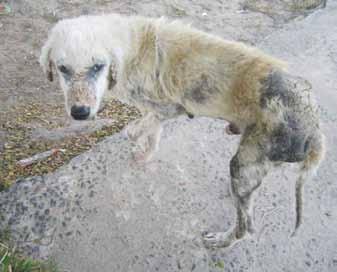
All over the world, gruesome stories of human cruelty to animals can be heard, and, thanks to the Internet and social networking, also seen firsthand. It is often a grisly and appalling sight that few can stomach without a moment of gut-wrenching shock and horror.
And while there are those among us who take such events in stride as just more evidence of humankind’s brutality that nothing can be done about, others go a step further to try and prevent such events from occurring.
They face an uphill task. At times many may find it hopeless. But many continue because animal cruelty is an inhuman practice that affects not just of course animals but often ourselves, as it shakes our belief in the compassion of people like ourselves – our own species.
Animal cruelty is not always a result of intentional cruelty but also of neglect. Failing to provide food, water, shelter, adequate care and affection are all neglect. Either form brings untold suffering to the animals we choose to keep around us – as pets or working animals.
Many of the animals experiencing the most horrific of abuses begin their lives as pets, offspring of pets, or as working animals. Tragically however, pets and/or their offspring soon may become unwanted, while working animals may no longer be considered capable of working or even considered brutes incapable of needing good treatment.
We can only see their physical condition or hear about them, we cannot claim to fully know the heart-rending pain and distress our own kind is causing them. Which is why more than ever, we are all responsible for looking out for these animals and being human enough to try to do something to prevent or ease their unspoken agony.
Humans have long now prided themselves for being superior to animals, but there are no instances of animals being cruel to each other the way humans can be to animals. The natural laws have always shown to be for the progression of a species; humans have no justification for cruelty.
Scientists have often attempted to describe such brutality within humankind as part of an innate need to dominate, and to show a proof of personal power. Such egotistical motivations however, are laughable if they weren’t so viciously illustrated.
It has also been suggested that our cruelty toward animals stems too from a lack of awareness, or what some call ignorance, which further stems from a lack of sensitivity because of unrefined attitudes.
However science or society defines animal cruelty, it is an ugly indictment of humankind’s psyche that needs to be rooted out. All children seem wired for a love of animals until either some may experience a harmful incident involving an animal or are taught to be cruel and lose that love as they grow older.
IIn addition to adults, it is therefore necessary to educate young children about the horror of animal cruelty rather than hide its ugliness while constantly celebrating human beauty. The ugliness of animal cruelty should be recognized along with the beauty of celebrities.
Go online to find out about local animal advocates and shelters if you want to find a way to make a meaningful contribution towards preventing cruelty toward animals. In doing so you may even help save not only animals but the humanity within us.

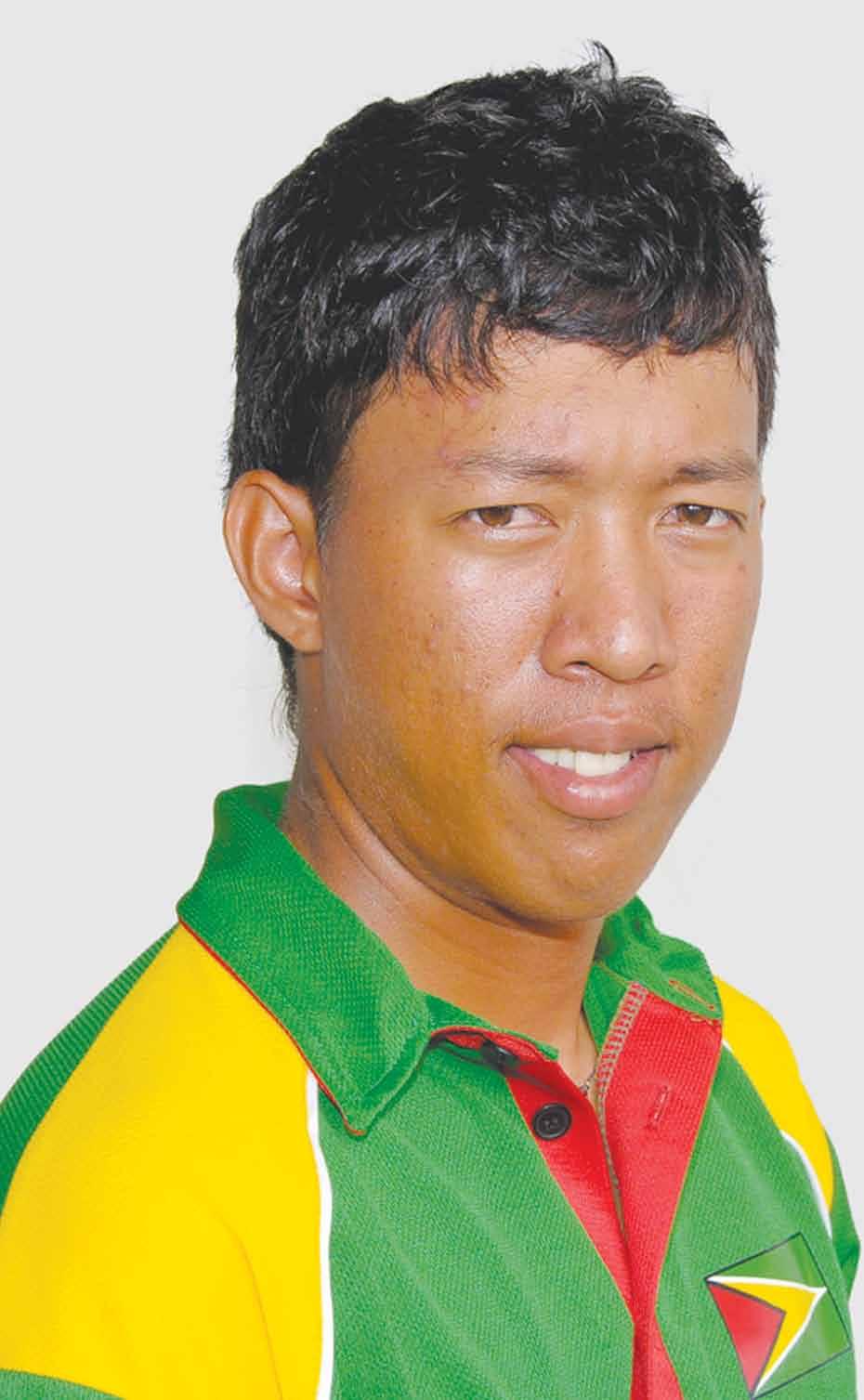
Jonathan Foo, born September 11, 1990, is among a rare breed of West Indies cricketers with Chinese descent. The young Guyanese all-rounder who hails from Berbice, a region which has produced household names such as Alvin Kallicharran and Rohan Kanhai, was one of the stars to emerge from the inaugural Caribbean T20. He helped Guyana snatch victory in the nail-biting final against Barbados, hitting a 17-ball 42 under immense pressure. Foo had not appeared for Guyana at the highest level in any form before the tournament, thereby making him an unknown, and surprising, commodity to the opponents. A hard-hitting lower-order batsman and leg-spinner, Foo will be one of the stars to look out for.
(ESPN Cricinfo)
Acaecilian is from an order (Gymnophiona) of amphibians that outwardly resemble large earthworms or small snakes. Caecilians (pronounced seh-SILL-yens) have no arms or legs, and their shiny skin is ringed with skin folds called annuli. They usually come in shades of gray, brown, black, orange, or yellow. Some species have tiny, fishlike scales within the rings.
Caecilians can be found in Central Africa, Southeast Asia, and southern Mexico to Argentina in South America. They live in loose soil and ground litter in tropical forests in a network of tunnels underground, or in rivers or streams.
A hard, thick, pointy skull helps these amphibians dig in soft dirt. Because of their underground lifestyle, caecilians have little need to see or hear, and their eyes are very tiny in some species, or hidden under the skin or skull in other species, making just tiny gray bumps for eyes.
Some species in South America spend their lives in water instead of on land. Caecilians don’t have ear openings but rely on their sensitive tentacles, located between the nostrils and the eyes, to locate their prey and find their way around.


The objective of the game is to fill all the blank squares in a game with the correct numbers. Every row of 9 numbers must include all digits 1 through 9 in any order. Every column of 9 numbers must include all digits 1 through 9 in any order. Every 3 by 3 subsection of the 9 by 9 square must include all digits 1 through 9.
Inside a caecilian’s mouth are dozens of needlesharp teeth. The teeth are used to grab worms, termites, beetle pupae, molluscs, small snakes, frogs, lizards, and even other caecilians. All food is swallowed whole. Caecilians have toxic glands in their skin that sometimes protect them from being eaten by other animals.
Caecilians are the only amphibians to have tentacles.

The first person to see a live cell with a microscope was Antonie van Leeuwenhoek, in 1674.
Born July 5th 1996, Dolly the sheep was the first mammal to be cloned from an adult cell.

French chemist and microbiologist Louis Pasteur is well known for inventing a process to stop various foods and liquids making people sick. It is called pasteurization. Scientist Charles Darwin developed the idea of natural selection. It is a process that involves living things with favourable traits being more likely to reproduce, passing on their favourable traits to future generations.
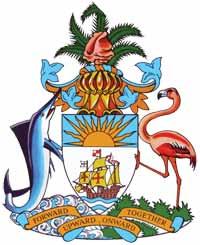

About 50 miles off the coast of Florida, the Bahamas are an archipelago consisting of about 700 islands and 2,300 rocky islets and reefs. Fewer than 40 of the islands are inhabited, and most people live on the islands of New Providence and Grand Bahama. The natural beauty and mild climate of this country make it a favorite tourist destination.
The official name of the Bahamas is the Commonwealth of the Bahamas.
The word “Bahamas” is from the Spanish word “bajamar,” which means “shallow water.”
The Arawak Indians inhabited the islands of the Bahamas when Christopher Columbus arrived in 1492.
In the 17th century, the British built permanent settlements on the islands.
blue
Spanish cob (piece of eight) minted in 1733
Edward Teach “Blackbeard” 1680–1718
By the early 18th century, pirates controlled much of the area. The infamous Edward Teach (known as Blackbeard) captured Fort Nassau and made it his residence.
The Bahamas were a British colony from 1717 until they were granted self-government in 1964.
On July 10, 1973, the Bahamas became an independent nation.
Because the Bahamian climate was so warm, the Arawak wore little clothing. They were a generous, peaceful people.
Eventually, exposure to European diseases, brutality and slavery brought about the end of the Arawak people.
Christopher Columbus 1451–1506
When the Spanish first arrived, the Arawak gave them gifts of parrots and food.
A rookery on Great Inagua affords protection to about 30,000 flamingos.
Indian
(also
as the American, Caribbean or Rosey Flamingo) was hunted to near extinction. Conservation efforts have helped populations revive, and today this majestic bird can be found on Great Inagua Island and several other islands in the Bahamas.
Conch meat is a very popular food in the Bahamas. It is served in salads, as fritters and in chowders and gumbos.
The natural beauty of the Bahamas is fragile. Its diverse and delicate coral reefs are threatened by disease and certain algae. Water pollution from agricultural runoff is an ongoing problem. Marine debris, anchors, boat groundings, and the touch of careless divers or snorkelers also damage this unique ecosystem. Some of the Bahamas’ endangered species include the hawksbill turtle and the green sea turtle. The Caribbean monk seal is extinct.
Land area
3,888 sq. mi. (10,070 km2)
Total area 5,382 sq. mi. (13,940 km2)
Climate Subtropical with an average winter temperature of 23° C (73° F) and average summer temperature of 27° C (81° F).
Population 316,182 (2012)
Languages English (official) Creole (Haitian immigrants)
Ethnicity Black 85%, White 12%, Asian and Hispanic 3% Capital city Nassau
Highest elevation Mt. Alvernia on Cat Island 206 ft. (63 m) above sea level
Monetary unit Bahamian dollar
Agriculture Bananas, chickens, citrus fruits, sugarcane, tomatoes and other vegetables. Industries Tourism, fishing, banking, cement, oil transshipment, salt, rum, aragonite, pharmaceuticals
Natural resources Salt, aragonite, timber, arable land
The Bahamas is on the edge of the legendary Bermuda Triangle. Woodes Rogers, the first Royal Governor of the Bahamas, was a privateer before becoming governor.
In the Bahamas, cars drive on the left side of the road.
A popular remake of the song “Who Let the Dogs Out?” was recorded by a Bahamian group called the Baha Men.
The Lucayan National Park in Grand Bahama has one of the longest underwater cave systems in the world.
After the American War of Independence, thousands of American Loyalists brought enslaved Africans to the Bahamas, establishing a plantation economy.






Known for her bespoke and creative designs, designer Marcie De Santos has proven to be a force to reckon with in the fashion industry. Now, she is preparing to showcase her talent at the New York Fashion Week Fall/ Winter 2014.
Marcie started designing more than five years ago. She always had a passion for unique clothing, so she started by designing for herself and soon realized that she had a flair for designing.
She specializes in cotton and linen garments, enhanced by unique and exquisite fabric painting. She prides herself in the uniqueness of the colour blends that she uses. Her target is mainly women whose desire is to exude femininity in unique, exuberant, eye-catching styles.
The Guyana Fashion Week (GFW) 2008 was her debut runway show where she presented her line ‘Contours’, which won her the award for the most promising designer. She continued to impress at GFW 2009 with her line ‘Mosaique’ and in 2010 with ‘Rhapsody in Grey’.
Her talent and impressive showings did not go unnoticed; she was featured numerous times in the local and international media.
In 2009, Marcie was a member of the Guyana’s delegation led by CEO and founder of GFW, acclaimed designer Sonia Noel, which participated in the 13th Ningbo International Fashion in Ningbo, China, one of the biggest fashion and trade fairs worldwide.
In 2011, she showcased her talent regionally through participation at the USVI Fashion Week, and the Bridgetown Barbados Fashion

Weekend in October, and in the Antigua and Barbuda Fashion Weekend in November. April of the following year saw her participating in the Tobago Fashion Weekend. Her work received excellent feedback at all regional runway shows. Her latest line, ‘Evolution’, debuted at the Tobago Fashion Week 2013. This line was later showcased at the Dominicana Moda 2013 in the Dominican Republic, through the sponsorship and support of Caribbean Export. Despite her schedule and the competitive nature of the fashion design business, Marcie ensures that she finds time to give back. She is a permanent fixture in various charity shows and events organized by GFW. Marcie is currently the treasurer of the recently formed Guyana Fashion Design Council, which is gearing to significantly move the Guyana fashion industry forward.
(Photos by Obrey James)

Jai Courtney is an Australian actor known for his role as Varro in “Spartacus: Blood and Sand”, and for his roles in the feature films “Jack Reacher” and “A Good Day to Die Hard”. Courtney grew up in Cherrybrook, a suburb of Sydney, New South Wales. His father, Chris, worked for a state-owned electricity company, and his mother, Karen, was a teacher at Galston Public School where Courtney and his older sister attended. He then attended Cherrybrook Technology High School and the Western Australian Academy of Performing Arts. In 2008, Courtney had a role in the hit Australian series “Packed to the Rafters”, then a guest lead in the popular “All Saints”, the comedy feature “To Hell & Bourke” and several short films. His big break came in 2010 when he played Varro in “Spartacus: Blood and Sand”. He also stars in “Jack Reacher”, with Tom Cruise, and in “A Good Day to Die Hard” with Bruce Willis. It was recently announced that Courtney was cast as Eric in the upcoming film adaptation of “Divergent”.
Expect major queues outside your local WH Smith- the 1D boys have signed two major book deals- and one promises to be a tell-all autobiography.
Following on from the mammoth success of their first feature film: This Is US, One Direction have inked a deal with publishing house Harper Collins for two books - an official autobiography and One Direction: The Official Annual 2015 this year. This isn't the first book deal for the boys - they've already sold three million copies from previous books, including Where We Are: Our Band, Our Story which spent five weeks at the top of the bestsellers list.
But the new autobiography is sure to be an ever bigger hit with their legions of Directioners - according to the publishers it will offer "an incredible insight and intimacy to the band as nev-

er before and will bring fans even closer to Harry, Niall, Liam, Louis and Zayn."
Harper Collins Publishing director Natalie Jerome said: "The boys are an absolute pleasure to work with and always strive to deliver more to their fans.
"It's a hugely exciting departure from the books we've published with them so far and there's a lot we're going to be doing that will make this an extra special experience for their loyal and devoted fans."
Will there be unusual stories from the boys about their most devoted fans (like documentary Crazy About One Direction), or maybe an insight into Harry's much talked-about love life?
Probably not, but there will hopefully be enough "intimacy" to make the book a thrilling read.
One Direction: The Official Annual 2015, will also be released in August, and will contain photos, interviews and behind-thescenes stories. (Glamour)
She's 50 and fabulous –and has the ID card to prove it!
First Lady Michelle Obama turned the big 5-0 on Friday, and showed off one of her first birthday gifts, courtesy of the American Association of Retired Persons: a free membership card.

"Excited to join Barack in the 50+ club today… check out my @AARP card!" she wrote on Twitter next to a photo of herself grinning and showing off the card. Some 50-year-olds dread re-
ceiving it, but not Michelle!
"I don’t feel that much differently than I did when I was younger," Mrs. Obama told PEOPLE in advance of her big milestone. "What I hear is that age is a number, it’s a state of mind."
As for what President Obama might be wrapping in ribbon for the birthday girl today, "That's top-secret," he tells PEOPLE. "Not even the NSA knows that."
(People)

Shia LaBeouf lost his cool during a recent outing in London. The "Nymphomaniac" actor is caught on camera getting into an altercation with another patron at the Hobgoblin pub, while a woman is seen trying to break up the fight.
It's unclear what caused the ruckus, but LaBeouf is heard screaming at the man's ear as he leaned forward, "What did you just say? What did you just say?" At one point, he's seen headbutting his opponent during
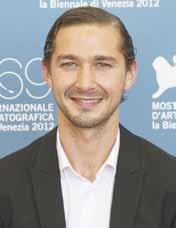
The whirlwind of controversies led him to announce his retirement on Twitter, "In light of the recent attacks against my artistic integrity, I am retiring from all public life." (AceShowbiz)
the confrontation. The former Disney star has been on the headlines for the wrong reason recently. He was embroiled in a plagiarism scandal after his short film turns out to be a word-for-word copy of Daniel Clowes' comic book. He got further backlash and was accused of not being genuine with his apologies, some of which were rip-offs as well.
Talk about a Big Bang for your buck! Three months after listing his Los Feliz mansion for sale, Robert Pattinson has sold the home he once shared with ex-girlfriend Kristen Stewart to none other than “Big Bang Theory” star Jim Parsons, real estate Trulia reports.
The “Twilight” actor first put the L.A.-area house on the market for US$6.75 million in October, Trulia notes. Parsons purchased it on Jan. 14 for $6.375 million, according to property records; it was also once owned by basketball legend Kareem-Abdul Jabbar.
Built on a terraced 1.5 acre lot in the hills above L.A., the 1922 Spanish Colonial-style estate has three bedrooms, three-anda-half bathrooms, and a library/study, all spread out over 4,026 square feet. Outside, there's a lagoonstyle swimming pool -- not to mention gorgeous gar-
Efron

dens and a view of the city. Pattinson, 27, purchased the not-so-humble abode back in September 2011 for $6.275 million. He and then-girlfriend Stewart, his costar in the Twilight movies, lived there together until she cheated on him with Snow White and the Huntsman director Rupert Sanders. (They reconciled and lived together again in the fall of 2012, but ul-
timately called it quits for good in May 2013.) Parsons, meanwhile, has just listed his threebedroom Los Feliz home for $1.85 million, Trulia reports. The Emmy winner and his longtime partner Todd Spiewak -- whom the actor has called his "favorite person on the planet" -- also have an apartment in New York City. (US Magazine)

Justin Bieber and other celebs who have been less than gracious to their fans should take note.
Zac Efron, 26, encountered one of his loyal supporters on Wednesday and was so touched that he posted a kind message on Facebook about it afterward. Talk about a sweetheart!
The lucky lady, Kirby Koo, met Efron when he stopped by her office, the headquarters of Facebook in Menlo Park, California, to promote his new comedy,
“That Awkward Moment”
The handsome actor posted a photo of the two embracing with a few words that feel like they could have been taken right out of the script of a Nicholas Sparks movie. (Perhaps Zac was inspired by his role in the 2012 movie "The Lucky One”, which is based on a Sparks book!)
"I have so much more I want to say. And I will — when I find the words.
But I'll start here — When you stood up, with such strength, and sincerity and
gave me perhaps the nicest compliment I've been paid… it meant so much more than that to me. Facebook and online media in general, show only half the picture— sure people see me, but I never get to see them. Yesterday was the first time in a very long time that I was able to look into your eyes and remember why I do what I do — and will never stop. I needed that, more than you will ever know and just wanted to say thanks — face to face soon I hope."
Of course, Koo, who's undoubtedly the envy of Efron fans everywhere, responded.
"Zac, I am so incredibly touched by your note," she wrote. "Meeting you was always the dream, but I never could have imagined that you would respond with such genuine kindness and literally open arms. The impact you and your talent have had on me and so many millions of others should never be underestimated. Beyond the actor, thank you for being such a warm, generous person and I’d be humbled to consider you a friend."
(Yahoo)

sha Gupta is an Indian actress and model. She came in 3rd in Femina Miss India in 2007 and went to compete in the Miss India International contest and was not placed. Gupta appeared in Kingfisher Swimsuit Calendar in 2010. In 2012, she was signed by Mahesh Bhatt for a three-film contract with Vishesh Films and made her screen debut in Kunal Deshmukh's “Jannat 2” which was commercially successful, and followed it with Vikram Bhatt's “Raaz 3D” (also financially successful) and Prakash Jha's “Chakravyuh”. She ranked #13 in Times' 50 Most Desirable Women Of 2012. Gupta has recently signed Sajid Khan's next film, in which she will star alongside Saif Ali Khan, Ritesh Deshmukh, Bipasha Basu and Tamannaah.
Salman Khan has launched a music app to promote his forthcoming film “Jai Ho”.
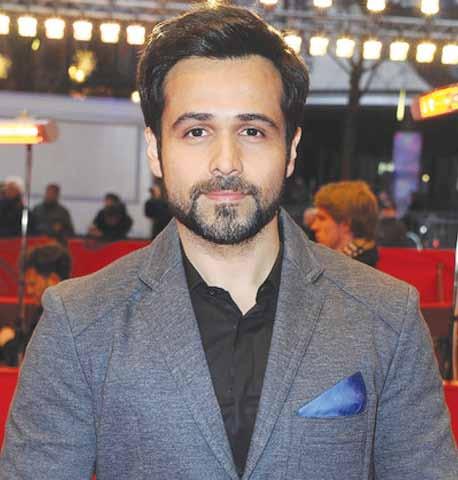
Emraan Hashmi's 4-year-old son Ayaan has been diagnosed with first stage of cancer.
Doctors reportedly found a malignant tumor in the boy's kidney.
Mahesh Bhatt, who is Hashmi's Uncle, told Bollywood Mantra: "I got a call from Emraan at about 12.30 on Monday. He was speaking some garbled words and it was a call that kind of shattered me as he was inconsolable.
"He was calling from Hinduja Hospital where his
4-year-old son Ayan had been diagnosed with a tumour in his kidney that was found malignant. The doctor had suggested immediate surgical intervention after which the road map for the future would be decided and that would probably mean chemotherapy.
"When he said this to me, it was a tonne of bricks that hit me and I went across to his house to meet him. I saw a frail and broken down Emraan with his wife, but his son was so full of life, hardly close to look-
ing ailing from the dreaded cancer," explained the director.
"It was time for us to get hold of ourselves, take the news in our stride and do what was needed. But we need to be very strong to deal with that catastrophe. I took Emraan aside and told him that I felt this will pass and we will be able to tide over it, and he looked at me with hope and suspicion. The disease is in the firststage cancer and thus curable."
Bhatt added: "The bone marrow scan says it is clear, so it is first-stage cancer and thus curable. This is the mother of all pains and life cannot get worse than this. It is amazing that Emraan, who broke down yesterday, has transformed into a gladiator who would take all the challenges in his stride.
"I will make sure as a parent that I will create a firewall around him and protect him. He will do all his professional jobs with the same professional commitment without anything or anybody being affected."
Hashmi, who is currently shooting for “Mr. X”, asked the makers to call off the South Africa shoot so that he can spend as much time as possible with his son. (Bollywood Mantra)

The actor has teamed up with online music platform Hungama for the HungamaJai Ho Friends-of-Friends music app.
In a statement, Khan said: "Jai Ho is about uniting Indians against social injustice. It allows friends and communities across the globe to connect with each other through their love for music and I'm looking for-

ward to the response to the initiative."
The campaign aims to bring people together, who share a common love of music.
Khan has endeavoured to involve his fans in every aspect of the
Khan, “Jai Ho” also stars Tabu and Om Puri.
The film is scheduled to release on January 24. (Digital Spy)
Priyanka Chopra has announced details of her debut single for the UK market.
'I Can't Make You Love Me' follows the earlier US and India releases 'In My City' and 'Exotic'.
The Bollywood celebrity - and new face of GUESS - has confirmed that the single will be unveiled at the GUESS flagship store on London's Regent Street. Chopra is expected to meet and greet fans and sign autographs at the event, with the first 200 guests in-store given a free download of her new single.
A recent promotional event in Los Angeles to launch a signature milkshake blocked traffic when thousands of fans turned up to meet the Indian star.
The former Miss World's collaborations with will.i.am on 'In My City' and Pitbull on 'Exotic' both reached number one in India's iTunes chart.
Amitabh Bachchan has been honoured with a Lifetime Achievement Award at the 20th Annual Life OK Screen Awards.
The 71-year-old received the award from veteran actor Shatrughan Sinha and filmmaker Vidhu Vinod Chopra.
Writing on his blog about the award, Bachchan said: "The grace and honour with which colleagues and friends, and all those behind the scene workers, commemorate the 45 years of my existence in this wonderful world of films, can never have sufficient words to fill that immortal cup of gratitude."
He described going on stage to collect the trophy as an "awkward moment".

"Perhaps it is easier for those that express, it certainly is not the most easiest for him that has to sit in not too great a distance, to listen and wait for that call from the stage to come up and get it! Get the reward," he added.
Amitabh has starred in over 180 films in an illustrious career spanning four decades as a star of Hindi cinema. The actor was named the Star of the Millennium last year. His son Abhishek recently said he cannot aspire to emulate the success and stardom of his father.
The Life OK screen Awards were hosted by Shah Rukh Khan and will be broadcast on the Life OK channel on January 25.
(Digital Spy)

Astrong.
"I am very excited about Unleash. People in India want to be thin but they don't know how to be fit. So this one is about being strong and not just thin," Bipasha told reporters here. She added: "It's a shame if you can't take out 25 minutes for your health. Dedicate at least 25 minutes to workout."
The 35-year-old, who was seen in "Race 2" and "Raaz 3", is a fitness freak. When asked whom she feels is fit in Bollywood, she said: "Akshay Kumar and Salman Khan and among actress I feel Deepika Padukone." (India Today)
Recent reports have announced that Chikungunya has spread to the Caribbean, and countries like Canada are now issuing travel alerts for their citizens who wish to travel to the region.
Up until several weeks ago, few had heard of the illness whose name is now becoming almost as well known as malaria or dengue fever. What is Chikungunya?
Chikungunya is a viral disease transmitted to humans by infected mosquitoes. It causes fever and severe joint pain. Other symptoms include muscle pain, headache, nausea, fatigue and rash. It is however, not usually fatal.
The virus is transmitted from human to human by the bites of infected female mosquitoes. Most commonly, the mosquitoes involved are Aedes aegypti and Aedes albopictus , two species that can also transmit other mosquitoborne viruses, including dengue.
According to the World Health Organisation (WHO), Chikungunya was first described during an outbreak in southern Tanzania in 1952. It is an RNA virus that belongs to the alphavirus genus of the family Togaviridae. The name chikungunya derives from a word in the Kimakonde language, meaning "to become contorted" and describes the stooped appearance of sufferers with joint pain (arthralgia).
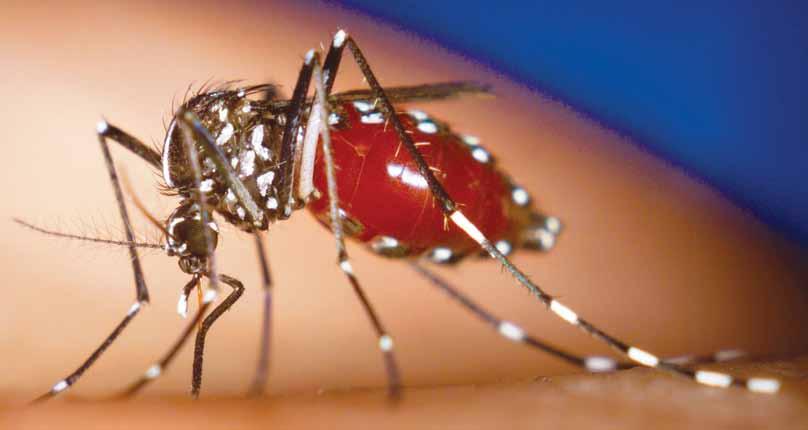
OThe disease occurs in Africa, Asia and the Indian subcontinent. In recent decades mosquito vectors of chikungunya have spread to Europe and the Americas. In 2007, disease transmission was reported for the first time in a localized outbreak in north-eastern Italy.
Signs and symptoms
WHO notes that Chikungunya is characterized by an abrupt onset of fever frequently accompanied by joint pain. Other common signs and symptoms include muscle pain, headache, nausea, fa-
nly 148 cases of Guinea worm disease were found in the world in 2013 — a 73 percent drop from the 542 cases found one year earlier, the Carter Centre announced Thursday.
Along with polio, Guinea worm is one of two diseases hovering on the brink of extinction, with fewer than 1,000 cases annually worldwide. When the Carter Centre began its campaign in 1986, there were an estimated 3.5 million annual Guinea worm infections across Africa and Asia.
Guinea worms appear in rural villages where the microscopic parasite is picked up from shallow drinking water ponds. After about a year, the parasite is nearly a yard long and emerges through the skin inch-by-inch for days or
tigue and rash. The joint pain is often very debilitating, but usually lasts for a few days or may be prolonged to weeks.
Most patients recover fully, but in some cases joint pain may persist for several months, or even years. Occasional cases of eye, neurological and heart complications have been reported, as well as gastrointestinal complaints. Serious complications are not common, but in older people, the disease can contribute to the cause of death.
Often symptoms in infected individuals are mild and the infec-
tion may go unrecognized, or be misdiagnosed in areas where dengue occurs.
Treatment
There is no specific antiviral drug treatment for Chikungunya.
Treatment is directed primarily at relieving the symptoms, including the joint pain using antipyretics, optimal analgesics and fluids. There is no commercial chikungunya vaccine.
Prevention and control
WHO advises that the proximity of mosquito vector breeding
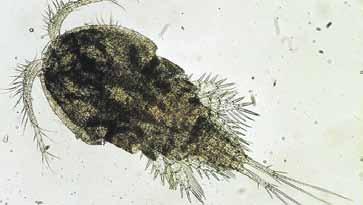
Cyclops is intermediate host of guinea-worm disease and fish tapeworm (Diphyllobothrium latum) infection
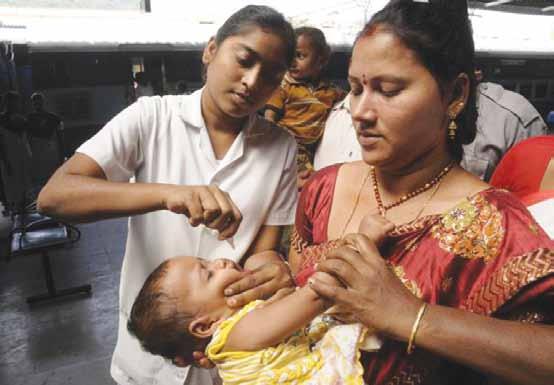
India on Monday marked three years since its last reported case of polio, paving the way for it to be declared free of the crippling virus and boosting efforts to wipe out the disease globally, the Organization (WHO) said.
The country's last case of the wild polio virus was detected on Jan 13, 2011, in a two-year-old girl in the state of West Bengal. Three years without any new cases means India can be de-
clared polio-free. Afghanistan, Pakistan and Nigeria are the only countries in the world where the disease remains endemic.
Until the 1950s, polio crippled thousands every
year in rich countries. It attacks the nervous system and can cause irreversible paralysis within hours of infection.
The highly infectious disease often spreads in areas with poor sanitation - a factor that helped it keep a grip on India for many decades - and children under five are the most vulnerable. But it can be prevented by population-wide vaccination.
India had been considered one of the toughest places in the world to eradicate polio. Many families in
sites to human habitation is a significant risk factor for chikungunya as well as for other diseases that these species transmit.
Prevention and control relies heavily on reducing the number of natural and artificial waterfilled container habitats that support breeding of the mosquitoes. This requires mobilization of affected communities.
During outbreaks, insecticides may be sprayed to kill flying mosquitoes, applied to surfaces in and around containers where the mosquitoes land, and used to treat water in containers to kill the immature larvae.
For protection during outbreaks of chikungunya, clothing which minimizes skin exposure to the day-biting vectors is advised. Repellents containing DEET or icaridin can be applied to exposed skin or to clothing in strict accordance with product label instructions.
For those who sleep during the daytime, particularly young children, or sick or older people, insecticide treated mosquito nets afford good protection. Mosquito coils or other insecticide vaporizers may also reduce indoor biting.
Basic precautions should be taken by people travelling to risk areas and these include use of repellents, wearing long sleeves and pants and ensuring rooms are fitted with screens to prevent mosquitoes from entering.
weeks, causing excruciating pain. While it is not normally fatal unless the wound becomes badly infected, many victims cannot walk, farm or go to school.
The campaign treats ponds with mild pesticides and teaches villagers to filter drinking water and not dunk painful limbs into ponds, because the worms will spew out larvae, starting the cycle anew.
Of the 148 confirmed cases, 113 were in South Sudan, where tribal fighting broke out in December. However, Dr. Donald R. Hopkins, who oversees the centre’s campaign, said fighting is not widespread in the region where most of the cases occurred. The others were in Chad, Mali and Ethiopia.
poor, high-risk states such as Bihar and Uttar Pradesh migrate for work, while other communities live in remote or inaccessible areas.
They targeted migrant families at bus stations, on trains, at construction sites, and at local festivals. Some used motorcycles or trekked by foot to reach remote villages.
As a consequence, over 170 million children are immunized every year, with millions more targeted on house-to-house visits. The drive has cost the government $2.5 billion since 1995.
In 2009, 741 Indians fell sick with polio, nearly half the world's cases that year. The number dropped to 42 in 2010 and only one in 2011.
U.N. Children’s Fund (UNICEF) Executive Director Anthony Lake attributed India’s remarkable progress to strong leadership at a national and state level, which pushed for the launch of a comprehensive polio eradication programme that enabled very poor and populous states to have high immunization coverage.





Choose
Make sure your patio’s dimensions work with your concept for patio furniture arrangements. For example, your patio should be at least 10’ by10’ to accommodate chairs around a table with a fivefoot diameter. If you’re crunched for space, consider different furniture options, or creatively adjust your surfaces to add space behind the areas where chairs will be placed.

Ingredients
500g sweet potato, peeled, diced
tsps olive oil 1 small brown onion, finely chopped
Method
Preheat oven to 200°C/ 180°C fan-forced. Cook potato in a large saucepan of boiling water for 15 minutes or until tender. Drain. Transfer to a bowl. Season with salt and pepper. Mash until smooth. Cover to keep warm.
Meanwhile, heat oil in a large saucepan over medium heat. Add onion, carrot and zucchini. Cook, stirring occasionally, for 5 to 6 minutes or until

softened. Add mince. Cook, stirring with a wooden spoon to break up mince, for 3 to 4 minutes or until browned. Add tomato. Stir to combine. Reduce heat to medium-low. Simmer for 5 to 10 minutes or until thickened. Spoon mixture into four 1 cup-capacity ovenproof dishes. Top each with
Place dishes on a baking tray. Bake for 15 minutes or until golden and heated through. Serve with mixed lettuce leaves.
Ingredients 4 ripe bananas, chopped 4 scoops vanilla ice-cream 3 tbs Milo© 250ml (1 cup) UHT (long-life) milk Pinch of nutmeg
Method
Place bananas, ice-cream, Milo, milk and nutmeg in a blender and blend until smooth.
Pour into serving glasses and serve immediately. (Serves 2)
Athat survive well in your climate, and taking into consideration those that prefer sun or shade, will also help beautify the space.


good soup is made a day in advance. Let it sit in the fridge overnight, then warm it gently and all the flavours will marry beautifully.
Add dried fruit to oatmeal before you add the milk or water. The fruit will cook and plump up slightly, adding a juicier, more intense taste.
Make sure the lettuce is completely dry –it helps the dressing stick for a more flavourful salad.
When making dough, freeze the butter and grate it into the dry ingredients. You'll handle the cold dough less, resulting in more tender and flaky piecrusts, biscuits, or scones.
Did you know? Before a DIY manicure, dip fingers in a bowl of mayonnaise and soak for five minutes to soften nails and cuticles.
To remove water rings on wood, rub toothpaste onto the wood with a soft cloth then wipe with a damp one.
To keep the food inside a storage bag fresher longer, when you put in food seal nearly all the way, then stick a straw in and suck air out. Remove straw, sealing quickly. The lack of air helps leftovers and produce last longer.
If you run out of scrubbing pads, try using crumpled-up foil instead. It works great on baked-on foods and is a good way to reuse foil.
Can you rank the following series of words in the proper order? (The reverse order is also acceptable)
admission, cook, governor, league, message, mustard, pepper, punishment



y S i S ter S hamaine
B
It was ten o’clock, the sun was out.
The breeze blew the sand about
The babies were crying, both were sick
Time it was for a yard picnic.
The seven year old buxon spice mango tree is now showing off bunches of her first crop. We picked and enjoyed the first four ripe mangoes some days ago, despite the protests of the blue saki, kiskadee and the wild morning parrots.
My one-year-old and eight-yearold both were miserable and bored; they suffered the congestion and runny nose of a cold. After good doses of medicine, which had them both crying, I decided to take them into the yard.
It was a beautiful breezy day and between the house and the mango tree there is cool shade and soft sweetheart grass .We put down a tarpaulin base, added a soft quilt, some bottles of water and packs of chips and we had our very own picnic under the mango tree.
My eight year old was so happy. She could not believe that we were sit - ting on the earth under the tree in the yard with the breeze fanning us and the cat chasing a grasshopper and the one year old going after the cat. They played. They ate and after an hour the baby got sleepy. My eight year old wanted to stay. She asked if we could do it every day. I packed up and we went in. Very soon they were both asleep.
A child must be a child. A parent is a parent. What that means is that the adult male or female parent gets the food, clothes, books, shelter, schooling, transportation, recreation and lunch money for the minor to the capacity of the household and then that parent also makes the important decisions regarding the welfare of the child until that child leaves the home and earns his own.
Children should accept and respect what can be afforded by a household.
This is where ‘contentment’ and ‘confidence’ has to be taught by the parents. No two fingerprints are the same. No two fingers are the same. People have varying degrees of wealth and position in a society. Your home may be the size of your neighbour’s living room but you are proud, it is yours. Do not want what others have. Teach this to your children. I have owned one pair of shoes for three years. When it cracked at the bottom and water started to get to my feet
club? Why do you think you need to smoke that cigarette or drink that beer or sniff that powder or undergo that dirty needle and ink to stain your beautiful skin forever with that ugly tattoo?
My bright, beautiful babies (ages 2 to 22) ask yourselves: “Why?”“Why am I doing this to me?”
There is a new “cool”! Be Different Good! Be Positive You! Be a Leader!
Don’t follow drinkers and drug users and body abusers. Step out of the spell of “trending”, and “in crowd”, and “peer group”! Step out of being bullied and being forced to ‘conform’. Everyone respects a youth who has a dream and works toward that dream, come what may.
There are two forces on earth, God and the devil.

It was not Disney World or Splashmins, but it made them very happy and it created good memories which my eight year old was already planning to tell her friends about.
Nurturing children has some unique challenges. Trying to “keep up with the trend” can be dangerous and put our kids and families into bad situations. I remind my kids, there is a reason why they were born as babies and given stages to grow and why I am the parent.
In irregular diction I say to them,”You were not born big.”
then I was forced to give it up and get another. Why only one you ask. Why do I need more? It was good looking and comfortable and it took me where I had to go. Likewise, I have worn three sets of clothes for the past five years. I wash them and keep them well. People identify me easily by the clothes that I wear. Again I would say: “Why do I need more?”
And this is a question for all of us. Why, do we think we need something or need to do something?
My sweet, adventurous young teens, why do you think you need to have that boots or bag or phone that your friend just got? Why do you need to lie to your mom and go with your friends to the spooky night -
The evil you see and the evil you hear are the whisperings and work of the nasty devil. Don’t let him get into your head or your body to pollute these virgin vessels with unnecessary want and temptation. When you indulge in alcohol and drugs and cigarettes and tattoos, disobedience, disrespect, foul language and abuse, you invite the devil to take your soul. You lose! You lose in this world! You lose in the eternal dream!
My babies, all of you, all over the world, at every age, of every colour; my soul sighs in agony at your wandering. Each one of you has the innocence and promise to be the leaders of good.
Hold strong to the Force of Good! God is the Guide
And Deliverer and Provider and Healer and Forgiver and Listener And Watcher.
Hold fast to God! Call on him at any hour. Ask of Him all your needs. Let not the darkness of ignorance overshadow your dreams.
God is the light that never dims.
Be cool my youths!
“For God and a dream”. Death to the devil!


When pain and sorrow surround, When teardrops abound, I’ll stick to the fight even when I’m hardest hit, I’ll face life’s challenges, I’ll never quit
I ought to carefully captain my ship, For life is not a myth.
I ought to have my plans and schemes, For they weigh far more than hopes and dreams
Today is what God gifted me, My tomorrow, I cannot foresee.
Today, I must use wisely, For it’s another priceless opportunity
When situations seem bad and things go wrong, I remind myself that I am strong. They said I can’t, but I told them I can, For I know, time and tide wait on no man
I ought to look before I leap, For still waters can run so very deep.
A positive attitude I will pervade, The world finds and shall find me, unafraid
Cindya Khellawan

It's been a bad week for efforts to develop green energy around the world.
A new report from the International Energy Agency (IEA) says that progress towards carbon-free energy production has basically stalled.
"Despite much talk by world leaders," said IEA executive director, Maria van der Hoeven, "and despite a boom in renewable energy over the last decade, the average unit of energy produced today is basically as dirty as it was 20 years ago."
The IEA uses a complex calculation called the carbon intensity index to show how much CO2 is emitted to provide a given unit of energy. The index stood at 2.39 tonnes of CO2 per tonne of oil in 1990. By 2010, it has shrunk fractionally to 2.37 tonnes.
Back to black
The major reason for such a small reduction of that period, according to the IEA, was the resurgence of coal. And it continues to grow. Globally, coal-fired electricity generation rose by an estimated 6 percent
from 2010 to 2012; faster than non-fossil energy.
The major growth in coal came from developing economies, with China accounting for 46% of global coal demand in 2011.
But it's not just them.
Europe, the region that likes to think of itself as perhaps the greenest in the world, has also seen a return to coal in the last couple of years. While the US has turned to shale gas, Europeans have once again embraced the black stuff, as the cost of coal has plummeted.
However, it is not all bad news for the green sector. Renewables such as solar and wind have boomed in 2011 and 2012, perhaps driven by government spending. They accounted for 19 percent of global electricity generation in 2011 which according to the report is "broadly on track to meet a 2C scenario by 2020" for a globally altered climate.
Electric vehicle sales have doubled (still a measly 110,000) while hybrid vehicles have finally broken the

one million sales mark. But turning this oil tanker (perhaps coal carrier is a better metaphor?) is not going to be easy. And efforts will not have been helped by a vote in the European Parliament that rejected an attempt by the Commission to prop up the extremely ailing EU carbon market.
Aflooded sinkhole in southern Mexico so frightens nearby villagers that they won't go anywhere near it. The ancient Maya seem to have kept their distance too.
A recent underwater survey in the cavern, or cenote, located in Mexico's Yucatán, has found a likely reason for its fearful reputation—the floors of its two chambers are littered with human bones.
To investigate the cenote, archaeologist Bradley Russell and his team spent two weeks last August diving into its submerged reaches. Russell received a grant from the National Geographic Society and the Waitt Foundation for this work.
The locals have named this natural well Sac Uayum (pronounced sock-wyeOOM).
The cenote sits just outside the ruins of the ancient Maya city of Mayapán, about 25 miles (40 kilometres) south of Mérida, the capital of the Mexican state of Yucatán.
In its heyday, between 1150 and 1450, Mayapán was a major political centre with at least 17,000 residents and a stone wall that enclosed 1.5 square miles (4.2 square kilometres) of the city.
About 40 cenotes were included inside the city wall and would have served as vital sources of water in the semi-arid limestone plateau of the Yucatán Peninsula.
Why does this cenote hold the remains of so many people, who appear to be males and females, teenagers and adults?
Most residents of Mayapán were buried under or near their houses, so this wasn't a normal cemetery.
The bones bear no marks that would indicate cause of death, so the people probably weren't sacrificed.
Other artefacts found here are mostly pieces of plain water pitchers, so there's nothing to indicate that these people were among the elite and getting some kind of special treatment.
Russell wonders whether the location of Sac Uayum is a clue.
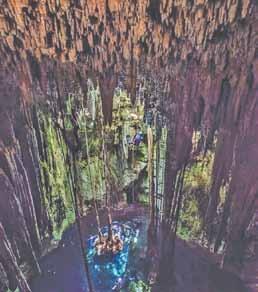
a rappel of 40 feet (11.5 meters) took
For starters, it lies to the south of Mayapán, the direction that the Maya associated with the underworld—humankind's mythical place of origin, known as Xibalba (pronounced shee BALL bah). The dead might have been buried here to await the next cycle of creation.
Also, the builders of the city wall seem to have deliberately excluded the cenote from the city.
"Suppose these were plague victims," says Russell. "You wouldn't want them near the rest of the population. And you wouldn't want to drink the water either."
The evidence fits that theory, and so does the long-standing taboo.
Over time, the real reason to stay away from the cenote may have been forgotten, but the legend of the cenote's guardian, a feathered, horse-headed serpent continued to keep people at a distance.
The demon guardian is a combination of the feathered serpent of ancient Mexican myth and the steeds that the Spanish conquistadors brought to the New World. (Source: National Geographic)
The EU Emissions Trading Scheme (ETS) has been seen as the world's best attempt to cut carbon by means of cap and trade. Essentially, 12,000 or so electricity generators and industrial heavy users of energy have had their emissions limited by EU law. The development of this market was seen as critical to both
cutting emissions and driving investment in green energy.
But too many allowances were issued over the past few years - and the market price collapsed. The Commission attempted to rectify this by reducing the number of allowances due to issued in the next two years, a proposal known as back-
loading.
The Parliament though wouldn't wear it. Many MEPs held to the view that the collapsing carbon price was an accurate reflection of the real economy.
Some environmental campaigners have also welcomed the backloading breakdown. They argue that the market hasn't worked as it essentially has become a means of avoiding real carbon cuts by paying someone else to do them.
"We believe the failed backloading vote points to the fact that we need alternative tools - direct, ambitious, just regulatory policies," said Hannah Mowat from Fern, a NGO that has been working on carbon issues for a decade.
"We are now trying to galvanize support around more effective tools to achieve emissions reductions.” she added.
There is now going to be a serious amount of headscratching among European academics and politicians on the best ways forward for green energy. (By Matt McGrath, BBC News)
Spider webs actively spring towards prey thanks to electrically-conductive glue spread across their surface, Oxford University scientists have discovered.
The researchers found that the electrostatic properties of the glue that coats spider webs causes them to reach out to grab all charged particles, from pollen and pollutants to flying insects.
They also showed that the glue spirals can distort Earth's electric field within a few millimetres of the web, which may enable insects to spot the webs with their antennae 'e-sensors'.
The study, published in Naturwissenschaften, shows how a quirk of physics causes webs to move towards all airborne objects, regardless of whether they are positively or negatively charged.
This explains how webs are able to collect small airborne particles so efficiently and why they spring towards insects.
According to the researchers, common garden spider webs around the world could be used for environmental monitoring as they actively filter airborne pollutants with an efficiency comparable to expensive industrial sensors.

Electrical disturbances caused by spider webs are extremely short-ranged, so it is not yet clear whether insects would be able to sense them before the web snaps out to grab them. Either way, it is clear that electrostatic charges play an important role in the insect world.
“People often underestimate the static electricity that builds up in airborne objects, but it is important at all scales,” said Professor Fritz Vollrath
working with Dr Donald Edmonds from Oxford University's Department of Physics.
“Everything that moves through the air develops static charge, so it's fascinating to see how spider webs make use of this to actively catch prey. It's a great bonus for us that this also causes them to attract pollutants, making them a cheap and natural way of tracking pesticides and air quality around the world.”
(Source: Sciencedaily)
Apple CEO Tim Cook should be happy. What a difference a year makes for Apple.
In 2013, Apple's stock was in a tail spin, analysts were slashing EPS targets, and there were daily reports of Apple cutting its iPhone production (or it felt that way).
At the same time, Samsung was the most beloved company in the tech media. It was praised for its innovation and its forthcoming Galaxy S4 was all anyone cared about. It had stolen Apple's thunder.
This year, Samsung is not quite the bright shining star it was. Its Galaxy Gear was a flop, and anticipation for the Galaxy S5 is relatively muted.
As for Apple, its stock isn't screaming to the moon, but it's not in a downward spiral, either. Analysts are fairly steady on the company, and there is a sense of optimism, albeit low-level optimism, about the year.
It really feels like 2013 was a down year for Apple as it reset itself to launch new product categories in the next five years or so. If ever there was a year for Apple's rivals to leap past the company, it was 2013, and it didn't happen. (Although, these things don't happen overnight. If Apple really screwed the pooch in 2013, we'll probably realize it in 2016.)
Another big difference for Apple as we enter 2014 is that it seems much more clear that the company really knows what it's doing with the iPhone business , despite the various cries from the pundit class.
Ever since Android start-

Ted making noise people have been warning Apple that the iPhone was in danger. There is, of course, no louder proponent of this notion than our own Henry Blodget. ( I don't mean to pick on Blodget, he just happens to be someone that I work with, and is the best at articulating this commonly held view that Apple needs to tweak its iPhone business model.)
For the last three years Blodget, and people like himself, have been pounding the table that Apple was about to get smoked by Google, just like it got smoked by Microsoft.
Last year looked like the year Blodget and his people were going to be right. In the March quarter, Apple's iPhone sales only grew by 7 percent, a stunning crash in the company's annual quarterly growth. In August, Android captured 79.3 per-
cent of the smartphone market, up from 69.1 percent the year prior. Apple, meanwhile, had just 13.3 percent of the smartphone market, down from 16.6 percent the year prior.
In November, Blodget wrote another post admonishing Apple, and it supporters, saying, "Come on, Apple Fans, it's time to admit the company is blowing it."
I think Blodget's wrong, and it's actually never been clearer that Apple's decision to stay the course with its iPhone business has been the exact right decision. While there were many scary statistics for the iPhone in 2013, they've turned out to be largely superficial. The underlying performance of Apple's business remains strong.
Let's start with market share, which is the biggest cudgel used to bludgeon
Apple.
Each quarter we get an uglier and uglier market share number for Apple's platform. The latest, as we noted, shows Android phones are outselling iPhones by a wide gap.
Despite the bad market share numbers, iPhone sales in absolute terms are still doing well. The iPhone generated $19.5 billion in revenue for Apple in the September quarter. It sold 33.8 million iPhones, which was ahead of expectations, and up 26percent on a yearover-year basis.
Now let’s put that in context:
Google's total revenue for the quarter was $14.9 billion, a 12 percent jump yearover-year. (If you just look at Google's ad business revenue was $12.5 billion, up 15 percent year-over-year.)
Microsoft's total revenue
was $18.5 billion, a 7 percent jump.
Amazon's total revenue was $17.09 billion, up 24 percent.
Apple's iPhone business is bigger, and importantly, growing faster than Microsoft, Amazon, and Google, the three giants Apple is competing against in mobile.
But, the critic might say, who cares about those companies? Apple's iPhone business is not growing as quickly as the overall smart phone industry.
And yes, this is true. But there's no reason for Apple to chase every single smartphone customer. It is focused on the profitable highend of the market. Or, as Apple CEO Tim Cook put it, "There’s always a large junk part of the market. We’re not in the junk business."
Look at the companies like Motorola that are going mid-to-low tier. They're not making money, and not making much of an impact on the market. Even Samsung, which is considered the all things to all people phone maker, is focused on the mid-to-high tier. The reason? That's where the
money is.
But, the critic might protest, Apple is giving up precious market share! And yes, it is giving up market share. But, so freaking what?
This is a platform war! (Shrieks the critic.) If Apple loses the market share war, then it loses the platform war. And if it loses the platform war, then it loses developer interest. And if it loses developer interest, then it gets sub-par applications. And if that happens, then consumers tune out the platform.
Well, even with Apple only getting 12 percent of smartphone shipments in the third quarter, it remains a dominant platform when it comes to usage.
Over the holiday shopping period, IBM reported that Apple's iOS usage smoked Android's usage in the U.S.: “iOS traffic reached 28.2 percent of all online traffic, compared to 11.4 percent for Android. iOS sales reached 18.1 percent of all online sales, compared to 3.5 percent for Android." (TO BE CONTINUED) (Information provided by Global Tech)

he U.S. Court of Appeals for the District of Columbia Circuit on Tuesday rejected federal "net neutrality" rules that required Internet providers to treat all web traffic equally. The Federal Communications Commission (FCC) can appeal to the U.S. Supreme Court on the matter.
According to Wired, this gave commercial companies the authority to block internet traffic, give preferential treatment to specific internet services, and steer internet users away from online content based on their own commercial interests.
Education services would be particularly impacted by this decision that would also affect sites such as Netflix and You Tube. Other critics say the ruling could also turn the Internet into cable TV.
“We see potential spectre that (Netflix) and other bandwidth-intensive sites may be vulnerable to the whims of broadband ser-

vice providers, with potentially inherent cost disadvantages, or other quality degradation for its user experience vs. competitors," equity analyst Tuna Amobi said in a research note, according to Reuters.
Writing in Wired, Barbara Stripling, president of the American Library Association,
noted, “...without net neutrality, we are in danger of prioritizing Mickey Mouse and Jennifer Lawrence over William Shakespeare and Teddy Roosevelt. This may maximize profits for large content providers, but it minimizes education for all.”
CNN explained that ‘neutral-
ity’ generally refers to the ideas that led to a set of rules the FCC approved in 2010. The "open Internet" rules prevent Internet service providers from blocking or "unreasonably discriminating" against any legal website or other piece of online content.
What has happened now is that a federal appeals court ruled that the FCC doesn't have the right to enforce those rules. The court said that the government is tasked with overseeing crucial utilities like telephone service and electricity, but that the Internet isn't considered to be one of those utilities under current law.
Everybody who accesses the Internet does so through an Internet service provider. And these providers have been pushing for the ability to dole out that access on their own terms.
This means that companies like Verizon, who sued the FCC over the rules, would be able to pick and choose who gets the best
access. They might start charging big fees for websites to get in the "fast lane." Those fees presumably would be no problem for the Web's monster money-makers, but tougher to take for small sites.
This could lead to two Internets – a quick, smooth highway for the major players and a slow, bumpy trail for everybody else.
The providers could also just blatantly play favourites. Theoretically, AT&T, a major provider, could make traffic quicker on the websites of smartphone companies that use its mobile service and slower on the sites of phone makers who don't.
A precedent was Comcast in 2007, which started blocking some peer-to-peer networks before they were taken to court by the FCC.
The Web's major service providers Tuesday put out statements saying they don't have plans to change anything based on the court's decision.
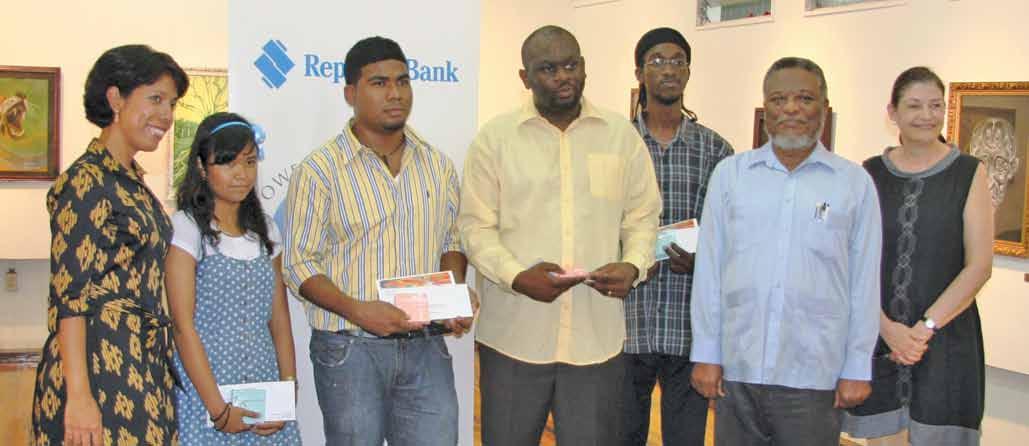
Exhibition of prizewinning artists and other entrants in the Ninth National Drawing Competition, sponsored by Republic Bank (Guyana) Limited, has now been extended at the National Gallery, Castellani House, Vlissengen Road.
The names of the prizewinners and their works were announced at the opening of the National Drawing Exhibition, which took place Dec. 17, 2013, on the main first floor gallery of Castellani House.
In attendance were competition entrants, their family and friends, several members of the wider artists’ community, the Chairman and members of the Management Committee of Castellani House, members of the diplomatic corps, a representative of the judging panel, and the Hon. Prime Minister Samuel
NHinds, in his capacity at the time as acting president.
Jacqueline Telles, of the Marketing and Communications Department of Republic Bank, representing the bank’s Managing Director, John Alves, delivered his remarks which reiterated the institution’s continued support for the biennial competition and its pride in maintaining this support of the National Gallery and the artists’ community for the last seventeen years, since the launch of the first competition in 1996.
Gallery curator Elfrieda Bissember in her opening remarks, thanked the competition sponsors and all who had given the event their support; she commended the artists for their commitment to work and the spirit of competition, having been given less than two months in which to prepare
oted for his skilful use of pencils to create lifelike drawings, artist Darnell Wilson is well on his way of becoming one of Guyana’s notable artists.
In an interview with Guyana Times Sunday Magazine, Darnell said he has been artistic as long as he can remember.
After graduating from St. Rose's High, Darnell attended the Guyana Technical Institute and then Burrowes School of Art.
“I have always loved being artistic. I had a box full of drawings and some books too. One I still have. Being artistic is somewhat in the family also because I have two cousins who are artists,” he noted.
The artist’s stated his inspiration comes from emotions and sometimes he is moved to draw because of the beauty of an object. He enjoys painting “things that have an expression or an action.” Darnell also has a knack for creating miniature sculptures such as model bikes and cars. Once he made a small clay sculpture of his grandfather.
“I received many contracts to make pieces for Guyexpo and one time I made a logie for Indian Arrival day. For me, art is a form or relaxation, it eases my stress, puts me in a different world that I don't even realize until you snap me out of it. It allows me to have things my way,” Darnell disclosed.
Through his artwork, Darnell revealed, he paints hidden messages on pertinent issues affecting the world. He also enjoys painting about the simple pleasures of life and the loss of those pleasures.
“Technology is partially killing art in Guyana. Things can be done much faster and cheaper with a computer. How many
their competition entries. A total of 14 artists submitted 29 entries.
The first prize winner of the competition gold medal and an honorarium of $150,000 was Burrowes School of Art (BSA) graduate and graphic designer, Courtney Douglas, with his work in graphite pencil, “Prolific”, an interpretive tribute to Shivnarine Chanderpaul, preceding the national cricketing hero’s recent achievement of another milestone in his international career.
The second prize of a silver medal and $100,000 was awarded to Troyden Bonds, for his work in pen and ink, “Uprising Memory and Creation”, whose composite image paid tribute to the late visionary painter-sculptor, Philip Moore. Bonds previously won the Special Young Person’s Prize (16-18 years category) in 2004.
sign boards and pictures are hand- painted these days? We need more rewarding competitions and publicity. If it was possible for people to make a living as an artist, it would drastically improve the art industry in Guyana. Personally to have a job like that would be a dream come true,” he declared.
The artist encouraged youths who want to pursue studies in art, to keep practicing and be determined to develop themselves despite challenges.
Darnell’s most recent paintings can be viewed at the ongoing Ninth National Drawing exhibition at Castellani House.
For more information on the artist’s work, email xceptionallycreative@yahoo. com or call 666-9719.
tive member of the Guyana Women Artists’ Association, Anna Correia, for her pen and ink drawing, “Hidden Faces II”.
The bronze medal awards were presented to artists by Telles, while the silver and gold medal awards were presented by Prime Minister Samuel Hinds, on behalf of the president, who also made brief remarks of commendation to the artists.
Competition judges were leading sculptor, painter, draughtswoman and BSA tutor, Josefa Tamayo; Anil Roberts, artist and currently a project adminis-
The third prize of a bronze medal and cheque for $50,000 was won by Shimuel Jones, for “Six Races –One Root”, executed in coloured ink. Jones had previously also won the Young Person’s Prize in 2008, and more recently was shortlisted in the final five in the Painting category of the National Visual Arts Competition of 2012. Jones also received an Honourable Mention for his work “Deeper than the Colour of Your Skin”.
The judges awarded the prize to sixteen year old Roann Pierre, a Christ Church Secondary School student, and the single entrant in the Young Person’s Category, whose work in pencil, “Silent Tears”, won her a Bronze Medal and honorarium of $35,000.
An additional Honourable Mention was awarded to the well-known ceramist and senior execu-
trator at the Ministry of Amerindian Affairs; and Mrs Lourdes Olguín, wife of the Ambassador of Mexico H.E. Francisco Olguín, herself a painter on porcelain. Olguín read the Judges’ Report and shared further comments with the competition entrants present. The exhibition is complemented in the adjoining room by a selection of drawings from the National Collection of Art, and continues until January 25. Gallery hours are 10am to 5pm Monday to Friday and 2 to 6pm on Saturday; the gallery is closed Sundays and holidays.
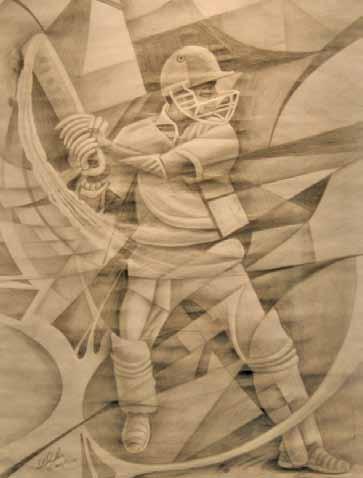






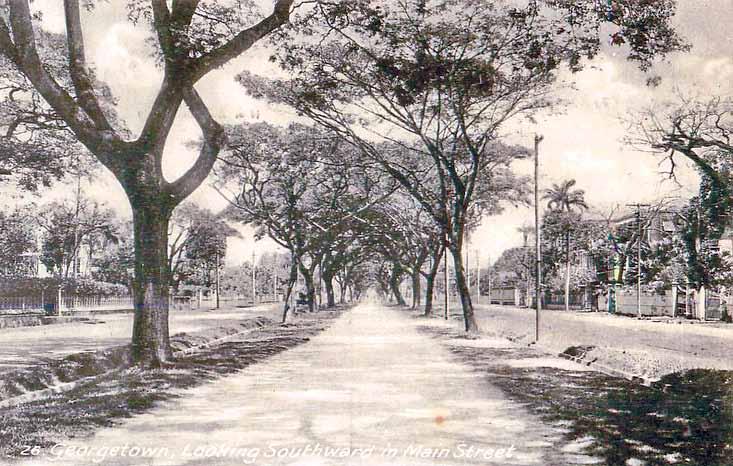
The 2014 National Trust of Guyana calendar, which highlights one aspect of our multi-religious heritage, features several ecclesiastical stained glass windows adorning some of our historical churches.
The innovative almanac also provides a brief description of the church and its windows; information which, at the time its design concept was proposed and adopted in 2012 at the Trust, was lacking, and had to be researched.
Stained glass is considered to have a thousand-year-old history. It adorns ecclesiastical and other significant buildings in several parts of the world. Considered an art or craft, stained glass has covered Christian church or monastery windows since the 4th and 5th centuries. This art form has come down over the centuries to influence colonial Christian societies, leading to its presence among Guyana’s ecclesiastic architecture.
message, punishment, pepper, governor, cook, league, mustard, admission
Explanation: Each of the words can be preceded by a military rank to form a phrase (in reverse order also). (Private) message, (Corporal) punishment, (Sergeant) pepper, (Lieutenant) governor, (Captain) cook, (Major) league, (Colonel) mustard, (General) admission


Karasabai is an Amerindian village located in South Pakaraimas, Region Nine. The community is accessible by land and air. It has a population of approximately 1,600 whose main source of income derives from agriculture. Meat (beef and mutton), peanuts and cassava by-products such as farine and cassareep are its primary products.
The village has a nursery and primary school, health centre, two health posts, an RDC admin building, police station, teacher’s quarters, guest house, village office, shop and churches.
Karasabai is made up of Makushi tribe members. Over the years the village has benefited from many hinterland projects. Some of these development projects include presidential grants, which were instrumental in the formation of a village shop, and capital projects with contributions of 4x4 pickups, tractors, boat and engines, a village market building and much more.
The village is already buzzing with activities as it prepares for the influx of visitors who will be enjoying a series of activities such as cultural presentations (dancing and singing), horse riding, donkey riding, cassava bread baking, farine parching, fire lighting, tomma cooking, cotton spinning, football, just to name a few.
With its panoramic sceneries, mountain ranges and pulsating Makushi culture, Karasabai is worth a visit.
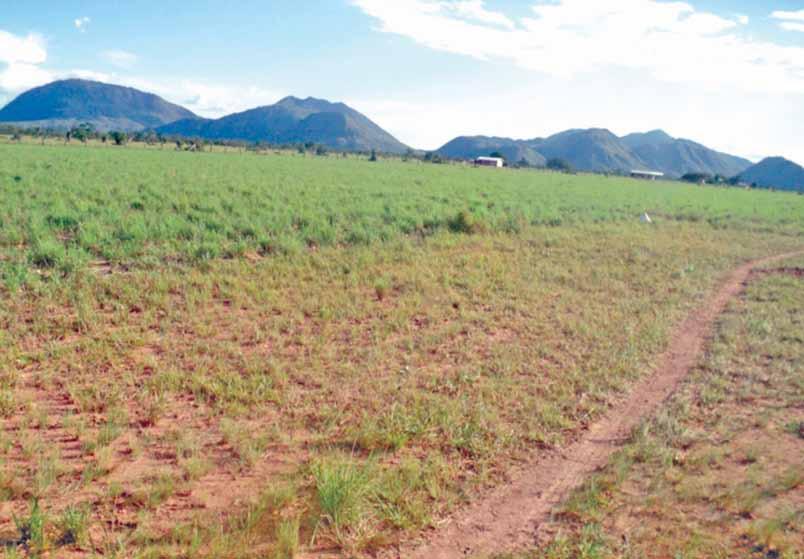
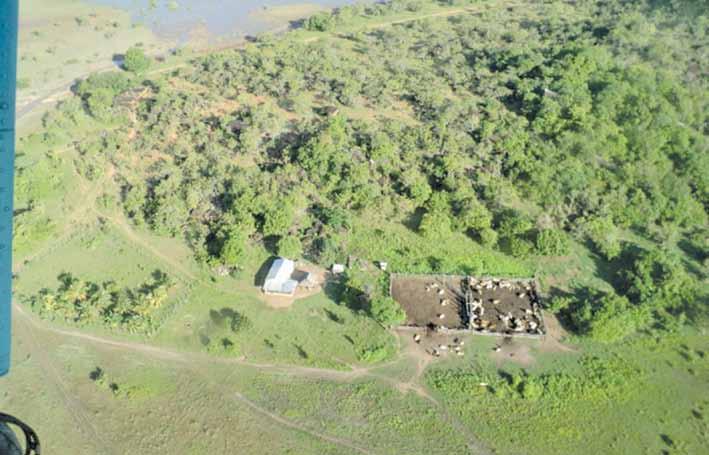
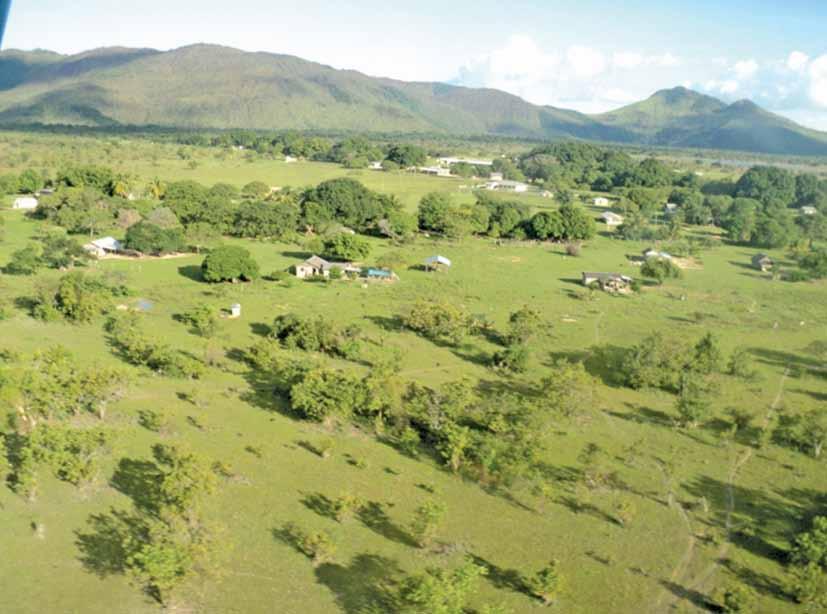
By Melvin Durai
Who wants to be a millionaire?
Please take a number. I’m not Regis Philbin or Ed McMahon, but I can still help you. I can share the secrets of becoming an instant millionaire in America.
There are only four proven methods of earning wealth overnight:
(1) Playing the lottery. It just takes a dollar or two to get started and, if you’re really serious about it, you can make your entire pay check disappear. Of course, the chances of winning the lottery are equal to the chances of Dan Quayle becoming president. But that hasn't stopped him.
(2) Suing someone. It's one of the wonders of the legal system. If you're creative, you can sue someone for almost anything that goes wrong in your life. Can’t lose weight? Sue your grocery store for stocking Spam. Can’t go to bed before midnight? Sue Jay Leno for being so entertaining. Can’t get a job? Sue Burger King for requiring you to comb your hair.
(3) Starting your own Internet company and going public. First you need to create a catchy name for your company’s web site.
Priceline.com is taken, but you could start an online soup kitchen for Asians with Riceline.com. Newsweek. com is taken, but you could start a Larry King celebrity site with Newsgeek.com. Hotjobs.com is taken, but you could start a Mafia recruitment site with Hitjobs. com.
The next step is to go public, selling shares in your company to anyone who’s crazy enough to buy. This is known as an IPO (Increasing Prosperity Overnight). Your company may end up losing millions of dollars, but don't worry -- you’ll be too rich to care.
(4) Making your own low-budget scary movie in the woods. It worked for the producers of "Blair Witch Project" and it can work for you. All you need is a video camera and three friends who know how to scream. Acting ability not required. The less you spend, the more you’ll make in profits, so try to avoid luxuries like costumes, special effects, and scripts.
If none of these getrich-quick schemes work, don’t worry. You don’t need all that money anyway. Whether you realize it or not, you’re already quite wealthy. Your net worth is immeasurable.
No, I haven’t been drink-
ing. And I haven’t been partying with George W. Bush. I’m just trying to measure wealth in a more accurate way.
Take your health, for example. If you somehow contracted a deadly disease, what would you give up to regain your health? Every single penny you own – and maybe even your colour TV.
What about your darling children and doting parents? How much are they worth to you? Certainly more than the microwave. Perhaps even the computer.
If you really think about it, you'd be willing to give up everything you own to get your children back from a kidnapper. Heck, you may even be willing to car pool.
And what about your significant other? You wouldn't trade him or her for anything less than a Lexus. And fully loaded, too.
Then, of course, there's your freedom. You take it for granted, but just try spending a few days in a country where you can’t make an insulting joke about the president. You'd be in prison faster than you can say, "Lewinsky."
So be careful. While you’re searching for all that money, you may be overlooking things that are worth a whole lot more.
Like your sanity.


Q: What do you call a clean idiot?
A: Soap on a dope.
Q: Why does a stone sink in water when you thrown it in?
A: Because it does not know how to swim.
Q: What did Cinderella say when her photos didn’t arrive?
A: "Someday my prints will come."
Warning sign
All the passengers are seated on a plane out on the tarmac and the stewardess announces “We’re just waiting for the pilots.”
The passengers look out the window and see two men dressed as pilots walking towards the plane. Both men are using guide dogs and appear to be blind. There are murmurs among the passengers, and some believe it is a joke.
The men board the plane and go into the cockpit. More concerned murmurs and uneasy chuckles from the passengers. The plane taxis normally to the runway and begins its takeoff.
As passengers look out the window they realize they are nearing the end of the runway. The entire passenger cabin begins screaming but the plane lifts off just before the end of the runway.
The passengers calm down and chuckle to themselves.
In the cockpit, the pilot turns to his co-pilot and says “You know, one day those people are gonna scream too late and we’re all gonna die!”
The eighth-graders will be presenting Shakespeare's Hamlet in the church basement on Friday at 7 p.m. The congregation is invited to attend this tragedy.
Remember in prayer the many who are sick of our church and community.
Don't let stress kill you — let the church help.
Bertha Belch, a missionary from Africa will be speaking tonight at Calvary Memorial Church in Racine. Come tonight and hear Bertha Belch all the way from Africa.
A new couple arrives in the neighbourhood and the husband notices that the guy next door comes onto his balcony, sits down and looks out, every time the guy’s wife starts singing, then go back in immediately after she stops.
“Why do you always go to the balcony when your wife starts singing?” he asks when they eventually meet.
His neighbour replies, “So that no one would think I’m beating her.”
Tourist guide at zoo: "Ladies and gentlemen, this is the elephant, the largest animal to roam the lands. Every day the elephant eats three dozen bunches of bananas, six tons of hay, and 2, 000 pounds of assorted fruits... Madam, please don't stand near the elephant's backside... Madam, PLEASE don't stand near the elephant's backside ... MADAM ... MADAM ..., too late; George, dig her out."
All Body
This is a story about four people named Everybody, Somebody, Anybody and Nobody. There was an important job to be done and Everybody was sure that Somebody would do it. Anybody could have done it, but Nobody did.
Somebody got angry about this, because it was Everybody's job. Everybody thought Anybody could do it, but Nobody realized that Everybody wouldn't do it.
It ended up that Everybody blamed Somebody when Nobody did what Anybody could have done!
Miserable man
A guy joins a monastery and takes a vow of silence. He's allowed to say two words every seven years.
After the first seven years, the elders bring him in and ask him for his two words.
"Cold floors," he says. They nod and send him away.
Seven more years pass and they bring him in for his two words.
He clears his throat and say, "Bad food." They nod and send him away.
Seven more years pass and they bring him in for his two words.
"I quit," he says.
"That's not surprising," the elders say, "you've done nothing but complain since you got here."