

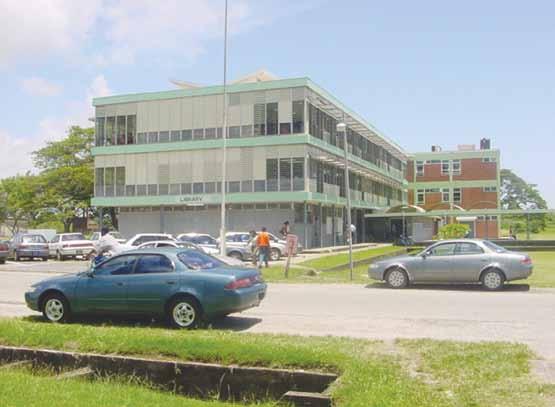
The University of Guyana (UG) recently celebrated 50 years as a historic milestone of academic development in Guyana.
It was created by the People’s Progressive Party government in 1963 and was referred to as “Jagan’s night school”. In October 1963, UG began its operations with a batch of 164 students in temporary premises on loan from Queen's College.
According to the university’s website, current enrolment at the Turkeyen Campus is in excess of 5,000 students pursuing more than 60 under-graduate and post-graduate programmes.
To date, more than 15,000 students have graduated and gone on to successful careers both locally and internationally.
At its inception, only general degree programmes were offered by the University, but from 1966, certificate and diploma level programmes were introduced.
Programmes were at first confined to the Arts, Natural Sciences, and Social Sciences. However, in 1967, a Faculty of Education was established and this was followed by the establishment of the Faculties of Technology in 1969, Agriculture in 1977, and in 1981, the Faculty of Health Sciences, prior to the establishment of which programmes in Health Sciences were offered within the Faculty of Natural Sciences. A Forestry Unit was established in 1987. In 2002, the Faculty of Agriculture was renamed the Faculty of Agriculture & Forestry. In 2003, the Faculties of Arts and Education merged to become the School of Education and Humanities. Within the past five years, a number of new programmes have been introduced. The University also certifies affiliated pro-

grammes. The health sector is the main beneficiary of this facility.
The university occupied its present site at Turkeyen in October 1969. The tuition fee of $100 per annum was abolished in 1974. However, in the 1994-95 academic year, the university introduced a Cost Recovery Programme.
In 1975, participation in National Service was made a requirement for persons wishing to pursue programmes at the University; however, in 1994 approval was given by the Cabinet for the abolition of mandatory National Service for students at tertiary level education institutions.
In the 1993-94 academic year the Semester System was introduced in the Faculties of Education and Social Sciences. This system was introduced to the remaining faculties the following year.
changes that would meet the needs of the nation and its people. This commitment has been demonstrated largely through the undertaking of expansionary projects.
One of the university’s most significant undertakings was the formation of the Berbice campus. This campus, which became operational in 2000, was established with the intention of making university education more accessible to Berbicians, who previously endured the inconvenience of travelling to the Turkeyen Campus to pursue university studies.
year, and Degree in Public Management and Education as well as the Post-Graduate Diploma in Education were offered in the 2002-2003 academic year. The first graduation ceremony was held in November 2002 with a batch of 93 students.
UGBC has played an elemental role in qualifying both Guyanese and foreign students, and with the assistance from the Turkeyen Campus, government and private organisations, alumni groups, and the Guyanese community, and continues to fulfil its obligation to produce intellectually competent men and women who will be of service to “the community, the nation and all mankind.”

In 2005, the meritorious position of Distinguished Professor was instituted.
Professor Clive Thomas is the sole holder of this distinction. In 2009, the first Emeritus Professors were installed.
Despite the many challenges and setbacks over the years, UG has remained committed to implementing

In its early stages, the University of Guyana –Berbice Campus (UGBC) offered two-year undergraduate Certificate programme in Education (various options) and Diploma programmes in Accountancy, English, History, Marketing, Public Management and Social Work, Degree programmes were subsequently offered: the Degree in Agriculture and the Associate Degree in General Science (various options) were offered in the 2001 – 2002 academic
In the recently released book, “The University of Guyana- Perspectives on the Early History”, published by the University of Guyana Guild of Graduates Ontario (UGGGO) in celebration of UG’s 50th anniversary, it states in its preface that UG is accepted as national institution.
“Its graduates are play-

ing leading roles in the social, political and economic development of Guyana. Many, outside Guyana, have gained prominence in academia, the private sector and the public sector. From its nocturnal beginnings as an interloper on the premises of Queen’s College, it now occupies permanent residence at Turkeyen and spreading its wings to other parts of the country.”
The book was written by individuals who have played leading roles in the early years of UG. It is history written by the makers of the history, each telling the story from his or her point of view. It is currently on sale and available at UG.
During its anniversary celebration, the university hosted a commemorative walk and breakfast from Queen’s College to the Turkeyen Campus. Guest speaker at the breakfast called ‘Food for Thought’ was former Guyana Ambassador, Head of the Foreign Service, and Chancellor of the University of Guyana, Samuel Rudolph “Rudy” Insanally.
In his remarks at the event, Insanally said: “Fifty years in the life of any organisation is no mean achievement- it is a confirmation of UG’s ability to endure and survive for the next 50 years and beyond. To its great credit, the University of Guyana continues to produce a great number of our citizens trained and able to take our country into the 21st century…”
From its humble beginning in 1963, the University of Guyana is known as an established national institution which enjoys respectable academic accreditation worldwide and whose graduates have performed in a consistently high manner in every academic and professional community they have graced. (Information from www.uog.edu.gy)
A small group of youths with a common love for inline skating is on a mission to put the sport on the local scene
Although not commonly known in Guyana, inline skating is a worldwide sport. The Guyana inline skating team, made up of energetic, dedicated and brave young skaters, have created a fledgling sport here.
Inline skating, also known as ‘roller blading’ due to the popular brand of inline skates Rollerblade, dates back to the 1800s when the skates, designed to work like ice skates during periods of warm weather, were invented by Louis Legrange of France in 1849. Through much trial and error, skating aficionados over the years have perfected the inline skates which are used today.
Inline skates typically have two to five wheels, arranged in a single line. The inline design allows for greater speed than roller skates and better manoeuvrability. The in-line wheels coupled with boots are designed for skating on various obstacles. Inline skating is practiced and performed using inline skates designed for race tracks, skate parks, urban areas, and off-road.
The Guyanese Group
In an interview with Guyana Times Sunday Magazine, talented local inline skaters Delano Hinds, Avishkar Bissoon (Avi Braskow) and Kashie Shanghai explained how they developed a passion for the sport, and their plans for it to become a fully recognised and widely appreciated activity in Guyana.
Shanghai, a skating stalwart, said to his knowledge, professional inline skating started over a decade ago. It was the same time he started to experiment with skating blades, and although his initial attempts – as with anyone learning about it for the first time – consisted of many falls, he was determined to keep at it. Now, he is popularly known for his Xtreme Rollers group.
Inline skating is not just a sport for the skaters but a way to form lasting friend-
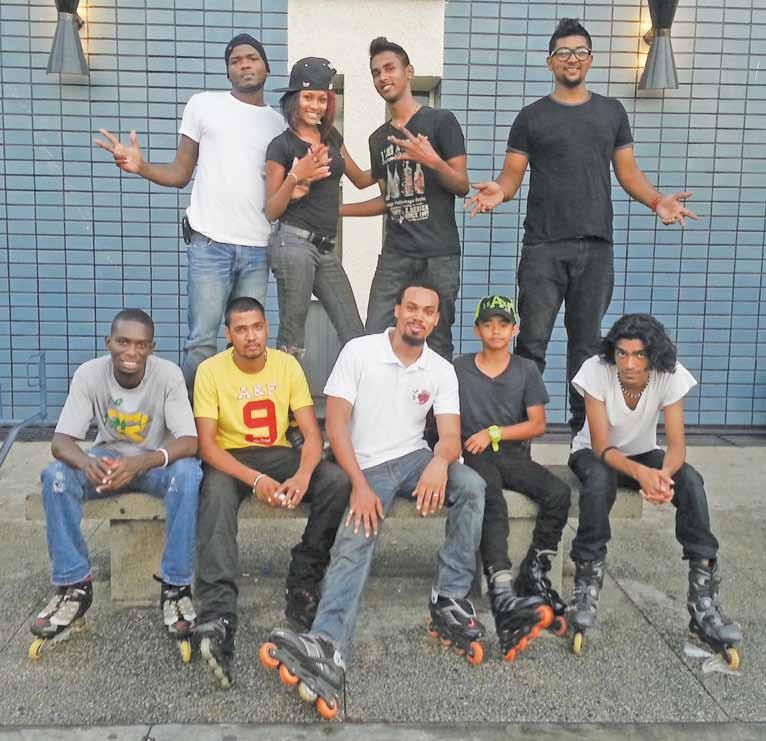
Braskow Sk8 Crew are the only two known inline skating groups in Guyana. The groups consist of more than 20 members each, including females who are just as extreme as the guys.
The groups’ only major performance so far, was at last year’s Biker Fest show at the National Park. Hinds recalled the crowd went crazy with excitement when they saw the inline skaters’ stunts.
“Even the professional bikers from the U.S., who were performing dangerous stunts, told us we were crazy when they saw us perform. People also approached us and asked if we were from the U.S. and

ships. About seven years ago, Shanghai met up with Bissoon. Bissoon, under the tutelage of Shanghai, grabbed every opportunity to develop his skating skills. Bissoon disclosed that he became interested in the sport after observing his uncle’s passion for it. Bissoon now heads his own group, Braskow Sk8 Crew.
Hinds, also an inline skater for many years, said initially he was afraid to try skating. But after numerous hours of practicing he finally was not falling anymore. He pointed out that those who want to try out inline skating must expect to fall, but should not allow that to deter them from keep on trying.
The skaters say Xtreme Rollers and
when they learnt it was local talents, they were amazed,” Shanghai revealed.
The inline skating groups have not performed since Biker Fest 2013. However, they hope to change this. Hinds revealed that the groups are currently working to get themselves formally registered with the Ministry of Culture, Youth and Sport. They hope inline skating will become as popular as cricket and other sports revered in Guyana.
“We are very passionate about inline skating. We have invested years of perfecting our techniques and we are prepared to enter competitions. We also plan to coordinate a show like what we did at Biker Fest. We are trying to promote in-
line skating as much as we can because it is as serious as any other sport. There is a group like us in Trinidad who compete professionally. We hope to meet with that group to learn more about inline skating at an international level. We hope also that a skating rink/park can be provided for us and funding made available to help inline skating enter the international arena,” Hinds explained.
Adhering to traffic laws and road safety tips are a must with the groups, who can sometimes be found skating in traffic.
Peter Doucet, professional inline skater, offers his tips, which have guided him over the years, on skating safely.
“First and foremost watch your stride. Because of our push to the side, skaters take up more road than cyclists. That can make for close calls between cars and feet. Signal your turns. Before you make a turn, stand tall, look back and point in the direction of your turn. I find that drivers respond well to this and keep a safe distance. Use all your senses. Don't be a skate zombie. Keep actively aware of your surroundings. Look back. Look to the side. Look ahead. Always listen for approaching cars. Listening to music can enhance your workout. But take care. If the volume is high, you won't be able to hear what is happening around you. Keep the volume low enough that it doesn't dull your perception of traffic. So be proactive. When you hear a car approaching from behind, stand taller in your skates and shorten your push. If you are going downhill, stop pushing all together and roll. Pick your routes. Pick low-traffic routes at lowtraffic times of the day. And have a backup plan. Always be seen. Wear bright coloured clothes. Be smart. It takes two to tango. Do your part to stay safe,” Doucet outlined.
The Guyana inline skating groups’ mandate is to encourage youth and adult fitness and character development. As such, they welcome anyone who wants to learn more about inline skating, both amateurs and professionals.
Inline skating has provided opportunities for skating enthusiasts to enjoy positive association, keep fit and strive for success.






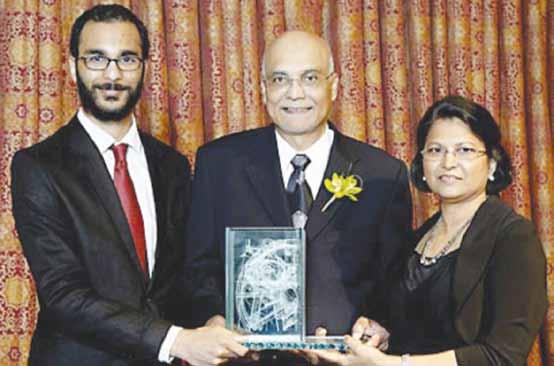
Dr Jamal Deen is a shining example of the talent and richness in educational and social groundings that the Caribbean and South American region has offered to Canada, and he is one of Canada’s most distinguished, honoured and recognized academics.
When Deen was elected a Fellow of the Royal Society of Canada (RSC) in June 2006, he became the first Guyanese to achieve this highest recognition for “Canadian scholars, artists, and scientists, peerelected as the best in their field.”
Formative Years
Jamal Deen was born and raised in the Coconut Walk, La Penitence community of urban Georgetown. He is the fifth of eight children. Raised in a typical Muslim family environment, his parents, though not very educated, made many personal sacrifices to educate their children, and also instilled religious and cultural values in them.
They demonstrated by example the importance of an extended family, respect for others, especially elders, and living cohesively and harmoniously in a small, diverse ethnic and religious community. Even though they had extremely modest means, they maintained a welcoming open door to relatives, neighbours and friends, willingly sharing whatever they had. For Deen, these were long lasting impressions that helped to shape his character during his formative years and have remained with him throughout his life.
The academic attained his primary school education at the St. Stephen’s
Church of Scotland School and successfully passed the annual Common Entrance Examinations in 1967, winning a place at the prestigious Queen’s College– one of only two all-boys secondary schools at the time. At Queen’s, Deen excelled in his academic achievements and was a regular prize-winner.
In Fourth Form, 1971, he successfully took the maximum four subjects at the GCE ‘O’ Level Examinations and added six subjects the following year, easily earning a spot in Sixth Form. At Queen’s, he played volleyball for the school, excelling at soccer
This allowed him to work and attend University of Guyana in the evenings.
For Deen, life was not easy. However, he excelled in his academic studies as well as in his fulltime day job as a mathematics and science teacher at Indian’s Education Trust College (now called Richard Ishmael Secondary School). He graduated in 1978 with a double major in mathematics and physics and was the top ranked in both, and the second ranked student overall in the university. These exceptional performances earned him the Chancellor’s Medal and the Dr Irving Adler Prize.
Laspau graduate scholarship for Guyanese.
He completed his graduate studies in electrical engineering and applied physics at Case Western Reserve University, Cleveland, U.S. As a graduate student, in addition to being a Fulbright-Laspau Scholar, he was also an American Vacuum Society Scholar.
During his graduate student days, in addition to his rigorous academic work, he regularly played badminton and took up cycling. He also actively helped other foreign students settle into graduate student life at Case.
and long distance running.
Work and study
However, after six months in lower Sixth Form, life changed. He took a government position so he could help to support his younger siblings. Concurrently, he successfully took three ‘A’ Levels while studying on his own.
Due to his outstanding performance in his undergraduate studies, he was appointed an instructor of Physics at UG. In his second year, in 1979, not only did he marry Meena (nee Khan), which he regards as one of his happiest moments (the others being the birth of their three sons), but he won the only Fulbright-

In 1986, after completing his graduate studies and briefly working in the U.S., he immigrated to Canada with his wife Meena and their four–month-old son. He had accepted his dream job– that of a university professor at thethen newly founded School of Engineering Science, Simon Fraser University, Vancouver.
As before, these were challenging times for him to attract adequate funding to establish a high-quality graduate research program. Fortunately, because of the high ranking of the university’s engineering academic program, hard work and some good luck, these initial barriers were successfully overcome. In fact, he was so successful in his research, teaching and service, he was promoted to the highest rank of ‘Full Professor’ in record time–six years after his appointment. During this time, his second and third sons were born. Deen has continuously nurtured and supported his sons and raised the boys to be confident and autonomous. His sons are all now
qualified academics in very important work fields.
Desire to help
Philanthropy comes easily for Deen. He is an active community volunteer. For five consecutive years, he served as a judge in the British Columbia Science fair competition. He volunteered to develop and teach a 10-week science/engineering PhD, NASA, enrichment program at his children’s elementary school. Moving to McMaster in 1999, he continued his community involvement by volunteering as a football coach in the West Hamilton Children’s Soccer League for four consecutive years while his youngest son played footballer. In addition, for some years, he and his family volunteered at a homeless shelter in Hamilton. Deen has also served the Caribbean, for six years, as an external examiner of the physics program at UWI, Trinidad. In addition, he has served as external examiner for doctoral theses in many developed and developing countries.
Dr Deen’s research interests include nano-electronics and optoelectronics and their emerging applications in health and environmental sciences. He has also given of his time to establish scientific and technological cooperation between Canada and other countries.
For both his scientific and technological achievements, as well as his community involvement in the West Indies and India, he was awarded the Guyana Award (Academic Excellence) from the Guyana Awards Council, Canada (2008), the Technology Achievement Award (2009) from the Indo-Canada Chamber of Commerce (ICCC), and the New Pioneers Science and Technology Award in 2012.
During his career, he has won more than 50 awards and honours. He was an NSERC Senior Industrial Fellow and is a distin-
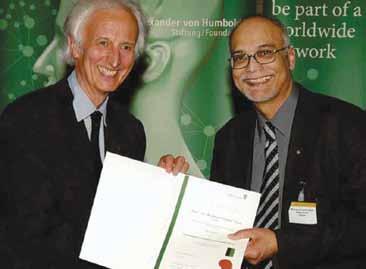
guished lecturer of the IEEE Electron Device Society for more than a decade. His awards and honours include the Thomas D. Callinan Award and the Electronics and Photonics Award from the Electrochemical Society; the Distinguished Researcher Award, Province of Ontario; a Humboldt Research Award from the Alexander von Humboldt Foundation in Germany; an IBM Faculty Award; the Eadie Medal from the Royal Society of Canada; the IEEE Canada Fessenden Silver Medal as well as the McNaughton Gold Medal - the highest award for engineers in from IEEE Canada. IEEE is the largest professional society with 400,000 members around the globe.
For his exceptional scholarly achievements, service contributions and exemplary professionalism, professor Deen was awarded honorary doctorates in engineering from University of Waterloo in 2011 and from Universidad de Granada, Granada, Spain in 2012.
The scholar’s peers have elected him to the highest status of Fellow in an impressive nine national academies and professional societies, including the two highest recognitions for scholars and engineers in Canada: The RSC and The Canadian Academy of Engineering (CAE). His other Fellow awards are from The National Academy of Sciences India (NASI - Foreign); The Indian National Academy of Engineering (INAEForeign); The American Physical Society (APS); the Institute of Electrical and Electronic Engineers (IEEE); The Electrochemical Society (ECS); The American Association for the Advancement of Science (AAAS); and The Engineering Institute of Canada (EIC). In addition, he was elected an Honorary Member of the World Innovation Foundation (WIF)– the foundation’s highest honour. (Source: Horizons 2013 magazine)
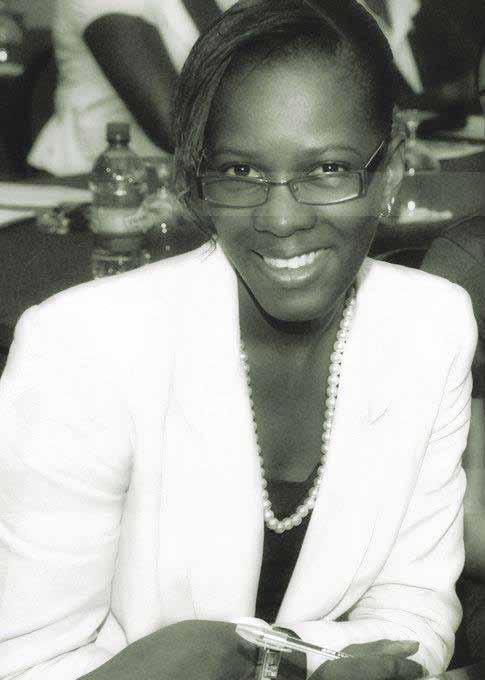
Audacious, determined and fashionably inclined, Schemel Patrick is a young philanthropist, writer and advocate who knows that hard work results in success.
Born and raised in Phoenix Park on the West Bank of Demerara, Schemel, 26, attended St. Stanislaus College (CXC and CAPE) and then went on to the University of Guyana where she graduated with a degree (distinction) in public communication.
She currently works as an advocacy and communications officer at the Society against Sexual Orientation
Discrimination (SASOD). She is also a writer and cofounder of MagLYFE’, an online entertainment magazine. The magazine offers a unique platform for those who want to be updated with current trends, interact with other users and seek advice on issues affecting them.
In an interview with Guyana Times Sunday Magazine, Schemel explained the online mag: “MagLYFE” is really short for the ‘Mag’nificent LYFE’. We were officially launched on the 13 January 2013 and recently celebrated our first anniversary. Over the past year, I have had the plea-
sure of interviewing five vibrant, determined, successful and inspirational young Guyanese for our coversSteve Douglas, Christopher Barnwell, Ruqayyah Boyer, Keisha Edwards and Rhona Fox, and many other featured personalities.”
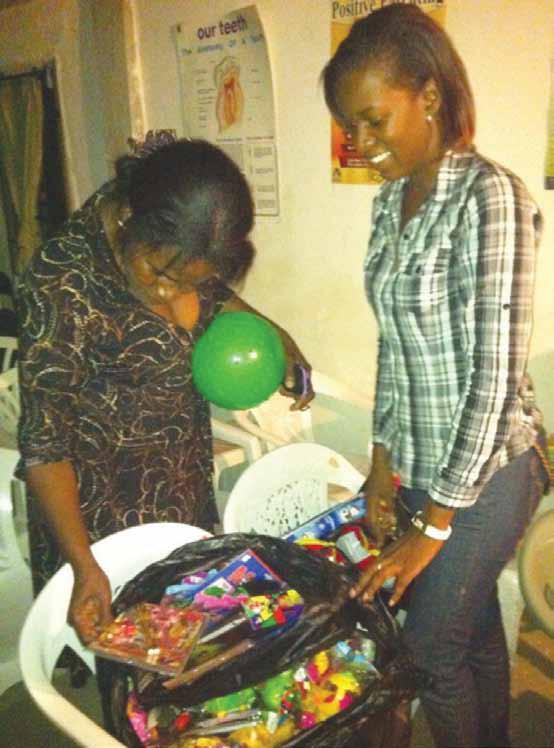
Additionally, she is the co-director for Feed a Child for the Holidays, a private group dedicated to making a humanitarian effort to share in the spirit of Christmas.
“I adore working with children, and seeing the smiles on their faces at Christmas is priceless. I believe in giving back and helping others,” she expressed.
Guyana Times
Sunday Magazine would like to correct a few errors in the article “Miss World Guyana Revamps” published in our last week’s issue.
It was stated that Shakira Baskh placed second in the Miss World pageant in 1967. She actually placed as second runnerup- which is third place. In 1969, Pamela Lord placed fourth (third runner-up) not seventh as was reported. Also in the article,

Katherina Roshana was given the title of reigning Miss World Guyana. The fabulous Ruqayyah Boyer currently holds that title. Roshana is the current Miss Guyana Universe. Although we cannot list all the past candidates in the Miss World Guyana pageants, we acknowledge their presence on the international stage as ambassadors of Guyana. For more information on the pageant, visit Miss World Guyana on Facebook.
The philanthropist has also been a member of the Guyana Girl Guides Association (GGGA) for more than 14 years. She started as a guide and moved up the rank, becoming a ranger and a young leader. She serves as public relations coordinator for the association.
“I am very honoured to work with girls and young women, especially as it relates to empowerment and helping them to develop their fullest potential. Because of my work in the GGGA I was able to attend the 33rd World Conference in South Africa,” she noted.
Schemel’s writing career started with compiling the Guyana Girl Guides Association’s newsletter and the Youth Challenge Guyana’s newsletter. She also wrote for online entertainment website, Guyanalive. In 2012, through writing for Guyanalive, she was spotted and asked to write for JayBlessed.coma Caribbean gossip website based in the U.S. She has also written for Youth Media Guyana's Youth Access newspaper, created the Guyana Anglican Youth Council's Youth Focus and very recently started working on the Diocese of Guyana's
Anglican Focus. She mentioned writing is an excellent way for self-expression and helps her to unwind.
“The most amazing thing about dreams is that they can be made into Life. Dream it, believe it and achieve it! It is harder that it seems but nothing worth having comes easy. Work on your talents and skills, there’s a reason you’re passionate about a certain something. Keep
the dream alive. Work on it, work for it, don’t let it die. MagLYFE would be nothing if I’d allowed my dream to remain a dream. All our dreams can come true, if we have the courage to pursue them,” is her encouragement to youths.
Schemel plans to continue to develop herself as a writer and to help her magazine succeed.

Part IV
By PetamBer Persaud
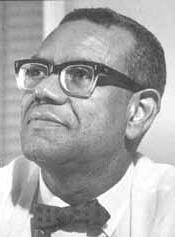
The unveiling of a plaque on the former residence of Arthur James Seymour (AJS) was another simple but significant ceremony staged by the National Library to mark the birth centenary of Seymour.
That event took place at midmorning of Monday Jan 13, 2014, witnessed by family members: Seymour’s second daughter, Joan Seymour; Seymour’s niece, Dr Jacqueline de Weever; close friends including Dr Ian McDonald, the present owner of the property, media houses and staff members of the National Library.
It was an overcast morn with intermittent drizzle shooed away by “the cool Trade Winds”. The clouds over Guyana were like “little curled feathers on the back of the sky [T]hen frisky lambs that gambol and bowl along [s]hephered by the brave Trade Wind”.
Many of the persons witnessing the unveiling knew the house and its surroundings intimately, as captured in the following poems/

odes by AJS – “The House” and “To the Family House Awaiting Repair”:
The House I have a room
Where several sages
Sleep in their serried shelves
And await my conversation
Here
I-fashion images
Carving and fitting words
Polishing syllables
Shaping new rhythms
To grace new meanings
Distilling experience
Hammering metal In my spirit’s workshop
To the Family House Awaiting Repair
Oh, the long narrow home heavy with living
An age of memories people the walls
Around your naked frame.
Warm shell of love and crowding children
Where young girls in uniform
Hats worn like horse
guards
Speech full of the school diction
And the cool Trade Winds carry echoes...
The scent of roses in the slim garden
Growing in the four-hour overhead sun
Smell of bread from the oven
Everything mingling in the wind.
Image of the dedicated student...
Impatient for games and parties but slow for school
So many came here – tea
visiting professors
Exam students, poets, novelists, sculptors,
A Chief Justice – a future
Prime Minister...
And little children to the Kindergarten
Wrestling their way into the hall of learning
Chattering, tormenting the wild cherry-tree
That always yields its fruit.
O, crowd your long years of memories
Into a prayer for their future
For all who lived and loved and studied here.
To fill out those poems, to add life and colour
to those words, to find out more about the rich and rewarding lives of “all who lived and loved and studied” at that house, and to know more about the life and work of Seymour it would be useful to read the following four of five of his autobiographies:
“Growing up in Guyana”
“Pilgrim Memories”
“Family Impromptu”
“Thirty Years a Civil Servant”
The plaque was another way of preserving our literary heritage, and I suspect the National Library will again in the near future continue and extend similar gestures to other literary shrines across the country.
Responses to this author telephone (592) 226-0065 or email: oraltradition2002@ yahoo.com
What’s happening:
“An Introduction to Guyanese Literature” is now available from the author at the above contacts, Austin’s Book Service (telephone 226-7350) and at the National Library (telephone 226-2690).

By Vahnu Manikchand

At the age of 19, most people are trying to figure out their goals, and those who have already figured that out are busy pursuing it. But for young Jenell Pierre, her aim now is to further expand her already thriving business.
Pierre is the proprietor of BowJay, and designer of her own line of hair accessories, bow ties and bags.
Closing in on three years, she began her business at the age of 17 when the idea came to her after she made a hair bow out of boredom.
"After I finished school I was home, and one day, out of boredom, I decided to make two bows because I love making things – I'm very creative. So when I was done I showed it to one of my cousins in New York and she loved it and told me she would buy something like that. That was a light bulb moment for me. I thought it could actually be a business."
After toying with the idea for a while, Pierre told her friends about it, and of course not everyone thought it could materialise.
"People thought a bow business was not going to be successful but their scepticism was what drove me. I took the good and bad and made it work."
After she started her business, one of her friends introduced her to an entrepreneurial group called Women Entrepreneurship Network where she was taught about the art of operating a business, and book keeping.
Pierre started with just making hair bows; however she has since evolved, taking her business to new heights as she widens her scope both as a designer and entrepreneur. Currently she is a second year student at the University of Guyana where she is studying Business Management.
"Going to UG has helped me to better manage my business, and I do a lot of research, which I think is very important because it opens you up to so many possibilities and ideas.”
Now her focus this year is having her products available in stores. At the moment she takes orders online through her Facebook page (facebook.com/bowjay or Jenell Pierre on Facebook). She also does custom designs to suit her customers.
"People would come to me with ideas that I never thought about, but the challenge is what drives me to do better."
Being a high flyer is nothing new to Pierre; even in school she used to top her studies while at the same time involved in any extra curricula activities she could join. She is the youngest in her family and has always had their support.
“When I came up with the idea I told my mother and she was very supportive of it, however my father was a bit sceptical because he wanted me to get into medicine; but he came around after he realized that this is what I wanted.”
Pierre is very contented with her business and how successful she has been in expanding it.
“I’m doing what makes me happy and what makes others happy, and that’s all that matters. So I’m going to continue to do what I love and grow my business.”
She said that being an entrepreneur this young has propelled her to be active and creative. “Youth is not a disadvantage…for all the young people out there, do what you love. It makes no sense being in an occupation and being unhappy. It’s also important to talk about your dream, that will help you to believe more in it .Get advice from people you might be directed on the right path; and most importantly, never give up on your dream.”

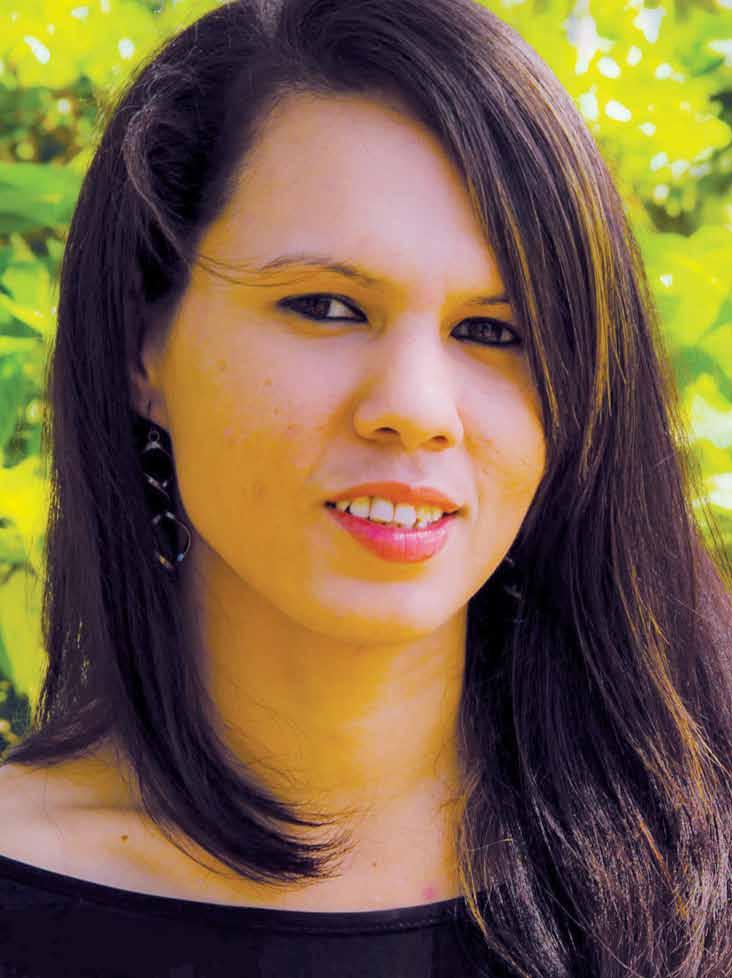
Determinedand committed, Trisha Woodroffe, 25, has become one of Guyana’s star hockey athletes. Trisha started playing hockey at 14. Her passion for the sport was encouraged by her father, who is still very much involved in hockey and once represented Guyana. Trisha enjoys everything about the game, especially the high level of skills involved and challenges required. Investing a lot of her time and commitment, Trisha has been able to perfect her game, which has taken her to perform at international arenas. She has ventured to Trinidad, Barbados, Brazil, Venezuela, Canada, Puerto Rico and Argentina to showcase her hockey skills. Part of Guyana’s national hockey team, Trisha has been instrumental in helping her teammates cop numerous victories over the years. Regarding her future, the star athlete wants to continue competing at the highest level, once the opportunity presents itself. Her advice to youths is to be focused on their academic goals and, if involved in a sport, to ensure there is a balance.
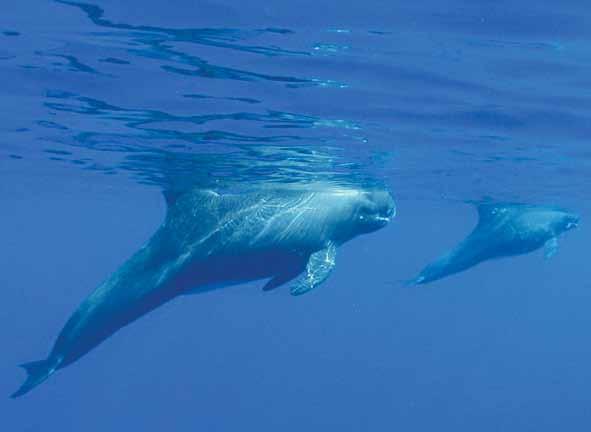
The Pygmy killer whale (Feresa attenuata) is actually not a whale, but a small member of the dolphin family that lives mainly in subtropical and tropical waters. They can reach a length of 8.5 feet (2.6 m) and weigh up to 380 pounds (170 kg).
Pygmy killer whales prefer deep waters away from coastline areas, and can be found in the Gulf of Mexico, the Mediterranean Sea, the Indian Ocean, the south-eastern Atlantic Ocean, and near Sri Lanka and Lesser Antilles. They are rarely seen close to shore unless around oceanic islands.
They eat mostly fish and squid, and have been known to sometimes kill other dolphins.

CAN YOU HELP THE KITTEN FIND ITS WAY TO THE BOWL OF MILK?


English is written in the Latin alphabet (also known as the Roman alphabet).
Shakespeare invented the word "assassination" and "bump."
The longest word in the English language is 1,909 letters long and it refers to a distinct part of DNA.
"Dreamt" is the only English word that ends in the letters "mt".
There are only four commonlyused words in the English language that end in "dous": tremendous,
ENGLISH LANGUAGE

horrendous, stupendous, and hazardous. (There's also a specialist zoological term “apodous”, which means 'without feet'.)
Pygmy killer whales have a robust body that narrows towards the dorsal fin, hence the name attenuat a (Latin) meaning "thinning".
A young or baby of a pygmy killer whale is called a 'calf'. The females are called 'cow' and males 'bull'. A pygmy killer whale group is called a 'gam, pod or herd'.
Pygmy killer whales were first discovered based on two skulls, one described in 1827 and the other in 1874. The species was then effectively lost to science until 1952.
The objective of the game is to fill all the blank squares in a game with the correct numbers. Every row of 9 numbers must include all digits 1 through 9 in any order. Every column of 9 numbers must include all digits 1 through 9 in any order. Every 3 by 3 subsection of the 9 by 9 square must include all digits 1 through 9.


By Laurie Triefeldt
Who does not remember the simple joy of riding the merry-go-round? Carousels saw their golden age at the turn of the 20th century, when more than 4,000 carousels were built in the U.S.
The word “carousel” can be traced back to the Italian word garosello or the Spanish carosella, which means “little war.” Carosella was a 12th-century game played by Arabian and Turkish horsemen.
In France, horseback tournaments called “carrousels” evolved. As a way to train knights in the art of jousting, a series of carved horses and chariots were suspended from chains attached to beams that radiated from a center pole. This was the beginning of the carousel as we know it.
Carousels have been known by many names. In North America, they are sometimes called whirligigs, flying horses, hobby horses, painted ponies and merry-gorounds. In England, they are called roundabouts and gallopers.
The first carousels had to be pulled by men, mules or horses to make them spin.
Although originally built as a training exercise for knights, average people discovered that carousels were fun to ride, and by the late 1700s, small carousels were being built as public amusements.
The first steam-powered carousel began operating in England around 1861. The invention of the steam engine allowed carousels to become bigger and heavier.
Gustav Dentzel was a Germanborn carousel maker who came to the United States in the 1860s. He built some of the earliest and most beautiful carousels in America and founded the Dentzel Carousel Company in Germantown, Pennsylvania, near Philadelphia.
Of these, about 150 have survived intact. Restored or built new, these magical machines allow us to harness painted ponies and exotic animals while being thrilled by the lights, mirrors and carnival music as the world turns round and round.
Wurlitzer band organs were a popular choice for making carousel music. They used perforated notes on paper rolls (similar to a player piano roll) and played a variety of tunes.

Most complete carousels have a “catch the brass the ring” competition. After catching it, the rider must toss the ring into a collection device (sometimes a clown’s mouth) to win a free ride or prize. This custom probably dates back to the days when the knights of old practised spearing their lances through a ring while on carousels.
Gustav Dentzel 1844–1909
The rounding boards hide the mechanical workings of the carousel. They have decorated panels with paintings, mirrors and lights.
Old carousels had very precise and innovative mechanisms.
Crown bearing Galloping cranks Sweep stay rods Sweeps Center pole
The golden age of carousels took place in the United States from around 1880 until the Great Depression in the 1930s. During this time, the U.S. had some of the world’s best carvers working on carousels. Their amazingly carved and beautiful painted figures were rivaled by none. Some of the most famous carousel companies included the Dentzel Company, the Philadelphia Toboggan Company, M.C. Illions, Herschell-Spillman, Stein & Goldstein, Looff, and C.W. Parker.
Most of these carousels were lost to storms, fires or neglect. Amusement parks were often built near bodies of water and in areas prone to flooding.
In England, carousels turn clockwise so that the horse may be mounted (in proper form) from the left side. North American carousels turn counterclockwise.
Carousels generally came in three-, four- or five-row sizes.
For the faint of heart, chariots or benches for two or three people are usually available.
The outermost ring of a carousel has the largest and most decorated figures.
The most highly decorated side of a carousel horse is called the romance side
Two-story carousels were popular in Germany.
Horses with 3 or 4 feet touching the floor are called “standing figures.” If they have two back feet on the platform and their front feet in the air, they are called “prancers.” Horses with all four feet in the air are called “jumpers”; these usually move up and down. A horse with its head looking up is called a “star gazer.”
Figures other than horses are called “menagerie” animals. Because some of these fearsome and imaginative creatures could be intimidating, horses tended to be more numerous.
Original, antique carousel figures can be very hard to find, and some have sold for more than $100,000. Most modern carousel figures are made of fiberglass that has been molded from hand-carved figures.
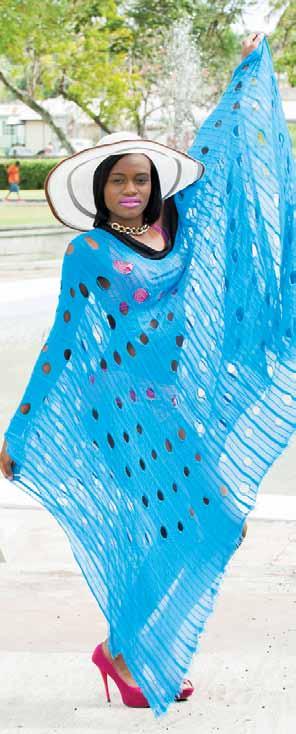
Sonia Noel's designer collection, First Resort, launched late last year, created quite a stir recently when it graced the runway at the Barbados Music Fashion and Film Awards.
In an interview with Guyana Times Sunday Magazine , Noel said her caftan designs are very sophisticated, versatile and timeless and are suitable for all body types.
The designer has done well with the collection as it is now available in Haiti, Suriname, Barbados, St Lucia and Tobago.
“I hope to add more locations very soon where my collection will be available. I am happy with the response to my first Resort Line and I feel good about the future of my brand,” Noel expressed.



Today’s feature of Noel’s caftan designs was photographed by veteran Guyanese photographer Obrey James on the beautiful island of Barbados. The models are from Barbadian-based Guyanese Oral Welshman’s New Horizon Model Agency. For more information on the collection call 229-3099.



emma
GArterton is an English actress and is best known for her roles in “St Trinian's” (2007), “Quantum of Solace” (2008), “Clash of the Titans” (2010), “Prince of Persia: The Sands of Time” (2010), “Hansel and Gretel: Witch Hunters”, “Byzantium”, and “Runner Runner” (all in 2013).
Arterton won her first professional role in Stephen Poliakoff's “Capturing Mary”, while she was still at drama school. Similarly, she made her stage debut as Rosaline in “Shakespeare's Love's Labour's Lost” at the Globe Theatre, London, in July 2007 before graduating later that year. She made her film debut in “St Trinian's” (2007). She is currently playing the title role in John Webster's “The Duchess of Malfi” which opened on January 9, 2014.
PDitbull has teamed up with Jennifer Lopez for "We Are One (Ole Ola)", which will be the theme song of his year's FIFA World Cup Brazil. For the project, Mr. Worldwide will also be working with Brazilian singer and the coach of "The Voice Brasil" Claudia Leitte.
The news was announced on Thursday, January 23 at the Maracana football stadium. FIFA General Secretary Jerome Valcke also talked about Leitte's participation, saying, "In my many visits to this country, I've heard a lot about the great Brazilian music tradition and it gives me great pleasure to see a Brazilian artist at the heart of this song. I'm sure, like me, millions of football and music fans all over the world will be eagerly awaiting the song's release."
"I am very happy and thrilled to represent my country at the FIFA World Cup alongside these two amazing artists who I admire and respect. I love sharing my culture and country to people through music!" said Leitte. "The FIFA World Cup is one of the biggest events on the planet, and I look forward to dancing samba with Pitbull and Jennifer Lopez in Brazil - we are one!"
"I'm honored to join Jennifer Lopez and Claudia Leitte at the FIFA World Cup to bring the world together," Pitbull added. "I

truly believe that this great game and the power of music will help unify us, because we are best when we are one."
The new single, written and produced by Pitbull, will be debuted later this year ahead of the 2014 FIFA World Cup. It will also be featured in "Official 2014 FIFA World Cup Album" which will arrive via Sony
Music Entertainment. A music video for the song is currently in the works.
"We Are One" would be another World Cup song by Latin stars following Shakira, who was behind the theme for the 2010 South Africa Cup "Waka Waka", and Ricky Martin, who released "The Cup of Life" for the 1998 tournament in France. (AceShowbiz)

Justin Bieber has been released from a Miami jail after his arrest for driving under the influence, resisting arrest and drag racing.
The teen pop star posted $2,500 bail following a 4am arrest for alleged drag racing in a rented Lamborghini.
Bieber and Sharieff appeared by video
link for their court hearing, where their defence attorney, Roy Black, negotiated bond at $2,500 for Bieber, $1,000 for Sharieff.
Speaking at a press conference, Miami Beach Police Chief Raymond said Bieber "had been smoking marijuana and he did consume beer" and that during the arrest he admitted he had consumed prescription medication.
Although he appeared calm during the hearing, and posed with a smile on his face for his mugshot, a source told People that Justin was "crying his eyes out" when he returned to the detention centre.
After the hearing, Bieber left the Turner Guilford Knight Correctional Center surrounded by his entourage, climbing on to a sports utility vehicle to wave to the thousands of fans who had gathered to support him. (Glamour)

on't use the D-word around Patti LaBelle. The two-time Grammy winner and 2003 Grammy Hall of Fame inductee had some interesting things to say about what it means to be a diva these days -- and why she doesn't want to associate herself with that label anymore.
"That word is used so loosely that I don't even consider myself a diva," the 69-year-old singer said in an interview with PrideSource. "I always considered myself a woman who sings her heart out and who gives 120 percent. 'Diva' is a word that I wouldn't wanna call myself because it's so loosely used. It's not cute anymore."
Asked whether there's negative connotation to it now, she replied, "Yeah, because all these little heifers who can't sing are called divas! It doesn't mean anything to me and probably to some of the other ladies who have been doing it for as long as I have: Gladys Knight, Aretha Franklin, Dionne Warwick. You know, I'm speaking for me -I don't know if they like to be called divas -- but I know I wouldn't call them divas, because it's not in good company."
LaBelle went on to note that being called a "diva" used to mean something -- but no longer. It was respectable "for opera singers and for ladies who earned it, but that was way, way back when," she told PrideSource. "Now you can look up to them, but you might not see what you wanna see. A hot mess! People who are doing it and doing it with
This summer, the city of love and light will be turned into the city of Kimye.
Kim Kardashian visited Jimmy Kimmel on Thursday flaunting her post baby body in a Pink Dior crop top and skirt, where she said that it's "kind of obvious" she and fiancé, Kanye West will say "I Do" in Paris.
"We will be getting married this summer hopefully in Paris, we love it there," Kim said. "When I said hopefully I didn't mean hopefully getting married, I just meant hopefully this summer." Kim and Kanye, who became engaged this past October, were recently spotted in Paris, which she calls "her second home," where they not only hit up a few fashion shows, but made a stop at the Palace of Versailles. However, despite reports Kim will not be walking down the aisle at the famed palace.
"We took a private tour," Kim said of her time at Versailles. "Him [Kanye] and I have never been there so we wanted a private tour and of course everyone thought we were picking that as our wedding place and all of that."
The "Keeping up with

Marmalade’ singer is currently working on a new jazz CD to be released later this year. She's also doing a dance album and an album of ballads, she revealed.
(US Magazine)
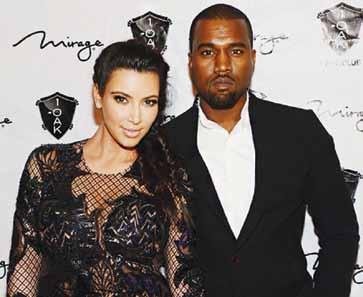
the Kardashians" star, who said that she will be taking Kanye's last name, would not reveal the location or the date of the wedding, but she and Kanye have decided to divvy up the wedding responsibilities, which has actually worked in both of their favors.
"I know they think or they say the guy doesn't really care or just shows up. Kanye, really cares and he's really passionate about it. It makes my job really easy and I love it he knows what he wants and I love that about him," Kim said. "We are kind of taking different roles he is taking care of the music I'll take care of the
seating chart different stuff like that, so we are making it really easy on each other."
One thing they won't have to worry about is finding a flower girl, since that job will most likely go to their 7 month old daughter, North, who stayed behind while her parents had some alone time in Paris.
"We went on a vacation for New Year's and we shared a condo with my mom and we all went skiing so he was like, 'Babe, can we please just have three days to ourselves without any family members? It's too much traveling for her,'" Kim revealed. (MTV)


am Charan is an Indian film actor, known for his works primarily in Telugu cinema. He won two Andhra Pradesh state Nandi Awards, two Filmfare Awards South, two CineMAA Awards, and one Santosham Best Actor Award. In 2011, he was awarded Youth Icon Award by North American Telugu Society. Ram owns a Polo teamRam Charan Hyderabad Polo Riding Club. He is also an entrepreneur and an equestrian. In December 2013, Ram Charan was ranked #69 in 2013 India's Forbes list. The actor made his film debut in 2007 as the leading man in the film “Chirutha”. He made his Bollywood debut in “Zanjeer”, a remake of the 1973 film of the same name that starred Amitabh Bachchan, and as a playback singer with the song “Mumbai Ke Hero” from the album “Thoofan”. In 2013, he ranked 18th in the Times of India list of top 50 desirable men.

Superstar Salman Khan has scored several blockbusters. Yet, the "Dabangg" star believes that he needs to work on his weaknesses and improve his acting and dancing skills.
"I will work towards my dancing, acting and myself. Everything else is going on fine, my films are being appreciated...I just want to take my weaknesses to another level," Salman told reporters.
He spoke at the unveiling of the trailer of his brother-in-law Atul Agnihotri's "O Teri" Thursday.
The 48-year-old actor's much awaited film “Jai Ho” has hit cinema houses today and he is all praise for his co-stars in the movie.
Salman has no qualms about his film being given a U/A certificate. The censor board had asked the makers to change the word 'politician' in a dialogue, which they did and changed it to 'powerful person'.
Apparently, a political outfit had planned to protest against the release of the film after Salman recently went to Gujarat and met Chief Minister Narendra Modi.
Reacting to this, Salman said, "People should not take mileage... it's a good film... it's about helping people." (Times of India)
Reports that Hrithik Roshan has hired a famous life coach to manage the separation from his wife Sussanne have been denied.
The actor was rumoured to be working with philosopher and 'Peak Performance' guru Arfeen Khan.
However, Khan has denied that he has been in contact with Roshan, telling The Times of India: "Hrithik attended one of my seminars. But beyond that, he is not my client. I mostly train corporates."
In December, Roshan released a statement implying that his wife had taken the decision to separate after 17 years of marriage.
Last week, he told the press: "I take full responsibility about whatever is happening in my life, instead of blaming people and circumstances.
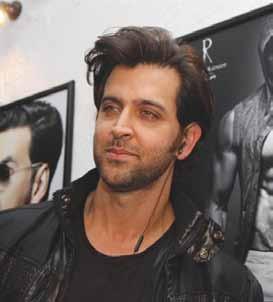
"I have had to realise it's about me. Yes, there are times when the possibility of a good future seems impossible, but I realise one has to get on with it." (Digital Spy)

Shah Rukh Khan's injury, which his colleague Salman Khan has described as "ok" is not so okay.
According to an eyewitness, Shah Rukh was not just injured but also badly shaken by the accident.
"Shah Rukh was shooting with Abhishek Bachchan, Sonu Sood and Deepika Padukone for Farah
Jhan's “Happy New Year” when a heavy 10x5 door came crashing down straight towards Shah Rukh. “He ducked. But couldn't escape entirely though. He had bleeding gash on the right side of his forehead. His knee was also injured," said the eyewitness. Worst of all, Shah Rukh's shoulder which has undergone several surgeries took the weight of the falling door.
The eyewitness said, "Shah Rukh was in a lot of pain. He is also become frail because of the repeated injuries and surgeries. The entire team went to the hospital with him. They were there for more than four hours. Thorough tests including CT scan and an MRI scans were done."
The test reports are awaited.
In the meanwhile, Shah Rukh insisted on returning to shoot after the hospitalization. "Shah Rukh and the entire team went back to shoot at the Marriott. Shah Rukh

had his hand in a sling. He took of his sling and did his shots. But he was quite shaken. The shooting has been cancelled on Friday to allow Shah Rukh to rest," the eyewitness added. (Hindustan Times)
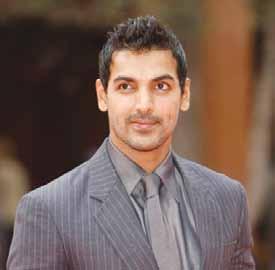
John Abraham's “Rocky Handsome” will get rid of the conventional female lead. The actor and film producer was
last seen in the political thriller “Madras Café”, his follow-up production to “Vicky Donor”
Director Nishikant Kamat told Apunkachoice: "Apart from John Abraham there is one other pivotal character, a male associate to John's character. And they share very close bonding. But no leading lady, not even for the songs.
"I do understand numbers. I know box office figures are important. And ‘Rocky Handsome’ is my most expensive film to date. But I can't be looking anxiously over my shoulder every time I write a script."
Khan admitted last year that he felt he had to prove himself to critics because of his modelling background.
He will also be seen later this year reuniting with Abhishek Bachchan for the sequel to “Dostana”. (Digital Spy)
Amitabh Bachchan has given his support to the Indian premiere of Anant Singh's “Mandela: Long Walk To Freedom”.
The film chronicling the life and struggle of the former South African president Nelson Mandela stars Idris Elba and Naomie Harris.
Recalling the kindness of the former ANC leader, Bachchan wrote on his blog: "Mandela the movie produced by dear friend Anant Singh from South Africa, and he and his team solely responsible through the kindness of Mr Mandela to give us the permission to bring the very first Concert to South Africa at a time when Apartheid was just on its way out."
The 71-year old actor also recollected his experience of performing in South Africa over two decades ago.
"What a memorable trip to Durban and Johannesburg during the time of the very first concert in South Africa in which we performed in 1990," he said.
"Incredible moments, the warmth and the affection of the people of South Africa, their stance on matters that concerned them politically, generous in their praise and most dignified in their reception to me."
The film's premiere was held on January
The silent escalating epidemic of obesity is the underlying cause of most deaths in the Caribbean today. During the last few decades, deaths from diabetes show the highest rate of increase among all causes of death. It is significant to note the corresponding increased rates of obesity during the same period.
The rapid increase in obesity in the Caribbean has been accompanied by increasing mortality in diabetes and hypertension.
But this burgeoning prevalence of Caribbean obesity has devastating effects beyond diabetes and hypertension as obesity plays an important aetiologic role in several major chronic diseases such as coronary heart disease, gall bladder disease, colon cancer, breast cancer and stroke. Disease burden increases with increasing obesity.
Despite these grim consequences, the most positive aspect of the obesity epidemic is that these debilitating effects are largely reversible. It was estimated that a 10 kg weight loss in obese persons can have a significant impact on health status.
Obesity was once believed to be a problem of abundance, affecting only the rich in society. It is now recognized that even the poorest in society are facing problems of obesity and its consequences.
Those who are poor may not have access to healthy foods but do have access to calories of low health value, such as high-fat, high sugar foods, resulting in excessive energy consumption.
Limiting portions can help you lose weight and ultimately prevent complications. The amount you eat or drink plays an important role in your energy balance strategy. Most people eat and

The Caribbean is experiencing a nutrition transition reflected in a shift in diets away from indigenous staples, locally grown fruits, vegetables, legumes, and limited foods from animals, to diets that are more varied and energy dense, consisting of foods that are more processed, more from animals, more added sugars, high in fats/oils and sodium, and often more alcohol (Photo taken from michellehenry.fr)
Similarly, opportunities for recreational physical activity and access to preventive healthcare may be limited in poor communities, indicating that obesity in the Caribbean is closely associated with economic and health disparities. There is no simple direct solution to obe-
minimum of three times a day, avoiding going longer than five hours without eating," says Nadine Uplinger, a spokesperson for the American Dietetic Association and director of the Gutman

drink more when served larger portions. Choosing smaller portions can help you lose weight and keep it off.
Don't skip meals
If you're starving, you're more likely to eat an extra-large portion. For most people, the best plan is to eat three welldesigned meals and one snack.
"People need to eat a
Diabetes Institute at the Albert Einstein Healthcare Network in Philadelphia.
"You don't need to get up in the middle of the night, but don't skip meals."
Know your "rules of thumb"
Did you know that 3 ounces of lean meat is equivalent to a deck of cards? And 1 cup of breakfast cereal is about the size of a fist?
sity because it involves multiple complex human functions and actions, such as eating, daily activities, workplace, food production, marketing, cultural and lifestyles influences.
The Caribbean is experiencing a nutrition transition reflected in a shift in diets away from indigenous staples (grains, starchy roots), locally grown fruits, vegetables, legumes, and limited foods from animals, to diets that are more varied and energy dense, consisting of foods that are more processed (including processed beverages), more from animals, more added sugars, high in fats/oils and sodium, and often more alcohol.
Fuelling this transition is also the wide penetration of commercial food markets and globalized dietary sources. Further, the urban communities are characterized by predominantly sedentary employment, mechanized transportation and lower levels of recreational physical activity.
A fully commercialized food chain results in more dietary energy consumed outside of the home, with less personal control over its content, increased dependency on food prices, promotion and advertisements.
Collectively, these forces lead to higher consumption of low-cost energy dense foods and reduced energy expenditure, which translates to excess weight gain and obesity.
The complex causation of obesity suggests that successful preventive measures are likely to come from policy-related changes to the environment than from education-
al interventions targeted to the individual.
The strategy is to create and promote environments conducive to obtaining balanced nutrition and an active lifestyle. In so doing, individuals, families, and communities will be encouraged to continuously opt for healthier choices.
To create such a healthy environment, several sectors must be involved. Historically, government ministries, acting independently of one another, have been responsible for health, nutrition and food security. Given their interdependent and overlapping characteristics, these public policy issues can no longer be narrowly circumscribed by the traditionally vertical functions of individual ministries.
Rather, a broad-based, multi-sectoral and collaborative approach involving all stakeholders is required. We need to build consensus among, and effectively engage, agriculture, trade, education, finance, other government ministries, the private sector and other stakeholders on actions to improve nutrition and health in the region.
This is essential if we are to reap synergistic benefits and leverage key sectors to address obesity and other food and nutrition problems. In the past, there have been several programmes to deal with food and nutrition insecurity, but there was no systematic attempt to engage several sectors to address our major health problems. (TO BE CONTINUED)
Information excerpted from: HENRY, FJ. Obesity prevention: the key to non-communicable disease control. West Indian med. j. [online]. 2011, vol.60, n.4 [cited 2014-0122], pp. 446-451.
Portion size plays a big role in weight control
This info is crucial, particularly when you need to choose the right portion size quickly. Check out http://hp2010.nhlbihin. net/portion/keep.htm from the US National Heart, Lung, and Blood Institute, for help in determining portion size.
Serving size vs. portion size
What's the difference? It matters.
Serving sizes per container are listed on the nutrition facts label.
For example, a small bag of pretzels may say
that it contains two servings, so if you're eating the whole bag—your portion size—you'd have to double the calorie, fat, and carbohydrate information per serving to know how much you're consuming.
Use portion-control plates
What are they? These are handy plates with painted lines (or just smaller plates in general) that help measure carbohydrates, proteins, cheese, and sauces.
In a June 2007 study, researchers at the University
of Calgary randomly assigned 130 people with type 2 diabetes to use those plates or regular ones.
Overall, 17 percent of those who used the plate lost 5 percent or more of their body weight, while only 4.6 percent of the control group did; 26 percent of those who used the plate were able to cut back on diabetes medication (because they lost more weight), compared with 11 percent of people who did not use the plate.
Plan your meals
Write down what you
eat, think before you eat, and then eat slowly.
Snacks should typically contain no more than 100 calories and 15 grams of carbohydrate, so plan ahead.
Some good choices include three cups of plain popcorn, 17 small grapes, a 6-ounce container of artificially-sweetened yogurt, 15 mini pretzels, or a tennis-ball size piece of fruit, according to LuAnn Berry, RD, a certified diabetes educator at the University of Pittsburgh Medical Centre at Passavant.



Gone are the days of beating laundry at the canal for many of us. And while some of us have a washing machine, unfortunately space may be a problem that leads to cramped, untidy areas in which to do our laundry. But take some inspiration from blogger ‘remodelaholic’, to keep some order in whatever small space you may have.

Have a multitasking laundry room. Steal some space from a store room, closet, garage, bathroom or even home office



IMethod
n a large saucepan or Dutch oven, cover dried peas with 2 quarts of water. Bring split peas to a boil; boil gently for 2 minutes. Set aside to soak for 1 hour. Add ham bone, chopped onion, garlic powder, marjoram, thyme, and pepper. Bring split pea soup to a boil; cover, reduce heat, and simmer for 2 hours, stirring occasionally. Remove meat from bone; dice and return to pea soup with chopped celery and carrot. Simmer split pea soup slowly for 45 minutes, stirring occasionally. Taste split pea soup and add salt. Serves 8.

Ingredients
Butternut squash
Salt and pepper to taste
Method
Heat oven to 425°F. Peel, seed and slice your squash. Be sure to make the slices similar in size, so that they bake evenly.
Place the fries on a lightly greased parchment paper-lined baking sheet. Sprinkle with salt and pepper to taste.

Bake about 50 minutes, turning over halfway through baking, until fries are deep golden brown and mostly crispy. Serve warm.
Arunny-yolked fried egg adds instant richness to pasta, rice and grain dishes, even pizza. Whip up fluffy omelettes by adding eggs, milk, and seasonings together in a cocktail mixer. Give it a few shakes and it's ready for the skillet.
To neatly transfer salad dressings, condiments or other such liquids from bottle to bottle, fashion a funnel from aluminium foil. Place it in the empty bottle and pour.
Steam perfect rice. Once the rice is tender, remove the pan from the heat, place a folded towel over the saucepan, replace the lid, and set aside for 5 to 10 minutes. The towel will absorb the excess moisture for great rice with no mush.
To restore finished wood furniture, steep two tea bags in hot water for 10 minutes. Let cool, then dampen a clean soft cloth with tea and wipe over wood furniture. It will bring out the woods natural colour and shine.
Salt and lemon juice mixed together remove mildew stains. To easily clean up egg spills, sprinkle a good amount of salt on the egg spill, and the egg will come right up instead of running away from the towel every time.
After rampaging through the attic of their grandma's home, two kids just invented a card game of their own because they didn't have a regular set of cards.
-Spades are represented by difficult times, death, pain and sorrow.
-Clubs are represented by the arrival of a new life, and the celebration of this happening.
-Hearts, of course, represent Love...Young and forgotten love, as well as strong love that grew through the ages.
-Finally, Diamonds are represented by happy times, family gatherings, the celebration of old times gone by and of new times arriving; the celebration of light, life and sharing.
With what did the two kids play cards?
solution on page 22


solution on page 22

Long, long ago, when the world and our language were young, the ancient scribes realised that children had to be taught reading and writing. They decided to put together what they called the alphabet. This would contain all the letters of the English language, and would help the children to learn to read and write the words they spoke.
But there was a problem. The scribes were scattered throughout the kingdoms of earth, and how the alphabet was recited was always different from village to village and town to town. It caused much confusion at assembly or class time, when some children moved away to another town or village!
So the scribes, wise persons they were, knew the alphabet had to be written one way and one way only. But how to do this, they wondered. How could they decide once and for all which letter goes where in the alphabet?
A grand meeting was called in the town square of the capital city (it happened so long ago that no one today is sure where that was) and the bell crier appealed for help in finding a solution. But after one week, the adults still could not agree on what to do.
Then one little girl (they say her name was Violet) tugged at her mother’s hand and whispered, “When we have to go back into class after play time is over, our teacher makes us line up then race to the school door. Whoever reaches first gets a special prize!

Why can’t we have an alphabet race?”
“An alphabet race? Who ever heard of an alphabet race?” her brother nearby replied scornfully.
But mom had an idea! Later that day she went to the head of the city’s scribe elders to propose her daughter’s idea.
“We can have the children dress up as the letters of the alphabet and have a race! It would be fun for the children and make a great and historic alphabet race!” she cried.
It was unan-

imously agreed by the scribe council and arrangements quickly made. The Great Alphabet Race was set.
The day of the race began bright and full of sunshine, laughter and excitement. Twenty-six eager and lively children, each with a letter from the alphabet proudly displayed on their shirts, were straining at the start line to make history.
At the sound of “Ready, Set, 1, 2, 3, Go!” the children sprinted off down the track...
Following is the official report of its historic ending:
A Arrived ahead of the rest to claim first letter of the alphabet!
B Blazed in just behind for letter number two, as
C Cruised in for number three.
D Dipped his head just at the line for letter number four, while
E Easily edged past F Flinging himself at the finish line.
G Galloping in for letter number seven, beat H Hurtling himself over the line to become letter number eight.
I Inched her way to letter nine,
while
J Jumped for joy to be number ten.
K Kicked up her heels for earning number eleven, and
L Leapt in the air for letter twelve.
M Meanwhile was happy to be the halfway letter thirteen, as
N Never looked happier than with his number fourteen.
O Oh, my! O just tumbled over the line! But coming in next,
P Picked her up and everything’s just fine.
Q Quickened her pace as she reached the end, to overtake
R Racing in for letter eighteen.
S Scooted in as
T Tripped at the line but claimed letter nineteen.
U Upset little
V Veering away from bumping into
W Who waved as she finished. And for
X Xylophones played a happy tune.
Y Yelled happily at the cheering crowd and
Z Zipped in as the last letter of the alphabet. She was proud she would be a letter no one would easily forget!
And there you have the alphabet boys and girls, as the race decided!
But have you ever wondered if the ending was different, how the alphabet would be?
Why not have your own alphabet race and see? (A. Ally)

I met a Man as I went walking: We got talking, Man and I.
"Where are you going to, Man?" I said (I said to the Man as he went by). "Down to the village, to get some bread. Will you come with me?" "No, not I."
I met a horse as I went walking; We got talking, Horse and I. "Where are you going to, Horse, today?"
(I said to the Horse as he went by).
"Down to the village to get some hay. Will you come with me?" "No, not I."
I met a Woman as I went walking; We got talking, Woman and I.
"Where are you going to, Woman, so early?"
(I said to the Woman as she went by).
"Down to the village to get some barley. Will you come with me?" "No, not I."
I met some Rabbits as I went walking; We got talking, Rabbits and I.
"Where are you going in your brown fur coats?"
(I said to the Rabbits as they went by).
"Down to the village to get some oats. Will you come with us?" "No, not I."
I met a Puppy as I went walking; We got talking, Puppy and I.
"Where are you going this nice fine day?"
(I said to the Puppy as he went by).
"Up to the hills to roll and play."
"I'll come with you, Puppy," said I.
A.A. Milne
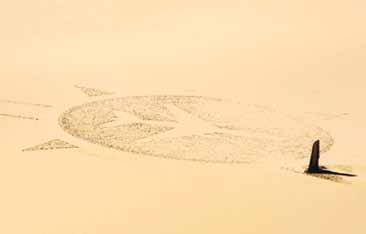
In the Sahara desert there is an intriguing landmark visible on satellite picturesthe outline of an aeroplane pointing in the direction of Paris. It is a memorial to a flight that never reached its destination.
On September 19, 1989 UTA flight 772 was travelling from Brazzaville in the Republic of Congo to Paris when it was blown up over the Sahara desert. All 156 passengers and 14 crew members were killed.
Where the French plane fell, the families of the victims have built a lasting and visually striking memorial to the dead. A life-size silhouette of the aircraft lies inside a dark stone circle surrounded by 170 bro-
ror specialist, Judge JeanLouis Bruguiere, to investigate.
In 1999, a French court found six Libyans guilty in their absence and sentenced them to life imprisonment. Libya did not admit responsibility, but paid $34m (£20.7m) in compensation that year. This process had taken 10 years, and not all of the bereaved were compensated (only the 500 represented during the trial).
Denoix de Saint Marc designed the memorial to symbolise the absence of the plane, picked out in a dark stone circle.
"Everybody said: 'Why build a memorial where nobody can see it?'" he says. "But I thought - planes still

ken mirrors, each one representing someone who died. Jutting out at the northern point, like a sundial, stands the right wing of the DC10.
Guillaume Denoix de Saint Marc was the driving force behind the memorial. His father Jean-Henri died on the DC10. Creating it was the final act in an 18year quest for justice which cost him his business and overshadowed his marriage - but has left a lasting legacy. The fate of the flight was confirmed Sept, 20, 1989 when a French air force plane flew overhead. It took another day for paratroopers to reach the site of the crash in Niger. When they did, they confirmed there were no survivors.
Two days later, traces of explosive were found, indicating a bomb. The French government appointed a ter-
fly over, the passengers can see it. So I looked into how big it would have to be to be seen from the air."
They built a life-size silhouette of the plane memorial 10km (6 miles) from where it fell - both in order to retain the sanctity of the crash site and so that it would be visible by those flying overhead.
The wing was taken from an area they have named the 'sanctuary', six km (four miles) away - this is where the main part of the plane fell, and a thick plate of fused metal remains.
"It's where fire melted all the bodies and infused them in the metal. It's where the missing bodies are," says Denoix de Saint Marc.
(Source: The Sahara memorial seen from space, by Vibeke Venema, BBC World Service)

(Continued from Jan 19)
Simon Khalaf, CEO of Flurry, a mobile app analytics company confirmed [Apple's dominance] in December, telling us, " We have seen and published reports that an Android user is worth 1/4 of an iOS user, but that is based on virtual goods sales (mainly games). The IBM data seems to suggest that this is almost the same ratio for sales of physical goods (m-commerce)." He added, “Basically one iOS user buys four times more than an Android user."
year, which is up 136 percent year-over-year. Of that, developers get $7 billion. The non-search portion of the mobile ad market is estimated to be $8 billion for 2013.
Let's say that Android developers got 80 percent of those ad dollars. That still means Apple is the more lucrative platform for an app maker. (And there is no reason to think Android draws more ad dollars since IBM and Adobe both say there is significantly more commerce happening on iOS. Advertisers spend where the dollars are spent.)
year seven of the iPhone and it's still growing at a double digit clip. This business model isn't a fluke. And it's not going to dry up suddenly.
Oh, I also forgot to mention that Apple generated $9.9 billion in cash in the last quarter, largely thanks to the iPhone business.
Which is nice.
Could Apple lower prices? Of course it could. As a person that buys stuff Apple makes, I would love to see the company lower its prices. It would make my life better.
Khalaf thinks the reason is that Android phone buyers are mostly treating their phones like dumb phones, not smartphones. They're not taking advantage of the platform.
If Android users aren't taking advantage of the platform, if they're not engaged, then there's no reason for developers to relegate iOS to a second tier platform in favour of Android.
Another reason developers aren't leaving iOS any time soon: It's lucrative to make iOS apps. Apple just announced that App Store sales were $10 billion last
TBut from a business perspective, it's hard to make the case that Apple needs to lower prices. Developers aren't leaving and sales remain strong.
Another argument from people that think Apple

When you think about it this way, market share doesn't matter. This is year six of the App Store, and despite all the Android market share gains, developers still love iOS because people pay for, and use, iOS apps. The developers aren't leaving. So why should Apple chase market share? If Apple can generate more revenue from the iPhone than its rivals can from their entire businesses, while still growing faster despite only owning 12 percent of quarterly smartphone sales, then what's the problem?
What about the future?
Could Apple collapse in the future? Of course, but this is
should lower prices is that carriers are either going to shut out, or screw-over Apple. Therefore it should pre-emptively capitulate.
Please.
Even carriers, who play hardball with Apple, know that the iPhone is a big deal.
On Friday, Japan's largest carrier NTT Docomo added 279,100 net users. Why?
From Bloomberg's report: “The main reason Docomo added more new

users than other carriers is because it began offering the iPhone, said Hiroko Shimoyama, a company spokeswoman." Docomo didn't have the iPhone until recently.
This isn't an anomaly. In the U.S., before T-Mobile had the iPhone, it said it lost 700,000 subscribers in one quarter because customers were bolting for carriers that offered the iPhone.
It's not just Japan and the U.S. where the iPhone is a big deal.
People who think Apple needs to change its iPhone business (and I have been one of those people in the past) look at China and think Apple is totally screwing up.
It's possible Apple has erred in China, but it just signed a deal with China Mobile, the biggest carrier in the country. China Mobile had long resisted Apple, but eventually it caved. Why?
From the New York Times: “[China Mobile] showed signs of warming up to Apple only after it began losing customers to competitors that offered the iPhone."
Despite the high prices, consumers in developed and
developing nations want the iPhone. Carriers know it, and Apple knows it. Carriers like iPhones because iPhone users spend money on data.
As we enter 2014, things look bright for Apple and its iPhone business, despite the doomsayers of 2013.
It has a new deal with China Mobile to sell phones to over a hundred million Chinese consumers.
It is likely to release a new phone with a bigger screen, which has been one of gripes from users. Heck, it might even release two iPhones with bigger screens! (We're sceptical, but you never know...)
And even with just a sliver of the market it’s generating mind numbing sums of cash, and its iPhone business is growing faster than its rivals' overall businesses. It's time to admit Apple knows exactly what it's doing with the iPhone. (And, one final parting note: None of this is to say that iPhone is beating Android. We're just saying that Apple is doing well doing what it's doing. As freelance analyst Benedict Evans said, "I am rapidly losing interest in 'iOS versus Android' as a discussion. Both Google and Apple have won.") (Information provided by Global Tech)

he Internet Corporation for Assigned Names and Numbers (ICANN) recently announced that 100 different generic top level domains, or gTLDs, are on track to becoming incorporated into the Internet universe.
Now you may see sites with new domains like .rich, .sexy, .ninja and .pink.
Christine Willett, vice president of gTLD operations, in a statement called the event a historic milestone, and added that "The year ahead will be defined by new opportunities in a vastly expanding online landscape."
ABC news reports that each application costs US$185,000, and both Amazon and Google are looking to capitalize on the boom

of new names. Among the original 1,900 applications, Amazon went after 76 different gTLDs, while Google went after 101.
However, many applicants prefer a single application: Hyatt only wants .hyatt, Gucci only wants .gucci, and Apple only wants .apple.
Leslie Phillips, the head of marketing communications for the consulting firm Fairwinds, said that it's those companies that are going to end up making gTLDs popular.
“The brands are the ones leading the way," she told ABC News. "This will enable companies to really experiment and get closer to their customers while extending their brand. It's the future of the Internet."
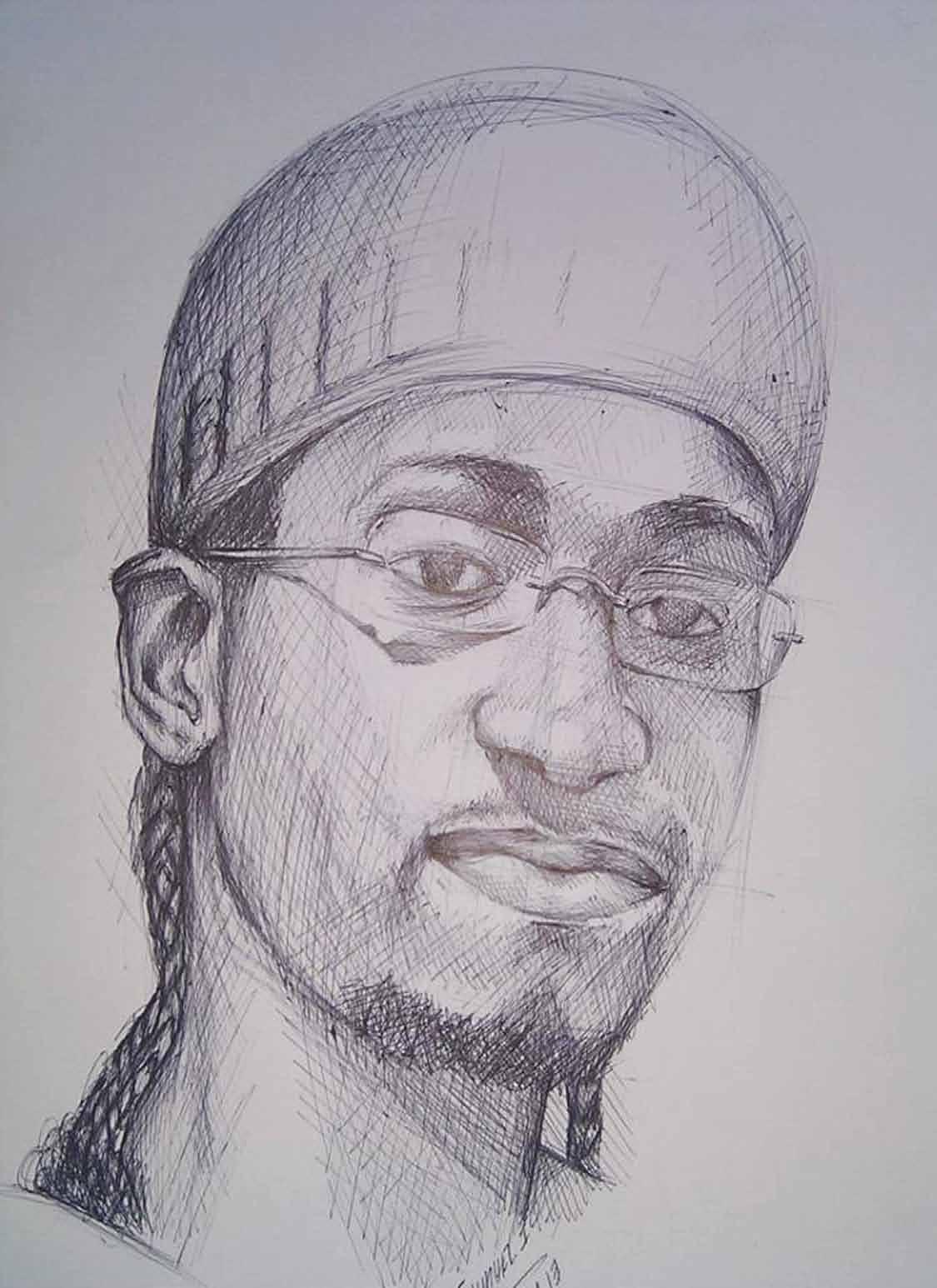
Shimuel Jones has painted, drawn and sculpted his way to becoming a notable Guyanese artist
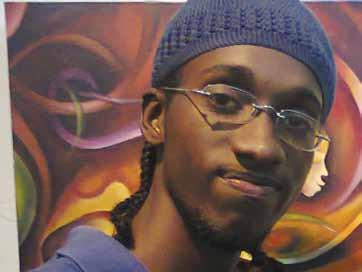
Referring to his talent as “God given”, Shimuel Jones believes he was born to be an artist.
Shimuel, 23, attended Central High School where art was not offered as a CXC subject; nevertheless he excelled naturally and was determined to pursue studies in art. This passion was his propelling force to graduate from the University of Guyana with a bachelor’s degree in Fine Arts.
Now his love for art is clearly seen in his evocative
paintings. In an interview with Guyana Times Sunday Magazine , Shimuel said of his passion: “I always loved art. As I grew, so did my love for art; now it is a part of me.”
The artist recalled being flogged by his mother for drawing on the walls in his home. He stated he drew every day, all day – and on everything.
Notably, his ability to produce award-winning pieces was inherited from his father, Kirk A. Jones, an artist for more than

30 years. Shimuel’s work is inspired by nature and humanity, and also from society and the presence of disunity among the races and cultures.

“I did a painting called “Continental Relations” a while back,” he recalled.
“Its visual appearance illustrates the relationship that is parallel among the eastern and western continents. In fact, that piece was shortlisted at the 2012 national art competition. I paint, draw and sculpt. I do almost everything in the field of art. I was exposed to nearly every aspect of art while I was doing my bachelors degree at the University of Guyana.”
“I also love the Congo drums which I have been playing since I was 10,” he added.
Employed as a cartoon animator at Brainstreet Learning, an online learning enterprise, Shimuel is happy that he gets to pursue his passion fulltime. Creating art comes naturally and is therapeutic to


the artist.
Fascinated by the human anatomy, Shimuel considers the human body as the “closest you can get to perfection.” As a student, he was interested in mastering this perfection, and it has since become his favourite reference when he is painting- whether it is painted in a realistic (portraits) or abstract manner.
“As of late, through my paintings I communicate unity among the six races. The drawing “Six Races, One Root”, which was awarded third place at the recently concluded National Drawing Competition, illustrates a similar idea,” he pointed out.
Exhibiting his work has been instrumental in sharing his love for art.
Shimuel was part of the National Art ExhibitionGuyana, Carifesta XI in Suriname, National Drawing Competition and Nola Hatterman art exhibition in Suriname, among others. Additionally, he exhibited in the U.S. at the Miss Universe pageant and in Indonesia for the Miss World pageant last year.
He was awarded third prize of a bronze medal and cheque for $50,000 for “Six Races, One Root’, executed in coloured ink. Shimuel had previously also won the Young Person’s Prize in 2008, and more recently was shortlisted in the final five in the painting category of the National Visual Arts Competition of 2012. Jones also received an Honourable Mention for
his work “Deeper than the Colour of Your Skin”. Through his company, Extraordinary Designs, Shimuel creates banners, signs, portraits, sculptures, illustration and other art related work.
“In this field, like most career paths, it is imperative to keep up with its evolution, so that is one of my main goals – to educate myself continuously to keep up with its evolution. My advice for those who want to pursue art is to keep at it! Work towards becoming the best and you will be fine,” he declared.
For more information on the artist, visit Extraordinary Designs on Facebook or call 626-4667. (Cover photo : "Self portrait")


By The hon. VincenT RoTh
Part II
(contInued from January 12)
We now sailed past numbers of Portuguese Menof-War – you know, those peculiar red and blue ovalshaped jelly fish about a foot long. You have probably seen them washed up on the beach at the Sea Wall where they appear as shapeless masses of jelly, but, when alive and sailing on top of the waves, they are very beautiful to look at, but not to touch. If you touch one you will get stung.
Shortly before dark we came to a headland called
tered from the seas by Cape Nassau, we anchored for the night. The rain that, driven by the wind all day, had thoroughly soaked the deck, compelling us to spend most of our time in the comfortable little cabin below, now held up, and the clouds turned a lovely pink colour as the sun sank below the dark line of bush marking the coast to the west of us.
After a dinner cooked by one of the Warraus, we went to sleep in the bunks that were arranged around the cabin walls. I remember Mr. McTurk’s pyjamas – after all these years – they were of bright red flannel, to frighten away the mosquitoes, he said.

Cape Nassau and, on rounding this, we found ourselves in the Pomeroon River, which is only about half the width of the mouth of the Demerara. Here, shel-
The Warrau crew occupied another little cabin in the forecastle. About three o'clock in the morning I was awakened by a sensation of hundreds of tiny stinging spots all over my body. These
mangrove trees that lined the banks of the river. A small flock of scarlet ibis flew across overhead, and the morning sun shining on their plumage made them a very beautiful sight to behold.
Justices of the Peace for the District, who owned a large provision and coffee estate here.
were caused by the sandflies and mosquitoes which came to welcome us to our new home.
As soon as daylight appeared we were almost deafened by the screaming of the green parrots in the wild
At seven o'clock we began sailing up the river, between two rows of level-topped mangrove trees that hid the coffee and provision farms from the eye of the traveller, except at the landings where the river-side forest had been cut down to permit the koker trenches reaching the river.
By nine o'clock in the morning we arrived at Akawini, where a tributary of the same name joins the Pomeroon. At its mouth was the home of an old gentleman, Mr. Pierre, one of the
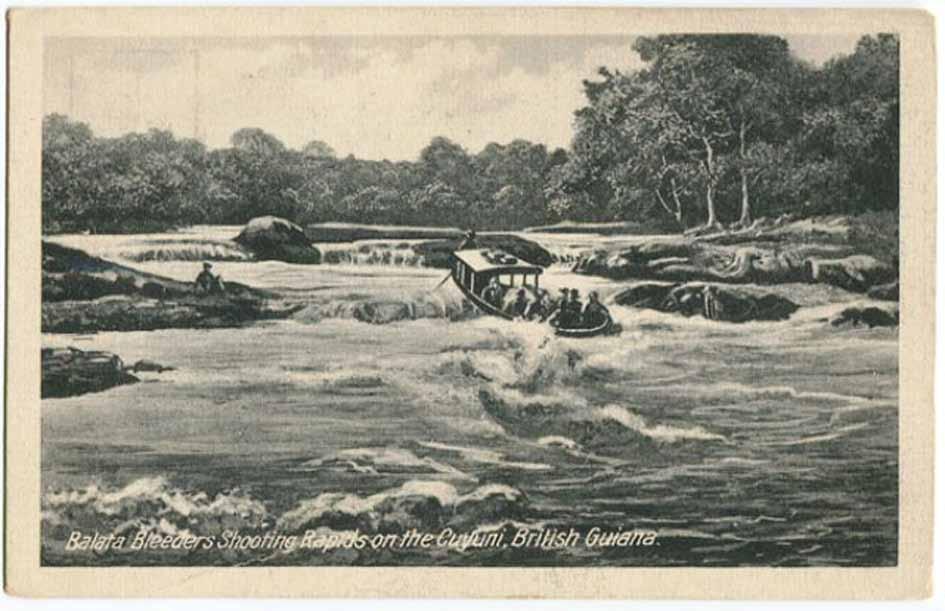
Across the river, just opposite, was Plantation Caledonia, a large coconut estate, at that time owned by Chung Yow, a Chinese gentleman. He had come from China, wore a long pigtail, and so followed the customs of his country that he
arranged that on his death his body should be sent back to China, there to rest with the bones of his ancestors. His wish was subsequently carried out. And so, having reached the Pomeroon River, I bring this short tale to a close.
Taken from the A.M.D.G. St. Stanislaus Magazine Association Section, Vol. 2; June 1944; No.1


Elders say original name for village was “Maicopik”, named after a small lizard prevalent in the area

Micobie is situated about two miles downriver of the famous Tumatumari Falls found in the Potaro River, Region Eight. It is accessible by road via the Linden-Mabura road, BarticaPotaro road or by aircraft to Mahdia then by road. It’s an approximately 10-hour road trip.
The history of the village dates back to the 1800s, when a family broke away from a community that was settled at Kangaruma, in the area now called Princeville, a satellite village of Campbell town in the vicinity of Mahdia. It was customary that farming and hunting grounds were the key reasons for seeking “new lands” for a more comfortable livelihood, since in that era there was hardly any form of income-generating activities in comparison to today. The persons from Kangaruma have traced their genealogy to Chenapou and Kopinang.
The Micobie community is made up of predominantly Patamona, considered relatives of the Akawaio, and indeed there are many similarities in language, diet, marriage rites and the practice of herbal medicine.
Micobie has been in existence since the 1800s when the Denham Bridge was being constructed. In fact, the workers on the bridge, and some porknockers, patronized the small community by purchasing their cassava bread. As a result, it was given the name ‘Cassava Hill’. In the 1960s, when captains were being elected to govern their community, a Bennett, of Arawak descent, was elected, and he changed the name from Cassava Hill to New Foundout.
Three of the village’s elders, Isaac Williams, Agnes Williams and Mr Roberts, explained that the original name for the village was “Maicopik”, named after a small lizard that is prevalent in the area.
At a subsequent village meeting it was unanimously agreed that Cassava Hill/New Foundout eventually be given its rightful name Maicopik. The Official Gazette however, misspelled the term as “Micobie” and it has ever since been referred to as such.
The satellite village of Micobie is El Paso, located on the right bank of the Potaro River below Tumatumari Falls. The Aleluya religion (an indigenous religion) was also practiced here until the Anglican Church was introduced.
In Micobie, there is a primary school, and students qualifying for secondary level would attend the nearby Mahdia Secondary School.
There is a spring, revered in the village, which provides potable water for its residents.
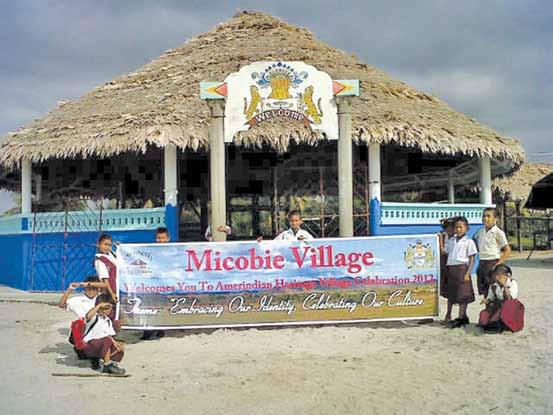
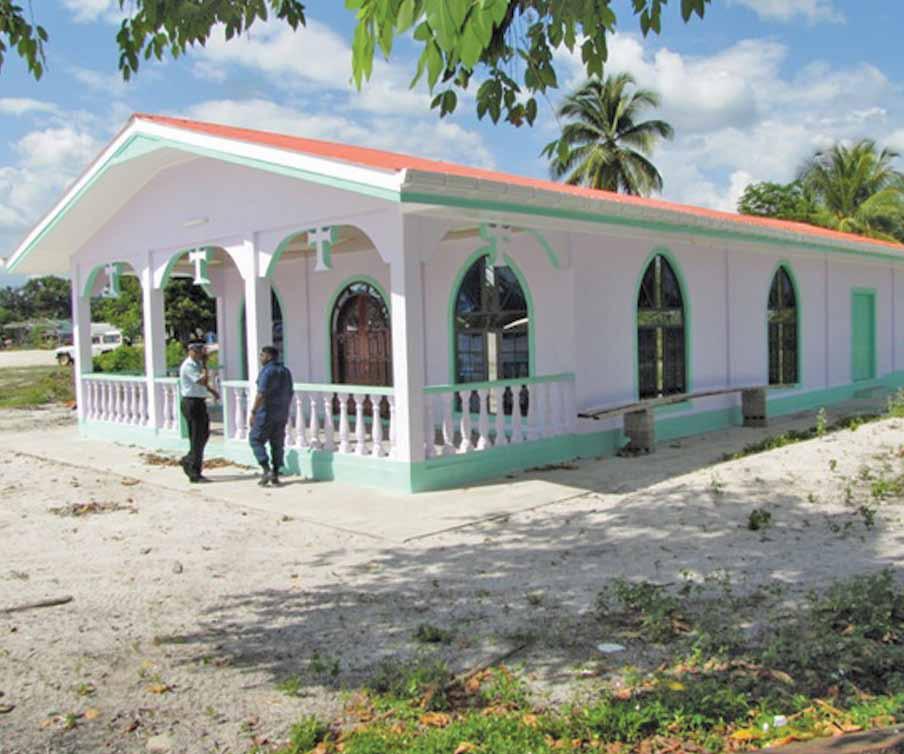


By Melvin Durai
Food. We can’t do without it. It’s one of our basic needs. As my high school biology teacher often emphasized, a typical human being needs food more than anything else, except of course oxygen, water and television.
My memory of such important facts continues to amaze me. I should be on "Oprah."
Speaking of Oprah, I’m sure she understands the importance of food. She has a personal cook and a kitchen that’s big enough to feed China. If I could build my dream house anywhere, I’d build it in Oprah’s kitchen. I’d sit on my deck every evening and watch Oprah put it away. It would be like feeding time at the zoo, but with fewer leftovers.
Oprah: "What’s on the menu today?"
Cook: "I wasn’t feeling too well, so I just made ribs, steak, fried chicken, meatloaf, pork chops, lobster and crab."
Oprah: "That’s OK. I’m not that hungry. I’ll just order some pizza. But thanks for making the appetizer."
Actually, Oprah doesn’t eat all that much these days. Concerned about her weight, she has cut back drastically, putting a few thousand
farmers out of work.
It may be hard to believe, but most women, even Oprah, need food more than they need clothes, jewellery and shoes. And though it’s not always apparent, most men need food more than they need football, beer and deodorant.
Imagine a robber breaking into the home of Claire Marino and her husband, Dan, who recently retired from football:
Robber: "OK, give me all your jewellery."
Mrs. Marino: "No, not my jewellery. Take anything but my jewellery. Take my clothes, take my food, take my husband."
Robber: "I can sell your clothes and eat your food, but what can I do with your husband? Does he have any useful skills?"
Mrs. Marino: "No, not anymore. Well, he does know how to eat, as you can see from his big belly. And he also knows how to lie around. So maybe he's perfect for you. You can jump over high fences by using his belly as a trampoline. Anyway, I don’t want him around if I have no clothes to wear and no food to distract him."
It’s easy to take food for granted, especially in a developed country like America, where food is so
Spelling is apparently not as strong
plentiful that many people, even when they're sober, use food for decorating.
A pumpkin on the porch, an ear of corn on the mantel, a can of whipped cream in the bedroom.
But despite the abundance of food in some countries, an estimated 790 million people around the world are underfed. And that figure doesn’t even include the women on "Friends."
Partly because of media coverage, we tend to believe that the world’s hunger problems could be solved, once and for all, just by feeding everyone in Ethiopia. All we’d have to do is fly over Ethiopia in a big plane and empty Oprah’s refrigerator. Unfortunately, hunger is so widespread that even Oprah can't solve it. More than 525 million undernourished people live in Asia and the Pacific. About 24,000 people die every day from hunger or hunger-related causes.
Here in America, most of us don’t have to worry about putting food on our plates. We have other worries, such as whether our plates match our serving dishes, whether our glasses are spotless, whether our silverware looks fancier than our neighbour’s. And every now and then, we have the audacity to complain.


- Warning: Dates on Calendar are closer than they appear.
- i suhport publik edekasion
- Why is “abbreviation” such a long word?
- I couldn’t repair your brakes, so I made your horn louder.
- Shin: a device for finding furniture in the dark.
Someone out there has too much spare time:
-THE EARTHQUAKES: When you rearrange the letters: THAT QUEER SHAKE
- A DECIMAL POINT: When you rearrange the letters: IM A DOT IN PLACE
- SNOOZE ALARMS: When you rearrange the letters: ALAS! NO MORE ZS
- ELECTION RESULTS: When you rearrange the letters: LIES – LET’S RECOUNT
I know, when people see a cat’s litter box, they always say, “Oh, have you got a cat?”
Just once I want to say, “No, it’s for company!”
You know, I spent a fortune on deodorant before I realized that people didn’t like me anyway.
Employment application blanks always ask ‘who is to be notified in case of an emergency.’ I think you should write, “A Good Doctor!”
- “We’ve got to pause and ask ourselves: How much clean air do we need?” –Lee Iacocca, former Chrysler chairman
- “We don’t necessarily discriminate. We simply exclude certain types of people.” –Colonel Gerald Wellman, ROTC (Reserve Officers’ Training Corps) Instructor.
- “Traditionally, most of Australia’s imports come from overseas.” –Keppel Enderbery, former Australian cabinet minister
- “It isn’t pollution that’s harming the environment. It’s the impurities in our air and water that are doing it.” –Al Gore, former American vice president
- China is a big country, inhabited by many Chinese. – Former French President Charles De Gaulle
- That lowdown scoundrel deserves to be kicked to death by a jackass, and I'm just the one to do it. – A congressional candidate in Texas
The World’s Most Famous Question
(With answers by some of the world’s most famous thinkers)
Q: Why did the chicken cross the road?
Jerry Seinfeld: Why does anyone cross a road? I mean, why doesn’t anyone ever think to ask, “What was this chicken doing walking around all over the place, anyway?”
Oliver Stone: The question is not, “Why did the chicken cross the road?” Rather, it is, “Who was crossing the road at the same time, whom we overlooked in our haste to observe the chicken crossing?”
Darwin: Chickens, over great periods of time, have been naturally selected in such a way that they are now genetically dispositioned to cross roads.
Einstein: Whether the chicken crossed the road or the road moved beneath the chicken depends upon your frame of reference.
Granddad: In my day, we didn’t ask why the chicken crossed the road. Someone told us that the chicken had crossed the road, and that was good enough for us.
Churchill’s Wit
Lady Astor to Winston Churchill: "If you were my husband I'd poison your tea."
Churchill: "If you were my wife, I'd drink it."
To a well endowed woman who told him she had got up at dawn and driven a hundred miles to attend the unveiling of his bust in Richmond , Virginia: “Madam, I want you to know that I would be happy to reciprocate the honour.”
In a campaign he was told by a voter they would rather vote for the devil than him: “But in case your friend is not running, can I count on your support?”
To his opponent: “I can well understand the honourable member’s wishing to speak on. He needs the practice badly.”