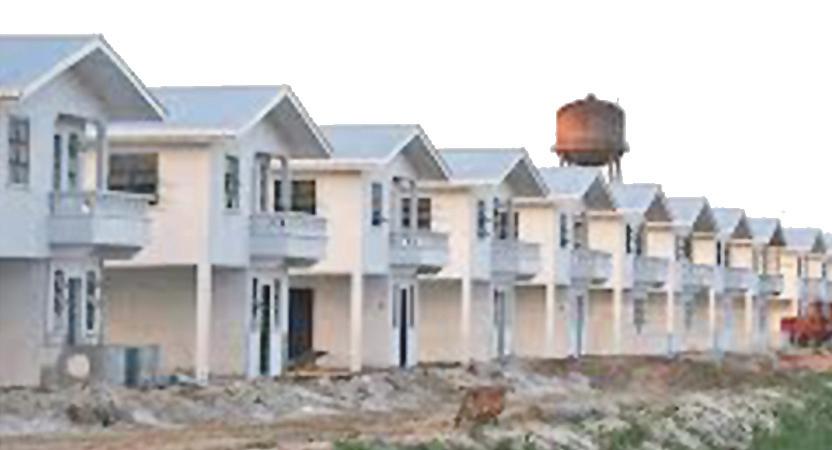
Food, clothing and shelter are universally regarded as the basic necessities of life: Article 25 of the UN Charter defines them as “basic human rights”. For a nation built on the exploitation of labour through slavery and indentureship, Guyanese could never take these necessities for granted.
For housing, Martin Carter reminds us that we all came from the barracks of the “Nigger Yards”; the “logees” of indentureship were never too far removed from that sordid reality.
After slavery, the freed slaves succeeded in one of the most heroic tasks in the history of the world when they left the sugar plantations to build their own homes in what was to be called “the village movement”. After the humiliations of the barracks where everyone had to literally live like animals with no privacy, even though humble, the houses in the villages meant freedom. At long last a family could enjoy the privacy to live in dignity.
The next expansion in the housing stock would occur a century later when the sugar planters – shocked at the rebellion of the workers during the 1930’s decided by 1950 to move the workers off the logees from under the smokestacks of the sugar factories into new housing schemes. Eventually 12,000 houses would be built through small loans extended by the sugar producers which were to be repaid through deductions from their wages.
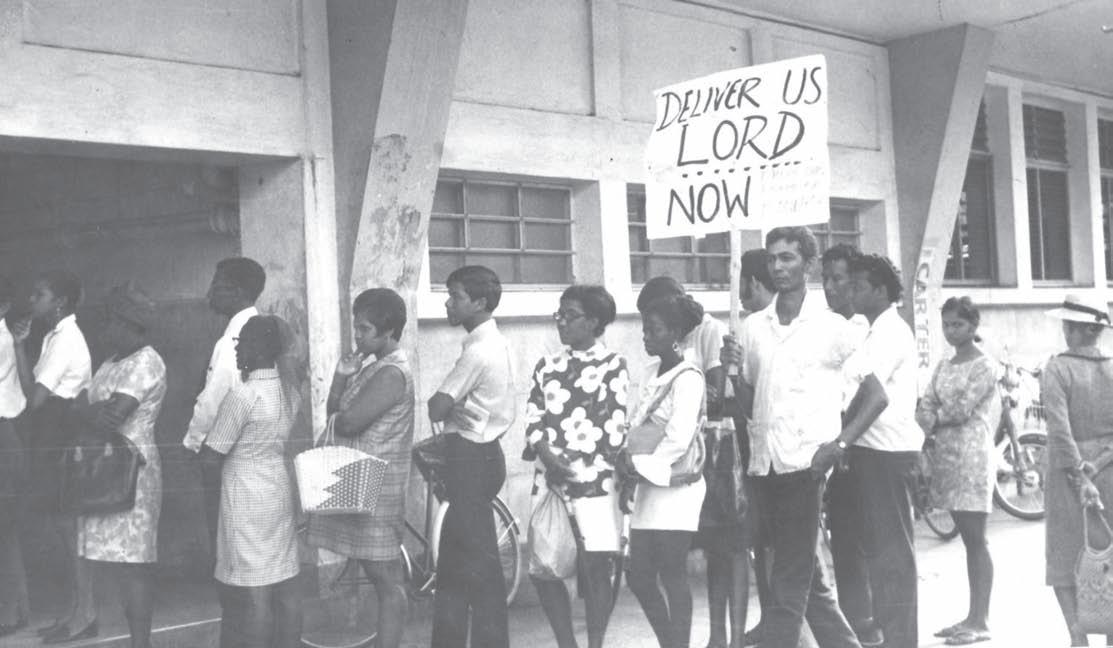
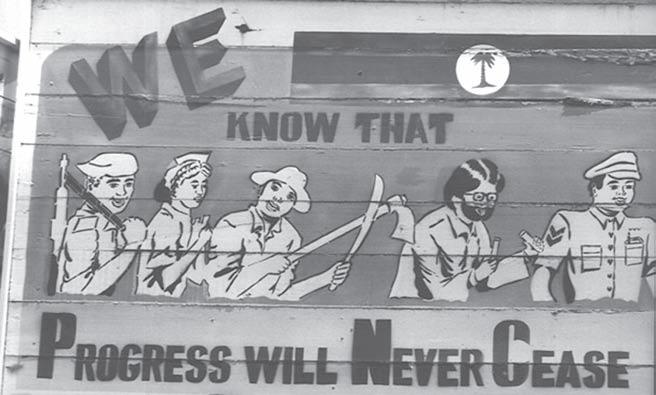
These were small structures, eight feet off the ground on stilts, measuring roughly 22 feet by 24 feet plus a 10 foot by 12 foot kitchen to house what by then was the average family of 5!! By the time the PNC was ushered into office and Guyana became a Republic in 1970 housing had become a huge crisis area. In 1972 the PNC declared a five-year plan with the promise to “feed, house and clothe the nation” by 1976.
In 1976, however, Burnham was forced to announce that his housing plan was a colossal failure. Figures compiled later showed that of the 65,000 houses promised, a mere 4167 or 6.5 per cent were completed. What was also significant was that these houses were almost uniformly situated in areas where his supporters resided. In the meantime, countless ‘squatter schemes” sprouted in areas where PPP supporters predominated – and in several instances the PNC unleashed bulldozers to raze them to the ground. More than anything else this exacerbated racial sentiments because of the ethnic political support base.
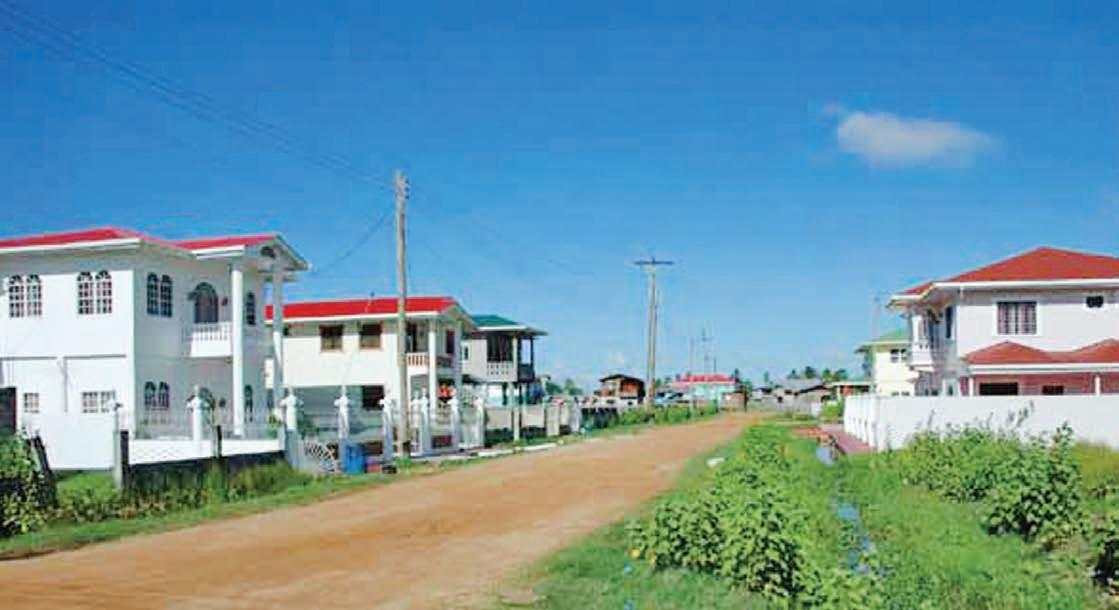
When the PPP took office in 1992, one of its central planks to return Guyana to its feet and hold its head high in the comity of nations, was to make house ownership accessible to every Guyanese family. Today, twenty-three years later this goal has been translated into reality. Starting in 1994 the Government launched a national housing scheme focusing on low income citizens by 2001, 91 settlements providing 50,000 housing units were constructed.The government has estimated that it must build 5200 homes per year for at least 10 years to meet the national housing need. By 2015, over 18,000 squatting houses were regularised and over 100,000 house lots had been distributed.
The Government more than exceeded its projected goal of 5200 houses annually.
Under the “Low Income Settlement Programmes” poor households could apply to purchase house-lots at subsidised prices. They have up to two years to complete payment to the Central Housing and Planning Authority (CHPA) after which they receive title/transport for the land. They are then eligible to approach a commercial
bank for a loan of up to G$5 million (US$25,000) – recently raised to $8 million at a concessionary low interest negotiated between the Government and bankers for this benefit. Overall, the programme consists of the construction of Core houses and Turn-key houses by the CHPA, Remigrant housing programme and Mortgage Interest Relief. In addition to these direct benefits the CHPA takes care of the infrastructure. It prepares the land for demarcation for houselots, roads and drainage in each Government housing scheme. The CHPA/Ministry of Housing and Water builds the roads and drainage (Guyana is flood prone), and brings in the basic infrastructure for water and electricity. The houselot owner pays for the connection to his home from the road or nearest connection point. On completion of the scheme the CHPA hands over the scheme to the local government authority – Neighbourhood Democratic Council or Municipality. The Houselot owner then pays annual rates and taxes to the relevant local government authority. The subsidies for water and electricity – elderly persons can apply and access an annual waiver on their electricity and water bills once these bills are in their names. Finally, the small man has become the “real man”.
What’s inside: Maintaining the rich legacy of the PPP/C Administration –Housing sector sees boom in 2013
The failure of Burnham’s “Feed, Clothe and House the Nation” Plan
Making a dream a reality: Alison Craig tells her story Private Sector upbeat about housing development
Building a Better Guyana
Building a Better Guyana
Making a difference in the lives of Guyanese
- through home ownership, thousands of house lots distributed in 2012
Despite many challenges, 2012 had proven to be a very successful year for the Housing and Water Ministry under the stewardship of the youngest Minister of Government Irfaan Ali. In addition to staging the largest Building Expo in the history of Guyana and the signing of multimillion-dollar contracts for the development of the water sector, the Ministry surpassed its land distribution target by 1000 with a total of 7500 house lots distributed across Guyana.
It was the presentation of the 2012 National Budget in March that set the stage for the Ministry’s booming success. Finance Minister, Dr Ashni Singh in presenting the $192.8 billion National Budget, had announced that $3.6 million was allotted to the housing sector with the aim of increasing access to affordable housing, improve the quality of infrastructure of housing schemes and regularised squatter settlements. The Finance Minister had told the National Assembly, the funds were key in the transformation of the Guyana’s housing sector, as the Ministry works towards distributing 30,000 new house lots by 2015 and increased access to low cost financing for home construction.
Standing outside the halls of the National Assembly shortly after the reading of the 2012 National Budget, the Housing Minister told the press that his Ministry had set a target of distributing 6500 house lots and 4000 land titles.
Nine months after Ali said not only has his Ministry achieved its objective in the housing sector, it surpassed the target by allotting an additional 1000 house lots via the Housing Ministry’s Central Housing and Planning Authority (CH&PA) “One Stop Shop” exercise. In 2012, the Ministry facilitated 11 such exercises in communities such as Uitvlugt, West Coast Demerara, Region Three; Bartica, Region Seven, where hundreds of house lots were distributed for the development of the De Groot En Klyne/ Uitvlugt and the Five Miles Housing Schemes respectively. Additionally, thousands of house lots were distributed in Plantation Farm, Herstelling New Housing Scheme; Hope/Experiment Housing Scheme and Kilcoy/Chesney Development at Region Six. The largest housing drive, however, unfolded in June that year at the Guyana National Stadium Providence when hundreds of Guyanese braved the weather and swarmed the revenue and anxiously awaited the names to be called for the acquisition of their own house lots. In the end, 1075 lots were allotted for the new housing area in Providence and like all the other exercises, Guyanese of all race, colour and creed applauded the Government of Guyana for pumping billions of dollars into the development of the housing sector.
The Minister had also disclosed that his Ministry will be working closely with investors to establish a new community along the Linden/Soesdyke Highway – “The Alternative City.” He said too that his Ministry will construct a road linking the East Bank and the East Coast of Demerara, connecting Eccles, Ogle and Cummings Lodge. Adding that the project has commenced.
Meanwhile, in the water sector, $2 billion allocated to improve the quality of water supply. A whopping $900 million was set aside for the installation of approximately 20 kilometers of transmission and distribution mains, the upgrading of water treatment plant systems and the completion of four boreholes that have benefited approximately
In addition to the allocation of lots, approximately 200 core houses were made available to under-privileged families while another batch of 200 Teachers, Nurses and Policemen experienced easy access to loans for the construction of their homes under the professional group programme. “To ensure greater access to affordable housing we have establishment of a turnkey housing initiative, which seeks to minimise the time taken between allocation, loan application and construction by immediately providing twobedroom houses to an additional 80 families by the end of the year,” the Housing Minister said as he referenced to another successful housing initiative his Ministry undertook in 2012.
He also stated that the Ministry throughout 2012 remained committed to the public-private partnership; an initiative that has also proven to be successful where Guyanese have easily moved from simply moved from just being owners of land to home owners. This partnership included the signing of agreements with several companies, such as Trinidad Cement Limited (TCL), Toolsie Persaud (TPL) and the National Hardware Limited (NHL) for low and moderate income Guyanese to be given special preference.
233,900 residents.
On May 31, Guyana Water Incorporated (GWI) in collaboration with the Housing and Water Ministry, under the Central Housing and Planning Authority launched the Guyana Wastewater Revolving Fund Project. The project is being funded by the Inter-American Development Bank (IDB) at the cost of US$20 million.
Later in September, two contracts for the commencement of civil works to improve the water service in the mining town were signed between GWI and Jagmohan Hardware Supplies and Construction Services, the contractor. The first contract valued in excess of $56 million and catered for the rehabilitation of mains and upgrades of the distribution network at Wismar, Linden while the second contract which totaled approximately $319 million aimed at achieving similar objectives however on the western shore, Mackenzie. These two projects formed part of the Linden Water Supply Rehabilitation Programme (LWSRP), which was funded by the Government of Guyana through the Inter-American Development Bank (IDB) at the cost of US$12 million.
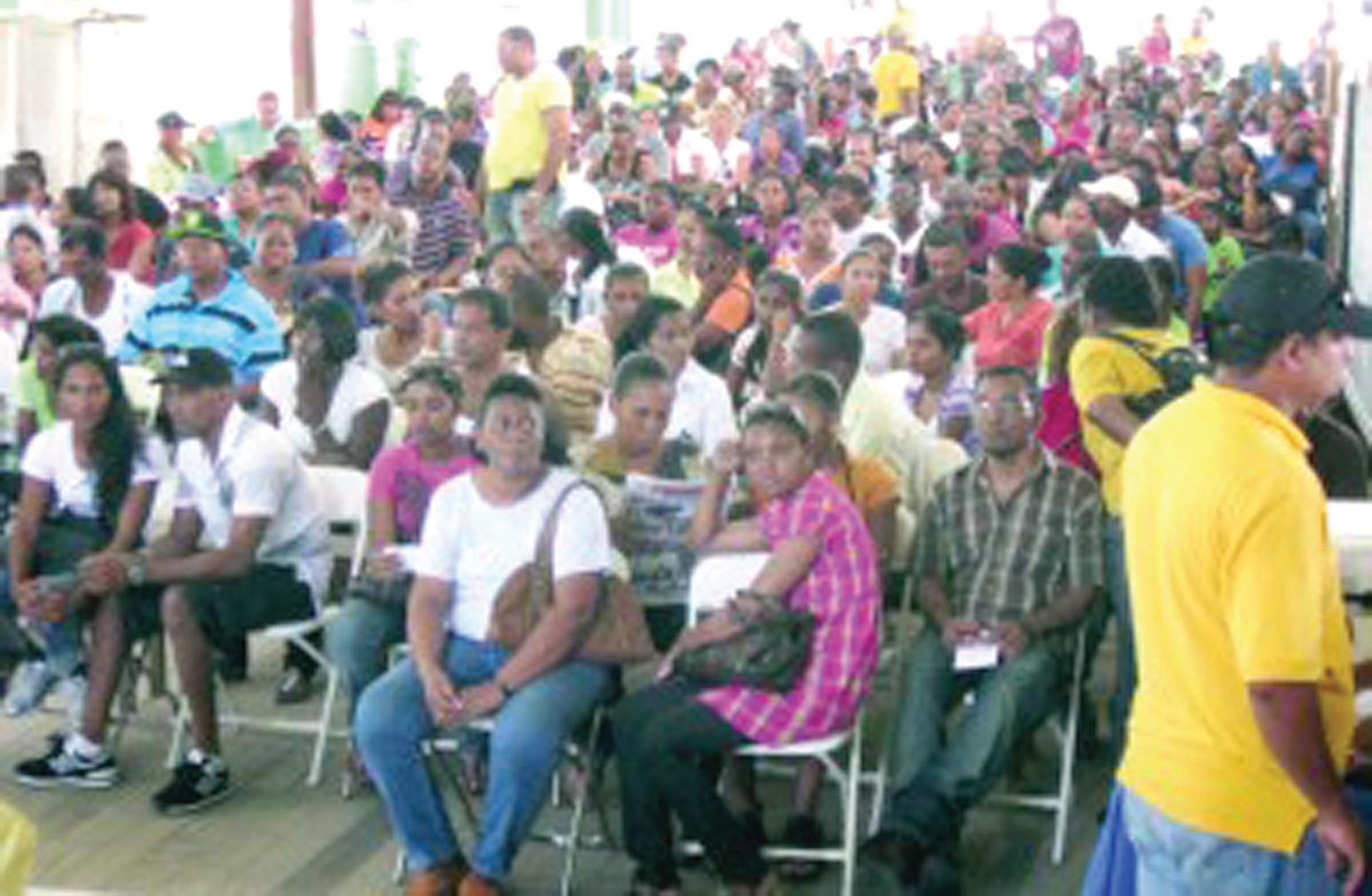
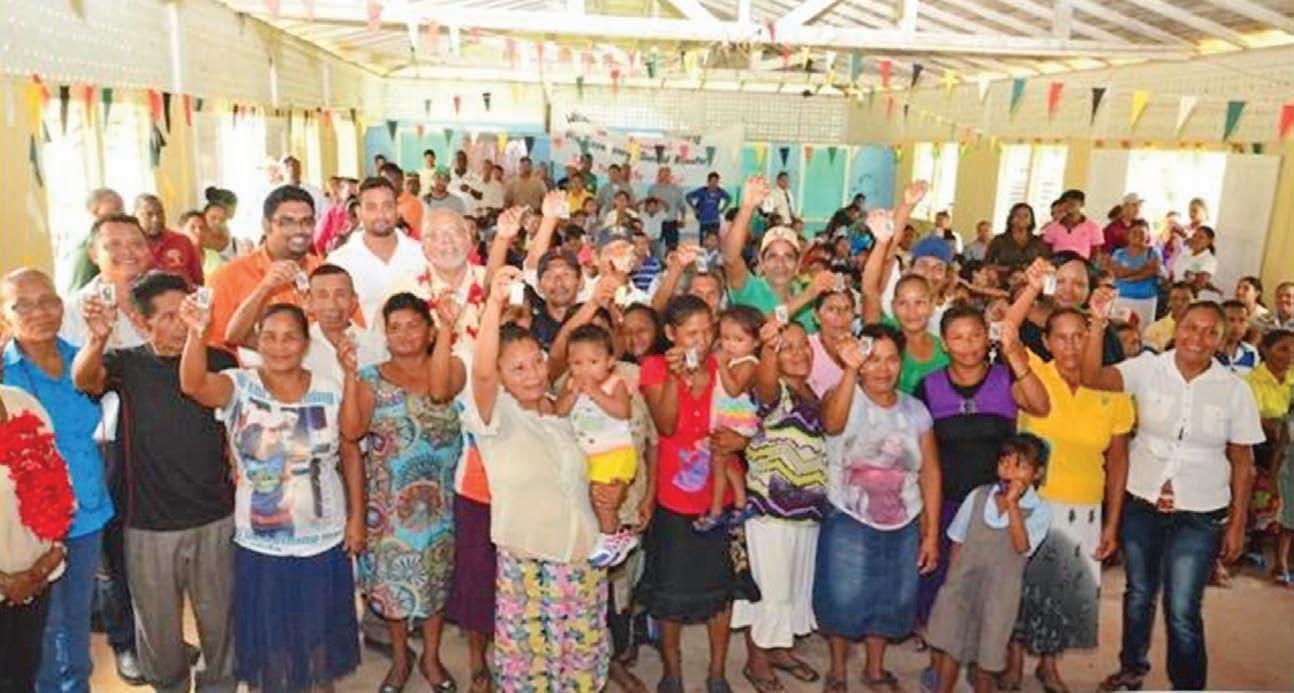
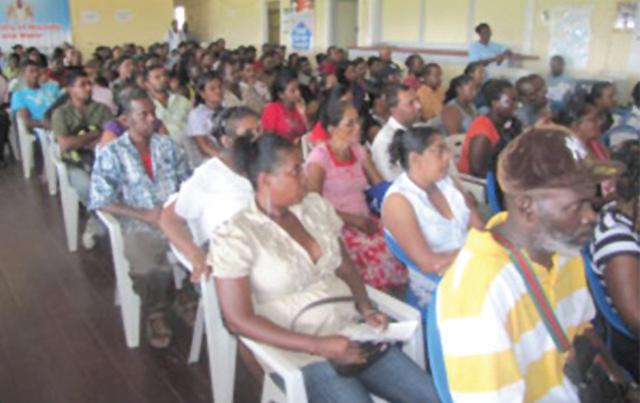
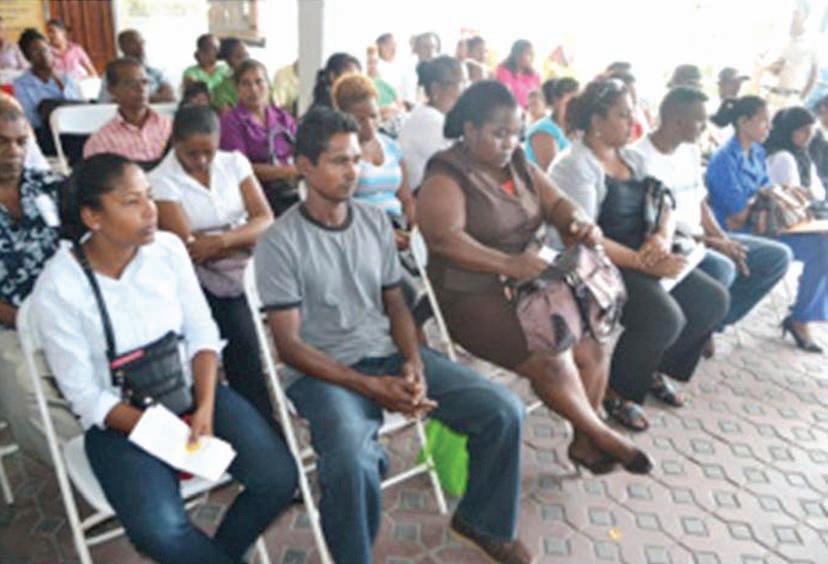
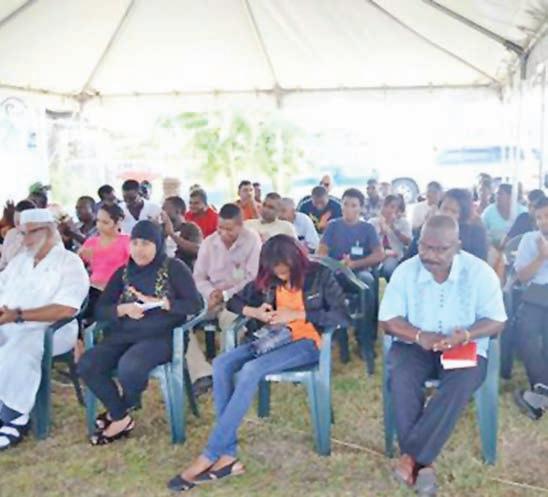
Hundreds of Guyanese anxiously awaiting their names to be called during another “One Stop Shop” at the Non Pariel Primary School
Sections of the large gathering at the Guyana National Stadium back in June 2012 during a “One Stop Shop” housing programme
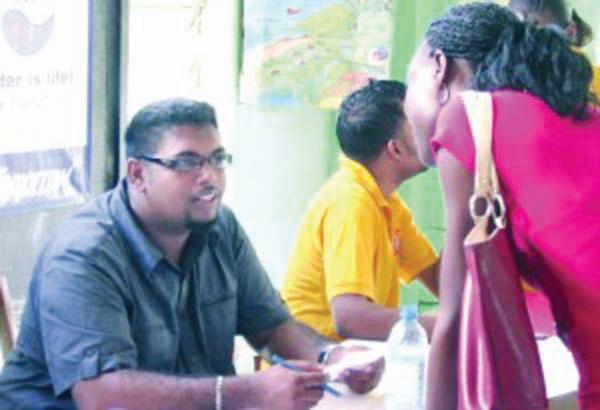
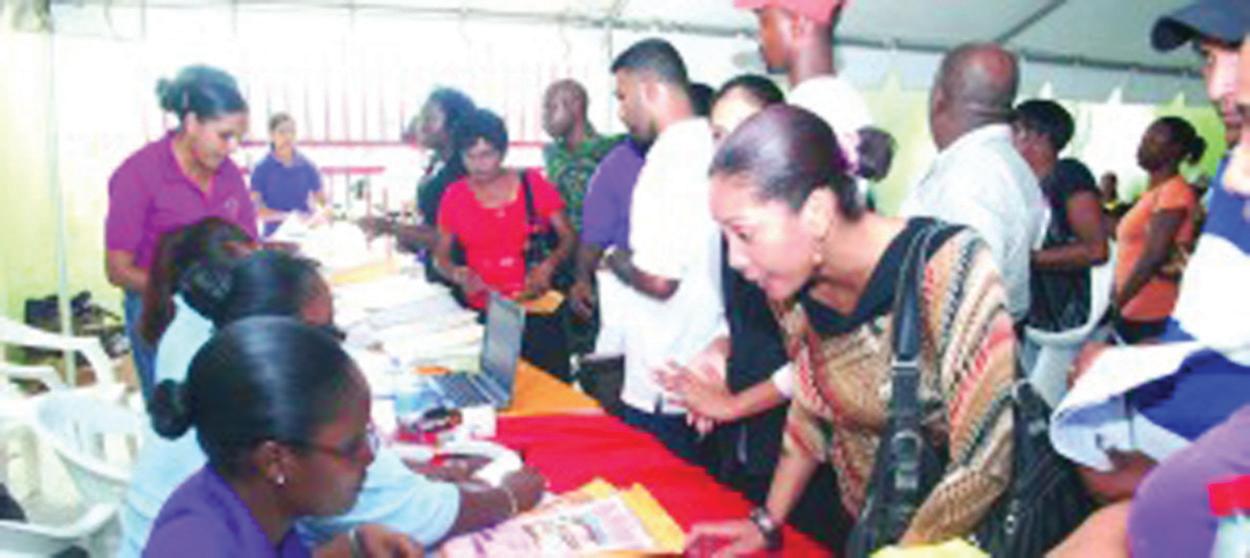
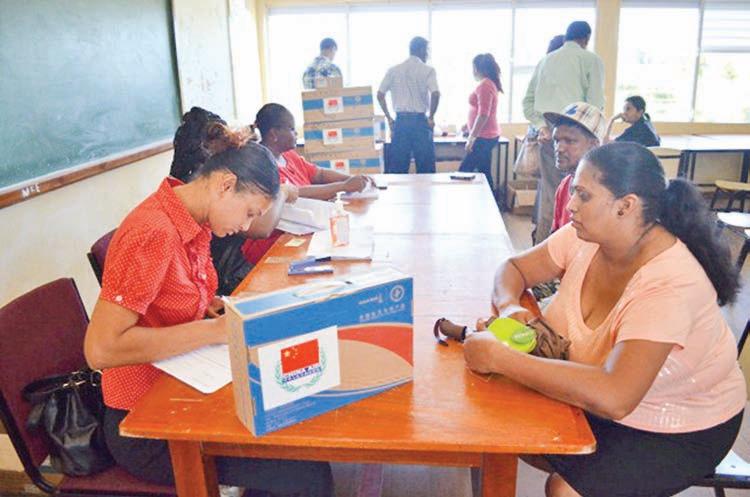
Housing Minister Irfaan Ali interacting with one of the applicants during one of the many “One Stop Shop” outreaches
Building a Better Guyana
Maintaining the rich legacy of the PPP/c adMinistration
Housing sector sees boom in 2013
The Year 2013 was a very busy year for the Housing Ministry and its executing arm, the Central Housing and Planning Authority (CH&PA), as they led the Government’s grand strategy of providing housing, especially for low income Guyanese, and other categories.
Obviously, the demand is still great as measured by the number of one stop shops held, and the quantum of lots allotted at each of these strategic engagements.
Thus, with a budgetary allocation of $3.1 billion, the stage was again set for one of the critical needs, that is central to any human being’s daily life – acquisition of a shelter.
New initiatives
Several new initiatives were announced and implemented in keeping with the visionary plan of making affordable housing available to Guyanese, even as there was continued focus on the distribution of lots, the development of new sustainable housing schemes, increased provision of turnkey housing, and expansion of the core houses concept.
Beginning with the key initiative introduced in 2013 to boost home ownership, this intervention, a significant tax relief‚ will cost the Government $580 million annually, and will benefit tens of thousands of first-time owners.
Named the Mortgage Income Relief (MIR), it allows for first time homeowners who have been granted mortgages of up to $30 million by commercial banks or building societies, mortgage interest relief. This measure was signed into law, thereby establishing the regulatory foundation for this process.
Hinterland
The hinterland segment of the national housing drive received a tremendous boost as a result of a collaborative effort between the Government of Guyana and the Inter-American Development Bank (IDB) to address housing needs in the hinterland.
Chesney, Region Six; 85 lots for Zeelugt Phase 2; 840 lots for Zeelugt Phase; and 360 at Onderneeming, on the Essequibo Coast.
Since its introduction in 2009, there have been 53 one stop shops, and Government has been subsidising these house lot allocations by more than 40 per cent.
In November, Housing Minister Irfaan Ali had indicated that the Ministry’s staff had completed all the 2013 proposed programmes, among which were construction of over 200 core homes, 50 turnkey homes, and the distribution of 200 home improvement subsidies for families on the coastland and 125 hinterland families.
Also completed were 200 community roads under the US$18.7 million Community Road Improvement Project (CRIP).
ments on the East Bank by the CH&PA have totalled $17 billion. This huge sum has created 13,000 new lots in areas including Great Diamond, Golden Grove, Little Diamond, Mocha, Eccles, Herstelling and Kaneville, benefiting more than 54,000 people.
Private sector
Several successful partnerships with the Private Sector were fostered yet again towards the provision of reasonably priced home homeownership.
Included in this initiative were: discussions with Courts Furniture Store to have a special line of furniture made for low- and middle-income homeowners; a Memorandum of Understanding (MoU) signed with Harris Paints, Guyana Limited to allow low and low-middle income earners, staff of the Ministry, and contractors who are working on the turnkey houses, to benefit from a price discount of seven per cent on paints.
With the successful take-off of the housing sector, the Housing Ministry initiated the Building and Construction
Twenty-three households in White Water, Region One received keys to their new homes on October 31, 2013 while 27 others had their roofs refurbished. On November 1, 2013 the beneficiaries in Region Nine communities‚ which include Kwatamang, Central Annai, Massara, Katoka and Apoteri received their keys to their homes. Beneficiaries in Manawarin, Region One, received theirs earlier in that year.
The turnkey concept also saw the Perseverance Scheme on the East Bank Demerara earmarked for the development of 1000 homes valued $4.7 million each.
One Stop Shop
The Ministry’s 2013 work programme had projected the allocation of over 6000 house lots, and distribution of over 4000 land titles.
In this regard, the innovative mechanism of the One Stop Shop system was employed at 10 different locations across the country for the fulfilment of this goal. A total of 8500 lots were allocated and 7000 titles distributed during 2013.
Among the locales visited by this unique process were Farm on the East Bank Demerara, where 1600 lots were allocated; 1200 for Lust-en-Rust, Region Three; 775 at Kilcoy/
East Bank corridor
The East Bank corridor, now a transformed geographical area of astounding modernity, continued to attract exponential sums for its continued socio-economic development.
For 2013, a grand total of $5.8 billion was invested on its continued development.
This catered for investments at Providence Phase 3, where the sum of $731 million was expended for the creation of 558 new lots; at Farm, where $1.4 billion was invested for 1695 lots; Plantation Perseverance, where for 200 lots, $90 million was spent; and at Plantation Eccles, $40 million was utilised for 70 lots.
Also included, was $680 million spent on the Farm to Diamond Access Road, $450 million on the construction of 120 single flat homes at Providence; $154 million that has resulted in levels of upgrade to roads at Great Diamond and Golden Grove, benefiting 1000 lots in these schemes; and $544 million spent to upgrade to asphaltic surface, the Cacique and Greenfield Park Entrances.
It must be emphasised that from 2000 to 2012, invest-
Expo with the aim of responding to the housing and building needs of Guyanese, and to foster home ownership.
The fourth such event in 2013 highlighted the theme “Consolidating partnerships for sustainable development” and attracted over 80 booths. It was this venue at which Silica City, the new housing venture earmarked for the Soesdyke-Linden Highway, was unveiled.
The Ministry proposed the latter, new housing development as a viable solution to the country’s housing needs, taking into consideration environmental consequences, and technological changes, inclusive of rising sea levels and the availability of land
In September, while on a visit to Guyana, and after being taken on tour of a few of Guyana’s housing schemes, Prime Minister of St Vincent and the Grenadines, Dr Ralph Gonsalves, said that the Government’s housing programme was extraordinary, describing it as unlike any other in the Caribbean, including that of St Vincent and the Grenadines, which reputedly have the best.
Commercial banks across Guyana helping families realise their dreams
Commercial banks across the country are exercising a critical role in providing low interest loans for low income earners to help them realise their dreams of becoming homeowners.
Throughout the years, the Government of Guyana, through the Housing and Water Ministry, has invested heavily towards the development of the housing sector in various regions in Guyana. But the commercial banks are also playing a critical role.
Republic Bank, through its “Easy Home Loans”, targets persons seeking residential mortgage of values above G$8 million for the purpose of purchasing or building a house
and persons seeking to renovate or extend owner occupied properties.
According to the website, the interest rates are at 7.45 per cent per annum for amounts up to $10,000,000; 8.75 per cent per annum for amounts over $10,000,000 but up to $12,000,000 and 11 per cent per annum for amounts over $12,000,000.
With Republic Bank, monthly installments are preferred, but in specific instances based on the nature of the business and the frequency or timing of the cash flow, the payment can be structured as necessary such as quarterly or semi-annually.
Likewise with the Guyana Bank for
Trade and Industry (GBTI), through their “Low Income Housing Loans,” mortgages can be obtained for up to 25 years with the customer’s low contribution of only 10 per cent towards the cost of the house and land. Loans can be accessed whether you are building or buying up to a maximum of G$8 million.
GBTI’s interest rates are 4.9 per cent up to $3 million and 6.9 per cent above $3 million but up to $8 million.
The bank also offers a “Residential Mortgage Loan Plan” which is structured to meet the needs of the middle-income earners who wish to build three or four bedroom houses. The interest rates charged for the
Residential Mortgage Loans are 10 per cent per annum for facilities over $2 million and up to $10 million and 11 per cent per annum for facilities over $10 million. Under this scheme the repayment period will range from five to 20 years.
Scotiabank offers a flexibly plan through its “Affordable Home Ownership” programme. Persons can borrow up to 95 per cent of the value of the home by simply purchasing a Mortgage Insurance; that is, with as little as five per cent down, persons can buy immediately and the repayment plan can be customised to fit the individual’s budget.
White Water, Region One residents with the keys to their new homes
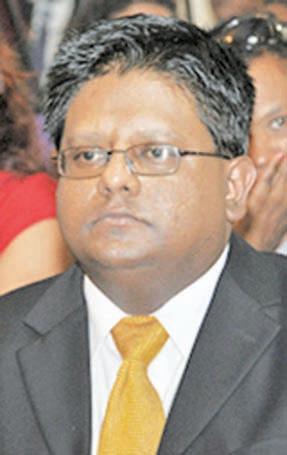
Housing and Water Minister, Irfaan Ali
CRIP – serving communities through improved infrastructure
When a Government can prolong intensity of effort on a specific purpose, then the eventuality is ease of life for people and profit for the nation. This is really a good summation of the Community Roads Improvement Programme (CRIP).
During the period 2011 to 2014, over 79,000 residents in Regions Three, Four, Five and Six benefited from improved roads via this massive governmental investment.
The fact that some 260 roads were constructed, spells growth, possible because the Government’s interest and vision were picked up by the 12 accompanying Neighbourhood Democratic Councils (NDCs) of these regions.
According to Irfaan Ali, Housing and Water Minister, “CRIP was a programme conceptualised by Government, to develop communities within 12 NDCs across Guyana. This programme was designed to bring an engagement directly from the people of the various communities… Indeed this investment of almost US$19 million has seen the improvement of the lives of many persons across Guyana.”
With support from a loan and grant from the Caribbean Development Bank (CDB), the Government of Guyana, through the Housing and Water Ministry, was able to successfully implement the project.
Now, residents are having easier access to and from markets, schools,
CRIP – serving communities through improved infrastructure
health centres, and social and economic facilities.
The NDCs that benefited from improved infrastructure and institutional strengthening through this joint initiative are: Best Klien/Pouderoyen; Stewartville/ Cornelia Ida; Tuschen/Uitvlugt; Rosignol/Zeelust; Bath/Woodley Park; Port Mourant/John; Mon Repos/ La Reconnaissance; Industry/Plaisance; Unity Vereeniging; Enmore/Hope; Haslington/Grove; and Golden Grove/Diamond Place.
Roads
CRIP has been instrumental in upgrading these 260 community roads, and this kind of work must be contextualised.
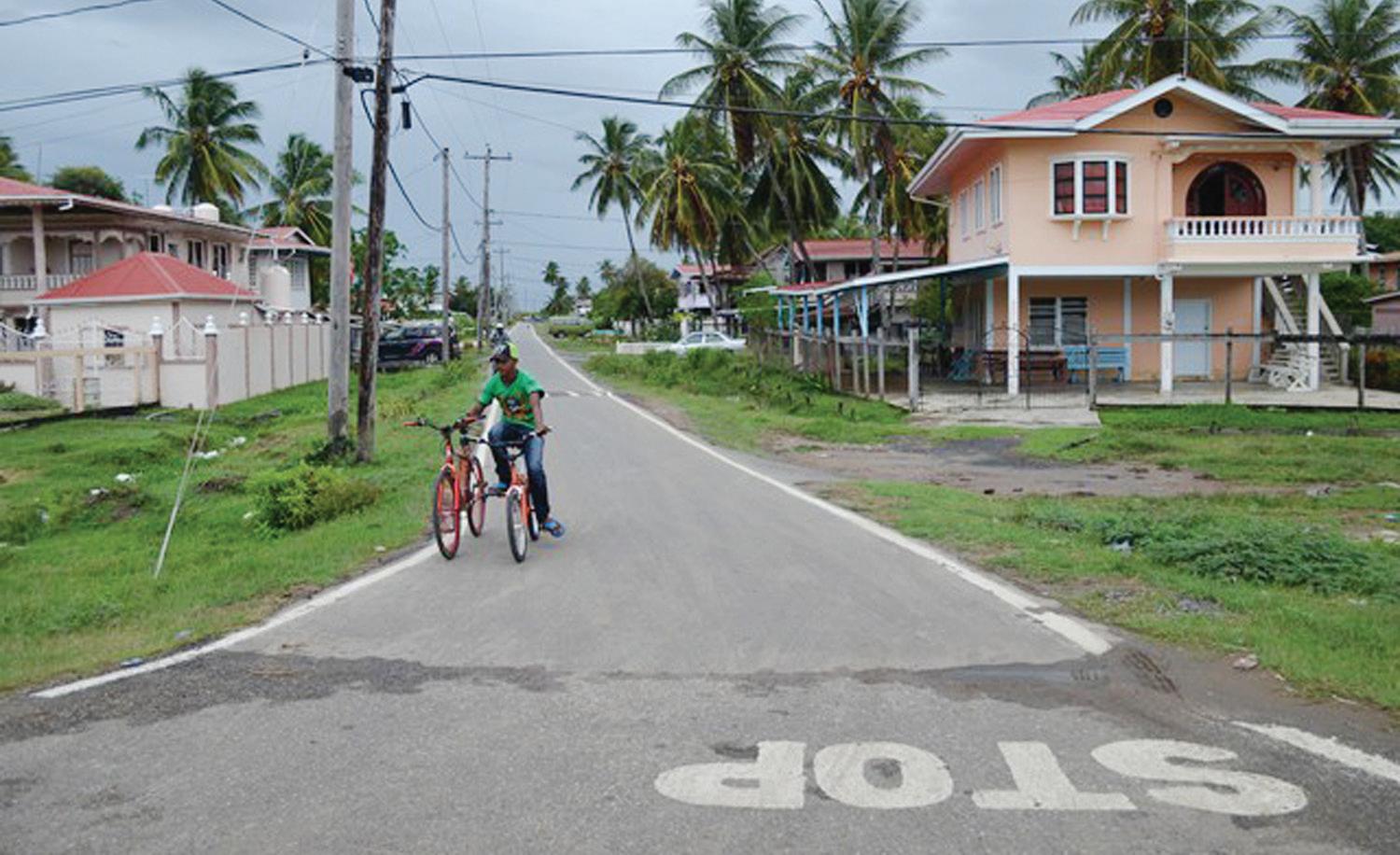
It was not just a mere fixing up; it was at some places starting with mud dams, before getting to the finished Double Bituminous Surface Treatment (DBST) or asphaltic concrete surface.
This actually marked the first time some residents had access to ‘real’ roads. According to Savitri Gopaul, Overseer of Stewartville/Cornelia Ida NDC, “CRIP has helped us tremendously through the construction and rehabilitation of roads… we have experienced an increase in the number of residents paying their taxes and a significant reduction of complaints from residents about potholes.”
“Our residents are now having better access to healthcare… before, if persons had gotten sick in the nights, they had to wait until morning to come out, because taxis had refused to drive through the bad roads,” she added.
Couched in Ms Gopaul’s observation is a most important and profound truth, that is, the paying of taxis and honouring of citizens’ obligation are natural spin-offs from benefits, when investment redounds into a more commodious environment.
Another positive, highlighted by Gopaul, is the opening up of more small businesses within the communities, where the roads were upgraded.
Ms Ingrid, a shopkeeper, said that previously, trucks or vans, carrying cargo used to refuse to travel the deplorable roads. Persons wanting to stock their businesses also had to go out to the main roads to make their purchases, she added. In other words, it was totally frustrating.
Expressing her satisfaction, she said the situation has now changed, as trucks and other large and heavy vehicles are transporting items to any place of business.
Meanwhile, similar benefits came to Haslington/ Grove NDC, situated on the East Coast Demerara, Region Four. Marva Simon, the overseer there, noted that residents, especially those who own vehicles, are extremely pleased with the rehabilitation of the roads. She emphasised that traversing around is now smooth, and travel time has reduced significantly.
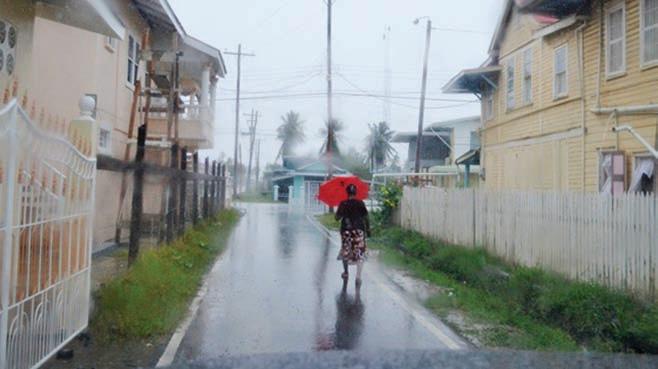
A resident of Number 64 Village, Region Six making her way through a street in the pouring rain with ease, something she could not have done a few years ago.
Owing to the successful implementation of CRIP, Government expanded its local component of the project, to benefit additional NDCs in 2014: Nouvelle Flanders/La Jalousie, Region Three; No.52/74, Region Six; and Buxton Foulis, Region Four.
In Nouvelle Flanders/La Jalousie, NDC, CRIP expended $41 million to rehabilitate Mandir Street in Windsor Forest, and Gapp Road in La Jalousie.
Asphaltic concrete surfaces have replaced huge potholes and in some sections mud dams. While existing roads and sidelines were rehabilitated in Number 64 Village in Number 52/74 NDC district residents in Third Street are now benefiting from a newly constructed road. CRIP has transformed Third Street from a mud dam to DBST structure. Pleased with
the development, residents have vowed to protect the structure.
Enterprise Sideline in Buxton/Foulis NDC was upgraded from a DBTS to asphaltic concrete. This upgrade has facilitated easy access to and reduced travel time for residents of Enterprise and Non Pariel.
According to a motorcyclist, “playing dodge ball is the fitting description of how this road was before it repair… now I can ride my motorbike and don’t have to worry about riding in a pothole… I am happy the Ministry rehab this road...”
NDC buildings
The business of Golden Grove/Diamond Place NDC is now carried out in a brand new painted flat concrete building, constructed with funding from Government. It replaced a derelict wooden building which was unsafe for occupancy.
Rehabilitation works such as the installation of lavatories, renovation of staircases and painting of the buildings, extension of buildings, rehabilitation of roofs, plumbing, and electrical works were executed on the 11 other NDC buildings.
According to Kushmawattee Saroopchand, Overseer of Rosignol/Zeelust NDC, CRIP has transformed the NDC Office into a spacious building, conducive for work and inviting to residents.
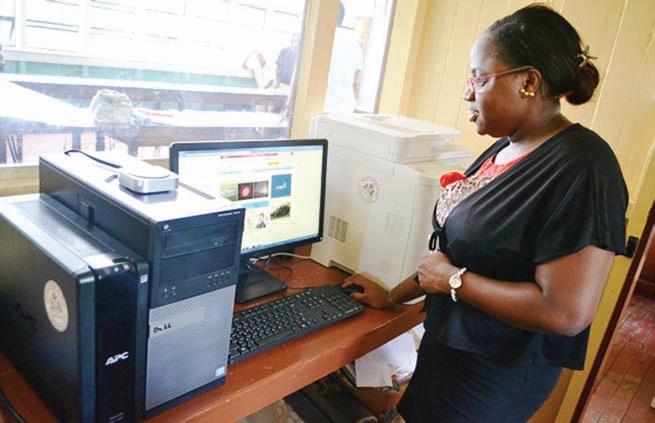
She recalled that, “The former building was a small old wooden structure; built in the 1970s… It was deplorable, standing on rotten wooden columns when CRIP stepped in… We now have inside toilet and private office setting with a boardroom… we also got a computer and accessories.”
Capacity building and computerisation
Ali emphasised that CRIP not only improved roads, drainage and other infrastructural facilities including NDC buildings, but also strengthened the institutional capacity within NDCs to ensure that local governance be more efficient and reliable.
He added that the training administered is geared towards helping persons, who are tasked with executing local governance, both at the political and technical level, with the necessary skills to provide services that are second to none in the communities.
A total of 304 persons including NDC staff, councillors, and community representatives were trained in different areas such as Community Engagement, Customer Service, Information Technology, QuickBooks, Management and Administration, and service delivery.
Additionally, in an effort to improve management of information and service delivery, the enhancement of Information Technology, in the 12 NDCs was a major component.
Equipping the NDCs with the relevant equipment is a big step away from typewriters and manual record keeping. From 2012 to date, CRIP has thus far installed computers and accessories, digital cameras and office equipment, totalling $19 million.
This will enable staff to apply their theoretical knowledge into every day operations. It is envisaged that the use of such equipment, including printers, multipurpose copiers and data storage devices will contribute towards the provision of better services.
So it is about hard-core infrastructure where CRIP was initially focused, but then Government is far more than just this, where the people are concerned.
It is about more than necessities, and since its track record is so solid, the nation at large can anticipate that it will continue to deliver benefits to its citizens, towards the continued modernisation of Guyana, phase by phase and project after project. (GINA feature)
CRIP rehabilitated Enterprise Sideline dam in Buxton
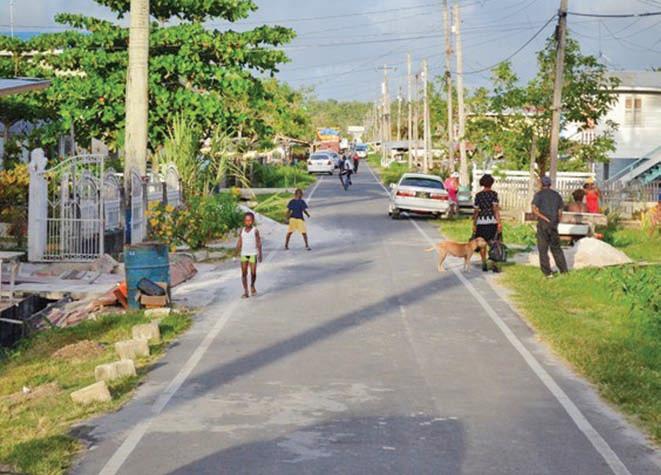
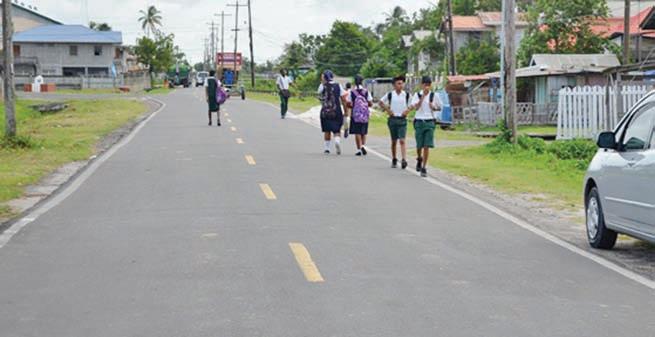
Children enjoying the afternoon sun while on one of the newly completed Pouderoyen, West Bank Demerara district roads
A resident of No 64 Village, Region Six making her way through a street in the pouring rain with ease, something she couldn’t have done a few years ago.
Students enjoying the comfort of the rehabilitated Stewartville road
Building a Better Guyana
The failure of Burnham’s “Feed, Clothe and House the Nation” Plan
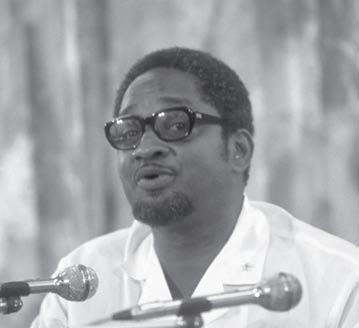
As Guyana’s Prime Minister Linden Forbes Sampson Burnham and his People’s National Congress (PNC) moved to implement their brand of “cooperative socialism”, they introduced a new development plan in 1972 with the grand objective to “feed, house and clothe the nation by 1976.” Burnham apparently believed that his nationalisation policy which was being implemented at that period would help accrue the revenues needed to finance this “FCH” plan. But he failed to understand that most of the agricultural producers – the Indians – were also PPP supporters whose democratic right to elect a Government he had had taken away by rigging elections in 1968 and subsequently in 1973 as well. And with his studied policy of discriminating against these very people who were involved in production of agricultural commodities, the FCH plan was doomed to fail from the beginning.
The FCH plan
The new development plan was unveiled on May 8, 1973 by Dr Kenneth King, the Minister of Economic Development. It was laced with slogans and spoke about “moulding the society” which must be “selfreliant”, eventually to become “egalitarian” under “cooperative socialism”. It announced hypocritically that “the people as a whole” would be involved “in the formulation of national policies and in making decisions, which implement those policies.” Brazenly, it added that economic power would be placed in the hands of all Guyanese.
According to Dr King, this development plan would “create employment opportunities”, generate “equal distribution of incomes” and spur “equitable geographic distribution of economic activities”. Its main objective, however, would be “feeding, clothing and housing ourselves”. Spending on the plan would amount to G$1,150 million over the five-year-period ending in 1976.
Immediately, PNC and Government leaders began a propaganda blitz to highlight this FCH programme. The country was flooded with posters, pamphlets and booklets promoting speeches by Burnham and his Ministers on “feeding, clothing and housing the nation by 1976.” All Government policy was directed towards this goal, and even the curriculum in schools was re-written to ensure that all learning activities maintained this goal as their overall objective.
Failure to “house the nation”
But when 1976 ended, this national goal was not achieved. In the area of housing, for example, the plan called for the building of 65,000 “housing units” at a cost of G$250 million. In King’s own words, the targets were specified, thus: “As is well known the target that we have set is 65,000 housing units. We have already built 5000 of these in 1972, and our plan is to increase the tempo of building activity to 8000 in 1973; 13,000 in 1974; 17,000 in 1975; and 22,000 in 1976.”
From its inception, this housing plan was sharply criticised by the Opposition PPP who raised questions about how it would be financed, considering that the Government had announced that it would seek funding from multilateral agencies. Actually, the PNC Administration was unable to garner any such funding, and the whole housing plan was a colossal failure. Burnham himself was forced to admit this fact in his “address to the nation” on December 14, 1976 when he declared: “We promised to house the nation... We have not done so… Our statistics show, however… that we have built 33,000 units. The rest of the nation is still to be housed.”
However, Burnham’s statistics were badly flawed. Using the Government’s own statistics, the PPP showed that only 1061 units were built in 1972; 1128 in 1973; 1037 in 1974; and 941 in 1975. This gave a grand total of 4167 or only 6.5 per cent of the target set in the FCH plan. And even this small amount was concentrated in Georgetown or in rural Afro-Guyanese communities from which the PNC drew political support.
In his address, Burnham gave excuses why the housing programme failed. He noted, inter alia, that (1) investment funds, initially pegged at G$250 million, had to be increased to G$1,500 million; (2) inflation between 1970 and 1976 had affected building costs; (3) prices for materials skyrocketed; (4) there was a shortage of cement; (5) there were not enough skilled workmen; (6) floods and heavy rainfall affected construction, sugar and rice production; and (7) sugar prices, fell on the world market, thus drastically reducing revenues from foreign earnings.
But even while the Burnham Administration was falling far short of the targets, it maintained a propaganda front that feeding, clothing and housing the nation would be achieved by the end of 1976. The vast majority of Guyanese knew that this was a pipe-dream but, despite this, Burnham and his cohorts continued to delude themselves that everything was going well.
Failure to “clothe the nation”
The PNC’s “clothing” programme was also an abysmal flop. This involved cultivating cotton at Kimbia, in the in-
termediate savannahs, and processing it into cotton fabric at the textile factory built by the Chinese Government in Ruimveldt, Georgetown. The cotton, cultivated mainly by members of the National Service, was short in both quantity and quality to meet the requirements of the factory; as a result, raw cotton had to be imported from the United States to keep it running. Even so, the quality of cloth produced was not of very good standard, and the quantities were grossly insufficient to meet the needs of the population. Thus, fabrics continued to be imported, but because of import restrictions imposed by the Government, these as well as clothing became expensive commodities. Inflation and a virtual wage freeze during that period also drastically reduced the ability of most Guyanese to purchase clothing.
Failure to “feed the nation” –PNC anti-agriculture policies
“Feeding the nation” was even a greater disaster. Much of the resources needed for housing and clothing the nation depended on the expanded production of agricultural commodities locally so that there would be a greater volume of exports to ensure more foreign exchange earnings. As an agricultural based economy, it was essential that, in particular, rice, sugar and other food crops as well as meat and fish production should also show improvements. But all of this did not happen because of political and economic policies directed against the food producers, who, in the majority, were political supporters of the Opposition PPP.
With respect to the sugar industry, the PNC, after imposing a levy in 1974 on the large profits from export sales, finally nationalised it in 1976. But by politicising its management, and applying political pressures on the sugar workers, almost all PPP supporters, production fell. Similar problems also afflicted the nationalised bauxite industry. And since world market prices for both sugar and bauxite were declining, there was not very much increased revenue from these two major export industries to apply towards the FCH plan.
Attack the rice farmers
The PNC’s political pressures on food producers had their genesis from the time that party took control of the Government after the December 1964 elections. Since 1965 there was a systematic destruction of Guyana’s food potential as a result of the anti-agricultural policies pursued by the PNC-UF coalition (1965-68) and the successor PNC regime (after 1968).
The first anti-agricultural blow was felt by the rice industry. The sale of rice to Cuba was stopped in 1965 while an anti-producer Rice Marketing Board (RMB) was organised with the rice producers’ majority being replaced by persons with virtually no interest and experience in rice production. Further, the Connell Rice and Sugar Company of the USA was contracted as the exclusive agency to sell surplus rice on the world market at a retainer’s fee of $258,000 plus a one per cent commission. These two actions were among the factors responsible for the losses of $7 million suffered by the RMB in 1965-1966. The lack of confidence in the anti-democratic RMB and the PNC-UF coalition deteriorated further in October 1966 when the purchase price of rice and paddy was reduced.
This decrease in prices occurred at a time when production costs were rising chiefly on account of rising costs of labour, machinery, fuel, fertilisers and other inputs. Around
the same period, too, the Government withdrew concessions such as duty-free gasoline, and cheap fertilisers from the farmers. The PNC also ordered all rice must be sold to the Government which purchased it at a low price and then resold the rice on the world market at a high price, but refusing to pass down some of these profits to the rice farmers. All of these attacks on the rice industry took place when there was a worldwide demand for rice, but rice farmers were given no encouragement to meet these demands. Actually, rice production declined in 1965 and continued on this downward slide for the next decade.
Because of the decline in the rice industry, there were periodic shortages of this commodity to consumers locally. Further, Guyana’s ability to meet the demands of foreign markets became questionable, and exports to Jamaica and Trinidad decreased sharply.
A significant reason for the lack of confidence by rice farmers was the withdrawal of state recognition of the Rice Producers’ Association as the organisation representing the interest of rice farmers. On the other hand, the PNC appointed its hand-picked supporters to the so-called Rice Action Committees which were given the official status as “representatives” of rice producers. The PNC also applied the same anti-democratic formula in the areas of milk production and peasant cane farming.
No emphasis on drainage and irrigation
Another aspect of the PNC anti-agricultural policy was its shifting of the emphasis on infrastructural development from drainage and irrigation, to roads, sea defence, airports and public buildings. Allocations for drainage and irrigation were actually reduced from 30 per cent in the PPP Development Plan (1960-64) to 17 per cent in the PNC Development Plan (1966-72). But only one-third of the money was actually spent on water control; the rest was diverted to unproductive infrastructure.
Drainage and irrigation schemes were sacrificed for two reasons. Firstly, the United States Government was not very keen in promoting the development of agriculture in Guyana. In the 1965-1970 period, the United States had a large surplus of food and had even inaugurated a soil bank scheme (ie, payment of farmers to keep agricultural land out of production). Agricultural development would, therefore, have made Guyana a competitor in food exports, and so the USA injected loans to the PNC Government with the condition that they be used for unproductive infrastructure. Secondly, the non-agricultural infrastructural projects generally employed mainly Afro-Guyanese who in the great majority were PNC supporters. Also, as stated earlier, the PNC applied a studied policy of political discrimination against PPP supporters with the result that it provided scanty assistance to them.
Decline in food production
All sections of agricultural food production therefore suffered decreases throughout the decade of the 1970s. Even some of the food items that Guyana previously exported had to be imported at times. For instance, in 1976, the target year when Guyana was supposed to have enough food to feed itself, the Government imported 2000 bags of black-eye peas from the USA, despite massive publicity of large scale production of this commodity at Kimbia on the Berbice River. That same year, too, the Government imported 20,000 bags of rice dust (bhusi) from the United States to keep the stockfeed industry going!
This situation continued into the 1980s as well. To the
Building a Better Guyana
The failure of Burnham’s... cont’d
shame of the Guyanese people, the nation was forced in 1982 to import cooking oil from St Vincent which before 1970 bought cooking oil and copra from Guyana. And no longer was Guyana able to export p1antains, cabbages and pumpkins to the Eastern Caribbean since production of these commodities also slumped.
Food production had declined so greatly by 1976 that consumption of food items per head of the population had dropped drastically to seriously affect the nutritional level of the young children and the population as a whole. The Government’s policy of banning essential imported food items compounded this situation. According to a report of the Guyana Consumers Association, in 1976 poultry production amounted to eight ounces a week per head of the population; eggs were one egg per person every eight days; fish, 14 ounces per person per week; beef, four ounces per person per week; and ground provisions, five pounds per person per month.
By the end of that year, according to the Agriculture Ministry, ground provisions output was nine million pounds below the target set by the Government; vegetables were two million pounds below the target; pulses and nuts, six million pounds below; coconuts five million pounds below; and fruits 14 million pounds below the target. Actually, food production under the Burnham Administration never recovered. The removal of the subsidy on stockfeed in 1977 led to less production of poultry meat; and the rapid increase of cattle rustling, among other factors, threw the beef industry in a tailspin. By 1982, six years after the FCH plan collapsed, the production of beef was only 3.5 pounds per person per year!
Milk production also reached its lowest level during the same “FCH” period. Since 1967, the milk pasteurisation plant in Georgetown was unable to meet the needs of the people of the city, and because of insufficient supplies it had to be closed down on a number of occasions. And with the restriction of milk imports, the shortage of milk resulted in severe malnutrition especially among children. The shortage of milk has also caused its price to sky-rocket.
Fish and shrimp also become more expensive for the consumers. Although it was the small fishermen who supplied most of the fish to the local population, the fees for their licences were raised while they had to pay exorbitant prices for essential supplies such as ice and fishing gear.
With respect to farmers’ earnings, until 1972, rice and milk prices paid to farmers were lower than those paid in 1964. Crop bonuses were taken away and the authorities did very little to stamp out praedial larceny. From time to time, the PNC Government granted small price increases to farmers for their produce. However, these increases were almost immediately negated by subsequent increases in agricultural inputs which made production more costly.
Little emphasis on agriculture
Agricultural areas suffered from administrative neglect. There were few access roads in the farming districts and during the rainy season farmers found great difficulty in removing their harvest from the field. The local authorities themselves paid scant attention to maintenance work such as repairing kokers, bridges and dams, and clearing canals. Even the once vibrant land development schemes like Black Bush Polder and Tapacuma fell into a state of disrepair.
Transportation of farmers’ produce especially from the riverine areas and the Rupununi received no attention. As a result, peanuts, cashew nuts and beef production dropped drastically since those products could not reach Georgetown to be sold.
To produce food in large quantities, farmers needed land, but despite most of the land being owned by the state, genuine farmers faced great problems in obtaining land for farming purpose. Since 1965 much of the land allocated for farming was shared out to PNC supporters, many of whom were not farmers. This resulted in agricultural land remaining idle and, therefore, unproductive.
On the other hand, there were instances of areas of land cultivated by genuine farmers being seized by the Government and handed to PNC supporters who, after a short period, stopped cultivating crops on them. This practice of seizing land from genuine farmers was put into practice at Non Pariel in East Demerara, Black Bush Polder in the Corentyne district, and Onverwagt in West Berbice.
Failed agricultural projects
It was only after the FCH plan was announced that PNC apparently realised that food production would be the solution of the numerous economic ills affecting Guyana. It commenced setting up some agricultural projects on which it placed its political supporters as cultivators. But many of these agricultural projects were illusionary and improperly planned with the result that most of them turned out as huge failures despite the millions of dollars spent on them. Projects like Global Agri on the Berbice River and Buteabu on the Mahaicony River failed miserably. A palm oil project at Wauna in the North West District also flopped, and a corn project organised by the Caribbean Food Corporation with the blessing of Caricom died a quiet death. A failed potato project at Kato in the heart of the interior also greatly embarrassed the PNC Administration. It was no wonder that the “feeding the nation” aspect of the FCH plan collapsed.
As a result of the PNC anti-agricultural policy since it led the Government from 1965, almost every food commodity was in short supply in 1976. Generally every food item not produced locally was banned, although these items could be obtained at the black market at exorbitant prices. But even in the sale of food, the PNC applied tight political and racial control. Through the state-run External Trade Bureau, it handled all imports which it then redistributed to PNC-organised “cooperatives” known as Knowledge Sharing Institutes strategically located in predominantly Afro-Guyanese areas. These retail outlets sold preferentially to persons who produced PNC membership cards and they acted to squeeze the small rural mainly Indian-owned groceries out of business.
No democracy
The PNC could never motivate Guyanese farmers to produce more, since that party itself had created the problems for agriculture and food production. Obviously, as an agricul-
ture-based economy, Guyana needed to expand production in agricultural commodities for the export market in order that revenues would be available for financing projects aimed at feeding, housing and clothing the population. However, by taking away the people’s democratic rights as evidenced in the 1968 and 1973 rigged elections, and also by denying them economic incentives, the PNC alienated the food producers from the mainstream of political and economic power. The continued rejection of democratic principles by the PNC during the period of the FCH plan, and even after, only helped to perpetuate further crises in food production and housing, among other sectors in Guyana. Burnham and the PNC, not being practitioners of democracy, could not understand why production and initiatives suffered when people had their democratic rights taken away from them. The entire nation, even their rank and file political supporters, had to suffer as a result of this denial of basic freedoms. [Note: In the period 1972-76, one Guyana dollar was equivalent to US$0.50.] (Feature taken from www.guyana.org)
GGMC loans CH&PA $3B to develop housing sector
The Guyana Geology and Mines Commission (GGMC) has loaned the Central Housing and Planning Authority (CH&PA) some $3 billion to develop the housing sector, signalling further commitment to the people of Guyana. But most importantly, this move is aimed at giving thousands of Guyanese another opportunity to own their own homes; in other words, making their dreams a reality.
The loan agreement was signed following the submission of an investment proposal by the CH&PA in January 2015, for the investment of the sum of three billion dollars to be loaned for a period of one year and to be used for the development of the housing sector.
“The Board of Directors of the Commission met and deliberated on the proposal submitted and it was noted that the interest rate being offered by CH&PA was five per cent which was 3.2 per cent more than what was currently being earned via the commercial banks and other investment options open to the Commission,” both entities said in a statement.
More so, the loan is for a period of one year with interest calculated using the reducing balance and in the event of CH&PA fails to repay the entire amount by the deadline, the Commission has the right to increase the interest rate to seven per cent, the statement said.
According to GGMC at the level of the Board of Directors, it was agreed that the investment proposal was financially prudent and sound. “In this regard, the Board agreed to the granting of the loan subject to the terms and conditions enshrined in the Loan Agreement and any additional guarantees required by the Commission.”
The statement said that the CHPA project is pivotal to the realisation of the Government of Guyana’s strategic target of allocating 30,000 lots under the Adequate and Affordable Housing Programme in order to maintain momentum in the provision of service land in several areas on the East and West Demerara.
…Guyana continues to overcome the horrors of poverty
With an estimated population of 747,884 people, Guyana has made significant strides in combating poverty but there is room for improvement.
Under its Poverty Reduction Programme, the standard of living for thousands of Guyanese across the country has improved drastically, Foreign Affairs Minister Carolyn Rodrigues-Birkett said recently as she reported to the United Nations (UN) Human Rights Council’s Universal Periodic Review (UPR) Working Group in Geneva.
According to statistical reports provided by the United Nations Development Programme (UNDP), extreme poverty declined from 28.7 per cent in 1993 to 18.6 per cent in 2006, while moderate poverty stood at 36.1 per cent in 2006 as compared to 43.2 per cent in 1992. Today, it is estimated that the figure is well below 17 per cent with regard to those living in extreme poverty.
Guyana, the Foreign Affairs Minister said, has attained the targets set by both the Millennium Development Goal (MDG) 1 and the 1996 World Food Summit, by halving the absolute number of hungry people by 2015 and improving nutrition.
The prevalence of undernourishment was reduced from 19.1 per cent (1990-1992) to 5.1 per cent (2010 and 2012). Today, less than one per cent of children under five years of age suffer from malnutrition.
Further, the Foreign Affairs Minister pointed out that the period 2007-2014 represented the longest period of uninterrupted real economic growth since Independence, with an average growth rate of 4.75 per cent in the last five years.
Positive growth
“This positive growth has encouraged the expansion and diversification of the economy and attracted foreign investment in several areas, as well as an expansion of Private Sector credit. These have all contributed to the reduction of unemployment to below 10 per cent, although we acknowledge that some sections of the country recorded higher levels,” Minister Rodrigues-Birkett said.
It is believed that achieving full and productive employment for all is an effective tool to improve living conditions and to eliminate extreme poverty. As such, the People’s Progressive Party/Civic (PPP/C) Administration, which has been in power for the past 23 years, has been working to increase the country’s employment rate, thereby reducing unemployment and underemployment.
In her report, Minister Rodrigues-Birkett alluded to the National Minimum Wage Order 2013 which seeks to provide protection for all workers. The Ministerial Order, which was given by Labour Minister, Dr Nanda Gopaul, provides for a 40-hour work week and a minimum wage of $35,000.
Additionally, during its first UPR in 2010, Guyana reported that it was working to promote equal access to Information Technology for low-income and poor households through the One Laptop Per Family (OLPF) initiative.
“We are proud to report that this programme provided training and free laptops to over 51,000 households by mid 2014. By the end of 2015, it is anticipated that the target of 90,000 households will be met,” Minister Rodrigues-Birkett informed the UPR Working Group.
Education
In the area of education, the Foreign Affairs Minister pointed out that Guyana has successfully achieved MDG2 by achieving Universal Primary Education. The country is well on its way to accomplishing Universal Secondary Education. Additionally, it has met its target of eliminating Gender Disparity in Primary and Secondary Education. In the 2013 Global Gender Gap Report, Guyana ranked number one out of a total of 136 countries in Education Attainment and according to Minister Rodrigues-Birkett, this was a major achievement for a small developing country.
“Guyana continues to offer free education from nursery, primary and secondary levels at Government funded schools. Less than 15 per cent attend private schools; as a result, hundreds of schools have been built and all refurbished
across the country. Approximately 72 per cent of the teachers are trained and more than 50 per cent of the teachers in the hinterland regions are now trained teachers. As a result, the attendance and academic performance of school children at all levels have shown dramatic improvement, at national and regional periodic assessments,” she further pointed out.
The Foreign Affairs Minister said education has played a critical role in equalising access to opportunity for children in Guyana, regardless of where they live, their ethnicity, religion, or class. “This is most evident in the interior and Amerindian communities where all children have access to nursery and primary education and over 90 per cent have secondary education.”
In the area of housing, Minister Rodrigues-Birkett said the Guyana Housing Programme continues to provide subsidised house lots for poor, low- and middle-income families.
“Through a number of legislative as well as Government-Commercial Bank Partnerships, low-income households can access loans to build their houses at concessionary rates. Thousands of low-income families are now land and homeowners under the National Housing Programme.”
According to the Guyana Population and Housing Census 2012 Preliminary Report, which was released in June 2014, the National Building Stock has increased by 16.9 per cent over the last 10 years.
Additionally, by the end of 2013, 18,000 households in squatter settlements, which emerged over three decades, were regularised with certificates of title to land being provided.
“Recognising the link between water, sanitation and poverty, Guyana is proud that the supply of potable water now reaches in excess of 95 per cent of the population in the coastal areas and 73 per cent in the hinterland areas,” the Minister added.
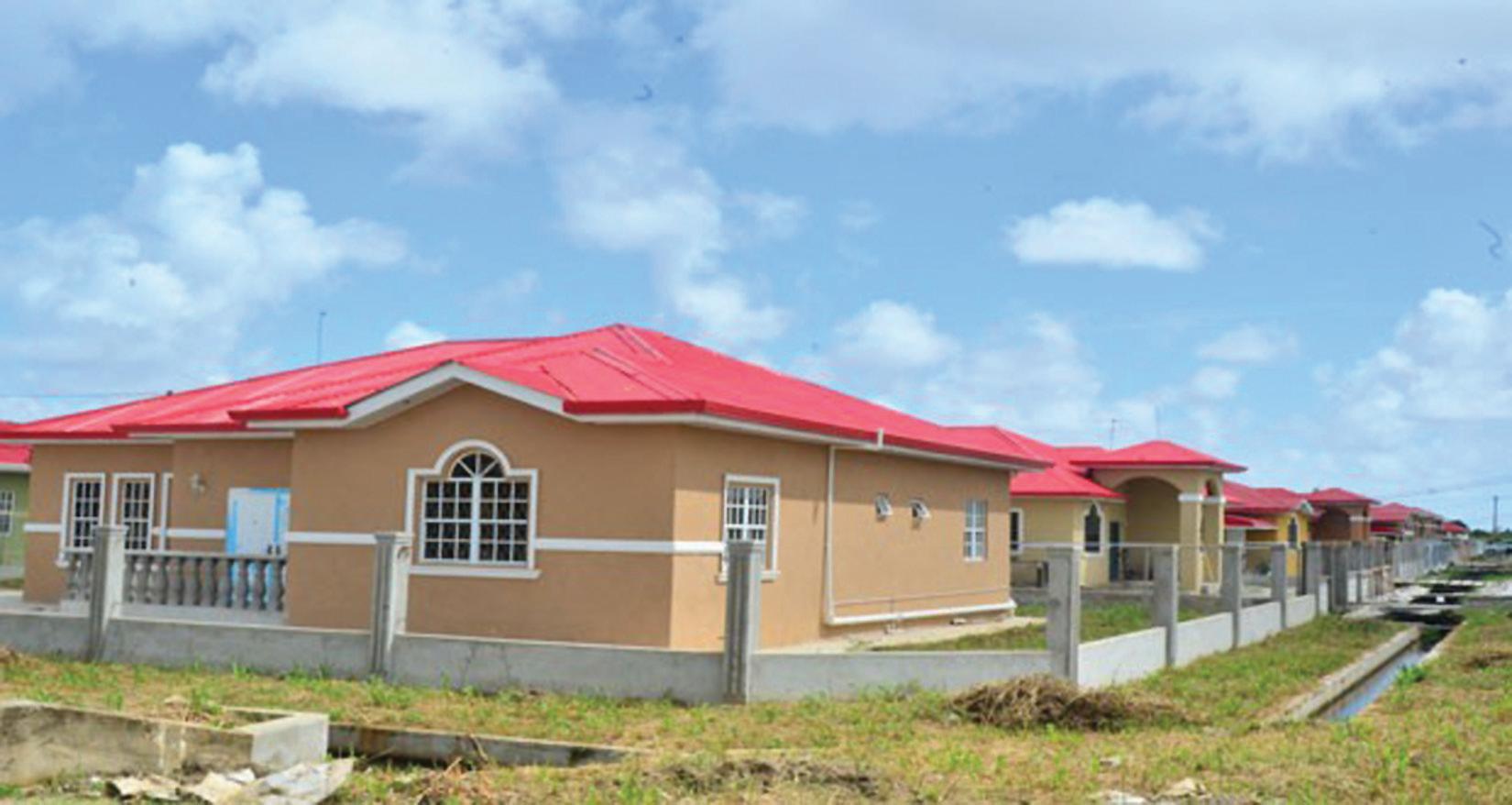
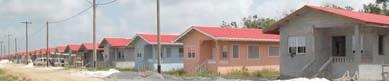
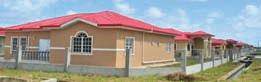
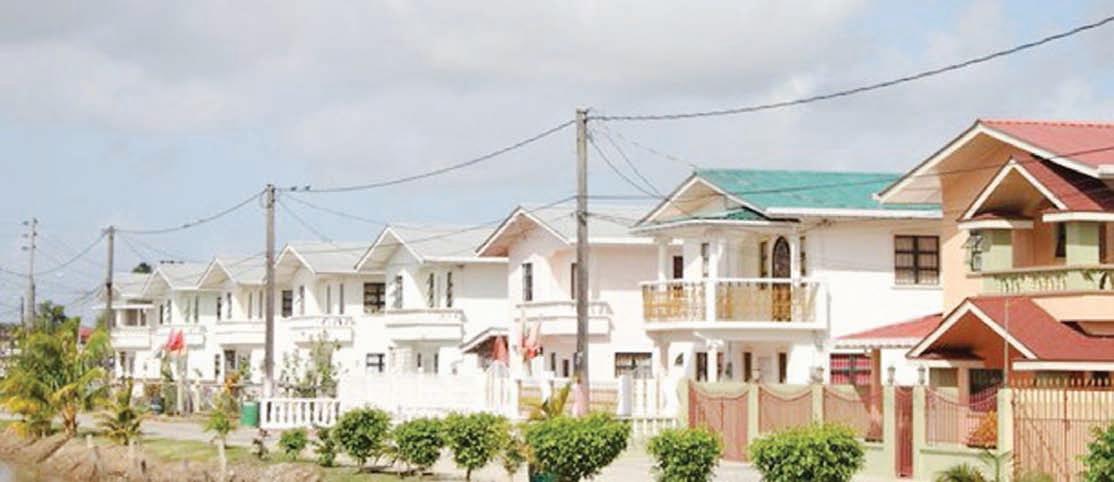
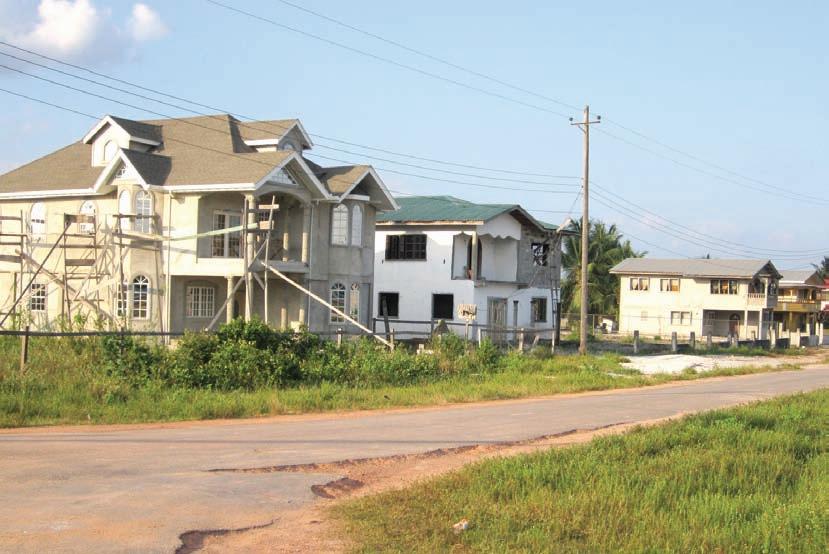
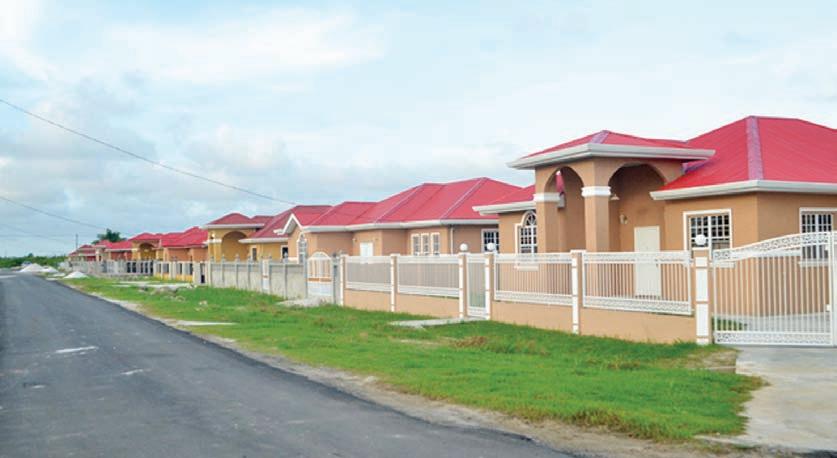
A section of a housing scheme along the East Bank of Demerara
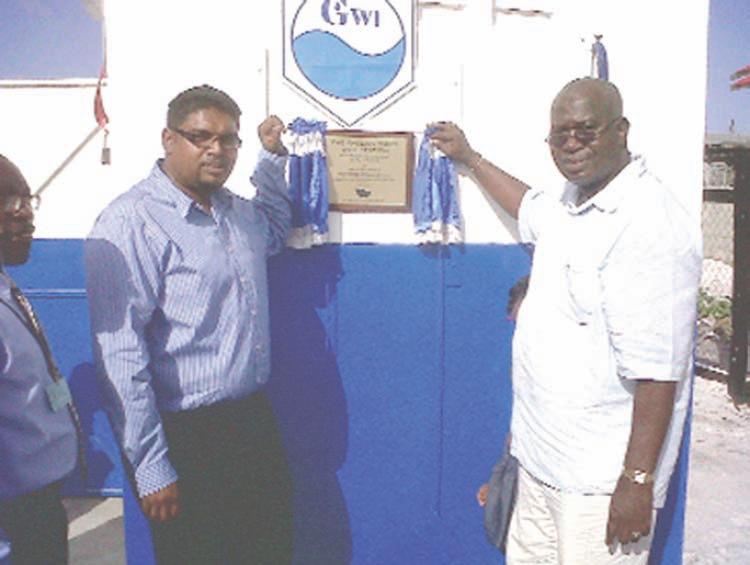
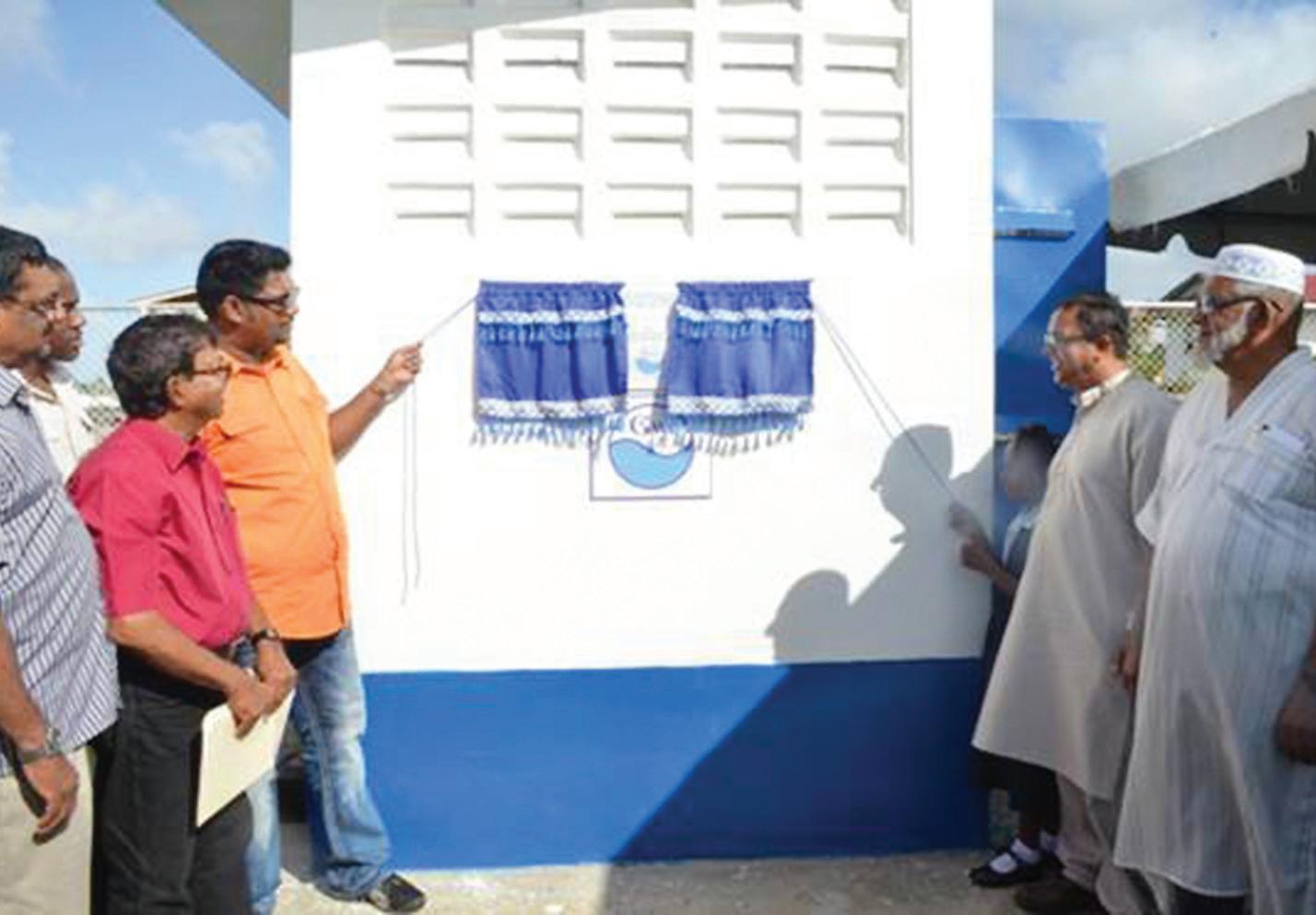
Housing Minister Irfaan Ali and the then Region 10 Chairman Mortimer Mingo commissioning a new well at Amelia’s Ward, Linden, back in 2010
An OLPF staff member assisting with the distribution of laptops during one of the outreaches at Hope Secondary School
Building a Better Guyana
Making a dream a reality –
Alison Craig tells her story
Sitting in the comfort of her two-storey house, Alison Craig of Central Amelia’s Ward, Linden said she is living her dream at the age of 45. The thoughts of owning a home had seemed impossible but today it’s a reality.
Reflecting on the late 1990s, Craig said she had moved from Mabura Hill to the Mining Town to afford her three children adequate education. “At the time, many people were talking about applying for land in Amelia’s Ward, so in 1997 I went into the regional office and applied.” However it was only until 1999 that a plot of land was awarded to her by which time she was married.
“At the time it was very bushy. Sand roads, one primary school but mostly bush. I didn’t build right away though.”
With support from her husband, Craig had accumulated enough money to build her house. Though it was a lengthy and tedious three years, the mother of three moved into her own house in 2005, much to the enjoyment to her family. Craig’s four bedroom house boasts two spacious sitting rooms which are complemented by a dining room, toilet and bathroom.
“The amazing thing is that we built that house without any assistance from the bank, my husband was working with Demerara Timbers at that time and so we saved. Cement and other building materials were very very cheap at that time and I glad we took advantage of the situation.”
Like Craig the thought of owning a home was merely a dream for thousands of Lindeners, but today their dreams are a reality. This overwhelming success of empowerment and ownership is a direct result
of Guyana’s booming construction sector; thanks to a vibrant Housing Ministry.
Through the unwavering support of the Housing Ministry, a community which was previously dominated by thick vegetation is now one of the largest housing schemes in the Caribbean.
Located 65 miles south of the capital city; Georgetown, Amelia’s Ward is the gateway to Linden, Region 10. With a growing population of approximately 10,000 people, the community is divided into two main sections; South and Central Amelia’s Ward with the Linden/Soesdyke Highway as the divider.
Although house lots were distributed prior to 2008, Housing and Water Minister Irfaan Ali accelerated the housing drive in
2009 with the initiation of the One Stop Shop programme with residents of Region 10 reaping the benefits. Since then, thousands of house lots were distributed to persons of all ages, race and ethnicity, once the requirement was met. In an effort to facilitate comfortable living conditions the Government of Guyana back in 2009 plugged more than $332 million into Phase 2 Amelia’s Ward towards the installation of electricity and water supply systems.
In 2010 construction works began on drains and roads with another thousand house lots being allocated at Phase 3 in 2011. The project was estimated at a cost of approximately $378 million in which over 4000 residents are said to have benefited.
Amelia’s Ward is now the home to Linden Foundation Secondary School, the Royal Halls of Learning, the Amelia’s Ward Primary School, two nursery schools, a health centre and a newly erected Police Outpost.
Daily persons leave the traditional shopping zone; Central Mackenzie to journey to Amelia’s Ward to purchase essentials including construction materials from popular businesses such as McRae’s General Store. Soon residents will enjoy the service of a Gas Station and Mini Mart currently being erected at the head of the famous Well Road situated on the southern side.
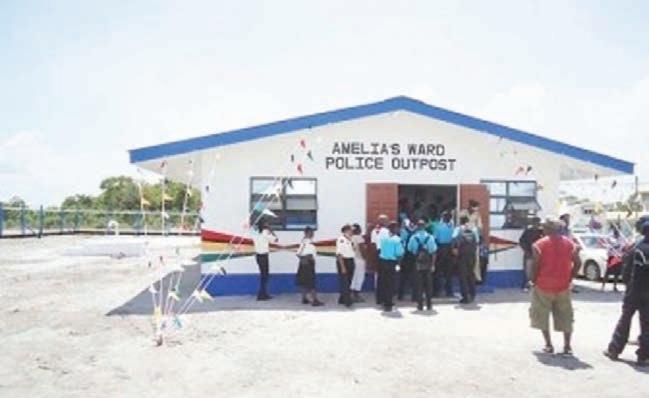
The Commissioning of the Central Amelia’s Ward Police Outpost at Park Lane
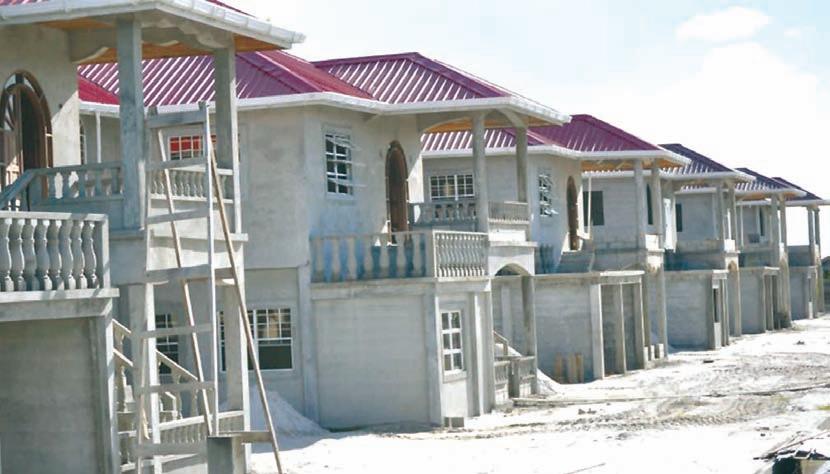
One of the many houses in Amelia’s Ward being constructed through affordable banking loans and affordable construction materials
Govt brings further relief to Guyanese through mortgage initiative
With the distribution of thousands of house lots under the “One Stop Shop” programme, an initiative birthed under the People’s Progressive Party/ Civic (PPP/C) Administration, Guyanese are not only being empowered through land ownership but home ownership.
In a quest to bring further relief to a nation which was crippled by poverty prior to 1992, the Donald Ramotar Administration took a decision in 2013 to initiate a Mortgage Interest Relief (MIR) programme.
In fact, in October, 2013 Finance Minister, Dr Ashni Singh signed and sent for publication in the Official Gazette, the Income Tax (Mortgage Interest Relief) Regulations 2013, thereby establishing the regulatory foundation for MIR to be granted pursuant to the introduction of this measure announced in Budget 2013.
Under the newly-introduced relief, the Minister stated that “first time homeowners who are holders of mortgage loans of up to $30 million granted to them by commercial banks or the building society will be permitted to deduct the interest they pay on such mortgages from their taxable income for the purposes of personal income tax. In other words, that portion of taxable income used by a first time homeowner to pay interest on a housing loan of up to $30 million from a commercial bank or building society will be exempt from personal income tax.”
to borrow to finance asset acquisition or even small business establishment and expansion, have been im-
In addition to our programmes to develop housing areas and distribute house lots, other policies have been adopted to promote homeownership.
homeowners, low- and middle-income alike.
Having signed the necessary regulations, Minister Singh called on the Guyana Revenue Authority (GRA) and the participating financial institutions to proceed to implement the regulations as soon as possible to ensure that the intended relief is delivered to the beneficiary population.
In announcing the introduction of MIR at the time of Budget 2013, Minister Singh situated the new measure within the context of the outstanding success of the Government’s housing programme.
He stated at the time that “this Government’s housing programme has been a resounding success and has resulted in tens of thousands of Guyanese individuals and families graduating from being tenants of rented property to being homeowners in their own right.
“Armed with real property as an asset which can in turn be collateralised, the positive consequences for owner participation in the formal financial system, and capacity
These include the special low-income housing windows established at the commercial banks under which interest income earned by the banks is exempt from corporate taxes, allowing the banks to offer subsidised interest rates to borrowers of loans for low income housing development.
Coupled with the rapid growth in low-income homeownership has been equally rapid growth in demand for middle-income housing with the growing numbers of young professionals and other middle income earners in our society today.
MIR is costing Government approximately $580 million annually, and will benefit tens of thousands of first time
The Minister stated that “this relief is expected to make homeownership even more affordable and attractive, will increase disposable incomes in thousands of households, and will constitute a significant injection of cash into the economy for both saving and consumption, thereby generating and multiplying further business activity.”
The Minister’s announcement of MIR at the time of Budget 2013 was widely applauded as a measure that would significantly improve the well-being of current and pending homeowners and that would contribute to further growth in the economy as a result of the impetus it will give to homeownership and construction activity.
A section of the LBI Housing Scheme, East Coast Demerara
Finance Minister, Dr Ashni Singh
measurable.
Building a Better Guyana
Private Sector – upbeat about housing development
The Private Sector Commission (PSC) said that it was committed to the development of the lives of all Guyanese, signalling its intention to work in close collaboration with the Donald Ramotar Administration to achieve this objective.
During a recent tour of the Eccles Housing Schemes, East Bank Demerara (EBD), where a number of homes have been constructed for Guyanese, especially young professionals, the Housing and Water Ministry and by extension the Government came in for high praise.
It was during the tour, both the Chairman and Vice Chairman of the PSC, Ramesh Persaud and Eddie Boyer, taken aback by the development in the area, made the public commitment.
“I think we are all very impressed by what we are seeing here and we still have a lot to see. I must say that the Private Sector will bring in another team with a lot more persons to look at a wider scale at our participation with the various communities and how the organisations could benefit for the Private Sector here,” said PSC Vice Chairman Boyer who was invited by Housing and Water Minister, Minister Irfaan Ali to give his thoughts on the project.
Boyer, a well-known businessman, said that the Commission, which pays a special interest to the welfare of private businesses in Guyana, will be collaborating with the Housing Ministry to aid in development in the community, “in terms of commercial, manufacturing and the employment sector in this area, because, as Minister Ali said, a lot of persons are going to be living in this area.”
es. Persaud was speaking directly to the construction of huge bonds in the community by major city businesses. The presence of those bonds in the community has already created jobs for residents in and around the community.
“I believe that it is very visionary development. I am sure that the young professionals will indeed benefit from this and we do encourage them to contribute to the further development of this community,” Persaud told the small tour group.
The properties in one of the Eccles Housing Schemes cost
bedrooms, two baths and kitchen and cost some $13.2 million. Allottees are required to pay an advance of $1.3 million, at a rate of nine per cent. This move of the Government and the banks has increased the banks’ portfolio to close to $500 million, and has seen over 300 skilled and unskilled persons being employed.
Minister Ali said that because of the high demand for these homes, the Ministry projects to build another 200 similar houses for young professionals. The 60 homes, Ali reported, have a 90 per cent occupancy rate. The houses are also designed in such a way that homeowners can make further improvement if they so desire.
PSC Chairman Persaud, delighted by the sight before him, said he did not know “that so much was happening behind here”. “This is really a major development; we are looking forward to bringing a larger team of businesses and business people for them to understand the opportunities that this can do for business.”
He described the growing community as a massive economic development, where a great number of opportunities are available for micro, small, and medium business-
some $13 million, with a $25 million bank value. Minister Ali said the new scheme is an example of the effectiveness of Public-Private Partnerships. “It brings the Private Sector together, professionals and the Government,” he said
The project was convened in 2012. However, actual construction began in February 2013. Over 60 homes have been constructed. The bungalow-like houses sport three
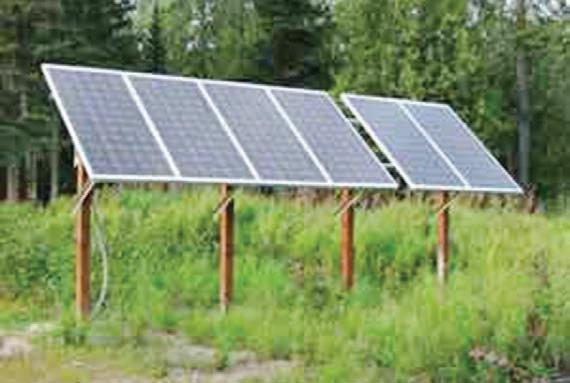
At a cost of US$192,000 or G$39.8 million, the Government through the Office of the Prime Minister will again embark on the distribution of solar panels to households in hinterland communities under the Hinterland Electrification Project (HEP).
Head of the Presidential secretariat, Dr Roger Luncheon late last year indicated that Cabinet had given its no-objection to the supply of cables, switches and other-related items for the continuation of the project which was first launched in 2005. The first distribution of panels; however, began in 2011.
Dr Luncheon, at his weekly post-Cabinet briefing told reporters that the move will see the distribution of an additional 6000 65 watt solar panels in Regions One, Two, Seven and Nine, bringing the total distributed so far to close to 20,000.
When launched back in 2005, the objective of the Hinterland Electrification Programme was to seek to explore options for the sustainable electrification of the hinterland, as part of the national Unserved Areas Electrification Programme (UAEP).
The first phase of the project saw 11,000 65-watt photovoltaic solar home systems being made available to residents, and about 184 villages began receiving about 12 to 15 kilowatt hours of electricity. The Hinterland Electrification Unit of the Office of the Prime Minister has been the executing agency and has facilitated training to residents in assembling, installing, and maintaining the systems.
In villages, like Himacabra and Kabakaburi in Region One and St Cuthbert’s Mission in Region Four, the solar panels can be considered a success story. Solar panels distribution and installation have been successfully completed for all households at Himacabra.
Pilot testing took place after the HEP launch and 65w photo-voltaic (PV) solar home systems emerged as the most feasible option of electrification for households.
In time, larger panels have been fitted in primary schools and health centres in those communities. To date, over 1730 households, 21 primary schools, and two health centres have benefitted from the HEP.
Director of Operations of the Central Housing and Planning Authority (CHPA), Denise King Tudor, said the Ministry has seen a steady increase in the demand for houses and land by persons.
She noted that the Ministry has in excess of 600 applications for turnkey houses. With this in mind, she related that the CH&PA has been taking a tremendous interest in this since many persons have found that acquiring the house and land at the same time is the way to go. “It is much easier for them, they do not have to think about issues with contractors, but it’s just to acquire and pay and uplift their keys… definitely this has been one of the projects that we will continue to do.”
Minister Ali reported that all issues relating to the adequate supply of water for the community are being addressed.
The Ministry is currently constructing a well a few kilometres away from the housing community which is already supplying potable water for residents occupying the community. “The story in relation to the type of development is very important to the members of the Private Sector and the opportunity it creates.” Ali pointed to neighbouring communities of low- and middle-income allottees where persons have committed to building their own homes.
He related that the structures built on the low income lots could have fit comfortably within a high-income housing scheme.
in 2010 revealed that the solar systems helped to improve the quality of life in many households, with increases in appliances owned, increased reading, completion of school assignments and listening to educational programmes. Communities also saw marked increase in economic activities such as sewing, knitting and cake making. Improving energy access is recognised as a key area for expanding access to affordable, clean energy which plays a crucial role in realising the Millennium Development Goals (MDGs) and achieving the objectives of sustainable development under the Low Carbon Development Strategy (LCDS). Govt spending $39M on
Assessment of the pilot programme which concluded
A section of one of the housing schemes along the EBD
Government through the Office of the Prime Minister will again embark on the distribution of solar panels to households in hinterland communities
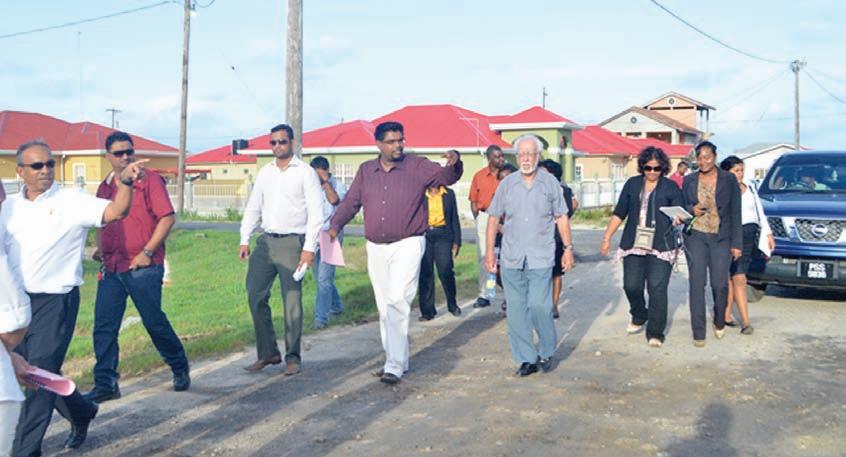
Housing and Water Minister Irfaan Ali, flanked by members of the Private Sector, speaks to the media during a tour of an Eccles Housing Scheme
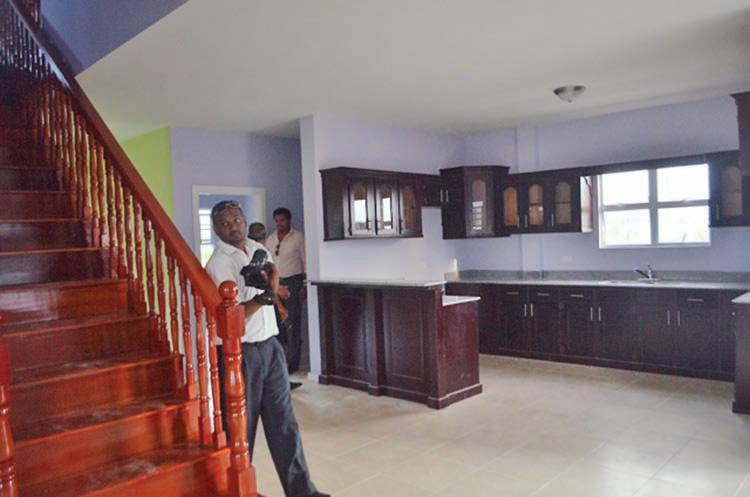
The interior of one of the houses
Building a Better Guyana
Government of Guyana submission on OHCHR Questionnaire on Human Rights and Standard of Living October 24, 2014
National Housing Programme
Guyanese have access to the Government housing programme. This national programme commenced in 1994. Low-income and poor households can apply and are able to purchase house lots at subsidised prices. They have up to two years to complete payment to the Central Housing and Planning Authority (CHPA) after which they receive title/transport for the land. They are then eligible to approach a commercial bank for a loan of up to GY$5 million (US$25,000) at a concessionary low interest rate negotiated between the Government and bankers for this benefit.
The national housing programme is located in all 10 Administrative Regions of the country.
Guyana’s national housing programme has provided subsidised standardised house lots for low and middle-income families. The majority are low-income families.
In the past 20 years, approximately 100,000 households have benefited from this scheme.
Low Income Settlement Programmes
Construction of core houses by the CHPA
This is a new component of the national housing programme which commenced in 2010 to assist the poorest percentile of the population who cannot afford to acquire a low-income house lot and construct a house. Under the Core House Pilot, 400 households of low affordability, including household heads with disabilities, and femaleheaded households, have benefited from core houses (starter homes) in Administrative Regions Three, Four, Five, Six, Nine and 10. Under this pilot, the government subsidised 95.2 per cent of the cost of home construction, and the beneficiary is required to pay GY$100,000 (US$500) towards their home construction.
Turnkey houses – this is also another new programme under the CHPA where people can buy a low-income house and land with all the connections for utilities for GY$5 million (US$25,000). They can apply to the commercial banks for a low-interest mortgage with certification from the CHPA.
Squatter regularisation programmes
By 2013 18,000 households in squatter settlements which emerged over three decades were regularised. The Government provided services (water supply, electricity, roads, etc) and also security of tenure in the form of Transports and Certificates of Title to Land to regularised squatters.
Remigrant housing programme
This new programme commenced in 2011 to attract and facilitate Guyanese in the diaspora returning and owning land and houses in government/private developers partnership schemes.
Income support (eg: transfer to individuals, social security and/or rent subsidies/supplements)
Mortgage Interest Relief: was introduced in 2013 by statute which provides for first-time homeowners who are holders of mortgage loans of up to GY$30 million (US$150,000) granted to them by commercial banks or the New Building Society being permitted to deduct the interest they pay on such mortgages from their taxable income for the purpose of personal income tax.
The Fiscal Enactment ( Amendment) Act No 12 of 2013 provides for mortgage relief as outlined above.
The following statutes were amended over the last 10 years to facilitate these forms of relief.
Income Tax Act: Consolidated Tax Act of Guyana, Volume 1: Chapter 81:01, Revised Edition 2008 –Exemption of approved mortgage finance company from payment of tax (20 of 1968, 6 of 2000). Sections15 (2), (3A)
The New Building Society Act and Amendment Act No. 5 of 2000 insertion of new section 7A enabling the grant of a mortgage for movable property to an allottee in a Government Housing Scheme, also enabling the Minister of Housing, acting for and on behalf of the State to issue a Letter of Assurance that the title to the land allocated shall be deemed to be conveyed to the allottee on the date of the grant of the mortgage.
Other Income Support:
Income tax relief – workers earning less than GY$50,000 a month or a total of GY$600,000 ( US$3000) annually do not pay any income tax.
Approximately 40,000 workers and their families benefit from this relief.
No VAT charged – a number of construction items that are produced in country do not carry VAT, therefore, assisting with keeping the prices down for low-income builders.
National Insurance Scheme – all employees, employers and self-employed are required by law to contribute to the NIS; this scheme provides medical assistance, pensions, maternity and funeral benefits to the contributors.
Universal Old Age Pension – all citizens 65 years and older are entitled to receive a monthly pension which is approved by the National Assembly annually. There are neither eligibility criteria nor a means test, only that the person must have reached the age of 65.
Universal School Uniform Allowance – all children enrolled and attending public funded educational institutions inclusive of nursery, primary and secondary students receive a school uniform voucher to acquire shoes, uniforms or book bags at the end of each school year. These schools under the Ministry of Education cater to over 80 per cent of all children enrolled in schools. Children enrolled and attending private schools are not eligible.
“Because We Care” programme – in 2014, this programme was introduced whereby each child enrolled in public school receives an annual cash grant of GY$10,000 (US$50) to assist families to ensure their children attend school. Total disbursement GY$2 billion (US$20 million).
School feeding programmes – these are offered in the interior nursery and primary schools and some coastal schools based on nutritional assessments.
Women of Worth Programme – a micro-credit scheme offered by the Government in partnership with a locally owned commercial bank, specifically targeting women and female headed households.
Single Parent Assistance Programme – this is run by the Ministry of Labour, Human Services and Social Security and offers training, a grant for daycare facilities, and small project funds to start up micro economic activity by single-parent headed housholds.
Special and Difficult Circumstances programme – this is managed by the Ministry of Human Services and Social Security and provides one-off assistance for families going through difficult times ( funerals, medical attention, special pharmaceuticals).
Tenure and security of tenure
Housing programme – By acquiring title or transport for their land, people have been able to have security of tenure and now have collateral which they can use to acquire other items, develop businesses etc through loans from the commercial banks
Land – the largest landowner in the country is the state, the second largest landowners are the Amerindian (indigenous) communities who own communal land titles to 14 per cent of Guyana’s land mass.
The majority of land is distributed by lease or freehold in the agricultural sector and by licences in the mining and forestry sectors.
Private land owners are the smallest group.
Infrastructure
(eg: Water/sanitation, electricity)
Infrastructure – the CHPA prepares the land for demarcation for house lots, roads and drainage in each government housing scheme. The CHPA/Ministry of Housing and Water builds the roads and drainage (Guyana is flood prone), and brings in the basic infrastructure for water and electricity.
The houselot owner pays for the connection to his home from the road or nearest connection point. On completion of the scheme the CHPA hands over the scheme to the local government authority – Neighbourhood Democratic Council or Municipality.
The houselot owner then pays annual rates and taxes to the relevant local government authority.
Subsidies for Water and electricity – elderly persons can apply and access an annual waiver on their electricity and water bills once these bills are in their names.
Prohibition of discrimination in housing
The Constitution of the Co-operative Republic of Guyana Chapter 1:01, Article 26, provides for the right to housing: Every citizen has the right to proper housing accommodation. Article 154 prohibits any form of discrimination and provides for protection from discrimination on the grounds of race, gender, class etcetera.
The abovementioned programmes illustrate that Guyana’s programmes are focused on poverty reduction and improving access to and equitable distribution of goods and services offered by the state to the poor and vulnerable (women, children, Amerindians, elderly, youths and differently-abled) in the society.
* What are the primary bases for the allocation of responsibilities among different levels of Government? Please identify the appropriate provision(s) and appropriate a copy or link if possible:
The Guyana Constitution Chap: 1:01
National framework legislation of housing strategy –Housing Act, Chapter 36:20 and a series of other statutes governing land, financial and banking, etc.
Link: See http://www.legalaffairs.gov.gy/information/laws-of-guyana/ and http://www.chpa.gov.gy
What role does the national-level Government play in relation to housing and related programmes? How is compliance with the right to adequate housing structured between the national and sub-national levels? If possible please kindly provide concrete examples of how these roles and compliance mechanisms are operationalised.
The Government of Guyana, through the Ministry of Housing and Water and the CHPA, plays a very central role in housing and housing development programmes in Guyana.
Under British colonial rule, a Central Authority was established in 1946 to provide housing for the working class. In 1948, the CHPA superseded this body. With the establishment of the institutional framework for public housing at a national level, this period in the late 1950s marked a breakpoint in the history of housing development in Guyana. The period saw Government building houses for the poor and working class which they rented at very low rates in the capital city and on the sugar estates through the Sugar Industry Welfare Fund (SILWF).
Between the years 1980 to 1992, the Government housing programme collapsed and the Ministry of Housing was closed down.
In 1992, the assessment of poverty levels showed that 61 per cent of all Guyanese were living below the poverty line.
With the change of government, at the first free and fair elections in 28 years, in October 1992, the focus was on developing and implementing a pro-poor pro-growth approach to the national developmental agenda.
In 1994, the Government launched a national housing supply driven programme in compliance with its international treaty obligations of people’s right to shelter, water and safe accommodation and the national imperative to reduce poverty and provide adequate housing accommodation in accordance with the Guyana Constitution. This programme continues to date and has benefited over 100,000 households across all 10 Administrative Regions.
The CHPA’s mandate and responsibilities have grown over the last 20 years. The Agency is supported by the annual housing budget which has grown significantly and in 2014 is approximately 3.3 per cent of the National Budget. The Building and Construction Sector contributes 6.21 per cent to Gross Domestic Product (GDP) –which was US$3.076 billion in 2013 according to the World Bank –and 22.6 per cent of economic growth in 2013.
The CHPA provides and facilitates: the divestment of Government land to eligible Guyanese for residential use; development of housing schemes and regularisation and upgrade of squatter settlements; progressive development of land, cities, towns, urban and rural areas; granting security of tenure; preparation of development plans for urban centres; provision of services such as access roads, internal road networks, water distribution networks, drainage and electricity; collaboration with stakeholders for the development of sustainable communities (Public-Private Partnerships as well as working with development partners).
During the last 10 years, the Government has met annual housing production targets by increasing the allocation of budget and non-budget resources (land) to the housing sector and stimulating local production through fiscal and other incentives.
The Government of Guyana’s interest rate subsidy, for example, helps to lower the borrower’s income requirements and makes loans more affordable: the Mortgage Interest Relief programme was introduced in 2013 under which first-time homeowners who are holders of mortgage loans of up to GY$30 million (US$150,000) granted to them by commercial banks or the New Building Society are permitted to deduct the interest they pay on such mortgages from their taxable income for the purpose of personal income tax. In other words, that portion of taxable income used by a first-time homeowner to pay interest on a housing loan of up to GY$30 million (US$150,000) from a commercial bank or New Building Society will be exempt from personal income tax. According to the Guyana Revenue Authority, in 2013, approximately 1487 persons applied under the Mortgage Interest Relief scheme.
In addition, through Public-Private Partnerships, the Government has negotiated lower prices (discounted rates) on selected construction materials for low and middle income groups who are keen on building their homes. This has also proved to be a great stimulus for housing and the manufacturing sector.
Building a Better Guyana
New $11B cement factory opens in Berbice under Government’s watch
Caricom Cement Company Inc in December 2014 commissioned its new $11 billion cement plant at Everton, Region Six (East Berbice-Corentyne).
The new facility will allow the company to produce 500,000 metric tonnes of cement annually. This is double the requirement for Guyana. Chairman of the company, Dr Joshua Safeek speaking with The Guyana Times said the plant is a gift from Berbice to the rest of Caricom.
The facility, the first complete cement plant in Guyana, was built by Guyanese and employs in excess of 250 persons from Berbice, Georgetown, Essequibo and Suriname.
“Caricom Cement Company Inc has been in operation for the past four years and during that period we were bagging cement under the brand names West Indies Cement and Titan Cement,” the company said in a release.
It added: “The main purpose of the cement plant is to make cement affordable to all Guyanese, taking into consideration the construction boom that our country is undergoing at this time.”
The plant was built in three phases and started in August 2010 at the abandoned old bauxite plant (Bermine), which was developed in phase one.
The first part of the current operations saw a bagging system being purchased and installed at the Everton plant. Phase two saw a Portland plant being added to the system while the machinery was being built for phase three, which commenced in December 2013 with the installation of the new plant.
The plant was then upgraded with a kiln and cooling system and a grinding capacity of 50 per cent.
The kiln will be working at 1700 degrees before the cement is sent to the cooling system.
Meanwhile, Dr Safeek said the company was able to take advantage of the billions of dollars which Government has been investing in the education system.
“There are a lot of youngsters who are being trained at the New Amsterdam Technical Institute and GuySuCo Training School and at the end, many of them don’t get jobs. We were able to find jobs for many of them by the transferring of technology from engineers and chemists.”
Meanwhile, the facility will add greatly to the development of Berbice and moreso the East Bank where most of
the employees are from.
“When we started operations there, it was a depressed community with jobs only being available at GuySuCo, which is seasonal. We inject about $1 billion annually into Berbice. You know in a few years what that will do for the
community?” Dr Safeek queried.
Meanwhile, the Everton plant was scheduled to start operating on a 24-hour basis this year. This, the Chairman said will require the services of about 100 more employees.
Houselot recipients urged to capitalise on mortgage relief
Ever since its implementation, the Mortgage Interest Relief (MIR) initiative, has been touted by the Government of Guyana. Guyanese from all walks of life have been encouraged to capitalise on this scheme, which allows first-time homeowners, who are paying interest on a housing loan of up to $30 million, to be exempted from personal income tax.
This was the situation back in October 2013, when the Central Housing and Planning Authority (CHPA) Chief Executive Officer (CEO) Myrna Pitt met with residents of Port Mourant, Berbice.
Pitt had said while some 38,000 persons would have received house lots in the Kilcoy Chesney Housing Scheme under the One Stop Shop programme, the MIR initiative is a plus for residents.
“The longest journey begins with a single step; however, the journey of home-ownership is the single most important in one’s life,” she stressed.
“You can kiss your landlords goodbye… owning your own home means you can do as you please and at the same time, add value to your home… as far as finances are concerned we have the institutions here to assist,” Pitt added.
She urged the potential homeowners to be alert and keep in tune with the GRA’s notices on the MIR, so that the process could be much simpler for them.
According to Pitt, Finance Minister, Dr Ashni Singh had signed and sent for publication in the official Gazette, the Income Tax (MIR) Regulations 2013.
She noted that this new move signals the establishment of the regulatory foundation for MIR to be granted pursuant to the introduction of this measure.
Pitt recalled that when Dr Singh made the MIR announcement during the Budget 2013 presentation, the Minister situated the new measure within the context of the outstanding success of the Government’s housing programme.
Success story
In his address at the One Stop Shop, Region Six Chairman David Armogan expressed satisfaction at the country’s housing drive. He too urged first-time homeowners to become familiar with the MIR system. Armogan added that since the
Housing Ministry kick- started its One Stop Shop initiative, Berbice has seen a whopping 17,000 lots developed. The figure has increased significantly since then.
“The housing drive is one of the success stories, or perhaps the biggest since the PPP/C [People’s Progressive Party/Civic] is in Government and so much so that the Caribbean is looking to adopt Guyana’s model houses to be built in the region,” Armogan stated.
He recalled St Vincent’s Prime Minister, Dr Ralph Gonzalves’ visit to Guyana and his appreciation of the mas
sive housing drive being undertaken in the country.
“Government has recognised the importance of every Guyanese owning their own home… whether you are a teacher, working in the cane fields or a nurse – today you have the opportunity of owning your own home.
Armogan said necessary steps have been taken to fasttrack the rate at which homeowners receive their land titles and transports. “Today, we are removing the obstacles and we are making it much easier for all the people to own their own home,” he added.
-
The $11 billion cement plant at Everton, Region Six (East Berbice-Corentyne)
The Housing Ministry’s One Stop Shop at Port Mourant Berbice back in October, 2013
Building a Better Guyana
MeMorable MoMents…
85 receive house lots at Zeelugt
In maintaining its rich legacy, the Housing Ministry’s Central Housing and Planning Authority (CHPA) in September 2013 brightened the faces of 85 applicants when they were allocated house lots.
The 85 applicants pulled their lot numbers for plots situated at Zeelugt, Phase 2, East Bank Essequibo. At the time, the One Stop Shop was being conducted under the theme: “Live the Guyanese dream, homeownership made easier.” For thousands, they are still celebrating this theme due to the simple fact that they have become homeowners, thanks to the People’s Progressive Party/ Civic (PPP/C) Administration.
Before getting underway with the processing of allocations, Housing Minister Irfaan Ali explained that the previous focus was to consolidate the existing infrastructure in the housing areas to encourage occupancy.
Major challenge
He noted that as a result, many housing schemes have seen rapid response to building and construction. However, the major challenge of electricity supply has seen close collaboration between the Guyana Power and Light Company (GPL) and the Housing Ministry to fasttrack this aspect. The One Stop Shop, which was being executed at the time, saw the processing of applications made up to, and including 2006. The Government had also invested $90.5 million in infrastructure to ensure that the lots were available to benefit 383 persons.
Minister Ali had said that the housing drive displayed Government’s commitment to providing housing to every segment of society, notwithstanding the difficult political environment existing in the country.
The Ministry had planned to execute an additional eight one stop shops before the end of 2013, a promise it upheld by distributing more than 6000 new house lots.
Onderneeming on the Essequibo Coast, Zeelugt Phase Three, Lust-en-Rust and Kilcoy/Chesney were among the communities that benefited.
At the time, two community development plans were finalised for Tuschen, Region Three (Essequibe Islands/ West Demerara) and Ordnance Fort Lands, Region Six. (East Berbice – Corentyne) Additionally, during the first half of the year, a One Stop Shop exercise was successfully held at Enmore, Region Four (Demerara – Mahaica).
With regard to home improvement subsidies, 52 of the targeted 200 subsidies were disbursed to eligible families in areas such as Lusignan, Block D Bath, Eliza and Mary and Ankerville, benefiting more than 234 families.
Meanwhile, 34 subsidies were disbursed under the hinterland housing pilot, while another 36 homes were selected for complete replacement, in areas such as Manawarin, Massara, Kwatamang, Annai, Whitewater, Oronoque and Katoka.
Some of the allottees that benefited from the One Stop Shop
Housing and Water Minister Irfaan Ali holds the envelope as one applicant draws the number of her new house lot at Zeelugt, East Bank Essequibo
Building a Better Guyana
Political opposition or obstruction?
– a perspective by Harry Gill
It was former President Forbes Burnham who told civil servants during his tenure,
“Do you want a salary increase, or do you want hydroelectricity? You can’t have both.”
Of course, they got neither.
After the massively rigged election in 1973, Burnham set about to fulfill his campaign promise to develop a large hydroelectric power complex in the Upper Mazaruni region, aimed at powering an aluminium smelter he proposed building at Linden. At that time, Guyana was spending more than 25 per cent of its Gross Domestic Product (GDP) on fuel imports costing about $500 million (US$250 million).
This project soon ran into serious problems. The plan required the construction of a dam at Sand Landing on the Upper Mazaruni River which would have created a 500 square kilometres reservoir by flooding nearby Amerindian villages. This location was condemned by the captains of the Akawaio tribe who strongly objected to the displacement of the estimated 4000 Amerindians from their land.
In the meanwhile, the People’s National Congress (PNC) Government had begun work on the project. By 1978, more than US$25 million had been spent from taxpayers’ money to start the construction of the access road. Because of a border dispute, Venezuela strongly objected to the World Bank financing the hydroelectric plant. This caused the project to be suspended and hundreds of workers laid off.
By 1984, after spending over a $1 billion, and failing to secure international financing, the PNC Government eventually decided not to proceed any longer with the hydroelectric plant. As a result, the plan for the construction of an aluminium smelter was also shelved.
Twenty-nine years later, and after inheriting a bankrupt state in 1992, the People’s Progressive Party/Civic (PPP/C) Administration finally has an opportunity to achieve this national objective that would benefit all Guyanese, and the PNC/A Partnership for National Unity (APNU) and Alliance For Change (AFC) are behaving like the Venezuelans did back then – blocking the project.
Feed, clothe and house the nation by 1976
On May 8, 1973, the PNC Administration announced the establishment of a novel programme. According to Dr Kenneth King, then Economic Development Minister, this development plan would “create employment opportunities”, generate “equal distribution of incomes” and spur “equitable geographic distribution of economic activities”.
Its main objective, however, was to feed, house and clothe the nation by 1976. An amount of $1.15 billion (then US$1.00 = G$2.00) was budgeted for this. But when 1976 ended, this national goal of housing the nation was a colossal failure, as only 4167 housing units or 6.5 per cent of the 65,000 target was realised.
It must be noted that the houses built were all concentrated in Georgetown or in rural Afro-Guyanese communities from which the PNC drew political support. Today, Guyanese of every political affiliation and ethnicity are the proud beneficiaries of this Government’s dynamic housing programme.
Sanata Textile Mill
During the 1970s, the PNC’s “clothing” programme was also a national disaster. Cotton was cultivated at Kimba, and processed at the Sanata Textile Mill, which was built by the Chinese Government. The cotton, cultivated mainly by members of the Guyana National Service (GNS), was short in both quantity and quality to meet the requirements of the factory.
As a result, raw cotton had to be imported from the US to keep it running. Despite this, the quality of cloth produced was not of a very good standard, and the quantities were grossly inadequate to meet the needs of the population.
As such, fabrics continued to be imported, but because of import restrictions imposed by the Government, these as well as clothing became expensive commodities. Inflation and a virtual wage freeze during that period also drastically reduced the ability of most Guyanese to purchase clothing.
After all the failures of the PNC which now call themselves APNU, David Granger, Joseph Harmon and Carl Greenidge are not in a position to lecture anyone on good governance. For Harmon to insinuate that they had “no time to fully cogitate on the significance of the amendments proposed by the Government” is in itself dishonest.
Every conceivable attempt was made by the Government to inform and keep the AFC and PNC/APNU abreast of what was happening with the hydro project by way of several closed-door consultations. In the words of Finance Minister, Dr Ashni Singh: “These consultations occurred over several months as Government tirelessly tried to facilitate the inclusion of all stakeholders.
“Since 2012, the joint Opposition met with Sithe Global Group for a walk-through of
the project. On March 14, 2012, Government presented a detailed overview of the project and invited questions and concerns to be raised, yet no one did. The public and Opposition were once again given the opportunity to be briefed on the project during the 2012 budget debates, during which the development of the road leading to the hydro site was discussed.
Environmental consultations
“In 2013, there were four forums at which the Opposition was updated, appraised and even given a tour of the road, as Government attempted to reach across and involve all political stakeholders. In addition to the inclusion of the joint Opposition, Government also facilitated the Private Sector and media consultations by Sithe Global. There were also environmental consultations with all key stakeholders, including the indigenous people as part of Government’s effort to involve the public.”
Guyana is much different today – a thriving economy, increased food production, and more homeowners than anyone could have imagined. The Government is not perfect, but they are doing a great job with the resources available despite an opposition that is determined to stymie progress under the PPP/C.
Guyanese are more prosperous and much better off today. They have a lot to be thankful for: free education, free textbooks, free school uniforms, free medical treatment, subsidised electricity for the PNC/APNU stronghold of Linden, subsidised electricity for pensioners, and the list goes on.
As a historian, Granger is well aware of the importance of the hydroelectric project to the continued development of Guyana. But as Leader of the Opposition, this may not be a priority. But to his credit, he warned, “If badly managed, Amaila will do severe damage to the national economy.”
I guess being a member of a failed political party that bankrupted Guyana a few decades ago, Granger knows best – he’s talking from experience.
Government of Guyana’s submission on OHCHR Questionnaire (cont’d)
Certain construction materials produced in Guyana are not subject to the Value Added Tax (VAT).
With more and more persons having security of tenure and property assets, commercial banks and lending institutions are more incentivized to provide and expand their home financing services to attract these new and potential borrowers. With an increased ceiling on loans granted to mortgage financiers coupled with land assets that can now be collateral against mortgage loans, commercial banks and lending institutions can now include a wider segment of potential customers who prior to having land titles would not have met the requirements to access mortgages. Furthermore, commercial banks that grant low-income families access to loans are not required to pay corporate taxes on income earned from these mortgages. In addition, mortgage finance institutions that offer low-income mortgages may be immune, at Government’s discretion, to the minimum reserve requirement in relation to liabilities used for mortgage financing.
Most noteworthy of this national housing programme is that it has succeeded in the following achievements:
Lifted thousands of families out of poverty (extreme poverty below 18 per cent 2008);
• Provided security of tenure for thousands of poor and working people;
Opened the doors for thousands of people to access loans who were excluded before due to poverty;
Percentage of female headed households increased significantly;
• Percentage of women who own property in their name has contributed to greater economic independence;
Reduced the impetus for the creation of squatter settlements to a minimum;
• Provided safe and clean accommodation for families and ended the past practice of large numbers of extended families living in one house with outhouses and yard water due to lack of housing;
Access to clean potable water and electricity increased to 90 per cent; Created new peri-urban centres in the coastal and interior regions outside of the capital city;
• Created new communities that are mixed ethnically unlike the post violence of the 1960s which resulted in the separation of races into different villages;
Provided access to goods and services in new housing schemes such as the construction of new schools, health centres, malls, hospitals and per cent Police stations;
• Provision of land in the schemes for houses of worship and playgrounds;
• Created a boom in the construction sector that now contributes over 22.6 per cent of economic growth;
Created 5000 jobs in the housing and construction sector and a shortage of semi- and skilled labour in this sector;
• Expanded the tax basis for the local government bodies with new schemes.
• Encouraged the creation of new community-based organisations such as community policing groups and community development groups to enhance belonging and care of the new communities.
Note: Given the economic, political, geographic and demographic features of Guyana, housing and housing related programmes are chiefly addressed at the national level and not at the sub-national levels and therefore questions 4 and 5 of section A and all questions in section B of the Office of the Commissioner on Human Rights (OHCHR) questionnaire which mostly revolve or focus on the role and accountability of sub-national governments on the right to adequate housing, have not been completed.
Building a Better Guyana
Building a Better Guyana
Looking ahead… Ramotar promises Essequibo greater development
Ahead of the May 11 General and Regional Elections, President Donald Ramotar in January promised to further advance development in Essequibo.
Meeting with residents of Good Hope, Aurora, Huis t’Diren, Adventure and neighbouring communities, the President promised residents that another People’s Progressive Party/Civic (PPP/C) Government would deliver cheaper electricity and would create a bridge between the islands of Leguan and Wakenaam.
Ramotar noted also that shortly a Call Centre would be established at Anna Regina in an effort to create job opportunities for young people, while a modern building to house the Abram Zuil Secondary and a new wing at Suddie Public Hospital would be constructed.
“Comrades, you know for yourself, you know what Essequibo Coast was in the past, the Essequibo Ferry used to take hours, the journey used to be so long, the roads were very bad, Essequibo is not Cinderella in rags but Cinderella the Princess,” Ramotar noted.
Promises
During his first meeting at Good Hope, the President told residents that the upcoming elections were crucial, underscoring that everything was in the hands of the people. He said together as a people, collectively, PPP/C can return to Government.
“Guyana has a bright future, but that future is in everyone’s hands. Older persons need to talk to young people about the struggle, the struggle was difficult, in the past we couldn’t even have a loaf of bread in our hands; if you get caught then, you will be jailed,” Ramotar explained.
He cautioned residents to not be fooled by the promises being made by the Opposition parties, pointing out that the Opposition was just interested in getting into power and had no development plans for the people. Highlighting that the Opposition was not a good partner, Ramotar said with its majority in Parliament, it used its power to block developmental projects. He listed the Anti-Money Laundering Bill, the Amaila Falls Hydro Project, the Speciality Hospital and the Cheddi Jagan International Airport expansion as projects that were blocked by the Opposition. Ramotar stressed that the Opposition was not an ideal partner for the PPP/C Government, noting that because of the lack of partnership, he was forced to prorogue Parliament.
Region Two (Pomeroon-Supenaam) Chairman Parmanand Persaud, who also addressed residents at the various meetings, said the Region has progressed under the PPP/C.
He noted that Region Two has 13 booming housing schemes, and two water treatment plants would be established at Dry Shore, and Somerset and Berks. In an effort to boost electricity capacity in the Region, three Wartsila power plants will be commissioned at Anna Regina. The Chairman noted that construction of roads and rehabilitation of culverts and streets were done over the years.
The President’s delegation included Minister within the Ministry of Agriculture, Alli Baksh, Rice Producers Association General Secretary Dharamkumar Seeraj, Chairman Persaud, and Regional Vice Chairman Vishnu Samaroo. President Ramotar said his two-day visit to Region Two was aimed at interacting with residents and outlining his Party’s plans for the development of the country.
President Donald Ramotar receives a warm welcome from students of the Good Hope Nursery
President Donald Ramotar addressing a packed “bottom house” gathering at Aurora Village
Building a Better Guyana
Lindeners soon to benefit from multimillion dollar water supply project
Thousands of Lindeners in the district of Region 10 (Upper Demerara – Berbice) will soon benefit from an improved water supply system. For many, they will receive water for the very first time while others will enjoy the comfort of having water supplied to their homes 24 hours, seven days a week.
While the People’s Progressive Party/Civic (PPP/C) Government would have initiated similar initiatives since entering office in 1992, the most recent in the mining town of Linden began back in September 2012 with the signing of two multimillion-dollar contracts for civil works to be executed, aimed at improving the supply of water.
In a recent interview, Guyana Water Incorporated (GWI) Public Relations Officer (PRO) Timothy Austin said, the Government of Guyana and Inter-American Development Bank (IDB) funded US$12.3 million Linden Water Supply Rehabilitation Programme is moving apace.
He disclosed that the new Amelia’s Ward Water Treatment Plant is 90 per cent completed and includes the construction of seven tanks and a high capacity reservoir.
Civil works for the construction of the Wisroc Water Treatment Plant are also 90 per cent completed and in-
cludes booster stations and the installation of transmission mains. The reservoir, which is capable of holding 3500 cubic metres of water, is 60 per cent completed.
Additional works, including the installation of electro-mechanical components and pipe-line installation, are currently being executed at both water treatment facilities.
Austin explained that the GWI Linden Branch was currently conducting a series of tests, as a result, some residents were already receiving water but not to the full extent.
The first contract, valued in excess of GY$156 million, included the rehabilitation of mains and the upgrade of the distribution network on the West Bank (Wismar); while the second contract, which is valued in excess of GY$319 million, is meant for similar works on the East Bank (Mackenzie).
Under the programme, GWI is also engaging a consultant to develop a strategy to reduce water loss and non-revenue water.
According to Executive Director of Capital Investment and Planning, Ramchand Jailal, the programme seeks to significantly enhance the quality of life experienced by GWI customers in Linden through a massive rehabilitation of the water supply system.
“Over the next five years, we expect to undertake a series of large-scale civil works which will include the construction of two new water treatment plants at Amelia’s Ward (Mackenzie) and Wisroc (Wismar) as well as booster stations, reservoirs, and the installation of transmission mains, as well as the rehabilitation of the distribution system, including replacing leaking pipelines and service connections,” he had said.
The Executive Director illustrated that with the combination of the new treatment facilities and the reduction of leaks through an upgrade of the distribution system, Linden customers will experience improved water quality as well as higher levels of service.
“We are aware that the current system is not adequate due to its age and the growth of the town over the years, but when the new plants are fully operational, customers will enjoy a higher standard of treated water as they are designed to deliver water quality that fulfills World Health Organisation (WHO) guidelines,” Jailal had said.
With regard to protecting sources of freshwater, Jailal explained that the new Wisroc Water Treatment Plant will utilise freshwater from the Dakoura Creek; hence, customers of Linden must protect the creek and its watershed by avoiding activities that can pollute the creek such as mining and forestry activities, and dumping garbage in or around the creek.
He further emphasised that while the new facilities will provide an improved level of safe, potable water, water can still become contaminated if customers are reluctant to adapt safe habits such as storing water in covered containers and consistently cleaning black tanks.
GWI Chief Executive Officer Nigel Niles (right) handing over the contracts to contractor Suresh Jagmohan at the Linden Enterprise Network back in September, 2012
GWI CEO Shaik Baksh inspecting the Linden Water Supply Project
Building a Better Guyana
Building a Better Guyana
Housing and Water Minister commissions $90.4M well at Manchester Village
In February this year, Housing and Water Minister Irfaan Ali commissioned a $90.4 million water well at Manchester Village, Corentyne, Berbice, Region Six (East Berbice-Corentyne).
The well was constructed by Water and Oil Wells Service Corporation Limited and has a depth of 310 metres and a pump performance of 2.6 cubic metres per minute, which is equivalent to 75 black tanks of water per hour.
Speaking at the commissioning ceremony, Minister Ali reiterated that the main goal of the project is to take treated water coverage to 60 per cent in the short term but this, he noted, can only happen if there is continuity of the development agenda and policy, and predictability.
He stated that his Ministry will over a period of time ensure that every Guyanese has access to treated water.
In this regard, he noted that Government invested a total of $6 billion, $50,000 per person which included major projects in Region Six.
These include the construction of new water treatment plants in Number 56 Village and Queenstown and installation of transmission mains in Skeldon, Number 74 to 75 Villages, Number 61 to 62 Villages, Letter Kenny, Adventure to Alness, Fyrish, Black Bush Polder, Canefield, Whim and Manchester.
In addition, there was an upgrade to distribution systems in Number 51 to 73 Villages, Number One road to Whim, Whim to Bush Lot, Goed Bananen Land, Number One to 50 Villages, Number 67 to Crabwood Creek and Glasgow to Edinburg.
Other projects include drilling of a new well in Canefield, Rose Hall and Number 47 Village, distribution upgrade in Angoy’s Avenue, and installation of transmission main in Mibicuri to Lesbeholden and Canefield to Reliance, among other areas. Presently, work is ongoing in Angoy’s avenue, where 500 residents will benefit from improved water service.
Minister Ali also disclosed that the contract has already been signed for the construction of a new water treatment plant to cover villages from Sheet Anchor, Number 19 to Goed Bananen Land. The construction is expected to commence during 2015, benefiting some 15,000 residents. This he noted
will take the coverage of treated water in the region to 65 per cent.
Meanwhile, over the past 15 years, the water sector has seen significant transformation in the different regions, whereby more people are receiving improved service across the country, inclusive of hinterland regions.
These projects include new water treatment plants, drilling of new wells, upgrading of distribution networks and service connections and installation of photovoltaic and gravity fed systems in the hinterland.
More than $20 billion has been invested in this sector with a per capita investment of nearly $30,000 over the period.
These investments, the Minister stated, resulted in the construction of seven new water treatment plants to increase coverage, drilling of 25 new potable water wells, rehabilitation of distribution and transmission networks, rehabilitation of sewer systems in Georgetown, and in the hinterland, development, inclusive of the construction of gravity fed systems, installation of photovoltaic systems and drilling of medium depth wells to improve service.
The impact of this investment has been tremendous, in that access to potable water increased from 26 per cent to 50 per cent, service was provided for in excess of 100,000 people for the first time, coverage to hinterland increased from 25 per cent to 80 per cent and coverage on the coast increased from less than 70 per cent to 95 per cent at present.
Meter coverage increased from 25 per cent to 50 per cent while a total of 25,000 pensioners are also being subsidised by Government.
In 2014, the rehabilitation of the Georgetown sewer system was completed as promised. The two new water treatment plants under construction in Linden are scheduled to be completed in March 2015.
Plans are well in place for the construction of new water treatment plants at Uitvlugt, Region Three (Essequibo Islands-West Demerara); Diamond, Region Four (DemeraraMahaica) and Sheet Anchor, Region Six (East BerbiceCorentyne) and expand the treatment plants in Georgetown to increase the treated water coverage. This will result in an improved standard of living for citizens.
Housing and Water Minister, Irfaan Ali unveiling the plaque to commission the well at Manchester, Region Six (East Berbice – Corentyne)
A section of the gathering at the commissioning of the Manchester well